The designers
A glider designer conceived the Isetta, an aircraft test engineer drew the Messerschmitt, a journalist the Fuldamobil and the head of a watch group dreamed up the Smart. Few of the people who shaped the microcar came from the big car firms.
A billiard room at Lickey Grange
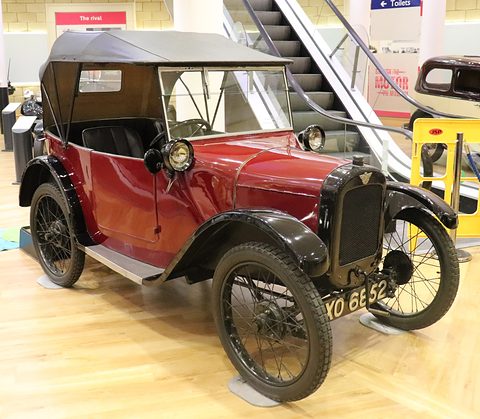
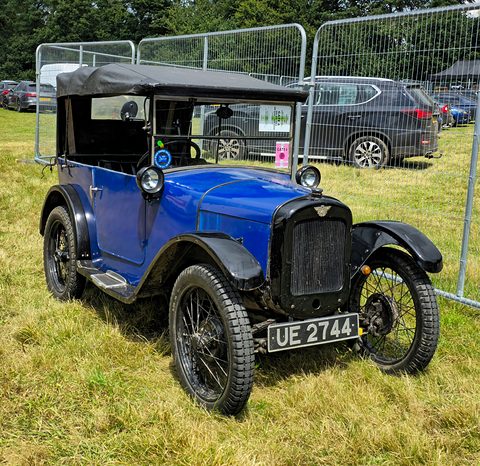
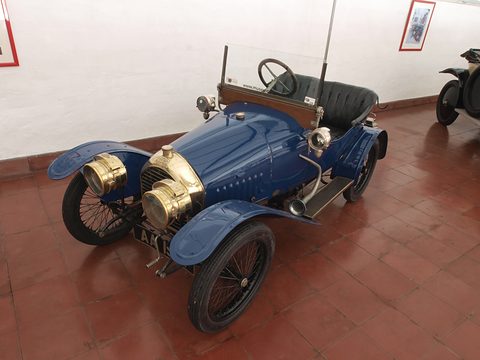
In 1921 Herbert Austin’s company was in receivership, and his board did not want the small car he had in mind, a real car for families whose budget stretched only to a motorcycle and sidecar, or to a cyclecar.source 1source 2 So he paid for it himself. He hired an 18-year-old draughtsman from the Longbridge works, Stanley Edge, and the two of them drew it in the billiard room of Austin’s house, Lickey Grange, from 1921 into 1922; Hagerty says Edge spent eight months there.source 1source 3source 4 Austin patented the design in his own name and took a royalty of two guineas on every car sold.source 1source 3 Edge later said that he had talked Austin into four cylinders and drawn the gearbox and clutch, while the styling was largely Austin’s.source 1 The Austin Seven was announced in July 1922, about 290,000 had been built by 1939, and in Britain it put the cyclecar makers out of business.source 1source 3source 2
The Seven came from a car maker, which makes it unusual. Most microcars were drawn by people from other trades. Ermenegildo Preti, Fritz Fend, Lawrie Bond and Shinroku Momose came from aircraft.source 5source 6source 7source 8 H. F. S. Morgan came from a railway drawing office, Norbert Stevenson from journalism, Cyril Cannell from boats and motorcycle fairings, Egon Brütsch and Bill Buckle from motor racing.source 9source 10source 11source 12source 13 From the 1990s on, the ideas came from a watch group, a scooter firm and a Formula 1 designer.source 14source 15source 16
How those designs travelled under licence is told in built under licence, and the aircraft firms that turned to small cars in aircraft makers.
Inventors of the light car, 1895–1914
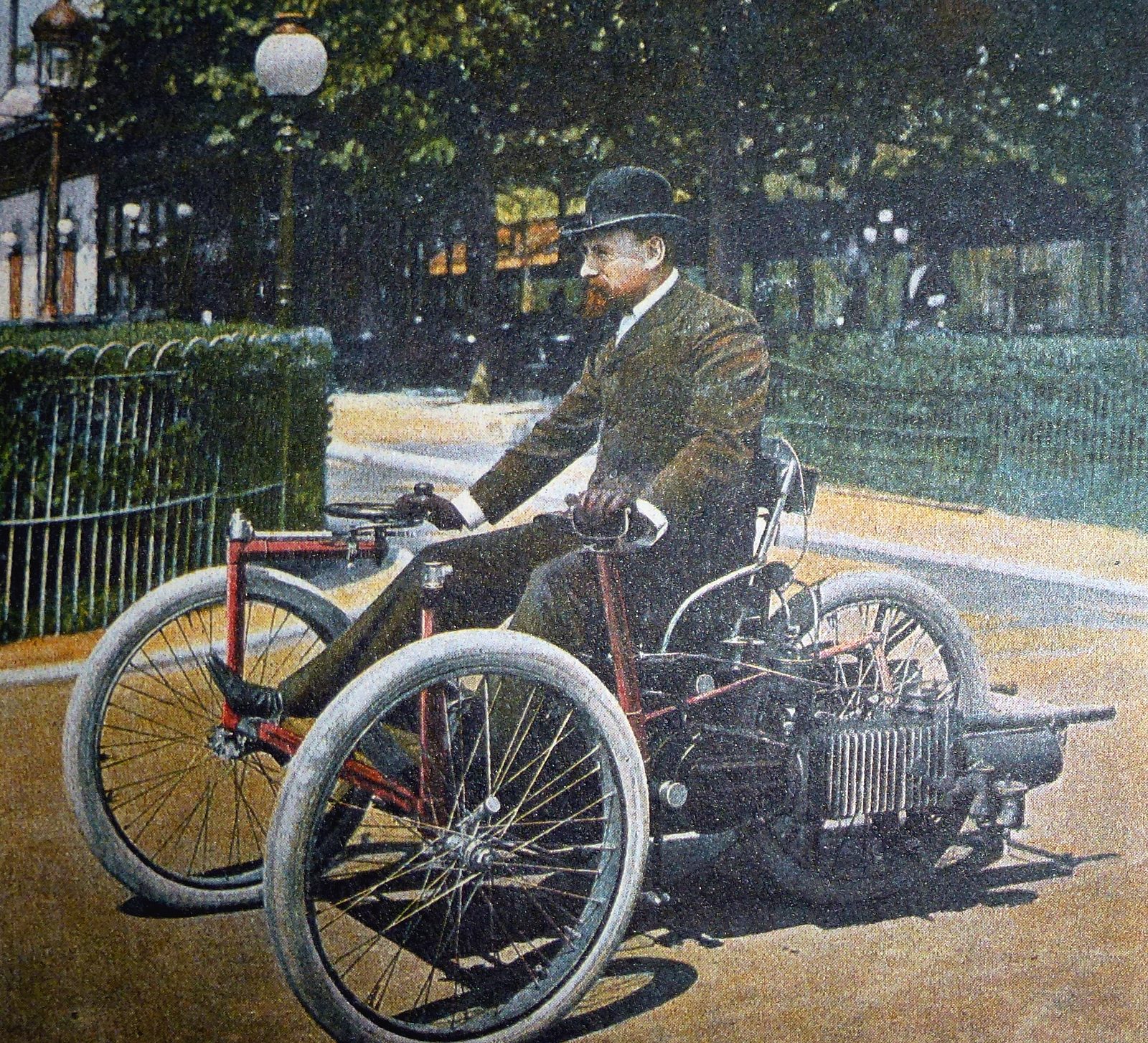
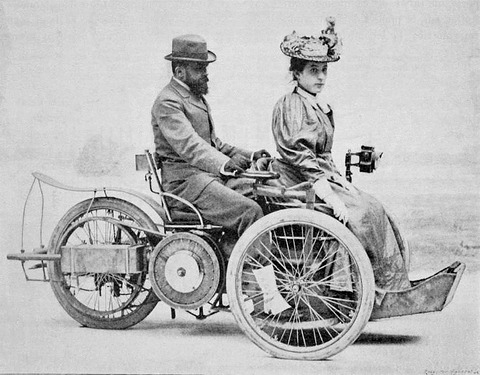
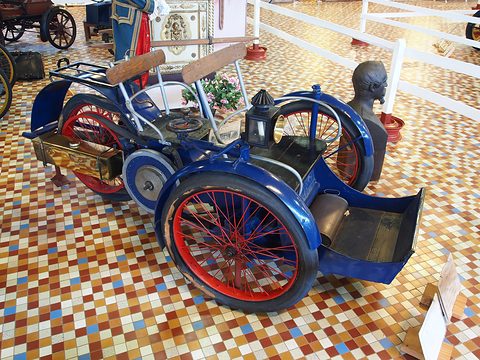
The word that names the early small car was coined by an inventor of calculating machines. Léon Bollée, a son of the steam-carriage pioneer Amédée Bollée, built a light three-wheeler at Le Mans in 1895, the Léon Bollée Voiturette; voiturette, “little car”, was a word of his own, and he registered it as a name.source 17source 18 It was a tandem with the passenger in front, driven through a belt by a single-cylinder engine of about 3 hp.source 17source 18source 19 Le Mans made only the prototypes; Hurtu & Diligeon built several hundred for him, and in 1896 the British Motor Company acquired the rights for Britain.source 18source 19source 20 On 14 November 1896, on the run from London to Brighton that celebrated the end of the 4 mph limit, two Bollées arrived first and second.source 18source 17 The word became the general French term for a light car.source 17source 20
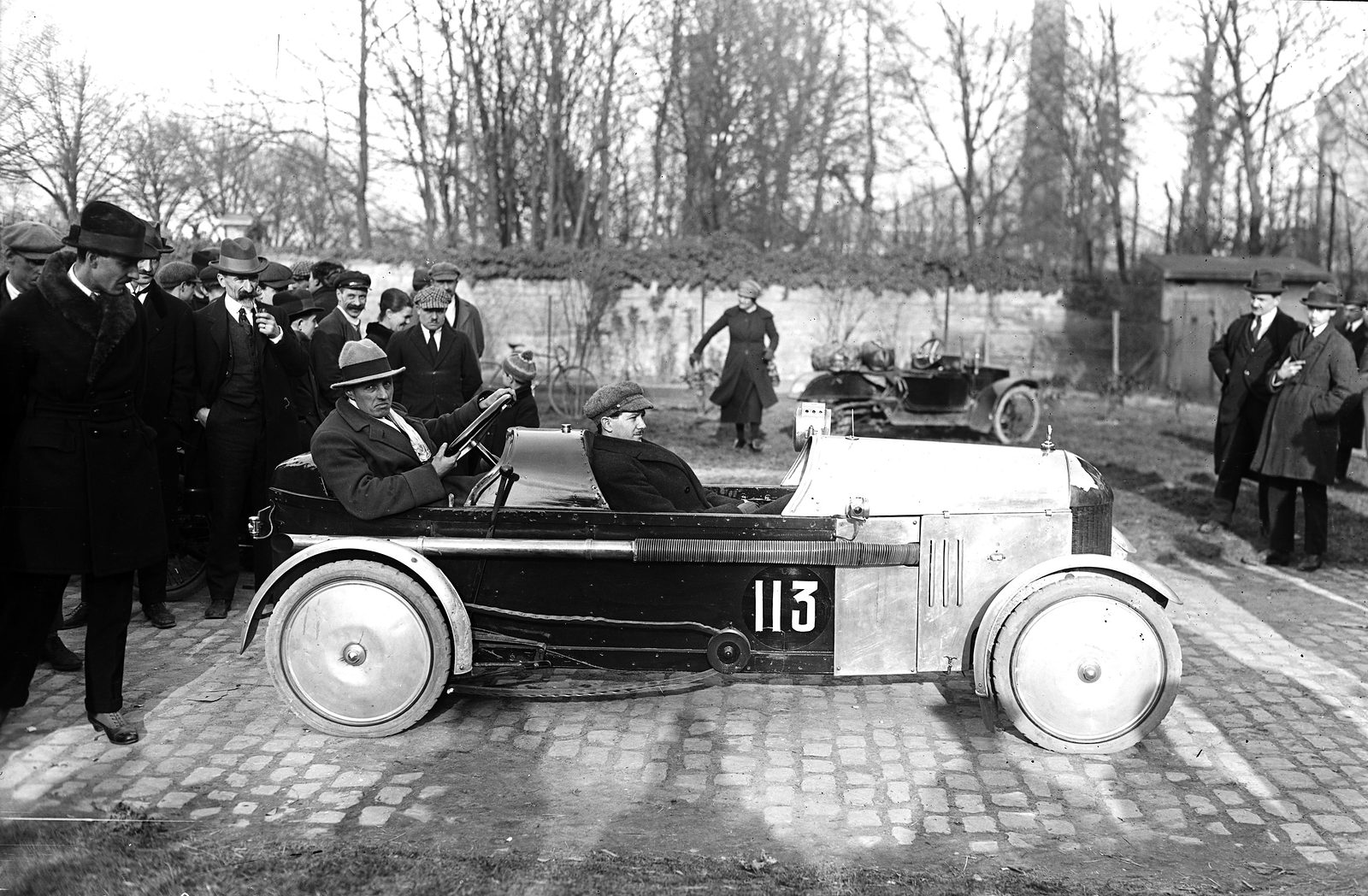
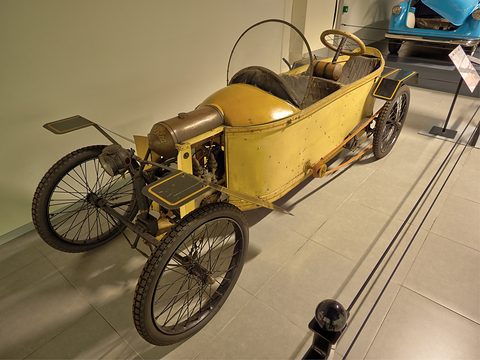
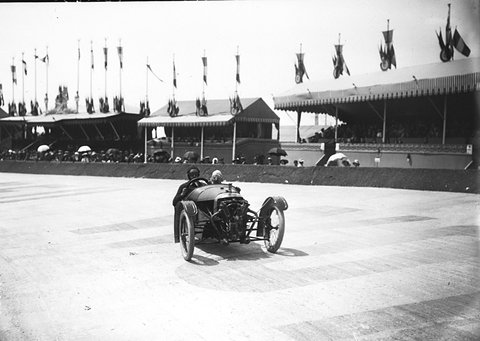
Some fifteen years later two students at the École Violet, an engineering school in Paris, wrecked their motorcycle. Robert Bourbeau and Henri Devaux used its V-twin to build a two-seater with the seats in tandem, which they called the Bédélia; French Wikipedia likens it to a cross between a motorcycle and a wingless aeroplane.source 21source 22
Although this may not be the first cyclecar ever made, it was undoubtedly the first to be produced on a commercial basis in France.
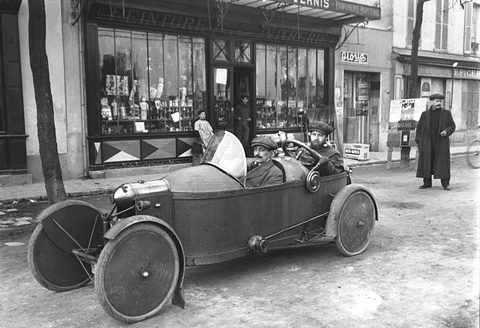
At Amiens on 13 July 1913 Bourbeau’s Bédélia won the class for four-wheeled cyclecars in the Cyclecar Grand Prix; W. G. McMinnies’s Morgan finished 2 min 45 s ahead, but the French rules counted three-wheelers as sidecars.source 24 In 1920 Devaux sold the rights to M. Binet, a dealer, and from then on Mahieux et Cie built the cars for him.source 21source 25 Marcel Violet, an Arts et Métiers engineer and a flier in the First World War, had built cyclecars since 1908 and is called the father of the French cyclecar: La Violette in 1909, the Violet-Bogey of 1913–14, the Weler of 1920–21 and, from 1924, the Sima-Violet, with his own air-cooled two-stroke flat-twin of about 500 cc in a tubular backbone.source 26source 27source 28
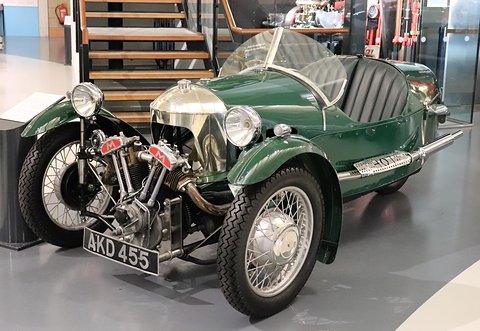
Henry Frederick Stanley Morgan learned his drawing on the railway. A clergyman’s son, born at the rectory of Stoke Lacy, Herefordshire, in 1881, Morgan was taken on in 1900 as a pupil of the chief engineer of the Great Western Railway at Swindon and spent about seven years in the drawing office; in 1906 he opened a garage at Malvern Link and operated one of the earliest bus services.source 9source 29 In 1909 he built the car that began the Morgan Three-Wheeler: a 7 hp Peugeot V-twin in a tubular three-wheeled chassis he had designed himself, with most of the machining done in the workshop of Malvern College.source 9source 29 The patent drawings of 1910 were the work of John Black, then a young clerk with the patent agents and later Sir John Black of Standard, and the Morgan Motor Co. Ltd was formed in 1912.source 9source 29 Morgan died in 1959, aged 77.source 9source 29
I drove the machine, which I called the Morgan Runabout, in 1909. It was most successful, due to its rigid frame, independent front-wheel suspension and light weight.
The most famous name of the period sold a design. Ettore Bugatti designed a small four-cylinder car and offered Peugeot a licence to build it; as the Peugeot Bébé it was made at Beaulieu, 3,095 of them up to 1916, more than of any other Bugatti design.source 30source 31source 32source 33
Engineers and inventors, 1919–1947
Jules Salomon, who had designed the Le Zèbre, worked at Citroën on the 5CV, the Citroën 5HP, with Edmond Moyet, who had also come from Le Zèbre.source 34source 35source 36 Moyet drew a cyclecar of his own at home in the evenings; two backers, Akar and Lamy, put up the money, and it became the Amilcar CC.source 36source 37 Salomon went on to help Lucien Rosengart set up the Austin Seven under licence in France in 1927–28, as the Rosengart LR2.source 34source 38
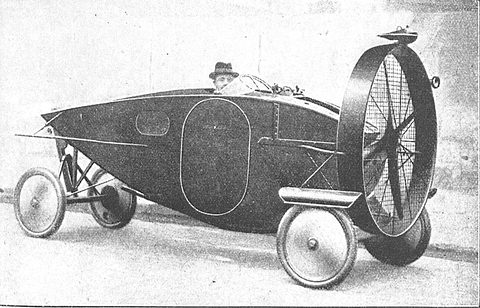
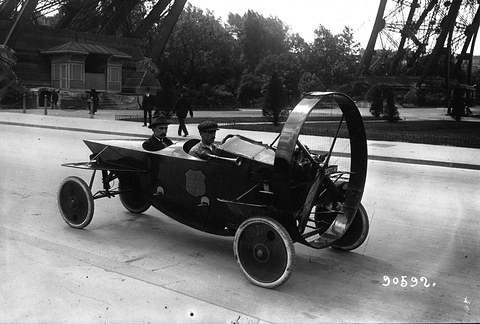
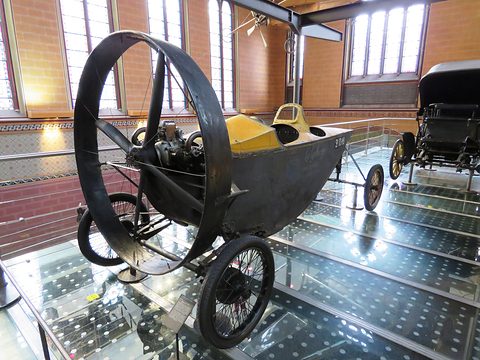
Charles Mochet had built aeroplanes at Marseille around 1910 and small cars in Morocco; his wife thought a bicycle too dangerous for their son Georges, so in 1925 he built the boy a four-wheeled pedal car; demand followed, and the pedal car became the Mochet Vélocar.source 39source 40source 41 After 1945 Georges Mochet fitted engines, then made licence-free microcars such as the Mochet CM-125, until the licence law of 1957–58 closed the business.source 42source 43 Marcel Leyat, a Centrale-trained engineer and an aviation pioneer, believed in the propeller: no clutch, gearbox or differential. His Leyat Hélica, on sale from 1919, was a plywood fuselage on four wheels, with tandem seats, an airscrew at the front and steering by the rear wheels.source 44source 45
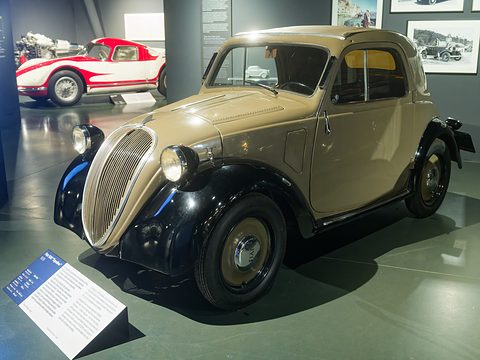
In the summer of 1931 a front-wheel-drive prototype for a small Fiat, by Oreste Lardone, caught fire on its first outing with Giovanni Agnelli aboard, and Agnelli banned front-wheel drive at Fiat.source 46source 47 Antonio Fessia and Tranquillo Zerbi handed the project, coded Zero A, to a young aero-engine engineer, Dante Giacosa.source 46source 47 His economies made the Fiat 500 Topolino: a 569 cc side-valve four ahead of the front axle, the radiator behind and above it with thermosiphon cooling and no water pump, and petrol fed by gravity.source 46source 48source 49 On 7 October 1934 he and Fessia took turns at the wheel of the final prototype and reached 82 km/h (51 mph).source 46source 47
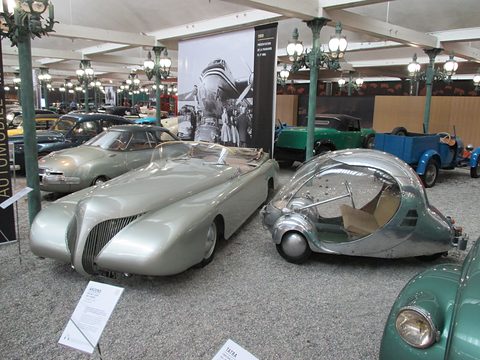
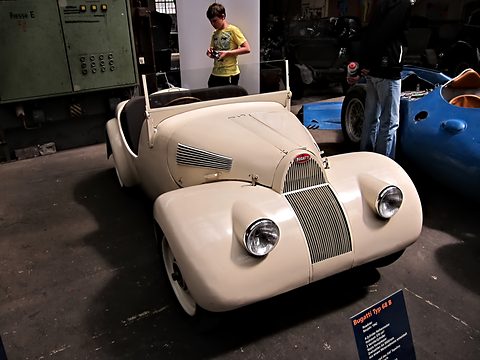
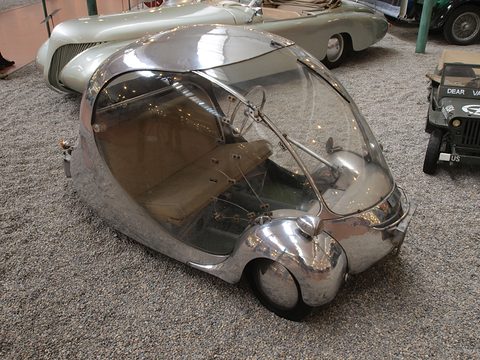
In occupied Paris the designer Paul Arzens, trained at the Beaux-Arts and later known for shaping French railway locomotives, built an egg-shaped electric car, L’Œuf électrique, in 1942, to get round the occupiers’ restrictions on fuel; its story belongs with the electric microcars.source 50source 51source 52 In his office at Levallois-Perret, while his works at Molsheim were under German occupation, Ettore Bugatti drew a tiny two-seater, the Bugatti Type 68, with a supercharged four of about 320 to 370 cc; it was abandoned after his death in August 1947.source 53source 54
Out of the aircraft works, 1948–1958
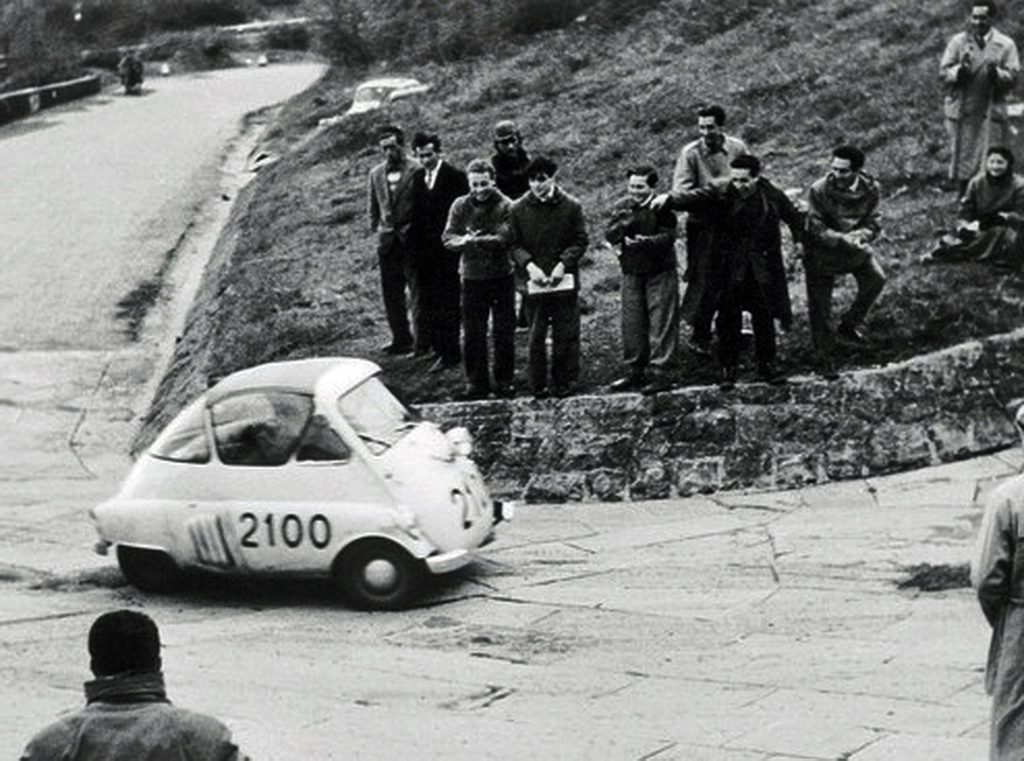
After 1945 several of the best-known small cars came from people who had designed aircraft. Ermenegildo Preti, born in Milan in 1918, was a designer of gliders and light aircraft for the Politecnico di Milano’s gliding centre; 32 of his CVV 6 Canguro gliders were built for the Italian Air Force.source 5 In the war he had foreseen the shortages to come and thought about a very small car.source 55 For Renzo Rivolta, a maker of refrigerators and scooters, he laid down the concept of the Iso Isetta and left the body and chassis to Pierluigi Raggi, a young engineer who also came from aeronautics; Genoni, another colleague, adapted the motorcycle engine.source 55source 56 Italian Wikipedia traces the front door to Preti’s wartime AL.12 glider, whose nose was hinged on one side and opened fully, a design described in his degree thesis; and it was Preti who, late in the work, proposed mounting the steering column on the door.source 55 The first prototype had a single rear wheel, which proved dangerous in tests and gave way to two wheels set close together.source 55source 56 BMW bought the rights in 1954 and built the BMW Isetta.source 55source 56
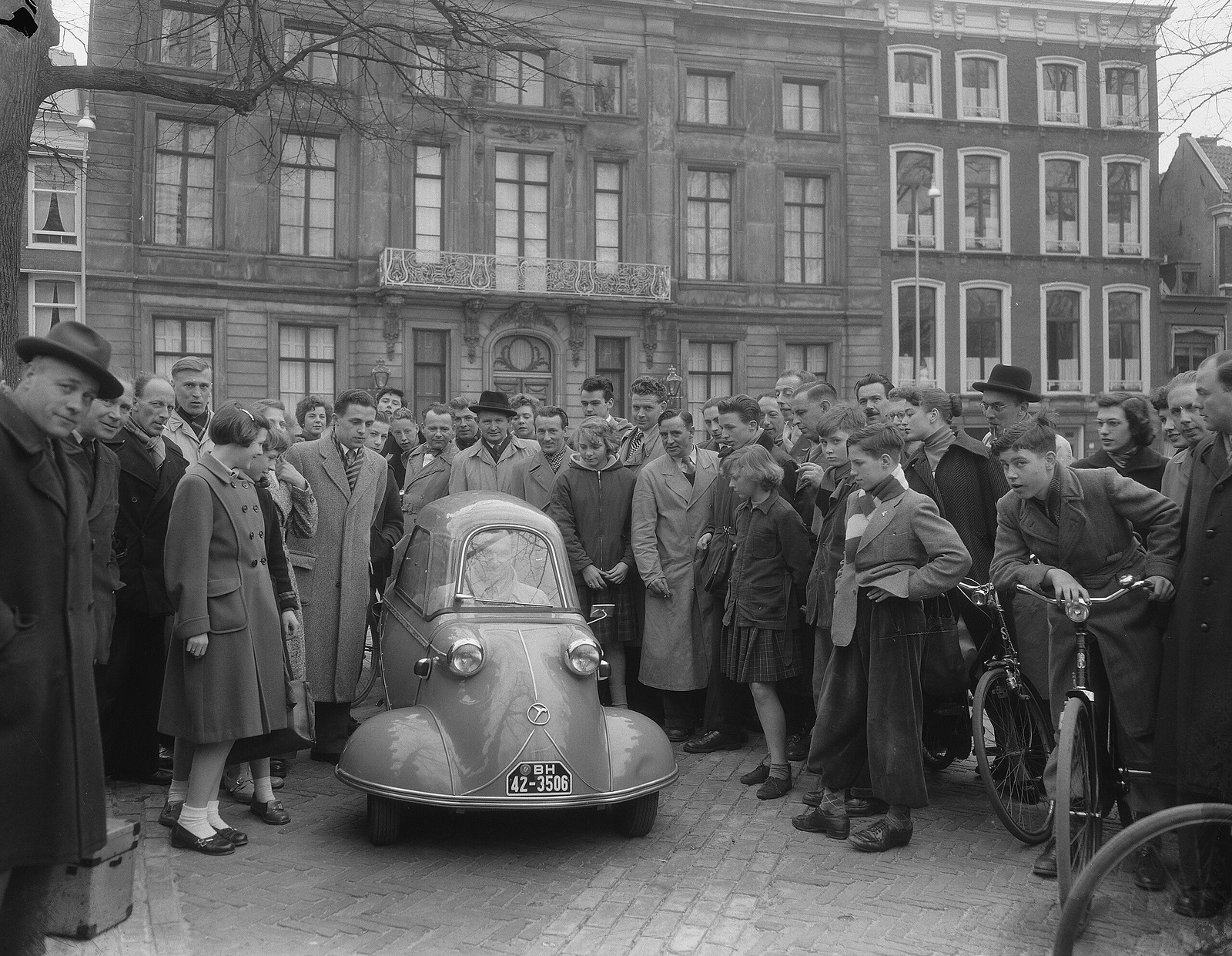
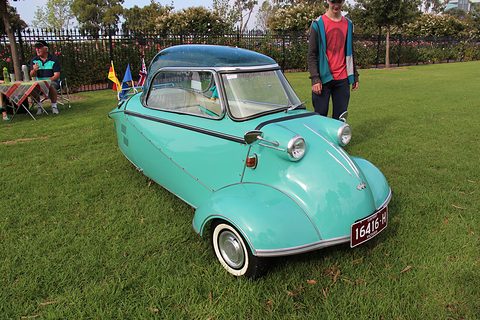
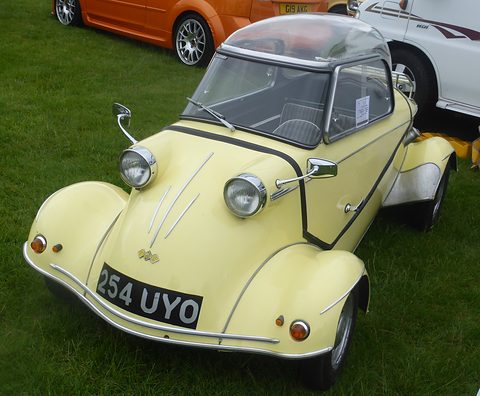
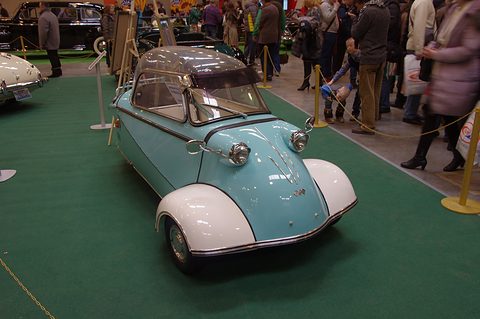
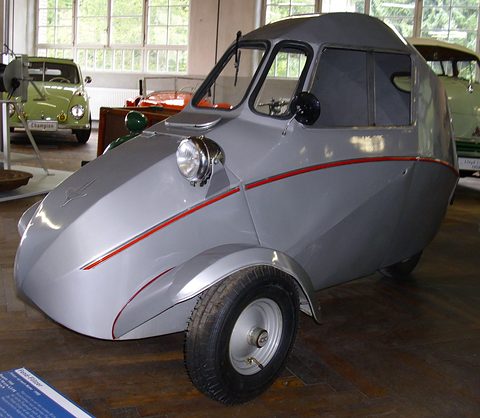
Fritz Fend, the son of a Rosenheim grocer, read aeronautics at Munich’s Technische Hochschule and worked through the war testing and developing aircraft, including on the Me 262 programme at the Rechlin test centre.source 57source 6source 58 The Messerschmitt Owners’ Club insists that he was never employed by Messerschmitt.source 58 His first vehicle was the Fend Flitzer of 1948, a single-seat tricycle, an invalid carriage for those who had lost limbs in the fighting, worked by hand at first and later by small engines; about 282 were built in three series, and in 1950 one climbed the Grossglockner without a stop at an average of 40 km/h (25 mph).source 59source 57source 60 The Rosenheim city archive records his aim: a vehicle that would not be expensive but affordable for everyone.source 57 Short of capital, he went to the idle Messerschmitt works at Regensburg in January 1952, and its company RSM built his two-seat design as the Messerschmitt KR175 from 1953 and the Messerschmitt KR200 from 1955.source 61 British owners long believed that Professor Messerschmitt had designed it himself.source 62 In 1957 Fend and the industrialist Valentin Knott formed FMR to carry on, and added the KR201 Roadster and the four-wheeled FMR Tg500.source 61
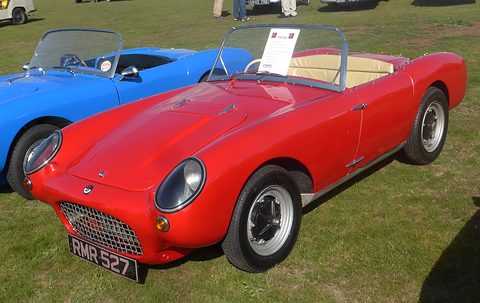
Lawrie Bond had been an aeronautical designer at Blackburn Aircraft in the war, then ran a small engineering firm in Blackpool and later Longridge, and raced 500 cc specials of his own without great success.source 7source 63 In 1948 he showed a tiny aluminium runabout for shopping and short journeys, built at Longridge; his works was too small to make it, so Sharp’s Commercials of Preston did, as the Bond Minicar, and Bond soon sold them the rights.source 63source 7source 64 In 1956 he teamed up with Charles Panter of Berkeley Coachworks, a caravan maker who wanted something to fill the slack seasons, and the result was the Berkeley.source 65source 66
something good enough to win World 750cc races... but cheap, safe, easily repairable and pretty
Motor Sport also credited Bond with the Opperman Unicar of 1956; RM’s catalogue names either Bond or George Trolley.source 67source 68 Gabriel Voisin had built a practical aeroplane in 1907, and his firm went on to become the first to mass-produce aircraft; later he built luxury cars with the engineer André Lefebvre, later of the Citroën 2CV and DS.source 69source 70 In 1949 he designed a microcar round a 125 cc Gnome et Rhône motorcycle engine, the Voisin Biscooter; the nationalised SNECMA saw no future in it, no French firm would put it into production, and it was made in Spain as the Biscúter.source 70source 69source 71source 72 At Dingolfing the farm-machinery firm of Hans Glas had the Goggomobil drawn by Glas, his son Andreas and Karl Dompert, a former aircraft designer, with an engine by Felix Dozekal, formerly of Adler.source 73 Paul Kleinschnittger built the Kleinschnittger F125 partly from material stripped from wrecked military aircraft.source 74
A journalist, a stocking-maker’s son and the racers, 1949–1960
Norbert Stevenson was a freelance journalist, formerly of the Rhein-Zeitung, who had studied mechanical engineering for one wartime semester in Berlin; what he wanted was a very simple two-seater with a pair of front wheels and a small engine at the back.source 75source 10 From the summer of 1949 he was backed by Karl Schmitt, who sold Bosch equipment wholesale in Fulda and whose firm serviced emergency generators, and in June 1953 Stevenson and the coachbuilder Wilhelm Lehnebach shaped the rounded body of the Fuldamobil in ten days.source 10source 76source 77 Built in Germany from 1950 to 1969, it was probably the longest-built microcar of all.source 76
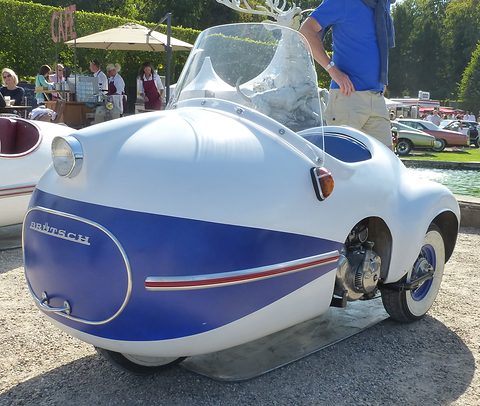
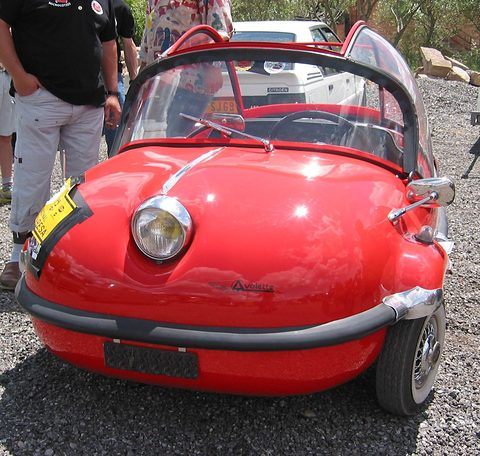
Egon Brütsch, the son of a Stuttgart stocking manufacturer, raced motorcycles in 1929–31 and cars, some of his own building, from 1935 to 1950.source 12 Between 1951 and 1958 he designed about a dozen Brütsch microcars, mostly small glass-fibre three-wheelers, none of them made in more than low double figures, and he lived by selling licences: to Spatz in Germany, Belcar in Switzerland and Air-Tourist, maker of the Avolette, in France.source 12source 78source 79 In November 1954 a Stuttgart court put his assets under sequestration, and Spatz won an injunction that stopped him calling himself its designer.source 80source 79 His single-seat Brütsch Mopetta was legally a moped, taxed at DM 15 a year, and in December 1956 auto motor und sport called him tireless, a creator of beautiful plastic cars.source 81source 82
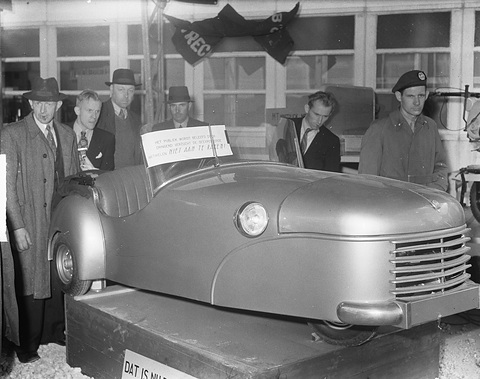
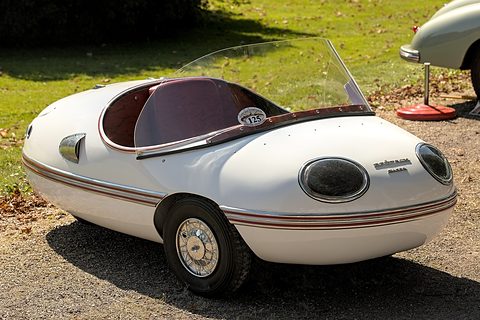
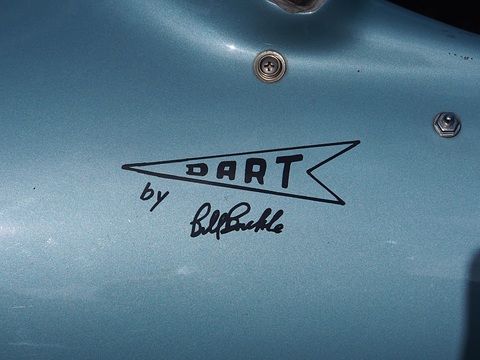
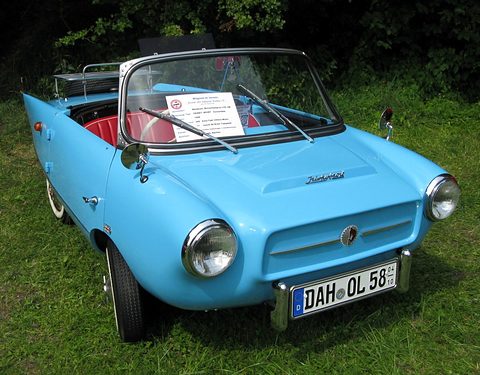
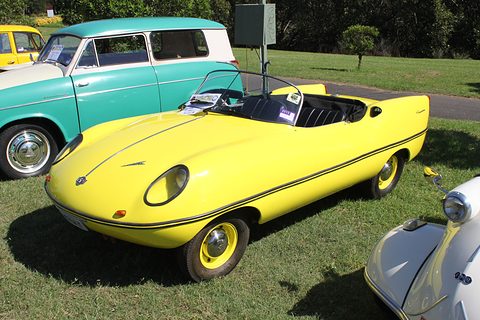
The Frisky was conceived by Captain Raymond Flower, a racing driver and head of the Cairo Motor Co, after the Suez crisis ended his Egyptian car projects; Gordon Bedson, formerly of Kieft and Vickers, and Keith Peckmore engineered it at Henry Meadows in Wolverhampton, and Giovanni Michelotti styled it for Vignale.source 83source 84source 85 In Sydney the dealer and racer Bill Buckle, who took the Goggomobil franchise in 1958, designed the glass-fibre Goggomobil Dart, and Stan Brown, a panel beater, built the prototype.source 13source 86source 87
Giacosa’s two minimum cars
A pair
Big firms, small cars, 1955–1960
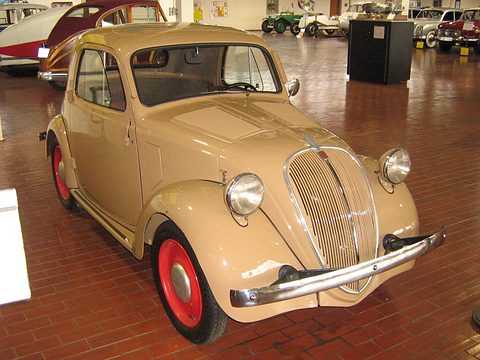
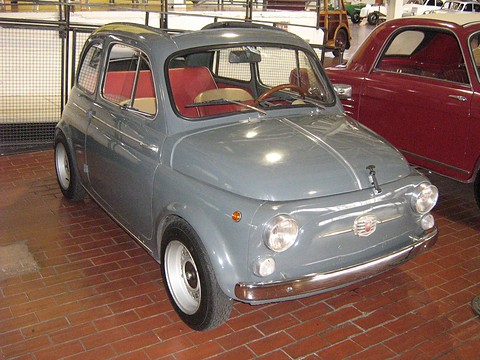
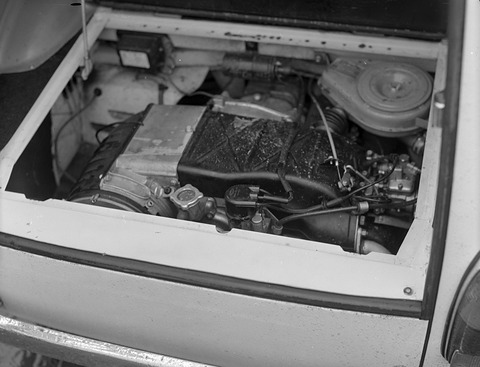
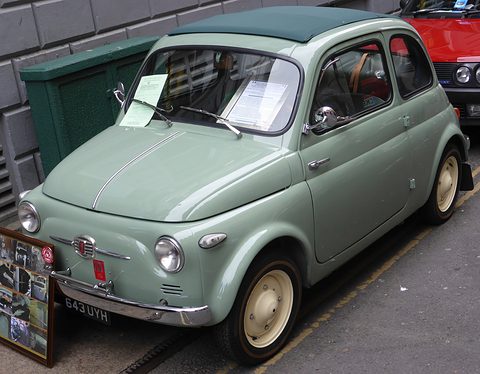
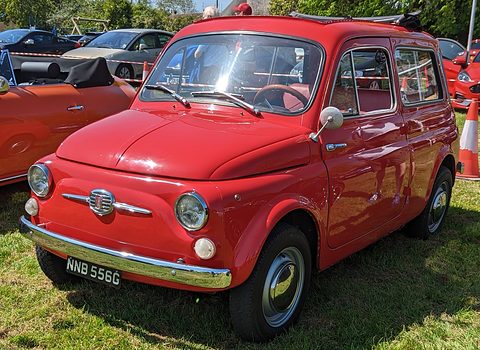
Two decades on, Giacosa drew Fiat’s second minimum car. Vittorio Valletta asked him for something cheaper than the 600 that a working family could buy and run, a car to move Italians off their scooters; the answer was the Fiat Nuova 500 of 1957, with an air-cooled four-stroke twin at the back.source 88source 89 Its shape models achieved a drag coefficient of 0.38, and many engine layouts were tried before the upright twin was chosen.source 88source 90 For the estate of 1960, the Fiat 500 Giardiniera, Giacosa laid the twin on its side, a sogliola, like a sole, and slid it under a flat load floor; the water-cooled engine of the Fiat 126 Bis was later laid flat in the same way.source 88source 91source 92source 93
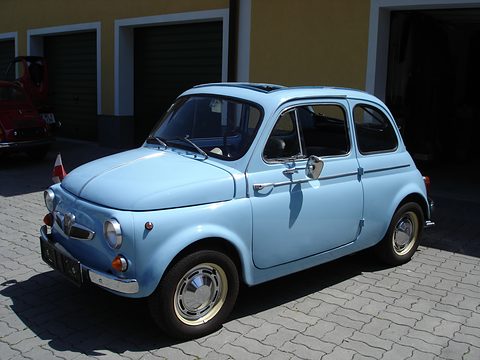
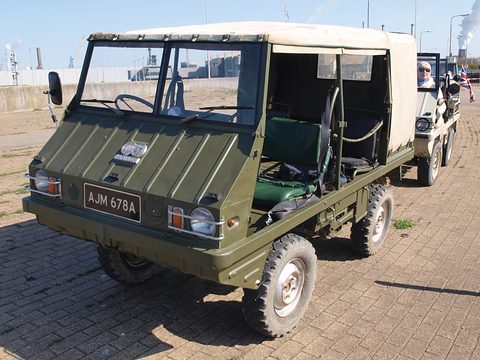
In Austria Erich Ledwinka, the son of Tatra’s Hans Ledwinka and chief designer at Steyr-Daimler-Puch, gave Fiat’s body his own flat-twin engine and running gear to make the Steyr-Puch 500; he wanted a proper four-seat small car that could cope with Alpine roads.source 94source 95 He also led the design of the Steyr-Puch Haflinger.source 96
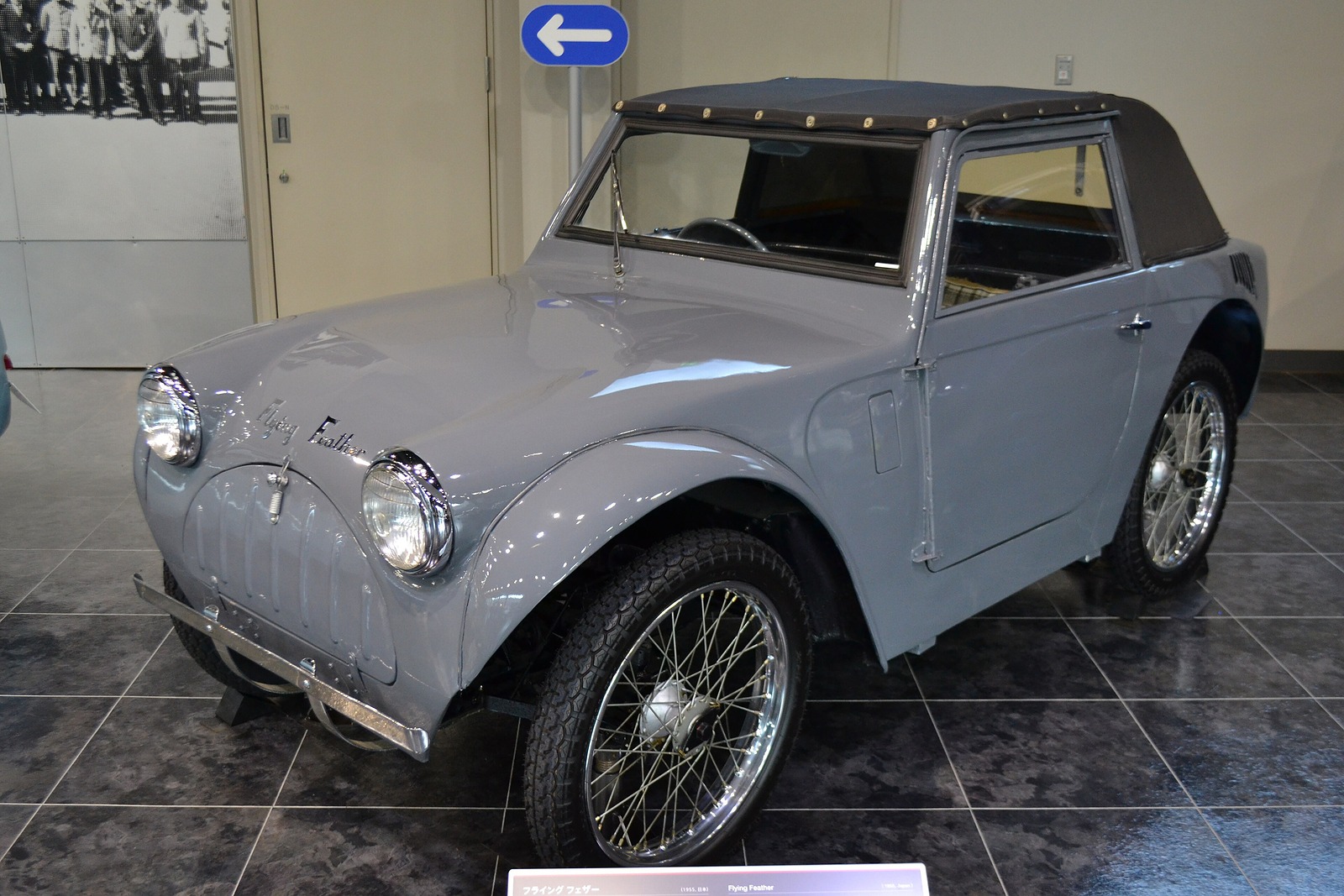
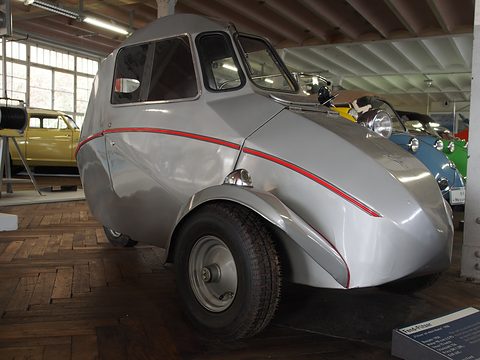
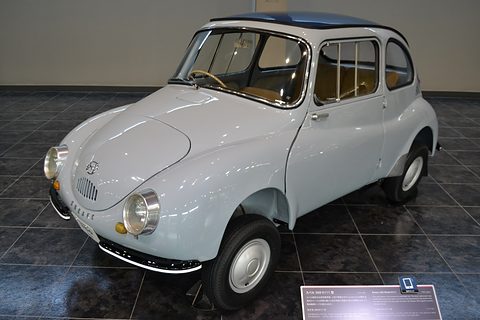
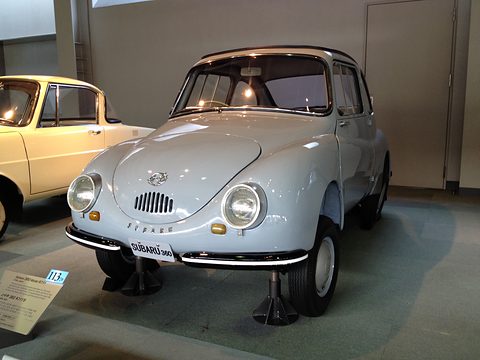
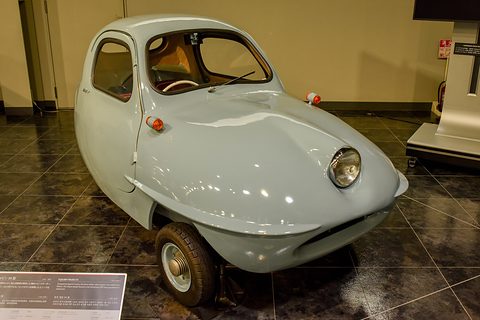
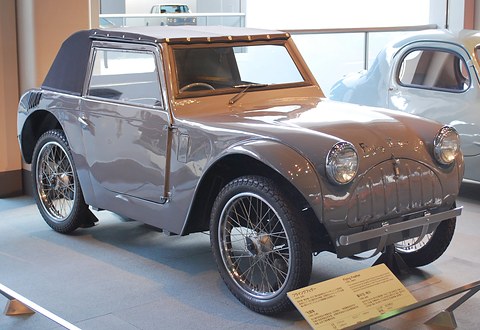
In Japan the Subaru 360 came from what was left of the Nakajima aircraft empire. Its project leader, Shinroku Momose, took a degree in aeronautics at Tokyo Imperial University in 1941 and worked at Nakajima on supercharging the Homare aero-engine; in 1949 he designed Japan’s first monocoque rear-engined bus.source 8source 97 His team of former aircraft engineers treated the car as an airframe, to carry four adults inside the kei car limits of 3.0 by 1.3 m (9 ft 10 in by 4 ft 3 in) and 360 cc.source 97source 98source 8 Ryūichi Tomiya had designed Datsun bodies before the war, and the Datsun rabbit mascot.source 99 By the Japan Automotive Hall of Fame’s account, his old Nissan colleague Yutaka Katayama, watching gulls over Yokohama harbour before the war, had wished for a little car that moved as lightly as a gull in flight; after the war Katayama urged him on, and Tomiya drew one for Suminoe, the Flying Feather, and then the Fuji Cabin, both by his rule of the most work for the least consumption.source 100source 99
Boat-builders, stylists and tycoons, 1962–2016
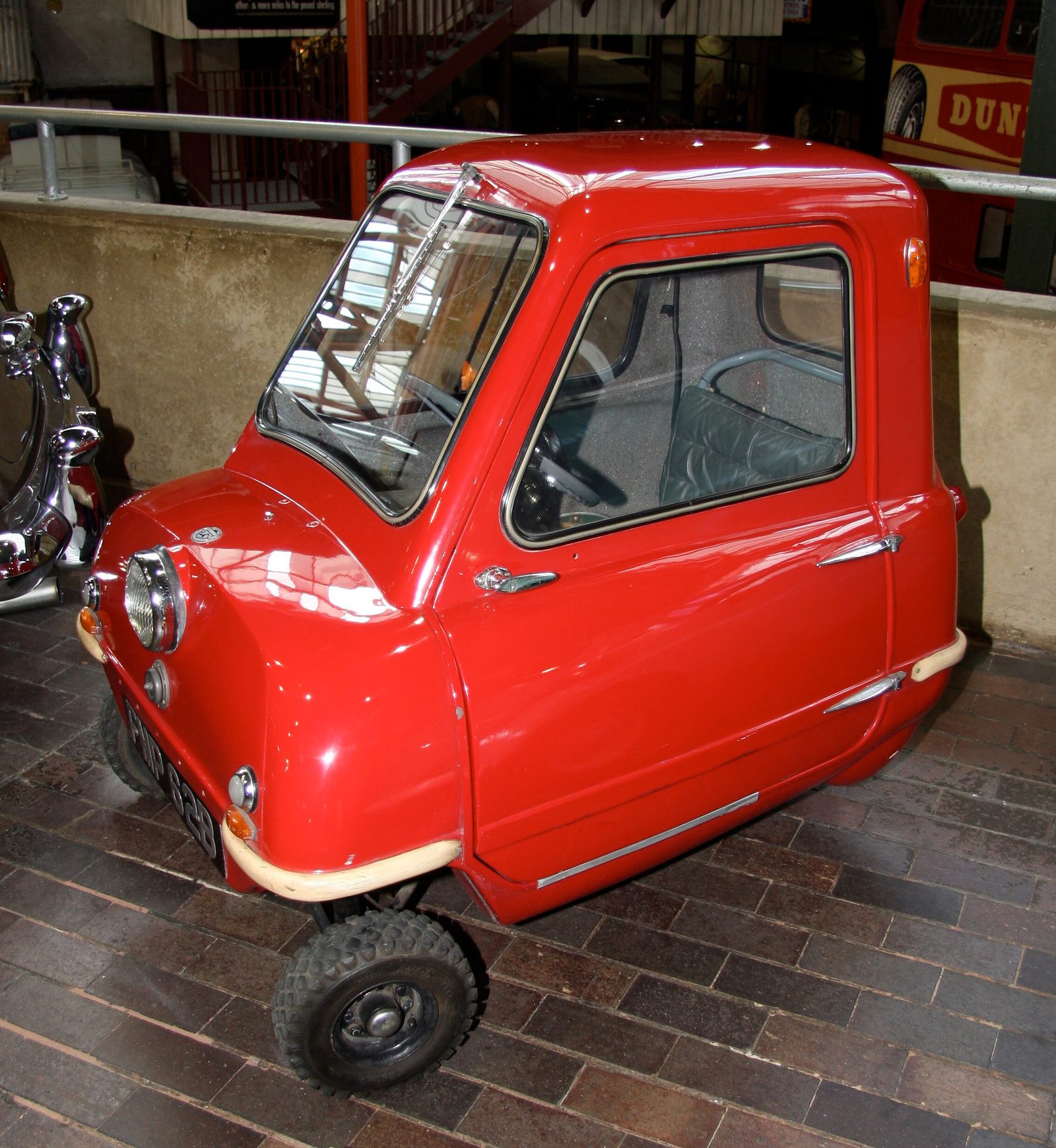
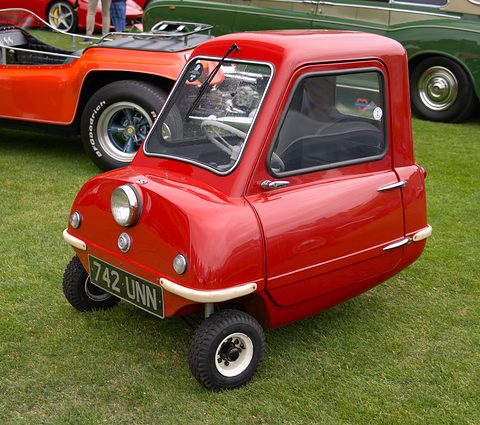
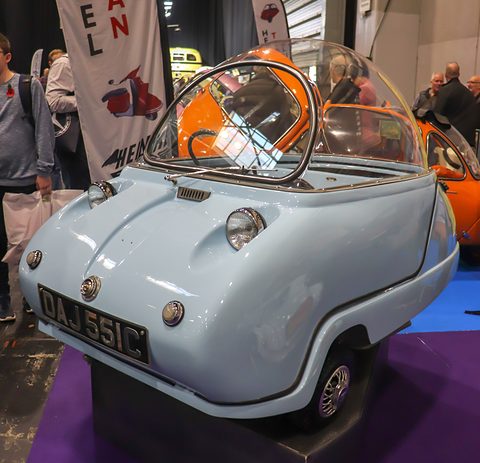
Cyril Cannell founded Peel Engineering at Peel, on the Isle of Man, in the late 1940s to make glass-fibre motorcycle fairings and boats; its first car, the Peel Manxcar, came in 1955, and a hovercraft followed in 1961.source 11source 101source 102source 103 Cannell and Henry Kissack designed the Peel P50 as a study of the smallest dimensions a car could have; it was shown at Earls Court in 1962 with no engine, and sold from 1963 with a 49 cc moped engine at £199.source 101source 103source 104source 105 The Peel Trident is credited to Cannell too.source 106
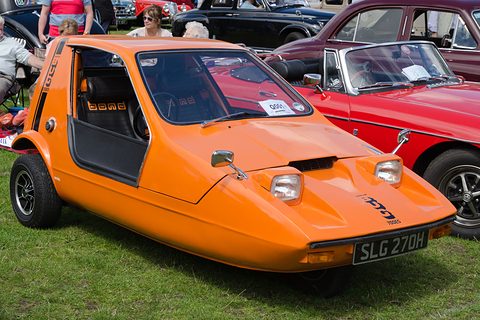
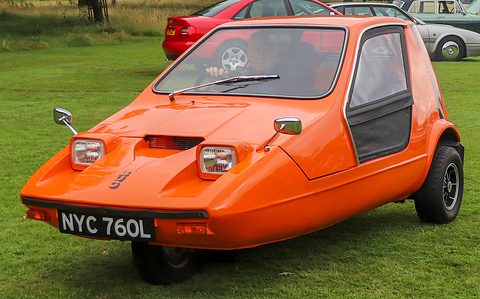
Tom Karen was a designer at Ogle Design, at Letchworth. Ogle offered Reliant a sporty three-wheeler; when Reliant bought Bond in 1969, its managing director, Ray Wiggin, decided to sell the design as a Bond, and the tangerine Bond Bug was launched in June 1970.source 107source 108source 109 Karen also designed the Raleigh Chopper bicycle and oversaw the landspeeder props for Star Wars (1977), one of them built on a Bug chassis.source 108source 110source 107source 109 He died, aged 96, on the last day of 2022.source 110
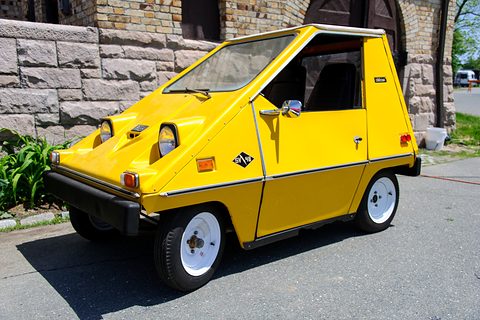
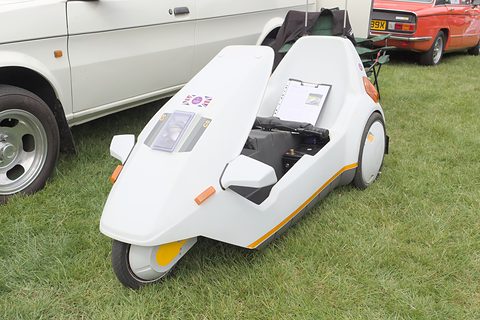
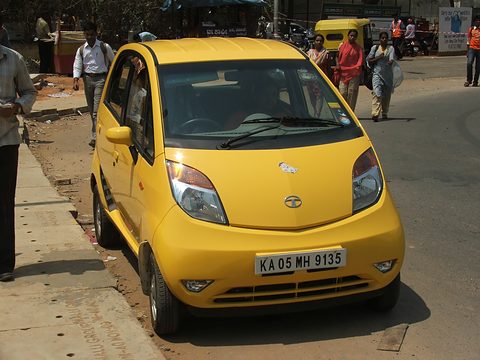
Cheap and electric cars brought in more outsiders. Bob Beaumont, a former Chrysler-Plymouth dealer, built the CitiCar at Sebring, Florida, from 1974, designed with Jim Muir.source 111source 112source 113 Sir Clive Sinclair, known for his pocket calculators and his ZX81 and ZX Spectrum home computers, put £8.3 million from the sale of Sinclair Research shares into Sinclair Vehicles in 1983 to make the Sinclair C5.source 114source 115 In India Shankarrao Kulkarni, a self-taught engineer from Maharashtra whose schooling ended at about 12, built the Meera; and Ratan Tata had promised a car at one lakh rupees, a price he kept when the Tata Nano was unveiled on 10 January 2008.source 116source 117source 118source 119
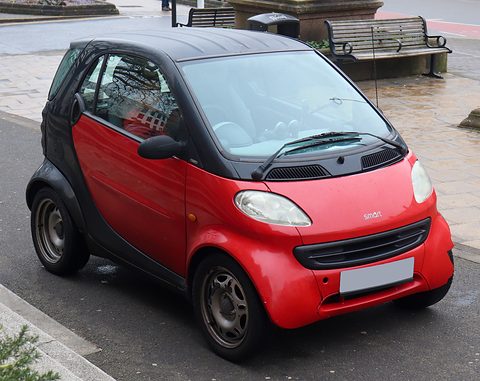
Nicolas Hayek, who founded the Swatch group, wanted a car in the Swatch manner: small and cheap, its body panels as changeable as a watch’s, with electric or hybrid drive.source 14 Volkswagen was his first partner and dropped out; in 1994 Daimler-Benz joined him in Micro Compact Car AG.source 120source 14 Daimler-Benz insisted on a small turbocharged petrol engine and refused wheel-hub electric motors, and on 1 November 1998 Hayek sold his shares.source 14
Der heutige benzinbetriebene Smart ist ein Produkt aus dem Hause Daimler-Benz und hat nichts mit den Plänen des einstigen Swatch-Teams gemein.
The Smart Fortwo, then, was Hayek’s idea and Daimler-Benz’s car; of his plans, the glass towers he wanted the cars sold from survived as the Smart Center towers.source 14source 121
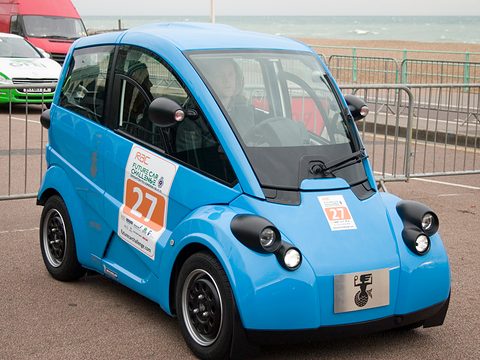
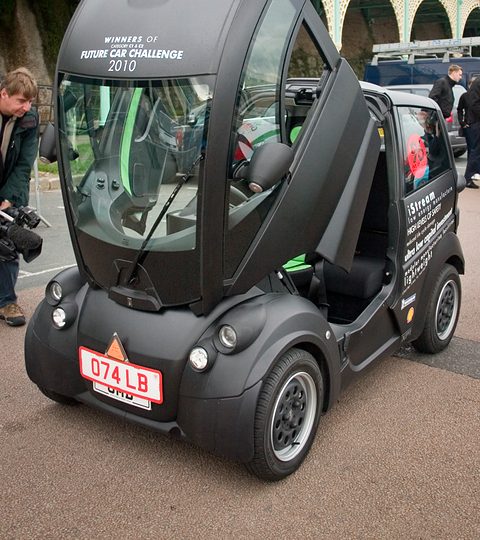
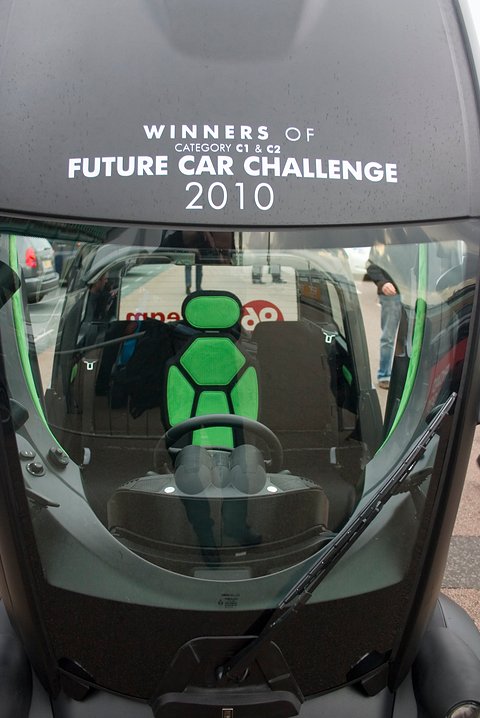
Gordon Murray came from the other end of motoring: he had designed Brabham and McLaren Formula 1 cars and the McLaren F1 road car.source 16source 122 His Gordon Murray T.25, unveiled at the Smith School in Oxford on 28 June 2010, was 2.4 m (94 in) long, with a 660 cc three-cylinder engine and a central driving seat like the McLaren F1’s.source 123 The real product was the way it was made: iStream, in which composite panels are bonded to a frame of steel tubes, and which Autocar made its Idea of the Year for 2008.source 123source 16
The simplified assembly process means that an assembly plant can be designed to be 20% of the size of a conventional factory. This could reduce capital investment in the assembly plant by approximately 80%.
The electric T.27, developed with Zytek, weighed 680 kg (1,499 lb), passed a 40 per cent offset crash test and won the 2011 RAC Future Car Challenge outright.source 122source 124source 16 Neither car went into production.
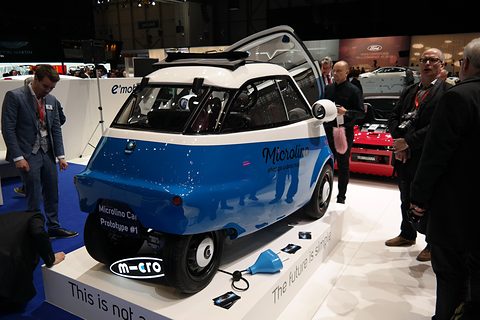
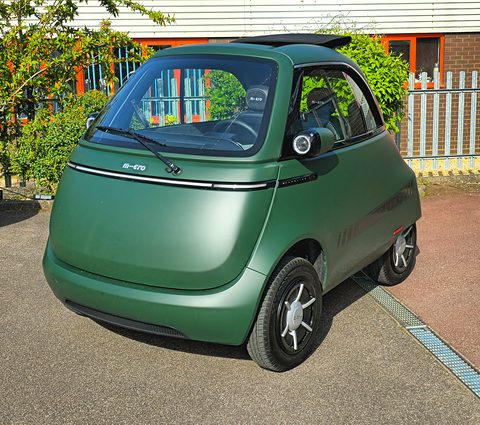
Wim Ouboter, founder of the Micro kick-scooter firm, and his sons Oliver and Merlin showed an electric homage to the Isetta, the Microlino, at Geneva in March 2016, almost as a publicity stunt; more than 500 reservations in two days persuaded them to build it.source 15source 125 Like Bollée’s tricar more than a century before, it came from outside the small-car trade.
Smallest to largest
58 cars, to scale
Each bar is the car’s length on a 3.5 metre track; the red notch is a Fiat 500.
-
Peel P501962–1965 · Isle of Man · 3 wheels
1.37 m -
Brütsch Mopetta1956–1958 · West Germany · 3 wheels
1.70 m -
Sinclair C51984–1985 · Britain · 3 wheels
1.74 m -
Willam City1967–1988 · Italy · 4 wheels
1.78 m -
Peel Trident1965–1966 · Isle of Man · 3 wheels
1.85 m -
Fend Flitzer1948–1951 · Germany · 3 wheels
2.00 m -
Brütsch1951–1958 · West Germany · 3 wheels
2.20 m -
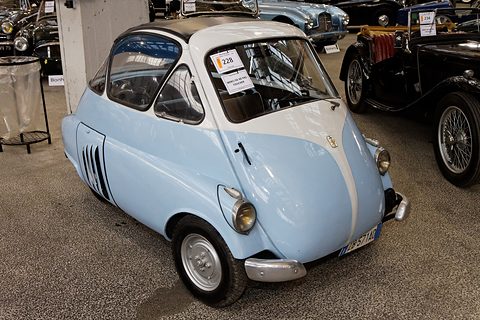
Iso Isetta1953–1956 · Italy · 4 wheels
2.25 m -
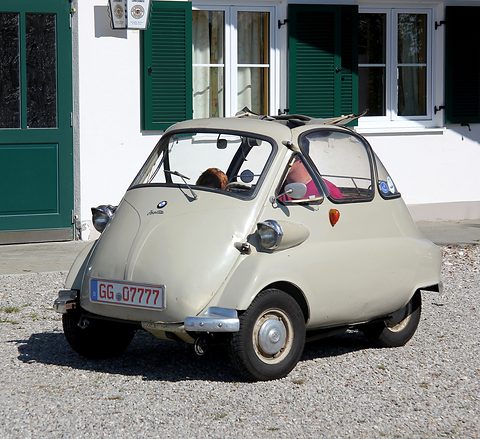
BMW Isetta1955–1962 · West Germany · 4 wheels
2.29 m -
CitiCar1974–1982 · United States · 4 wheels
2.39 m -
Avolette1955–1958 · France · 3 wheels
2.40 m -
Gordon Murray T.252010–2011 · Britain · 4 wheels
2.40 m -
Mochet CM-1251945–1958 · France · 4 wheels
2.40 m -
Léon Bollée Voiturette1895–1899 · France · 3 wheels
2.50 m -
Smart Fortwo1998–2024 · Germany · 4 wheels
2.50 m -
Microlino2022– · Switzerland · 4 wheels
2.52 m -
Biscúter1953–1960 · Spain · 4 wheels
2.56 m -
Voisin Biscooter1949–1957 · France · 4 wheels
2.57 m -
Peugeot Bébé1905–1916 · France · 4 wheels
2.62 m -
Bond Minicar1949–1966 · Britain · 3 wheels
2.69 m -
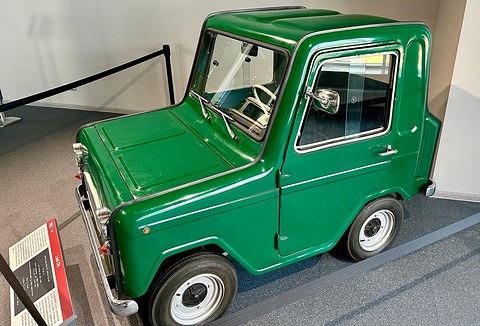
Flying Feather1954–1956 · Japan · 4 wheels
2.77 m -
Austin Seven1922–1939 · Britain · 4 wheels
2.79 m -
Bond Bug1970–1974 · Britain · 3 wheels
2.79 m -
Messerschmitt KR1751953–1955 · West Germany · 3 wheels
2.82 m
34 more carsFewer
-
Messerschmitt KR2001955–1964 · West Germany · 3 wheels
2.82 m -
Fuldamobil1950–1969 · West Germany · 3 wheels
2.85 m -
Steyr-Puch Haflinger1959–1974 · Austria · 4 wheels
2.85 m -
Frisky1958–1961 · Britain · 4 wheels
2.86 m -
Kleinschnittger F1251950–1957 · West Germany · 4 wheels
2.90 m -
Morgan Three-Wheeler1910–1952 · Britain · 3 wheels
2.90 m -
Bugatti Type 681942–1947 · France · 4 wheels
2.90 m -
Goggomobil1955–1969 · West Germany · 4 wheels
2.90 m -
Opperman Unicar1956–1959 · Britain · 4 wheels
2.95 m -
Fuji Cabin1955–1957 · Japan · 3 wheels
2.95 m -
Fiat Nuova 5001957–1975 · Italy · 4 wheels
2.97 m -
Steyr-Puch 5001957–1975 · Austria · 4 wheels
2.97 m -
Subaru 3601958–1970 · Japan · 4 wheels
2.99 m -
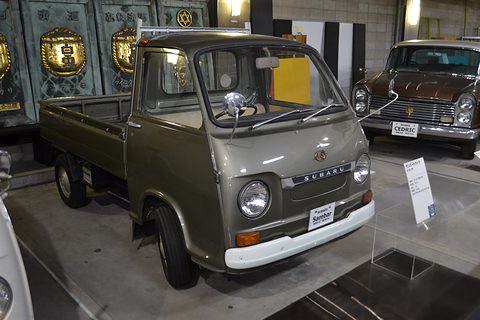
Subaru Sambar1961–2012 · Japan · 4 wheels
2.99 m -
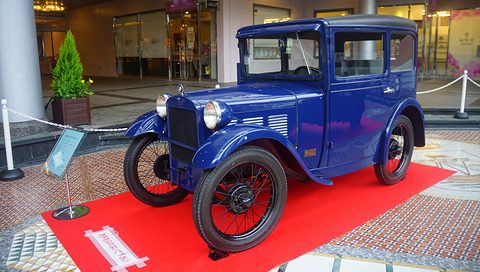
BMW 3/151927–1932 · Germany · 4 wheels
3.00 m -
FMR Tg5001958–1961 · West Germany · 4 wheels
3.00 m -
Goggomobil Dart1959–1961 · Australia · 4 wheels
3.05 m -
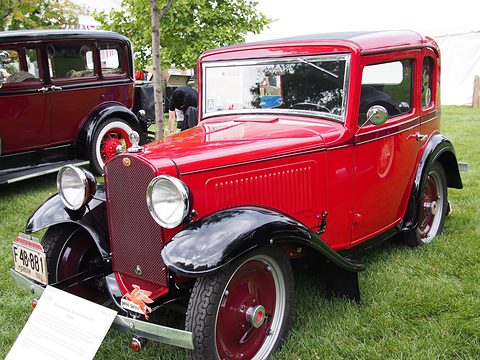
American Austin1930–1941 · United States · 4 wheels
3.09 m -
Tata Nano2008–2018 · India · 4 wheels
3.10 m -
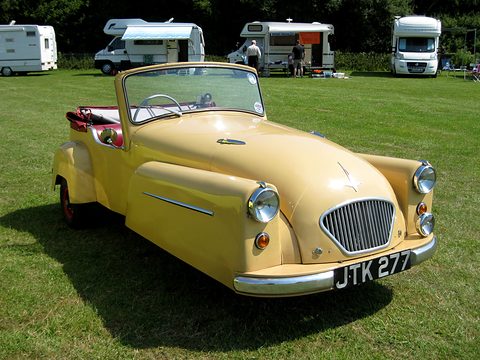
Berkeley1956–1960 · Britain · 4 wheels
3.11 m -
Fiat 500 Giardiniera1960–1977 · Italy · 4 wheels
3.19 m -
Citroën 5HP1922–1926 · France · 4 wheels
3.20 m -
Fiat 500 Topolino1936–1955 · Italy · 4 wheels
3.21 m -
Spatz1956–1958 · West Germany · 4 wheels
3.30 m -
Amilcar CC1921–1925 · France · 4 wheels
length unknown -
Bédélia1910–1925 · France · 4 wheels
length unknown -
Darmont1919–1939 · France · 3 wheels
length unknown -
L’Œuf électrique1942 · France · 3 wheels
length unknown -
Le Zèbre1909–1931 · France · 4 wheels
length unknown -
Leyat Hélica1913–1926 · France · 4 wheels
length unknown -
Meera1949–1975 · India · 4 wheels
length unknown -
Mochet Vélocar1925–1950 · France · 4 wheels
length unknown -
Rosengart LR21928–1939 · France · 4 wheels
length unknown -
Sima-Violet1924–1929 · France · 4 wheels
length unknown
Pictures
Six photographs
The designers 6
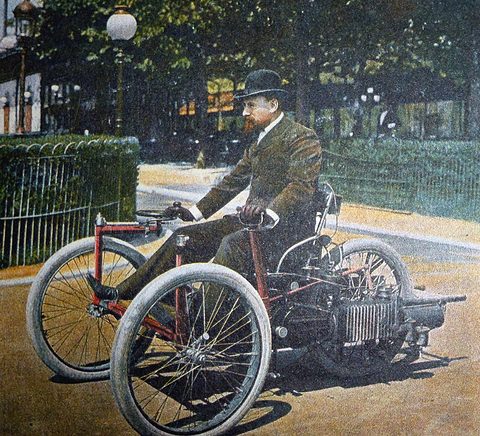
1 Léon Bollée at the tiller of his single-seat racing voiturette, in a colour print from Les Sports Modernes, 1898.
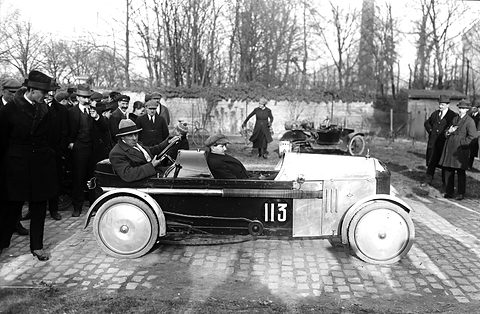
2 Robert Bourbeau in a low Bédélia racer, No. 113, with disc wheels during the Paris–Nice cyclecar trial, France, in 1921.
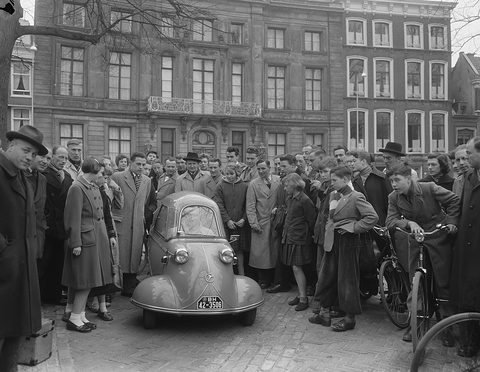
3 A crowd round a new Messerschmitt KR175 in a Den Haag street on 12 April 1954.
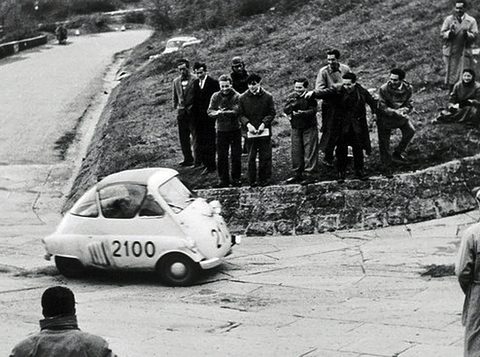
4 Mario Cipolla and L. Brioschi’s Iso Isetta, no. 2100, on a hairpin in the 1954 Mille Miglia.
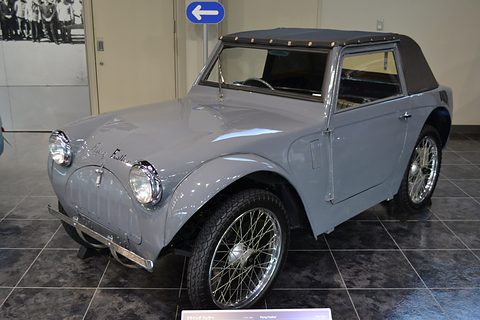
5 The Toyota Automobile Museum’s grey Flying Feather from the right front three-quarter in 2022.
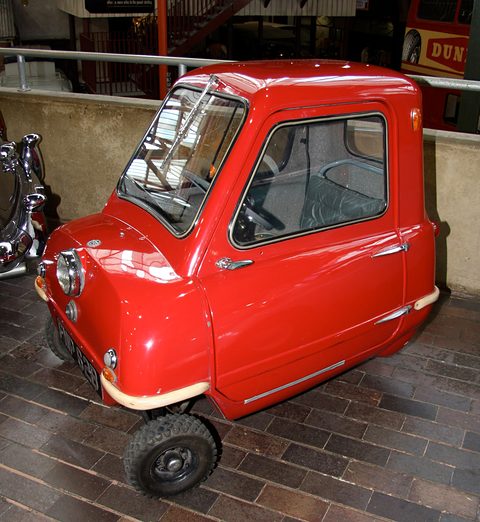
6 A red 1964 Peel P50, FMP 62B, at the National Motor Museum, Beaulieu, showing its single door.
Picture credits (6)
- 1 Les Sports Modernes (1898), Public domain
- 2 Agence Rol, Public domain
- 3 van Duinen / Anefo, CC0
- 4 Unknown photographer, Public domain
- 5 先従隗始, CC0
- 6 Brian Snelson from Hockley, Essex, England, CC BY 2.0
The cars
Profiles
46 more carsFewer
Sources
Numbered as in the text
Sources are given as plain text; the links are on the Credits page.
- English Wikipedia, Austin 7, read in full. It cites Wyatt, The Austin 1905–1952 (1981), and Mills, Original Austin Seven (1996).
- Lane Motor Museum, “Austin 7 ‘Fabric Saloon’ – 1929”, collection page, read in full.
- Grace’s Guide, “Austin: Seven”.
- Hagerty UK, “Austin Seven: power to the people, 100 years on”.
- Italian Wikipedia, Ermenegildo Preti, read in full; it cites Franco Bugada in VFR Aviation no. 18 (2016).
- German Wikipedia, Fritz Fend, read in full; it cites the Große Bayerische Biographische Enzyklopädie (2012).
- English Wikipedia, Bond Minicar, read in full. Used as a lead; it cites The Motor, Light Car, Wotherspoon (1993) and Jones (2008).
- Japanese Wikipedia, Momose Shinroku, read in full.
- H. F. S. Morgan, “How the Morgan began”, The Light Car, December 1949, reproduced on morgan3w.de, archived copy of 2012, read in full.
- English Wikipedia, Fuldamobil, read in full; used as a lead, citing Das Auto and auto motor und sport.
- English Wikipedia, Peel Engineering Company, read in full. It draws on Barry Edwards, P50: Peel Engineering’s Extraordinary Legacy (2014).
- German Wikipedia, Brütsch (Automobilhersteller), read in full. It cites Rosellen, Deutsche Kleinwagen (1991).
- JustCars, “Vale Bill Buckle”, 2023, read in summary.
- German Wikipedia, Smart (Automarke), read in full. It cites brand eins and Der Spiegel.
- English Wikipedia, Microlino, read in full. Used as a lead.
- English Wikipedia, Gordon Murray, the Gordon Murray Design section, read in full. Used as a lead.
- French Wikipedia, Léon Bollée, read in full. Used as a lead.
- English Wikipedia, Léon Bollée Automobiles, read in full. Used as a lead; it cites Rendall, The Chequered Flag (1997), and The Times.
- Grace’s Guide, “Leon Bollee”, read in full: text drawn from Wikipedia and Hasluck (1906).
- German Wikipedia, Automobiles Léon Bollée, read in full. Used as a lead; it cites The Automotor and Horseless Vehicle Journal (November 1896), La Locomotion automobile (1896–97) and Georgano.
- French Wikipedia, Bédélia, read in full. Used as a lead; it cites Caradisiac (2018), a blog and Rétromobile.
- Louwman Museum, “Bédélia BD2 MG”, collection page, read in full.
- The Cyclecar, first issue, 27 November 1912: “The Pastime and Industry Abroad: France”, read from Grace’s Guide’s scan.
- The Cyclecar, 16 July 1913: the Amiens race report and official results, read from Grace’s Guide’s scan.
- Grace’s Guide, “Bedelia”, read in full.
- French Wikipedia, Marcel Violet, the relevant paragraphs read. It cites L’Aéro (1913), Georgano (1968) and Automobilia.
- German Wikipedia, Sima-Violet, read in full. It cites Linz and Schrader, and Georgano.
- Lane Motor Museum, “Sima-Violet Cyclecar – 1924”, collection page, read in full.
- W. Boddy, “The vintage years of the Morgan 3-wheeler”, Motor Sport, June, July and August 1965, compiled from H. F. S. Morgan’s cuttings books.
- Peugeot, “A century of models: 1913 Bébé Type BP 1”, peugeot.com, archived 2011, read in full.
- French Wikipedia, Peugeot Type BP 1, read in full. Used as a lead.
- Dennis Simanaitis, “What a sweet little Bébé”, Simanaitis Says, 12 August 2018, read in full; it quotes Hugh Conway’s Bugatti Magnum (1989).
- Gooding & Company, Pebble Beach, August 2008, lot 26, “1914 Peugeot Bébé Two-Seat Roadster”, read in summary.
- French Wikipedia, Rosengart.
- English Wikipedia, Citroën Type C, read in full. It cites Reynolds, André Citroën: The Man and the Motor Car (1996), and Laurent, Citroën 5HP (2006).
- Cercle Pégase Amilcar, “Histoire”, read in full.
- Osenat, sale of 10 November 2013, lot 209, a 1927 Amilcar CGS: the history of the founders.
- French Wikipedia, Lucien Rosengart.
- Lane Motor Museum, “Mochet Le Velocar – 1926”, collection page, read in full.
- Georges Mochet, Charles Mochet et le Vélocar, January 2001, compiled by Alexandre Pépin, on velorizontal.com, read in large part.
- Arnfried Schmitz, La Mochet Story et record de l’heure (1989; French translation, 2005), France-HPV, read in full.
- Archives municipales de Puteaux, Les usines Mochet, 14 August 2024, read in full.
- French Wikipedia, Vélocar, read in full. It cites Brüning (2000) and Cordon Champ (2004).
- Lane Motor Museum, “Leyat Helico – 1919”, collection page, read in full.
- French Wikipedia, Marcel Leyat, read in full. Used as a lead; it cites helica.info, Courau and Genty.
- Italian Wikipedia, Fiat 500 “Topolino”, read in full. Used as a lead; its bibliography includes Dante Giacosa’s memoir (1979) and Alessandro Sannia (2008).
- German Wikipedia, Simca 5, read in full. Used as a lead.
- German Wikipedia, Fiat 500 Topolino, read in full. Used as a lead.
- Italpress, “Torino celebra i primi 90 anni della Fiat 500 ‘Topolino’”, June 2026, read in full.
- Musée des Arts et Métiers, “L’œuf électrique de Paul Arzens”, collection text, read in full.
- l’Automobile Ancienne, “L’Oeuf Electrique de Paul Arzens (1942)”, 9 November 2015, read in full.
- French Wikipedia, Paul Arzens, read in extract; it cites Correspondances ferroviaires no. 3 (2002).
- Mick Walsh, “Bugatti Type 68: the missing link”, Classic & Sports Car, 28 August 2019, read in full.
- Jacob Munkhammar, “Jacob’s Bugatti Pages: Type 68” (1998), read in full.
- Italian Wikipedia, Iso Isetta, read in full; its bibliography includes Flavio Campetti, Da ISO a Iso Rivolta (2004).
- English Wikipedia, Isetta, read in full; its Iso section cites Norm Mort (2008).
- Stadtarchiv Rosenheim, “Fritz Fend und sein ‘Flitzer’”, from Rosenheim 2000. Eine Stadt im 20. Jahrhundert (2000), read in full.
- David Garner, “Fritz Fend: father of the Messerschmitt Kabinenroller”, Messerschmitt Owners’ Club, 14 January 2014.
- German Wikipedia, Fend Flitzer, read in full. It draws on Rosellen, Deutsche Kleinwagen (1991).
- Bill Cawthon, “Fritz Fend’s Marvelous Micro-cars”, Promotex Online, March 2004, written with the Messerschmitt Owners’ Club’s help, read in full.
- German Wikipedia, Messerschmitt Kabinenroller, read in full with its references. It cites Rosellen, Deutsche Kleinwagen (1991), and Motor Klassik 12/1988.
- Messerschmitt Owners’ Club (UK), model pages.
- Lancashire County Council, Lancashire Pioneers, “Lawrence ‘Lawrie’ Bond – The Bond Minicar”, archived copy of 2011, read in full.
- Blog Preston, “The Bond Minicar: Preston’s post-war winner”, March 2022; a weak local source.
- English Wikipedia, Berkeley Cars, read in full. Used as a lead; it cites Wotherspoon, Lawrie Bond – the man and the marque (1993), and The Motor, 3 April 1957.
- Bruce Weiner Microcar Museum, “1958 Berkeley B65”, tour page (2002), read in full.
- W.B. (Bill Boddy), “A Modern Cyclecar”, road test of the Unicar, Motor Sport, June 1958, read in full.
- RM Auctions, the Bruce Weiner Microcar Museum sale, Madison, Georgia, February 2013, lot 275, “1959 Opperman Unicar”.
- RM Auctions, the Bruce Weiner Microcar Museum sale, February 2013, lot 292, “1957 Voisin Biscooter C31”, read in full.
- RM Auctions, the Bruce Weiner Microcar Museum sale, February 2013, lot 583, “1949 Voisin Biscooter Prototype”, read in full.
- Albert Cubeles and Joan Roca, L’enginy de postguerra. Microcotxes de Barcelona, Museu d’Història de Barcelona (MUHBA), 2012, read in full.
- Toni Solans, “Biscuter”, La web de los microcoches (grupo7.com), read in full.
- German Wikipedia, Goggomobil, read in full. Used as a lead; it cites Werner Oswald, Deutsche Autos, and Rosellen (1991).
- “Dach überm Kopf”, Der Spiegel 4/1989, a feature on Paul Kleinschnittger after his death, read in full.
- German Wikipedia, Fuldamobil, read in full. It cites Schermer, Das dritte Rad (1998), and Rosellen (1991).
- Bruce Weiner Microcar Museum, “1953 Fuldamobil N‑2”, tour page, archived, read in full.
- Bruce Weiner Microcar Museum, “1956 Fuldamobil S‑6”, tour page, archived, read in full.
- Report on the Frankfurt show, auto motor und sport 20/1955.
- Report on the IFMA show, auto motor und sport 22/1956.
- “Forum der Lesermeinungen: Brütsch — Gegendarstellung”, with the sequestrator’s circular of 16 December 1954, auto motor und sport 1/1955.
- German Wikipedia, Brütsch Mopetta, read in full. Used as a lead; it relies on Rosellen, Deutsche Kleinwagen nach 1945 (1991).
- Short mention of Egon Brütsch, auto motor und sport 26/1956.
- English Wikipedia, Meadows Frisky, read in full. Used as a lead; it cites The Autocar and The Motor.
- Bruce Weiner Microcar Museum, “1959 Frisky Family Three”, tour page (2002), read in full.
- Register of Unusual Microcars, “Frisky”, archived 2020, read in full.
- Marque News, Goggomobil feature, read in summary.
- Below the Radar, “Goggomobil Dart”, read in summary.
- Italian Wikipedia, Fiat Nuova 500, read in full, with the Giardiniera section. It cites Alessandro Sannia, Il grande libro delle piccole Fiat (2008), and La Civetta 7/1998.
- Italian Wikipedia, Dante Giacosa, read in part.
- English Wikipedia, Fiat 500, read in full.
- Christian Bouchat, “Fifty years since the launch of the Fiat 500 (Part II)”, automania.be, 19 June 2007, archived copy, read in full.
- Polish Wikipedia, Fiat 126, read in full. It cites Podbielski (2011) and Sowa (2008).
- Italian Wikipedia, Fiat 126, read in full.
- German Wikipedia, Steyr-Puch 500, read in full. Used as a lead; it cites Kraftfahrzeugtechnik 5/1958 and Ehn, Die Puch-Automobile 1900–1990.
- Georg Biron, “Steyr Puch 500”, an essay from the Wiener Zeitung, 10 September 2022, on austria-forum.org.
- English Wikipedia, Steyr-Puch Haflinger, read in full.
- Japanese Wikipedia, Subaru 360, read in full. It cites Katsuragi Yōji, Tentōmushi ga hashitta hi (1987), and the FHI company history (1984).
- Toyota Automobile Museum, collection record 109, “Subaru 360 Model K111”, read in full.
- Japanese Wikipedia, Fuji Jidōsha Fuji Cabin, read in full. It cites the Toyota Automobile Museum and Popular Science (Japanese edition), August 1955.
- Japan Automotive Hall of Fame, “2025 Historic Car: SUMINOE Flying Feather”, the selection committee’s citation, read in full.
- BBC Isle of Man, “The small car with the big reputation”, 2007–08, read in full.
- Grace’s Guide, “Peel Engineering Co”, read in full.
- Isle of Man Today, “Video shows world’s smallest cars return to the Isle of Man for this weekend’s rally”, 2 August 2024.
- Bruce Weiner Microcar Museum, “1964 Peel P50”, tour page (2009), read in full.
- Autocar, “New Peel P50: a drive in the world’s smallest car”, 2019, archived copy, read in full.
- English Wikipedia, Peel Trident, read in full. Used as a lead; it cites The Motor Cycle of 10 November 1964.
- English Wikipedia, Bond Bug, revision of 23 August 2026, read in full. Used as a lead; it cites Motor of 6 June 1970 and the official Star Wars databank.
- Lancaster Insurance, “The Bond Bug: A Celebration”, 25 September 2024, read in full.
- Lancaster Insurance, “The Bond Bug: May the Force/Farce Be With You”, 24 November 2016, read in full.
- The Bug Club, “Stats”, read in full.
- English Wikipedia, Citicar, revision of 18 September 2026, read in full. Used as a lead.
- The Makes That Didn’t Make It, “Sebring-Vanguard”, read in full.
- Lancaster Insurance, “Staying Positive: The CitiCar walked so Tesla could run”, 14 April 2023, read in full.
- English Wikipedia, Sinclair C5, read in full. Used as a lead; it is referenced to Dale, Adamson and Kennedy, The Times and The Guardian.
- Bruce Weiner Microcar Museum, “1985 Sinclair C5”, display panel, archived copy of about 2015.
- Jason Torchinsky, “Before The Tata Nano There Was The Meera, India’s First Cheapest Car”, Jalopnik, 20 December 2018, read in full.
- Asianet News Malayalam, the story of the Meera (in Malayalam, content credited to Cartoq), 3 February 2019, read in full in translation.
- English Wikipedia, Tata Nano, read in full. Used as a lead.
- Launch report, The Tribune (Chandigarh), 11 January 2008.
- English Wikipedia, Smart Fortwo, read in full.
- German Wikipedia, Smart Fortwo, with its references, read in full.
- Ian Robertson, “Gordon Murray’s T.27 city car revealed”, Diesel&EcoCar, 30 June 2011, read in full.
- Zemo Partnership (Low Carbon Vehicle Partnership), “Gordon Murray Design unveils super-efficient T.25 City Car”, 28 June 2010, read in full.
- Top Gear Philippines, from TopGear.com, “McLaren F1 designer unveils world’s most efficient electric car”, 6 July 2011, read in full.
- German Wikipedia, Microlino, read in full. Used as a lead.