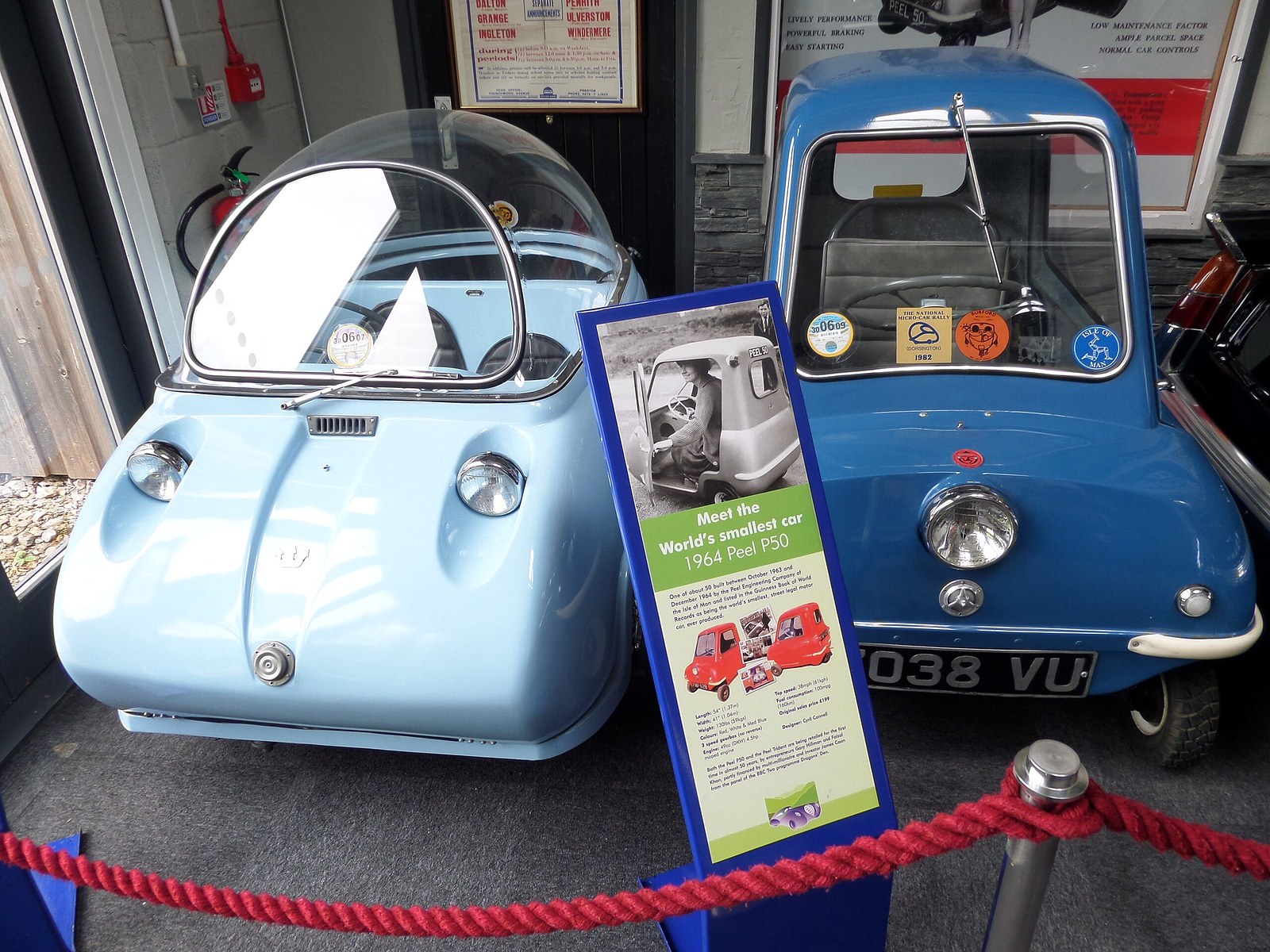
The story
History
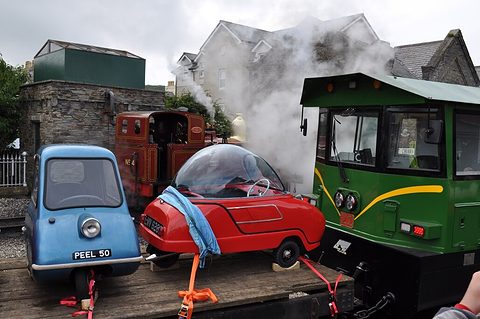
Peel is a fishing town on the Isle of Man, and in the late 1940s Cyril Cannell founded an engineering company there.source 1source 2 It moulded glass-fibre motorcycle fairings, sold as the Mountain Mile, the Peel 707 and the TT Tourer, and built boats through a subsidiary, West Marine. At its peak it employed 40 people.source 1source 3 It also tried cars. The first was the Peel Manxcar of 1955, and in 1961 came an experimental hovercraft with a 500 cc Triumph engine.source 1source 4 Cannell is one of the outsiders, from boats and fairings rather than the motor industry, who designed so many microcars (see the designers).
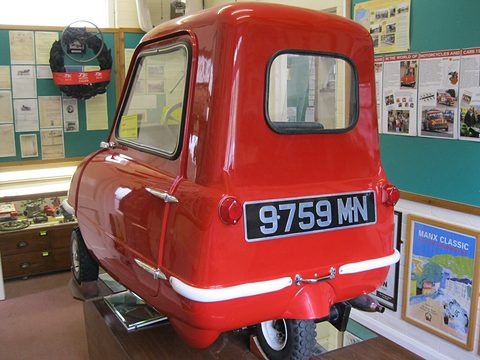
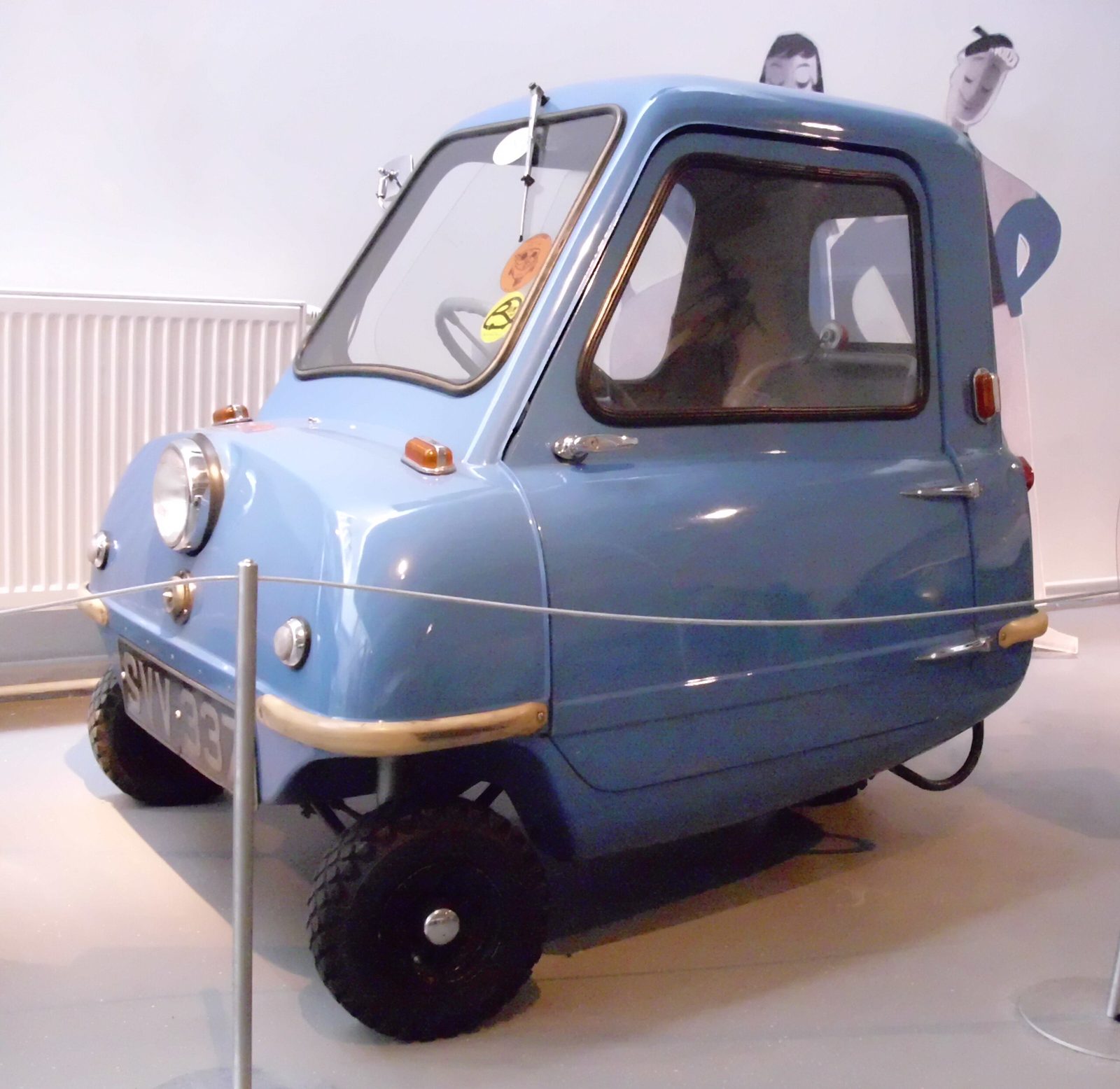
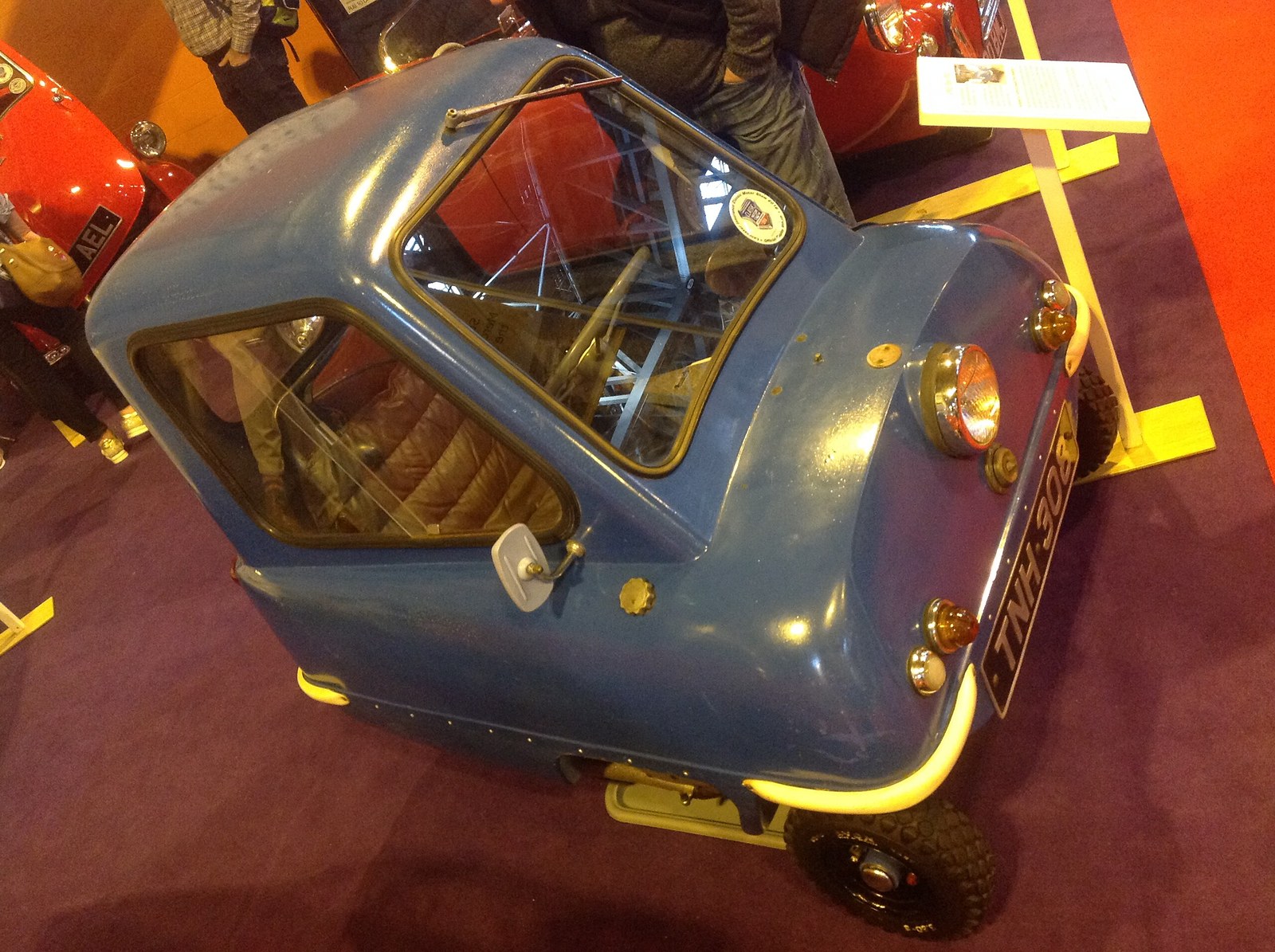
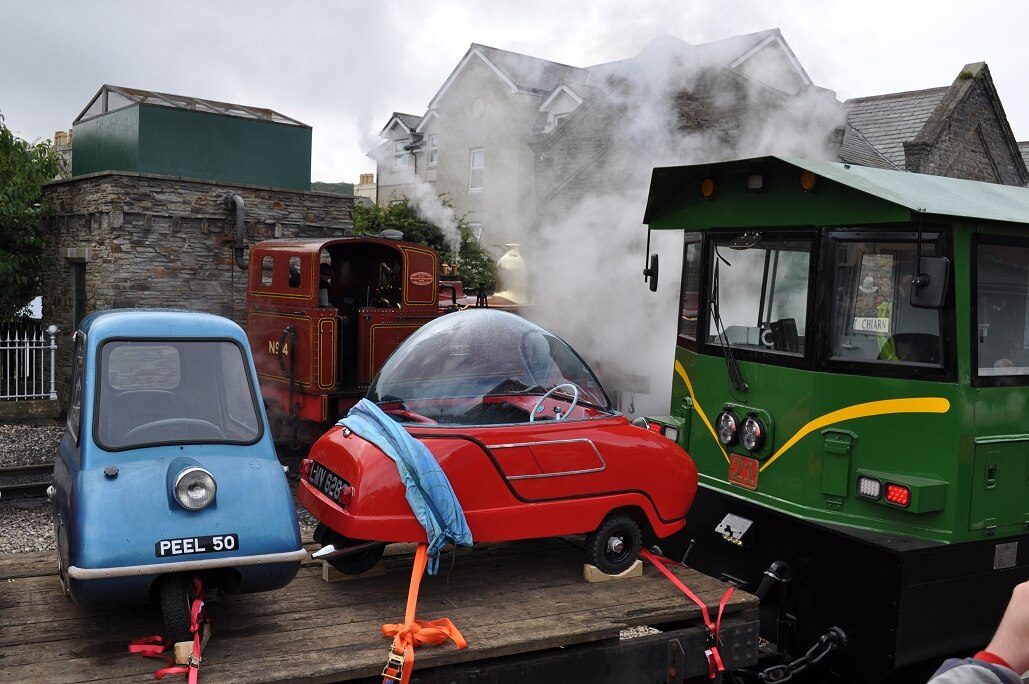
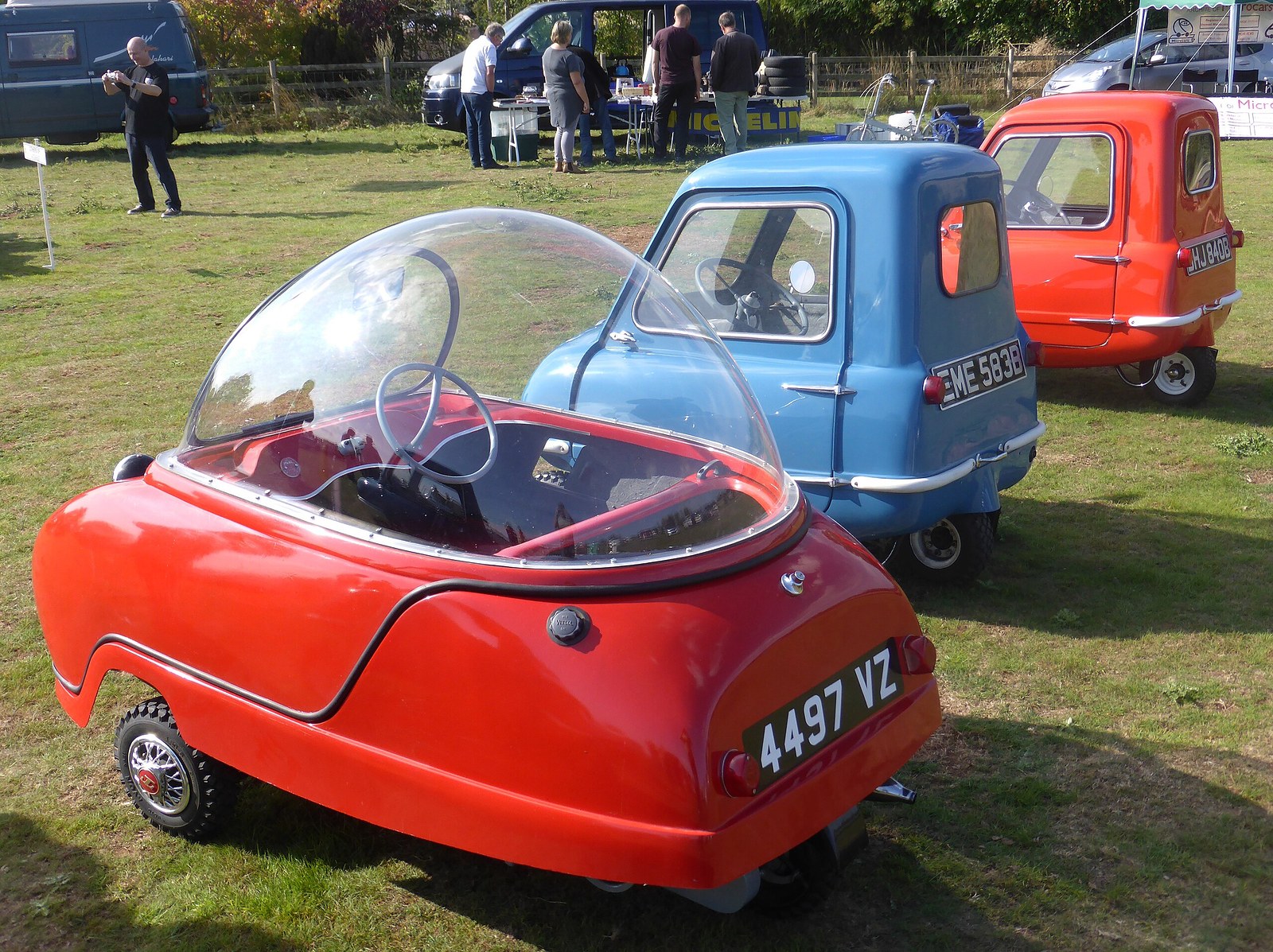
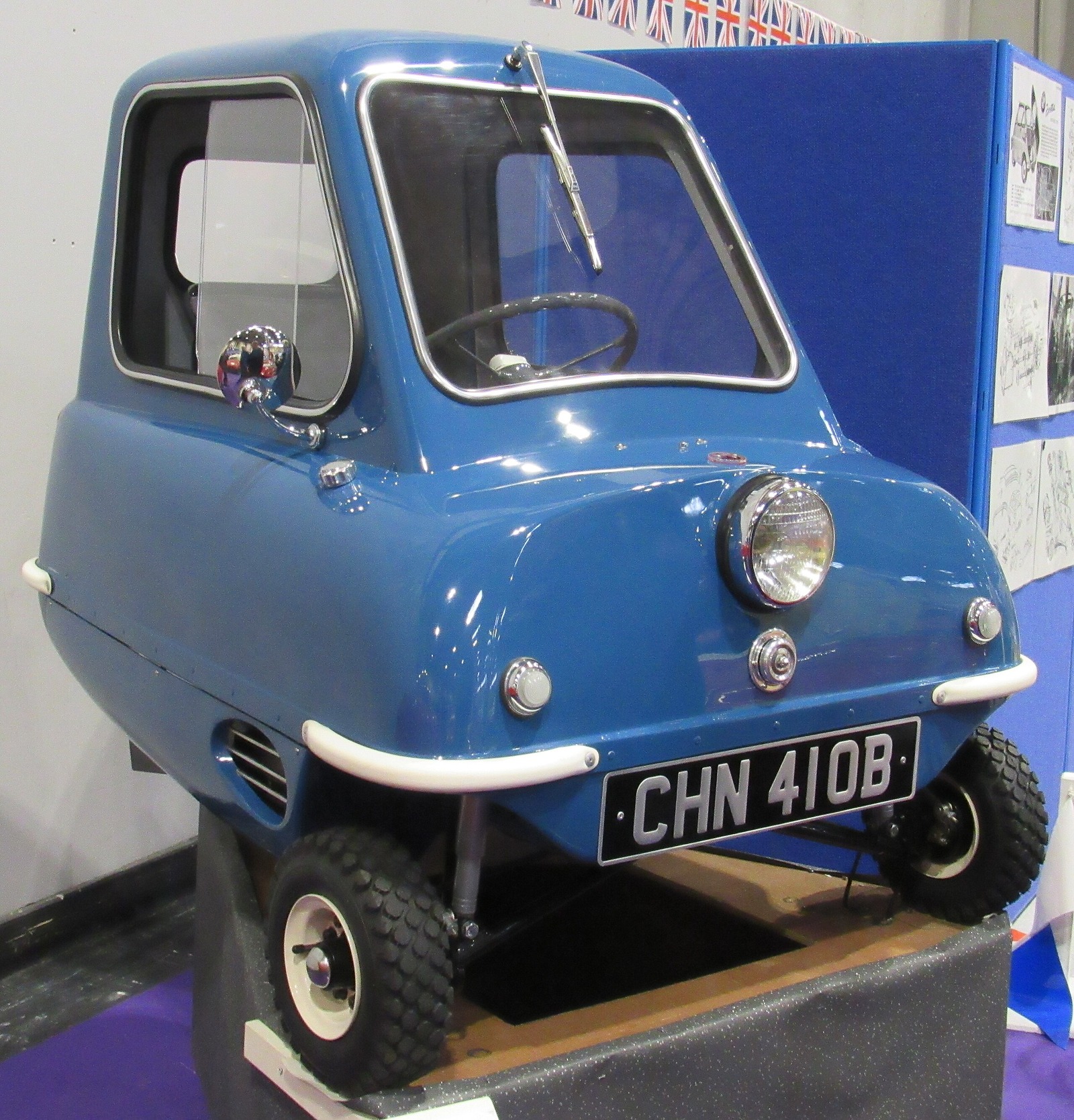
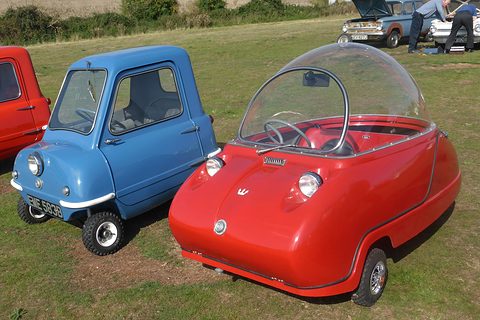
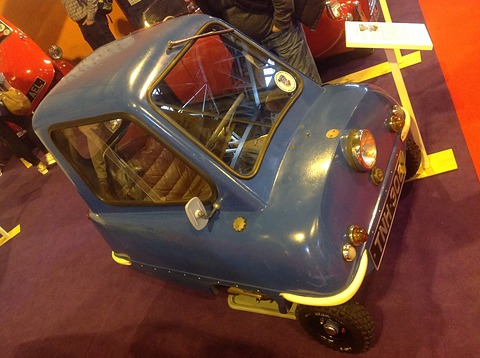
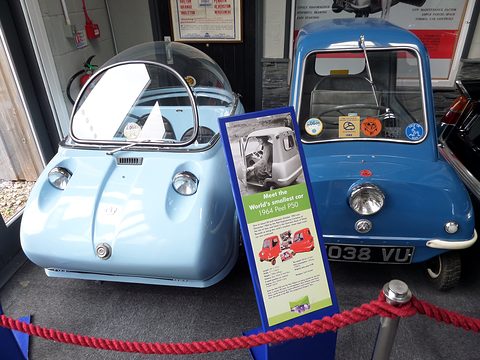
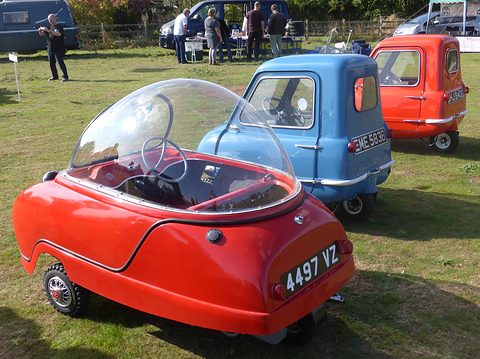
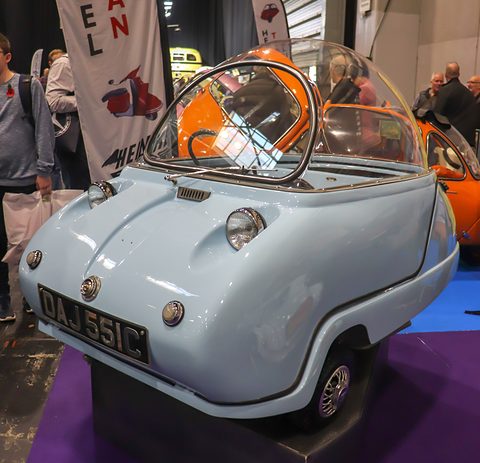
The P50 was designed and built by Cannell and Henry Kissack.source 3source 4 The Weiner museum says it began as an exercise to find the smallest dimensions a car could have, and was at first little more than a glass-fibre box on wheels.source 5 Autocar describes the brief as a 64 km/h (40 mph) city car for one person and their shopping.source 6 It was shown at the Earls Court Cycle and Motorcycle Show in London in 1962, without an engine and with its single wheel at the front.source 5source 7source 6 That show car was shorter and narrower than the production P50 and was never made to run. It survives on the Register of Unusual Microcars, and came to the National Microcar Rally in September 2000.source 7 English Wikipedia names it the P55 Saloon Scooter, a name the register does not use.source 8source 7
One of everything
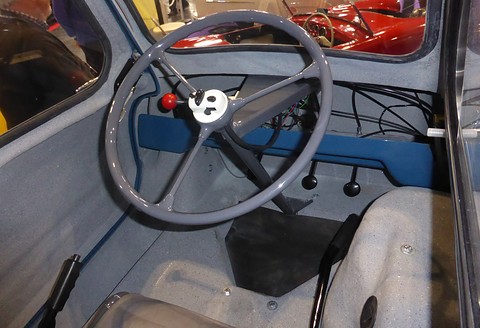
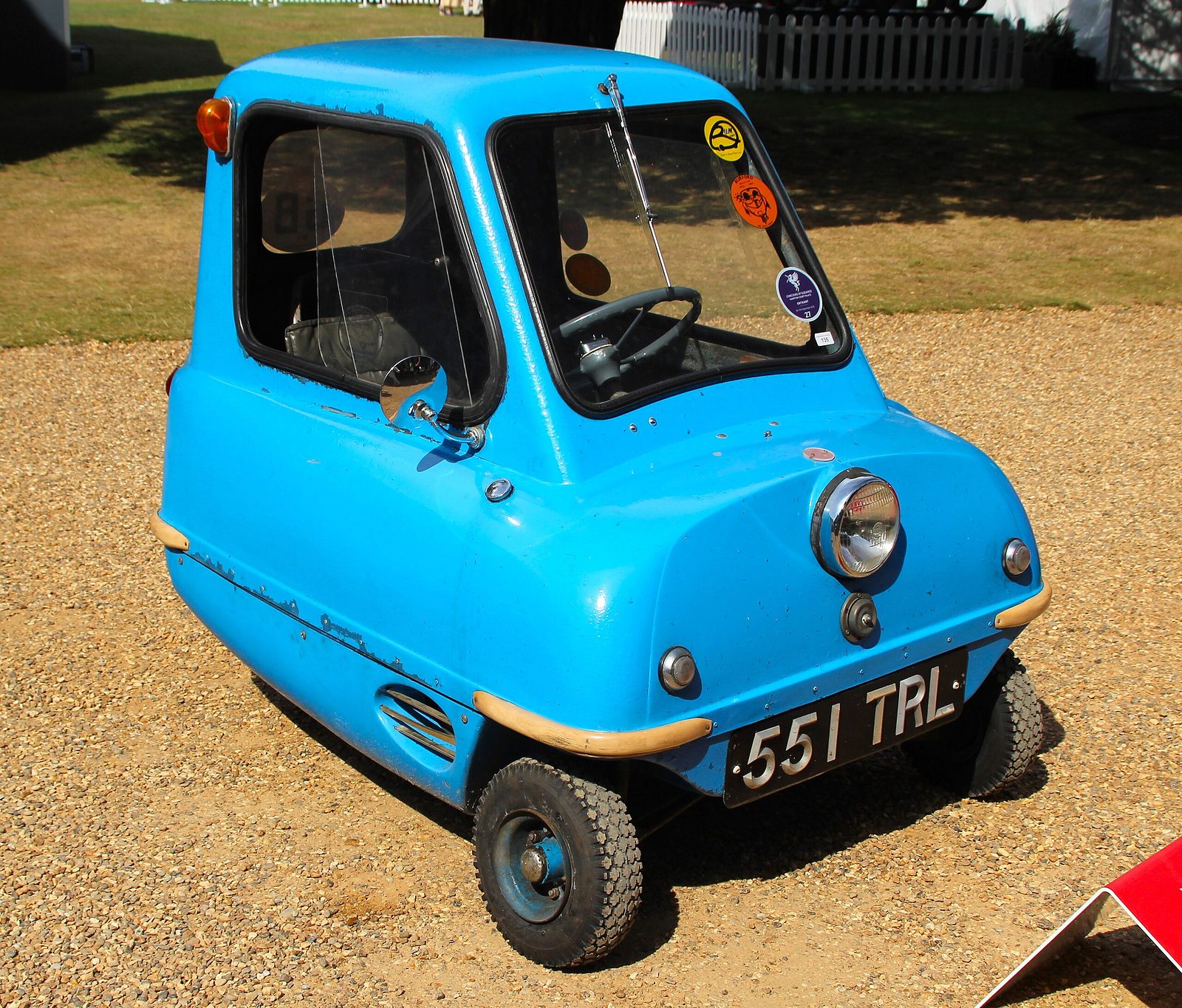
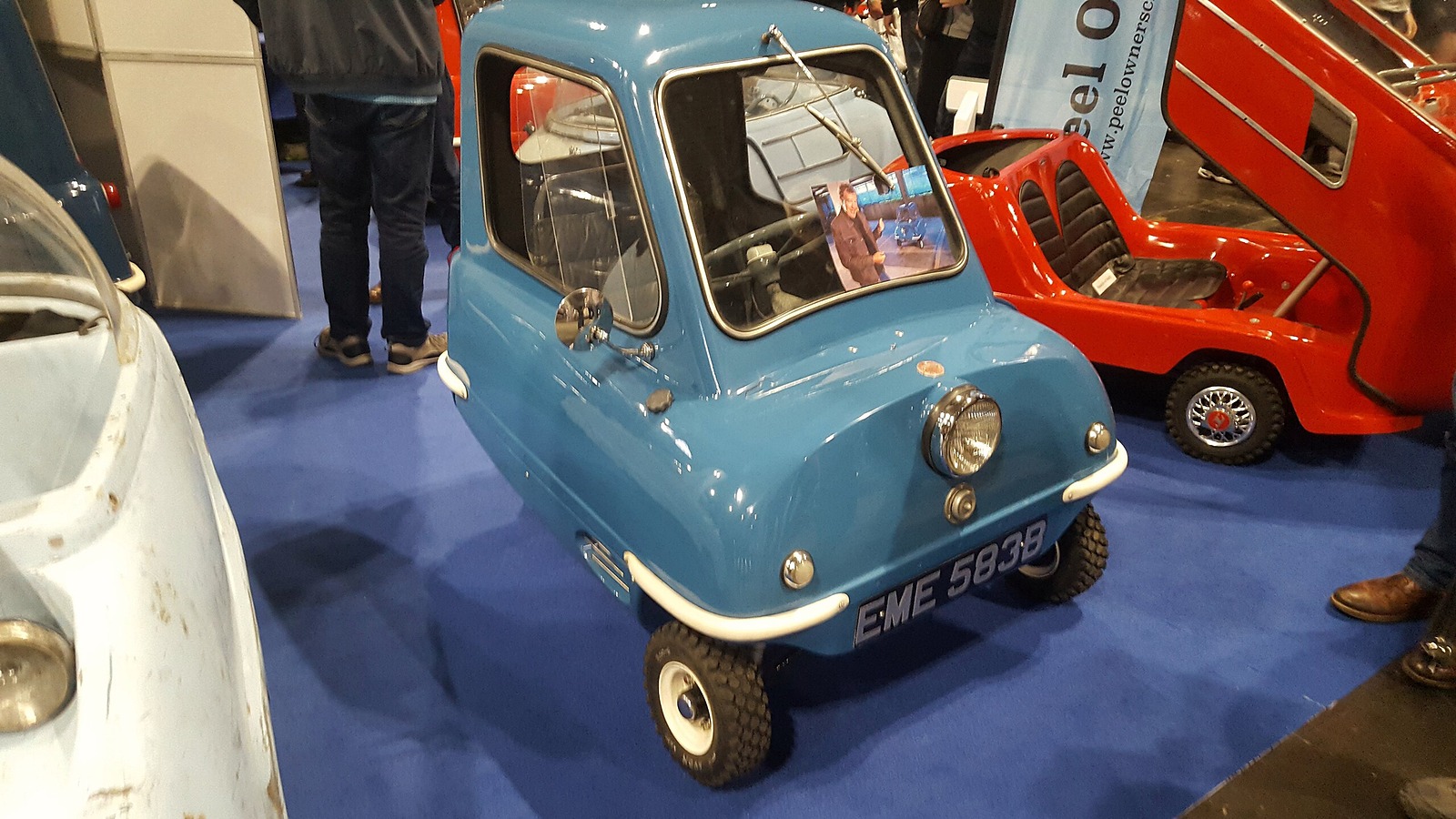
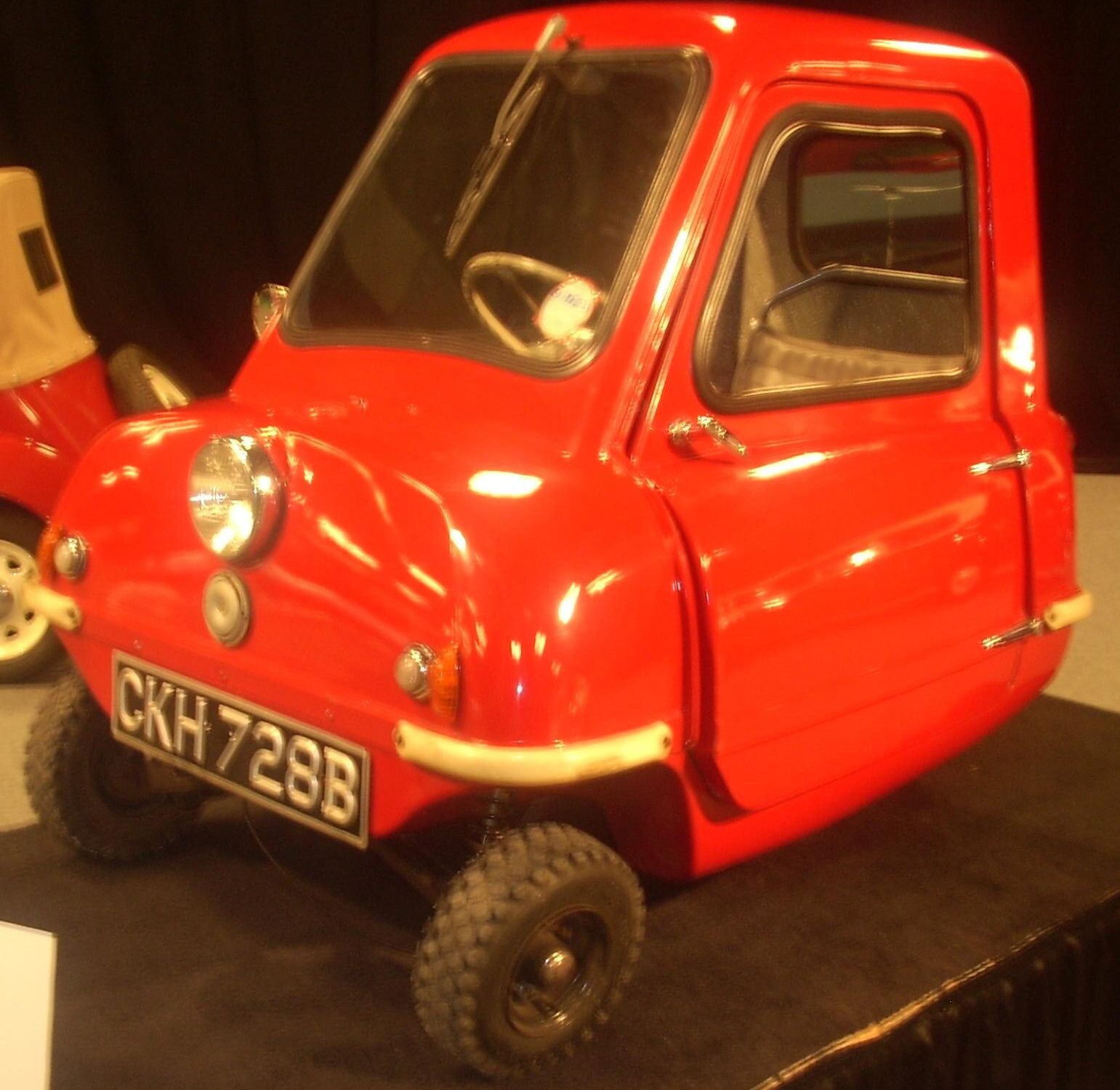
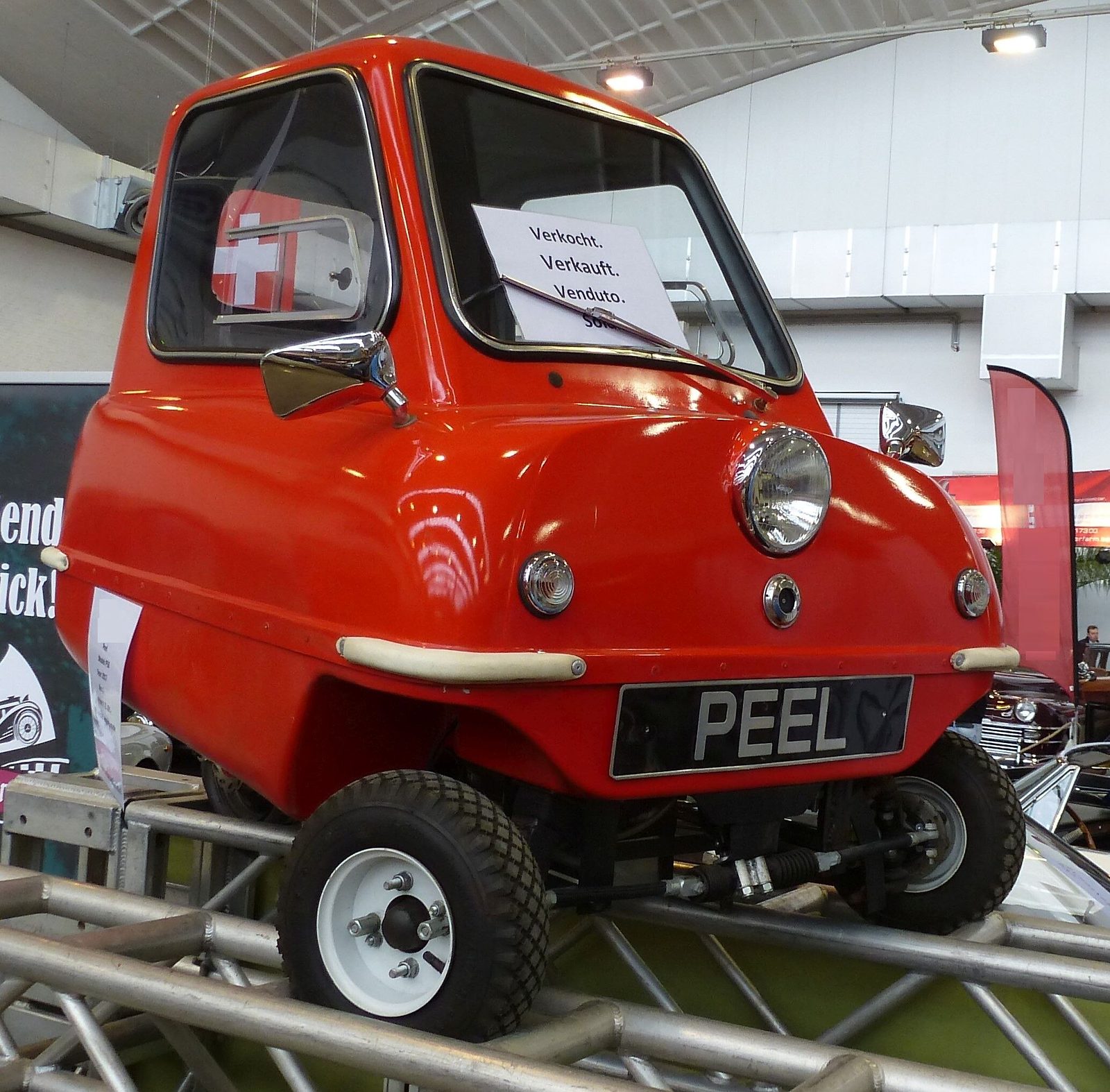
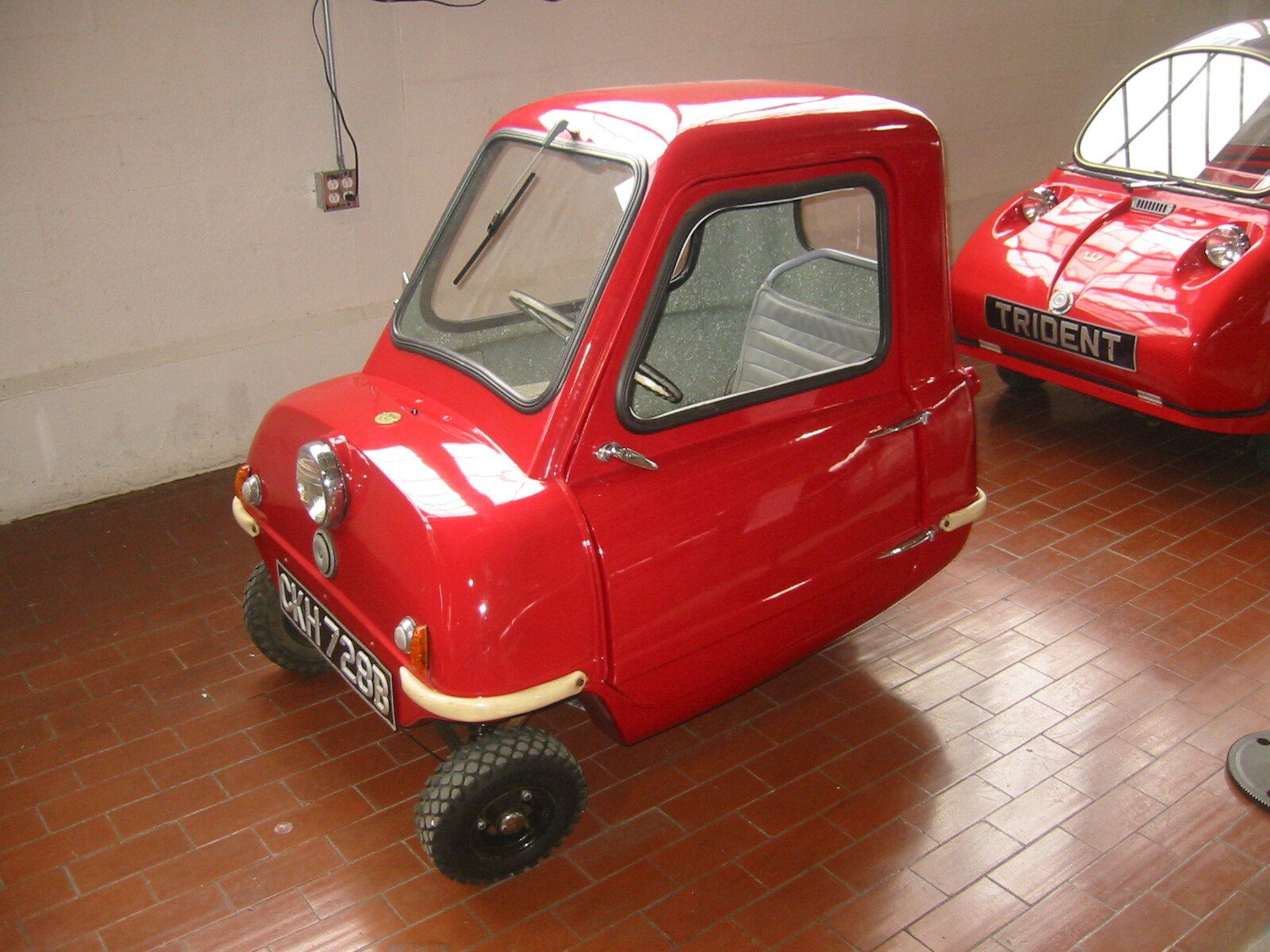
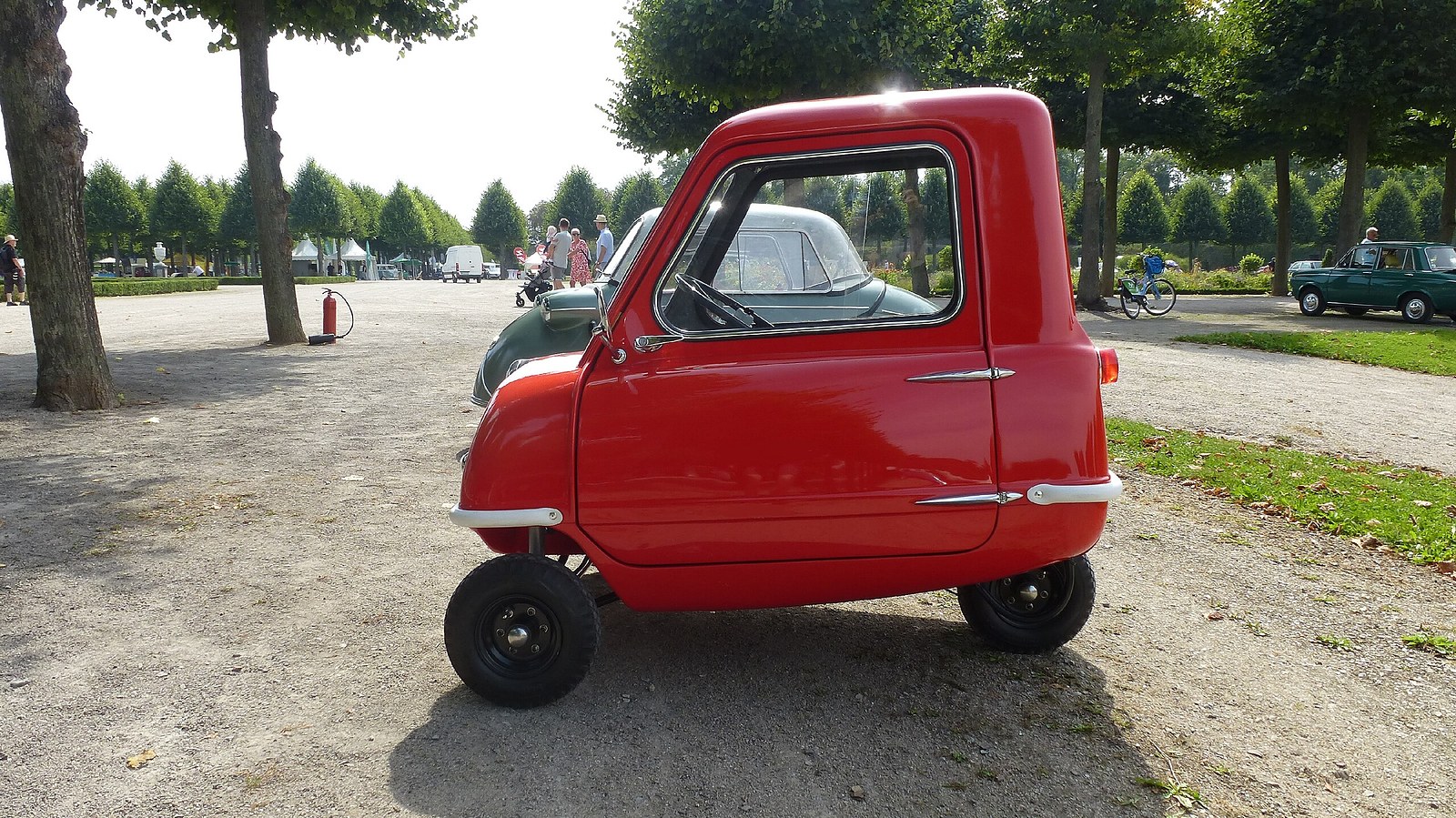
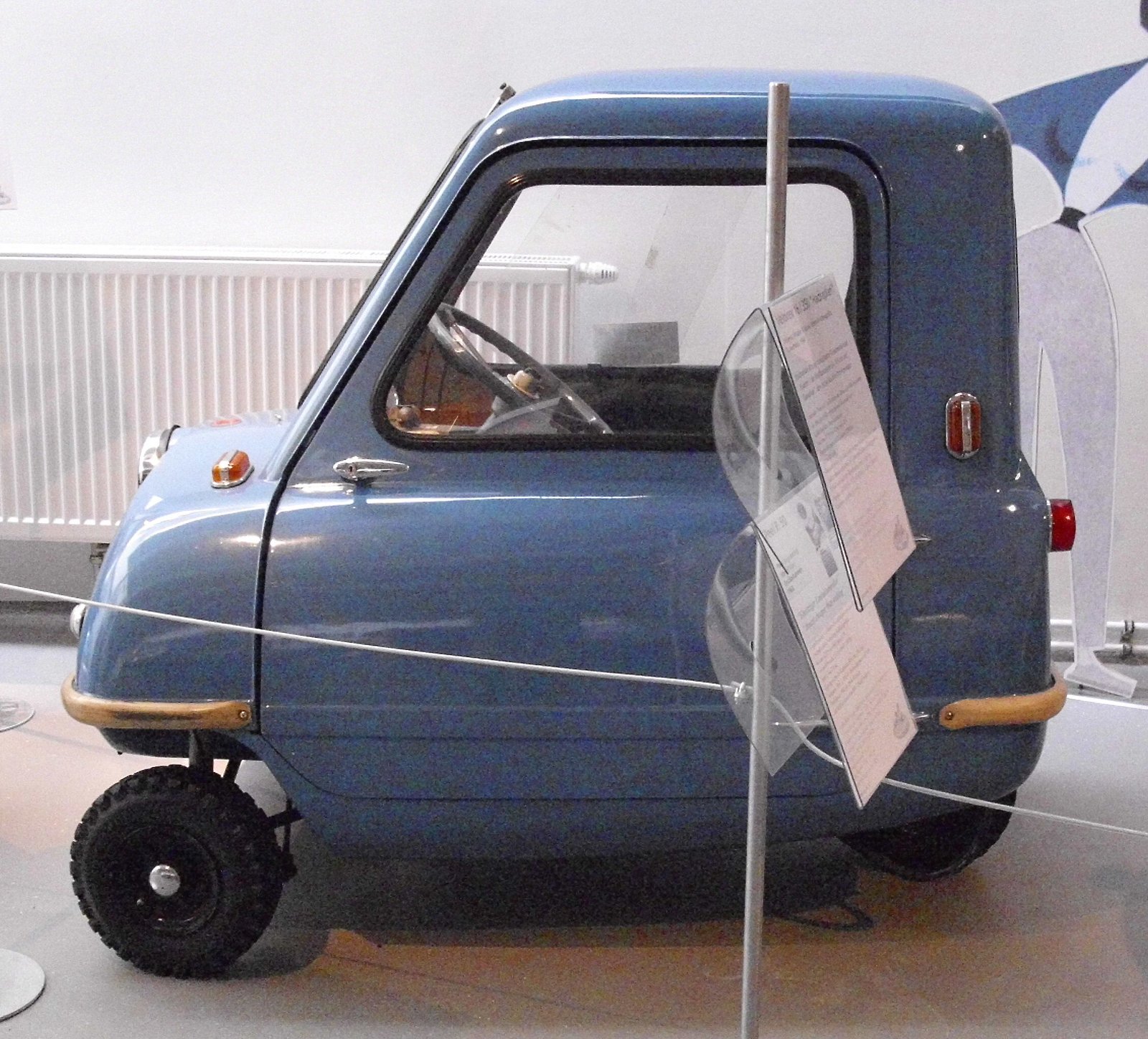
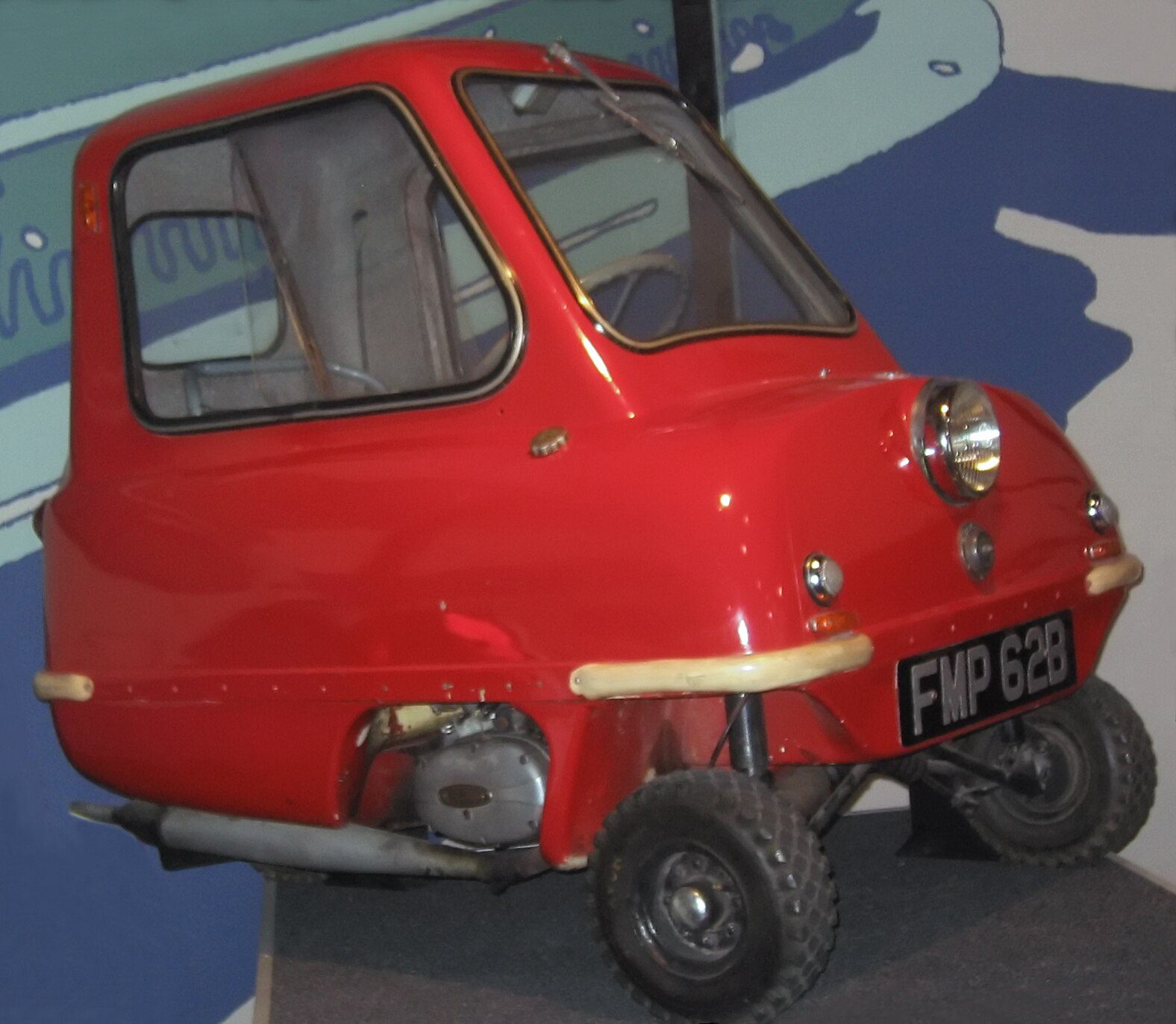
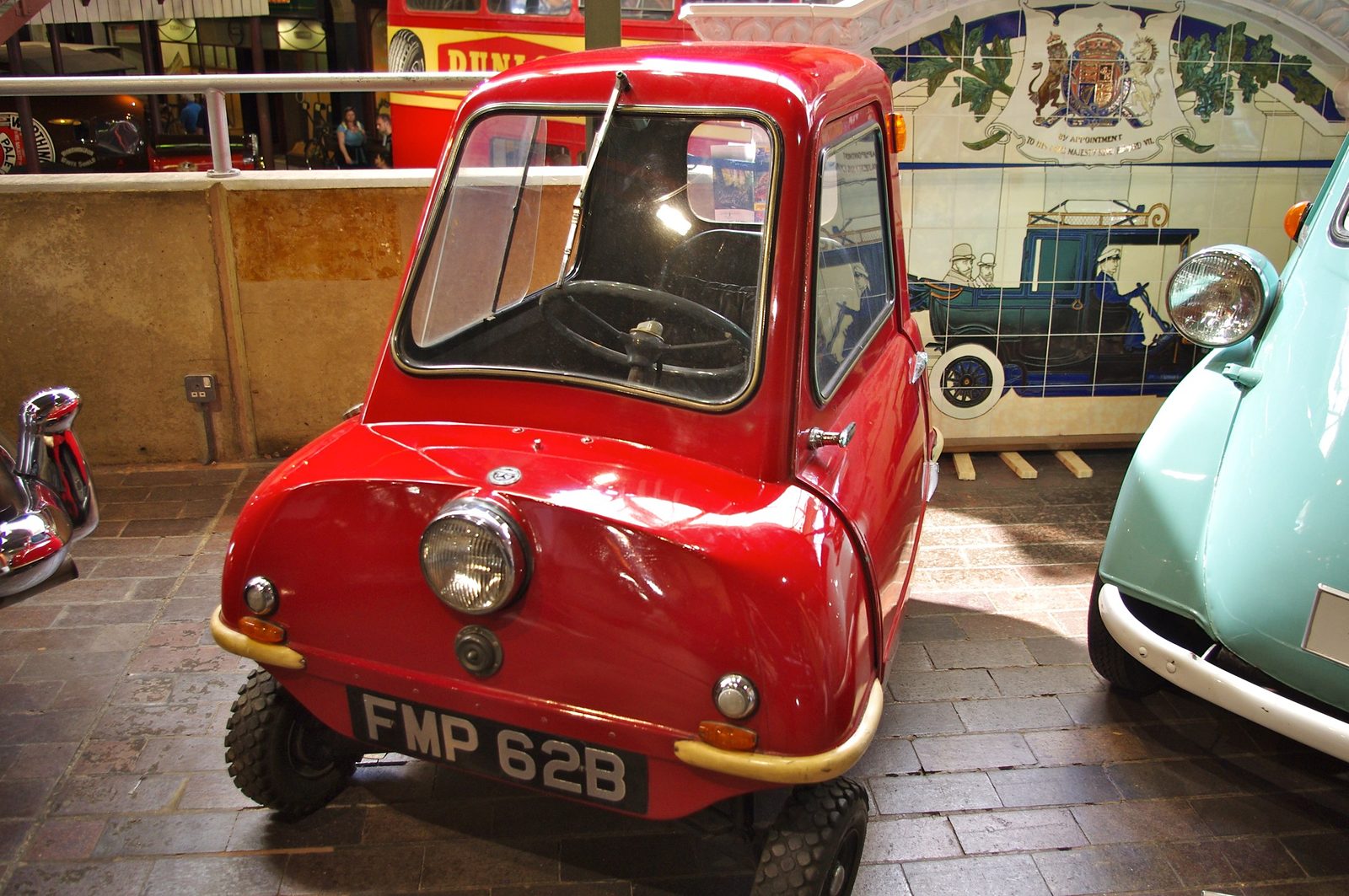
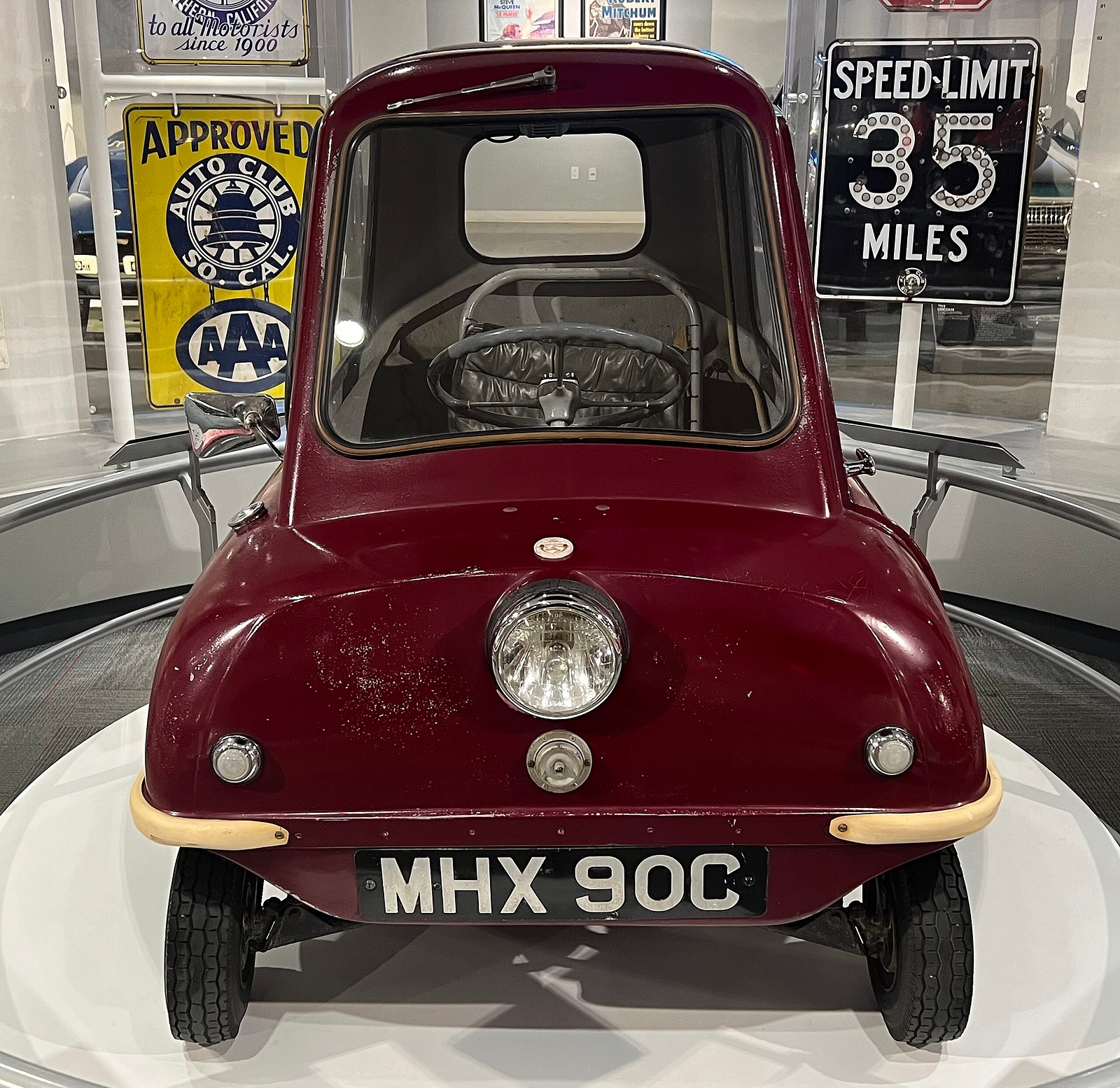
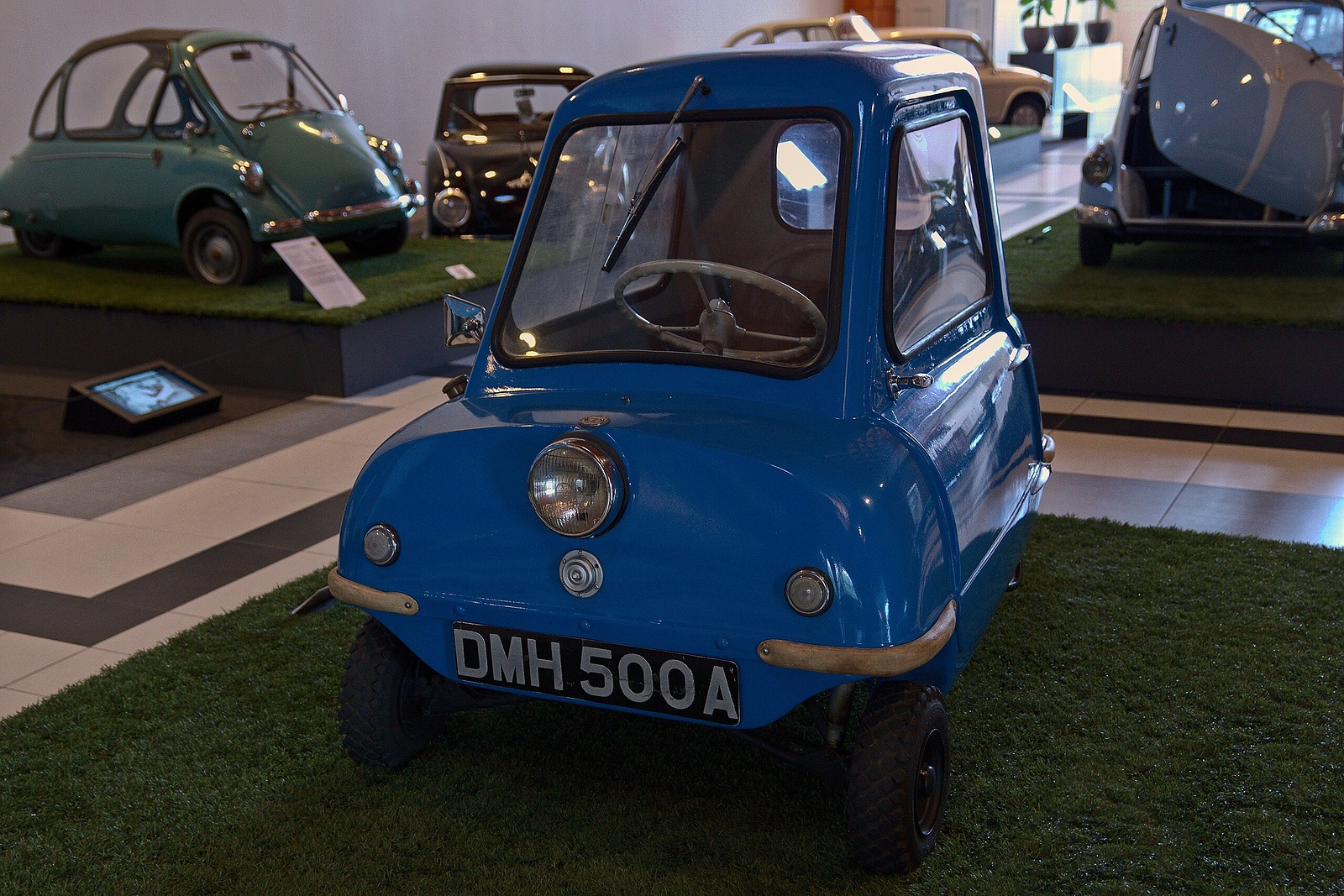
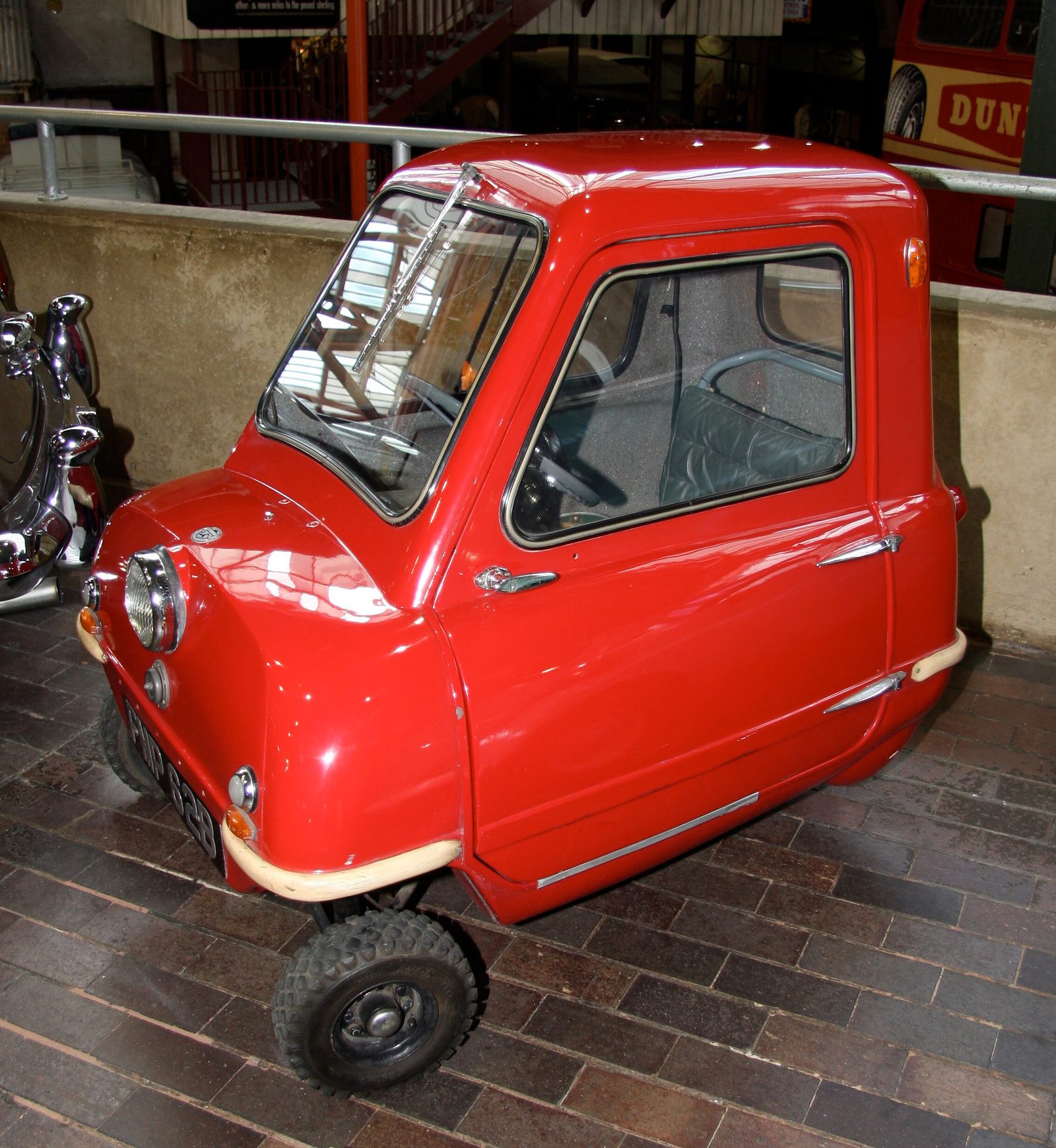
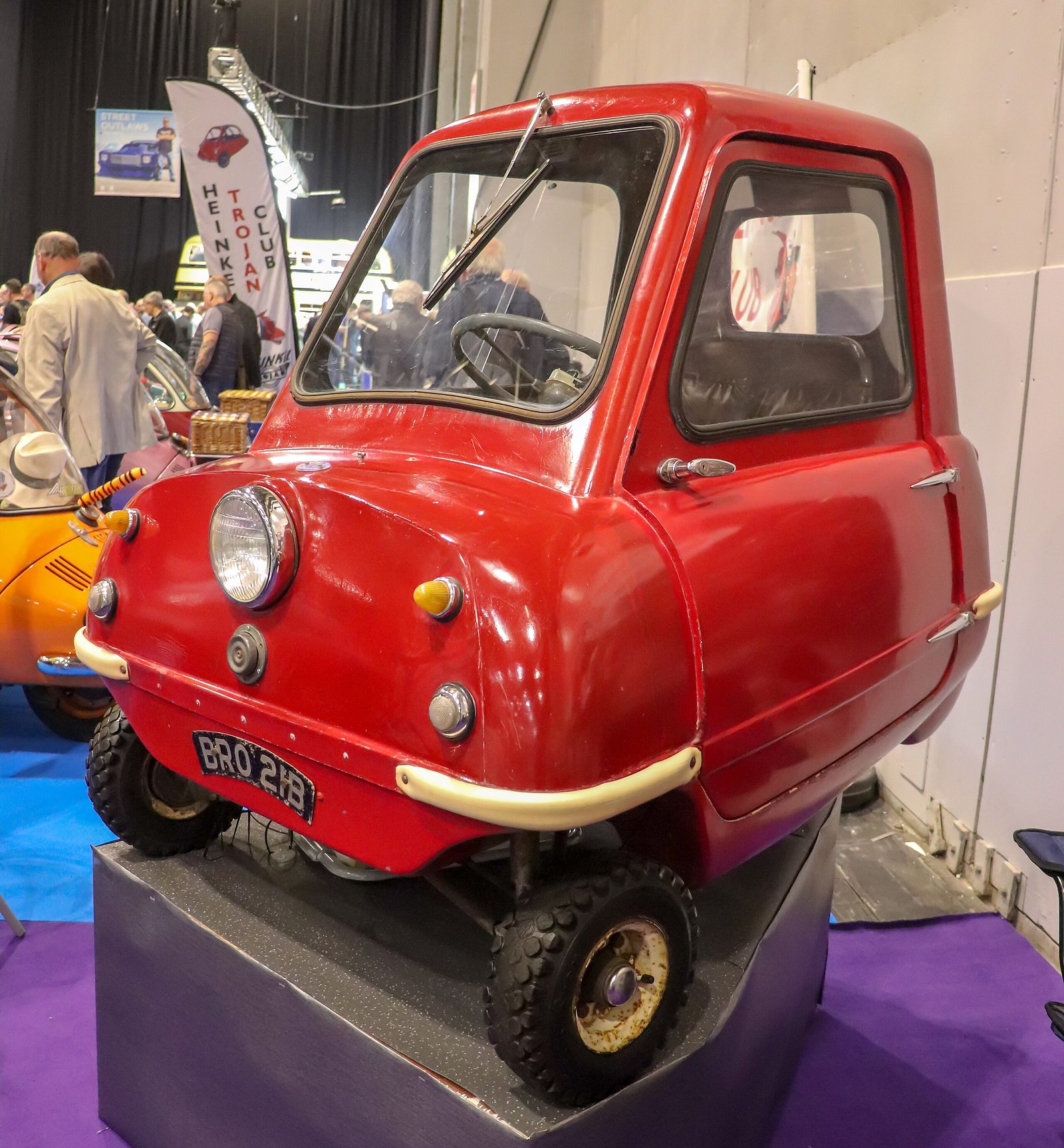
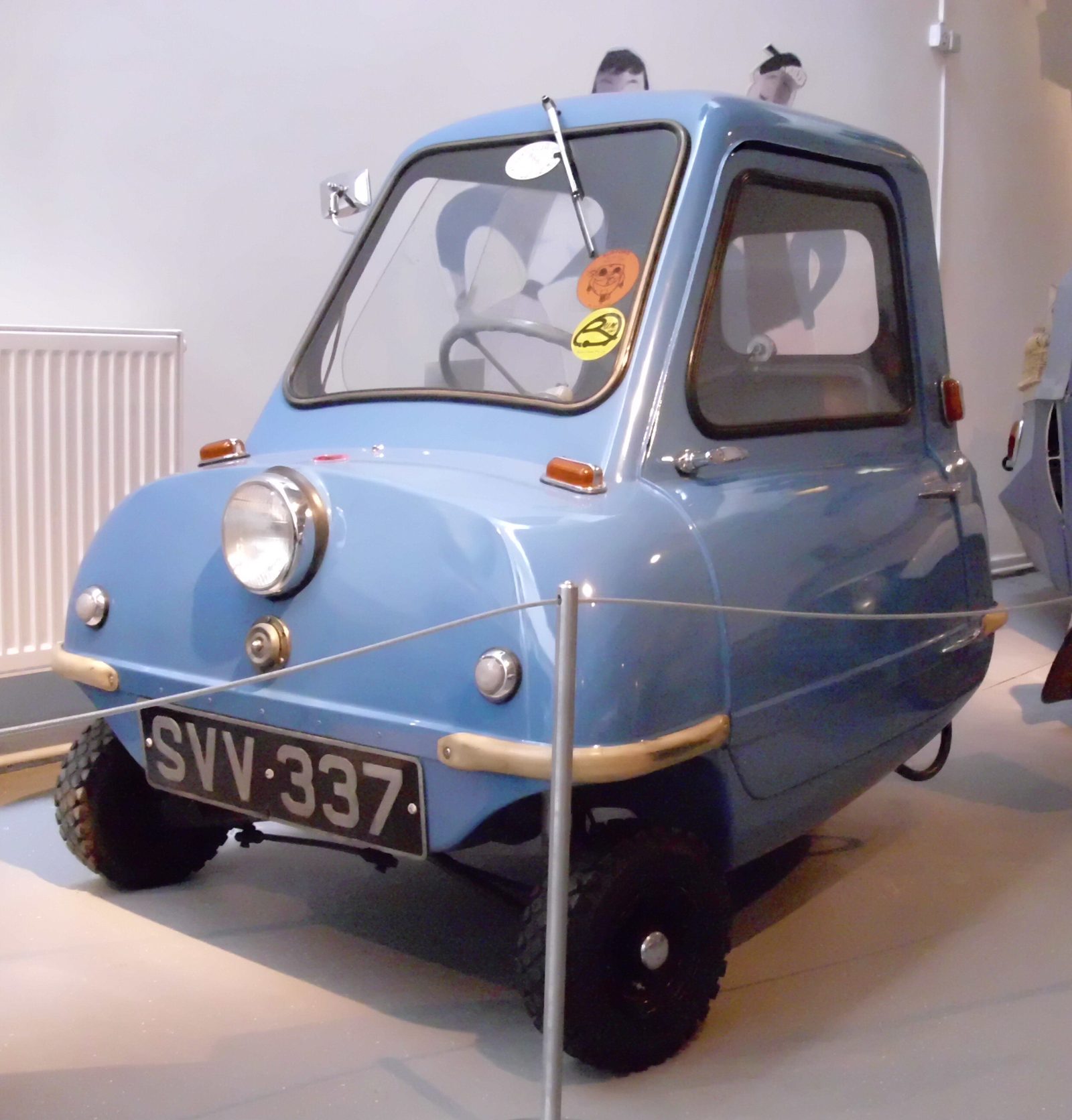
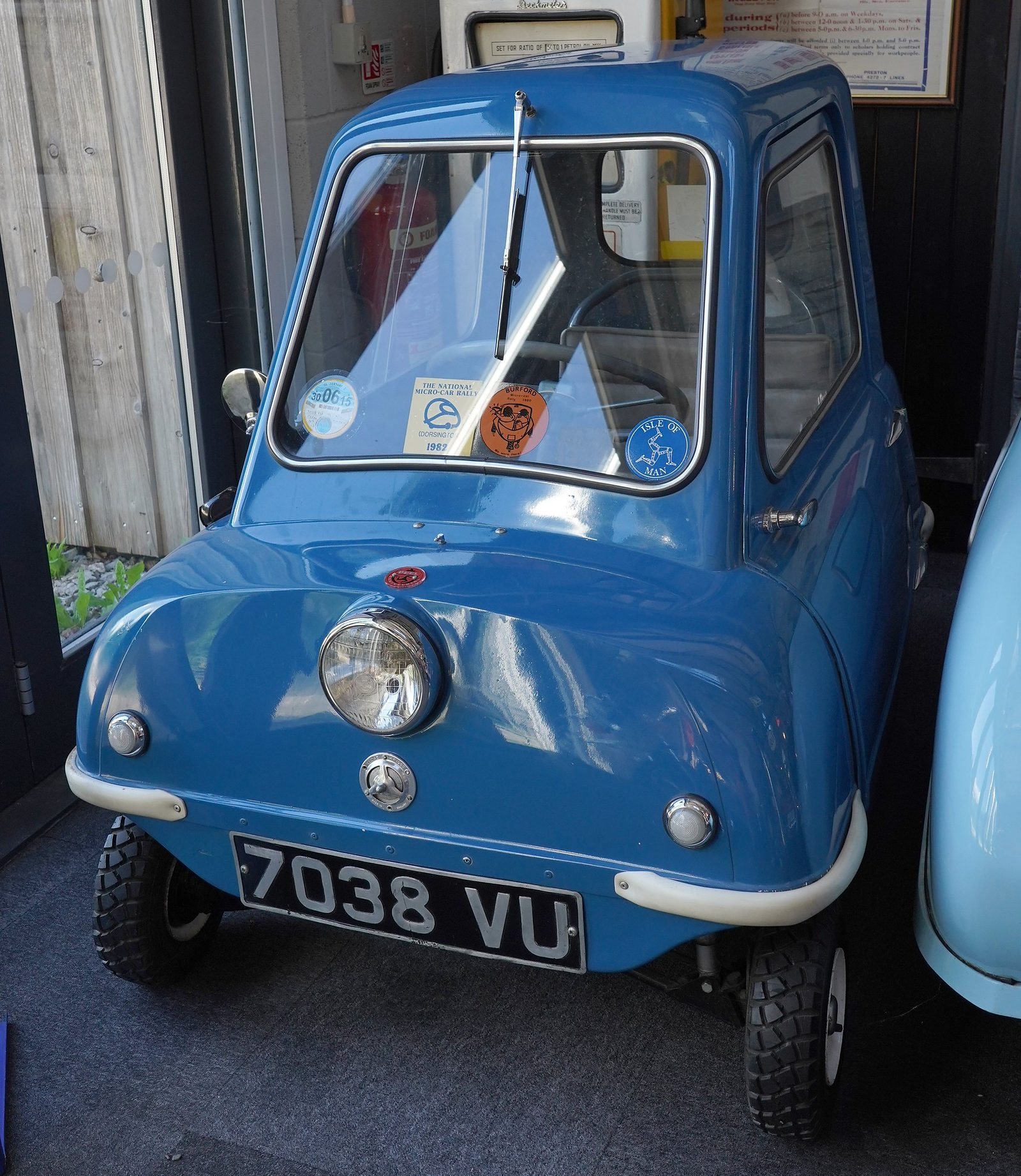
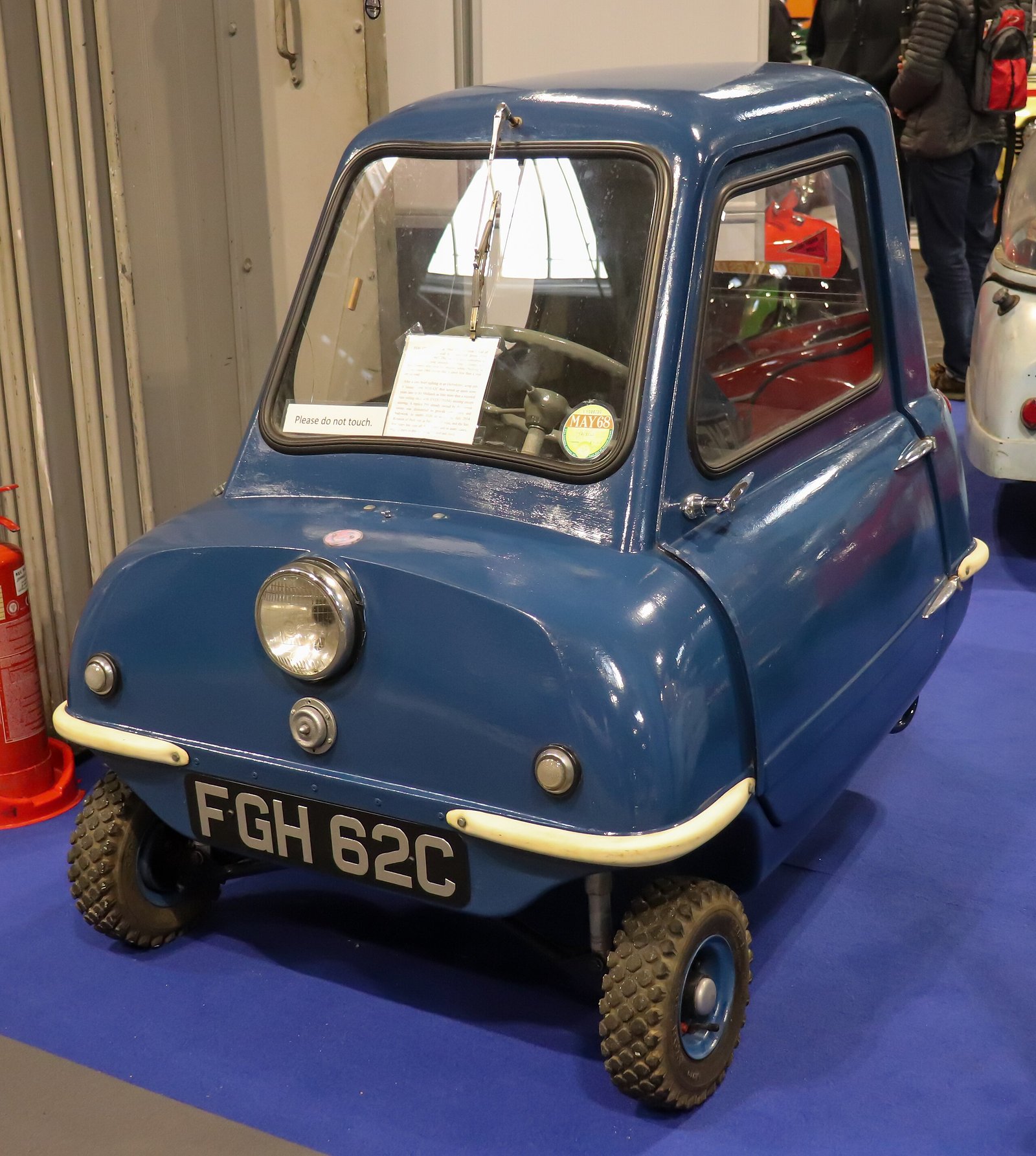
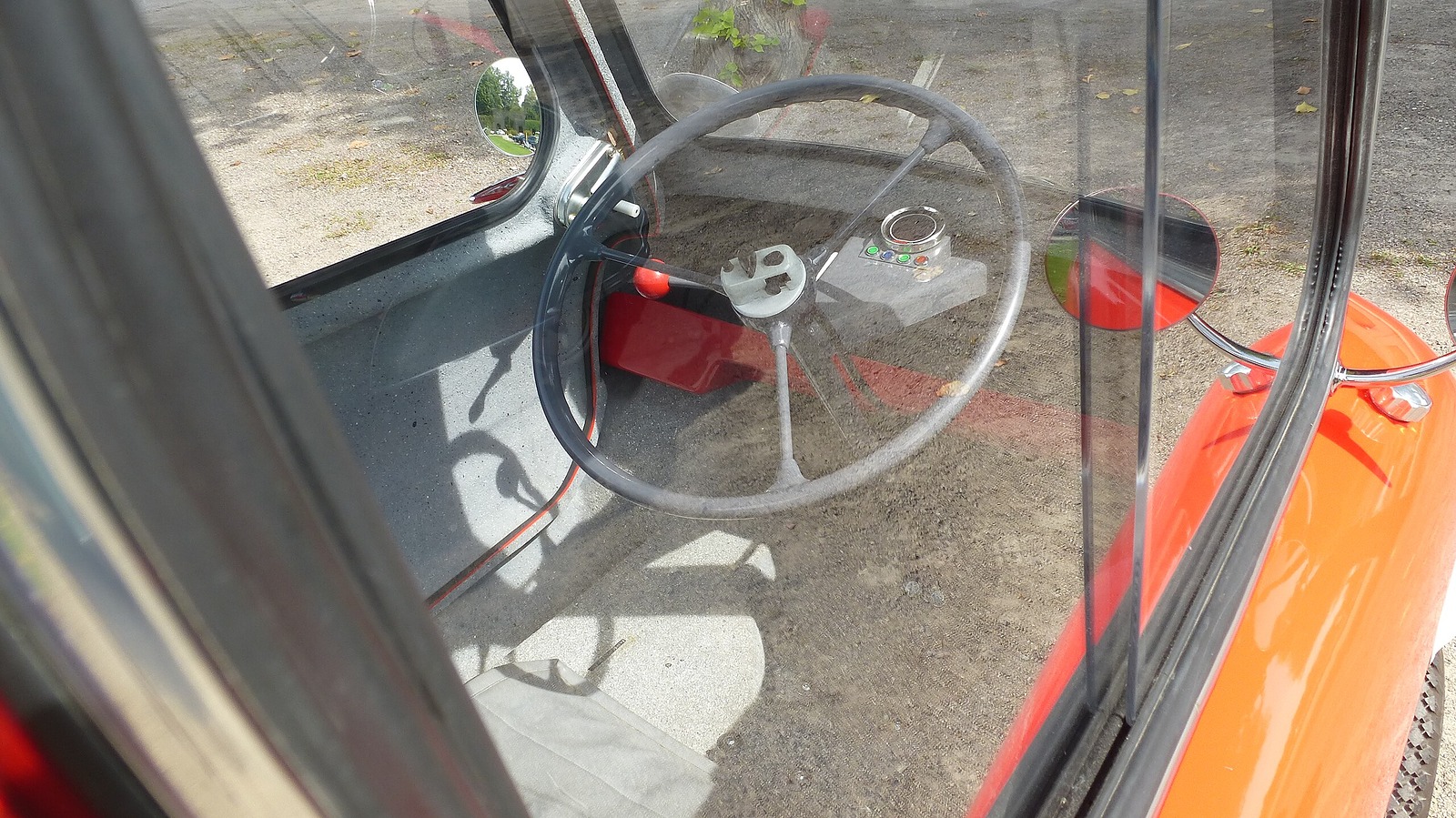
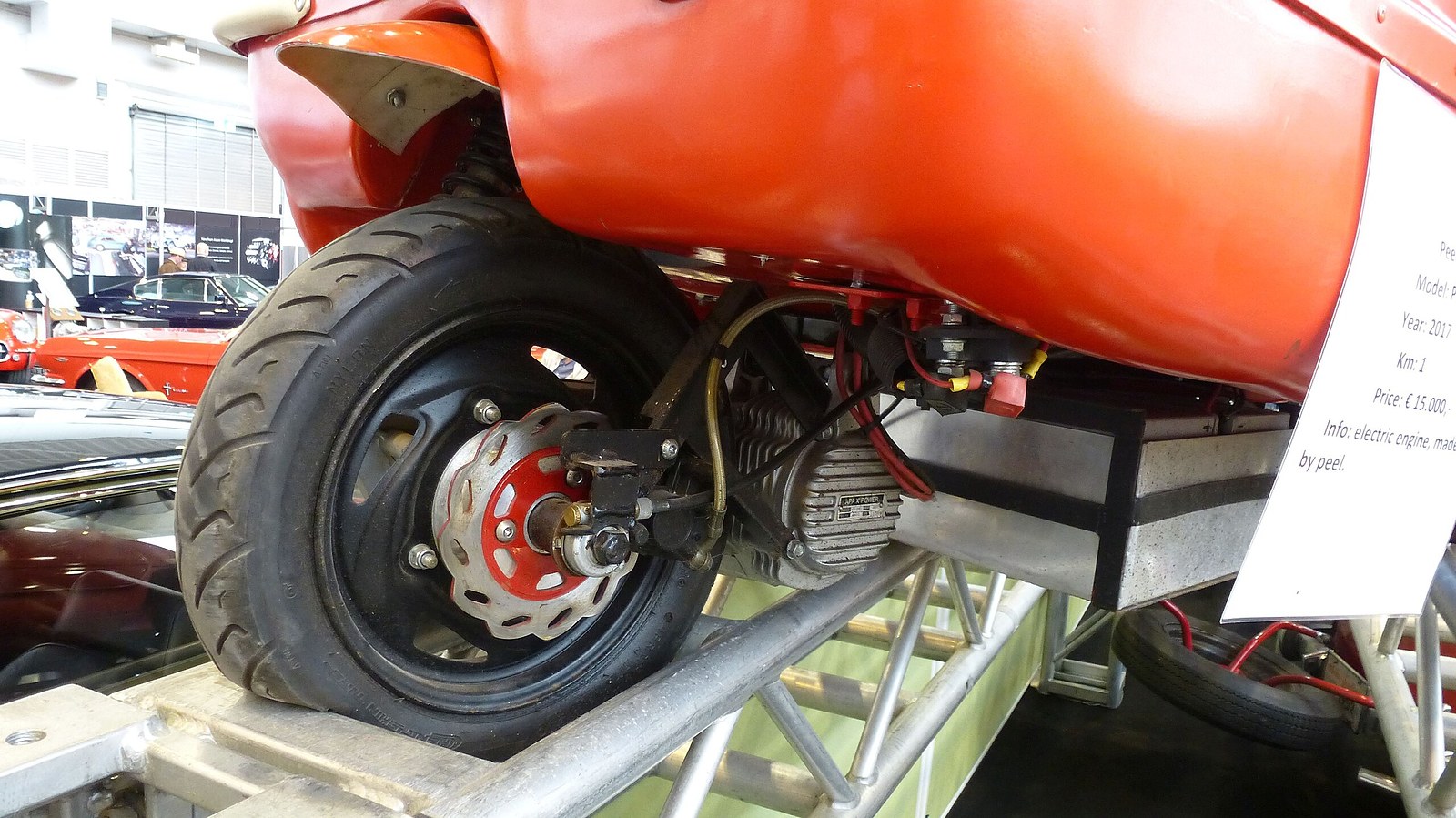
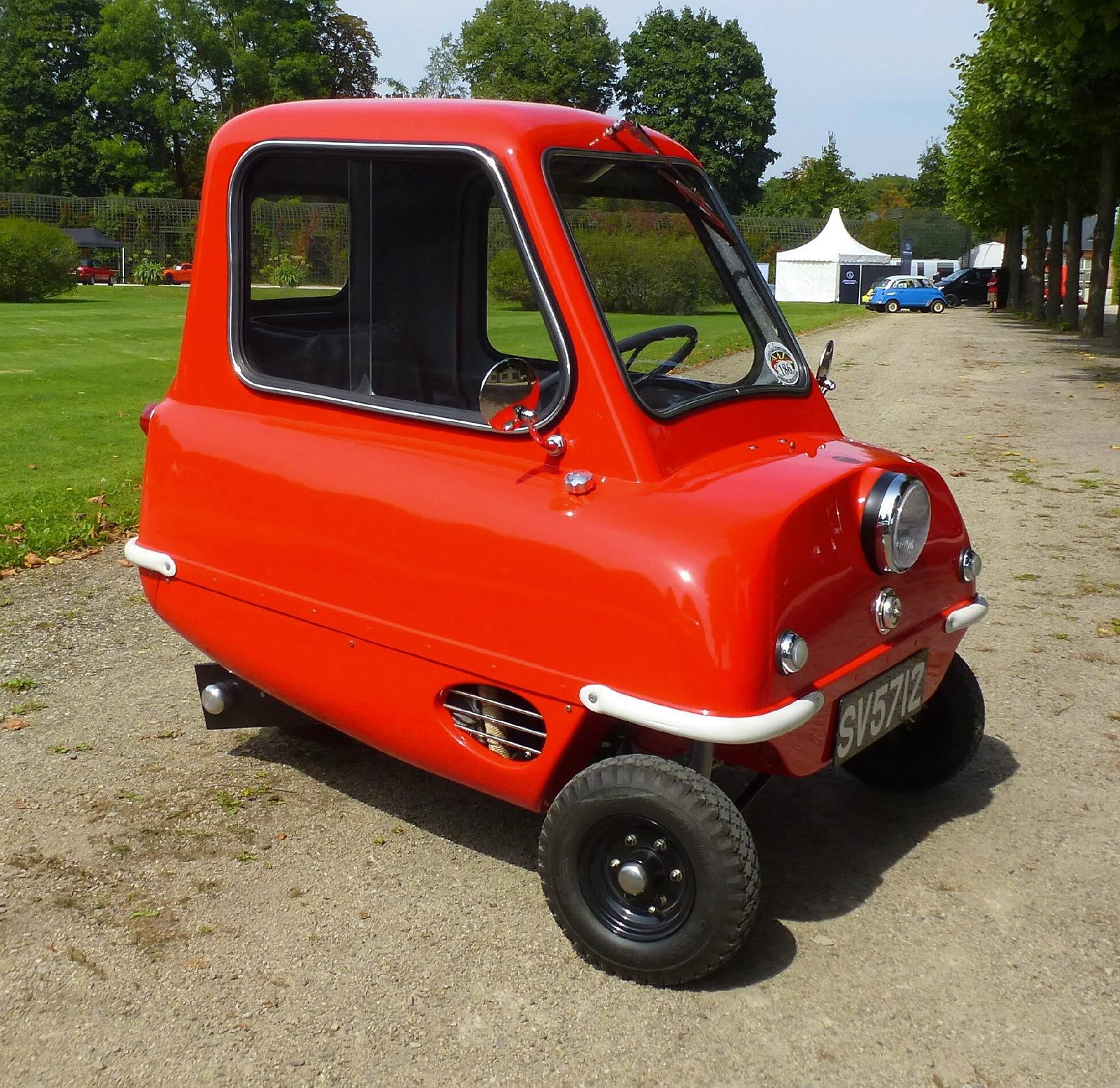
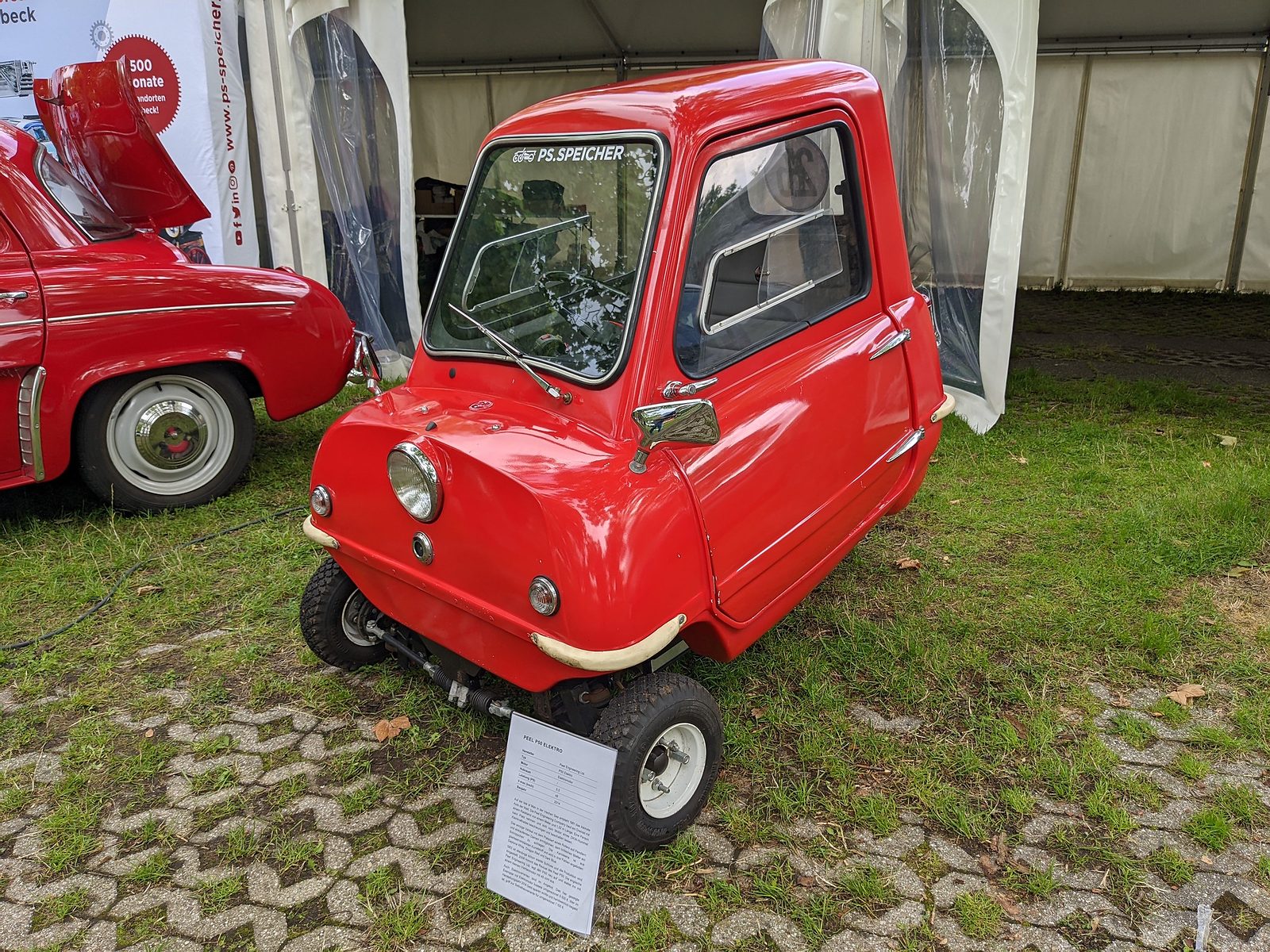
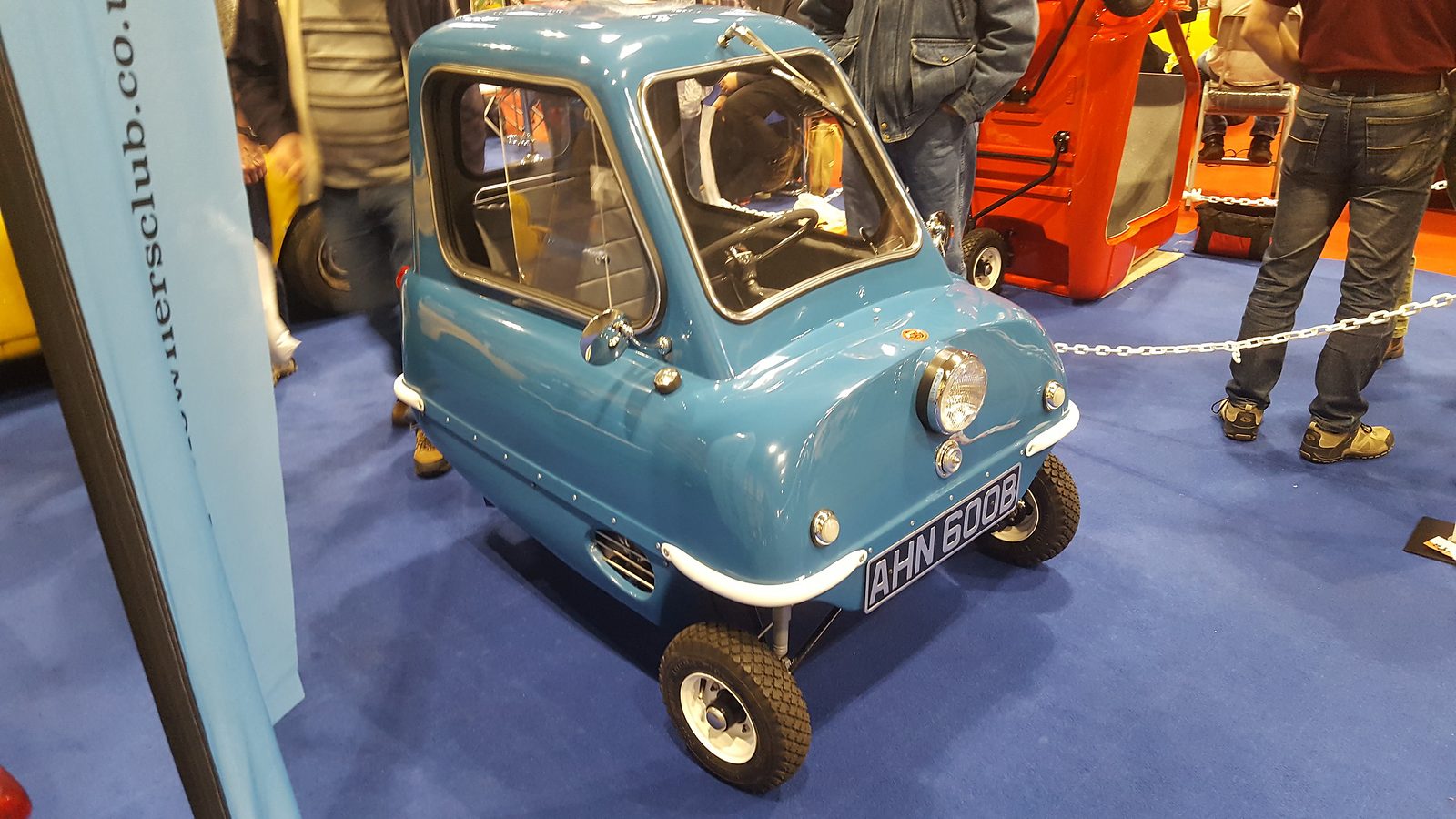
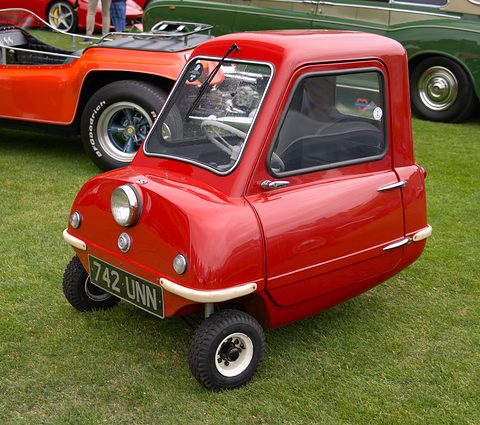
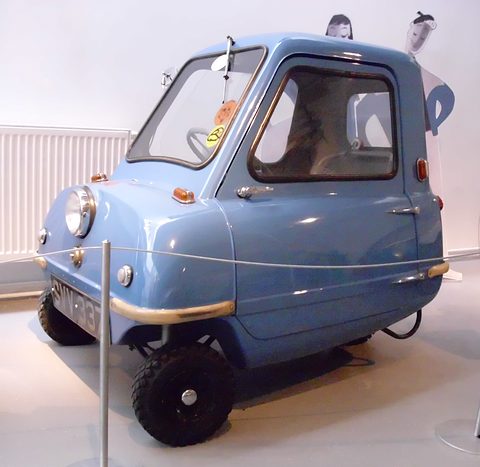
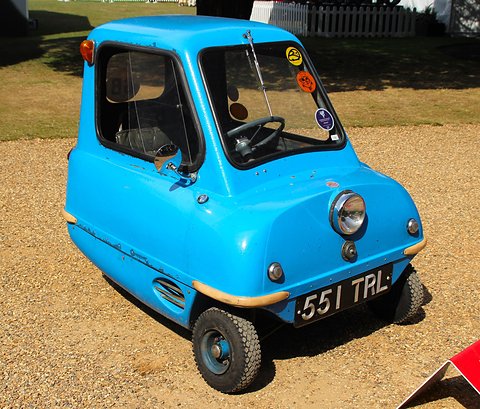
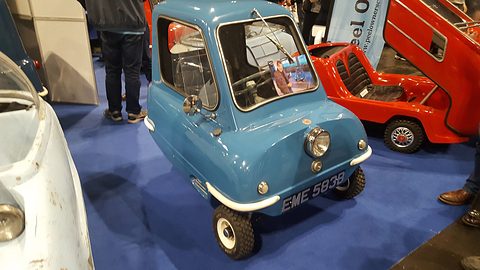
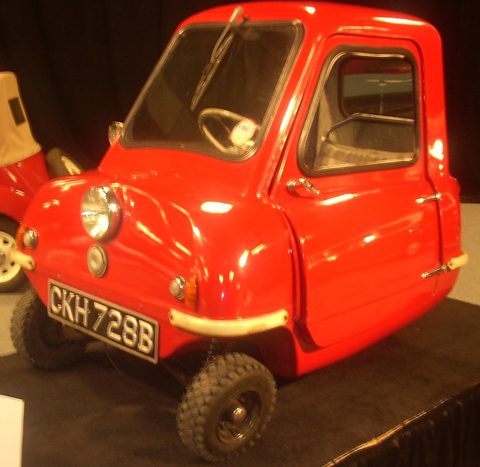
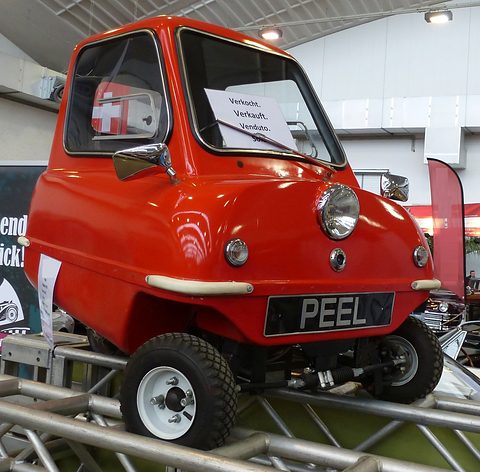
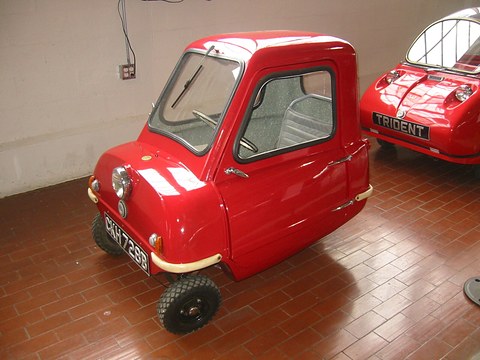
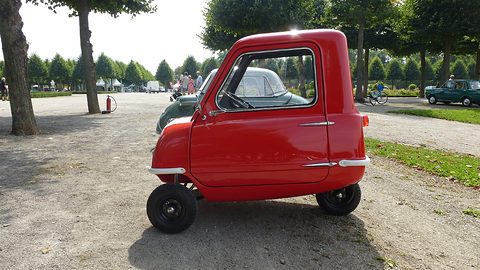
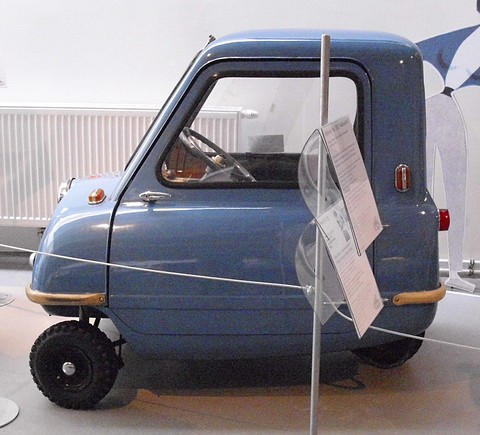
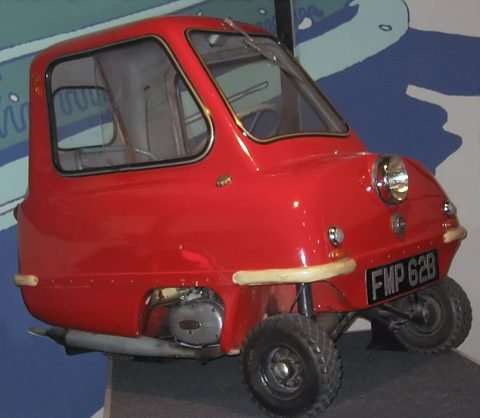
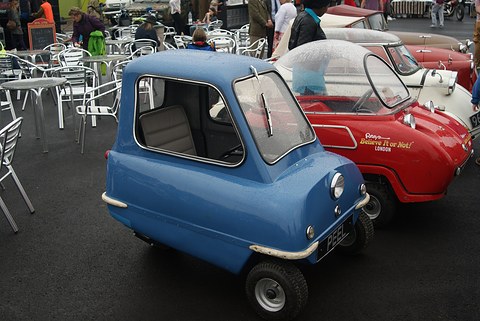
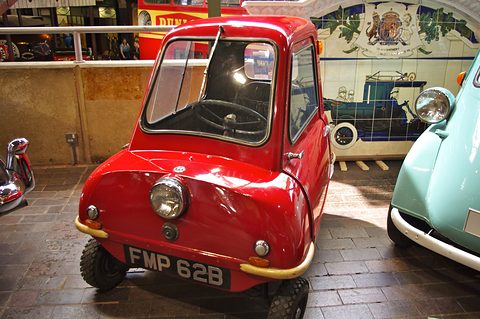
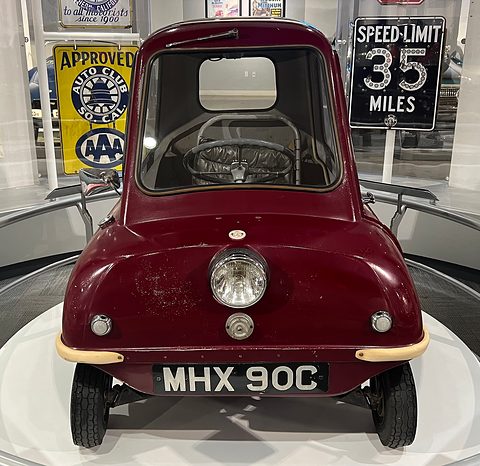
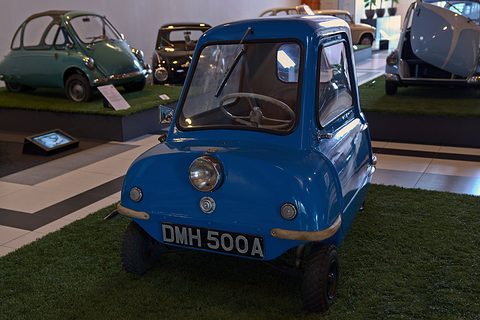
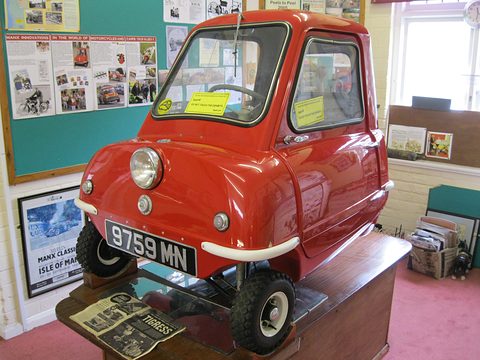
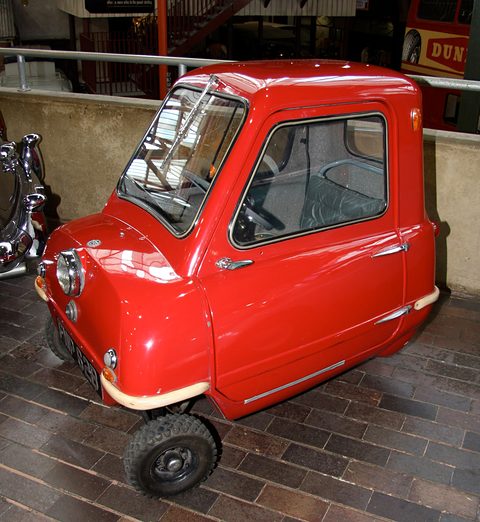
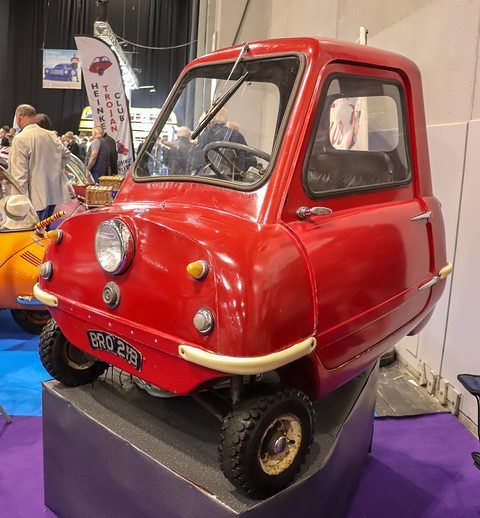
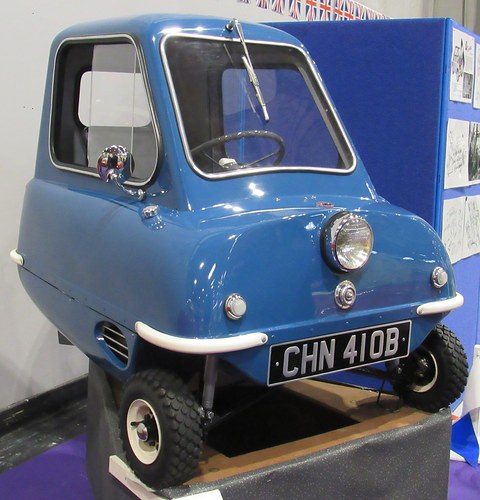
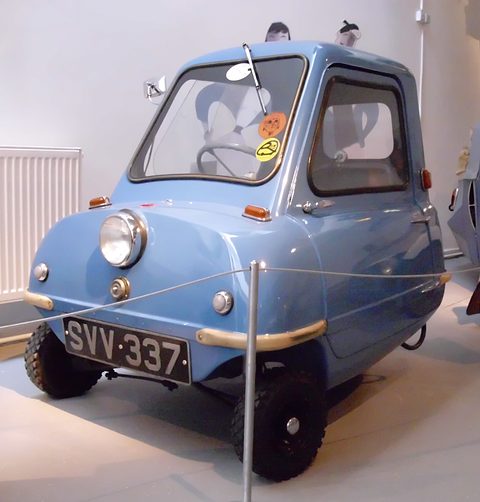
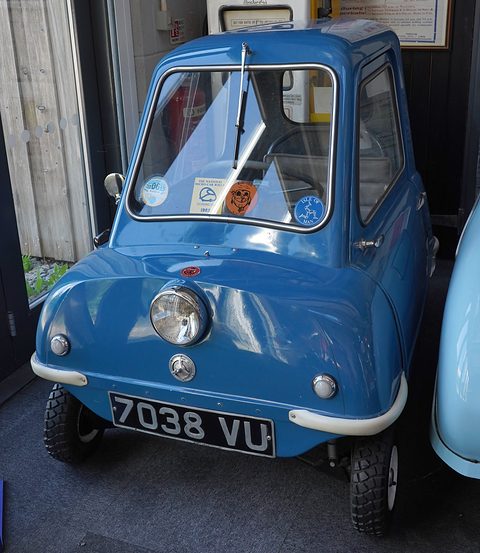
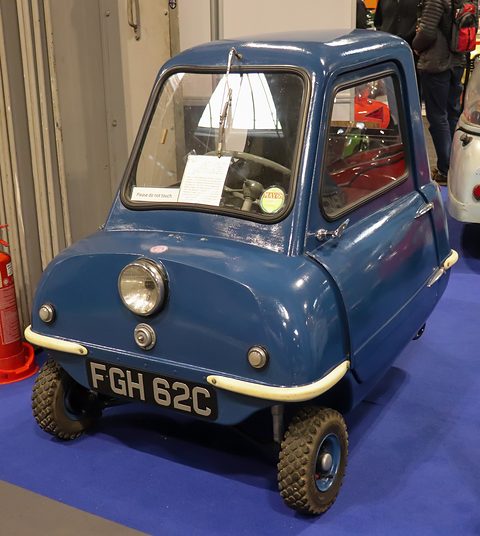
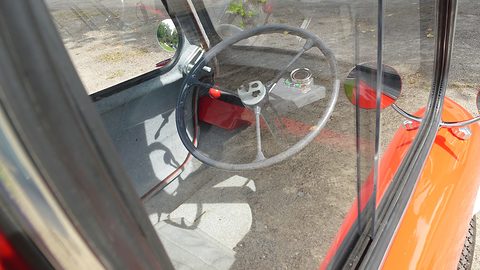
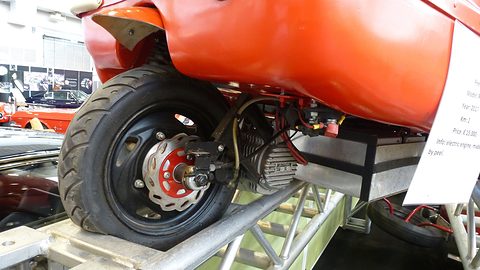
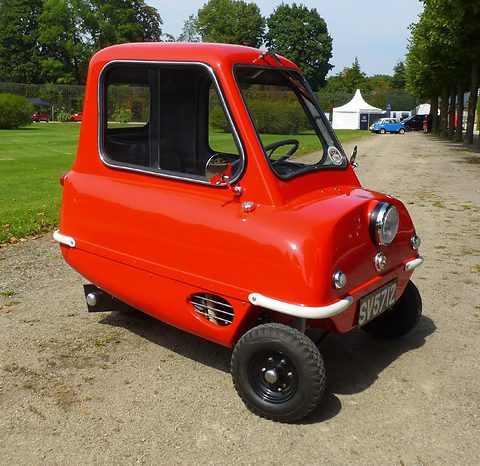
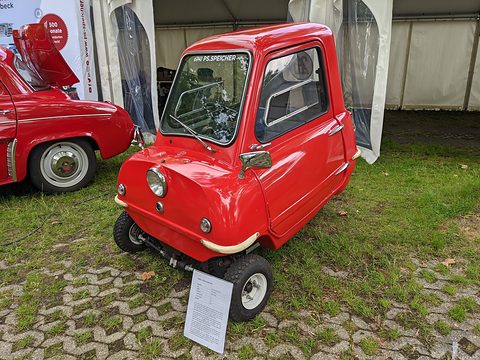
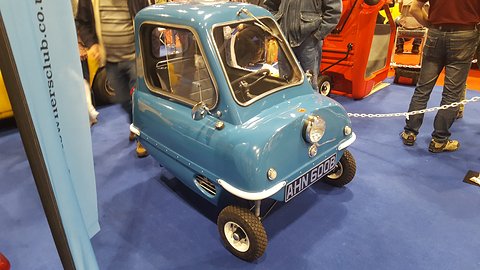
For production in 1963 the layout was turned round: two wheels at the front, and one at the back driven by an engine mounted at the side.source 5source 6 The engine was a 49 cc Zweirad Union two-stroke, a moped unit from Zweirad Union, the two-wheeler combine that included DKW, which is why some sources call it a DKW. It was started with a hand lever, had three forward speeds and no reverse, and the gears were selected by a quadrant lever on the steering column.source 5source 7source 3 The body was a glass-fibre shell with one door, on the left, over a welded tubular-steel frame, and the driver sat on a hammock-type seat on a tubular frame, working ordinary car pedals.source 7source 3 There was one headlight and one wiper.source 8source 9source 4 In Britain a three-wheeler this light counted legally as a motorcycle, and the P50 carried no instruments at all, not even a speedometer.source 7source 3
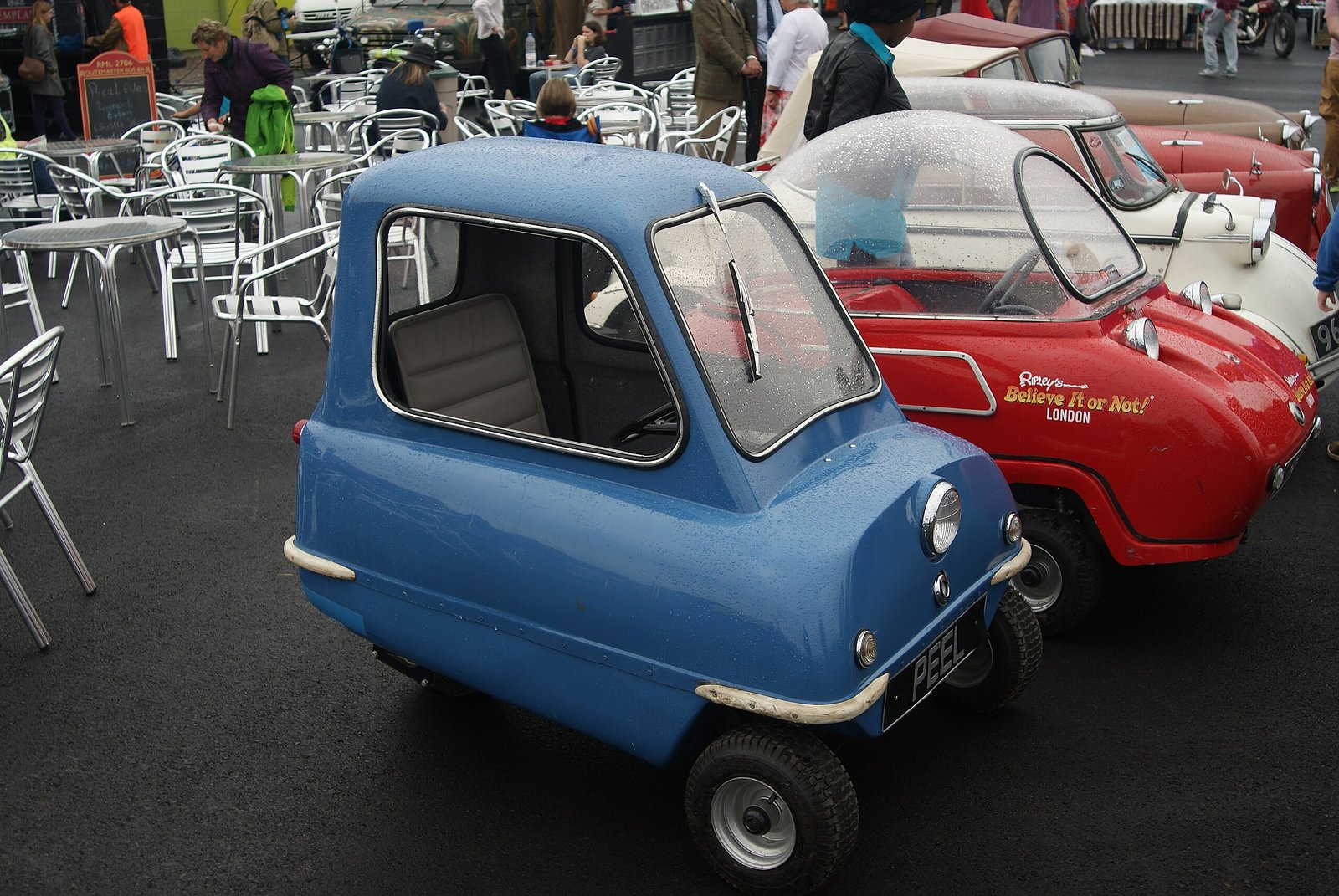
The figures are those of a moped with a roof. The car was 1,372 mm (54 in) long and weighed 59 kg (130 lb); top speed was about 61 km/h (38 mph) and the claimed consumption about 100 miles per gallon.source 8source 5source 10source 3source 4 It came in Daytona White, Dragon Red, Capri Blue and Sunshine Yellow.source 3source 4 Owners report small differences from car to car, a sign that each was built by hand.source 7source 3 The Weiner museum dates the run from October 1963 to December 1964.source 5
Backwards, by hand
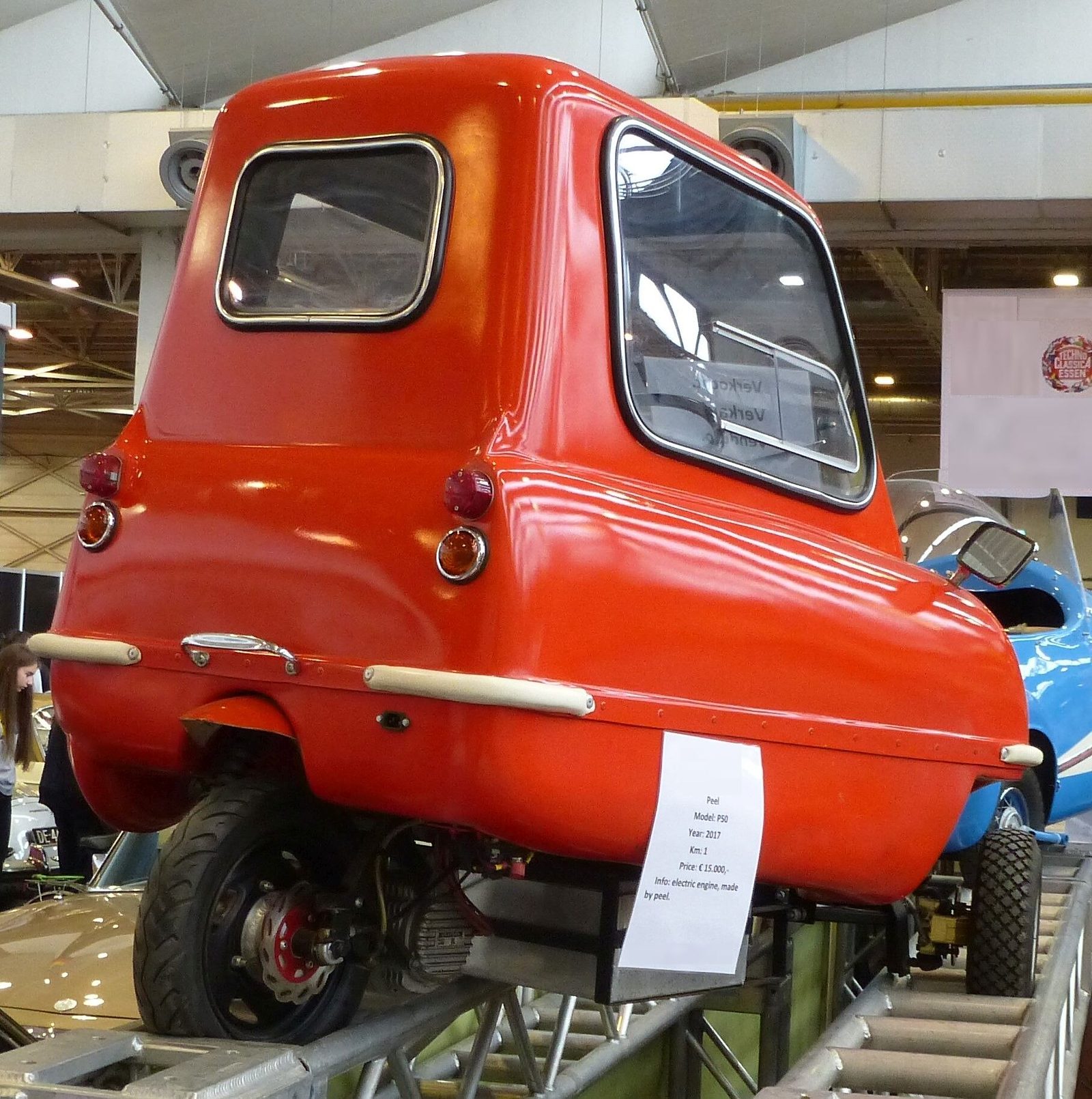
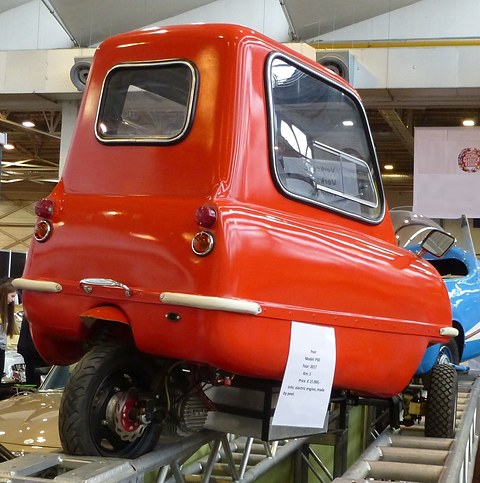
With no reverse gear, the driver who has nosed into a dead end gets out, takes the chrome handle at the back, lifts the tail and swings the car round.source 5source 7source 3 The same lightness lets museums carry one indoors, and Ripley’s displays make use of it.source 8
It cost £199 in 1963, at a time when a good motorcycle cost about £250.source 3 Peel advertised it as seating one adult and a shopping bag, and as almost cheaper than walking.source 8source 11 P50s went to many countries, the United States among them, and one in Finland was registered as a moped.source 8source 3 In 1963 one went up Blackpool Tower in the lift and was driven round the observation balcony at the top.source 8 BBC Isle of Man repeats a story, found in no other source, that an American inspector testing a P50 rolled it down an embankment, climbed out unhurt and passed it.source 3
The end, and the island
The Peel Trident followed in 1965.source 3 The company had been renamed Peel Engineering Limited on 31 December 1964; car making stopped in 1966, according to Oldtimer Markt, though Grace’s Guide gives 1967, and the firm went back to fairings and boats. It was finally dissolved on 29 August 1974.source 1source 2 The P50, the Trident, the Manxcar, the P1000 and the Viking Sport are the only cars ever built on the Isle of Man.source 1source 5 The island is a Crown Dependency, not part of England, whatever the Weiner museum’s page says.source 5
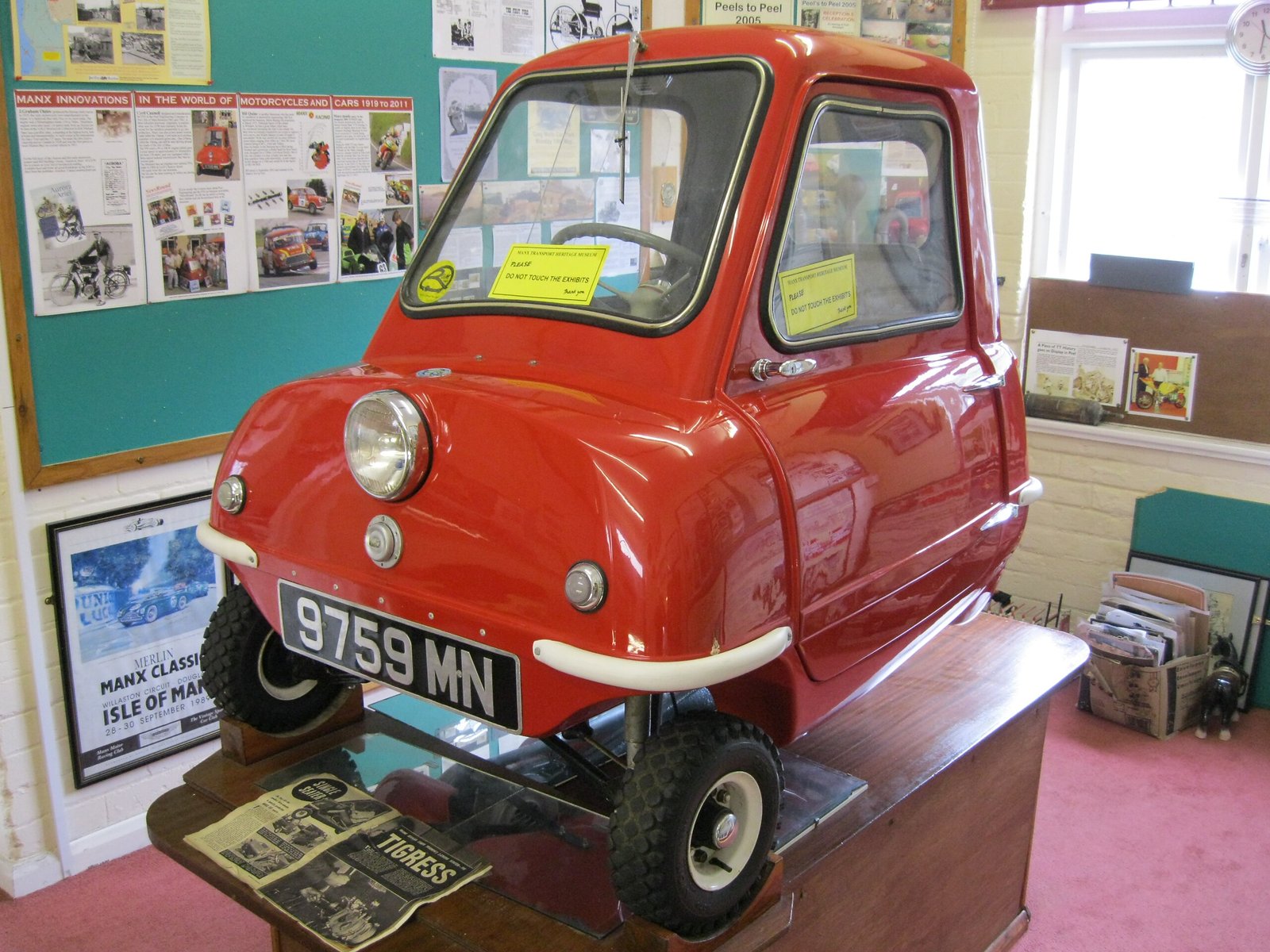
In 2004 the Peel transport museum heard that a 1962 P50 was for sale in Cheshire. It raised £10,500, with help from the Manx Heritage Foundation and the Public Lottery Trustees, and brought the car home.source 3 Four years later BBC Isle of Man counted only two P50s on the island, that one and a private car.source 3 In August 2024 the Manx Transport Heritage Museum held a 60th-anniversary rally: P50s, Tridents and Vikings toured the island and called at the motor museum at Jurby, and one of the visiting cars belonged to the strongman Eddie Hall.source 4 The island’s post office had put Peel cars on its stamps in 2006, and reissued four of them on a sheetlet that July.source 12
A second life
In 2007 the P50 starred in Top Gear (see microcars on screen).source 8source 13 In August 2010 Gary Hillman and Faizal Khan announced that they would rebuild it as an electric car with a reverse gear, and in 2011 they went on the BBC’s Dragons’ Den asking for £80,000 and got it.source 8source 1source 9 About 33 revival cars had been built by 2011.source 14 They are made to order in Sutton-in-Ashfield, Nottinghamshire, in petrol and electric forms.source 8 By 2018–19 the firm was selling about 15 P50s and 10 Tridents a year, the petrol car at £14,879 and the electric at £13,679. The United States was its biggest market, because the electric car escapes emissions rules, and the Crown Prince of Dubai had bought five of each.source 6
Autocar’s tester, 1.9 metres tall, found the steering super-sensitive and said that 32 km/h (20 mph) was the practical top speed of the revival car, because stability became an issue above it. On an A-road he felt as small as a sprat in a shipping lane. A butcher’s steak and kidney pie fitted in the load space, and the speedometer read to 257 km/h (160 mph).source 6
If you can walk through a space, you can probably drive a P50 through it too.
Other firms build P50s too. P50CARS lists a convertible made as a gift for the Emir of Qatar and says its modern electric P50 lapped the TT course in 2024, a claim only its own site makes.source 15 In Britain a replica is a kit car and needs an MSVA inspection before the road.source 8