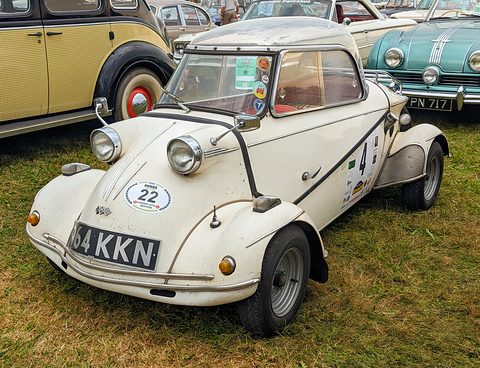
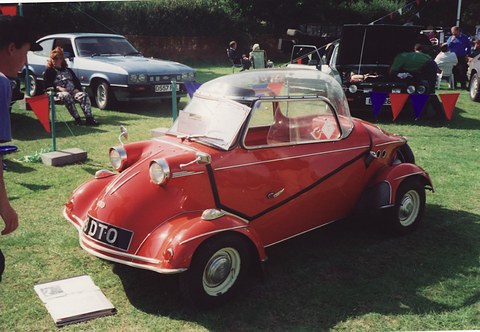
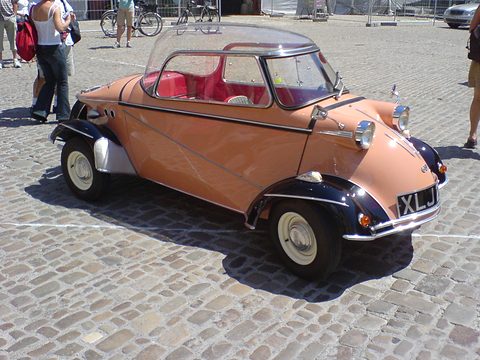
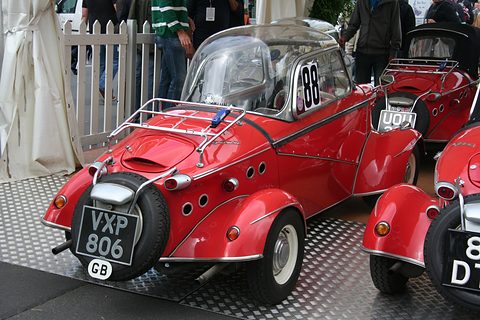
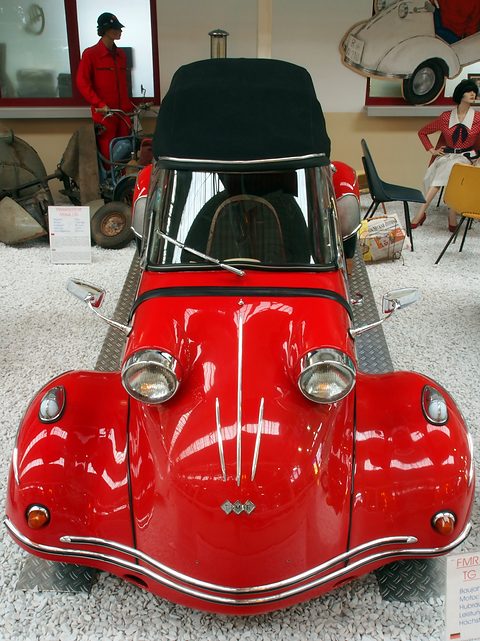
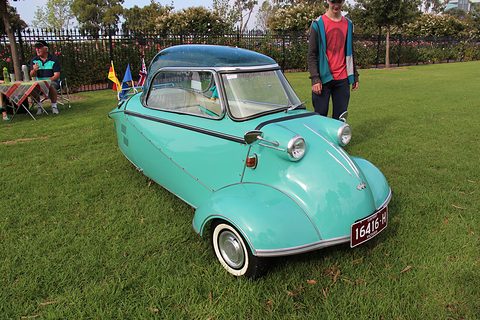
microcarfan
  • Bubble car
  • West Germany
  • Four wheels
  • Tandem seats

FMR Tg500

Also known as Tg 500, “Tiger”, “Messerschmitt Tiger”

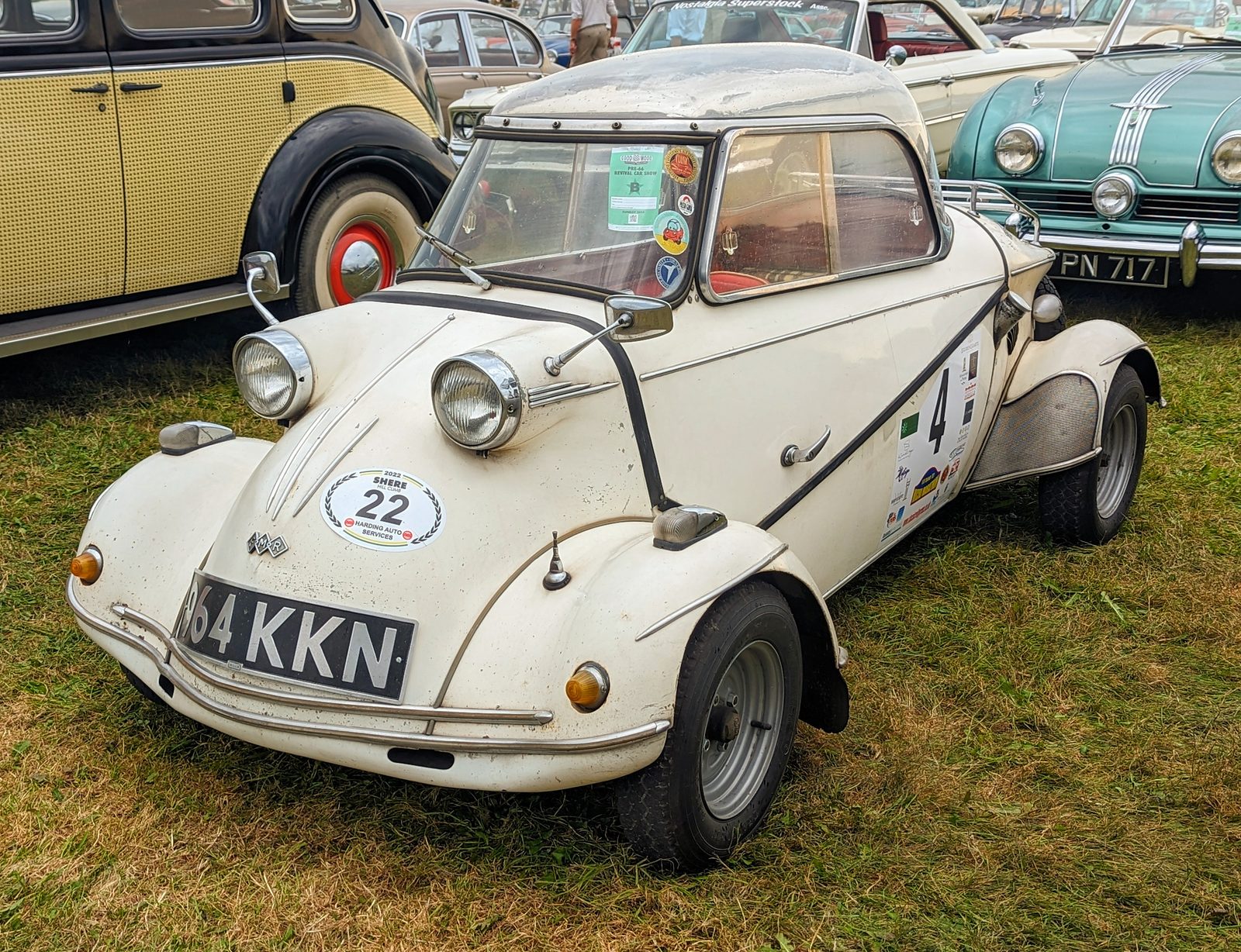
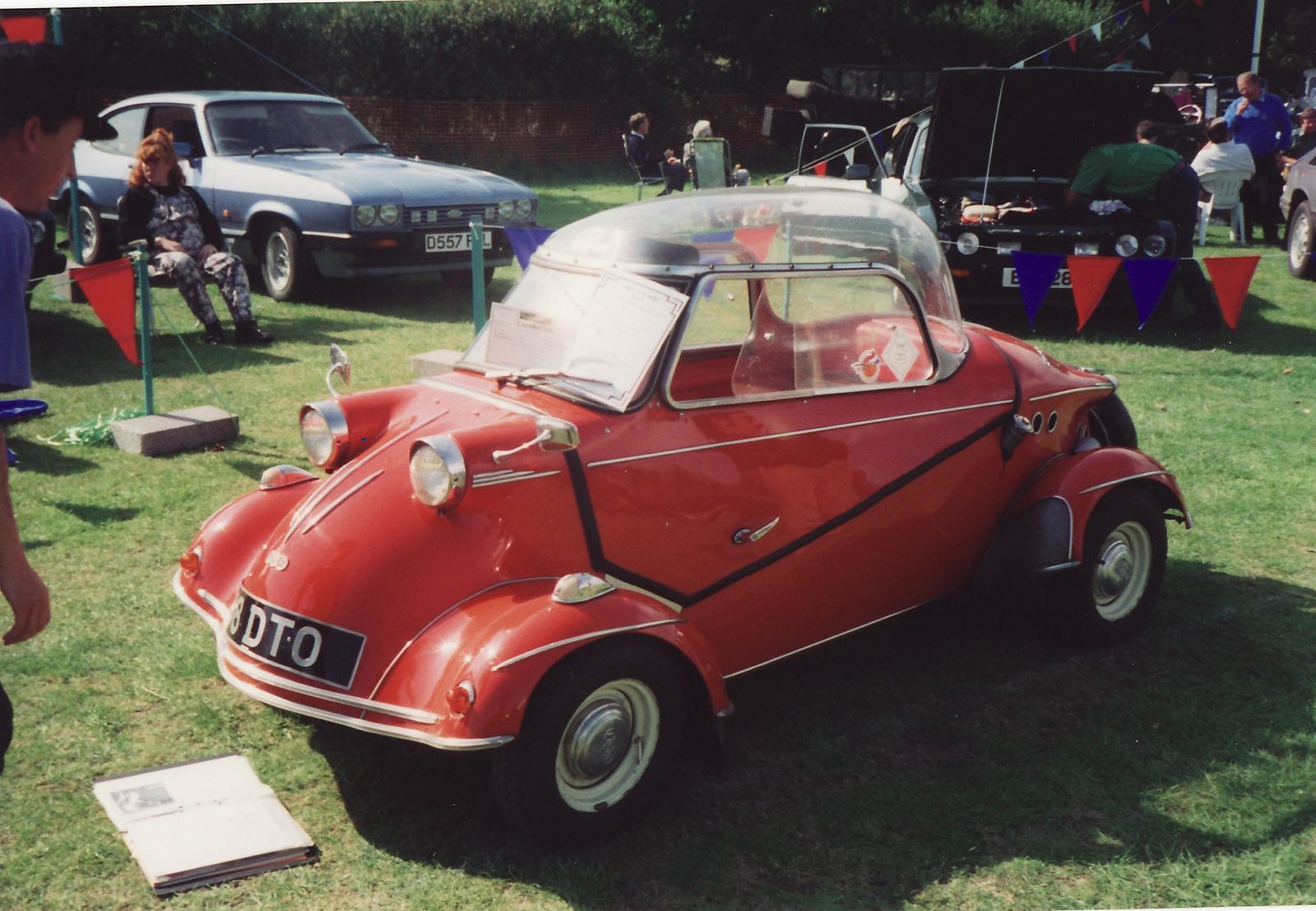
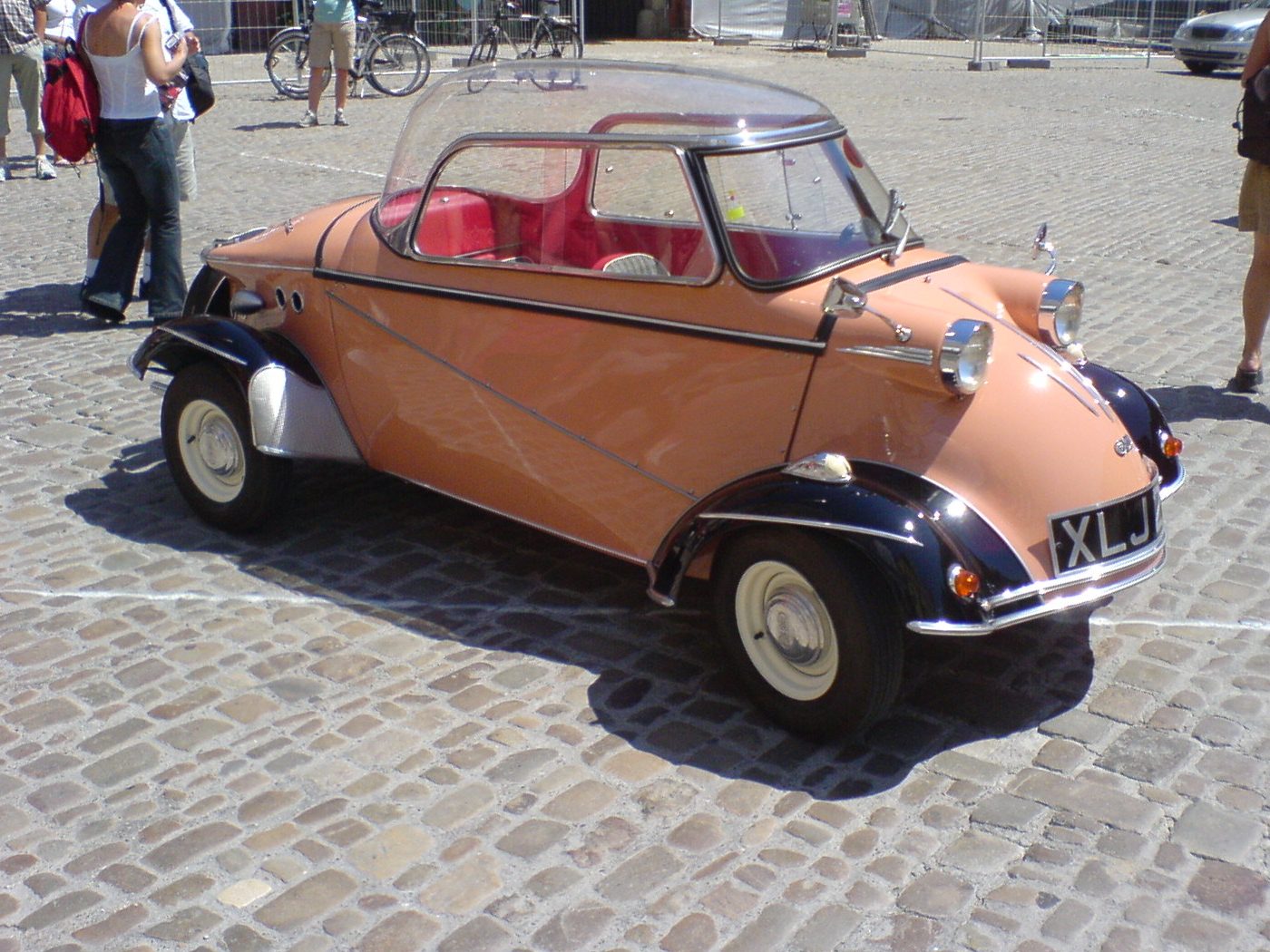
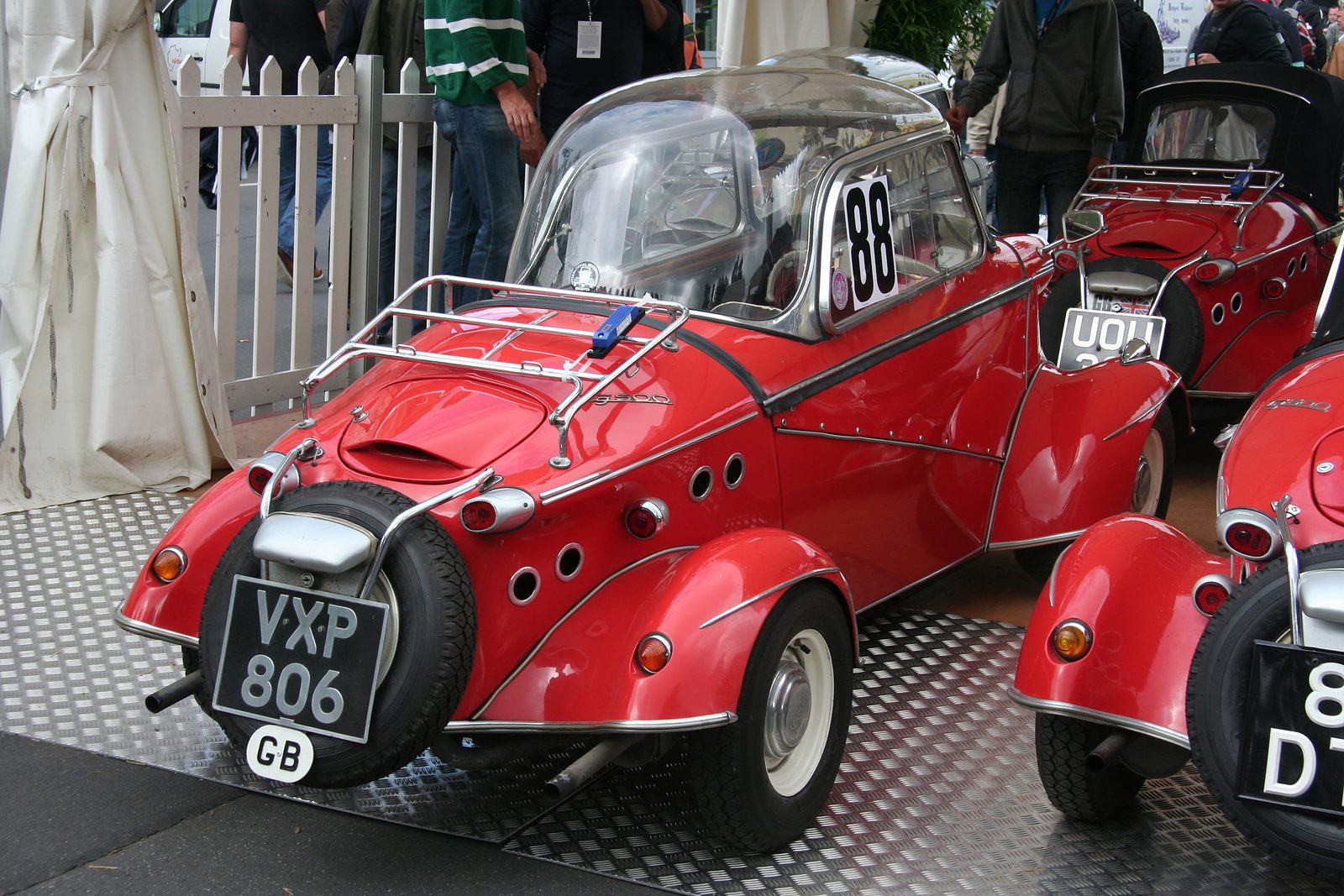
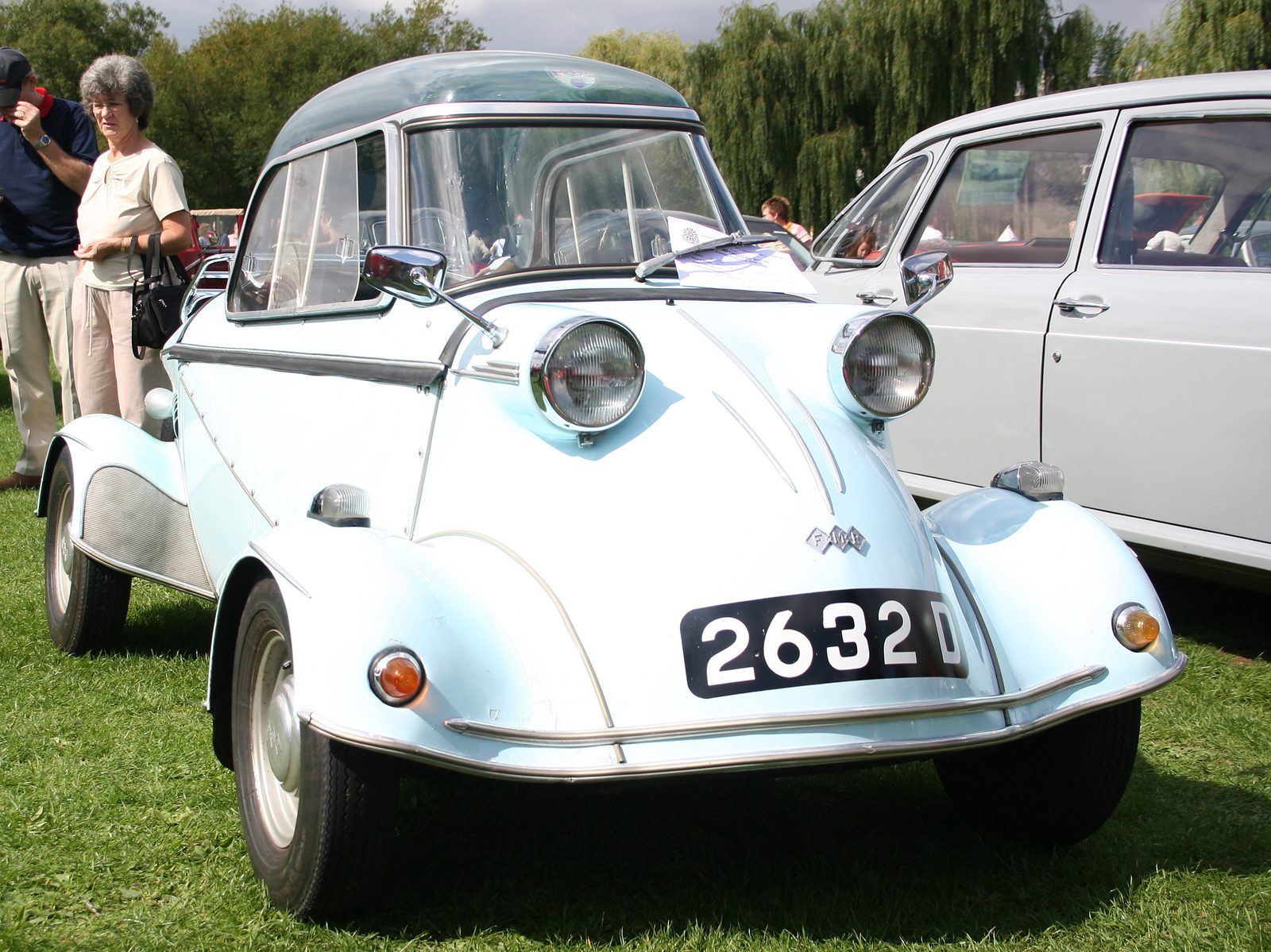
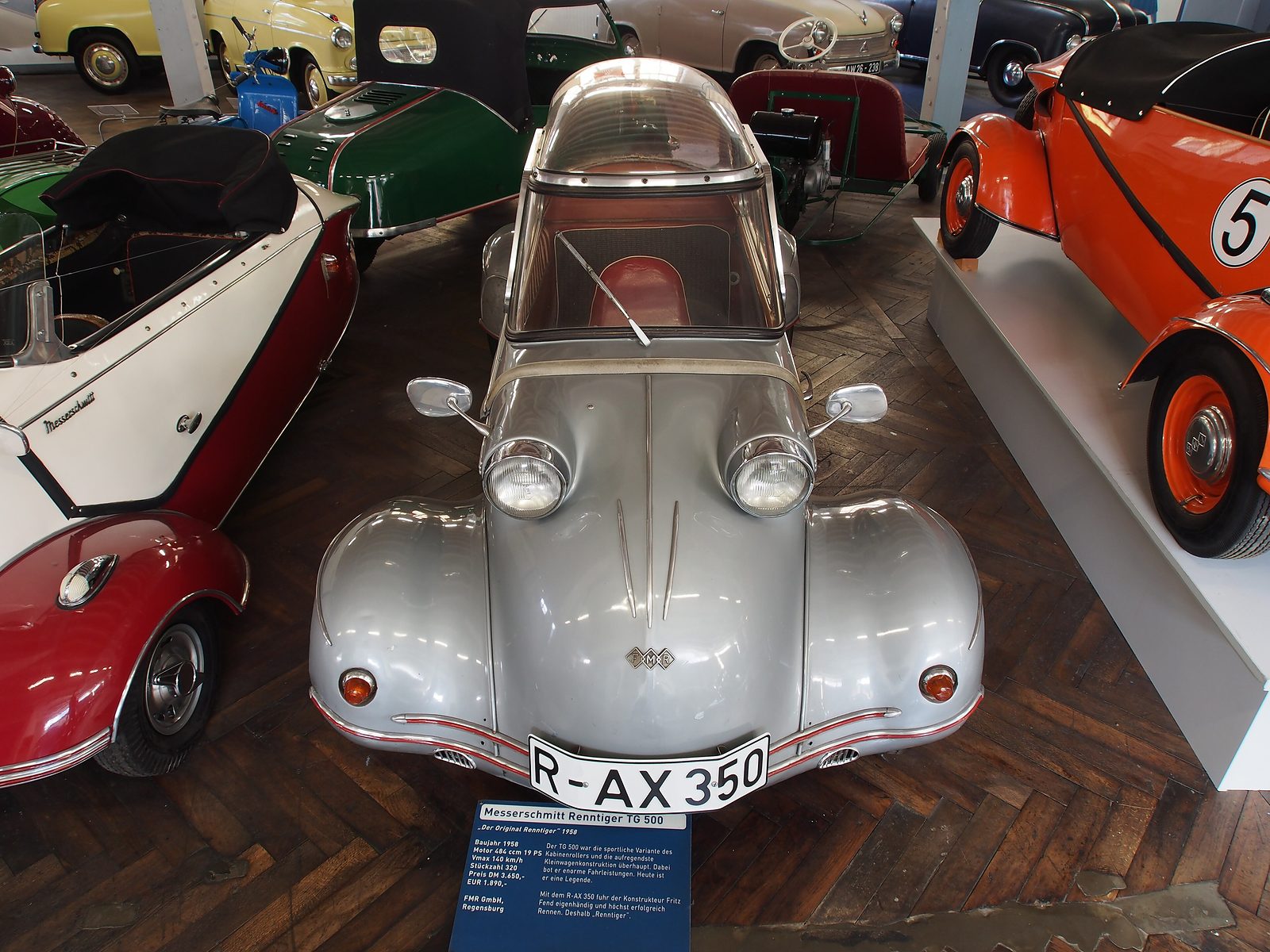
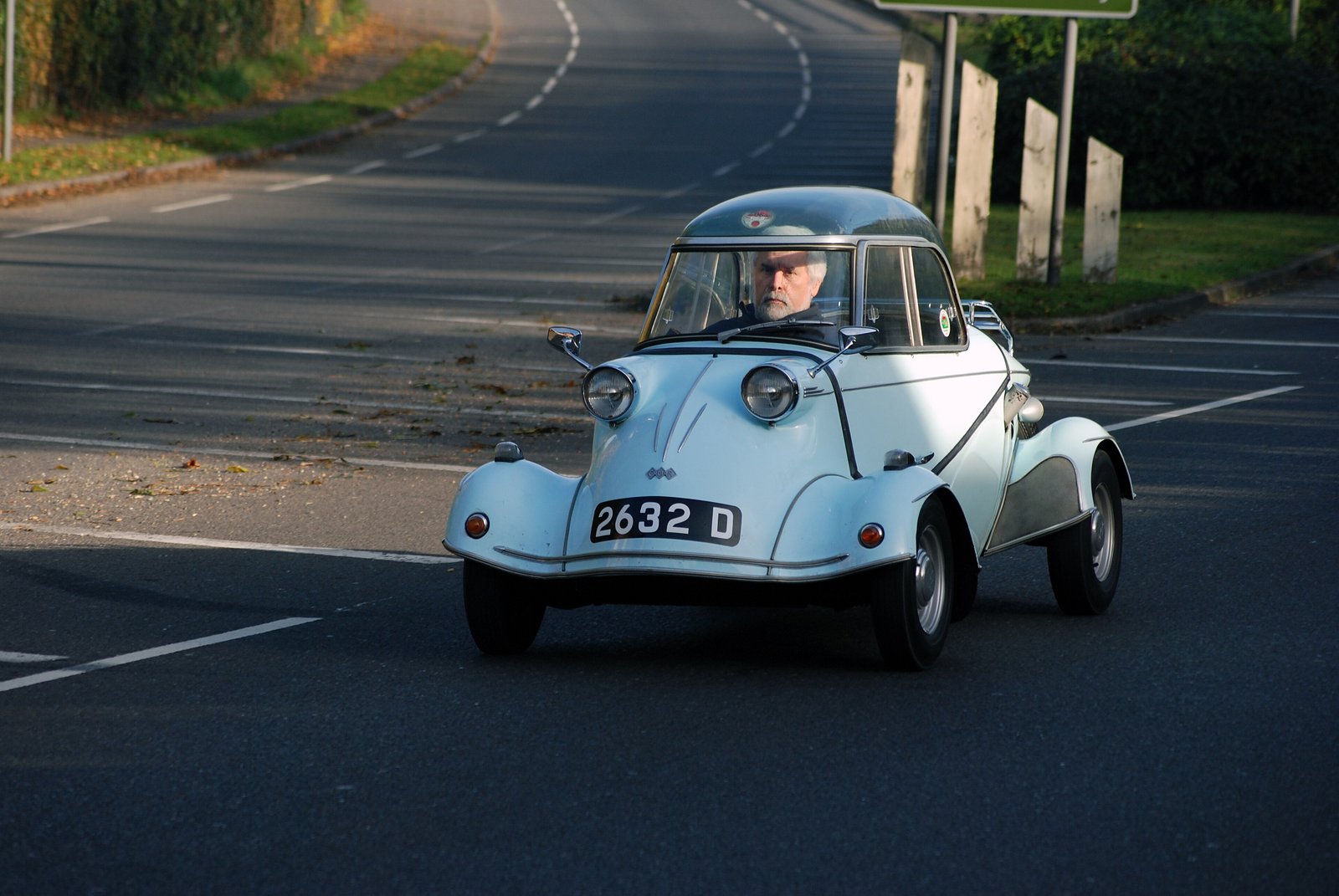
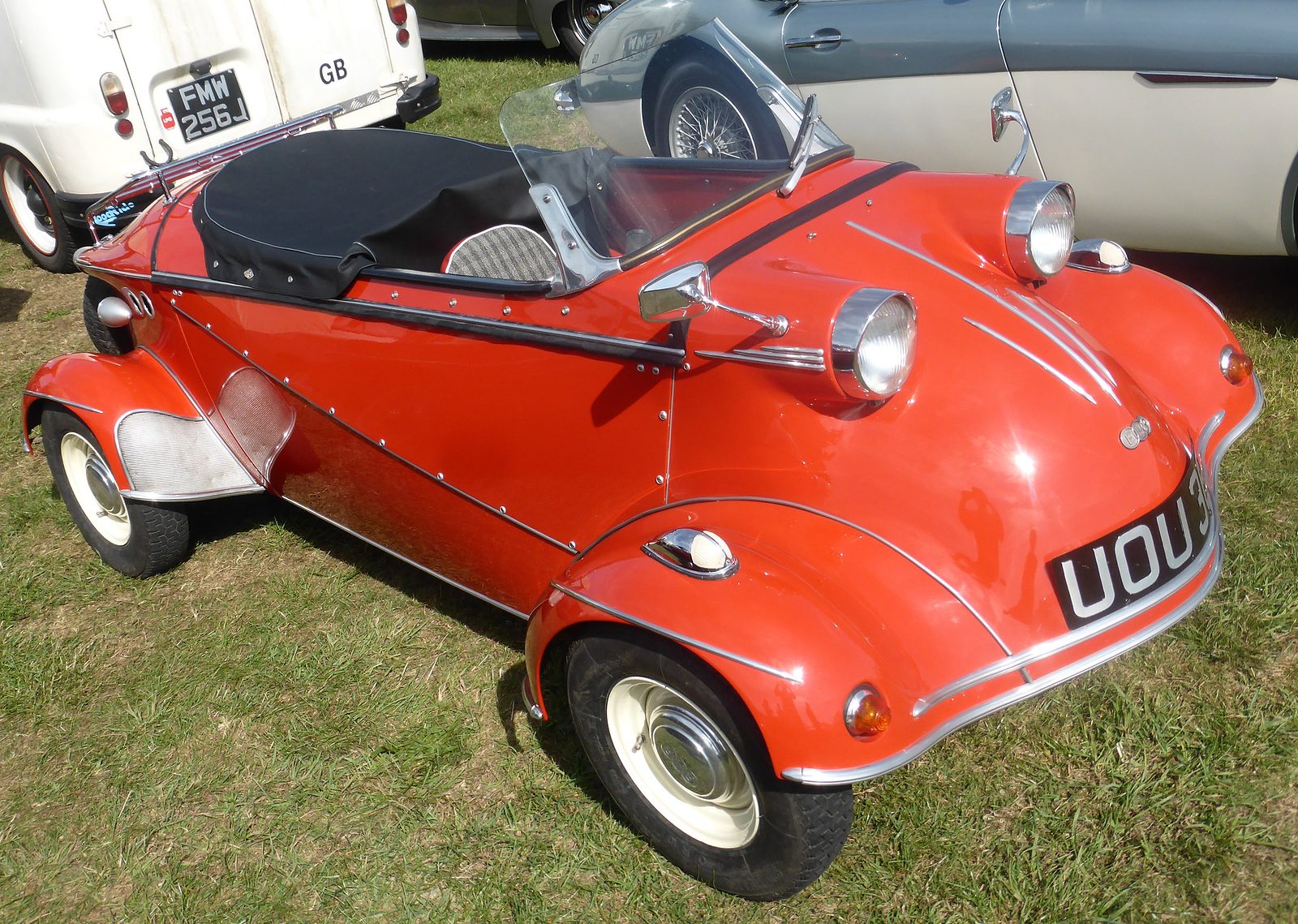
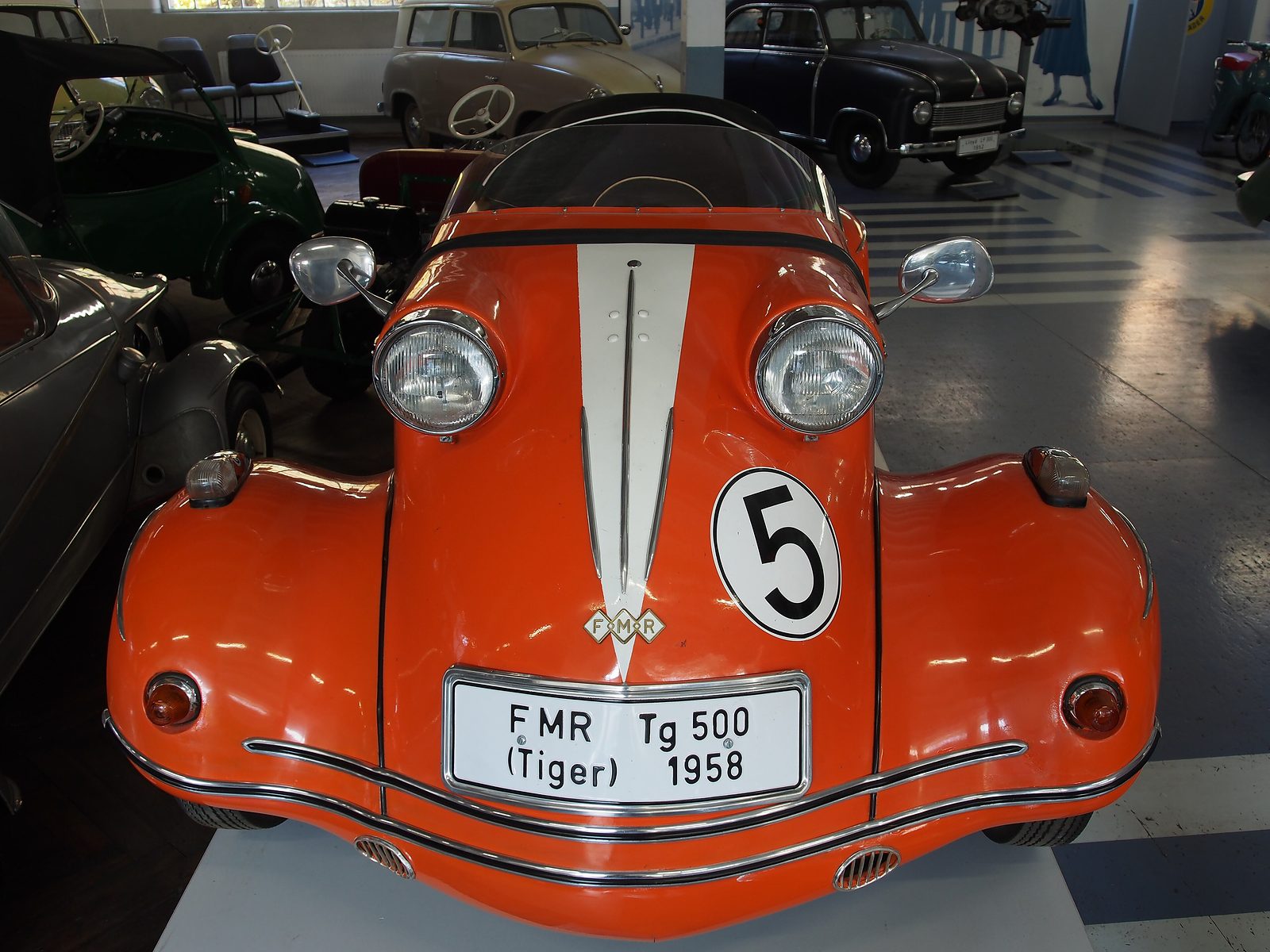
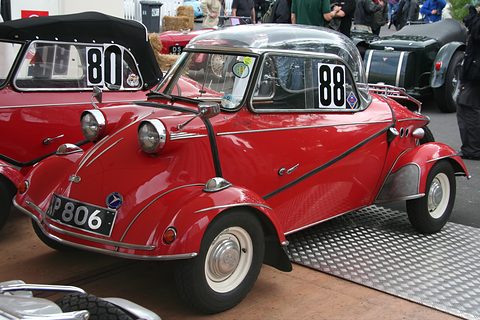
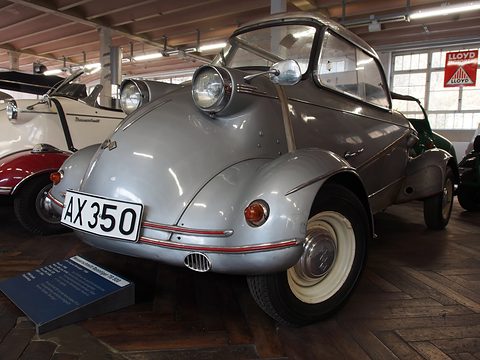
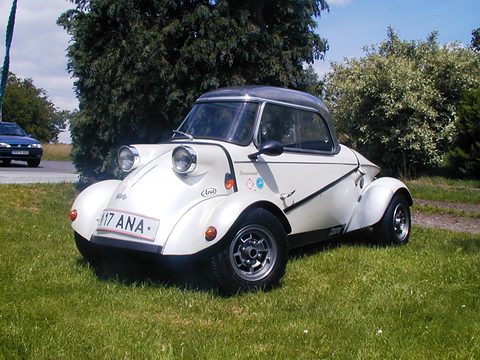
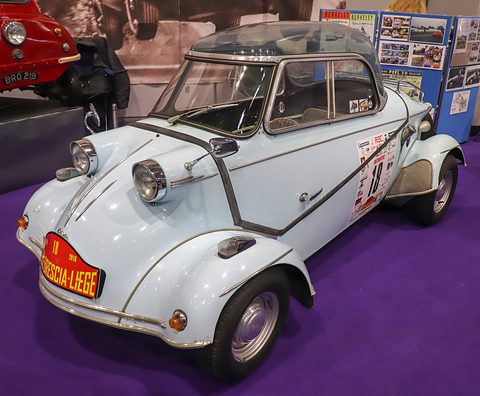
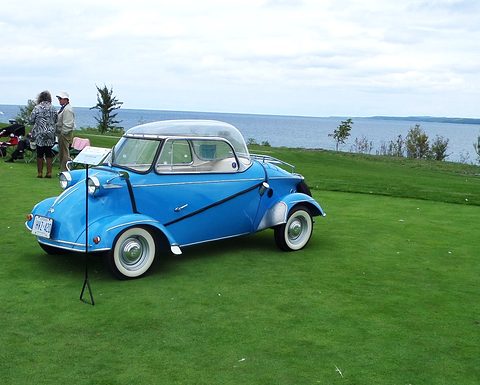
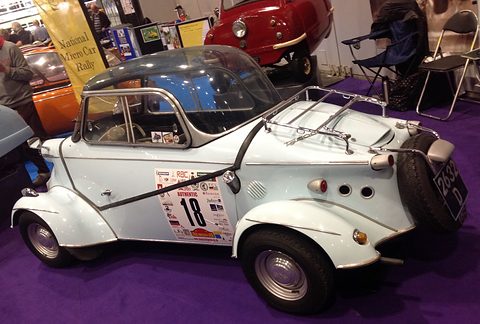
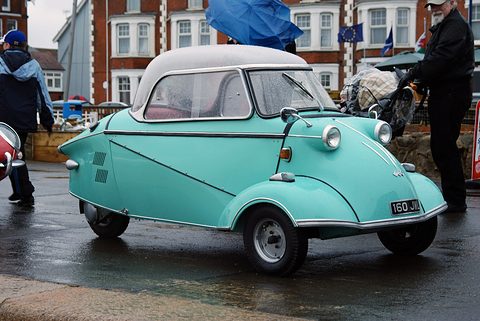
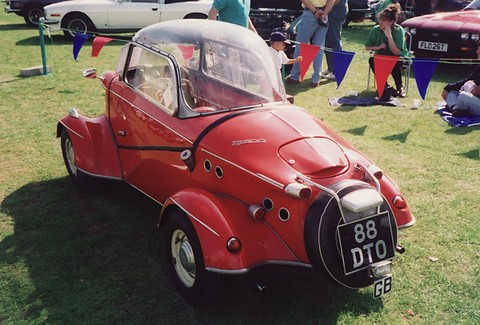
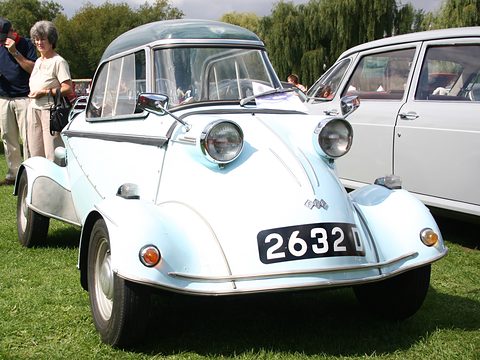
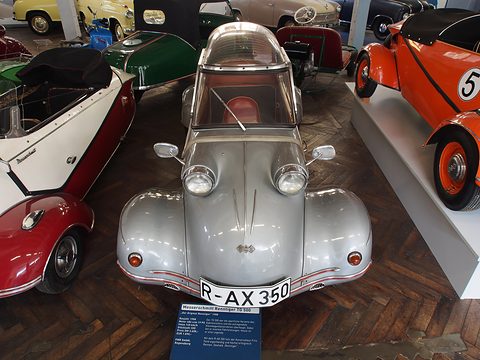
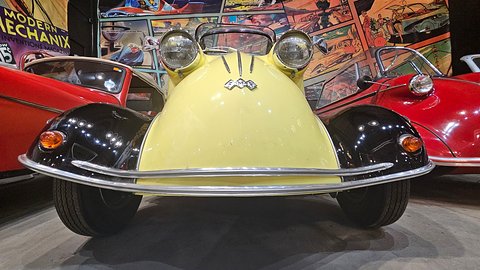
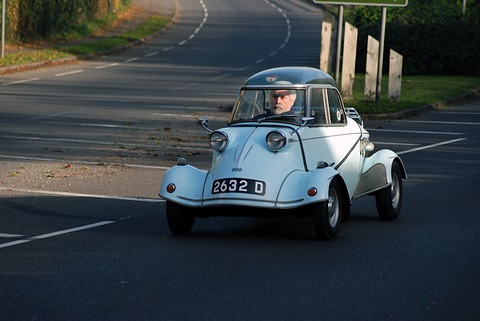
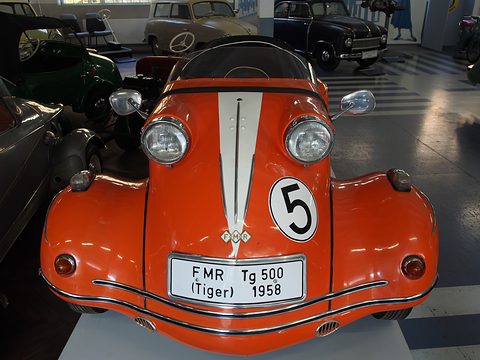
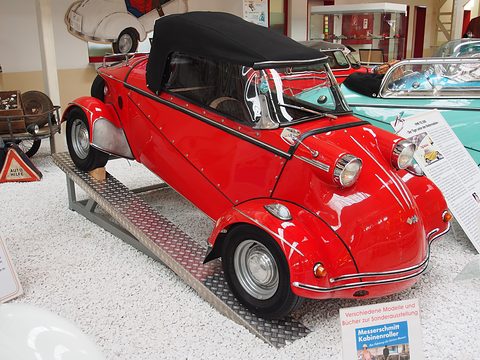
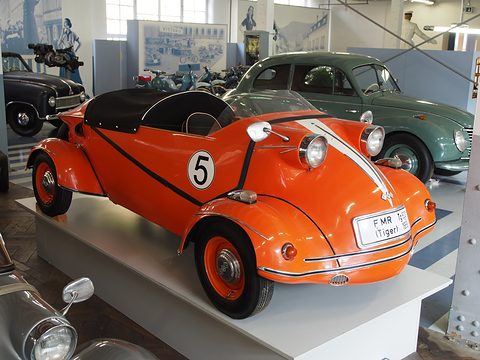
A Messerschmitt bubble car with a wheel at each corner and about twice the power: two cylinders, a real reverse gear, a catalogue speed of nearly 130 km/h (81 mph), steering still worked by a bar, and a name, Tiger, that already belonged to somebody else.

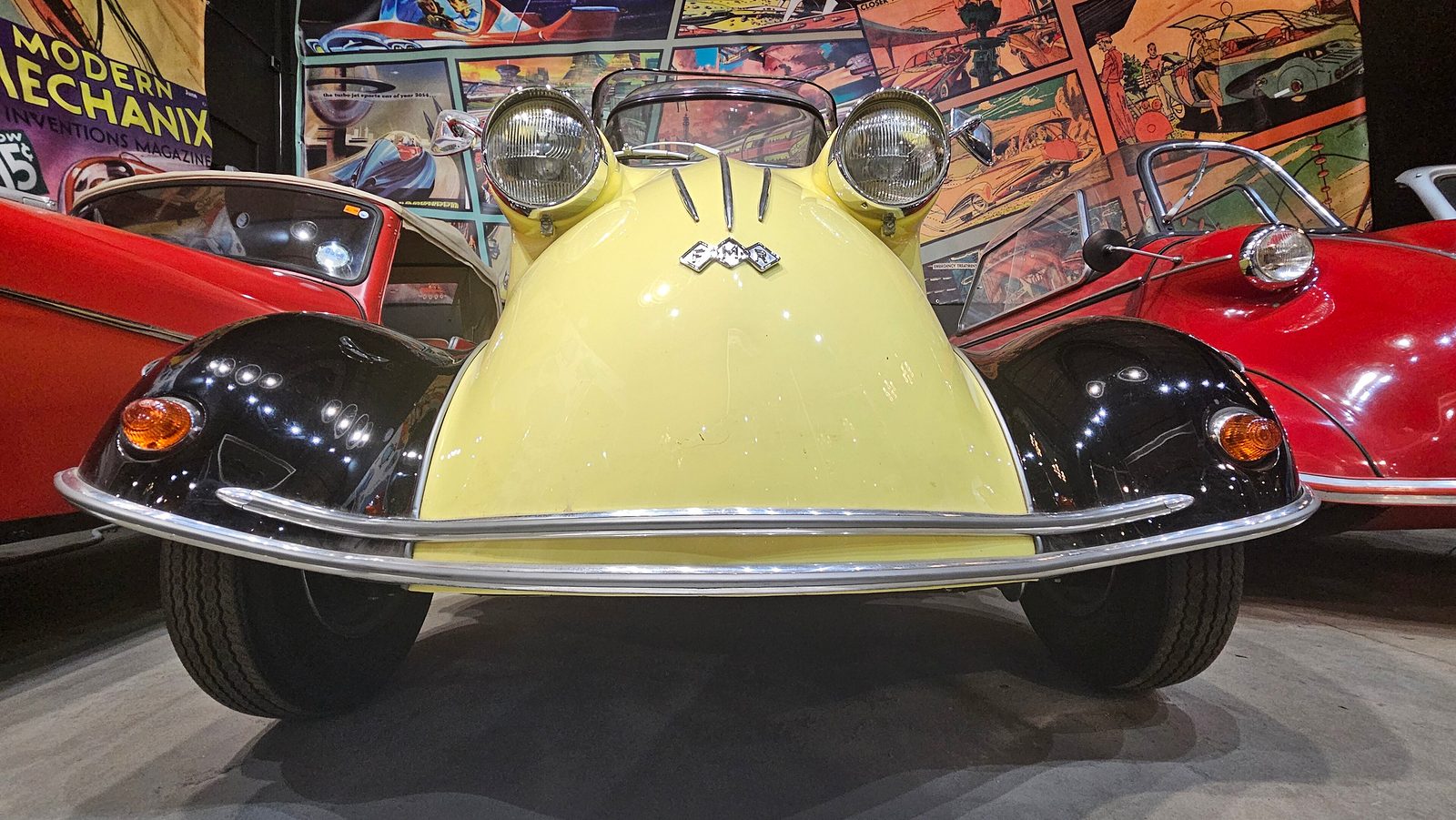
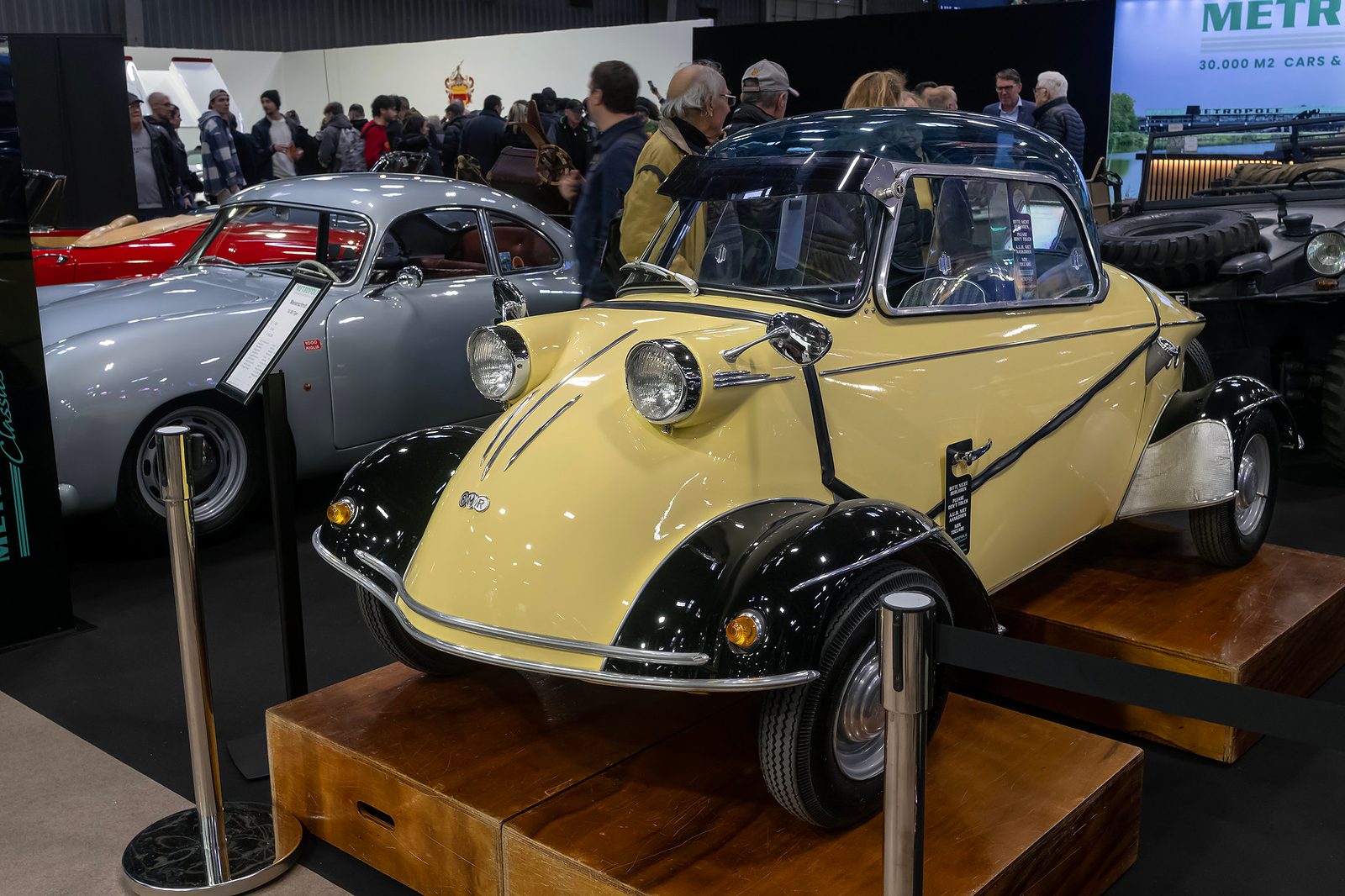
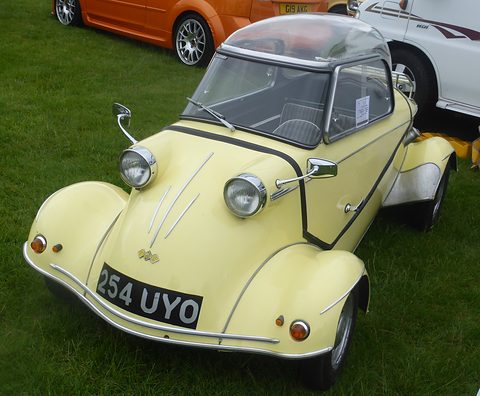
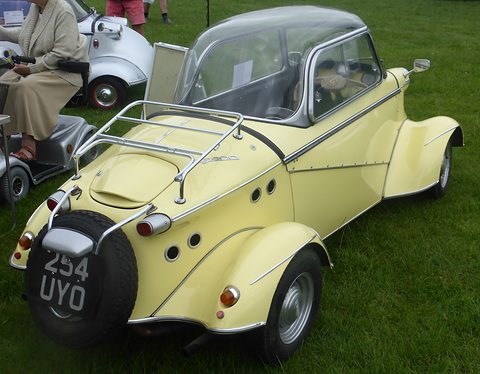
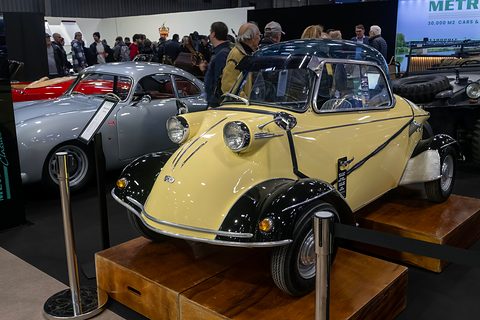
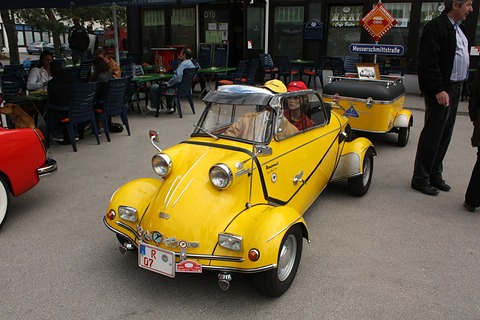
Pale yellow four-wheeled bubble car on grass from the front left, twin headlamps on bulbous wings and a clear canopy.
A pale yellow 1959 FMR Tg500 with its Plexiglas canopy at Sherborne Castle, Dorset, in 2019.Photo: Andrew Bone, CC BY 2.0, via Flickr

At a glance

The spec plate

FMR Tg500

Tg 500 “Tiger” · Regensburg

Built
1958–⁠1961Announced in January 1958; production ran out at the end of 1961
Country
West GermanyThe former Messerschmitt works, Regensburg, Bavaria
Maker
Fahrzeug- und Maschinenbau GmbH Regensburg (FMR)Fritz Fend and Valentin Knott’s company, which took over the Kabinenroller in January 1957
Engine
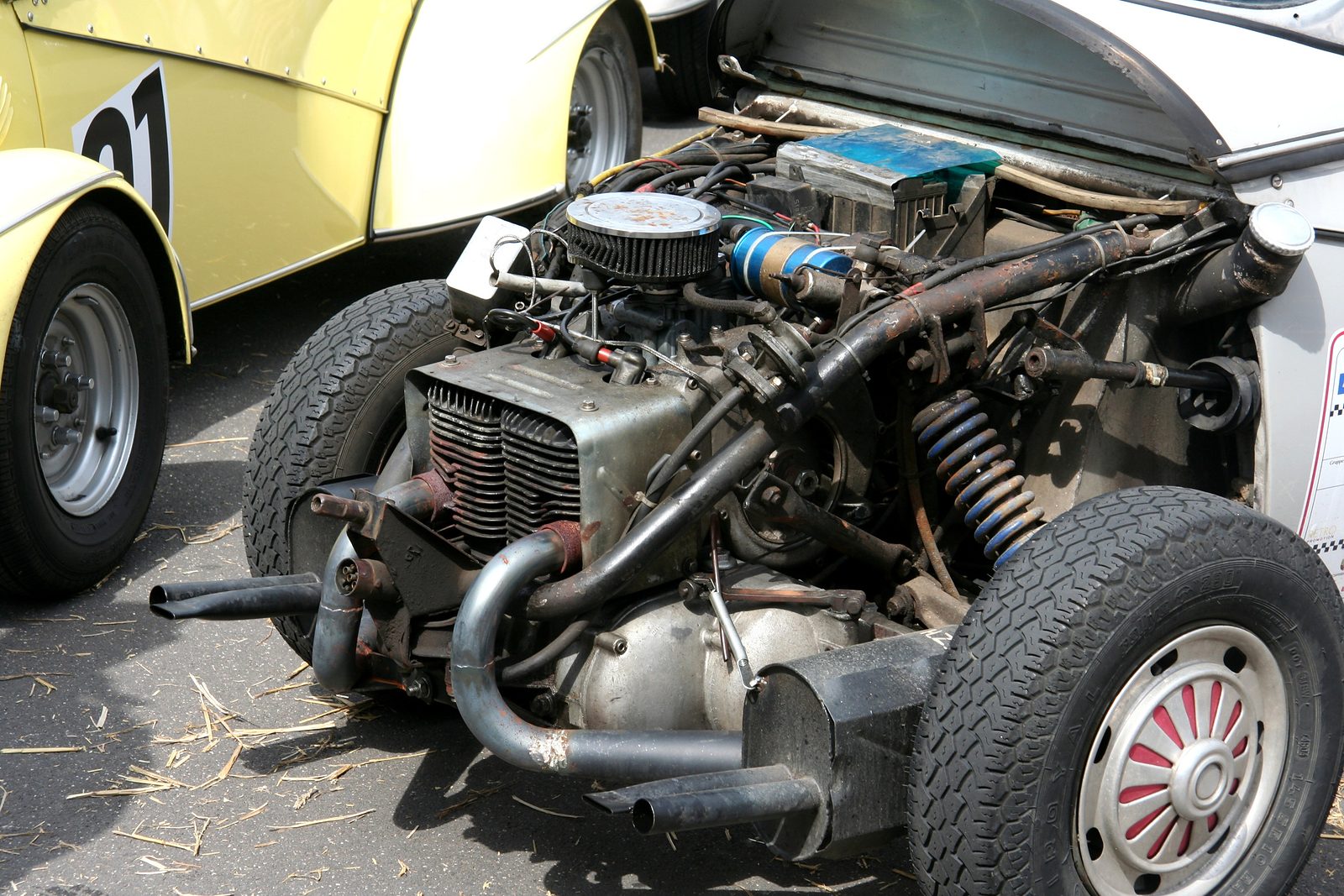
494 cc two-stroke parallel twinDesigned by Fichtel & Sachs, built by FMR; a fan for each cylinder
Power
19.9 PS14.6 kW at 5,000 rpm; the 1958 test reported 21.2 PS at 4,350 rpm
Length
3,000 mm1,270 mm wide, 1,250 mm high
Weight
350 kgDry, the 1958 figure; about 390 kg with a full tank
Seats
1 + 1In tandem, under the canopy
Wheels
4Two steered at the front, two driven at the back
Price new
DM 3,6501958; DM 3,725 in 1961
Production
about 300Often given as 320; no factory record has been seen
Survives
about 150The usual estimate; a specialist register counted 164 in 2015
Top speed
130km/h130 km/hThe 1958 test reached a little under 110 km/h on a brand-new engine

How big is it?

True proportion

3.00 m

It is 30 mm longer than a Fiat 500, about 1.7 adults laid end to end.

  • 1.27 m wide
  • 350 kg: about five adults
  • Two seats, one behind the other
  • Four wheels where the KR200 has three
Drawn at true proportion. The track is 3.6 metres long; the adult stands at the same scale. The Peel P50 is the smallest production car, on every page for comparison.

The story

History

On 15 January 1957 the Messerschmitt cabin scooters passed to a new company at the old works in Regensburg. Fahrzeug- und Maschinenbau GmbH Regensburg, FMR, belonged to the designer Fritz Fend and the industrialist Valentin Knott, and the car on this page was its first new model of its own.source 1 Willy Messerschmitt, one of the aircraft makers who had turned to cars, had to give up vehicle building when he returned to state aircraft work.source 1 In the Weiner museum’s account, Fend set out in the summer of 1957 to build a “super Karo”, a car that would beat his three-wheeled Messerschmitt KR200 in every respect, above all in speed and handling.source 2

The engine came off a shelf. Fichtel & Sachs, which had supplied the cabin scooters’ engines for years, had drawings for a 400 cc two-stroke twin meant as a stationary engine; it was enlarged to 494 cc and given a four-speed gearbox with reverse.source 2 auto motor und sport put it precisely: designed by Fichtel & Sachs, built and fitted under the FMR name, so the sources that call it a Sachs engine and those that call it an FMR engine are both right.source 3 It gave 19.9 PS (14.6 kW) on paper, roughly double the KR200’s power.source 3source 4

The factory judged that a single driven rear wheel could not take 20 PS, so the new car got two, on independent swing axles and wishbones with hydraulic struts.source 3 The H-pattern gearbox had a proper reverse, where the KR200 backed up by running its engine the other way; the brakes became hydraulic; the headlamps grew; the wheels were 10-inch.source 3source 5 The Weiner museum adds larger front suspension arms and an adjustable rear subframe, which it calls “Formula One-style”.source 2 The fuselage, the Plexiglas canopy, the tandem seats and the direct steering bar stayed.source 3source 1

Tiger, then Tg

The Weiner museum says Fend presented the car in September 1957 “to sensational acclaim”, but the magazine’s issues from that autumn are not online and the show has not been confirmed.source 2 In January 1958 auto motor und sport reported that “Der Fend Tiger” would get a 500 cc Fichtel & Sachs twin and be built in series in the near future.source 6 In March it stood at the Geneva Salon among the small cars, alongside the Goggomobil, the Frisky and the Bianchina.source 7

By May it had lost its name. The magazine headed its report “Der umgetaufte Tiger”, the renamed Tiger: the car was “at first Tiger”, but because the trademark had other owners it was now only the Tg 500.source 3 The Weiner museum, the owners’ club and German Wikipedia all name the owner as Krupp, which used animal names for its lorries, though no primary source for that has been found.source 2source 8source 1 The Weiner museum offers Tourenfahrzeug-Geländesport, touring vehicle and cross-country sport, as what “Tg” “supposedly” meant; Carl Wagner, writing in 1973, says it unofficially stood for Tiger.source 2source 5 Everyone called it the Tiger anyway.source 3source 8

Nor could the type name carry “Messerschmitt”, by German Wikipedia’s account, and the car wore a diamond-shaped FMR badge.source 1source 9 But the press of 1958 still filed it with the family: the magazine’s price list put the Tg 500 under “Messerschmitt”, and its test called it the four-wheeled type of the Messerschmitt Kabinenroller.source 10source 3 So the honest description is FMR-built and FMR-badged, sold as part of the Messerschmitt family, and “Messerschmitt Tiger” is a period usage, not only a dealer’s label.

In May 1958 only a pre-series of 20 cars existed, driven by dealers, and series production was to start in July. The works was building about 22 Kabinenroller a day and hoped, in time, to build as many Tigers. The magazine praised FMR’s management as rational and careful, and set its cautious production policy against what it called the euphoric planning common at the time; the firm shared as many parts as it could between the two cars to keep costs bearable.source 3

A driving machine

The tester had a long drive in a pre-series car with a factory-new engine. He began by admitting the sceptics’ fear, that a tiny, narrow and extraordinarily agile “road flea” with the performance of an Opel Rekord might seem made for reckless suicides, and then took it apart. Visibility, the asymmetric dipped headlamps and the brakes were very good; body roll was barely noticeable; and the car would slide long before it would tip, so that he trusted it in corners straight away.source 3

„Der Tiger ist eine ausgesprochene Fahrmaschine, die nicht den Anspruch darauf erhebt, ein Kleinwagen im landläufigen Sinne zu sein.“

The tester of auto motor und sport, 11/1958 (May 1958). In English: “The Tiger is an out-and-out driving machine which does not claim to be a small car in the ordinary sense.”source 3

He called it practically a single-seat racer with room for a passenger, and found its nearest relative in the motorcycle and sidecar: as agile, but with full weather protection, symmetrical handling and about 8 PS less needed for the same speed than a heavy sidecar outfit. He also likened it to Neumann-Neander’s Fahrmaschinen of the 1930s. The gearbox was geared for hard driving and fourth could be used only from 55 km/h (34 mph); the box was scratchy and had to be stirred firmly. Above 100 km/h (62 mph) the extremely direct steering wanted a calm hand, and bumps came through the bar as hard little knocks. The body worked noticeably in torsion, though the factory’s tests supported its promise that it would last, and the front springing needed refining for long runs on the Autobahn.source 3

The brochure promised nearly 130 km/h. On a brand-new engine the tester saw a little under 110 km/h (68 mph) and thought about 120 certainly possible. The magazine also reported that the engine really gave 21.2 PS at 4,350 rpm, more than its rating.source 3 Wagner later noted that the centre of gravity sat at the rear seat, so the handling was the same with a passenger or without.source 5 The list of minuses was frank.

„Der Tiger ist hart gefedert, laut, eng, der Beifahrer weiß nicht recht, wohin er seine Füße stecken soll, es klappert und dröhnt nun einmal in einem solchen Kabinchen, und soziales Ansehen ist damit nicht zu gewinnen.“

The same report, auto motor und sport, May 1958. In English: “The Tiger is hard-sprung, loud and cramped, the passenger does not really know where to put his feet, a little cabin like this simply rattles and drones, and there is no social standing to be won with it.”source 3

Unlike the KR200 it could not pass as an economical utility vehicle, and anyone who wanted a sensible utility car at that price was, as the tester put it, not at the right address. For the right enthusiast it was a car to love.source 3

DM 3,650

The price list of 1958 gave DM 3,650 for the Tg 500 against DM 2,395 for a KR200 Kabinenroller or a KR201 Roadster, about half as much again.source 10 For about DM 3,700, the tester pointed out, a buyer could have a Fiat Nuova 500 Standard with an Abarth kit that would top 100 km/h, a Fiat 500 Luxus, the quick Goggomobil Coupé 400 or a four-seat Lloyd Alexander, all small cars whose practical value naturally far exceeded the Tiger’s.source 3 German Wikipedia gives DM 3,725 for 1961, and says the high price meant that only a few were built.source 1

Developed as a proper sports car but with an underdeveloped motor, it found a place with enthusiasts but not the general public.

Bruce Weiner Microcar Museum, tour page text, 2002–⁠07.source 2

Some went abroad. At least seven were Canadian-market cars, and the histories of cars sold at auction lead to Britain, the United States and Australia.source 9source 4source 11 The Weiner museum calls the Tiger’s British debut “the stuff of legend” without saying what happened, and no British report of it has been found.source 2

Racing without doors

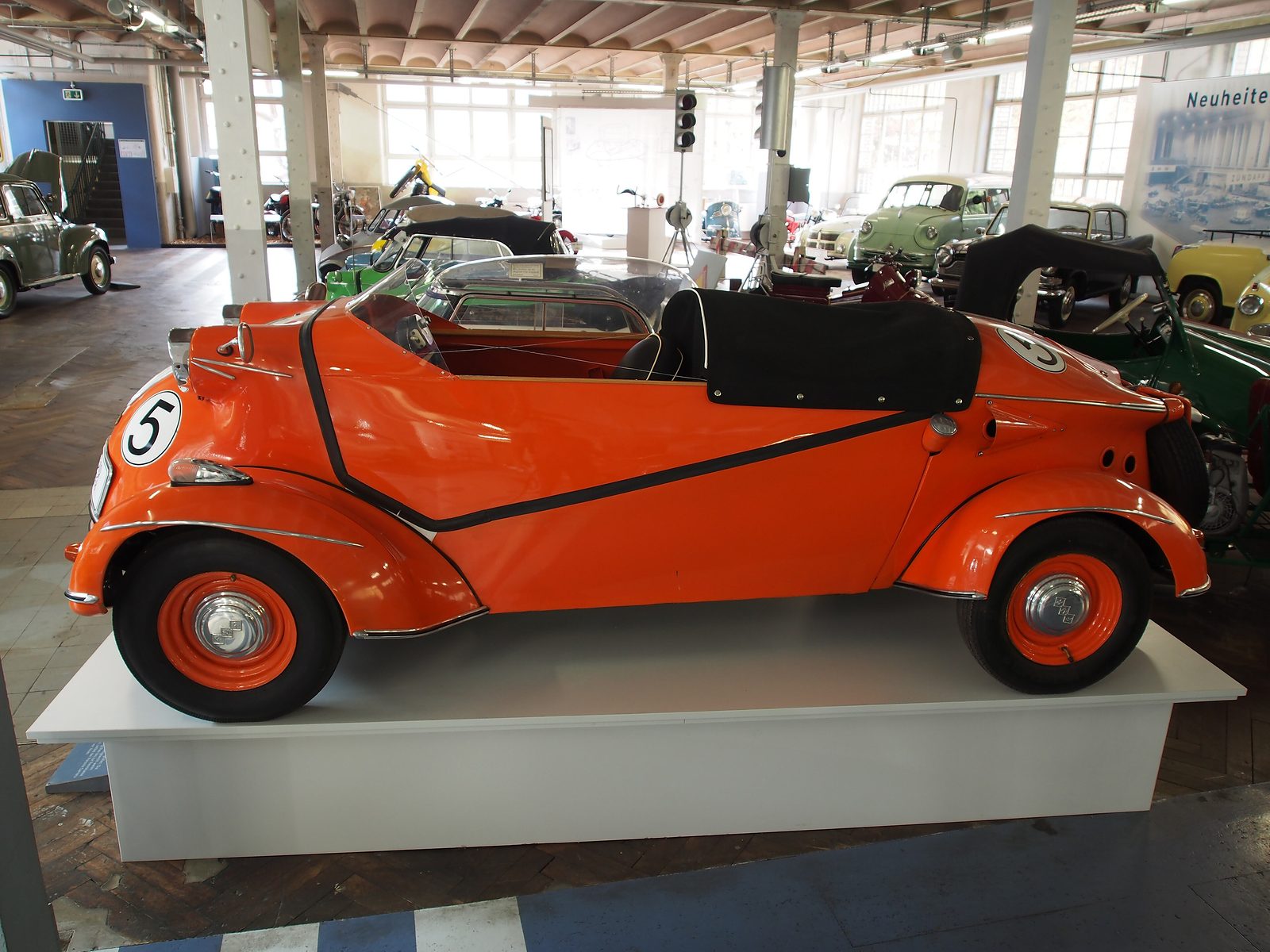
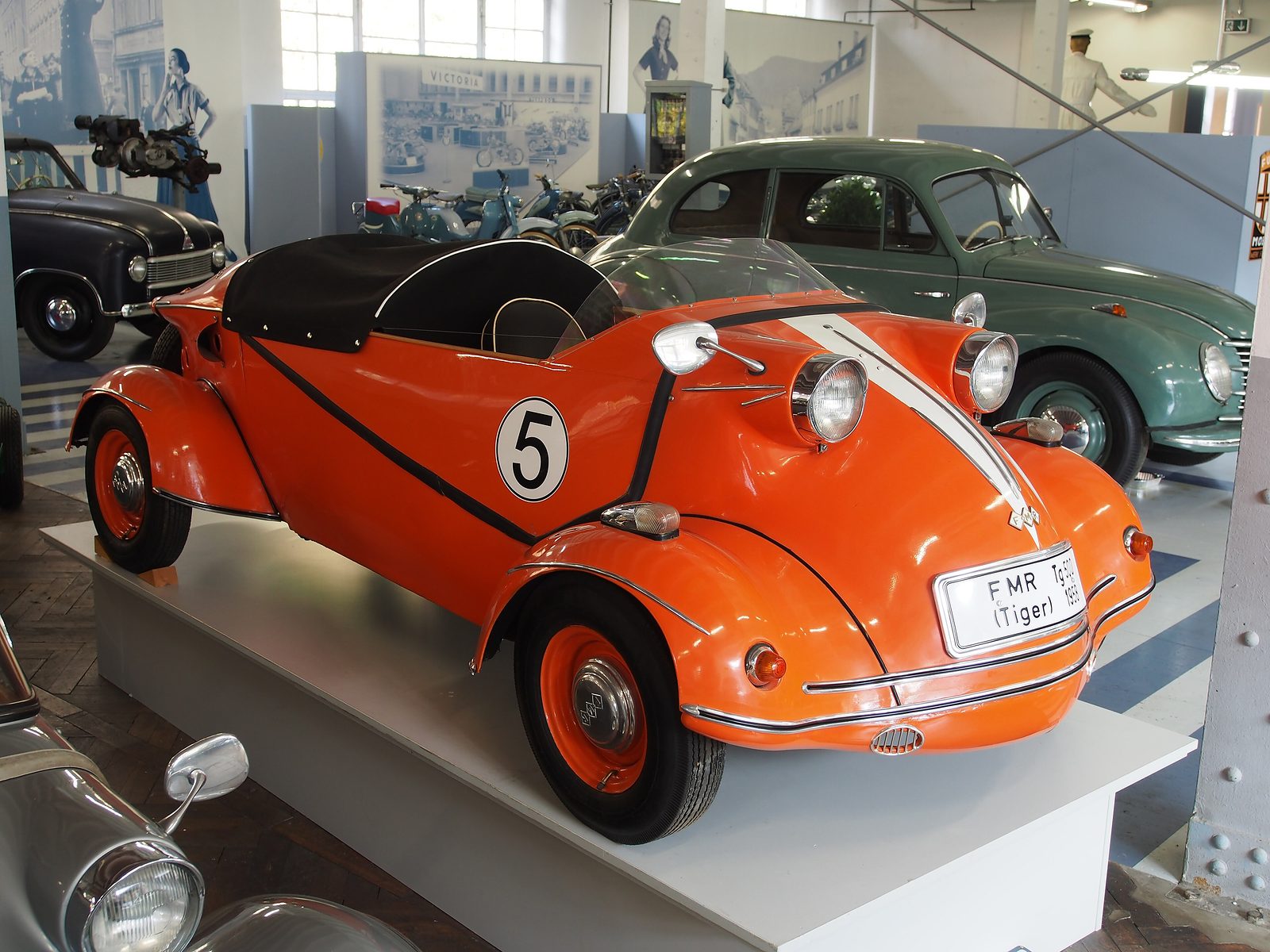
The Tiger raced, but it was never properly allowed to. After the Wolfsfeld hillclimb of 1958, auto motor und sport noted that it had not been homologated as a touring car, and that homologating it at all was probably impossible “as long as it has no doors for getting in”.source 12 FMR built at least one car for its own employee and competition driver, Eduard Ernst: chassis 21065, metallic red and silver, registered R CC 143, with a front spoiler, extra cooling scoops at the back and changes to the front suspension, the gear change and under the bonnet. Ernst raced it, and period photographs exist, but no results have been found.source 11 The results that are known are in the racing section below, and more in racing and rallying.
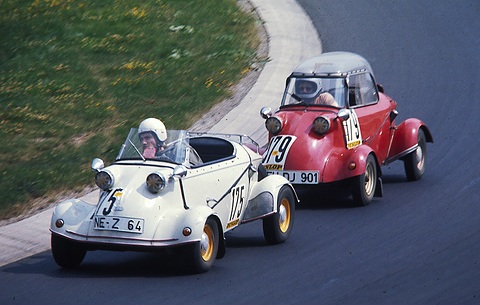
A white open Tg500 with a helmeted driver leads a red canopy Tg500 round a tight left-hand bend.
Plate II · 1976 An open Tg500 and a canopy car racing through the Südkehre at the Nürburgring on 14 August 1976.Photo: Lothar Spurzem, CC BY-SA 2.0 de, via Wikimedia Commons

The end, and an echo

Production of the Tg 500 ran out at the end of 1961; the Weiner museum says August 1961.source 1source 2 The three-wheelers went on in shrinking numbers until 1964. Fend left FMR after Knott had taken over all the shares, and ran a design office in Regensburg.source 1 In 1994 Tiger Automobile GmbH of Bretten took its body form from the Tg 500 in the Fahrzeugmuseum Marxzell for a modern cabin car, the Tiger T1, with a 1,300 cc Rover engine of 64 PS, a weight of about 700 kg (1,540 lb) and a price of DM 78,000. It remained a one-off.source 1
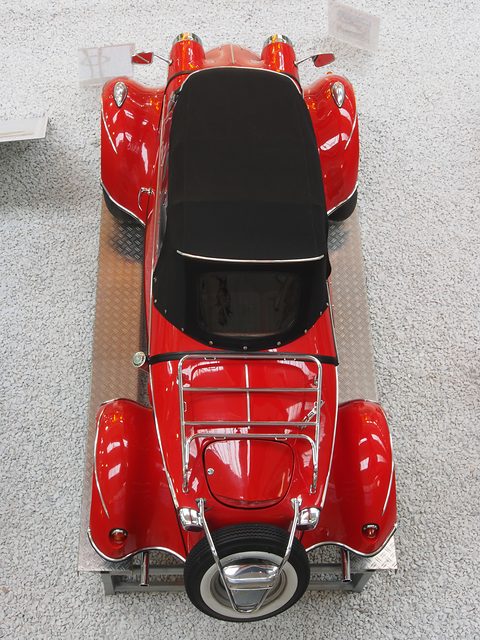
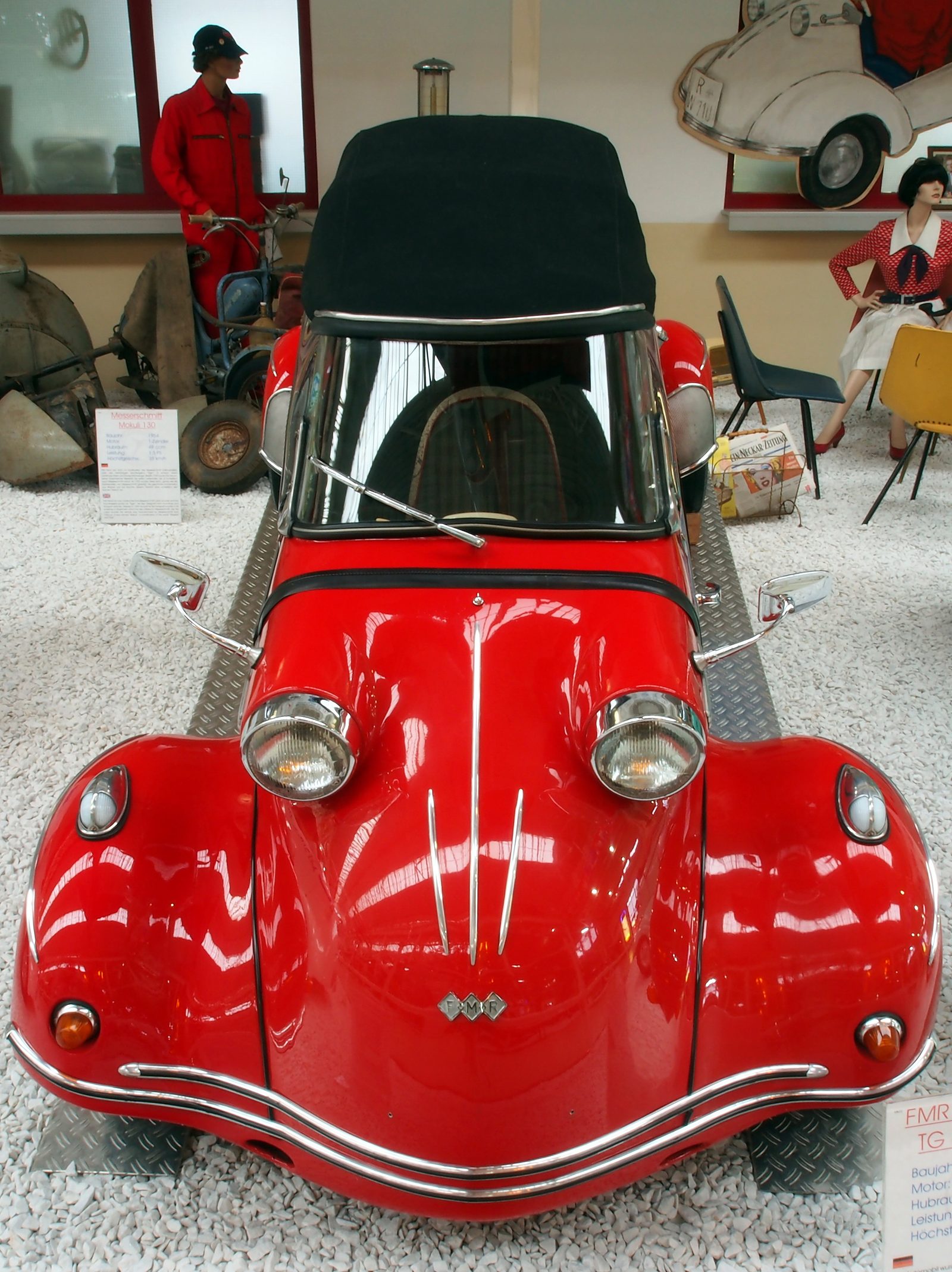
Overhead view of a red car with a black hood, its slim body tapering between two front and two rear wheels.
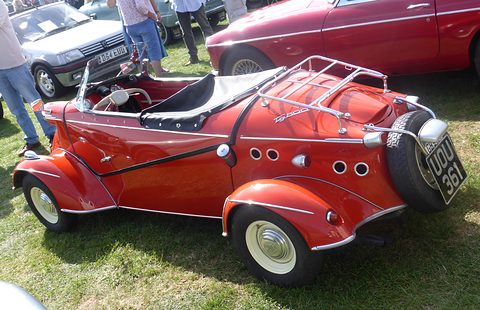
A red 1959 Tg500 Roadster seen from above at the Technik Museum Speyer in 2012: one narrow fuselage, four wheels.Photo: Alf van Beem, CC0, via Wikimedia Commons
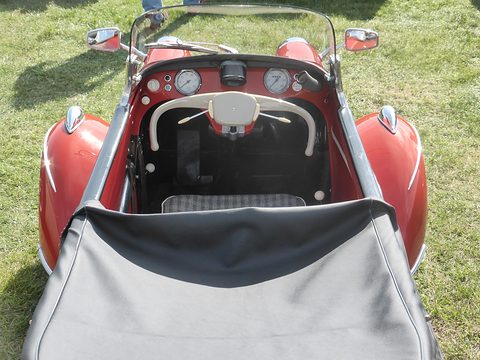
Looking into a narrow red cockpit: a cream handlebar-shaped steering yoke, two round dials and a checked seat, tonneau folded in front.
The cockpit of a red Tg500 Roadster in 2019: the KR200’s steering bar, two dials and the driver’s seat, with the passenger’s seat behind it under the tonneau.Photo: Andrew Bone, CC BY 2.0, via Flickr
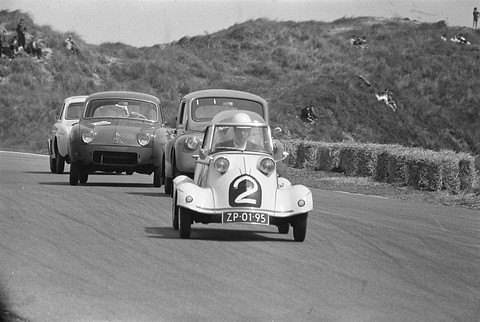
Black-and-white photograph of a small four-wheeled bubble car numbered 2 leading two saloons round a circuit bend below dunes.
Plate I · 1959 A Tg500 carrying the number 2 ahead of two saloons at the Whit Monday meeting at Zandvoort, 18 May 1959.Photo: Harry Pot / Anefo, CC0, via Wikimedia Commons
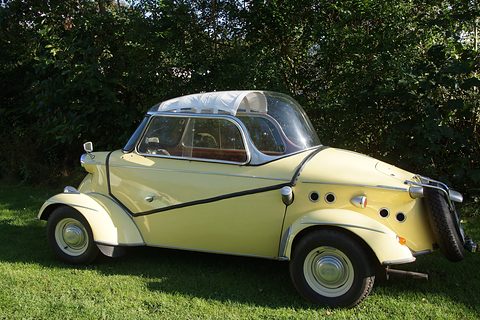
Side view of a cream bubble car with a clear canopy and dark side stripe, parked on grass in front of a hedge.
A cream Tg500 in profile on Texel, the Netherlands, in 2015: the KR200’s tapering fuselage, with the second rear wheel.Photo: Rob Stoeltje, CC BY 2.0, via Wikimedia Commons

Pictures

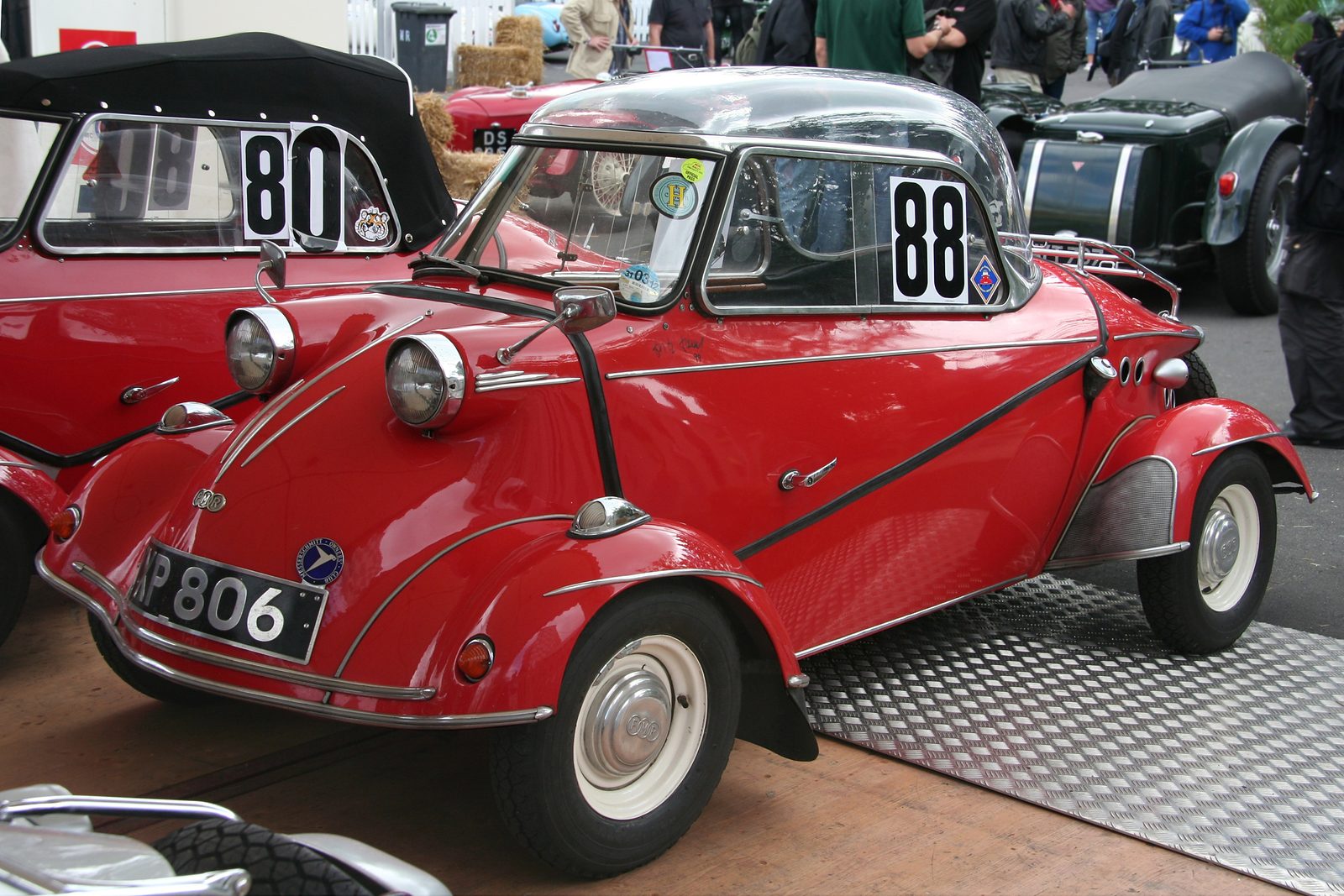
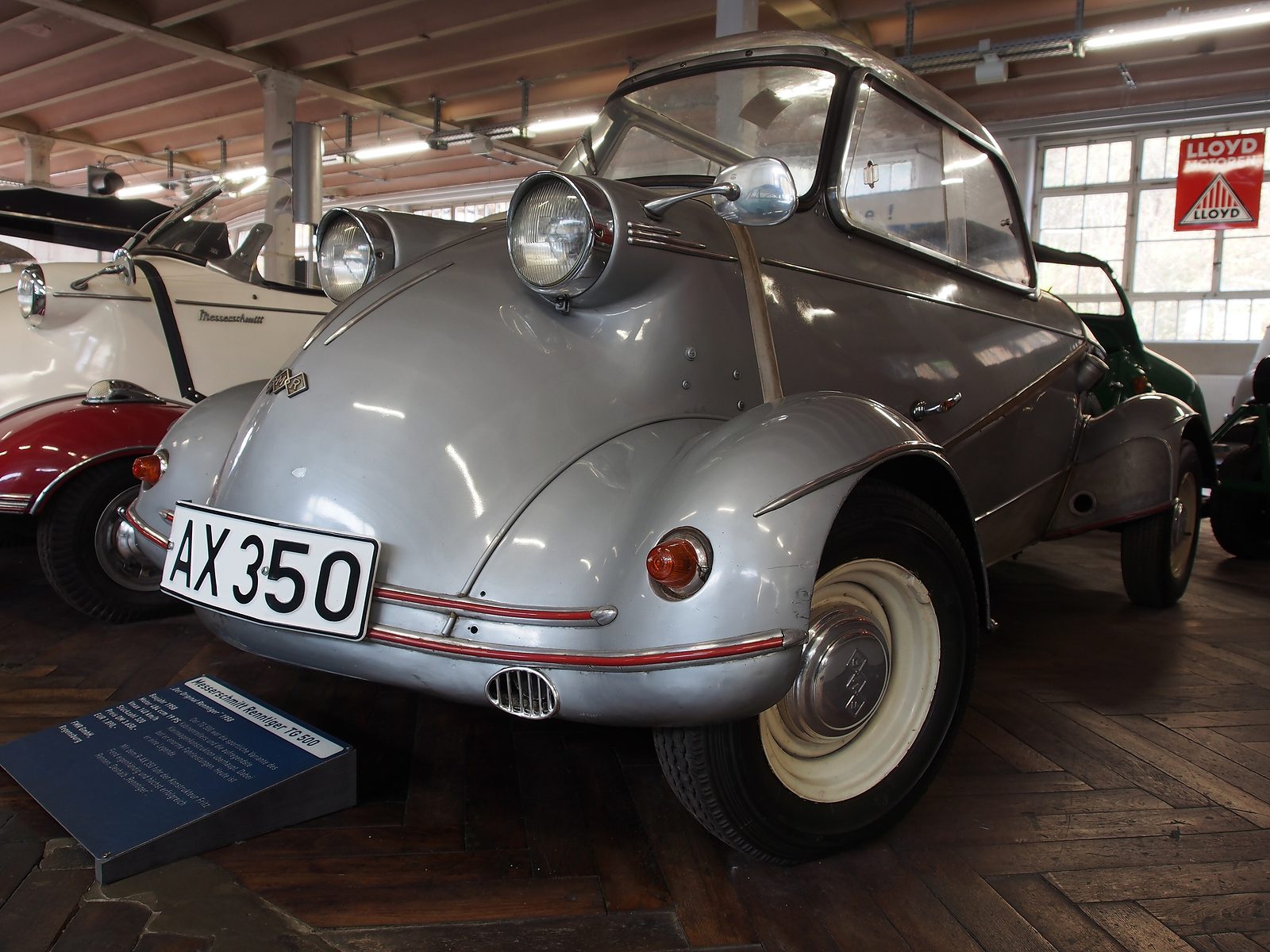
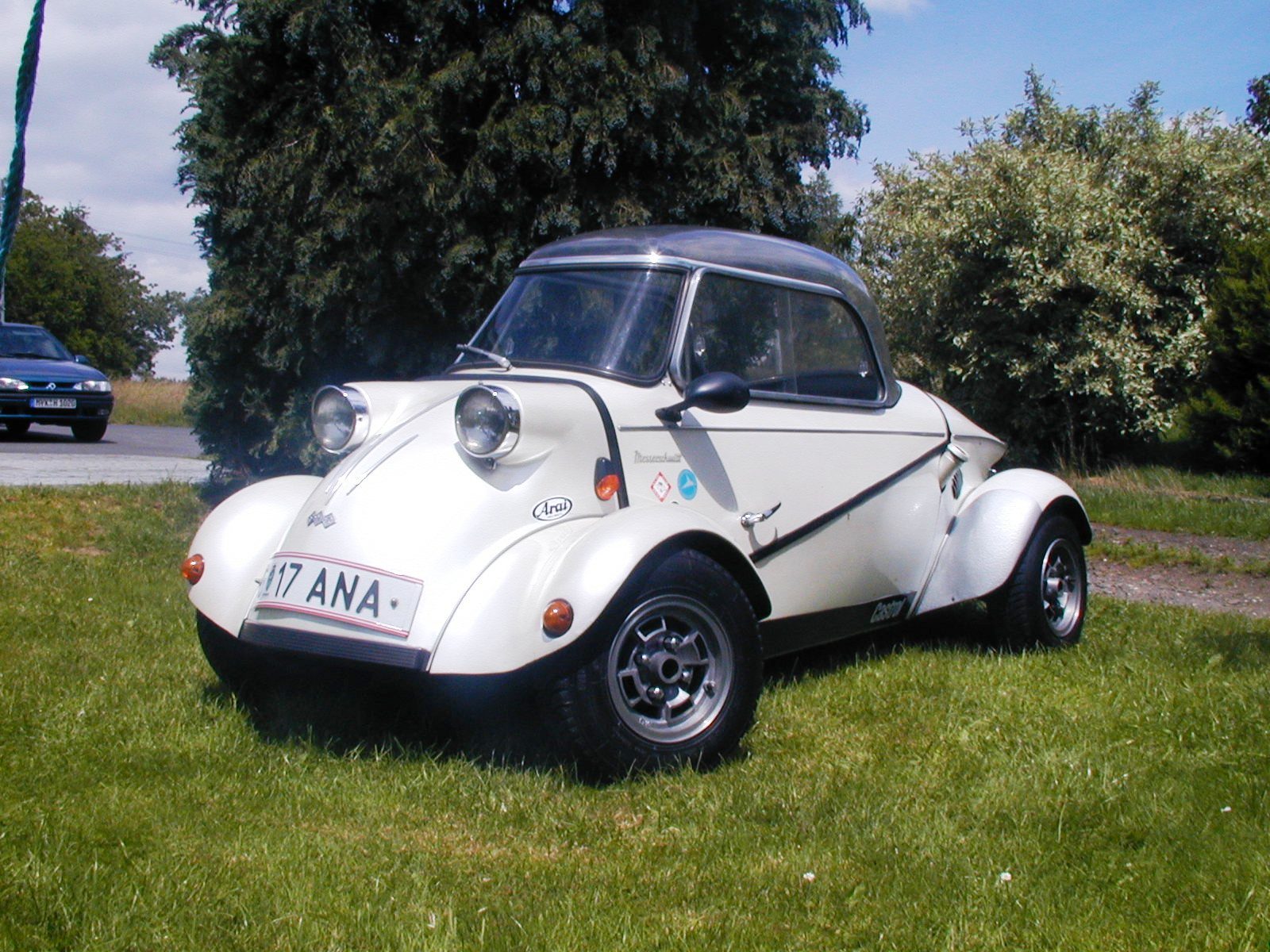
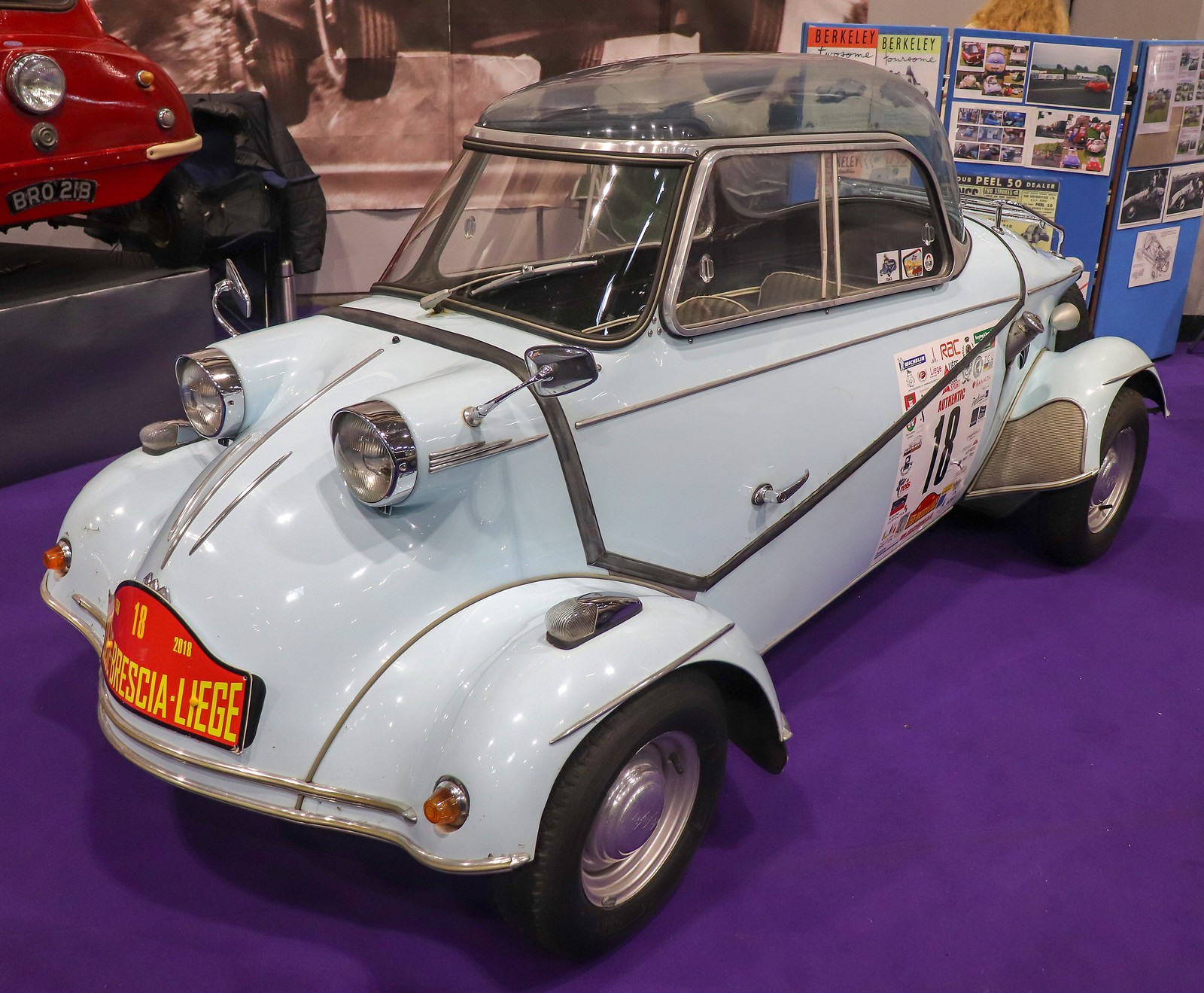
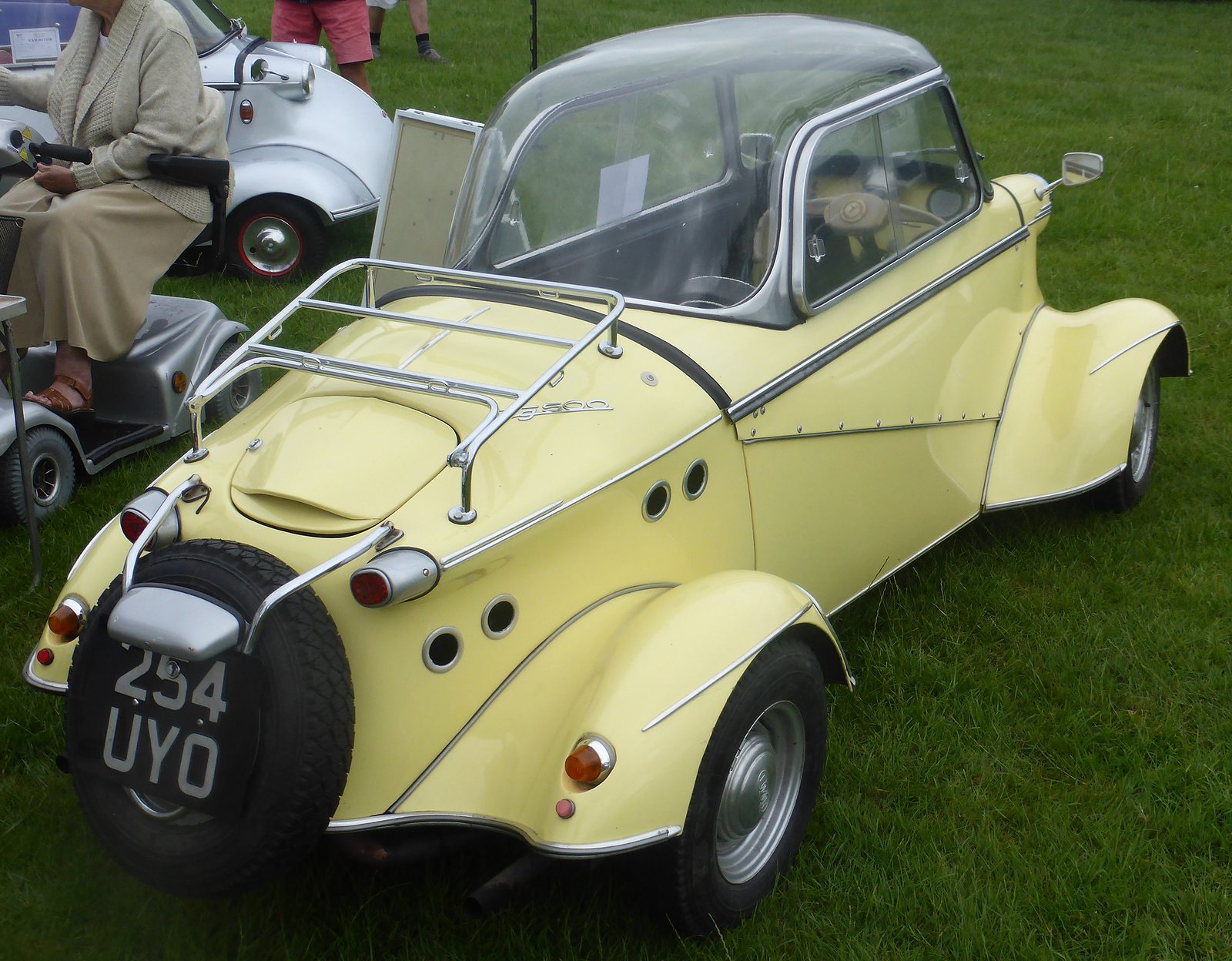
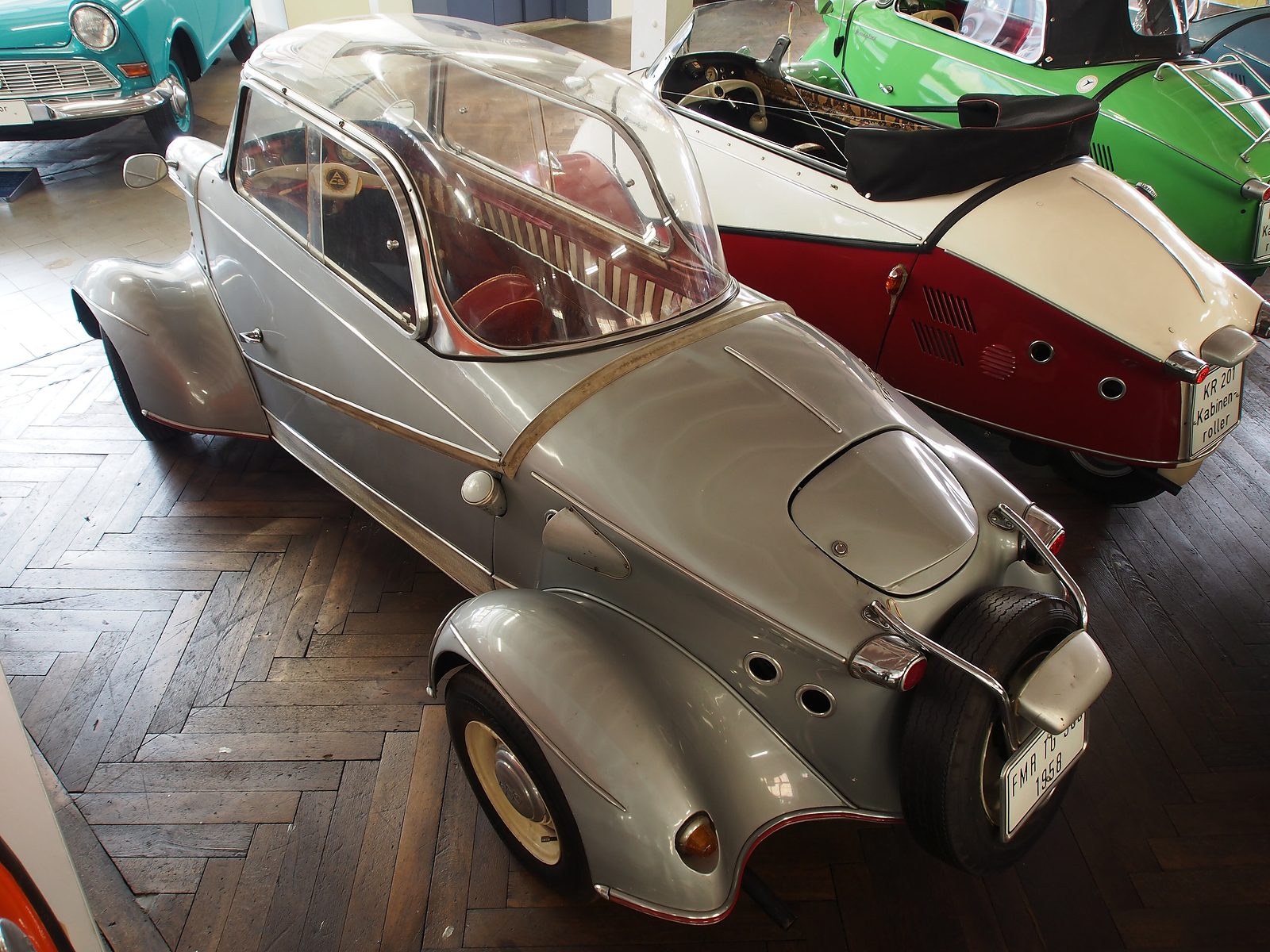
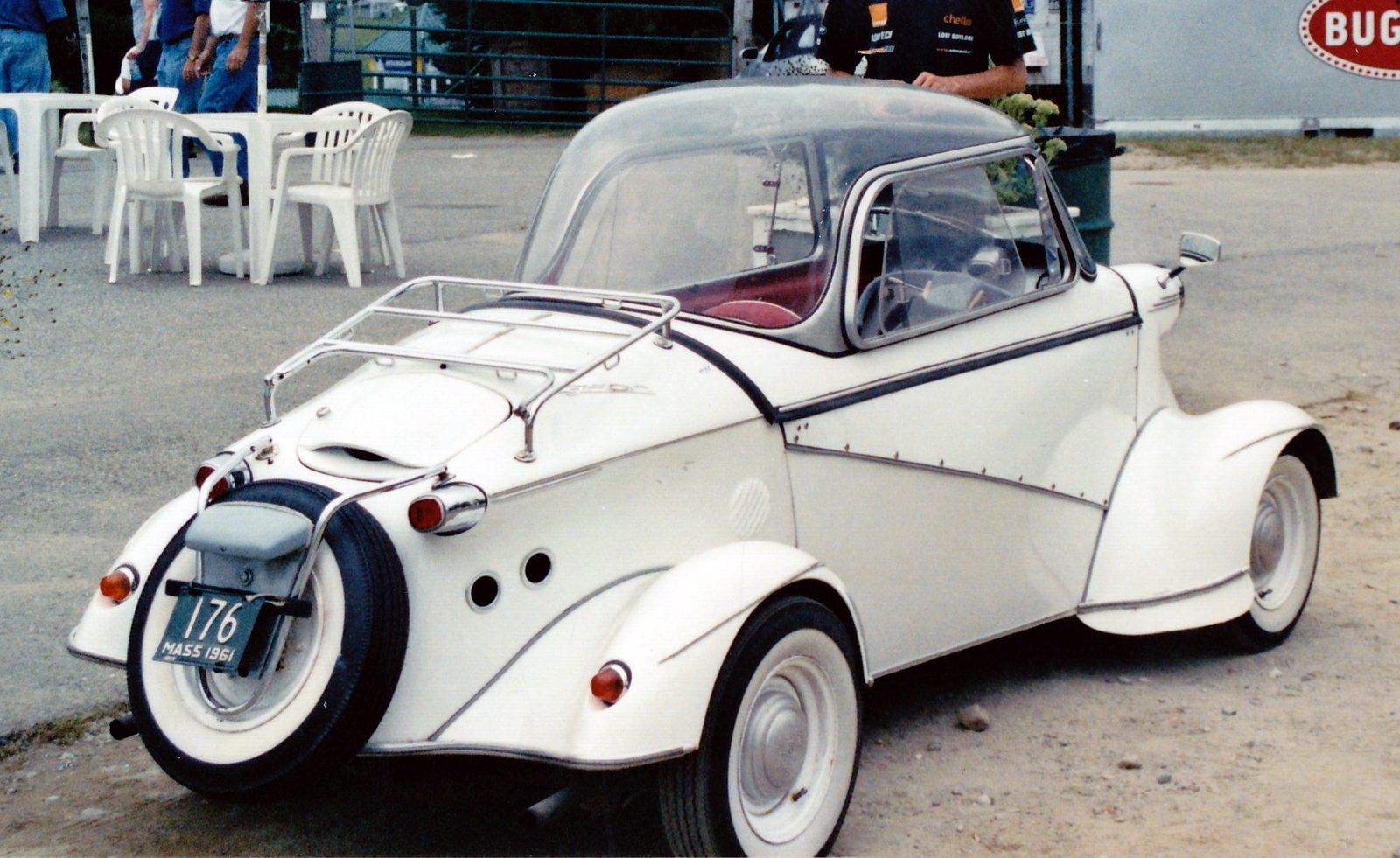
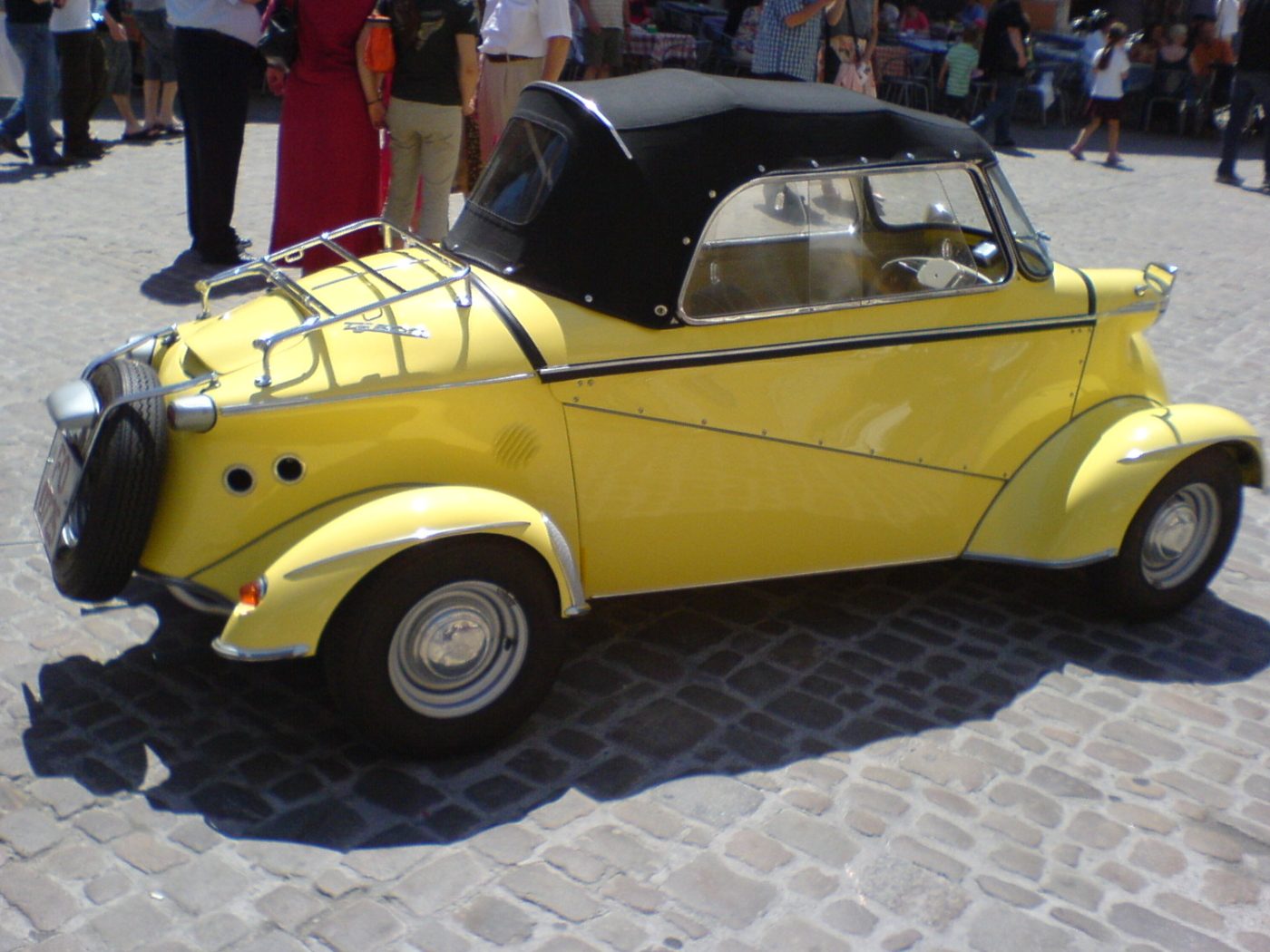
More photographs, old and new

Variants

One fuselage, four bodies

The Tg500 family
VariantYearsWhat differsHow many
Pre-series “Tiger”early 1958Driven by dealers before series production began20, in May 1958source 3
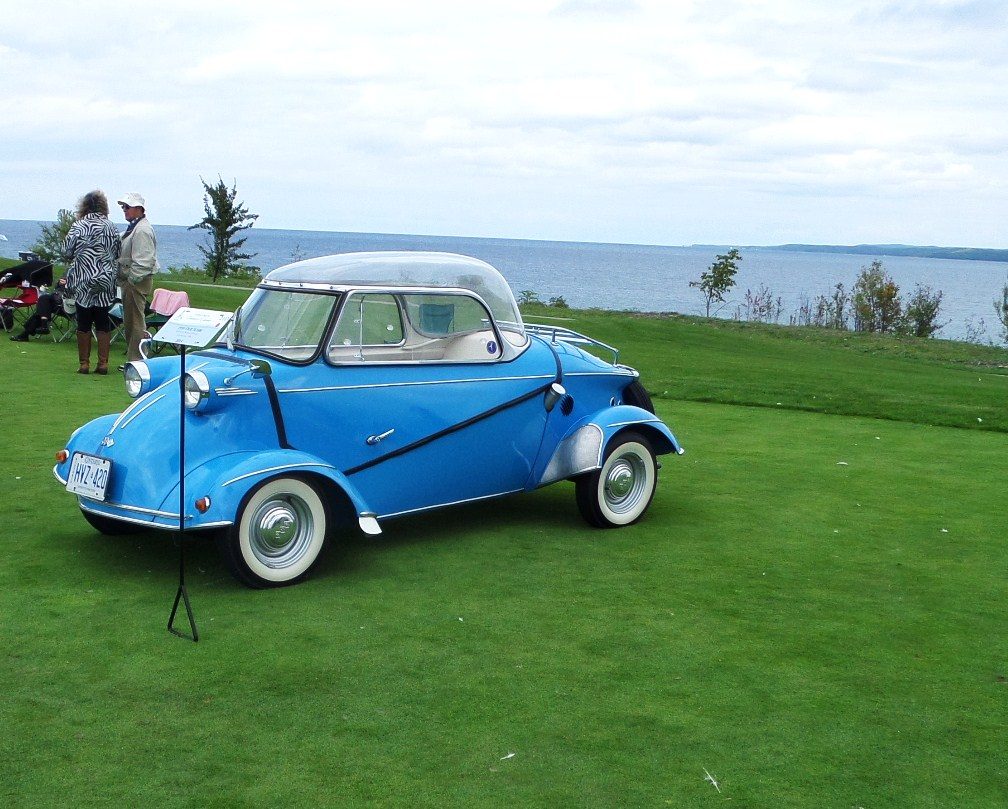
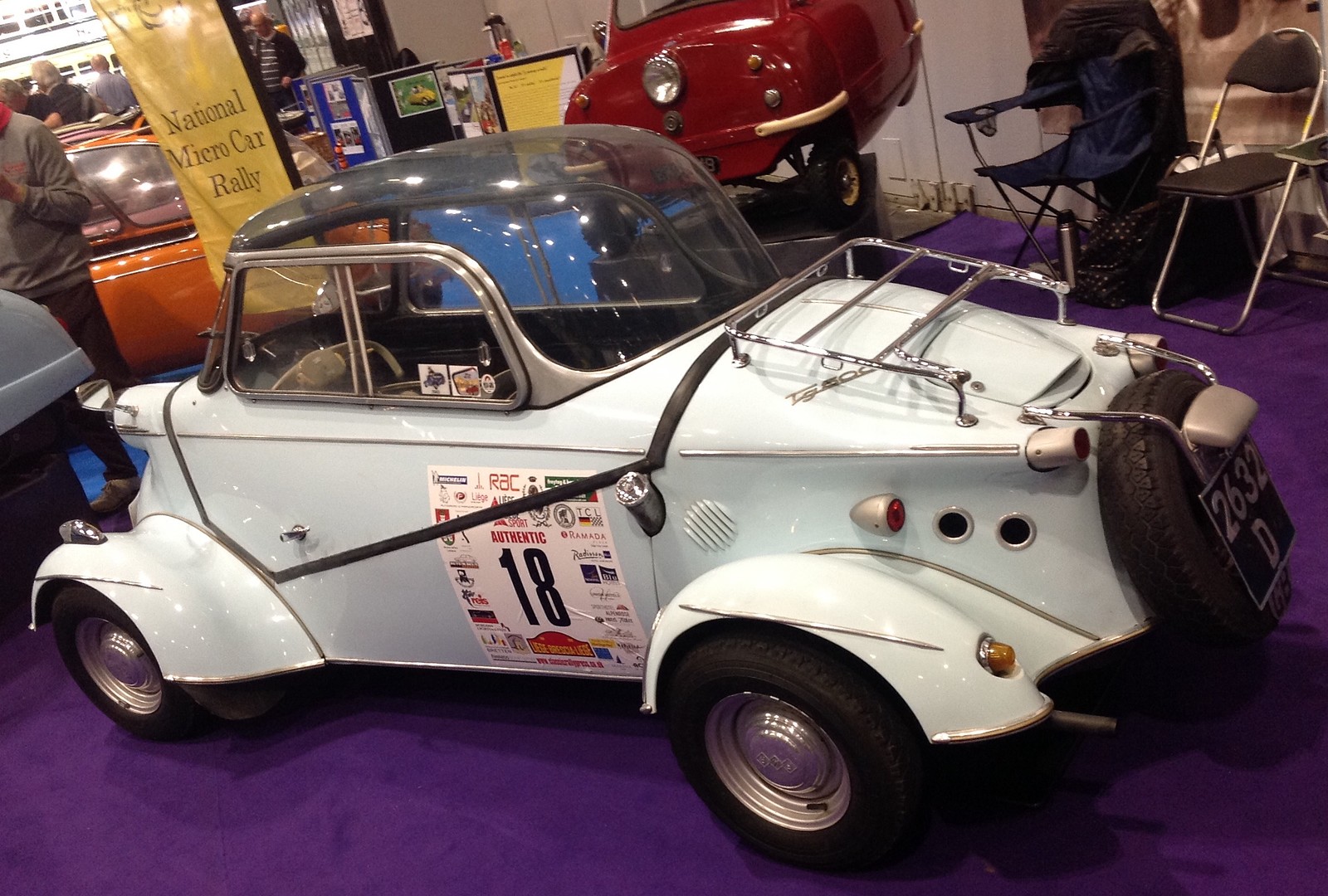
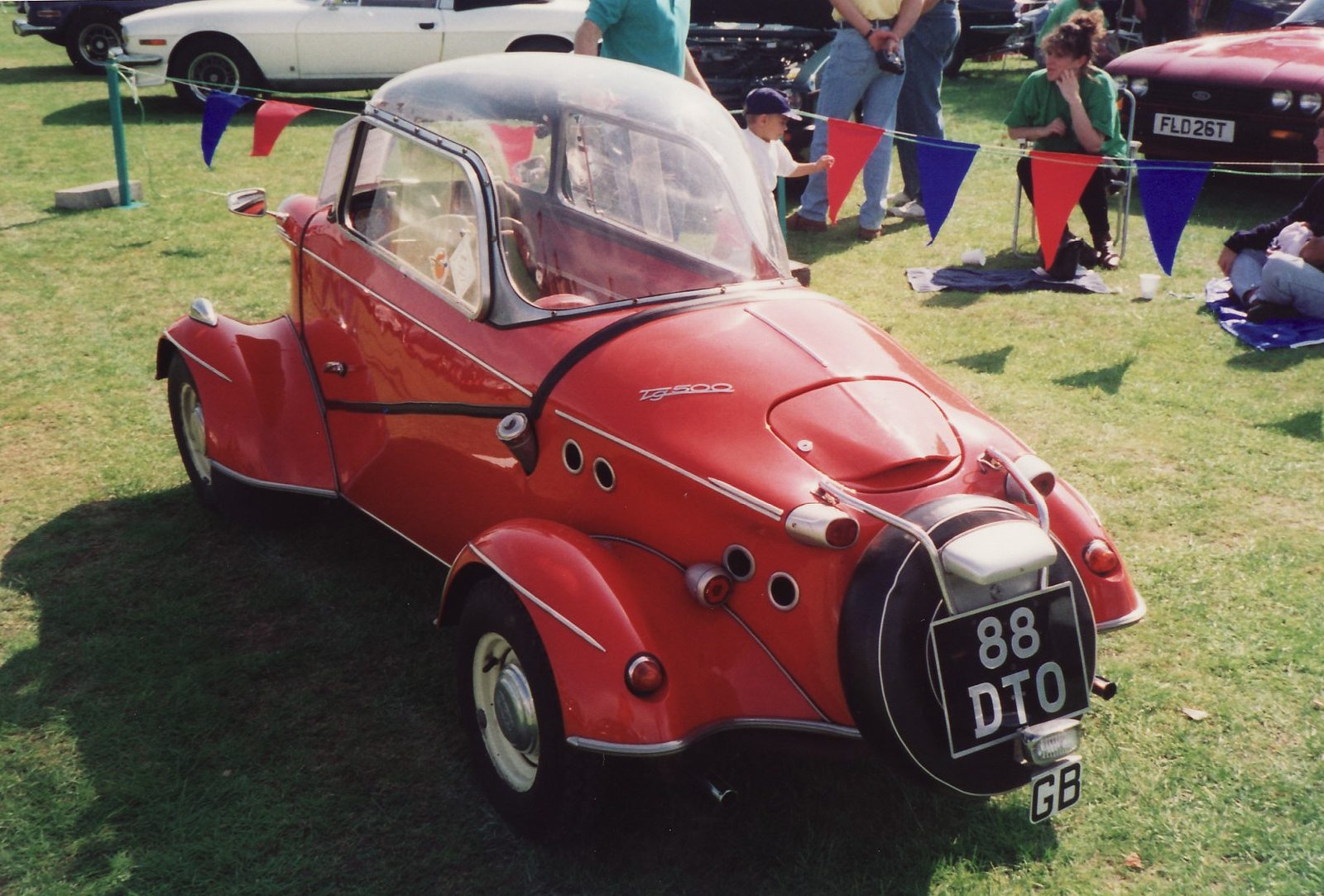
Tg 500 coupé (Kabine)1958–⁠61The KR200’s side-hinged Plexiglas canopysource 3source 5Not recorded separately
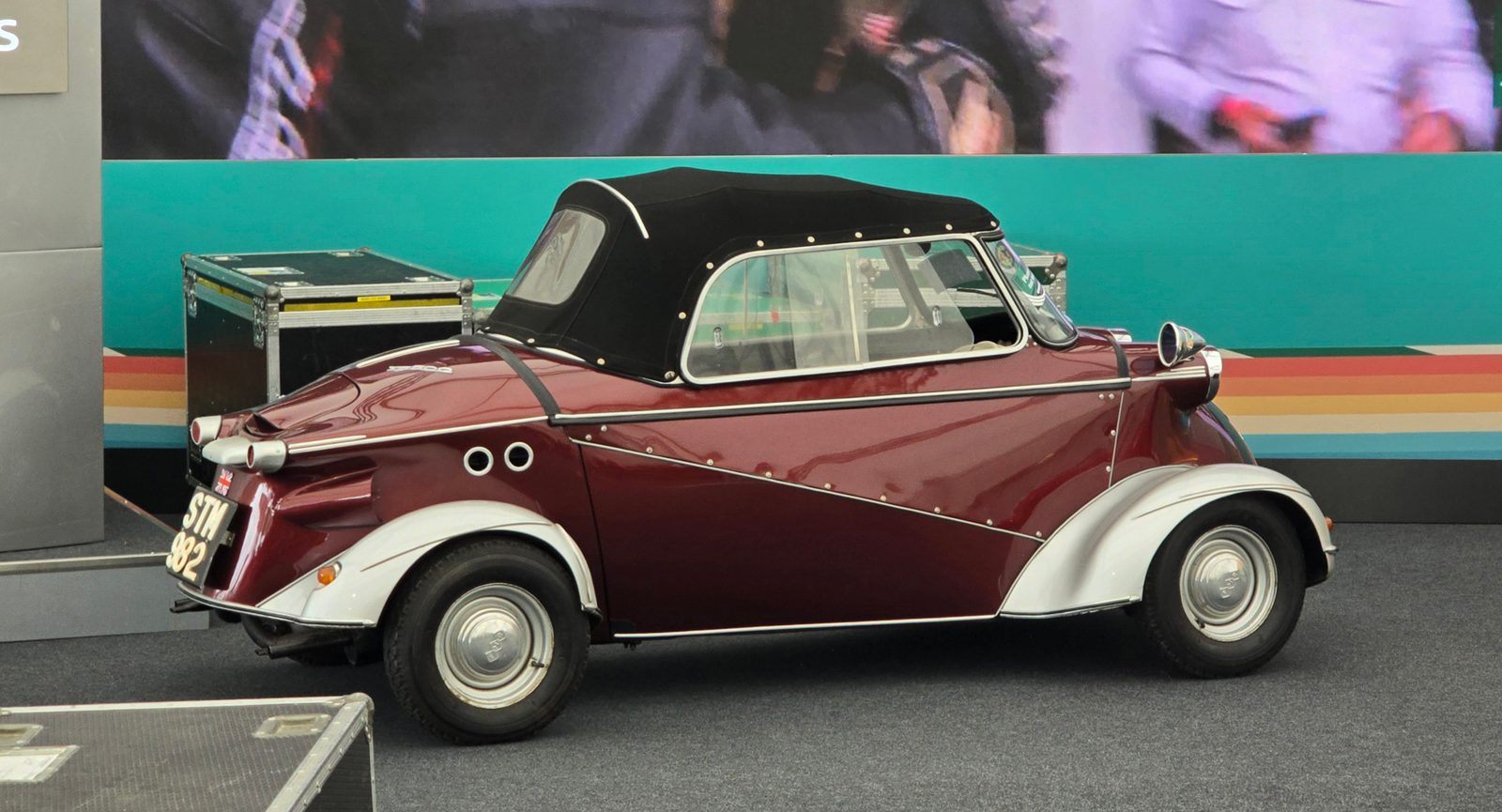
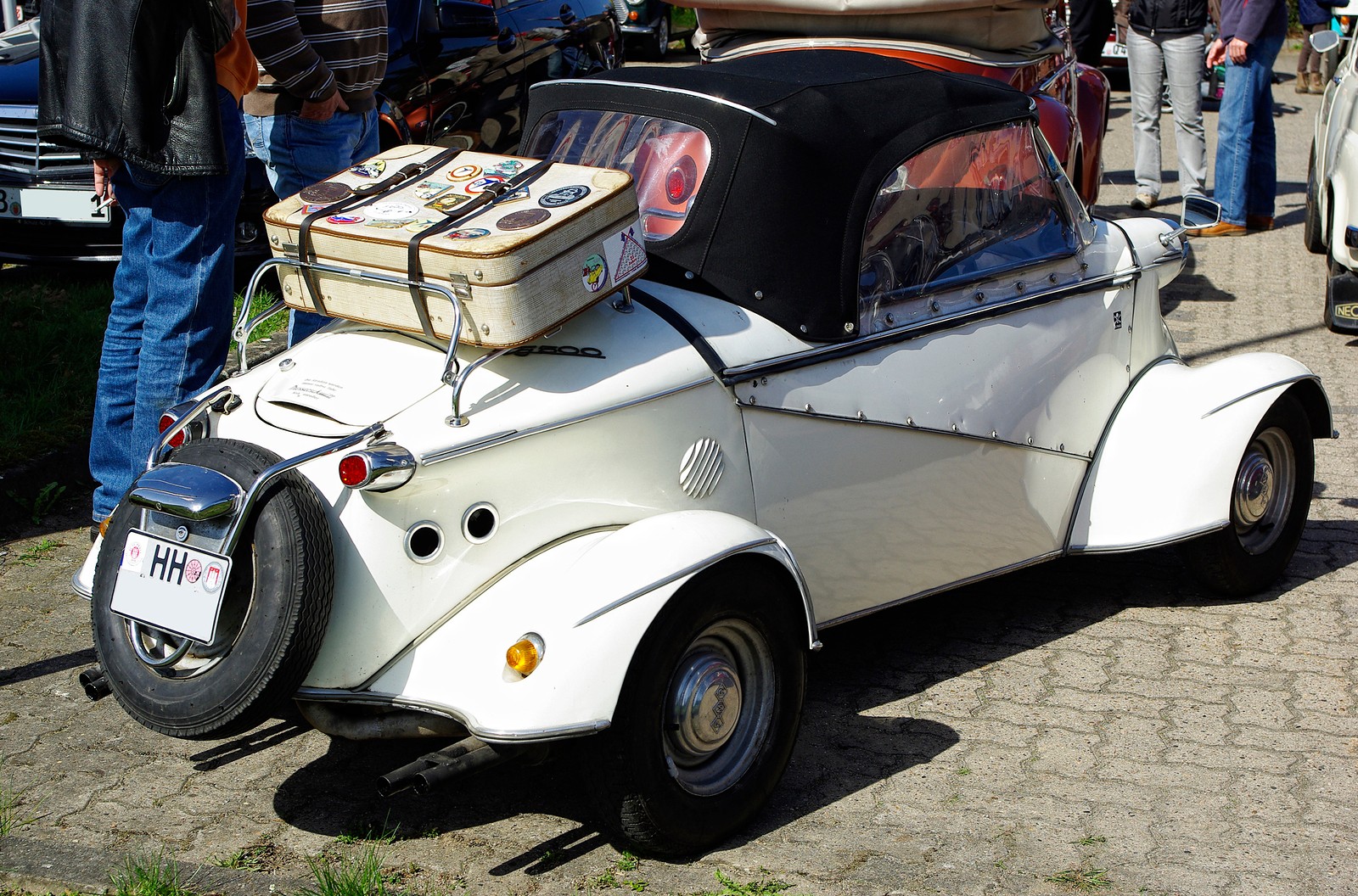
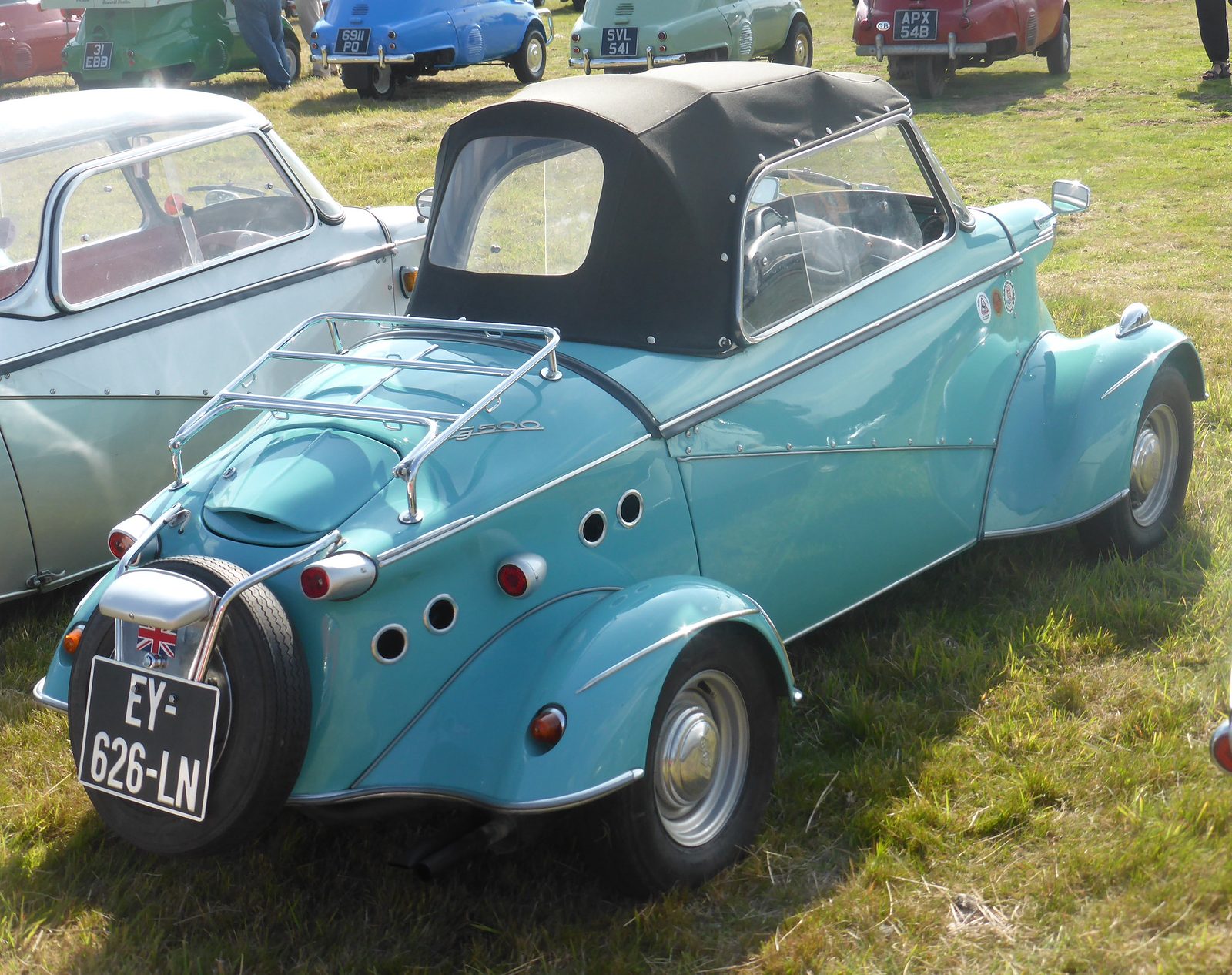
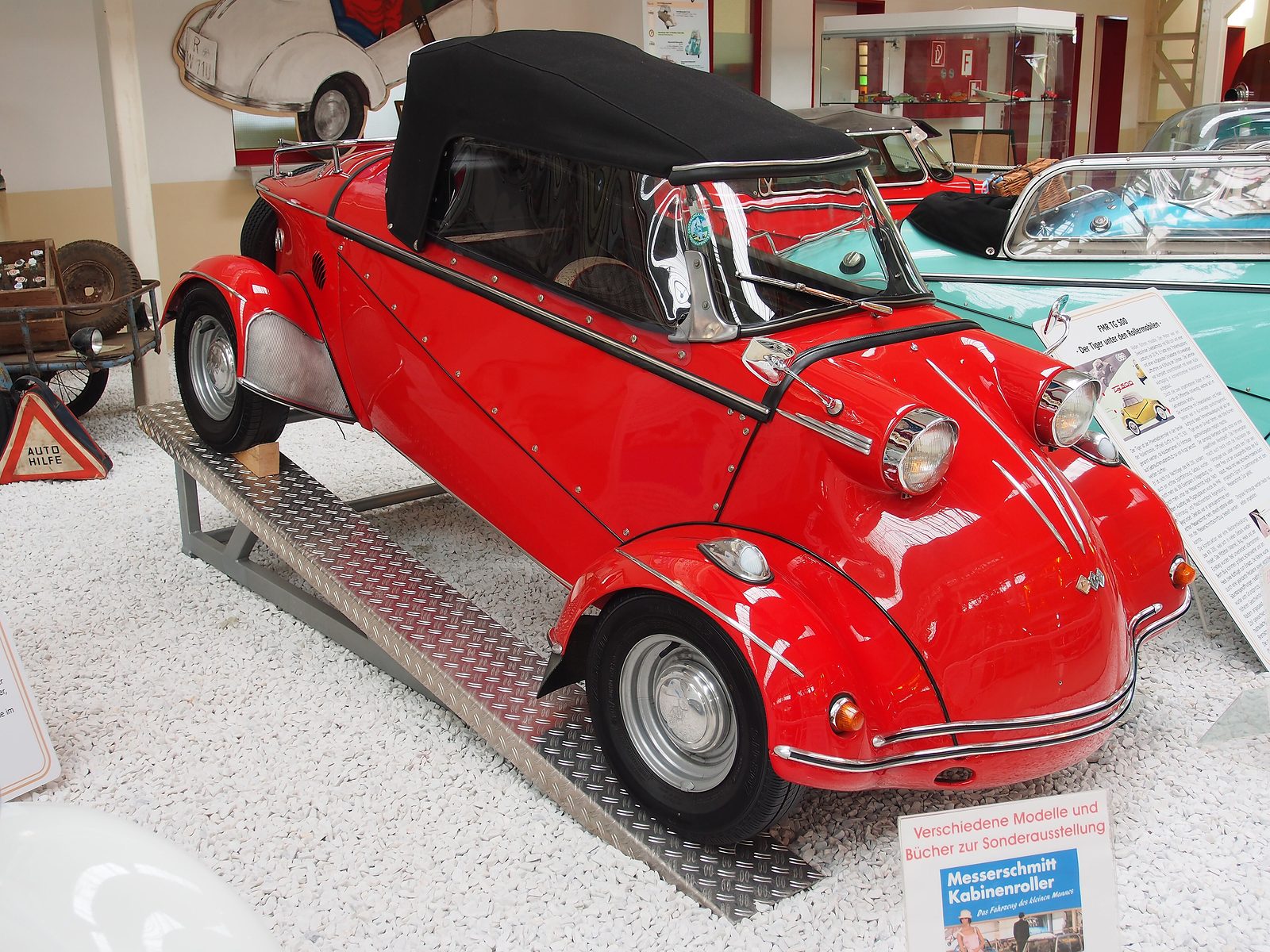
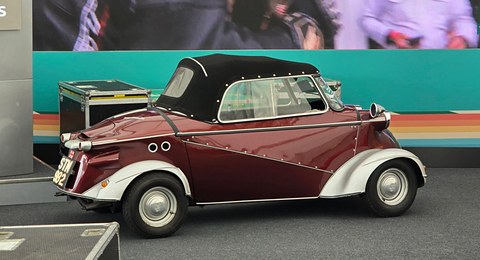
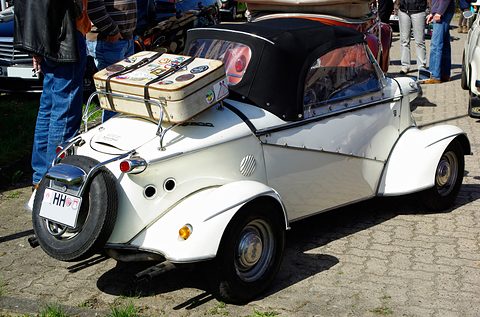
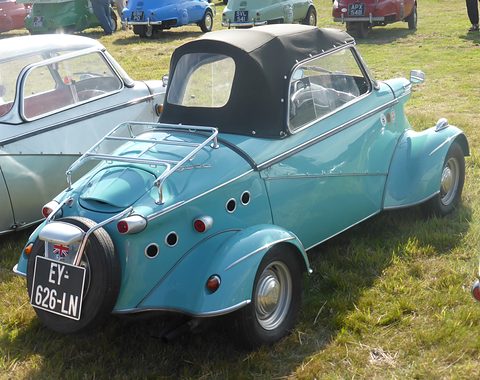
Kabrio (Cabriolet)1958–⁠61Canopy frame with a windscreen and a folding fabric topsource 5Not recorded
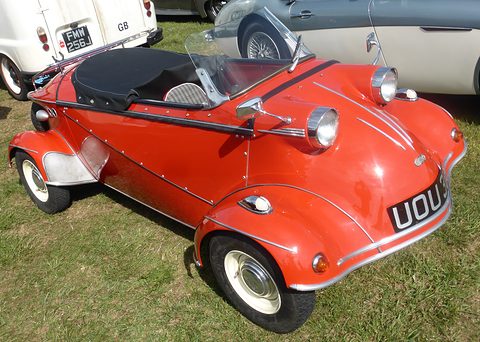
Roadster, Sport Roadster1958–⁠61Fixed windscreen, no top or windows, only a tonneausource 5Not recorded
Factory “Sport Top”c. 1960A rare factory top; most seen today are modern replicassource 11Not recorded
Eduard Ernst’s works car1960Front spoiler, extra rear cooling scoops, no external spare wheel; changes to the front suspension and gear changesource 11One, chassis 21065

Specification

Mostly from the 1958 test and data table

Engine and drive

Engine and drive
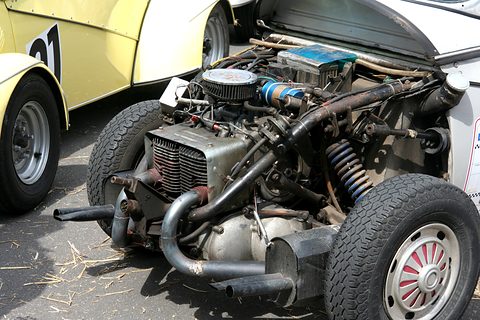
EngineTwo-stroke parallel twin, air-cooled, one belt-driven fan per cylindersource 3source 1
Capacity494 cc (67 × 70 mm), compression 6.5:1source 1source 5“500 ccm” in 1958; 493 cc in English Wikipedia
Power19.9 PS (14.6 kW) at 5,000 rpm21.2 PS at 4,350 rpm in the 1958 test; 19.5 to 20.5 elsewhere
CarburettorOne Bing downdraught, three-stagesource 4
GearboxFour speeds, H-pattern, dog-engaged and unsynchronised, with a real reverse
DriveDry two-plate clutch; spur gears to a differential, two drive shafts

Body and chassis

Body and chassis
BodySteel, with the KR200’s Plexiglas canopyDescribed as a tube frame with a floor pan, or as a monocoque: unresolved
Front suspensionKR200 type: swinging arms sprung in rubbersource 3source 2
Rear suspensionIndependent swing axles on wishbones, coil-spring struts with hydraulic dampers
SteeringDirect, by the KR200’s handlebar-type bar
BrakesHydraulic drums on all four wheels
Tyres4.40-10source 13

Dimensions

Dimensions
Length3,000 mmsource 13
Width1,270 mm
Height1,250 mm1,245 mm in German Wikipedia
Wheelbase1,885 mm
Track1,110 mm front, 1,040 mm rear
Weight350 kg dryAbout 390 kg with a full tank; the Weiner museum’s 305 kg is an outlier

Performance and running

Performance and running
Top speed130 km/h (catalogue)A little under 110 km/h in the 1958 test; 126 km/h in later sources
Acceleration0–60 mph in about 28 secondssource 14source 5
Consumption6.8 litres per 100 kmsource 13The factory said 5 to 8 litres
Fuel tank30 litressource 1
Turning circleAbout 9.5 msource 1
Price newDM 3,650 (1958)source 10DM 3,725 in 1961

How many were built?

Every figure, with its source

About 300 builtAbout 300, often given as 320. The 320 goes back to one source, the Weiner museum, and the only figure said to rest on a register, “fewer than 300”, has not been read at first hand.

  1. up to 950the top of a range of 320 to 950One source

    Motor Klassik 12/1988, quoted by German Wikipedia, which itself says the lower figure is the right onesource 1

  2. 320all Tg500sOne source

    Bruce Weiner Microcar Museum; RM’s sale catalogues of 2013–⁠21 repeat itsource 2source 14

  3. about 300all Tg500sTwo sources agree

    Messerschmitt Owners’ Club; Bonhams, 2025source 8source 11

  4. fewer than 300all Tg500sOne source

    the FMR TG500 Archive, a specialist register, as Bonhams quoted it in 2015source 4

  5. 20the pre-series cars, May 1958One source

    auto motor und sport 11/1958source 3

  • Two sources agreetwo good sources give the figure
  • One sourcea good source, alone
  • Unconfirmeda lead only, not yet checked

Famous for

Three points

  1. A wheel at each corner

    The only four-wheeled production version of the Kabinenroller, with a real reverse gear and hydraulic brakes.

  2. The name it could not use

    Announced as the Tiger, sold as the Tg 500 because the trademark belonged to someone else.

  3. US$322,000

    The price of the Weiner museum’s Tiger in 2013, reported then as a world record for a microcar at auction.

Racing

Wolfsfeld, 1958, and after

The Tg500 was built for driving hard but never homologated as a touring car, so its competition record is short and partly unofficial.source 12source 1

2nd
in the 750 cc touring class at the Wolfsfeld hillclimb, 1958: H. Stumpf, 3 min 54.5 s for two runs of the 1.7 km (1.1-mile) course, against the winning Saab’s 3 min 47.5 s.source 15
53
cars started that day. In its next issue the magazine noted that the Tiger, not homologated as a touring car, could run in the class only außer Konkurrenz, outside the competition.source 15source 12
400
cars were needed for homologation, by German Wikipedia’s account, which adds without a source that Tg 500 drivers raced only against one another; about 300 Tigers were built in all.source 1
3 Tigers
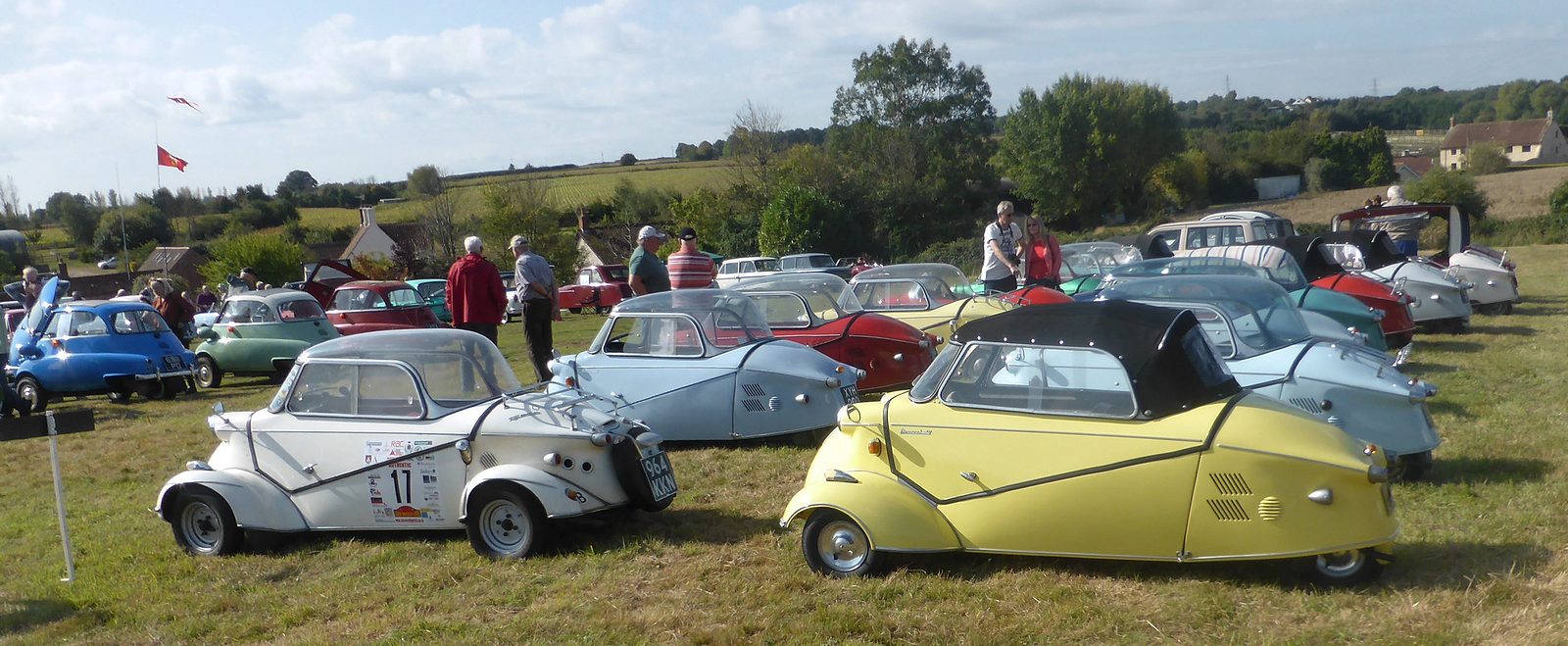
won the team prize on the Historic Liège–Brescia–Liège Rally in 2008, the Eduard Ernst car among them.source 11

Survivors and collecting

Today

The usual survivor estimate is about 150, which goes back to the Weiner museum and was repeated in RM’s catalogues; the FMR TG500 Archive, the specialist register, counted 164 in 2015, probably the best figure, though it has not been checked at first hand. Auction copy has also said “fewer than 100” and “only some 60-or-so”.source 2source 4source 16source 9 Owners have the register, the Messerschmitt Owners’ Club in Britain and the Messerschmitt-Club Deutschland.source 4source 8source 1 The Fahrzeugmuseum Marxzell held the car from which the Tiger T1 was shaped.source 1
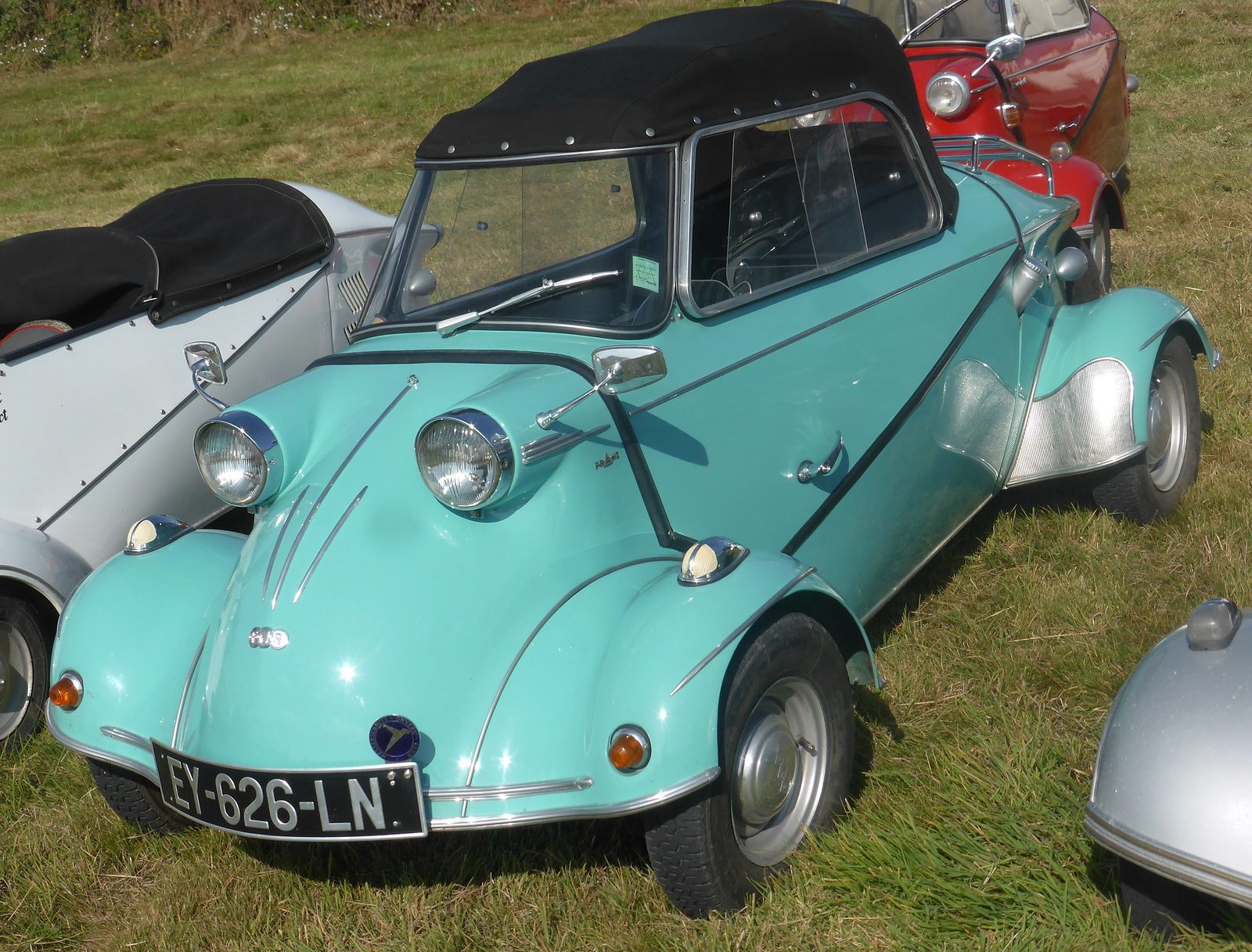
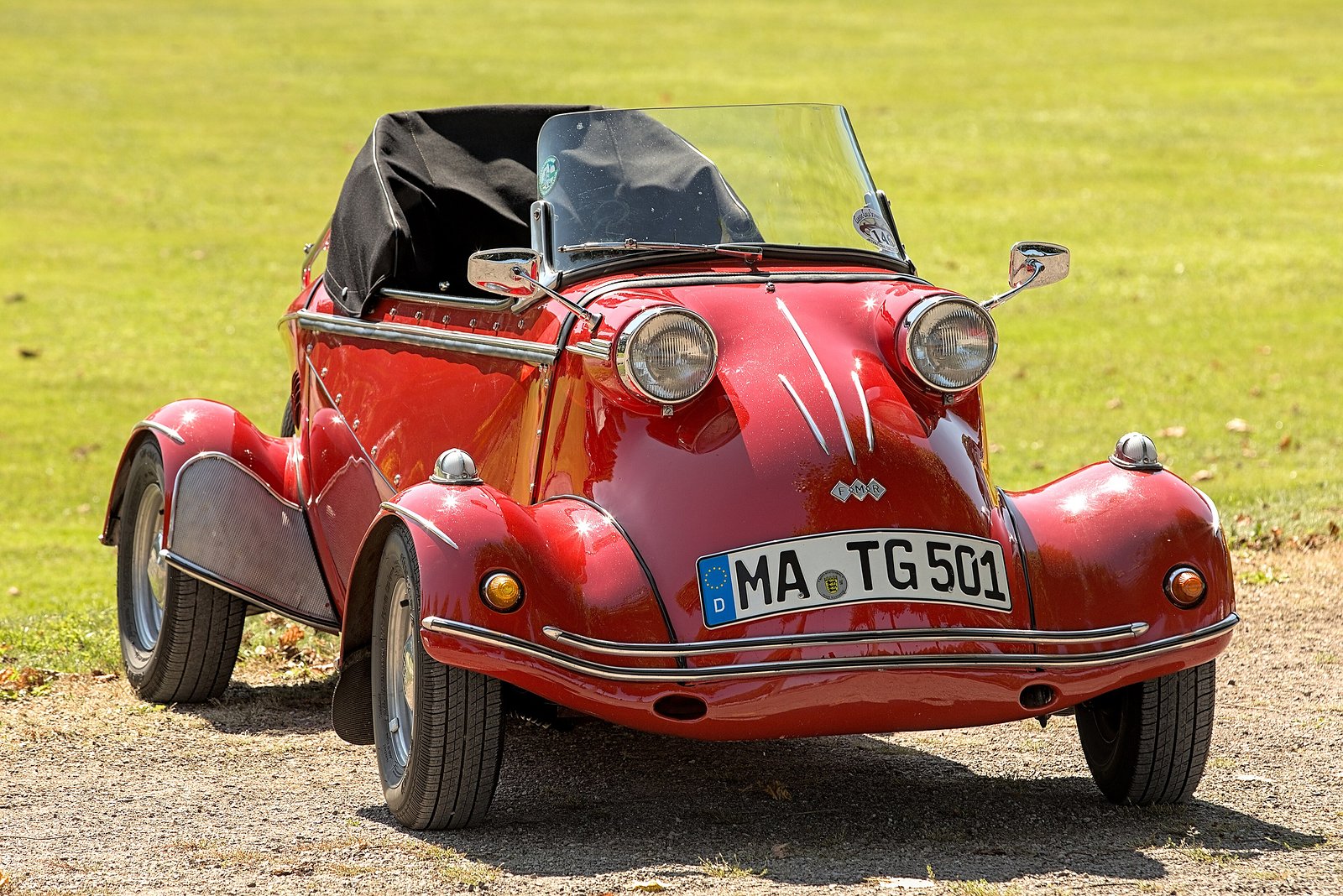
At the sale of the Weiner museum in Madison, Georgia, in February 2013, lot 603, a restored 1958 car in Rose with black wings and a white stone guard, opened at $140,000 and sold for $322,000 with premium, then reported as a world record for a microcar at auction; whether it still stands has not been checked.source 14source 17 Later sales have run from about $90,000 to $165,000, well below that peak; see museums and meets for the sale itself.source 18source 4 Auction copy has not always been careful. One RM catalogue of 2021 says the German government bought Messerschmitt’s car division, which it did not: FMR was a private company. Others describe a glass bubble, where the canopy is acrylic, the KR200’s own part.source 18source 19source 1source 5
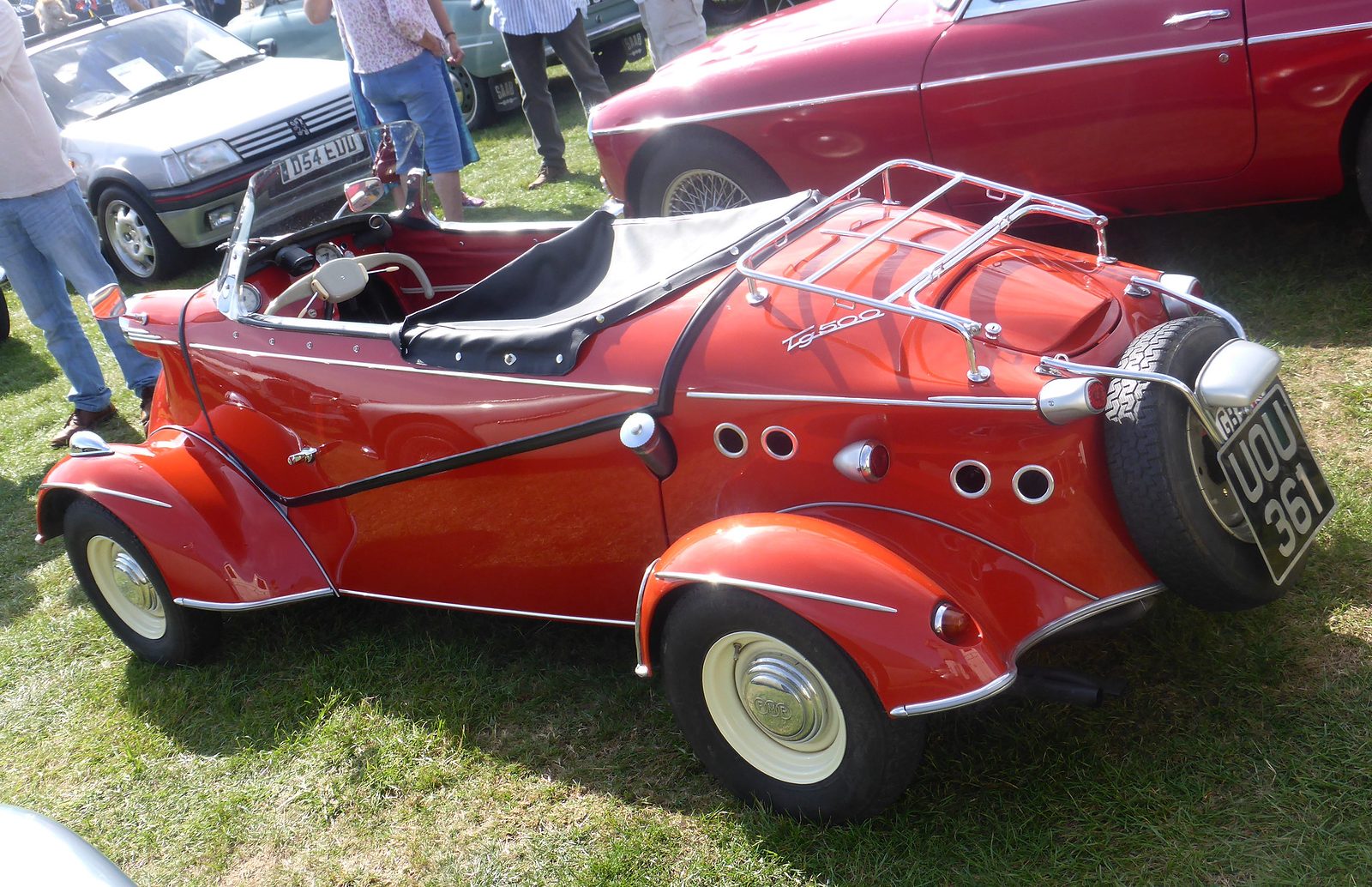
At auction
CarSalePrice
1958, lot 603, the record carRM Auctions, Madison, February 2013source 14source 17$322,000
1960, chassis 21027, RM’s “only yellow and black Tiger”RM Auctions, New York, 2013source 16$137,500
1960 Cabriolet, chassis 21035, a Canadian carBonhams, Goodwood Revival, September 2013source 9£82,140
1959, chassis 20892Bonhams, Quail Lodge, August 2015source 4$165,000
1960, chassis 21054RM Sotheby’s, Elkhart, 2020source 19$145,600
1958, chassis 20555RM Sotheby’s, Amelia Island, 2021source 18$89,600
1960 Cabriolet, chassis 21065, the Ernst carBonhams, Goodwood Revival, September 2025source 11£74,750

Sources

Numbered as in the text

No factory records, per-year figures or contemporary British or American road test were found. Sources are given as plain text; the links are on the Credits page.

  1. German Wikipedia, Messerschmitt Kabinenroller, section “FMR Tg 500” and its table, read in full. Used as a lead; it cites Motor Klassik 12/1988 and Cabrio 4/95.
  2. Bruce Weiner Microcar Museum, tour pages “1958 F. M. R Tg-500” and “1959 F. M. R. Tg-500”, read via the Internet Archive (2015).
  3. “Der umgetaufte Tiger: FMR Tg 500”, test report, auto motor und sport 11/1958 (May 1958), pp. 22–23, unsigned. Read in full.
  4. Bonhams, Quail Lodge Auction, Carmel, 14 August 2015, lot 106, 1959 TG500, chassis 20892, citing the FMR TG500 Archive.
  5. English Wikipedia, FMR Tg500, read in full. Used as a lead; it cites Carl Wagner in Automobile Quarterly 11 (2), 1973.
  6. “Der Fend Tiger”, news item, auto motor und sport 2/1958 (January 1958).
  7. Geneva Salon report, small cars, auto motor und sport 7/1958.
  8. Messerschmitt Owners’ Club (UK), model list, “FMR TG500 ‘Tiger’ (1958)”.
  9. Bonhams, Goodwood Revival, 14 September 2013, lot 250, 1960 Tg500 Cabriolet, chassis 21035.
  10. Price list, auto motor und sport 15/1958.
  11. Bonhams, Goodwood Revival, 13 September 2025, lot 136, 1960 Tg500 Cabriolet, chassis 21065 (the Eduard Ernst car).
  12. Motorsport column (the homologation note), auto motor und sport 26/1958.
  13. Small-car data table, auto motor und sport 21/1958.
  14. RM Auctions, The Bruce Weiner Microcar Museum, Madison, Georgia, 2013, lot 603, “1958 F.M.R. Tg 500 ‘Tiger’”.
  15. Motorsport column (the Wolfsfeld hillclimb), auto motor und sport 25/1958.
  16. RM Auctions, New York – Art of the Automobile, 2013, lot 132, 1960 Tg 500, chassis 21027.
  17. Report on RM Auctions’ sale of the Bruce Weiner Microcar Museum, Madison, Georgia, 15–16 February 2013.
  18. RM Sotheby’s, Amelia Island, 2021, lot 150, 1958 Tg 500, chassis 20555.
  19. RM Sotheby’s, The Elkhart Collection, 2020, lot 2191, 1960 Tg 500, chassis 21054.