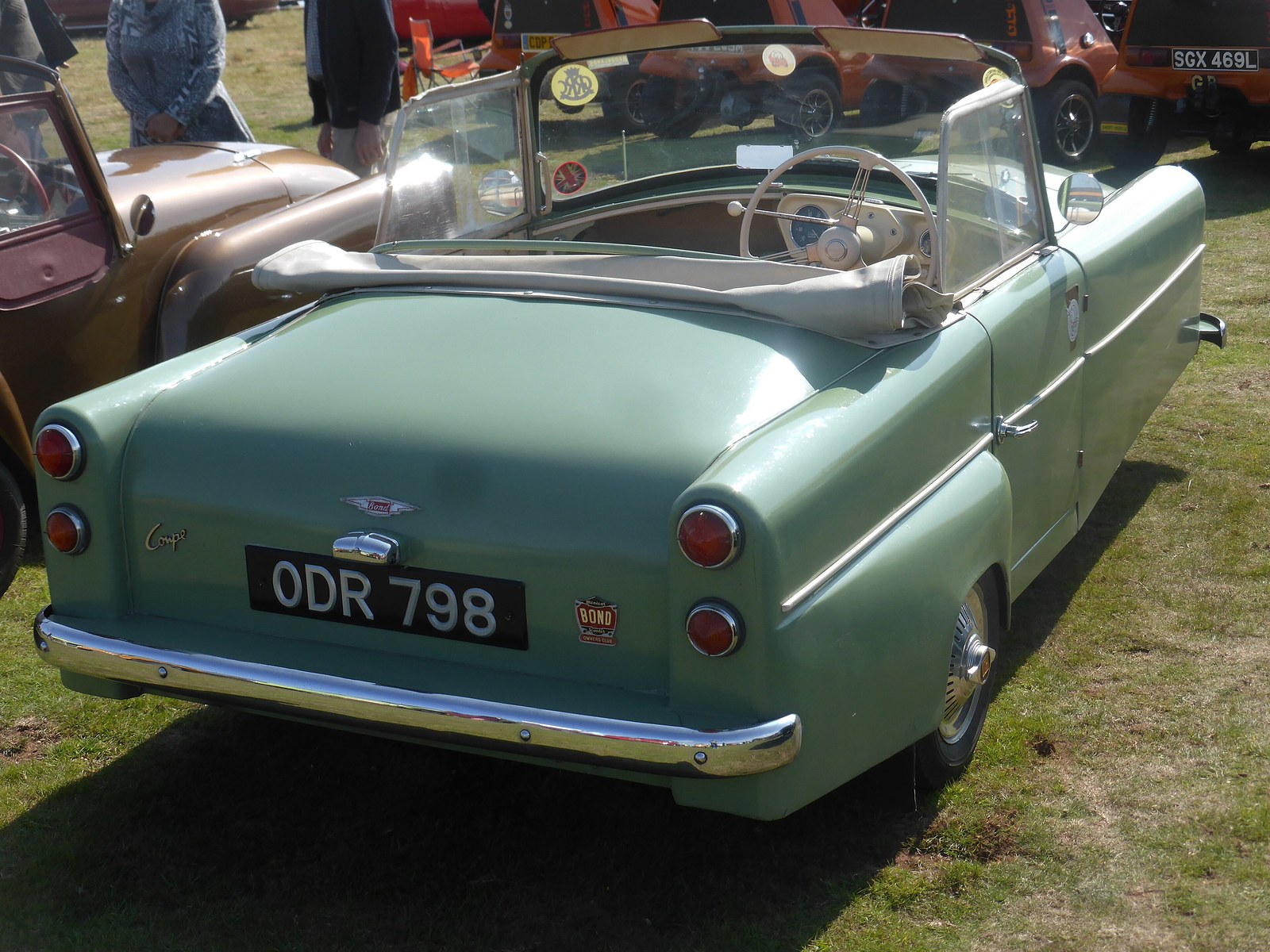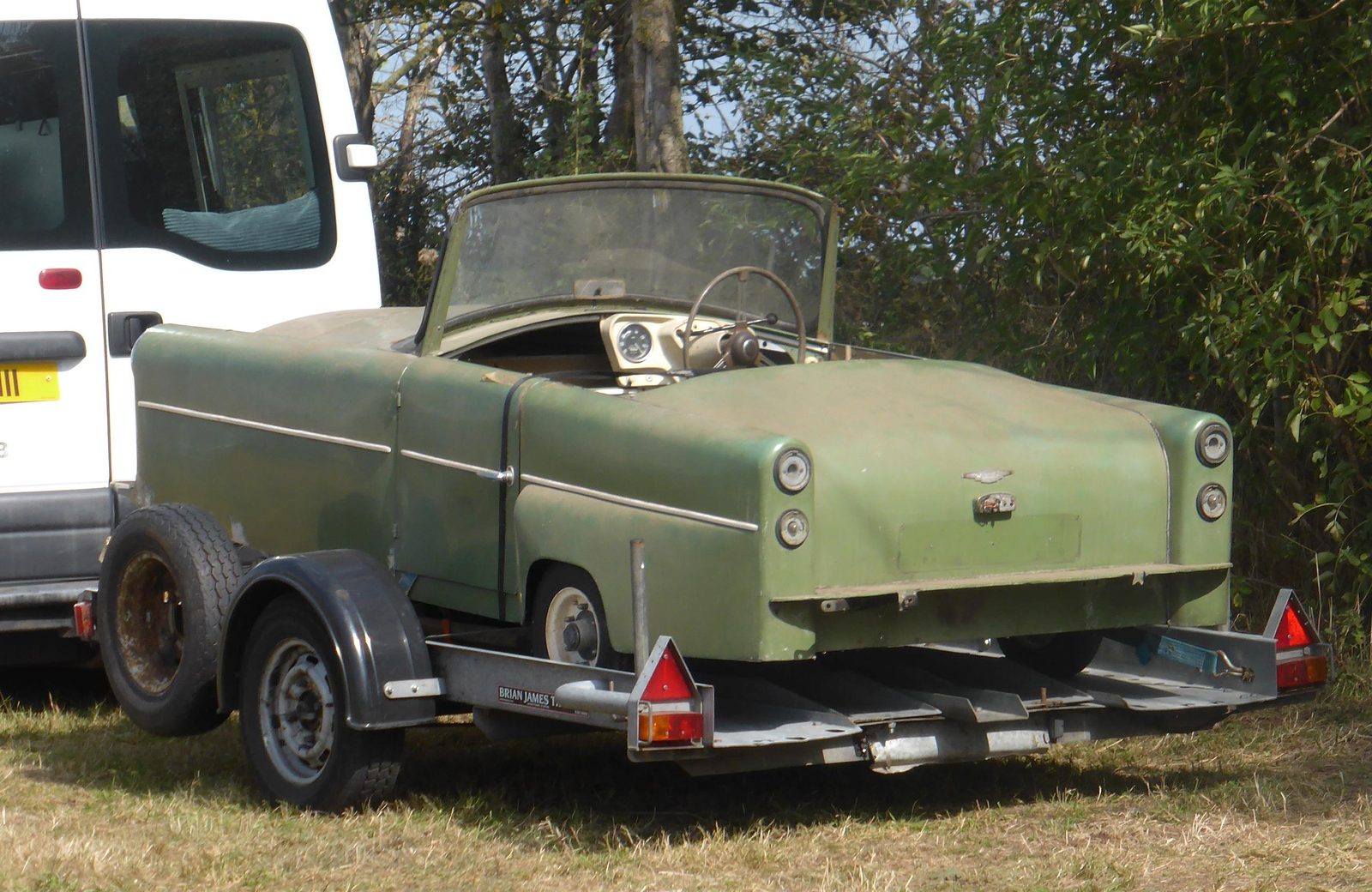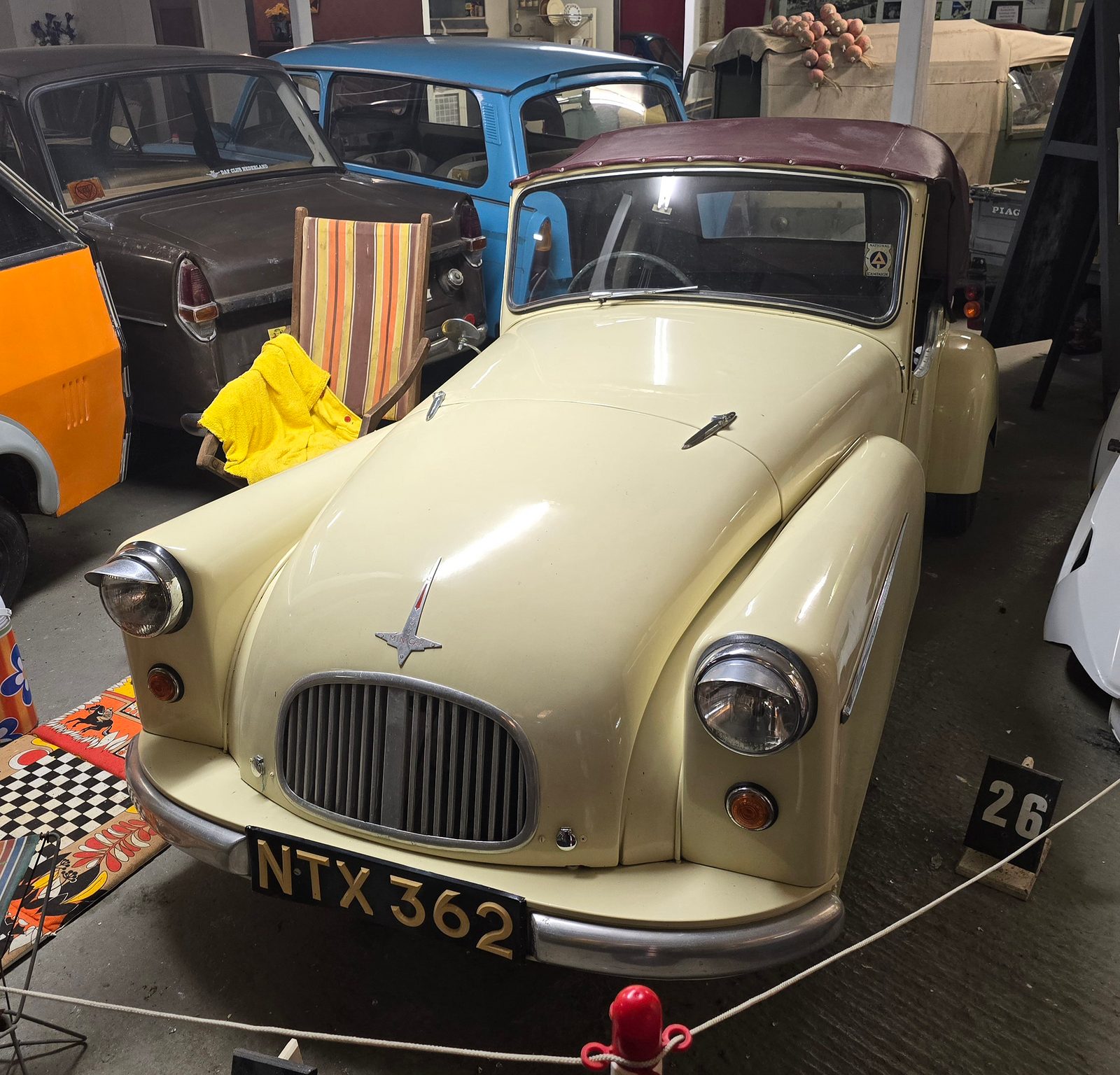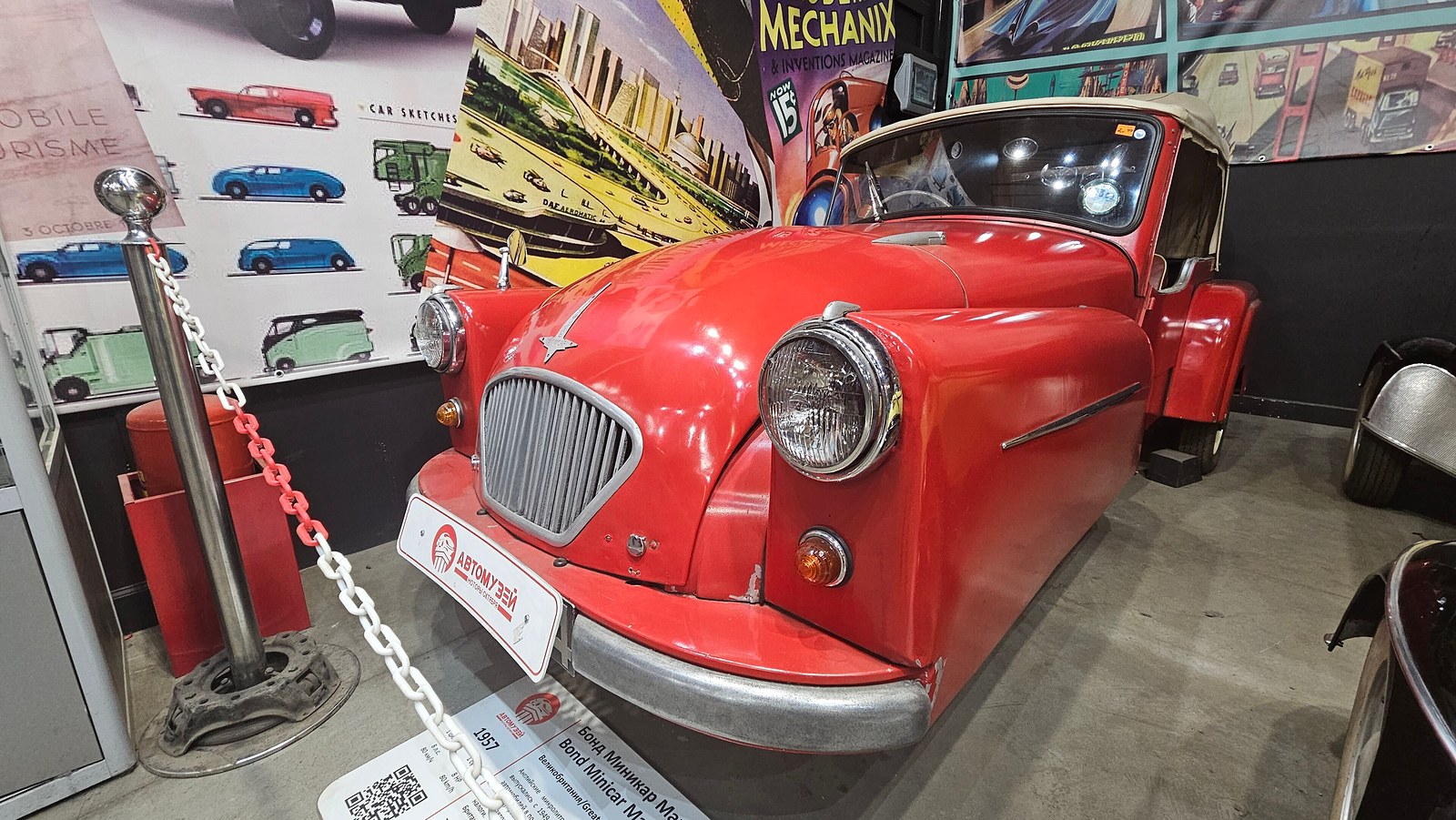
microcarfan
  • Three-wheeler
  • Britain
  • Three wheels
  • Front-wheel drive

Bond Minicar

Also known as Sharp’s Bond Minicar, Mark A to Mark G, Bond 250G, “Sharp’s Bear Cub” in the USA

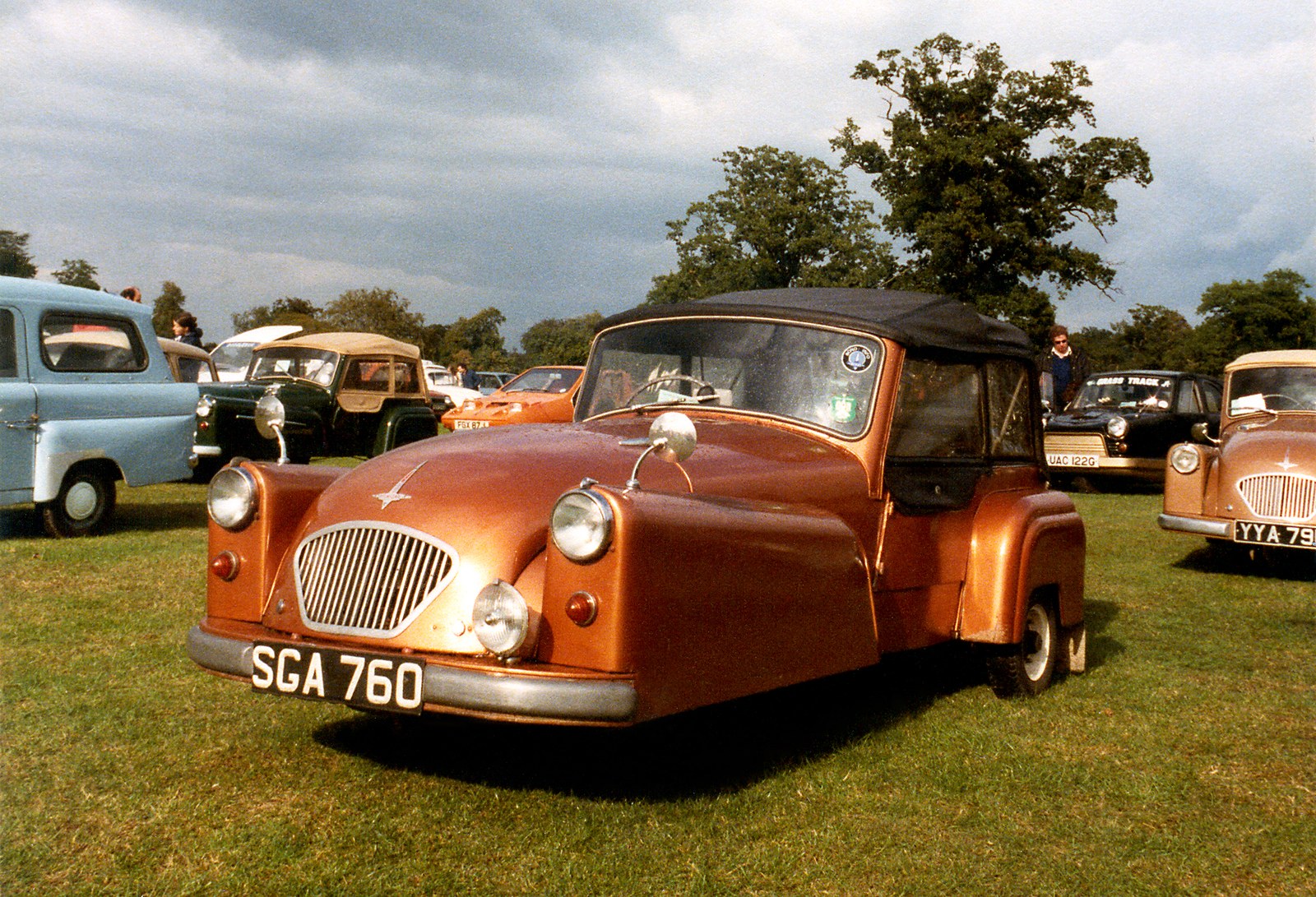
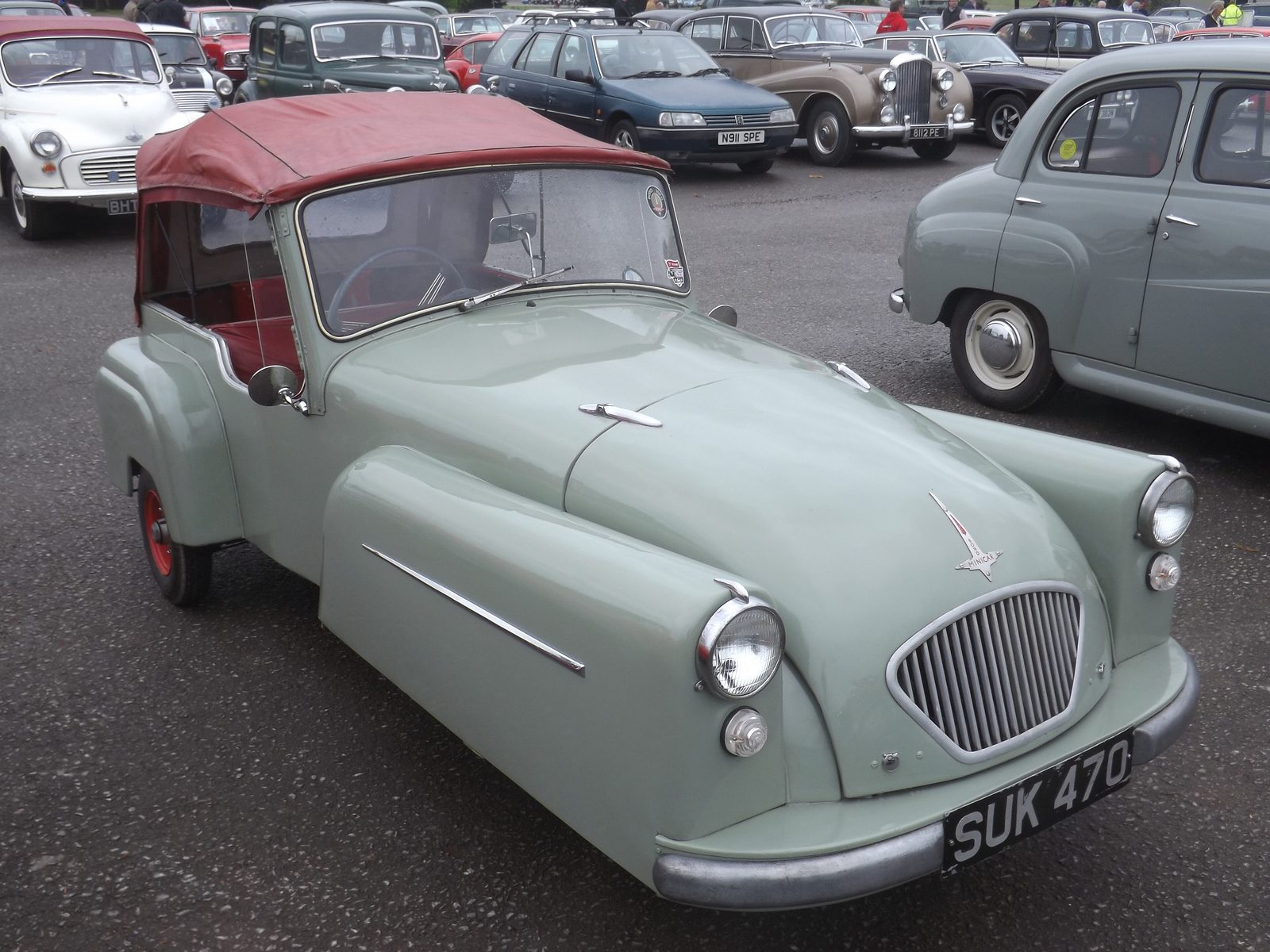
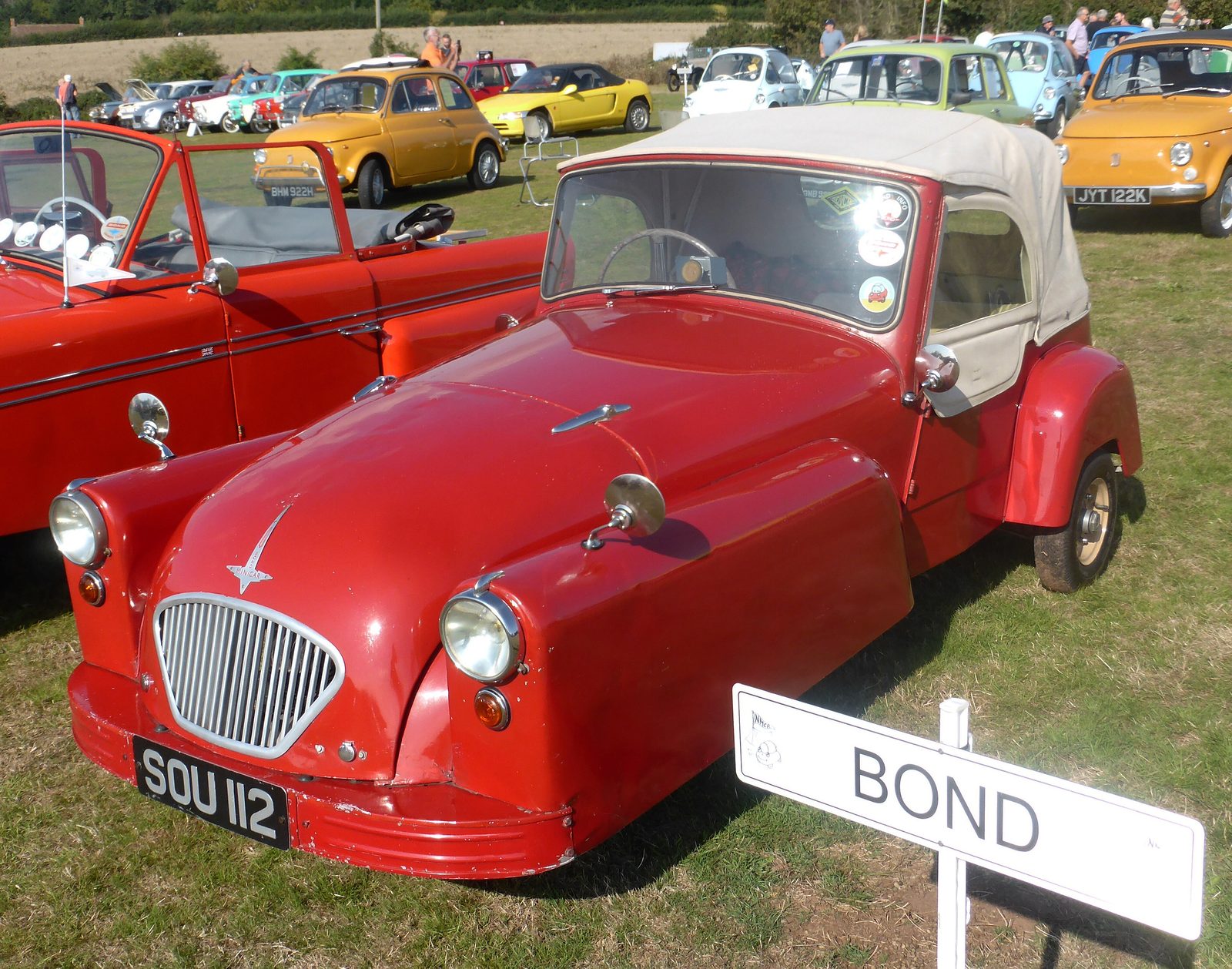
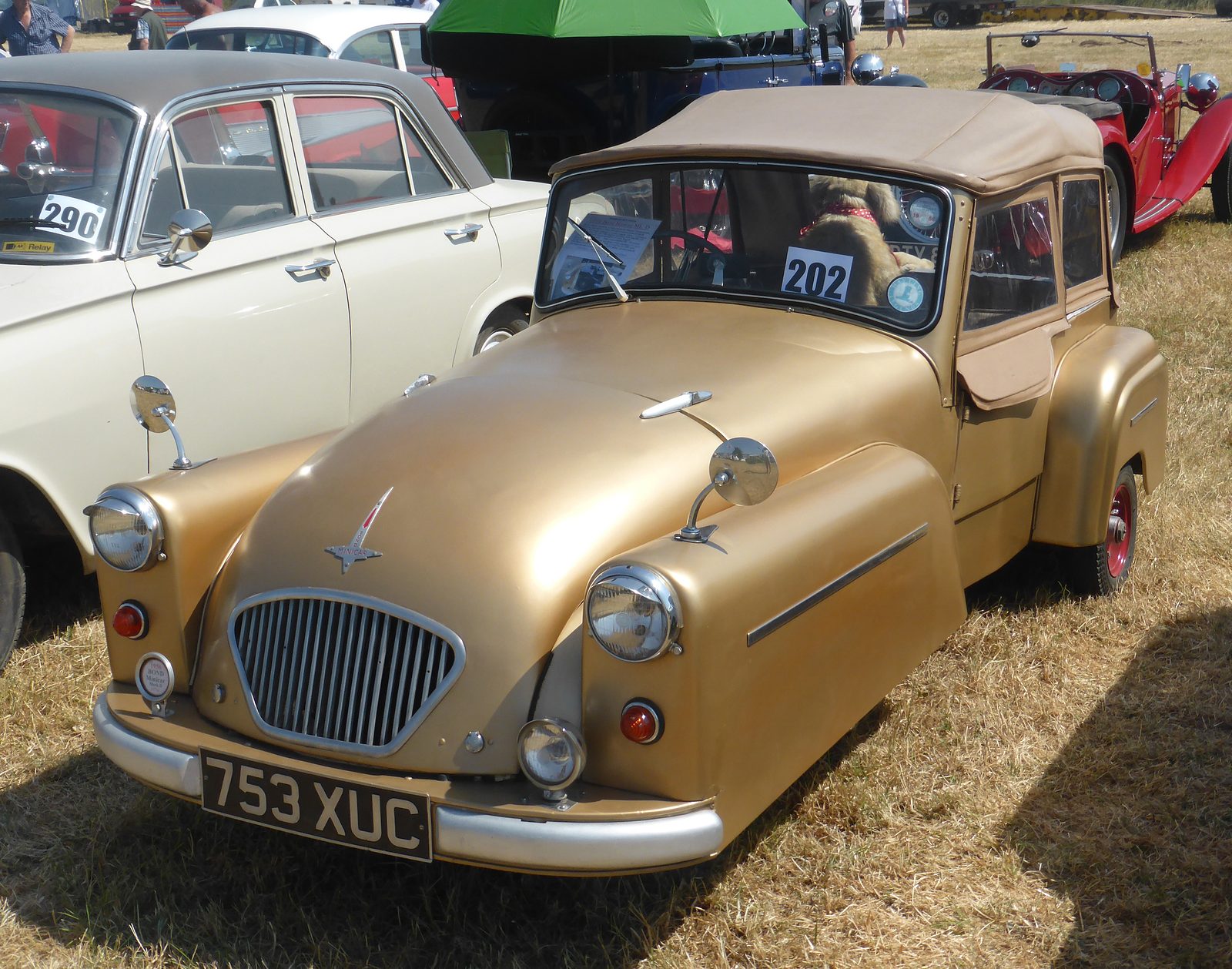
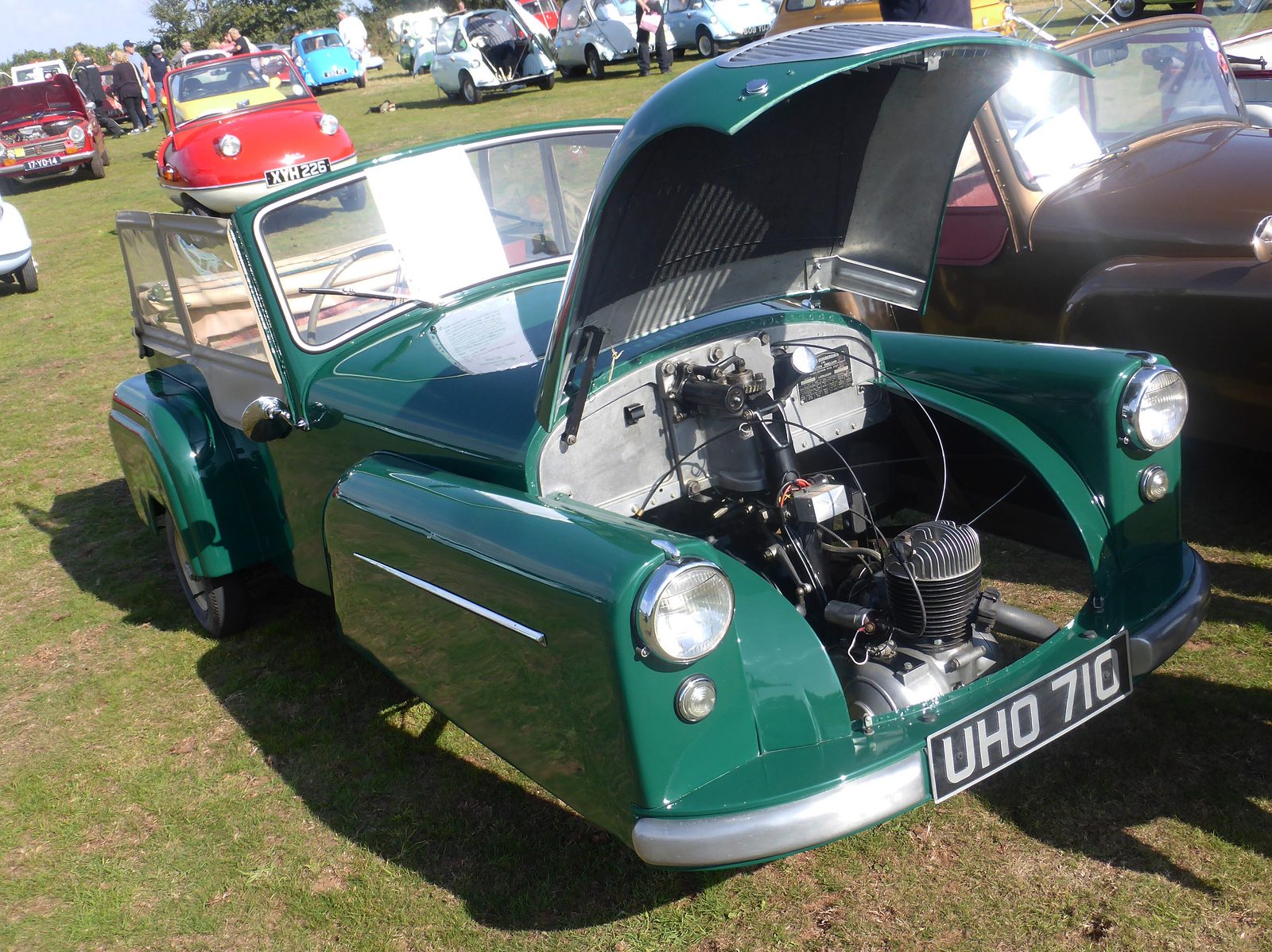
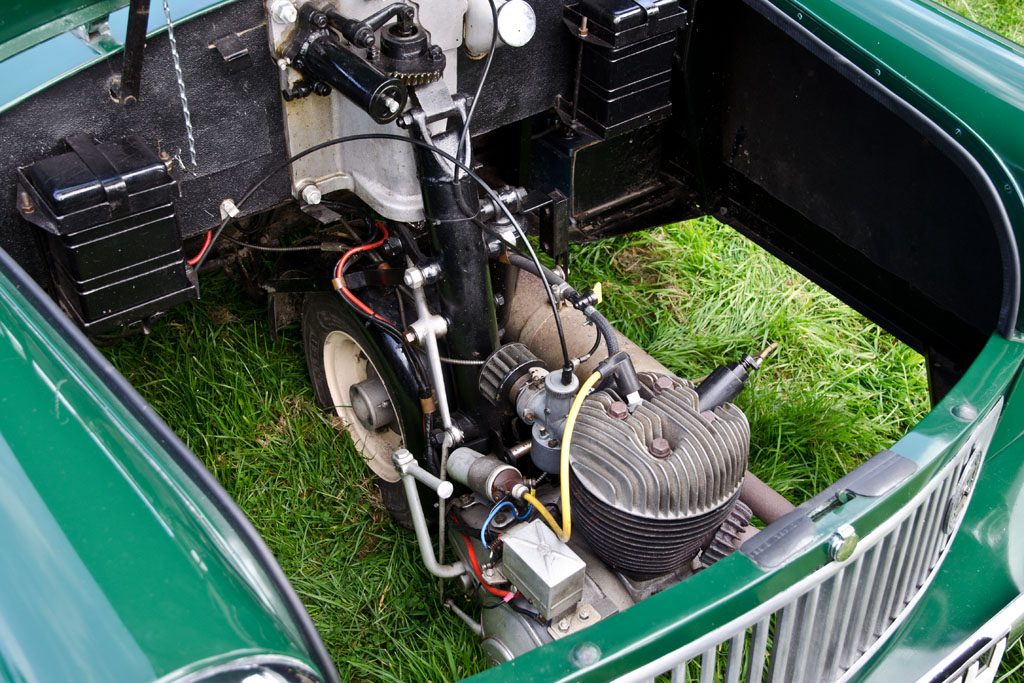
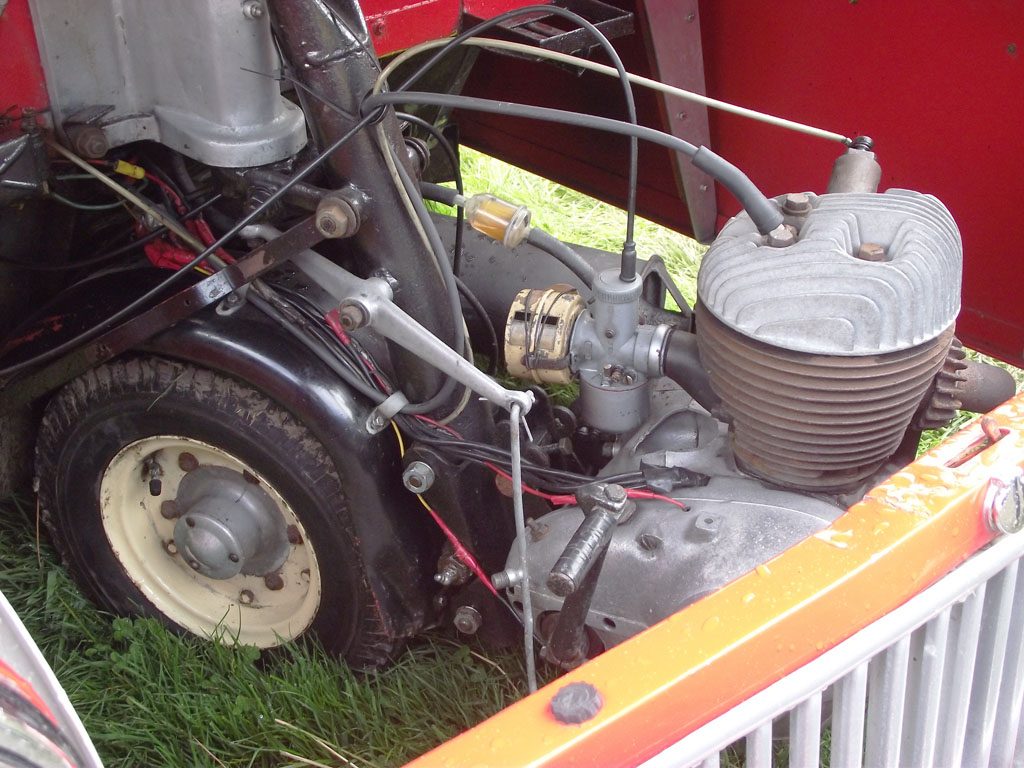
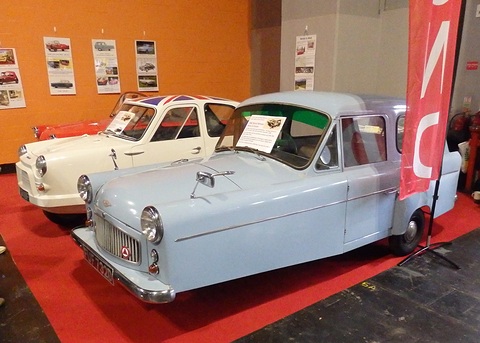
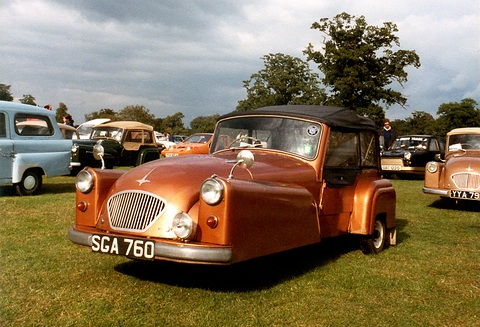
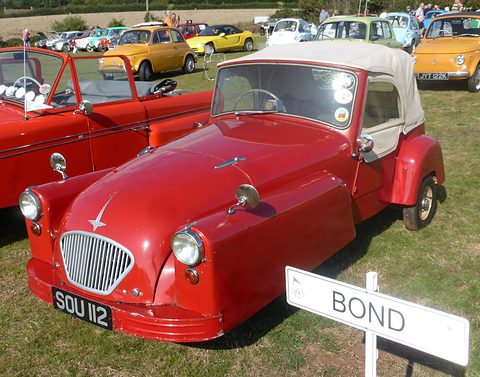
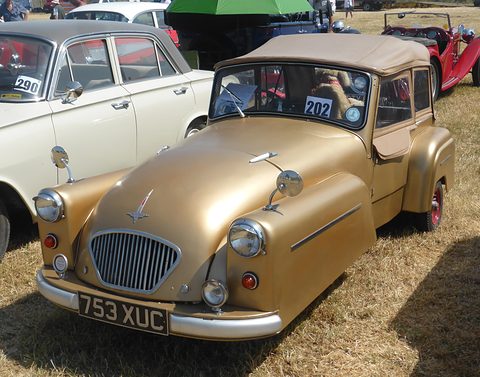
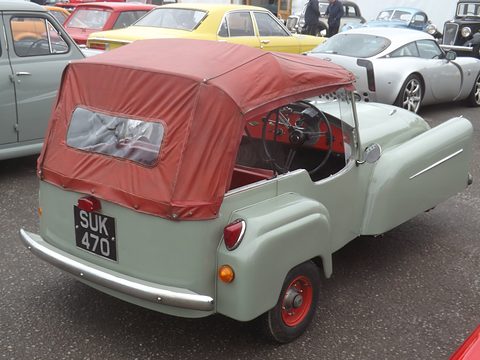
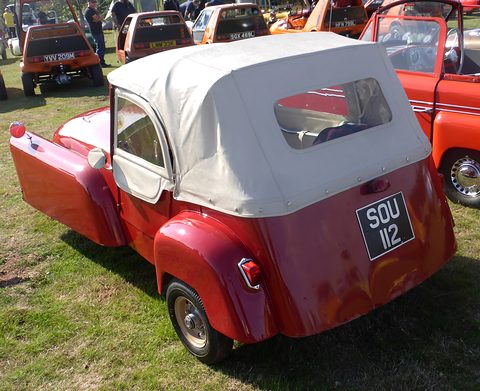
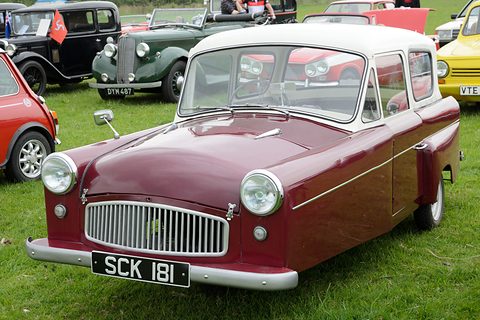
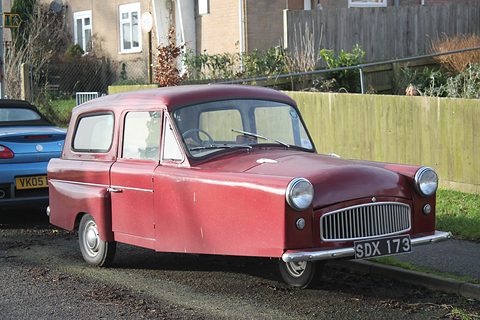
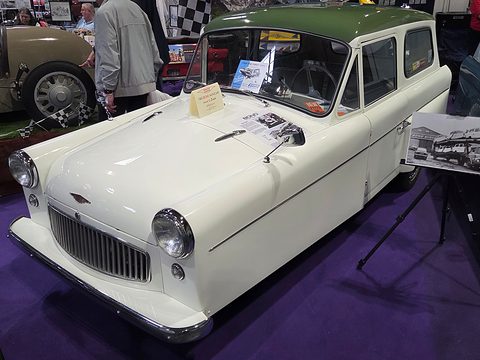
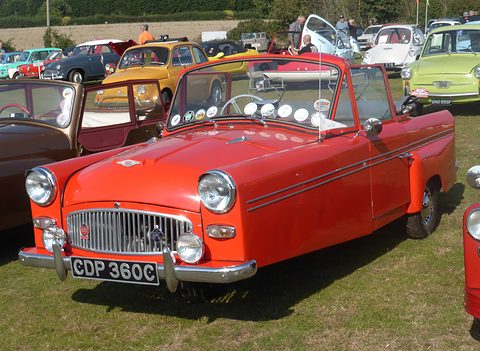
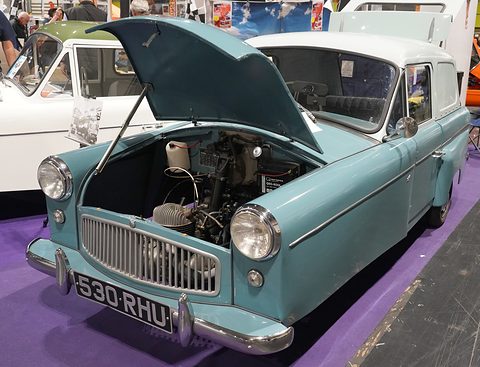
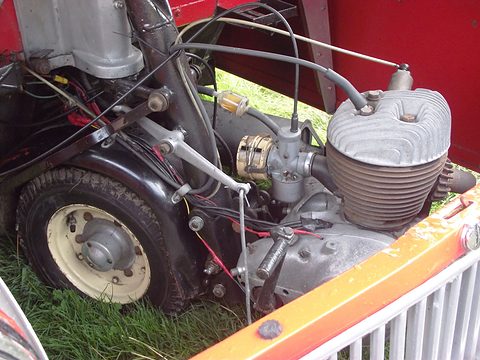
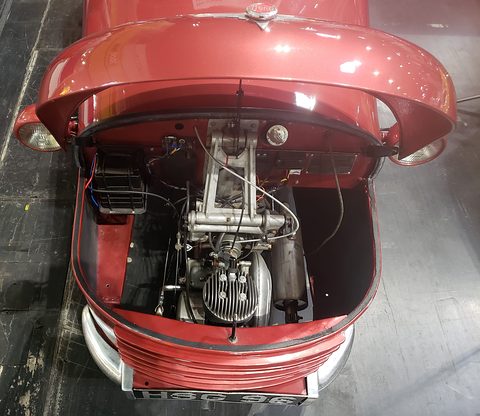
The engine sat on the single front wheel and turned with it, and from 1952 it turned so far that the car could pivot almost in its own length. Lawrie Bond drew it as a shopping runabout; Sharp’s of Preston built nearly 25,000 of them in seven Marks, and it became Britain’s best-known post-war minicar.

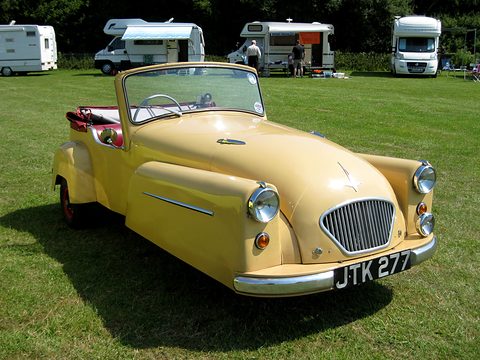
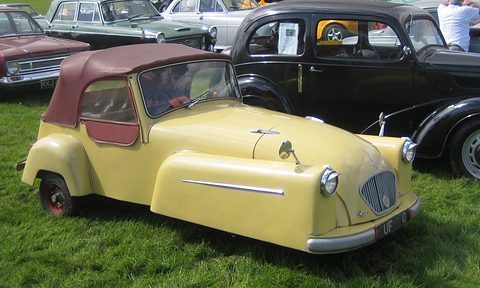
Yellow open three-wheeler with headlamps on its front wings, parked on grass with caravans behind.
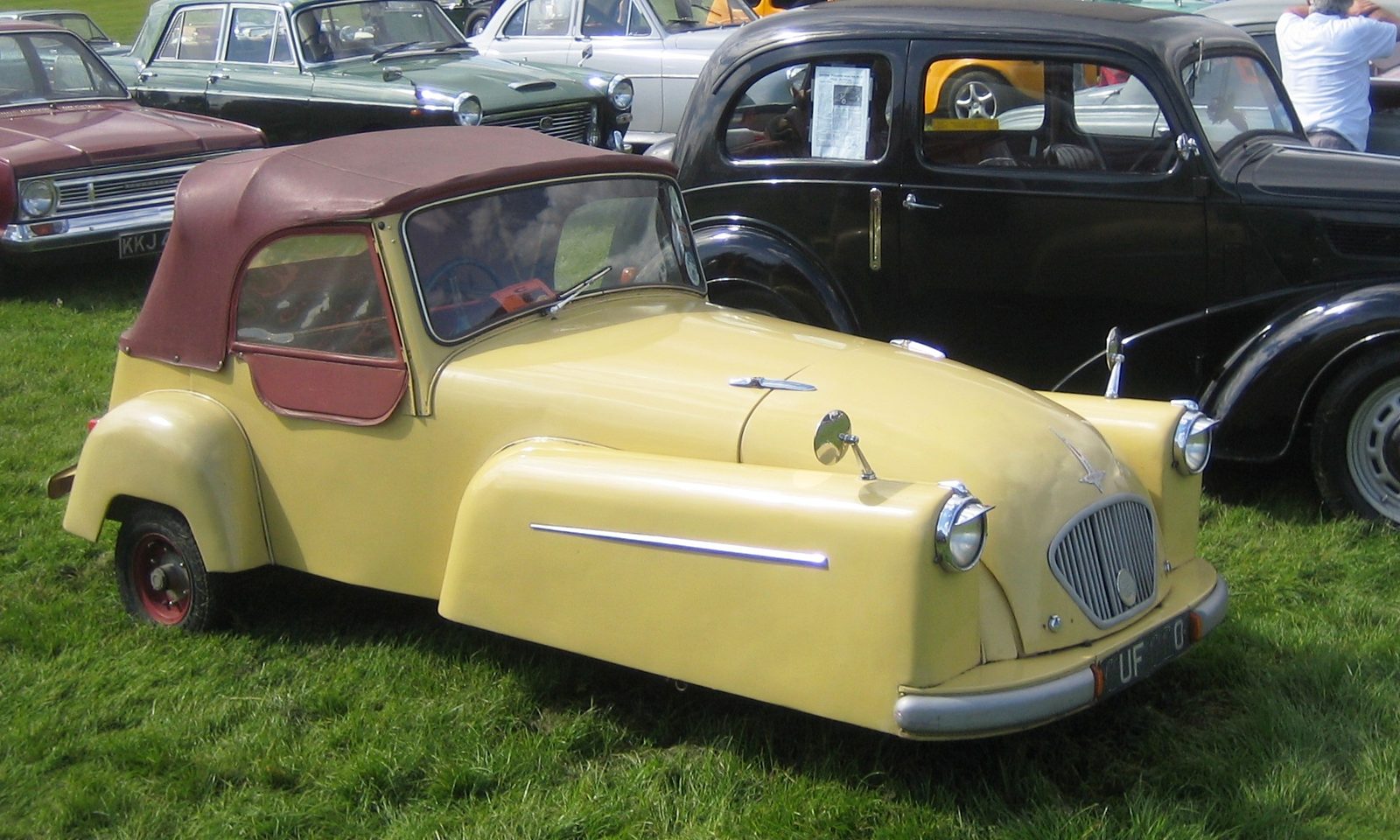
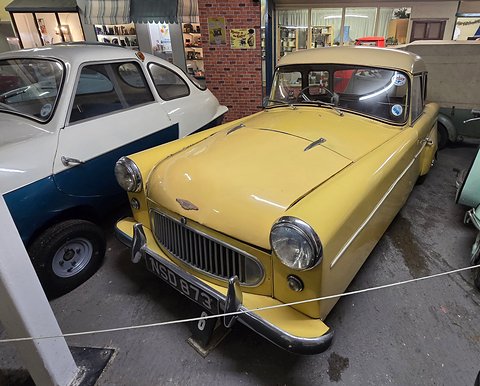
A yellow 1956 Bond Minicar Mark C De Luxe Tourer, JTK 277, at Keynsham in 2011.Photo: Mighty Antar, CC BY-SA 3.0, via Wikimedia Commons

At a glance

The spec plate

Bond Minicar

Mark A to Mark G · Preston

Built
1949–⁠1966January 1949 to May 1966; a last engineless shell left in December 1966
Country
BritainSharp’s Commercials, Preston, Lancashire; the prototype was built at Longridge
Maker
Sharp’s Commercials LtdRenamed Bond Cars Ltd in 1963–⁠65; designed by Lawrie Bond
Engine
122 cc to 250 cc Villiers two-strokesSingles from the 10D to the 35A; the 4T twin from late 1962
Power
5 bhp to 14.6 bhpMark A to the Mark G twin; about 3.7 to 10.9 kW
Length
2,692 mm1,397 mm wide, 1,067 mm high
Weight
141 kgThe 122 cc Mark A of 1949; the Mark G weighed 826 lb (375 kg)
Seats
2 to 4A bench for two or three; child seats in the Family models; a rear bench in the Mark G
Wheels
3One at the front, steered together with the engine that drives it
Price new
about £200Mark A, 1949, of which about £45 was purchase tax
Production
24,482The sum of seven Marks; “approximately 24,500” at the Science Museum
Top speed
89km/h89 km/h55 mph; The Motor timed a 197 cc car at 43.3 mph in 1950

How big is it?

True proportion

2.69 m

It is 278 mm shorter than a Fiat 500, about 1.5 adults laid end to end, and twice the length of a Peel P50.

  • 1.40 m wide
  • 141 kg: about two adults
  • The Marks E to G grew to 3,353 mm
Drawn at true proportion. The track is 3.6 metres long; the adult stands at the same scale. The Peel P50 is the smallest production car, on every page for comparison.

The story

History

Lawrie Bond had worked as an aircraft designer at Blackburn during the war, then ran a small engineering business in Blackpool that moved to Longridge, near Preston.source 1 He also built 500 cc racing cars: a racing special nicknamed the “Doodlebug” made its debut in 1947 and finished fifth, though Lancashire County Council’s history says he was never especially successful as a racer (more in the designers).source 2 In May 1948 The Motor reported his “New Runabout at Under £200”, a tiny aluminium car he had built in Berry Lane, Longridge, where a blue plaque now marks the spot.source 1source 2 It had a 125 cc Villiers engine and three speeds, weighed 195 lb dry, cruised at about 30 mph and climbed a 25 per cent gradient with two aboard. The press described it as a short-radius runabout for shopping and calls within 20 or 30 miles.source 1

His workshop was too small to build it in numbers; by the Weiner museum’s account the prototype had to be lowered through a hole in an upper floor to reach the ground.source 3 Sharp’s Commercials of Preston, a motor trader founded in 1922 and part of the Loxhams and Bradshaw Group, had a large works whose post-war contract, rebuilding military vehicles for the Ministry of Supply, was due to end in 1948.source 4source 5source 1 Bond asked its managing director, Lieutenant-Colonel Charles “Reg” Gray, to rent him the factory. Gray refused, but offered to have Sharp’s build the car. Bond did some further development and then sold the design and the rights to Sharp’s.source 1source 6 The Bond Owners’ Club calls Gray the man without whom there would have been no Bond vehicles.source 5

The Minicar’s appeal was partly legal. As a light three-wheeler it paid less purchase tax and road tax than a car, cost less to insure, and its driver needed only a motorcycle licence.source 7source 1 In 1955 its road tax was £5 a year.source 8 Several accounts say it lacked a reverse gear so as to qualify for the motorcycle licence.source 7source 1 There is a kernel of truth in it: until about 1963, by a club history and a specialist site, a driver with only a motorcycle licence, or a learner driving alone, had to have any reverse gear blanked off.source 9source 10 But the tax turned on weight, never on reverse.source 11 And the Weiner museum’s panel for the Mark D says the reverse, when it came, particularly helped drivers who held only a motorcycle licence, which does not fit that rule.source 12

Mark A: no doors, no reverse

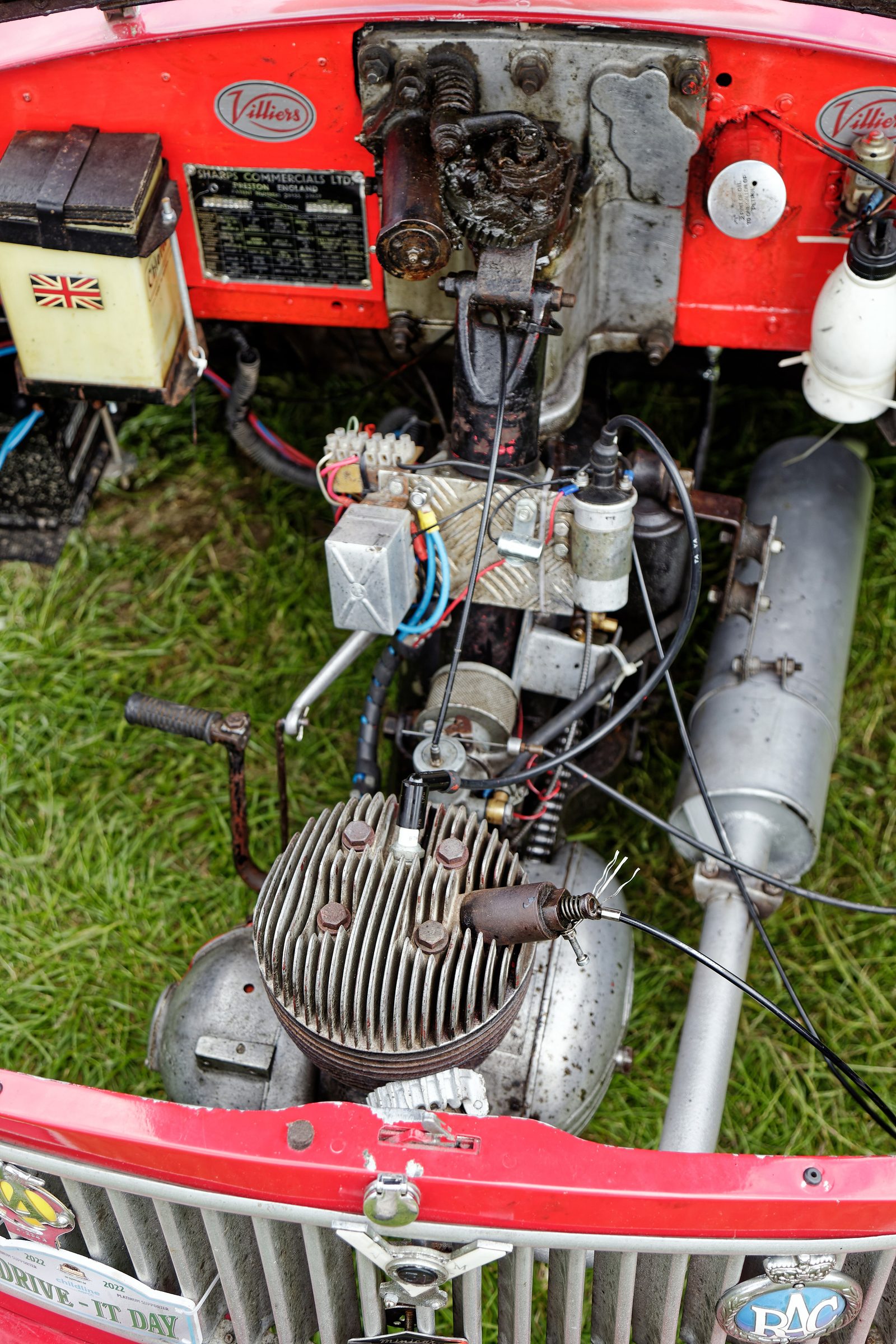
Production began in January 1949 with chassis A/1/1, an open two- or three-seat Tourer.source 13 Its body was a stressed skin of aluminium with no separate chassis, and its 122 cc Villiers 10D two-stroke sat at the front, on the single front wheel; engine, gearbox and wheel turned together when the car was steered, and a chain drove the wheel.source 13source 3source 8 There were no doors, a Perspex screen, three speeds and no reverse, steering by cable and bobbin, and no rear suspension but the tyres. Only the rear wheels had brakes, and the headlamps were mounted on the sides of the body. The driver started the engine with a pull-handle under the dash, which worked the kick-starter by cable. It weighed 310 lb (141 kg) and cost about £200, of which about £45 was purchase tax.source 13 Sharp’s began at 15 a week, and 90 per cent of early output was said to be reserved for export.source 3source 7source 1 Only after the Mark B arrived did the first car become the “Mark A”.source 14source 1
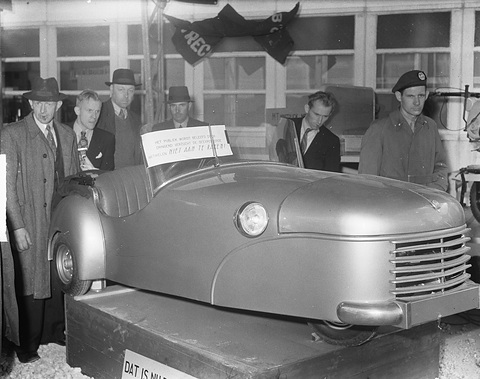
Black-and-white: a doorless silver three-wheeler on a plinth, men in hats and coats looking on.
Plate I · 1950 An early Minicar on its stand at the Jaarbeurs trade fair in Utrecht in September 1950, offered to Dutch buyers as an English three-wheeler.Photo: Anefo, Nationaal Archief, CC0, via Wikimedia Commons

In October 1949 a hand-cranked lever that turned a rear hub, for reversing, was shown at Earls Court as an option, and in December a Deluxe Tourer followed, with the 197 cc Villiers 6E, a spare wheel, a mirror and an electric wiper, at £212.source 1source 13 From October 1950 every car had rack-and-pinion steering, and the Deluxe a Triplex glass screen.source 13 On a test run from Preston to London a Minicar averaged 22.8 mph and 97 mpg; The Motor timed a Deluxe at 43.3 mph, with 0–30 mph in 13.6 seconds and 72 mpg.source 1 The side-mounted headlamps, the Weiner museum notes, tended to vibrate loose and end up pointing straight at the road.source 14

Motor Sport kept a Deluxe for two months in 1950, and it fell apart around the testers. In the paper’s own short summary five years later, a steering pulley fell off and was commandeered by some passing Sea Scouts; W. Boddy, who ran the test, later added a broken front wheel, a seized engine, a burnt-out plug, fading brakes and a failed magneto, though his retellings differ in the details. A Preston mechanic came down to mend it in a 122 cc Bond, and said he was giving in his notice rather than keep driving it.source 8source 15source 16 Even so, the car cruised at 45 mph and gave about 80 mpg, and the testers stayed fond of it.source 15 To change a wheel, Boddy remembered, you laid the car on its side, and the Perspex screen scratched until night driving was like a perpetual mist.source 15 He also recalled what The Motor’s technical editor made of it.

It has a sort of sordid satisfaction, like picking at a scab.

Laurence Pomeroy, technical editor of The Motor, asked about the Bond in about 1950, as recalled by W. Boddy in Motor Sport, December 2001.source 16

Marks B and C: the classic shape

The Mark B, built from April 1951 and launched that July, had coil-spring rear suspension, a hydraulic damper at the front, a bigger boot and a reshaped hood; much of the work, especially the rear suspension, is credited to Granville Bradshaw, the brother of the group’s chairman.source 17source 14source 1 Purchase tax had more than doubled since 1949, and the Mark B cost £335 18s 10d, of which £120 18s 10d was tax. From November 1951, 94 cars had a factory-fitted door.source 17 The vans and pick-ups of 1952 are told with the Bond Ranger, below.

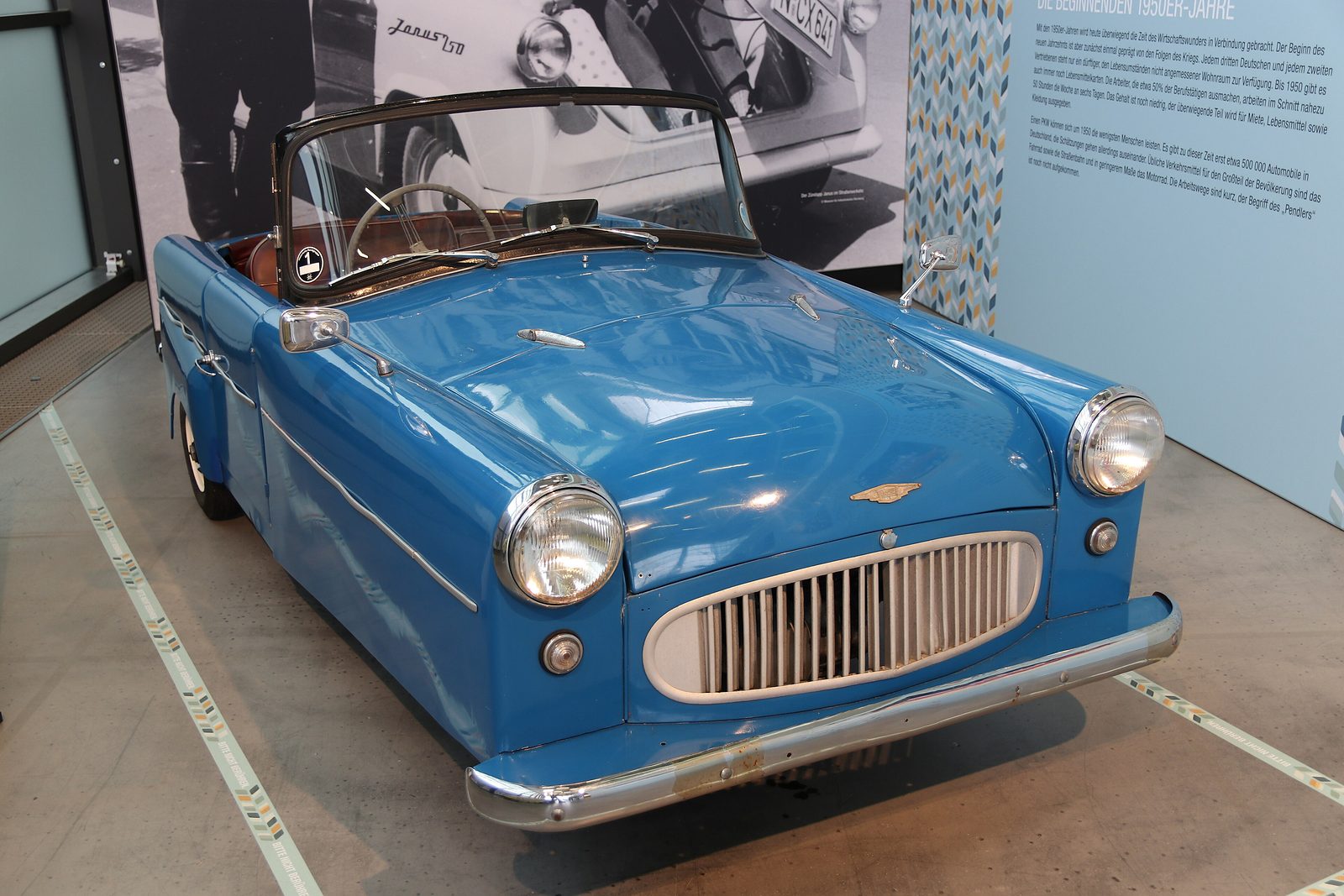
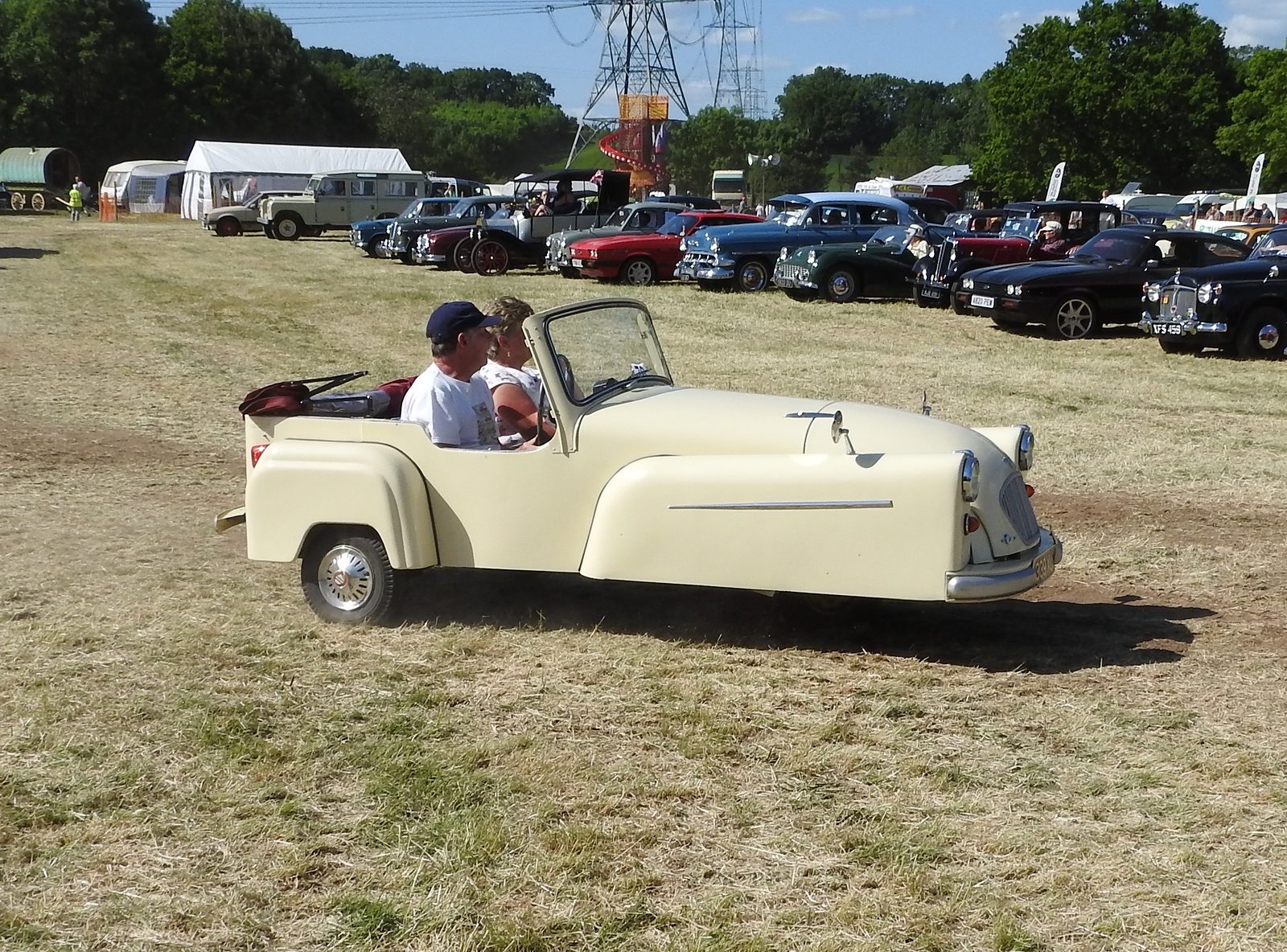
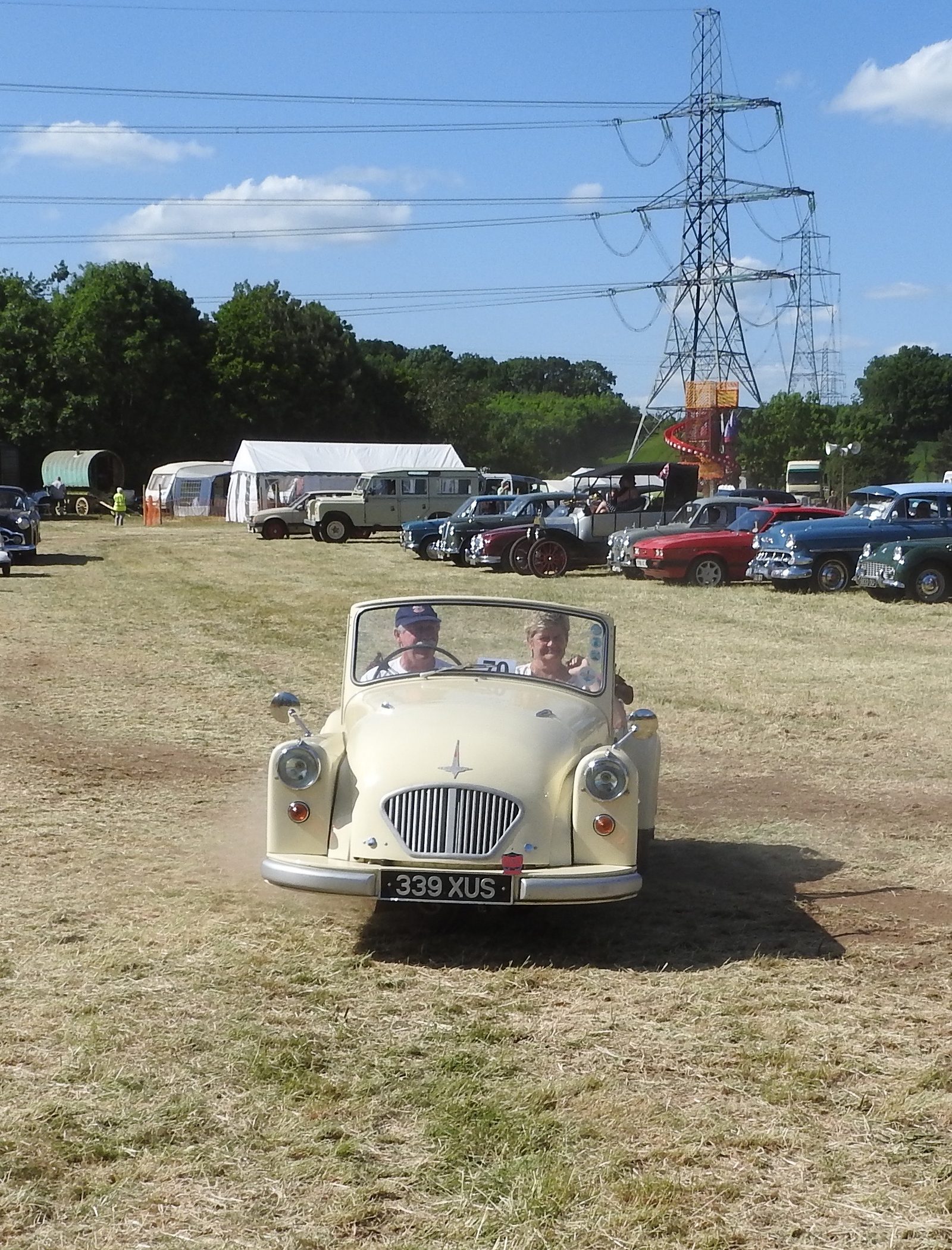
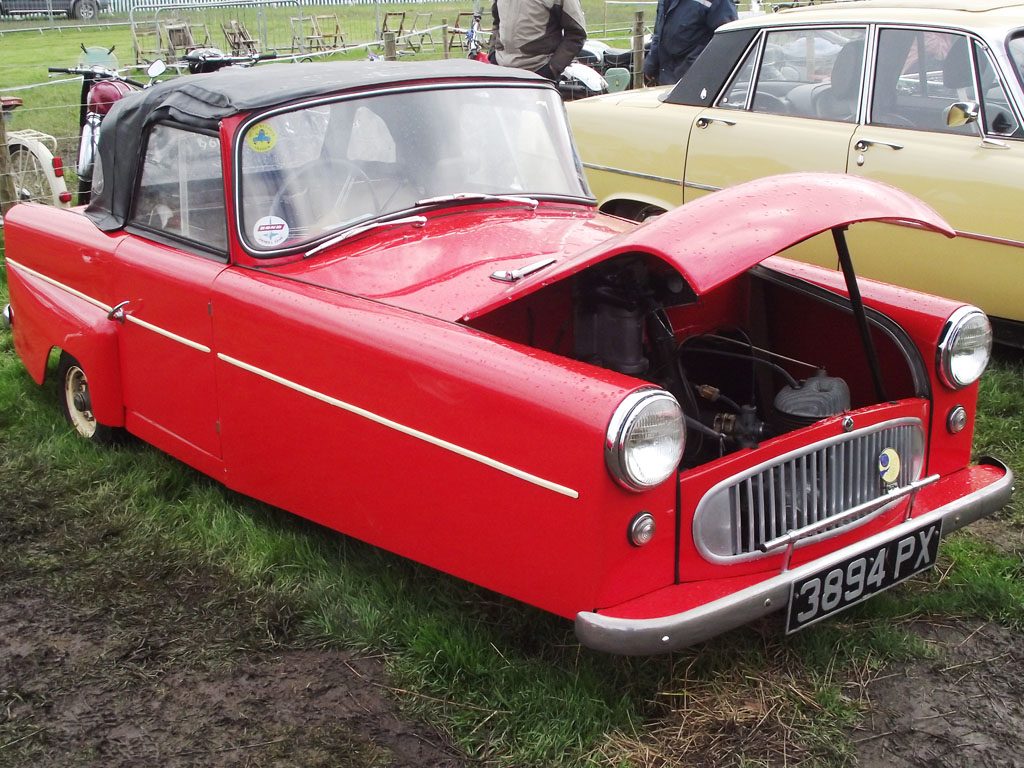
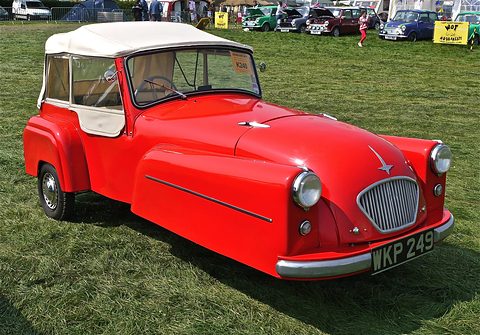
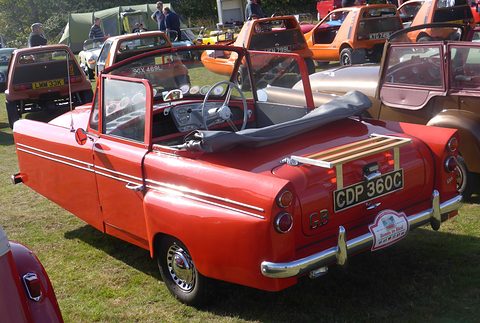
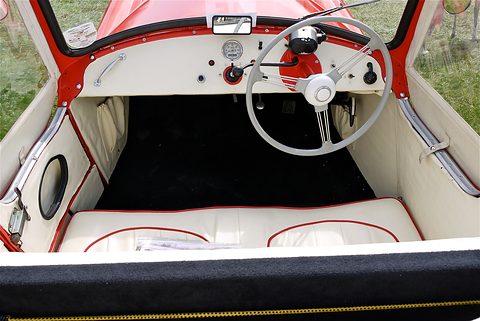
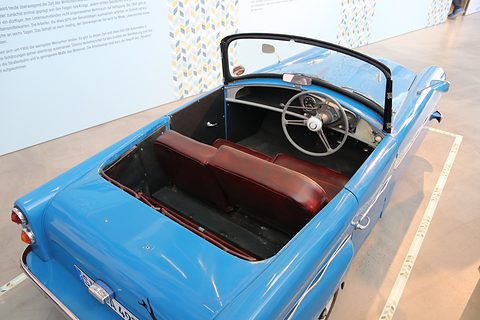
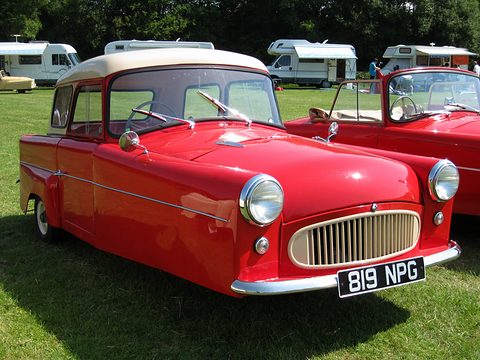
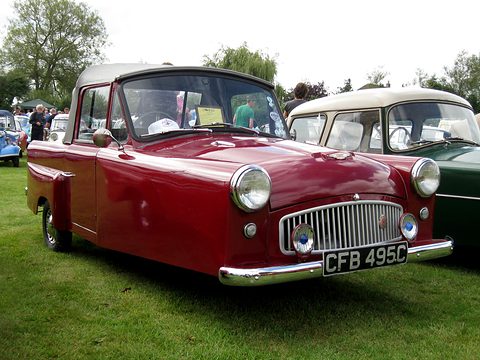
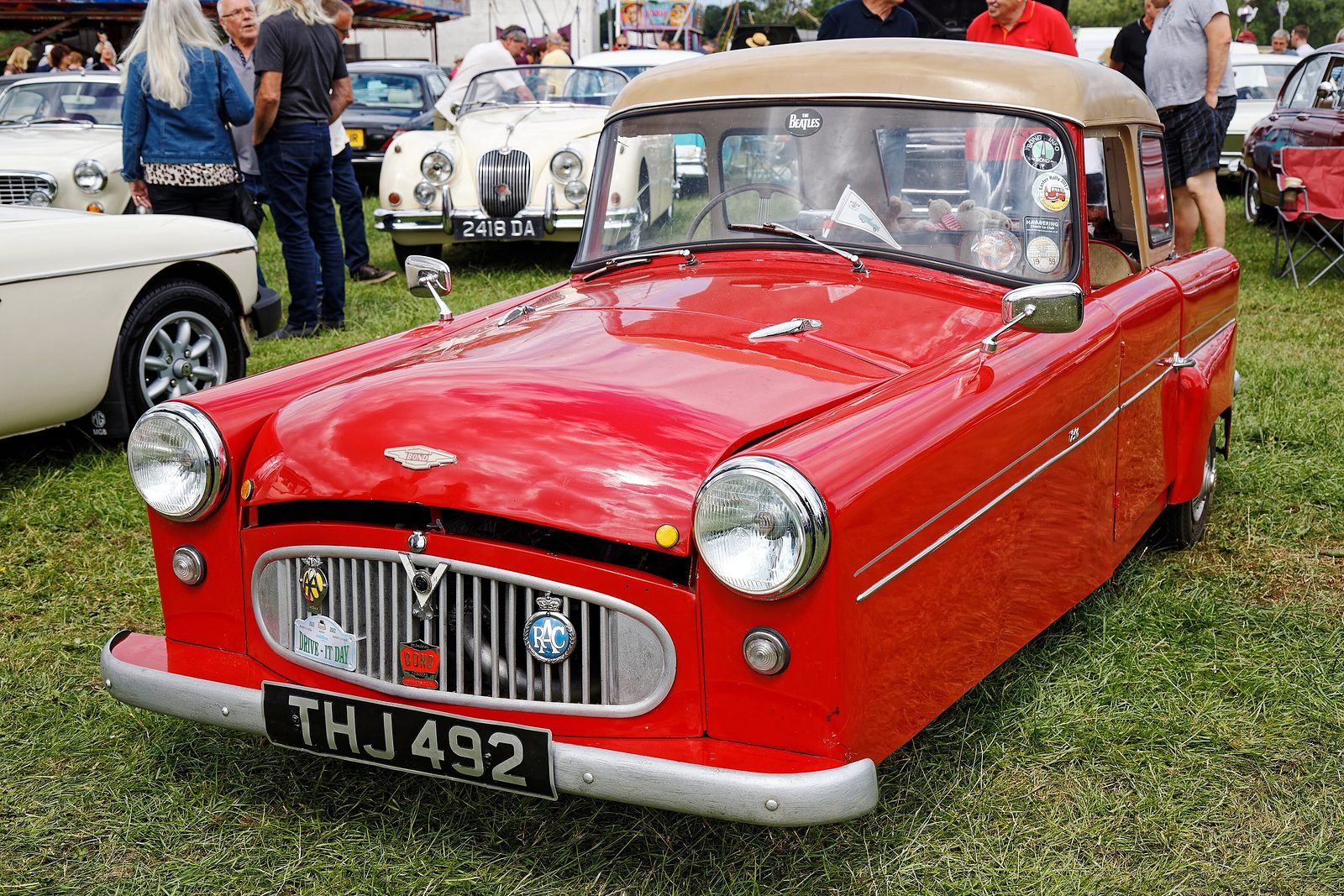
The Mark C of October 1952 set the look most people remember. Dummy front wings carried the headlamps; worm-and-sector steering gave 90 degrees of lock each way; the rear wheels hung on Flexitor bonded-rubber trailing arms, designed by George Spencer Moulton; and there were brakes on all three wheels.source 18source 19 It was 9 ft 10 in (2,997 mm) long and weighed 460 lb (209 kg).source 18source 19 Three pre-production cars had been shown at Earls Court in November 1951, but supply problems held production back for a year.source 1 In 1953 the Mark C gained the 8E engine; in March 1954 came the Family Safety model, with two inward-facing hammock seats for children; and from 1953 Bond tried glass-fibre panels, making the Minicar among the first British cars to use them, with glass-fibre bonnets in production from December 1954.source 18source 1 In February 1953 a Mark C was fitted with hand controls and submitted for Ministry of Pensions approval (see the Invacar).source 18

Minicars went abroad in kit form to Portugal, Dublin and Uruguay, and to Moscow in August 1954, painted, the club’s records note, “Red. (Naturally!)”. Left-hand-drive cars with semaphore indicators went to the United States in 1953, where Craven and Hedrick of New York sold them as the Sharp’s Bear Cub, with little success.source 18source 1 Motor Sport tested a Mark C Family for a fortnight in 1955. Its engine was so low-geared that at an indicated 40 mph it made a very considerable racket; the gear positions were evasive, neutral especially; the clutch was feather-light and the steering heavy; and getting in through the single door took contortions.source 8

Moreover, no modern car can be possessed of less powerful brakes.

W. B., road test of the Bond Minicar Mk. C, Motor Sport, March 1955.source 8

The Bond has a fantastic steering lock and with a wheelbase of only 5 ft. 6 in. can be steered so as to poke its pivoted power-unit pretty well up its own exhaust pipe.

W. B., Motor Sport, March 1955.source 8

The editor offered a cup, of china and for tea, to anyone who reached full cruising speed on full lock. The verdict was affectionate all the same: life, the tester wrote, would be less droll without the modern minicars.source 8 Boddy, reviewing his year, found the Mark C infinitely better than its predecessor, with an electric starter at last. He covered 464 miles in a week, averaged over 30 mph and about 60 mpg, and took the Bond instead of his Morgan to a midnight meeting on a night of ice and sleet; it captivated his children, though his wife lamented the lack of a driver’s door when a blocked fuel line stopped them.source 20

Mark D: reverse by running backwards

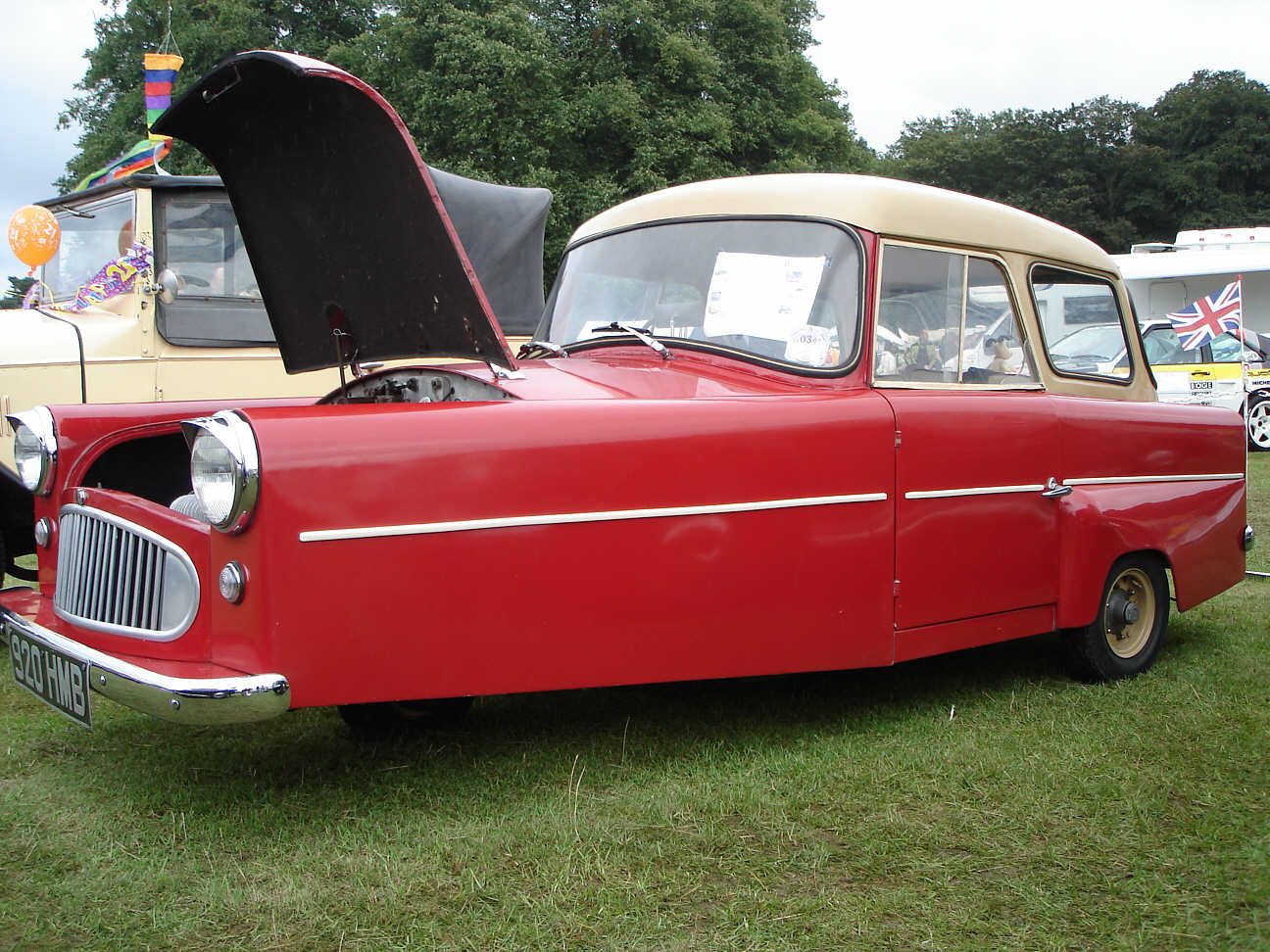
The Mark D of May 1956 kept the body but had the Villiers 9E, a four-plate clutch, a heavier chain, a higher top gear and 12-volt electrics.source 21source 12 The Deluxe cars had a Siba Dynastart, and for the 1957 season it could be had wired to start the two-stroke backwards, through a second set of contact points: every gear then worked in reverse, though first was the one to use. The first car recorded with it was a Family Safety in December 1956, at £345 9s 3d.source 21source 12 The petrol shortage after Suez in 1956 helped sales, and the Weiner museum puts output at 100 a week.source 7source 12 Four speeds came in 1958.source 21

Mark E: a new car

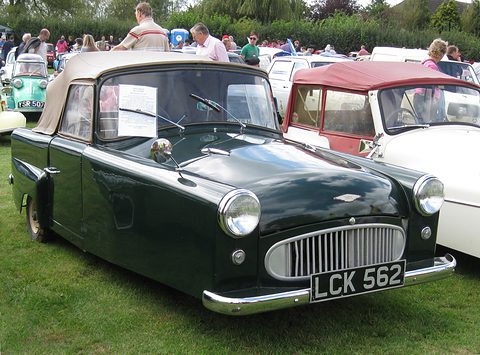
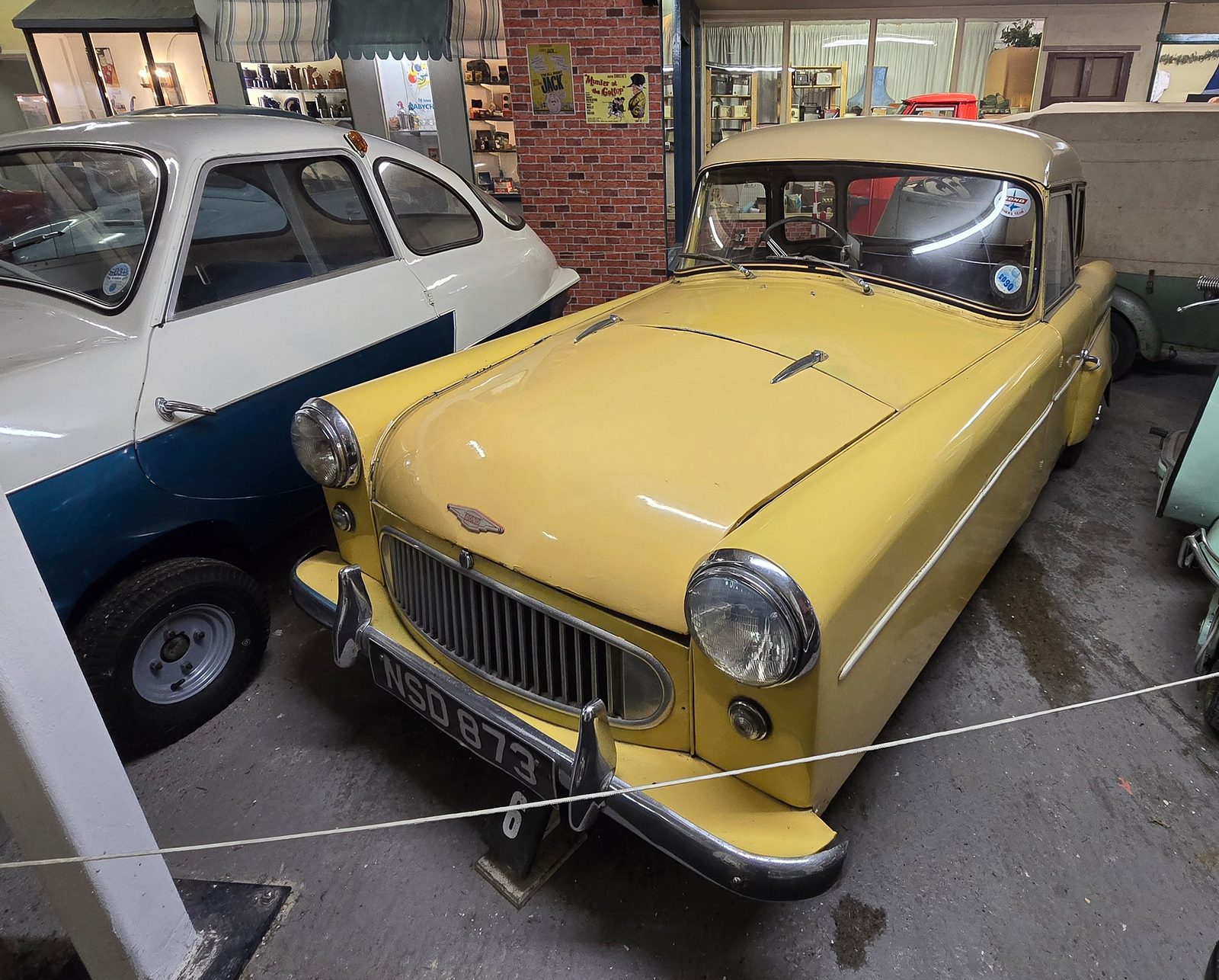
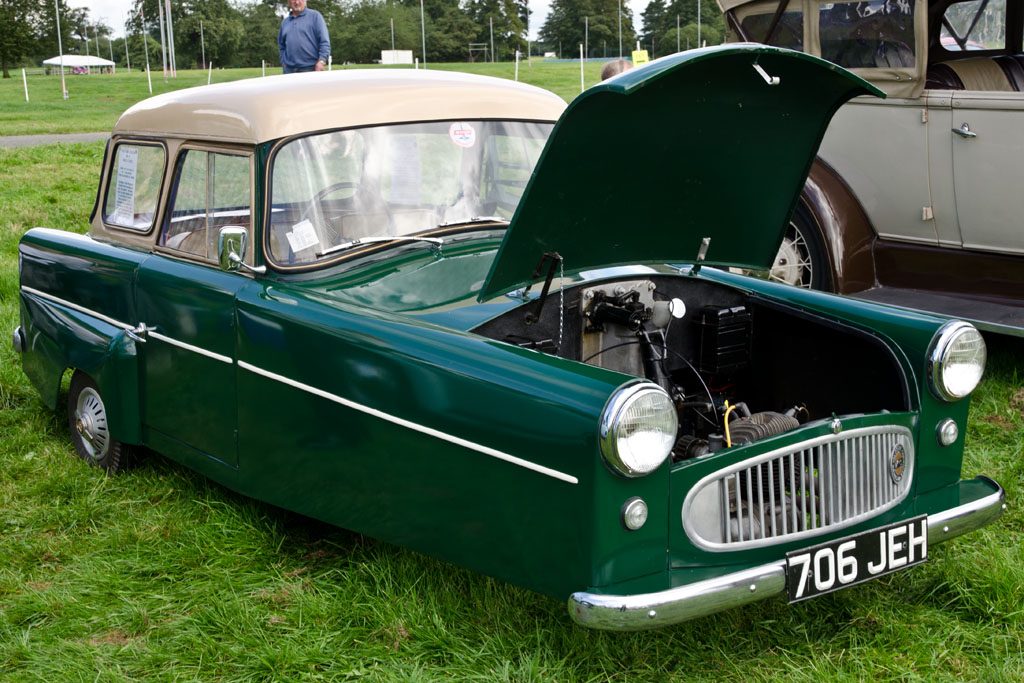
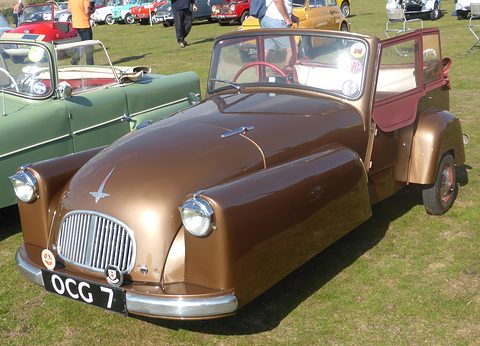
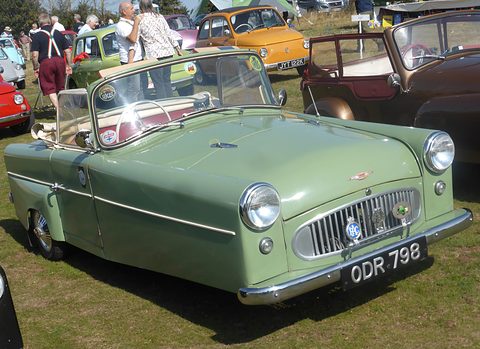
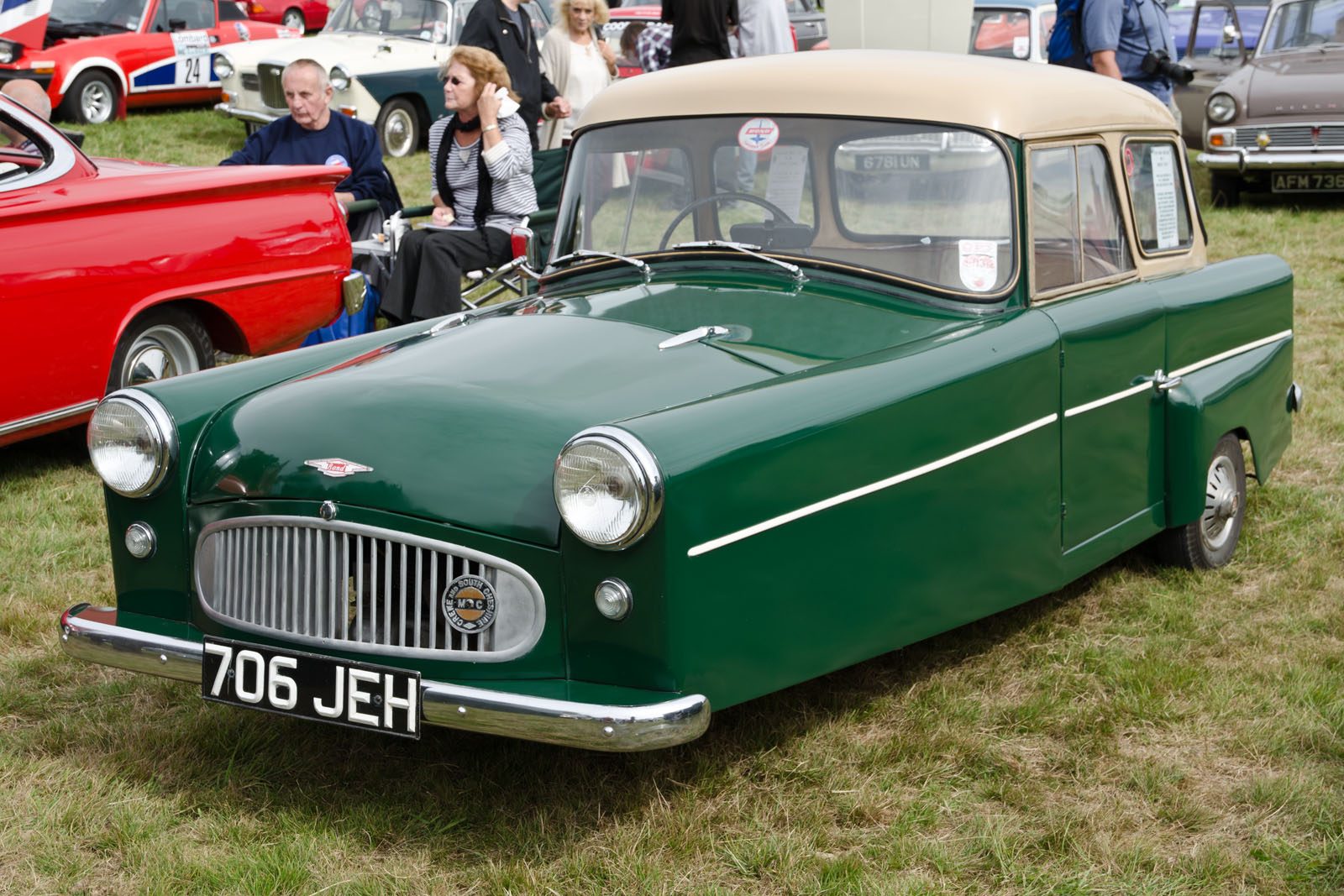
The Mark E, announced on 31 October 1956, was all new: a steel box-section chassis under a flat-sided body with two doors, 7-inch headlamps, flashing indicators and seats that tipped forward to reach the luggage.source 1source 22 Demand for the Mark D was so strong that production waited a year, and factory testing in 1957 found the prototype seriously unstable, which was blamed on its long wheelbase and narrow track.source 22source 23source 1 The production Tourers, from October 1957, had the wheelbase cut from 6 ft 6 in to 5 ft 6 in, the track widened to 4 ft 5 in and flared rear wings that made the car 5 ft wide; the weight rose to 672 lb.source 22 Only 1,180 or so were built, in 11 months beside the Mark D.source 23source 22

On 5 December 1958, when the Preston By-pass opened as Britain’s first motorway, three Mark Es led the traffic onto it, driven by Doug Ferreira, the draughtsman Alan Pounder and the production manager John Woods; an Austin-Healey Sprite that had arrived first was reportedly persuaded to make way.source 1

Marks F and G

The Mark F of November 1958 put a 250 cc Villiers single and four speeds into the Mark E’s body, with the reversing Dynastart available for £9 17s. It was the most practical Minicar, and output rose by 150 per cent.source 24source 23 There were Tourers, Saloon Coupés and a Family Saloon with forward-facing hammock seats for children, and from 1960 the Ranger van.source 24 In January 1960 Sharp’s built Colonel Gray a special Tourer, the “White Lady”: white, with leopard-skin seats, a radio and a tuned engine said to be good for 60 mph.source 24

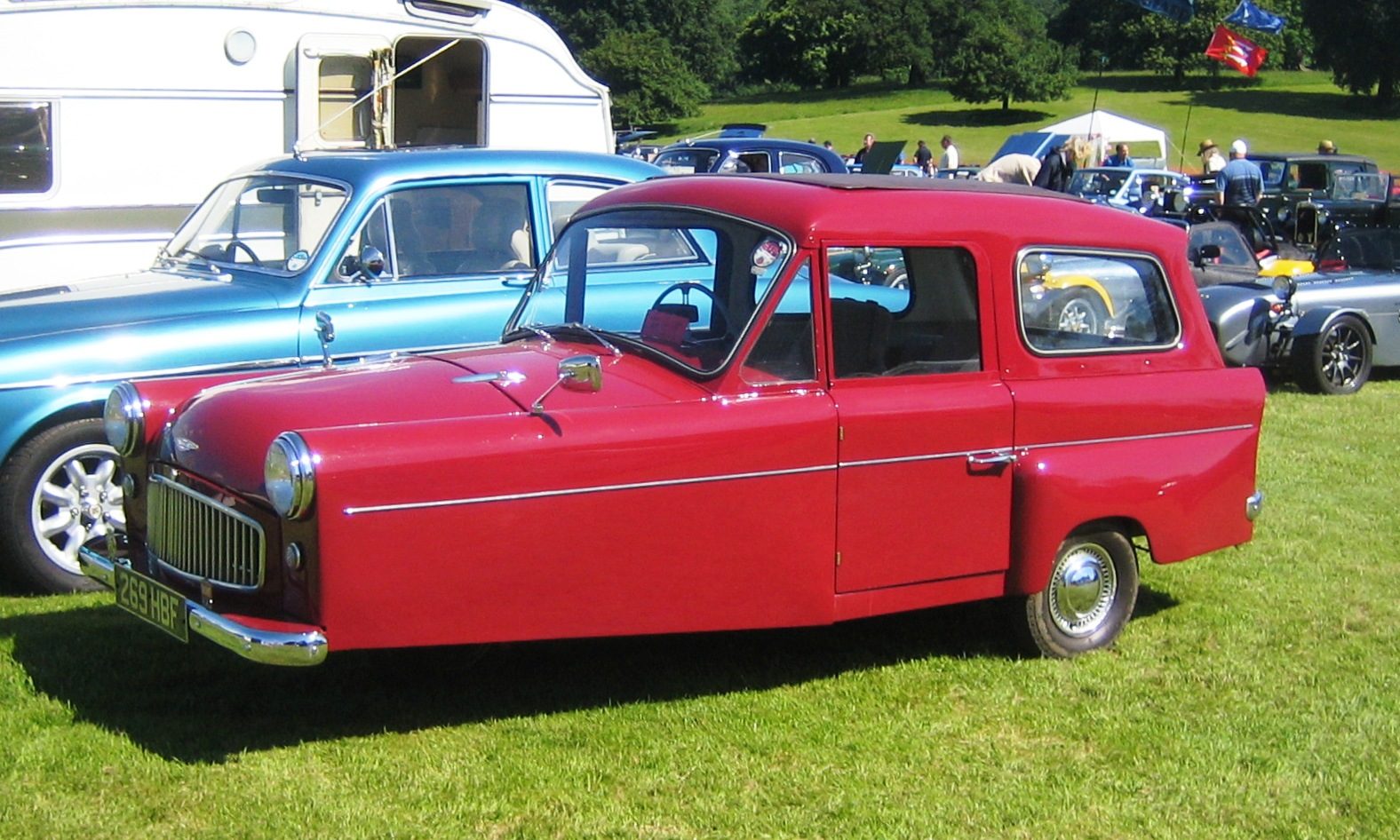
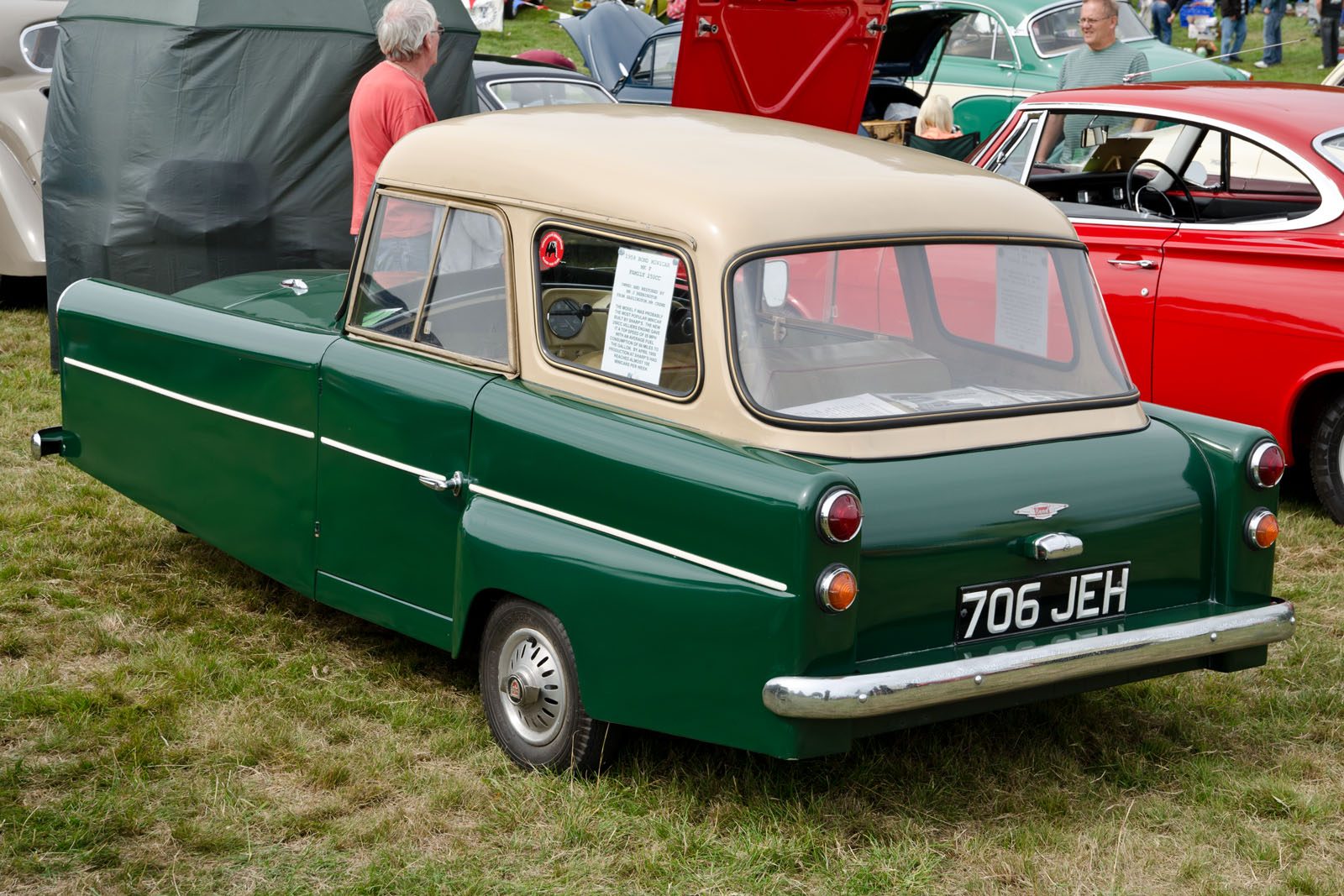
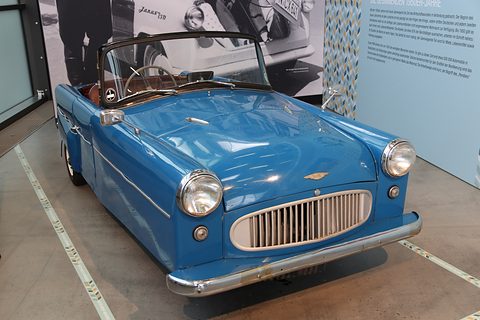
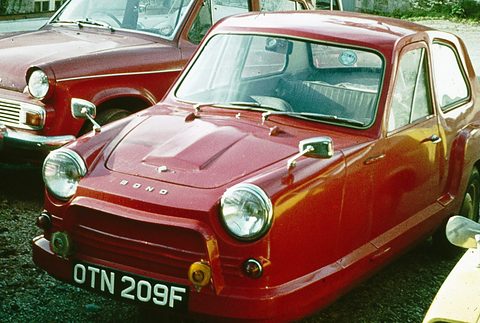
The Mark G of August 1961, the “250G”, had a new roof with a reverse-rake rear window, wind-up windows and quarter-lights, lockable doors, a proper rear bench, 10-inch wheels and hydraulic front brakes. It was 11 ft 0 in (3,353 mm) long, weighed 826 lb (375 kg) and cost £395 8s 4d.source 25source 23 An estate followed in June 1962, and from November 1962 the Villiers 4T twin, of 14.6 bhp, good for just over 60 mph.source 25source 1 That year an estate, SCK 787, fitted with the twin, made a 24-hour publicity run on the M1.source 25

The tax that killed it

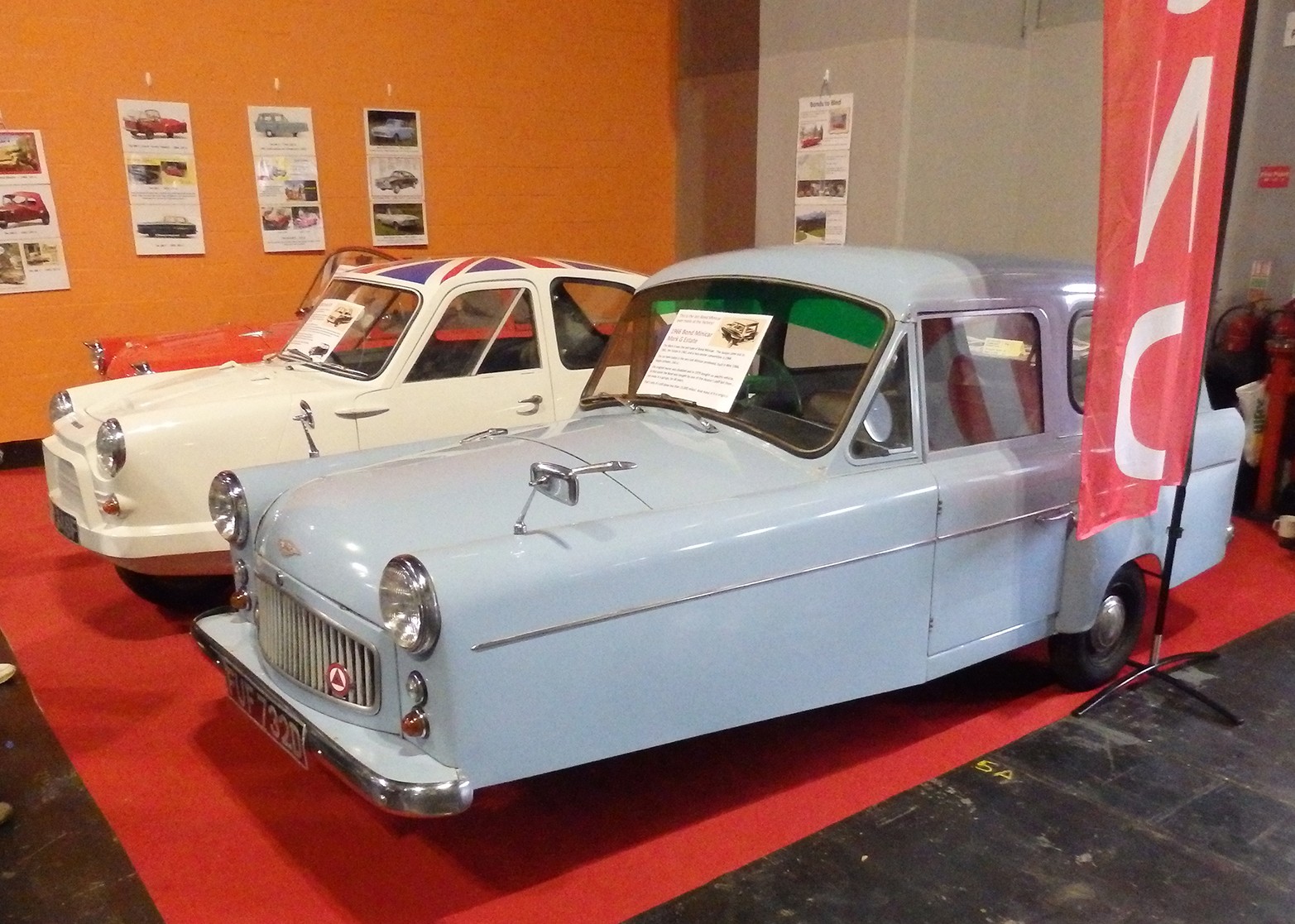
In April 1962 the purchase tax on four-wheeled cars fell from 55 to 45 per cent, and in November to 25 per cent, the three-wheelers’ rate. Sharp’s chief, Tom Gratrix, telegraphed the Chancellor warning of 300 redundancies, but no relief came.source 1 Saloon production ended in October 1965, the Tourer’s around the new year and the Ranger’s and estate’s in April 1966.source 25 The last fully assembled Minicar, a Wedgwood Blue estate, FUF 732D, was tested on 7 May 1966. The very last, an engineless estate in primer, left for Greece after its test on 3 December 1966.source 25

By then the firm was Bond Cars Ltd, renamed in October 1963, 1964 or 1965 by different accounts, and it had the four-wheeled Equipe and, from 1966, the Imp-engined Bond 875.source 1source 5source 4 In 1968 Dutton-Forshaw bought the Loxhams and Bradshaw Group and offered Bond for sale. When its managers failed to buy it themselves, Reliant, the old rival from Tamworth, took it over in February 1969. The Preston factory closed in December 1970, and the Bond name ended with the Bond Bug in 1974.source 5 Lawrie Bond himself had left soon after production began, and later Marks were Sharp’s work, by Granville Bradshaw and the chief design engineer Alan Pounder.source 5source 1 Boddy, reviewing Bond’s biography in 1994, still called the Minicar something of a disaster.source 26
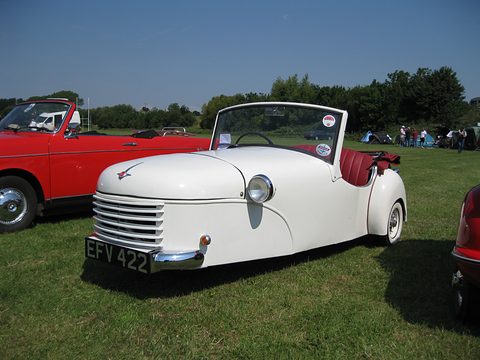
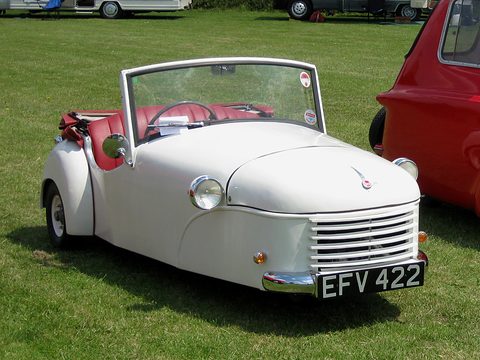
White three-wheeler seen from the side on a show field, a red sports car behind it.
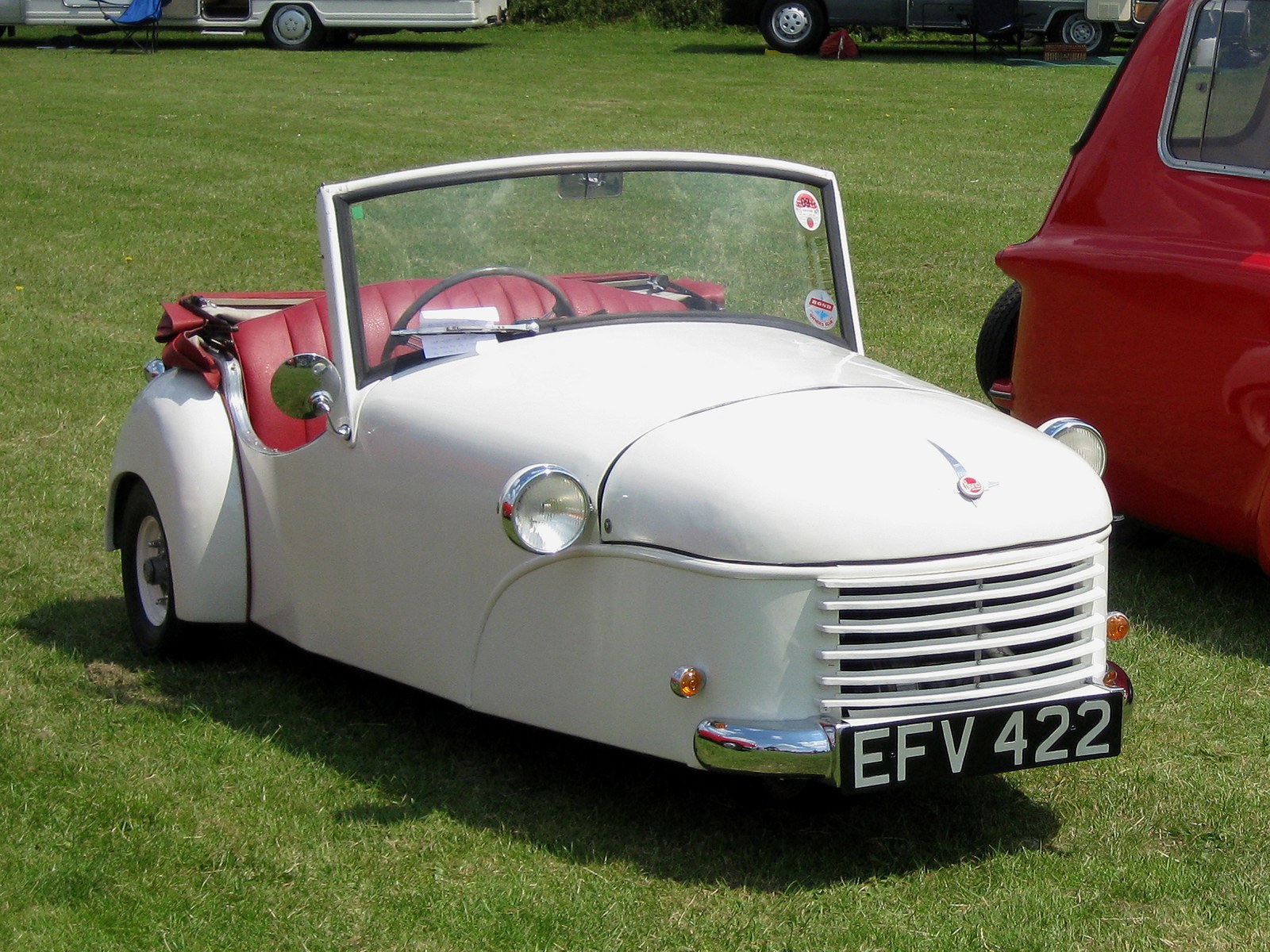
A 1951 Mark A Tourer, EFV 422, at Keynsham in 2011: no doors, and the headlamps on the sides of the body.Photo: Mighty Antar, CC BY-SA 3.0, via Wikimedia Commons
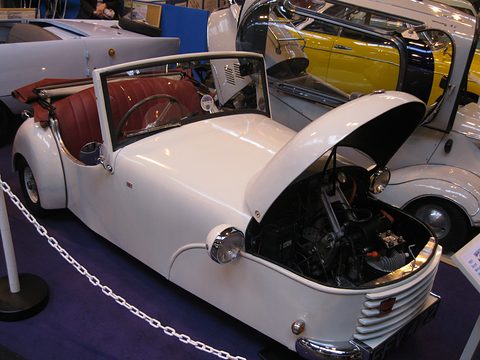
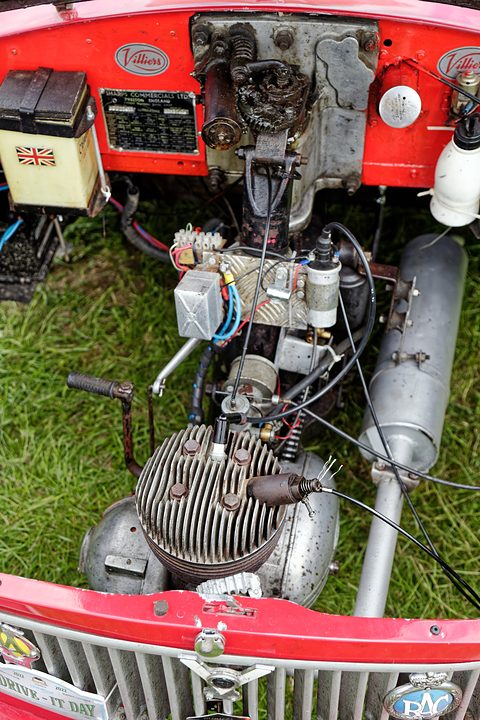
Top-down view into a red nose compartment holding a finned engine and its mounting.
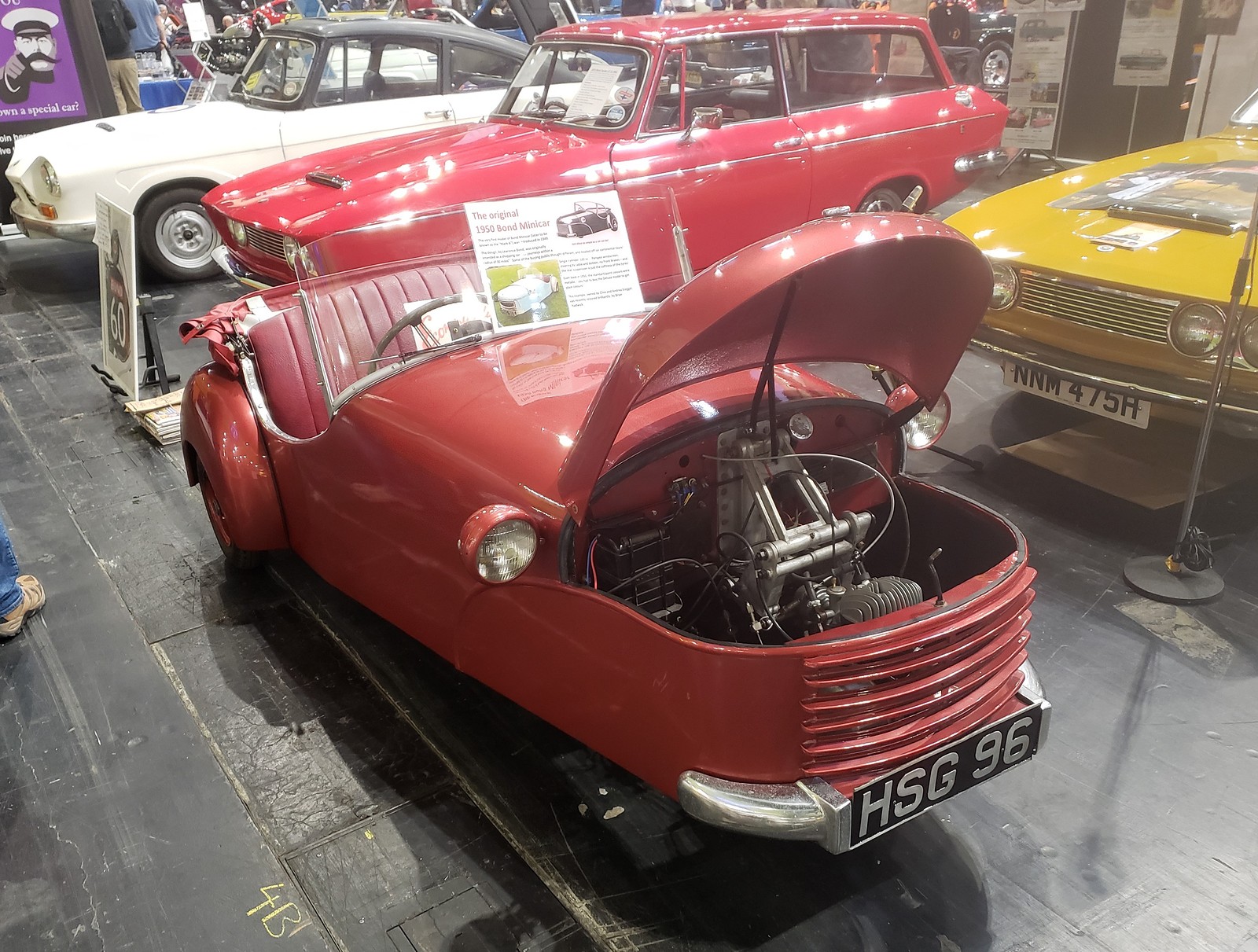
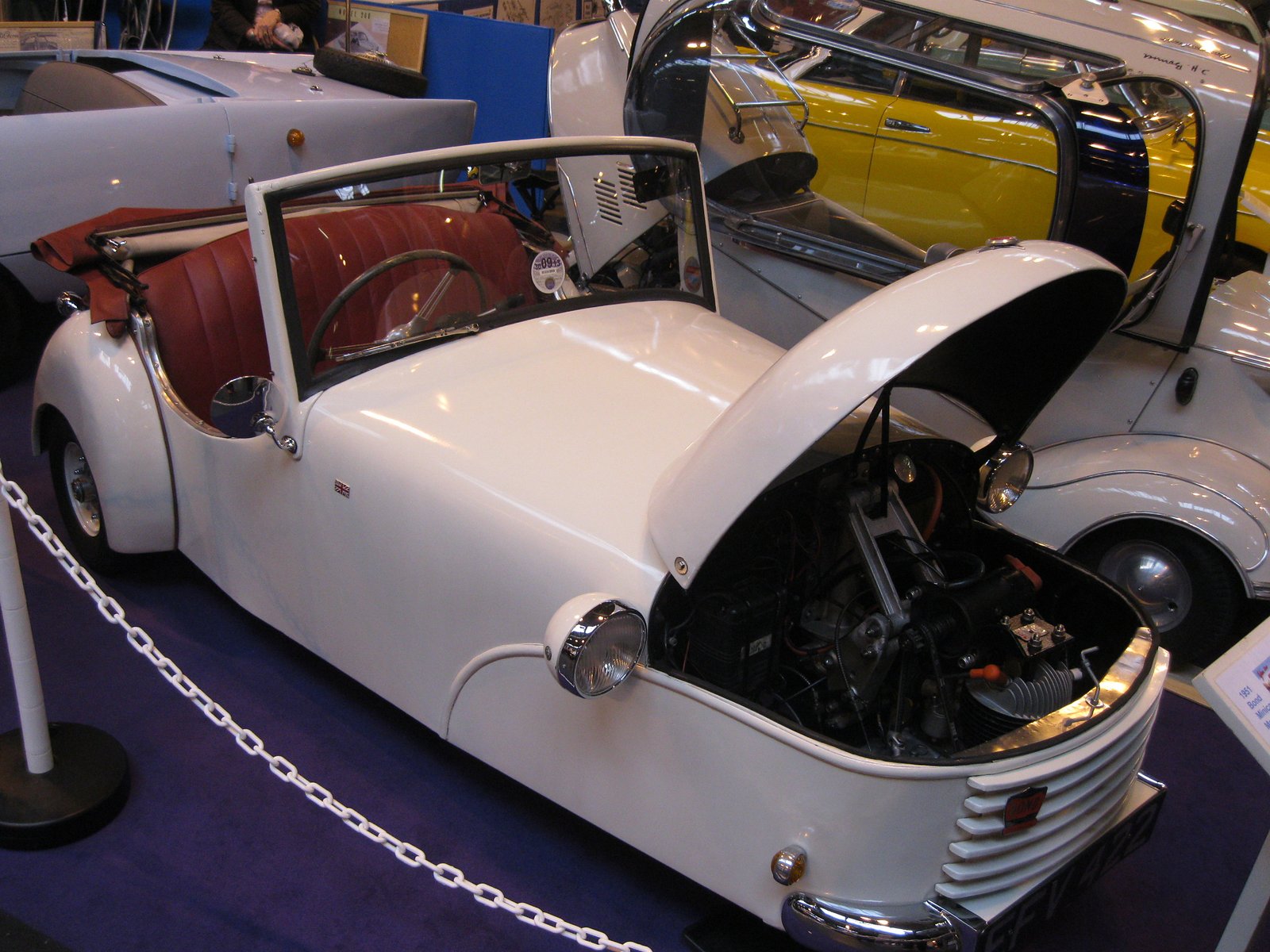
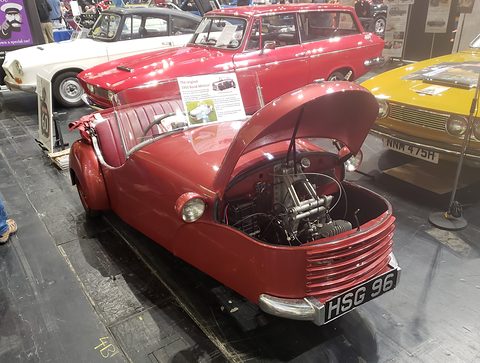
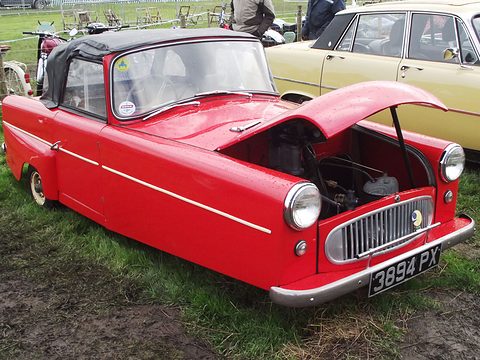
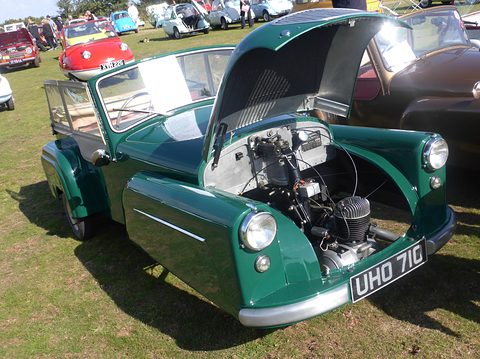
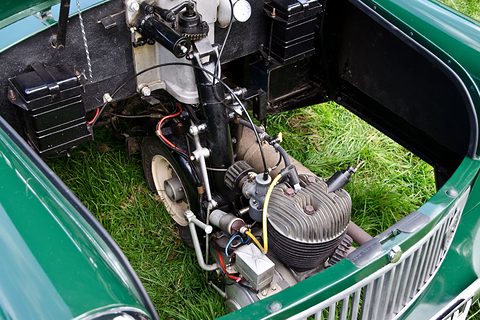
Inside the nose of a 1950 Mark A: the Villiers engine mounted over the single front wheel, at the NEC in 2023.Photo: Andrew Bone from Weymouth, England, CC BY 2.0, via Wikimedia Commons
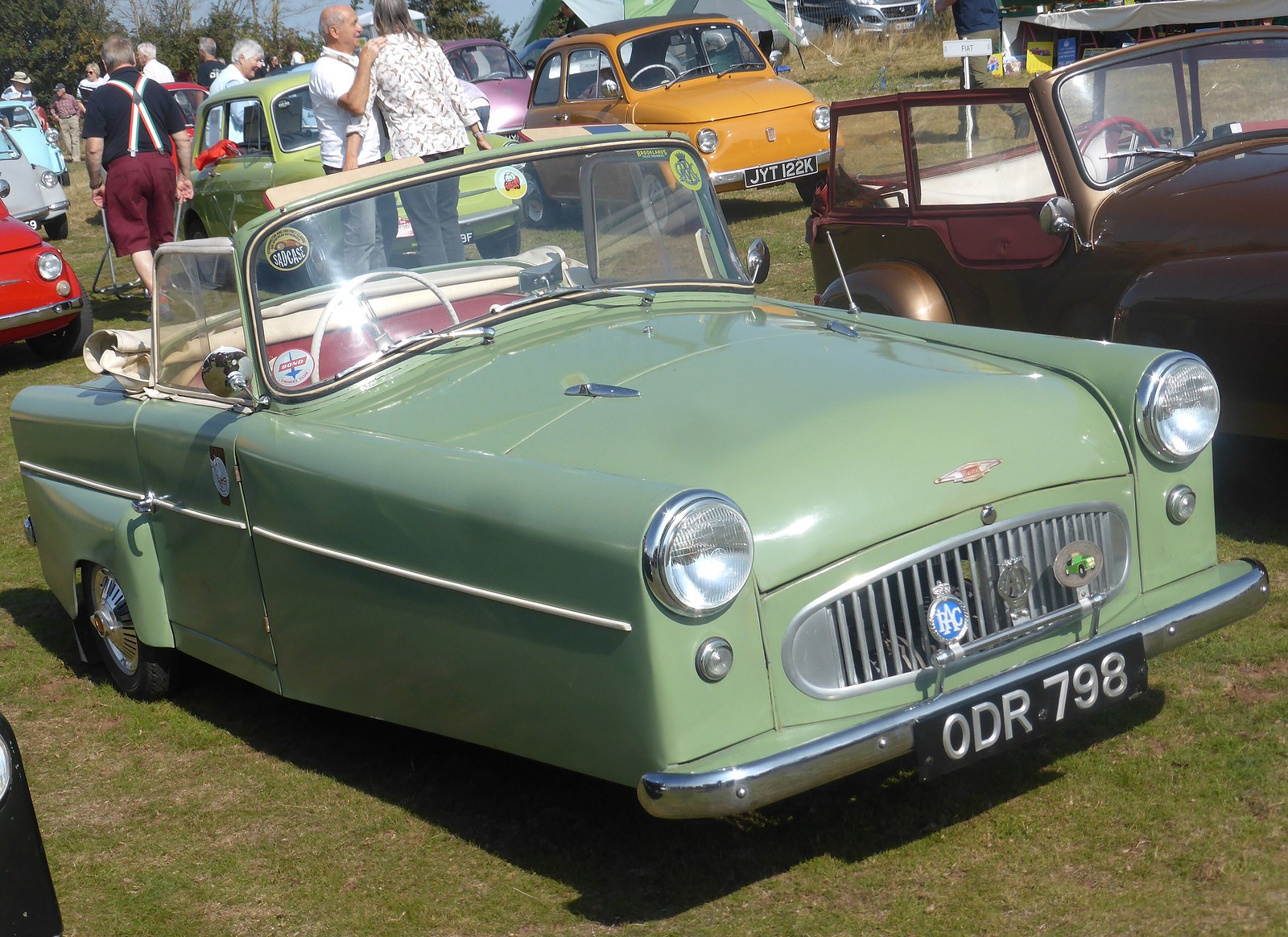
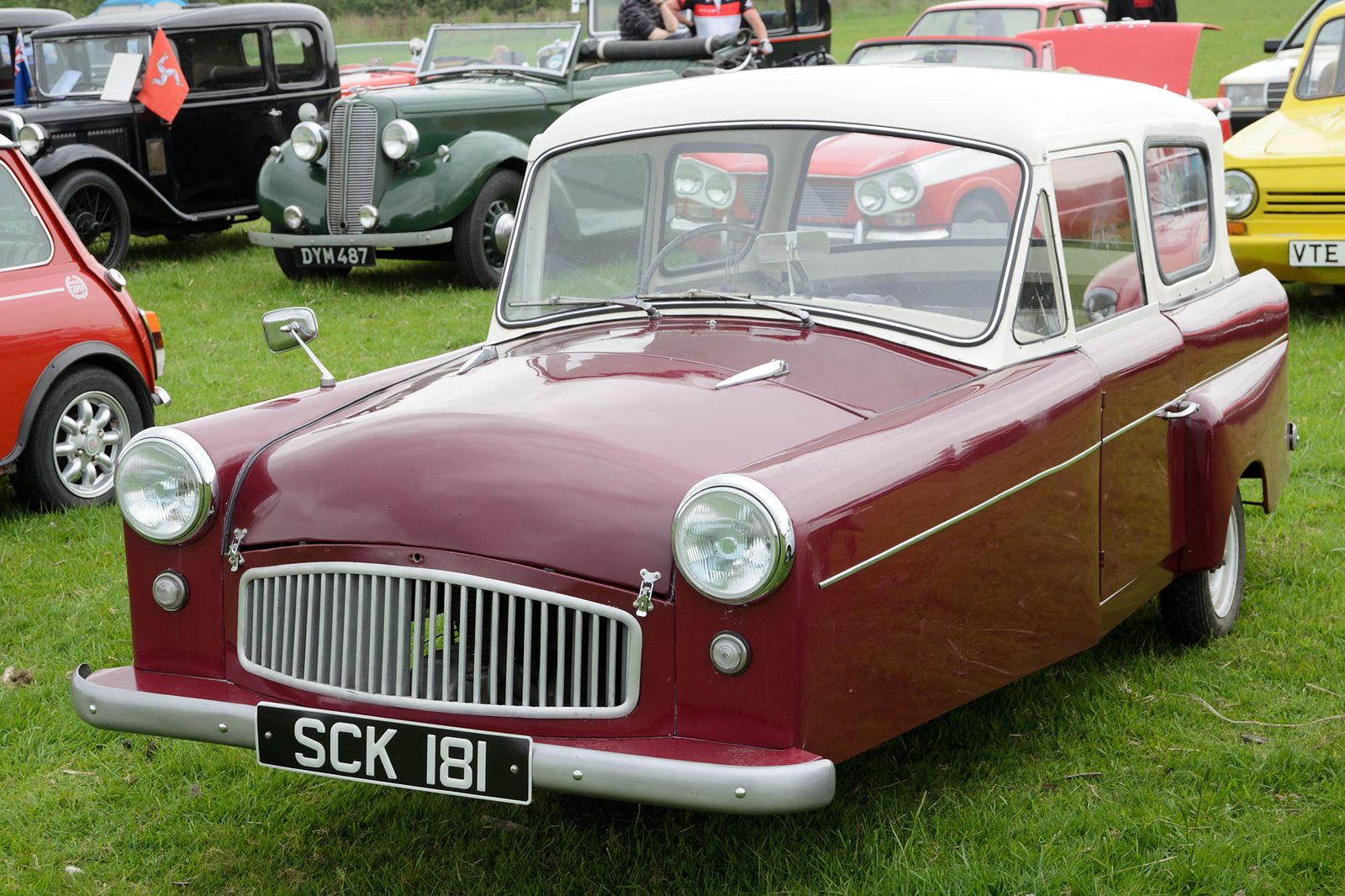
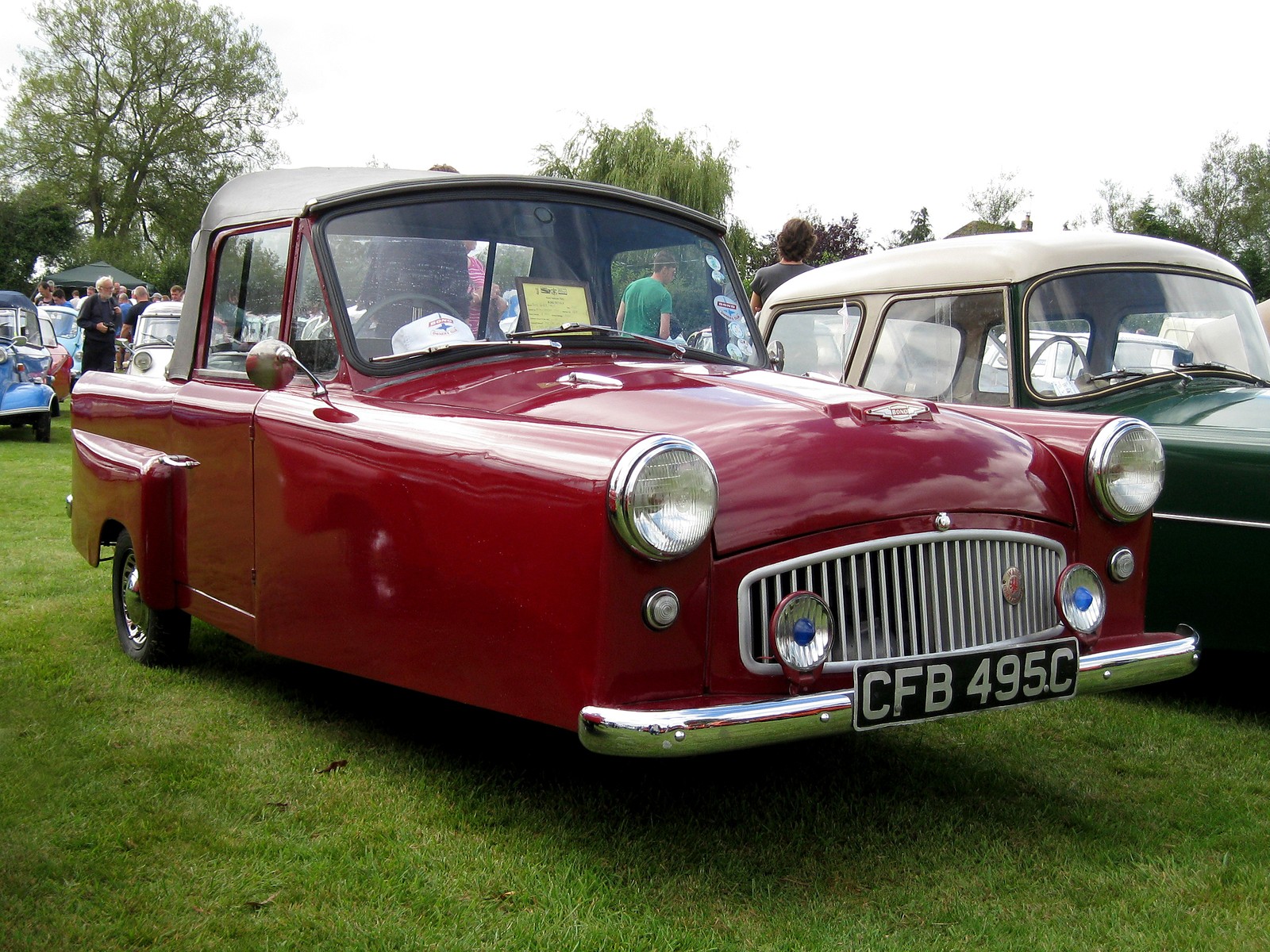
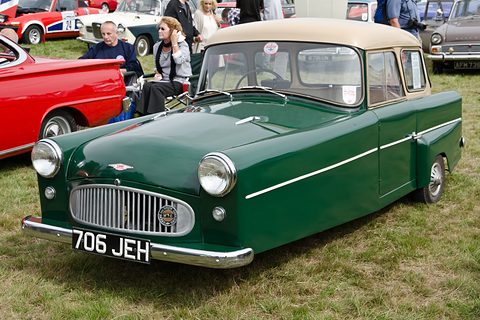
Dark green three-wheeler with a cream hood, chrome grille and bumper, on grass among other microcars.
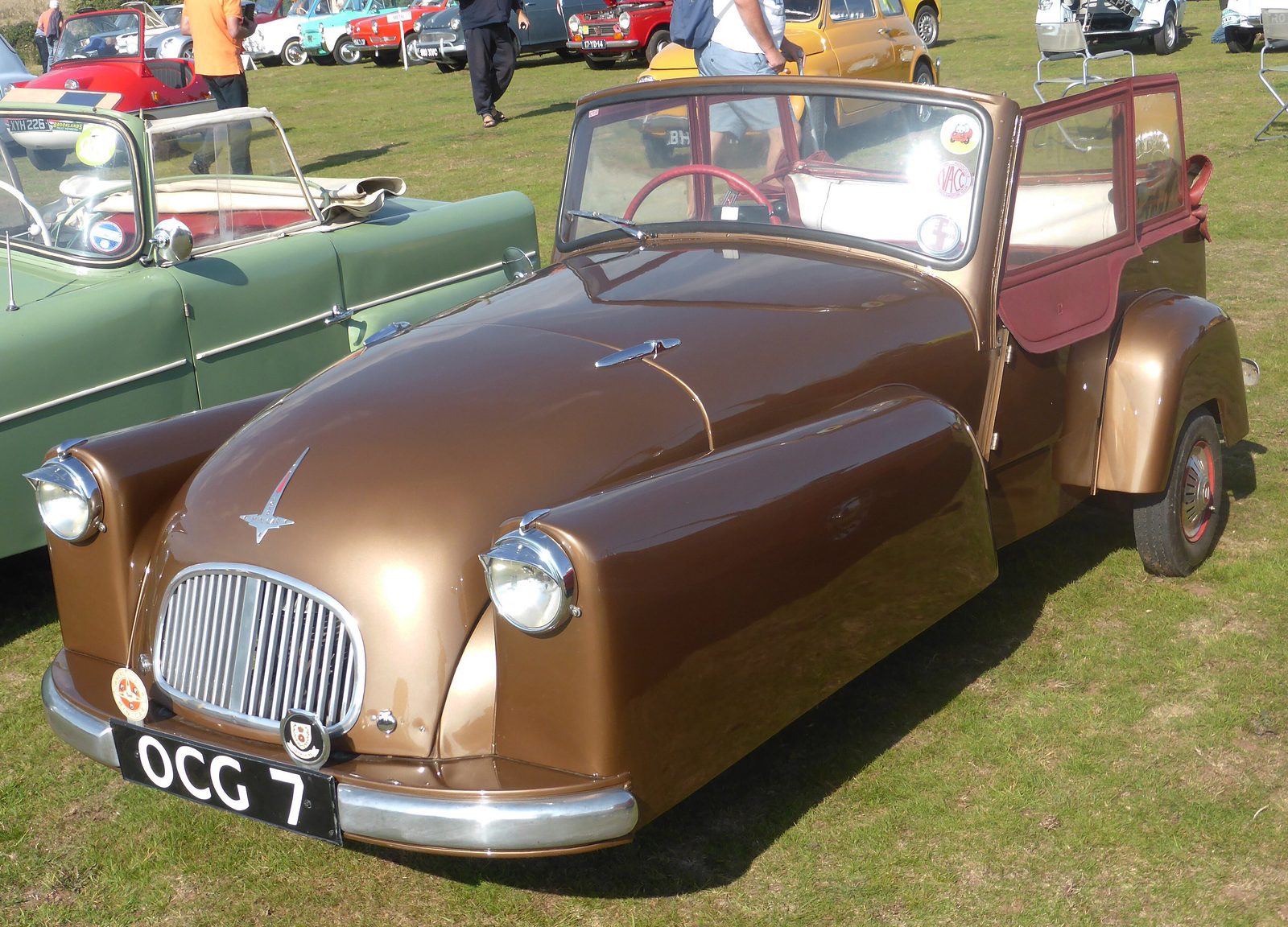
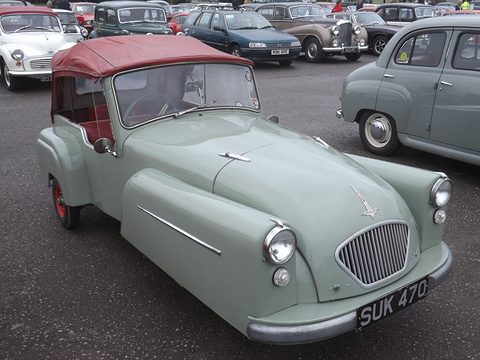
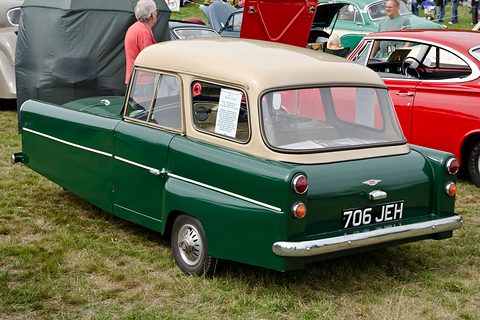
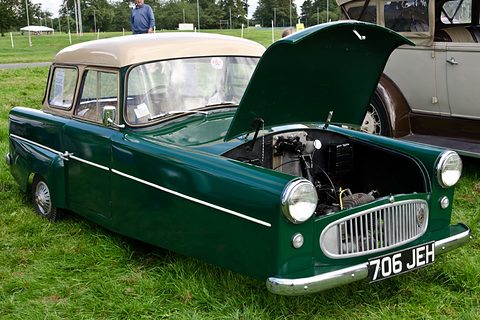
LCK 562, the 1956 prototype of the Mark E, with its flat sides, at the Atwell-Wilson Motor Museum, Calne, in 2011.Photo: Mighty Antar, CC BY-SA 3.0, via Wikimedia Commons
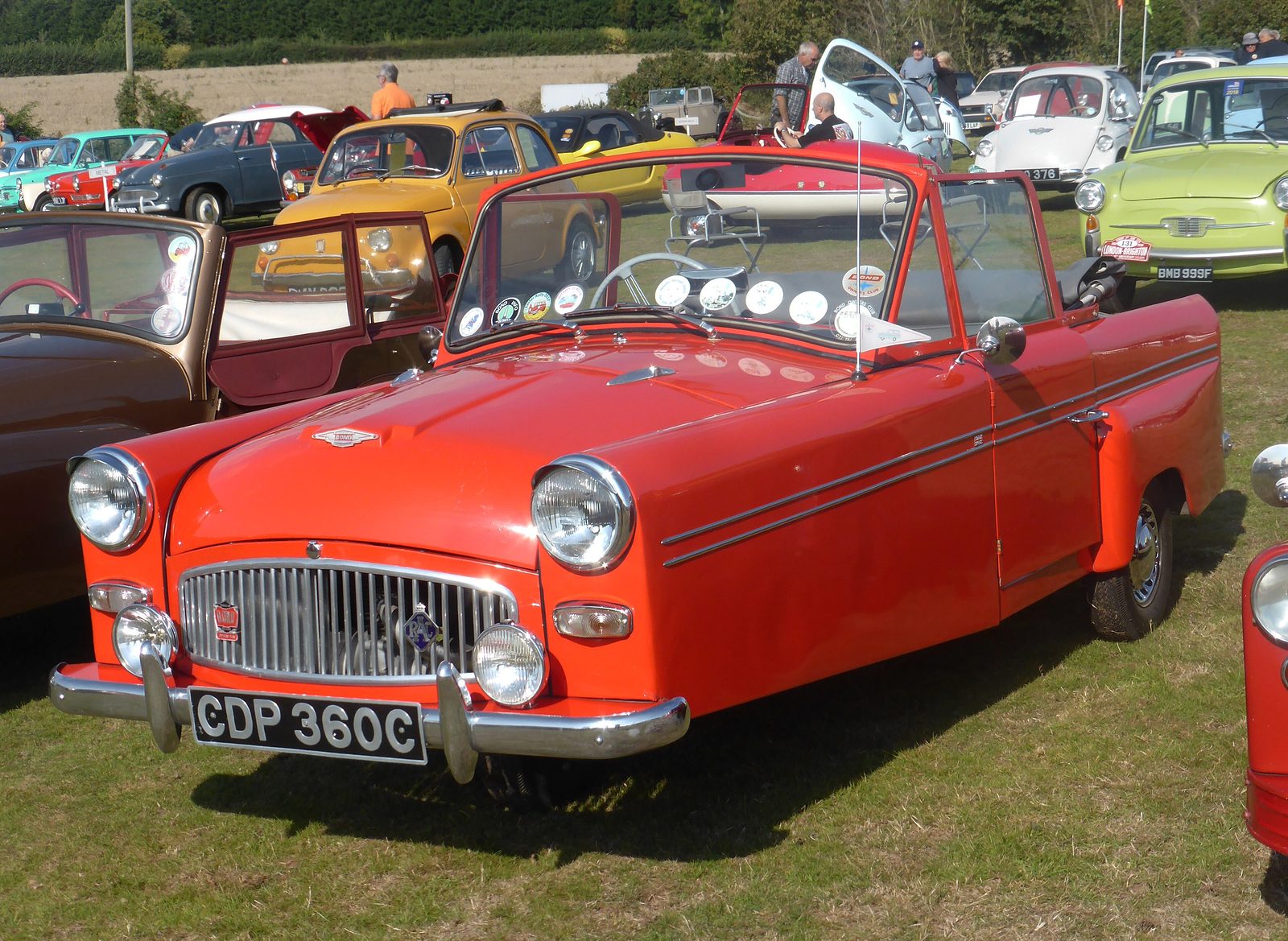
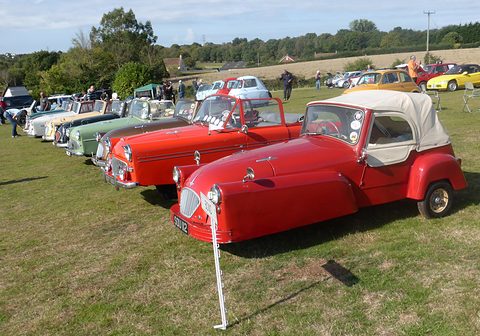
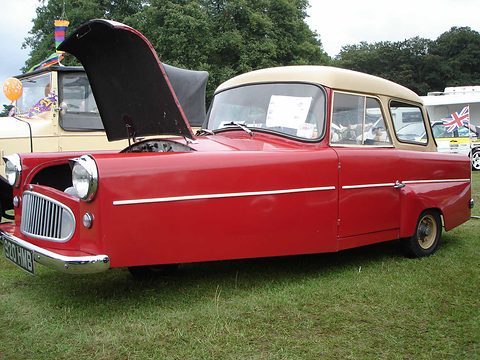
A long row of small three-wheelers parked on grass under a cloudy sky, a red one nearest.
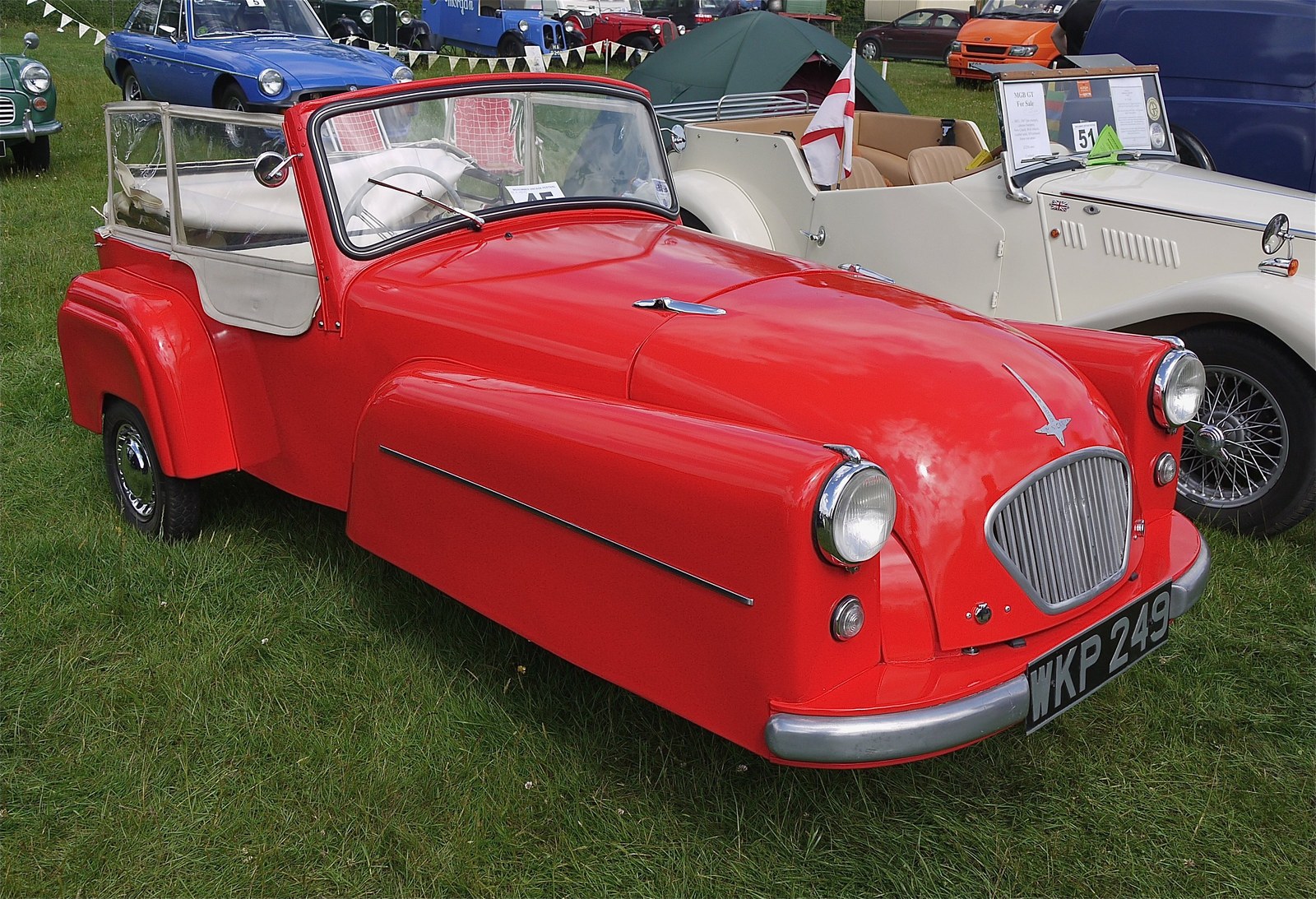
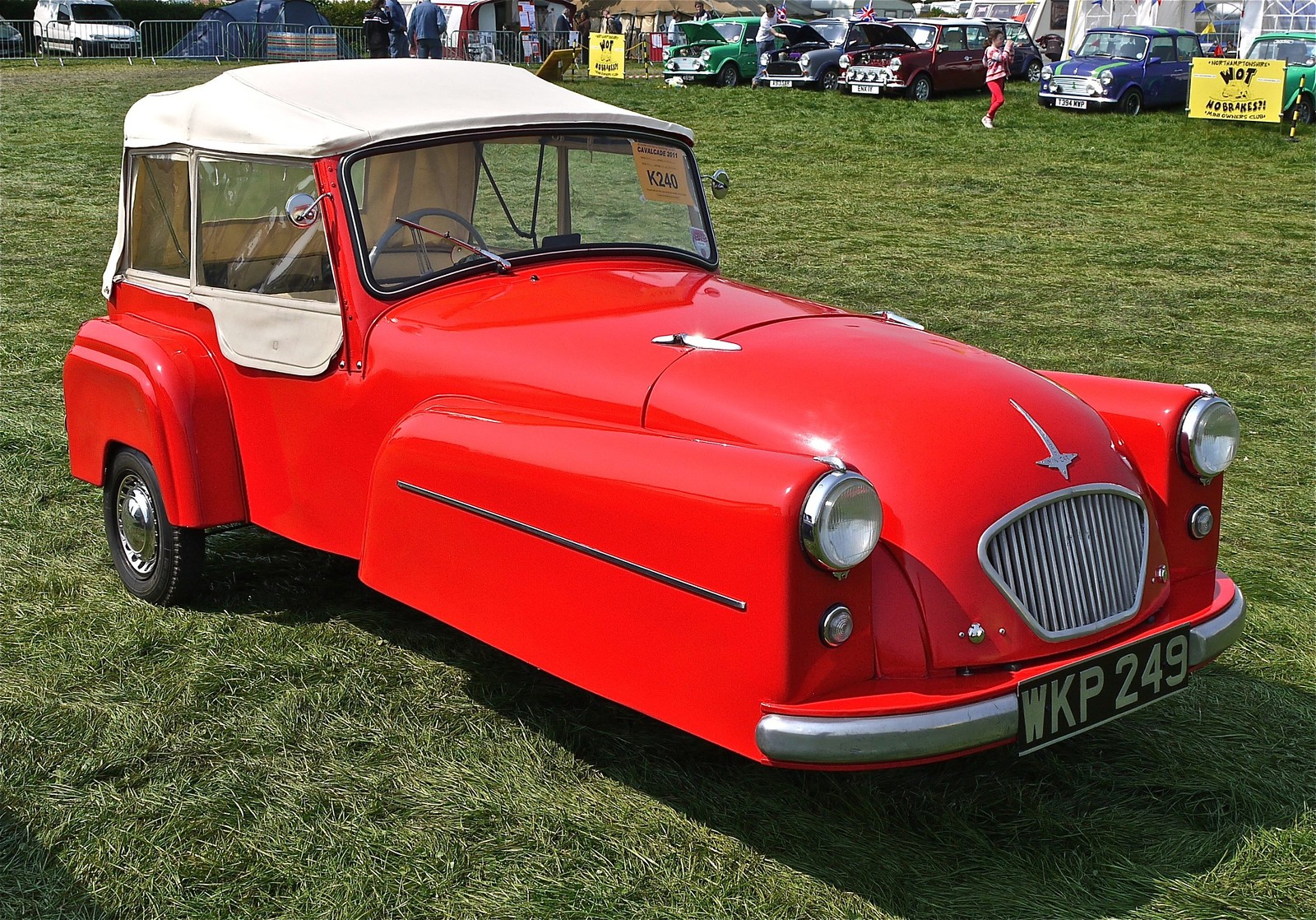
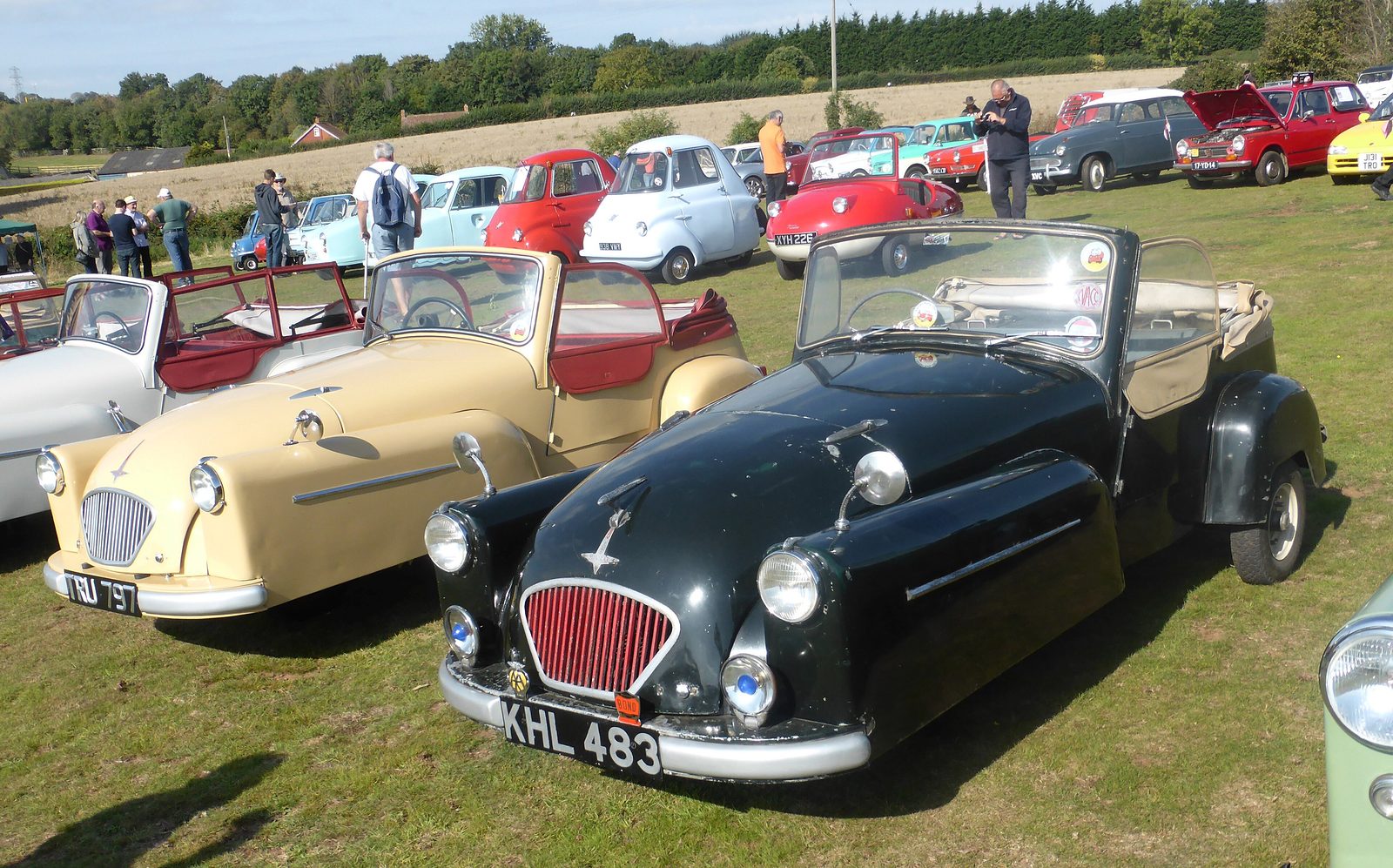
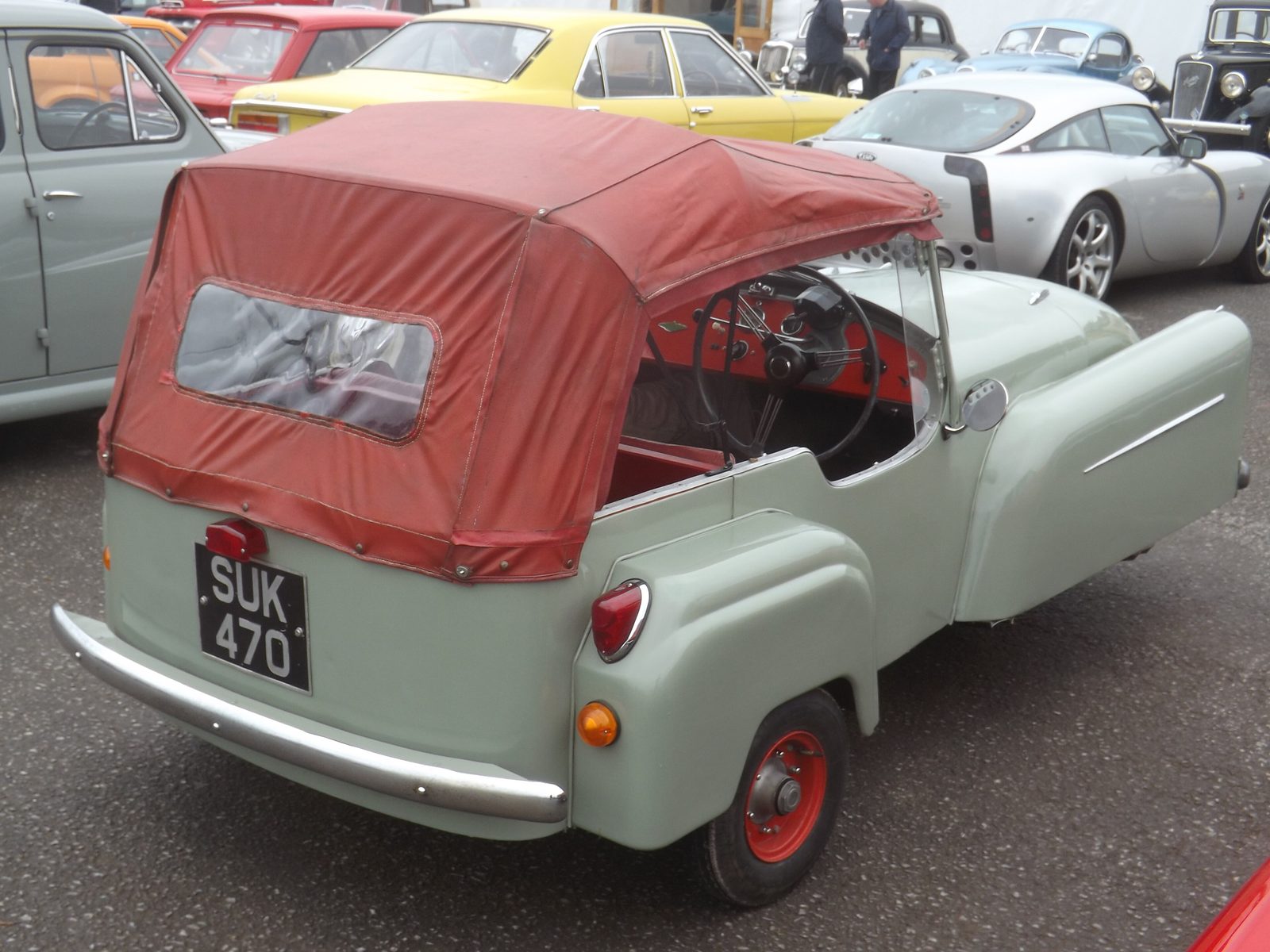
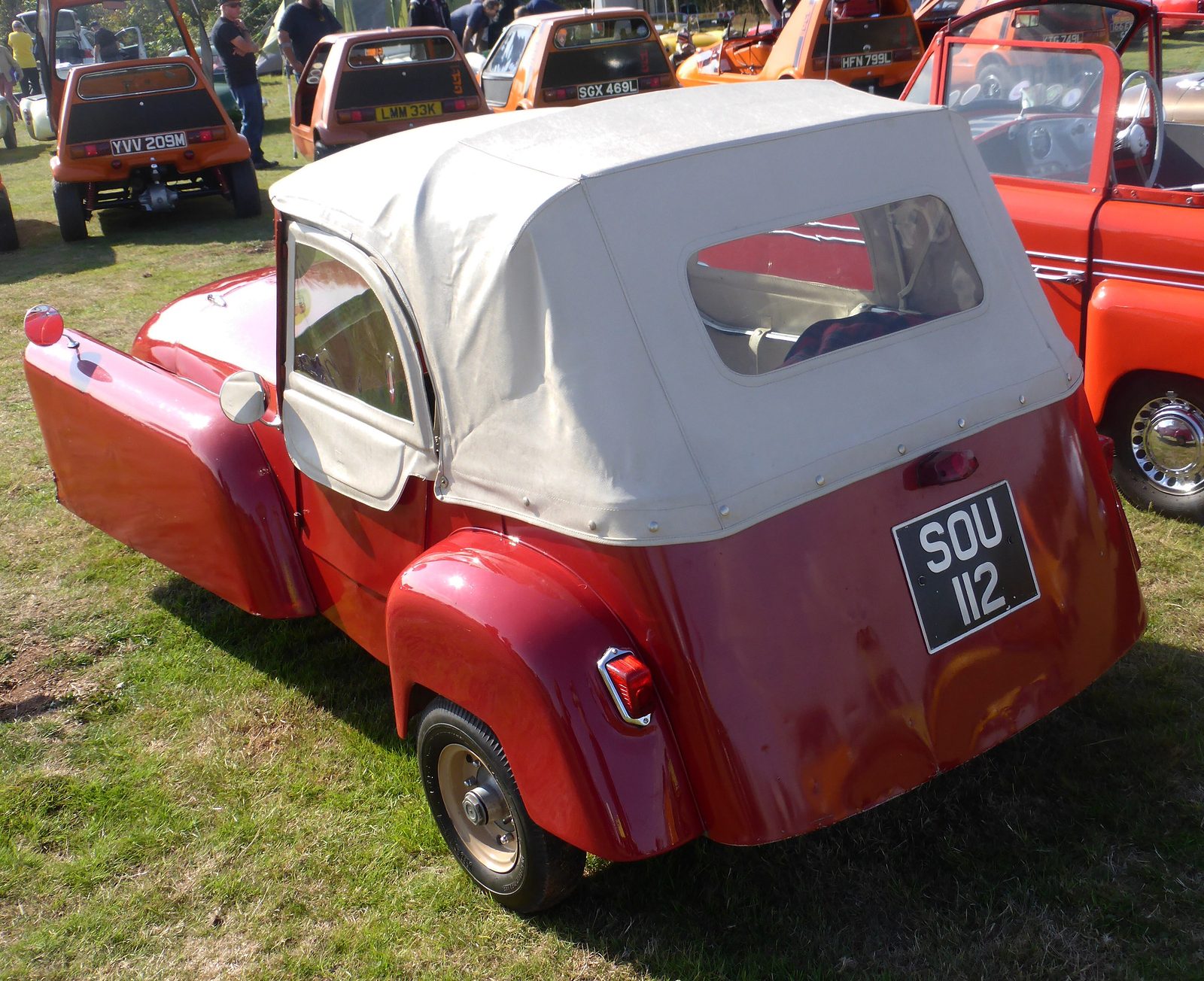
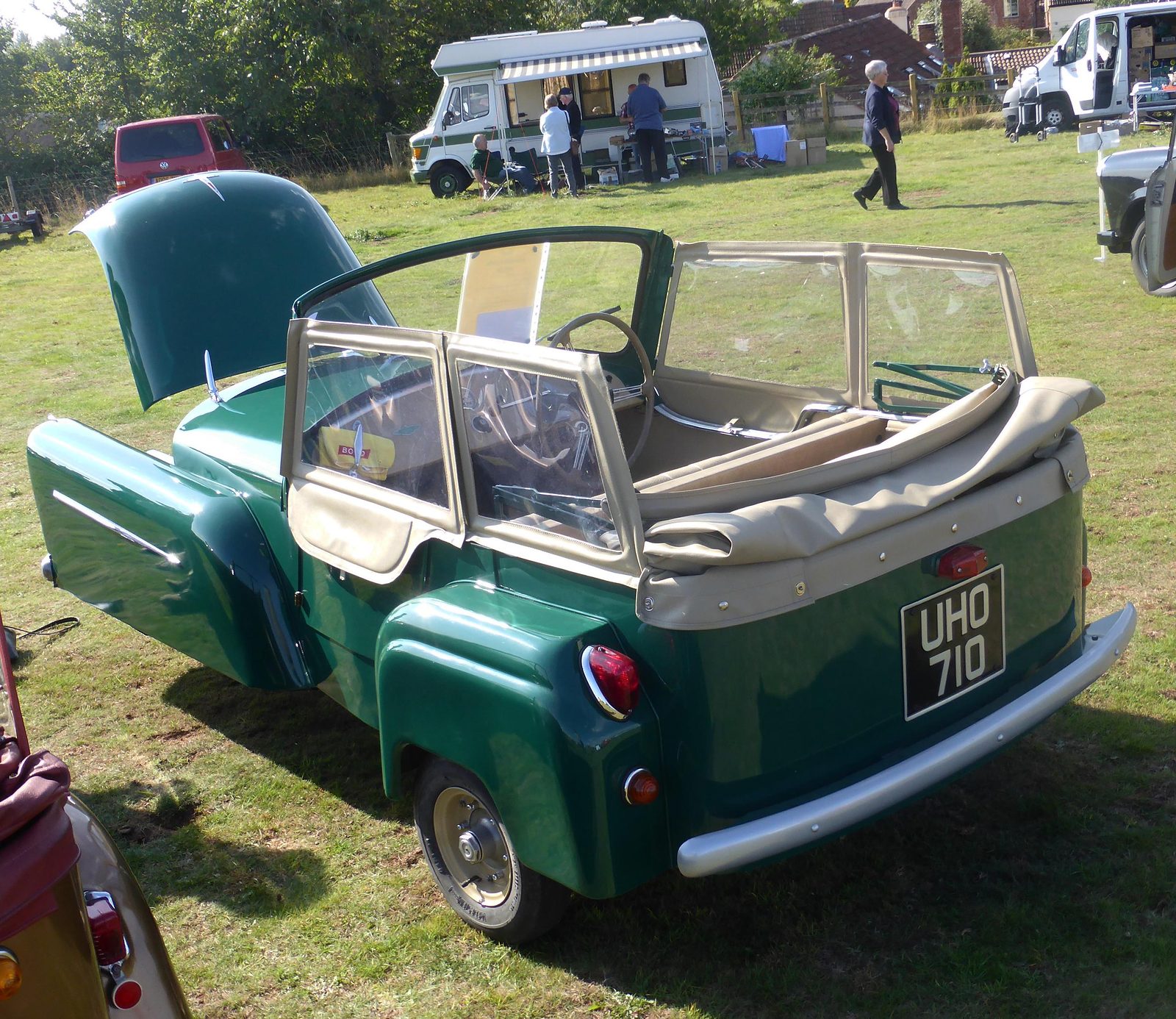
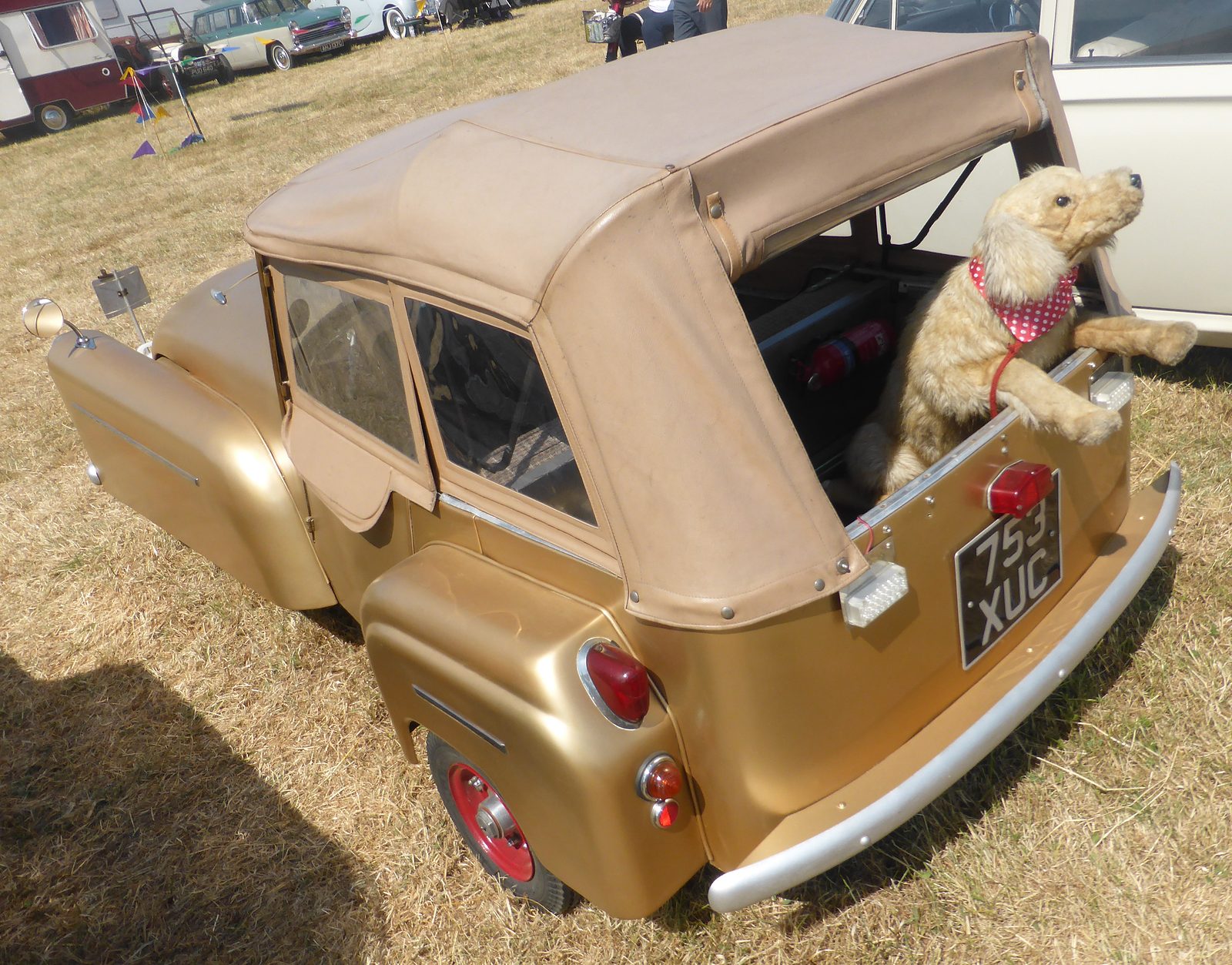
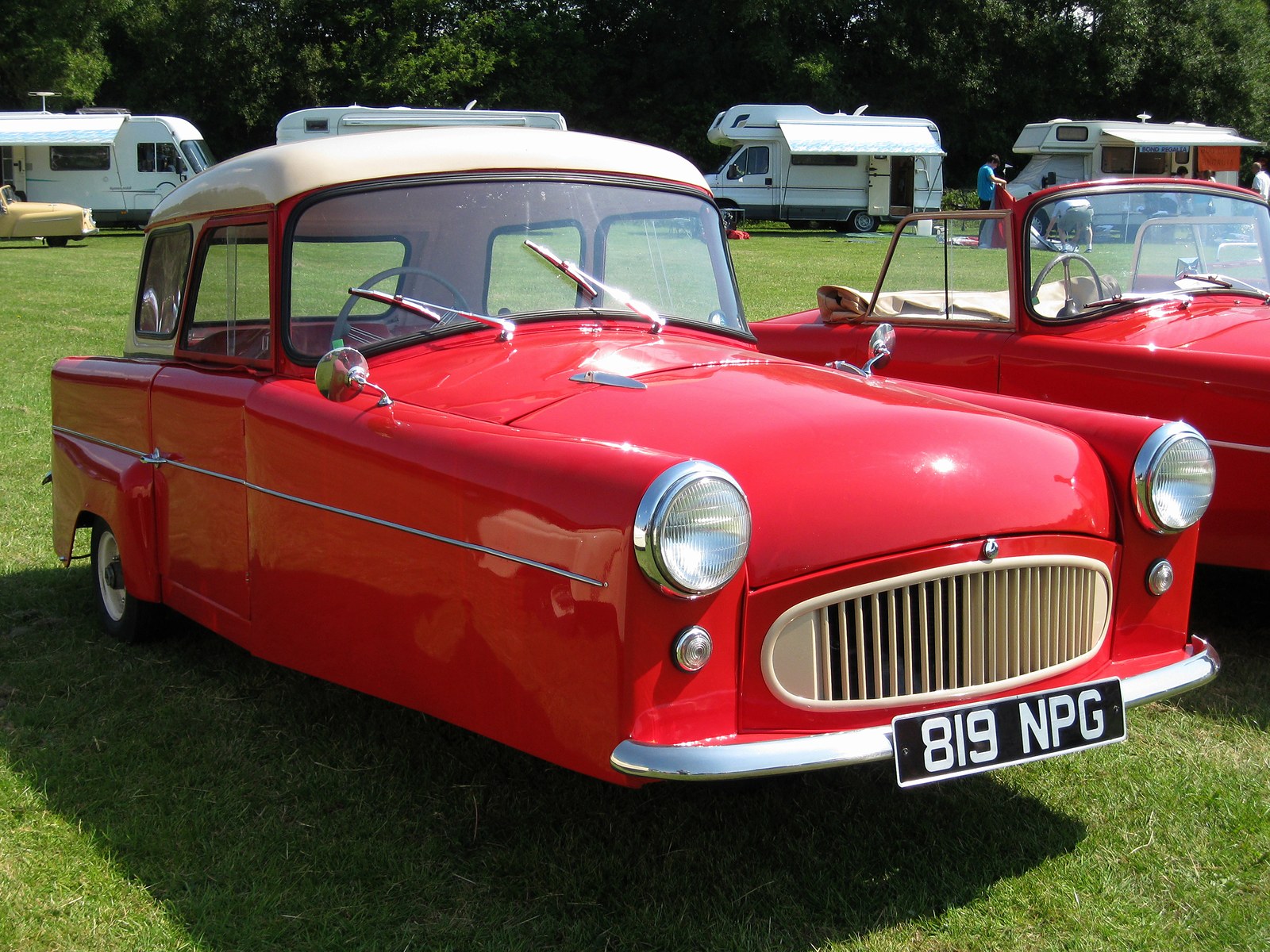
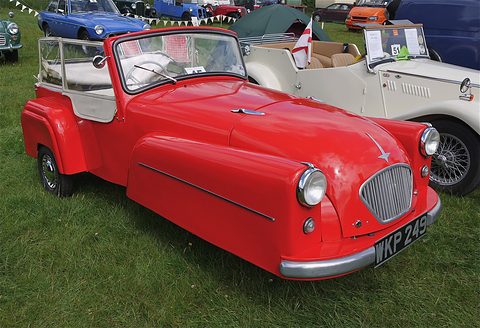
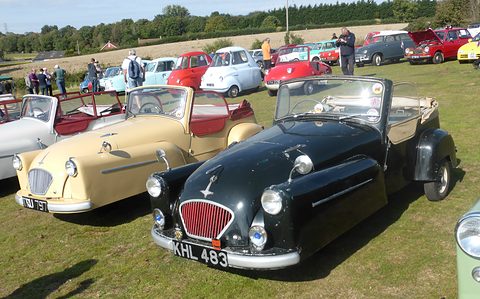
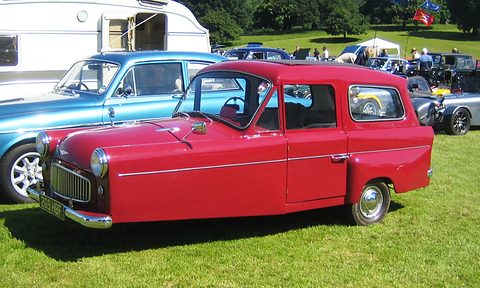
A line of Bond Minicars, a red Mark D in front, at the National Microcar Rally in 2019.Photo: Andrew Bone from Weymouth, England, CC BY 2.0, via Wikimedia Commons

Bond Ranger

1952–⁠1970 · a record on this page

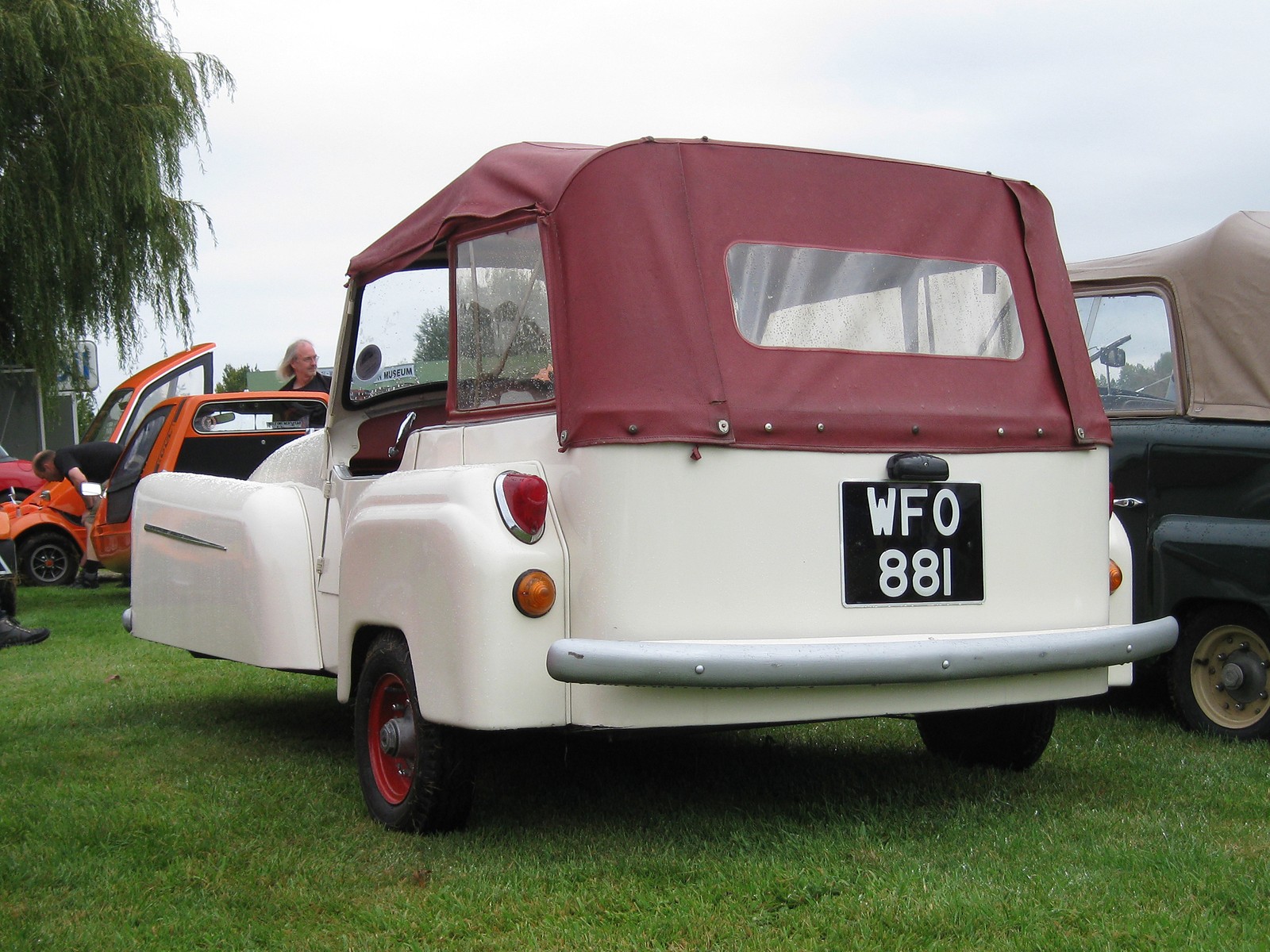
Bond’s commercial three-wheelers ran almost the whole life of the marque, and as commercial vehicles they paid no purchase tax.source 17source 24source 25source 27 The first, in May 1952, was the Sharp’s Minitruck: a Mark B with a larger, upright rear body for 3 cwt, a roll-up flap in the hood and a seat for the driver only, at £265 8s 4d. The Minivan beside it had an enclosed rear with a door and a bench for two, at £289 8s 4d, and the Family Safety Saloon was a Minivan with side windows and two inward-facing child seats.source 17 Minitrucks went on with the Mark C body until March 1956.source 18 English Wikipedia counts 240 Mark B Minitrucks and 84 Minivans and Safety Saloons.source 1

The name Ranger arrived in March 1960 on a Mark F: a Family Saloon with no side windows and no rear seats, an opening rear window for loading and room for 3 cwt or 31 cu ft. It was sold in primer at £295; painting cost £4 10s more, and reverse £8 2s 6d.source 24 In 1960, 39 vehicles were recorded as “Van” rather than Ranger, probably with only the driver’s seat; the Weiner museum says 40.source 24source 23 A single-seat three-wheeler of this kind could be driven by a 16-year-old on a motorcycle licence, or by a learner on L-plates without a companion.source 23source 1 The Mark G Ranger of May 1962 had a tailgate and carried 4 cwt or 42 cu ft, at £325 in primer; the twin came in March 1963, and the last Rangers were tested in March and April 1966.source 25 Its successor, the 875 Ranger of April 1967 to February 1970, had the Imp engine; the very last 875 chassis built was a Ranger.source 27 No separate total of Rangers has been found (more vans in micro vans).

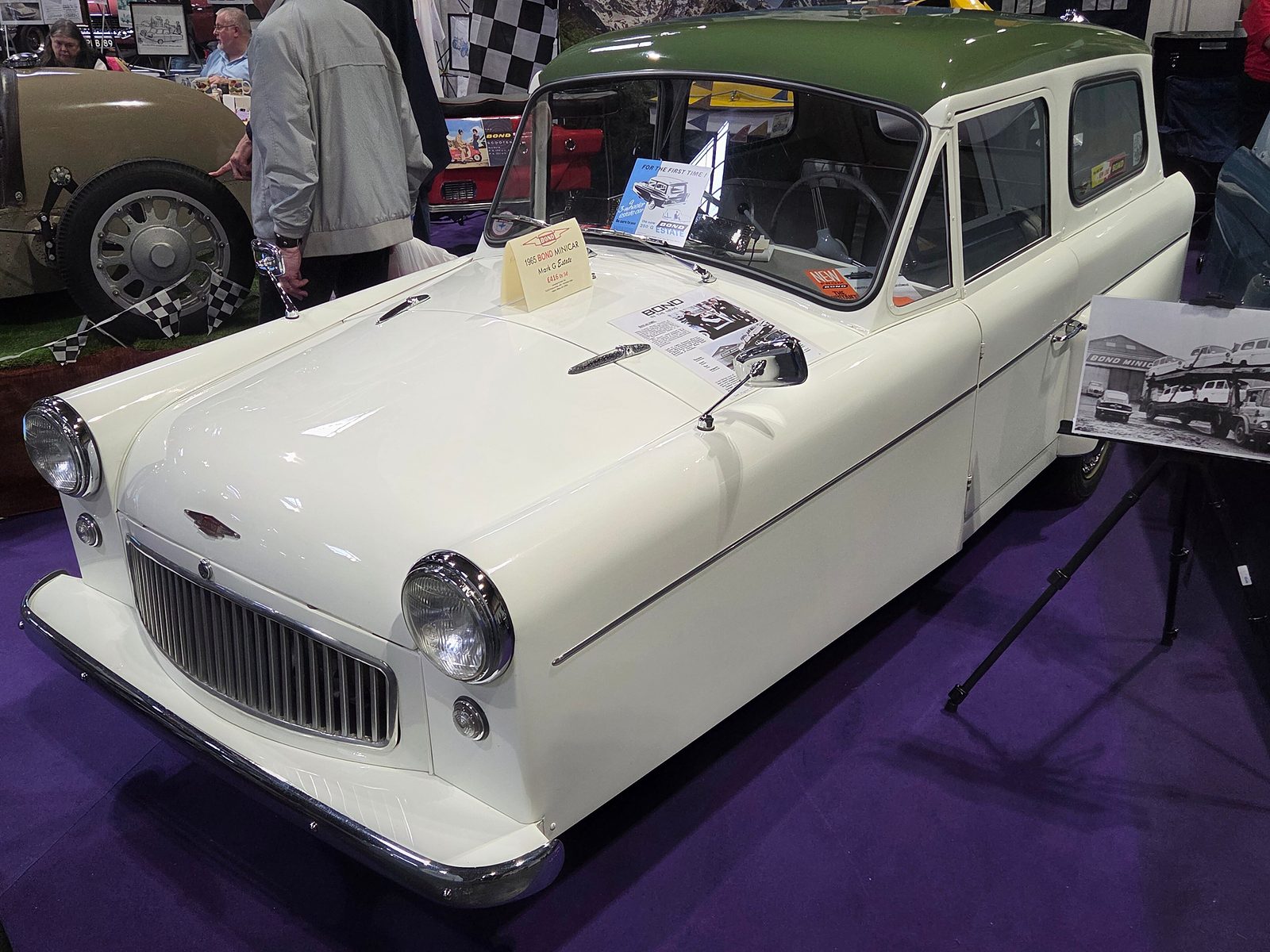
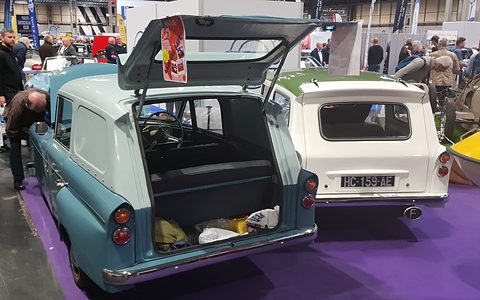
Two small three-wheel estates seen from behind, one with its tailgate raised, on a purple carpet.
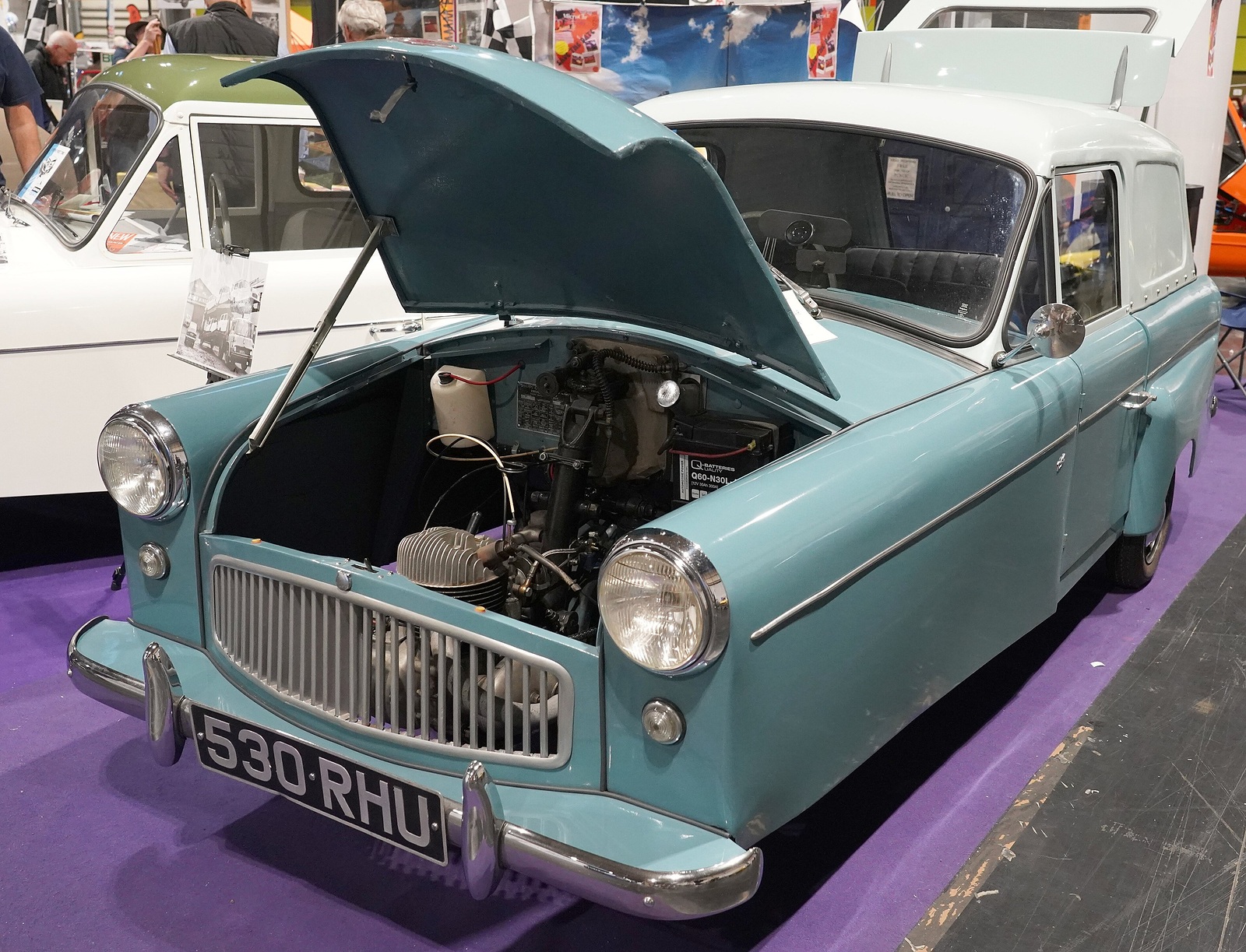
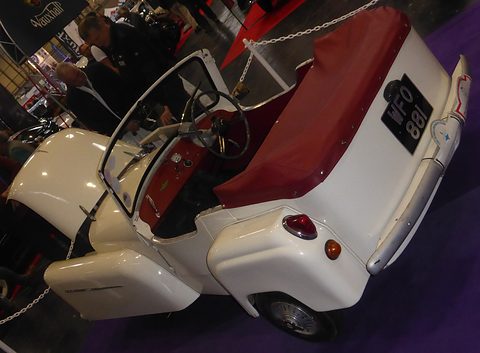
A 1962 Ranger van with its tailgate up, beside a 1965 Mark G Estate, at the NEC Classic Motor Show in 2025.Photo: Andrea Boano, CC BY 4.0, via Wikimedia Commons

Pictures

More photographs, old and new

Variants

Seven Marks

The Minicar, Mark by Mark
VariantYearsWhat differsHow many
Mark A1949–⁠1951No doors, no reverse, no rear suspension; cable-and-bobbin steering until October 1950; headlamps on the body sides; 122 cc, or 197 cc in the Deluxe1,973
Mark B1951–⁠1952Coil-spring rear suspension, a bigger boot; a door on 94 cars; Minitruck, Minivan and Family Safety Saloon1,414
Mark C1952–⁠1956Dummy front wings with the headlamps, a 90° steering lock each way, Flexitor rubber rear suspension, brakes on all three wheels6,399
Mark D1956–⁠1958Villiers 9E, 12-volt electrics; reverse by running the engine backwards, from late 1956; four speeds from 19583,761
Mark E1957–⁠1958A new car: steel frame, two doors, flat sides and flared rear wings1,189
Mark F1958–⁠1961The Mark E body with a 250 cc single and four speeds; Tourer, Saloon Coupé, Family Saloon6,493, with the Rangers
Mark G1961–⁠1966Reverse-rake rear window, wind-up windows, a rear bench; saloon, estate, Ranger and Tourer; a twin from late 19623,253

Specification

The first and the last

Engine and drive

Engine and drive
Engine, Mark AVilliers 10D single-cylinder air-cooled two-stroke, 122 cc; 5 bhp at 4,400 rpmsource 13source 28source 1
Engine, Marks A Deluxe to EVilliers 197 cc singles: the 6E, 8E from June 1953, 9E from 1956source 13source 18source 218 hp, 8.4 bhp or 9 bhp for the Mark C, by different accounts
Engine, Marks F and GVilliers 31A and 35A singles of 246–250 cc; the 4T twin of 250 cc, 14.6 bhp at 5,500 rpmsource 24source 25source 1Mark F 9.5 hp by the Weiner museum, about 12 bhp by English Wikipedia
DriveEngine, gearbox and front wheel steer as one unit; chain to the front wheelsource 13source 8source 15
GearboxThree speeds; four from 1958; reverse by reversing the engine from late 1956source 13source 21source 12

Body and chassis

Body and chassis
ConstructionAluminium stressed-skin monocoque, Marks A–D; steel box-section frame from the Mark Esource 13source 3source 22source 23
SteeringCable and bobbin, then rack and pinion (1950); worm and sector with 90° lock each way from the Mark Csource 13source 18source 19
Rear suspensionNone on the Mark A; coil springs, Mark B; Flexitor rubber, Mark C onsource 13source 17source 18
BrakesRear only, Mark A; all three wheels from the Mark C; Lockheed hydraulic front, Mark Gsource 13source 18source 25
Electrics6 volts; 12 volts from the Mark Dsource 13source 21

Dimensions

Dimensions
Length2,692 mm (8 ft 10 in), Mark A; 2,997 mm (9 ft 10 in), Marks C–D; 3,353 mm (11 ft), Marks E–Gsource 13source 18source 22source 25Mark A 8 ft 8 in on the Weiner museum’s panel; 2,750 mm at the Science Museum
Width1,397 mm (4 ft 7 in), Mark A; 1,448 mm (4 ft 9 in), Mark C; 1,575 mm (5 ft 2 in), Mark Gsource 13source 18source 25
Wheelbase1,651 mm (5 ft 5 in), Mark A; 1,676 mm (5 ft 6 in), Marks C and Fsource 13source 8source 22
Weight141 kg (310 lb), Mark A; 209 kg (460 lb), Mark C; 305 kg (672 lb), Mark F; 375 kg (826 lb), Mark Gsource 13source 18source 24source 25
Performance and running

Performance and running
Top speed72 km/h (45 mph), Mark A, by the Weiner museum; 89 km/h (55 mph), Mark F; “just over” 60 mph, Mark G twinsource 3source 23source 1The Motor timed a Mark A Deluxe at 43.3 mph
Economy72 mpg in The Motor’s test; about 60 mpg for the Mark C and Fsource 1source 8
Road tax£5 a year in 1955source 8
Price newAbout £200, Mark A (1949); £395 8s 4d, Mark G (1961)source 13source 25

How many were built?

Every figure, with its source

24,482 built, 1949–⁠66English Wikipedia’s figures for each Mark add up to 24,482, and the Science Museum gives “approximately 24,500”. Each Mark’s figure also matches, within a few cars, the run of chassis numbers in the factory records that the Bond Owners’ Club publishes; that check is our arithmetic. The round figures on the Weiner museum’s panels are not used.

  1. 26,500Minicars in allUnconfirmed

    Blog Preston, a weak local-history sourcesource 7

  2. approximately 24,500Minicars in allOne source

    The Science Museum Groupsource 28

  3. 24,482Minicars in all: the sum of the seven Marks belowOne source

    English Wikipedia, matched by the club’s chassis recordssource 1

  4. 6,493Mark F, with the RangersOne source

    English Wikipedia; chassis 21181 to 27679source 1source 24

  5. 6,399Mark COne source

    English Wikipedia; chassis ending at 11796source 1source 18

  6. 3,761Mark DOne source

    English Wikipedia; chassis 11797 to 15542source 1source 21

  7. 3,253Mark GOne source

    English Wikipedia; chassis 40000 to 43246source 1source 25

  8. 1,973Mark AOne source

    English Wikipedia; the last Mark A was chassis 1973source 1source 13

  9. 1,414Mark B, with 240 Minitrucks and 84 Minivans and Safety SaloonsOne source

    English Wikipedia; chassis 1974 to 3391source 1source 17

  10. 1,189Mark E; 1,180 by the Weiner museumOne source

    English Wikipedia; chassis 20000 to 21180source 1source 23source 22

  • Two sources agreetwo good sources give the figure
  • One sourcea good source, alone
  • Unconfirmeda lead only, not yet checked

Famous for

Three points

  1. Engine on the wheel

    The engine turned with the front wheel, and from the Mark C the car could pivot almost in its own length.

  2. Reverse by running backwards

    From late 1956 an optional Dynastart on the Deluxe cars could start the engine backwards, giving every gear in reverse.
  3. First on the motorway

    Three Mark Es led the traffic onto Britain’s first motorway, the Preston By-pass, on 5 December 1958.

Racing and records

Economy runs, a rally and a motorway

No circuit racing by the Minicar has been found, but it made economy runs, a rally entry and a motorway stunt (see also racing and rallying, and records and feats).

97 mpg
on a run from Preston to London in a Mark A, at an average of 22.8 mph.source 1
January 1954
A Mark C Deluxe Tourer, GCK 83, is believed to be the car Lieutenant-Colonel M. G. M. Crosby and Captain T. C. Mills drove in the Monte Carlo Rally, though officially it was not eligible; the result has not been found.source 18
5 December 1958
Three Mark Es led the first traffic onto the Preston By-pass.source 1
24 hours
on the M1 in 1962, in a Mark G estate with the twin engine; the distance has not been found.source 25

On screen

Confirmed appearances only

Survivors and collecting

Today

How many Minicars survive in all has not been found; the Weiner museum’s panels gave ten for the Mark A and called the Mark B survivors few.source 3source 14 The Science Museum Group holds a green 1950 Mark A, BKS 448, restored by Sharp’s for the museum in 1955 and kept at Wroughton.source 13source 28 The Lancashire County and Regimental Museum in Preston had an ivory Mark A, NYA 538, and a 1963 Mark G twin estate, 997 KO, was at the Stondon Motor Transport Museum in 2001.source 13source 25 One of the earliest known survivors, the Mark A KLX 216, is entirely original, with 4,680 miles recorded.source 13 At Christie’s in London on 6 March 1997 a left-hand-drive Mark B, believed shown in New York in 1952 and long owned by the showman Vic Hyde, sold for £10,134.38.source 17

The Bond Owners’ Club, which publishes the factory’s production records, had more than 300 members in 2009.source 5source 6 The factory itself once sent owners round the Lake District each year, Alan Pounder remembered, ending with time trials on the promenade at Morecambe, and the club’s president, Stan Cornock, said that if a Bonder was in trouble at the roadside, other Bond drivers would always stop.source 6

We used to send them out all over the Lake District, every year in a different direction. We’d come back to Morecambe and have time trials on the promenade…

Alan Pounder, Bond draughtsman and design engineer, to BBC Inside Out, 2009.source 6

Sources

Numbered as in the text

Much of the detail comes from the Bond Owners’ Club’s production records, compiled by Paul Grogan and James Mander. Nick Wotherspoon’s biography of Lawrie Bond, the July 1950 Motor Sport test itself and the period Autosport, The Motor and Autocar tests were not read. Sources are given as plain text; the links are on the Credits page.

  1. English Wikipedia, Bond Minicar, read in full. Used as a lead; it cites The Motor, Motor Cycling, Light Car, Autosport, The Times, Wotherspoon (1993) and Jones (2008).
  2. Lancashire County Council, Lancashire Pioneers, “Lawrence ‘Lawrie’ Bond – The Bond Minicar”, read in full in an archived copy of 2011.
  3. Bruce Weiner Microcar Museum, “1950 Bond Minicar Mark A”, data panel, read in full in an archived copy.
  4. Grace’s Guide, “Sharp’s Commercials”, read in full.
  5. Bond Owners’ Club, “A brief history of the Bond Company”, 2001, read in full in an archived copy of 2018.
  6. BBC Inside Out North West, “Bond Cars”, 2009, read in full.
  7. Blog Preston, “The Bond Minicar: Preston’s post-war winner”, March 2022, read in full; a weak local source.
  8. W. B., “About the Bond Minicar Mk. C”, Motor Sport, March 1955, a road test, read in full.
  9. 3-wheelers.com, “Laws”, known only from a search-engine excerpt, since the page refused access.
  10. Heinkel Trojan Club, “Cabin Cruisers”, read in full in an archived copy of 2015.
  11. Road Traffic Act 1930, section 2(1), as enacted, legislation.gov.uk, read.
  12. Bruce Weiner Microcar Museum, “1957 Bond Minicar Mark D”, read in full.
  13. Bond Owners’ Club (Paul Grogan and James Mander), “Mark A – January 1949 to April 1951: Vehicle Modifications by Chassis Number”, read in full in an archived copy of 2012.
  14. Bruce Weiner Microcar Museum, “1951 Bond Minicar Mark B”, read in full.
  15. W. Boddy, “Mini motoring before the mini”, Motor Sport, September 2010, read in full.
  16. W. Boddy, “Small, not perfectly formed”, Motor Sport, December 2001, read in full.
  17. Bond Owners’ Club, “Mark B – April 1951 to November 1952”, same series, read in full.
  18. Bond Owners’ Club, “Mark C – October 1952 to May 1956”, same series, read in full.
  19. Bruce Weiner Microcar Museum, “1953 Bond Minicar Mark C”, read in full.
  20. W. Boddy, “My year’s motoring”, Motor Sport, January 1956, the Bond passage read in full.
  21. Bond Owners’ Club, “Mark D – May 1956 to November 1958”, same series, read in full.
  22. Bond Owners’ Club, “Mark E”, same series, read in full.
  23. Bruce Weiner Microcar Museum, “1959 Bond Minicar Mark F”, which also covers the Marks E and G, read in full.
  24. Bond Owners’ Club, “Mark F – November 1958 to January 1963”, same series, read in full.
  25. Bond Owners’ Club, “Mark G – August 1961 to December 1966”, same series, read in full.
  26. Motor Sport, February 1994, review of Nick Wotherspoon’s ‘Lawrie’ Bond: The Man & The Marque, read in full.
  27. Bond Owners’ Club, “875 – Vehicle Modifications by Chassis Number”, read in an archived copy of 2018.
  28. Science Museum Group, “Bond Minicar with 122 c.c. engine, 1950”, object 1955-288, read in summary.