Frauds and never-weres
A three-wheeler promised at 70 miles to the gallon, a family car on three wheels promised at $995, a pretty Italian two-seater whose engines apparently never came: small cars have often been sold before anyone built them. A few of the sellers were convicted; more simply ran out of money.
Seventy miles to the gallon
In 1974, at the height of the oil crisis, a company in California offered a three-wheeled two-seater called the Dale. It was to cost about $2,000, reach 137 km/h (85 mph) and do 70 mpg (3.4 l/100 km).source 1source 2 Its maker, the Twentieth Century Motor Car Corporation, was run by Liz Carmichael. Buyers and would-be dealers paid in: Hagerty estimates more than 5,000 customers and up to $6 million, while Mental Floss reports more than $3 million of advance sales and franchise fees of $35,000 to $75,000.source 3source 4 Three Dales were built, by most accounts, and only one could move under its own power.source 1source 3
Small cars sold before they were made are a story of their own: deposits, dealer franchises or shares taken for a car that never reached real production. A few ended with a conviction in court. Some ended in charges whose outcome has not been found. Many more were honest failures, and the difference matters. Most of the cases share a pattern: a fuel crisis or a post-war shortage of cars, a three-wheeler or a very small car, a claim of extraordinary economy, and money taken from dealers before any factory existed.
The Dale and the Davis Divan were much larger than any microcar; they belong here as famous three-wheelers and famous frauds.
The post-war American rush, 1945–1951
Post-war America was short of new cars, and dozens of would-be makers offered small, cheap ones. The Securities and Exchange Commission watched the small-car share schemes that followed the Tucker affair closely; Playboy, Tucker and Davis all faced indictments.source 5
The most persistent promoter was S. A. Williams. In San Diego in 1945–46 he founded the Bobbi Motor Car Corporation, its car, the Bobbi-Kar, designed by John Liefeld, formerly of Chrysler, who had worked at Convair in the war. During the share offer California’s regulators found that Williams had a felony fraud conviction from his years in the restaurant trade, and the offer died.source 6source 5 He moved the business to Alabama, where its management ousted him and the car became the Keller.source 6source 5 By John Liefeld’s account, a two-and-a-half-year SEC investigation of Keller Motors then found nothing wrong.source 5
Williams then fronted the Towne Shopper, launched in San Diego in December 1947 by the International Motor Car Co.: 272 kg (600 lb), $600, 80 km/h (50 mph) and a claimed 50 mpg, aimed at housewives, with a slogan promising a thousand uses.source 6source 7 Dealer franchises cost $1,500 with a demonstrator, 50 dealers had signed by March 1948, and Williams spoke of building 100 cars a day early in the year.source 6 The company had gone by early 1948; how many were made is unknown, and the Lane Motor Museum says very few.source 6source 7 Williams next promoted an electric car, the Electrakar; a court later convicted him of distributing forged $20 notes.source 6
Davis Divan
1947–1949 · a record on this page
Glenn Gordon Davis, known as Gary, was a used-car salesman from Indiana who moved to Southern California, acquired a three-wheeled car called the Californian in 1945 and set up the Davis Motorcar Company, in 1946 by the Lane Motor Museum’s account and in 1947 by English Wikipedia’s.source 8source 9 His prototype, “Baby”, had an aluminium body on a tubular space frame. Davis claimed more than 160 km/h (100 mph) and 50 mpg, and said that its centre of gravity, 460 mm (18 in) from the ground, let it turn in 4 m (13 ft) at 80 km/h (50 mph) without tipping over; these were his claims, not test results.source 8
The production design, the Divan, had a 47 hp Hercules four at the front driving the rear wheels through a Borg-Warner three-speed gearbox, seating for four abreast, and a proposed price of $995.source 9source 8 To give the impression of several cars, Baby was repainted and sent to a Philadelphia department store for Christmas, then repainted again for the Rose Parade of 1948.source 8 The plans spoke of at least 50 cars a day, rising to 1,000.source 9 Thirteen cars were built.source 9source 8
Dealers and customers waited through one missed delivery date after another. In early 1949 the Los Angeles County District Attorney investigated complaints from investors, and 17 unpaid employees brought charges.source 8source 9 By English Wikipedia’s account Davis was convicted on 20 of 28 counts of theft, acquitted on four counts of theft and four of fraud, and sentenced to eight months to two years of labour on a prison work farm; the Lane Motor Museum says he served two years in a minimum-security prison on 28 counts of fraud and grand theft.source 9source 8 The company’s assets were sold for back taxes in May 1950; 16 of the franchise holders formed the Delta Motor Car Company, which folded in 1953, and Davis died in 1973.source 9 The Lane Motor Museum keeps the 1947 Baby.source 8
A fox, a salon and a refund, 1947–1962
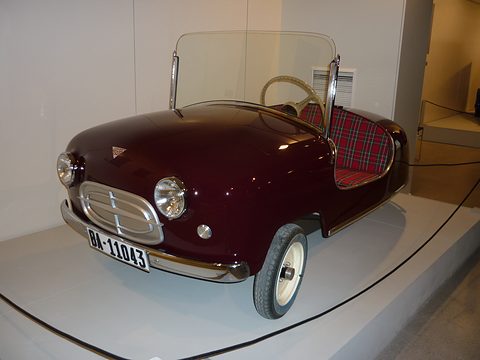
In Milan the Anonima Lombarda Cabotaggio Aereo, ALCA for short, had made nacelles for aero-engines during the war. In March 1947 it presented the ALCA Volpe in Rome: a pretty two-seat convertible, 2,500 mm (98 in) long, with a grille like an Alfa Romeo’s and a 124 cc two-stroke twin behind the seats, offered as something even smaller than the Fiat 500 Topolino.source 10source 11source 12source 13source 14 RM’s catalogue says the comic actor Erminio Macario helped present it at a theatre in Rome on 30 March; the Italian press welcomed it, and orders and deposits poured in.source 10source 14
Three secondary accounts credit Gioachino Colombo, who had designed the Alfa Romeo 158, with its engineering; the claim is not confirmed first-hand.source 10source 11source 12 The engines were apparently never delivered, and no running car was built.source 14source 10 The managers disappeared with the deposits, said to have been about 300 million lire, and ALCA faced a charge of fraudulent bankruptcy in 1948; how the case ended has not been found.source 12source 11
The Volpe’s rights were sold abroad too. In 1947 Gemicar Internacional Auto of Madrid announced a Hispano-Volpe for Spain, Portugal, Tangier, Morocco, the colonies and Latin America; its brochure photograph had the Gemicar sign crudely pasted over what was probably the Italian factory, and nothing was built.source 13source 12 The brochure also claimed that six Volpes, supercharged racers among them, had raced in the Mille Miglia; no trace of a Volpe exists in any edition of the race.source 13source 11 Some ten pre-production cars, perhaps a dozen, were built, and one or two survive; the Weiner museum’s car, which has no engine, sold for US$41,400 at RM’s sale in February 2013.source 14source 10source 12
In Paris, Boitel showed a small two-seat cabriolet at the Salon, later with a rear-mounted DKW 589 cc twin. Orders and deposits were taken at the 1947 Salon on the promise of production in 1948; the firm failed and the deposits were lost, and it is unclear whether any cars were produced.source 15source 16
Not every failure was a fraud. Construcciones Metálicas Clúa, a Barcelona motorcycle maker, launched its spider, the Clúa 500, at the 1957 Barcelona fair priced at 64,000 pesetas, not far from a SEAT 600, and promised money back for any defect.source 17 A fault in the body panels, not of Clúa’s making, forced refunds to the many who asked; the remaining cars were cleared in 1960 at 49,300 pesetas, and about 100 had been built when the firm went bankrupt in 1962.source 17 Clúa kept its promise.
Dale
1974–1975 · a record on this page
Liz Carmichael was born in Indiana in 1927, grew up in Jasonville and moved to Detroit.source 1 In 1961 she was arrested on counterfeiting charges, and she was a fugitive from them when the Dale began.source 1 In 1973 she met Dale Clifft, a would-be inventor, at the United States Marketing Institute in Los Angeles, and together they formed the Twentieth Century Motor Car Corporation to sell the three-wheeler he had built, the Clifft Commutercycle; Hagerty dates its incorporation to August 1974, with an office on Ventura Boulevard in Encino.source 1source 3 She bought his design for about $1,000 and a promise of $3 million in royalties; by English Wikipedia’s account he received $1,001 and a $2,000 cheque that bounced, and she named the car after him.source 2source 1
The Dale as advertised was 4,826 mm (190 in) long, stood 1,295 mm (51 in) high, weighed under 454 kg (1,000 lb), and had an air-cooled 850 cc engine, later said to be a reworked BMW twin of 40 hp.source 1source 2 English Wikipedia adds that a station wagon and a van were announced and never built.source 1 The Chicago Sun-Times covered the car in November 1974; it appeared at the Los Angeles Auto Show in January 1975 and was offered as a prize on The Price Is Right, on a date that has not been established.source 1source 3source 2
Hagerty’s account of the collapse is the fullest. In September 1974 the California Corporation Commission issued a cease-and-desist order. In January 1975 an employee was shot by a bodyguard at the company’s office, and in March its assets were seized.source 3 Carmichael was arrested in April 1975, in Miami by Hagerty’s account and outside Dallas by Mal Pearson’s.source 3source 2 She was charged on 31 counts of grand theft, fraud and securities violations and found guilty of conspiracy, grand theft and fraud; Hagerty describes a seven-month trial and conviction on 26 counts.source 1source 3 She appealed for about four years while on bail, then disappeared.source 1
In 1989 Unsolved Mysteries told the story on television. About two weeks later a viewer’s tip led the police to Dale, Texas, where she was working in a flower business under another name; she was arrested and returned to California.source 1source 2 She served about two and a half years, or 32 months by Pearson’s count, in a men’s prison, although the court recognised her as a woman, and she died of cancer in February 2004.source 1source 2
Much of the coverage in 1975 was hostile and sensational, and made her gender the story; a People headline of that year mocked it.source 1 HBO’s four-part documentary The Lady and the Dale, directed by Nick Cammilleri and Zackary Drucker, first shown on 31 January 2021, looks at how the press and the courts treated her.source 1
fraud, flight, FBI manhunts, transgender politics, selective prosecution, bias in the media, and corruption in the courts
Two or three Dales were built, by Pearson’s count, and three by English Wikipedia’s and Hagerty’s; only one had an engine and ran.source 1source 3source 2 A yellow Dale prototype has been in the Petersen’s collection in Los Angeles since 1994.source 2
Clifft Commutercycle
1974 · a record on this page
The car behind the Dale was real, and it worked. Dale Clifft built it in 1973 in a friend’s garage at Tarzana, California, as a cheap and frugal commuter, and used it for errands round town.source 18source 2 It is a two-seater on three wheels, with the single wheel at the back, on a tubular frame skinned in reddish-orange metal-flake Naugahyde.source 18
The back half is a Honda CB77 Super Hawk motorcycle with its front forks removed: the frame, the 305 cc twin of 28 hp and the gearbox became the rear drive unit, largely as Honda built them apart from an electric starter and a new alternator.source 18source 1 The bike’s own parts became the clutch, brake and throttle pedals; a lever on the driver’s left changes gear and carries a motorcycle brake lever that works the starter. There are four speeds and no reverse.source 18
Clifft later founded the Dale Development Co., obtained several patents and died in 1981.source 1 His car is at the Lane Motor Museum in Nashville, which titles it the Clifft Commutercycle and dates it 1974, though its own text says it was built in 1973; Pearson spells his name Clift.source 18source 2
Deposits before a factory, 1996–2026
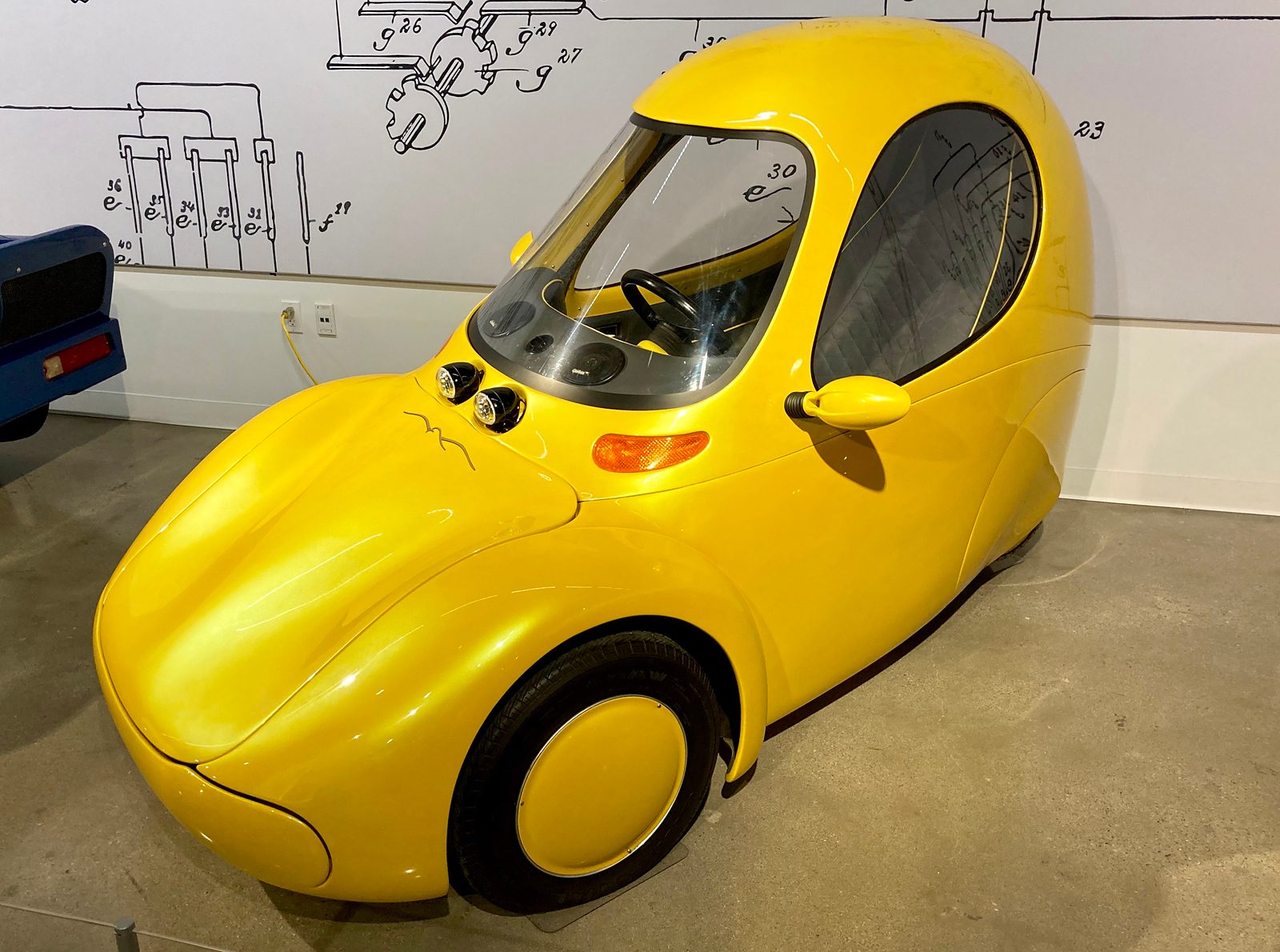
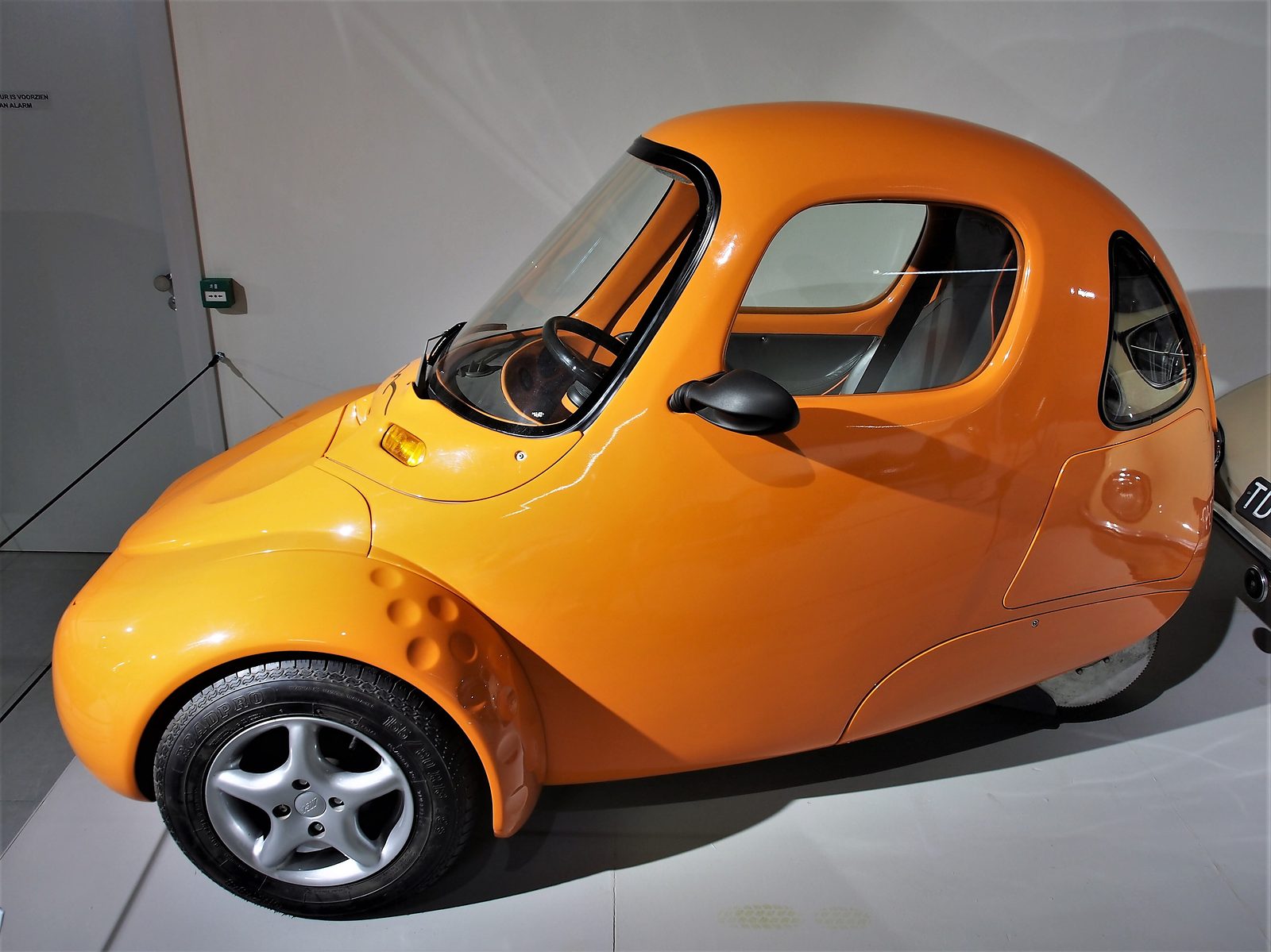
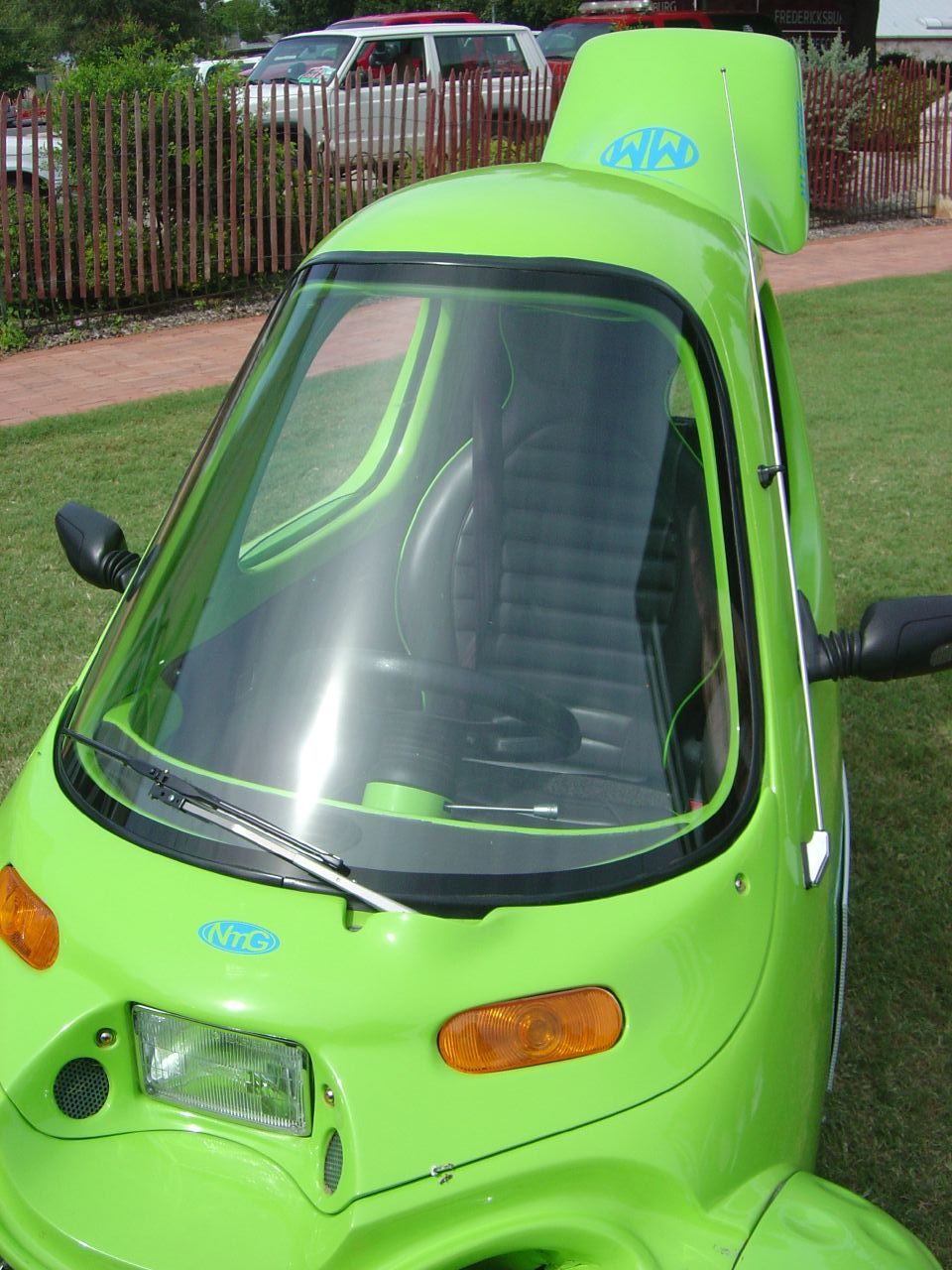
Mike Corbin showed a single-seat electric car, the Personal Transit Module, at San Francisco’s auto show in 1996, and took more than $1 million in deposits that week, with no factory and no staff.source 19 Unlike the frauds, he then built cars: about 289 of the Corbin Sparrow, at Hollister, California, before Corbin Motors filed for Chapter 7 bankruptcy on 31 March 2003.source 19source 20 Myers Motors of Ohio revived it as the NmG.source 20
a great idea… […] but we had a lousy business plan
The Aptera has been promised twice. Steve Fambro and Chris Anthony founded the first company in 2006, and its teardrop three-wheeler claimed 330 mpg at 105 km/h (65 mph); about 2,000 customers paid deposits of $500, and when the company closed in December 2011 it began refunding them.source 21 Revived by the founders in 2019, it had more than 18,000 reservations by 2022; at the end of 2025 it said that low-volume production would start no earlier than March 2027, if it raised about $50 million more.source 21 In October 2026 it was not in production, and no finding of fraud against it has come to light.source 21
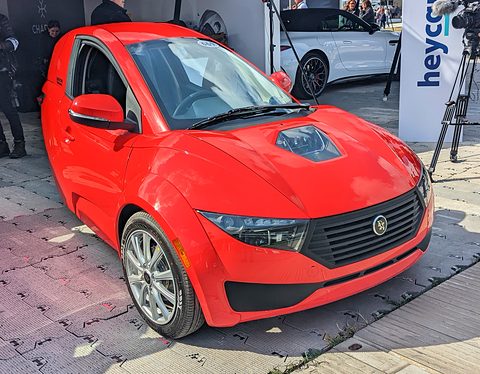
The Elio, a tandem two-seat three-wheeler from Phoenix, Arizona, founded by Paul Elio in 2009, promised up to 84 mpg on the highway at a price that rose to $7,450.source 22 Between 2013 and 2018 it collected more than $28 million in deposits, and its reservations closed at 65,341 in 2017.source 22 It planned to build the car in the former General Motors plant at Shreveport, Louisiana, with 1,500 jobs there; production was due in 2012 and promised again every year after. At the end of 2017 the company had $7,155 in the bank against deficits of $49.7 million, and Louisiana fined it $7.5 million for the jobs it never created.source 22 Its website went dark in January 2024. No conviction or regulatory finding of fraud has been found; the Louisiana penalty was for the missed jobs.source 22
In the Basque Country the folding CityCar of MIT’s Media Lab became the Hiriko, built by a consortium of seven companies with about €15 million of Spanish public support and unveiled in Brussels in January 2012. By May 2013 the money had gone, with one test car finished and two incomplete; in 2015 six businessmen were accused of fraud by Spanish prosecutors, and how the case ended has not been found.source 23
Built, sold and still failed
A pair
Where the line falls
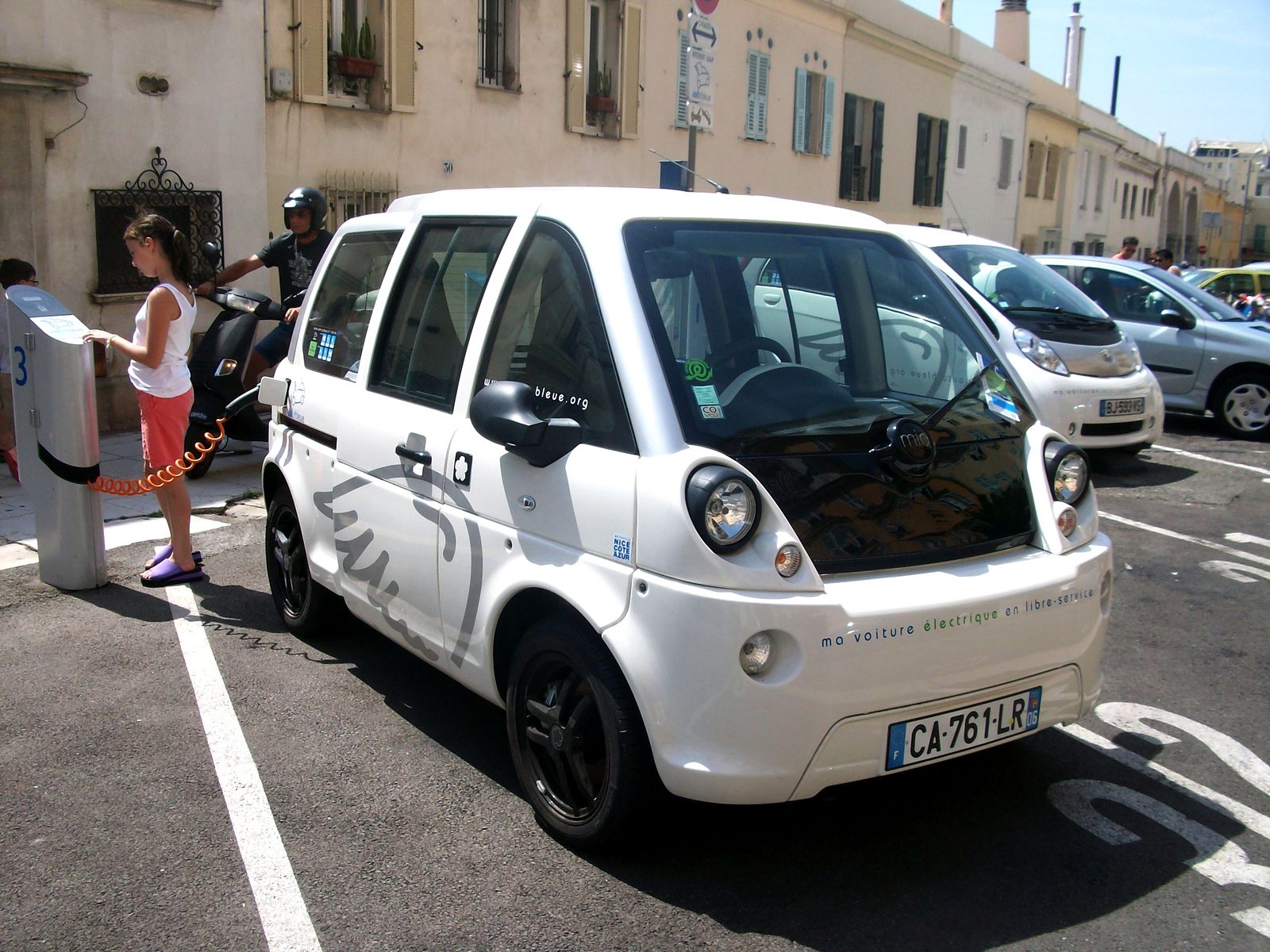
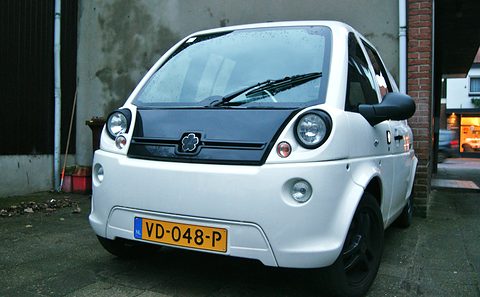
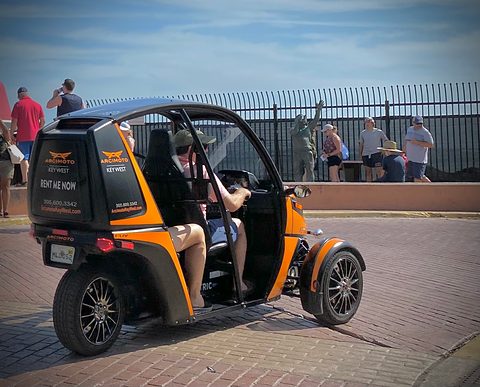
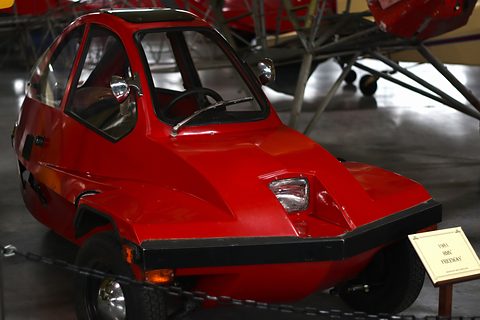
Some ventures built real cars, sold them and still failed, and they are not frauds. The HMV Freeway sold about 700 before its maker went bankrupt in June 1982.source 24source 25 About 800 of the Mia electric were sold in 2011–13; the fraud there came at the end, when the company’s last owner was jailed for bankruptcy fraud in 2022.source 26source 27 Arcimoto halted production of the Arcimoto FUV for lack of money in January 2023 and was delisted from Nasdaq in May 2024.source 28source 29 ElectraMeccanica bought back cars over reported defects, stopped making the ElectraMeccanica Solo in 2023, and in March 2024 the truck maker Xos bought it for its cash.source 30source 31
The Dale’s story ends in two museums. A yellow Dale prototype is at the Petersen in Los Angeles, and Dale Clifft’s own car, the one that started it, is at the Lane Motor Museum in Nashville; more on both in museums and meets.source 2source 18
Smallest to largest
2 cars and 4 maker groups, to scale
Each bar is the car’s length on a 3.5 metre track; the red notch is a Fiat 500.
-
Corbin Sparrow1999–2013 · United States · 3 wheels
2.44 m -
ALCA Volpe1947–1948 · Italy · 4 wheels
2.50 m -
Spanish microcars: the minor makers1941–1969 · Spain · 3 wheels
26 makers -
American post-war microcars1944–1964 · United States · 4 wheels
22 makers -
French post-war microcar makers1946–1962 · France
18 makers -
Microcar concept cars since 19901992–2025 · Several countries
11 makers
Pictures
Four photographs
Frauds and never-weres 4
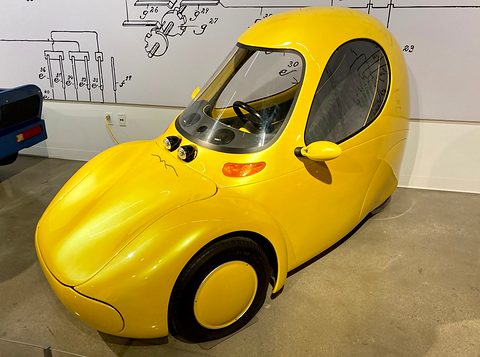
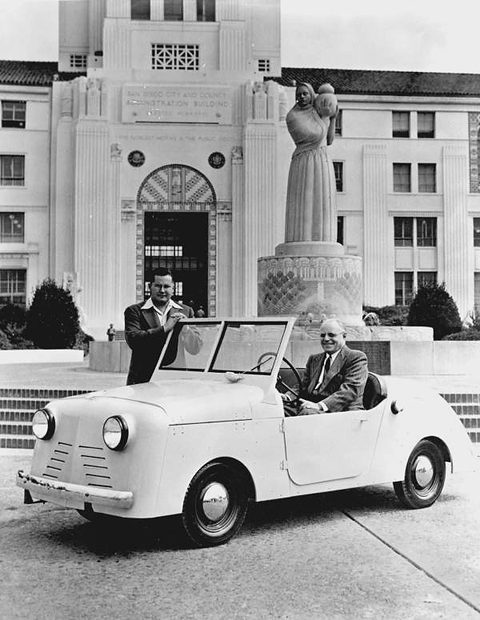
1 Gold Corbin Sparrow from the front quarter at the Petersen Automotive Museum, Los Angeles, in October 2021, showing its two front wheels and teardrop body.
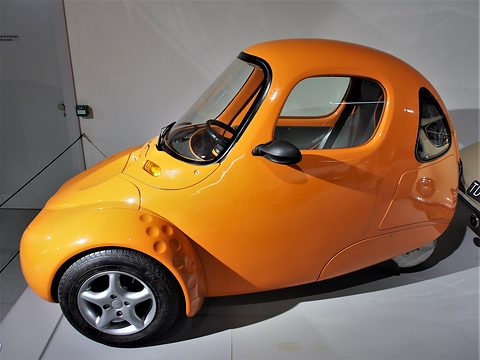
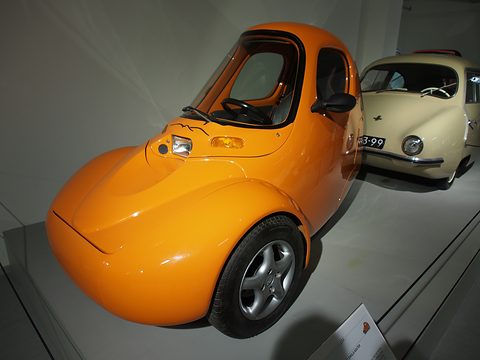
2 An orange 2000 Corbin Sparrow ‘Jelly Bean’ from the front three-quarter at the Louwman Museum, The Hague, in January 2017.
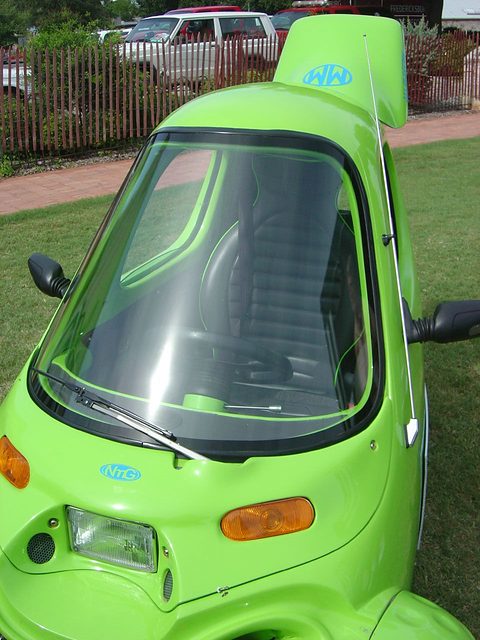
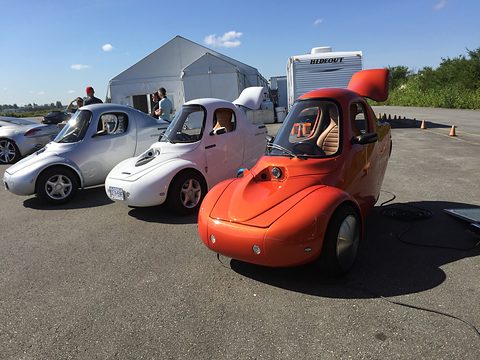
3 A lime-green Myers Motors NmG nose-on at the Renewable Energy Roundup, Fredericksburg, Texas, in September 2006.
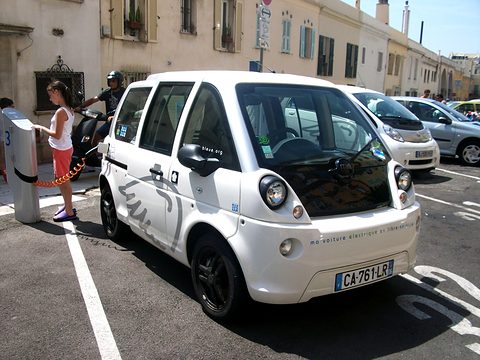
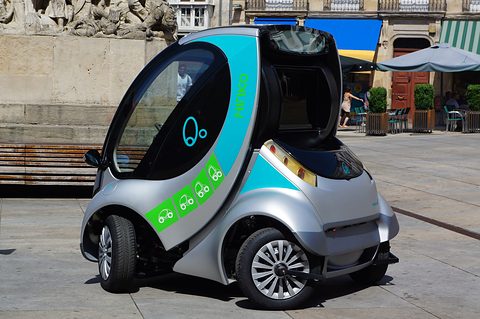
4 A white Mia electric charging at a street post in Nice, France, in August 2012.
Picture credits (4)
- 1 Bill Abbott, CC BY 4.0
- 2 Alf van Beem, Public domain
- 3 cara fealy choate, CC BY 2.0
- 4 Kevin.B, CC BY-SA 3.0
The cars
Profiles
Sources
Numbered as in the text
Sources are given as plain text; the links are on the Credits page.
- English Wikipedia, Geraldine Elizabeth Carmichael, read in full, and the article on the Dale. They cite Jedlinka, Chicago Sun-Times, 14 November 1974; Foster, Hemmings Classic Car, August 2011; and John Anderson in The Wall Street Journal, 28 January 2021.
- Mal Pearson, “The Tale of the Dale”, The Makes That Didn’t Make It, read in full. It cites Donnelly, Hemmings Classic Car, February 2013, and Torchinsky, Jalopnik.
- Preston Lerner, “Liz Carmichael and the Dale car con of the 1970s”, Hagerty UK, 17 February 2021, read in full.
- Mental Floss, “Motor Con: How Liz Carmichael and Her Dale Car Took Everyone for a Ride”, read only as a search summary; a lead.
- English Wikipedia, Keller (automobile), read in full. Used as a lead; it rests largely on John Liefeld’s recollections.
- Mal Pearson, “Towne Shopper”, The Makes That Didn’t Make It, 2022, read in full.
- Lane Motor Museum, “Harvey Towne Shopper – 1948”, collection page, read in full.
- Lane Motor Museum, “Davis Divan ‘Baby’ – 1947”, collection page, read in full.
- English Wikipedia, Davis Motorcar Company, read in full. It cites Phil Patton in The New York Times for the production figure.
- RM Auctions, The Bruce Weiner Microcar Museum, Madison, Georgia, February 2013, lot 549, “1947 A.L.C.A. Volpe”, read as a page summary.
- Damiano Landi, “Il futurismo a Piacenza, Carlo Gazzola, la Volpe e la figura enigmatica di BOT”, camet.org, read in full.
- Cars Forgotten Stories, “The ghost car”, 20 March 2020, read as a page summary.
- Toni Solans, “Hispano Volpe”, La web de los microcoches (grupo7.com), read in full; it transcribes the Hispano-Volpe brochure.
- Bruce Weiner Microcar Museum, “1947 A.L.C.A. Volpe”, tour page, archived copy, read in full.
- English Wikipedia, Automobiles Boitel, read in full. It cites Georgano, Autos. Encyclopédie complète (1975).
- German Wikipedia, Automobiles Boitel, read in full. It cites Linz and Schrader (2008) and Georgano.
- Toni Solans, La web de los microcoches (grupo7.com): the index of makers and the pages on the Barcelona makers, read in full.
- Lane Motor Museum, “Clifft Commutercycle – 1974”, collection page, read in full.
- “The Eclectic Electric Sparrow”, The Makes That Didn’t Make It, 21 June 2020.
- English Wikipedia, Myers EV (the history of Corbin Motors and Myers Motors), read in full.
- English Wikipedia, Aptera Motors, read in full; its account runs to statements of early 2026.
- English Wikipedia, Elio Motors, read in full.
- English Wikipedia, Hiriko, the lead and the history.
- English Wikipedia, HM Vehicles Free-way, revision of 29 September 2026, read in full. Used as a lead; it cites Peter Frey in Motor Trend (December 1979).
- The Makes That Didn’t Make It, “HMV FreeWay”, read in full.
- English Wikipedia, Mia electric, read in full.
- French Wikipedia, Mia electric, read in full.
- English Wikipedia, Arcimoto. Used as a lead.
- “Arcimoto halts production due to finance issues”, electrive, 20 January 2023.
- English Wikipedia, ElectraMeccanica Solo. Used as a lead.
- “Xos will merge with ElectraMeccanica”, electrive, 16 January 2024.