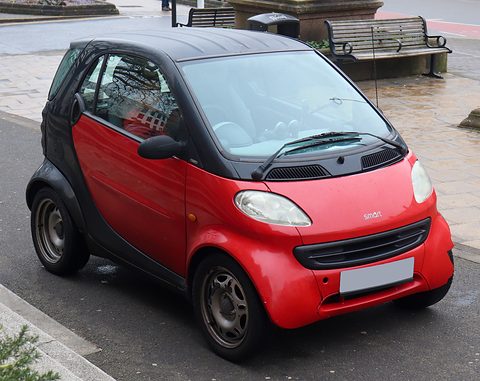
Electric microcars
A one-seater with a wooden body was running on batteries in Berlin in 1919. Ever since, the small electric car has been held back by the weight of its lead and the depth of its makers’ pockets, and rescued, now and then, by a war, an oil crisis or a law.
Older than you think
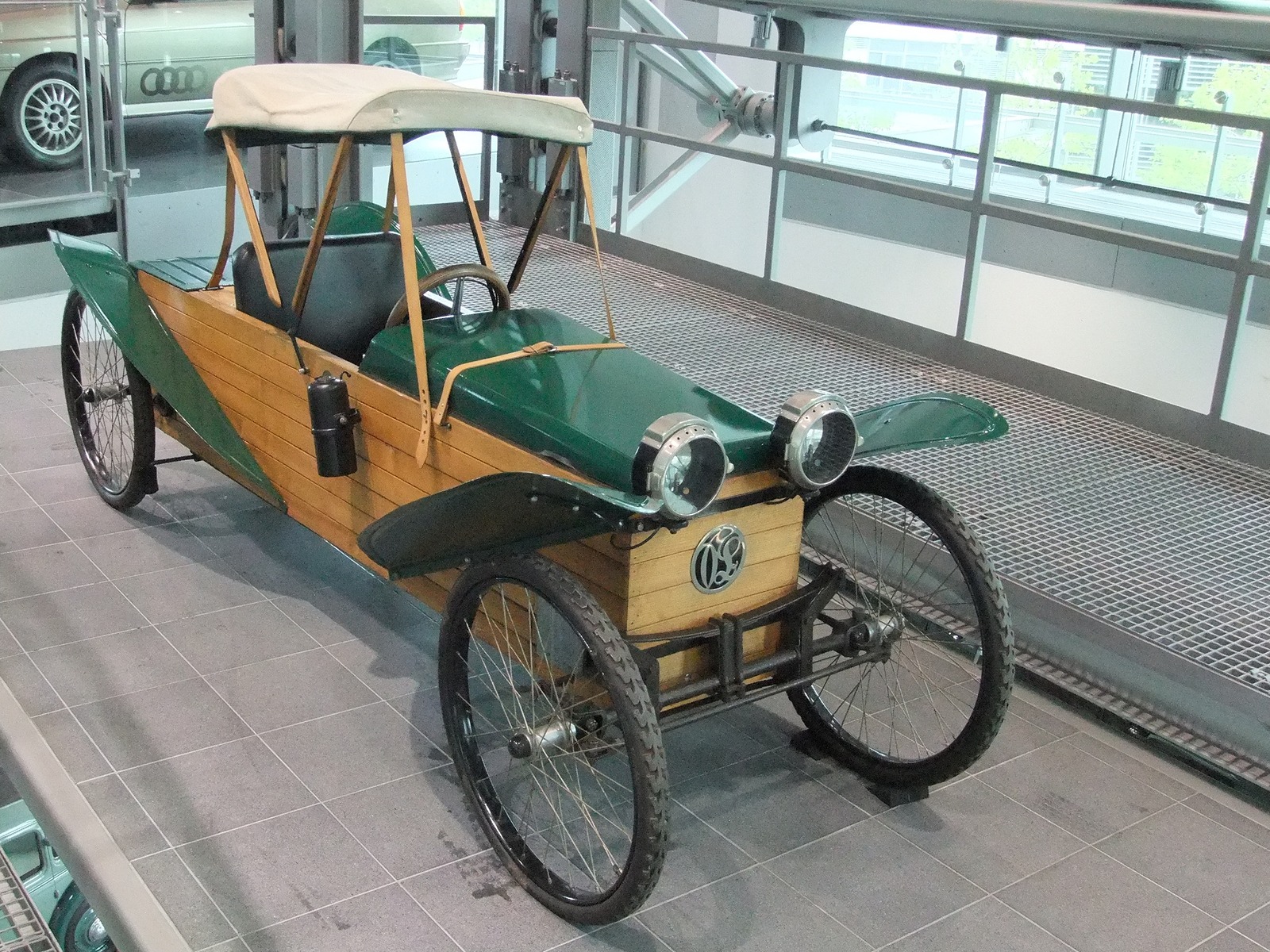
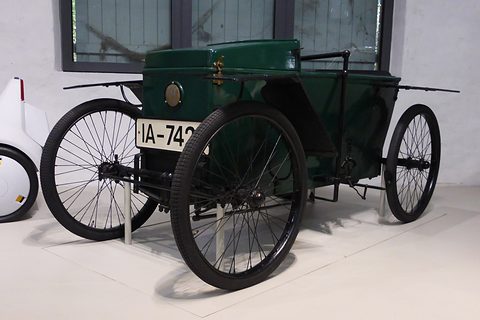
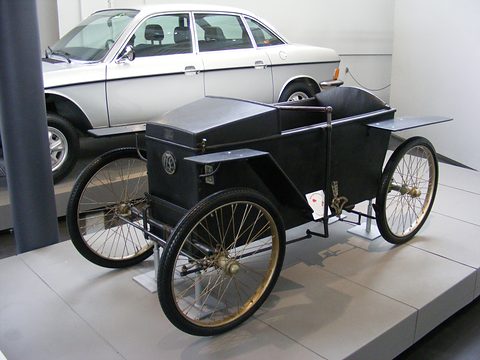
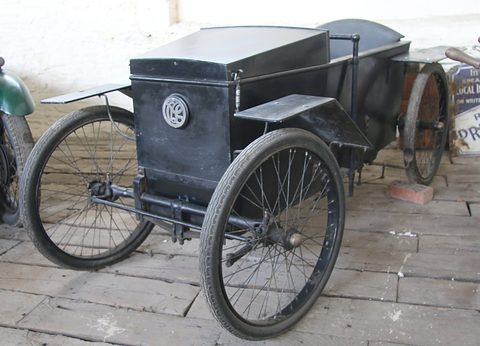
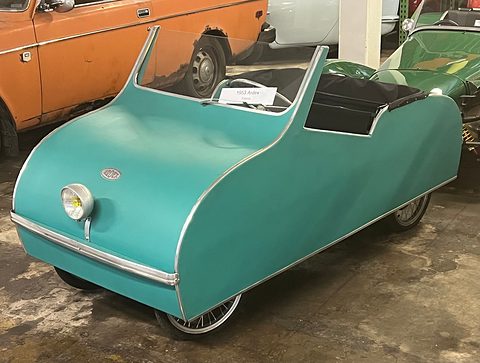
In Berlin, in the summer of 1919, DKW’s owner, J. S. Rasmussen, saw a small electric car go by, and ordered 100 from the man driving it, to sell at the Leipzig Fair.source 1 The driver was Rudolf Slaby, an aircraft engineer whose trade the Treaty of Versailles had just curtailed. With his cousin Hermann Beringer he had set up the SB-Automobil-Gesellschaft that year, in the rooms of Beringer’s paint works at Charlottenburg.source 1 Their Slaby-Beringer was a one-seater with a wooden body, and the firm’s brochure of 1922 promised 24 km/h (15 mph) and 80 km (50 miles) from a 130 kg (287 lb) battery in a 240 kg (529 lb) car.source 2 About 2,000 were built by September 1924: 2,005 by German Wikipedia’s count, 266 of them with DKW petrol engines, and about 2,500 by a German reference book of 1989.source 1source 3 Slaby later became the designer of DKW’s first car.source 1
So the battery microcar is not new. What is new is that it sells. For 70 years after Slaby the small electric car ran on lead-acid batteries, and the arithmetic hardly moved: a few kilowatt-hours of lead, often a third of the car’s weight or more, a top speed of 25 to 60 km/h, and a range that hills and cold cut further. It took a war, an oil crisis, a new law or a big maker’s money to get one built in numbers, and most of the small firms that tried went under.
| Car | Years | Battery | Range | Built or sold |
|---|---|---|---|---|
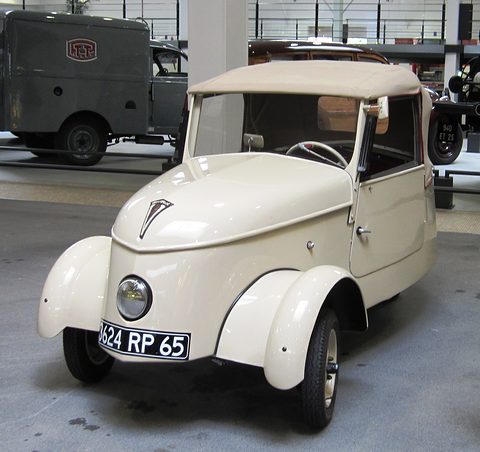
| Peugeot VLV | 1941–45 | About 4 kWh of lead, 160 kgsource 4source 5 | About 70–80 kmsource 6source 4source 5 | 377source 4source 5source 7 |
| Enfield 8000 | 1973–76 | Lead batteries, eight or six by two accounts, over 300 kgsource 8source 9 | 25 miles (40 km) usablesource 10 | 120source 10source 9source 11 |
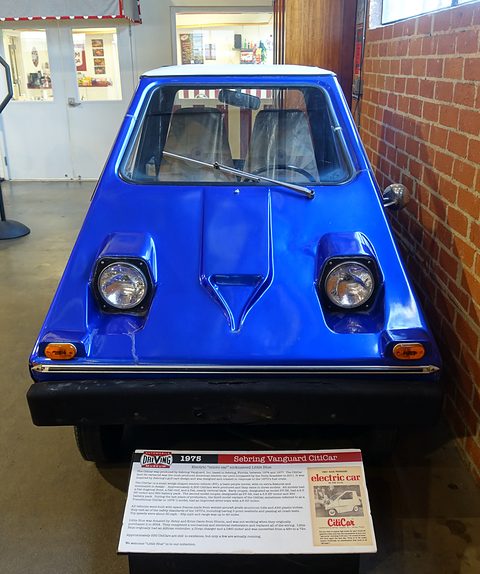
| CitiCar and Comuta-Car | 1974–82 | Eight lead batteries, 48 V, from late 1974source 12 | 40 km flat outsource 13 | About 4,400source 12source 14 |
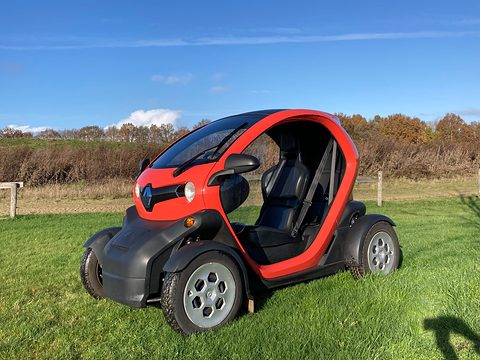
| Renault Twizy | 2012–23 | 6.1 kWh lithium-ionsource 15 | About 80 km in usesource 15 | 33,340 soldsource 16source 17 |
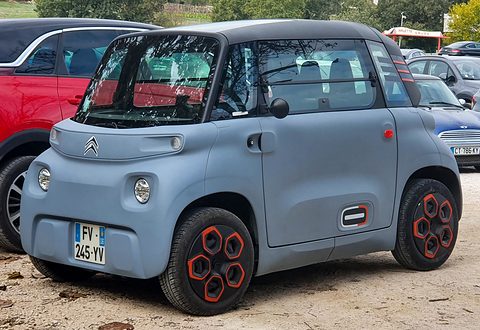
| Citroën Ami | From 2020 | 5.5 kWhsource 18 | About 75 kmsource 18 | About 65,000 sold by October 2024source 19 |
Petrol forbidden: France, 1940–1947
From the first months of the German Occupation a French civilian could hardly get petrol at all, and a year later rubber tyres went the same way; a driver needed an Ausweis, a German permit.source 5source 20 Some 65,000 owners turned to wood gas; others to batteries.source 5source 20
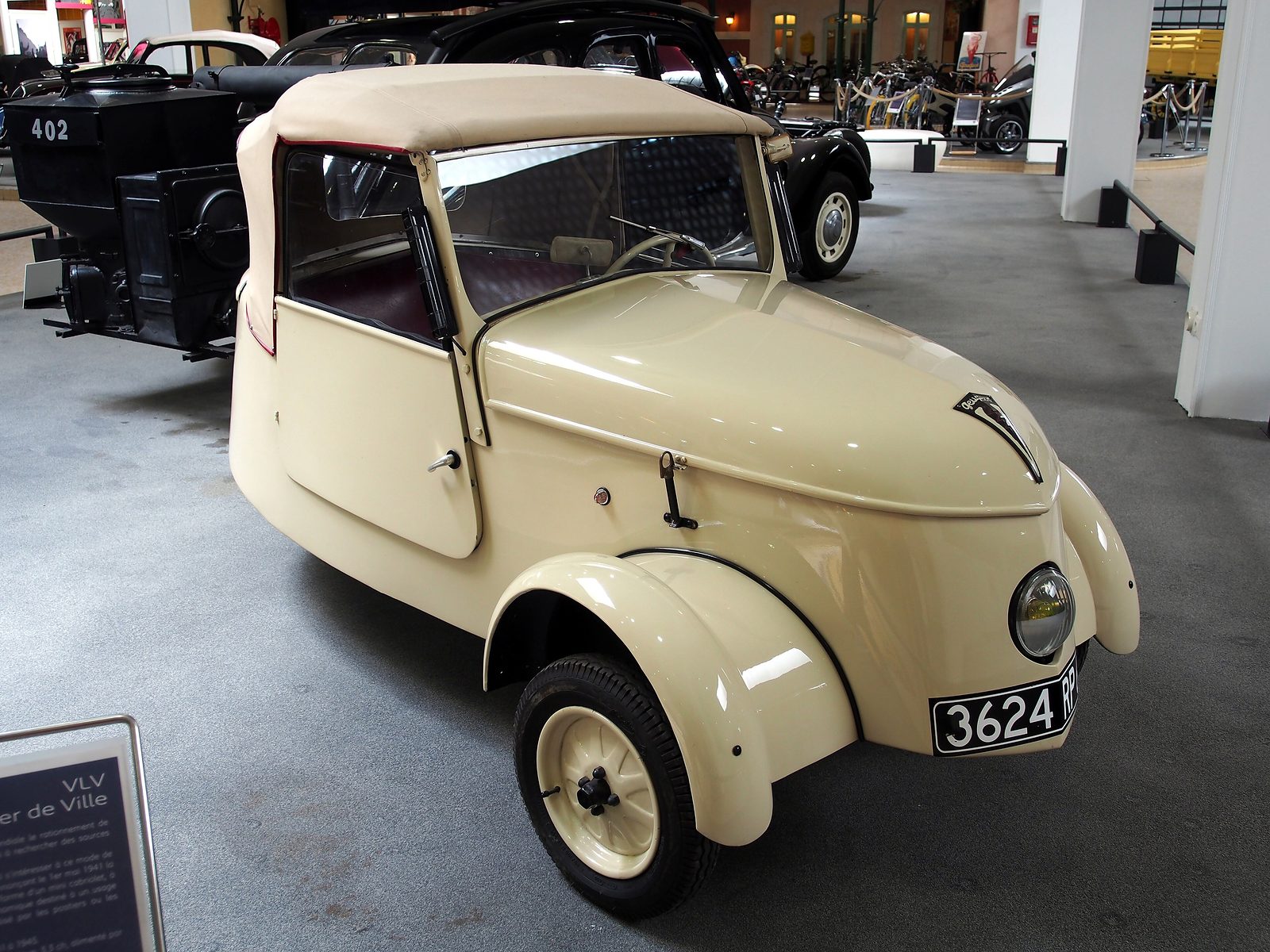
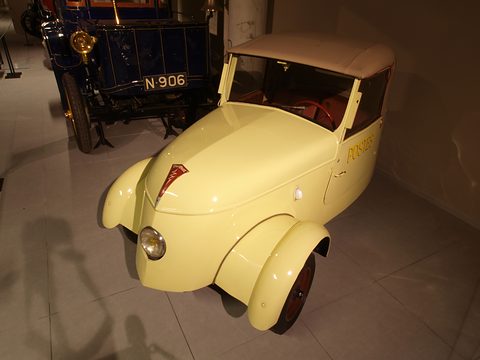
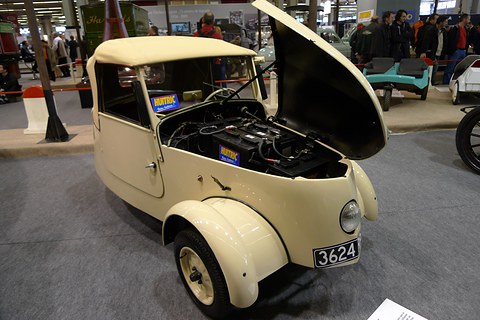
Peugeot was the only large French car maker to build an electric car in the war. Its own works at Sochaux were in German hands, so it built the Peugeot VLV at La Garenne, outside Paris, from 1941: a two-seat cabriolet with four 12-volt batteries under the bonnet, 160 kg (353 lb) of lead that made up about half the car.source 4source 5 It was good for 30 to 36 km/h and, on a full charge, 70 to 80 km.source 6source 4source 5 In the summer of 1942 the Vichy government stopped Peugeot building electric cars and gave its support to a rival: the CGE-Tudor, made by the electrical group CGE with the battery firm Tudor to a design by Jean-Albert Grégoire.source 6source 5 Peugeot carried on in small numbers all the same, and by 1945 it had made 377 VLVs.source 6source 4source 7 Philippe Schwoerer, who drove a restored one in 2016, found it called for a new set of reflexes.source 5
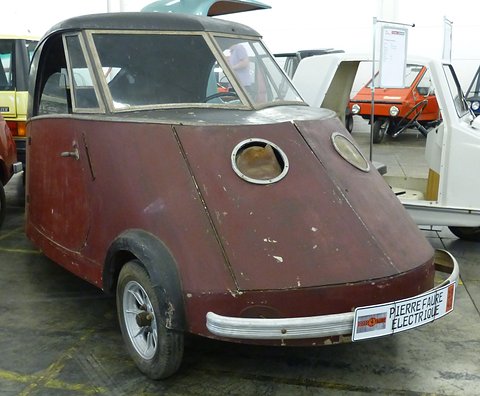
The smaller makers left less behind. The Paris brake maker Jourdain-Monneret built the Autélec, a battery van for 500 kg (1,100 lb) of goods, with a 48-volt battery, a top speed of about 25 km/h and about 65 km of range.source 21 Pierre Faure, who had worked for Breguet, made two-seaters and vans with wooden bodies, and Électro-Renard of Lyon two-seaters with a quoted range of 72 km.source 22source 23source 24 At Nanterre, by the old microcarfan.com’s account, the war pushed Ardex into battery cars: plywood bodies, sometimes pedals in reserve, and in 1943 a version on three wheels.source 25
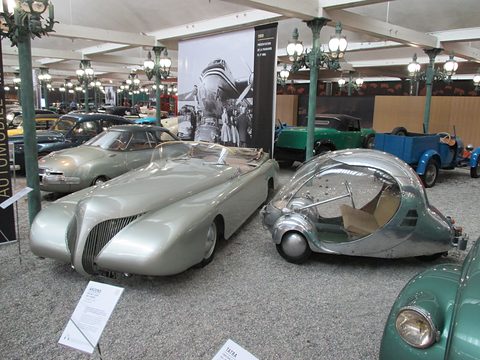
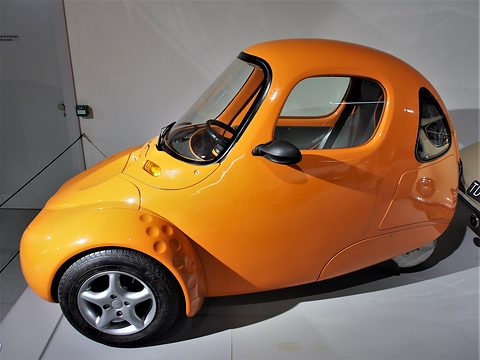
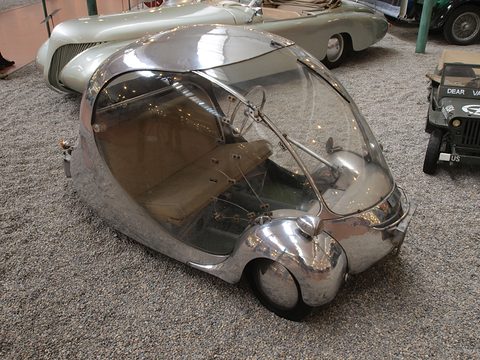
The designer Paul Arzens built one for himself in 1942. His Œuf électrique, the electric egg, was an aluminium shell with Plexiglas doors and windscreen on a single Duralinox backbone: a three-wheeler. Five batteries weighing 300 kg (661 lb) gave it about 100 km and 70 km/h. After the war Arzens took them out and fitted a 125 cc Peugeot engine.source 26source 27
Where the weight went
A pair
Golf carts, station cars and the electricity boards
When petrol came back, the electric car shrank to the jobs a short range could do. In Long Beach, California, a firm built the Electra King from 1961, by German Wikipedia’s date, which was in effect a golf cart given a roof and doors.source 28source 29source 30 In Britain the push came from the electricity industry.
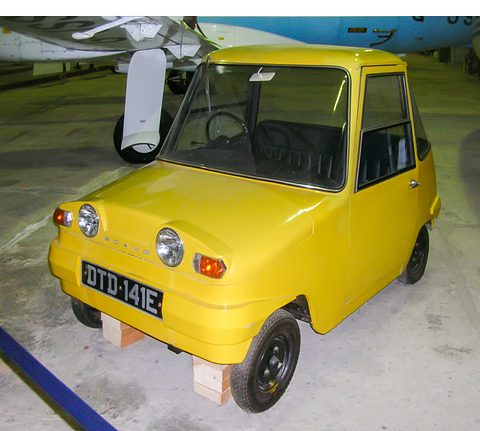
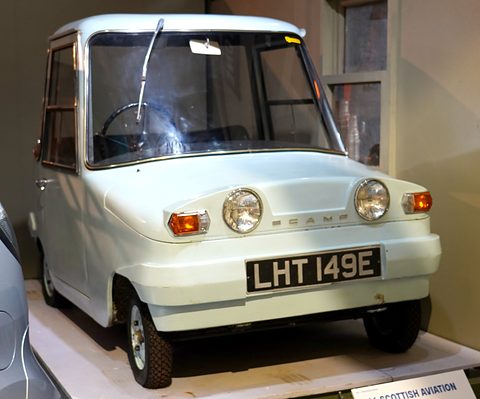
The Scottish Aviation Scamp began at Prestwick airport, where the battery tugs that pulled the baggage were plugged in between jobs. Dr W. Gordon Watson of the firm’s project department had also noticed wives waiting in cars at his station to drive their commuting husbands home, and that run needed neither range nor speed: his brief asked for 35 mph (56 km/h), at least 25 miles (40 km), and a night’s charge from a household socket.source 31 Stirling Moss drove the test car at its closing press conference, and nearly 200 enquiries came in.source 31 Then the Motor Industry Research Association tested one in 1967 and found, among much else, that on bends with an adverse camber it tended to carry straight on; Lucas’s batteries were wearing out in about a year rather than 18 months; and the Electricity Council judged the car “unfit for purpose”. Thirteen were made.source 31
Ford of Britain built its own Comuta at Dunton, in Essex, the same year, as part of a study of traffic and fumes in towns. Four 85 ampere-hour lead batteries gave it a range of 60 km (37 miles) at a steady 40 km/h, and the Science Museum, which keeps one, counts only two built.source 32source 33
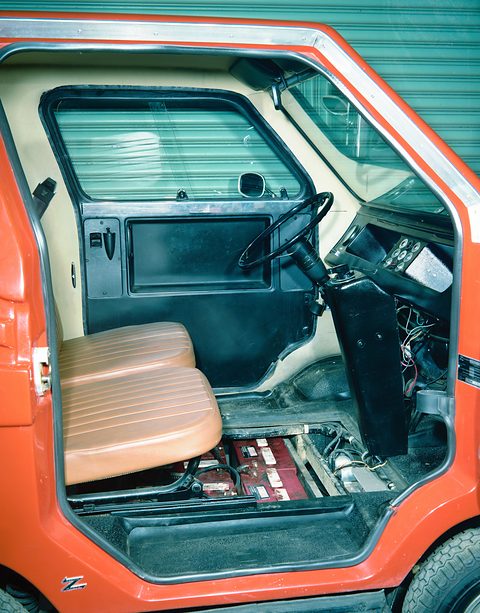
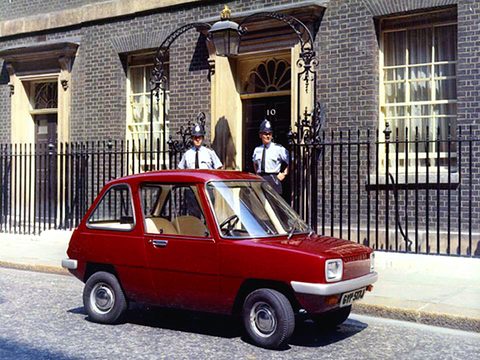
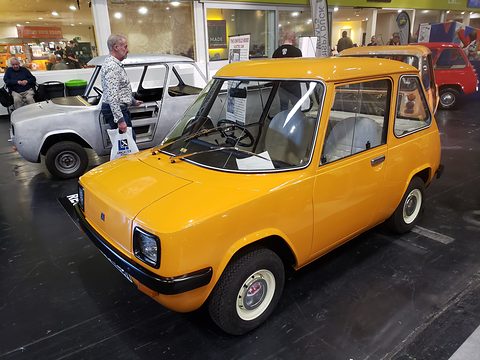
The Enfield 8000 went further. It won an Electricity Council competition for a town car, and the Isle of Wight firm that built it belonged to a Greek shipowner, Giannis Goulandris, so production began near Cowes and moved to the island of Syros.source 10source 9source 11 Its lead batteries, eight of 12 volts by one account and six by another, weighed over 300 kg (661 lb) of the car’s 975 kg and fed a motor of 8 bhp (6 kW).source 8source 9source 11 Autocar found 25 usable miles.source 10 Of the 120 built, 65 were taken by the Electricity Council and the regional boards, whose meter readers drove them.source 10source 11
The oil-crisis cars, 1972–1986
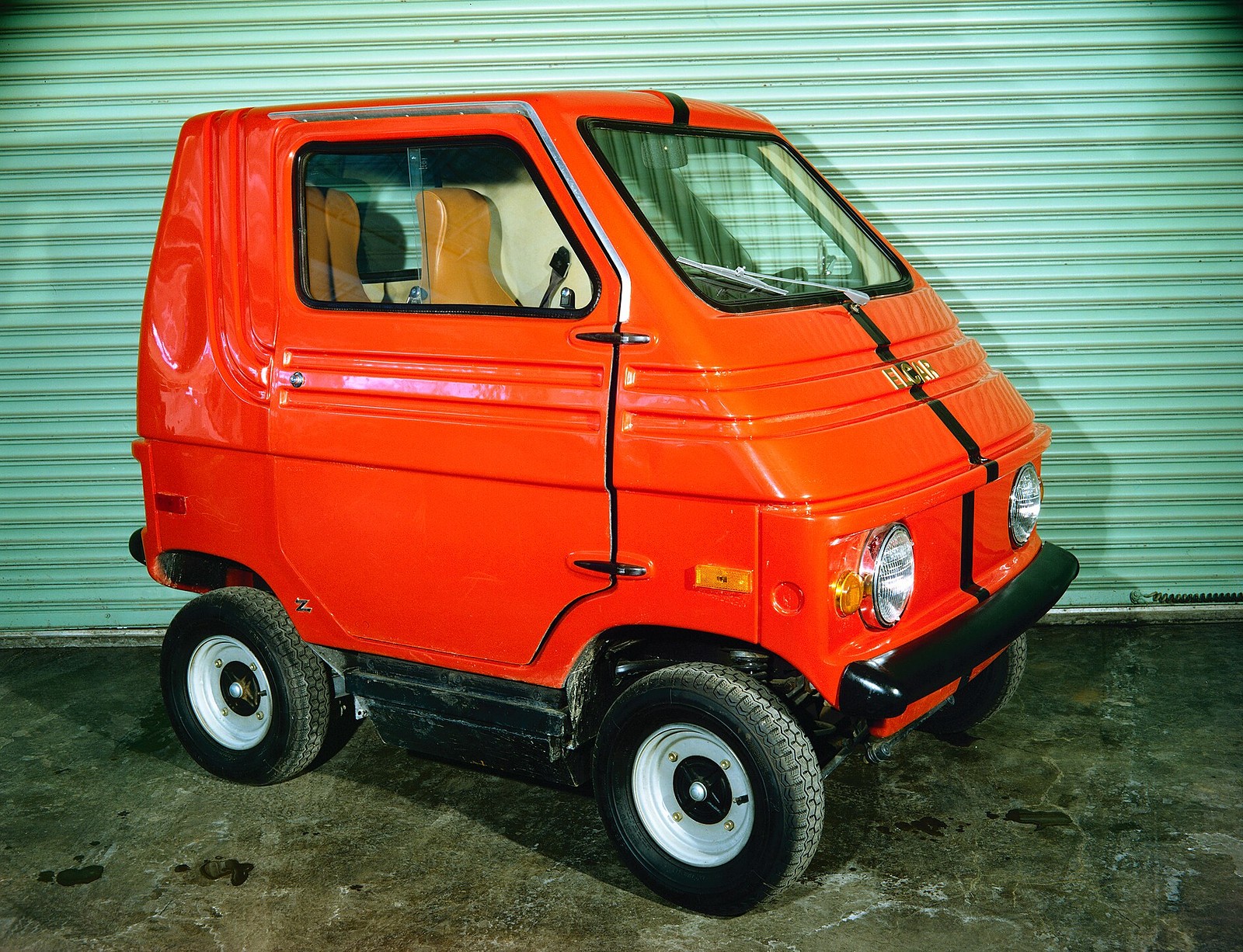
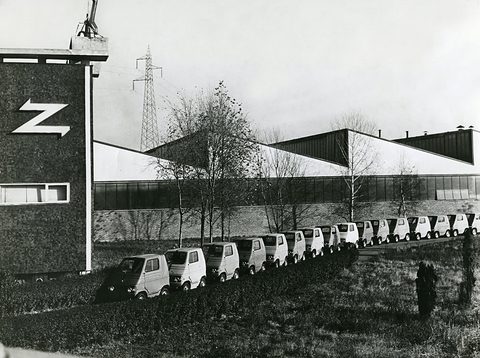
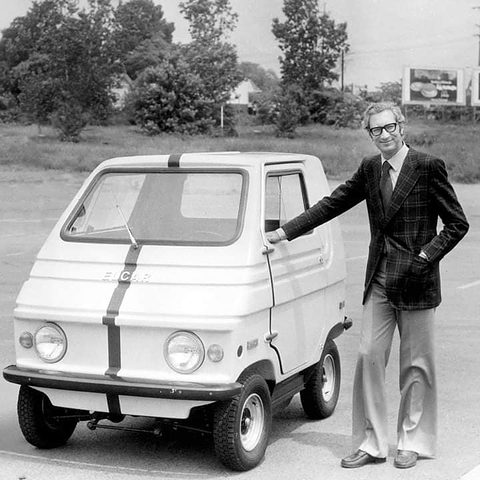
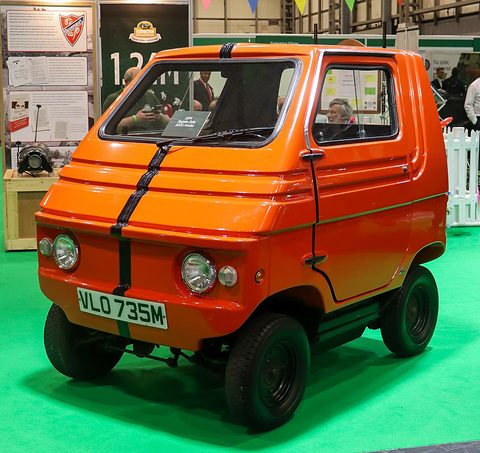
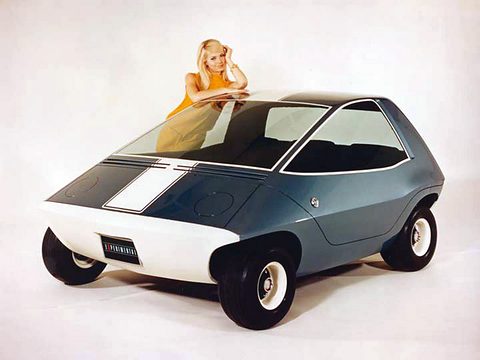
The oil crisis of 1973 gave the battery car another chance. Zagato, the Milan coachbuilder of low sporting bodies, had shown a tall plastic city car, the Zagato Zele, at Turin in November 1972, and found few takers; in the summer of 1974 it went into small-series production.source 34 It had no gearbox. A hand selector switched the battery between voltages and a pedal added a second step, which gave six speeds forward.source 34source 35 NASA tested one in 1977, and its report, in a poorly legible table, gives about 39 km at a steady 40 km/h.source 36 About 500 were made by 1976, and in the United States the car was sold as the Elcar.source 34source 35source 37
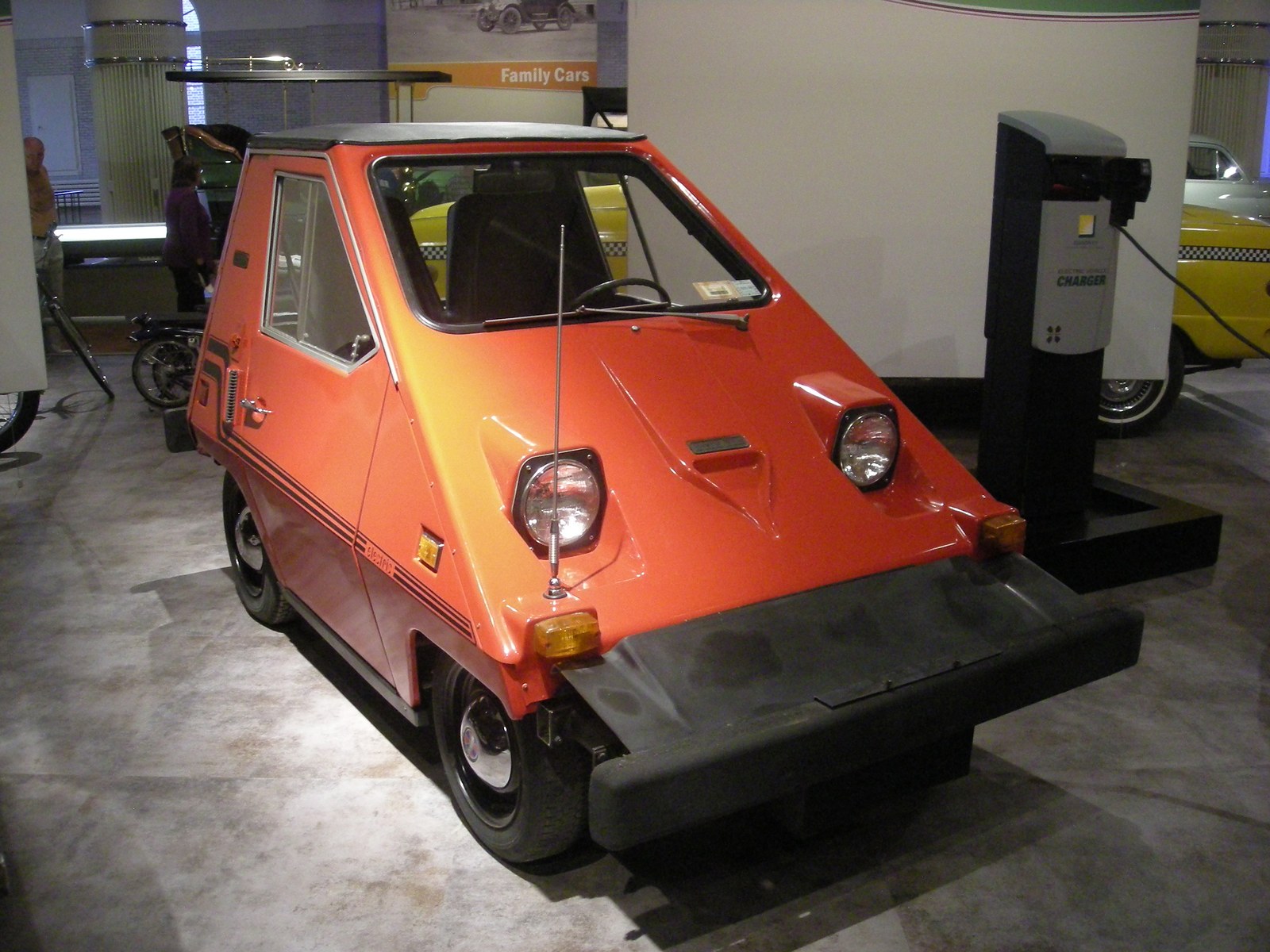
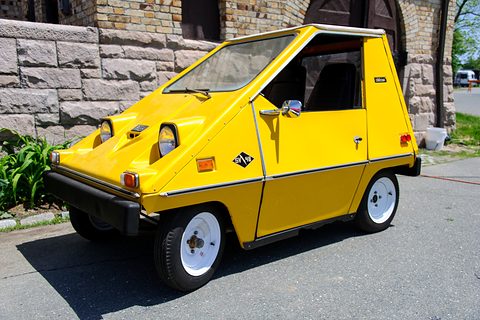
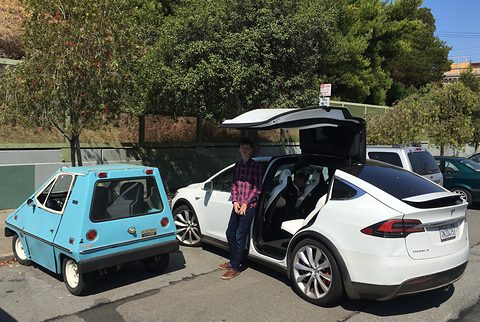
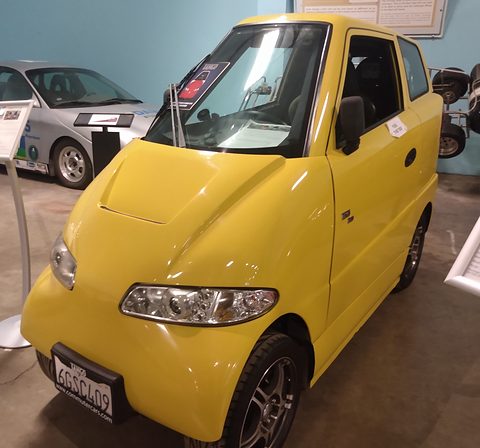
America built far more. Bob Beaumont had run a Chrysler dealership for about 20 years before he sold it to build cars; his Sebring-Vanguard, of Sebring, Florida, was founded in 1973, and its CitiCar was a plastic wedge on lead batteries.source 12source 38 NASA’s engineers found that, fully laden, it reached 51 km/h (32 mph), and that held to 29 km/h it managed 85 km (52.8 miles), but flat out only 40 km.source 13 Consumer Reports called it foolhardy to drive. When officials in Michigan wanted it banned, Beaumont struck the body with a baseball bat and suggested they try an official’s Ford the same way.source 38 The company went bankrupt, and the car came back as the Comuta-Car, with its batteries moved into the bumpers; with its vans, about 4,400 were built by 1982, and English Wikipedia knows of no North American electric car built after 1945 in greater numbers until the 2010s.source 12source 14
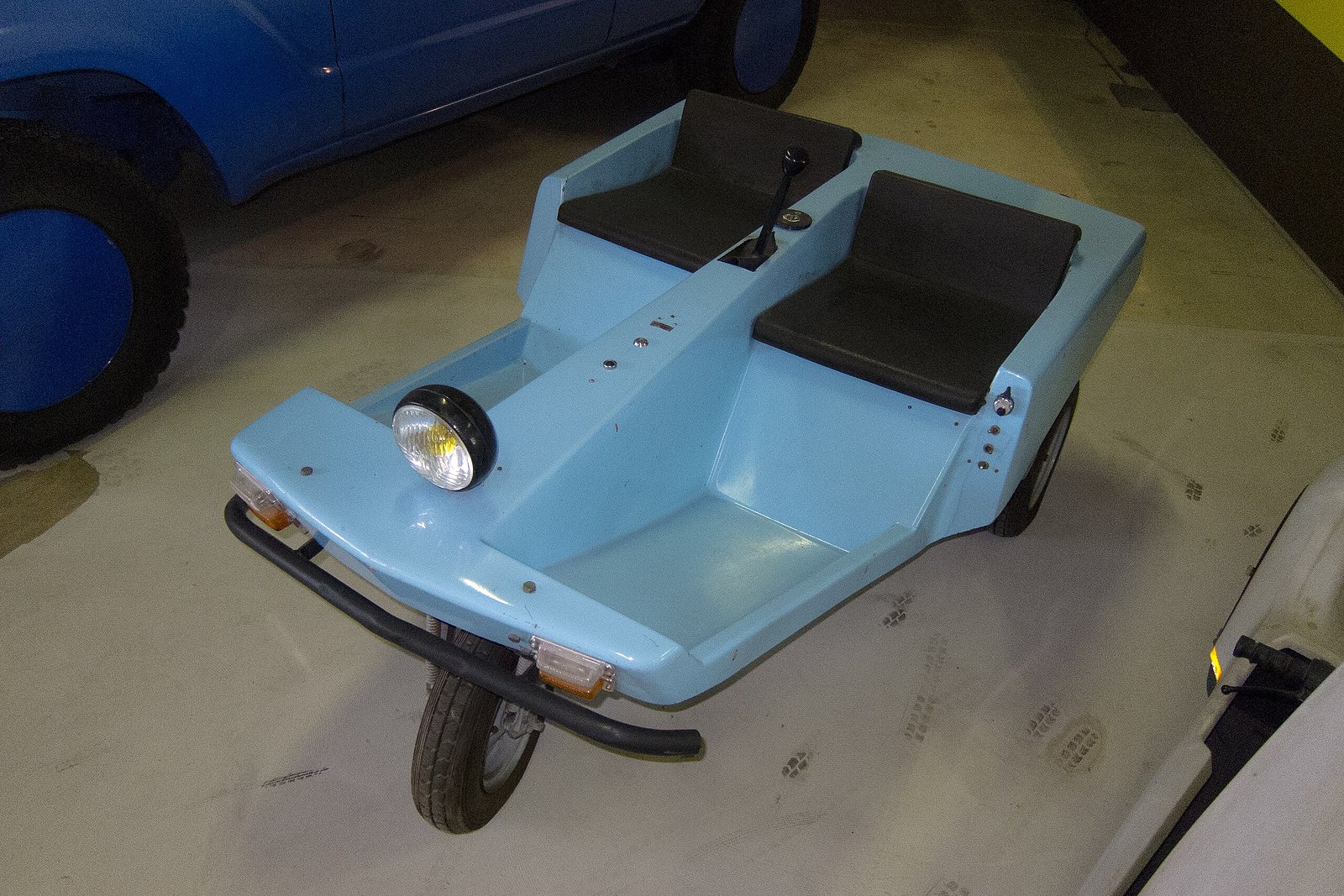
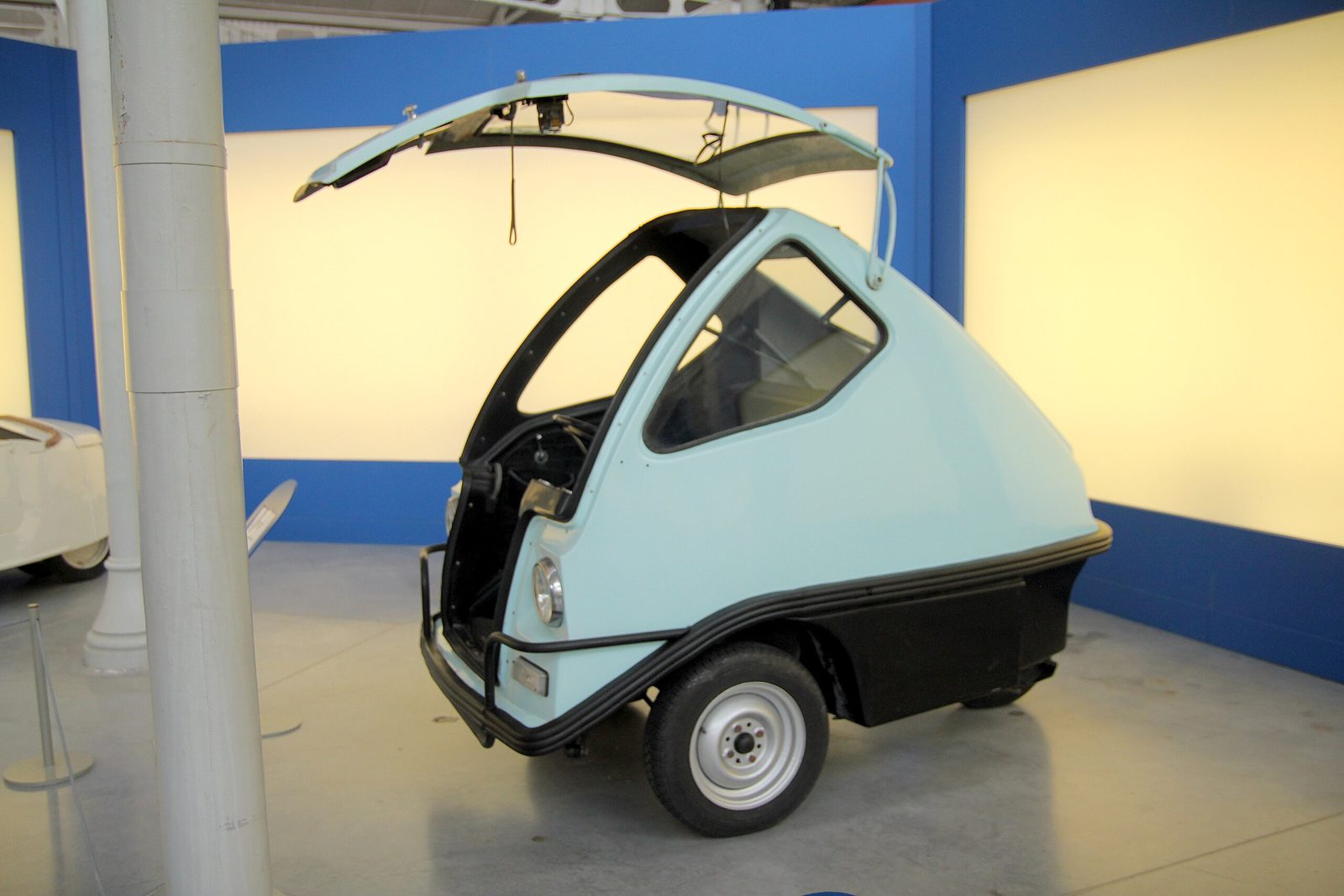
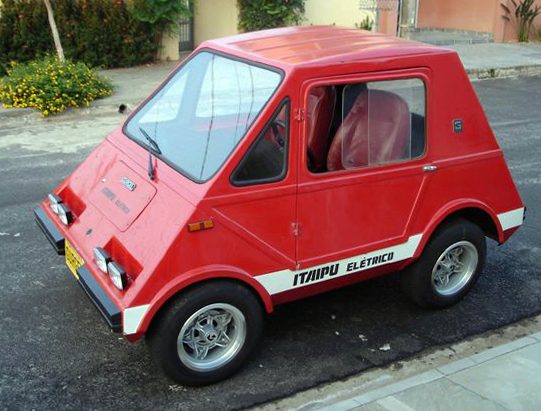
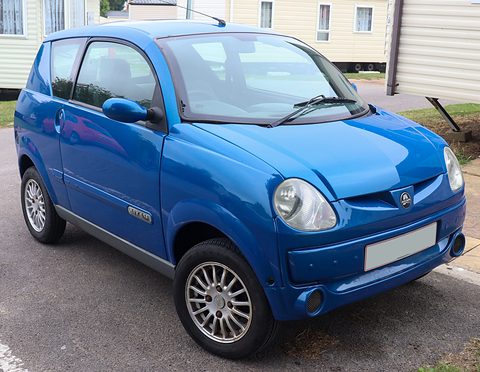
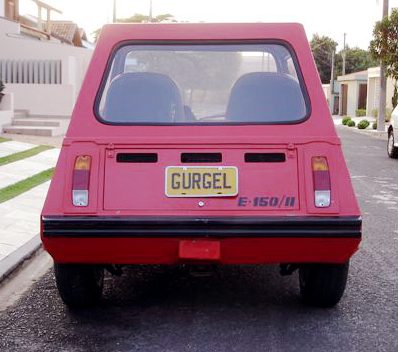
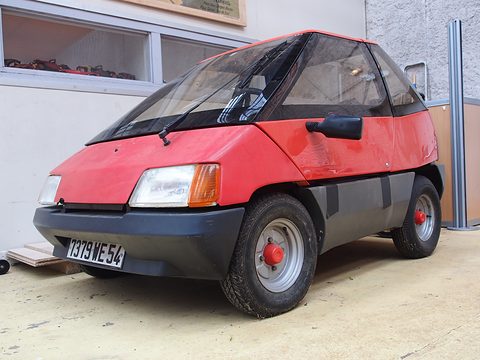
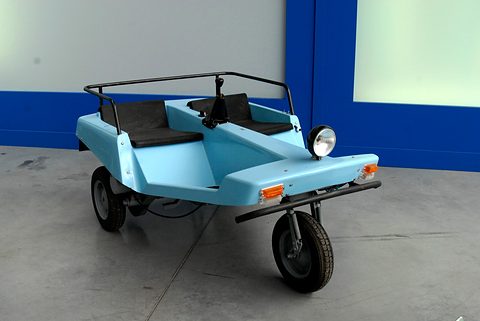
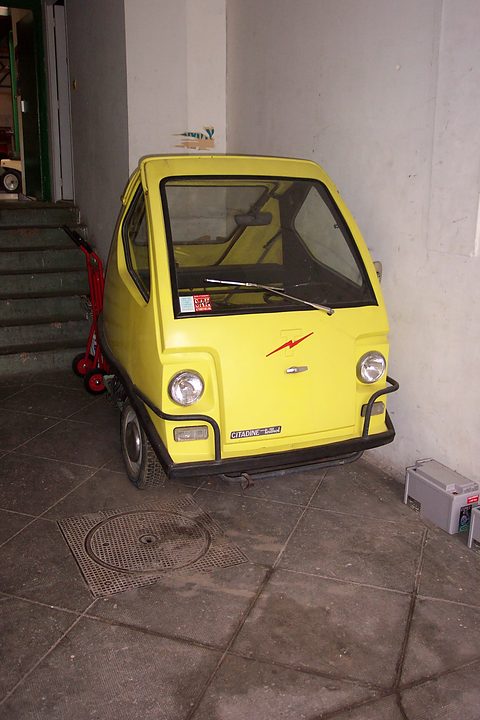
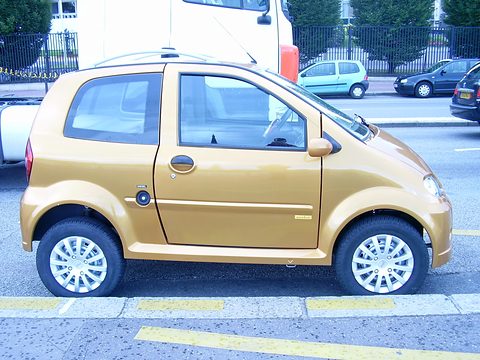
France tried again too. The Voiture Électronique Porquerolles was a two-seat tub on three wheels, steered, sped up and stopped with a single stick; on the first cars the two rear wheels each had a motor and the car turned by running one faster than the other, while the series cars kept the stick but steered mechanically.source 39source 40source 41 Between 100 and 200 were built, by three different counts.source 39source 40source 41 For the Teilhol Citadine, period documents put the output at about 500 between 1974 and 1986; the Lane Motor Museum says only around 30, and no source reconciles them.source 42source 43 In Brazil João Gurgel named his Gurgel Itaipu E150 after the great dam then being built; its batteries weighed 320 kg (705 lb) of its 780 kg, and only a pre-series of about 20, or 27, was made before he gave up.source 44source 45source 46 Even France’s licence-free cars had an electric strand: of about 30,000 cars built by Erad, about 800 were electric.source 47source 48
Pioneers and quadricycles, 1985–2012
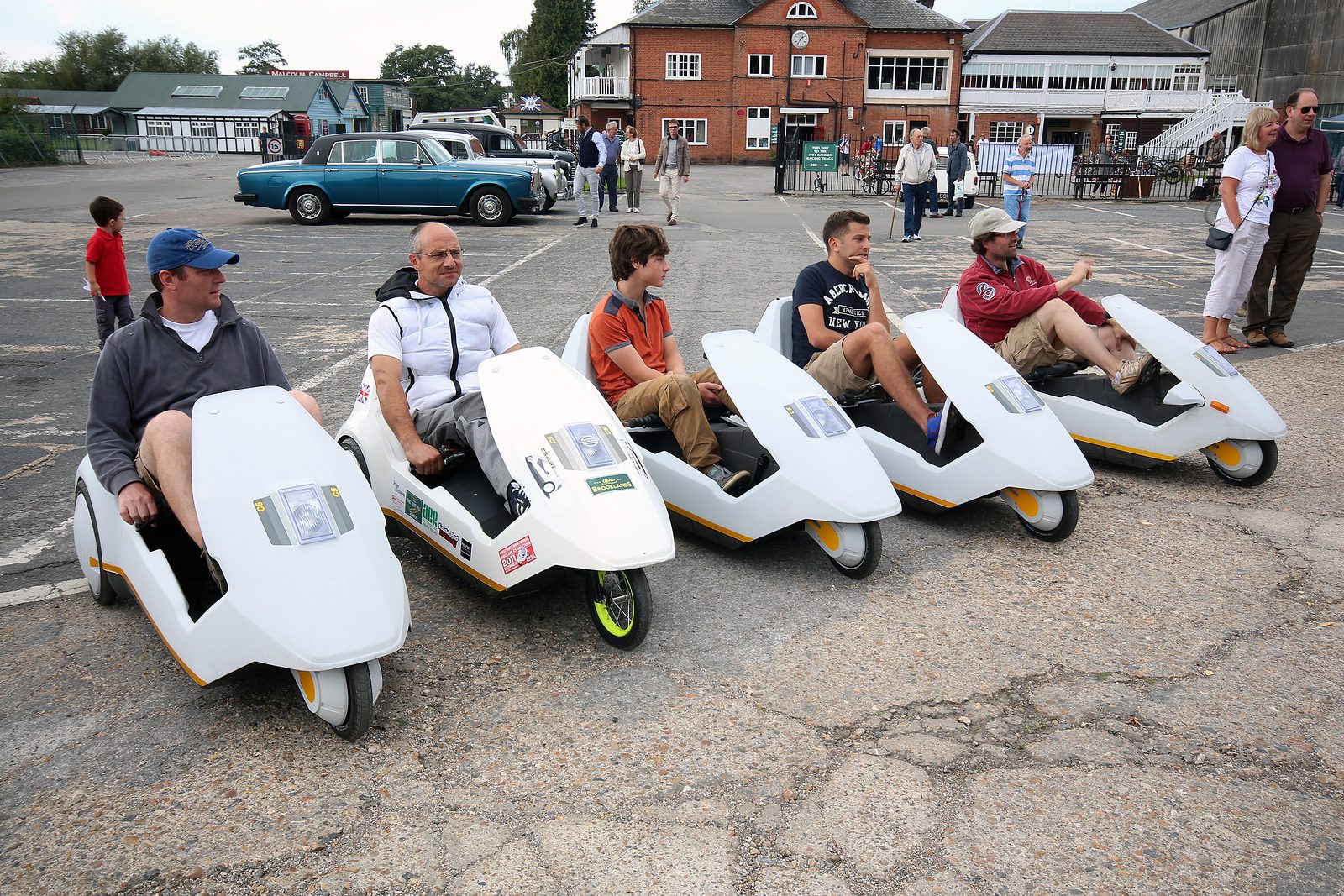
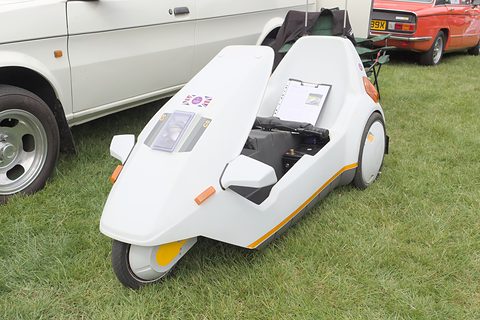
The electric idea reached the British public on 10 January 1985, in the shape of the Sinclair C5.source 49 A law of 1983 had created the electrically assisted pedal cycle: a tricycle of no more than 60 kg, with pedals, and a motor of 0.25 kW that could not take it past 15 mph.source 50 It needed no licence, tax or insurance, and could be ridden at 14.source 49 The AA got about 10 miles from a charge in ordinary use.source 49 Hoover, which built it at Merthyr Tydfil, stopped production in August 1985, after about 14,000.source 49
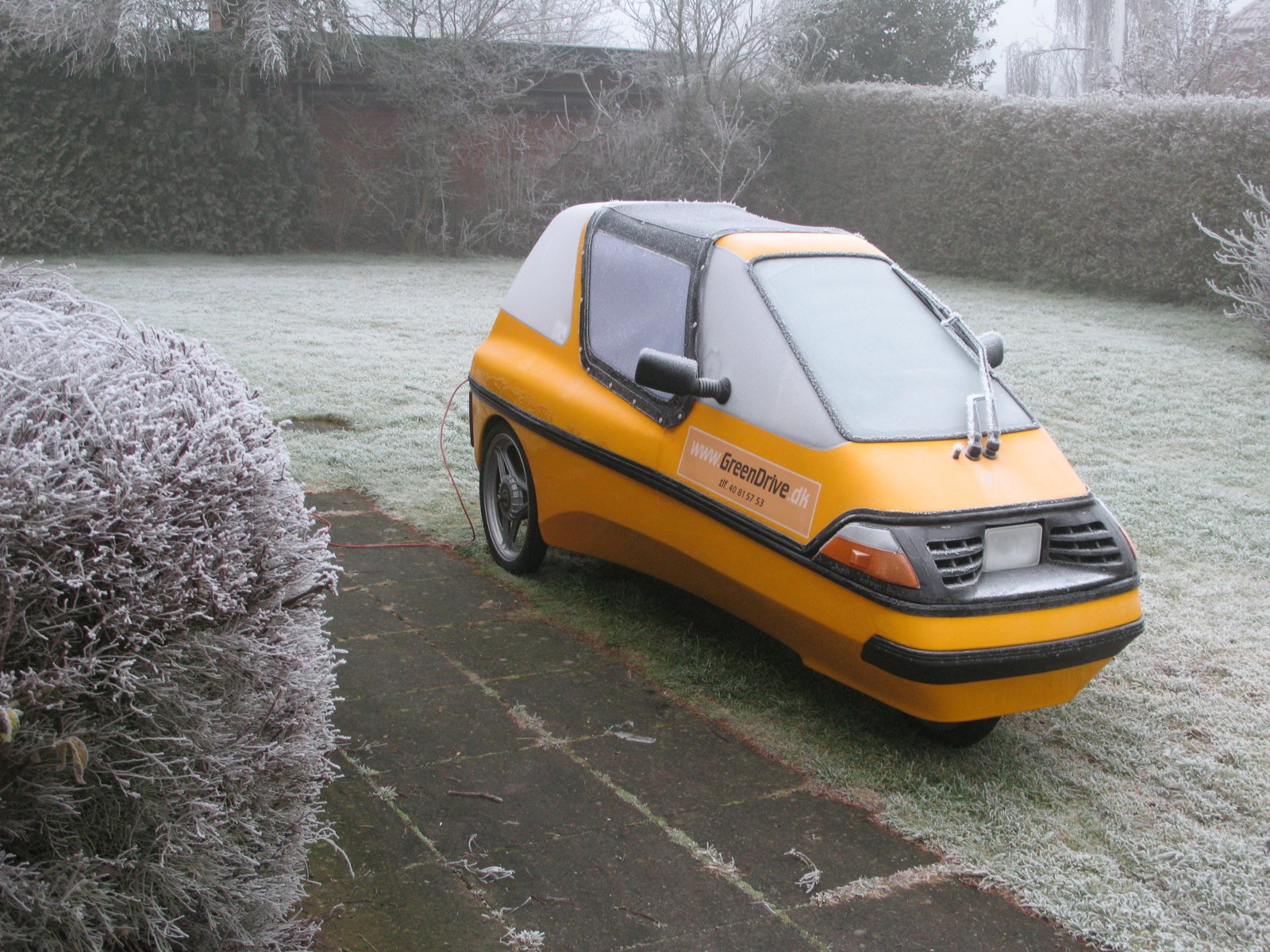
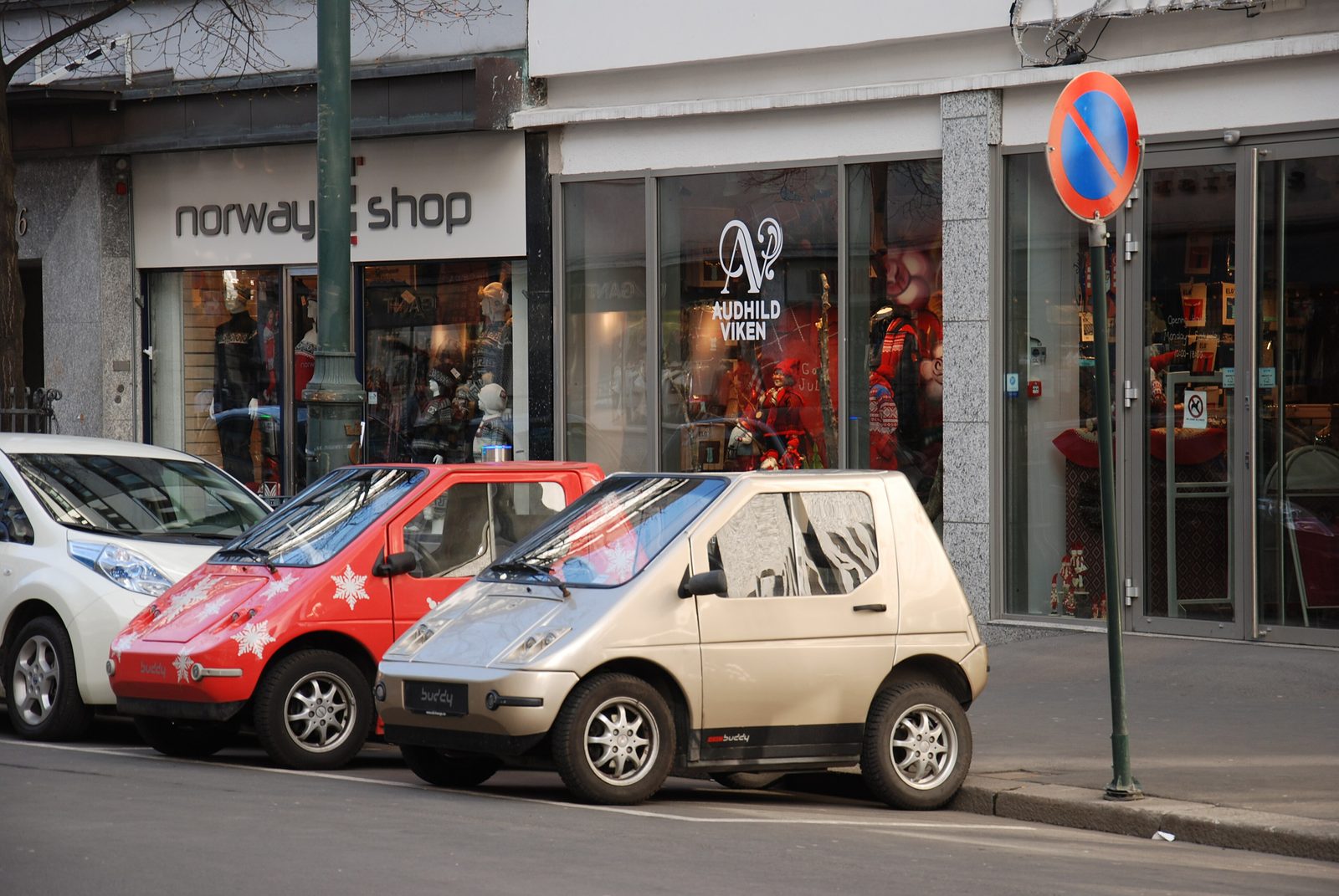
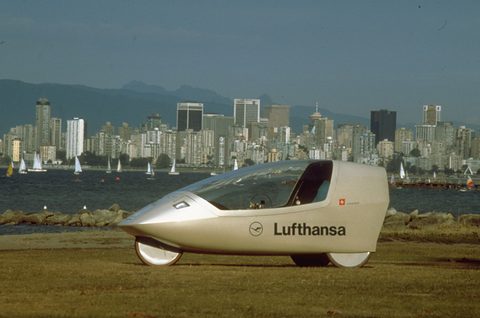
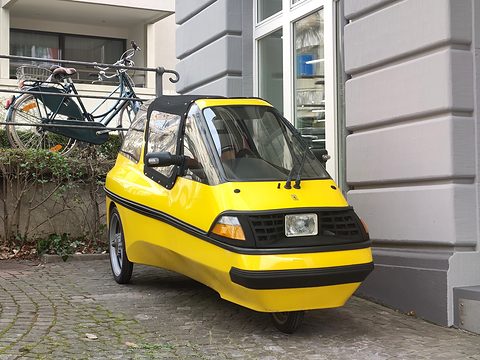
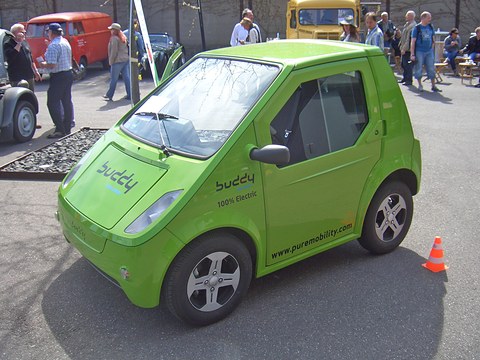
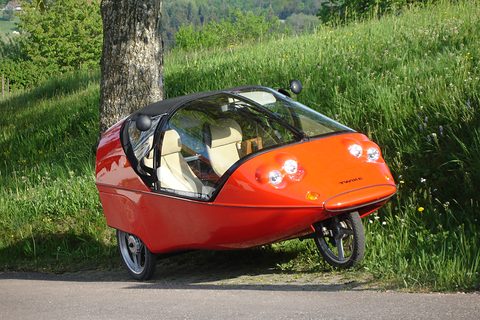
In Denmark the CityEL, born in a tractor works as the Mini-El and renamed after a dispute with British Leyland, makers of the Mini, gave one person a three-wheeled shell; production moved to Aub, in Bavaria, in 1995, and the maker counted more than 6,000 by 2008.source 51source 52 The Swiss Twike began as a pedal car for a design competition at Expo 86 in Vancouver, and became a two-seater that its passengers may pedal while a motor does the real work; from the 2008 model year it was claimed as the first series vehicle with lithium-ion batteries, and just over 1,070 had been sold by 2020.source 53source 54source 55 The Danish Kewet moved to Oslo and became the Buddy, about 1,500 of them in all.source 56source 57 Norway helped: it spared electric cars its taxes and road tolls and let them use the bus lanes.source 56source 58
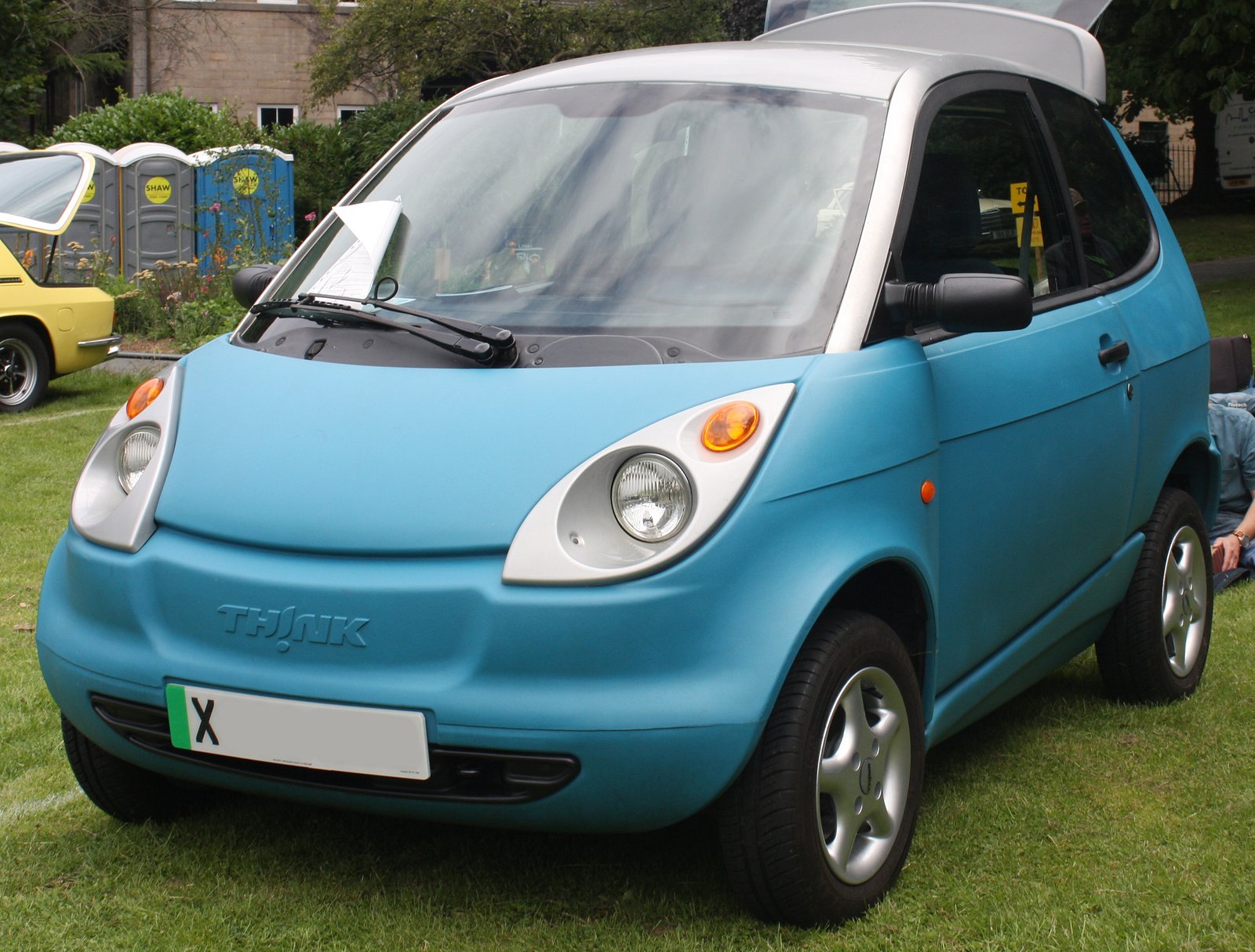
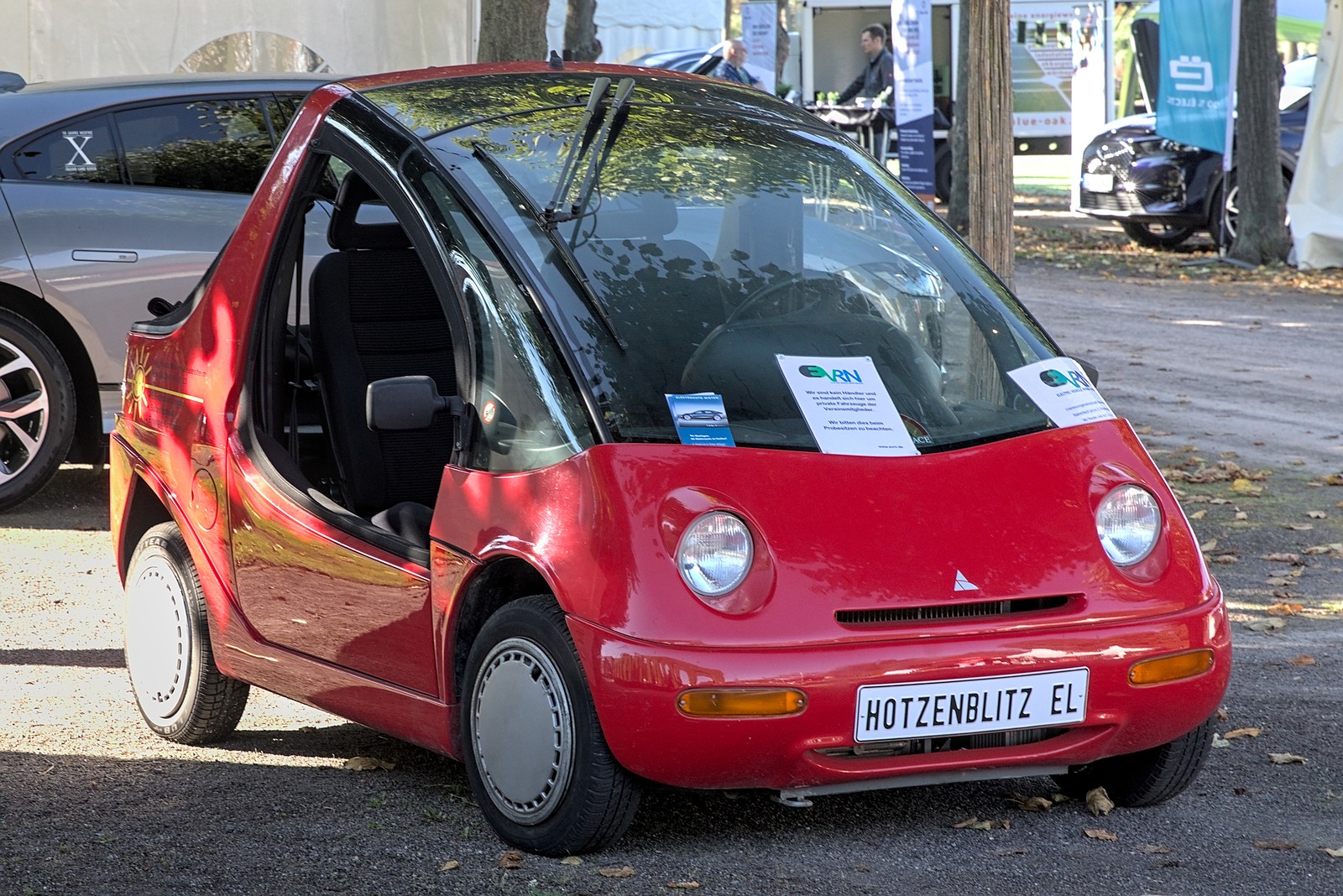
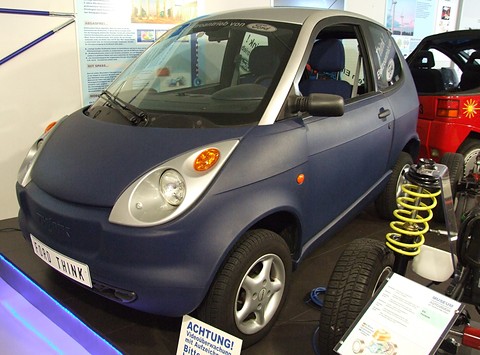
Norway had a car of its own as well. Ford bought the maker of the Think City in 1999, with California’s zero-emission mandate approaching, built 1,005, and gave up when California softened the rule; relaunched, the car survived several bankruptcies before the last was built in August 2012.source 59source 60source 61 In Germany the Hotzenblitz, built in the old works at Suhl, ran out of money in June 1996 after about 140 cars.source 62
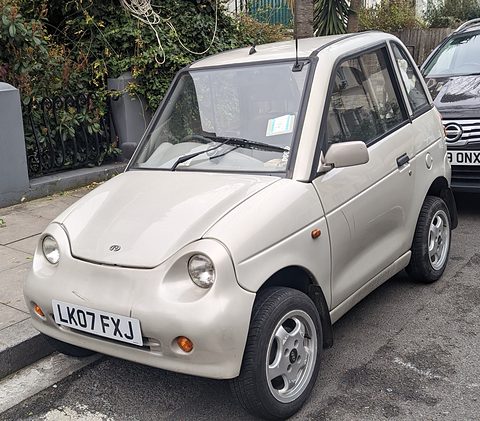
London’s electric car of the 2000s came from Bangalore. The REVA, sold in Britain as the G-Wiz, was a heavy quadricycle in European law, so it was exempt from the crash tests a car must pass, and about 750 were on London’s roads by May 2007.source 63source 64 That April the Department for Transport ran one into a barrier at 35 mph (56 km/h), the normal test for a car, and reported “serious safety concerns”.source 63source 64 Strictly it had failed nothing, since it met every rule for its class.source 64
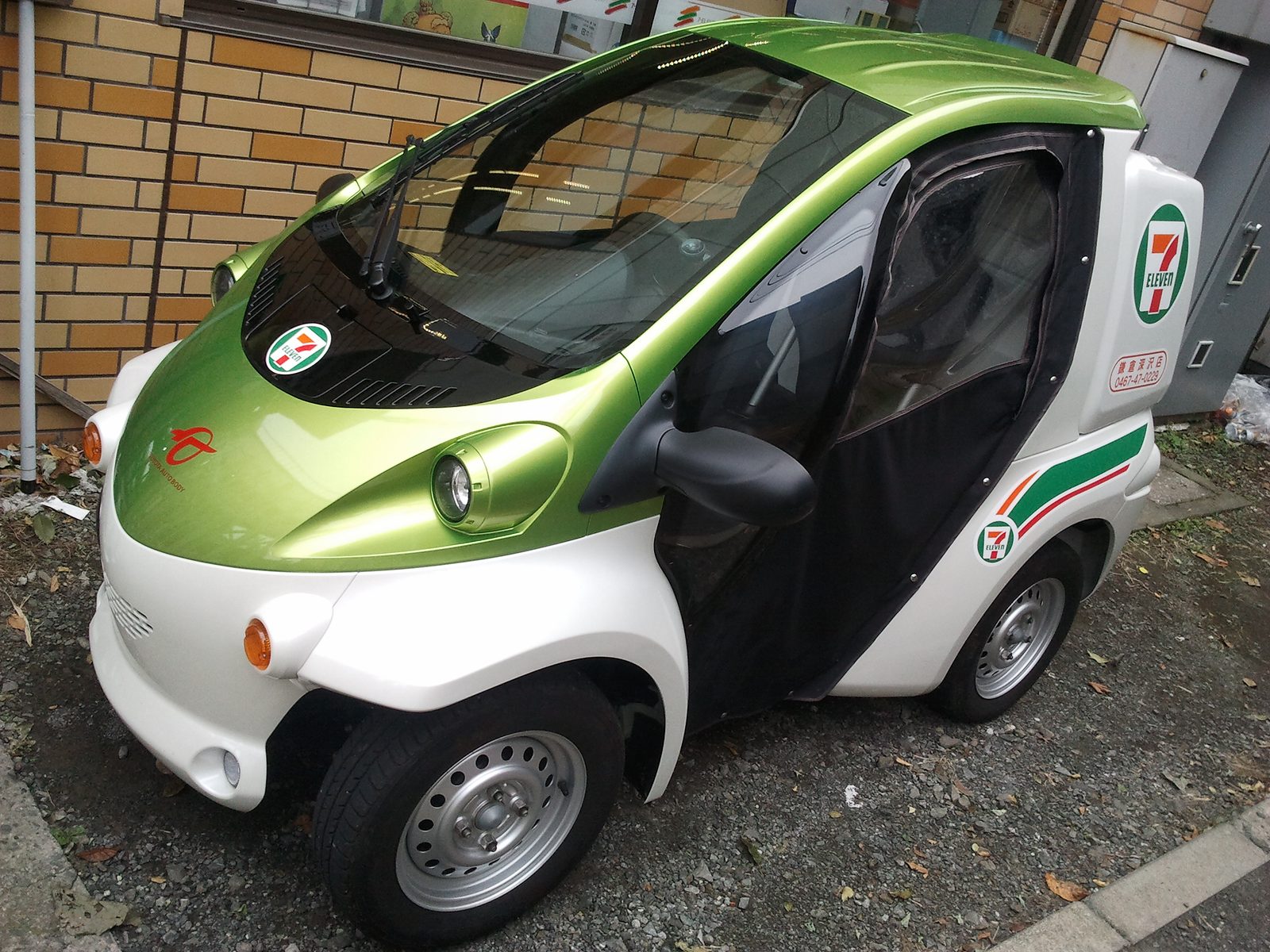
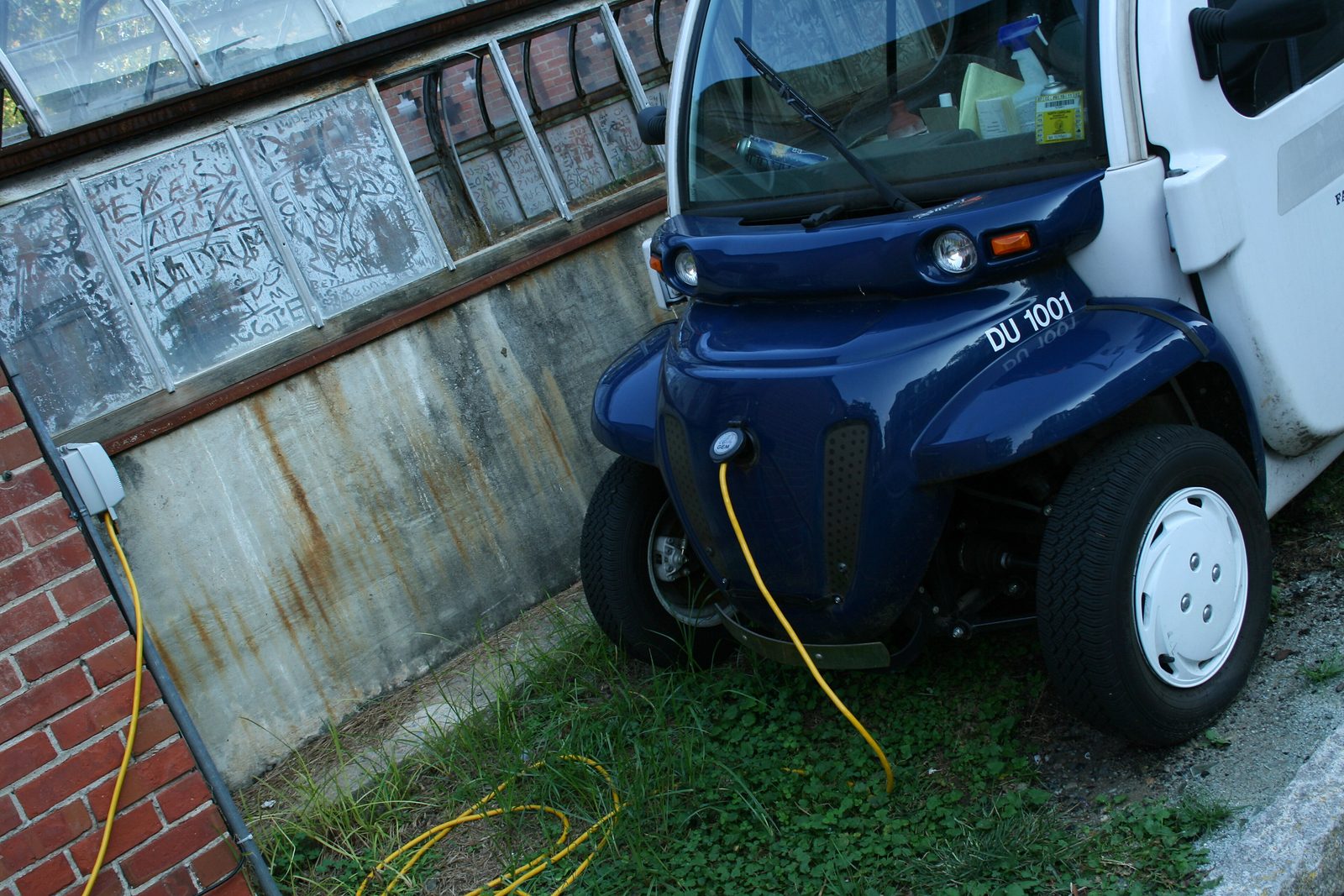
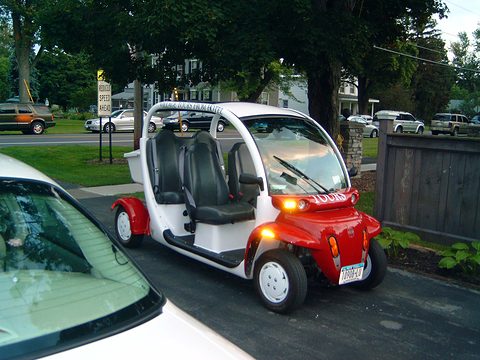
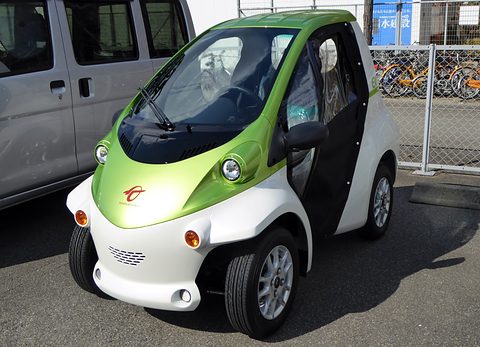
Japan and America each wrote a class of their own. Japan’s one-seat minicar, a class below the kei car, may be rated at no more than 0.6 kW, and Toyota’s COMS of 2012 was rated at 0.59 kW, while giving 5 kW at its peak; 7-Eleven took it up to deliver its customers’ shopping.source 65source 66 The American low-speed vehicle class, created in 1998 by one account, with belts, lamps and safety glass, was allowed on roads limited to 35 mph, and the GEM that the rule made possible had sold more than 50,000 by 2015.source 67
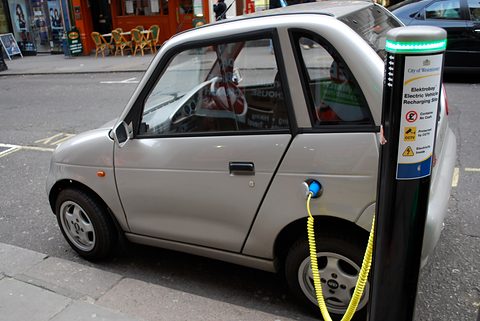
The quadricycle and the Chinese mini car, since 2012
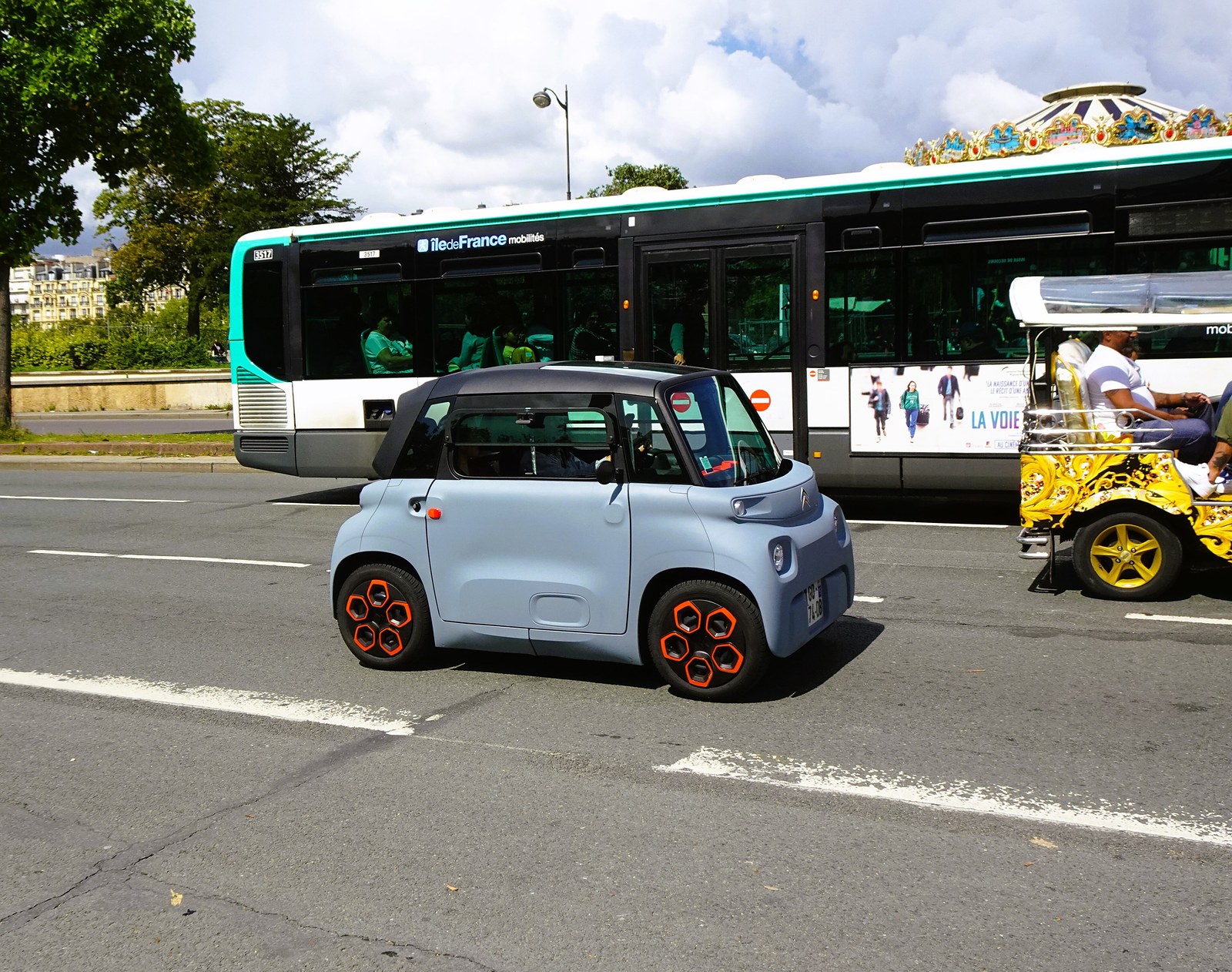
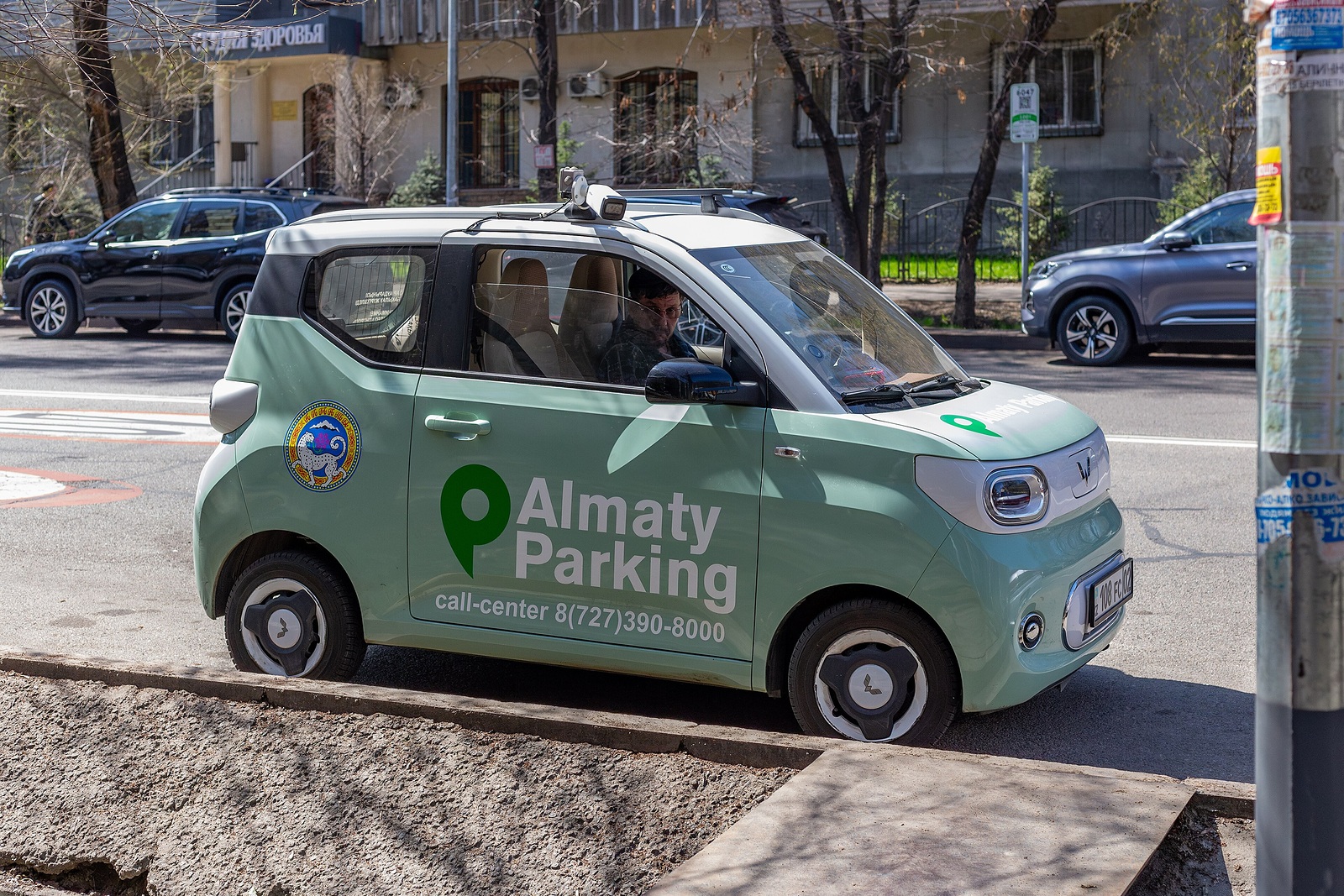
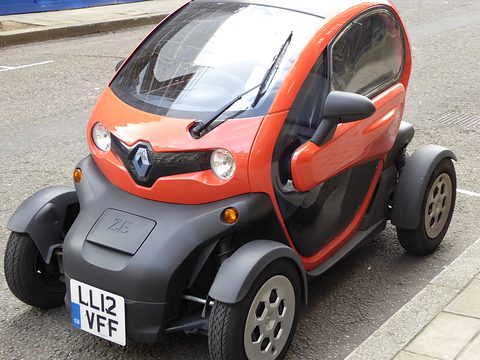
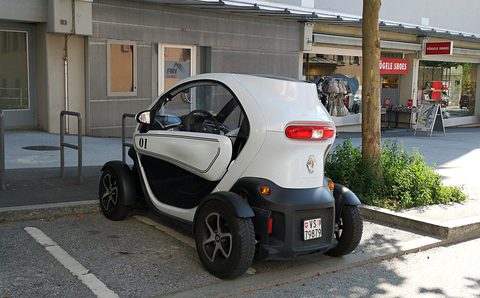
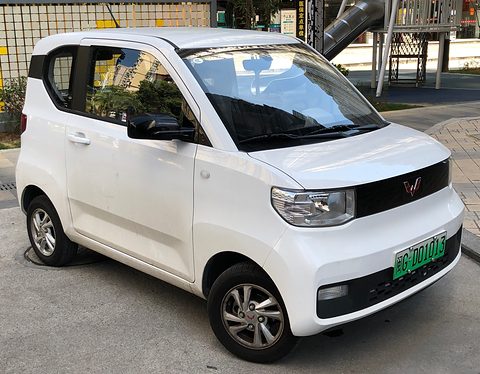
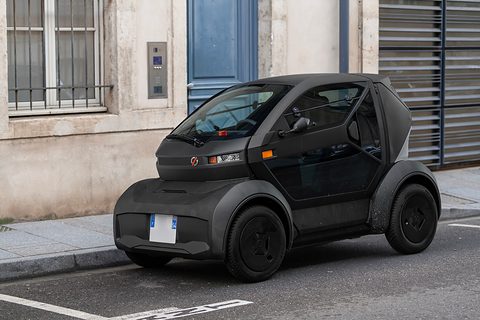
The big makers came back with the lithium battery. Renault showed its Twizy as a concept at Frankfurt in September 2009.source 15 In 2023 auto motor und sport looked back and remarked that Tesla was then still building its Roadster by hand.source 17 In its 45 km/h form the Twizy could be driven at 14 in France, and by June 2023, the year it ended, Renault had sold 33,340 in 55 countries.source 15source 16source 17 Citroën’s Ami, built at Kenitra in Morocco from 2020, went further down the same road: a two-seater held to 45 km/h that could be bought online or in the Fnac and Darty electrical shops, and driven at 14.source 18source 68 Citroën’s chief executive, Vincent Cobée, offered it as town transport for everyone, small, all-electric and cheap, with no licence needed.source 69 About 65,000 had been sold by October 2024.source 19 China’s numbers made Europe’s look small. Shandong province alone took 330,000 low-speed electric cars in the first eight months of 2016, outselling China’s entire official tally of new-energy vehicles over the same period, and in 2018 six ministries set out to clean the trade up.source 70source 71 The Wuling Hongguang Mini EV, launched at Chengdu on 24 July 2020, was not one of them: with 100 km/h it counts as an ordinary car in Chinese law.source 72 It outsold the Tesla Model 3 in China in August 2020, and sold 395,451 in 2021 and over 1.1 million by February 2023.source 72source 73
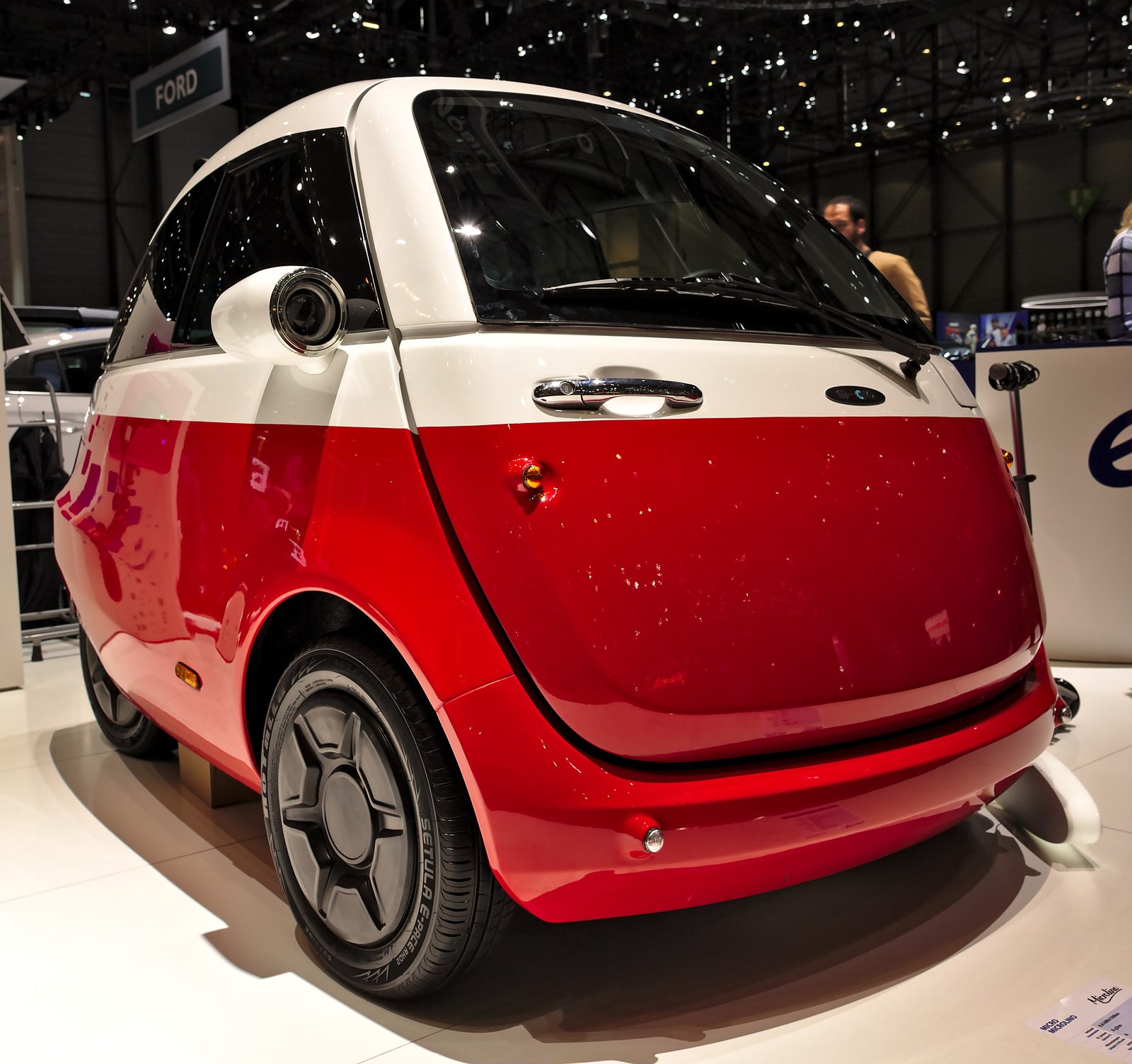
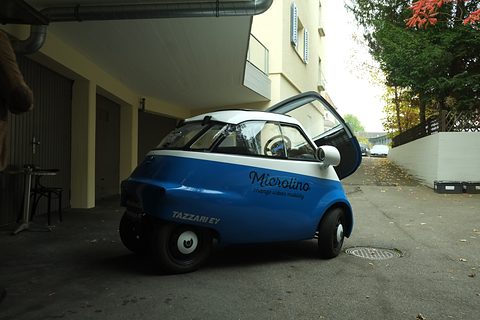
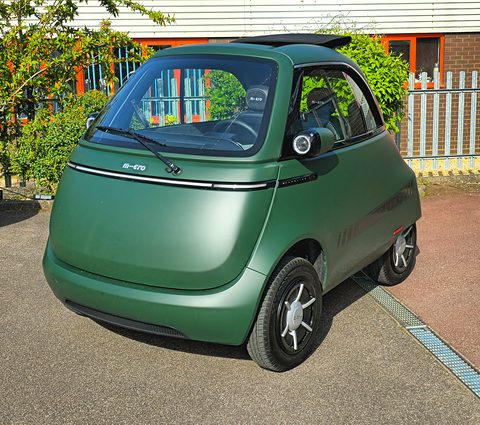
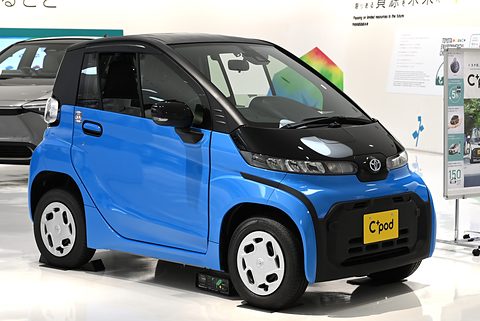
The bubble car came back too. The Ouboter family, whose firm makes Micro scooters, showed the Microlino, an electric Isetta with a door in its nose, at Geneva in 2016; a deal with the Italian maker Tazzari to build it collapsed when Artega produced a near-copy, and German courts granted injunctions against it in 2019.source 74source 75source 76 The Microlino has been built in Turin since 2022, about 3,700 by 2024.source 74source 75 Japan’s Toyota C+pod of 2020 was type-designated under the rules for ultra-compact mobility.source 77source 78 And not every big maker’s car survives: Renault’s Mobilize Duo, the Twizy’s successor, stopped in December 2025 after 3,544.source 79source 80
The pattern holds from Berlin to Liuzhou. The small makers ran out of money or buyers, again and again, and the cars that sold found either a legal niche, in a licence-free class, a Japanese minicar rule, an American low-speed vehicle or a Chinese grey market, or a big maker’s backing. Slaby’s own firm ended as the Berlin branch of Rasmussen’s company, which bought what was left to protect its money.source 1
Smallest to largest
41 cars and 10 maker groups, to scale
Each bar is the car’s length on a 3.5 metre track; the red notch is a Fiat 500.
-
Erad1978–1997 · France · 4 wheels
1.69 m -
Sinclair C51984–1985 · Britain · 3 wheels
1.74 m -
La Voiture Électronique Porquerolles1968–1976 · France · 3 wheels
1.80 m -
Ford Comuta1967 · Britain · 4 wheels
2.08 m -
Teilhol Citadine1972–1986 · France · 3 wheels
2.12 m -
Zagato Zele1974–1976 · Italy · 4 wheels
2.13 m -
Scottish Aviation Scamp1965–1967 · Britain · 4 wheels
2.13 m -
Slaby-Beringer1919–1924 · Germany · 4 wheels
2.30 m -
Renault Twizy2012–2023 · France · 4 wheels
2.32 m -
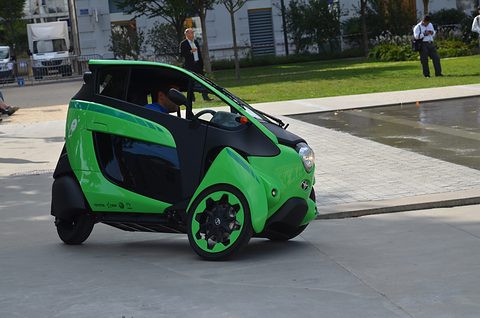
Toyota i-Road2013–2015 · Japan · 3 wheels
2.35 m -
CitiCar1974–1982 · United States · 4 wheels
2.39 m -
Toyota COMS2000– · Japan · 4 wheels
2.40 m -
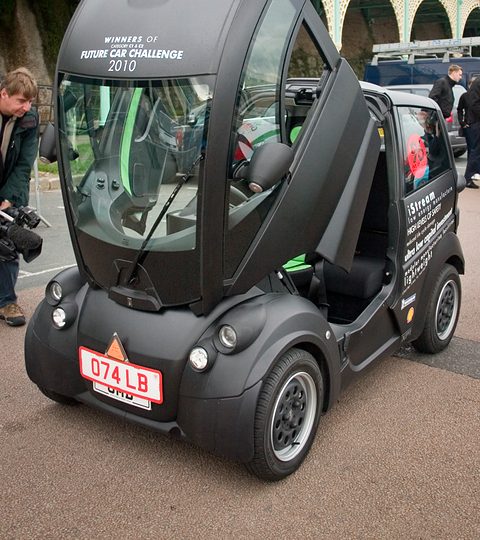
Gordon Murray T.252010–2011 · Britain · 4 wheels
2.40 m -
Citroën Ami2020– · France · 4 wheels
2.41 m -
Mobilize Duo2024–2025 · France · 4 wheels
2.43 m -
Corbin Sparrow1999–2013 · United States · 3 wheels
2.44 m -
Kewet / Buddy1991–2013 · Norway · 4 wheels
2.44 m -
Toyota C+pod2020–2024 · Japan · 4 wheels
2.49 m -
Smart Fortwo1998–2024 · Germany · 4 wheels
2.50 m -
Microlino2022– · Switzerland · 4 wheels
2.52 m -
Electra King1961–1981 · United States · 3 wheels
2.56 m -
Commuter Cars Tango2005– · United States · 4 wheels
2.59 m -
REVA G-Wiz2001–2012 · India · 4 wheels
2.60 m -
Gurgel Itaipu E1501974–1976 · Brazil · 4 wheels
2.65 m
17 more cars and 10 more maker groupsFewer
-
Twike1995– · Switzerland · 3 wheels
2.65 m -
Peugeot VLV1941–1945 · France · 4 wheels
2.67 m -
CityEl1987–2018 · Denmark · 3 wheels
2.74 m -
Ligier JS502012– · France · 4 wheels
2.83 m -
Enfield 80001973–1976 · Britain · 4 wheels
2.85 m -
Tazzari Zero2009–? · Italy · 4 wheels
2.88 m -
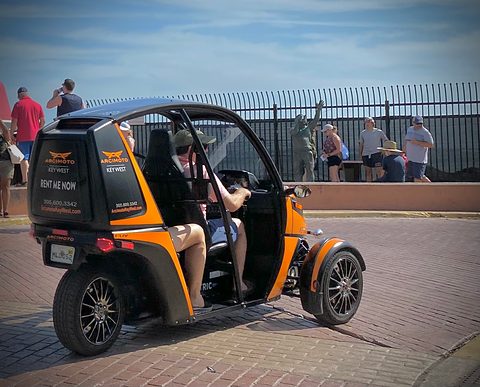
Arcimoto FUV2019–2023 · United States · 3 wheels
2.90 m -
Wuling Hongguang Mini EV2020– · China · 4 wheels
2.92 m -
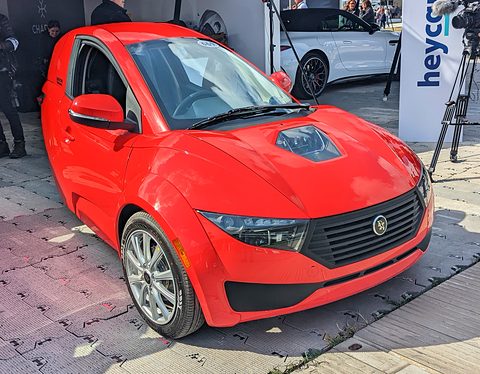
ElectraMeccanica Solo2018–2023 · Canada · 3 wheels
3.10 m -
VAZ-1111 Oka1987–2008 · Soviet Union · 4 wheels
3.20 m -
Aixam1984– · France · 4 wheels
length unknown -
Ardex1952–1955 · France · 4 wheels
length unknown -
Autelec1940–1943 · France
length unknown -
GEM (Global Electric Motorcars)1998– · United States · 4 wheels
length unknown -
JDM1981–2014 · France · 4 wheels
length unknown -
L’Œuf électrique1942 · France · 3 wheels
length unknown -
Think City1999–2012 · Norway · 4 wheels
length unknown -
American city-car prototypes1959–1989 · Several countries · 4 wheels
6 makers -
Britain’s forgotten 1950s microcars1948–1969 · Britain
12 makers -
Chinese low-speed electric vehicles2000– · China · 4 wheels
3 makers -
Electric microcars of the Americas since 19902001– · Several countries · 4 wheels
8 makers -
Europe’s small electric microcar makers since 19901993– · Several countries
10 makers -
French licence-free car makers of the 1970s and 1980s1970–1994 · France
14 makers -
Hungarian microcars1946–1996 · Hungary
6 makers -
Japan’s ultra-compact mobility and mini-car class1997– · Japan
6 makers -
Micro vans and utility microcars since 19901992– · Several countries
8 makers -
Microcar concept cars since 19901992–2025 · Several countries
11 makers
Pictures
17 photographs
Electric microcars 17
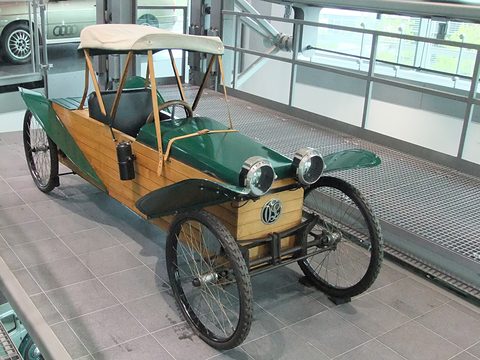
1 Wooden-bodied Slaby-Beringer two-seater of 1924 with green wings and a canvas hood at the Audi museum mobile, Ingolstadt, Germany, in August 2014.
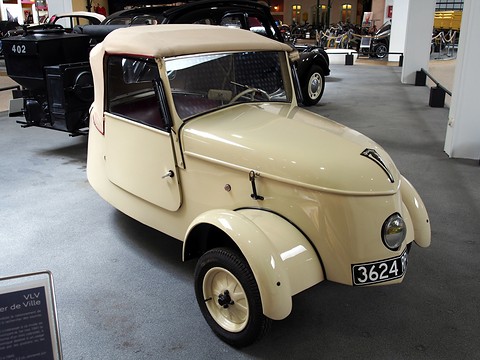
2 A cream Peugeot VLV with its hood raised at the Musée de l’Aventure Peugeot, Sochaux, in April 2016.
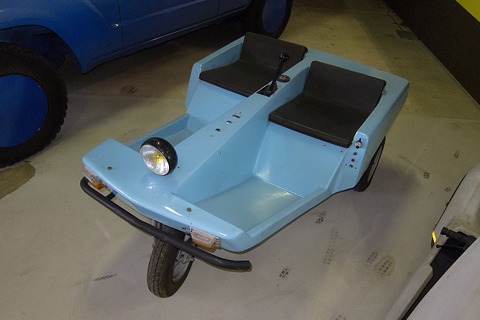
3 A Porquerolles at Autoworld in Brussels in 2011, seen from above with its two seats and control stick.
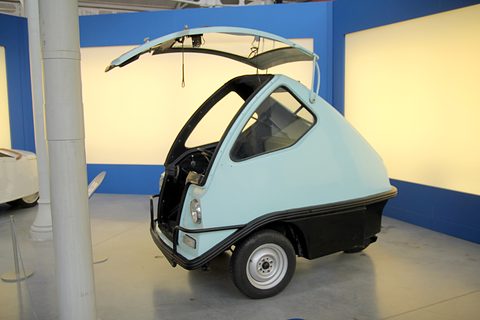
4 A Teilhol Citadine with its top-hinged nose door raised, at the Musée auto-moto-vélo in Châtellerault in 2022.
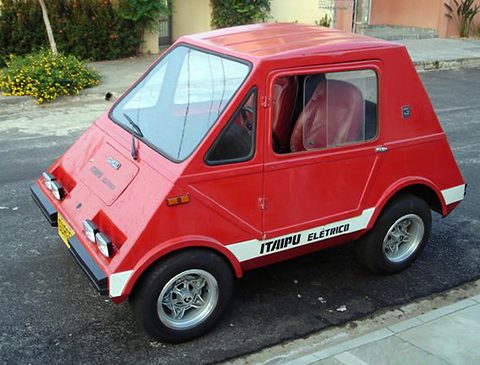
5 Red Gurgel Itaipu E150 electric car from the front quarter, parked in a street in Brazil.
12 more picturesFewer pictures
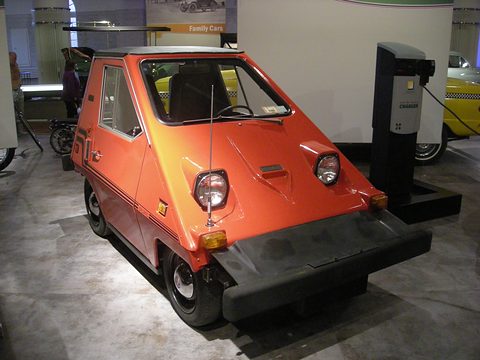
6 A 1980 Comuta-Car, with its battery-box bumpers, at the Henry Ford Museum in Dearborn, Michigan, in 2012.
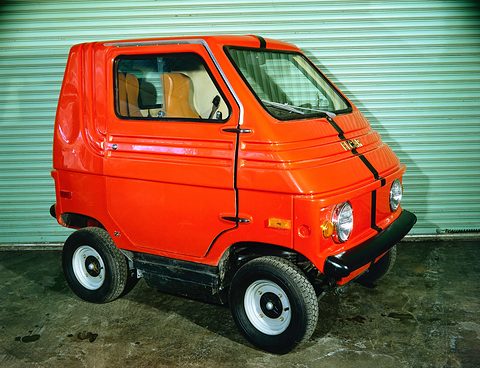
7 An orange Elcar, the US-market Zele, from the front three-quarter in the 1977 US government test photographs.
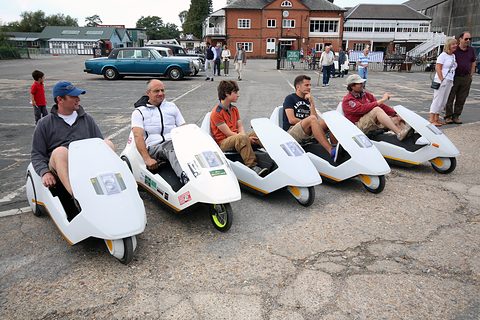
8 Members of the C5 Alive owners’ group riding a line of Sinclair C5s at Brooklands in 2014.
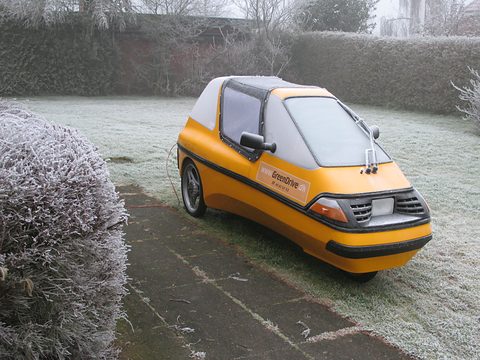
9 An orange-and-black closed-top CityEl on a frosty drive in Denmark in December 2007.
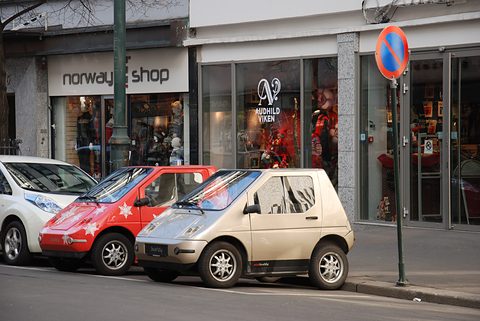
10 Kewet and Buddy electric cars parked outside shops in central Oslo, Norway, in April 2012.
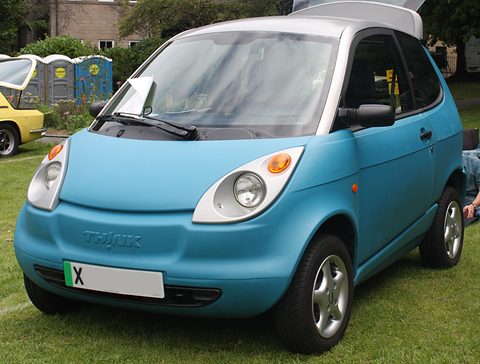
11 A blue 2000 Ford TH!NK City (A266) at the Hebden Bridge Vintage Weekend, England, in August 2022.
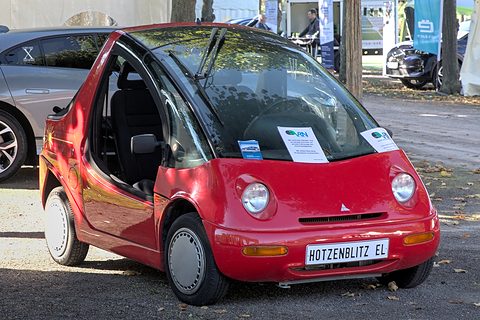
12 A red Hotzenblitz at the Classic-Gala, Schwetzingen, Germany, in September 2021.
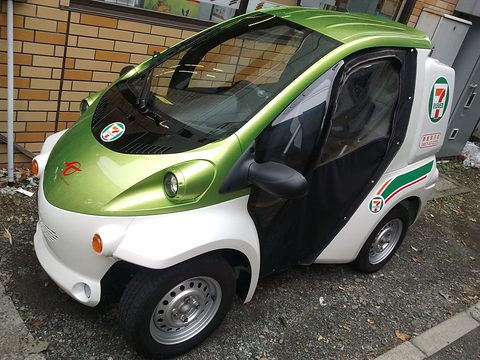
13 A Toyota COMS B·COM Delivery in 7-Eleven livery parked in Tokyo, Japan, in October 2013.
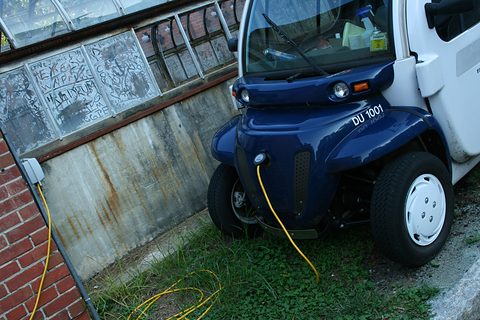
14 A blue GEM recharging from a wall socket on the Duke University campus, Durham, North Carolina, in September 2008.
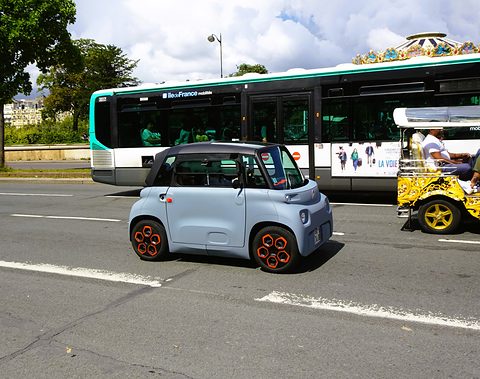
15 A Citroën Ami driving in Paris traffic, France, in August 2023, with an RATP bus behind.
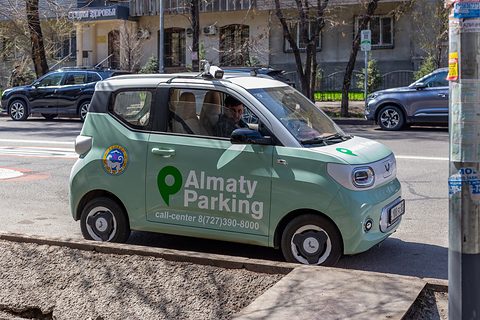
16 A green second-generation Wuling Hongguang Mini EV of the Almaty municipal parking service on Nazarbayev Avenue, Almaty, Kazakhstan, in April 2025.
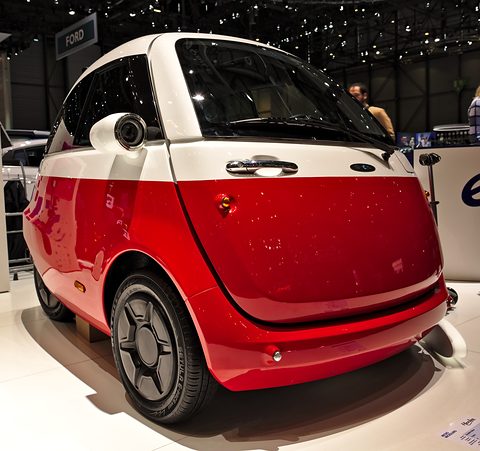
17 A red and white Microlino at the Geneva Motor Show, Switzerland, in March 2018.
Picture credits (17)
- 1 Glen Bowman, CC BY 2.0
- 2 Alf van Beem, CC0 1.0
- 3 Thomas Quine, CC BY 2.0
- 4 Jean-Marie Vugnon (2), CC BY-SA 4.0
- 5 Marcelo Bezerra Cavalcanti, edited by Mr.choppers, CC BY 3.0
- 6 Michael Barera, CC BY-SA 4.0
- 7 Martin Brown, NASA (US National Archives), Public domain
- 8 Prioryman, CC BY-SA 4.0
- 9 Allan Høiberg, CC BY-SA 2.0
- 10 Bengt Oberger, CC BY-SA 3.0
- 11 DieselFordMondeo, CC BY-SA 4.0
- 12 Alexander Migl, CC BY-SA 4.0
- 13 Daniel Davis, CC BY 2.0
- 14 Ildar Sagdejev (Specious), CC BY-SA 4.0
- 15 Charles, CC BY 2.0
- 16 Nikolai Bulykin, CC BY-SA 4.0
- 17 Alexander Migl, CC BY-SA 4.0
The cars
Profiles
29 more cars and 10 more maker groupsFewer
-
-
-
-
-
-
-
-
-
-
-
-
-
-
-
-
-
-
-
-
-
-
-
-
-
-
-
-
-
-
-
-
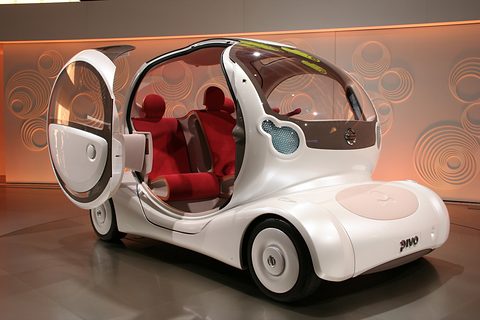
-
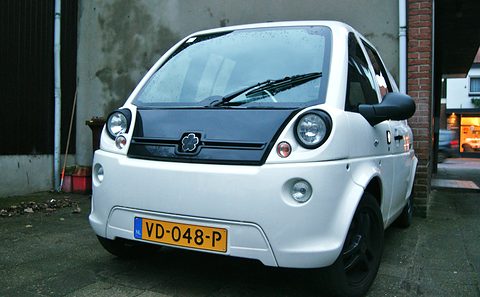
Electric microcar
Europe’s small electric microcar makers since 1990
1993– · Several countries · 10 makers
-
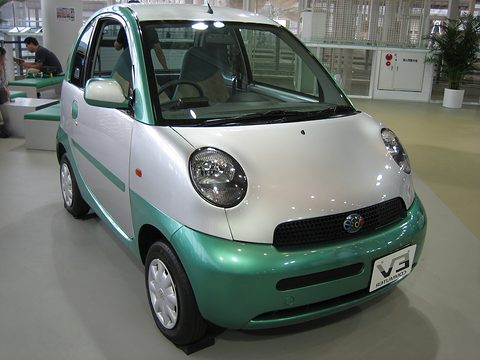
-
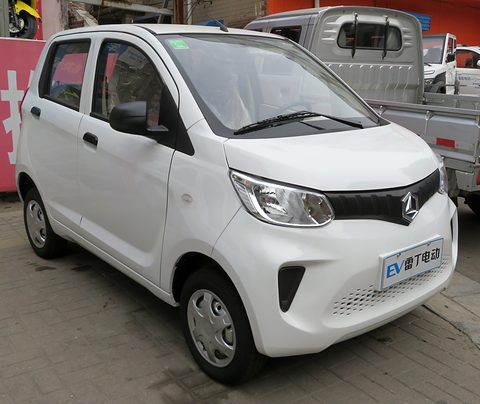
-
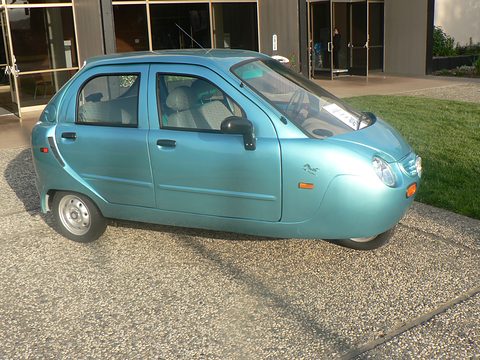
Electric microcar
Electric microcars of the Americas since 1990
2001– · Several countries · 8 makers
-
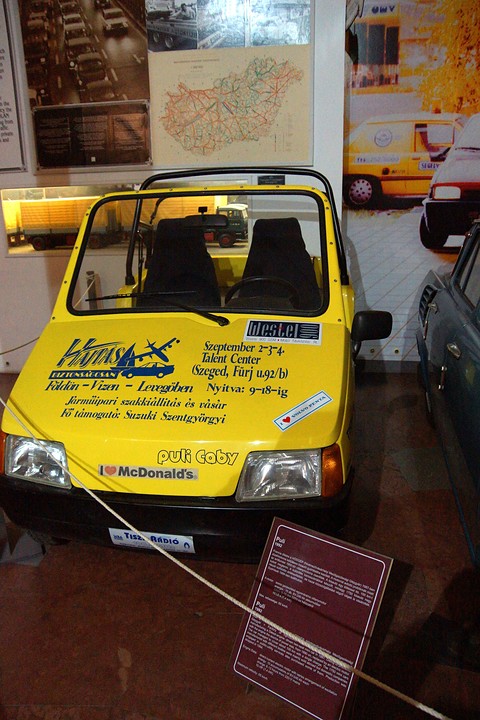
-
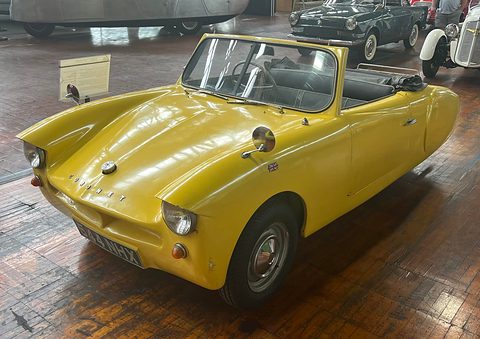
-
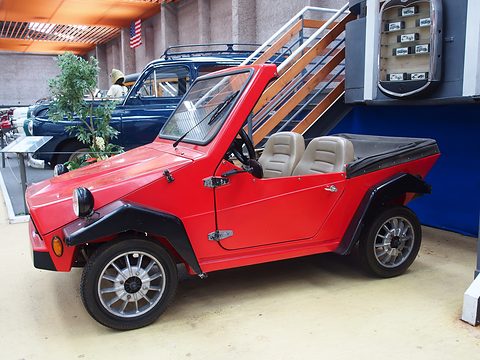
Licence-free car
French licence-free car makers of the 1970s and 1980s
1970–1994 · France · 14 makers
Sources
Numbered as in the text
Sources are given as plain text; the links are on the Credits page.
- German Wikipedia, Slaby-Beringer, read in full. Used as a lead.
- SB-Automobil-Gesellschaft, Charlottenburg, brochure Der elektrische SB-Einsitzer Modell 1922 (System Slaby-Beringer), read in full.
- Automobile (1989), a German illustrated reference, entry “1920 Slaby-Beringer Elektrowagen”, snippets only.
- German Wikipedia, Peugeot VLV, read in full with its infobox. Used as a lead; it cites Schmarbeck, Alle Peugeot Automobile 1890–1990 (1990).
- Philippe Schwoerer, article on the Peugeot VLV, with a drive in a restored car, Automobile Propre, 2016, read in full.
- French Wikipedia, Peugeot VLV, read in full. Used as a lead; it cites J.-M. Normand in Le Monde, 15 August 2023.
- Lane Motor Museum, “Peugeot VLV, 1942”, collection page.
- Jonny Smith, “Enfield 8000: A History Lesson”, Flux Capacitor website, an owner’s history with original technical data.
- Lancaster Insurance, “The pioneer electric car – the Enfield 8000”, 28 September 2022.
- English Wikipedia, Enfield 8000, read in full. Used as a lead; it cites Autocar of 21 February 1976 and the documentary A Tale of Two Isles (2014).
- Warren Whitmore, “Secret Isle of Wight: The Enfield 8000”, Island Echo, 24 July 2022.
- English Wikipedia, Citicar, read in full. Used as a lead; it draws on owners’ and service manuals and the CitiCar Roster.
- F. J. Stenger, J. M. Bozek and R. F. Soltis, Results of Baseline Tests of the EVA Metro Sedan, Citi-Car, Jet Industries Electra-Van, CDA Town Car, and Otis P‑500 Van, NASA TM X‑73638, Lewis Research Center, October 1976.
- Lancaster Insurance, “Staying Positive: The CitiCar walked so Tesla could run”, 14 April 2023.
- English Wikipedia, Renault Twizy, read in full. Used as a lead.
- “Bye-bye Twizy”, electrive, 17 July 2023.
- “Renault Twizy Produktionsende 2023”, auto motor und sport, July 2023.
- English Wikipedia, Citroën Ami (electric vehicle), read in full. Used as a lead.
- “Citroën auf dem Autosalon Paris: Viel Neues – und ein heimlicher Bestseller”, autohaus.de, 16 October 2024.
- RM Sotheby’s, catalogue of RM Auctions’ sale of the Bruce Weiner Microcar Museum, 2013, lot 287, “1942 Peugeot VLV”.
- l’Automobile Ancienne, “Autélec (1940-1943)”, 6 November 2015.
- l’Automobile Ancienne, “Les voitures électriques sous l’occupation”, 3 November 2015.
- German Wikipedia, Pierre Faure; it cites Linz and Schrader, and Georgano.
- German Wikipedia, Électro-Renard; it cites Linz and Schrader, and Georgano.
- The original microcarfan.com (2006–2016), marque page “ARDEX”, one collector’s account, read from the archived copy.
- Musée des Arts et Métiers, “L’œuf électrique de Paul Arzens”, collection text.
- l’Automobile Ancienne, “L’Oeuf Electrique de Paul Arzens (1942)”, 9 November 2015.
- German Wikipedia, Electra King, read in full. Used as a lead; it cites John Gunnell’s Standard Catalog of American Cars 1946–1975 (2002).
- Small Cars Club, “B&Z Electra King”.
- Jason Torchinsky, “B&Z Electra King: The Jalopnik Classic Review”, Jalopnik, 13 July 2012.
- English Wikipedia, Scottish Aviation Scamp, read in full. Used as a lead; it cites Design no. 211 (1966), W. G. Watson’s unpublished history of the project, and the MIRA evaluation (1967) and endurance (1968) reports.
- Science Museum Group, “Ford Comuta Electric Car, 1967”, object 1971-476/1.
- Mac’s Motor City Garage, “Electric Pioneer: The 1967 Ford Comuta”, 2018; it draws on Ford’s engineering literature.
- Italian Wikipedia, Zagato Zele, read in full; it cites La Stampa of 8 November 1972 and 30 October 1974.
- English Wikipedia, Zagato Zele, read in full.
- N. B. Sargent, E. A. Maslowski, R. Slavik and R. F. Soltis, Baseline Tests of the Zagato Elcar Electric Passenger Vehicle, NASA TM-73764, Lewis Research Center, October 1977.
- Lane Motor Museum, “Elcar 1975”, collection page.
- “Bob Beaumont, at 79; creator of CitiCar, 1970s electric vehicle”, Boston Globe (New York Times News Service), 30 October 2011.
- Bruce Weiner Microcar Museum, “1969 La Voiture Electronique Porquerolles”, tour page, read via the Internet Archive (2015).
- automobile-propre.com, “Quand L’Automobile essaye une Jarret Porquerolles, en 1972”, a retelling of the road test in L’Automobile, August 1972.
- Lane Motor Museum, “Jarret La Voiture Electronique – 1969”, collection page.
- automobile-propre.com, “Teilhol et sa gamme de véhicules électriques commercialisés entre 1974 et 1986”, based on period documents and press.
- Lane Motor Museum, “Teilhol Citadine – 1974”, collection page.
- Fabiano Pereira, “Clássicos: Grandes Brasileiros: Gurgel Itaipu”, Quatro Rodas, April 2007, archived copy.
- Autoesporte, “Gurgel Itaipu foi o primeiro carro elétrico nacional, mas morreu por problemas que existem até hoje”, 2 April 2021, updated 18 April 2024.
- English Wikipedia, Gurgel Itaipu, read in full. Used as a lead; it cites Quatro Rodas (April 2007).
- English Wikipedia, Automobiles ERAD, citing Les Échos and a SECMA history page.
- German Wikipedia, Automobiles Erad, citing Linz and Schrader, Georgano and René Bellu’s Automobilia.
- English Wikipedia, Sinclair C5, read in full. Used as a lead; it is referenced to Rodney Dale’s history, The Times, The Guardian, the Financial Times, the AA and Which?.
- The Electrically Assisted Pedal Cycles Regulations 1983, SI 1983/1168, as made.
- German Wikipedia, CityEL, read in full with its references.
- heise autos, “Läuft länger: CityEL jetzt mit Lithium-Akku”, 12 September 2008.
- German Wikipedia, Twike, read in full.
- English Wikipedia, Twike, read in full with its references.
- Twike Klub, “Wie entstand das TWIKE”, the owners’ club’s history of the Twike I to III.
- English Wikipedia, Buddy (electric car), read in full.
- AVEM, “eBuddy – La petite voiture électrique Norvégienne à EVS 27”, 24 November 2013.
- ElBil Norge AS, “The new electric car from Norway”, the maker’s English page, archived copy of 3 August 2007.
- English Wikipedia, Think City, read in full.
- English Wikipedia, Think Global, read in part.
- German Wikipedia, Think City.
- German Wikipedia, Hotzenblitz, read in full.
- English Wikipedia, REVAi, read in full.
- Tom Foot, “Green bubble cars safety fears”, West End Extra, 11 May 2007.
- English Wikipedia, Toyota COMS.
- 「1人乗りEV『コムス』はコスト低減で60万円以下に、セブンイレブンが宅配に採用」 (The one-seat EV COMS comes in under ¥600,000 through cost cutting; Seven-Eleven adopts it for deliveries), MONOist (ITmedia), 3 July 2012.
- English Wikipedia, Global Electric Motorcars; its references include Polaris and the Federal Register.
- French Wikipedia, Citroën Ami (2020), read in full. Used as a lead.
- Fred Lambert, report of the Ami’s launch, Electrek, 28 February 2020.
- Stephen Edelstein, “China to regulate, rein in low-speed electric cars used in rural areas”, Green Car Reports (on Yahoo Autos), 7 November 2016, citing Bloomberg.
- Ministry of Industry and Information Technology and five other ministries, 关于加强低速电动车管理的通知 (Notice on strengthening the management of low-speed electric vehicles), 2 November 2018.
- English Wikipedia, Wuling Hongguang Mini EV, with its reference list. Used as a lead.
- GM Authority, “New Wuling EV the Hong Guang launched in China” (July 2020) and “Wuling Hong Guang EV outsells Tesla Model 3 in China in August” (September 2020), seen as search results only.
- English Wikipedia, Microlino, read in full, with its infobox and references. Used as a lead.
- German Wikipedia, Microlino, read in full. Used as a lead.
- “No go for little Karo(lino) aka Microlino”, electrive, 28 September 2019.
- Toyota Motor Corporation, release on the limited launch of the C+pod, 25 December 2020.
- English Wikipedia, Toyota C+pod, read in full. Used as a lead.
- French Wikipedia, Mobilize Duo. Used as a lead.
- Inovev, “Renault is halting production of the Mobilize Duo and Bento”, 8 January 2026.