Cyclecars
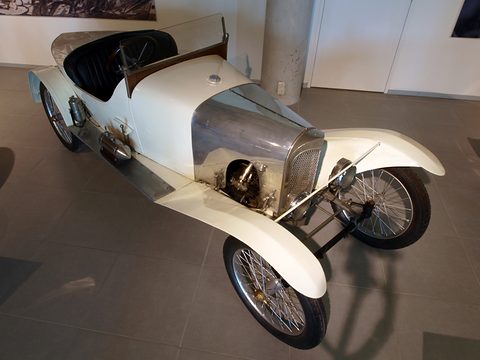
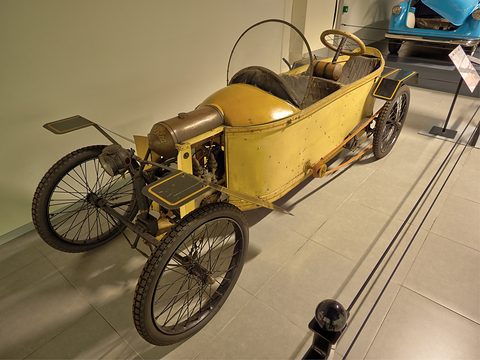
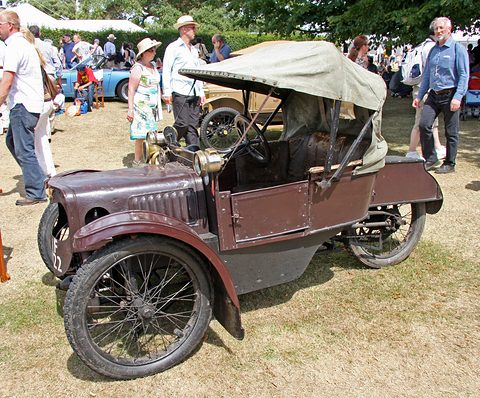
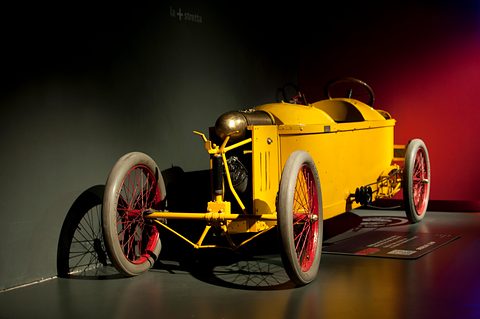
A V-twin from a motorcycle, two long belts to the back wheels, a frame of ash and a steering column that wound wires round a bobbin. From 1910 to the early 1920s this was how a motorcyclist bought four wheels and a seat for a passenger.
What a cyclecar was
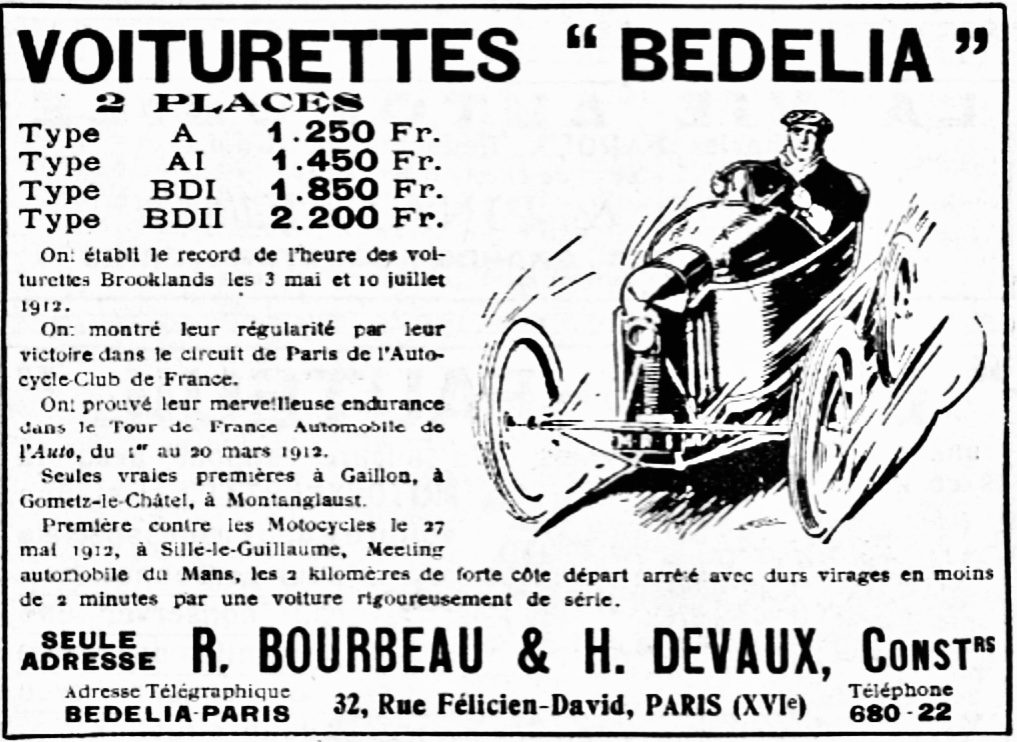
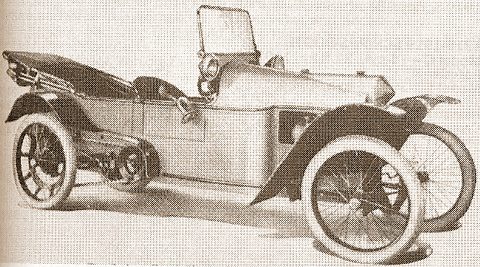
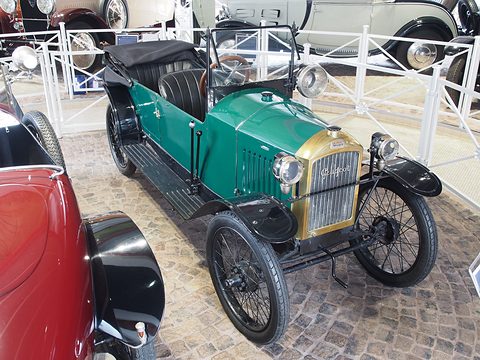
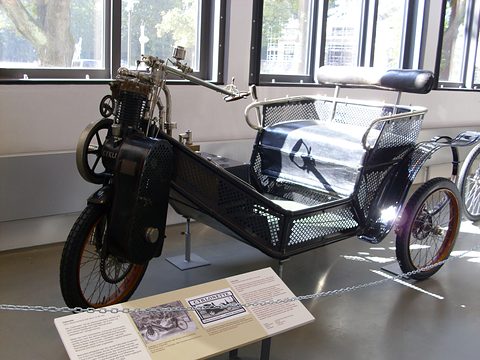
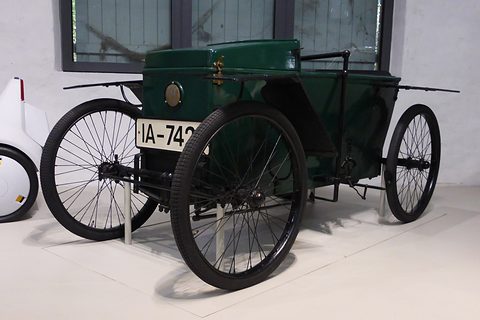
Two engineering students in Paris, Robert Bourbeau and Henri Devaux, wrecked their motorcycle and could not afford to mend it. They used its V-twin and its parts to build a two-seater instead.source 1source 2 Early in 1910 they were driving it about the streets of Paris, and that March they sold the first one.source 3 They called it the Bédélia. It was long, narrow and made of wood, and the driver sat behind the passenger, steering by cables wound round a bobbin on the column. Two long belts ran to the back wheels, and there was no gearbox, clutch or differential in the usual sense.source 4source 5 When the first issue of a weekly magazine called The Cyclecar told the story in November 1912, its French correspondent was careful: the Bédélia might not be the very first cyclecar, he wrote, but no earlier one had been made for sale in France.source 3
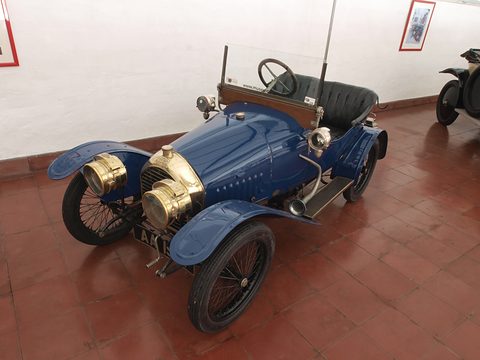
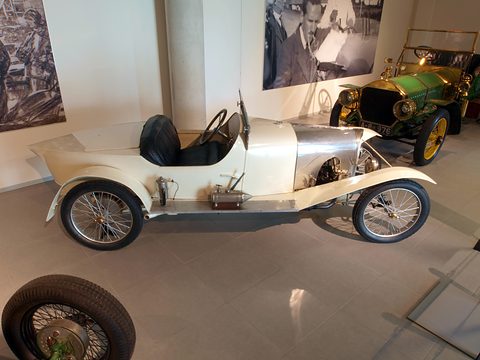
A cyclecar was a light, cheap car built from motorcycle parts. Its engine was an air-cooled single or V-twin, often a JAP or a Precision, or the maker’s own; the drive went by belt, chain or friction disc, usually without a differential; and the frame was ash or light tube. It filled the gap between a motorcycle with a sidecar and a proper light car.source 3source 6 For about 15 years it was the cheap way into motoring, in France, Britain, the United States and across Europe. Then a small car that was a real car came down to its price, and within a few years the type was gone. Its ideas did not: the motorcycle engine, the chain drive, the body built to a tax rule all came back after 1945 in the bubble cars, and with them the microcar itself.
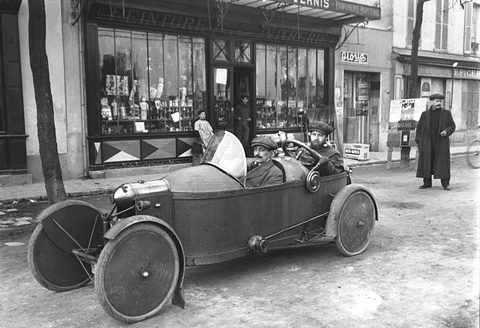
Motorcycle parts in a car’s shape, 1909–1912
The cyclecar had small-car ancestors. Léon Bollée invented and registered the word voiturette for the tandem three-wheeler he built in 1895, the Léon Bollée Voiturette.source 7 Peugeot’s Bébé Type 69 of 1905, with a 652 cc single, and the Le Zèbre Type A of 1909, with 601 cc for about 3,000 francs, were proper small cars, with gearboxes and shaft drive.source 8source 9 In Germany the Cyklon Cyklonette of 1902 carried its engine over its single front wheel and drove it.source 10 The cyclecar took a different road, through the motorcycle shop.
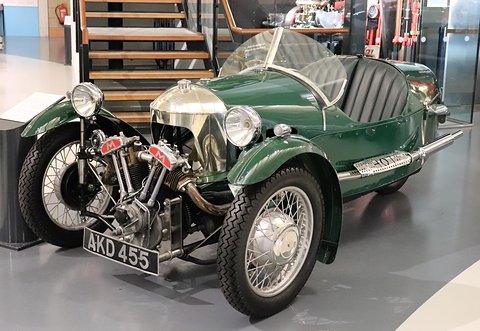
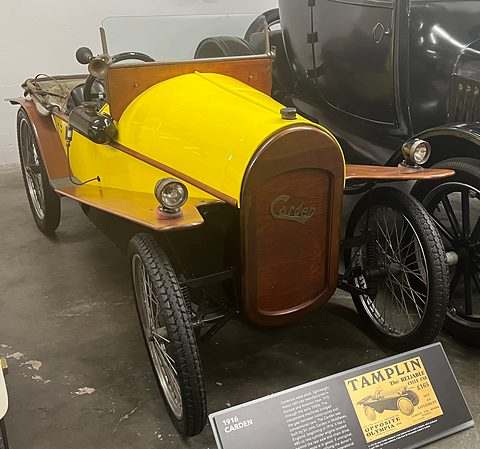
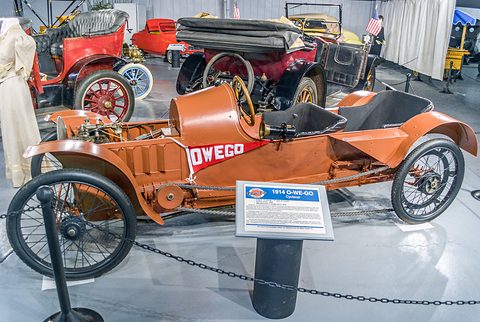
For the GN, there were no car parts light enough to buy. Archie Frazer-Nash and H. R. Godfrey had been building motorcycle-engined four-wheelers for themselves since 1906, and in late 1910 they joined forces on the GN: a wooden frame, a V-twin, belts and chains, wire-and-bobbin steering.source 11 From early 1912 GN made its own 90-degree V-twin.source 11source 12 At Malvern Link, H. F. S. Morgan built the first Morgan three-wheeler for himself in 1909, round a 7 hp Peugeot V-twin, with sliding-pillar front suspension and a two-speed chain-and-dog transmission. It had no reverse gear.source 13source 14 In 1913 the Carden single-seater put a JAP engine behind its back axle and drove the axle directly by chain, for £55.source 15 The GWK drove through friction: a disc on the engine and a wheel that moved across its face, giving reverse when it passed the centre.source 16
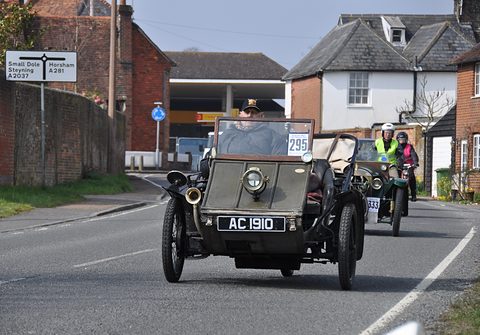
Some of the idea was older. AC’s Sociable was the passenger version of a tradesman’s delivery tricar of 1904,source 17 and in 1912 The Cyclecar said it had been before the public longer than any rival type.source 3 The magazine’s survey of the Olympia show that November reads like a parts catalogue: mostly V-twins, with the odd single and the odd water-cooled four; belt, chain, shaft and friction drive; steering by wheel, tiller or cable and bobbin; cycle-type wire wheels on narrow 650 × 60 or 65 mm tyres.source 3 The same issue explained, without alarm, what happened when a car with no differential met a corner.
If the bend be taken too fast the rear wheels simply skid sideways, just as they would if a car driver took the bend too fast.
Two seats could go side by side, as in a “sociable”, or one behind the other. The magazine liked the tandem: considerably faster, it said, equally well balanced, and narrow enough to be driven through tight places.source 3 In the Bédélia’s case, the man at the back was the one steering.
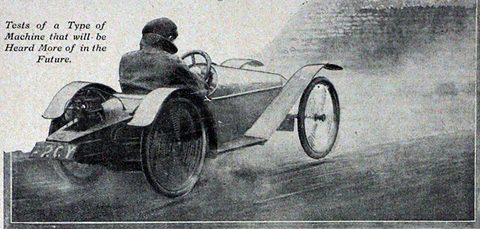
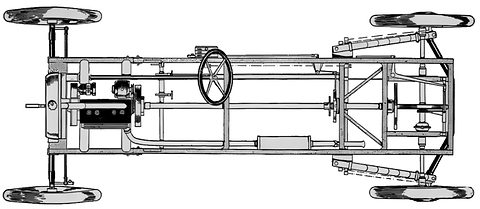
Drawing the line, 1912
By late 1912 the cyclecar needed a definition, if only so that races could be fair. Until December the only one was British, drawn up by the Royal Automobile Club and the Auto-Cycle Union.
Hitherto the only definition of a cyclecar has been the one drawn up by the R.A.C. and the A.-C.U., which defines it by a chassis weight not exceeding 6 cwt., or complete with body, 7 cwt., and cubic capacity of engine 1100 c.c.
That is 305 kg for the chassis, or 356 kg with its body. Some wanted more in it. Mr Bednell of the motor-cycle manufacturers’ union told The Cyclecar that a price had been suggested as part of a definition, but was quite out of the question, and he warned against rules about frames.source 19
For all we know, the cyclecar of the future may utilize ideas from aeroplanes, and to make an arbitrary definition that a machine must be equipped with a tubular or pressed-steel frame is simply retarding progress.
The international rules came the same month. The Fédération Internationale des Clubs Moto-Cyclistes, formed some years before and by then all but moribund, was re-formed in Paris on 28 November 1912 at the Auto-Cycle Union’s instigation. On 14 December it agreed two classes for competition, to be recognised in ten countries: England, France, Germany, the United States, Canada, Austria, Italy, Switzerland, Belgium and Holland. Every machine had to have a clutch and a change-speed gear.source 18 The Cyclecar objected that the clutch rule assumed every cyclecar would run on petrol, when it might one day run on steam, electricity or compressed air.source 18
The small class is often misquoted as having a limit of 150 kg. The period report gives 150 kg (330 lb) as its minimum weight, and 300 kg (660 lb) as its maximum.source 18source 6 Nor were the classes a tax: they were for competition, to be ratified by each country’s own body.source 18 In Britain a four-wheeled cyclecar paid the same duty as any small car. The Finance Act of 1910 charged a motor bicycle or tricycle £1 a year and a car of up to 6½ horsepower £2 2s, and there was no band in between.source 20 Bédélia’s British agents quoted the annual tax as two guineas.source 4 The four-wheeler sold on its low price and running costs, not on a privilege in law.
| Class | Weight | Engine | Tyres |
|---|---|---|---|
| Large | 356 kg (784 lb) at most | 1,100 cc at most | 60 mm at least |
| Small | 150–300 kg (330–660 lb) | 750 cc at most | 55 mm at least |
The boom, and Amiens, 1912–1914
Temple Press launched The Cyclecar on 27 November 1912, at a penny.source 3 Its first issue listed about 33 exhibitors in the cyclecar section at Olympia, from the Rollo single-seater at 70 guineas to the Singer at 185.source 3 A Humberette cost £115, or £125 equipped, and a GWK £135.source 3 The figure of over a hundred British makers by 1914, often repeated, has not been confirmed; the 33 at Olympia can be counted. The Cyclecar Club was founded in 1912; in 1919 it was renamed the Junior Car Club, an ancestor of today’s British Automobile Racing Club.source 21
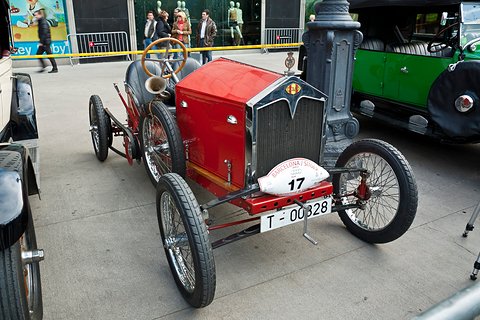
The racing started at once. At Brooklands the first scratch race for cyclecars went to Harry Martin in 1912, who averaged 92.2 km/h (57.31 mph). In November Morgan himself took the cyclecar hour record in a single-seater with a 1,082 cc JAP: 96.0 km (59 miles 1,120 yards) in the hour, an average of 59.64 mph.source 14source 22 The Club ran its first open hill-climb at South Harting on 28 June 1913.source 23 In France, Marcel Violet, later called the father of French cyclecars, had been building them since 1908, and his friction-driven Violet-Bogey came in 1913.source 24source 15 The French makers tried everything: friction drive, belts on expanding pulleys, tandem seats with the driver at the back, even shaft drive.source 15source 25 The cars are gathered on the pages for Britain’s cyclecars and France’s cyclecars.
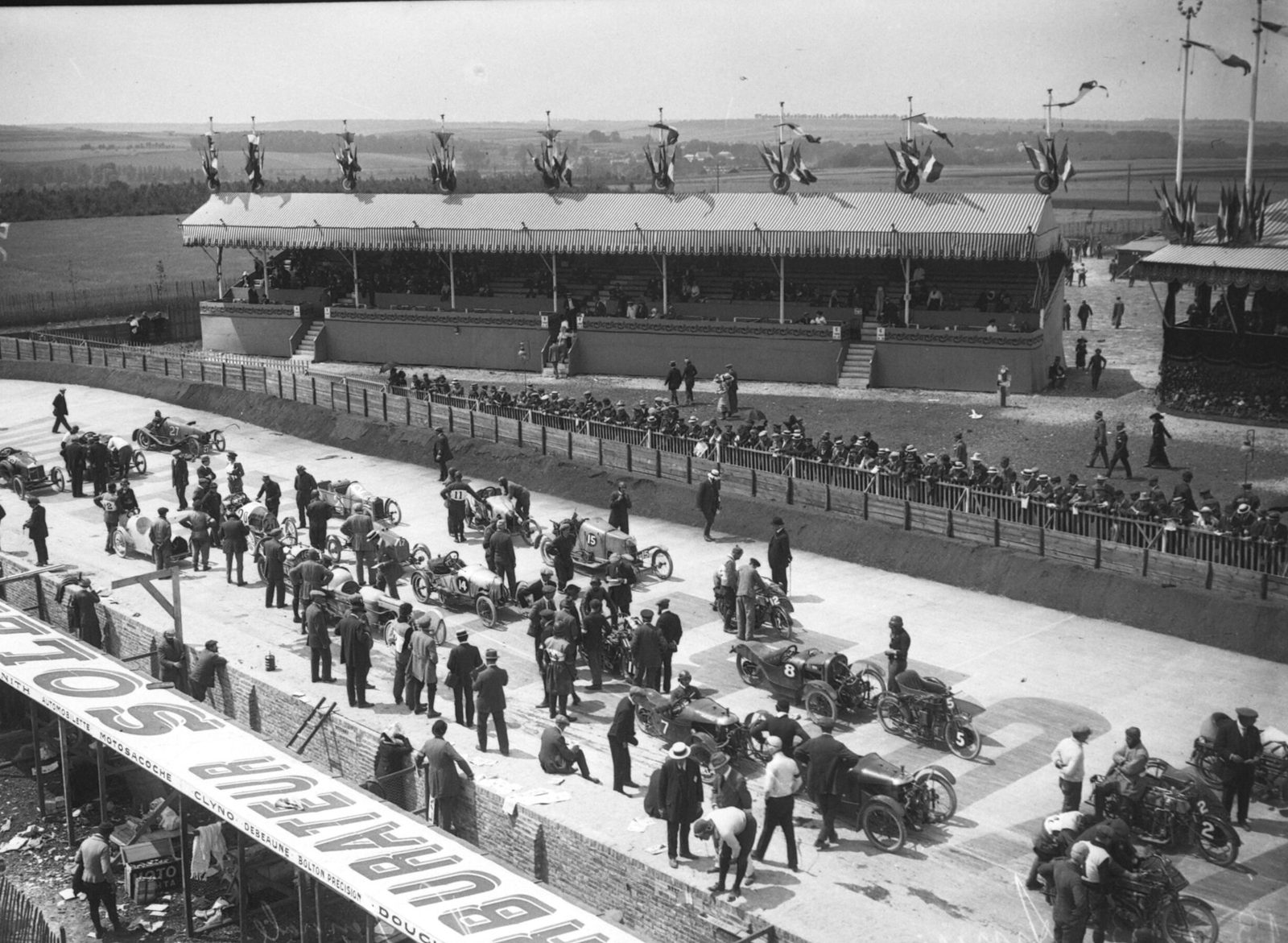
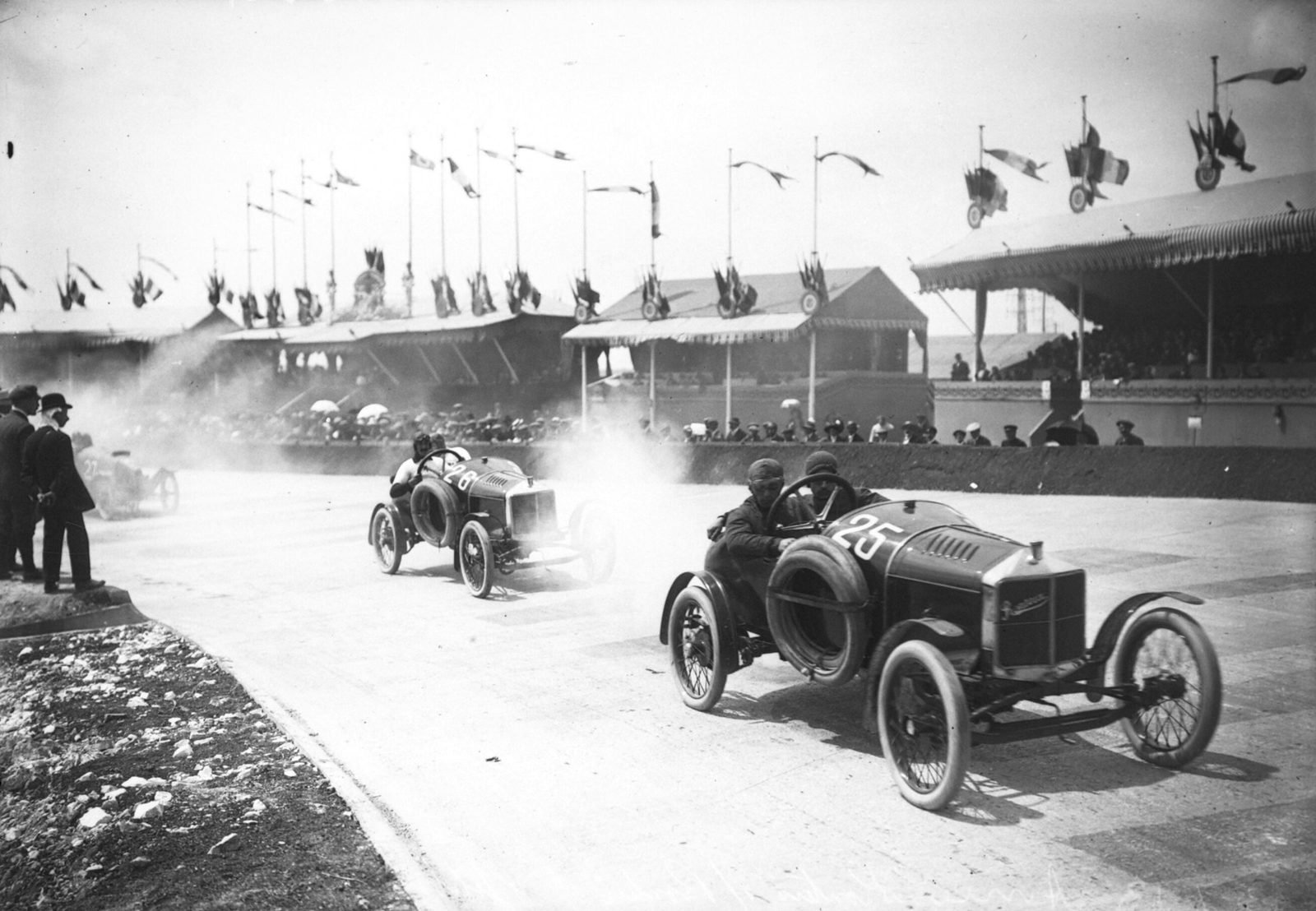
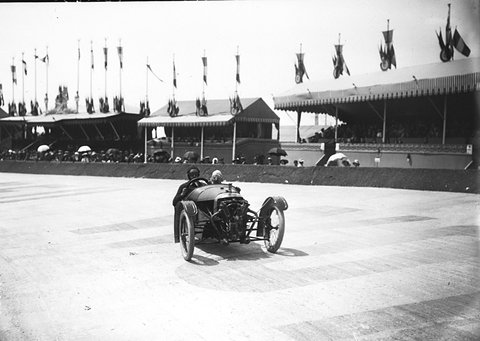
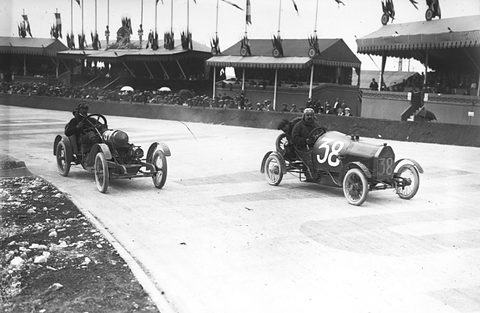
The first Cyclecar Grand Prix was run at Amiens the day after the French Grand Prix, on the same circuit through Boves. The race was 15 laps, each of 17.48 km (10.86 miles), a total of 262.2 km (162.9 miles). Every passenger machine ran together, sidecar outfits included, on roads that the big cars had cut up the day before, on what The Cyclecar called a day of tropical heat.source 15source 25 The French entry was a cross-section of the industry: Bédélia, Violet-Bogey, Sphinx-Globe, Ronteix, Super, Automobilette and others. Britain sent GN, Morgan, Duo and more.source 15
W. G. McMinnies, a staff writer on The Cyclecar, drove a Morgan with Frank Thomas as his passenger, lost time changing a front inner tube, and still crossed the line first, in 3 hours 53 minutes 9 seconds.source 15source 14 Robert Bourbeau’s Bédélia, with his younger brother as passenger, stopped only once, for petrol and oil, and finished 2 minutes 45 seconds behind.source 15 The Bédélia racers had automatic expanding pulleys, governed by centrifugal force, and their engines slid on rails to keep the 6.1 m (20 ft) belts tight.source 15 Both GNs blew their cylinder heads, though Frazer-Nash had set the second-fastest first lap.source 11source 15
Under the French rules, The Cyclecar explained, a machine on three wheels was no cyclecar at all, and so the Morgans had officially been running among the sidecars.source 15 The Morgan was fastest and first home, but the cyclecar class was Bourbeau’s. Nobody was excluded or demoted. The only disqualifications were Violet’s Violet-Bogey and the Mathis, for running without mudguards.source 15source 14 The magazine’s editorial drew the lesson that the simpler kind of machine had proved the most reliable.source 15 Both British firms named a model after the race: Morgan built a Grand Prix model, and GN one of its own.source 14source 11 Morgan’s Paris agents, the Darmont brothers, found buyers for about 150 Morgans in 1914, and after the war they built the car under licence as the Darmont.source 26 More of the races that followed are on the page for racing and rallying.
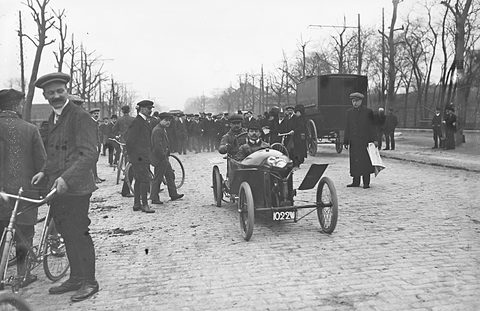
On the Amiens circuit
13 July 1913
America’s year, 1913–1915
The cyclecar reached the United States from Britain and France in 1913. By January 1914 Motor Age listed dozens of makes, and a trade writer counted some fifty firms that had announced they would build one.source 27source 28 The American recipe was 270 to 410 kg (600 to 900 lb), a wheelbase of 2.29 to 2.64 m (90 to 104 in) and a 914 mm (36 in) track, at $350 to $500, most of them at $375 to $395.source 27source 28 The narrow track had its defence: on a country road it let the car run along the crown or straddle a rut, where a car of full width had to follow wagon ruts 1.42 m (56 in) apart.source 28 Motor Age credited the Imp of Auburn, Indiana, with being the first American cyclecar actually put on sale. Detroit was the centre, and it formed a Detroit Cyclecar and Motorette Club late in 1913.source 27
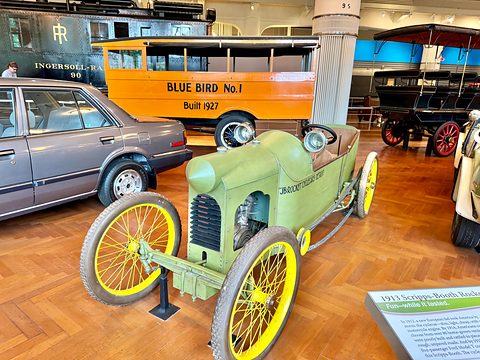
The Scripps-Booth Rocket was one of the best-made of them: an air-cooled V-twin of about 1.16 litres, a two-speed planetary gearbox with reverse, V-belts and no differential, on a 2.54 m (100 in) wheelbase and the usual 914 mm track.source 27 It cost $385.source 29 For September 1914 the Cyclecar Association of America gave its sanction to what was billed as the country’s first reliability run for cyclecars, roughly 480 km (300 miles) from Newark by way of Philadelphia to Atlantic City and home again.source 30
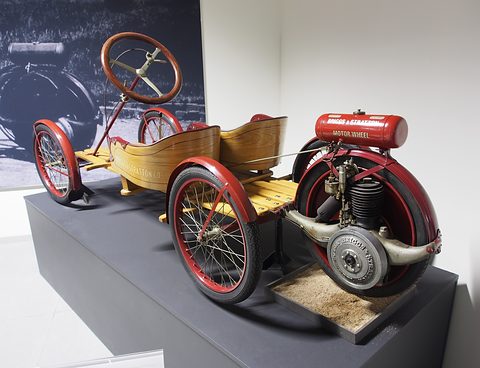
By then the end had begun. By January 1914 a trade writer had already pointed out that the cheapest cyclecar was only about $100 cheaper than the cheapest proper car, and that some cost more.source 28 Ford’s Model T kept getting cheaper.source 31 By the middle of 1914 firms were closing or turning themselves into light-car makers, and by 1915 the American boom was over.source 30source 28 Its epilogue was a buckboard: a wooden platform on four wheels, pushed by a fifth wheel with an engine in it. Sold as the Smith Flyer from 1916 and later as the Briggs & Stratton Flyer, it is listed by Guinness as the cheapest car ever sold, at $125 to $150.source 32source 33 The rest of the American field is on the page for American cyclecars.
War, and a second wave, 1914–1922
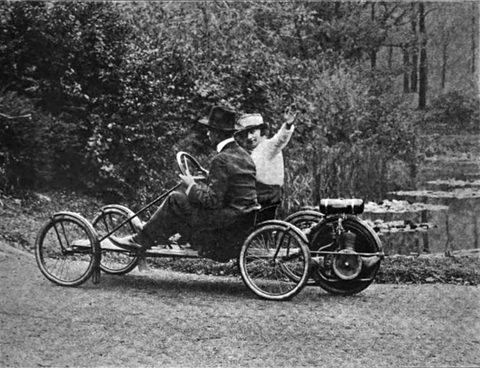
The war took the cyclecar into service. Bédélias carried the wounded, the casualty lying along the body while the driver sat behind.source 34 GN stopped making cars at the end of 1915 to do war work, after 150 to 200.source 11 John Carden served in the Army Service Corps, and his single-seater came back in 1919 as the AV Monocar.source 35
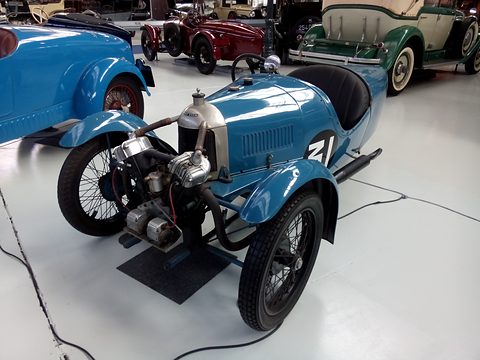
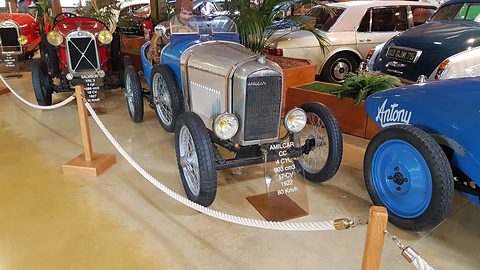
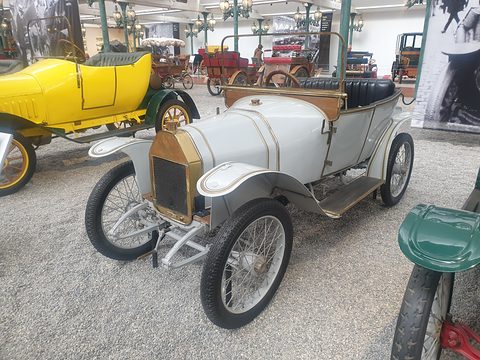
France then gave the cyclecar what Britain never had: a tax class. The finance law of 30 July 1920 charged a car 100 francs a year if it weighed no more than 350 kg bare, seated two and had an engine of no more than 1,100 cc. A heavier small car was a voiturette, taxed at 280 francs.source 36source 37 The Amilcar CC was built to it, and its club records that it weighed under 350 kg with its body on, before its dynamo, battery and starter were fitted. When the equipment was added, the car passed 350 kg in 1923; some owners had their cars registered stripped and fitted the extras later.source 37 Peugeot’s Quadrilette was so narrow that its two seats were one behind the other and it needed no differential; 12,305 were built.source 38 The 350 kg of 1920 and the 356 kg of the 1912 large class are different rules; the 356 kg is conventionally rounded to 350, so the two figures appear to coincide.
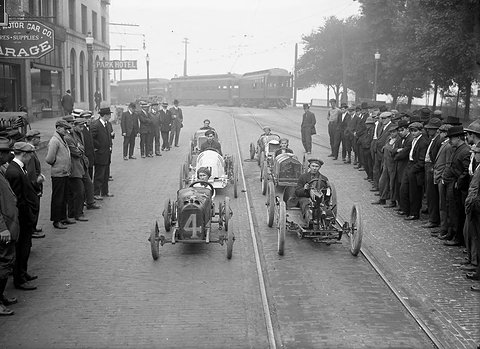
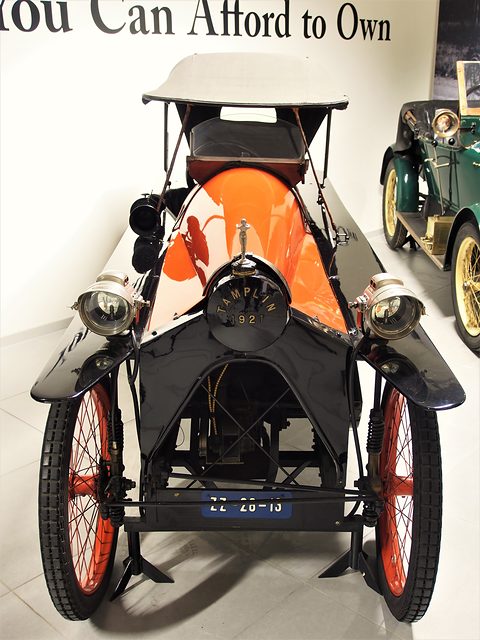
Britain’s second wave was GN’s. Its steel-framed four-chain car became one of the most successful sporting cyclecars, and at its peak in 1920–21, with about 500 staff, Godfrey recalled about 50 cars a week; Grace’s Guide gives 55 a month.source 11source 12 Salmson built GNs under licence in Paris.source 11source 12 The Tamplin, another Carden design, seated two in tandem in a linseed-soaked fibreboard body that was also its chassis, and it cost £150 without accessories.source 39source 40 GNs took 112 first places in speed trials during 1921.source 11 In France the Union Motocycliste de France ran its own cyclecar Grands Prix, and Violet won the second, at Le Mans in 1920; André Morel’s Amilcar won the first Bol d’Or in 1922.source 24source 41
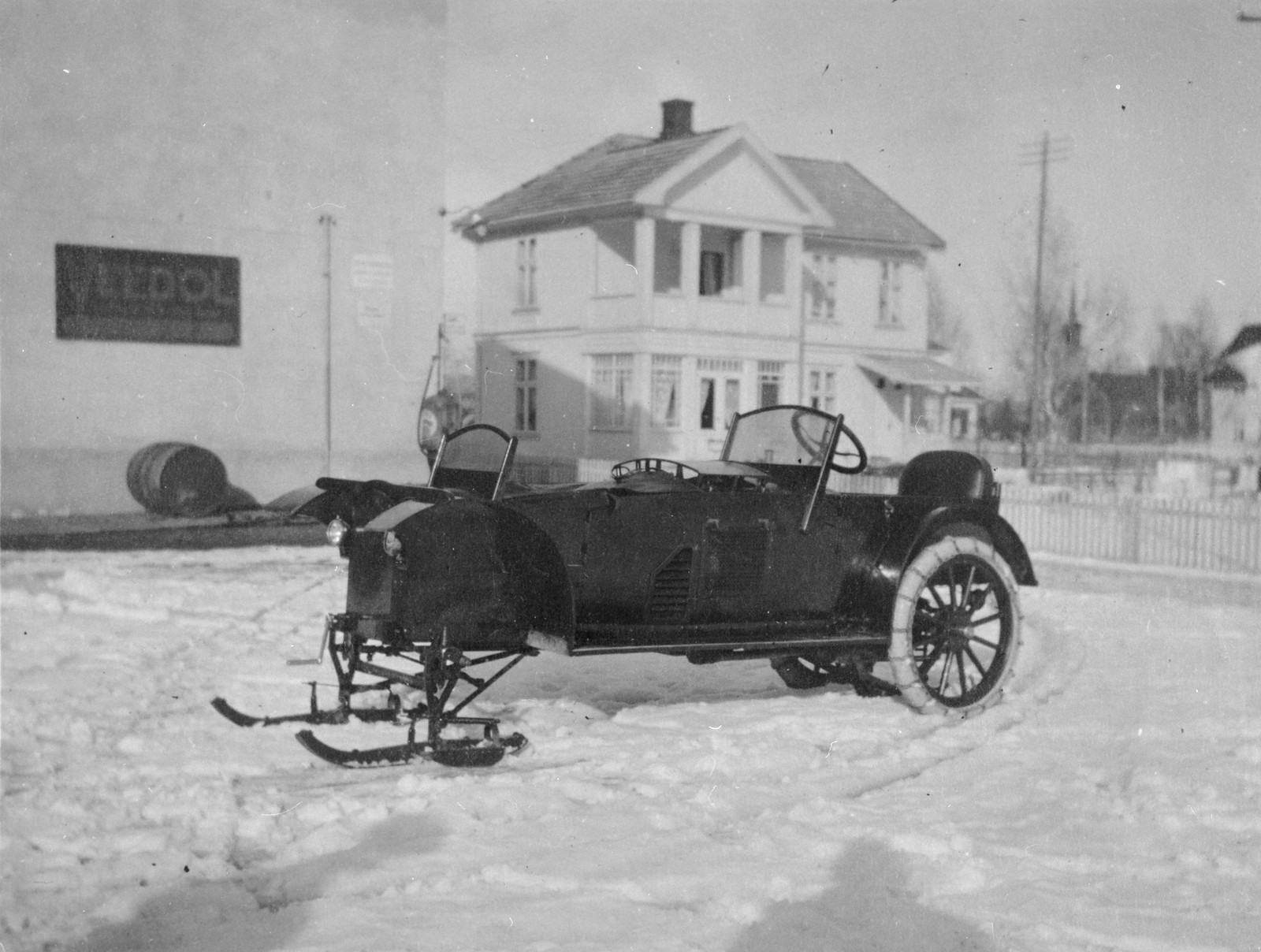
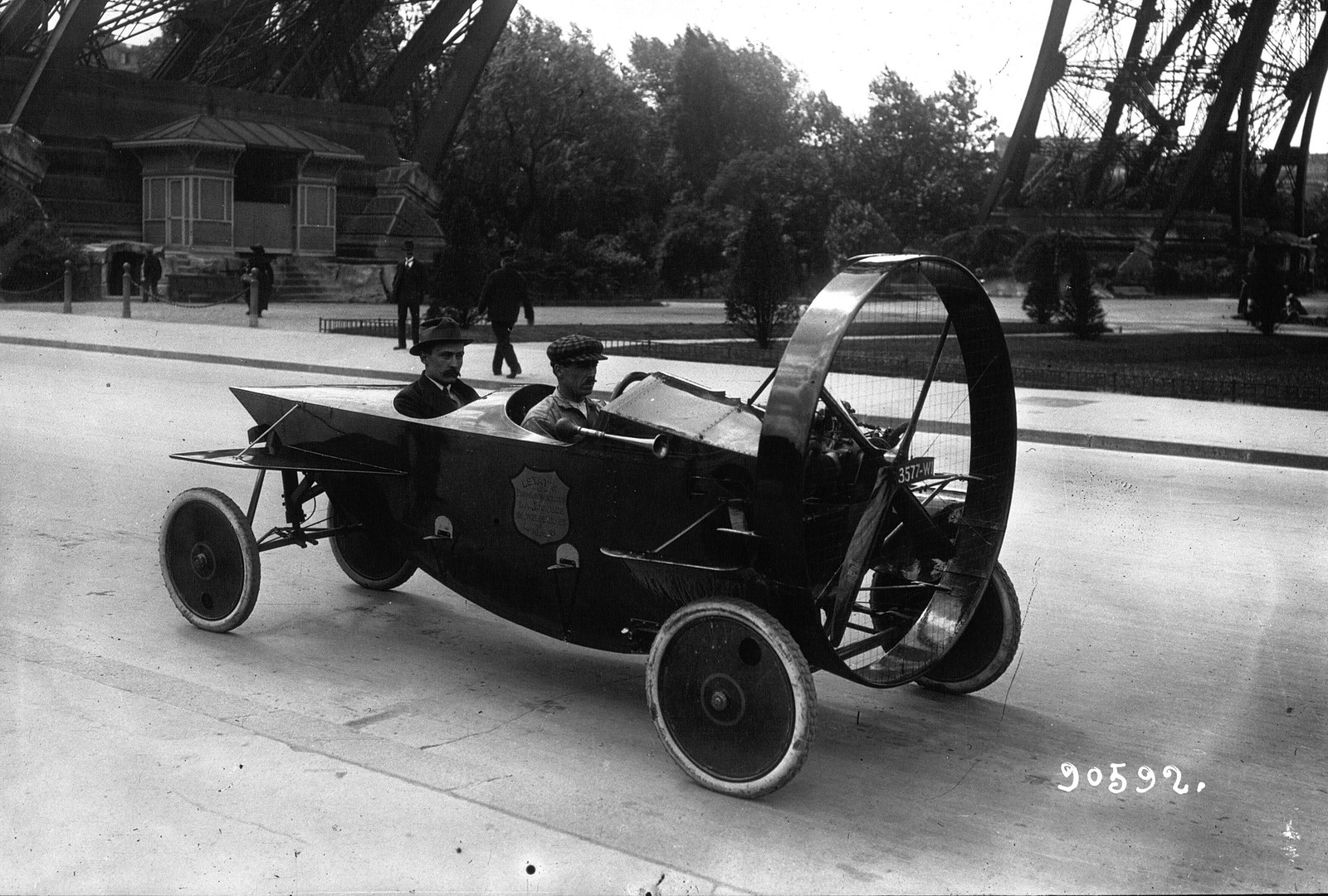
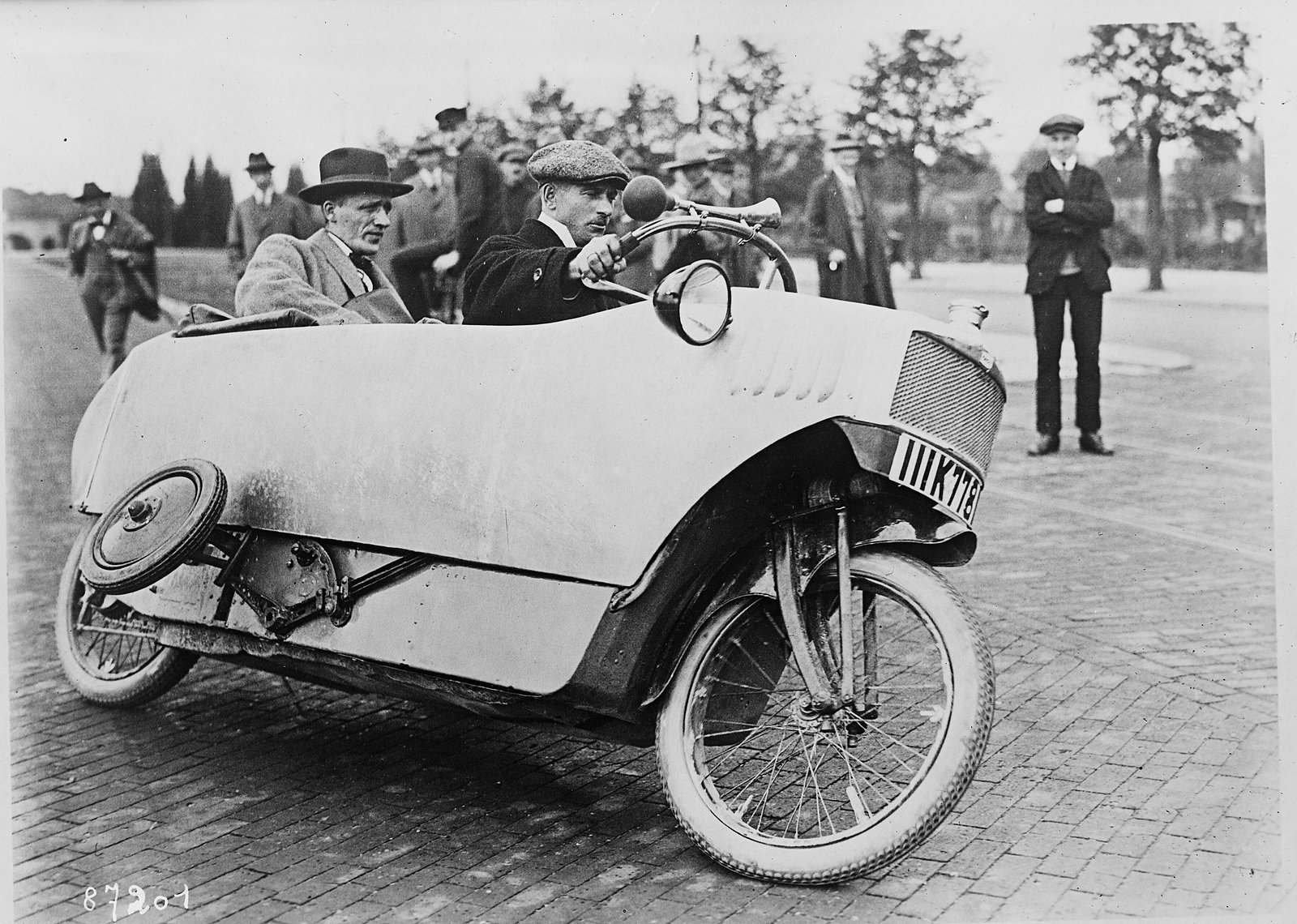
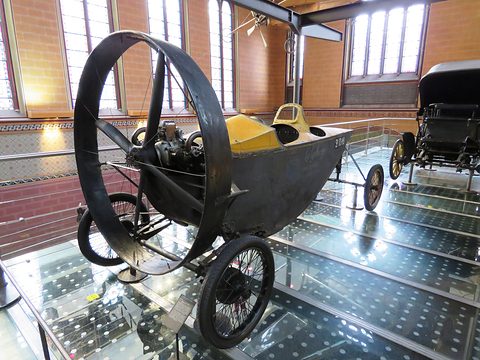
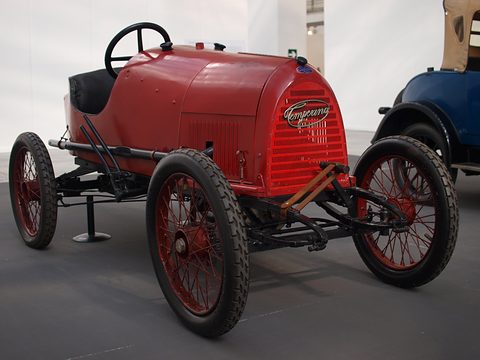
Germany had a flood of small makers during the inflation of 1919–23, most of them building cars round motorcycle engines, and the currency reform of 1923–24 ruined most of them.source 42 The longest-lived, among them Peter & Moritz and Koco, built some hundreds each, gathered on the page for German cyclecars.source 42 In Berlin, Slaby-Beringer built 2,005 electric single-seaters with wooden monocoque bodies, 266 of them fitted with DKW petrol engines.source 43 Mauser built a car on two wheels in line, the Mauser Einspurauto, balanced like a motorcycle on the move and held up by outrigger wheels when it stopped.source 44 Italy had the Temperino of Turin, a 1-litre V-twin whose power and liveliness The Light Car and Cyclecar praised in 1920.source 45 Barcelona had the David, whose firm went on to become the city’s great taxi company.source 46source 47 Norway had the Bjering, a narrow tandem car with skis in place of its front wheels for winter roads.source 48 These and others are on the page for cyclecars elsewhere. And in France Marcel Leyat sold the Leyat Hélica from 1919: a plywood fuselage on four wheels, two seats in tandem, steered from the back and driven by a propeller.source 49
The car that cost the same, 1921–1925
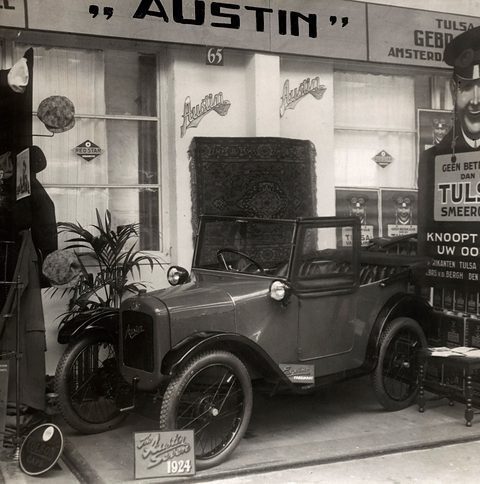
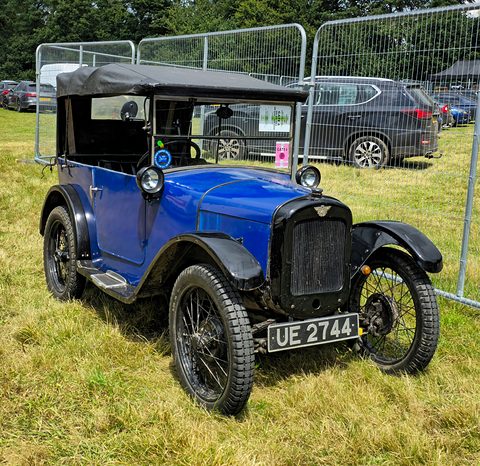
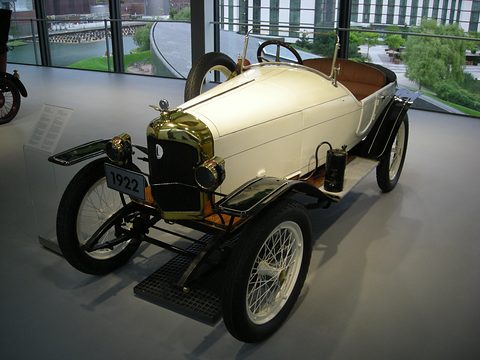
Herbert Austin conceived the Austin Seven as a big car in miniature, for young families whose money otherwise ran only to a motorcycle and sidecar, or a cyclecar. It went on sale in July 1922 with a four-cylinder engine of 696 cc, enlarged to 747 cc from March 1923, and with a proper gearbox and differential and brakes on all four wheels.source 50source 51 It cost £165 at its launch.source 52 About 290,000 were built by 1939.source 50source 53 In Britain, it wiped out the cyclecar industry.source 50source 51
In France the Citroën 5HP, shown in October 1921, came at it from the other side.source 54 Citroën chose not to build for the cyclecar tax class and built a small, complete car instead, with an electric starter, electric lights, a spare wheel and a differential, for 8,500 francs.source 55
The makers went one by one. GN met the slump of 1921–22, went into receivership and turned to a four-cylinder shaft-drive car; Godfrey and Frazer-Nash left in the autumn of 1922. Frazer-Nash founded Frazer Nash and kept the chains and dogs; Godfrey later helped found HRG.source 11source 12 Bédélia had been sold in 1920 to a dealer, Binet, who rebuilt it with seats side by side and a three-speed gearbox; it closed in 1925.source 5 Tamplin’s market had gone by 1925, to the Austin Seven and Morris.source 40 Temperino closed in 1924, after its bank had nearly failed.source 45 The Scott Sociable, a three-wheeler that had begun as a gun carrier for the army: about 200 were made in 1921–25.source 56
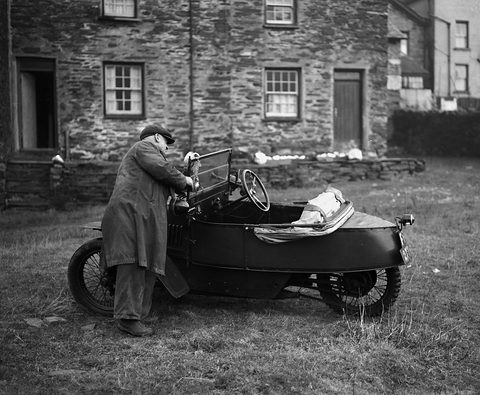
The survivors had three wheels. From 1921 Britain taxed cars at £1 per horsepower, and a light three-wheeler at £4 a year as a motorcycle.source 14 The Morgan went on until 1952, and Darmont built French Morgans until 1939.source 13source 26 By 1935 a two-seat Morgan was £105, just £7 under the price of a basic Austin Seven.source 57 The four-wheeled cyclecar had lasted about 15 years, and its recipe of a motorcycle engine in a light body, built to the letter of a rule, came back after the Second World War, not least in the licence-free cars.
Smallest to largest
26 cars and 5 maker groups, to scale
Each bar is the car’s length on a 3.5 metre track; the red notch is a Fiat 500.
-
Slaby-Beringer1919–1924 · Germany · 4 wheels
2.30 m -
Briggs & Stratton Flyer1916–1930 · United States · 5 wheels
2.34 m -
Léon Bollée Voiturette1895–1899 · France · 3 wheels
2.50 m -
Peugeot Bébé1905–1916 · France · 4 wheels
2.62 m -
Austin Seven1922–1939 · Britain · 4 wheels
2.79 m -
Rovin1946–1958 · France · 4 wheels
2.80 m -
Morgan Three-Wheeler1910–1952 · Britain · 3 wheels
2.90 m -
Peugeot Quadrilette1920–1924 · France · 4 wheels
2.95 m -
Mauser Einspurauto1921–1927 · Germany · 2 wheels
3.00 m -
Citroën 5HP1922–1926 · France · 4 wheels
3.20 m -
AC Sociable1904–1914 · Britain · 3 wheels
length unknown -
Amilcar CC1921–1925 · France · 4 wheels
length unknown -
Bédélia1910–1925 · France · 4 wheels
length unknown -
Carden cyclecar1913–1925 · Britain · 4 wheels
length unknown -
Cyklon Cyklonette1902–1923 · Germany · 3 wheels
length unknown -
Darmont1919–1939 · France · 3 wheels
length unknown -
David cyclecar1913–1923 · Spain · 4 wheels
length unknown -
GN cyclecar1910–1925 · Britain · 4 wheels
length unknown -
Le Zèbre1909–1931 · France · 4 wheels
length unknown -
Leyat Hélica1913–1926 · France · 4 wheels
length unknown -
Mochet Vélocar1925–1950 · France · 4 wheels
length unknown -
Scott Sociable1921–1925 · Britain · 3 wheels
length unknown -
Scripps-Booth Rocket1913–1914 · United States · 4 wheels
length unknown -
Sima-Violet1924–1929 · France · 4 wheels
length unknown
2 more cars and 5 more maker groupsFewer
-
Tamplin1919–1927 · Britain · 4 wheels
length unknown -
Temperino1908–1924 · Italy · 4 wheels
length unknown -
American cyclecars and small-car experiments1913–1932 · United States · 4 wheels
10 makers -
British cyclecars: the minor makers1903–1927 · Britain · 4 wheels
10 makers -
Cyclecars elsewhere: Austria, Poland, Scandinavia and beyond1913–1939 · Several countries · 4 wheels
24 makers -
French cyclecars: the minor makers1913–1936 · France · 4 wheels
13 makers -
German cyclecars and Kleinwagen: the minor makers1919–1933 · Germany · 4 wheels
10 makers
Pictures
16 photographs
Cyclecars 16
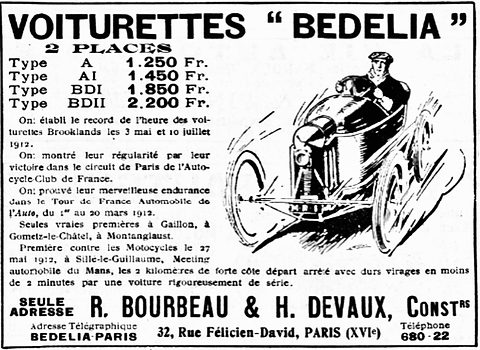
1 A 1912 French advertisement for Bédélia voiturettes, Types A to BDII, from Bourbeau & Devaux, Paris.
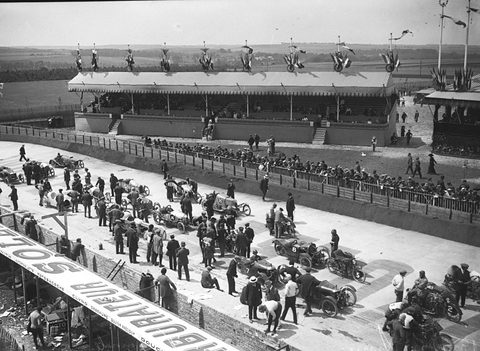
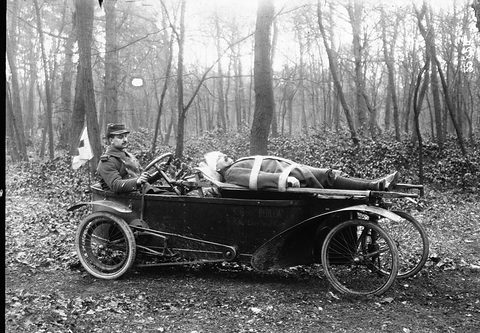
2 General view of the paddock and grandstands at the sidecar and cyclecar Grand Prix at Amiens, France, on 13 July 1913.
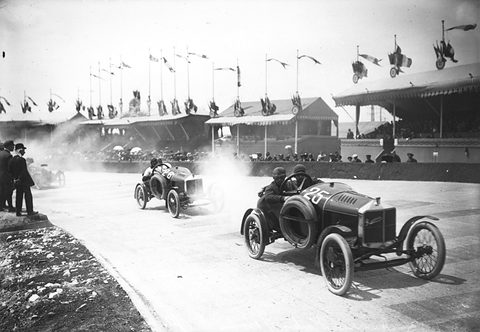
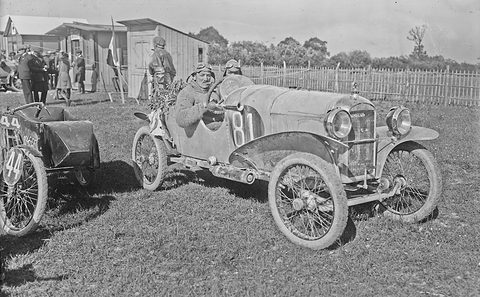
3 The Ronteix cyclecars of Ronteix and Jolibois racing in the Cyclecar Grand Prix at Amiens, France, on 13 July 1913.
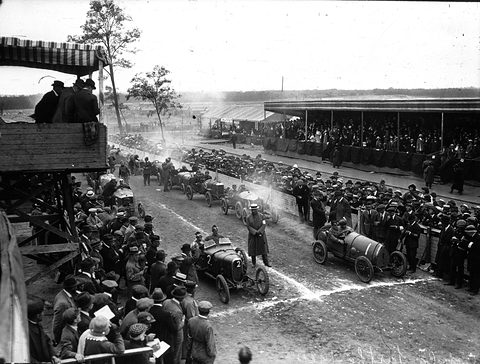
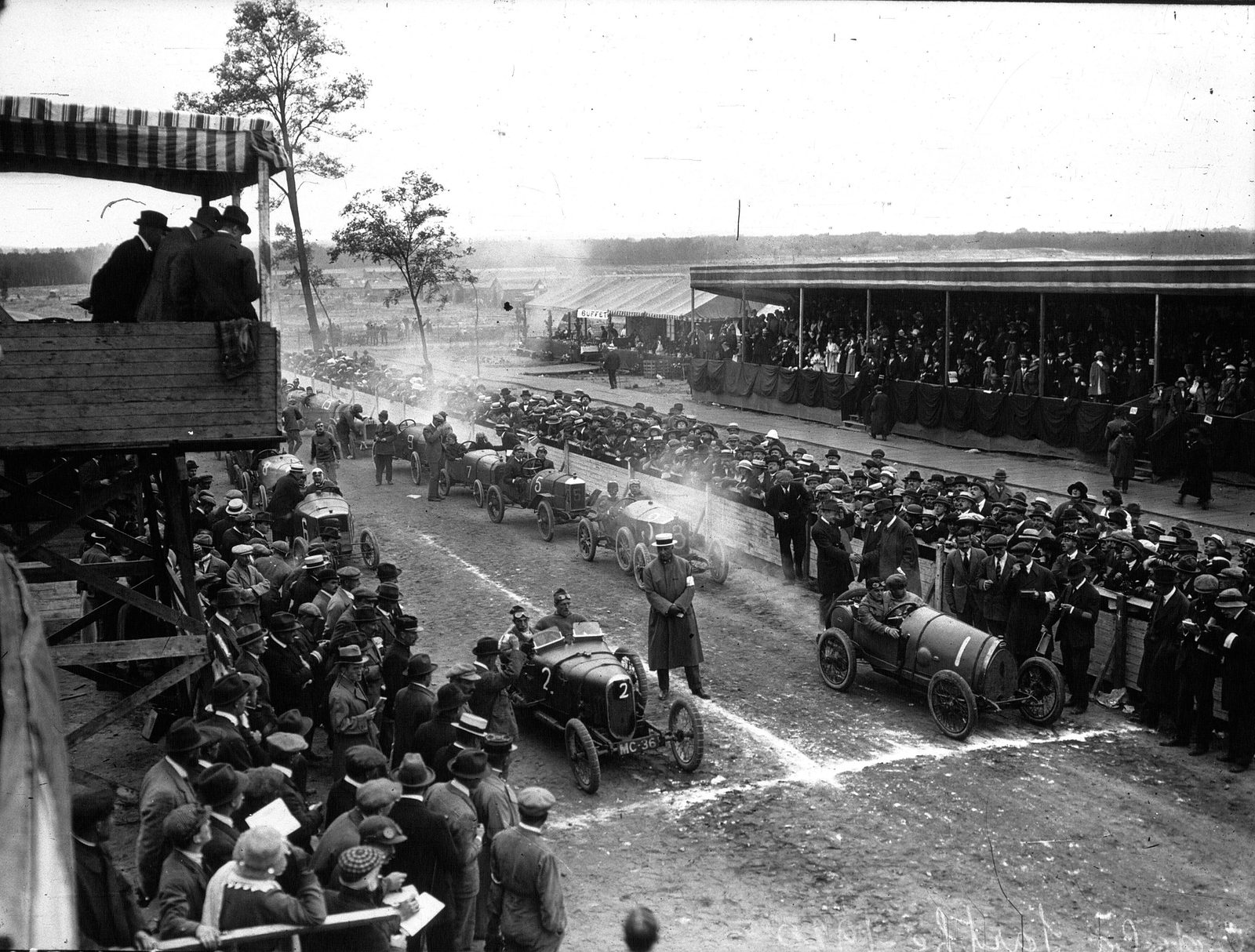
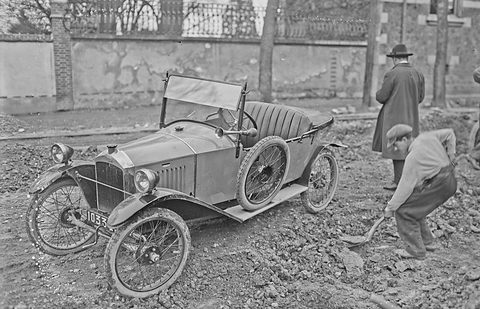
4 Start of the voiturette race on the Circuit de la Sarthe, Le Mans, in August 1920, with Douglas’s GN and Viscaya’s Bugatti among the crowd.
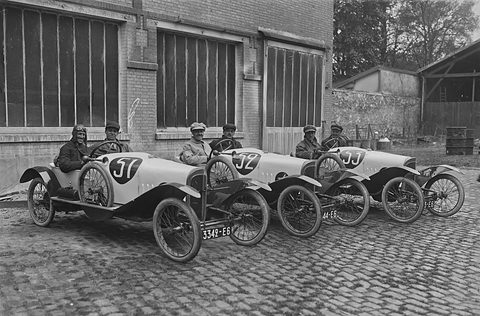
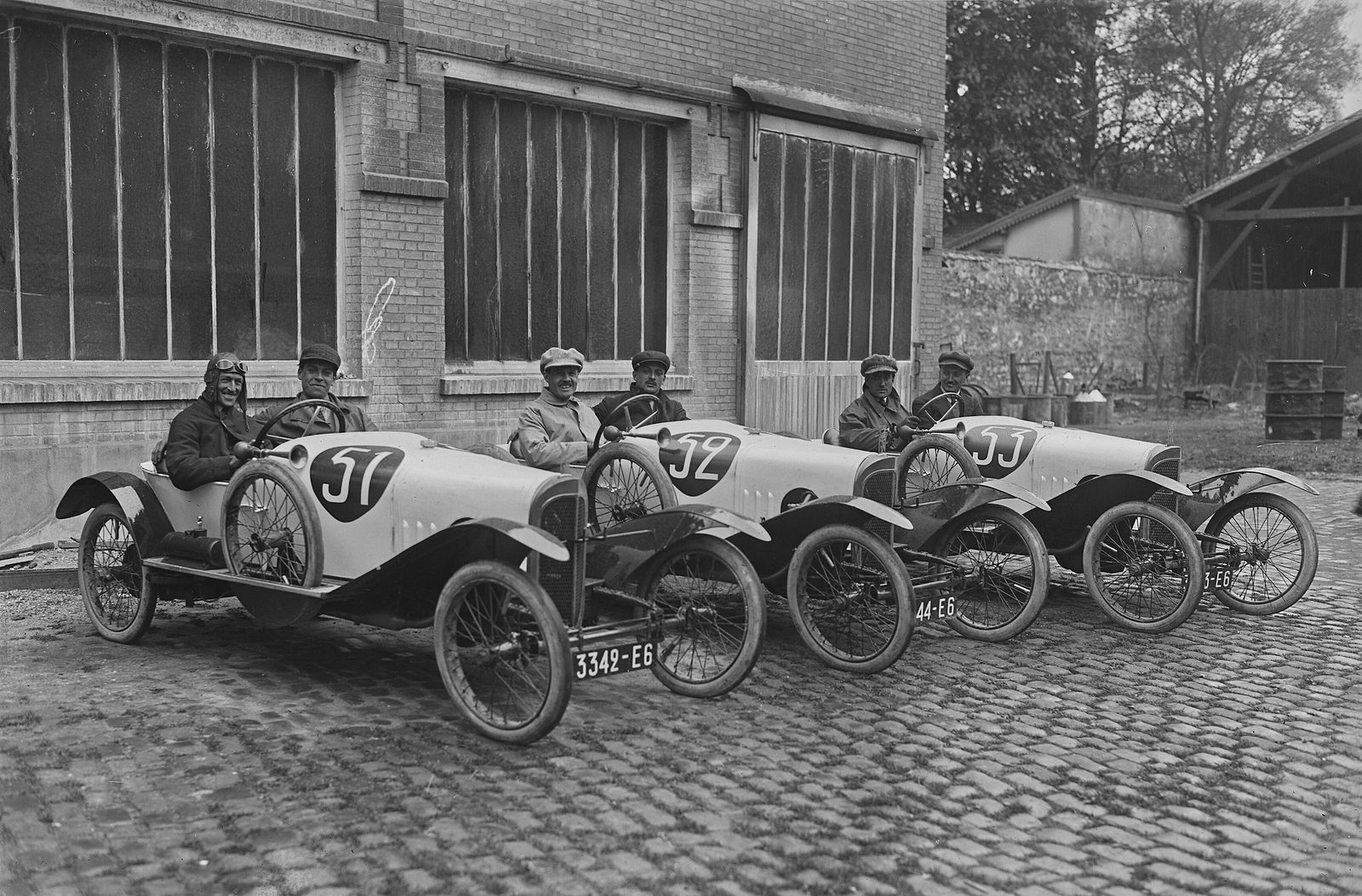
5 GN-type cyclecars numbers 51, 52 and 53 with their crews, among them Mauve, Bueno, Lombard and Honel, on cobbles before a hangar at Marly-le-Roi, France, in April 1921.
11 more picturesFewer pictures
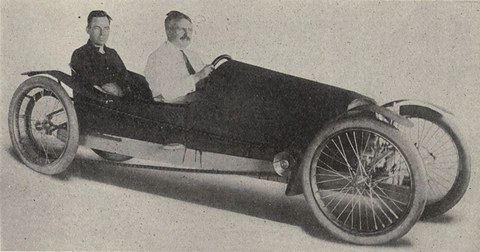
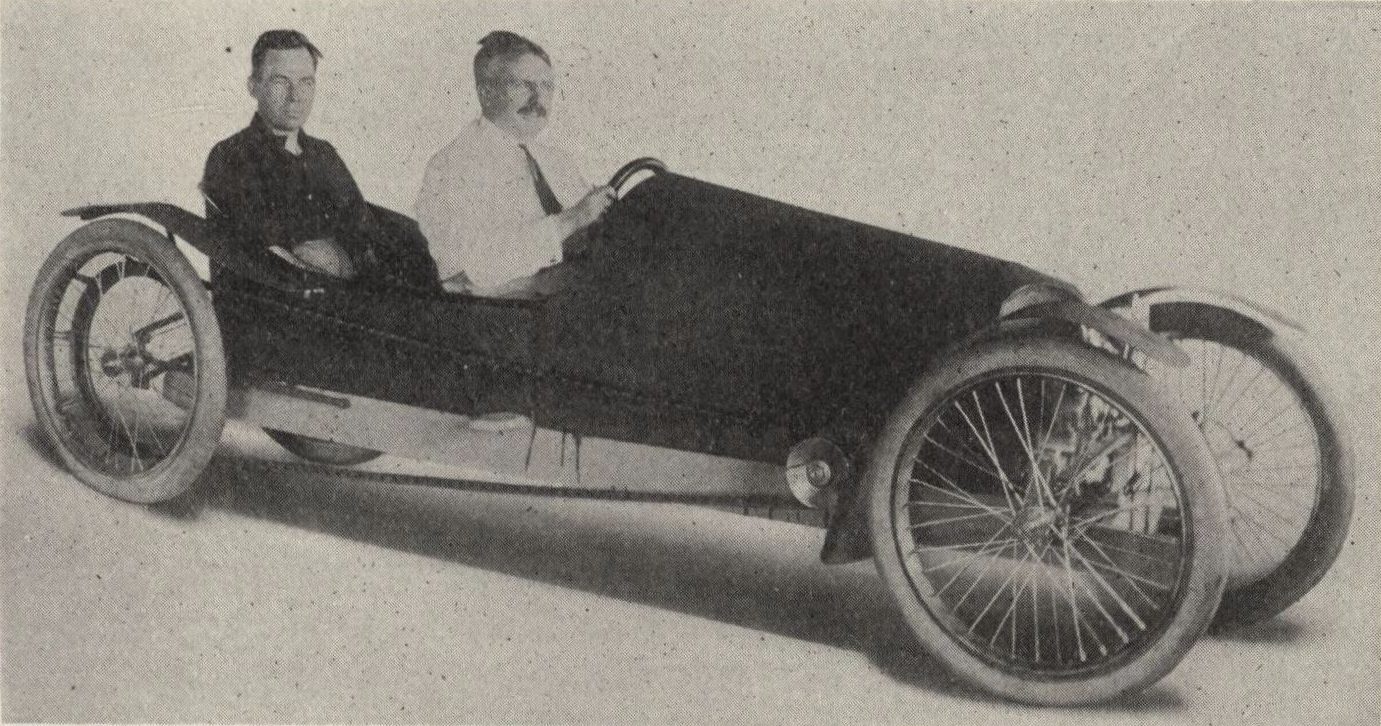
6 The Imp cyclecar of W. H. McIntyre, Auburn, Indiana, with two men aboard in tandem, as printed in Automobile Topics in 1913.
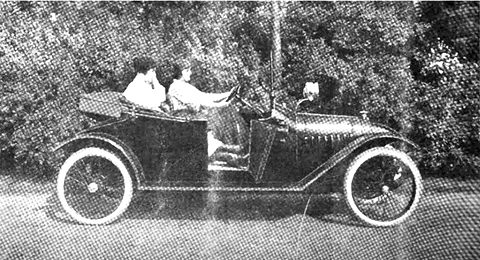
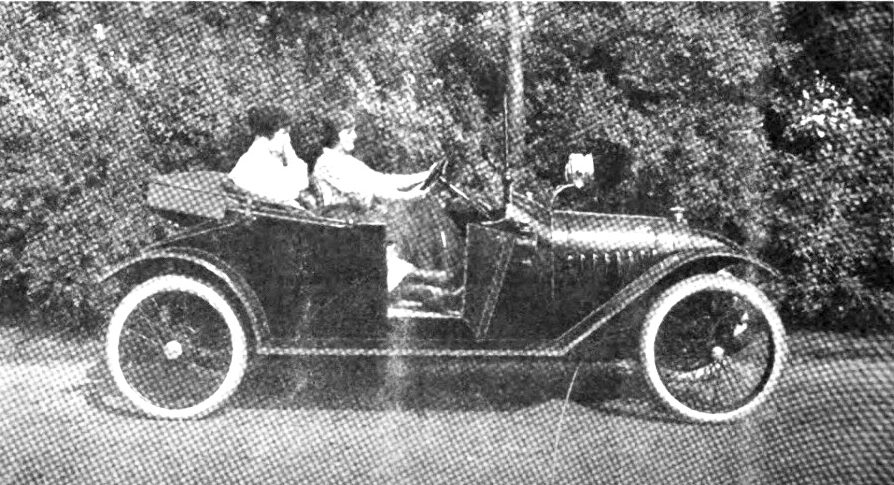
7 Woods Mobilette Model No. 5 with two occupants, from a 1915 advertisement by the International Cyclecar & Accessories Company, Chicago.
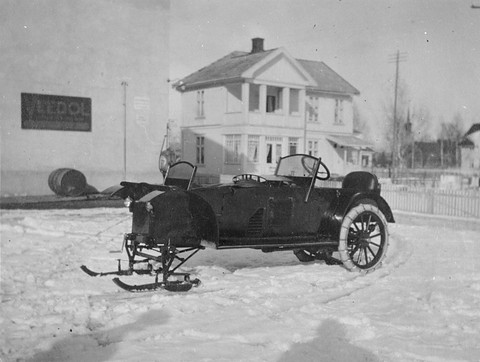
8 Bjering of 1919 on a snowy Norwegian street, runners fitted in place of its front wheels and chains on its rear tyres, about 1920.
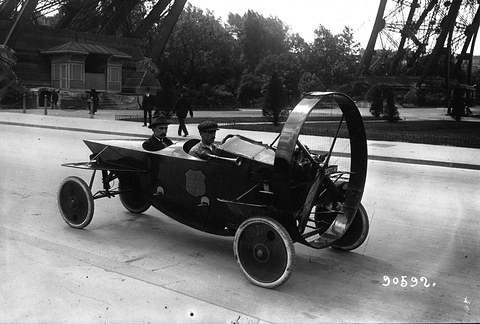
9 A new Leyat Hélica propeller car with two men aboard beneath the Eiffel Tower, Champ de Mars, Paris, in July 1921.
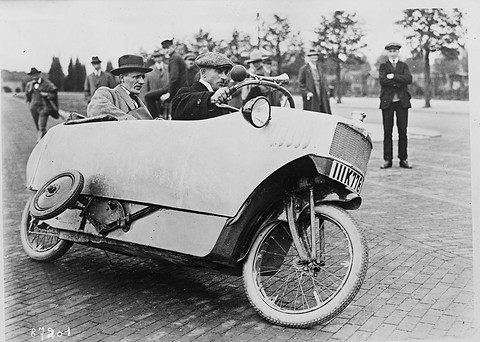
10 A Mauser Einspurauto, registered IIIK 778, with two men aboard in tandem at the time of the Berlin motor show, October 1923.
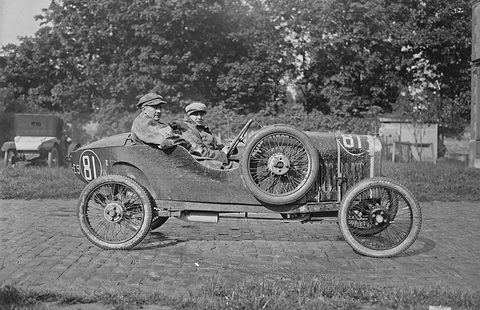
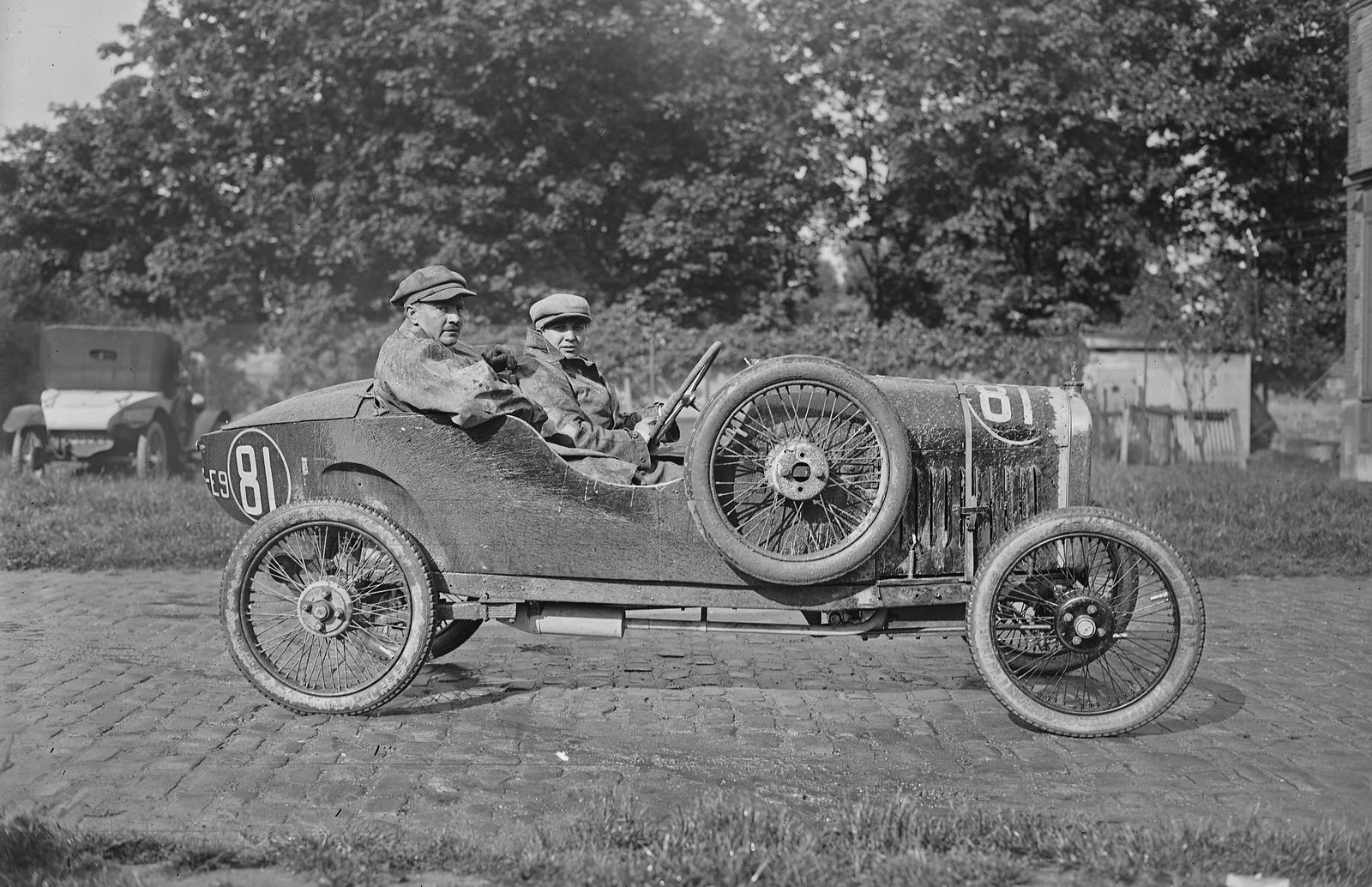
11 Violette Morris in Benjamin No. 81 at the Bol d’Or weigh-in, Saint-Germain-en-Laye, France, in May 1923.
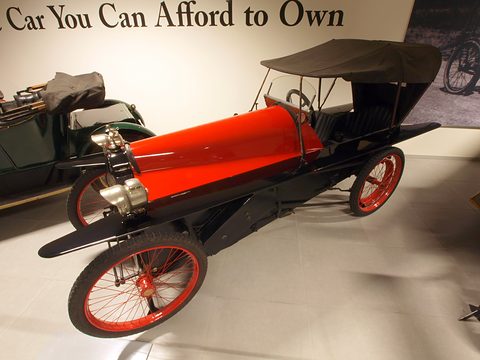
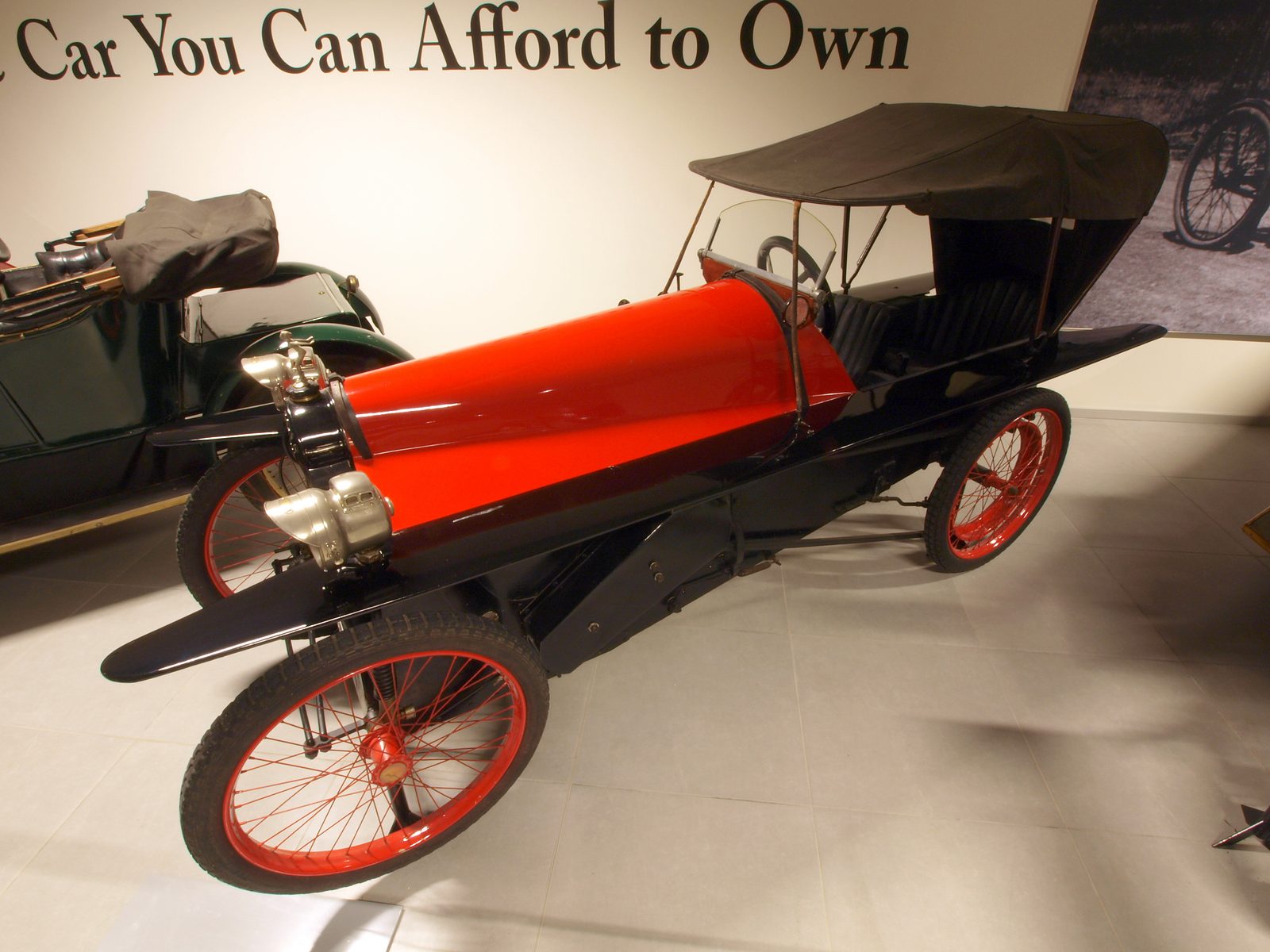
12 Red and black 1921 Tamplin cyclecar with its hood up in the Louwman Museum, The Hague, in April 2011.
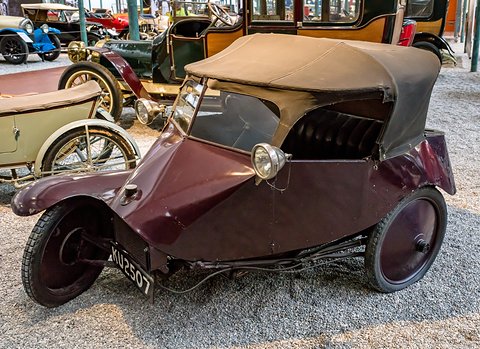
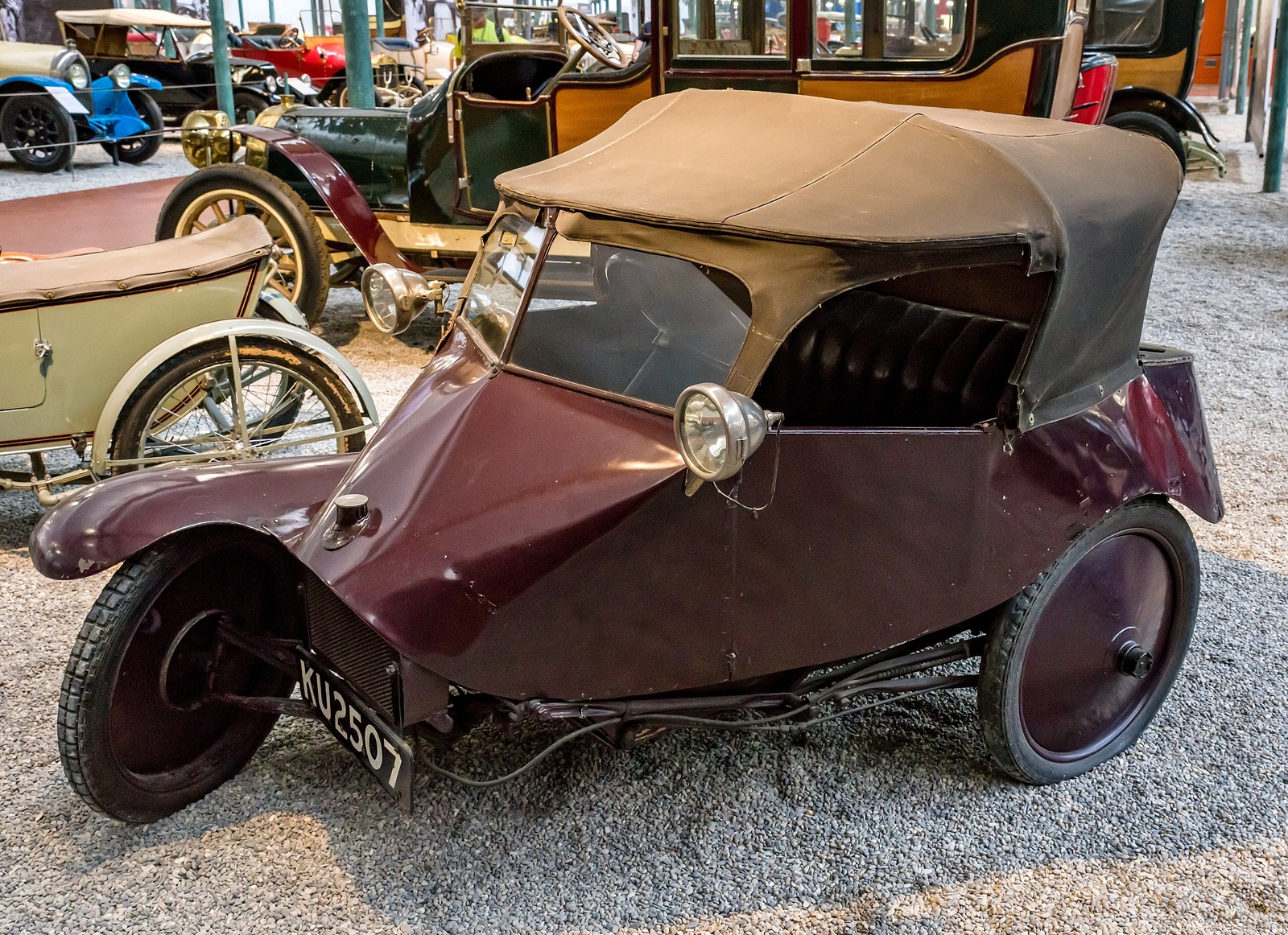
13 Scott Sociable two-seater cabriolet of 1923 from a low front quarter at the Cité de l’Automobile, Mulhouse, in May 2018.
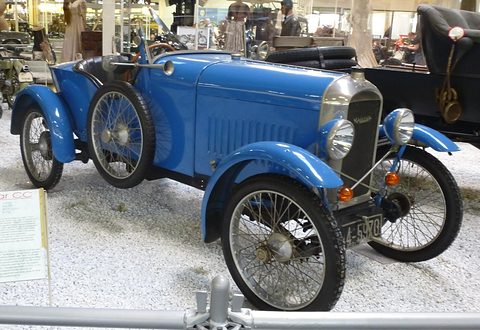
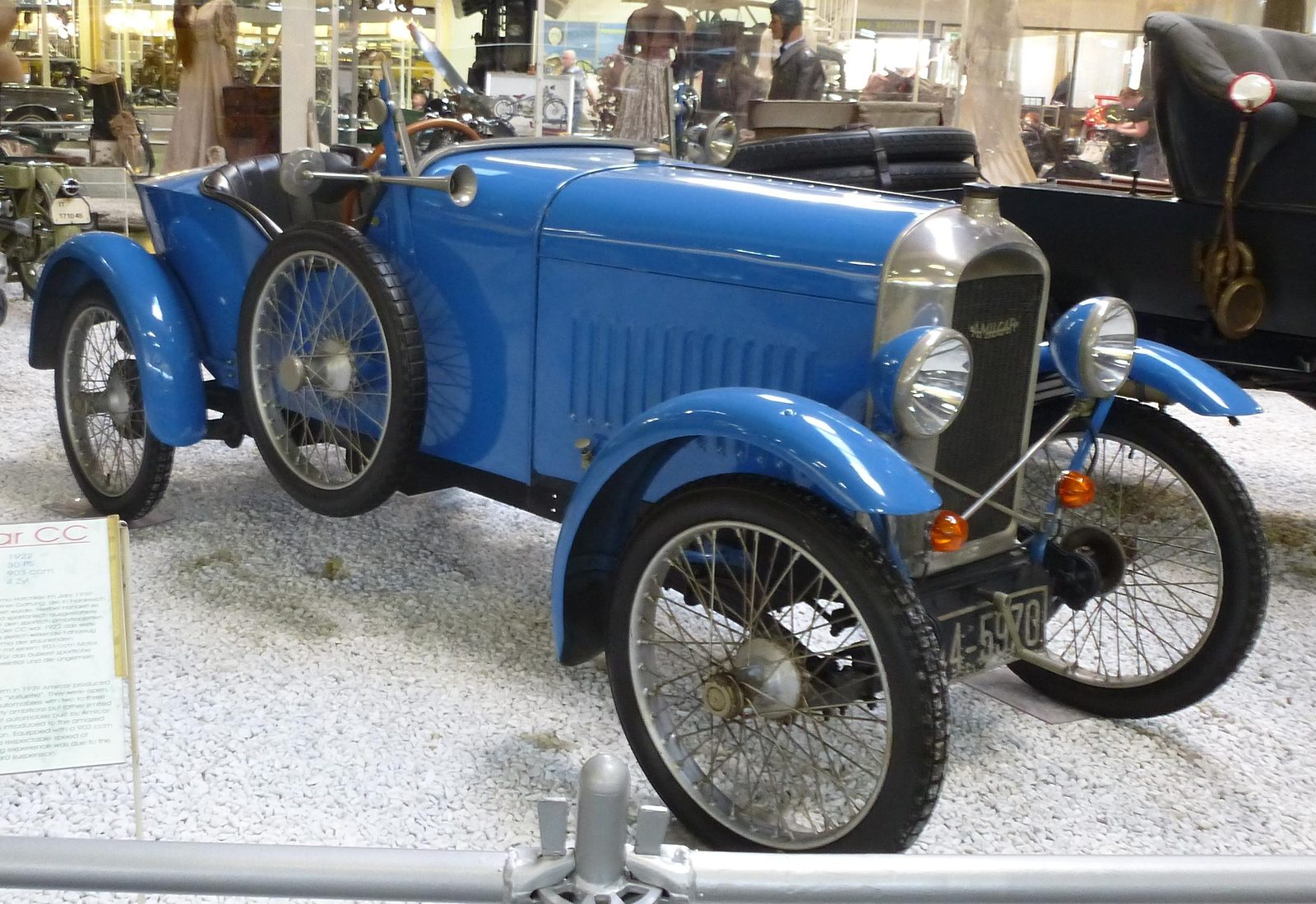
14 Blue Amilcar CC roadster of 1921–22 from the front quarter at the Auto & Technik Museum Sinsheim, Germany, in 2018.
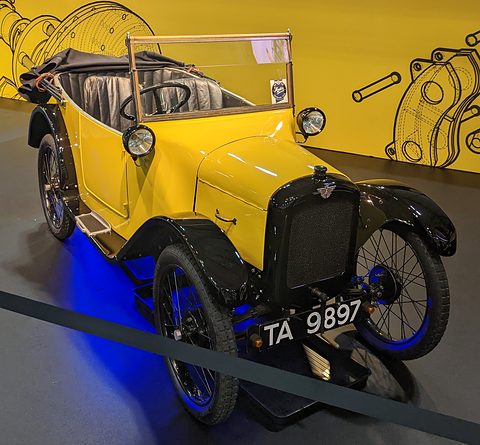
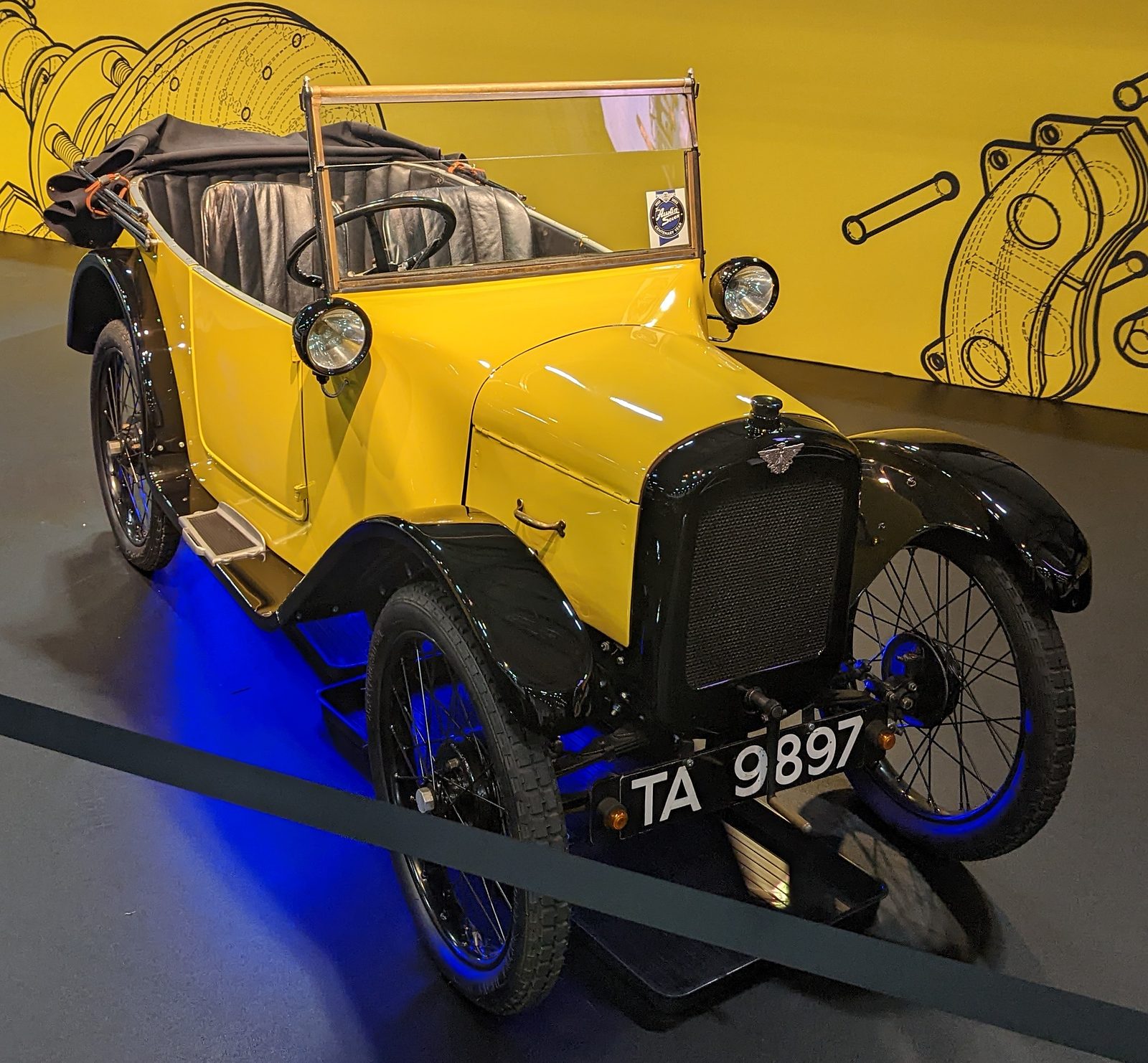
15 A yellow 1924 Austin Seven Chummy tourer under show lighting at the British International Motor Show, Farnborough, in August 2022.
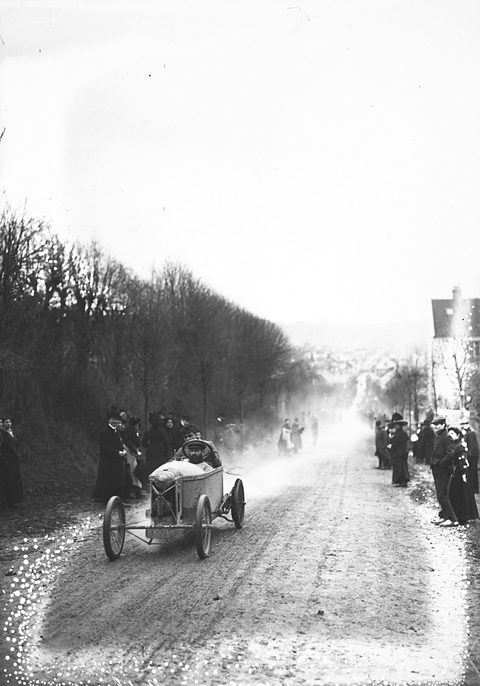
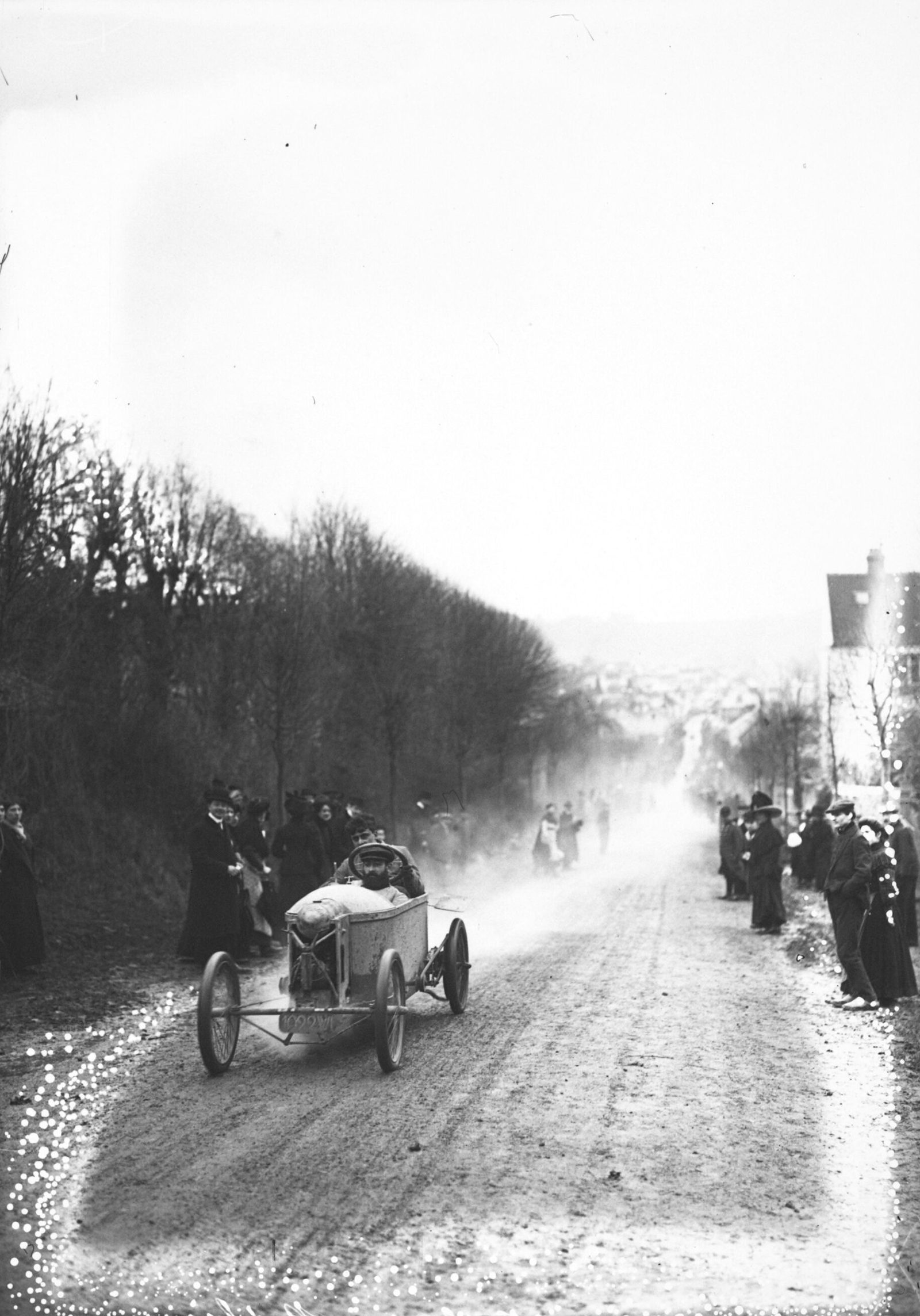
16 A Bédélia climbing the Montanglaust hill near Coulommiers, France, between rows of spectators in February 1912.
Picture credits (16)
- 1 Unknown author, Public domain
- 2 Agence Rol, Public domain
- 3 Agence Rol, Public domain
- 4 Agence Meurisse, Bibliothèque nationale de France, Public domain
- 5 Agence Rol, Bibliothèque nationale de France, Public domain
- 6 Automobile Topics (W. H. McIntyre Company), Public domain
- 7 International Cyclecar & Accessories Company, Public domain
- 8 Norsk Teknisk Museum, CC BY-SA 4.0
- 9 Agence Meurisse, Public domain
- 10 Agence Rol, Bibliothèque nationale de France, Public domain
- 11 Agence Rol, Public domain
- 12 Alf van Beem, CC0
- 13 joergens.mi, CC BY-SA 3.0
- 14 Buch-t, CC BY-SA 3.0 de
- 15 Calreyn88, CC BY-SA 4.0
- 16 Agence Rol, Public domain
The cars
Profiles
14 more cars and 5 more maker groupsFewer
-
-
-
-
-
-
-
-
-
-
-
-
-
-
-
-
-
-
Cyclecar
Cyclecars elsewhere: Austria, Poland, Scandinavia and beyond
1913–1939 · Several countries · 24 makers
-
Sources
Numbered as in the text
Sources are given as plain text; the links are on the Credits page.
- Louwman Museum, “Bédélia BD2 MG”, collection page.
- French Wikipedia, Bédélia, read in full; used as a lead.
- The Cyclecar, first issue, 27 November 1912 (Temple Press): “The Pastime and Industry Abroad: France”, the Olympia show exhibitors, technical survey and tables, and the editorial “The Stability of Cyclecars”, read from Grace’s Guide’s scan.
- Bill Boddy, “The car with the back-seat driver”, Motor Sport, May 2009.
- Grace’s Guide, “Bedelia”.
- Grace’s Guide, “Cyclecars”.
- French Wikipedia, Léon Bollée; used as a lead.
- Peugeot, “A century of models: 1905 Bébé Type 69”, peugeot.com, read in an archived copy of 2011.
- English Wikipedia, Le Zèbre, used as a lead, and Eric Favre, “Le Zèbre invente l’auto populaire !”, Gazoline, 2003.
- German Wikipedia, Cyklon Maschinenfabrik, used as a lead, and Stahls Automotive Foundation, “1904 Cyklon Cyklonette Trike”.
- Cecil Clutton with H. R. Godfrey, “A history of the G.N.”, Motor Sport, August 1949.
- Grace’s Guide, “GN Car Co”; it cites The Autocar of 1912 and The Engineer of 1920.
- H. F. S. Morgan, “How the Morgan began”, The Light Car, December 1949, read in an archived reproduction on morgan3w.de.
- W. Boddy, “The vintage years of the Morgan 3-wheeler”, Motor Sport, June, July and August 1965, compiled from H. F. S. Morgan’s cuttings books.
- The Cyclecar, 16 July 1913: the Cyclecar Grand Prix reports, official results and editorial, and “The Latest Carden Monocar”, read from Grace’s Guide’s scan.
- Grace’s Guide, “GWK”.
- Grace’s Guide, “AC Cars: Sociable” and “AC Cars”.
- The Cyclecar, 25 December 1912: “Classification of Cyclecars” and “Topics of the Week”, read from Grace’s Guide’s scan.
- The Cyclecar, 18 December 1912: an interview with Mr Bednell on definitions, and a note on the international meeting at the Automobile Club de France, read from Grace’s Guide’s scan.
- Finance (1909–10) Act 1910, Fifth Schedule, Part II, “Rates of Duties on Motor Cars”, as reproduced in the Irish Statute Book.
- Grace’s Guide, “Cyclecar Club”, citing Gareth Rogers, 100 Years of the British Automobile Racing Club (2011).
- W. Boddy, “The Trikes Return”, Motor Sport, September 1996, and “The Battle of the Small Cars – 60 minutes flat out”, Motor Sport, March 1996.
- Grace’s Guide, contents pages of The Cyclecar for 2 and 23 July 1913.
- French Wikipedia, Marcel Violet; used as a lead. It cites L’Aéro (1913) and Georgano.
- Kenneth Neve, “An account of the 1913 Cyclecar Grand Prix”, Motor Sport, January 1943.
- Osenat, Paris-Fontainebleau, 17 March 2013, lot 307, “c1925/26 Darmont Spécial Compétition”, catalogue text.
- Motor Age, 15 January 1914: the Detroit cyclecar reports, “Takes Ride in Rocket”, and the full cyclecar directory, read at the Internet Archive.
- Horseless Carriage Gazette, March–April 1957, reprinting John S. Harwhite’s cyclecar article of about 1914, read at the Internet Archive.
- Sam Medway, the Scripps-Booth article in Automobile Quarterly 13 (3), 1975, and David Burgess Wise, The Illustrated Encyclopedia of Automobiles, entry Scripps-Booth, both read in snippets.
- Motor Age, 16 July 1914: the cyclecar reliability run notice and the dissolution of the Princess Cyclecar Co., read at the Internet Archive.
- English Wikipedia, McIntyre Automobile, the Imp section; used as a lead. It cites Kimes and Clark (1996) and Georgano (2001).
- English Wikipedia, Smith Flyer; used as a lead. It cites the Guinness Book of Records (1992), p. 361.
- Lane Motor Museum, “Auto Red Bug with Aerothrust Engine – 1924”, collection page.
- Classic & Sports Car, Rétromobile 2019 preview and report.
- Grace’s Guide, “Carden Engineering Co” and “John Valentine Carden”; they cite The Light Car and Cyclecar of 8 November 1919 and Flight of 19 December 1935.
- Cercle Pégase Amilcar, “Histoire”: the founders and the cyclecar law of 30 July 1920.
- Cercle Pégase Amilcar, “Amilcar CC – 1922–1925”, model history and technical description.
- English Wikipedia, Peugeot Quadrilette, and French Wikipedia, Peugeot Quadrilette; used as leads.
- Grace’s Guide, “Tamplin”, quoting The Motor Cycle of 11 December 1919.
- English Wikipedia, Tamplin; used as a lead. It cites Culshaw and Horrobin (1974) and Baldwin (1994).
- G. N. Georgano (ed.), The Encyclopedia of Motor Sport (1971), entry Bol d’Or, read in a snippet.
- German Wikipedia, Peter & Moritz, Kleinauto- und Motorenwerke Koch & Co. and Autohaus Staiger; used as leads. They cite Linz and Schrader (2008).
- German Wikipedia, Slaby-Beringer; used as a lead.
- German Wikipedia, Mauser (Waffenhersteller), section Fahrzeuge, and Einspurwagen; used as leads.
- Donatella Biffignandi, “Alla piccola vettura un grande avvenire!”, Centro di Documentazione del Museo Nazionale dell’Automobile di Torino, 2005.
- Josep Astudillo, “David (1913–1959)”, Autopasion18, in Spanish.
- David, S.A., “Historia del Edificio David y sus Autos”, the company’s history, in Spanish.
- Norwegian Wikipedia, Bjering; used as a lead.
- Lane Motor Museum, “Leyat Helico – 1919”, collection page, and French Wikipedia, Marcel Leyat, used as a lead.
- English Wikipedia, Austin 7; used as a lead. It cites Wyatt, The Austin 1905–1952 (1981).
- Grace’s Guide, “Austin: Seven”.
- Hagerty UK, “Austin Seven: power to the people, 100 years on”.
- Lane Motor Museum, “Austin 7 ‘Fabric Saloon’ – 1929”, collection page.
- Lane Motor Museum, “Citroën 5CV Trèfle – 1924”, collection page.
- English Wikipedia, Citroën Type C; used as a lead. It cites Reynolds, André Citroën (1996), and Laurent, Citroën 5HP (2006).
- Grace’s Guide, “Scott Autocar Co”, citing Baldwin (1994), and English Wikipedia, Scott Sociable.
- German Wikipedia, Morgan Threewheeler; used as a lead. It cites Ries in Motor Klassik 12/1988.