microcarfan
  • City car
  • Italy
  • Four wheels
  • Over the yardstick

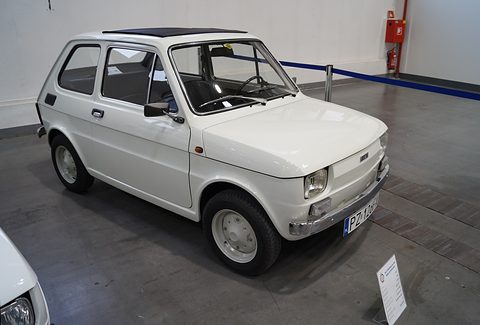
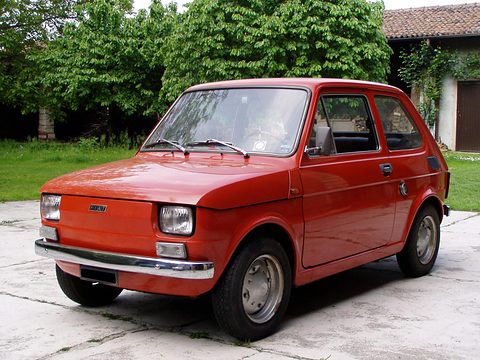
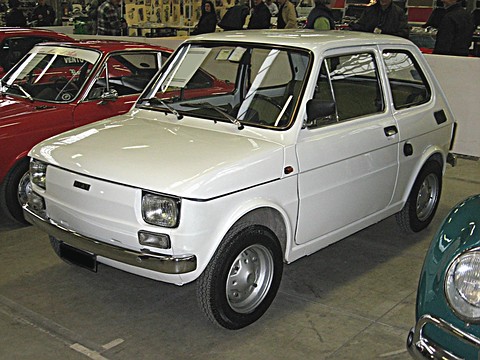
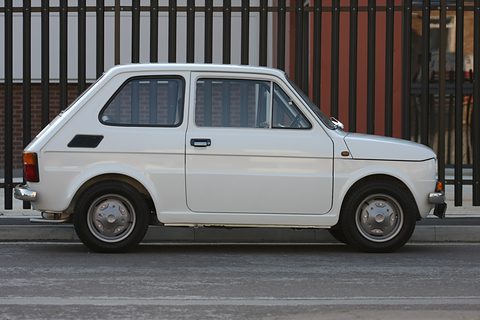
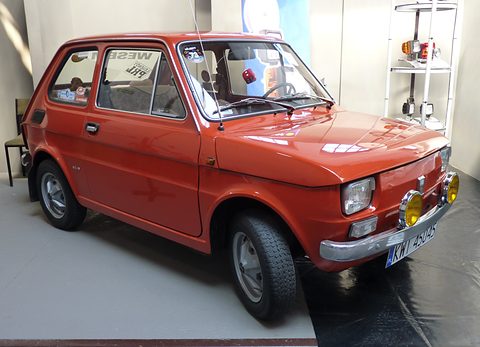
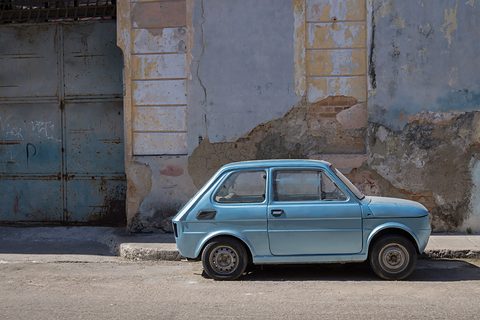
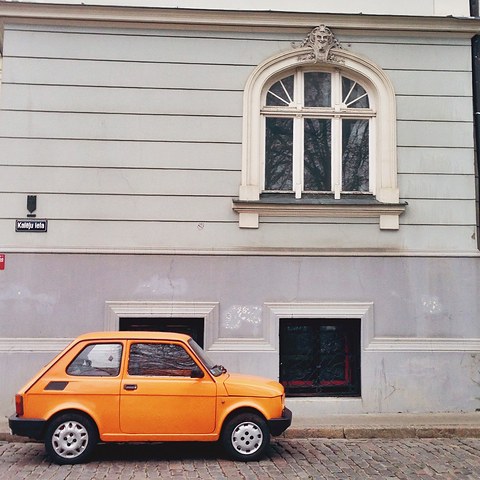
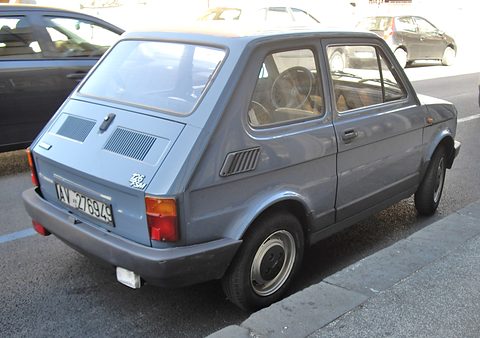
Fiat 126

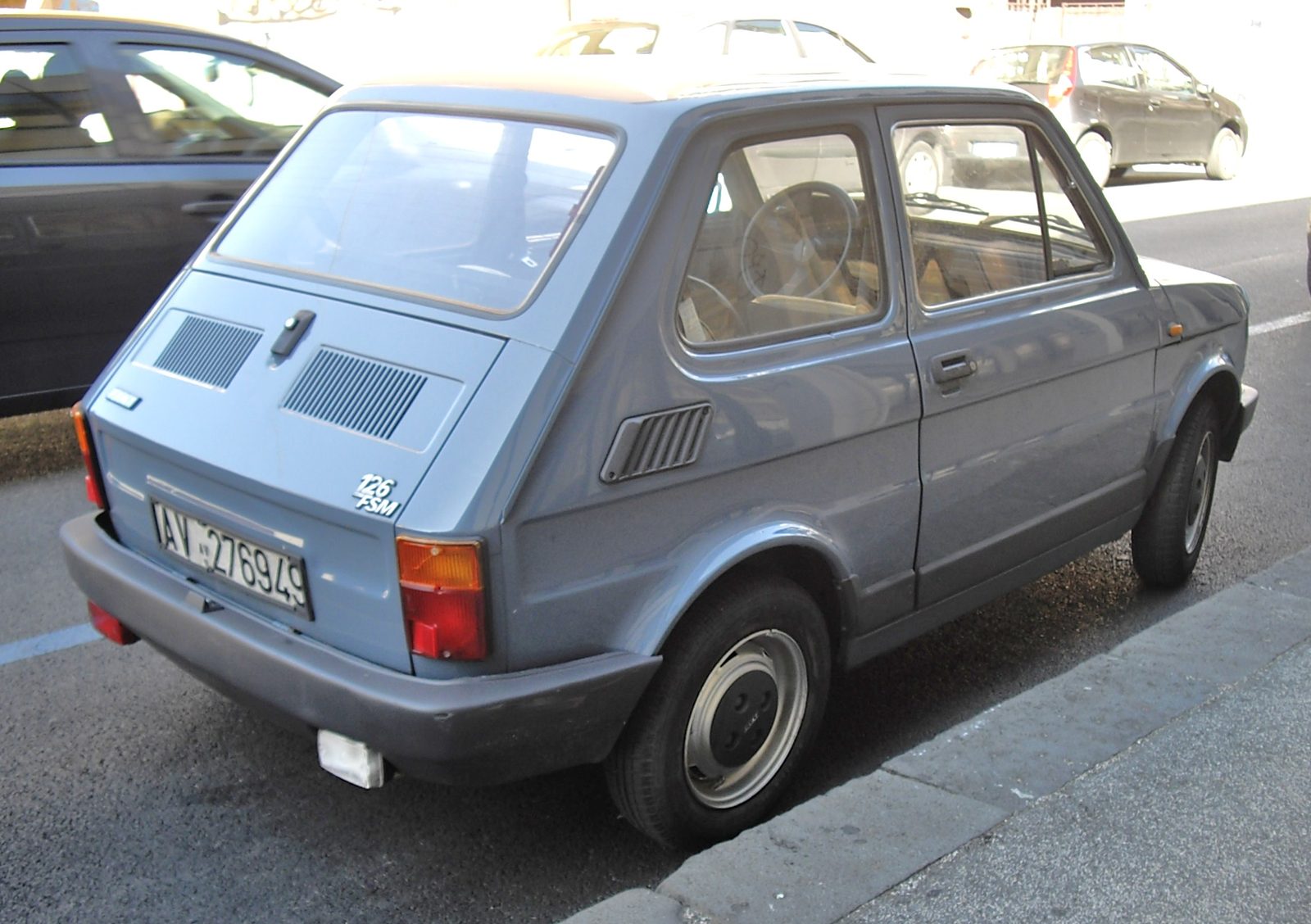
Also known as Polski Fiat 126p, Maluch, Fiat 126 Bis, Steyr-Puch 126, Bambino, FSM Niki

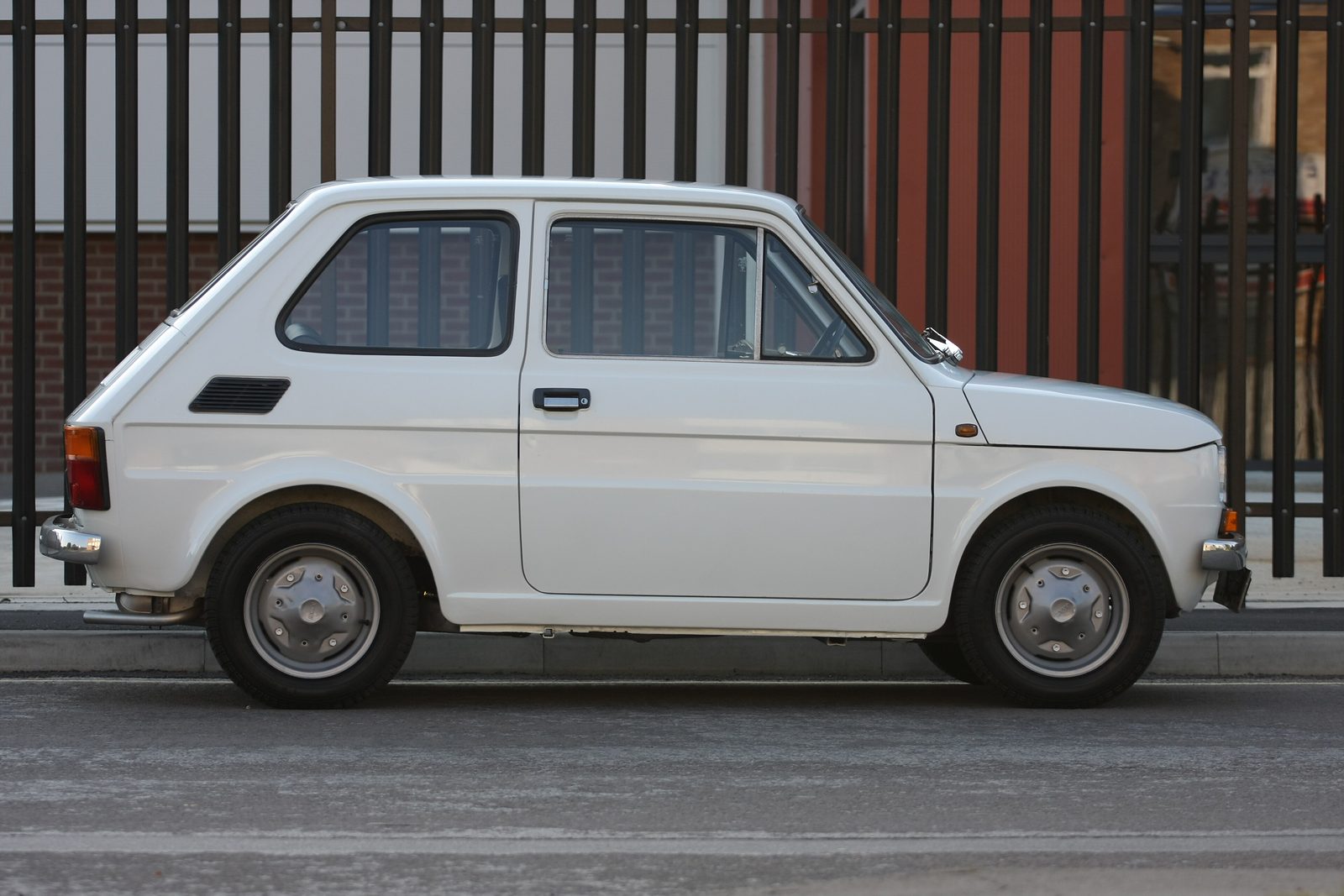
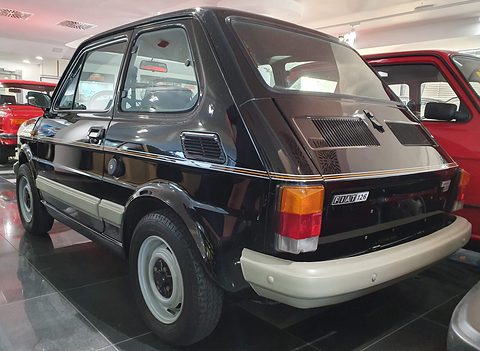
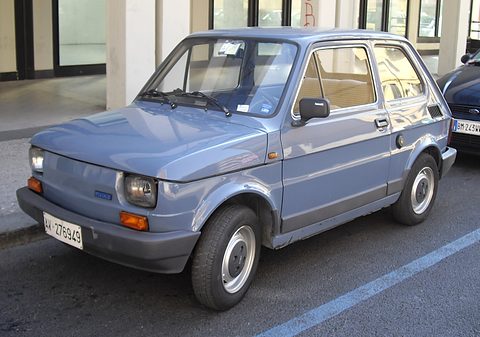
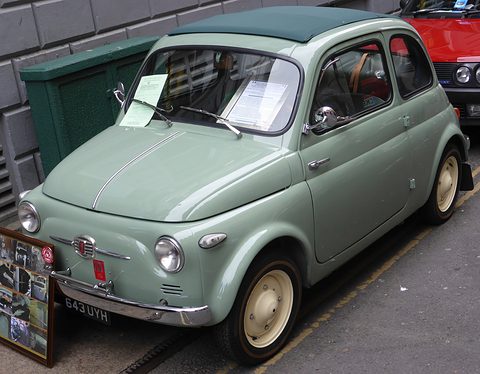
Poland paid for it partly in cars. Fiat launched the 126 in 1972 to replace the Fiat Nuova 500, but the Poles built more than three million of it, called it the little one, Maluch, and in 1997 made the nickname its official name.

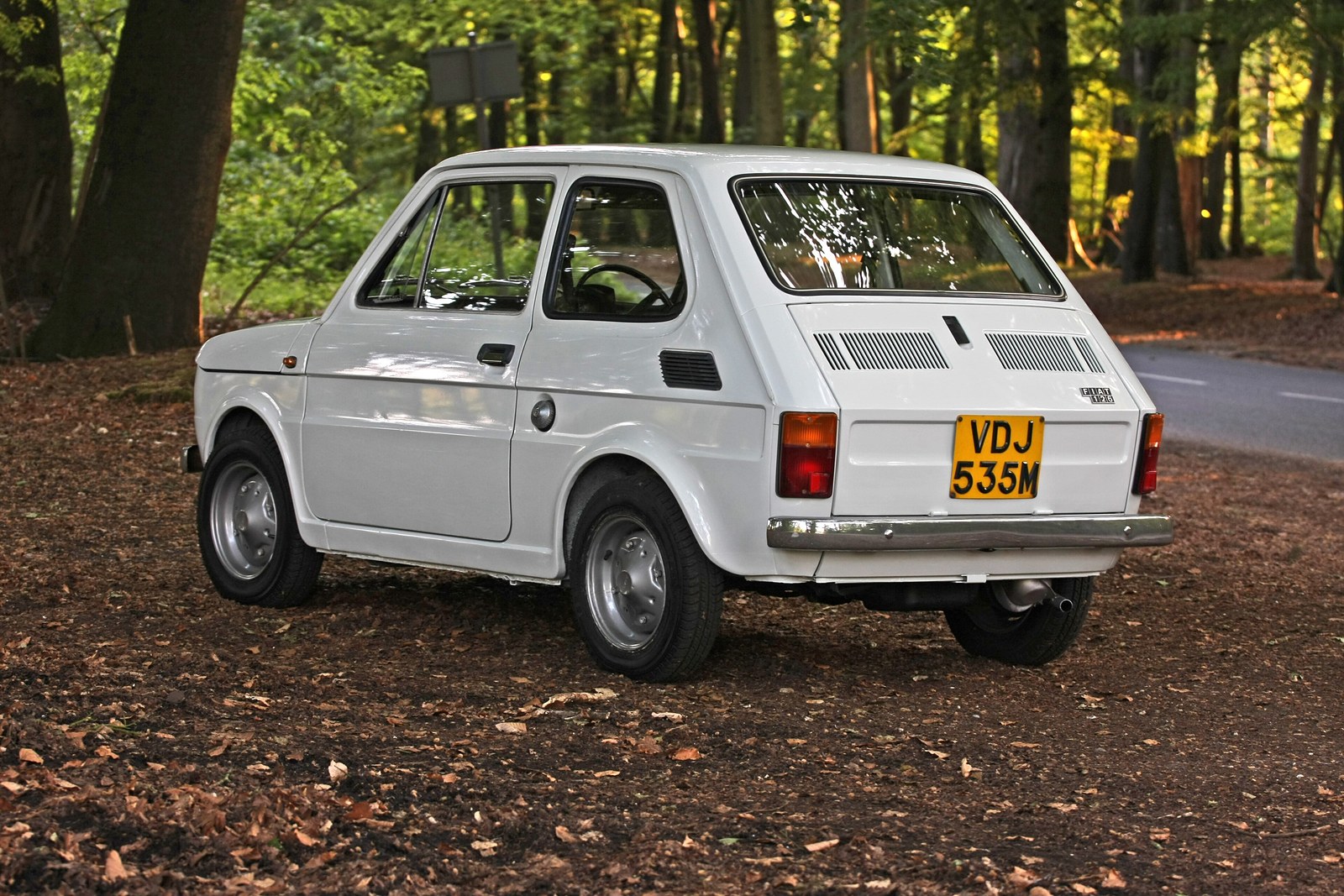
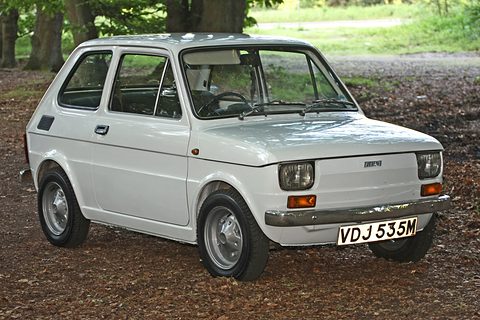
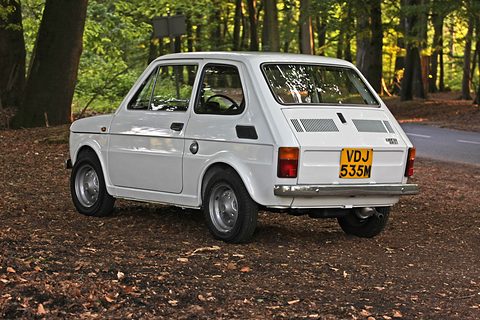
Small white two-door car with chrome bumpers, a FIAT badge and a UK plate parked on leaf-covered ground under trees.
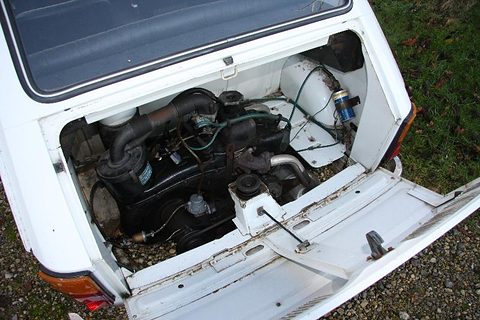
A white 1973 Fiat 126 of the first series on a woodland verge in England in 2009.Photo: Tony Harrison, CC BY-SA 2.0, via Wikimedia Commons

At a glance

The spec plate

Fiat 126

126 · Turin, Bielsko-Biała and Tychy

Built
1972–⁠2000Shown at the Turin show in October 1972; the last car was built at Bielsko-Biała on 22 September 2000
Country
ItalyItaly until 1979 or 1980; Poland, at Bielsko-Biała and Tychy, 1973–⁠2000; Graz, Austria, 1973–⁠75
Maker
FIAT, Turin; FSM, Bielsko-BiałaFSM (Fabryka Samochodów Małolitrażowych) built under licence from 1973 and became Fiat Auto Poland in 1992
Engine
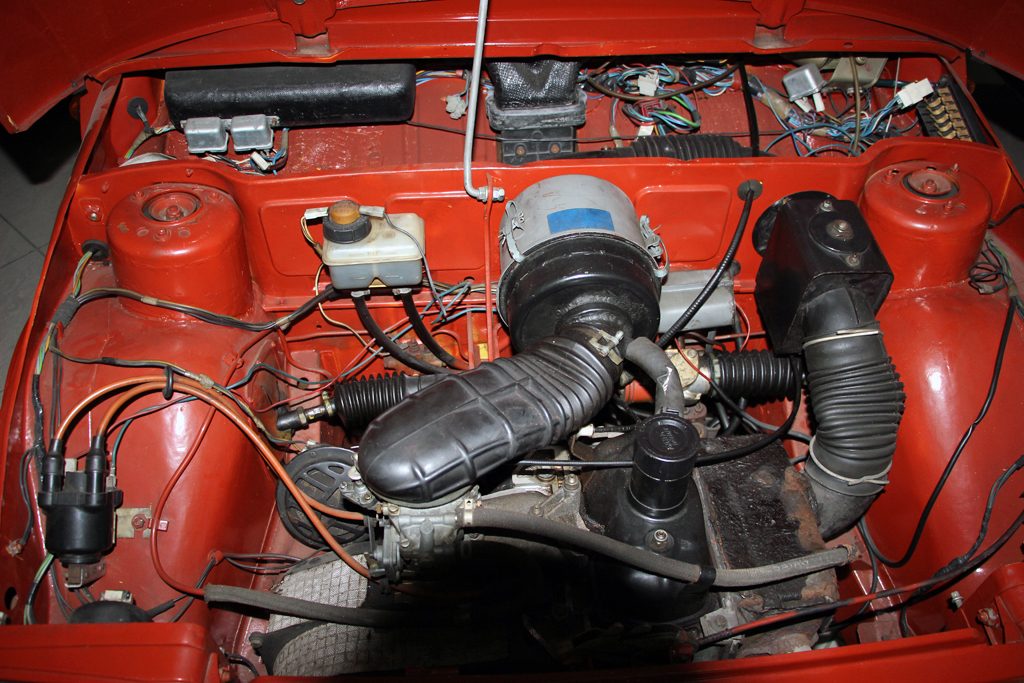
594 cc air-cooled vertical twin, overhead valves652 cc from 1977; a 703 or 704 cc water-cooled flat twin in the 126 Bis; a 643 cc Puch flat twin in Austria
Power
23 CVAt 4,800 rpm (16.9 kW); 24 KM for the Polish 650; 25.2 KM or 26 CV for the Bis
Length
3,054 mm1,377 mm wide
Weight
580 kgEmpty, the early car; 600 kg for the Polish 650, 645 kg for the Bis
Seats
4A car for two adults and two children
Wheels
4Engine overhung behind the rear axle, driving the rear wheels
Price new
69,000 złPoland, 1973, paid in advance; £715 in Britain in late 1973; DM 5,890 in West Germany in 1976
Production
4,671,586Italy and Poland together; 4,673,655 if the 2,069 Austrian cars are counted again
Survives
YesNo count; about 10,000 were registered in Cuba in 2016
Top speed
111km/h111 km/h110.795 km/h (69 mph) on test; 105–108.4 km/h in Polish figures

How big is it?

True proportion

3.05 m

It is 84 mm longer than a Fiat 500, about 1.7 adults laid end to end.

Drawn at true proportion. The track is 3.6 metres long; the adult stands at the same scale. The Peel P50 is the smallest production car, on every page for comparison.

The story

History

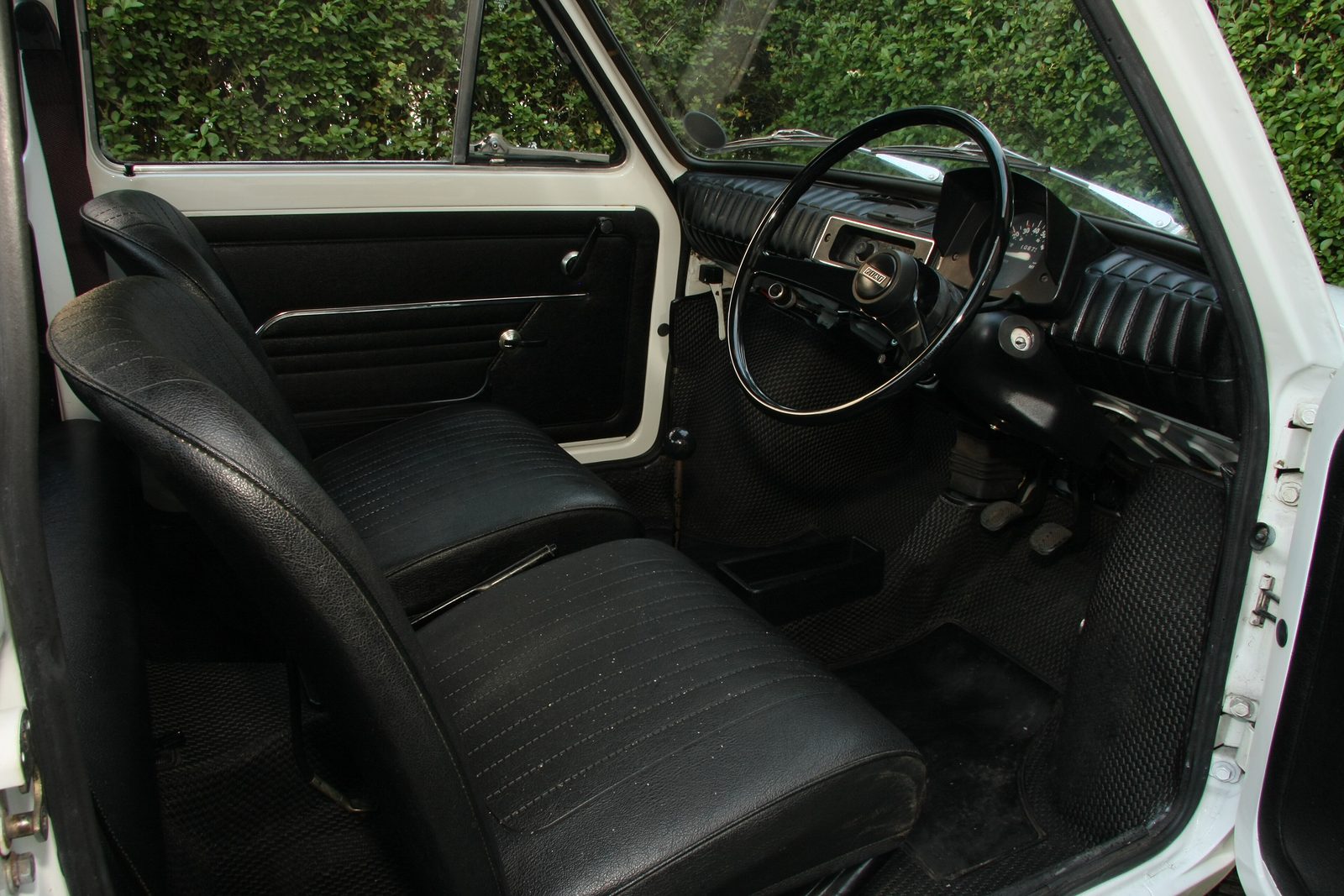
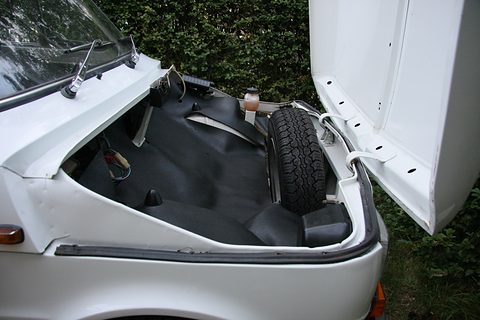
Work on a successor to the Nuova 500 began at Fiat in 1968.source 1 The new car kept the 500’s floor pan, its 1,840 mm wheelbase and its air-cooled twin in the tail, under a squarer body by Sergio Sartorelli of Fiat’s Centro Stile; Italian Wikipedia says the shape derives from Pio Manzù’s City Taxi concept of 1968.source 1source 3source 2 The twin was bored out to 594 cc and 23 CV.source 1source 3 Underneath, much was new. The gearbox had synchromesh on second, third and fourth, which the 500 never had. The brakes were dual-circuit, the steering column split to collapse in a crash, and the body was engineered to crumple progressively. The fuel tank moved from the front boot to beneath the rear seat, and moving the starter to the side of the engine let the rear seat go back about 10 cm.source 1source 3source 2

At 3,054 mm (10 ft) it is 84 mm longer than the Nuova 500, the yardstick this site lays against every microcar; it is here as the 500’s direct heir and as Poland’s people’s car.source 1source 2

Turin, 1972

The first 100 cars were built at Cassino in September 1972, and the 126 was shown at the Turin show in October; Italian Wikipedia dates the launch to 1 November.source 1source 3source 2 It came sixth in that year’s European Car of the Year vote.source 1 The 500 R, which already used the 126’s engine, and the Fiat 500 Giardiniera estate stayed in production beside it, to 1975 and 1977.source 1 Right-hand-drive cars went on sale in Britain in July 1973.source 4

Quattroruote measured its test car in February 1973 at 110.795 km/h (69 mph), with a standing kilometre in 47.297 seconds and 6 litres per 100 km.source 3 When Motor Sport tested one at £715, it found the car would cruise at 60 mph with something in hand and return 45.6 to 46.4 mpg on test, and nearer 50, it reckoned, for an average driver, with light steering and a nice gear change; the engine was noisy, the more so with the heater on, and the rear engine gave good traction on slippery roads.source 5

The little car rides extraordinarily well, without pitching, and has sufficiently generous seats to be comfortable for long runs.

W.B., road test of the Fiat 126, Motor Sport, January 1974.source 5

Graz, and a 250 cc 126

Austria had its own version. From 1973 to 1975 Steyr-Daimler-Puch in Graz took 2,069 Italian 126s delivered without engines and fitted its own 643 cc air-cooled flat twin of 25 PS, with twin tailpipes and, as standard, an independent petrol-burning heater, an Eberspächer by the Austrian club’s account and a Webasto by Polish Wikipedia’s.source 1source 2source 6 It followed Puch’s long run of Fiat 500s with its own engines, the Steyr-Puch 500. In West Germany, the Steinwinter 250 L, or FIGO, put a 250 cc two-stroke into the 126 body for drivers holding only West Germany’s old Class 4 licence; Italian Wikipedia says the engine came from the Goggomobil, and puts the number built at a few hundred.source 1source 3

Italy lets go

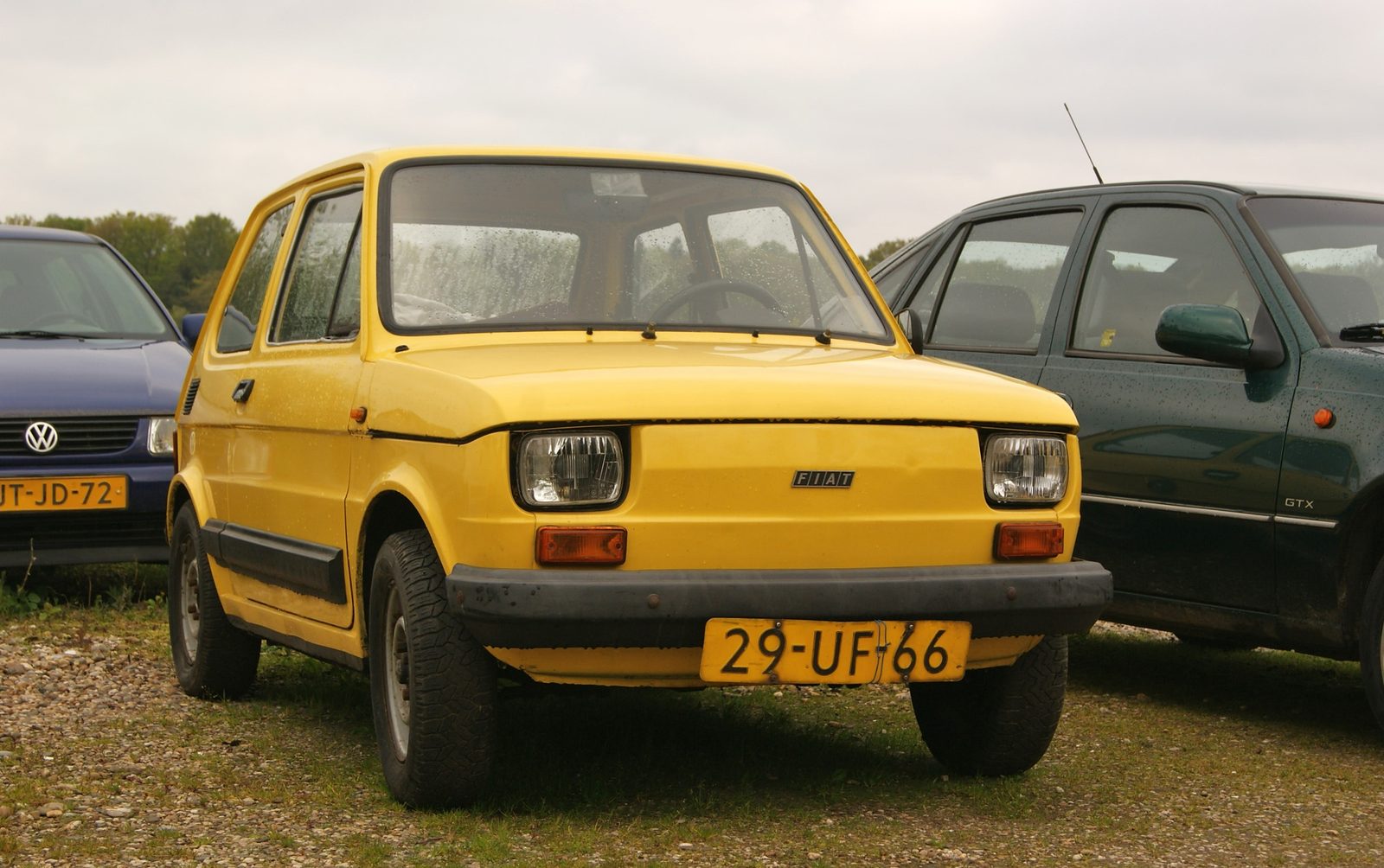
In November 1976 Fiat Italy replaced the original trim with three: the base Economica, and the Personal and Personal 4, which had plastic-covered bumpers and side strips, new 12-inch wheels and bigger brake drums. Britain called the uprated car the 126 de Ville, and West Germany and Switzerland the Bambino.source 3source 4 In 1977 the bore went up from 73.5 to 77 mm, making 652 cc. The date varies by source and market, and so does the power: 24 KM by Polish Wikipedia, but unchanged at 23 PS, with more torque, according to auto motor und sport.source 1source 3source 2

Italian production ended after 1,352,912 cars: on 8 July 1979 by Italian Wikipedia, which adds that Termini Imerese went on building right-hand-drive and sunroof cars for about two more years, or in 1980 by Polish Wikipedia and the British club.source 1source 3source 4 From then on every 126, the Italian market’s included, came from Poland.source 1source 3source 4 From May 1983 Italy sold the 126 unificata, later badged “Made by FSM”, and in May 1985 it took the Polish 650E engine.source 3source 4 The last 126 for Britain was sold in 1992.source 4 The 126 was the last rear-engined Fiat.source 3
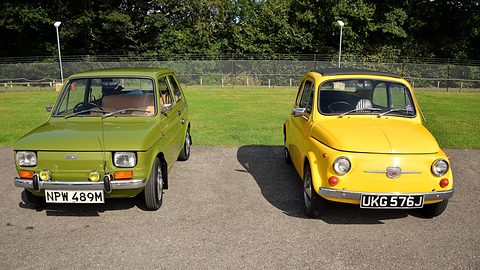
A boxy green small car and a rounded yellow small car parked side by side on tarmac in front of a grass bank.
A green early Fiat 126 beside a yellow Nuova 500, the car it replaced, at Brands Hatch in 2021: the same wheelbase under a squarer body.Photo: 35mmMan, CC BY 2.0, via Wikimedia Commons
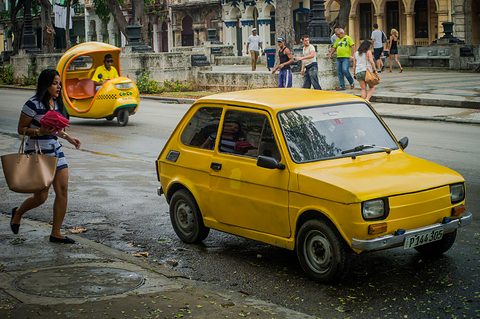
Yellow small two-door car on a wet road as a woman with a handbag walks past and a yellow coco-taxi waits behind.
A yellow Polski Fiat 126p on a wet street in Havana in 2015, a coco-taxi behind it.Photo: Antonio Schubert, CC BY-SA 2.0, via Wikimedia Commons

Polski Fiat 126p

1973–⁠2000 · a record on this page

Poland had looked for a licensor for a people’s car since the late 1960s, and Toyota, Citroën, Renault, Volkswagen and Ford were among the suitors. Talks with Fiat began in July 1970. Fiat offered the front-wheel-drive 127 or the 126, and Poland chose the 126, because Fiat agreed to be paid in power units and cars and because the 127 would have cost 20 to 25 per cent more to build.source 1 The licence, signed by the Pol-Mot trade enterprise on 29 October 1971, was paid in kind: 820,000 power units for Italian-built cars, and 50,000 cars for Fiat’s dealers (more on such deals in built under licence).source 1 It was a political project too. Edward Gierek’s government wanted popularity through consumer goods after the austere Gomułka years, and in 1971 Poland had only 556,000 private cars.source 2

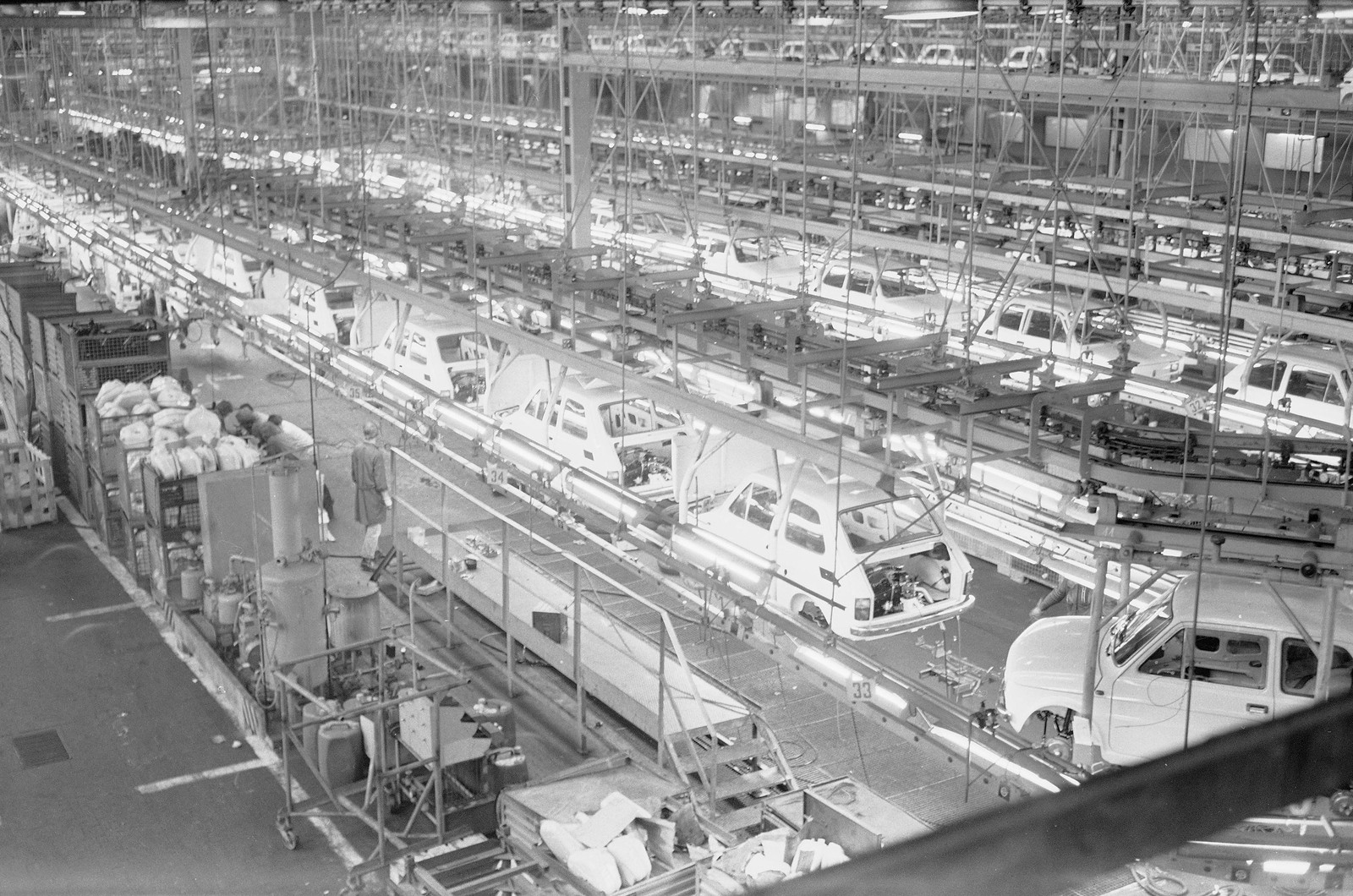
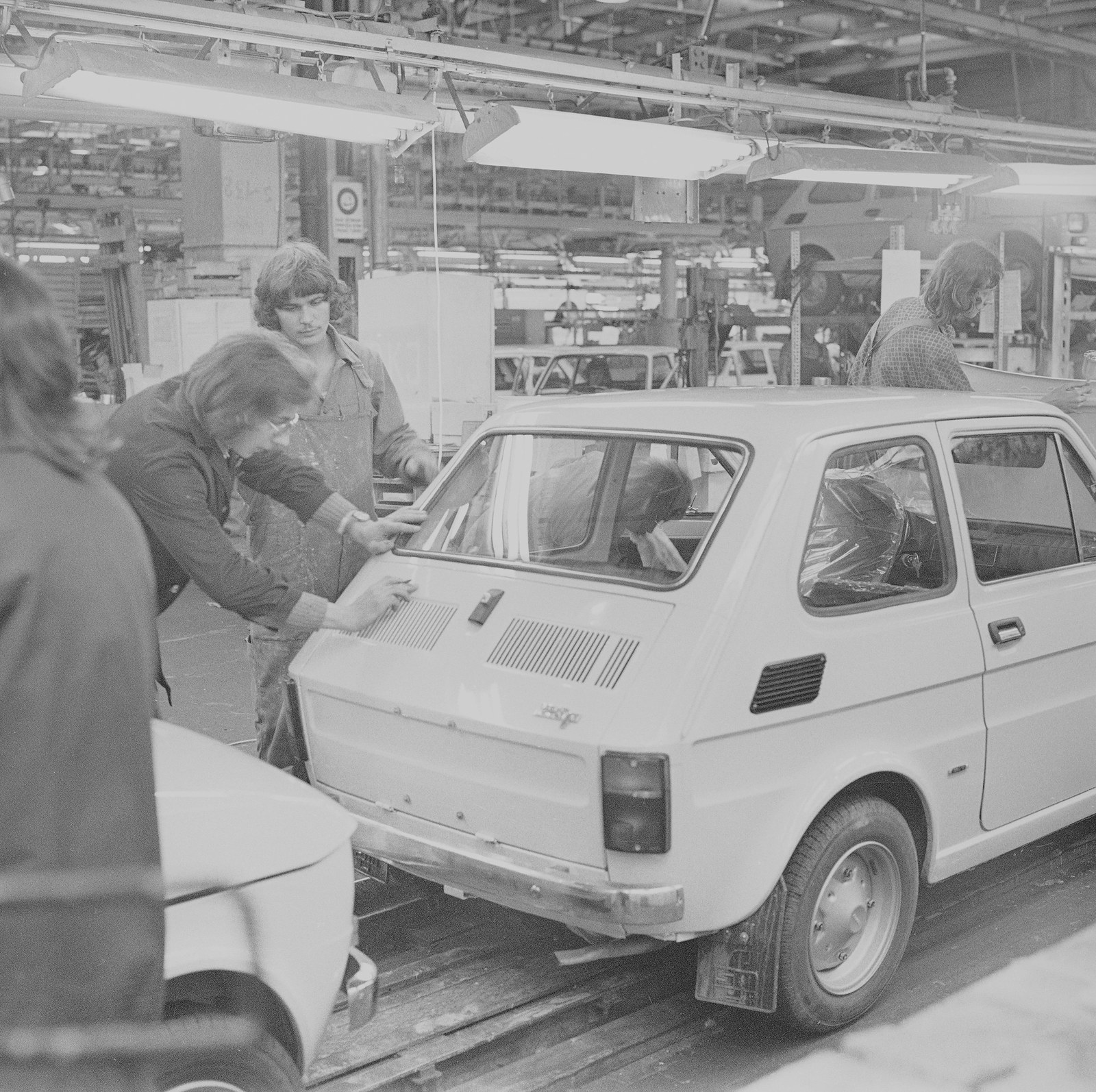
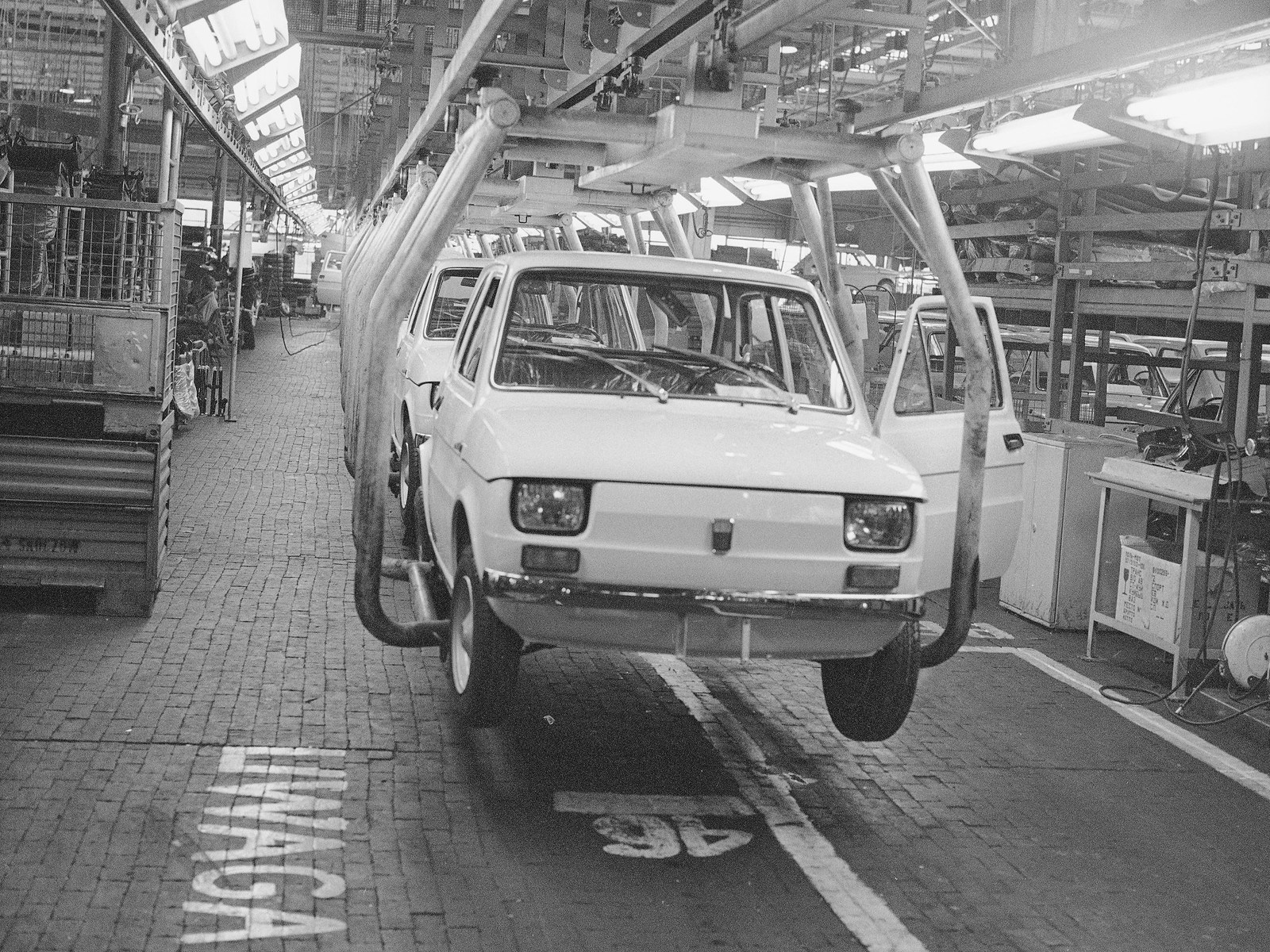
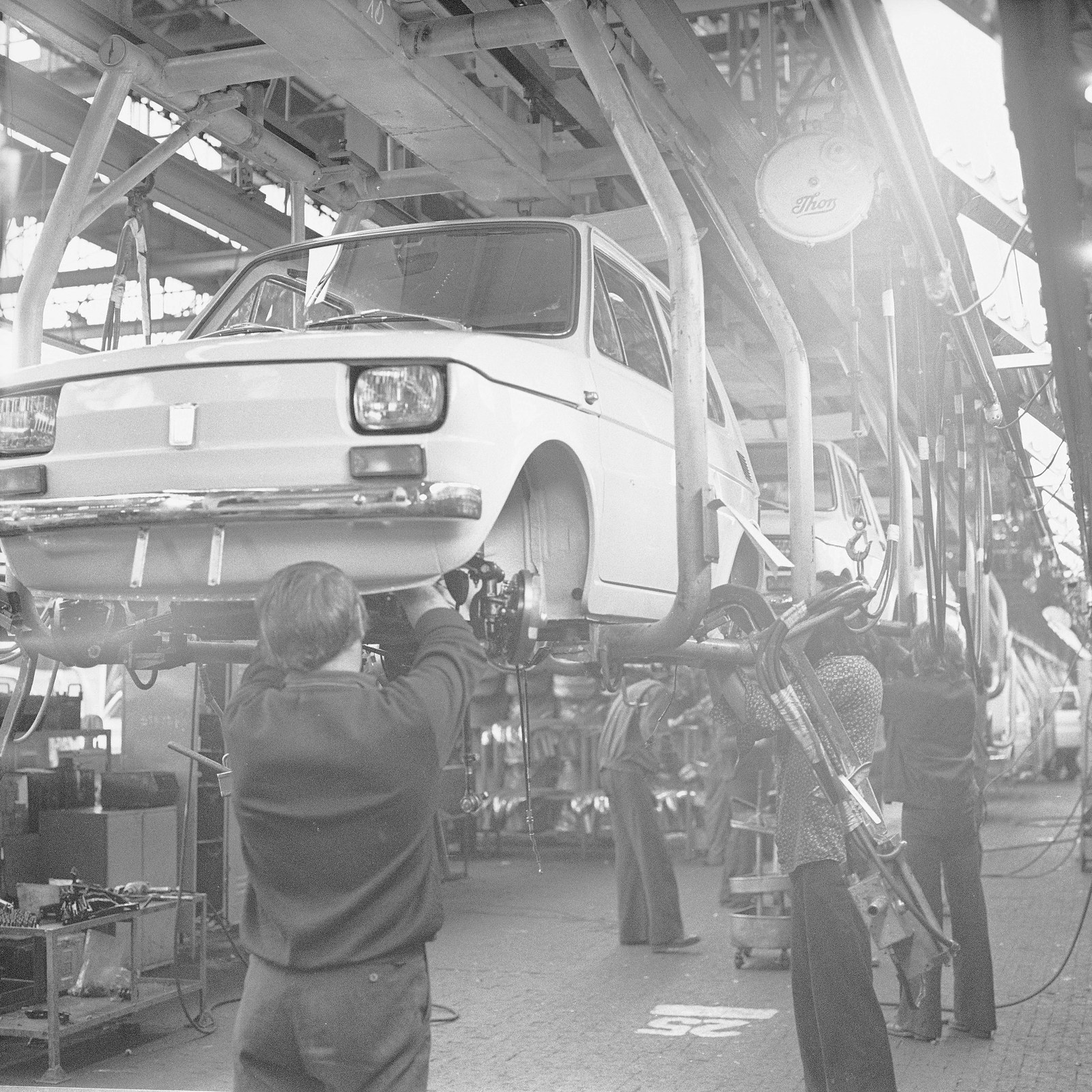
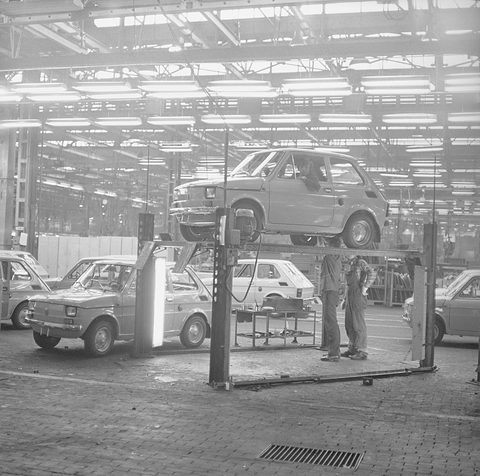
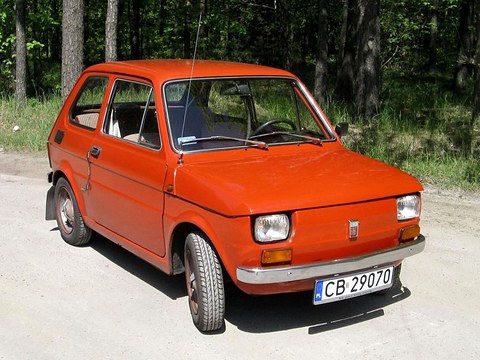
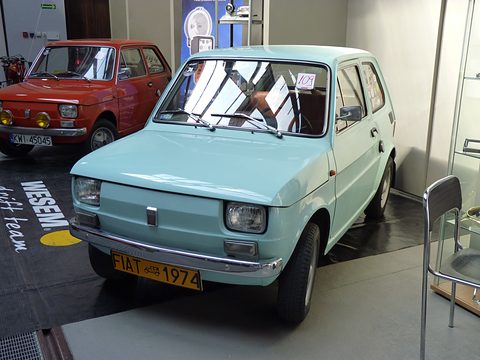
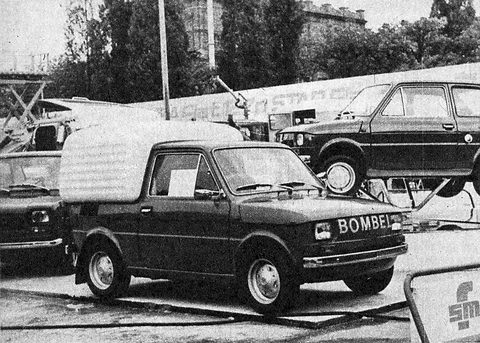
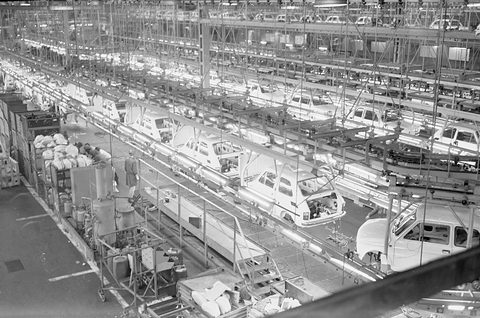
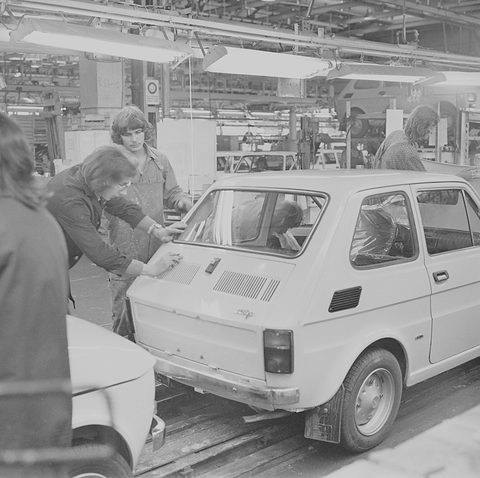
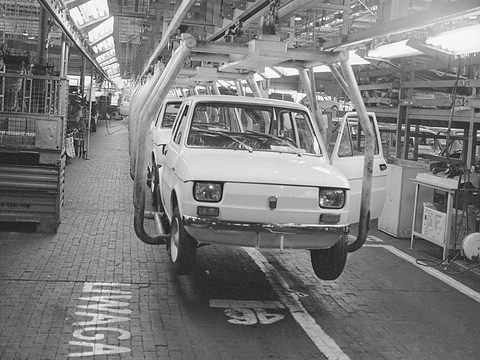
The factory, Fabryka Samochodów Małolitrażowych (FSM, the small-car factory), was formed in Bielsko-Biała on 1 January 1972, and the car was shown in Warsaw, on Plac Defilad, on 9 November 1972.source 1 From 5 February 1973 the PKO savings bank took advance payments of 69,000 zł for it, with first deliveries promised by 1977 or earlier, by lottery. A month’s average pay was 3,000 to 4,000 zł.source 1source 2 The first Polski Fiat 126p was assembled from Italian parts on 6 June 1973, production officially began on 22 July, and about 1,500 were built that year.source 1source 2 A new car could fetch up to 110,000 zł second-hand, or be bought for US$1,100 in hard currency at a Pewex shop.source 1

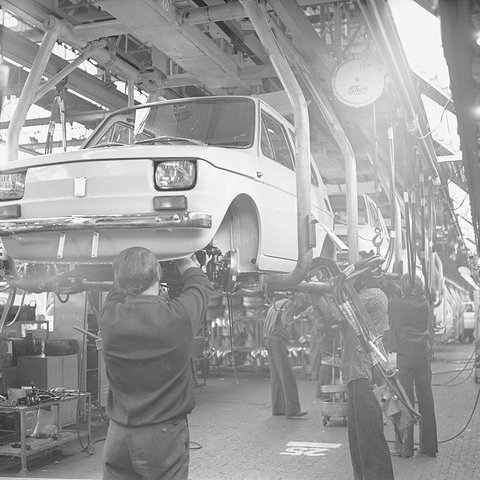
Black-and-white factory hall with a small car raised on a lift, workers beneath it and finished cars around.
Plate I · 1973–⁠77 A Polski Fiat 126p raised on a lift among finished cars in the FSM works at Bielsko-Biała.Photo: Lech Zielaskowski (Narodowe Archiwum Cyfrowe), Public domain, via Wikimedia Commons

Motorising Poland

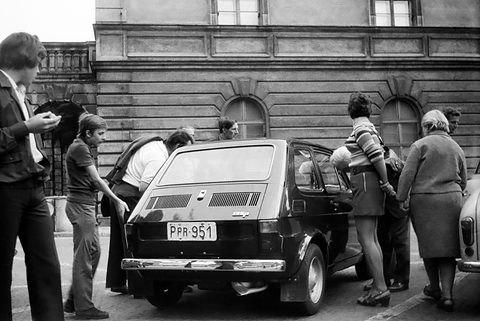
A second plant, at Tychy, opened on 18 September 1975 with room for 200,000 cars a year.source 1source 3 FSM exported engines to Italy from October 1974 to pay for the licence, finished paying in May 1979, two years early, and in June 1979 became Fiat’s only supplier of the 126.source 1 Output peaked in 1980 at 214,432 cars, and the millionth 126p left Tychy on 15 October 1981.source 1 It was the cheapest car on the Polish market and simple enough to mend at home, and families took it abroad with roof racks piled high, some towing the little Niewiadów N126 caravan built for it.source 1source 2 Its critics pointed to the poor performance, weak brakes and lack of space, and its small dynamo could not fully charge the battery on short runs.source 1source 2 The engine coughs as it starts, so Poles called the car kaszlak, the cougher, as well as the mały Fiat, the small Fiat.source 1source 2
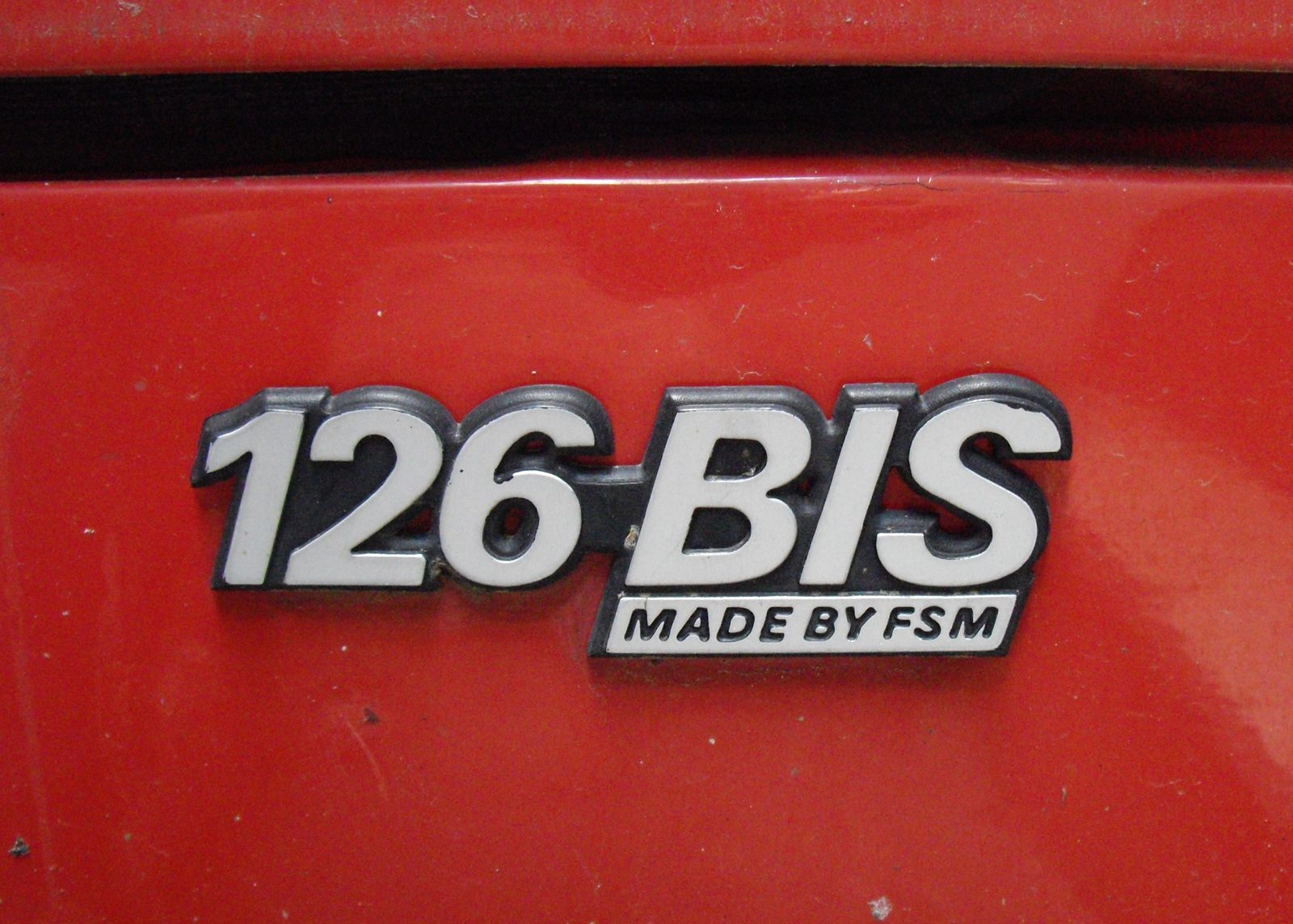
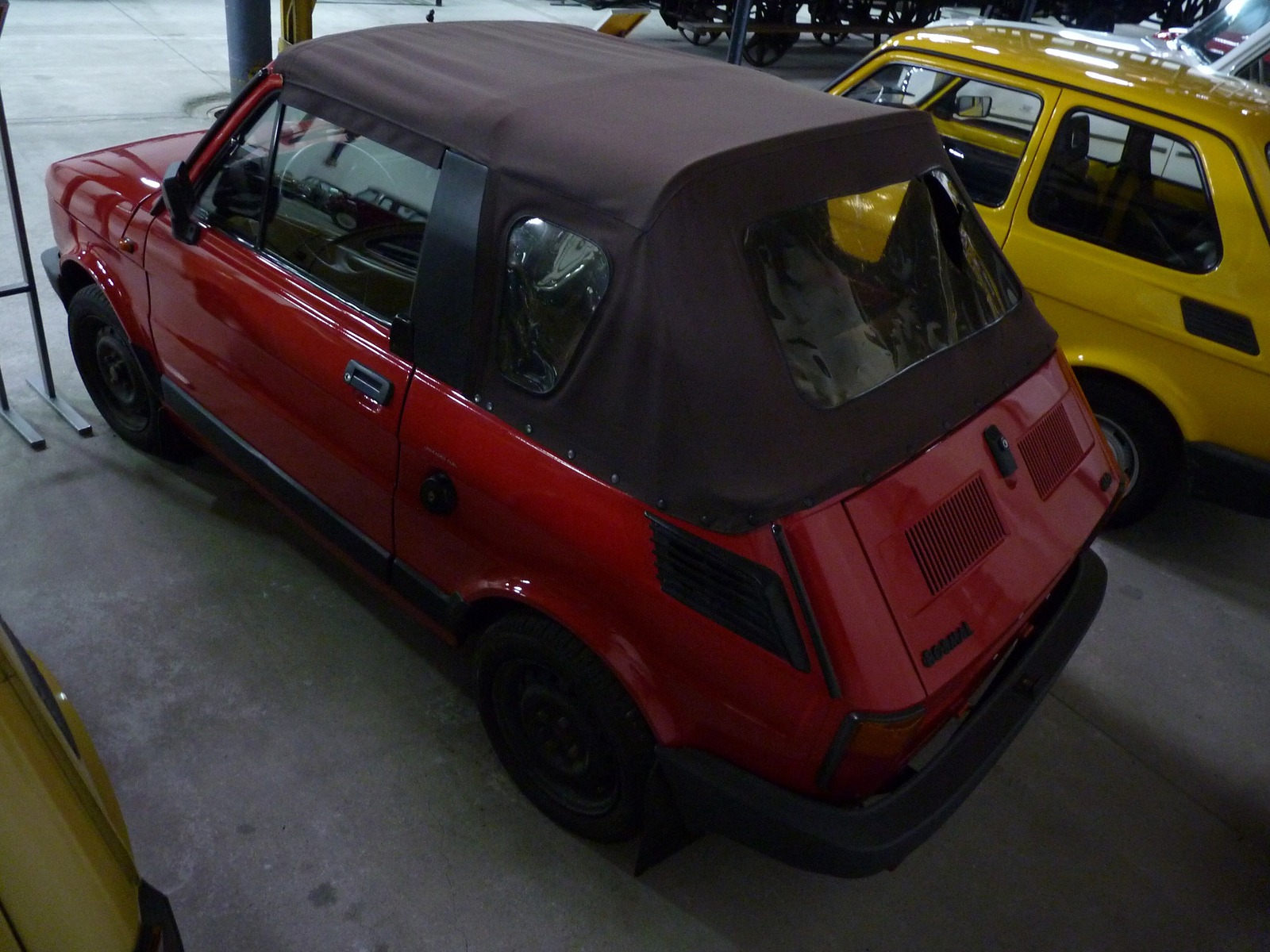
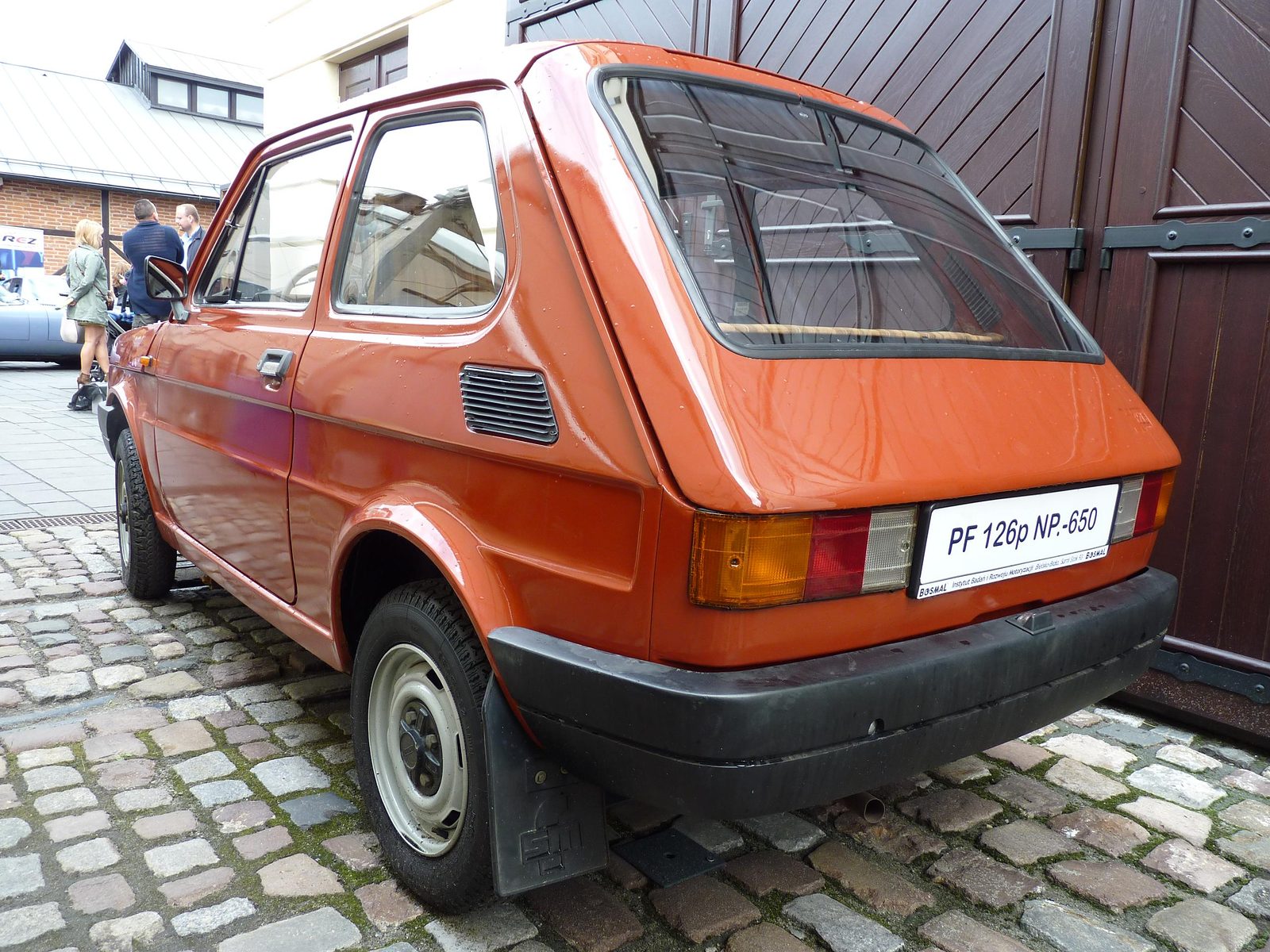
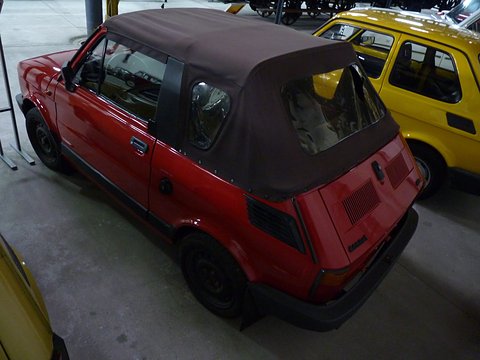
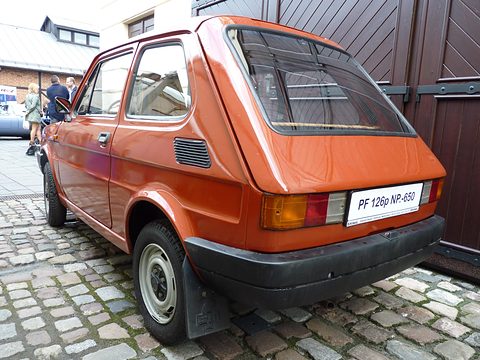
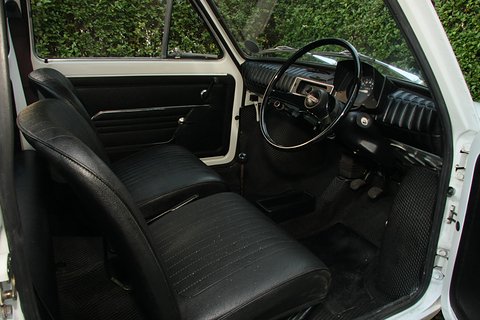
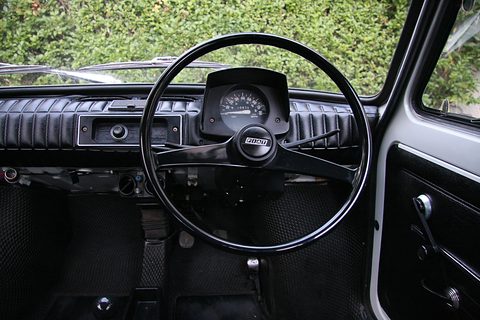
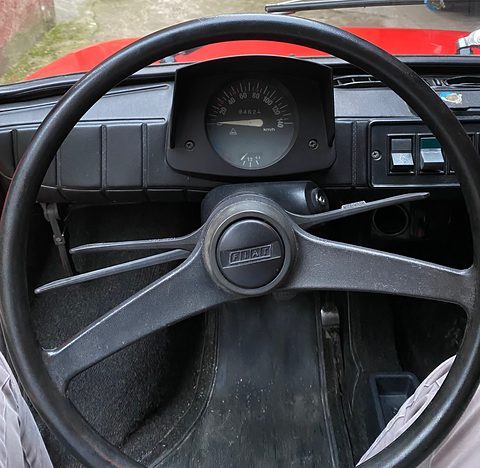
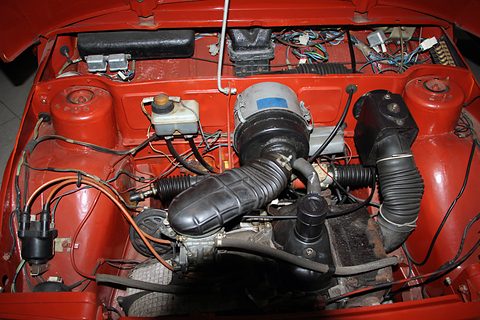
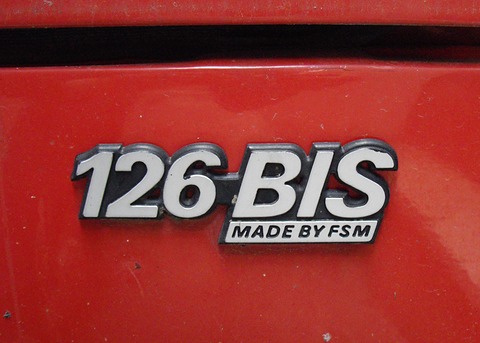
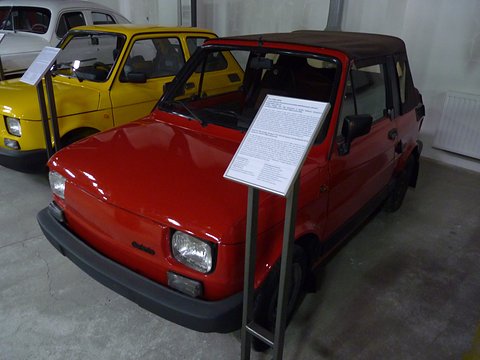
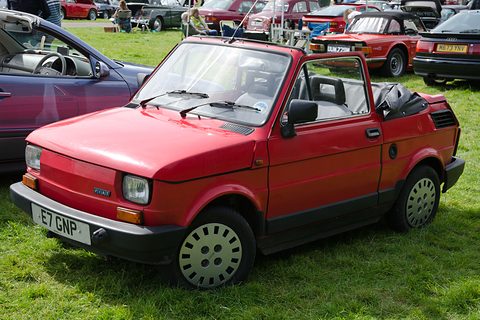
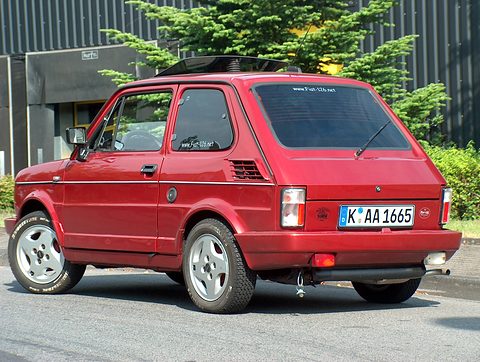
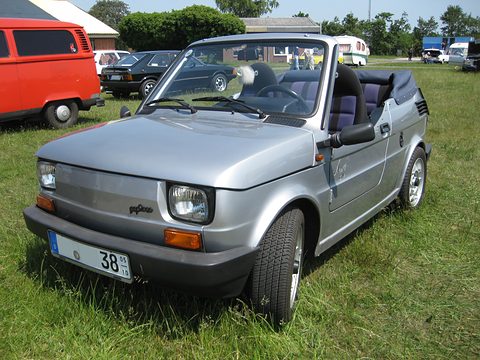
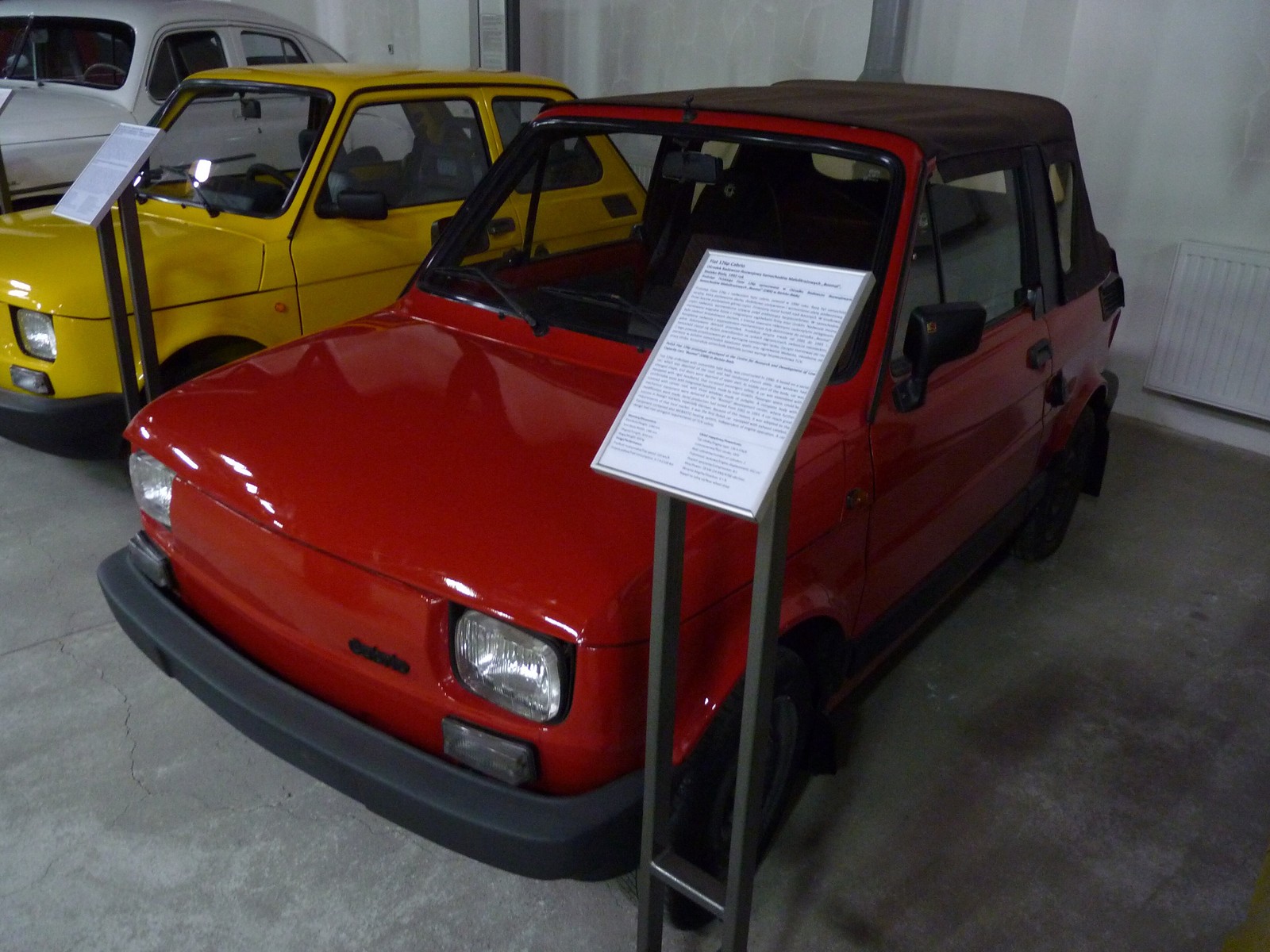
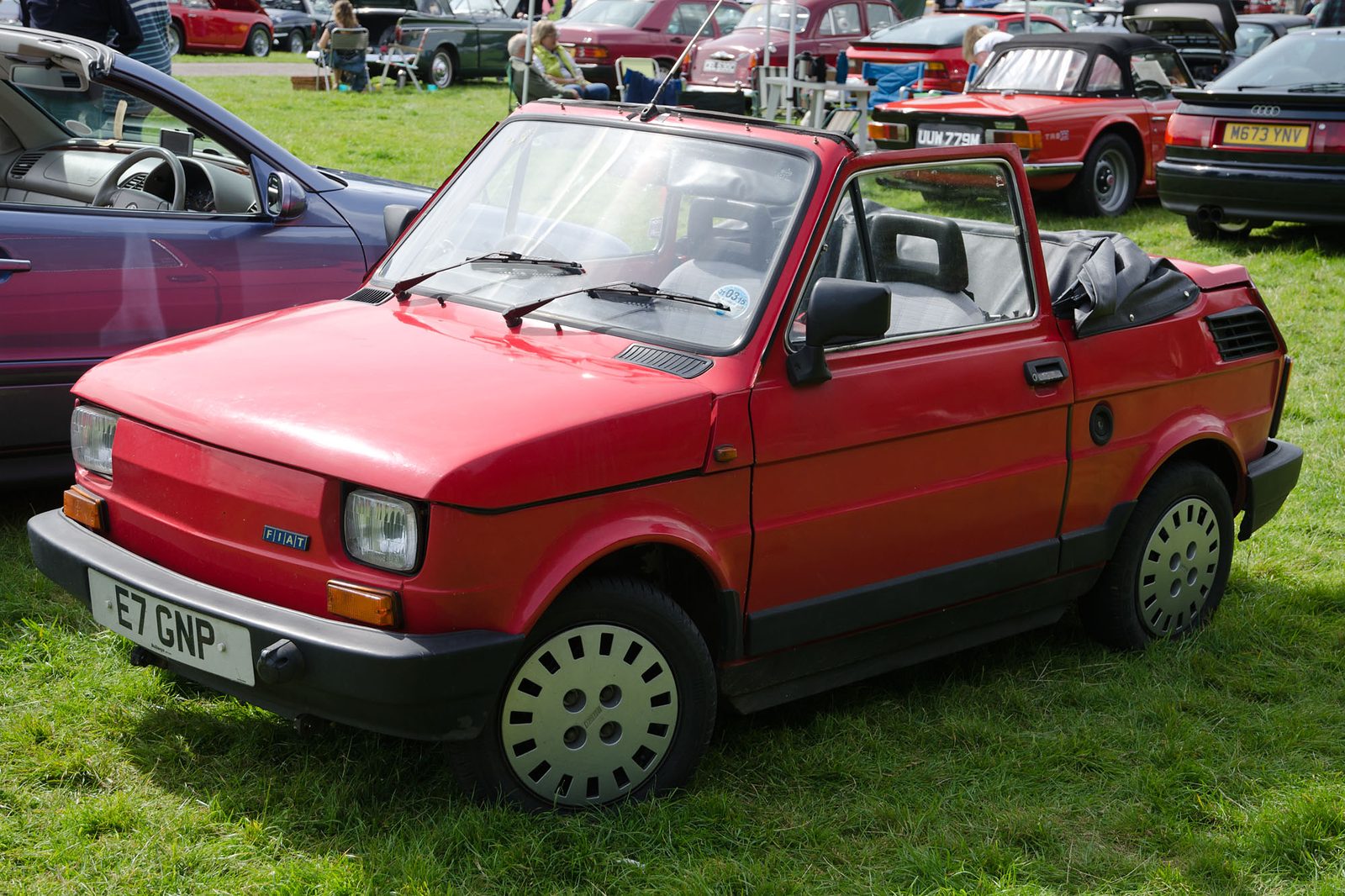
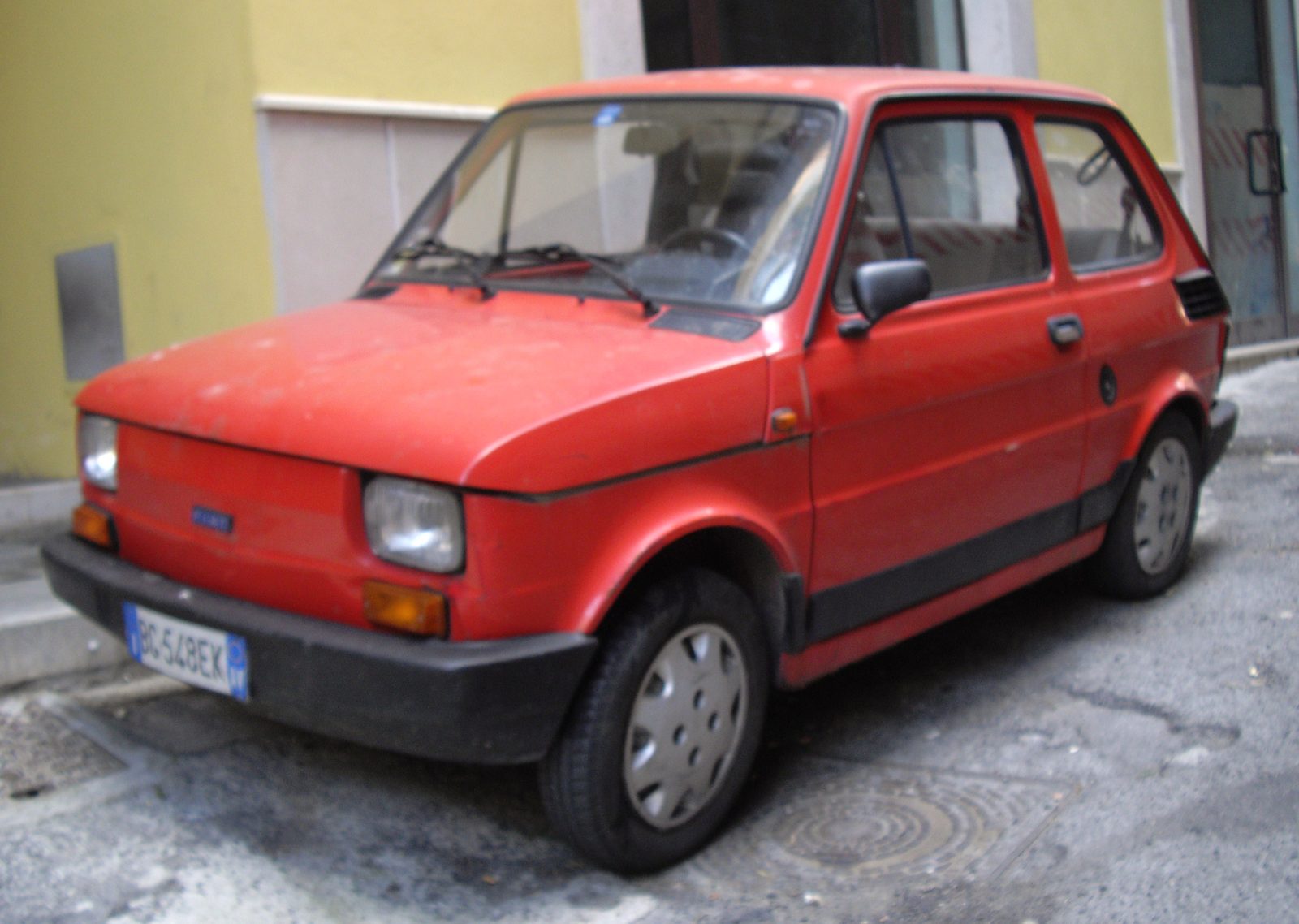
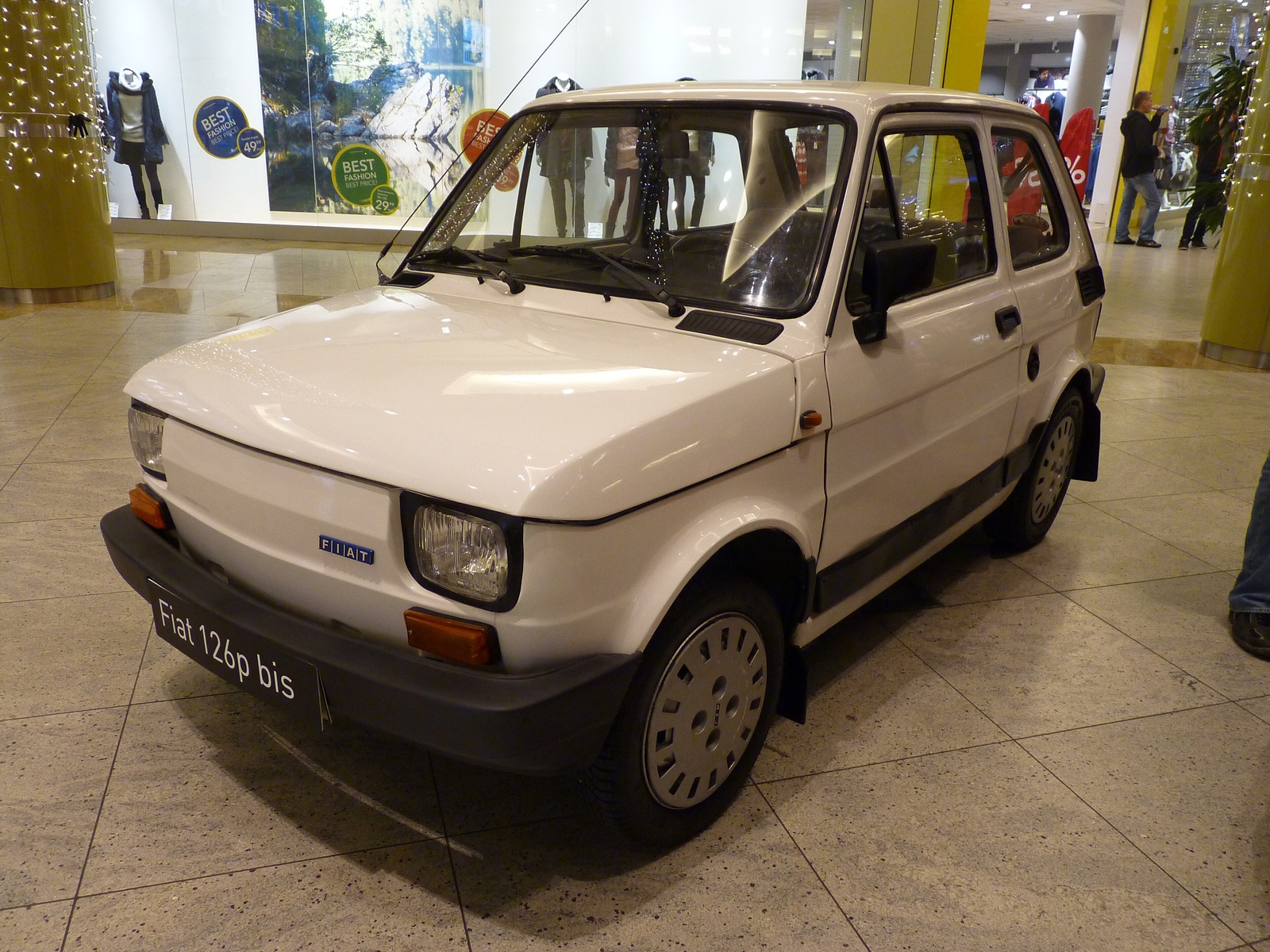
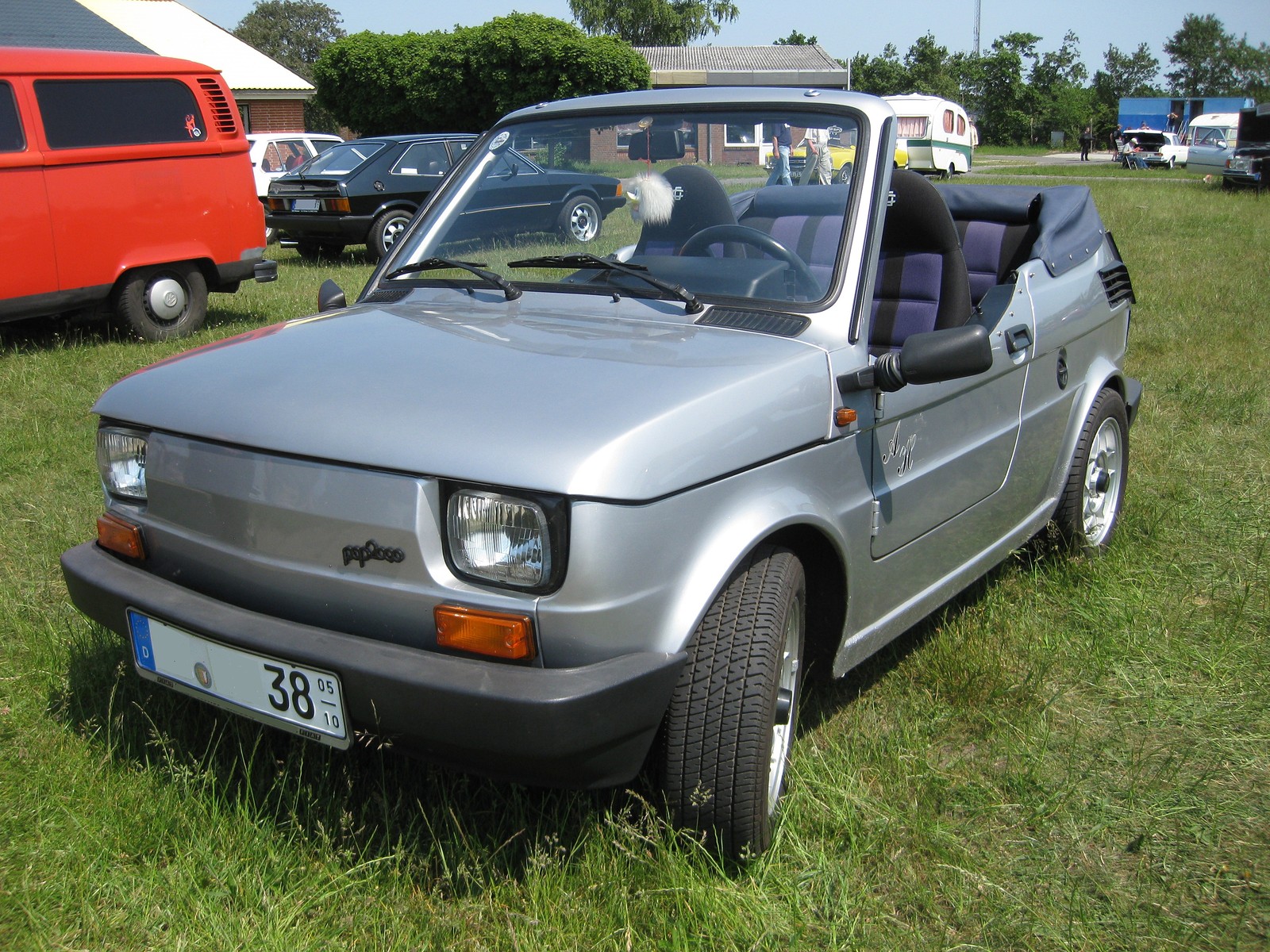
The car changed slowly. The 650 of 1977 came in Standard, S, L and Komfort trims, and from 1978 to 1993 a 650I had hand controls for disabled drivers.source 1 The FL of December 1984 brought plastic bumpers, a new dashboard and, at last, a starter worked by the key instead of a lever between the seats.source 1source 2 The 126 Bis, built at Tychy from April 1987, was the biggest change: more than 800 alterations, largely by Polish engineers, including a hatchback and a water-cooled twin of 703 or 704 cc laid flat under the luggage floor, as Dante Giacosa, one of the designers, had laid the 500’s engine in the Giardiniera.source 1source 3source 2 It tended to overheat, and 190,361 were made before Tychy turned to the Cinquecento in 1991.source 1 The soft-top 126p Cabrio, developed at the Bosmal research centre in Bielsko-Biała, was made from 1991 to 1995; 507 were built, 80 per cent of them for export.source 1

Mały Fiat przetrwa jeszcze tysiąc lat

Big Cyc, “Mały Fiat”, on the album Świat według Kiepskich, 2000. In English: “The small Fiat will last another thousand years.”source 1

Maluch

Fiat bought FSM in 1992 and it became Fiat Auto Poland.source 1 The 3-millionth Polish car was built on 20 July 1993 by Polish Wikipedia’s date, or in May by English Wikipedia’s.source 1source 2 The Cinquecento was meant to replace the 126, but demand kept the old car going at Bielsko-Biała. On 5 September 1994 the 126 el arrived without the “Polski Fiat” name or the “p”, with smoother flanks, one-piece door glass and Cinquecento parts; the Cinquecento’s water-based paint, it turned out, made the ungalvanised body rust faster.source 1 In 1996, at 11,920 zł, it was the cheapest new car in Poland, and with about 55,000 sold, the best-selling one.source 1 From January 1997 its official name was Maluch.source 1source 2

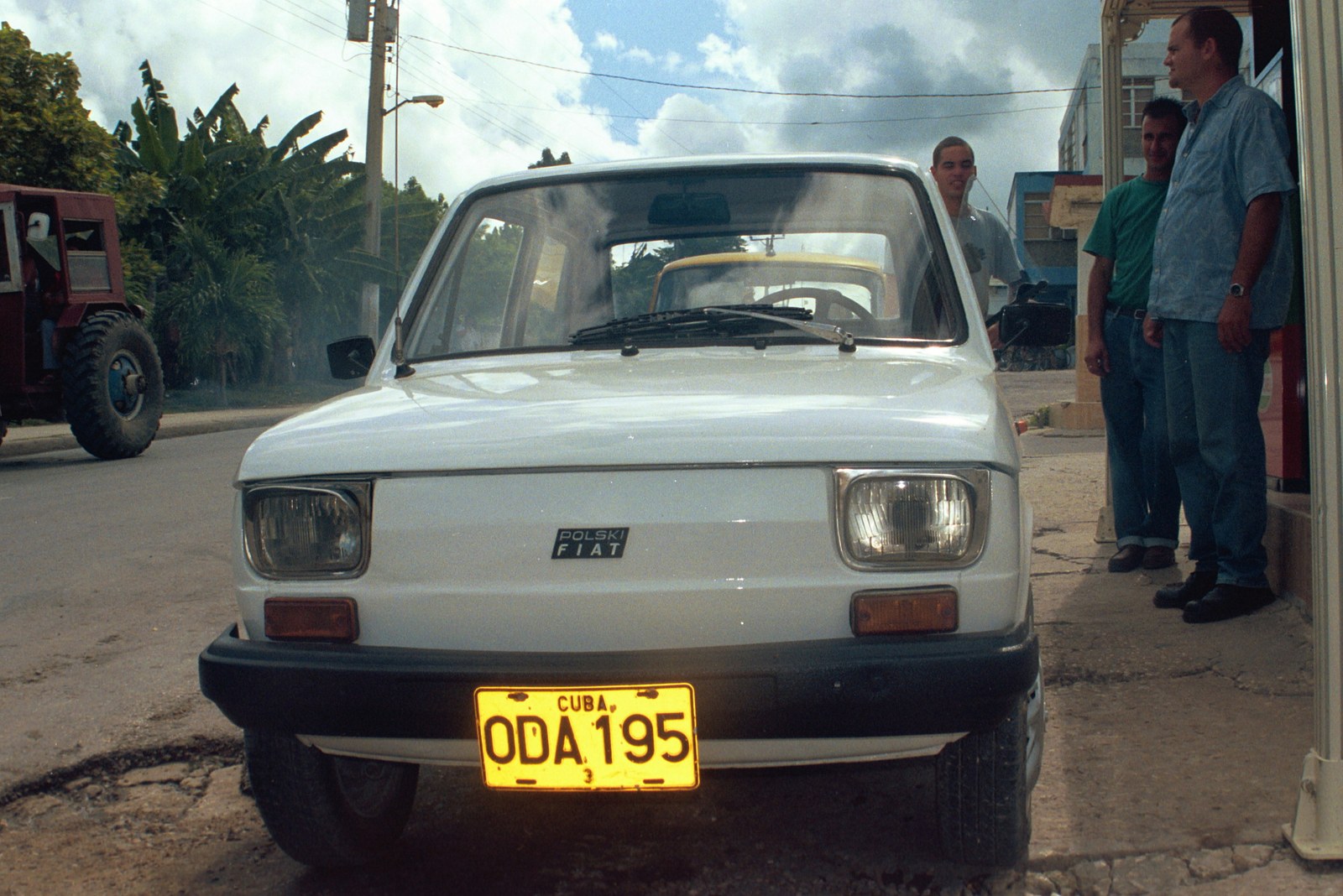
Exports reached 897,316 between 1975 and 1992, to most of Europe, to Cuba, to China, where more than 23,000 went in 1985–⁠89, and to Australia, where it was the FSM Niki.source 1source 4 Production stopped on 22 September 2000, because the body-pressing tools were worn out and replacing them made no sense with sales falling. The last cars were the numbered Happy End series of 1,000, half red and half yellow.source 1source 2 English Wikipedia reports, citing Reuters, that people of Bielsko-Biała gave Tom Hanks a restored Maluch in 2017.source 2

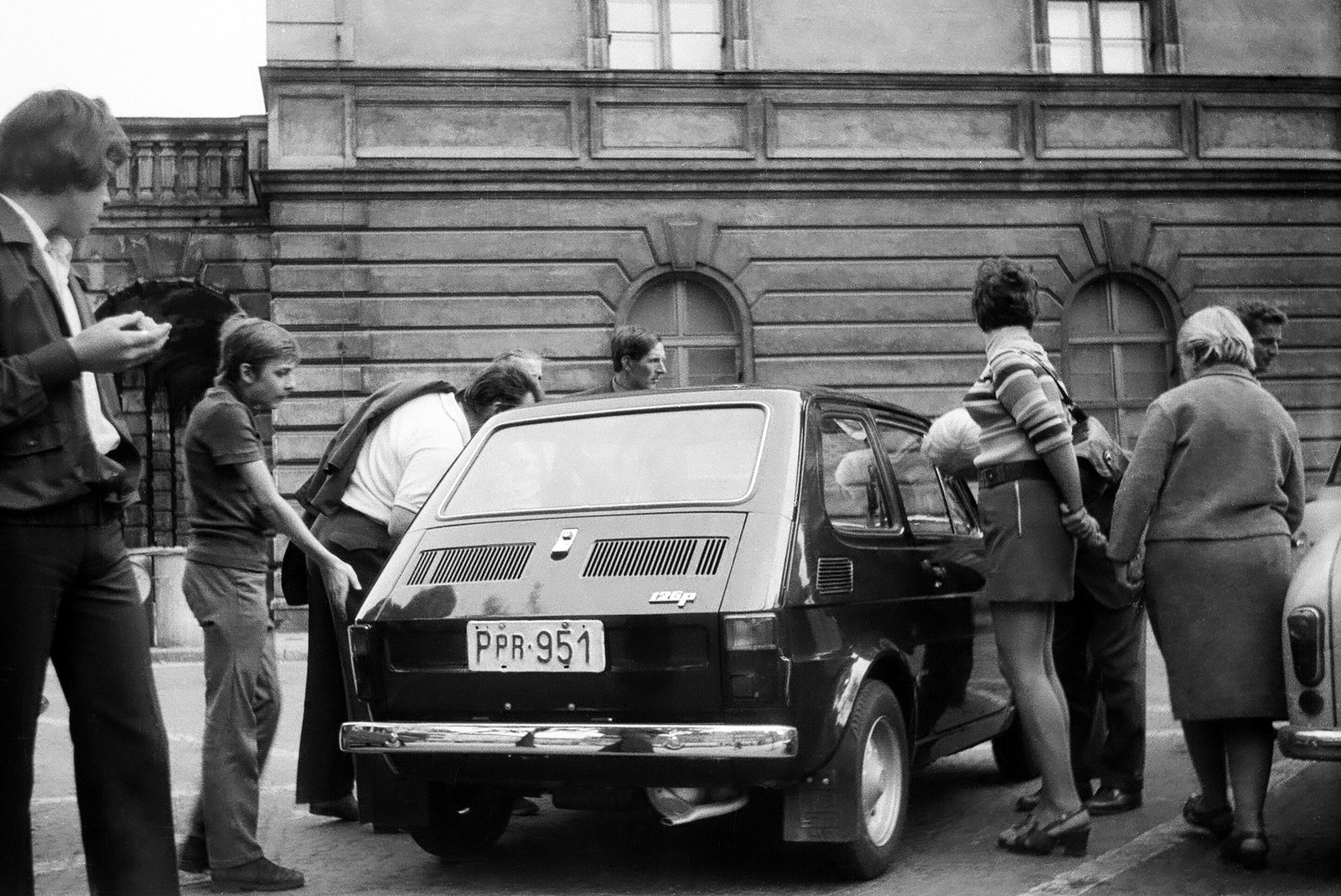
Pictures

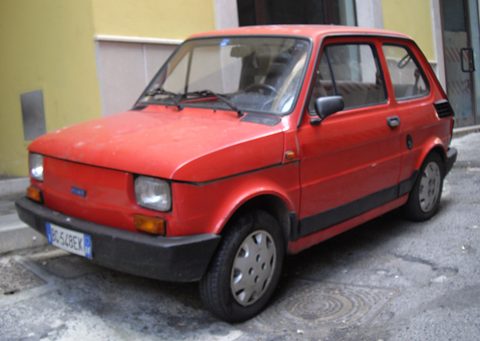
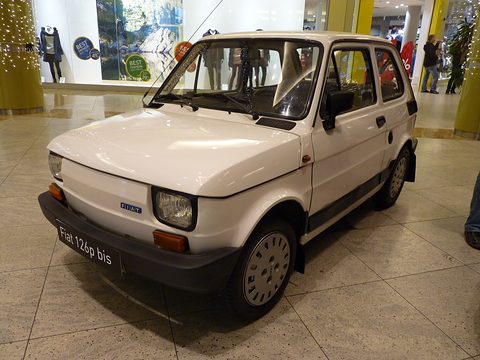
More photographs, old and new

Variants

28 years of one car

The 126 in Italy, Austria and Poland
VariantYearsWhat differsHow many
126 (Italy)1972–⁠76The original: fixed roof or full-length fabric sunroof; 594 cc, 23 CVIn Italy’s 1,352,912
Economica, Personal, Personal 41976–⁠83The Economica the base car; the Personal and Personal 4 with plastic-covered bumpers and side strips, 12-inch wheels, bigger drums; 652 cc from 1977. In Britain the 126 de Ville, in West Germany and Switzerland the BambinoIn Italy’s total
Steyr-Puch 1261973–⁠75Engineless Italian cars finished in Graz with Puch’s 643 cc flat twin, a petrol-burning heater and twin tailpipes2,069
Polski Fiat 126p 600From 1973The Polish car with the 594 cc engineIn Poland’s 3,318,674
126p 6501977–⁠84652 cc; Standard, S, L and Komfort trims, the Komfort 3,129 mm long; the 650E economy engine from 1983In Poland’s total
650I1978–⁠93Hand controls for disabled driversNot found
126p FL1984–⁠94Plastic bumpers, new dashboard, a key starter in place of the pull leverIn Poland’s total
126 Bis1987–⁠91Hatchback, with a water-cooled twin laid flat under the load floor190,361
126p Cabrio1991–⁠95Bosmal’s soft top, with a hoop behind the doors507
126 el, elx and Maluch1994–⁠2000Smooth flanks, one-piece door glass, Cinquecento parts; a catalyst from December 1996In Poland’s total
Happy End2000The numbered farewell series, 500 red and 500 yellow1,000

Specification

The Italian car of 1973 unless noted

Engine and drive

Engine and drive
EngineVertical in-line twin, air-cooled; overhead valves by pushrods from a chain-driven side camshaft; alloy head and crankcasesource 3
Capacity594 cc (73.5 × 70 mm), compression 7.5:1source 1source 3
Power23 CV (DIN) at 4,800 rpm, 16.9 kWsource 1source 3
Torque4 kgm at 3,400 rpmsource 340 Nm in Polish Wikipedia; 39 Nm in auto motor und sport, 1977
CarburettorWeber 28 IMBsource 1source 3
GearboxFour speeds, synchromesh on second to fourth; final drive 4.87source 1
Later engines652 cc (77 × 70 mm), 24 KM at 4,500 rpm; the Bis 703 or 704 cc (80 × 70 mm), water-cooledsource 1source 3source 2auto motor und sport said the 652 cc engine kept 23 PS

Body and chassis

Body and chassis
BodySteel two-door saloon, fixed roof or full-length fabric sunroofsource 3source 4
Front suspensionIndependent, transverse leaf spring and wishbones, telescopic damperssource 1source 3
Rear suspensionIndependent, semi-trailing arms and coil springssource 1source 3
SteeringWorm and sector, 2.9 turns lock to locksource 1Three turns, by Motor Sport’s count
BrakesHydraulic drums all round, dual circuitsource 1
Tyres135 SR 12 on 4.00 × 12 rimssource 1source 3
Dimensions

Dimensions
Length3,054 mmsource 1source 23,050 mm in Quattroruote’s test; 3,109 mm from the FL, 3,129 mm for the 650 Komfort
Width1,377 mmsource 11,378 mm in English Wikipedia; 1,370 mm in the test
Height1,335 mmsource 11,302 mm in English Wikipedia, 1,300 mm in Italian Wikipedia
Wheelbase1,840 mmsource 1source 3source 2
Kerb weight580 kgsource 1source 3source 5
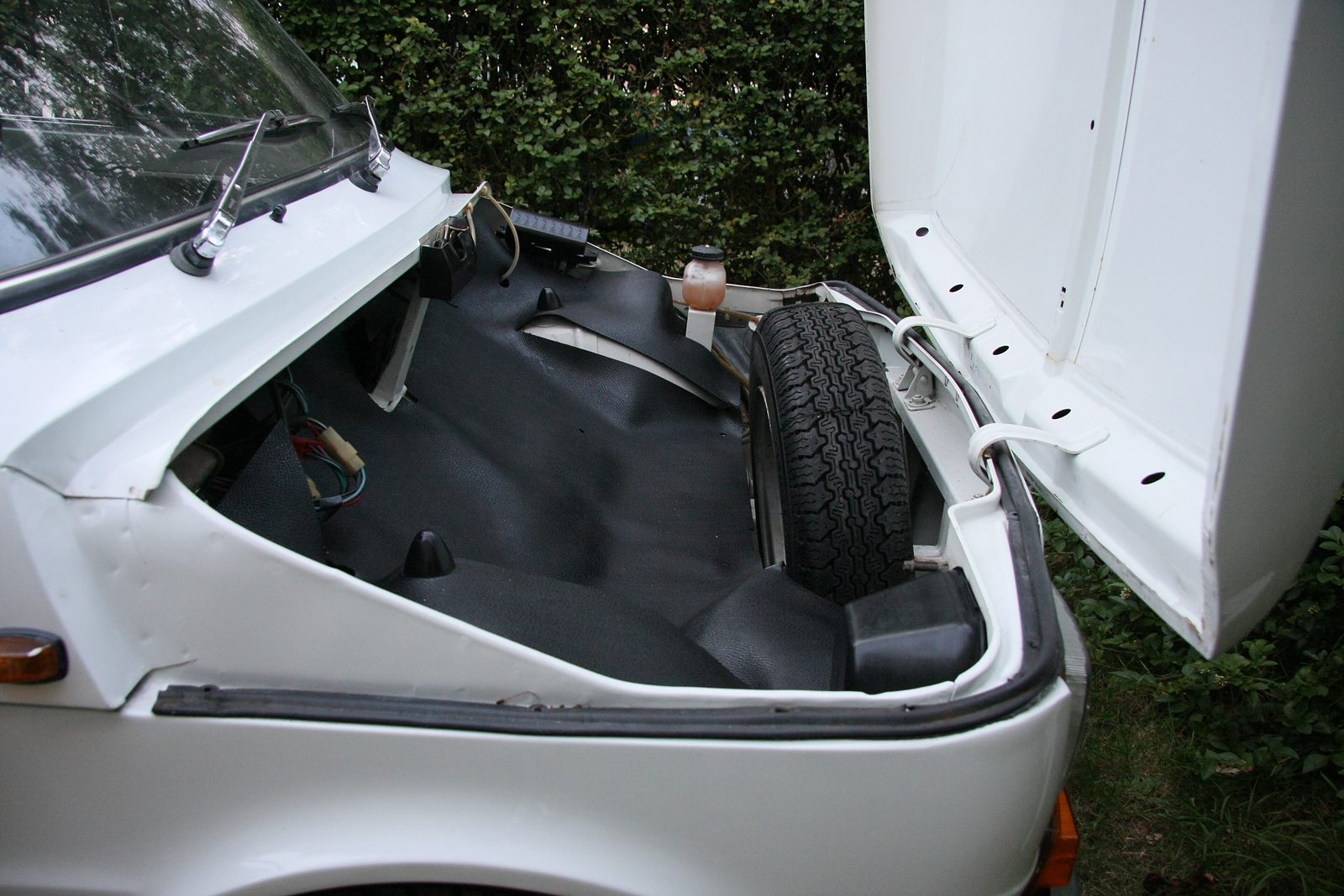
Fuel tank21 litres with a 5-litre reserve, under the rear seatsource 1source 3

Performance and running

Performance and running
Top speed110.795 km/h (69 mph), measured by Quattroruote, February 1973source 3105–108.4 km/h in Polish Wikipedia
Standing kilometre47.297 secondssource 3
Consumption6 litres per 100 km on Quattroruote’s testsource 345.6–46.4 mpg on Motor Sport’s test; nearer 50 mpg for an average driver, it guessed
Price new69,000 zł (Poland, 1973); £715 (Britain, late 1973); DM 5,890 (West Germany, 1976)source 1source 2source 5

How many were built?

Every figure, with its source

4,671,586 builtItaly’s 1,352,912 and Poland’s 3,318,674 together, the total Polish Wikipedia gives from Bukowski, and the figure we state. English Wikipedia adds the 2,069 Austrian cars to reach 4,673,655. But the Austrian cars were complete Italian cars delivered without engines and finished in Graz, so they were very likely counted in Italy’s total already. No source says so outright: that reading is ours.

  1. 4,673,655Italy, Poland and Austria added togetherOne source

    English Wikipedia; Italian Wikipedia lists the same three figuressource 2source 3

  2. 4,671,586Italy and Poland togetherOne source

    Polish Wikipedia, citing Bukowski’s Samochody PRL-u (2018)source 1

  3. 4,600,000a rounded world totalUnconfirmed

    Italian Wikipedia’s infobox, citing the Corriere dello Sport, 2020source 3

  4. 3,318,674built in Poland, 1973–⁠2000: 1,152,325 at Bielsko-Biała and 2,166,349 at Tychy, the 190,361 Bis includedTwo sources agree

    Polish Wikipedia, citing Bukowski; Italian Wikipedia, citing La Repubblica, 24 August 2000source 1source 3

  5. 1,352,912built in Italy, 1972 to 1979 or 1980Two sources agree

    Polish and Italian Wikipedia and the British Fiat 126 Clubsource 1source 3source 4

  6. 2,069Steyr-Puch 126s finished in Graz, 1973–⁠75Two sources agree

    Polish Wikipedia, citing Sowa (2008), and English Wikipedia, citing steyrpuch.atsource 1source 2

  7. 2,009Steyr-Puch 126s sold in Austria: 125 in 1973, 1,295 in 1974, 589 in 1975One source

    The Austrian Steyr-Puch clubsource 6

  • Two sources agreetwo good sources give the figure
  • One sourcea good source, alone
  • Unconfirmeda lead only, not yet checked

Famous for

Three points

  1. Poland’s people’s car

    Bought through savings-bank advance payments and years-long waiting lists, it put Polish families on the road.source 1source 2

  2. A nickname made official

    From January 1997 the factory called its car by the name everyone used: Maluch.source 1source 2

  3. 28 years

    One generation from 1972 to 2000, the 26th-longest such run by Autocar’s 2020 count.source 2

Racing and records

Rallies of the 126p

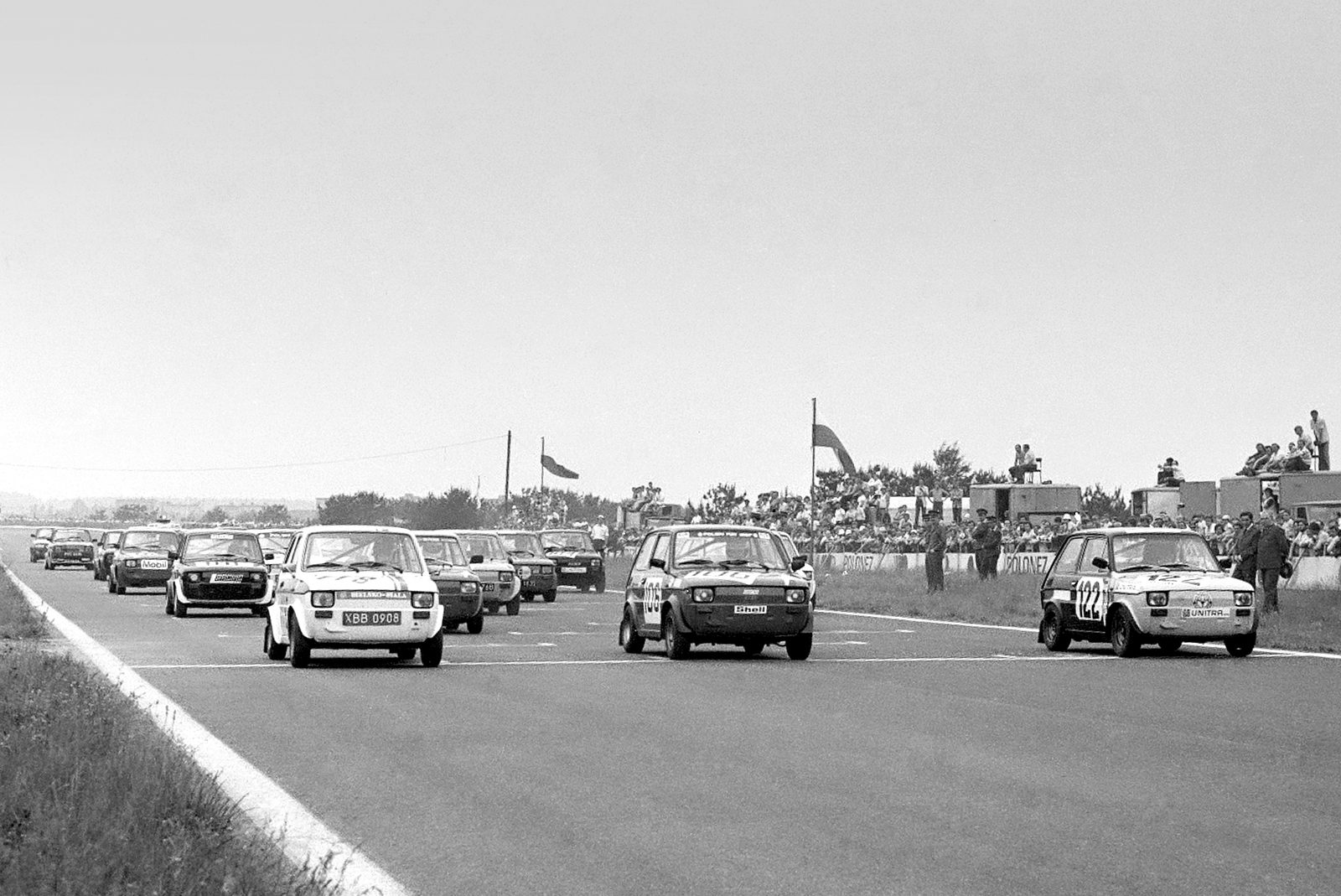
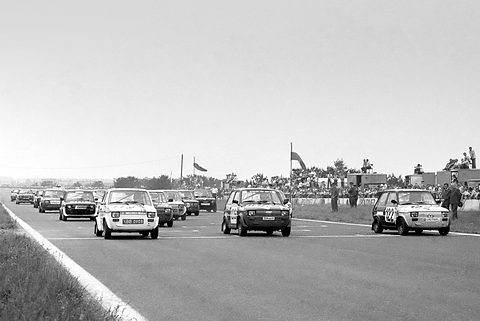
FSM’s research centre set up a motor-sport department in May 1975, and the 126p won FIA Group 1 homologation in January 1976; the department closed on 1 January 1990 for want of money (more in racing and rallying).source 1

1975
Sobiesław Zasada and Longin Bielak finished the Monte Carlo Rally in a 126p, running outside the classification.source 1
1982
Janusz Szerla third overall in the Polish rally championship, ahead of Renault 5s and Volkswagen Golfs.source 1
1984
Szerla and Krzysztof Janarek third in the class up to 1,300 cc of the Rallye Saarland, a European championship round.source 1
1989
Krzysztof Koczur and Janarek second in the Group A class up to 1,300 cc of the Rallye Deutschland, in a 126 Bis.source 1

On screen

Confirmed appearances only

Survivors and collecting

Today

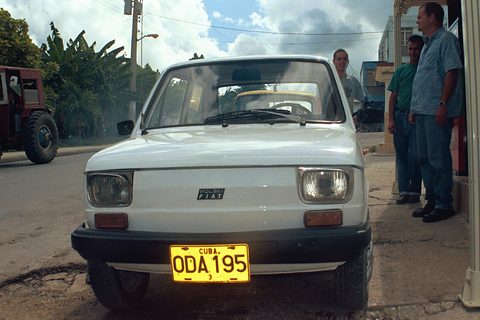
No estimate of survivors has been found. The car is still common in Poland and in Cuba, where about 10,000 were registered in 2016, and Cuba’s oldest motoring club, Amigos del Motor, named it its car of 2016.source 1source 2

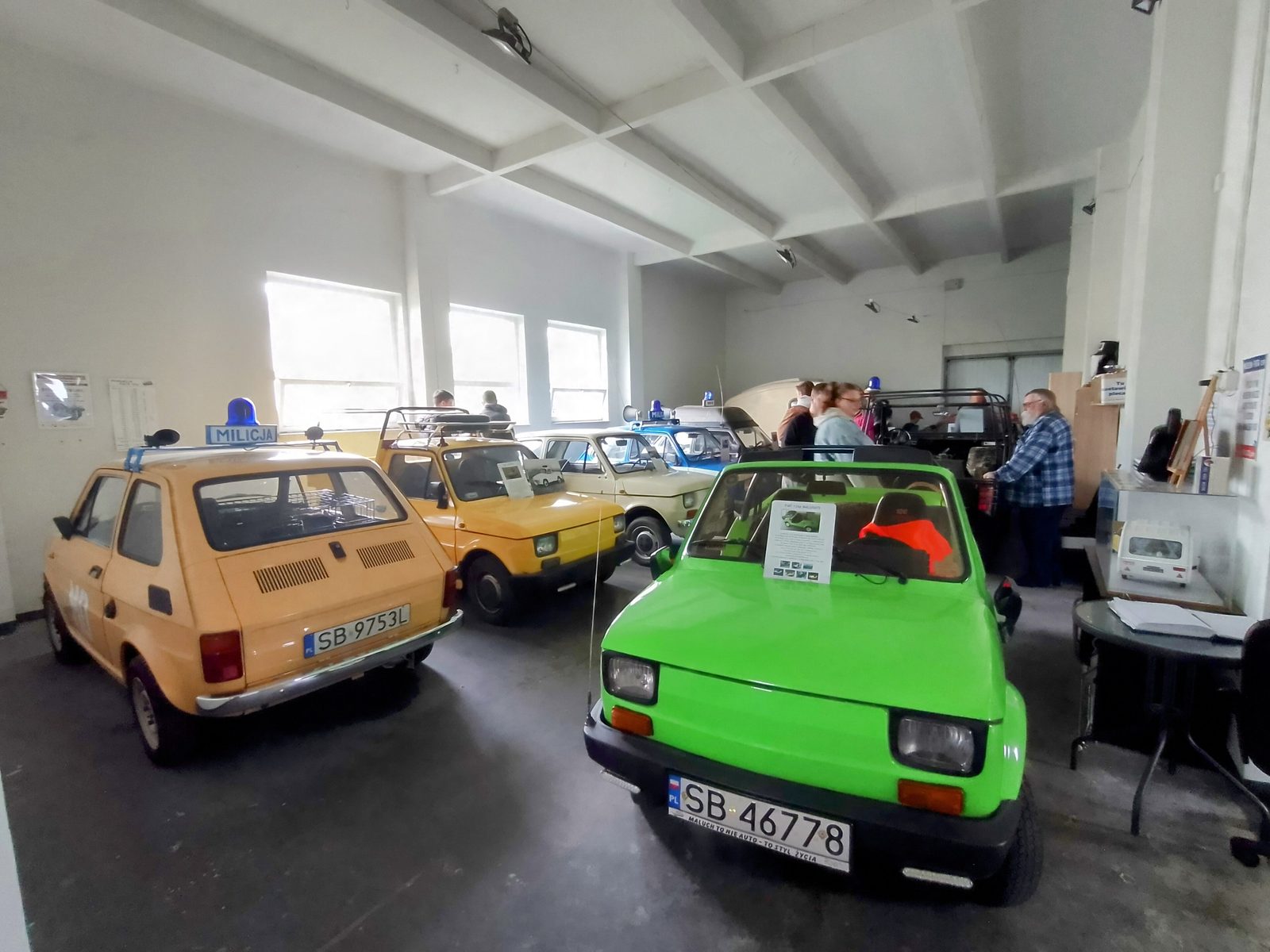
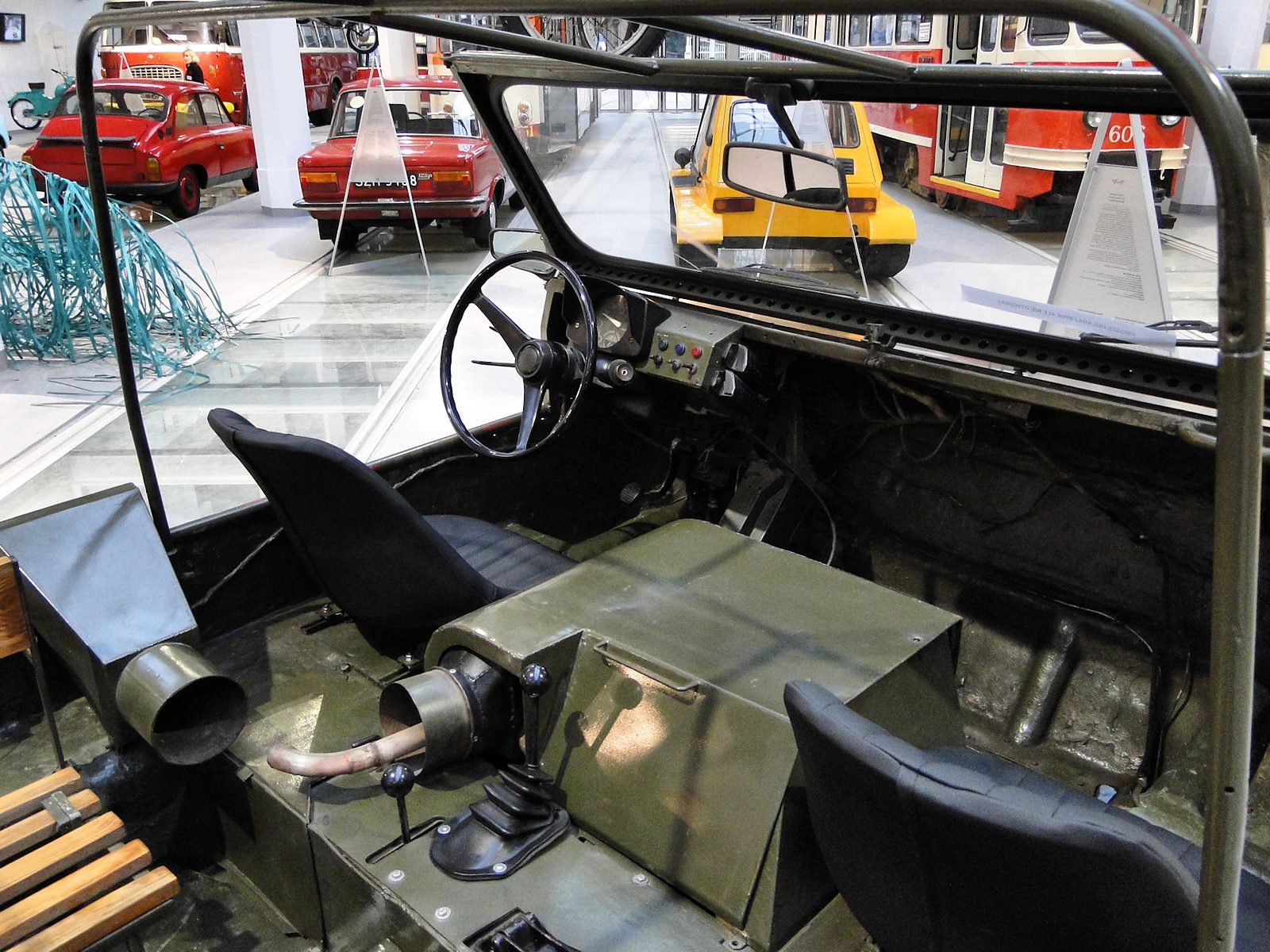
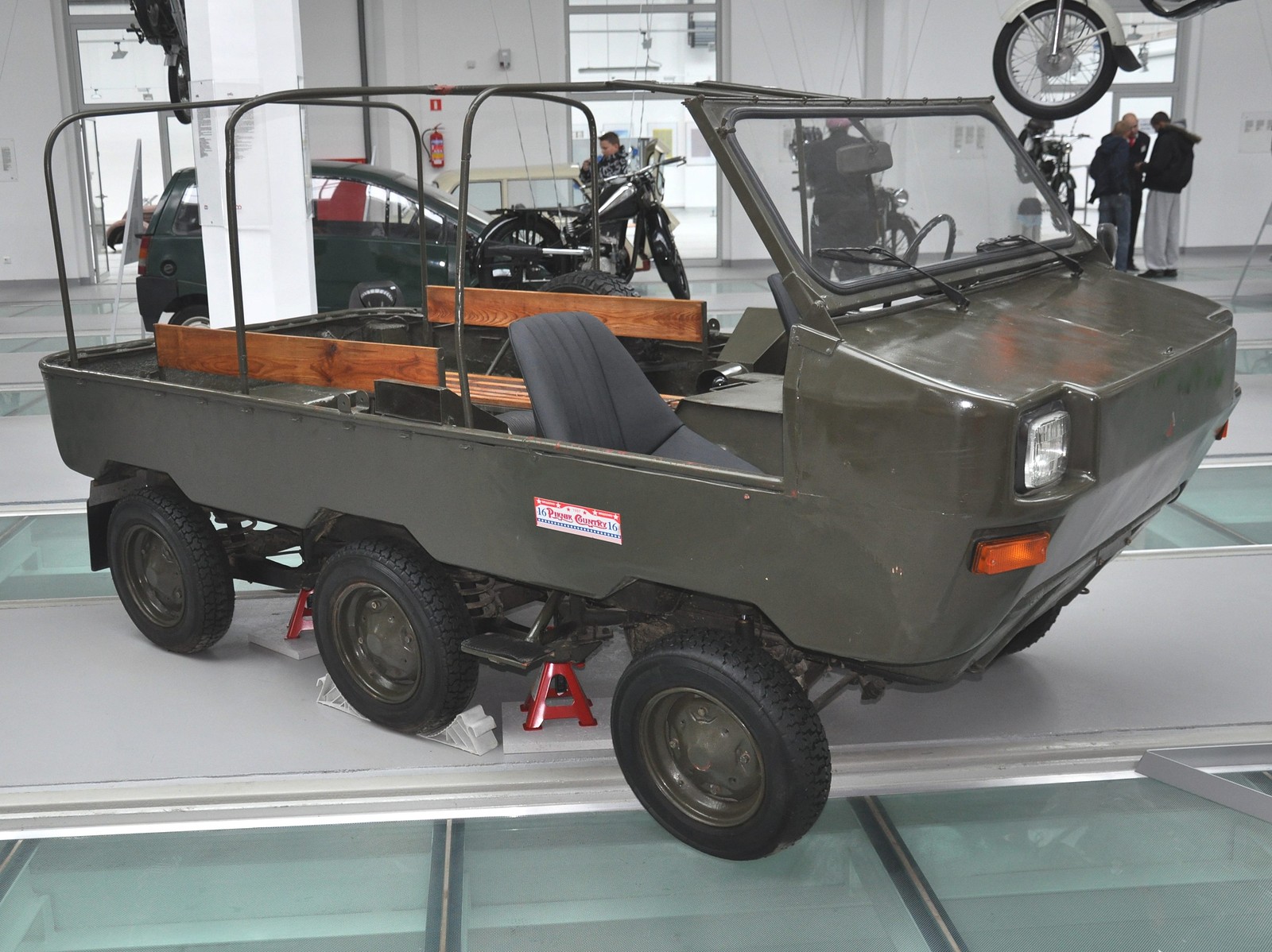
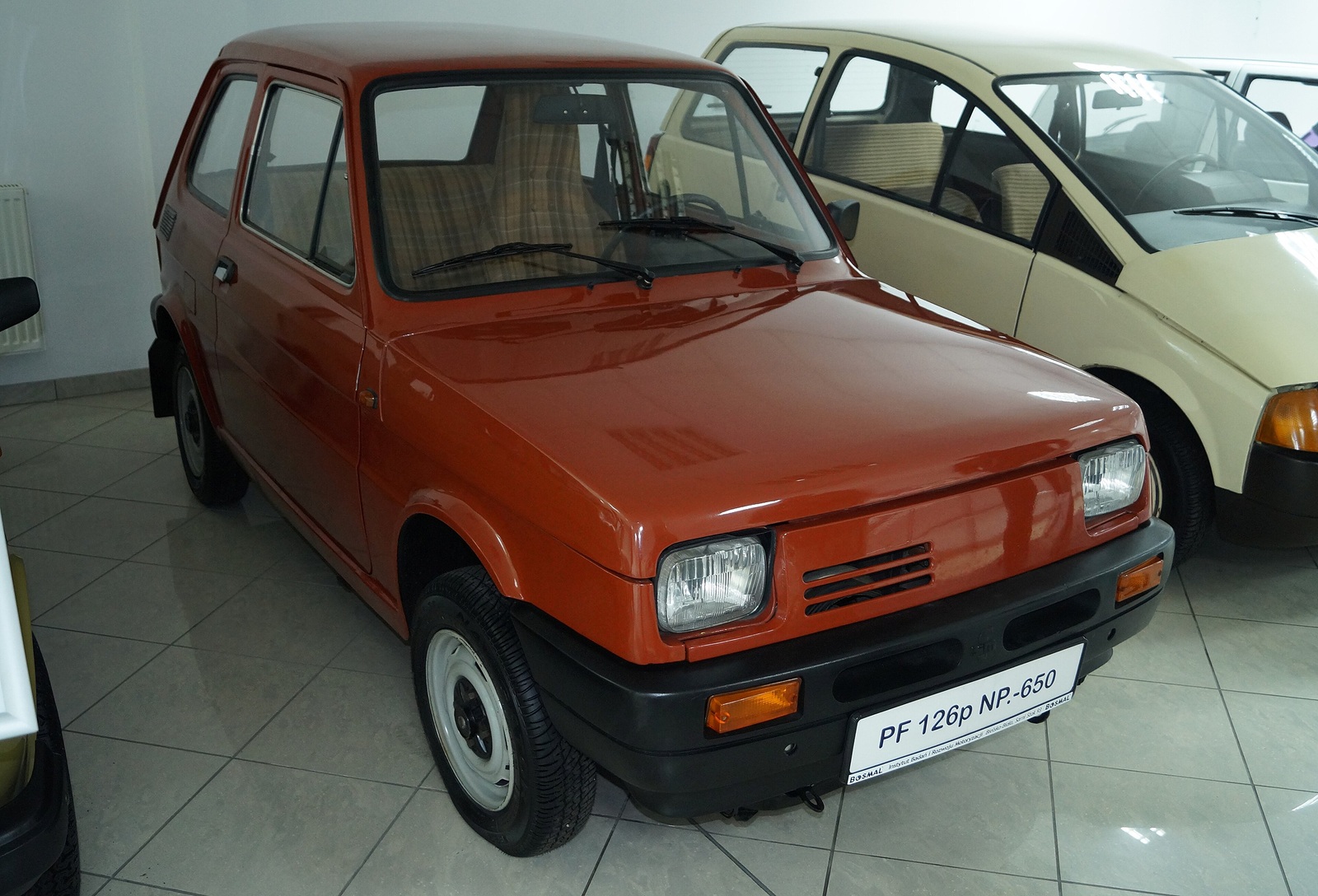
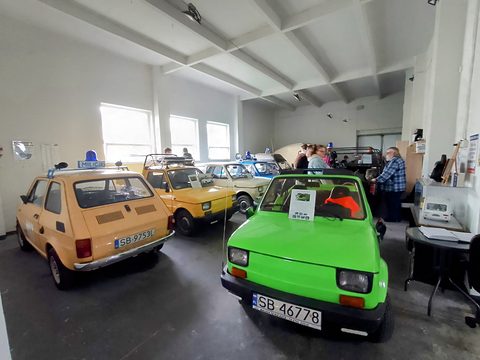
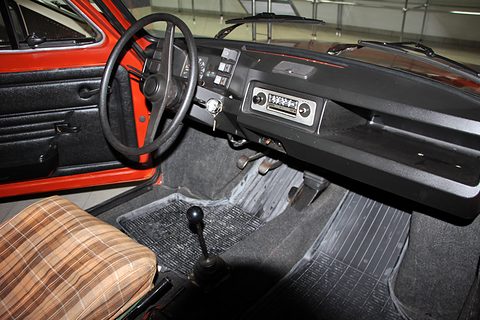
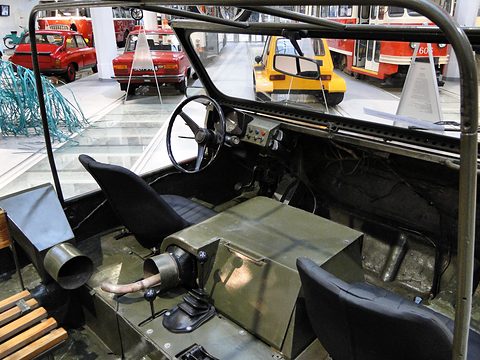
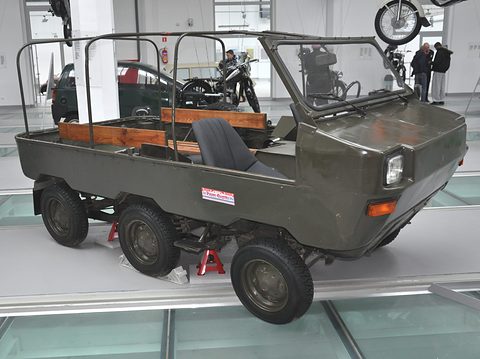
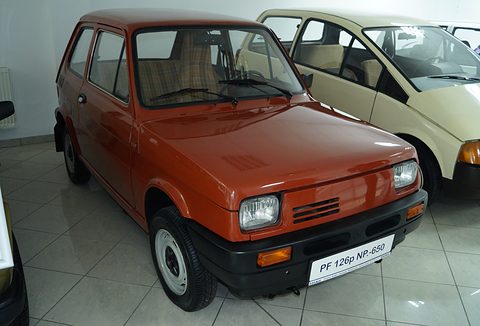
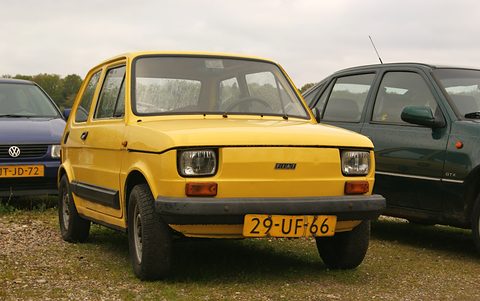
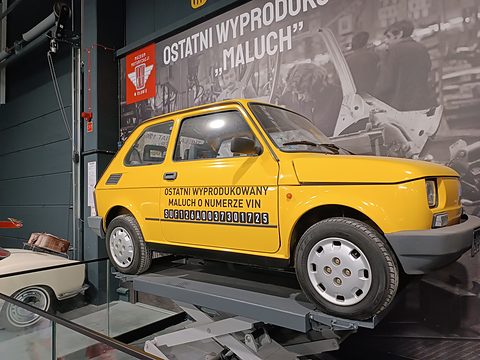
The very last car, a yellow Happy End, is in the Wena Motoring Museum at Oława. Another yellow Happy End, no. 0979, never used, is in the Museum of Engineering and Technology in Kraków, which also shows a 126p Cabrio and the Kombi and front-wheel-drive NP prototypes. Two oddities built from 126p parts, the six-wheeled amphibious LPT and the tracked Wszędołaz, are in the Museum of Technology and Transport at Szczecin.source 1 Bosmal will certify a 126p Cabrio as original on request.source 1 In Britain the Fiat 126 Club was founded about 2005.source 4 No major auction house’s sale of one has been found.

Yellow small two-door car on a raised lift with black lettering on its door, a large black-and-white factory mural behind.
The last Maluch built, a yellow Happy End car of 2000, at the Wena Motoring Museum, Oława, in 2024.Photo: Yurek88, CC BY 4.0, via Wikimedia Commons

Sources

Numbered as in the text

Most of the Polish history rests on one source, Polish Wikipedia, which draws on Polish books (Podbielski 2011, Kuc 2019, Bukowski 2018, Sowa 2008) not consulted here. The full verdicts of Quattroruote and Autocar in 1973 were not read, and no auction results were found. Sources are given as plain text; the links are on the Credits page.

  1. Polish Wikipedia, Fiat 126, read in full on 7 October 2026. It cites Zdzisław Podbielski, Polski Fiat 126p, czyli Maluch (2011); Marek Kuc, Samochody ze Śląska 1971–⁠2018 (2019); Włodzimierz Bukowski, Samochody PRL-u (2018); Aleksander Sowa, Fiat 126 Mały Wielki Samochód (2008); and Szelichowski, Sto lat polskiej motoryzacji (2003).
  2. English Wikipedia, Fiat 126, read in full. It cites auto motor und sport 24/1977, Autocar of 23 January 2020, Reuters of 31 January 2017, Deutsche Welle of 11 August 2016 and Polityka (2004).
  3. Italian Wikipedia, Fiat 126, read in full. It cites l’Unità (1972–⁠77), La Repubblica (1986–⁠2000), the Quattroruote road test of February 1973 and Alessandro Sannia, Il grande libro delle piccole Fiat (2008).
  4. The Fiat 126 Club (UK), “Fiat 126 Key Dates Time Line”, read in full from the copy archived on 23 January 2022.
  5. W.B., “The Fiat 126”, road test, Motor Sport, January 1974, p. 44.
  6. Steyr-Puch-Freunde Oberkärnten, “Puch Kleinwagen: Puch 126”, the Austrian club’s page, read in full.