Kei cars
For 25 years almost all of Japan’s light cars were a shade under 3 metres long, because the law said 3.0 m and 360 cc and not a millimetre more. Inside that box Japan built its first people’s car, and then fought a horsepower war.
A box drawn in law
Line up Japan’s kei cars of 1958 to 1975 and they measure almost the same: 2,980 mm (117 in), 2,990 mm, 2,995 mm. The Subaru 360, the Honda N360, the Suzuki Fronte and almost all their rivals are a whisker under 3 metres, because the law allowed 3.0 m and not a millimetre more.source 1source 2 They were kei jidōsha, “light motor vehicles”, and the class still exists.
The industry’s own body describes the kei car as a class set apart in the Road Transport Vehicle Act from ordinary and small cars, and defends it as the smallest size that can meet the safety and environmental rules asked of a four-wheeler.source 1 Kei cars pay less tax: a private kei passenger car bought new from April 2015 pays ¥10,800 a year in light-vehicle tax, against ¥25,000 for a car of up to a litre. They are inspected, but not registered as property, so a buyer needs no registered seal and the number plate carries none.source 1 And they sell best where a car is a necessity: by the figures the industry body cites, they make up 53.0 per cent of new-car sales in Nagasaki against 19.7 per cent in Tokyo, and 65 per cent of kei passenger-car users are women and 43 per cent are 60 or over.source 1
Drawing the box, 1949–1955
The class was created by a Ministry of Transport ordinance, no. 36, in July 1949; the industry body dates it to 8 July. Its first limits were 2.80 m long, 1.00 m wide and 2.00 m high, with an engine of 150 cc as a four-stroke or 100 cc as a two-stroke.source 1source 2 That suited motorcycles and scooters, and no useful four-wheeler fitted it. The box was enlarged on 26 July 1950 to 3.00 × 1.30 × 2.00 m, with separate classes for two, three and four wheels, and on 16 August 1951 the engine limit went to 360 cc for a four-stroke and 240 cc for a two-stroke.source 1source 2 From 1952 a separate kei driving licence could be taken at 16.source 2 Two-strokes were allowed the full 360 cc a little later: the industry body gives 1 April 1955 and says four-stroke engines had improved enough for the distinction to go, while Japanese Wikipedia gives October 1954.source 1source 2 Japanese sources also disagree on the four-stroke limit of 1950, 350 cc or 300 cc.
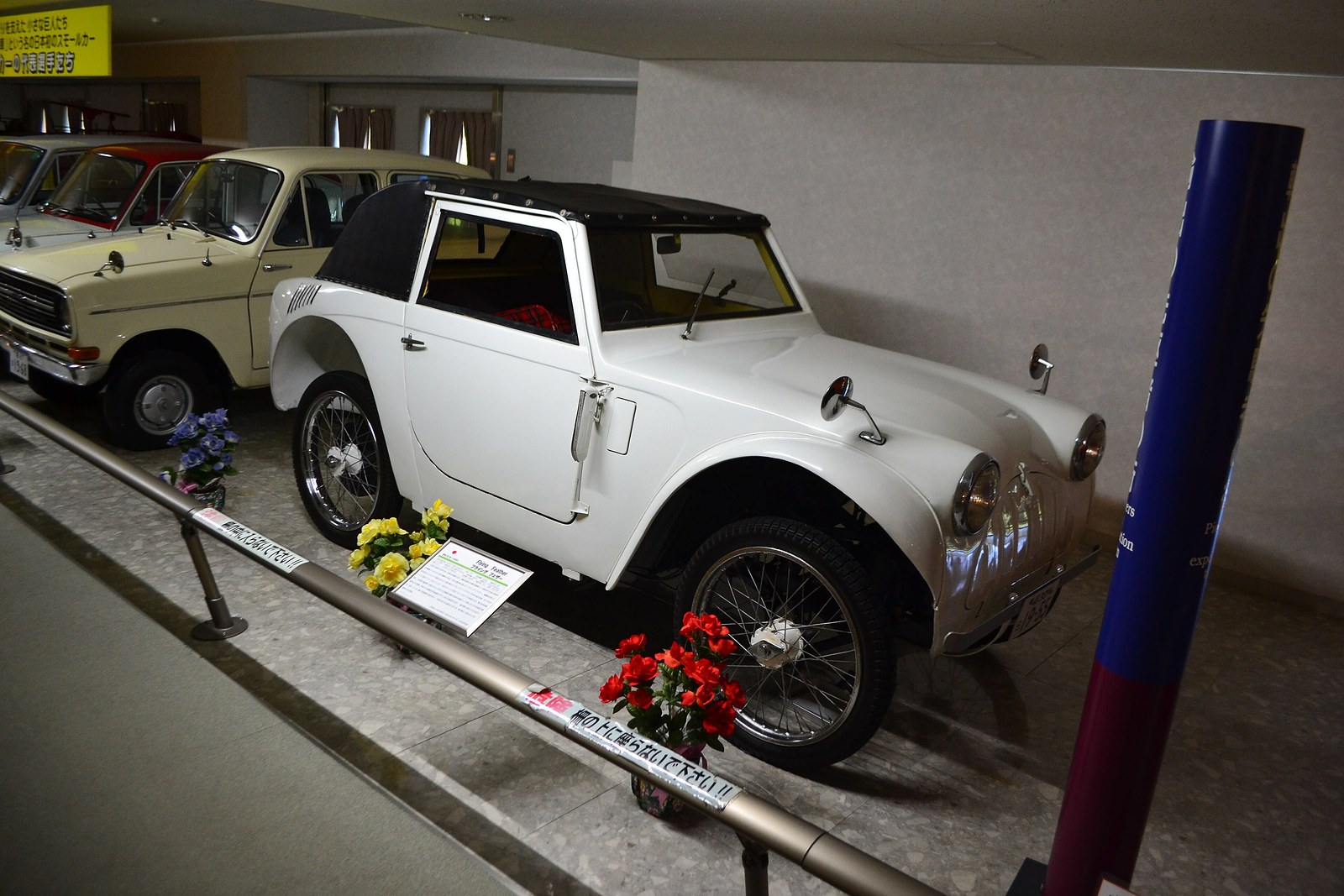
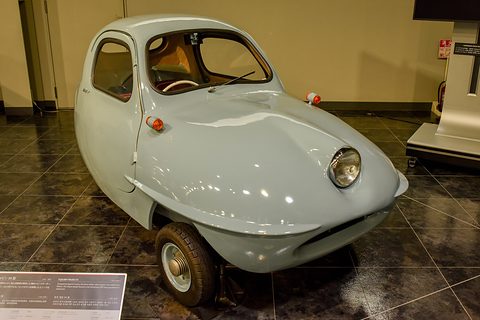
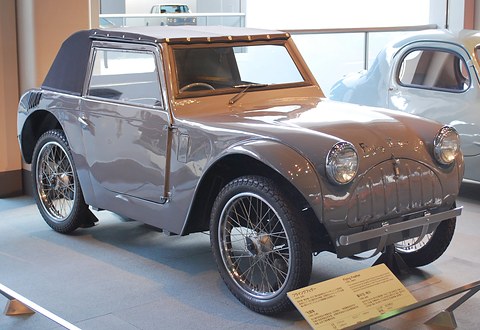
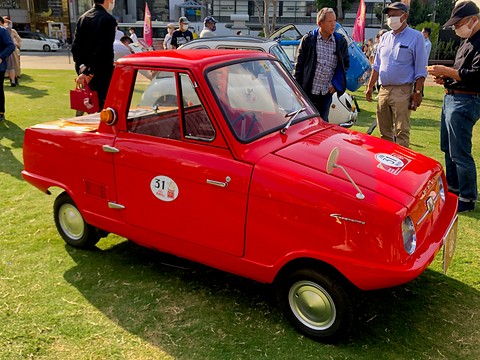
The first cars to try it came from tiny firms. The Auto Sandal of Nagoya, on sale in 1952, was the first four-wheeled kei car to go on sale in Japan. Its engine was an industrial side-valve single of 348–349 cc from a Mitsubishi offshoot, and it was started by a kick-starter mounted outside the body, so the driver started it first and then climbed in. About 200 were built.source 3source 4 The Flying Feather of 1954 began with a remark by Yutaka Katayama, later Nissan’s “Mr K” in America, who had watched gulls over Yokohama harbour before the war and remarked that a small car as light on the road as the gulls were in the air would be a fine thing. Its designer, Ryūichi Tomiya, gave it a 350 cc V-twin, 19-inch motorcycle wheels and no front brakes.source 5 Tomiya’s next car, the Fuji Cabin of 1955, was a glass-fibre three-wheeler of 121–122 cc with a single headlamp in the middle of its nose. Only 85 were built.source 6
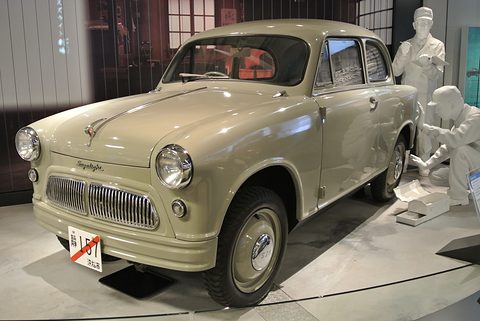
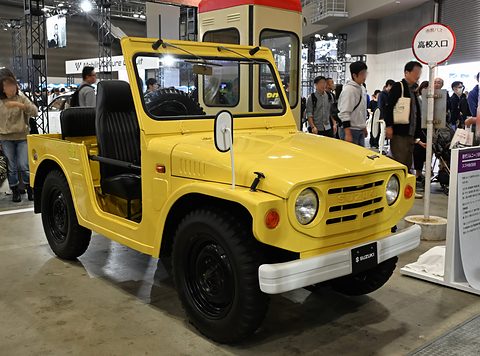
The first serious kei passenger car from a big maker came that October. Suzuki, a loom maker, had bought four foreign cars, a Beetle, a 4CV, a 2CV and a Lloyd LP400, and taken them apart, and it took the Lloyd as its model. The Suzuki Suzulight had a 360 cc two-stroke twin and front-wheel drive.source 7source 8source 9 From January 1958 passenger cars paid a fresh 15 per cent commodity tax, and it killed the Suzulight saloon, and the van, which did not pay it, became the only model.source 7source 9 The gap between a taxed kei passenger car and an untaxed kei van would shape the class for 30 years.
A people’s car, 1958–1966
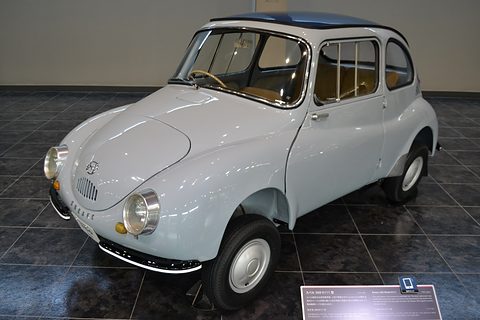
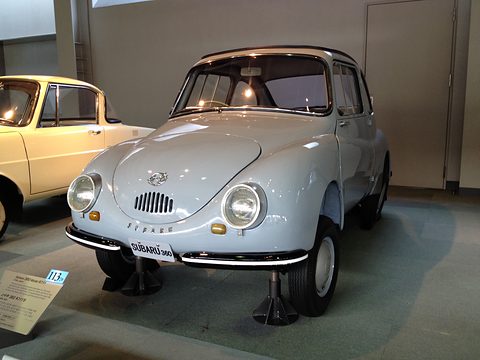
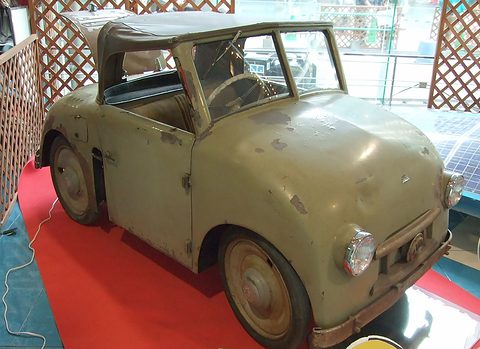
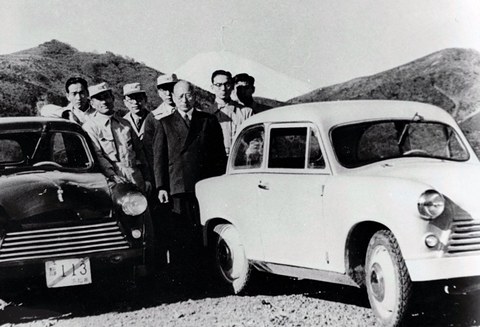
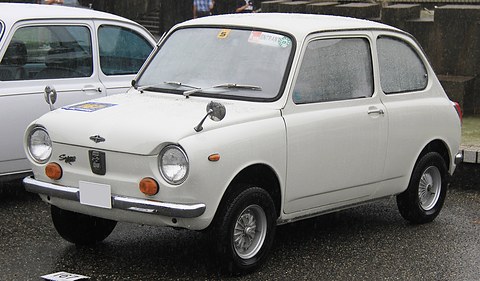
Fuji Heavy Industries grew out of the Nakajima aircraft empire, and the team that Shinroku Momose led on its first car were former aircraft engineers who treated it like an airframe.source 4source 10 The brief was four adults inside 3.0 × 1.3 m and 360 cc, at 350 kg, 15 PS (11 kW) and 80 km/h (50 mph), and the car had to go anywhere a bus route went. The Subaru 360 that went to the press on 3 March 1958 had a monocoque of 0.6 mm steel, a glass-fibre roof, torsion bars all round and new 10-inch tyres from Bridgestone, and it came out at 385 kg and 16 PS (12 kW).source 4source 10 It cost ¥425,000.source 11 Sales grew from 385 in the 1958 model year to 17,595 in 1961.source 10 The usual total for all its versions is 392,016.source 4
Soichiro Honda, then still a motorcycle maker, answered the government’s idea of a small people’s car in his company newsletter.
Even if such a car were compact, we of course can’t make people any more compact than they are.
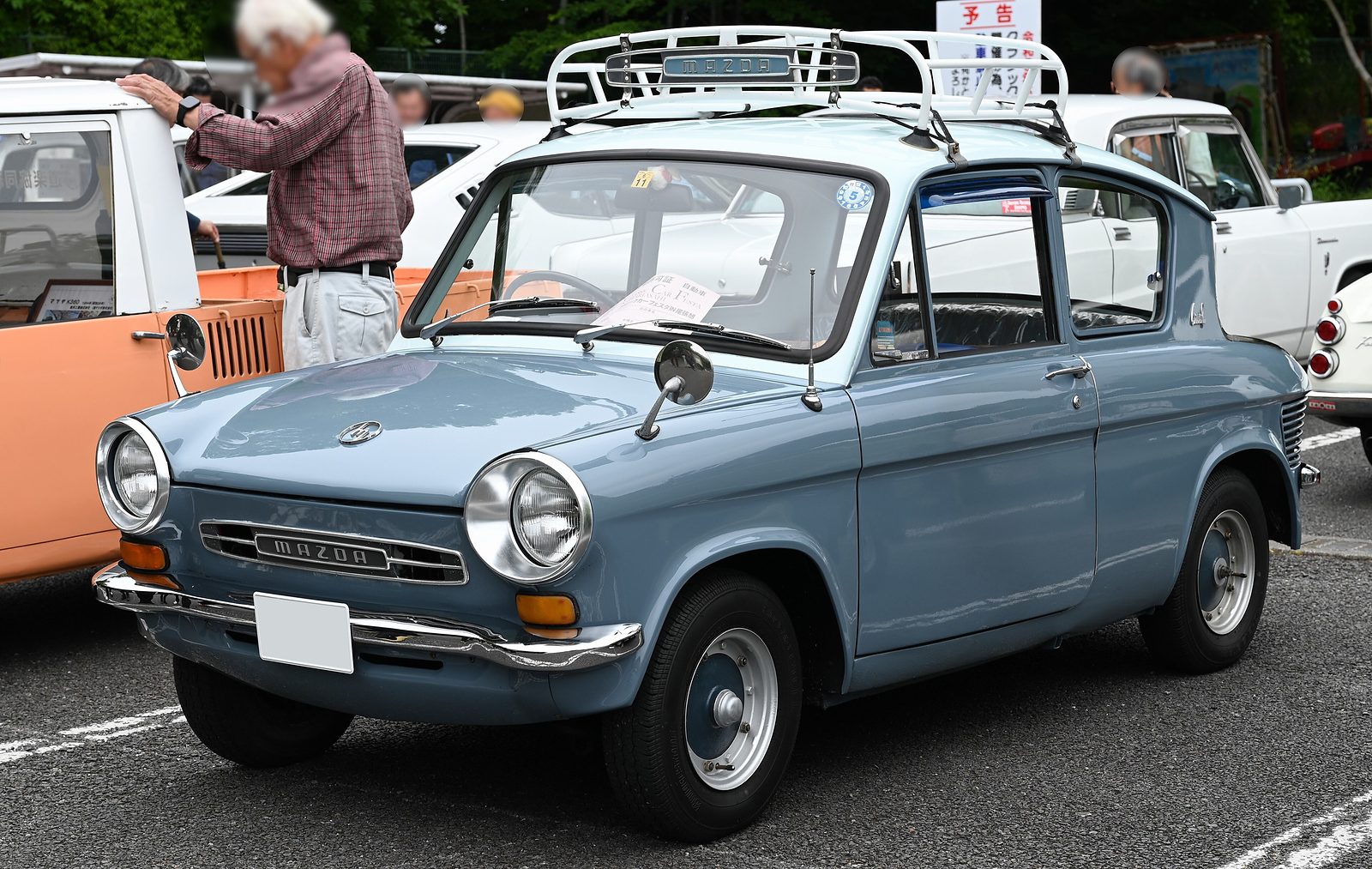
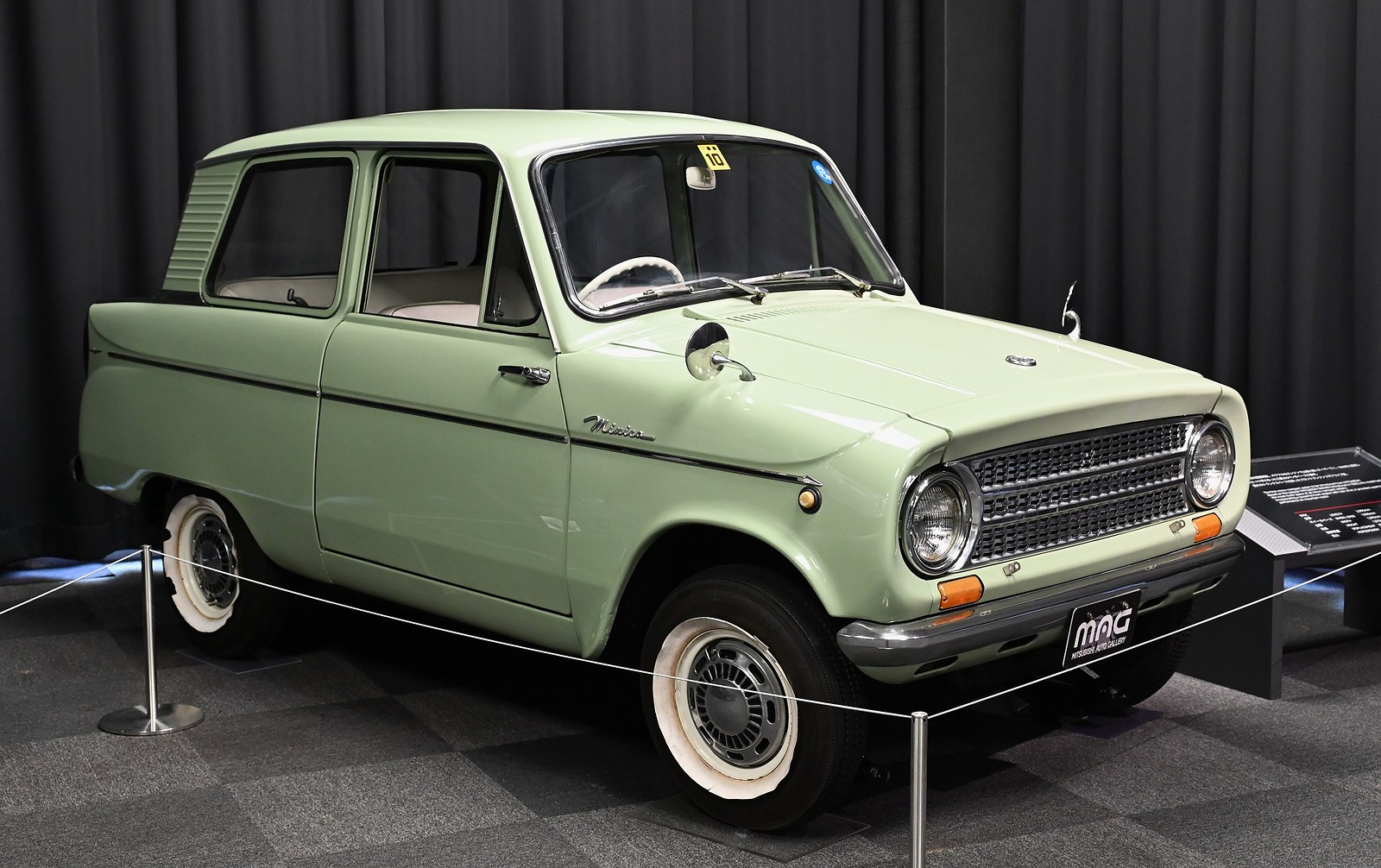
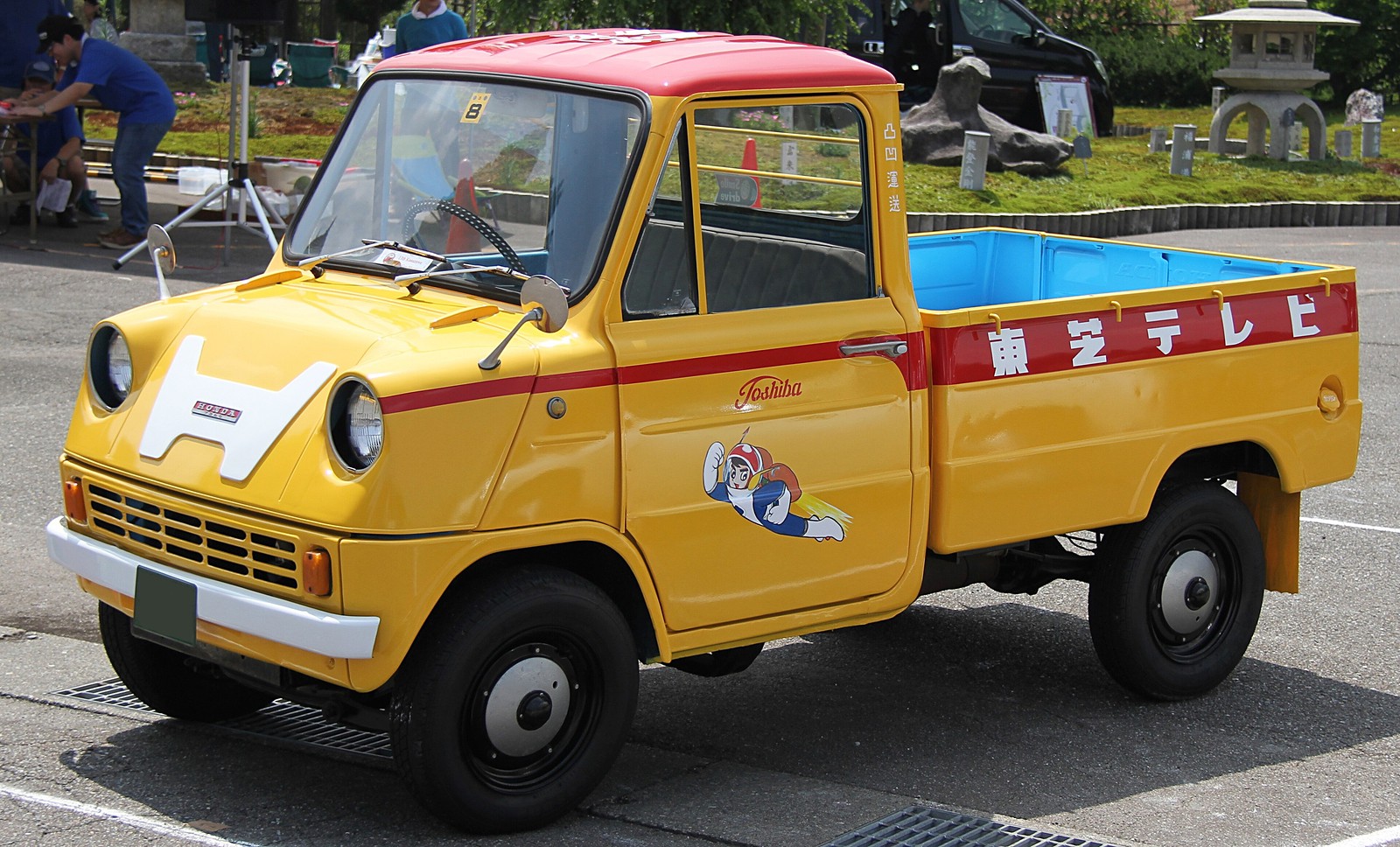
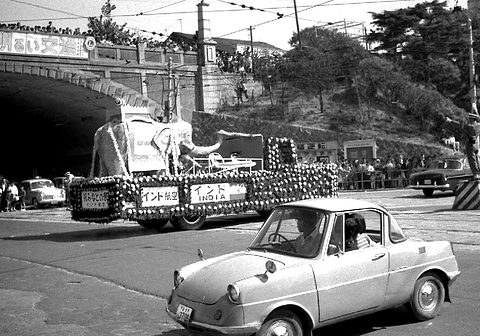
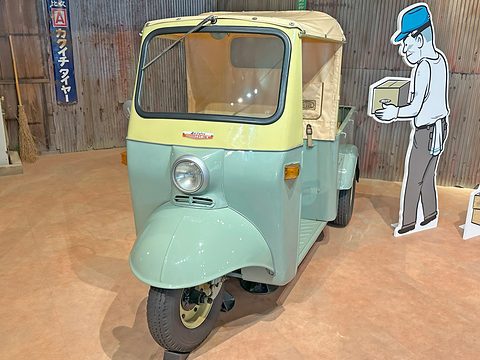
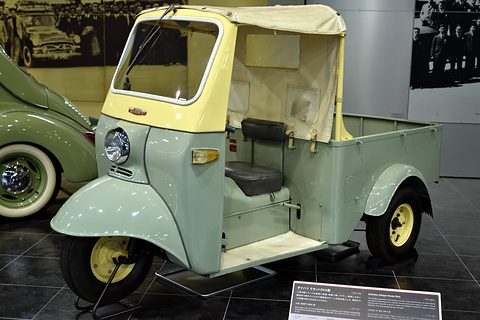
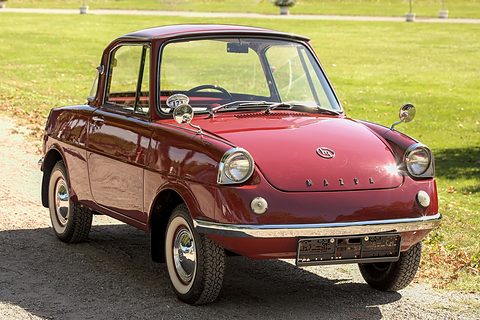
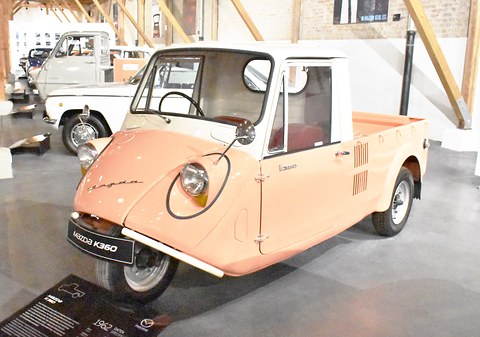
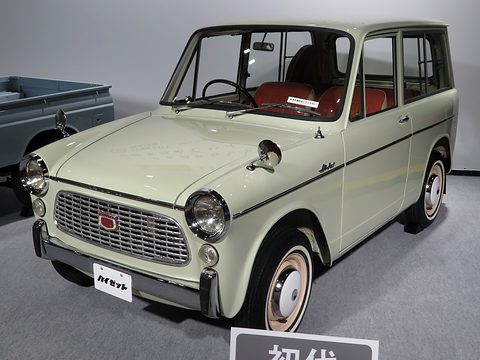
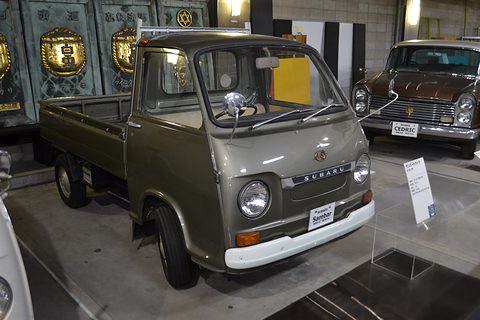
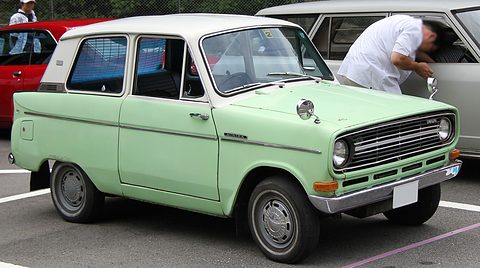
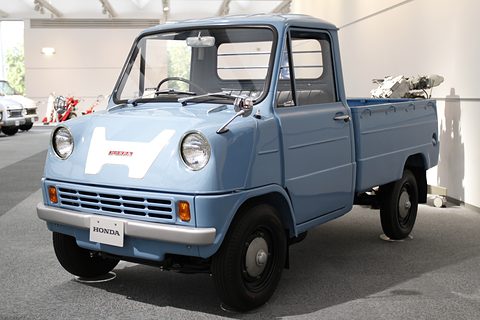
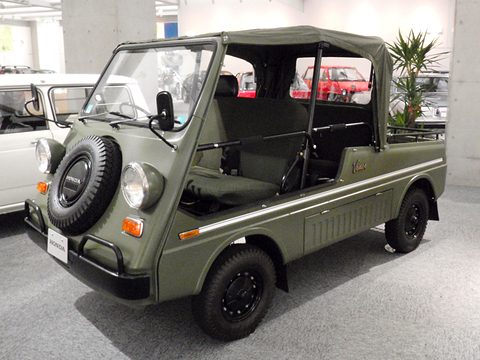
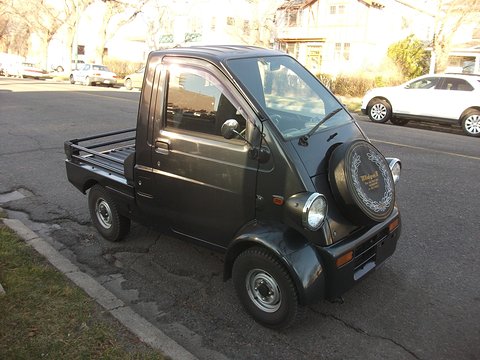
The early kei market belonged to trucks with three wheels. Daihatsu’s Midget of 1957 was built to the number of 336,534 by 1972,source 13 and Mazda’s K360 went on sale in May 1959.source 14 Mazda’s first passenger car, the Mazda R360 Coupe of May 1960, cost ¥300,000, the cheapest four-wheeled passenger car in Japan. It had an air-cooled four-stroke V-twin of 356 cc and 16 PS, weighed 380 kg, and no earlier kei passenger car had offered a torque-converter automatic; by the JSAE’s count it was also the first with a four-stroke engine.source 15source 16 In 1960 it made 23,417 of the year’s kei passenger cars, 64.8 per cent of them.source 17 Its successor, the Mazda Carol of 1962, had a water-cooled four of 358 cc, and Japanese Wikipedia calls it the best-selling car in Japan for three years from 1962, a claim that may count kei cars only.source 18 The working kei vehicles, the Daihatsu Hijet, the Subaru Sambar and the rest, are gathered on the page for kei trucks and vans. The Mitsubishi Minica joined the passenger cars in October 1962.source 19 Honda’s first four-wheeler was a kei truck, the Honda T360 of 1963, with a water-cooled twin-cam four of 356 cc and 30 PS when kei engines made about 20.source 20
The horsepower war, 1967–1972
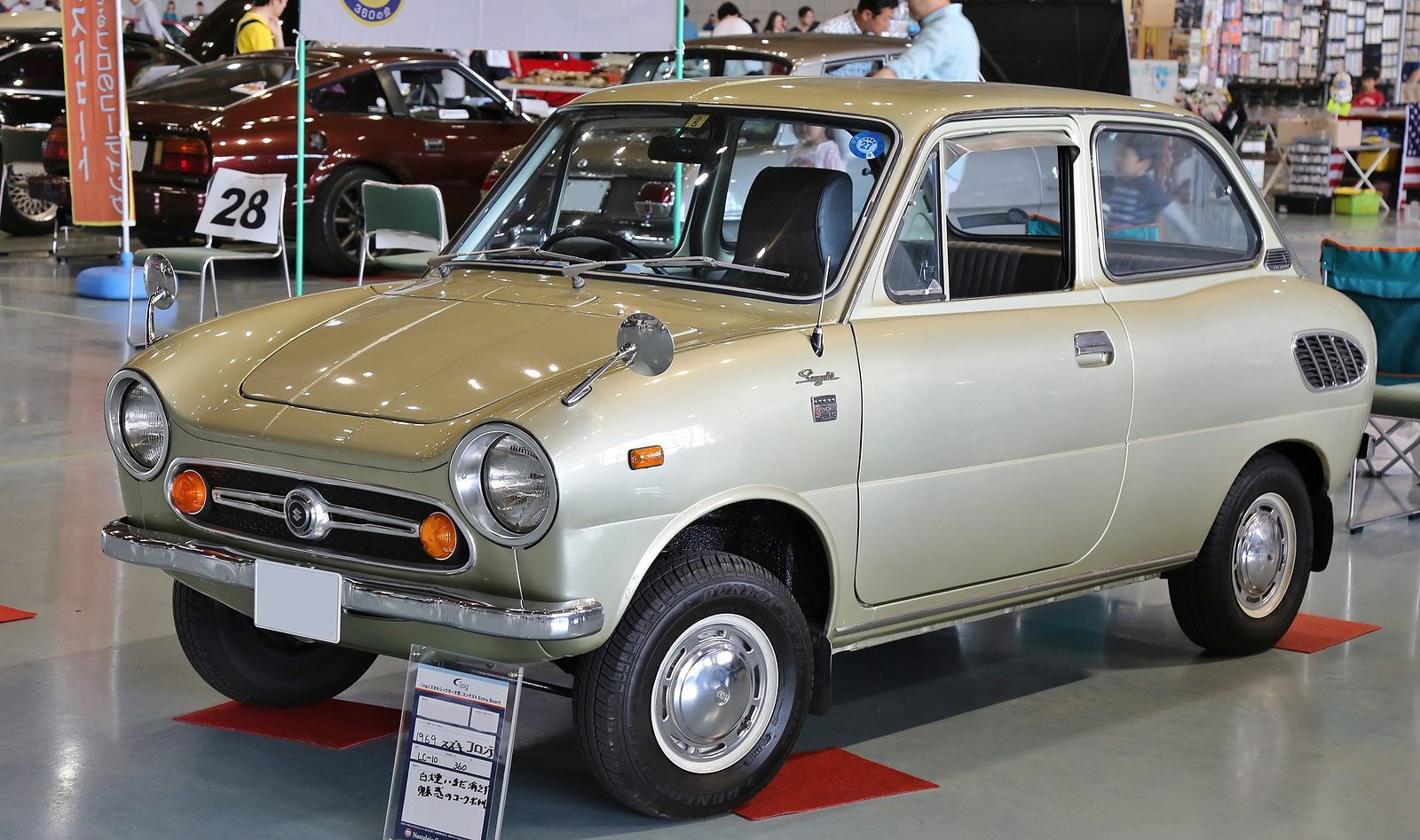
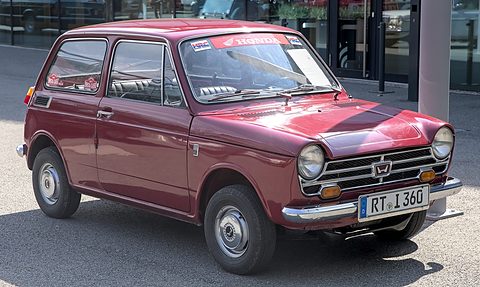
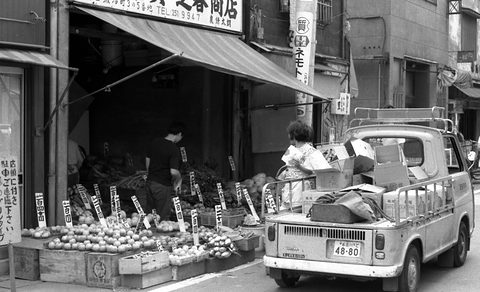
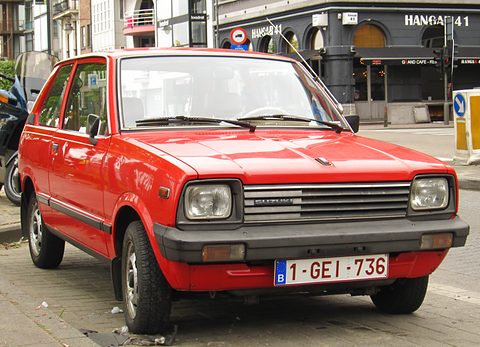
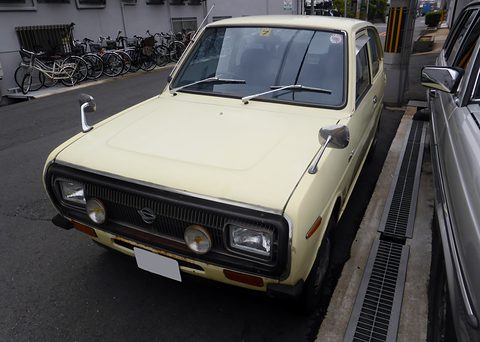
Honda had argued for years that the trouble with Japan’s small cars was their lack of power. In his company newsletter of March 1959 he called them unsuited to the country’s roads for want of horsepower, which, he wrote, governs how a driver feels.source 12 In March 1967 he showed what he meant. The N360 was a box designed from the cabin outward, with its engine across the front and front-wheel drive. The engine was an air-cooled 354 cc twin with an overhead camshaft, from the CB450 motorcycle, and it gave 31 PS (23 kW), its peak coming at 8,500 rpm, when its rivals’ two-strokes made something in the low twenties.source 12source 21 It cost ¥313,000, tens of thousands of yen less than they did.source 12source 22 In May 1967, its third month, 5,570 were registered, and it led the market.source 12 Japanese call what followed the 馬力競争, the horsepower race.source 22 Suzuki’s rear-engined Fronte 360 of the same year had a three-cylinder two-stroke of 25 PS, and Japanese Wikipedia credits it, rather than the Honda, with setting off the other makers’ programmes to beat it.source 23source 24
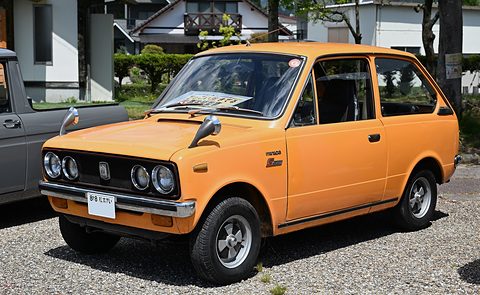
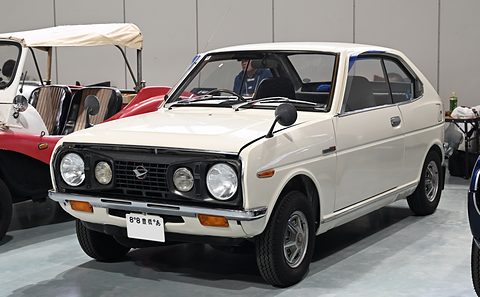
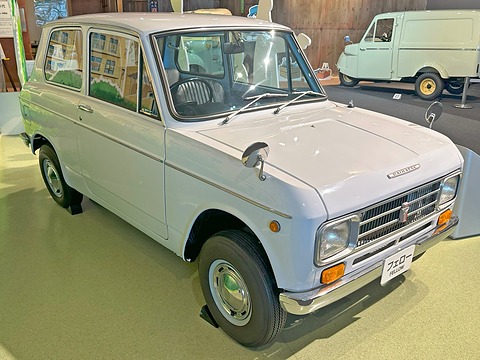
The figures climbed year by year. The Fronte SS360 of November 1968 gave 36 PS and its time of 19.95 seconds for the standing 400 m was the first under 20 by a kei car. In August 1968 Stirling Moss and the motorcycle racer Mitsuo Itoh drove two prototypes of it down the Autostrada del Sole from Milan to Naples.source 23source 24 Mitsubishi’s Minica 70 GSS of December 1969 had 38 PS.source 19 In July 1970 the Daihatsu Fellow Max SS reached 40 PS (29 kW) out of 356 cc, or over 112 PS per litre: the most powerful car of the 360 cc era, which needed high-octane fuel and had a narrow power band.source 25 Honda’s Z, the Subaru R‑2 and Suzuki’s wedge-shaped Fronte Coupé joined the same race.
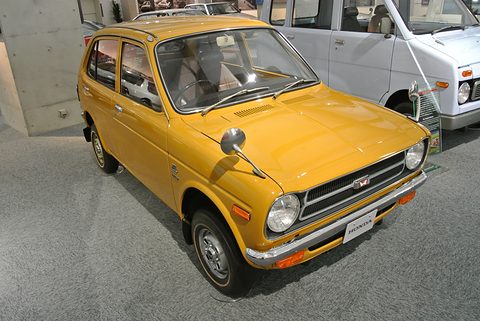
Then it stopped. From 1970 a users’ union alleged that the N360 was fatally unstable; Soichiro Honda was named in a criminal complaint but not prosecuted, and the union’s leaders were later convicted of attempted extortion. N360 sales collapsed all the same.source 22 Emission rules cut the Fellow Max from 40 PS to 37 in October 1972.source 25 From October 1973 every kei car had to go through the shaken inspection, with weight tax collected at it, and the separate kei licence had already been folded into the ordinary one in September 1968.source 2 Honda’s water-cooled Life of 1971 replaced the N360, and its whole range ended in October 1974 so that the factory could concentrate on the Civic.source 26
Forty horsepower from 356 cc
1970 and 1971
A bigger box, 1976 to today
On 1 January 1976 the box grew to 3.20 × 1.40 × 2.00 m and 550 cc. The industry body gives the reasons as safety for the length, and emission and noise rules for the engine.source 1source 2 On 1 January 1975 kei vehicles had been given yellow number plates.source 2
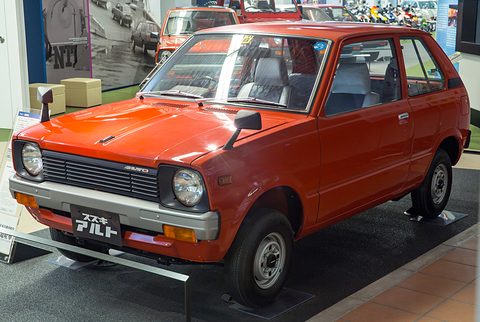
The class was saved by a tax loophole. In May 1979 Suzuki launched the Suzuki Alto, a bonnet van registered as a commercial vehicle, and so exempt from the commodity tax of over 15 per cent that kei passenger cars still paid. It cost ¥470,000 everywhere in Japan, the first nationwide uniform list price in the industry, and its advertising led with the price. Suzuki planned to sell 5,000 a month and sold 18,000.source 27source 28 The turbochargers followed. Mitsubishi’s Minica Ami L Turbo of March 1983 was the first kei car with one, at 39 PS gross.source 19 The Alto Works of February 1987, an intercooled twin-cam turbo, prompted a voluntary agreement among the makers to stop at 64 PS: an industry agreement, not a law.source 28source 2
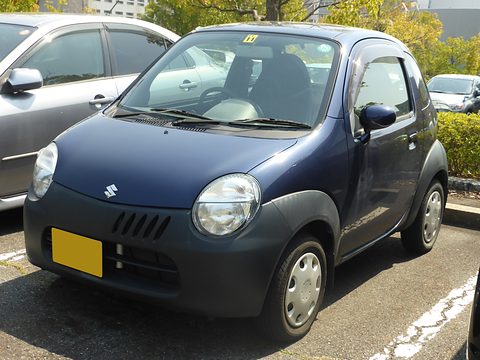
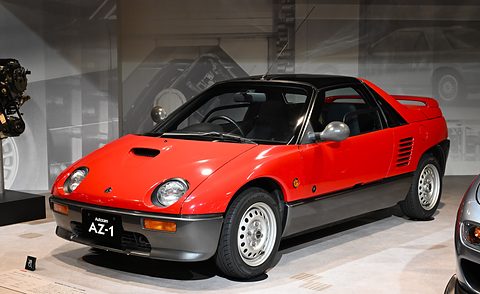
On 1 January 1990 the box went to 3.30 m and 660 cc, the extra engine size to carry the weight of safety and pollution equipment.source 1source 2 It made room for a brief burst of mid-engined sports cars, gathered on the page for the kei sports cars. The Honda Beat of 1991 reached the 64 PS limit without a turbocharger.source 29 On 1 October 1998 kei cars were held to the same crash standards as ordinary cars, a frontal impact at 50 km/h instead of 40 and new side-impact tests, and the box grew to 3.40 × 1.48 m to meet them. The engine stayed at 660 cc, the gap to be met by technical development.source 1 The industry body points out that 85 per cent of Japan’s roads are municipal roads averaging 3.9 m wide.source 1
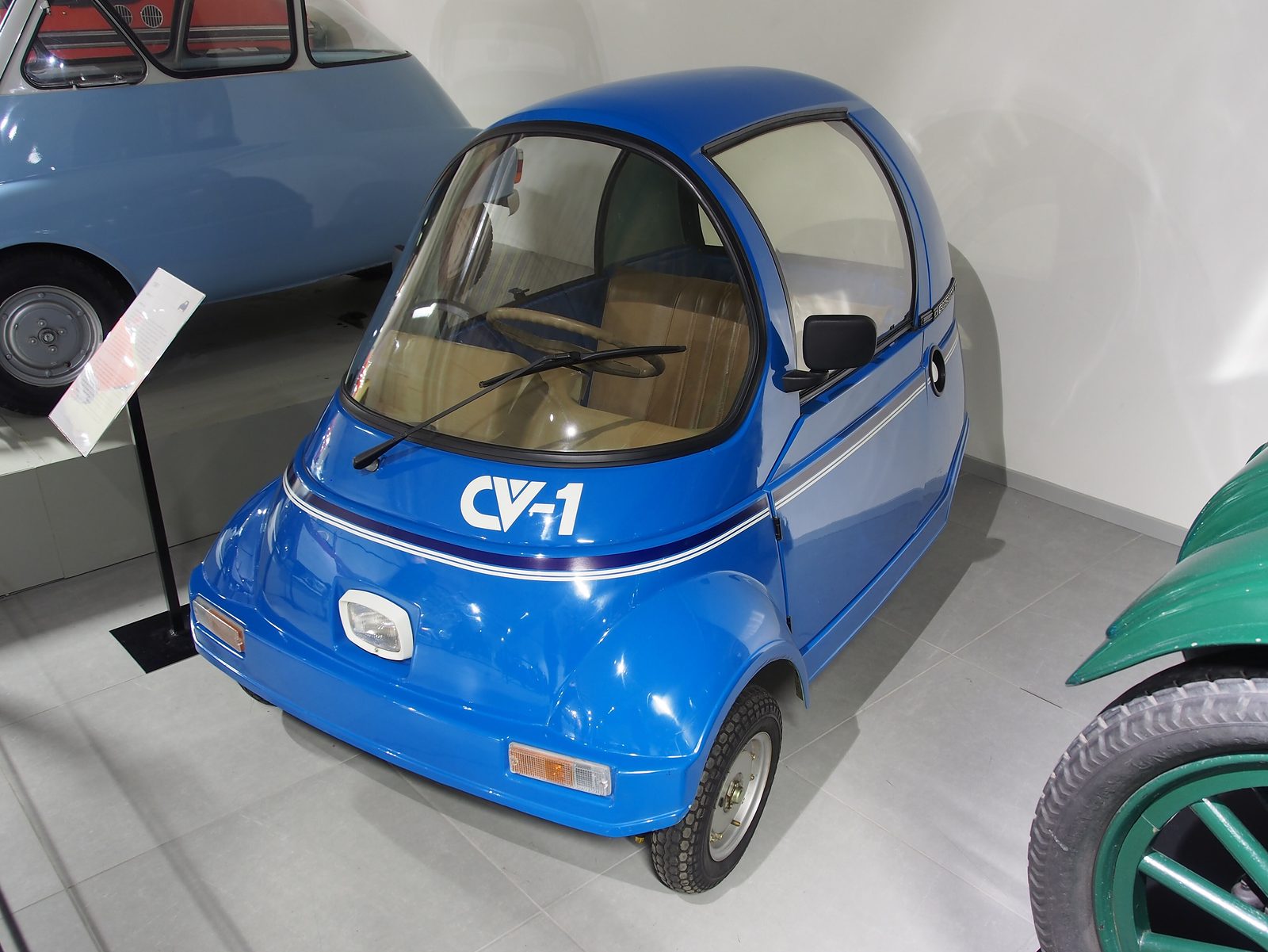
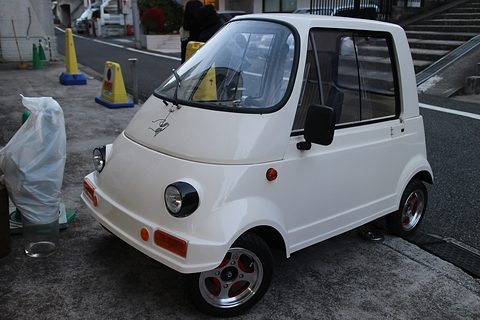
Japan had a smaller class still. Single-seat “minicars” of 50 cc, such as Takeoka’s Abbey and Suzuki’s CV-1, could be driven on a moped licence until 15 February 1985, when a full car licence became necessary and the market collapsed. Takeoka went on building them for disabled drivers.source 30 They are not kei cars, and they have their own page, the Japanese 50 cc minicars.
The view from abroad
The kei car was a Japanese answer to Japanese rules, and it did not always travel well. When the Subaru 360 went on sale in the United States, Consumer Reports tested it in April 1969 and rated it “Not Acceptable”.source 31
The minicar, like the miniskirt, was born in Europe.
The Suzulight had indeed been modelled on a West German Lloyd.source 9 Europe had its own small-car rules, which made the bubble cars and the licence-free cars, other branches of the microcar. The bubble cars faded with their boom; the kei class did not. A kei car today is at most 3.4 m long, inspected, taxed at its own rate and most popular where a car is a necessity; the photographs on this page show the 360 cc cars that started it in museums at Nagakute and Hamamatsu.
Smallest to largest
27 cars and 2 maker groups, to scale
Each bar is the car’s length on a 3.5 metre track; the red notch is a Fiat 500.
-
Auto Sandal1951–1954 · Japan · 4 wheels
2.28 m -
Daihatsu Midget1957–1972 · Japan · 3 wheels
2.54 m -
Suzuki Twin2003–2005 · Japan · 4 wheels
2.73 m -
Flying Feather1954–1956 · Japan · 4 wheels
2.77 m -
Daihatsu Midget II1996–2001 · Japan · 4 wheels
2.79 m -
Fuji Cabin1955–1957 · Japan · 3 wheels
2.95 m -
Mazda K3601959–1969 · Japan · 3 wheels
2.98 m -
Mazda Carol1962–1970 · Japan · 4 wheels
2.98 m -
Mazda R360 Coupe1960–1966 · Japan · 4 wheels
2.98 m -
Daihatsu Hijet1960– · Japan · 4 wheels
2.99 m -
Subaru 3601958–1970 · Japan · 4 wheels
2.99 m -
Subaru Sambar1961–2012 · Japan · 4 wheels
2.99 m -
Suzuki Suzulight1955–1968 · Japan · 4 wheels
2.99 m -
Daihatsu Fellow Max1970–1977 · Japan · 4 wheels
3.00 m -
Honda N3601967–1972 · Japan · 4 wheels
3.00 m -
Honda Vamos1970–1973 · Japan · 4 wheels
3.00 m -
Honda Z1970–1974 · Japan · 4 wheels
3.00 m -
Mitsubishi Minica1962–1989 · Japan · 4 wheels
3.00 m -
Subaru R‑21969–1973 · Japan · 4 wheels
3.00 m -
Suzuki Fronte1967–1989 · Japan · 4 wheels
3.00 m -
Suzuki Fronte Coupé1971–1976 · Japan · 4 wheels
3.00 m -
Suzuki Jimny1970–1981 · Japan · 4 wheels
3.00 m -
Suzuki Alto1979–1984 · Japan · 4 wheels
3.19 m -
Cony Guppy1961–1963 · Japan · 4 wheels
length unknown
3 more cars and 2 more maker groupsFewer
-
Daihatsu Fellow1966–1970 · Japan · 4 wheels
length unknown -
Honda Life1971–1974 · Japan · 4 wheels
length unknown -
Honda T3601963–1967 · Japan · 4 wheels
length unknown -
Kei trucks and vans1959–1990 · Japan · 4 wheels
7 makers -
ABC kei sports cars (AZ-1, Beat, Cappuccino)1991–1998 · Japan · 4 wheels
3 makers
Pictures
11 photographs
Kei cars 11
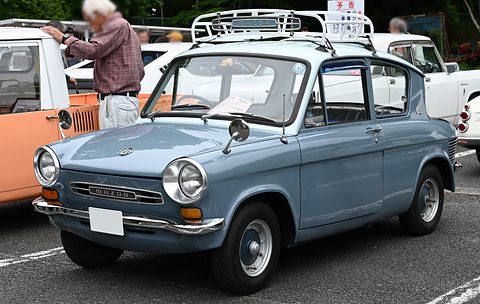
1 A blue-grey early Mazda Carol 360 (1962–66) from the front three-quarter at a meeting in 2024.
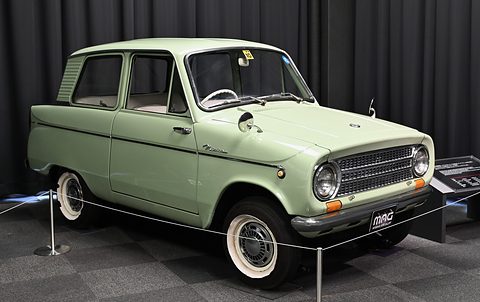
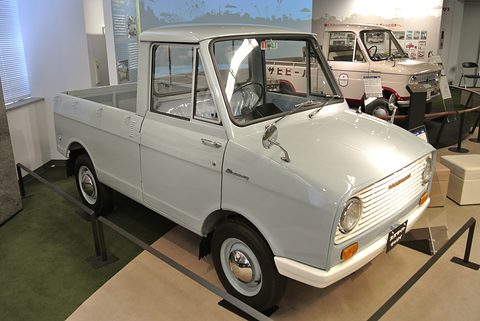
2 A pale green 1964 Mitsubishi Minica with whitewall tyres on a show stand in 2026.
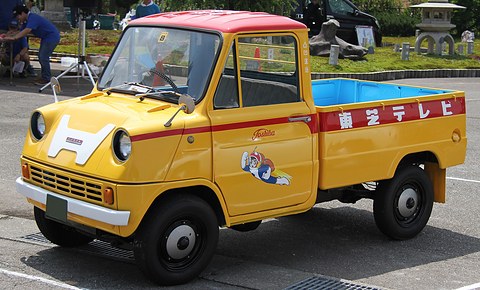
3 A yellow Honda T360 pickup in Toshiba advertising livery at a classic meeting in Japan in 2013.
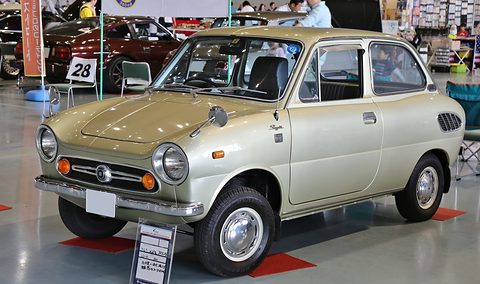
4 A silver-green 1969 Suzuki Fronte 360 Super Deluxe at an indoor show in 2015.
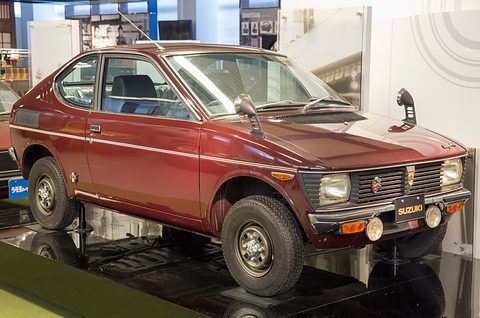
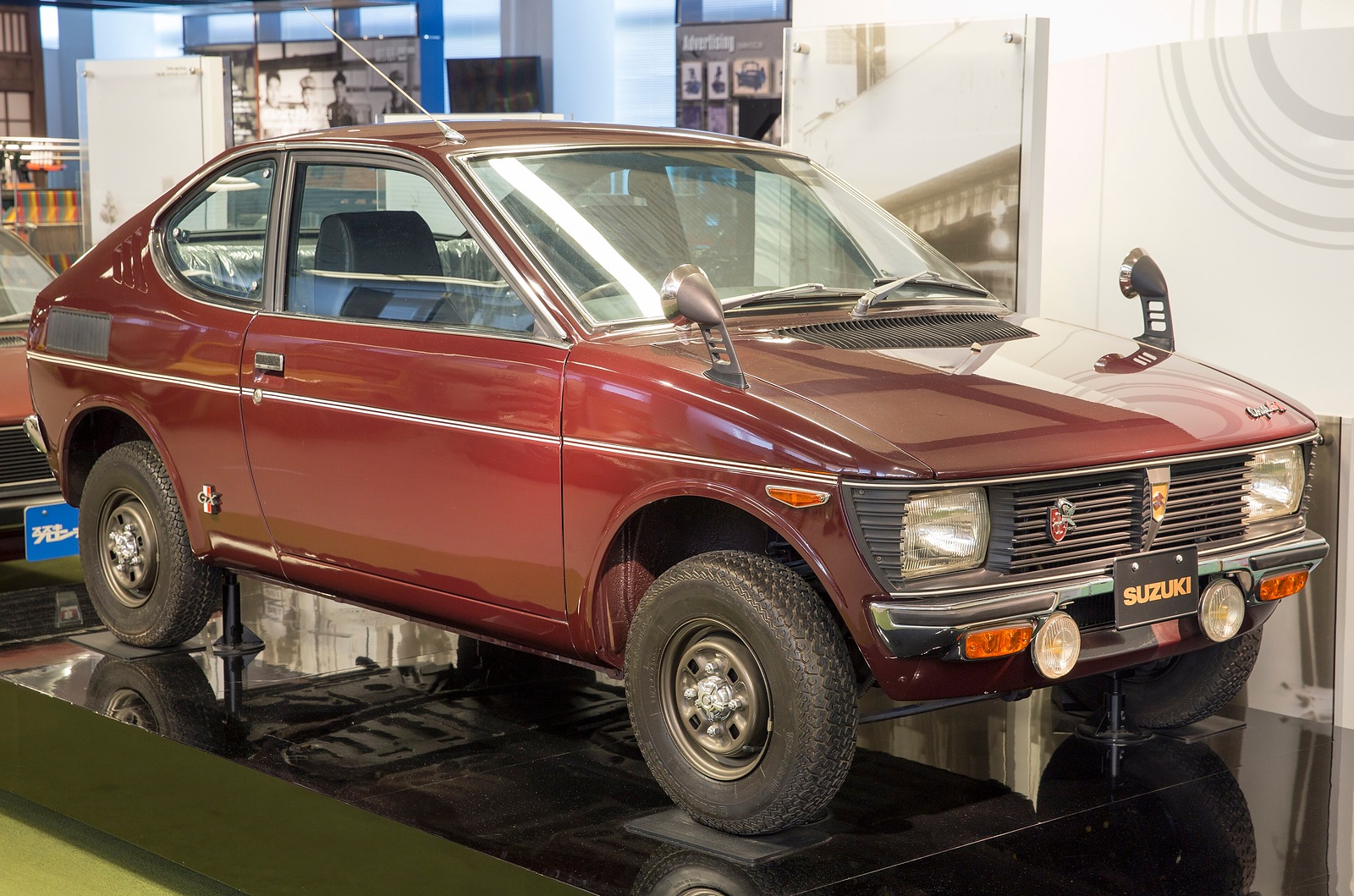
5 A 1973 Suzuki Fronte Coupé GXCF in Continental Maroon at Suzuki Plaza, Hamamatsu, in 2024.
6 more picturesFewer pictures
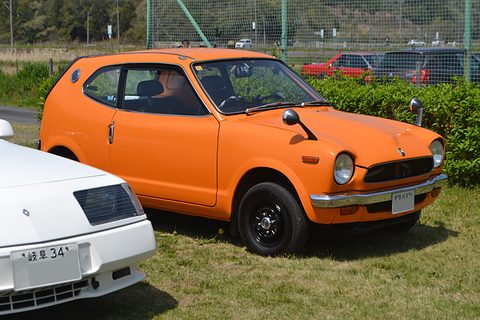
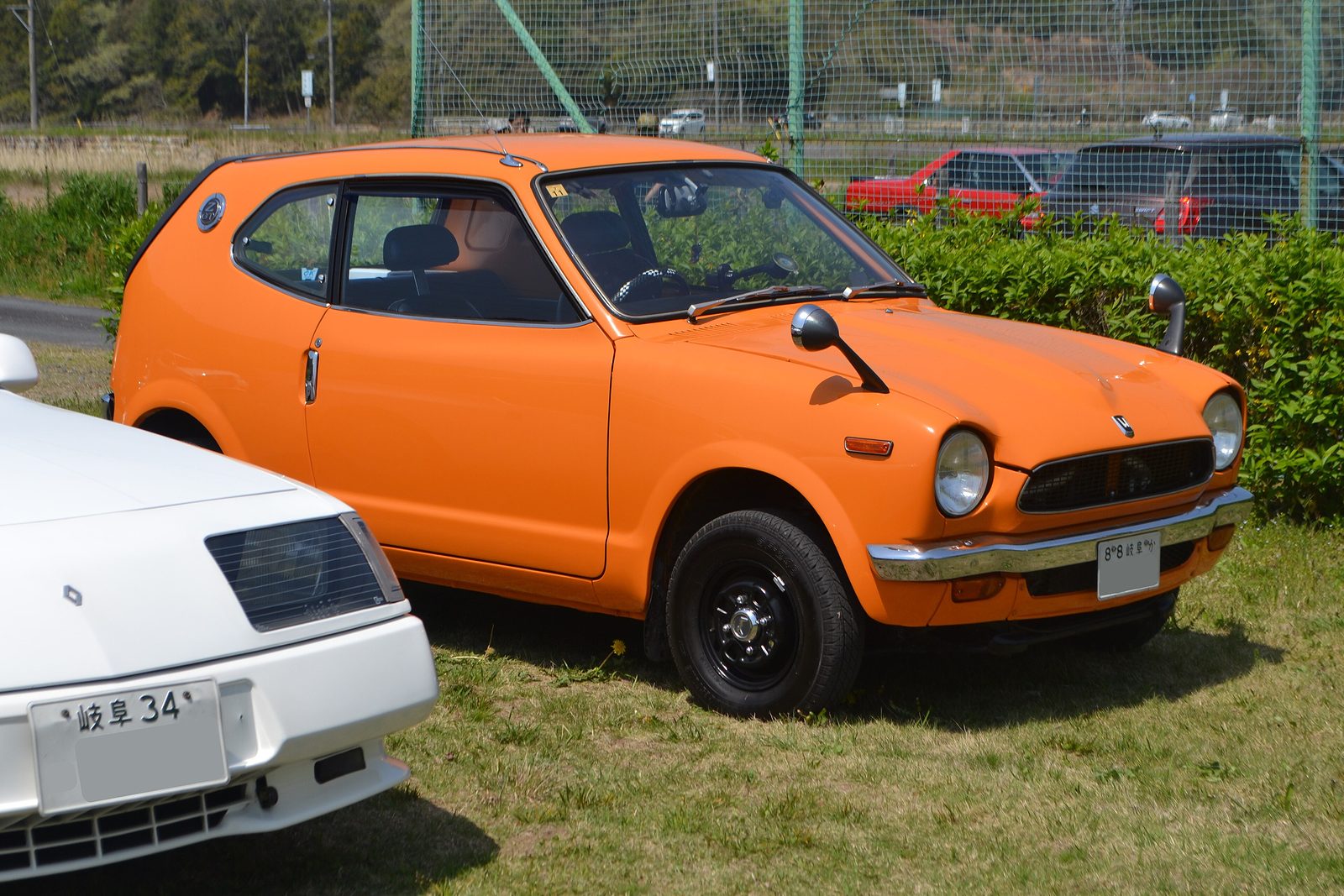
6 An orange Honda Z GT on the grass at Gifu Family Park in 2024.
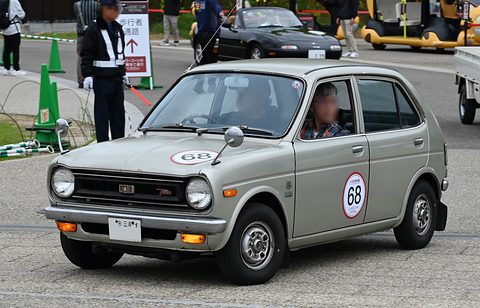
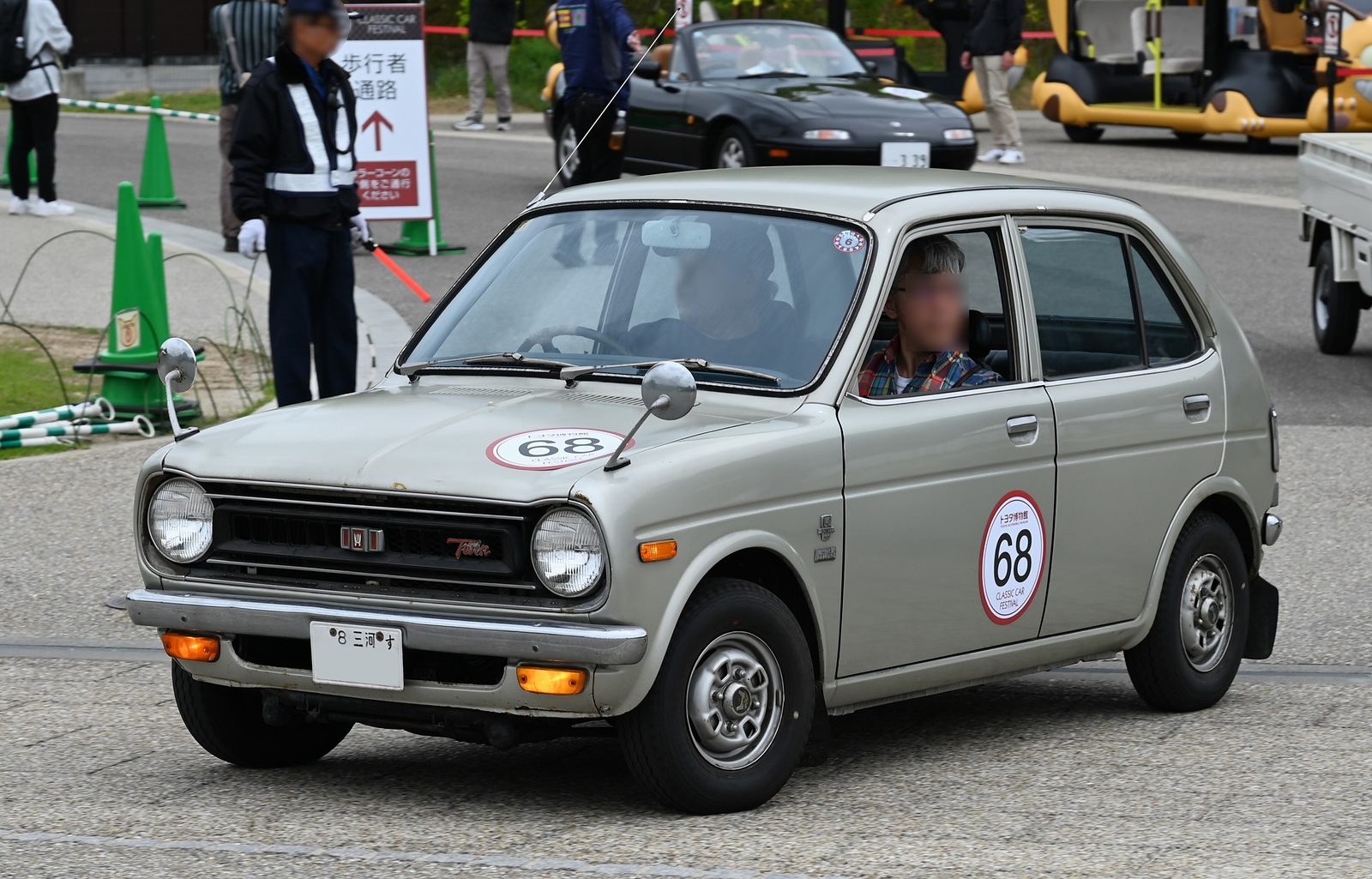
7 A silver 1973 Honda Life Twin Super Deluxe at the 35th Toyota Automobile Museum Classic Car Festival in 2025.
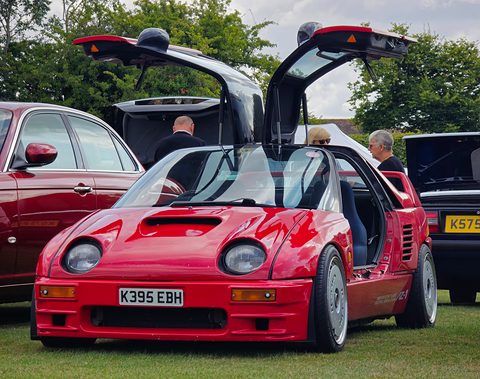
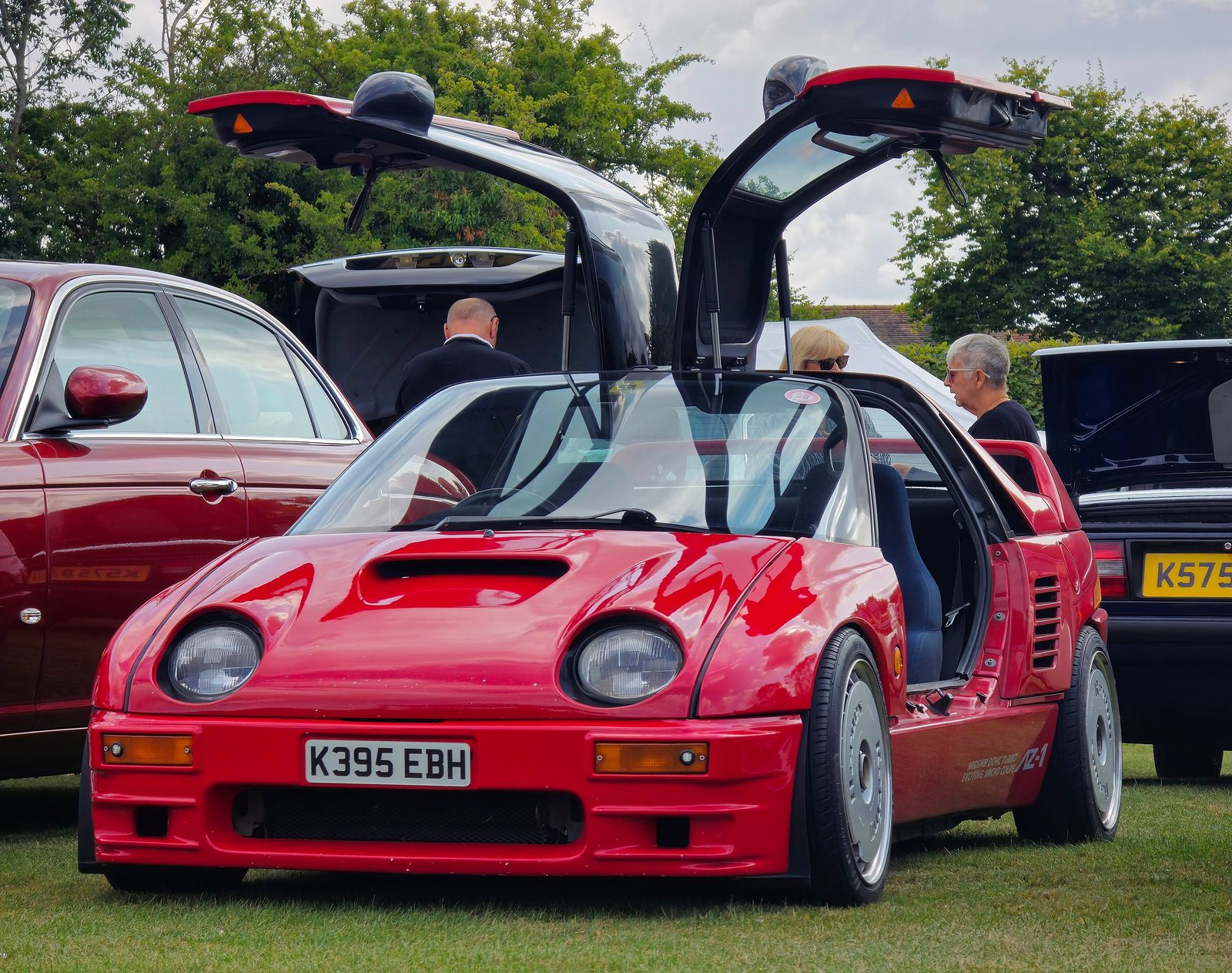
8 A red 1993 Autozam AZ-1 with both doors up at a show in England in August 2024.
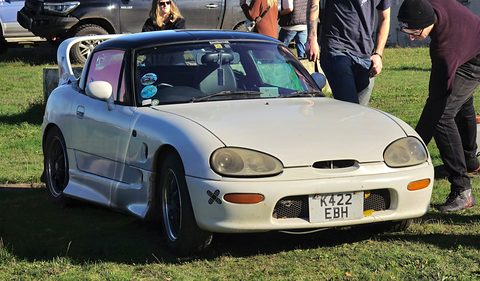
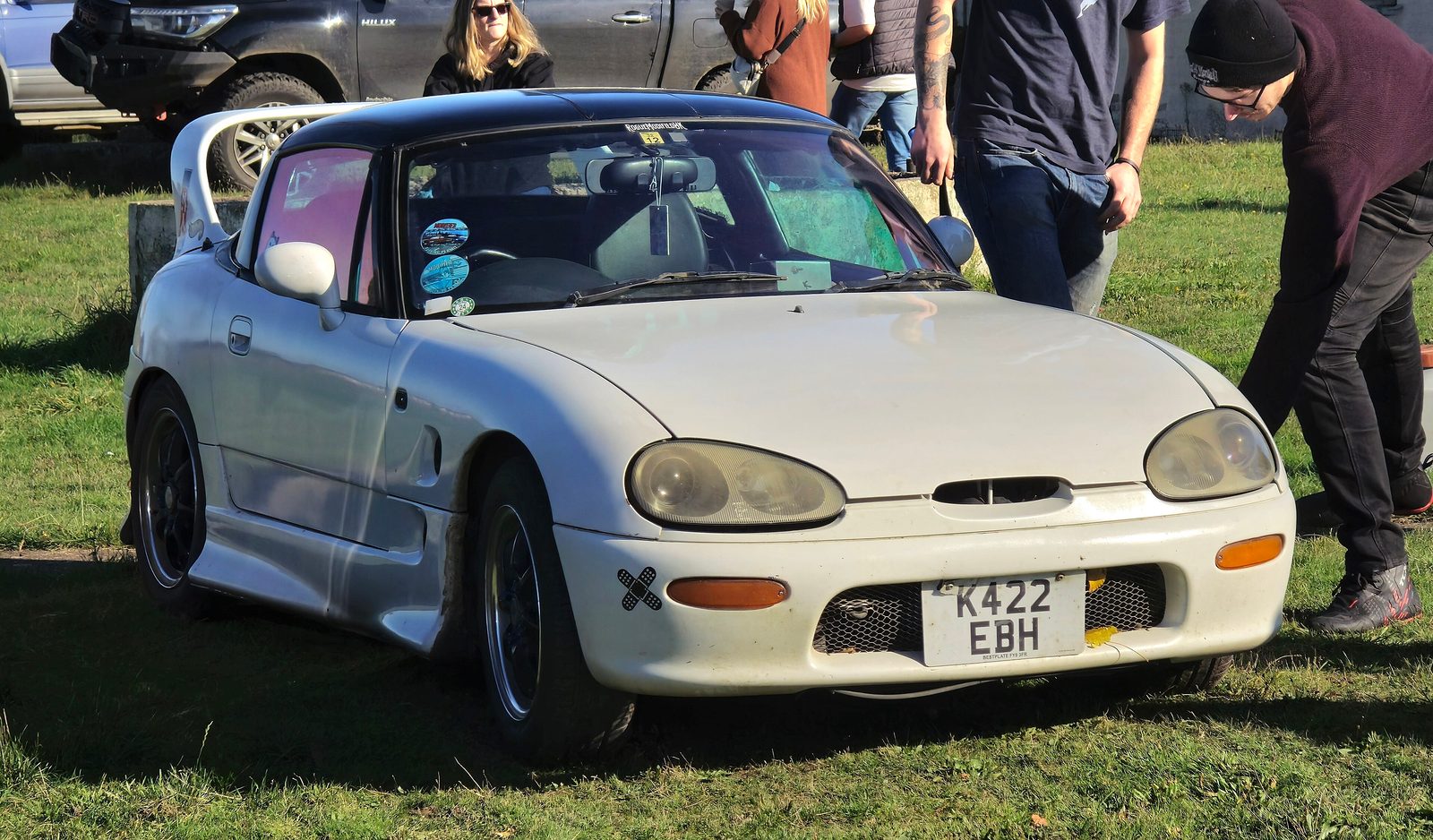
9 A white 1993 Suzuki Cappuccino (EA11R) at a show in England in October 2024.
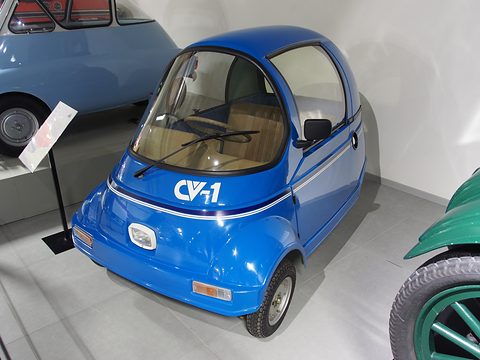
10 A 1981 Suzuki CV-1 in the Louwman Museum, from the front quarter.
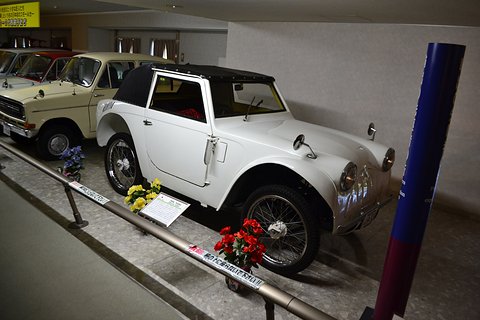
11 The white Flying Feather in its row of cars at the Motorcar Museum of Japan, Komatsu, in 2023.
Picture credits (11)
- 1 TTTNIS, CC0
- 2 TTTNIS, CC0
- 3 TTTNIS, Public domain
- 4 TTTNIS, CC0
- 5 Mr.choppers, CC BY-SA 3.0
- 6 先従隗始, CC0
- 7 TTTNIS, CC0
- 8 Calreyn88, CC BY-SA 4.0
- 9 Calreyn88, CC BY-SA 4.0
- 10 Alf van Beem, Public domain
- 11 先従隗始, CC0
The cars
Profiles
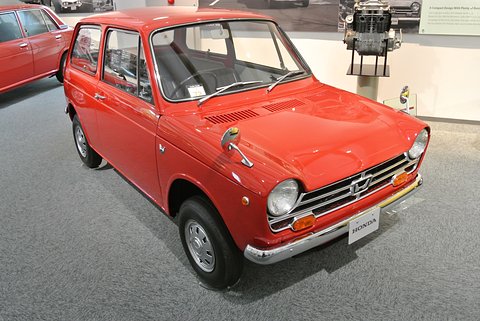
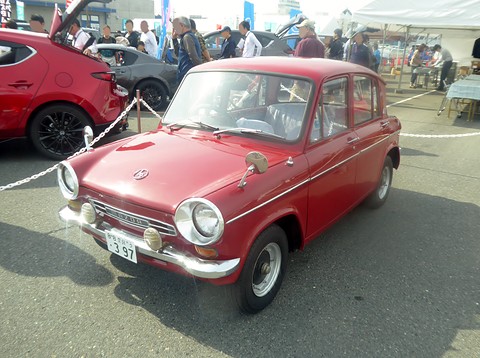
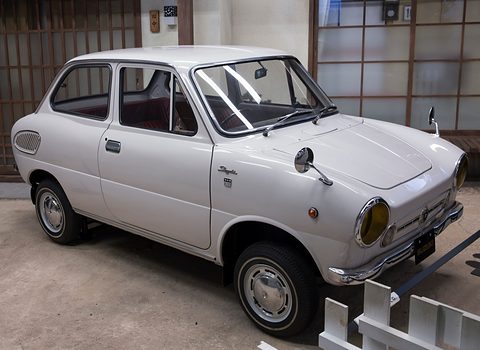
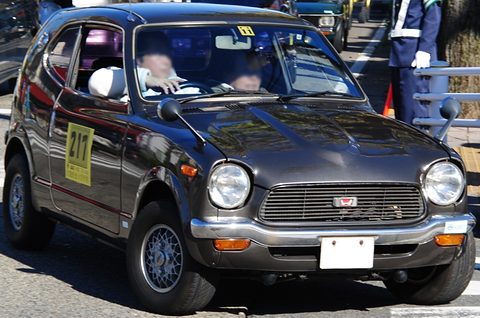
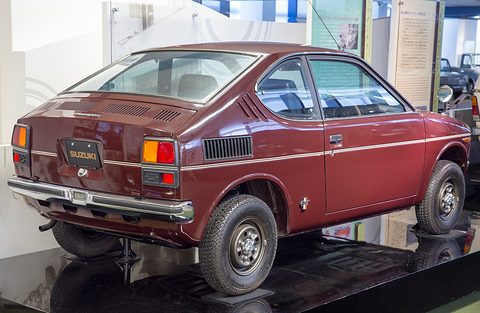
15 more cars and 2 more maker groupsFewer
Sources
Numbered as in the text
Sources are given as plain text; the links are on the Credits page.
- Zenkeijikyo (Japan Light Motor Vehicle and Motorcycle Association), written evidence for the Ministry of Internal Affairs and Communications study group on motor taxation, 19 August 2025, with its table of kei regulations from 1949 to 1998, in Japanese.
- Japanese Wikipedia, 軽自動車 (kei car), the history section; used as a lead.
- Japanese Wikipedia, 日本オートサンダル自動車 (Nippon Auto Sandal Jidōsha); used as a lead.
- Japanese Wikipedia, スバル・360 (Subaru 360), read in full; it cites Katsuragi, てんとう虫が走った日 (1987), and Fuji Heavy Industries’ thirty-year history (1984).
- Japanese Wikipedia, 住江製作所・フライングフェザー (Suminoe Flying Feather), and the Japan Automotive Hall of Fame’s citation for the car as a Historic Car of 2025.
- Japanese Wikipedia, 富士自動車・フジキャビン (Fuji Cabin), and the Toyota Automobile Museum’s collection record 85, “Fujicabin Model 5A”.
- Suzuki Motor Corporation, Suzuki Digital Library, “Suzulight”, in Japanese.
- Society of Automotive Engineers of Japan, 330 Landmarks of Japanese Automotive Technology, “Suzulight SS”, in Japanese.
- Japanese Wikipedia, スズキ・スズライト (Suzuki Suzulight); used as a lead.
- Subaru Corporation, Subaru Museum, “Subaru 360 Story” and its chronology, in Japanese.
- Toyota Automobile Museum, collection record 109, “Subaru 360 Model K111”.
- Honda, “Introducing N360 / 1967”, Honda heritage pages, with Soichiro Honda’s words from the Honda company newsletters in Honda’s translation.
- Japanese Wikipedia, ダイハツ・ミゼット (Daihatsu Midget), and English Wikipedia, Daihatsu Midget, which cites Kießler (1992); used as leads.
- Japanese Wikipedia, マツダ・K360 (Mazda K360); used as a lead.
- Society of Automotive Engineers of Japan, 330 Landmarks of Japanese Automotive Technology, “Mazda R360 Coupe”, in Japanese.
- Japanese Wikipedia, マツダ・R360クーペ (Mazda R360 Coupe); used as a lead.
- Kuruma News, an article on five of Mazda’s great cars, in Japanese.
- Japanese Wikipedia, マツダ・キャロル (Mazda Carol), the first generation, and the Society of Automotive Engineers of Japan’s landmark entry “Mazda Carol 360”.
- Japanese Wikipedia, 三菱・ミニカ (Mitsubishi Minica), and Mitsubishi Motors, “Car History”.
- Japanese Wikipedia, ホンダ・T360, and English Wikipedia, Honda T360; used as leads.
- Society of Automotive Engineers of Japan, 330 Landmarks of Japanese Automotive Technology, “Honda N360”, in Japanese.
- Japanese Wikipedia, ホンダ・N360 (Honda N360), and ユーザーユニオン事件 (the Users’ Union affair); used as leads.
- Suzuki Motor Corporation, Suzuki Digital Library, “Fronte”, in Japanese.
- Japanese Wikipedia, スズキ・フロンテ (Suzuki Fronte), and English Wikipedia, Suzuki Fronte; used as leads.
- Japanese Wikipedia, ダイハツ・フェロー (Daihatsu Fellow), the second generation, used as a lead, and “Fellow MAX SS”, Motor Fan, in Japanese.
- Japanese Wikipedia, ホンダ・ライフ (Honda Life), the first generation, and English Wikipedia, Honda Life; used as leads.
- Suzuki Motor Corporation, Suzuki Digital Library, “Alto”, in Japanese.
- Japanese Wikipedia, スズキ・アルト (Suzuki Alto), the first and second generations; used as a lead.
- Honda Motor Co., press release on the Honda Beat, 15 May 1991, in Japanese.
- Japanese Wikipedia, ミニカー (車両) (minicar, the vehicle class), and タケオカ自動車工芸 (Takeoka); used as leads. They cite the texts of the laws.
- “The Subaru 360 (Not Acceptable)”, Consumer Reports, April 1969, pp. 220–222, read in an archived scan.