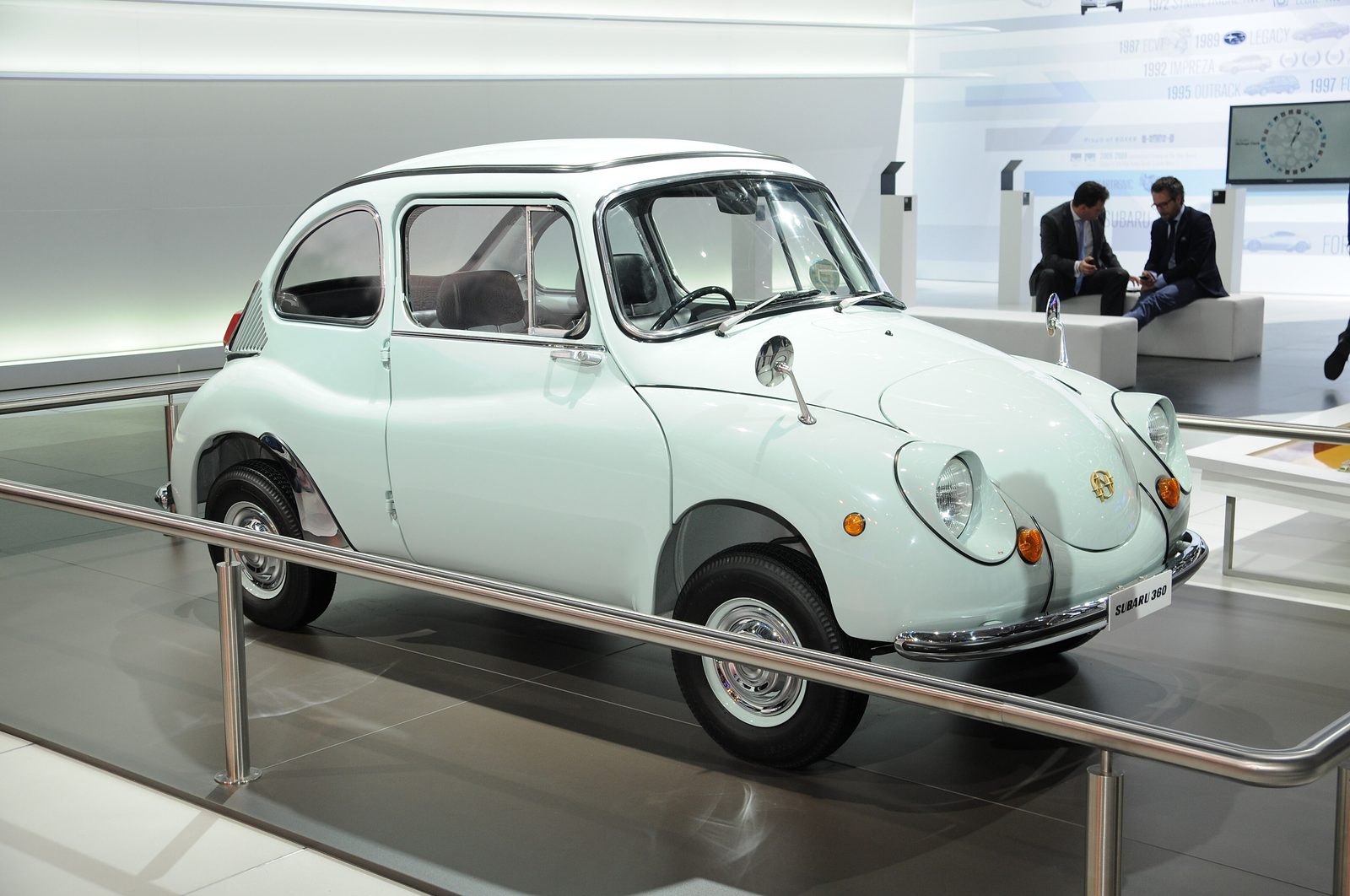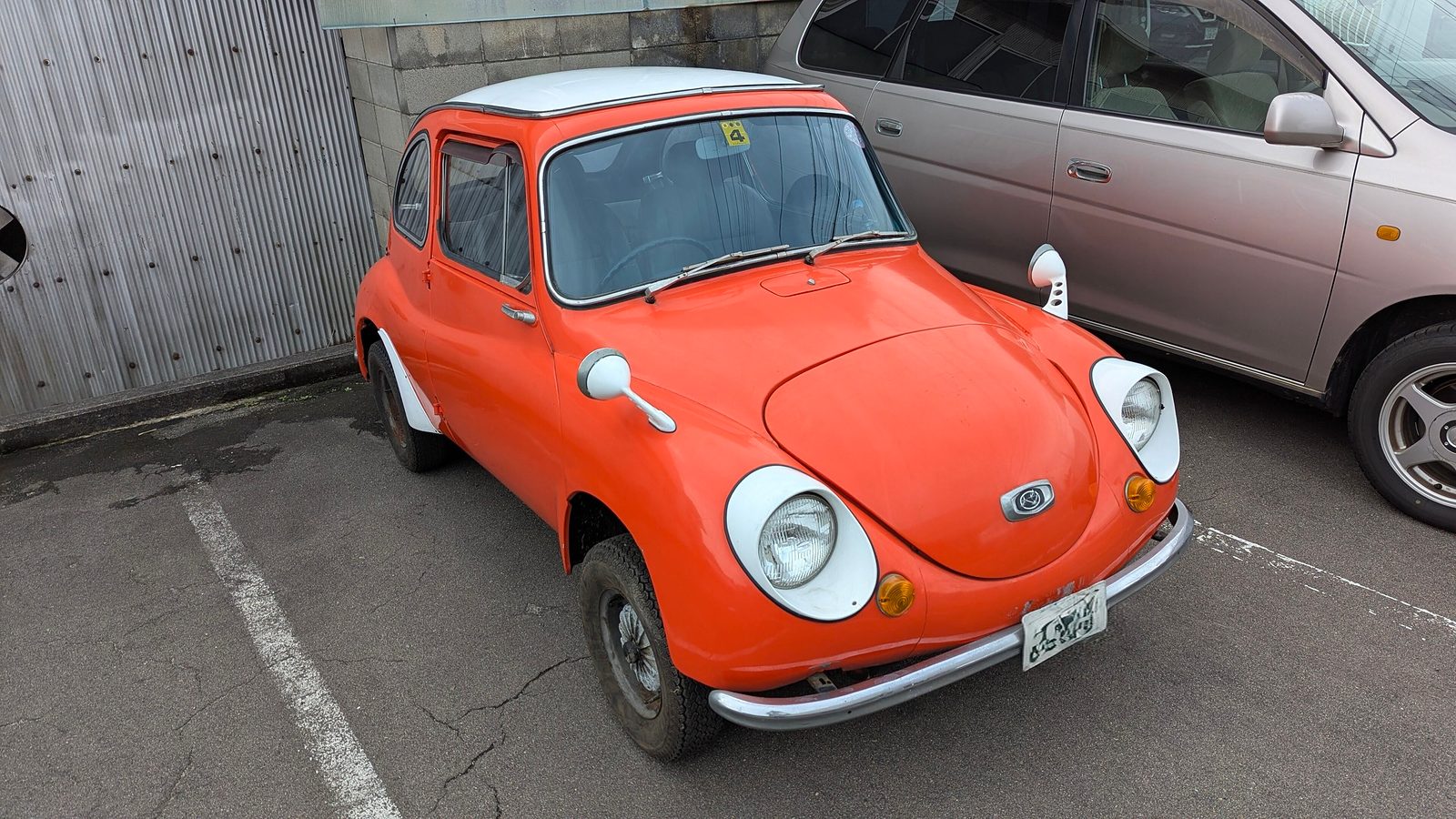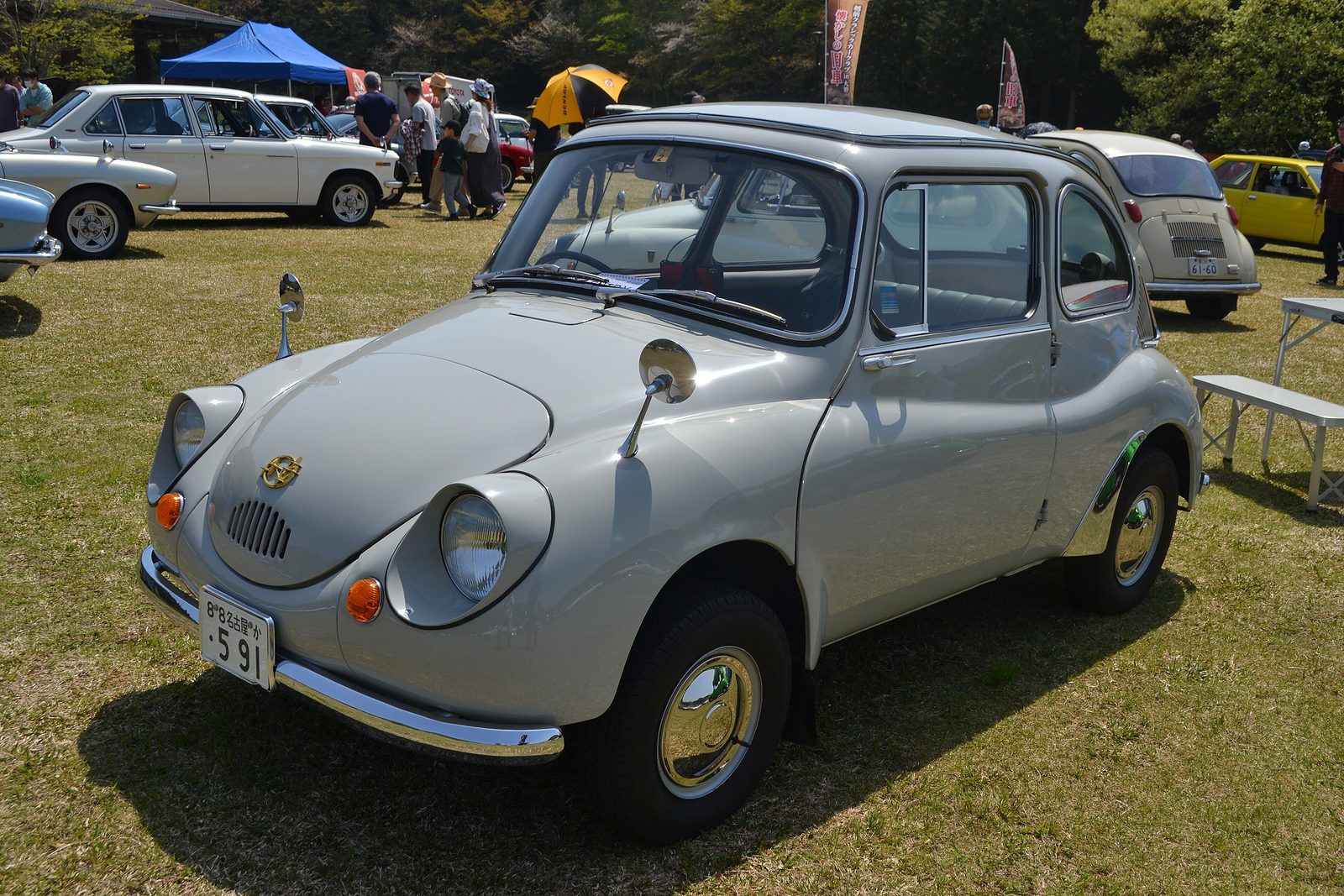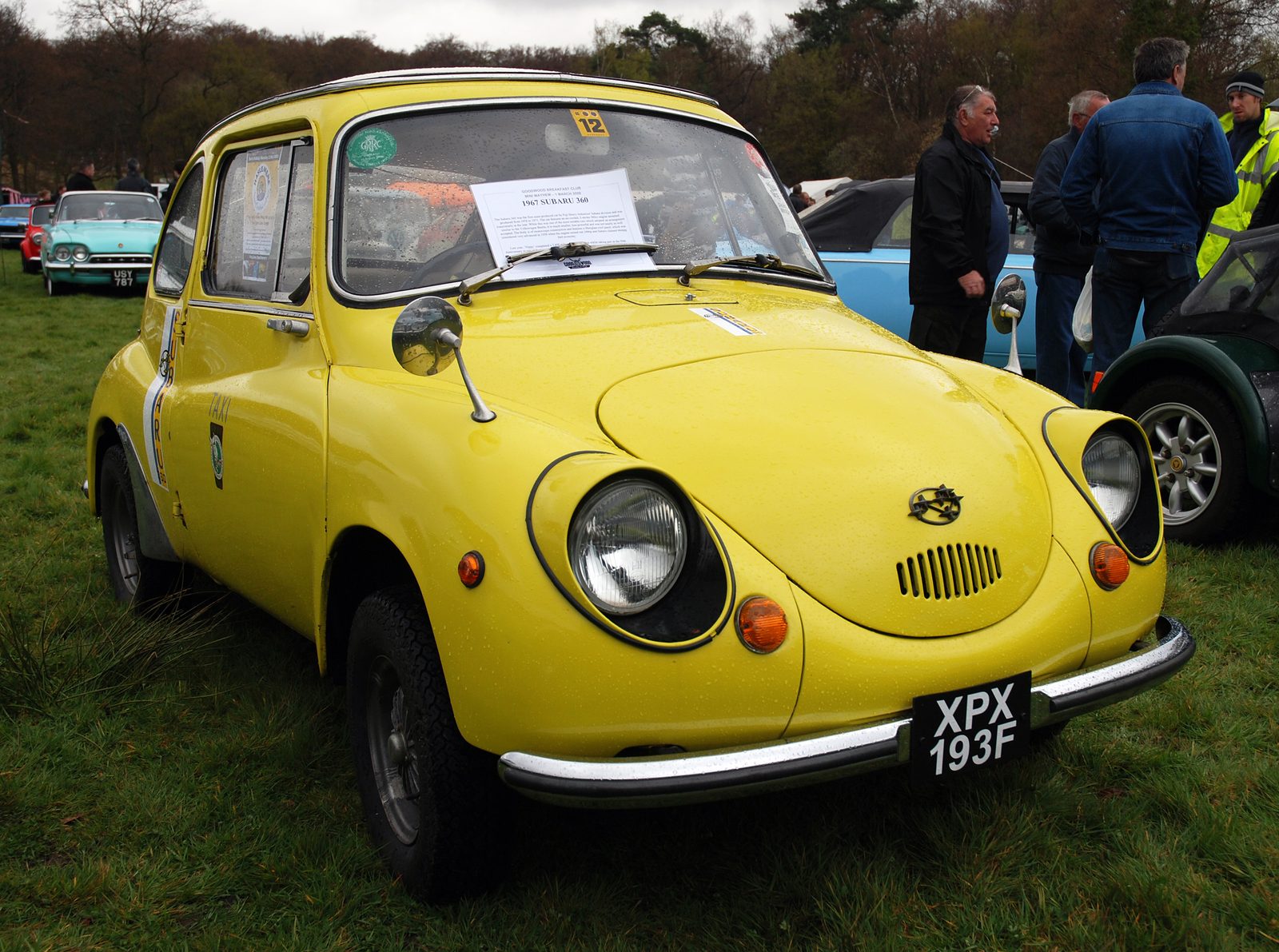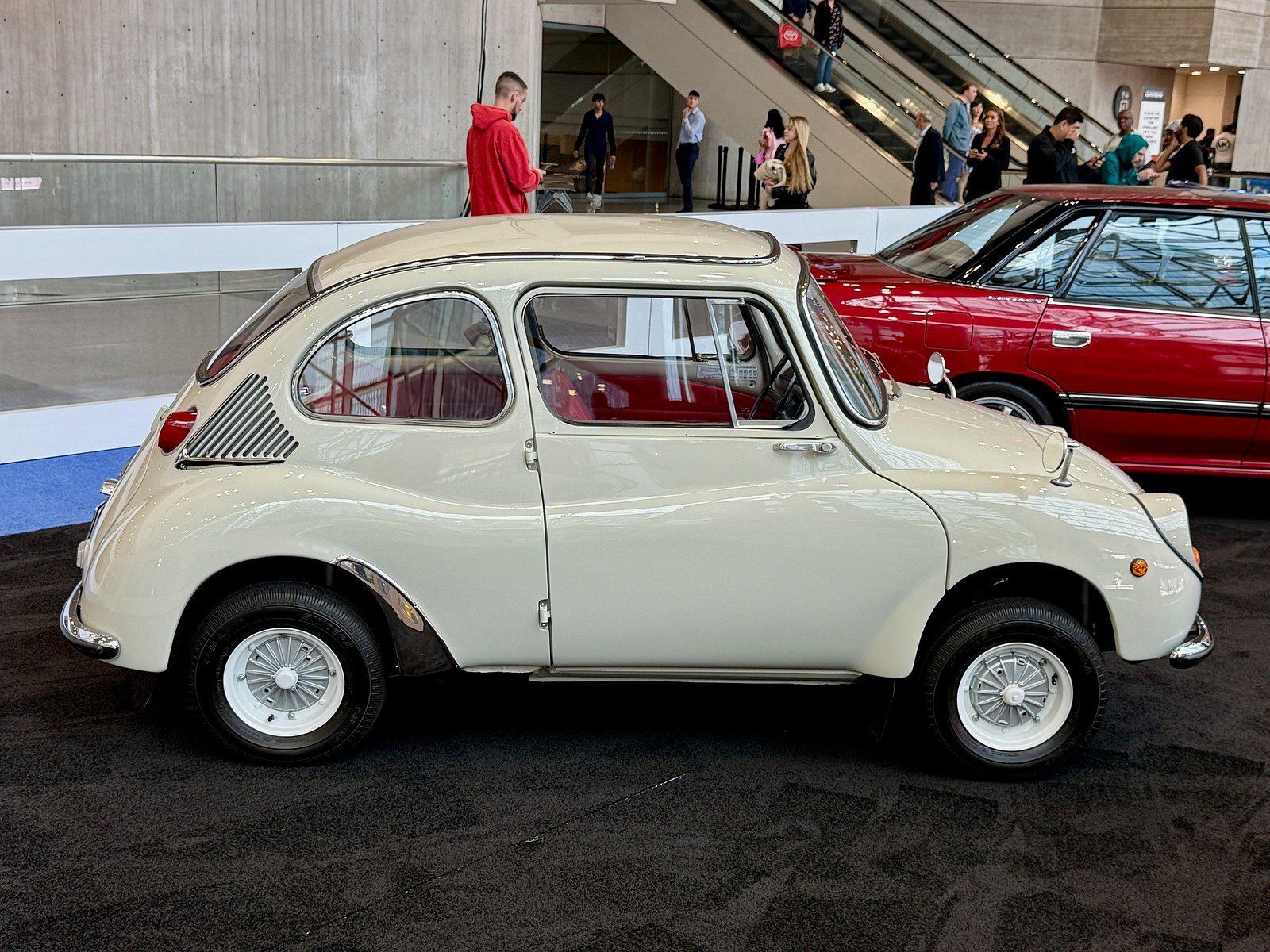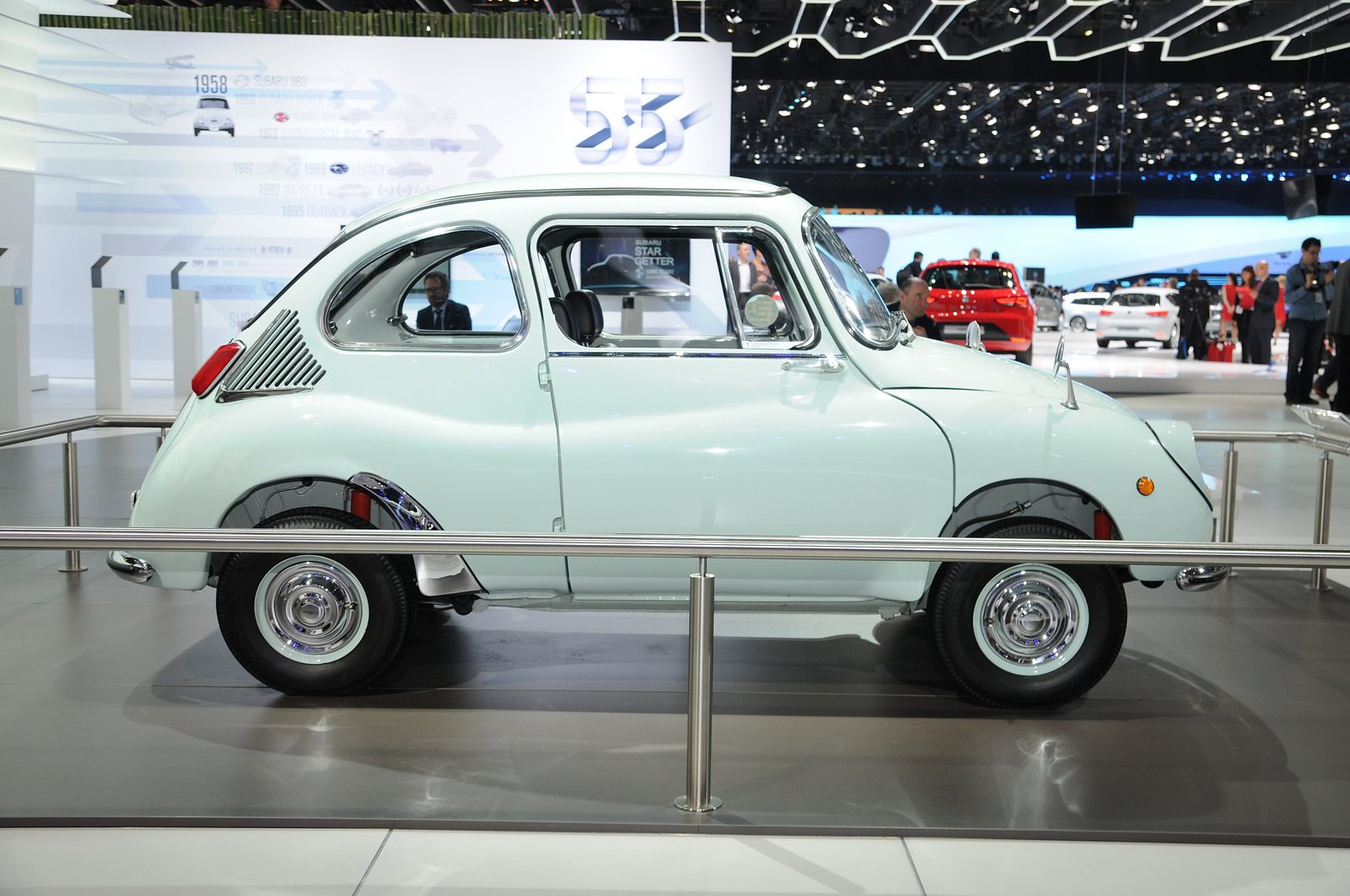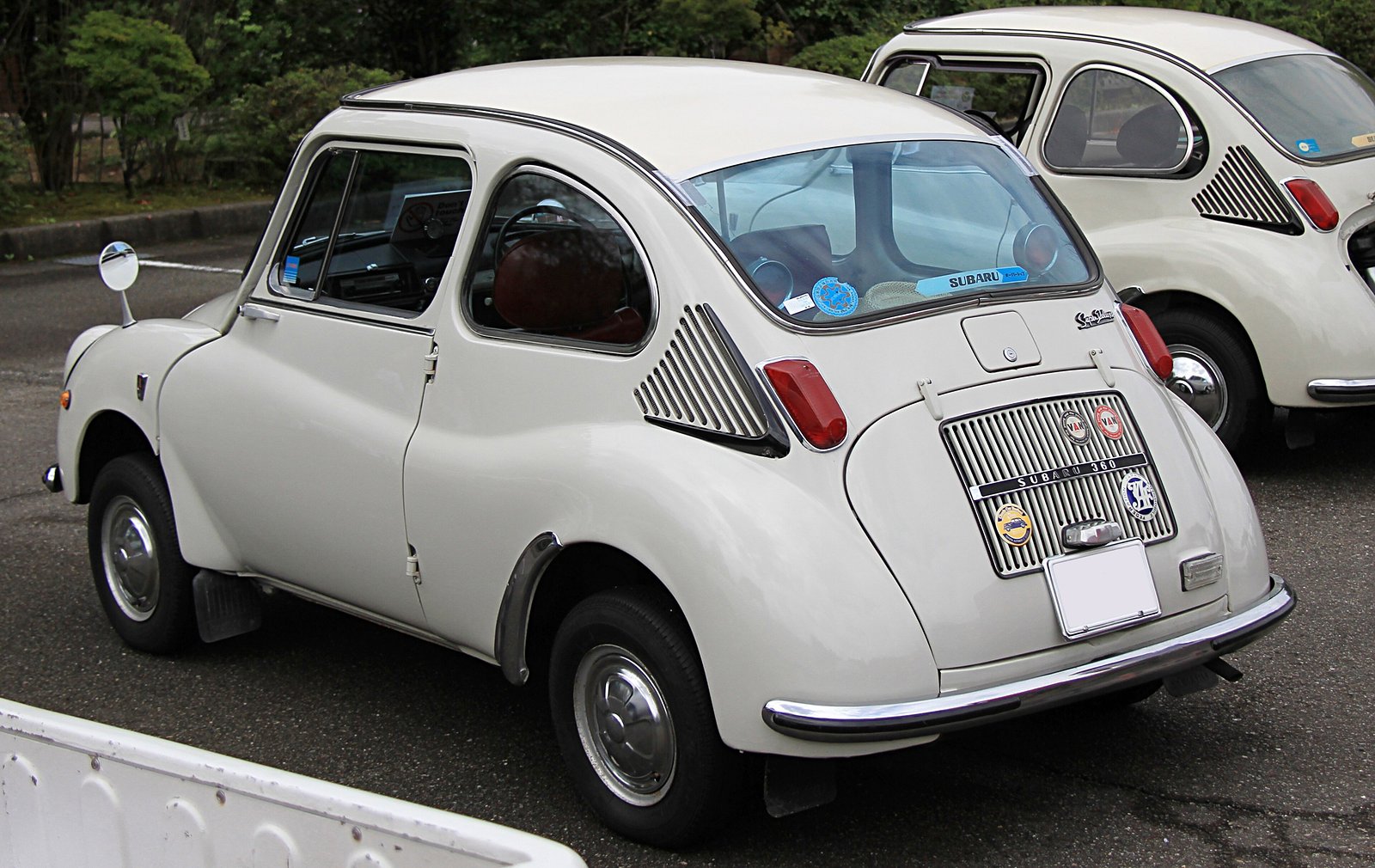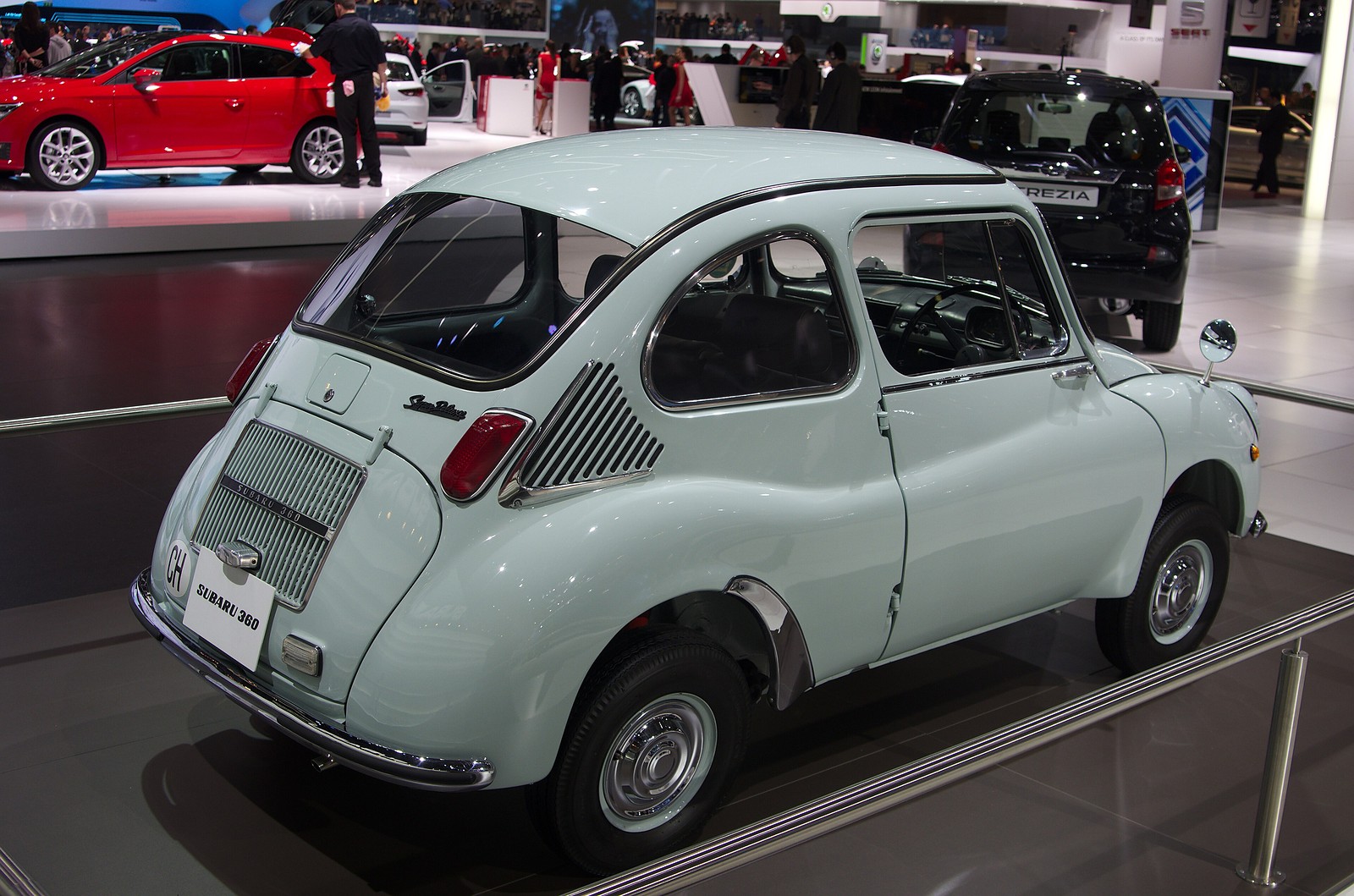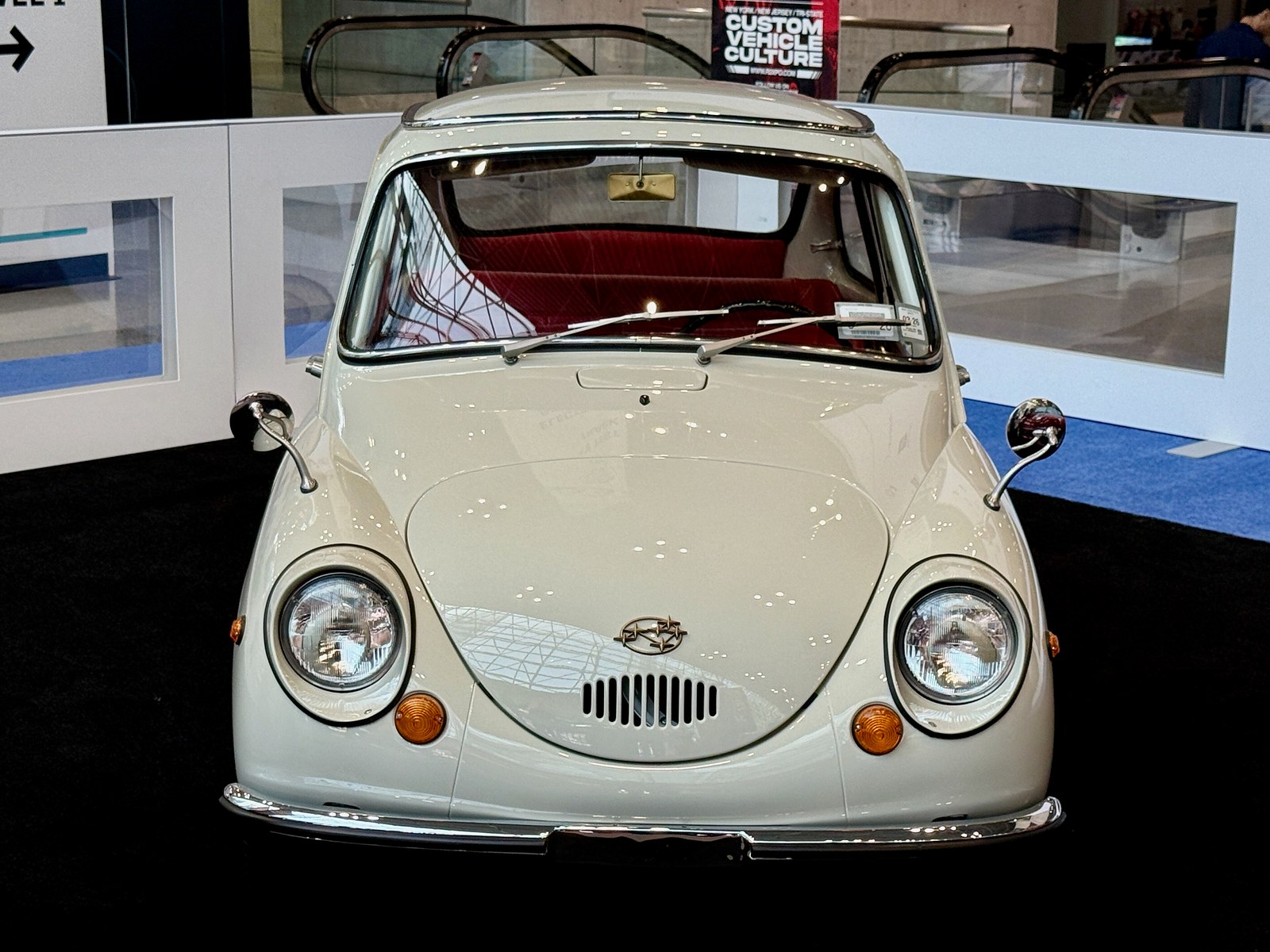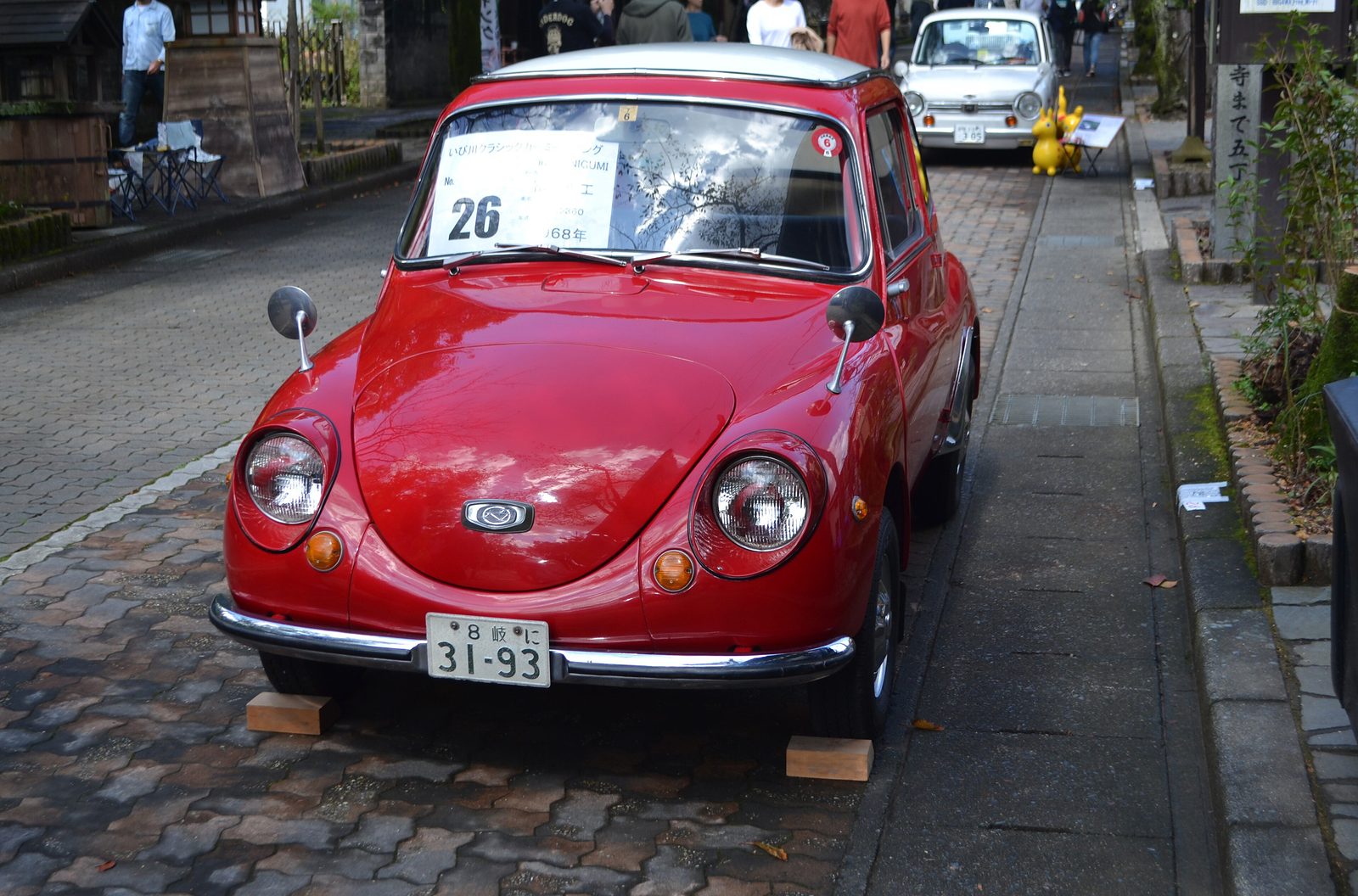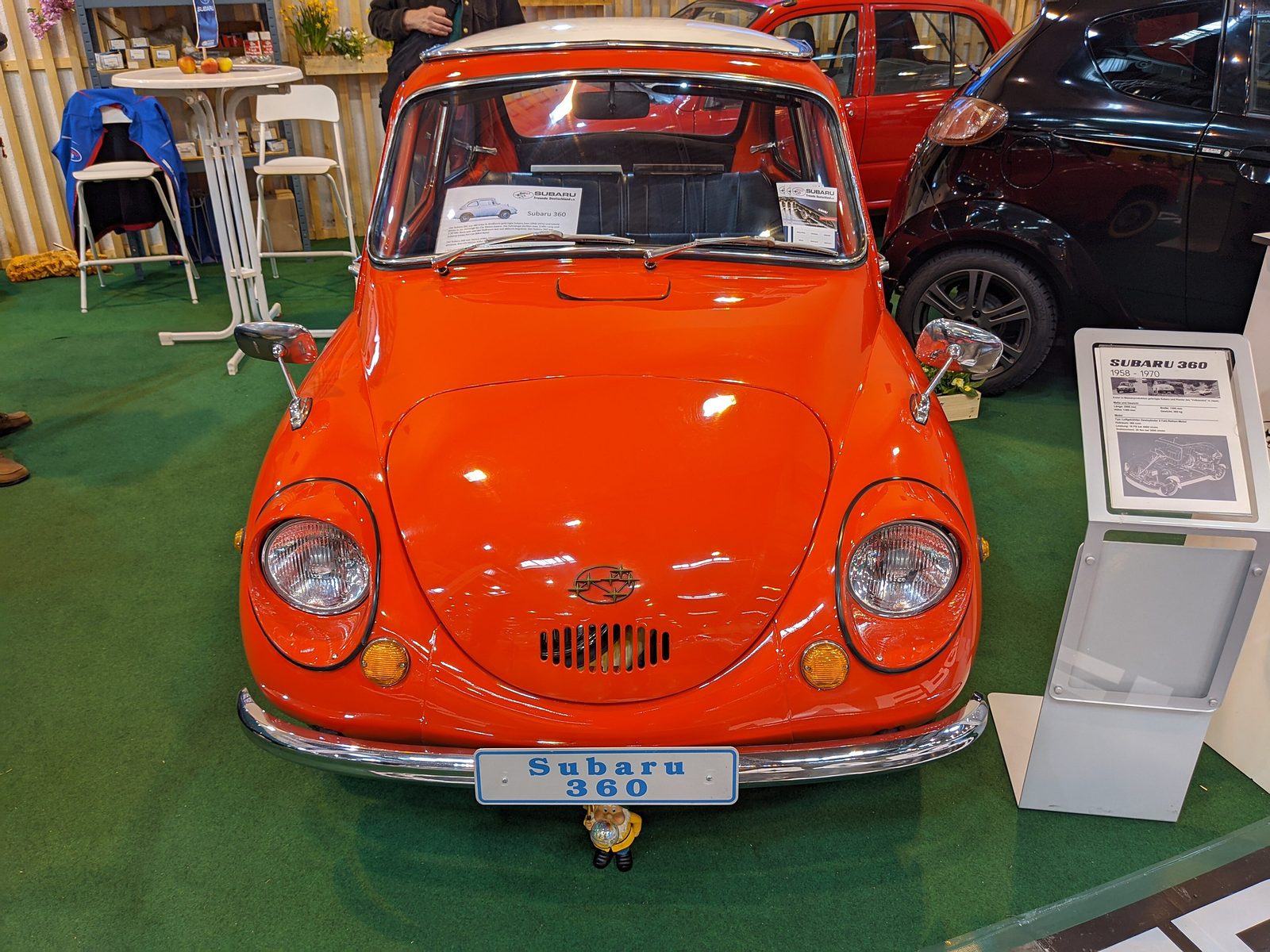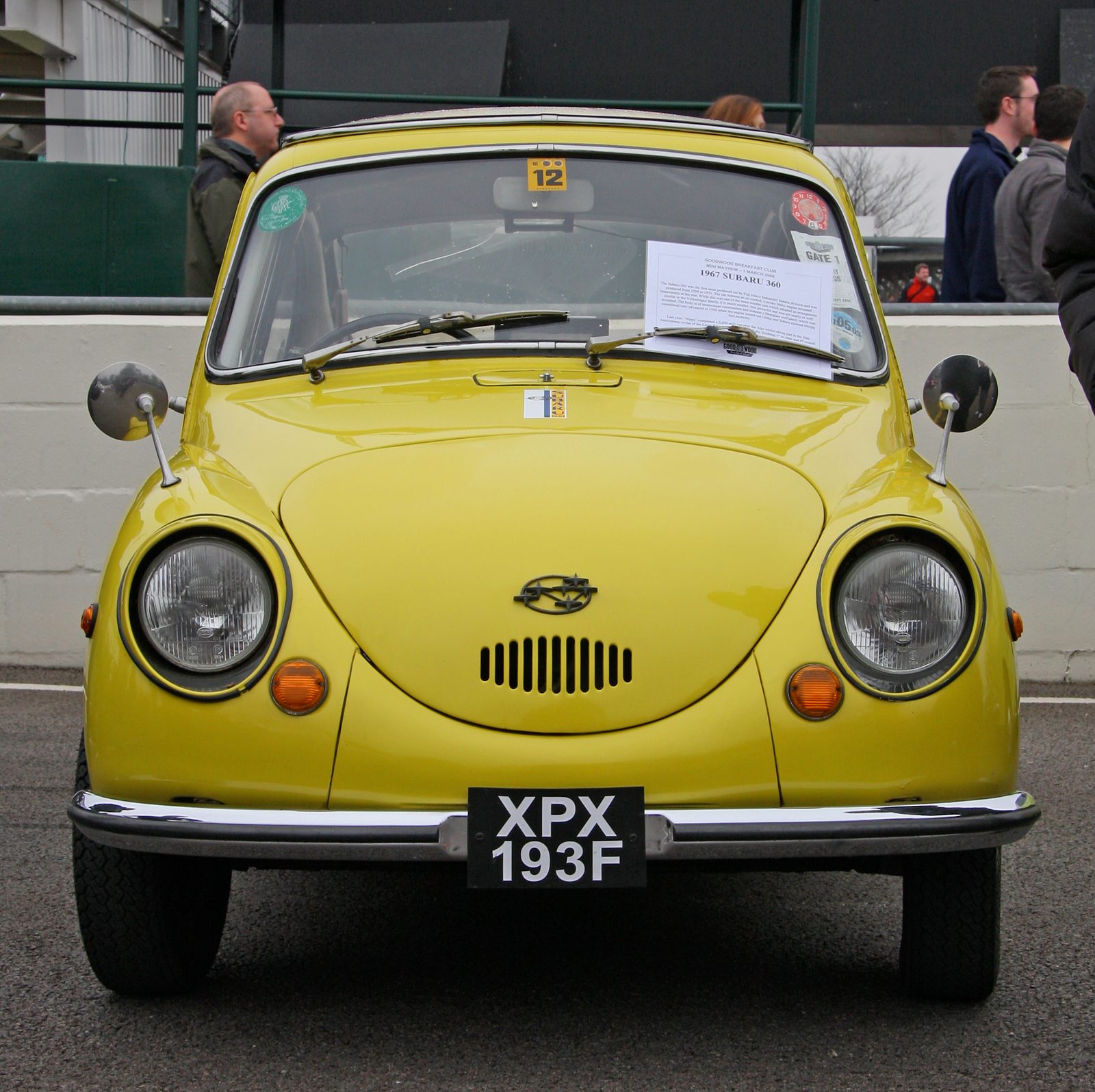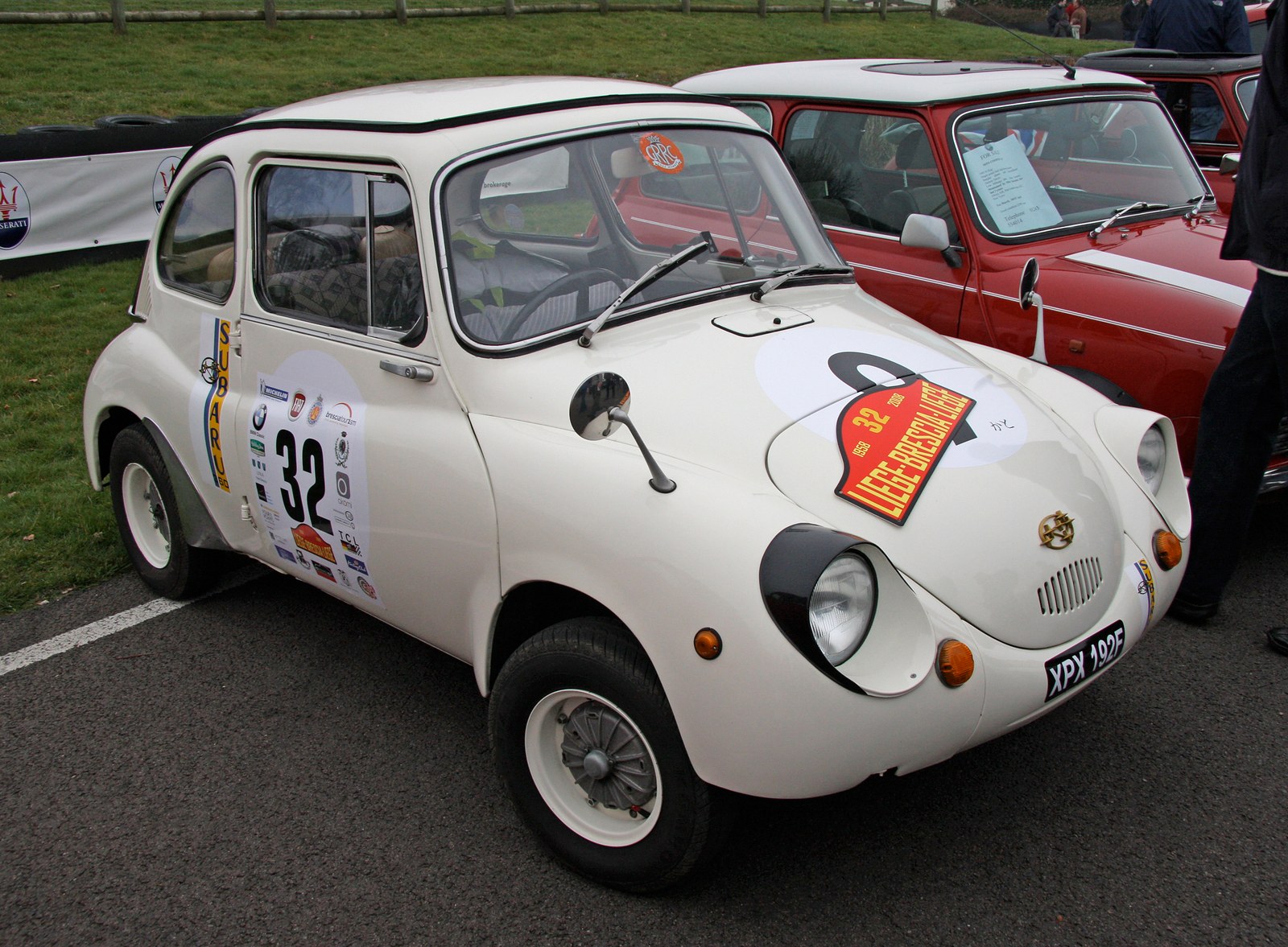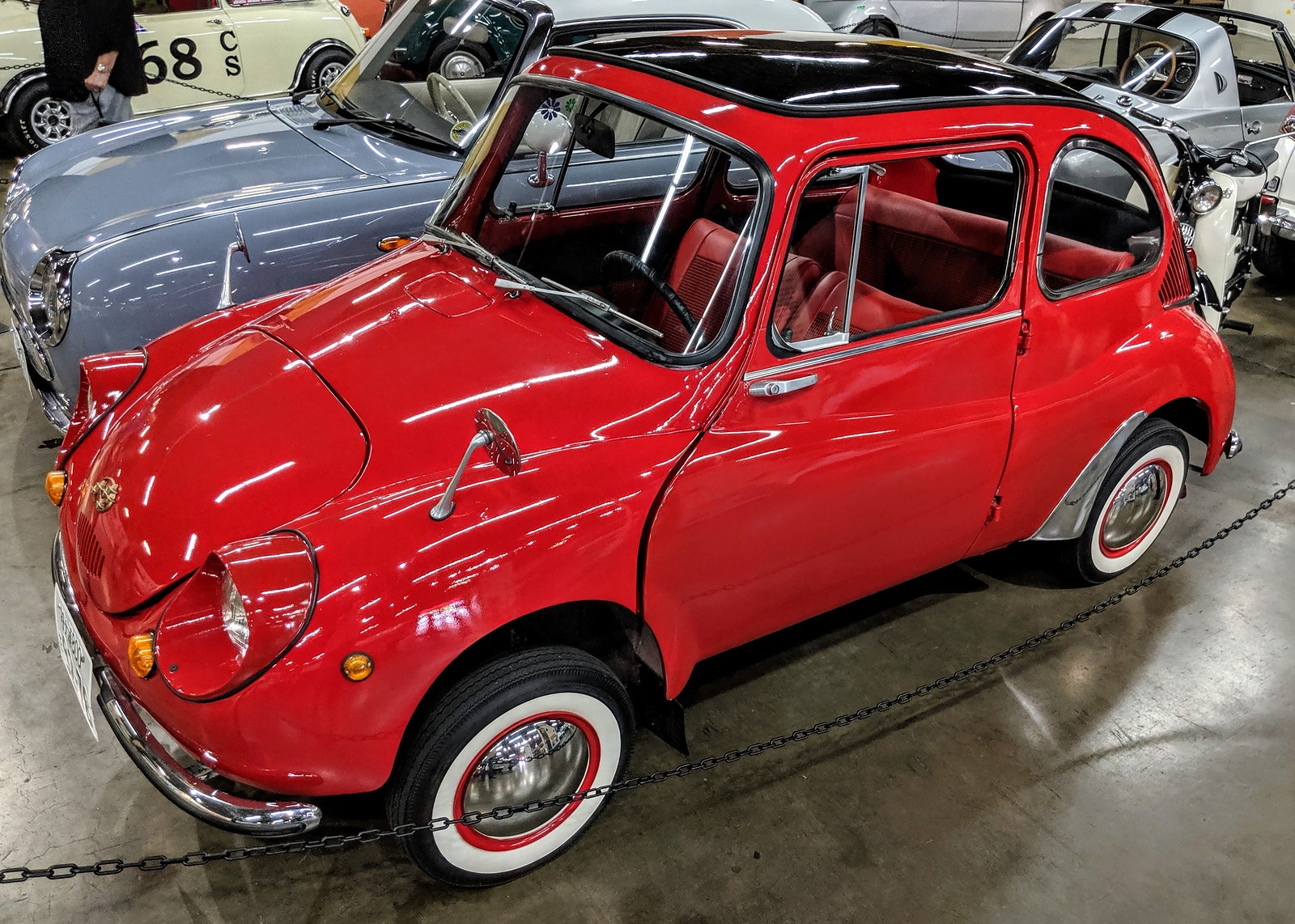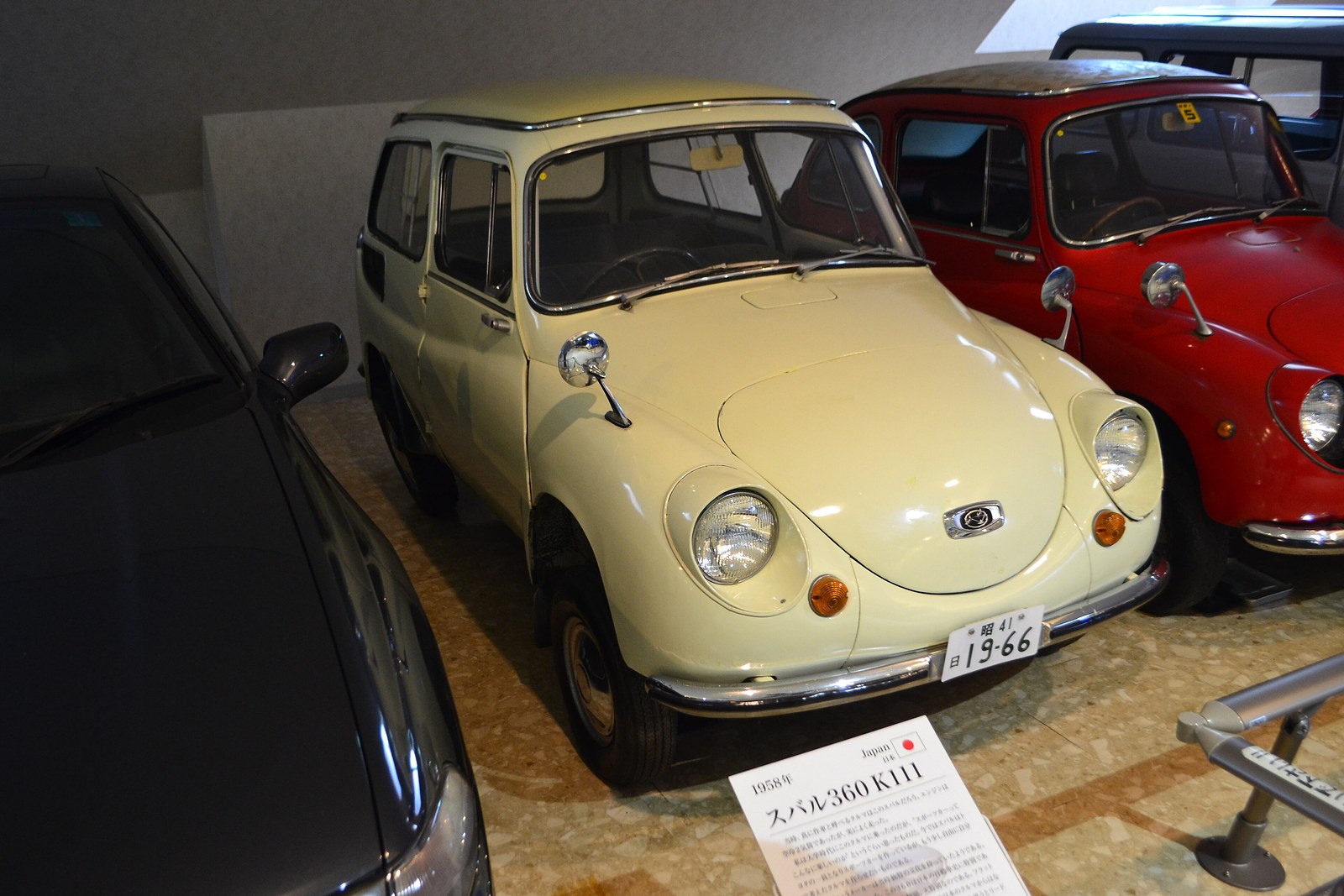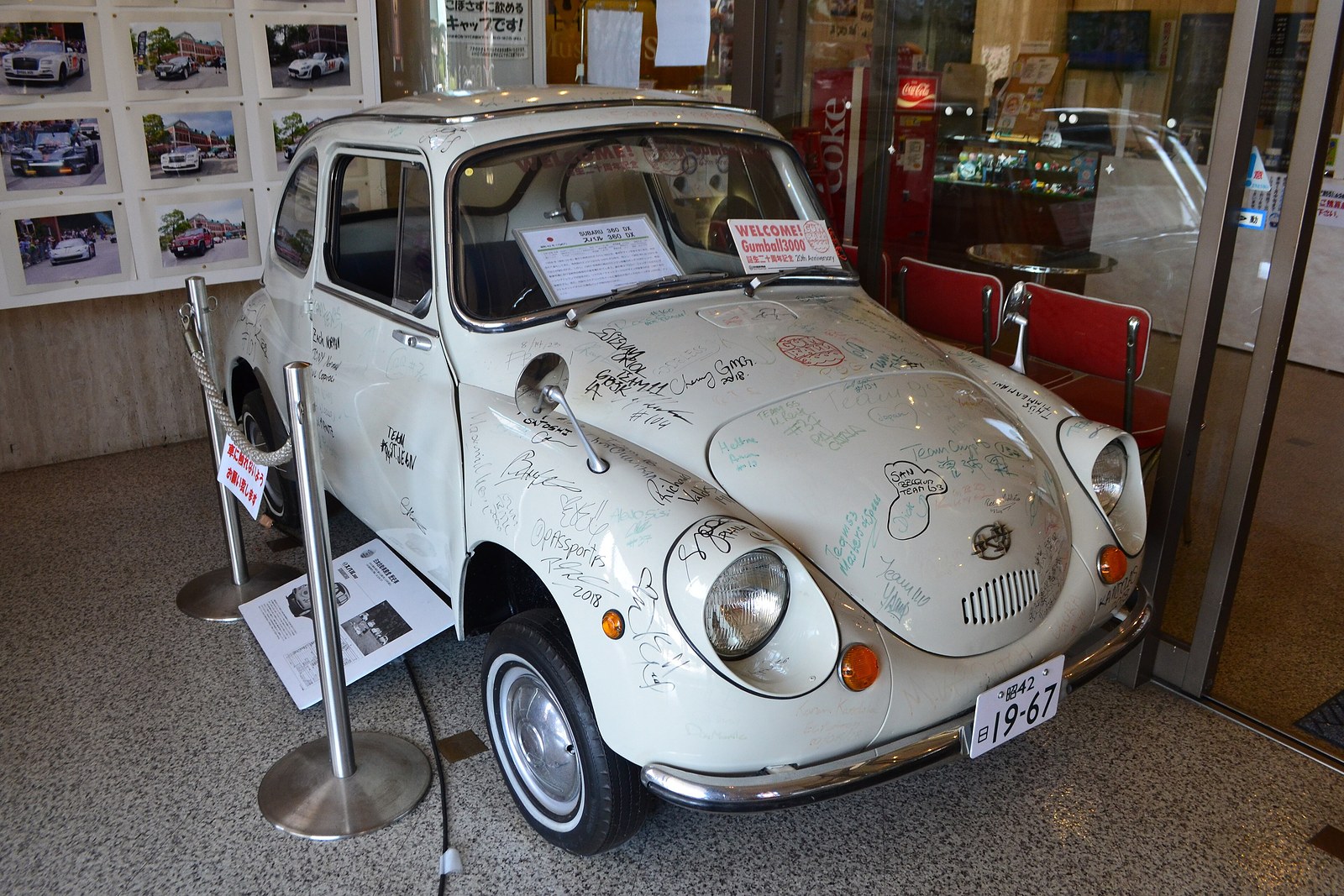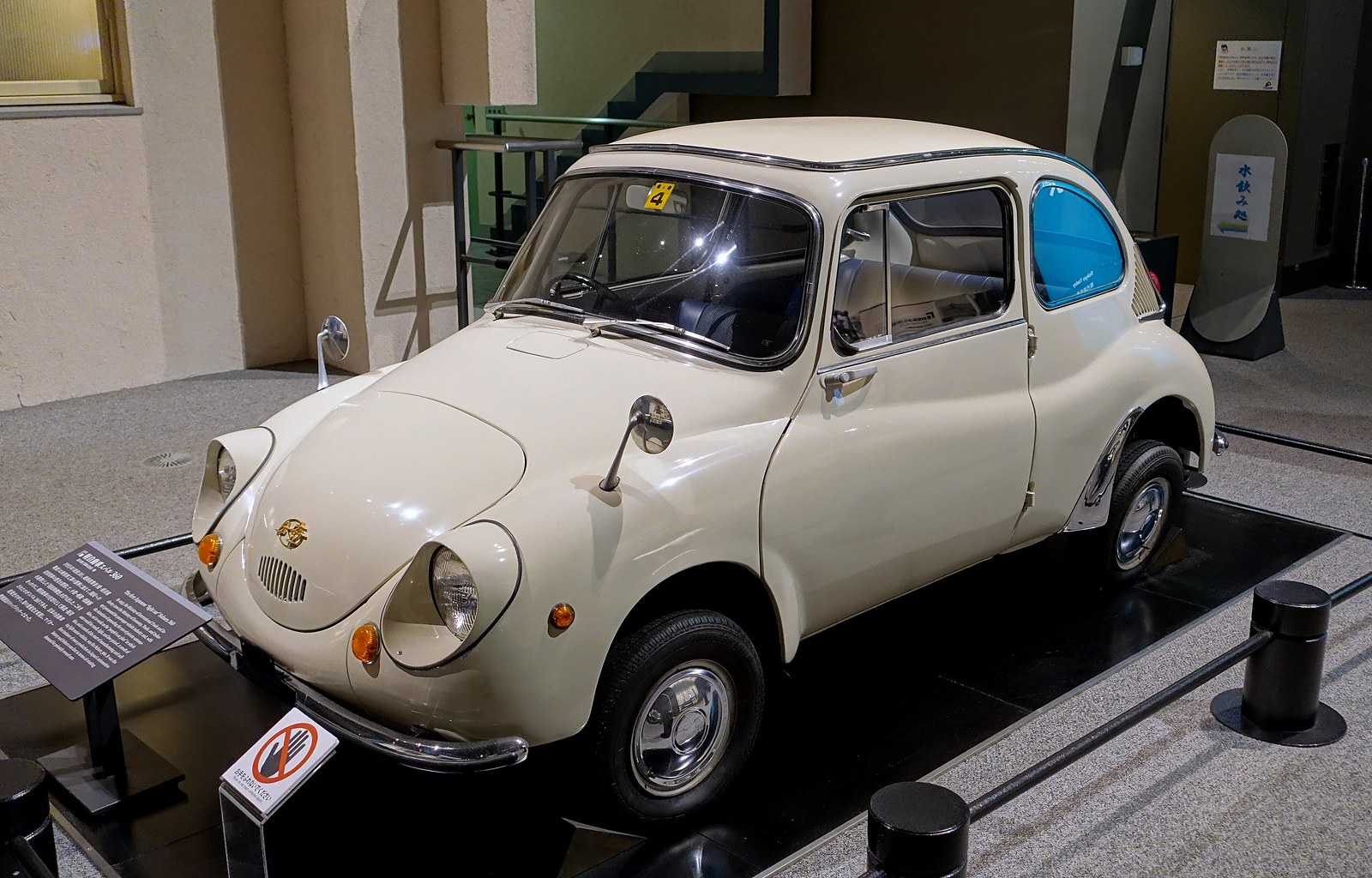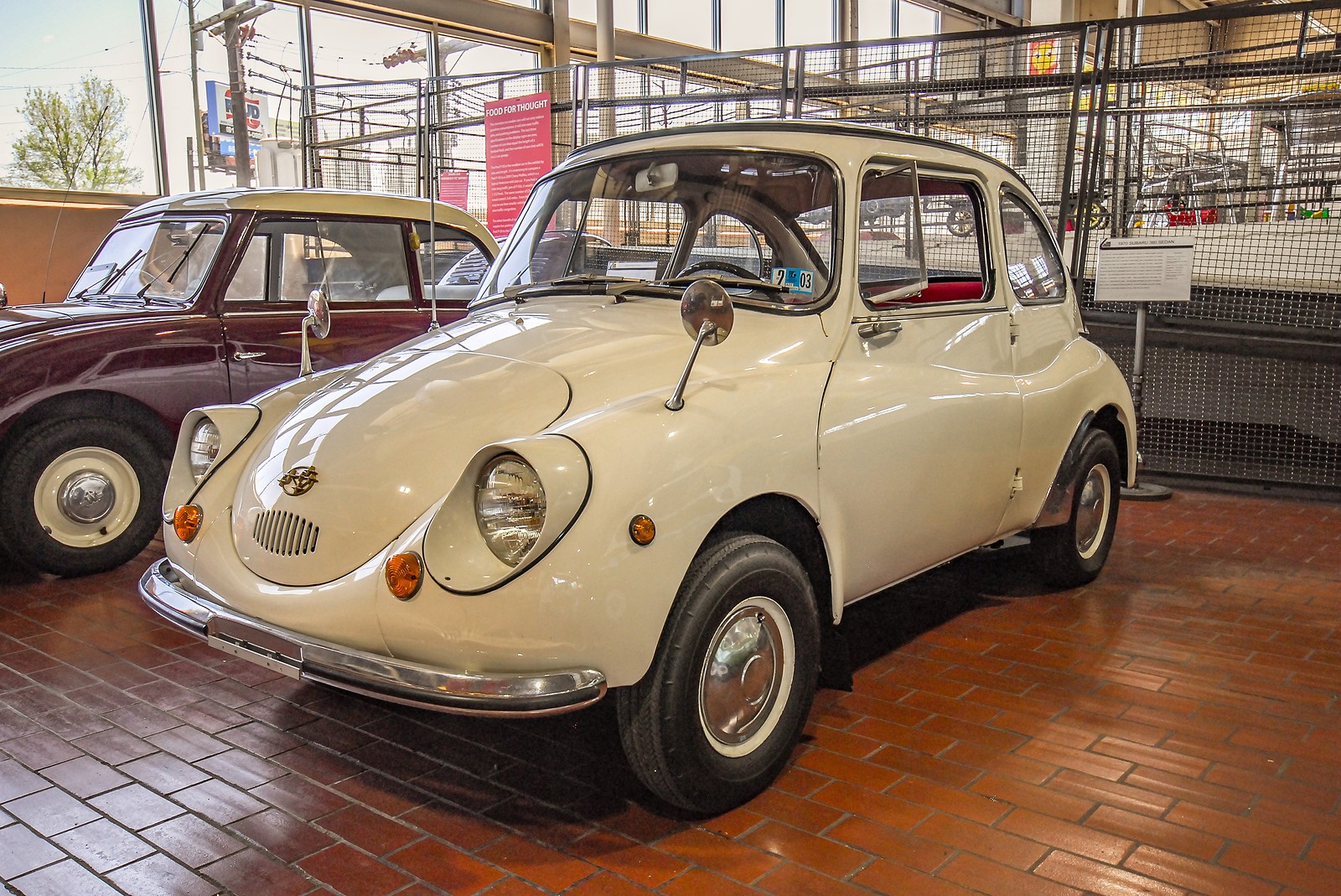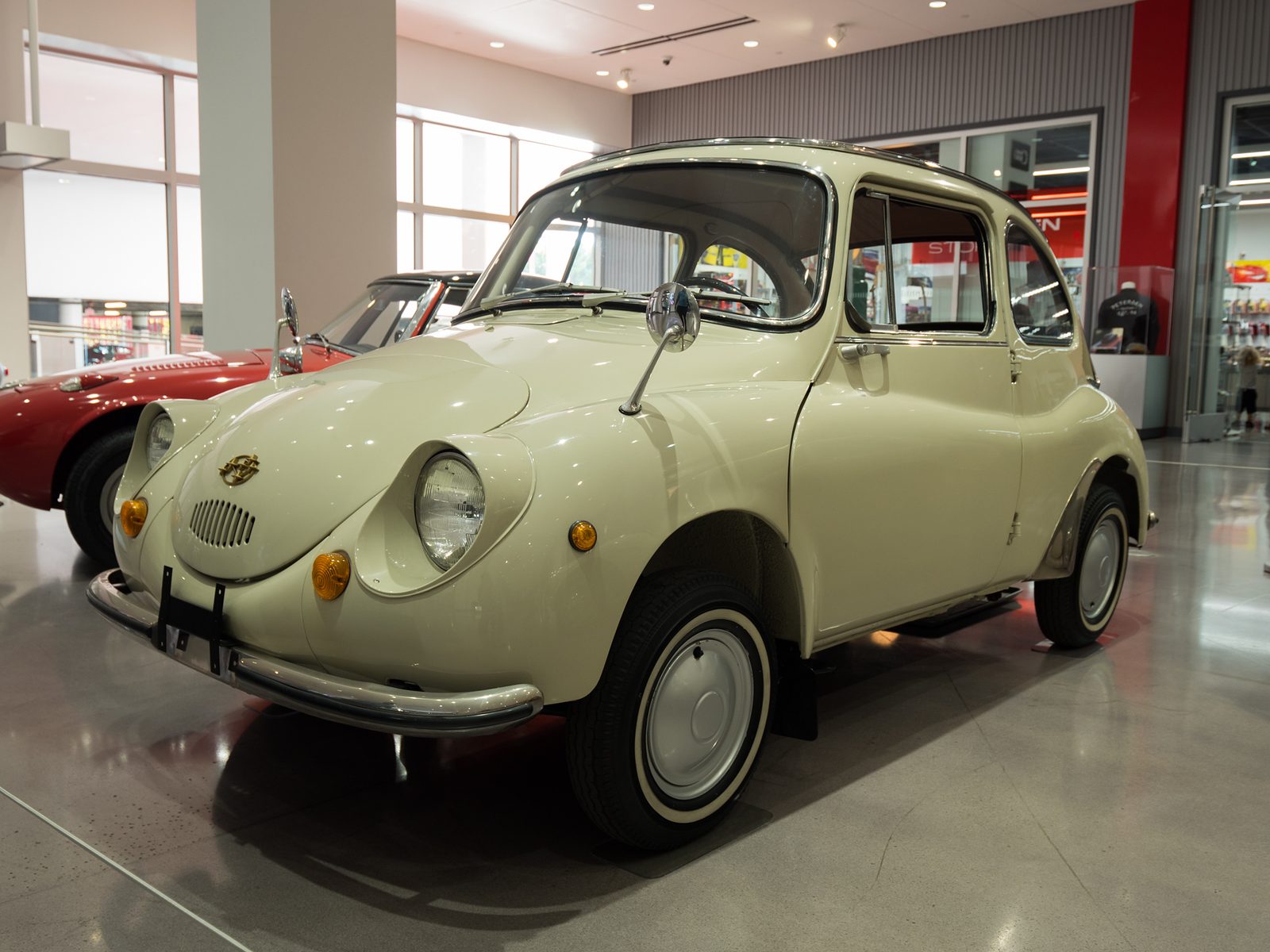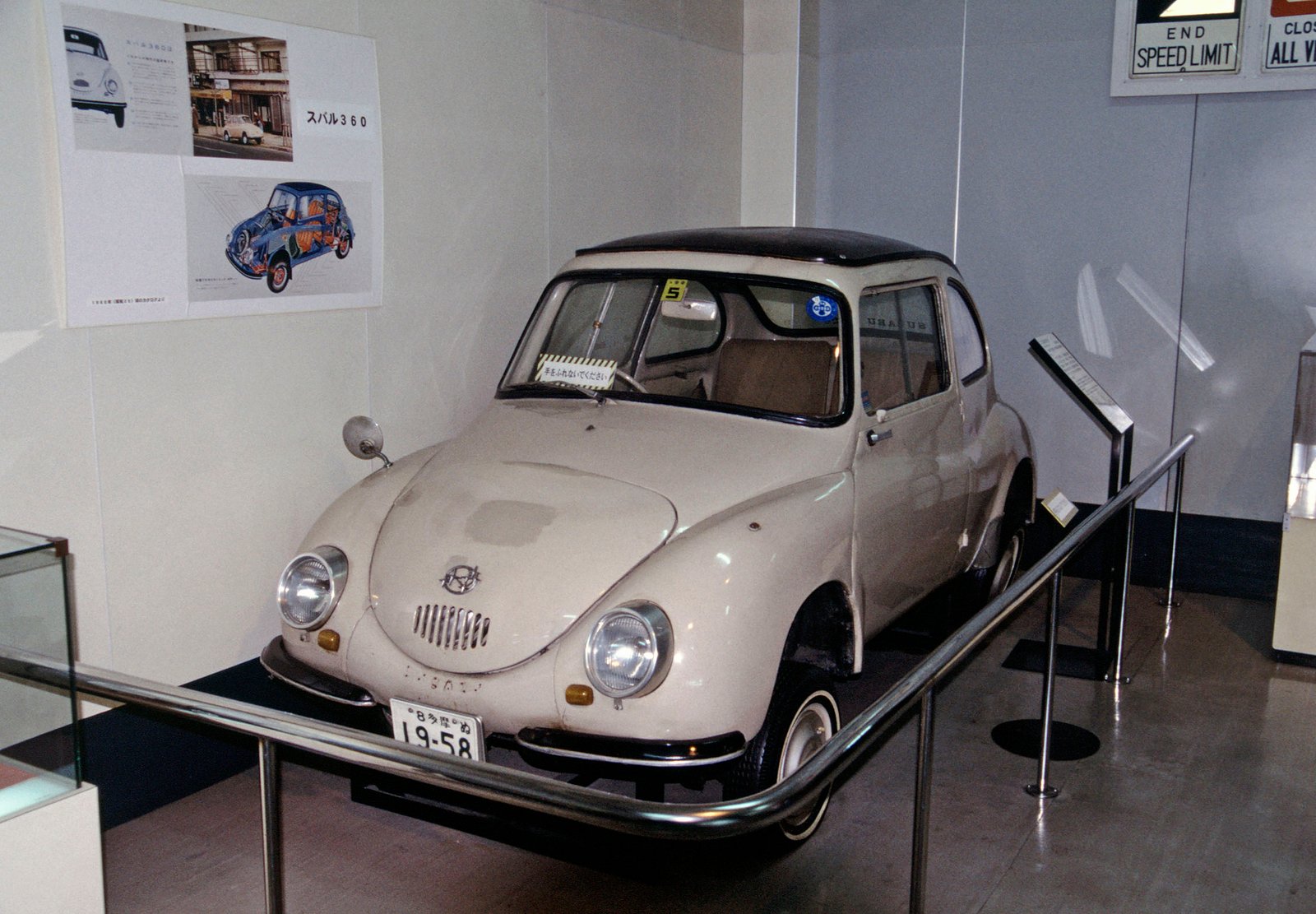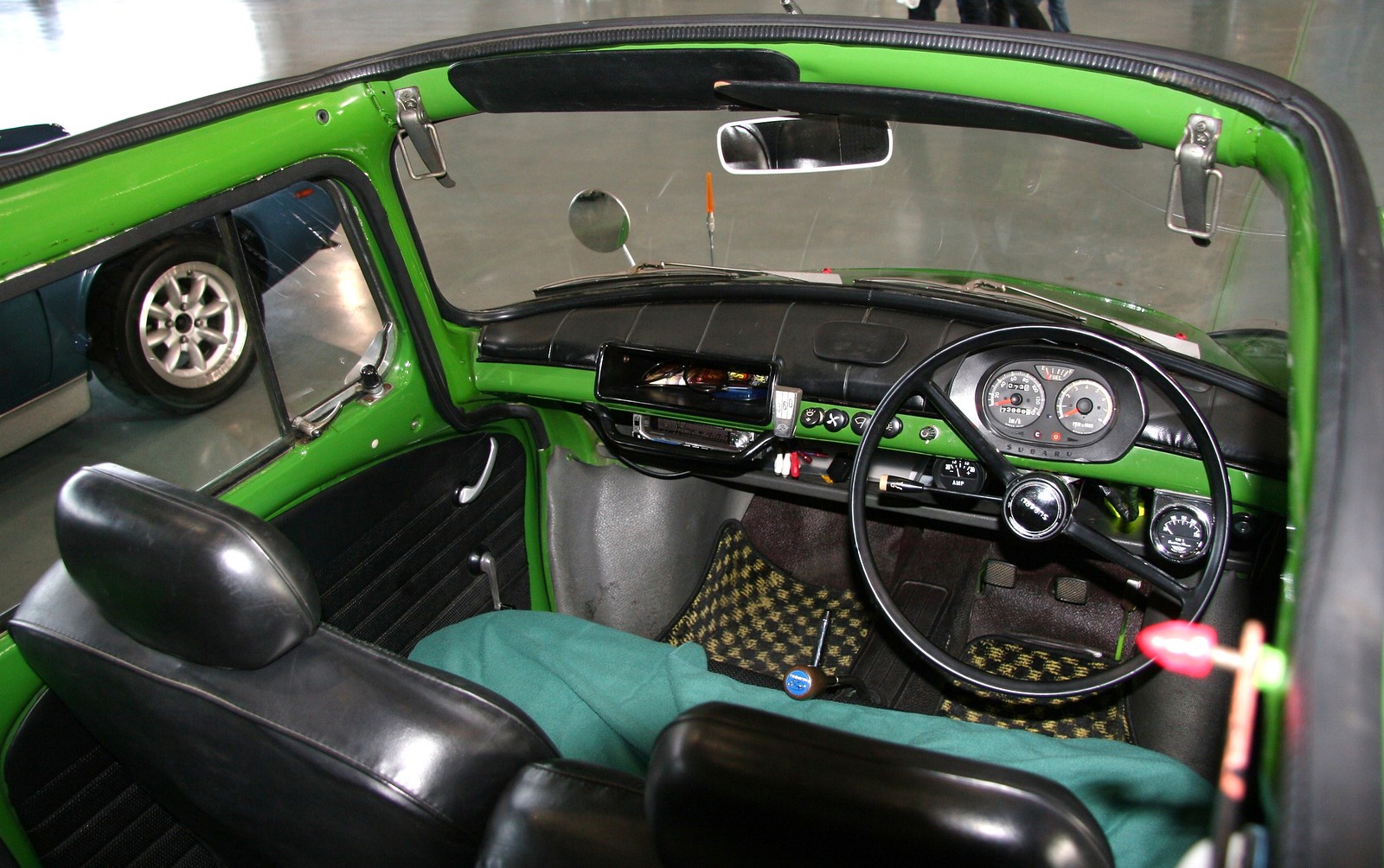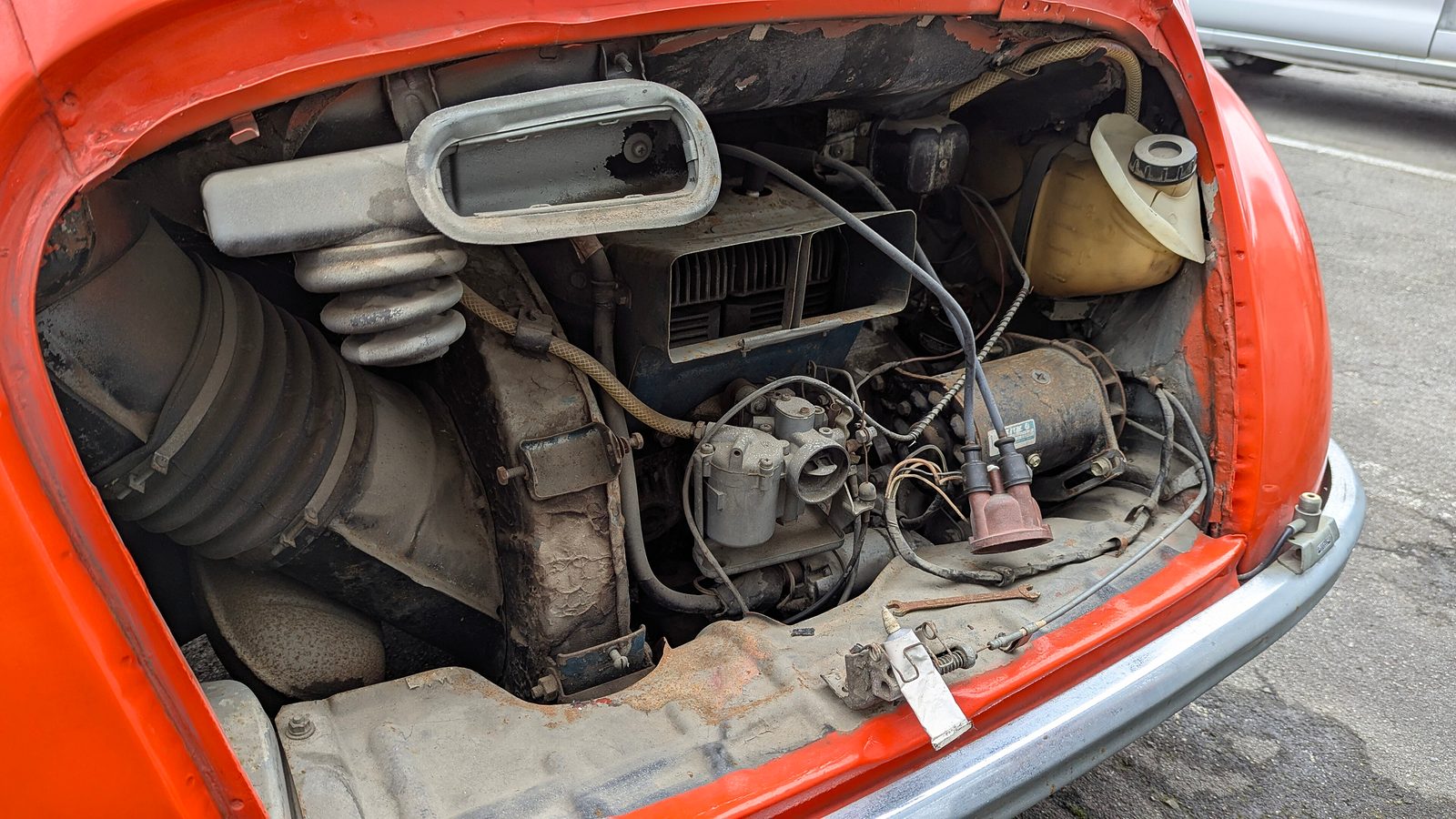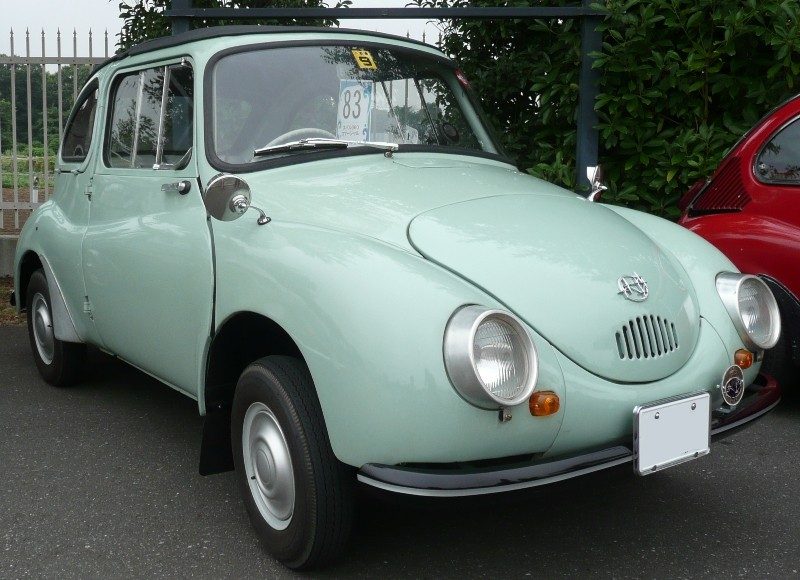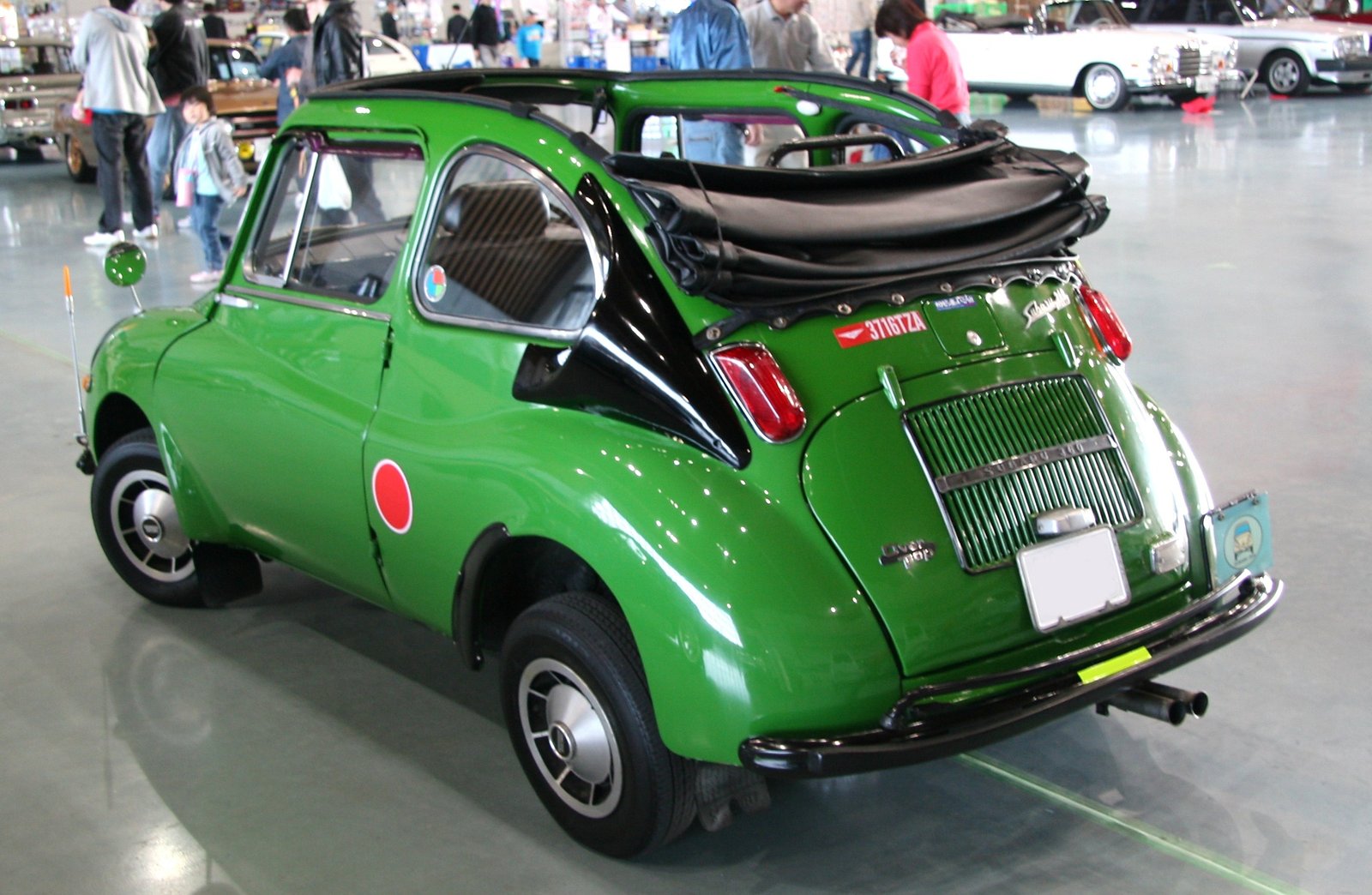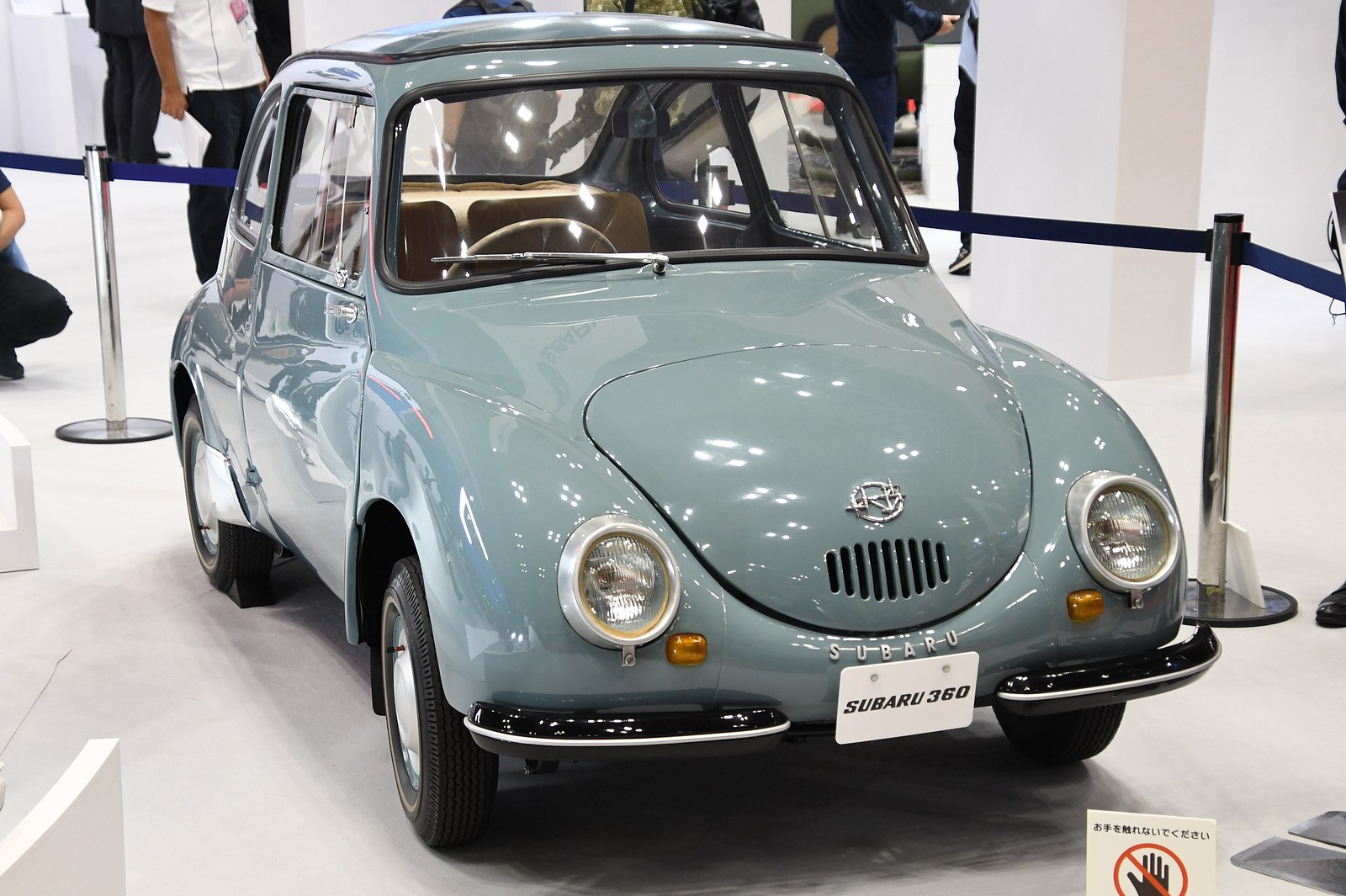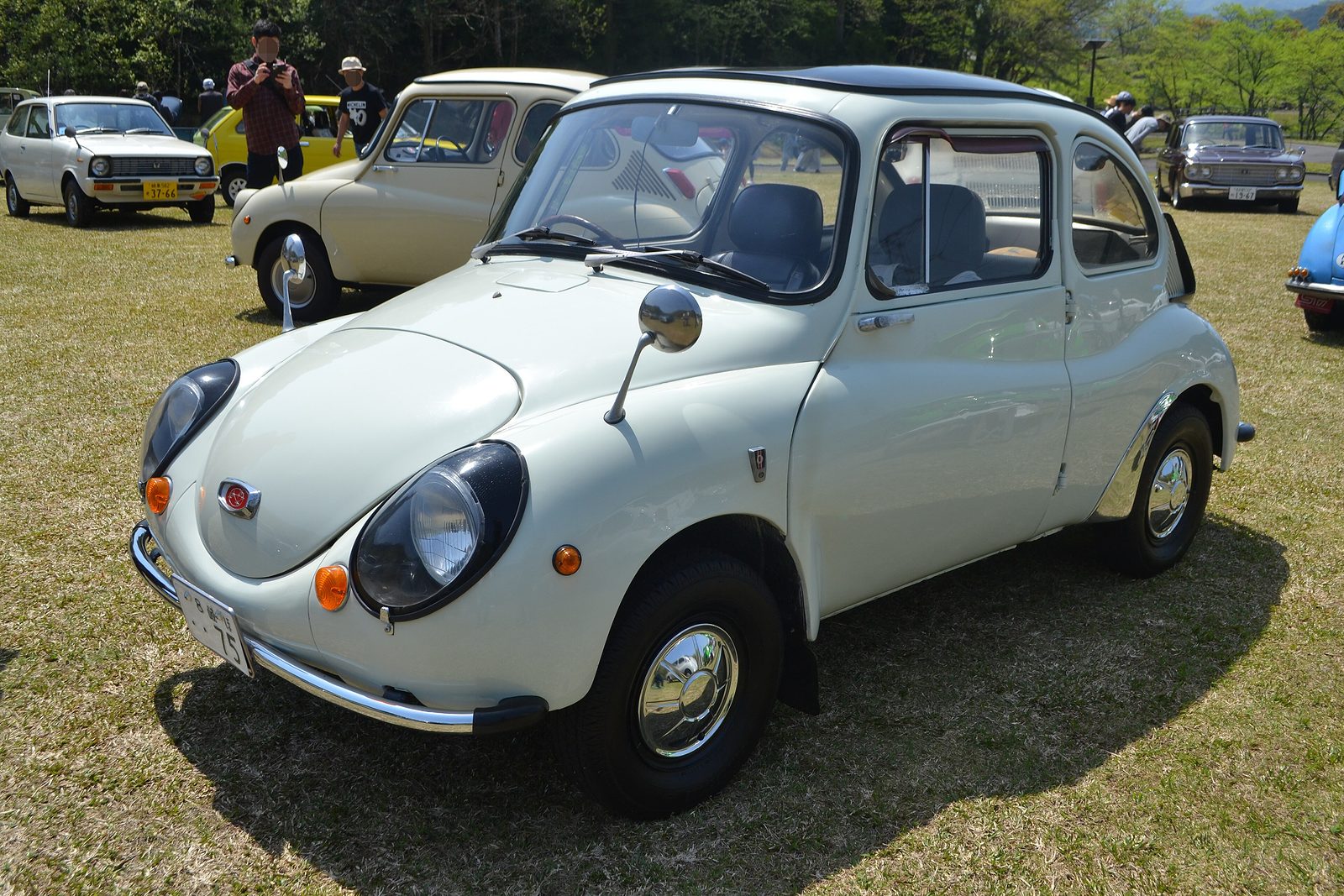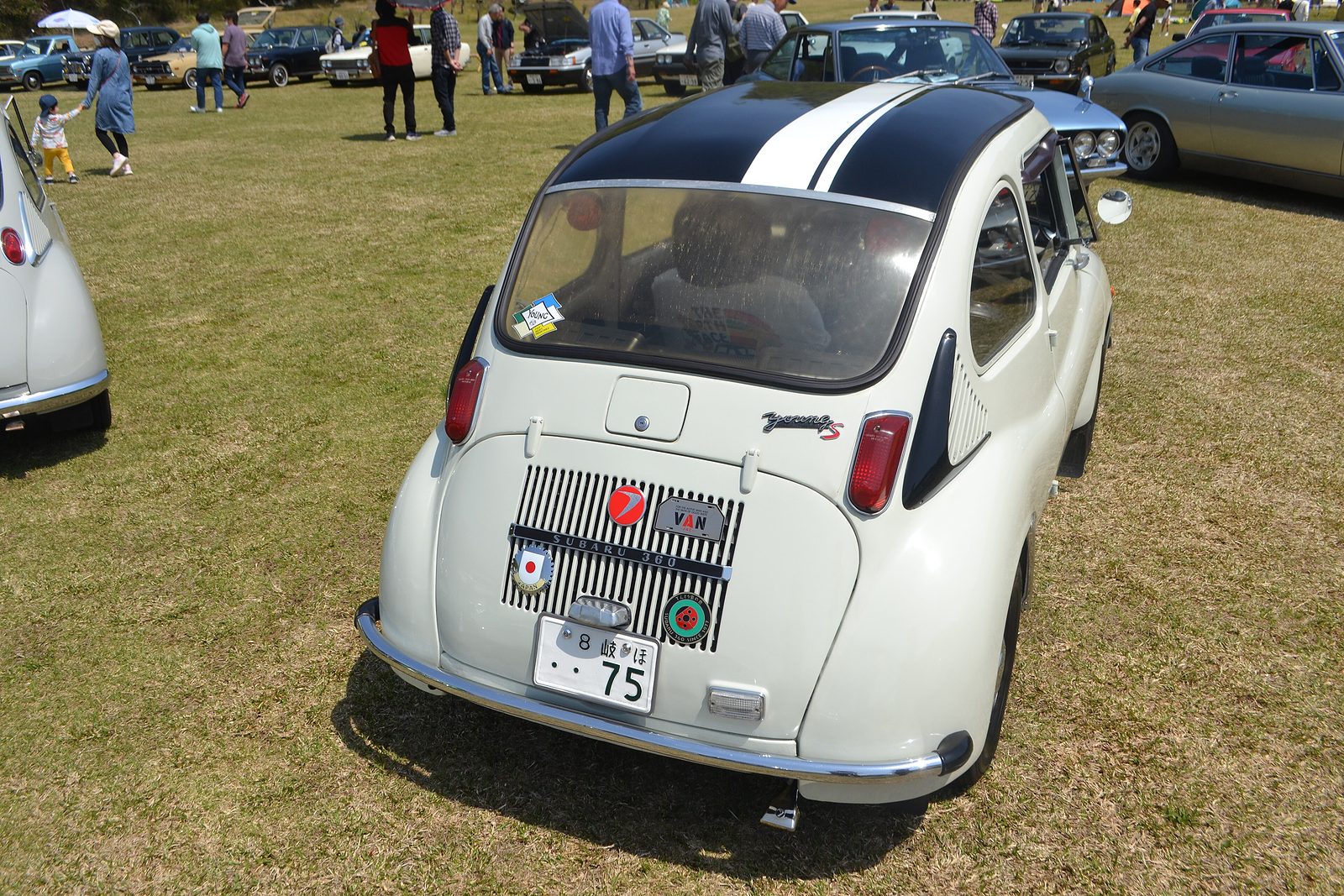
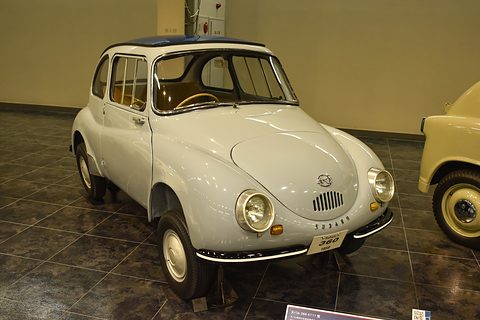
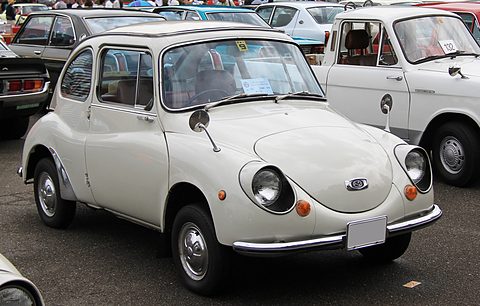
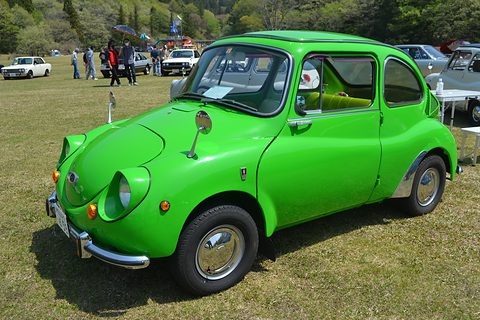
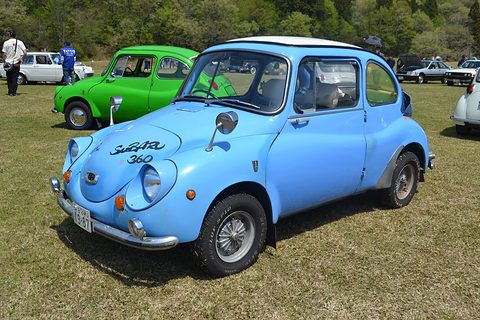
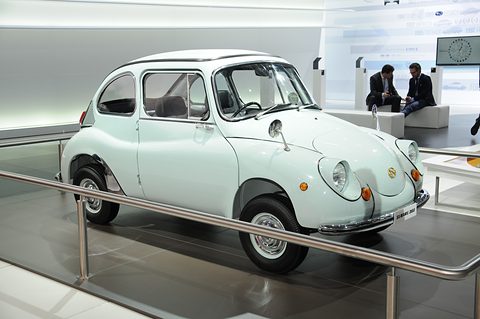
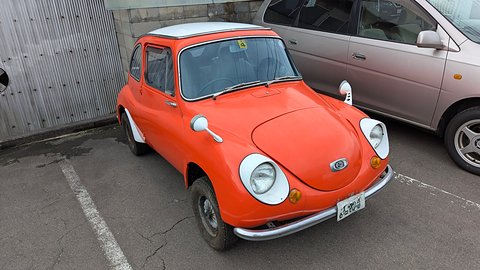
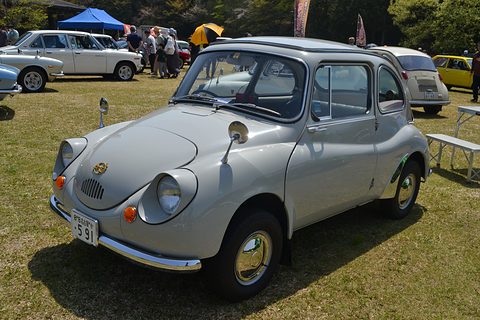
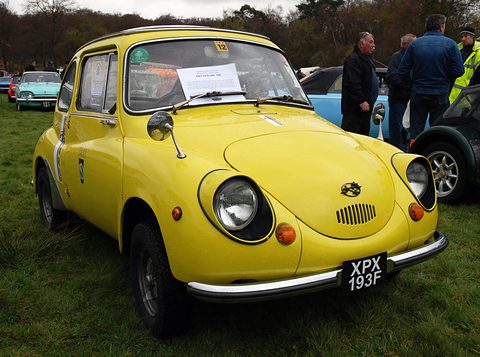
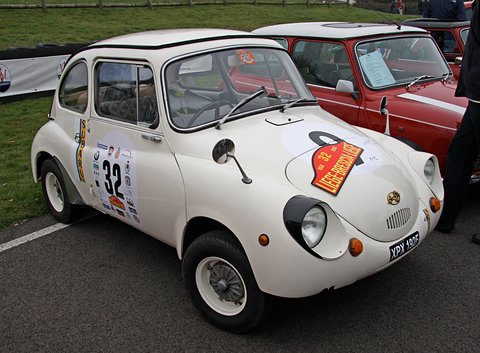
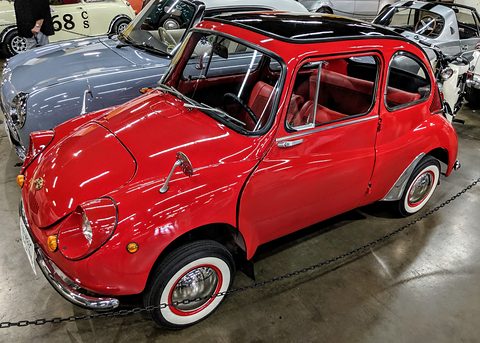
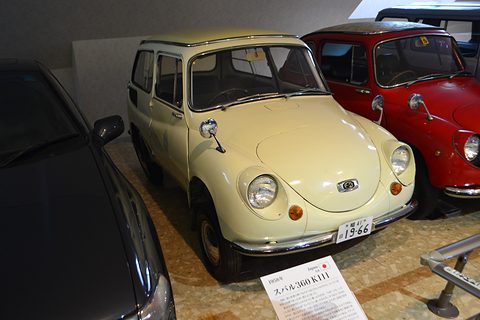
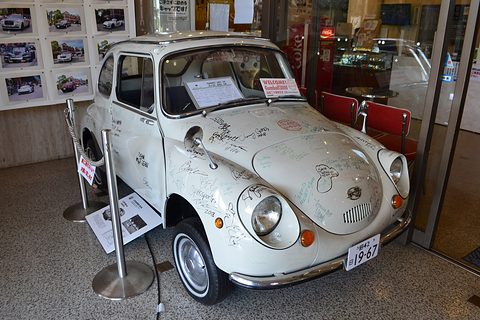
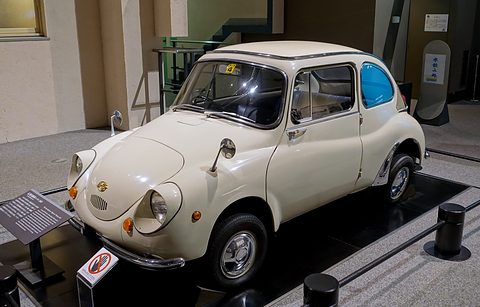
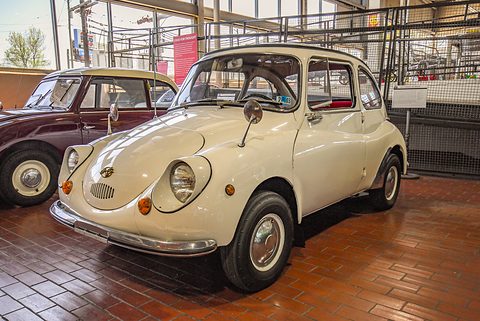
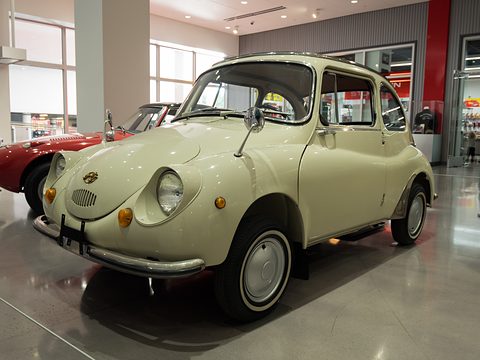
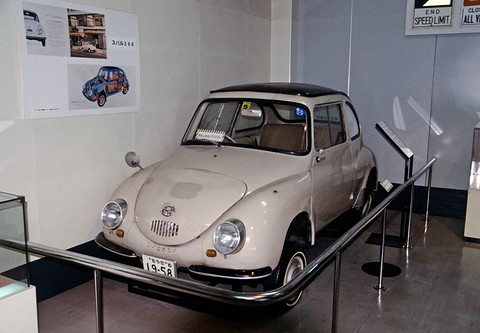
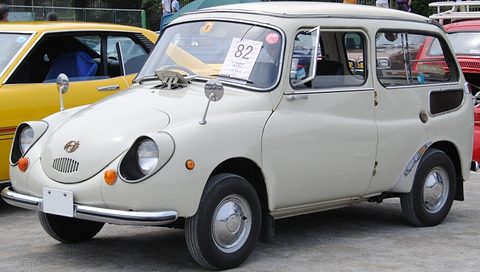
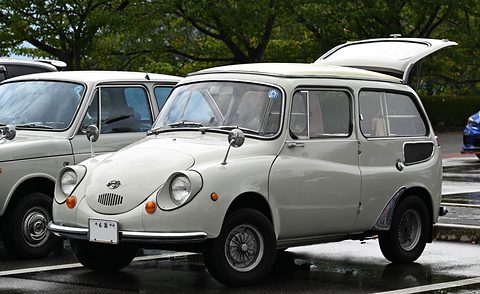
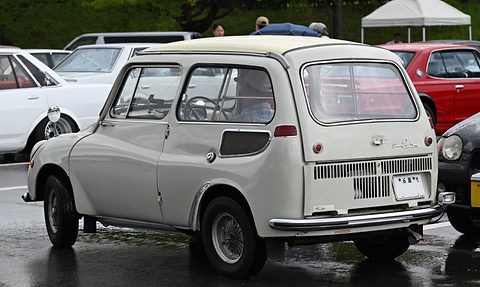
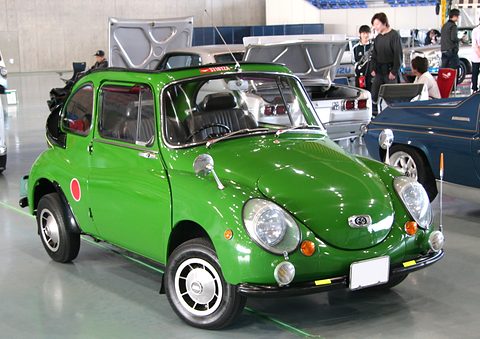
The story
History
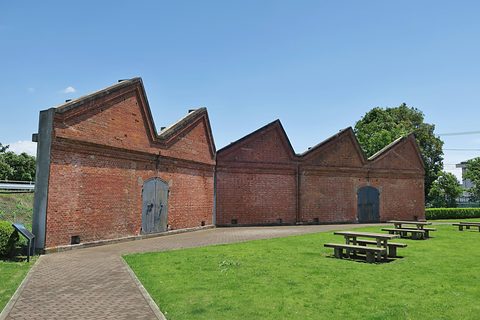
Fuji Heavy Industries was formed in 1953 from five of the twelve companies into which the occupation authorities had broken Fuji Sangyō, the post-war successor of Nakajima Aircraft.source 1 Its plants had turned to the Rabbit scooter, made from 1946 at Ōta and Mitaka, and to bus bodies at Isesaki from 1947.source 1 In 1949 Isesaki built Japan’s first frameless, rear-engined bus, the Fuji-gō, to a design by Momose Shinroku.source 1source 3 Momose, born in 1919 at Shiojiri in Nagano, had graduated in aeronautics from Tokyo Imperial University in December 1941 and joined Nakajima the next month; as a naval technical officer he worked on supercharging the Homare engine for high altitude.source 3 (He is one of the designers, and this is one of the cars of the aircraft makers: built with aviation know-how, years after the war, not because aircraft were banned.)
From 1952 the firm worked on a 1,500 cc monocoque saloon, the Subaru 1500, or P‑1. It was abandoned over its cost and the risk of the market; Momose’s biography says the main bank, the Industrial Bank of Japan, a big shareholder in Nissan, would not back it.source 1source 3 In December 1955, on the day it dropped the 1500, Fuji Heavy Industries decided to build a 356 cc engine on the Mitaka scooter-engine line and a four-seat kei car around it.source 1 Subaru’s own history dates the start to a planning meeting at Isesaki on 9 December 1955. The project was called K‑10.source 2
Four adults in a kei car
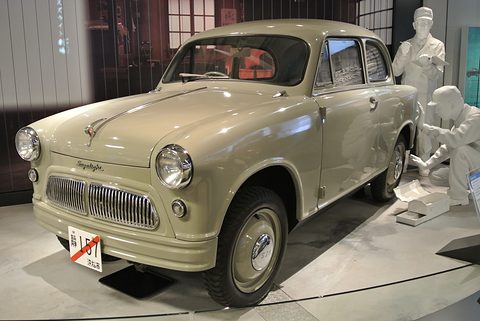
The kei rules were changed to let two-strokes have 360 cc, as four-strokes already did; the change came in 1954–55, in September 1954 by Japanese Wikipedia’s article on the 360, or decided in October 1954 to apply from April 1955 by its article on the Suzulight.source 1source 4 The only serious kei passenger car on sale was the Suzuki Suzulight, which at first sold only a few a month, and most rivals were two-seaters capable of 45 to 65 km/h.source 1 The aim was to do better than the people’s car that the ministry of trade and industry, MITI, had proposed.source 1 The brief was four adults within the kei dimensions, 350 kg, a 350 cc-class engine of 15 PS and 80 km/h, and a car that could go anywhere a bus route ran.source 1 Subaru’s history gives the team’s watchword: a car that could go flat out at 60 km/h over bad roads.source 2
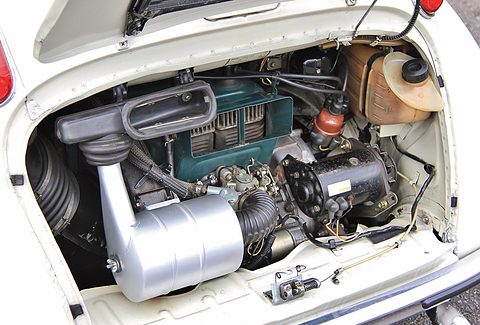
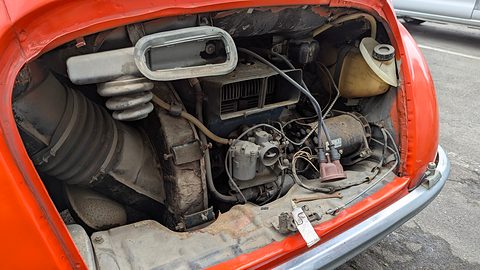
Isesaki, under Momose, took charge of the design, the body, chassis and suspension and all the road testing; Mitaka, under Kikuchi Shōji, built the powertrain, and Kikuchi often rode a Rabbit over unmade roads to Isesaki for meetings.source 1 His team argued for front-wheel drive. Momose chose the engine and drive at the back, because cheap, durable constant-velocity joints did not yet exist in Japan.source 1 Early test beds ran on a channel frame, with a two-stroke twin from a Lloyd LP400 standing in until Fuji’s own engine, the TB-50, was ready; in production it became the EK31.source 1
A shape taken from clay
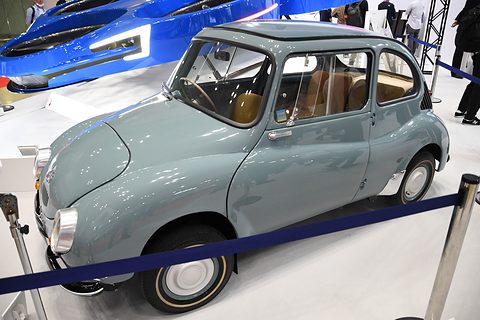
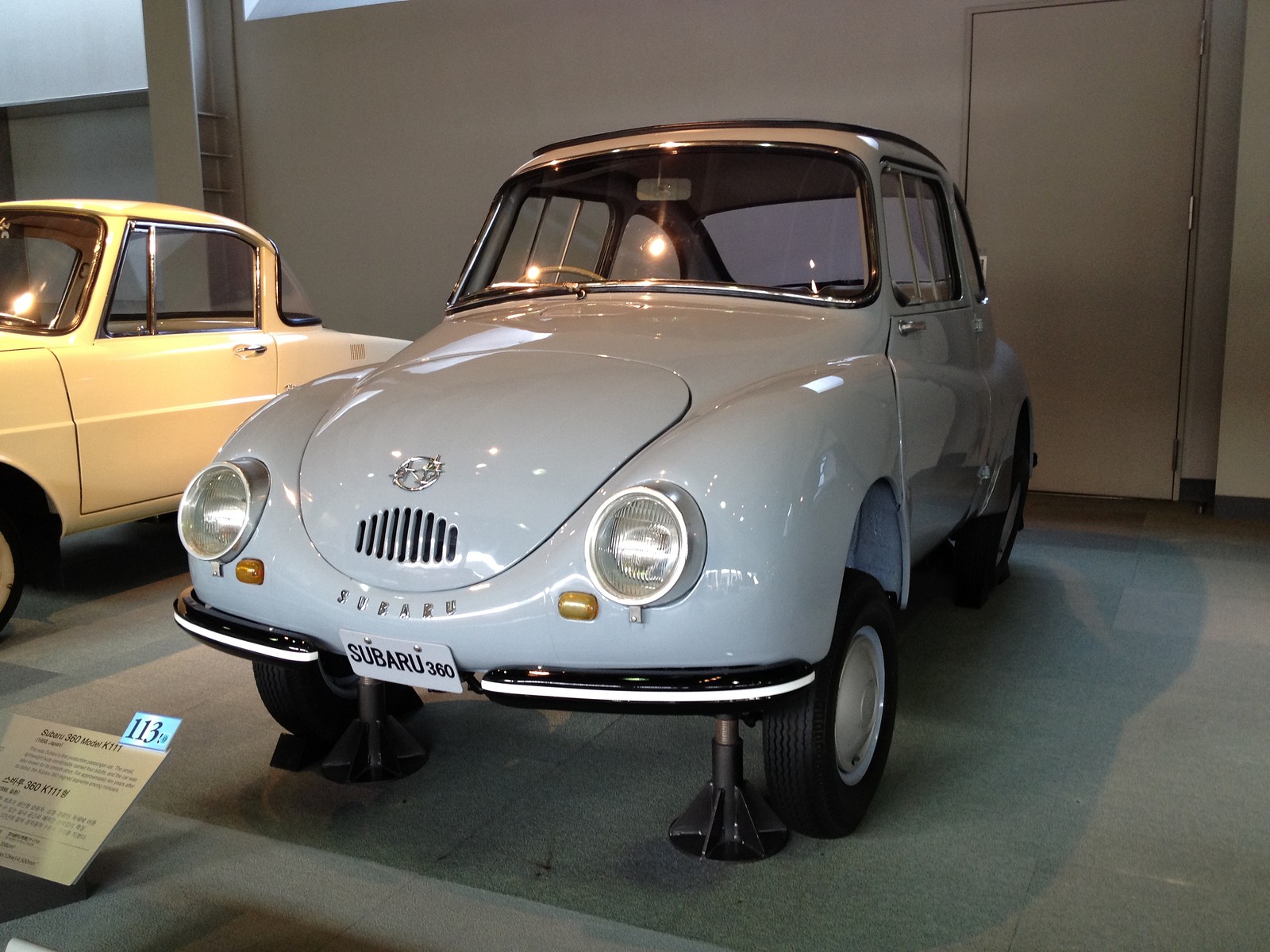
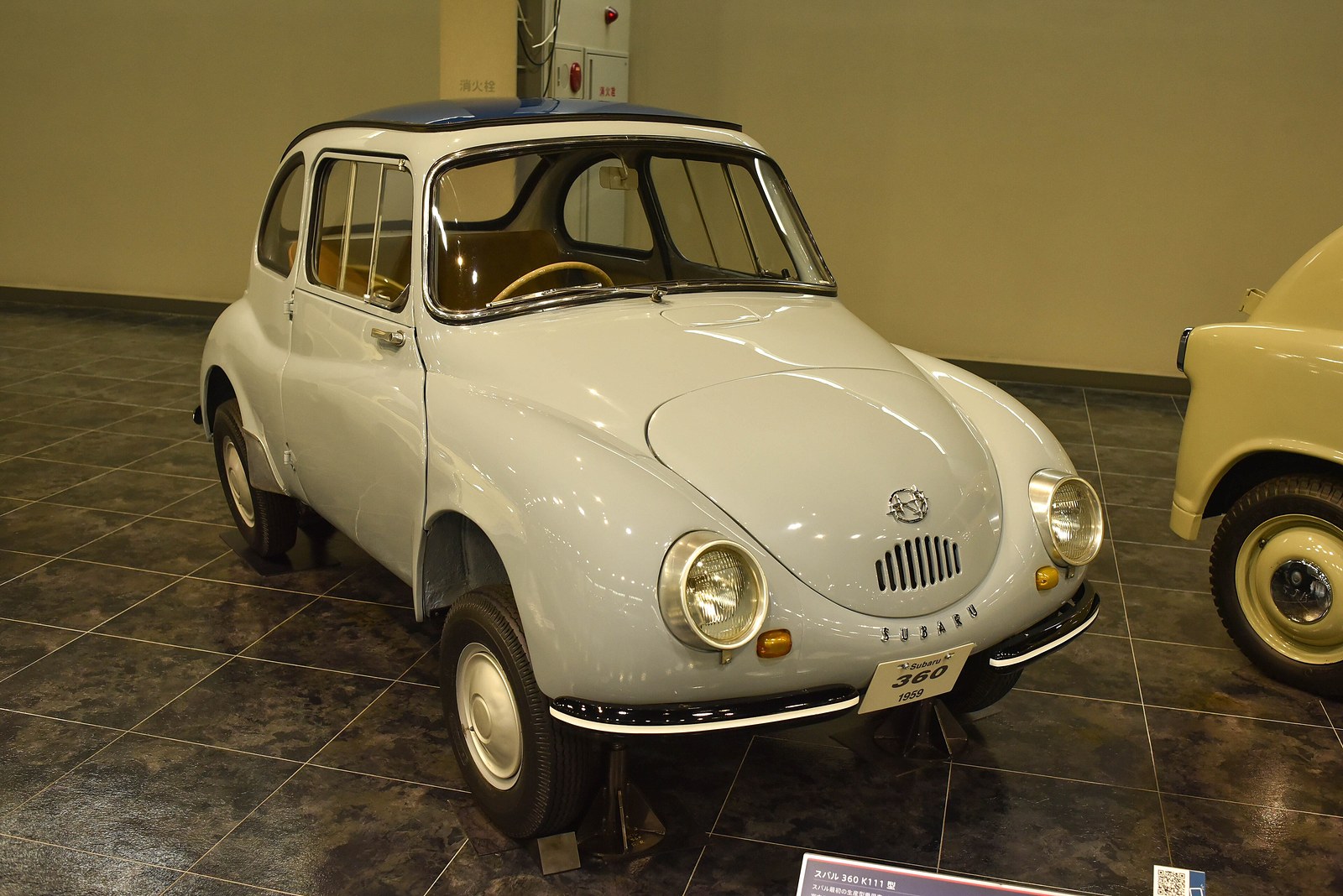
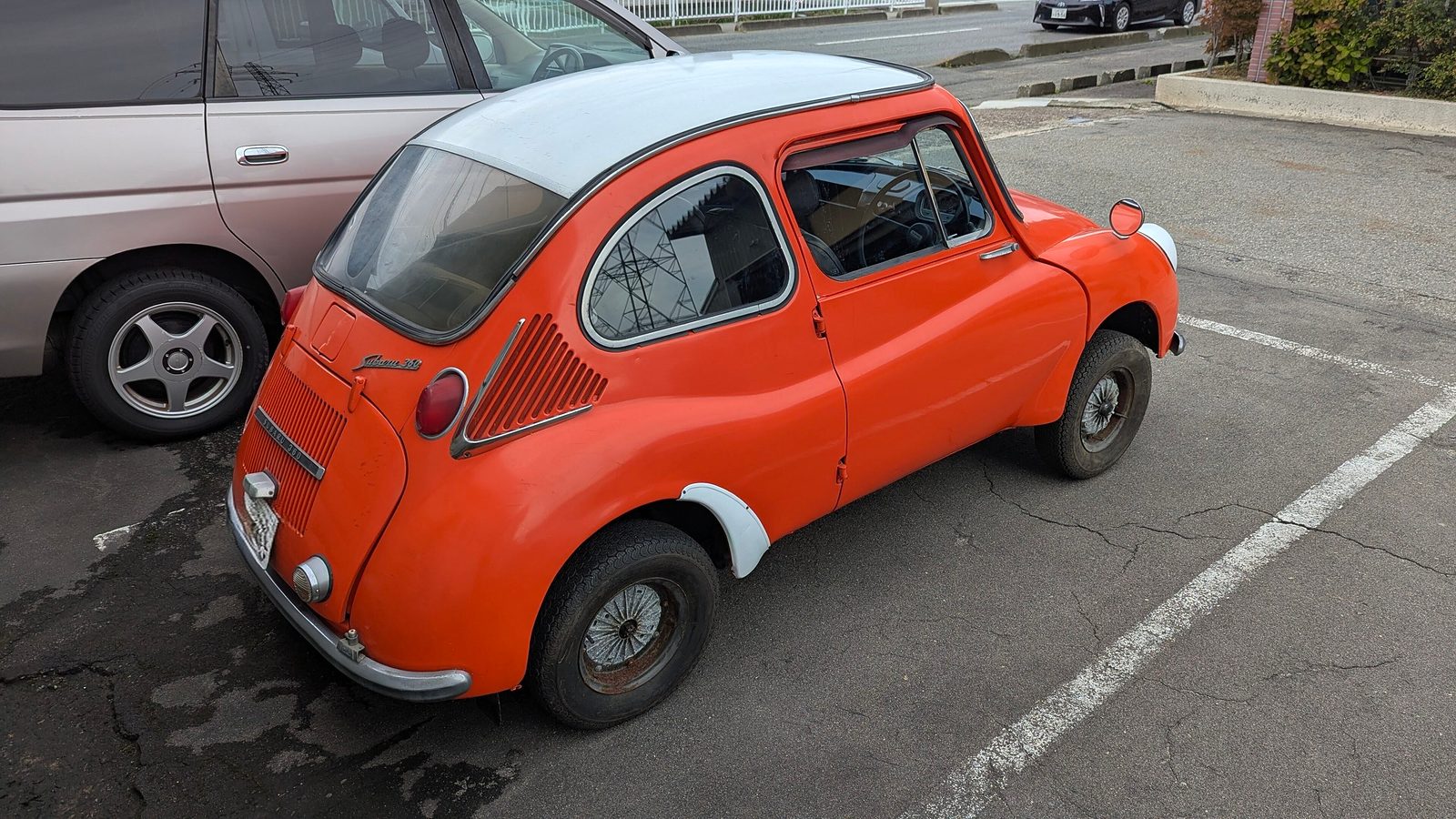
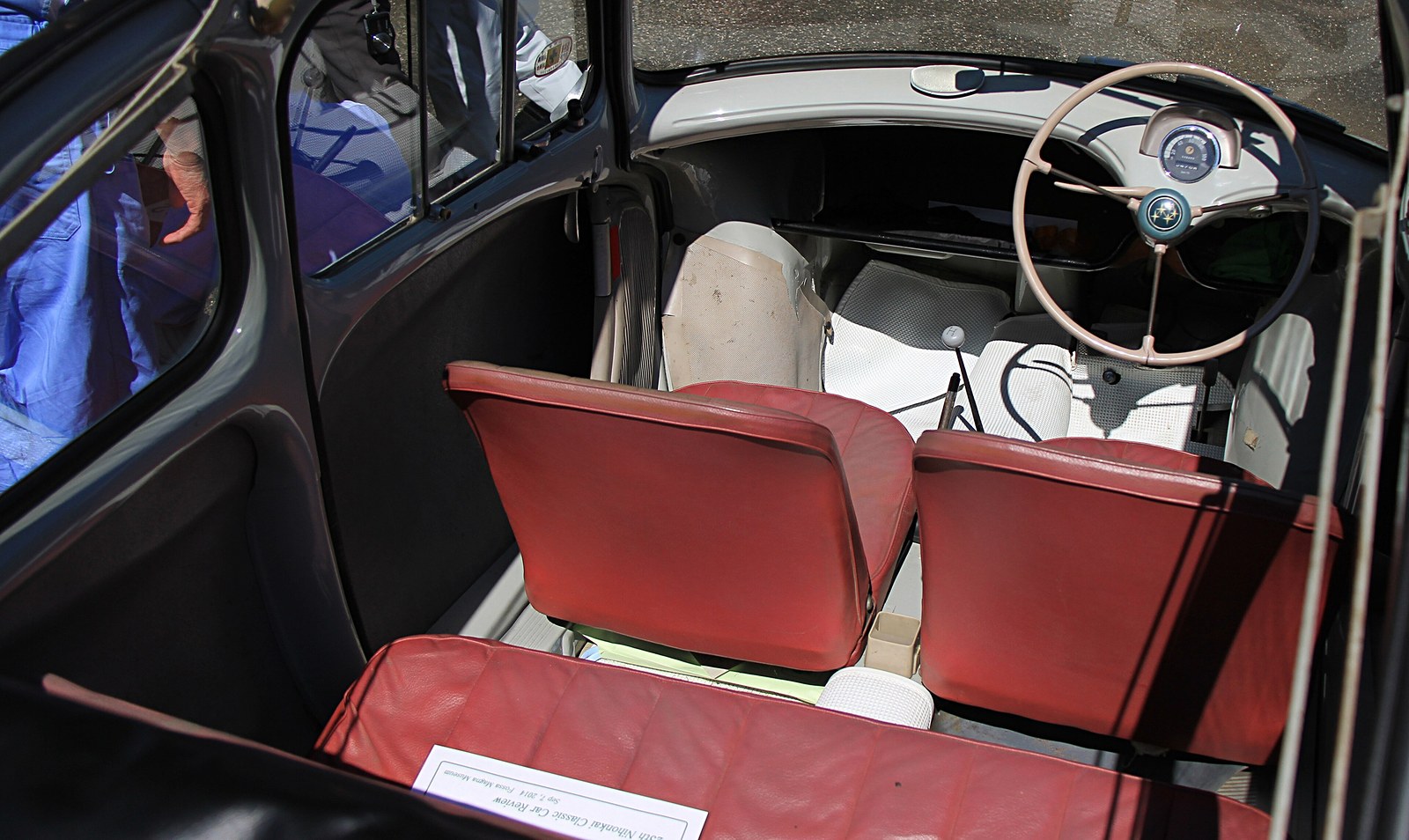
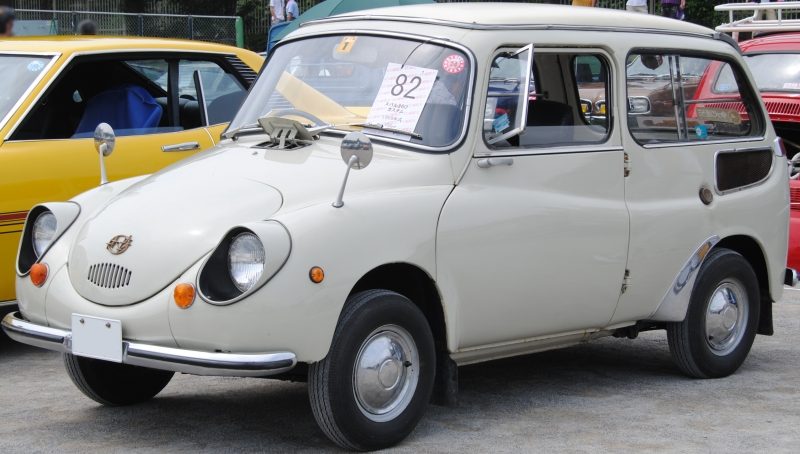
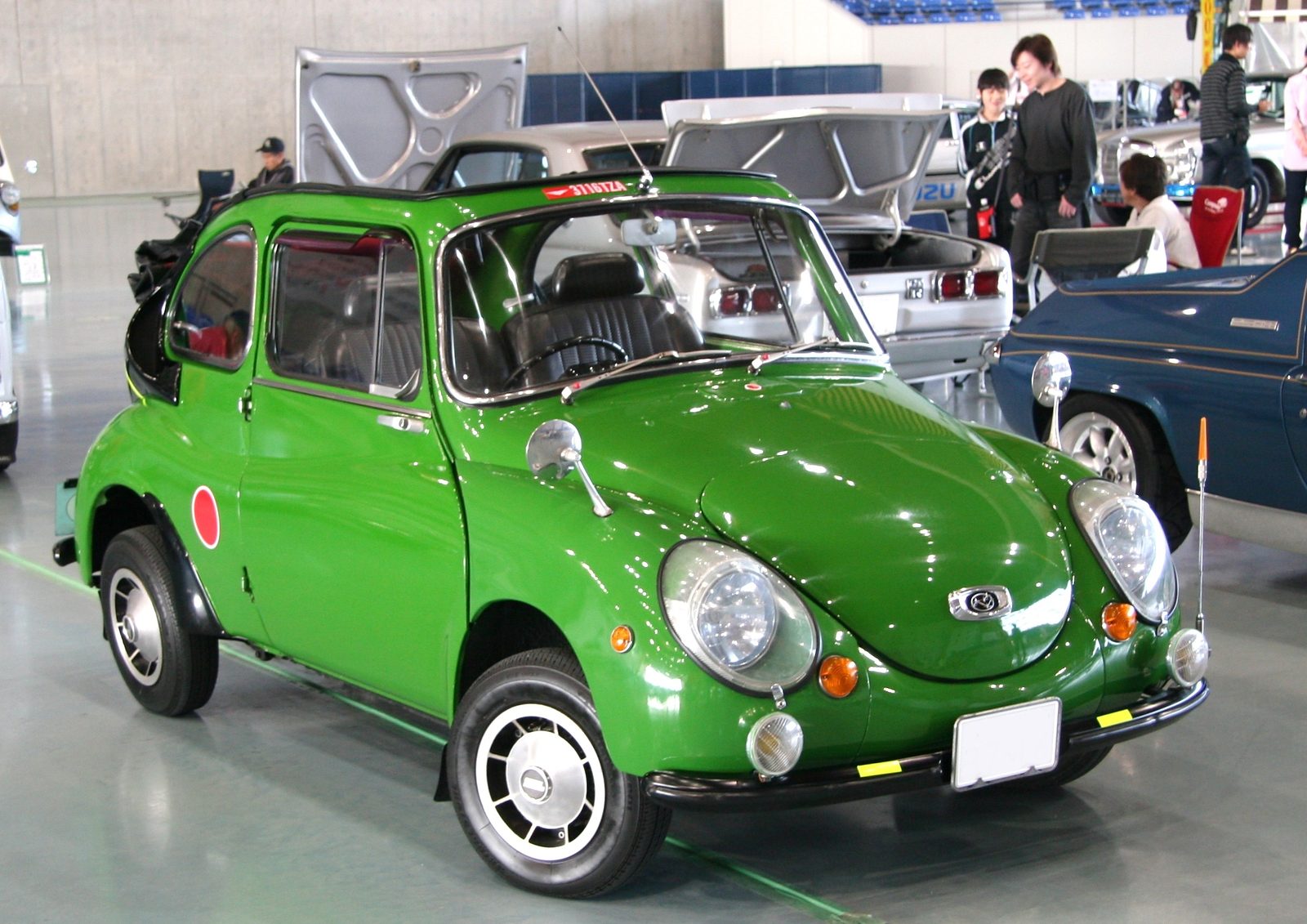
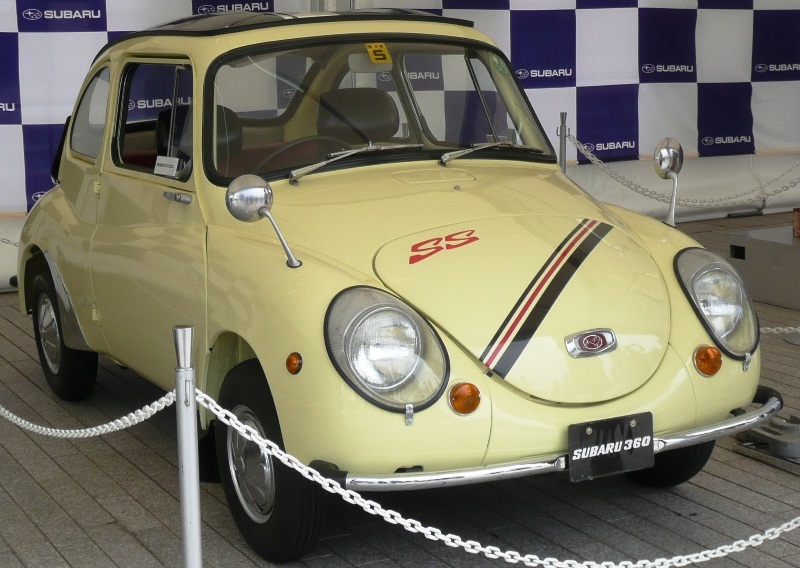
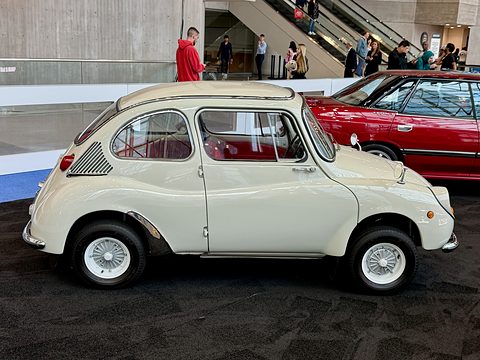
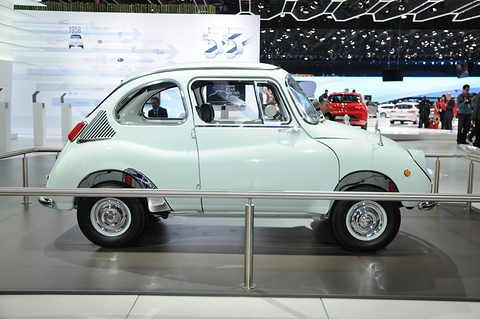
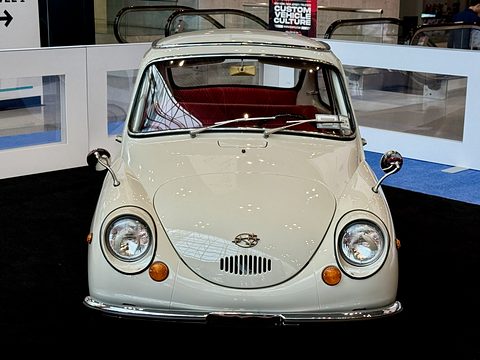
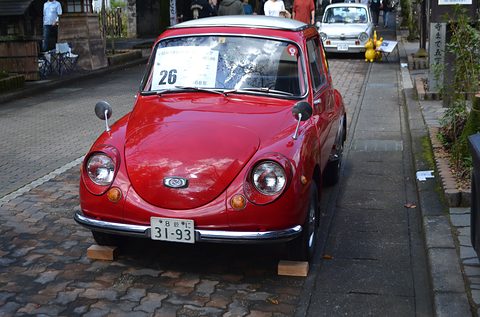
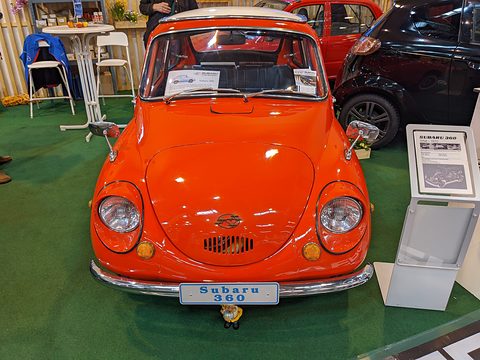
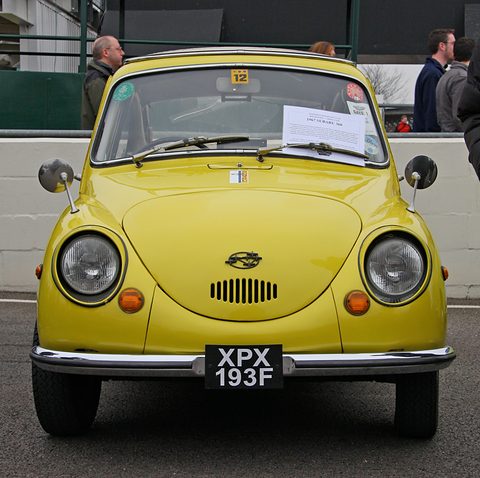
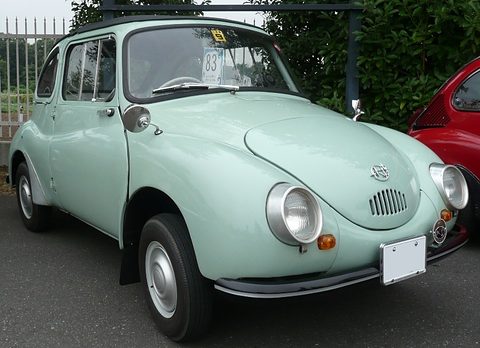
The styling went to an outside industrial designer, Sasaki Tatsuzō, in May 1956. He had designed the colours of Fuji’s buses, and ships’ liveries and buildings, but never a car, so he took a driving licence and learned in a Hino-built Renault 4CV; Japanese Wikipedia suggests that explains the 4CV touches in the 360, despite the usual comparisons with the Volkswagen Beetle.source 1 In early June Fuji gave him a fifth-scale wooden buck studded with nails that marked the smallest possible envelope. He covered it in clay and finished the model on 21 June 1956.source 1source 2 A full-size clay followed, refined from September by Momose and the in-house designer Nagata Hideaki, with Sasaki living at Isesaki for three months. Plaster moulds were taken, and the drawings were made from the full-size plaster model rather than the other way round.source 1source 2 Momose, more than 180 cm tall, tried the seating himself.source 1
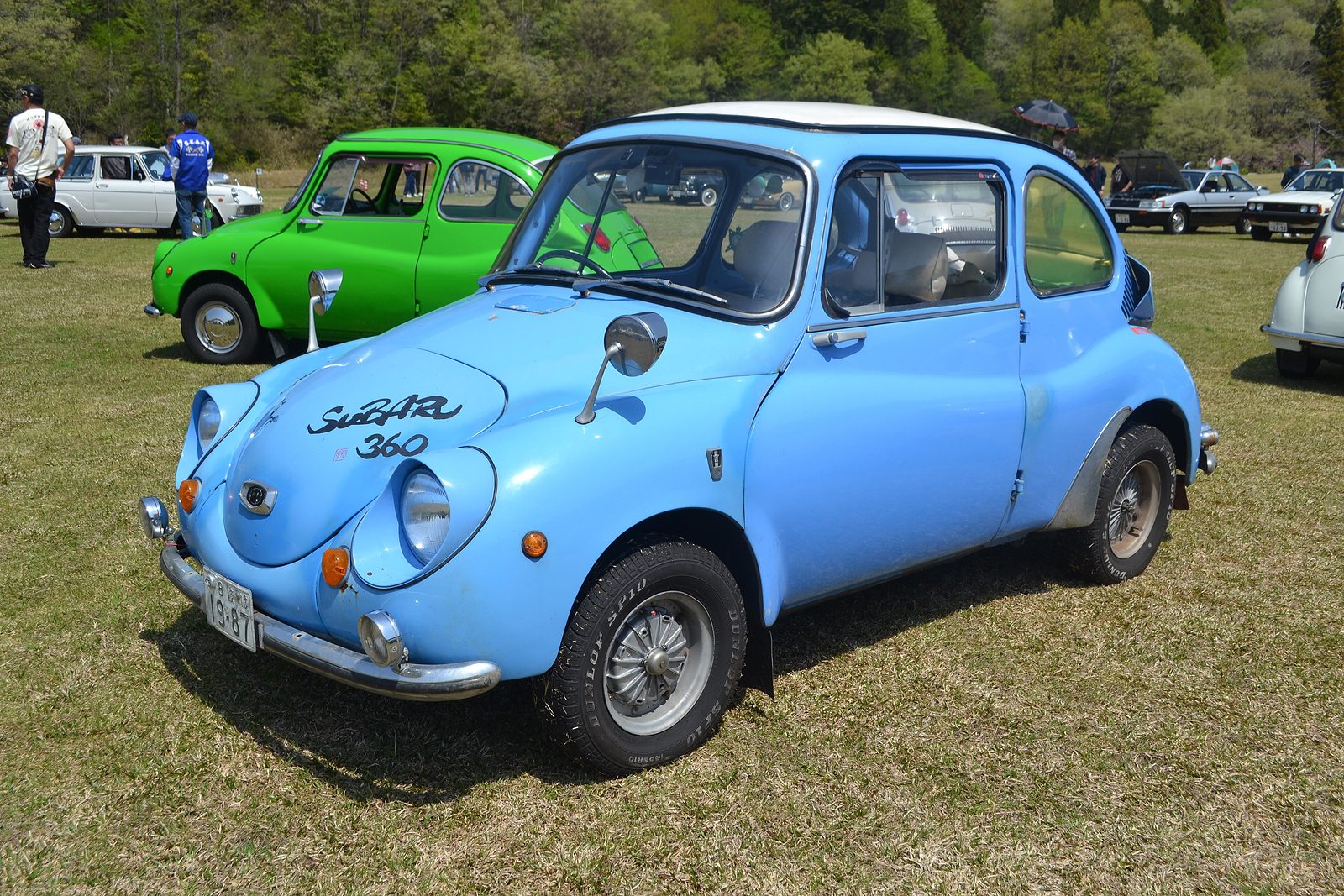
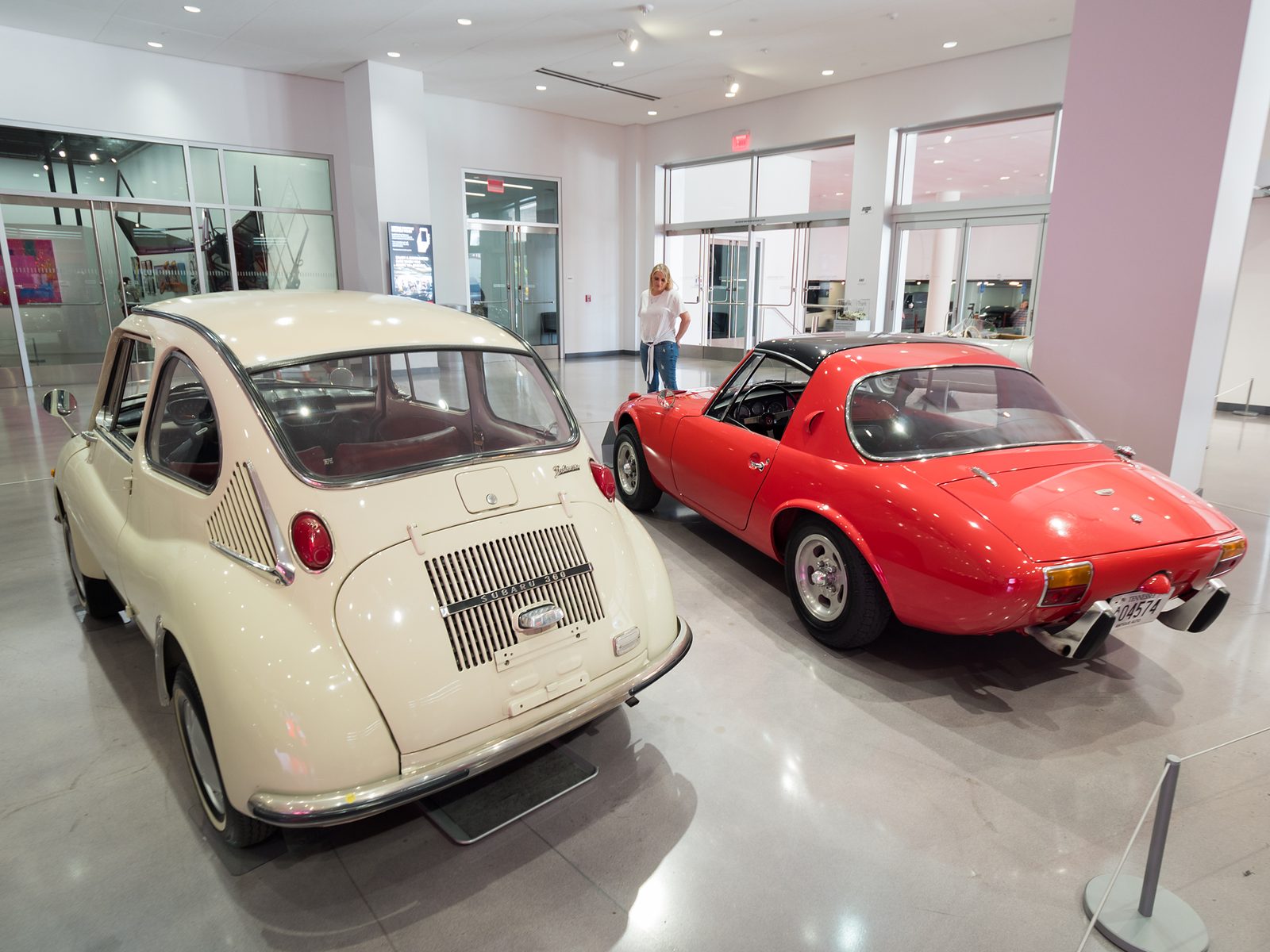
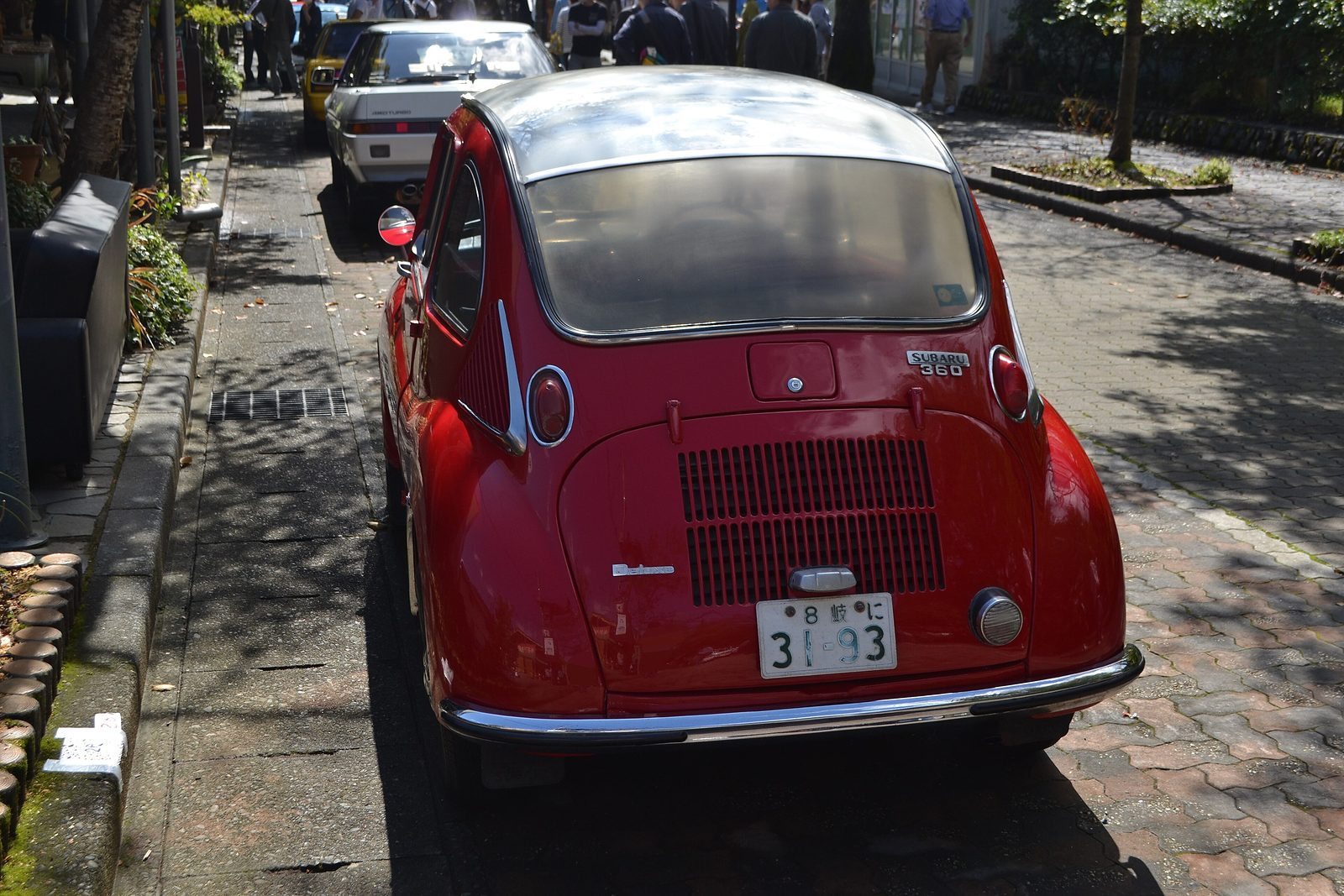
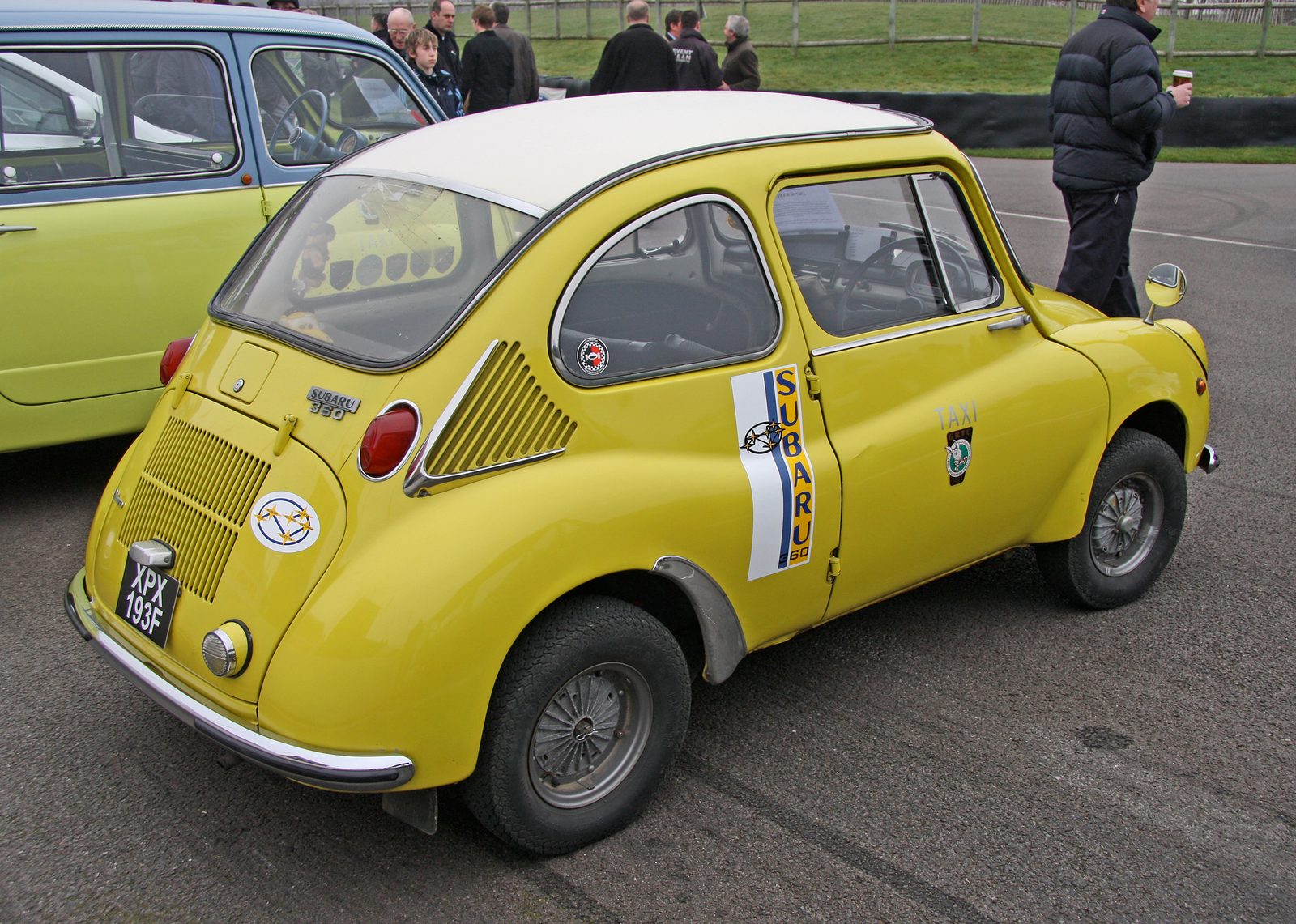
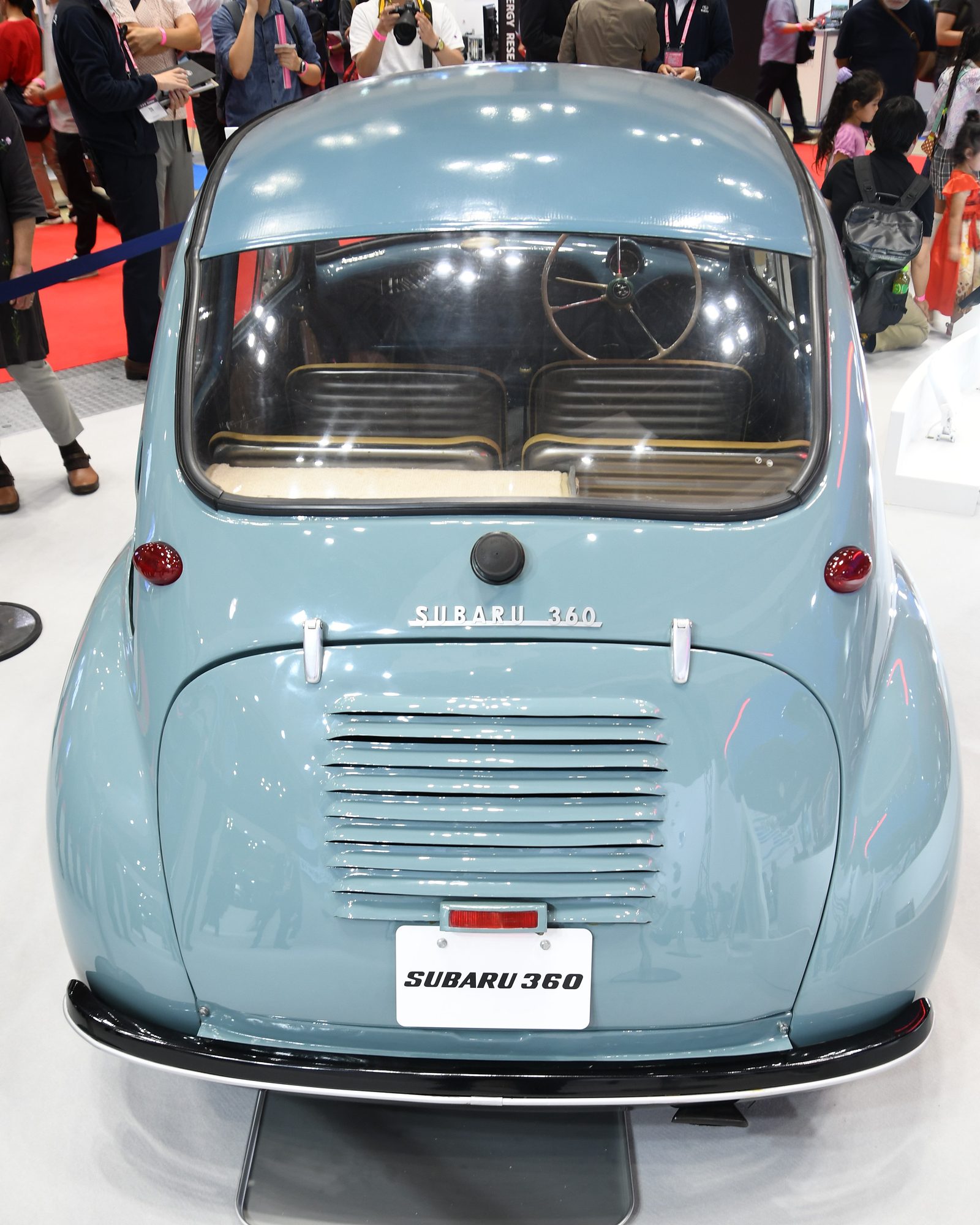
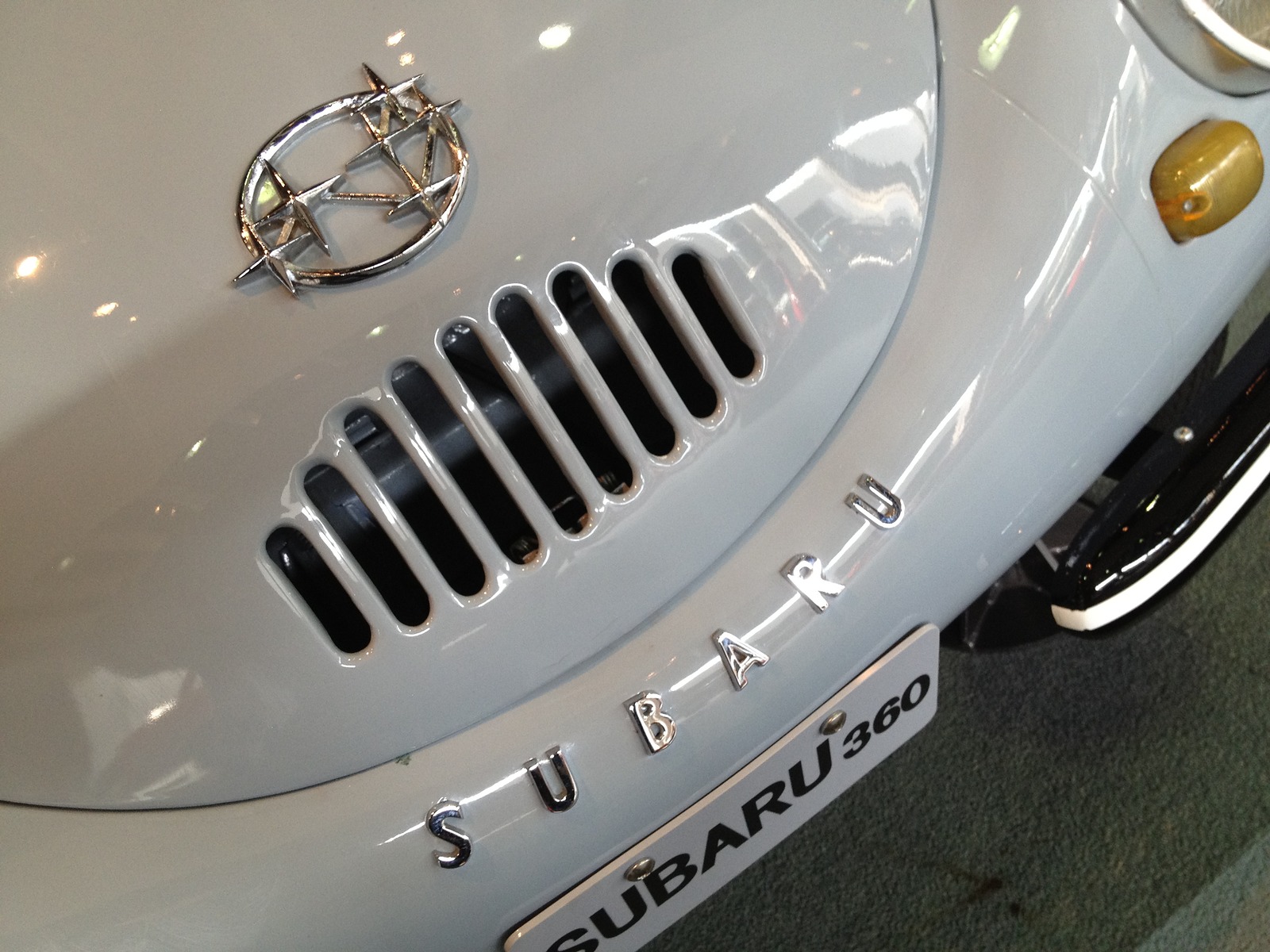
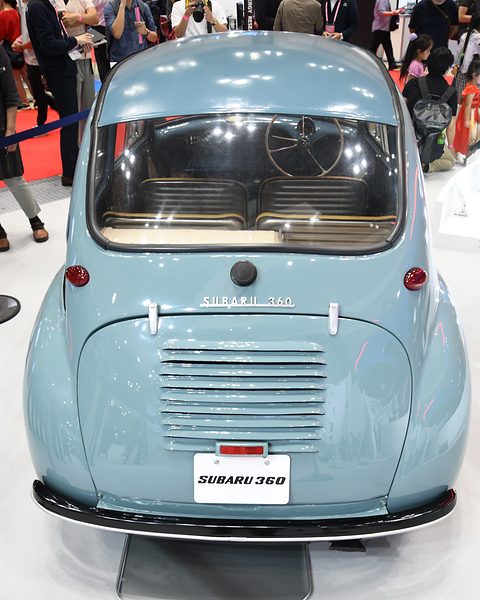
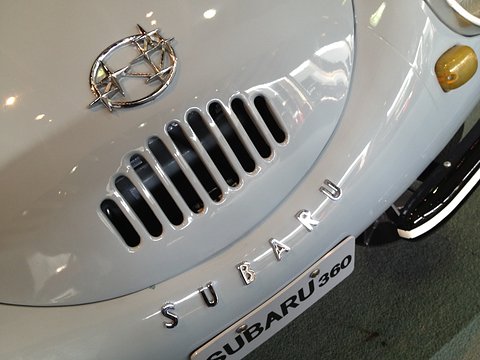
When Momose told Sasaki that the first car had been the Subaru 1500, Sasaki drew a “SUBARU 360” logotype unasked, and it passed through the company unchanged. He also worked up the six-star badge of the Pleiades from an internal competition entry; Subaru still wears it.source 1 The rule, as Subaru’s history puts it, was that a people’s car should have a style of its time that needed no model change for a long while. It ran twelve years without one.source 2
Built like an airframe
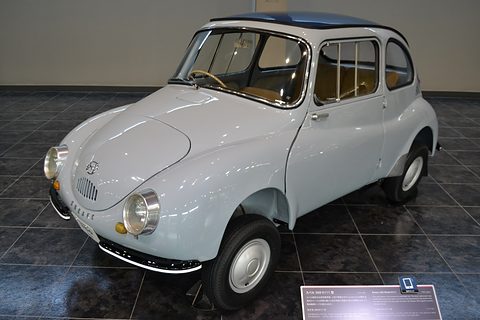
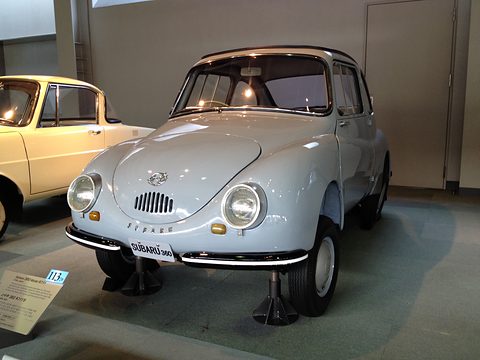
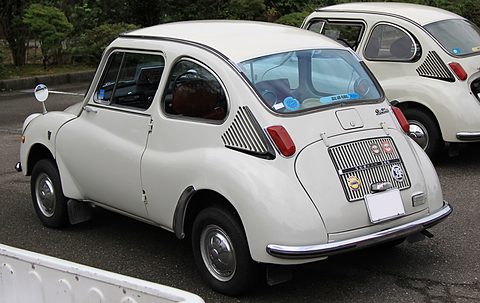
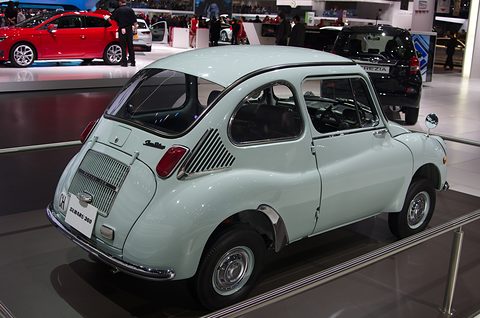
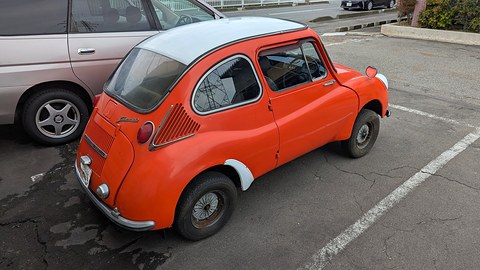
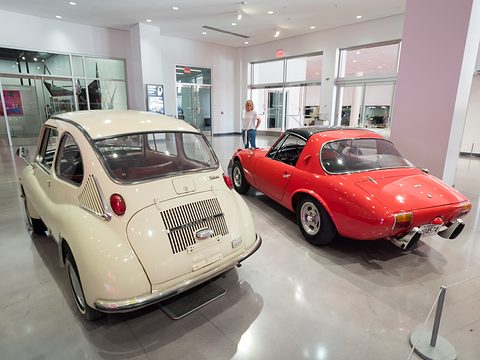
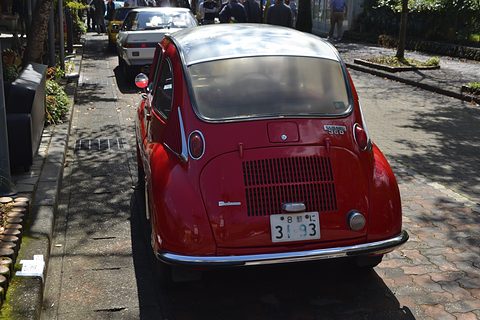
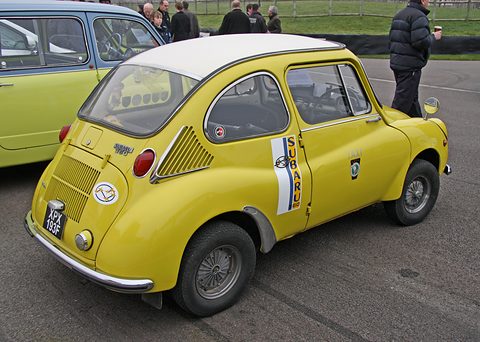
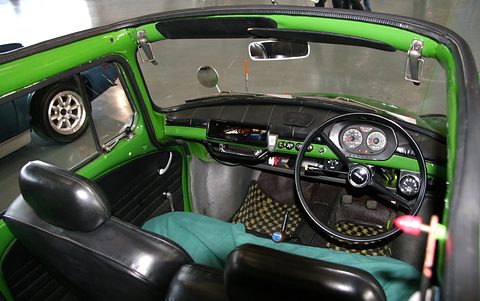
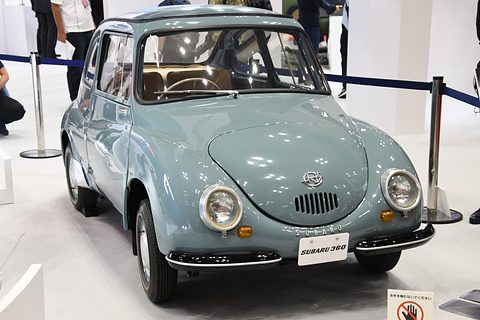
The body was a monocoque of 0.6 mm steel, when 0.8 mm was thought the least a car could use, stiffened by curved, egg-shaped panels and put together with flush rivets. The roof was glass-fibre, with the radio aerial wire in its rim; the rear window was acrylic; early cars had an aluminium front lid.source 1source 2 The torsion bars that sprang all four wheels were the first made for a car in Japan, by NHK Spring: the first hand-machined set of four cost ¥40,000, nearly a tenth of the target price of the whole car. Bridgestone developed new 10-inch tyres, and even the screws were made specially, stamped with the katakana character fu.source 1
Prototype No. 1 was finished on 20 April 1957, a year and three months after the first line was drawn, and five prototypes were built.source 1source 2 They were driven 600 km a day, 16 hours at a stretch, on unmade roads from Isesaki to Takasaki and back, and up Mount Akagi, a rough climb of about 14 km at an average of 13°, while Mitaka’s engineers rebuilt engines overnight.source 1source 2 When the first full-throttle climb of Akagi without a stop succeeded is told two ways: on 4 February 1958 by Fuji’s 2005 history, in August 1957 by an older book.source 1
The ministry of transport’s type tests began on 24 February 1958. The test driver Fukushima Tokio and his navigator wore only thin underwear under their overalls on a snowy day, and washed about 2 kg of mud off the underside first. One official refused to ride in so small a car, and a 55 kg weight went in his place. The car climbed from Hakone-Yumoto to Lake Ashi in 22 minutes, against the 30 the people’s-car standard allowed, and returned 24.5 km per litre.source 1 Subaru’s history gives 16.7 hp in the test and 26 km per litre.source 2 The production car weighed 385 kg and made 16 PS and 83 km/h (52 mph): the targets met, but for 35 kg.source 1source 5
Launch day
The press launch was at noon on 3 March 1958, at the head office in Marunouchi, Tokyo.source 1source 2 Staff new to launches had meant to show only the catalogue. The journalists wanted a car, so two were trucked down from Isesaki; the reporters waited until four in the afternoon and then took turns to drive them.source 1 The public saw it at the Shirokiya department store in Nihonbashi from 28 to 30 March.source 1 Fuji had scooter dealers but no car network, so sales began through Itōchū in Tokyo in May and Takagi Sangyō in Osaka in July.source 1 The first 60, after the five prototypes, were a pre-series: ten were kept for the company and 50 sold in May and June.source 2 The price was ¥425,000, the one respect, the Toyota Automobile Museum says, in which it missed the people’s-car ideal.source 6
Owners learned its ways. The long-travel suspension rode so softly over bad roads that they spoke of the “Subaru cushion”; fully laden in deep ruts it could ground, and the cure was for a passenger or two to get out and walk behind.source 1source 5 Swing-axle jacking caused roll-overs, and Subaru answered with thicker rear torsion bars; a car this light could at least be righted by two or three adults. The glass-fibre roof, held only by rubber, could jump off on rough roads until screws were added; and with the early sideways gate, drivers learned to push the lever from second to third with the left knee.source 1
Twelve years without a new body
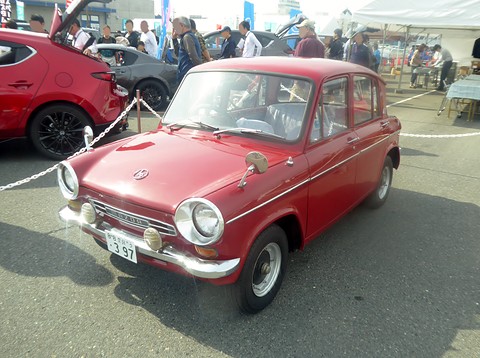
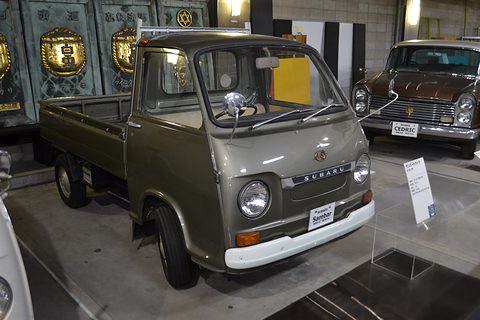
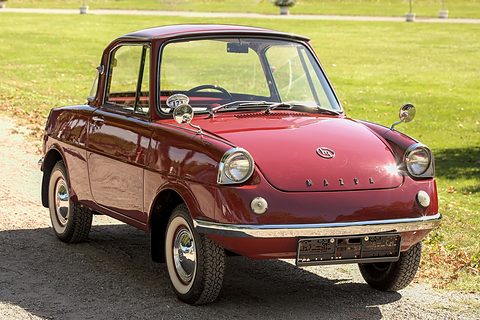
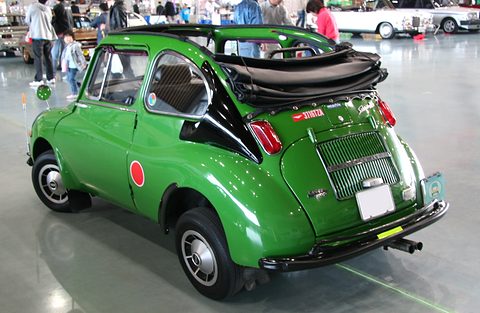
Sales grew from 385 cars in the 1958 model year to more than 17,000 in 1961.source 1source 2 The Convertible and the Commercial came in 1959.source 1 From January 1960 the engine gave 18 PS, the gearbox gained synchromesh and a normal H gate, and oil dampers replaced friction ones.source 1source 2 Subaru’s history credits the 360 with a kei boom from 1960 to 1963.source 7 When the heavier, water-cooled, four-cylinder Mazda Carol arrived in 1962, Subaru answered with Deluxe versions, and stayed first in the class.source 1 The Subaru Sambar truck and van of 1961 used the 360’s drivetrain and gave Fuji a dealer network.source 1
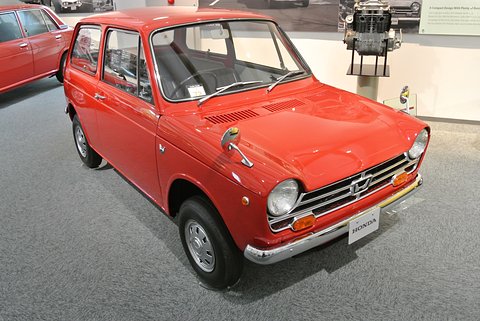
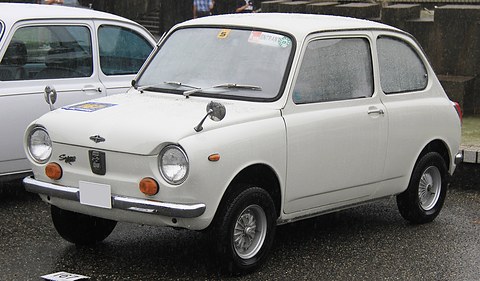
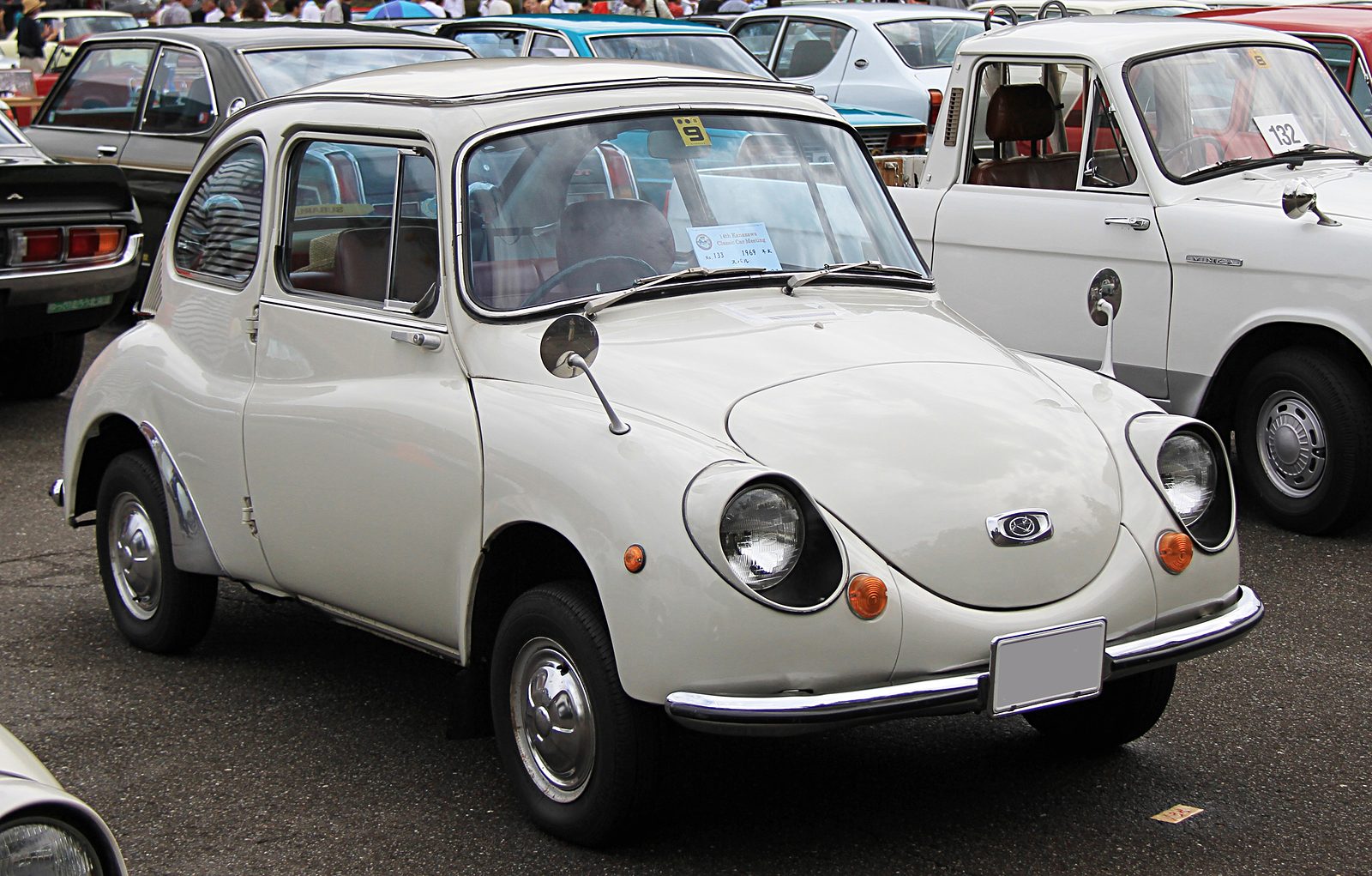
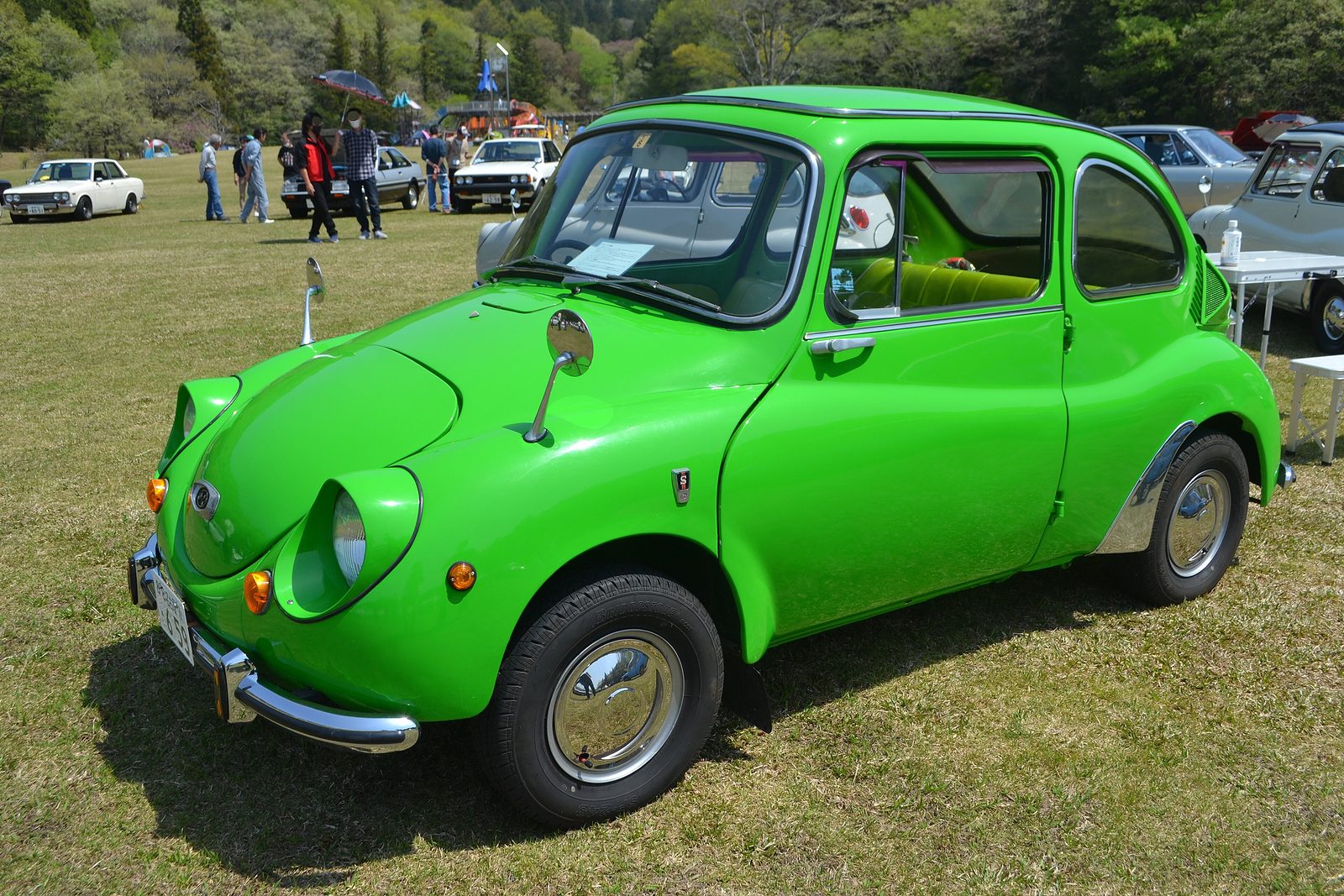
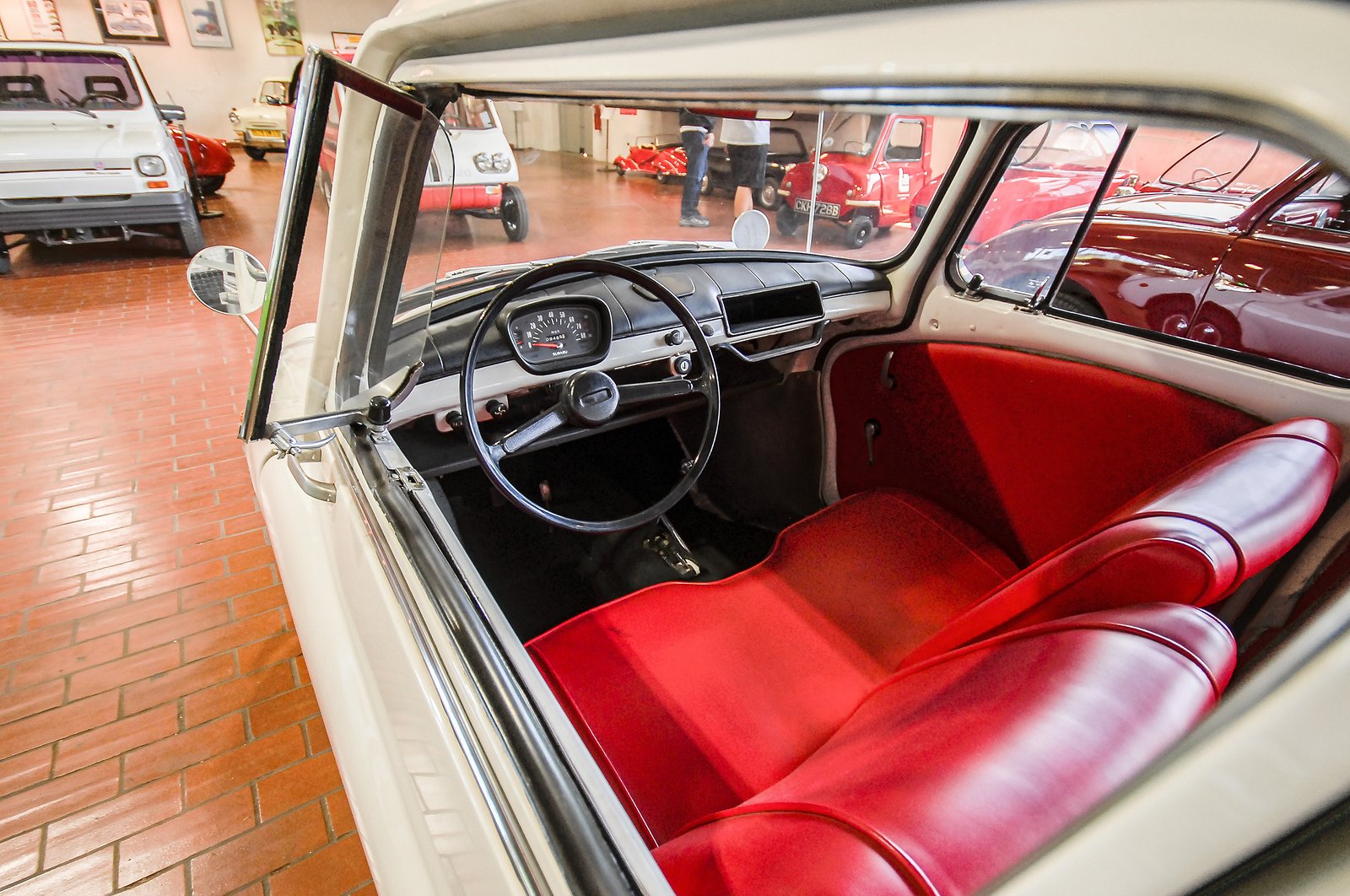
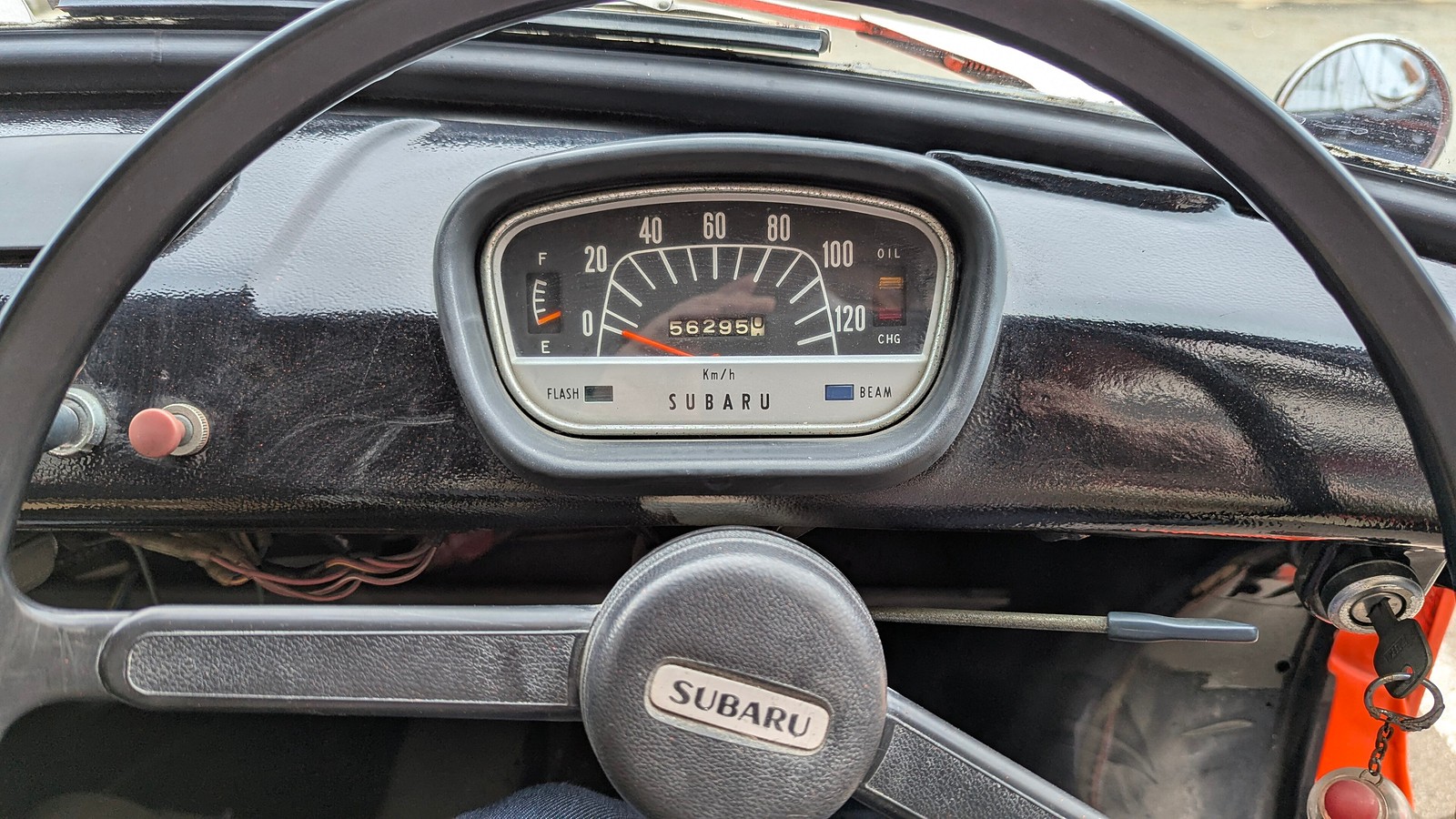
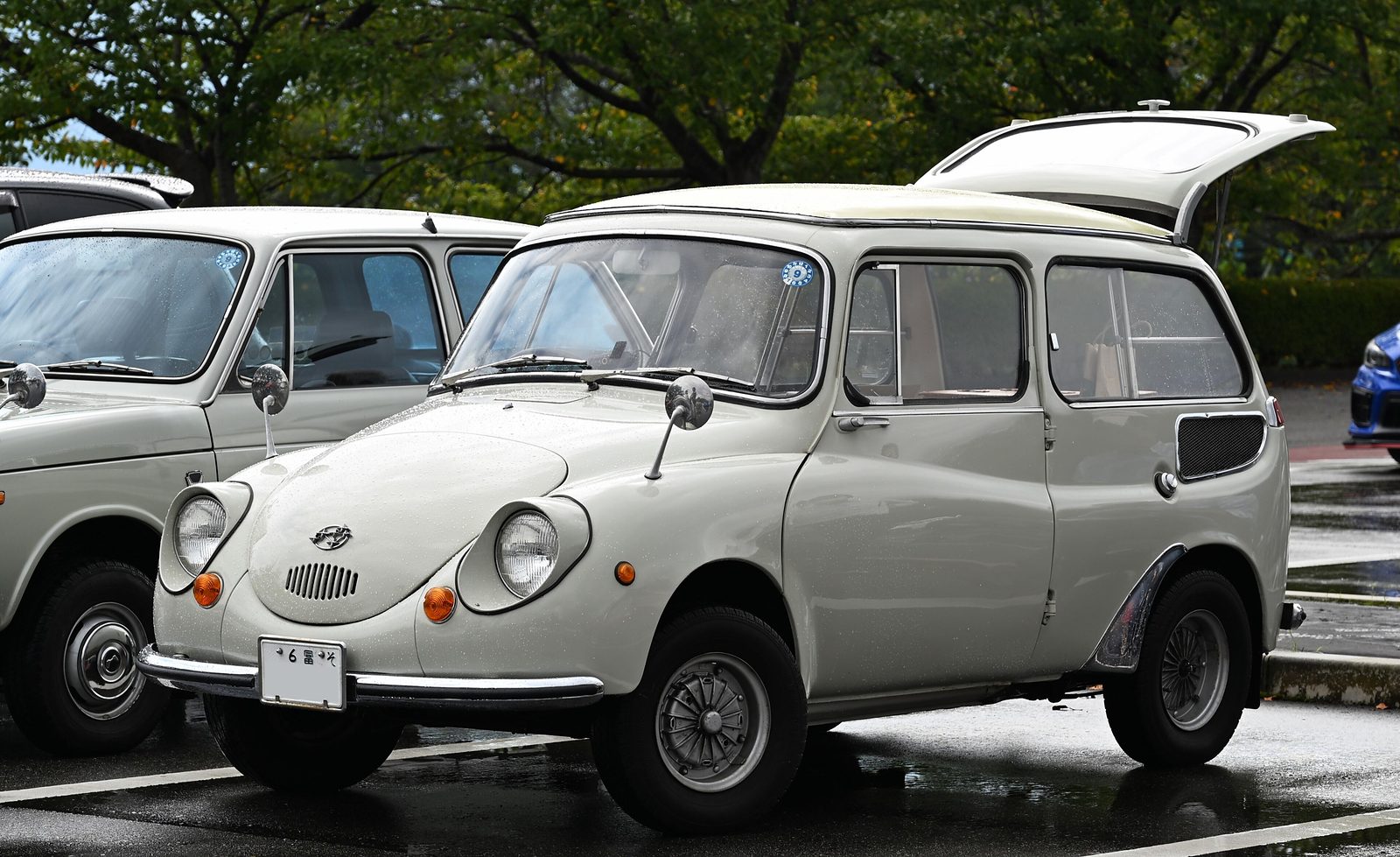
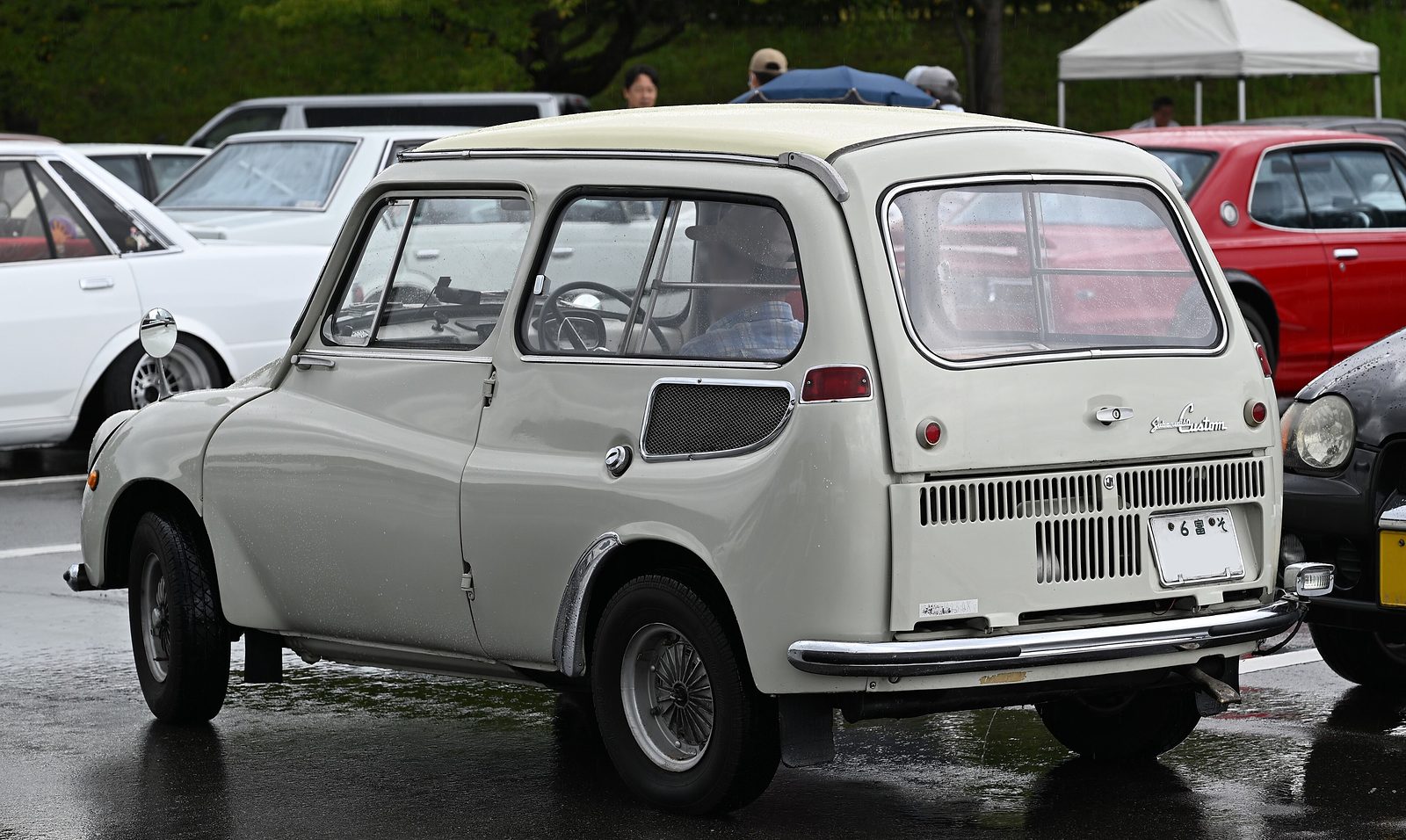
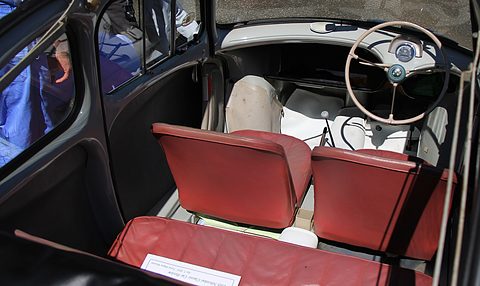
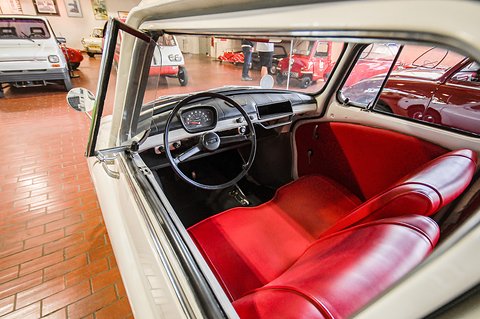
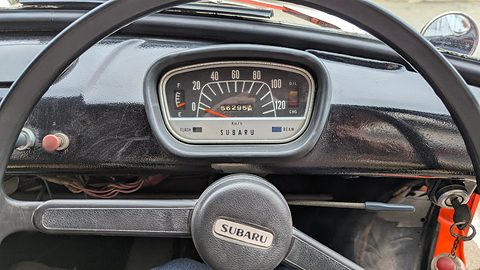
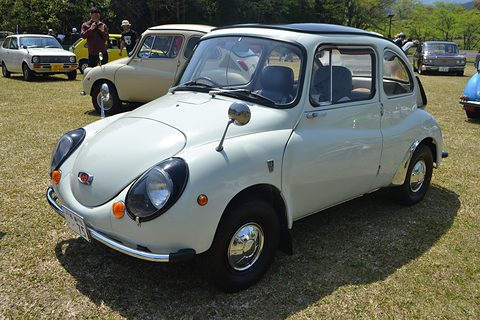
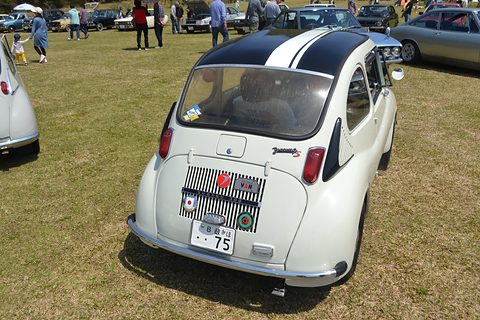
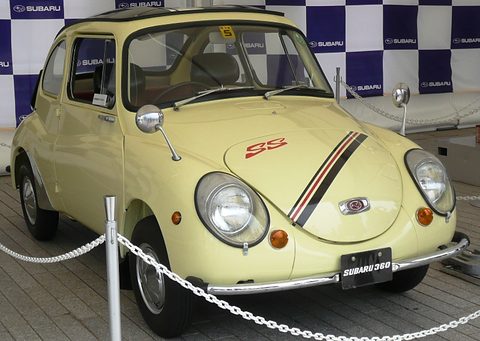
A new dashboard, wind-down windows and reclining front seats on the Deluxe came in 1963.source 2 From April 1964 an Autoclutch did away with the clutch pedal, and from July 1964 Subarumatic pumped oil straight to the crank instead of mixing it with the petrol, for 20 PS.source 1source 2 The Custom estate ran from 1963 to 1969.source 1 Then the Honda N360 of 1967, much faster and cheaper, took the sales lead.source 1 Subaru’s reply, in August 1968, was 25 PS at 5,500 rpm, 110 km/h, and the Young S and Young SS; the SS gave 36 PS from 356 cc.source 1source 2 The Subaru R‑2 was launched in August 1969 and sold alongside it, and the last 453 cars were built between October 1969 and May 1970.source 1source 2
A larger sibling, the 423 cc Subaru 450, was registered not as a kei car but as a small car, and sold 1,549 in Japan from 1960 to 1966. In 1960 four pre-production 450s toured 12 countries, the Soviet Union among them (more such journeys in records and feats).source 1source 7 Knocked-down kits were assembled in Taiwan from October 1967, 9,900 in the first year (see built under licence).source 1
Cheap and Ugly Does It
Malcolm Bricklin, who had run a building-supply chain in Florida and then sold scooters, went to Fuji for more Rabbits, learned they were ending, and was shown the 360 instead.source 8 He and Harvey Lamm bought the American rights for $75,000 and founded Subaru of America, in Philadelphia, in 1968, with 20 dealers on the East Coast and 60 in California.source 8 At under 1,000 lb (454 kg) the car escaped the federal safety standards.source 9source 8 It sold for $1,297 under the slogan “Cheap and Ugly Does It”, a nod to Volkswagen’s advertising; 332 were sold in 1968.source 8source 10
My cost for the 360 was $640, FOB Yokohama… The cars were so well-built that the warranties only cost me $1.50 per car.
Then Consumer Reports tested one. Its April 1969 report found the car took 37.5 seconds to reach 50 mph (80 km/h) and could not reach 60 mph (97 km/h) on the test track; it oversteered violently in an emergency swerve at about 55 mph, swerved in crosswinds, and was so loud at 50 mph that talk became a shout.source 9 In crash tests run by the National Highway Safety Institute, head-on at 30 mph against an American car, the Subaru folded back to its windscreen.source 9
Unfortunately, we rate the Subaru Not Acceptable.
Unsold cars piled up, and two-year-old new cars sat on dealers’ lots; one dealer, the Weiner museum says, offered six for $2,000.source 11source 8source 10 Imports ended after the 1970 model year, and Bricklin left to build the Bricklin SV-1. He remembered that Consumer Reports compared the car with a Cadillac; the report names no make, only “a U.S. car”, and the crash tests were not its own. Nor was the report Ralph Nader’s, as the Lane Motor Museum’s web page has it.source 9source 8source 12