The story
History
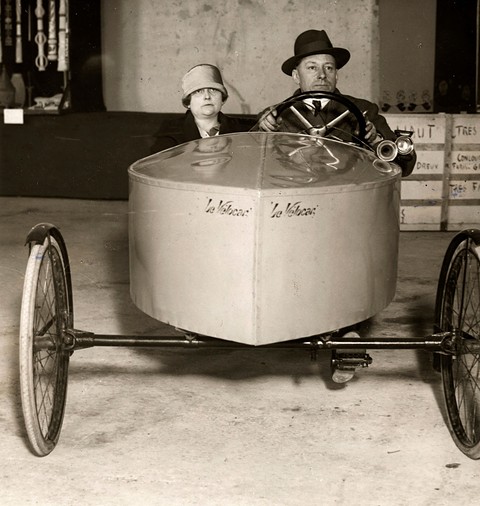
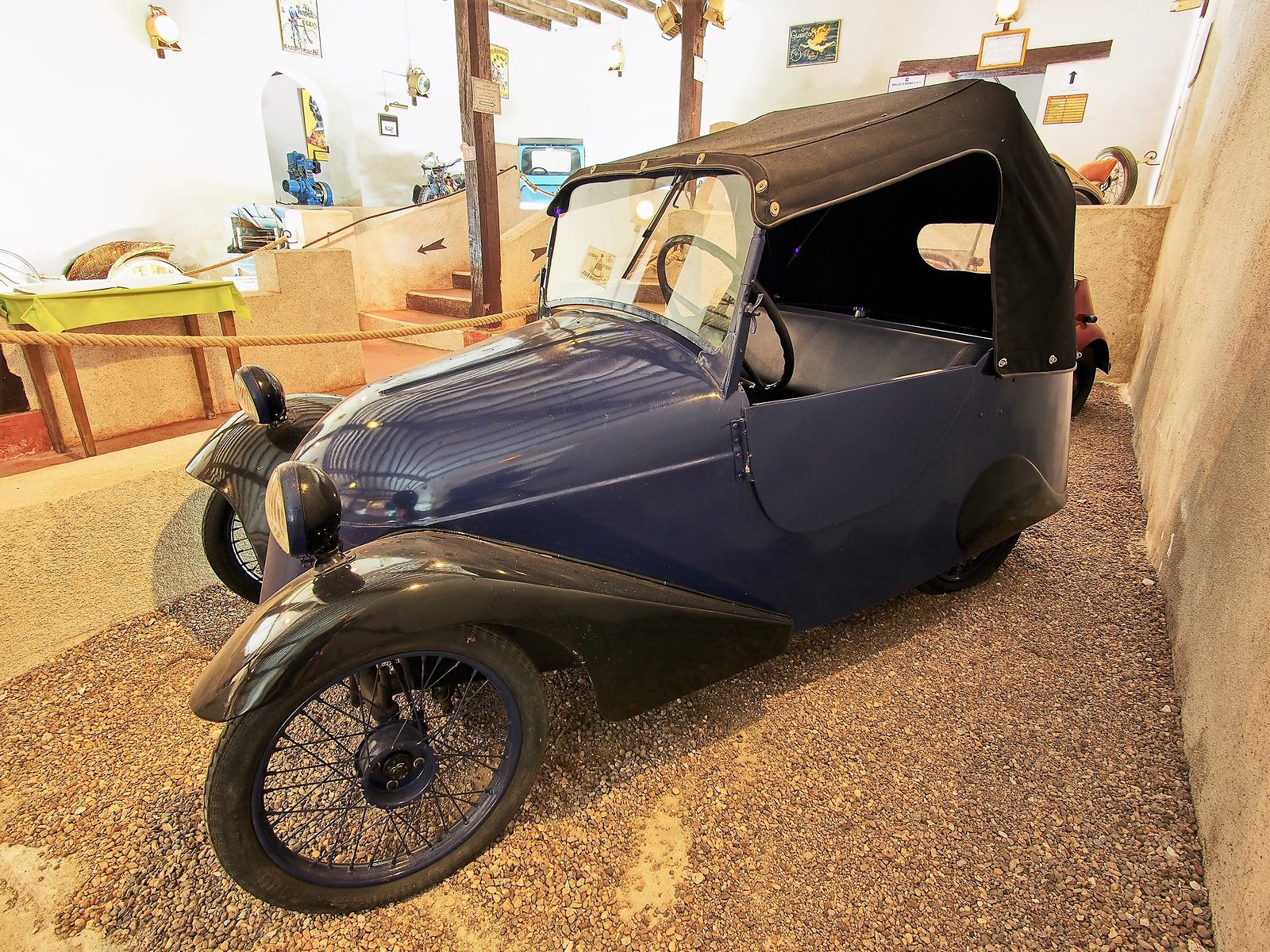
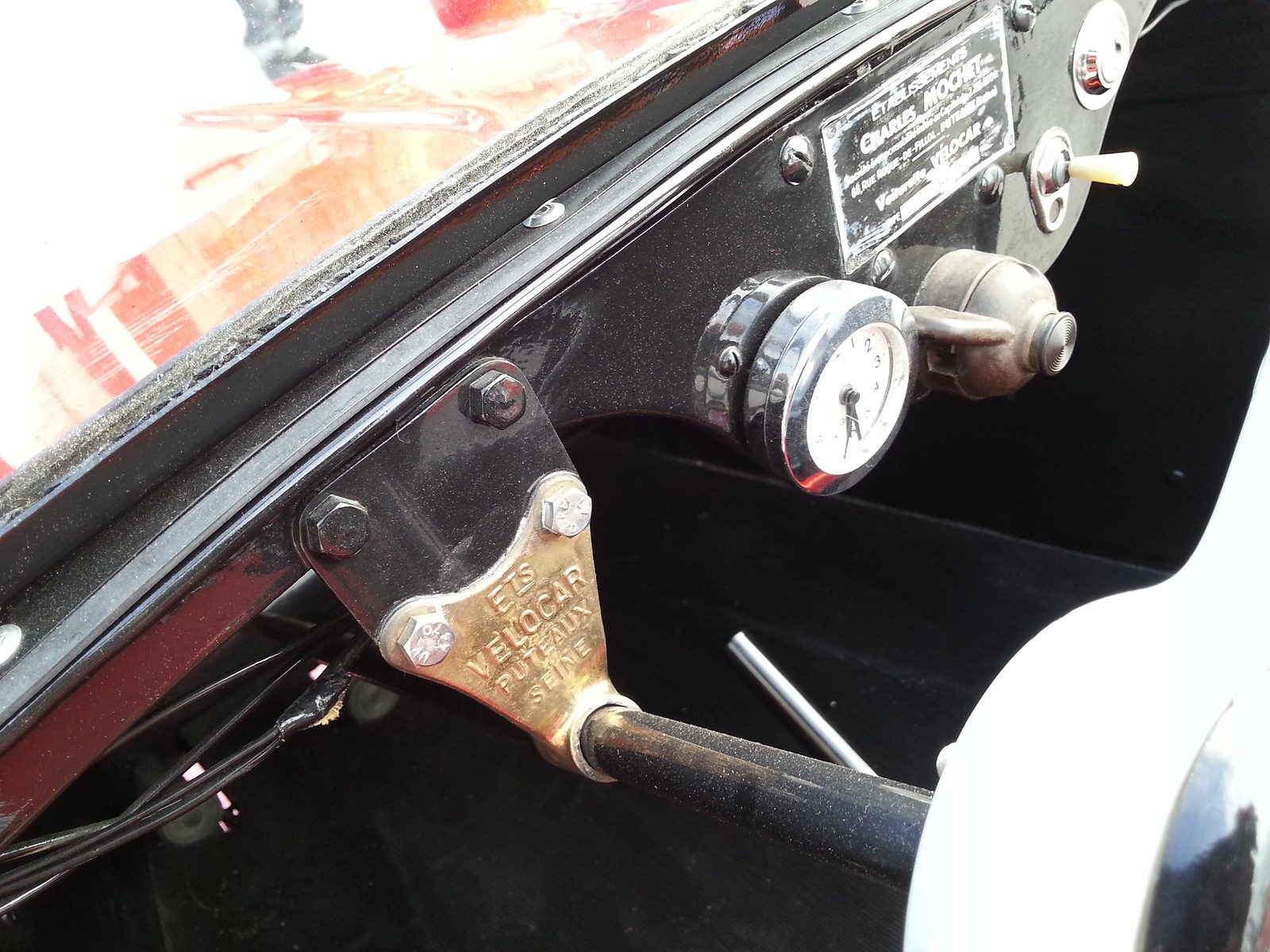
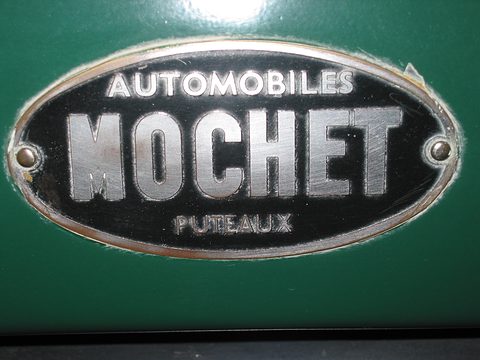
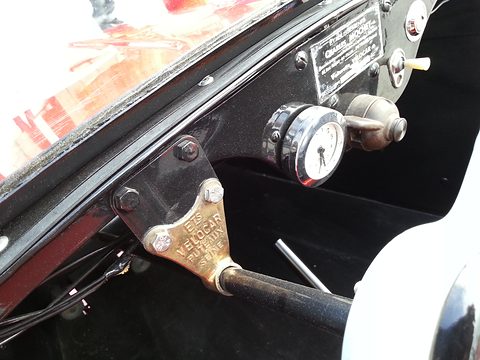
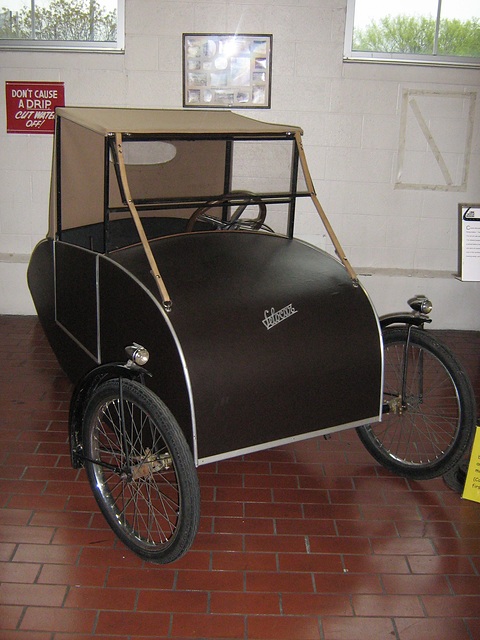
Before its post-war motor cars, the Mochet family was known for pedal cars. Charles Mochet (1880–1934) built the two-seat Mochet Vélocar at Puteaux, west of Paris, from 1927 (1924 by German Wikipedia), and it sold well in the 1930s and in the war.source 1source 2 Cut in half, it became the recumbent bicycle that carried Francis Faure to the hour record in 1933, before the cycling authorities barred such machines in 1934.source 3source 4 In the 1920s Charles had also built small cars under the initials CM, with a 350 cc two-stroke at the back and a chain to the rear wheels.source 2 He died in 1934, and his son Georges carried on under the old name, Établissements Charles Mochet, with his mother and his cousin Alexandre Laurant, the firm’s commercial director.source 5source 1source 6
Pedal off, then engage the motor
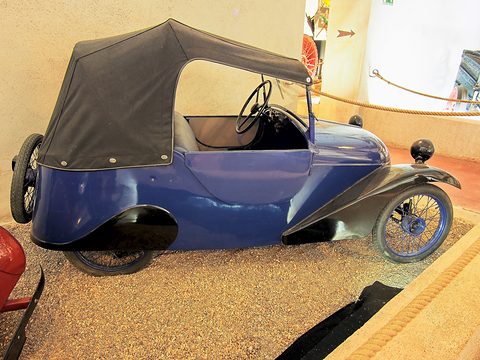
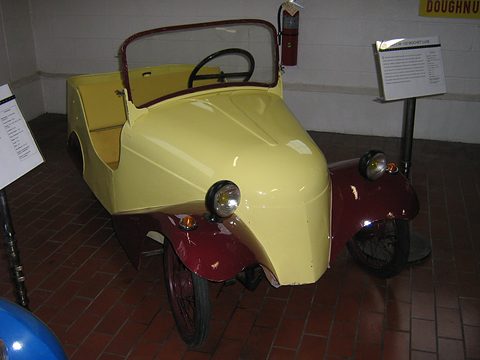
During the war, Vélocar owners had been fitting small engines of their own. In 1945 Georges offered a factory version, the Vélocar Type H à moteur: one set of pedals went, a windscreen came, and a 99 cc Zürcher two-stroke of 2 hp drove it through two speeds at about 35 km/h (22 mph). It had no starter. You pedalled off and then engaged the motor. The body was wood and the whole car weighed 80 kg (176 lb).source 5
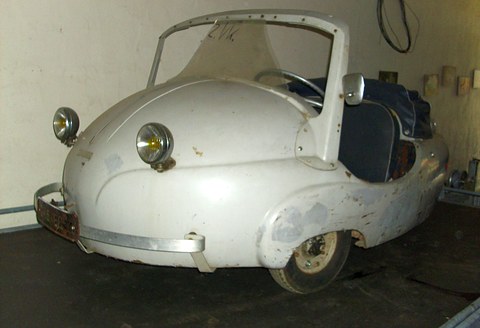
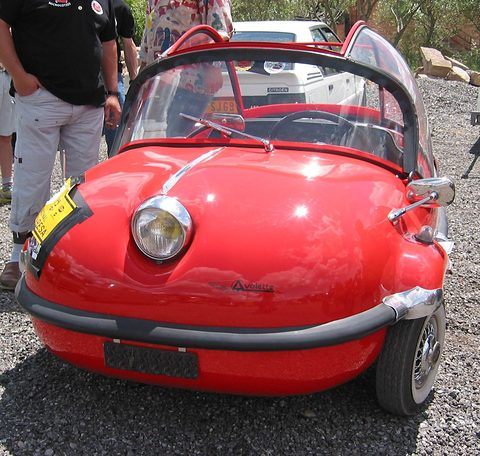
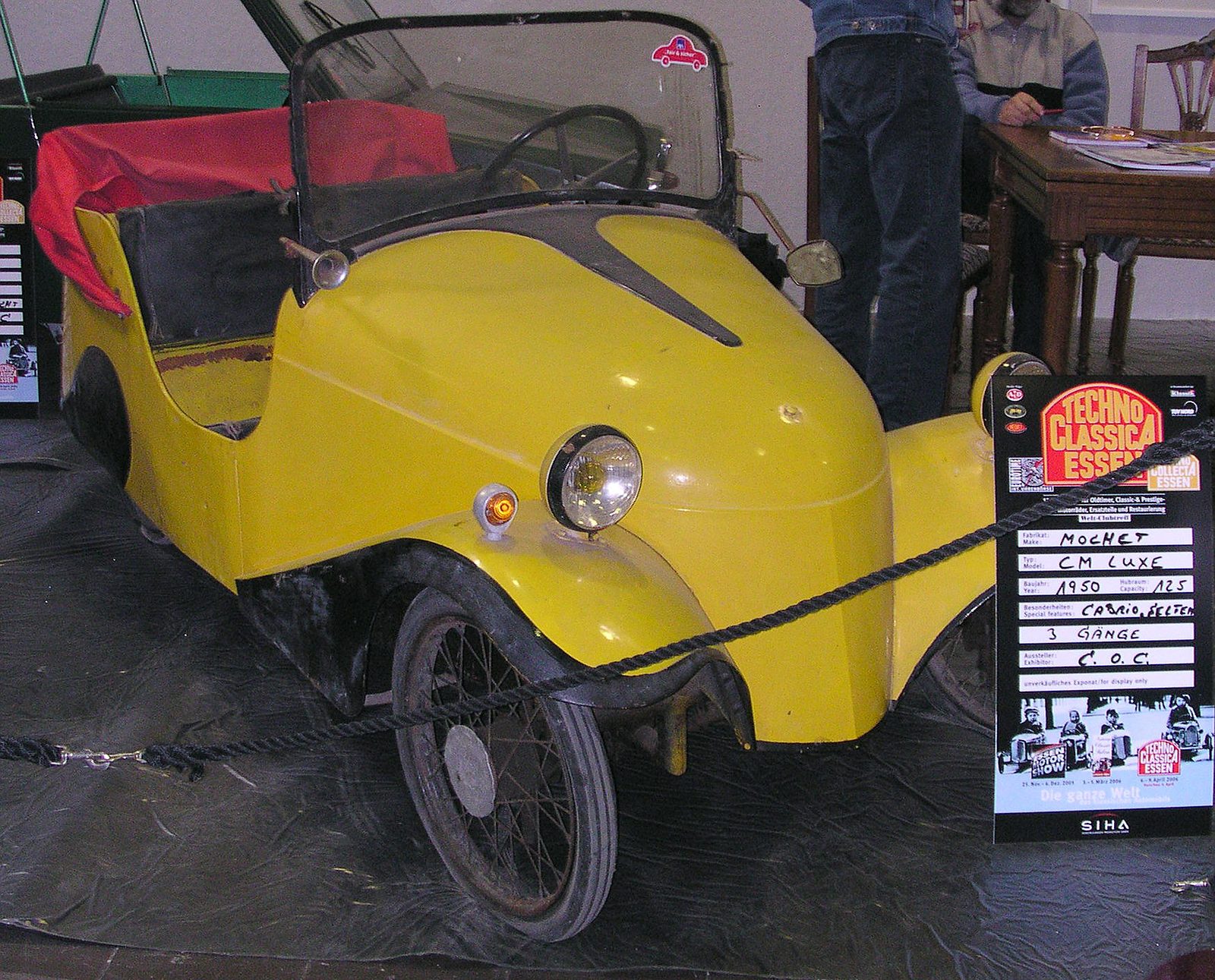
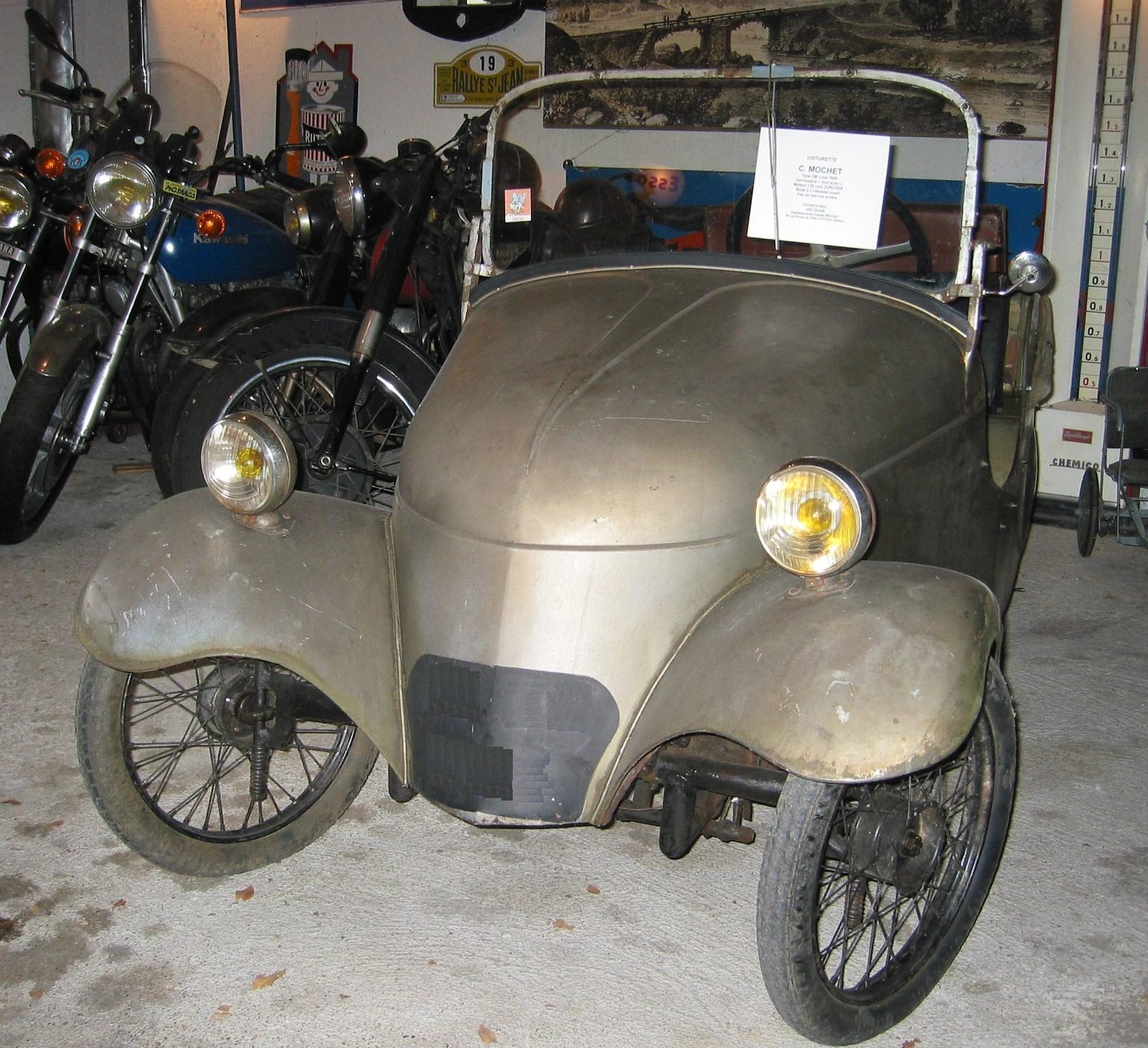
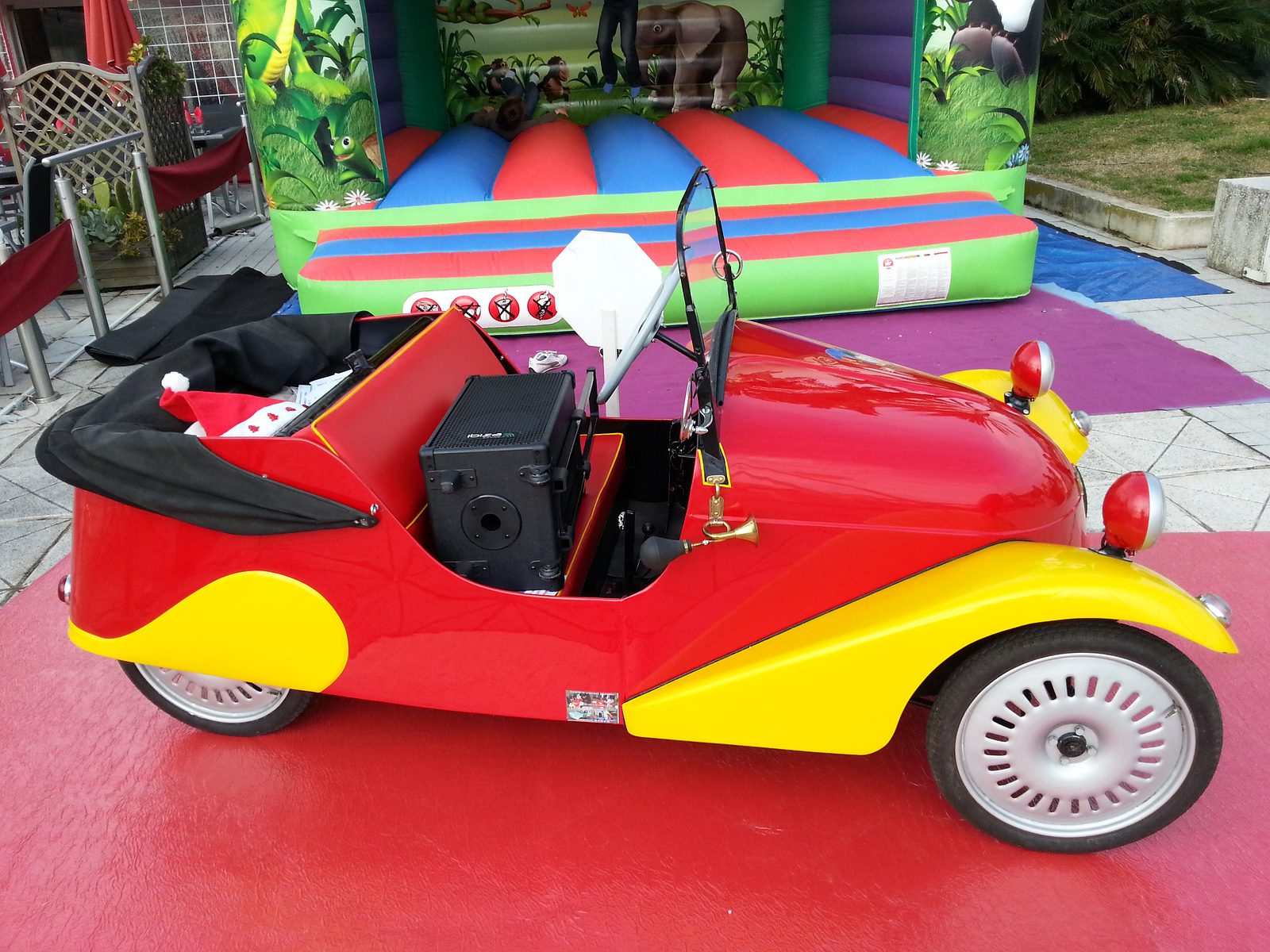
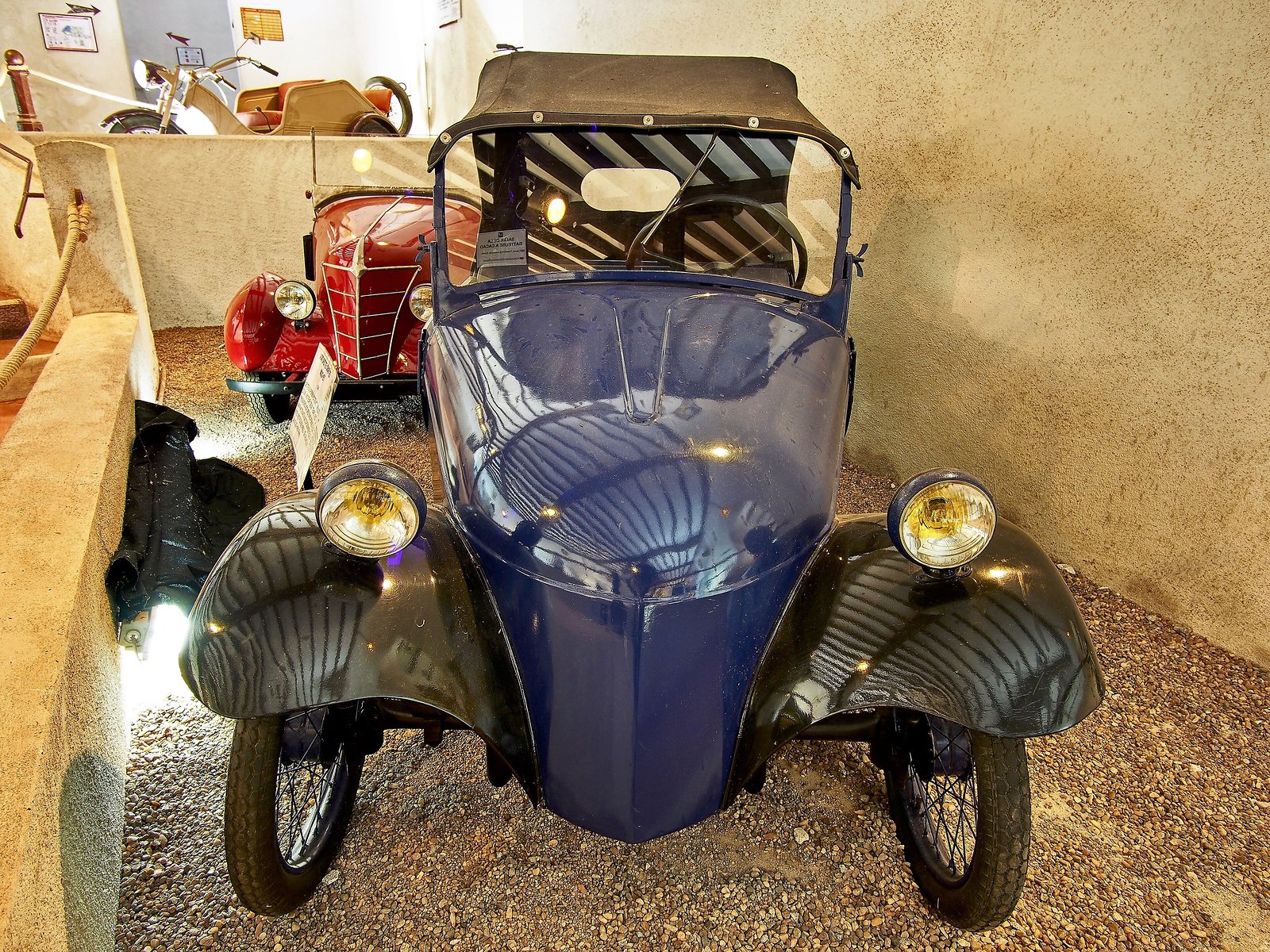
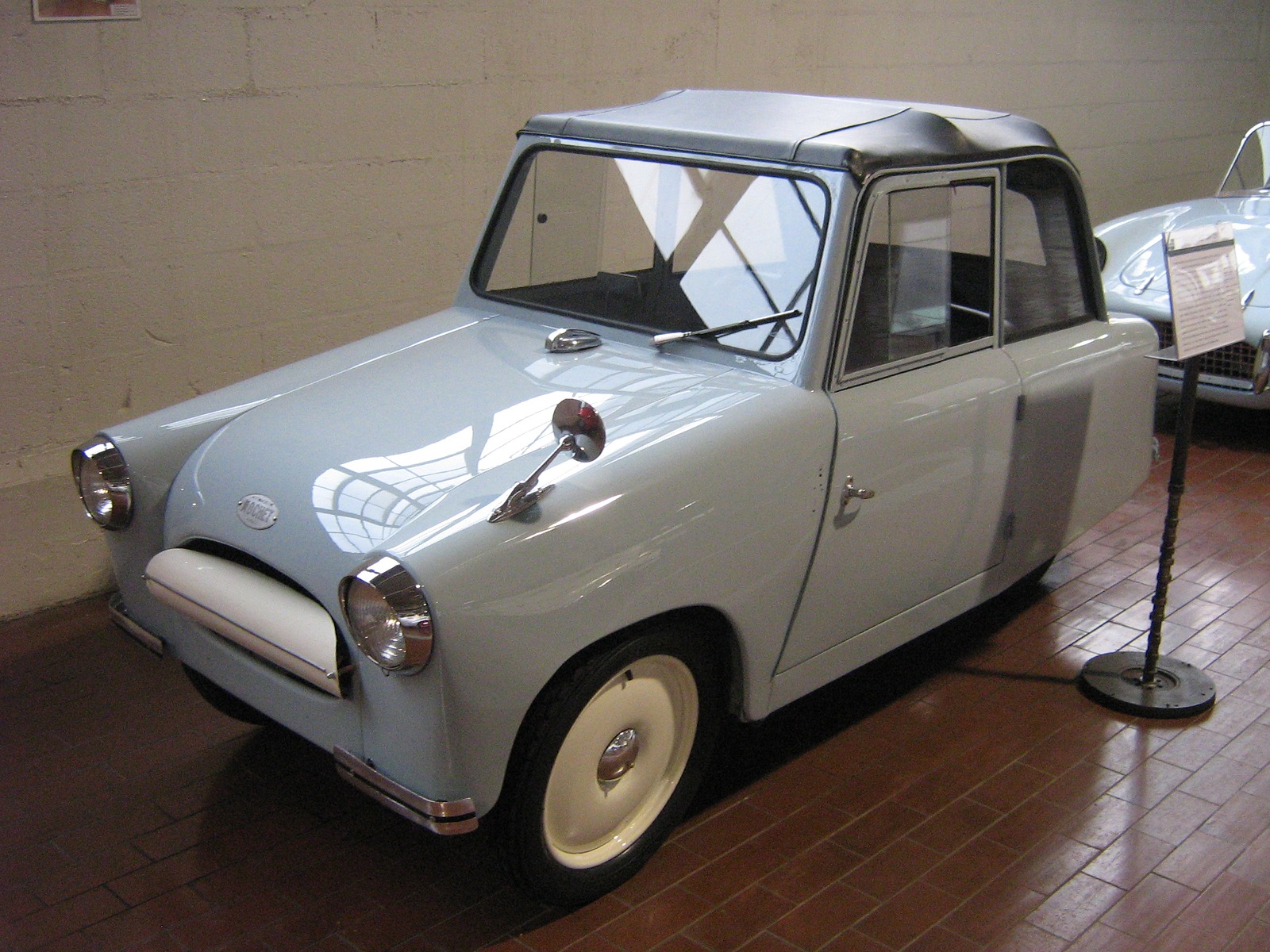
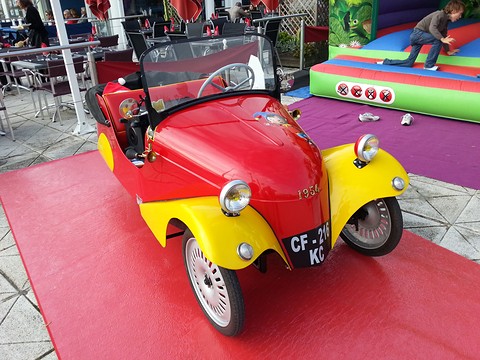
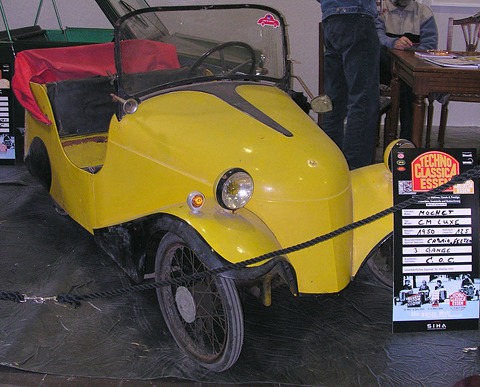
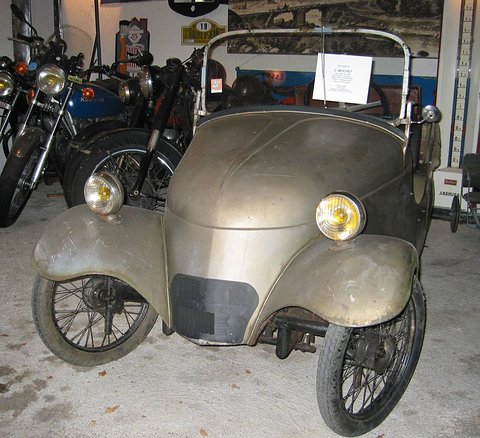
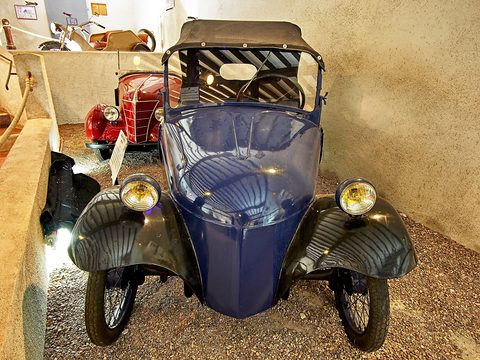
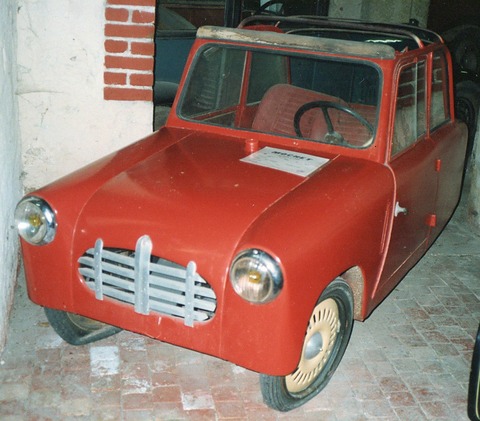
The Type K of 1947 was the first Mochet without pedals, and the first with a steel body, though its doors were still wooden. It had a 125 cc Zürcher, a separate three-speed gearbox and a single central headlamp (some had two on the wings).source 5source 7 Beside it the museum lists a Type CM of 1947–49 with the 99 cc engine, no rear suspension and a length of 2,270 mm (89 in); how the two related is not clear.source 5
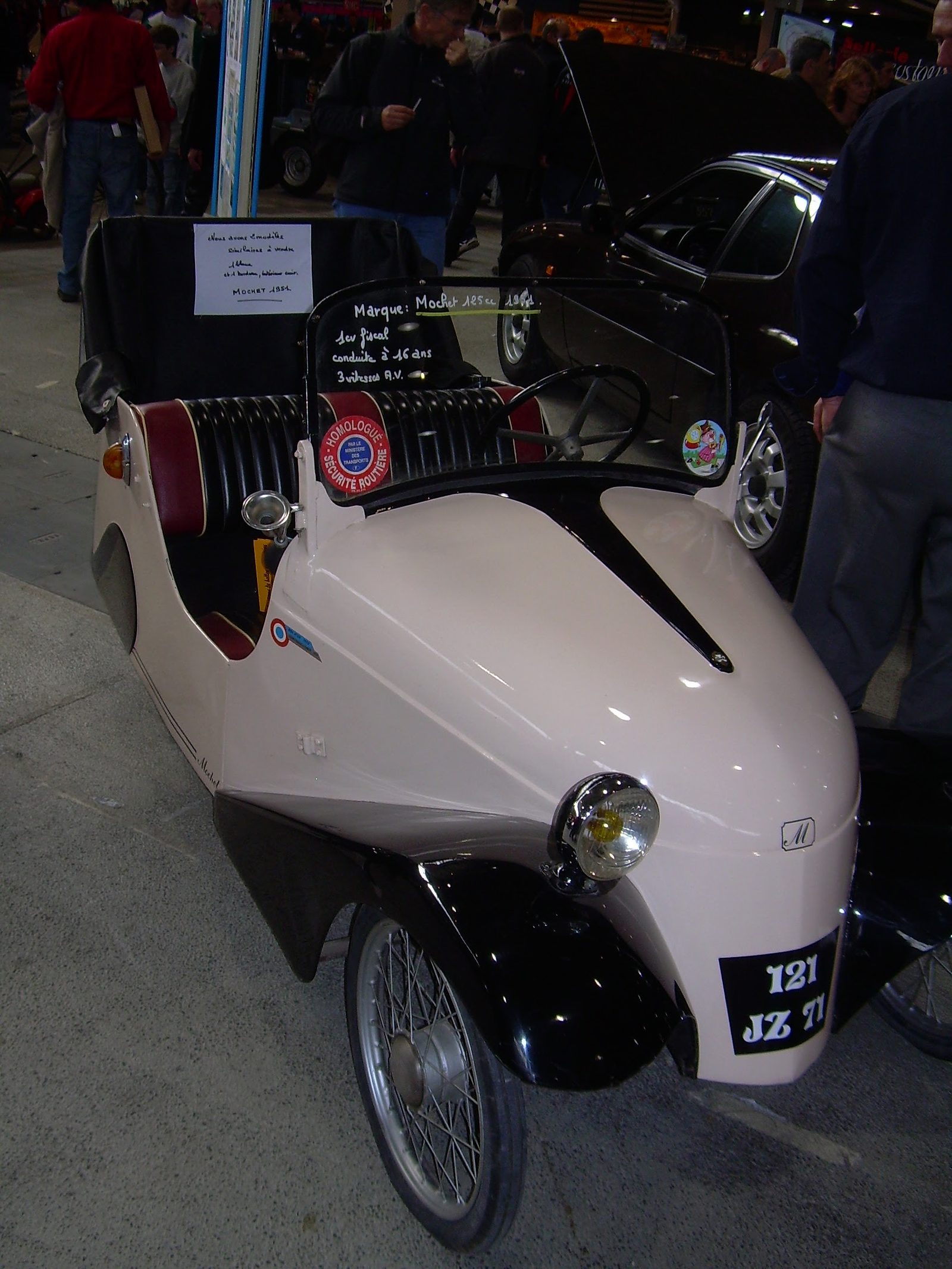
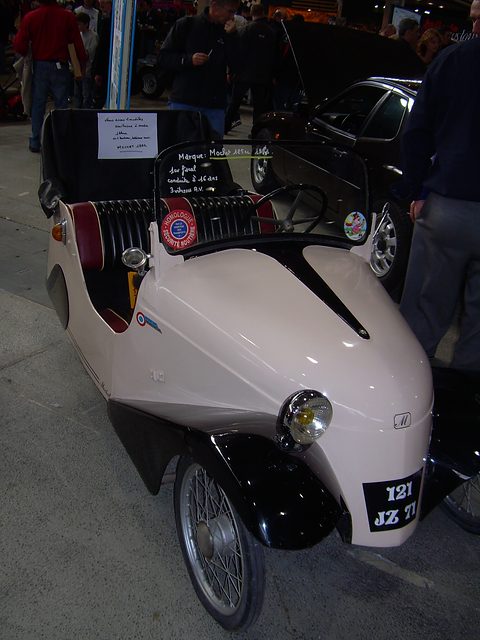
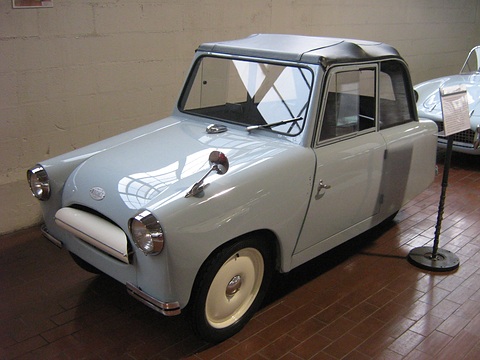
The CM-125 Luxe of 1951 improved the K. Its Zürcher gave 3.5 hp, it weighed 150 kg (331 lb), and it reached 40 km/h (25 mph).source 5 The Weiner museum called the engine feeble, the external band brakes primitive and the separate gearbox stone-age, and noted that the Zürcher needed a break-in of eleven five-minute stops. Early cars had their noses flanged and bolted rather than welded, and a homemade steering wheel that gave way to a proper three-spoke one in 1953.source 5 The museum summed up the family’s thinking in one line: “if it isn’t there it can’t break”.source 5
No licence, six weeks
Post-war France was short of cars, a 2CV meant years of waiting, and Georges Mochet could deliver in six weeks.source 5source 1 A car of 125 cc could be driven without a licence, which made the Mochet the archetype of France’s licence-free cars of the 1950s.source 5source 1
At its peak the works in the rue Roque-de-Fillol made 30 to 40 cars a month with 20 to 30 people, and showroom windows on either side of the factory gate put the cars in front of passers-by.source 1source 8 They were not cheap, the town’s archives add, for the comfort they offered.source 1
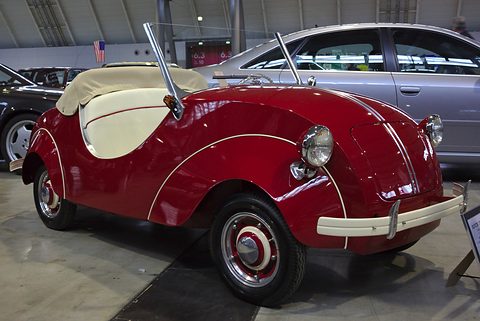
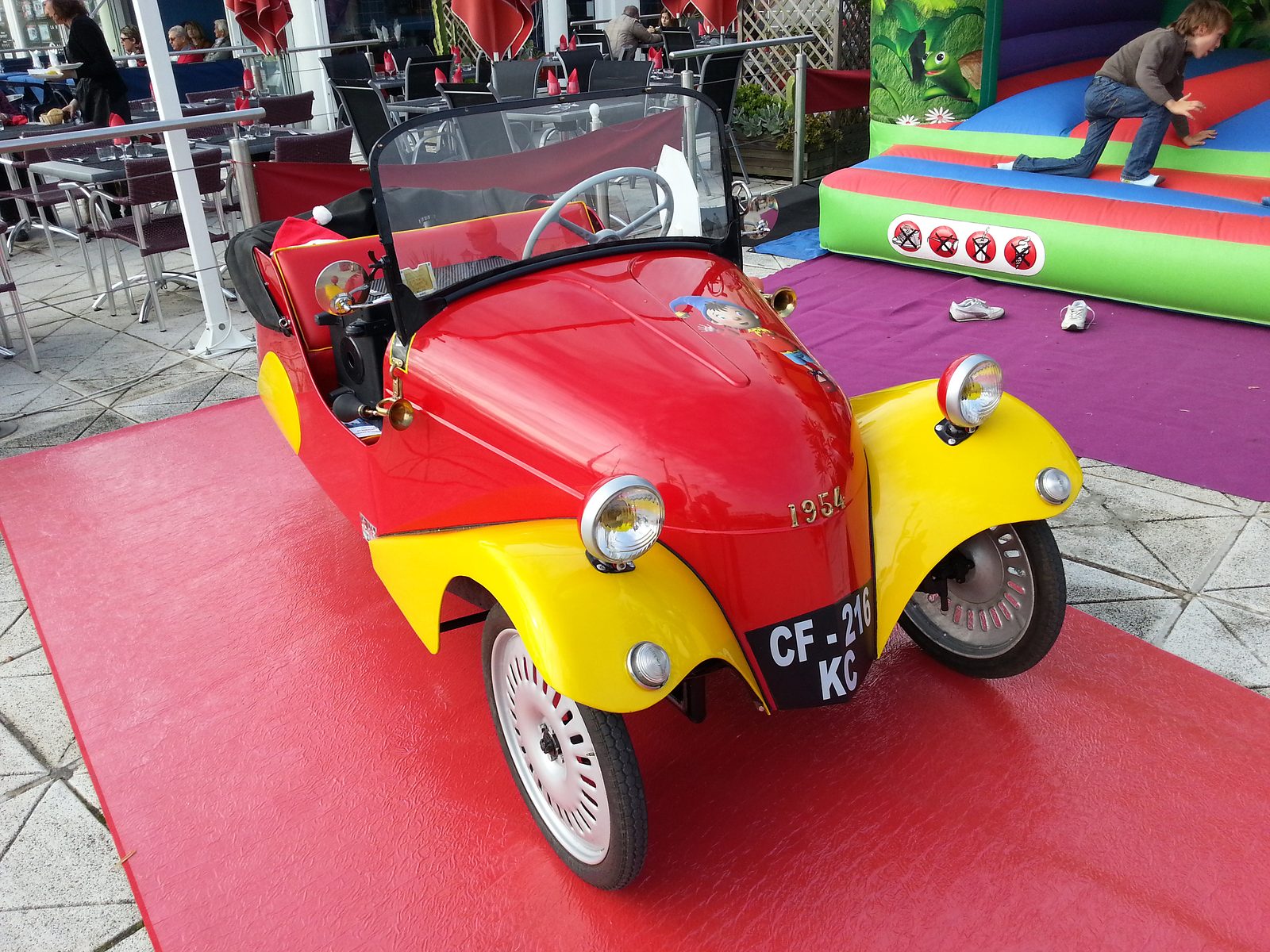
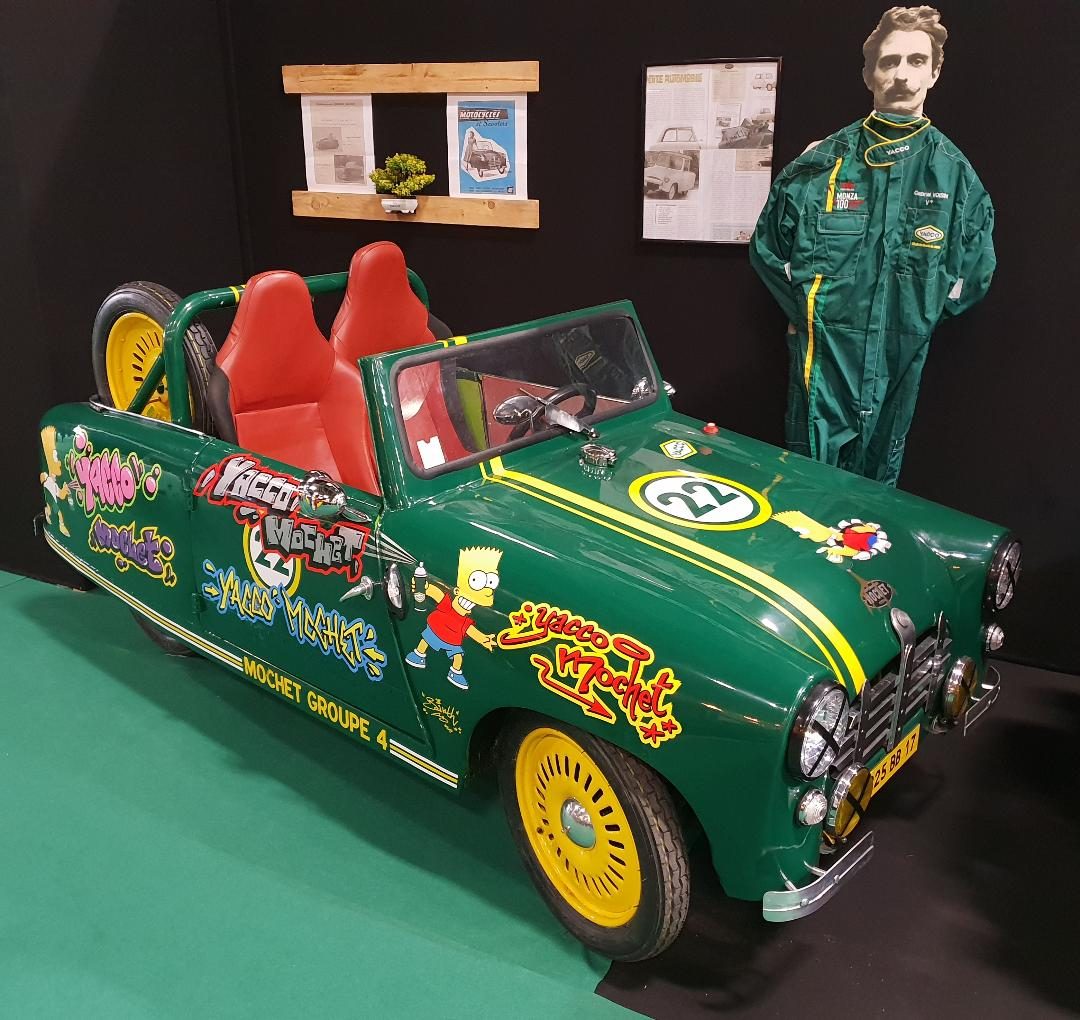
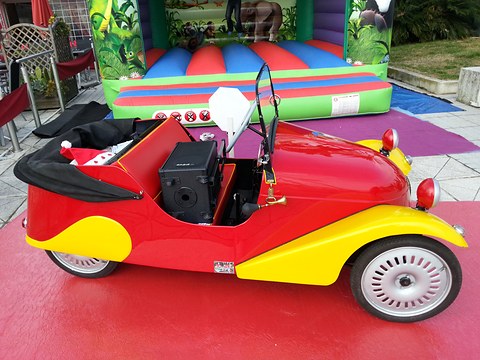
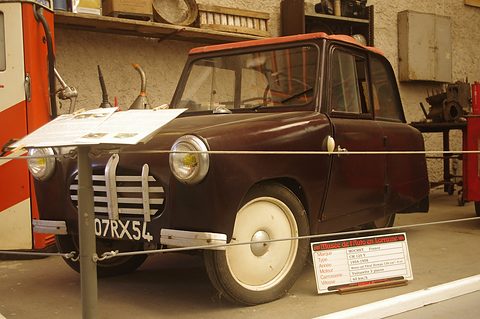
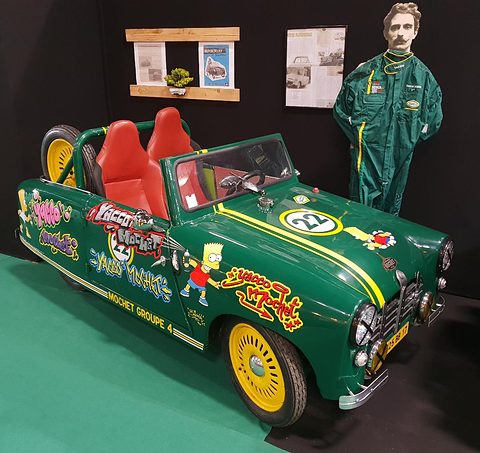
In 1953 the CM Grand Luxe brought a ponton body with the headlamps set into the wings, 2,550 mm (100 in) long on the Type K’s 1,700 mm wheelbase.source 4 At the Paris Salon that October Mochet showed something quite different, the CM 750: a two-seat convertible, bodied with Antem of Courbevoie, with a 750 cc flat twin of 40 hp from Semo/CEMEC, based, English Wikipedia says, on the engines of the BMW motorcycles used by the police. Two prototypes were built, and Georges drove one every day until 1958; it never went into production.source 4source 8
The CM-125Y
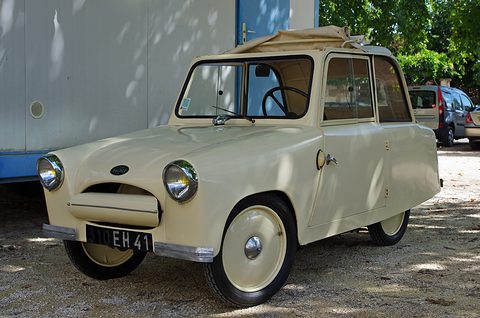
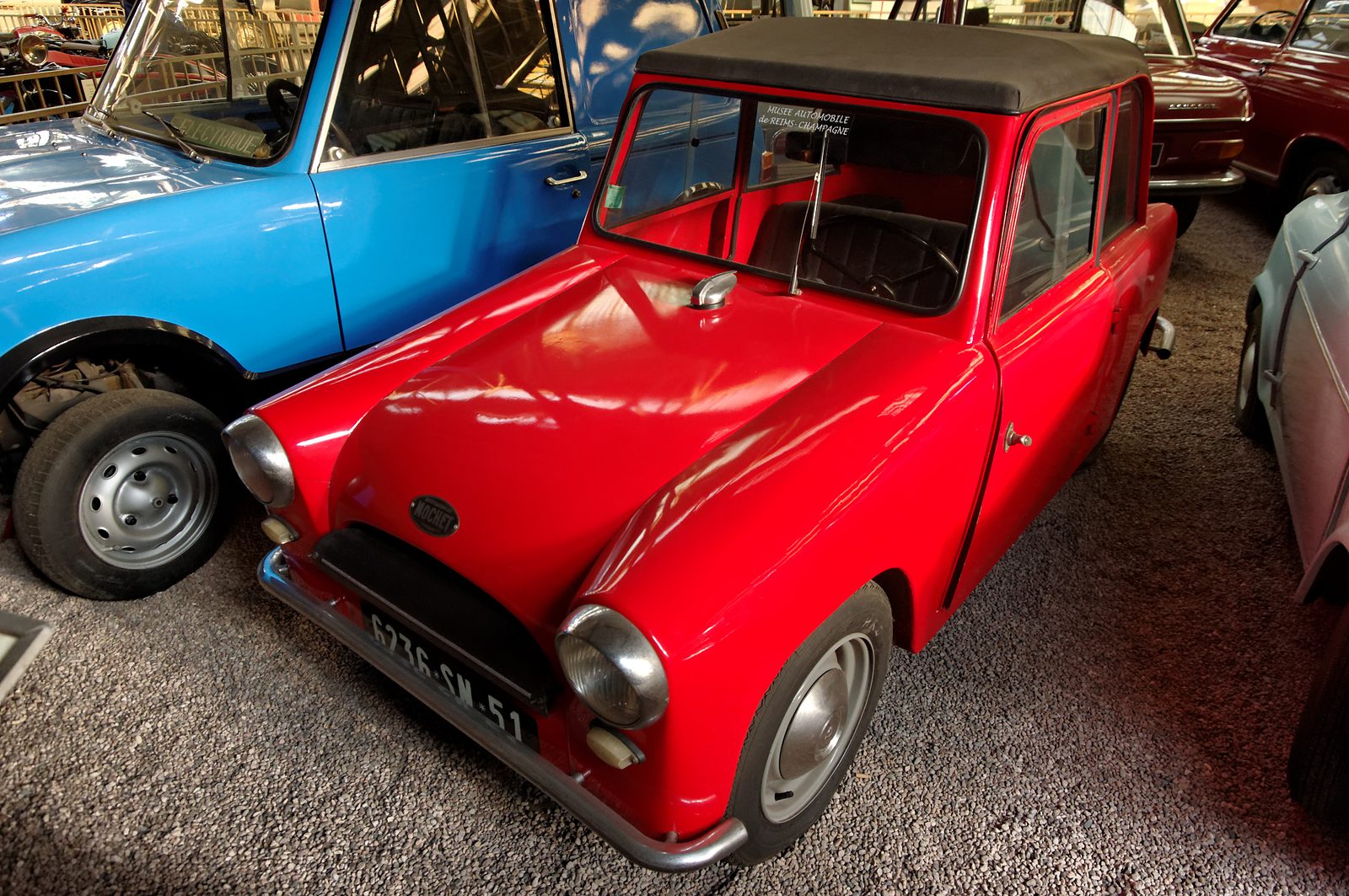
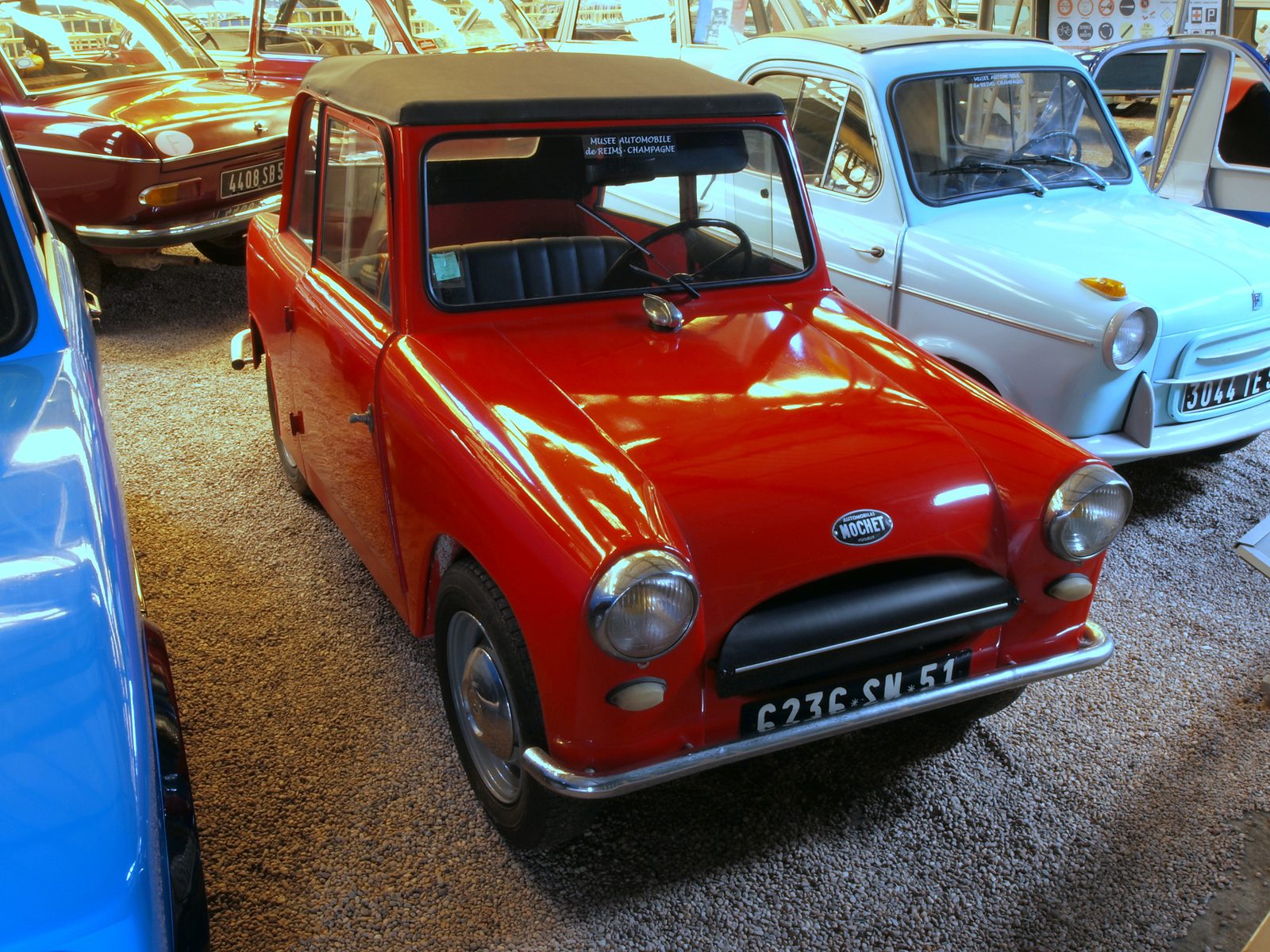
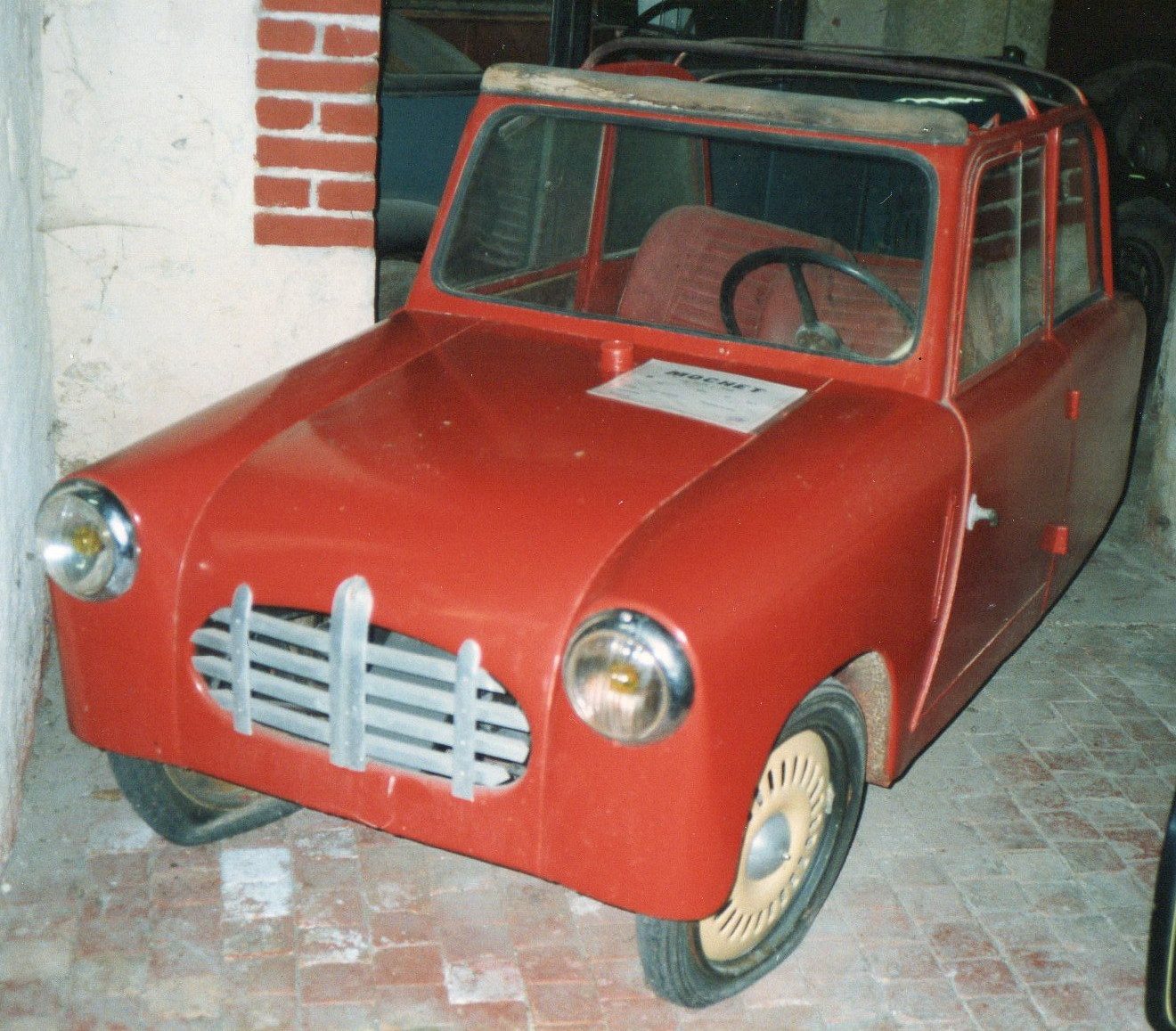
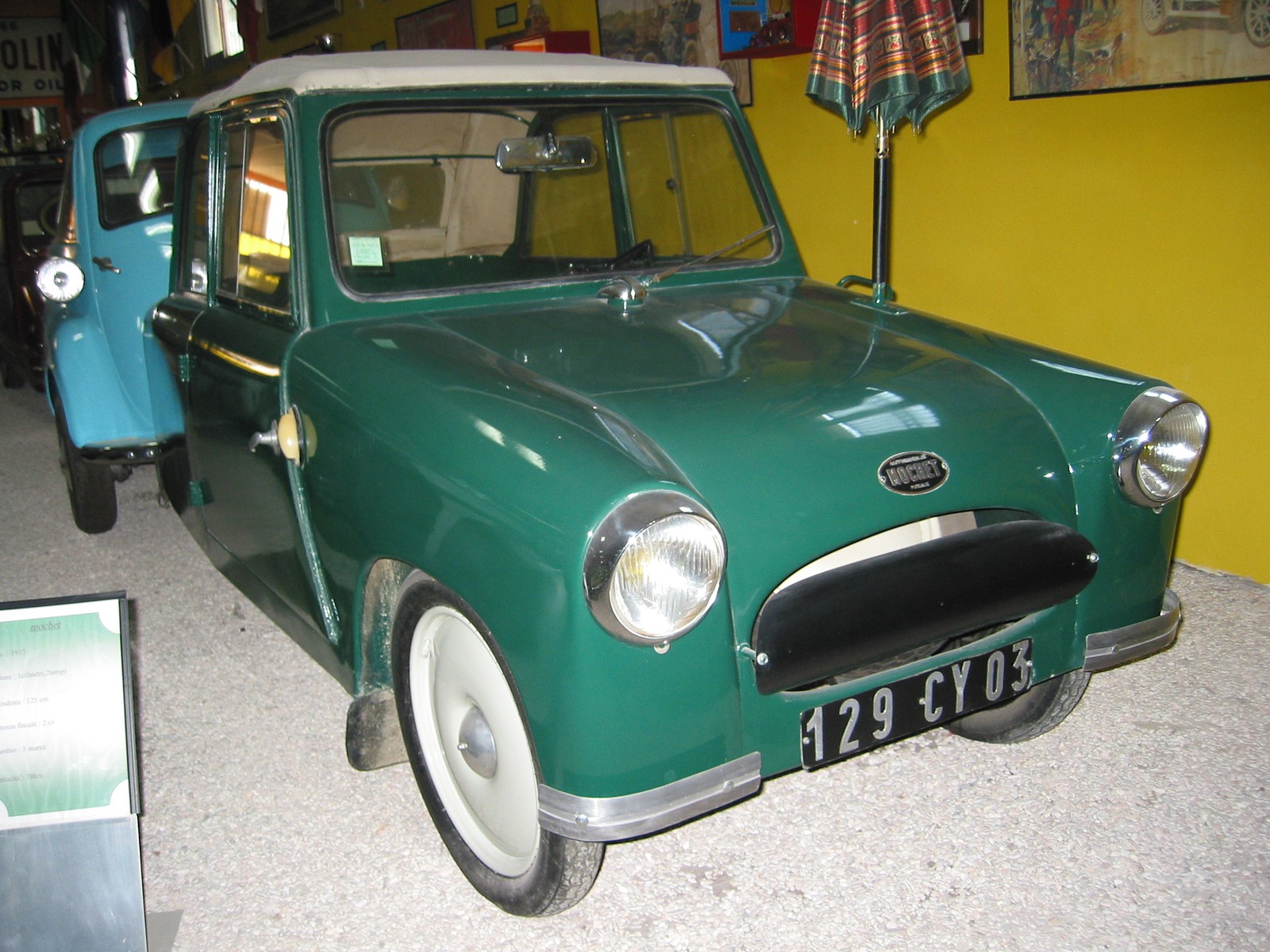
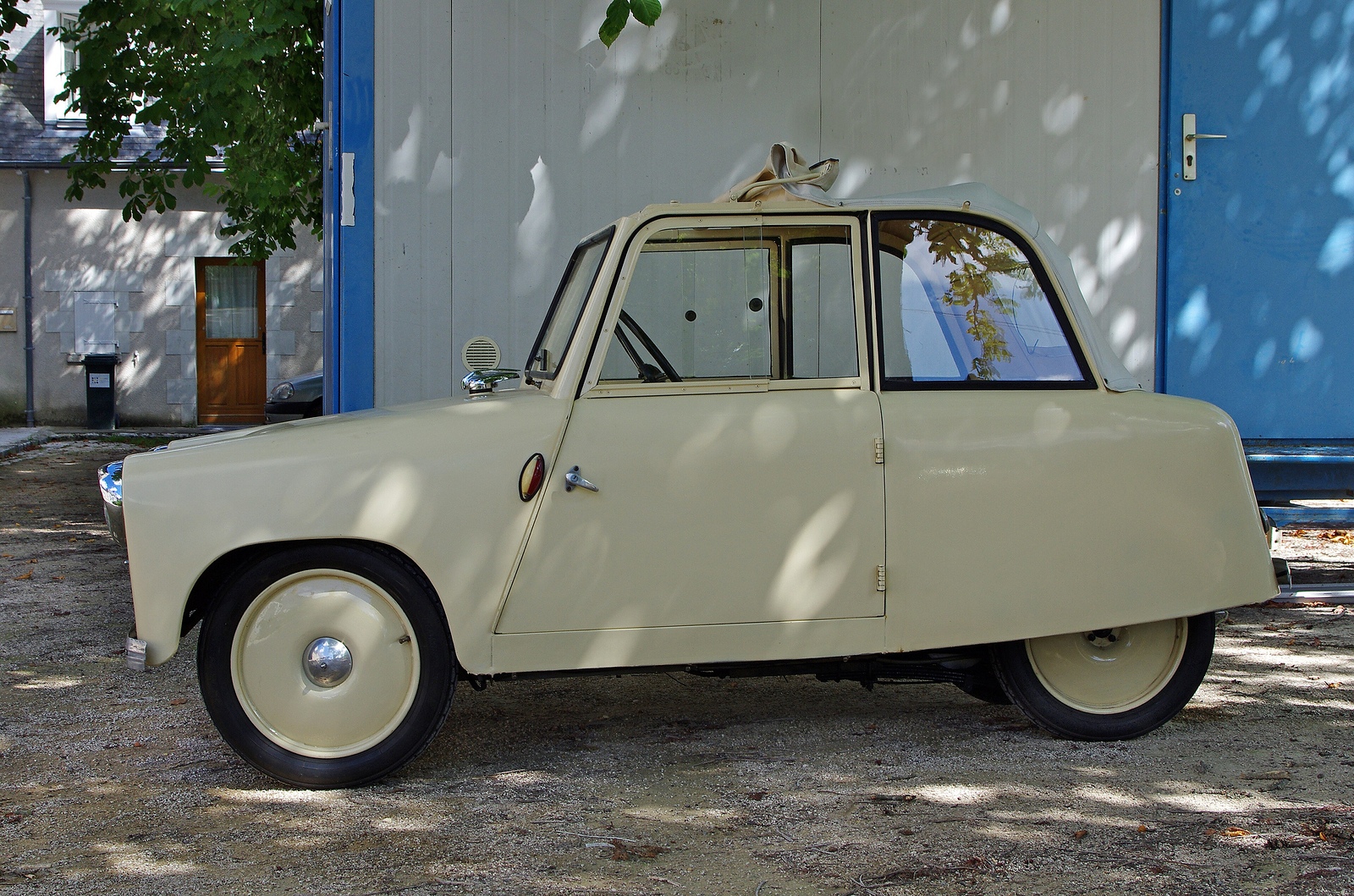
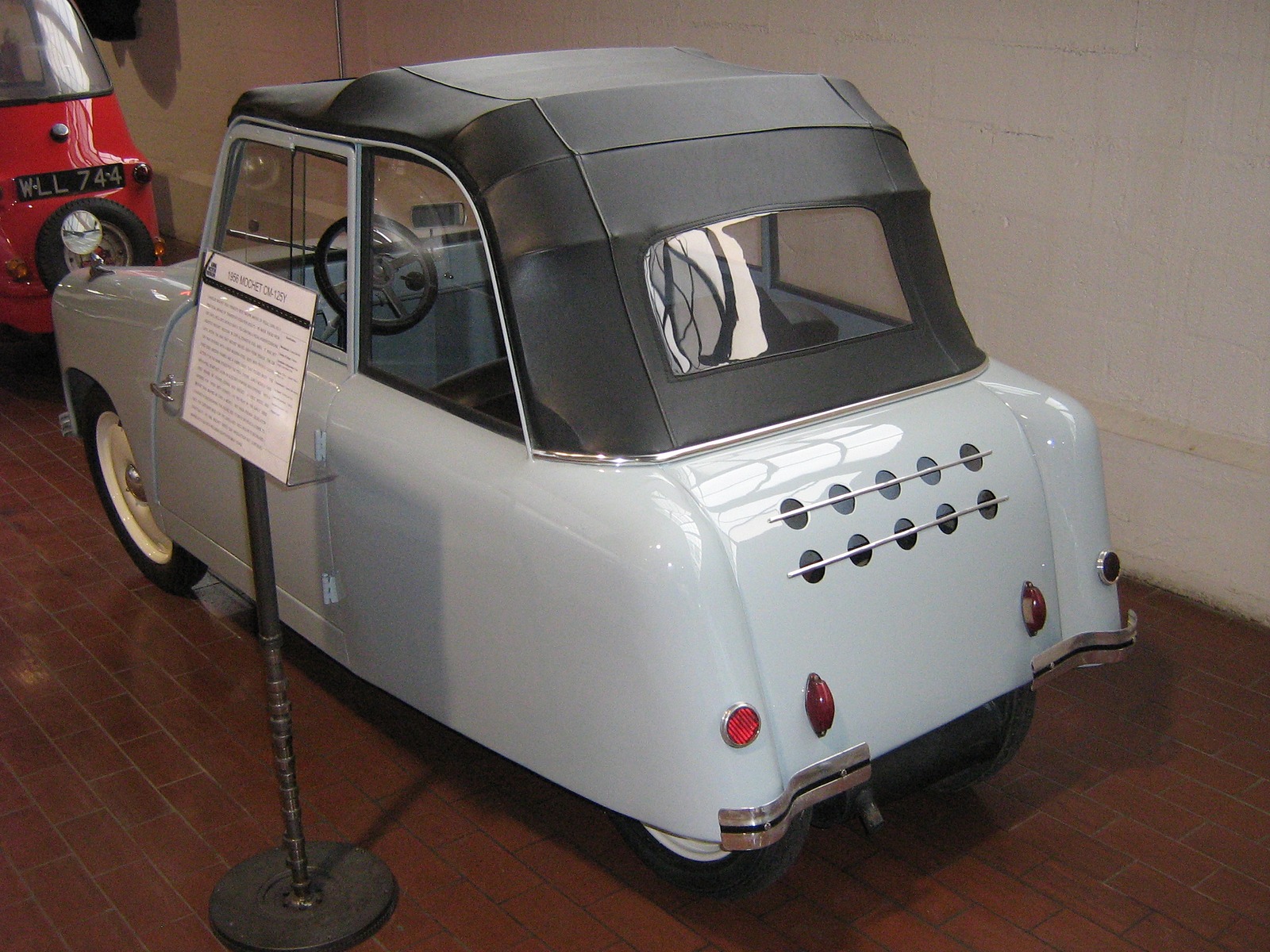
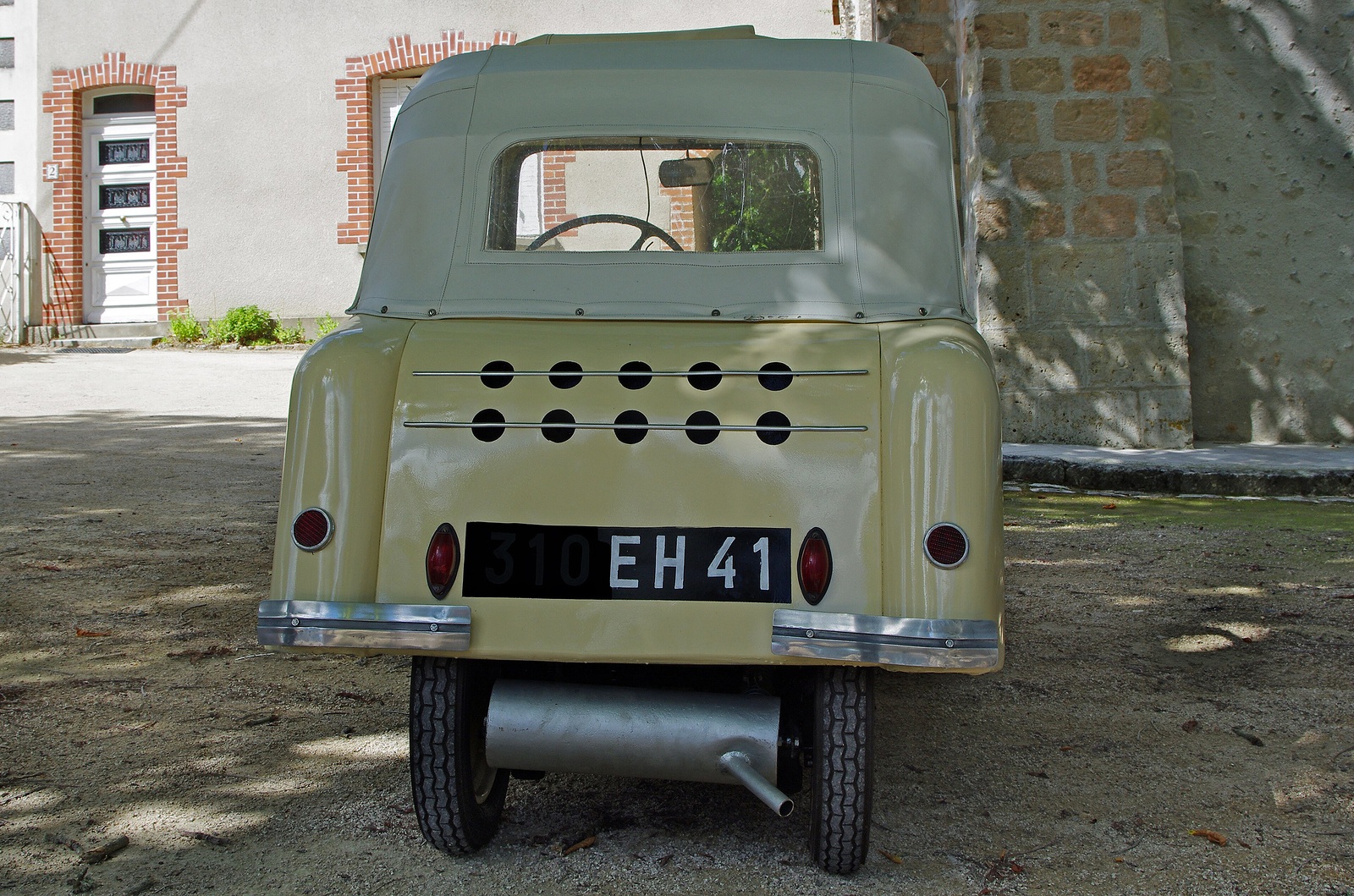
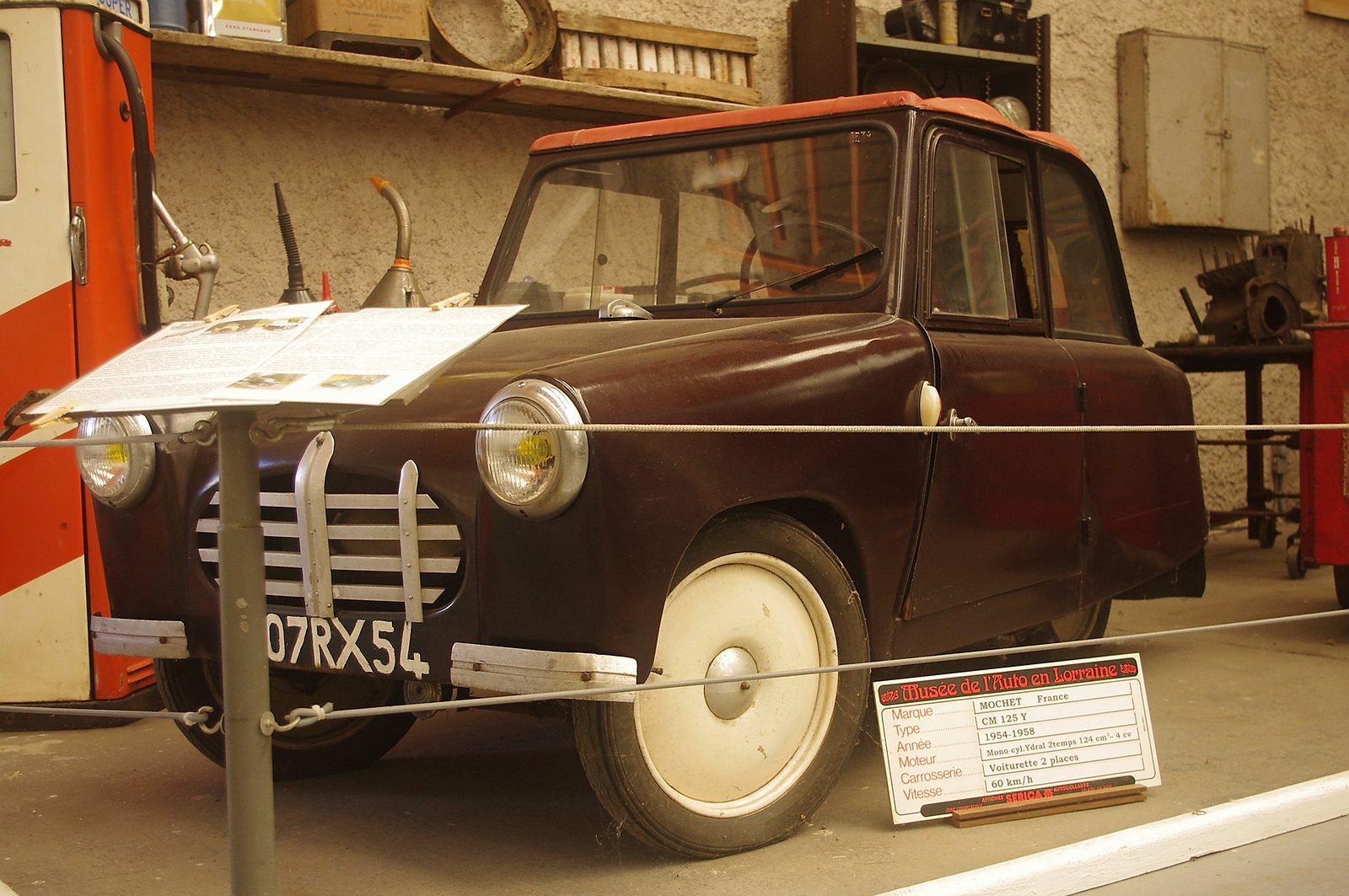
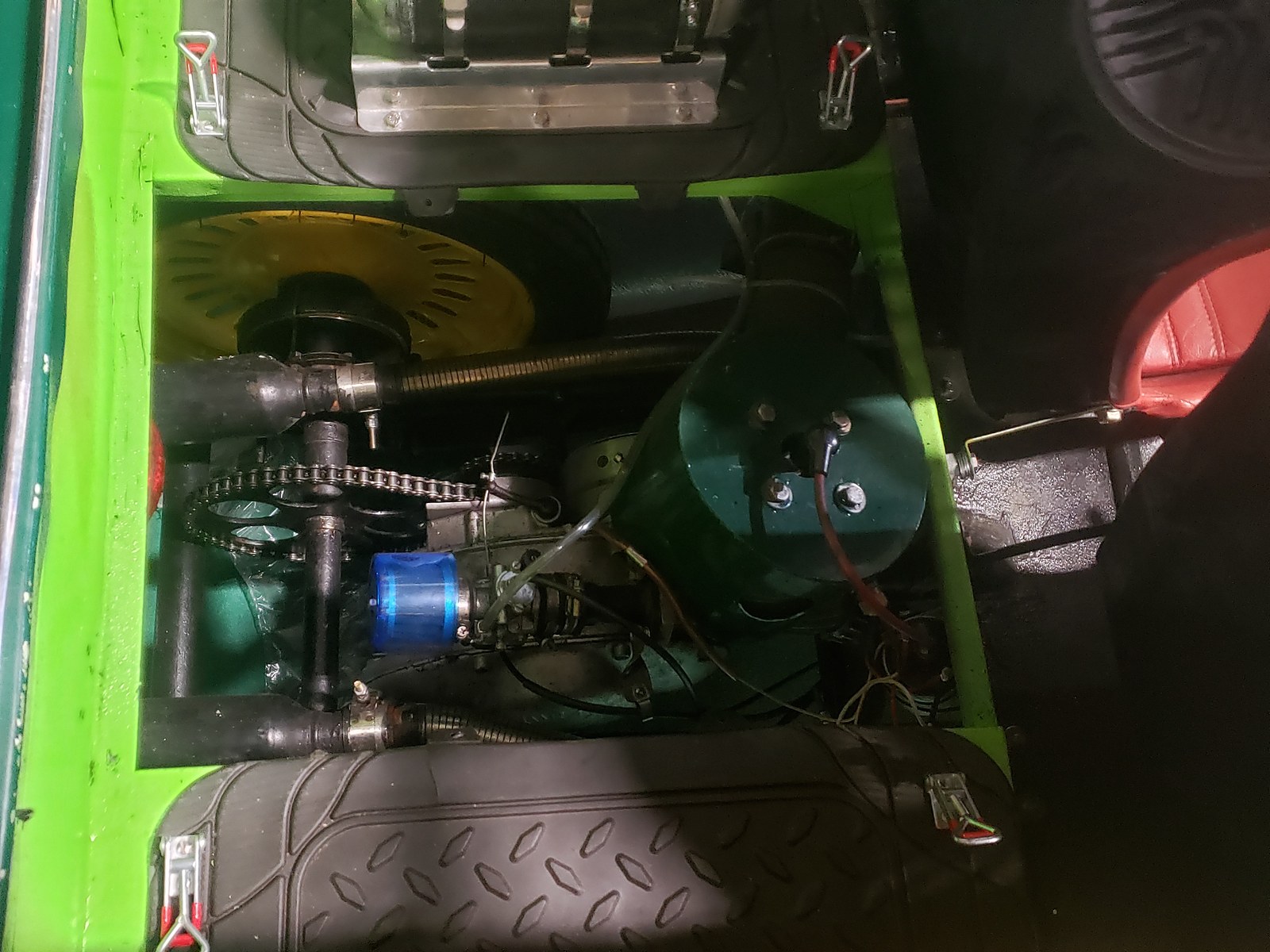
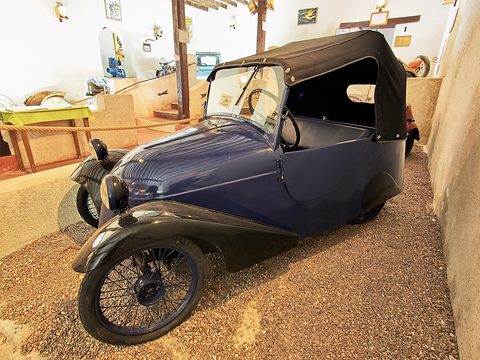
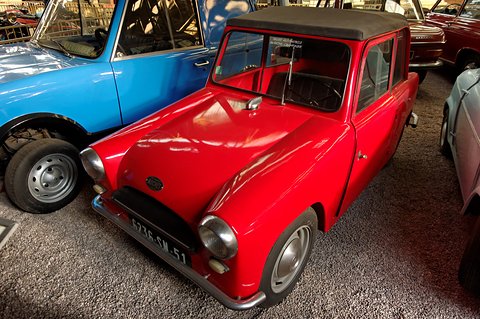
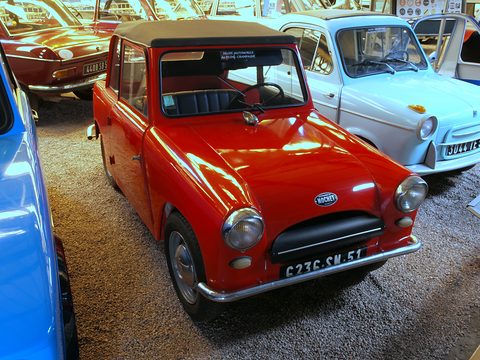
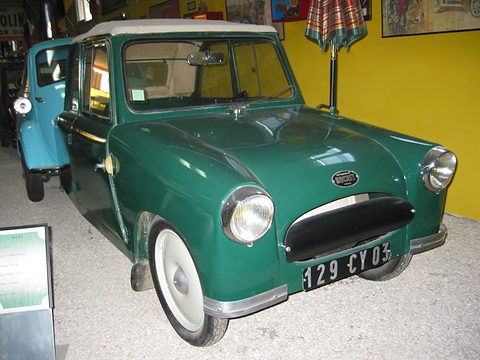
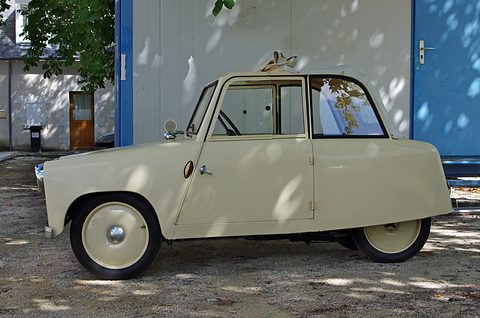
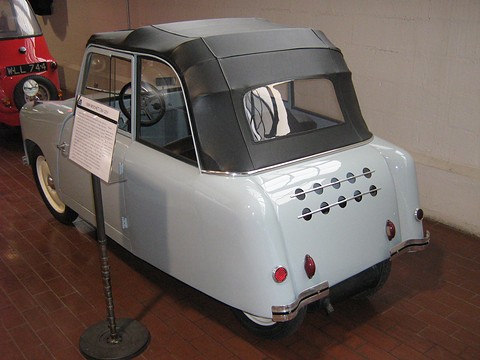
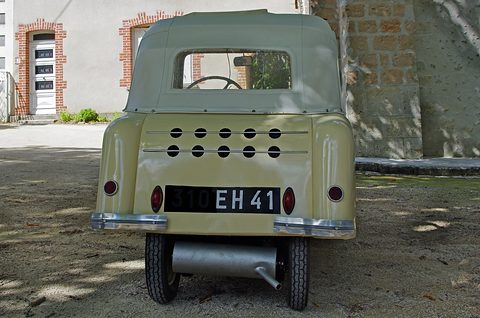
The last Mochet arrived on the last day of 1954, by the museum’s account, or early in 1955 with chassis number 4000, by RM’s. The CM-125Y Berline had proper doors, fixed frames for the side windows and a fabric roof that folded back but stayed fixed at the rear. Its engine was a 125 cc Ydral, the Y of its name, of 5 hp, with a 175 cc version for drivers who held a licence. An electric starter was offered: at first the Gyrostarter, as on the P. Vallée Chantecler, and after some trouble a starter from the Renault Juvaquatre.source 5source 8 It weighed 245 kg (540 lb) and did 50 km/h (31 mph).source 5 The Grand Luxe stayed on beside it for two years.source 5
In 1956 the Grand Luxe was dropped and the Camionette arrived, a family of micro-vans in three forms: a low-sided pickup; a pickup with full-height removable metal sides, a canvas roof and a roll-up rear door; and a closed van whose fixed metal roof stood 15 cm (6 in) higher over the load. All had rear-hinged doors.source 8 From 1956 to 1958 the firm also built about 50 motorcycles, the CMS 125 and CMS 175, with Ydral engines.source 8
The 50 cc rule
The end came by decree. A decree of 1957, the Puteaux archives say, made a driving licence compulsory for any engine between 50 and 125 cc; the Weiner museum and RM date the change to 1958. Either way Mochet lost most of its customers, and it closed in 1958.source 1source 5source 8 Alexandre Laurant joined Citroën. Georges Mochet worked on agricultural equipment at Pont-à-Mousson and remained, into his eighties, a leading figure among the builders of recumbent and human-powered vehicles.source 5source 8 The company was dissolved in 1969, and the works at Puteaux have been demolished.source 2source 4 Charles Mochet has his place among the designers.