microcarfan
  • Cyclecar
  • France
  • Four wheels
  • Pedal-powered

Mochet Vélocar

Also known as Velocar, Vélocar Type H (with an engine)

In 1923 Georges Mochet, aged about nine, asked for a bicycle, and his mother said no: too dangerous. So his father built him a car with pedals. Nearly 6,000 more followed, by the family’s count, and when the family cut one in half, the result broke cycling’s hour record.

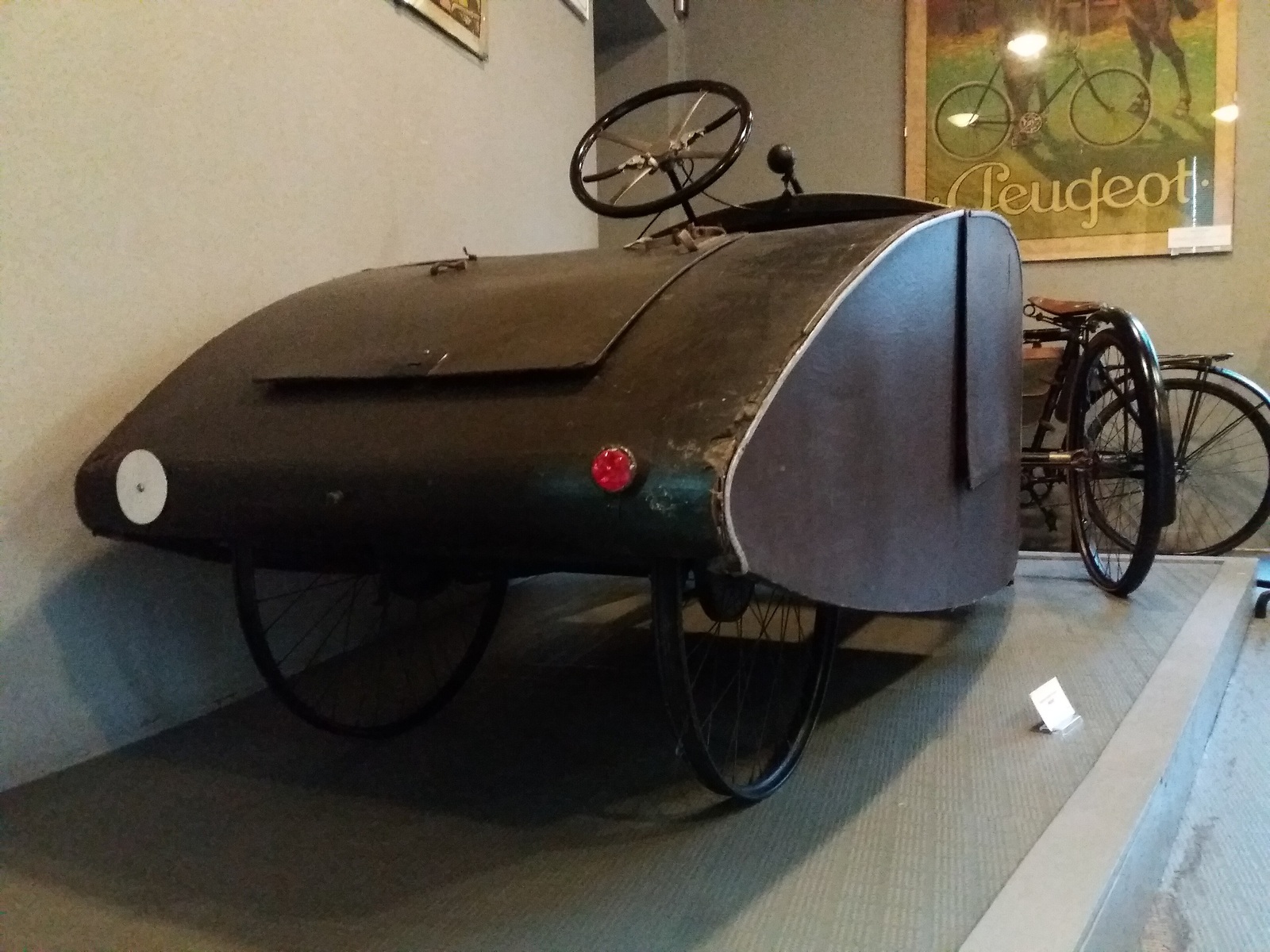
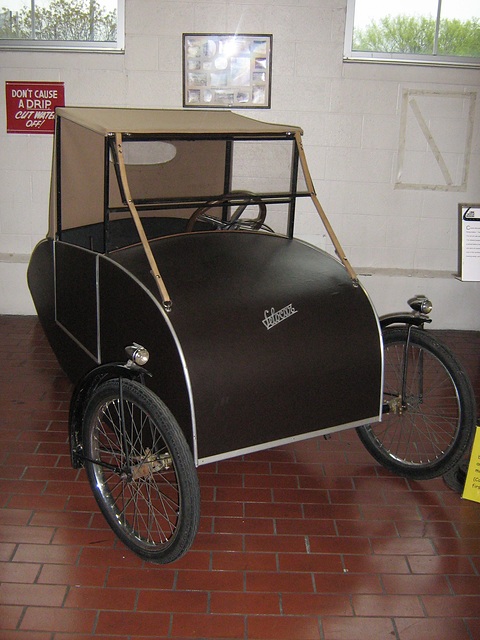
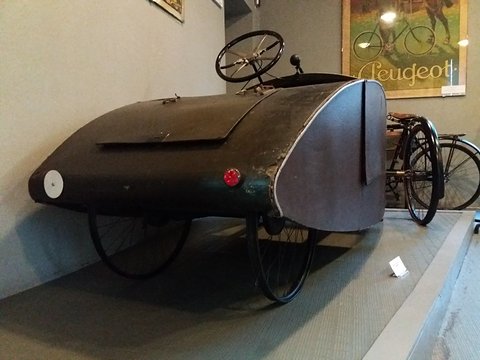
A small black boat-shaped pedal car on four bicycle wheels under a tan fabric canopy, on a brick floor.
A black Mochet two-seat Vélocar with a tan canopy at the Lane Motor Museum, Nashville, in April 2009.Photo: dave_7, CC BY 2.0, via Wikimedia Commons

At a glance

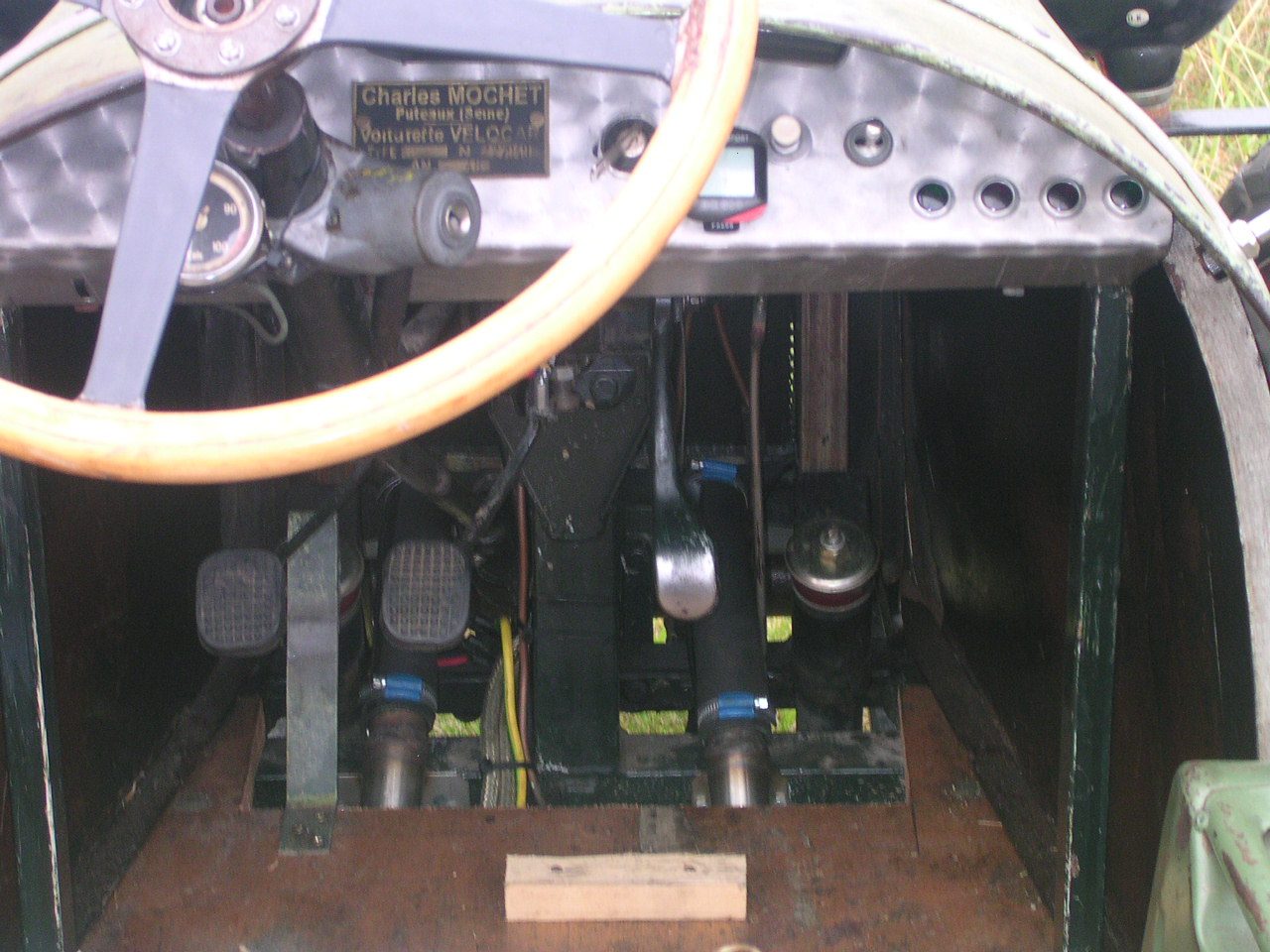
The spec plate

Mochet Vélocar

Vélocar · Puteaux

Built
1925–⁠1950Pedal cars from 1925 to about 1950; the motorised Type H until 1948
Country
FranceParis and Saint-Ouen, then 66–68 rue Roque-de-Fillol, Puteaux
Maker
Charles MochetÉtablissements Charles Mochet, run by his widow, his son Georges and Alexandre Laurant, from 1934
Engine
Pedals, two setsThe Type H added a 99 cc Zurcher engine and kept the pedals
Power
2 hpThe Type H’s engine; the pedal car ran on its riders
Seats
2Side by side, each with pedals
Wheels
4Bicycle wheels; the riders’ pedals drive the rear wheels by chain through a shaft under the seat
Price new
2,500–3,900 FUndated, by the Lane Motor Museum: about US$118–185
Production
nearly 6,000Pedal cars, 1925–⁠50, by Georges Mochet’s count
Survives
No count foundAbout 35 of the recumbent bicycles survive
Top speed
34km/h34 km/hThe pedal car went as fast as its riders could pedal

Not yet recordedlength and weight.

How big is it?

True proportion

Length unknown

No reliable length has been found. The Fiat 500, the Peel P50 and the adult stay, so the gap is shown, not hidden.

  • Two seats side by side, each with its own pedals
Drawn at true proportion. The track is 3.6 metres long; the adult stands at the same scale. The Peel P50 is the smallest production car, on every page for comparison.

Beside its contemporaries

The French microcars on the road in 1925, on the same 3.5 m scale. Lengths of cars without a page yet come from the census and are unverified.

  1. Citroën 5HP1922–⁠1926 · France

    3.20 m
  2. Mochet Vélocar1925–⁠1950 · France

    length unknown

The story

History

Charles Mochet, born on 30 March 1880, was an inventor before he was a maker.source 1source 2 Around 1910 he was trying to build aeroplanes in a workshop on the Corniche at Marseille. Shortly before 1914 he went to Morocco with Georges’s uncle to start a transport business, raced a De Dion-Bouton there while the uncle drove a car of their own make, the Meziane, and during the war built a small pedal car that ran in Casablanca. Back in Marseille he worked on an engine without valves, tested in an Austin on several runs to Paris, and that is why the family moved to the capital. At Saint-Ouen they built 120 to 130 two-seat voiturettes, the Mochet 4 CV CM, with a 350 cc two-stroke.source 1 He has a place on our page of the designers.

A car instead of a bicycle

Then Georges wanted a bicycle, and Mme Mochet would not have it.source 3source 1 His father first built him a two-seat quadricycle from voiturette parts, with pedals that pumped up and down; to change gear you moved the chain’s anchor on the cranks. Next, in the middle of designing a 500 cc twin for his voiturettes, he built the boy a single-seater. A photograph of 1925 shows Georges in it at eleven, and the family chose its name, Vélocar, after a discussion round the table.source 1 Lying back against a seatback, the rider could push harder on the pedals than a cyclist can, and the faired body cut the drag. Georges left his friends and their bicycles behind; he put it down to the pedalling position, but above all to the shape of the body.source 4source 1

Charles built a two-seater for fun. Someone bought it, so he built more.source 3source 1

Il s’en vendit un par semaine, puis un par jour.

Georges Mochet, Charles Mochet et le Vélocar, 2001: “They sold one a week, then one a day.”source 1

The pedal car paid better than the voiturettes, so for the time being it replaced them, and the Mochets gave up powered cars.source 3source 1 Production began in 1925.source 3source 1 When the lease at Saint-Ouen ran out, an architect friend talked Charles into buying land at Puteaux and building a workshop there, at 66–68 rue Roque-de-Fillol; the town’s archives date the first Vélocars made there to 1927. Georges later married the architect’s daughter.source 1source 5

Two bicycles’ worth

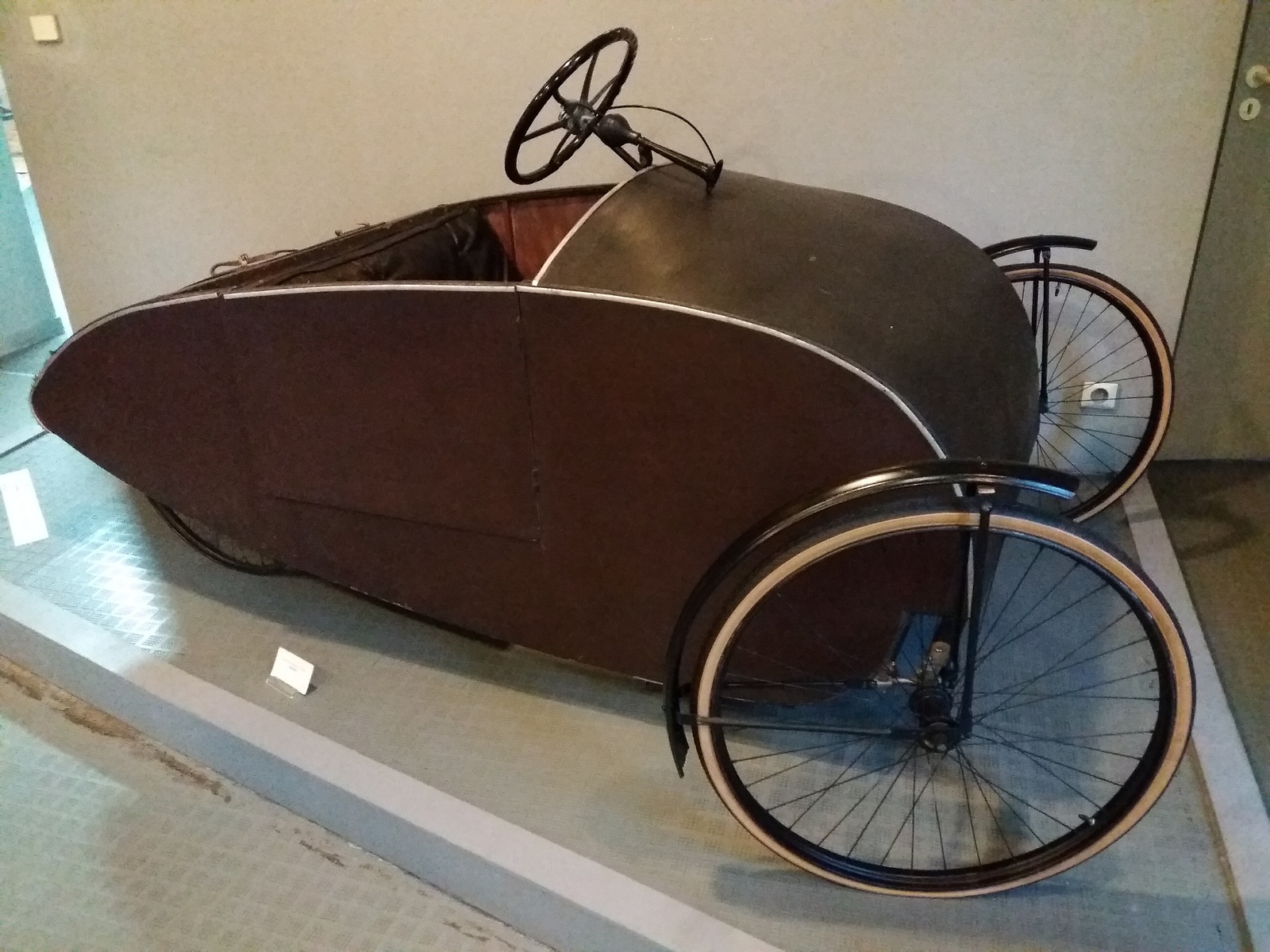
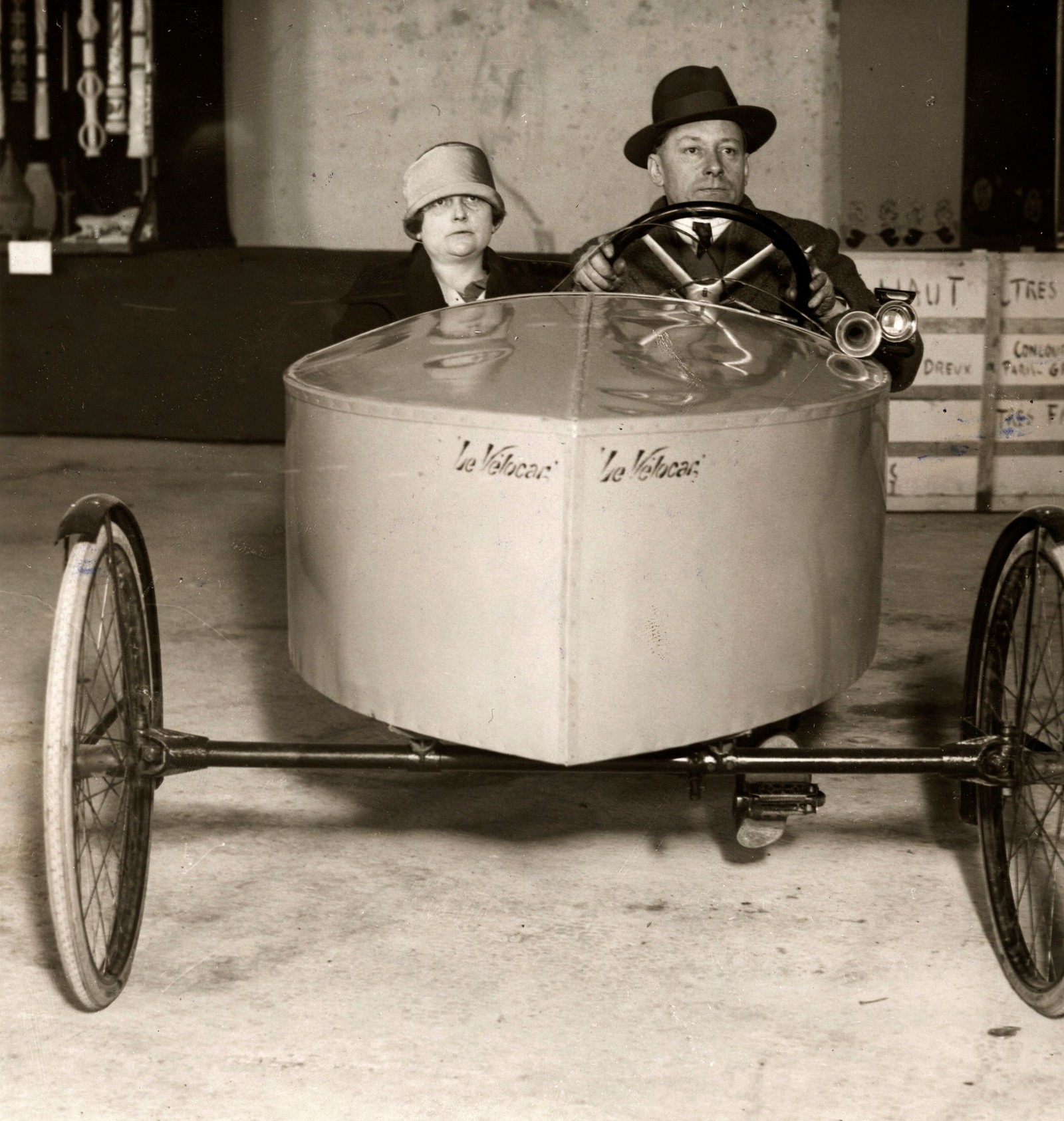
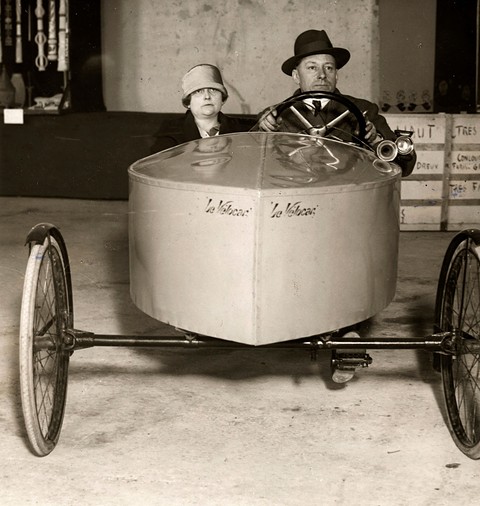
The production Vélocar was a two-seater on four bicycle wheels, with a tubular steel chassis and a very light, pointed body of aircraft plywood. Each rider had a set of pedals, and their chains ran to a shaft under the seat that carried a three-speed gear and a freewheel that acted as a differential; the gear lever sat between the seats, and there was room for luggage.source 3source 1source 6source 7 The Lane Motor Museum gives prices of about 2,500 to 3,900 francs.source 3 When few people could afford a car, it cost no more to keep than two bicycles, and two good riders went faster on the flat than on a tandem. It did not take corners well.source 1source 8 It is counted with the cyclecars, though it had no engine at all.

Around 1930 Vélocars were used to pace riders in important cycle races.source 1source 8 In 1932 Charles won the grand prize of the association of French inventors and small manufacturers at the Concours Lépine, and every year the firm held a rally for its customers, the Œufs de Pâques, with a Vélocar as first prize.source 1source 8 Sales rose in 1936, when the French won paid holidays.source 5 English Wikipedia says the pedal car’s popularity faded in the late 1930s, as cheaper powered cars appeared.source 7

Half a Vélocar

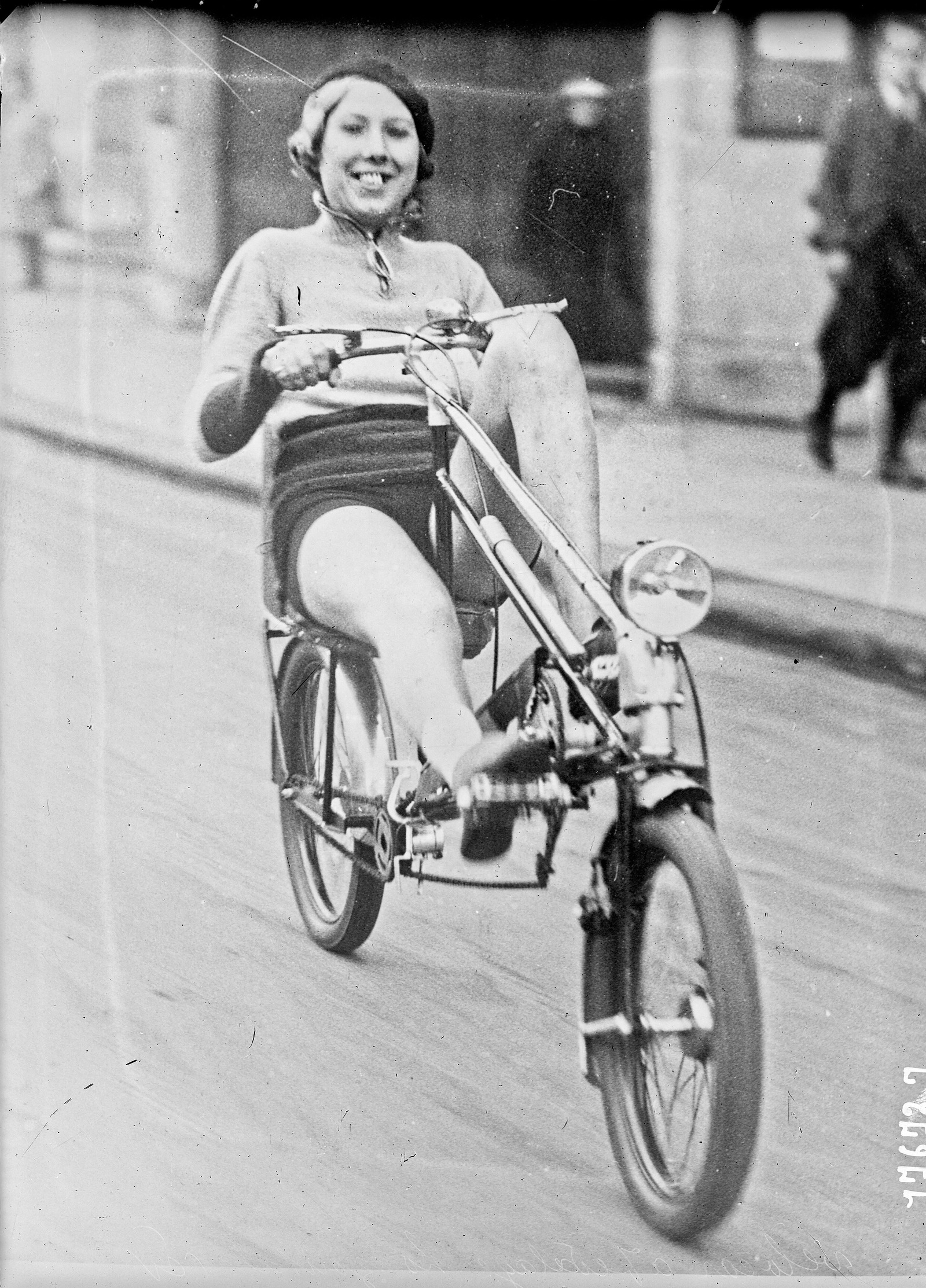
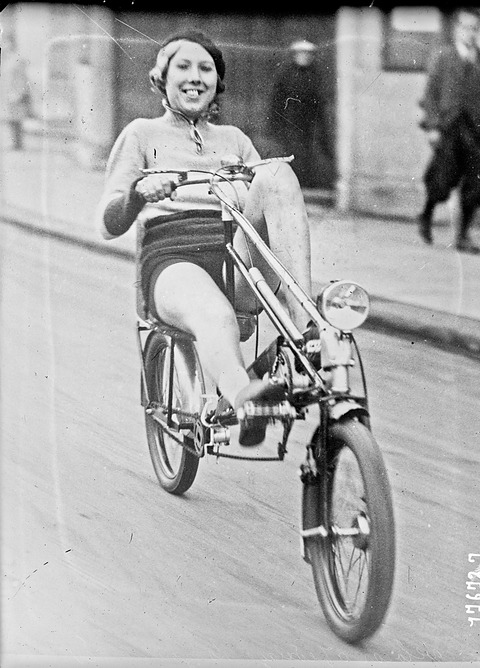
The record that made the name was set on two wheels, not four. In the winter of 1930, at an inn in Nonancourt, Charles, his wife, Alexandre Laurant and Georges decided to build a fully faired racing tricycle from Vélocar parts, for publicity. It was fast on the road and round Longchamp but slow on the steep bankings of the Saint-Denis track, so they cut the pedal car in half: the Vélo-Vélocar, a recumbent bicycle.source 1 The champion Henri Lemoine tried it, was delighted, and would not race it.source 8source 2

Francis Faure would. A track sprinter who had won the six-day race at Saint-Étienne, but a second-category rider, he took the Vélo-Vélocar to the Parc des Princes in July 1933 and rode 45.055 km in the hour, beating the 44.247 km Oscar Egg had set in 1914.source 1source 8source 7 His fellow professionals had a line for it:

Si tu pédales couché, c’est que tu dois être bien fatigué !

Faure’s fellow riders, as Arnfried Schmitz reported in 1989: “If you pedal lying down, you must be really tired!”source 8

Was it a bicycle? The cycling authorities argued about it for a year (see records and feats). At its congress in Paris on 11 August 1933, where an amateur named Martin rode a Vélocar round the conference table, the UCI put off a decision; the minutes, obtained by Marc Tauss in 2003, record a vote of 52 to 44 against the machine. Georges Mochet says that a congress of 3 February 1934 ratified Faure’s rides as world records and set up a commission to define the bicycle anew.source 1source 8 Before that congress of February 1934, Charles had written to the delegates:

Ou bien la bicyclette horizontale est une erreur, sans avenir ; dans ce cas, elle disparaîtra comme elle est venue et sera vite oubliée. Ou bien, au contraire, le hasard a voulu qu’elle représente un progrès… vous ne voudrez pas prendre la responsabilité d’empêcher sa manifestation.

Charles Mochet, open letter to the UCI’s delegates, 1934: “Either the horizontal bicycle is a mistake with no future, in which case it will vanish as it came and be quickly forgotten. Or, on the contrary, chance has made it a step forward… and you will not wish to take responsibility for preventing it.”source 1

The new definition, published in June 1934, fixed a record bicycle by its dimensions and put other human-powered machines into a category of their own.source 1source 8 Faure’s hour disappeared from the ordinary lists. It is often called the most famous ban in cycling, but it concerned the two-wheeled recumbent, never the four-wheeled pedal car.source 8source 7 Charles Mochet died on 3 June 1934. That day, in a road race, his rider Paul Morand broke away on a Vélo-Vélocar and gained 10 minutes, until the team managers set the whole field to chase him down; he was caught 50 km from the finish.source 1

War, engines and the end

His widow, Georges and Alexandre Laurant carried on as Établissements Charles Mochet.source 5source 6 When the war came, demand for the two-seaters boomed, and when petrol all but vanished, Vélocar sales rose sharply. Under the Occupation more and more were given engines by their owners or by motorcycle firms, and some were electrified.source 1source 8source 5source 7

From about 1945 the firm fitted engines itself. The Type H was a two-seater with a 99 cc Zurcher engine behind the seats; it had no starter, so you pedalled to start it, and it ran at about 34 km/h (21 mph).source 3source 4source 1 The Lane museum dates its own Type H to 1931 and says 650 were built from 1931 to 1948, which does not fit Georges’s memory of engines only after the war.source 4source 1 The Type K and the Mochet CM 125 followed, among the licence-free cars of post-war France, and the last of them were real small cars with no pedals at all; every CM carried a triangle marked VÉLOCAR where the steering wheel was mounted.source 1source 6 At its peak the Puteaux works employed 20 to 30 people and made 30 to 40 cars a month, delivered in six weeks when a new 2CV took years. A decree of 1957 requiring a licence for engines of 50 to 125 cc closed the firm; the archives date the last production to 1958.source 5 Georges took a job with a maker of hydraulic equipment, and died in 2008.source 8source 7
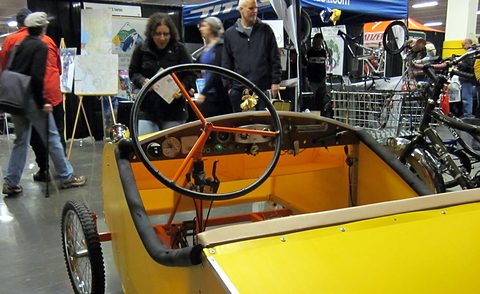
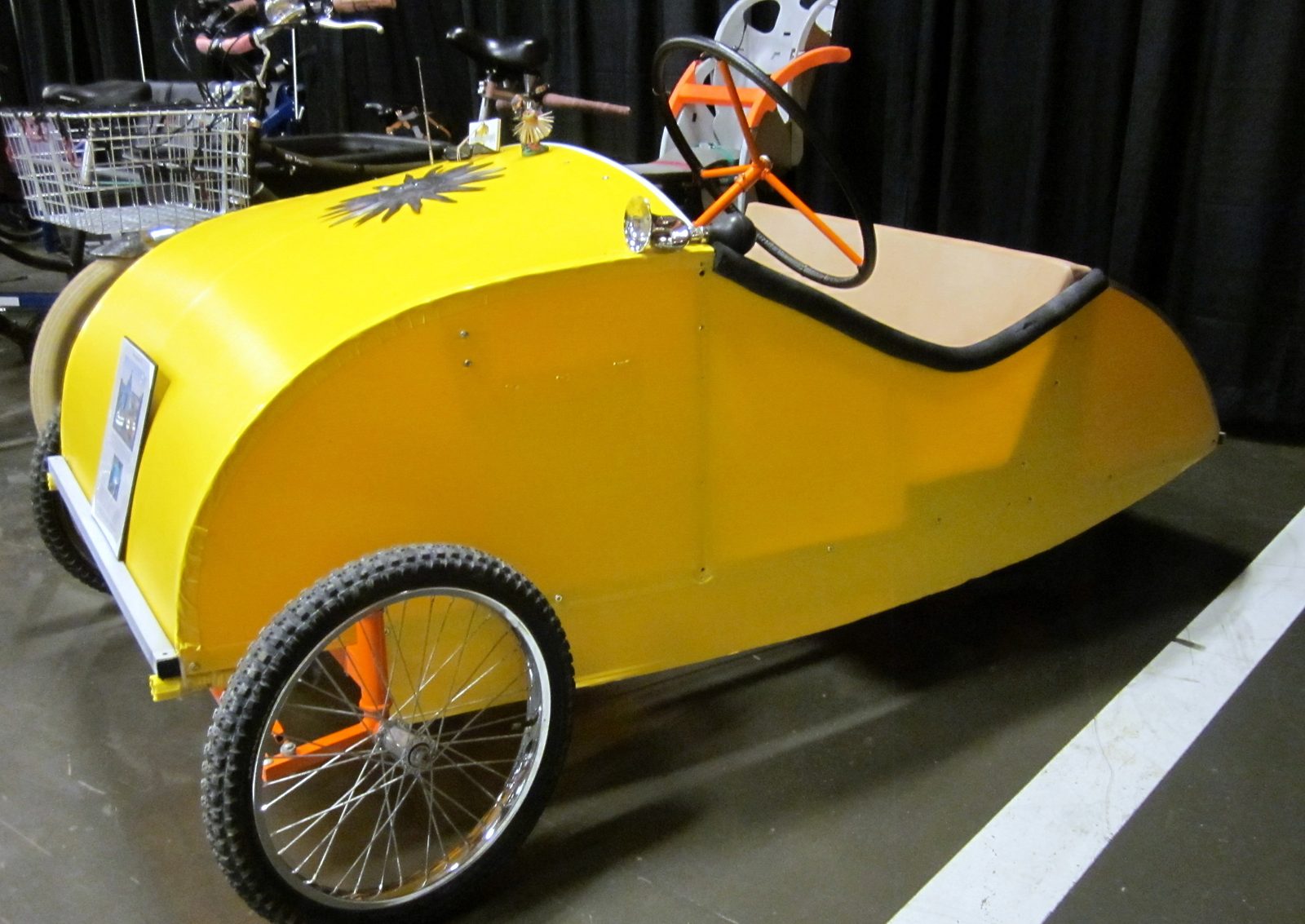
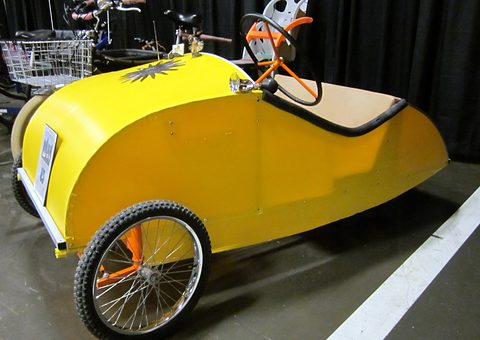
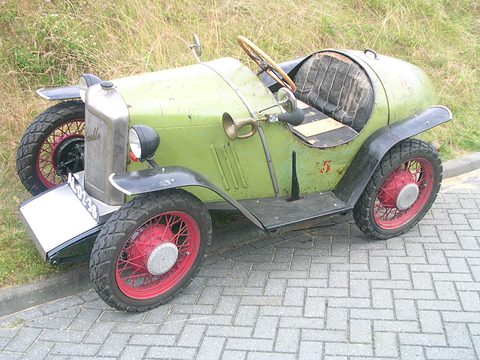
Looking into a yellow pedal car: an orange-spoked steering wheel, a bench seat and two sets of pedals.
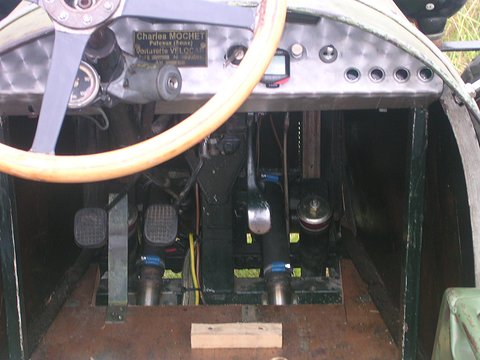
Inside a two-seat pedal Vélocar: the wheel, a small dashboard, and the gear lever between the two seats.Photo: Gene Bisbee, CC BY 2.0, via Wikimedia Commons

Pictures

More photographs, old and new

Variants

Pedal cars, a bicycle and the motor cars

The Vélocar family
VariantYearsWhat differsHow many
First quadricycle1923A two-seater from voiturette parts, with reciprocating pedals; gears changed by moving the chain’s anchor on the cranks1
Single-seat Vélocar1925Built for Georges Mochet; the first to carry the name1
Two-seat pedal Vélocar1925–c.1950Two sets of pedals, a three-speed shaft under the seat, a plywood bodyNearly 6,000
Vélo-Vélocar recumbent bicycle1932/33–40Two wheels: half a VélocarFew; about 35 survive
Type H1931–⁠48 or c.1945–⁠48A 99 cc Zurcher engine behind the seats, pedals to start it; dated from 1931 by Lane, from c.1945 by Georges Mochet650 (Lane)

Specification

The two-seat pedal Vélocar, and the Type H where noted

Engine and drive

Engine and drive
PowerTwo riders pedallingsource 3source 1
TransmissionChains to a shaft under the seat with three speeds and a freewheel differential, then to the rear wheelssource 3source 1
Gear changeA lever between the seatssource 3
Type H engineZurcher single-cylinder, air-cooled, 99 cc, 2 hp; started by pedalling; two speedssource 4

Body and chassis

Body and chassis
ChassisTubular steelsource 6source 7
BodyAircraft plywood, pointed and tapered for the airsource 3source 1
WheelsBicycle wheelssource 6source 7
Type H brakesOn the rear wheels, with a separate handbrake; hood and side curtains optionalsource 4

Dimensions

Dimensions
Length, width, weightNot found

Performance and running

Performance and running
Top speedType H: 34 km/h (21 mph)source 4The pedal car: whatever its riders could manage
Price newAbout 2,500–3,900 francs, undatedsource 3

How many were built?

Every figure, with its source

Thousands built; nearly 6,000 by the family’s countGeorges Mochet remembered nearly 6,000 pedal cars from 1925 to 1950, a first-hand figure but given from memory half a century later. The Puteaux archives count no fewer than 3,000 Mochet vehicles made in the town, which may mean the motor cars only, or may be a floor. Neither has a second source.

  1. nearly 6,000pedal Vélocars, 1925–⁠50One source

    Georges Mochet, 2001source 1

  2. at least 3,000Mochet vehicles of all kinds made at PuteauxOne source

    Puteaux municipal archives, 2024source 5

  3. 650motorised Type HOne source

    Lane Motor Museumsource 4

  • Two sources agreetwo good sources give the figure
  • One sourcea good source, alone
  • Unconfirmeda lead only, not yet checked

Famous for

Three points

  1. Because of a bicycle

    Charles Mochet built the first one because his wife would not let their son ride a bicycle.source 3source 1

  2. The hour record

    Cut in half, it became the Vélo-Vélocar recumbent, on which Francis Faure broke the hour record in 1933.source 1source 8

  3. No petrol needed

    When petrol ran out in the war, Vélocar sales rose sharply.source 5source 7

Racing and records

The recumbent, not the car

The records belong to the Vélo-Vélocar, the two-wheeled recumbent made from half a pedal car.

44.222 km/h
for a lap of Longchamp in the rain, by Lucien Brillouet, 20 May 1932.source 1
45.055 km
in the hour by Francis Faure at the Parc des Princes, 7 July 1933 (6 July by Georges Mochet), beating Oscar Egg’s 44.247 km of 1914.source 1source 8
1 min 03.6 s
for the flying kilometre, Faure again, 9 August 1933, against a record of 1 min 06.6 s.source 1
50.537 km
in the hour by Faure at Vincennes on 5 March 1939, on a fully faired Vélocar.source 8

Survivors and collecting

Today

Some pedal Vélocars survive, among them a 1937 car at Arès, in the Gironde.source 6 A pedal Vélocar of 1926 and a Type H are in the Lane Motor Museum, Nashville.source 3source 4 They were made to last: around 1989 a man who hired out more than thirty of them in the Parc Borély at Marseille said they were the only machines that survived his customers.source 8 About 35 of the recumbents survive in museums and private collections, and their rediscovery in California in the late 1970s helped start the recumbent movement of the 1980s.source 7 No count of the pedal cars has been found.

Sources

Numbered as in the text

Much of the history comes from Georges Mochet’s memoir of 2001 and from Arnfried Schmitz’s history of the recumbent; Hermann Brüning’s book on Mochet was not read, and no dimensions were found. Sources are given as plain text; the links are on the Credits page.

  1. Georges Mochet, Charles Mochet et le Vélocar, January 2001, compiled by Alexandre Pépin with a preface by Francine Mochet, on velorizontal.com; read in large part.
  2. French Wikipedia, Charles Mochet, read in full.
  3. Lane Motor Museum, “Mochet Le Velocar – 1926”, collection page, read in full.
  4. Lane Motor Museum, “Mochet Velocar – 1931” (the Type H), collection page, read in full.
  5. Archives municipales de Puteaux, Les usines Mochet, 14 August 2024, read in full.
  6. French Wikipedia, Vélocar, read in full. It cites Brüning (2000) and Cordon Champ (2004).
  7. English Wikipedia, Velocar, read in full. It cites Brüning and Cordon Champ.
  8. Arnfried Schmitz, La Mochet Story et record de l’heure (1989; French translation by Bernard Magnouloux, 2005 version with notes from Roger Faure and Marc Tauss), France-HPV, read in full.