The story
History
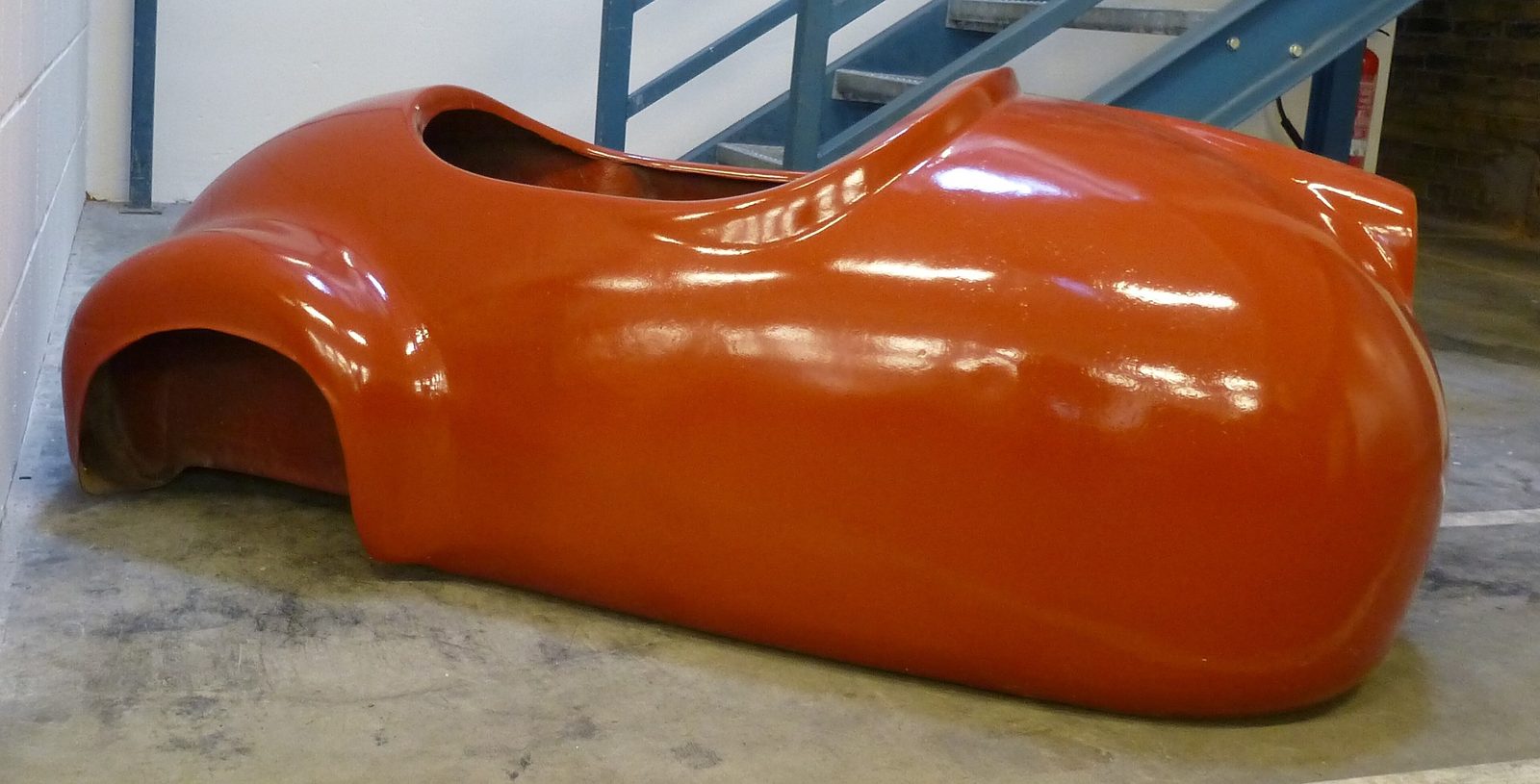
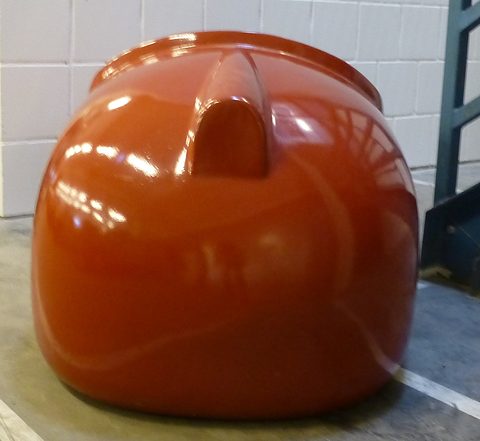
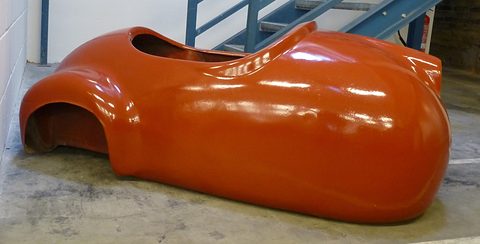
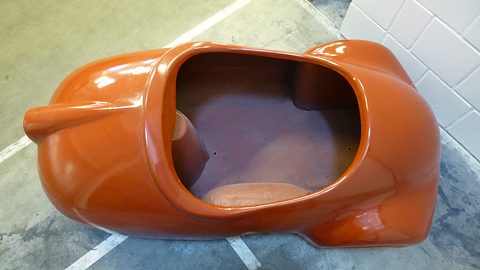
Egon Brütsch (1904–1988) was a Stuttgart racing driver before he was a car maker. His father had a stocking factory in Jungingen; Egon raced motorcycles and then cars between the wars, traded stockings for machine parts before the currency reform of 1948, among them a supercharged 3.7-litre Maserati engine for his own “EBS-Maserati”, and stopped racing in 1950.source 1source 3 The glass-fibre Chevrolet Corvette of 1953 set him on plastic bodies, moulded as two half-shells joined by a band and said to be strong enough for ten men to stand on. He bought his polyester resin from BASF in 70 kg drums.source 1 His load-bearing body for the Spatz cracked, so from the Zwerg of 1955 on every Brütsch had a steel-tube frame bolted inside (see the designers).source 1source 4
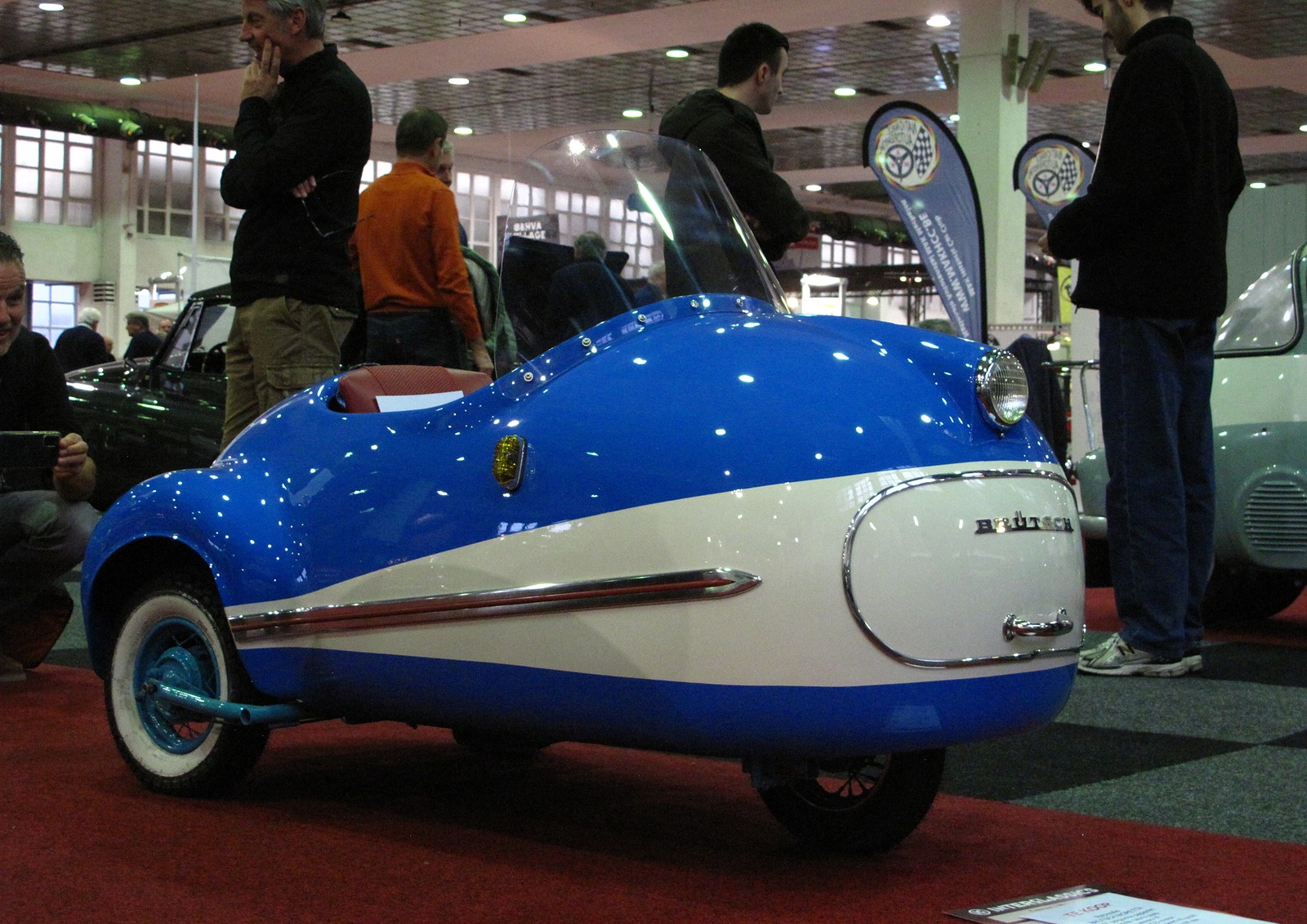
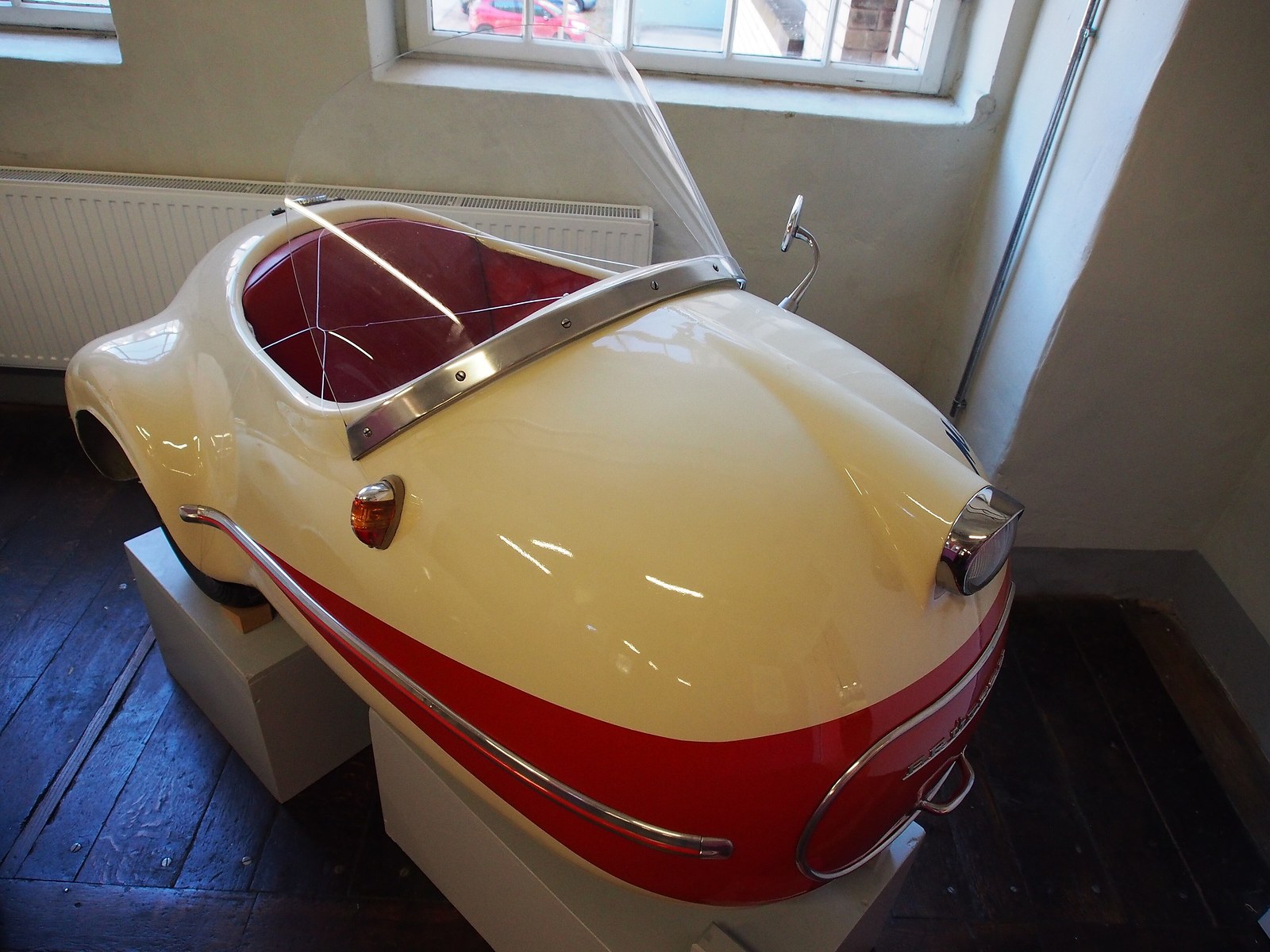
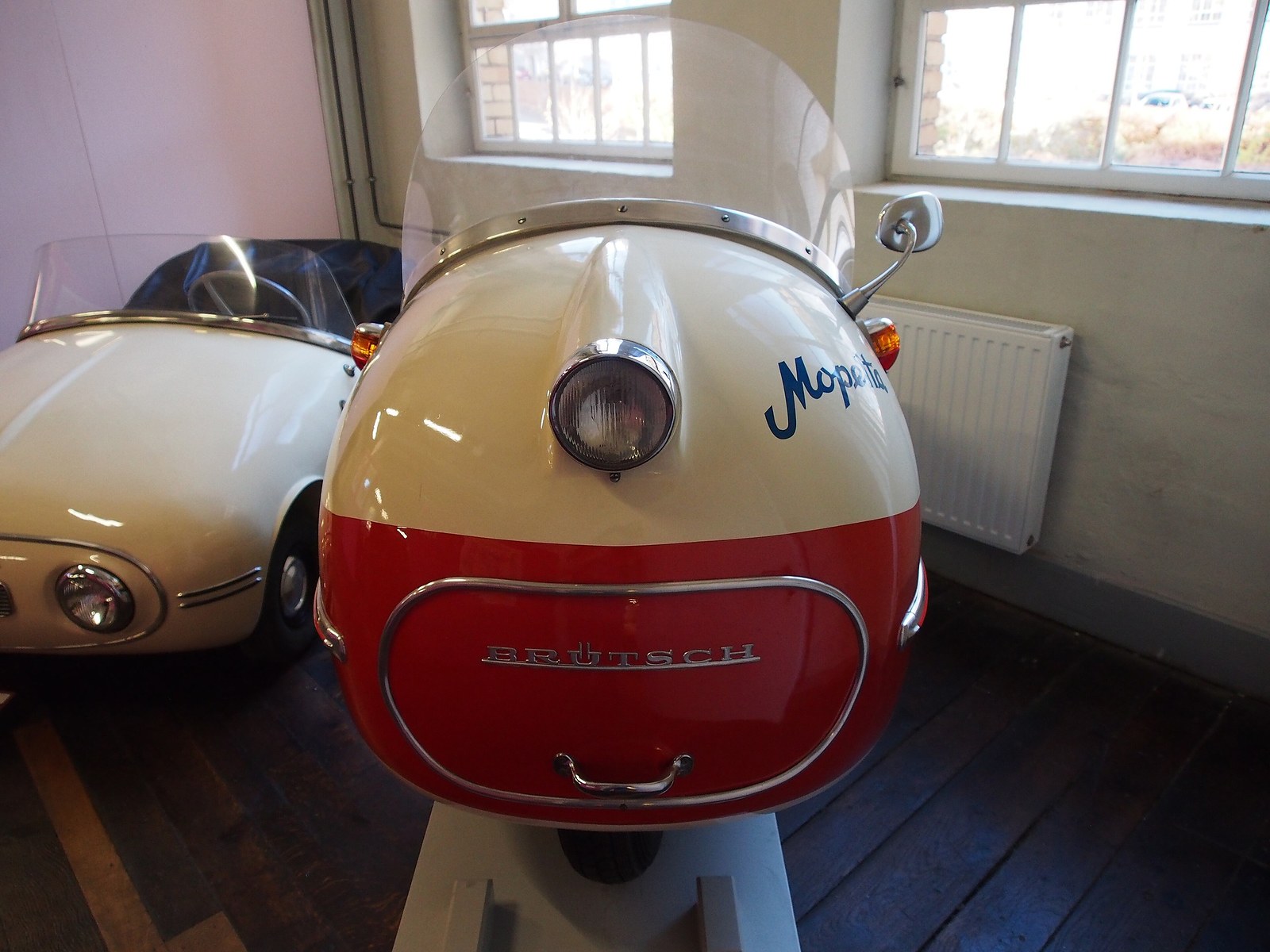
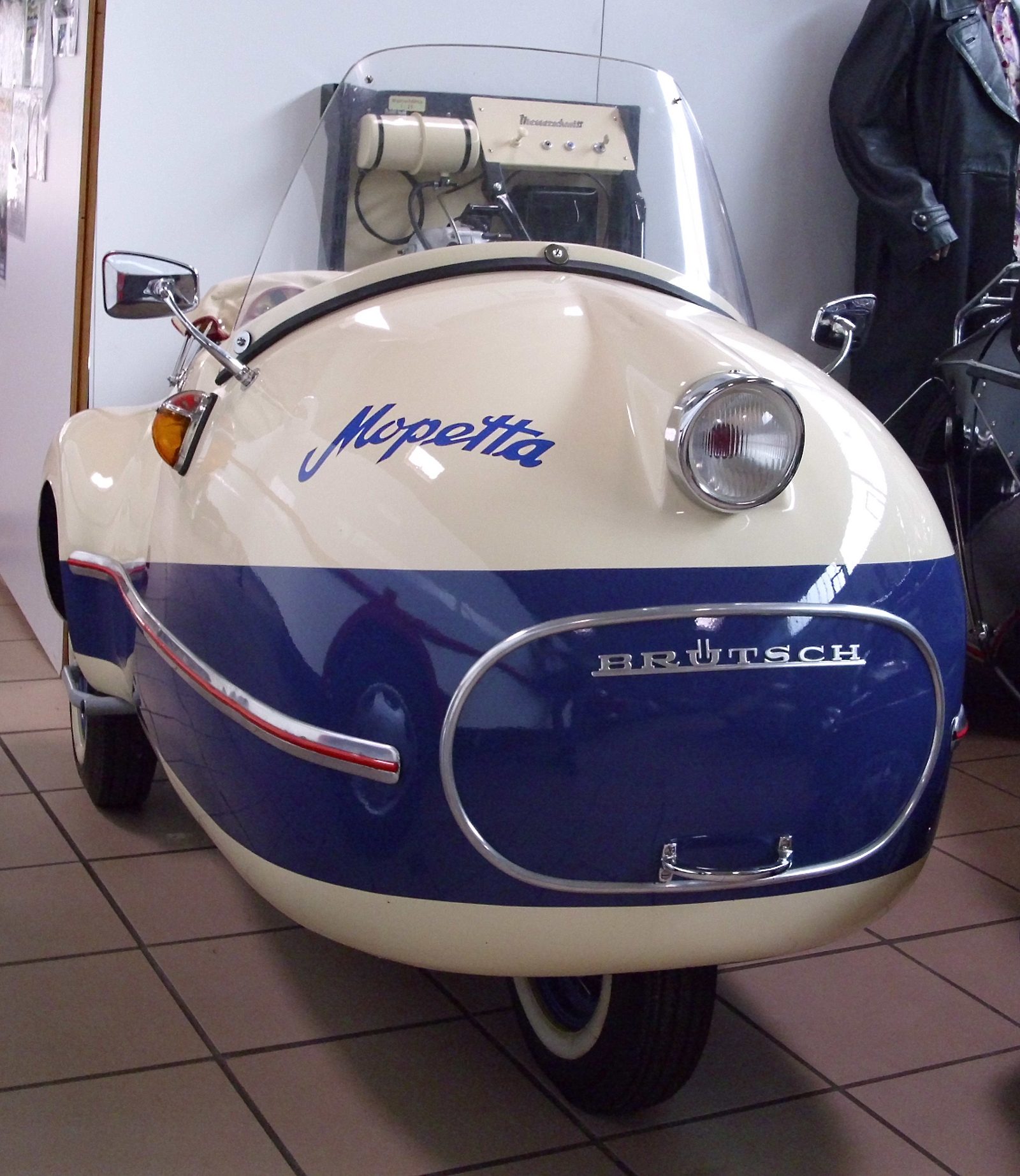
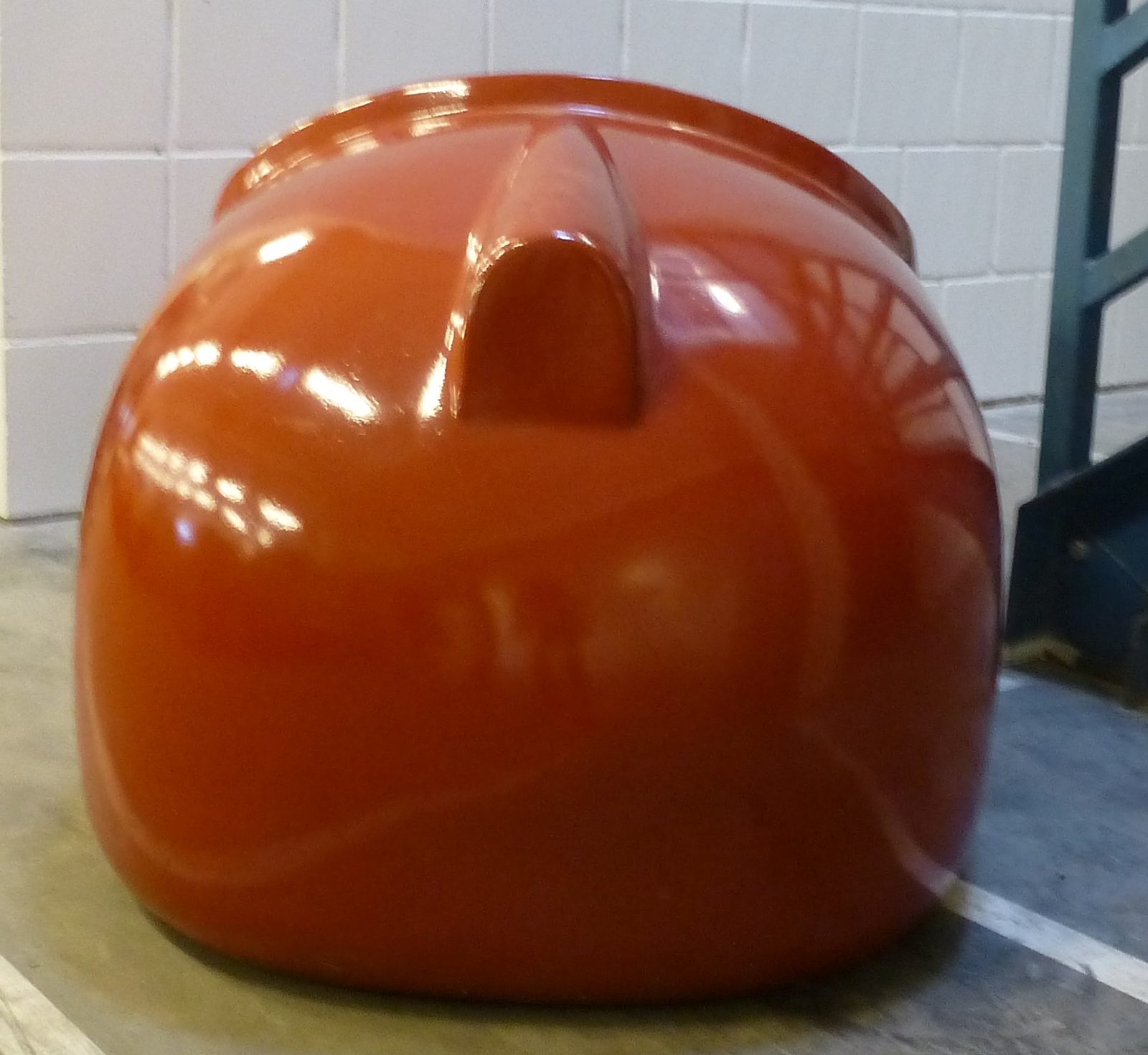
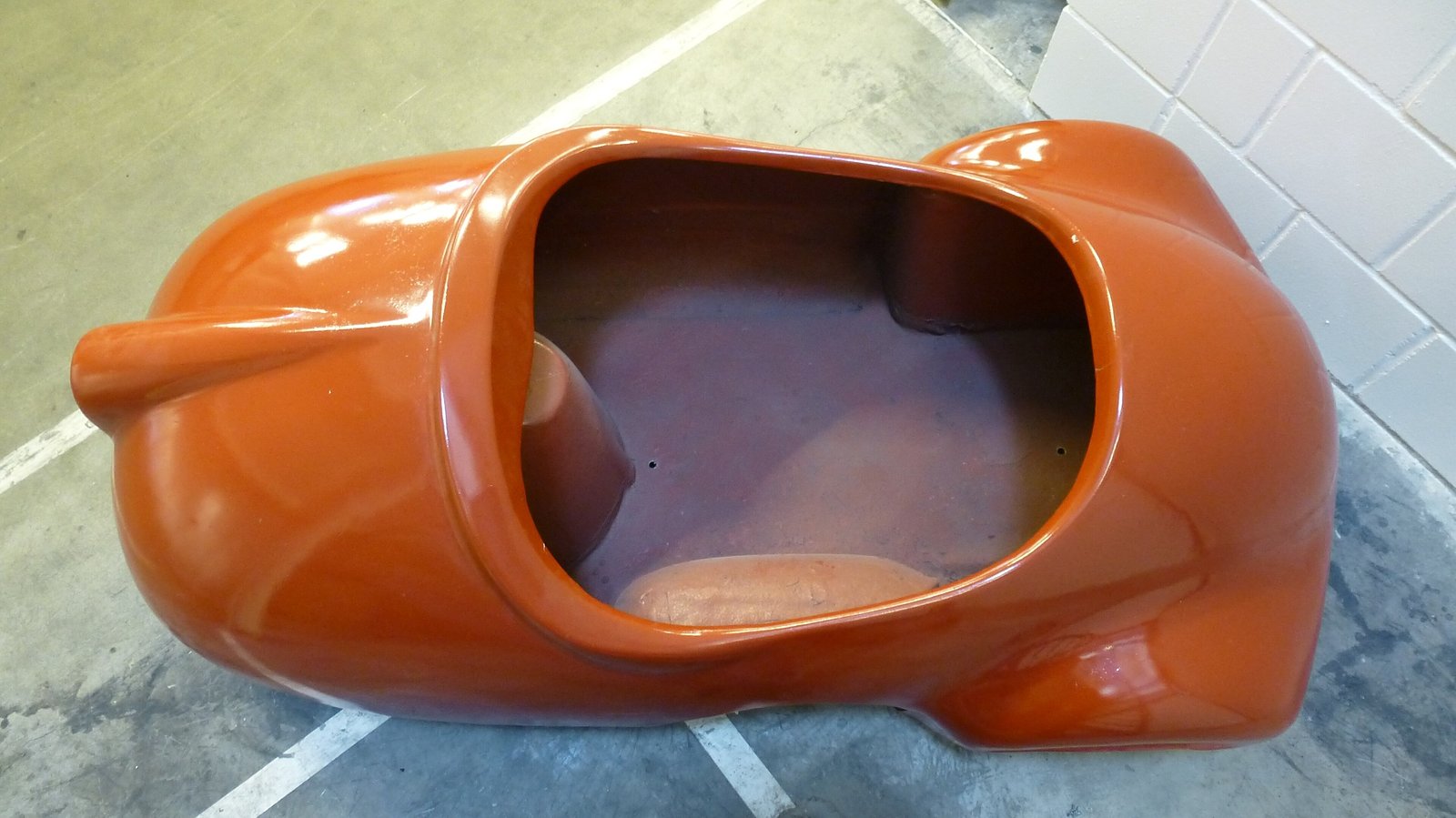
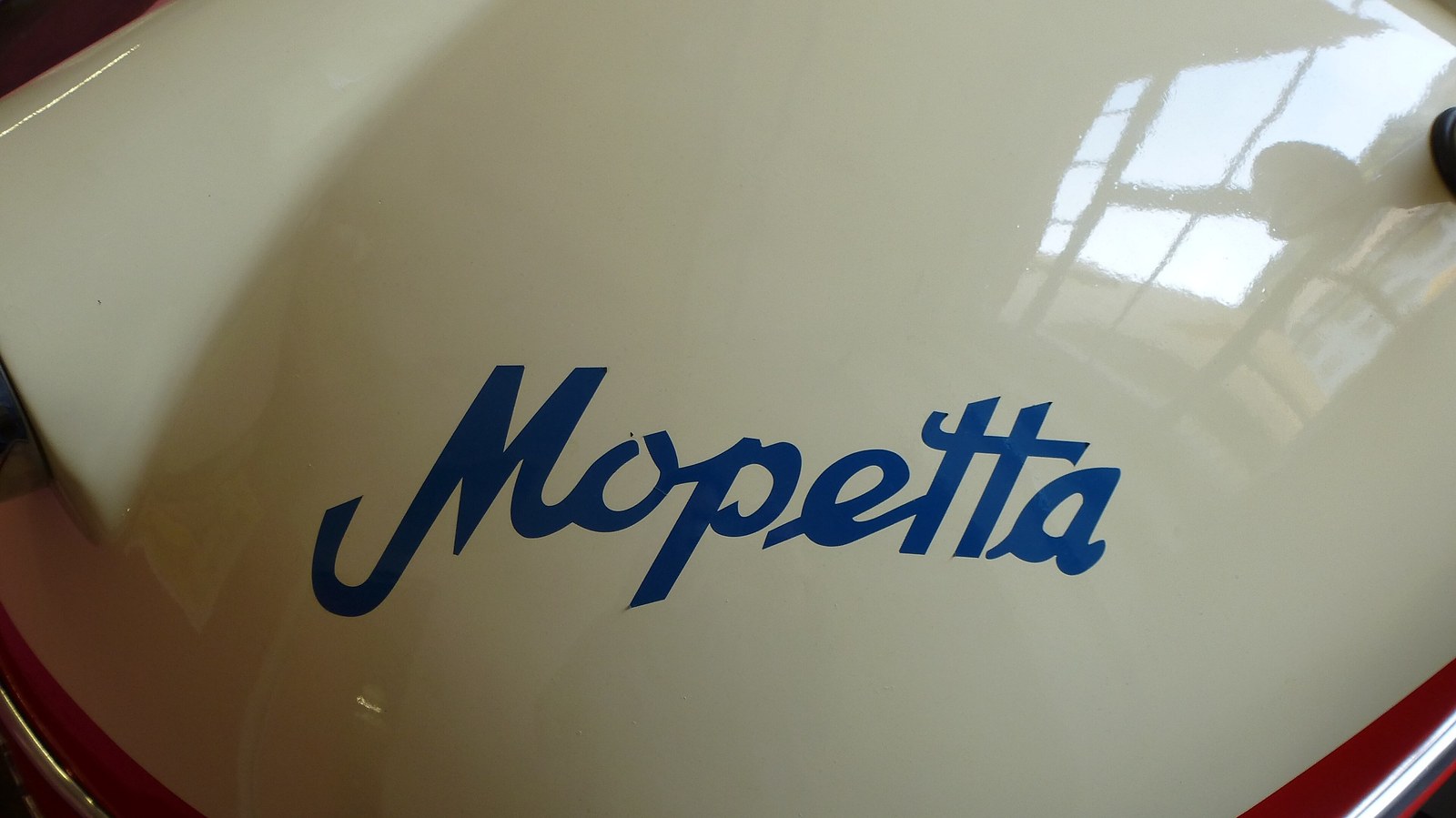
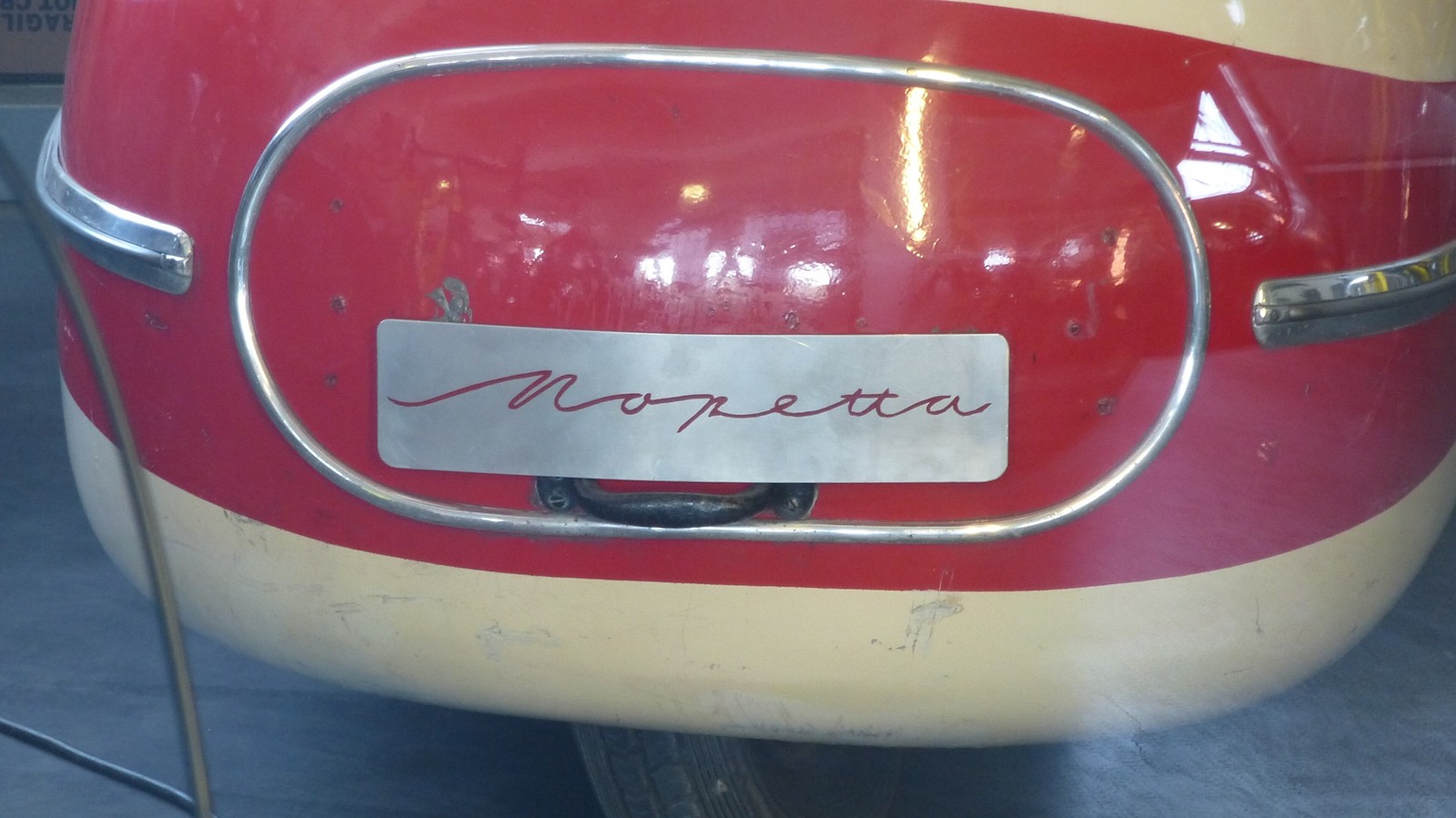
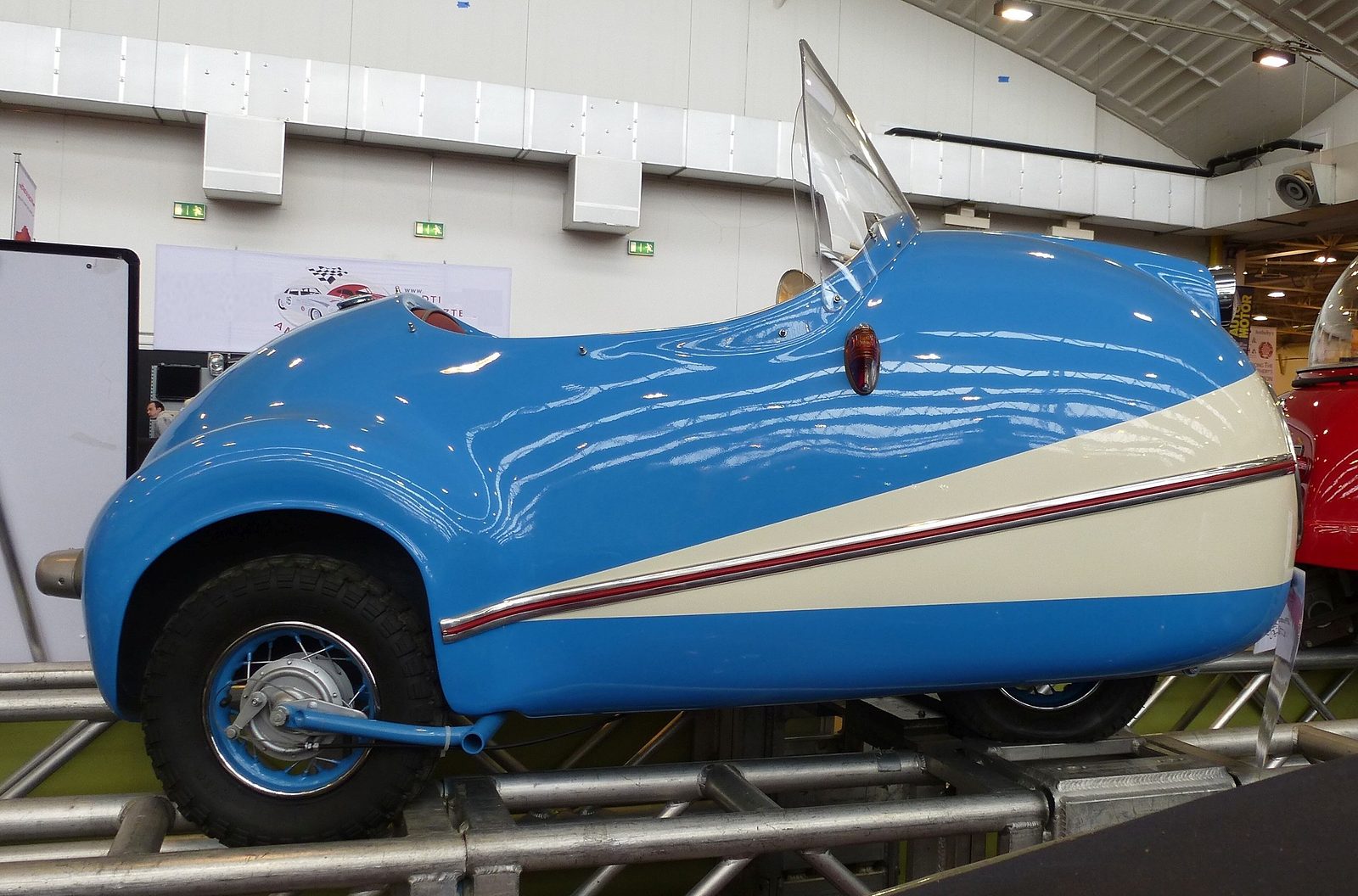
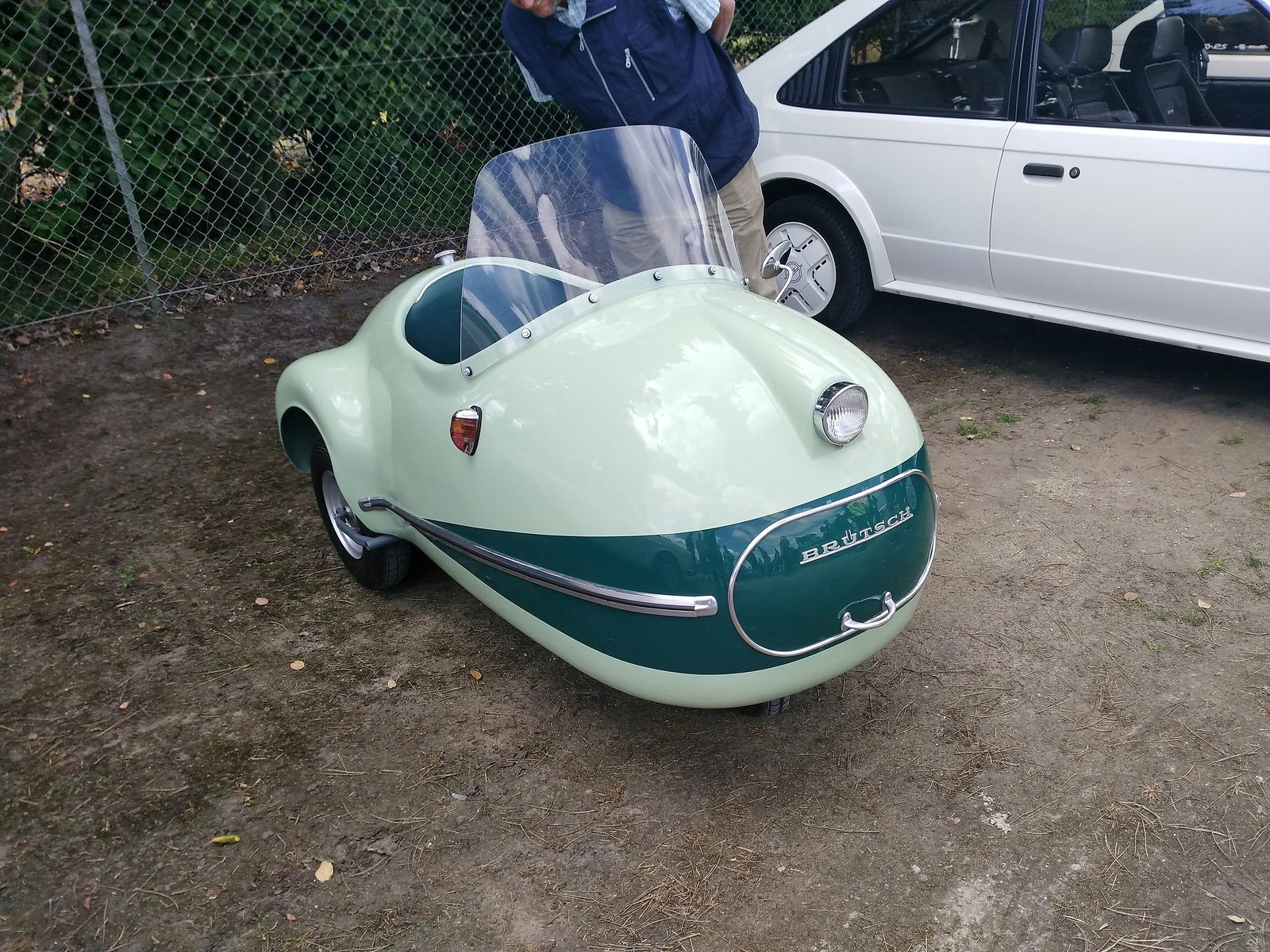
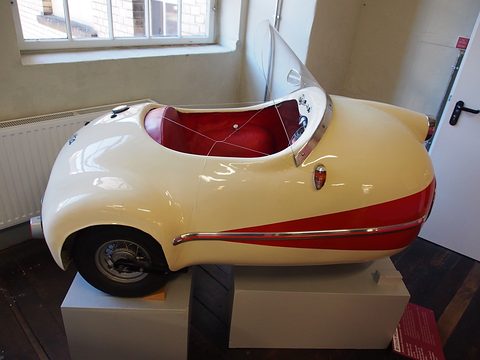
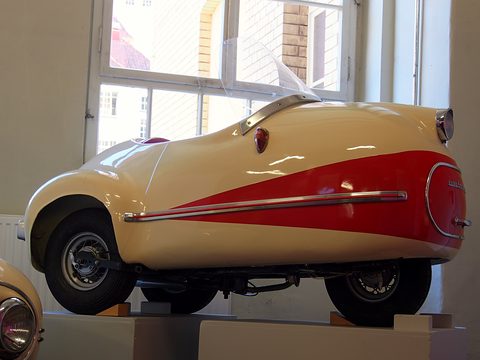
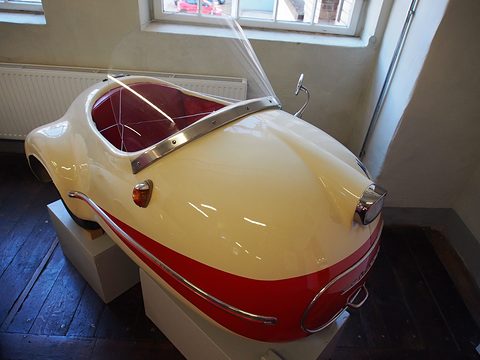
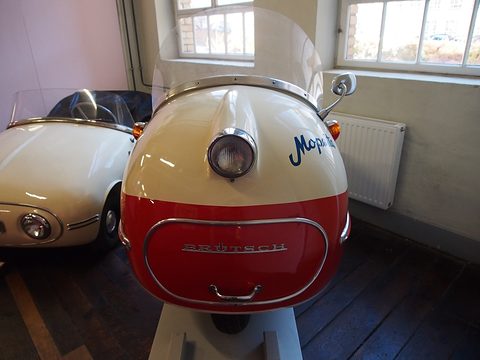
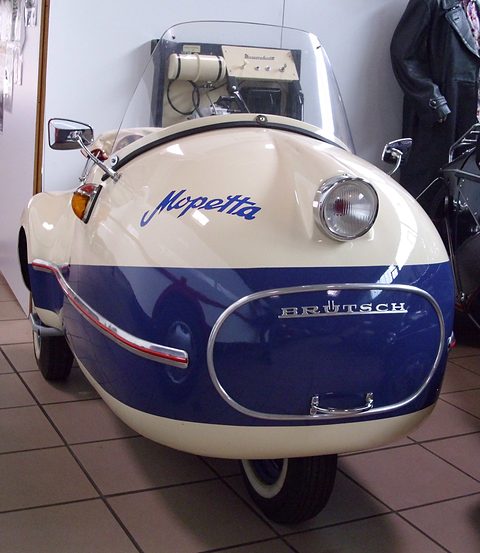
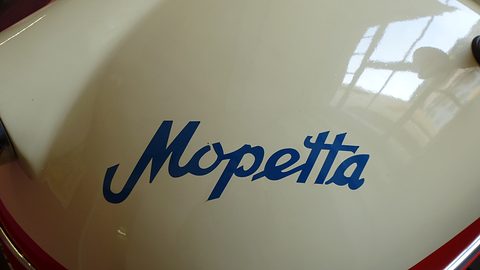
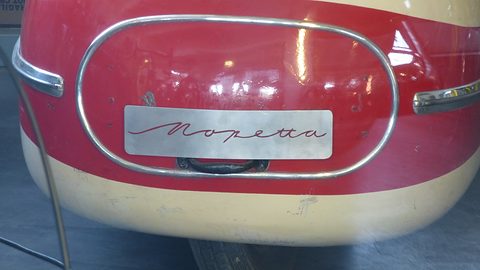
His aim, as German Wikipedia reports it, was to build the smallest car in the world.source 1source 2 The first body was finished just before the IFMA show at Frankfurt in October 1956. For the brochure he photographed it on his garden path with his secretary sitting in it, and the wheels were only leaning against the shell.source 1source 2 The brochure offered it as a floating moped car, for land and water, at DM 750, with a 50 cc MOTA engine of 2.5 PS in the front fork driving the single front wheel, wire wheels and a weight of about 60 kg.source 1source 5 The car on the stand had no mechanical parts at all, and Brütsch put it up high, supposedly so that visitors could see it.source 1source 2 The name joined the moped to an ending borrowed from the Isetta.source 1
Das ist sein „schwimmendes Moped-Auto“, das sogenannte Brütsch-Mopetta.
Berlin’s BZ called it a miniature motor boat, and the Swiss Der Motorreporter remarked that abroad the prophet Brütsch had long counted for more than at home.source 1 That winter it was shown at the Motor Cycle Show at Earls Court and sold through a London garage in Albany Street for £207, with Bruetsch Cars England of Nottingham as the importer; in April 1957 Popular Mechanics still described the front-drive version.source 1
The engine on the outside
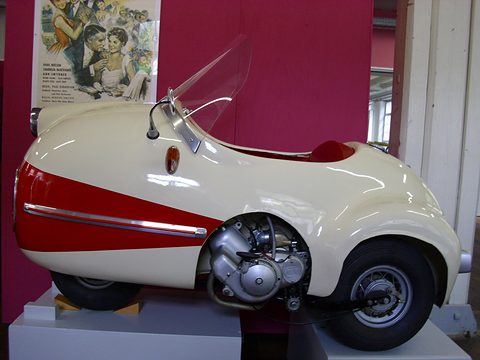
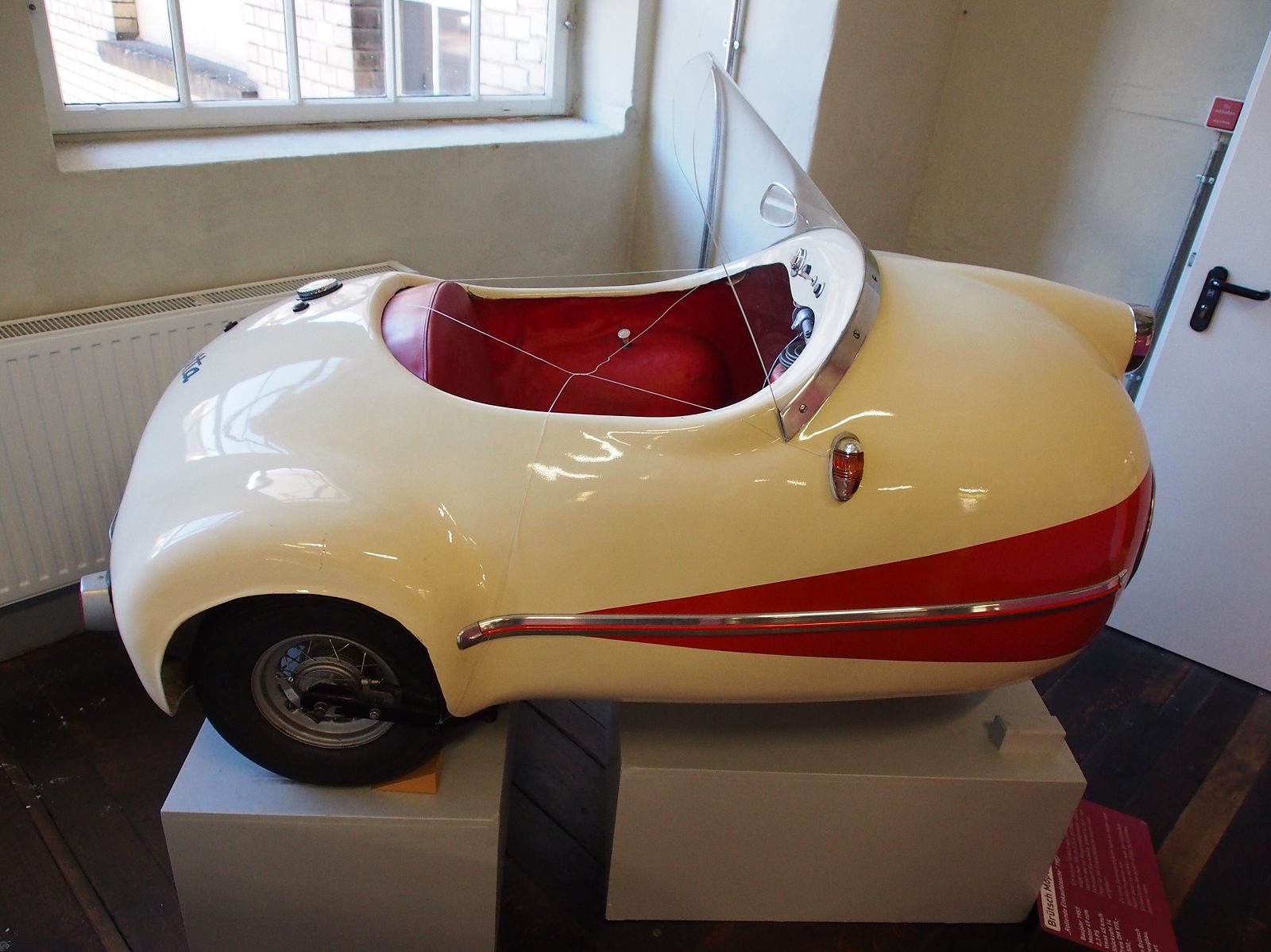
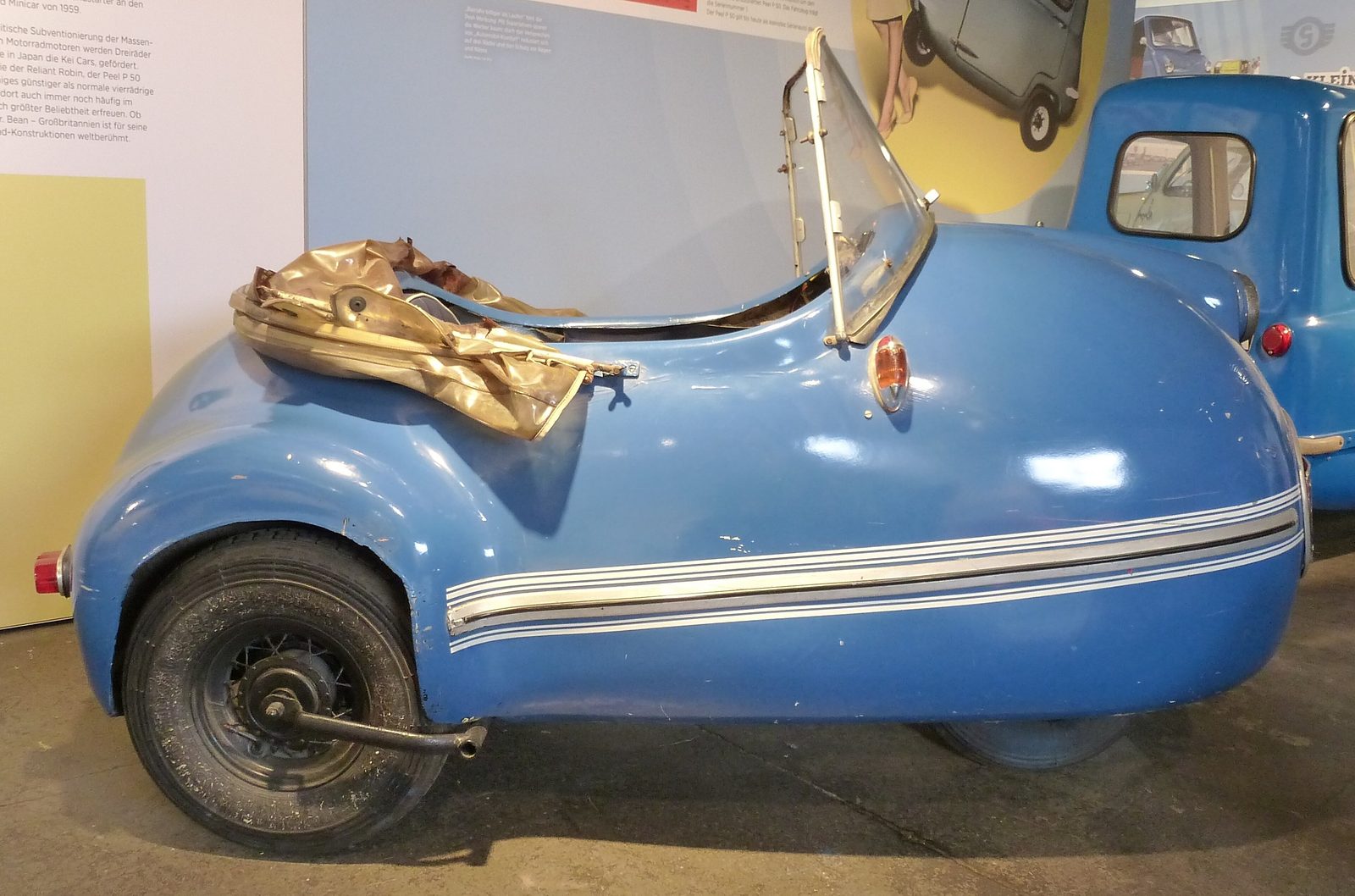
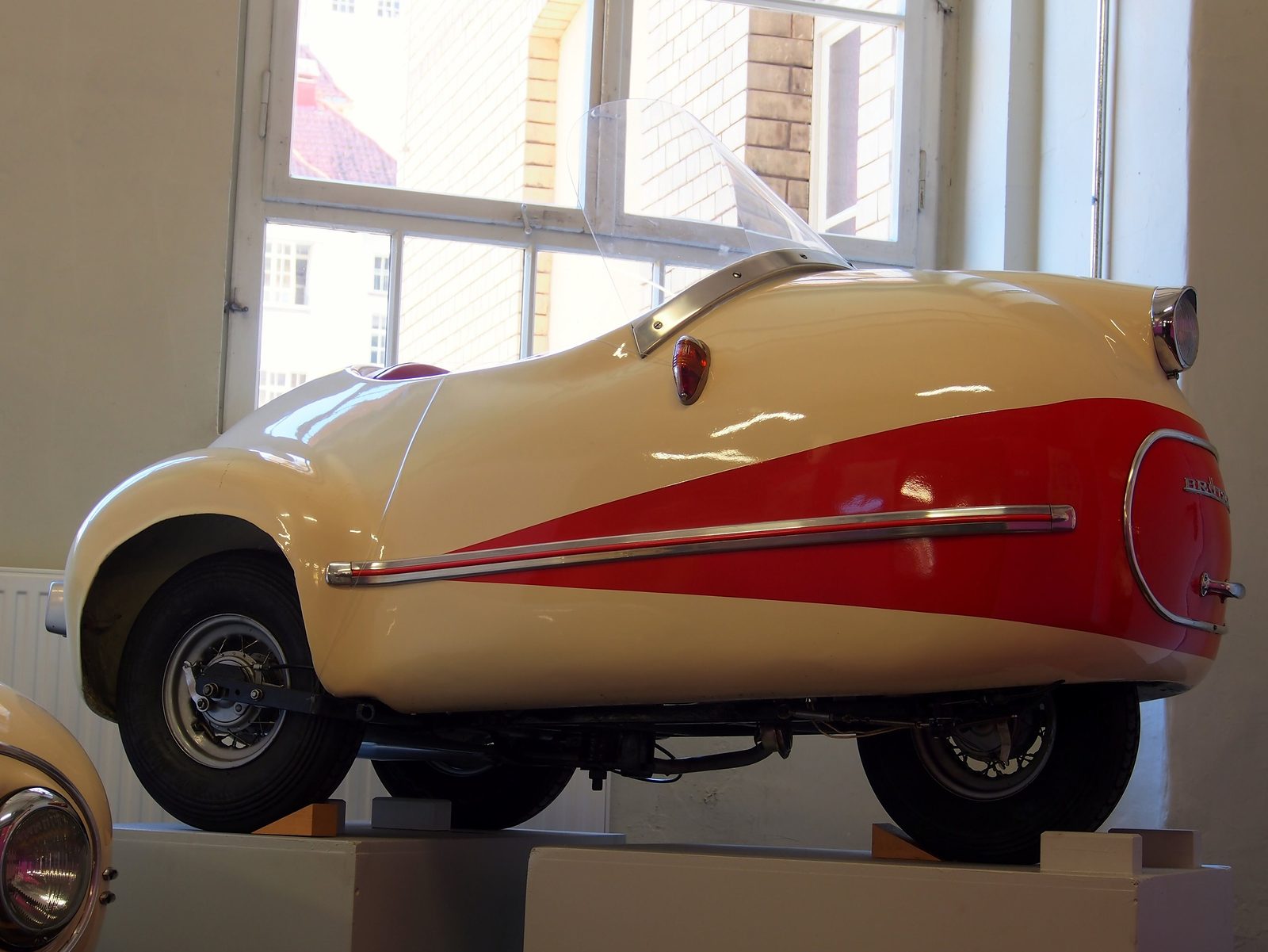
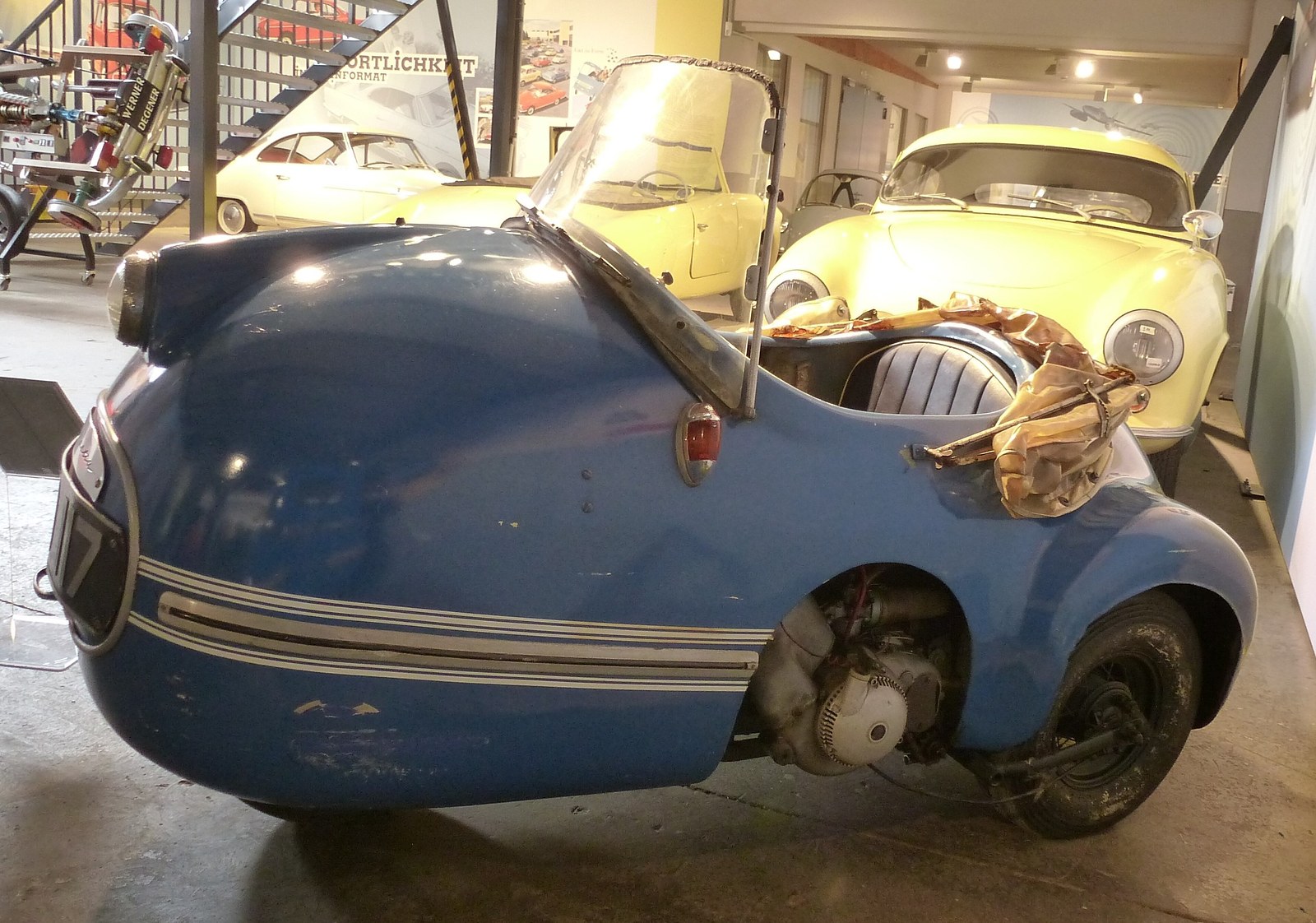
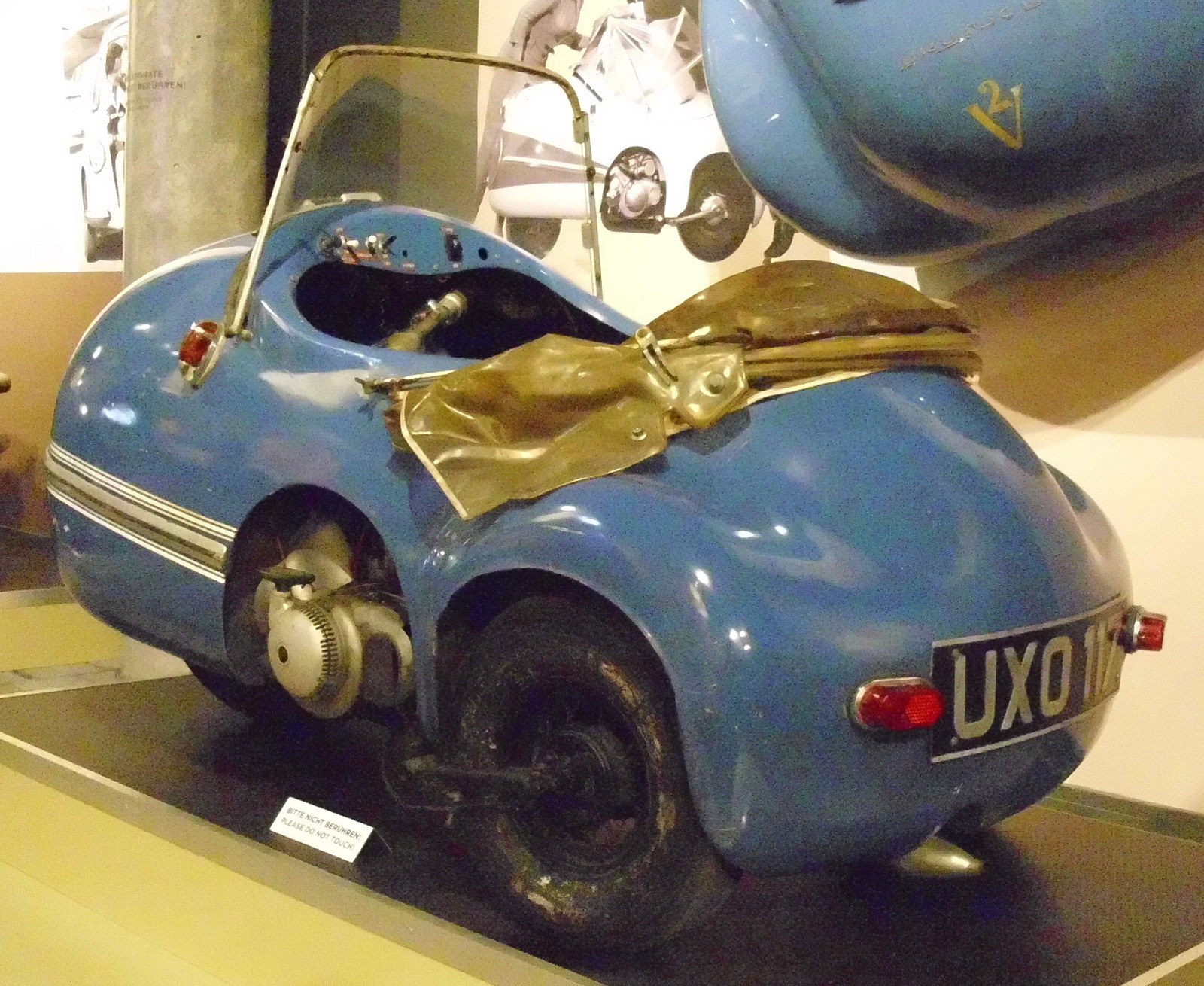
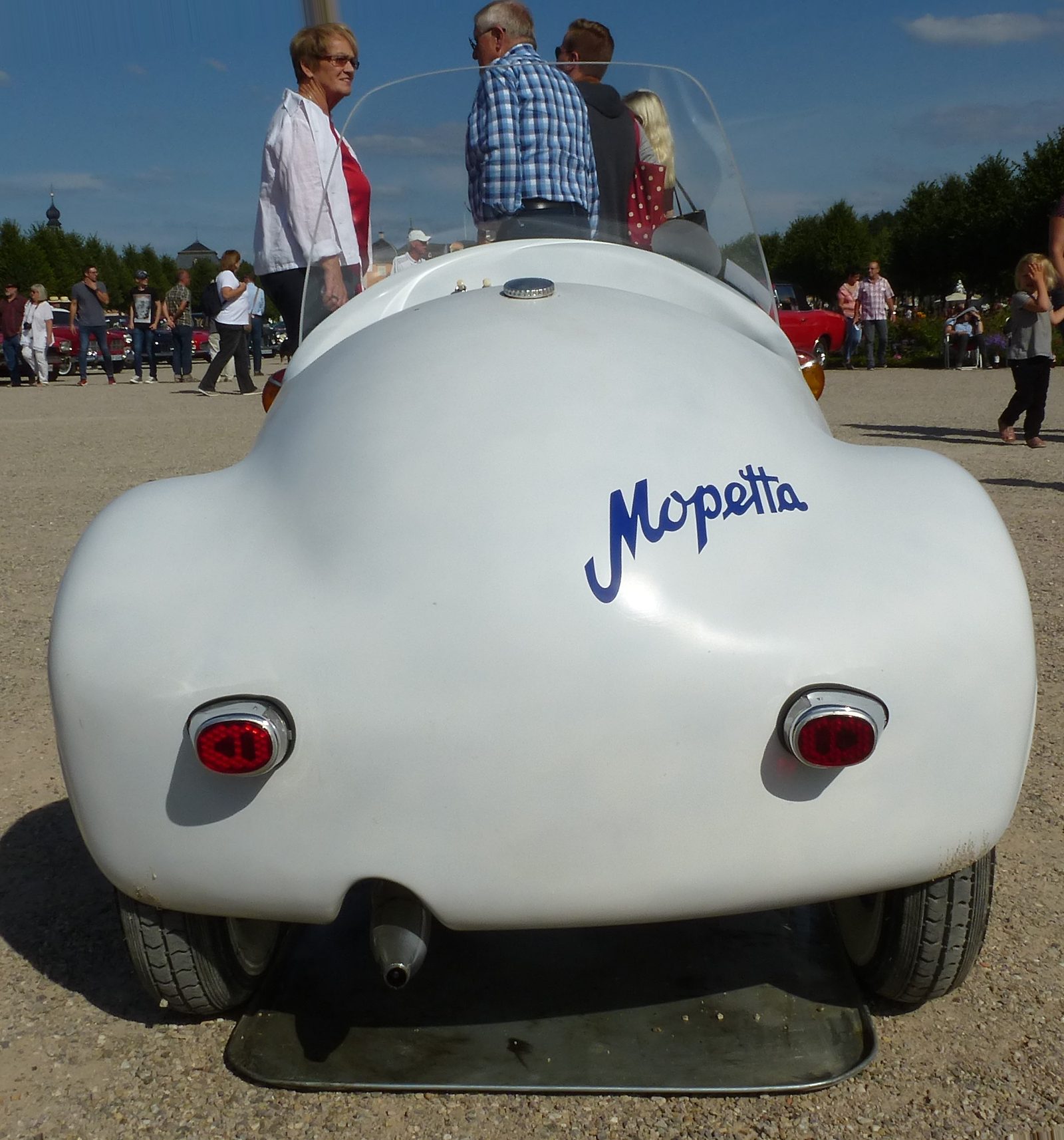
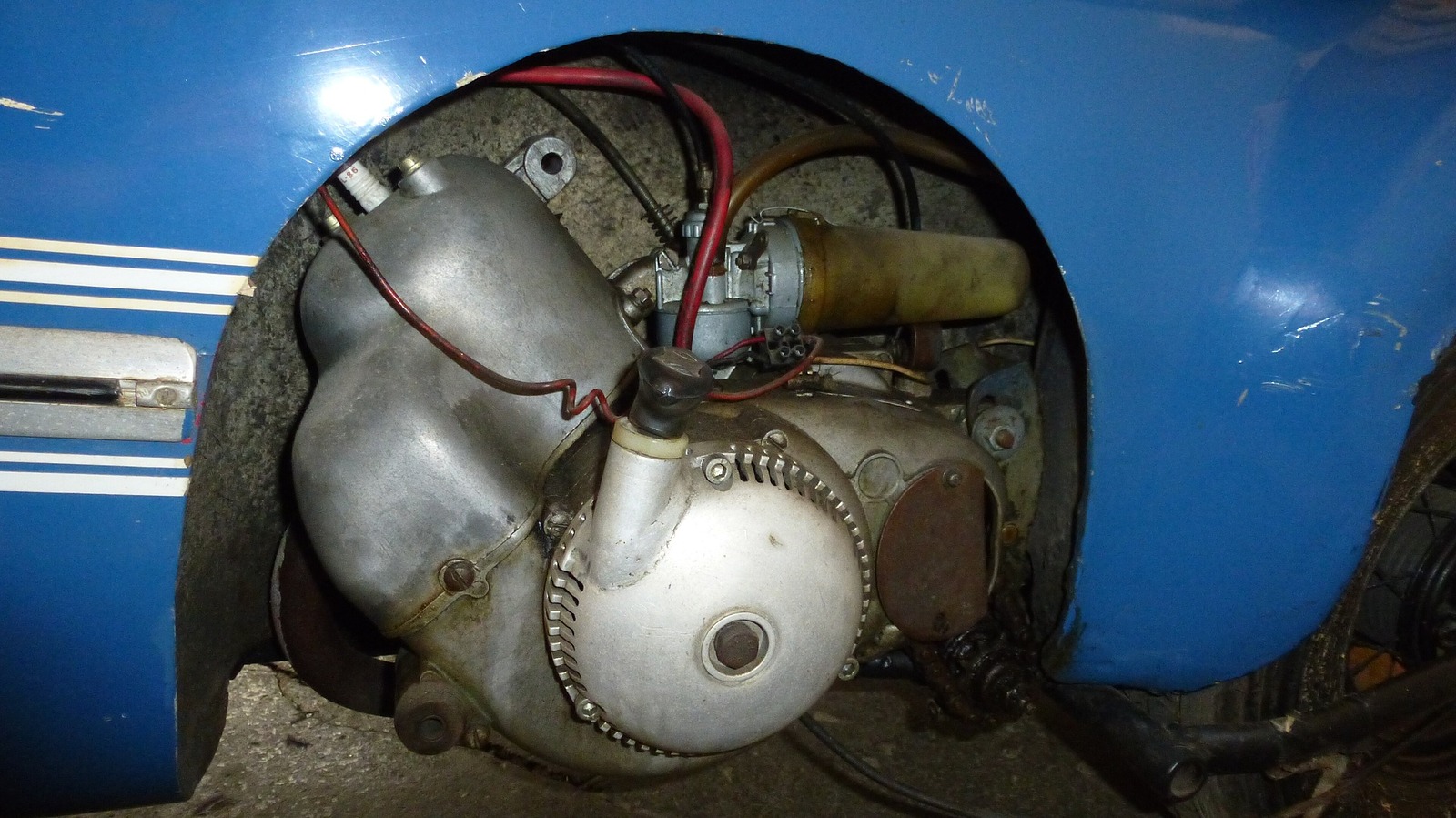
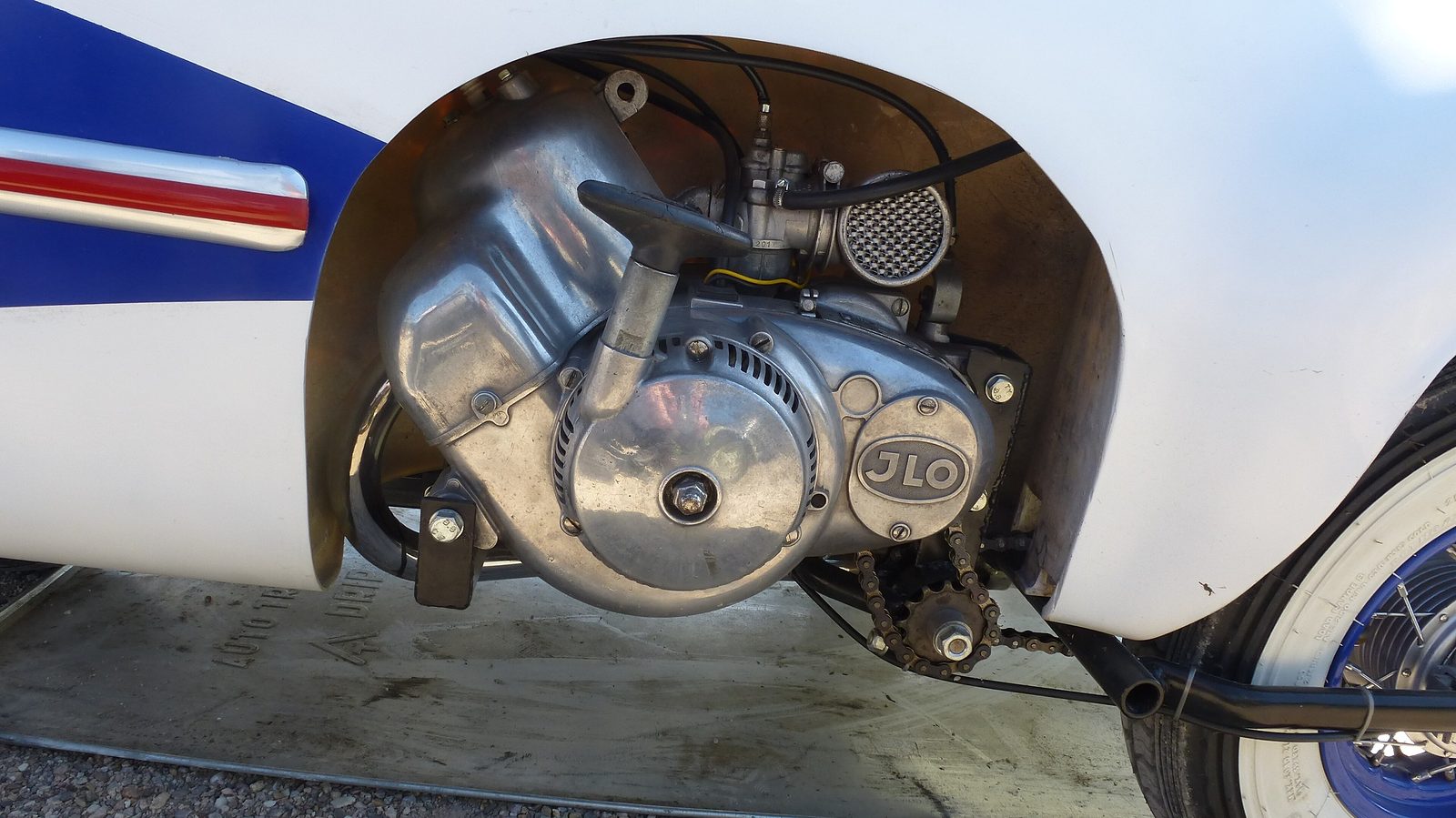
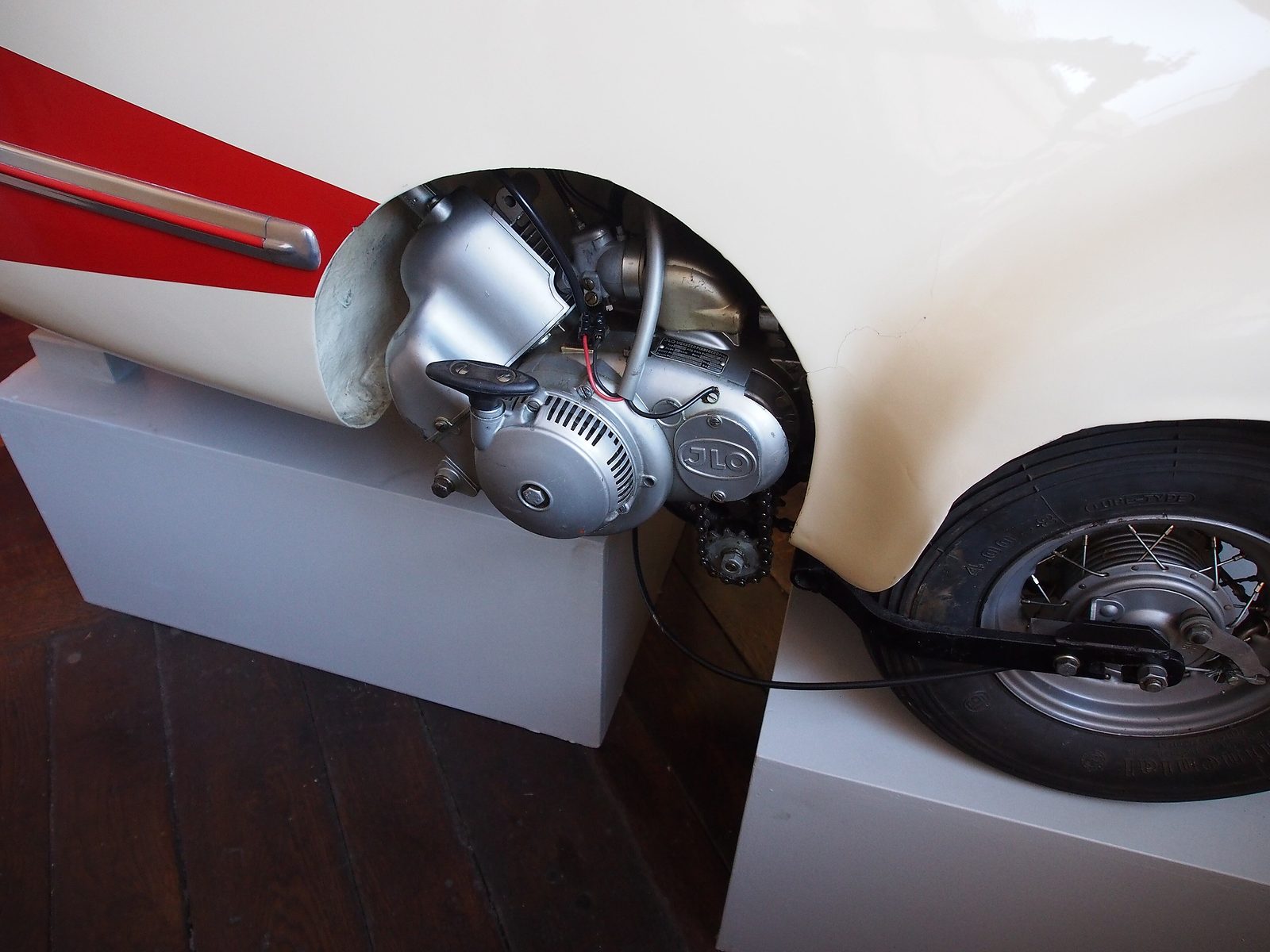
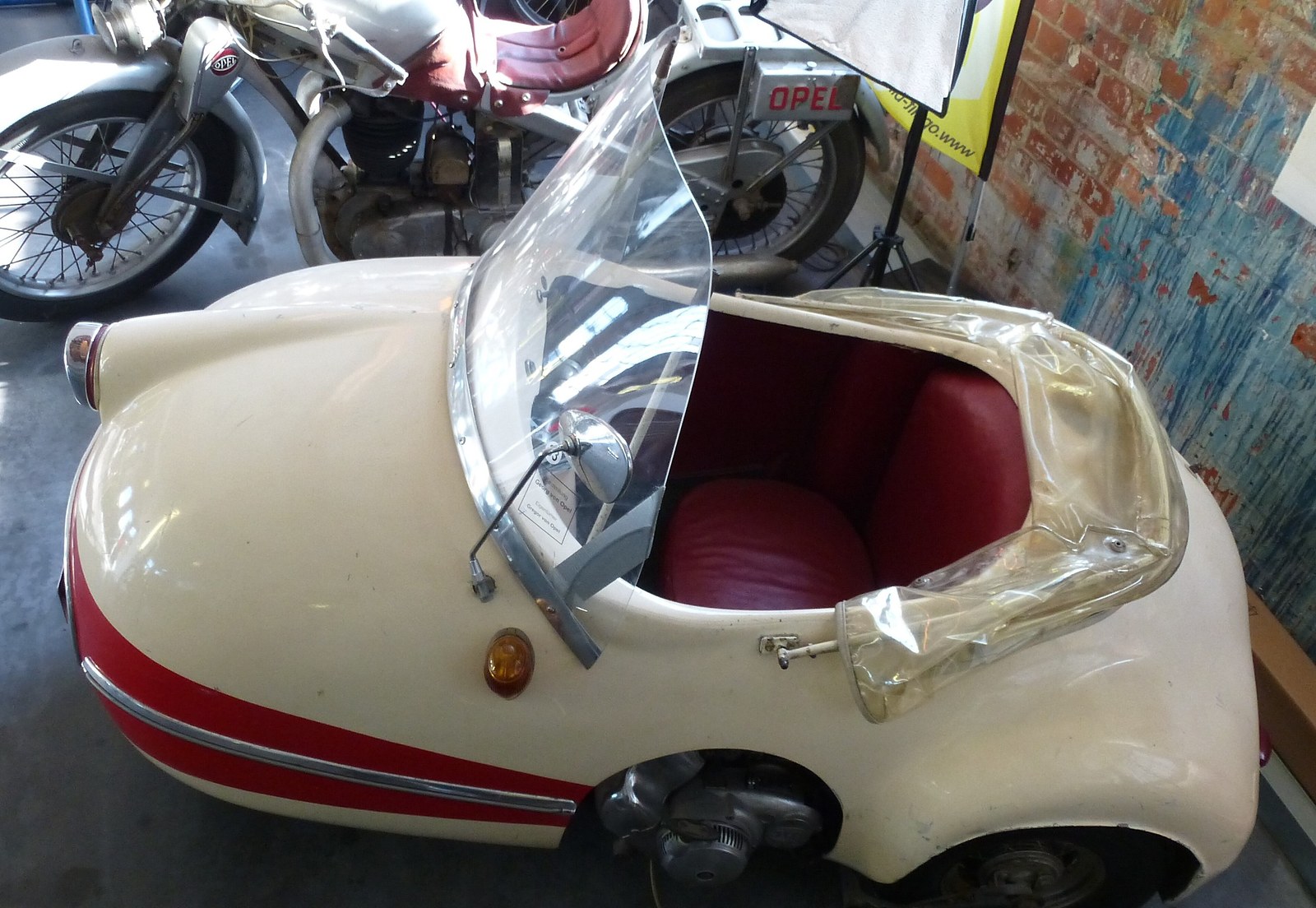
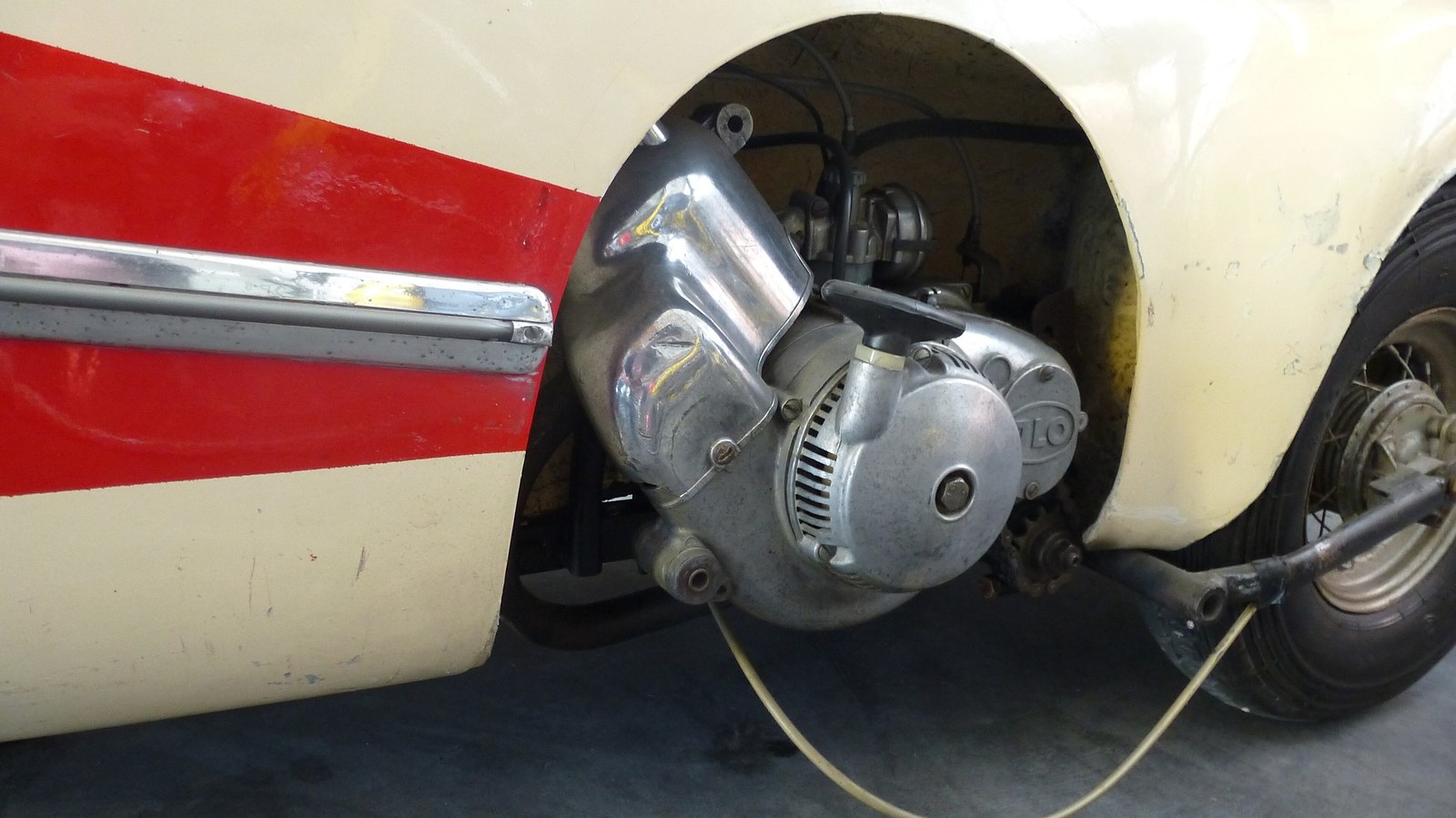
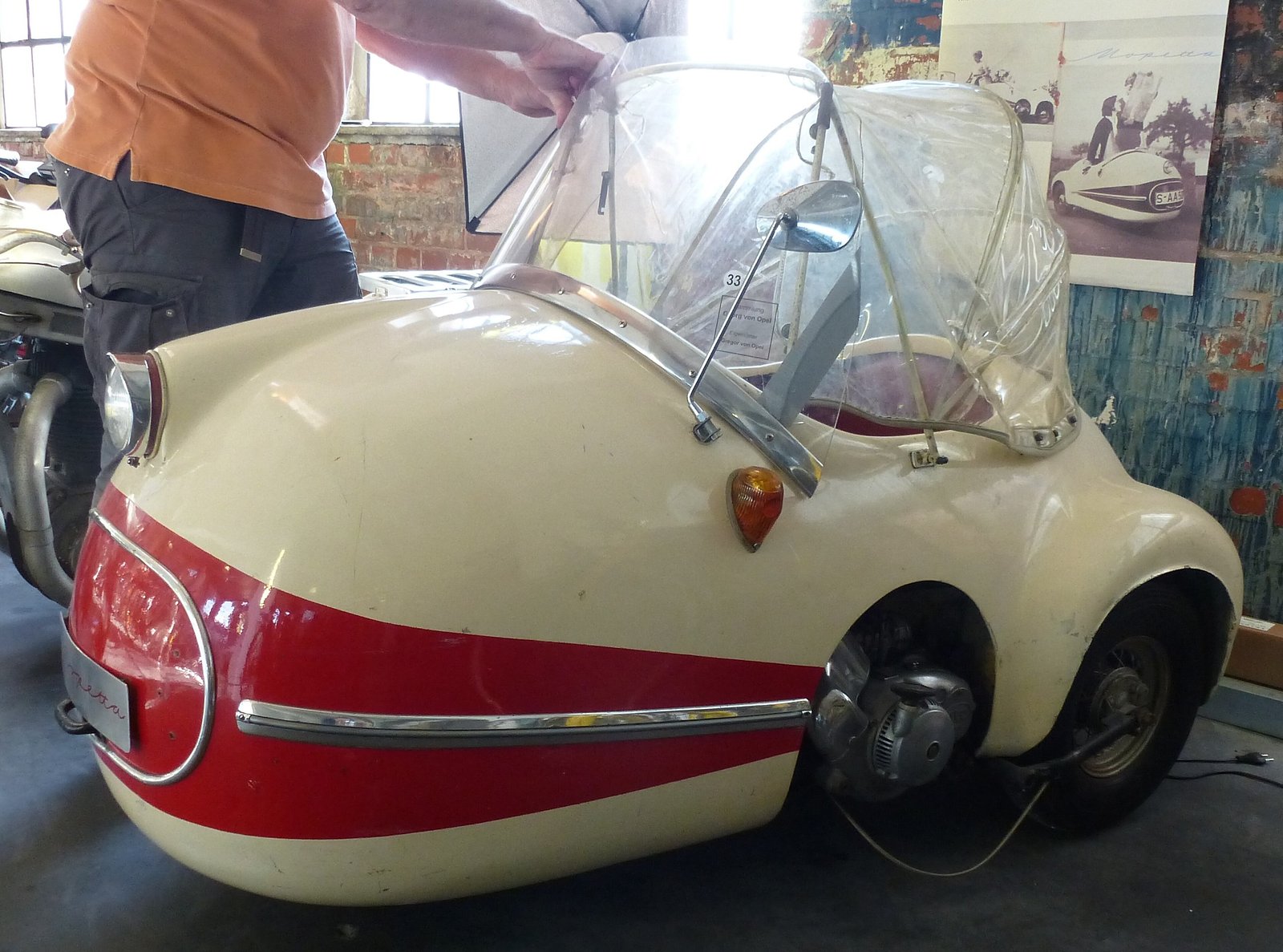
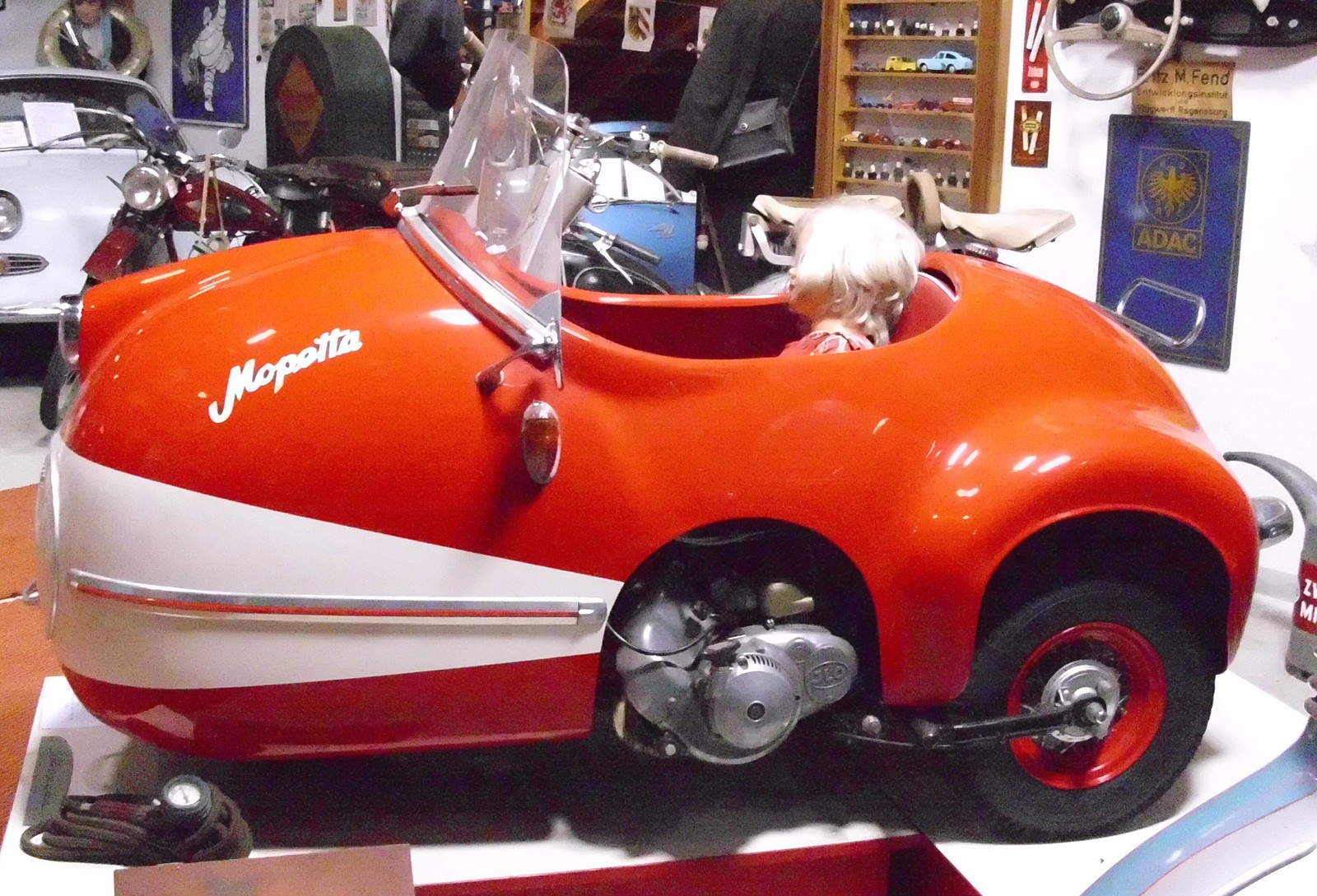
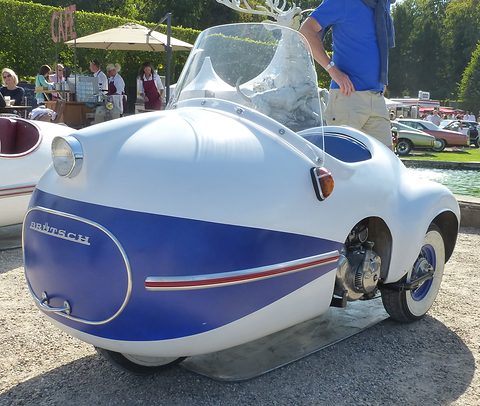
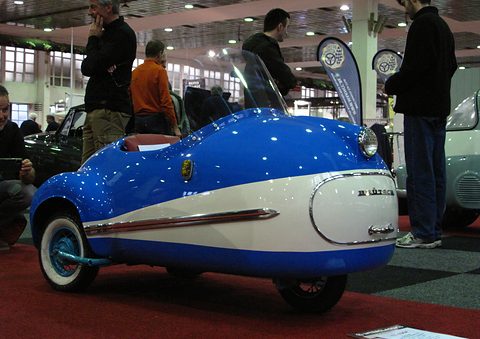
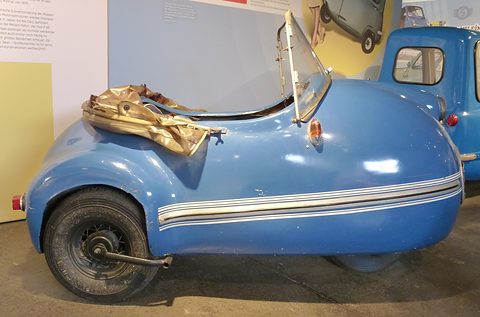
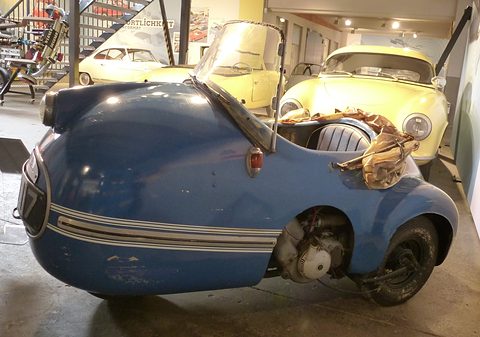
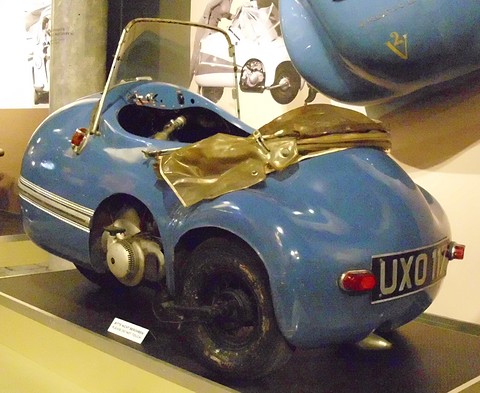
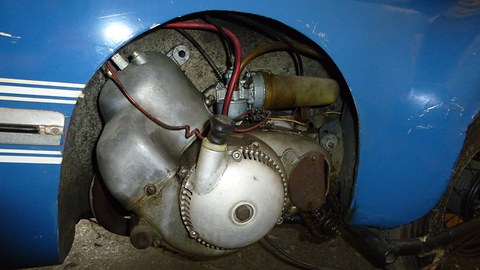
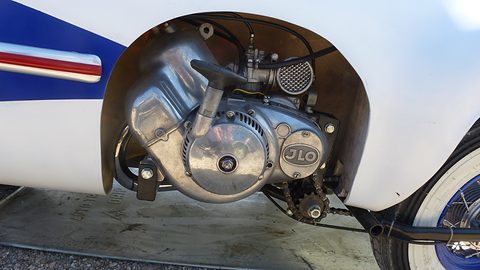
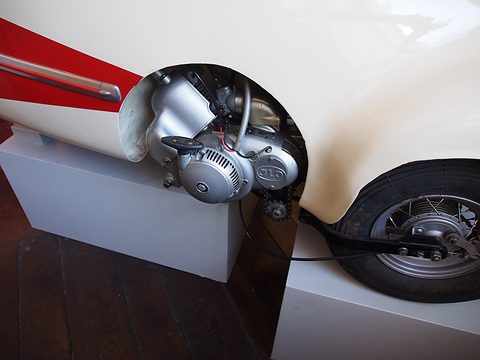
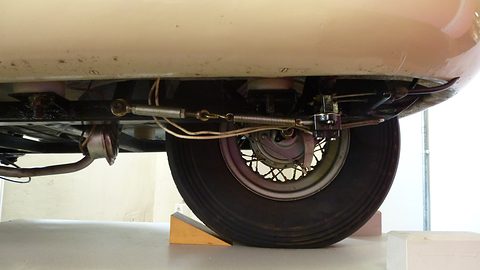
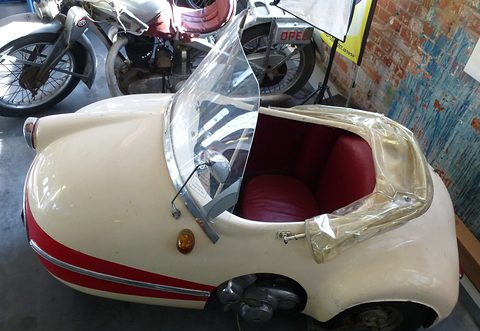
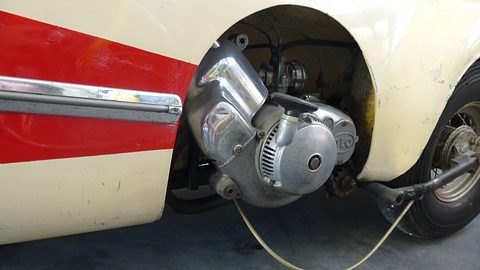
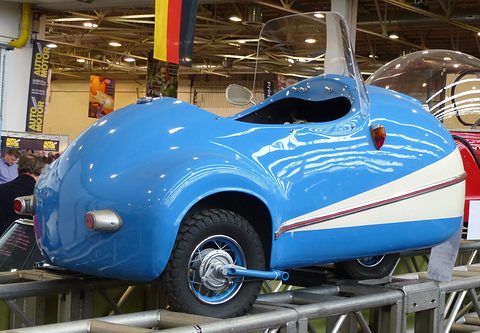
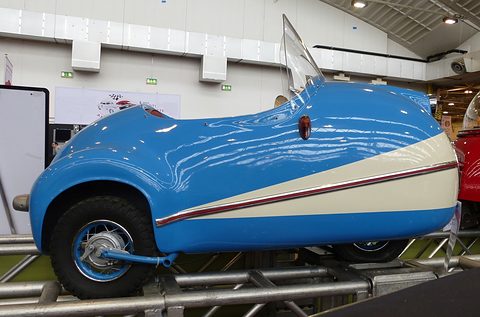
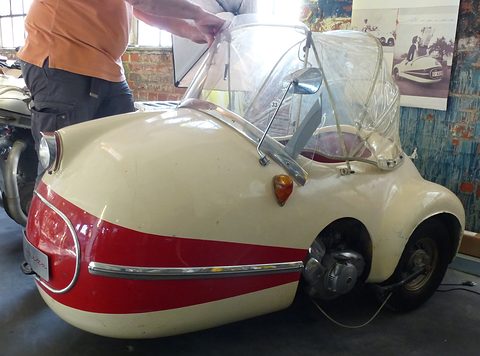
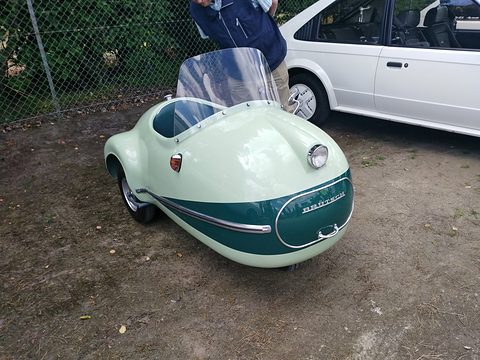
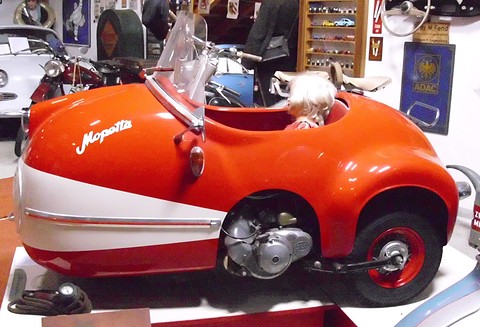
Front drive did not last. In the working car the engine sat outside the body on the left, beside the driver, and drove the left rear wheel alone by chain, with no differential.source 1 That was the end of any real chance of floating: water would have reached the carburettor, and the weight on one side would have upset the trim.source 1 The Bruce Weiner Microcar Museum notes that the publicity photographs of a Mopetta crossing a stream were taken where the water was perhaps a few inches deep.source 2
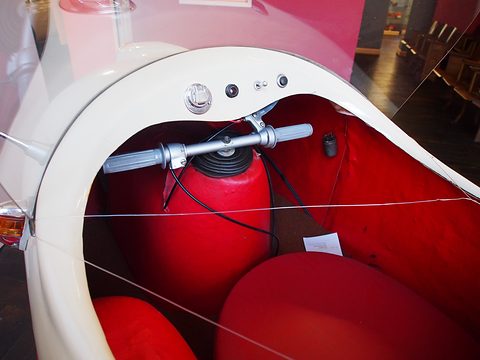
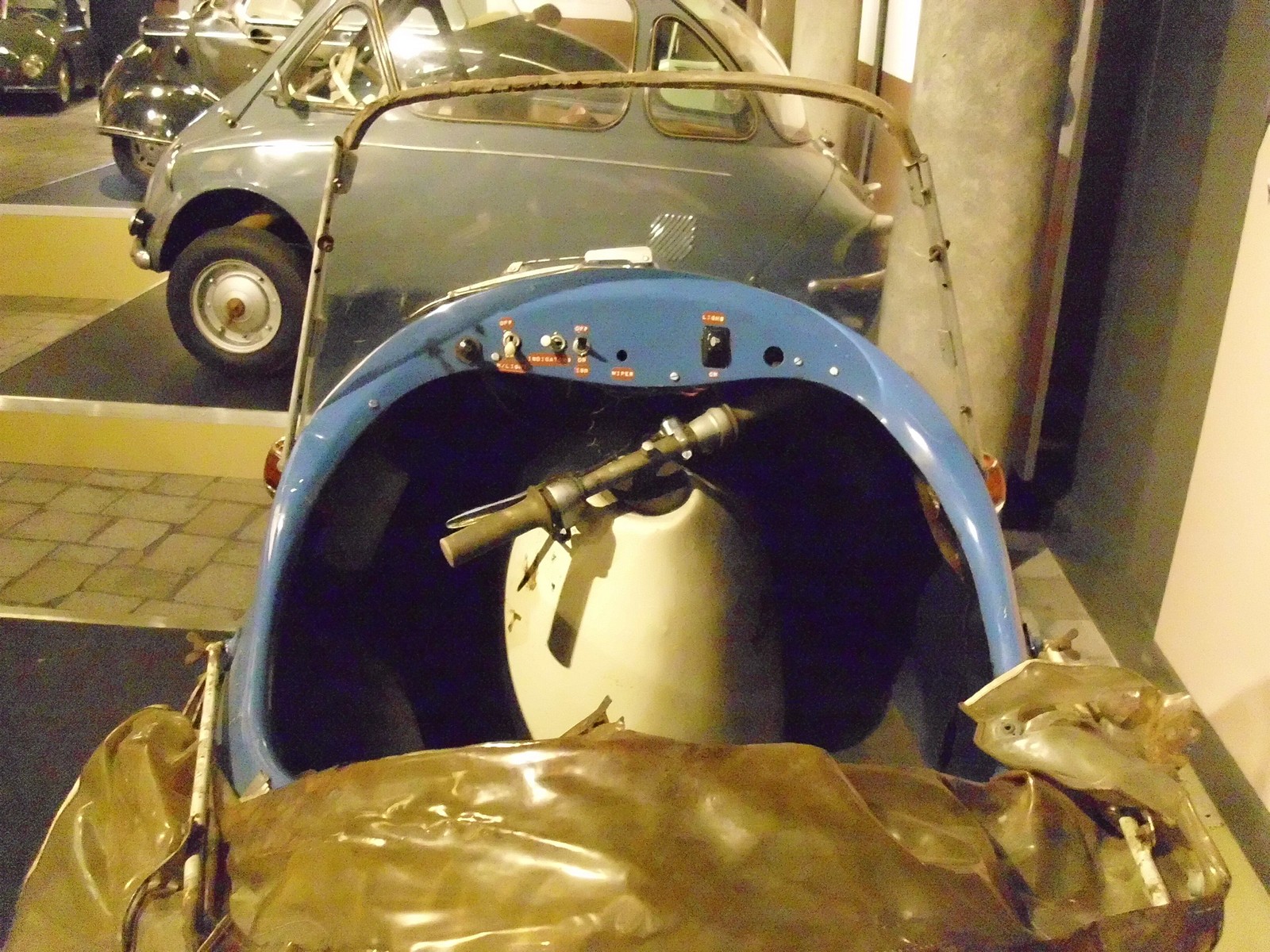
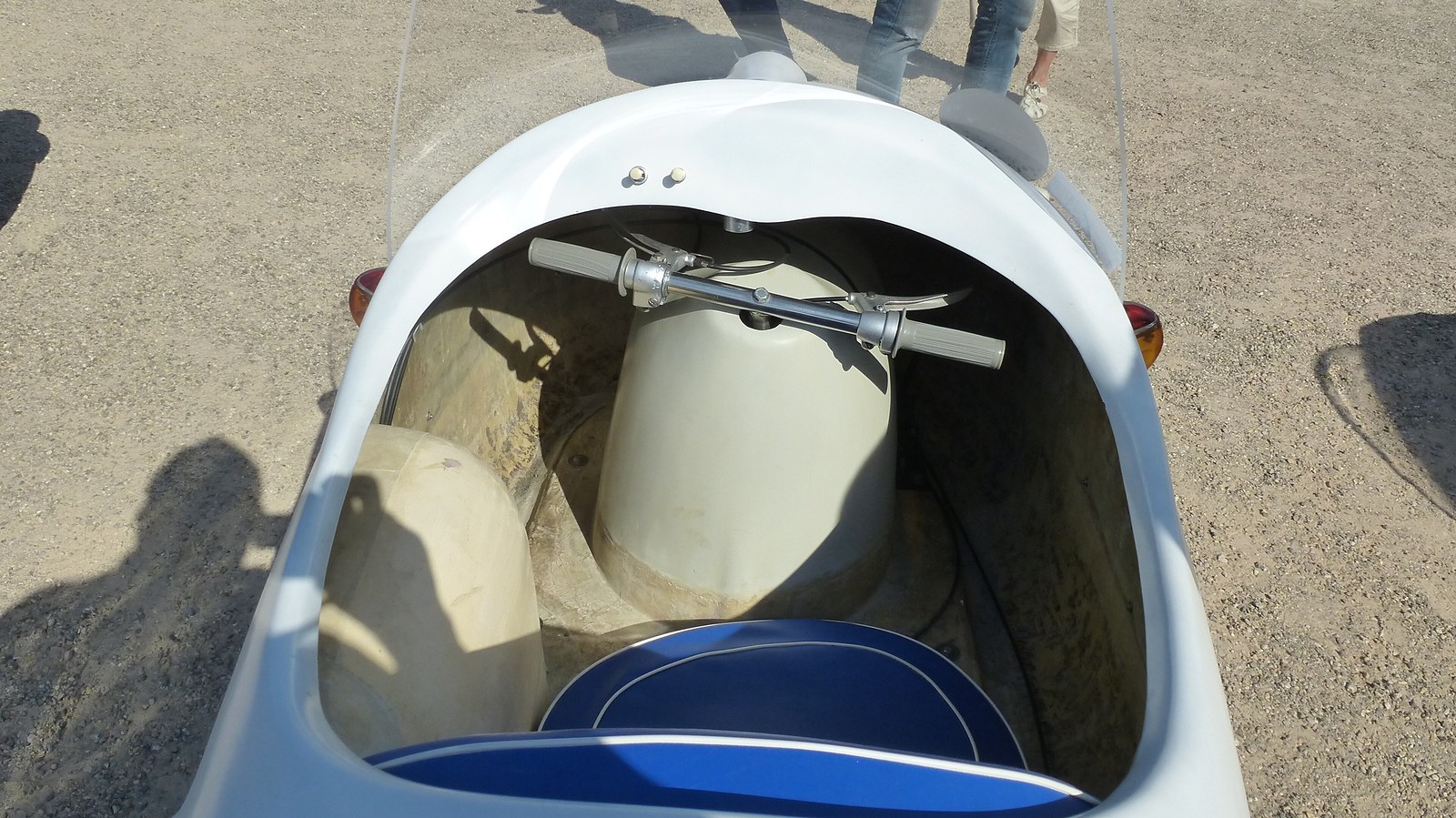
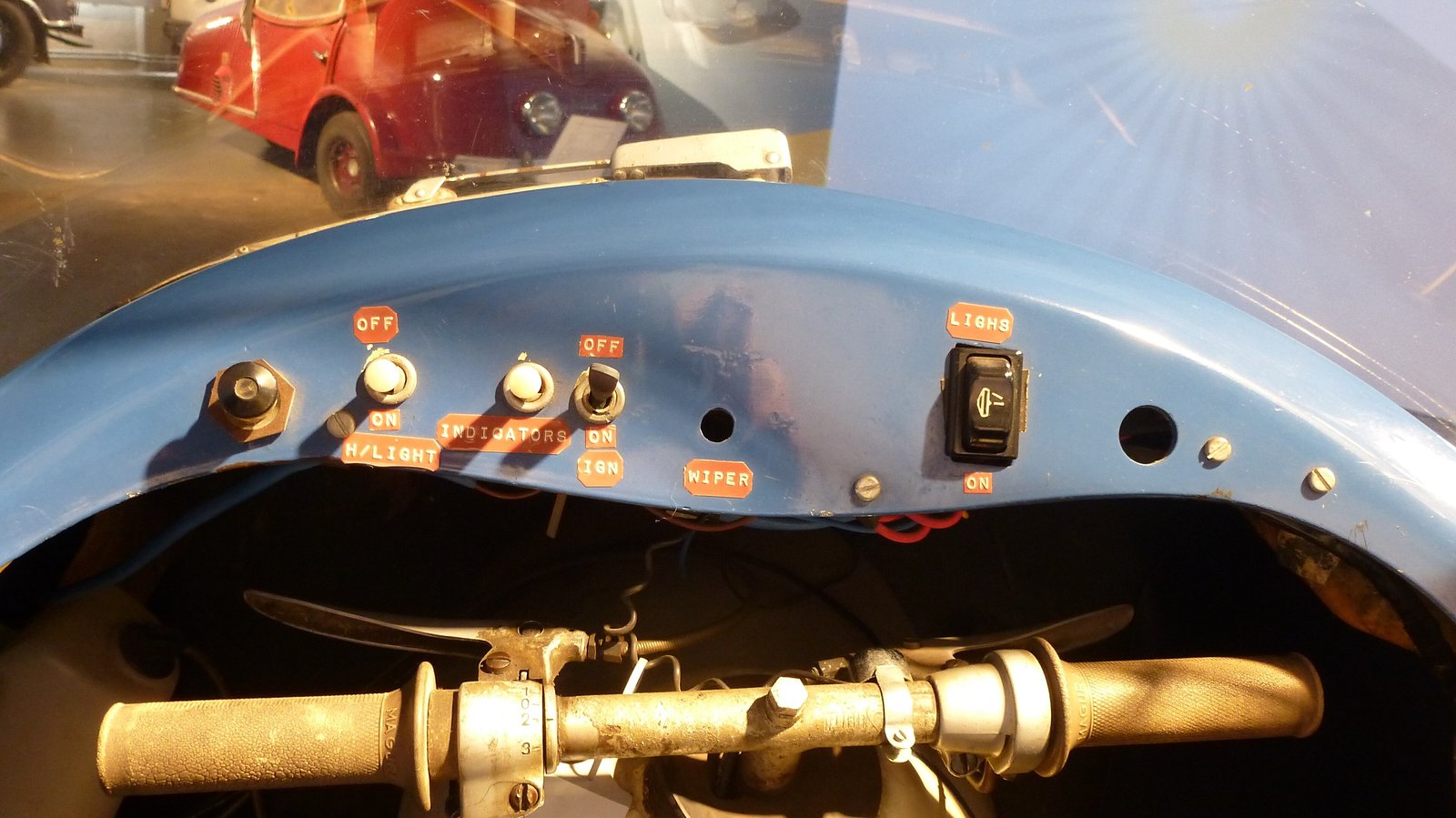
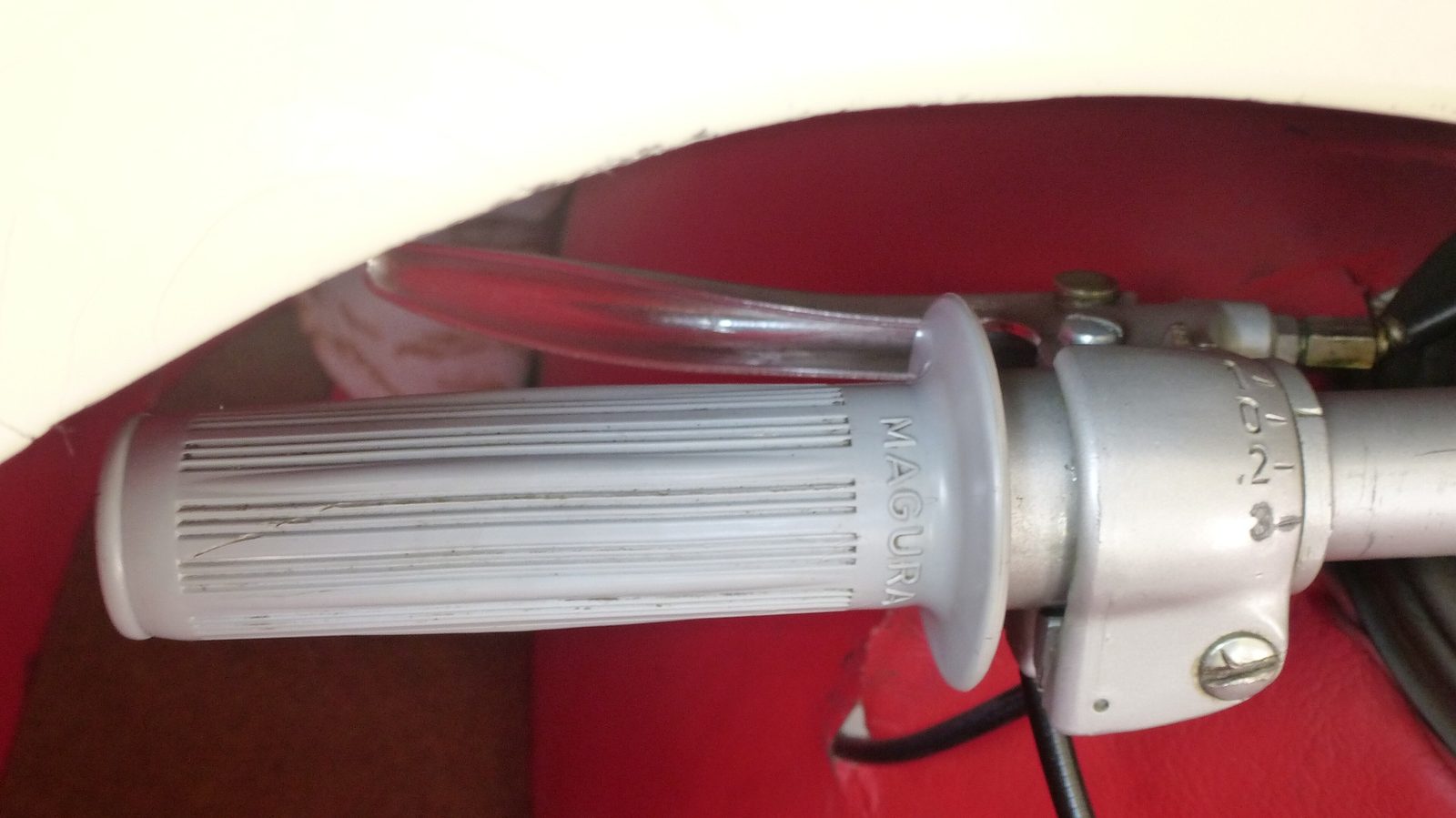
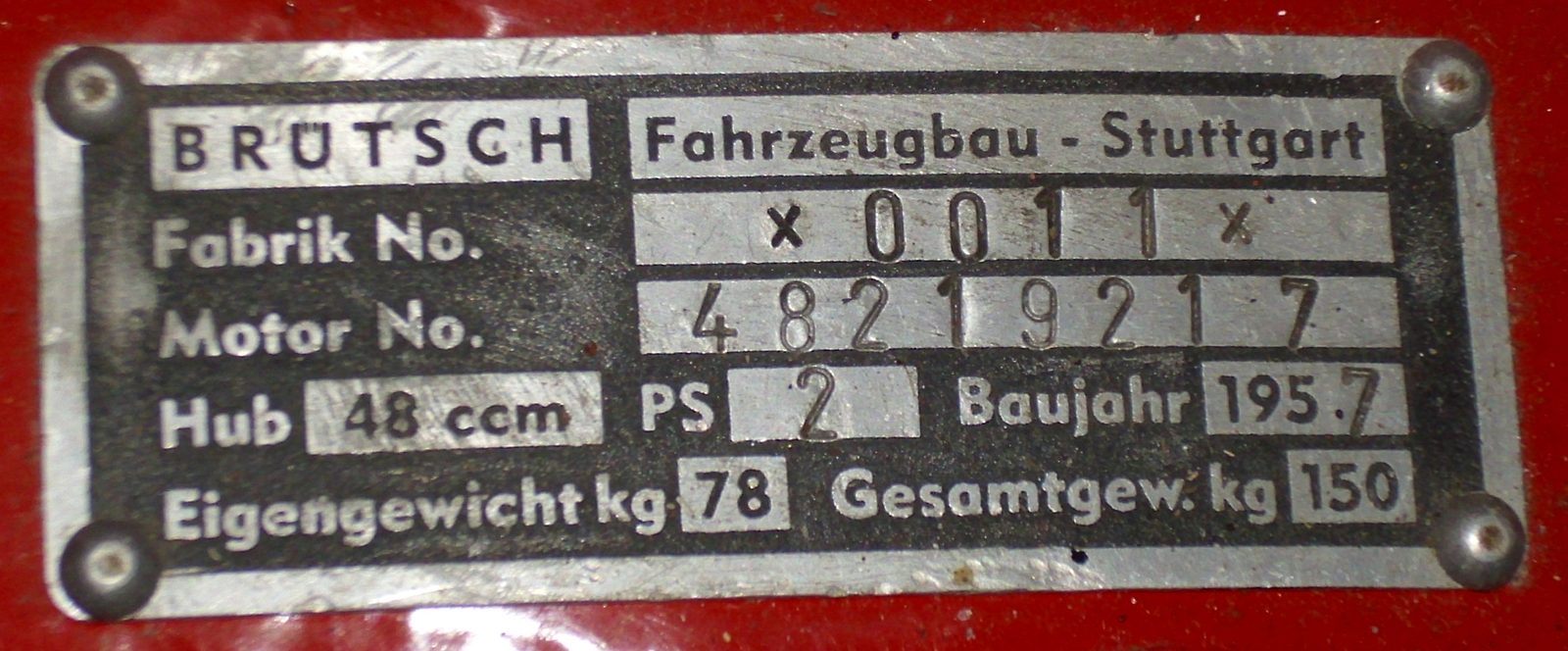
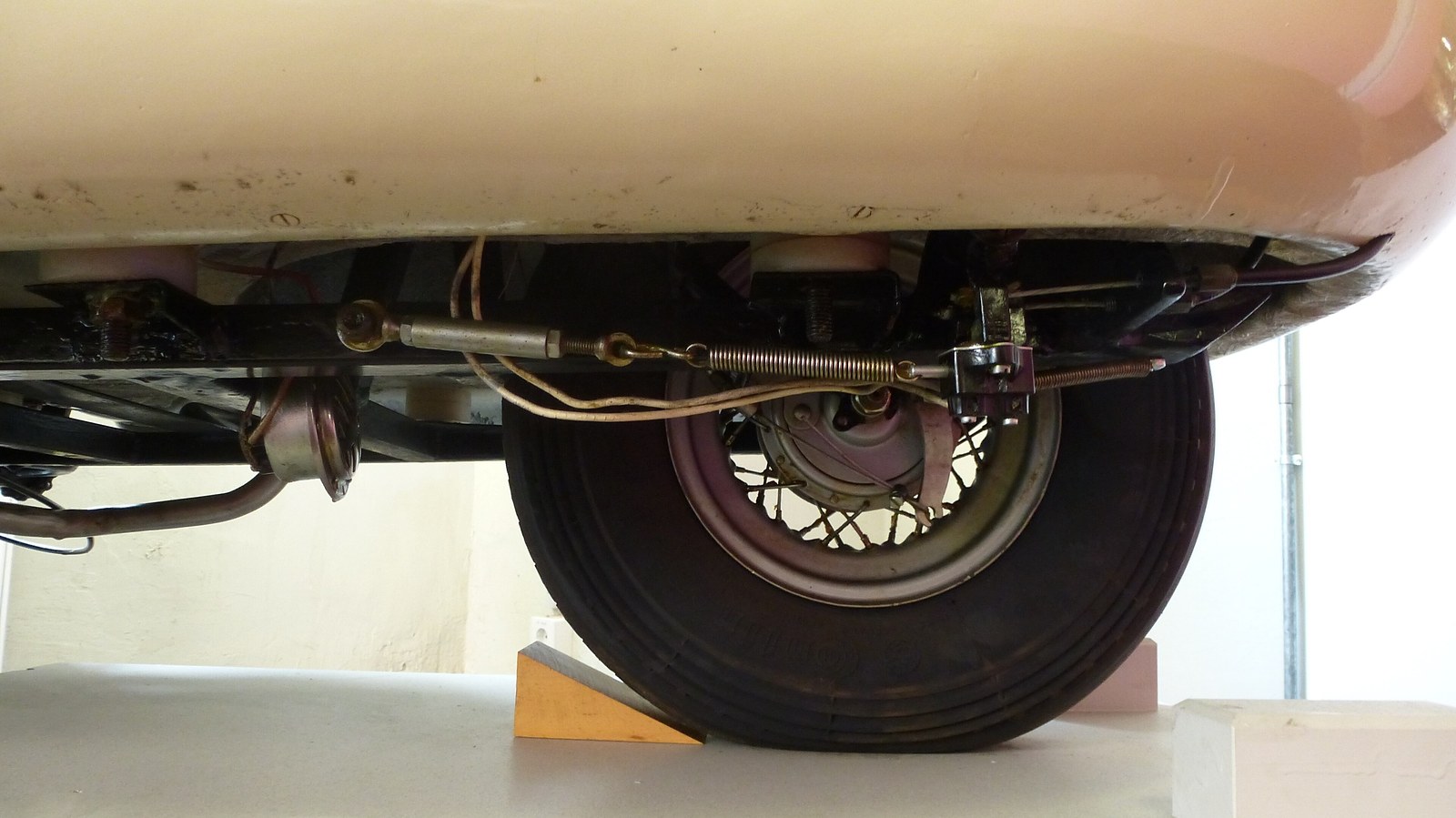
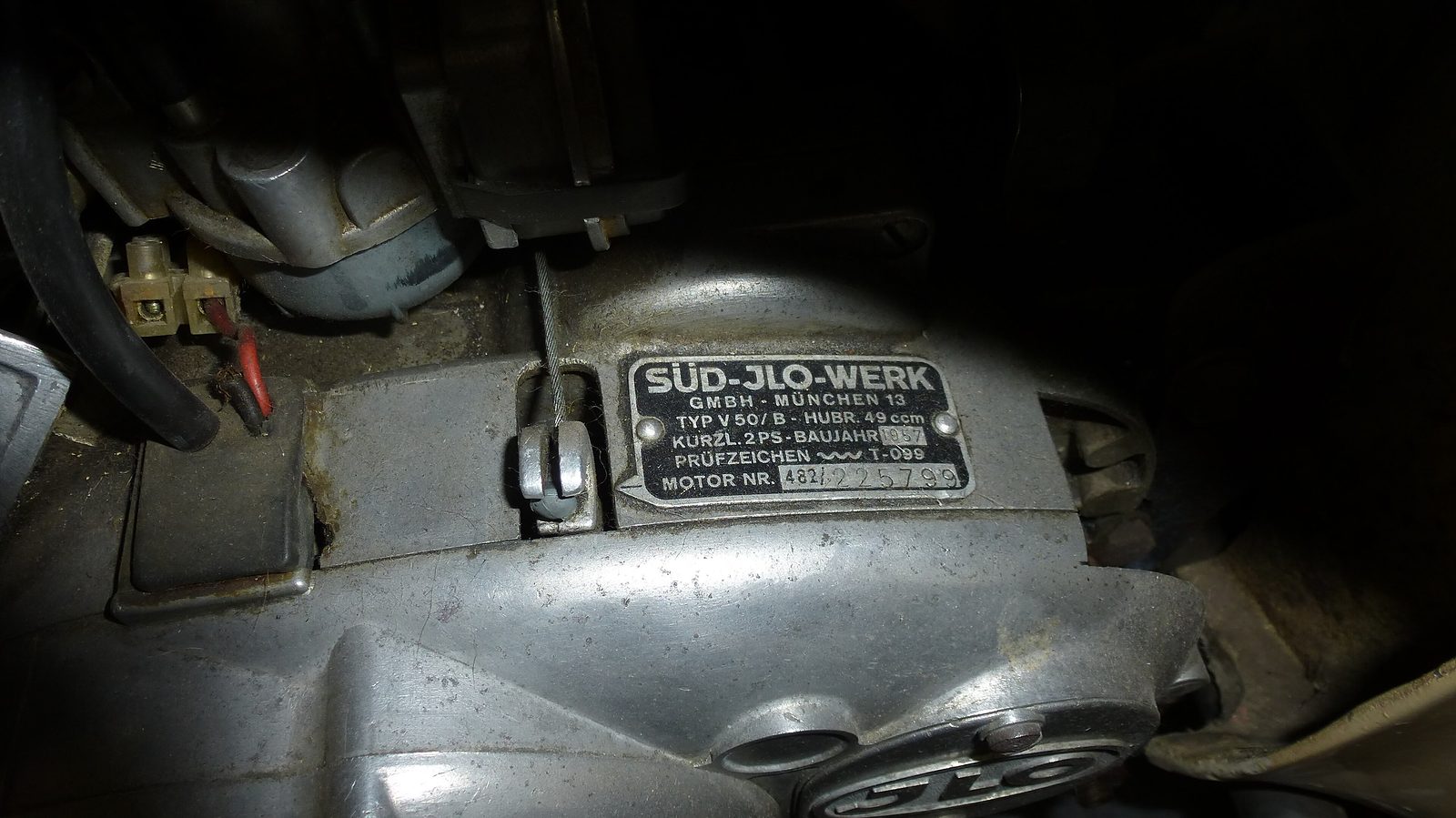
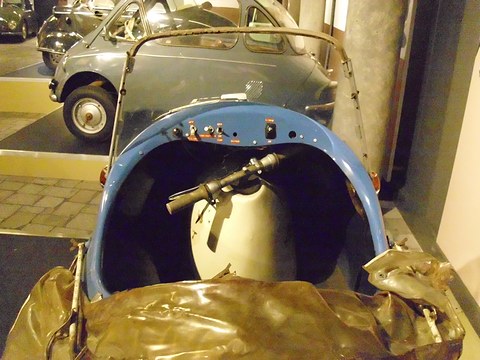
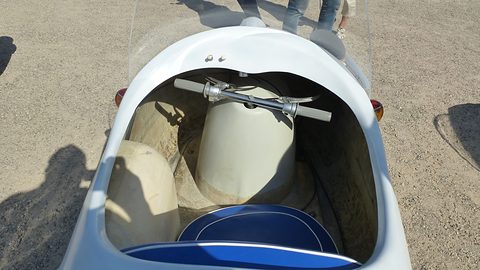
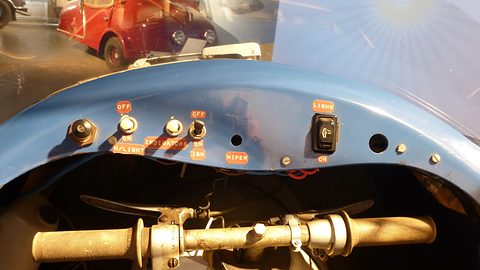
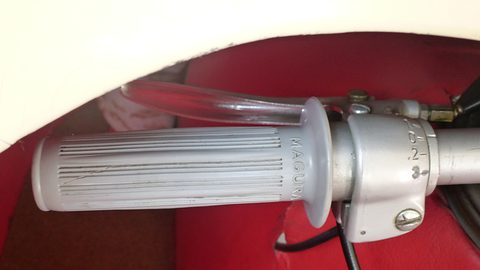
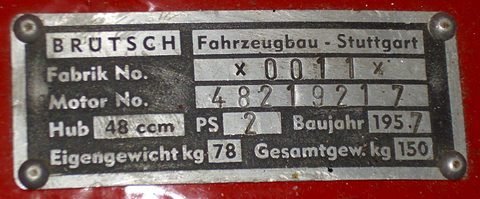
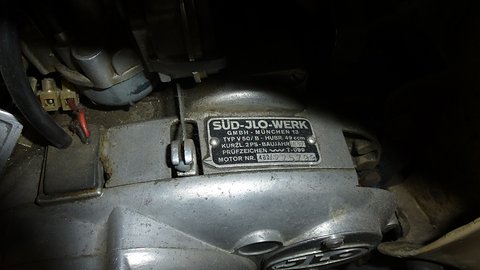
The engine was an ILO two-stroke of 48.8 cc and 2.3 PS, started by pulling a cord, with three speeds changed by a twist grip on the handlebar and no reverse.source 1source 2 The car weighed 78 kg (172 lb), reached about 45 km/h (28 mph) and used about 2 litres per 100 km.source 1source 2 It was steered by handlebar, braked by cable-worked drums on all three wheels and lit by a single headlamp.source 1 Three gears were unusual for a moped engine, but the Mopetta weighed about 2.4 times as much as a moped of the day and had no pedals to help it up hills.source 1 In law it was a moped: DM 15 a year in tax, and the old class 4 licence, which needed only a theory test.source 1
By March 1957 the price was DM 975, 30 per cent up, at a time when an Isetta 250 cost DM 2,780, a Spatz DM 2,975, a Volkswagen Beetle DM 4,600 and an NSU Quickly moped DM 540 in 1956.source 1 Most of the 14 cars were probably built in these months, and almost every one differed in detail: a pilot series rather than a production run.source 1 Opinion ranged from calling it a traffic obstruction to calling it a true Volksmobil, far cheaper to buy and run than a Beetle.source 1 The chassis was never resolved: it ran poorly in a straight line, its springing and damping were judged unfinished, and the long-armed front fork tended to wobble.source 1
Da staunt der Fachmann, aber immerhin ist zu bewundern, mit welcher Zähigkeit Herr Brütsch an seinen Projekten arbeitet und es ihm gelingt, trotz aller Schwierigkeiten immer wieder etwas auf die Räder zu bringen.
Brütsch moved them about piggy-back: up to five on his Mercedes, three on the roof and two in the boot.source 1
Georg von Opel’s hundred thousand
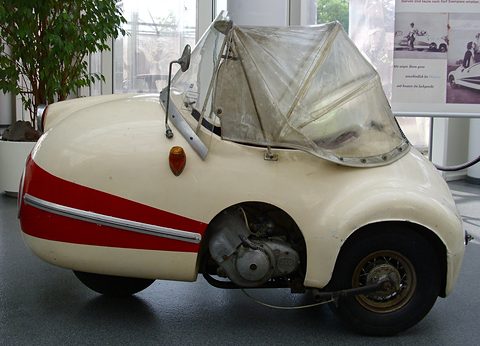
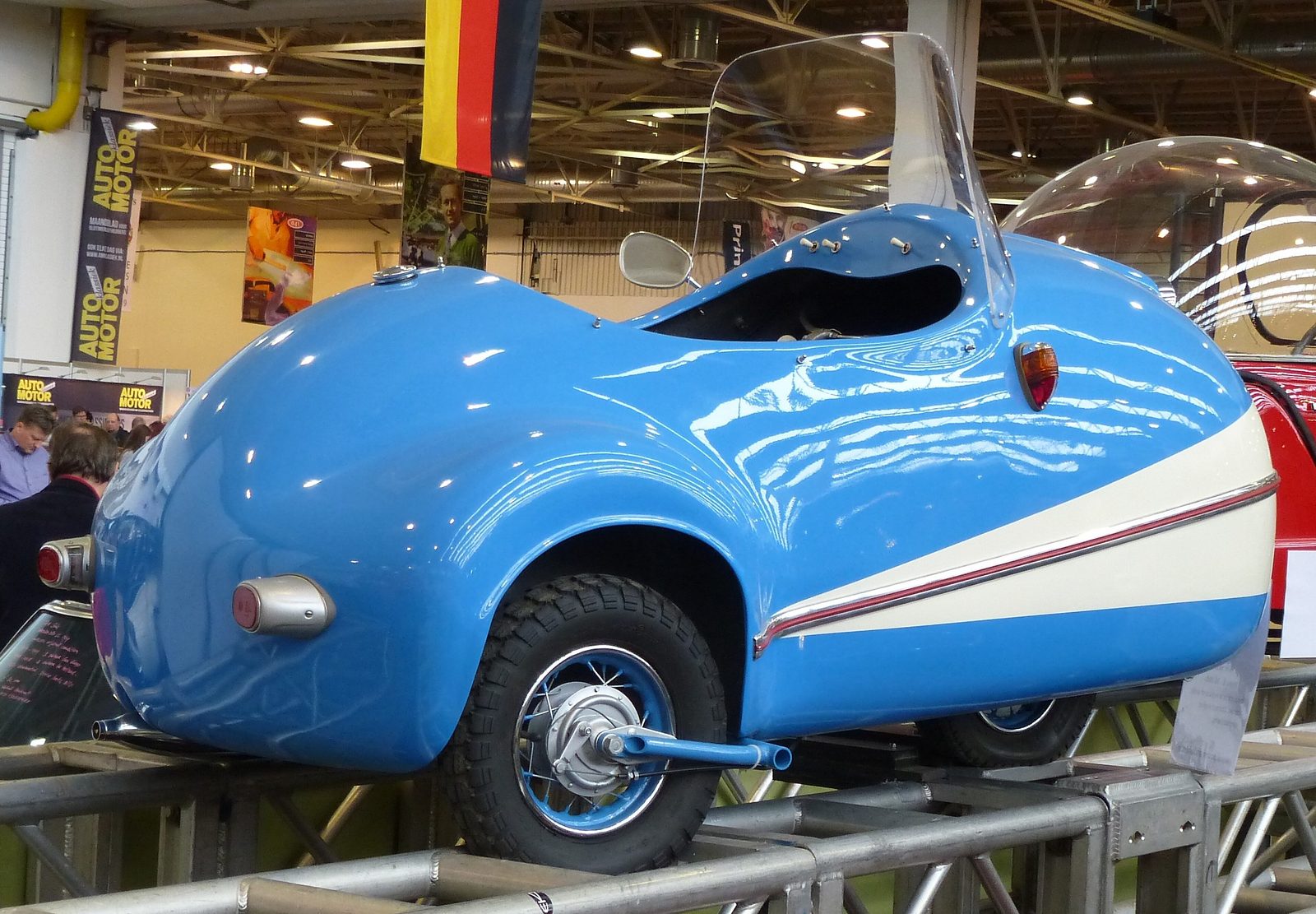
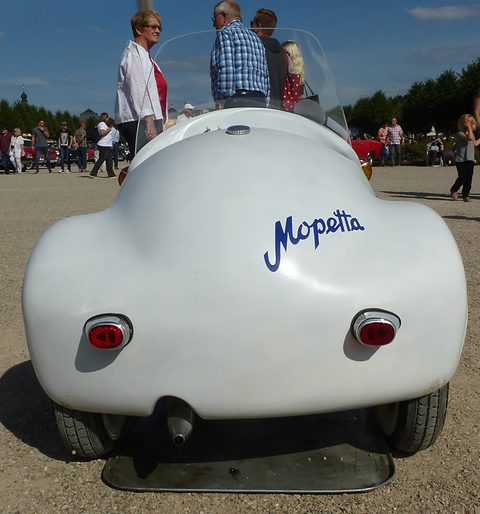
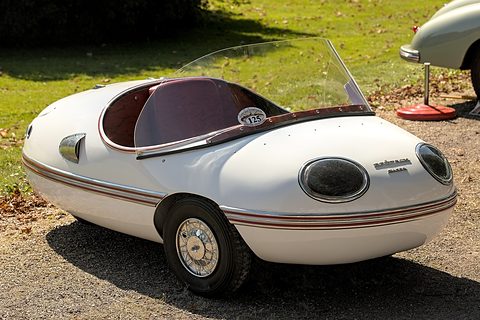
In 1957 the Mopetta found a backer. Georg von Opel (1912–1971), a grandson of Adam Opel, was a big Opel dealer in Frankfurt, owned the Opelit boatyard and plastics company and promoted a cut-price Volksbenzin, “people’s petrol”. He tried a Mopetta in his company’s multi-storey car park and took over the planning and the money.source 1 Mopetta GmbH of Frankfurt sold it for DM 1,045 by September 1957, and the Brütsch name disappeared from it; in Switzerland it cost CHF 1,550.source 1 These cars were a little wider and taller, with a higher screen and a clear plastic hood.source 1
Von Opel planned 100,000 cars in four years from late 1957, to be built by the struggling motorcycle maker Horex at Bad Homburg, serviced by Horex dealers and sold at his planned Volksbenzin filling stations; he also bought a factory hall in Offenbach.source 1source 2 Horex’s engineers fitted a conventional front fork and simplified the frame, and about five more pre-series cars were built to this Opelit specification. A Mopetta was at the Frankfurt show in September 1957, registered F-DC 232.source 1
In the spring of 1958 von Opel withdrew before series production began. The reason given was that his lawyers had concluded a descendant of Adam Opel was not legally allowed to build cars, and no details followed. The Spatz lawsuit, in which a court had found Brütsch’s first plastic three-wheeler unroadworthy, the slump in small-car sales and the rising price have all been suggested instead; the Weiner museum says only that he lost interest.source 1source 2 Fourteen had been built. German Wikipedia leaves Brütsch with ten and von Opel with one, and also sends five to Britain; the counts do not quite add up.source 1source 2
Brütsch gave up cars that autumn and turned to plastic ball-shaped play houses and then prefabricated houses, with success.source 1source 3 Horex stopped making motorcycles in 1959.source 1 Spare Mopetta bodies lay about his property, and some went into a concrete floor as reinforcement; when the slab was broken up in about 1975, two came out whole and went to the collector Martin Sauter.source 1