Microcars on screen
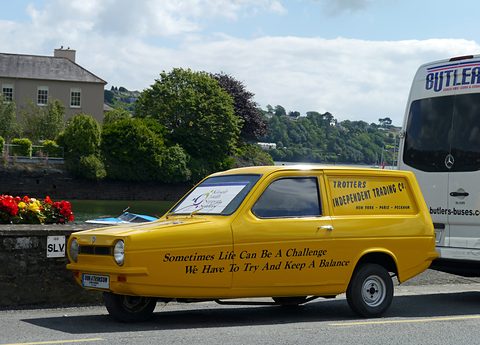
Del Boy’s yellow van and Mr Bean’s light-blue victim are probably the two best-known three-wheelers on British television, and neither is a Reliant Robin. On screen the microcar is the underdog, the future, or the last car of an old man, and sometimes all three.
Not a Robin
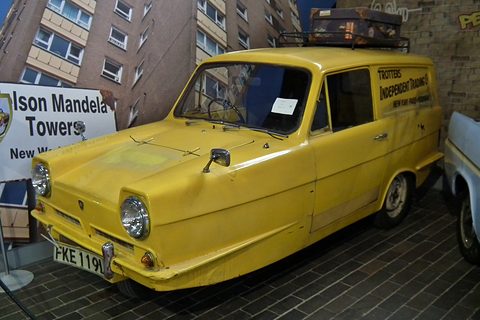
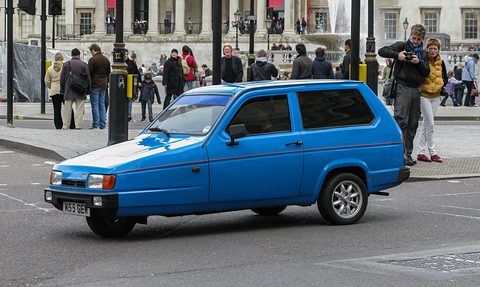
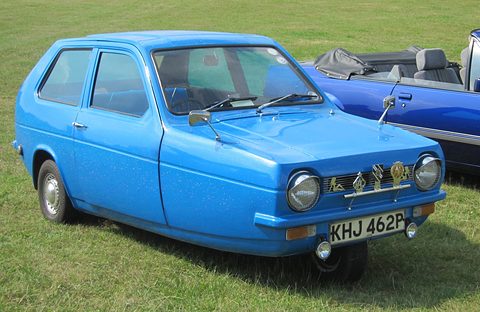
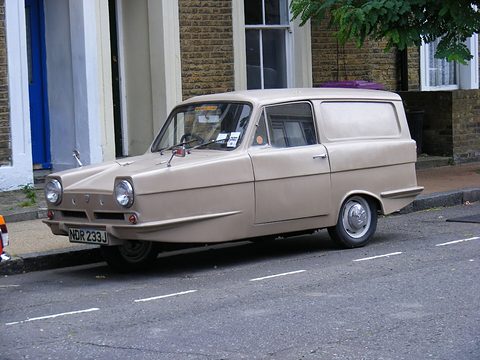
In the first episode of Mr. Bean, shown on ITV on 1 January 1990 to 13.45 million viewers, Bean drives his Mini to a mathematics exam and causes an accident with a small blue Reliant. For the next five years the same light-blue three-wheeled van is toppled, rammed and shoved out of its parking space, and the joke carried on into the cartoon series.source 1source 2 Nine years before, the BBC had given Del Boy Trotter a yellow one in Only Fools and Horses. Both are routinely called Reliant Robins. Neither is. Both are the Reliant Supervan, the van of the Reliant Regal family, in its Regal Supervan III form: IMCDb lists a 1969 van for the Trotters and a 1972 one for Bean, and the museum at Beaulieu, which owns a Trotters van, says so itself.source 3source 4
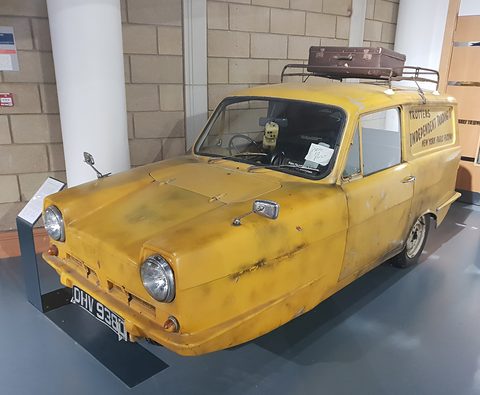
Possibly the nation’s most famous three-wheel vehicle, this Reliant Regal Supervan III (often mistakenly referred to as a ‘Robin’) featured in the BBC sitcom Only Fools and Horses.
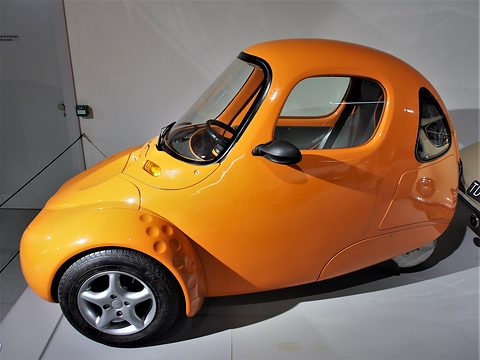
The mistake says something about how the small car is seen. On screen it is seldom anyone’s dream. It is the underdog’s car, the car a comedy can tip over: Fantozzi and the rogues of a Soviet farce drive one, and Mr Bean picks on one. In science fiction it is the future, in the shape of a bubble with a canopy, and in French cinema of the 2010s the voiture sans permis carries old age and modest lives.
Hollywood and the baby car, 1930s–1960s
Hollywood’s first small-car stars were American. RM’s auction catalogue of 2014 says that the Our Gang comedies used the American Austin, and both its catalogues of 2014 and 2016 say that Donald Duck’s car was drawn by Walt Disney from it; the claims rest on an auction house alone.source 5source 6 For the Crosley, the Crosley Automobile Club keeps a list of films, which no second source confirms title by title. In The Crystal Ball (1943) Ray Milland has watermelons tipped into his two-cylinder Crosley convertible; Lou Costello has a Parkway Delivery in Abbott and Costello in Hollywood (1945); and in the Mexican Toda Maquina (1951) a Super Sports is lifted bodily out of a traffic jam.source 7 In February 1937 the Buckinghamshire Advertiser photographed Sabu, the boy star of Elephant Boy, beside Marlene Dietrich’s V16 Cadillac in the Rytecraft Scootacar that Flaherty had given him to potter round Denham studios.source 8
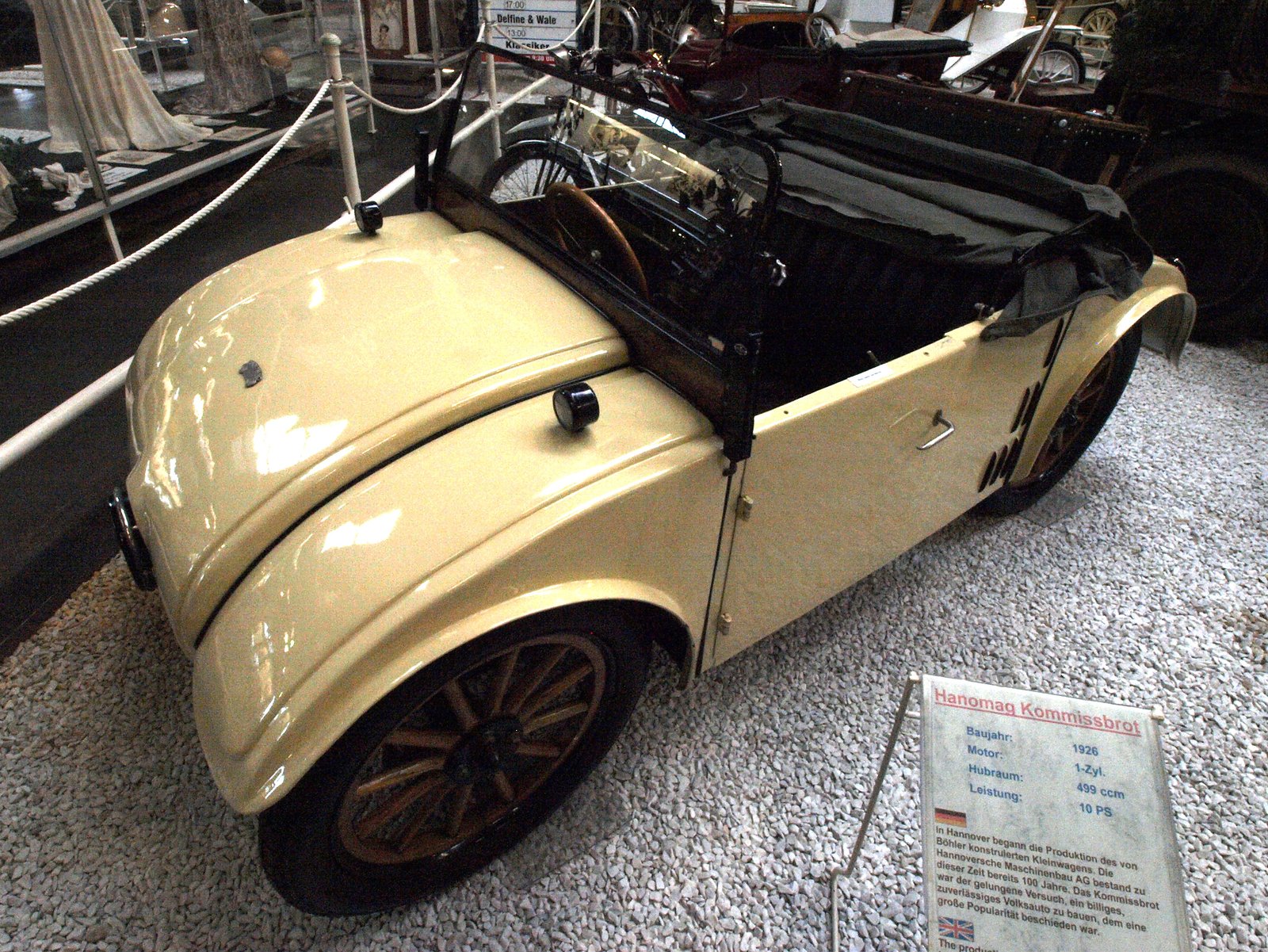
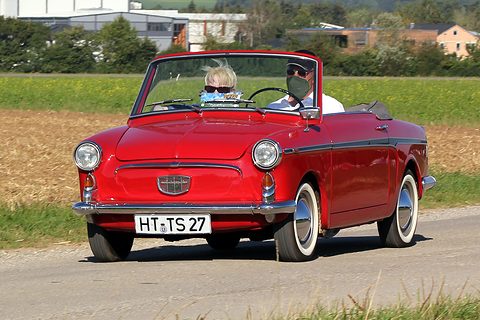
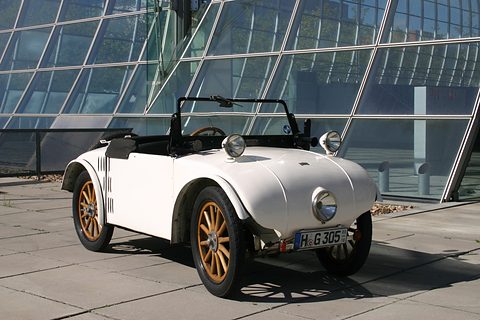
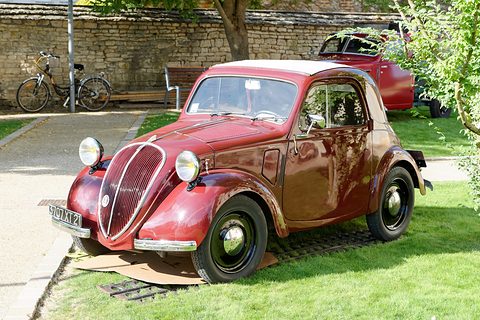
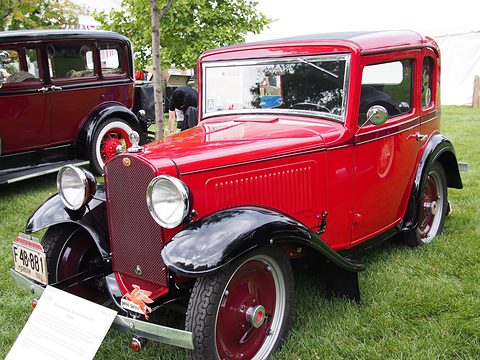
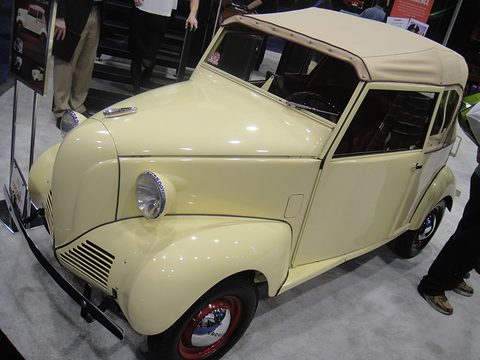
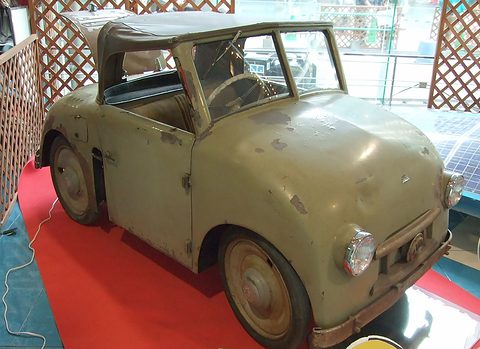
Europe’s small cars had their parts too. In Pin Up Girl (1944) a squad of soldiers far too large for it climbs out of a slightly altered Fiat 500 Topolino,source 9 and a Simca 5, the French Topolino, appears in La Grande Vadrouille (1966).source 10 In the West German Edgar Wallace film Der grüne Bogenschütze Eddi Arent, as the reporter Spike Holland, has a white Hanomag 2/10 PS cabriolet.source 11 BMW says that German post-war cinema would have been poorer without the BMW Isetta, but it names no film, and no German title has been found.source 12
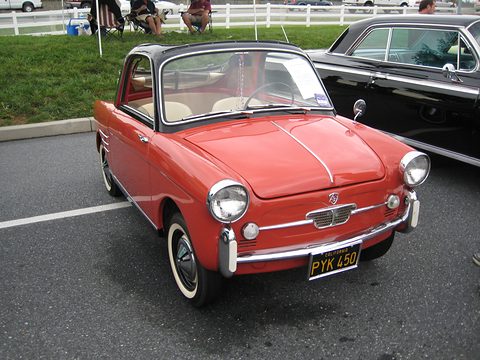
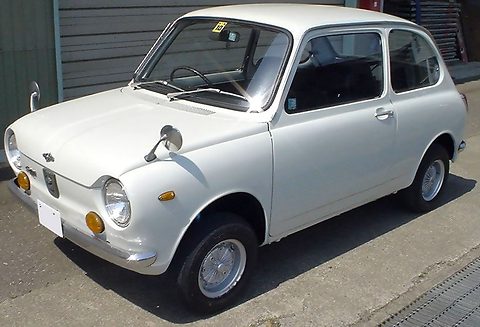
The Autobianchi Bianchina was the small car with glamour. The chase in The Pink Panther (1963) has a jewel thief, dressed as a gorilla, at the wheel of a Bianchina Cabriolet,source 13 and in William Wyler’s How to Steal a Million (1966) Audrey Hepburn drives a red one, the version sold in France as the Eden Roc; IMCDb lists a 1965 Eden Roc.source 14source 15source 3 In Japan the Subaru 360 was the detective hero’s car all through Hiroshi Teshigahara’s The Man Without a Map (1968).source 16
The underdog: Operation Y, Fantozzi and friends
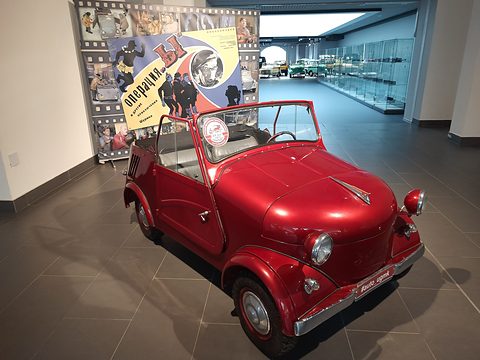
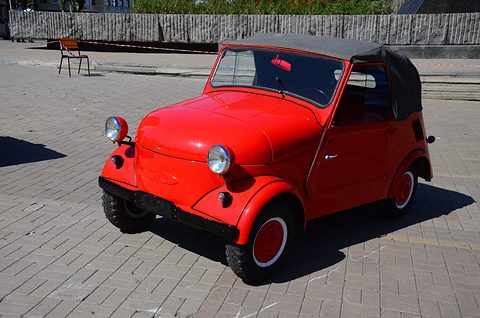
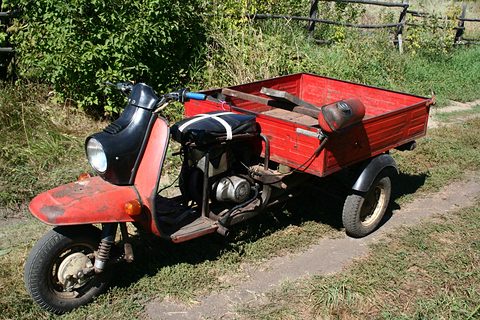
Soviet comedy’s best-known microcar is an invalid carriage. In Leonid Gaidai’s Mosfilm comedy Operation Y and Shurik’s Other Adventures, which opened on 23 July 1965, three rogues, Trus, Balbes and Byvaly, played by Georgy Vitsin, Yuri Nikulin and Yevgeny Morgunov, ride in a grey SMZ S‑3A. Byvaly turns the car round by hand; all three squeeze in and drive off, and later they drive it in winter with its top folded.source 17source 18source 19source 20 One count puts the film’s audience in its first year at 69.6 million, another at 39.6 million.source 17 The S‑3A was not a comic car. It was an invalid carriage, issued free to disabled war veterans, and Za Rulyom records that such carriages were mocked, especially after the film.source 18 The Tula Muravei scooter-truck turns up in Soviet and later films too, among them Mama vyshla zamuzh, Ochkarik and Cheburashka.source 21
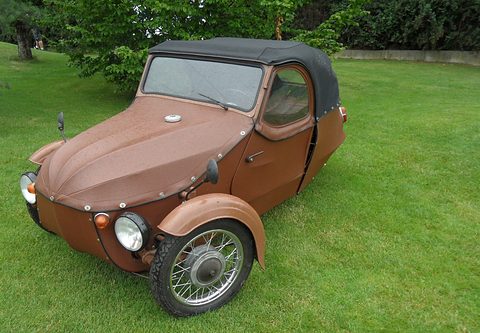
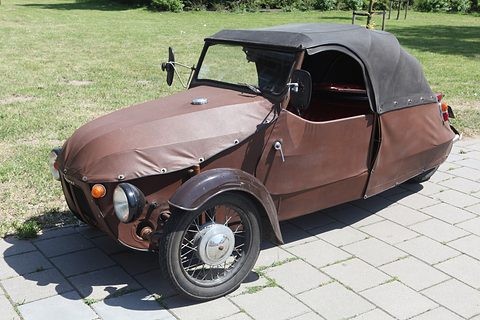
Other countries told the same joke with their own cars. In Polish films the Mikrus MR-300 carries a newspaper journalist and his photographer in Liczę na wasze grzechy (1963), and in 150 na godzinę (1972) the hero takes his driving test in one; the hero of the television series Czterdziestolatek (1974–77) drives a Polski Fiat 126p, the Polish-built Fiat 126.source 22source 23 The best-known screen Velorex belongs to Josef Abrhám’s character in the Czech comedy Vrchní, prchni!, and Jiřina Bohdalová drives another in the television series Dobrá voda.source 24
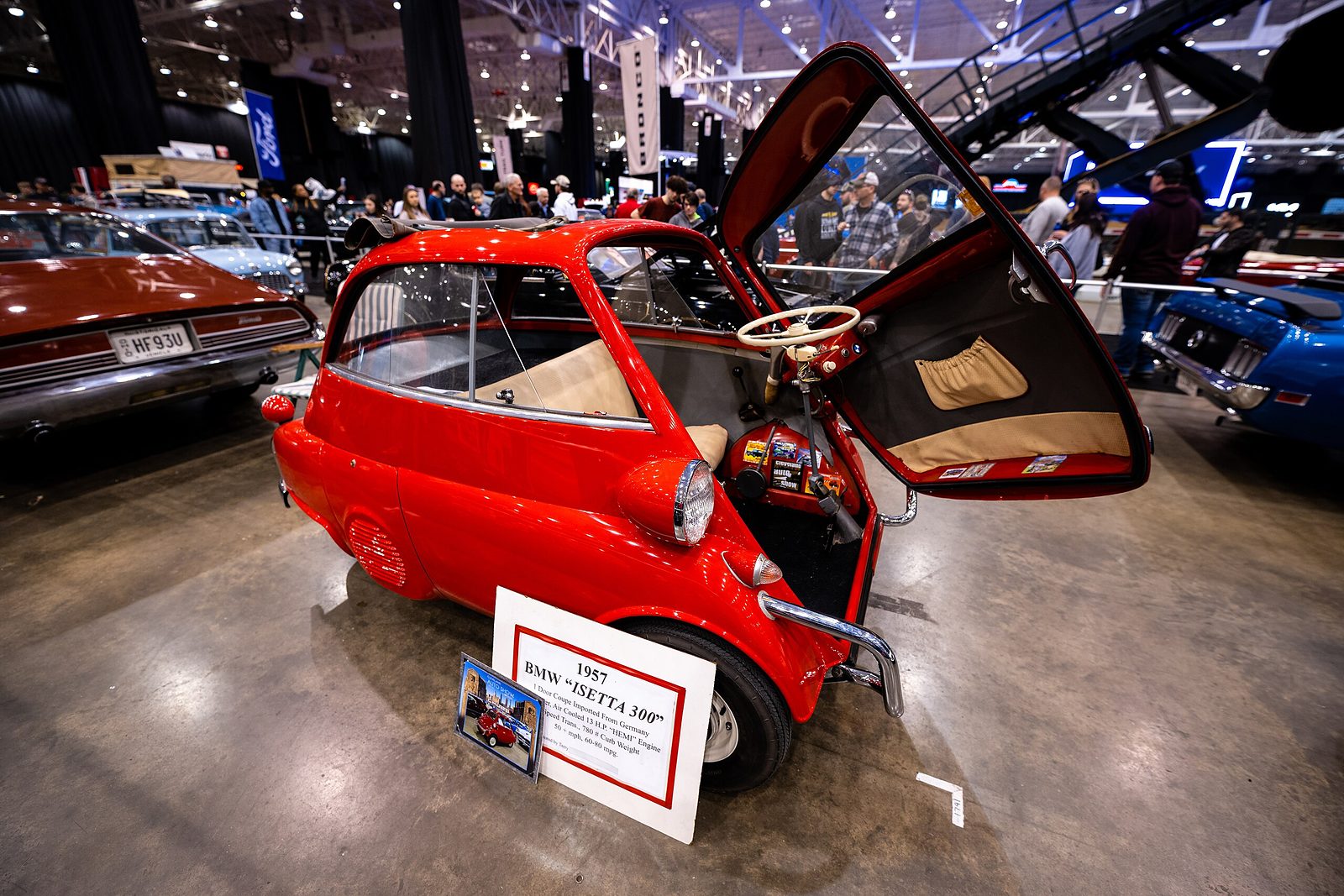
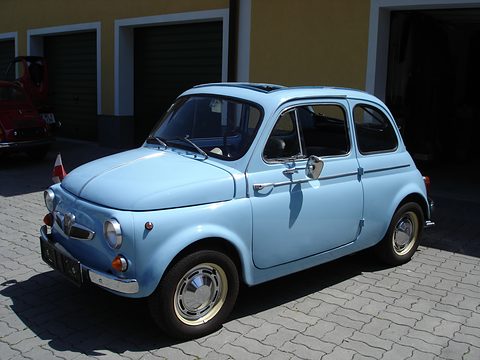
Italy’s underdog is Ugo Fantozzi, played by Paolo Villaggio, and in the Fantozzi films his car is a white Bianchina saloon, usually battered and wearing a four-leaf-clover sticker.source 14source 15 American television’s is Steve Urkel of Family Matters (1989–98), played by Jaleel White, in his BMW Isetta; IMCDb lists a 1957 Isetta 300, English Wikipedia a 1960 car.source 25source 26source 3 In Germany the forensic assistant Silke Haller, played by Christine Urspruch, drives a Steyr-Puch 500 in the Münster episodes of Tatort,source 27 and in Austria a red closed Meister K5, one of the Austrian microcars, plays a leading role in Karl Markovics’s Nobadi (2018/19).source 28 And in Niklaus Schilling’s Der Willi-Busch-Report (1979) a Messerschmitt KR200 has a major role, carrying a reporter along the border between the two Germanys; and it returned for the sequel, Deutschfieber, in 1992.source 29
Peckham, and the van that fell apart
The Trotters’ van first appears in “Big Brother”, an episode of Only Fools and Horses of 1981, yellow and signwritten for Trotters Independent Trading, with New York, Paris and Peckham beneath.source 30source 2 It started out registered APL 911H. The vans for the second series came from Action Cars, and, the Reliant Motor Club was told, more than one was used: it was cheaper to buy another old van than to mend one, so the plates and the signwriting moved across. From the third series the van wore DHV 938D, believed to be a made-up number, and the last van the BBC was supplied, in 1987, was really NJB 33L.source 30 The van leaves the ground over a humpbacked bridge in “Dates”, and according to the club it nearly fell apart when it came down, so a spare van was brought in; John Sullivan, the writer, thought of blowing it up in “Danger UXD”, then decided to keep it.source 30 How many vans there were is not known. An auction house in 2021 described one as believed to be one of six, and many more people claim a screen van than can prove one.source 31source 30source 2 In 2007 the boxer Ricky Hatton paid more than £44,000 for one, and a 1972 van that had belonged to John Mansfield of the BBC sold without reserve for £19,350 in June 2023.source 32source 33 Beaulieu has its 1971 van, and another is on show at Gaydon’s British Motor Museum.source 4source 2
Mr Bean’s van was a running gag rather than a character. One multi-storey car-park scene has Bean’s driving send it swerving over onto its side. More than one van was used, and one at least ended up scrapped.source 32 At the London Olympics of 2012 the closing ceremony included a Reliant falling to pieces and Batman and Robin stepping out of it, a replay of the 1996 Only Fools episode “Heroes and Villains”.source 2 The genuine Reliant Robin has had smaller parts. Newton Pulsifer, played by Jack Whitehall, drives one called Dick Turpin in Good Omens (2019), as in the novel of 1990, and in Absolutely Fabulous Patsy thinks an isolation tank looks like one.source 34source 35
The real van and a Robin in costume
A pair
Top Gear, 2007–2016
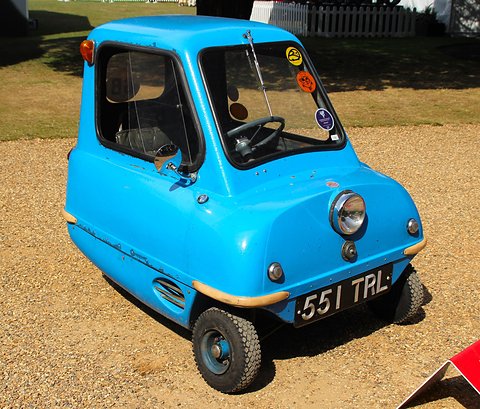
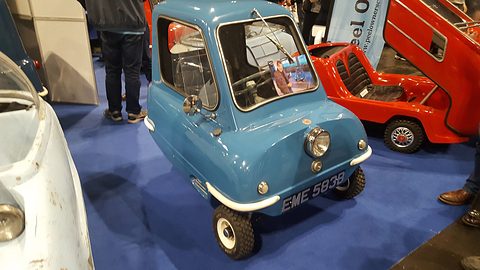
Top Gear made two microcars into television events. In the edition broadcast on 18 February 2007, the presenters Richard Hammond and James May made a Robin into a reusable shuttle on top of a rocket; when the boosters fell away the car stayed fixed to its external tank, and it was destroyed.source 34source 35 German Wikipedia calls it the largest rocket ever launched by a private organisation in Europe.source 35 In the episode of 28 October 2007, Jeremy Clarkson took a blue Peel P50 across London to work and on into BBC Television Centre, through its corridors, into a lift and through the newsroom, in the episode that also raced a Bugatti Veyron against a Eurofighter.source 36source 37source 38 In 2011 the car’s revival was pitched on Dragons’ Den.source 36source 39 The same year as the shuttle, the programme blew up an electric REVA G-Wiz after naming it the worst car of the year.source 40
The most famous Robin film was rigged. For the first episode of the 15th series, filmed in June 2010, Clarkson drove a Robin 23 km (14 miles) through South Yorkshire, from Sheffield to Rotherham, rolling it over and over.source 41source 34source 35 According to the Reliant Motor Club, whose founders sourced the cars, the one Robin on screen was really two red Mk2s, with harnesses, roll cages and a sealed fuel tank; it still took several attempts to make one roll, it always fell towards the driver’s side, and the shell that went into the canal at the end had no engine. Scenes with a Morgan and a BMW Isetta were cut.source 41 Six years later Clarkson owned up.
A normal Reliant Robin will not roll unless a drunken rugby team is on hand. Or it’s windy. But in a headlong drive to amuse and entertain, I’d asked the backroom boys to play around with the differential so that the poor little thing rolled over every time I turned the steering wheel.
Clarkson, Hammond, May and their producer Andy Wilman then each bought a Robin as a company car for their new company, which made The Grand Tour;source 41source 42 that programme destroyed 20 G-Wizes in December 2016,source 40 and May bought a 1947 Crosley CC Four for it.source 43
The future, in cartoons and in science fiction
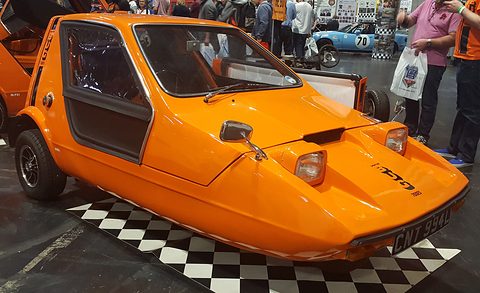
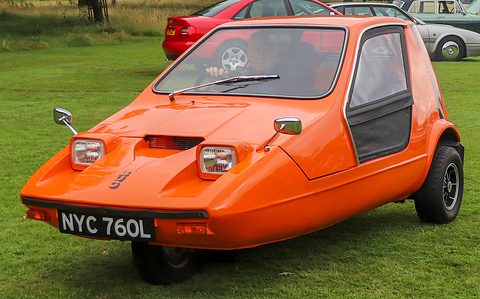
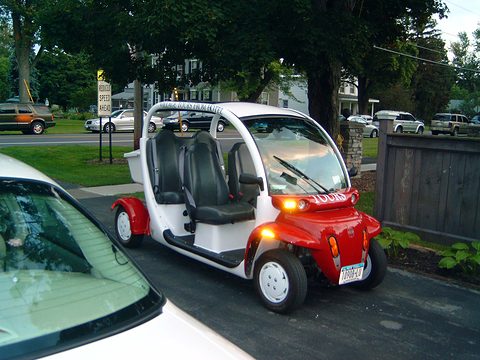
Science fiction likes the microcar because it already looks like tomorrow. Tom Karen of Ogle Design, who designed the Bond Bug, oversaw the making of Luke Skywalker’s landspeeder for Star Wars (1977), and a Bug chassis carried one of the props, with mirrors angled at the ground to hide the wheels.source 44source 45 Before that, ATV’s The Golden Shot had offered a Bug as its top prize.source 45source 46 IMCDb lists a 1957 KR200, built by FMR, among the vehicles of Terry Gilliam’s Brazil (1985), though what it does in the film has not been found.source 3 In Demolition Man (1993) the tilting single-seat GM Lean Machine is one of 17 General Motors concept cars that furnish the Los Angeles of 2032.source 47source 3 Several Corbin Sparrow three-wheelers appear in Austin Powers in Goldmember (2002) and Looper (2012), and IMCDb also lists a GEM in Goldmember.source 48source 3
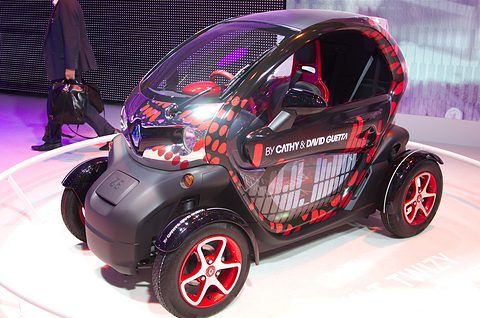
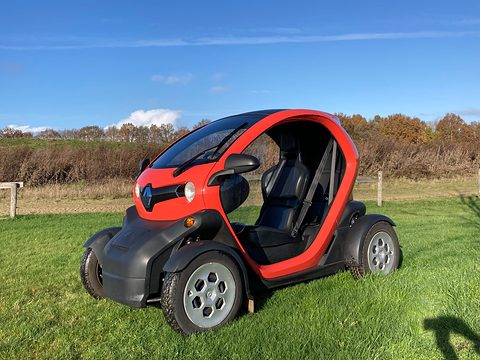
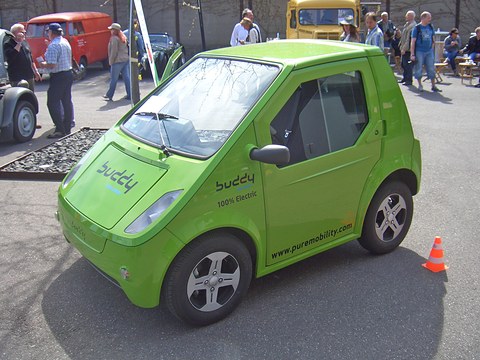
The Renault Zoom concept appears in Albert Dupontel’s short Désiré (1992) (more on microcar concepts since 1990).source 49 The electric Renault Twizy is nearly the sole private car in the London of Gilliam’s The Zero Theorem (2013) and comes in crowds in Steven Spielberg’s Ready Player One (2018), and it drives through several of David Guetta’s music videos.source 50source 51source 52 A 2010 Kewet Buddy appears in Alexander Payne’s Downsizing (2017), and the main character of Bent Hamer’s Norwegian film 1001 Grams (2014) drives one.source 53 In The Lost City (2022) Sandra Bullock and Channing Tatum use a Bajaj Qute, which is destroyed.source 54 Even Doctor Who took a small vehicle on location: a Steyr-Puch Haflinger, an off-roader rather than a microcar, filmed in a Cornish clay pit for “Colony in Space” (1971).source 55
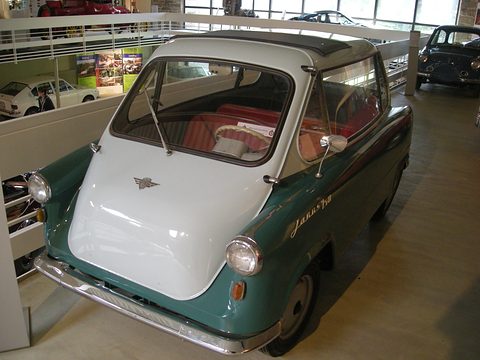
Cartoons found the small car’s face. Lupin, of Lupin III, drives a Fiat Nuova 500 F from the television series of 1971, most memorably in Hayao Miyazaki’s The Castle of Cagliostro (1979),source 56source 57 and in Pixar’s Cars (2006) the character Luigi is a yellow 500.source 57 In Cars 2 (2011) the villain, Professor Z, is a Zündapp Janus, Tomber is based on a Regal saloon and Uncle Topolino is modelled on the original Topolino.source 58source 59source 2source 60 The agent Lucy Wilde’s car in Despicable Me 2 (2013), a car that becomes a submarine and then a rocket, is a Bianchina Trasformabile by La Repubblica’s account, or a car that resembles one by IMCDb’s.source 14source 15
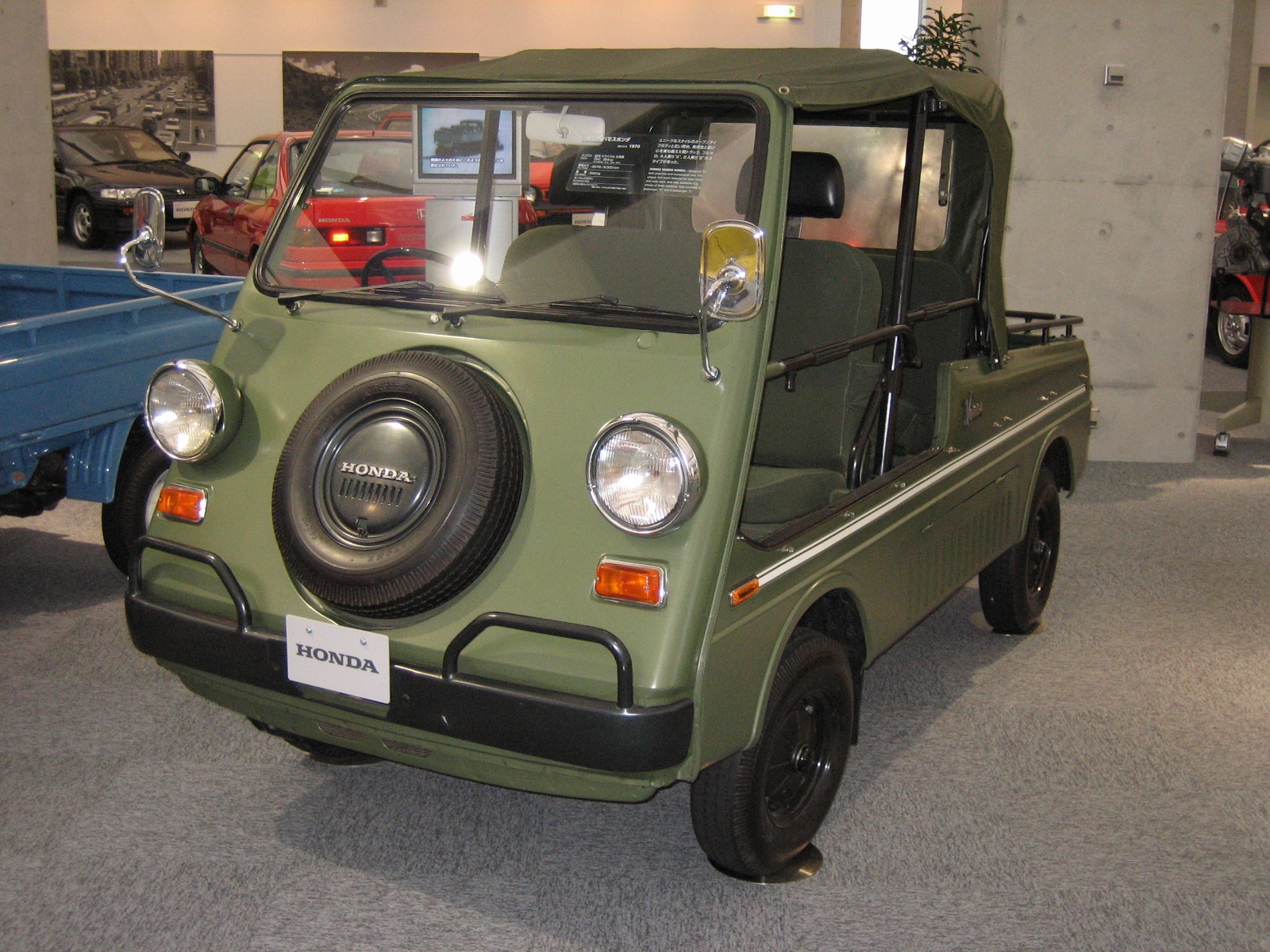
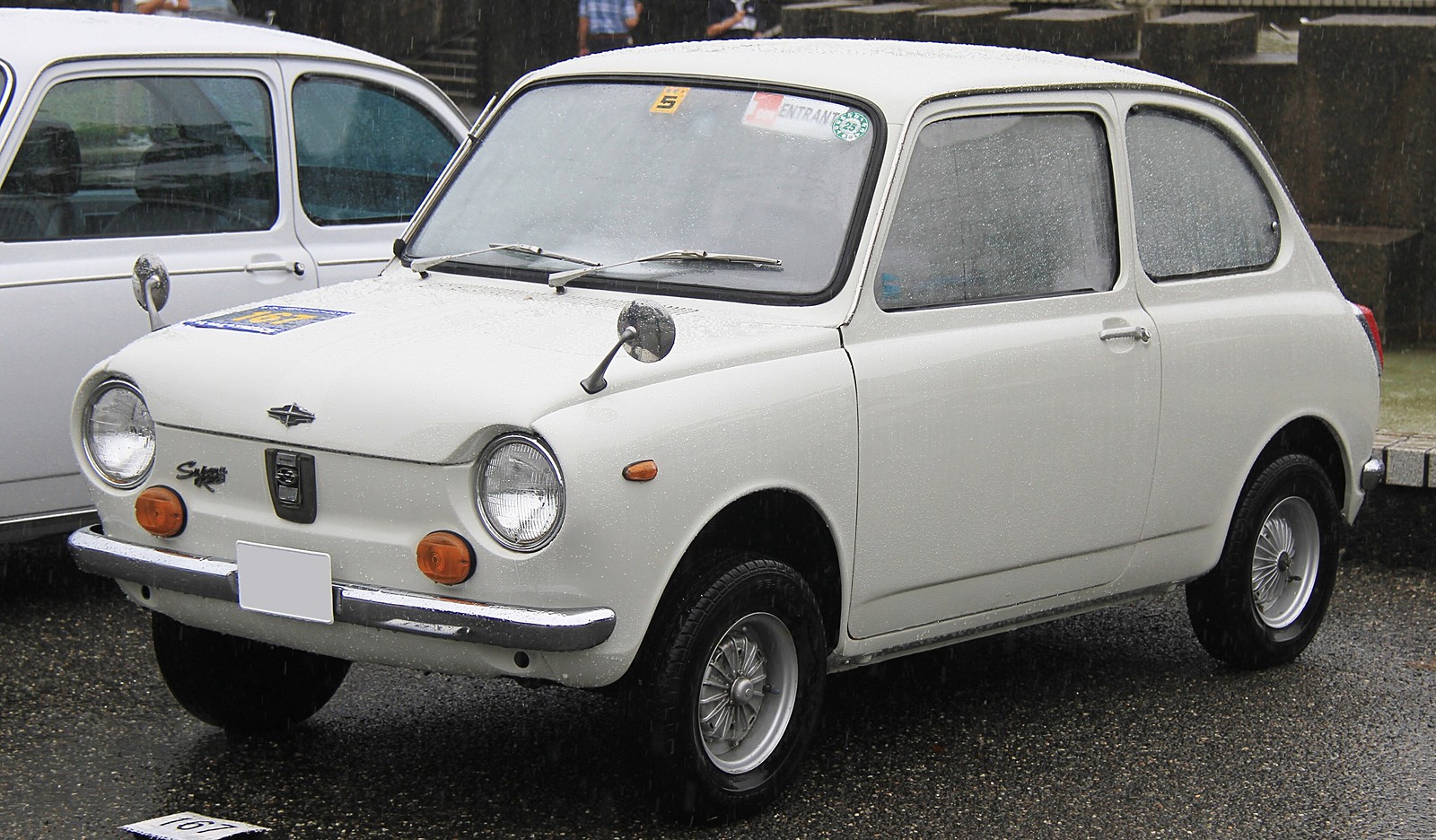
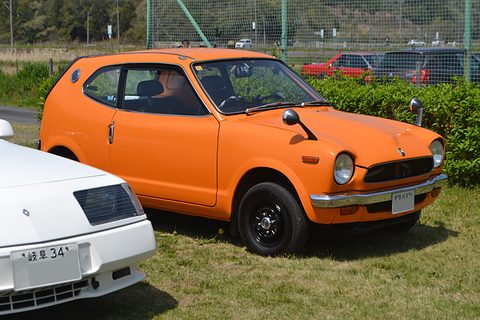
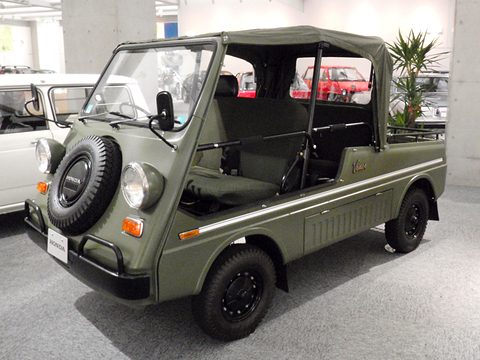
In Japan the kei cars became heroes, often because their makers sponsored the programmes. In the special-effects series Jumborg Ace (1973) modified Honda Vamos cars play Vamos I and Vamos II and a late Honda Z plays the Junker Z; in Ultraman Taro a Vamos is the Rabbit Panda.source 61source 62 Black Subaru 360s are the villains’ cars in Triple Fighter, several to an episode and once dozens in a row,source 16 and in Blue SWAT (1994–95) a Suzuki Cara, one of the kei sports cars, becomes the CV-01 Striker, Suzuki being one of the series’ sponsors.source 63 In Studio Ghibli’s Only Yesterday Toshio drives a Subaru R‑2, as does Natsumi Tsujimoto in You’re Under Arrest.source 64
Adverts, and a widower’s Mini Comtesse
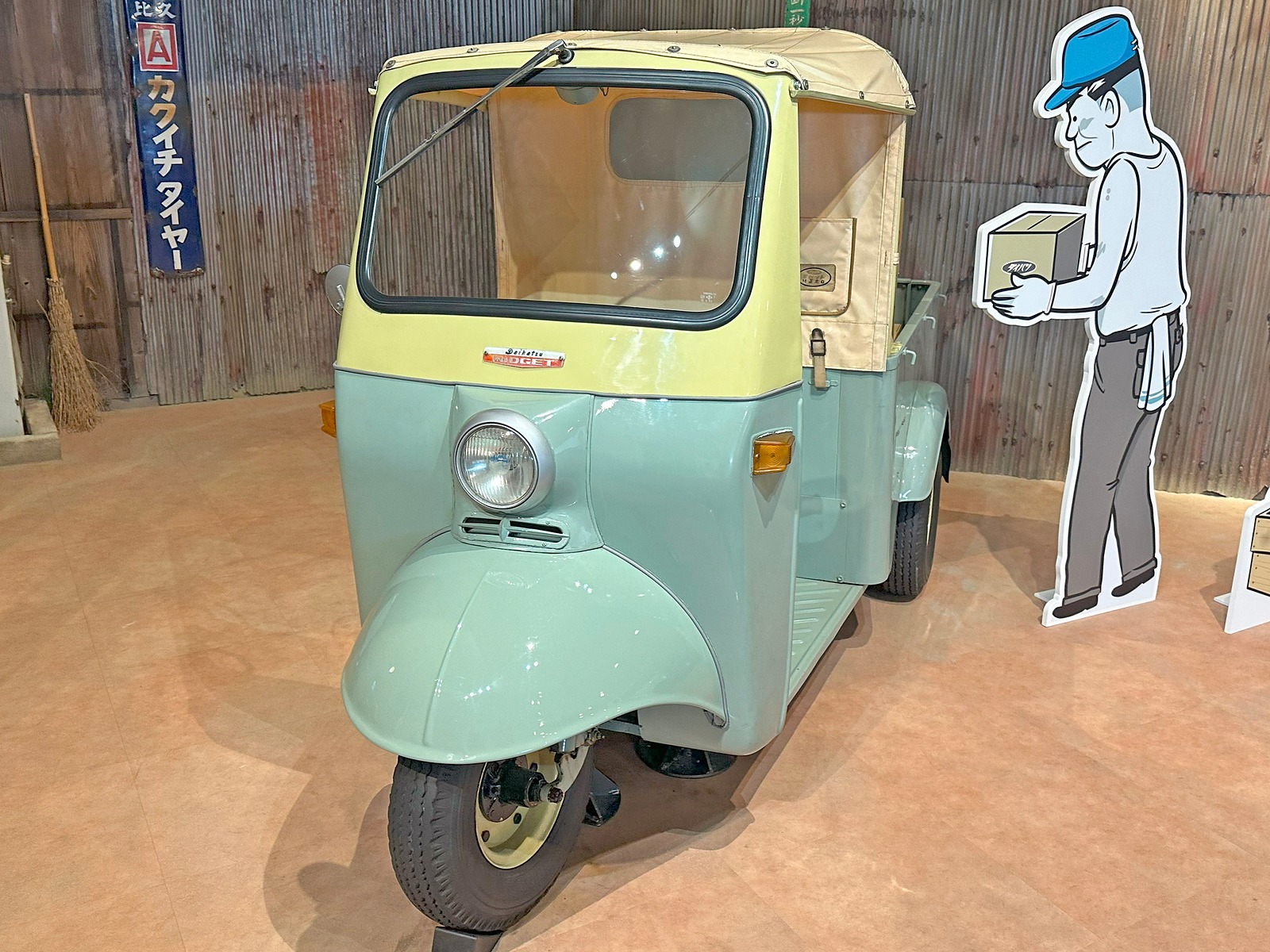
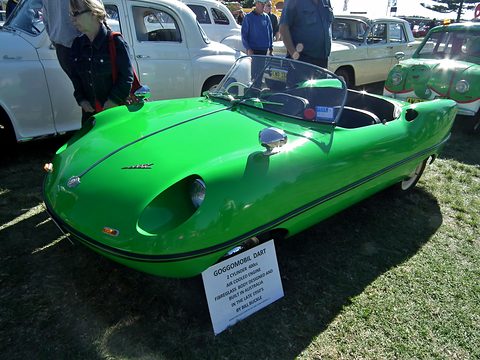
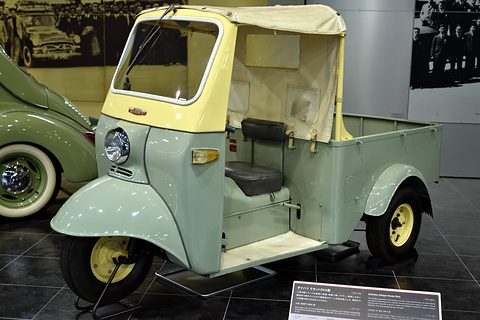
Some of the best-remembered microcar films are advertisements. Daihatsu sponsored the sitcom Yarikuri Apāto (1958–60), and in it ran advertisements in which Kon Ōmura sold the Daihatsu Midget; a Midget also appears in the film Always: Sanchōme no Yūhi (2005).source 65source 66 In Australia in the 1990s a Yellow Pages advertisement had the actor Tommy Dysart ringing round workshops for Goggomobil parts and patiently spelling out the name; when one finally recognises the make, his reply, that his is not the Goggomobil Dart, became an Australian catchphrase.source 67source 68 In August 2001 the Weiner museum sent its 1955 Kleinschnittger F125 to Los Angeles, where it was fitted with hubcapped space-saver spares, a lowered wooden windscreen, an aerial and large indicators and filmed for a Cadillac Escalade EXT commercial, which had its first showing during the Super Bowl of January 2002.source 69source 70
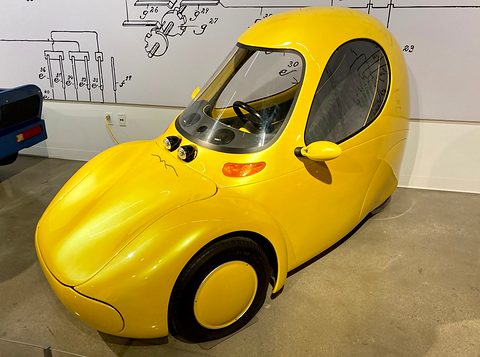
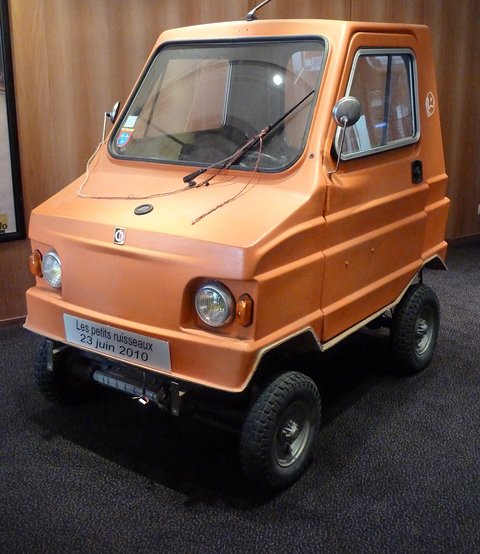
In Italy the Bianchina is still on television: in the Rai series Le indagini di Lolita Lobosco, from 2021, Luisa Ranieri drives a Bianchina Cabriolet.source 14source 15 In France the small car has come to stand for something quieter. Pascal Rabaté’s Les Petits Ruisseaux, released on 23 June 2010 and shot in Maine-et-Loire, follows Émile, a widower played by Daniel Prévost, who gets about slowly in his Acoma Mini Comtesse, one of the licence-free cars, and the film’s opening image is the car.source 71source 72 In Rabaté’s Ni à vendre ni à louer (2011), IMCDb lists a 1981 Comtesse Berline.source 73 From Fantozzi’s Bianchina to Émile’s Mini Comtesse, the screen has given the smallest cars to the people with the least.
Smallest to largest
38 cars and 4 maker groups, to scale
Each bar is the car’s length on a 3.5 metre track; the red notch is a Fiat 500.
-
Peel P501962–1965 · Isle of Man · 3 wheels
1.37 m -
Acoma Mini Comtesse1972–1984 · France · 3 wheels
1.68 m -
Brütsch Mopetta1956–1958 · West Germany · 3 wheels
1.70 m -
Auto Sandal1951–1954 · Japan · 4 wheels
2.28 m -
BMW Isetta1955–1962 · West Germany · 4 wheels
2.29 m -
Renault Twizy2012–2023 · France · 4 wheels
2.32 m -
Corbin Sparrow1999–2013 · United States · 3 wheels
2.44 m -
Kewet / Buddy1991–2013 · Norway · 4 wheels
2.44 m -
Daihatsu Midget1957–1972 · Japan · 3 wheels
2.54 m -
REVA G-Wiz2001–2012 · India · 4 wheels
2.60 m -
SMZ S‑3A1958–1970 · Soviet Union · 4 wheels
2.62 m -
Bajaj Qute2013– · India · 4 wheels
2.75 m -
Hanomag 2/10 PS1924–1928 · Germany · 4 wheels
2.78 m -
Bond Bug1970–1974 · Britain · 3 wheels
2.79 m -
Messerschmitt KR2001955–1964 · West Germany · 3 wheels
2.82 m -
Steyr-Puch Haflinger1959–1974 · Austria · 4 wheels
2.85 m -
Tula Muravei1959–1995 · Soviet Union · 3 wheels
2.88 m -
Zündapp Janus1957–1958 · West Germany · 4 wheels
2.89 m -
Kleinschnittger F1251950–1957 · West Germany · 4 wheels
2.90 m -
Fiat Nuova 5001957–1975 · Italy · 4 wheels
2.97 m -
Steyr-Puch 5001957–1975 · Austria · 4 wheels
2.97 m -
Autobianchi Bianchina1957–1969 · Italy · 4 wheels
2.98 m -
Subaru 3601958–1970 · Japan · 4 wheels
2.99 m -
Honda Vamos1970–1973 · Japan · 4 wheels
3.00 m
14 more cars and 4 more maker groupsFewer
-
Honda Z1970–1974 · Japan · 4 wheels
3.00 m -
Subaru R‑21969–1973 · Japan · 4 wheels
3.00 m -
Mikrus MR-3001957–1960 · Poland · 4 wheels
3.02 m -
Goggomobil Dart1959–1961 · Australia · 4 wheels
3.05 m -
Fiat 1261972–2000 · Italy · 4 wheels
3.05 m -
American Austin1930–1941 · United States · 4 wheels
3.09 m -
Fiat 500 Topolino1936–1955 · Italy · 4 wheels
3.21 m -
Velorex1950–1973 · Czechoslovakia · 3 wheels
3.25 m -
Reliant Robin1973–2002 · Britain · 3 wheels
3.33 m -
Reliant Regal1952–1973 · Britain · 3 wheels
3.43 m -
Reliant Supervan1963–1973 · Britain · 3 wheels
3.43 m -
Crosley1939–1942 · United States · 4 wheels
length unknown -
GEM (Global Electric Motorcars)1998– · United States · 4 wheels
length unknown -
Minissima1972–1987 · Britain · 4 wheels
length unknown -
Austrian microcars1952–1979 · Austria · 3 wheels
5 makers -
ABC kei sports cars (AZ-1, Beat, Cappuccino)1991–1998 · Japan · 4 wheels
3 makers -
American city-car prototypes1959–1989 · Several countries · 4 wheels
6 makers -
Microcar concept cars since 19901992–2025 · Several countries
11 makers
Pictures
Six photographs
Microcars on screen 6
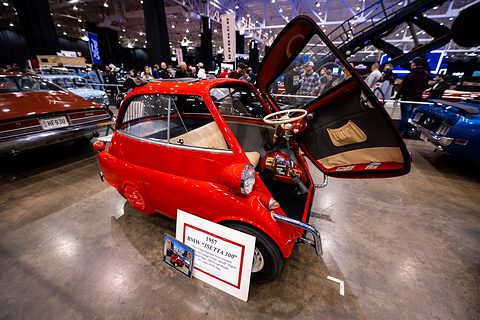
1 A red 1957 Isetta with its door open at the Cleveland Auto Show, 2022.
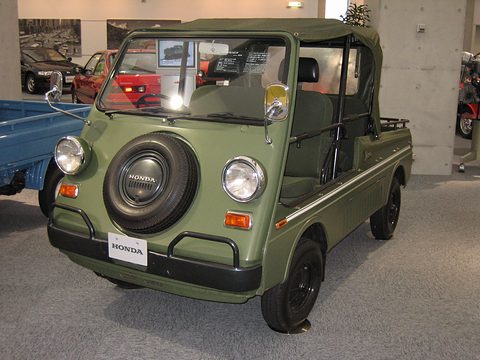
2 A green Honda Vamos in the Honda Collection Hall at Twin Ring Motegi in 2007.
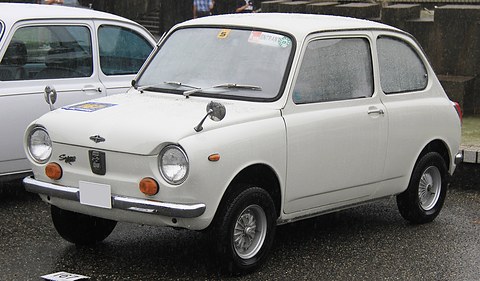
3 A white 1970 Subaru R‑2 from the front at a meeting in 2013.
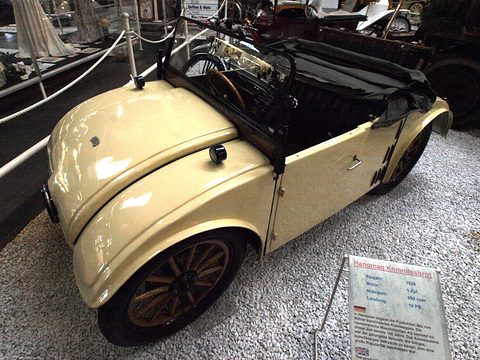
4 Cream Hanomag 2/10 PS Cabriolet at the Auto & Technik Museum Sinsheim in October 2009.
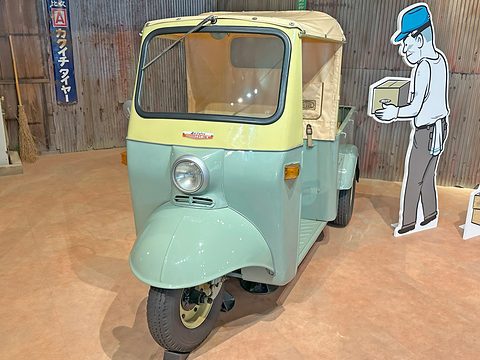
5 A pale green 1957 Midget DKA on display beside a cut-out delivery-man figure in 2025.
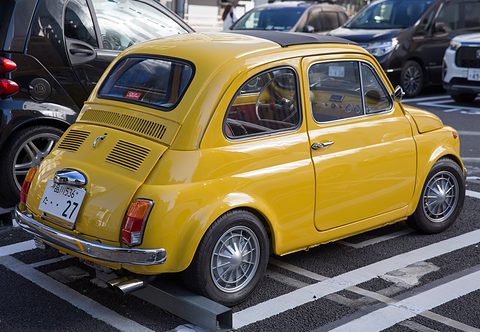
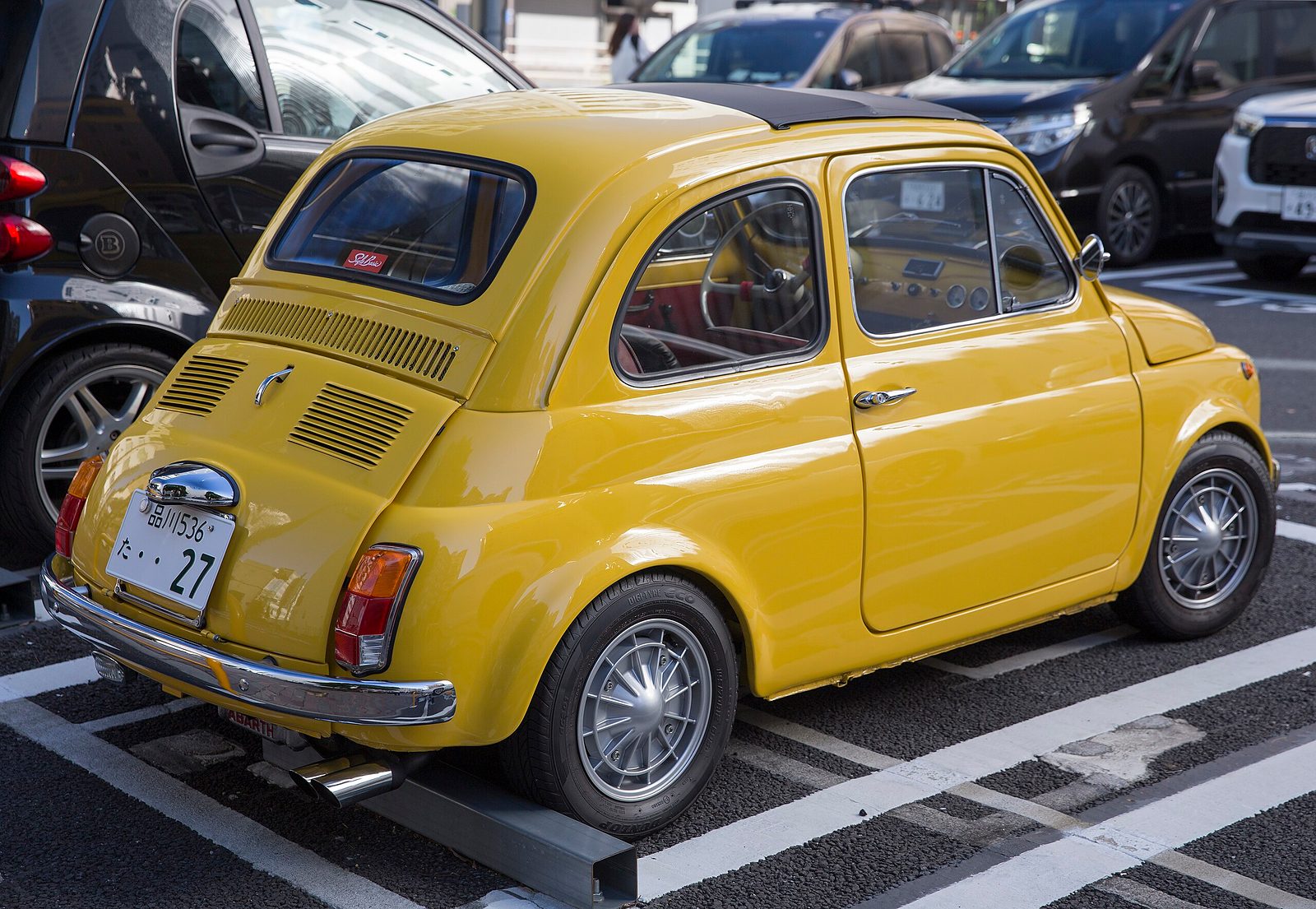
6 A yellow 500 F with alloy wheels in a Tokyo car park in 2024.
Picture credits (6)
- 1 Erik Drost, CC BY 2.0
- 2 韋駄天狗, CC BY-SA 3.0
- 3 TTTNIS, CC0
- 4 Alf van Beem, CC0
- 5 Tokumeigakarinoaoshima, CC0
- 6 Mr.choppers, CC BY-SA 3.0
The cars
Profiles
26 more cars and 4 more maker groupsFewer
Sources
Numbered as in the text
Sources are given as plain text; the links are on the Credits page.
- English Wikipedia, Mr. Bean (Mr. Bean episode), read in full.
- English Wikipedia, Reliant Regal, the section on popular culture. Used as a lead.
- IMCDb, the Internet Movie Cars Database, vehicle lists for Brazil, Demolition Man, Austin Powers in Goldmember, Family Matters, Only Fools and Horses, Mr. Bean, How to Steal a Million and Operatsiya “Y”, read in Wayback Machine copies of 2024–26.
- National Motor Museum, Beaulieu, “Reliant Regal Supervan III”, collection entry.
- RM Auctions (now RM Sotheby’s), Auburn Fall 2014, lot 7013, 1933 American Austin, catalogue text.
- RM Sotheby’s, Hilton Head 2016, lot 124, 1930 American Austin, catalogue text.
- Crosley Automobile Club, “Crosleys in the Movies & TV Shows”, read in part.
- Prewarcar (French edition), “Économie et élégance: les femmes glamour ont aimé la Scootacar Rytecraft”, with readers’ contributions.
- Italian Wikipedia, Fiat 500 “Topolino”. Used as a lead.
- French Wikipedia, Simca 5. Used as a lead; it cites René Bellu, Toutes les Simca.
- German Wikipedia, Hanomag 2/10 PS, read in full; it cites the Hannoversche Allgemeine Zeitung of 15 January 2024 and Görg, 80 Jahre Hanomag Kommißbrot (2005).
- BMW Group PressClub, “50 Years of BMW Isetta”, press release of 25 February 2005.
- German Wikipedia, Autobianchi Bianchina, read in full; it cites IMCDb for the films.
- Italian Wikipedia, Autobianchi Bianchina, read in full; it cites La Repubblica of 30 October 2013.
- English Wikipedia, Autobianchi Bianchina, read in full.
- Japanese Wikipedia, スバル・360 (Subaru 360), read in full.
- Russian Wikipedia, Операция «Ы» и другие приключения Шурика: cast, premiere and audiences. Used as a lead.
- Sergei Kanunnikov, “Motokolyaski SSSR: polnaya istoriya”, Za Rulyom, 11 November 2022.
- Sergei Arbuzov, “Boevoe kreshchenie ‘Morgunovki’”, drom.ru, 23 May 2020.
- Aleksandr Potapov, “Rodnaya ‘invalidka’: istoriya sovetskoi motokolyaski SMZ S‑3D”, Avto Mail.ru.
- Russian Wikipedia, Муравей (мотороллер), read in a plain-text copy.
- Polish Wikipedia, Mikrus MR-300. Used as a lead.
- Polish Wikipedia, Fiat 126, read in full.
- Czech Wikipedia, Velorex, read in full.
- English Wikipedia, Isetta, read in full. Used as a lead.
- English Wikipedia, Steve Urkel.
- German Wikipedia, Steyr-Puch 500, read in full. Used as a lead; it cites IMCDb for Tatort.
- German Wikipedia, Fahrzeugbau Ing. Hans Meister. Used as a lead; it cites Georgano and Alexander Diego Fritz, Die Knatterkugel (2013).
- German Wikipedia, Messerschmitt Kabinenroller, read in full. Used as a lead.
- Reliant Motor Club, “Know your Supervan”, read in full.
- Chortle, “Original Del Boy van up for auction”, 23 January 2021.
- German Wikipedia, Reliant Supervan, revision of 26 September 2026. Used as a lead; it cites Pither, Reliant Regal and Robin (2002), and Wilson-Hall, Reliant Three-Wheelers (2014).
- Shropshire Star, “Reliant Regal from Only Fools and Horses sells for nearly £20,000”, 19 June 2023.
- English Wikipedia, Reliant Robin, read in full. Used as a lead; it cites BBC programme pages.
- German Wikipedia, Reliant Robin, read in full. Used as a lead.
- English Wikipedia, Peel P50, read in full. Used as a lead.
- BBC Top Gear website, “Jeremy drives the Peel P50 (series 10, episode 3)”, archived 20 May 2013.
- Pogdesign TV calendar, Top Gear season 10, episode 3: air date and contents.
- Peel Engineering Ltd (the revival maker), “About”.
- English Wikipedia, REVAi, read in full.
- Reliant Motor Club, “BBC Top Gear – and the infamous rolling Reliant Robin episode”, read in full.
- Jeremy Clarkson, “The Clarkson review: Reliant Robin”, The Sunday Times Driving, 11 January 2016, read in large part in an archived copy.
- English Wikipedia, Crosley Motors. Used as a lead.
- English Wikipedia, Bond Bug, revision of 23 August 2026, read in full. Used as a lead; it cites the official Star Wars databank.
- Lancaster Insurance, “The Bond Bug: May the Force/Farce Be With You”, 24 November 2016.
- Lancaster Insurance, “The Bond Bug: A Celebration”, 25 September 2024.
- Small Cars Club, “General Motors Lean Machine”.
- English Wikipedia, Myers Motors NmG, read 7 October 2026.
- French Wikipedia, Renault Zoom, read in full.
- French Wikipedia, Renault Twizy. Used as a lead.
- English Wikipedia, Renault Twizy. Used as a lead.
- German Wikipedia, Renault Twizy. Used as a lead.
- English Wikipedia, Buddy (electric car), read in full; it cites IMCDb.
- English Wikipedia, Bajaj Qute. Used as a lead.
- English Wikipedia, Steyr-Puch Haflinger, read in a plain-text copy without its references.
- English Wikipedia, Fiat 500, read in full.
- German Wikipedia, Fiat Nuova 500, read in full.
- German Wikipedia, Zündapp Janus. Used as a lead.
- English Wikipedia, Zündapp Janus. Used as a lead.
- English Wikipedia, Fiat 500 “Topolino”. Used as a lead.
- Japanese Wikipedia, ホンダ・バモス (Honda Vamos), the first-generation section.
- Japanese Wikipedia, ホンダ・Z (Honda Z), read in full.
- Japanese Wikipedia, スズキ・キャラ (Suzuki Cara), read in full.
- English Wikipedia, Subaru R‑2, read in full.
- Japanese Wikipedia, ダイハツ・ミゼット (Daihatsu Midget), read in full.
- Society of Automotive Engineers of Japan, Landmarks of Japanese Automotive Technology, item 3-13, “Daihatsu Midget DKA”.
- RM Auctions, the Bruce Weiner Microcar Museum sale, Madison, Georgia, February 2013, lot 550, “1958 Goggomobil Dart”.
- English Wikipedia, Goggomobil, the Dart section; used as a lead.
- Bruce Weiner Microcar Museum, “1955 Kleinschnittger F‑125”, tour page, archived.
- RM Auctions, the Bruce Weiner Microcar Museum sale, Madison, Georgia, February 2013, lot 585, 1955 Kleinschnittger F‑125.
- French Wikipedia, Les Petits Ruisseaux, read 7 October 2026.
- French Wikipedia, Mini Comtesse.
- English Wikipedia, ACOMA; its references include IMCDb.