microcarfan
  • Three-wheeler
  • Britain
  • Three wheels
  • No doors

Bond Bug

Also known as “Reliant Rogue” (the design’s first name), Bond Bug 700, 700E, 700ES, 750E, 750ES

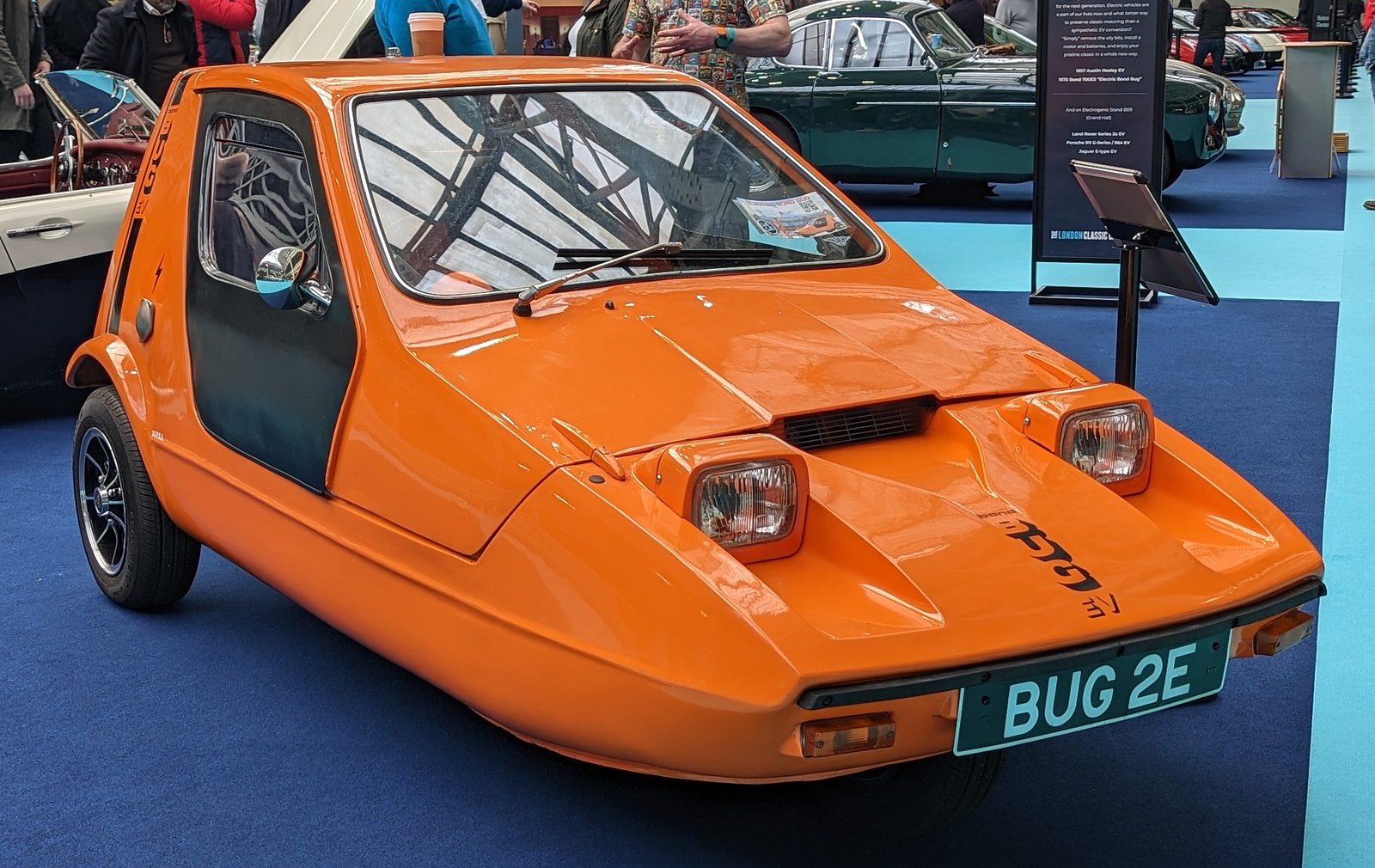
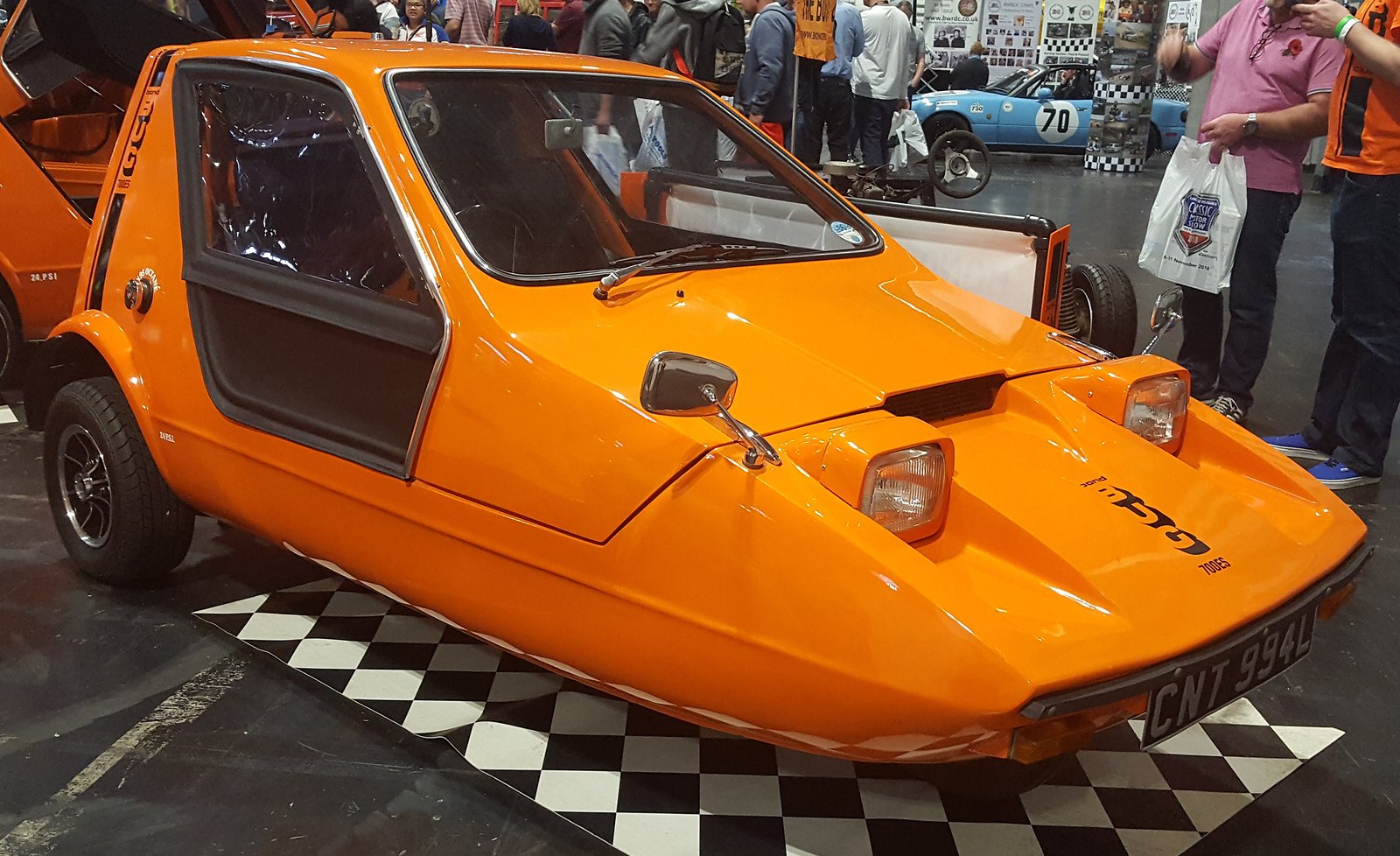
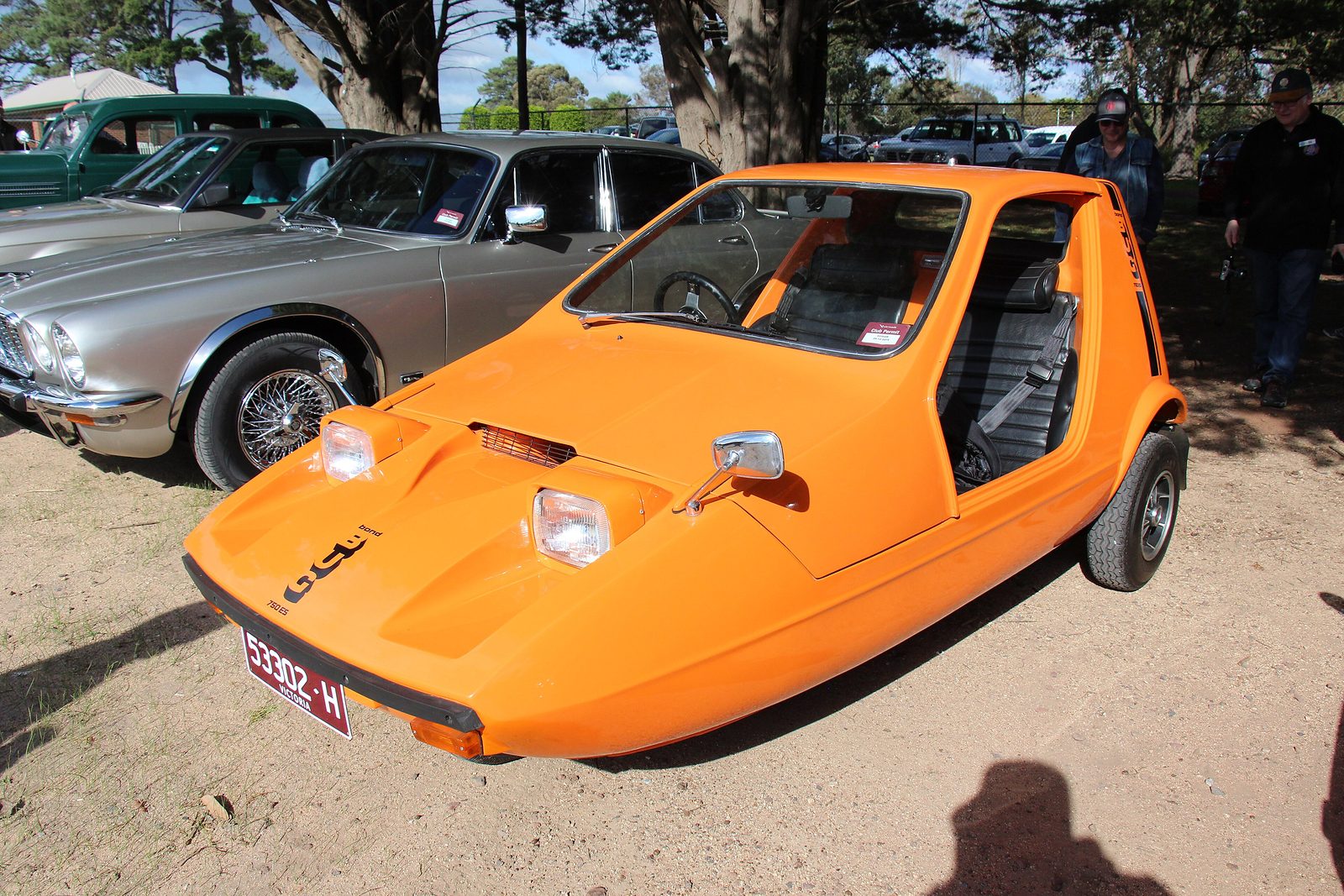
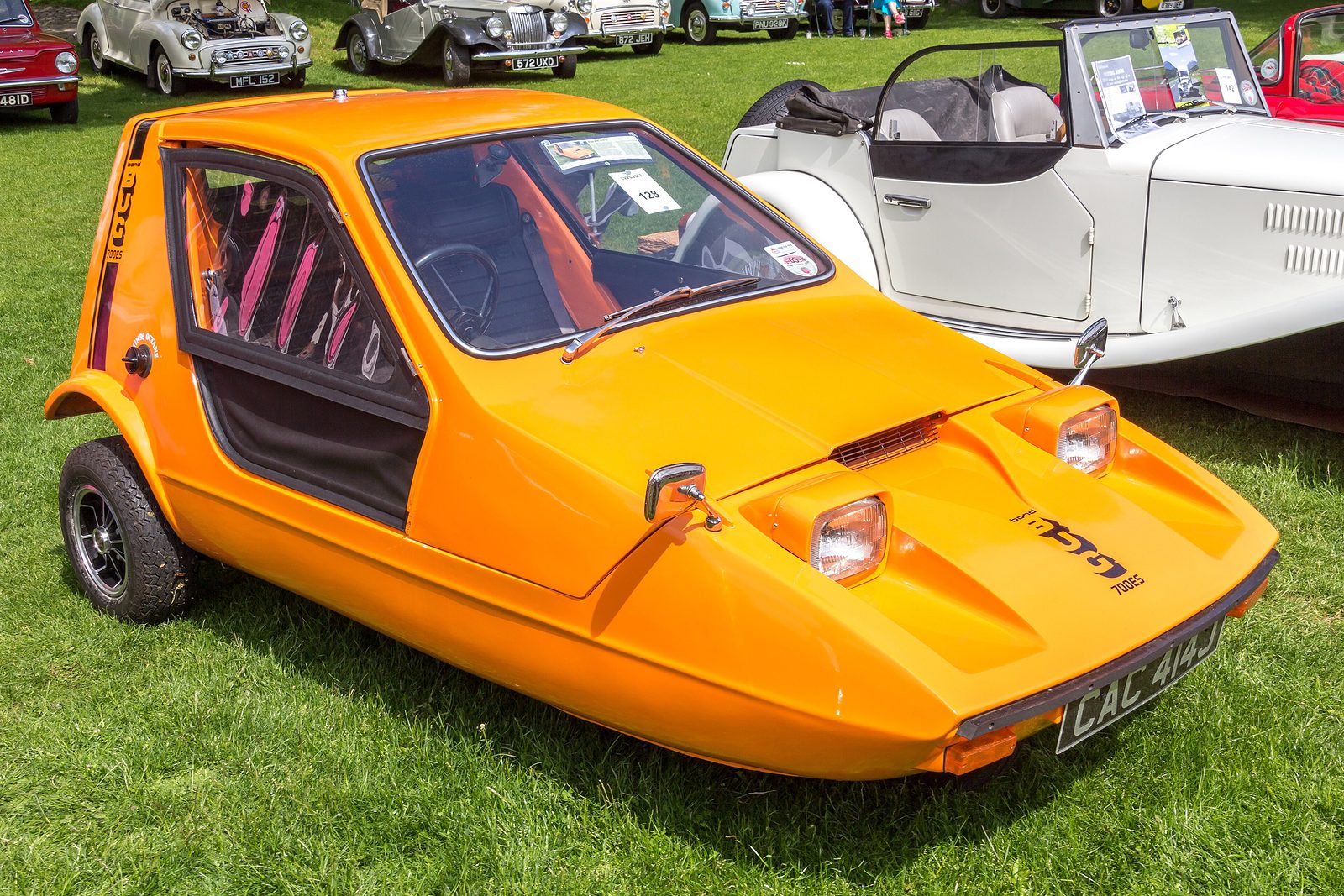
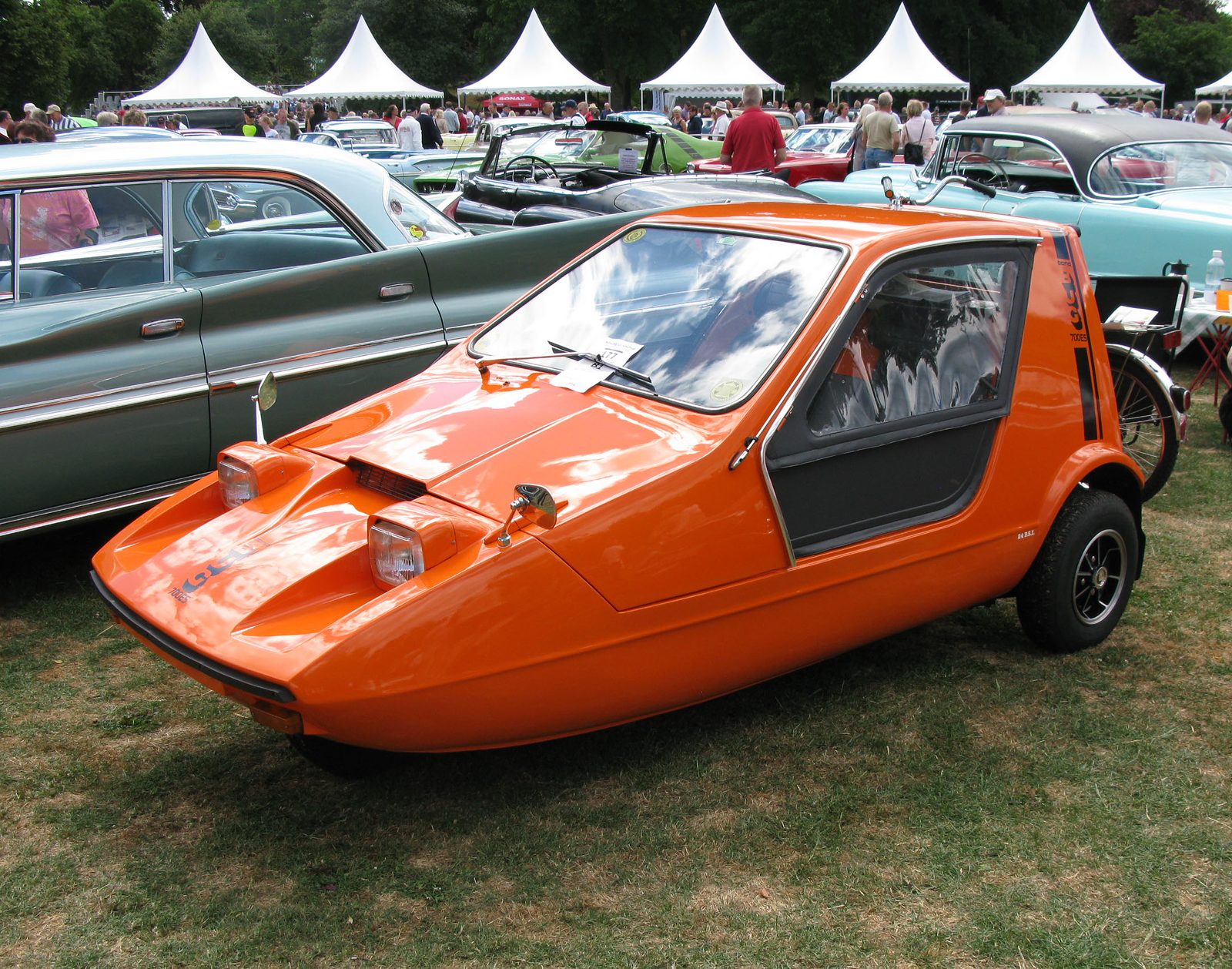
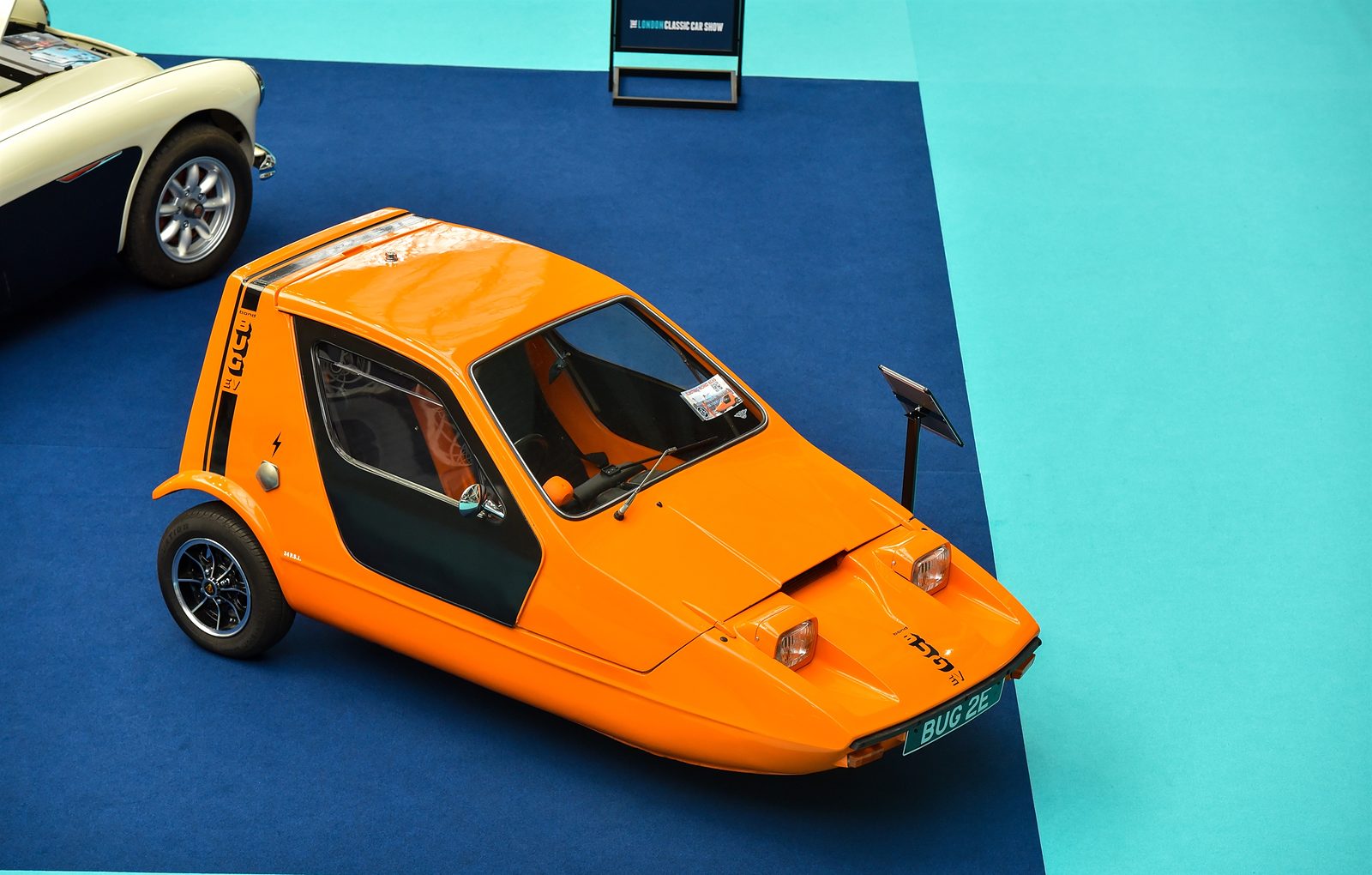
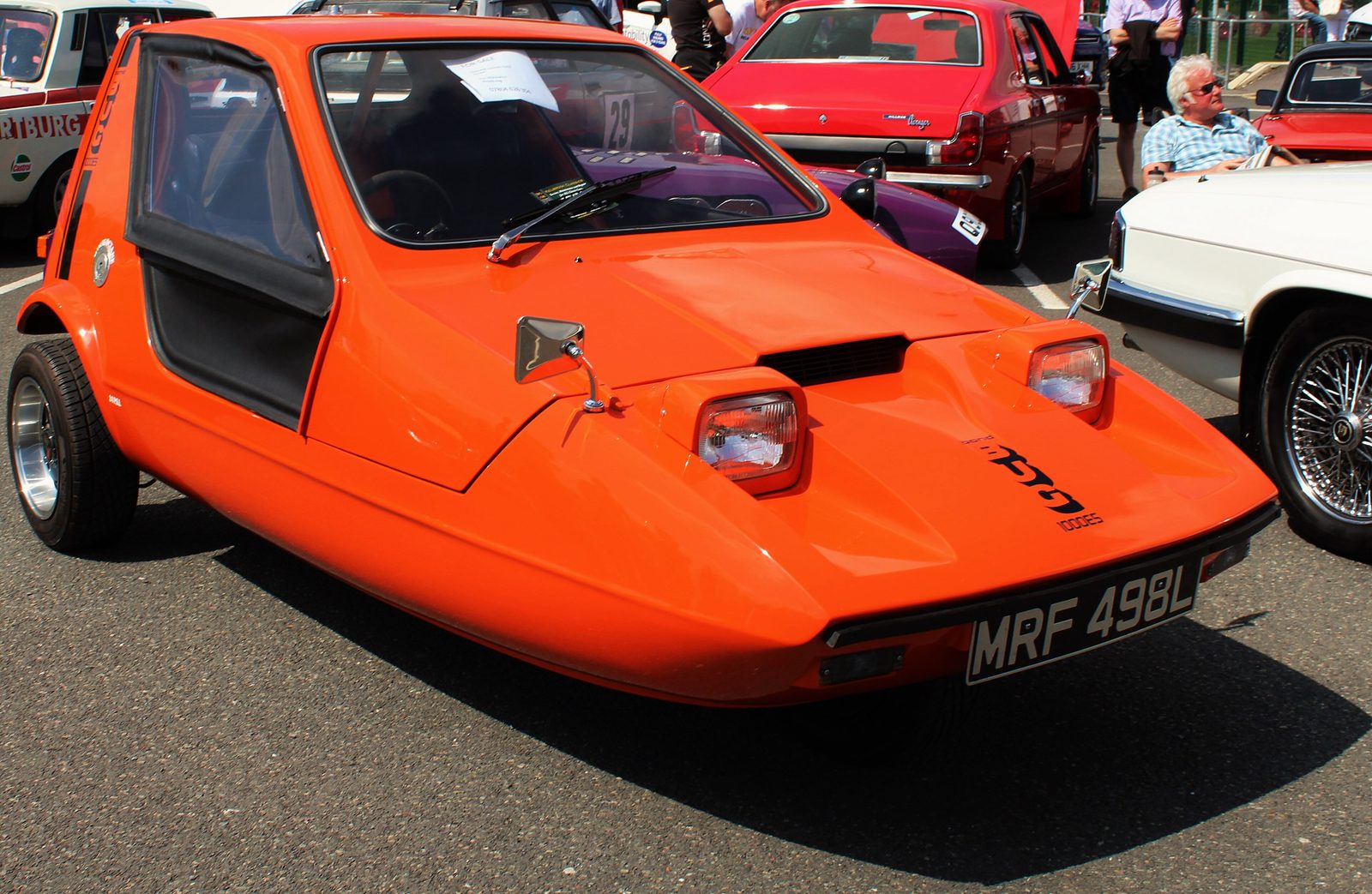
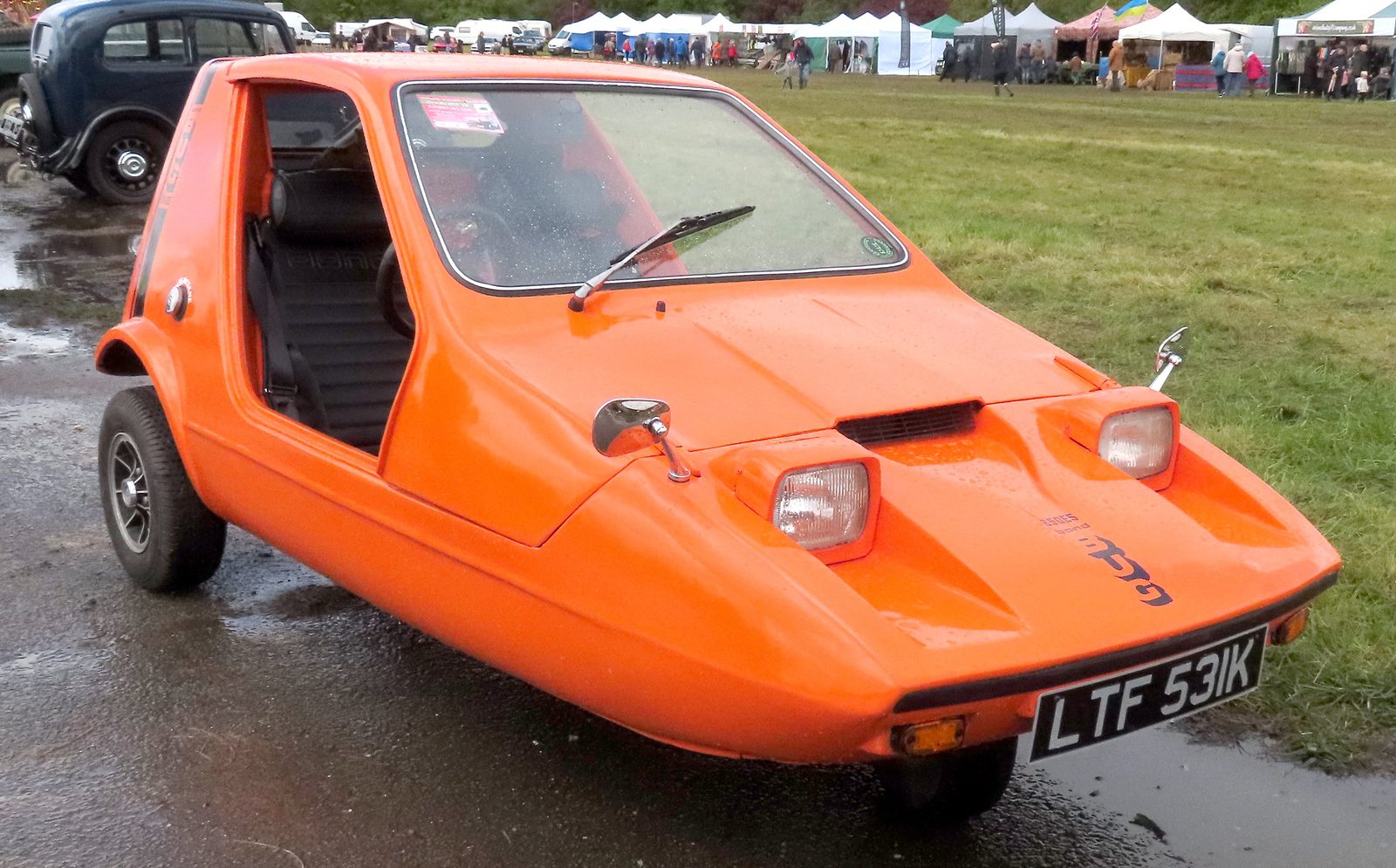
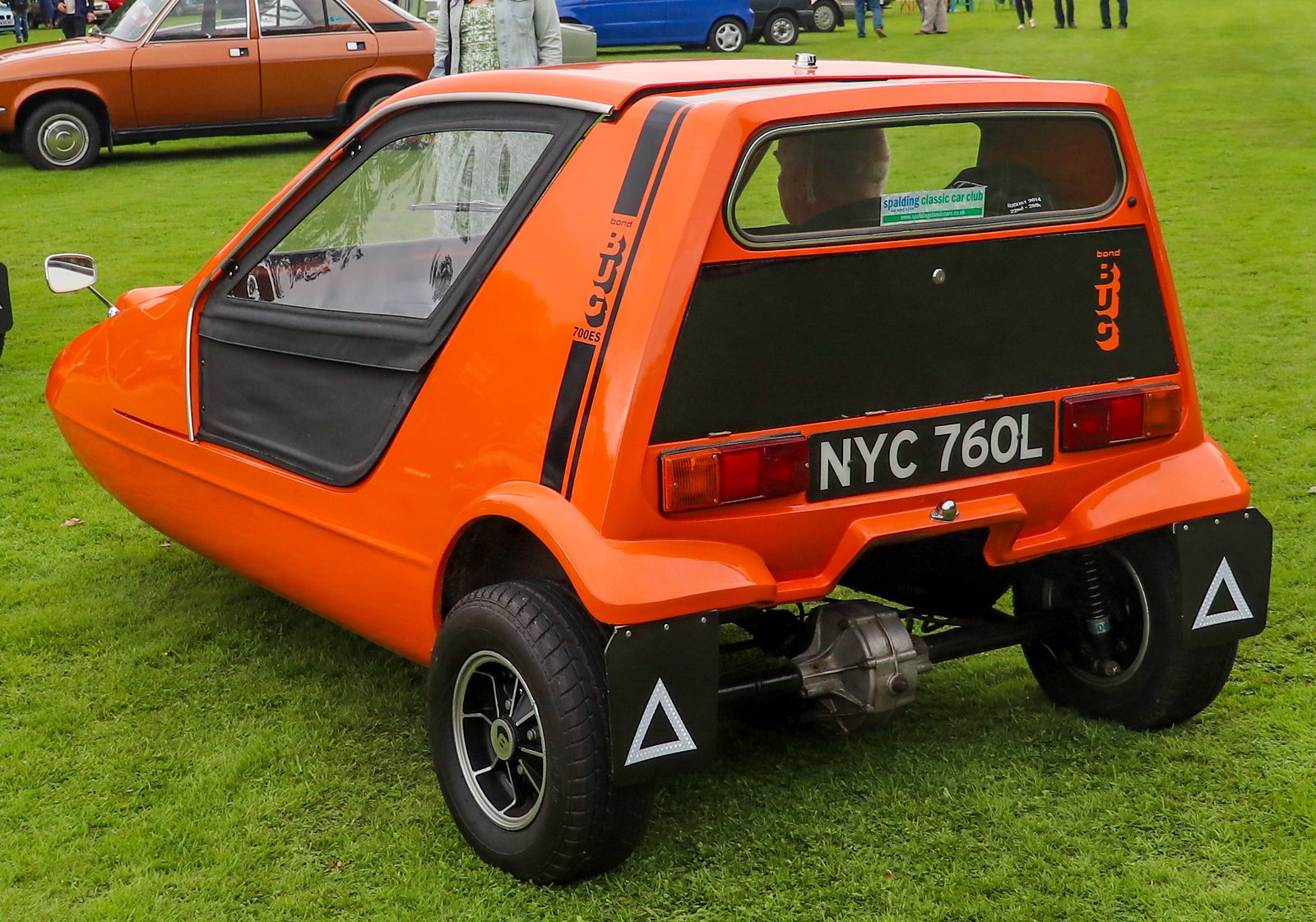
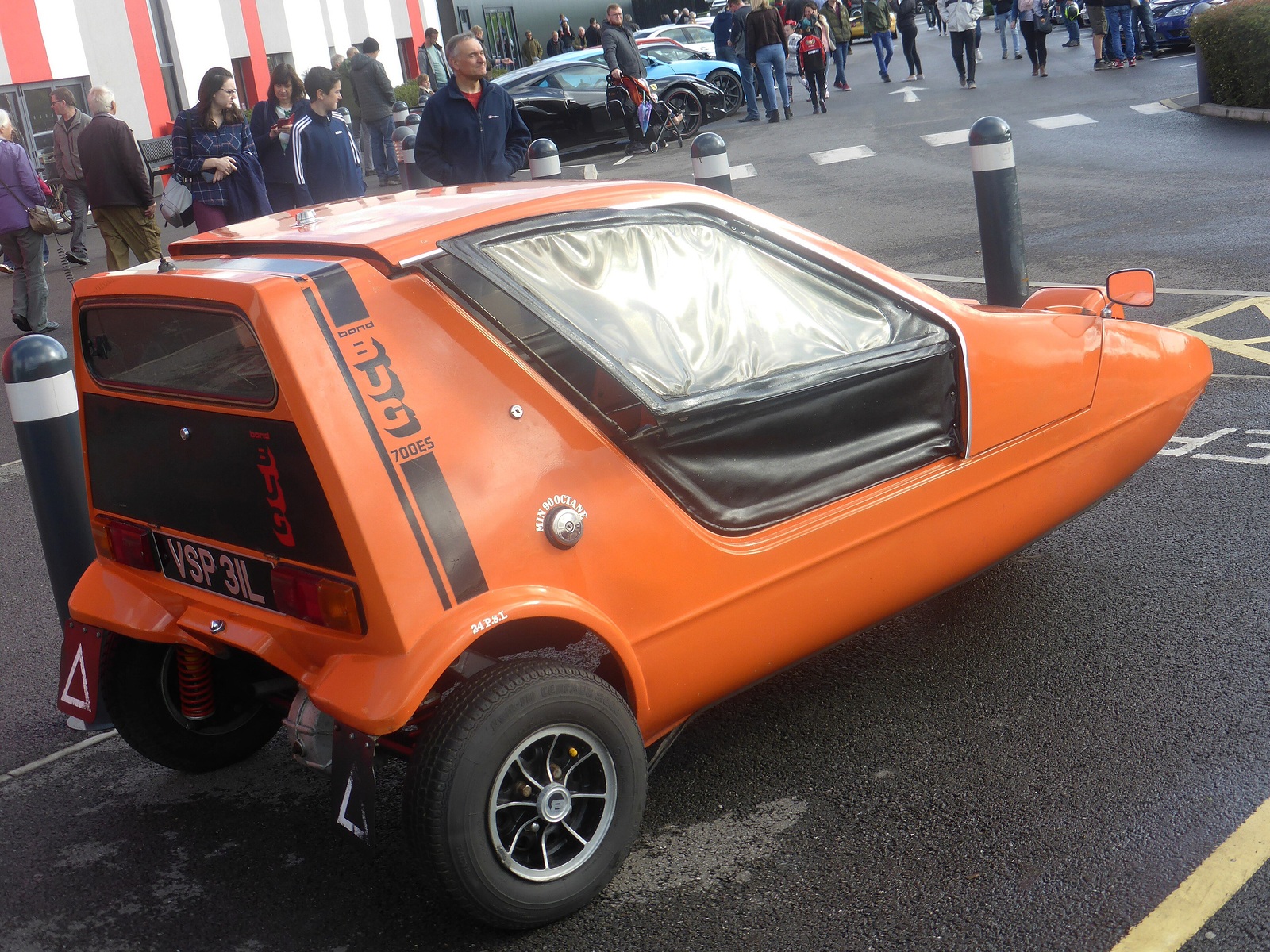
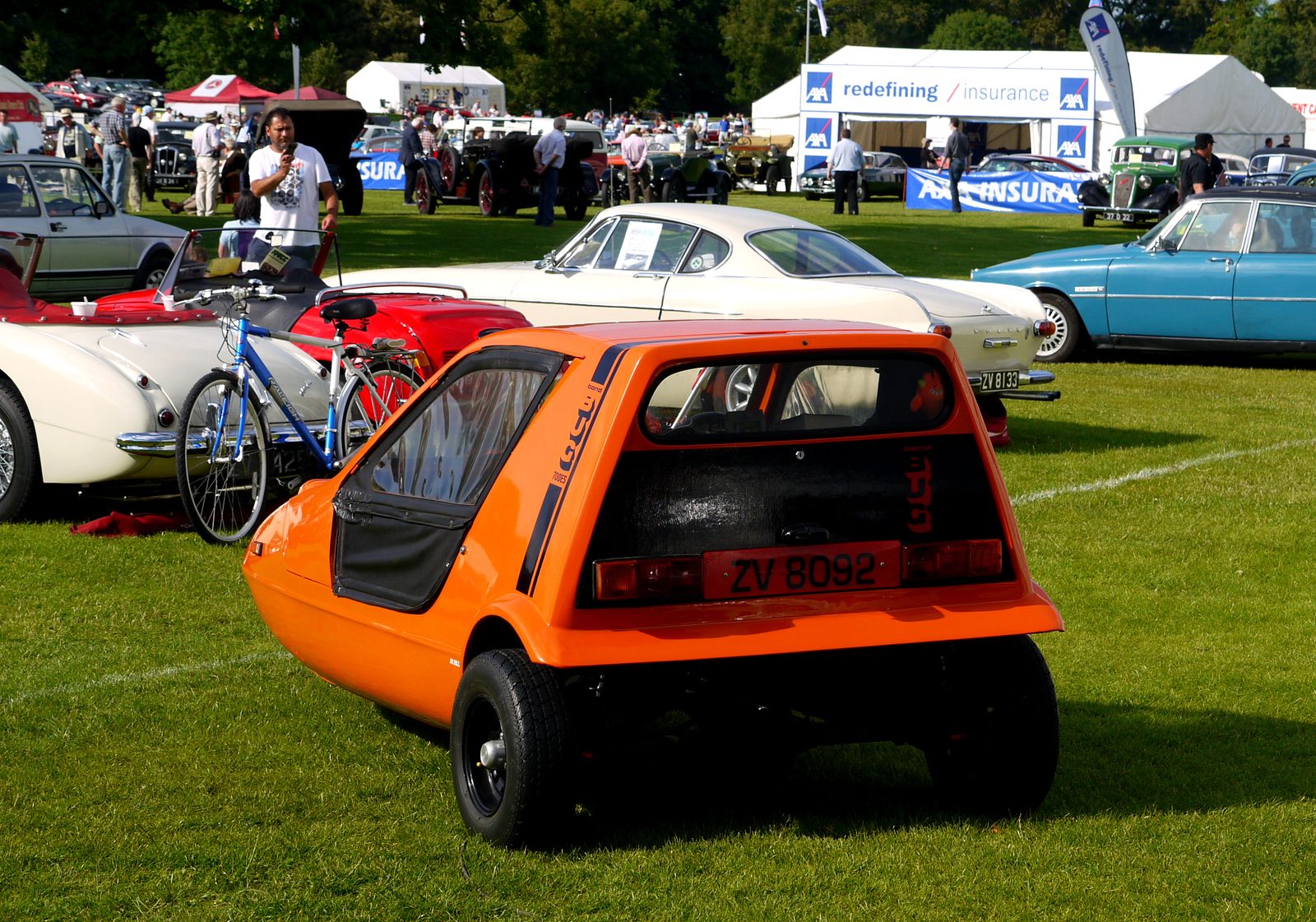
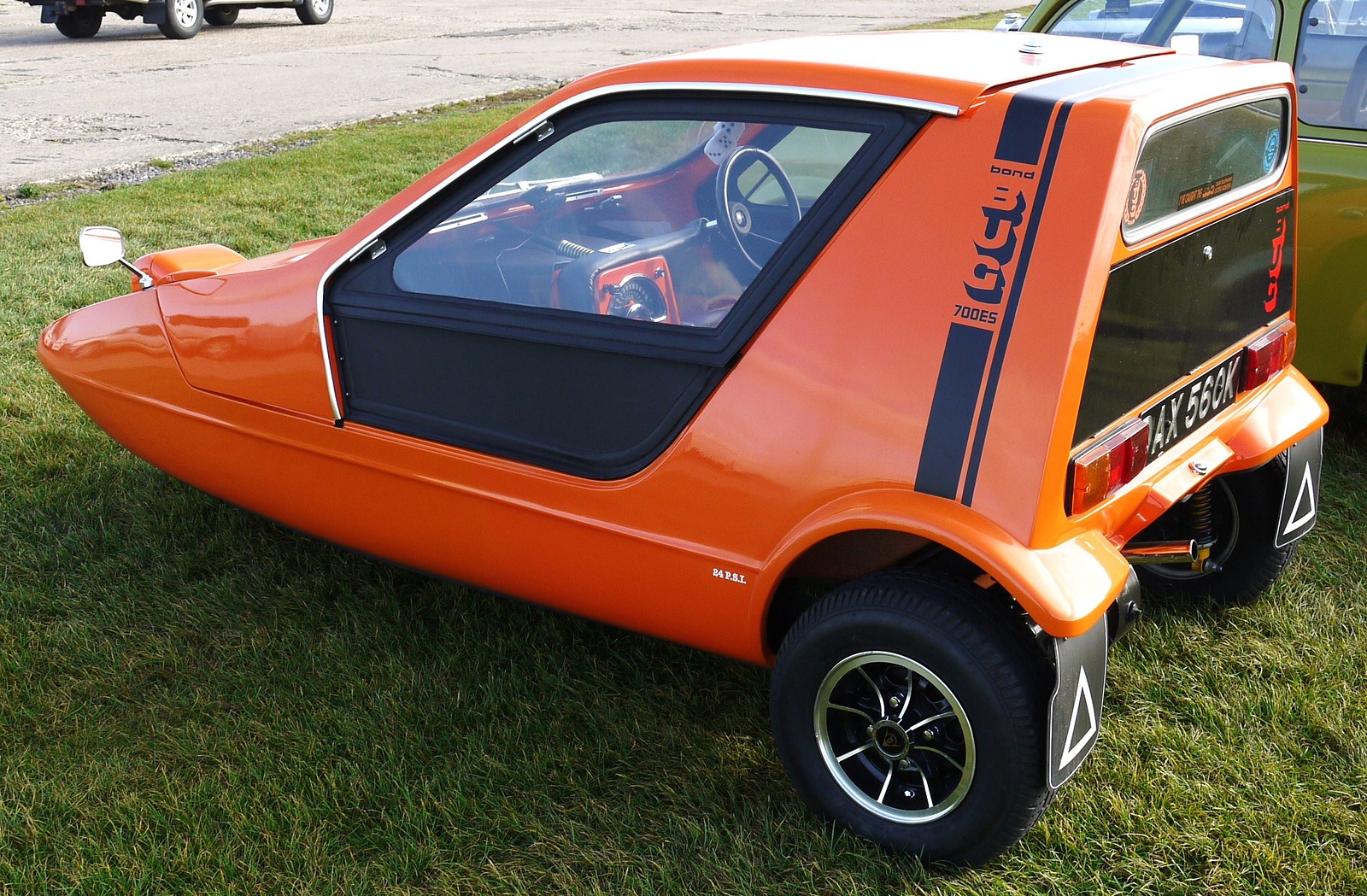
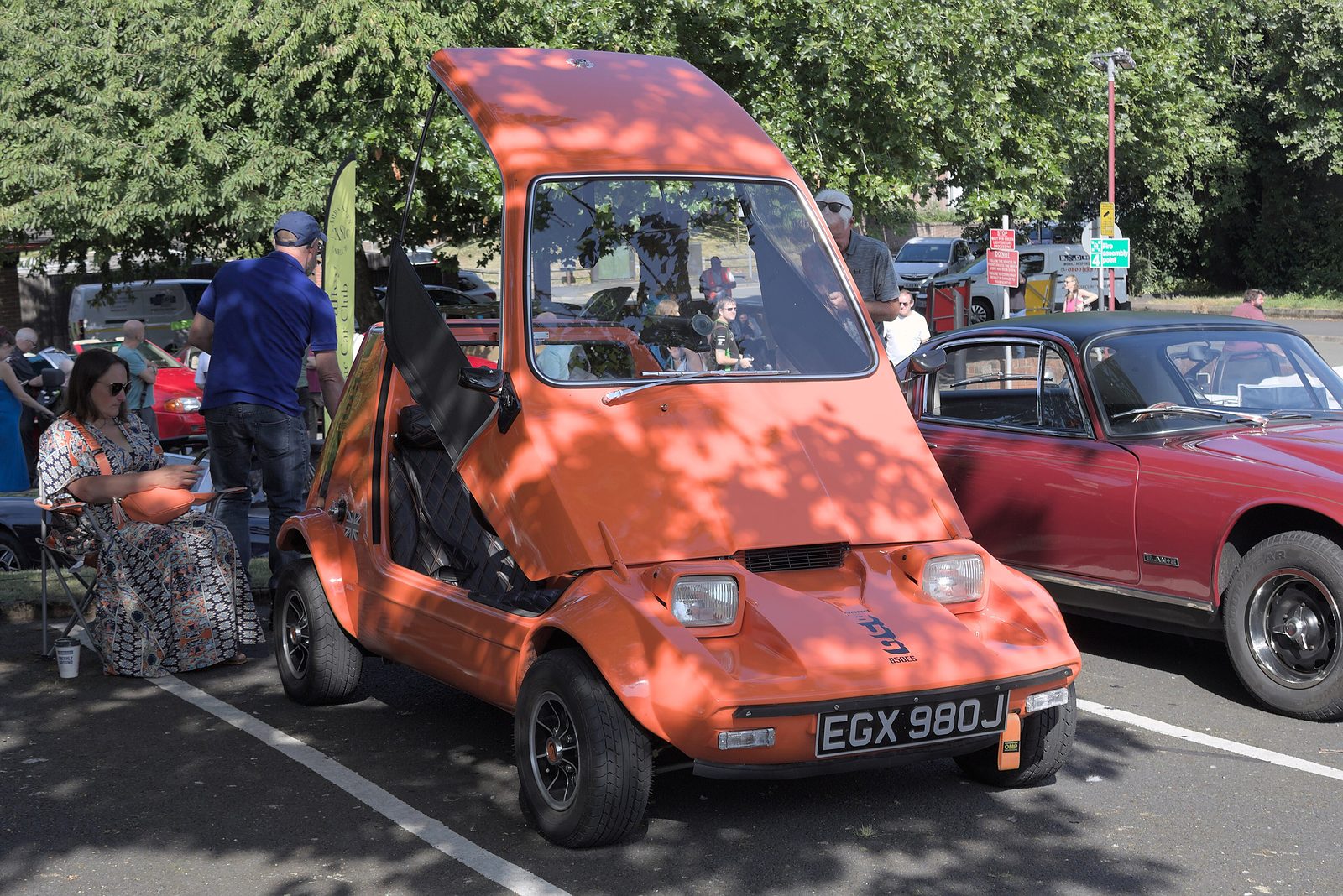
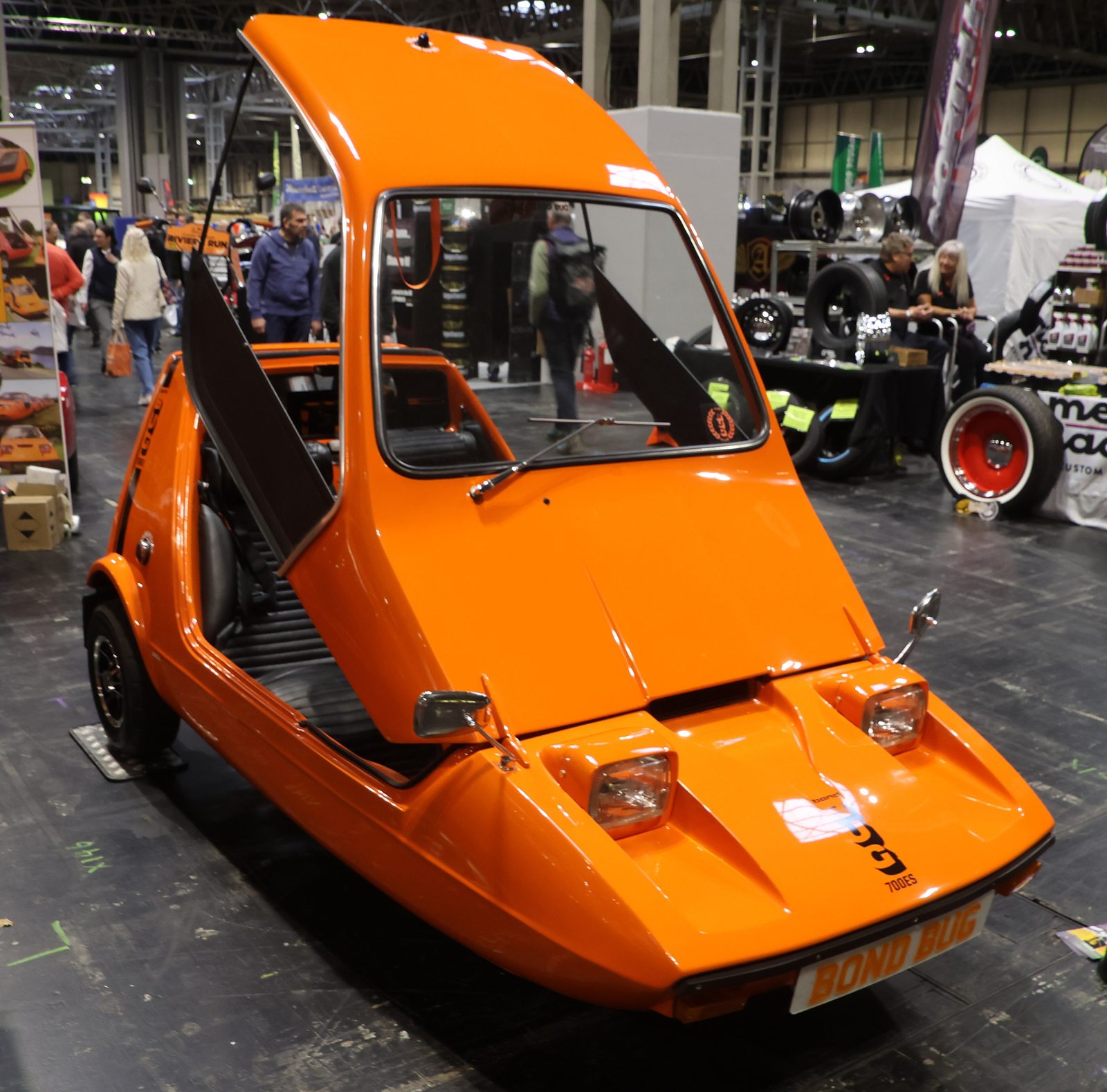
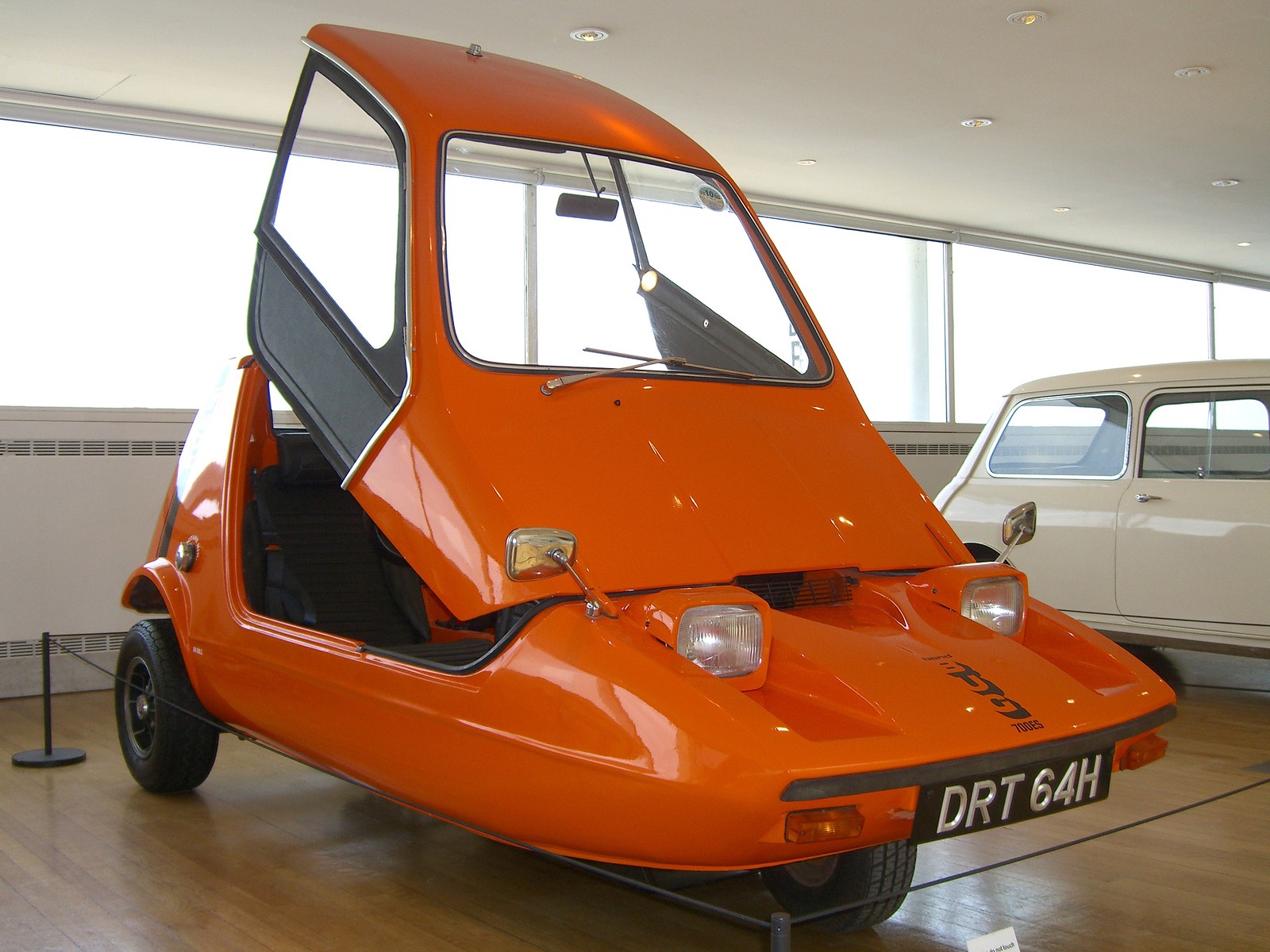
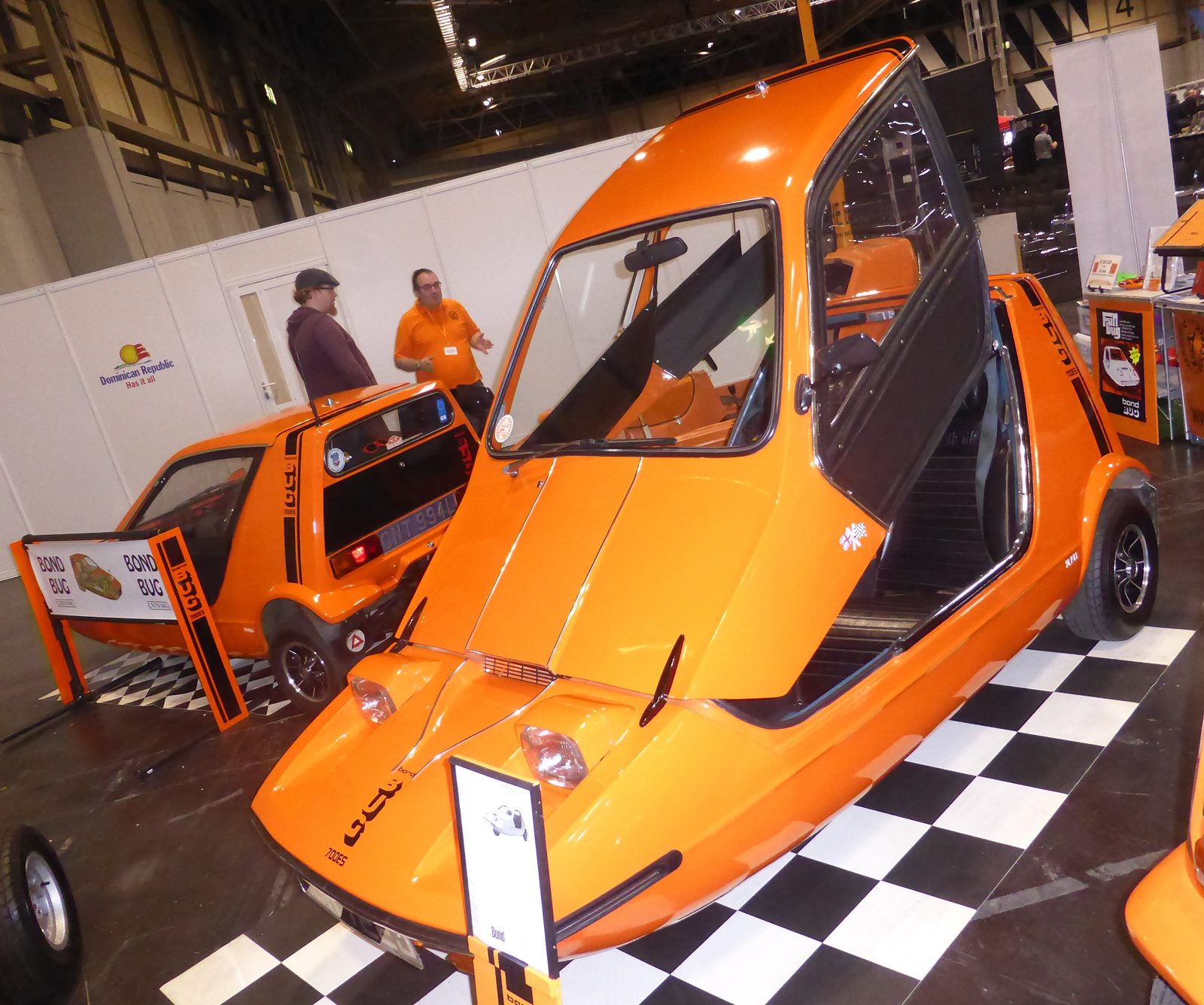
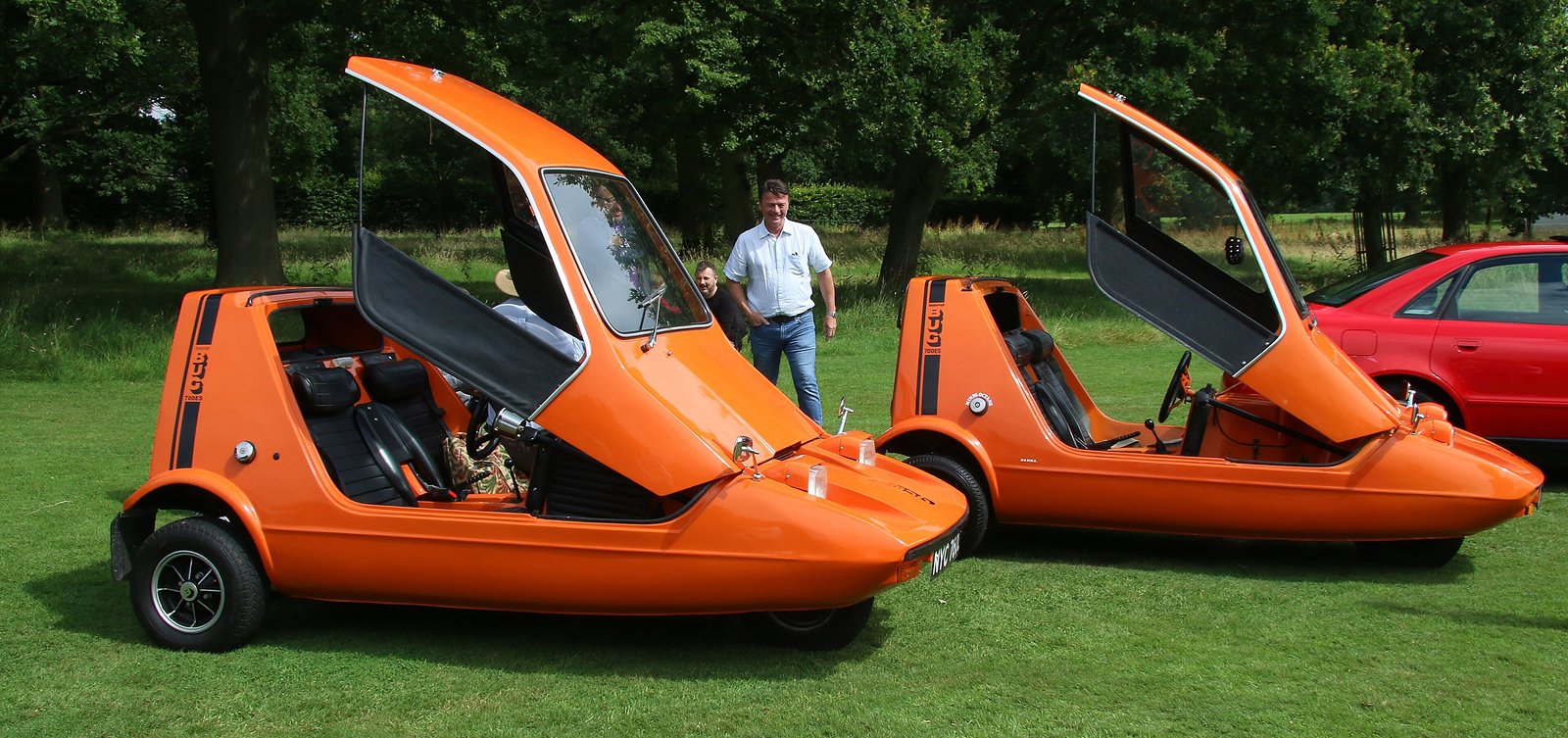
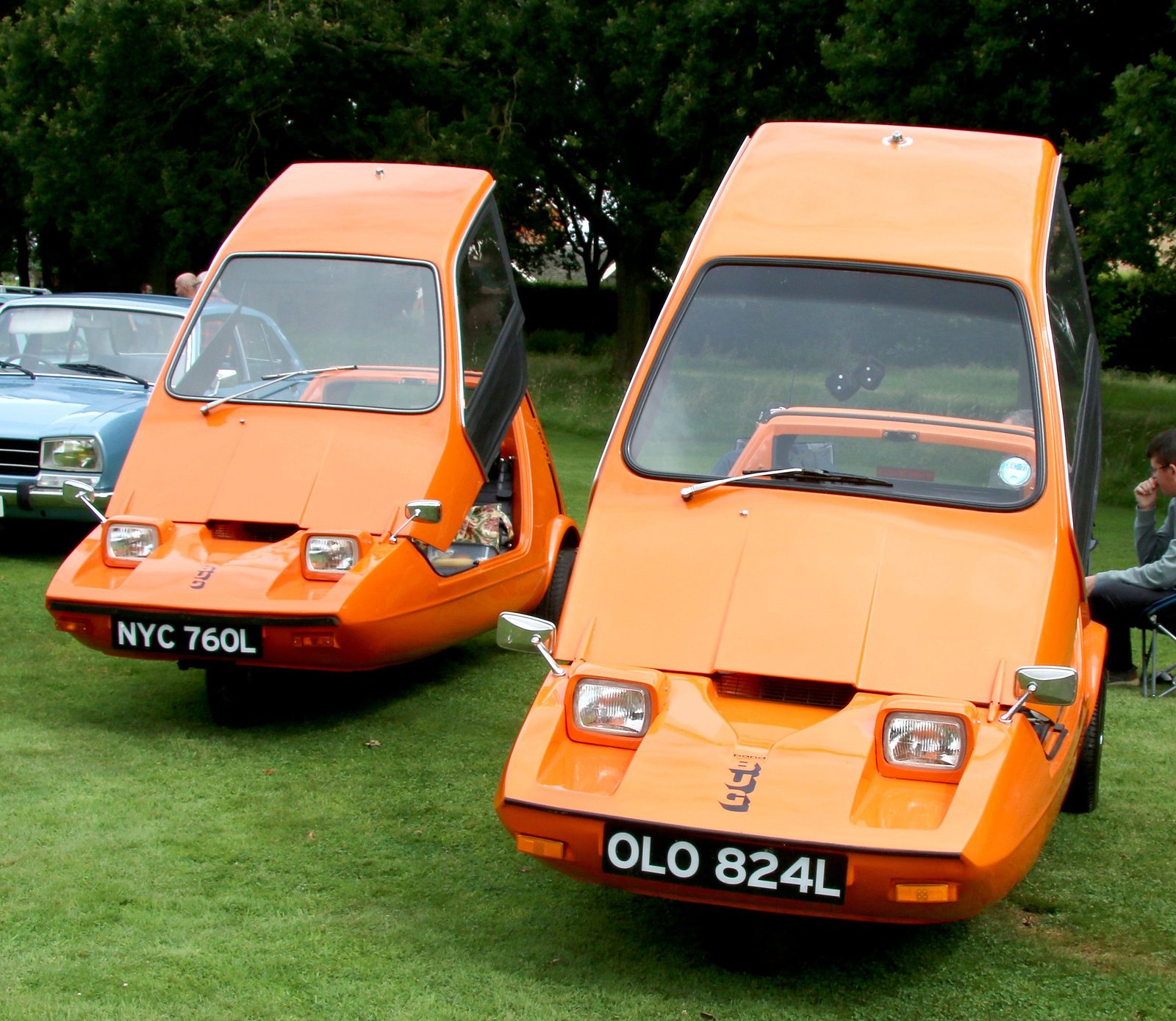
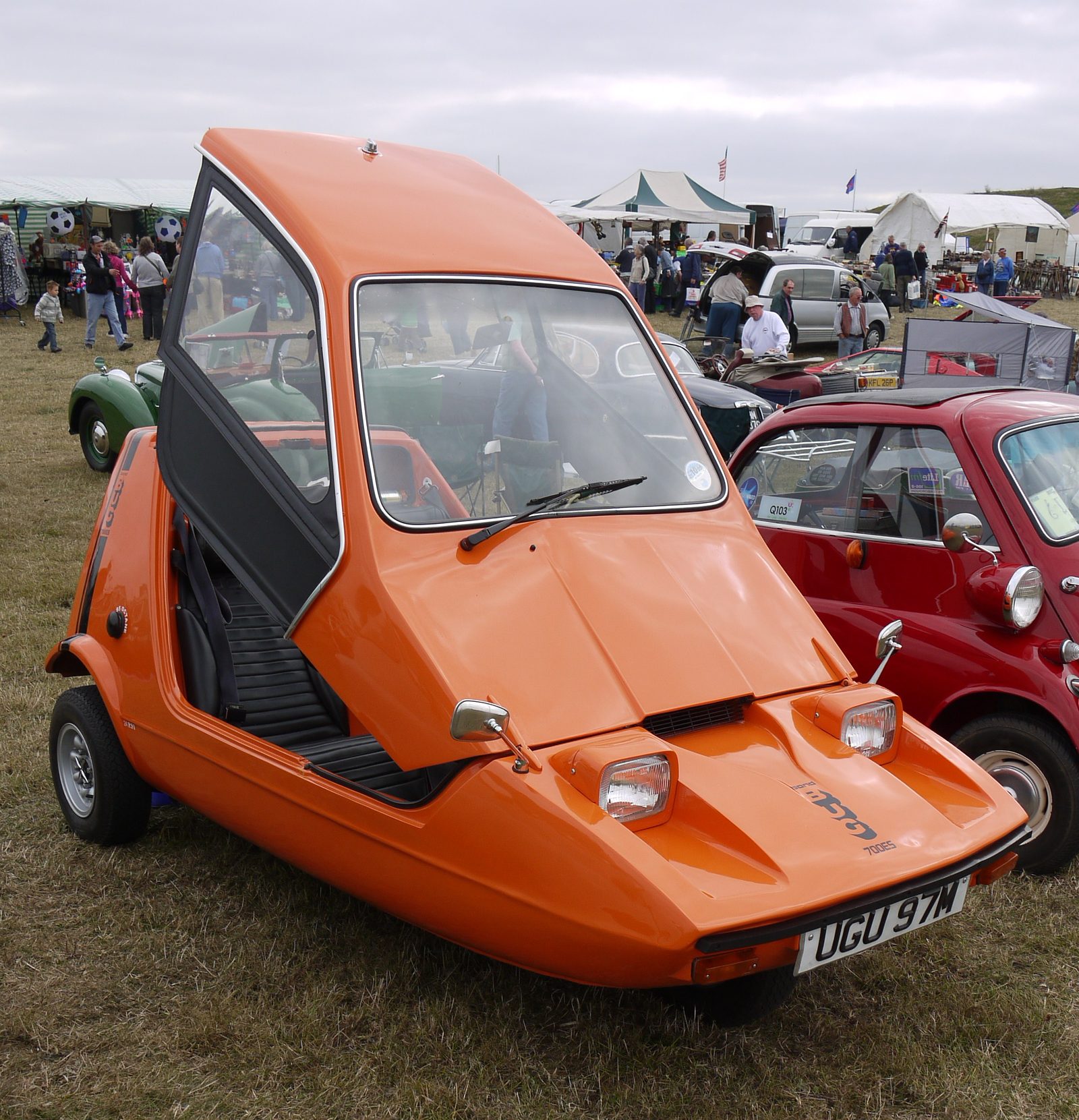
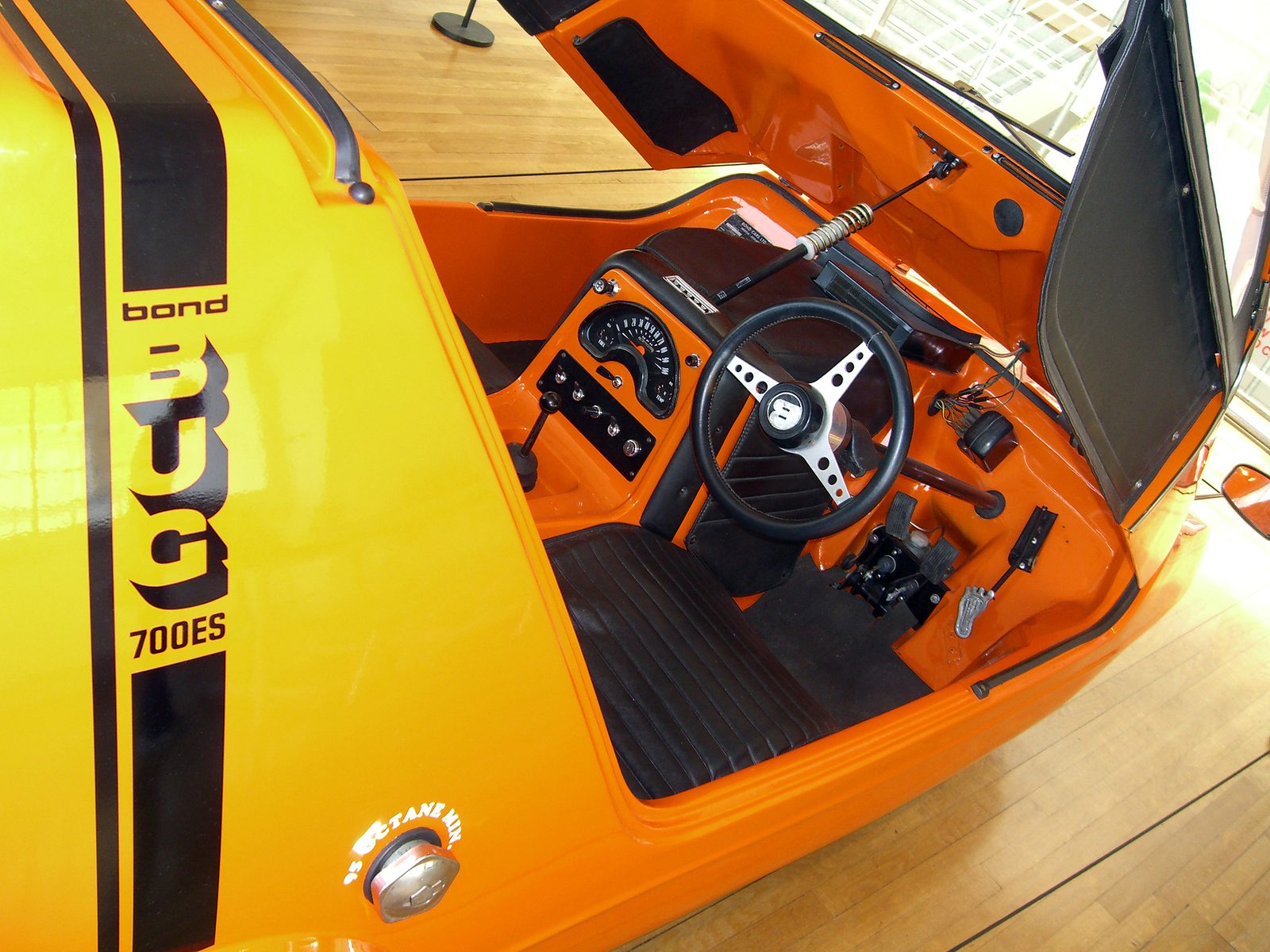
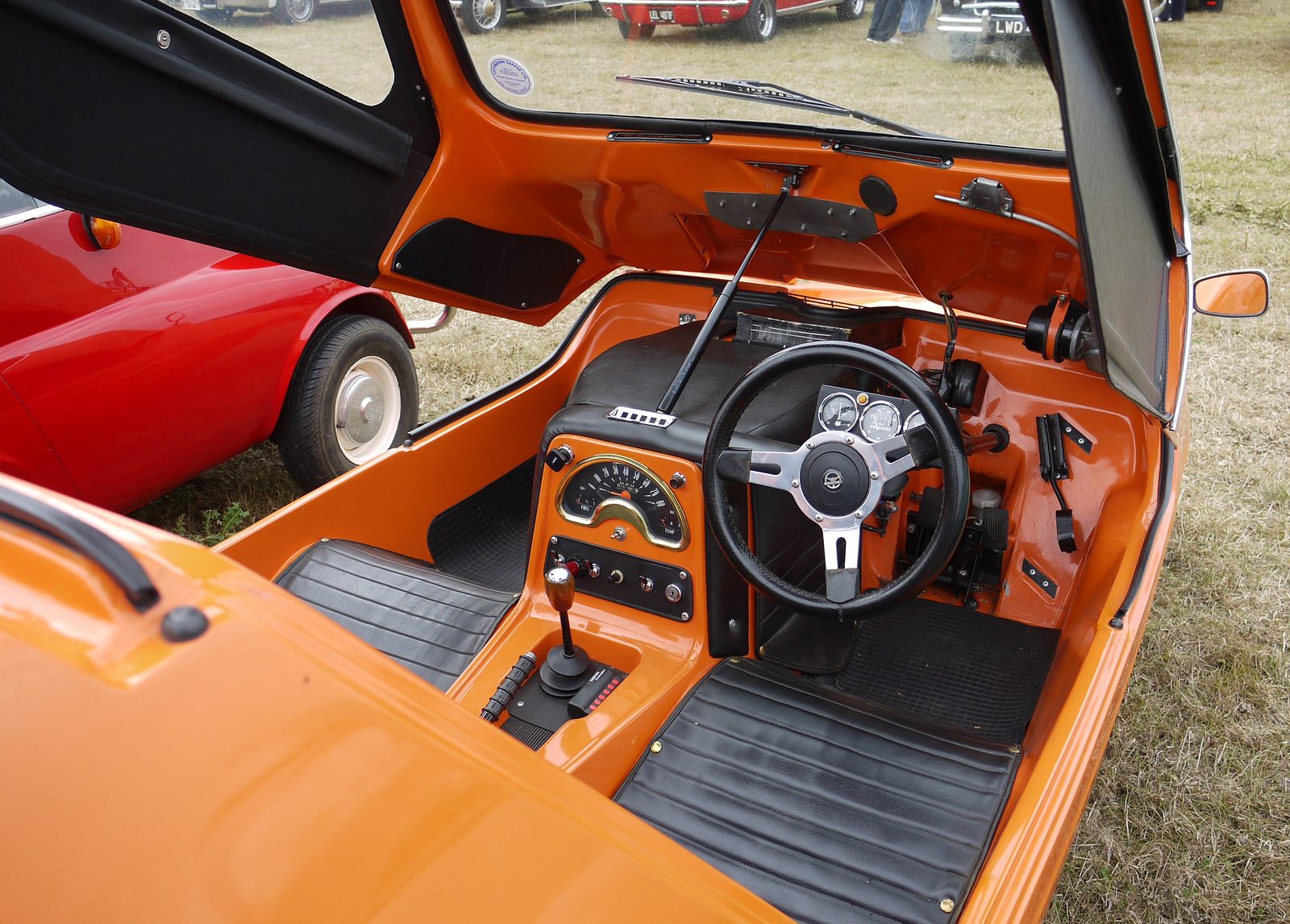
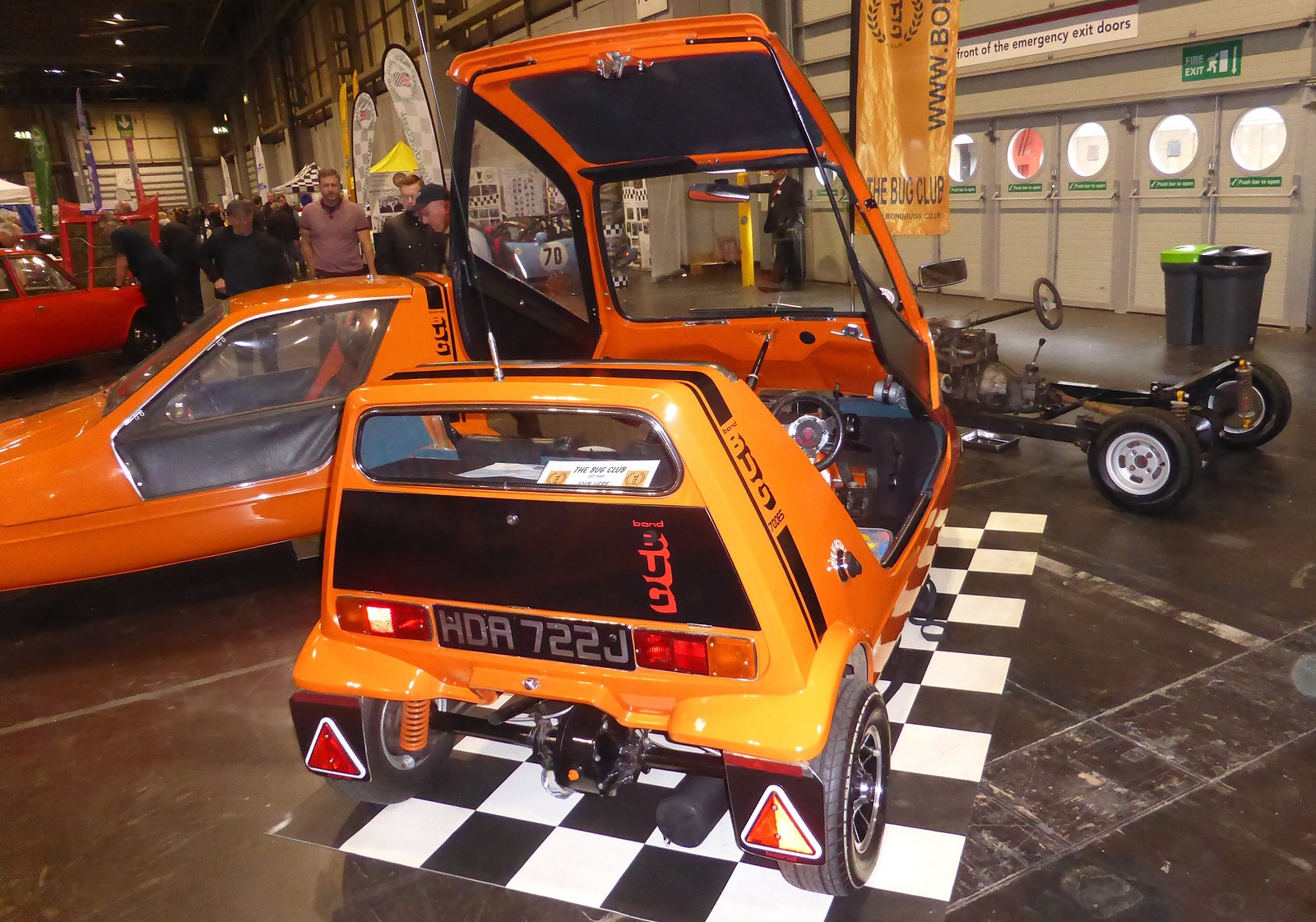
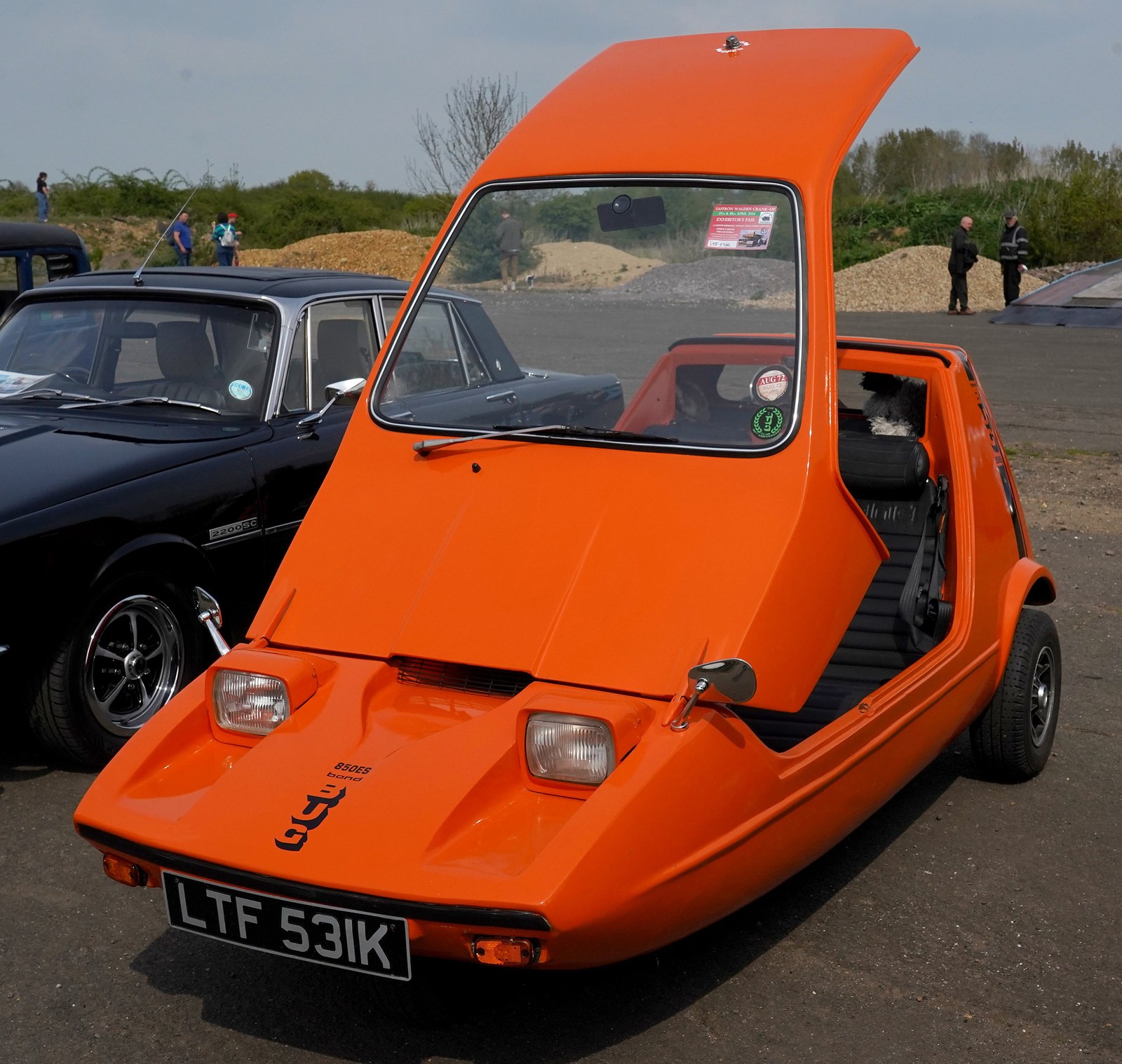
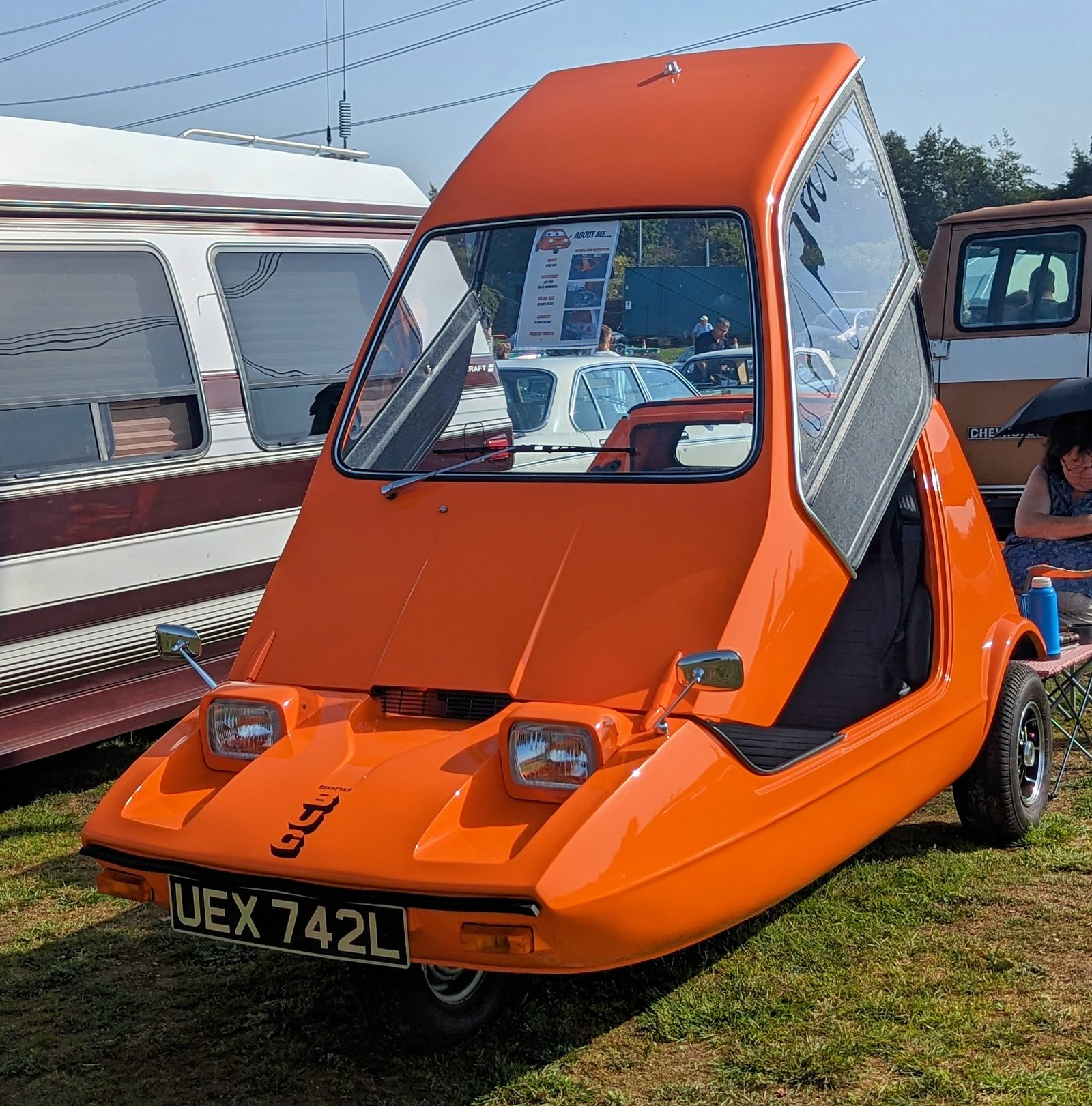
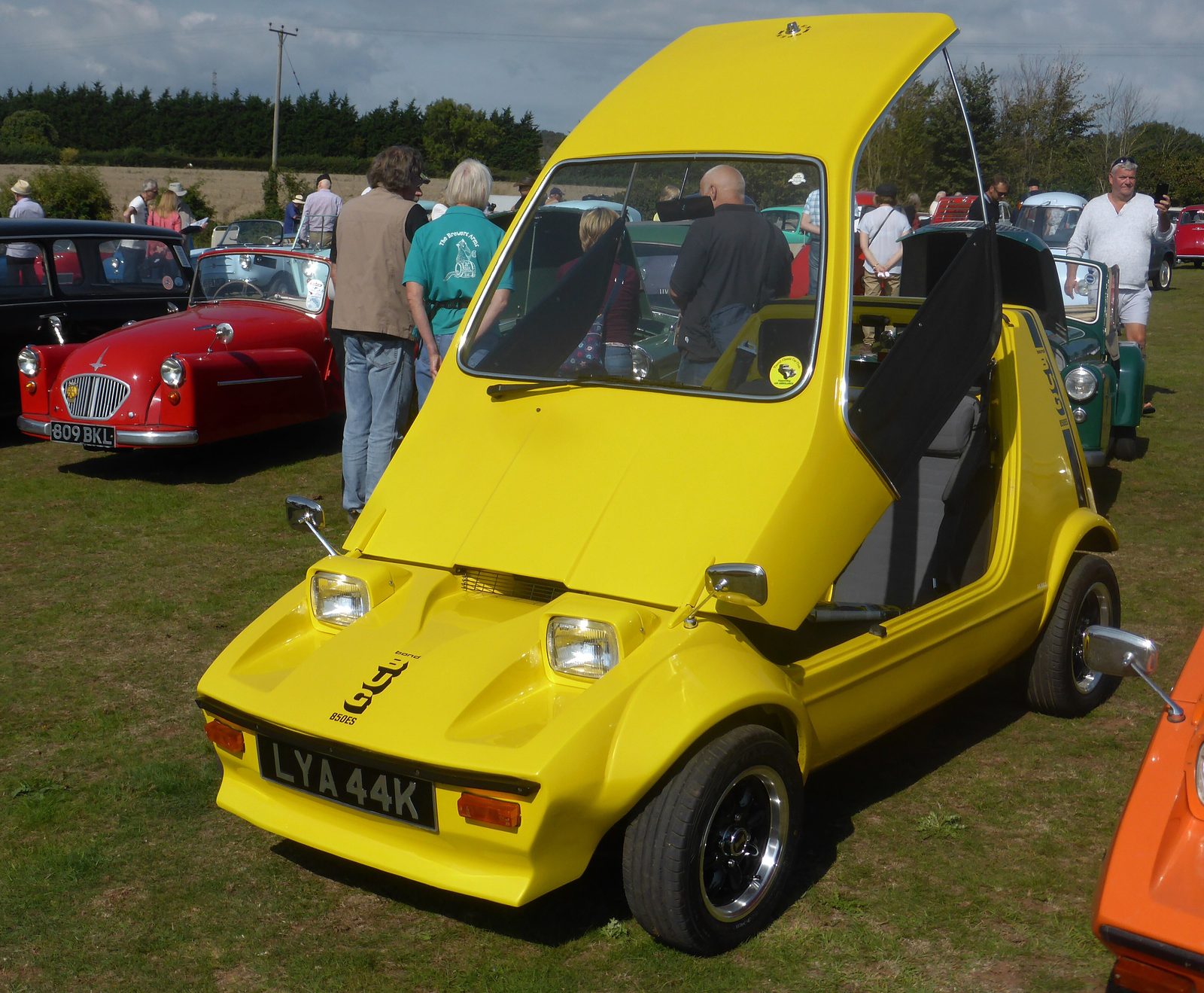
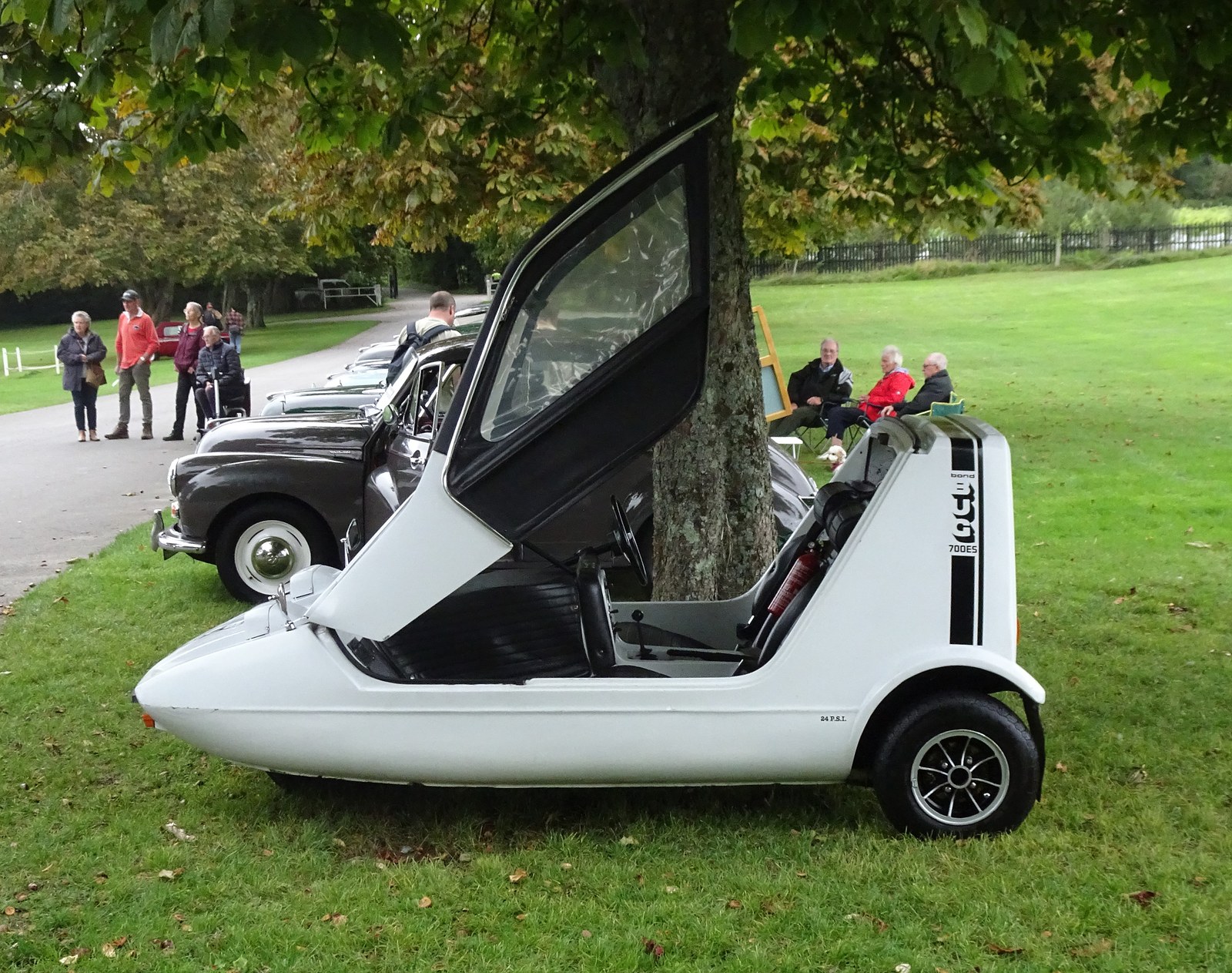
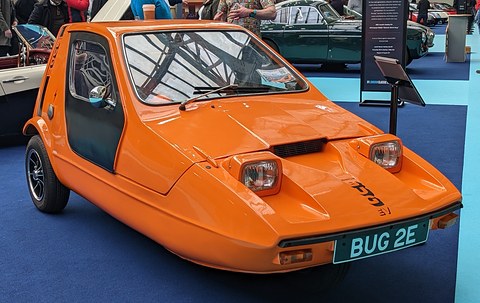
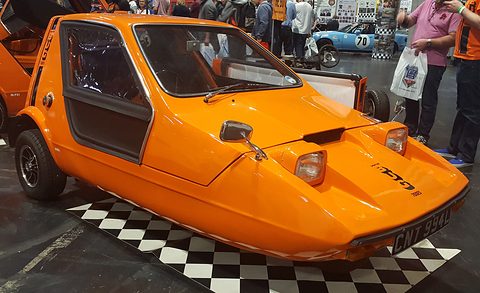
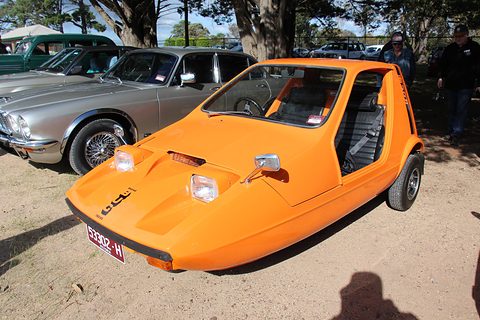
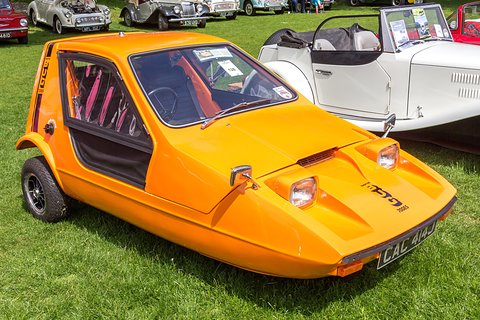
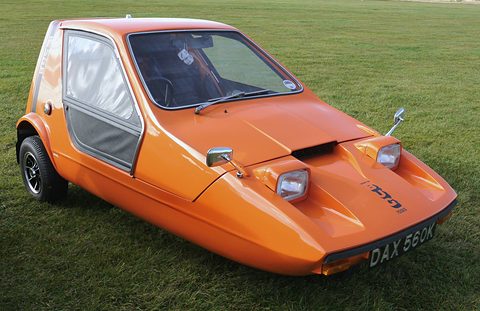
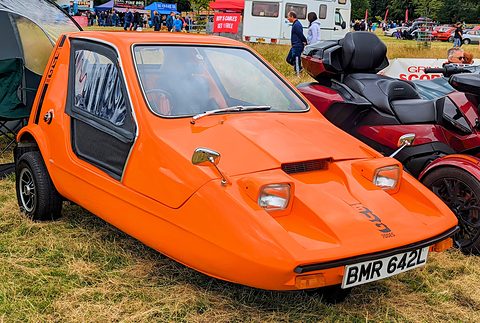
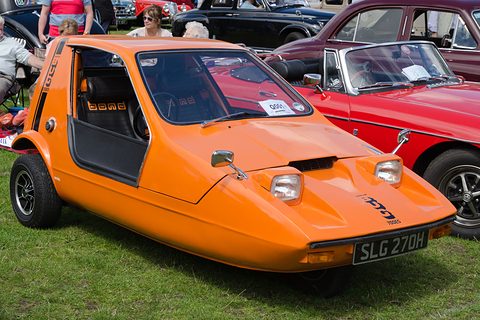
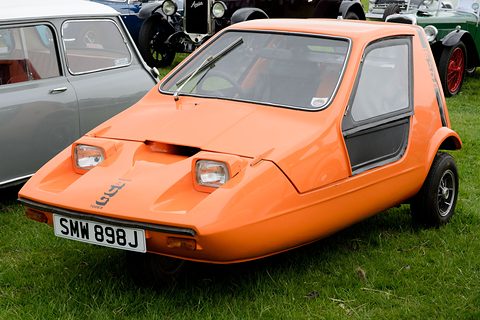
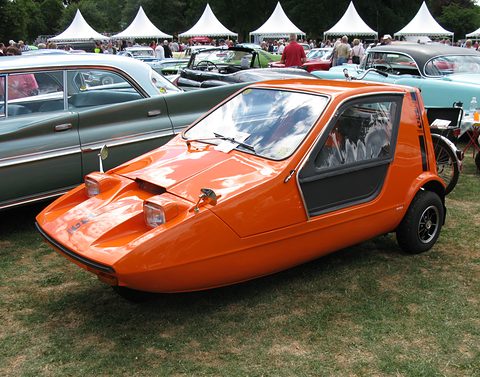
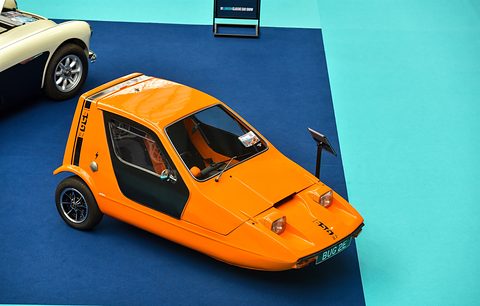
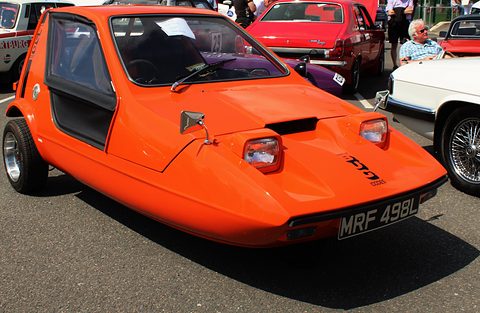
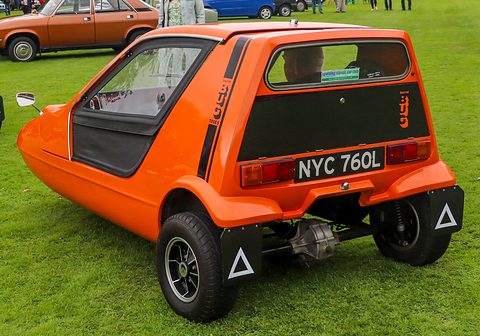
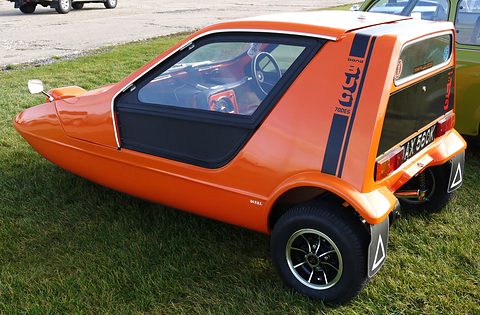
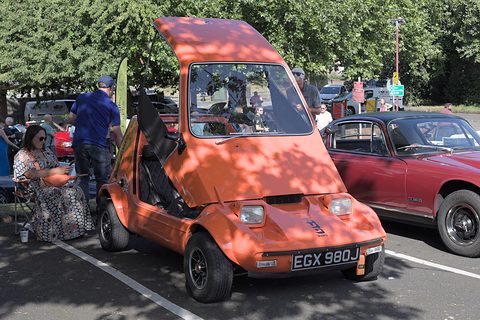
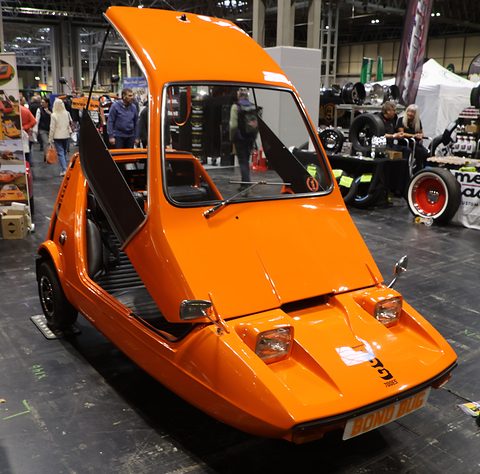
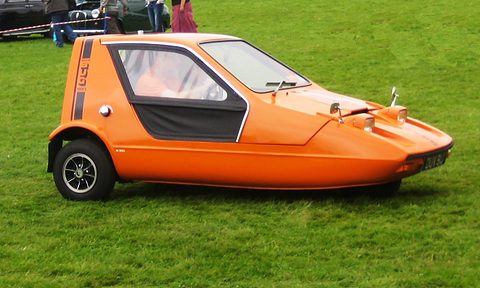
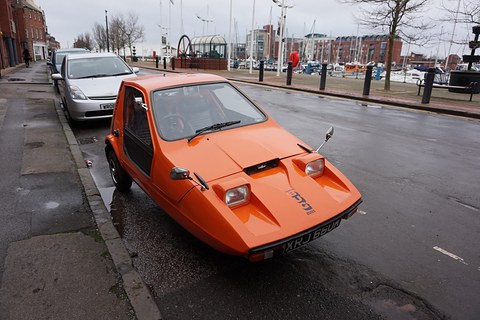
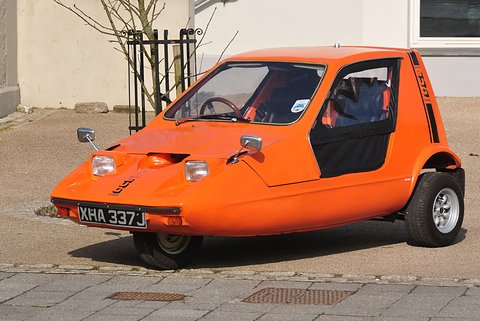
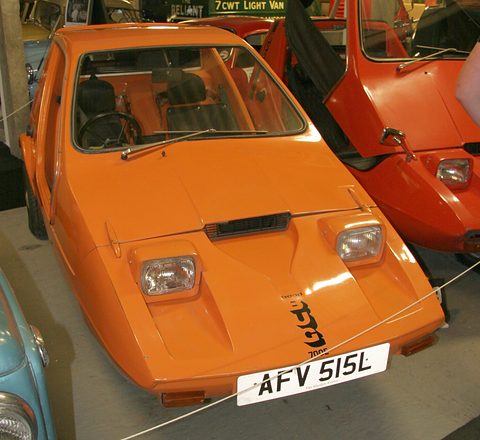
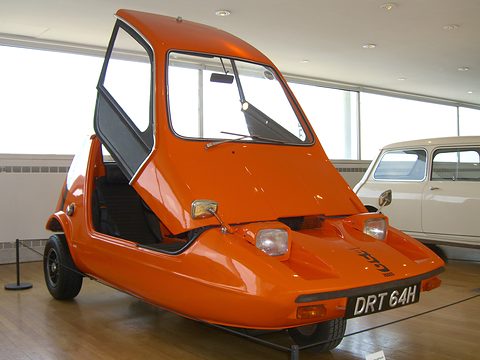
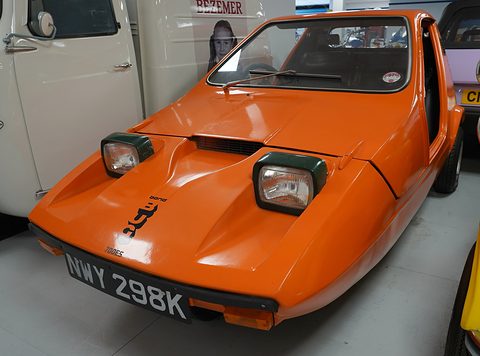
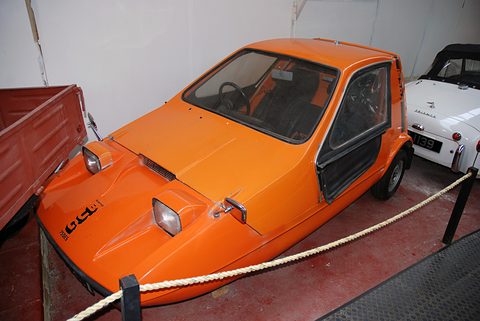
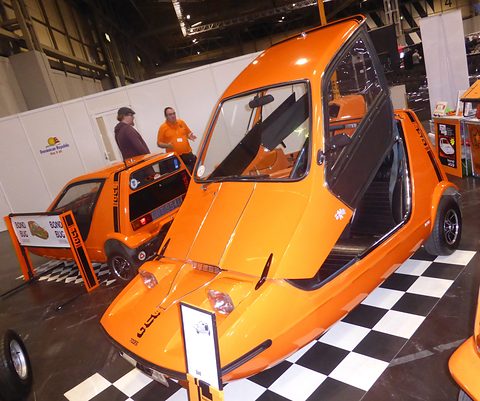
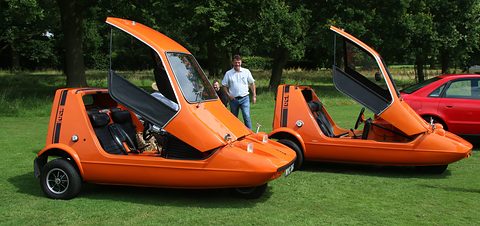
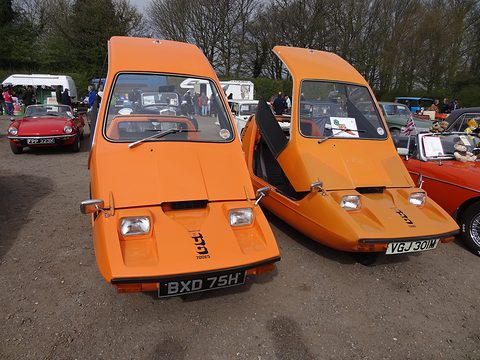
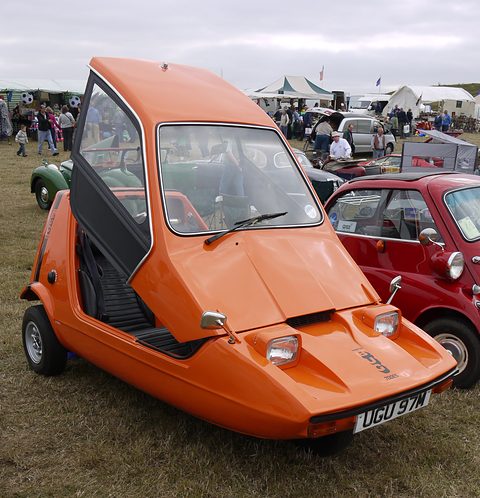
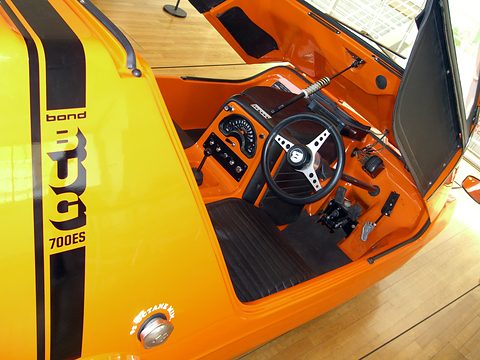
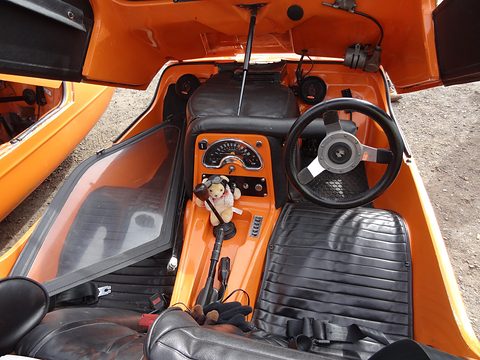
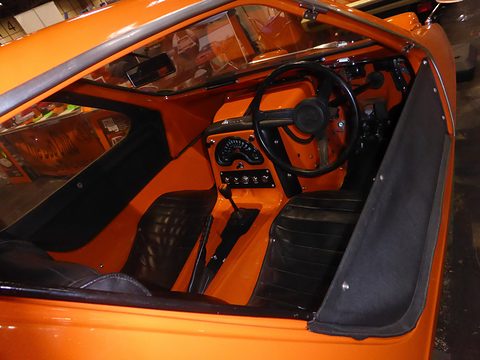
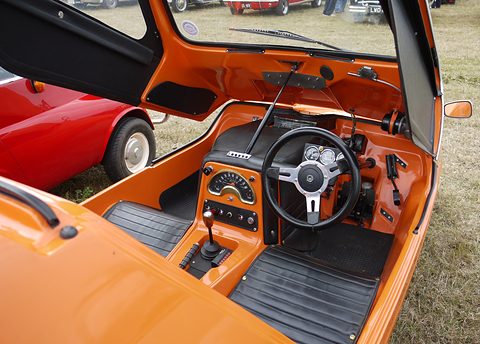
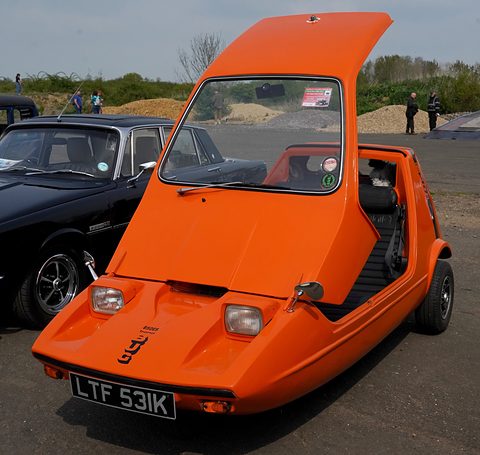
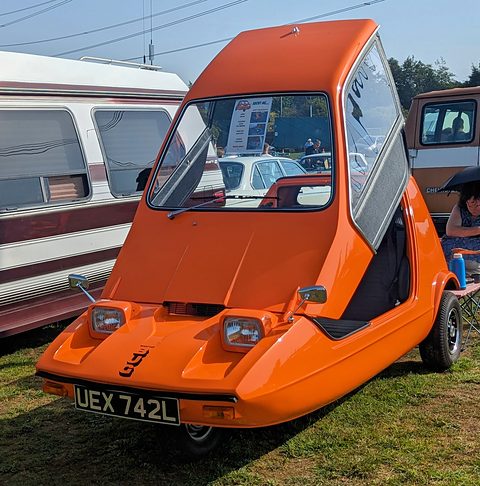
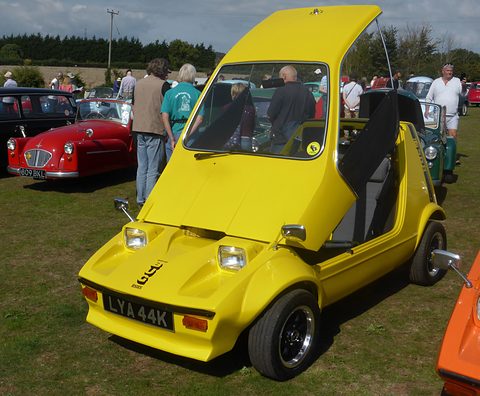
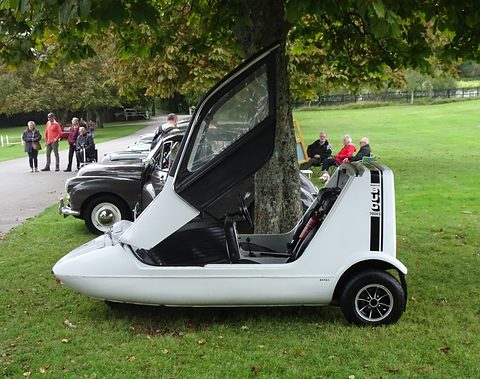
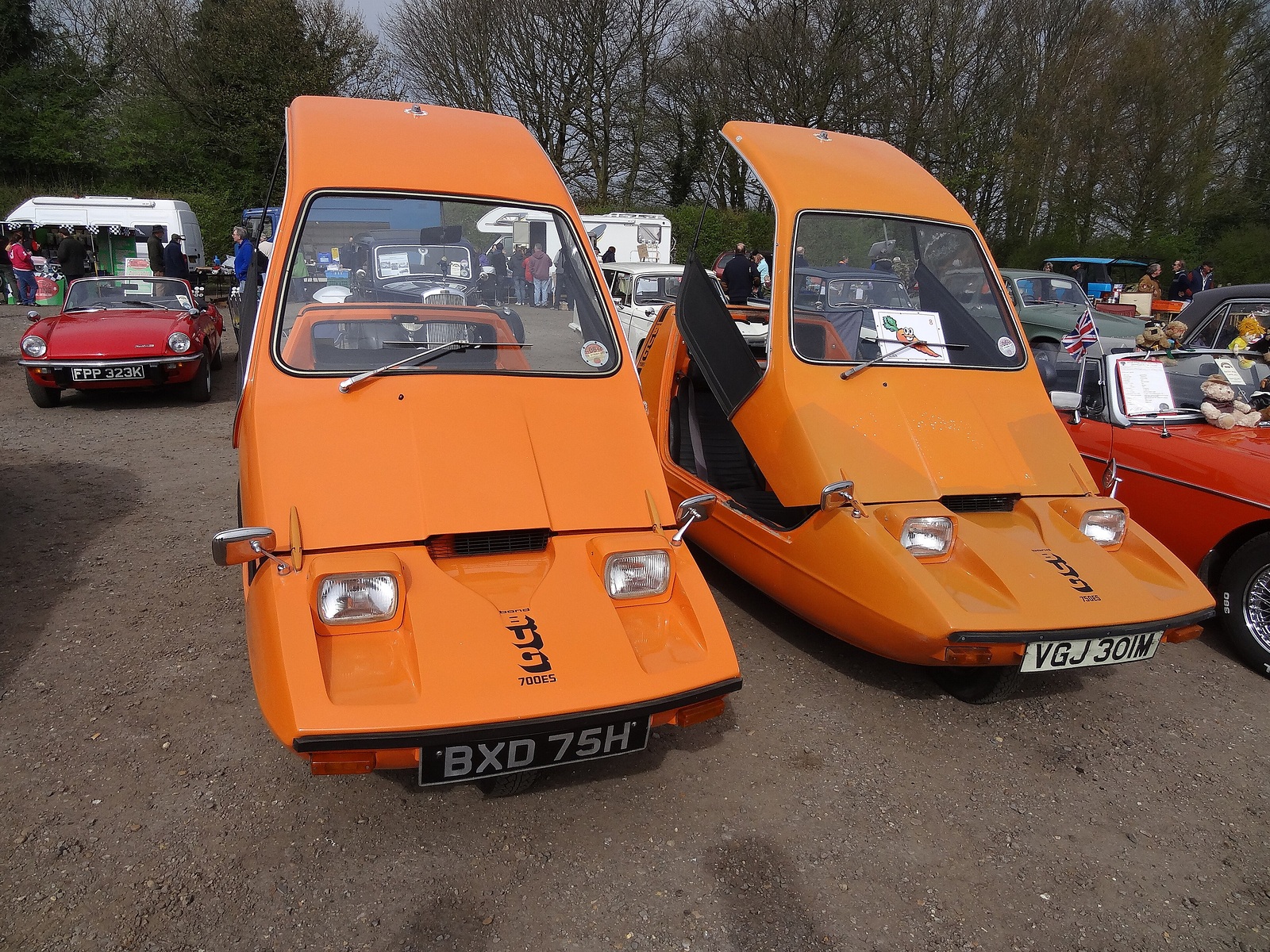
No doors: to get in, you tilt the whole canopy forward, roof, windscreen and sides together. Every Bug sold to the public was tangerine, it needed only a motorcycle licence, and when the last one left the line in May 1974 it was the last car ever to carry the Bond name.

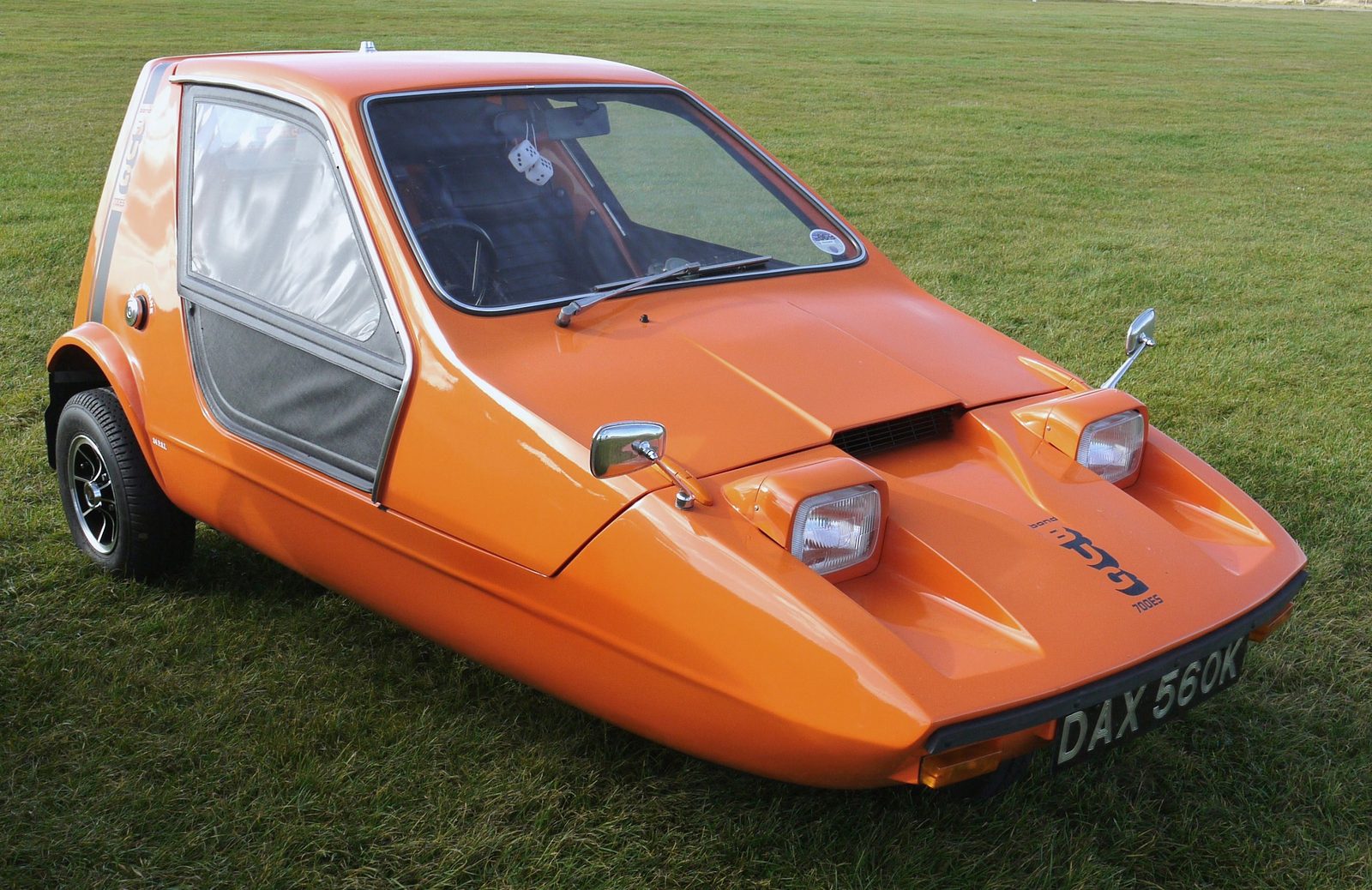
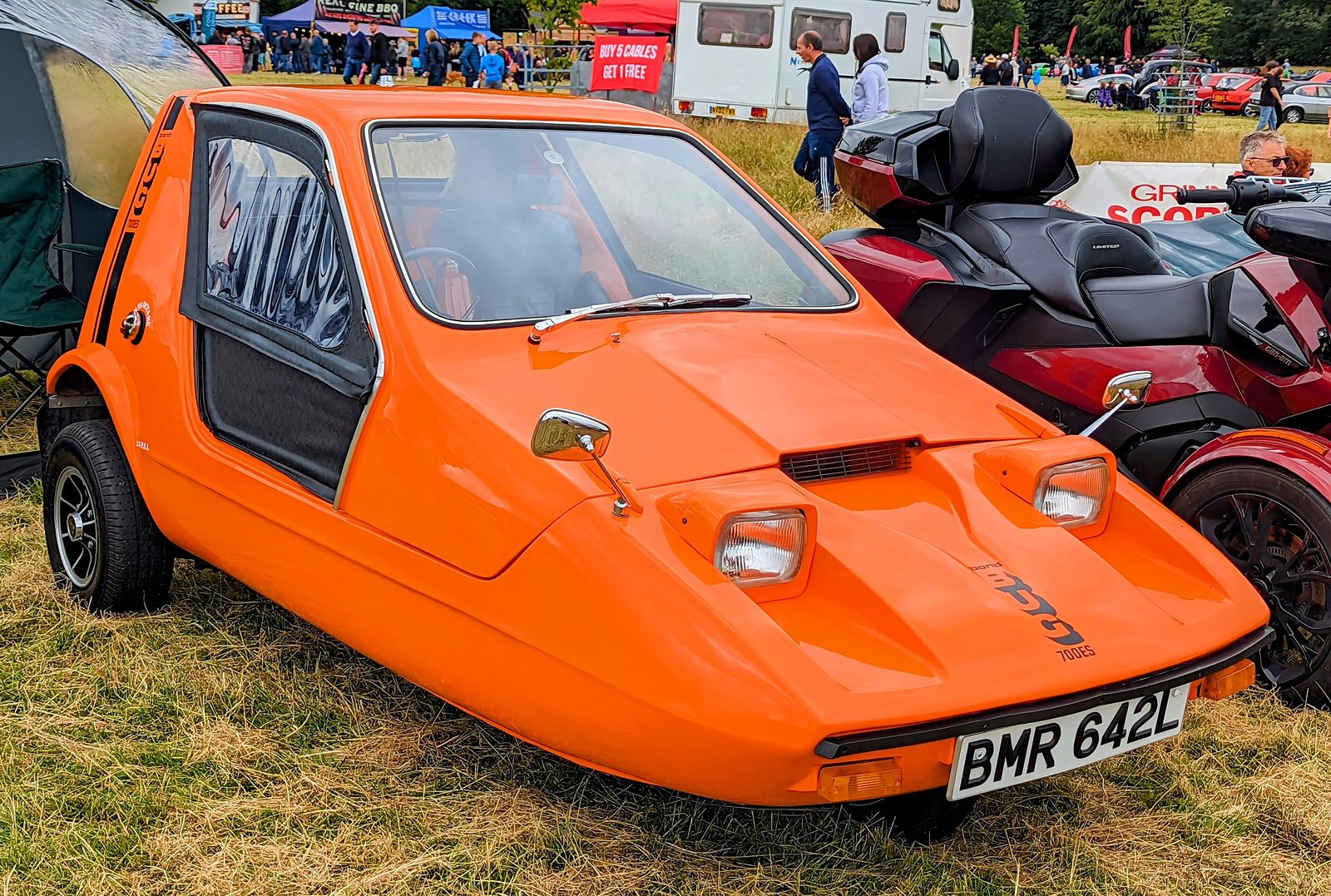
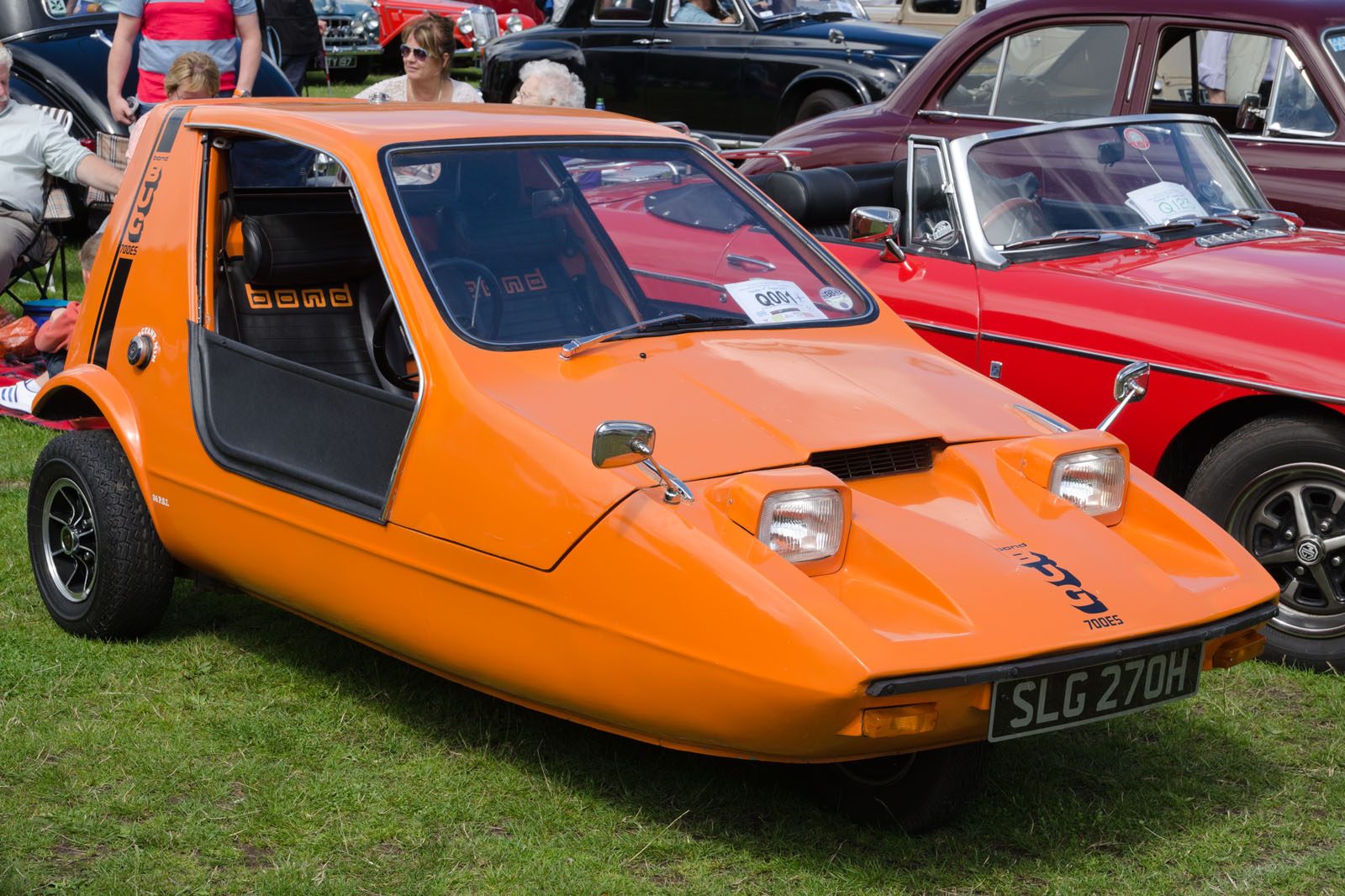
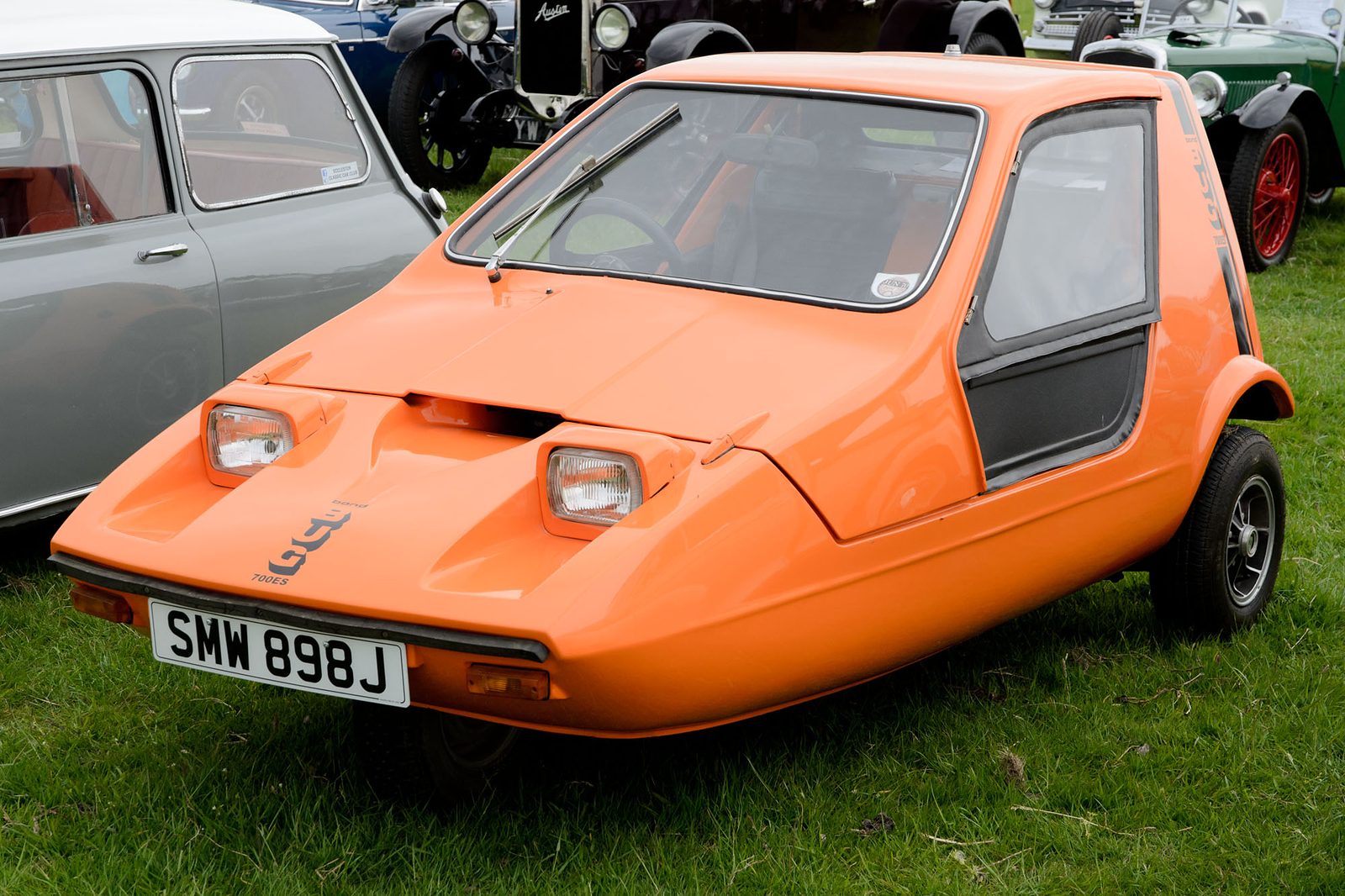
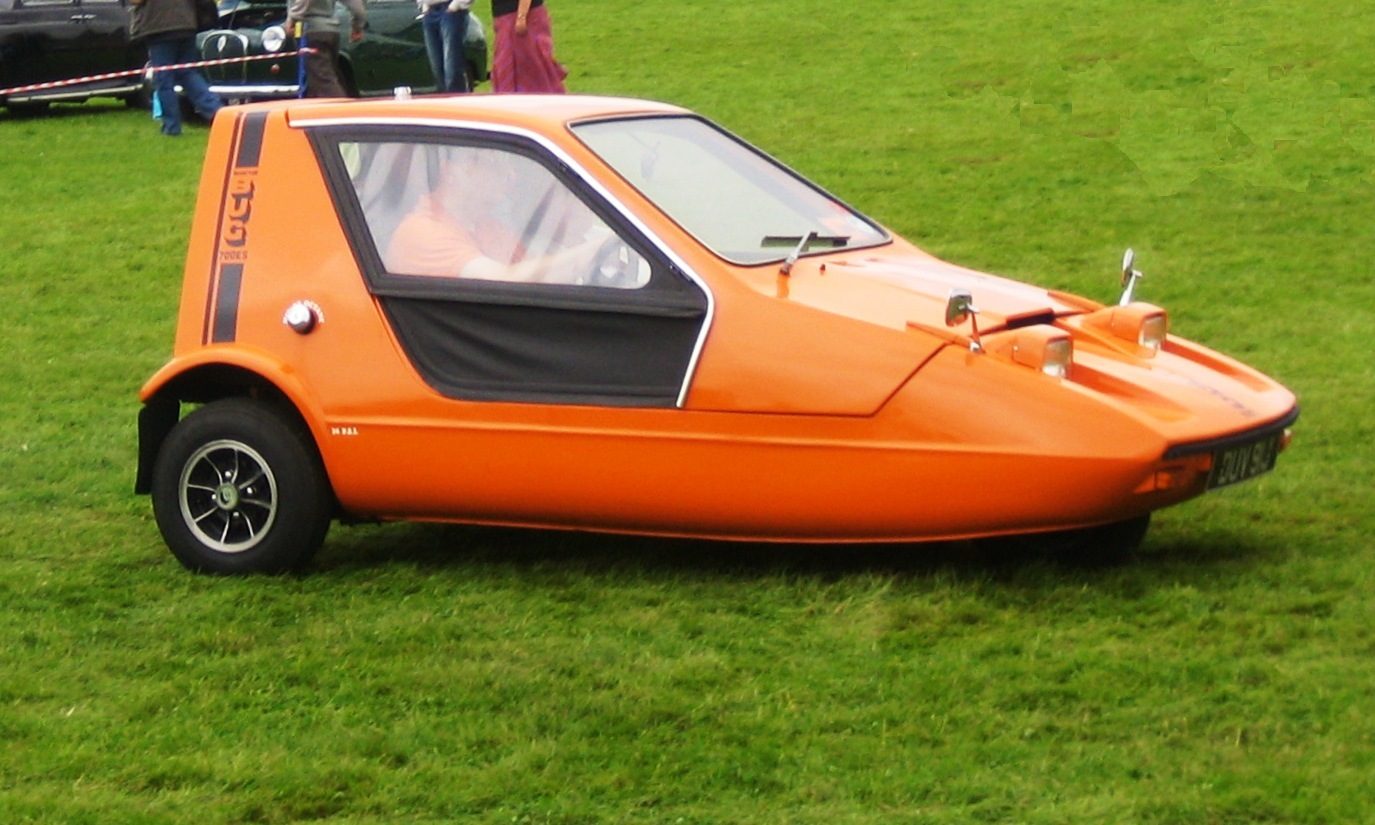
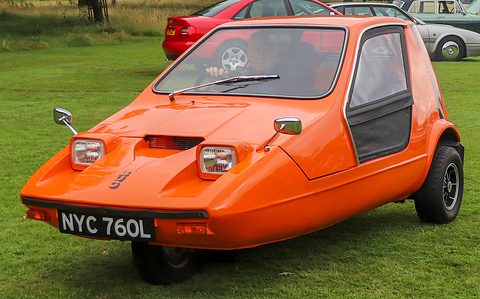
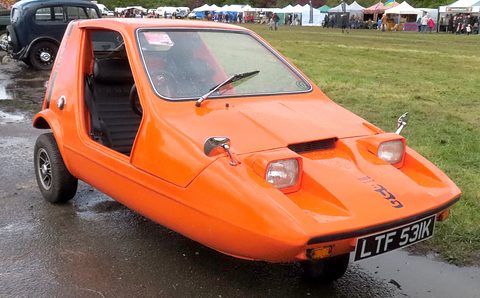
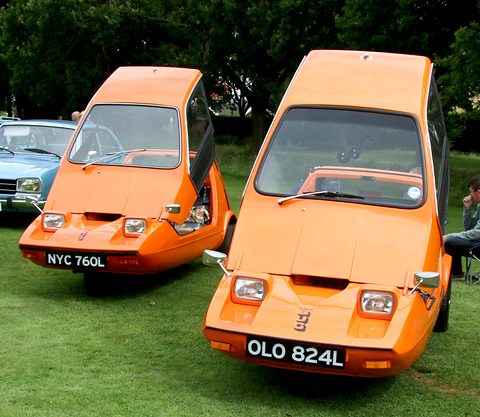
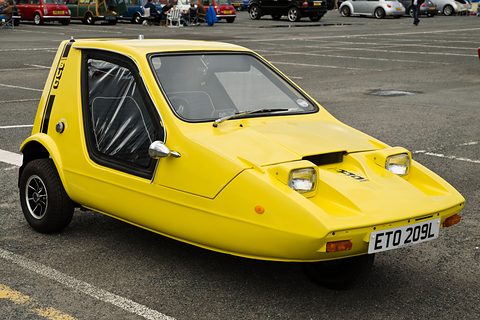
Tangerine wedge-shaped three-wheeler with twin headlamp pods, parked low on a show field.
A 1972 Bond Bug 700ES, NYC 760L, at the Festival of the Unexceptional, Grimsthorpe Castle, Lincolnshire, in 2021.Photo: Vauxford, CC BY-SA 4.0, via Wikimedia Commons

At a glance

The spec plate

Bond Bug

700ES · Preston and Tamworth

Built
1970–⁠1974First cars built by early May 1970; launched in June; the last in May 1974
Country
BritainBond, Preston, then Reliant, Tamworth
Maker
Bond Cars LtdReliant’s subsidiary from February 1969; designed by Tom Karen of Ogle Design
Engine
701 cc Reliant all-aluminium four748 cc in the 750E and 750ES, from October 1973
Power
31 bhpAbout 23 kW; 29 bhp (22 kW) in the 700 and 700E, 32 bhp DIN in the 750s
Length
2,794 mm1,397 mm wide, 1,270 mm high
Weight
392 kgKerb weight by the Bug Club; other sources give 373 and 394 kg
Seats
2Fixed seats; pedal pads of different sizes instead
Wheels
3One at the front, two driven at the back
Price new
£629700ES at launch, 1970; £548 for the basic 700
Production
2,270From Bond’s own records; one of them the only basic 700
Survives
150–250 on the roadThe Bug Club’s estimate, with 700–900 more laid up
Top speed
122km/h122 km/h76 mph; the prototype went over 90 mph

How big is it?

True proportion

2.79 m

It is 176 mm shorter than a Fiat 500, about 1.6 adults laid end to end, and twice the length of a Peel P50.

  • 1.40 m wide
  • 392 kg: about five adults
  • 2,108 mm (6 ft 11 in) tall with the canopy open
Drawn at true proportion. The track is 3.6 metres long; the adult stands at the same scale. The Peel P50 is the smallest production car, on every page for comparison.

The story

History

Since the Regal 3/25 of 1962, Reliant had wanted a sportier three-wheeler for younger buyers.source 1 The design that answered came from Tom Karen of Ogle Design, at Letchworth (more on him in the designers).source 2source 3source 4 When it began is not agreed. English Wikipedia has Ogle sketching wedges as early as 1964 under the name Reliant Rogue; Lancaster Insurance’s history has Karen proposing a sporty two-seater three-wheeler to Reliant’s management in 1967 and Ogle building a mock-up in 1968.source 1source 4 Motor Sport in 1970 said it was planned by “Toni Karen” in 1950, which can only be a misprint.source 5 Reliant was doubtful. A wedge so far from its sober Regal might, its managers feared, harm the Reliant name.source 1source 4

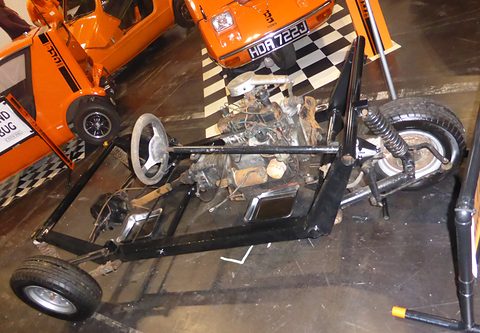
Another firm’s troubles gave the design a home. Bond’s parent, the Loxhams and Bradshaw group, was bought by Dutton-Forshaw in 1968, and Bond Cars Ltd of Preston, which did not fit, was put up for sale. A management buy-out failed, and in February 1969 Reliant bought Bond.source 2 Grace’s Guide puts the takeover in 1971, but the owners’ club’s dated account, which English Wikipedia and Lancaster also follow, has 1969.source 6source 1source 4 Bond’s sales of its Imp-engined Bond 875 were falling, and Reliant’s managing director, Ray Wiggin, decided that Karen’s car would be sold as a Bond.source 4source 7 The 875 was wound down at Preston to make room for it.source 2 Underneath was a new ladder chassis by Reliant’s chief engineer John Crosthwaite, with Regal parts and running gear meant for the coming Reliant Robin.source 1

Something new under the sun

The first Bugs were built in the week ending 1 May 1970: 114 700Es, the first 11 700ESs, and the only basic 700 there would ever be.source 8 The car was launched at Woburn Abbey in June 1970, designed, said its makers, exclusively for 17- to 25-year-olds.source 5source 4source 2 Wiggin’s launch speech was a case for the three-wheeler. Its sales had grown almost three times as fast as four-wheelers’ in the 1960s; home-built three-wheelers registered in 1969 were 62.4 per cent up on 1960, against 18.3 per cent for four-wheelers; and Britain had about 100,000 tricycles to just over four million cars. It was, he added, 200 years since Cugnot’s steam tricycle of 1770. Reliant was counting on a road tax of £10, where a car paid £25, on cheap insurance in Group 1, low running costs and easy parking.source 5 Wiggin hoped the Bug would set trends as the Mini had.source 5

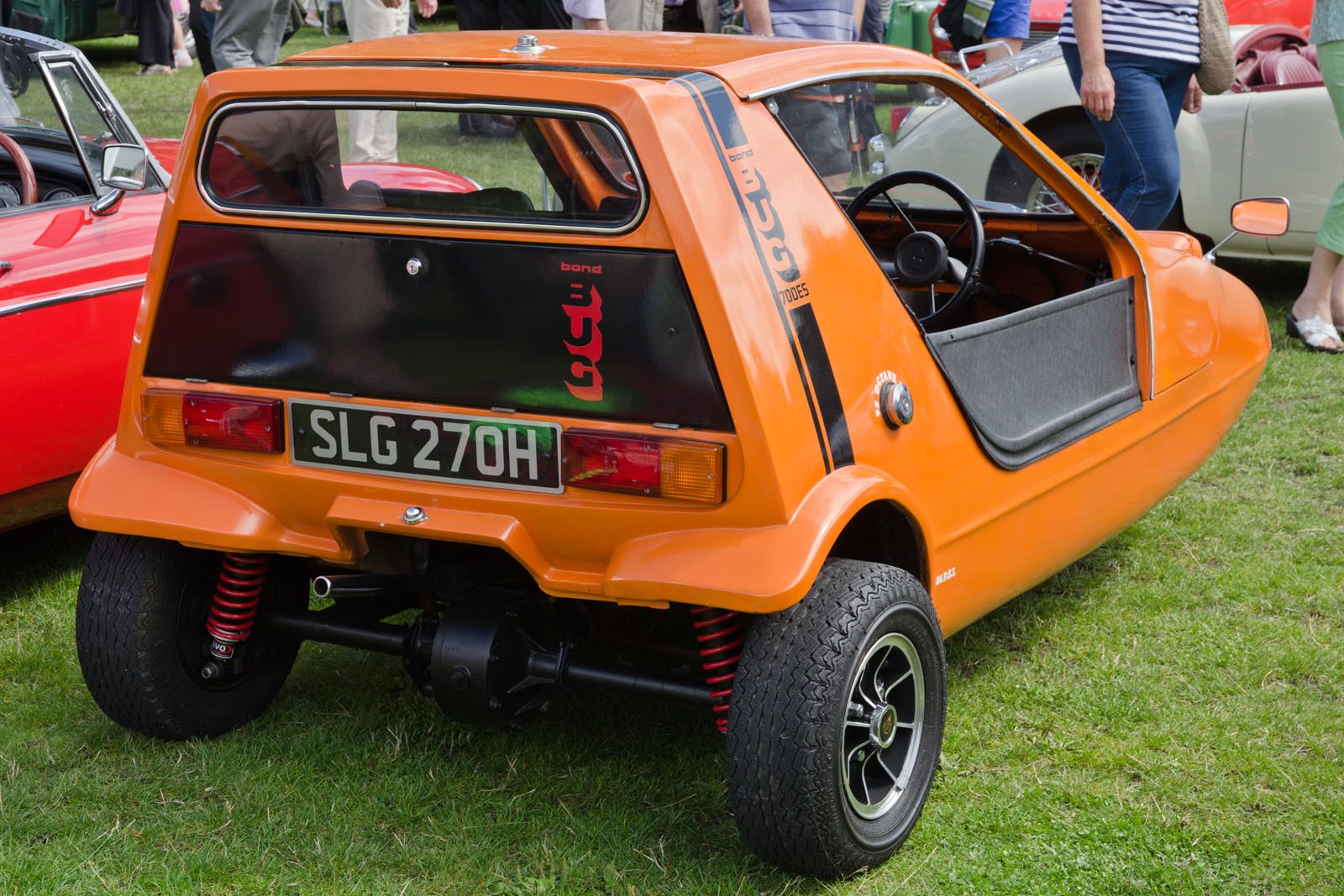
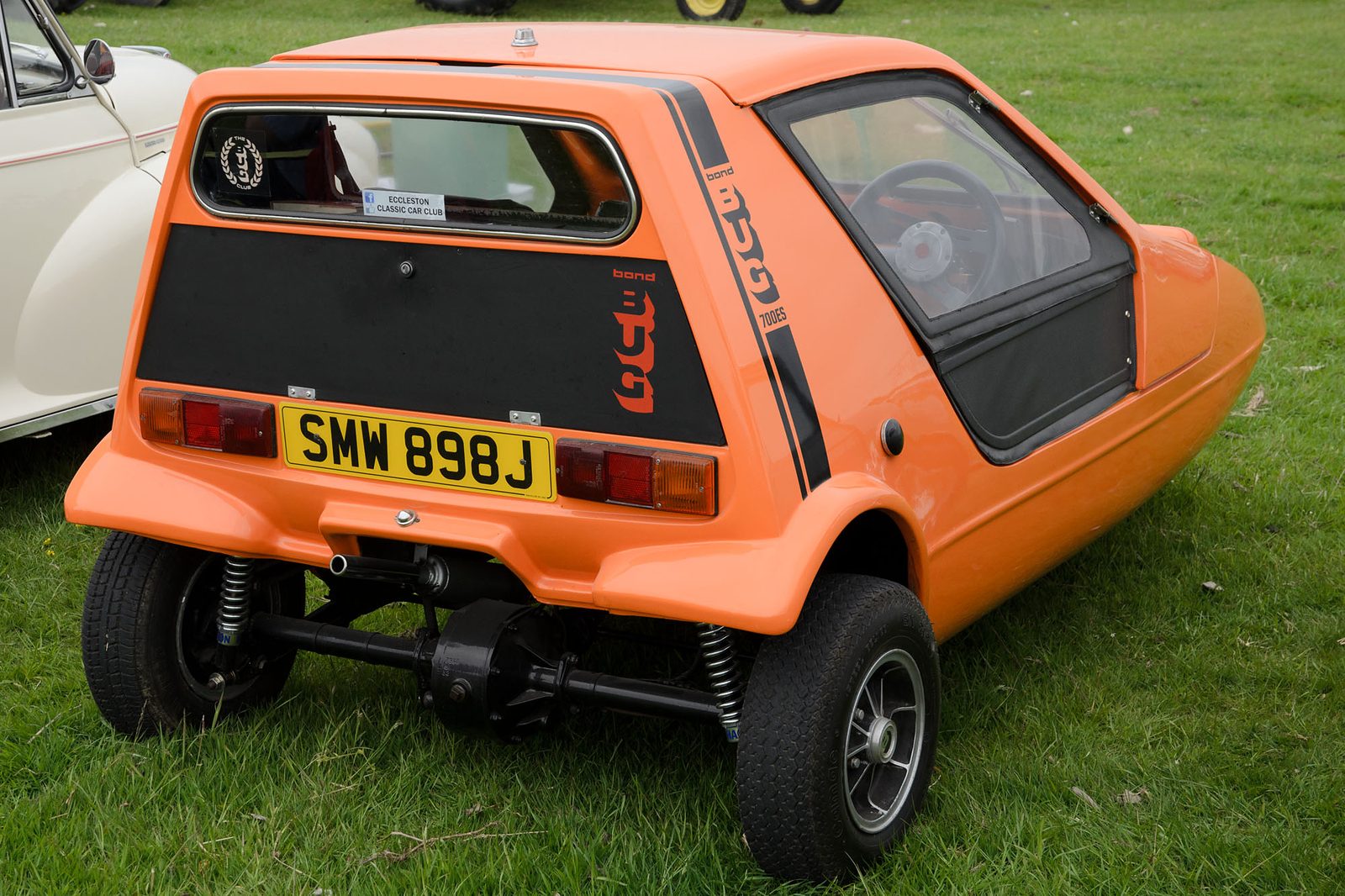
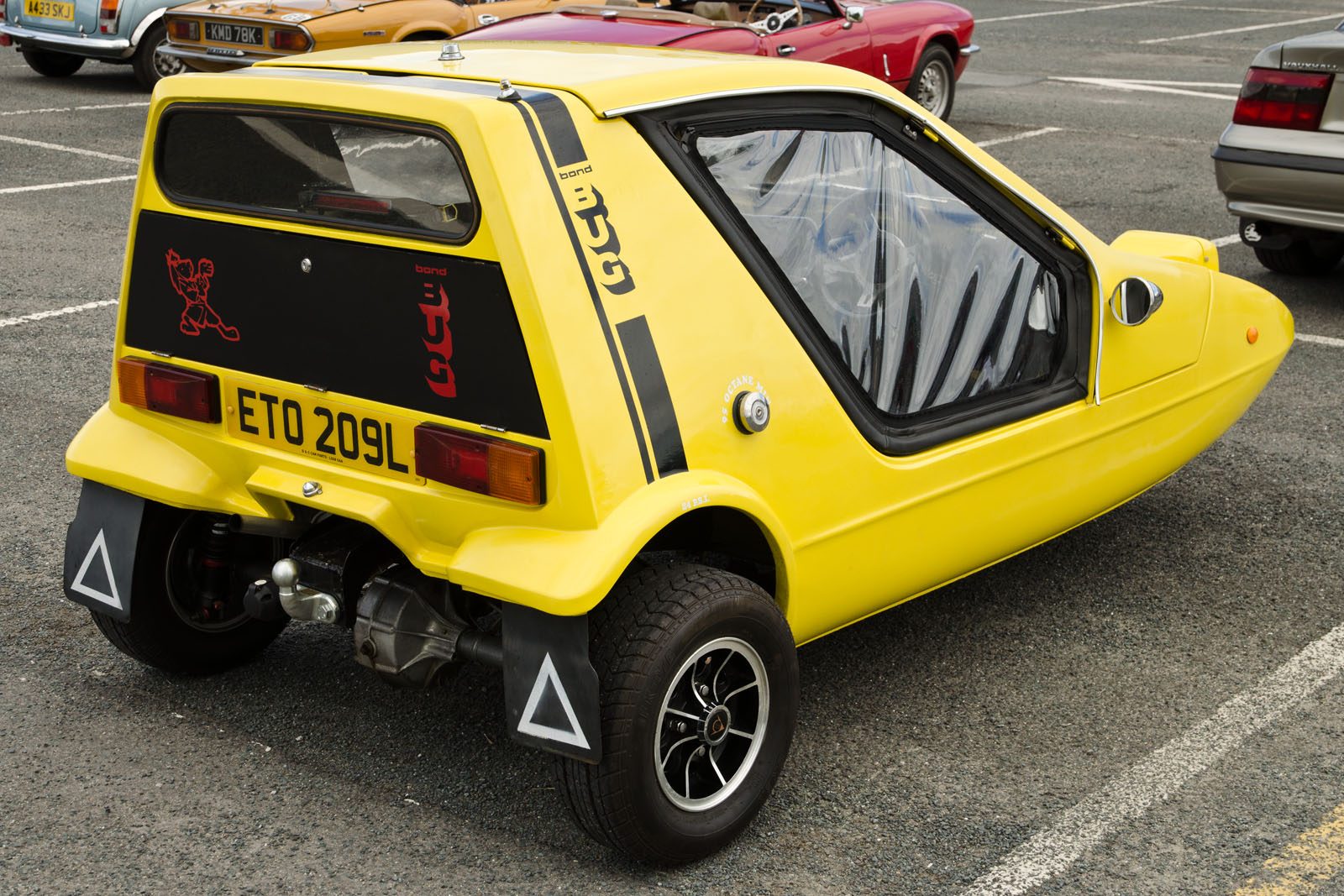
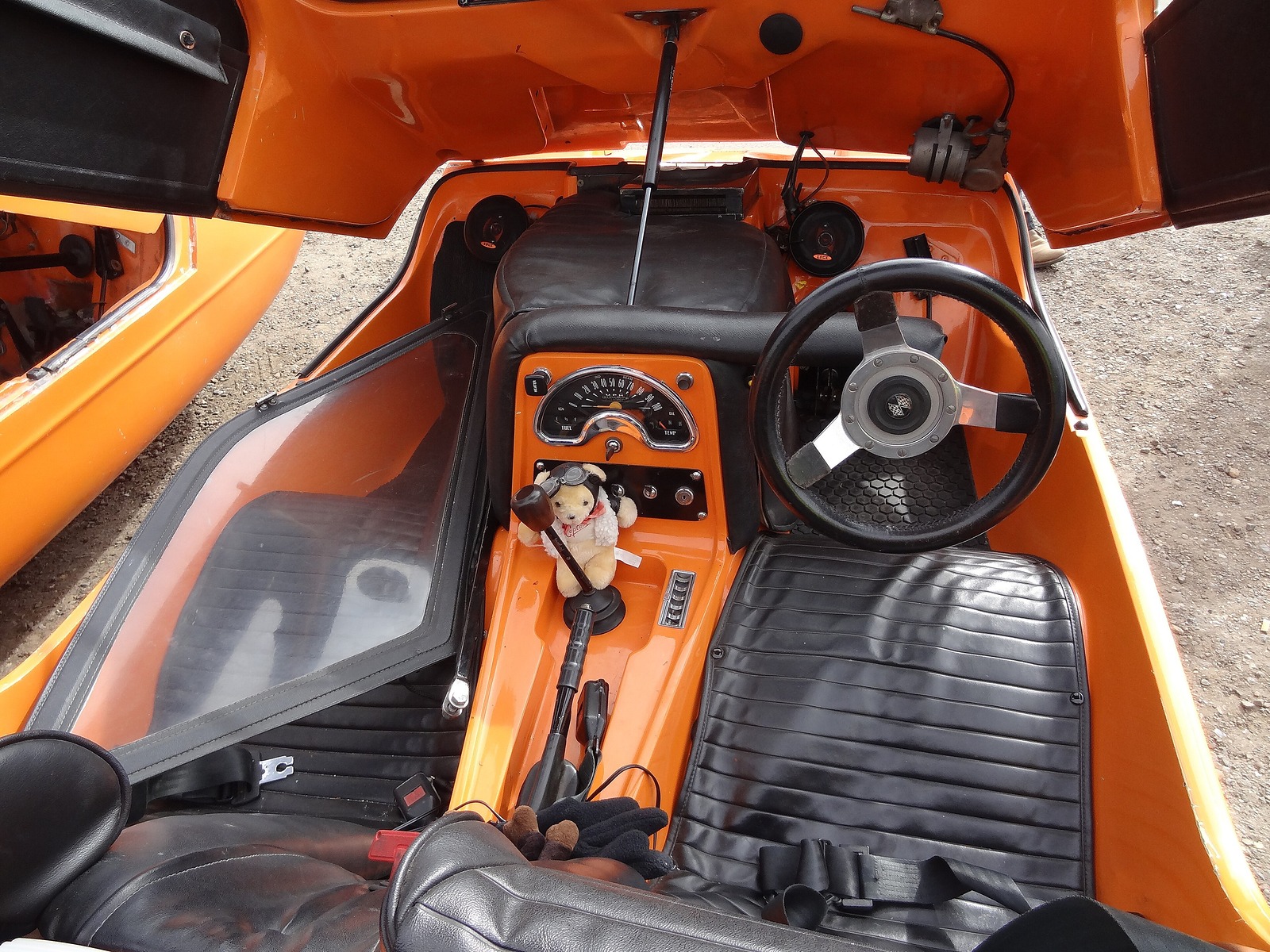
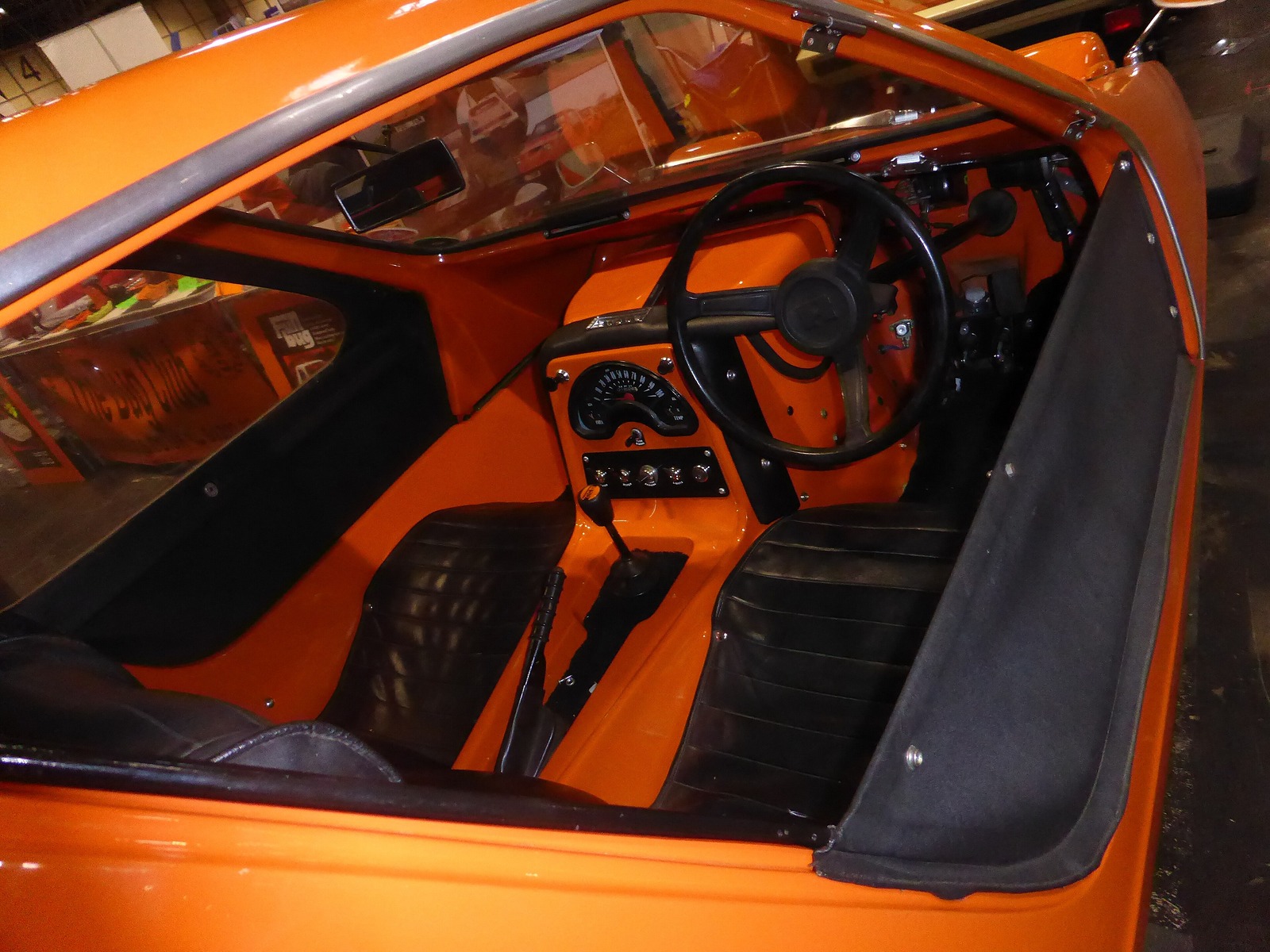
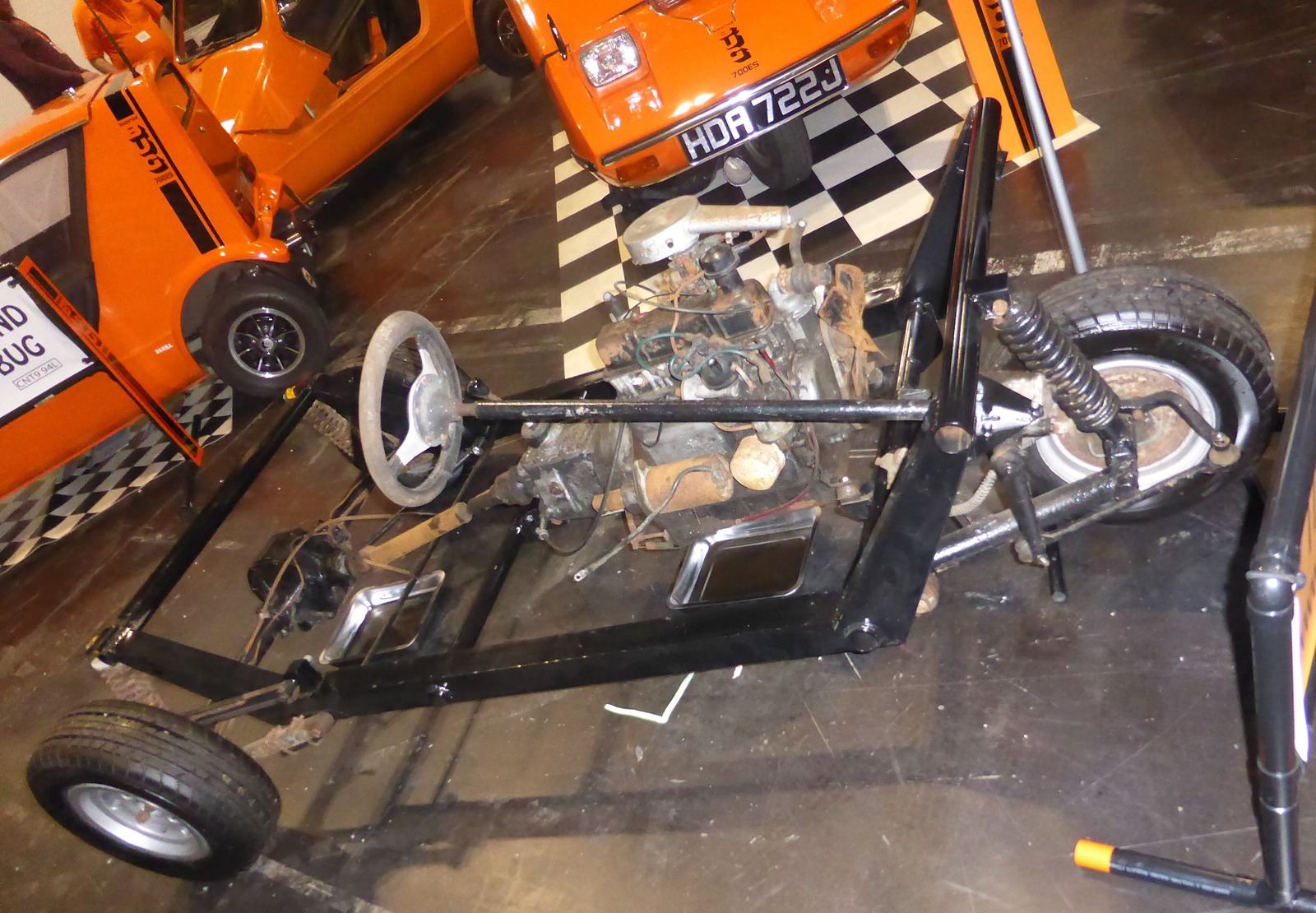
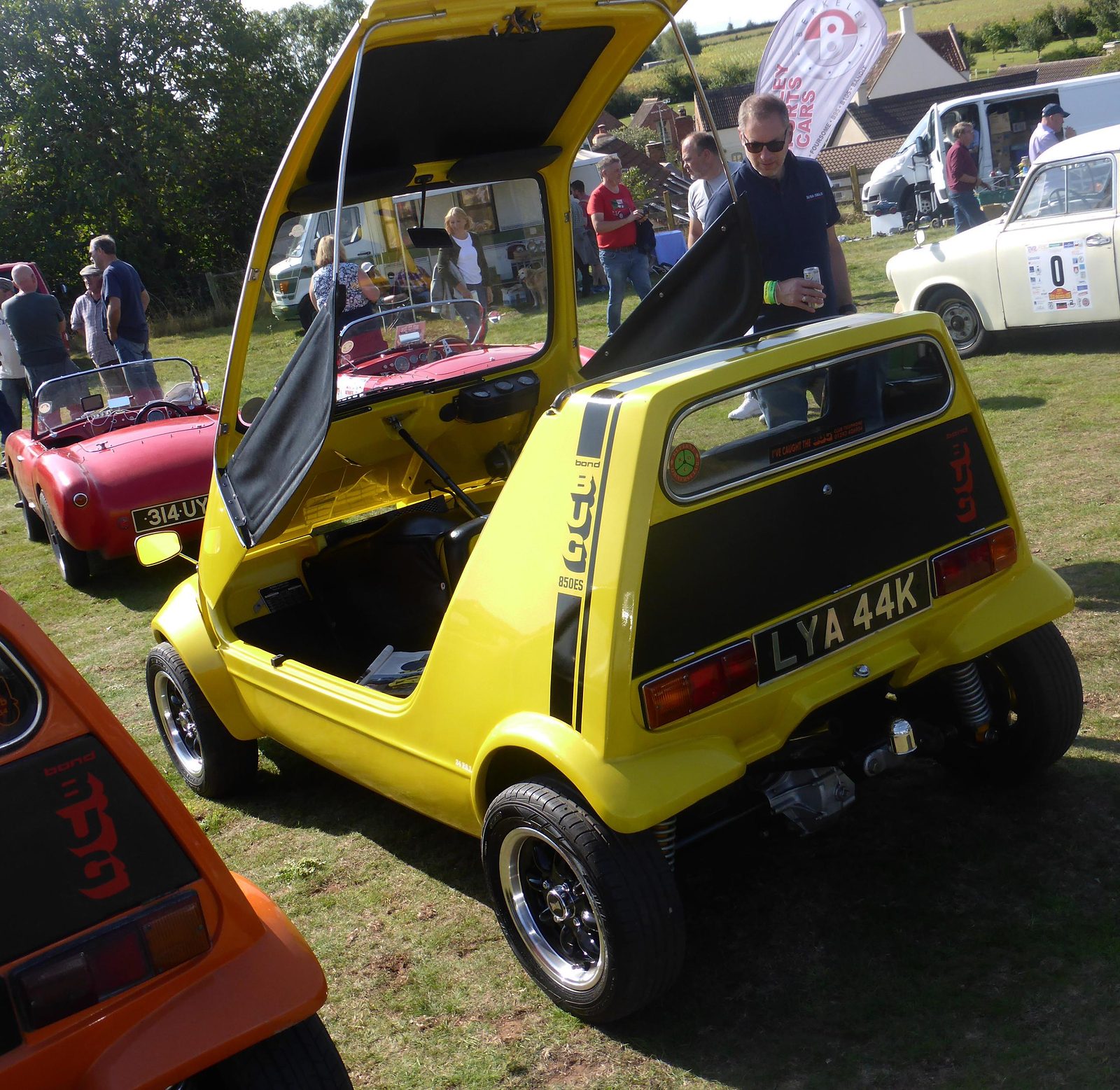
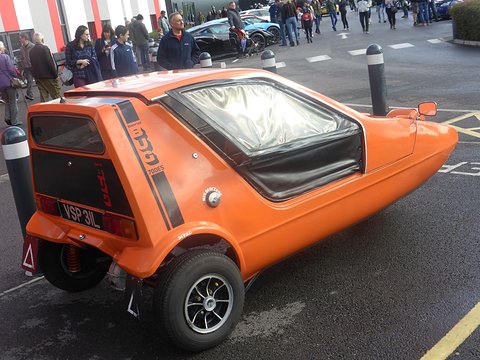
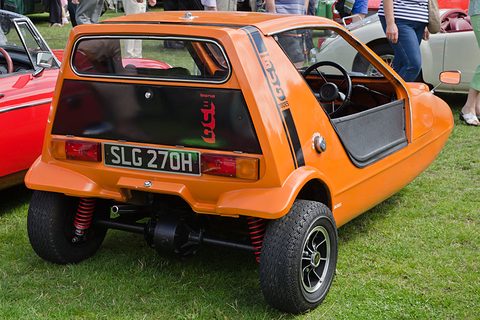
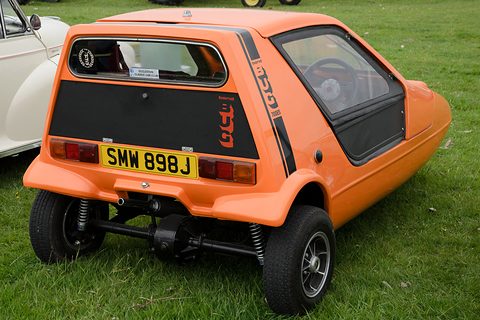
It was taxed and licensed as a motor tricycle, and anyone with a motorcycle licence could drive one.source 3source 5 The single front wheel steered; Reliant’s 701 cc all-aluminium four, from the Regal 3/30, sat between the two seats and drove the rear wheels. It gave 29 bhp (22 kW), or 31 bhp (23 kW) in the high-compression 700ES.source 1source 5source 9 The body was a glass-fibre wedge 2,794 mm (9 ft 2 in) long on the steel ladder chassis. Instead of doors the whole canopy, roof, windscreen and upper sides, tilted forward, and the detachable side screens were also the way out if the car rolled over.source 3source 1source 10source 4 It would do about 122 km/h (76 mph), quicker than a basic 850 Mini; the prototype had gone over 145 km/h (90 mph), and Reliant’s management reined it in.source 1source 4

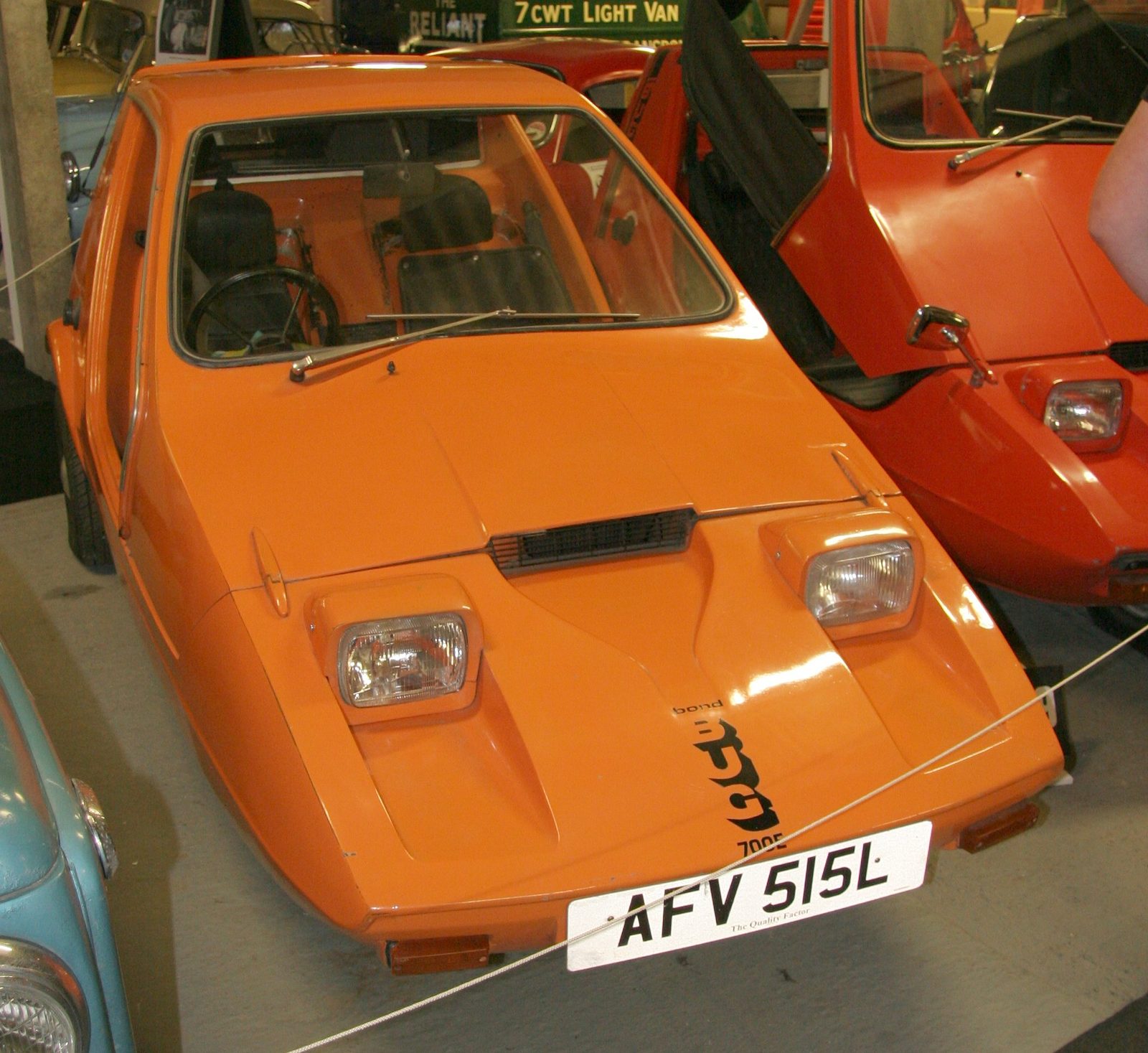
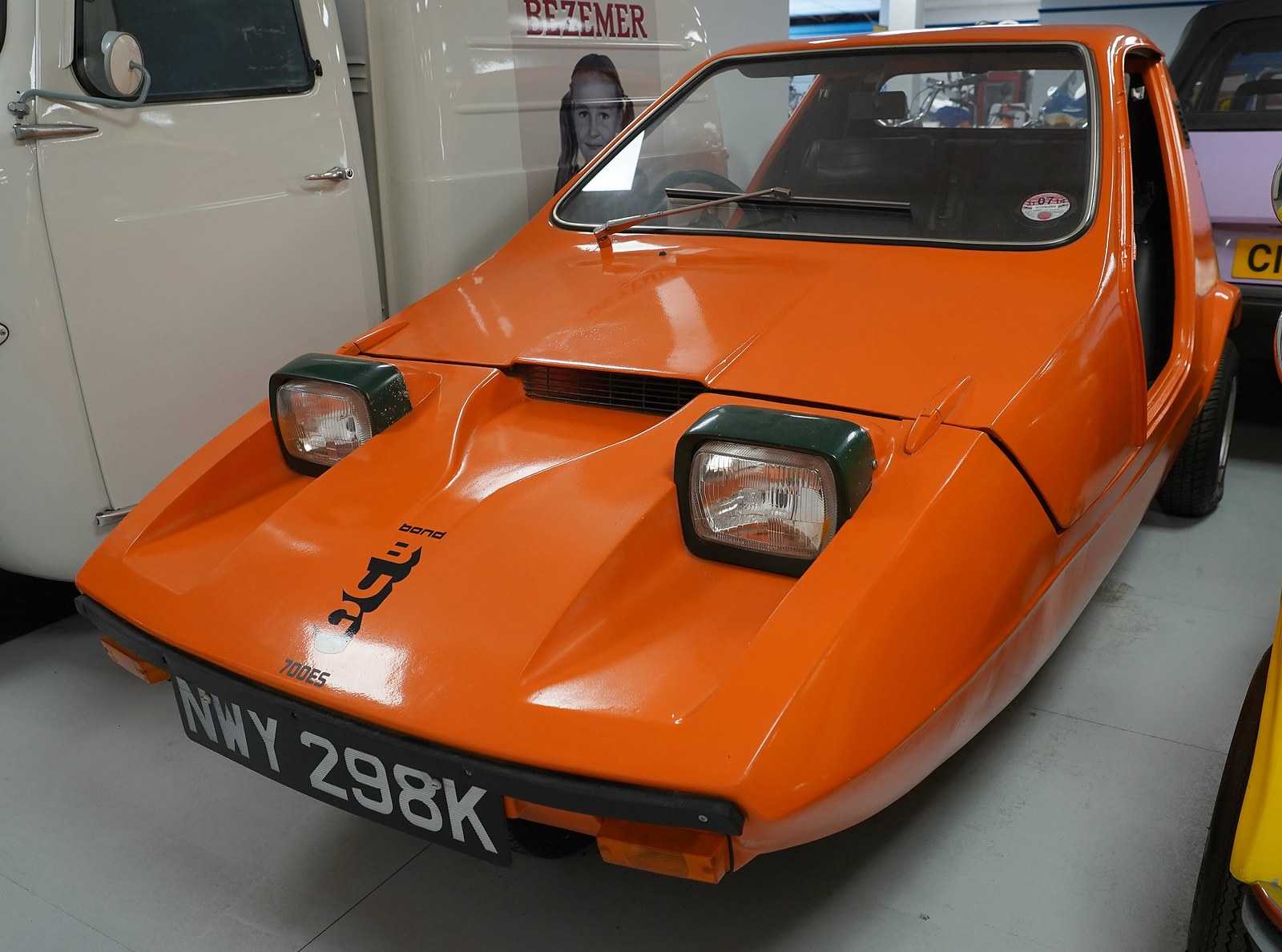
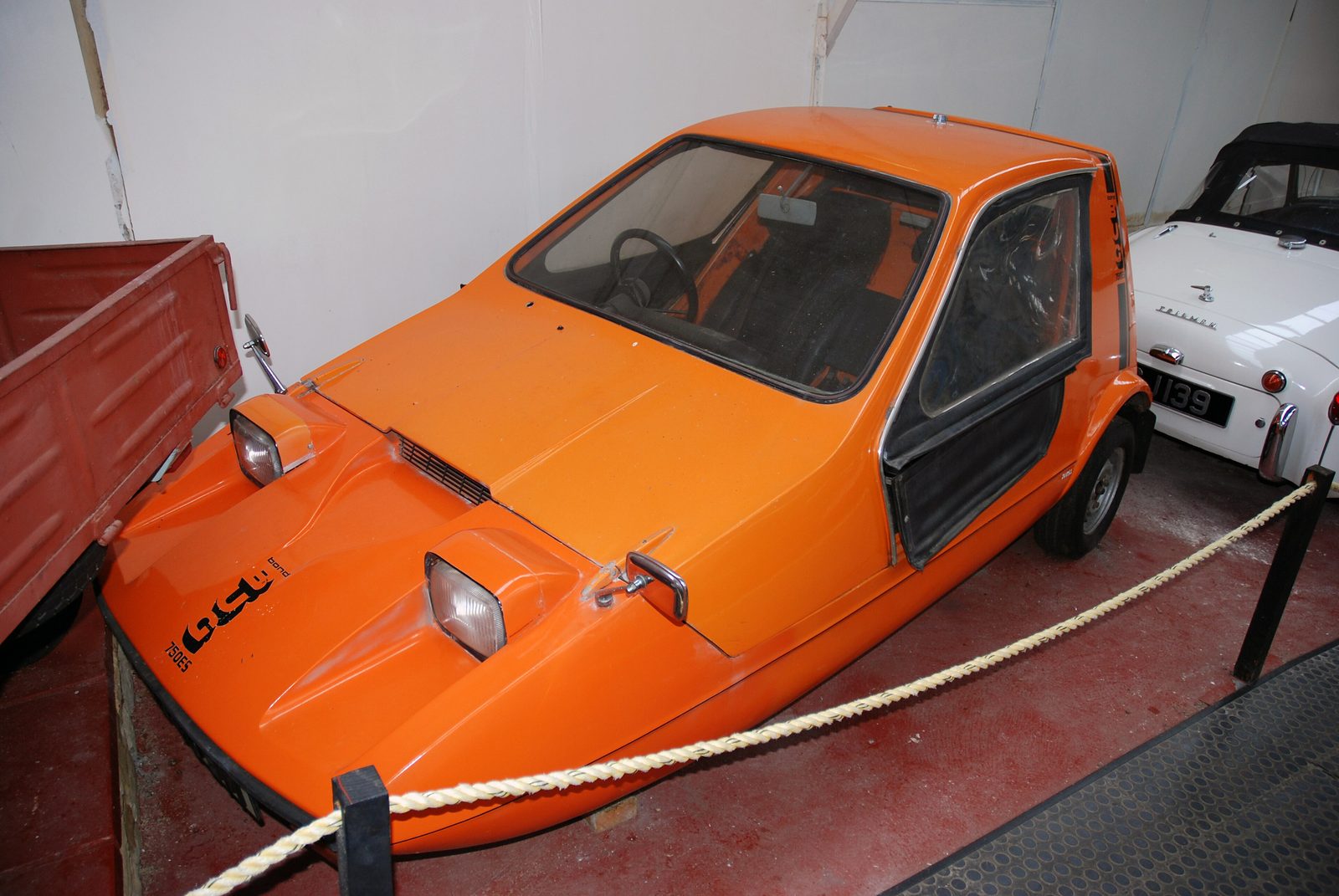
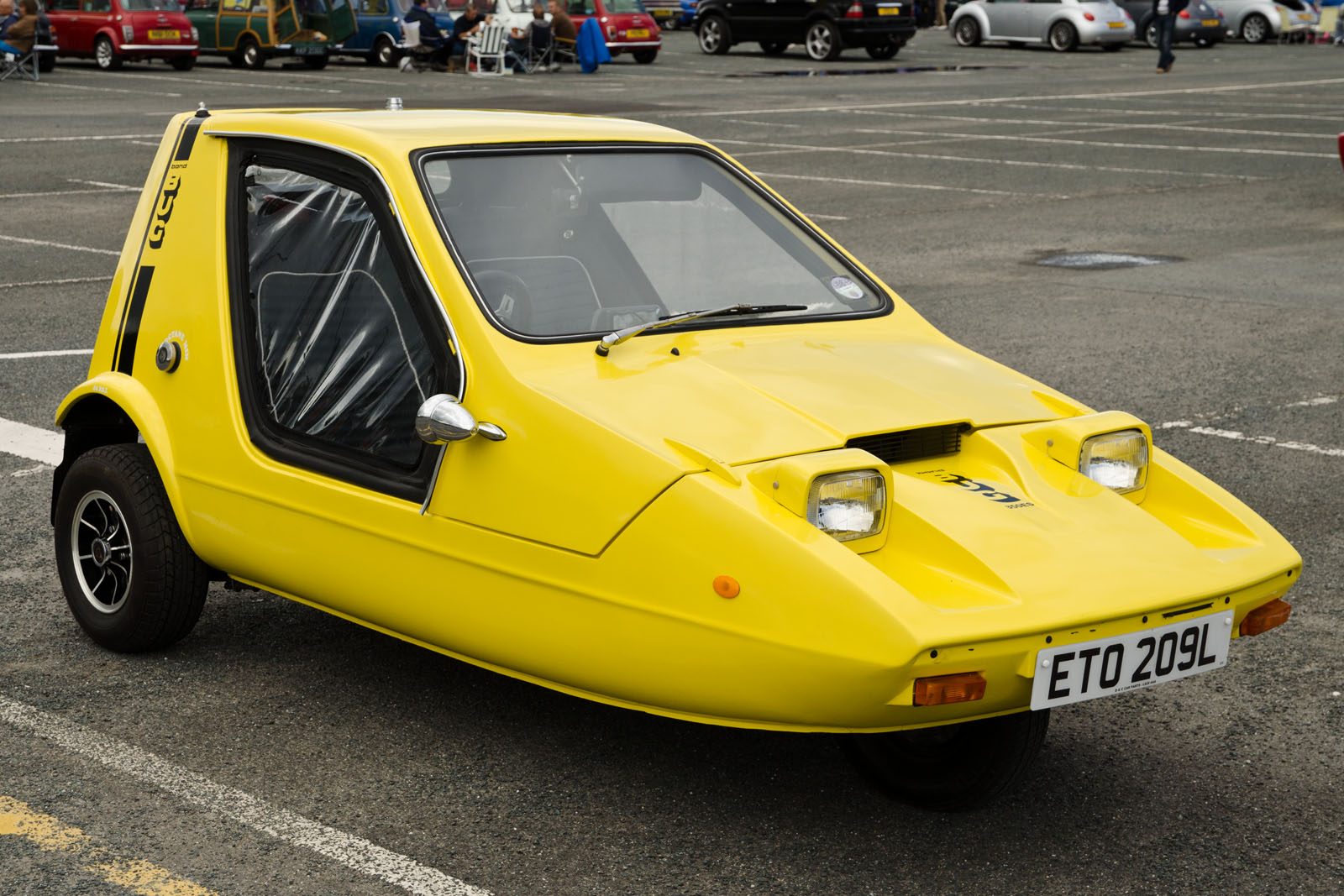
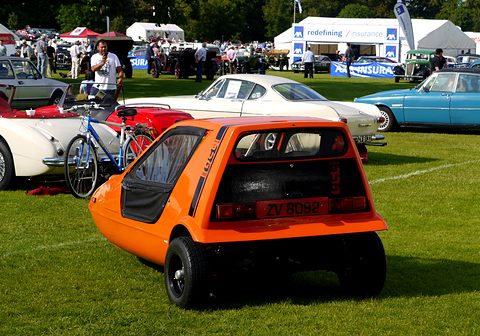
The basic 700 cost £548 and the 700E £29 more; the 700ES, at £629, cost more than a basic Mini at £620.source 5source 7source 1 The 700 itself was the “Bare Bug”, for fresh-air fiends: a fixed canopy, no side screens and crossply tyres.source 10source 4 The 700ES added low-profile tyres on alloy rear wheels, a spare wheel, headrests, quilted trim, a leather-rimmed wheel and twin horns.source 10 Whatever the version, the public could have any colour as long as it was tangerine.source 10source 3source 4 Bond’s slogan was “Something new under the sun”; it called the Bug a “funabout” rather than a runabout, and its advertising promised that no car outside the pub would draw a bigger crowd.source 4source 5 By the end of 1970 Reliant claimed that six owners in ten were 25 or younger.source 4

Half a Bug

As a three-wheeler the Bug was technically a motorcycle, and could not be shown at the London Motor Show. So in 1970 Reliant joined two Bugs back to back and exhibited them as a four-wheeler.source 3source 4

Sorry, you can’t buy this Bug, but we’ll sell you half of it.

Reliant’s sign on its stand at the London Motor Show, 1970, as reported by Lancaster Insurance in 2024.source 4

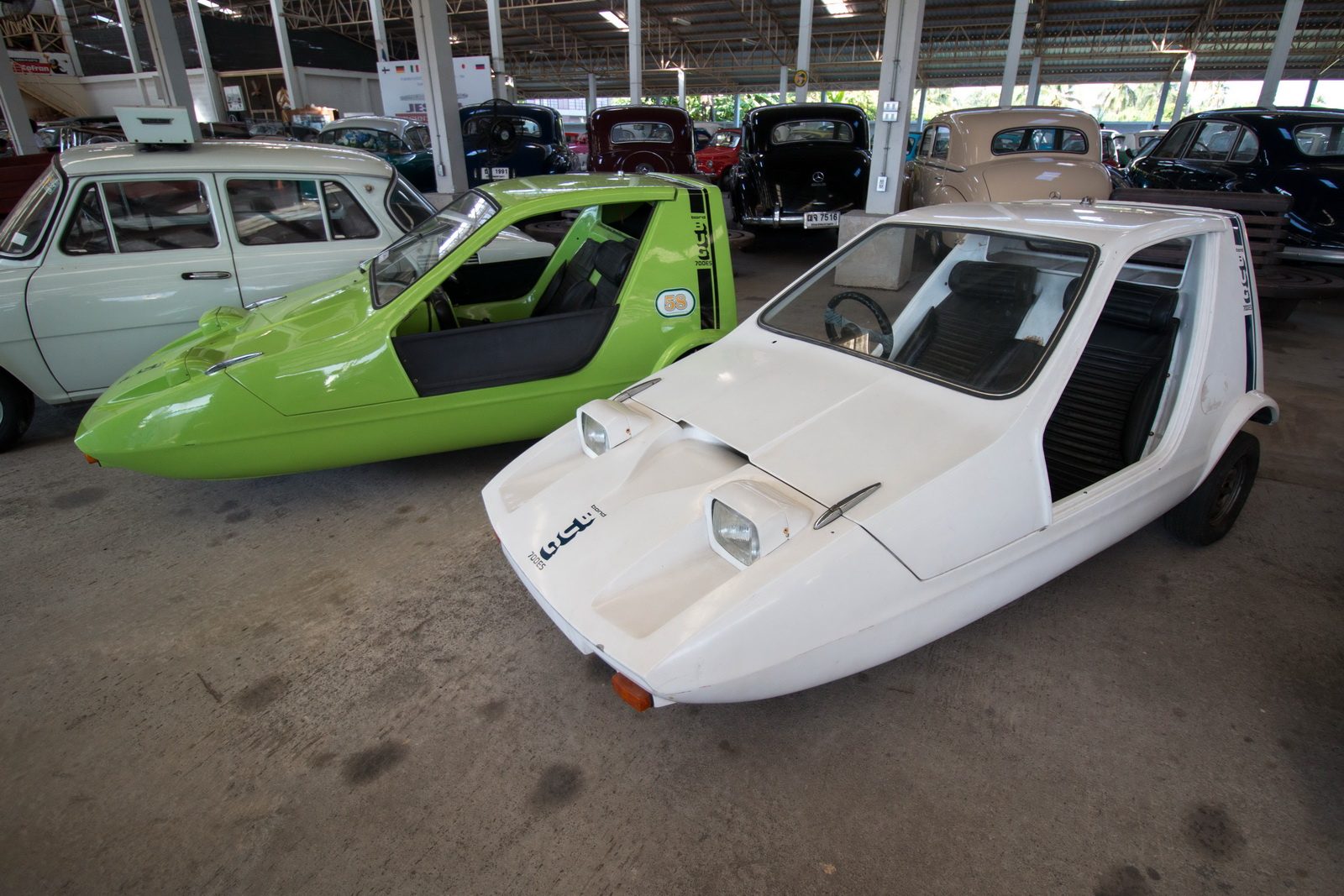
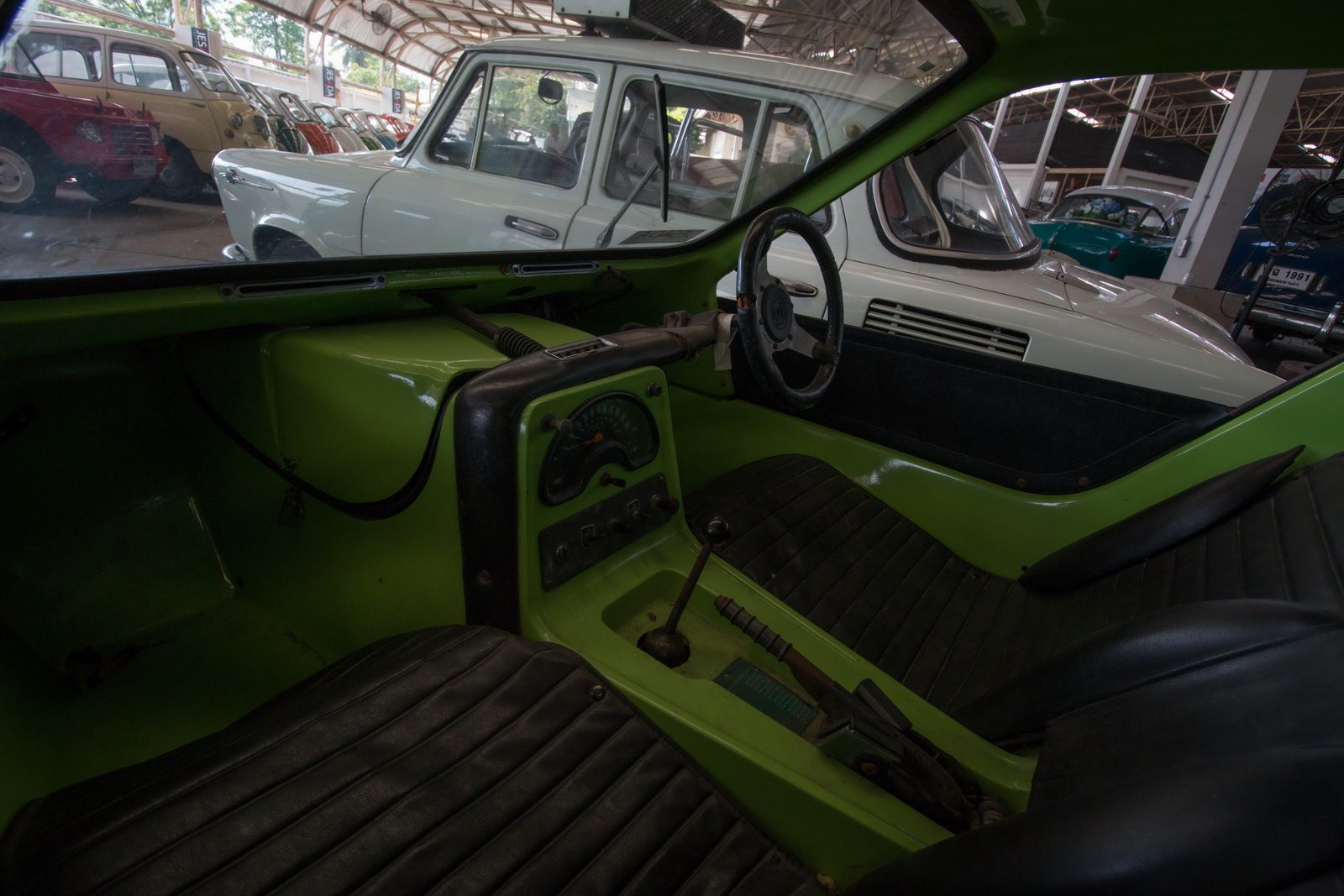
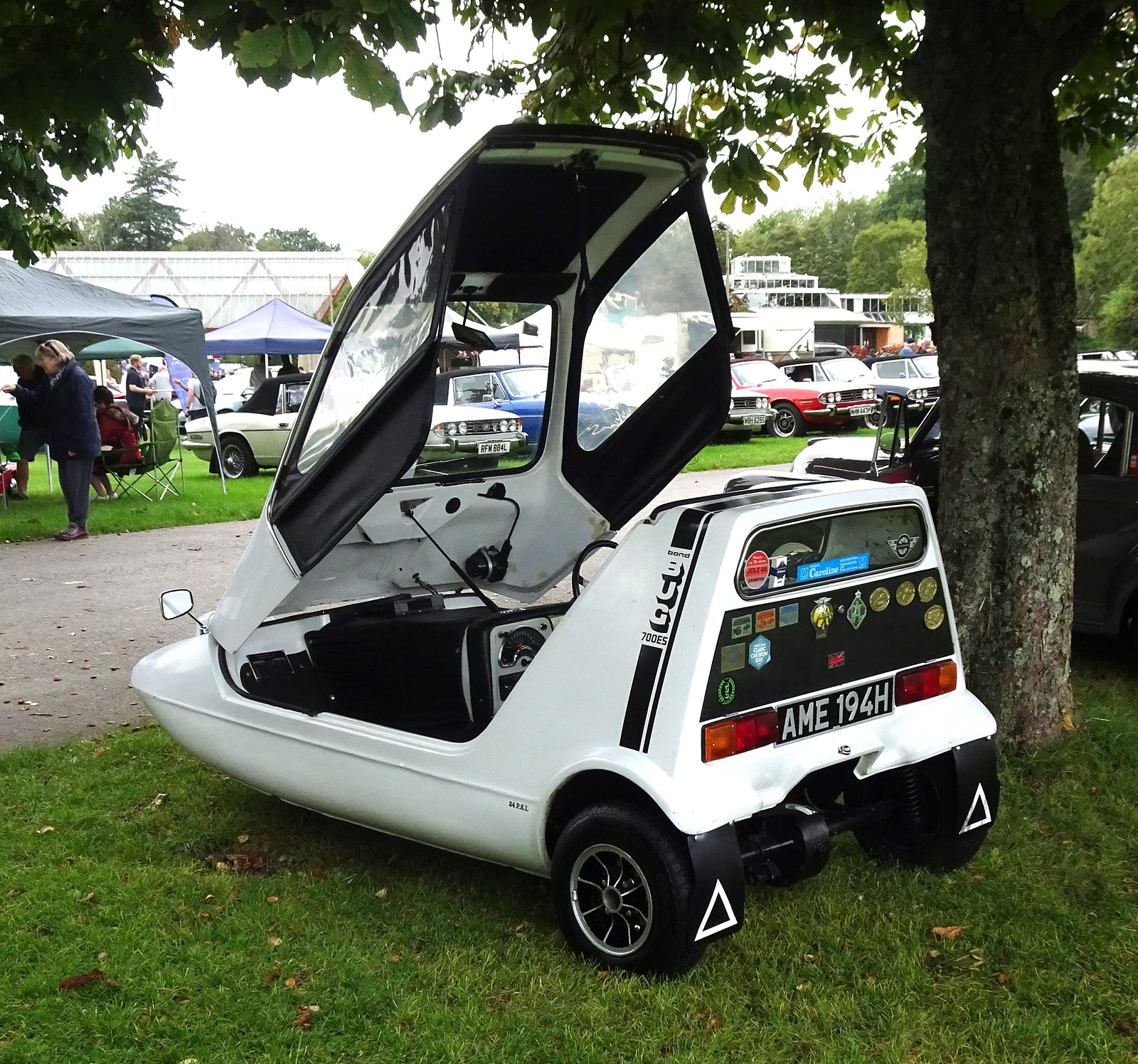
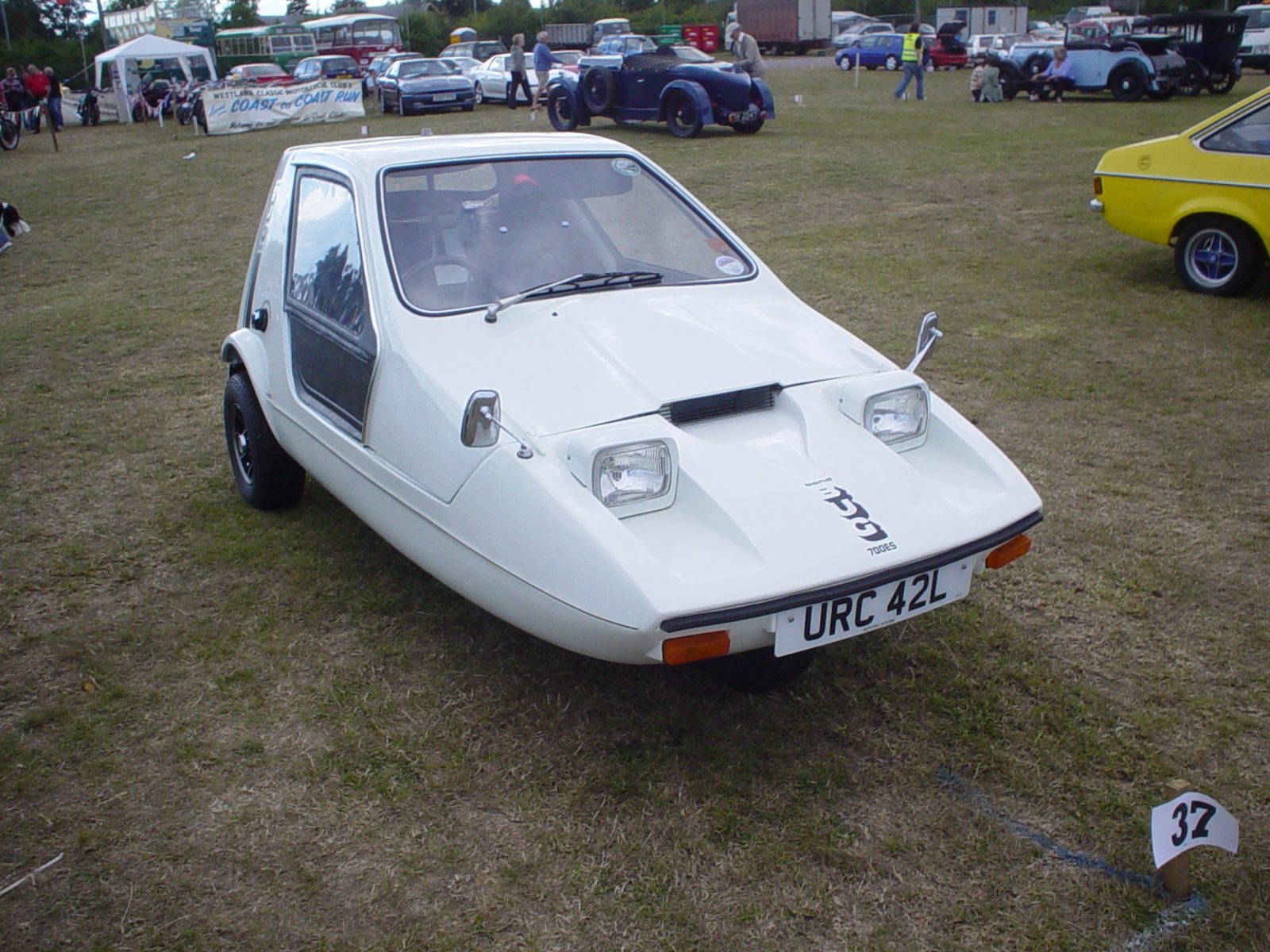
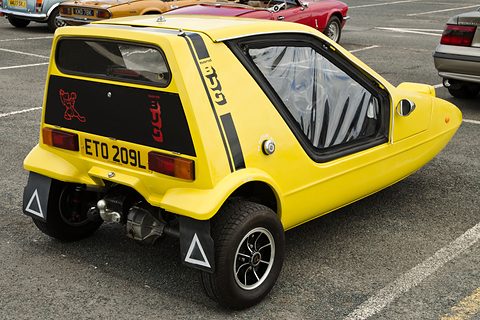
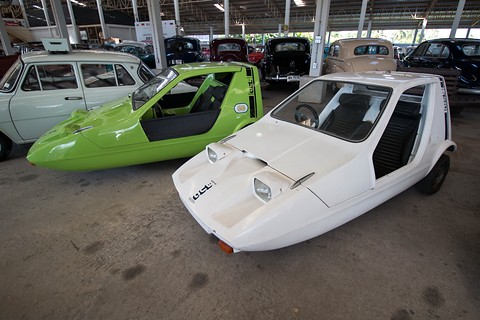
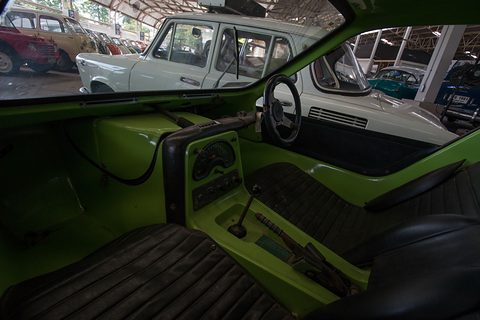
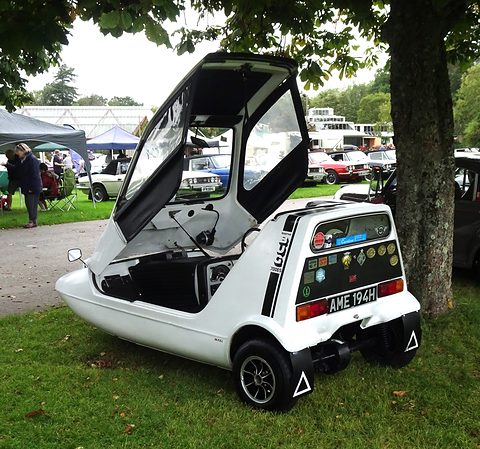
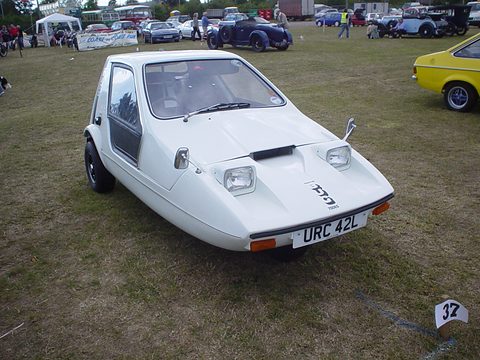
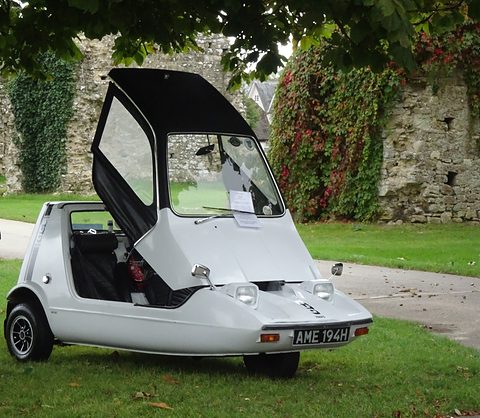
A few Bugs were not tangerine. Six white ones, AME 191H to AME 196H, toured the seaside resorts for Rothmans’ Cambridge cigarettes, and three of them survive.source 4source 1 The Bug Club’s count is different: four white and six lime-green Bugs sold to companies, for purposes it does not explain.source 10 AME 191H also starred in commercials for Cape Fruit. Other Bugs were the star prize on ATV’s The Golden Shot, a Jersey Ice Cream publicity car and a prize in a Woolworths record competition in 1972, and a Fine Fare supermarket contest asked how many bottles of Bulmer’s cider would fit in one.source 4source 1source 7

To Tamworth, and the 750

Production moved to Reliant’s works at Tamworth in the second half of 1970. The owners’ club dates the move to July and the closing of the Preston factory to December; Lancaster says by the end of 1970, and the Bug Club gives Tamworth from 1971.source 2source 4source 10 Some 300 chassis numbers, BB60700 to BB60999, are missing from every known record around the time of the move; the Bug Club’s historian concludes that the numbering restarted at 61000.source 8

From August 1971 (BB61445) the gearbox had synchromesh on all its gears and a new reverse position.source 8source 4 In February 1972 a shorter steering column made room for a dished wheel under the new safety rules, and that November the list prices were £578, £607 and £653.source 8 In April 1973 Glass’s Motorcycle Check Book recorded the Bug 700 as discontinued, although only one had ever been made. That October the 700E and 700ES ended at BB62427, and the 750E and 750ES took over with the Robin’s 748 cc engine, at £648.87 and £694.14.source 8

The last Bond

The 750s were discontinued in May 1974 at BB62569, and VLB 249M became the last vehicle ever built with the Bond name.source 8 Only 142 750s had been made; English Wikipedia says fewer than 200, and that Reliant cleared the line to build more of its new Robin 750.source 11source 1 The Bug had been expensive to build, and expensive to insure for the young drivers it was aimed at; insurers were alarmed, Lancaster writes, at the risks they took testing its acceleration. It never met its target of 2,000 a year.source 4source 7 When Motor Sport visited Tamworth in March 1976, it noted simply that the Bond Bug had ceased production.source 12

On the road

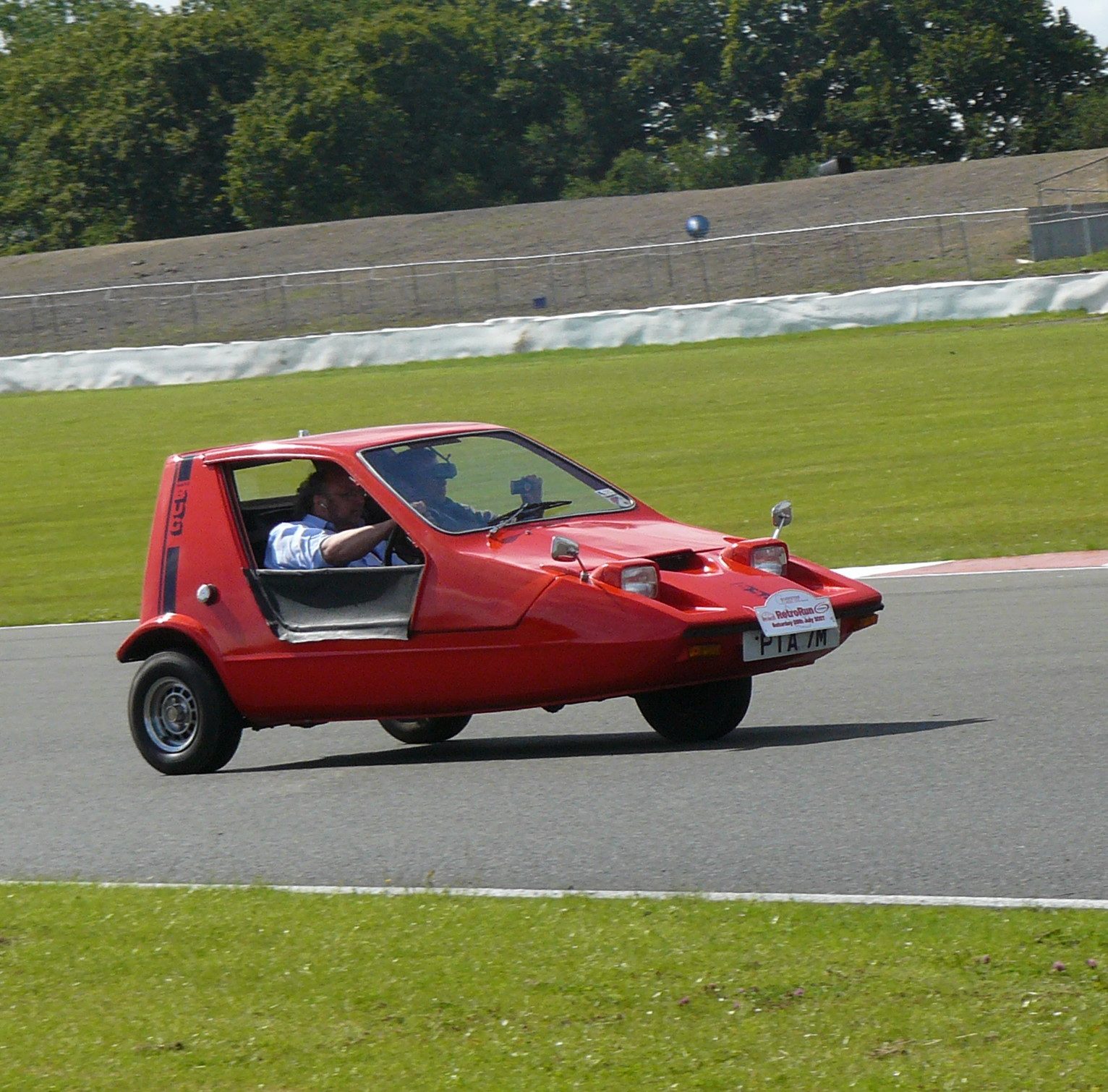
Motor Sport’s editor handed the Bug to his daughter, a girl of nearly 21 who drove an orange Volkswagen Beetle. She found it noisy, with the engine in the cabin with her, a bonnet that rattled and stiff suspension; with the side screens on she was hot below and cold above, and tall drivers hit their knees on the steering-wheel support bar. But it went very well: she saw an indicated 129 km/h (80 mph) on a motorway, it steered well, and it was narrow, with a small turning circle. Cornered fast, it felt a little unsafe, and her father added that it was worse in the wet. It returned 53 mpg.source 5

I would call the Bond Bug a fun car and I quite liked it, but as long-distance transport it is – there’s only one word for it – crude.

P. B. B., the editor’s daughter, staff test in Motor Sport, July 1970.source 5

The next February her father wrote that the Bug was not for the ancient: his assistant had got one up on two wheels within a quarter of a mile of the office, damaging its glass-fibre front.source 13 Others were warmer. Motor found the 700ES fast, safe and above all fun, and its testers were sorry to give the demonstrator back.source 7source 4

A completely new approach to the economy three wheeler and it is our prediction that it will become the Mustang of its class.

Autocar, about 1970, as quoted by Lancaster Insurance in 2024.source 4

The seats were fixed, so Bond supplied pedal pads in different sizes; drivers over about 1.78 m (5 ft 10 in) were at a disadvantage, and short ones often needed a cushion.source 4source 7 The car sat so low that it felt like a go-kart, faster than it was.source 1 In Austria in 1974, Austro-Motor timed it from 0 to 100 km/h in about 17 seconds, found it never used more than 6 litres per 100 km even in town, and complained of a stiff gearchange and noise when revved.source 14 A reader’s letter to Motor Sport in 2010 recalled that the racing driver John Britten, reviewing a Bug for a magazine, rolled it in a one-point turn on Silverstone’s main straight between races.source 15

After the Bug

Reliant built four-wheeled Bugs, code-named FW9, before it launched the Reliant Kitten; the owners’ club records one prototype, and Ogle took the studies on into a different-looking coupé that the management did not pursue.source 11source 1 An 850 cc overhead-camshaft engine with twin SU carburettors, for which 70 hp was claimed, was developed with BRM for the Bug and an unbuilt sports car.source 1 In 1990 Mike and Gary Webster bought the original moulds and a licence from Reliant, and sold four-wheeled kit Bugs, with a Mini front subframe and the choice of canopy or open top, and a few three-wheelers (more such firms in British kit microcars).source 1source 10 In 1994 Karen restyled the Bug for Reliant as the Sprint, with rounded edges and round headlamps on half a Robin chassis; Reliant’s management would not build it, and a four-wheeled Clubman by Andy Plumb in 1998 died too.source 1

Karen’s other work included the Raleigh Chopper bicycle, Kiddicraft’s Marble Run toy and Reliant’s Scimitar and Robin.source 4source 10 The Bruce Weiner Microcar Museum in Georgia credits the Bug with ending the idea, in Britain, that a three-wheeler had to look like a four-wheeler.source 3 Karen was an honorary life member of the Bug Club, and died on New Year’s Eve 2022, aged 96.source 10
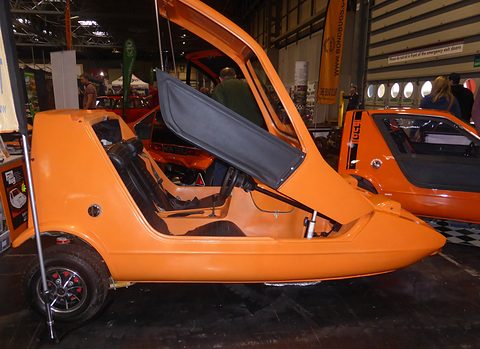
Tangerine three-wheeler side-on with its roof lifted high and a side screen hanging open.
The canopy fully raised on its front hinge: roof, windscreen and upper sides lift as one.Photo: andreboeni, CC BY 2.0, via Wikimedia Commons
White wedge three-wheeler with its canopy open, parked on grass before an ivy-covered stone wall.
AME 194H, one of the white Bugs registered for Rothmans in 1970, at Beaulieu in 2023.Photo: andreboeni, CC BY 2.0, via Wikimedia Commons
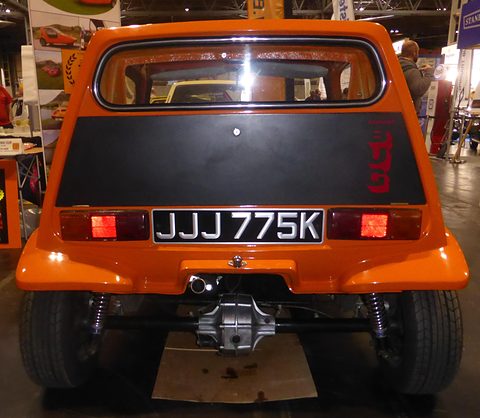
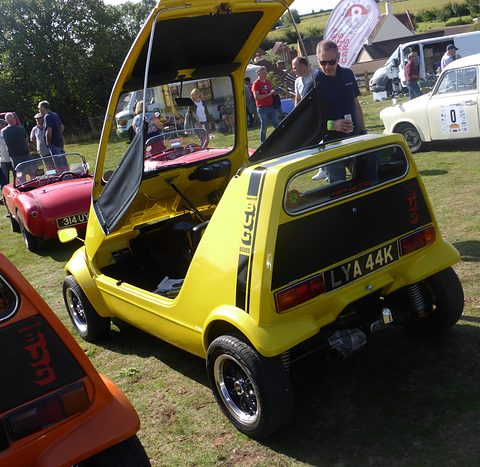
Tangerine three-wheeler dead-rear, black tail panel above the rear axle and differential.
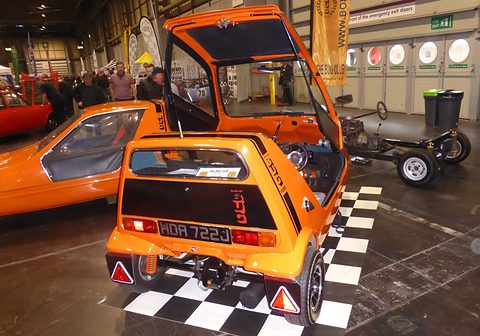
A 1971 Bug from behind: the rear axle and its coil springs are in plain view.Photo: andreboeni, CC BY 2.0, via Wikimedia Commons
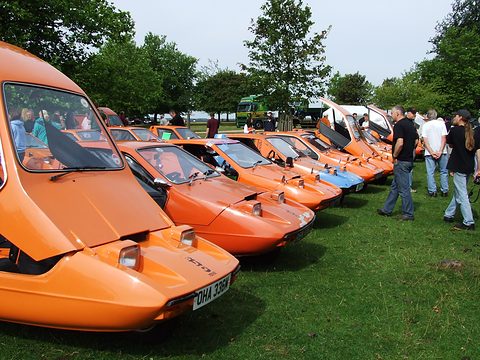
A row of tangerine wedge three-wheelers on grass, owners standing beside them under trees.
Bugs back at Woburn Abbey, where the car was launched, for its 40th anniversary in 2010.Photo: BigglesBear, CC BY-SA 3.0, via Wikimedia Commons

Pictures

More photographs, old and new

Variants

From the Bare Bug to the 750

The Bug family
VariantYearsWhat differsHow many
700 (“Bare Bug”)1970Fixed canopy, no side screens or lower side panels, crossply tyres; 29 bhp; £5481
700E1970–⁠1973Opening canopy, side screens, sun visor, interior lamp, heater and demister, hubcaps; 29 bhp; £5772,126 with the 700ES
700ES1970–⁠1973High-compression engine of 31 bhp, low-profile tyres on alloy rear wheels, spare wheel, headrests, quilted trim, leather-rimmed wheel, twin horns; £629In the 2,126
750E and 750ES1973–⁠1974The Robin’s 748 cc engine, 32 bhp DIN; £648.87 and £694.14142
Four-wheeled prototype (FW9)1970sA study made before the Reliant Kitten1
Rothmans and other company cars1970–⁠1971White or lime-green promotional cars; the public could buy only tangerineSix for Rothmans; the Bug Club says four white and six lime green
Webster BugFrom 1990Kit Bugs from the original moulds, with three or four wheels, by the Webster Motor CompanyNot known

Specification

The 700E and 700ES, 1970–⁠73, unless noted

Engine and drive

Engine and drive
EngineReliant four-cylinder OHV, water-cooled, die-cast aluminium block and head, wet liners; 701 ccsource 3source 1source 5750E and 750ES: 748 cc, bore 62.5 mm, 32 bhp DIN at 5,500 rpm
Power29 bhp (22 kW); 31 bhp (23 kW) in the 700ESsource 1source 3source 7Austro-Motor quoted 32 PS in 1974
Compression7.35:1; 8.4:1 in the 700ESsource 1
GearboxFour speeds and reverse; synchromesh on all forward gears from August 1971source 3source 8
LayoutFront engine between the seats, rear-wheel drivesource 5source 1

Body and chassis

Body and chassis
BodyGlass-fibre wedge; no doors: the canopy tilts forward; detachable side screenssource 3source 1source 10
ChassisSteel ladder chassis by John Crosthwaitesource 1source 3
SuspensionCoil springs front and rearsource 3
Steering and brakesRack; hydraulic brakessource 3
Tyres145/80 R10 front; 165/70 R10 rear on alloys, or 5.20-10 crossplysource 105.20 × 10 by the Weiner museum
Electrics12 Vsource 3

Dimensions

Dimensions
Length2,794 mm (9 ft 2 in)source 10source 12,730 mm by the Weiner museum
Width1,397 mm (4 ft 7 in)source 10source 11,550 mm by the Weiner museum
Height1,270 mm (4 ft 2 in) closed; 2,108 mm (6 ft 11 in) with the canopy opensource 10source 1
Wheelbase1,956 mm (6 ft 5 in)source 10source 1
Weight392 kg (864 lb) kerbsource 10373 kg (822 lb) in English Wikipedia, 394 kg (868 lb) by the Weiner museum; none is a factory figure

Performance and running

Performance and running
Top speed122 km/h (76 mph)source 1source 472 mph by the Weiner museum; just under 130 km/h in Austro-Motor
Acceleration0–100 km/h in about 17 secondssource 14Austro-Motor, 1974
Consumption53 mpg in Motor Sport’s 1970 testsource 5Never more than 6 litres per 100 km, said Austro-Motor
Turning circle7.5 msource 14
Price new£548 (700), £577 (700E), £629 (700ES) in 1970source 5source 7source 4£578, £607 and £653 in November 1972

How many were built?

Every figure, with its source

2,270 built2,270, the Bond Owners’ Club’s count from Bond’s own production records: one Bug 700, 2,126 700Es and 700ESs, 142 750Es and 750ESs, and one four-wheeled prototype. The other two figures are within six of it and are not explained.

  1. 2,276BugsOne source

    The Weiner museumsource 3

  2. 2,270Bugs of all types, with one four-wheeled prototypeOne source

    Bond Owners’ Club, from Bond’s production records; repeated by Lancaster Insurance and English Wikipediasource 11

  3. 2,268BugsOne source

    The Bug Clubsource 10

  • Two sources agreetwo good sources give the figure
  • One sourcea good source, alone
  • Unconfirmeda lead only, not yet checked

Famous for

Three points

  1. A canopy, not doors

    The whole top tilts forward to let you in, and the side screens are the way out if it rolls.

  2. Tangerine only

    Every Bug sold to the public was tangerine; only promotional cars came in white or lime green.

  3. The last Bond

    VLB 249M, built in May 1974, was the last vehicle ever to carry the Bond name.

Racing and records

One record, on water

No Bug is known to have raced, but one became a boat. On The Grand Tour, Richard Hammond and James May turned a Bug into an amphibian, the “Pond Bug” (more in records and feats).source 1

76.9 km/h
(47.81 mph) on Coniston Water, with Jeremy Clarkson driving, reported as a British water speed record in an experimental amphibious unlimited class.source 1

On screen

Confirmed appearances only

Which landspeeder prop used the Bug chassis, and whether it survives, has not been established.

Survivors and collecting

Today

The Bug Club, founded in 1991, has records of more than 900 Bugs, over 600 of them with photographs. It reckons 150 to 250 are still on the road worldwide, with another 700 to 900 in garages, barns and fields, so that about half of those made may survive in some form.source 10 The Bond Owners’ Club keeps Bond’s production records, and in 2010 Bugs gathered at Woburn Abbey again for the car’s 40th anniversary.source 11source 1 Many have been changed: Reliant’s 850 cc engine is a common fit, and owners have tried motorcycle engines, a Mini engine in the boot, electric drive and a stretched “Millennium Bug” with a 1,399 cc Rover engine; nobody is known to have fitted a Hillman Imp engine.source 10
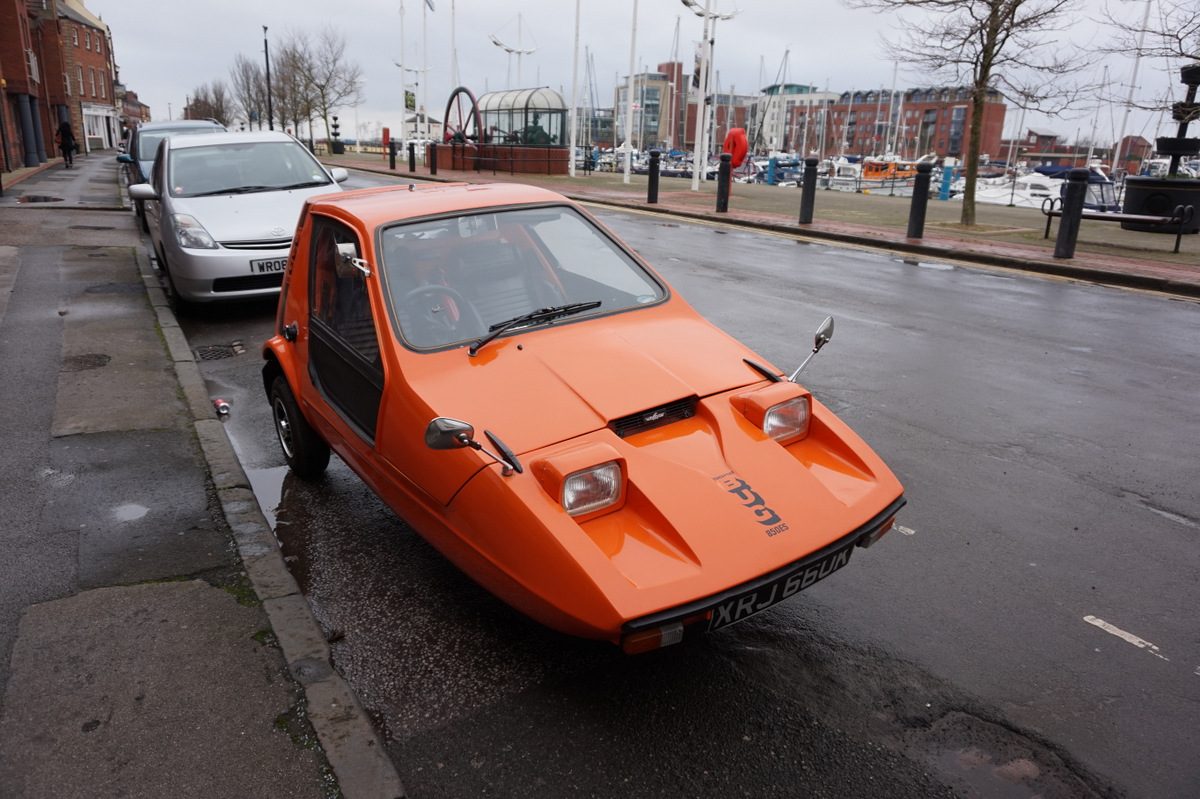
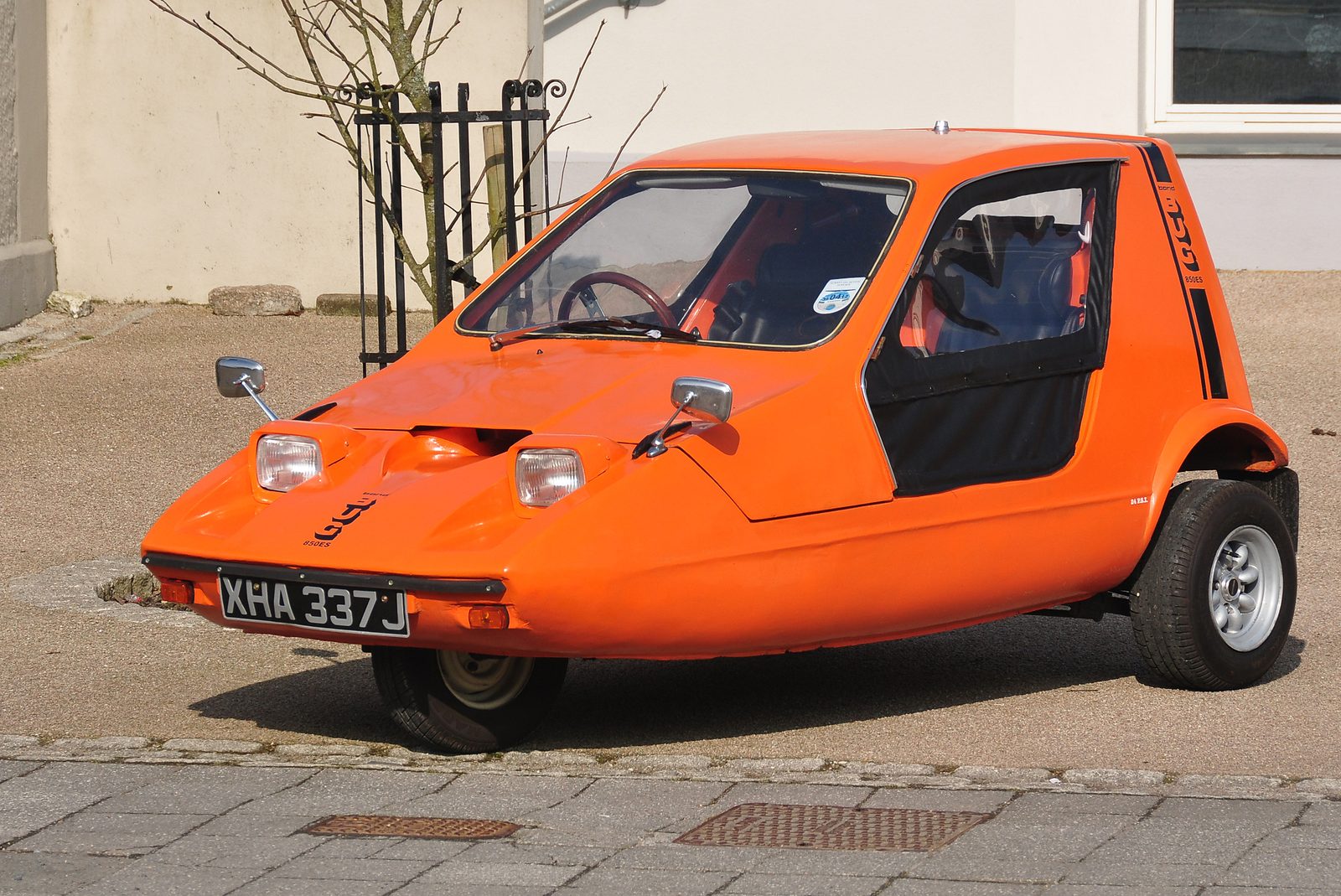
The Weiner museum had a 1972 Bug, restored in England in the 1990s.source 3 In 2001 the Stondon Transport Museum showed a 750, PGB 409M, chassis BB62491, the 63rd 750 built.source 8 No dated auction result from a serious sale room has been found.
Sources

Numbered as in the text

Motor’s test of 6 June 1970 and the Autocar test were not read; their words here come through later articles. No dated auction result from a serious house was found. Sources are given as plain text; the links are on the Credits page.

  1. English Wikipedia, Bond Bug, revision of 23 August 2026, read in full. Used as a lead; it cites Motor of 6 June 1970, Culshaw and Horrobin (1974), the official Star Wars databank and Metro of 3 November 2017.
  2. Bond Owners’ Club, “A brief history of the Bond Company”, archived 23 December 2018, read in full.
  3. Bruce Weiner Microcar Museum, “1972 Bond Bug”, tour page, archived about 2015, read in full.
  4. Lancaster Insurance, “The Bond Bug: A Celebration”, 25 September 2024, read in full; it quotes Bond’s advertising, Motor and Autocar.
  5. “Rumblings”, Motor Sport, July 1970, with the staff test signed P. B. B. and Ray Wiggin’s launch speech, read in full.
  6. Grace’s Guide, “Bond Cars” and “Reliant Motor Co”, read in full.
  7. Lancaster Insurance, “The Bond Bug: May the Force/Farce Be With You”, 24 November 2016, read in full.
  8. Bond Owners’ Club, “Bug: Vehicle Modifications by Chassis Number”, archived 2018, read in full.
  9. Reliant Motor Club, “Reliant Engines”, read in full.
  10. The Bug Club, “Stats”, read in full.
  11. Bond Owners’ Club, “Production Statistics and Vehicle Modifications by Chassis Number” (2001), archived 25 December 2018, read in full.
  12. “Reliant of Tamworth”, Motor Sport, June 1976, read in full.
  13. W. B., “My year’s motoring”, Motor Sport, February 1971, the Bug passage read.
  14. German Wikipedia, Bond Bug, read in full. Used as a lead; it gives the short test “Kurz gefahren: Bond Bug” in Austro-Motor 6/1974, which was not read directly.
  15. “Bond Bug vs bus”, reader’s letter, Motor Sport, March 2010, read in full.