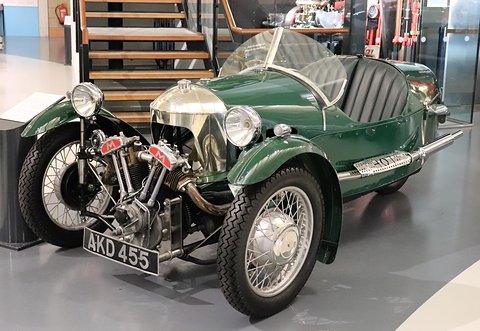
microcarfan
  • Three-wheeler
  • France
  • Three wheels
  • The French Morgan

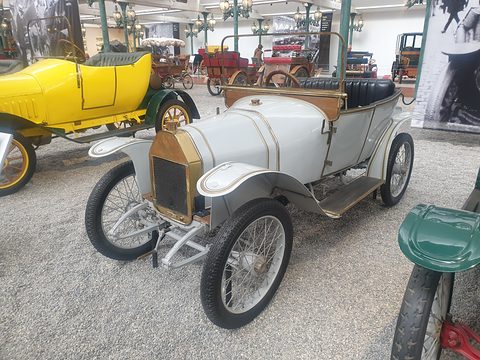
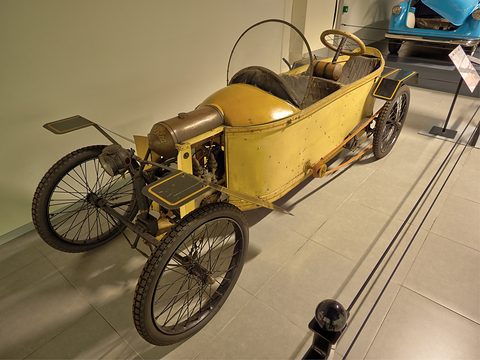
Darmont

Also known as Darmont-Morgan, Spécial, Étoile de France and Aéroluxe, V-Junior (the four-wheeler)

Its crankcase was cast with two names, “Darmont” and “Morgan”. Built under licence at Courbevoie and then made their own, the Darmont brothers’ three-wheelers set world records and went on selling long after the French cyclecar years were over.

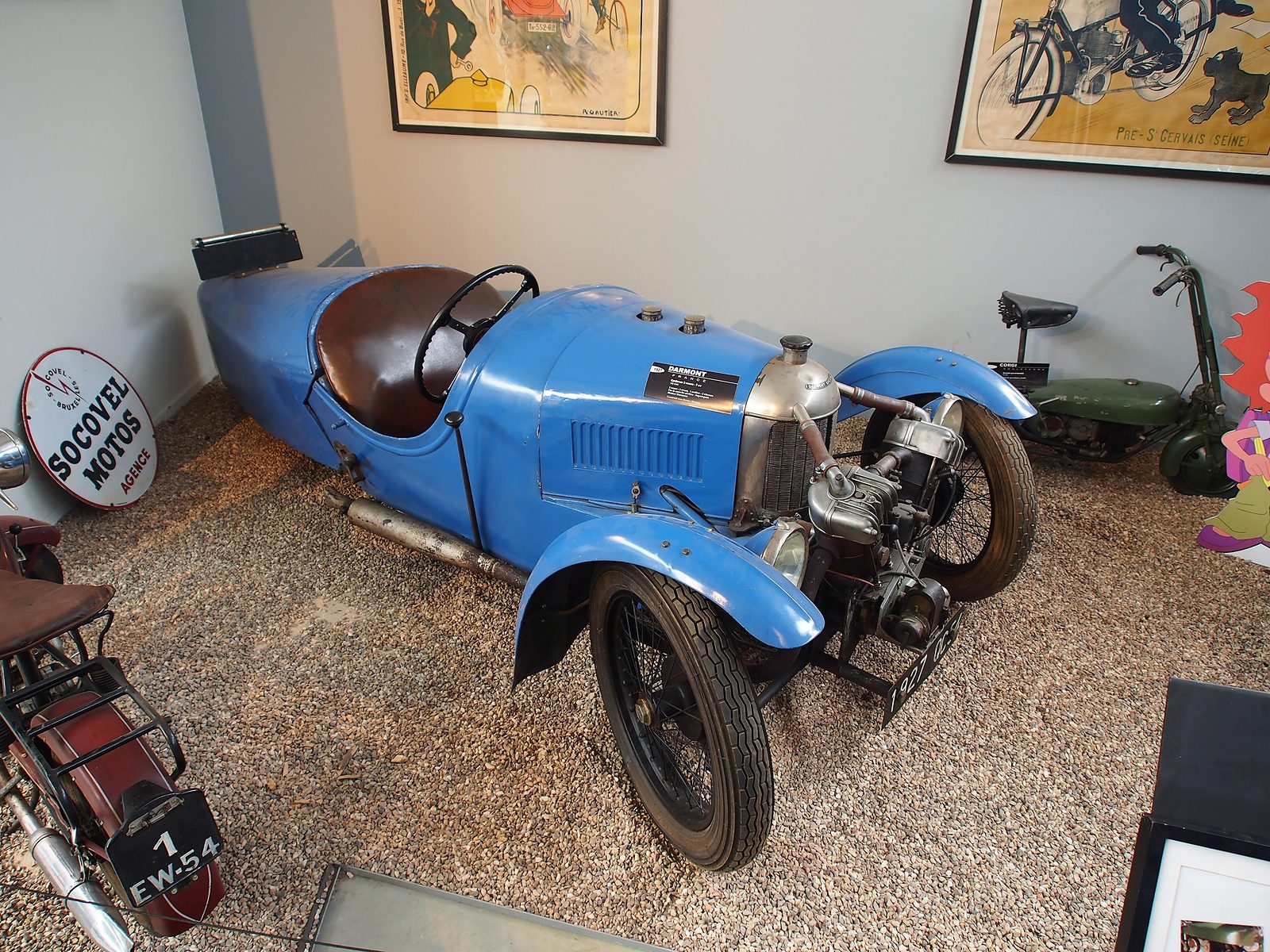
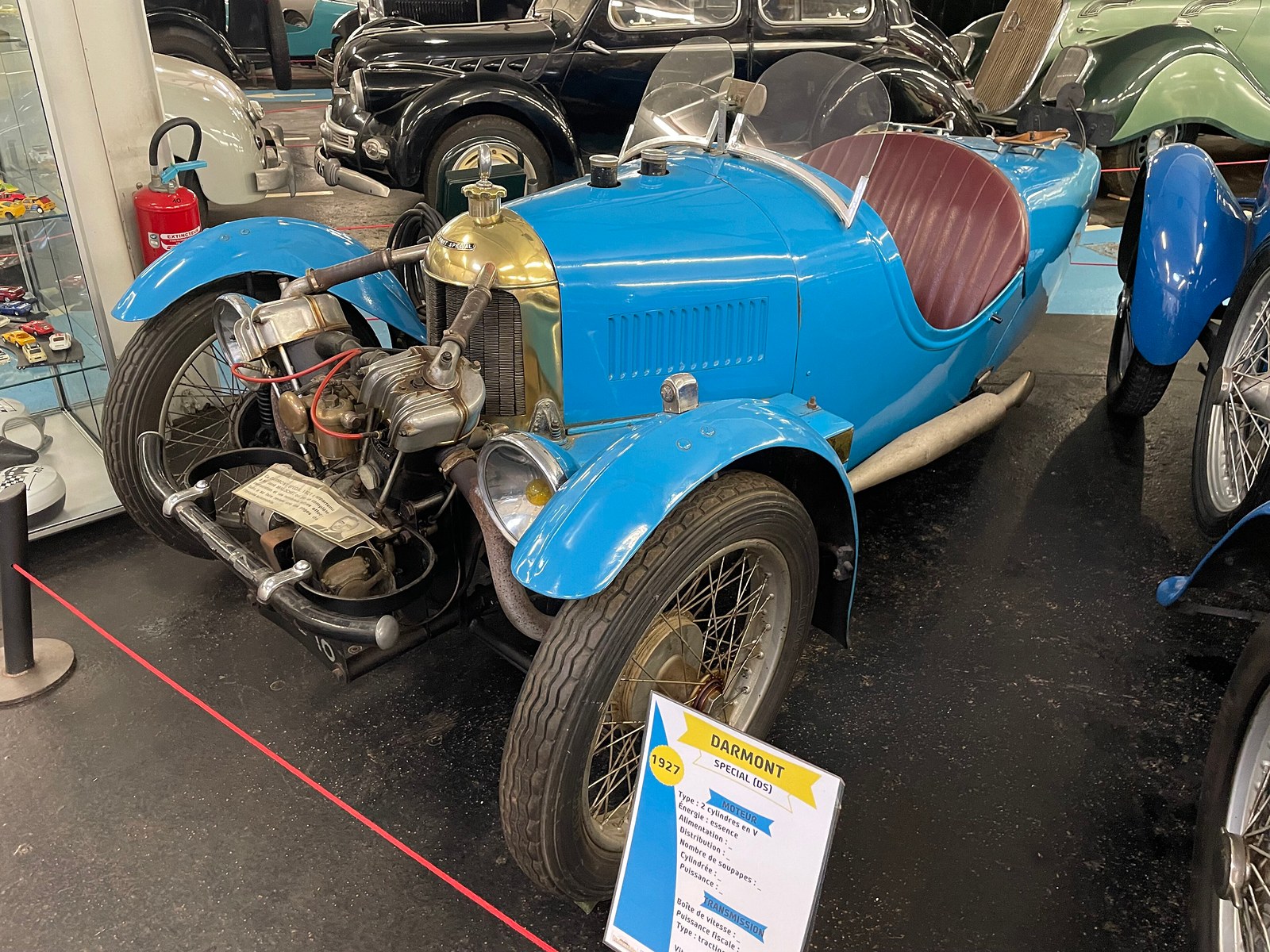
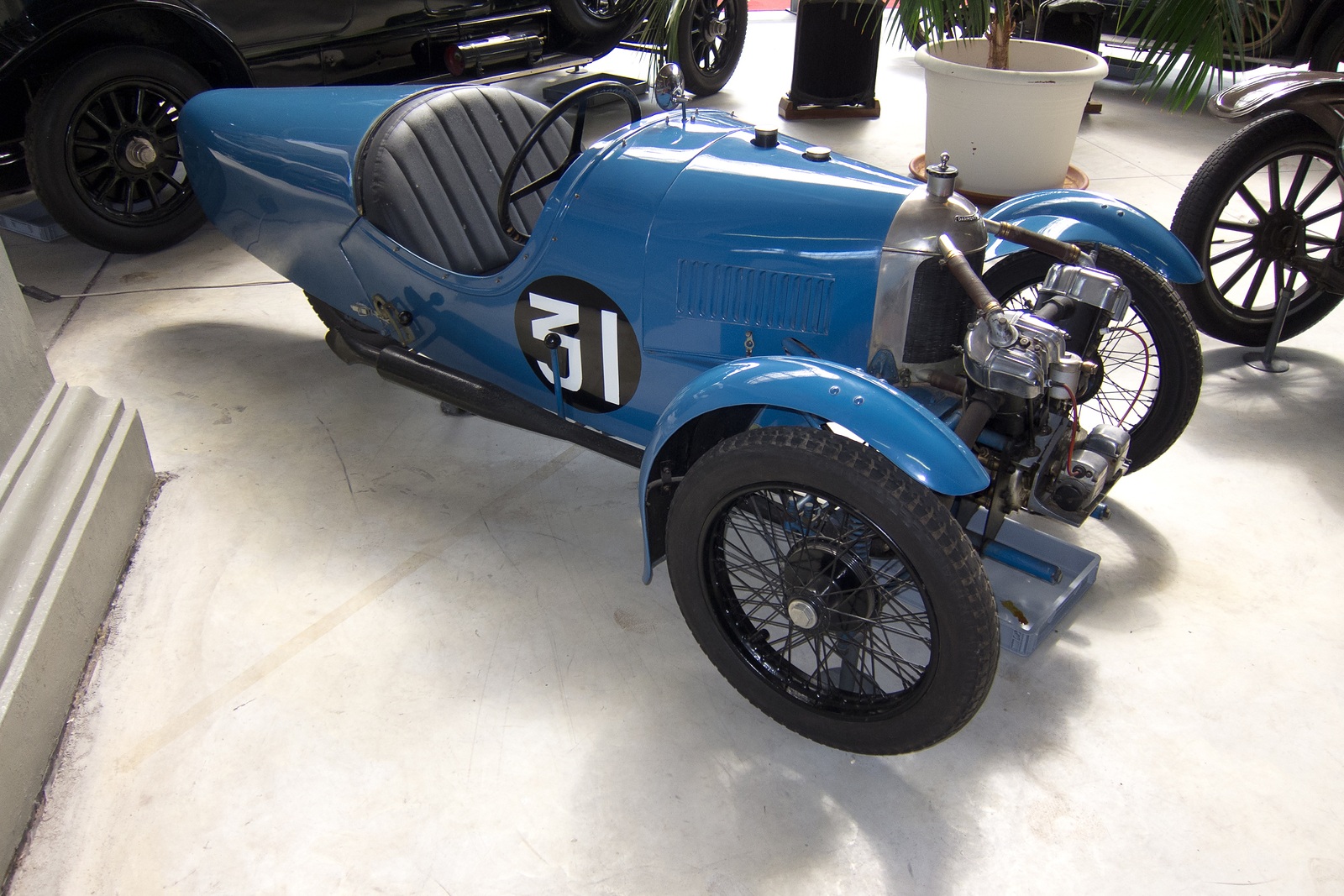
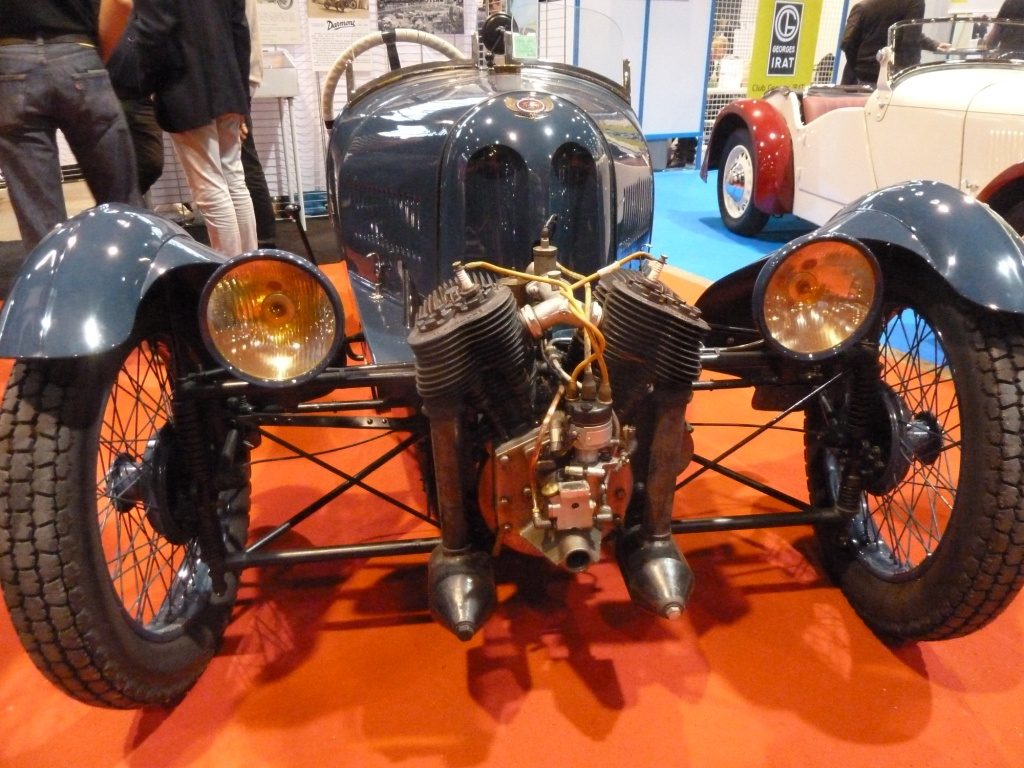
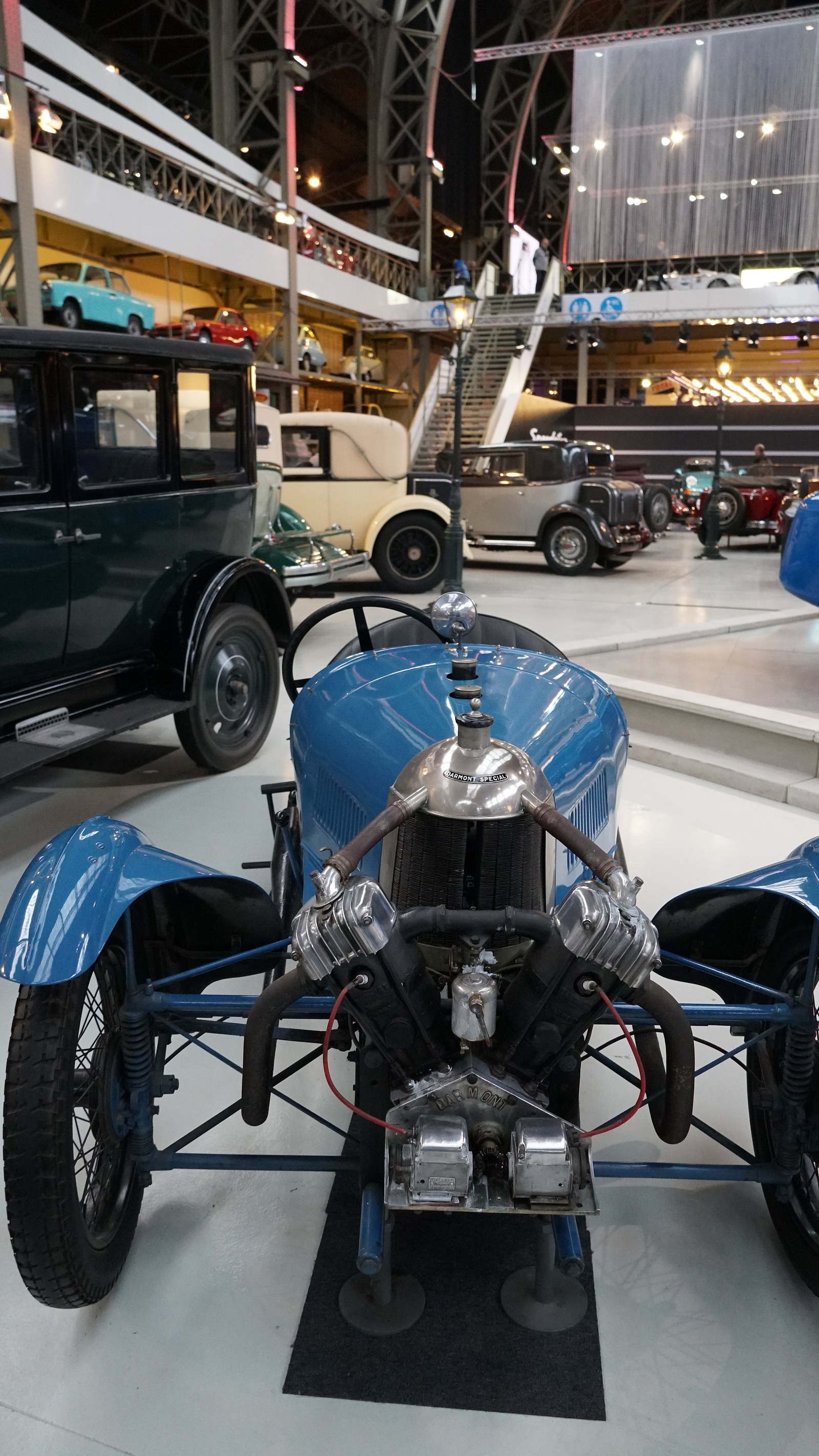
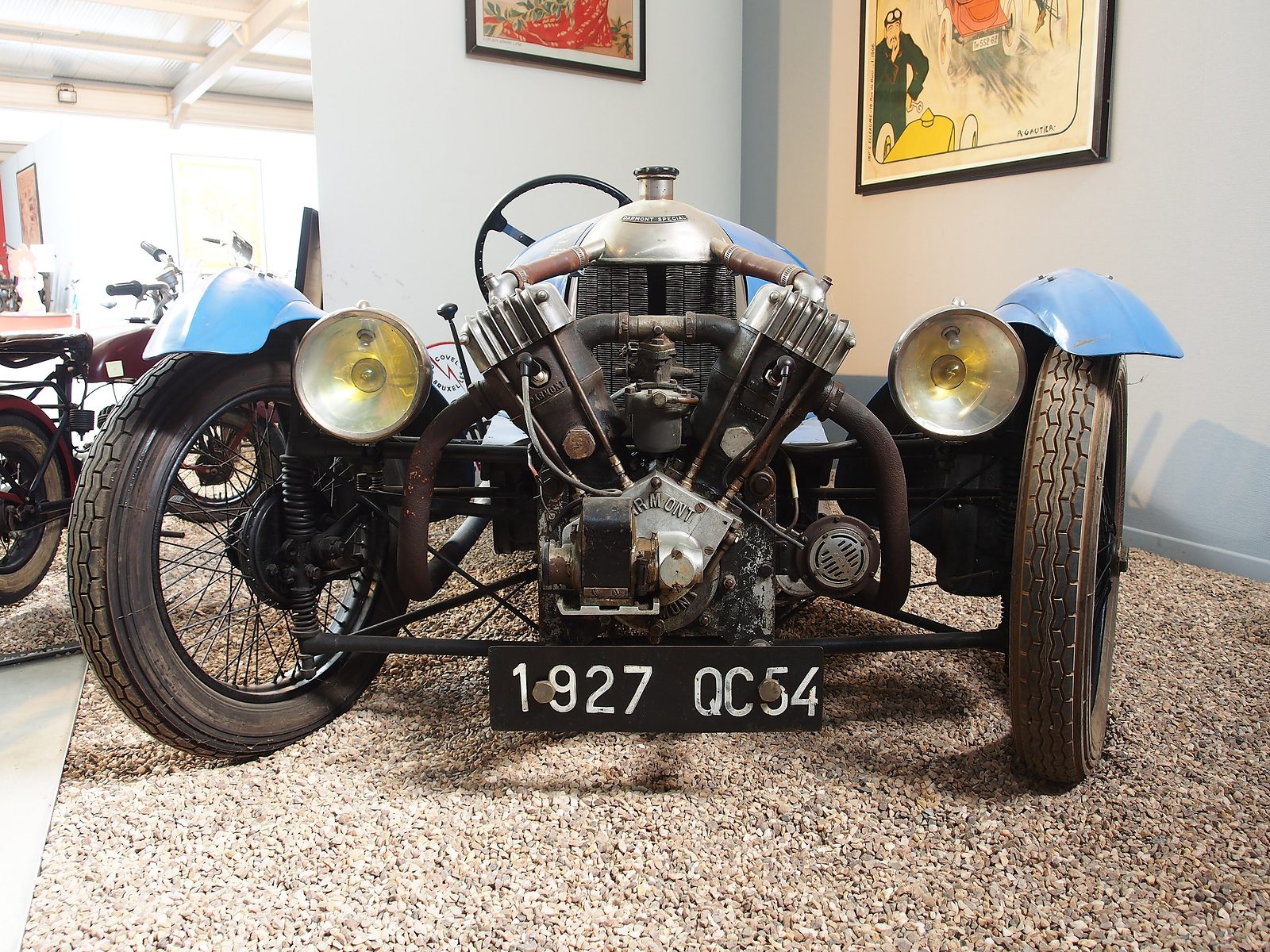
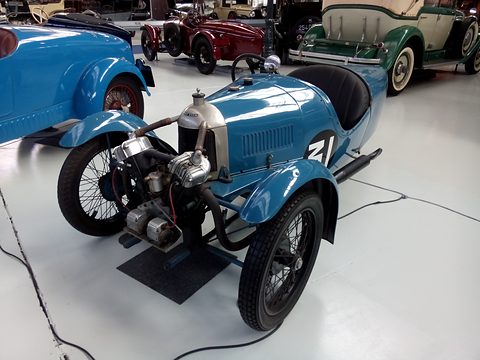
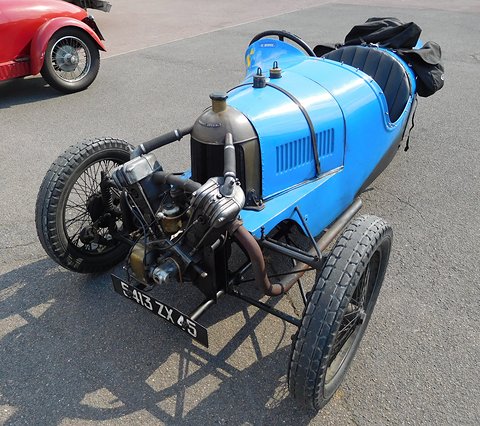
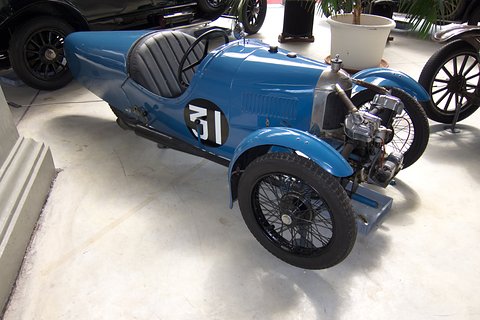
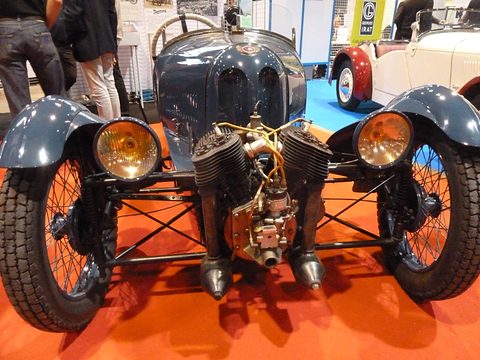
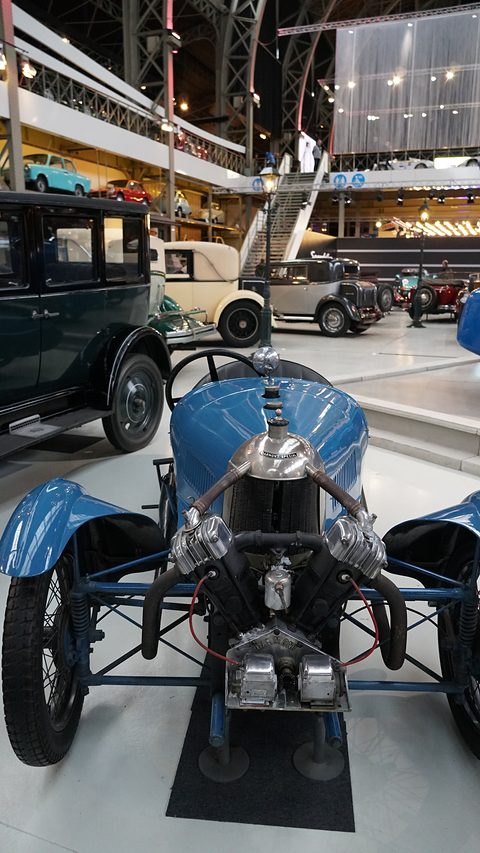
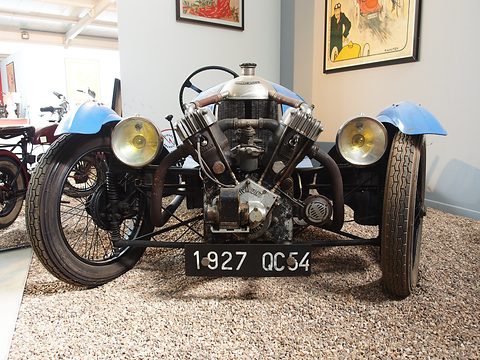
A blue three-wheeler with exposed twin engine and number 31 on its flank on a pale museum floor.
Blue 1927 Darmont Spécial DS No. 31 at Autoworld, Brussels, in February 2014.Photo: Sandra Fauconnier, CC BY-SA 3.0, via Wikimedia Commons

At a glance

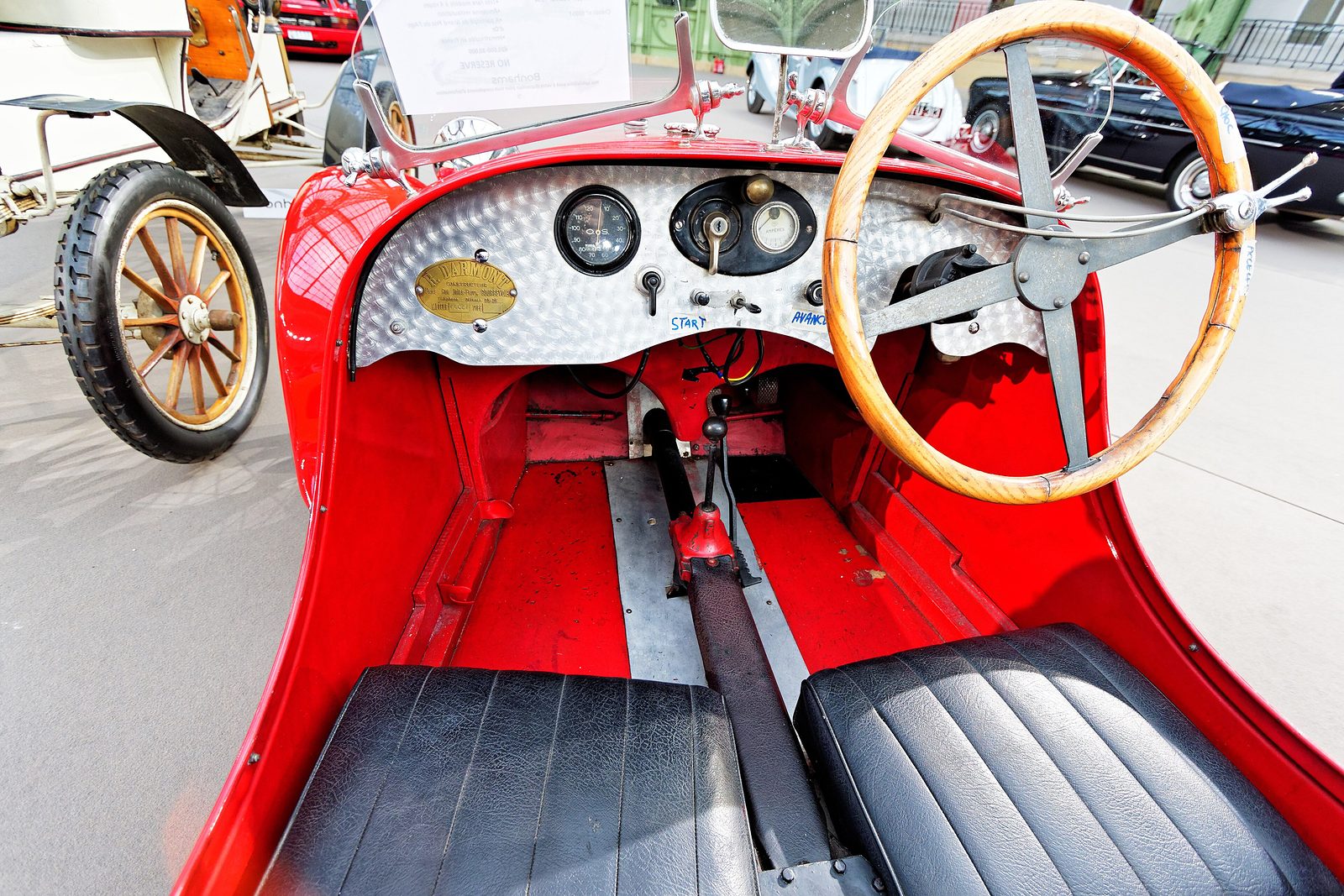
The spec plate

Darmont

Darmont-Morgan to Étoile de France · Courbevoie

Built
1919–⁠1939Built in France from 1919, 1920 or 1923 by different accounts; three-wheelers until about 1936; the works closed in 1939
Country
FranceCourbevoie, on the western edge of Paris
Maker
The Darmont brothersParis agents for Morgan with Baudelocque before the First World War; the brothers’ first names differ from source to source
Engine
V-twins of about 1,062–1,100 cc; a 500 cc single for racingDarmont’s own, on JAP and Blackburne patterns, air- or water-cooled; MAG and JAP engines also offered; some supercharged
Power
About 25 hp to about 40 hpThe side-valve Étoile de France to the overhead-valve Spécial (19–30 kW)
Weight
190 kgThe Étoile de France, in running order
Seats
2, side by sideOne in the competition cars
Wheels
3Two steered at the front, one at the back driven by chain; the V-Junior had four
Production
Not knownMore than 14 a week left the works at the end of the 1920s
Survives
About 200Of all types, nearly 25 of them Étoiles de France, by a recent census of the Amicale Tricyclecariste de France
Top speed
130km/h130 km/hOver 150 km/h (93 mph) when prepared; 115 km/h (71 mph) for the Étoile de France

Not yet recordedlength.

How big is it?

True proportion

Length unknown

No reliable length has been found. The Fiat 500, the Peel P50 and the adult stay, so the gap is shown, not hidden.

  • Two seats side by side, the V-twin hung out in front
  • 190 kg for the Étoile de France, in running ordersource 1
Drawn at true proportion. The track is 3.6 metres long; the adult stands at the same scale. The Peel P50 is the smallest production car, on every page for comparison.

The story

History

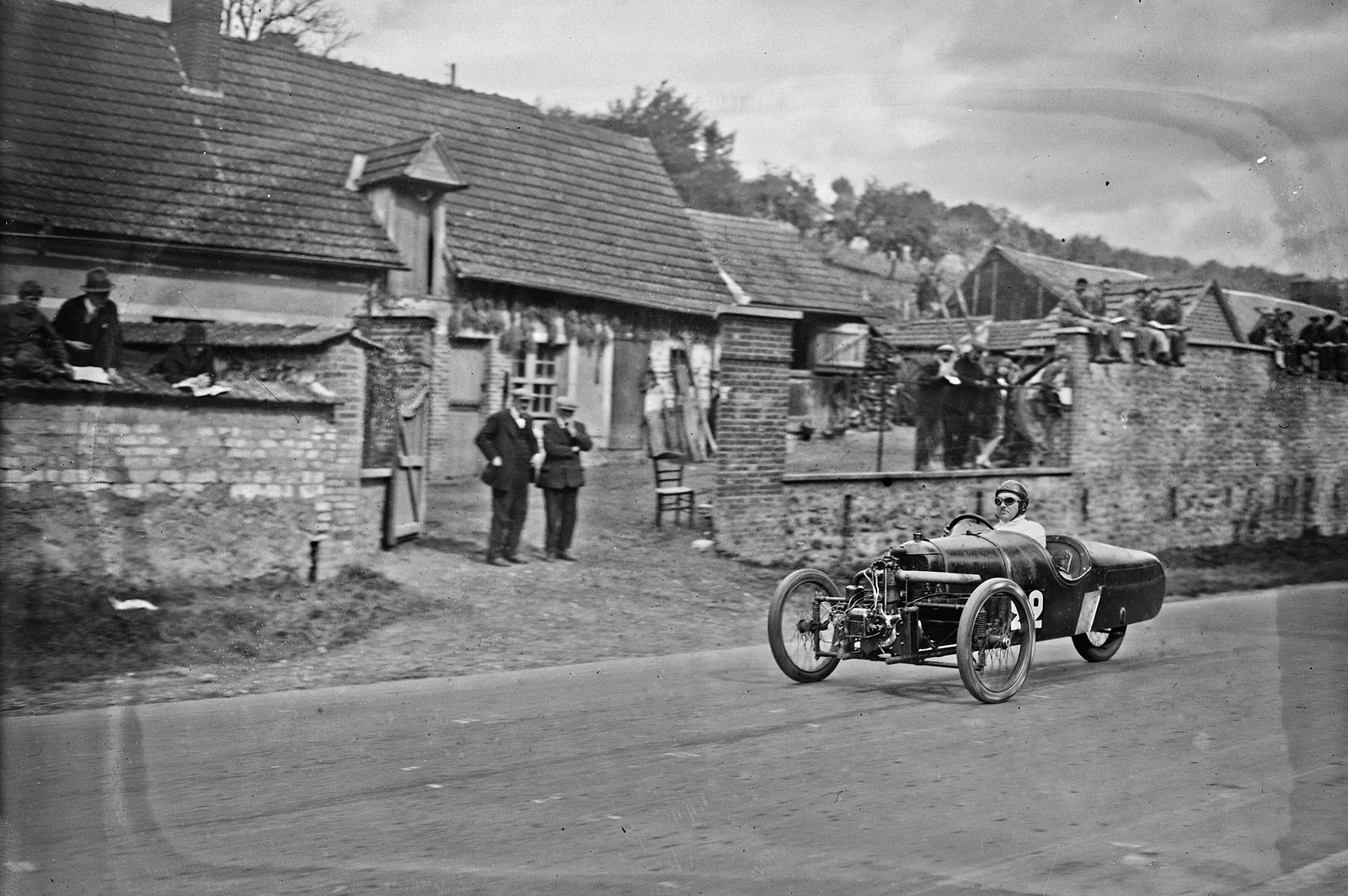
The Darmonts came to Morgans as agents and racers. When W. G. McMinnies and Frank Thomas took a Morgan over the line first, and fastest, in the cyclecar Grand Prix at Amiens in 1913, classed as a sidecar while the cyclecar class went to the Bédélia,source 2 the make became famous in France, and among those who sold it were Franquebalme, Guyot and Darmont et Baudelocque, a name also spelt Badelogue.source 3source 4 At the Gaillon hill-climb, in a year not established, a Darmont on a Morgan was first among the cyclecars.source 5 By the Osenat catalogue’s account, about 150 found buyers in 1914 and three times as many a year later.source 3

Quelques 150 cyclecars Darmont trouvèrent preneurs en 1914. Ces derniers étaient trois fois plus nombreux un an plus tard…

Osenat, auction catalogue, 17 March 2013. In English: “Some 150 Darmont cyclecars found buyers in 1914. A year later there were three times as many…”source 3

Who exactly the brothers were is not clear. The sources name the founder Robert or Roger, his brother André, and a René, and the encyclopedias simply say “R. Darmont”; one text uses three of the names at once.source 3source 6source 7 Robert Darmont, in one account, was a French Morgan importer and racing driver.source 8

A licence, or a gentlemen’s agreement

After the war Morgan let its French agents build the car in France, but the date depends on the source. The Morgan histories say an agreement with Darmont and Baudelocque was reached in 1919; Osenat ties the licence to Paul Houel’s Morgan win at the Circuit de l’Eure that year.source 4source 9source 3 Gazoline says Darmont imported Morgans from 1919 to 1923 with small changes, a bonnet carried on from the scuttle and discs over the wheels, and began building them in a large workshop at Courbevoie only during 1923, under what the specialist Jacques Potherat calls a moral but not a legal licence.source 1 The encyclopedias date the marque itself to 1919, 1920 or 1924.source 6source 10source 11source 7source 12 It was the only firm to build Morgans under licence (more in built under licence).source 3source 4source 9

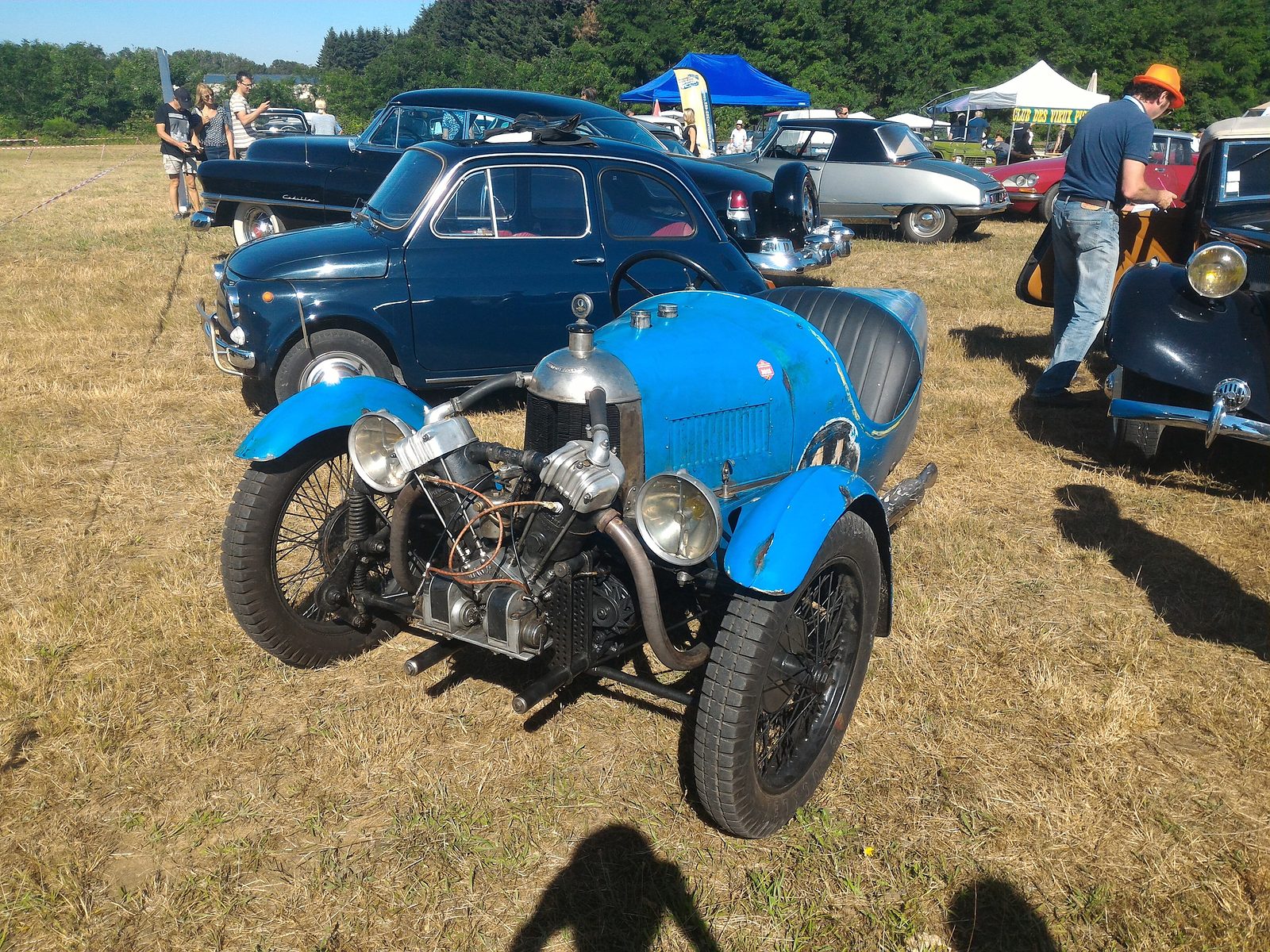
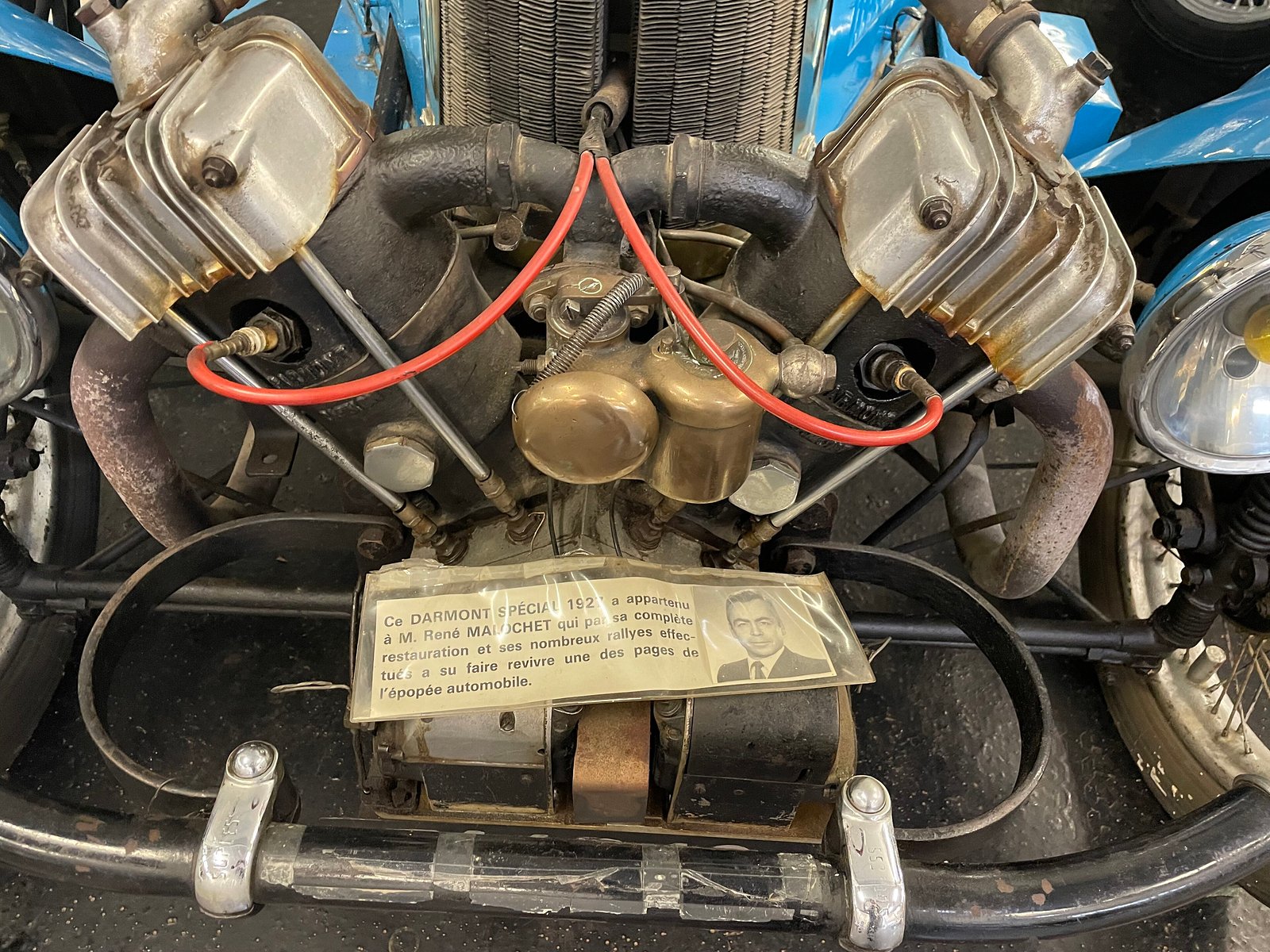
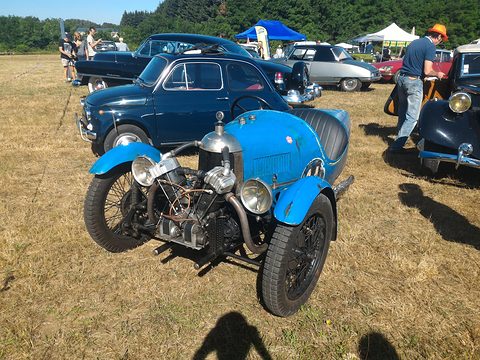
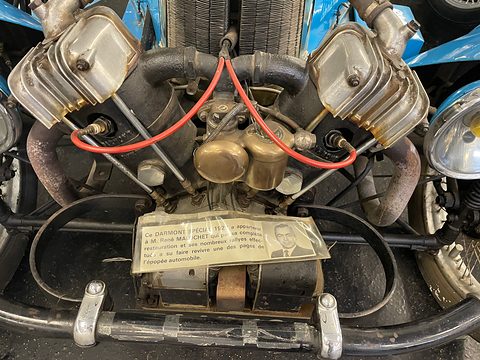
At first the Darmont-Morgan was all but the Malvern car. Some parts came from England and some were made at Courbevoie, and the crankcase carried both names in raised letters.source 3source 4 It had Morgan’s sliding-pillar front suspension and two-speed chain drive, the engine stood out in front of a narrow grille, and “Morgan” was painted in large letters on each side of the tail.source 1

René Darmont prenait d’ailleurs plaisir à se qualifier de ‘constructeur de Morgan’.
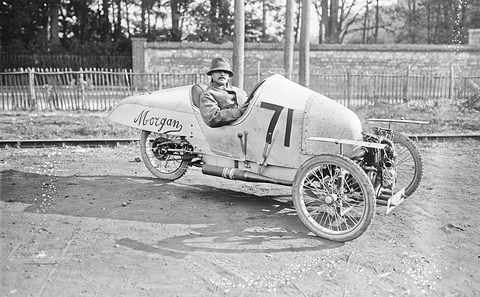
Osenat, auction catalogue, 17 March 2013. In English: “René Darmont, moreover, enjoyed calling himself a ‘Morgan manufacturer’.”source 3
A man in a hat sits in a pale pointed-tail three-wheeler lettered Morgan and numbered 71, on a dirt road before a wall and trees.
Plate I · 1921 Darmont at the wheel of racing Morgan No. 71 at the Gaillon hill-climb, Normandy, in October 1921.Photo: Agence Rol, Public domain, via Wikimedia Commons

Darmont’s own

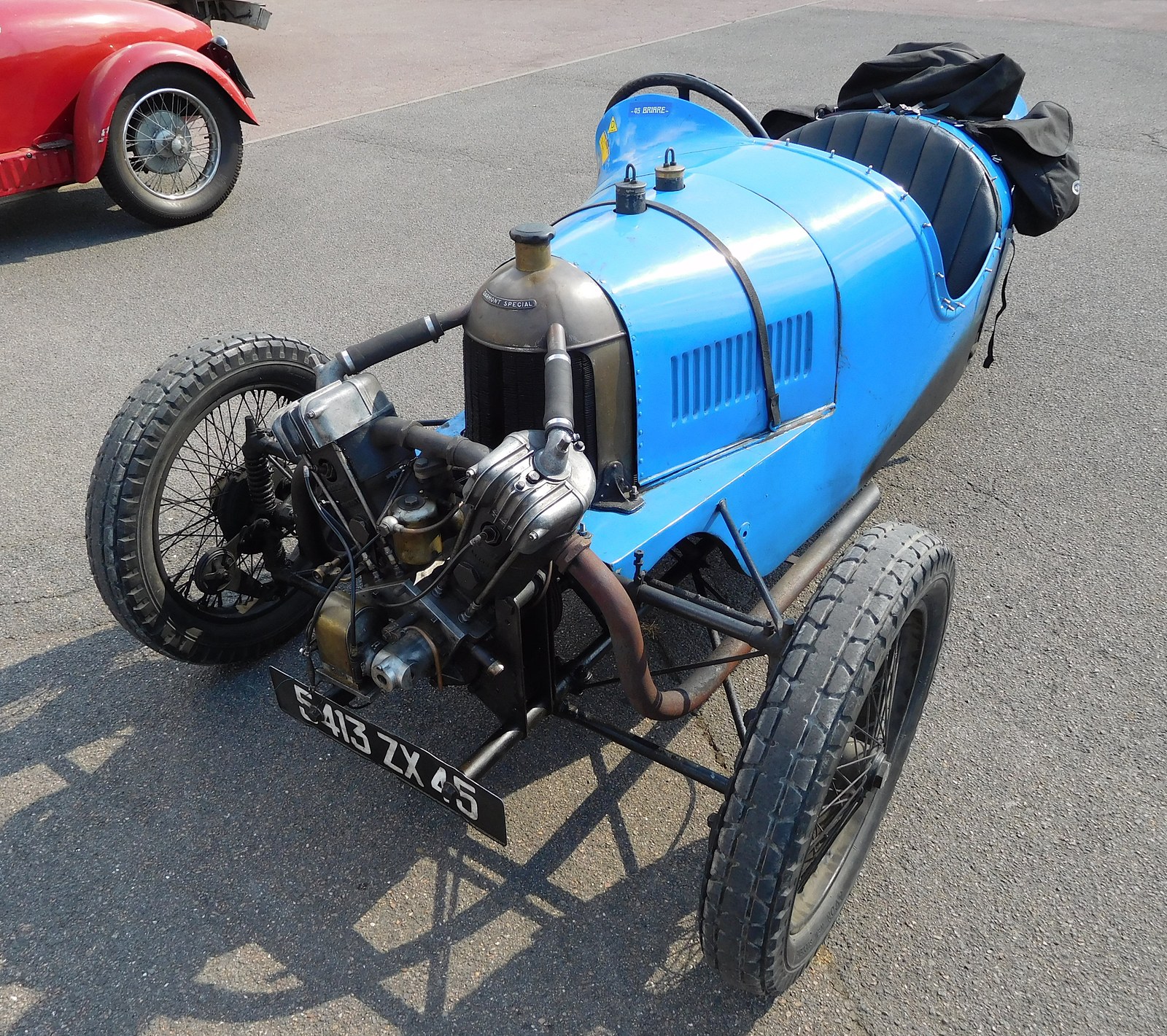
The firm soon made its own V-twins, on JAP and Blackburne patterns, and its own bodies, and offered MAG engines, air- or water-cooled and even with four valves, and JAPs.source 3source 1source 4 By the Paris Salon of October 1928 it showed a whole range of Morgan-type three-wheelers, air- and water-cooled, in several states of tune.source 6 At the end of the 1920s more than 14 cars a week left the works, though Osenat warns that the firm’s published sales very likely counted cars sold by other distributors.source 3

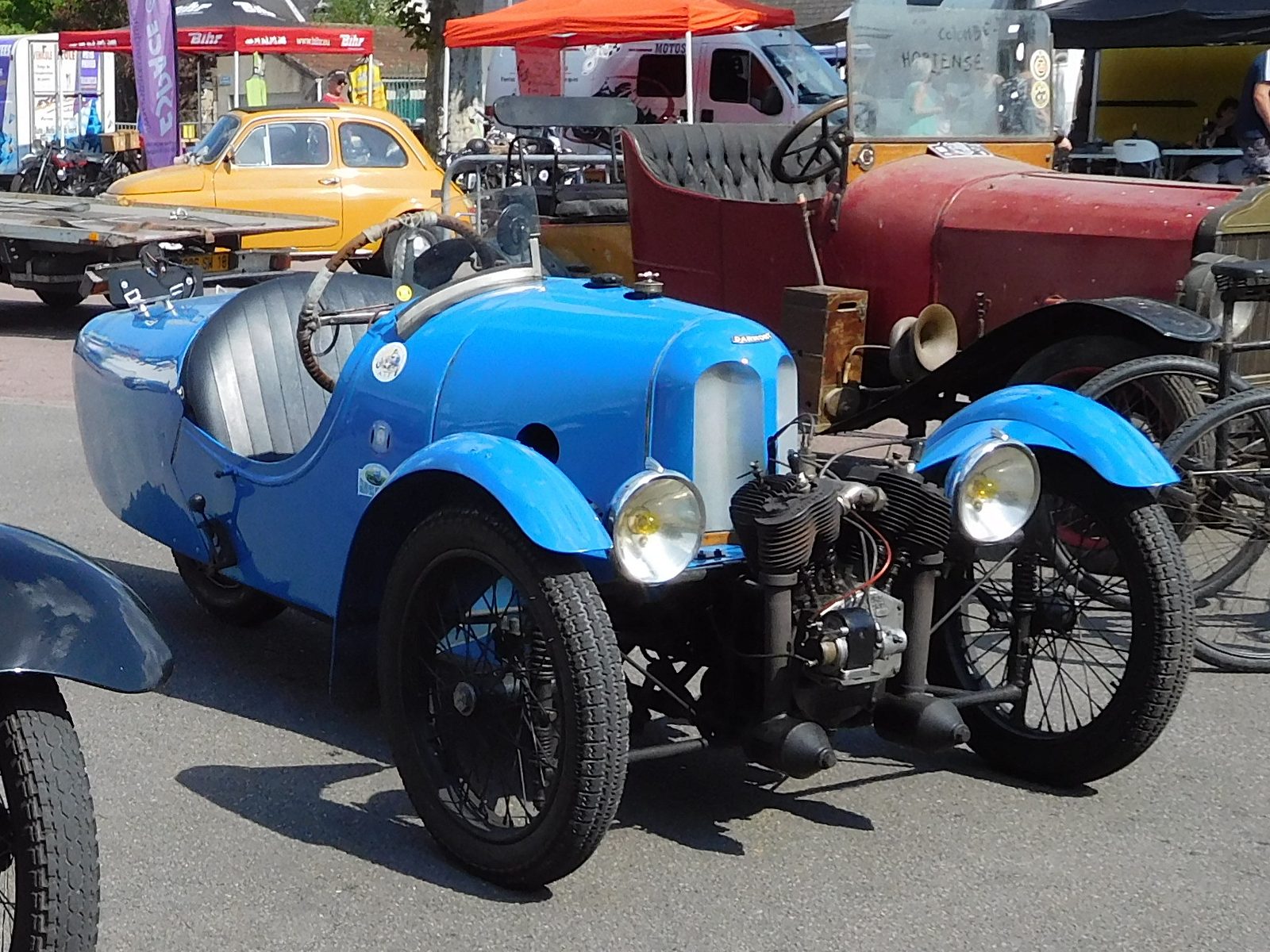
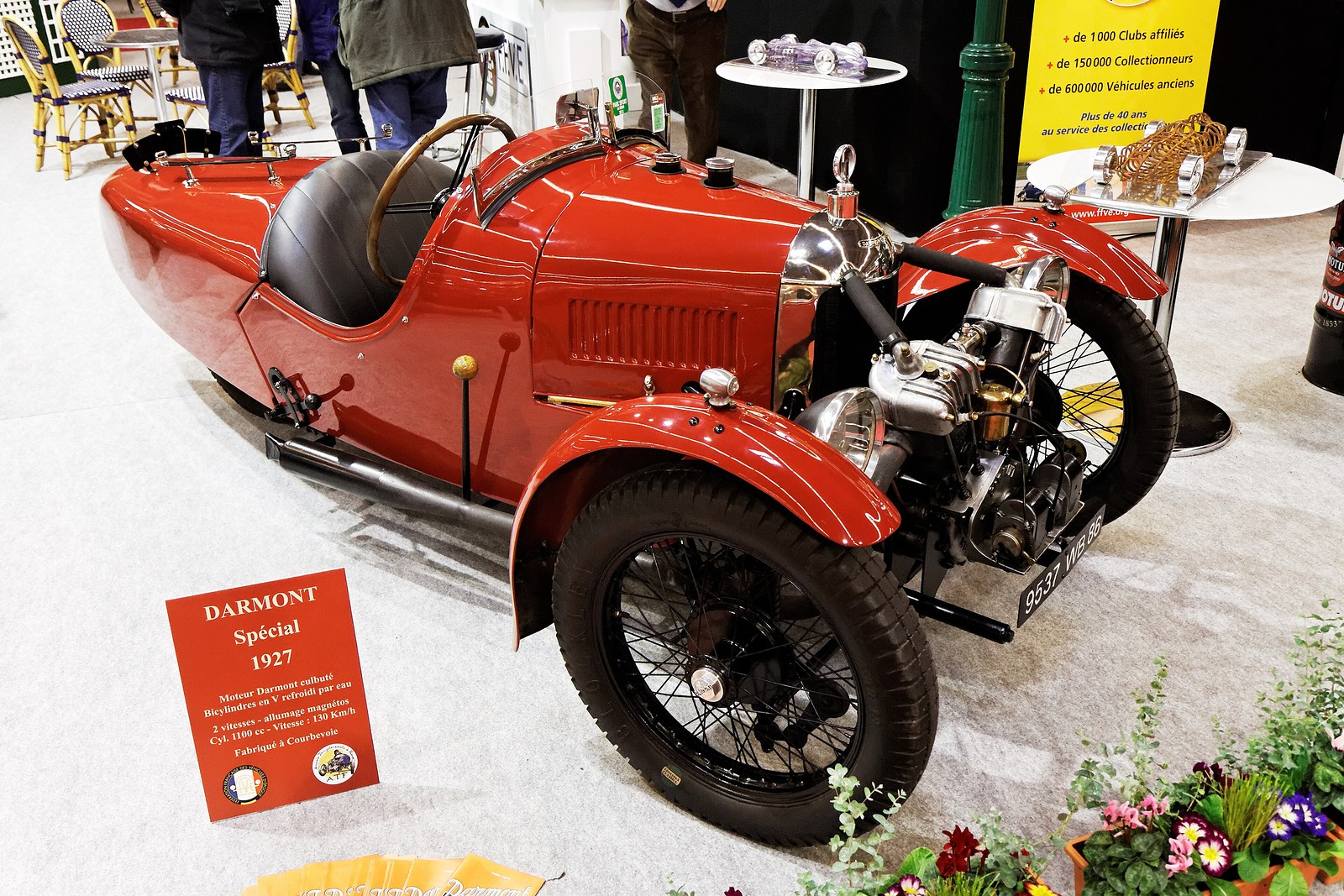
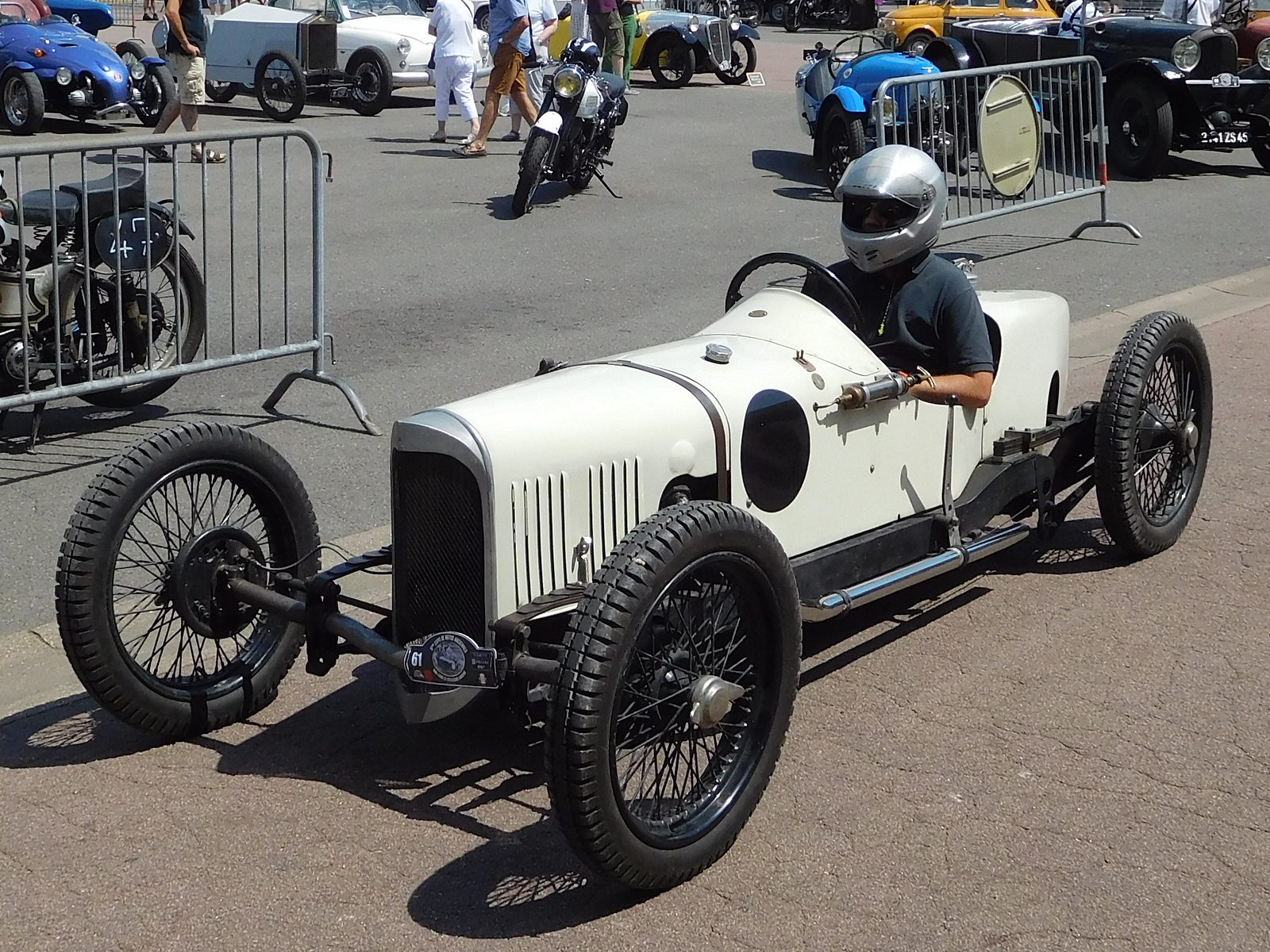
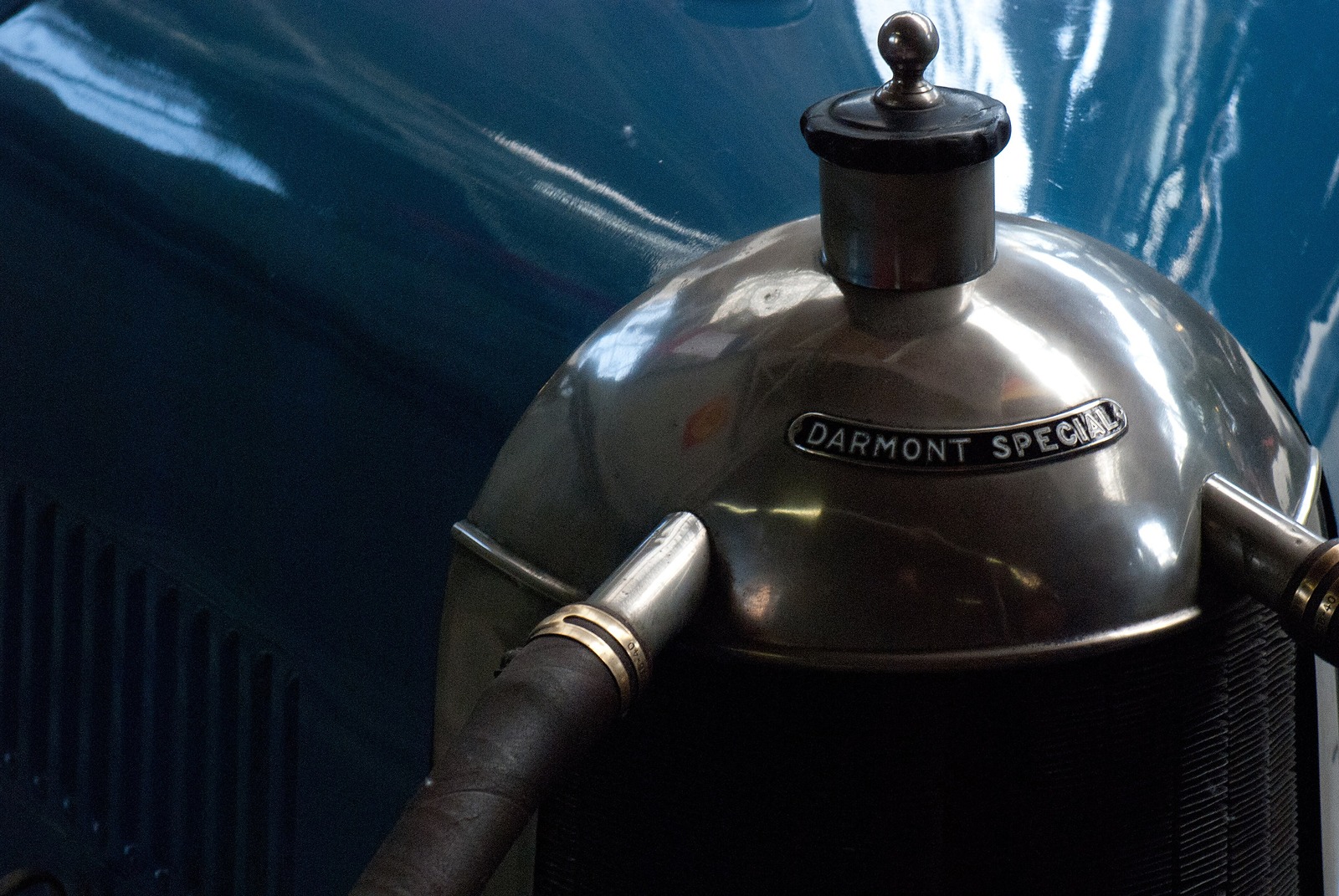
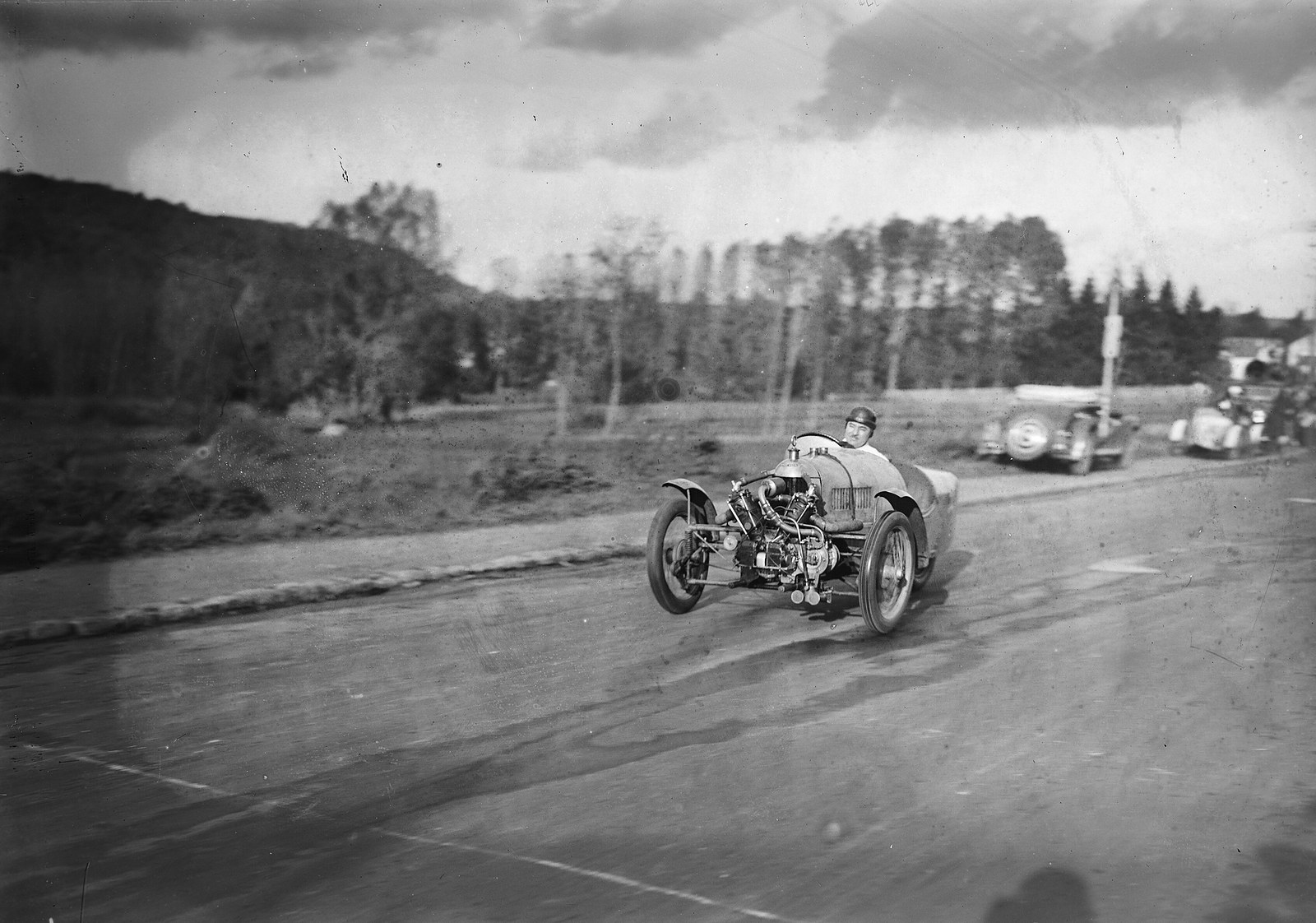
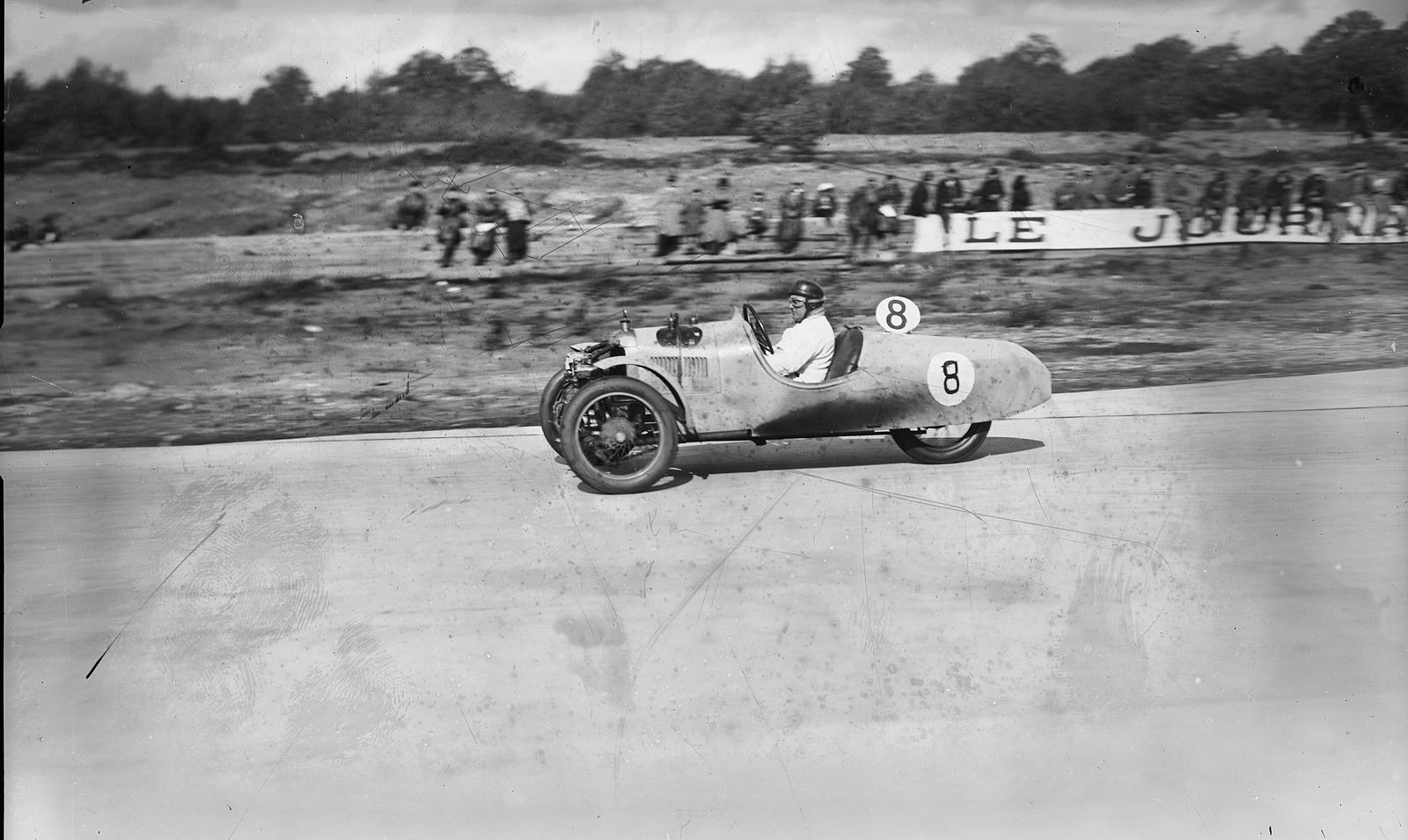
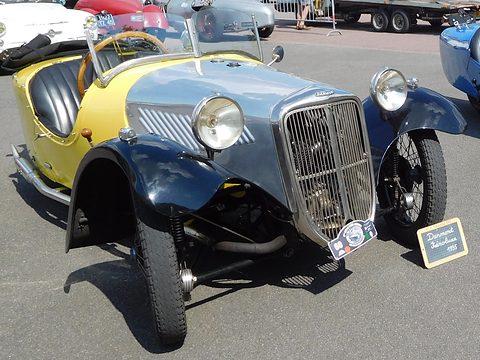
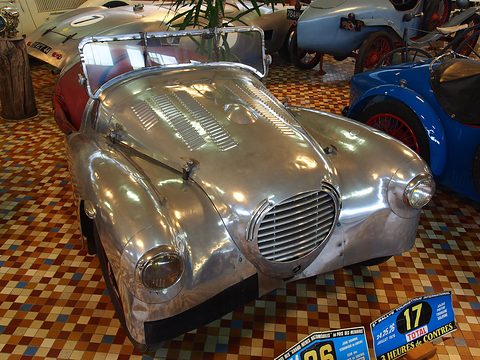
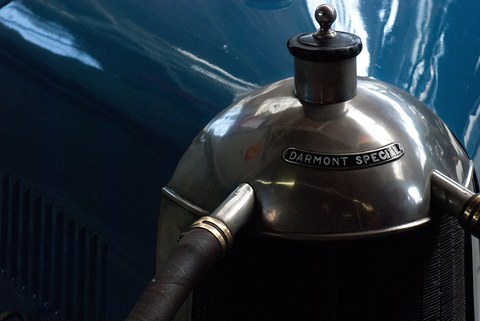
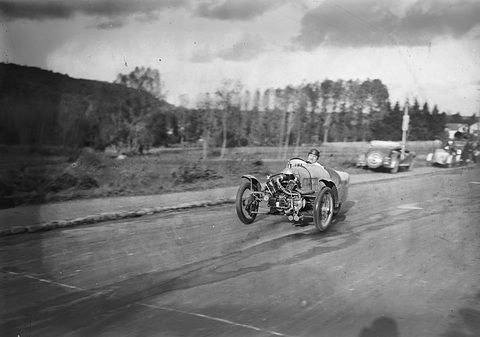
The Spécial, from 1926 or 1927, was the fast one: usually a Blackburne-type overhead-valve twin of about 1,100 cc with two magnetos, about 40 hp against the earlier engine’s 28, about 130 km/h (81 mph) and over 150 km/h (93 mph) when prepared. It had a rounded radiator top, front brakes worked by a pedal, side exhausts and a polished, faired tail, and it cost twice as much as the Runabout, yet Gazoline calls it a fine commercial success.source 1source 6 It could be had with a supercharger, a Cozette, and with a three-speed gearbox and reverse in place of two speeds and none.source 7source 3source 10

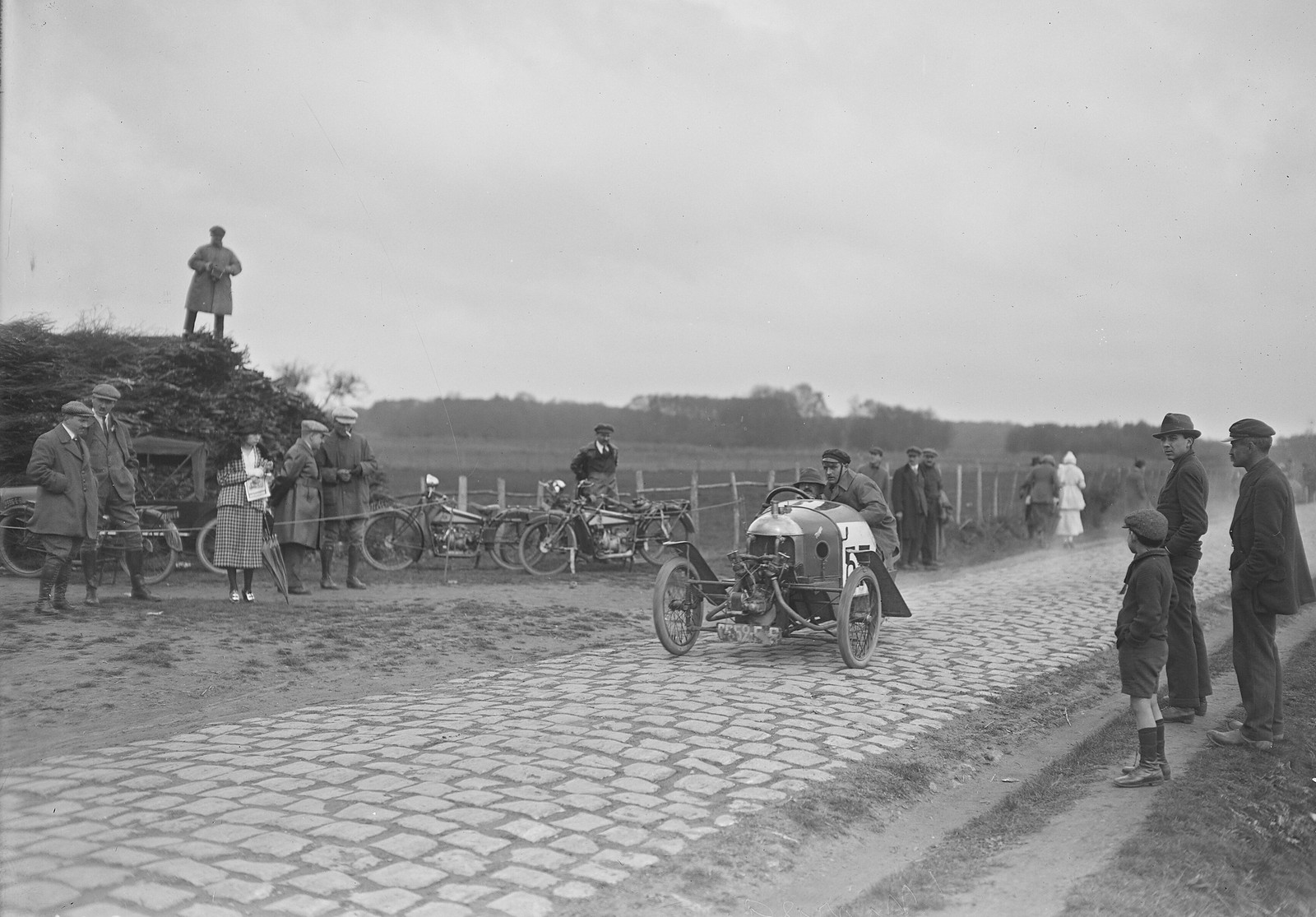
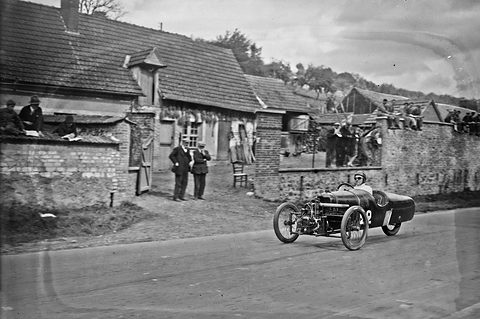
On the road and the track the Darmonts did what Morgans did. They finished first, second and third in the Paris–Nice trial of 1921, won hill-climbs such as the Mont Ventoux, and came second among the three-wheelers in the Bol d’Or of 1927 (more in racing and rallying).source 6source 11source 13 Marcel Dhôme set world records for passenger three-wheelers of up to 750 cc in 1924, and A. Darmont, probably André, more in 1928.source 14

The Étoile de France

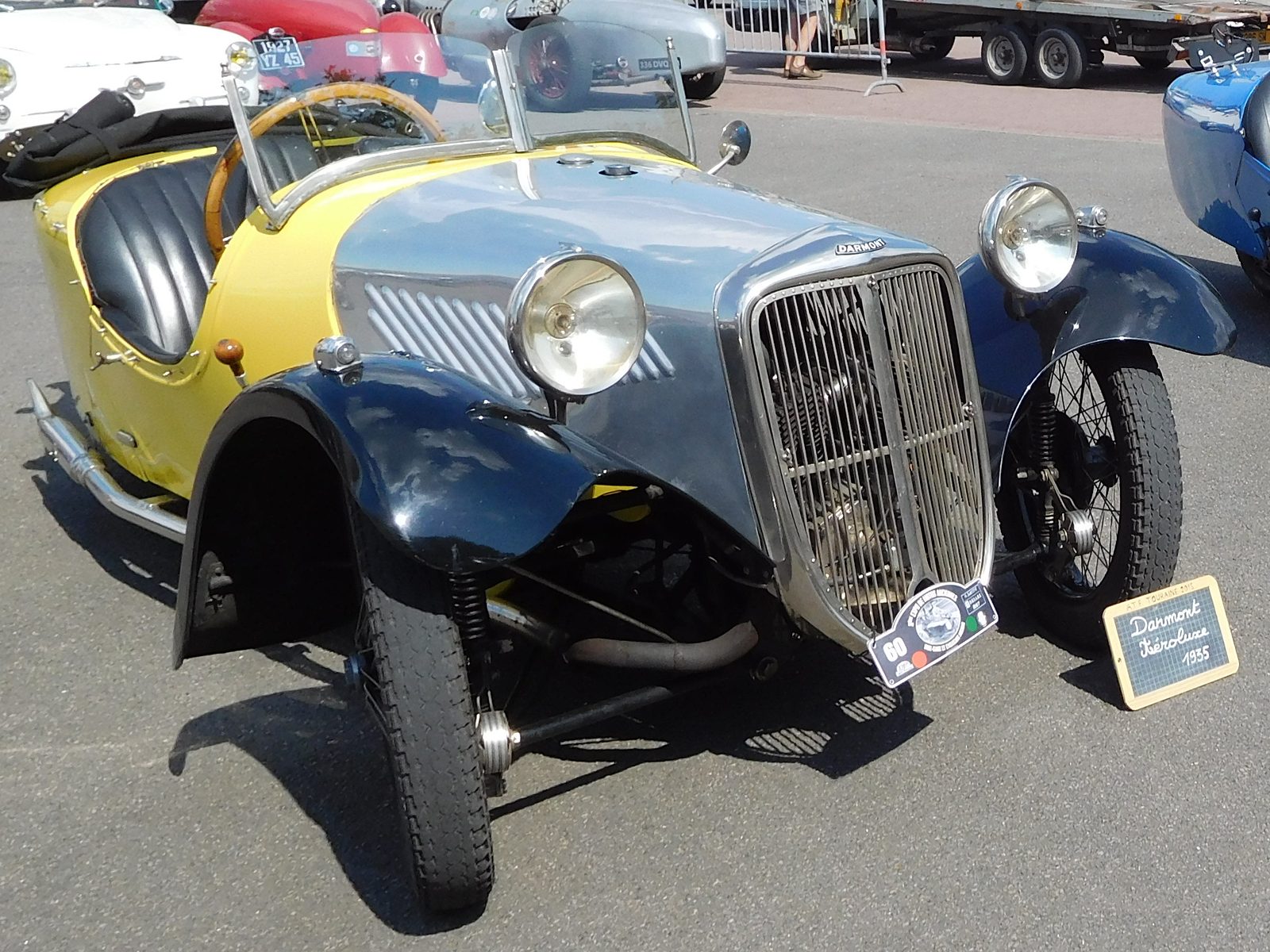
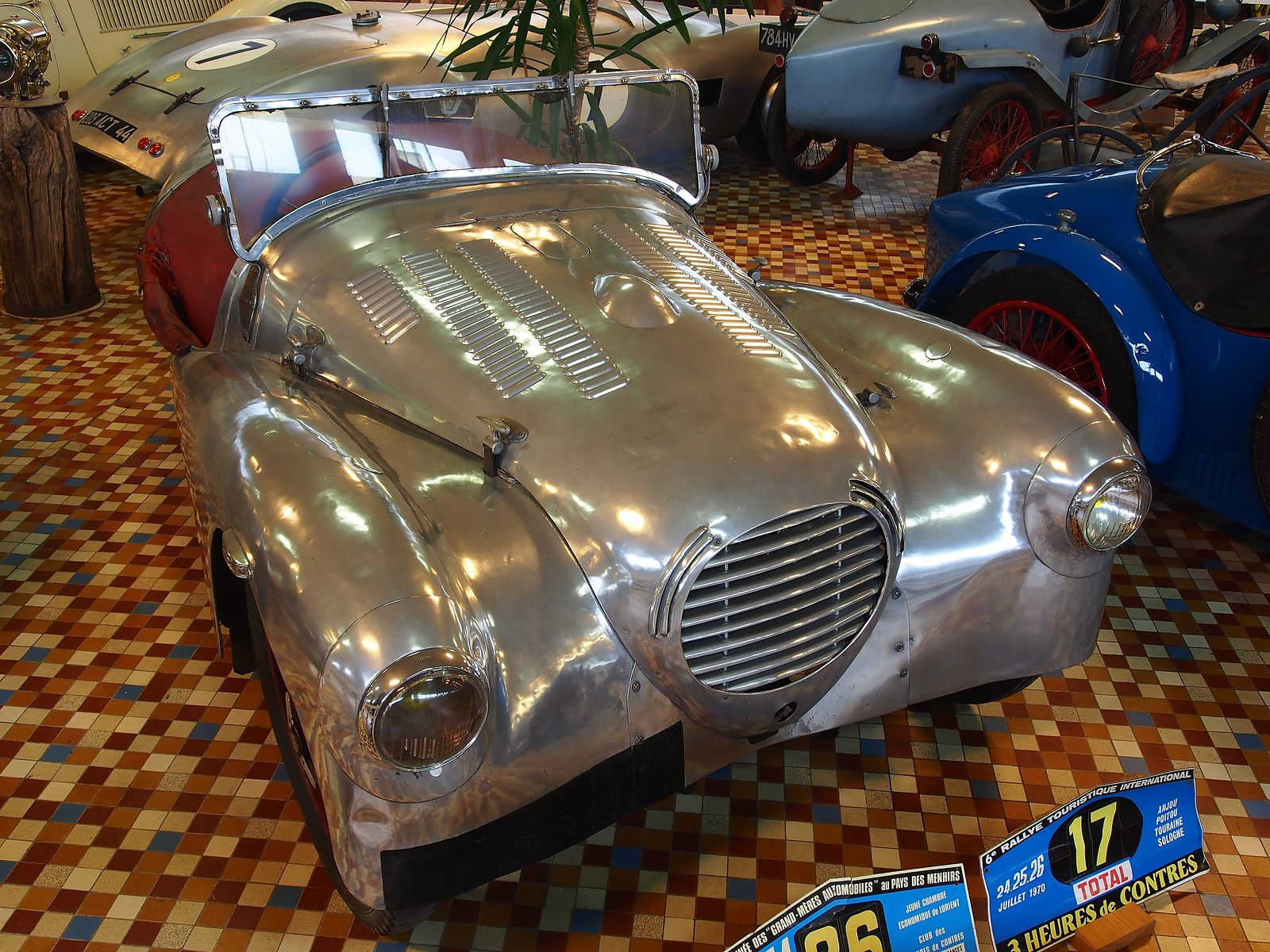
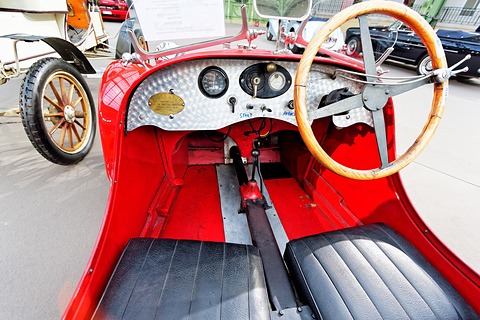
In 1931, or 1932 by Wikipedia’s account, came a cheaper sports model, the Étoile de France, built until 1935 with a side-valve air-cooled twin of 1,087 cc and about 25 hp. It had a false grille painted in the body colour, a very long tail, motorcycle mudguards and no front brakes, and it weighed 190 kg in running order and reached 115 km/h (71 mph).source 1 Its throttle was a hand lever on the steering wheel, not very modern, as Gazoline says, when rivals other than Morgan had pedals.source 1 It was among the very few cars still on sale in the 1930s with two speeds and no reverse.source 3source 1 The Aéroluxe of 1934 hid the twin behind a modern grille likened to a Citroën Rosalie’s.source 1source 10

Le Darmont est le tricyclecar le plus populaire au pays de Molière.

Gazoline no. 261, December 2018. In English: “The Darmont is the most popular three-wheeled cyclecar in the land of Molière.”source 1

Four wheels, and the end

The V-Junior, on sale from the autumn of 1935 by Wikipedia’s account and from 1936 by Georgano’s, was a light four-wheeled sports car with a twin of about 1,100 cc, and it still had a hand throttle on the steering wheel.source 6source 15source 7 By Osenat’s account it ended the three-wheelers the next year but could not stop the decline, as buyers turned to closed cars. At the start of the Second World War the brothers had to file for bankruptcy, and the works closed in 1939.source 3source 6source 15

In 1971 the collector Roger Brioult described his last visit, before Courbevoie council requisitioned the site. The machine tools had been stacked against the doors in 1939 to keep thieves out; the roof tiles had been stolen in the war, and the earth floor was overgrown. Wings lay one on another, as if waiting to be put away, and among the aero, motorcycle and cyclecar engines was a Vinot-Deguingand. In a locked workshop he found a single-cylinder 500 cc racer, water-cooled with a chain-driven supercharger, his buttercup-yellow No. 14.source 3

Dans un petit atelier fermé à clé : la merveille de la maison, endormie depuis 1939 s’est éveillée pour nous…
Roger Brioult, 1971, quoted in the Osenat catalogue, 2013. In English: “In a small locked workshop, the jewel of the house, asleep since 1939, awoke for us…”source 3
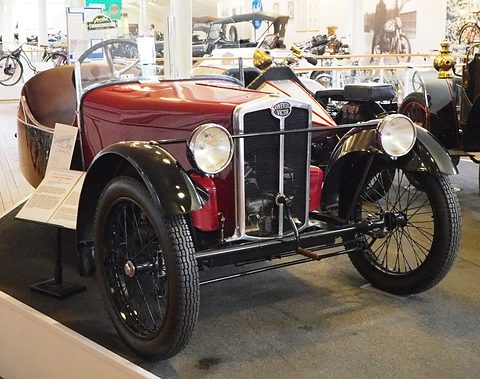
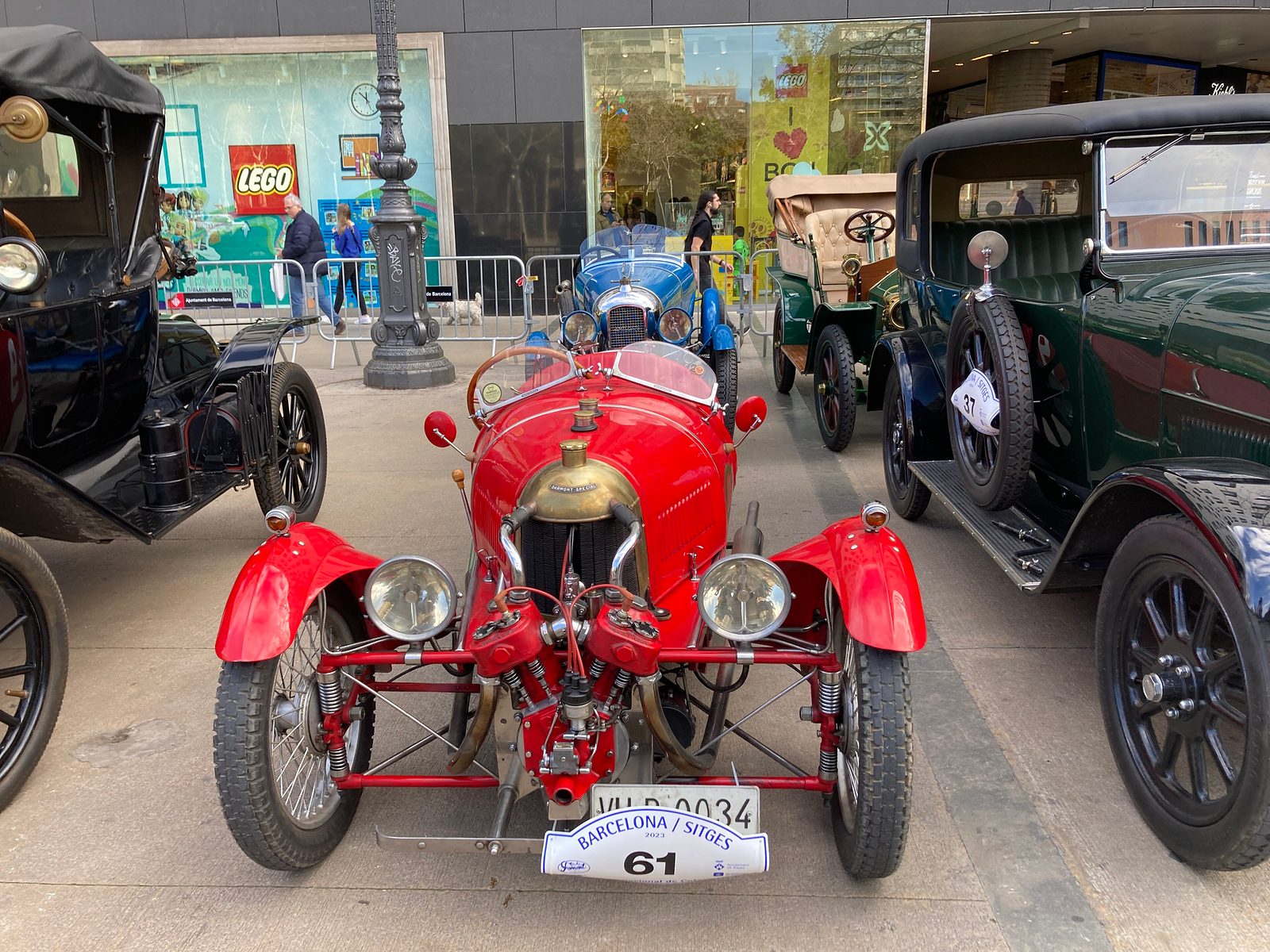
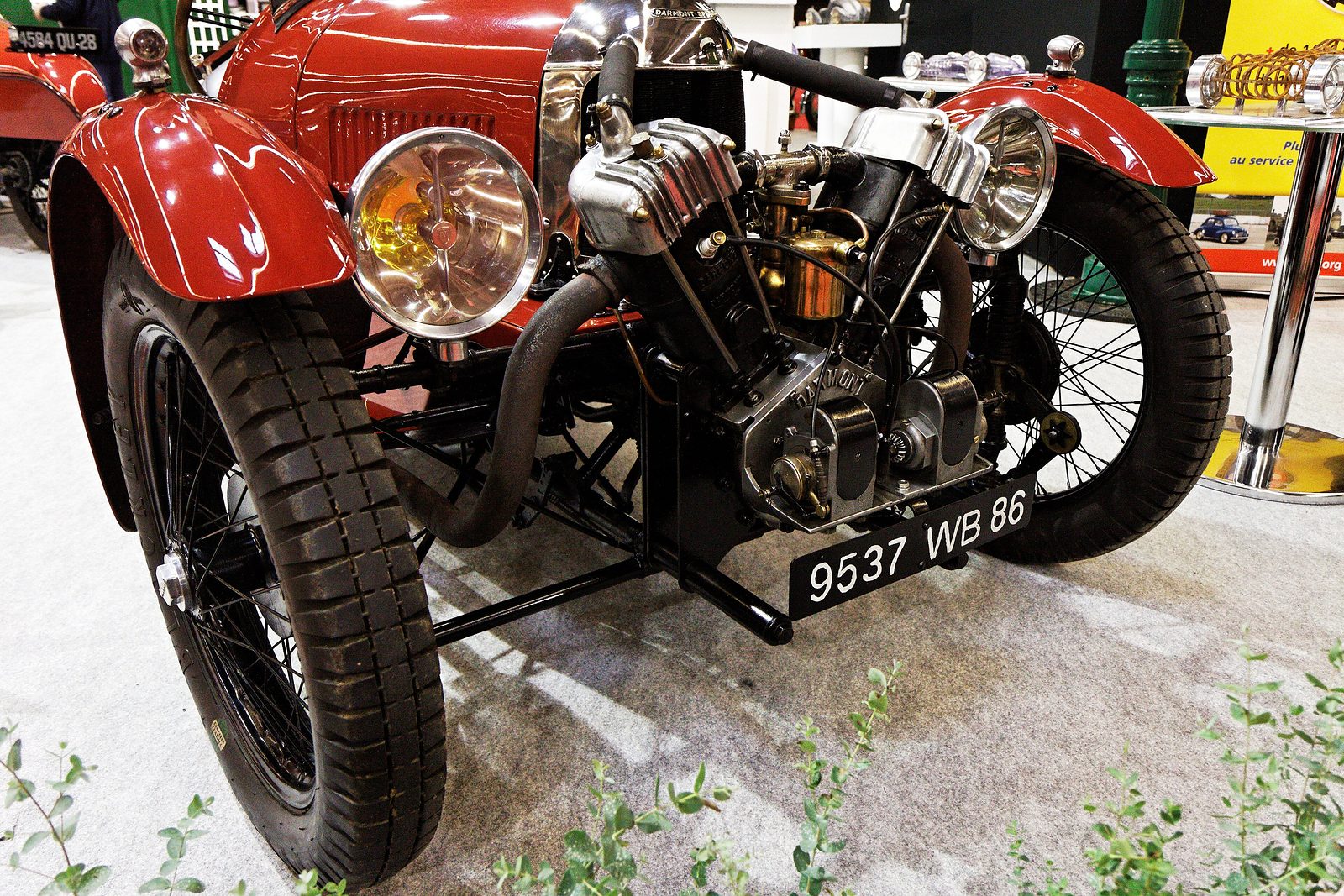
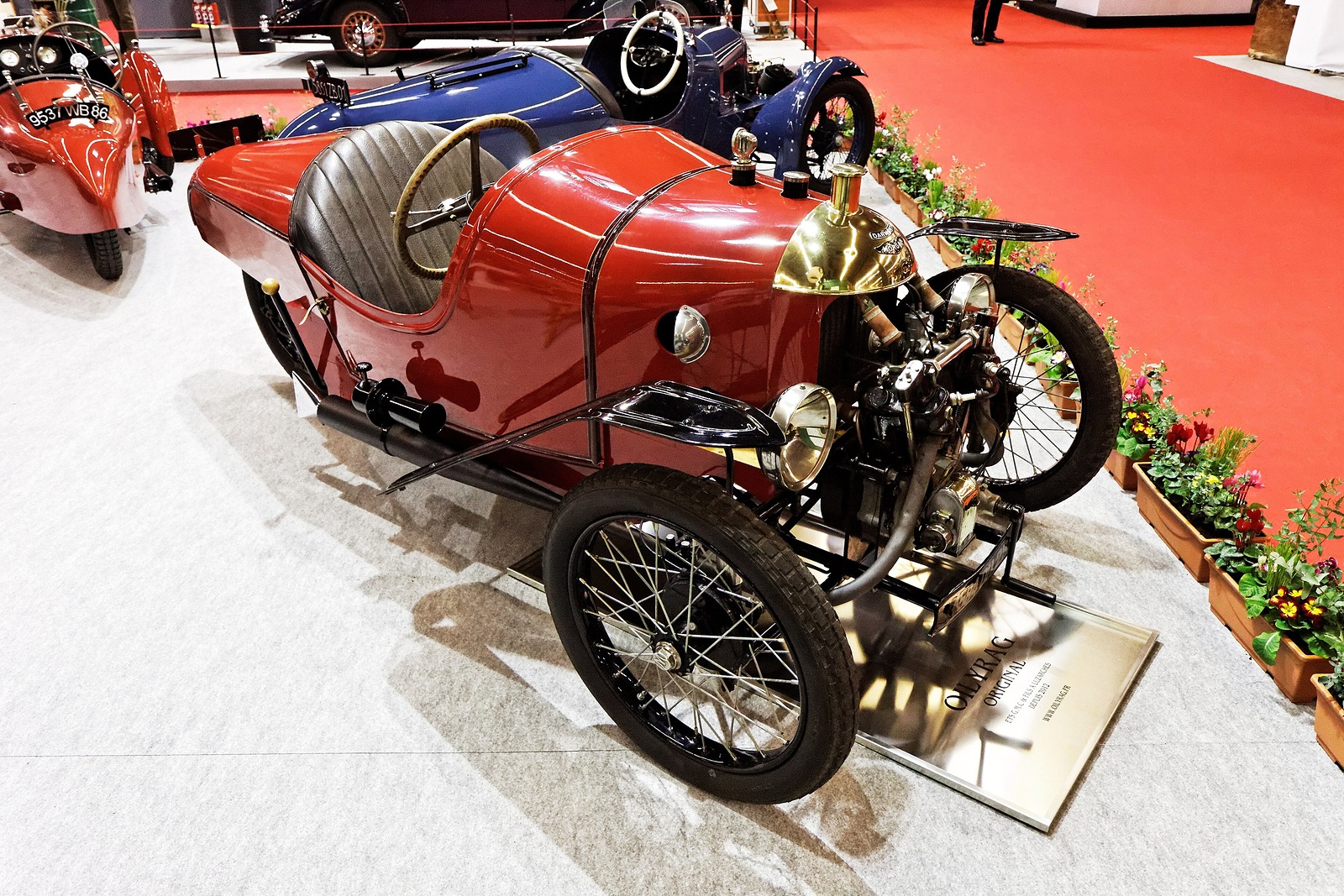
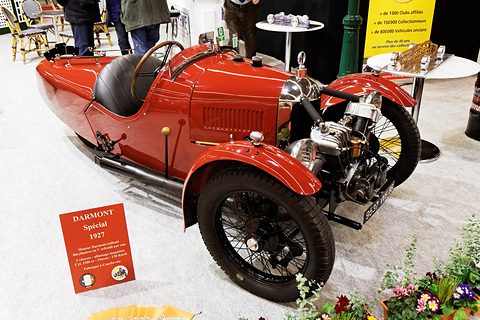
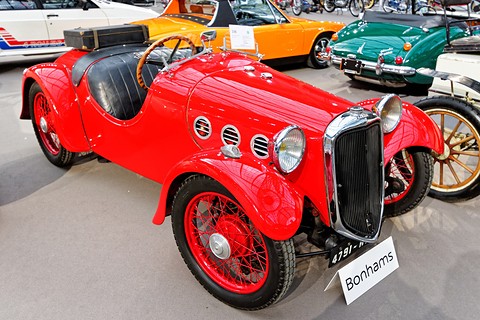
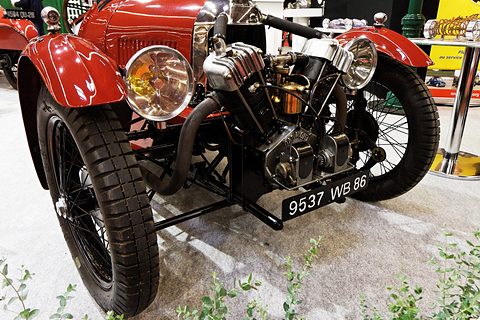
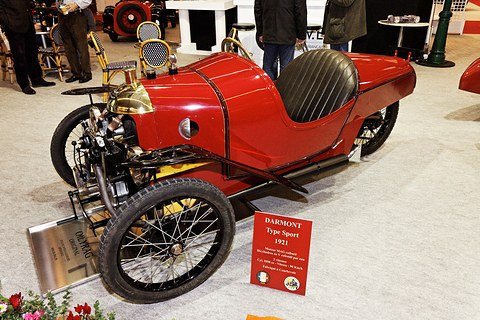
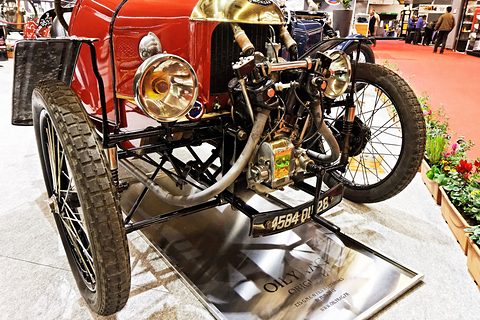
Close front view of a red three-wheeler: brass headlamps, an exposed V-twin engine and coil-sprung front wheels.
The front of a 1921 Darmont Type Sport, with its V-twin, headlamps and sliding-pillar suspension, at Rétromobile, Paris, in February 2013.Photo: Thesupermat, CC BY-SA 3.0, via Wikimedia Commons
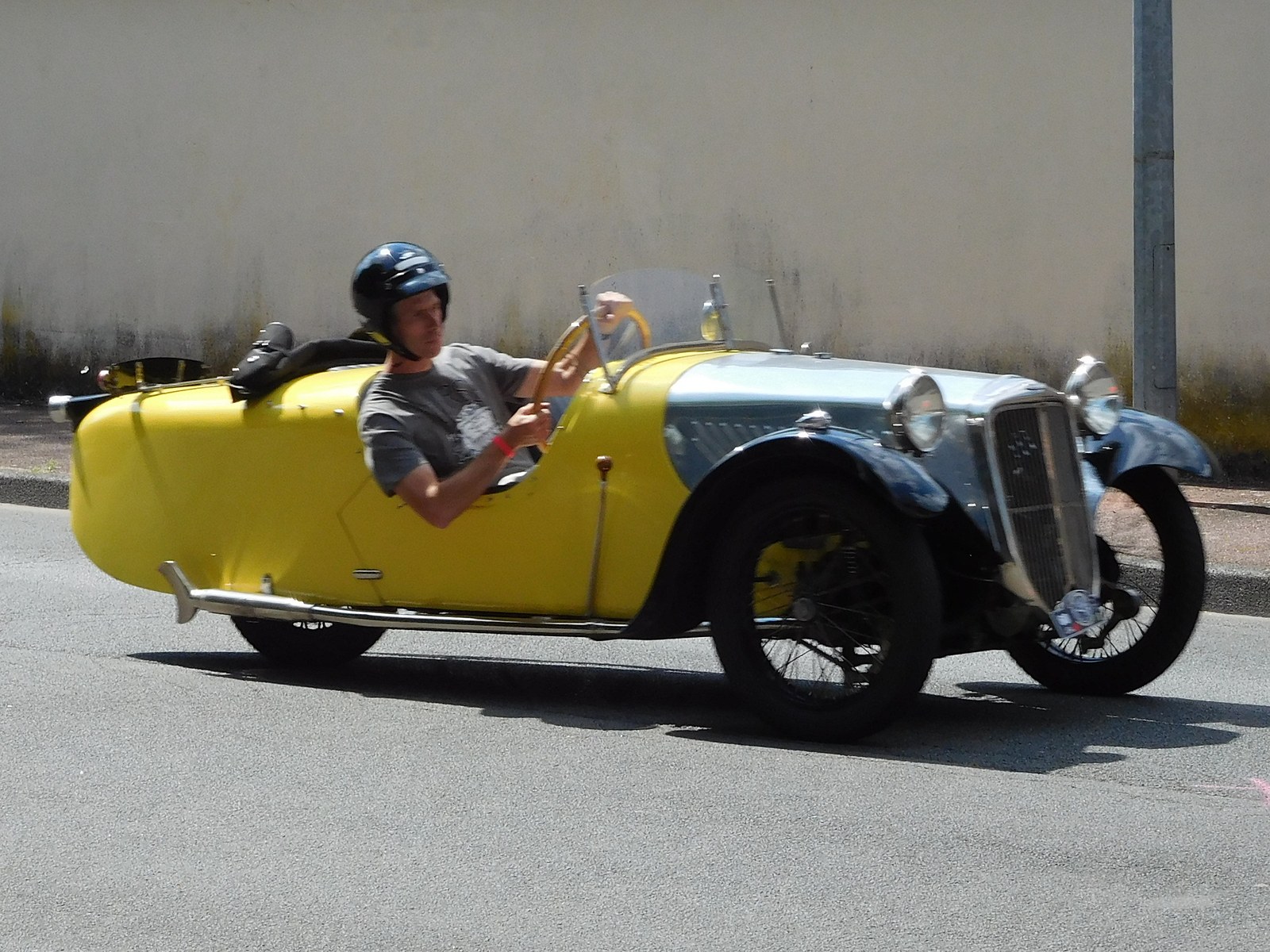
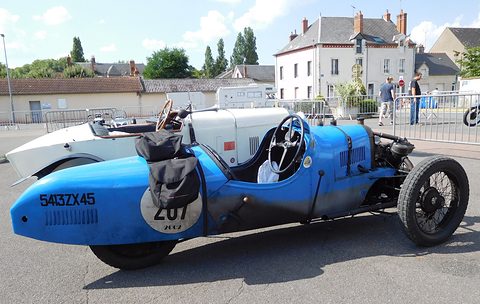
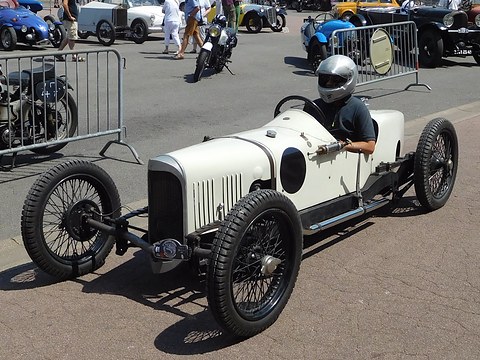
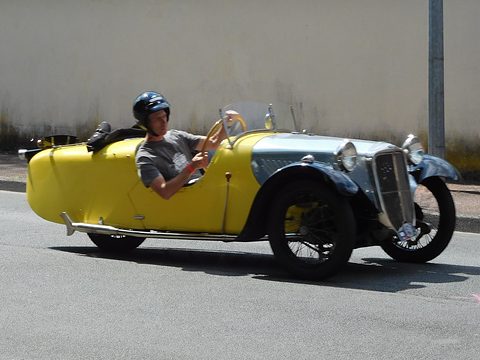
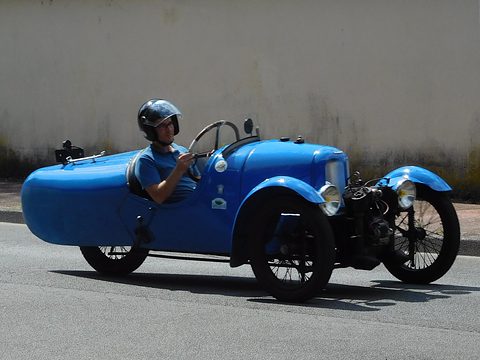
Side view of a blue racing three-wheeler with a bag strapped behind the seat, a white sports car and a town square behind.
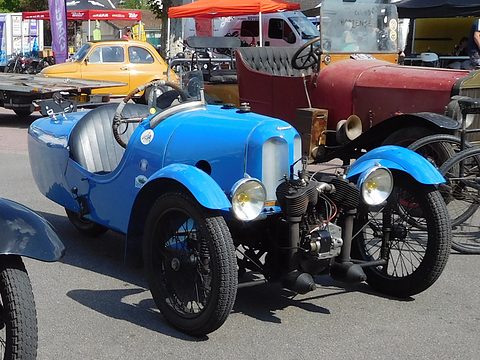
A blue Darmont Spécial, No. 207, in profile at a rally in July 2018.Photo: Cjp24, CC BY-SA 4.0, via Wikimedia Commons

Sandford

1922–⁠1939 · a record on this page

Little is recorded of the Sandford three-wheelers in the sources read. A driver named Stuart Sandford raced Morgans in France: his Morgan-MAG retired after one lap of the cyclecar Grand Prix at Le Mans in August 1920, and his Morgan retired again in the 1921 race.source 16source 2 Whether he was the man behind the Sandford make is not recorded. A Sandford also ran in the Paris–Nice trial of 1921 that the Darmonts won.source 13 Boddy writes that Darmont and Sandford later brought out their own versions of the Morgan, and a list of French Morgan-type three-wheelers in a Polish magazine of 1929 names both.source 2source 17 In a results list of the 1920s, A. Darmont and Dhôme on Darmont-Morgans meet Sandfords.source 18 The Sandford firm was at Levallois-Perret, and Raymond Siran, who founded D’Yrsan, had worked for it.source 19source 20 No dates, details or count of Sandford’s own three-wheelers have been found.

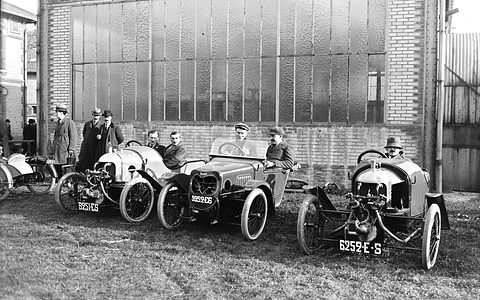
Three small three-wheelers parked in a row on grass in front of a tall glazed hangar, drivers and onlookers in caps around them.
Plate II · 1921 The Morgans of Darmont, Casse and Sandford lined up before a hangar for the Paris–Nice trial of 1921.Photo: Agence Rol, Public domain, via Wikimedia Commons

D’Yrsan

1923–⁠1930 · a record on this page

Raymond Siran de Cavanac, formerly of Sandford, founded his own firm in 1923 to make three-wheelers at Asnières-sur-Seine, near Paris, under the name D’Yrsan.source 19source 20source 21 They were Morgan-like, with the single wheel at the back, but with water-cooled Ruby four-cylinder engines instead of V-twins, in a tubular chassis with independent front suspension on transverse springs.source 19source 20source 22source 23 The Model A had a side-valve Ruby of 904 cc (55 × 95 mm). At the Paris Salon of October 1924 the overhead-valve Model BS of 972 cc joined it, at 10,500 francs as a torpedo against 9,650 for the A; German Wikipedia dates the BS to 1926. A DS followed with 1,097 cc and 35 hp.source 19source 20

In 1927 came a four-wheeled Grand Sport, also Ruby-engined.source 19source 20 By the GTÜ’s account the three-wheelers stopped in 1928, leaving the four-wheelers, and production ended in 1930; with Darmont, it calls D’Yrsan the most successful marque in French cyclecar racing.source 22source 19source 20 About 530 three-wheelers were built, most of them BSs, and about 50 four-wheelers, by German and English Wikipedia, which draw on the same reference books.source 19source 20

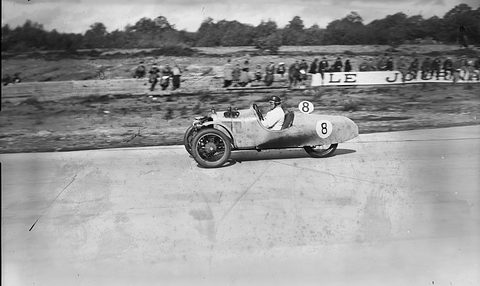
At Le Mans on 15–16 June 1929 a supercharged Grand Sport of 749 cc, No. 31, driven by Trillaud and Henri Lachner, was the smallest car in the race. It was left on the line, Trillaud losing seven minutes pushing it to start, and retired after nine laps, about two hours, with engine failure; a second D’Yrsan, of 1.1 litres, did not arrive.source 24 The sources read trace no surviving D’Yrsan.

Pictures

More photographs, old and new

Variants

From licence Morgan to four wheels

The Darmont range
VariantYearsWhat differsHow many
Imported MorgansTo 1914; 1919–⁠23British-built, sold by Darmont et Baudelocque; after the war with small French touchesAbout 150 sold in 1914
Darmont-Morgan, or Runabout1919/23–27The Morgan built under licence, with “Morgan” lettered on the tailNot found
Spécial1926/27–35Overhead-valve twin of about 40 hp, front brakes, a faired tail; Série Luxe and Série Normale; supercharger optionalNot found
500 cc competition carMid-1920sA water-cooled single with a Cozette supercharger1 known
Étoile de France1931/32–35A cheaper sports model, very long tail, no front brakes; preceded by the NormalNot found; nearly 25 survive
Aéroluxe1934The twin hidden behind a modern grille, the wings enclosedNot found
V-Junior1935/36–39A four-wheeled sports car with a V-twin of about 1,100 ccNot found

Specification

The Étoile de France unless noted

Engine and drive

Engine and drive
EngineDarmont V-twin at the front, side valves, central camshaft, aluminium crankcase, cast-iron cylinders; air-cooled; 1,087 cc, about 25 hp (19 kW)source 1
Spécial engineOverhead-valve V-twin of about 1,100 cc, usually Blackburne-type, two magnetos, about 40 hp (30 kW); water-cooledsource 1source 6source 151,062 cc or 1,089 cc, with one or two carburettors, and a Cozette supercharger on the 1,089 cc, by Osenat
Darmont-Morgan engineAir-cooled JAP-pattern V-twin, 1,084 cc, by Wikipediasource 6source 15
ClutchLeather conesource 1
GearboxTwo speeds with no reverse, or three speeds with reverse; floor leversource 1source 3
ThrottleA hand lever on the steering wheelsource 1

Body and chassis

Body and chassis
ChassisSteel tube; the two side tubes double as exhaust pipessource 1
Front suspensionMorgan’s independent sliding pillars, with coil springs and friction damperssource 1
Rear suspensionTwo longitudinal leaf springs and a friction dampersource 1
BrakesMechanical drum on the rear wheel onlysource 1The Spécial had front brakes worked by a pedal
Wheels19 in rimssource 1

Dimensions

Dimensions
Weight190 kg (419 lb) in running ordersource 1
Length, width and wheelbaseNot found

Performance and running

Performance and running
Top speed115 km/h (71 mph)source 1Spécial about 130 km/h (81 mph), over 150 km/h (93 mph) prepared; Darmont-Morgan about 125 km/h (78 mph) by Wikipedia
Fuel7 litres per 100 km (40 mpg)source 1
Fiscal rating6 CVsource 1

Famous for

Three points

  1. The French Morgan

    The only firm to build Morgans under licence, with “Morgan” painted on the tail.

  2. Two names on one crankcase

    “Darmont” and “Morgan” were cast side by side in raised letters.

  3. No reverse in the 1930s

    The Étoile de France still offered two speeds, no reverse and a hand throttle.

Racing and records

Trials and world records

Darmont’s results and records of the 1920s (more in records and feats).

1, 2, 3
in the Paris–Nice trial of 1921.source 6source 11
6 July 1924
World records for passenger three-wheelers of up to 750 cc over the flying kilometre and mile, by Marcel Dhôme with a Darmont twin of 687 cc.source 14
25 August 1928
World records in the same class over the flying kilometre, mile and 5 miles, by A. Darmont with a twin of 743 cc.source 14
115.18 km/h
(71.57 mph) by a 500 cc Darmont; Darmont, Dhôme and Pierpoint took still more records.source 13

Survivors and collecting

Today

A recent census by the Amicale Tricyclecariste de France, the club that helps owners with parts, counted about 200 surviving Darmonts of all types, nearly 25 of them Étoiles de France. Gazoline valued an Étoile de France at €25,000 in 2008 and €45,000 in 2018. Its weak points, the magazine says, are wear in the bottom end, pistons and cylinders, and the chassis tubes, which rot from the condensation of the exhaust they carry.source 1

At Osenat’s sale at Paris-Fontainebleau on 17 March 2013, lot 307 was the 500 cc supercharged Darmont Spécial Compétition from Roger Brioult’s collection, raced by Marcel Dhôme, estimated at €50,000–80,000; the result has not been found. The catalogue recommends Frédéric Viginier’s Darmont as the reference book.source 3

Sources

Numbered as in the text

Two sources on Darmont itself were read in full: the Osenat catalogue of 2013, whose text was supplied with help from Frédéric Viginier, author of the standard book on Darmont, and Gazoline’s article of 2018 on the Étoile de France, whose specification is the only one found. Most else comes from snippets of encyclopedias and Morgan histories, and they disagree on dates and on the brothers’ first names. Viginier’s Darmont was not read. Sources are given as plain text; the links are on the Credits page.

  1. “Darmont Étoile de France: star parmi les stars”, Gazoline no. 261, December 2018, pp. 66–69, read in full.
  2. W. Boddy, “The vintage years of the Morgan 3-wheeler”, Motor Sport, June, July and August 1965, read in full for the Morgan page.
  3. Osenat, Motocyclettes & Automobiles de Collection incluant la collection Roger Brioult, Paris-Fontainebleau, 17 March 2013, lot 307, “c1925/26 Darmont Spécial Compétition”, read in full.
  4. Morgan (1994), on the 1919 agreement and the crankcase lettering, snippets only.
  5. La Vie au Grand Air, Gaillon results, snippets only; the issue date has not been established.
  6. English Wikipedia, Darmont, read in full. Used as a lead.
  7. G. N. Georgano (ed.), The New Encyclopedia of Motorcars 1885 to the Present (1982), entry Darmont, snippets only.
  8. L’univers des voitures classiques 1886–⁠1975 (2001), snippet only.
  9. Three Wheelers (2003), on the 1919 licence, snippet only.
  10. Jonathan Wood, Morgan: Performance plus Tradition (2004), pp. 20–22, “The Darmont (1920–⁠39)”, snippets only.
  11. Encyclopedia of the Car (1993), entry Darmont, snippets only.
  12. Hill, Three-wheelers (1995), snippets only.
  13. G. N. Georgano (ed.), The Encyclopedia of Motor Sport (1971), entry Darmont-Morgan, snippets only.
  14. Alderson, Morgan Sweeps the Board: the three-wheeler story (1995), with its world-record tables, snippets only.
  15. German Wikipedia, Darmont, summary read. Used as a lead; it cites Wood (2005), Linz and Schrader (2008) and Georgano.
  16. teamdan.com, race-results archive, 1920 and 1921, archived copies read in full for the racing and rallying page.
  17. Tygodnik Automobilisty i Lotnika, 1929 no. 41, a list of French Morgan-type three-wheelers, snippet only.
  18. Timeless Magazine no. 10, race results lists, snippet only.
  19. German Wikipedia, D’Yrsan, read in full. Used as a lead; it cites Linz and Schrader (2008), Georgano and the Allgemeine Automobil-Zeitung of 1924.
  20. English Wikipedia, D’Yrsan, read in full. Used as a lead; it draws on the same books.
  21. French Wikipedia, D’Yrsan, read in full; its one reference is a dead website.
  22. GTÜ Oldtimerservice, “D’Yrsan”, read in full in an archived copy of 2016.
  23. Autopasión 1/18, “Historia D’Yrsan (1923–⁠1928)”, an enthusiast’s site, read in summary.
  24. English Wikipedia, 1929 24 Hours of Le Mans, the D’Yrsan passages read. Used as a lead; it cites Spurring, Le Mans 1923–⁠29 (2015), and Clarke (1998).