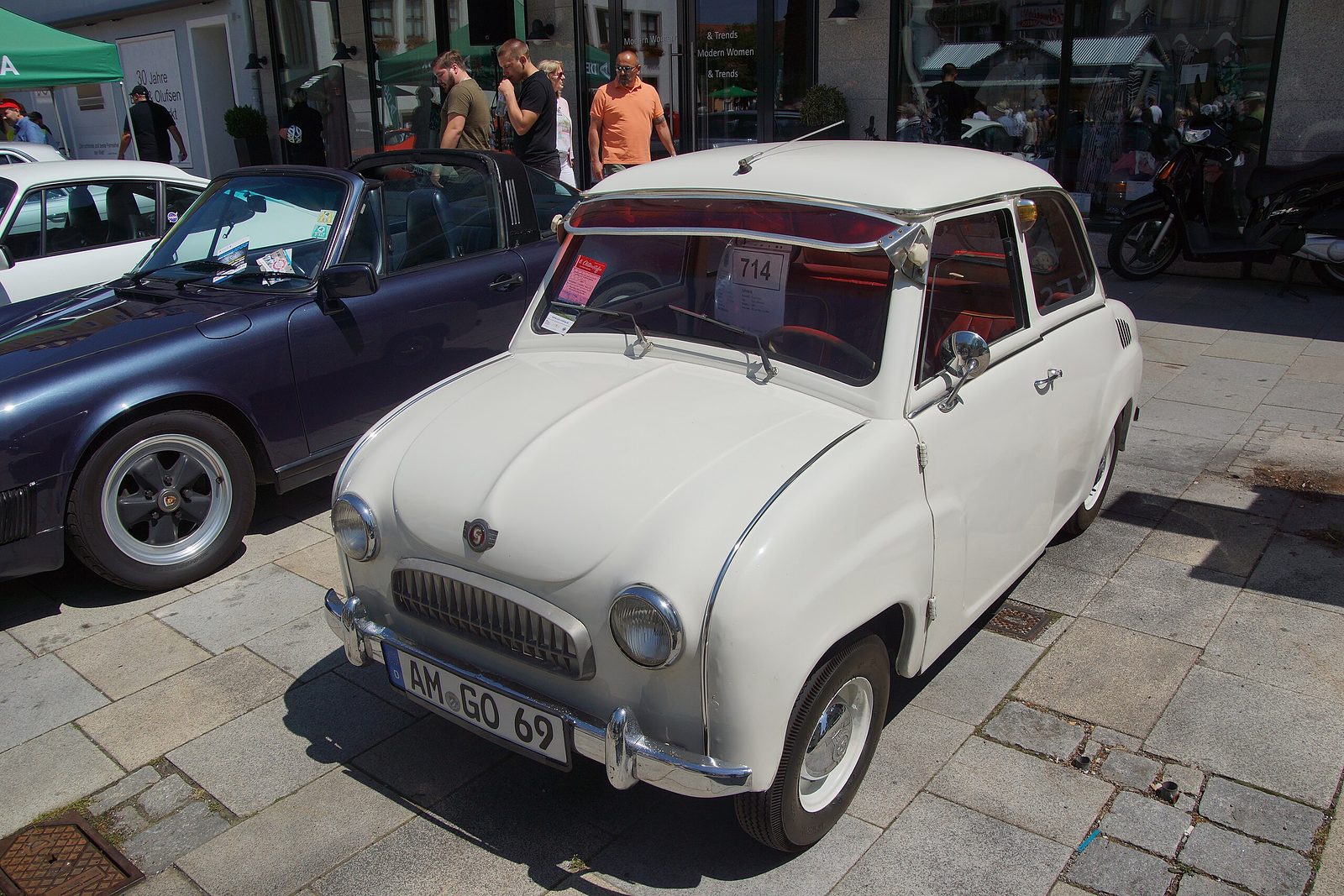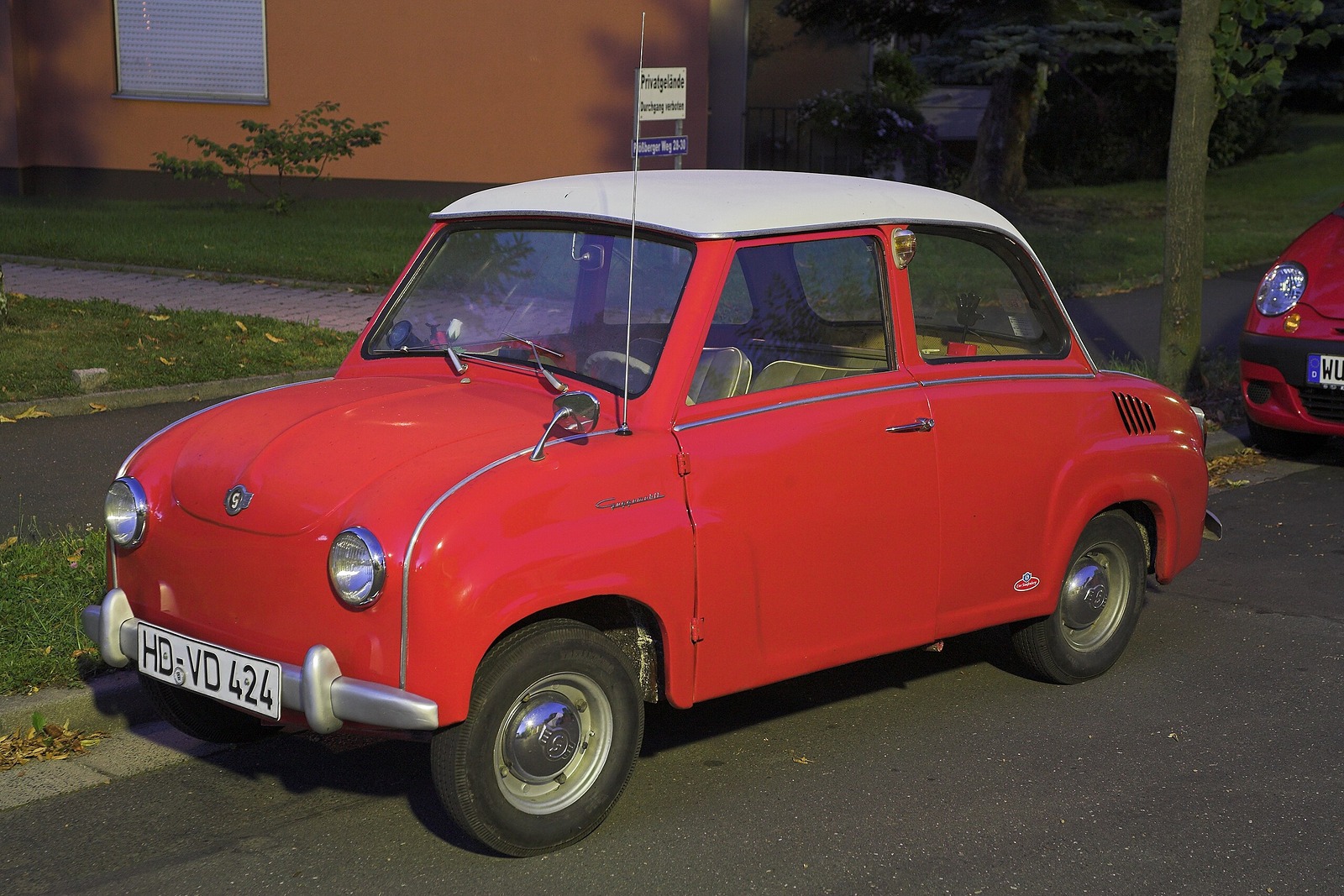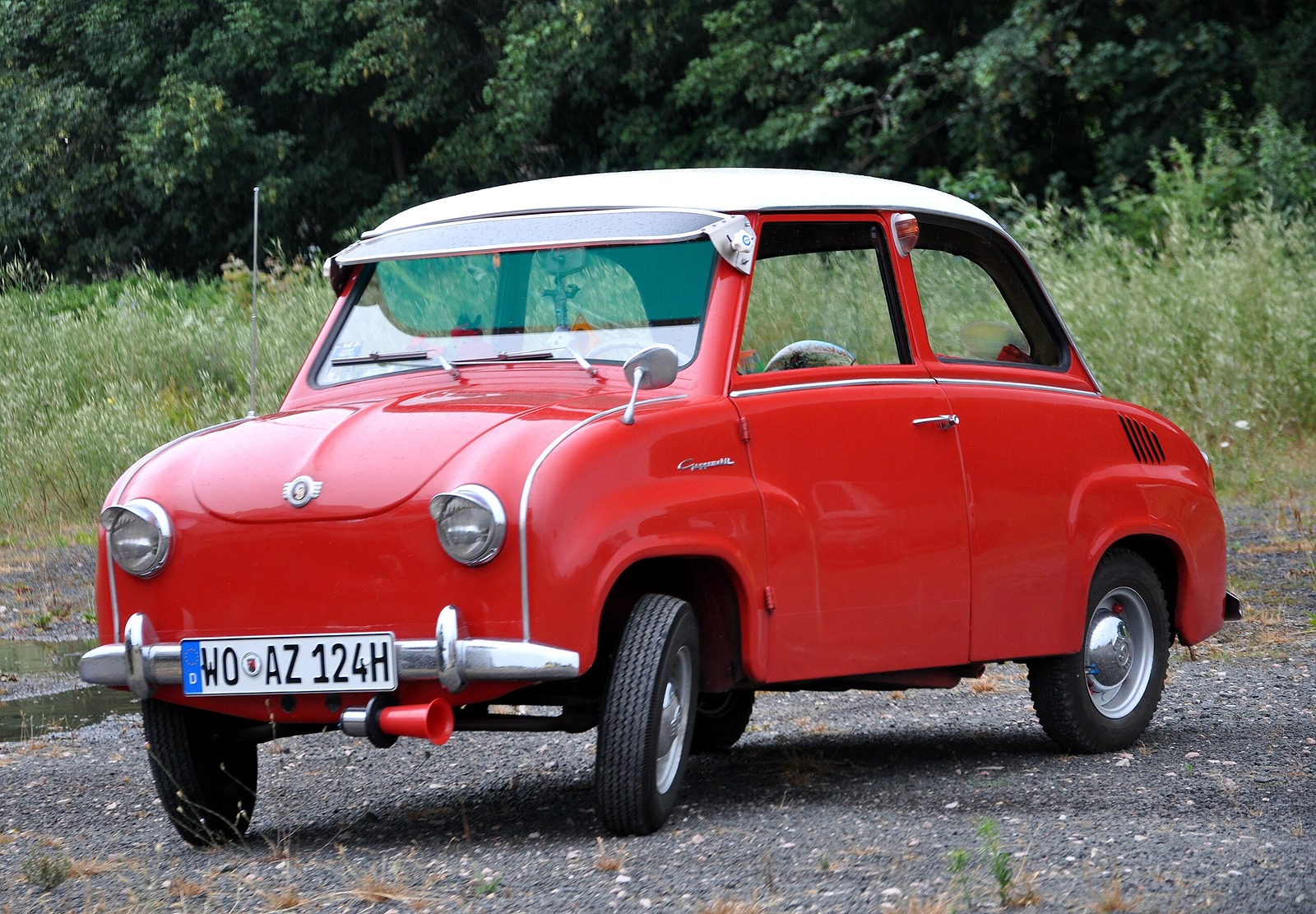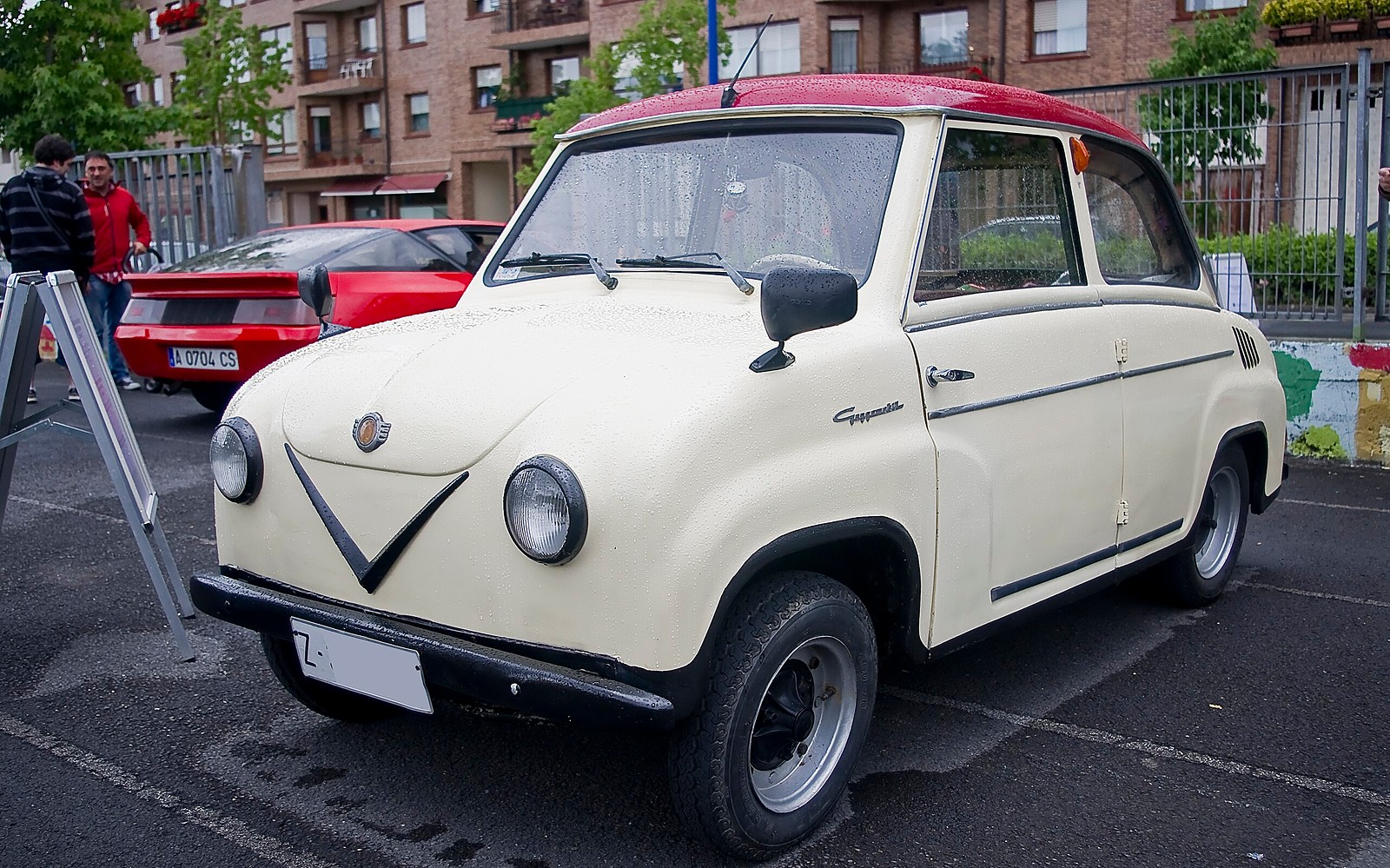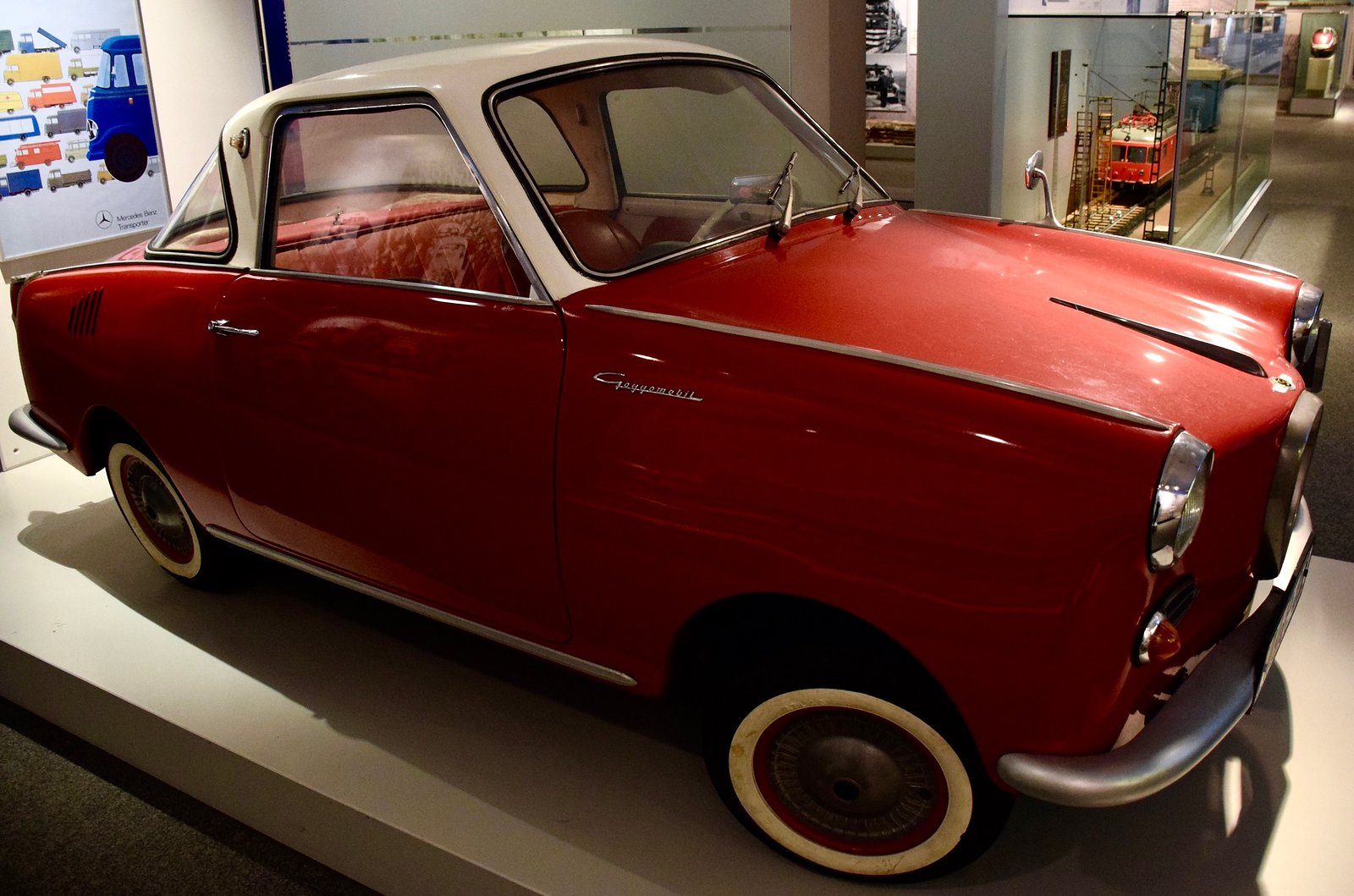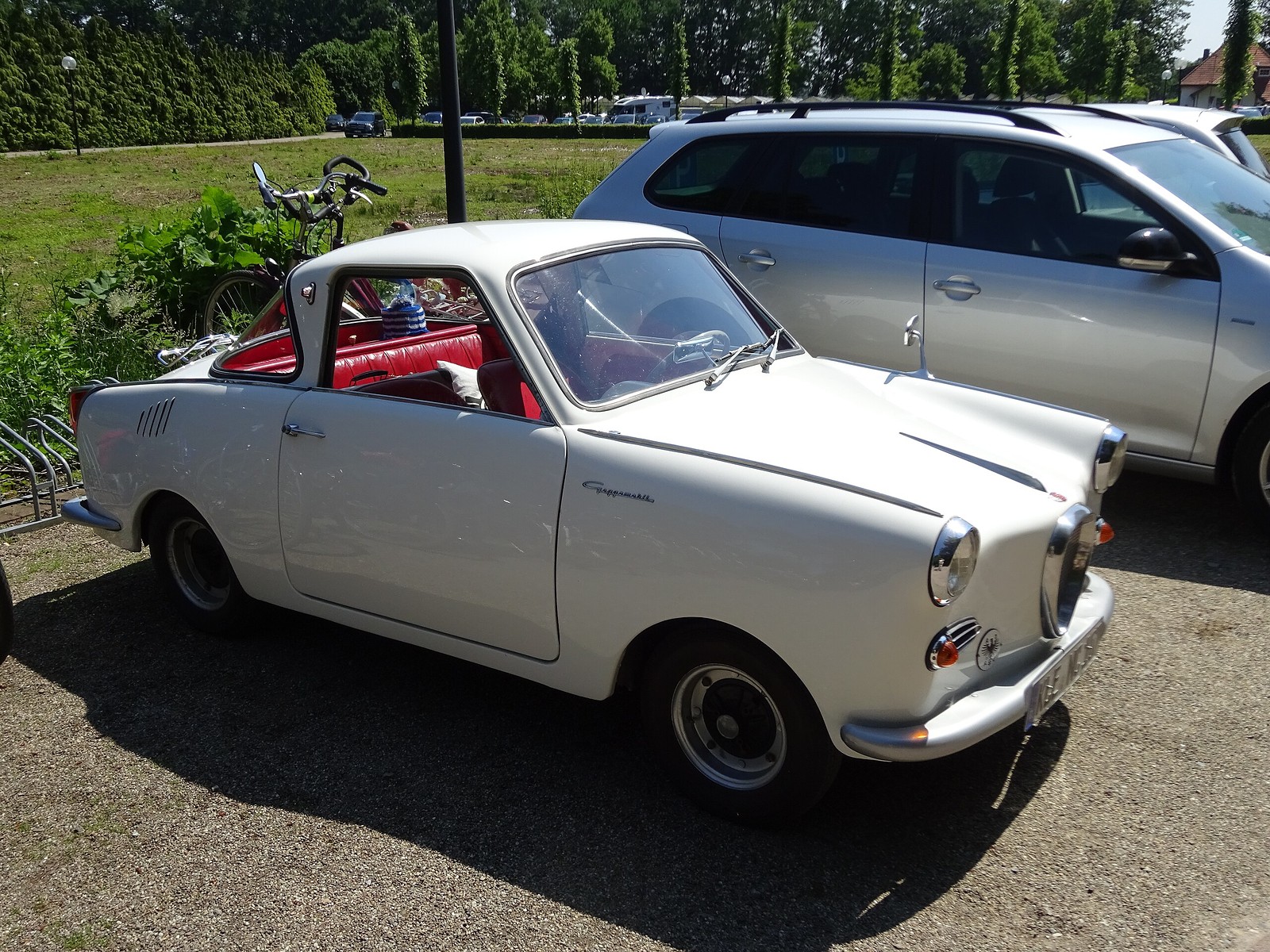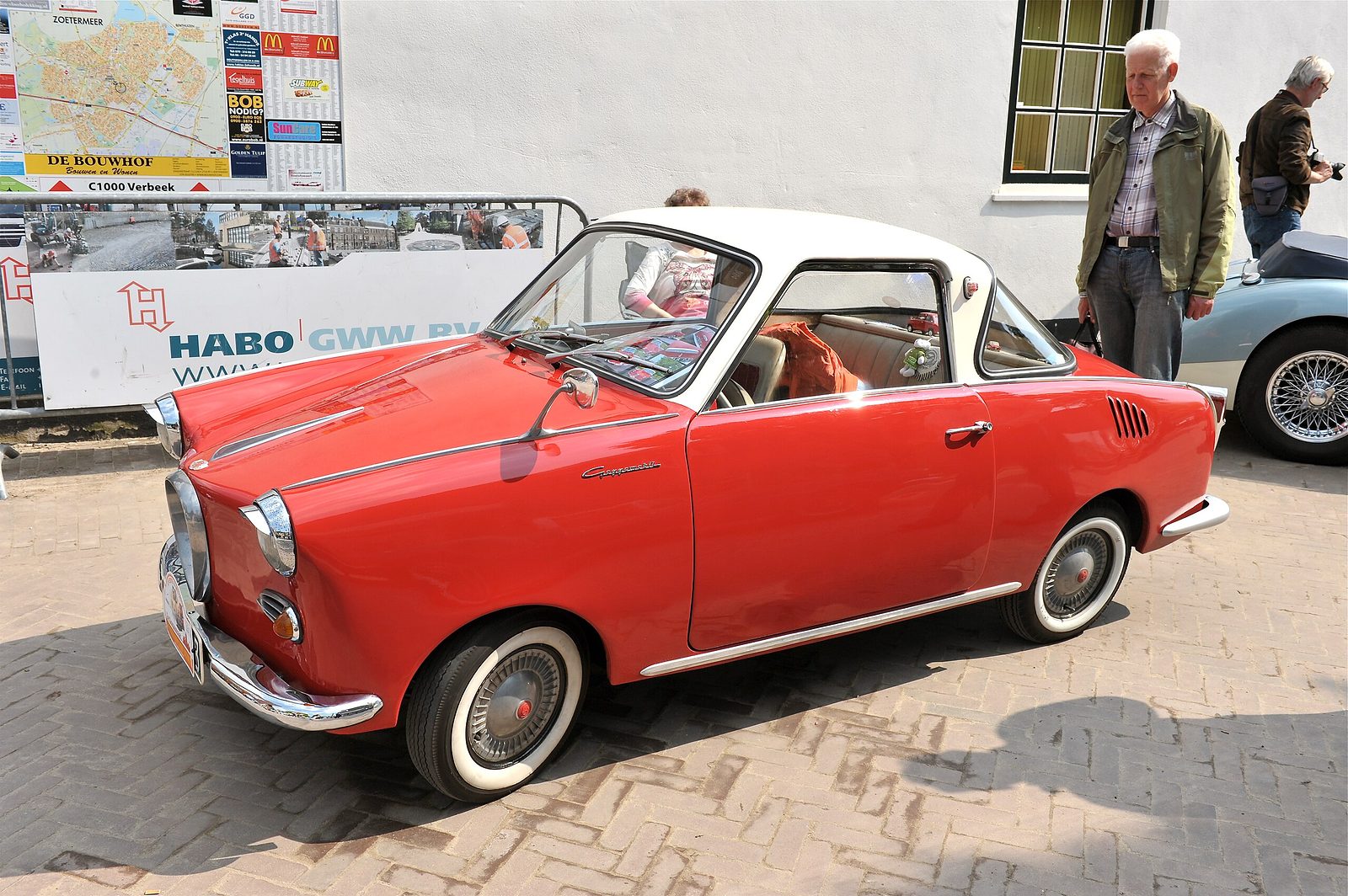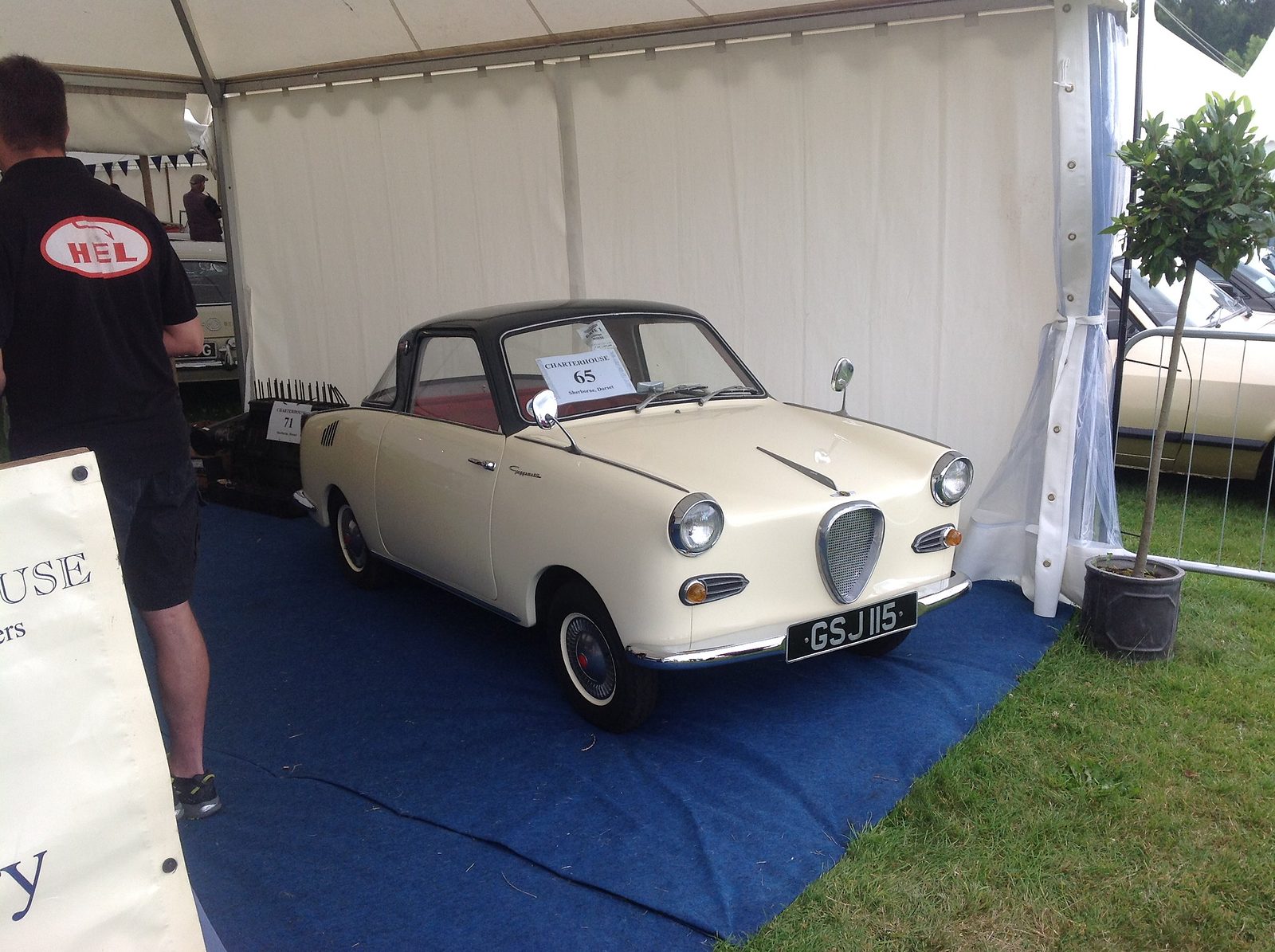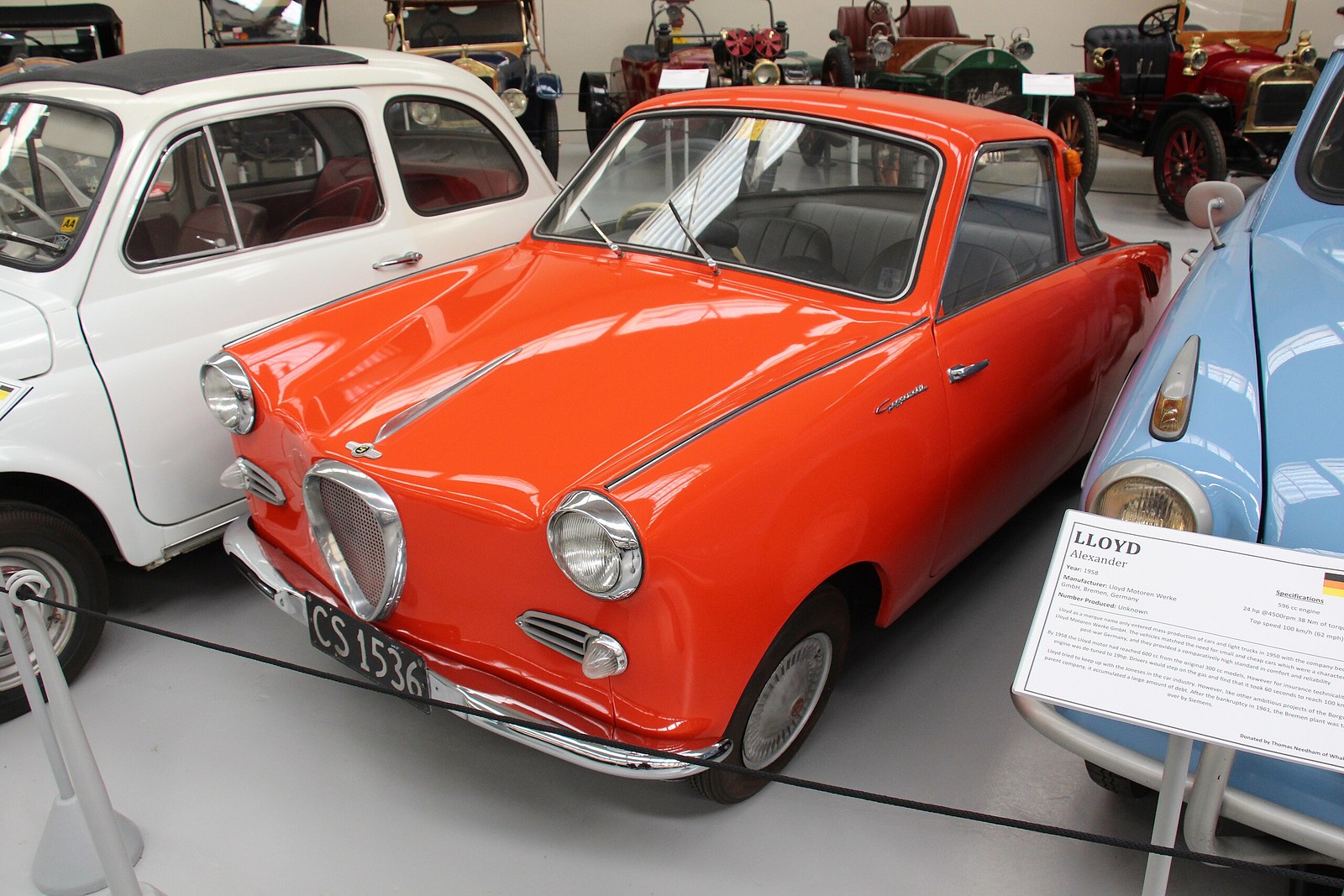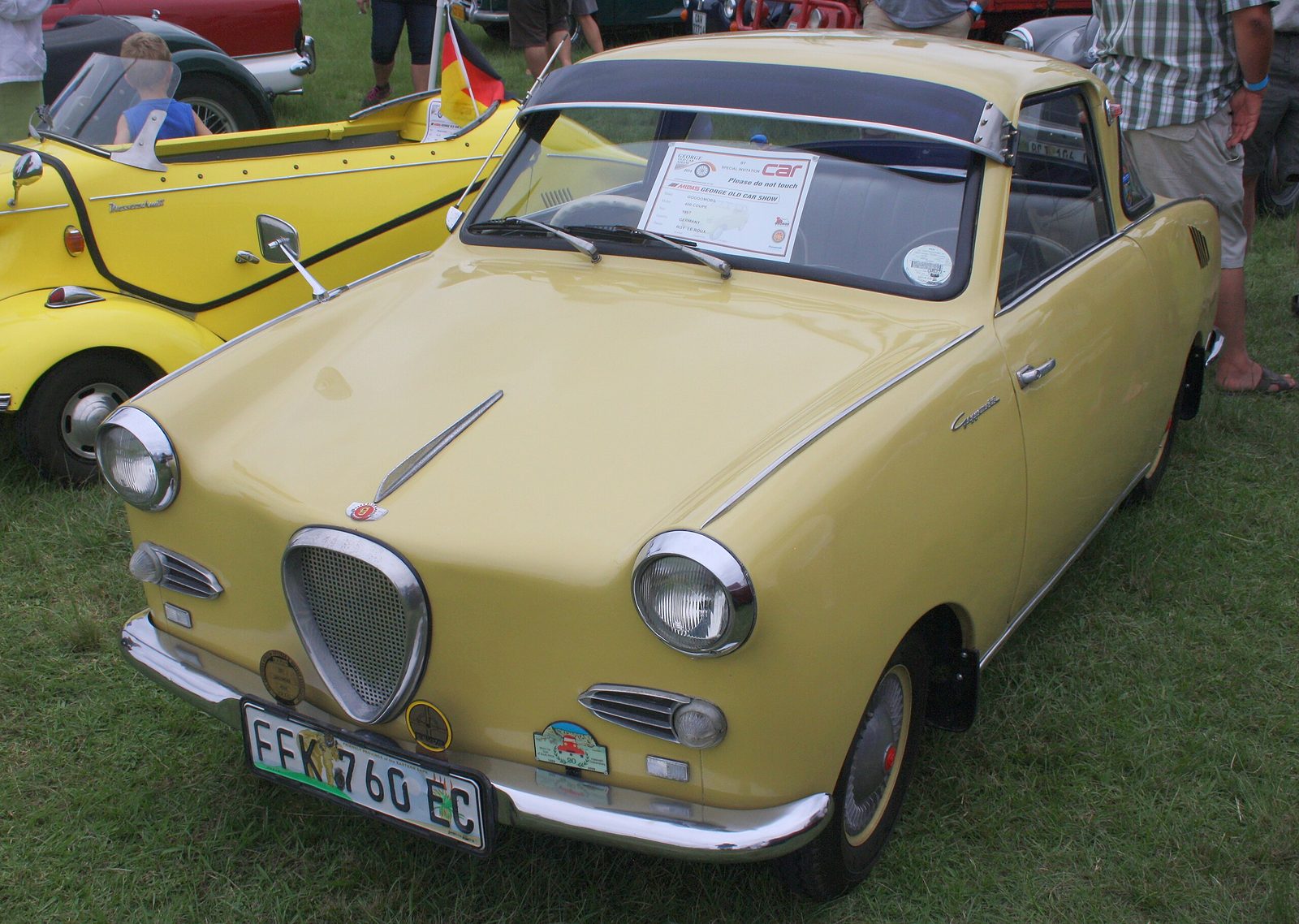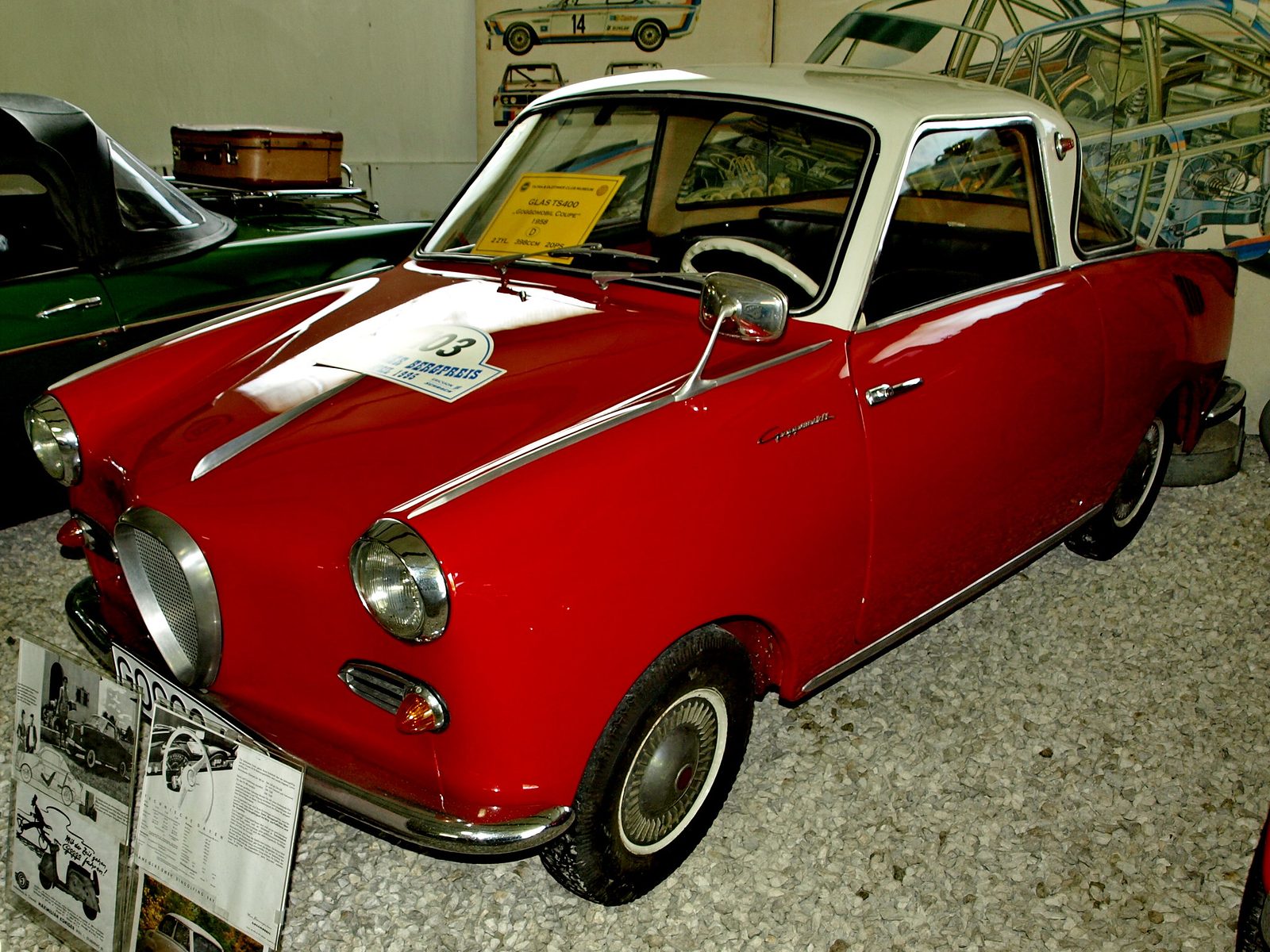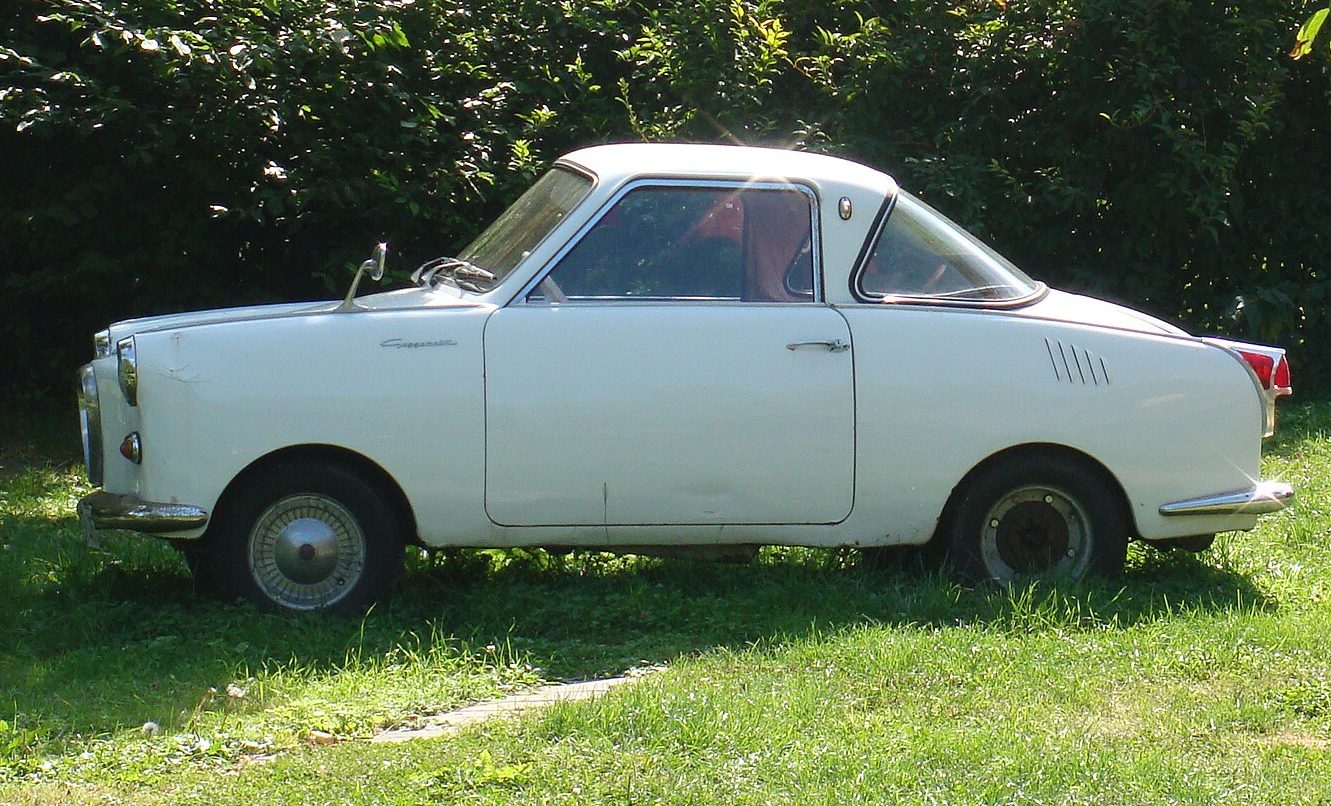
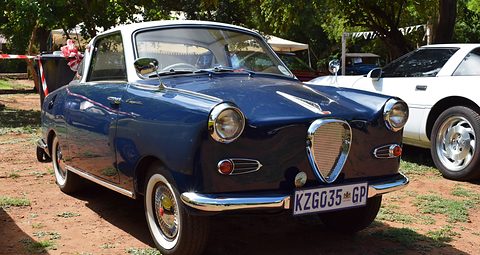
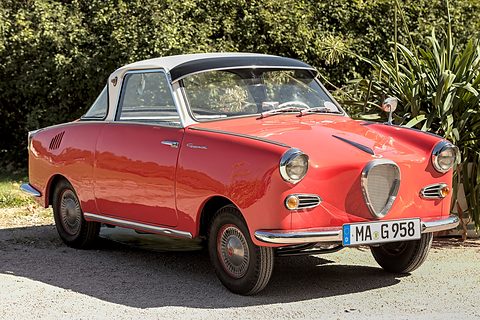
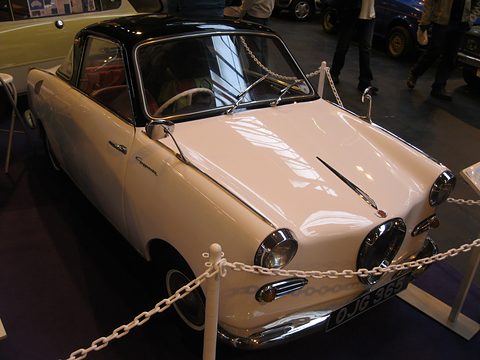
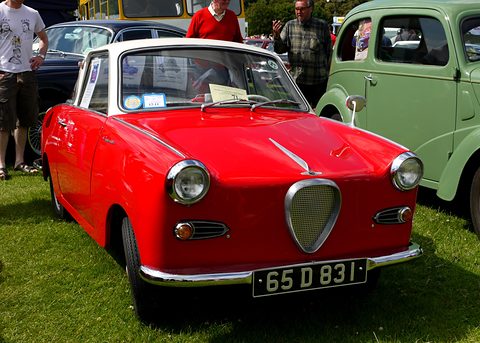
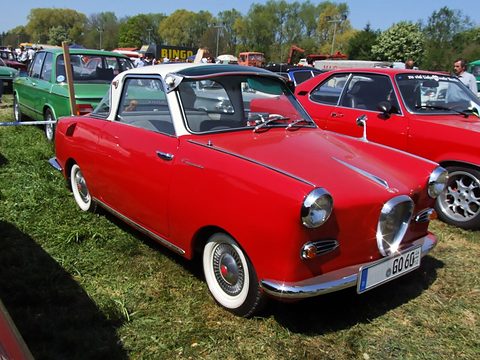
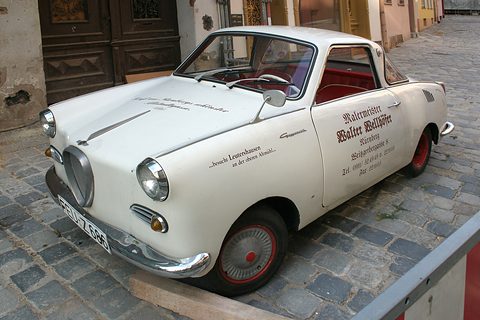
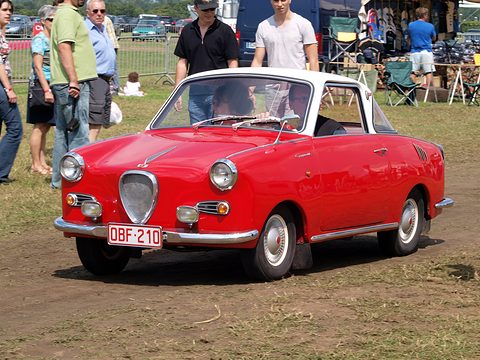
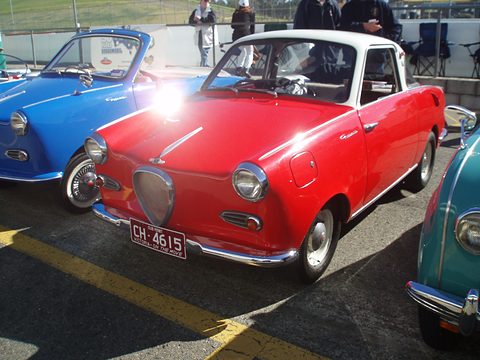
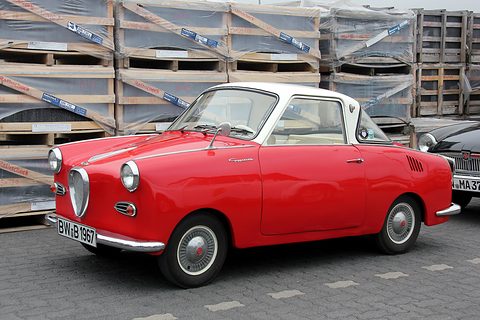
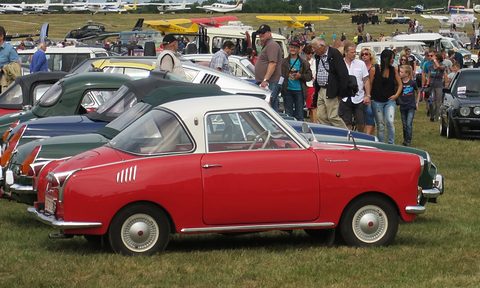
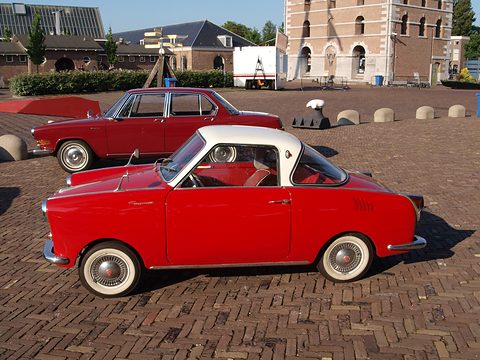
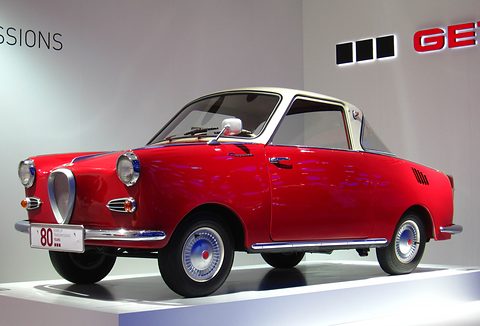
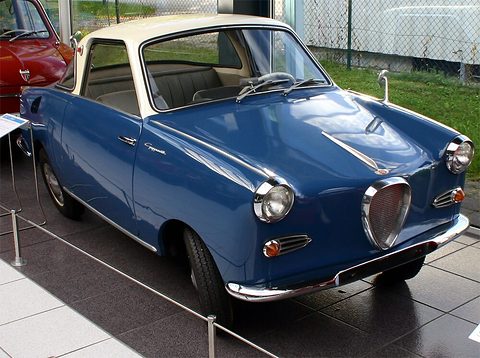
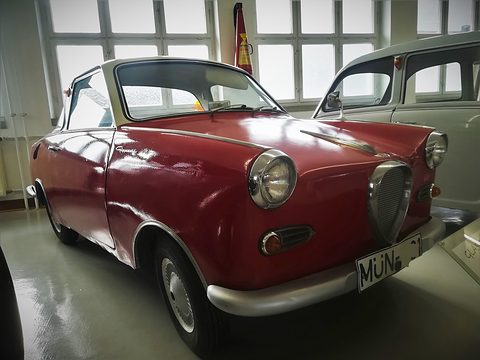
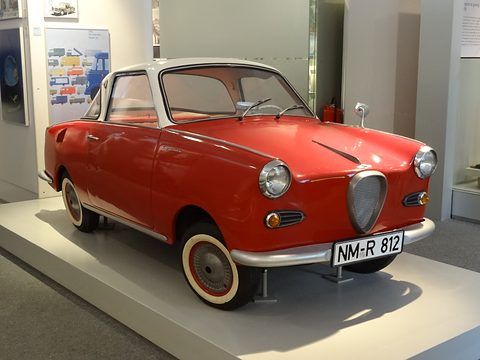
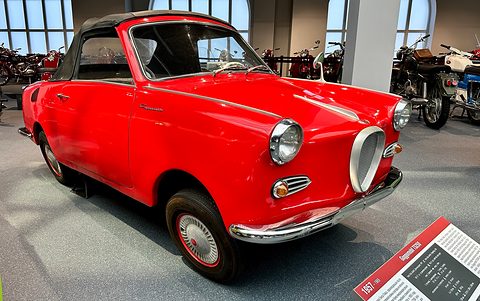
microcarfan
  • Microcar
  • West Germany
  • Four seats

Goggomobil

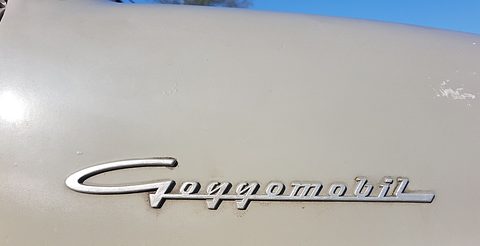
Also known as “Goggo”, Glas Goggomobil, T250, T300, T400, TS

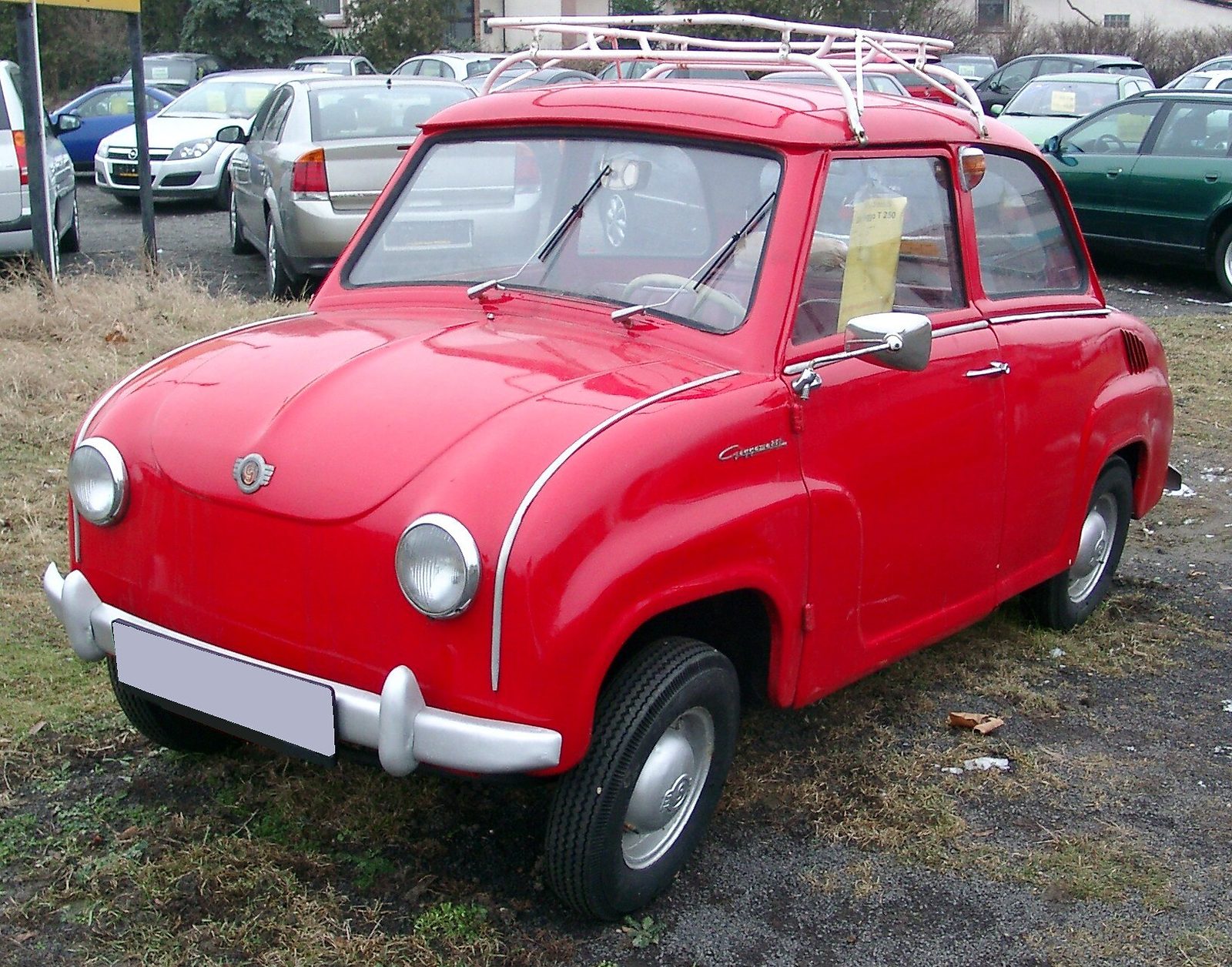
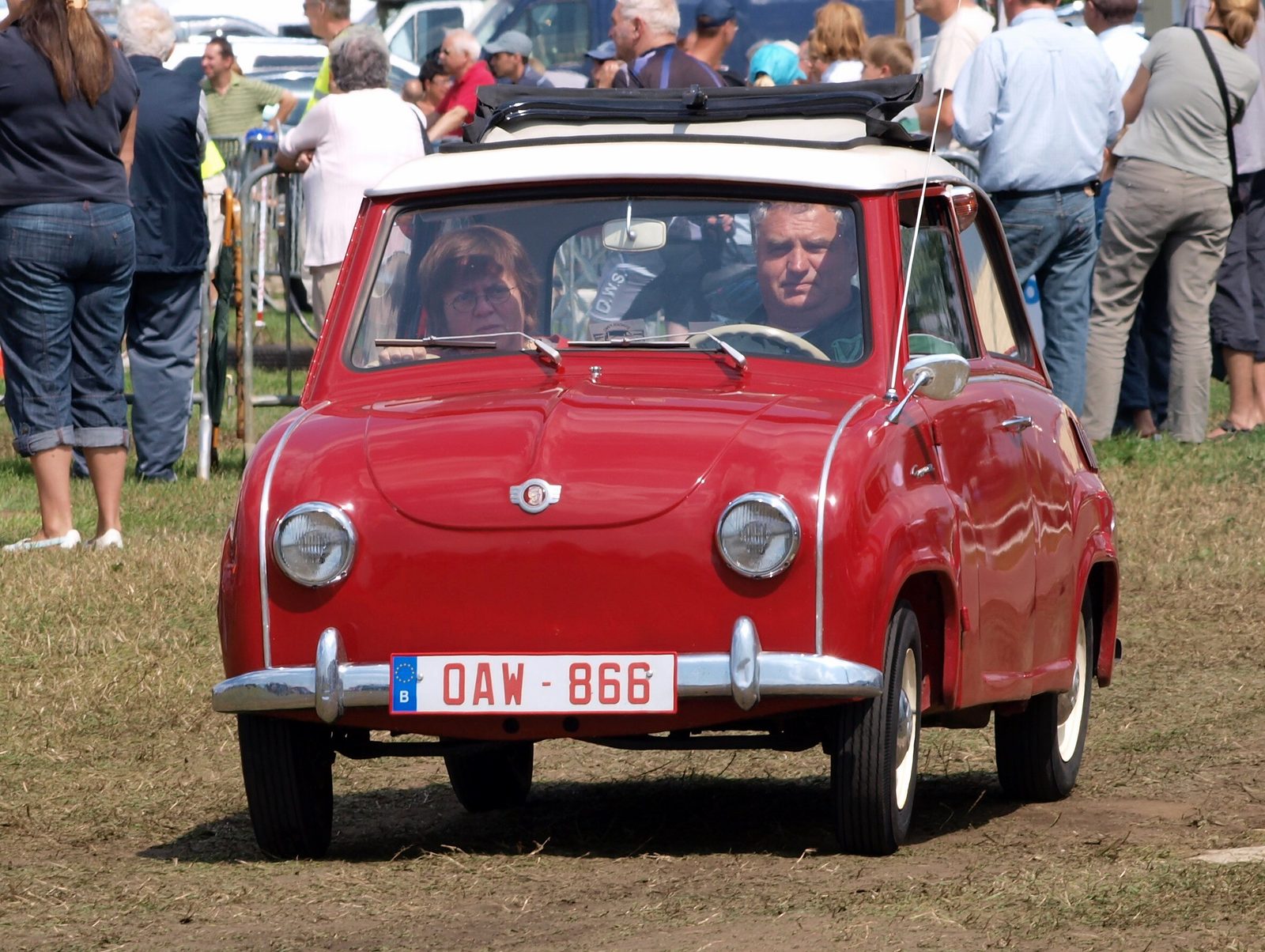
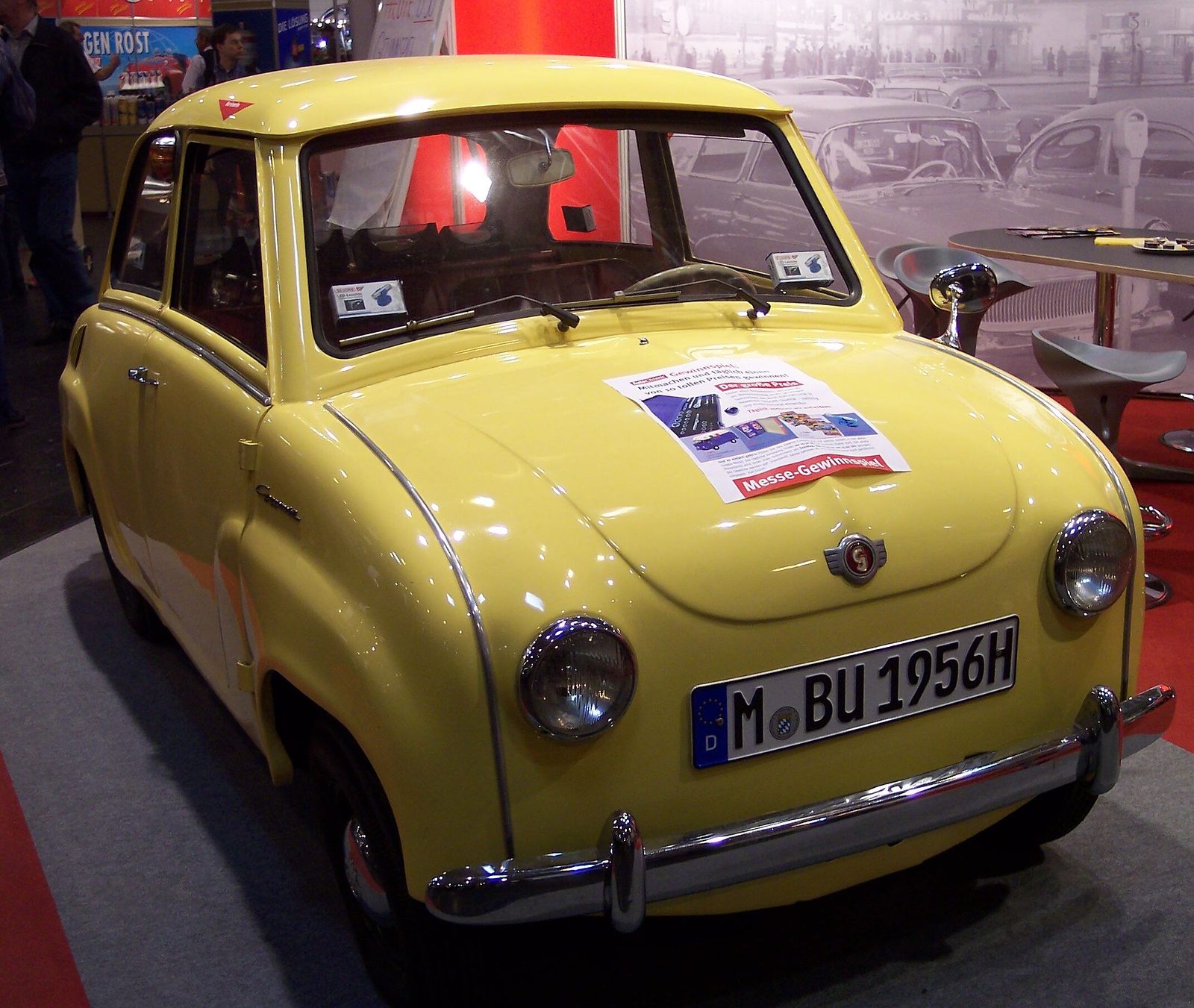
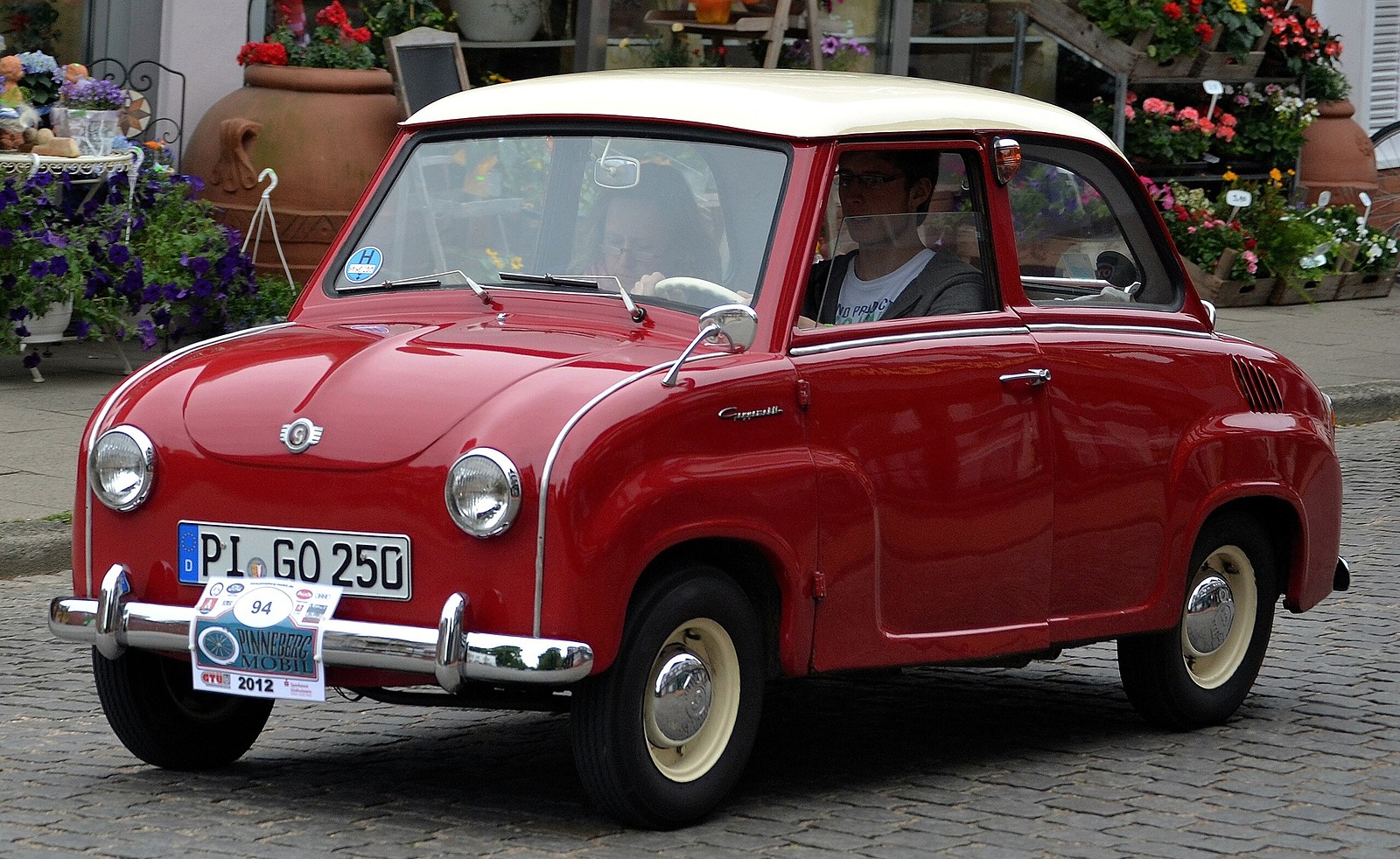
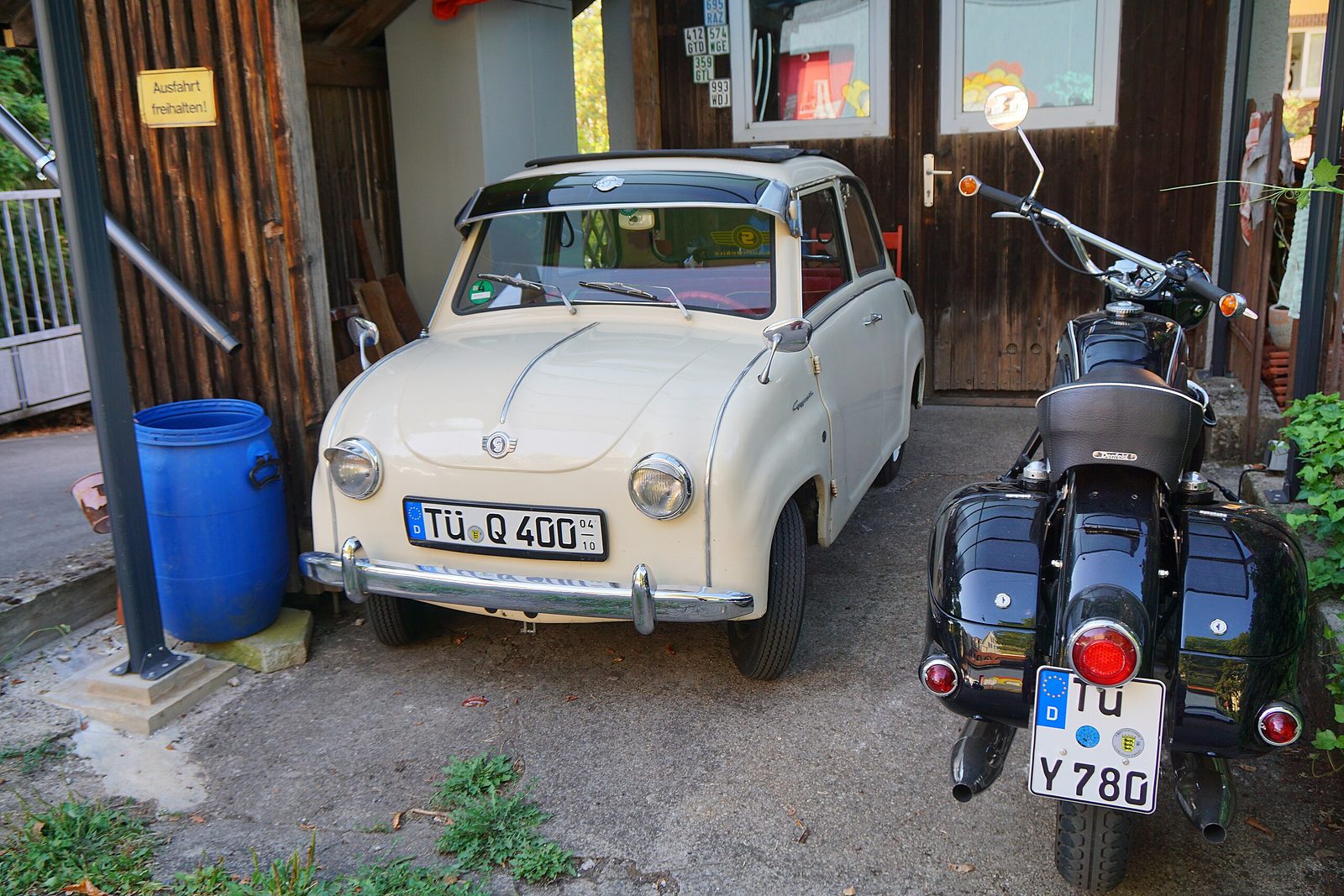
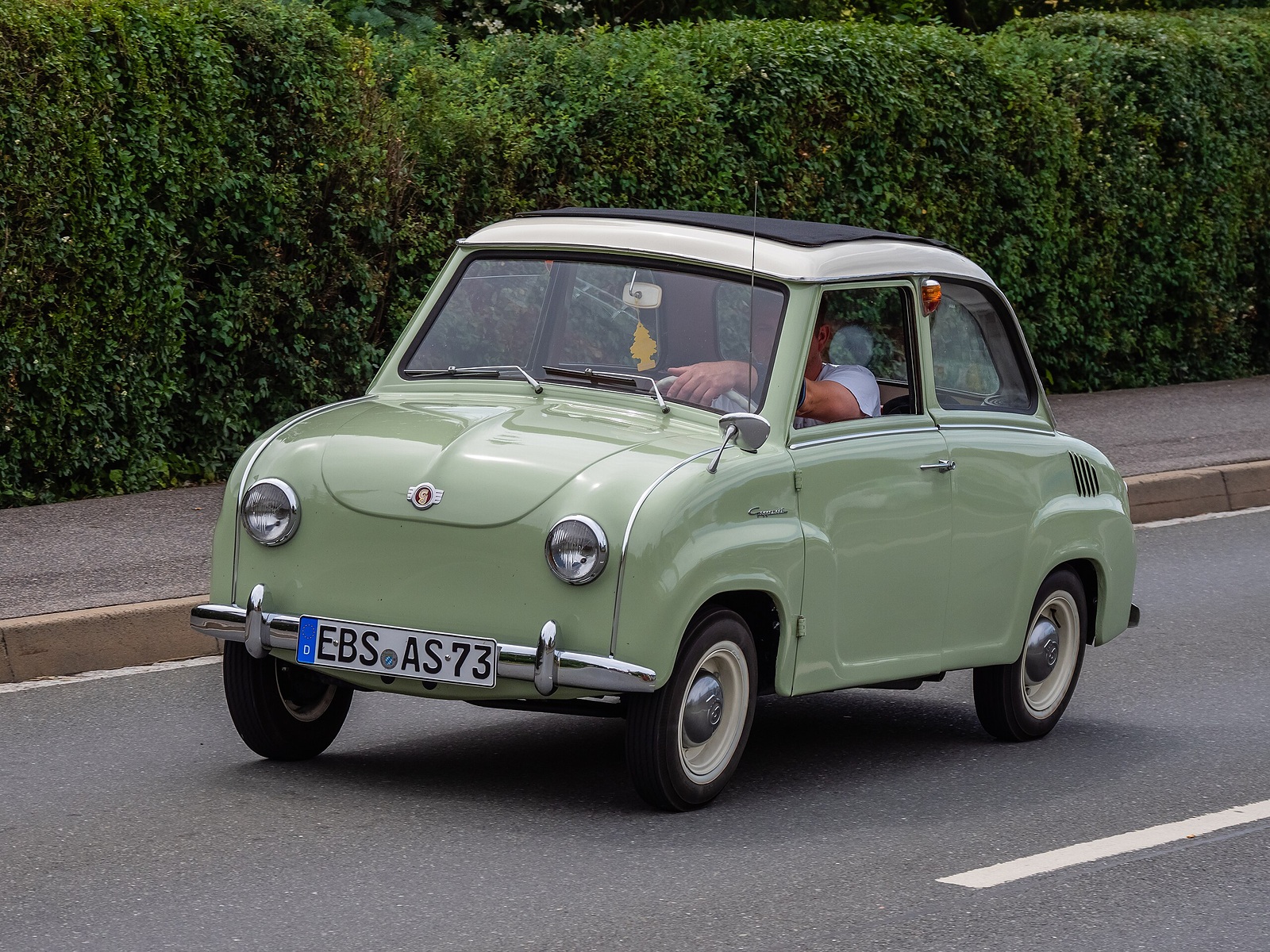
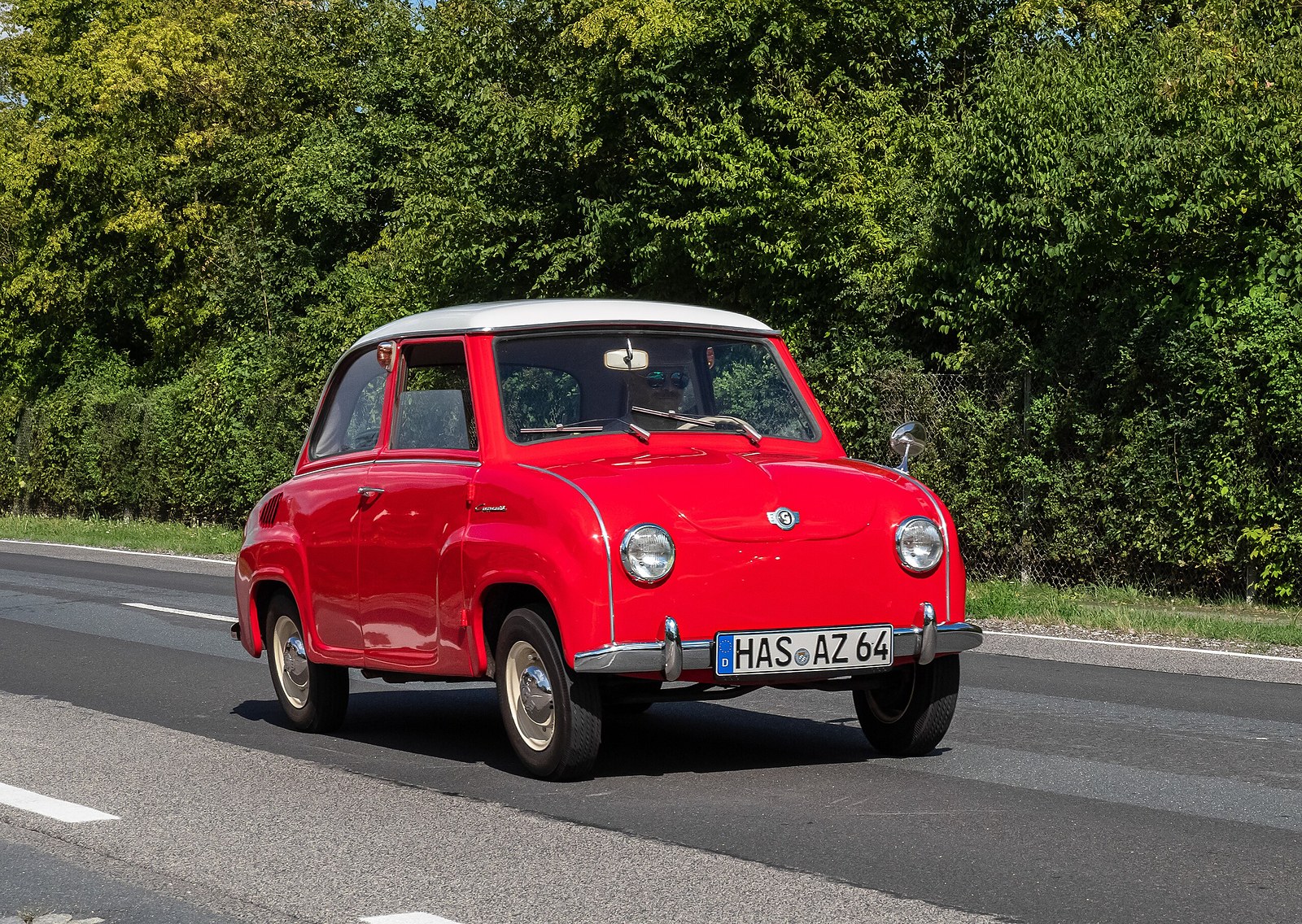
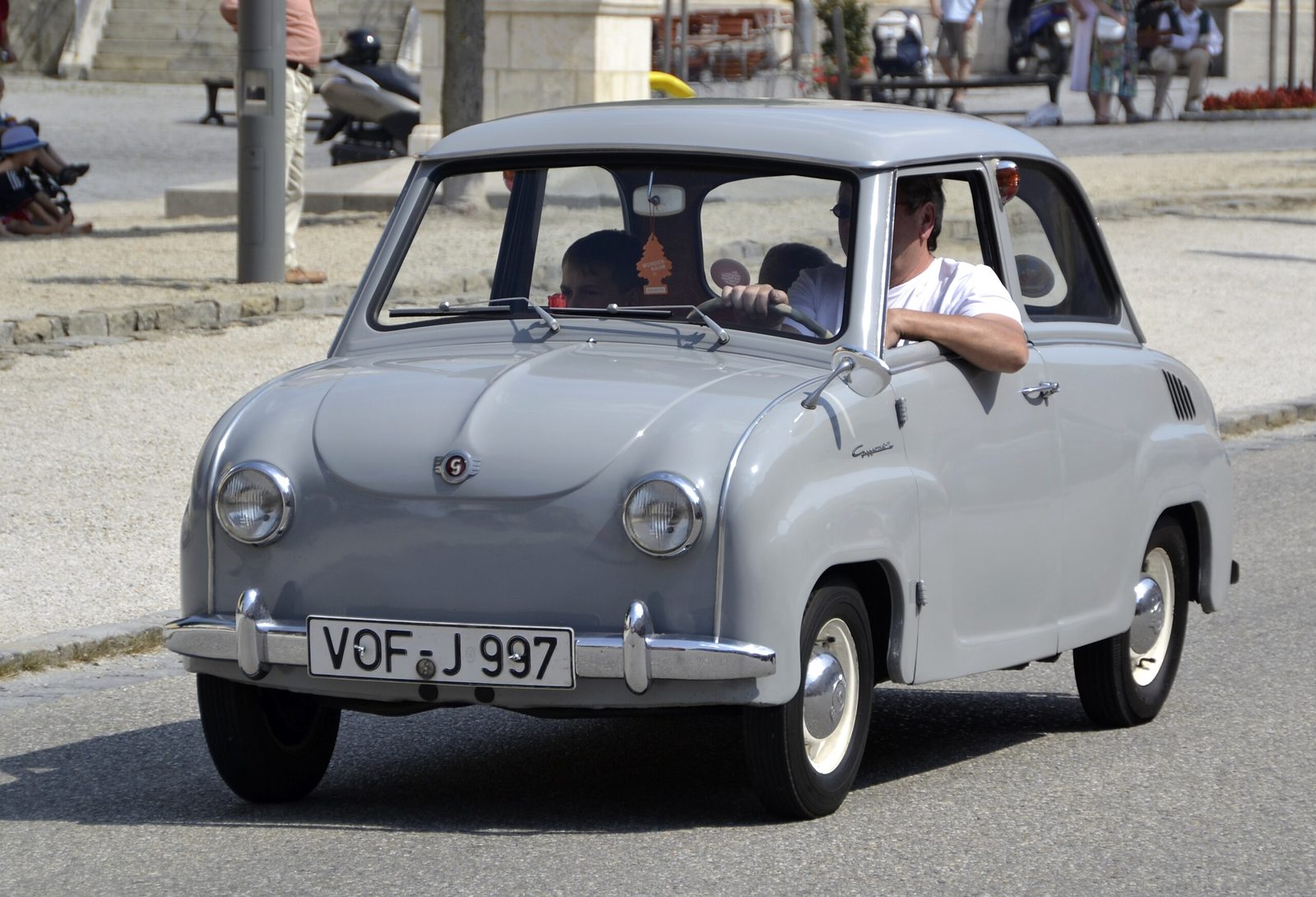
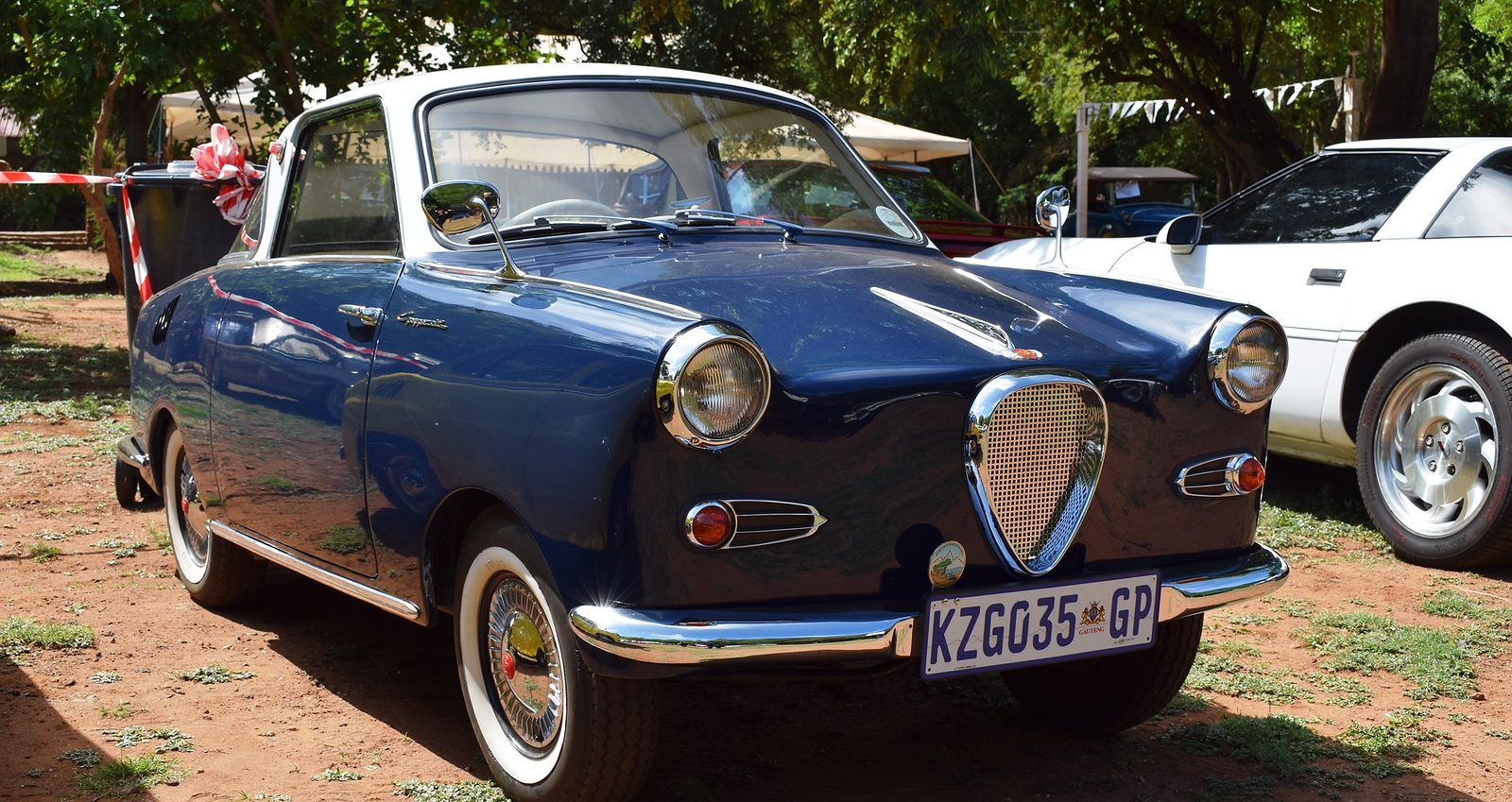
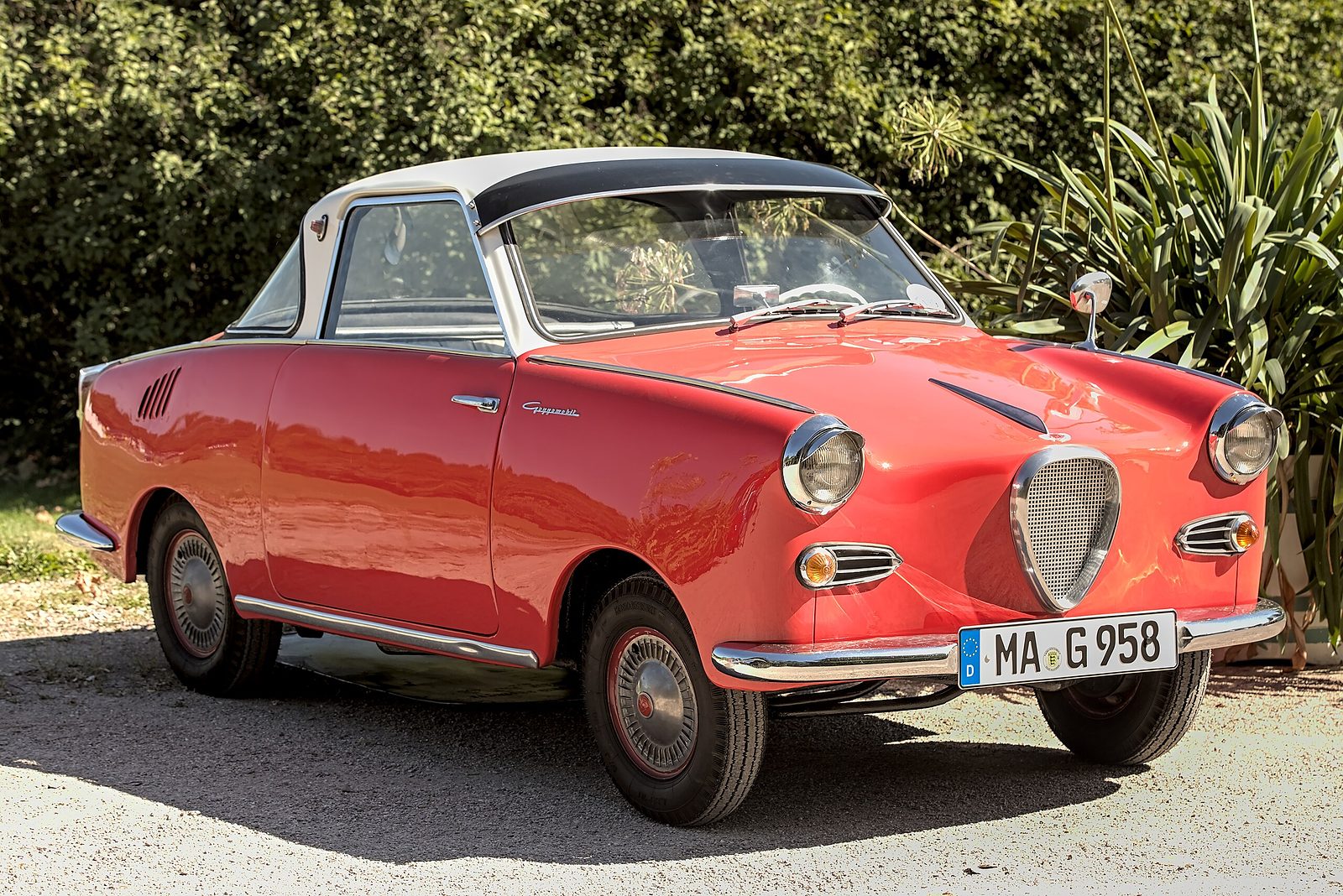
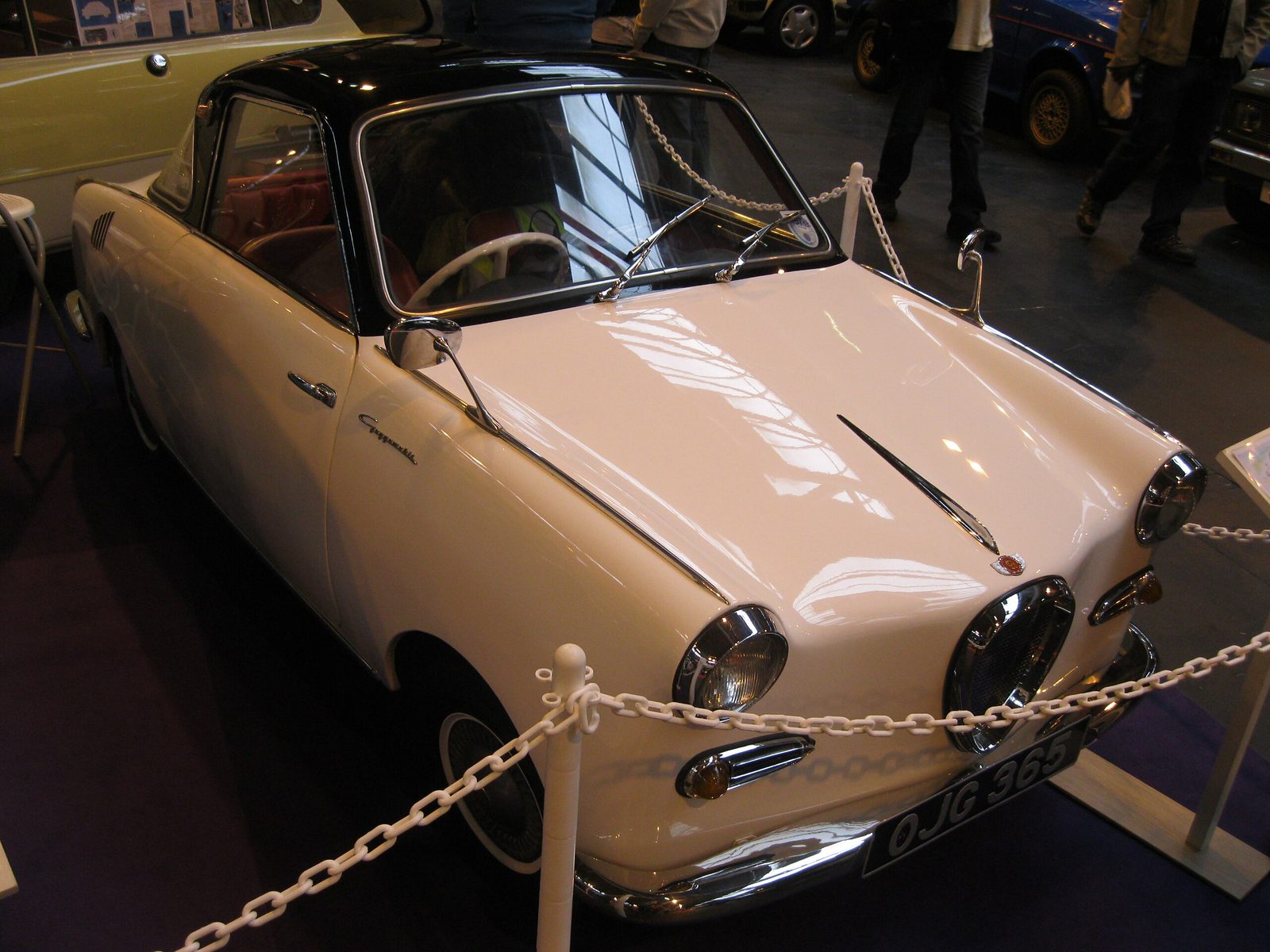
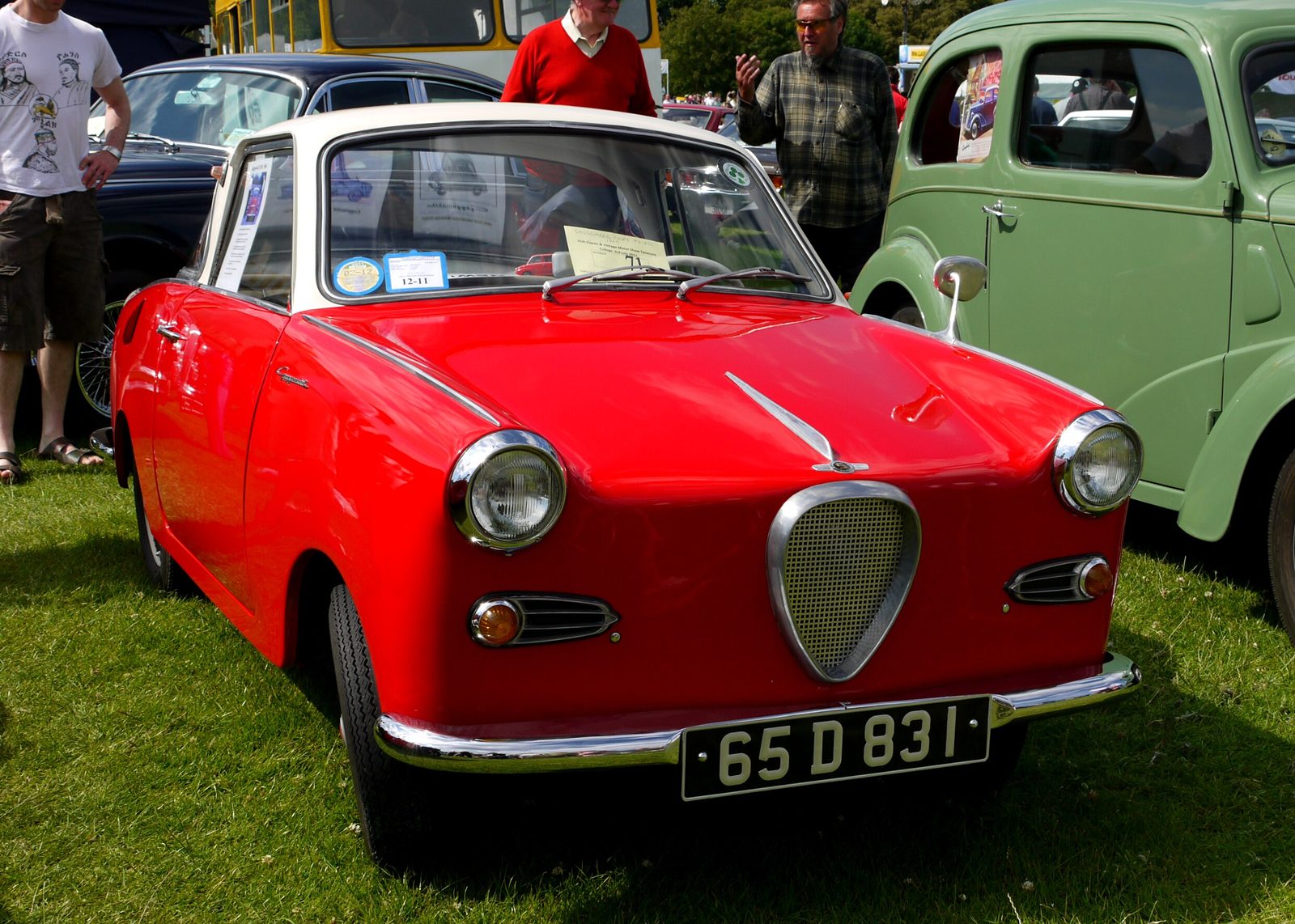
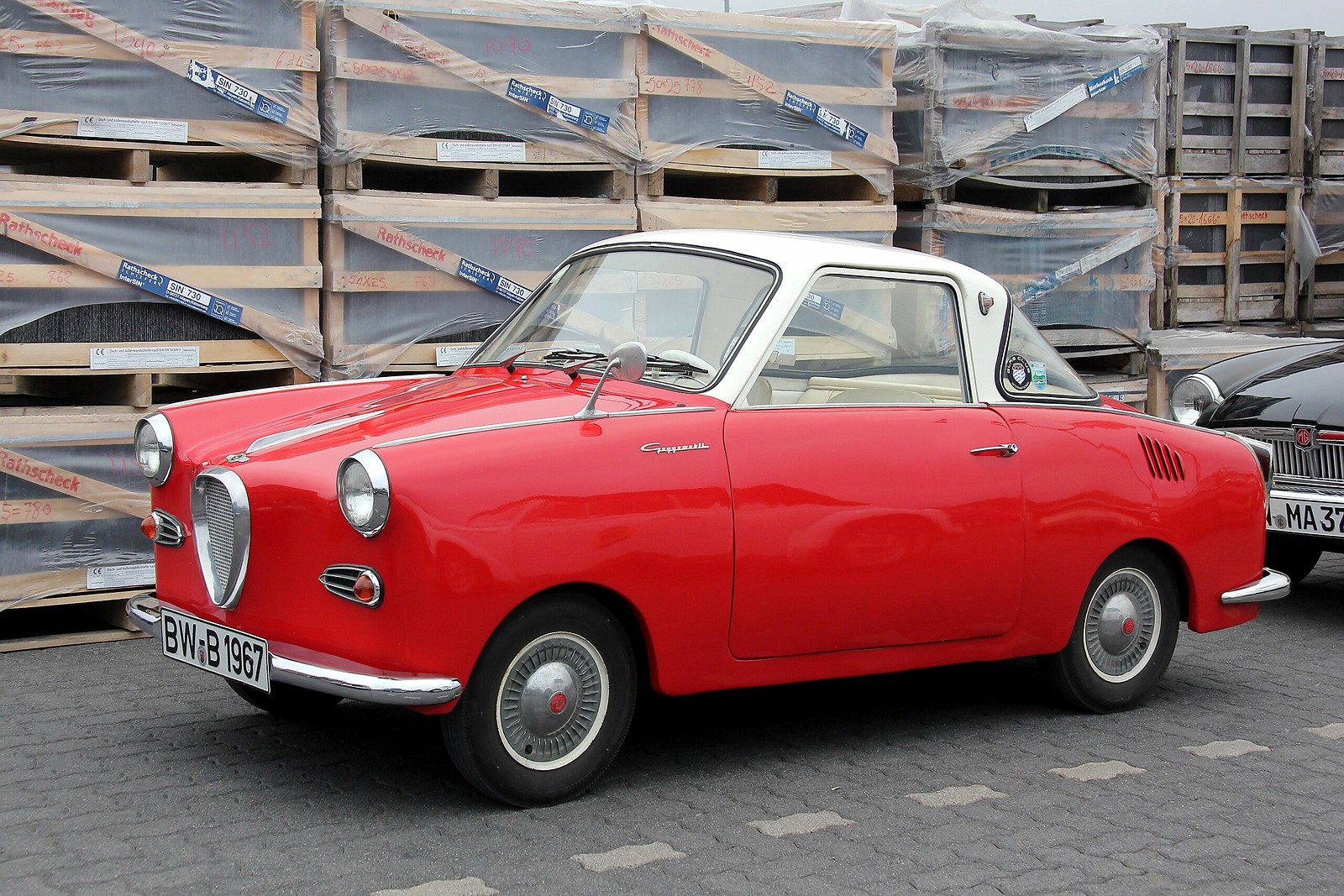
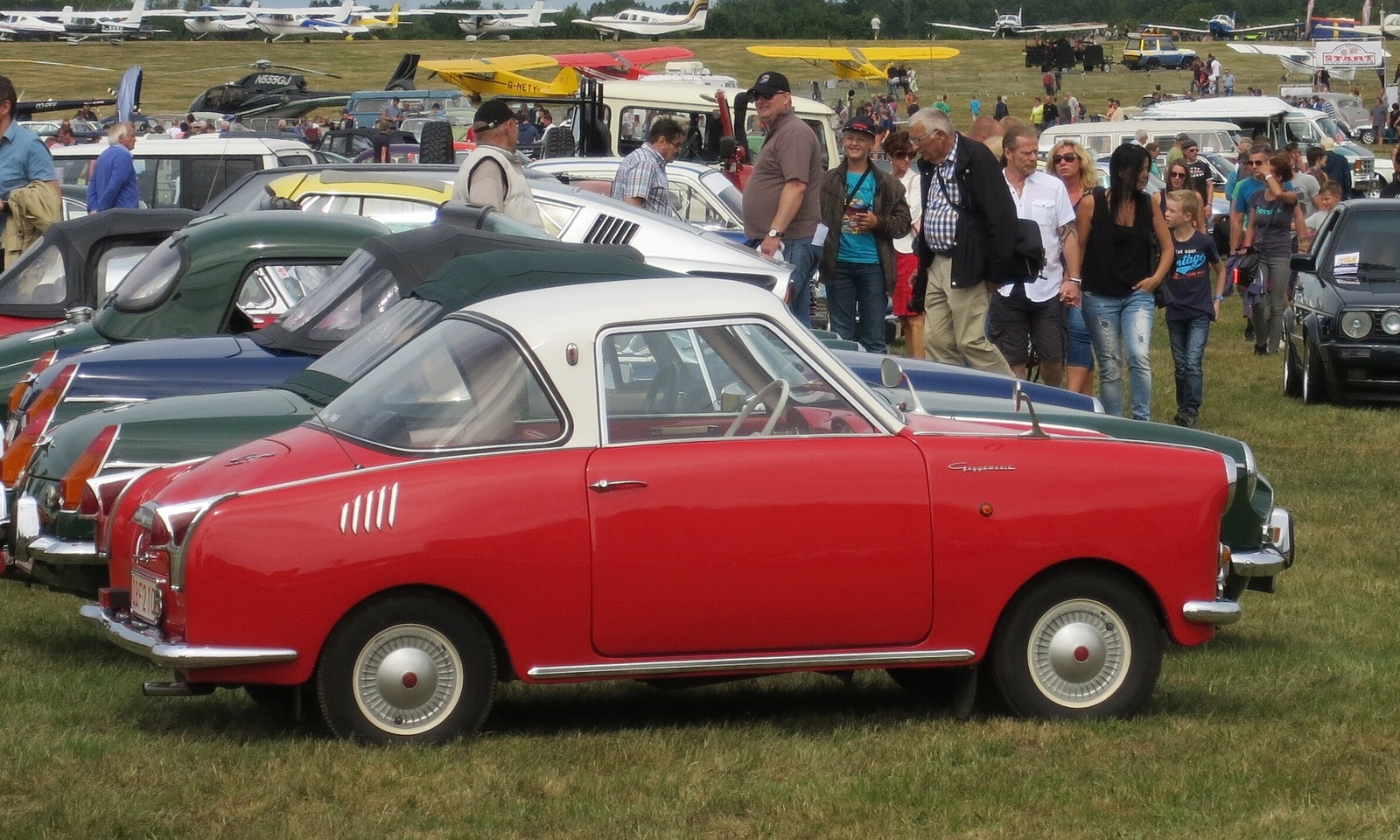
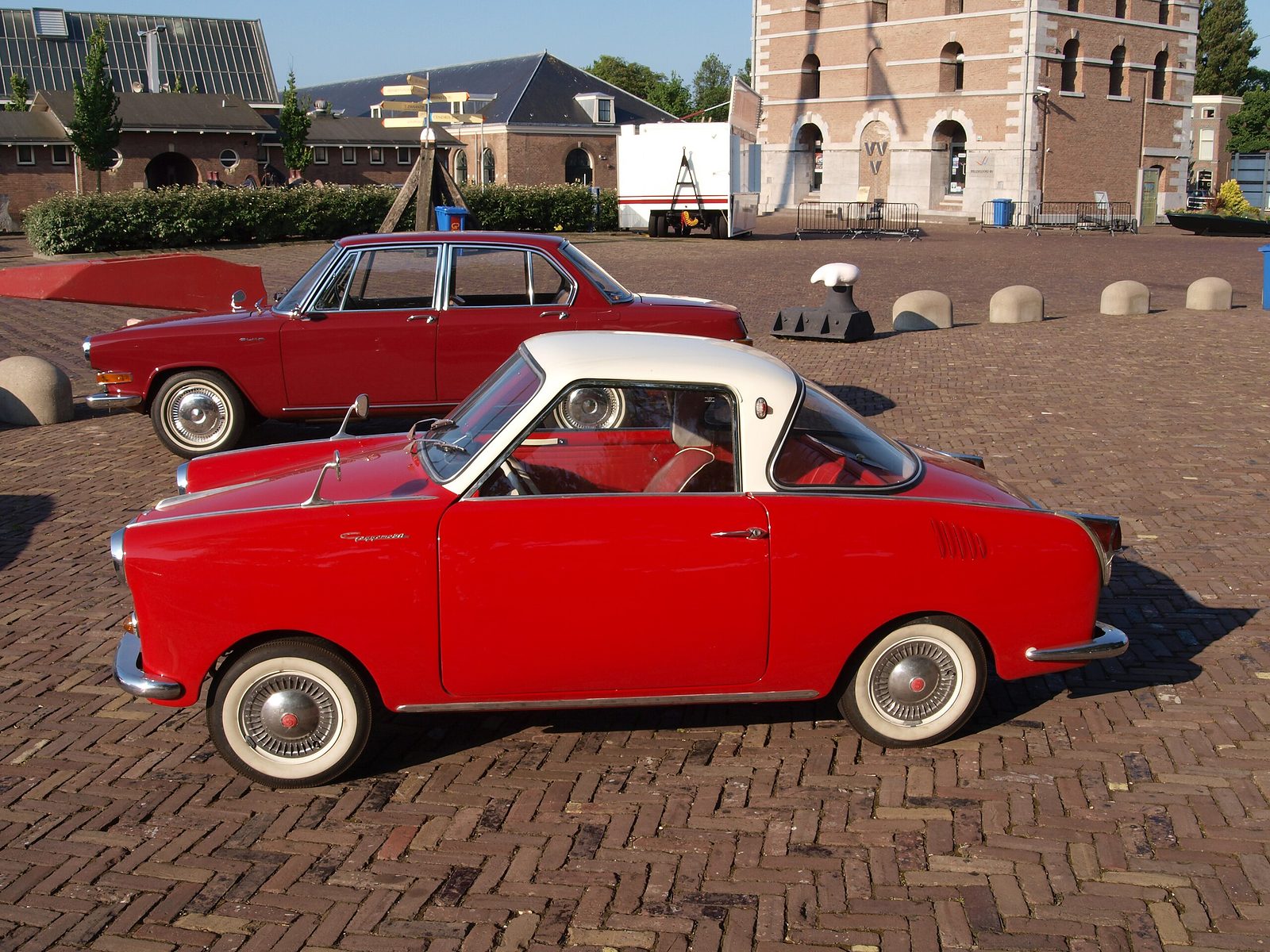
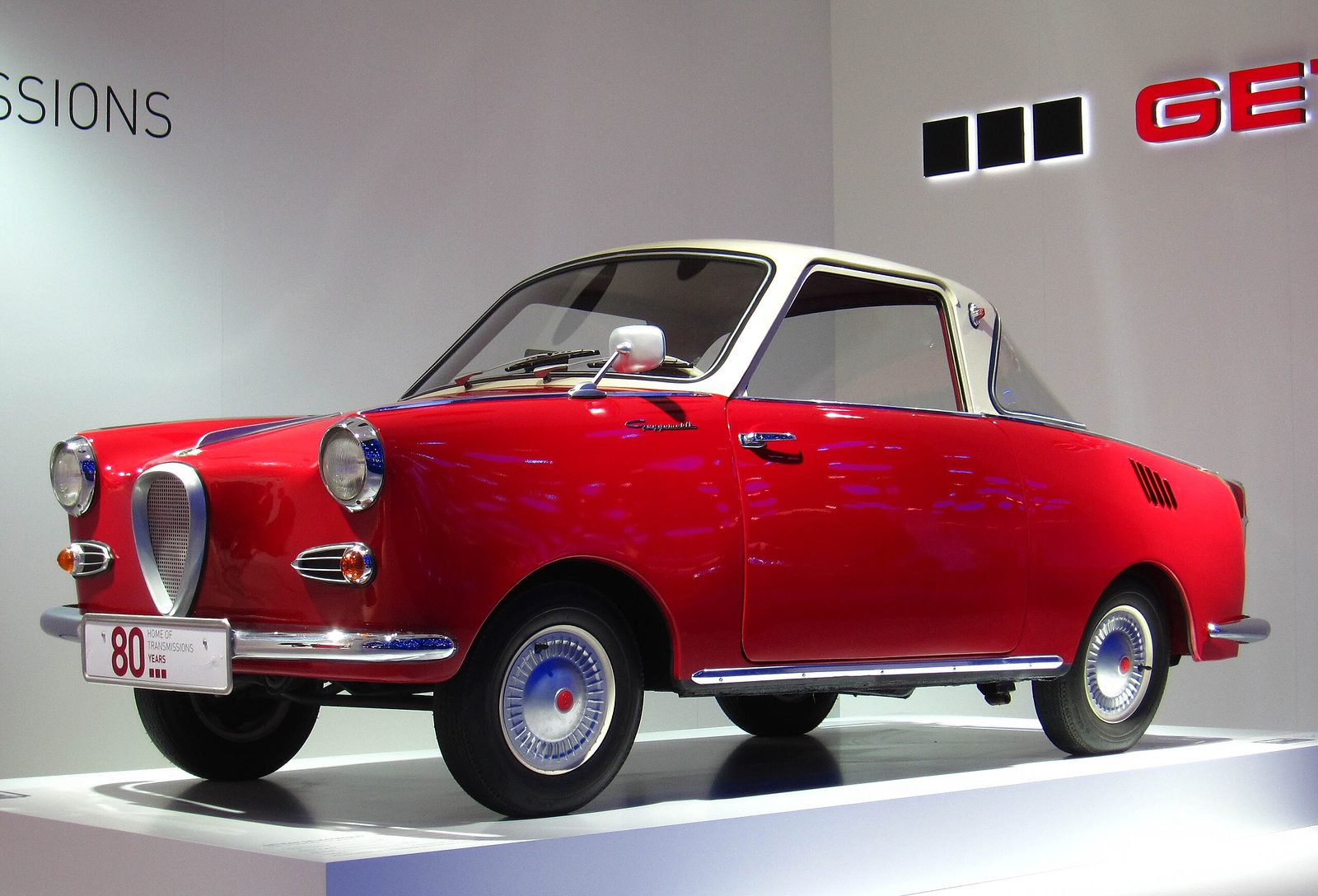
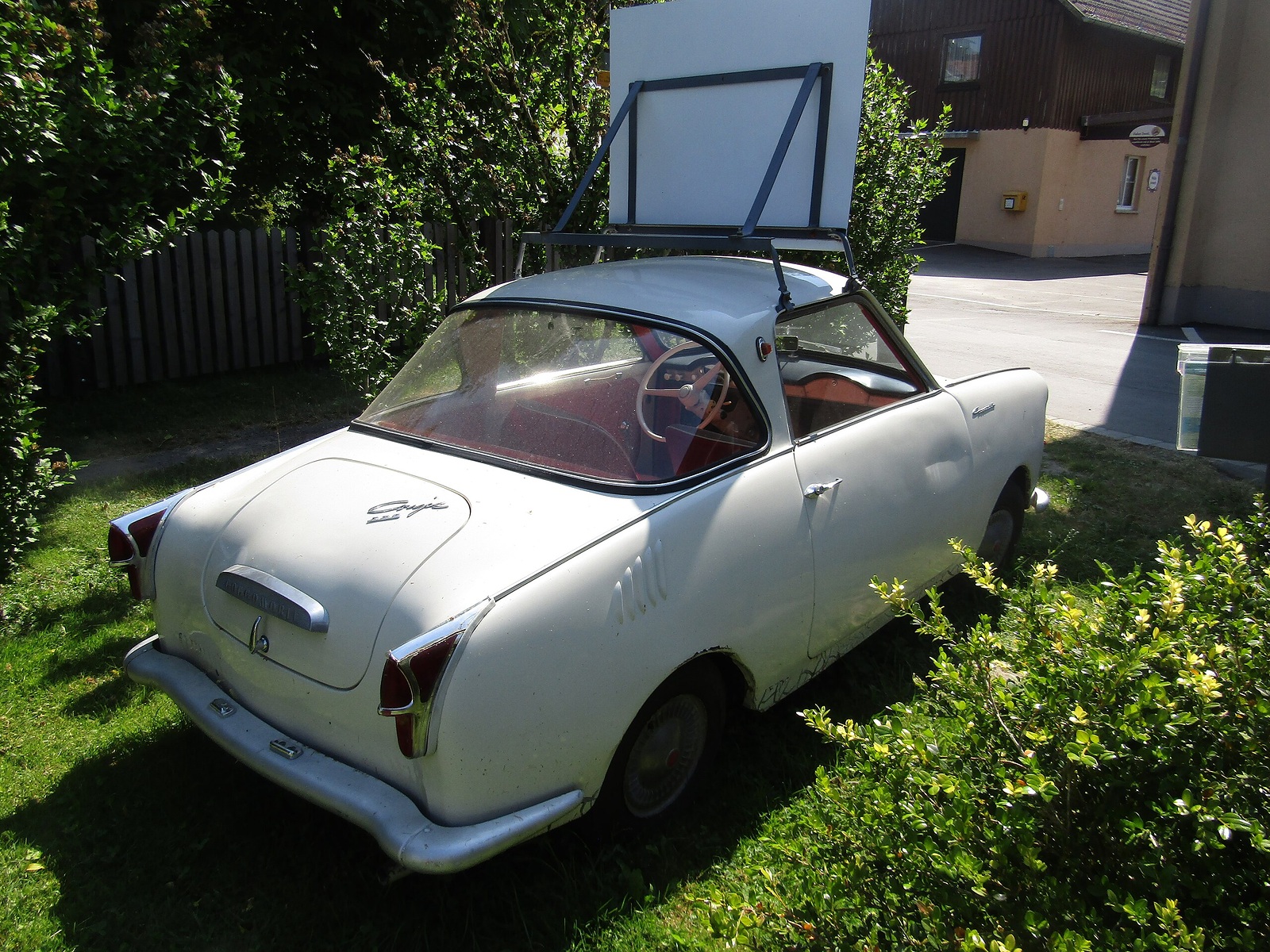
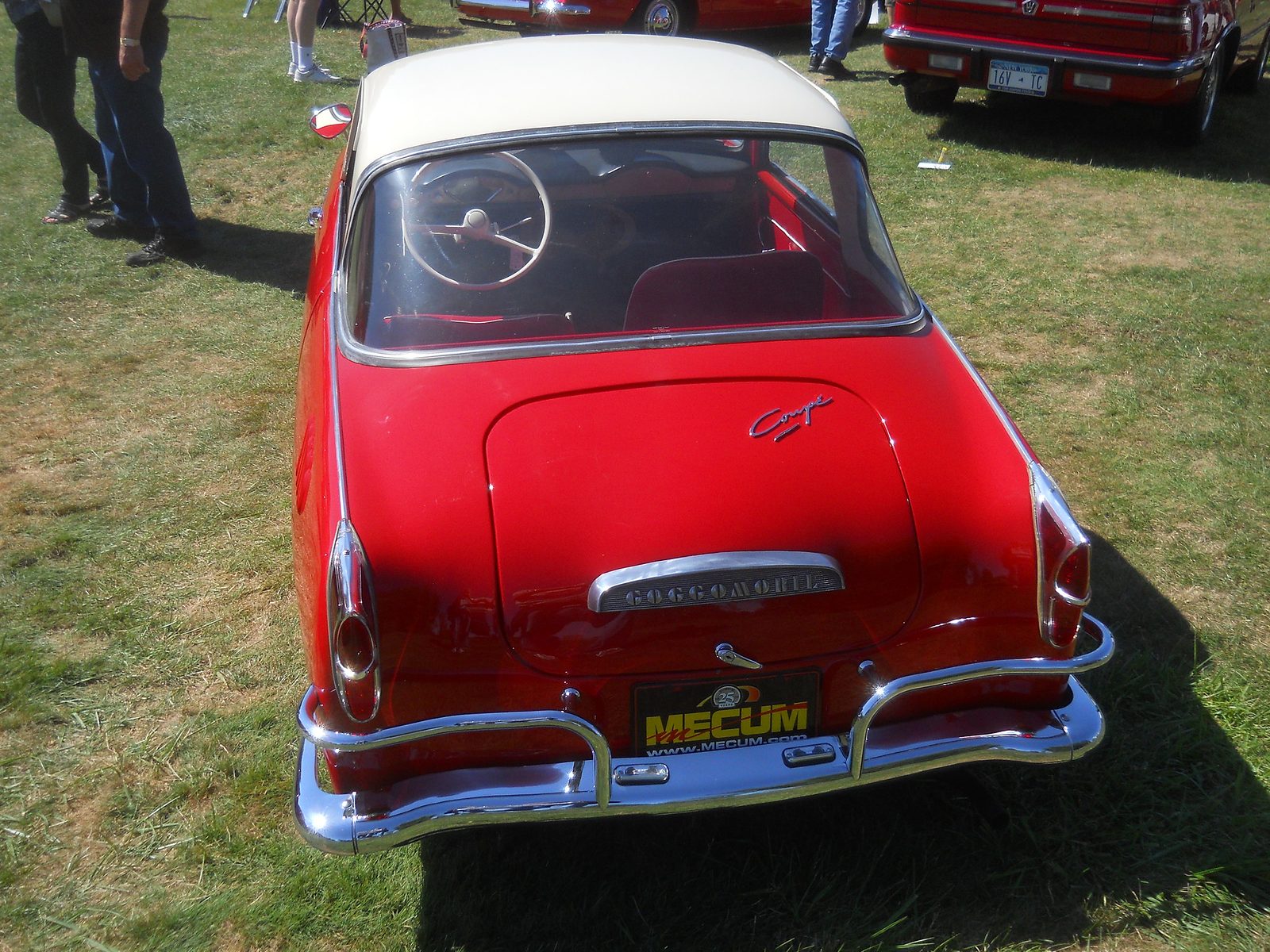
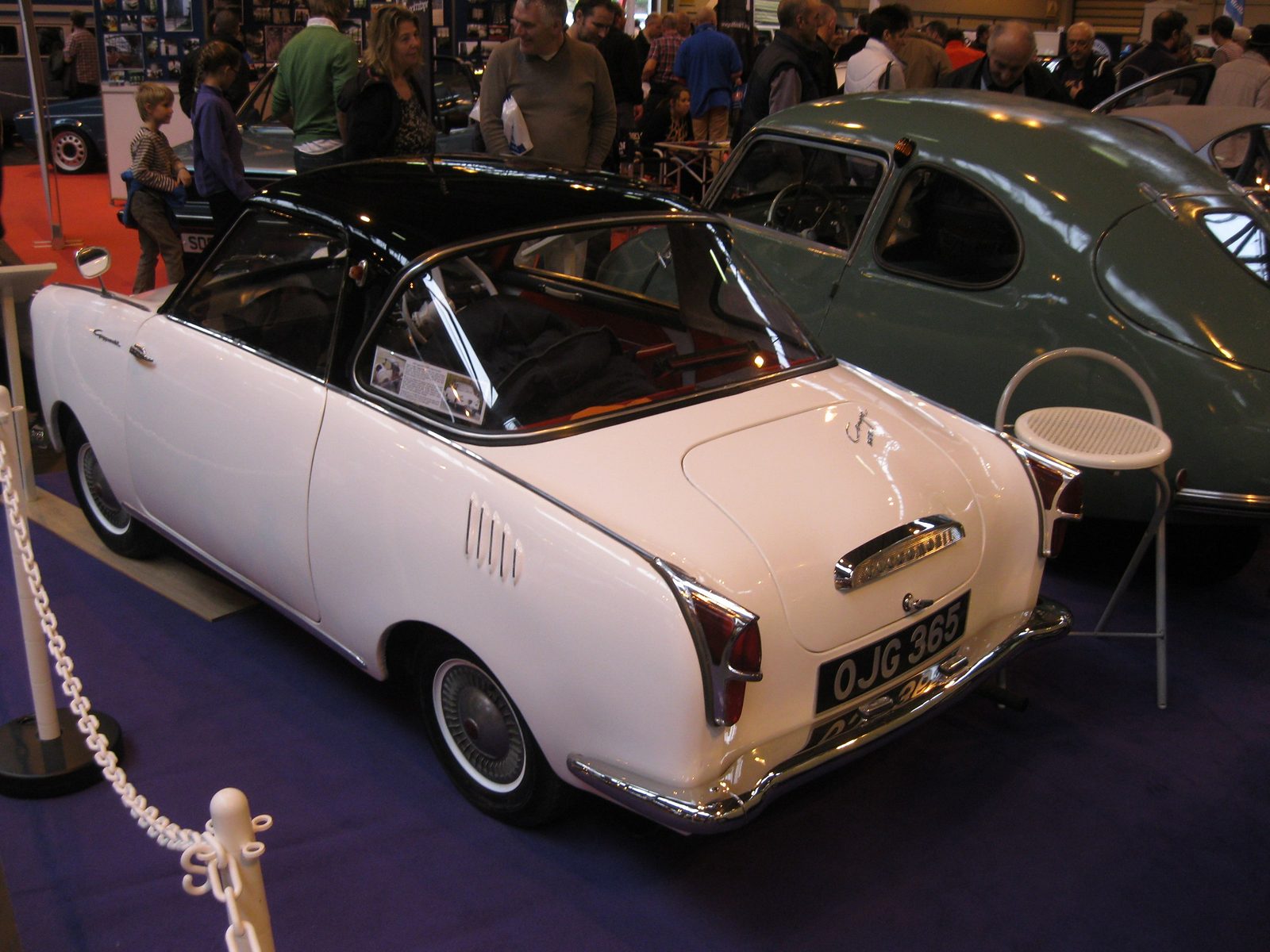
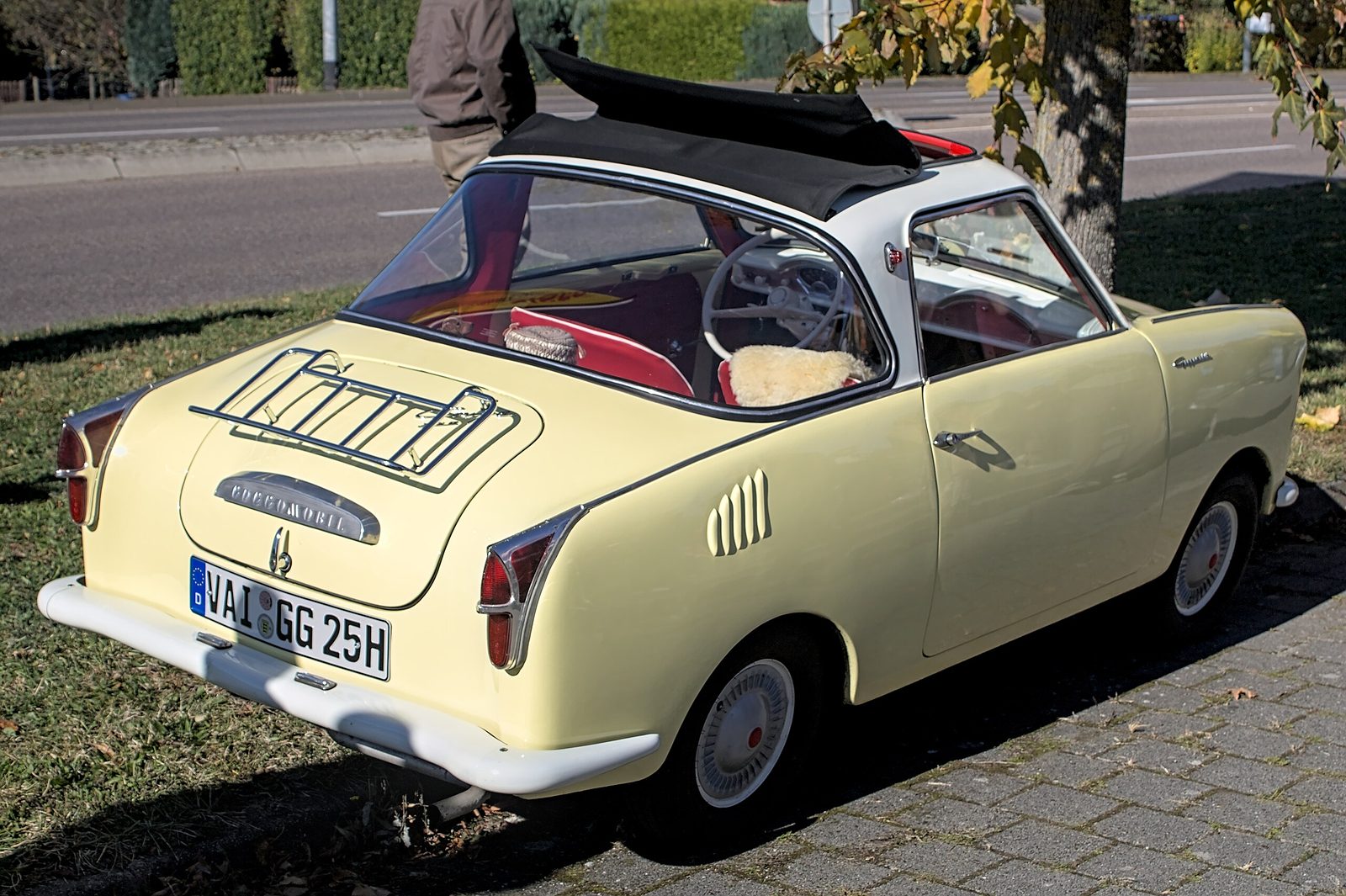
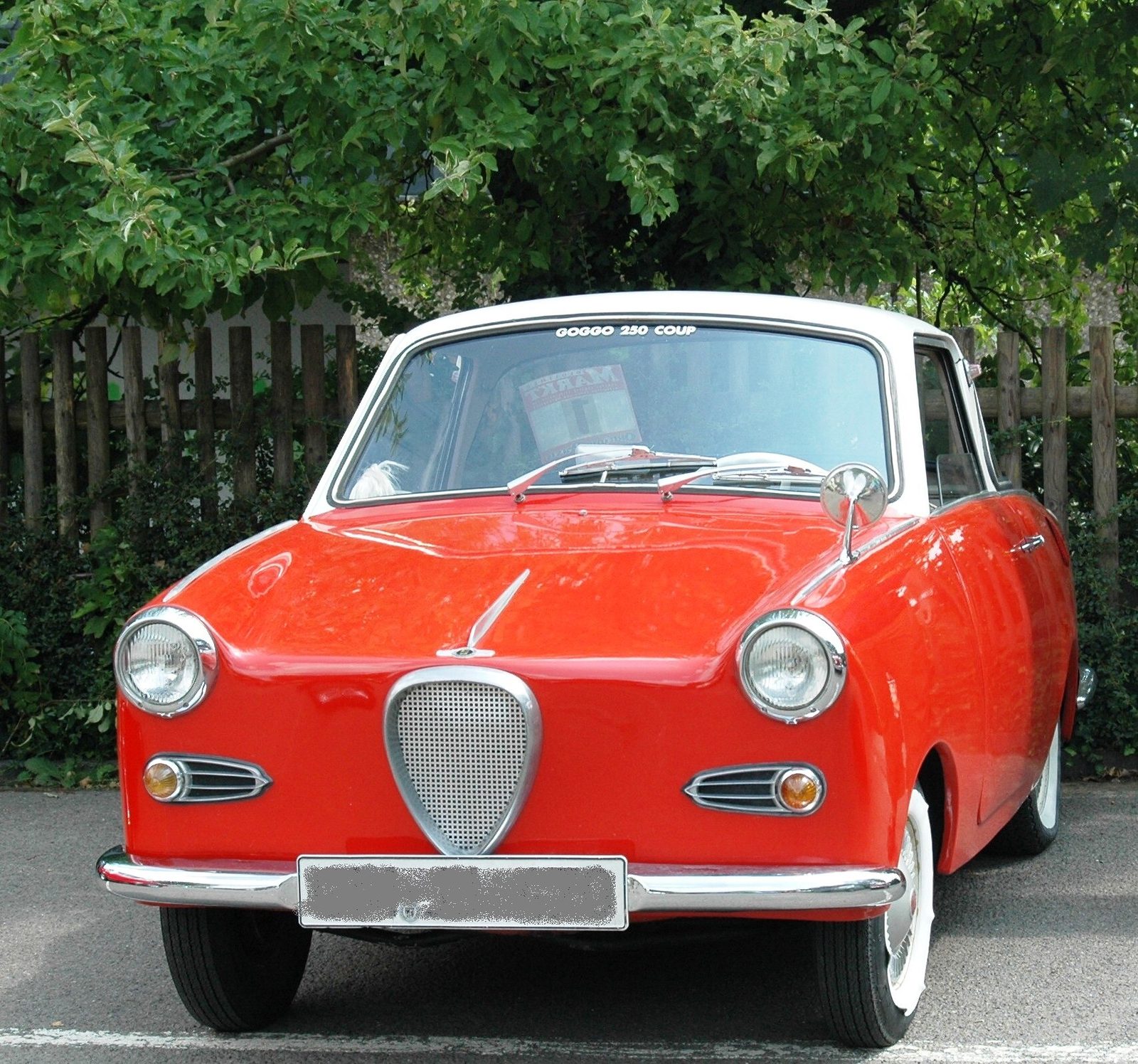
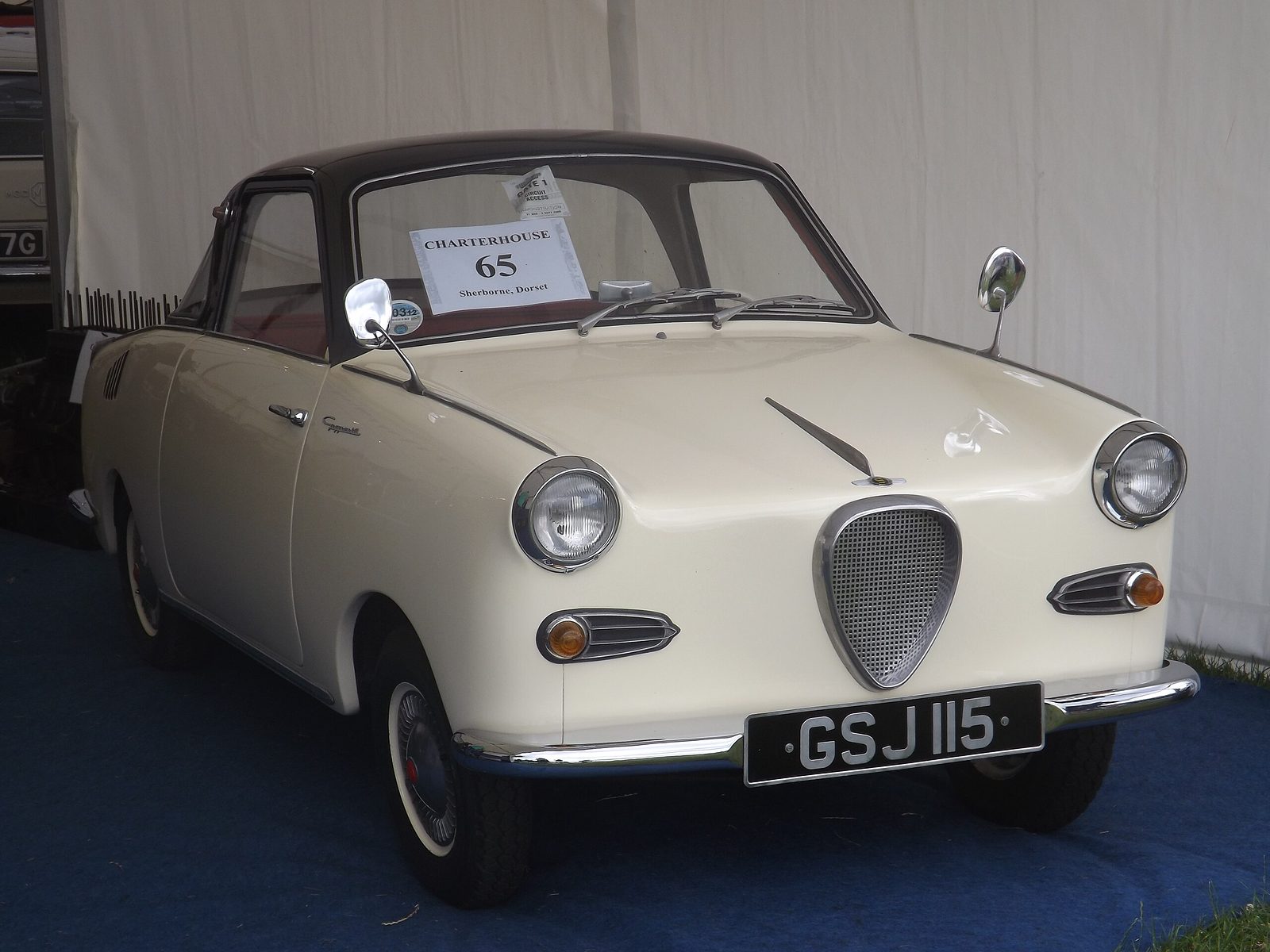
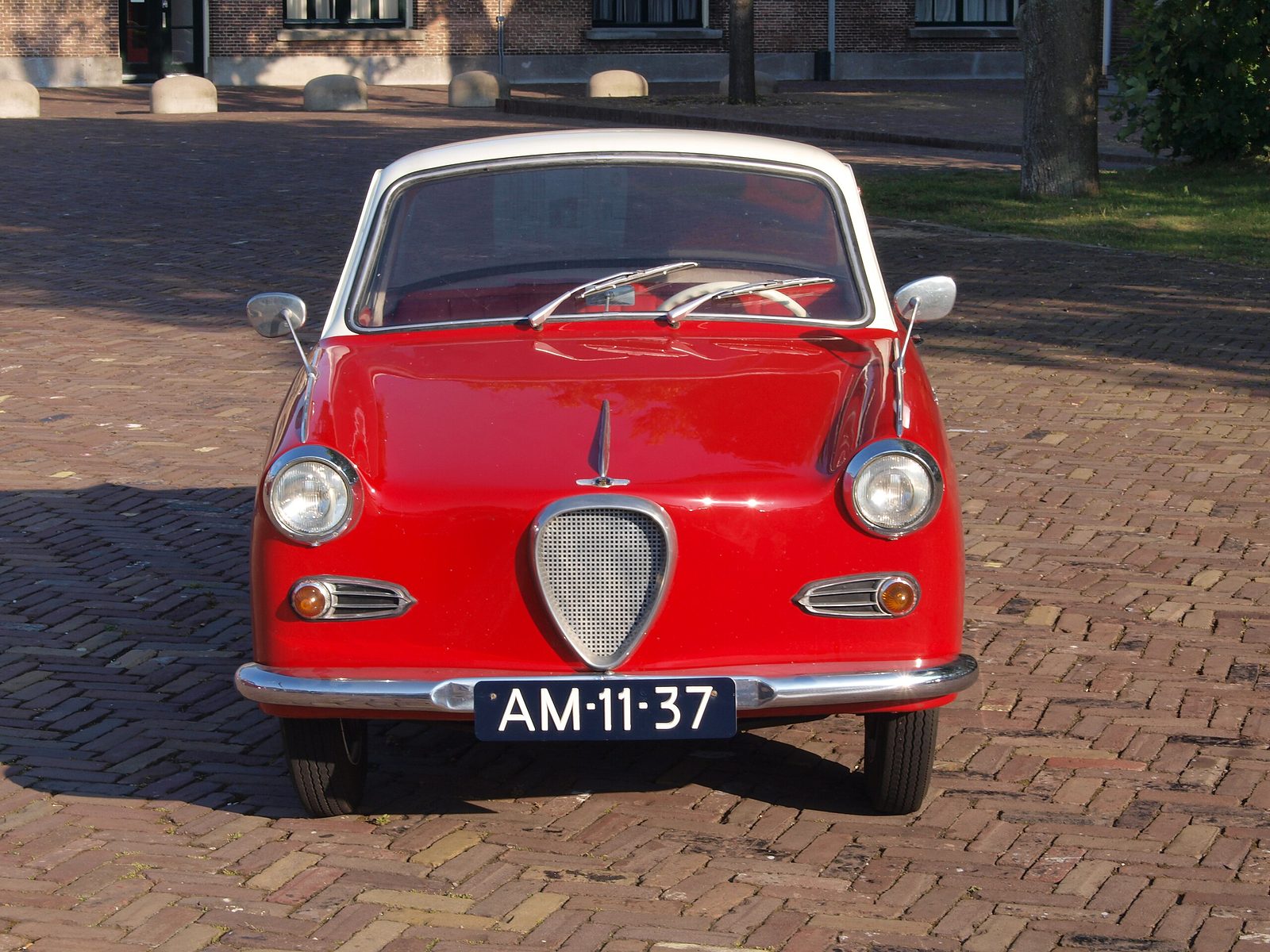
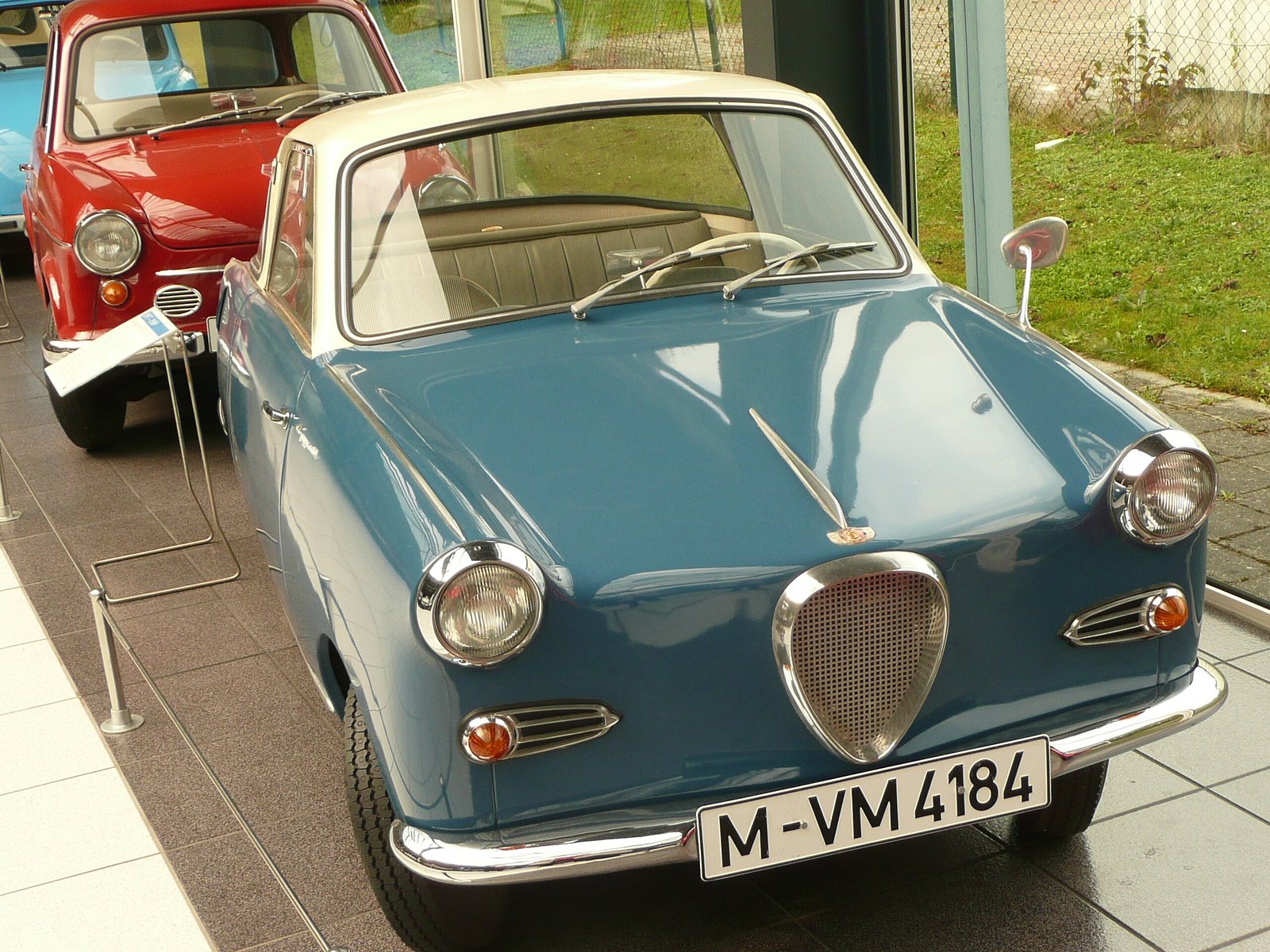
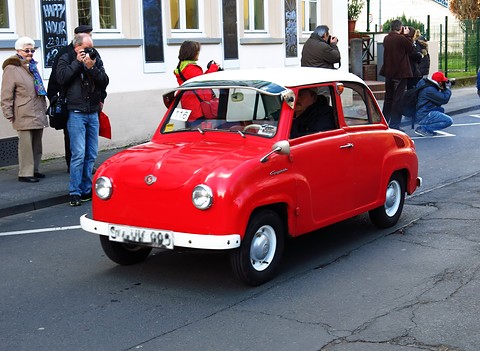
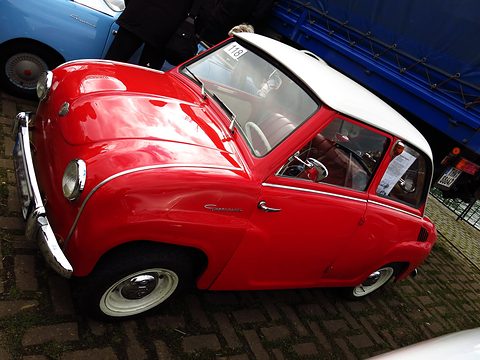
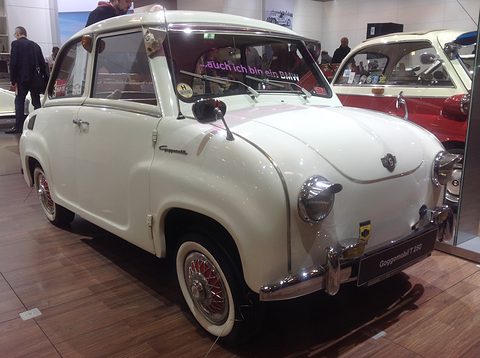
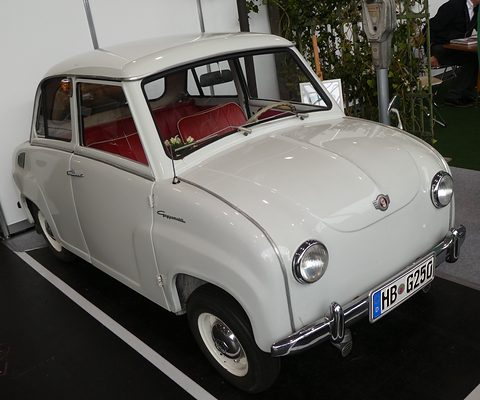
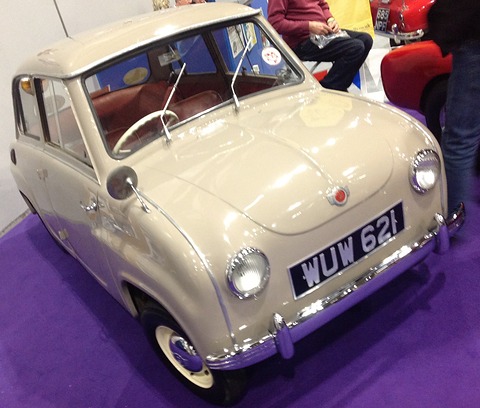
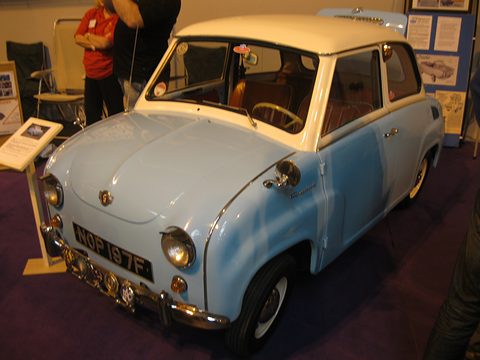
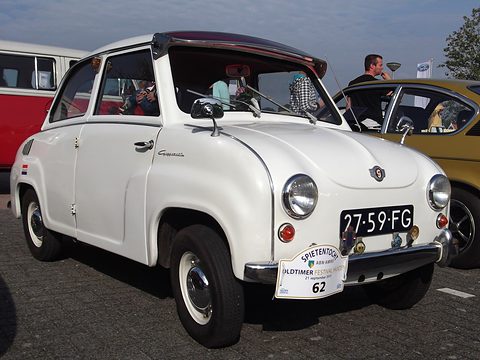
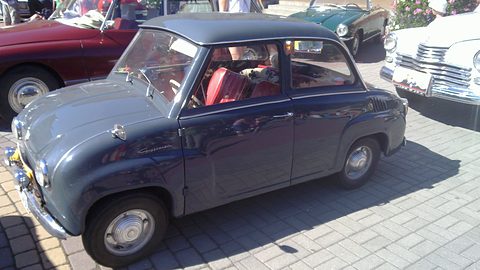
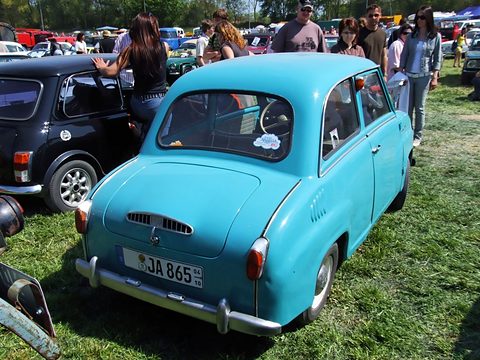
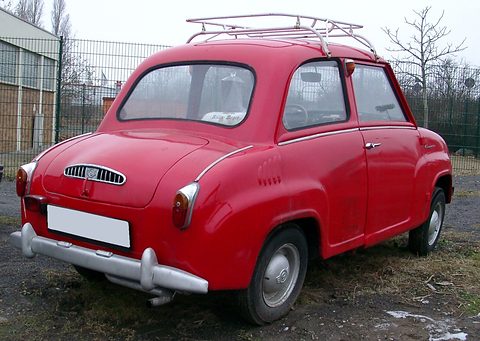
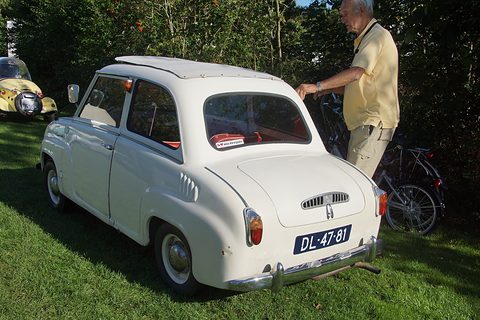
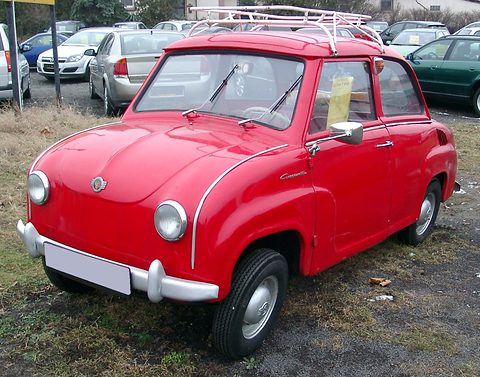
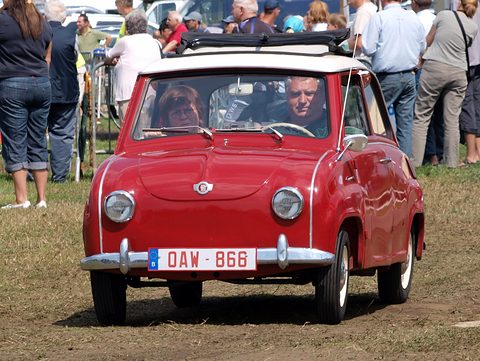
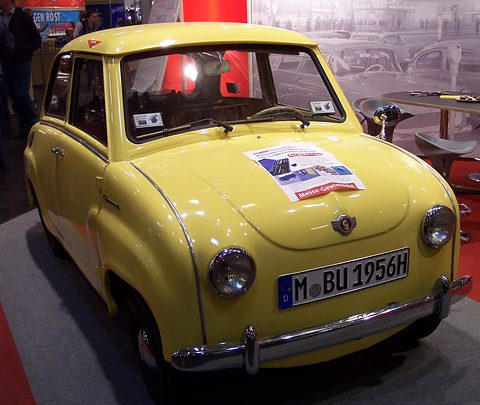
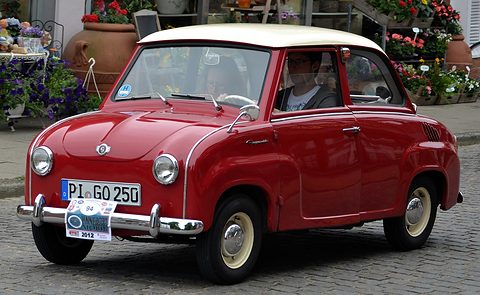
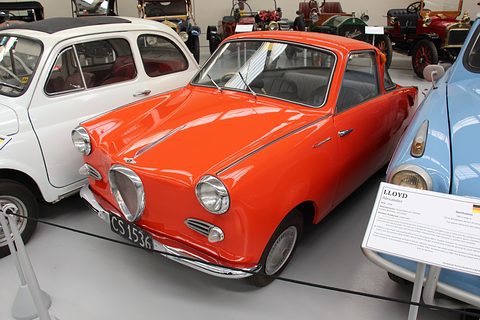
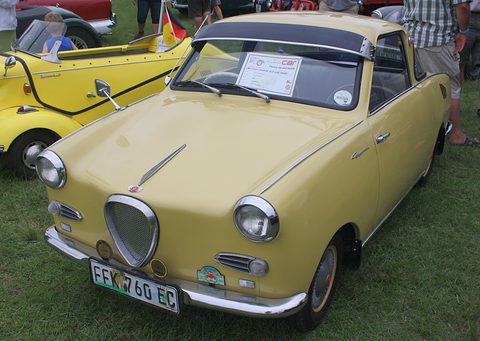
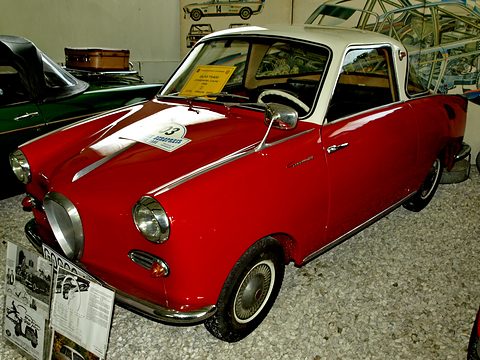
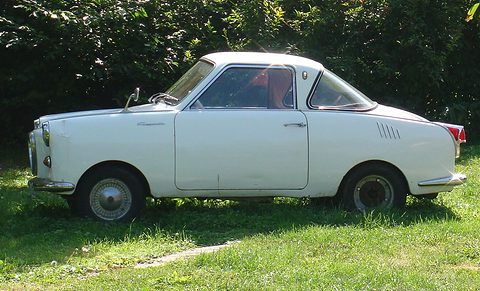
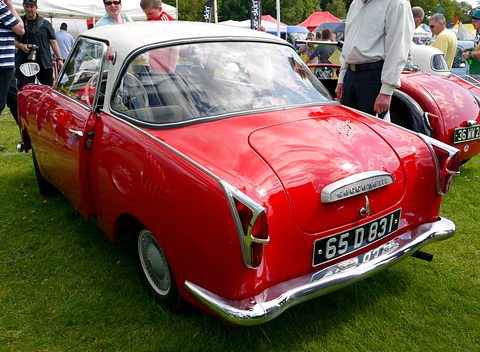
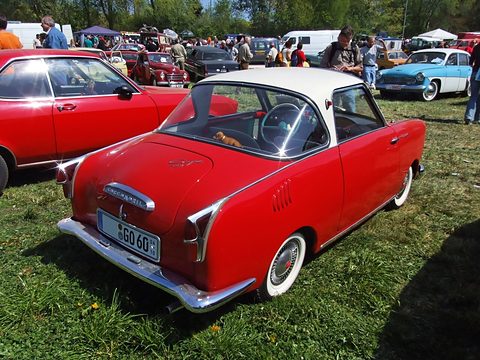
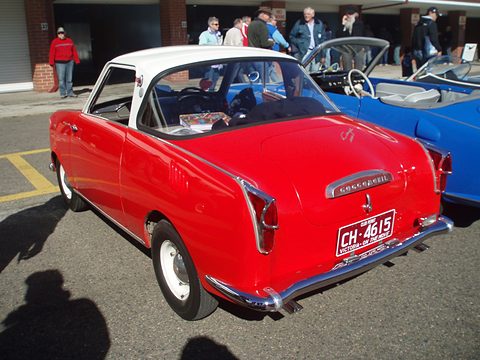
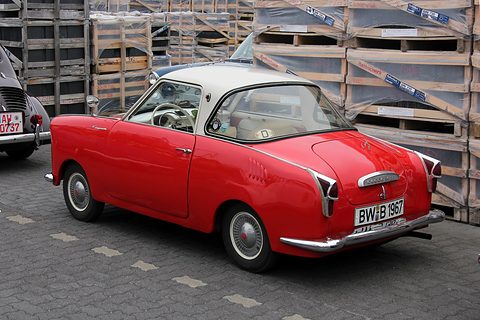
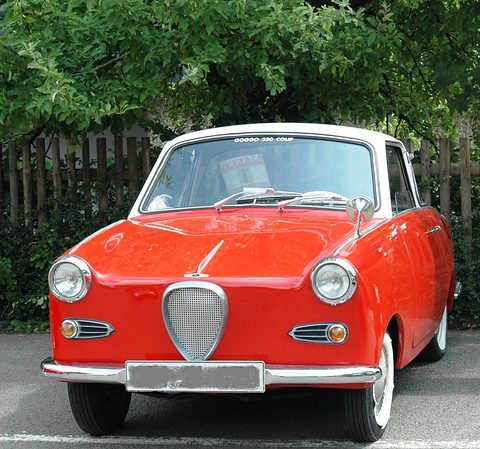
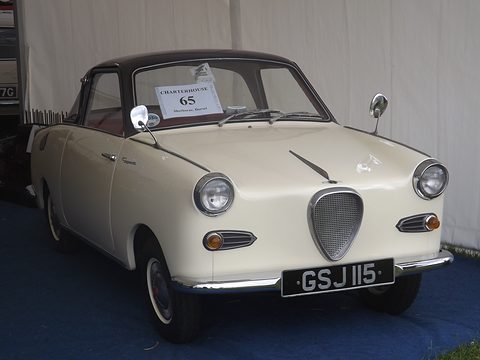
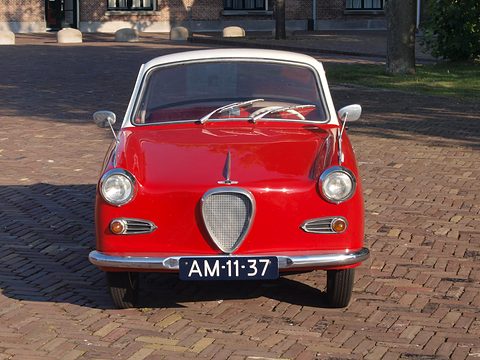
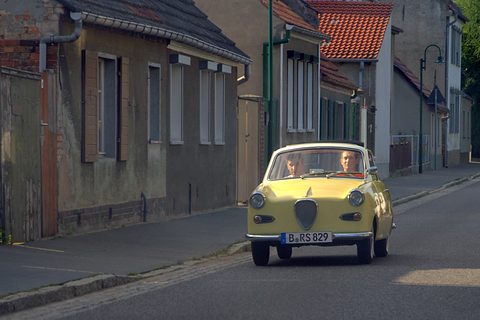
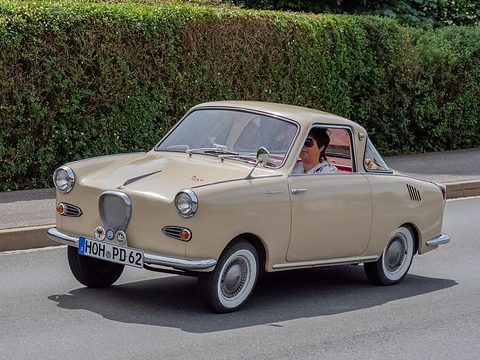
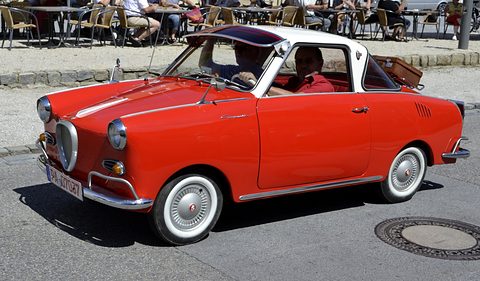
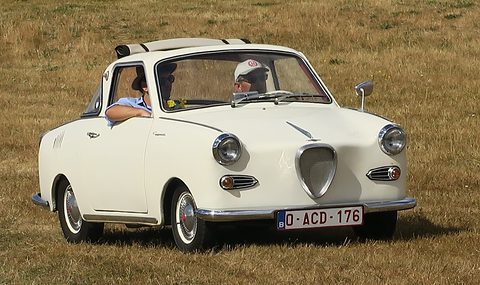
A seed-drill maker’s idea of a car: four seats, two doors, a steel body and a two-stroke twin in the tail, all in 2.9 metres (9 ft 6 in). It came out just as the bubble cars peaked, and it outbuilt them all.

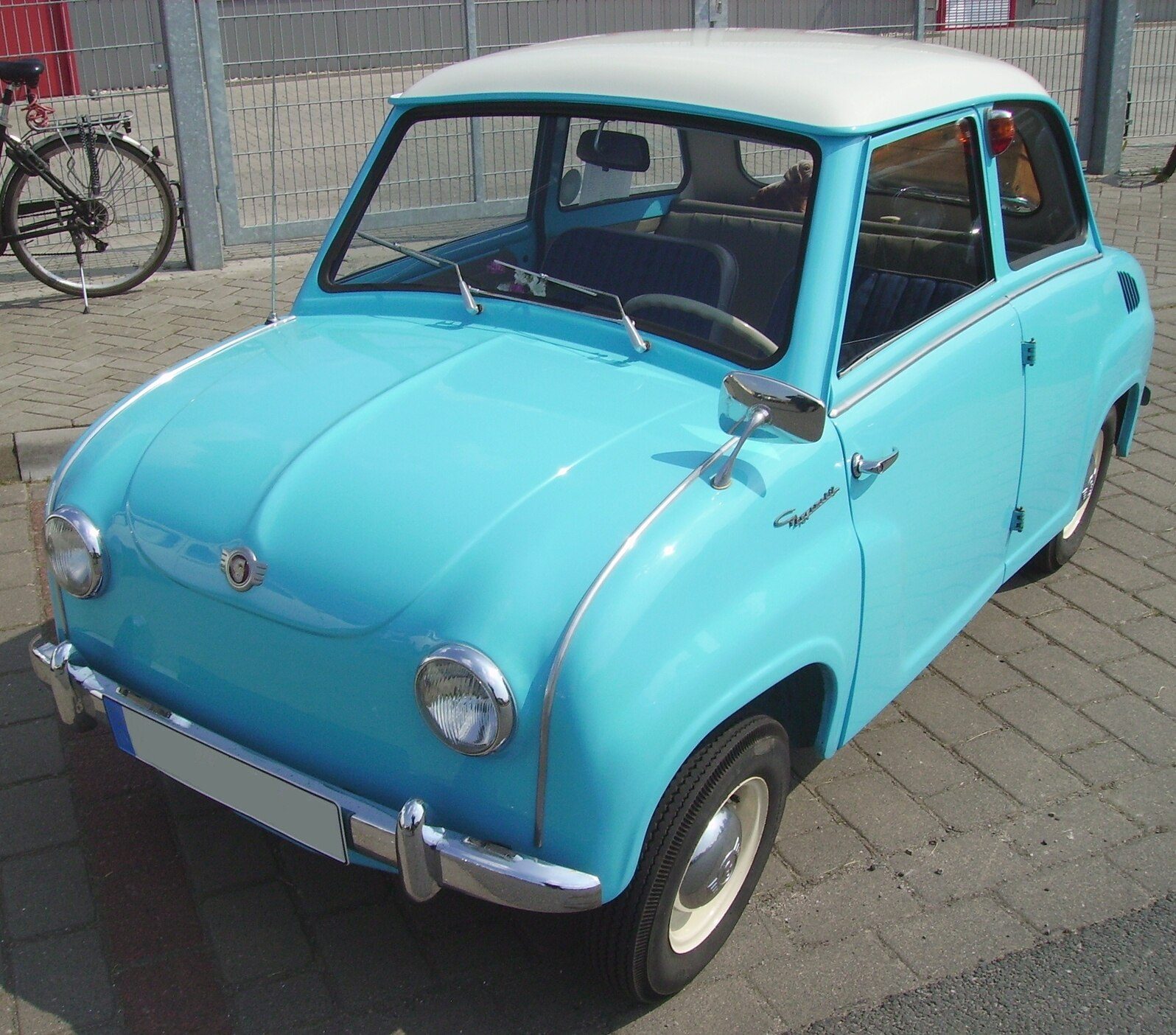
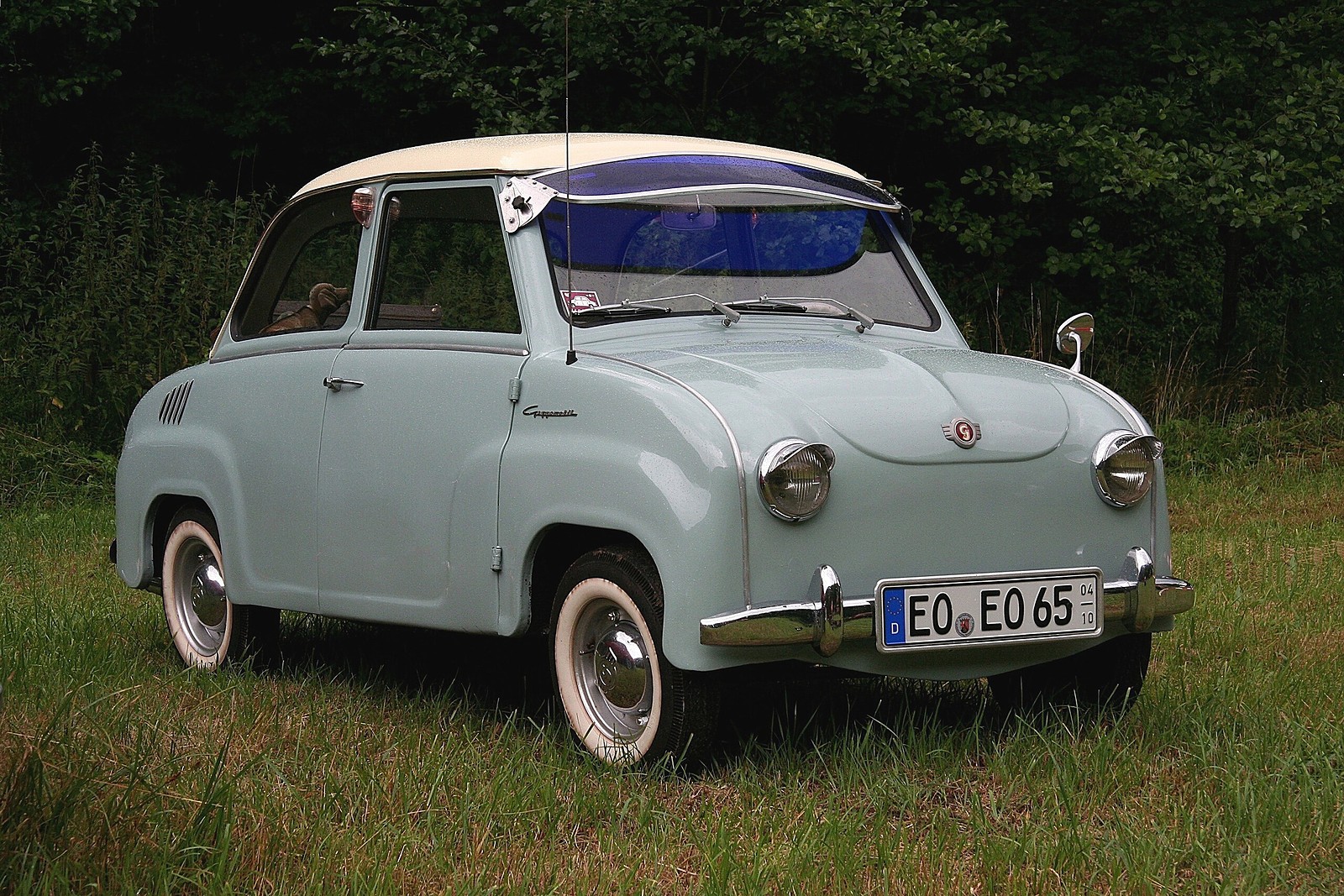
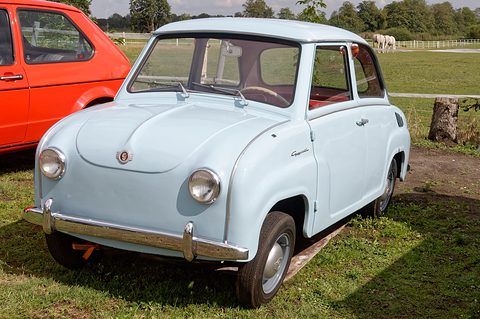
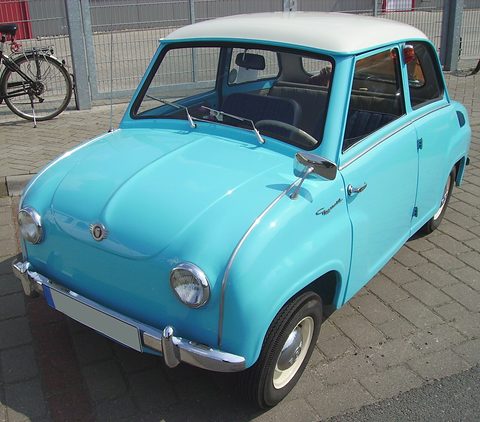
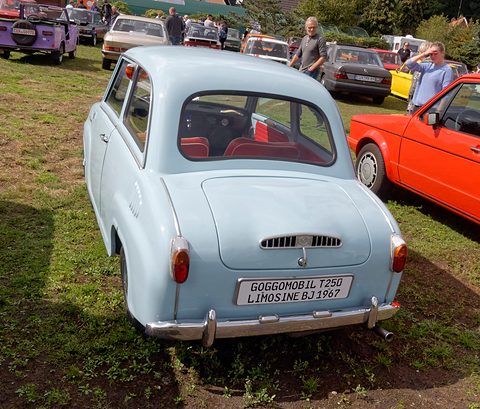
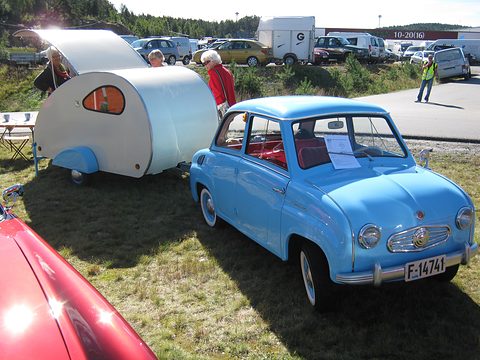
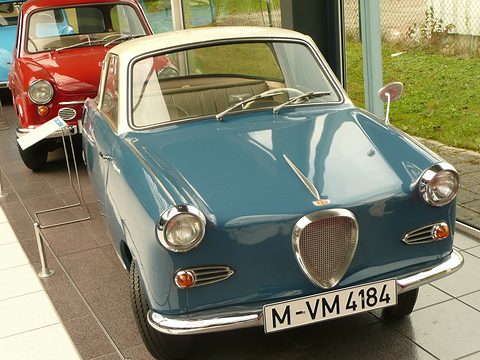
Pale blue saloon on grass seen from the front left, an orange car and paddock behind
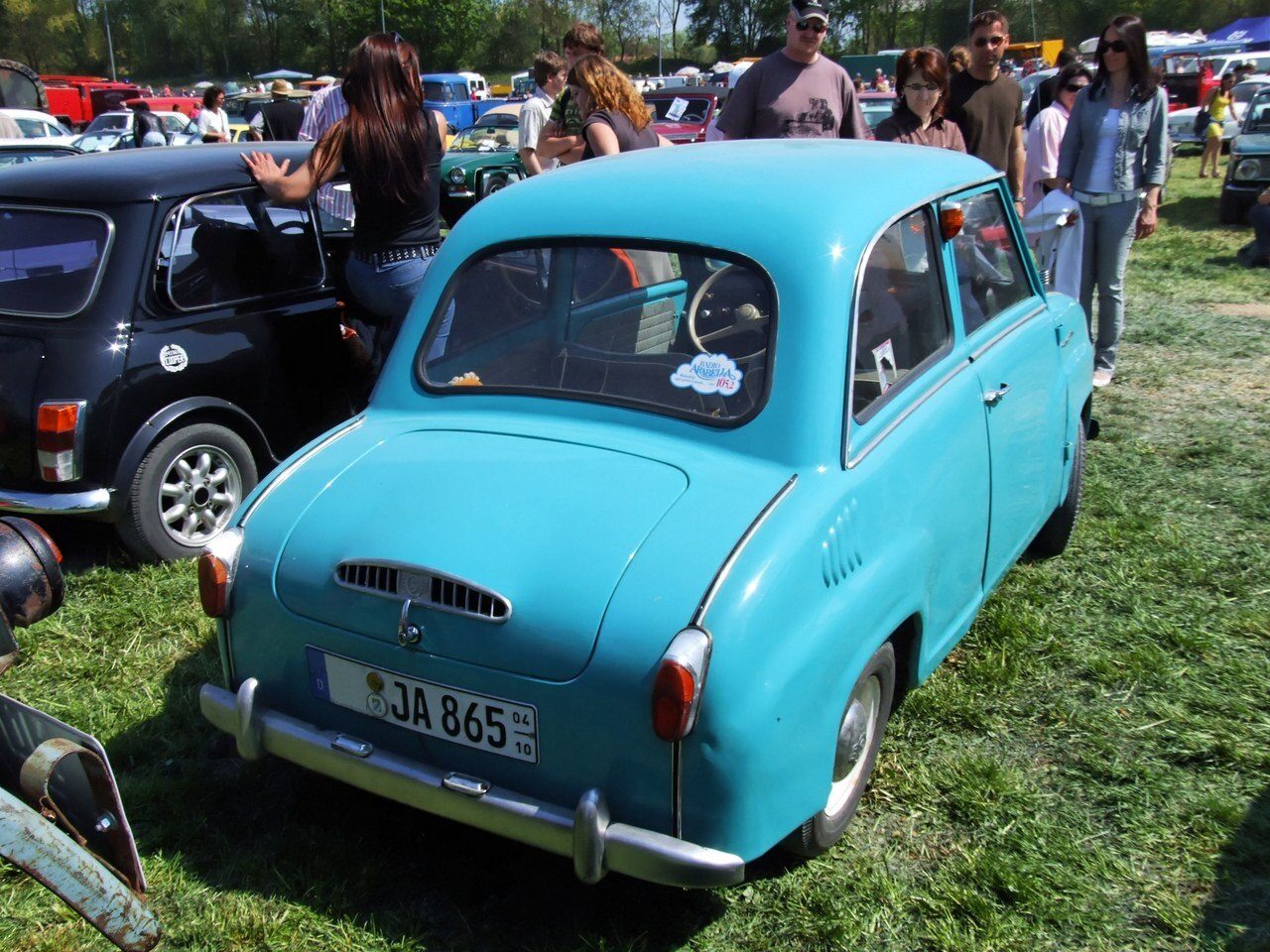
A pale blue Goggomobil saloon at a meeting in Wingst, 2019.Photo: © Ra Boe / Wikipedia, CC BY-SA 3.0 de, via Wikimedia Commons

At a glance

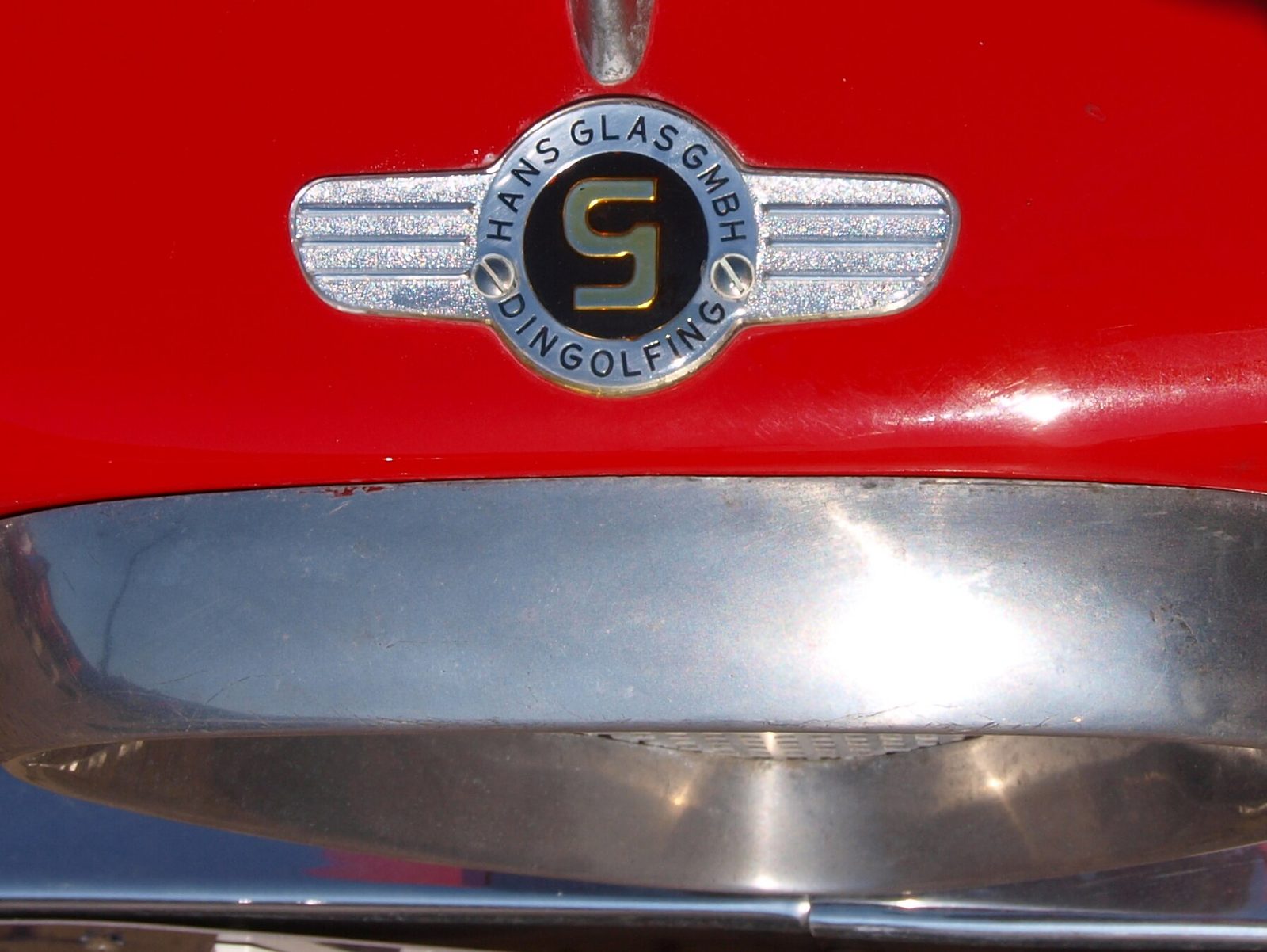
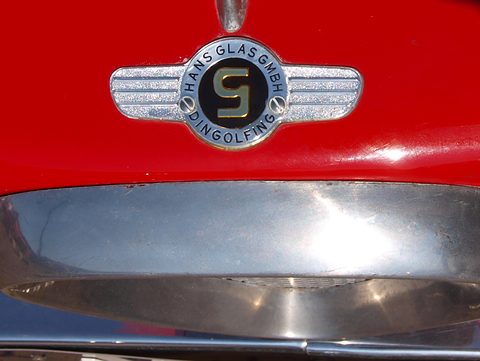
The spec plate

Goggomobil

T250 saloon · Dingolfing

Built
1955–⁠1969Series production due from January 1955 (April by the Weiner museum); the last car on 30 June 1969
Country
West GermanyDingolfing, Lower Bavaria
Maker
Hans Glas GmbHA farm-machinery firm founded in 1883; BMW took it over in November 1966
Engine
247 cc Glas two-stroke twinNominally 250; 296 cc in the T300 and 395 cc in the T400
Power
13.6 PS10 kW; 14.8 PS for the T300 tested in 1956
Length
2,900 mm1,280 mm wide, 1,310 mm high
Weight
390 kgA T300 with a full tank, weighed in 1956; 415 kg for the T250 by other sources
Seats
4In practice two adults and two children
Wheels
4Engine at the back, driving the rear wheels
Price new
DM 2,940T250, autumn 1955; DM 3,040 for the T300
Production
284,491Saloons, coupés and vans, 1955–⁠69
Top speed
85km/h85 km/h74–85 km/h by source; a T300 reached 86 km/h two-up in 1956

How big is it?

True proportion

2.90 m

It is 70 mm shorter than a Fiat 500, about 1.7 adults laid end to end.

  • 1.28 m wide
  • 390 kg: about five adults
  • Two doors, hinged at the back until 1964
Drawn at true proportion. The track is 3.6 metres long; the adult stands at the same scale. The Peel P50 is the smallest production car, on every page for comparison.

The story

History

Hans Glas GmbH of Dingolfing, in Lower Bavaria, had made farm machinery since 1883, seed drills among it. In 1951 it began making a scooter, the Goggo, named after the pet name of one of Hans Glas’s grandsons.source 1source 2 When scooter riders began to want a roof over their heads, Glas set out to build them a small car.source 1 Hans Glas and his son Andreas drew the body with Karl Dompert, a former aircraft designer; the engine was designed by Felix Dozekal, who had been an engineer at Adler.source 1 Glas itself had nothing to do with aeroplanes, so the Goggomobil is no part of the story that the aircraft makers built the small cars.source 1

For most of its development the car was meant to have a front door, like the BMW Isetta.

„Aus Zweckmäßigkeitsgründen ist der Einstieg nach vorne verlegt worden. (Seiten-Einstieg bedingt bei Kleinfahrzeugen unbequemes Bücken).“

Hans Glas GmbH, brochure of 1954, as quoted by German Wikipedia. In English: “For practical reasons the entrance has been moved to the front. (Side entry means awkward bending in small vehicles.)”source 1

The Weiner museum confirms a prototype with an Isetta-style front door in the autumn of 1954. A few weeks before production the plan was dropped for two side doors, said to be on the advice of a family friend, the racing motorcyclist Schorsch Meier.source 1source 2

A real car in miniature

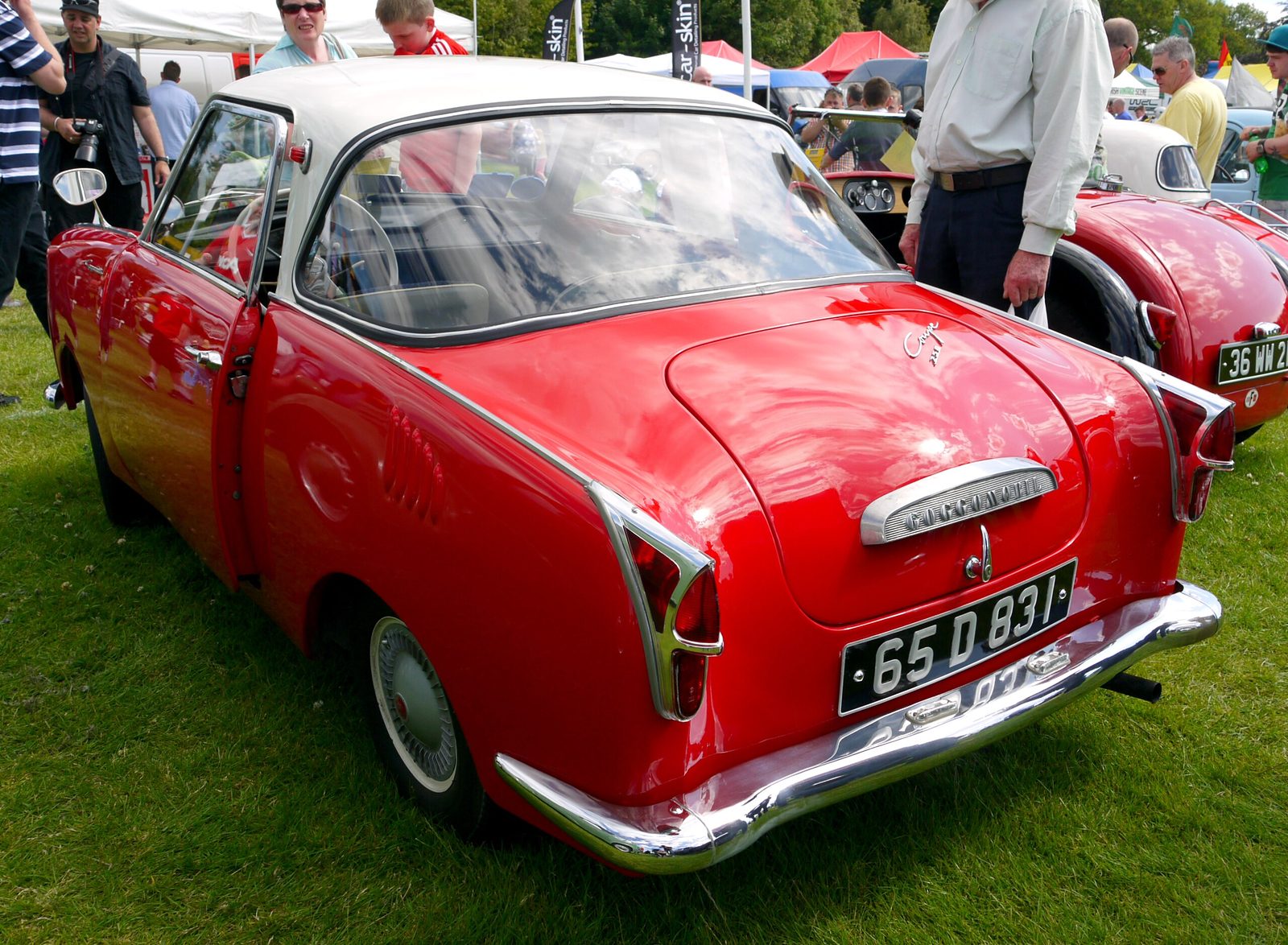
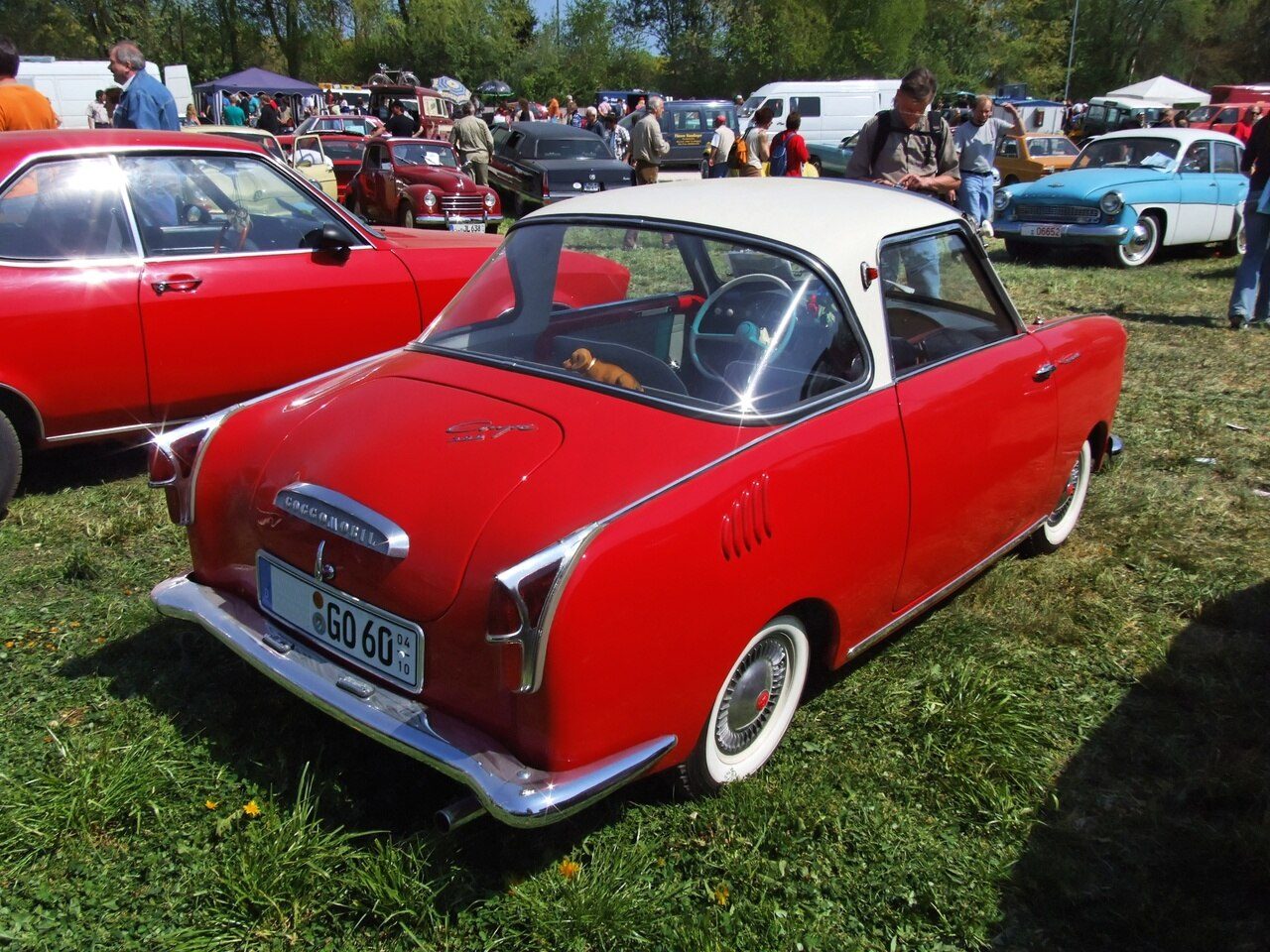
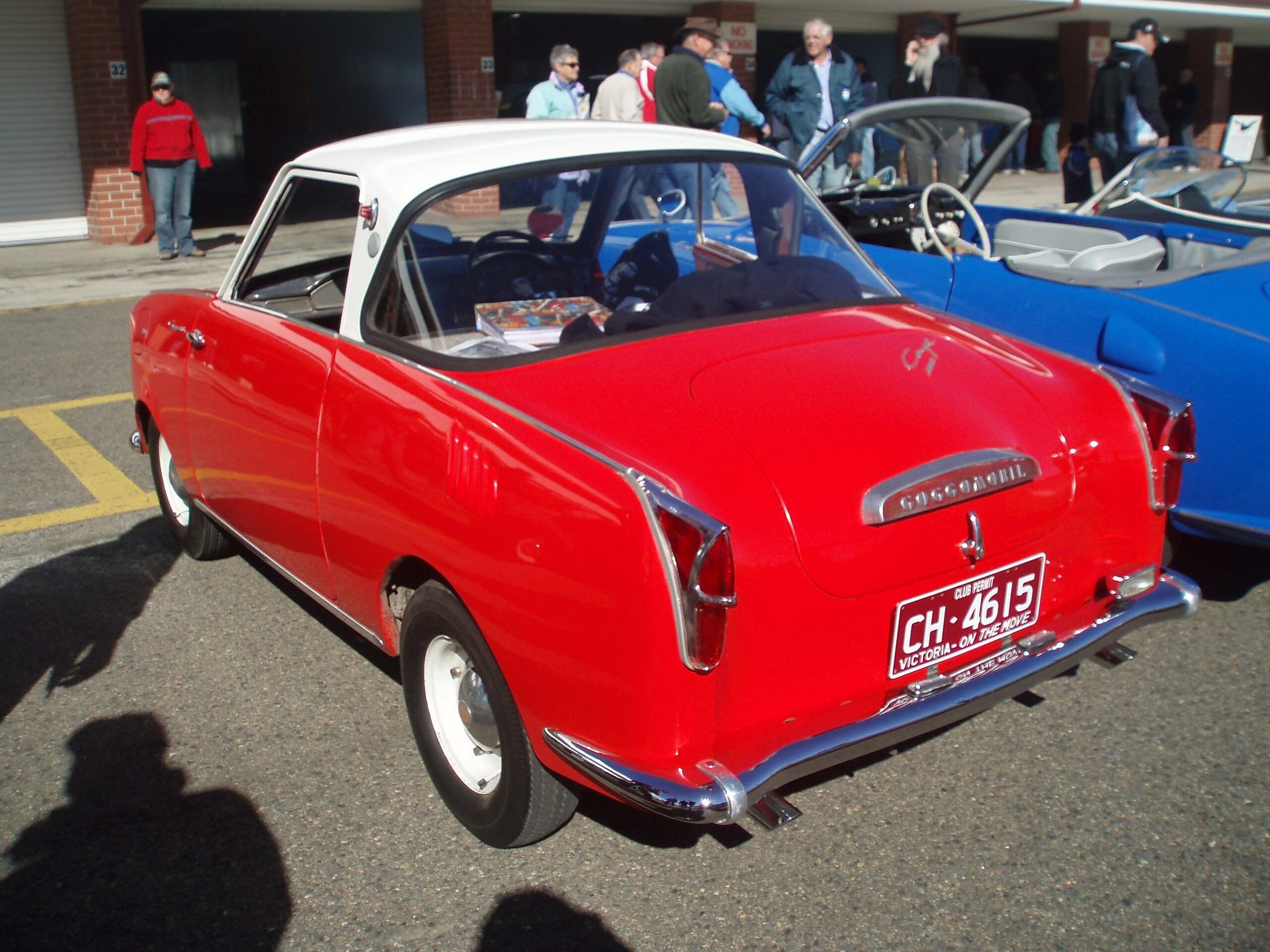
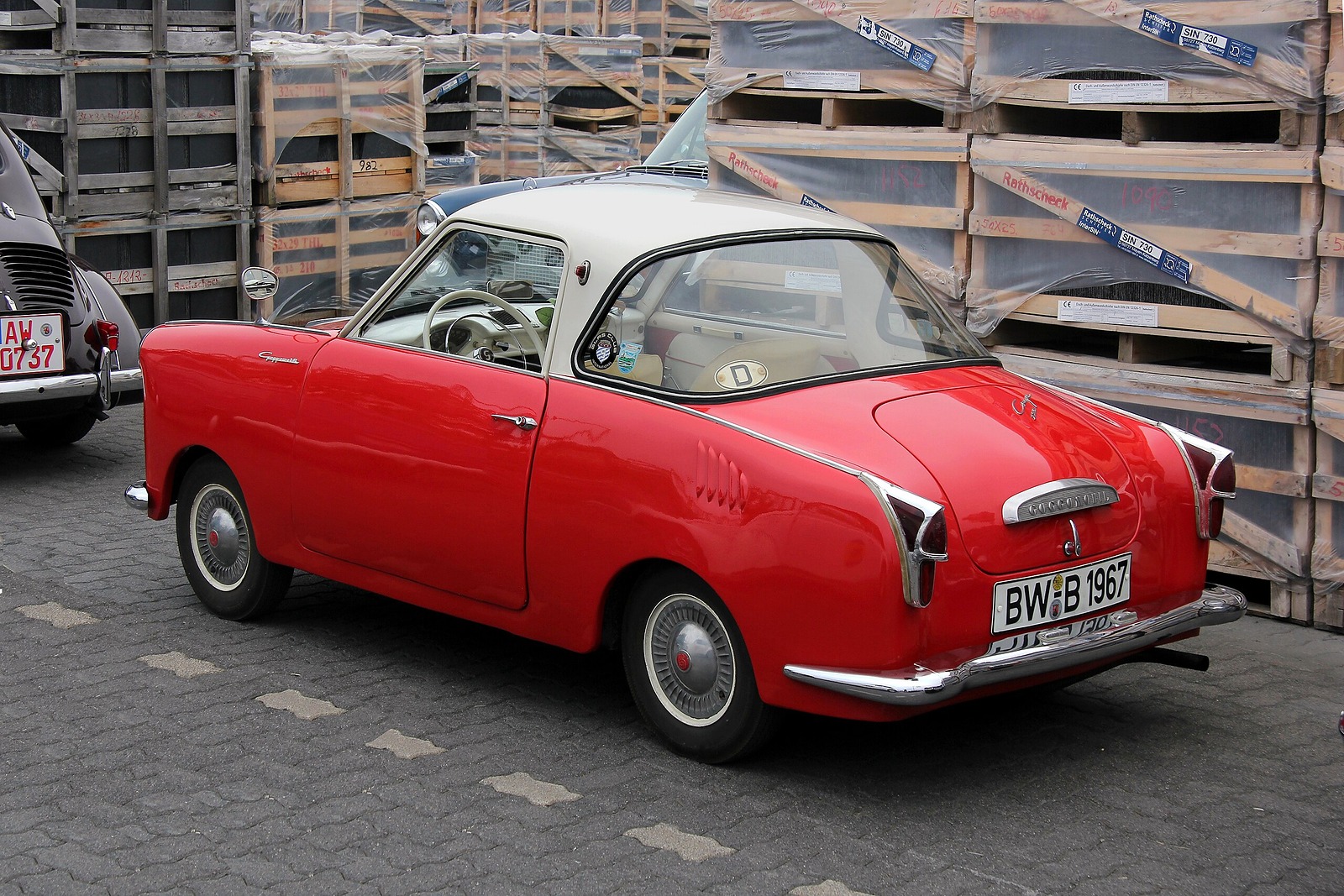
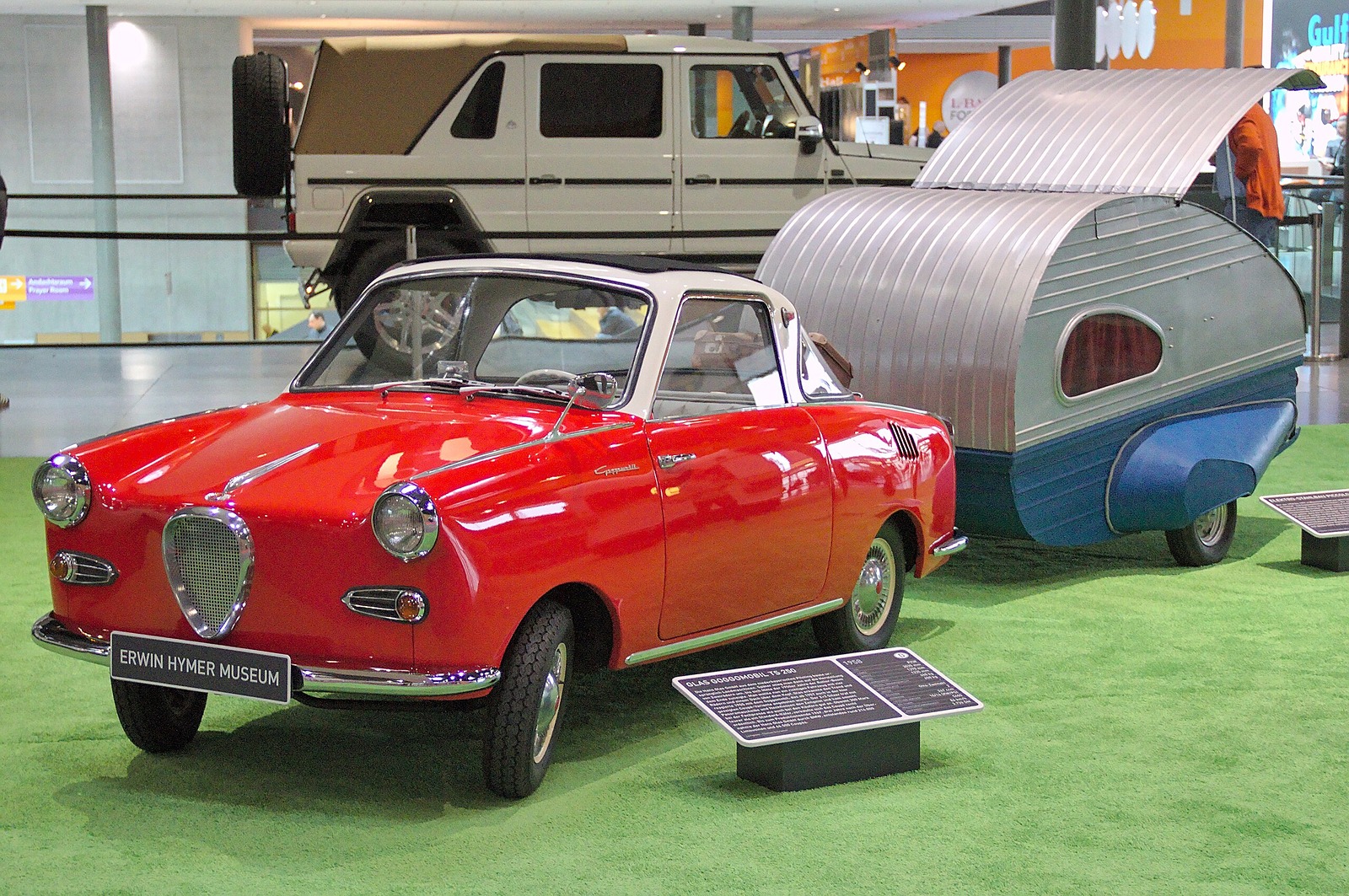
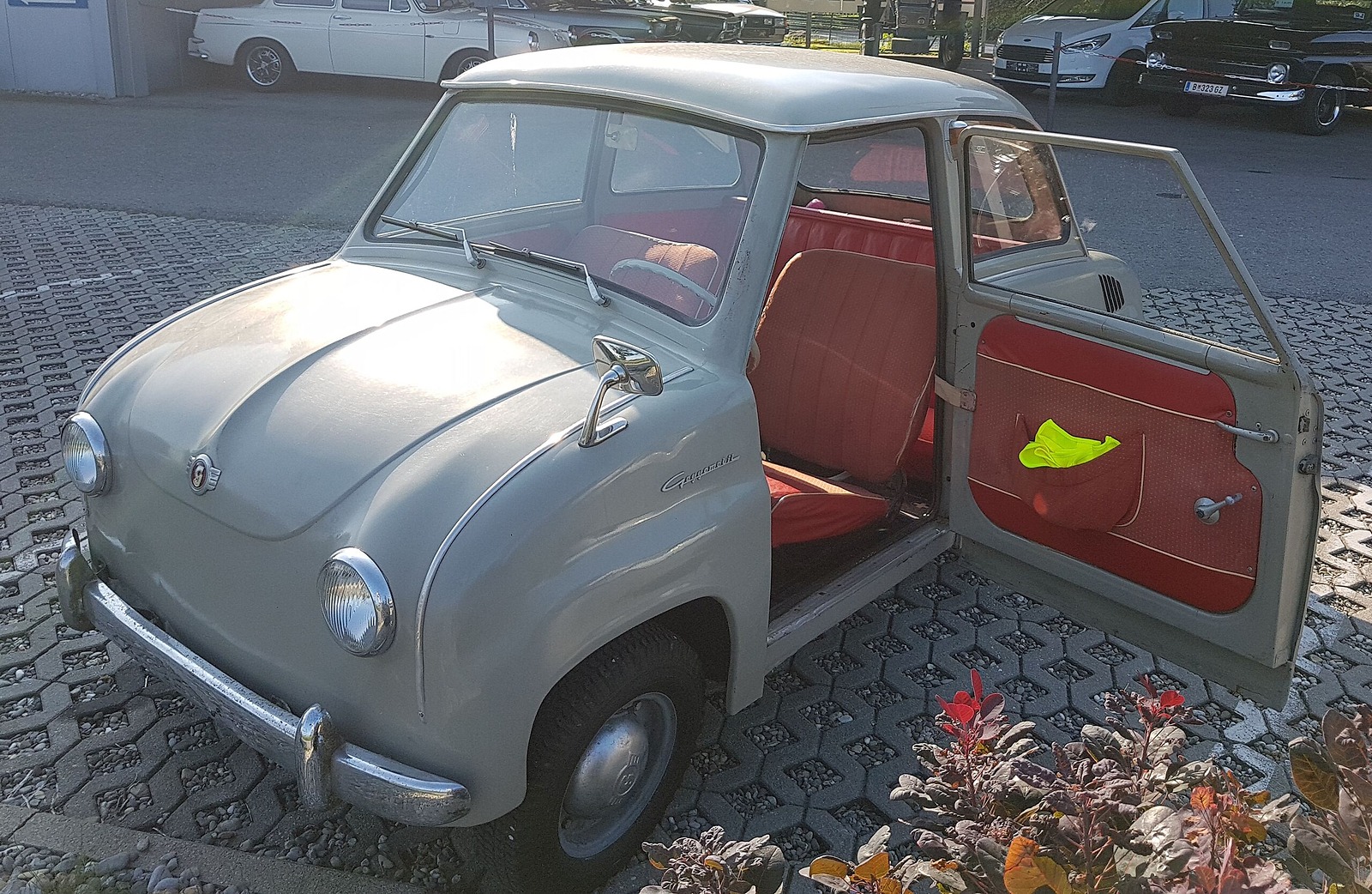
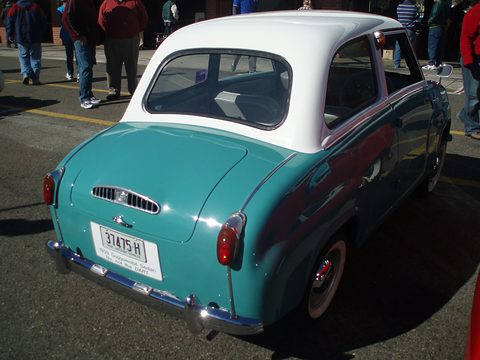
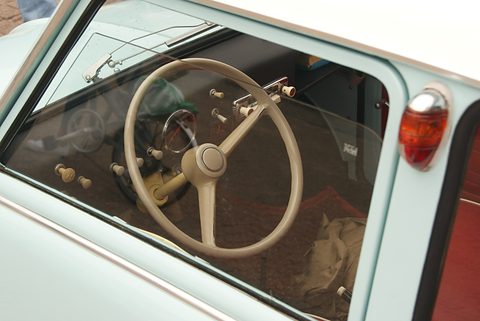
What Glas built was not a bubble car but a small saloon: a welded steel body on a pressed-steel floor, two doors hinged at the back, four seats that in practice took two adults and two children, and a fan-cooled two-stroke twin mounted across the tail.source 1source 3 It was 2,900 mm (114 in) long. Its 250 cc engine was sized so that holders of the old class 4 licence could drive it.source 1source 4 The saloon was shown at the IFMA in Frankfurt in 1954, and about 50 pre-series cars, without rain gutters, were built that year for testing and shows. Series production was due to start in January 1955 and to reach 1,000 a month by the summer; the Weiner museum says it began in April.source 4source 5source 2 At first every car was painted Saharabeige.source 1

By July 1955 there were 2,000 Goggomobils in the trade and more than 50 a day were being built. Cars with a 300 cc engine, enlarged for tax reasons for export to Austria, had done outstandingly well in the International Alpine Trial and other Austrian reliability trials.source 6 Not everyone was convinced: in the same issue a reader asked who could still believe in the Goggomobil now that the BMW Isetta had arrived and Messerschmitt was gaining ground.source 6 At the Frankfurt show that September the T250 cost DM 2,940 and the T300 DM 3,040, with a heater as standard and a sunroof for DM 55 more.source 7

„Es ist ein richtiger Kleinstwagen mit sehr beachtlichen Fahrleistungen … Mindestens auf absehbare Zeit hat das Goggomobil einen gesicherten Markt.“

auto motor und sport, report on the Frankfurt show, 20/1955. In English: “It is a real miniature car with very considerable performance … at least for the foreseeable future the Goggomobil has a secure market.”source 7

Like a plank on the road

Dr Paul Simsa tested a T300 for auto motor und sport early in 1956, and called the scooter-car label in a sense misleading: it was a small car in which only the engine was close to the motorcycle. From outside it looked almost ridiculously tiny, but the doors, the legroom and the view were all better than he expected. Critics complained of a tinny feel, and the doors shut with a tinny sound.source 3

„Der Motor ist zwar gummigelagert … er orgelt aber derart, daß man in einem Grand-Prix-Wagen zu sitzen glaubt.“

Dr Paul Simsa, road test of the Goggomobil T 300, auto motor und sport 3/1956. In English: “The engine is rubber-mounted … but it roars so much that you think you are sitting in a Grand Prix car.”source 3

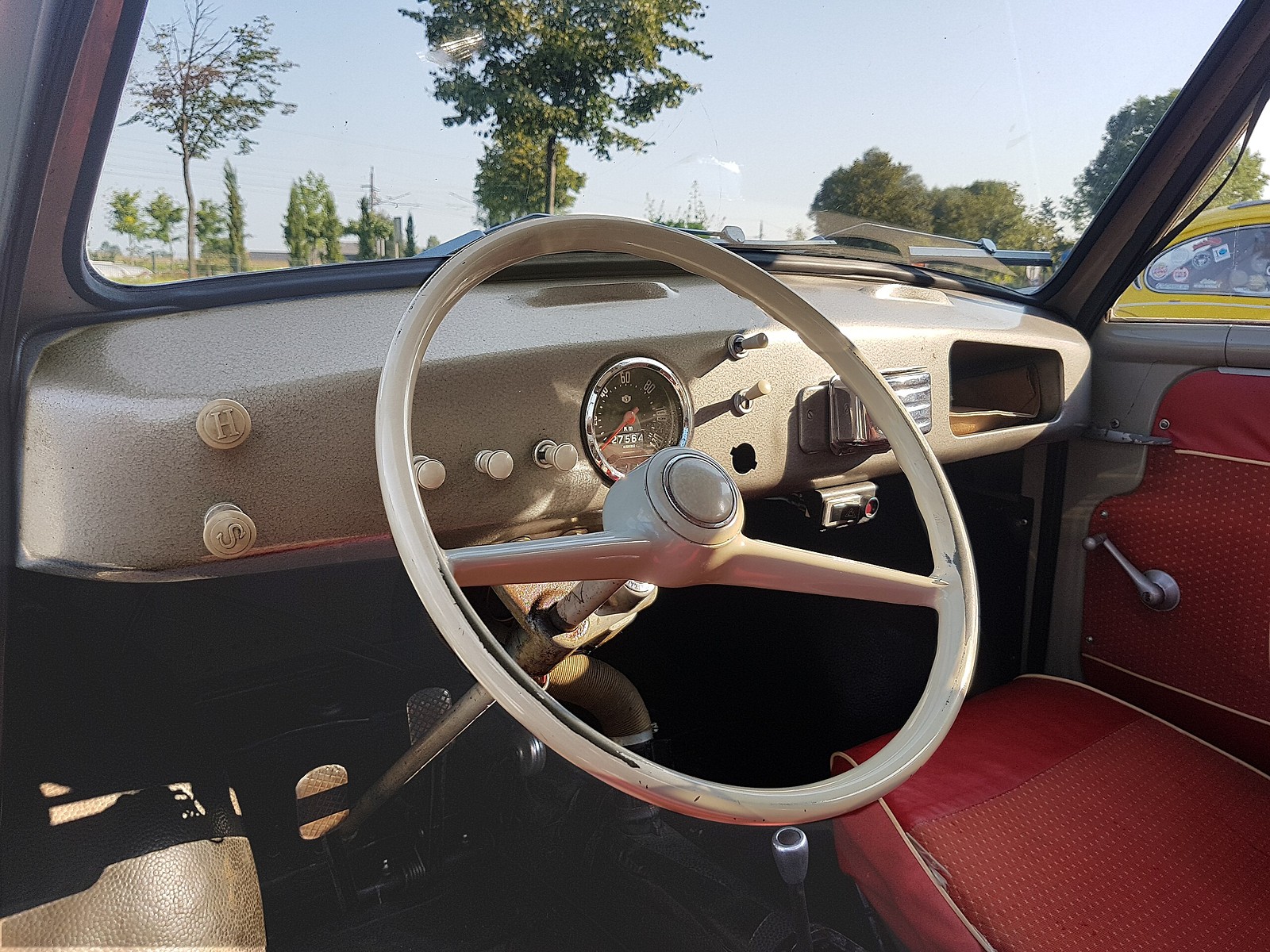
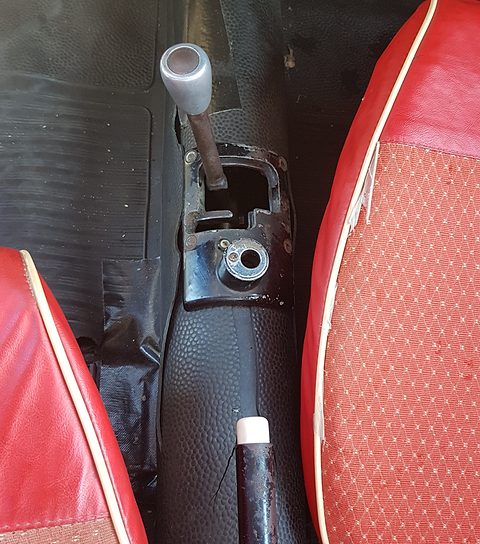
He recommended the sunroof version for sensitive souls. The gearbox, with first and second at the front of a crosswise H, could be shifted without the clutch from any gear to any other, each gear going in with a loud peng. The car sat, he wrote, literally like a plank on the road, and could be drifted in a regular power-slide, though it was not docile on wet tram rails. It climbed a 15 per cent hill from rest in second gear, and 600 km (370 miles) in a day was no strain. He had small complaints: plain glass rather than safety glass in the side windows, an over-bright indicator lamp, a reserve tap worked by the ignition key and a driver’s seat that could be moved only with a spanner. His verdict was that the Goggomobil was clearly a small car and no longer a mere driving machine, and that for many people it was the only car they could afford.source 3source 1

Coupé, van and a long life

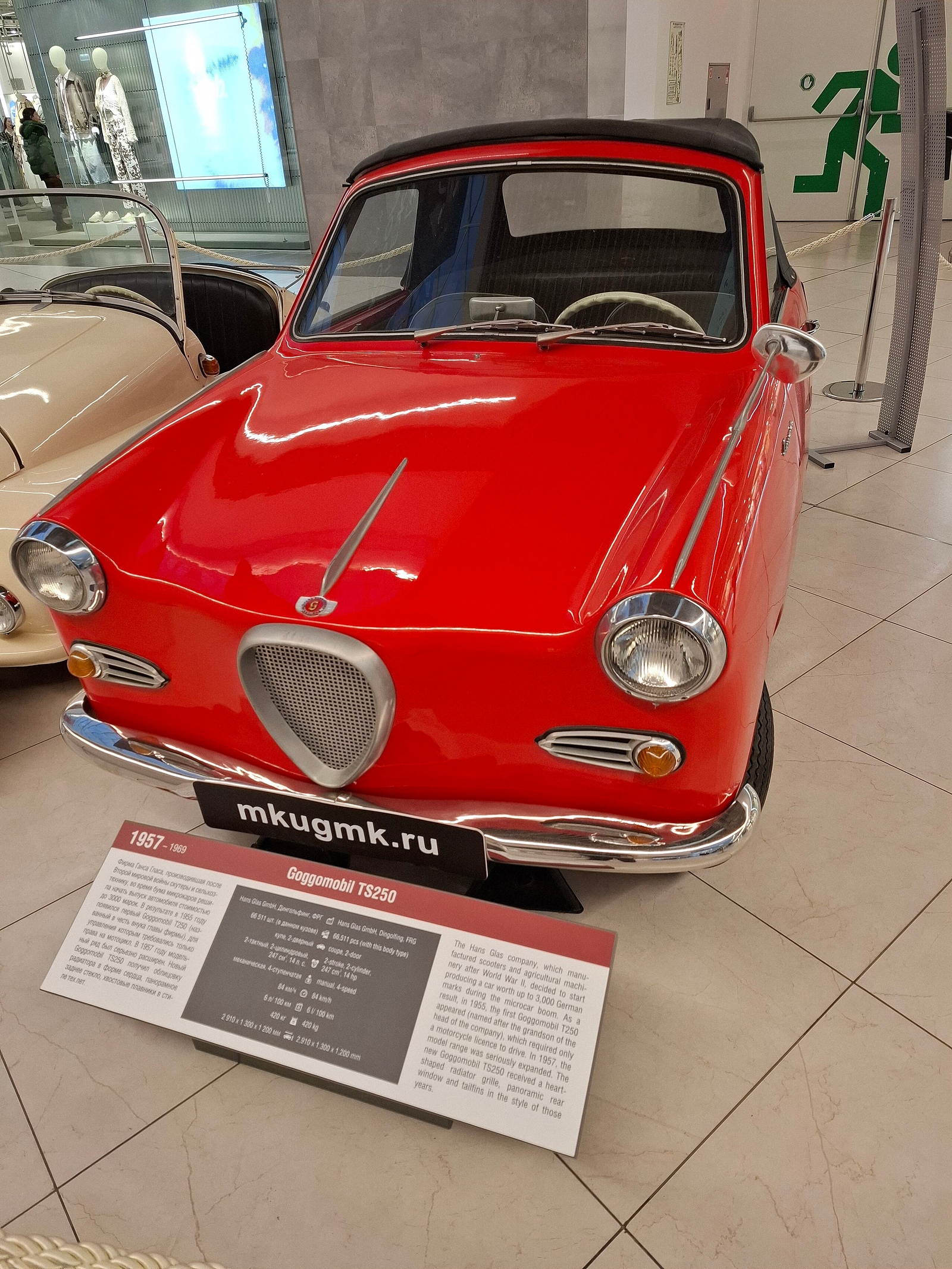
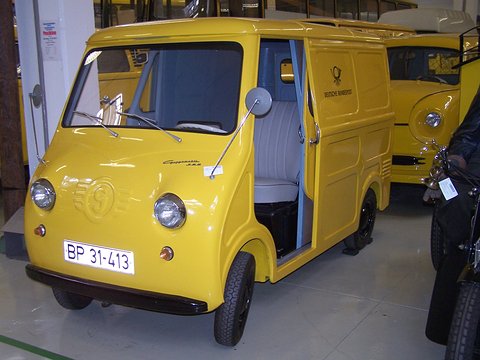
At the IFMA in 1956 Glas showed the Goggomobil TL Transporter, with sliding doors, for the Deutsche Bundespost, which bought about 2,000, and a new coupé with an electrically shifted Getrag “Selectromat” preselector gearbox, designed by Norbert Riedel.source 8source 1 A T 200 with 9.9 PS was shown too, but never went into production.source 1 The saloon gained a second wiper and external tail lamps, and wind-up windows in 1956 or 1957 by different accounts; a 400 cc engine became available in 1957, and the TS coupé, sold in Britain as the Mayfair, went into production that autumn.source 1source 4source 2 The first 100 Transporters went to the Bundespost in 1958.source 9

1957 was the best year. Glas built 43,372 Goggomobils, more than the 33,700 BMW Isettas built that year; among the small cars only the larger Lloyd 600 sold more, with 45,907.source 1source 10 The four-seat micro-saloon had overtaken the bubble car.

A successor, the M‑61, with a body by Josef Adler, was built as a prototype in 1961 and stopped the next year for lack of money.source 1source 11 So the Goggomobil went on. When rear-hinged doors were banned in 1963, Glas obtained an exemption to keep them, and only in March 1964 were the doors turned round to hinge at the front.source 11source 1source 2 In the United States, Continental Car Combine sold the cars from 1955 to 1961 for $995 to $1,495, with the coupé as the “De Ville Coupe”; 539 were sold there in 1958 and 579 in 1959.source 1

BMW took over Hans Glas GmbH with effect from 10 November 1966, and kept the Goggomobil in production until the last car was built on 30 June 1969.source 1source 2source 4 By then a saloon cost about DM 3,600 and a coupé about DM 4,000.source 1 With 284,491 built it is the most-produced German microcar, and it had outlived the bubble cars it was launched among.source 1source 12
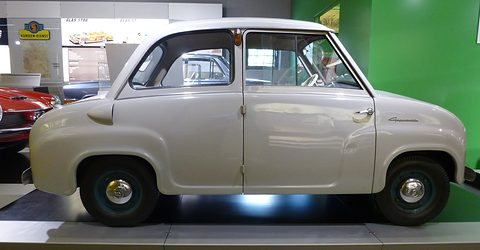
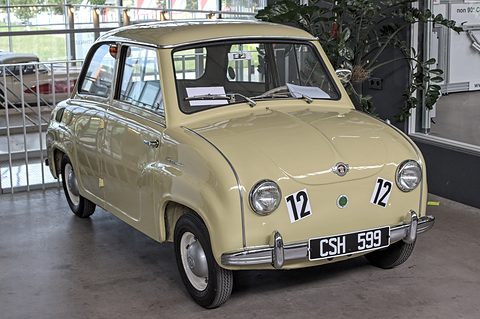
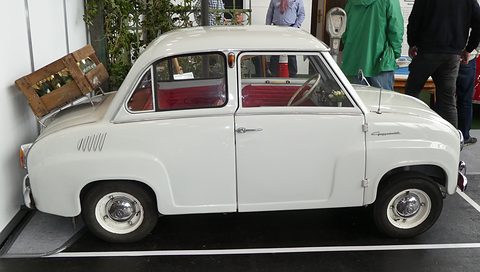
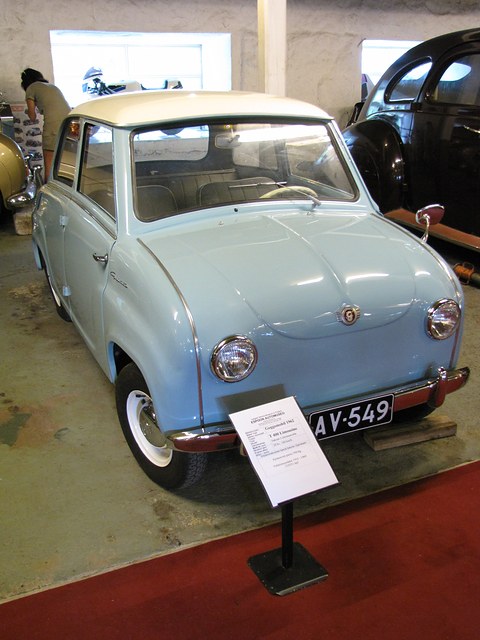
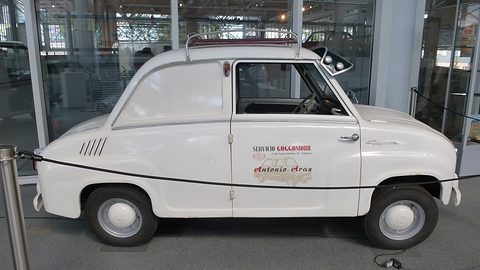
Pale grey saloon in side profile on a museum plinth, against a green wall with old Glas posters
A 1956 Goggomobil T250 in the museum at Dingolfing, the town where it was built, in 2018.Photo: Buch-t, CC BY-SA 3.0 de, via Wikimedia Commons
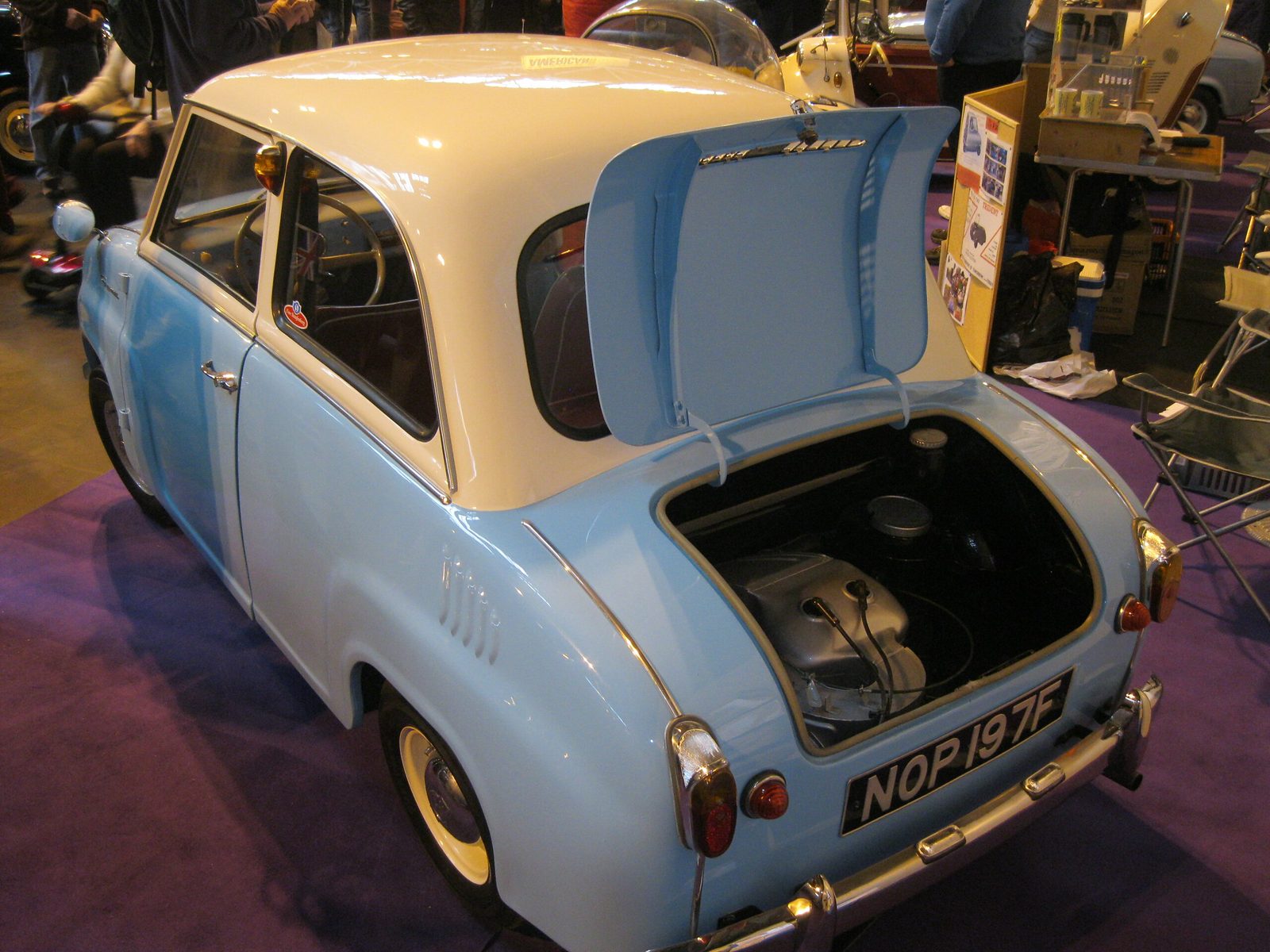
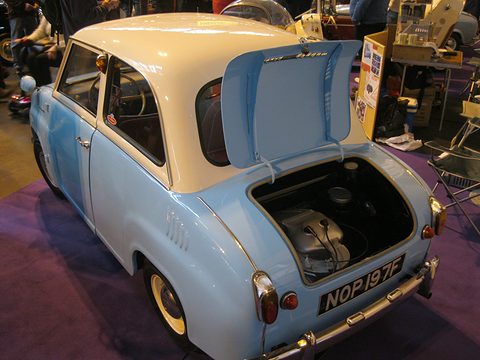
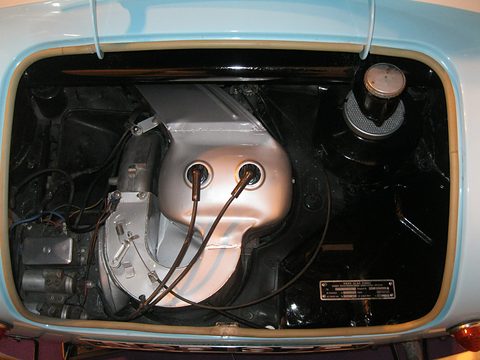
Engine bay framed by pale blue bodywork, silver fan cowling with two spark-plug leads and an air filter
The two-stroke twin and its cooling-fan housing across the tail of a Goggomobil T300, in 2013.Photo: Andrew Bone from Weymouth, England, CC BY 2.0, via Wikimedia Commons
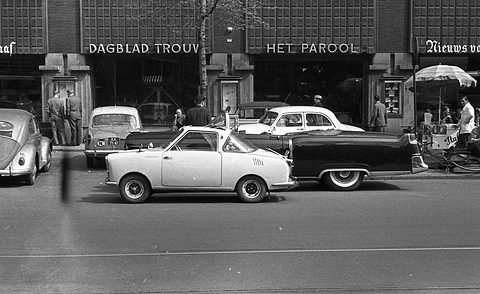
White coupé at the kerb in front of a newspaper building, an American saloon and a Volkswagen nearby
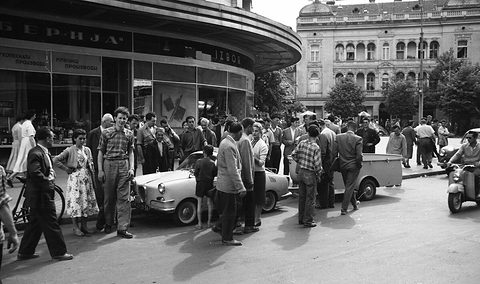
Plate I · 1958 A TS coupé parked outside the Het Parool and Trouw newspaper offices in Amsterdam in 1958.Photo: IISG, CC BY-SA 2.0, via Flickr
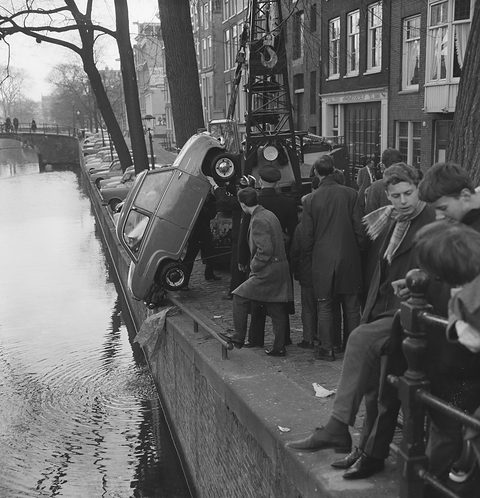
Small saloon tipped nose-up against a crane on a canal bank, onlookers crowding the railings beside the water
Plate II · 1963 A Goggomobil saloon hanging over the Reguliersgracht in Amsterdam after running over the kerb in icy weather, December 1963.Photo: F.N. Broers / Anefo, CC0, via Wikimedia Commons
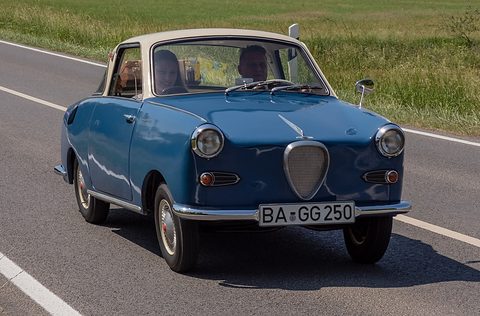
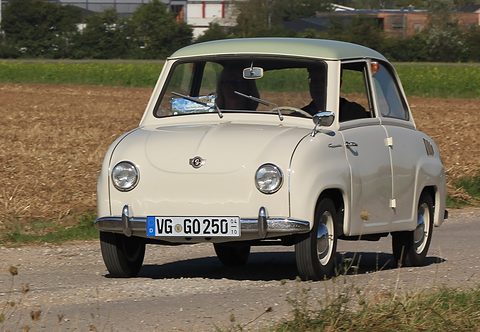
Blue coupé with a cream roof driving towards the camera on a rural road
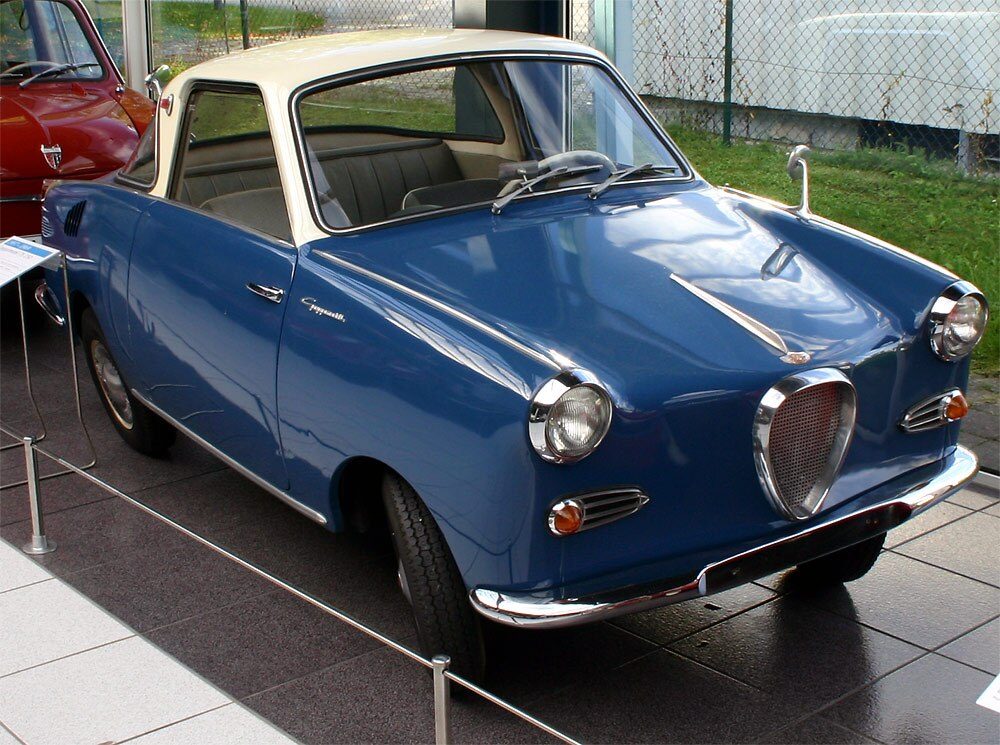
A blue Goggomobil TS coupé on a country road in 2018.Photo: Ermell, CC BY-SA 4.0, via Wikimedia Commons

Isard T‑400

years not recorded · a record on this page

An Argentine Goggomobil sold as the Isard appears in lists of the car’s licence builds. No published account of the Isard has been found, so its maker, its years and its numbers are still unconfirmed.

Goggomobil (Spain)

1962–⁠1966 · a record on this page

A group of Basque businessmen founded Munguía Industrial S.A., Munisa, in Bilbao on 22 January 1957, to build a people’s car in series for Spain. It signed an agreement with Hans Glas GmbH that April, built a factory at Munguía, in Biscay, between September 1957 and 1961, and, by one Spanish account, won the Ministry of Industry’s permission by buying the licence held by an earlier Spanish microcar, the Kapi.source 13

Production began early in 1962: about 1,100 cars that year despite strikes, 2,100 in 1963, 1,900 in 1964, then 450 in 1965 and about 550, all 400 S, in 1966. The range ran to T350 and T400 saloons, a C350 commercial and F350 and K400S Combi vans.source 13 Those yearly figures add up to about 6,100 by our sum; German Wikipedia gives about 8,000 and 1962–⁠67, English Wikipedia about 5,000 and 1962–⁠66.source 13source 1source 12 Talks with Standard-Triumph, BMW and VW came to nothing, and tooling costs and BMW’s takeover of Glas closed the firm.source 13
A works team led by Fernando Villamil won touring-category speed events at Valencia and Castellón de la Plana, and Salvador Cañellas raced a DKW-engined Goggo with a futuristic body, nicknamed the Ovni, the UFO.source 13 Nearly all of this comes from one unreferenced Spanish enthusiast page, which Spanish Wikipedia copies, so it stands on a single source. The other Spanish small makers are on the Spanish microcars page.

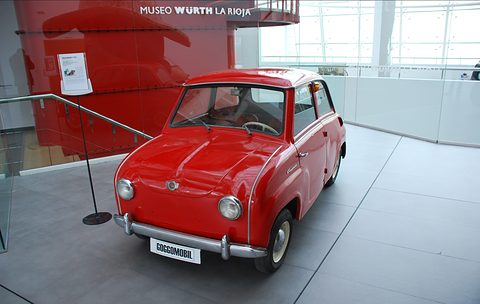
Red saloon with a white Goggomobil sign at its bumper on a grey floor in a modern museum hall
A red Spanish-built Goggomobil T350 in the Museo Würth, La Rioja, in 2013.Photo: Juanje Orío from Logroño, España (Europa), CC BY-SA 2.0, via Wikimedia Commons

Steinwinter 250 L

years not recorded · a record on this page

The Goggomobil’s engine outlived its body. Steinwinter GmbH of Stuttgart, run by Manfred G. Steinwinter, built cars from about 1969 to about 1987 for holders of the old class 4 licence. Its Junior put the Goggomobil’s 247 cc, 13.6 PS twin into the body of the Fiat Nuova 500; its successor, the 250 L, nicknamed the Figo for Fiat and Goggomobil, put the same engine into the Fiat 126, and in 1986 it was also offered with a small 250 cc four-stroke.source 14 Italian Wikipedia says a few hundred were built; no firmer figure has been found.source 15 A 250 L is on show in the Erfinderzeiten museum at Schramberg.source 14

AWS Shopper

1970–⁠1974 · a record on this page

Walter Schätzle, a Borgward dealer from the Taunus, bought surplus Goggomobil parts from BMW after production ended in 1969 and built a new car for the remaining holders of the class 4 licence. The AWS Shopper, for Automobilwerk Walter Schätzle, was shown at the Hanover Fair in 1970. It used the T250’s floorpan, running gear and engine under a frame of square steel tubes joined by aluminium nodes, clad in flat, plastic-coated steel panels, so that it could be put together with a hammer, a drill and a rivet gun, without presses or a paint shop.source 16source 17source 18 It came only in orange and black.source 16

Series production ran in West Berlin from 1973 until the firm became insolvent in July 1974. At DM 5,700 it cost more than a basic Volkswagen Beetle, and buyers chose the Fiat 126 instead. In all, 1,400 Shoppers and 300 of the Piccolo, a beach and utility version, were built; the Piccolo figure is less certain.source 16source 18 A Shopper is in the Deutsches Museum.source 16

Pictures

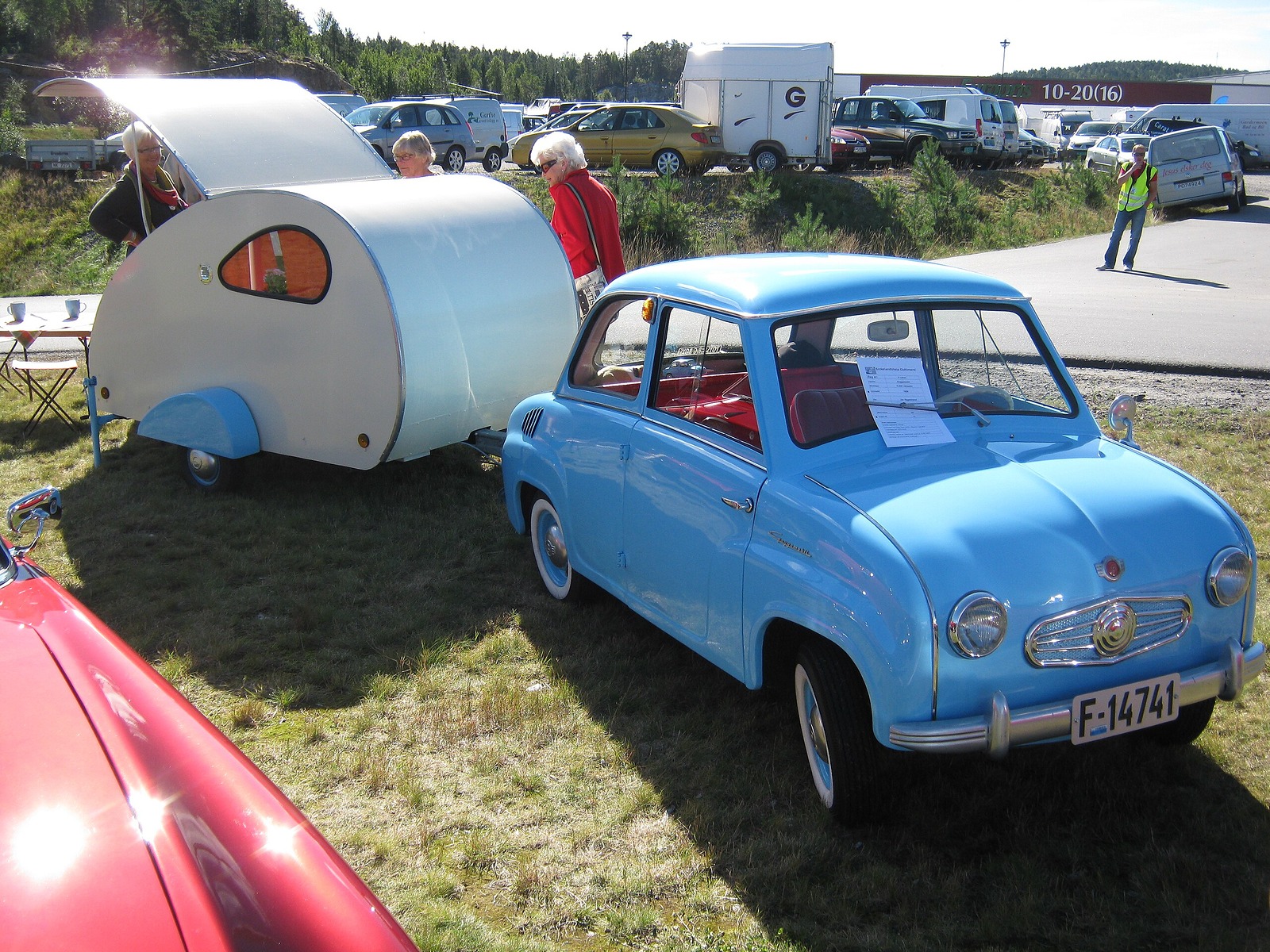
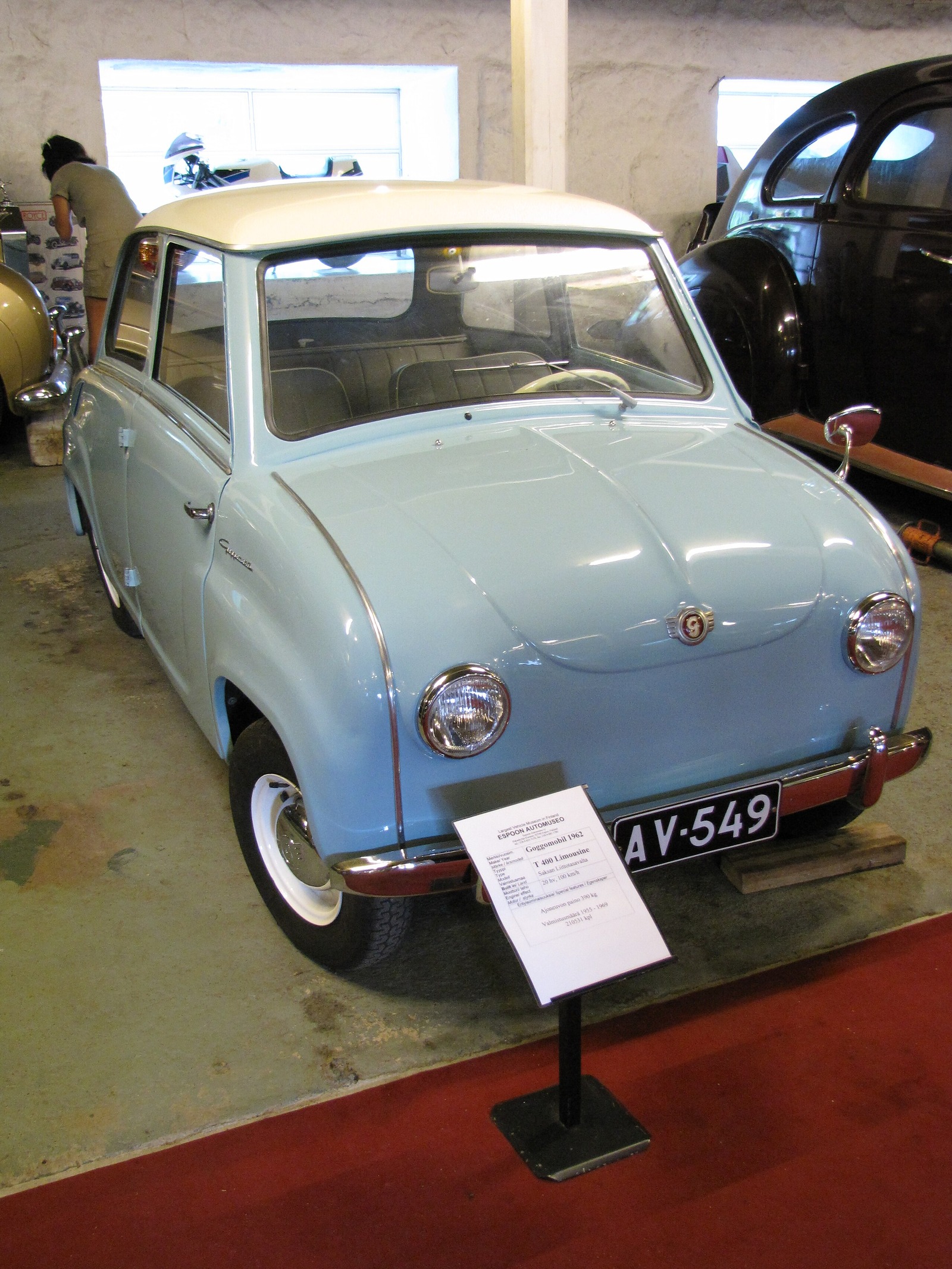
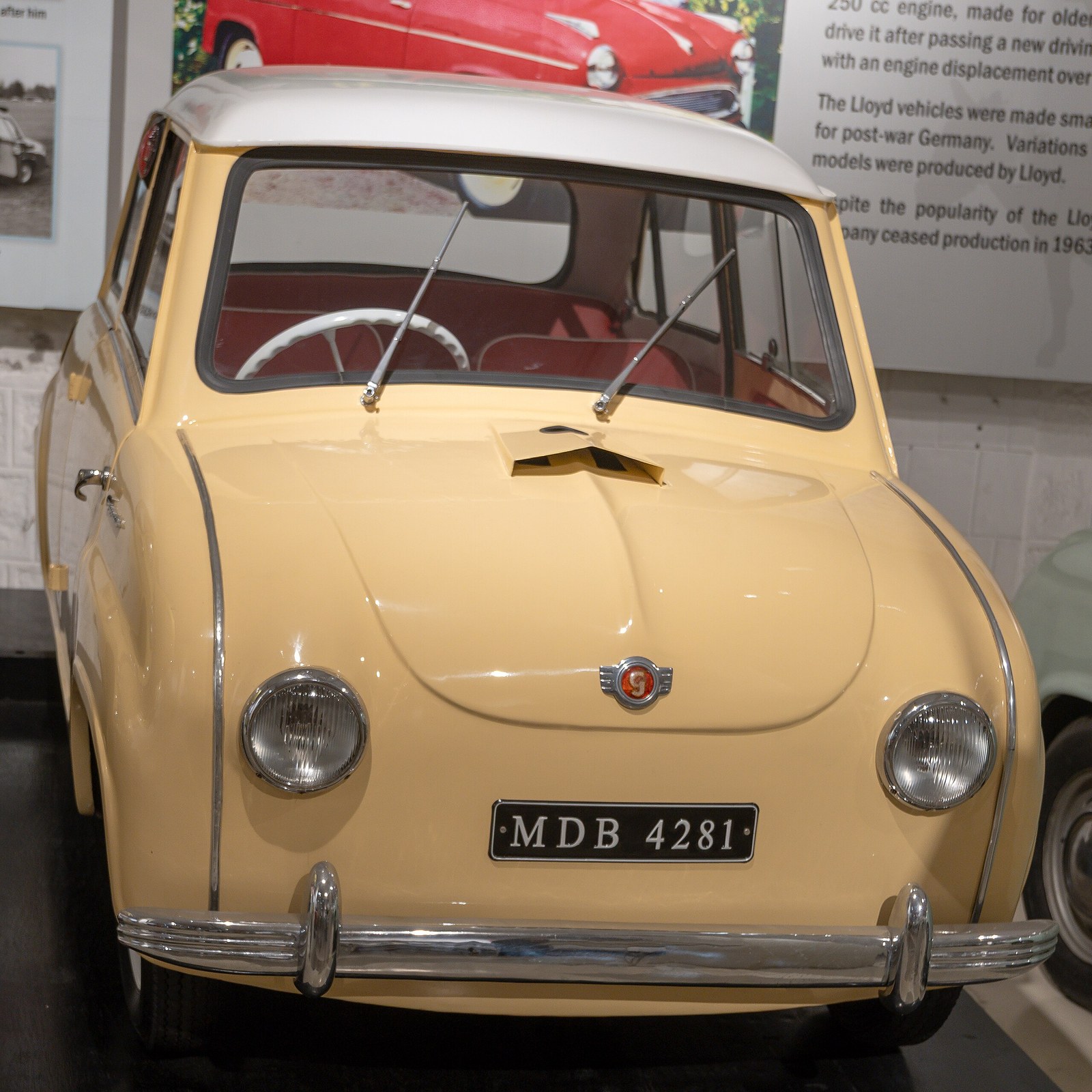
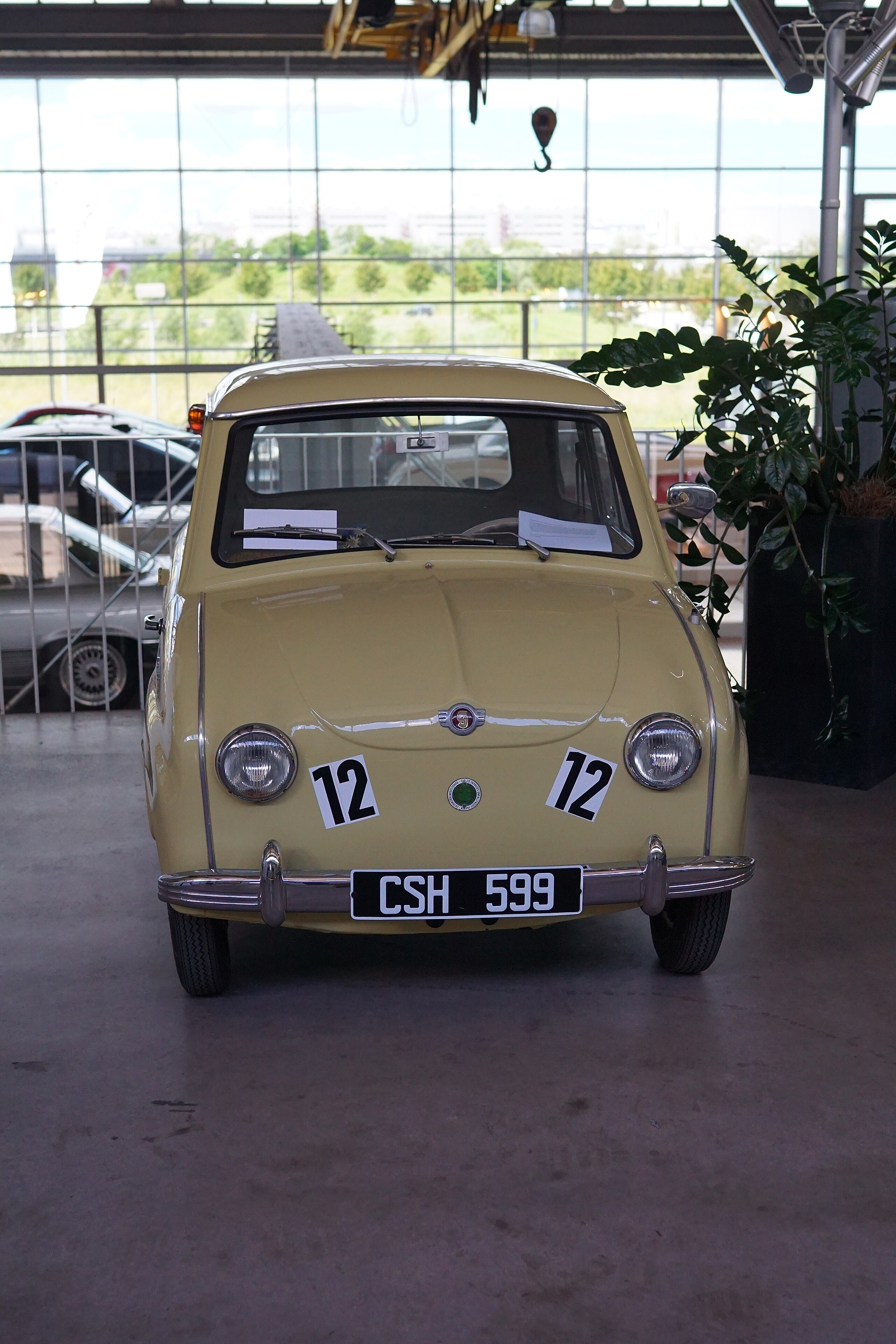
More photographs, old and new

Variants

Saloon, coupé, van and the rest

The Goggomobil family
VariantYearsWhat differsHow many
T250 saloon1955–⁠69The base car, sized for the class 4 licence; 247 cc, 13.6 PS174,548 by the Weiner museum
T300 saloon1955–296 cc, about 15 PS; first built for export to AustriaPart of 214,313 saloons
T400 saloon1957–395 cc, 20 PS, then 18.5 PS from March 1961; mostly for export to the USAPart of 214,313 saloons
TS coupé1957–⁠69A 2+2 coupé with a panoramic rear window; the “Mayfair” in Britain, the “De Ville Coupe” in the USA66,511
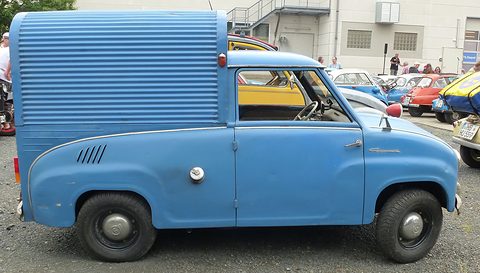
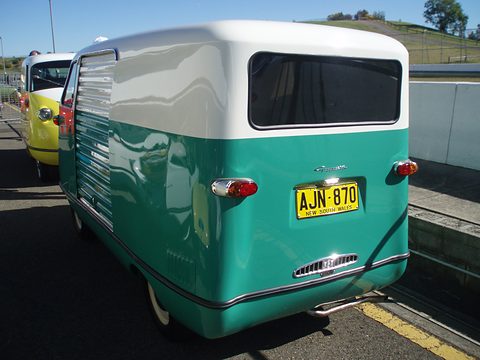
TL Transporter1957–⁠65Van and pick-up with sliding doors, many for the Bundespost3,667 (3,665 in German Wikipedia’s text); about 2,000 to the Bundespost
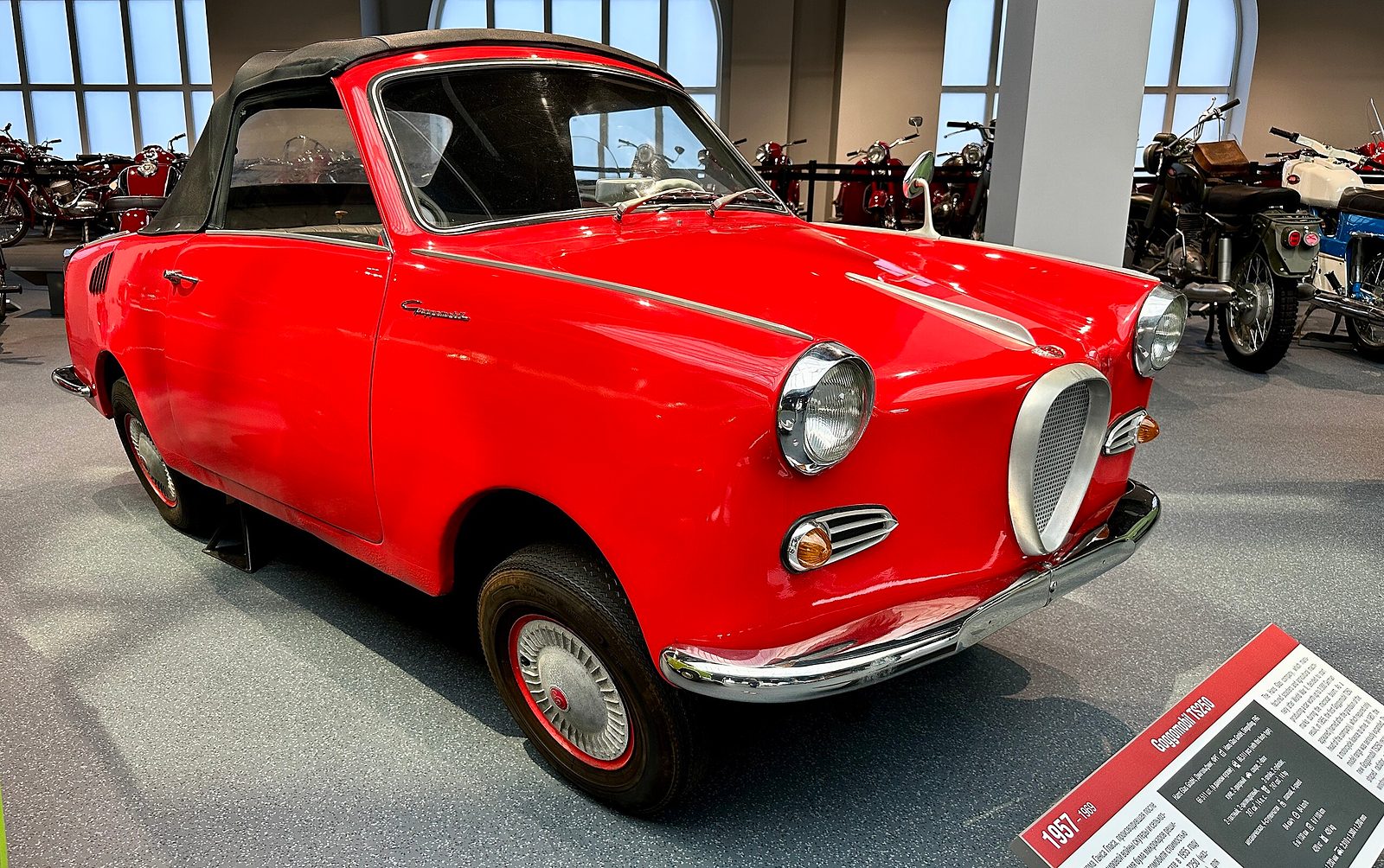
TS cabrioletabout 1961An open coupé that never went into productionSeven or nine prototypes; two survive
M‑611961A successor with a body by Josef Adler, stopped for lack of moneyOne to three prototypes

Specification

The T300, from the 1956 road test unless noted

Engine and drive

Engine and drive
EngineTwo-cylinder two-stroke, mounted across the tail, fan-cooled
Capacity293 cc (58 × 56 mm), compression 6:1296 cc in German Wikipedia
Power14.8 PS at 4,800 rpm15 PS at 5,000 rpm in German Wikipedia
GearboxFour speeds, unsynchronised, in a crosswise H; with a differential
ClutchTwo plates in an oil bath
Electrics12 V starter-dynamo

Body and chassis

Body and chassis
BodyPressed-steel floor with a welded, load-bearing steel body
Front suspensionIndependent, coil springs, telescopic dampersGerman Wikipedia calls it a swing axle
Rear suspensionSwing axle with trailing arms and coil springs
SteeringRack and pinion, just under two turns lock to lock2.8 turns in German Wikipedia
BrakesHydraulic drums
Tyres4.40-10

Dimensions

Dimensions
Length2,900 mmThe TS coupé 3,035 mm
Width1,280 mm
Height1,310 mm
Wheelbase1,800 mm
Track1,090 mm front and rear
Weight390 kg with a full tank410 kg by the Glas club

Performance and running

Performance and running
Top speed86 km/h measured two-upGood examples “up to 100 km/h”
Acceleration0–60 km/h in 15.5 s; 0–80 km/h in 35 s
Consumption7.3 litres per 100 km in the test; 6–6.5 in normal use
Fuel tank25 litres, including 3.5 in reserve
Running costsRoad tax DM 44 and insurance DM 90 a year
Price newDM 3,040 (T300, autumn 1955)source 7

How many were built?

Every figure, with its source

284,491 built214,313 saloons, 66,511 coupés and 3,667 Transporters, 1955–⁠69. The three add up. German and English Wikipedia give all three, and the Glas club gives the same saloon figure.

  1. 284,491every Goggomobil, 1955–⁠69Two sources agree

    German and English Wikipediasource 1source 12
  2. 277,232the sum of the yearly figures, 1954–⁠69One source

    Werner Oswald, Deutsche Autos 1945–⁠75, via German Wikipediasource 1

  3. 214,313saloonsTwo sources agree

    German Wikipedia; the Glas clubsource 1source 4

  4. 174,548T250 saloonsOne source

    Bruce Weiner Microcar Museumsource 2

  5. 66,511TS coupésTwo sources agree

    German and English Wikipediasource 1source 12
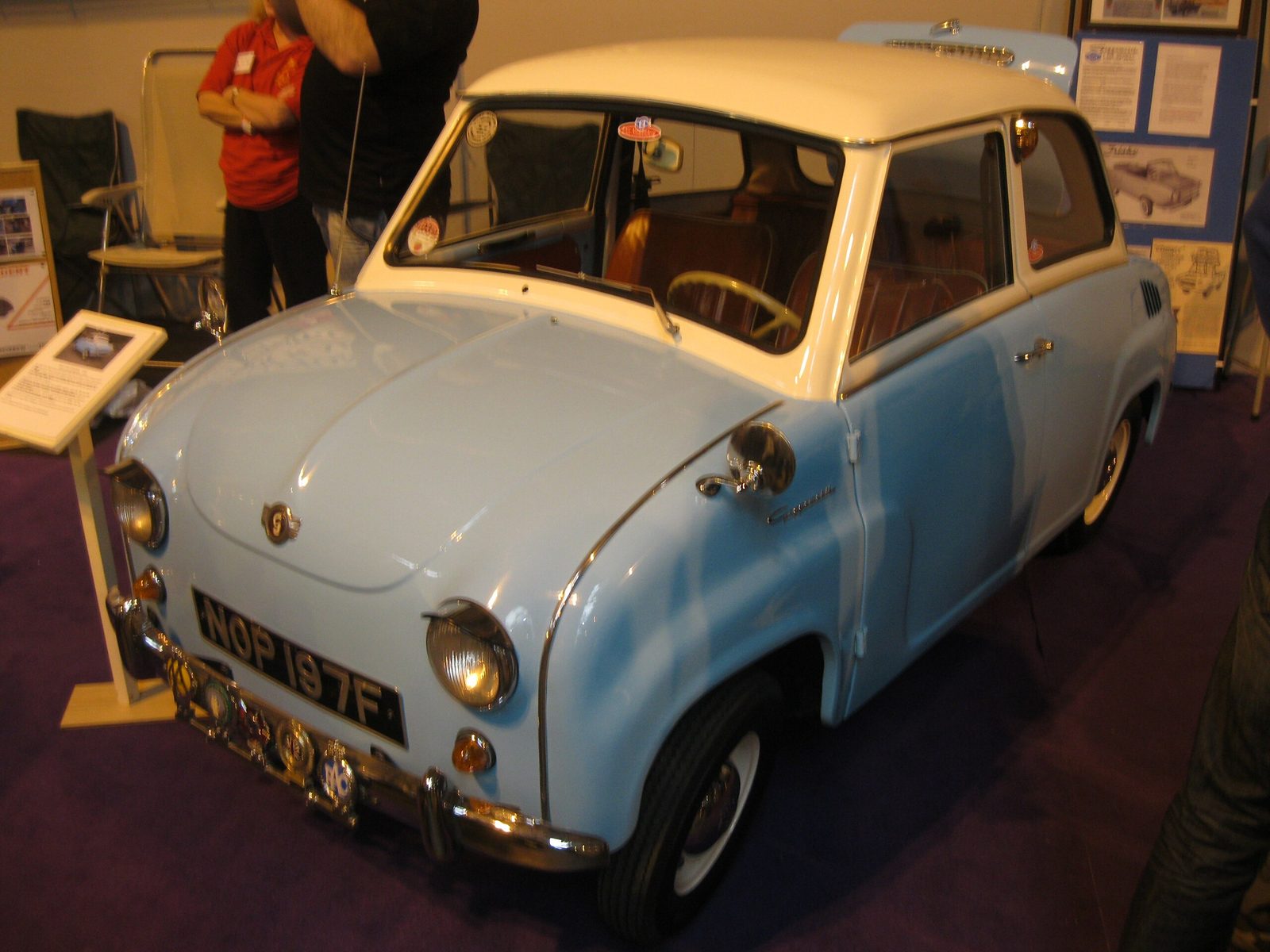
  6. 43,372built in 1957, the best yearTwo sources agree

    Oswald’s table and the official production statisticssource 1source 10

  • Two sources agreetwo good sources give the figure
  • One sourcea good source, alone
  • Unconfirmeda lead only, not yet checked

Famous for

Three points

  1. 284,491 built

    More than any other German microcar, over 14 years, from 1955 to 1969.

  2. A real car in miniature

    Four seats, two doors and a steel body, in 2.9 metres, on a 250 cc engine.

  3. Gear changes without the clutch

    The 1956 tester shifted from any gear to any other without it, each going in with a loud “peng”.

Rallies and trials

Small successes, 1955–⁠58

The Goggomobil’s competition record is modest. Production cars did outstandingly well in the 1955 International Alpine Trial, though no placings are given, and in the 1950s Marlotte and Peter Backhaus drove one round the world, a journey later told in a book.source 6source 1

1st
in the touring class up to 500 cc at the 1955 Rallye Bad Neuenahr, for Jay and Bialas.source 7
7.0 l
per 100 km over the 12 Hours of Hockenheim in May 1958: Spiker and Iffinger’s TS 250 was second on fuel in the class up to 350 cc, and a TS 300 third.source 19

On screen

Confirmed appearances only

Survivors and collecting

Today

Three German clubs look after the cars: the GLAS Automobil Club International, the Goggo- und Glasfahrer Gemeinschaft in Dingolfing and the Interessengemeinschaft für Goggomobil und Kleinwagen.source 1 No survivor count has been found. Of the seven cabriolets the factory built, the Weiner museum says two survive.source 2

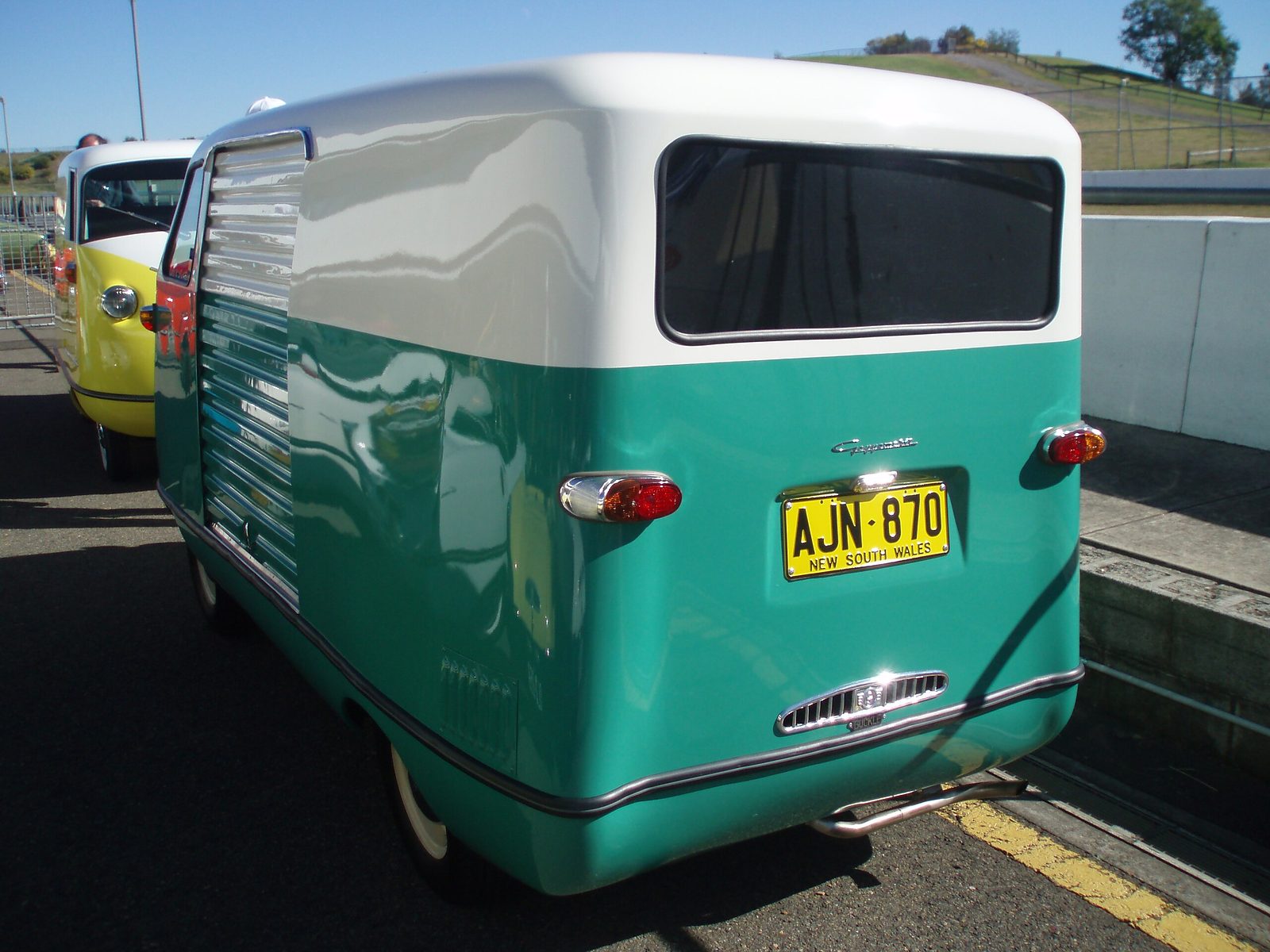
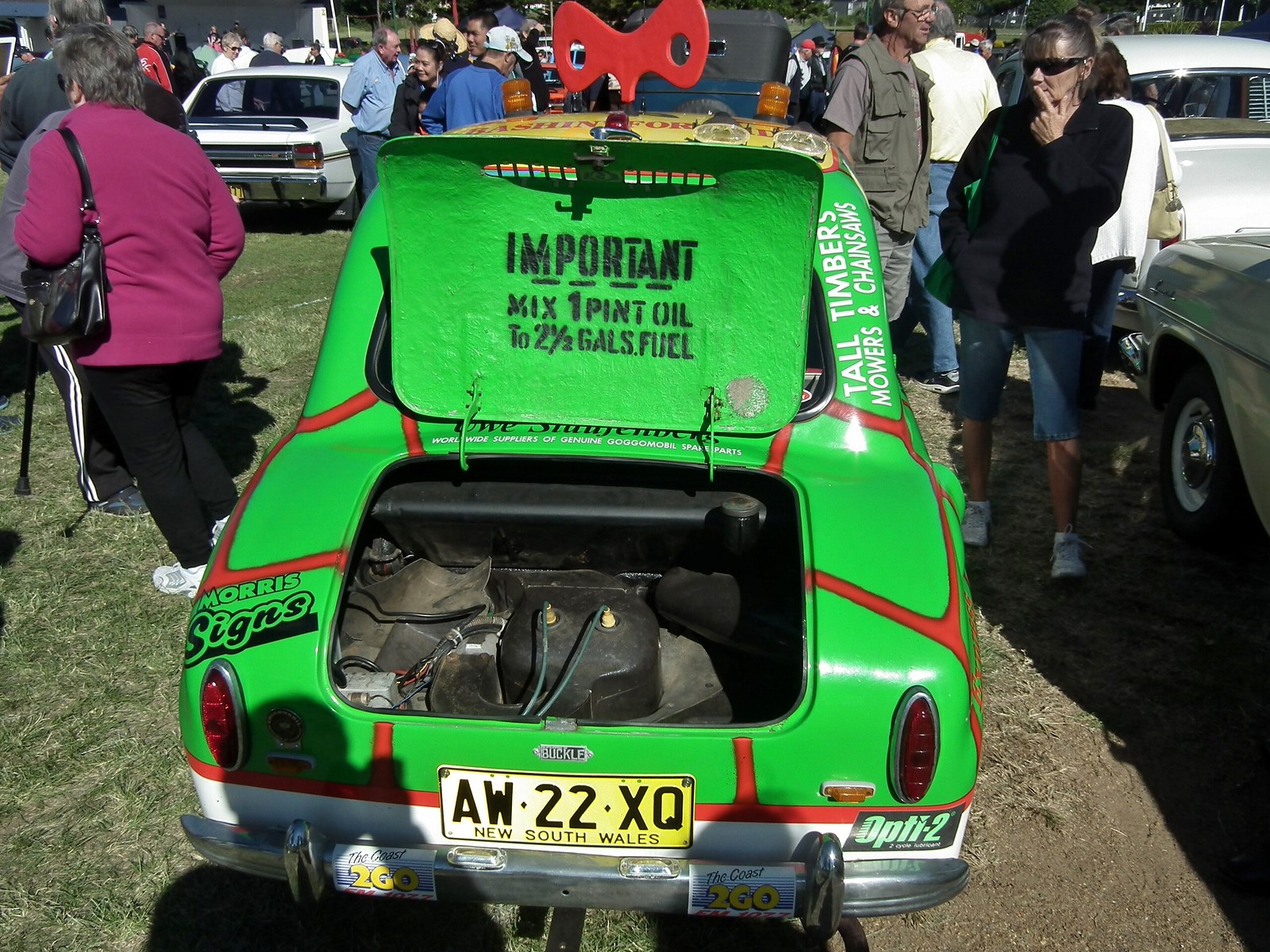
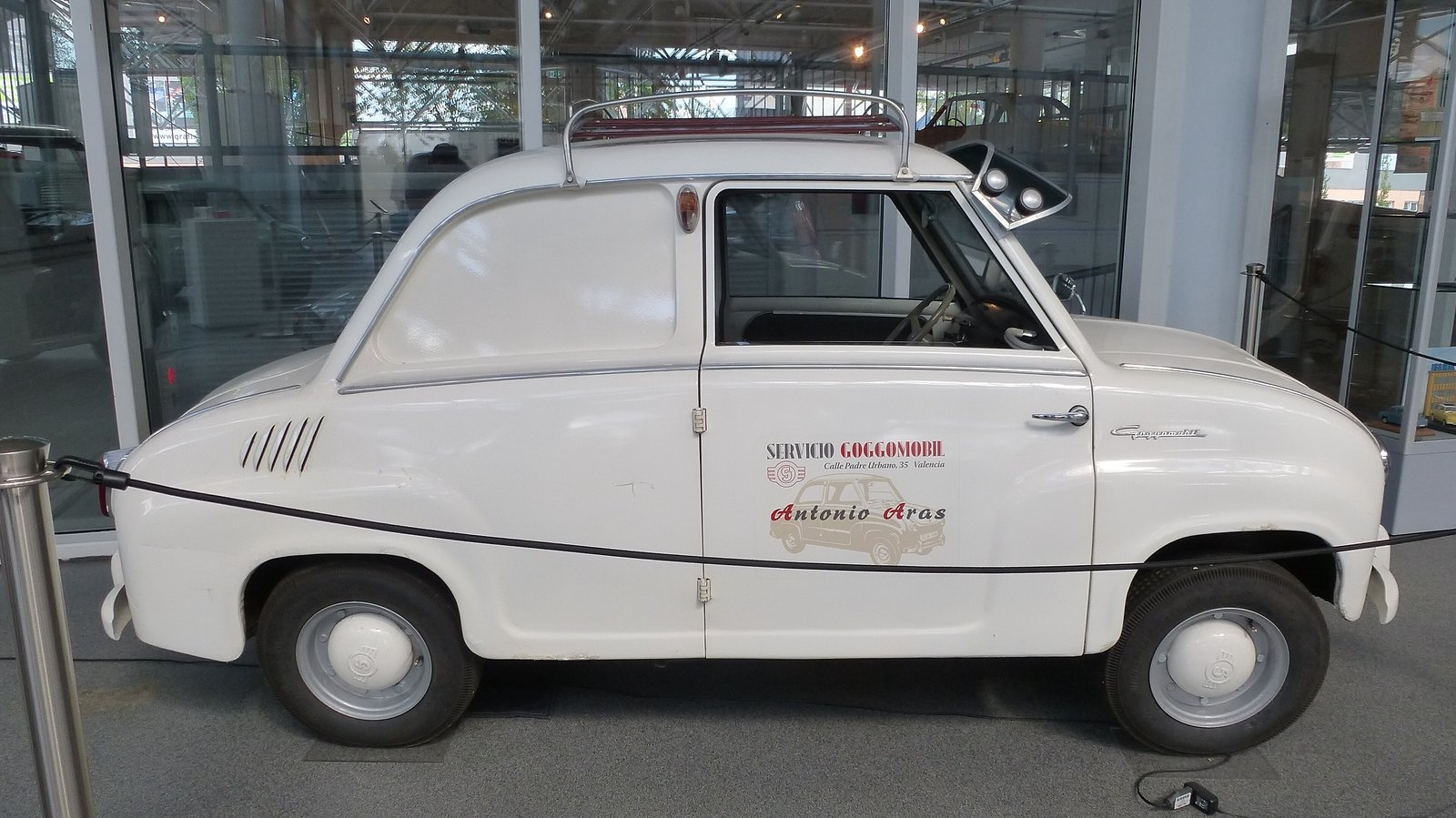
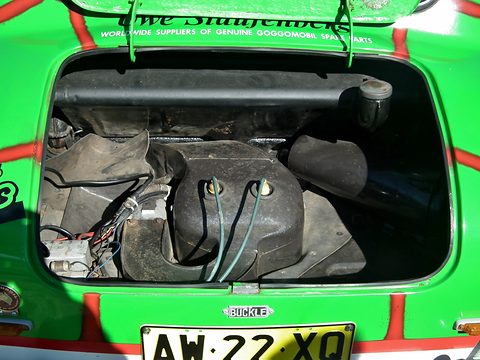
In Australia, Buckle Motors of Sydney built saloons, coupés and vans under licence, and its own glass-fibre roadster, the Goggomobil Dart, of which about 700 were built.source 12 In Poland, German Wikipedia says, the Mikrus MR-300 was derived from the T300; no licence is recorded, and that claim needs care.source 1 At the sale of the Weiner museum’s collection in 2013, Transporters in advertising liveries sold for up to $172,500, though the liveries are not necessarily original.source 20
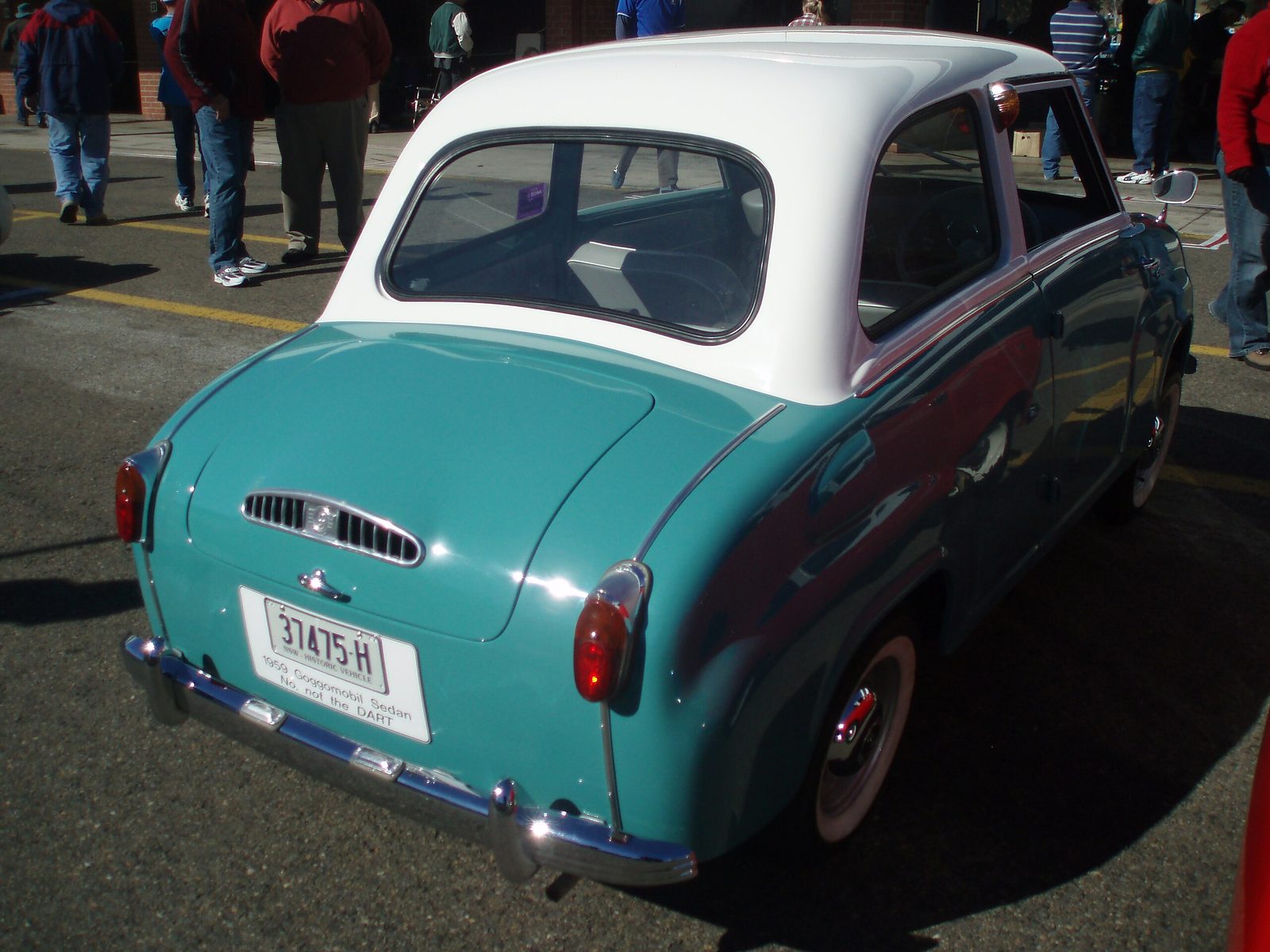
At auction, RM, 2013
CarPrice
1958 TL-400 Transporter, “PEZ” liverysource 20$172,500
1959 TL-400 pick-up, “Coca-Cola” livery$138,000
1963 TL-250 Transporter, “Dubble Bubble” livery$132,250
1963 TL-250 Transporter, “Krispy Kreme” livery$92,000

Sources

Numbered as in the text

Much of the later history and most of the figures on this page rest on German Wikipedia (the first source), which follows Oswald and Rosellen. The magazine reports of 1955–⁠58 confirm the early years.

  1. German Wikipedia, Goggomobil, read in full with its technical and production tables. Used as a lead; it cites Werner Oswald, Deutsche Autos, Rosellen (1991) and Covello, Standard Catalog of Imported Cars.
  2. Bruce Weiner Microcar Museum, tour pages “Goggomobil T‑250 Sedan”, “TS-300 Coupe” and “Goggomobil Cabriolet”.
  3. Dr Paul Simsa, “Unser Test: Goggomobil T 300”, auto motor und sport 3/1956.
  4. GLAS Automobil Club International, “Die Goggomobil Limousine”, read in the Wayback Machine’s copy of about 2008.
  5. “Vom Goggomobil …”, news item, auto motor und sport 1/1955.
  6. auto motor und sport 14/1955, news item and readers’ opinions.
  7. auto motor und sport 20/1955, Frankfurt show report, data table, price list and the Rallye Bad Neuenahr result.
  8. auto motor und sport 22/1956, report on the IFMA show.
  9. “Goggomobil-Transporter in Serie”, news item, auto motor und sport 4/1958.
  10. “Produktionszahlen 1957”, auto motor und sport 4/1958.
  11. “Historie und Histörchen (11)”, motorsport-total.com. Secondary.
  12. English Wikipedia, Goggomobil, read in its source text. Used as a lead.
  13. grupo7.com, “Goggomobil, Munguía Vizcaya”, a Spanish enthusiast page without references; Spanish Wikipedia’s Munguía Industrial, S.A. copies it.
  14. German Wikipedia, Steinwinter, read in full; it cites Linz and Schrader (2008) and Auto Katalog 1982, 1986 and 1987.
  15. Polish Wikipedia, Fiat 126, and Italian Wikipedia, Fiat 126, read in full.
  16. German Wikipedia, AWS Shopper, read in full; it cites Gloor, Alle Autos der 70er Jahre (2005), and Oswald.
  17. German Wikipedia, Automobilwerk Walter Schätzle, read in full.
  18. Robertas Parazitas, “Walter Schätzle – Resurrection Man”, Driven to Write, 15 July 2022.
  19. Günther Molter, “12 Stunden von Hockenheim”, auto motor und sport 12/1958 (7 June 1958).
  20. classic-car-auctions.info, “2013 top auction prices: mini microcars”; and a report on RM Auctions’ Weiner museum sale, supercars.net.