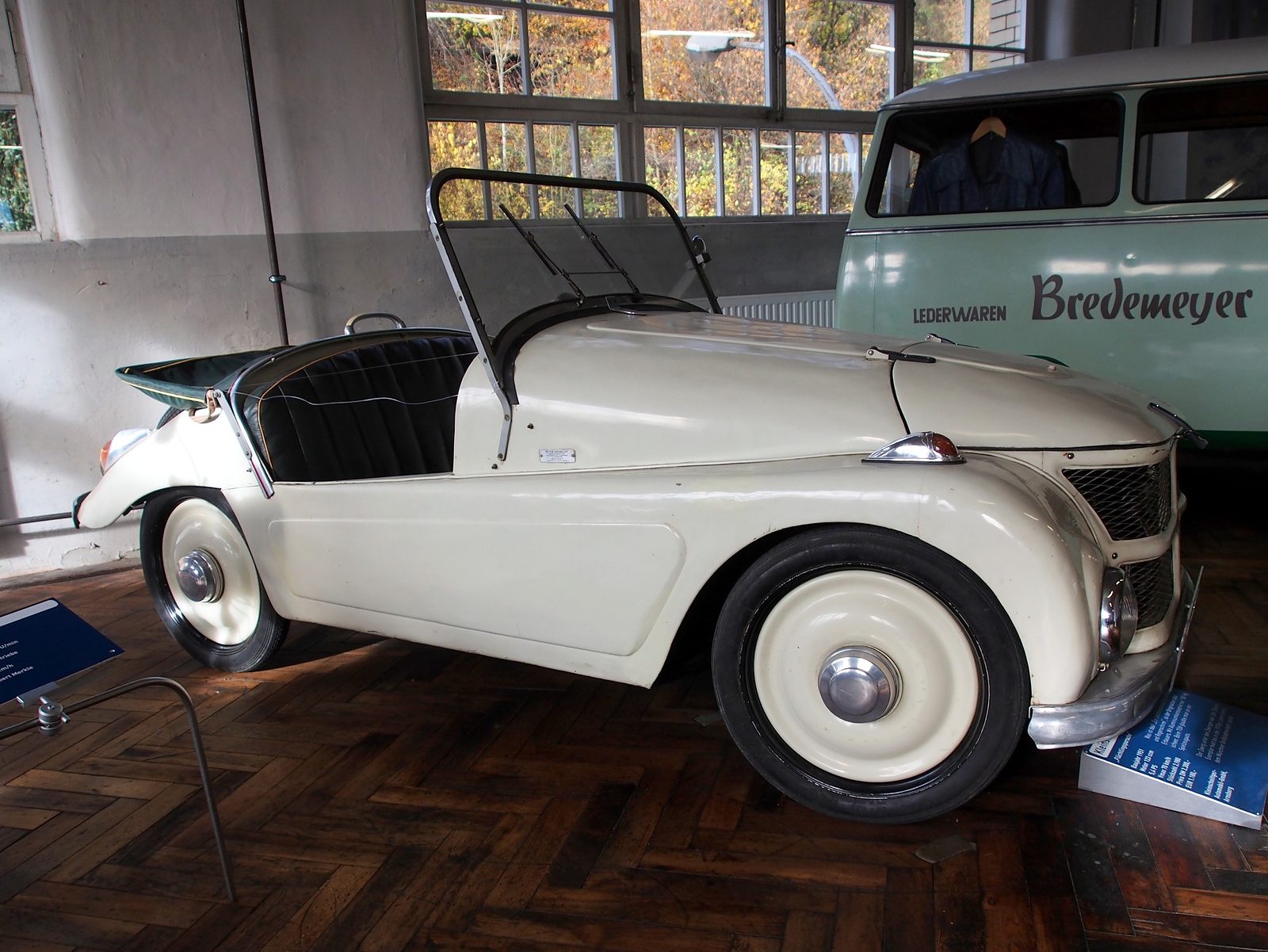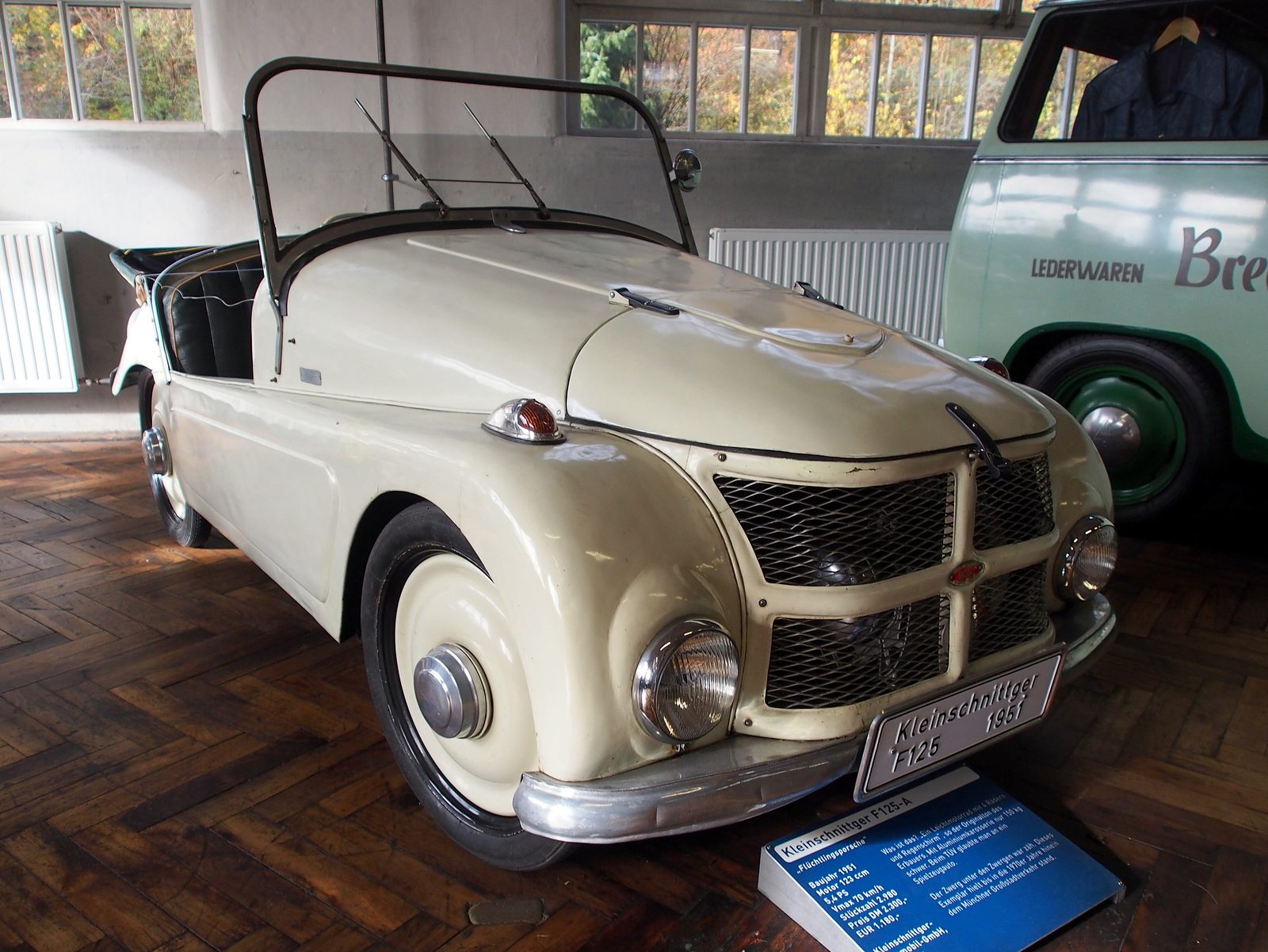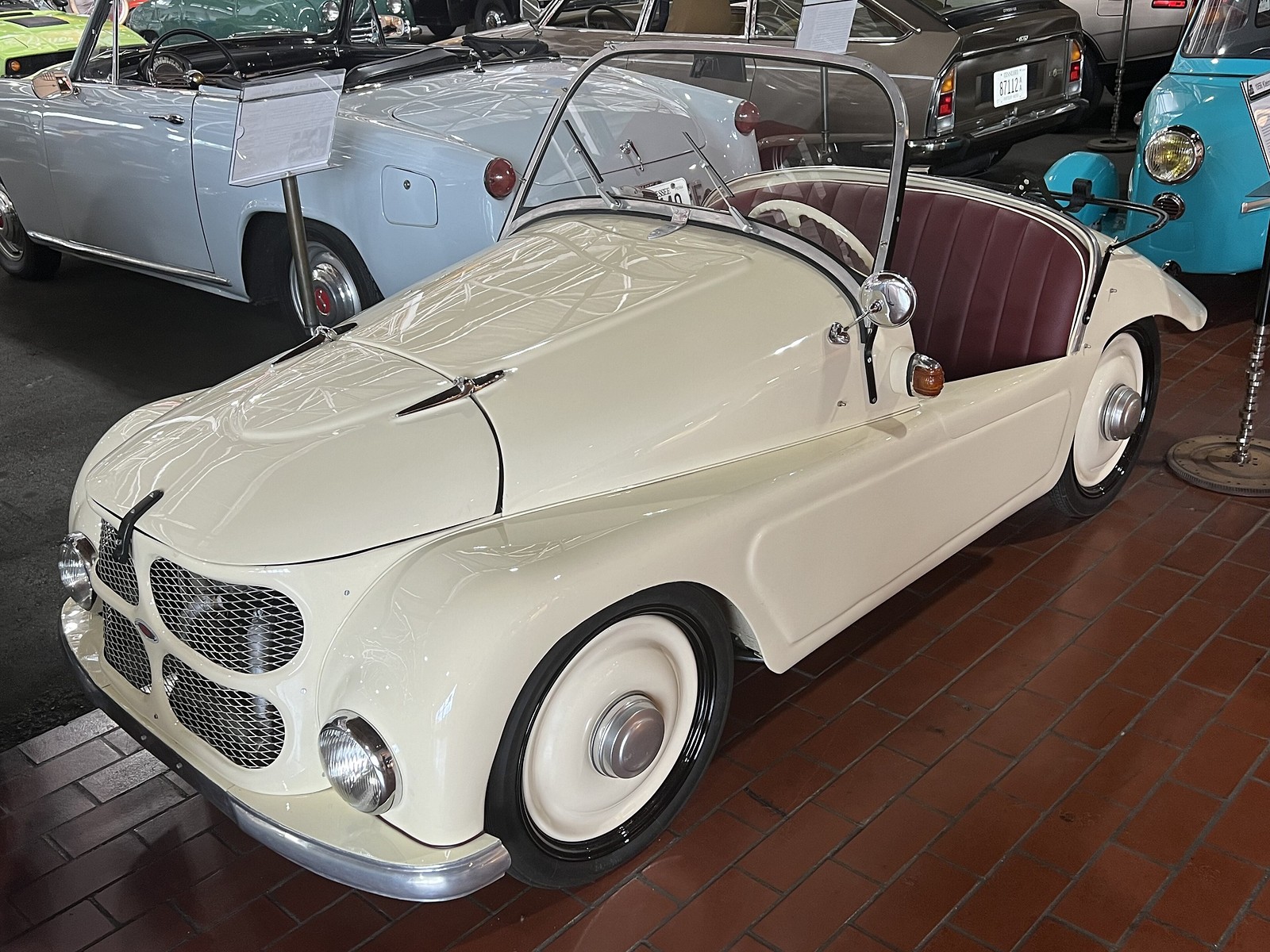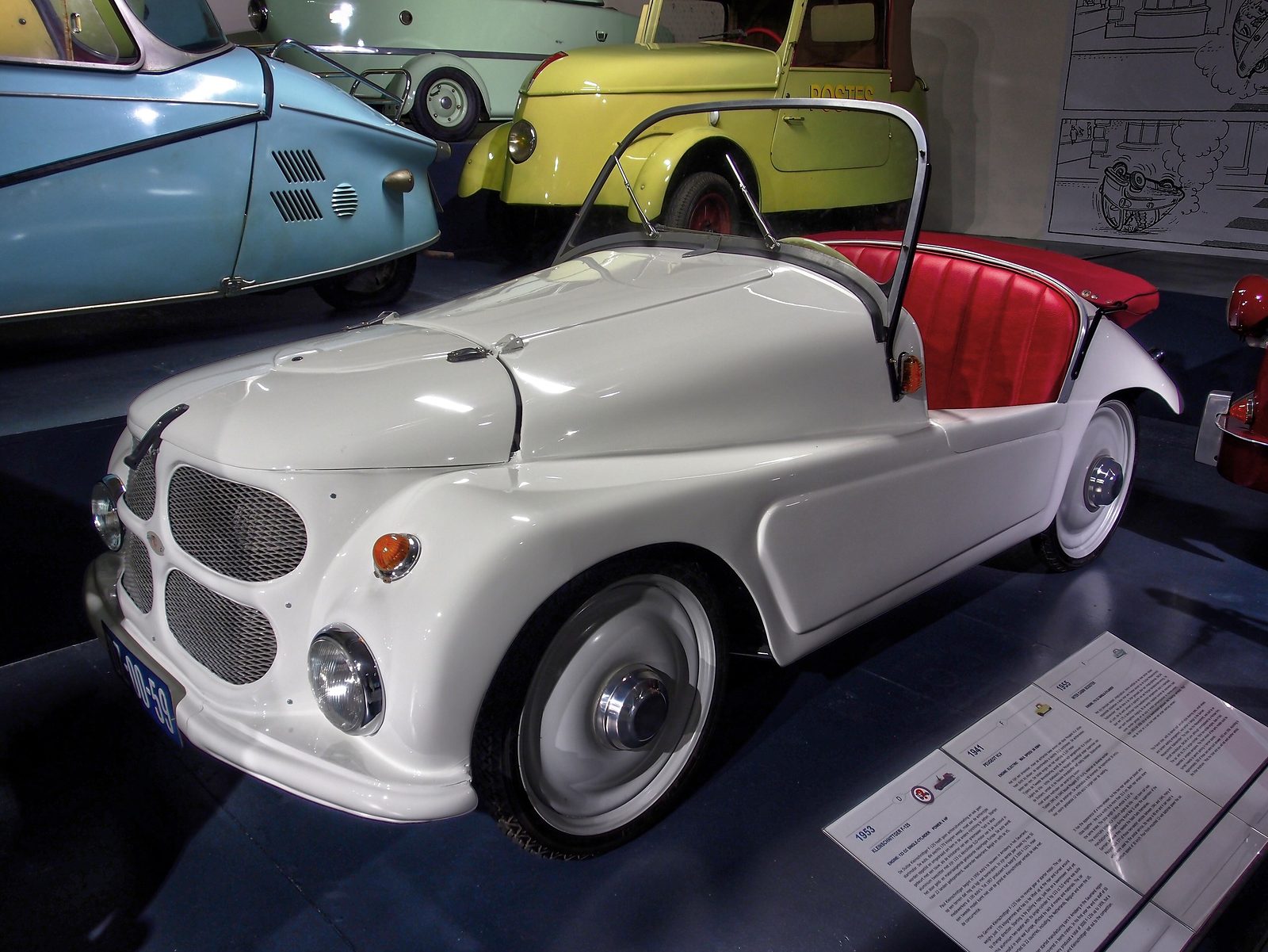
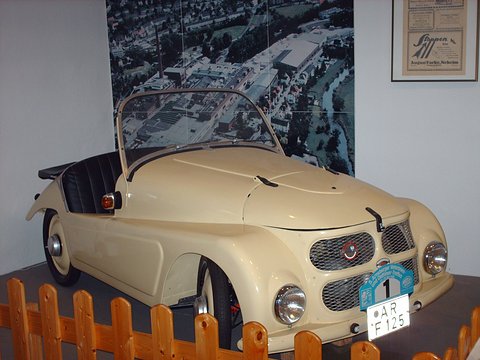
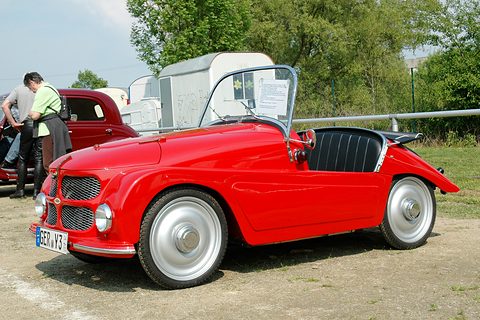
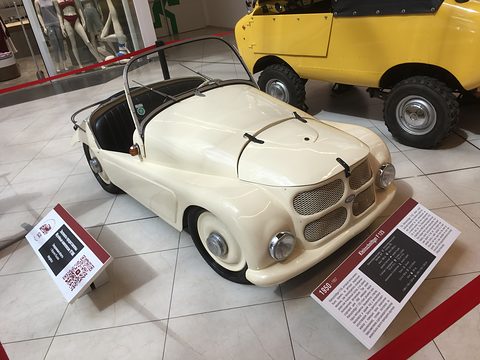
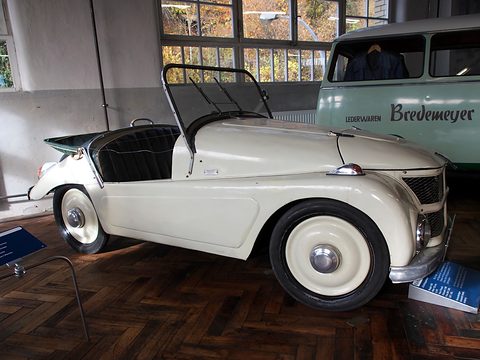
The story
History
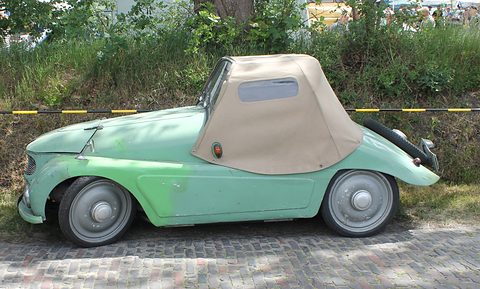
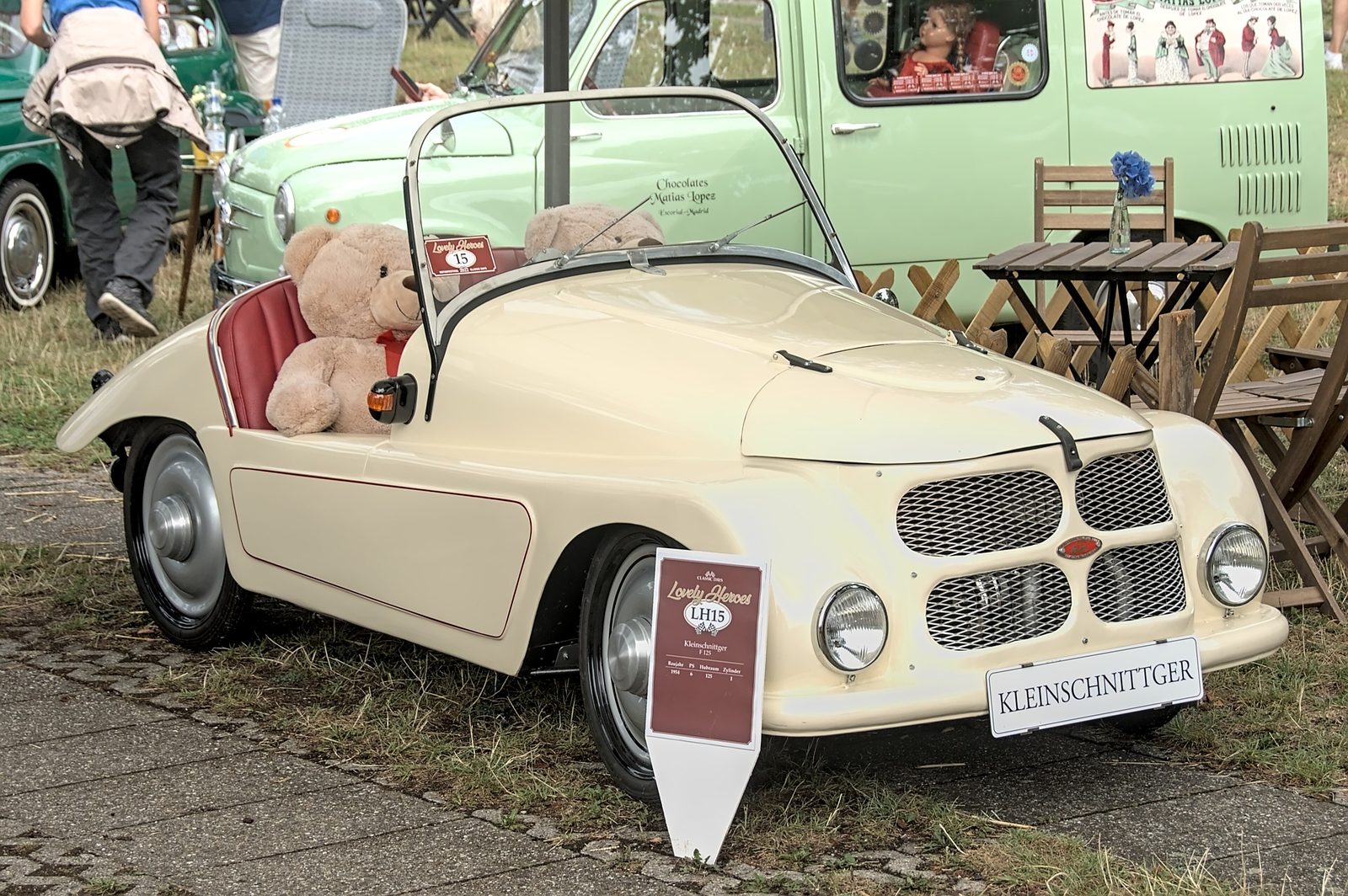
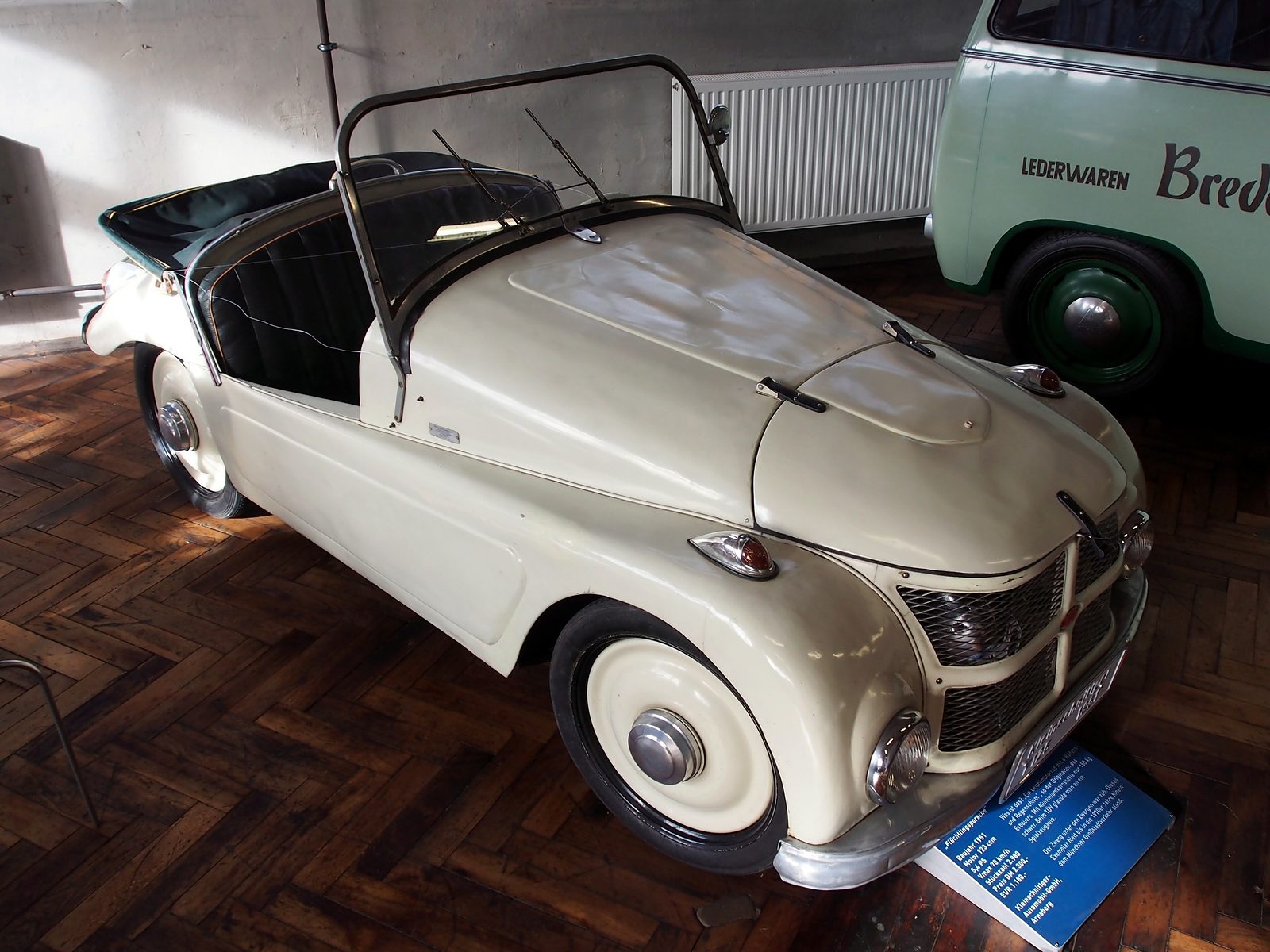
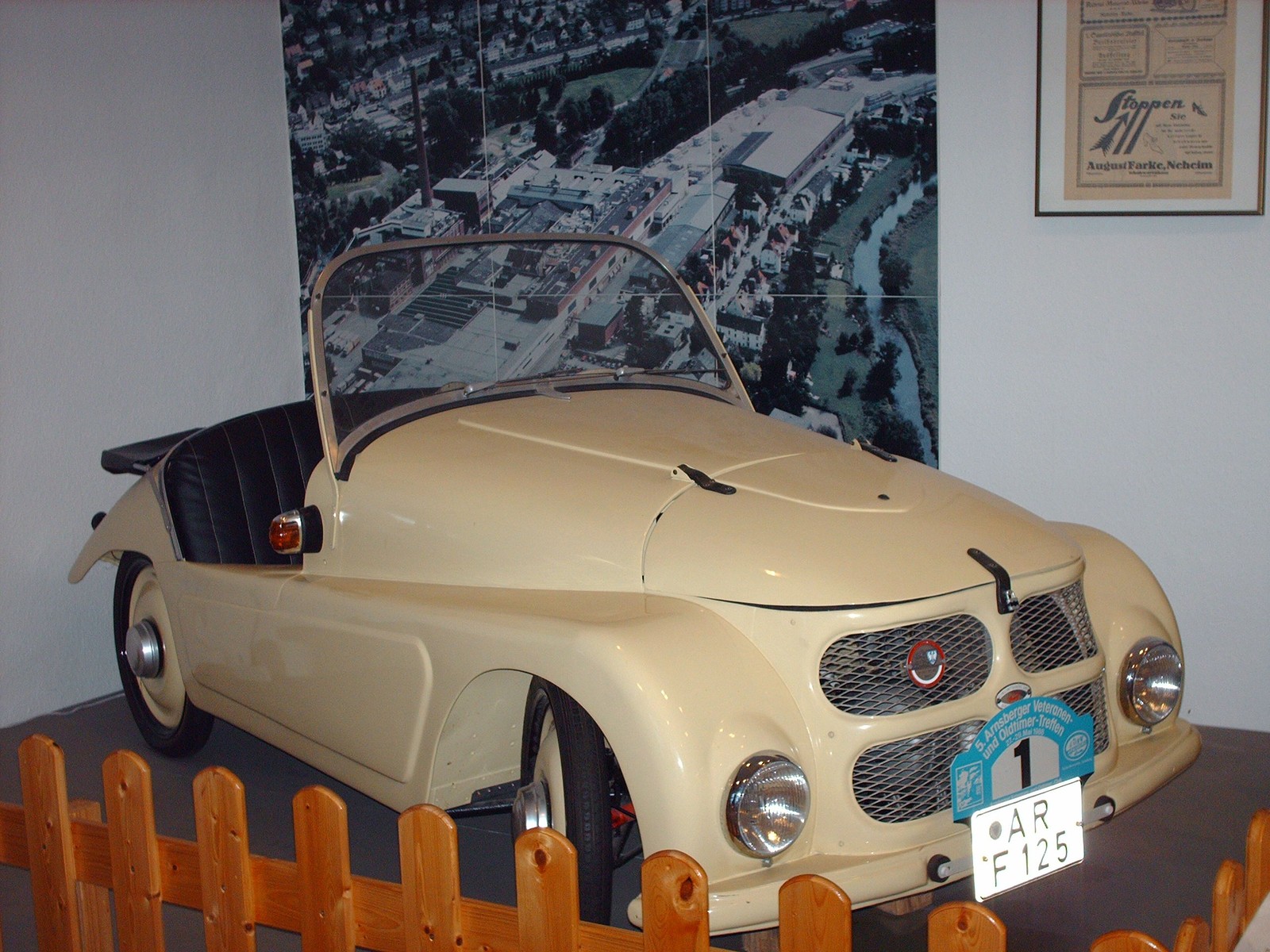
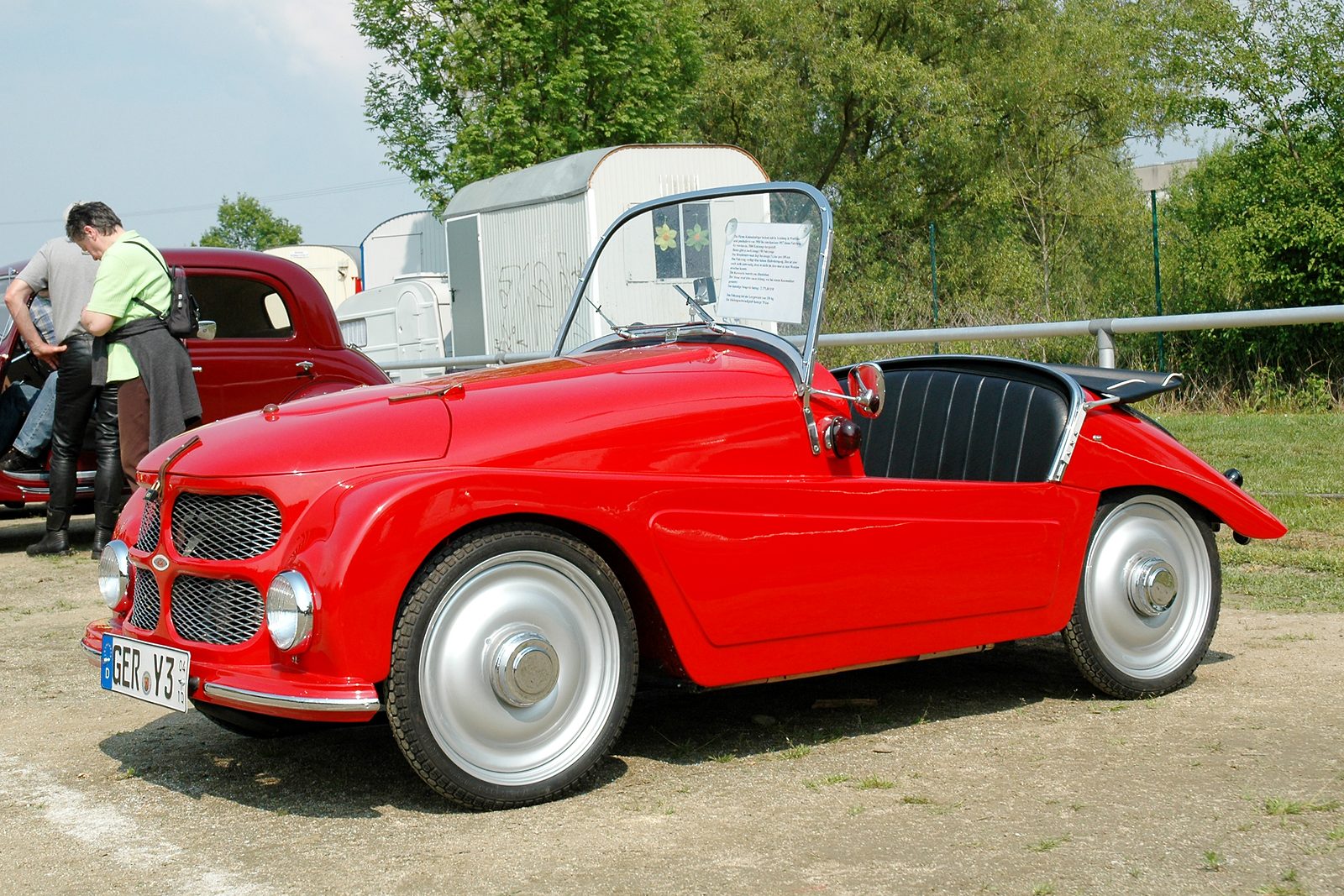
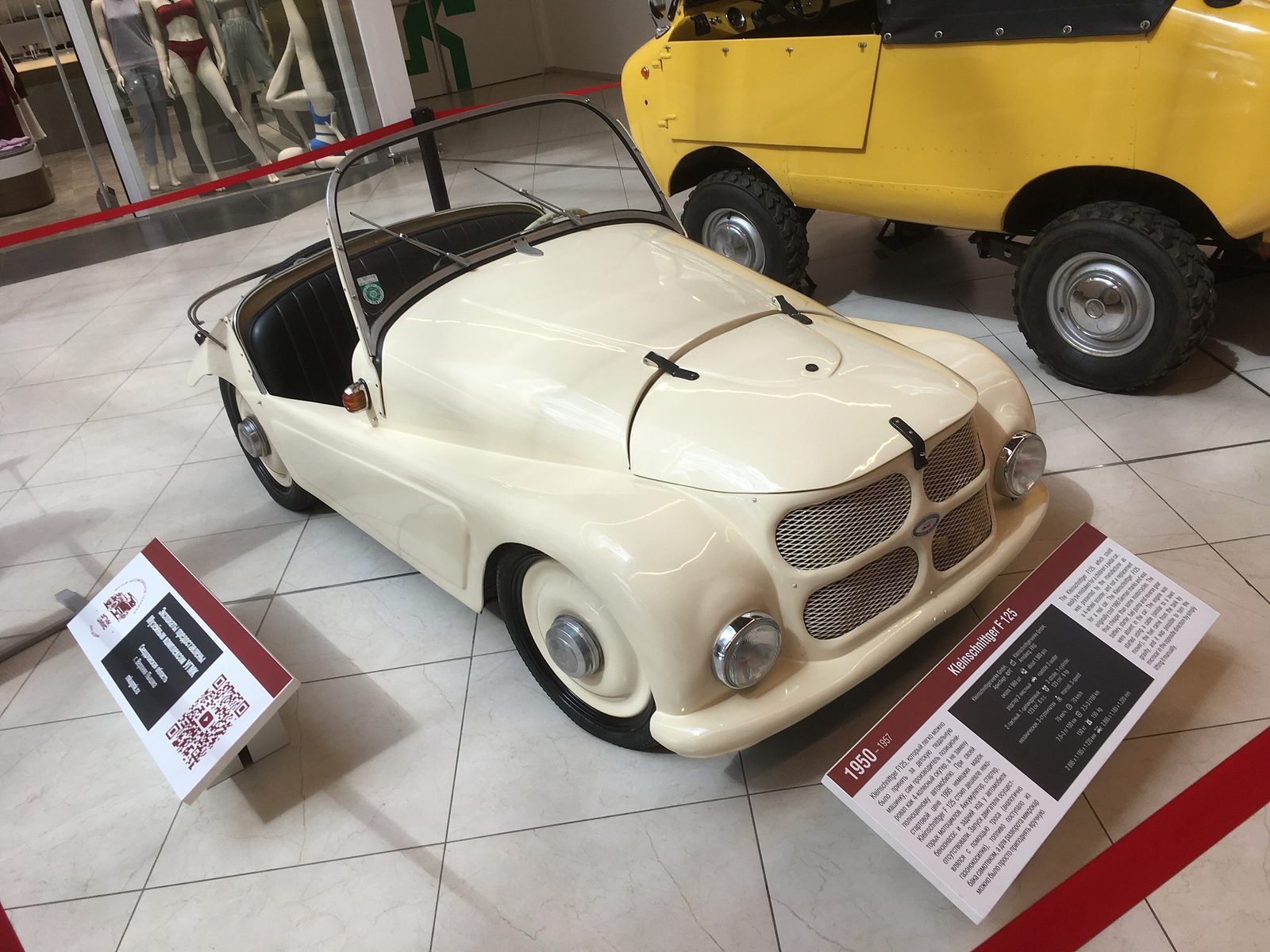
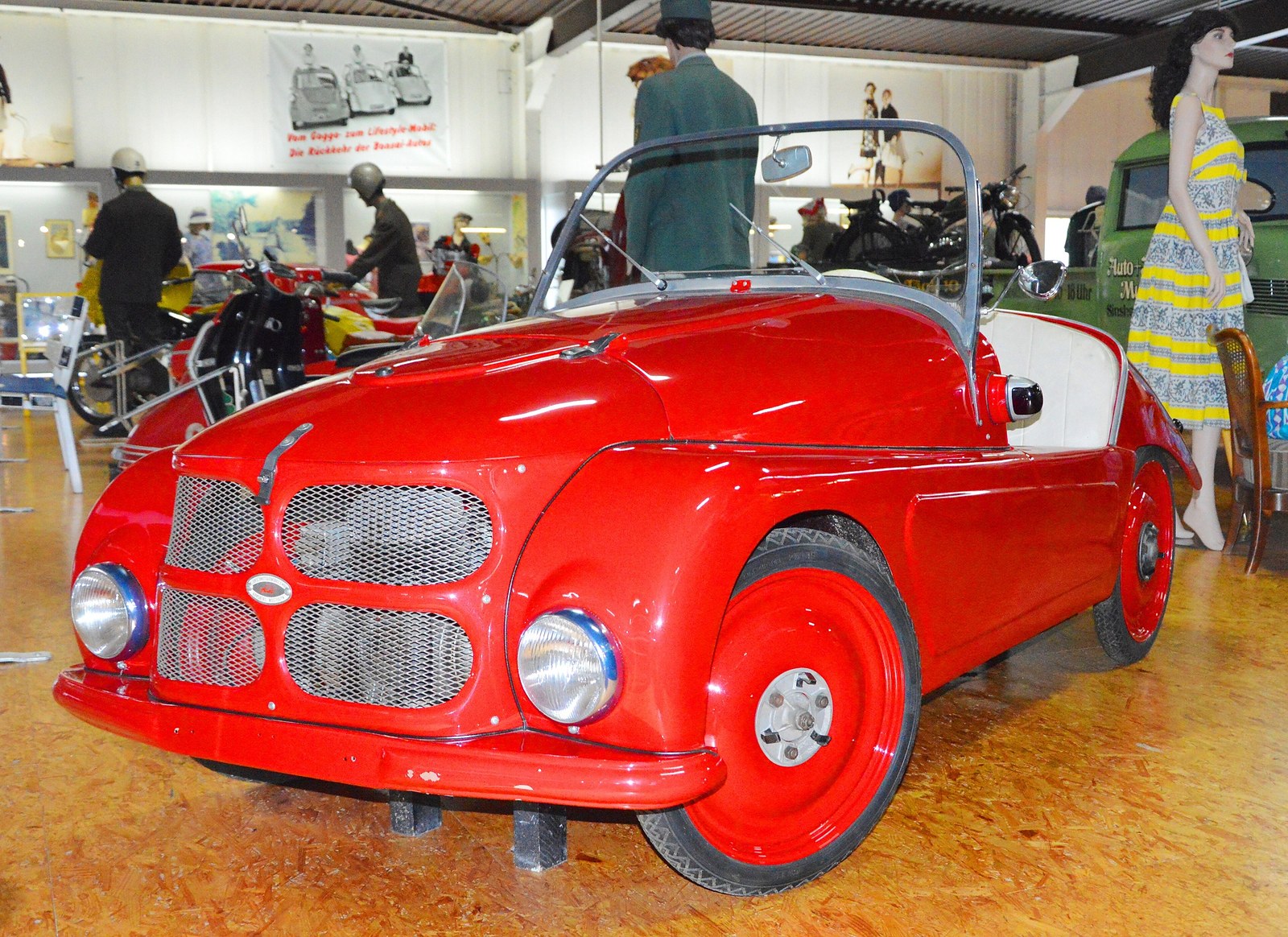
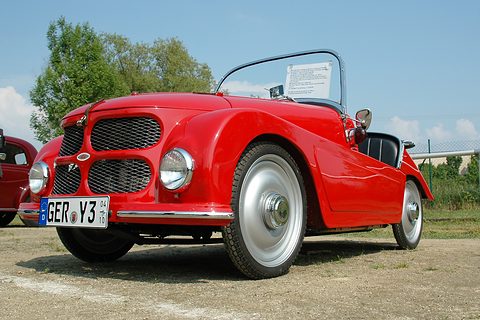
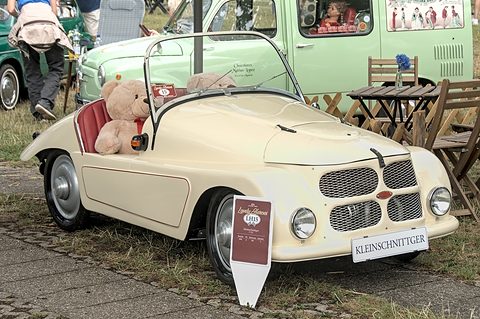
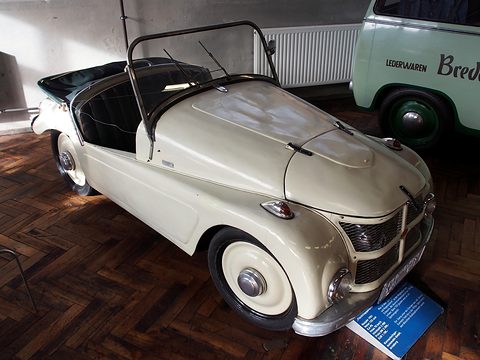
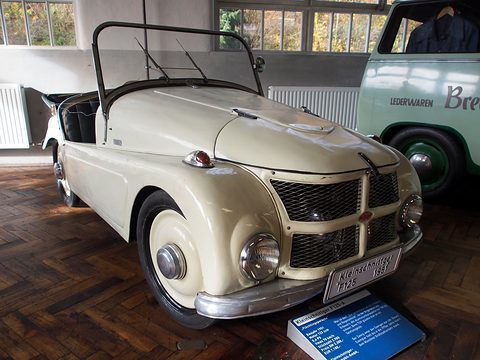
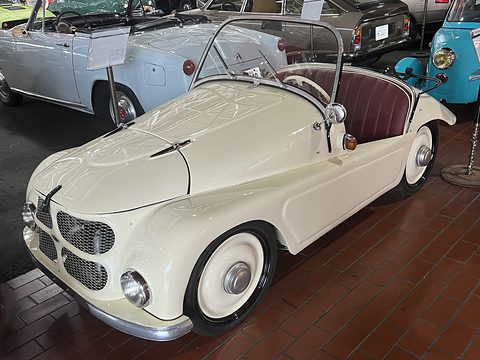
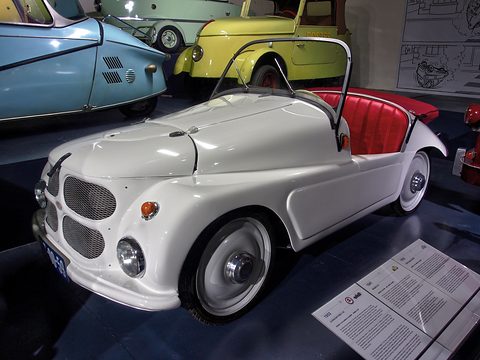
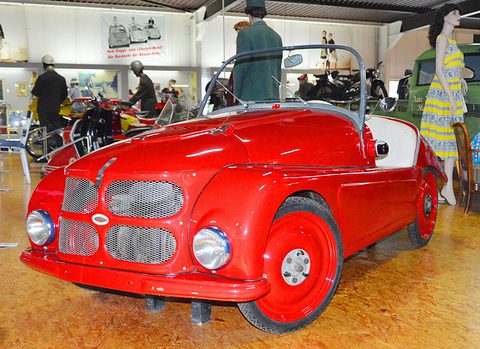
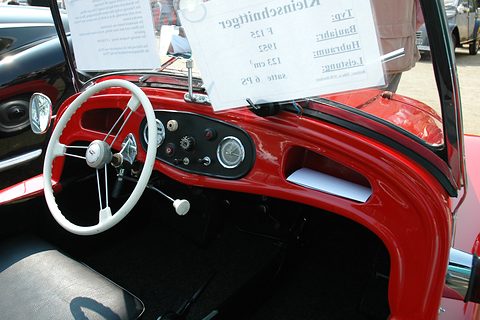
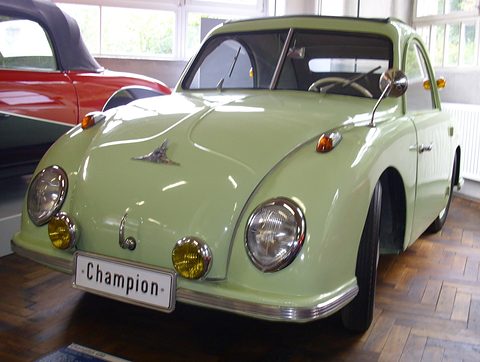
The Kleinschnittger F125 weighed 150 kg (331 lb), and that was the answer to its strangest feature. Its 123 cc engine drove the front wheels through a chain and, in place of a differential, a roller freewheel in each driveshaft, which made a reverse gear impossible. Drivers lifted the back of the car and turned it round, and no jack was supplied, because the car was light enough to lift by hand.source 1source 2source 3 The F stood for Frontantrieb, front-wheel drive, and the 125 for the engine.source 1
Paul Kleinschnittger (see the designers) was an engineer and a motorcyclist. He first thought of the cheapest possible car that could be driven in the late 1930s, and English Wikipedia says he built a small car with a 98 cc DKW engine at Ladelund, in Schleswig-Holstein, as early as 1933; the war shelved his plans.source 3source 4 Just after it, at Ladelund, he repaired farm machinery for payment in bacon and eggs, and gathered material by stripping wrecked military aircraft; the Weiner museum says he used parts from scrapped aircraft and military vehicles.source 2source 3 The car he wanted was a two-seat open car with rubber springing, no differential and no reverse, because he had been soaked too often on his motorcycle.source 2
„ein Leichtmotorrad mit vier Rädern und Regenschirm“
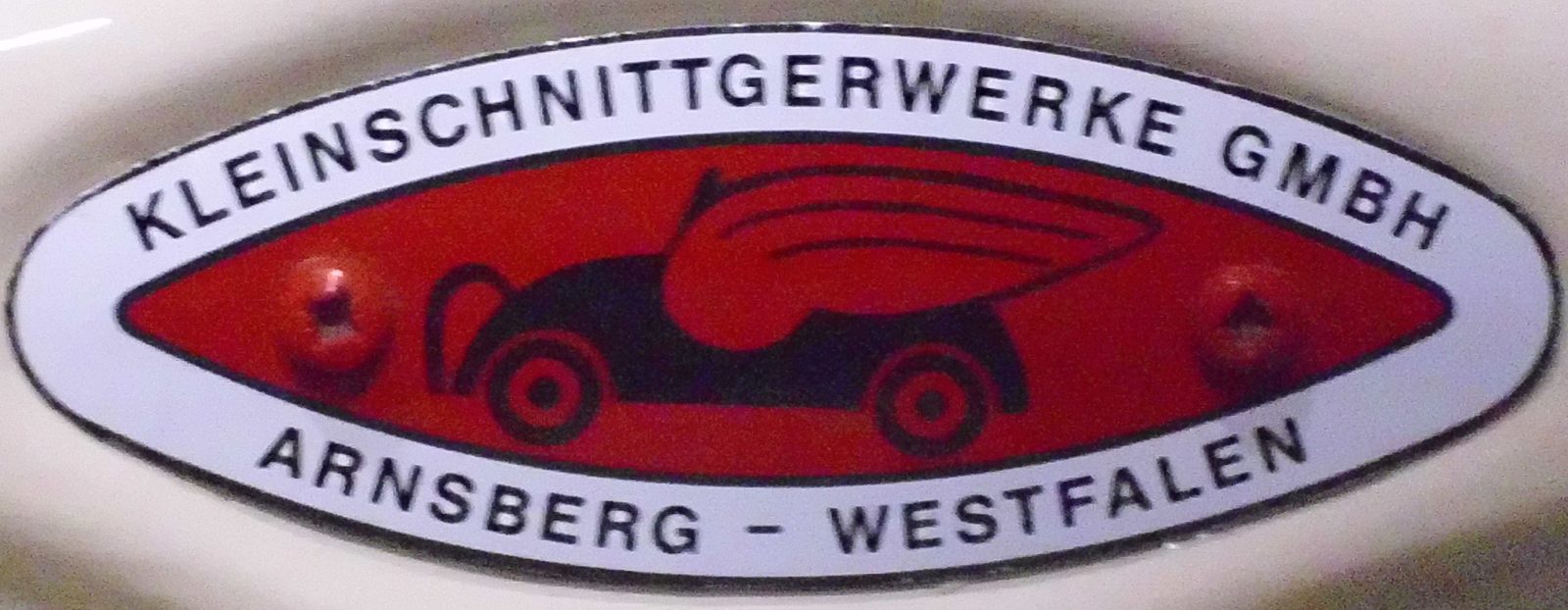
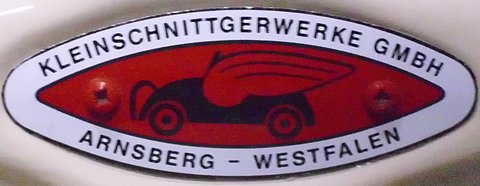
His prototype, the Kleinschnittger 98, was finished in 1949 and shown towards the end of that year, with a single headlamp, a split windscreen and two-tone paint. A winged drawing of it became the company badge.source 3source 1 Development of the production car took nine months.source 1 He set up the works at Arnsberg, in the Sauerland, built it from nothing to about 150 jobs, and the first cars left on 25 April 1950; the museum records the first five, in brown, green, ivory, black and dark brown, shown to the press the next day.source 2source 1source 3 The slogan was Der Kleinstwagen für Beruf, Sport und Reise
, the micro-car for work, sport and travel.source 2 Der Spiegel calls it the first of post-war West Germany’s many small-car projects to be built in any real series.source 2 The Fend Flitzer was earlier, but it was a single-seat three-wheeler built with disabled drivers in mind.
It cost DM 1,995 in 1950, less than half the price of a Volkswagen; in 1952 an NSU Max motorcycle cost DM 1,990.source 1source 2 The Kölnische Rundschau called it the Volkswagen aus dem Sauerland.source 2 The factory hoped for 500 a month, and soon made 10 to 30.source 3
A motorcycle on four wheels
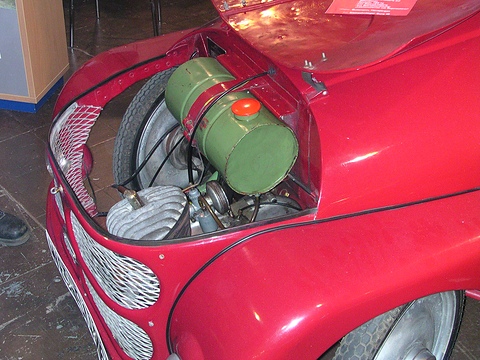
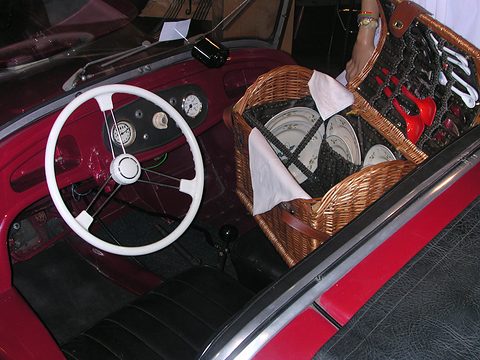
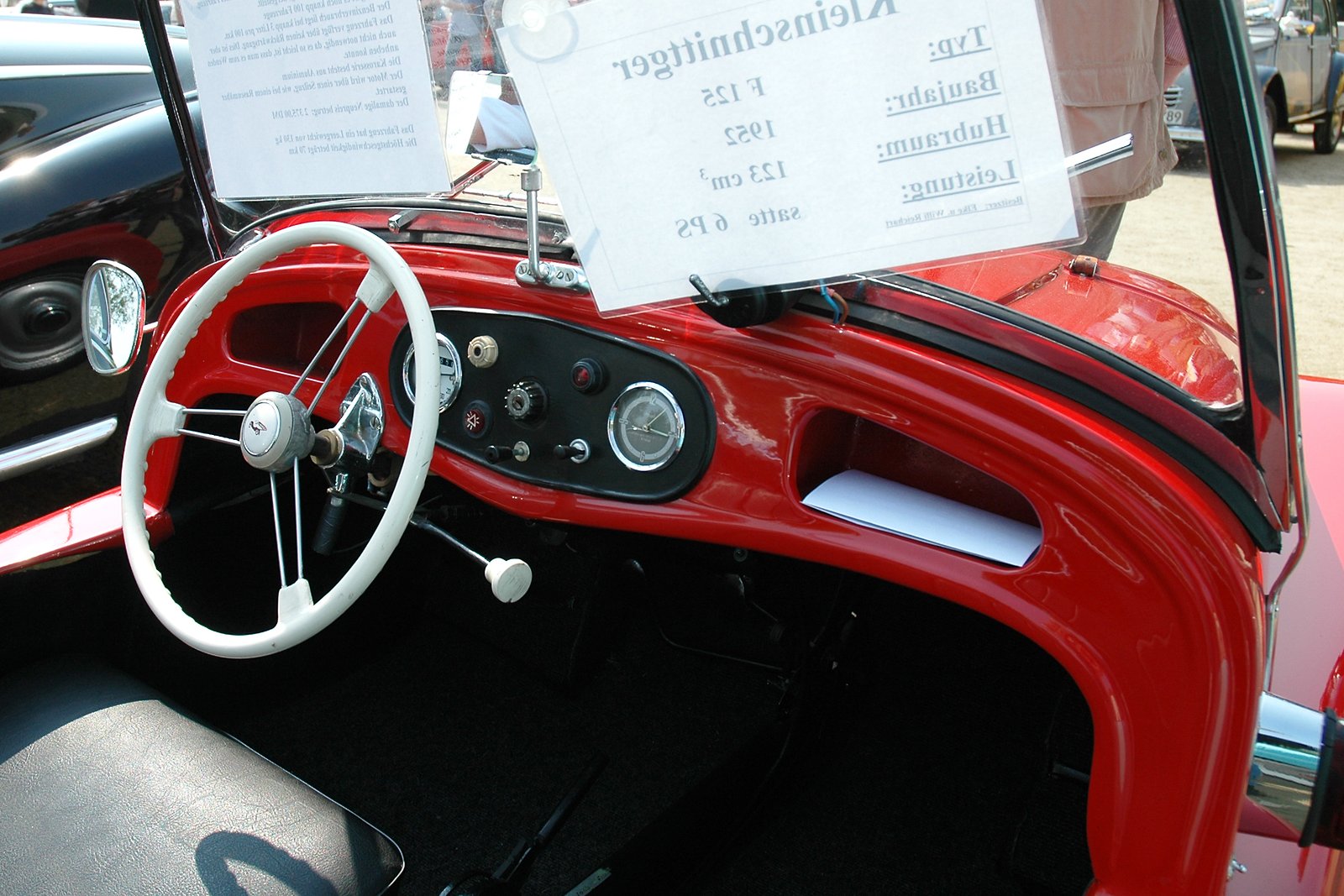
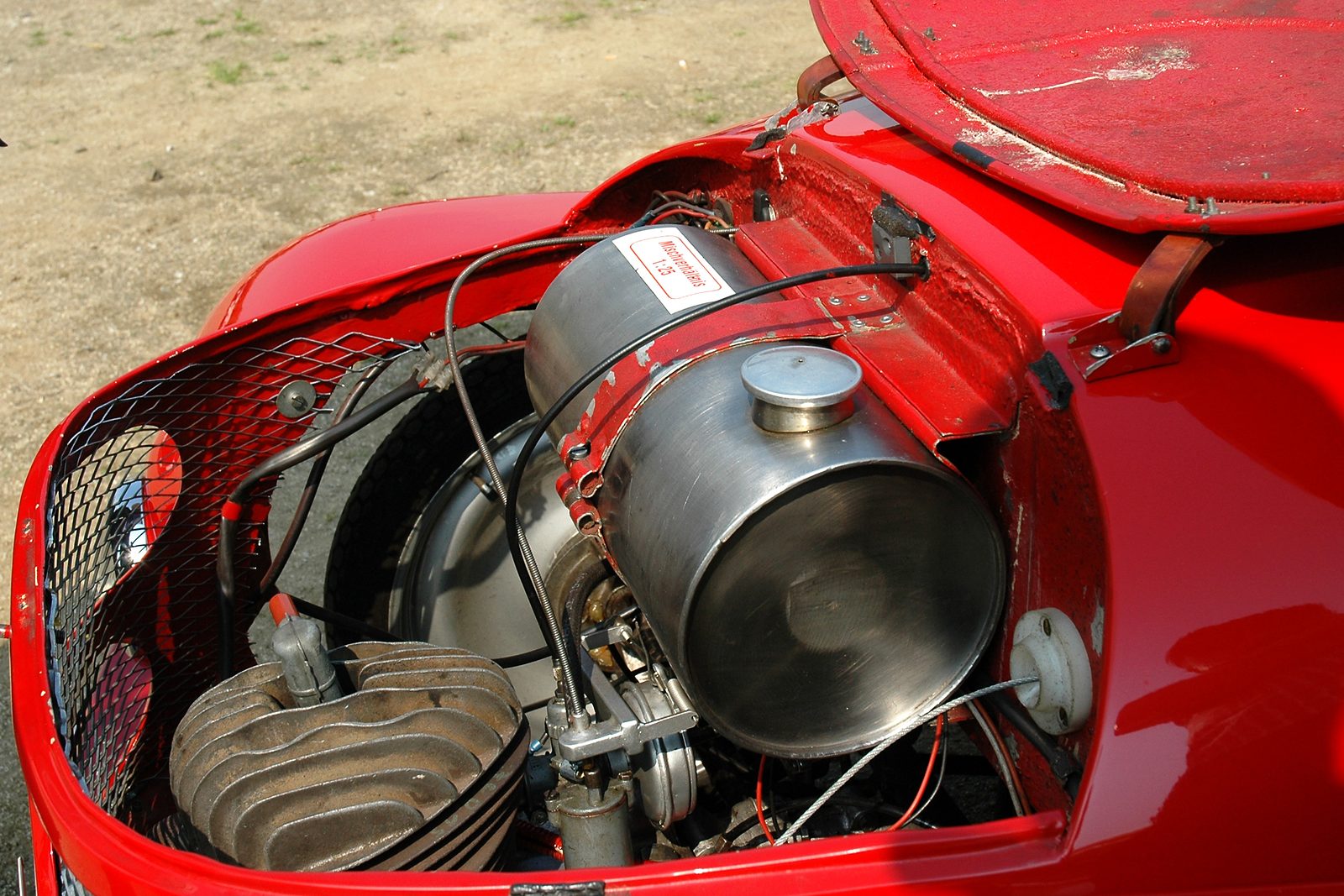
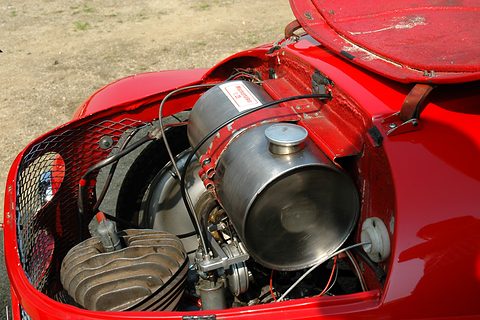
The ILO two-stroke was mounted crosswise in front of the front axle, with no fan, cooled by the airstream, and the fuel ran down to it by gravity from a 7.5-litre (1.6-gallon) tank above the axle.source 1source 5 You started it by pulling a cord under the dashboard. An electric Dynastart, meant to save the knuckles that the cord barked on the dashboard, cost extra, and Kleinschnittger himself advised against it, because its weight blunted the free-revving engine.source 6source 3source 7 There were three gears, changed by a ratchet with a lever on the steering column; the springs were adjustable rubber bands, front and back. It reached 70 km/h (43 mph), cruised at 50–55 km/h and used 2.5 litres per 100 km (113 mpg).source 1source 5source 2source 8 It had flashing indicators when most cars still had semaphore arms; Der Spiegel says it was the first German car with them, the Weiner museum only that it led the industry.source 2source 3 The owner’s handbook was frank about what it was.
„Betrachten Sie bitte dieses Fahrzeug als Roller oder Motorrad in den unteren Klassen, jedoch auf 4 Rädern … Unser Fahrzeug ist nicht als Ersatz für ein vollwertiges Automobil gedacht, sondern soll lediglich den Motorradfahrer sicherer auf 4 Rädern fortbewegen und ihm gleichzeitig Schutz gegen Wind und Wetter bieten.“
Cooking pots and rubber mallets
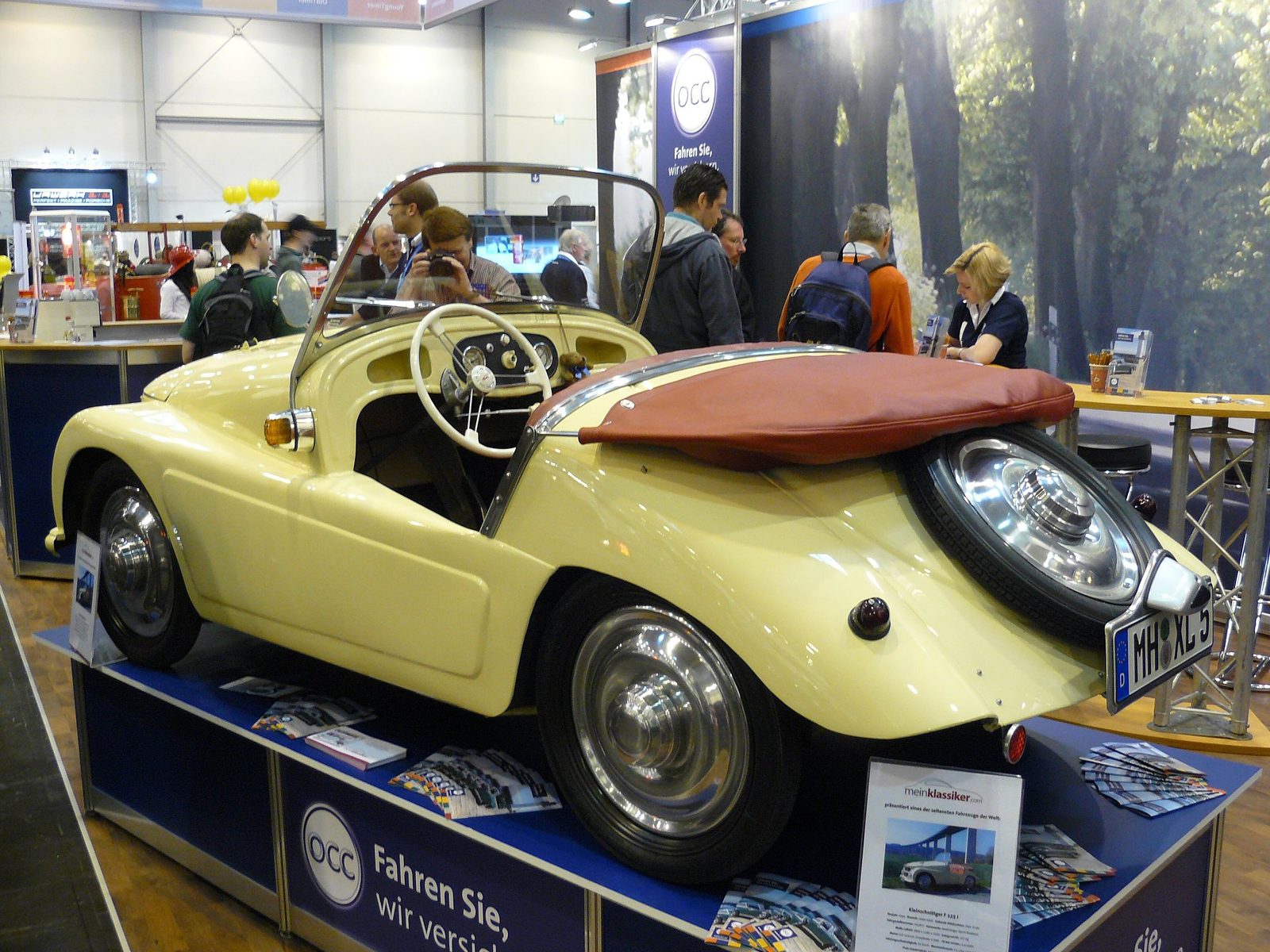
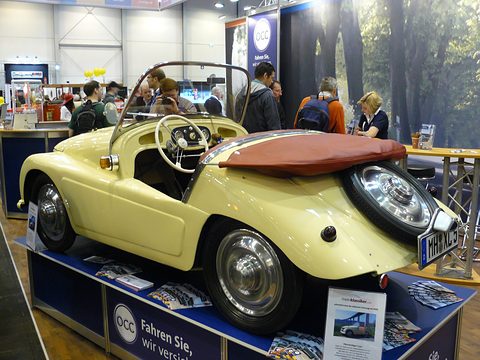
The body was aluminium, hammered by hand with rubber mallets over wooden bucks and riveted rather than welded; the chassis came complete from Wachtendorf & Schmidt.source 6source 8 The curves of the front wings were shaped on army-surplus cooking pots cut into quarters, one pot enough for two cars, by the Weiner museum’s account and RM Sotheby’s of 2017; RM’s 2013 catalogue says they were cut in half.source 6source 8source 7 Owners complained that the thin aluminium cracked, and the works answered with riveted gussets and free replacement wheels. A spare wheel came in the autumn of 1952, and from 1953 it rode outside, on the tail.source 3source 1 Power rose from 4.5 PS (3.3 kW) to 5.5 PS (4.0 kW) in 1951, and to 6 PS (4.4 kW) in 1953 when ILO changed the engine to loop scavenging; the same year brought a grille with smaller oval openings and a more tapered windscreen.source 1source 5source 6
The car went rallying. In August 1953 an F125, a sporting version by Der Spiegel’s account, finished second in the class up to 1,100 cc on the Lisbon–Madrid rally, behind a Porsche 356.source 1source 2 What the rallies taught went into the car: three rubber engine mounts to stop the bolts working loose, a stiffer body round the opening and stronger driveshaft couplings.source 1 In period it had a name for being very safe despite its narrow tyres, and lively for its engine.source 1 Motor Klassik drove one about 30 years on, and warned that it bit mercilessly into tram rails.source 1
„Mehr noch als das Goggomobil ist der Kleinschnittger ein Sportgerät, das nach beherzter Kurventechnik giert. Die sagenhaft leichtgängige Zahnstangenlenkung läßt sich dabei gedankenschnell von Anschlag zu Anschlag wirbeln.“
Fourteen at a time
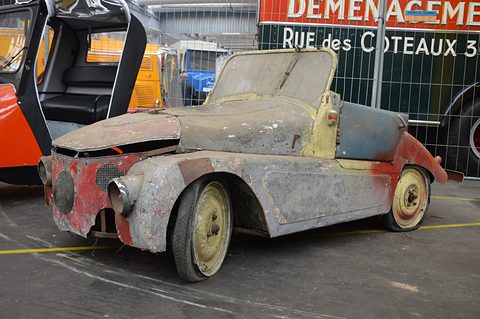
Cars went to 22 countries, the United States among them, where the distributor was in the Midwest.source 6 Export cars were towed to Arnsberg station 14 at a time behind a Fiat saloon, a sight that amazed the town.source 2source 6 A hundred went to Belgium as kits, which led to the car below.source 6
Kleinschnittger admired Carl Borgward, and wanted to build bigger cars. Only one reached production: the F 250 Super of 1957, a three-seater with the driver in the middle, a 246 cc twin, a reverse gear and 110 km/h (68 mph). Twenty-two were built between 2 February and August 1957.source 2source 9 By then the F125 cost DM 2,450, the price it already carried on the official list of September 1955.source 1source 10 On 5 August 1957 car production stopped. A bank would not wait long enough and the firm went bankrupt, but his widow said later that every creditor was paid, with something left over. He went on supplying spare parts for years.source 2source 1
Afterwards, with his wife as his only employee, he made wooden fittings for lamp makers and welding electrodes for AEG. In 1973 the couple were badly hurt in a crash with drunken soldiers; he broke 13 bones and spent four years on crutches or in a wheelchair. It took him years to get an F125 back for himself. When he died at Marsberg on 3 January 1989, aged 79, it was to go to a museum.source 2