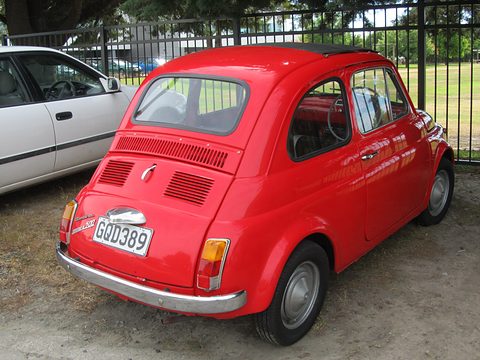
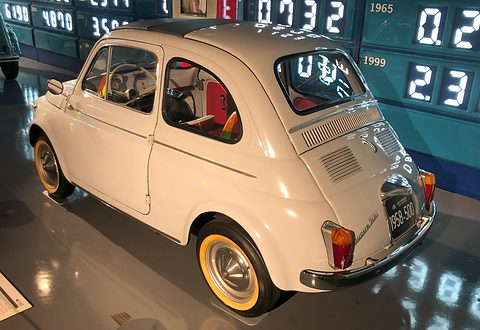
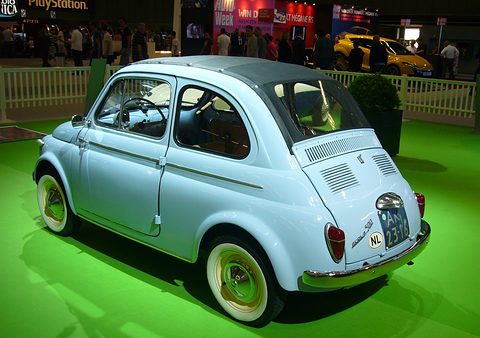
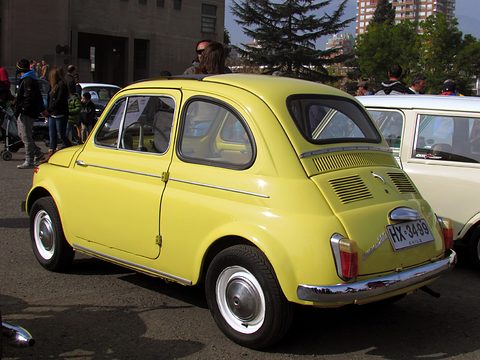
The story
History
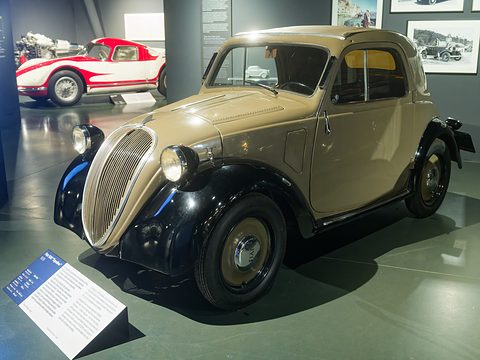
Fiat’s 600 of 1955 sold very well, and still most Italians could not buy a car. They rode motorcycles, or bought microcars such as the Iso Isetta.source 1 Vittorio Valletta, who ran Fiat, asked Dante Giacosa to design, alongside the 600, something cheaper still: a superutilitaria that a working family could afford to buy and to run.source 1source 2 Giacosa, born in Rome in 1905, had done this once already, with the Fiat 500 Topolino of 1936, and he is one of the engineers on our page of the designers. His second minimum car was to have four strokes, two cylinders, air cooling and its engine at the back, and its purpose was to take Italians off scooters and put them in a real car.source 1source 2
One more name is attached to its beginning. Italian Wikipedia, citing a 1998 article in La Civetta, says that in 1953 Hans Peter Bauhof, a young employee at Deutsche-Fiat’s body works at Weinsberg, sent Turin drawings of a two-seater shaped like a Beetle, with a two-stroke engine at the back. Giacosa threw out the engine but kept the idea of the body and the rear engine.source 1 No other source read gives anyone but Giacosa the credit, so the story stands on that one account.
The engine that took longest
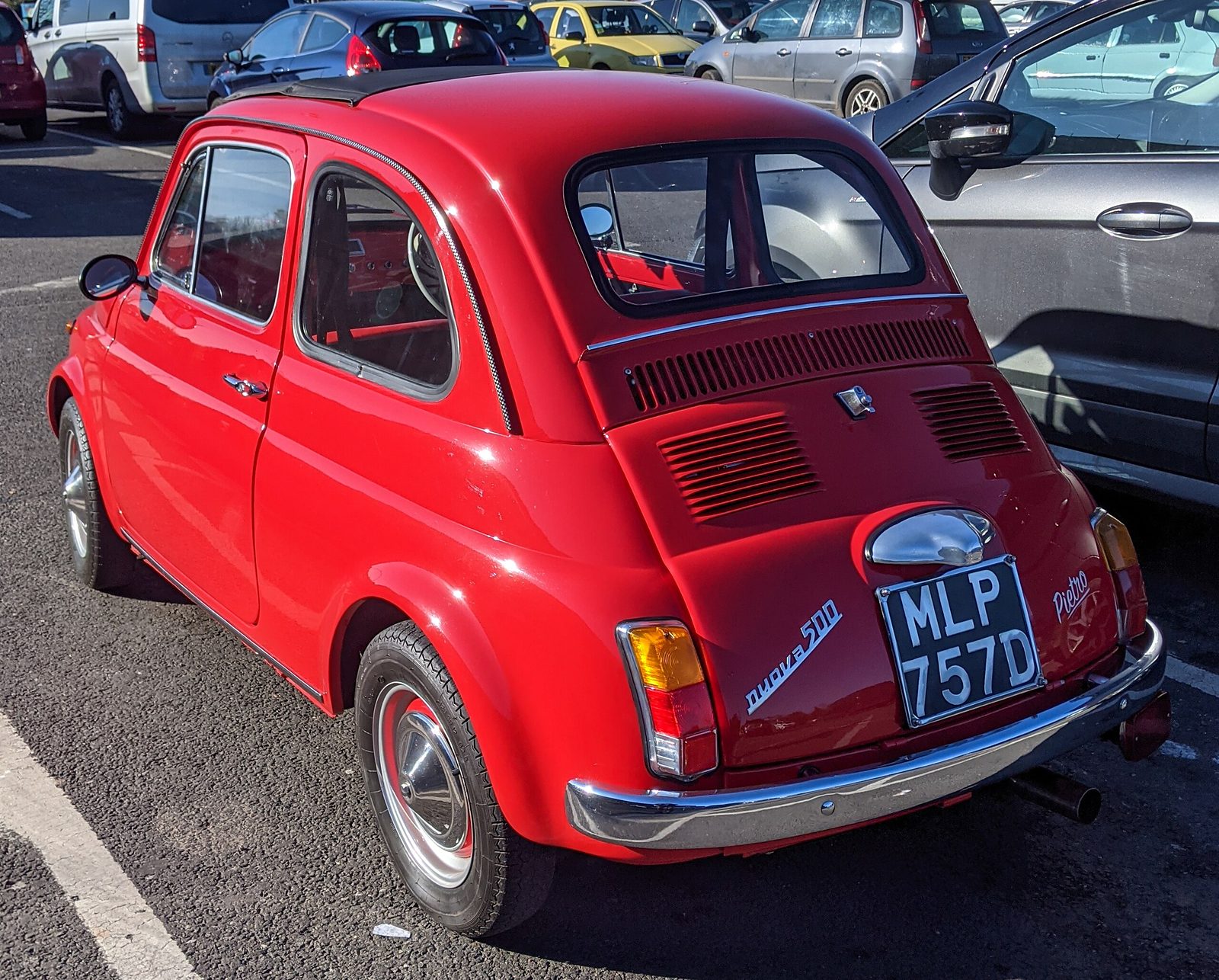
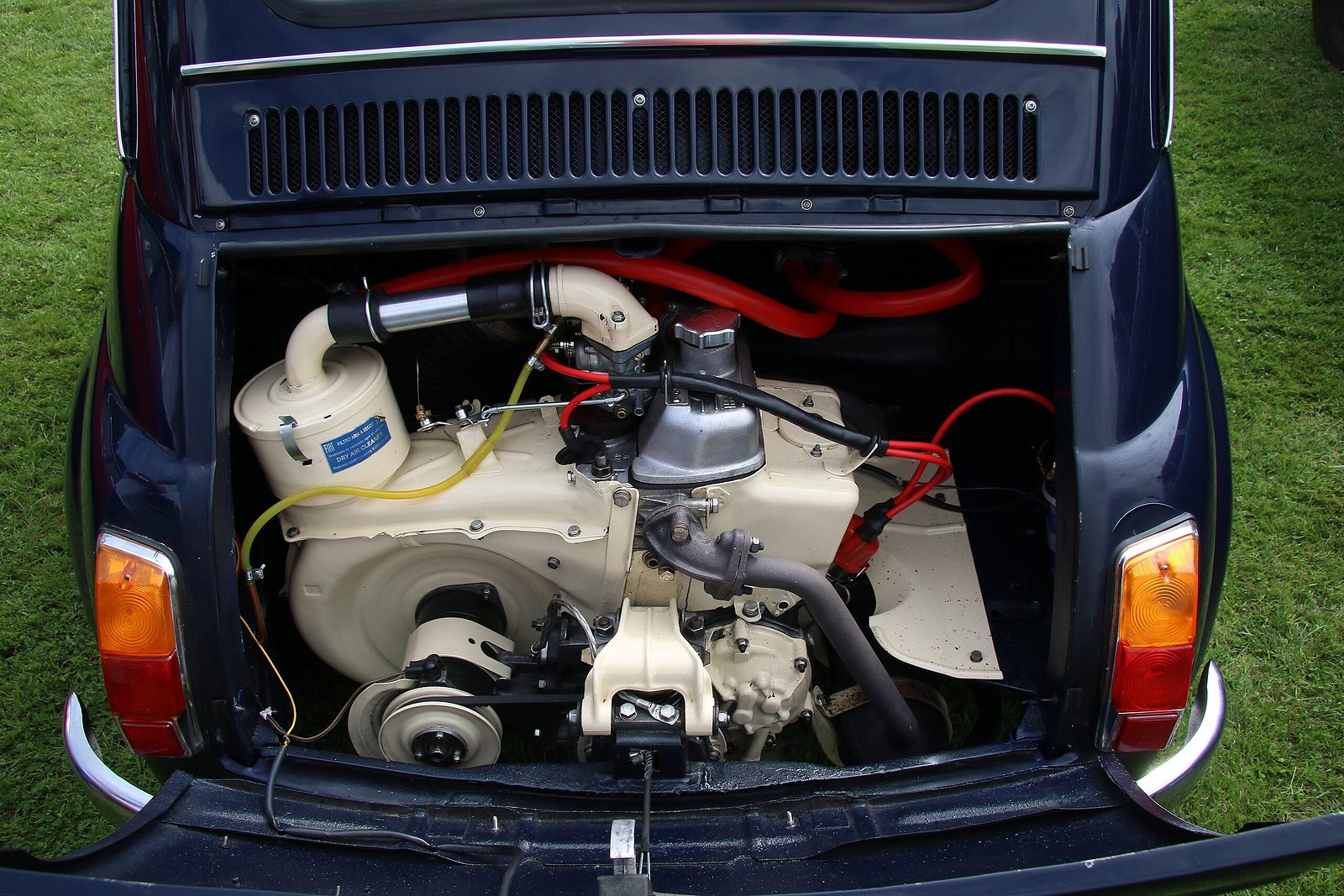
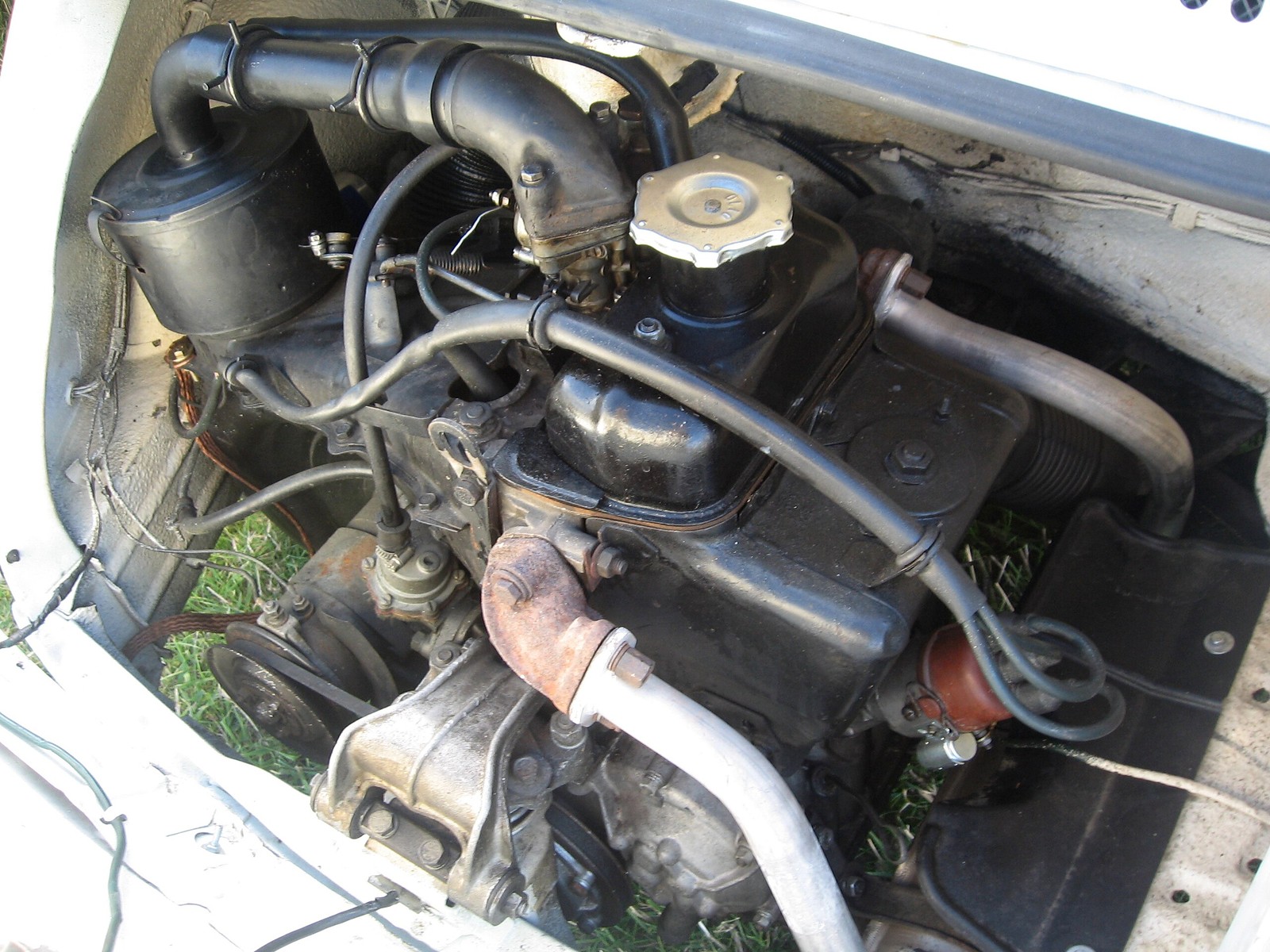
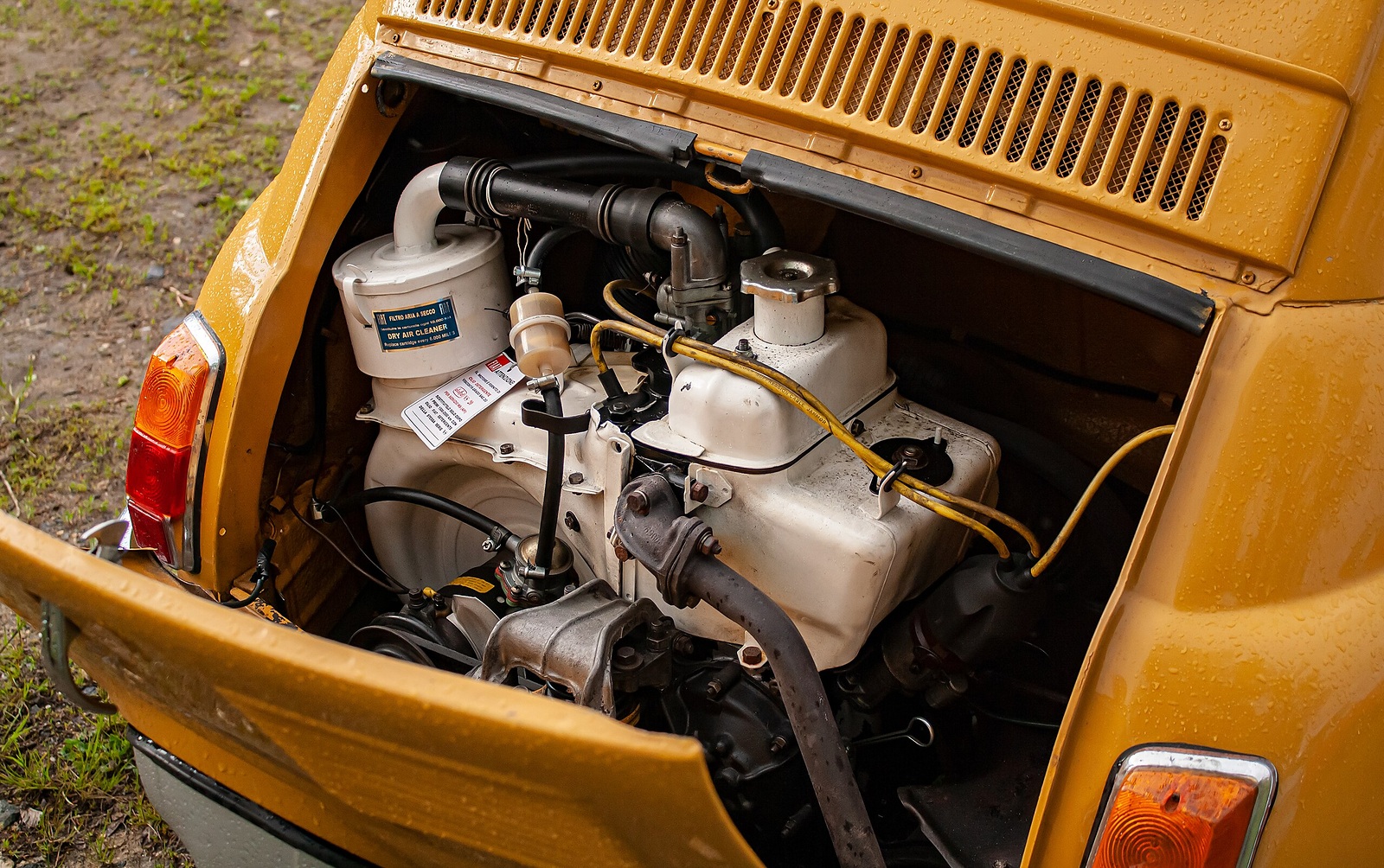
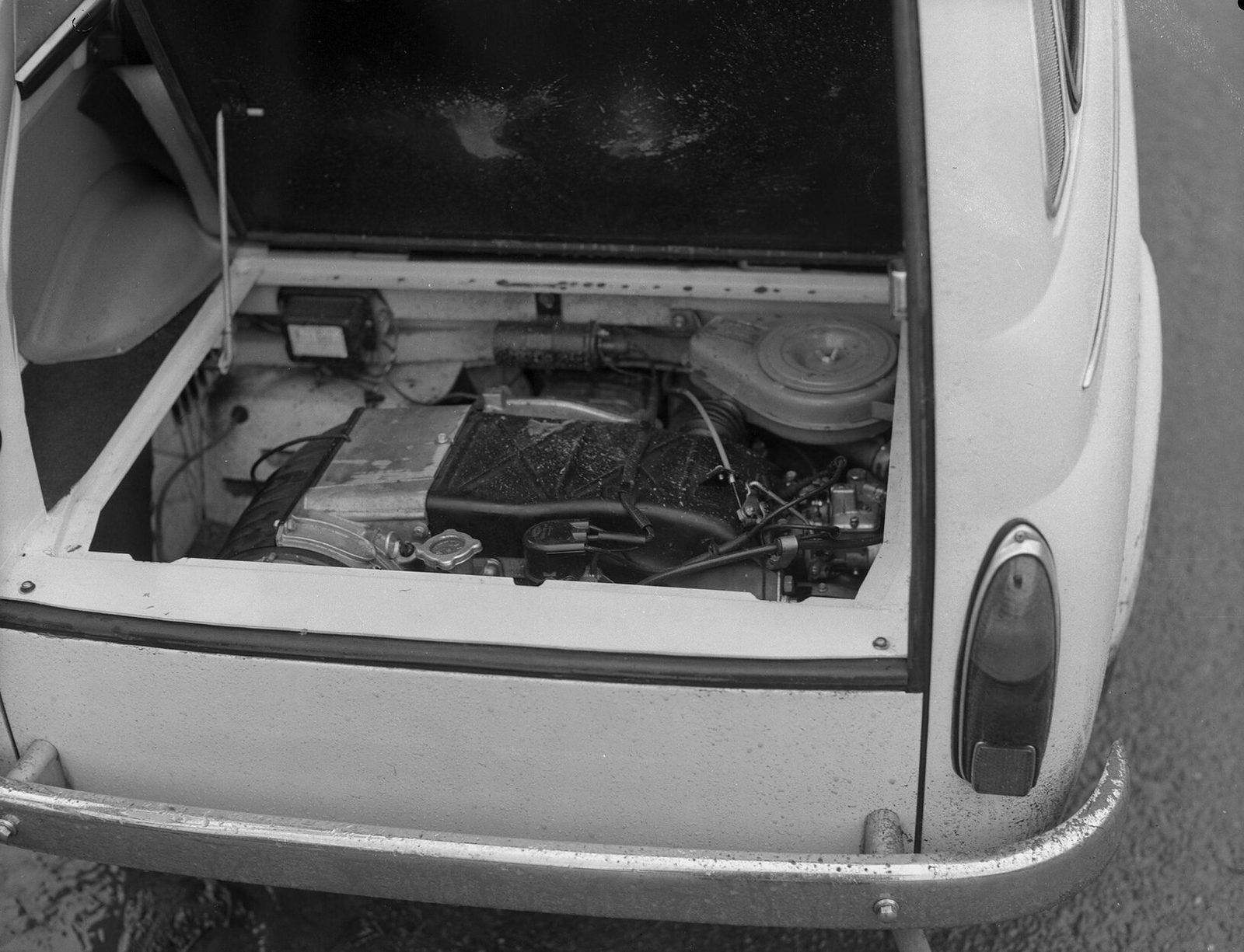
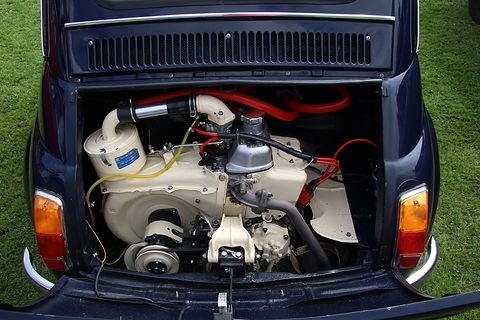
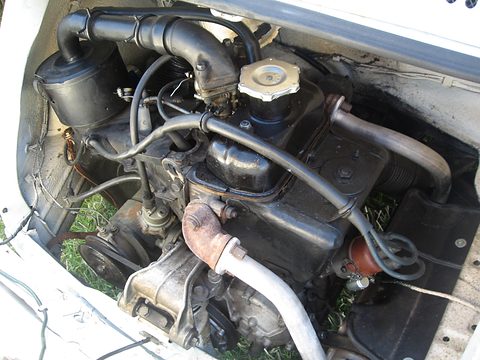
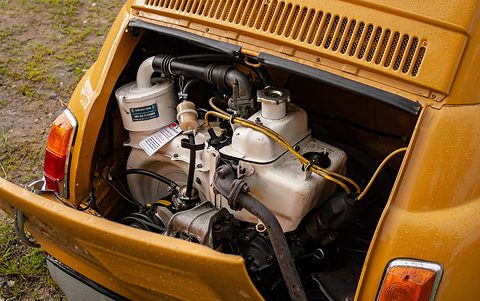
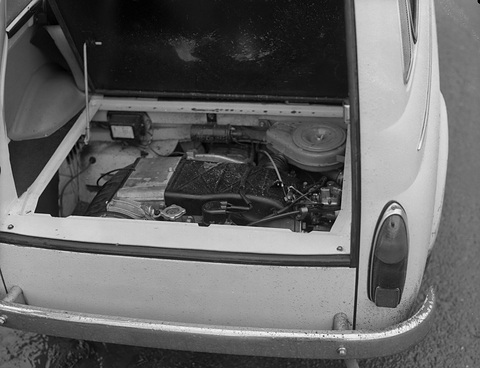
Shape models reached a drag coefficient of 0.38. The engine was harder. Fiat built prototypes with overhead valves and side valves, camshafts in the head and in the block, parallel twins and opposed twins, set lengthways and across. The flat twin cost too much and the rest shook or broke, so Giacosa settled on a parallel twin set lengthways, with pushrods, two valves a cylinder and a fan blowing air over it: 479 cc and 13 CV.source 1 It was Fiat’s first air-cooled engine.source 3 It never stopped shaking, so it was hung from the rear crossmember on a small spring mount. To save money the crankshaft was hollow cast iron rather than forged steel, and the oil was cleaned by a centrifugal filter on the end of the crank. The 600 came first, and its development held the 500 back.source 1
Three launches in four days
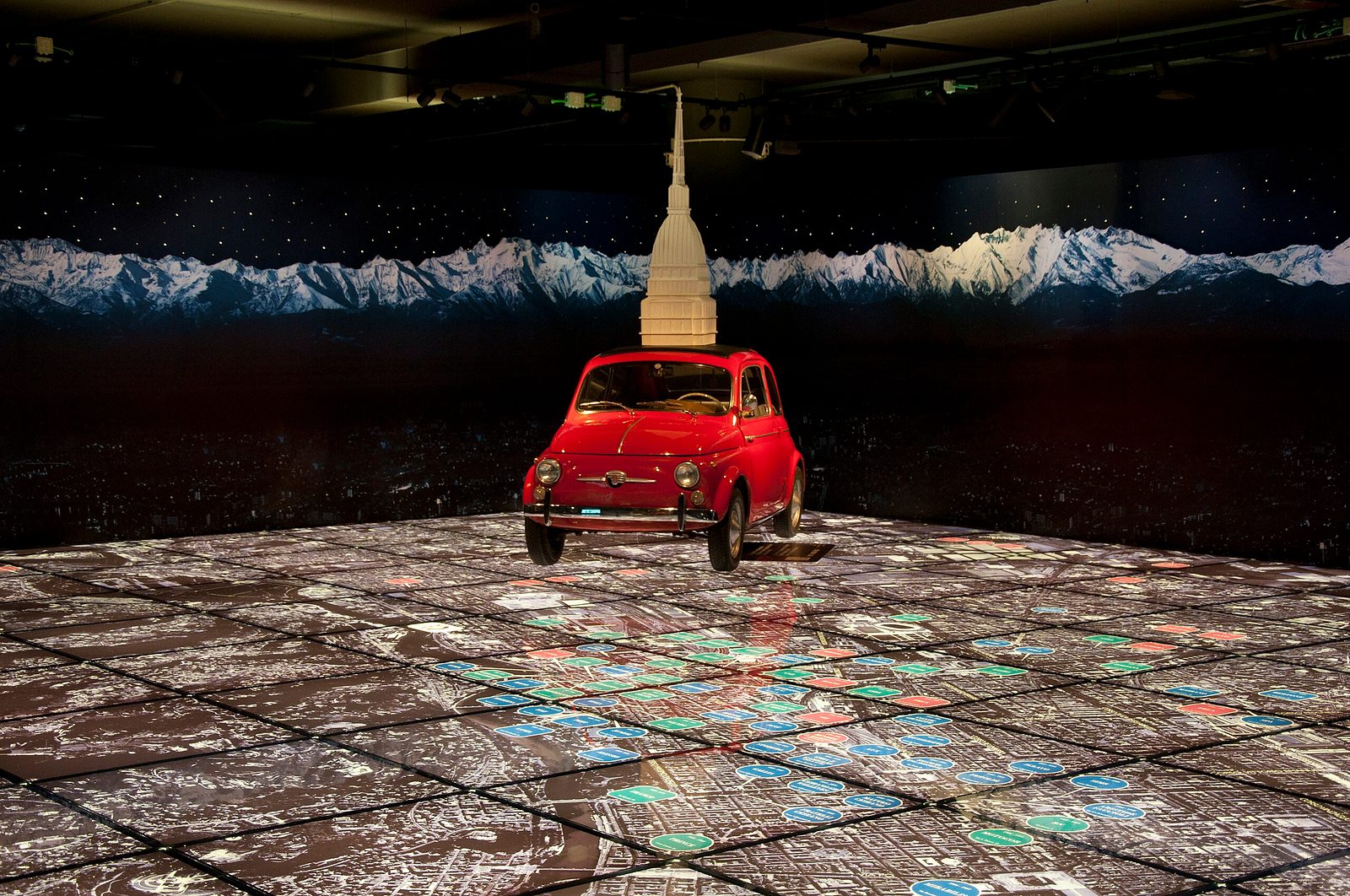
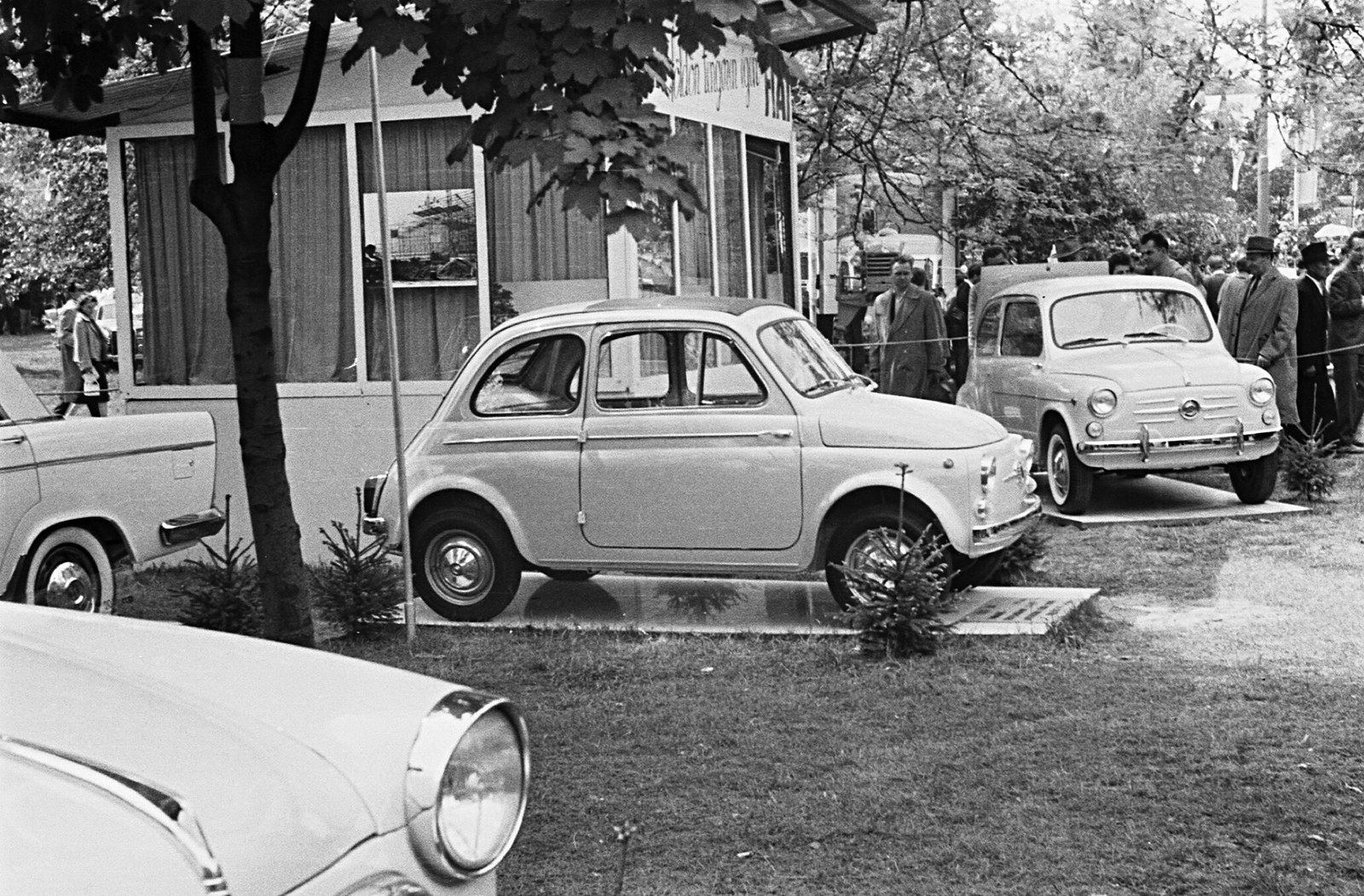
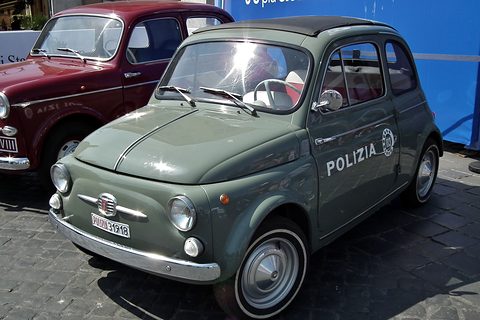
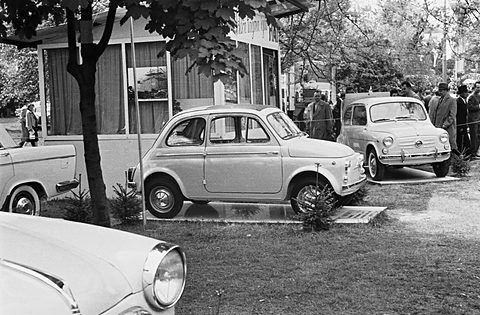
On 1 July 1957 the car was shown to the prime minister, Adone Zoli, in the gardens of the Viminale palace in Rome. The next day Valletta, Gianni Agnelli and the press chief Luigi Pestelli presented it at the Sporting club in Turin, where about fifty grey cars stood round the pool for the press to drive, and the former Formula 1 champion Nino Farina took one out.source 1 A Stellantis press document gives 4 July as the public launch.source 4 A publicity photograph put Miss Italia 1955, Brunella Tocci, at the wheel. The price was 490,000 lire, about thirteen months of a factory worker’s wages.source 1
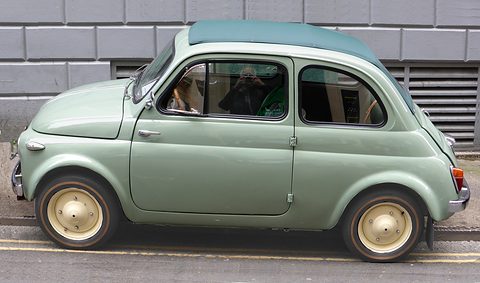
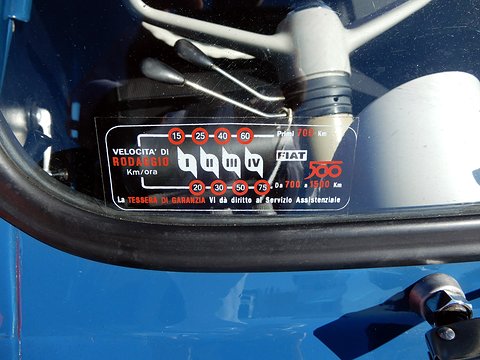
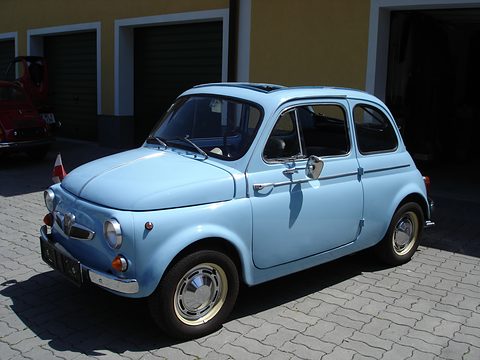
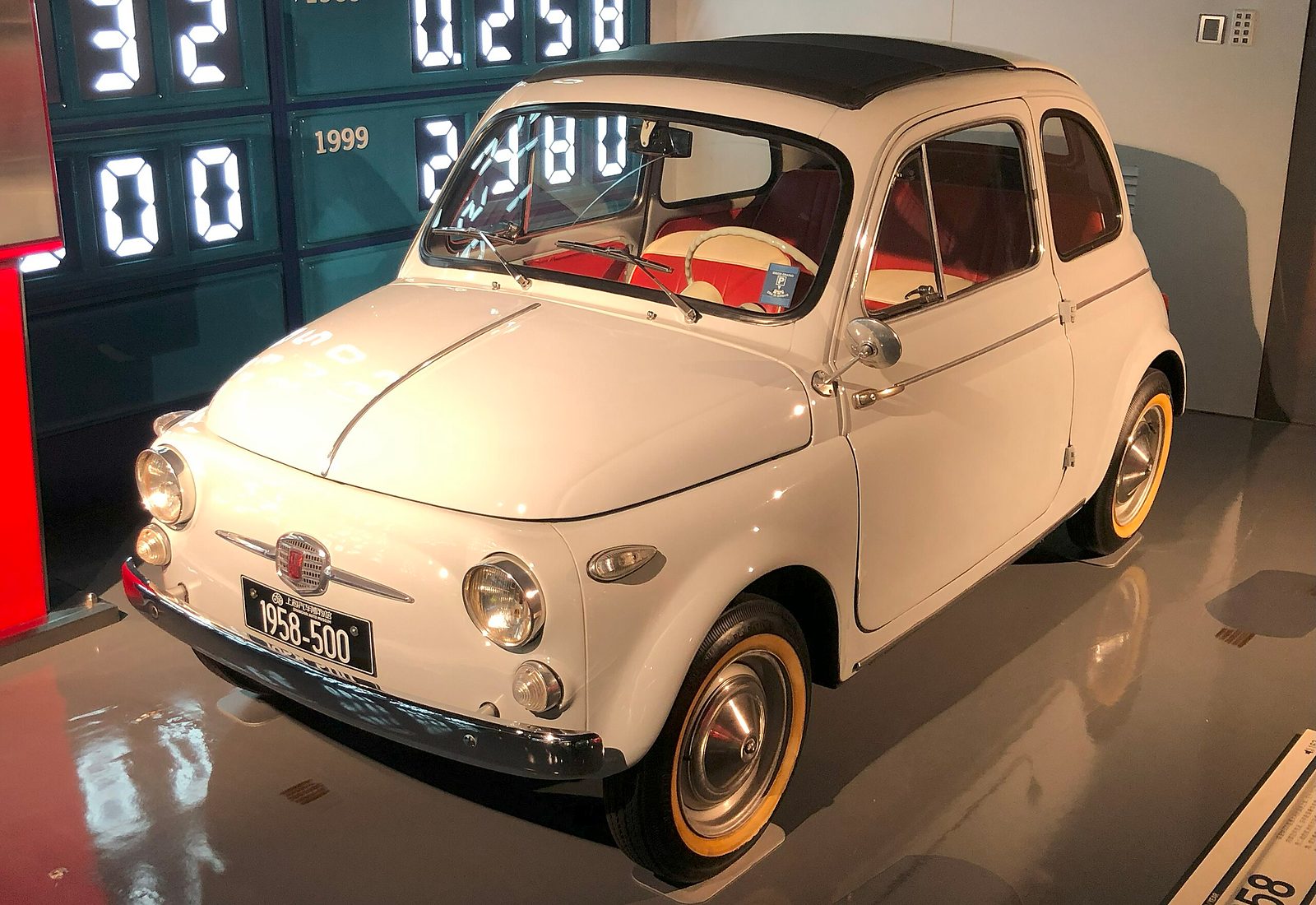
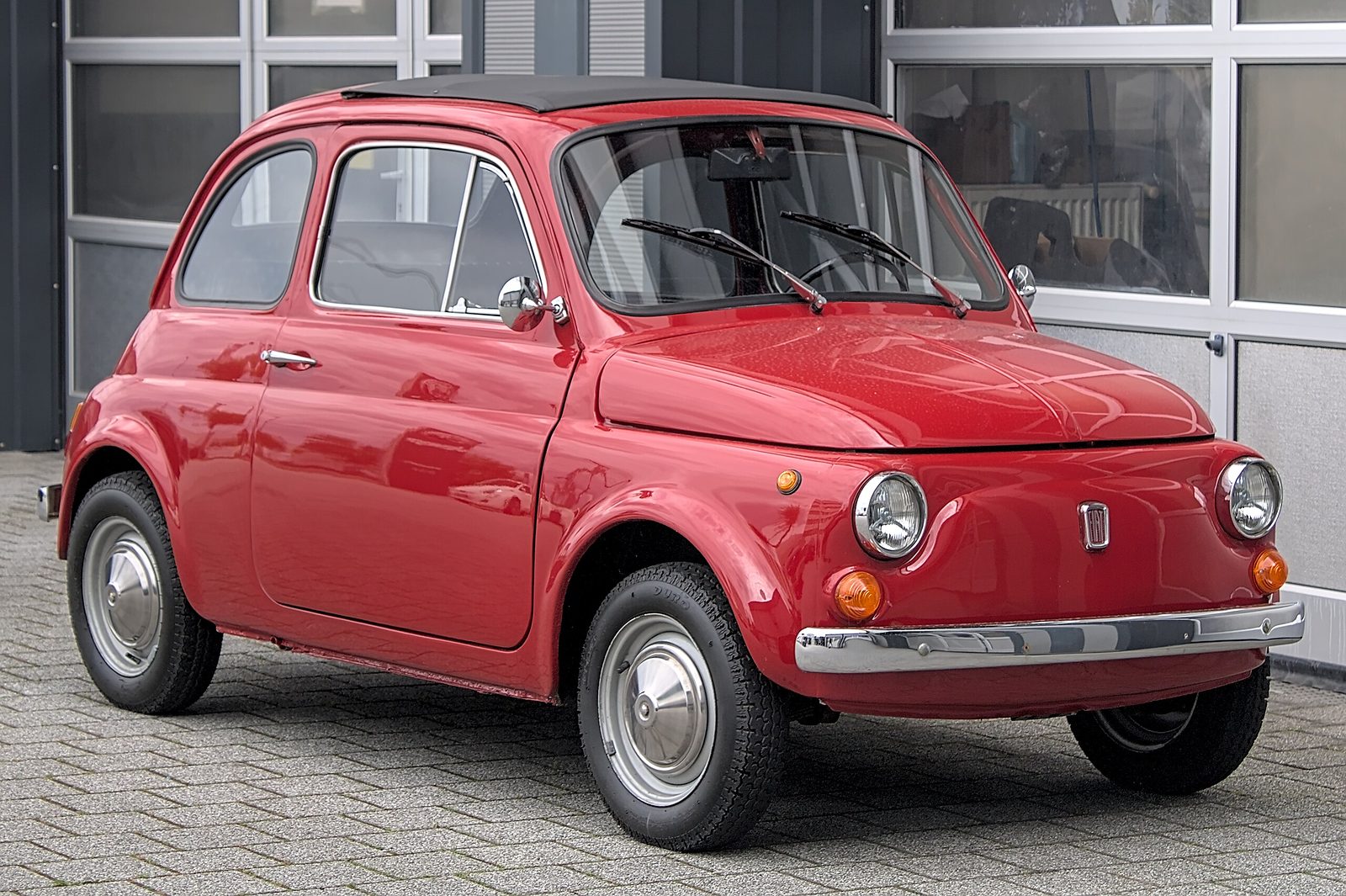
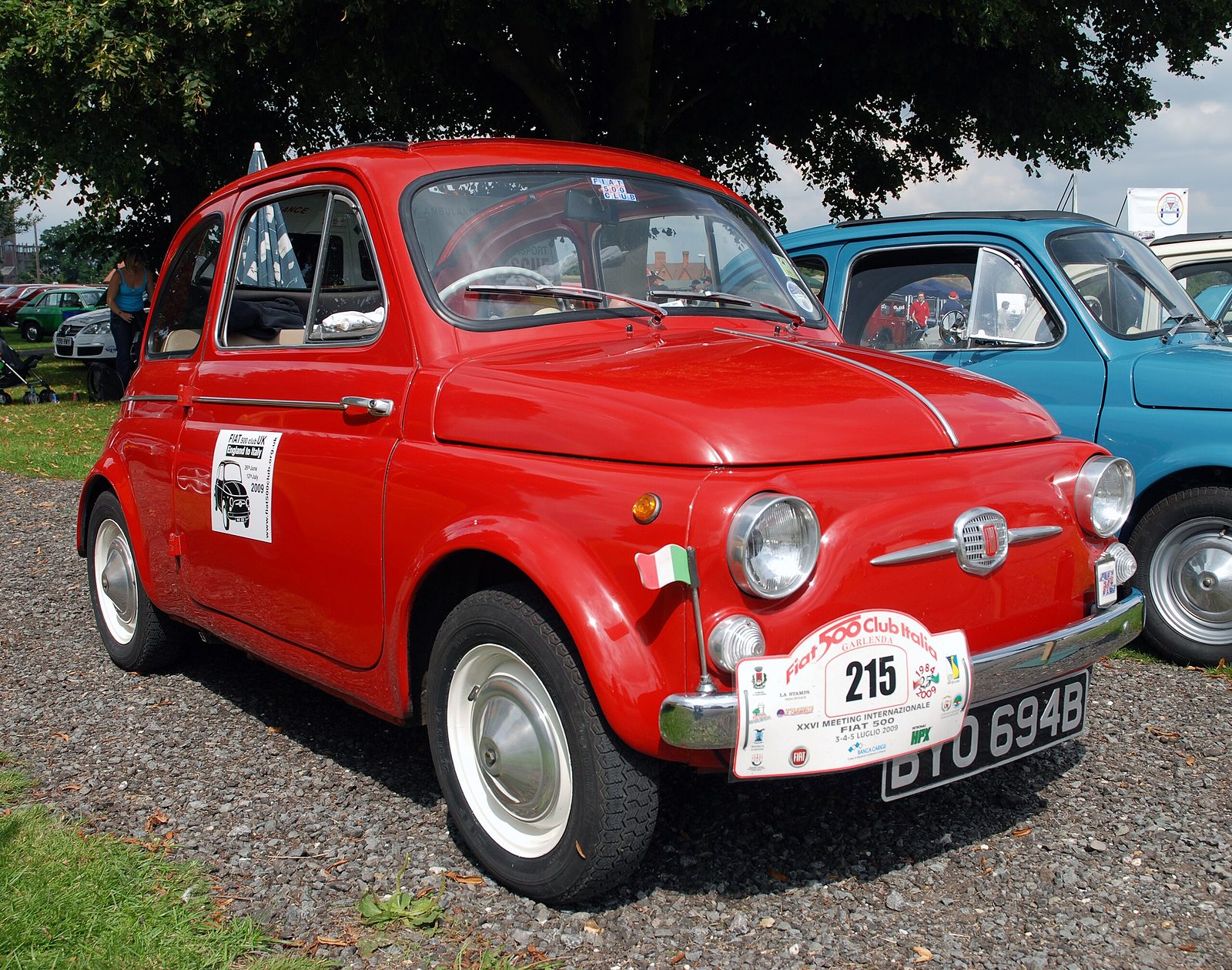
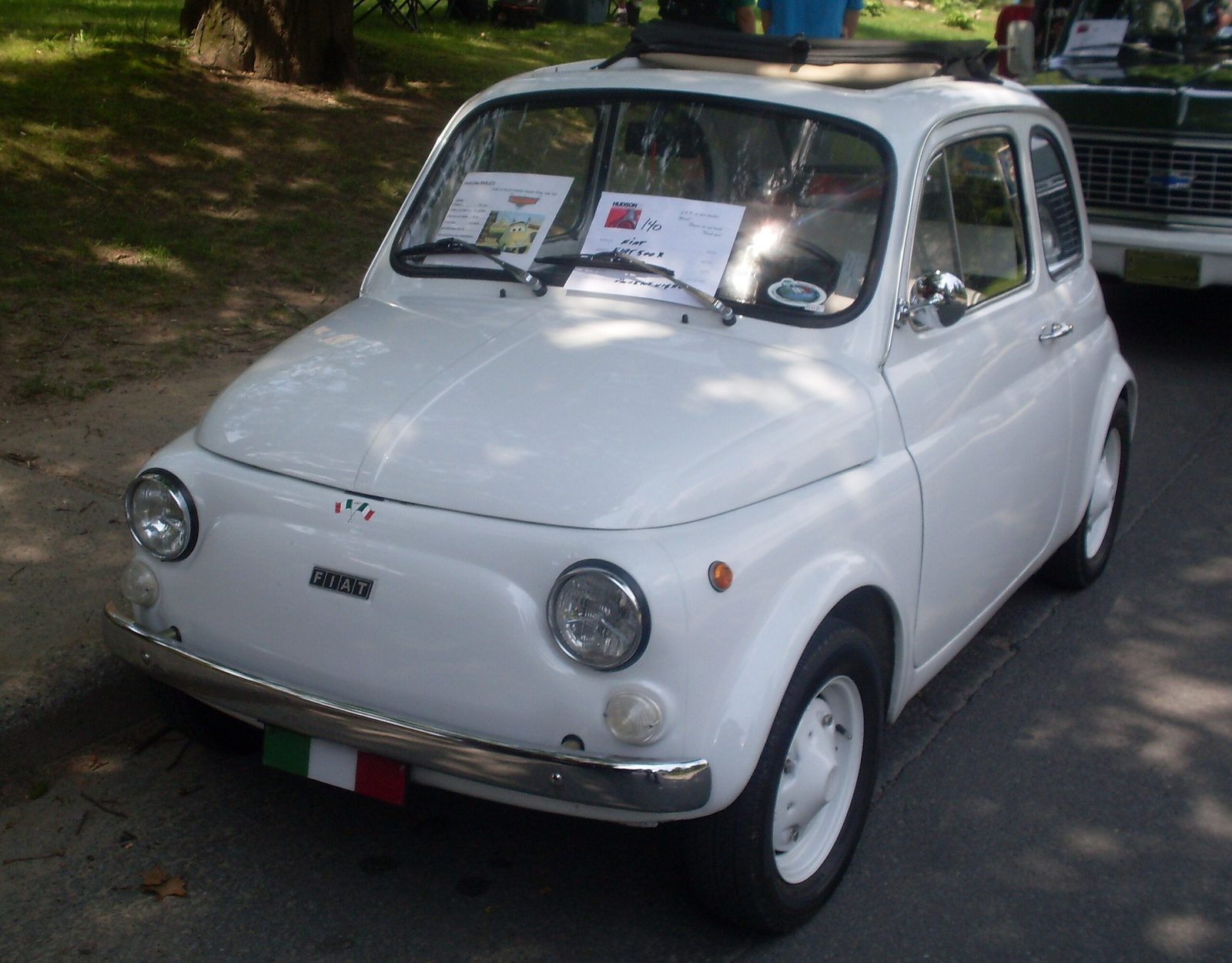
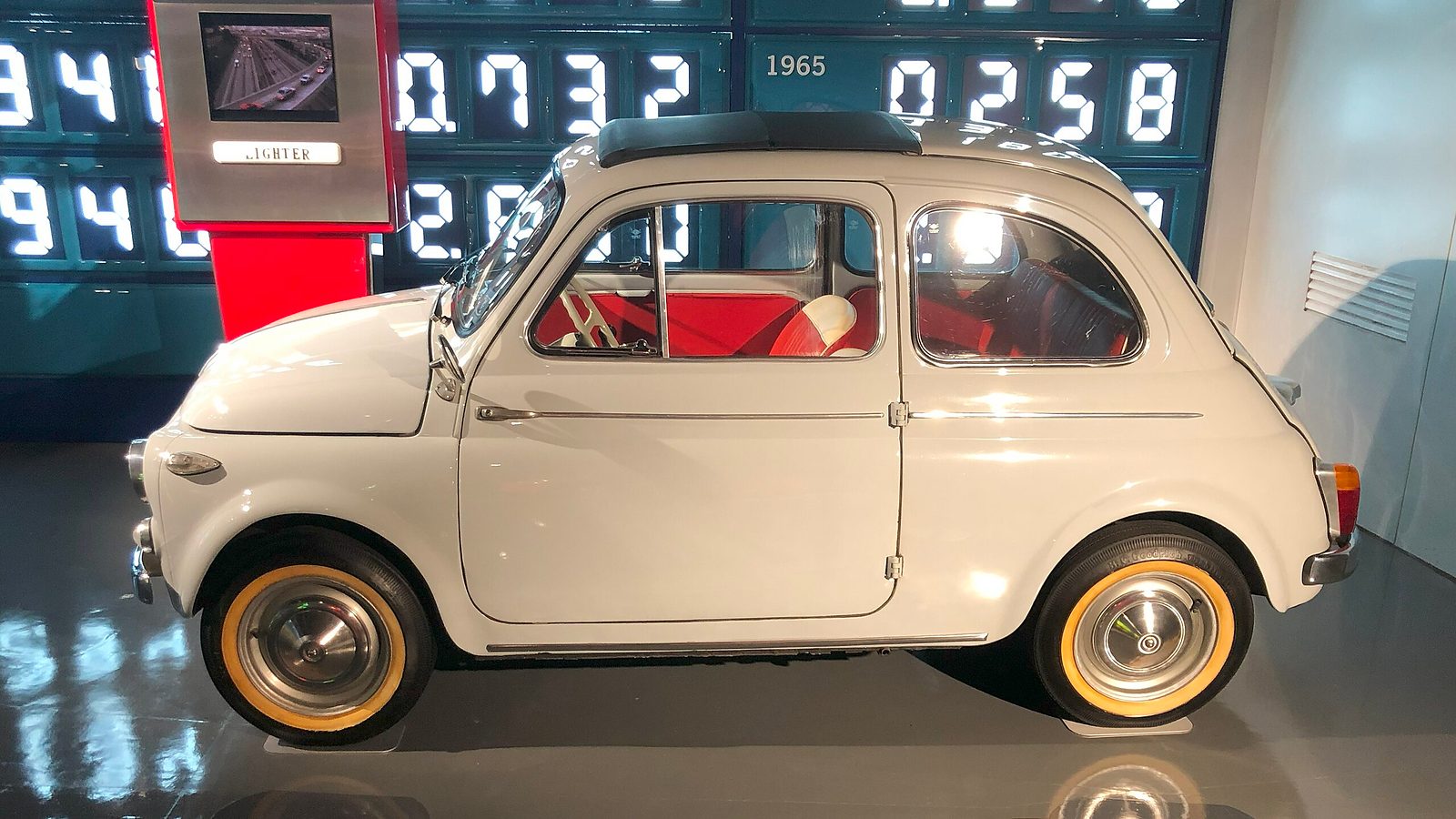
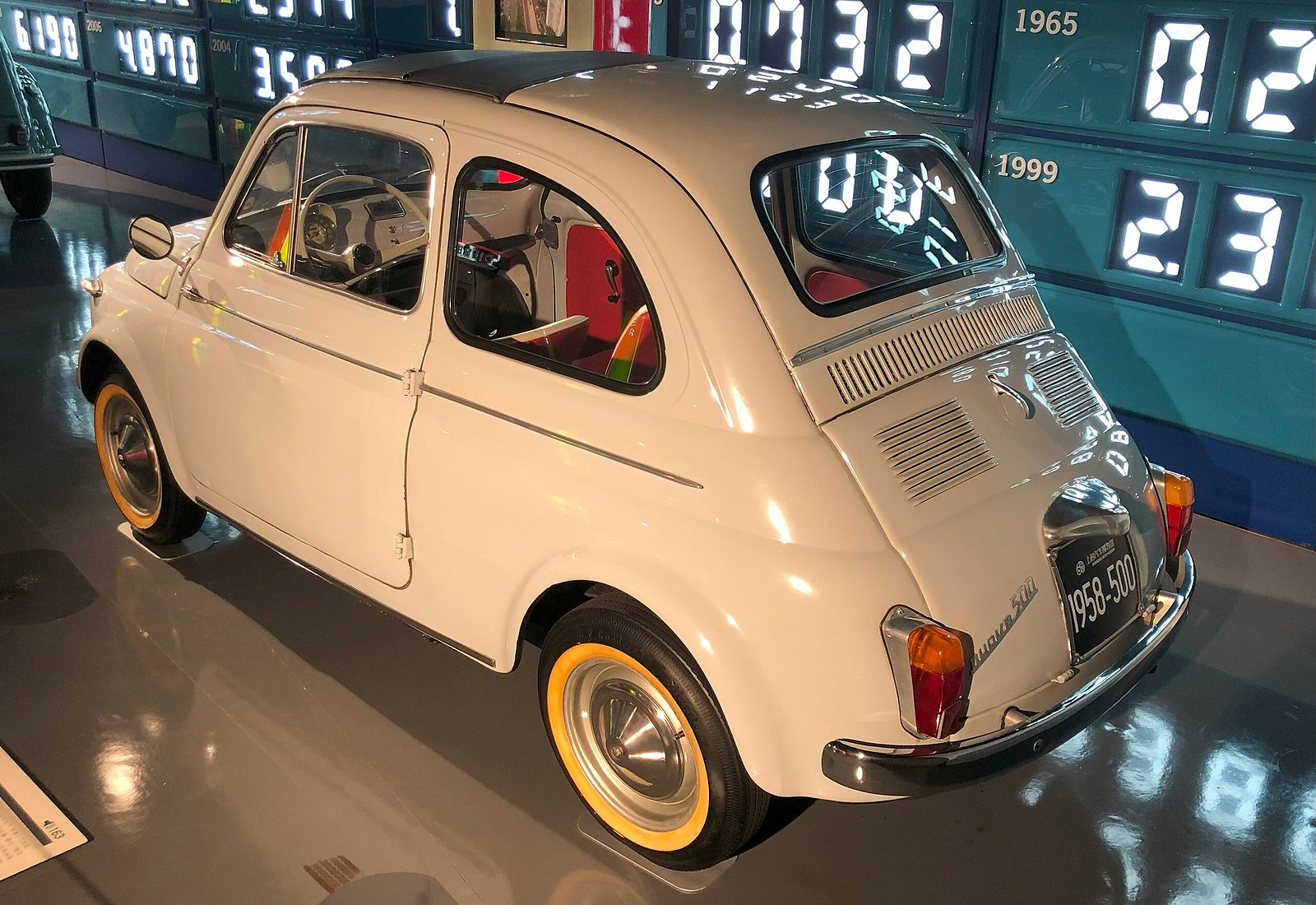
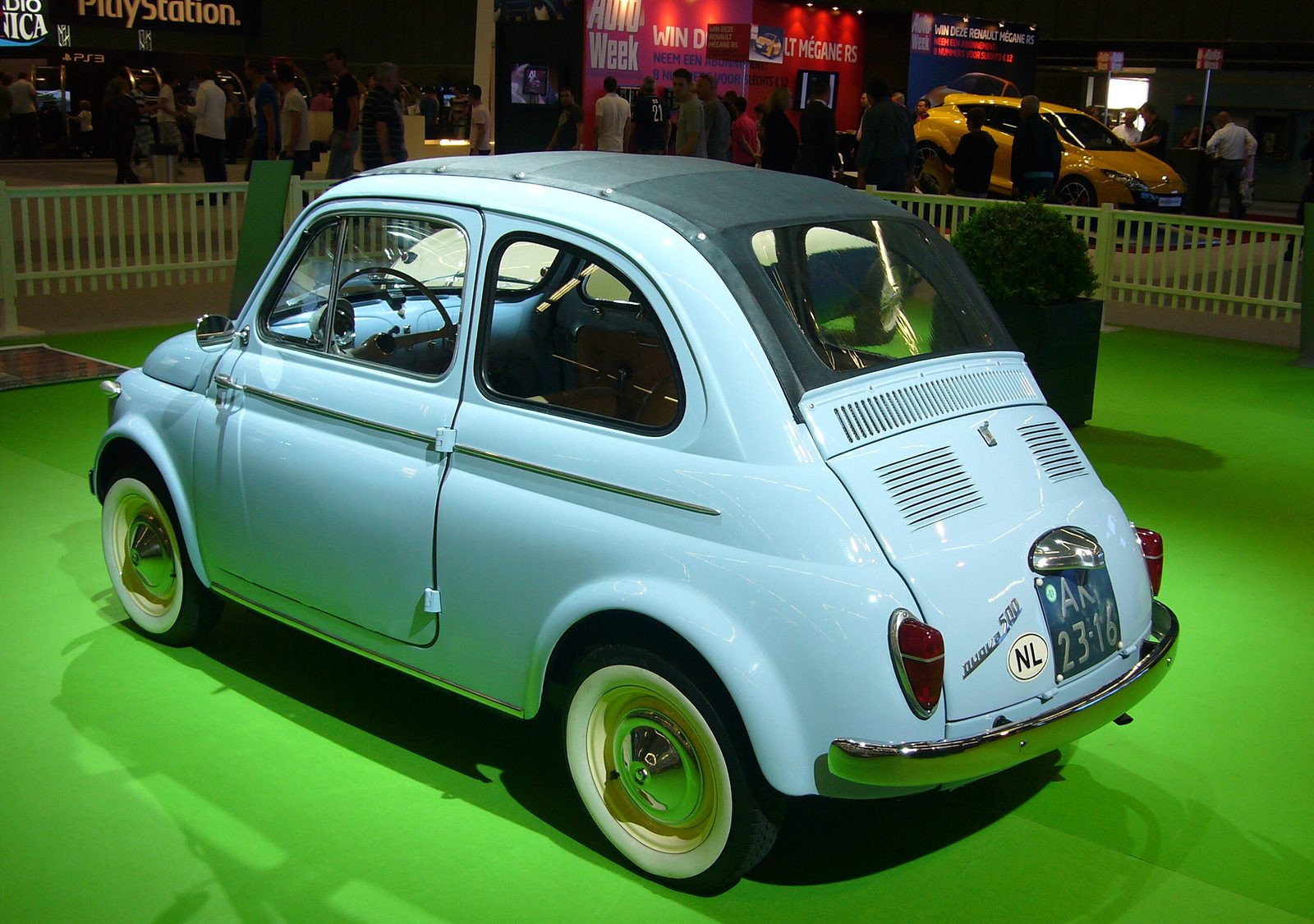
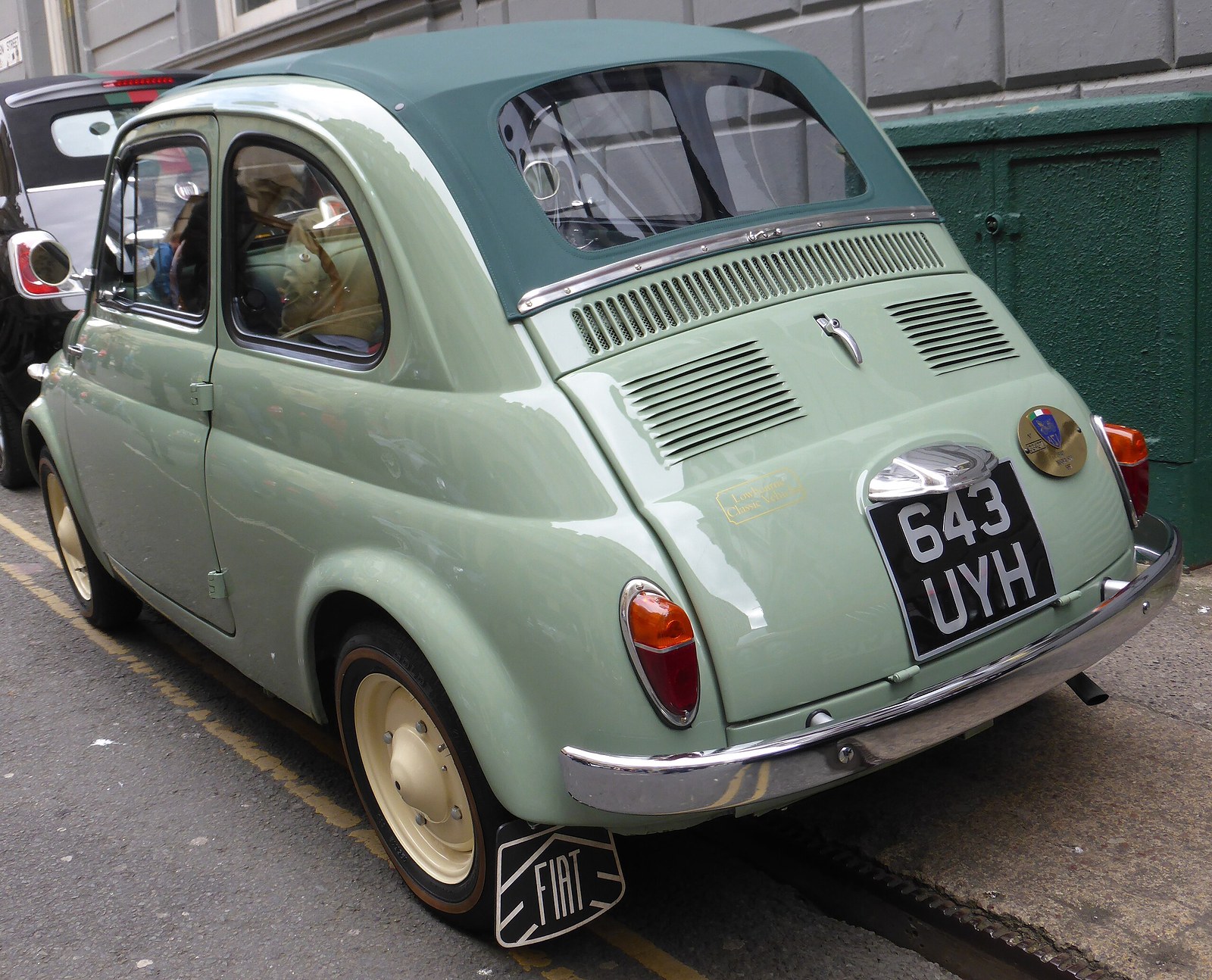
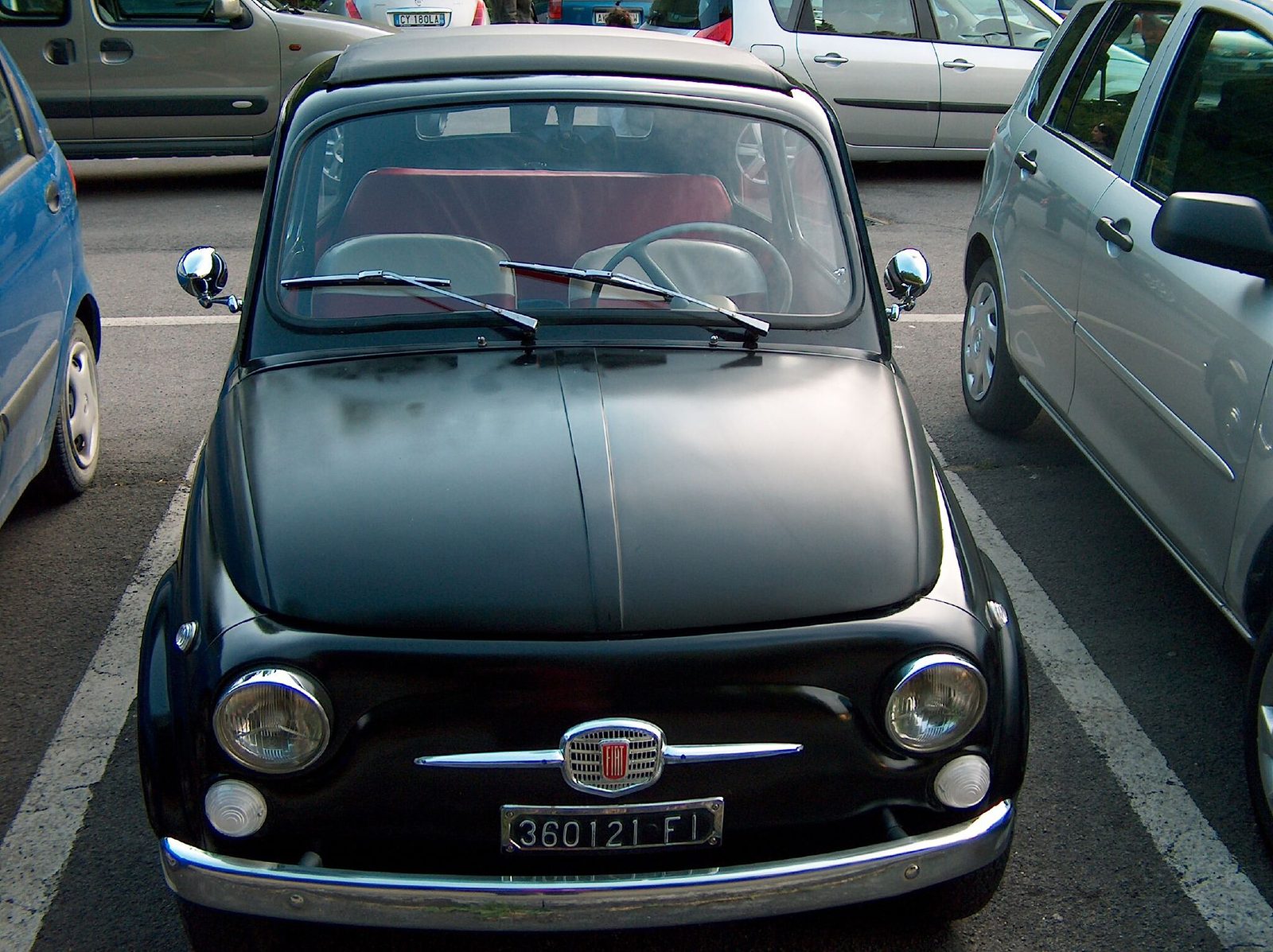
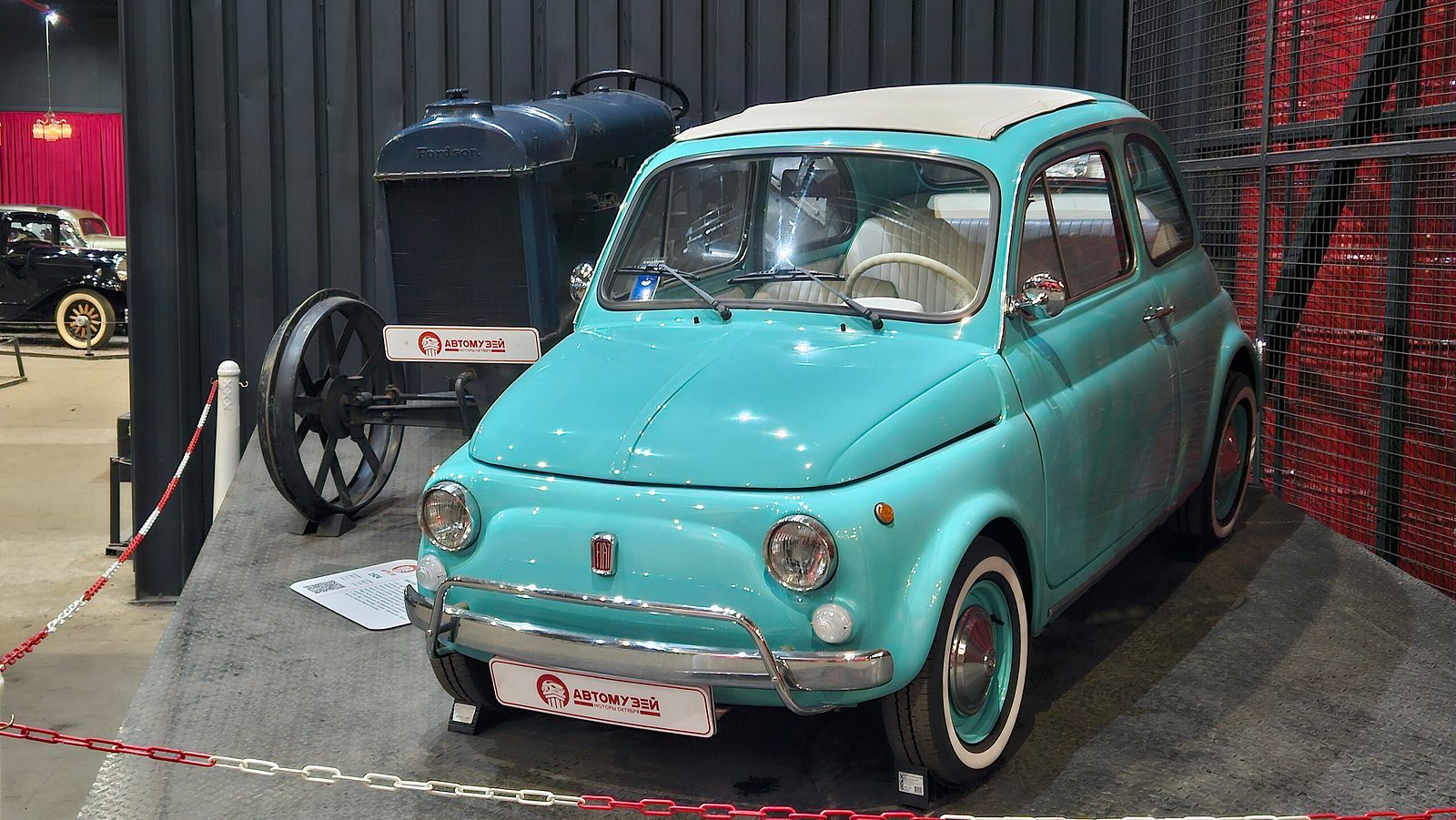
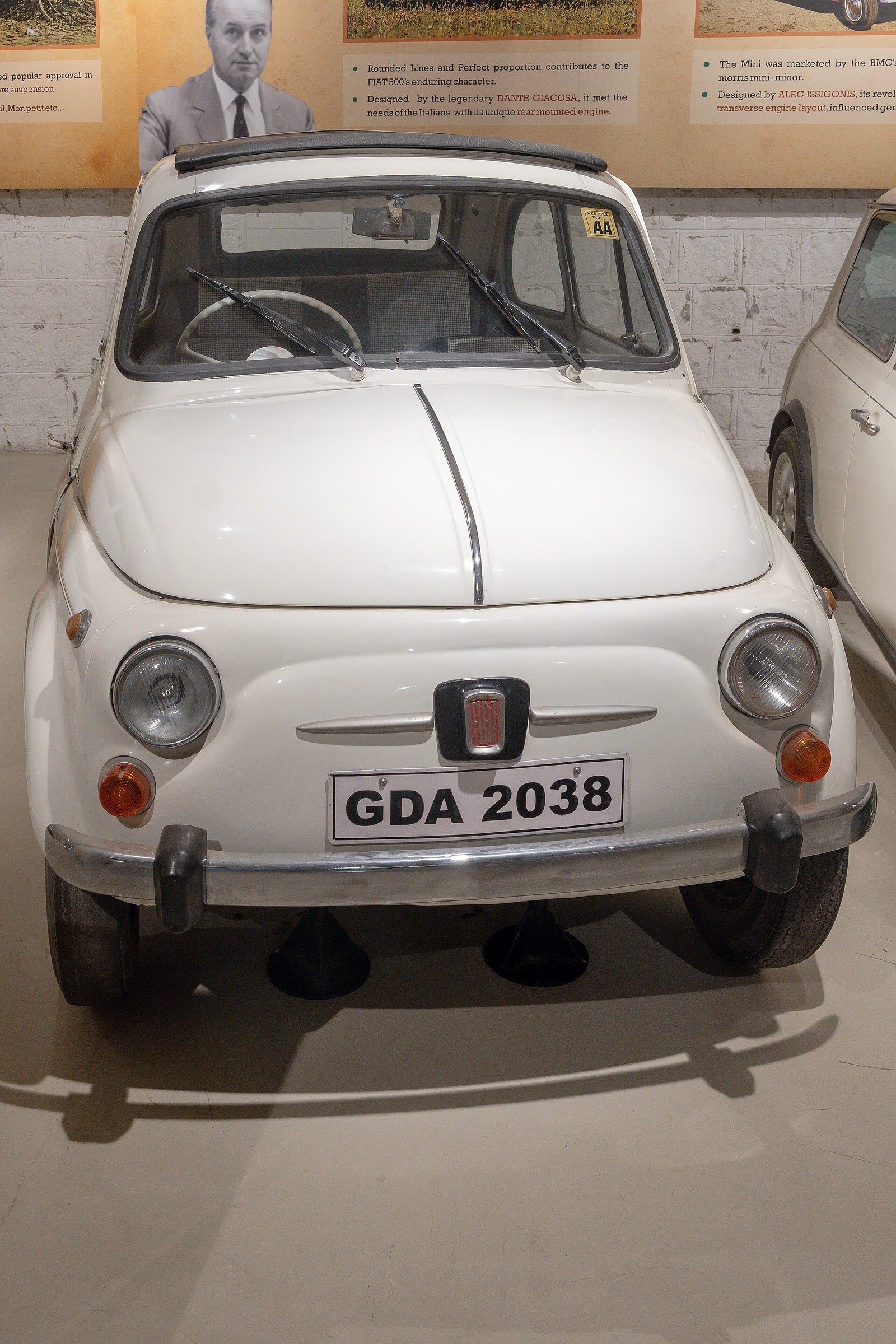
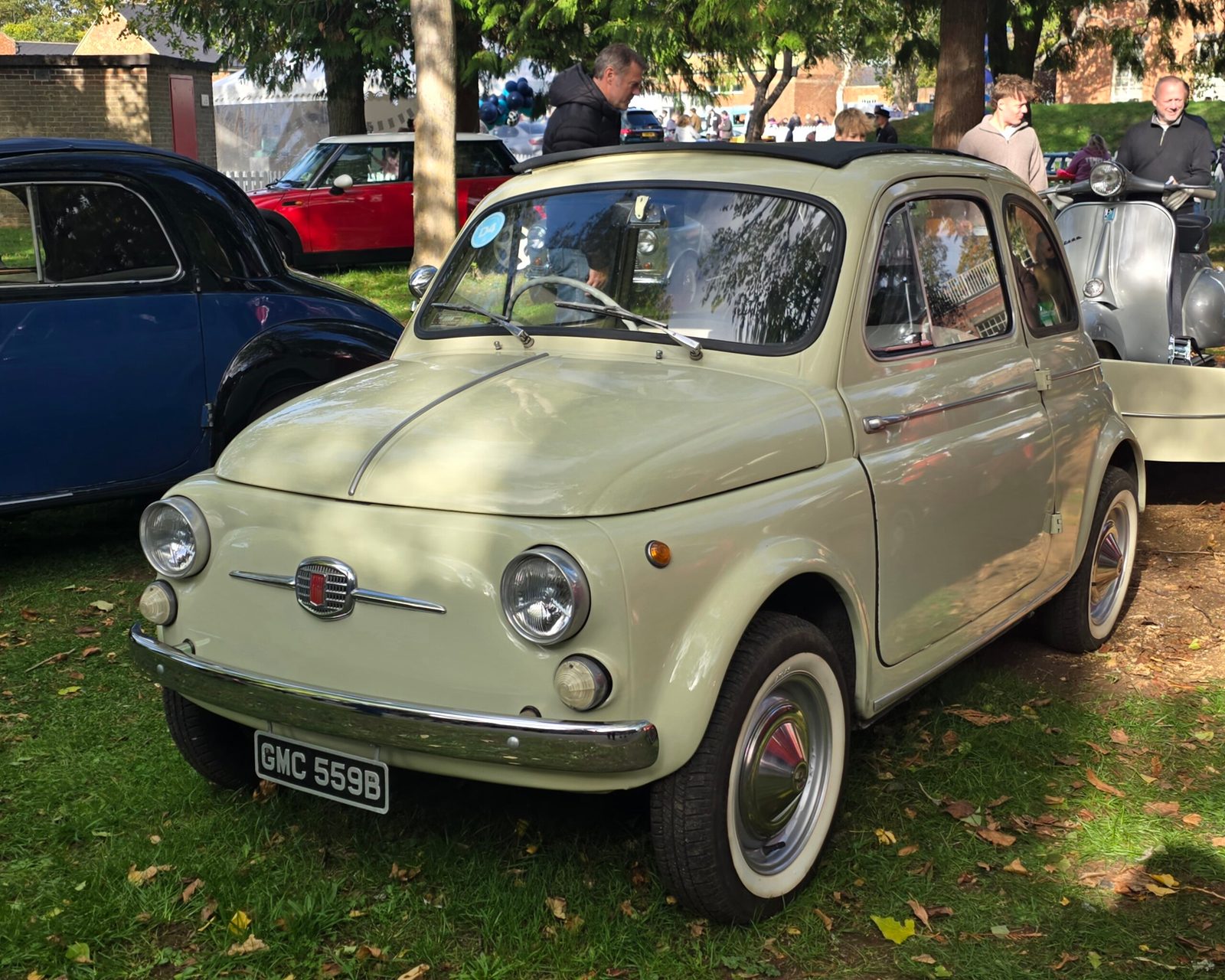
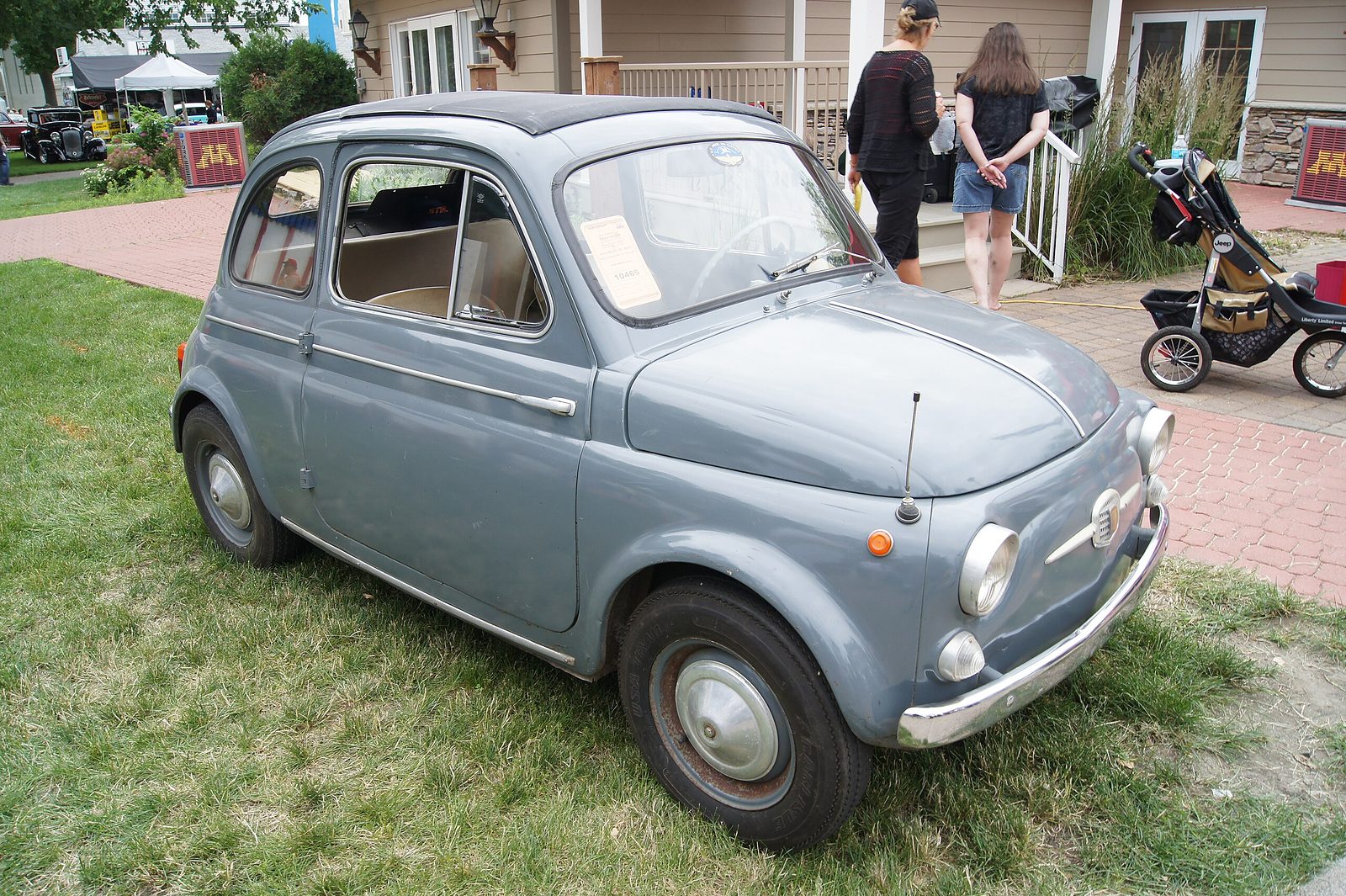
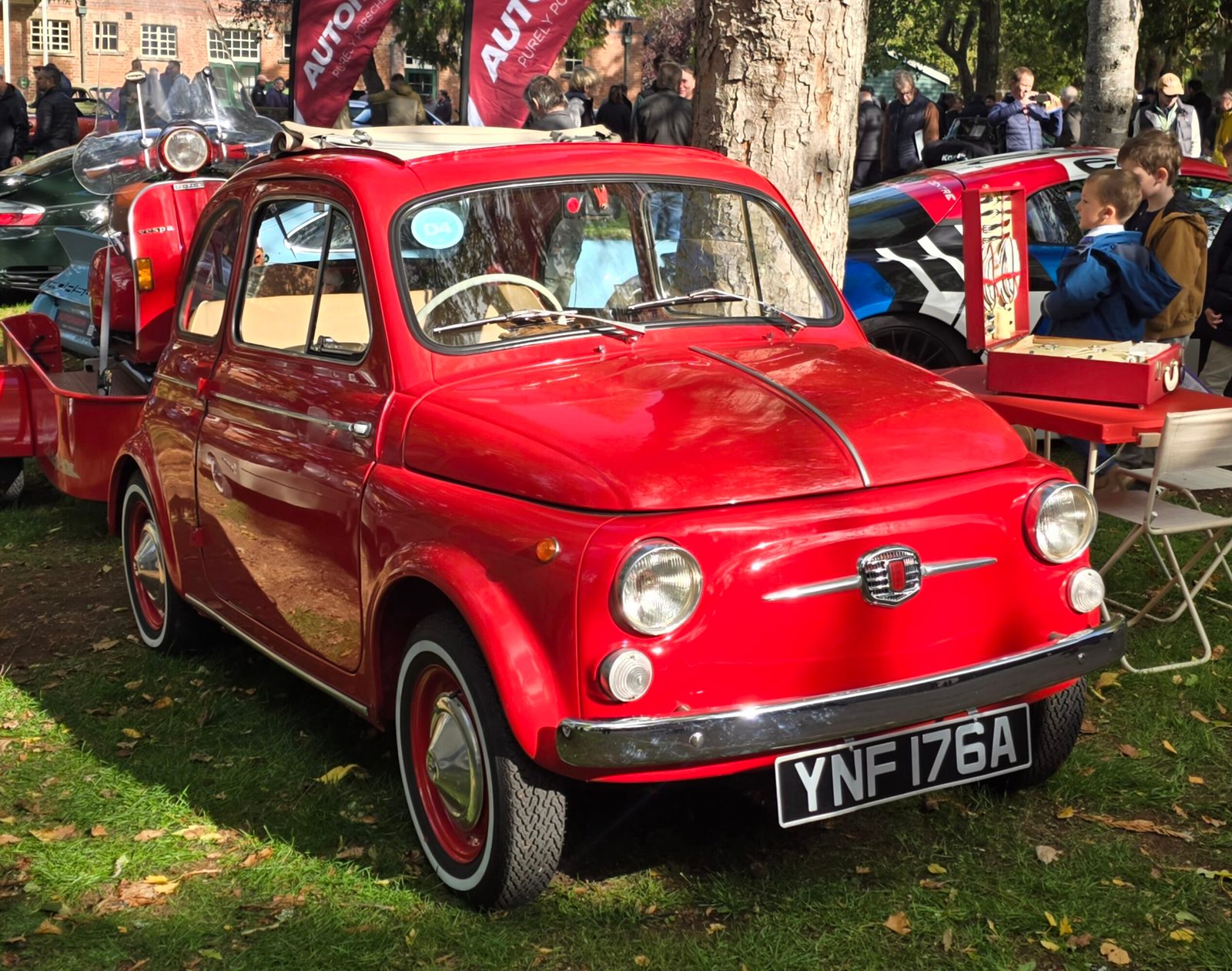
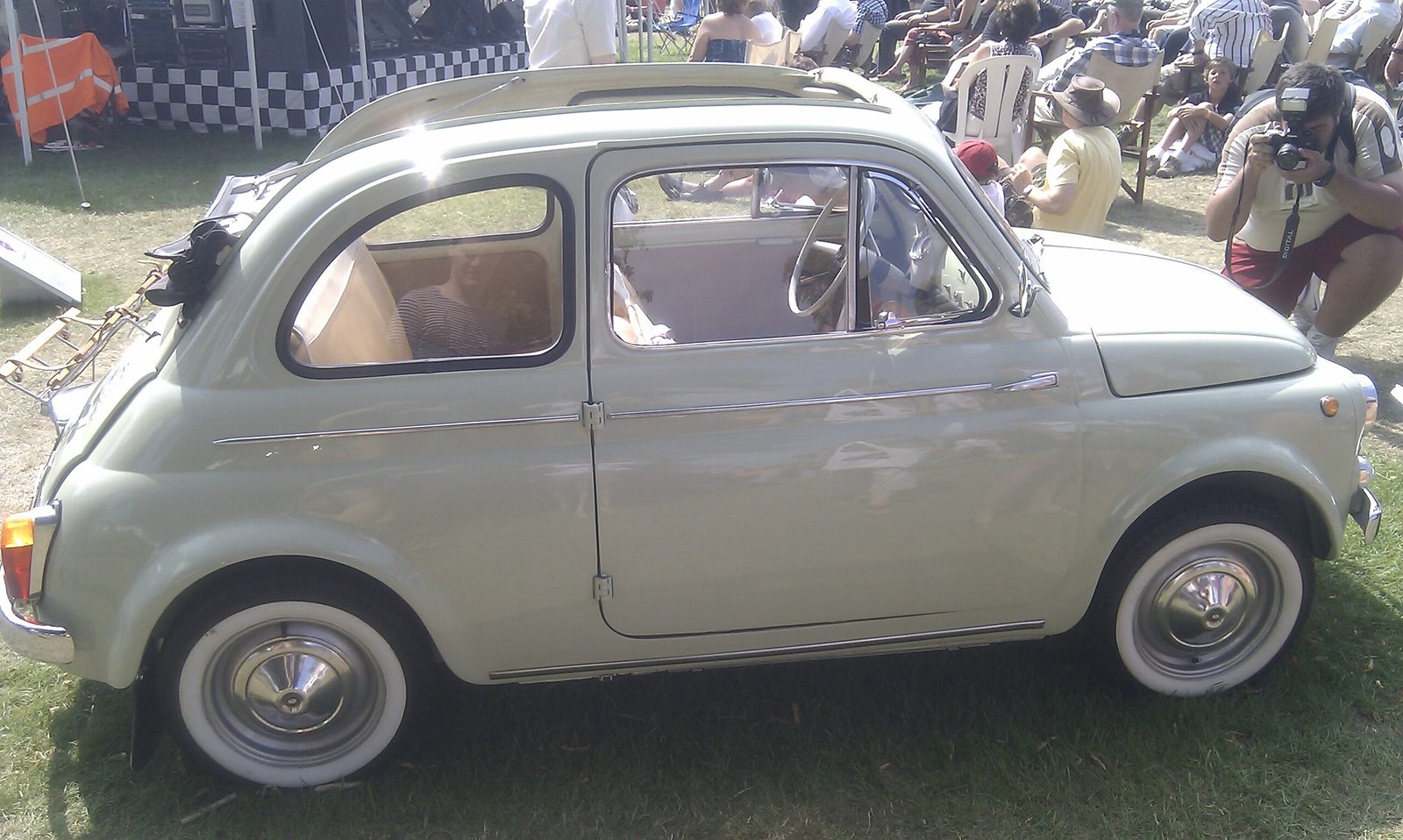
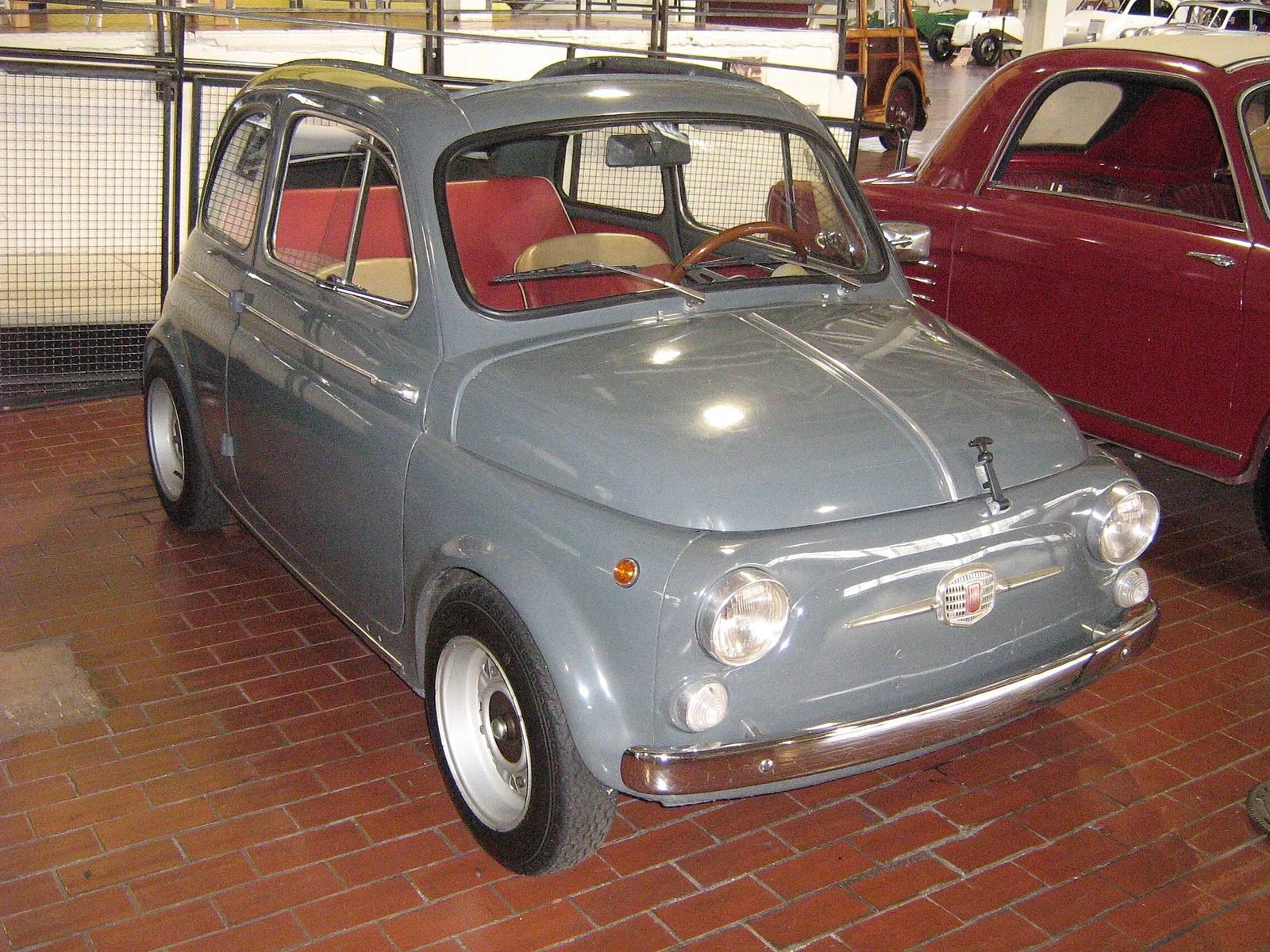
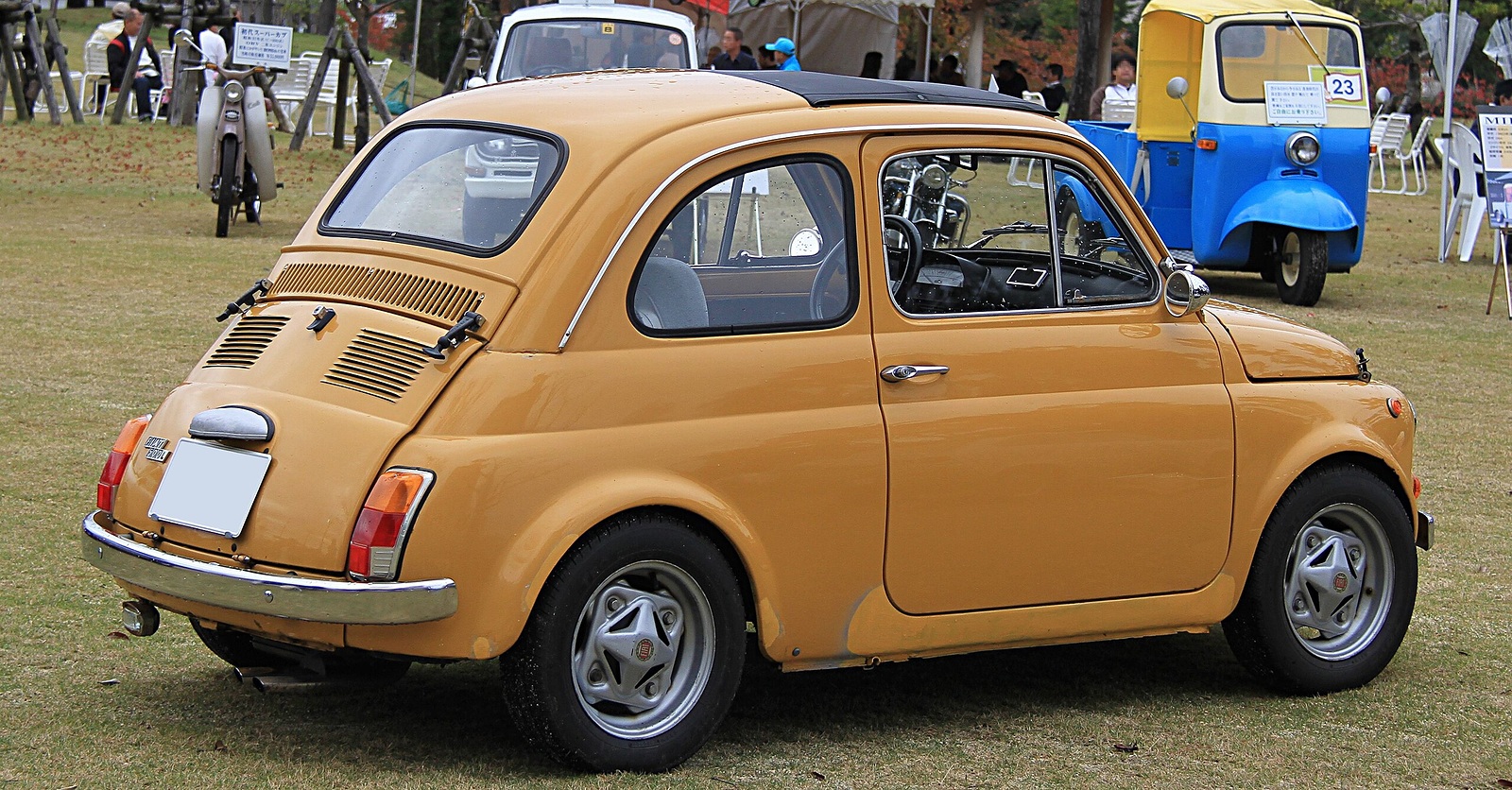
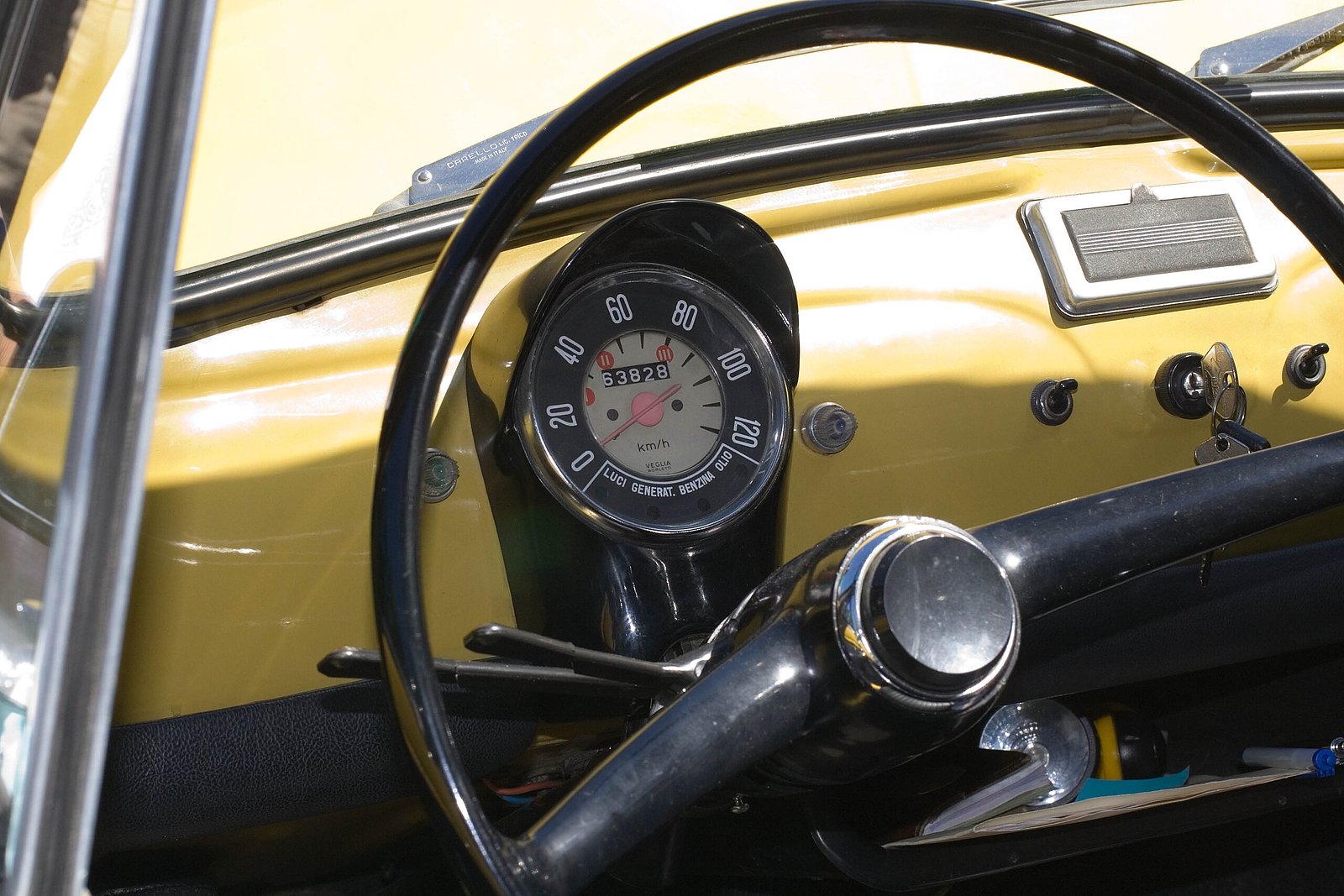
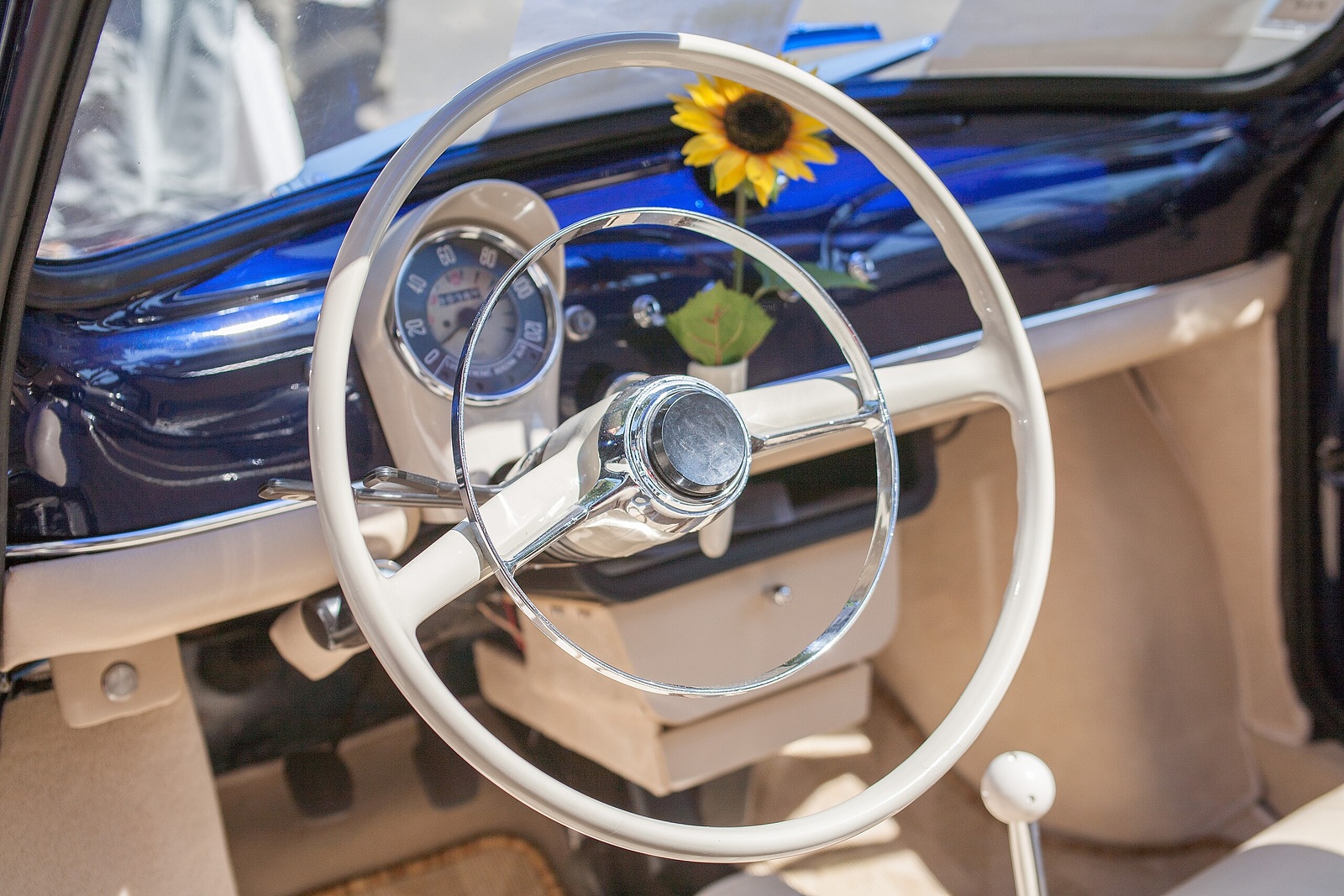
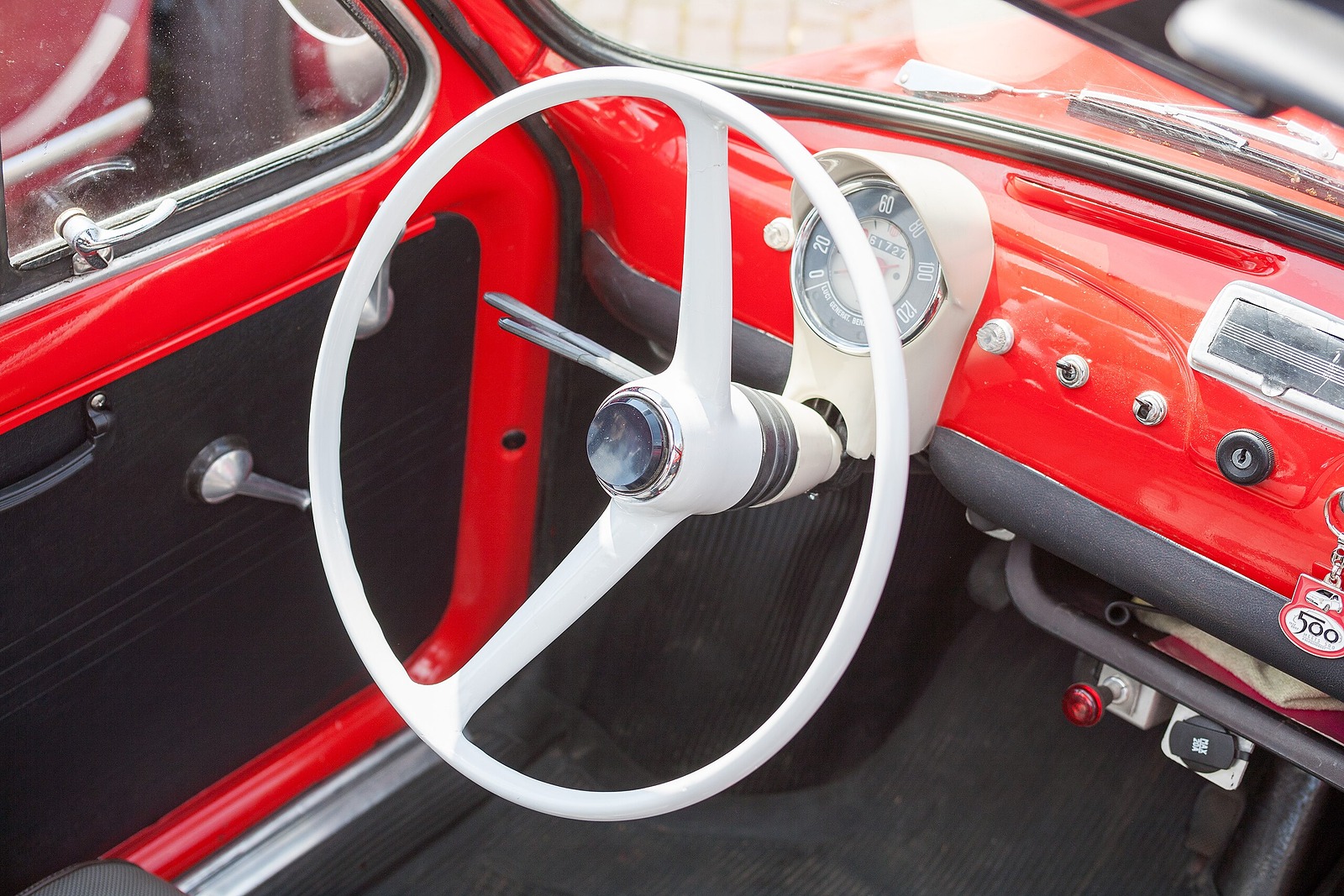
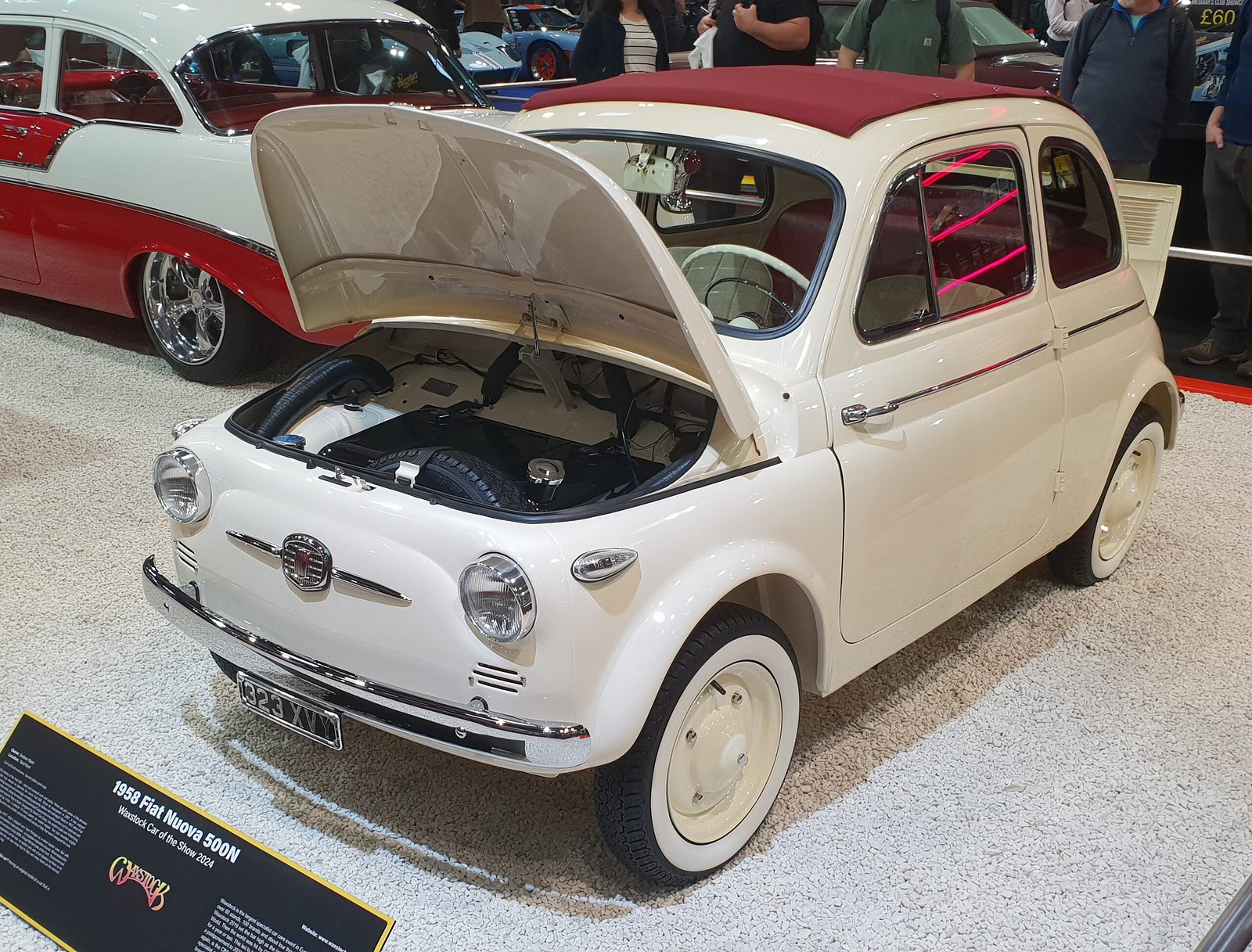
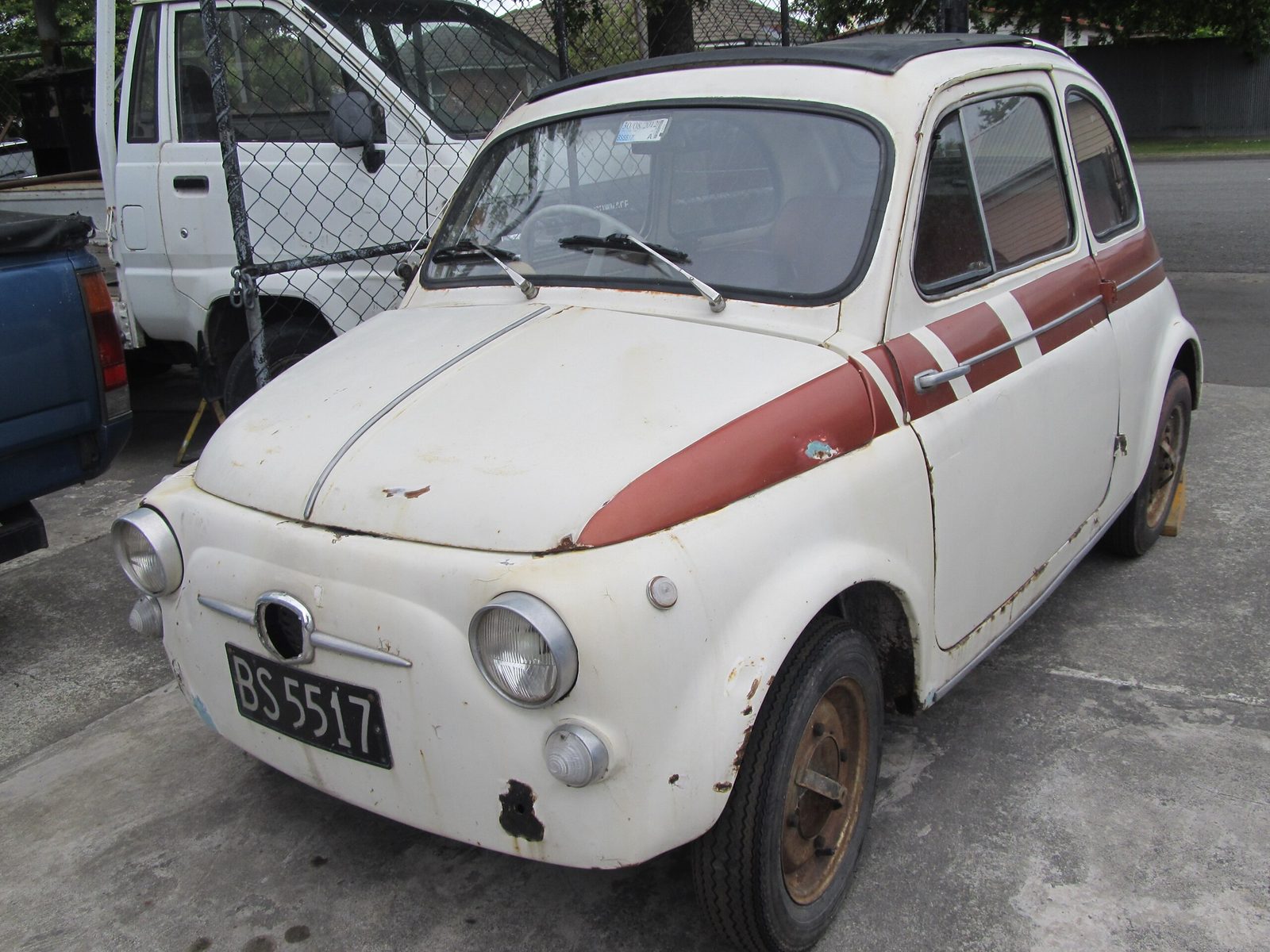
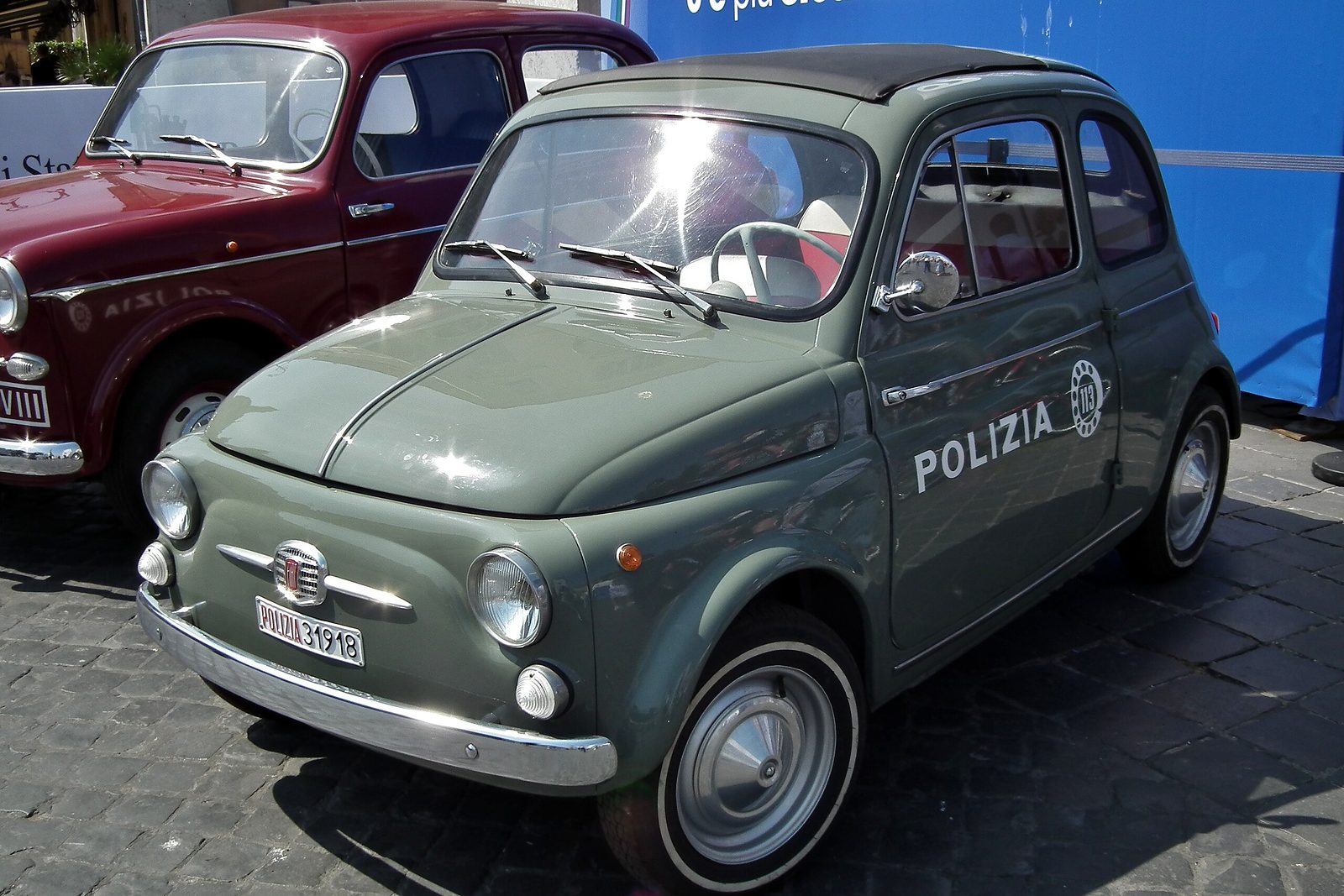
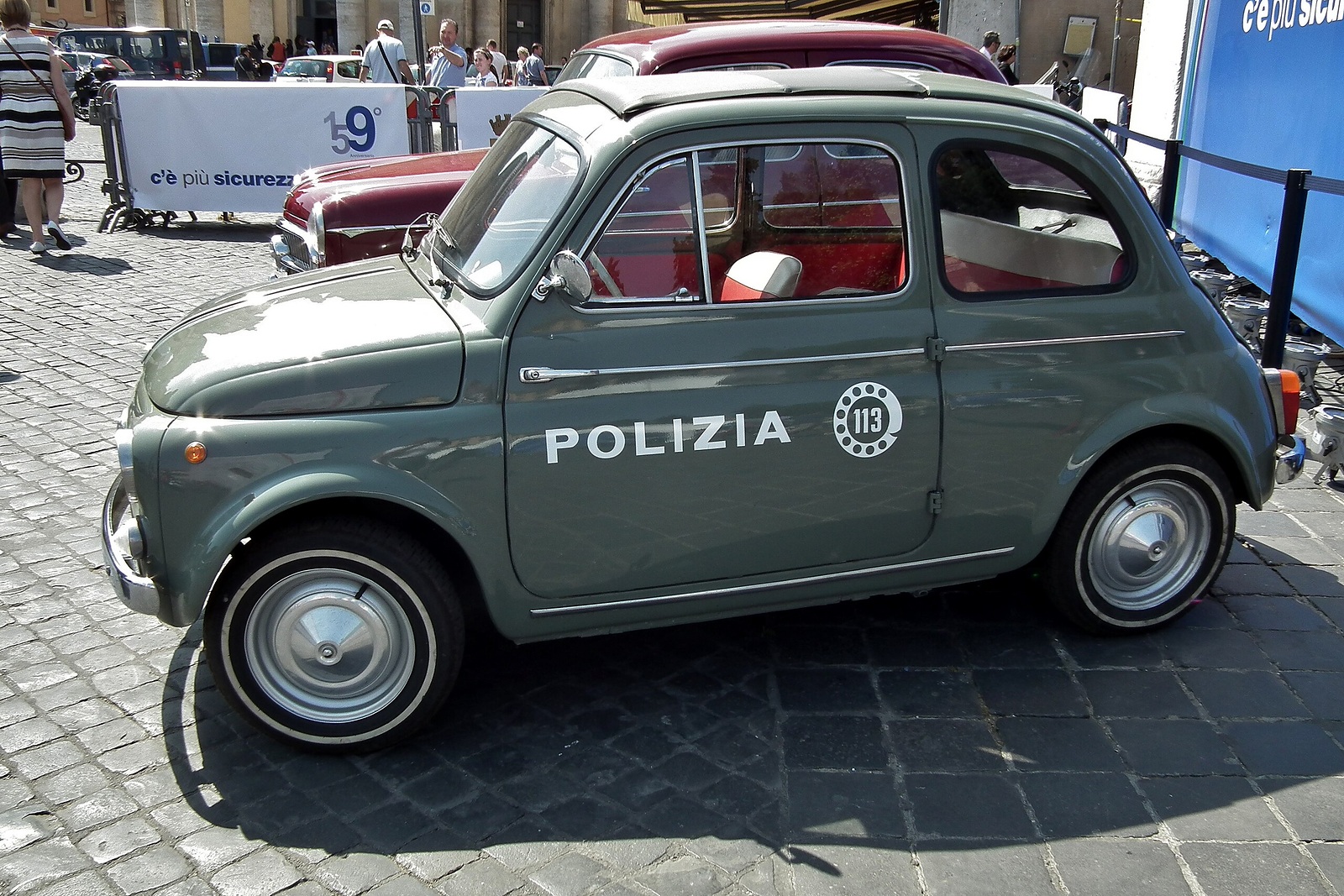
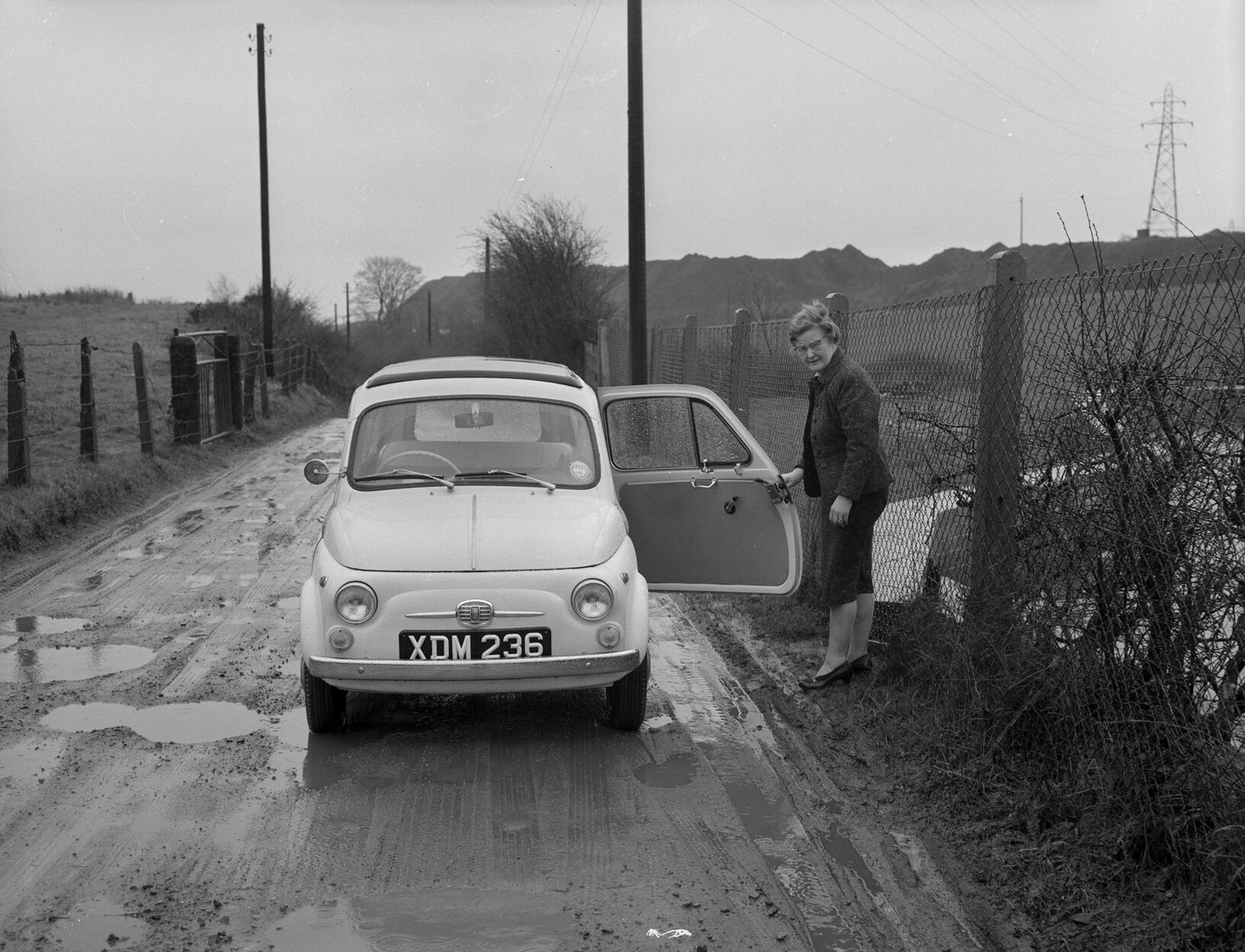
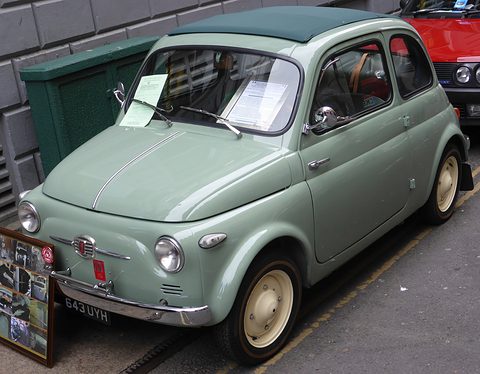
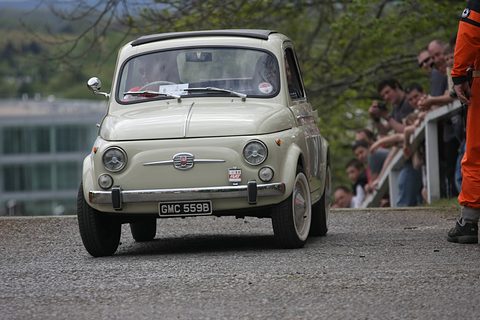
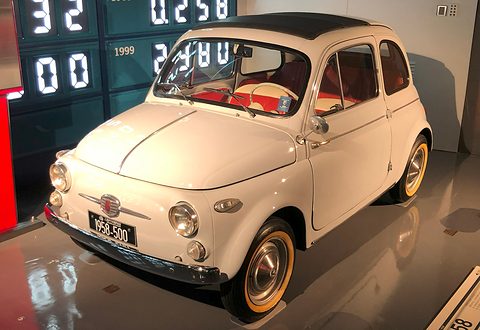
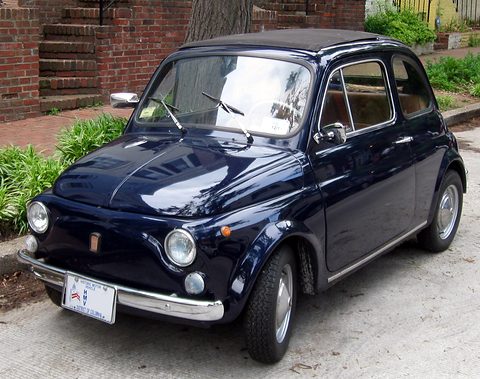
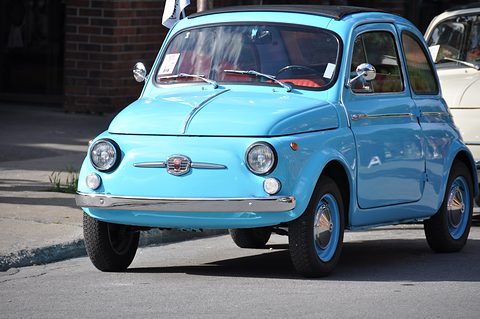
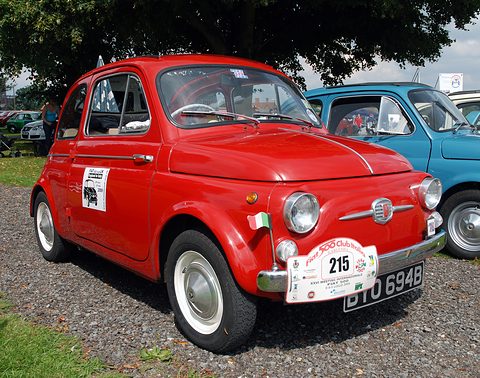
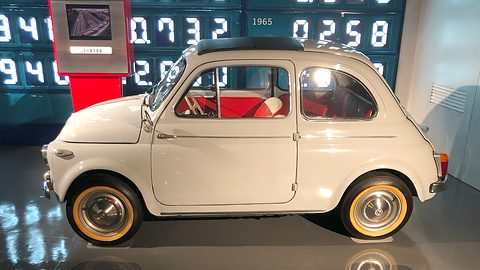
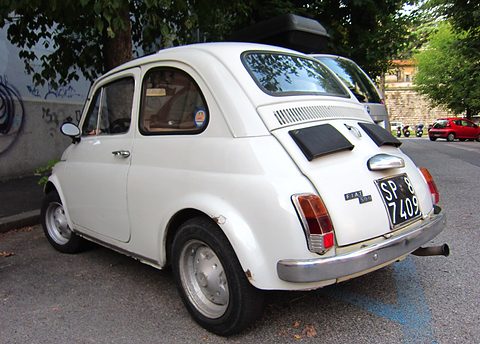
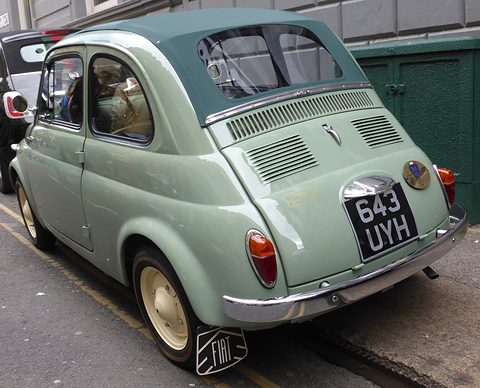
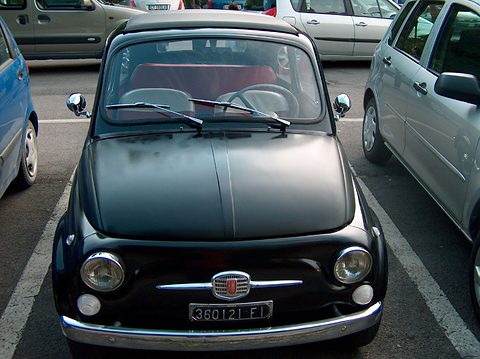
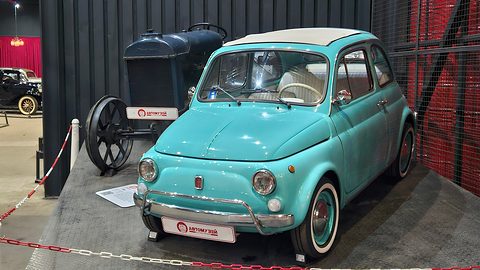
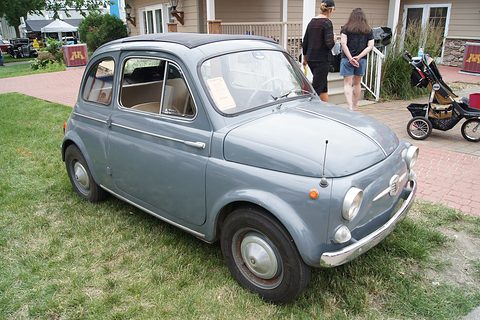
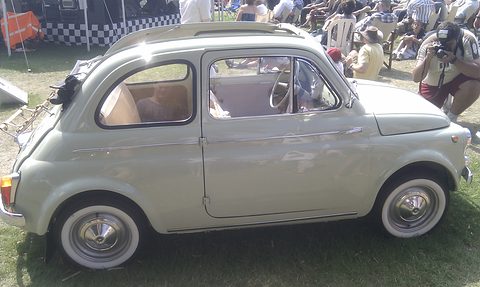
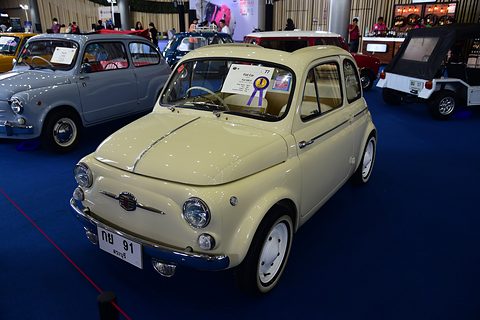
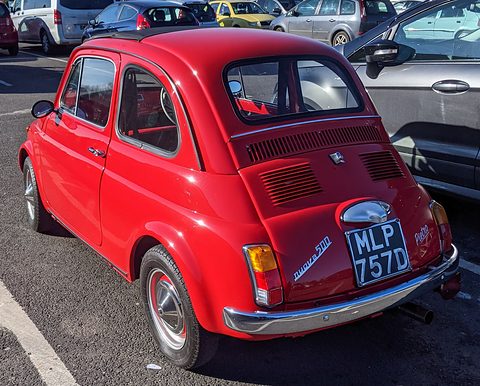
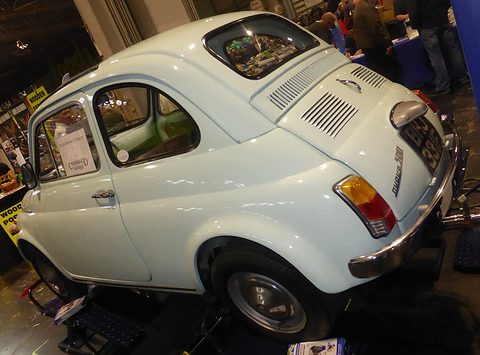
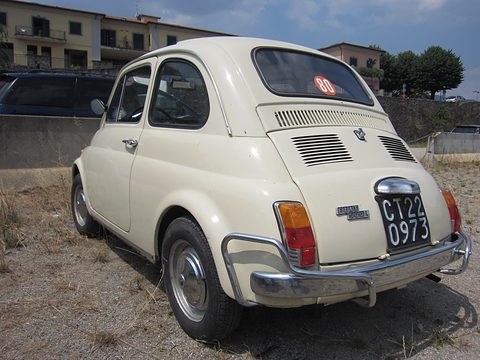
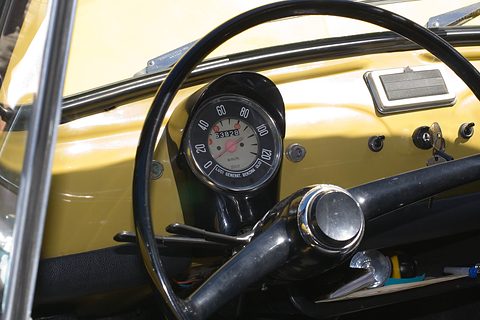
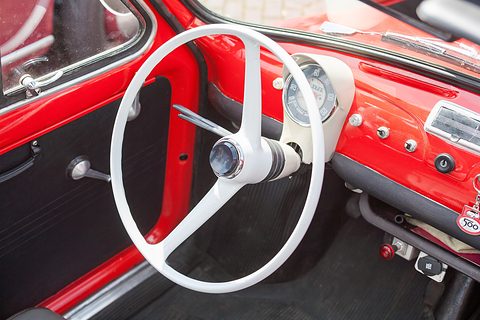
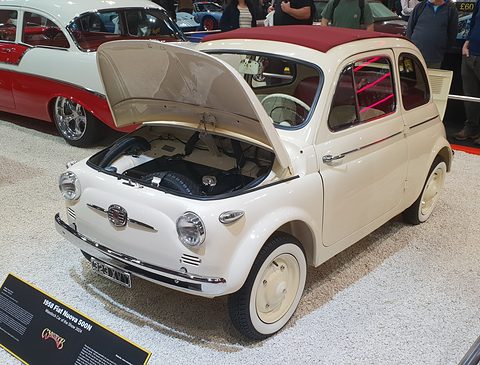
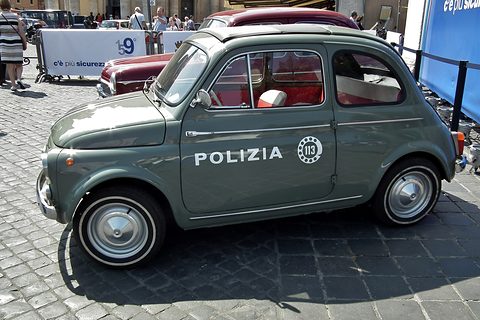
What the buyer got was 2,970 mm long, 245 mm shorter than the 600.source 5 It had no chrome at all. The wheels were painted cream, with four bare nuts and no hubcaps; the side windows were fixed, with only swivelling quarter-lights; every light worked from a six-position Bosch ignition key. The rear bench was unpadded, so the car was homologated for two, a choice that protected the 600. The canvas roof rolled all the way back to the engine lid, the doors were hinged at the back, and a demister was an option. Red dots on the speedometer, at 23, 40 and 65 km/h, showed how fast each gear would go.source 1
Too bare, and a cheque in the post
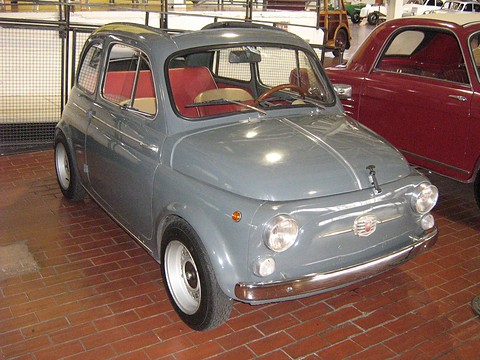
Buyers found the first 500 too spartan, too slow, too noisy and too dear beside a 600.source 1 Bouchat puts the 600 at 590,000 lire, only 125,000 more than the cheapest 500.source 3 Fiat answered at the Turin show in November 1957 by splitting the range in two: an Economica in the old trim at 465,000 lire, and a Normale with wind-down windows, chrome and a padded rear seat at 490,000, both with 15 CV; the Normale was good for 90 km/h (56 mph). Owners of the first cars were sent the 25,000-lire difference by cheque and given the more powerful engine free at Fiat’s service stations, a gesture the Italian sources call unique.source 1source 6 In Germany the car cost DM 2,990 in 1958, without a heater.source 6
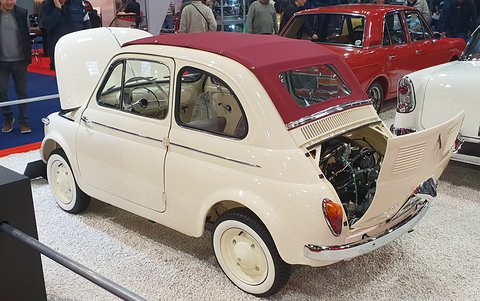
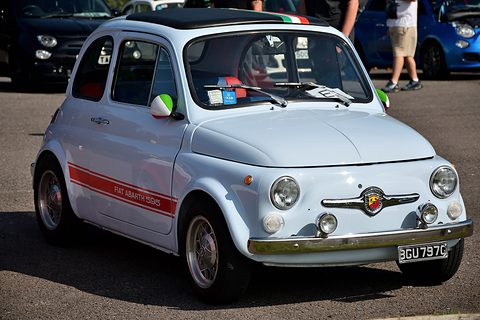
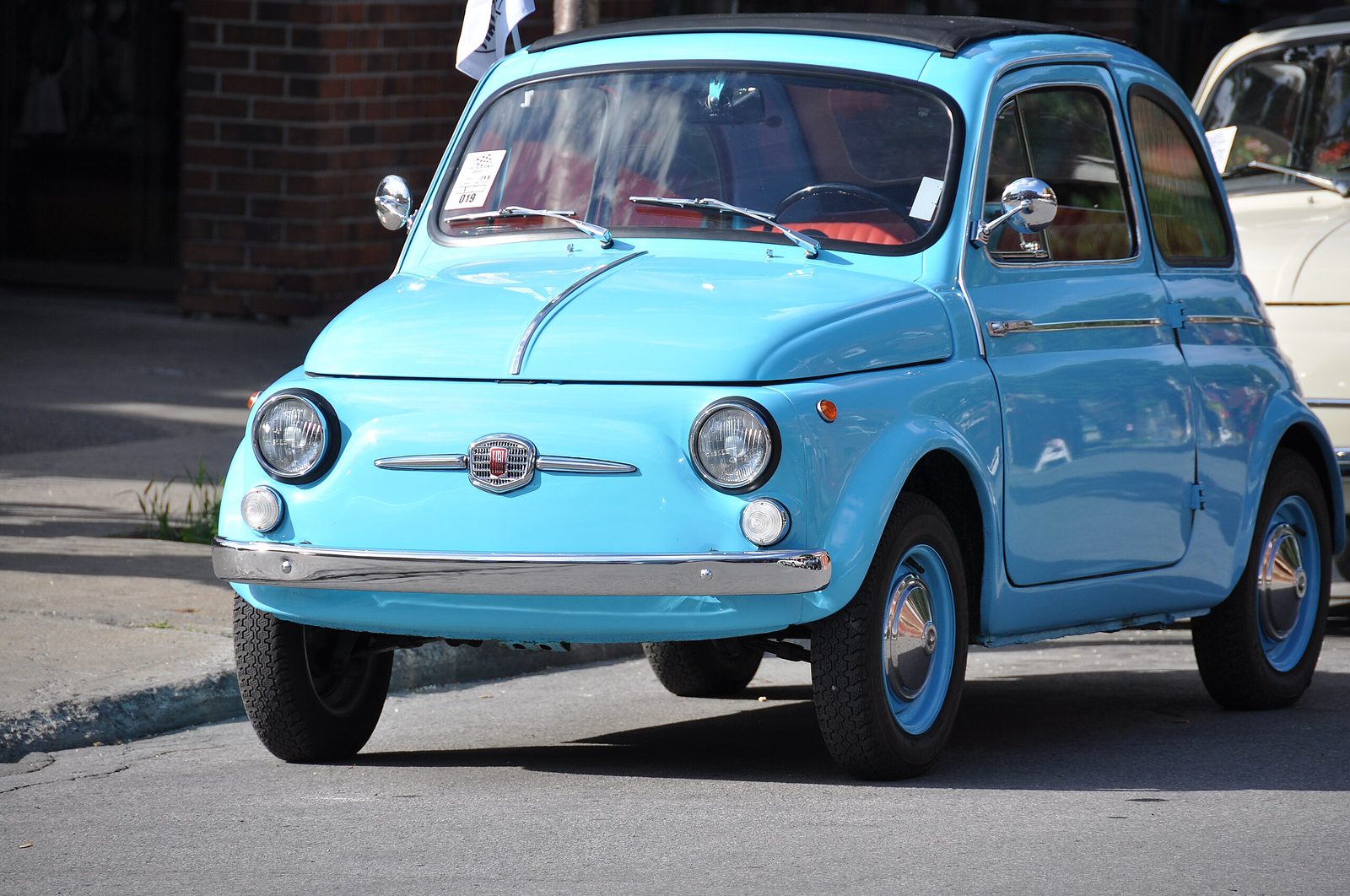
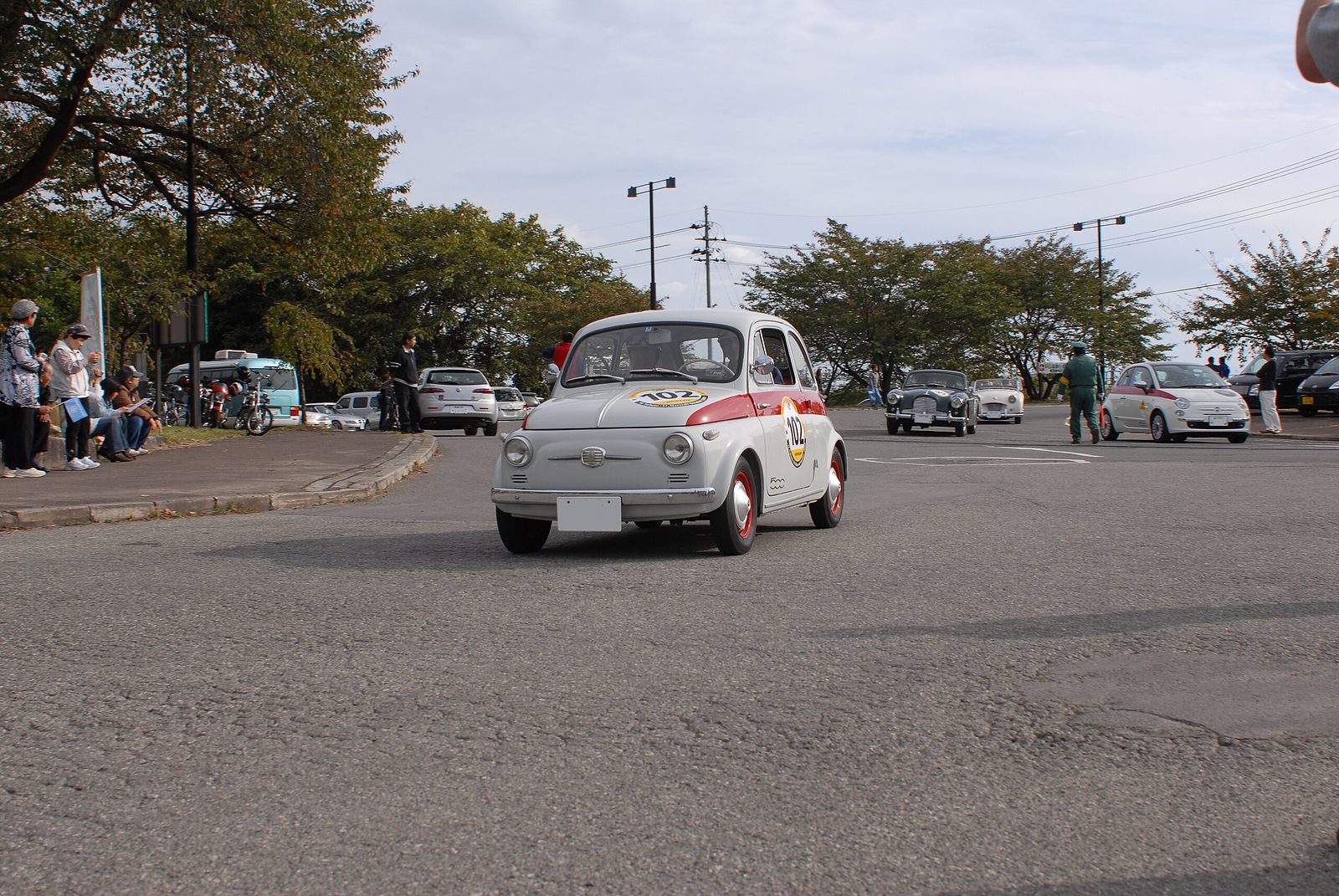
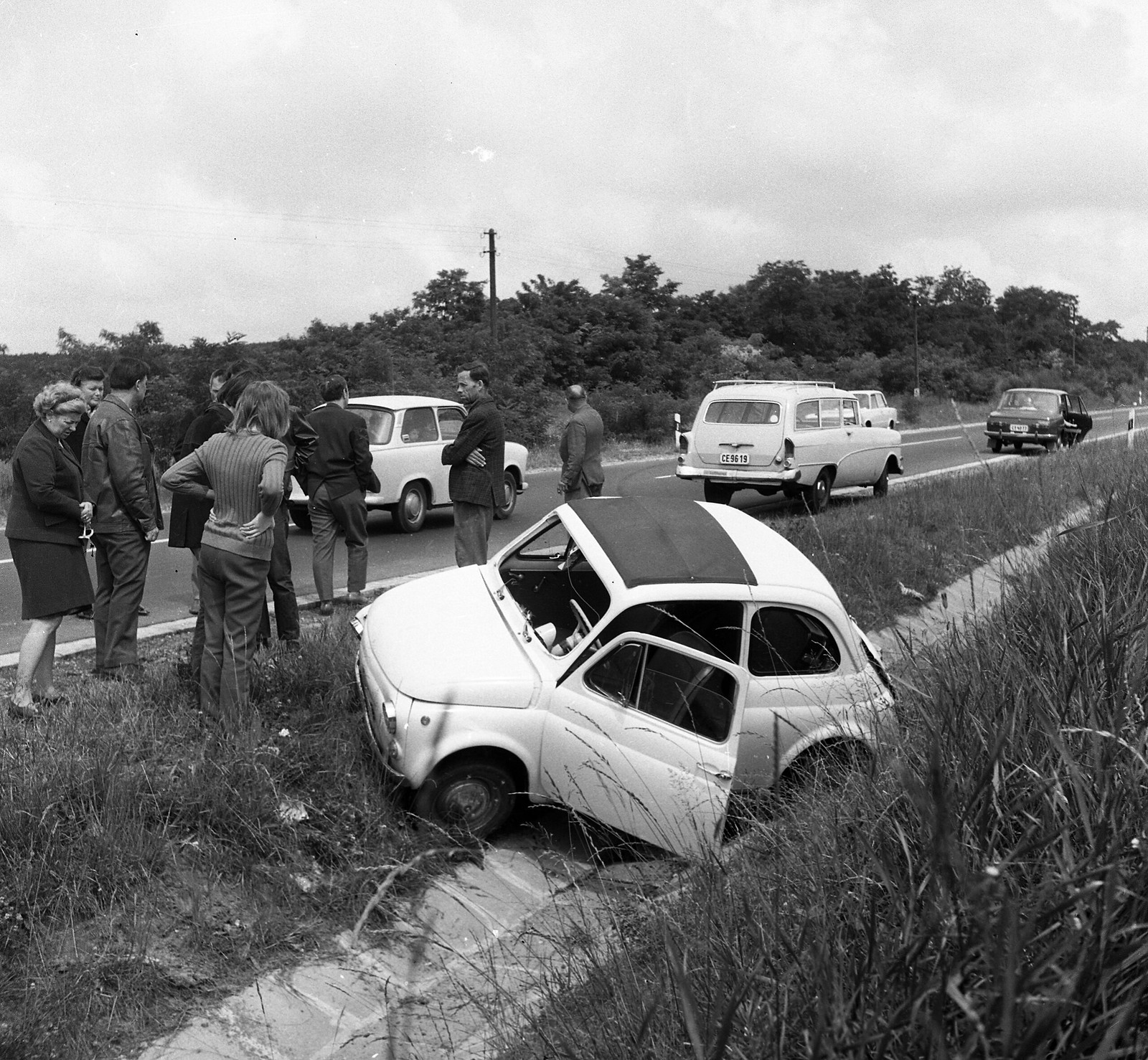
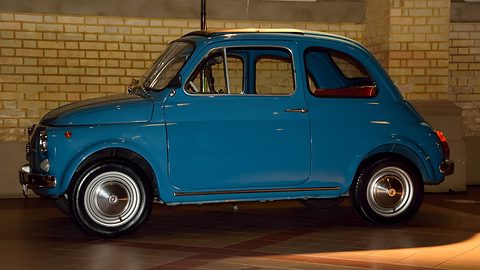
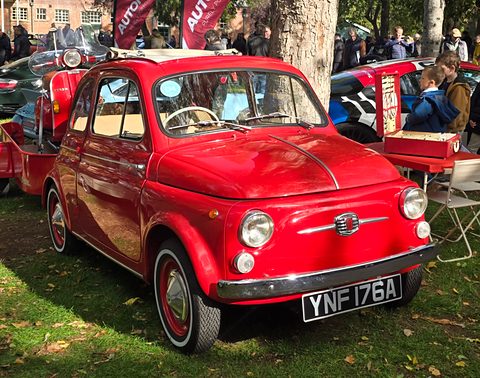
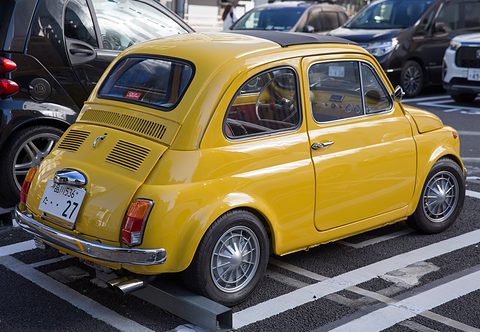
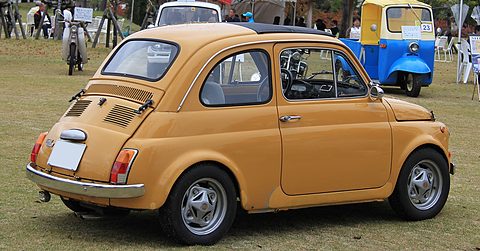
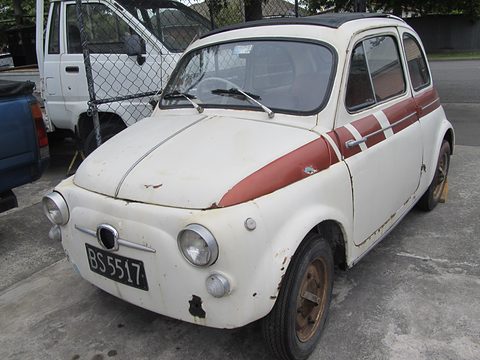
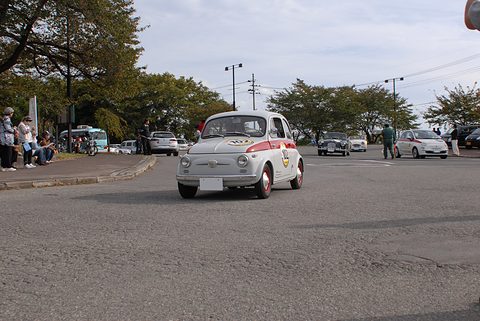
The Sport of June 1958 was meant to lift flat sales and to win over the enthusiasts. It had a ribbed steel roof, white paint with a red stripe along the flank, red wheels and two seats. Its engine was bored out to 499.5 cc, with a steel camshaft, polished ports, higher compression and a Weber 26 IMB2, for 21.5 CV and more than 105 km/h (65 mph), at 560,000 lire.source 1source 7source 3 In March 1959, at Geneva, came the Trasformabile and the Tetto apribile, with the floor dished under the front seats so that rear passengers had somewhere to put their feet. They were the first 500s homologated for four, and the prices came down to 395,000 and 435,000 lire.source 1source 7 An America model, with sealed-beam headlamps, bigger bumpers and a speedometer in miles an hour, went to the United States from December 1957, until interest faded and imports stopped in 1961.source 1
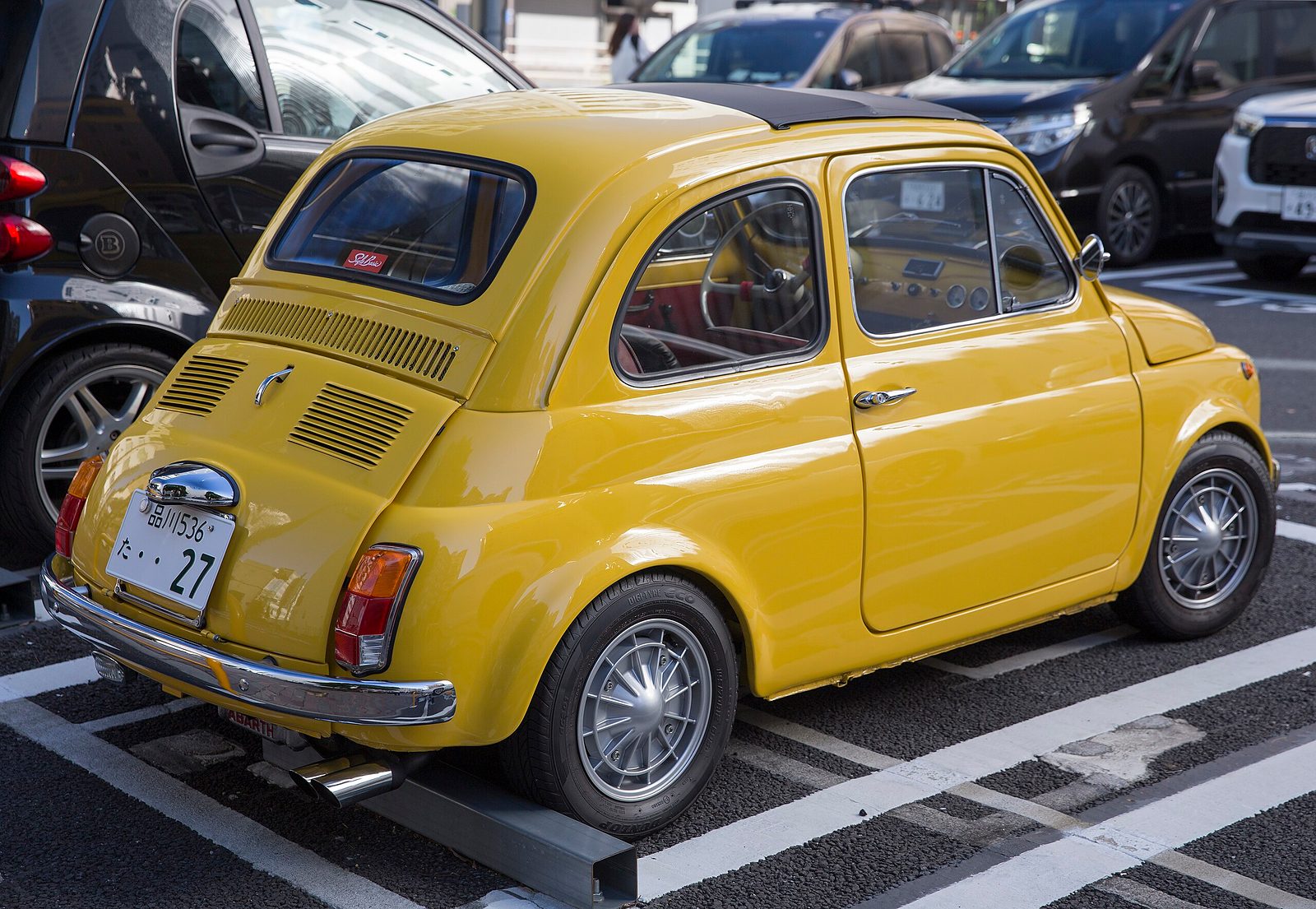
Others made it faster. Carlo Abarth and Giannini built tuned 500s, the Fiat-Abarth 595 and 695 and the Giannini Fiat 500, and Italian Wikipedia’s list of derivatives includes Abarth record cars of 1958.source 1source 5source 6
The saloons and an estate
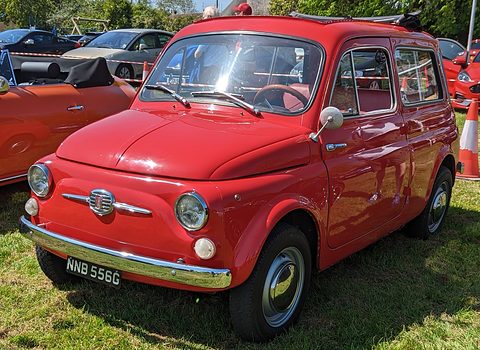
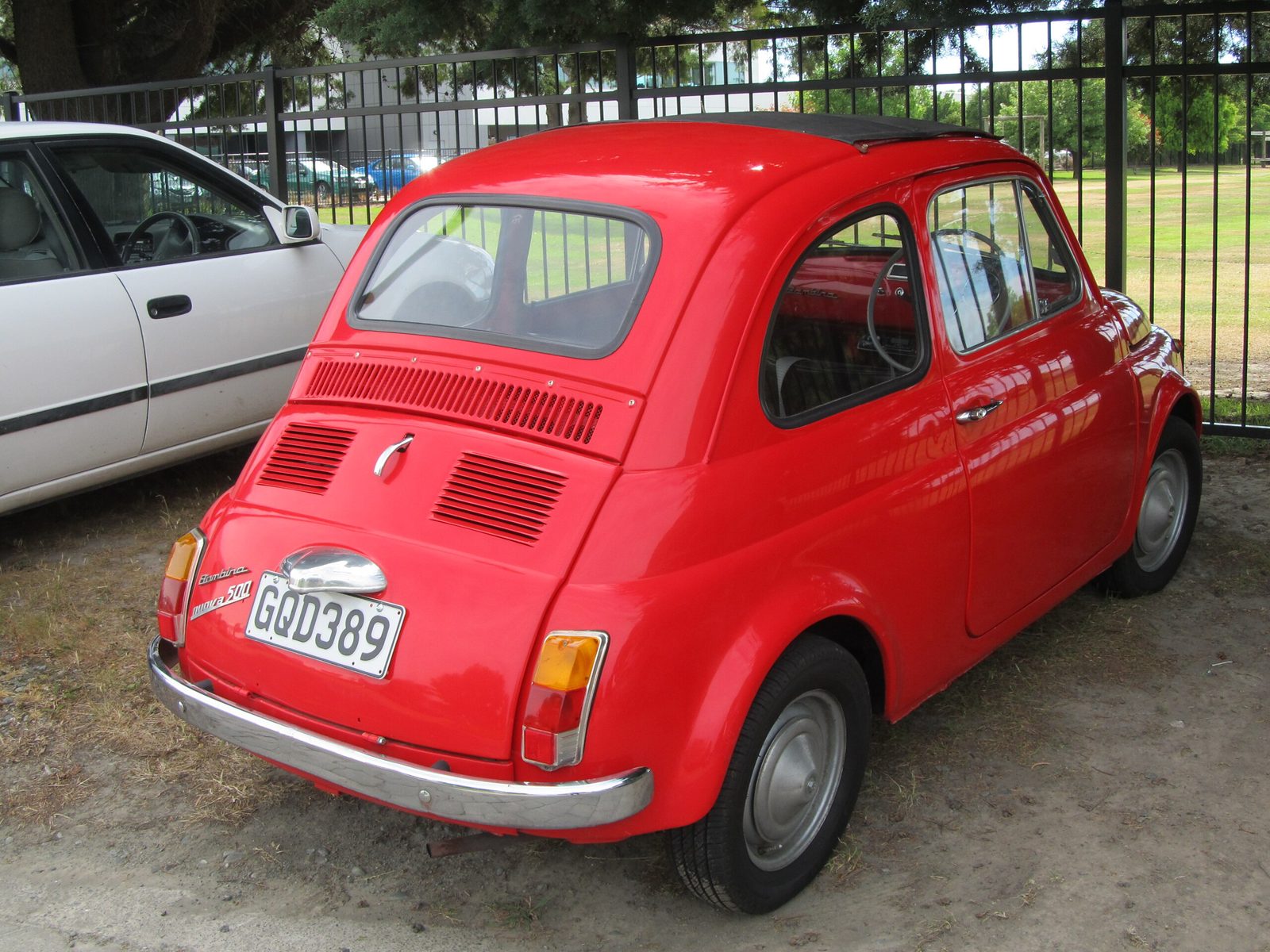
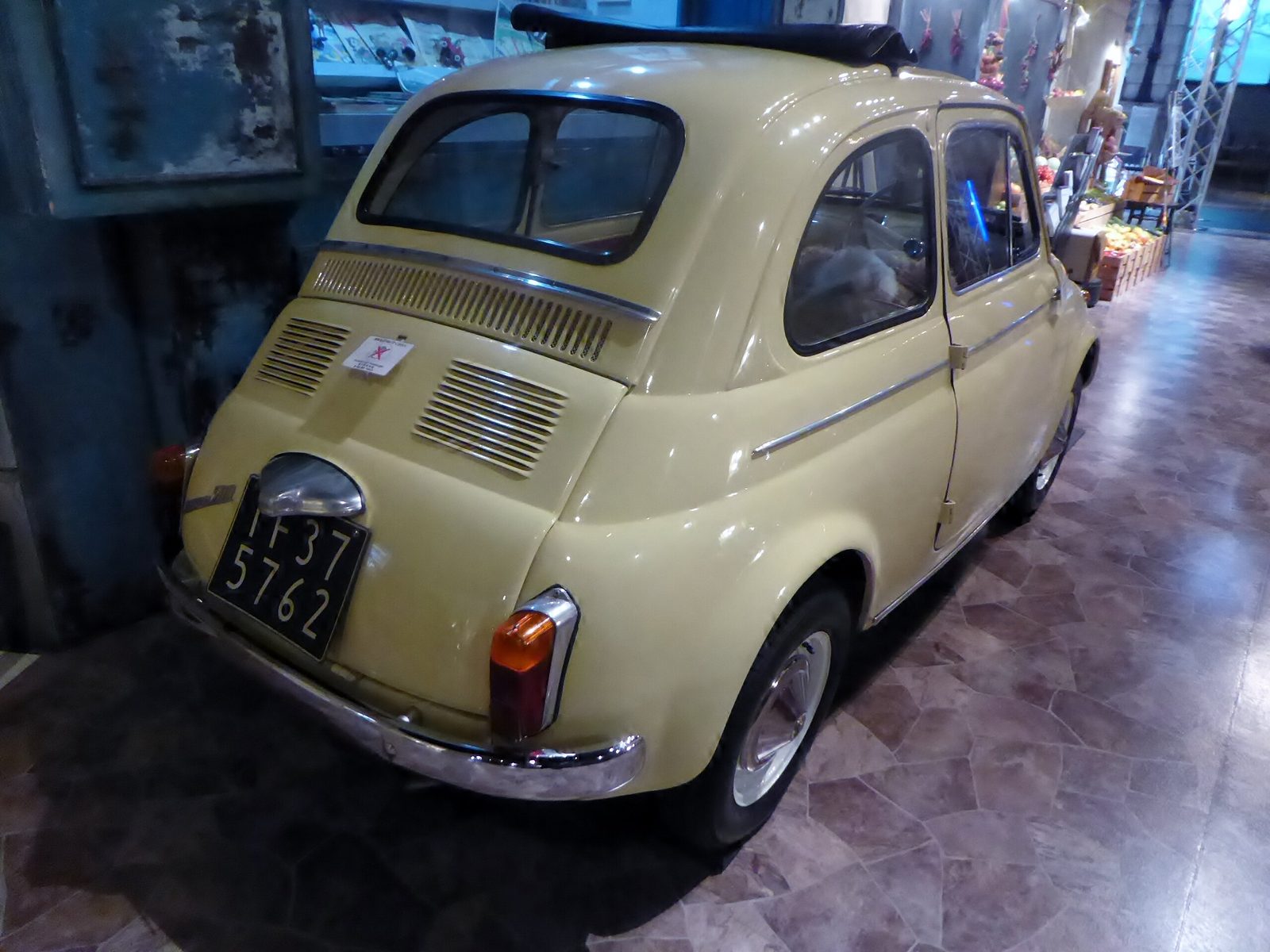
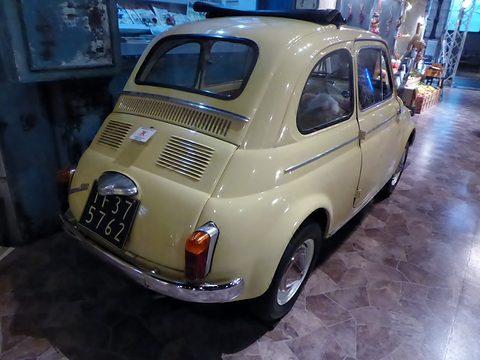
In May 1960 Giacosa laid the twin on its side, cylinders flat under the floor and drawing its air through grilles in the rear pillars. This flat version became known as the sogliola, the sole, after the flat fish. It made possible the Fiat 500 Giardiniera, an estate on a wheelbase 100 mm longer and 3,185 mm (10 ft 5 in) in all, with a side-hinged door at the back, and a van followed. The same engine went into the Autobianchi Bianchina’s Panoramica.source 1source 3 Estate production moved to Autobianchi at Desio, in 1966 according to two sources and 1968 according to Italian Wikipedia, and it was sold as an Autobianchi until 1977.source 1source 5source 3 Legally a commercial vehicle, the estate kept its rear-hinged doors to the end.source 1source 5source 8
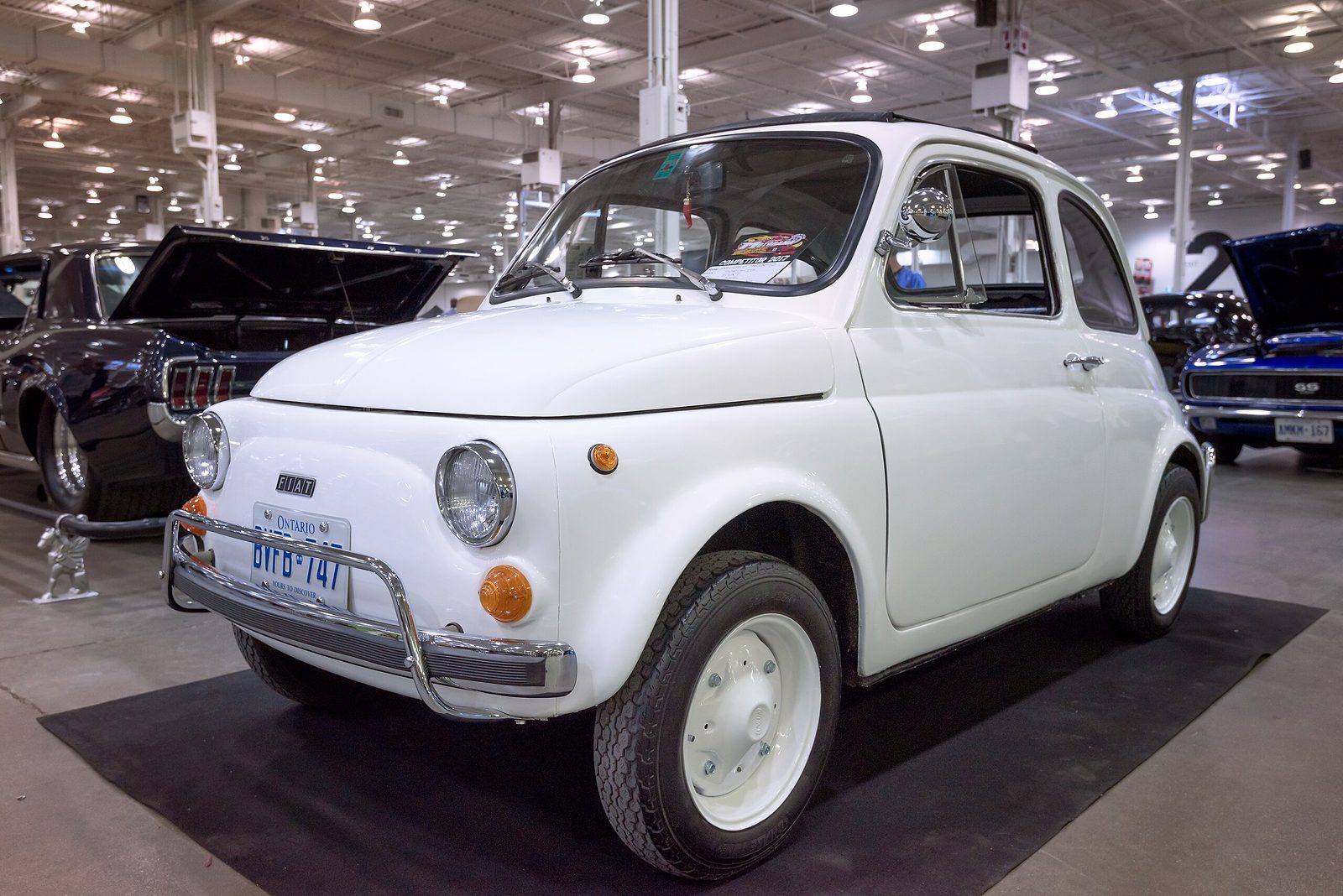
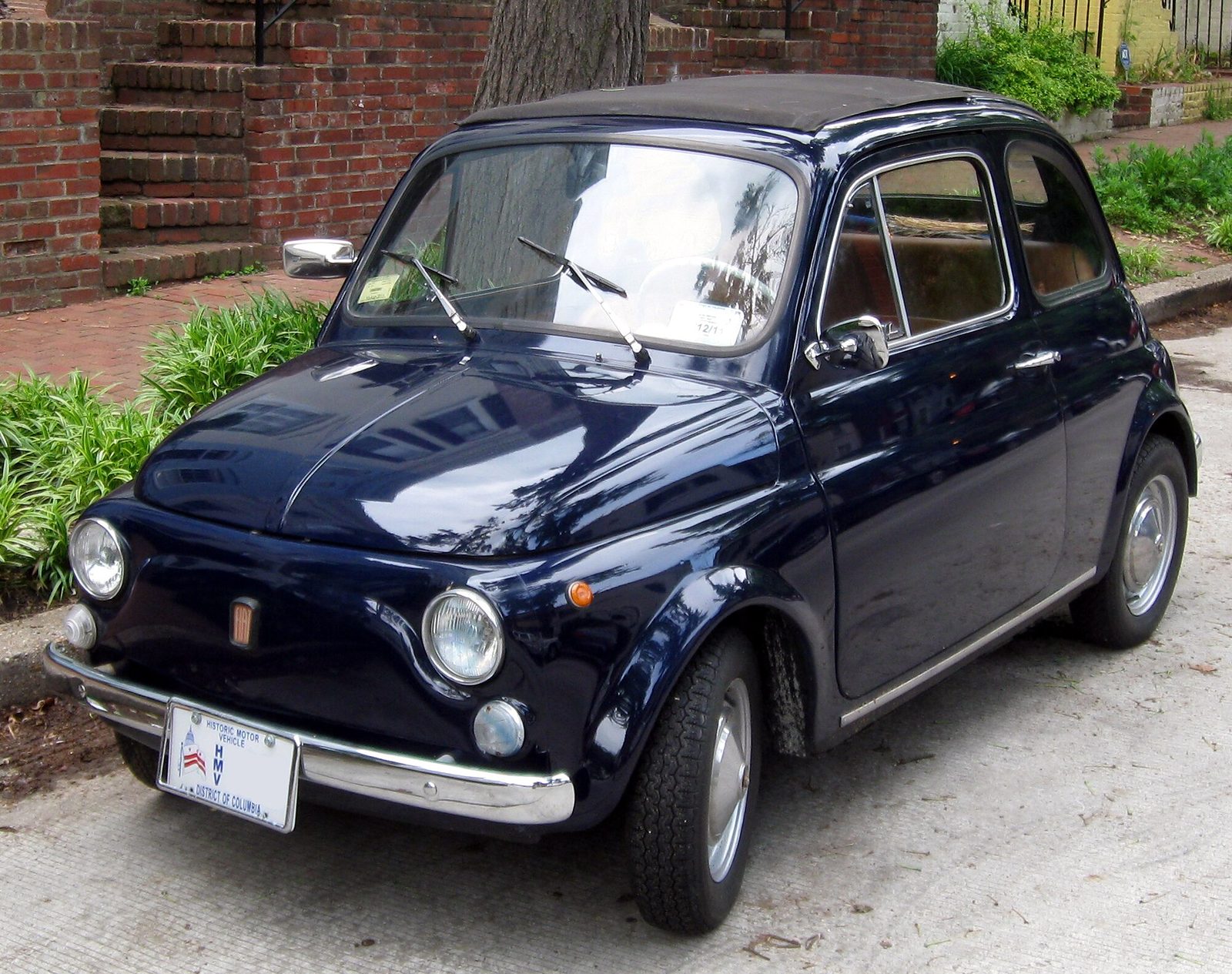
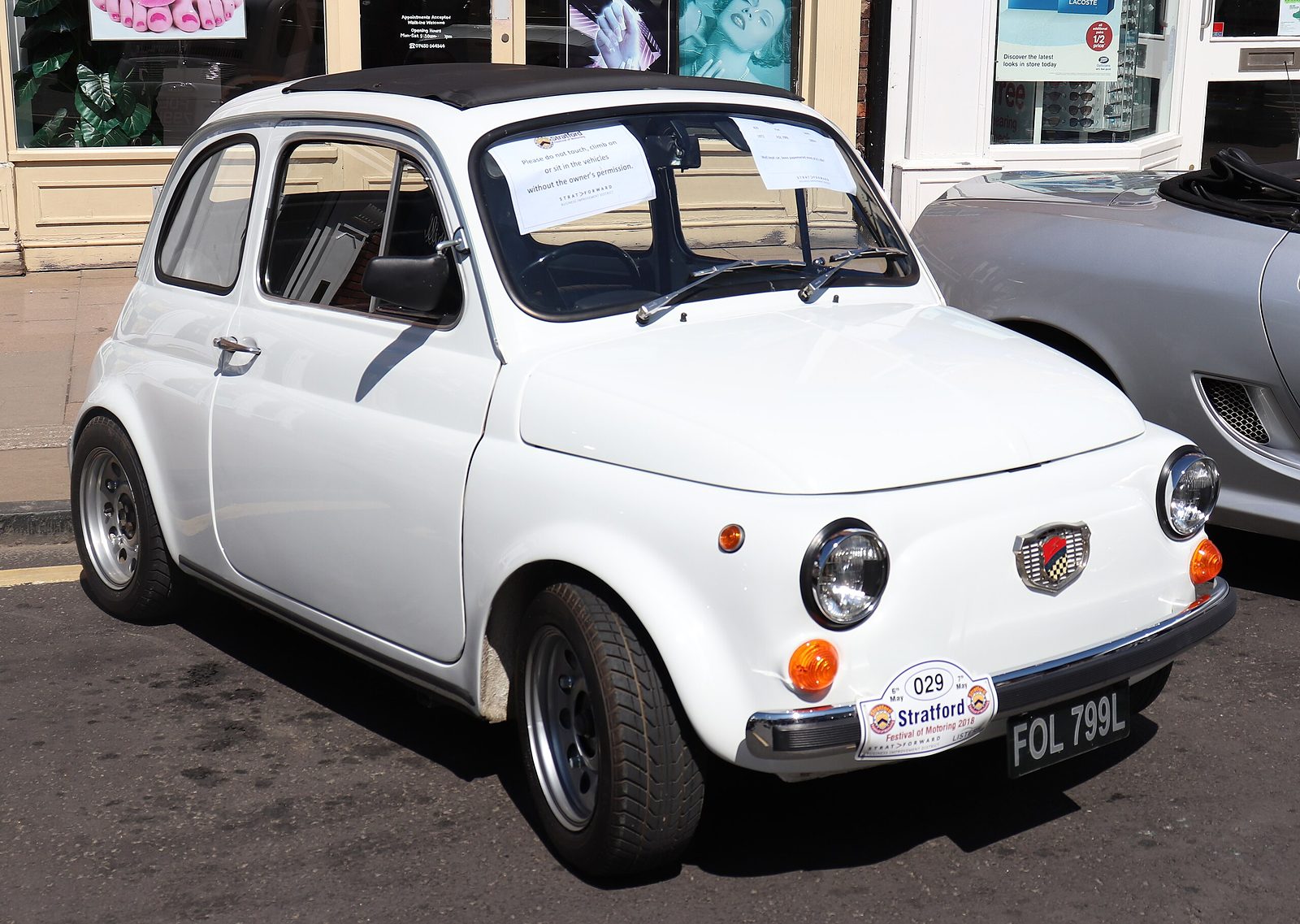
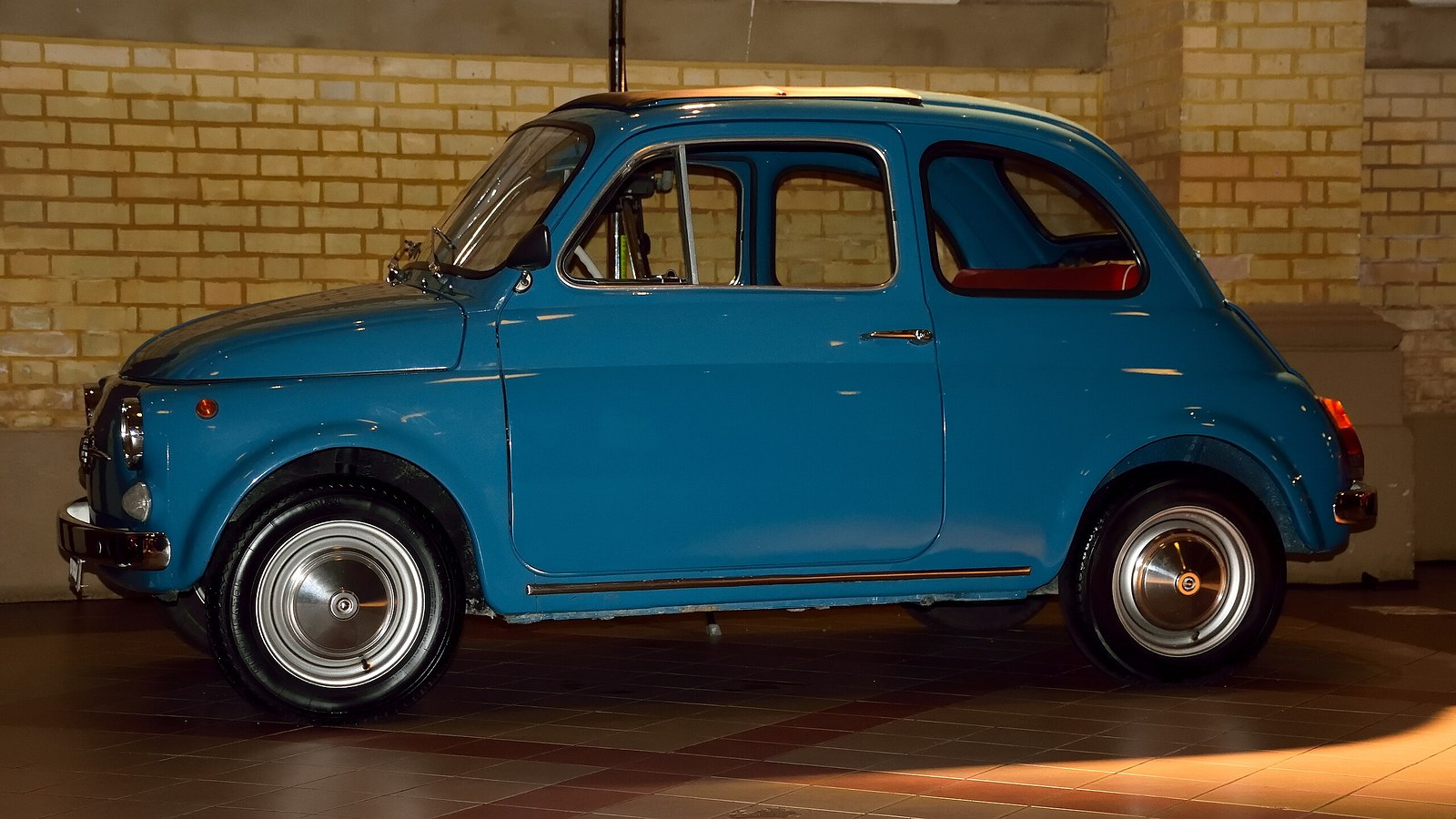
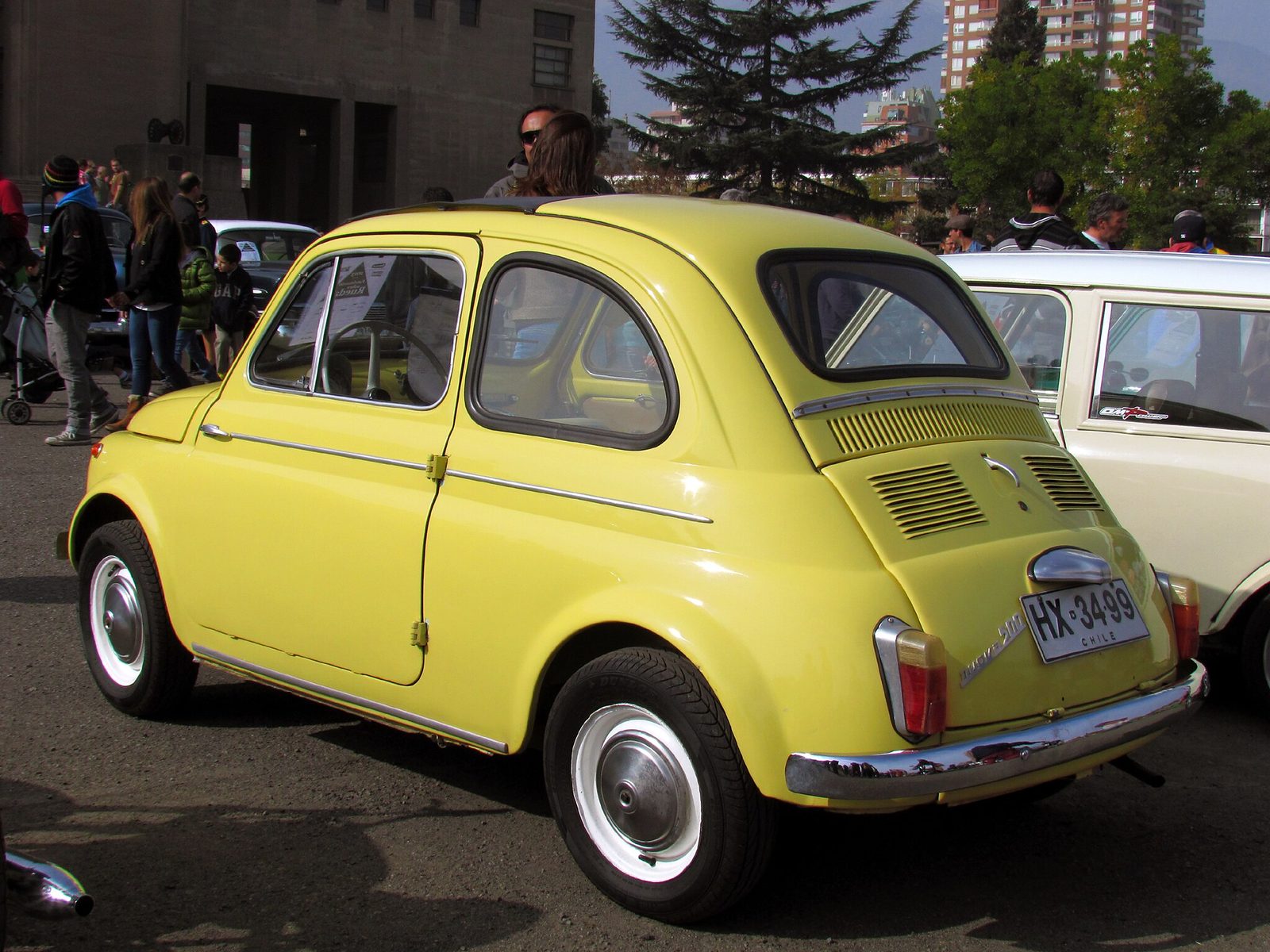
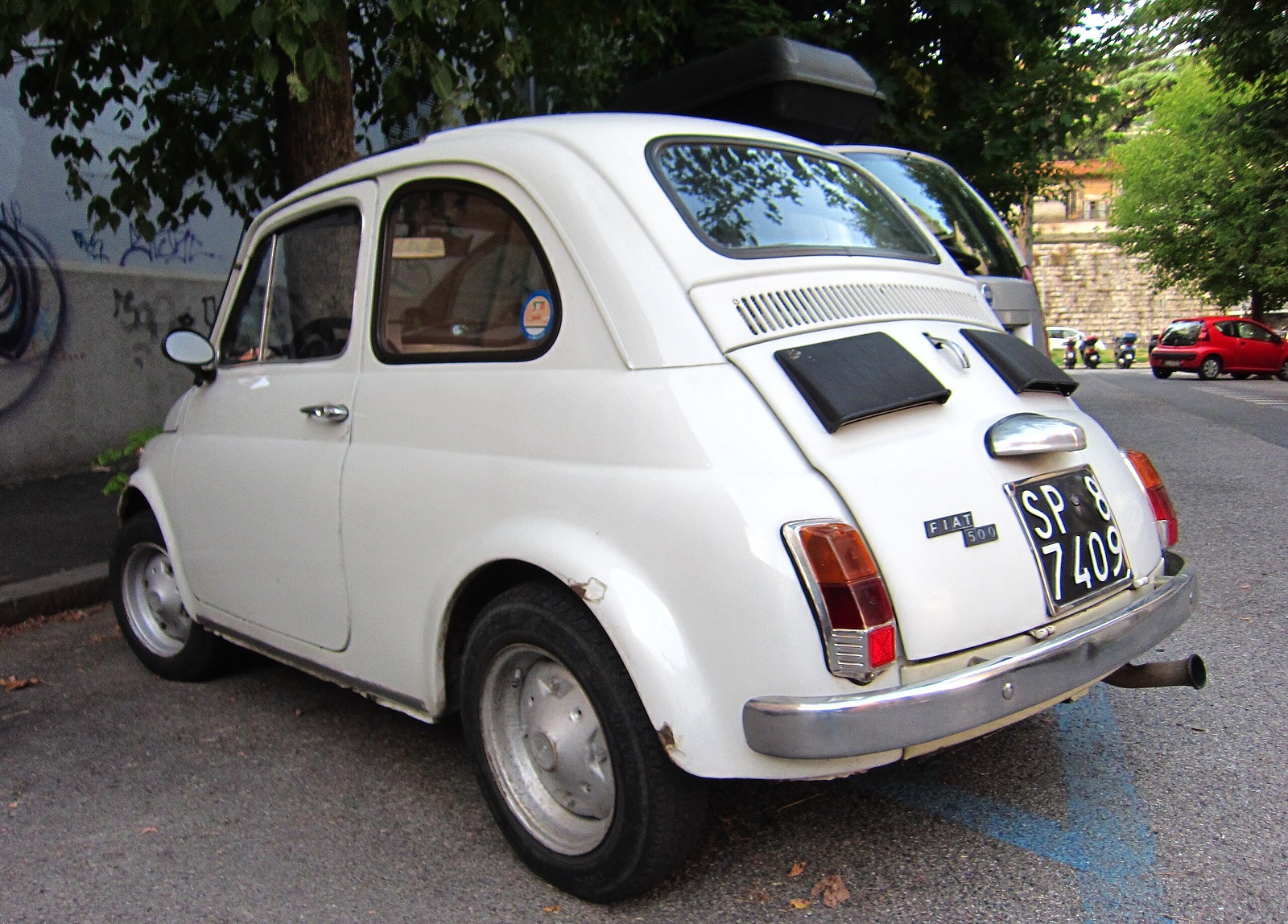
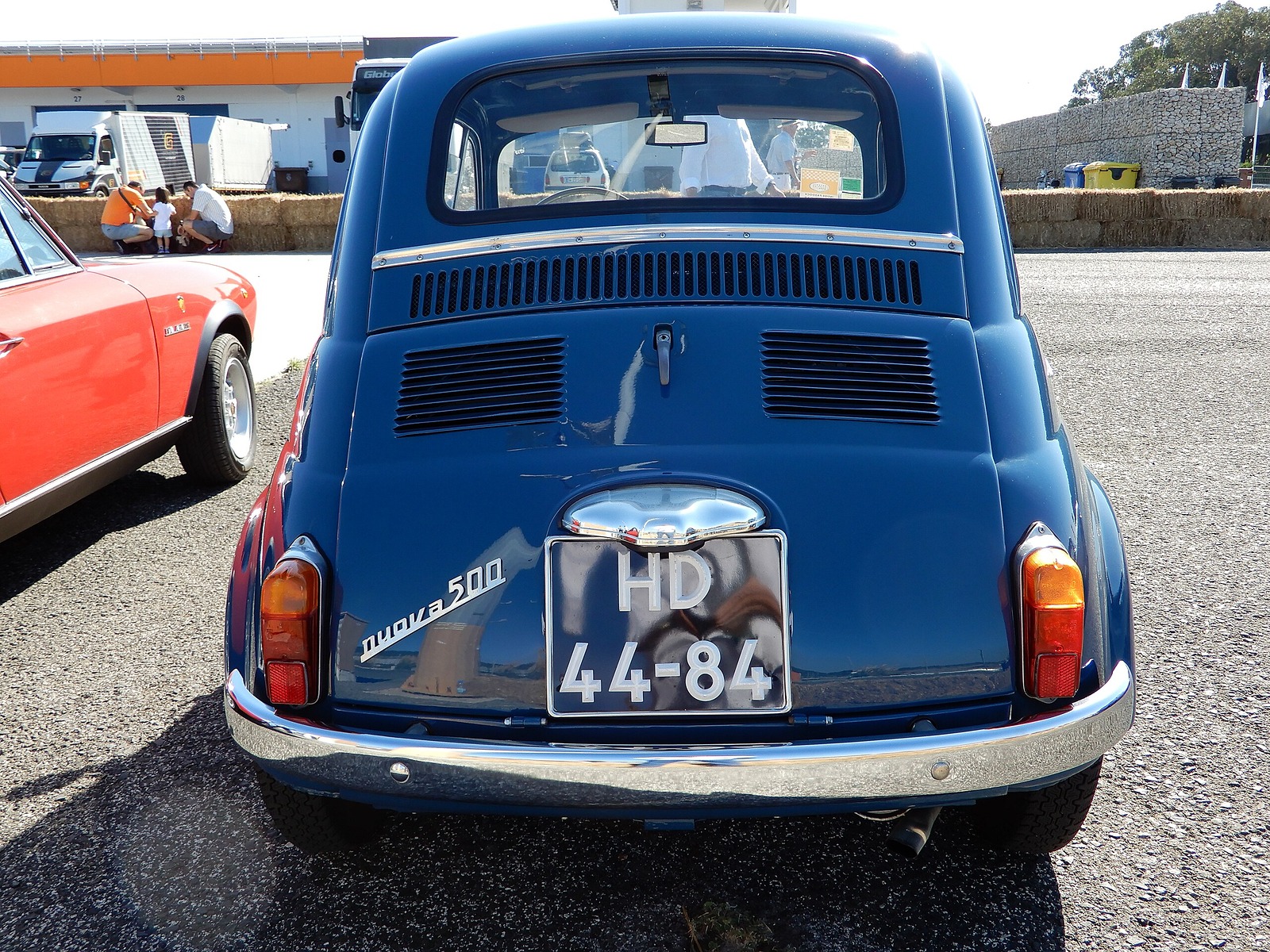
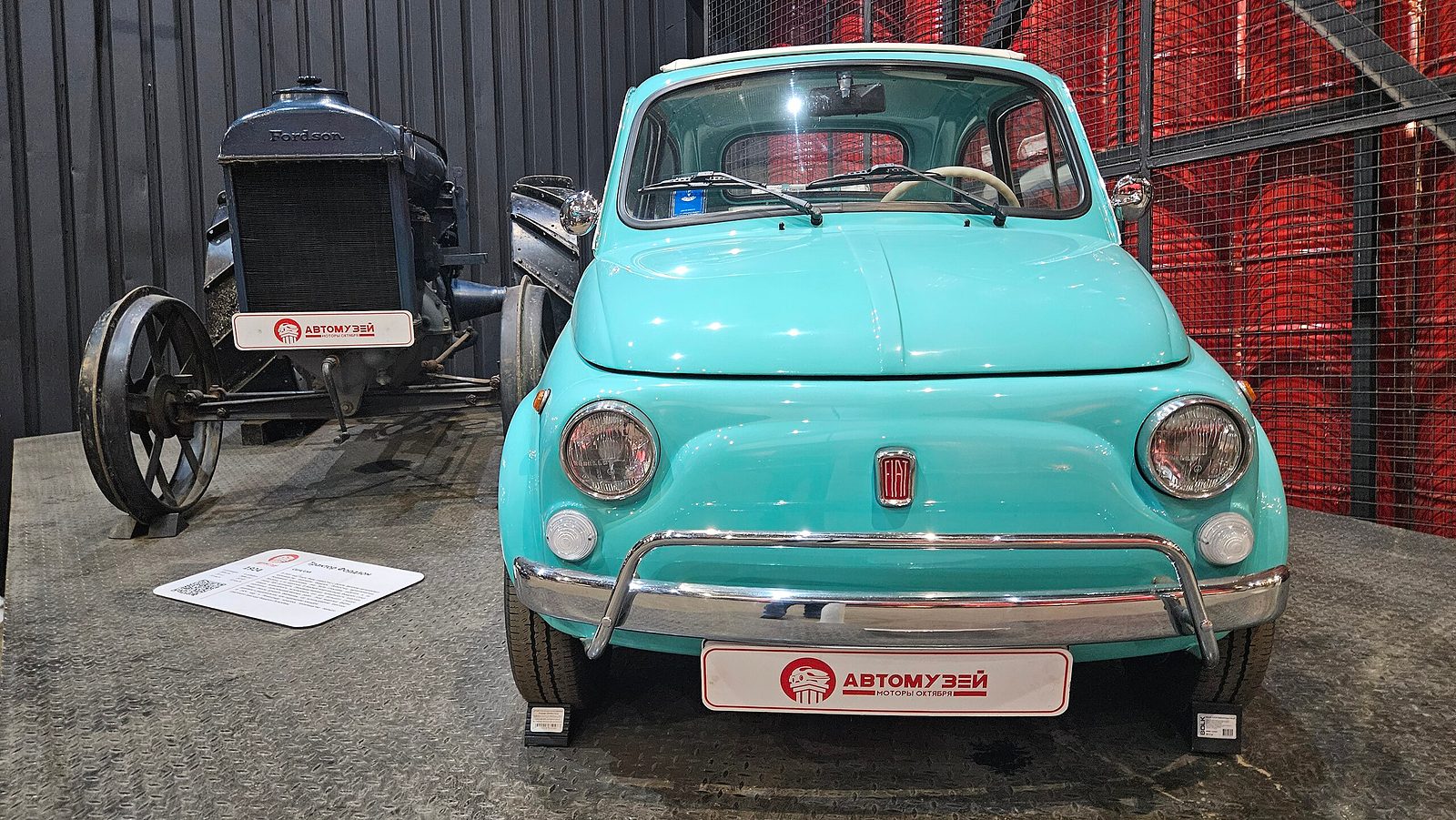
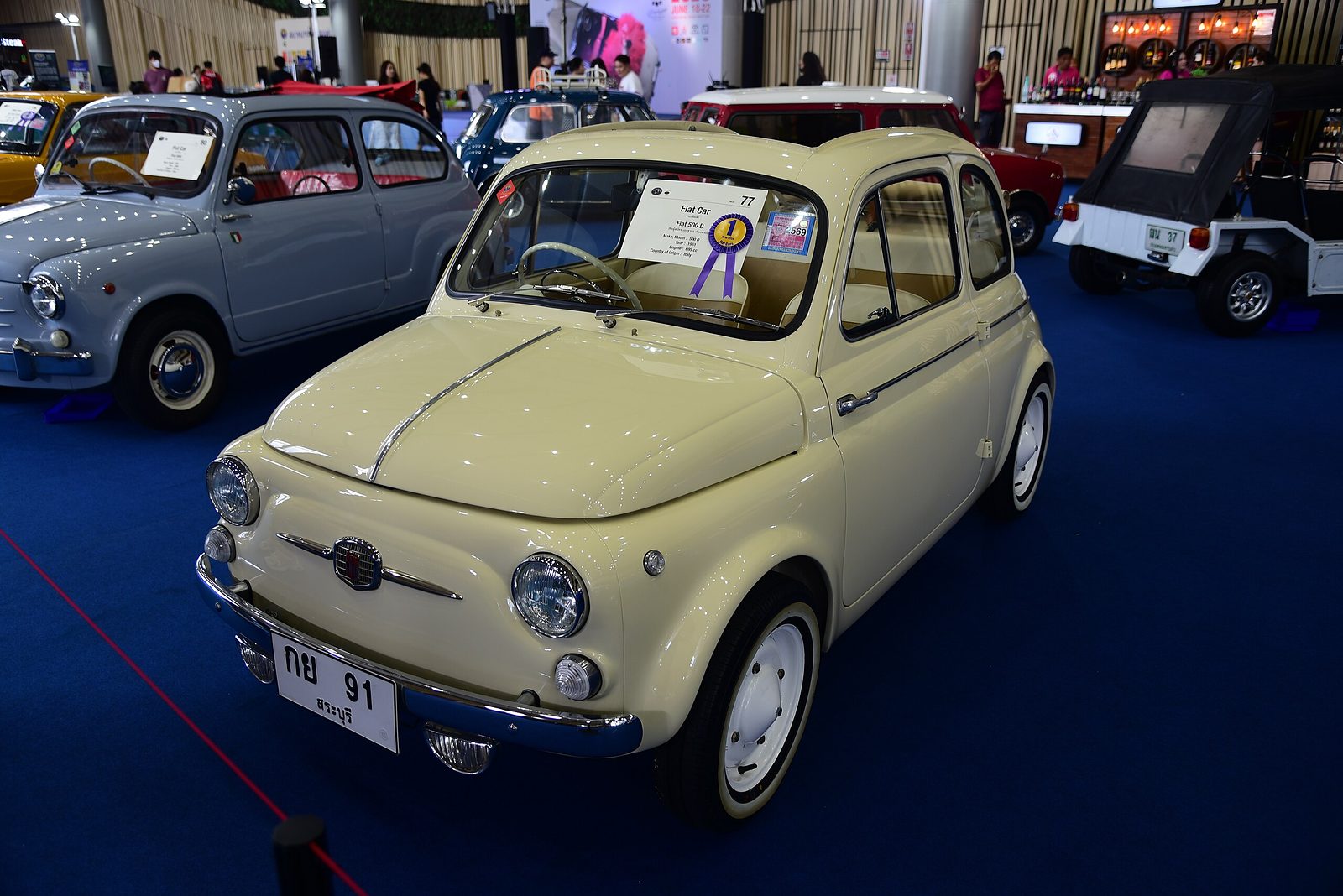
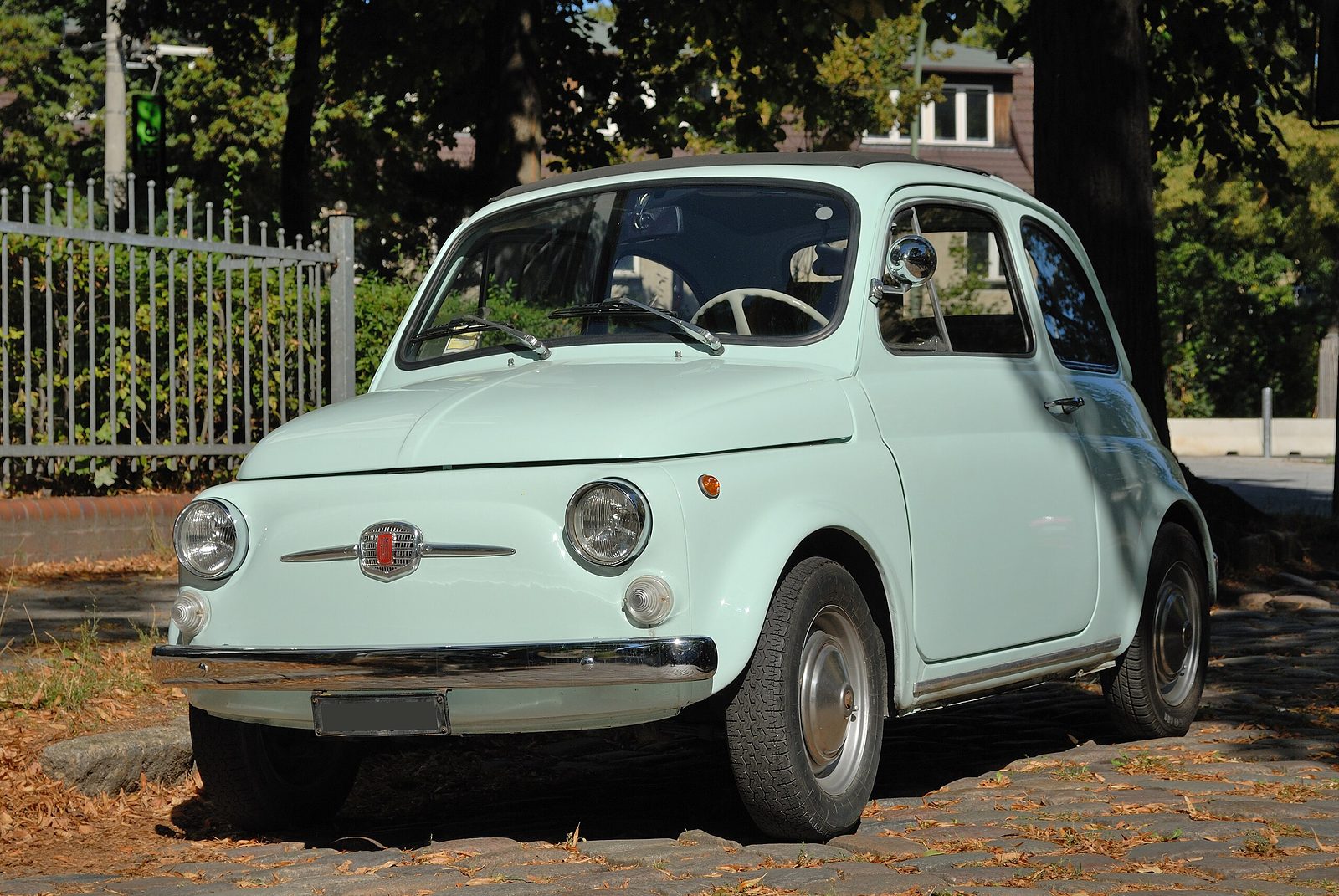
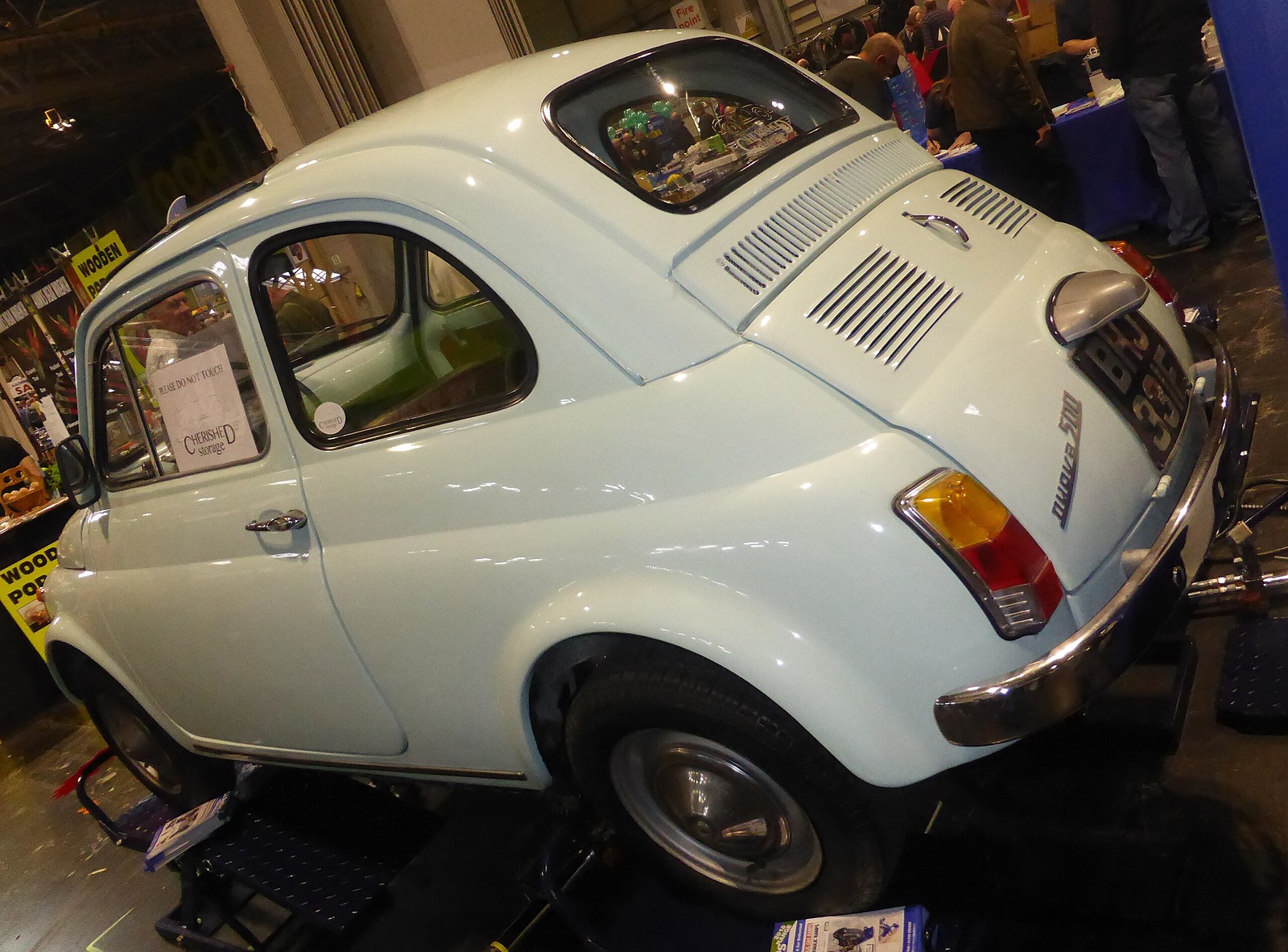
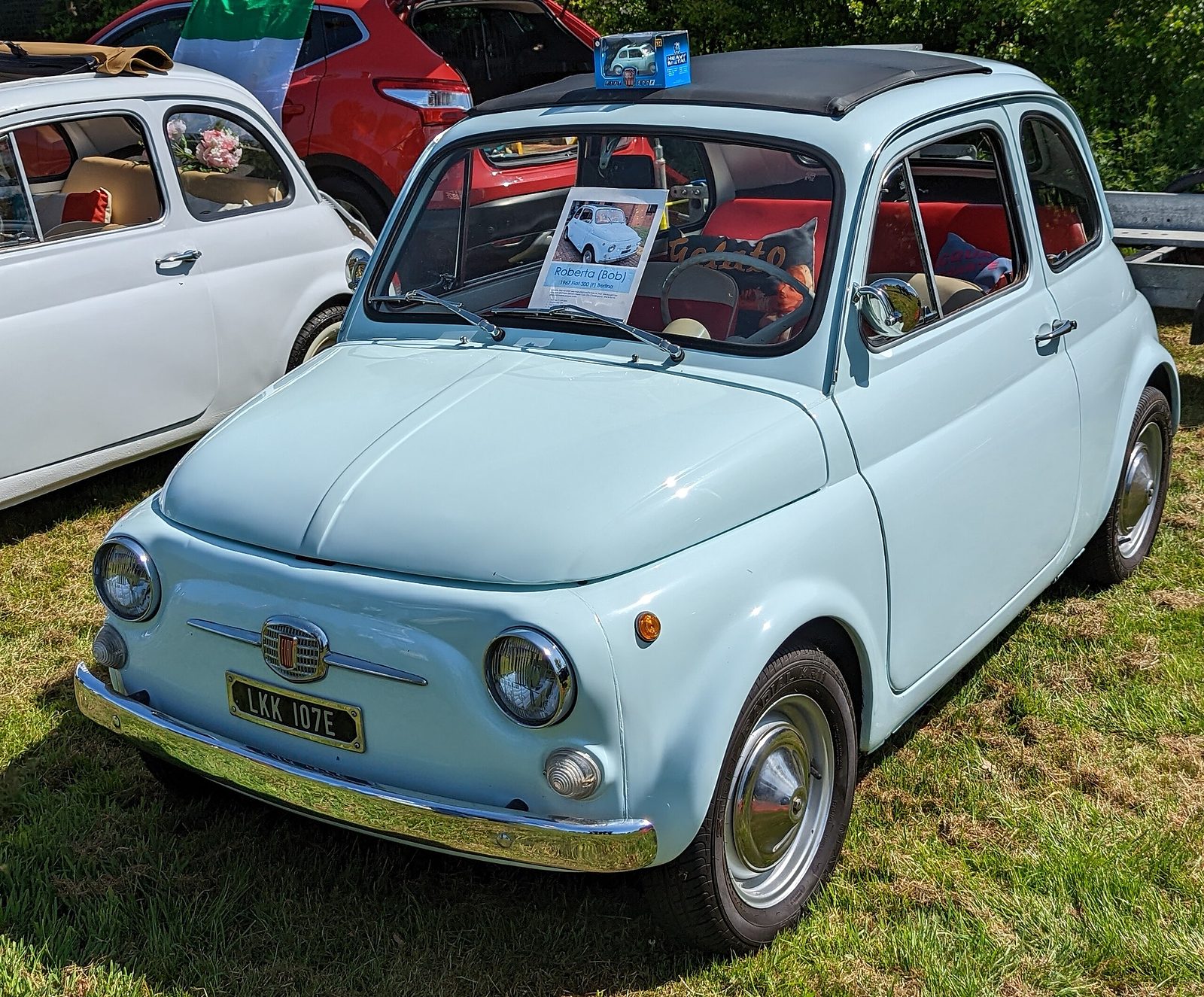
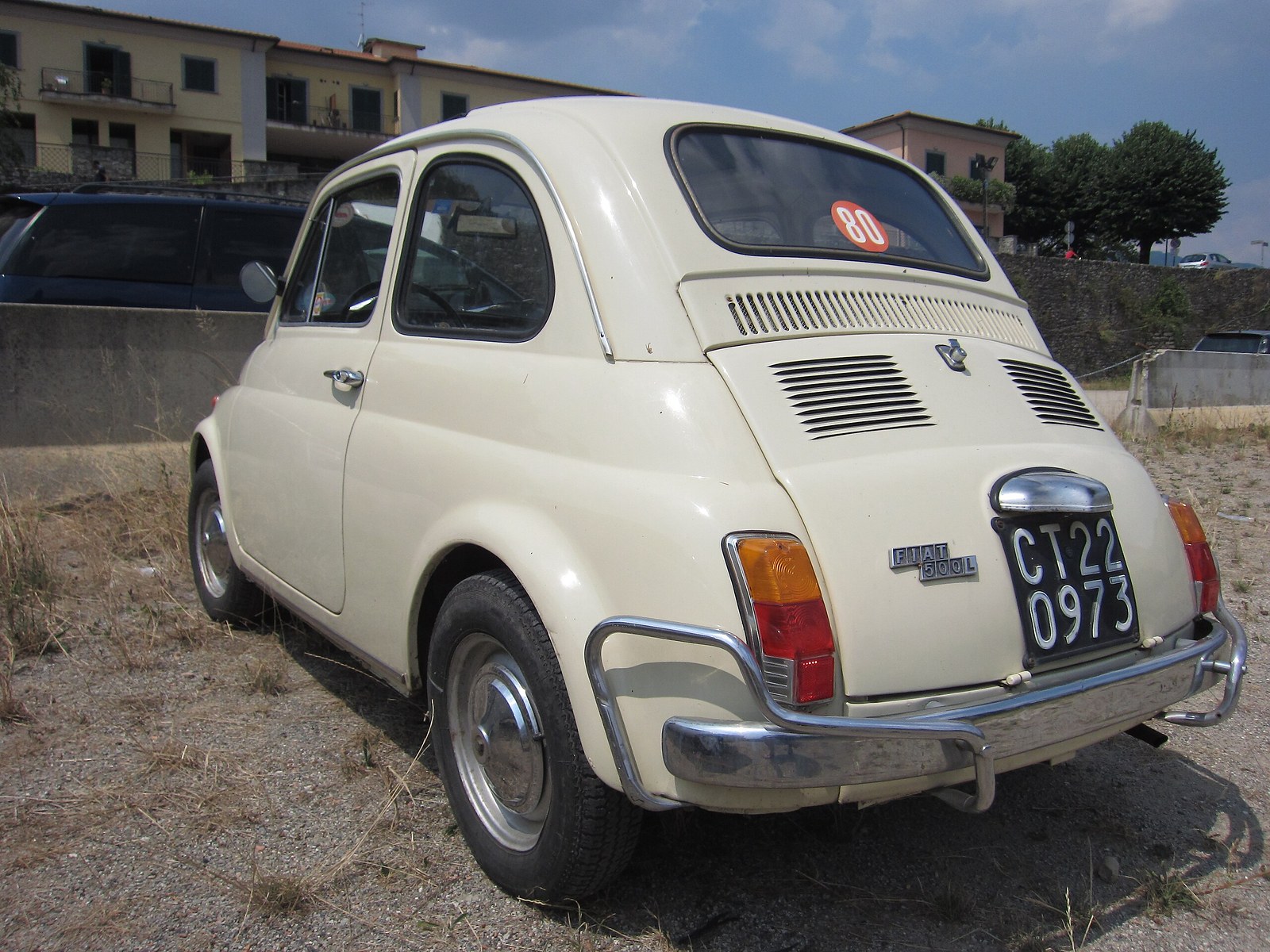
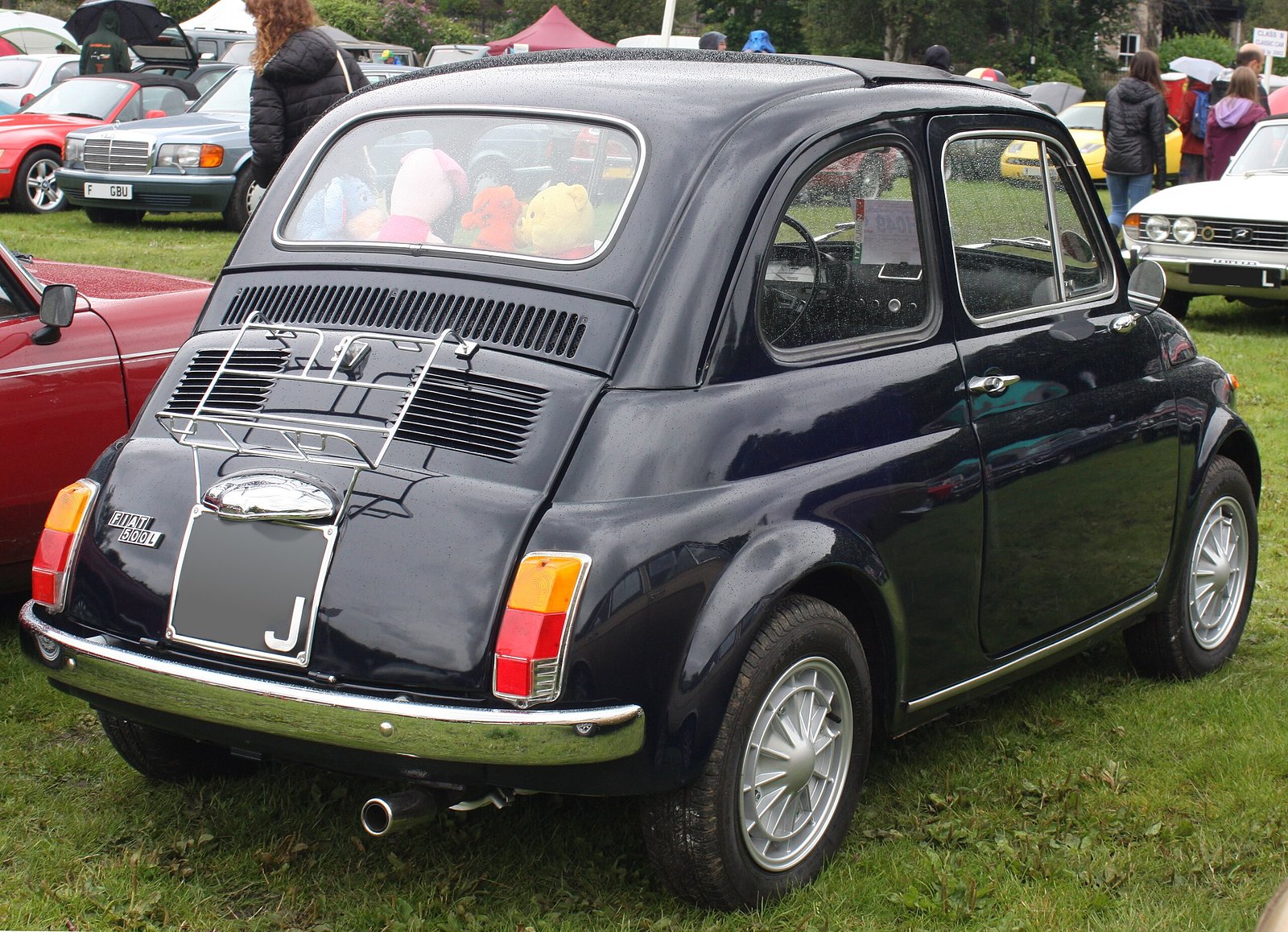
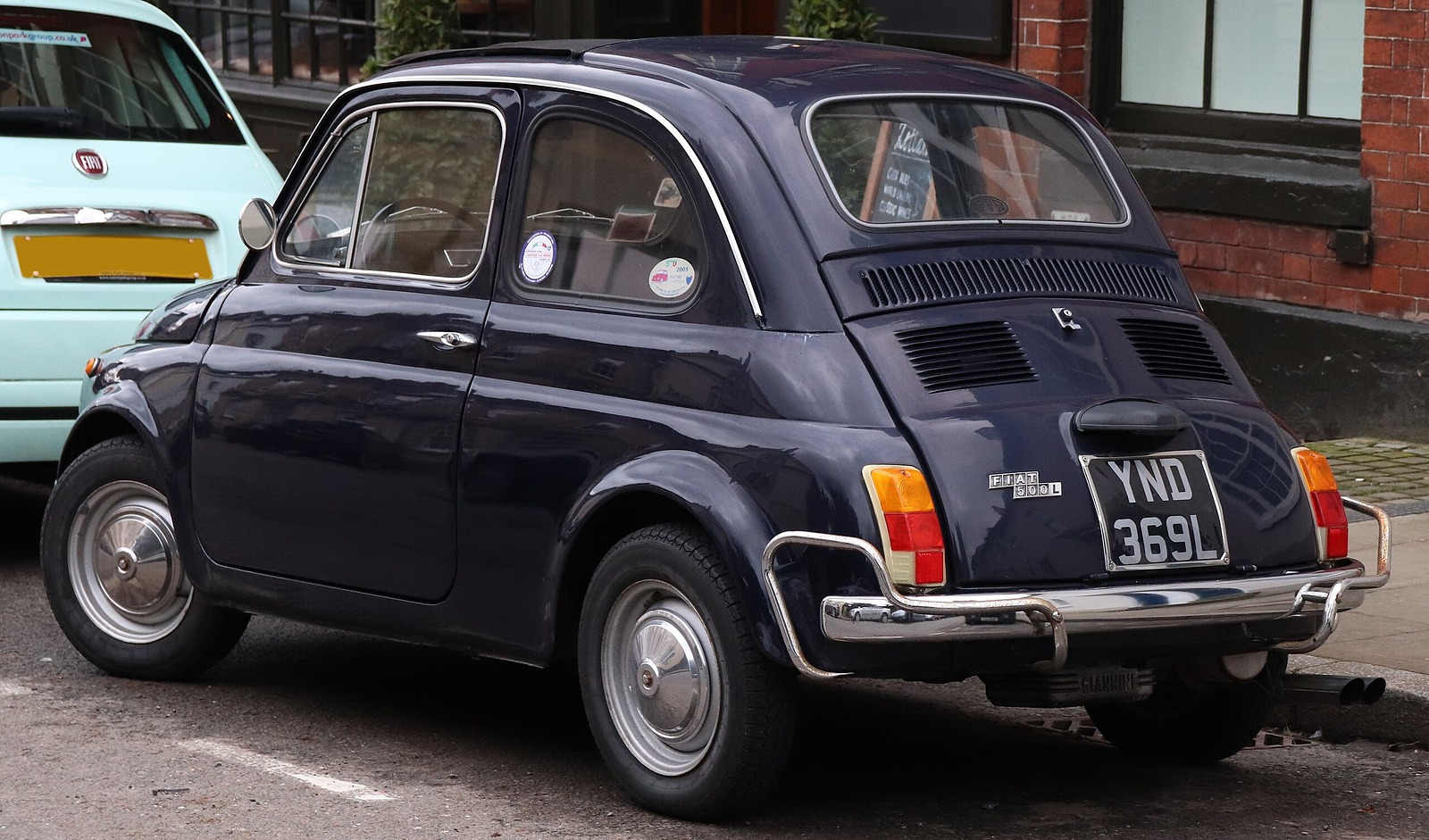
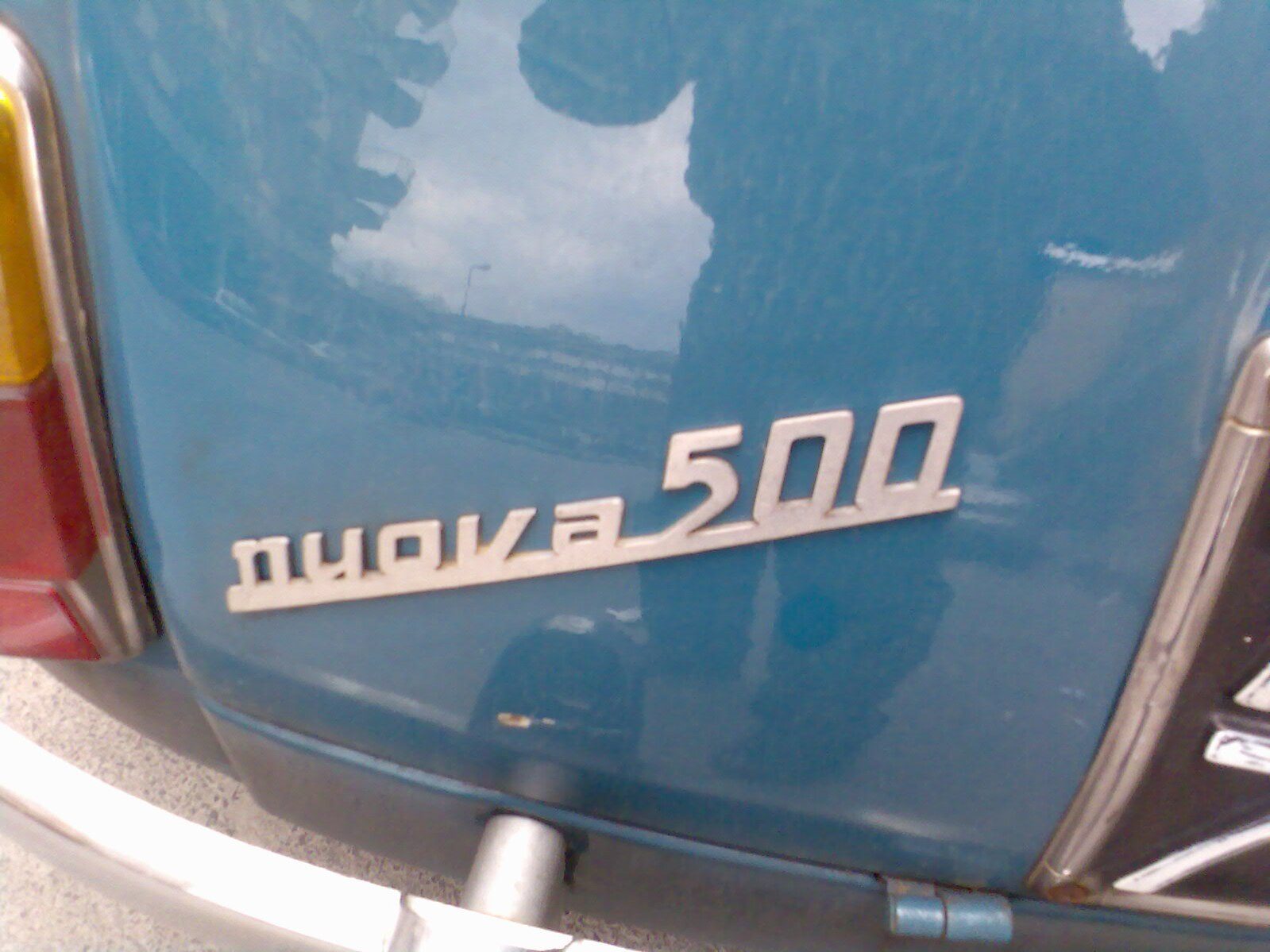
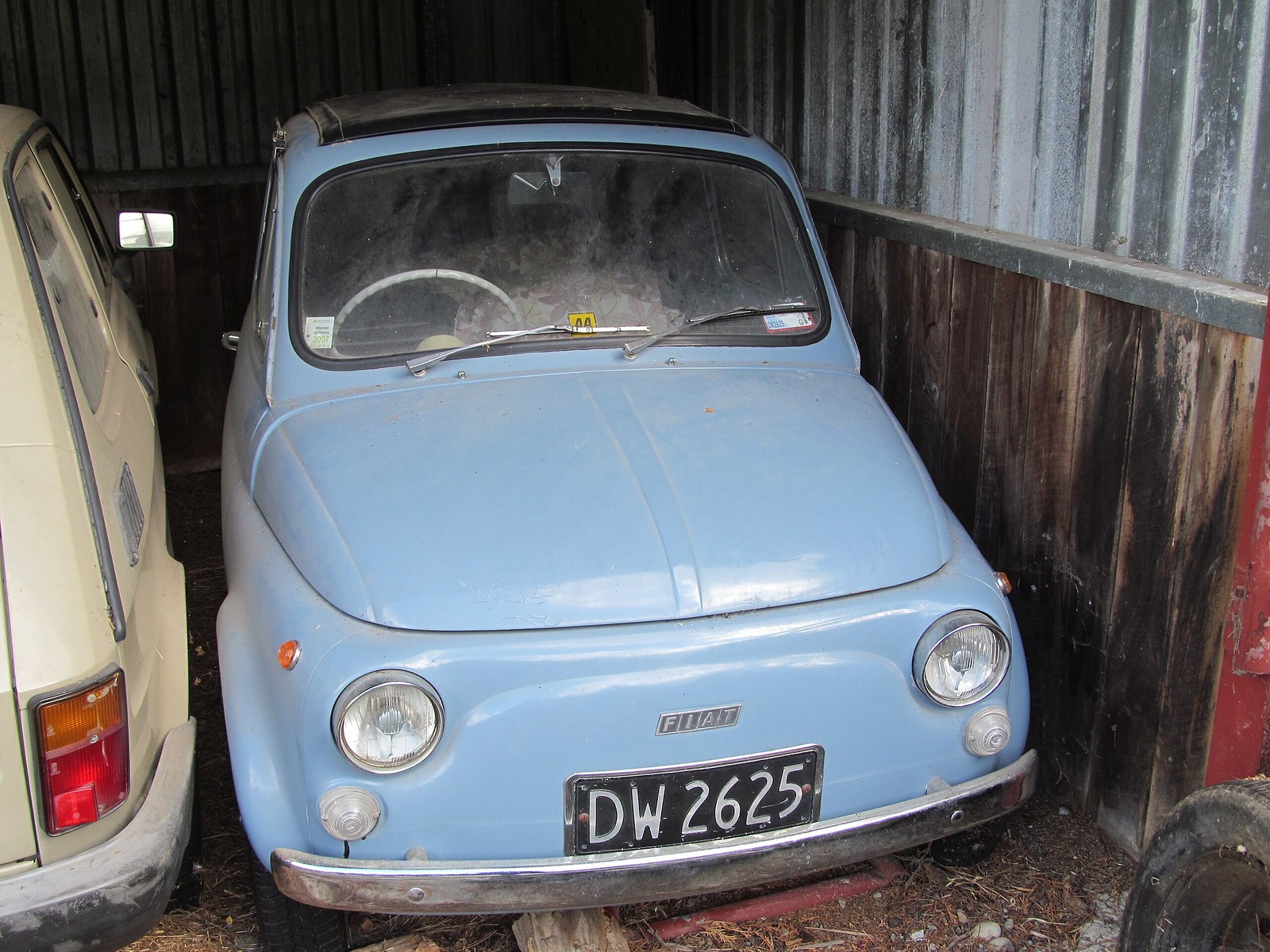
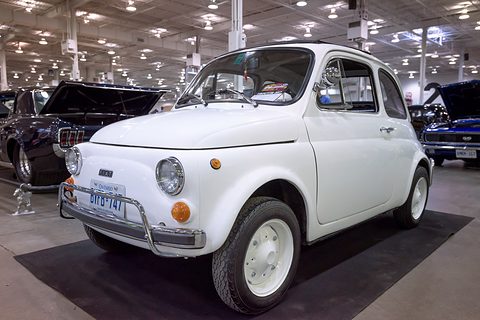
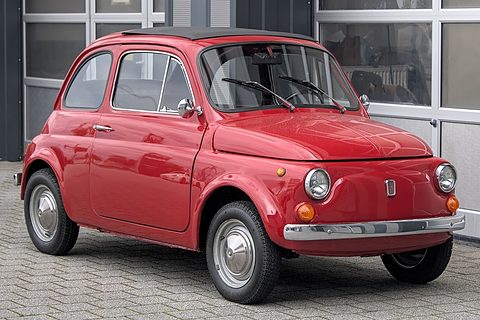
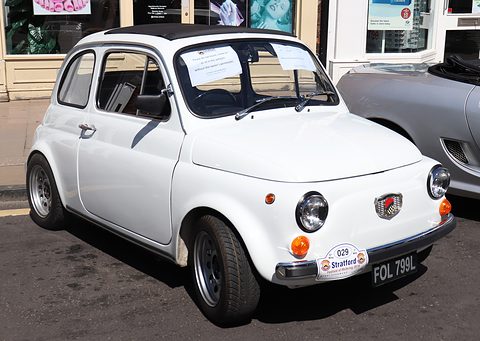
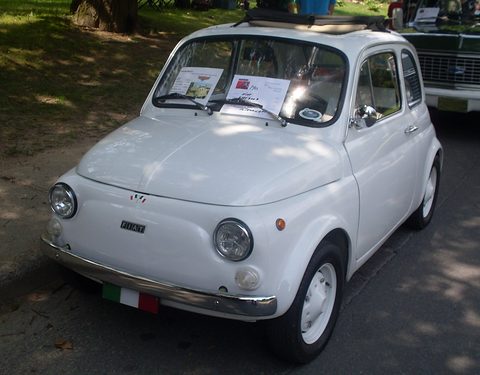
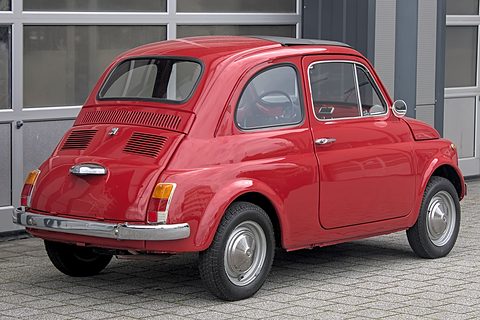
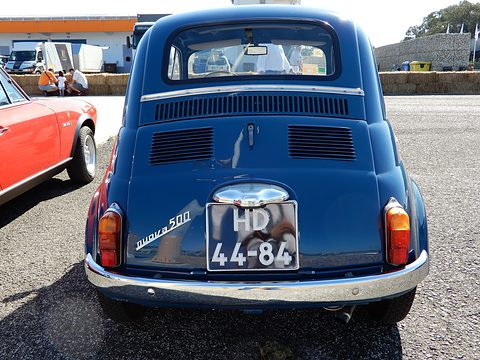
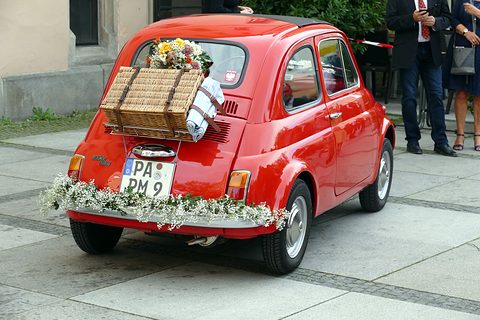
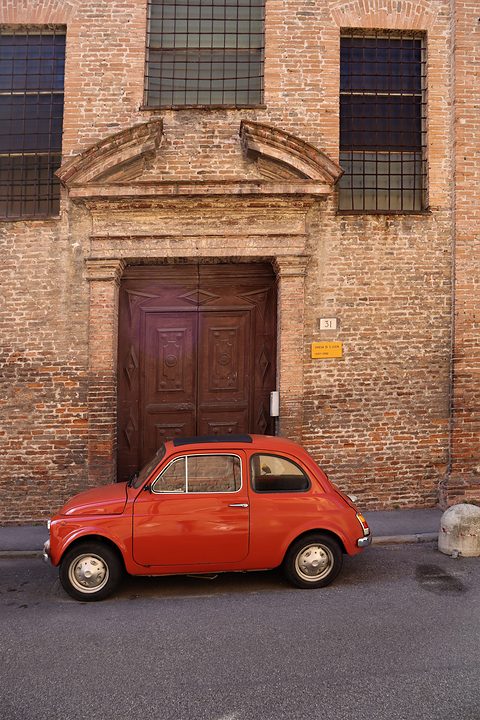
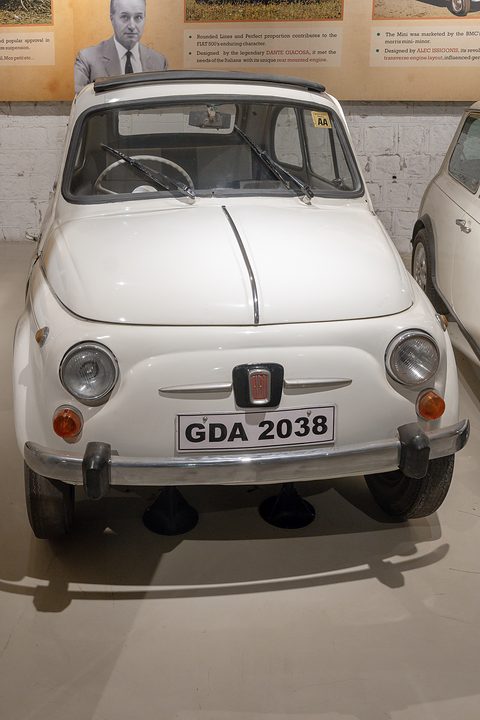
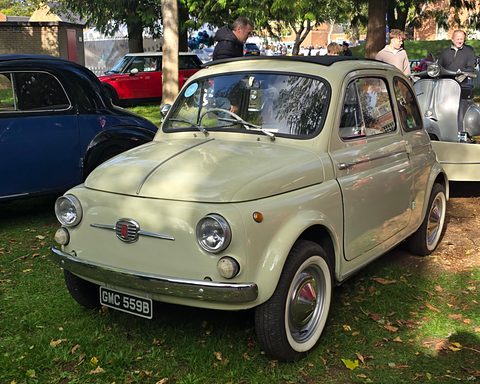
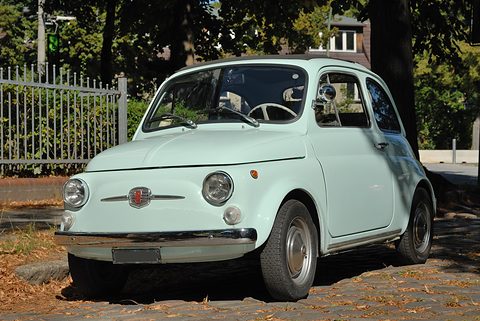
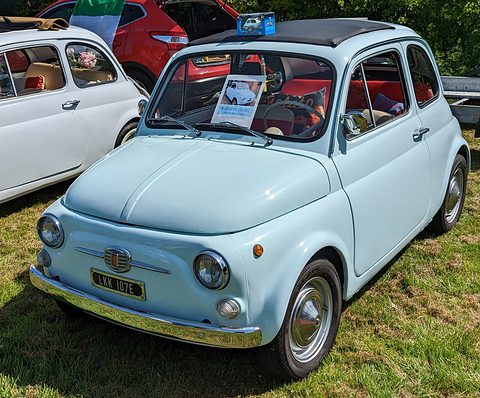
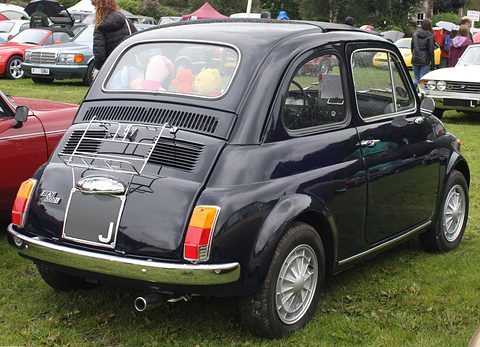
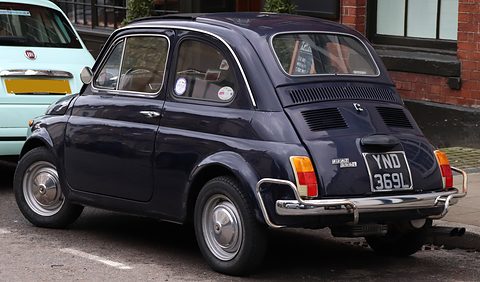
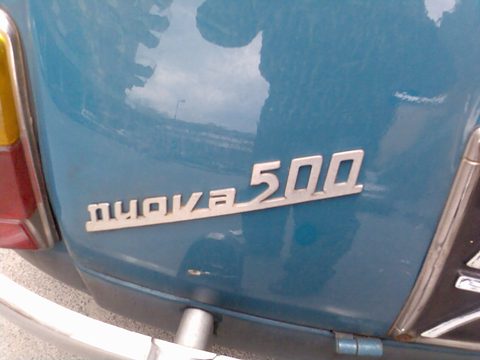
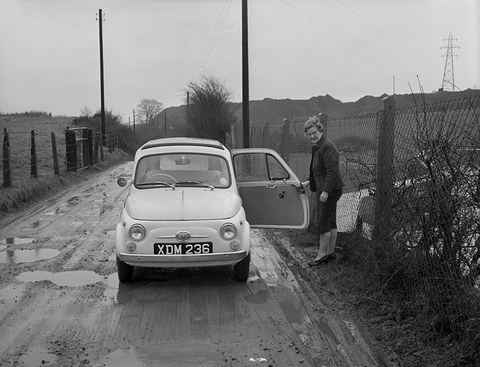
The 500 D of October 1960 replaced every earlier saloon, the Sport included. It had the 499.5 cc engine, detuned to 17.5 CV, a top speed of 95 km/h (59 mph), a folding rear seat and only the half-length roof, and it cost 450,000 lire.source 1source 7source 3 It kept the rear-hinged doors until a new Highway Code required front hinges. So the 500 F of March 1965 got front-hinged doors (on the first cars, fixed by eight bolts each), a deeper windscreen, a one-piece roof and more plastic in place of metal, with 18 CV.source 1source 7source 5 Late in 1968 the “Nuova 500” script gave way to a plain Fiat 500 badge.source 1 The 500 L, announced in August 1968, added tubular guards to the bumpers, which made it 3,025 mm long, and a black dashboard with a fuel gauge, reclining seats and carpets, at 525,000 lire.source 1source 5source 3
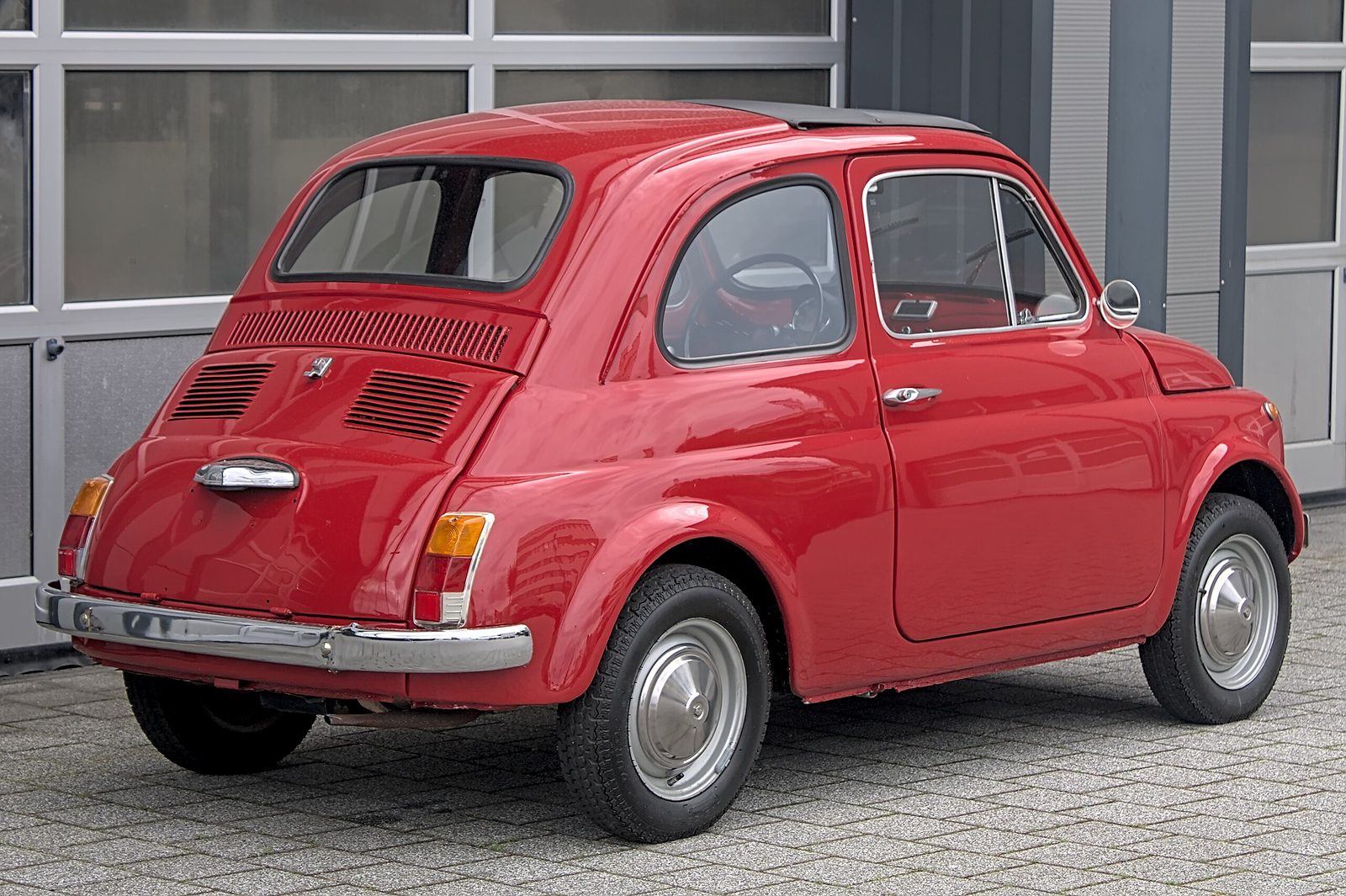
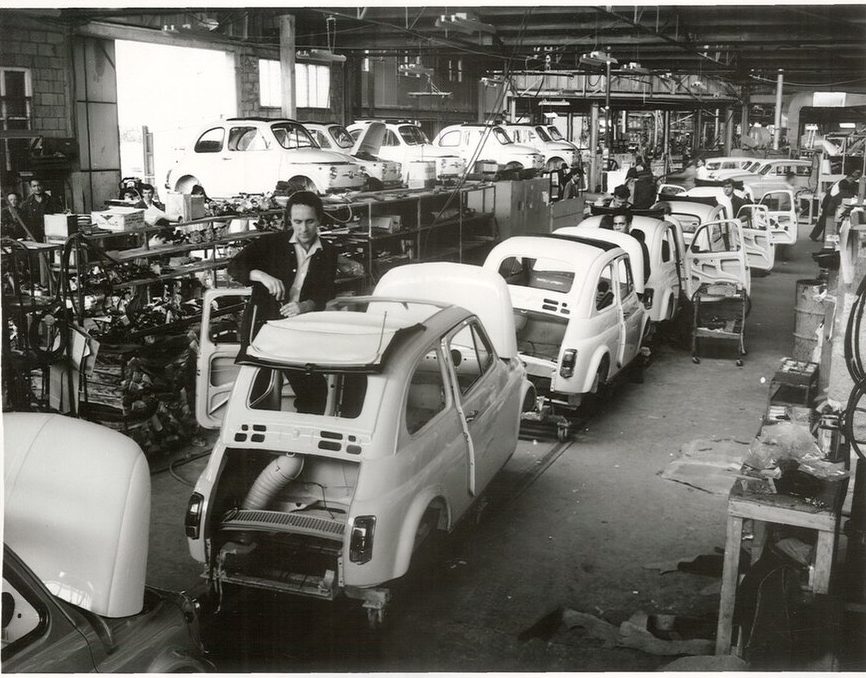
The last version, the 500 R, appeared at the Turin show of November 1972 beside the car that would replace it, the Fiat 126. It took the 126’s 594 cc engine, detuned to 18 CV, and its wheels, kept the crash gearbox, and went back to a bare black cabin with no fuel gauge; its chassis plates still read “110 F”.source 1source 7source 6 It cost 660,000 lire at launch, or 600,000 by Bouchat’s figure, and inflation took the price to 1,064,000 lire by August 1975.source 1source 7source 3 Fiat meant its buyers to move on to the 126, and once they did, the R’s sales fell away.source 5source 3
At the wheel
The early criticism was of an engine that was rough and slow to respond, short of power and speed, shaking at low revs and loud at high ones.source 1 Quattroruote measured the first car in January 1958 at 85 km/h (53 mph), 55.2 seconds for a standing kilometre and 4.5 litres per 100 km (63 mpg).source 1 The gearbox had no synchromesh to the very last car.source 5source 6 The starter and the choke were two little levers on the tunnel behind the gear lever, pulling on cables, and until July 1972 the engine lid was held up by a rubber strap.source 1source 6 On the F, the rubber “doughnut” couplings in the driveshafts became a well-known repair.source 6
Sicily, 1975
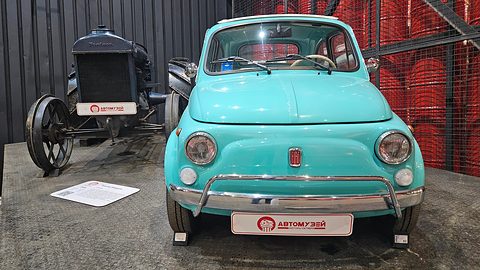
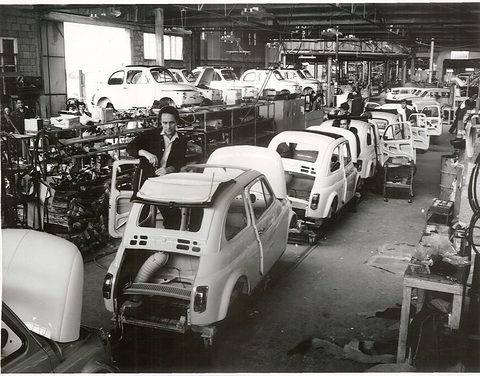
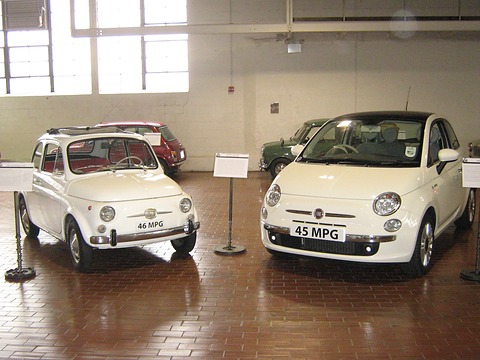
From 1971 the 500 was built at Termini Imerese in Sicily as well as at Mirafiori, and in the end only there. The last one, a 500 R in turchese farfalla, left the SicilFiat line on 1 August 1975 by Autosprint’s account, or on 4 August by Stellantis’s, carrying chassis number 5,231,518.source 1source 4 That number is where the much-repeated “5.2 million Fiat 500s” comes from. It is not a production figure: Fiat’s own count is 3,893,294 (see the figures).source 1source 5source 3 In 2007, on the fiftieth anniversary, Fiat revived the name for a new front-engined 500.source 5source 6