microcarfan
  • Kei car
  • Japan
  • Four wheels
  • No front brakes

Flying Feather

Also known as F/F, Suminoe Flying Feather

Before the war two Nissan colleagues watched the gulls over Yokohama harbour, and one said it would be good to have a small car that ran as lightly as they flew. After the war it was built, on motorcycle wheels, with brakes on the back wheels only.

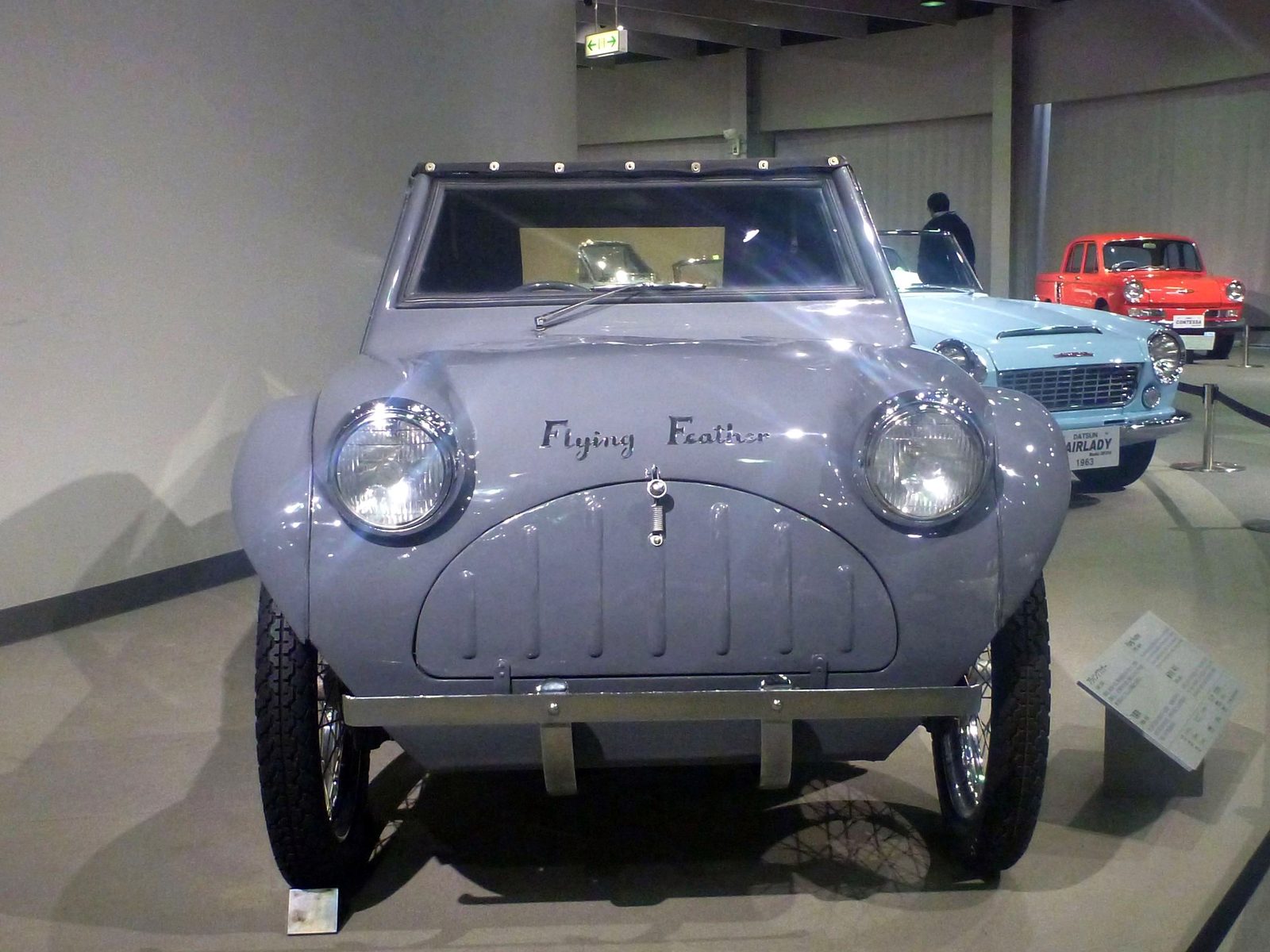
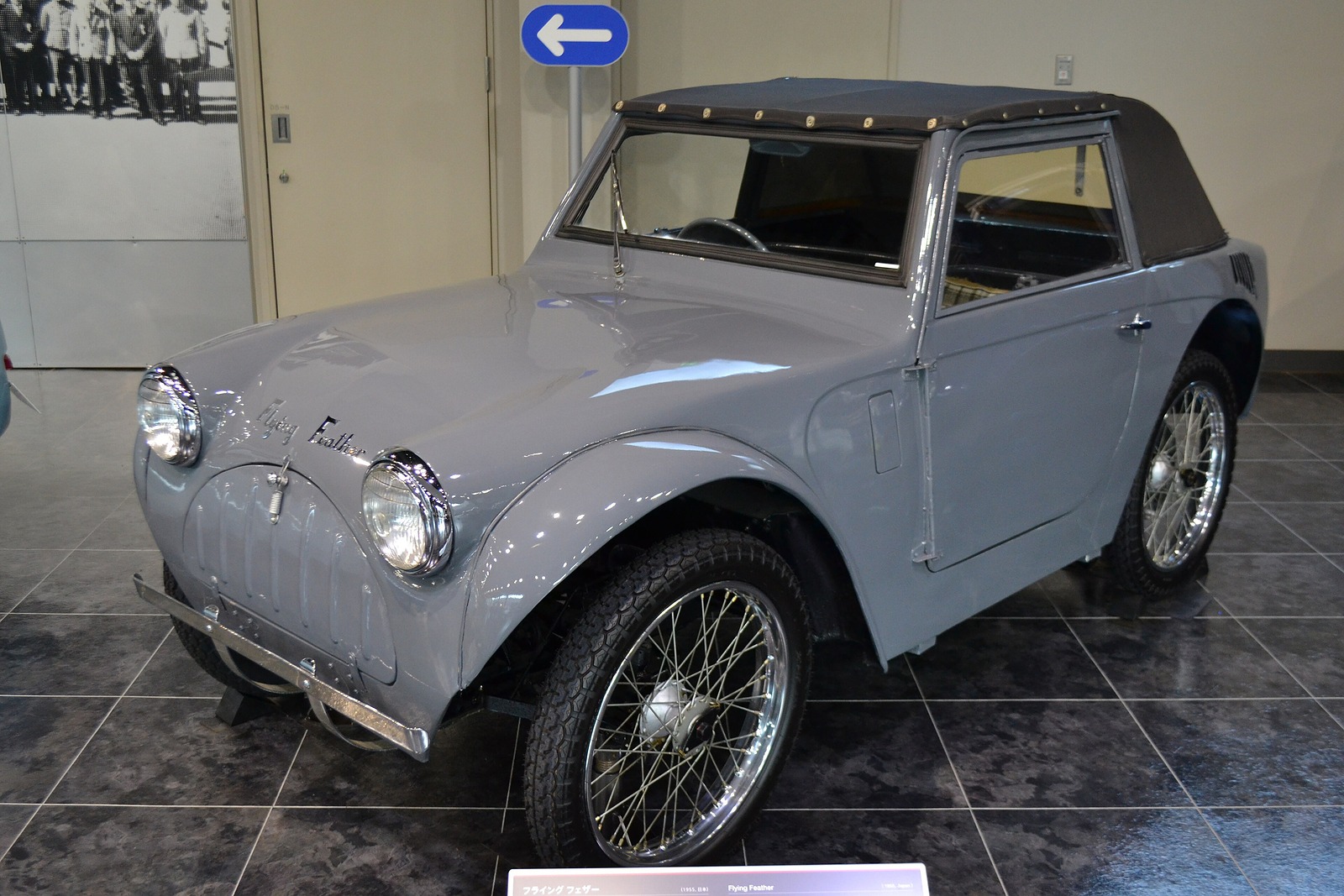
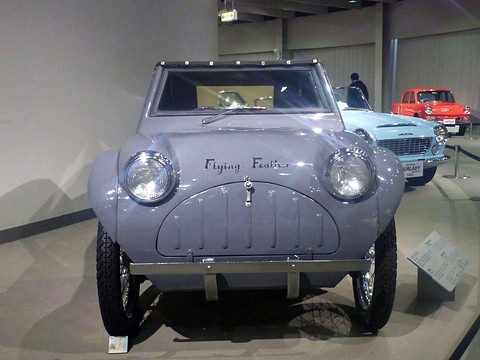
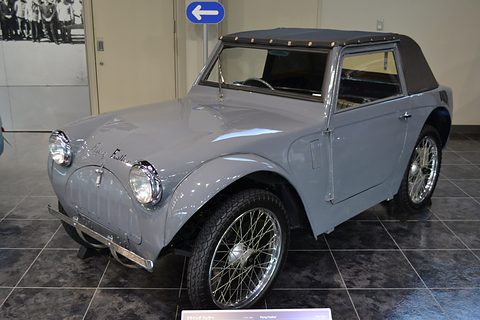
Small grey two-seater with a fabric top, wire wheels and script lettering on the bonnet beside a museum label.
A grey 1955 Flying Feather with its hood up at the Toyota Automobile Museum, Nagakute, in 2008.Photo: Mytho88, CC BY-SA 3.0, via Wikimedia Commons

At a glance

The spec plate

Flying Feather

F/F · Ōmori, Tokyo

Built
1954–⁠1956Prototypes from 1950; announced in April 1954, on sale from March 1955; production ended in 1955 or 1956
Country
JapanSuminoe Seisakusho, Ōmori, Tokyo
Maker
Suminoe SeisakushoA subsidiary of the textile firm Suminoe Orimono
Engine
350 cc air-cooled V-twinA 90° twin with overhead valves, built by Suminoe, in the tail
Power
12.5 hp9.3 kW at 4,500 rpm
Length
2,767 mm1,296 mm wide, 1,300 mm high
Weight
425 kgAbout 400 kg in other sources
Seats
2Side by side; one could be taken out for luggage
Wheels
4Engine at the back, driving the rear wheels
Price new
¥300,000March 1955, soon raised to ¥380,000
Production
about 200Fewer than 200 by the Toyota museum; 48 by one unsourced account
Survives
YesAt the Toyota museum and in a private collection of two
Top speed
60km/h60 km/h60 km/h (37 mph); 60–70 km/h by Japanese Wikipedia

How big is it?

True proportion

2.77 m

It is 203 mm shorter than a Fiat 500, about 1.6 adults laid end to end, and twice the length of a Peel P50.

  • 1.30 m wide
  • 425 kg: about six adults
  • 19-inch motorcycle wheels
  • A 1,900 mm wheelbase
Drawn at true proportion. The track is 3.6 metres long; the adult stands at the same scale. The Peel P50 is the smallest production car, on every page for comparison.

The story

History

The two were Katayama Yutaka, later known in America as Nissan’s “Mr K”, and Tomiya Ryūichi, who designed Datsun bodies.source 1 After the war Katayama came to see Tomiya and urged him to build the car, and Tomiya sketched it on the spot: an open two-seater with a wheel at each corner and the engine at the back. Katayama thought it too experimental for Nissan and took it to Suminoe Seisakusho, which wanted a new business for the recovery and gave Tomiya a dozen or so engineers.source 1 Suminoe, at Ōmori in Tokyo, had been founded during the war by the textile firm Suminoe Orimono, and after the war it built Datsun bodies, among them Tomiya’s Datsun Thrift and Convar; the Toyota Automobile Museum calls it a Nissan affiliate.source 2source 1source 3

Tomiya joined Suminoe in 1949.source 1source 4 His aim, as the Japan Automotive Hall of Fame puts it, was a car that did its job with the least materials and fuel (more on him in the designers).source 1 The ministry of trade and industry was then working on its people’s-car plan, and treated Suminoe’s application to build the car as a test case.source 1 The first car, of 1950, was followed by five more prototypes, the earliest weighing only about 250 kg; the last, of 1953, was close to the production car.source 1 The prototypes had separate headlamps and cycle wings, and one of 1952, by Iwatate Kikuo’s tables, used a 250 cc Meguro single.source 2source 5 The name meant what it said: as light as a feather.source 2source 1

Less is more

The frame was a ladder of thin channel section, braced with an X. Every wheel was sprung independently, on transverse leaf springs. The wheels were wire-spoked motorcycle wheels with 19-inch motorcycle tyres, after the thinking of the Citroën 2CV; the prototypes had run on bicycle-trailer tyres.source 2source 1 There were no brakes at the front, only cable-worked drums at the back.source 2source 1source 6 In the tail sat a 350 cc air-cooled V-twin of Suminoe’s own, with overhead valves and pistons from the Datsun four; at 12.5 hp it was said to be the first Japanese car engine to give more than 30 hp a litre.source 2source 1 The seats were tubes and webbing, and one could be taken out to make room for luggage; Japanese Wikipedia says they were covered in tartan Nishijin cloth from the textile parent.source 2source 1 The hood rolled back, a single wiper cleared the screen, and semaphore indicators stood on the screen pillars.source 2source 6

A preview of the All-Japan Motor Show in Ueno Park showed it in 1953, and the first show proper in 1954.source 1 It went on sale in March 1955 at ¥300,000, soon raised to ¥380,000, and could be driven on a kei licence.source 2 Experts praised the suspension and the rational simplicity, but buyers did not want a car with no front brakes, bare equipment and the look of a cyclecar.source 2source 3

Its sensible but stripped-down functionality was not understood at that time.

Toyota Automobile Museum, collection text on the Flying Feather.source 3

Suminoe lacked the money to persist. Production ended in 1955, by the Toyota museum’s date, or 1956, by Japanese Wikipedia’s.source 2source 3 Tomiya, managing director of Suminoe from 1954, left in 1955 and designed the Fuji Cabin.source 4 He never quite gave up the idea: in 1975 he built an F/F II prototype with Aida Engineering, around an engine from the Subaru R‑2.source 4 Kei cars did not boom until the 1960s, and Japanese sources judge the Flying Feather too spartan, and too early.source 2source 1source 3
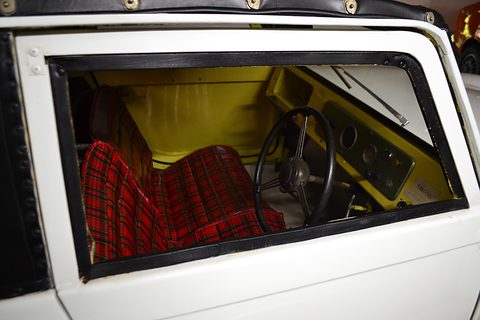
View through a car door of red tartan seat cushions, a thin black steering wheel and a yellow-painted dashboard.
Through the door of the white Flying Feather at the Motorcar Museum of Japan in 2023: a tartan seat and a plain dashboard.Photo: 先従隗始, CC0, via Wikimedia Commons
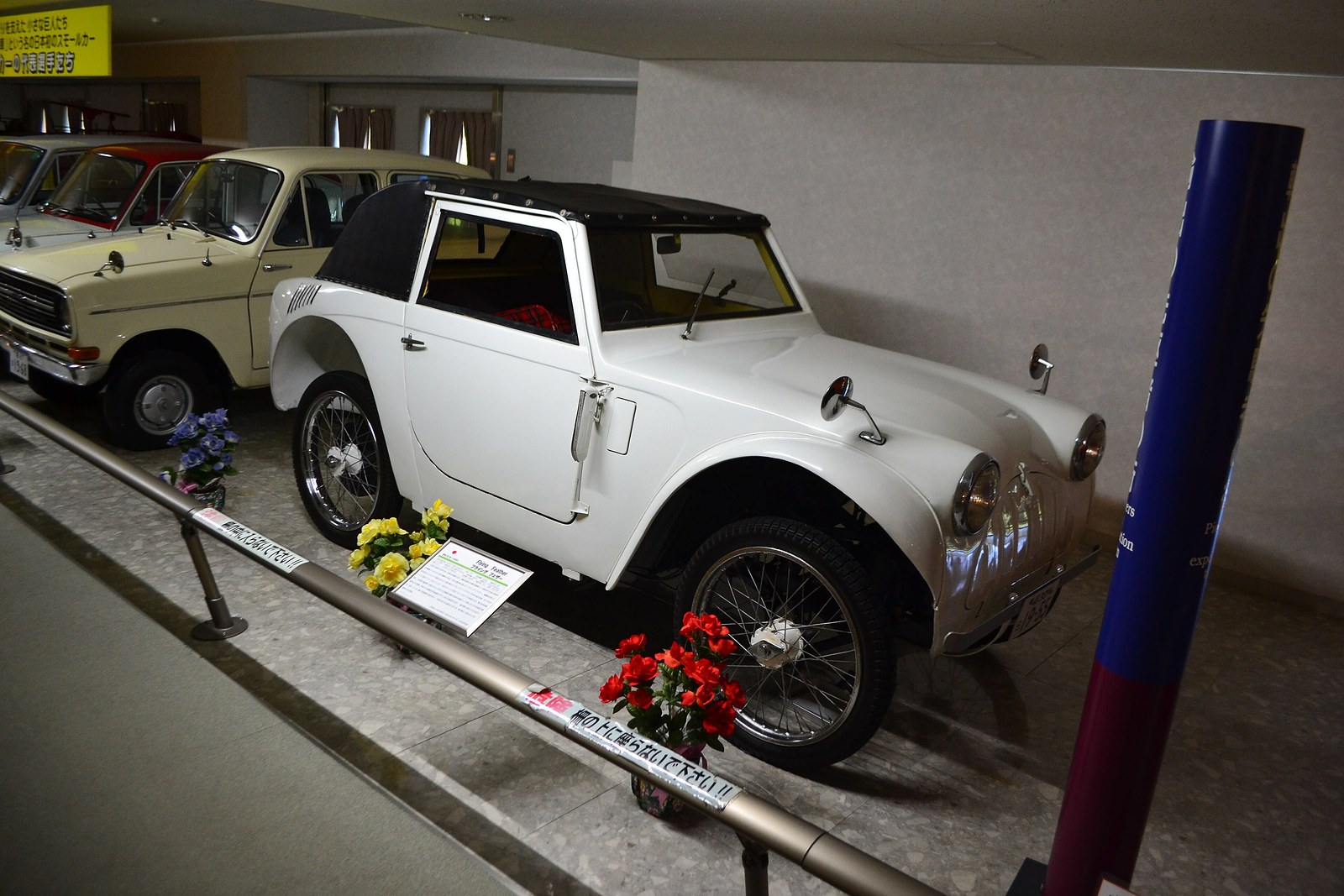
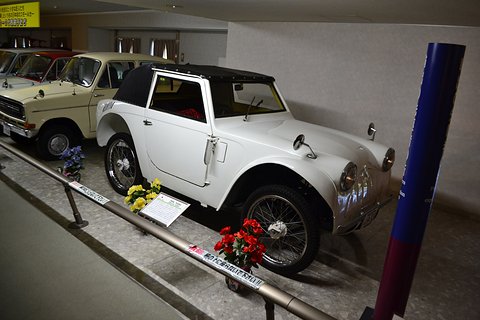
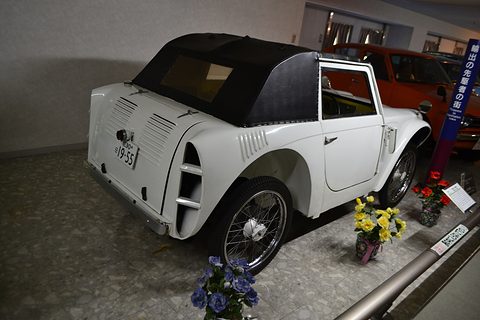
Rear three-quarter view of a small white car with a black fabric top, louvred tail panel and wire wheels in a museum row.
The white car from behind, at Komatsu in 2023: louvres in the tail over the V-twin.Photo: 先従隗始, CC0, via Wikimedia Commons

Pictures

More photographs, old and new

Variants

Prototypes and one production car

The Flying Feather, 1950–⁠56
VariantYearsWhat differsHow many
Prototypes1950–⁠53About six; separate headlamps and cycle wings; the earliest about 250 kg; one of 1952 with a 250 cc Meguro singleAbout six
F/F1955–⁠56Headlamps faired into the wings, doors, a framed hood, an electric starter, the 350 cc V-twinAbout 200

Specification

The production car

Engine and drive

Engine and drive
EngineSuminoe-built 90° V-twin, air-cooled, overhead valves, hemispherical chamberssource 2source 1
Capacity350 cc (60 × 62 mm)source 1
Power12.5 hp at 4,500 rpm (9.3 kW)source 1source 3
Torque2.2 kgf·m at 2,500 rpmsource 2source 1
CarburettorAmal type, made under licence by Mikunisource 2source 1
GearboxThree speeds and reverse, from Datsunsource 2source 1
Final driveWorm gear; half-shafts with two universal joints eachsource 2source 1

Body and chassis

Body and chassis
FrameLadder frame of thin channel section, braced with an Xsource 2source 1
SuspensionIndependent all round, on transverse leaf springssource 2source 1
BrakesCable-worked drums on the rear wheels onlysource 2source 1source 6
Wheels and tyresWire-spoked motorcycle wheels, 3.25 × 19 motorcycle tyressource 2source 1
BodyOpen two-door, with a folding hoodsource 2
Electrics6 volts, Hitachisource 2

Dimensions

Dimensions
Length2,767 mm (109 in)source 2source 1source 3
Width1,296 mmsource 2source 1source 3
Height1,300 mmsource 2source 1source 3
Wheelbase1,900 mmsource 2source 1source 3
Weight425 kg (937 lb)source 2source 1source 3About 400 kg in the Hall of Fame’s text, Iwatate and Response

Performance and running

Performance and running
Top speed60 km/h (37 mph)source 1source 560–70 km/h by Japanese Wikipedia
Climbing1 in 5source 1
ConsumptionAbout 25 km per litresource 2
Price new¥300,000, then ¥380,000 (1955)source 2

How many were built?

Three answers

About 200 builtAbout 200, or a few under. The Hall of Fame’s 2025 citation and a 2022 magazine report say about 200, and the Toyota museum fewer than 200. A figure of 48 appears in Japanese Wikipedia’s article on Tomiya Ryūichi without a source.

  1. about 200production carsTwo sources agree

    The Japan Automotive Hall of Fame (2025) and Response (2022); Japanese Wikipedia adds that accounts varysource 1source 6source 2

  2. fewer than 200production carsOne source

    The Toyota Automobile Museumsource 3

  3. 48built 1955–⁠56Unconfirmed

    Japanese Wikipedia’s article on Tomiya Ryūichi, with no source givensource 4

  • Two sources agreetwo good sources give the figure
  • One sourcea good source, alone
  • Unconfirmeda lead only, not yet checked

Famous for

Three points

  1. Light as a feather

    A car pared to the least materials and fuel, on a ladder frame of thin channel section.source 2source 1

  2. No front brakes

    Cable-worked drums on the rear wheels only.source 2source 1source 6

  3. Two men and the gulls

    Katayama Yutaka’s idea and Tomiya Ryūichi’s design, before the Fuji Cabin.source 1source 4

Survivors and collecting

Today

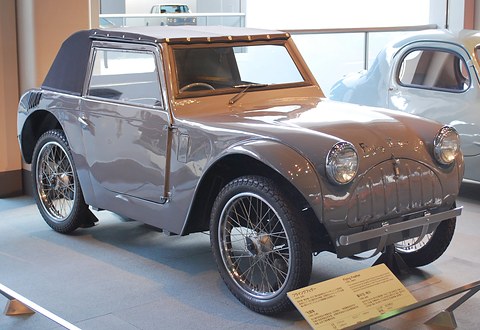
No count of surviving Flying Feathers has been found, nor any auction result. The Toyota Automobile Museum keeps one in store at its Motomachi building, and the collector and restorer Hayashi Katsumi owns two; he showed them at Nostalgic 2days at Pacifico Yokohama in February 2022, when he was 82 (more in museums and meets).source 3source 6 He likened the ride to something from an amusement park, and said it totters along.source 6 The photographs on this page show the Toyota museum’s grey car and a white one at Komatsu’s Motorcar Museum of Japan. In 2025 the Flying Feather joined the Japan Automotive Hall of Fame’s Historic Cars.source 1

It turns up in fiction, too: in Saigan Ryōhei’s manga Sanchōme no Yūhi, Hoshino Rokurō owns one briefly before it is stolen, with the maker’s name misprinted.source 2

Sources

Numbered as in the text

No period road test or catalogue was seen; the prices come from Japanese Wikipedia alone. The origin story rests on the Japan Automotive Hall of Fame’s 2025 citation. Sources are given as plain text; the links are on the Credits page.

  1. Japan Automotive Hall of Fame, “2025 Historic Car: SUMINOE Flying Feather”, the selection committee’s citation and specification table, read in full.
  2. Japanese Wikipedia, Suminoe Seisakusho Flying Feather, read in full on 7 October 2026. It cites Gazoo, the Japan Automobile Museum and Response.
  3. Toyota Automobile Museum, collection record 76, “Flying Feather”, read in full.
  4. Japanese Wikipedia, Tomiya Ryūichi, read in full.
  5. Iwatate Kikuo, “Japanese Midget Motor Vehicles Post WW II, 11: Four Wheelers 3”, kiwat.com (2001–⁠03), read in full from the archived copy.
  6. Takemiya Saburō, report on the Flying Feathers at Nostalgic 2days 2022, Response, 22–23 February 2022, read in full.