Invalid carriages
A single seat, a tiller, a two-stroke behind your shoulder and a body in the blue that the Ministry chose. For hundreds of thousands of disabled drivers in Britain, the Soviet Union and Central Europe, the state’s little car was the way to work, to the shops and to friends.
A car for one
When Bert Massie was 16, he took his driving test at a centre in Liverpool that fitted artificial limbs: an engineer pushed the car along with him in it, and watched to see whether he could brake.source 1 What he was then given was not, in the government’s eyes, a car at all.
The government didn’t see these as cars... they saw them as a prosthetic. There was a strange logic to their thinking. They saw the role of the NHS as being there to get you mobile. If you were not disabled, you’d be doing that with your legs. So, if you were disabled, and couldn’t do that, they gave you a one-person invalid carriage as a leg replacement to get you from A to B.
“Invalid carriage” was the legal name of the class, and the name of the period. The vehicles were built specially for disabled drivers and, in Britain and in the Eastern Bloc, usually issued by the state. They were, by design, cars for one, and the story of the class is the story of that independence and its limits: a state that would give a disabled driver a seat but not a passenger’s, until money to choose their own transport took its place.
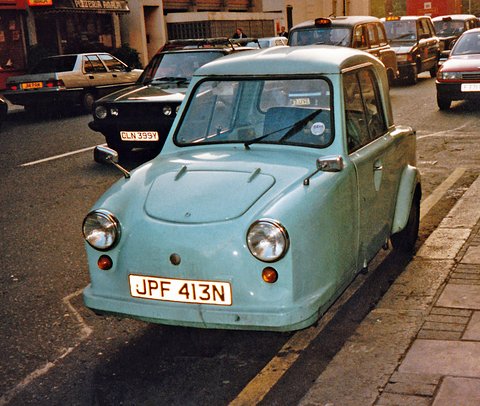
Britain: a legal class, 1917–1945
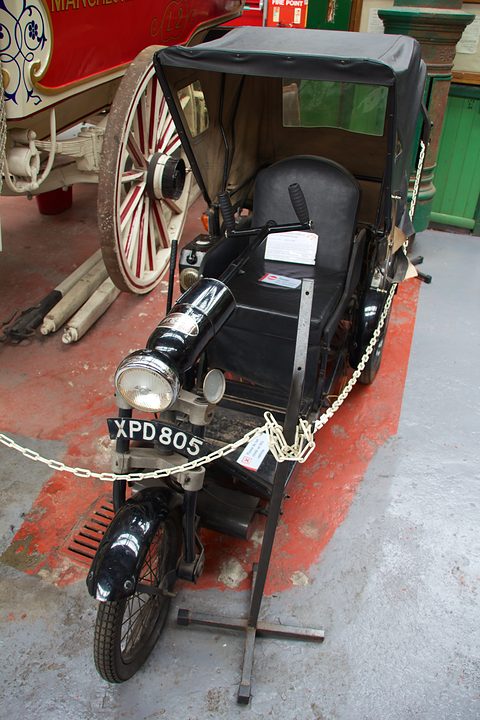
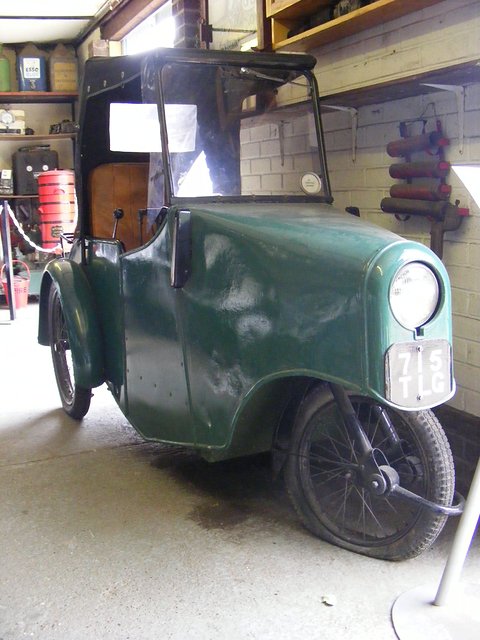
The Ministry of Pensions, set up in 1917, provided war veterans with self-propelled vehicles.source 2 Between the wars powered carriages came from several British invalid-carriage makers: Stanley Engineering, which made the Argson in the 1920s, Harding of Bath, which used Villiers and JAP engines from 1926, and Nelco, whose machines were electric.source 3
The Road Traffic Act of 1930 gave them a class of their own. It defined “invalid carriages” as mechanically propelled vehicles weighing no more than 5 cwt (254 kg) empty, built specially for people with a physical disability rather than merely adapted, and used by them alone; and it kept them out of the class of motorcycles, the class that made the light three-wheeler.source 4 The 5 cwt limit was still the target in 1957.source 5
Ministry Blue, 1945–1977
The Second World War left many ex-servicemen disabled. The engineer Bert Greeves had built a powered machine for his cousin Derry Preston-Cobb, who had been paralysed from birth; the two men saw how many needed such a machine, the government undertook to pay, and Invacar Ltd was formed at Thundersley in Essex.source 6source 7 Accounts disagree on when: Hull Museums and the BBC date the first machine to 1946; 3wheelers.com and Wikipedia date the company to 1948.source 6source 1source 8source 7 They disagree too on what it used; Hull Museums and German Wikipedia say a lawnmower engine. The Invalid Carriage Register, the most specific, says that the first Invacar Ltd machines were on the road in March 1947, that production used Villiers motorcycle engines, and that the company won Ministry of Health contracts in 1949.source 6source 5 Greeves later founded Greeves motorcycles, built in the same Thundersley works.source 6source 7
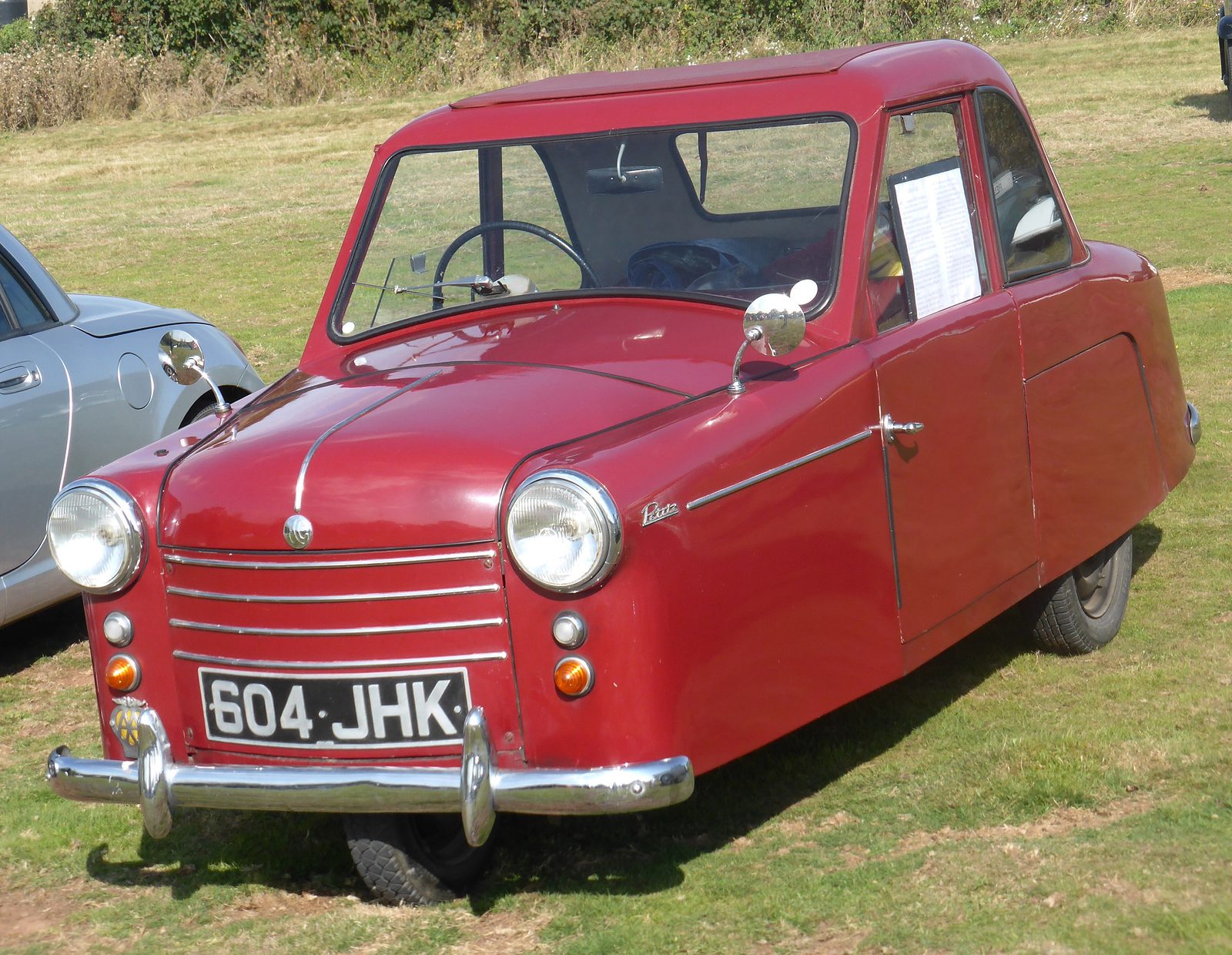
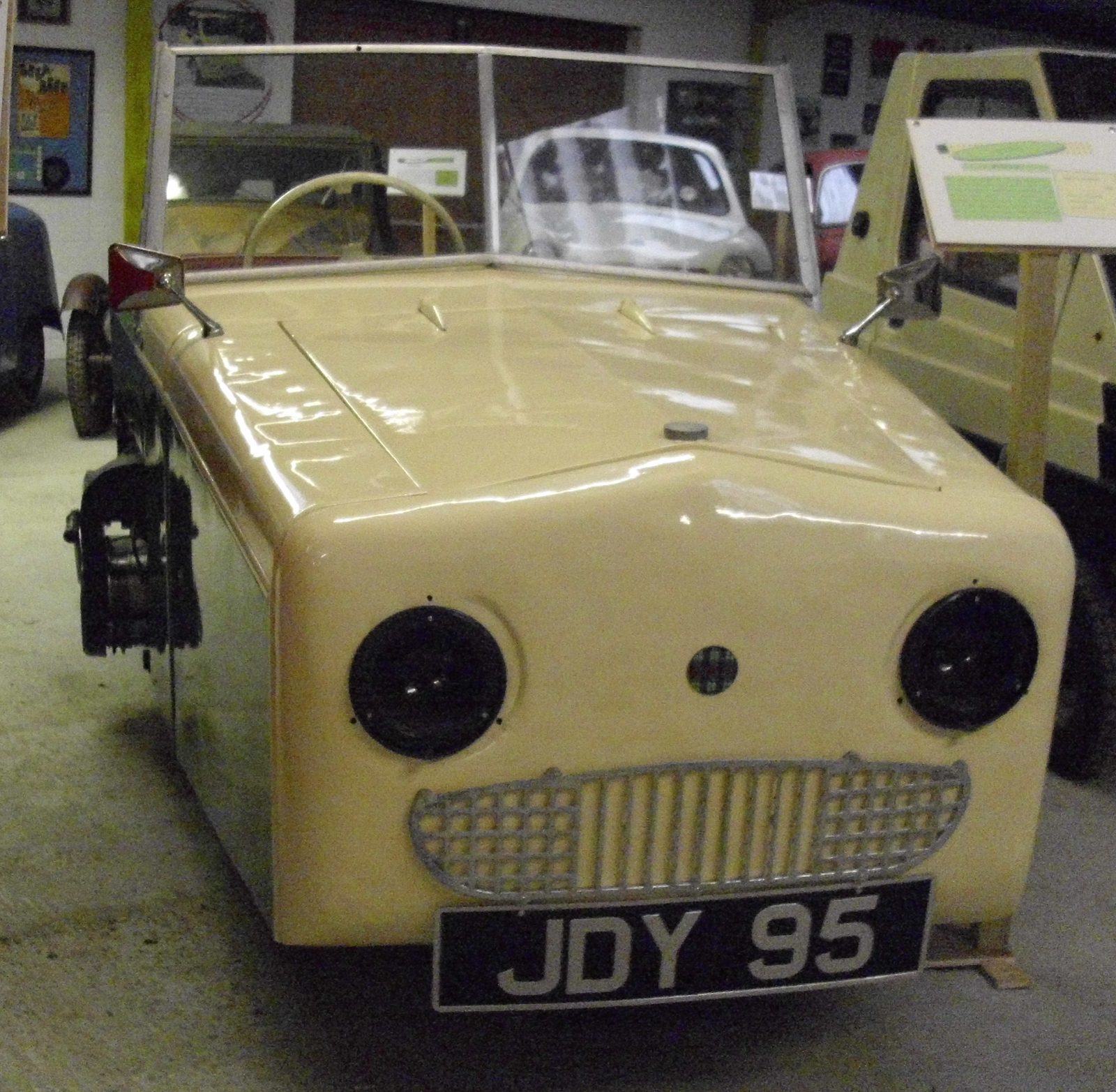
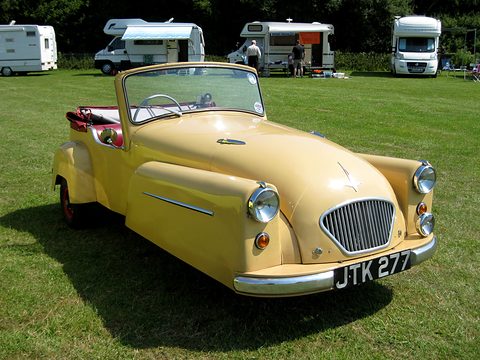
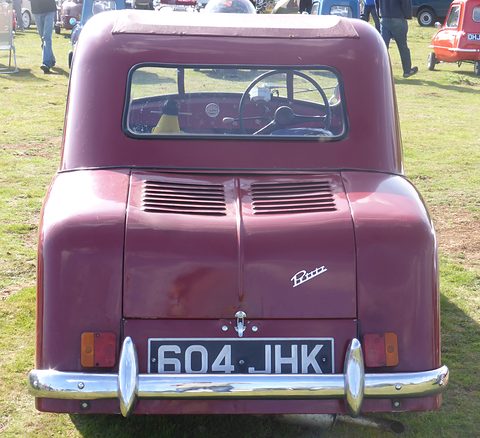
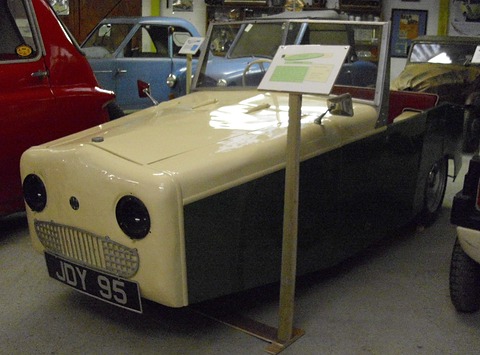
Invacar was one maker among several. AC Cars of Thames Ditton began building Ministry of Pensions carriages in 1947,source 2 and Harding, Dingwall & Son, Barrett of Bristol, Tippen & Son, Coventry Climax and Vernons all held contracts.source 6source 7 “Invacar” became the name for every blue car, but the name belonged to one firm, and many were ACs.source 1 Two small cars came out of the trade. Vernons made the Vi-Car, an invalid carriage, in 1952–53, and then its Gordon three-wheeler,source 9 and AC’s Petite, by one enthusiast’s account, looked much like the firm’s invalid cars made larger all round.source 10 In February 1953 Bond gave a Bond Minicar Mark C hand controls and submitted it for Ministry of Pensions approval.source 11
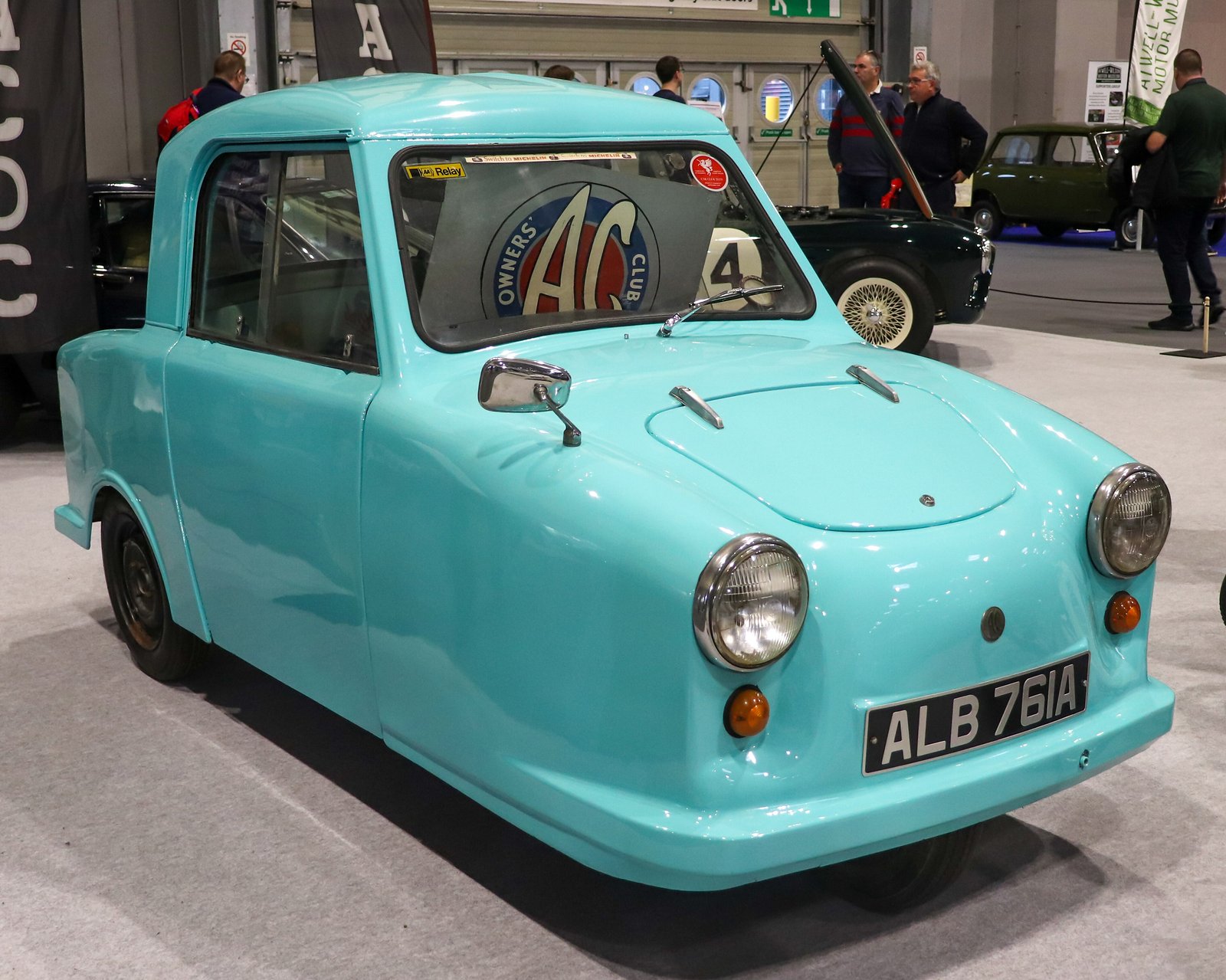
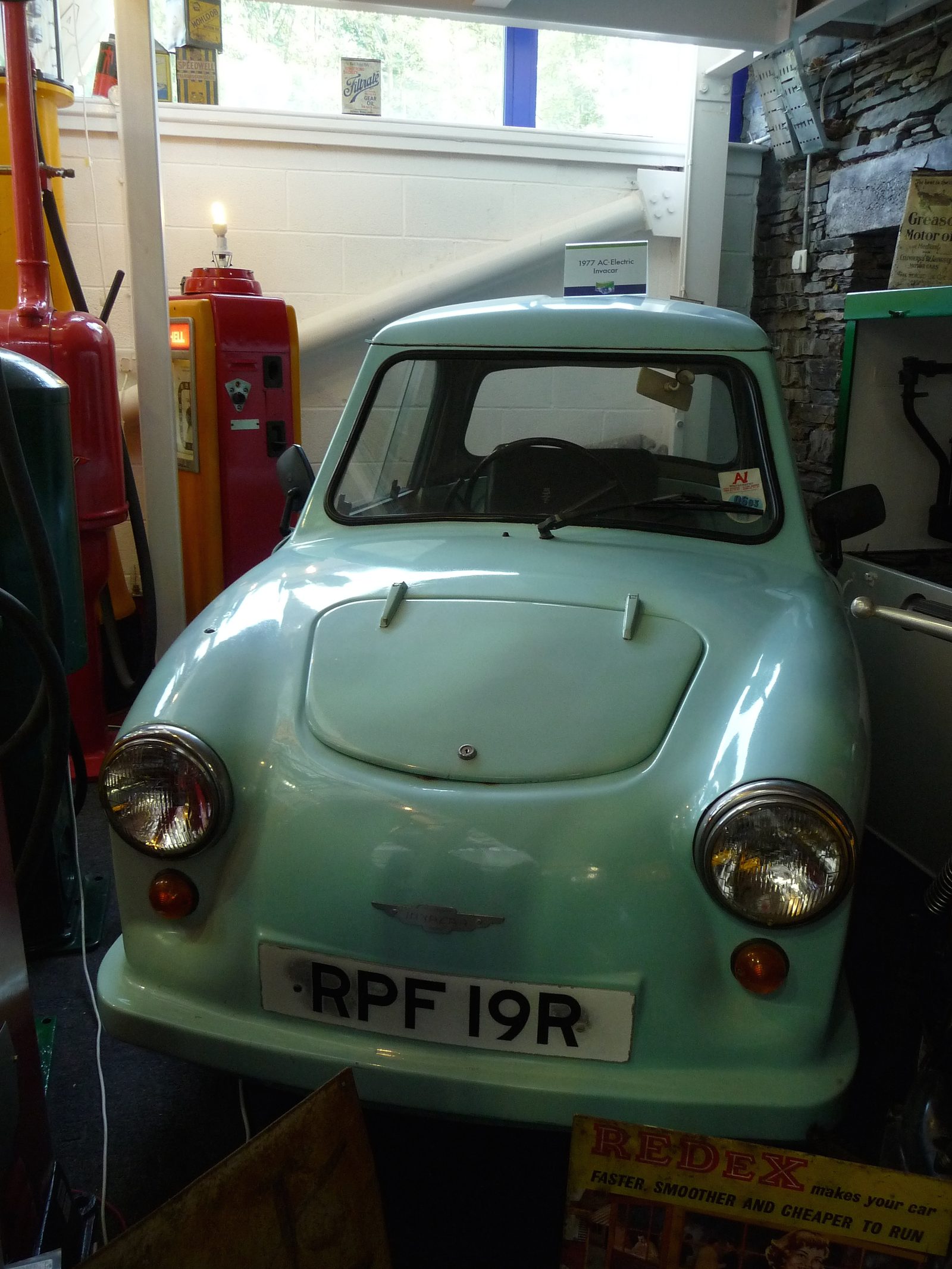
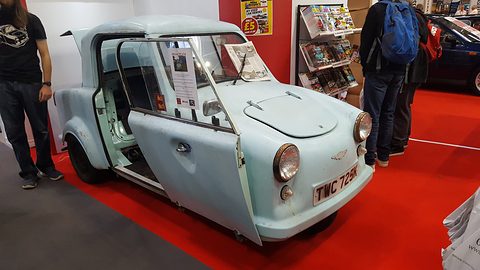
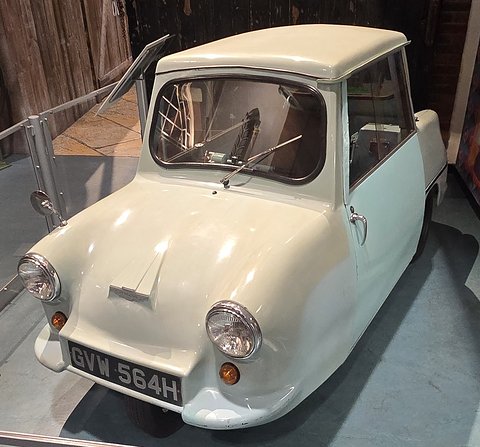
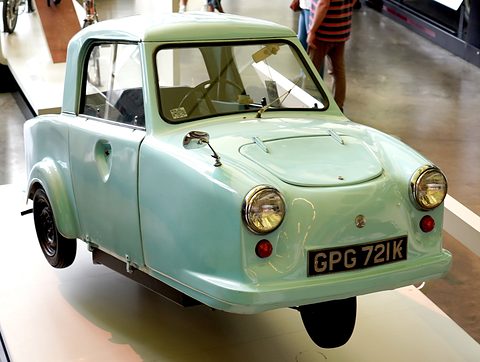
Invacar’s own models moved from a leathercloth body on a tube frame, the Mk 8 of 1952, to the pressed-steel Mk 10 of April 1957, built to the Ministry of Health’s Standard Specification of that year. At 550 lb (249 kg) unladen it met the 5 cwt limit, and the Register says no later new invalid three-wheeler managed it.source 5 Then came glass fibre. Painted ice blue, the cars were nicknamed “Ministry Blue” after the Ministry of Health, and tens of thousands were built, in more than 50 variants.source 7 The last design, the Model 70, built from about 1971, was AC’s. The government wanted a standard car; Fiat running gear had been the plan, but Fiat was unwilling to provide engines, and the car got the air-cooled flat twin of the Steyr-Puch 500, of 493 cc and 20 bhp (15 kW). From 1972 to 1977 AC and Invacar built about 18,000 between them, in equal shares.source 12 It had sliding doors on both sides, leaving room for the driver to put a folded wheelchair next to the seat, and it could be steered with a tiller, with handlebars or with a wheel; the National Motor Museum lists its fully adaptable features, among them a seat at wheelchair height.source 8source 6source 2
The drivers remember what it was like. Jim Rawlings of Disabled Motoring UK told the BBC of a friend who kept half a sack of potatoes aboard as ballast, because his car was so easily pushed about by crosswinds.source 1 Hull Museums says its Invacar, small and light, was easily overturned by strong winds,source 6 and Massie said he had a few catch fire under him.source 1 There were reports of overturning and fires, and the cars failed crash tests at MIRA in 1974.source 6source 1source 7 Above all they were for one person. Passengers were forbidden, and campaigners saw the rule as isolating.source 6source 1 A disabled mother or father could not take the children to school.source 1 In 2019 the Invalid Carriage Register named an exhibition after the rule: “The Carrying of Passengers is Forbidden”.source 13
From carriage to choice, 1976–2003
In 1976 the government introduced the Mobility Allowance, to help disabled people choose and pay for their own transport, and announced the end of the carriage scheme; 21,500 carriages were then on the road.source 14source 1 The Motability Foundation describes what had gone before plainly: in the mid-1970s the only government help with transport went to disabled people who could drive themselves, usually as a small blue trike that could not take passengers.source 14 The allowance was worth £7 a week in 1978.source 15 The Secretary of State asked Lord Goodman to find a way for disabled people to afford a car on it, and with Lord Sterling of Plaistow he founded Motability in 1977, to lease them adapted ordinary cars.source 14source 15 In 1978 ten disabled people took the keys of the first cars on the scheme.source 14 By 2022 Motability had put 5.5 million vehicles on the road.source 14
The old carriages lingered. Existing users could keep them, and the plan was for the scheme to end altogether in 1981.source 1 The factory at Thundersley closed after a fire in 1977, two years after Greeves and Preston-Cobb had left.source 7 In about 2002 3wheelers.com counted about 1,300 Invacars in daily use; service agents were crushing some 50 a month, and drivers were moving to a four-wheeled, government-approved 340 cc car, the Canta.source 8 On 31 March 2003 the remaining government-owned carriages were recalled and crushed, and the type was banned from the road on safety grounds.source 6source 1
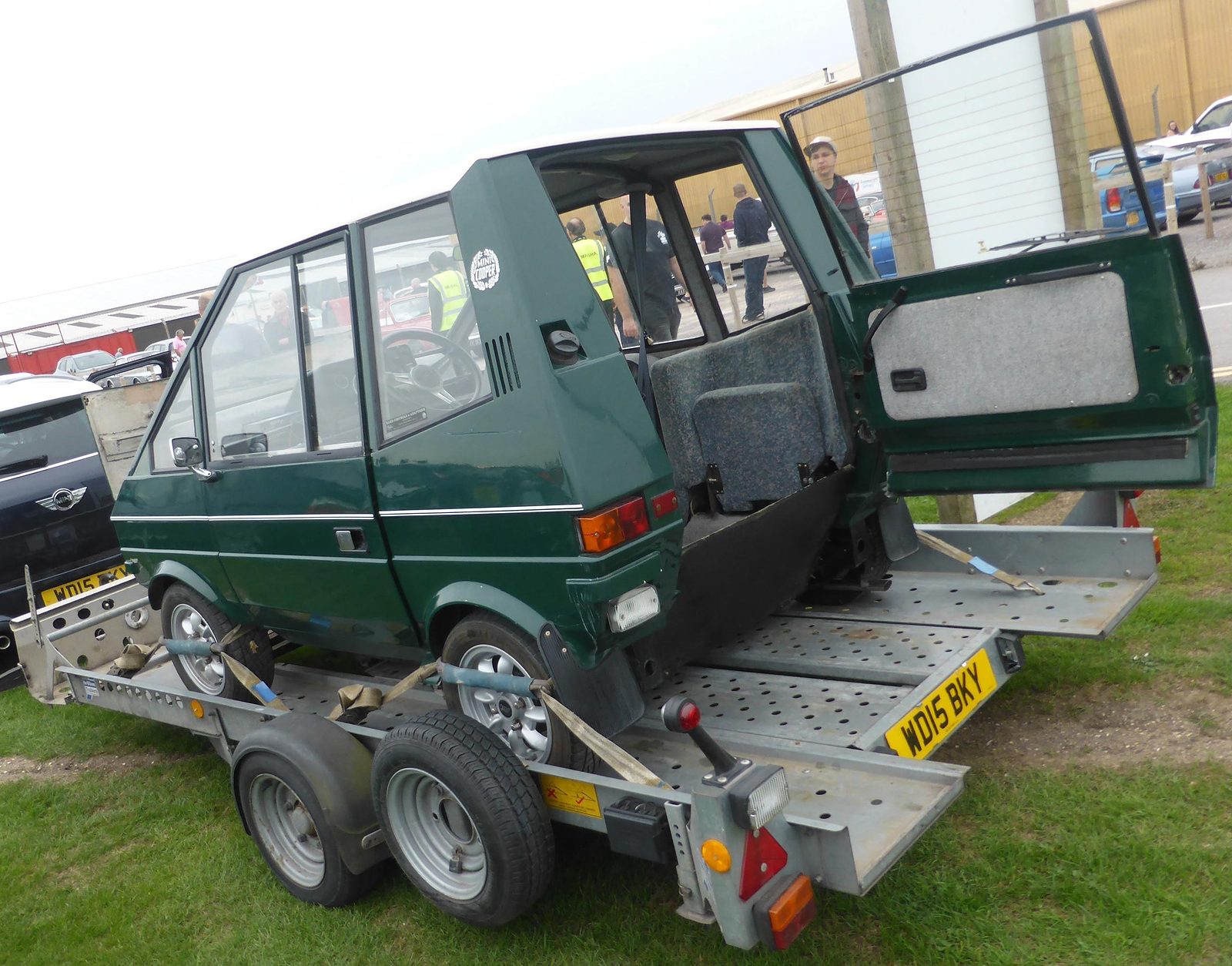
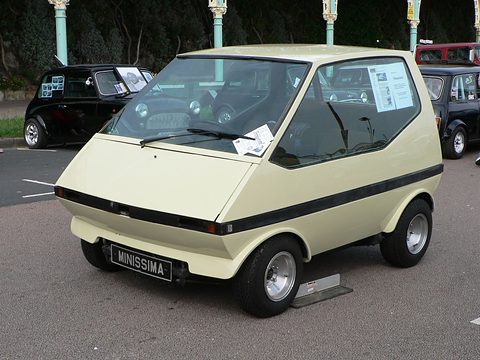
The cars have found another life. In 2014 Tony Heaton, a disabled sculptor, stripped the engine out of an Invacar, painted it gold and hung it in the Bluecoat in Liverpool as Gold Lamé, turning a symbol of stigma into a precious object.source 16 The charity that keeps the Invalid Carriage Register counts a few hundred survivors of every kind worldwide.source 13 In the later 1970s William Towns’s Minissima was developed as a car for disabled drivers, and from 1981 it was built as the Elswick Envoy, with room for a wheelchair.source 17
The last of the state cars
Britain and the USSR
The Soviet motokolyaska
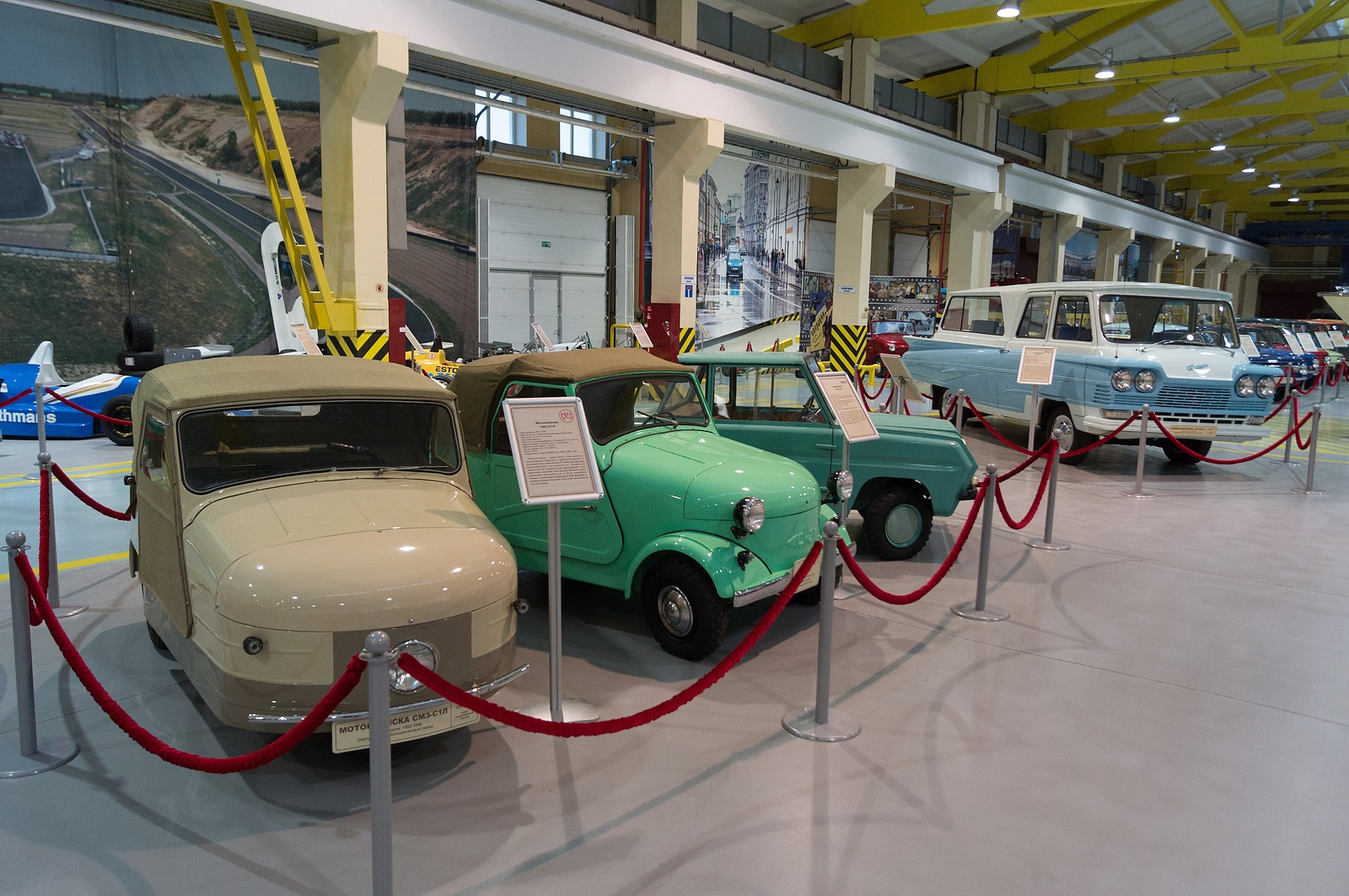
The Soviet Union built more of them than anyone. It counted more than 2 million war invalids,source 18 and from 1947 the Kiev Motorcycle Works made the first Soviet motor carriage for them, the K‑1V: a three-wheeler without doors or roof, derived from the German Wanderer motorcycle and powered by a 98 cc engine. In 1951 alone, over 7,000 left the works.source 18 Serpukhov followed with three-wheelers, the S‑1L with a 123 cc Moskva engine, a handlebar and a top speed of 30 km/h (19 mph), in versions for a driver with only a right or only a left hand, and the S‑3L with a 346 cc IZh engine and an electric starter.source 19 They were unsteady on cobbles and in winter ruts, and veterans wrote to the newspapers again and again to complain. In January 1956 the USSR Council of Ministers ordered a four-wheeler.source 20
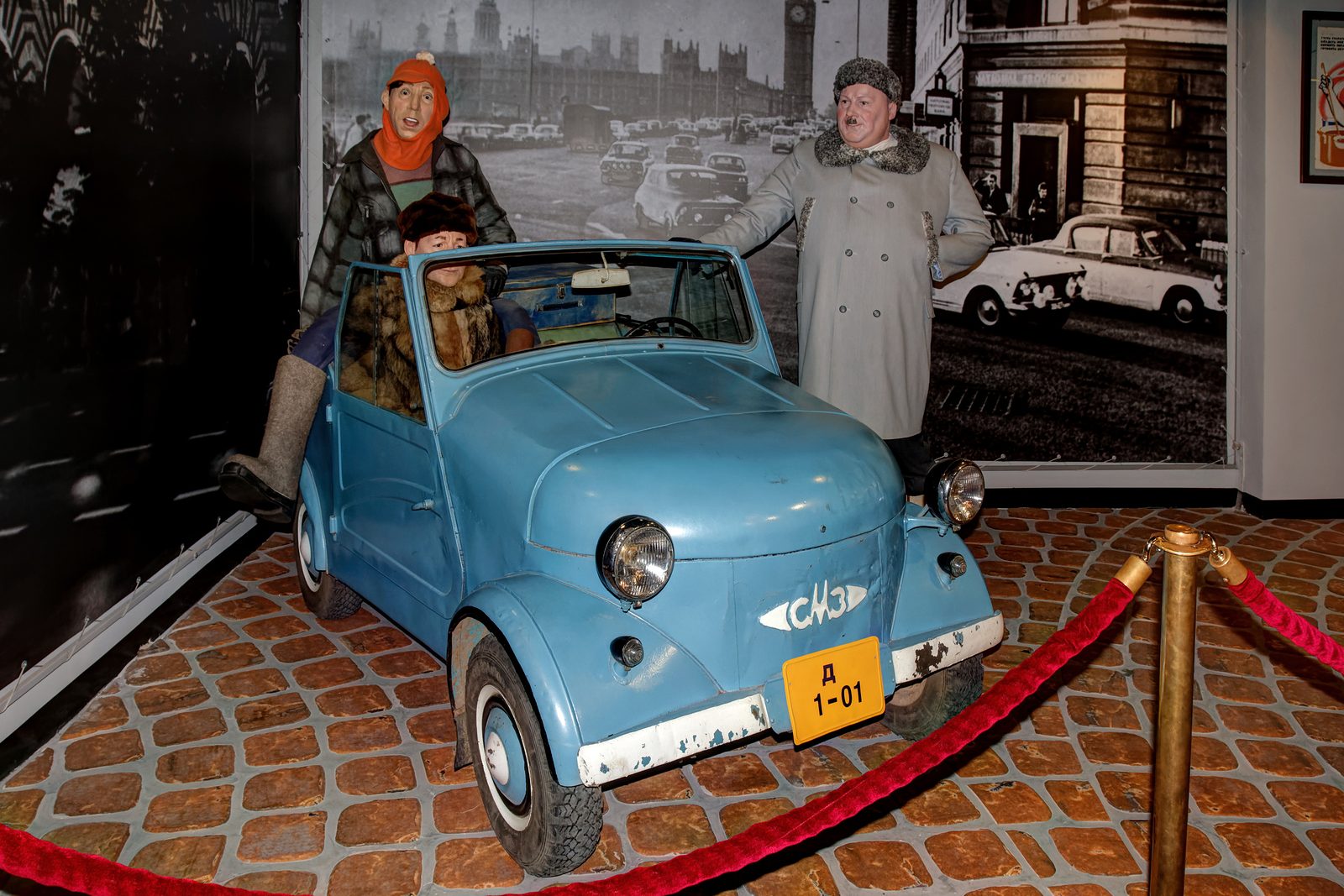
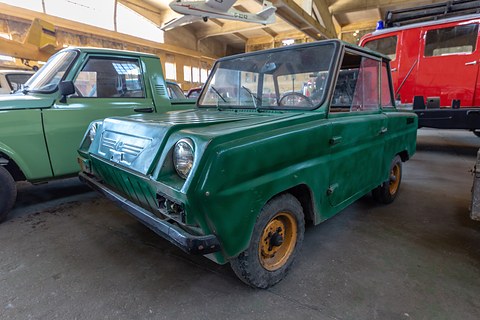
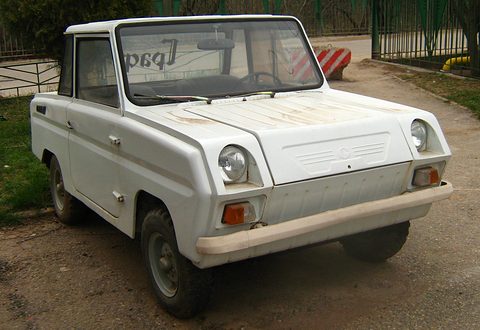
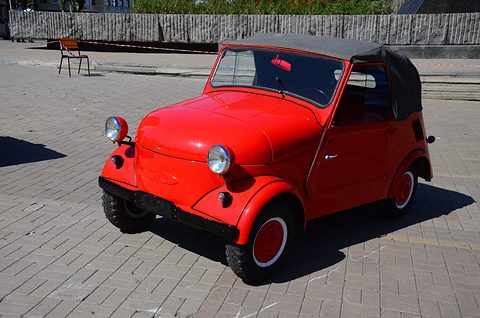
The SMZ S‑3A was tested in 1957 against a Goggomobil, a Lloyd 600 and a Citroën 2CV, and the NAMI institute’s report called its brakes unsatisfactory: from 50 km/h (31 mph) it needed 31.5 m to stop, the Goggomobil 8.5 m.source 20 Yet it had the first rack-and-pinion steering on a Soviet production car.source 21 Every control was by hand. War invalids of groups I and II received one free from the social-security offices, on a five-year issue with an overhaul after two and a half years; it could be neither bought nor sold, and the state paid for fuel, servicing and repairs.source 18source 20 203,291 were built between 1958 and 1970.source 19 Its nickname, the Morgunovka, comes from the actor Yevgeny Morgunov, whose character Byvaly rides in one in Leonid Gaidai’s comedy Operation Y of 1965 and lifts it round by hand; whether anyone called it that at the time is doubted.source 18source 20
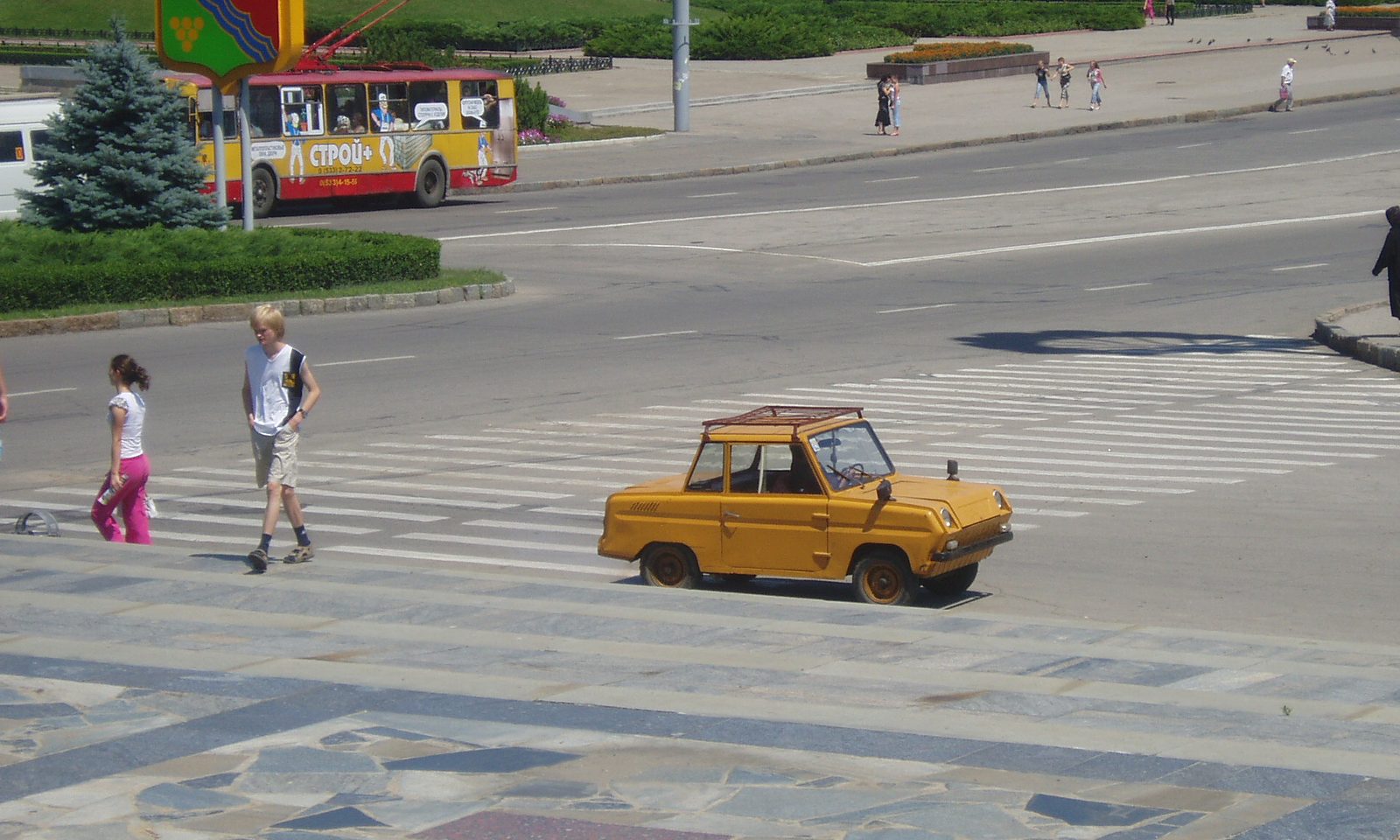
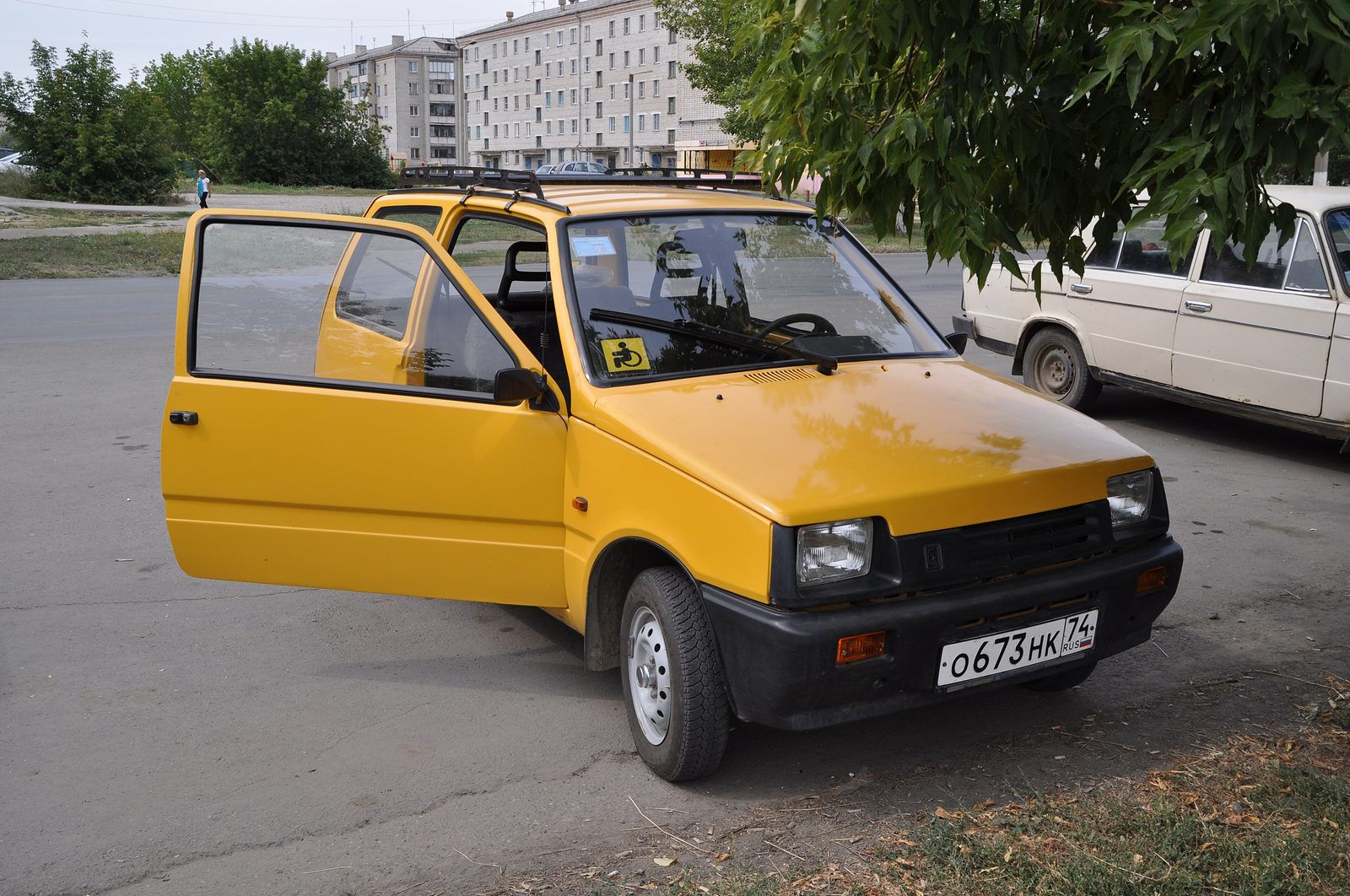
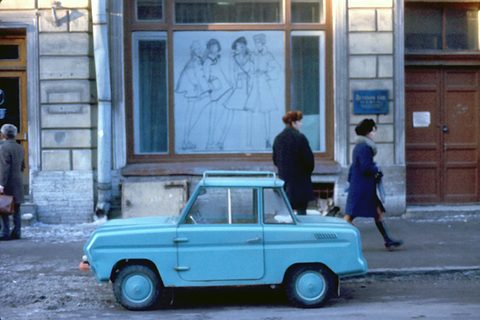
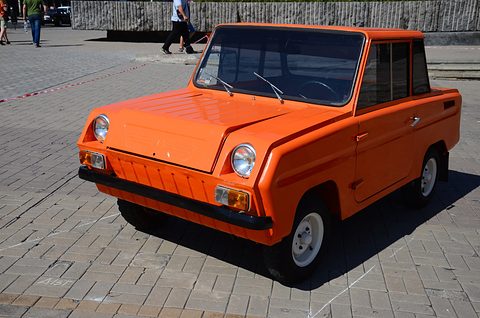
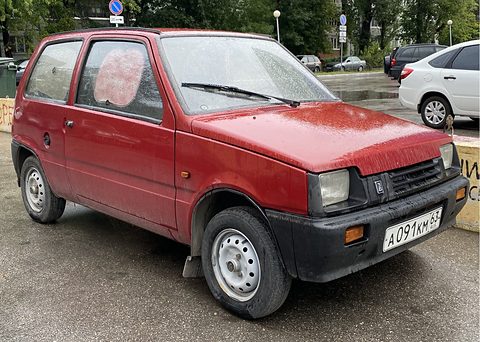
The SMZ S‑3D of July 1970 was a closed steel coupé with hydraulic brakes on all four wheels and a heater, its shape grown out of a design of 1964, the “Shustrik”, by Eduard Molchanov and Erik Sabo. Group I invalids got it free for five years; anyone else could buy one for roughly a fifth of its 1,100-rouble price, after waiting a long time. About 223,000 were built, the last of them in the autumn of 1997, and after the Soviet collapse the cars began to be sold freely.source 22 Its successor was a hand-controlled version of the small Oka, built at Serpukhov from about 1989 for drivers with no legs, or one leg, or one leg and one arm.source 23
Velorex, the Duo and the Meister
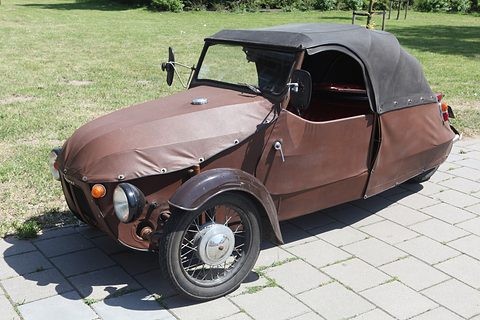
In Czechoslovakia two brothers, František and Mojmír Stránský, repaired prams, bicycles and motorcycles at Parník, near Česká Třebová, and during and after the war built three-wheelers for small tradesmen and disabled customers.source 24 In 1950 they applied for type approval, and the club that keeps their history quotes the application’s words for what they had built.
specielní motorovou tříkolku pro invalidy a válečné poškozence
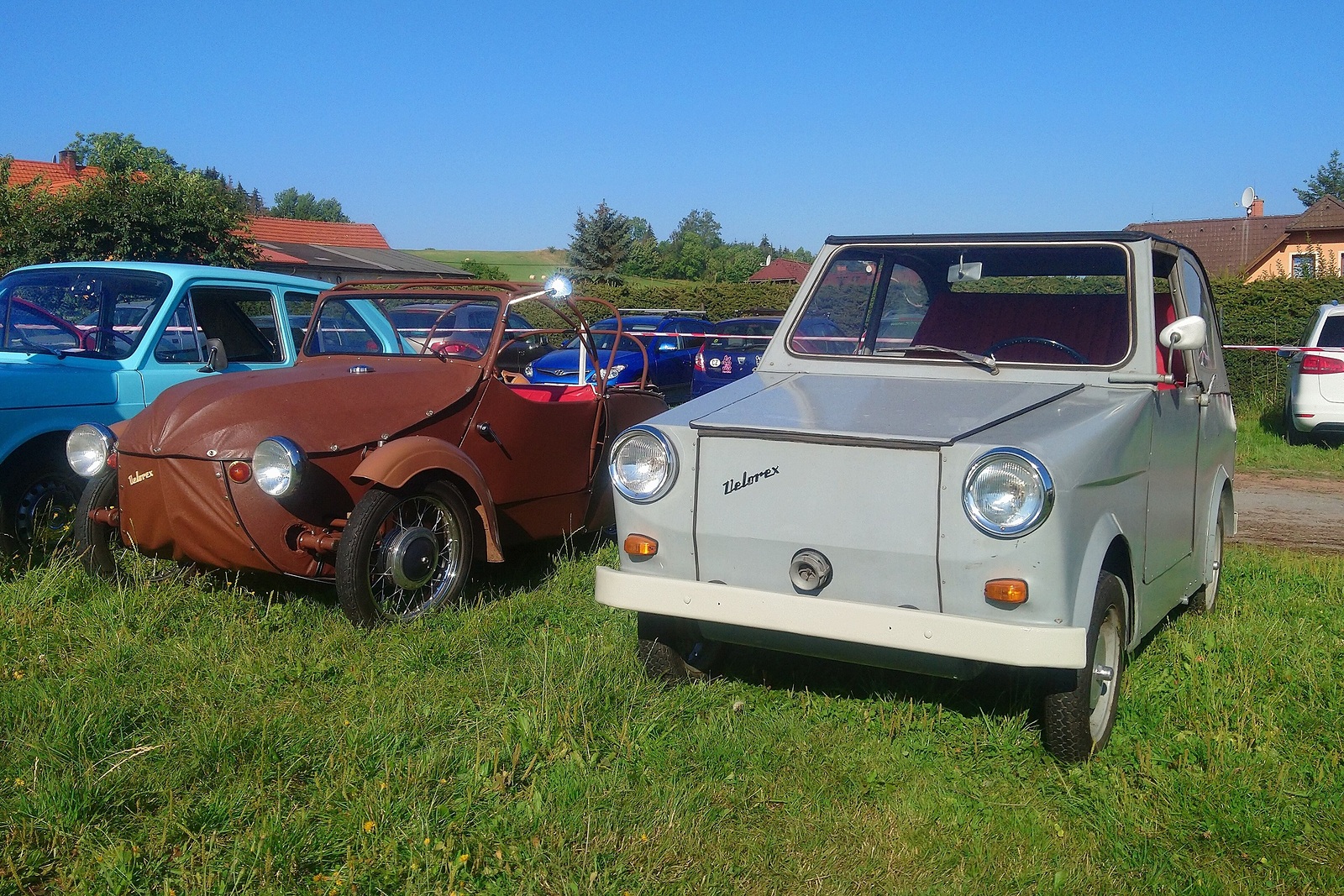
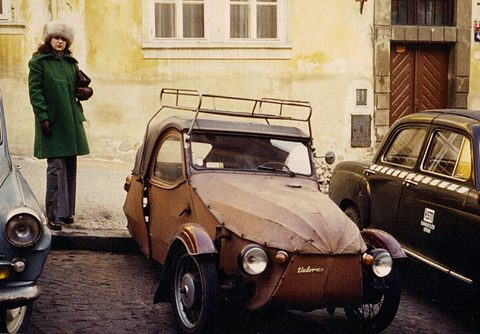
To escape nationalisation they joined the Velodružstvo cooperative in 1951, and the cars, the Velorex, moved to Solnice in 1952. A steel-tube frame was covered in leatherette fastened with turnbuttons, and a Jawa engine in the tail drove its one rear wheel; from 1956 the gearbox had a reverse.source 24source 25 New cars went only to disabled people, after a medical commission, and mostly through the Union of Invalids, which kept waiting lists. About 15,200 three-wheelers were built between 1951 and 1971, and 7,540 of them went to other Eastern Bloc countries.source 24source 25 The four-wheeled 435-0 that followed in 1971 filled its cabin with exhaust fumes, its doors opened on the move and its brakes overheated; the Union of Invalids reported it, and its approval was withdrawn by telegram on 31 October 1972. The Union then arranged Trabants instead.source 24
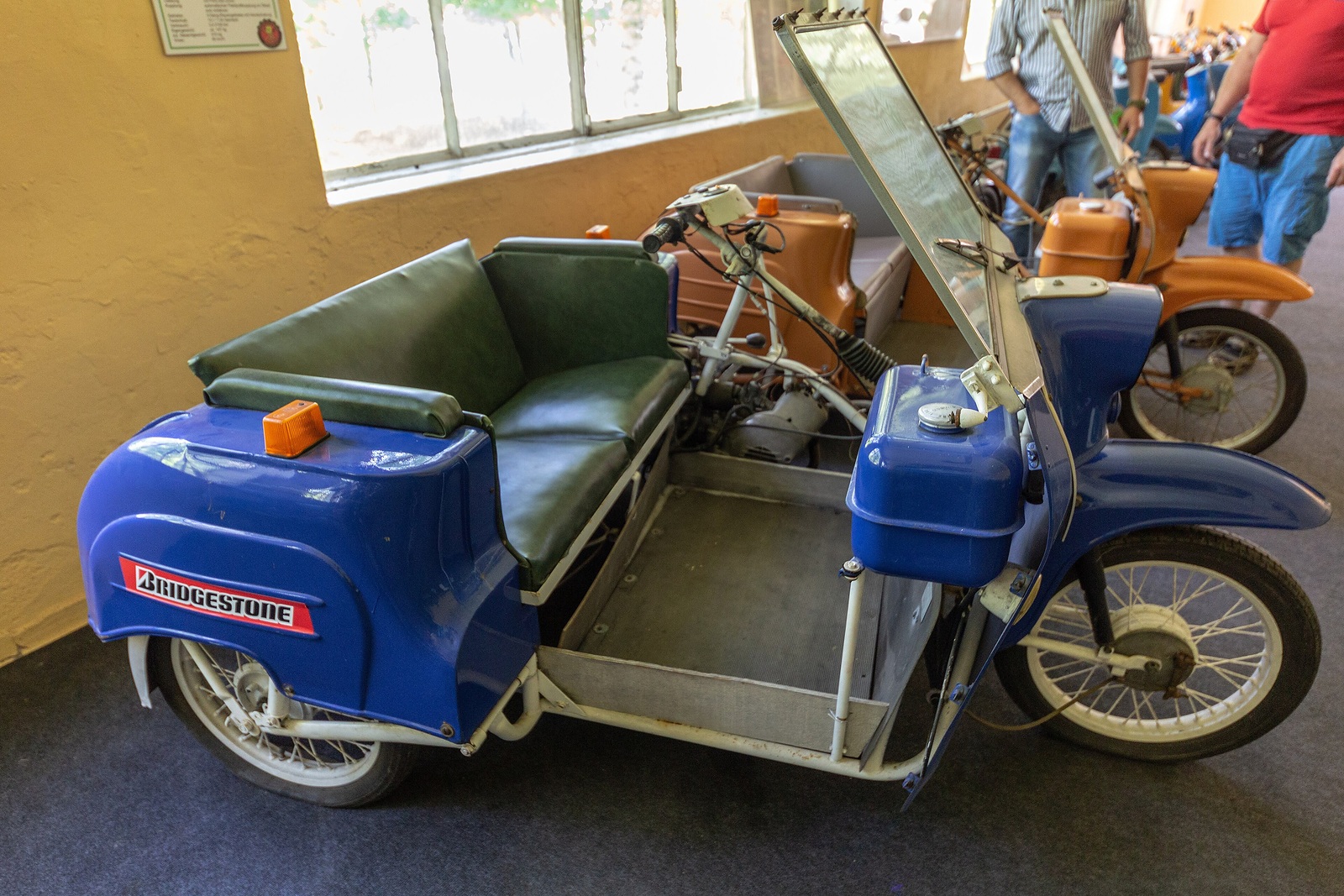
In Leipzig the firm of Louis Krause, founded in 1880, began making vehicles for disabled people at the end of the 1940s; its single-seat Piccolo Trumpf of 1955 had a Simson moped engine. The first two-seat Piccolo Duo came in 1961, and by 1970 the Krause Duo 4 had reached its final form: a 49.6 cc Simson Schwalbe engine of 3.6 PS, three gears changed by hand, a centrifugal clutch with no lever, brakes worked by pushing the handlebar forward, and no reverse, which German Wikipedia counts as a serious failing in a disabled driver’s vehicle.source 26 After Krause was partly nationalised in 1972 the Duo was built at Brandis, later as part of Robur, until March 1991.source 26source 27 About 19,000 Duo 4s were built, and half went to Poland.source 26source 27 It is often called the Simson Duo, wrongly. Thanks to a rule in the Unification Treaty it can still be driven in Germany on a moped licence.source 26
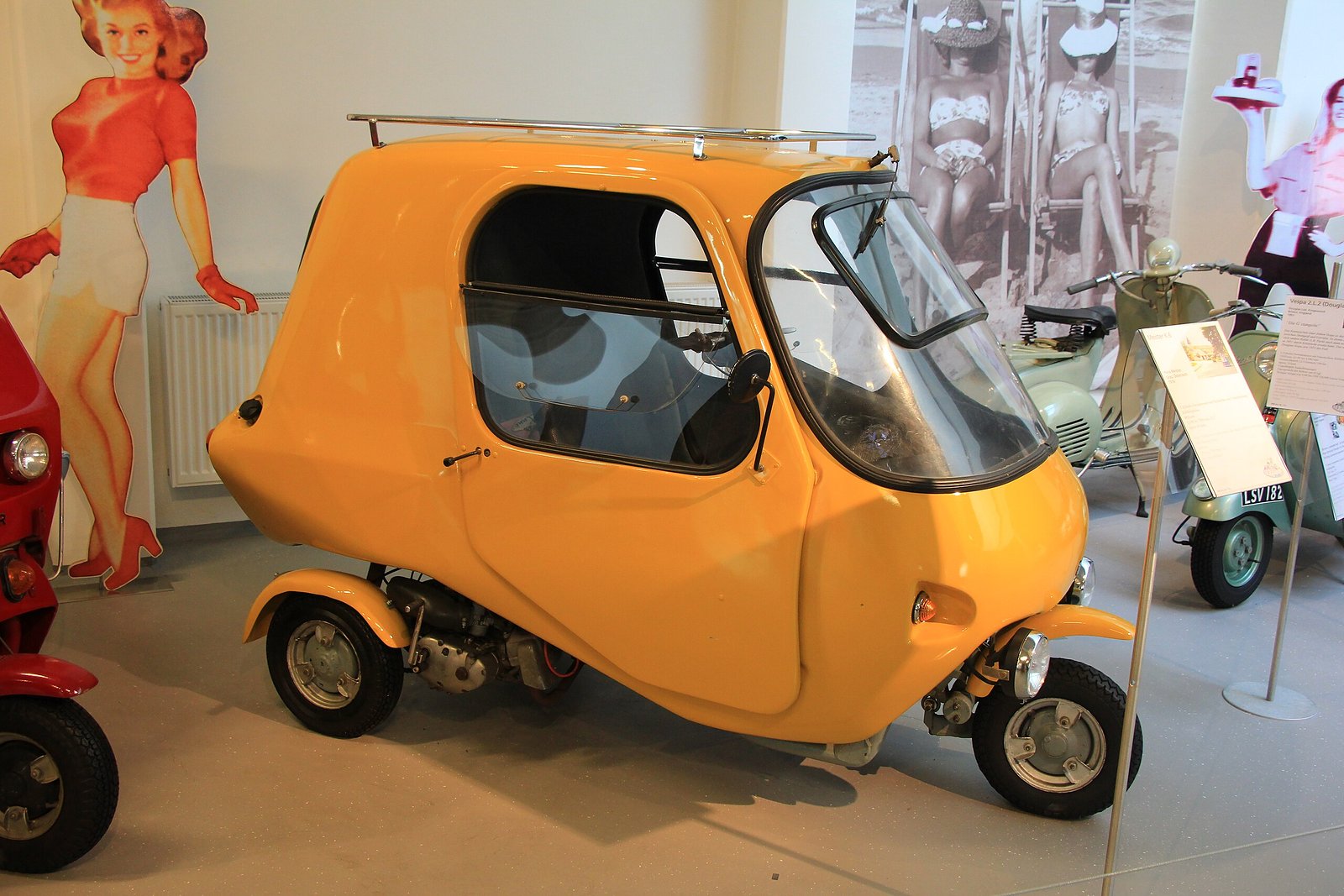
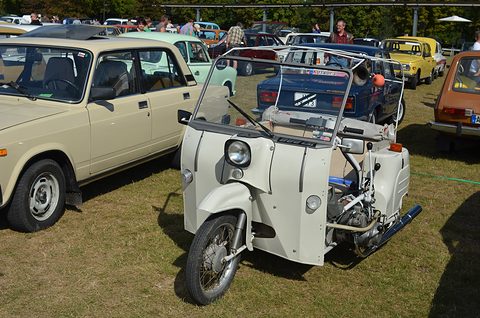
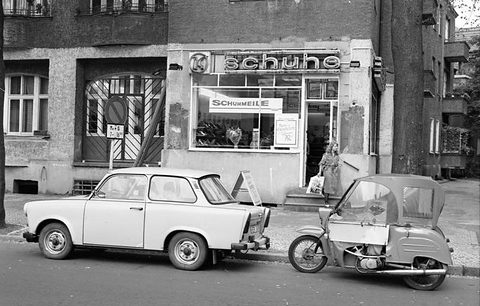
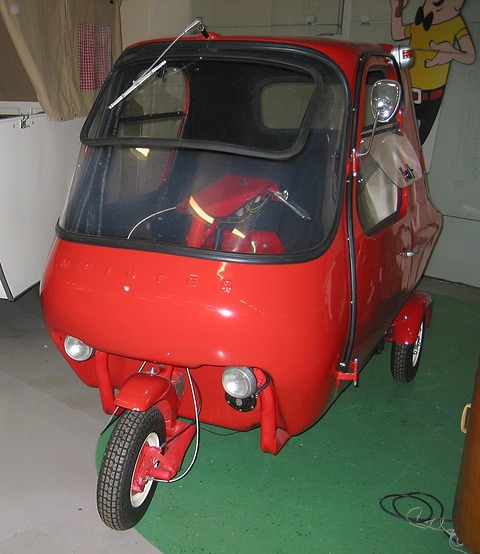
In Graz, Hans Meister founded his firm in 1962 and began with invalid vehicles; his Puch 49 cc models included the Meister K5 cabin, and the G 5 N had 3.5 PS (2.6 kW) and a top speed of 40 km/h (25 mph). About 1,500 vehicles of all kinds were built before production ended in 1979.source 28 His cars appear among the Austrian microcars, and a red K5 has a leading part in Karl Markovics’s film Nobadi of 2019.source 28
The carriage that became a Messerschmitt
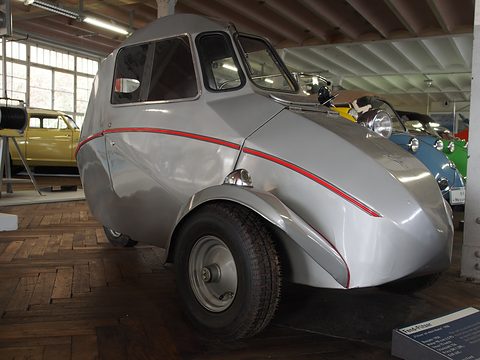
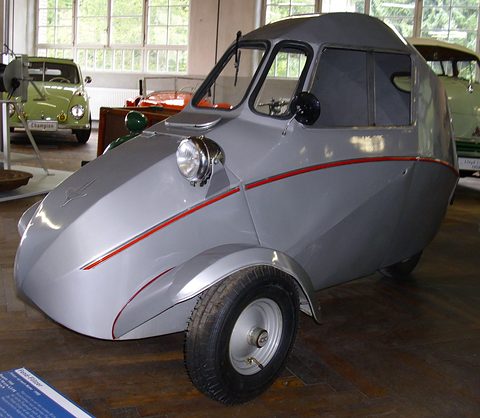
In 1947 Fritz Fend applied to the trade office in Rosenheim to make, among other things, vehicles for the war-disabled.source 29 His Fend Flitzer had the backing of the VdK, the association of the German war-disabled, which helped him find materials, and since it counted as a mobility aid, Fend could sidestep some Allied restrictions.source 29 Fend wanted it seen as a car that disabled people could use among others, not one marked out for them.source 30 Many of its buyers were not disabled at all. The two-seat Fend 150 followed, and through Messerschmitt it became the Messerschmitt KR175, one of the bubble cars.source 30 The Flitzer was an invalid carriage that able-bodied buyers wanted, and it shows how thin the line was between a car for disabled drivers and a microcar for anybody.
Smallest to largest
11 cars and 3 maker groups, to scale
Each bar is the car’s length on a 3.5 metre track; the red notch is a Fiat 500.
-
Fend Flitzer1948–1951 · Germany · 3 wheels
2.00 m -
Krause Duo1961–1991 · East Germany · 3 wheels
2.13 m -
SMZ S‑3A1958–1970 · Soviet Union · 4 wheels
2.62 m -
Bond Minicar1949–1966 · Britain · 3 wheels
2.69 m -
SMZ S‑3D1970–1997 · Soviet Union · 4 wheels
2.83 m -
Invacar1946–1977 · Britain · 3 wheels
2.97 m -
AC Petite1953–1958 · Britain · 3 wheels
3.12 m -
VAZ-1111 Oka1987–2008 · Soviet Union · 4 wheels
3.20 m -
Velorex1950–1973 · Czechoslovakia · 3 wheels
3.25 m -
Gordon1954–1958 · Britain · 3 wheels
length unknown -
Minissima1972–1987 · Britain · 4 wheels
length unknown -
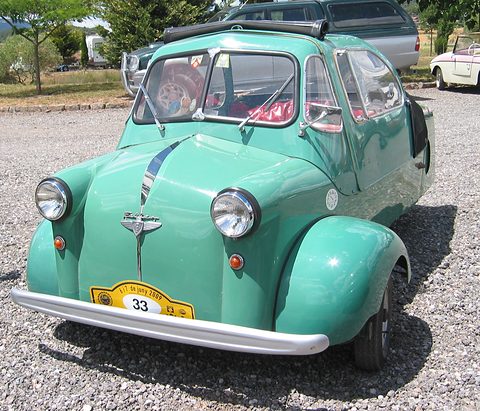
Austrian microcars1952–1979 · Austria · 3 wheels
5 makers -
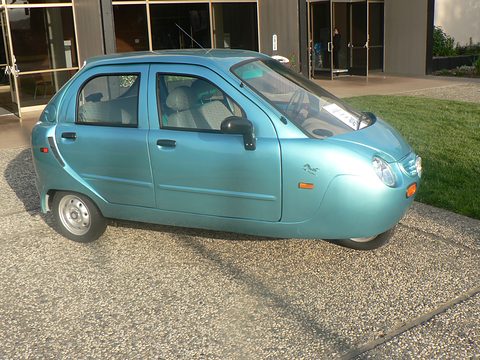
Electric microcars of the Americas since 19902001– · Several countries · 4 wheels
8 makers -
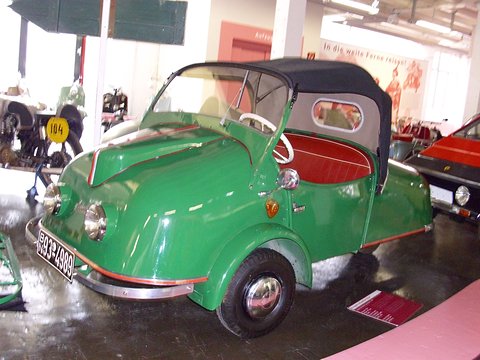
German Kabinenroller small makers1949–1959 · West Germany
9 makers
Pictures
12 photographs
Invalid carriages 12
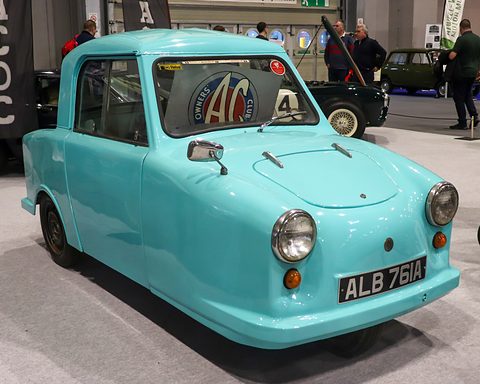
1 A turquoise 1963 AC Acedes Mk 14 invalid carriage, ALB 761A, at the NEC Classic Motor Show in 2019.
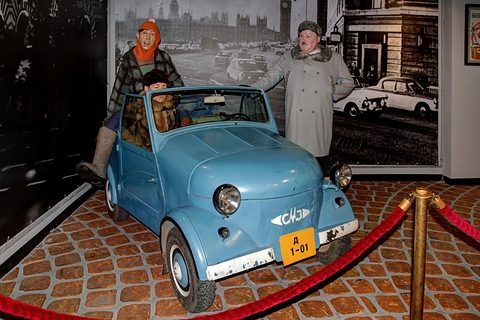
2 A pale blue S‑3A with figures of the trio from Operation Y in the Vadim Zadorozhny Technical Museum, 2014.
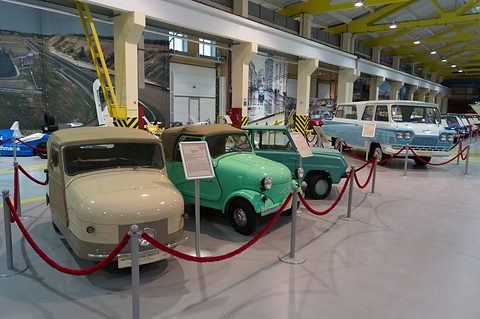
3 An SMZ S‑1L three-wheeler, a green S‑3A and a turquoise S‑3D in a row of Serpukhov invalid carriages in the UMMC Museum, Verkhnyaya Pyshma, in 2017.
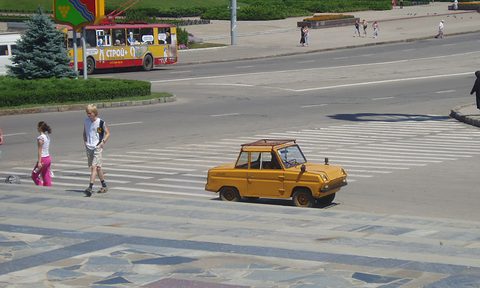
4 A yellow SMZ S‑3D crossing a square in Tiraspol, Transnistria, in 2006.
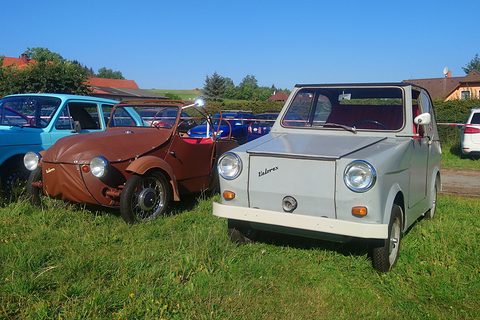
5 A Velorex 350 three-wheeler beside a Velorex 435-0 four-wheeler at Tuhaň in 2020.
7 more picturesFewer pictures
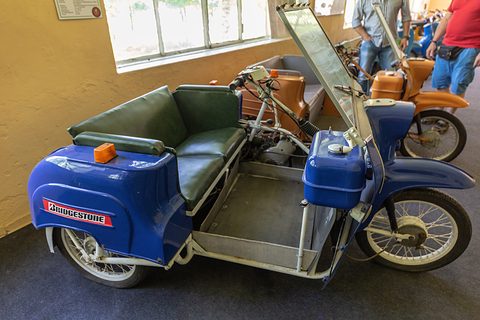
6 The open cabin and bench seat of a blue Duo at Pütnitz, 2018.
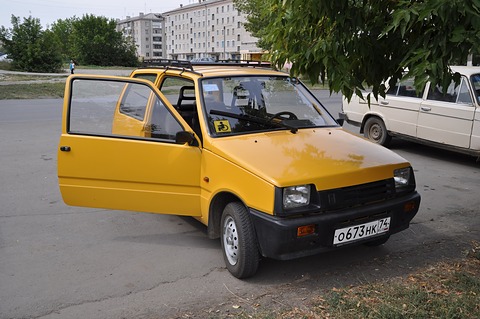
7 A yellow Oka with factory hand controls for drivers with leg disabilities, 2010.
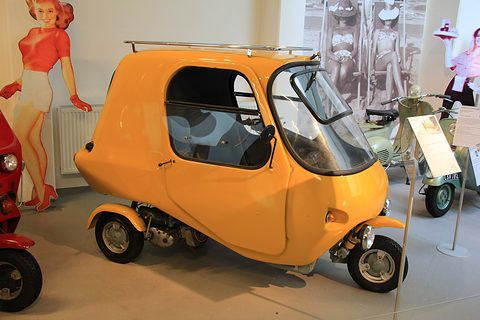
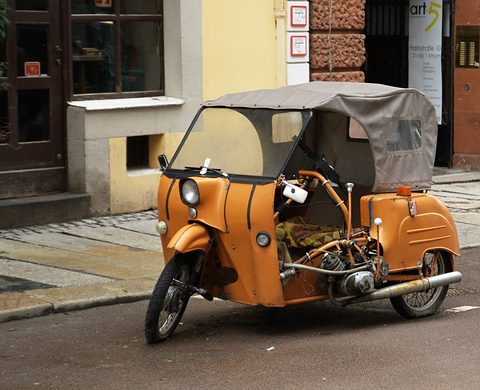
8 Orange Meister moped cabin car with a roof rack at the Nostalgiewelt Eggenburg, Austria, in April 2016.
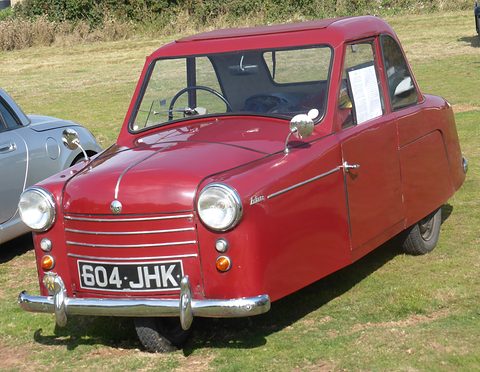
9 A maroon AC Petite, 604 JHK, from the front quarter at the National Microcar Rally in 2019.
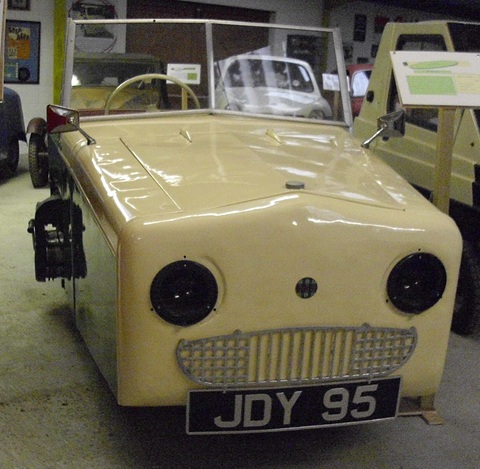
10 The 1956 Gordon, JDY 95, from the front quarter in a museum.
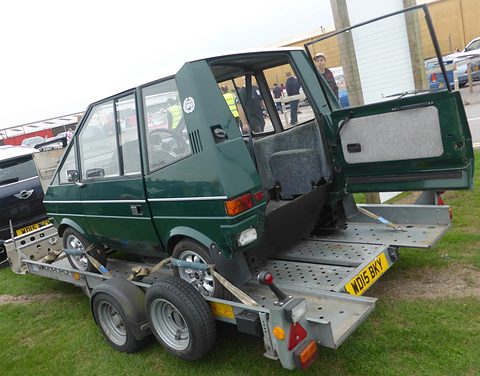
11 An Elswick Envoy with its doors open, showing the wheelchair space behind, in 2018.
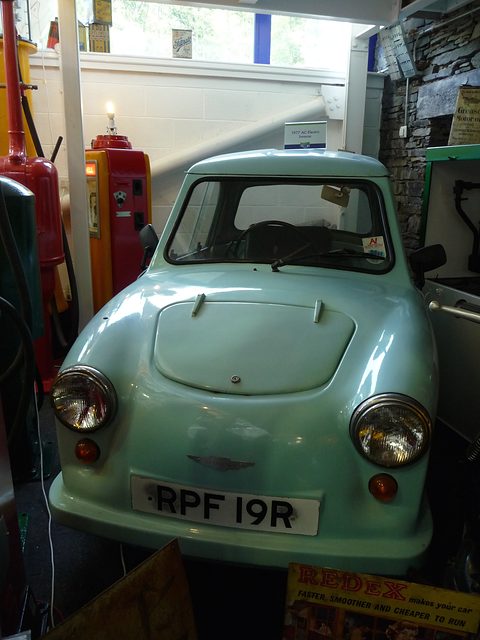
12 A 1977 AC Electric Invacar, RPF 19R, in the Lakeland Motor Museum in 2014.
Picture credits (12)
- 1 Vauxford, CC BY-SA 4.0
- 2 Alexxx1979, CC BY-SA 4.0
- 3 Msgevans00, CC BY 4.0
- 4 Guttorm Flatabø, CC BY 2.0
- 5 Jiří Erben, CC BY-SA 3.0
- 6 Matti Blume, CC BY-SA 4.0
- 7 Schlurcher, CC BY 4.0
- 8 Karl Gruber, CC BY-SA 4.0
- 9 Andrew Bone from Weymouth, England, CC BY 2.0
- 10 Buch-t, CC BY-SA 3.0 de
- 11 andreboeni, CC BY 2.0
- 12 Lynn Rainard, CC BY-SA 2.0
The cars
Profiles
2 more maker groupsFewer
-
-
Electric microcar
Electric microcars of the Americas since 1990
2001– · Several countries · 8 makers
Sources
Numbered as in the text
Sources are given as plain text; the links are on the Credits page.
- BBC News Ouch, “Gone for a decade: The invalid carriage”, 29 June 2013.
- National Motor Museum, Beaulieu, “AC 70 Carriage”, collection page.
- English Wikipedia, Invalid carriage; used as a lead.
- Road Traffic Act 1930 (20 & 21 Geo. 5 c. 43), section 2(1), as enacted.
- The Invalid Carriage Register, “Invacar Ltd”, read in an archived copy of 2010.
- Hull Museums, “Invacar Motorcar”, Streetlife Museum, KINCM:1976.80.1.
- English Wikipedia, Invacar, and German Wikipedia, Invacar; used as leads. They cite The New York Times (2009), the BBC (2013) and Georgano.
- Elvis Payne, 3wheelers.com, “Invacar”, read in an archived copy of 2001–02, and “The End of the Invacars – Now Banned from British Roads”, April 2003.
- German Wikipedia, Vernon Industries; used as a lead. It cites Linz and Schrader.
- Peter Frost, “AC Petite”, Alternative Autos, read in an archived copy of 2001.
- Bond Owners’ Club, “Mark C – October 1952 to May 1956”, read in an archived copy of 2012.
- Martin Love, “AC Invacar Model 70: ‘Terrifying but exhilarating’”, The Observer, 29 April 2018.
- The Invalid Carriage Register, home page.
- Motability Foundation, “History and heritage”.
- James Reeve, “A short history of the Motability scheme”, motaclarity.co.uk, and English Wikipedia, Motability, both read only as search excerpts.
- Kathleen Hawkins, “The hearing aid chair fit for a king”, BBC News Ouch, 7 November 2014.
- English Wikipedia, Minissima, used as a lead, and the Science Museum Group, “Elswick Envoy Road Car”, object 2007-39.
- Sergei Kanunnikov, “Мотоколяски СССР: полная история” (“The motor carriages of the USSR: the full history”), Za Rulyom, 11 November 2022, in Russian.
- Russian Wikipedia, СМЗ С-1Л/С-3Л and СМЗ С-3А; used as leads. They cite Kanunnikov (2007).
- Sergei Arbuzov, “Боевое крещение «Моргуновки»” (“The baptism of fire of the Morgunovka”), drom.ru, 23 May 2020, from the NAMI test report of 1957, in Russian.
- Sergei Kanunnikov, “Примитивная, но передовая” (“Primitive but advanced”), Za Rulyom, 8 August 2023, in Russian.
- Russian Wikipedia, СМЗ С-3Д, used as a lead, and Aleksandr Potapov, “Родная «инвалидка»” (“Our own invalid car”), Avto Mail.ru, in Russian.
- Sergei Kanunnikov, the history of the Oka VAZ-1111, Za Rulyom, 13 June 2020, and “Малолитражная, малотиражная и невозрожденная”, kolesa.ru, both in Russian.
- Velorex tým, “Historie vozítek VELOREX”, in Czech, read in an archived copy of 2018.
- Czech Wikipedia, Velorex, German Wikipedia, Velorex, and English Wikipedia, Velorex; used as leads. They cite Fajman (2010) and Zeichner (1999).
- German Wikipedia, Duo (Krankenfahrzeug), read in full; used as a lead. It cites Kraftfahrzeugtechnik of 1954, 1956 and 1961.
- ostmotorrad.de, “Simson – Duo” and “Duo Modellübersicht 4 – 4/2”, read in archived copies of 2016.
- German Wikipedia, Fahrzeugbau Ing. Hans Meister; used as a lead. It cites Georgano and Fritz, Die Knatterkugel (2013).
- Stadtarchiv Rosenheim, “Fritz Fend und sein ‘Flitzer’”, from Rosenheim 2000. Eine Stadt im 20. Jahrhundert (2000).
- Bruce Weiner Microcar Museum, “1950 Fend Flitzer 101”, tour page, read in an archived copy, and English Wikipedia, Fritz Fend.