microcarfan
  • Microcar
  • West Germany
  • No doors
  • Glass-fibre body

Spatz

Also known as BAG Spatz, Victoria 250, Victoria Spatz

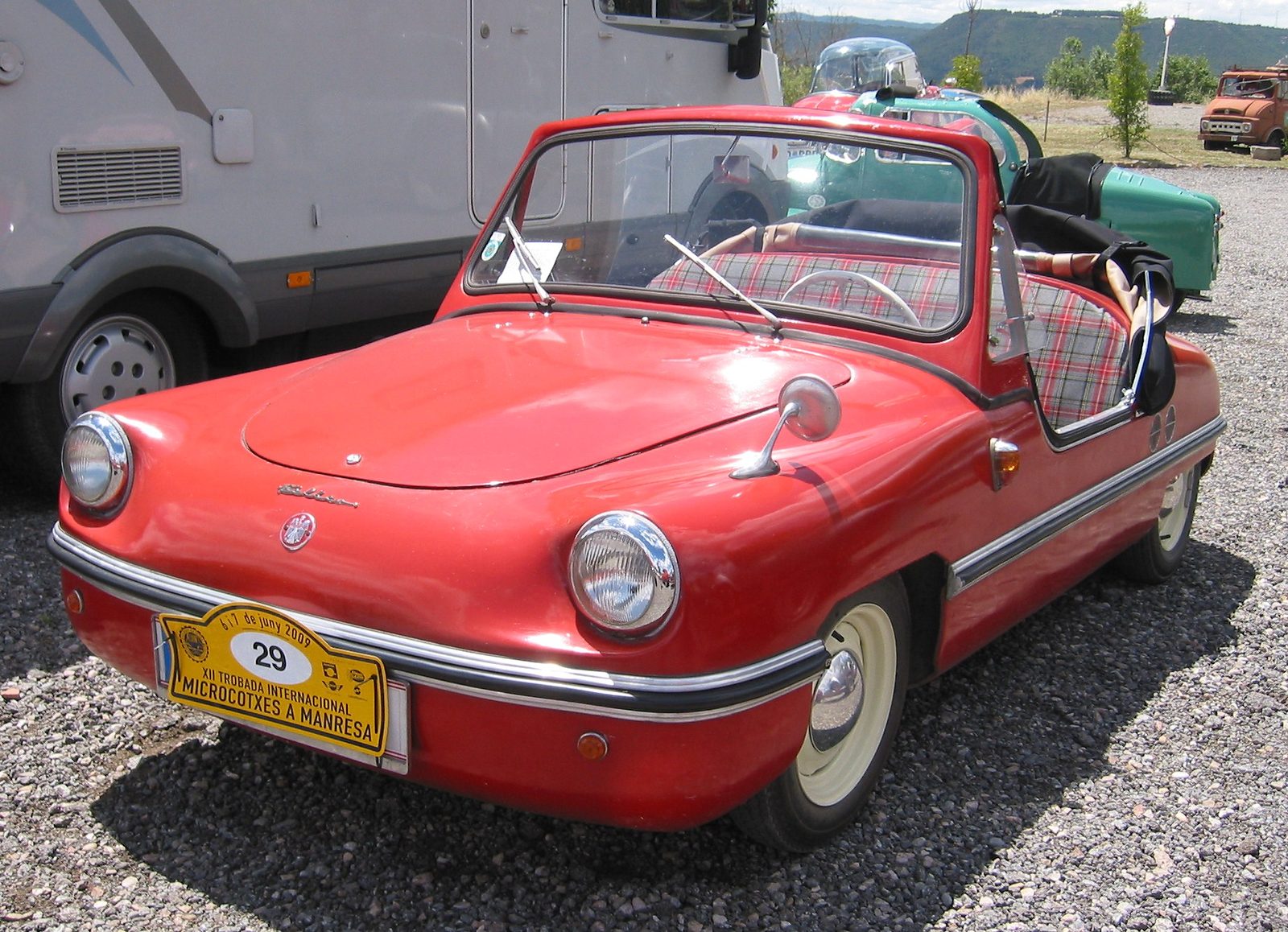
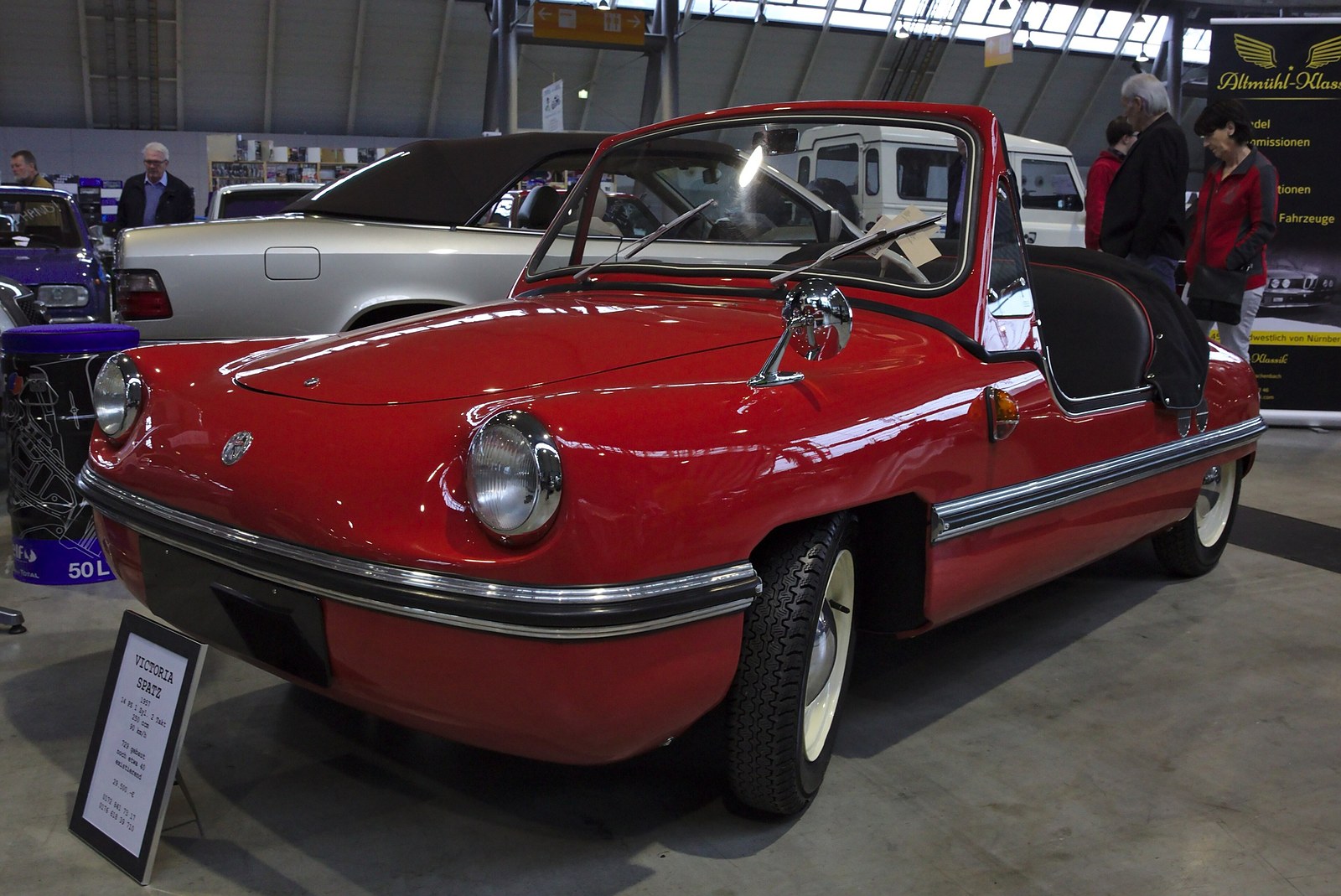
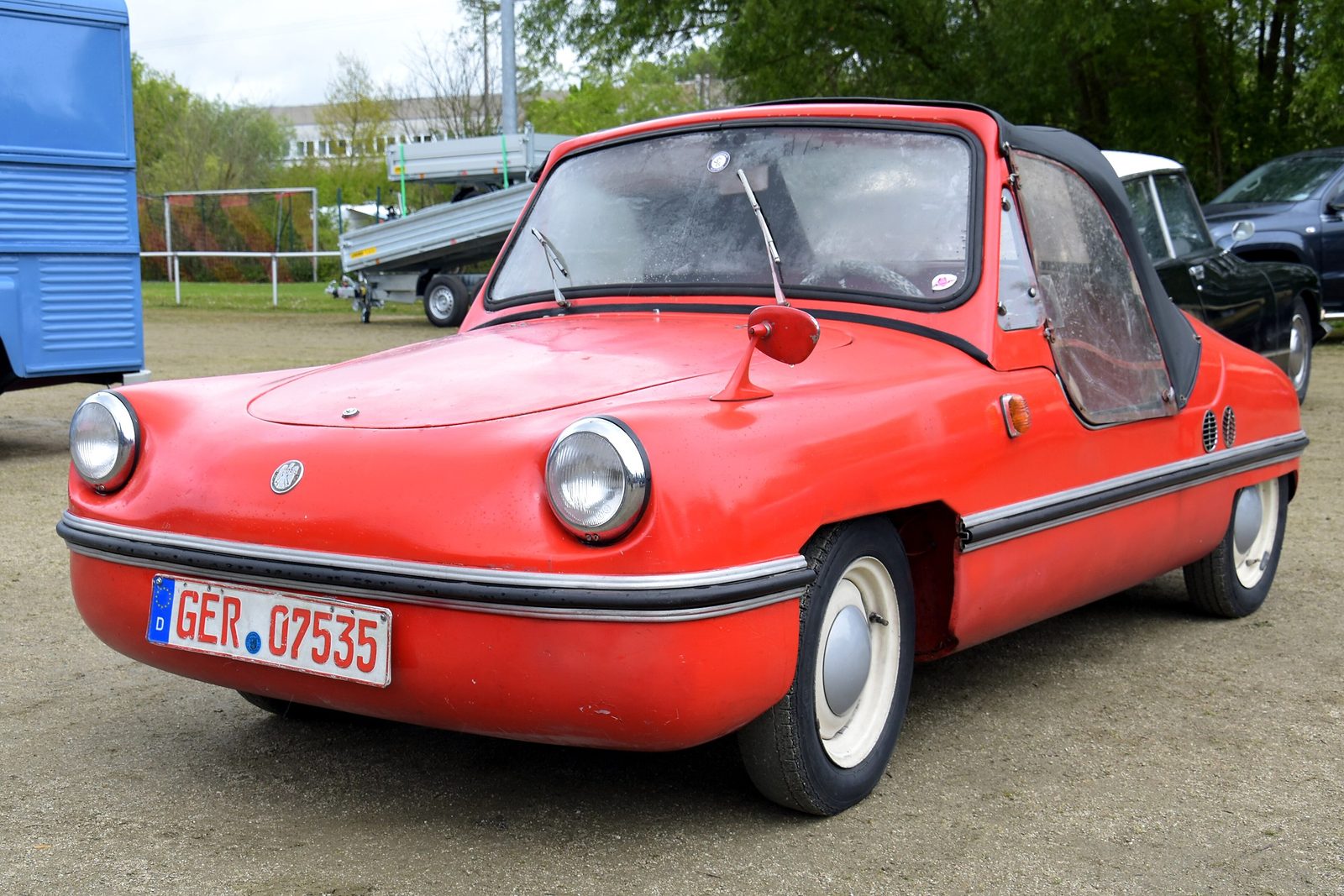
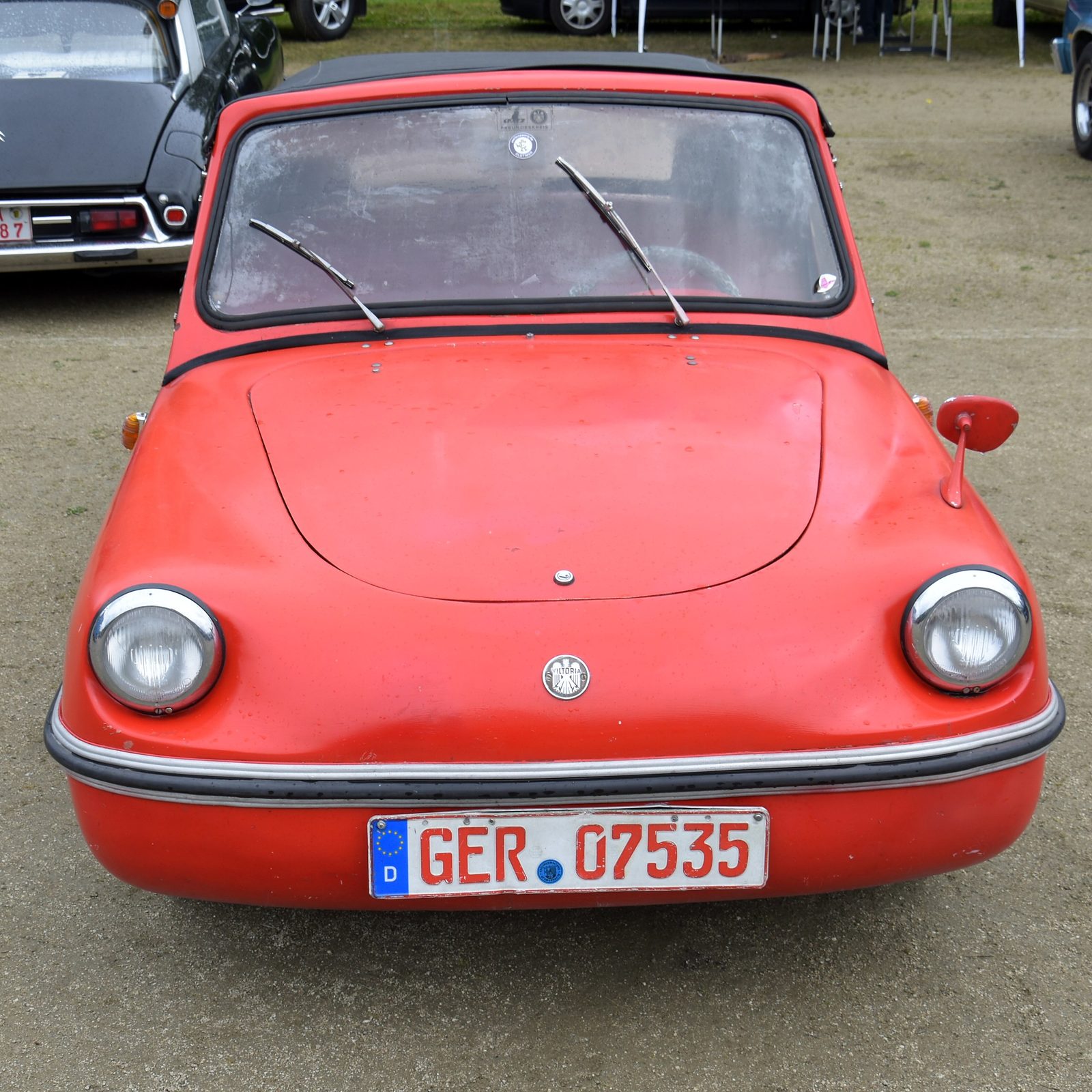
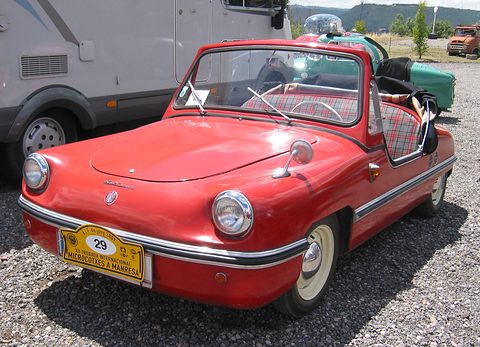
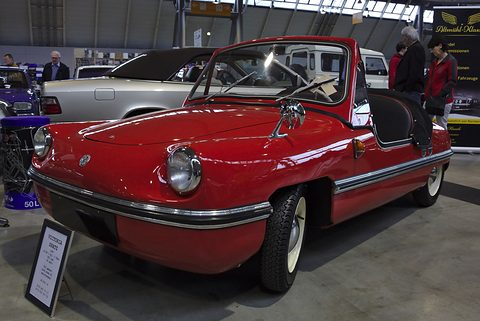
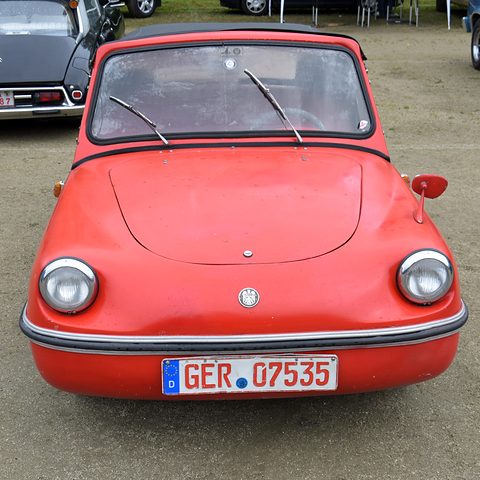
A glass-fibre roadster with no doors, three seats across and a 191 cc Sachs two-stroke behind them. It began as Egon Brütsch’s three-wheeler, whose plastic body cracked, and was saved by the man who had designed the great Tatras.

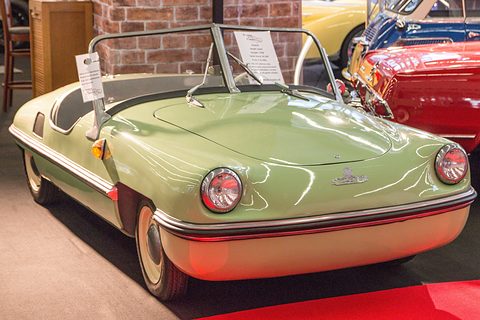
Pale green doorless roadster with cream lower body, chrome bumper strip, round headlamps and a dealer sign on the windscreen frame.
A pale green Spatz carrying the sparrow-and-script Spatz badge, on show at the IAA in Frankfurt in 2019.Photo: Johannes Maximilian, CC BY-SA 4.0, via Wikimedia Commons

At a glance

The spec plate

Spatz

Spatz · Traunreut

Built
1956–⁠1958February 1956 to February 1958; shown in September 1955
Country
West GermanyTraunreut, Bavaria; the Victoria 250 finished in Nuremberg
Maker
Bayerische Autowerke GmbH (BAG), TraunreutHarald Friedrich’s firm, with Victoria-Werke as partner; Victoria built the Victoria 250
Engine
191 cc Sachs two-stroke singleThe Messerschmitt KR200’s engine; Victoria’s own 248 cc in the Victoria 250
Power
10.2 PS7.5 kW at 5,250 rpm; 14 PS (10 kW) in the Victoria 250
Length
3,300 mm1,400 mm wide, 1,240 mm high
Weight
410 kgThe Weiner museum’s figure; 425 kg for the Victoria 250
Seats
3Abreast, on one bench
Wheels
4Four, the rear pair driven
Price new
DM 2,9751956; the coupé DM 3,175 at the 1955 show
Production
1,487 or 1,588729 Victoria 250s; 859 or 758 Spatz
Survives
24All types, by the Weiner museum’s 2002 count
Top speed
75km/h75 km/hAbout 47 mph; 97 km/h (60 mph) for the Victoria 250

How big is it?

True proportion

3.30 m

It is 330 mm longer than a Fiat 500, about 1.9 adults laid end to end.

Drawn at true proportion. The track is 3.6 metres long; the adult stands at the same scale. The Peel P50 is the smallest production car, on every page for comparison.

The story

History

Egon Brütsch showed his 200 Spatz, “sparrow”, at the Paris Salon in October 1954: a three-wheeler with a 191 cc Sachs engine, a single rear wheel and a plastic body that carried the suspension itself.source 1source 4 Brütsch lived by selling licences (see built under licence), and Harald Friedrich, of the machine-tool firm Alzmetall at Altenmarkt an der Alz, bought one of the three-wheelers for DM 25,000 to put into production near Traunstein.source 1source 2 On rough roads the forces went straight into the body, which cracked, and the car failed its German type approval.source 1source 2

Friedrich turned to Hans Ledwinka, the former Tatra designer, then 77 (see the designers). Ledwinka gave the car a central-tube chassis with the front wheels on a separate subframe, coil-spring struts and a swing axle at the back, and four wheels instead of three.source 1source 3source 4

Wer weiß heute schon, daß das Fahrgestell des hübschen ‚Spatz‘… von demselben Ledwinka konstruiert wurde…

auto motor und sport 26/1956, on the motor industry’s outsiders. In English: “Who knows today that the chassis of the pretty ‘Spatz’… was designed by the same Ledwinka…”source 4

At the Frankfurt show of September 1955 the Spatz-Fahrzeugbau showed two four-wheeled models made from Brütsch’s three-wheeler, both in glass fibre: an open three-seater at DM 2,975 and a coupé, with one door on the right, at DM 3,175. auto motor und sport thought the change to four wheels sensible.source 5

Three abreast, no doors

Building began at Traunreut in February 1956, and in July Friedrich formed the Bayerische Autowerke, BAG, with the Victoria-Werke of Nuremberg as partner to sell and service the cars.source 1source 3 The Spatz was a doorless roadster with three seats on one bench, a small boot under the front lid, a cloth hood, and the engine mounted across the car behind the seat, ahead of the rear axle.source 1source 2 Getting in was hard, and with the hood up almost impossible.source 1 In 1956 auto motor und sport named it as a case of plastic bodies built in series, if in modest numbers.source 6 The engine was the 191 cc Sachs of 10.2 PS from the Messerschmitt KR200, and it was too weak for a car that the Bruce Weiner Microcar Museum puts at 410 kg (904 lb).source 1source 3 German Wikipedia says its reverse was switched electrically; the museum lists four speeds forward and four in reverse, which suggests the engine was simply run backwards, as in the Messerschmitt.source 1source 3

Just before the IFMA show in October 1956 Brütsch attacked the firm in public and demanded royalties on the four-wheeler too. BAG refused, since his three-wheeler had failed type approval despite his guarantee in the contract, and obtained a provisional court order barring him from calling himself the Spatz’s designer.source 2 Friedrich won the case, and the judges found Brütsch’s original design unroadworthy.source 1

On Victoria’s stand at that show the Spatz had a one-piece windscreen and small quarter-lights, to take a new coupé top whose sides opened upwards like wings, because doors did not suit the plastic body. The magazine liked the look but not the 200 cc engine, which did not match it in any way, on a chassis clearly laid out for more power.source 2

Seinen Spitznamen hatte das Spatz-Coupé schon am ersten Tag: Flüchtlings-SL.

auto motor und sport 22/1956, at the IFMA show. In English: “The Spatz coupé had its nickname on the very first day: the Refugee SL”, a dig at Mercedes-Benz’s gull-winged 300 SL.source 2

The press criticised the high price and the unexciting performance, as the Weiner museum puts it.source 3 Some cars caught fire in testing, which gave the Spatz a name for it, and the museum says the lawsuit and the fires led Friedrich to hand the rights to Victoria at the end of 1956.source 1source 3

The Victoria 250

From June 1957 Victoria built the car in Nuremberg as the Victoria 250, with only the plastic body still coming from Traunreut.source 1source 7 Richard Loukota’s 248 cc engine gave 14 PS and drove through five speeds selected electro-mechanically: three buttons on the dashboard for reverse, neutral and first, a small lever to preselect the others, and the clutch to engage them.source 1source 7 It reached 97 km/h (60 mph).source 1source 7 Victoria also tried a gull-wing coupé, a cabriolet with doors and wind-up windows, and a coupé with doors, but all were too heavy, and only the roadster went on.source 7 By October 1957 it was clear the market would not take another small car, and production ended in February 1958.source 1source 7 A Spatz roadster was still on the list of cars eligible for Hockenheim’s 12-hour race on 26 May 1958, though no result has been found.source 8
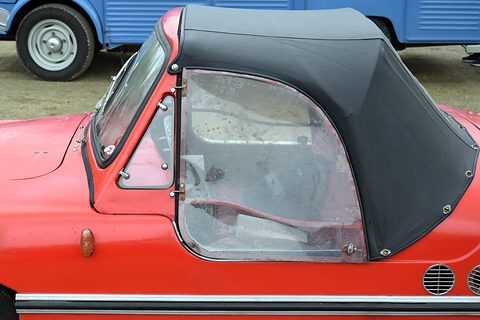
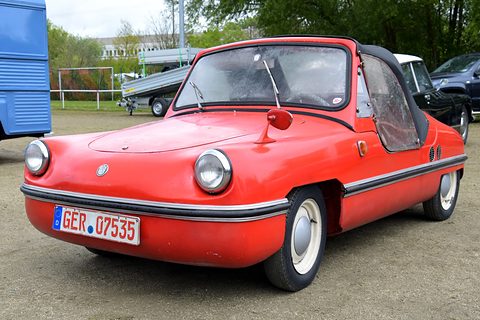
Side close-up of a red car showing a black fabric hood, a clear plastic side panel, a small hinged vent window and round chrome side vents.
No doors: a cloth hood and a clear sidescreen close the cockpit of a red Victoria-badged car, with a quarter-light ahead of it.Photo: BlueBreezeWiki, CC BY-SA 3.0, via Wikimedia Commons
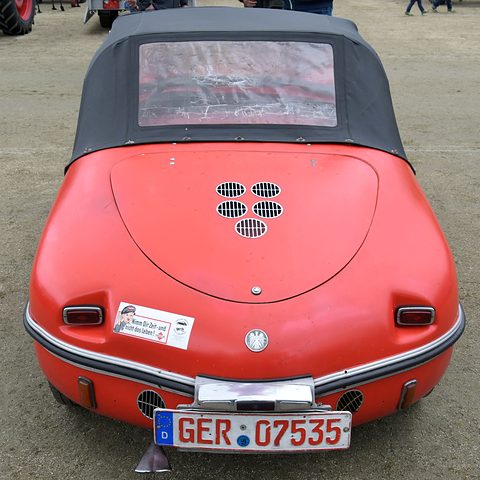
Rear of a red roadster with a black fabric hood and clear rear window, five oval vent grilles on the engine lid and a round badge.
From behind, the louvred lid over the engine, which lies across the car ahead of the rear axle.Photo: BlueBreezeWiki, CC BY-SA 3.0, via Wikimedia Commons

Burgfalke 250 Export

1958 · a record on this page

The Spatz had one more life. Burgfalke, of Obermurnthal in the Upper Palatinate, headed by a Mr Dahmen by the Weiner museum’s account, bought Victoria’s remaining stock and tooling and set up in an old glass factory in Bavaria as the maker of the Burgfalke 250 Export.source 1source 9 It promised doors, bumpers and a bigger engine, but could not pay for the 180 bodies and sets of parts that were left, and only a few cars were built by hand; after that it supplied spares.source 1source 9 At least two went to dealers in the United States.source 1source 9 The Weiner museum believed one or two survive, and its own car sold for US$20,700 in 2013 and stayed in America.source 9source 1

Pictures

More photographs, old and new

Variants

From three wheels to four, and on to Victoria

The Spatz and its successors
VariantYearsWhat differsHow many
Brütsch 200 Spatz1954–⁠55Three wheels; a load-bearing plastic body that cracked; see BrütschA few
SpatzFeb 1956 – May 1957Four wheels on Ledwinka’s central-tube chassis; Sachs 191 cc; column gear change859 or 758
Spatz coupé, the “Flüchtlings-SL”1955–⁠57A hardtop whose sides lift upwards like wingsSmall numbers
Victoria 250Jun 1957 – Feb 1958Victoria 248 cc engine, five speeds by push button; side quarter-lights; 3,360 mm long729
Victoria prototypes1957A cabriolet with doors and wind-up windows, a coupé with doors; too heavyOne-offs
Burgfalke 250 Export1958–⁠59Victoria 250s assembled from the old stockA few

Specification

The Spatz of 1956; the Victoria 250 in the notes

Engine and drive

Engine and drive
EngineFichtel & Sachs two-stroke single, fan-cooled, 191 cc (65 × 58 mm)source 1source 3Victoria 250: Victoria two-stroke single, 248 cc (67 × 70 mm)
Power10.2 PS (7.5 kW) at 5,250 rpmsource 1source 3Victoria 250: 14 PS (10 kW) at 5,200 rpm
GearboxFour speeds, column change; reverse switched electricallysource 1“Four forward, four reverse” by the Weiner museum; Victoria 250: five speeds, push buttons and a preselector lever
DriveEngine across the car ahead of the rear axle; rear-wheel drivesource 1source 3

Body and chassis

Body and chassis
BodyDoorless glass-fibre roadster, bolted to the frame; cloth hood or gull-wing hardtopsource 1source 2
FrameCentral tube, with the front wheels on a separate subframesource 1source 3
SuspensionTrailing links and coil-spring struts at the front; swing axle at the backsource 1source 3
BrakesHydraulicsource 3
Tyres4.40-12source 1source 3

Dimensions

Dimensions
Length3,300 mm (129.9 in)source 1source 33,360 mm for the Victoria 250
Width1,400 mm (55.1 in)source 1source 31,450 mm for the Victoria 250
Height1,240 mm (48.8 in)source 1source 3
Weight410 kg (904 lb)source 3290 kg by German Wikipedia, probably the prototype; 425 kg for the Victoria 250

Performance and running

Performance and running
Top speedAbout 75 km/h (47 mph)source 197 km/h (60 mph) for the Victoria 250
ConsumptionAbout 4 litres per 100 kmsource 1About 5.3 litres for the Victoria 250
Price newDM 2,975 (1956)source 1source 10The same for the Victoria 250

How many were built?

Every figure, with its source

1,487 or 1,588 builtEveryone agrees on 729 Victoria 250s. The Spatz is 859 by the Weiner museum and German Wikipedia’s text, or 758 by Oswald’s year-by-year table, so the total is 1,588 or 1,487.

  1. 1,588all types: 859 Spatz and 729 Victoria 250Two sources agree

    Weiner museum and German Wikipedia’s textsource 3source 7source 1

  2. 1,487all types, by yearOne source

    Oswald’s table, via German Wikipediasource 1

  3. 859SpatzTwo sources agree

    Weiner museum and German Wikipedia’s textsource 3source 1

  4. 758Spatz: 499 in 1956 and 259 in 1957One source

    Oswald’s table, via German Wikipediasource 1

  5. 729Victoria 250: 666 in 1957 and 63 in 1958Two sources agree

    Weiner museum and German Wikipedia; the 666 also in the official German tablesource 7source 1source 11

  6. 600“Victoria 250” in 1956, by the official German tableOne source

    auto motor und sport 4/1958source 11

  • Two sources agreetwo good sources give the figure
  • One sourcea good source, alone
  • Unconfirmeda lead only, not yet checked

Famous for

Three points

  1. A Tatra chassis

    Hans Ledwinka, at 77, designed the frame that made Brütsch’s idea roadworthy.

  2. The “Refugee SL”

    The coupé’s upward-opening sides earned it a nickname on its first day.

  3. Brütsch in court

    Its first designer was barred from calling himself its designer.

Survivors and collecting

Today

The Weiner museum counted 24 survivors of all types in 2002.source 3source 7 Its 1956 BAG Spatz, chassis 00236, still in original condition, made US$32,200 at the sale of the Weiner collection in February 2013.source 12 Its Victoria 250 had the lowest serial number known: restored for Bruce Weiner’s first collection, it was sold at Christie’s in 1997 and bought back seven years later.source 7 No owners’ club has been found.

Sources

Numbered as in the text

Sources are given as plain text; the links are on the Credits page.

  1. German Wikipedia, Spatz (Auto), read in full. Used as a lead; its production table is from Oswald, Deutsche Autos 1945–⁠1975 (1979), and it cites Rosellen and Lintelmann.
  2. Report from the IFMA show: the Spatz coupé and the Brütsch dispute, auto motor und sport 22/1956.
  3. Bruce Weiner Microcar Museum, “1956 BAG Spatz”, tour page (2002), archived, read in full.
  4. Essay on the motor industry’s outsiders, on Ledwinka and the Spatz, auto motor und sport 26/1956, read in extract.
  5. Report, caption and price list from the Frankfurt show, auto motor und sport 20/1955.
  6. Article on plastic bodies, auto motor und sport 16/1956, read in extract.
  7. Bruce Weiner Microcar Museum, “1957 Victoria 250”, tour page (2002), archived, read in full.
  8. Regulations for the 12 Hours of Hockenheim, auto motor und sport 10/1958, read in extract.
  9. Bruce Weiner Microcar Museum, “1958 Burgfalke FB250 Export”, tour page (2008), archived, read in full.
  10. Price list, auto motor und sport 18/1956.
  11. “Produktionszahlen 1957”, auto motor und sport 4/1958.
  12. RM Auctions, the Bruce Weiner Microcar Museum sale, Madison, Georgia, February 2013, lot 601, “1956 B.A.G. Spatz”.