microcarfan
  • Bubble car
  • West Germany
  • Front door

BMW Isetta

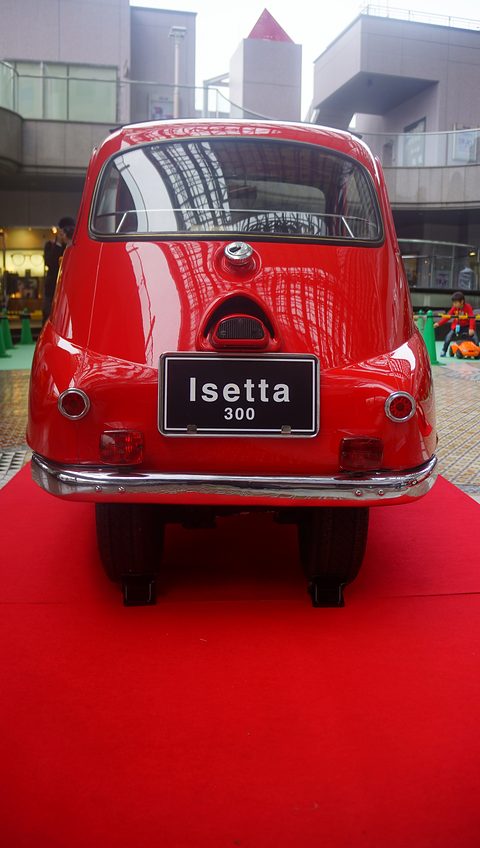
Also known as Isetta Motocoupé, Isetta 250, Isetta 300, “Knutschkugel”

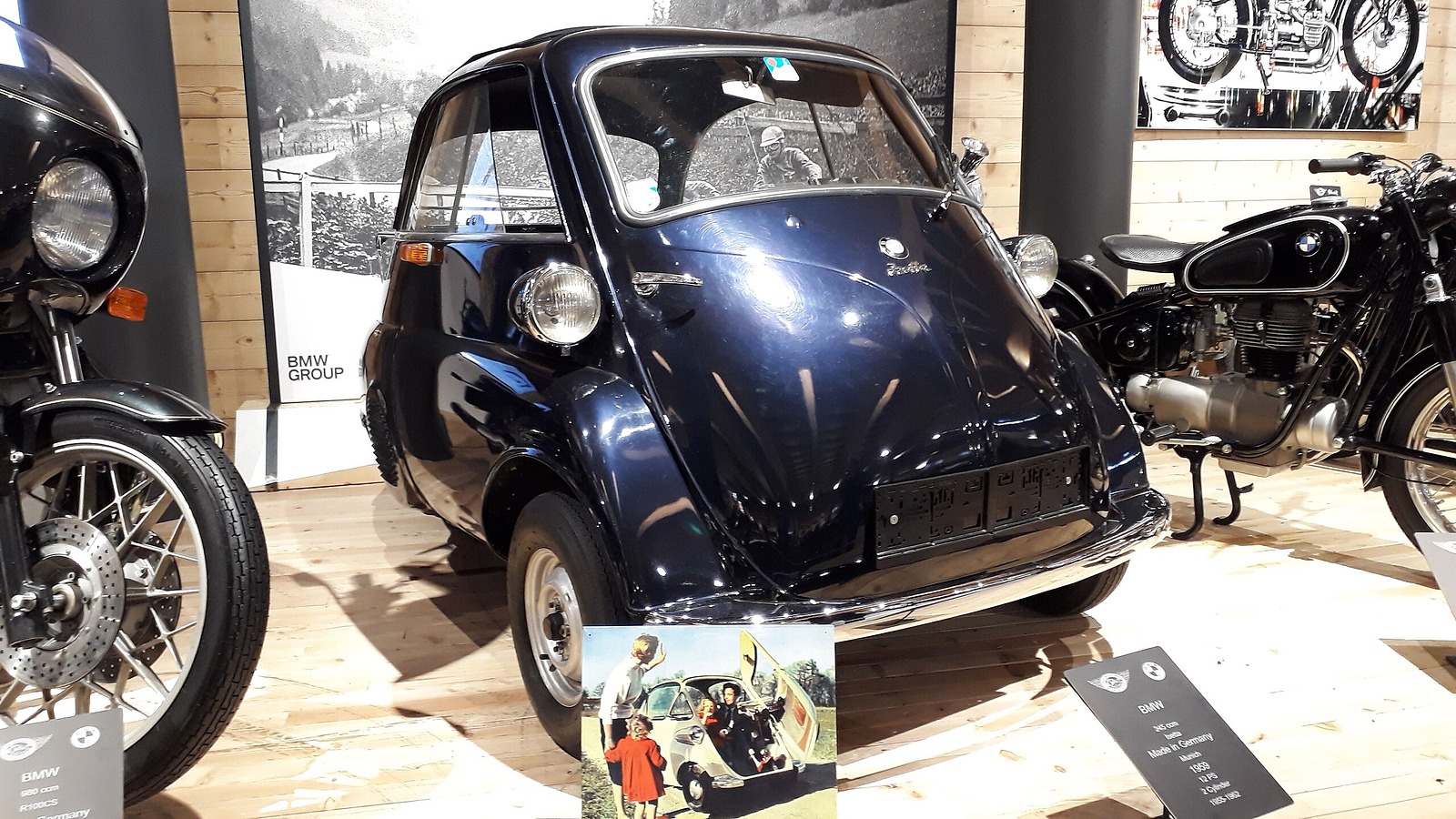
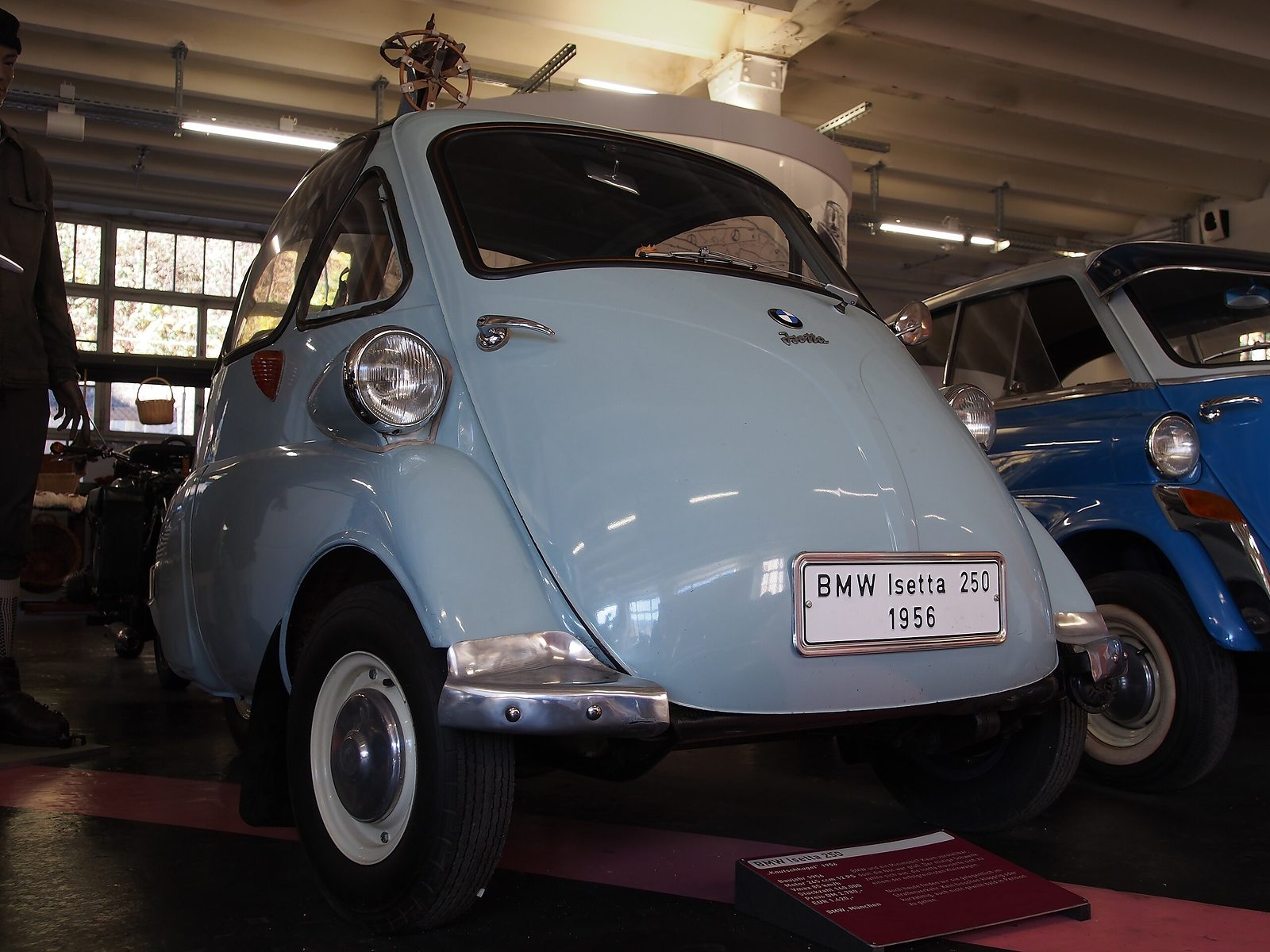
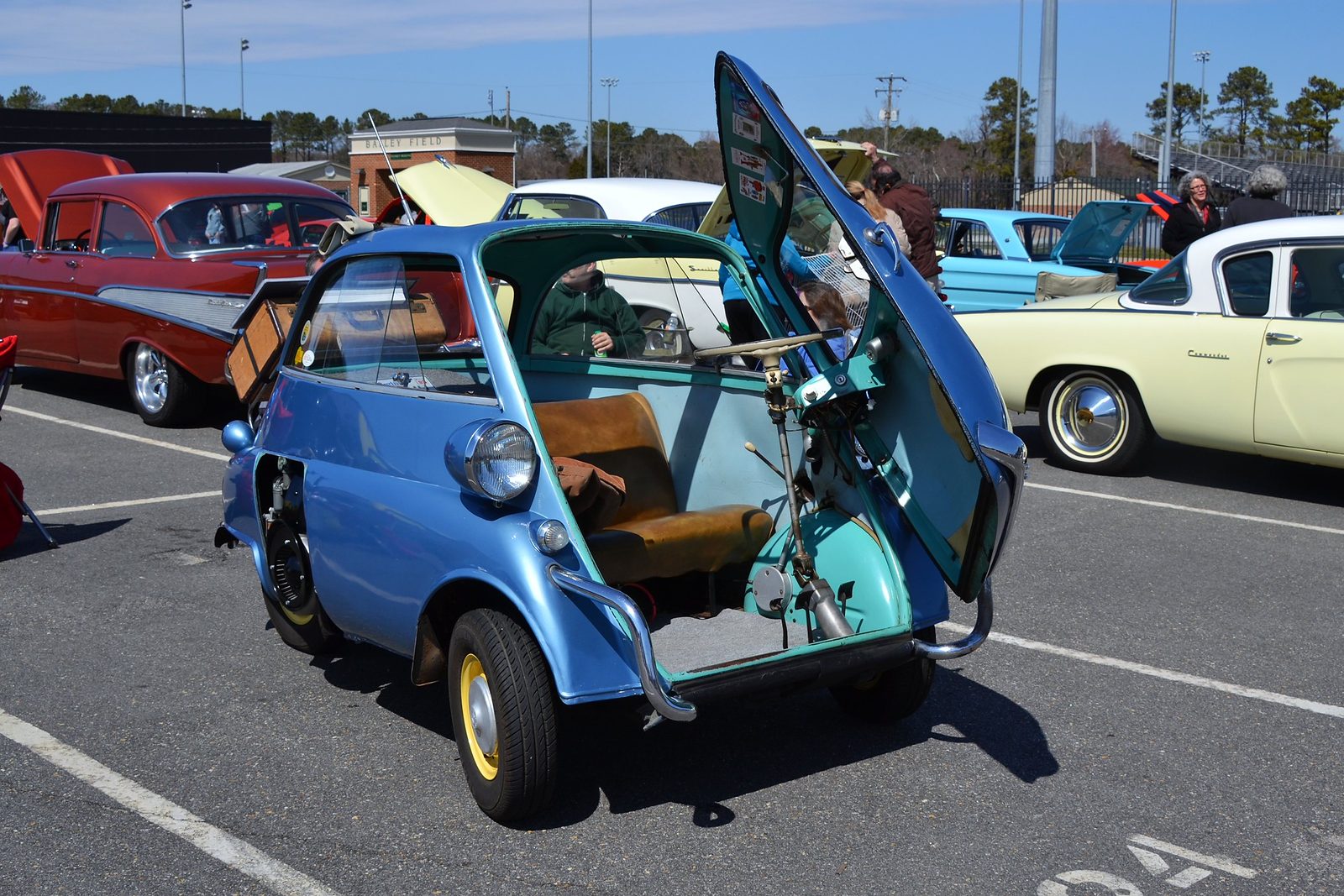
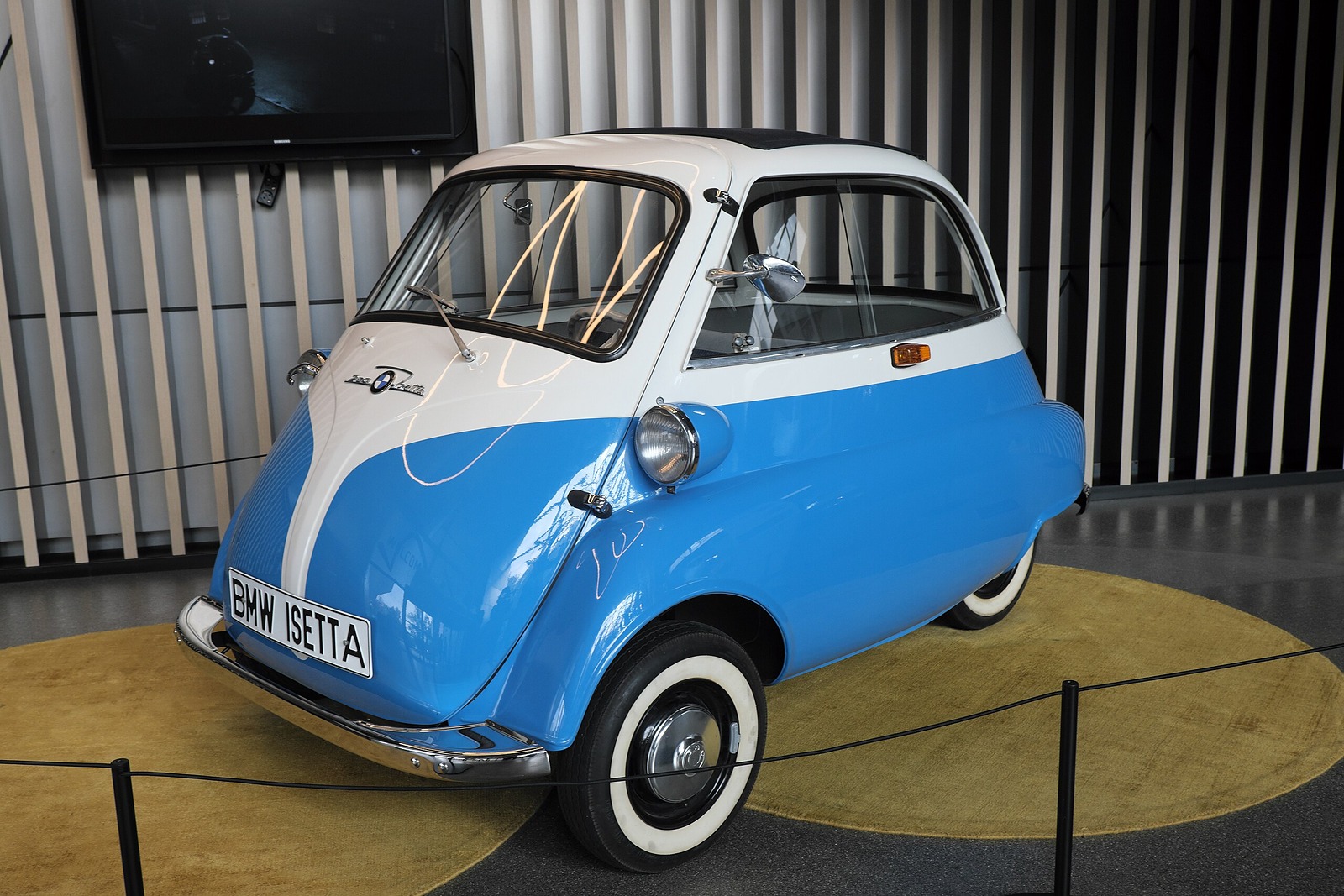
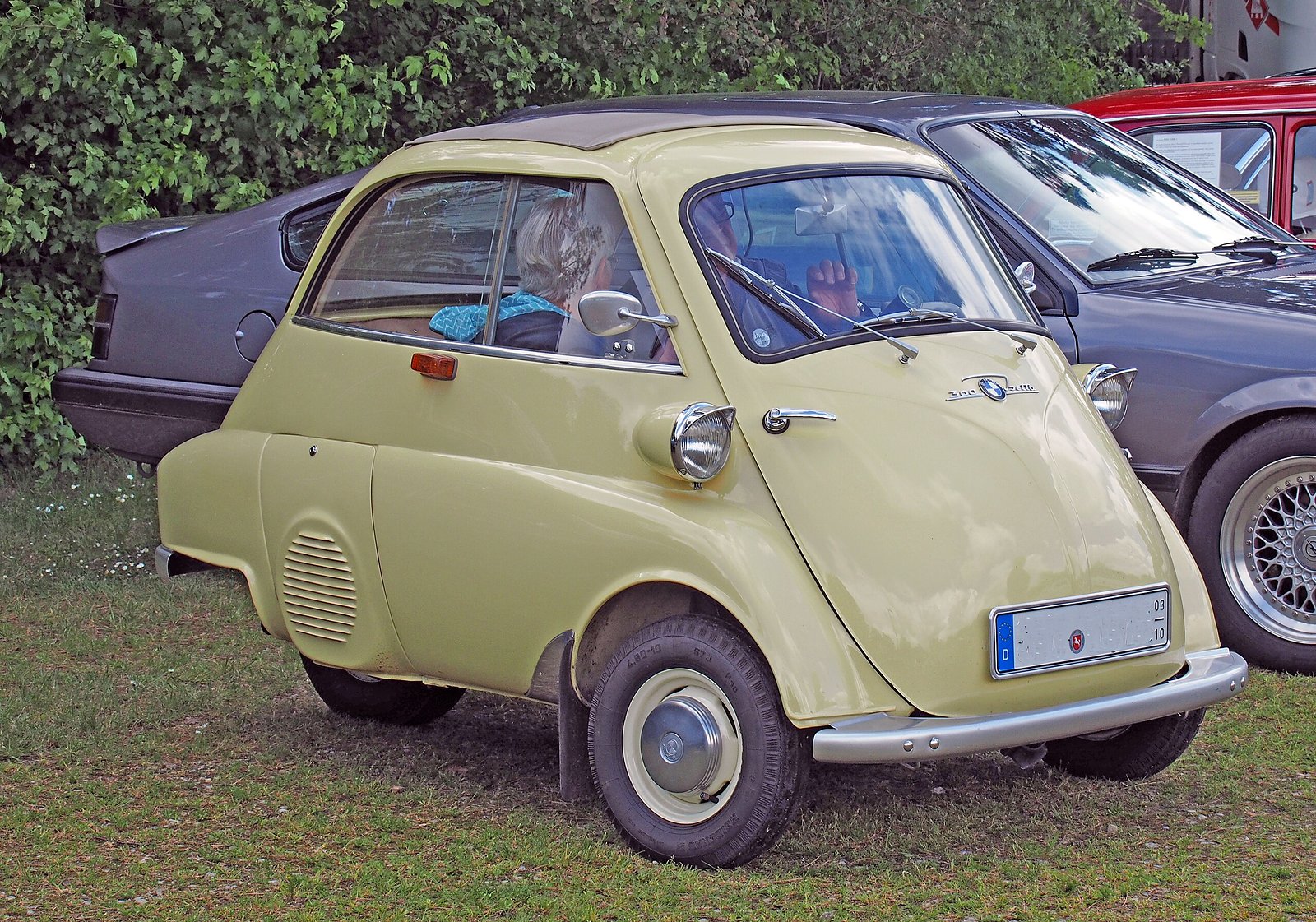
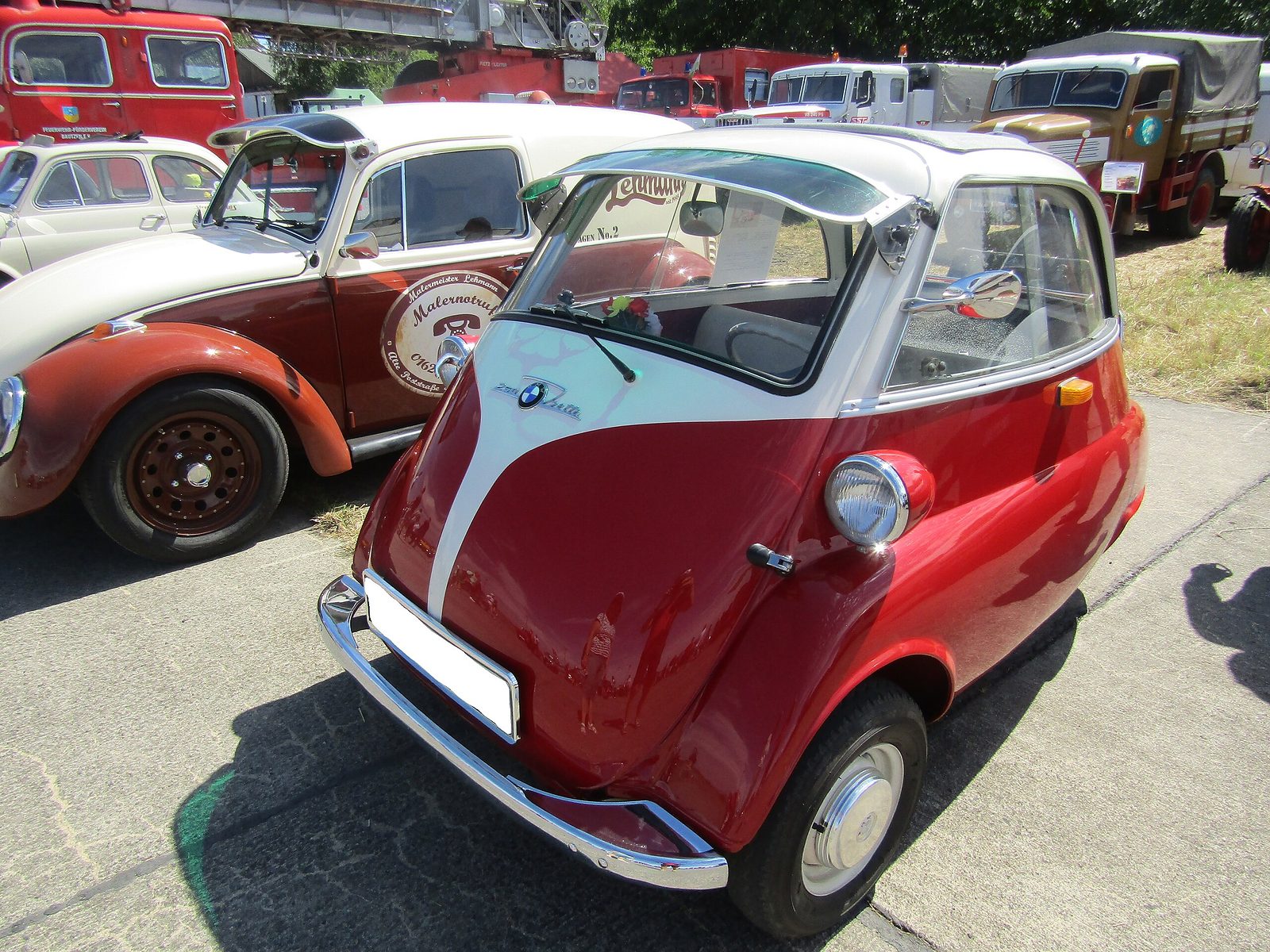
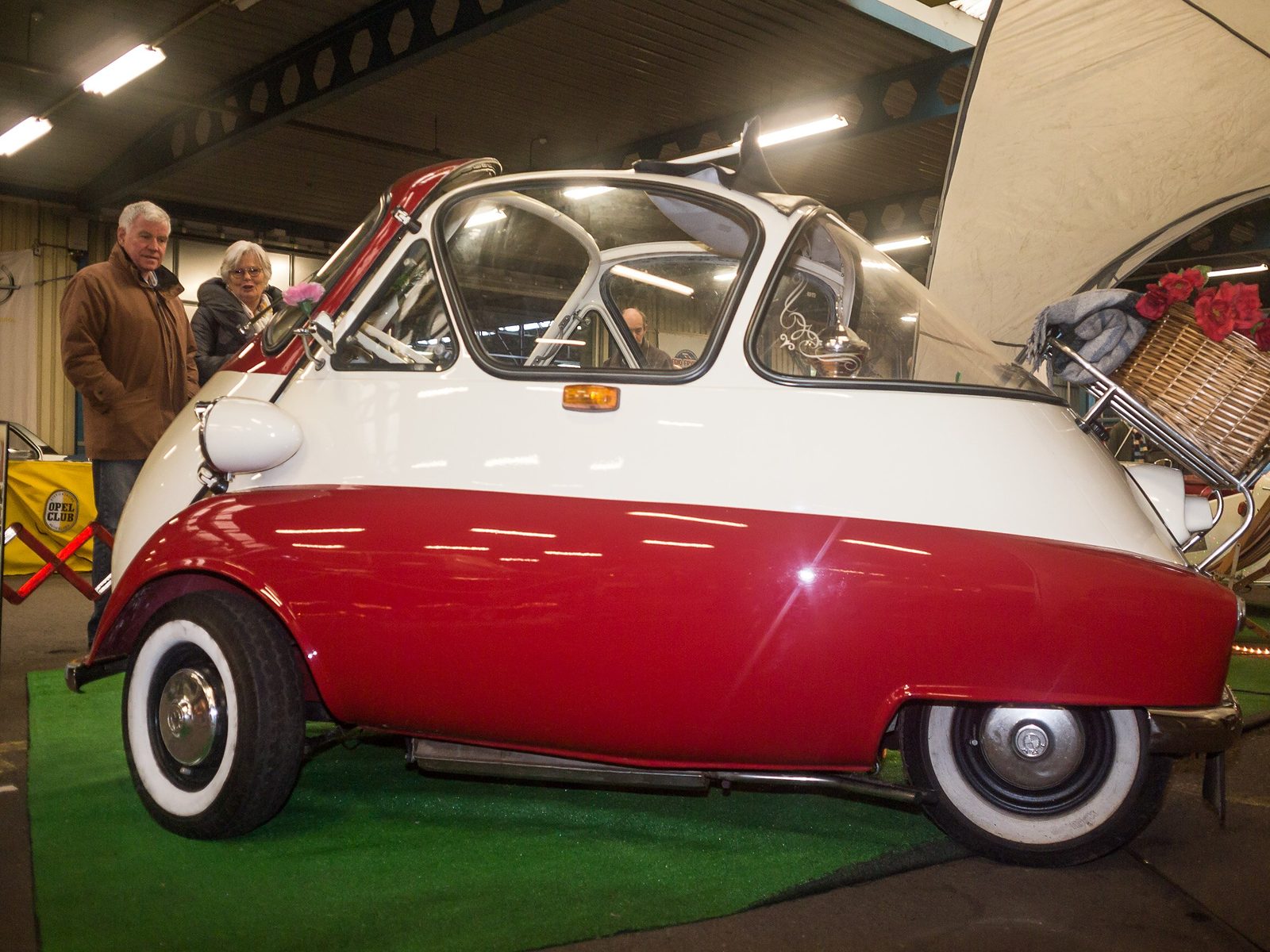
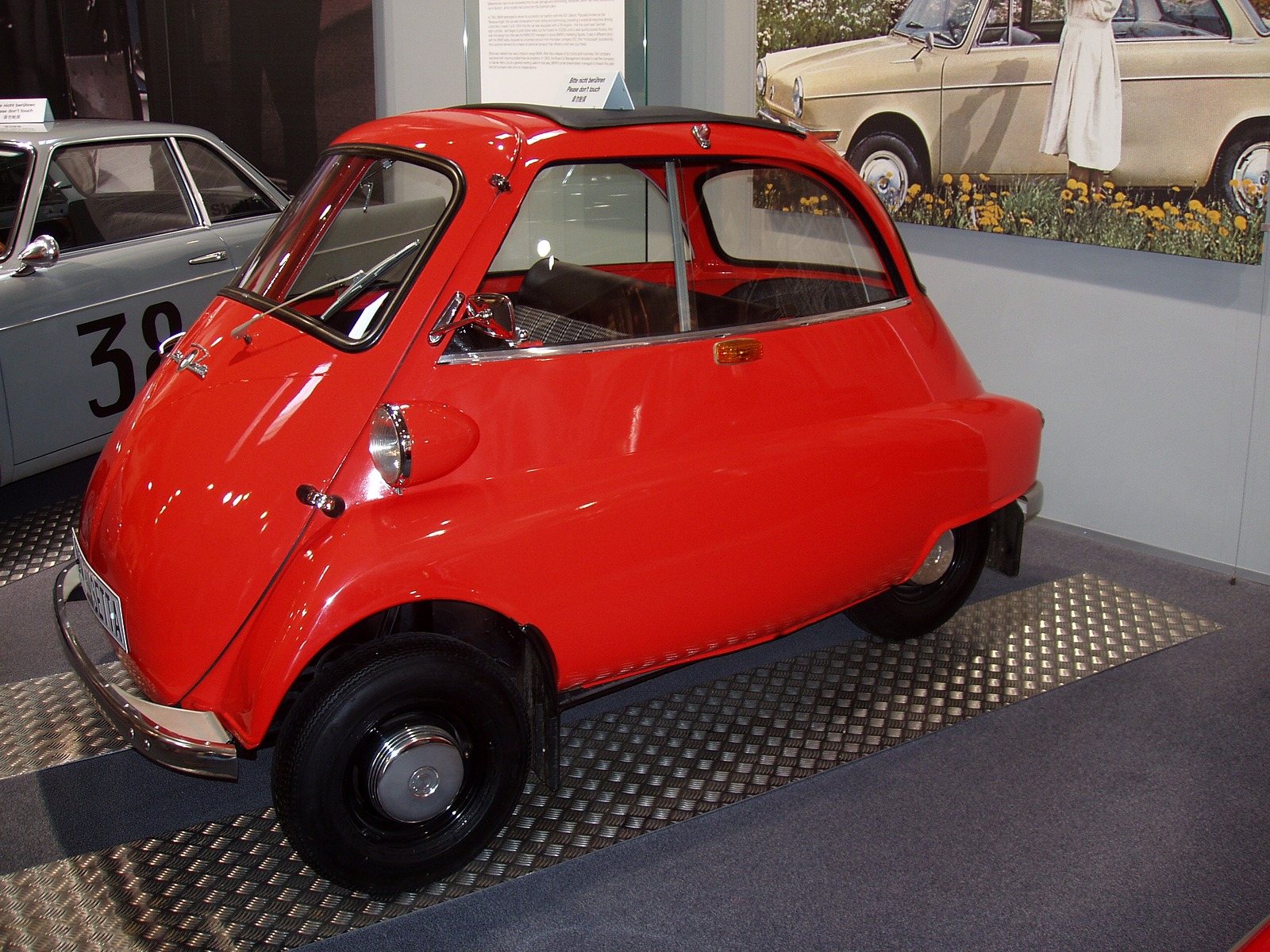
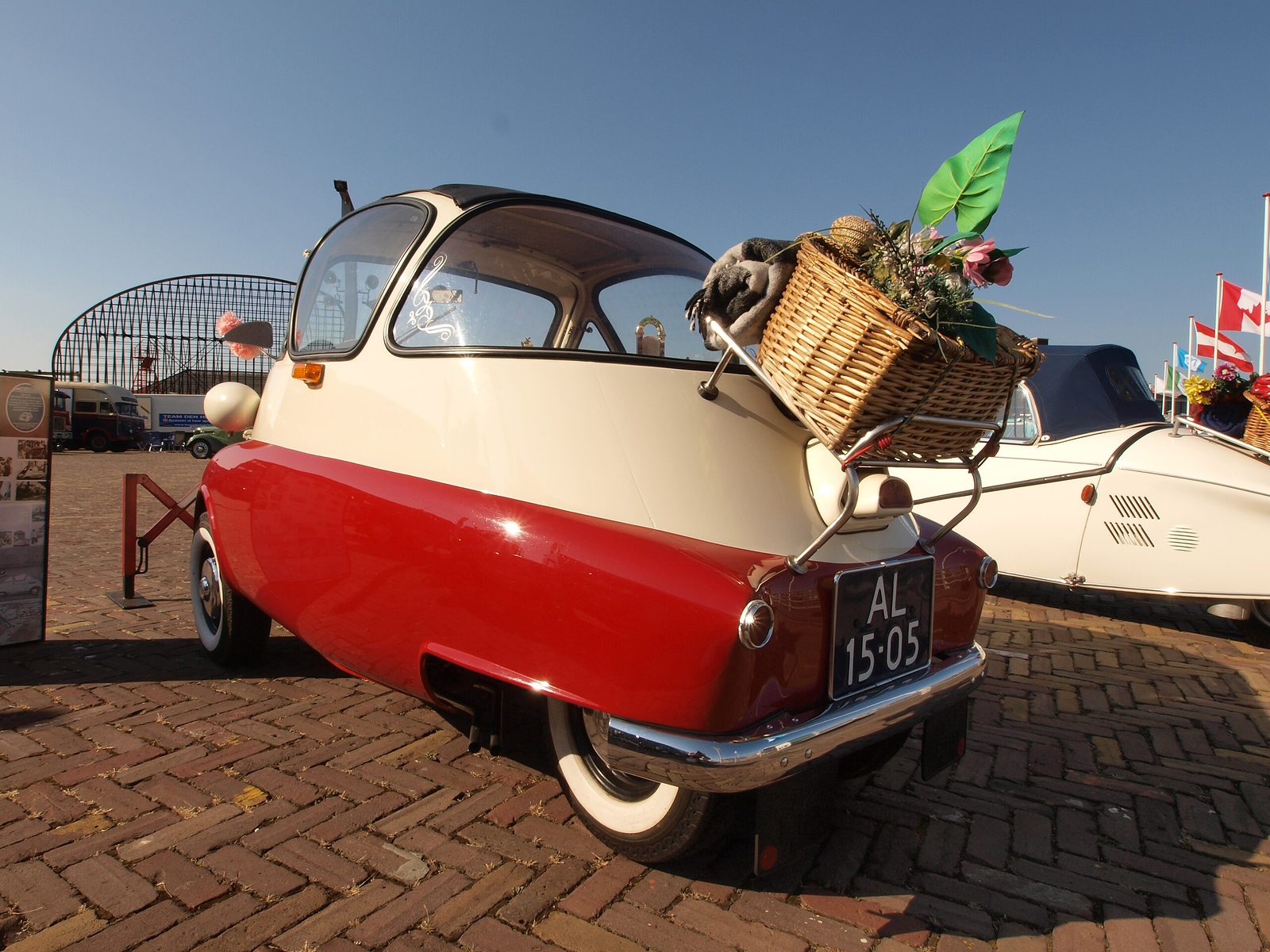
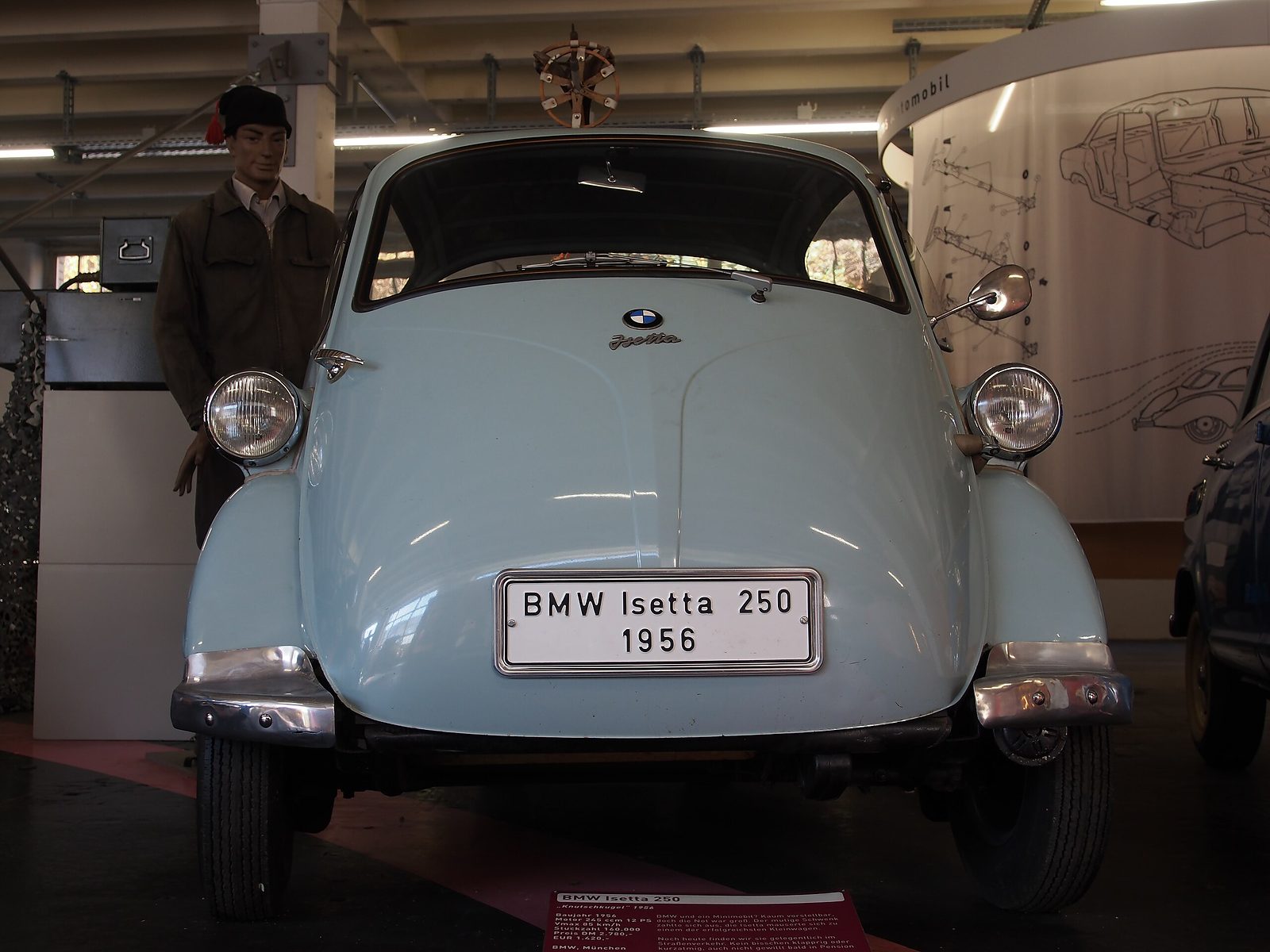
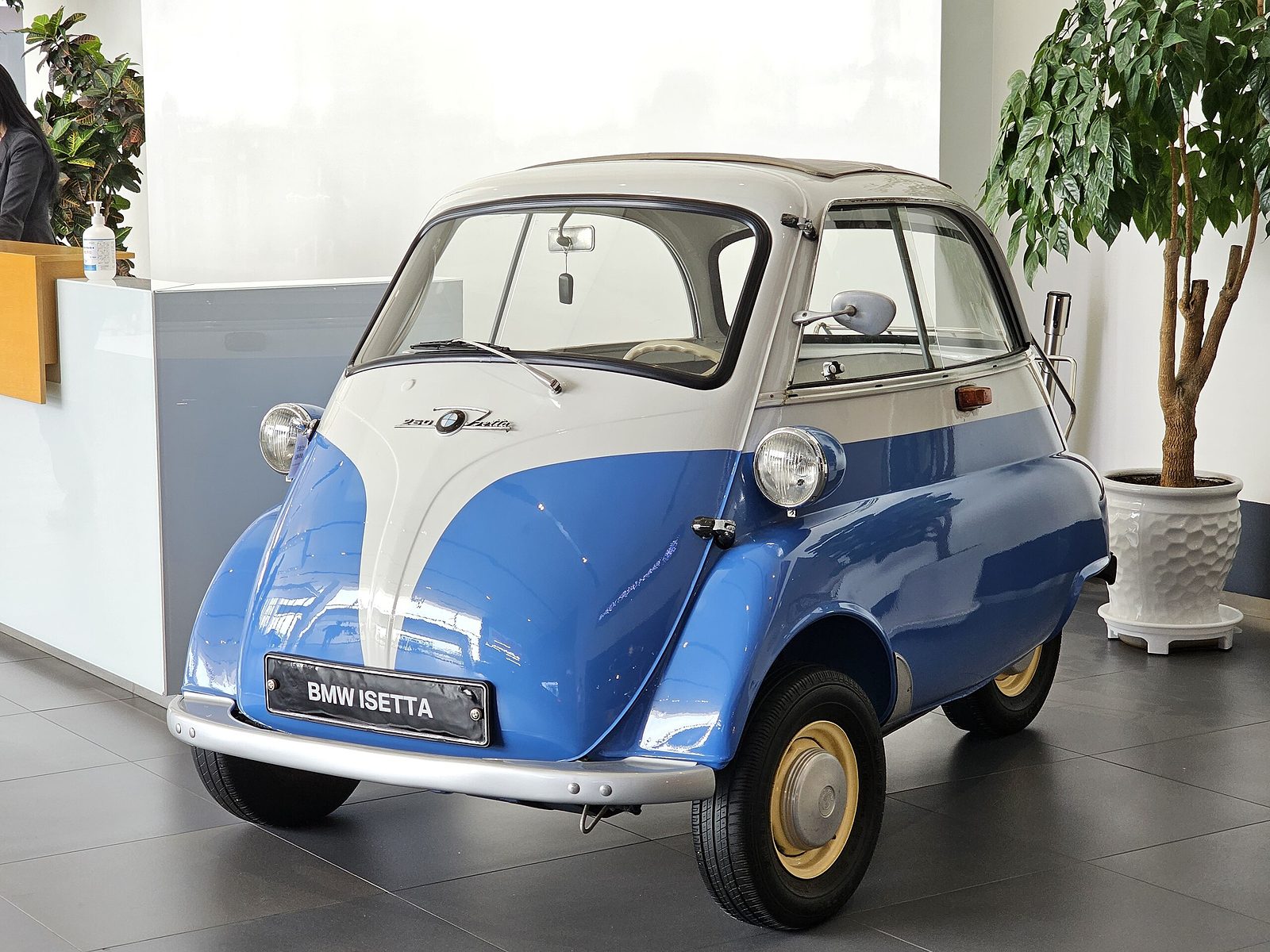
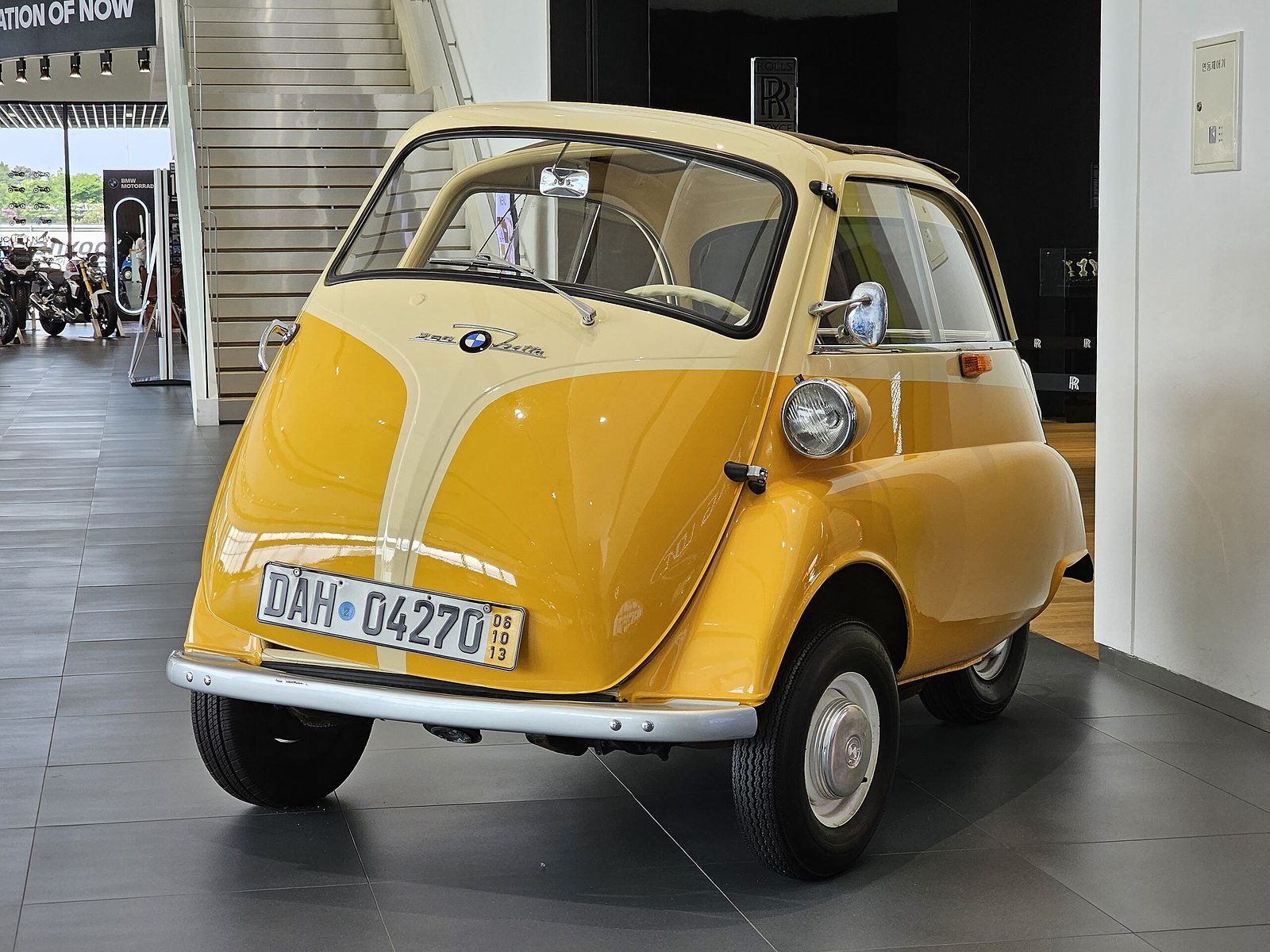
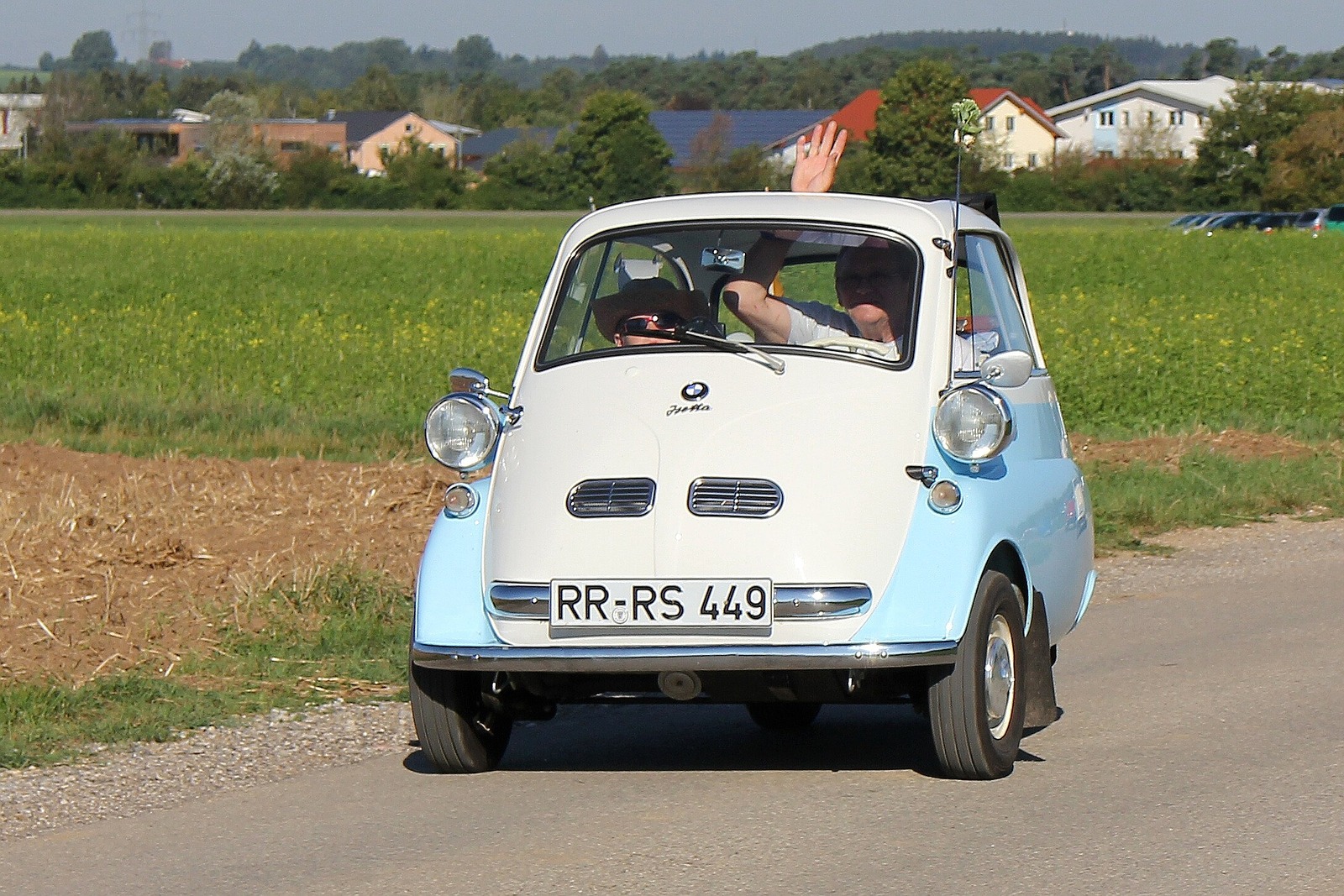
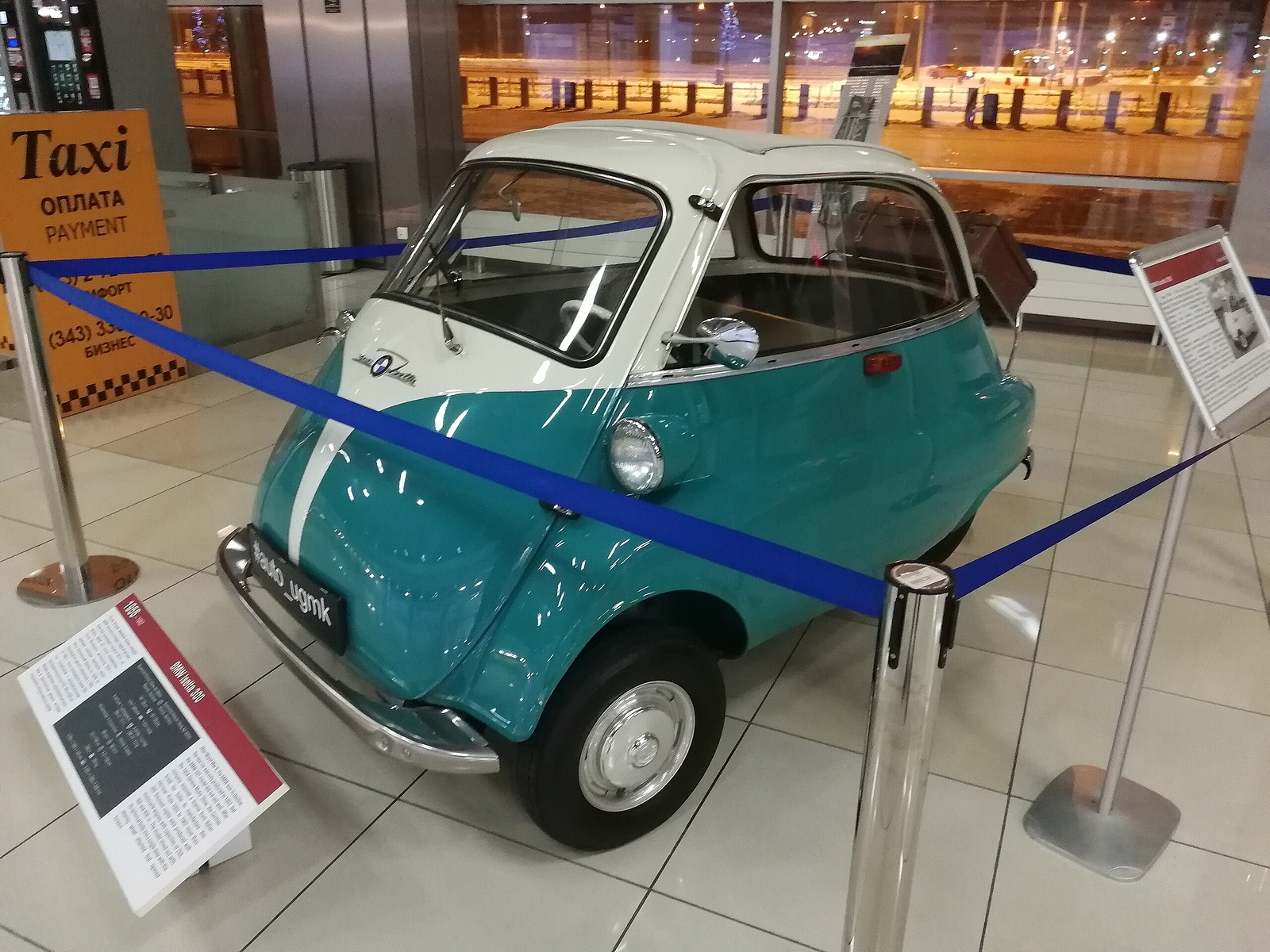
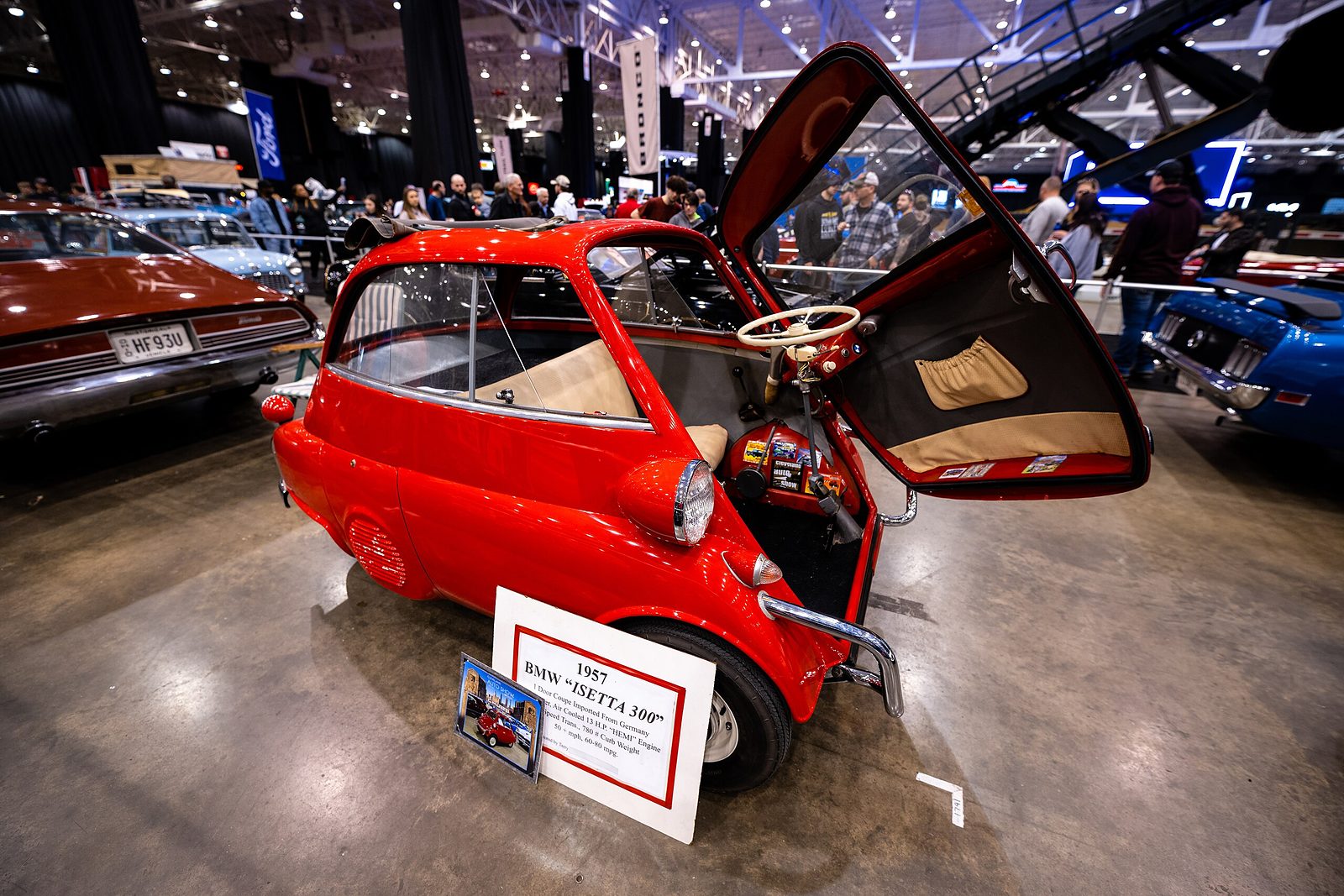
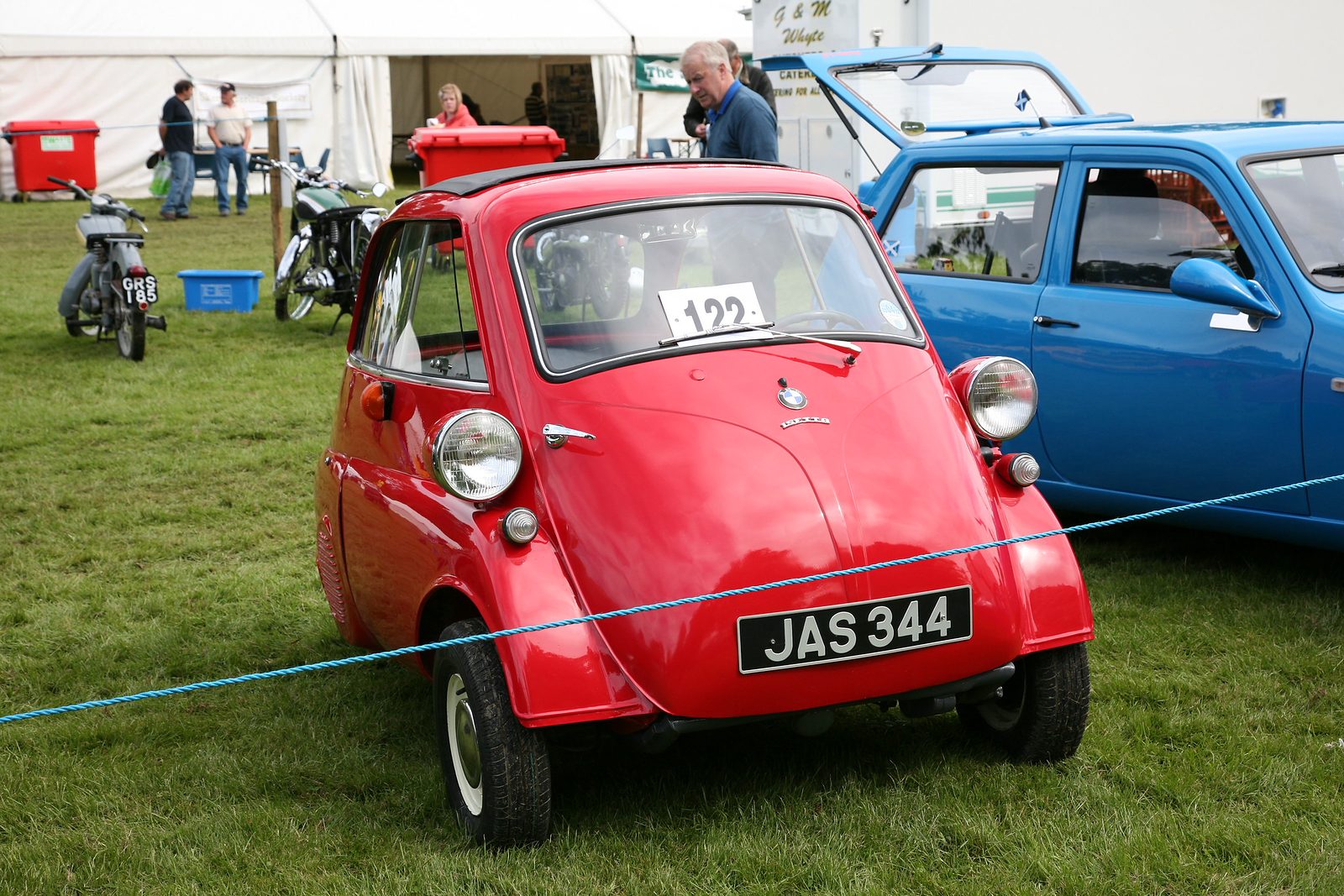
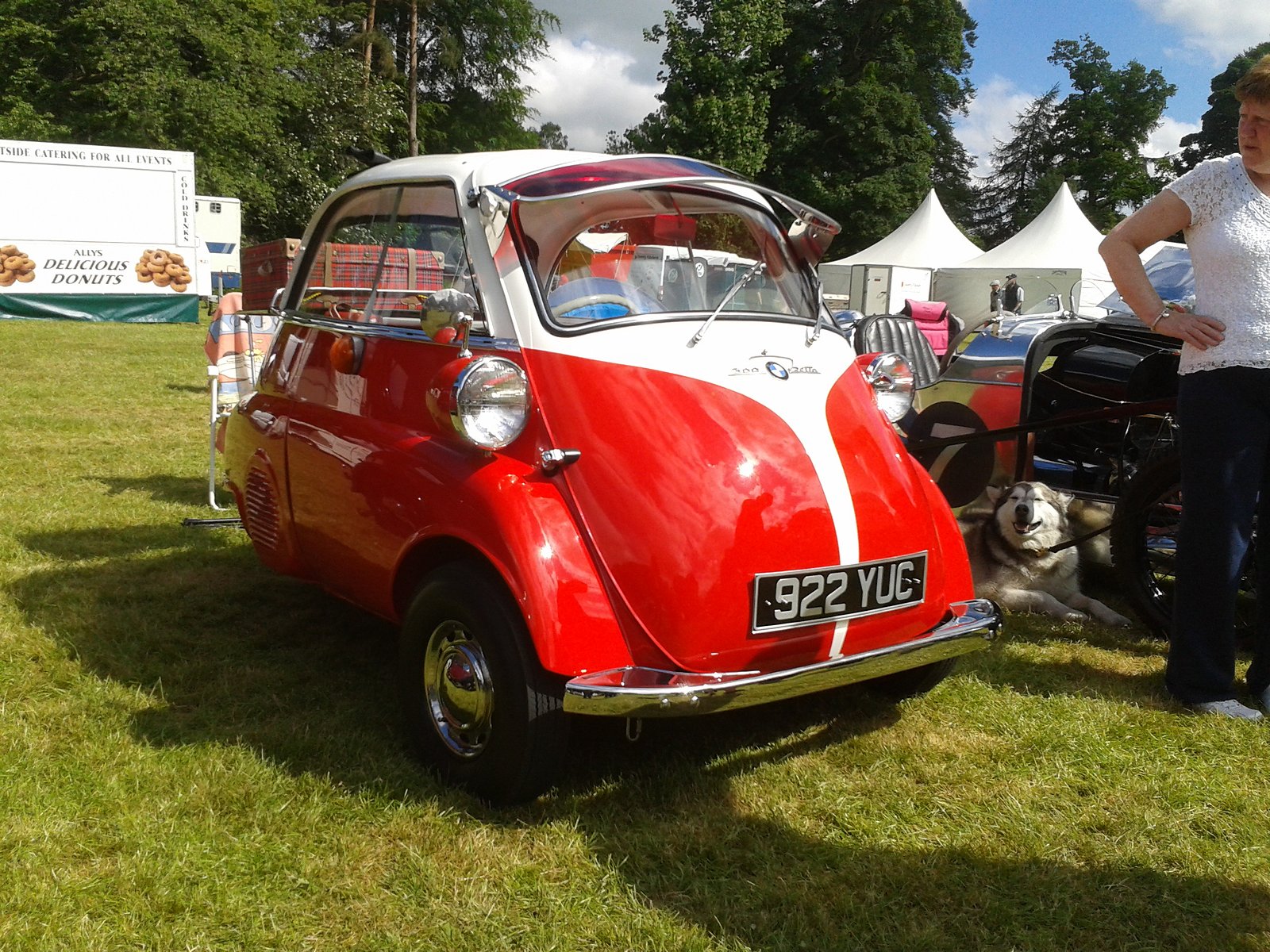
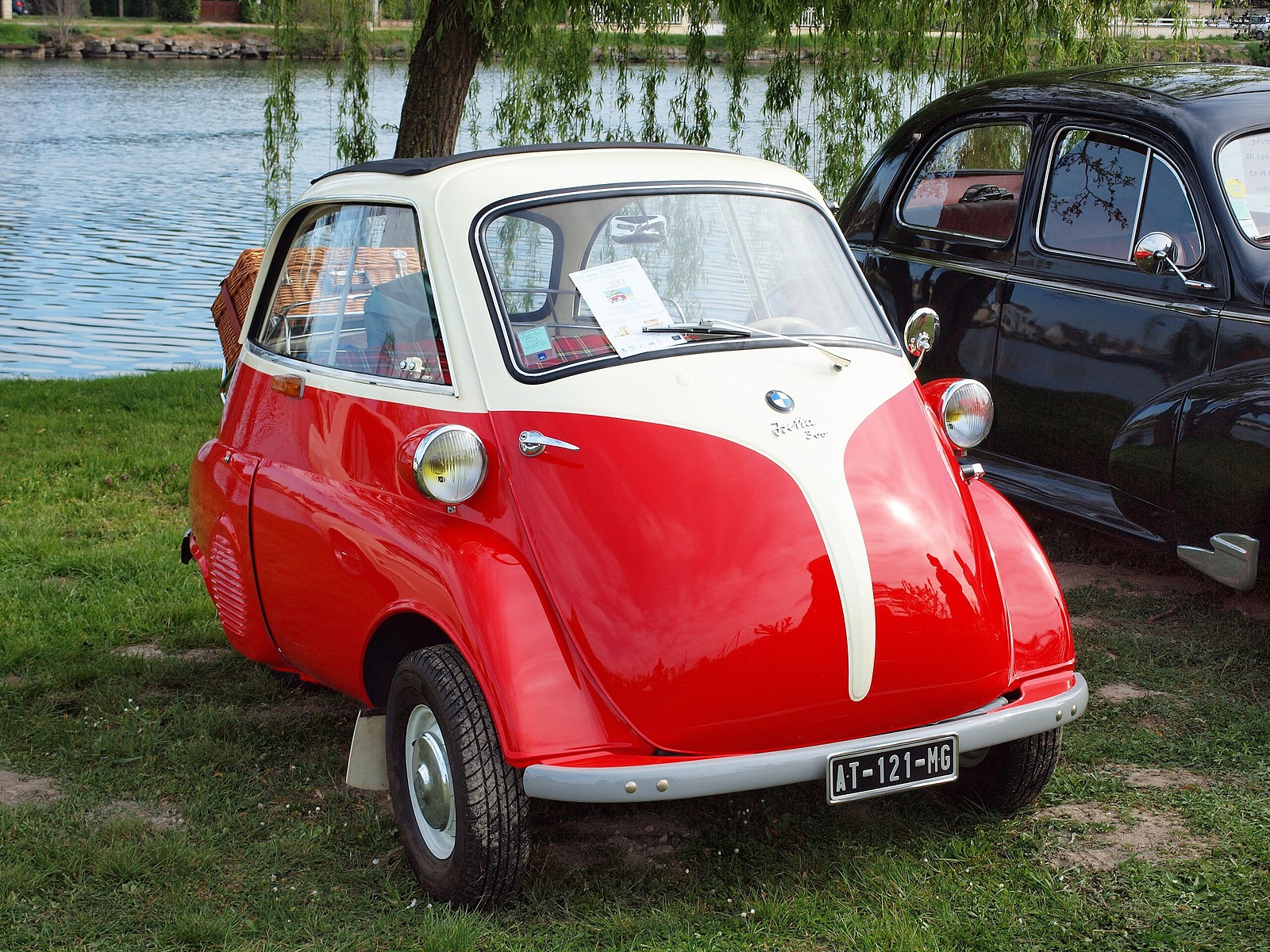
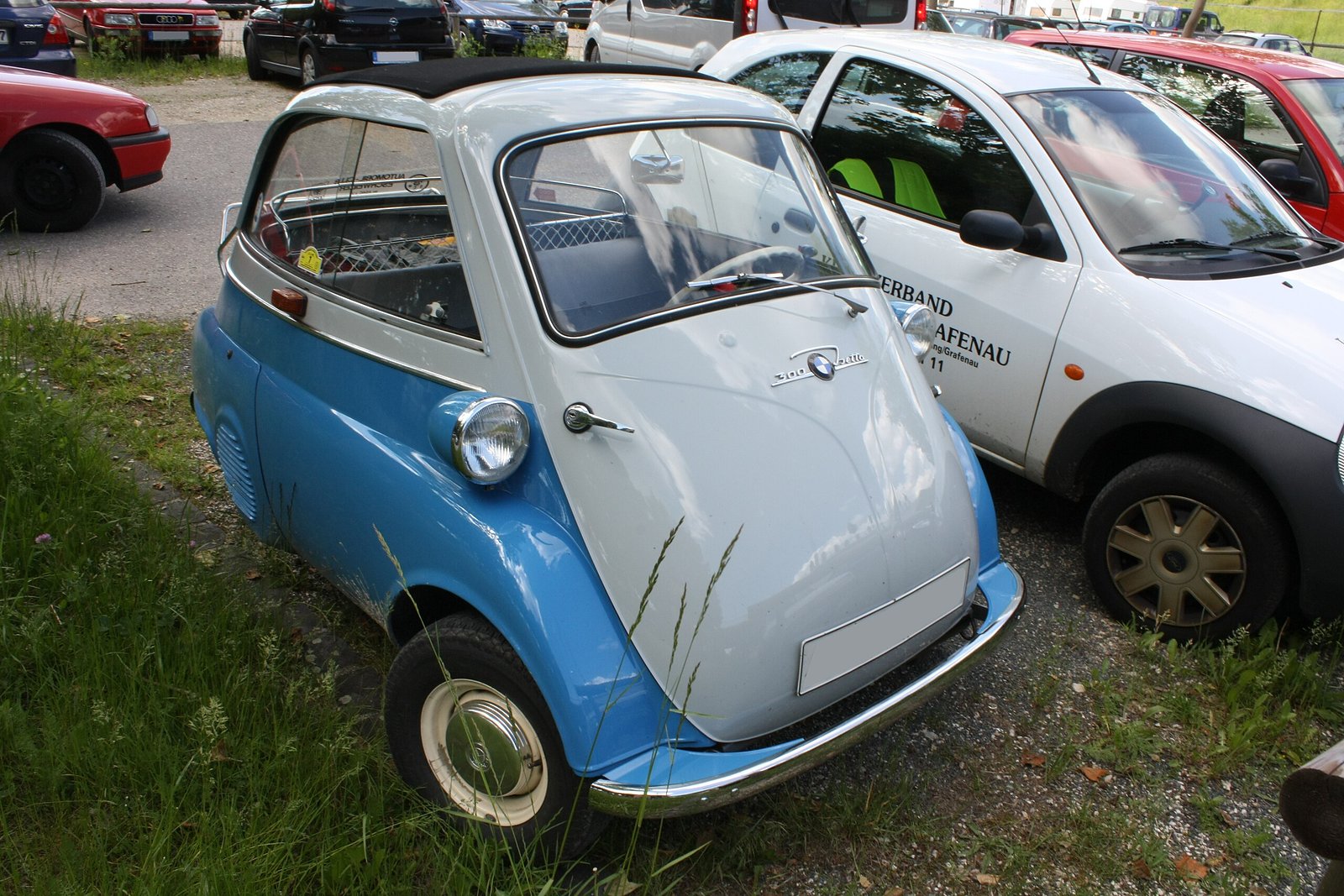
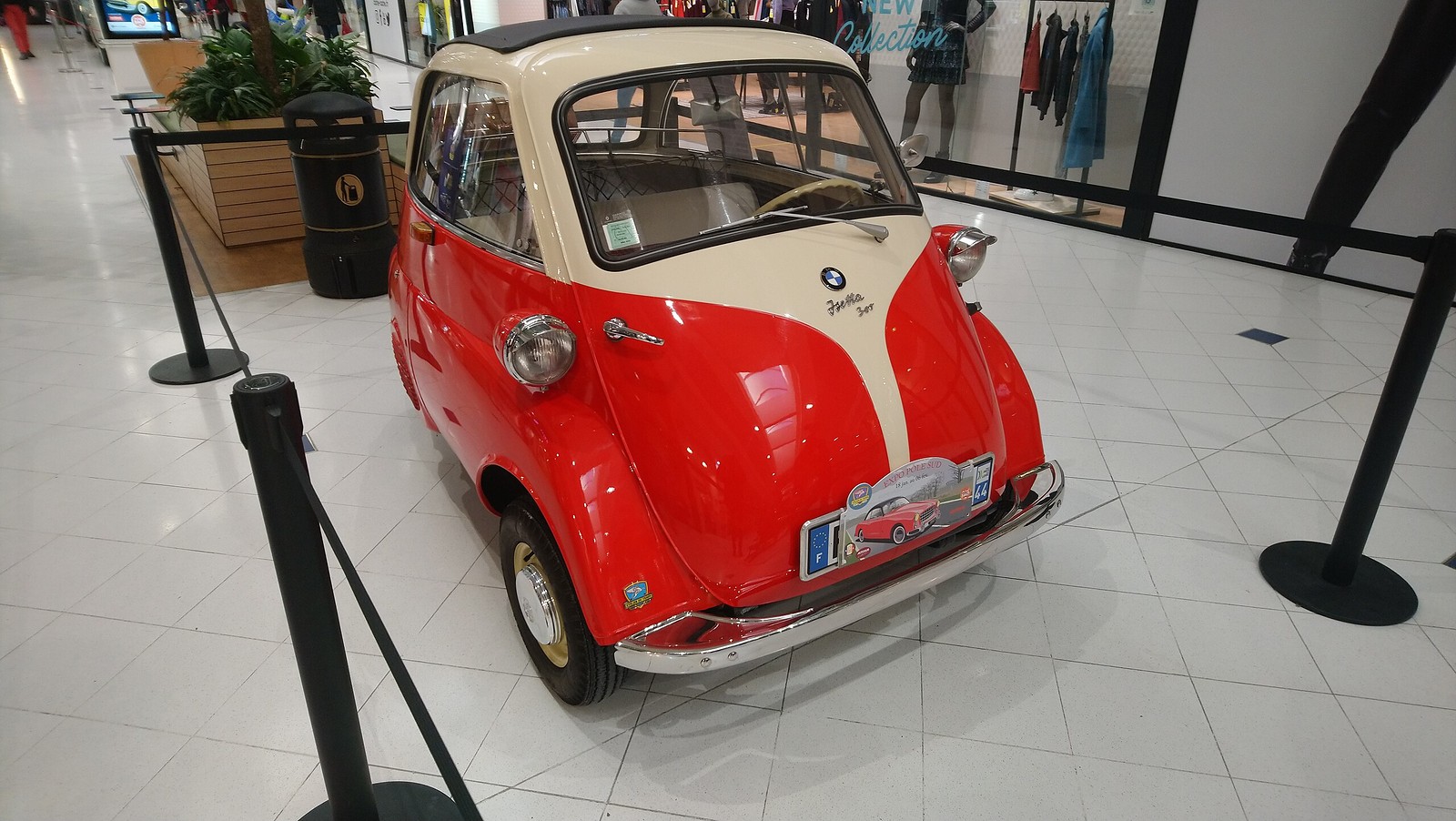
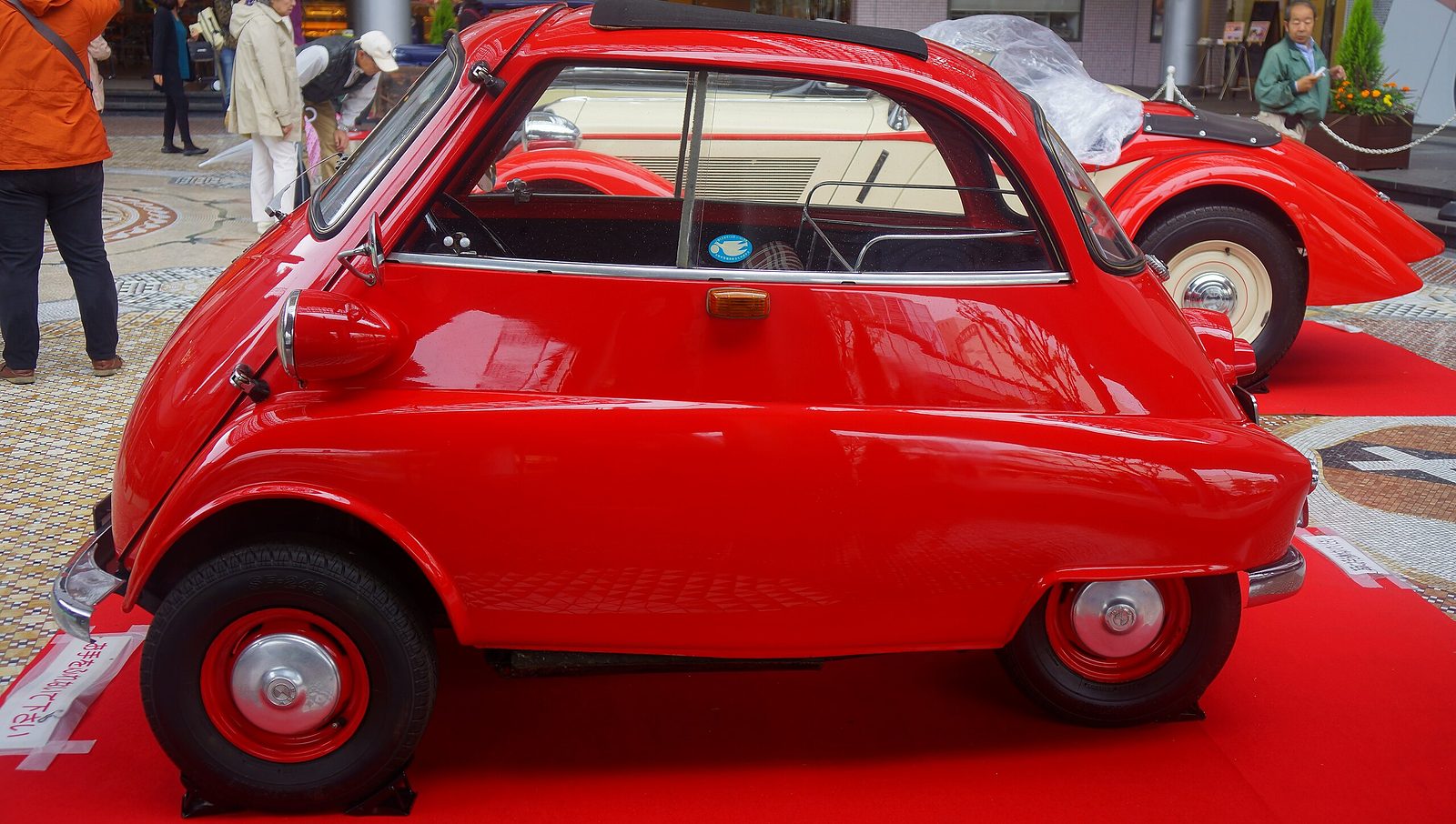
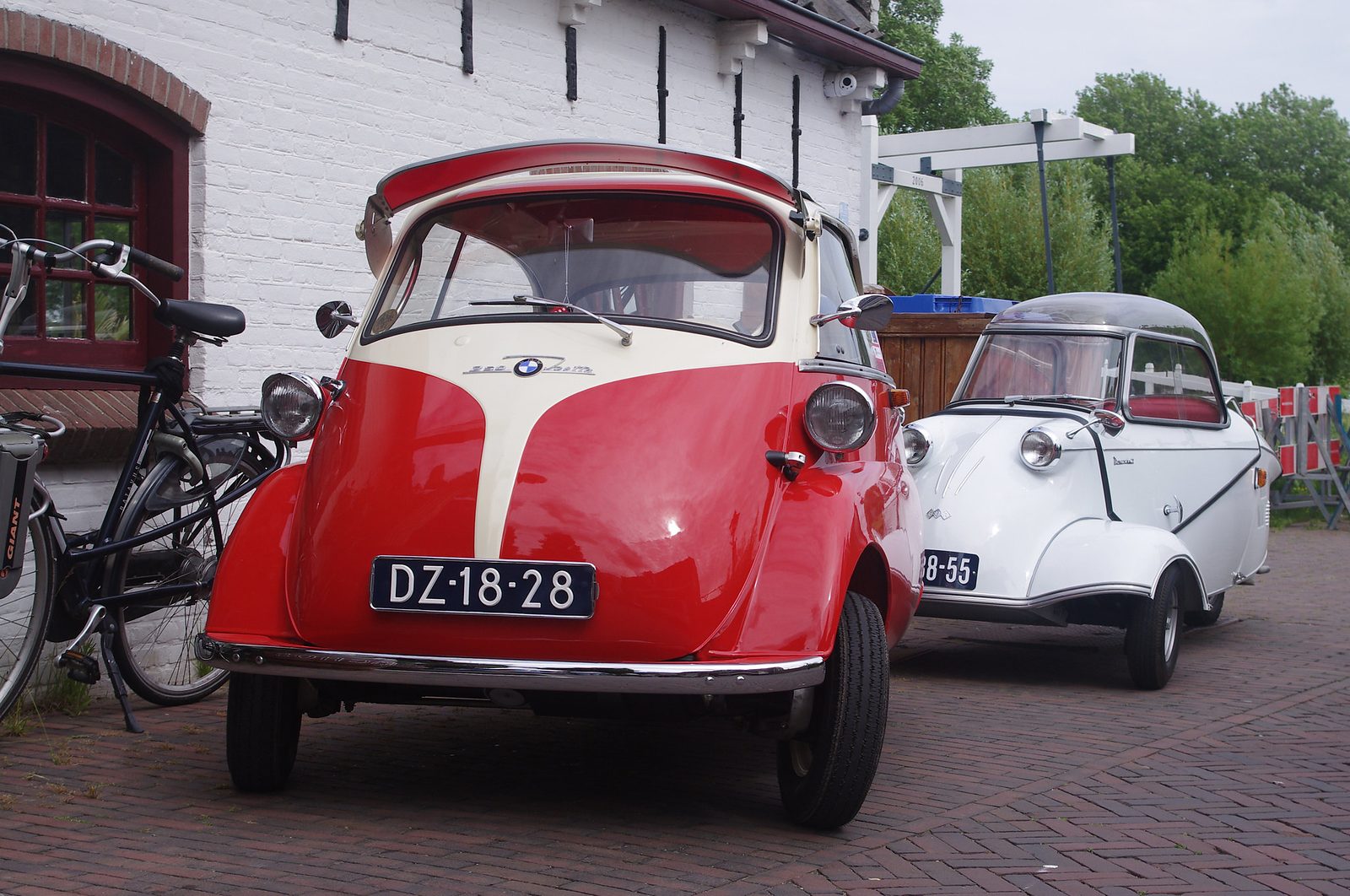
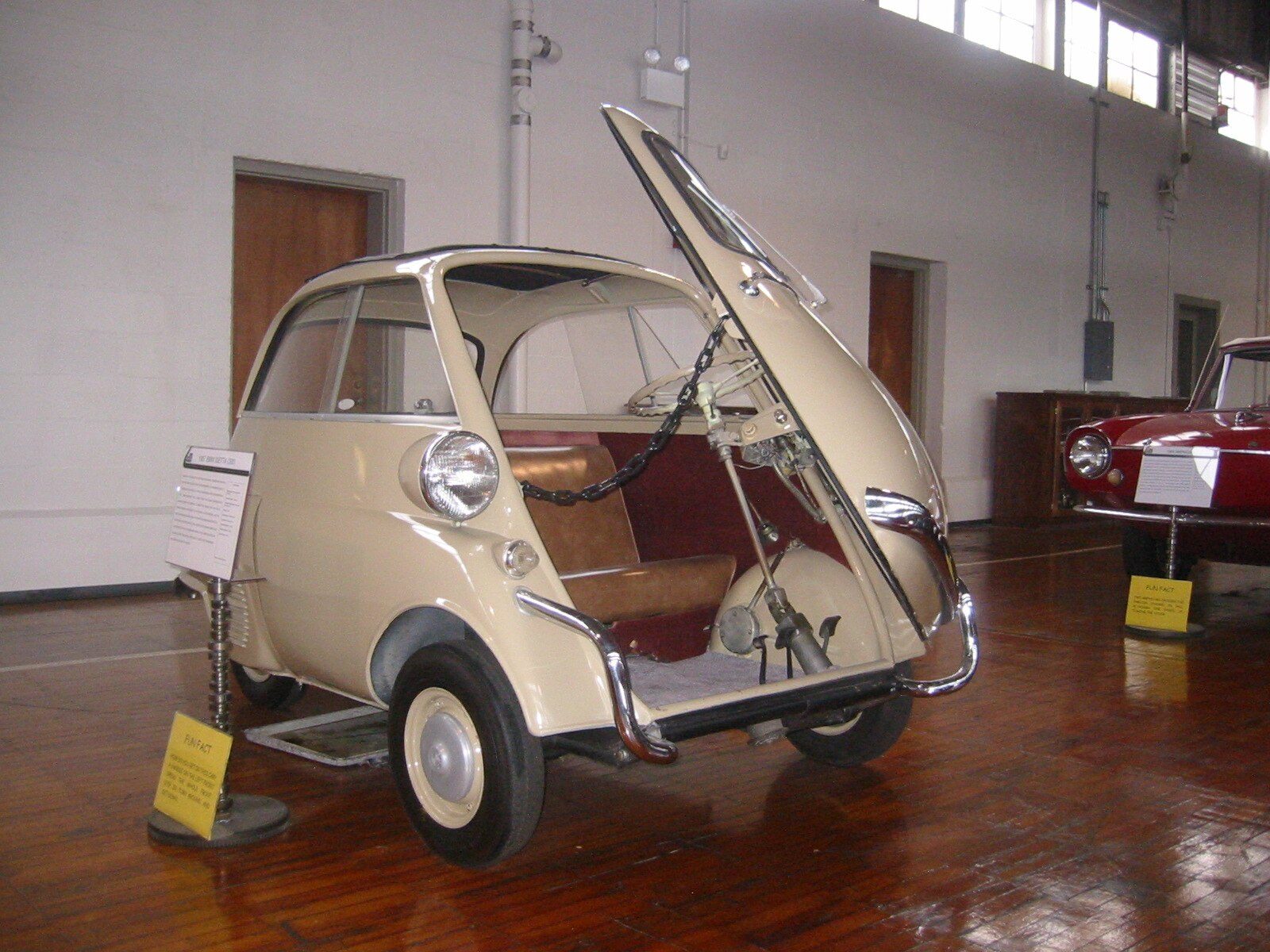
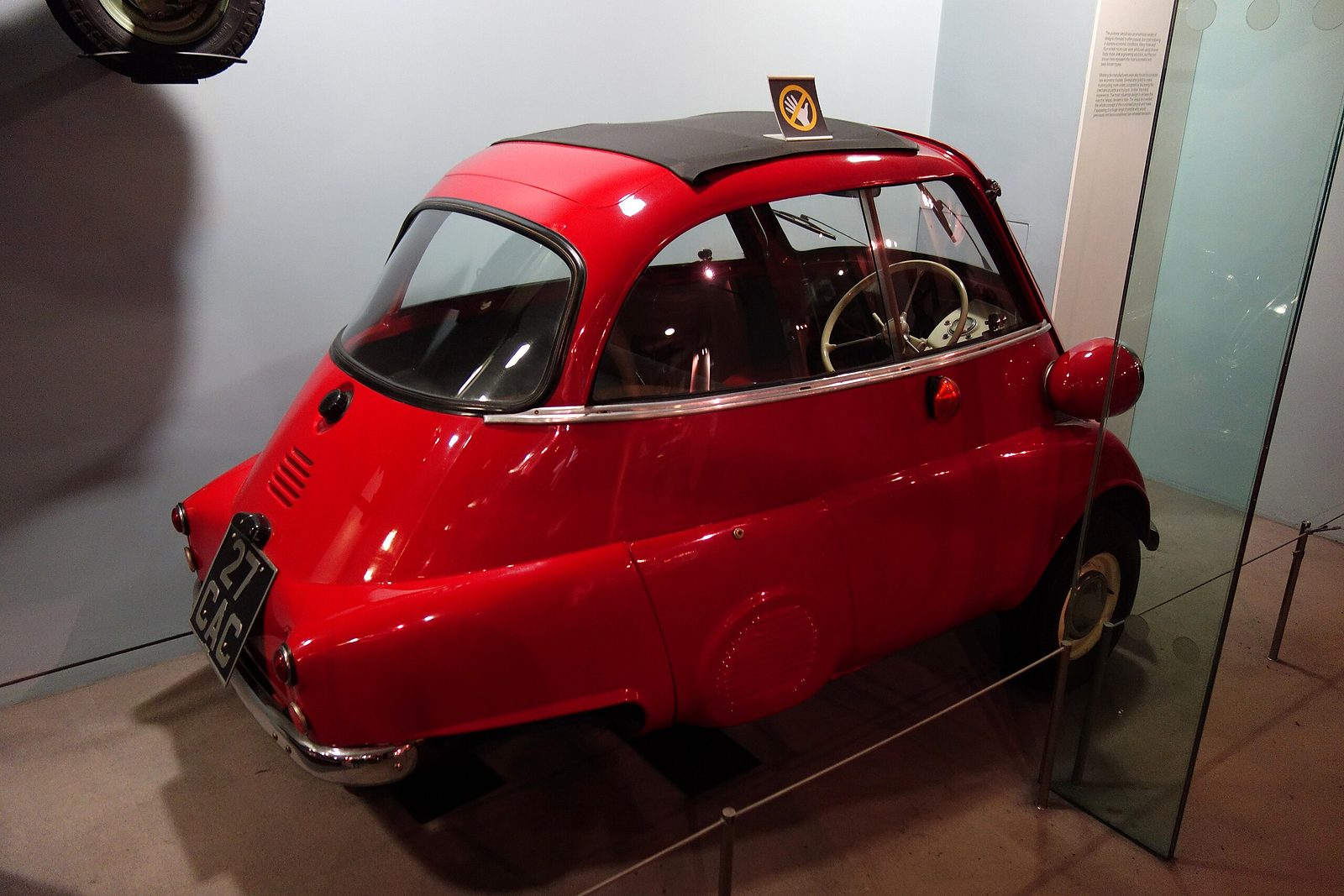
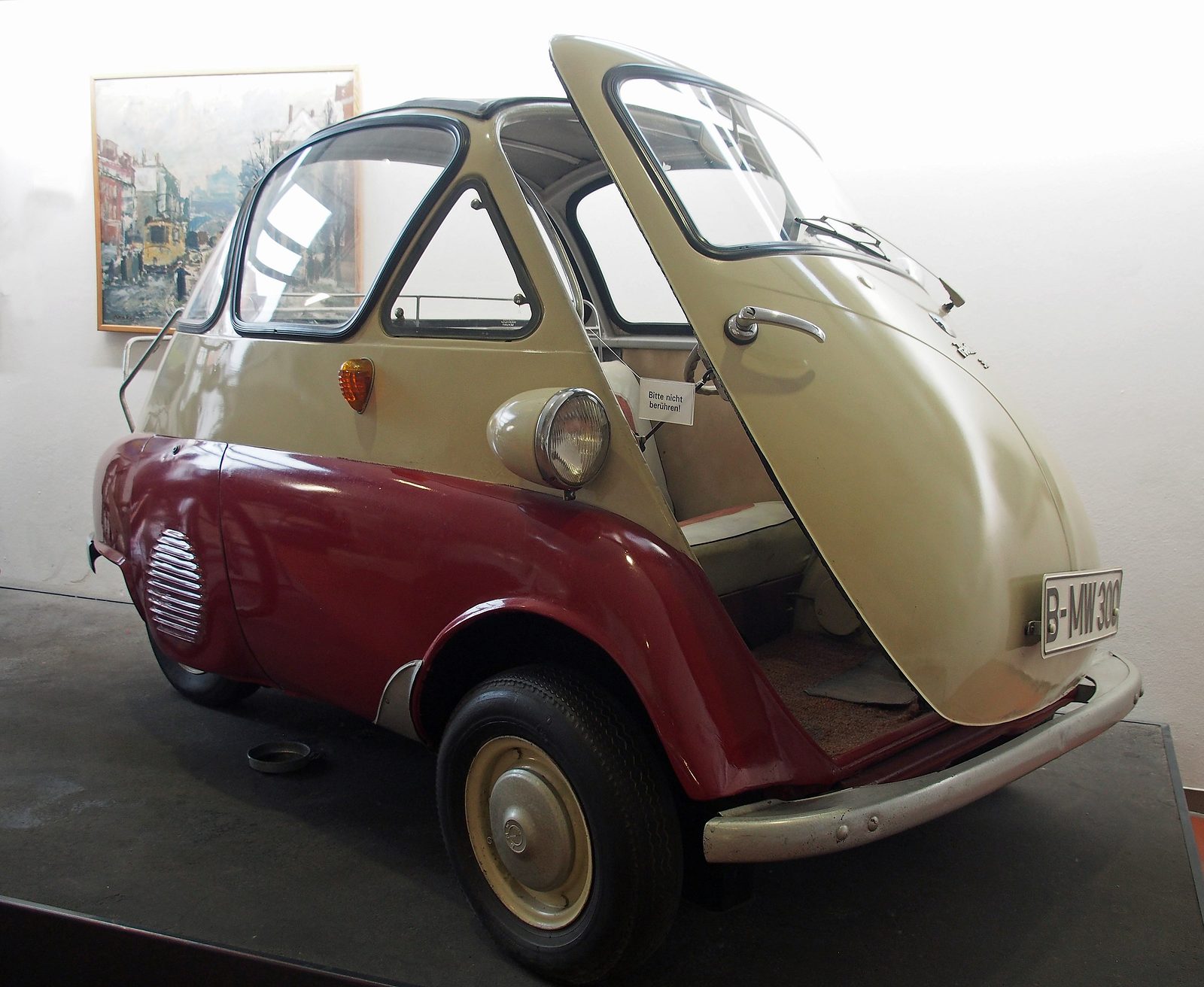
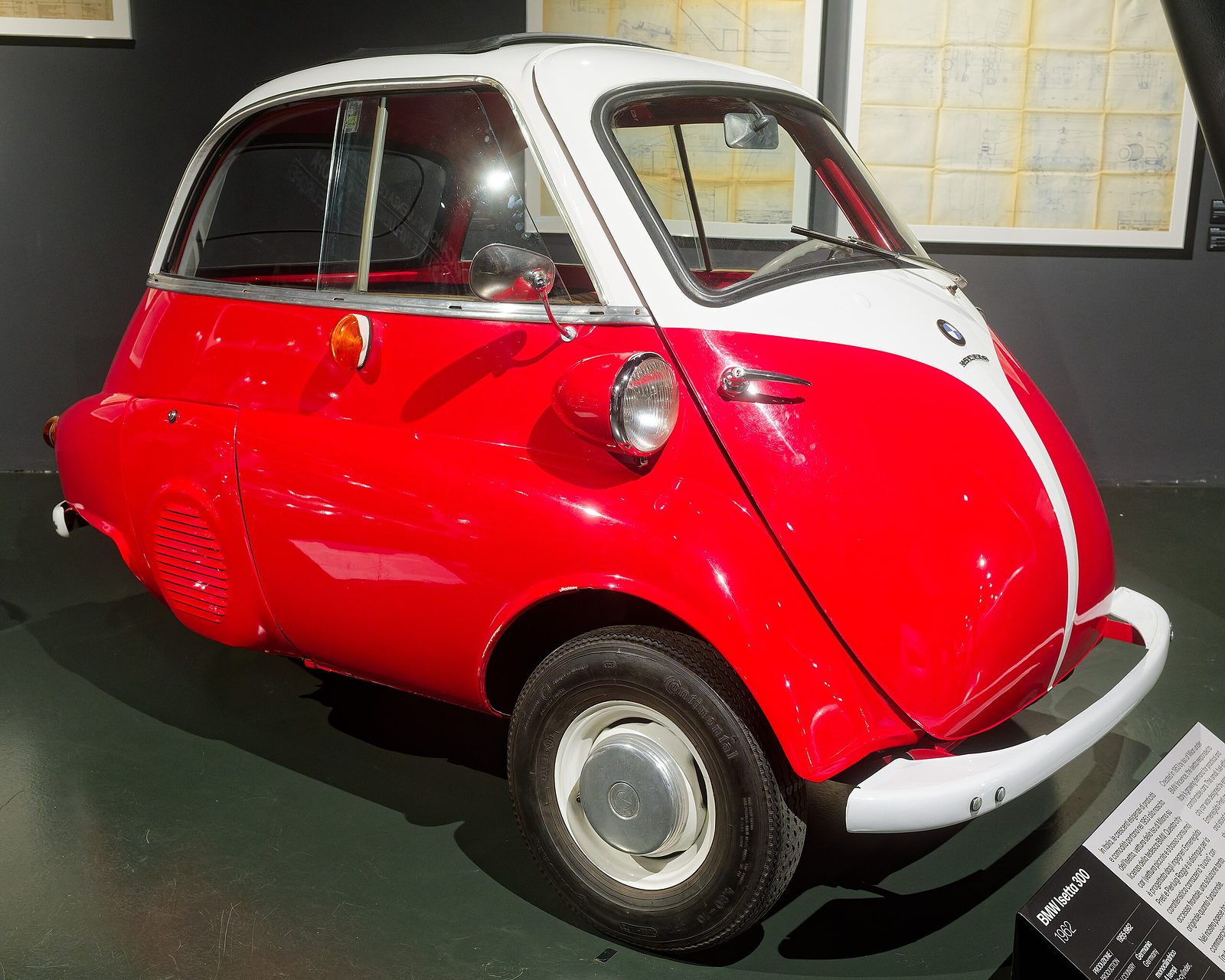
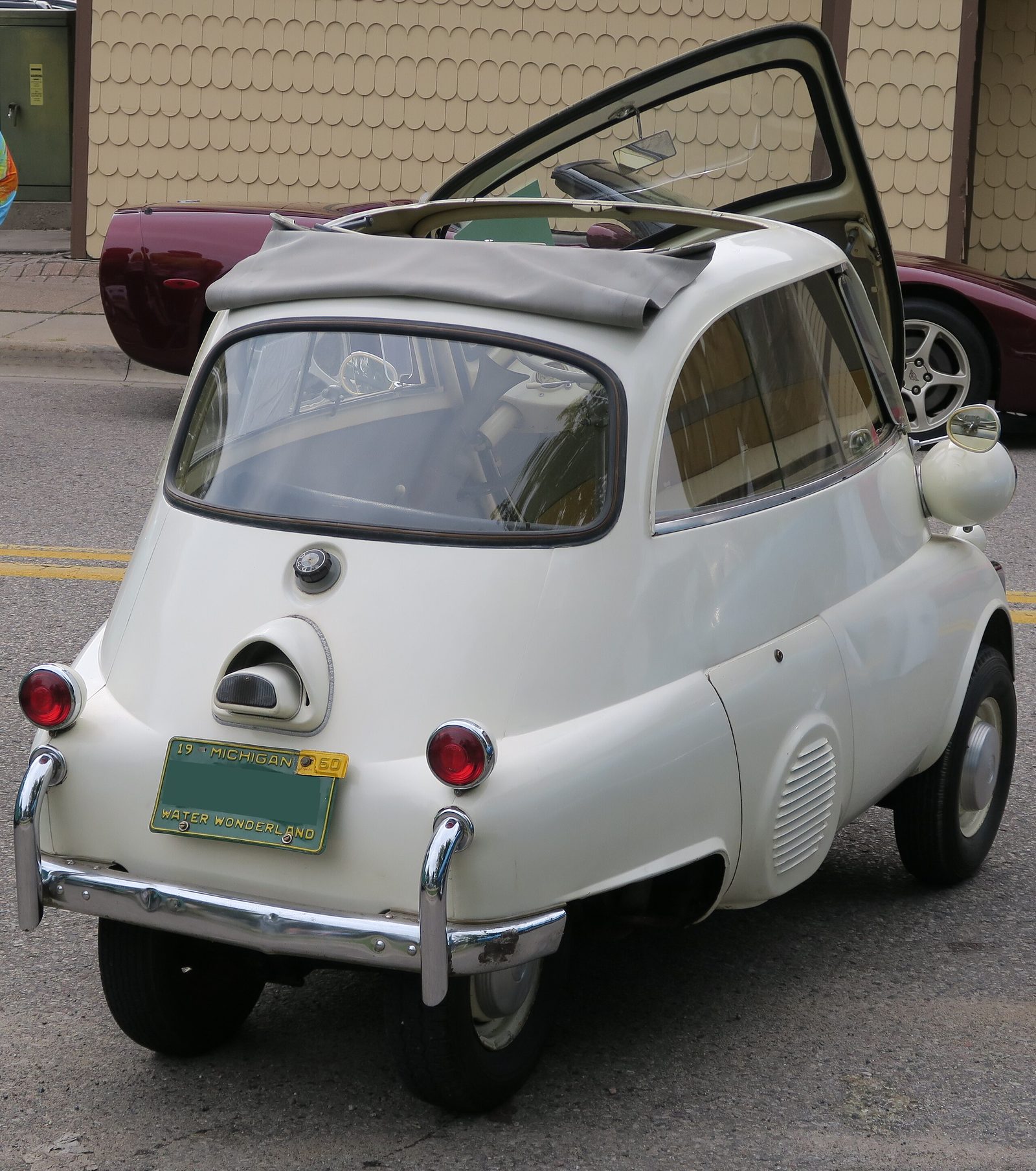
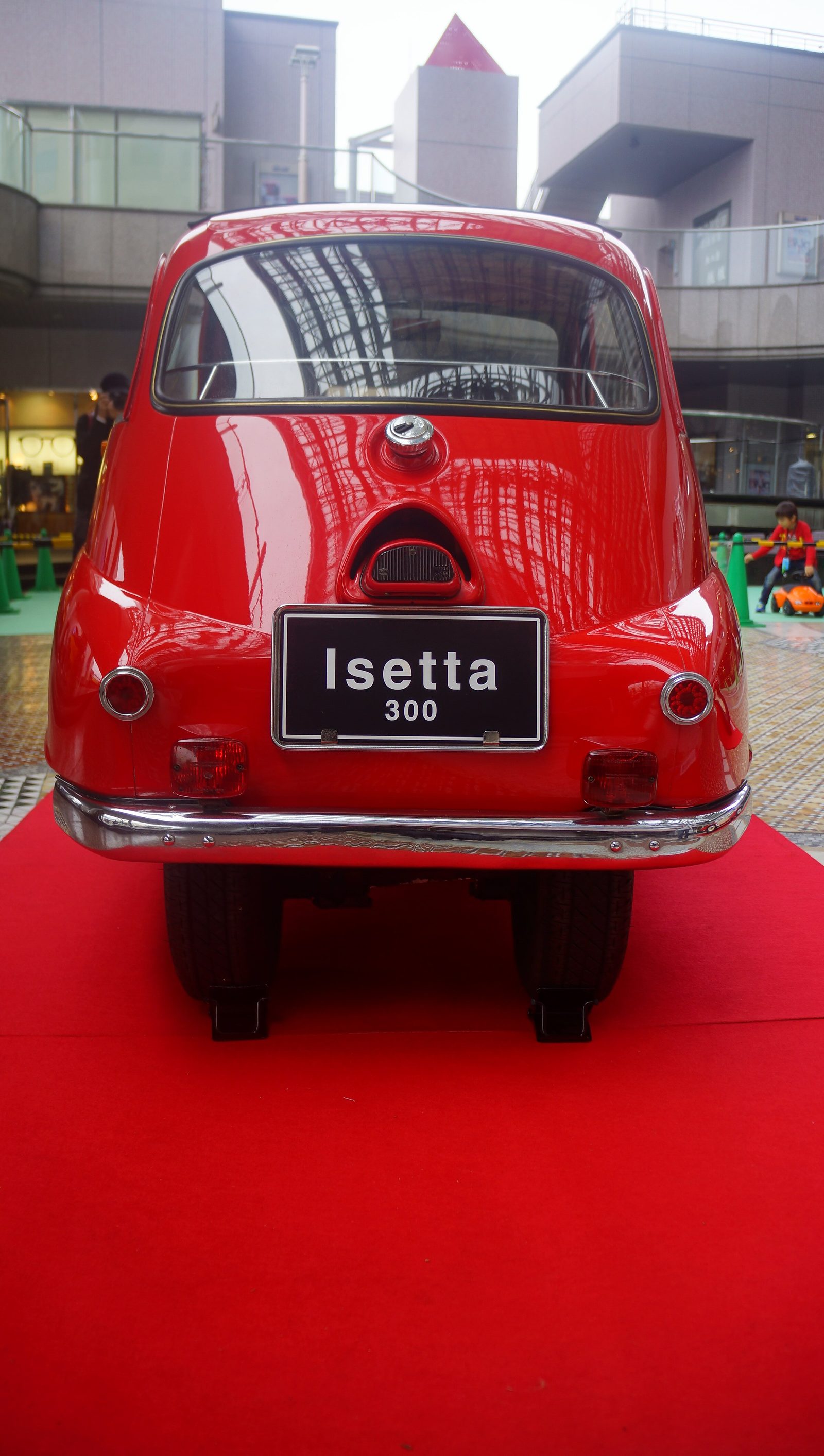
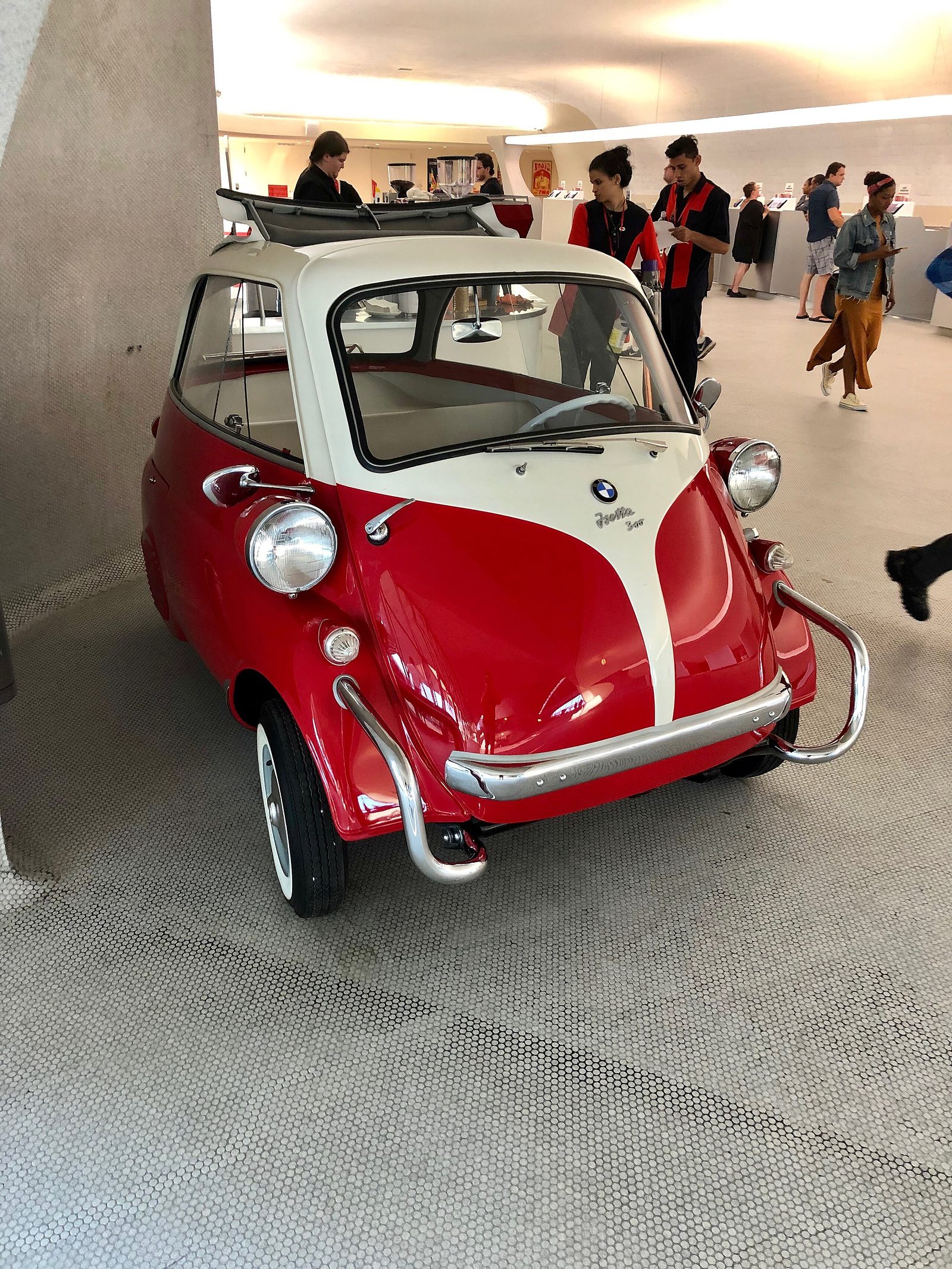
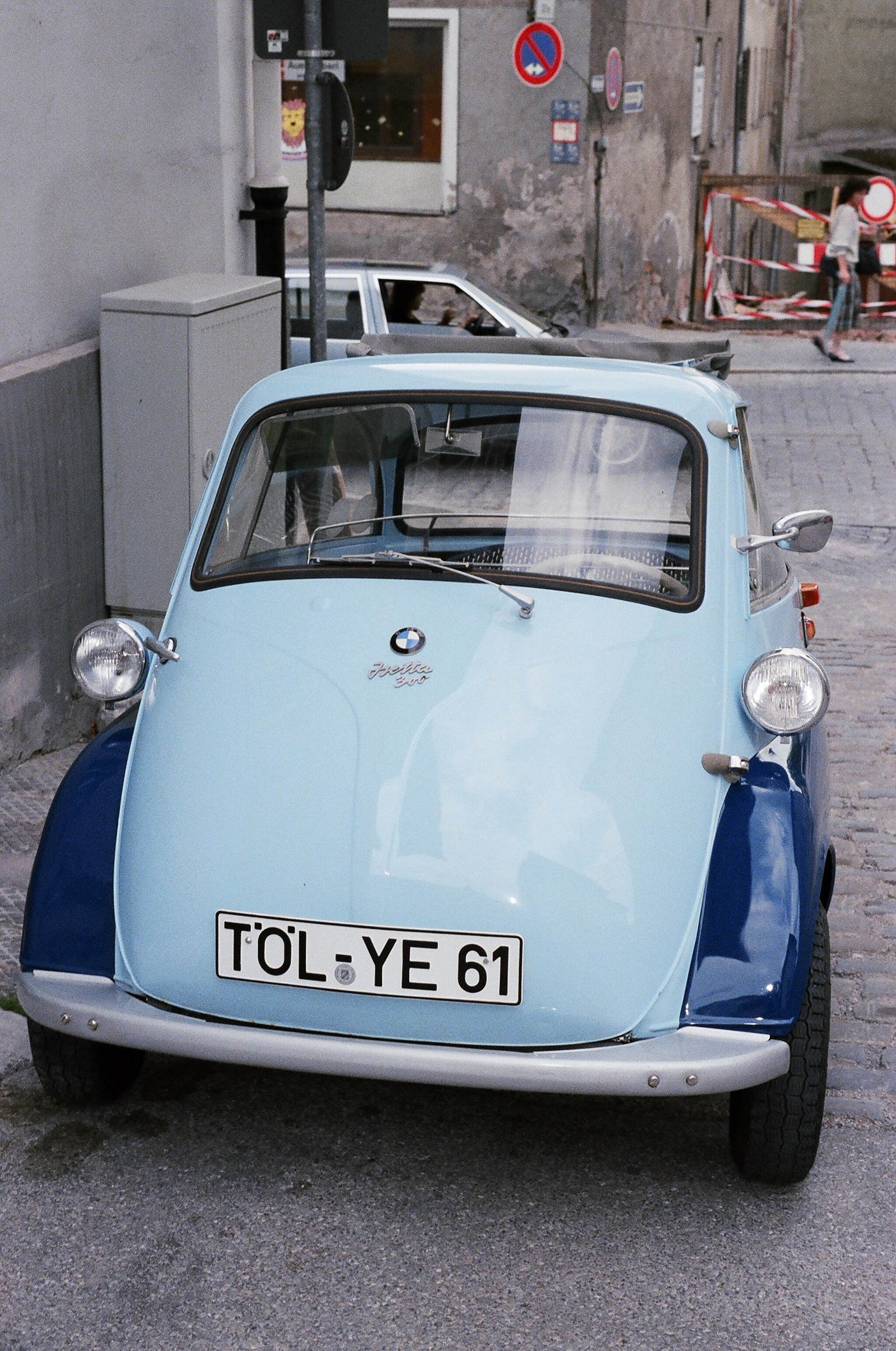
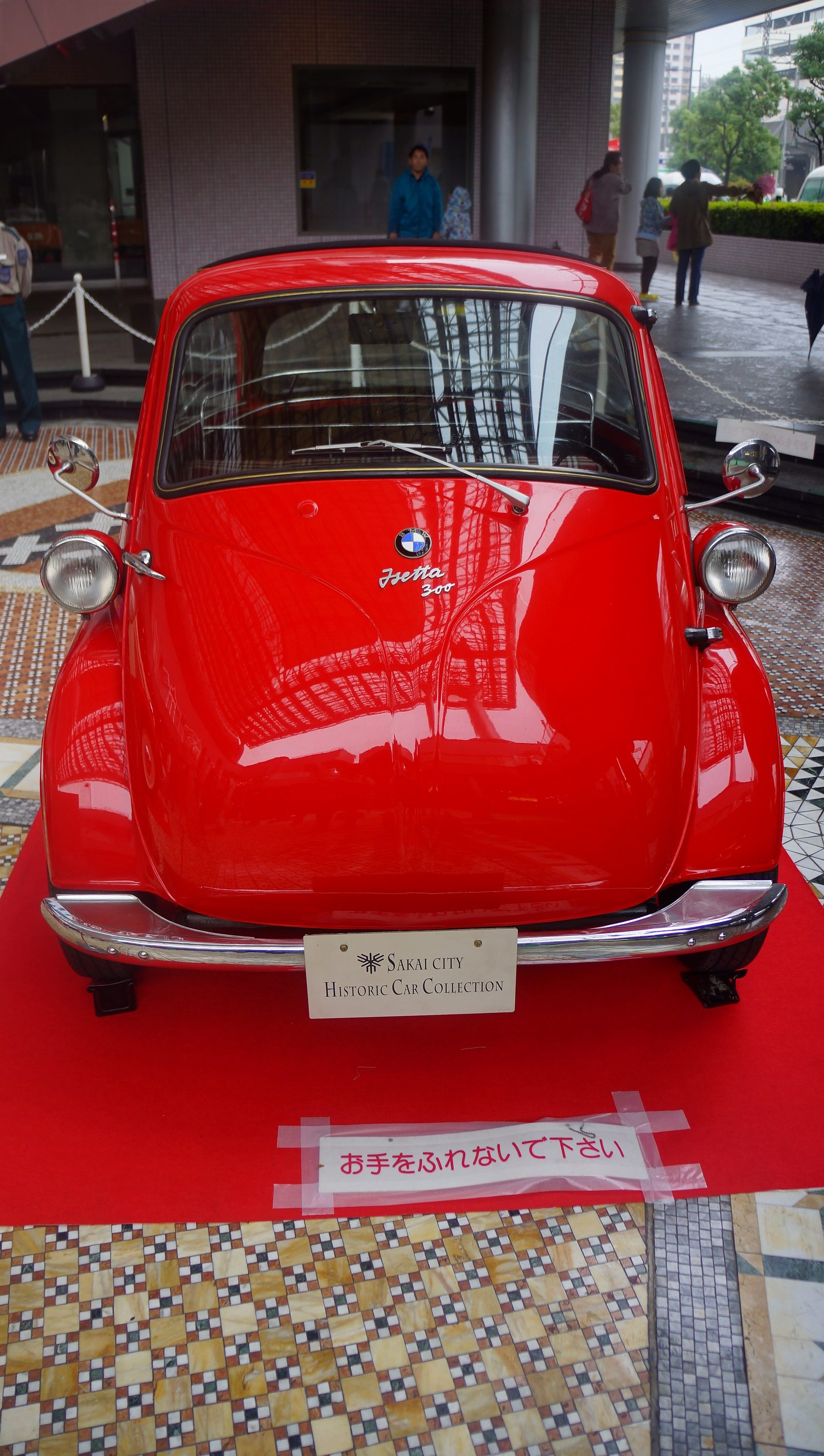
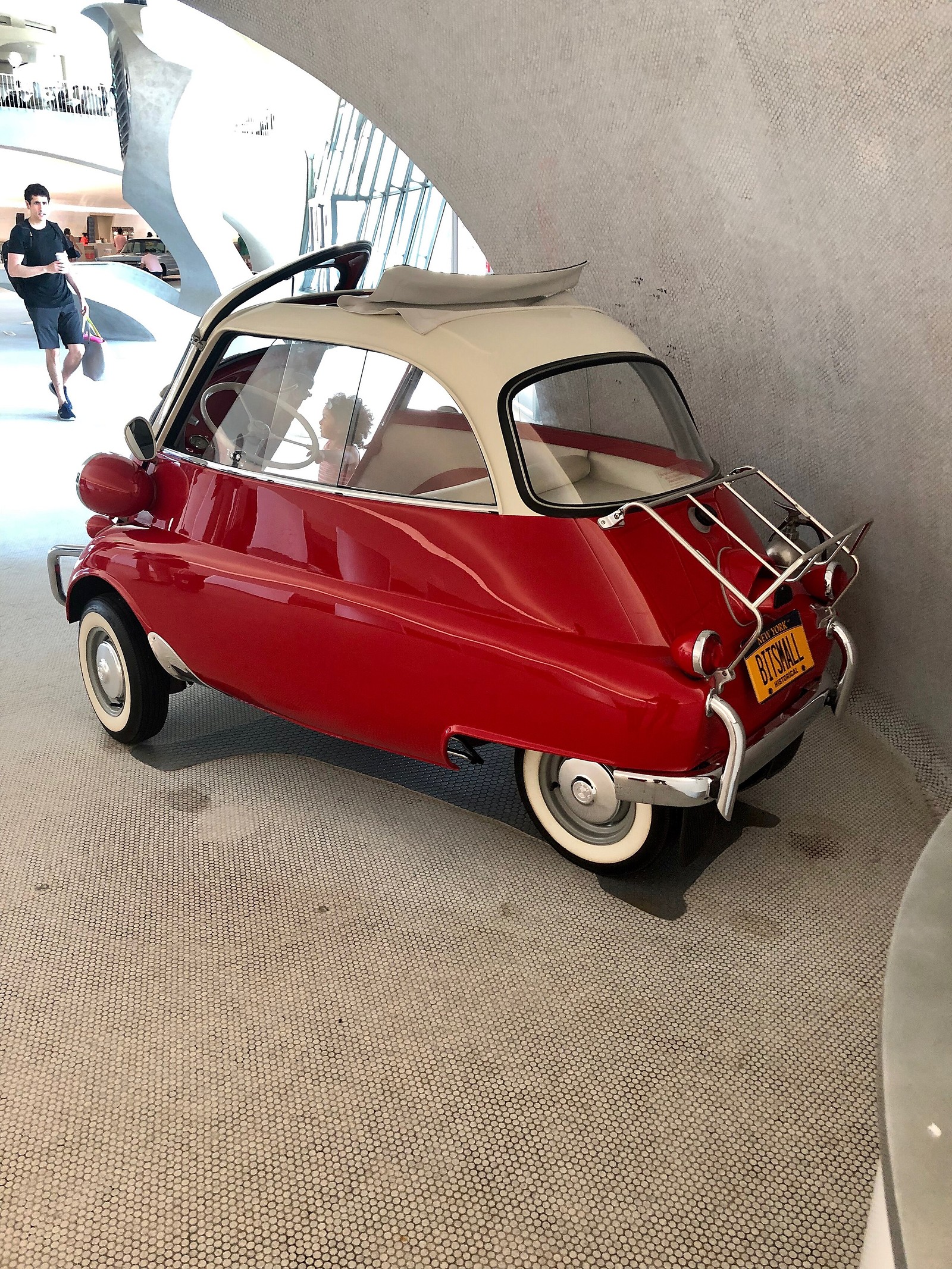
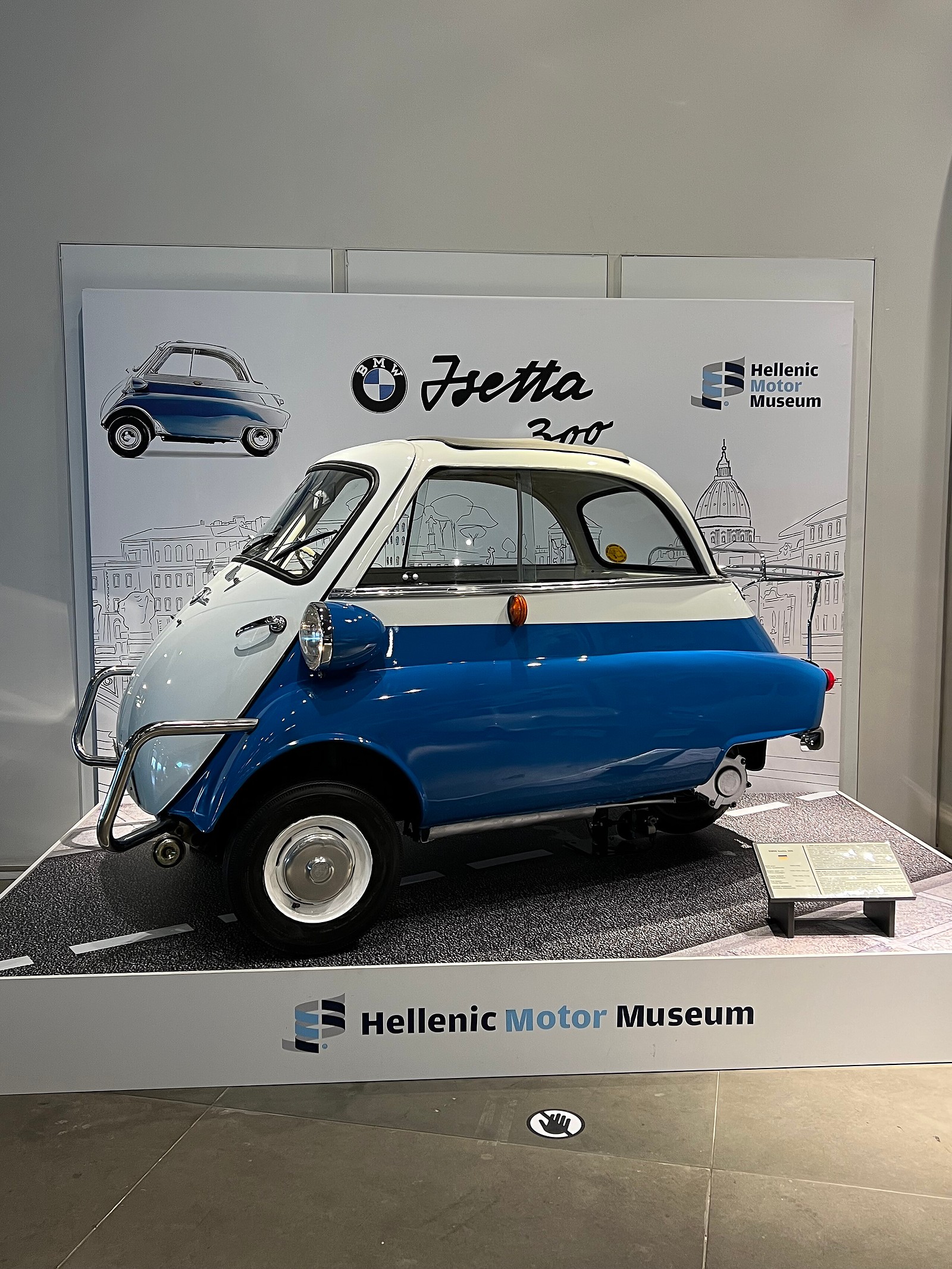
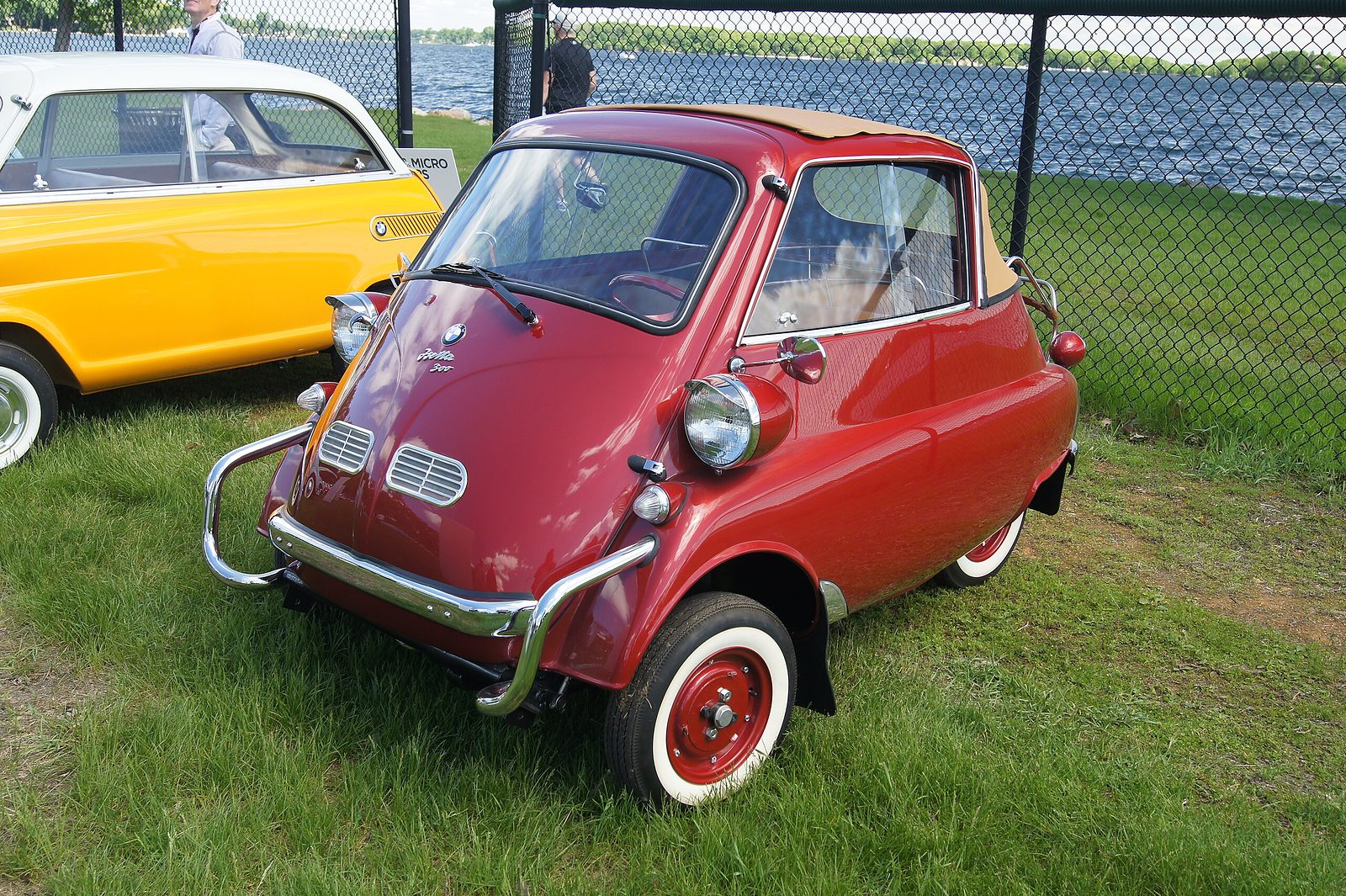
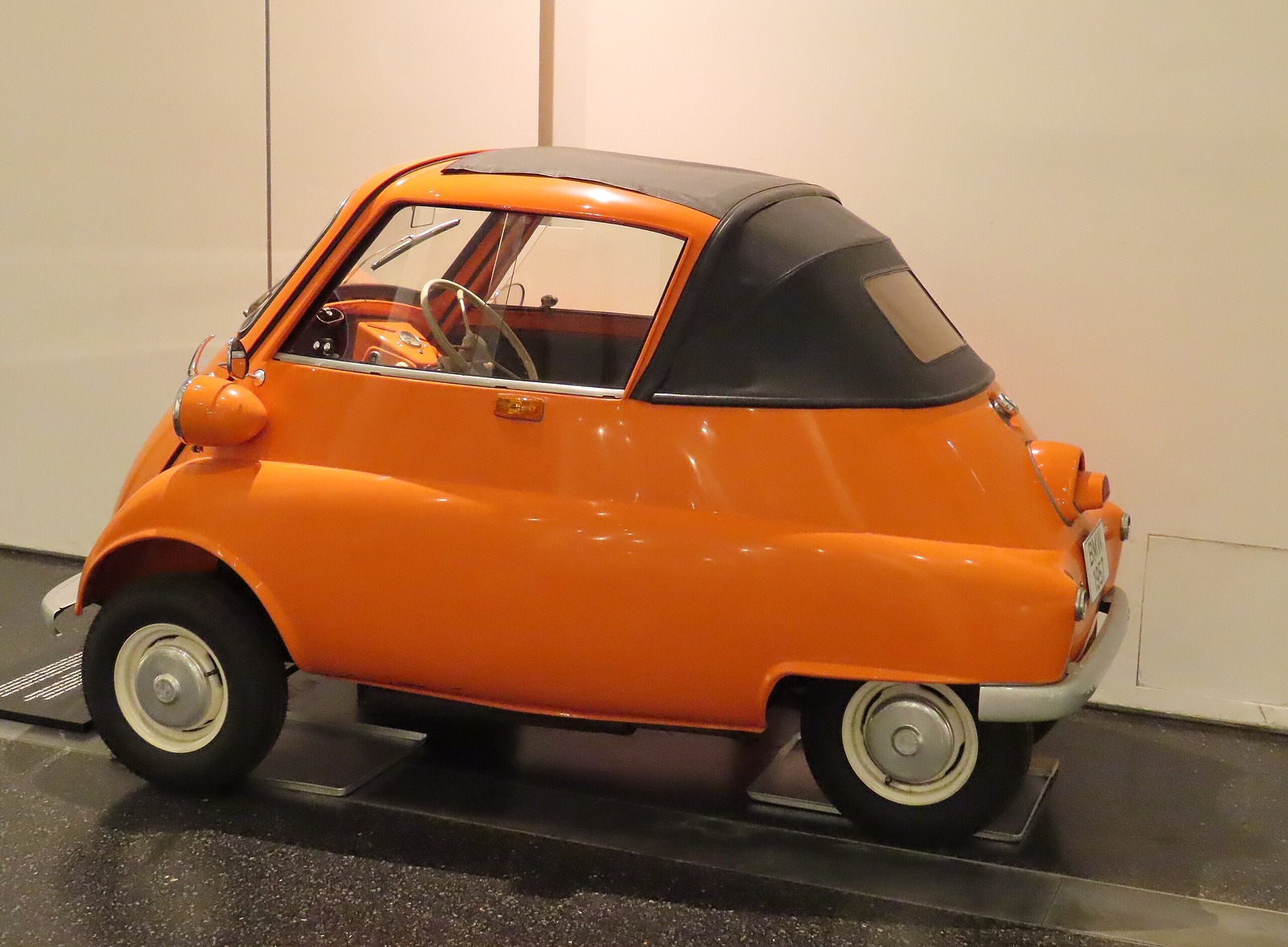
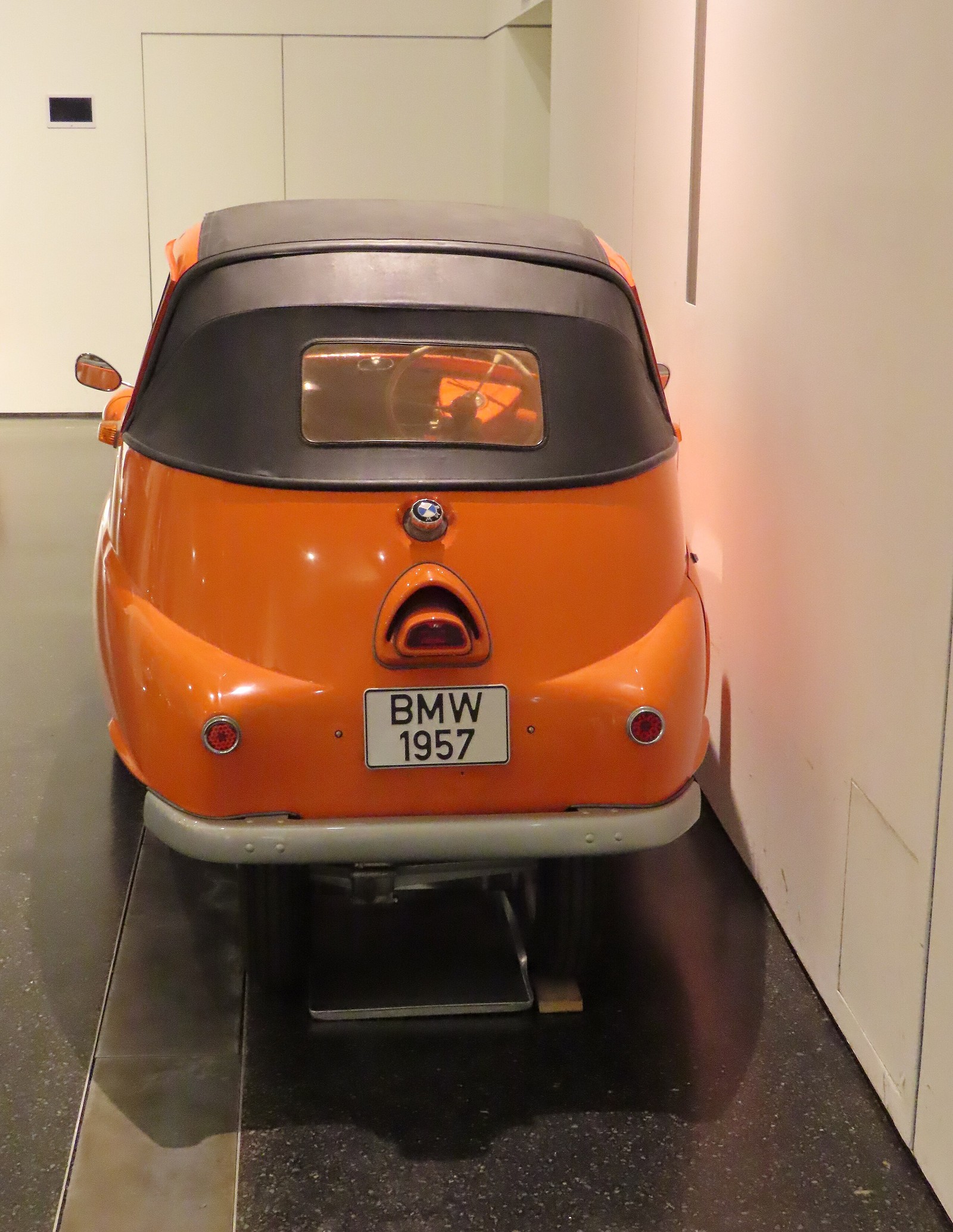
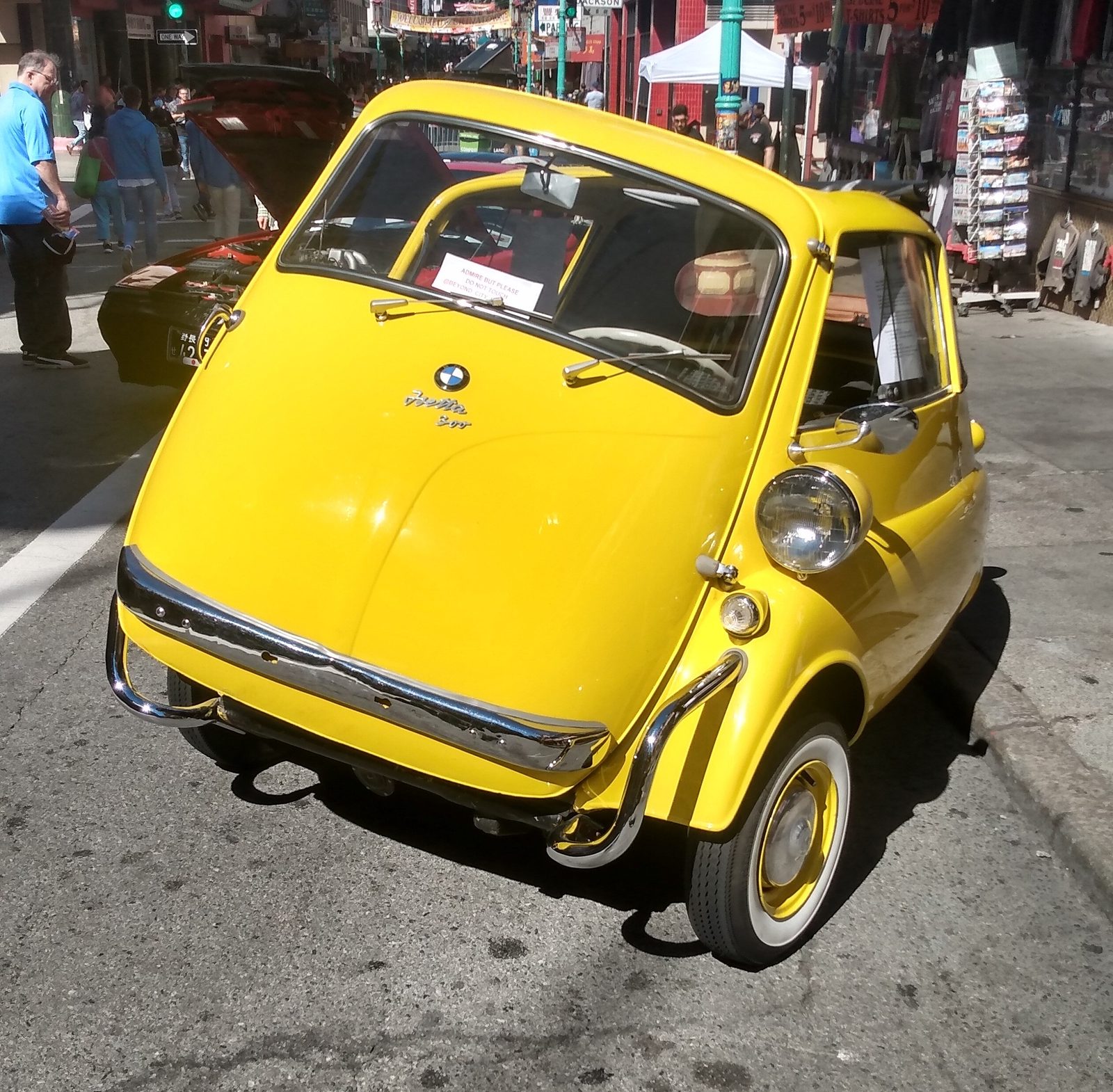
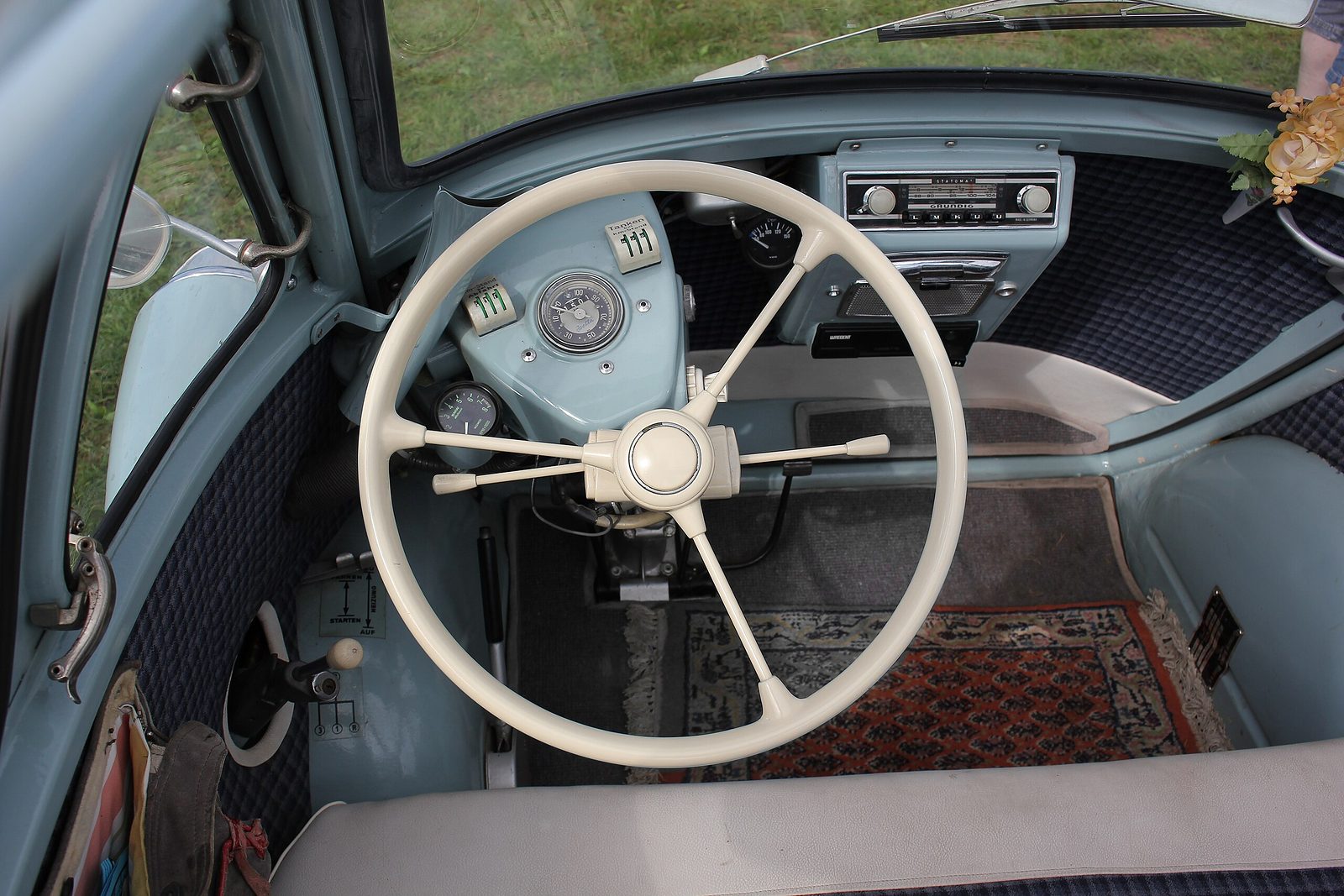
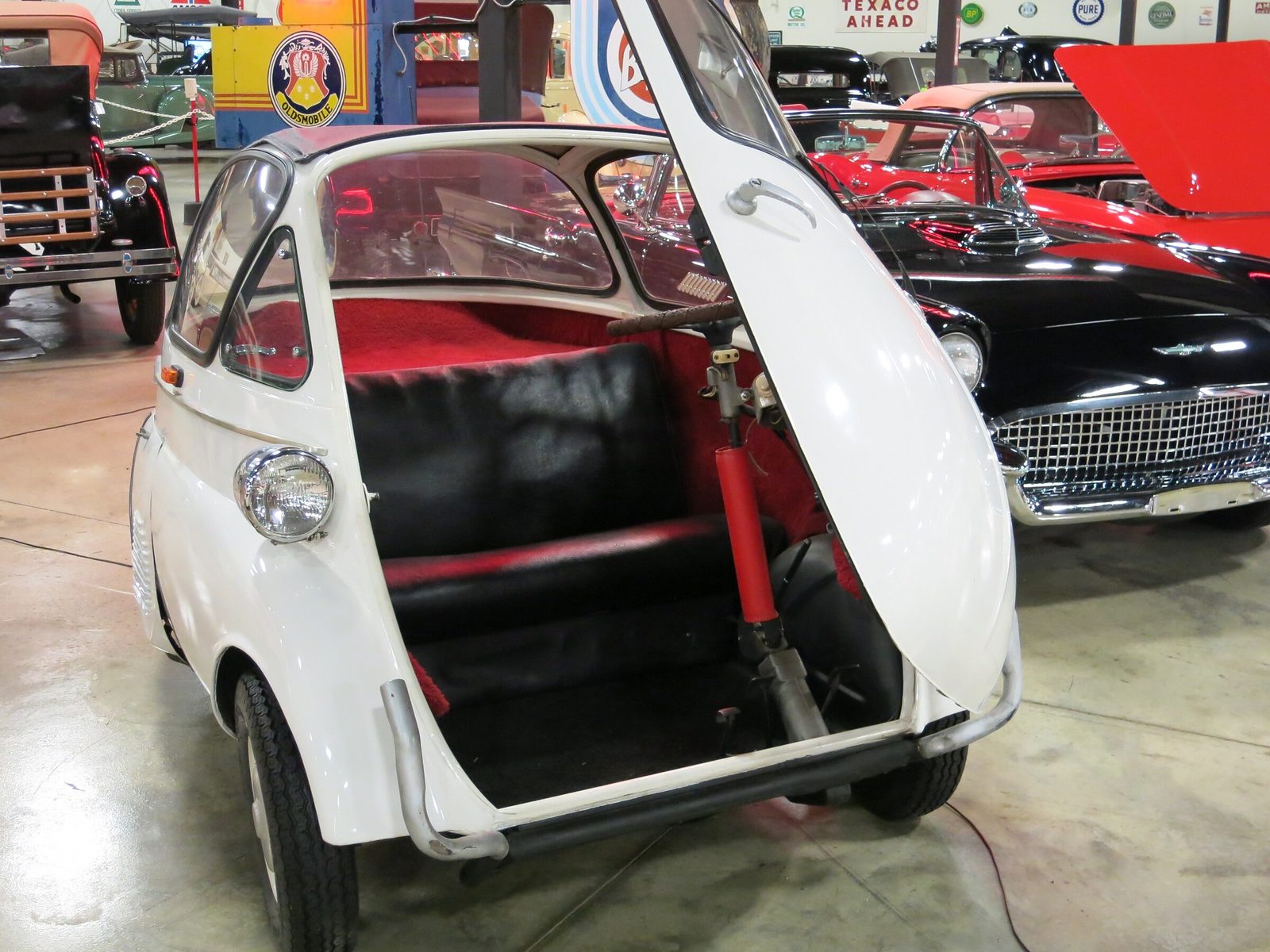
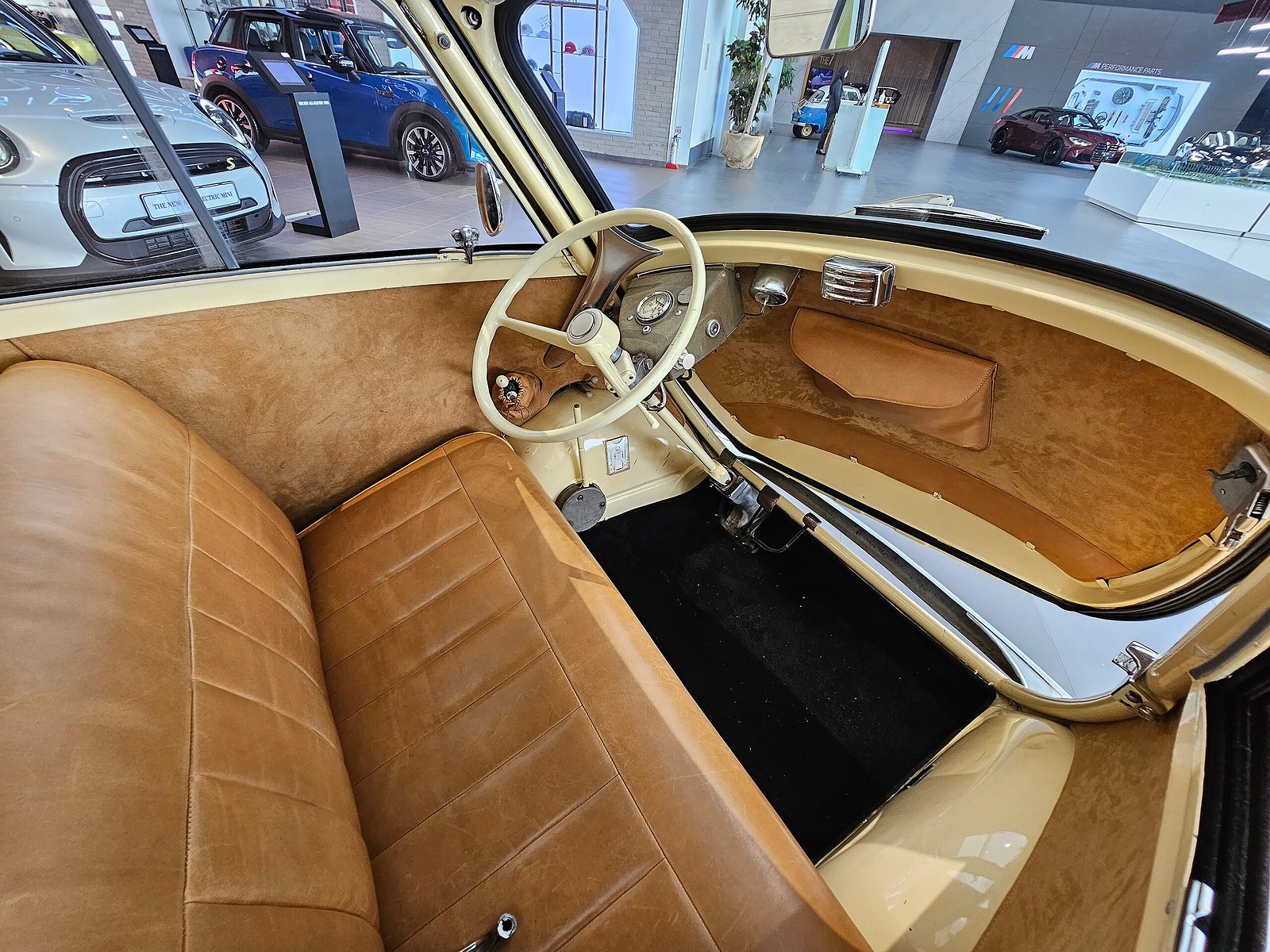
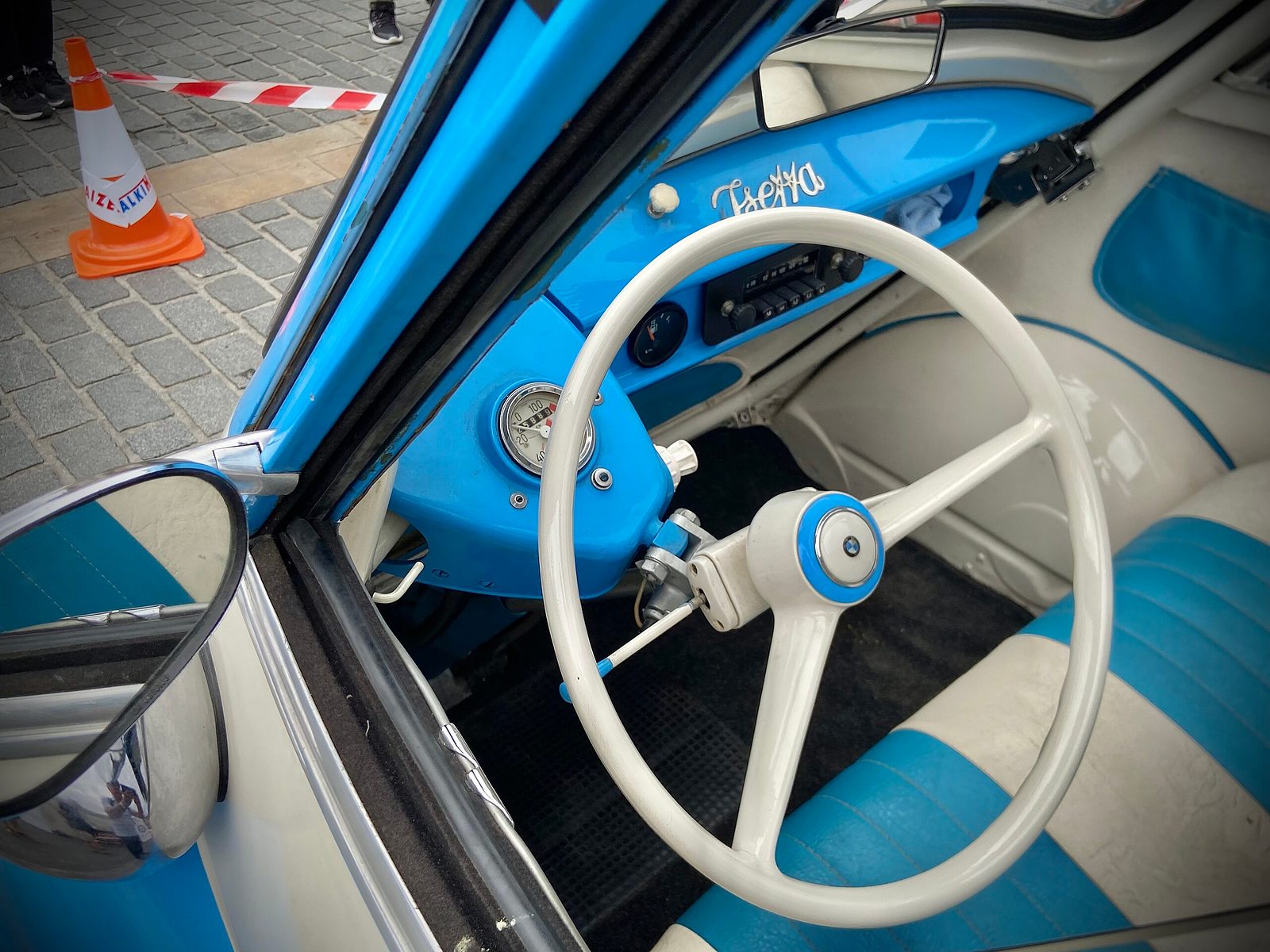
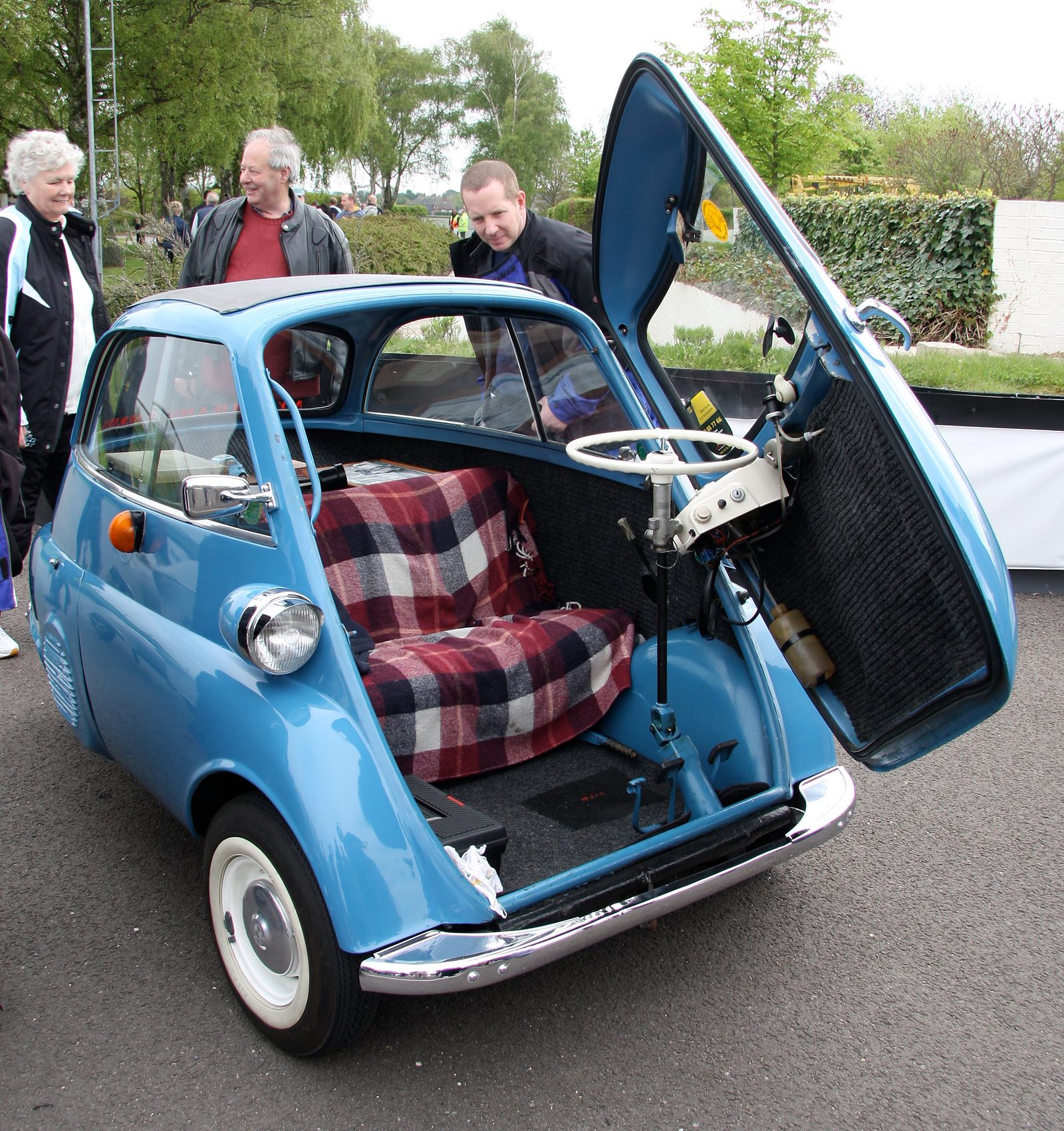
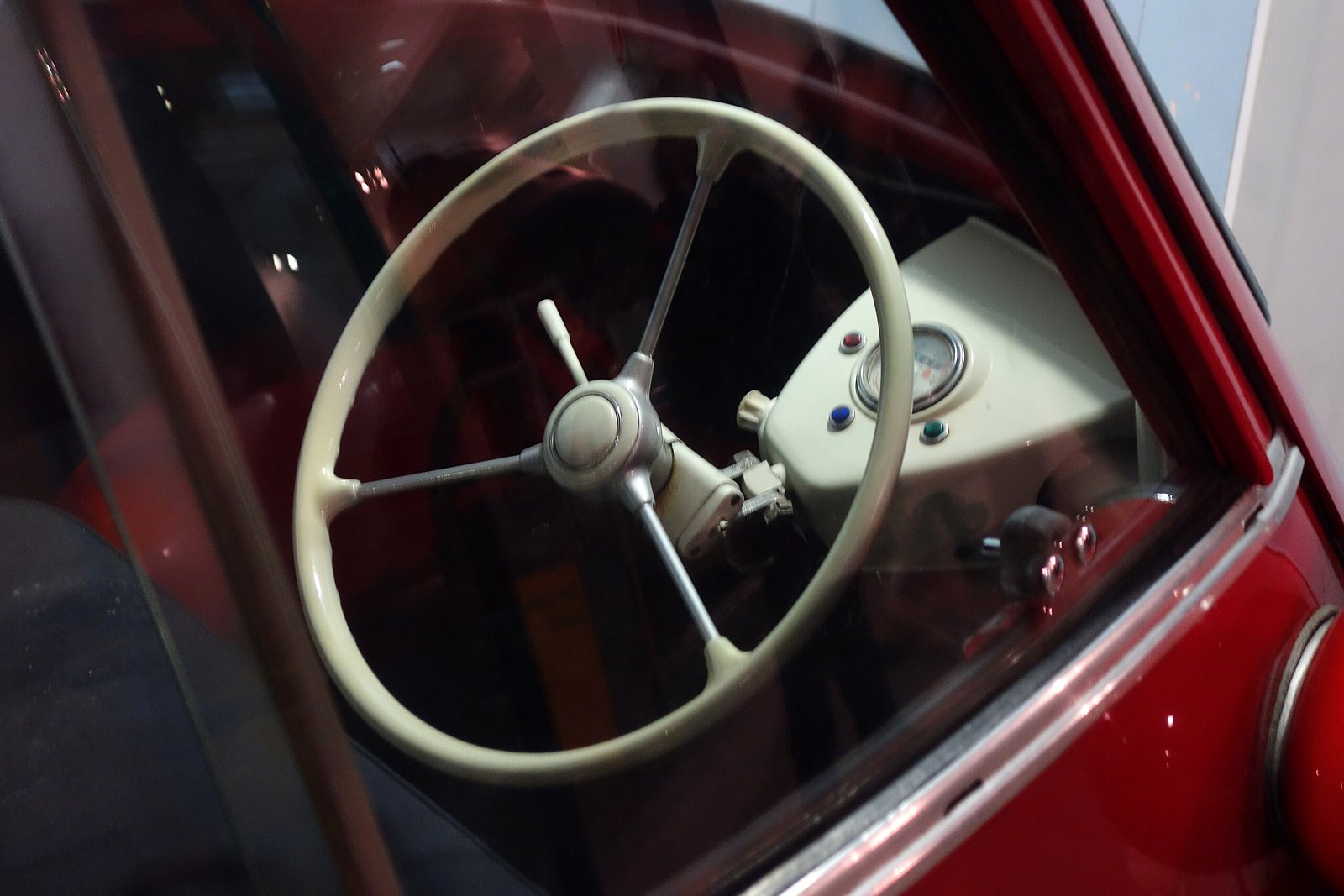
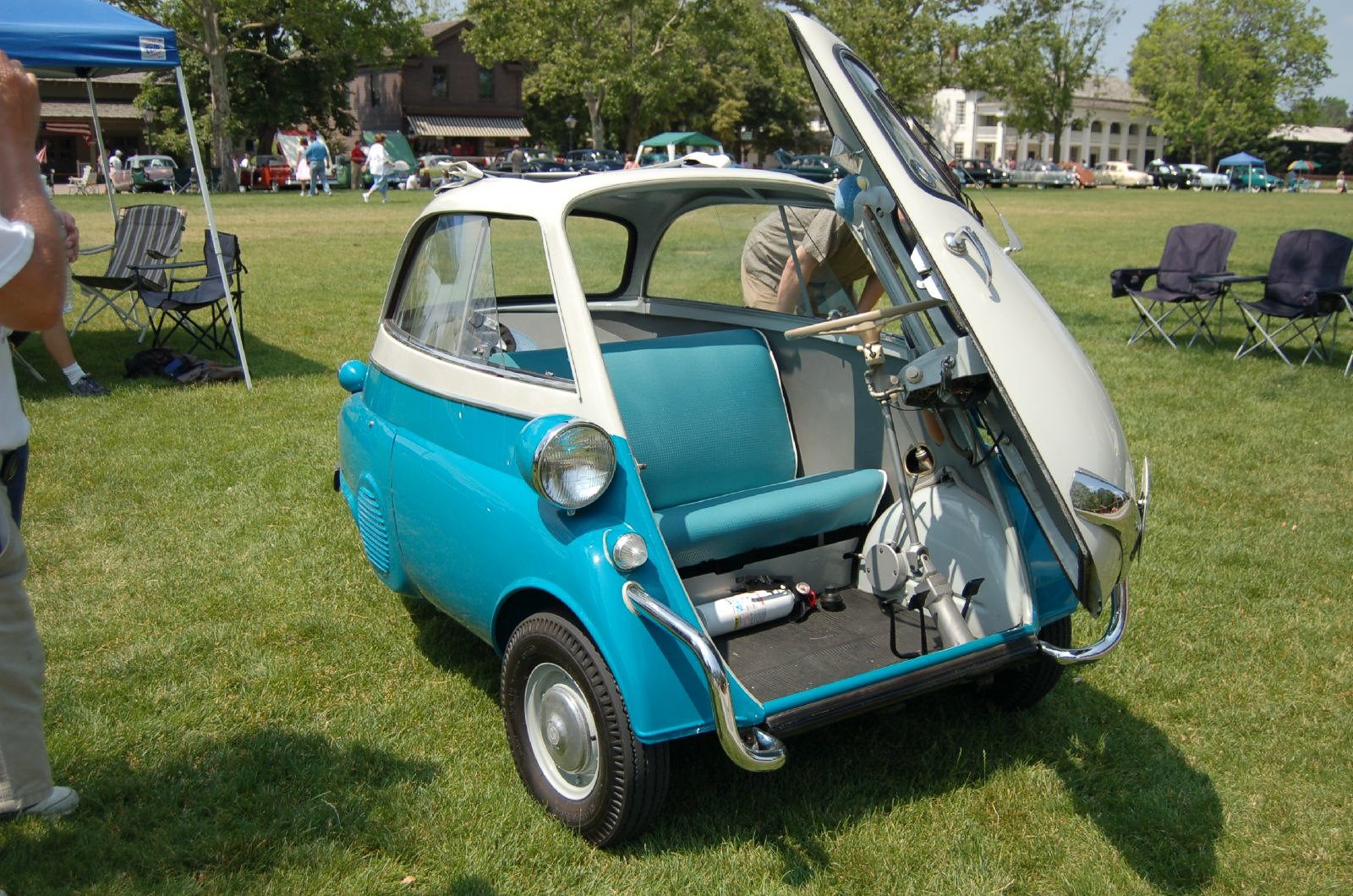
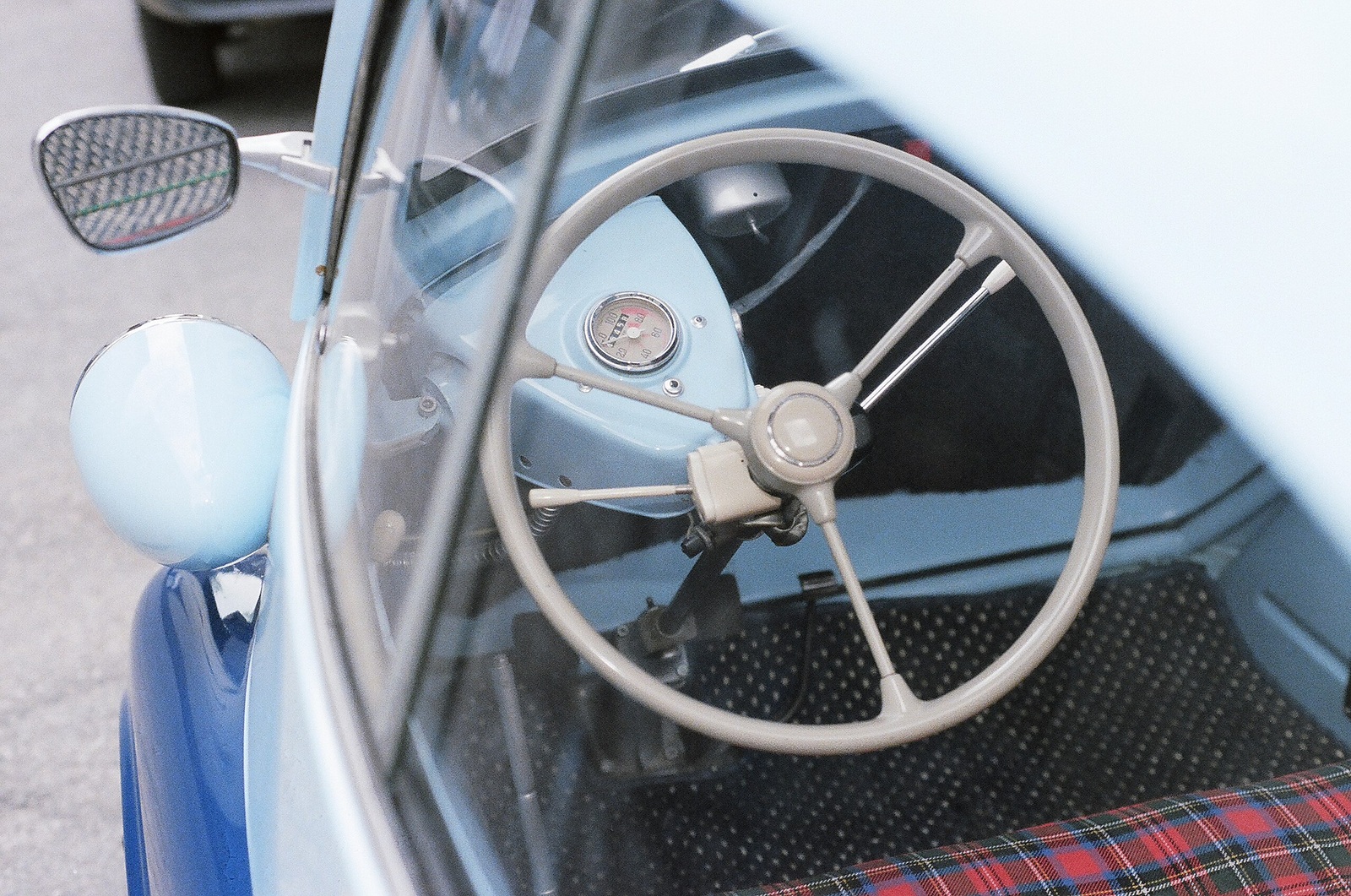
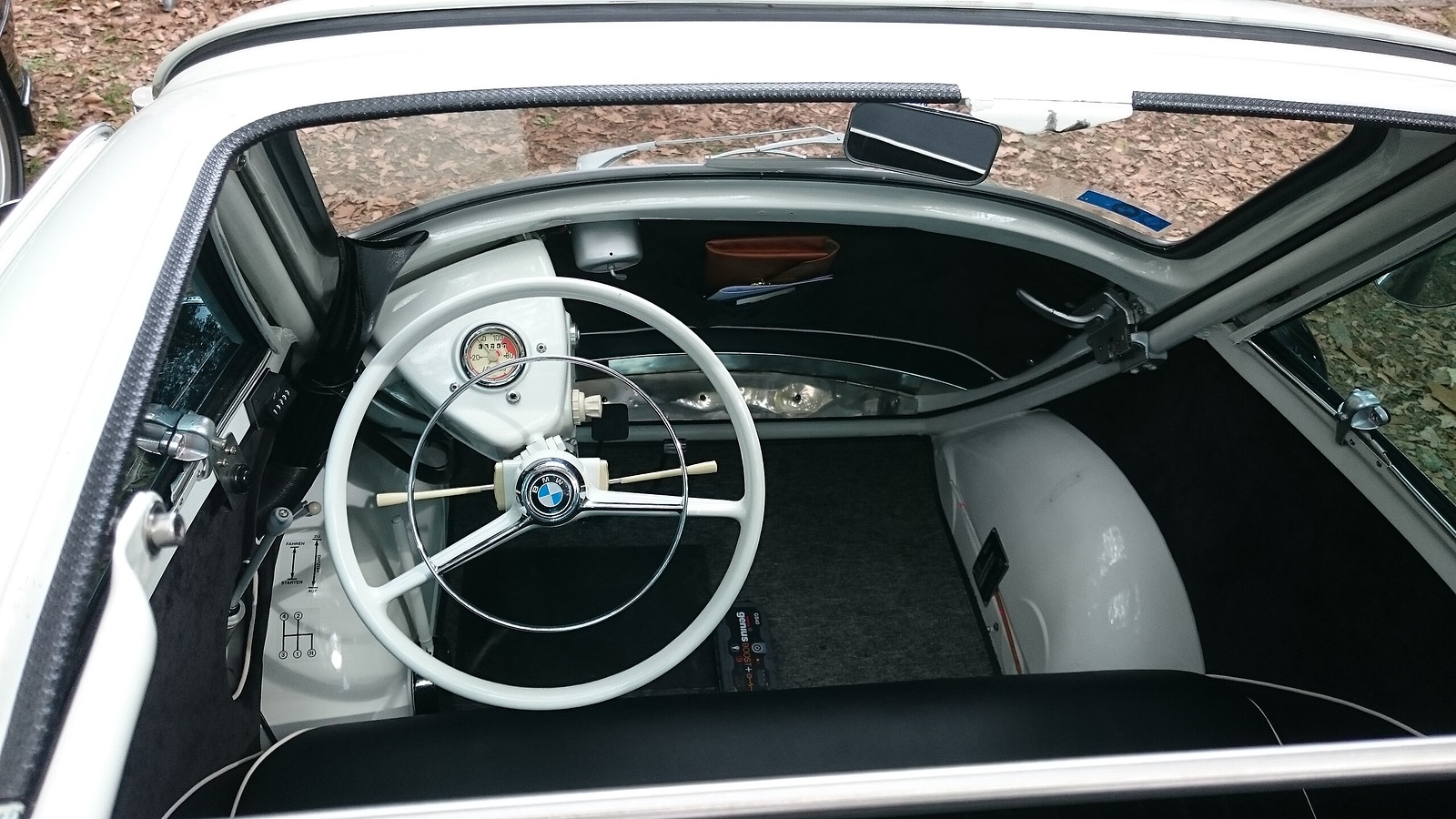
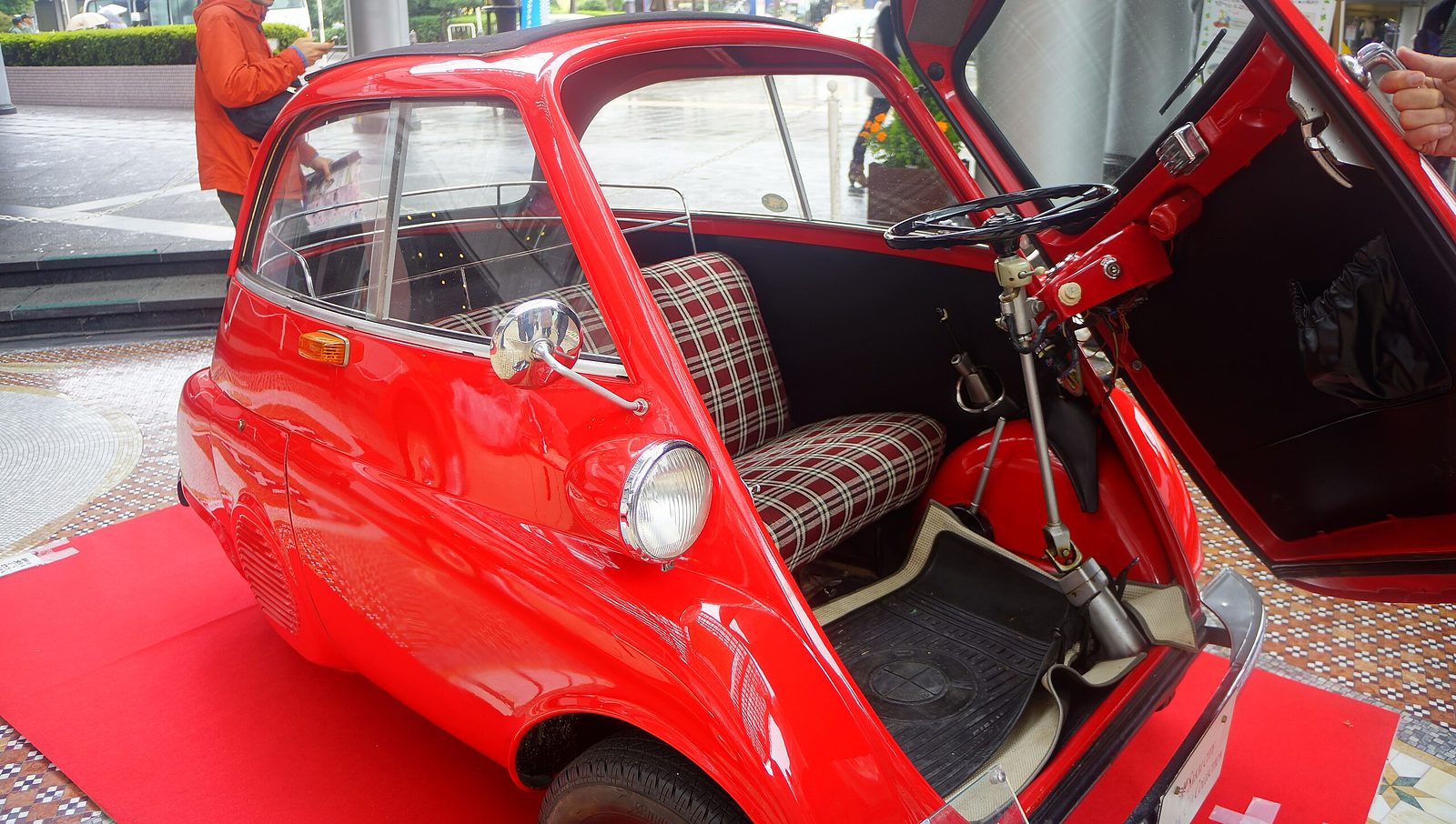
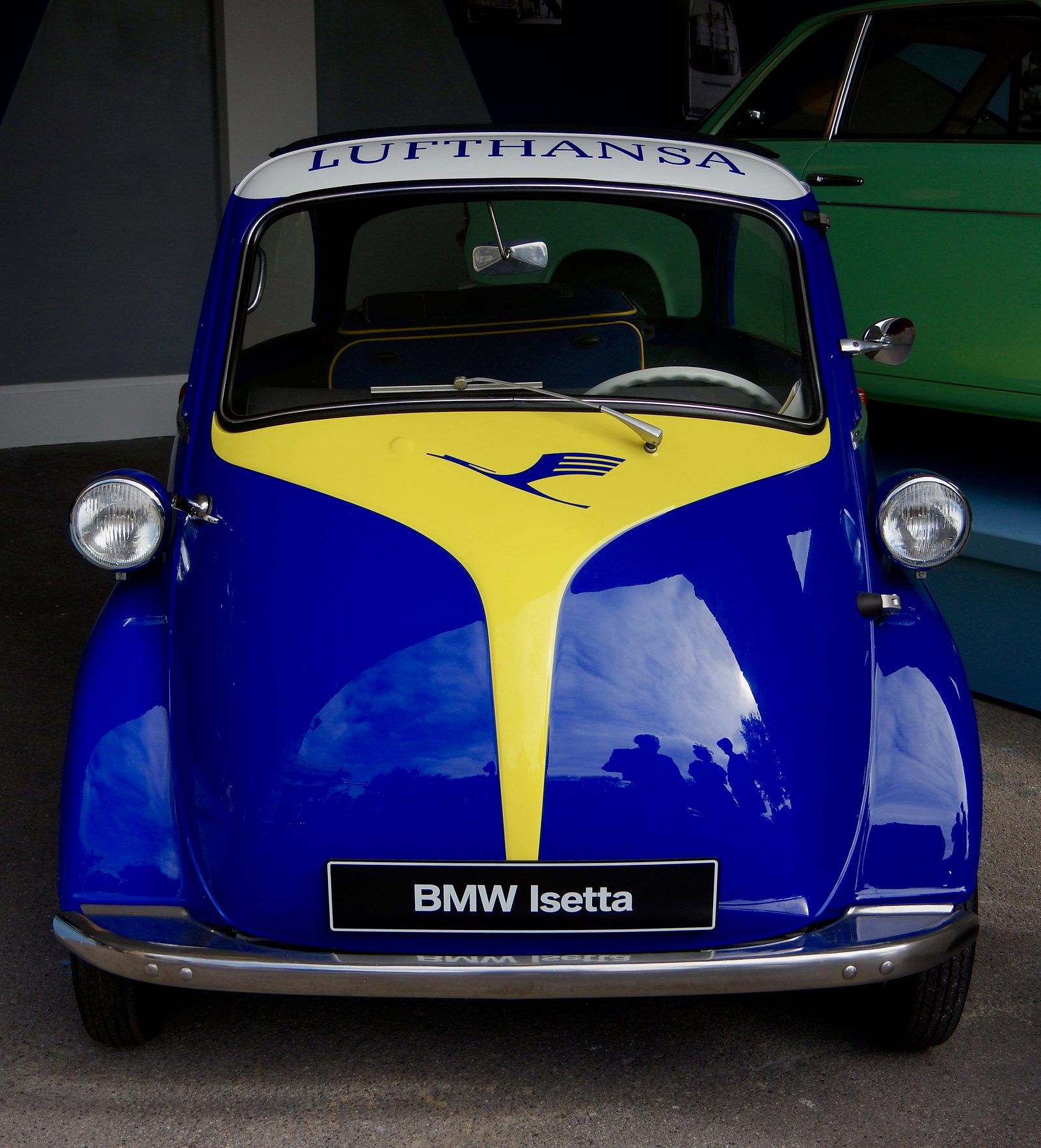
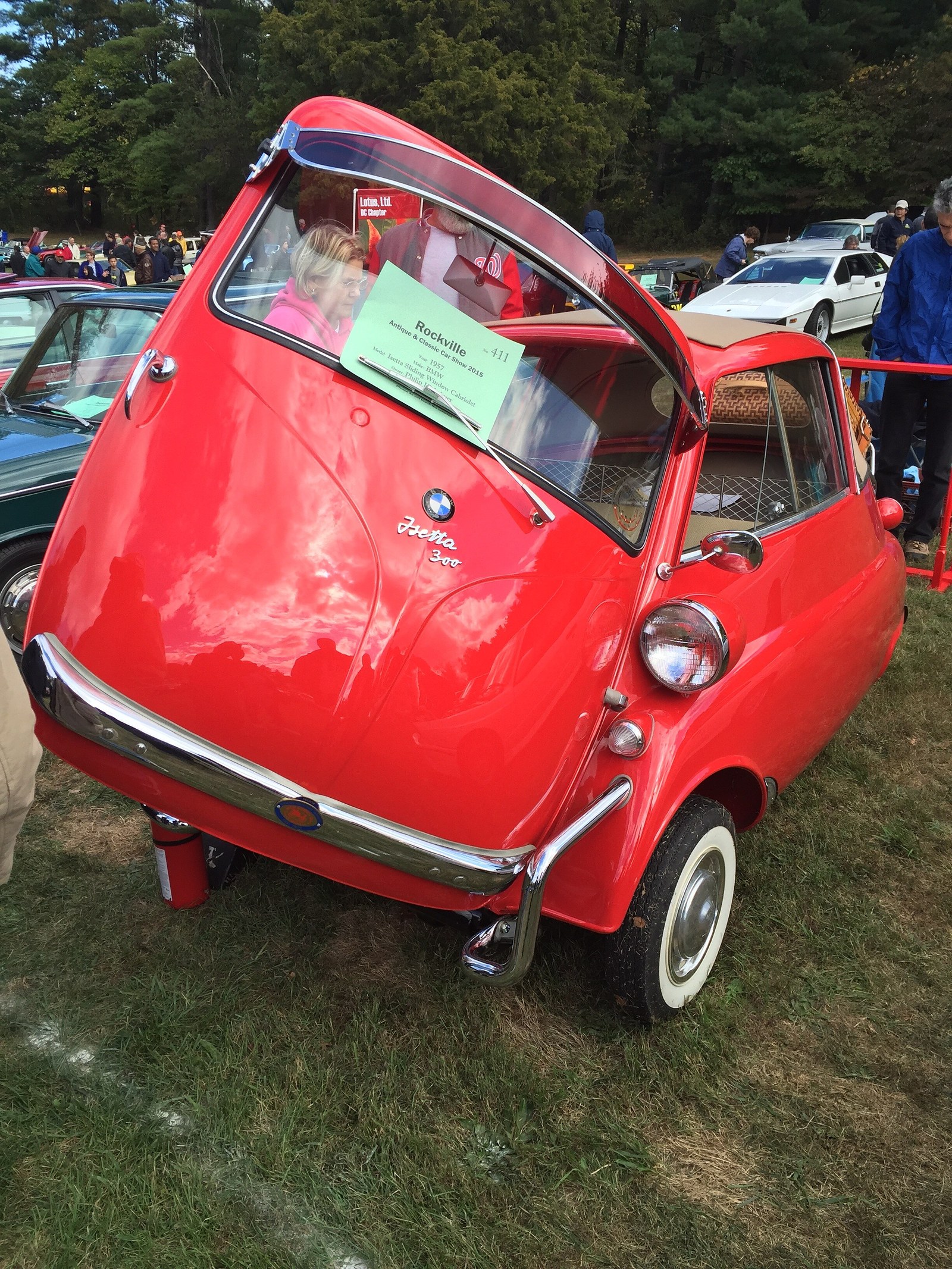
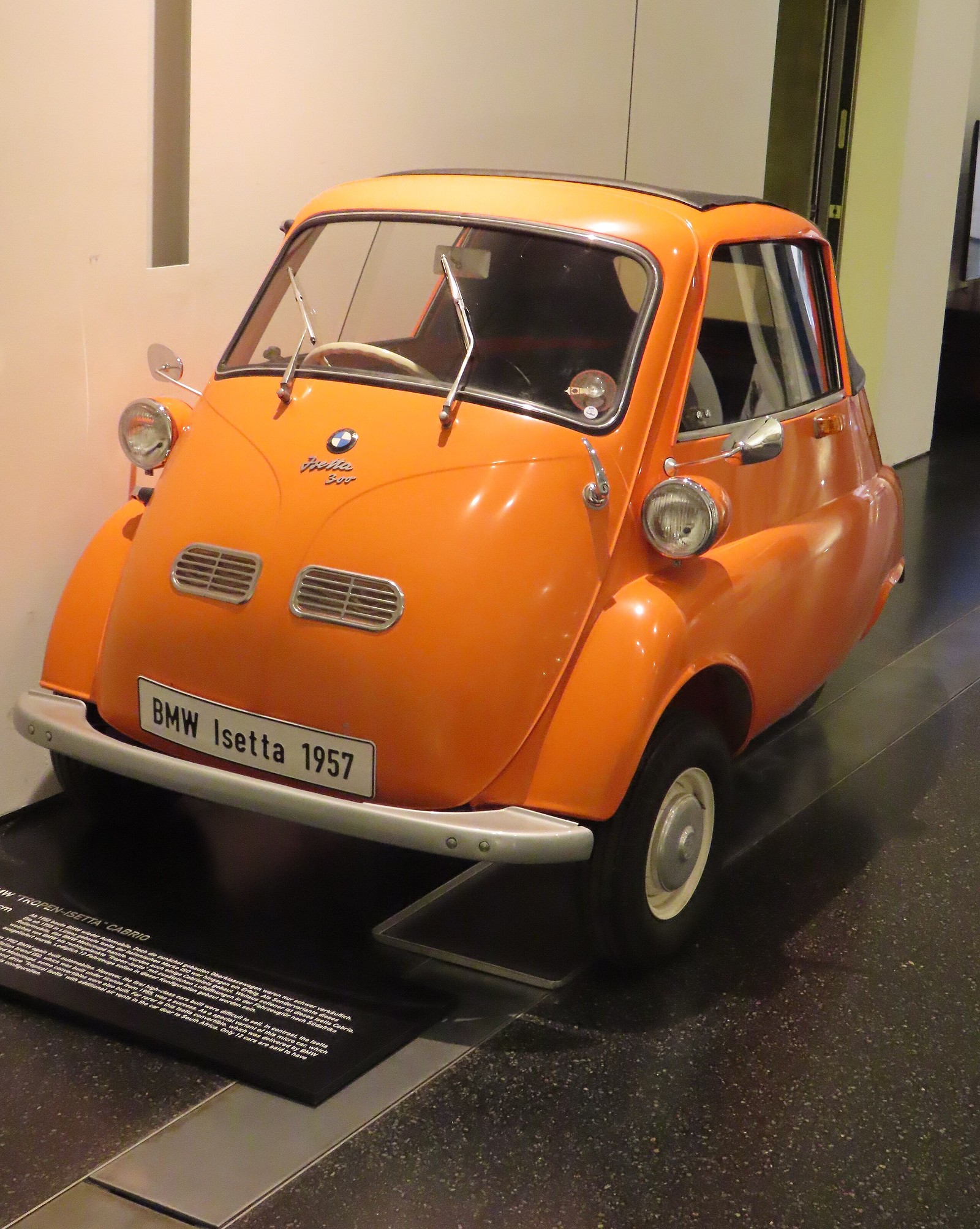
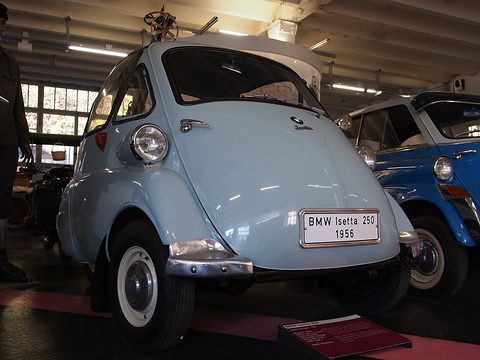
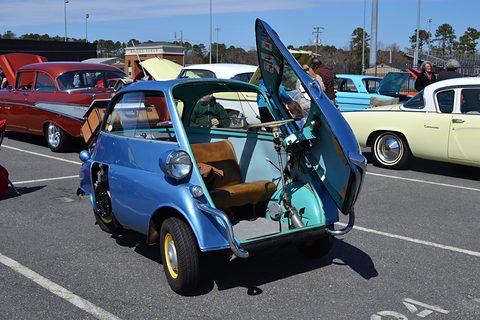
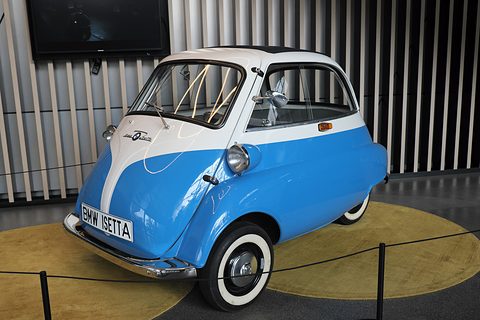
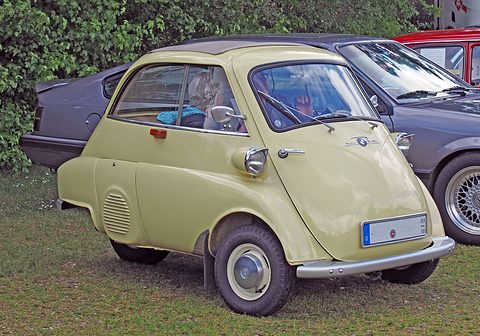
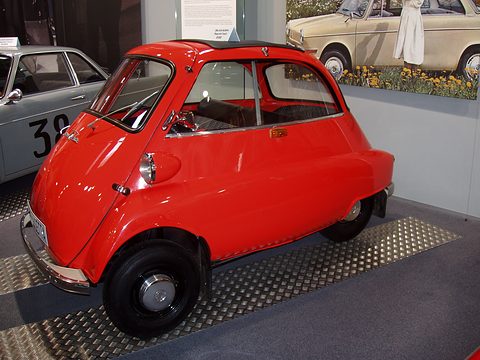
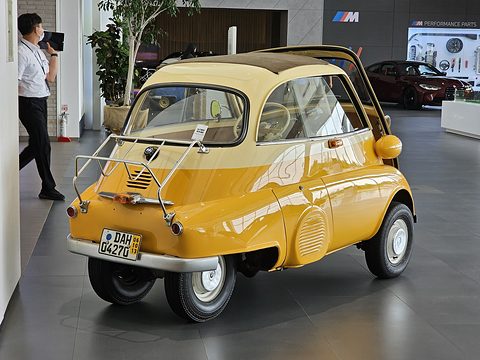
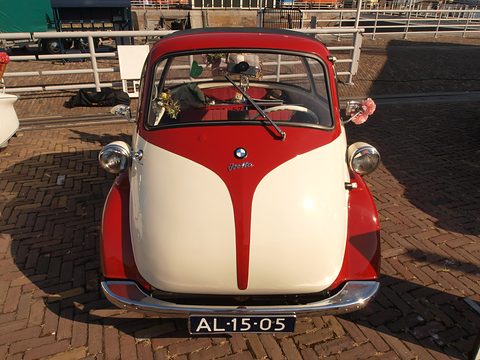
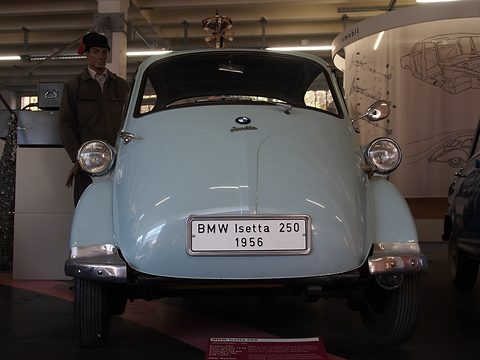
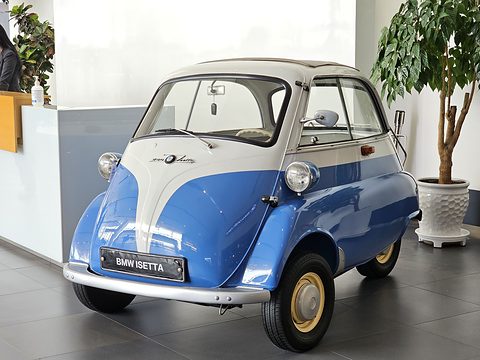
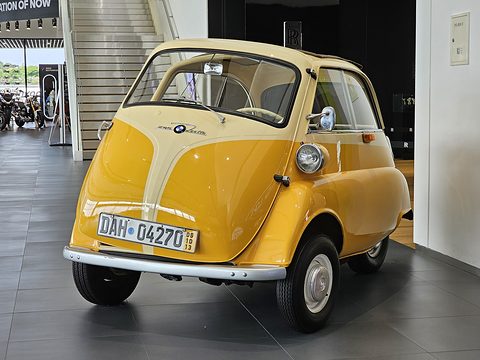
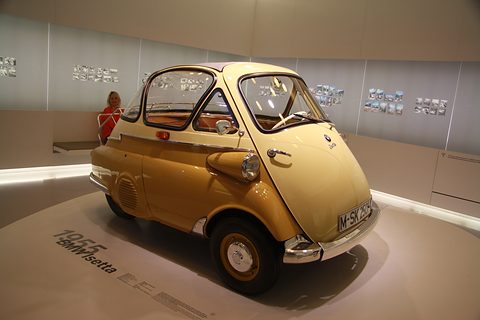
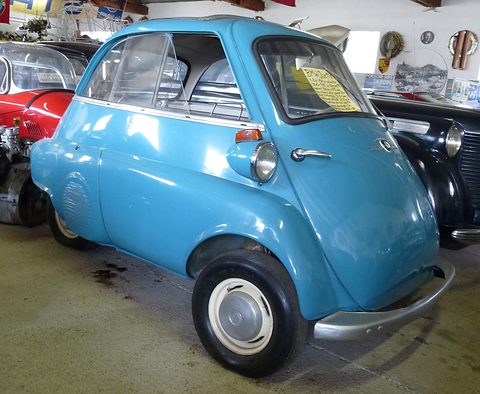
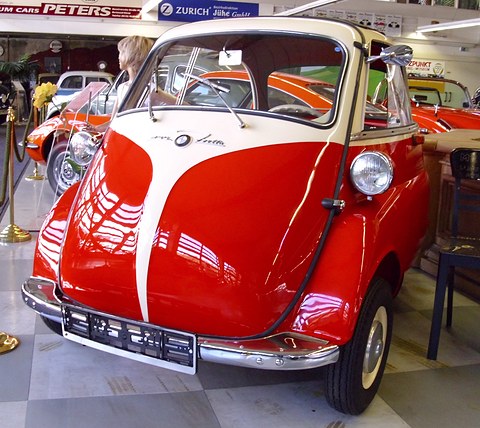
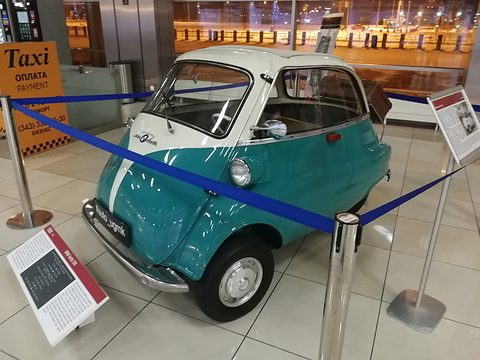
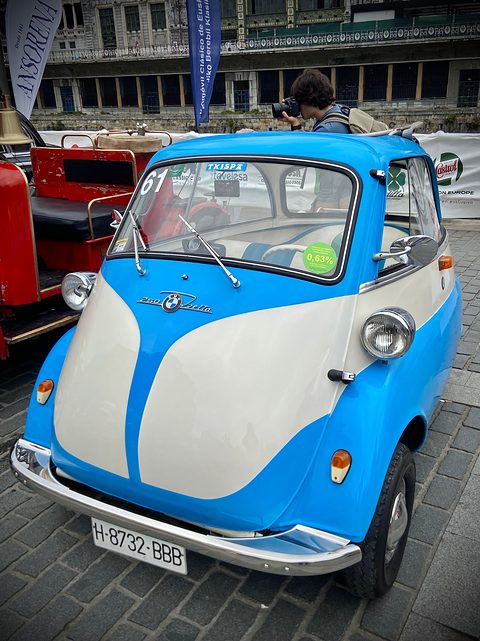
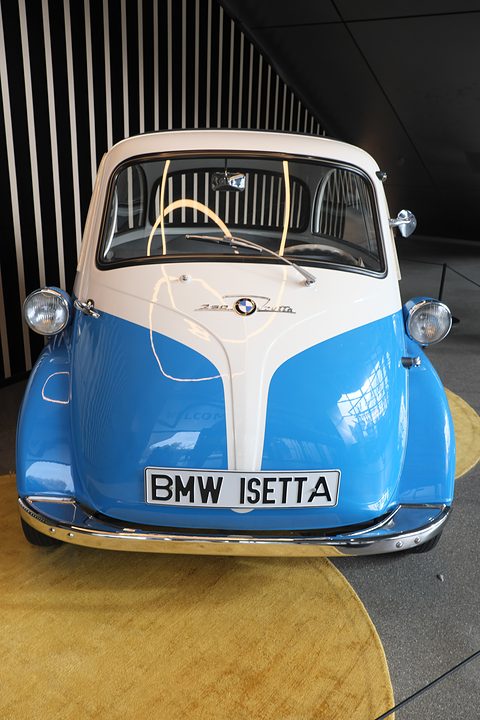
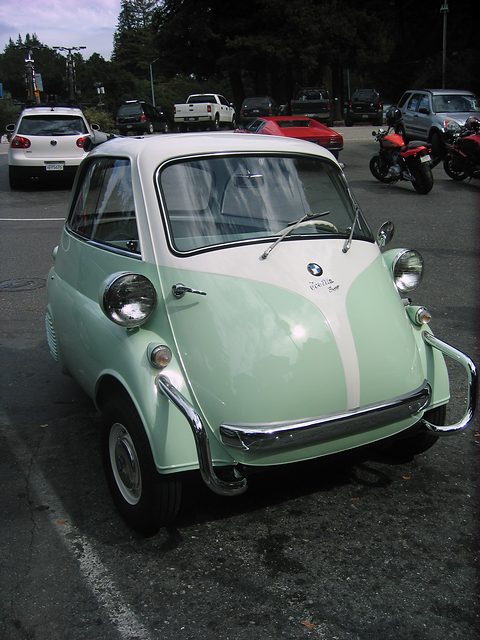
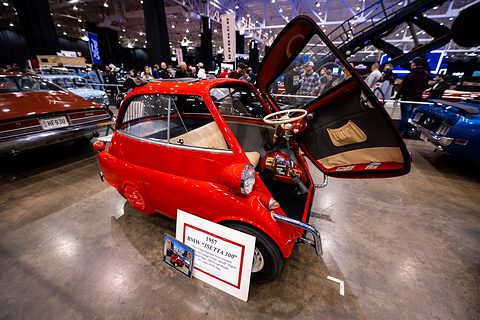
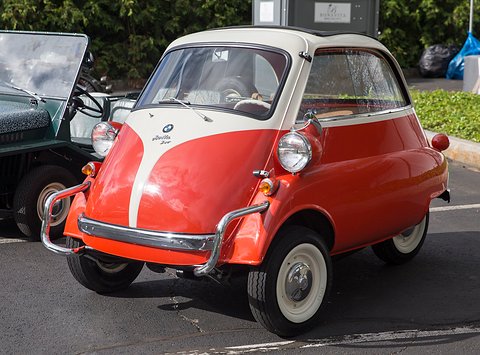
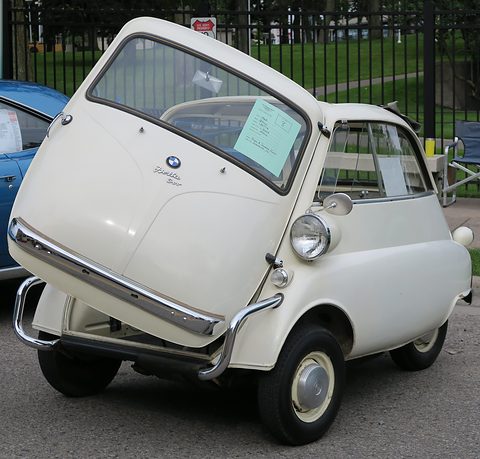
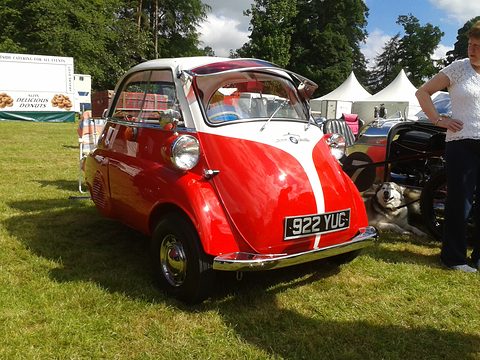
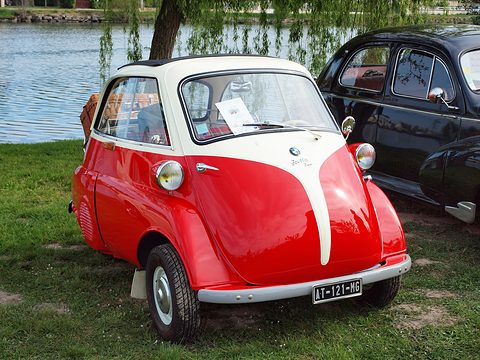
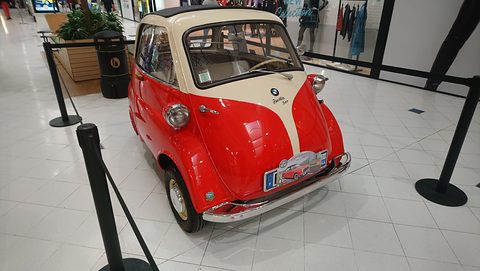
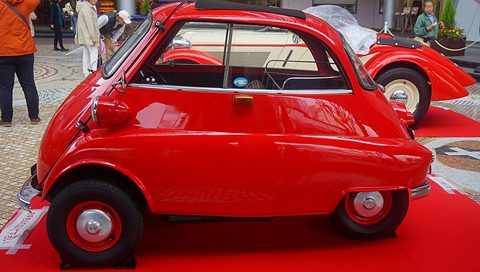
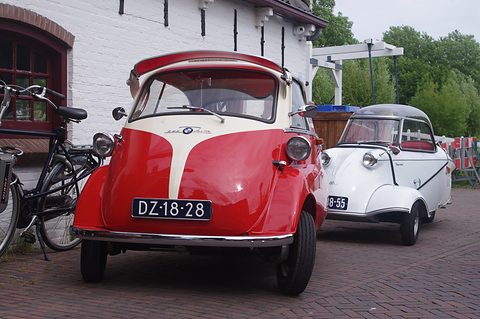
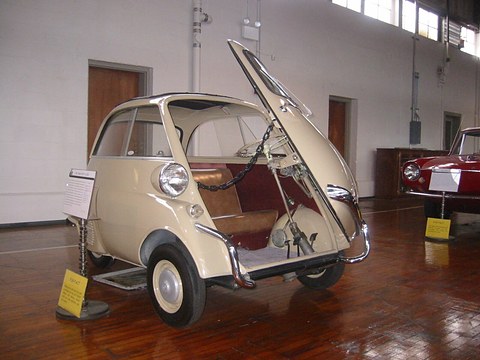
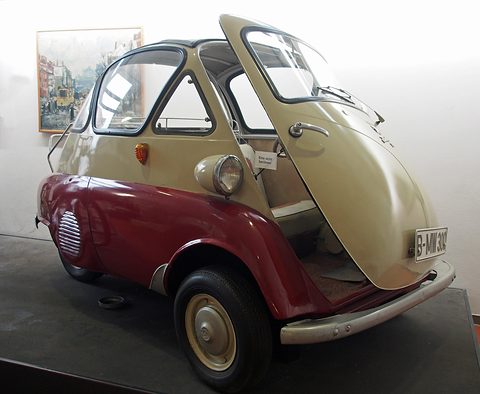
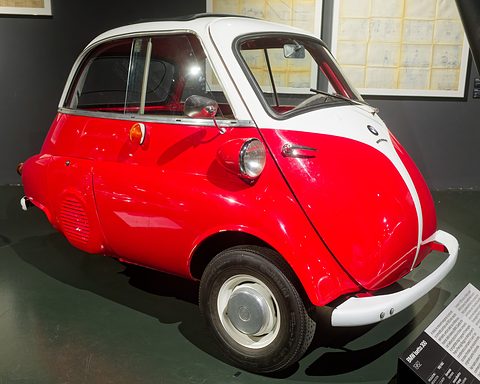
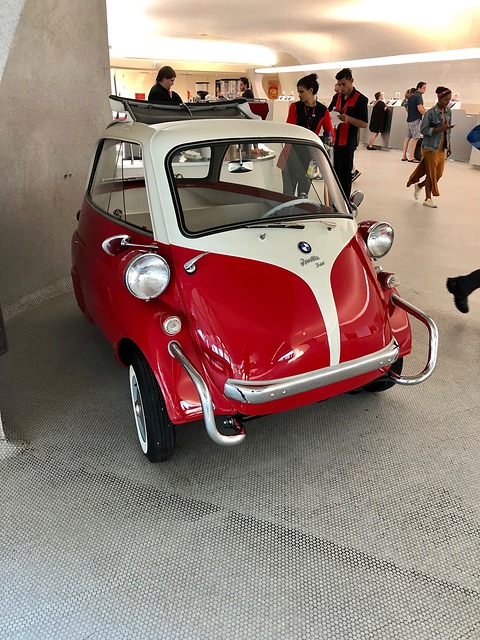
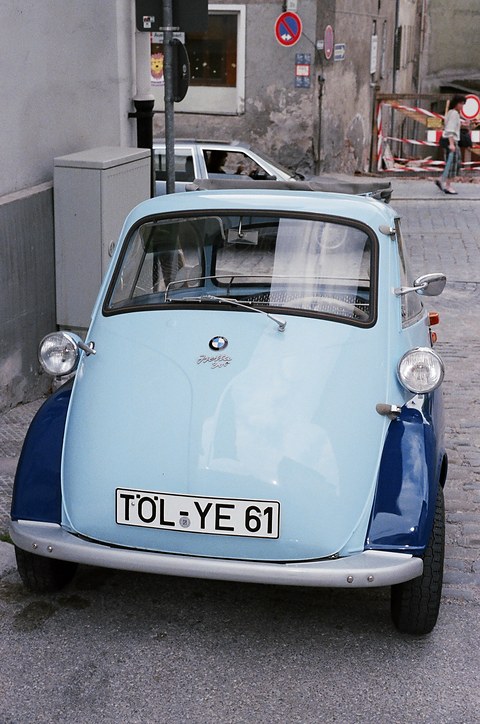
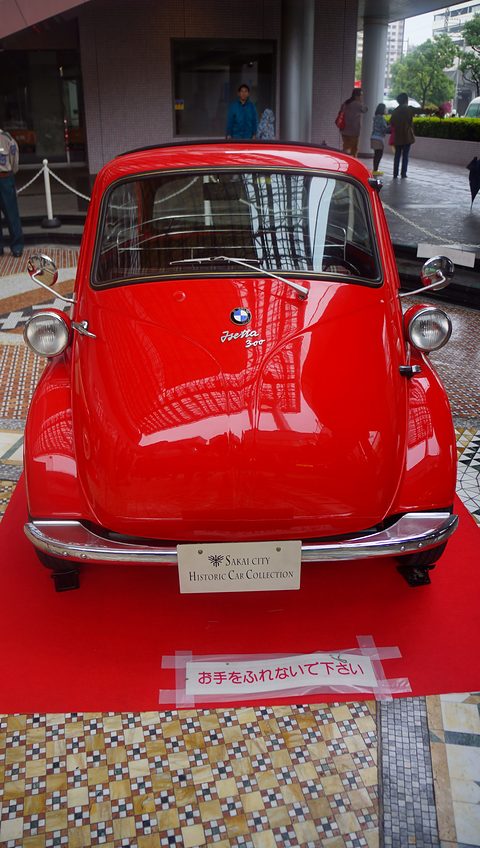
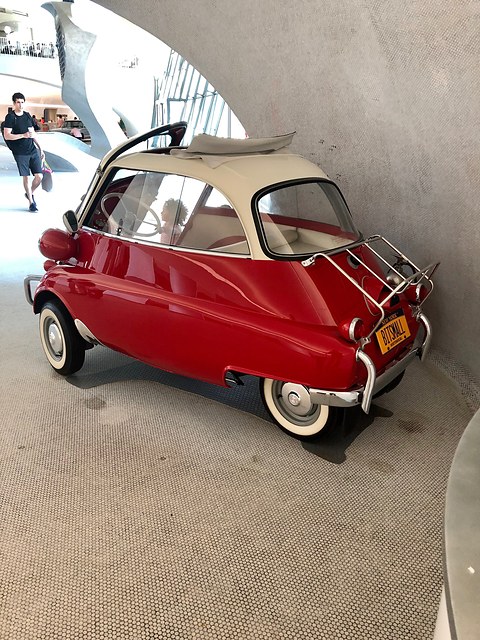
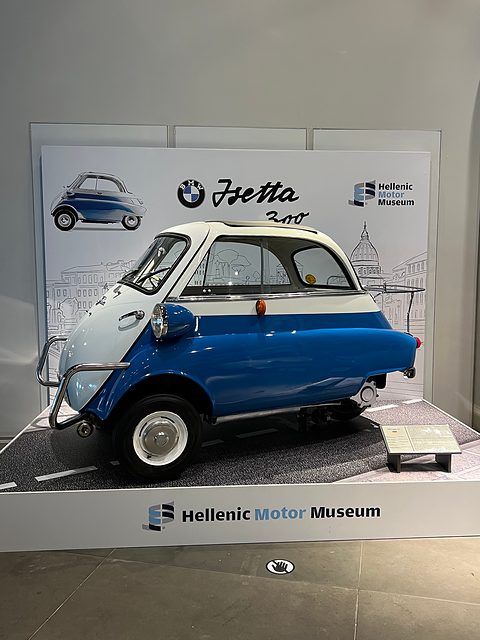
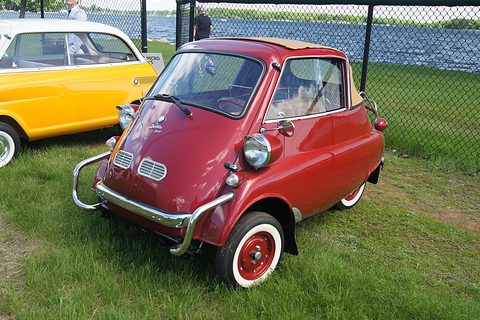
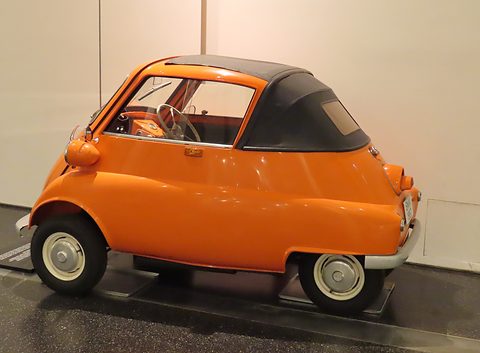
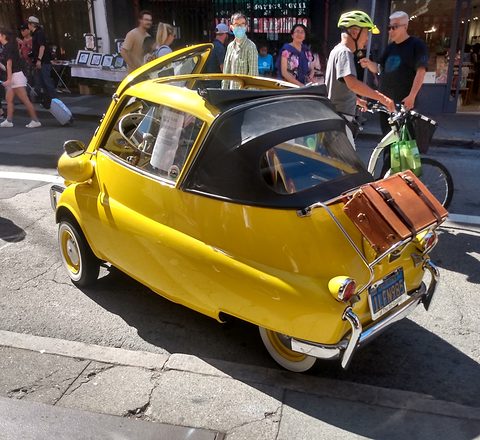
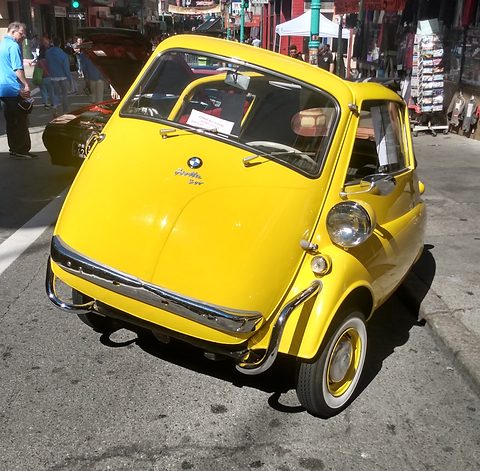
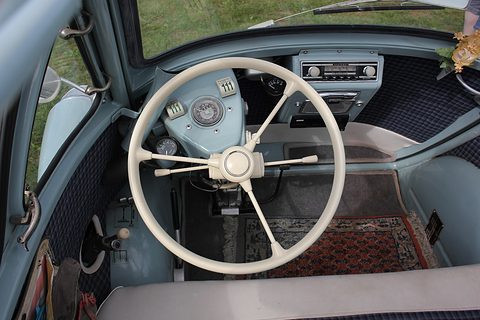
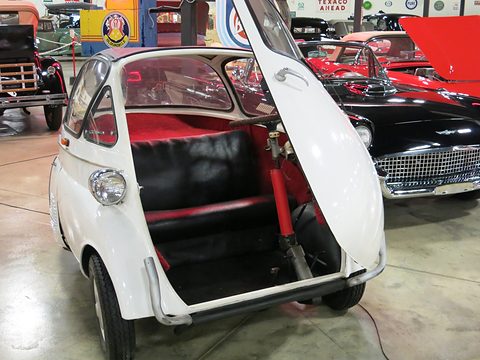
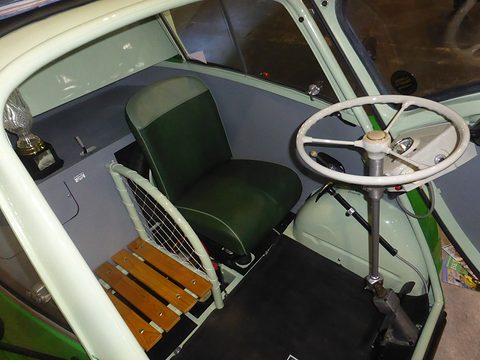
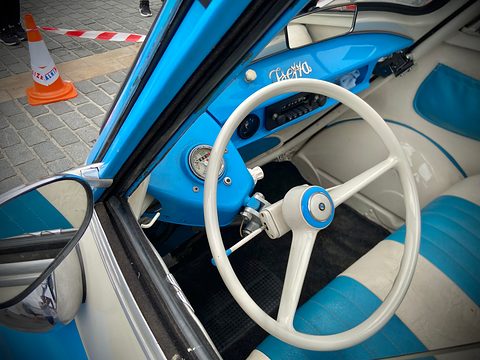
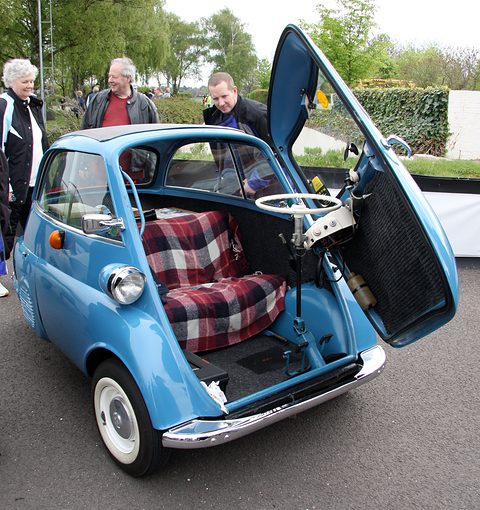
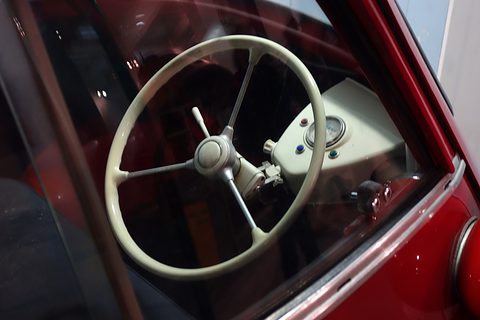
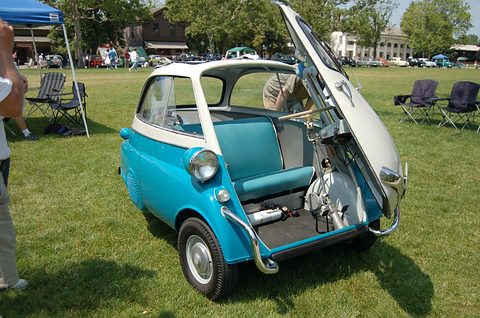
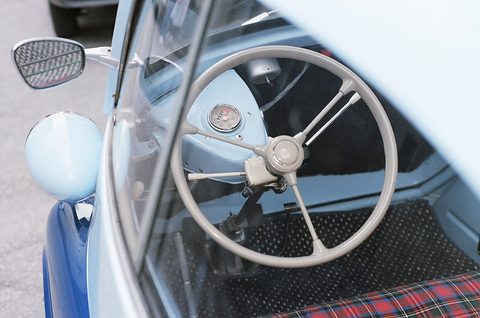
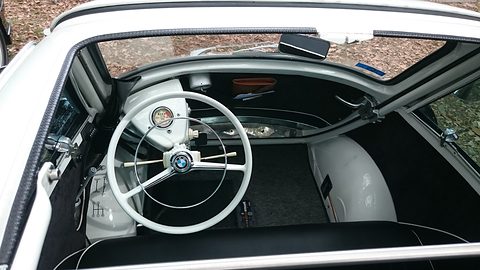
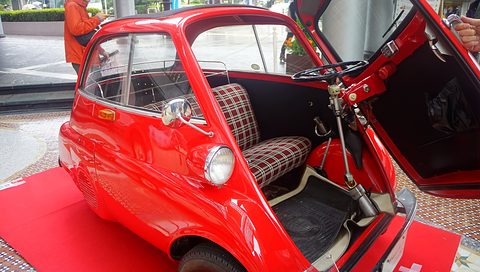
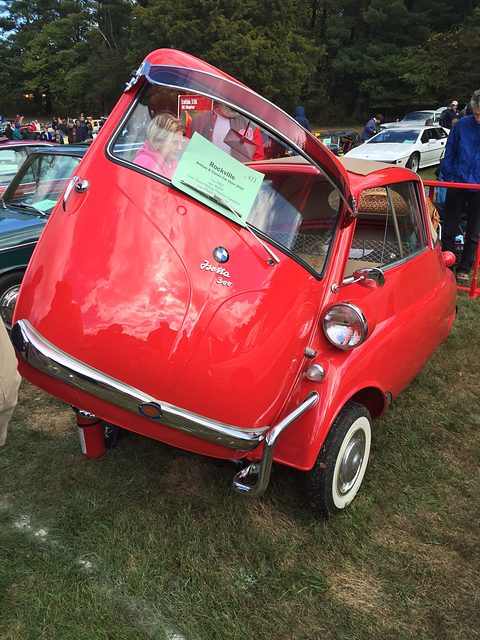
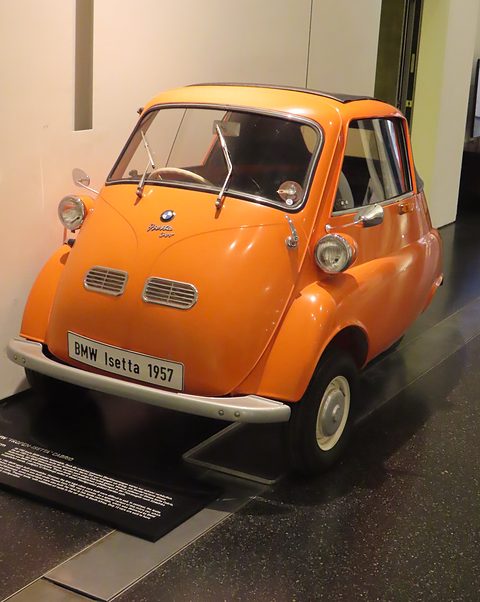
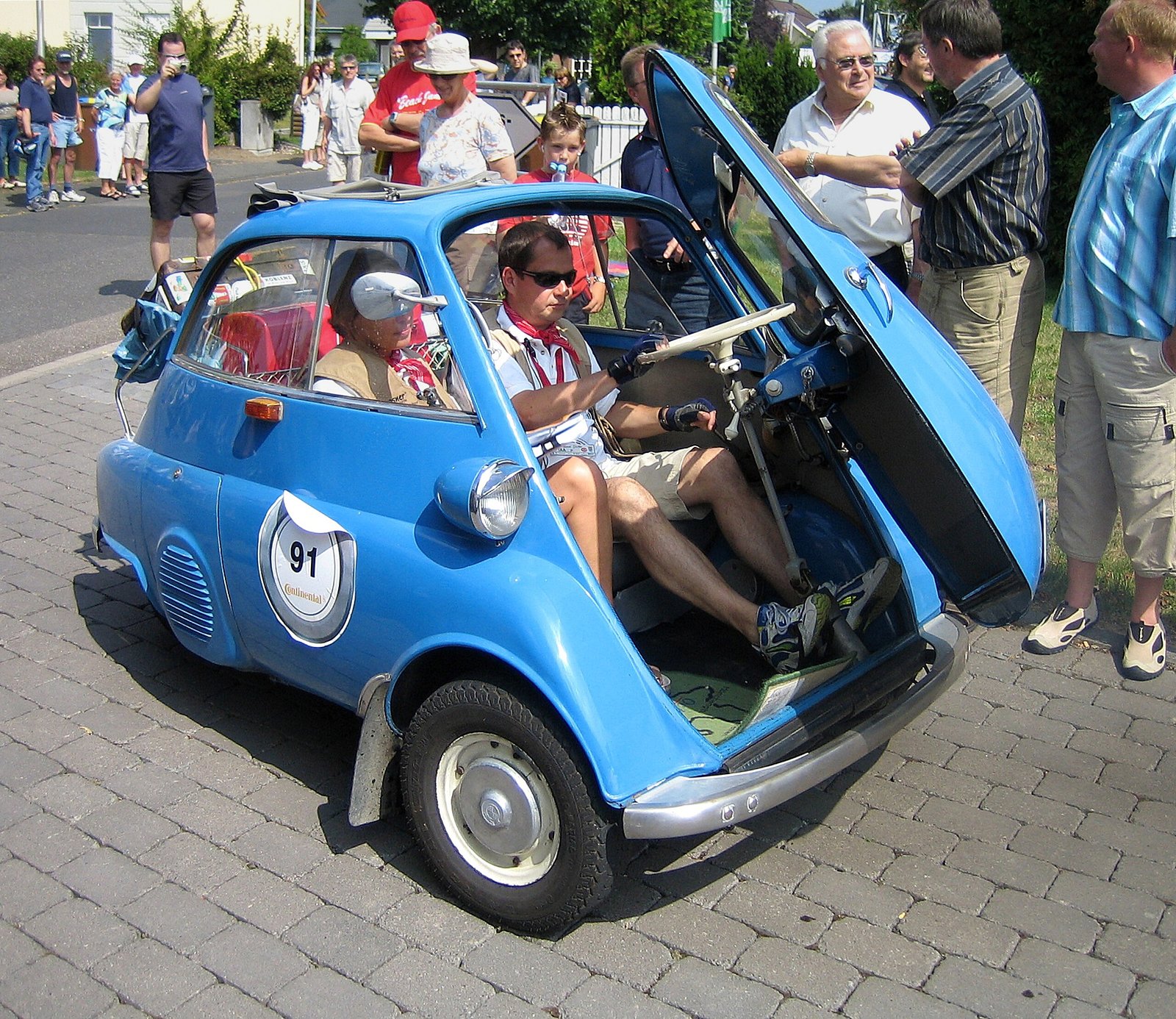
The whole front of the car is the door, and the steering wheel swings out with it. Park nose to the kerb, open up, and you step straight out onto the pavement. BMW built 161,728 of them, and they are widely credited with saving the company.

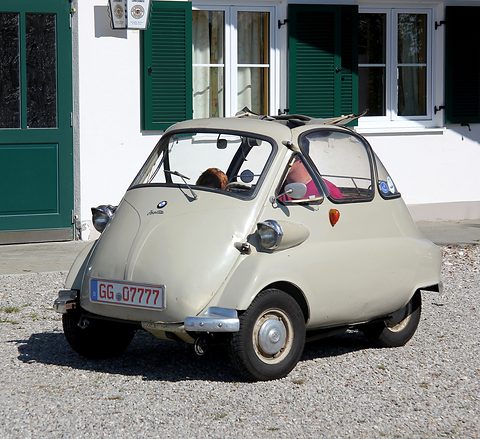
Pale grey bubble car with a wrap-around rear window parked on gravel in front of a white house
A grey 1955 bubble-window Isetta 250 at the Isetta Club meeting in Bad Wörishofen, 2015.Photo: Lothar Spurzem, CC BY-SA 2.0 de, via Wikimedia Commons

At a glance

The spec plate

BMW Isetta

Isetta 250 Motocoupé · Munich

Built
1955–⁠1962April 1955 to May 1962
Country
West GermanyMunich-Milbertshofen, under licence from Iso
Maker
Bayerische Motoren WerkeUnder licence from Iso of Milan, with Iso’s body tooling
Engine
247 cc BMW four-stroke single245 cc in some sources; the Isetta 300 had 298 cc (295 cc in some sources)
Power
12 PS8.8 kW at 5,800 rpm; the 300 gave 13 PS
Length
2,285 mm1,380 mm wide, 1,340 mm high
Weight
350 kgReady to drive, 1955; 359 kg empty in BMW’s own table
Seats
2A bench for two adults “and a child”
Wheels
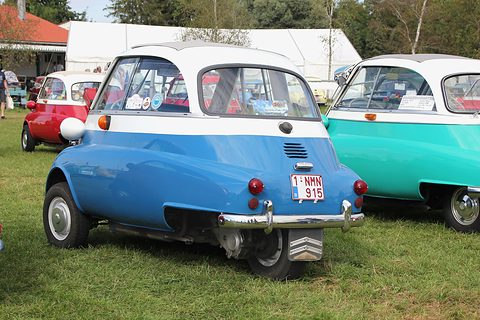
4Two at the front; two at the back only 520 mm apart, with no differential
Price new
DM 2,550March 1955
Production
161,7281955–⁠62, BMW’s own figure
Top speed
85km/h85 km/hThe same for the 250 and the 300

How big is it?

True proportion

2.29 m

It is 685 mm shorter than a Fiat 500, about 1.3 adults laid end to end.

  • 1.38 m wide
  • 350 kg: about five adults
  • One door, in the front
  • Rear wheels 520 mm apart
Drawn at true proportion. The track is 3.6 metres long; the adult stands at the same scale. The Peel P50 is the smallest production car, on every page for comparison.

The story

History

In the early 1950s BMW was in trouble. Its car factory at Eisenach had been lost to the Soviet zone, and its cars, the 501 and the V8 502, were too expensive to sell in profitable numbers: a 501 cost DM 15,000 in 1952.source 1source 2 By 1954 even its motorcycles were selling less well, and buyers wanted a roof over their heads.source 1

The answer came from Milan. At the Geneva Motor Show early in 1954 BMW’s Swiss agent, C. A. Drenowatz, found Iso’s little cabin car, the Isetta, and told BMW’s sales chief, Hanns Grewenig. BMW sent the head of its test department, Eberhard Wolff, to see it again at the Turin show in late April.source 1source 2 Iso’s owner, Renzo Rivolta, wanted licence deals, and offered the name and the main body tooling. BMW bought both.source 1source 3 The Iso Isetta had been designed by two engineers, Ermenegildo Preti and Pierluigi Raggi; Preti had designed a wartime cargo glider with a nose that opened, the Aeronautica Lombarda AL.12.source 2source 3

A BMW, not an Iso

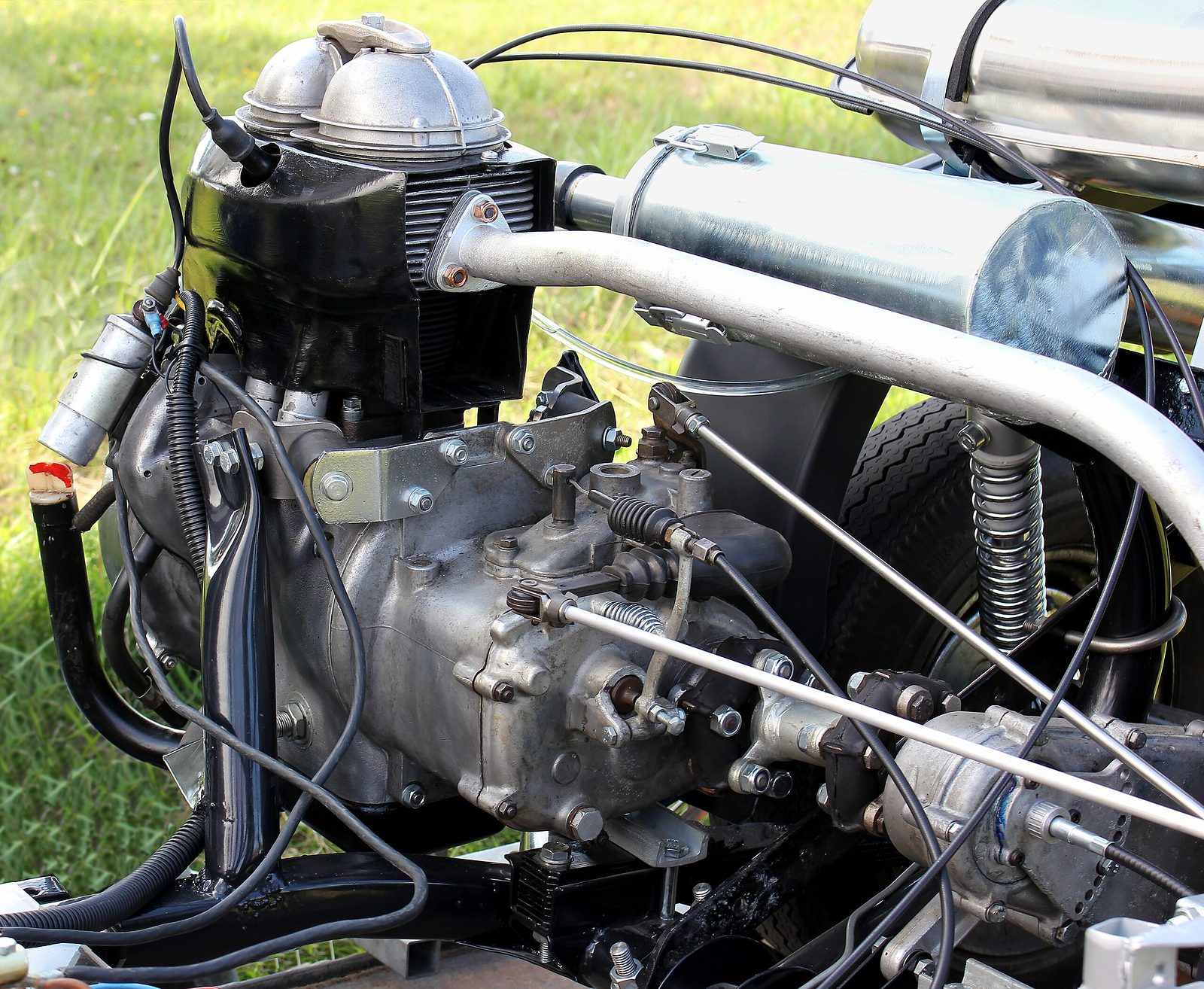
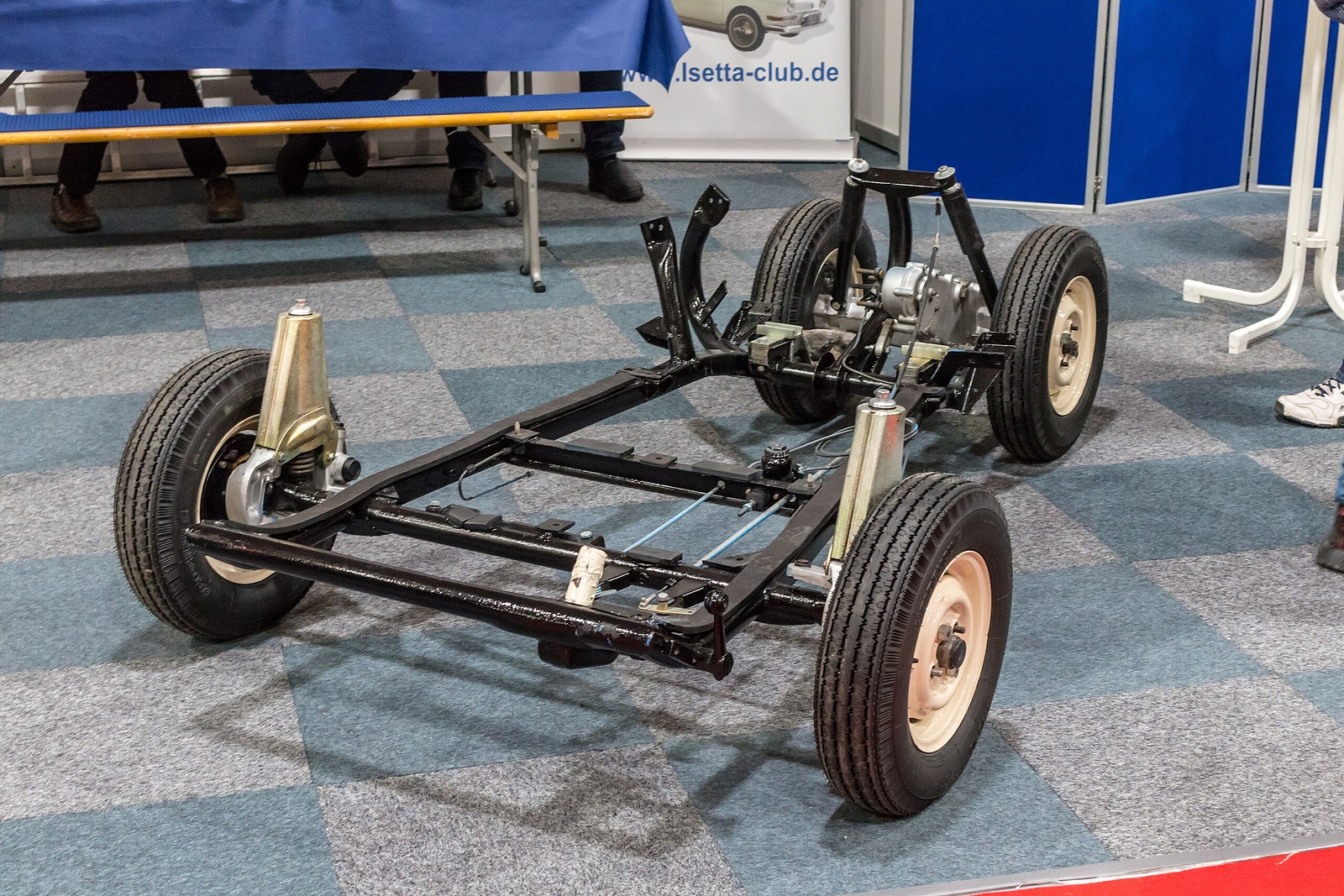
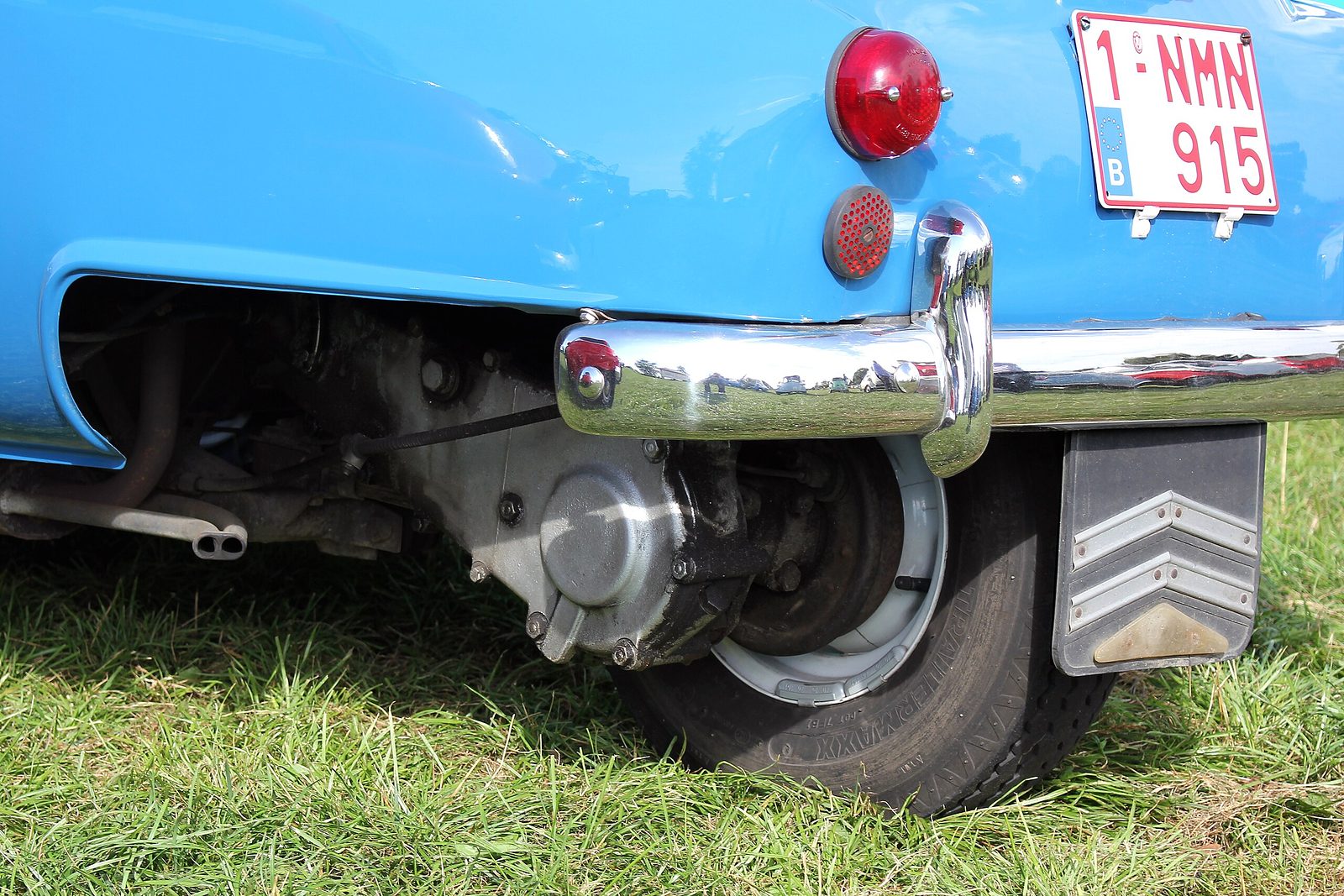
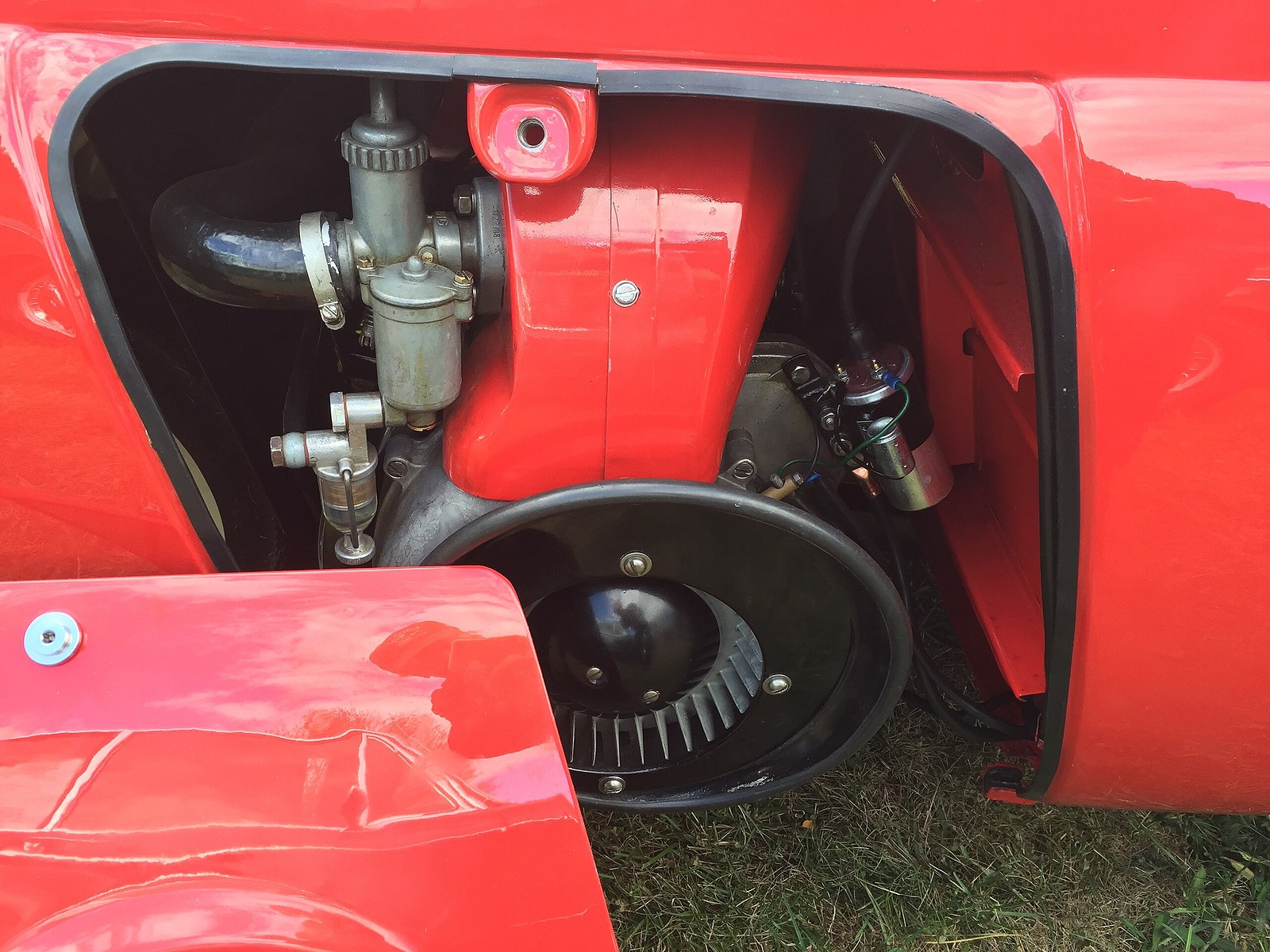
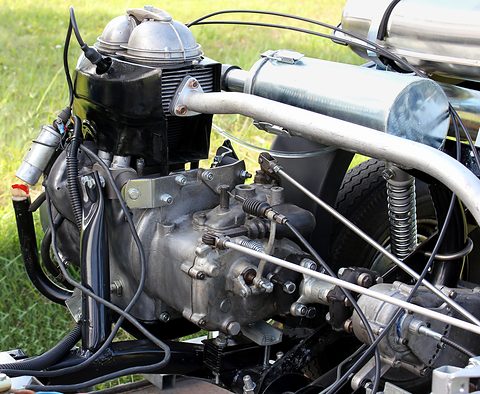
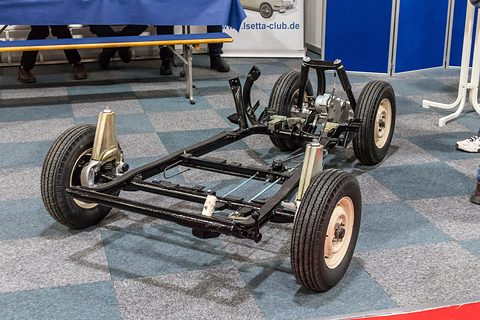
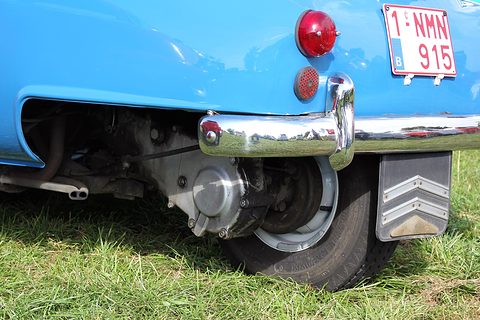
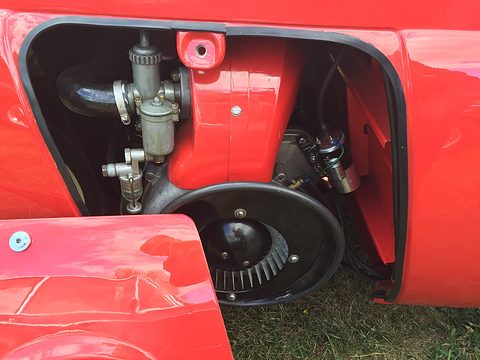
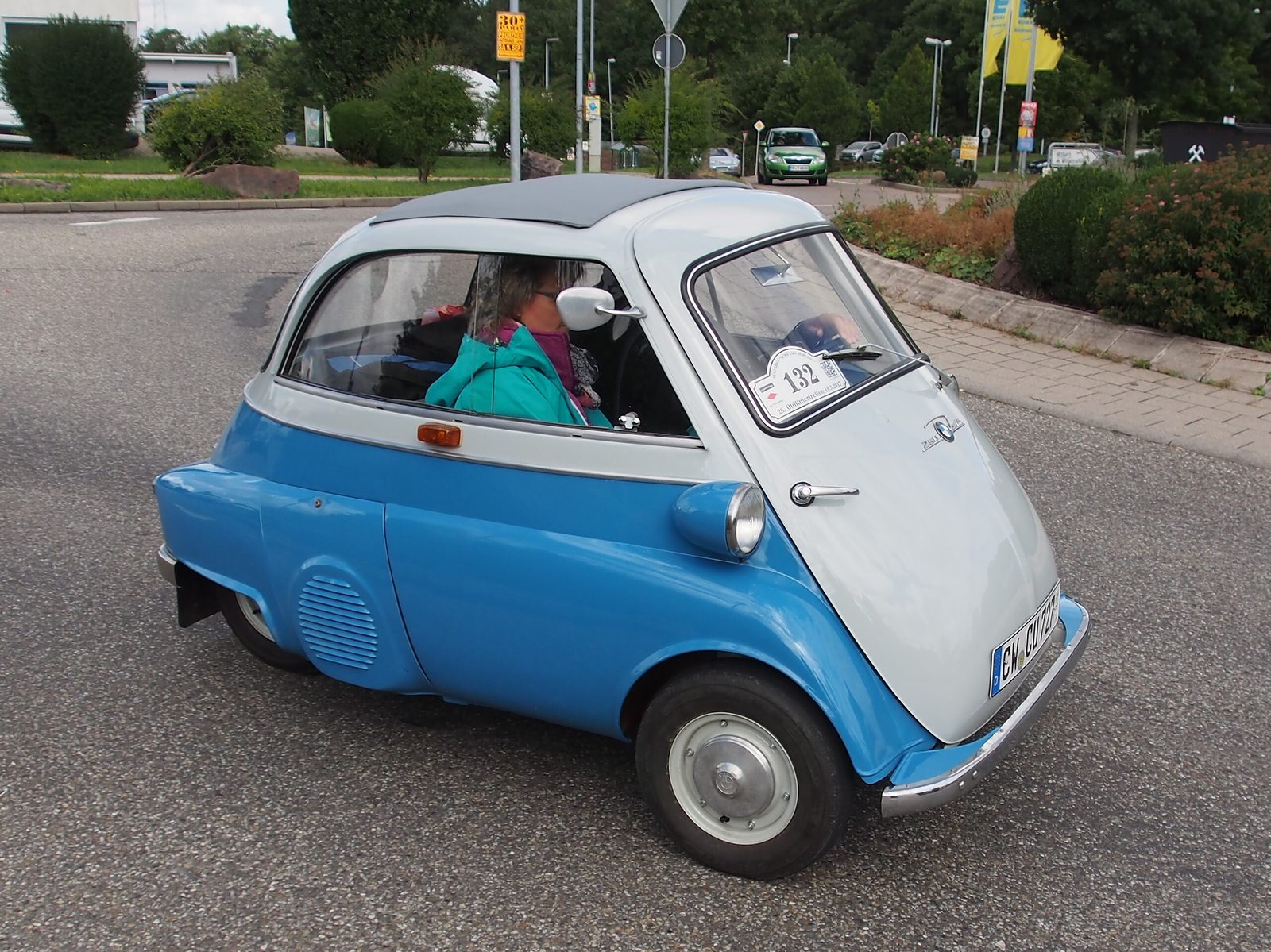
BMW threw out Iso’s 236 cc split-single two-stroke and fitted the single-cylinder four-stroke of its R25/3 motorcycle: 247 cc, as long in stroke as it was wide in bore, and 12 PS. It turned the cylinder head round, fitted a stronger crankshaft to carry the heavy combined starter and dynamo, added a cooling fan and enlarged the sump. The headlamps went higher and grew, the rear track widened slightly, and the tyres became 4.80-10.source 1source 4 The front wheels were carried on Dubonnet-type swinging arms; the rear pair, only 520 mm (20 in) apart, sat on a rigid axle with no differential, driven by a shaft and a duplex chain in an oil bath.source 1source 2 auto motor und sport found the work more careful and cleaner than on the Italian cars.source 4

It was a more car-like car than its two-stroke rivals. It had a four-speed gearbox with a real reverse, hydraulic brakes, a 12-volt system and a quiet four-stroke.source 1 At 250 cc it could be driven on the old class 4 licence, which covered motorcycles, and the later 300 cc engine used the full 300 cc tax band.source 1source 2 That put it in the middle of the West German bubble car boom.

Launched at the Tegernsee

BMW showed the Isetta Motocoupé to the press on 5 March 1955 at the Hotel Bachmair in Rottach-Egern, on the Tegernsee, with two cars to drive. The price, DM 2,550, was a sensation.source 1source 4 Fritz Fiedler, BMW’s development chief, explained the thinking in five points, among them these: one door costs less than two; three wheels may be cheaper but are not nearly as good as four; and the egg shape, taken from nature, encloses the most room with the least material.source 1

It is deliberately not intended to be a saloon car, but it is more than something to get you from A to B. It gives its occupants complete protection against the weather; you can get into it with greater ease than many a big car, and it can be driven with such supreme safety that even inept drivers put neither themselves nor others at risk.

Fritz Fiedler, launch speech, 5 March 1955, in BMW’s English translation.source 1

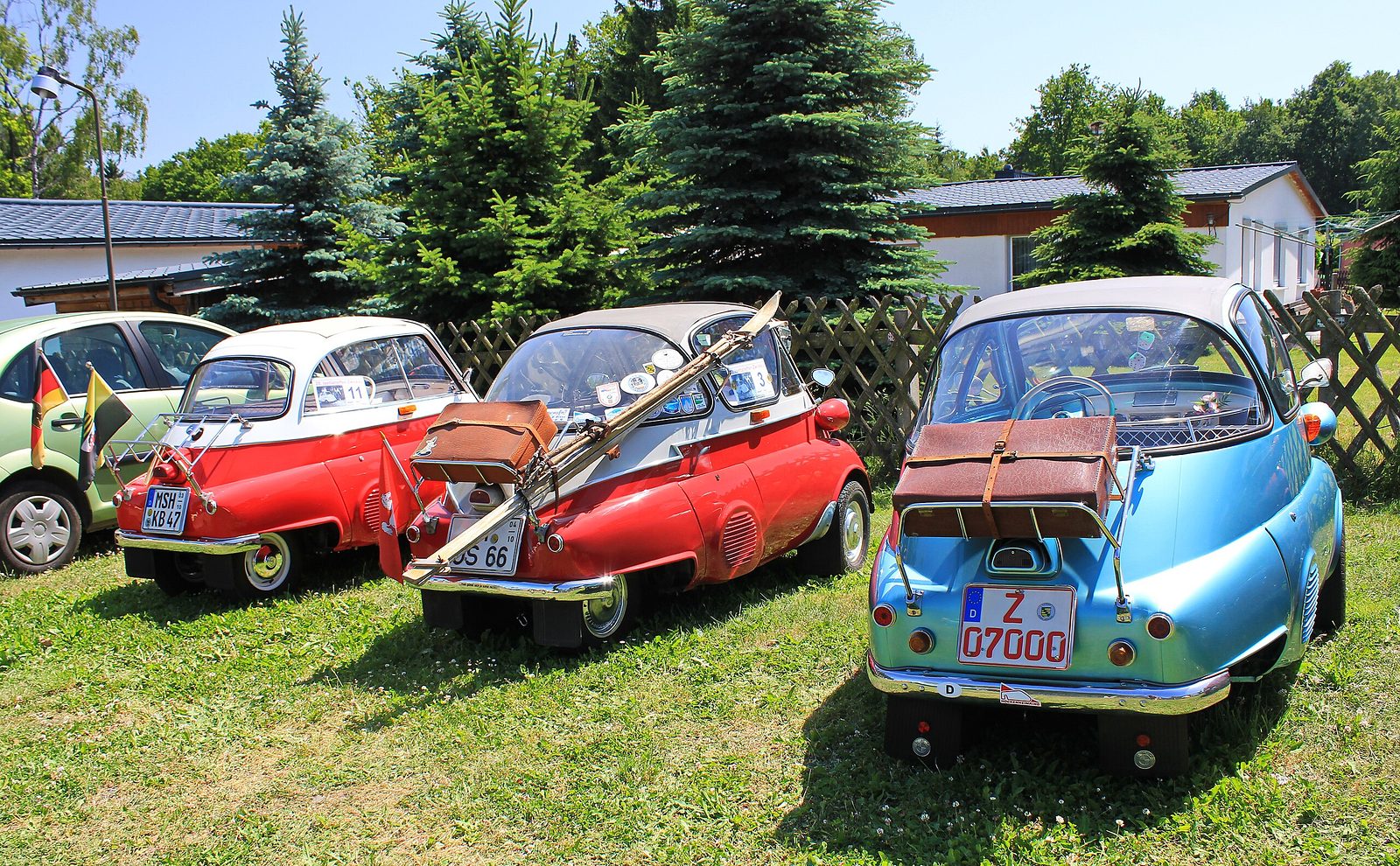
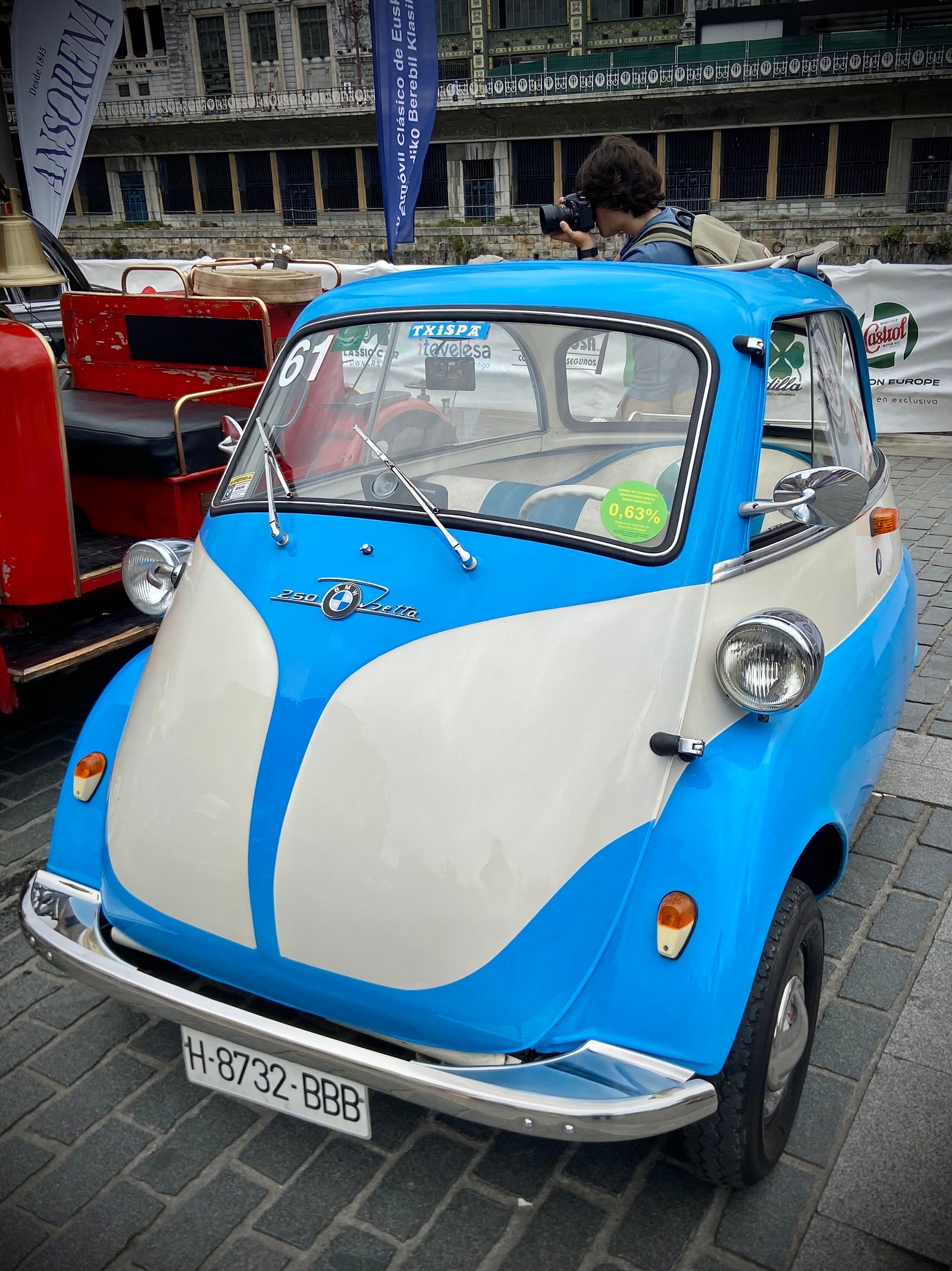
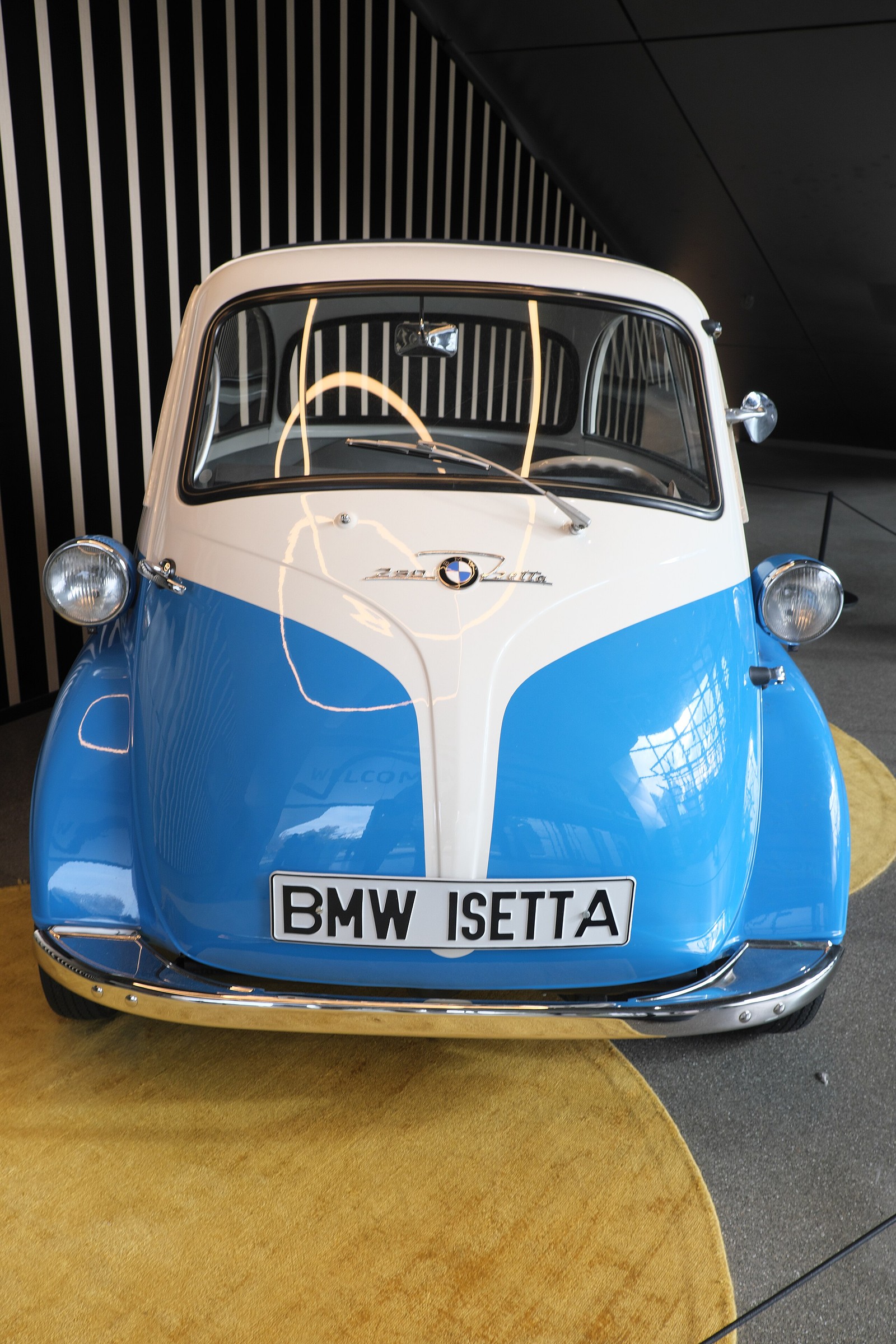
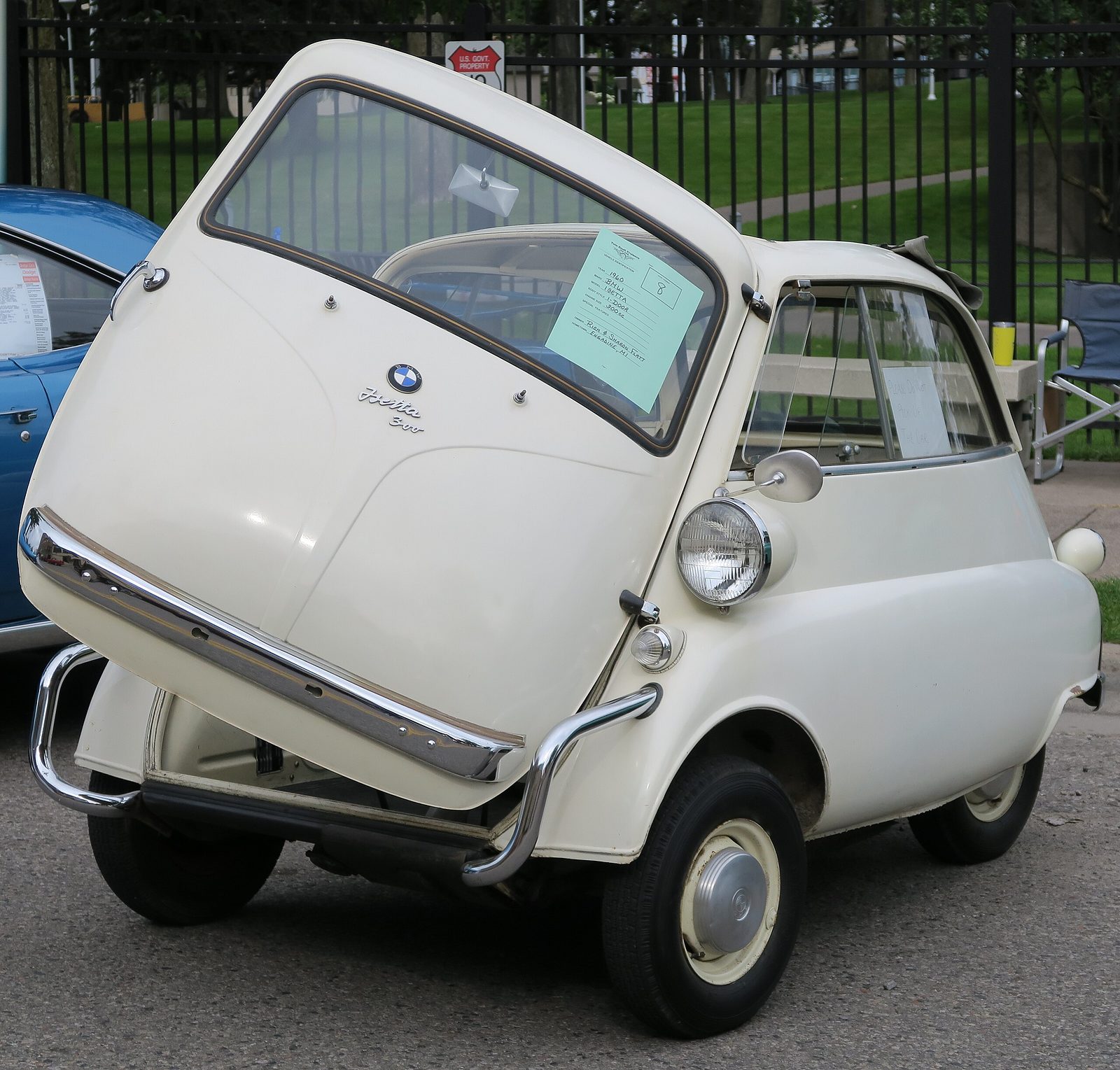
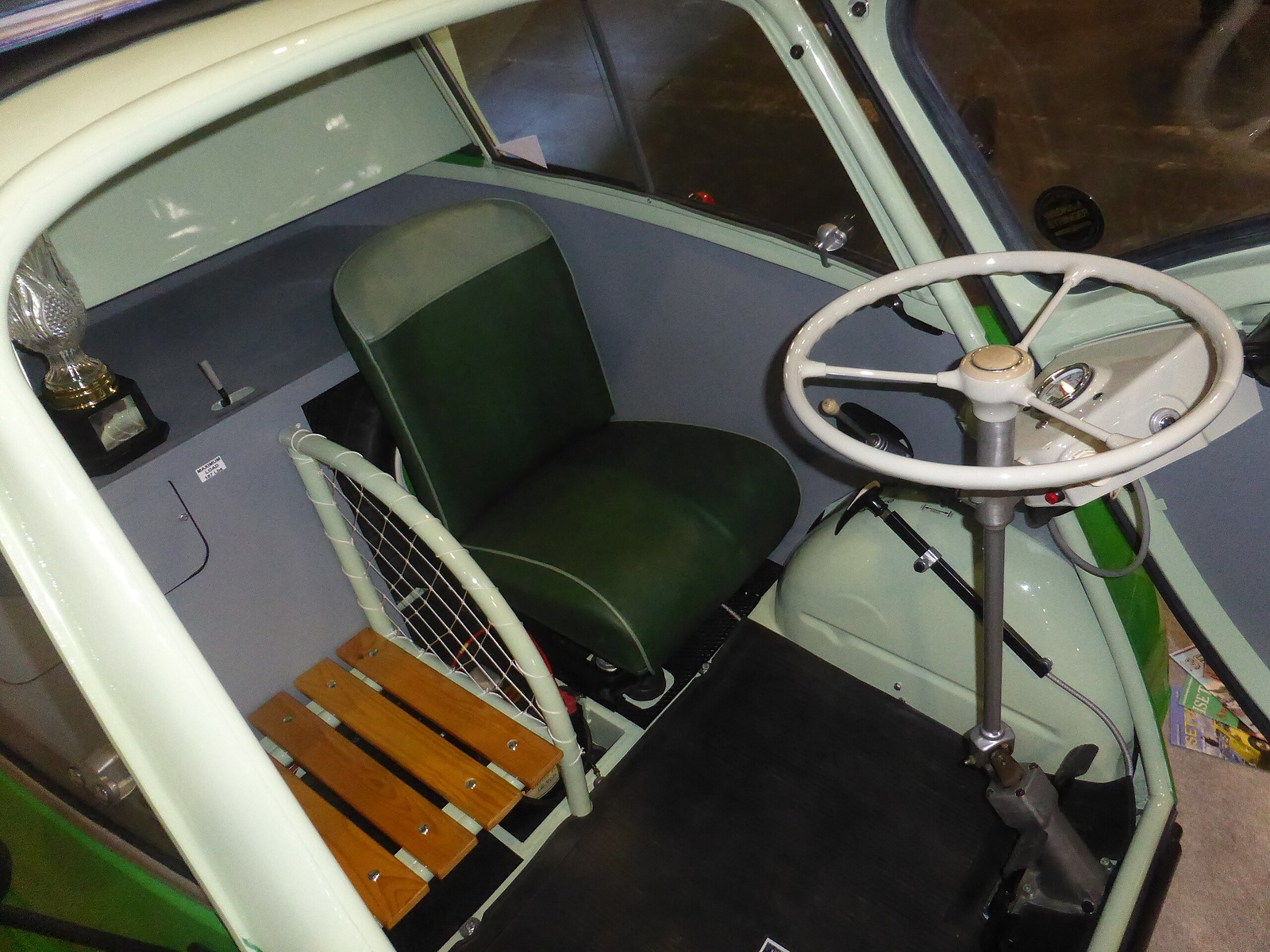
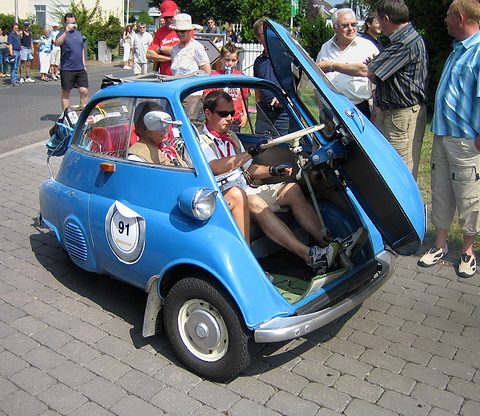
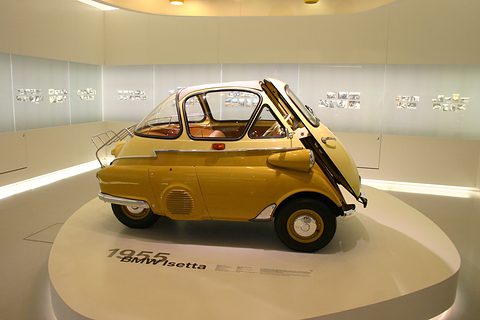
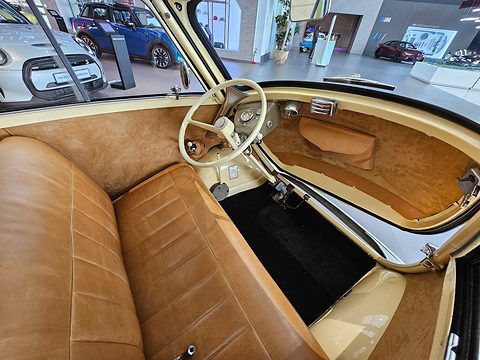
The door is the car’s whole front. It carries the steering wheel and the instrument panel, and the steering column, hinged on a universal joint, swings out with it. Fiedler’s advice was to drive into a parking space facing the kerb and get out at the front, straight onto the pavement; after nearly 25 years, he said, BMW might bring back its old slogan that its cars were bigger inside than outside.source 1source 2 Inside is one bench for two adults “and a child”, with a fabric sunroof above.source 1 Werner Oswald, who drove it at the launch for auto motor und sport, noted how quiet it was.

„… daß sie sowohl von außen als auch von innen erheblich leiser ist als alle vergleichbaren Fahrzeuge, die wir bisher kennen.“

Werner Oswald, auto motor und sport 8/1955. In English: “… that it is considerably quieter both outside and inside than all comparable vehicles we have known so far.”source 4

Running it was cheap: insurance cost DM 95 a year and road tax DM 44, which the advertising said was less than a dachshund cost in the city.source 1 Germans gave it names. It was the Knutschkugel, the “smooch-ball”; the Schlaglochsuchgerät, the pothole finder, for its narrow rear track; and the Adventsauto, after the Advent hymn that begins Macht hoch die Tür, lift up the door. One prank was to lift an Isetta nose-first against a wall, so that nobody could get in.source 2

2,000 a month

Production began in April 1955 and rose to 2,000 a month. Workers assembled cars while bricklayers were still repairing the factory’s war damage, and customers waited about a month for one. By the end of the year 12,911 had been made and sold, against a target of 11,200, and by early 1956 the car had passed break-even.source 1

The Isetta 300, presented in December 1955 and on sale from February 1956, had a 298 cc engine of 13 PS; some sources give 295 cc. New drivers needed a class 3 car licence from 1956 anyway, so the 250 cc limit no longer mattered to them, and the tax band ran to 300 cc.source 1source 2 In mid-1956 sales dipped, the price had risen to DM 2,750, and there were rumours that BMW would stop; in June it denied them and said the plant was being enlarged to build more than 200 cars a day.source 1 That autumn came the Export model, with large sliding side windows in place of the Plexiglas wrap-around rear window, a full-width front bumper, ventilation flaps in the door and telescopic dampers. The old body carried on as the Standard 57 at DM 2,490.source 1source 2 The American model had sealed-beam headlamps and bigger tail lamps, and the tropical model was treated against fungus and termites; 12,787 Isettas were sold in the United States.source 1

1957 was the best year: 33,700 by the official production statistics, nearly 40,000 by BMW’s count.source 5source 1 It was also the year of the BMW 600, a stretched four-seat Isetta with a side door and a flat-twin engine; by 1958 it earned BMW more than the Isetta did.source 1source 2 About 22,000 Isettas were built in 1958 and about 20,000 in 1959, while kits for assembly abroad grew from 825 to 6,900.source 1 In 1959–⁠60 BMW also built more than 1,500 three-wheeled Dreirad Spezial cars, mainly for Austria, Denmark and England, where three-wheelers were taxed and licensed as motorcycles.source 2

By 1960 the Isetta 250 cost DM 2,650 and the 300 DM 2,710. Of the small cars BMW compared, only the Messerschmitt KR200 was cheaper.source 1 A magazine wrote in 1961 that, however you looked at it, the Isetta had had its day.source 1

After running down parts stocks, manufacture of the Isetta came to an end in May as planned.

BMW’s board report for 1962, in the company’s English translation.source 1

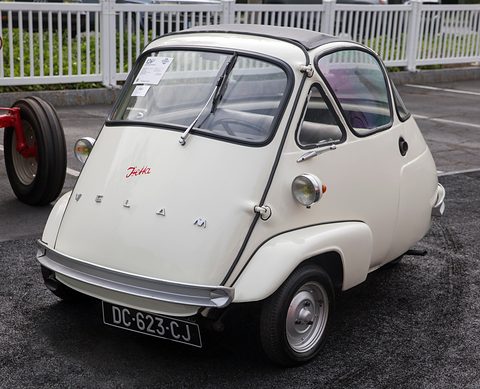
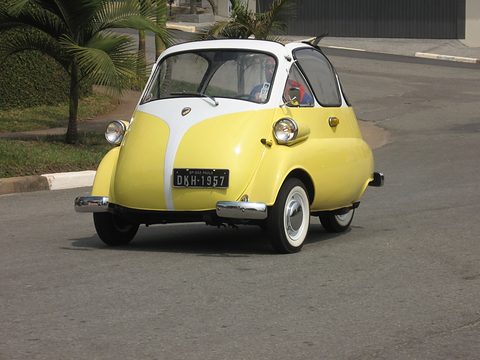
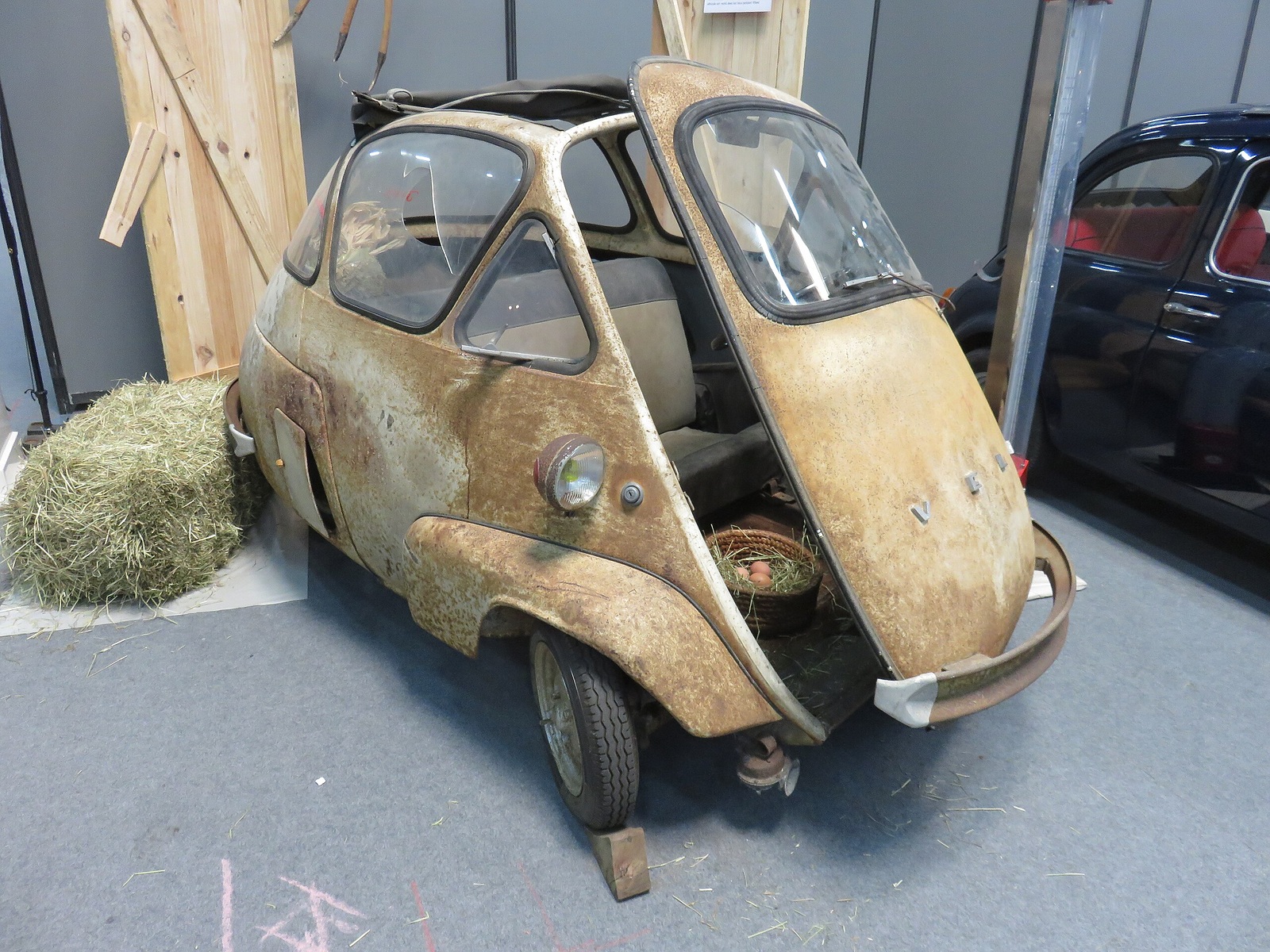
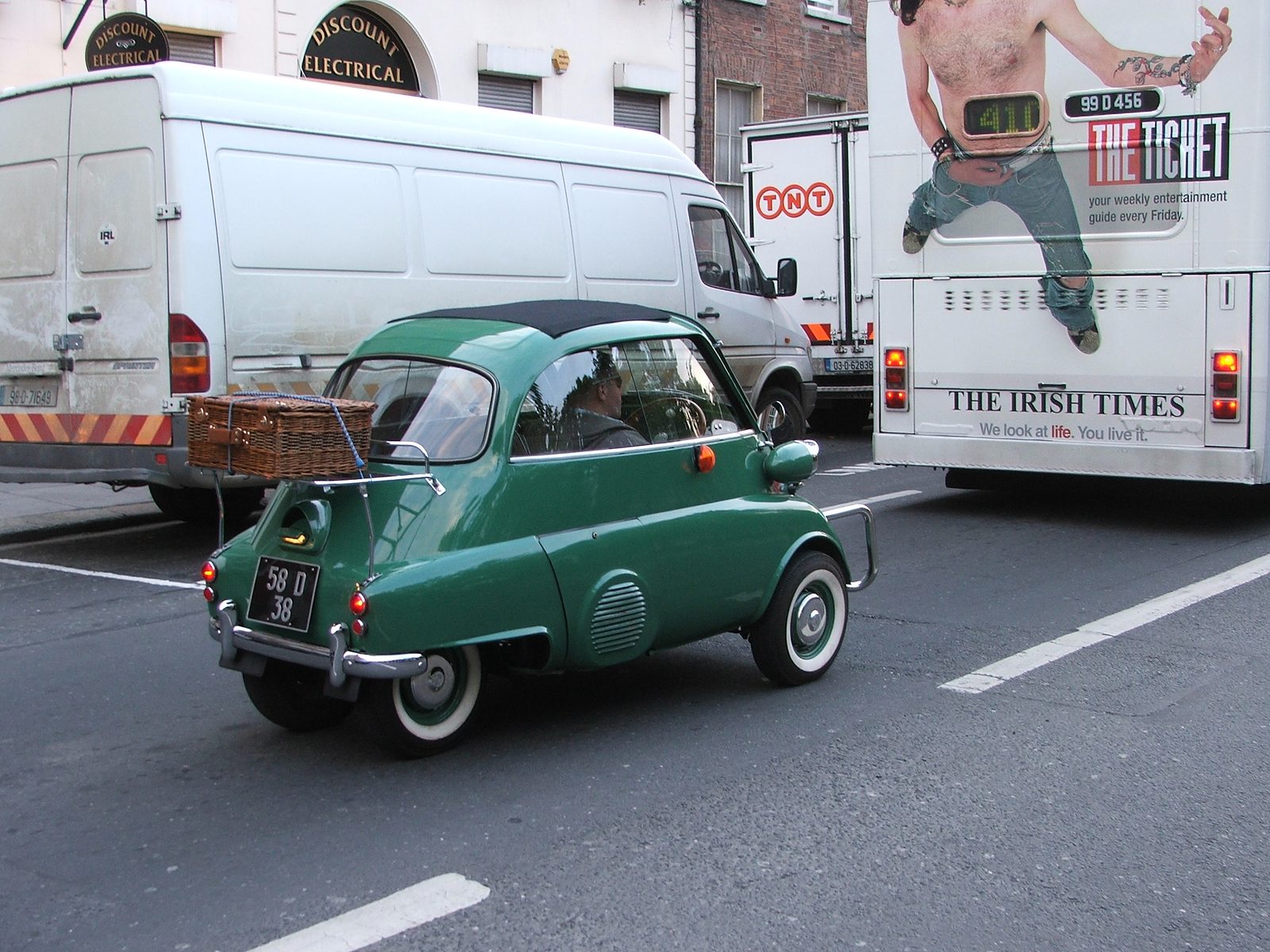
BMW gives the total as 161,728, and calls it the best-selling single-cylinder car in the world.source 1source 2source 3 Its sales bought BMW the time it needed to develop the 600, the 700 and the Neue Klasse.source 1source 2 The design lived on elsewhere. In Brighton a British firm built it under licence from BMW; in Argentina, De Carlo assembled 798; and the Velam Isetta in France and the Romi-Isetta in Brazil came from Iso’s own licences, the largest family of microcars built under licence.source 3
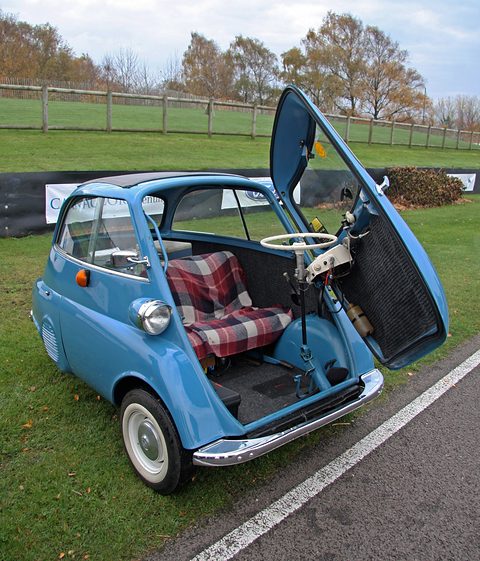
Blue bubble car on grass with its front door open and the steering wheel pulled out on its column
A blue 1960 Isetta with its door wide open and the steering column swung out with it, in 2010.Photo: Brian Snelson, CC BY 2.0, via Wikimedia Commons
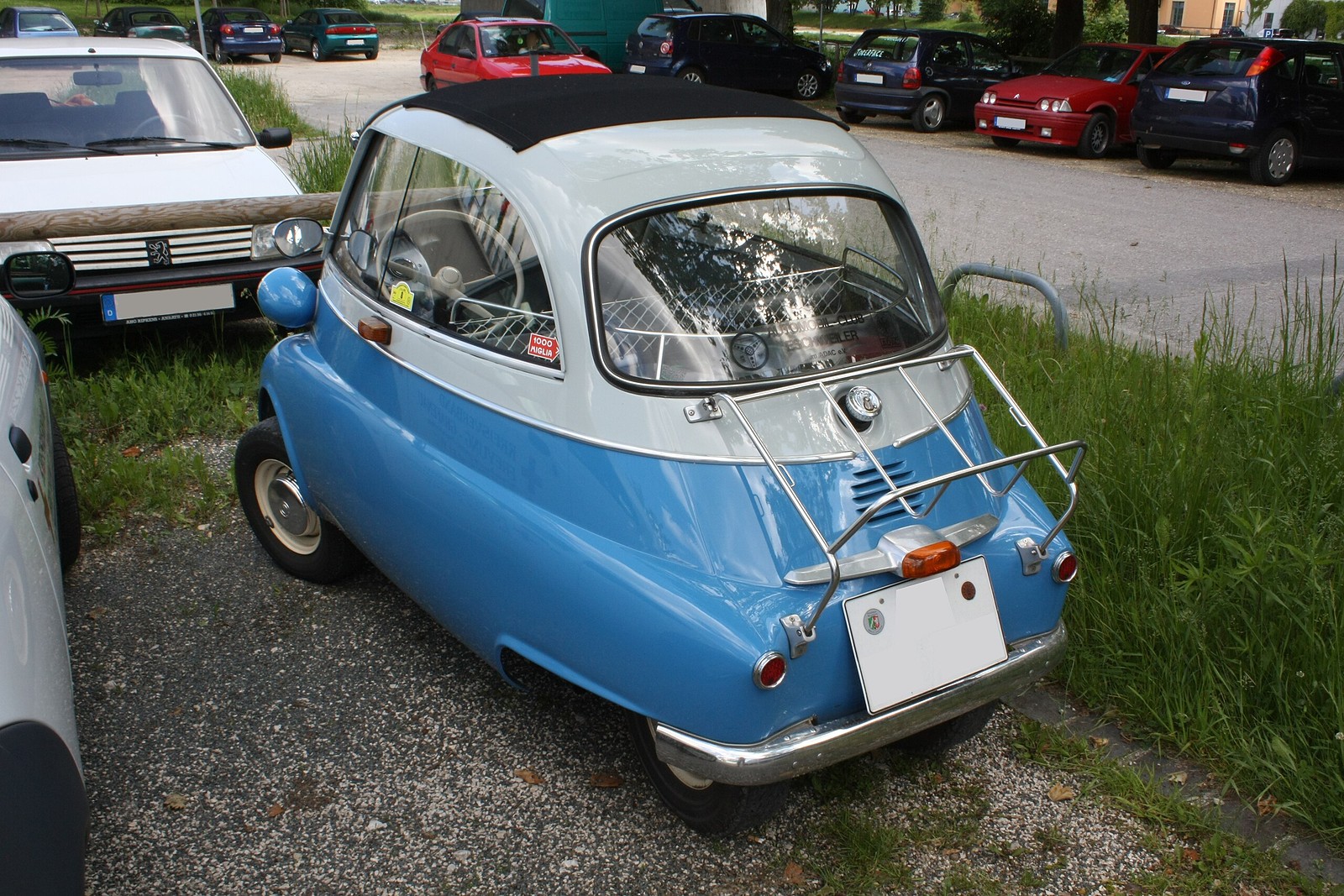
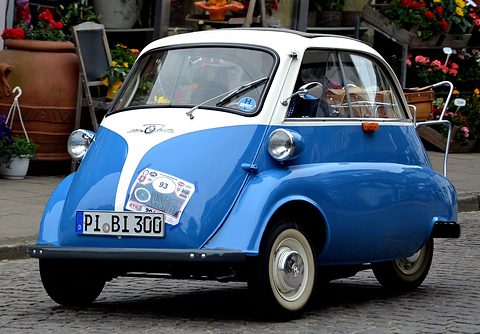
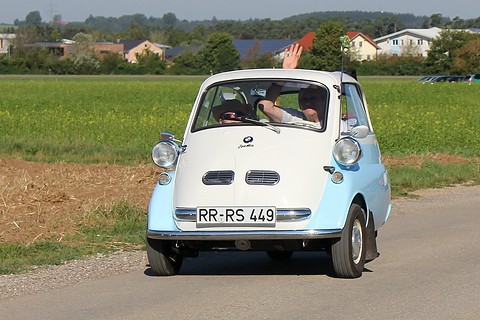
Blue and white bubble car seen from the rear on grass, its single rear wheel visible, other Isettas around
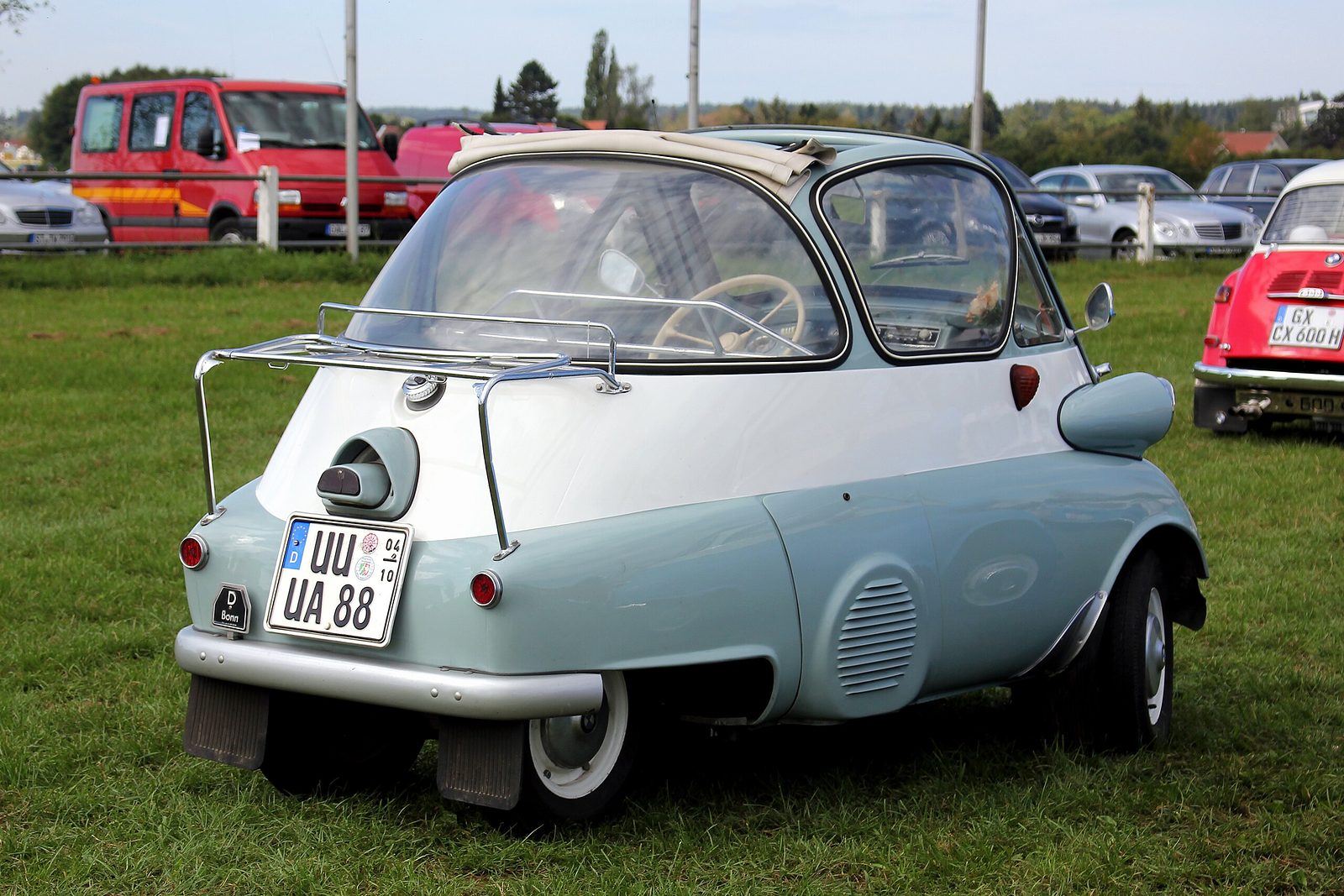
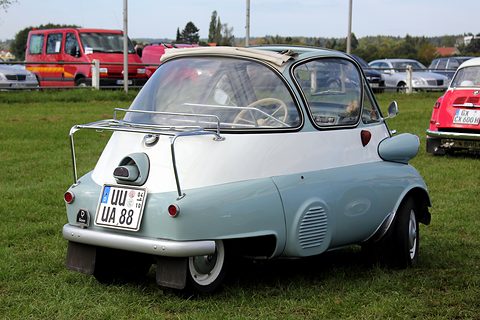
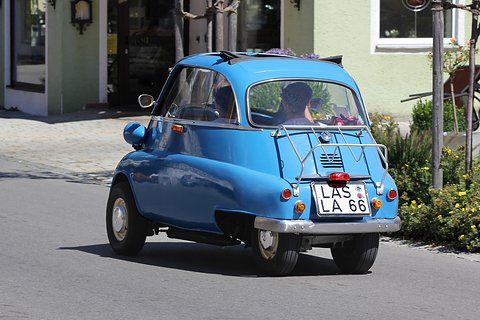
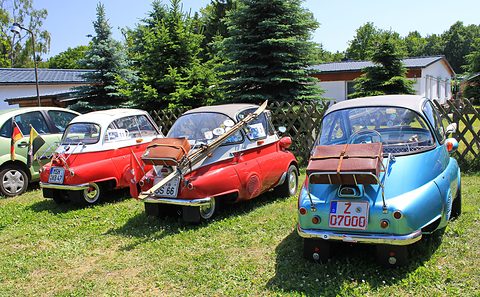
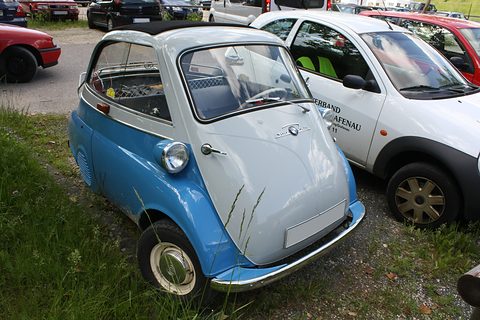
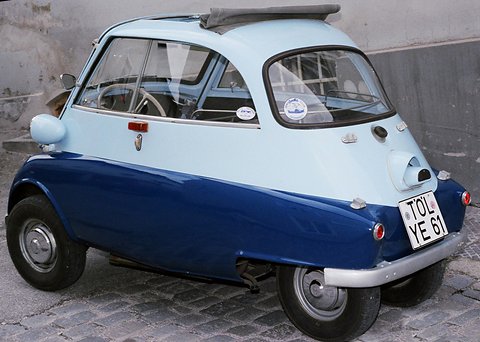
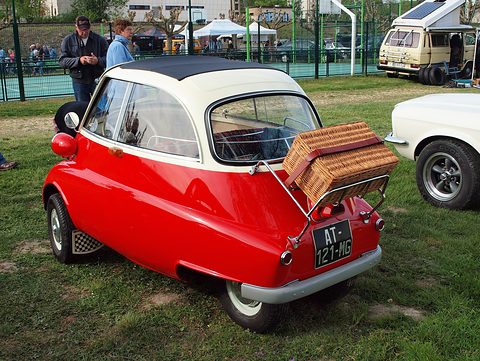
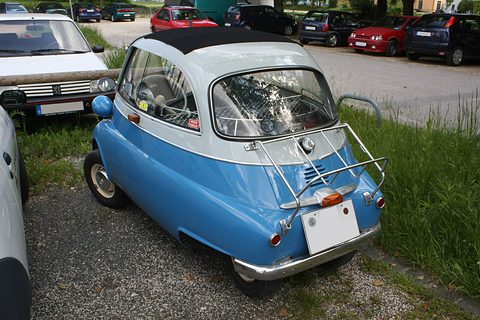
A blue and white three-wheeled Isetta from behind at Bad Wörishofen in 2015, its single rear wheel under the bumper.Photo: Lothar Spurzem, CC BY-SA 2.0 de, via Wikimedia Commons
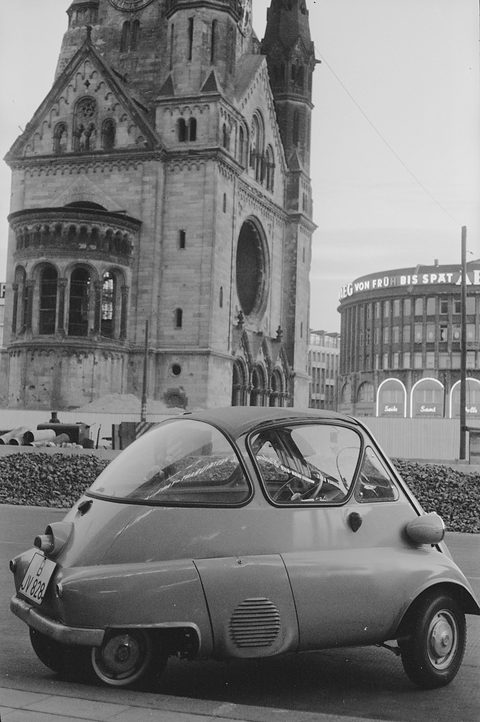
Bubble car parked at a kerb in front of the war-damaged church tower and a round modern building
Plate I · 1959 An Isetta parked below the ruined Kaiser Wilhelm Memorial Church in West Berlin, 29 September 1959.Photo: Warren K. Leffler, Public domain, via Wikimedia Commons
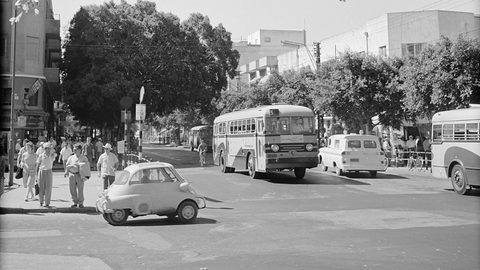
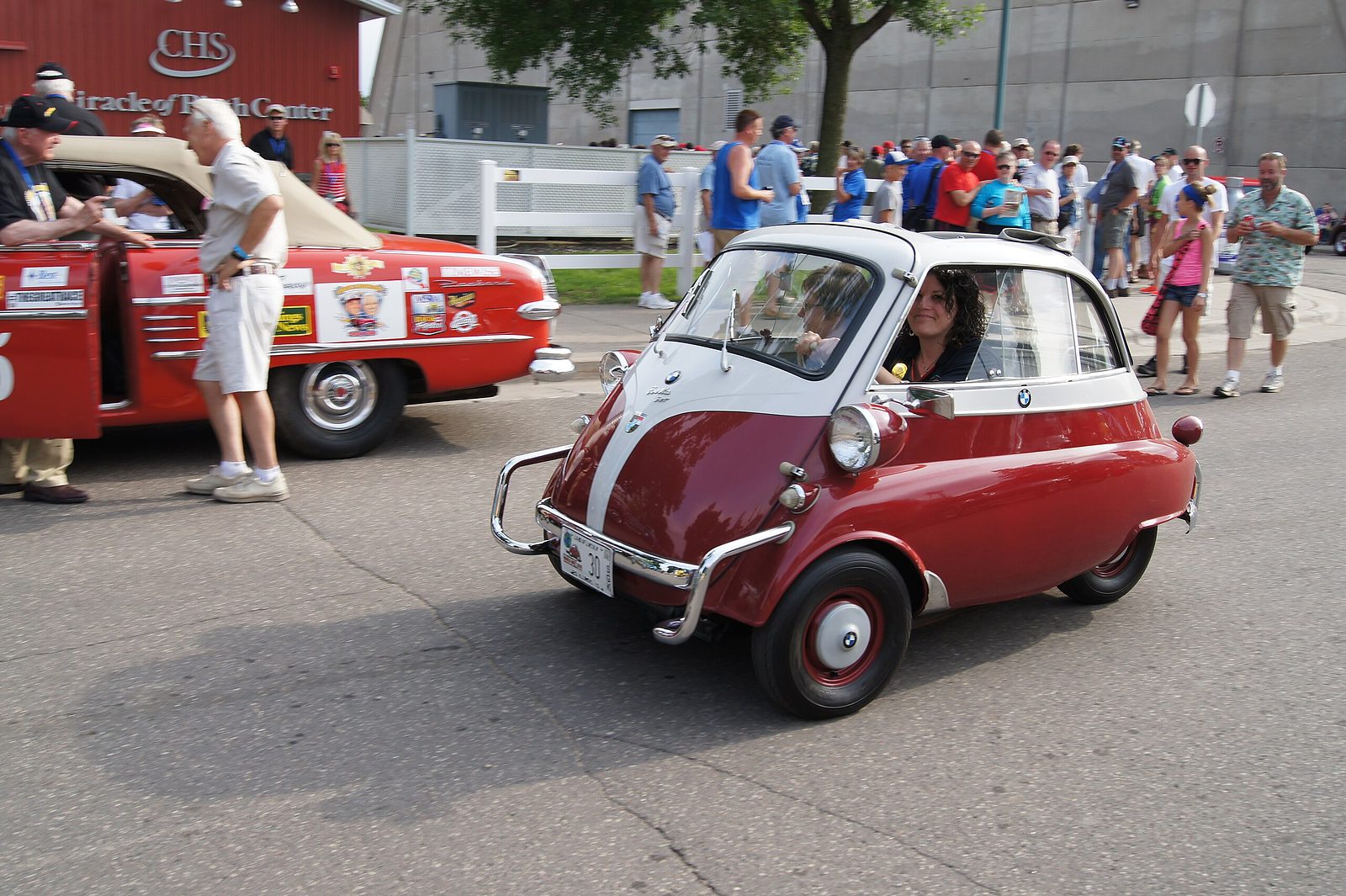
Bubble car turning at a street corner, pedestrians on the pavement and two buses and a van behind
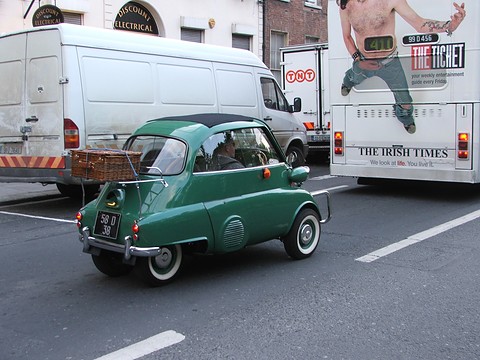
Plate II · 1964 An Isetta turning at a busy junction, with buses behind, in 1964.Photo: Willem van de Poll, CC0, via Wikimedia Commons
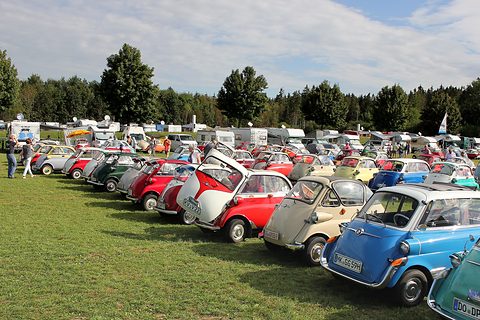
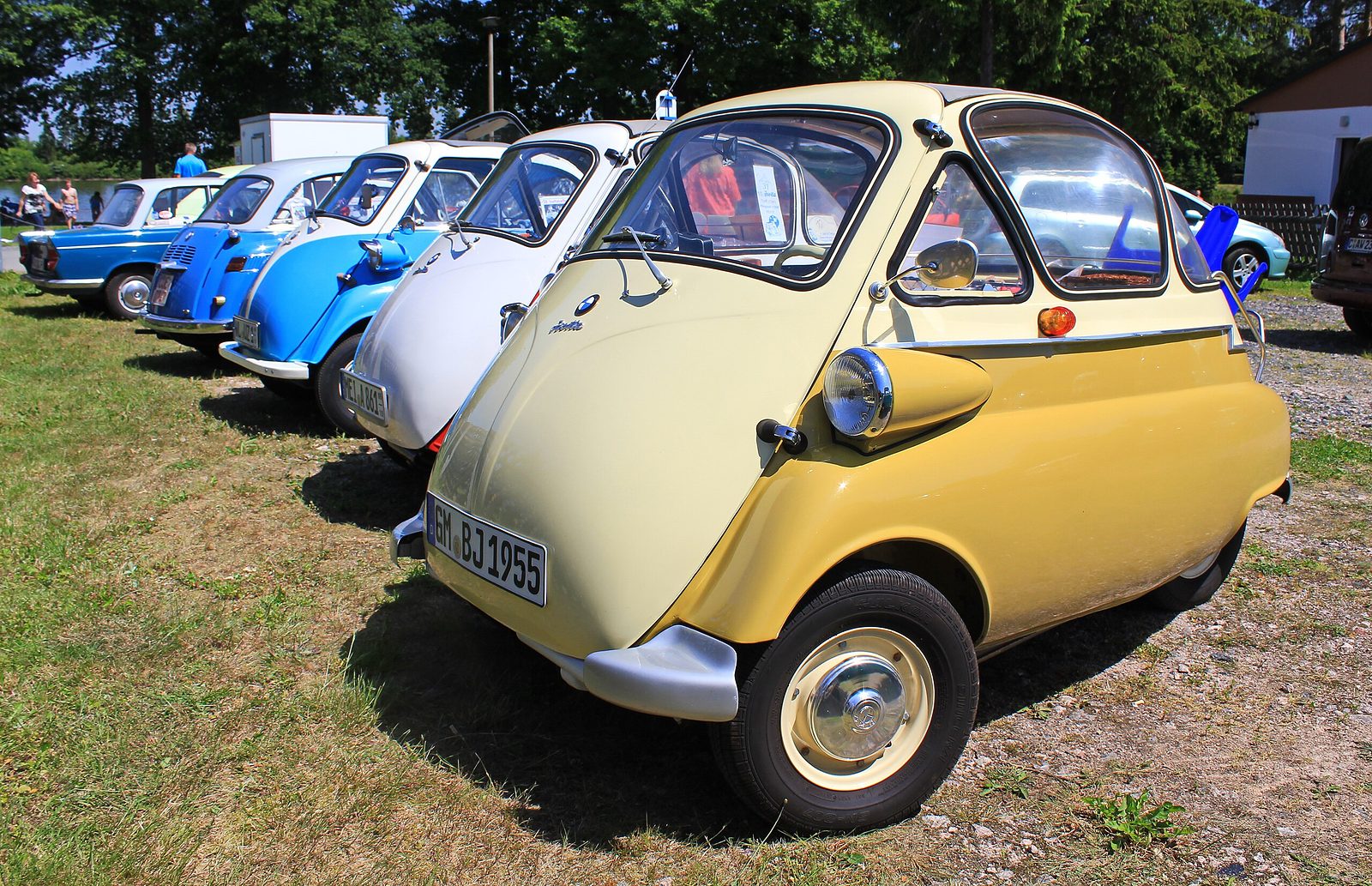
A long line of colourful bubble cars stretching across a field towards trees
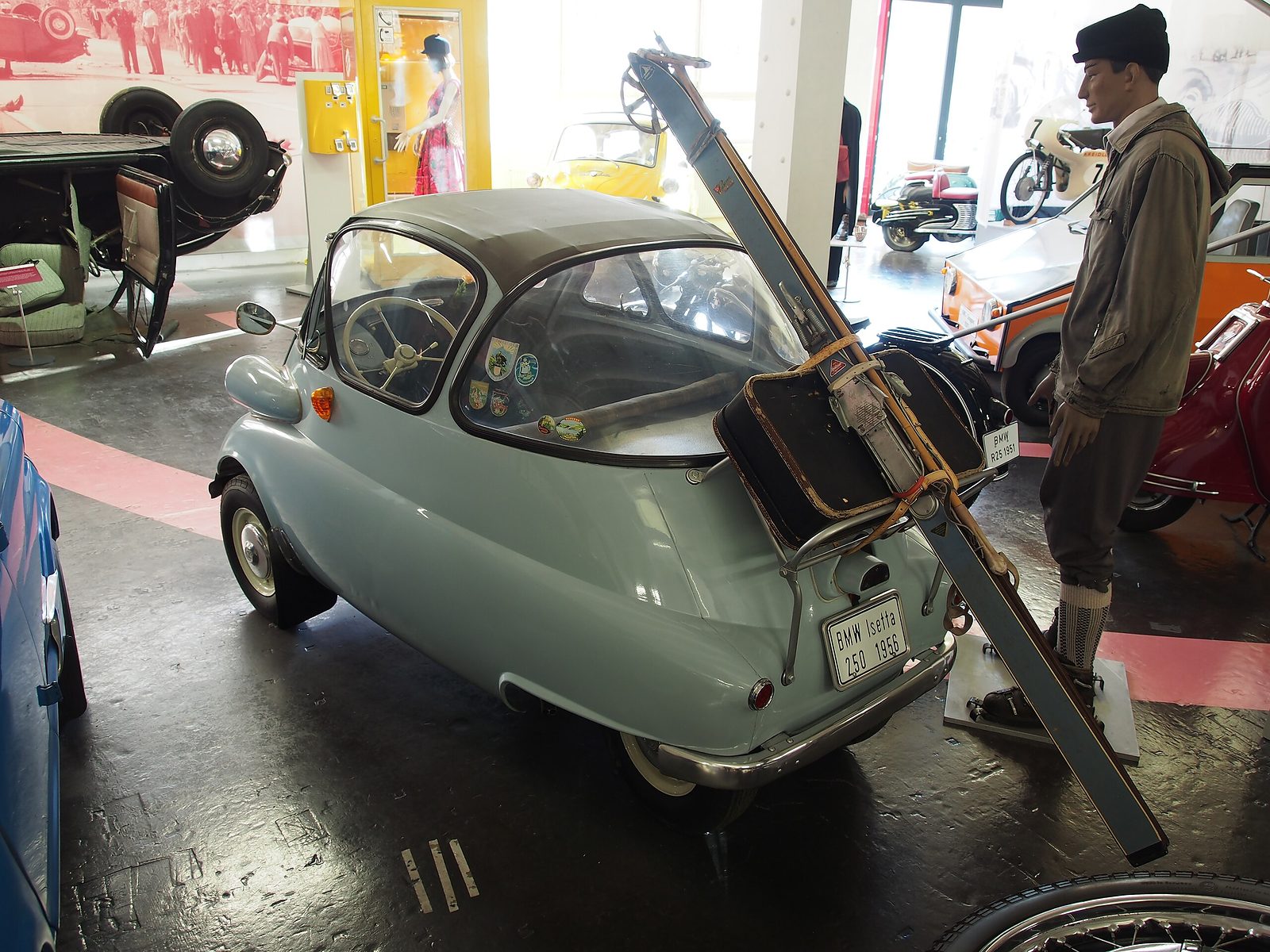
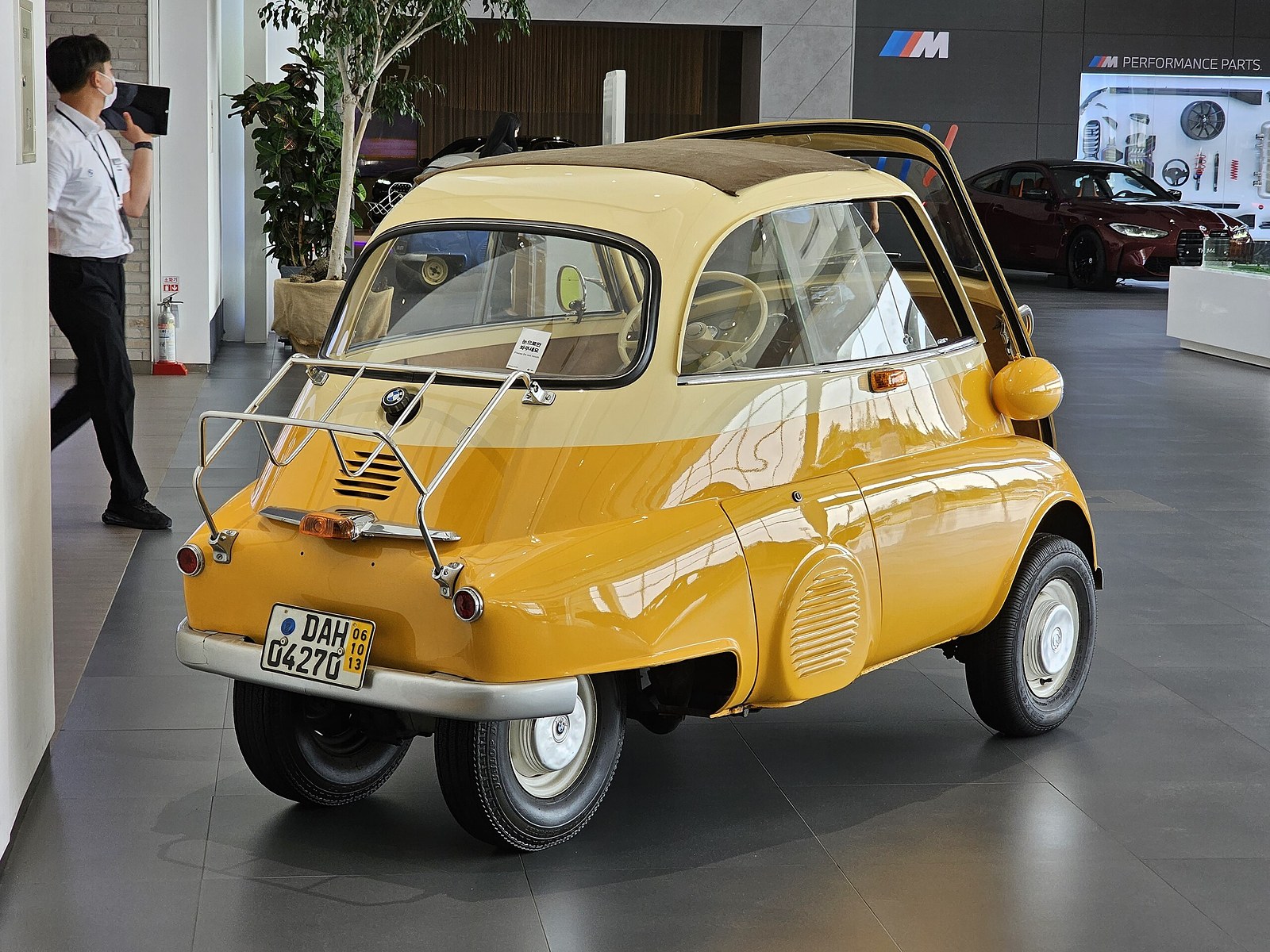
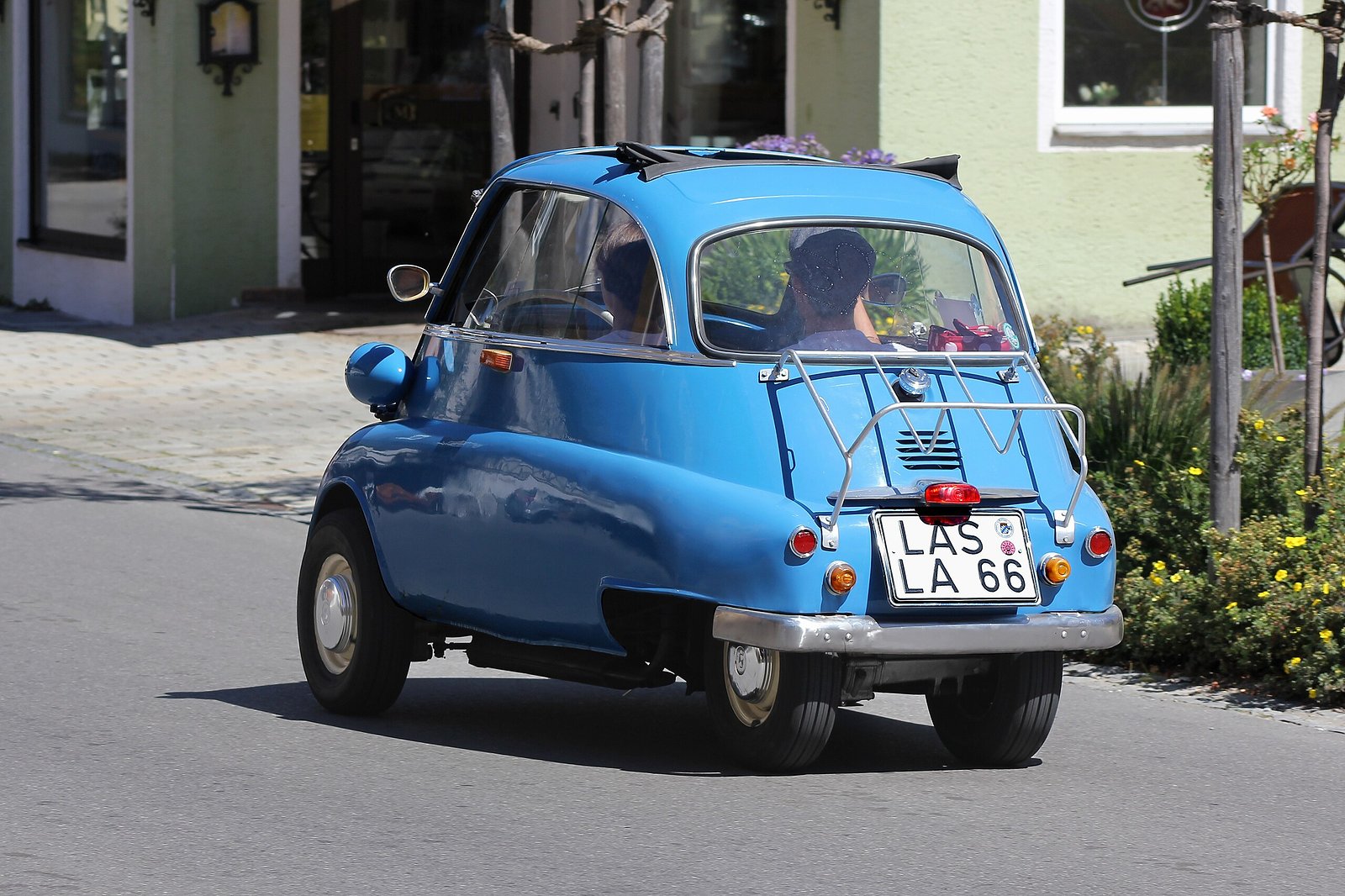
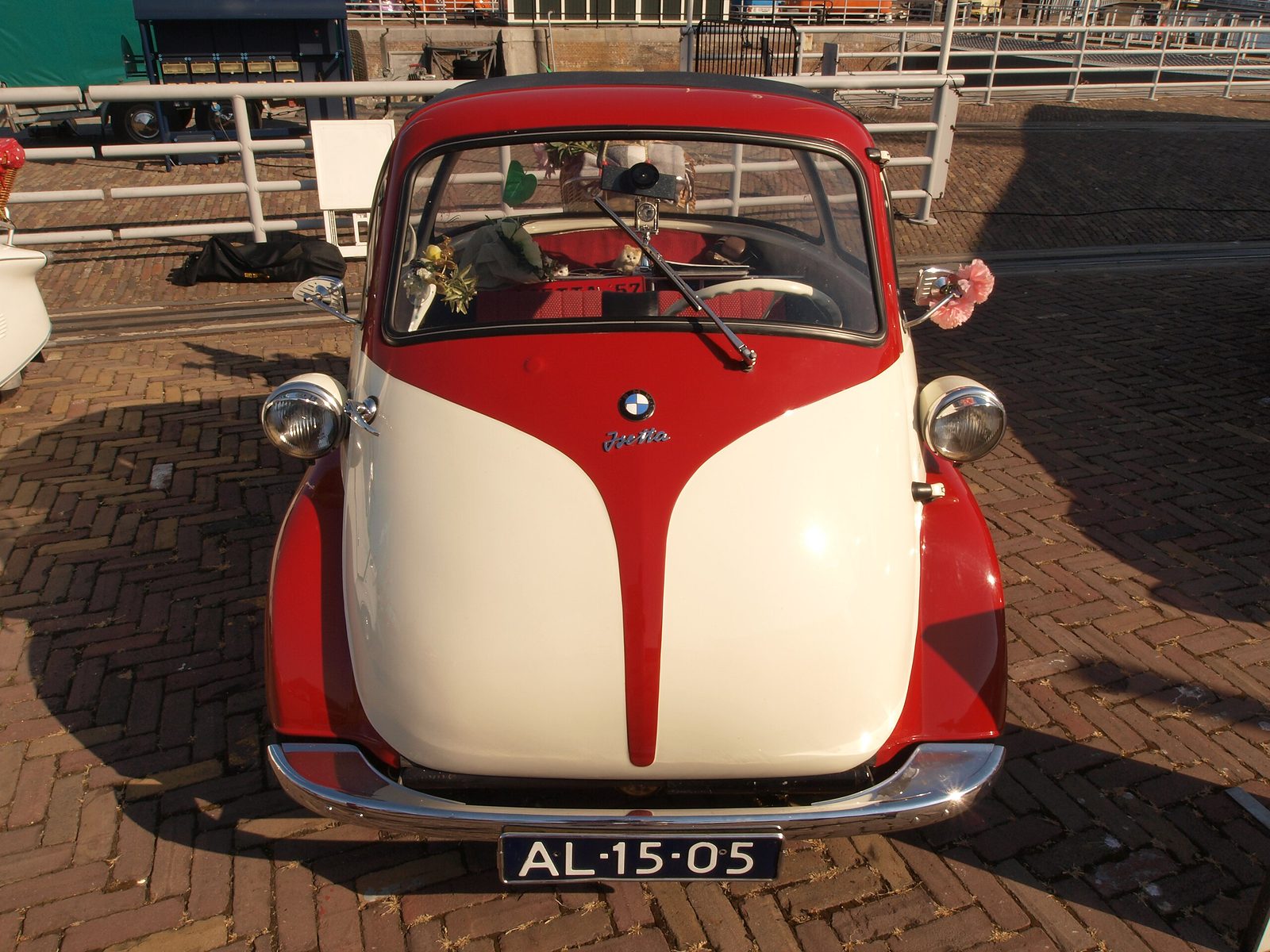
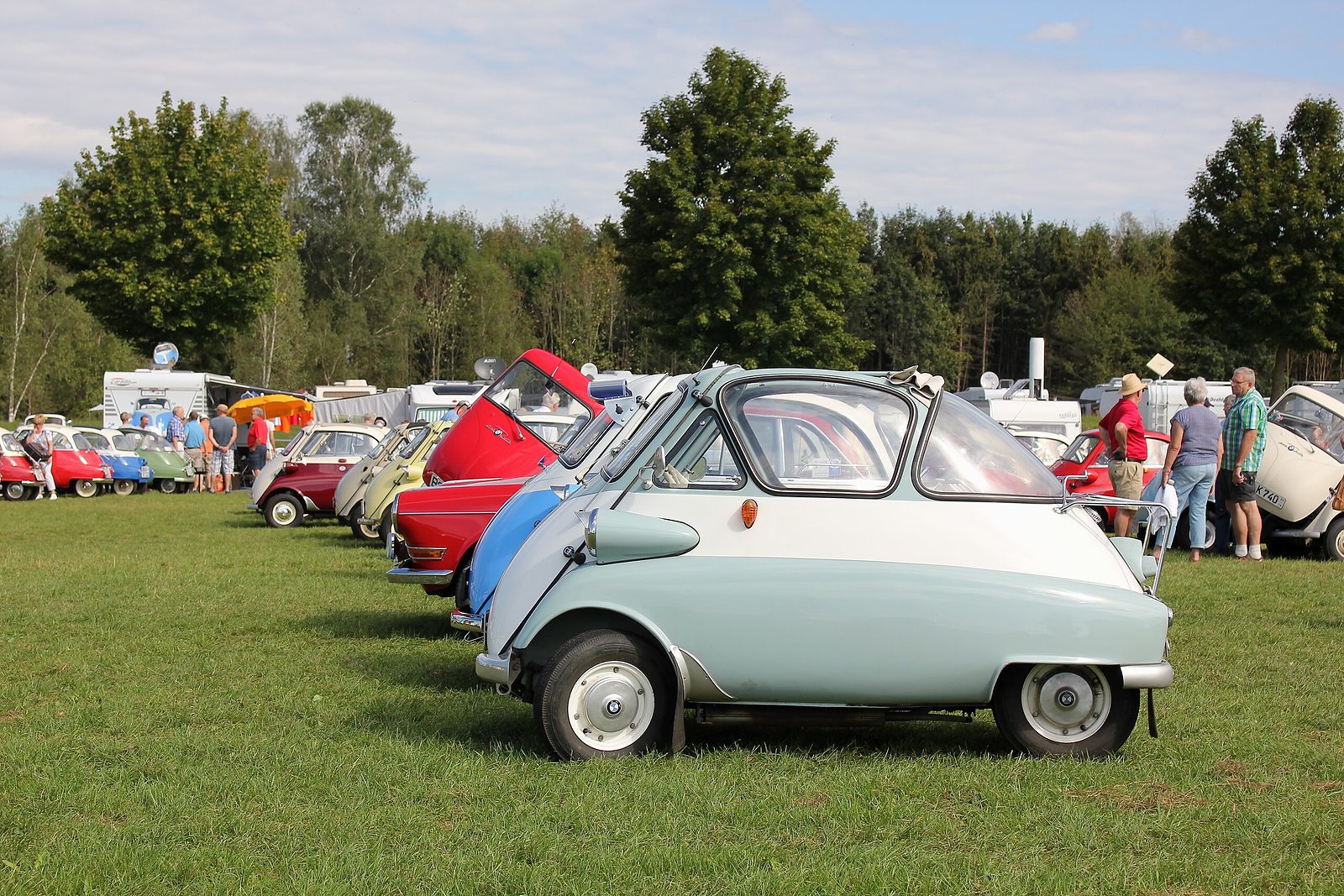
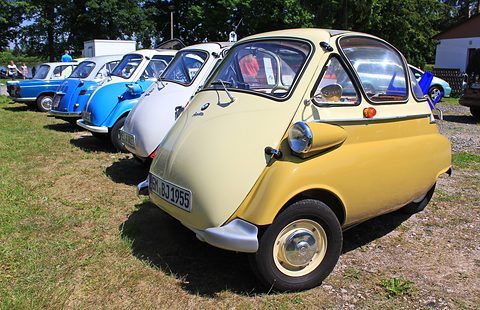
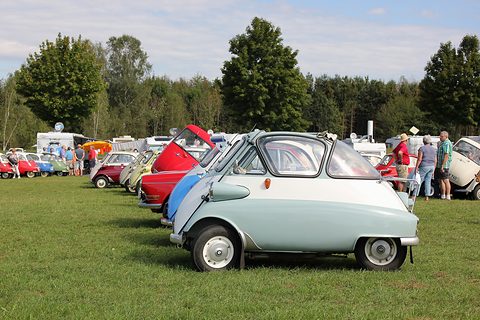
Isettas lined up across a field at the Isetta Club meeting in Bad Wörishofen in August 2015.Photo: Lothar Spurzem, CC BY-SA 3.0 de, via Wikimedia Commons

Hoffmann Auto-Kabine 250

1954–⁠1955 · a record on this page

While BMW was securing its licence in late 1954, the Hoffmann works announced a Kabine of its own. auto motor und sport called it an obvious plagiarism of the Isetta.source 4 By early 1955 the same magazine reported that the Hoffmann-Kabine was already dead again.source 6

One list of these cars says that Hoffmann lost a lawsuit to BMW over the car. We have not found the case, so that part of the story is unconfirmed, and so are the car’s size and the number built.

Isetta (Brighton-built)

1957–⁠1964 · a record on this page

Britain’s Isettas were built in a railway works. In March 1957 Dunsfold Tools leased part of the old railway works at Brighton, renamed itself Isetta of Great Britain, and launched its car at the Dorchester hotel that April; production began in May. The licence came from BMW, not from Iso.source 3source 2 The works had no road access, so the parts came in by rail and the finished cars left the same way.source 3
About 200 local people worked there, most of them former railwaymen, and at the height of production they built 300 cars a week, according to a history of the factory by a committee member of the Isetta Owners Club of Great Britain.source 7 The cars had right-hand drive, and there was a three-wheeled version, which British law taxed as a motorcycle combination; Brighton also supplied Scandinavia, Australia and New Zealand.source 3source 2 Car production stopped in 1962, though engines were built until 1964, and the club history dates the last vehicle to 1964.source 3source 7 A total of “some 30,000” is given on a local plaque and repeated online, but no factory record has been found to confirm it.source 8

Pictures

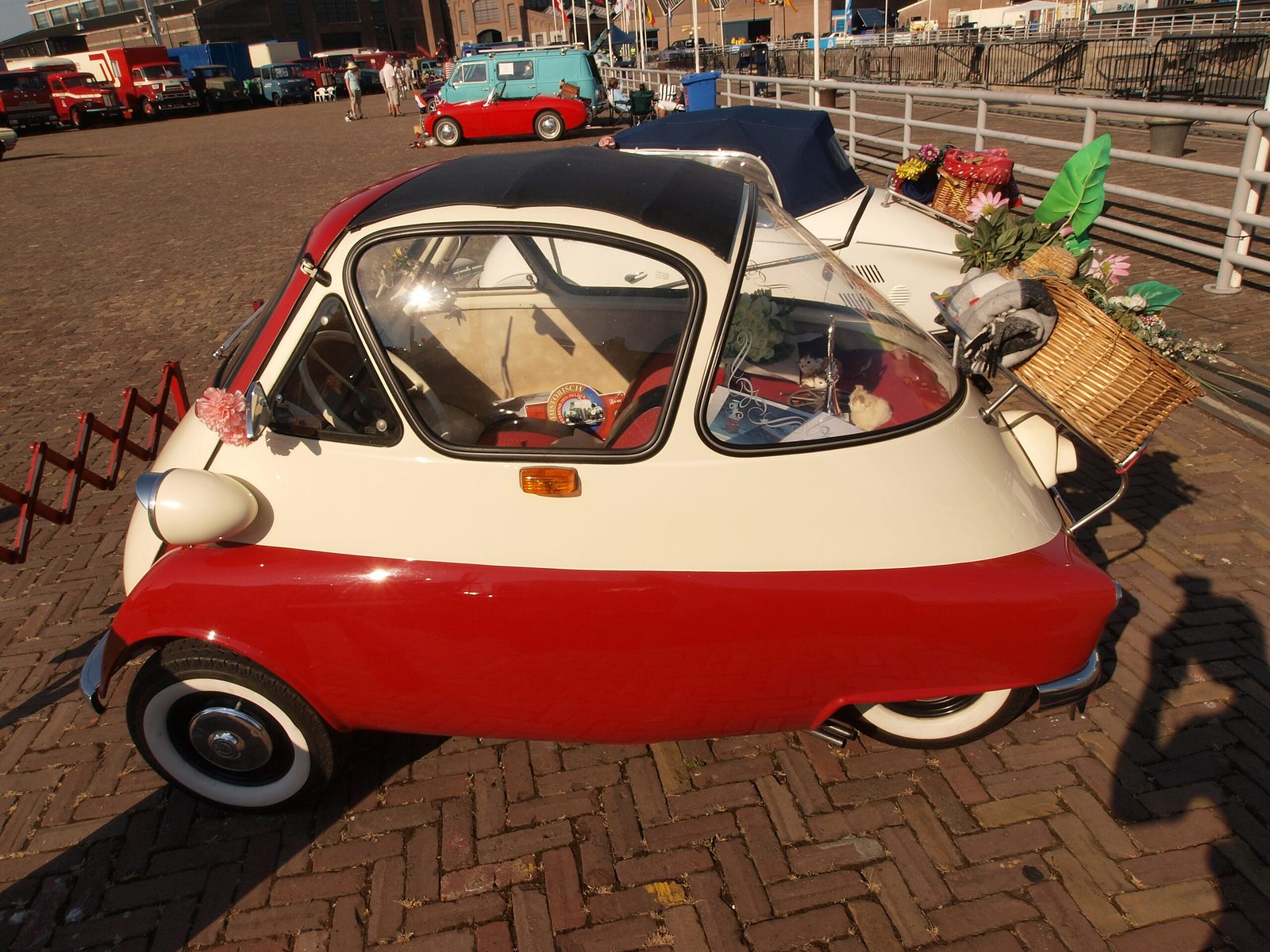
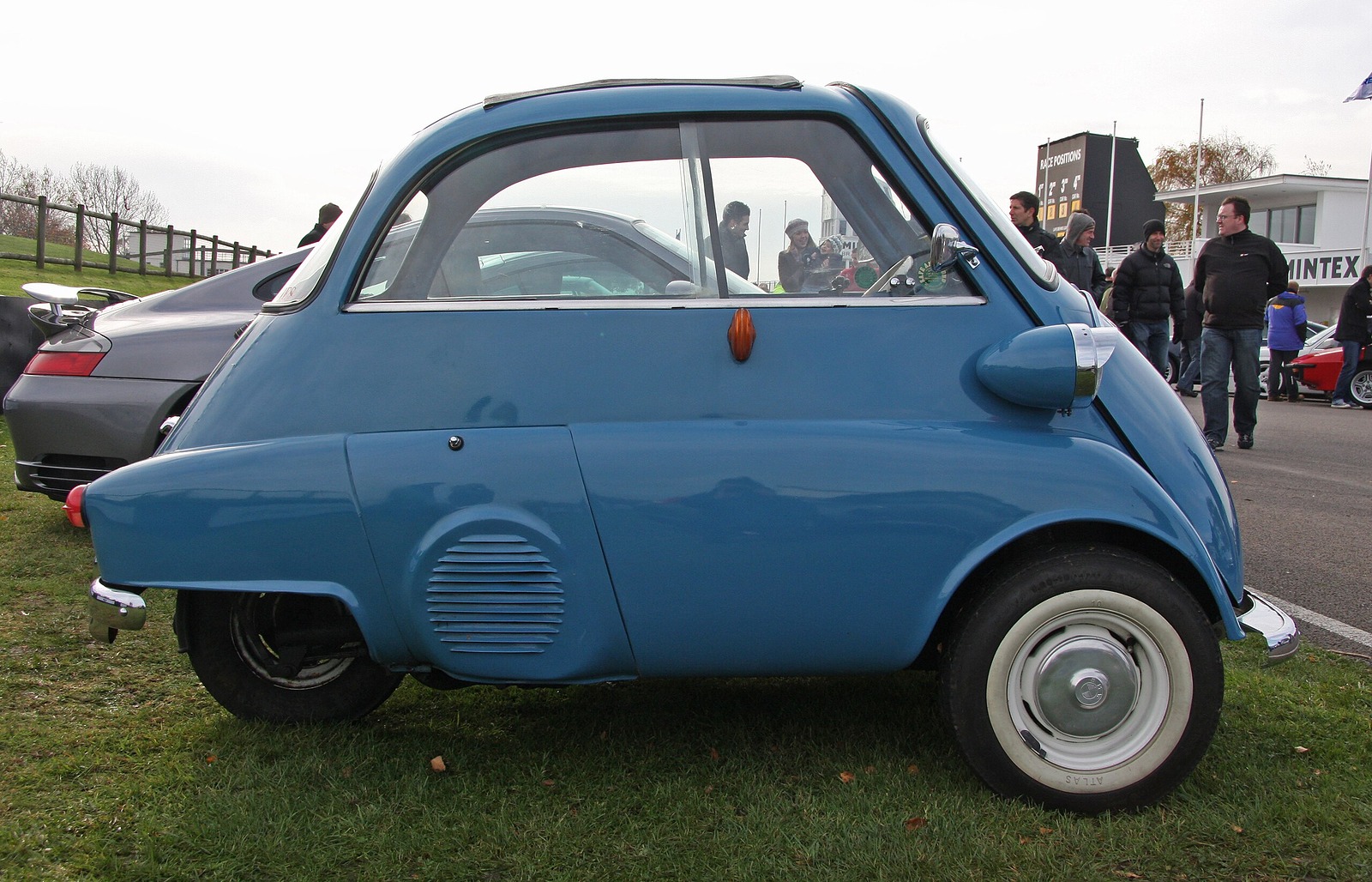
More photographs, old and new

Variants

From bubble window to three wheels

The BMW Isetta family
VariantYearsWhat differsHow many
Isetta 250April 1955 – March 1956Plexiglas wrap-around rear window, fixed side panes250 Standard to 1957: 26,646
Isetta 3001956–⁠62298 cc engine (295 cc in some sources), 13 PS, better pullingPart of the total
Export 250 and 300October 1956 – May 1962Sliding side windows, a bumper, telescopic dampers; the old body went on as the Standard 57300 Export: 70,350
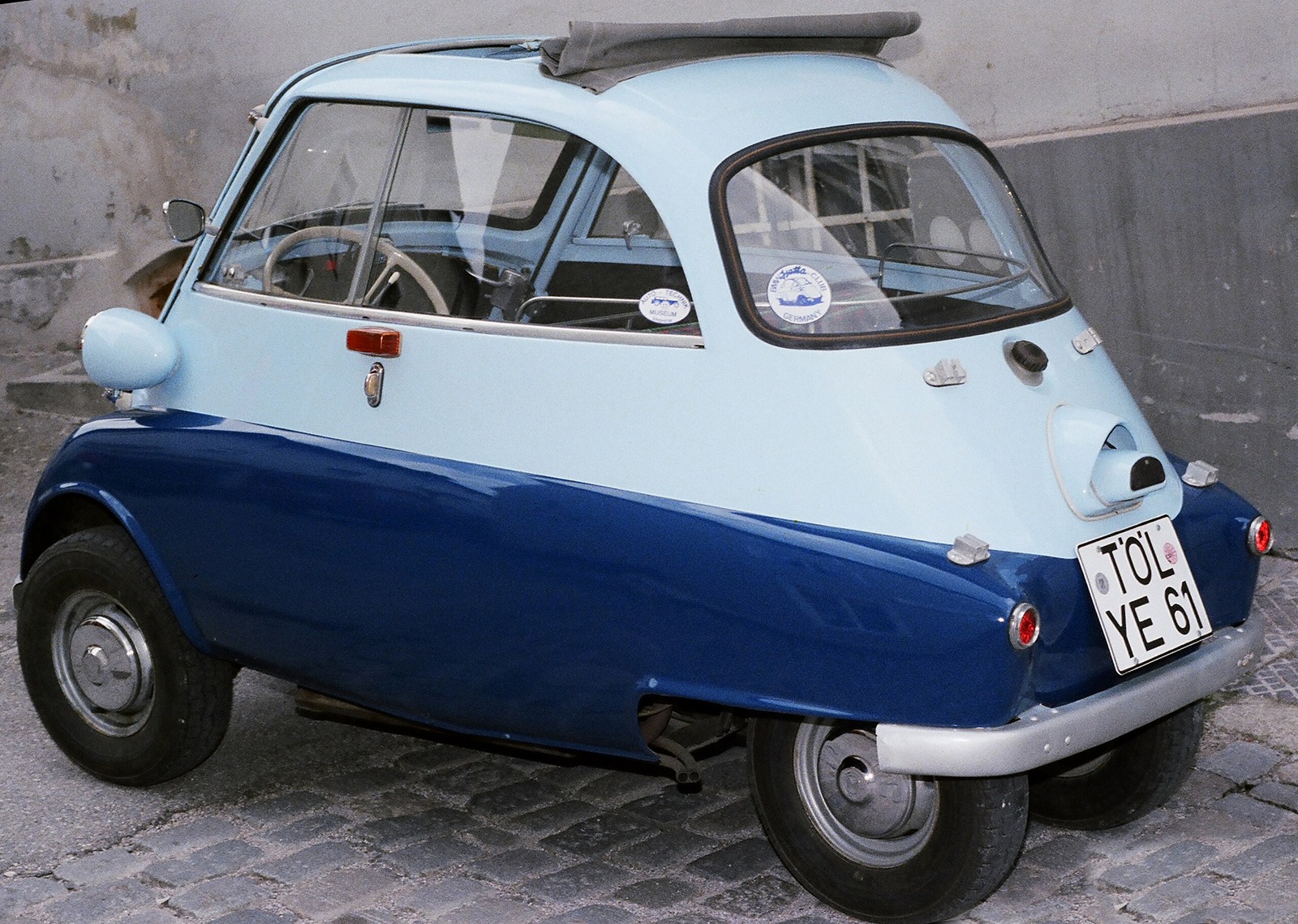
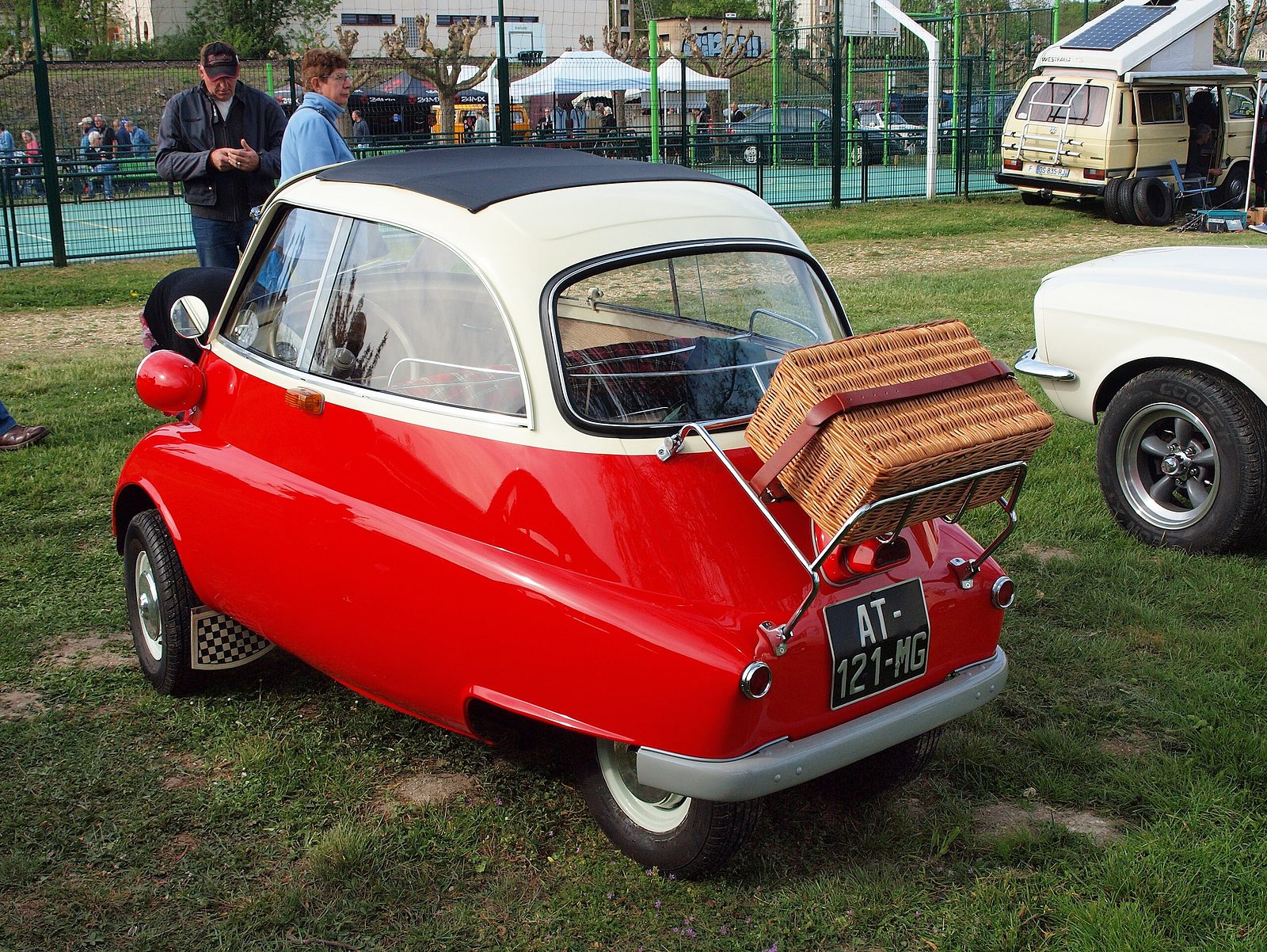
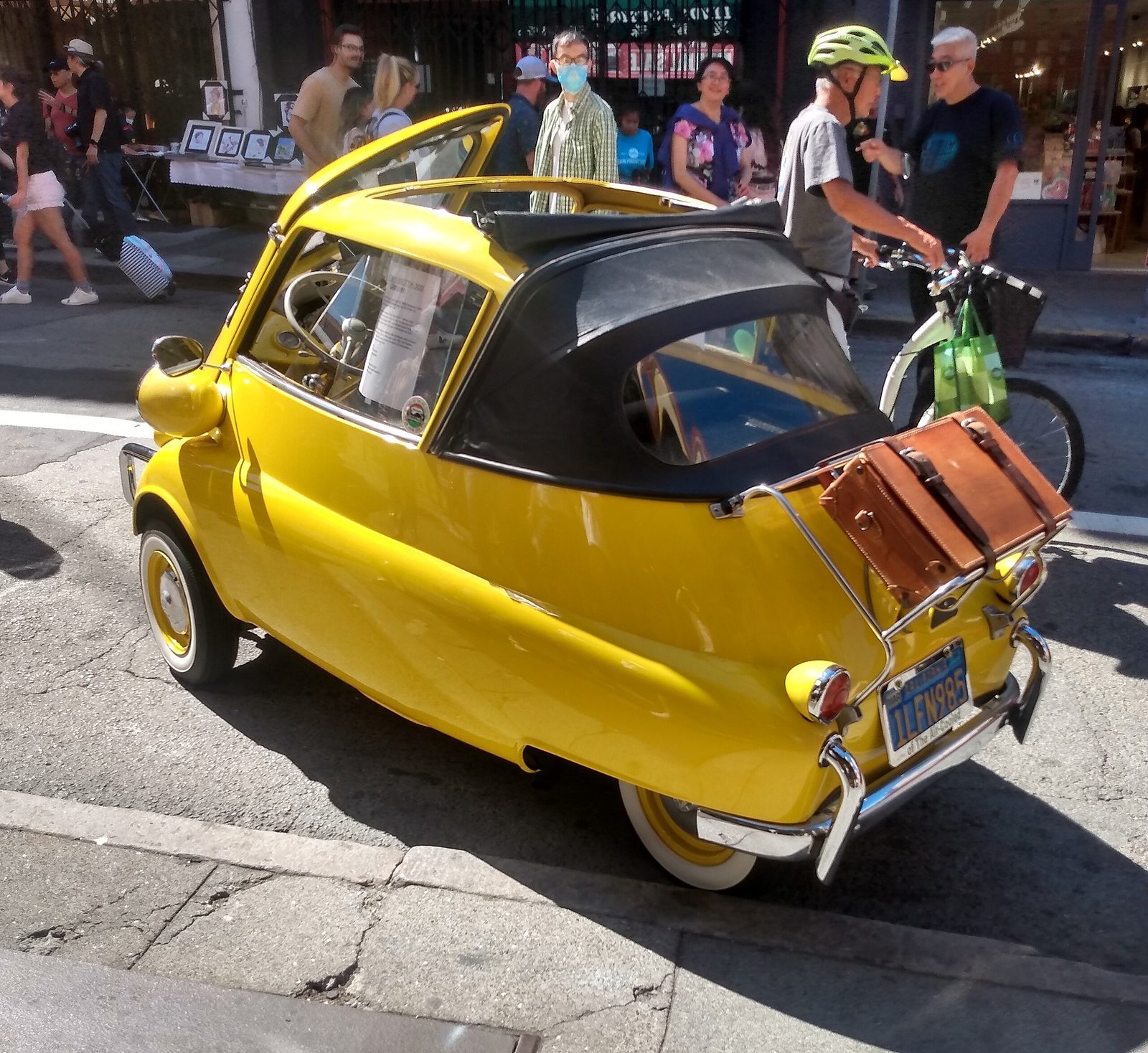
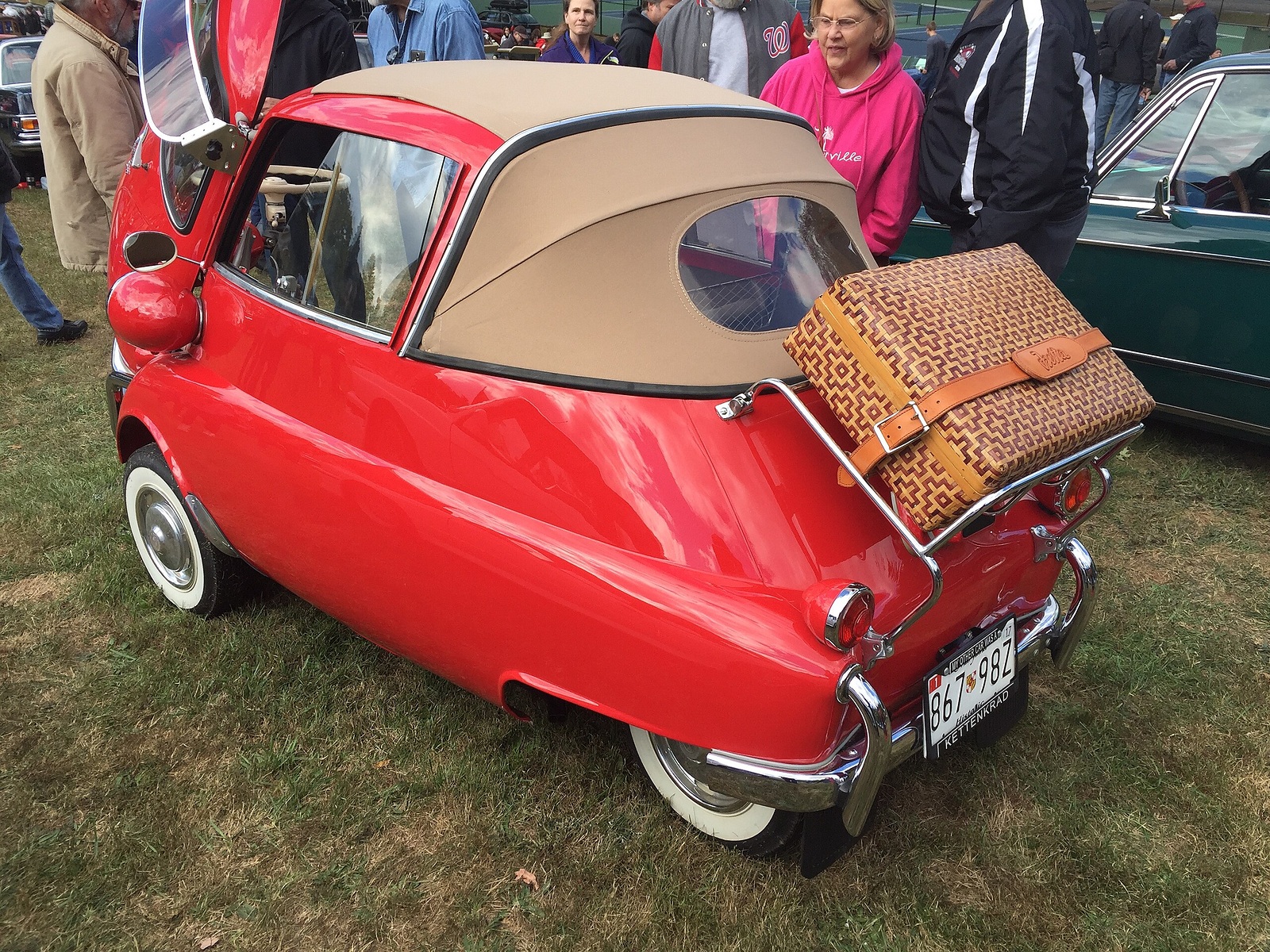
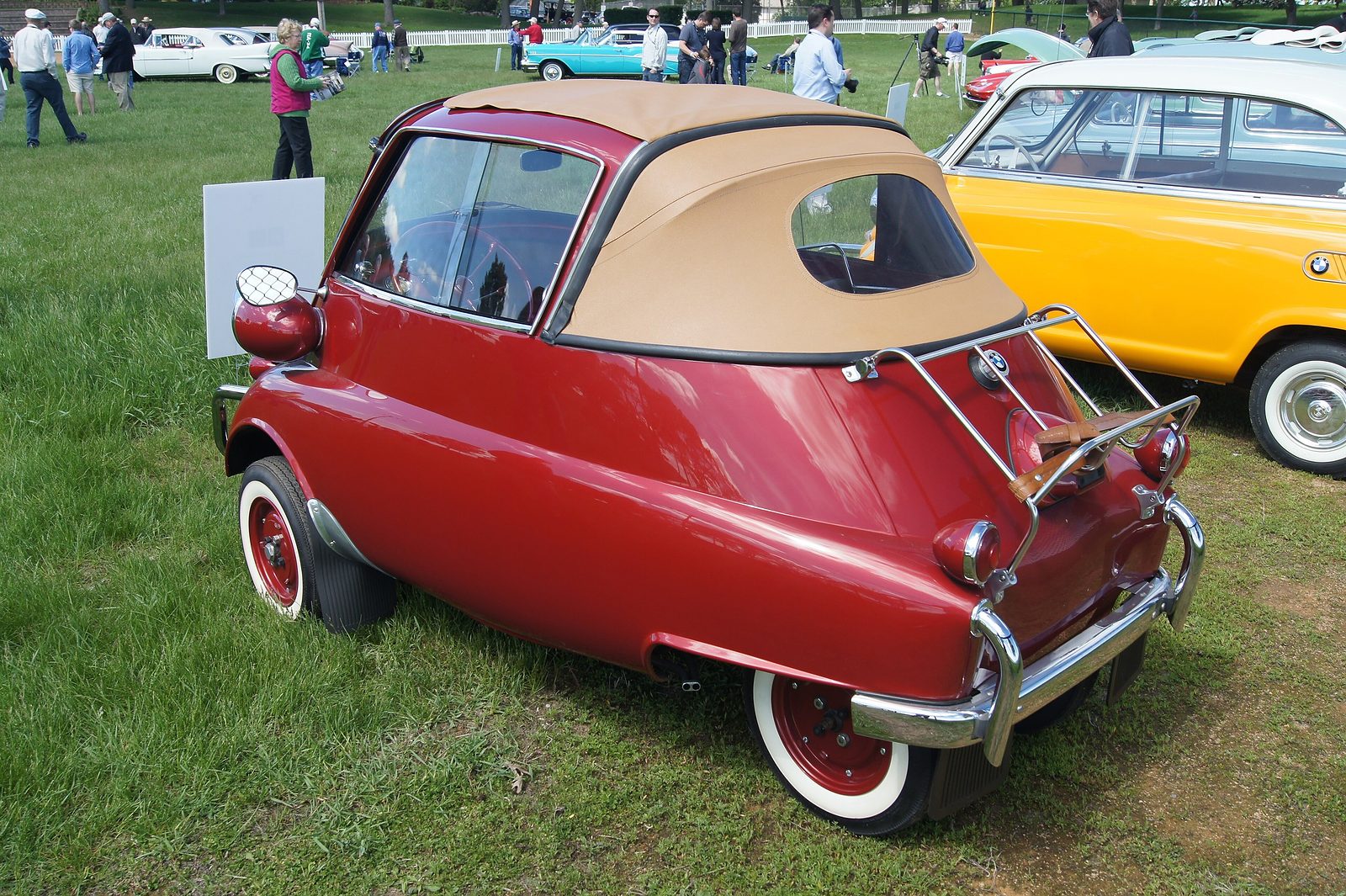
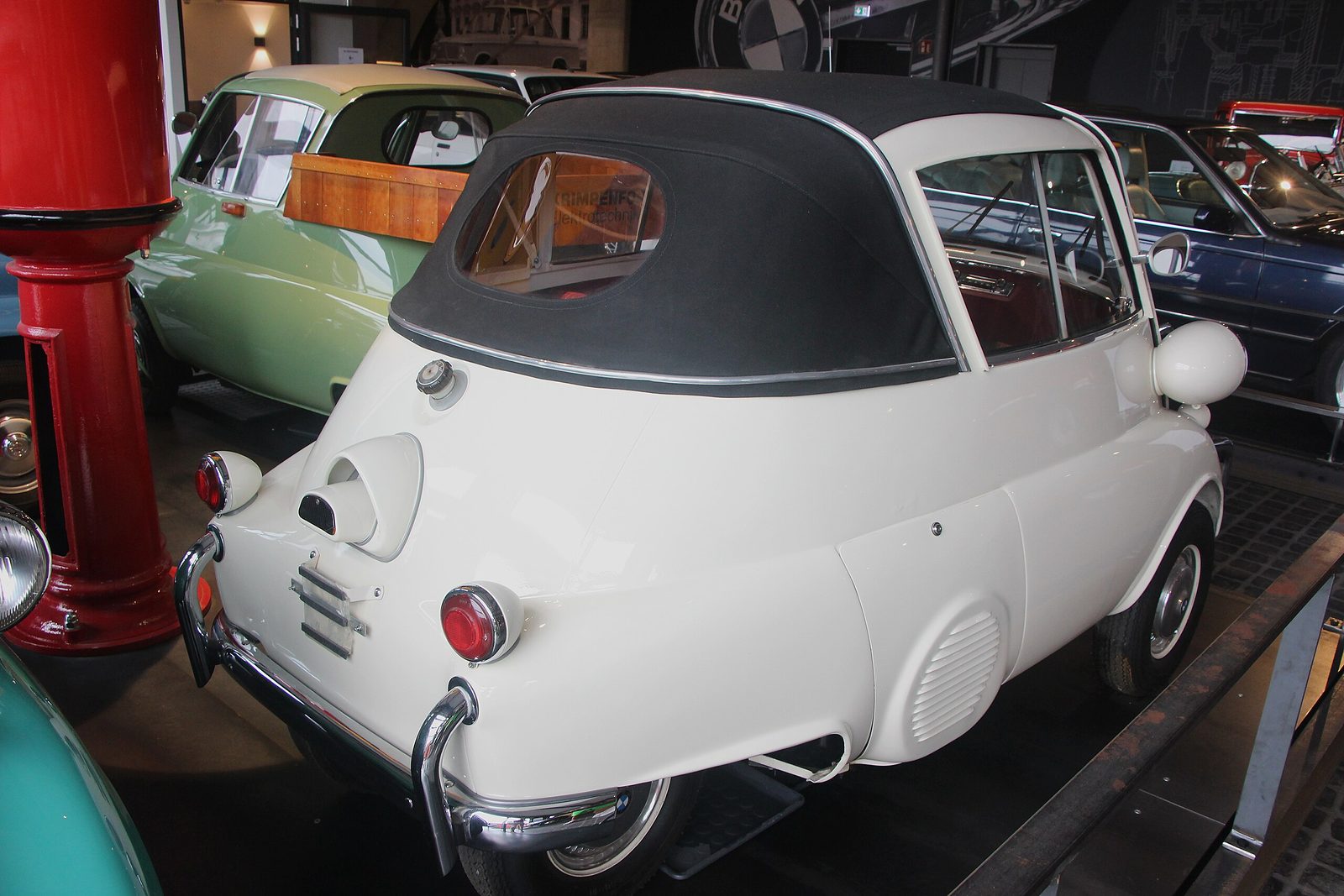
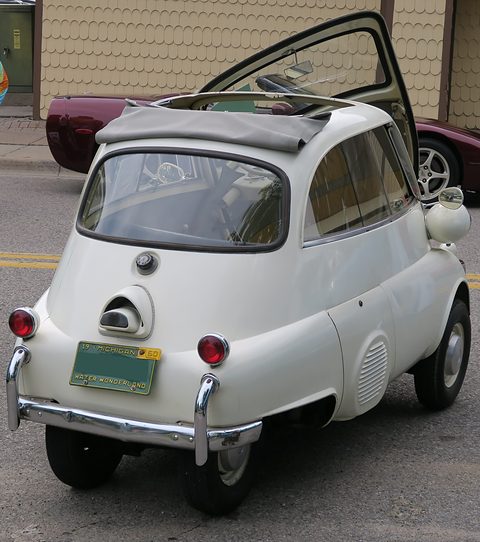
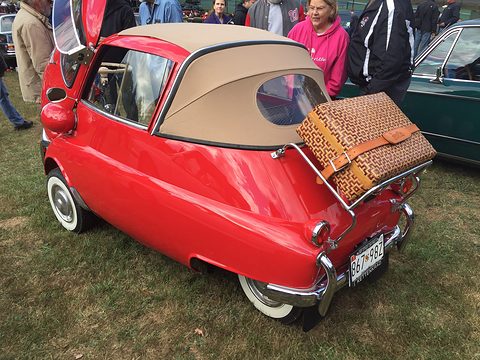
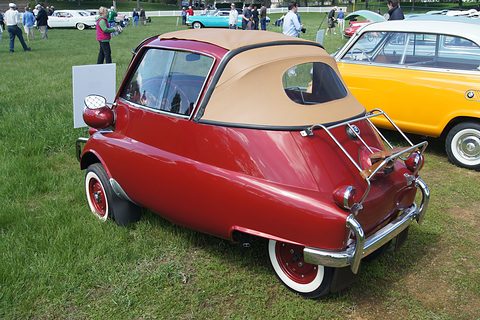
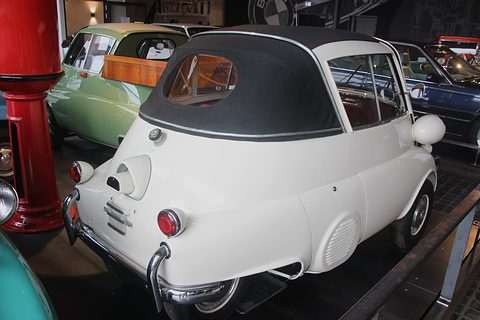
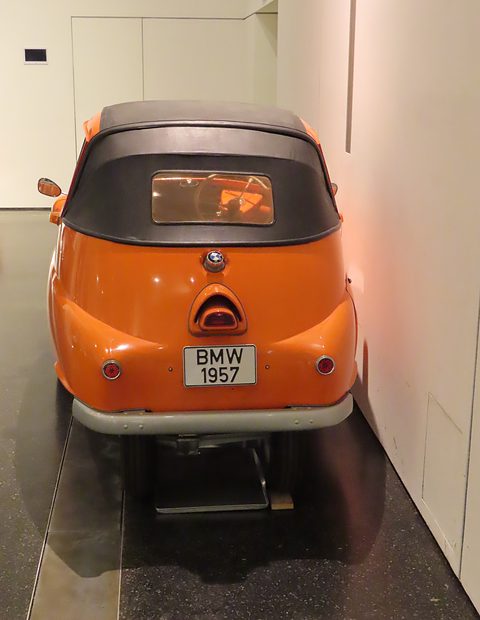
Cabrio1955–⁠62A fabric roof that rolls back in place of the rear windowNot found
USA model1956–⁠62Sealed-beam headlamps, bigger tail lamps, side lights12,787 sold in the USA
Dreirad Spezial1959–⁠60One rear wheel on a swinging arm, for markets that taxed three-wheelers as motorcyclesOver 1,500
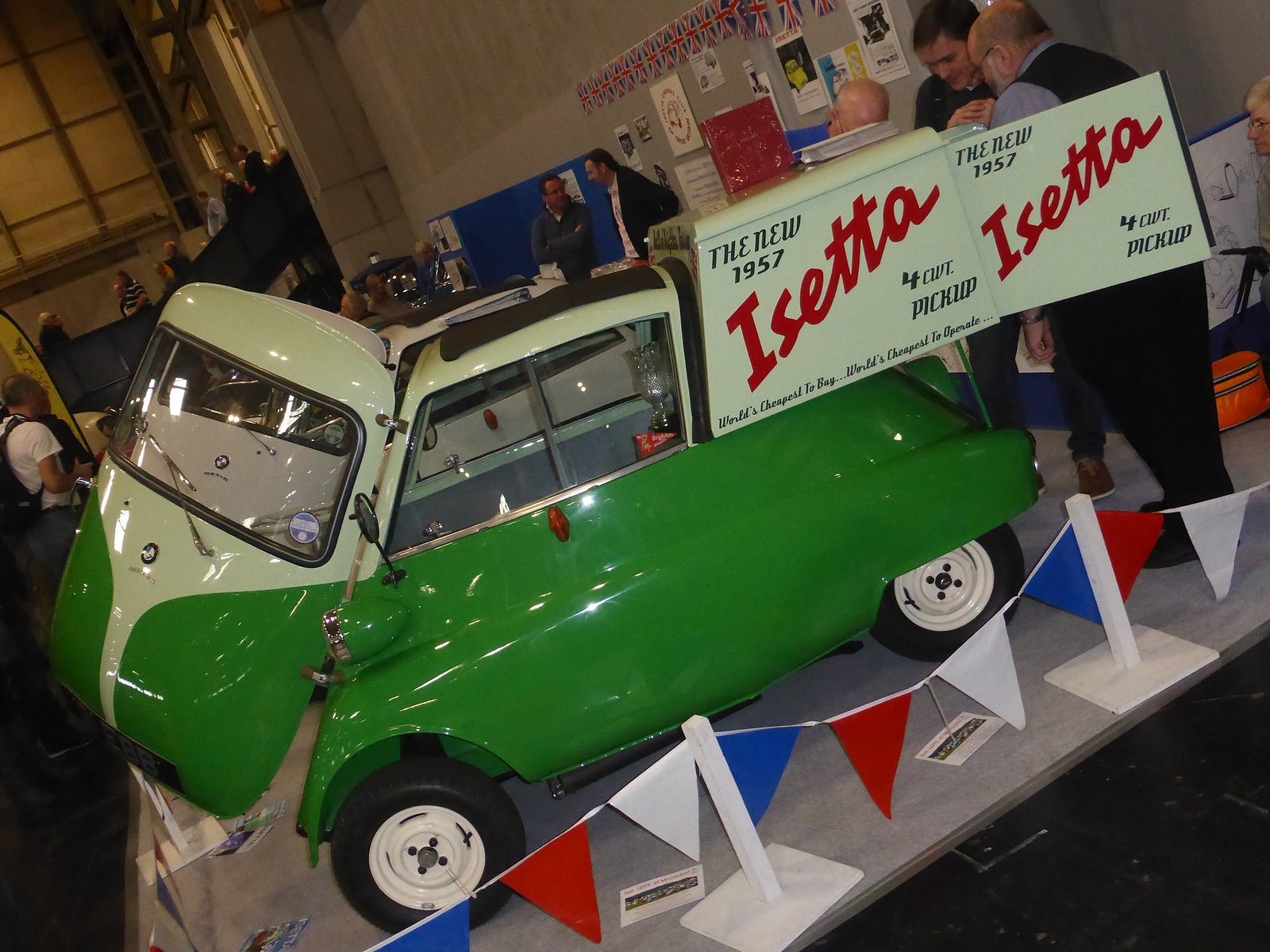
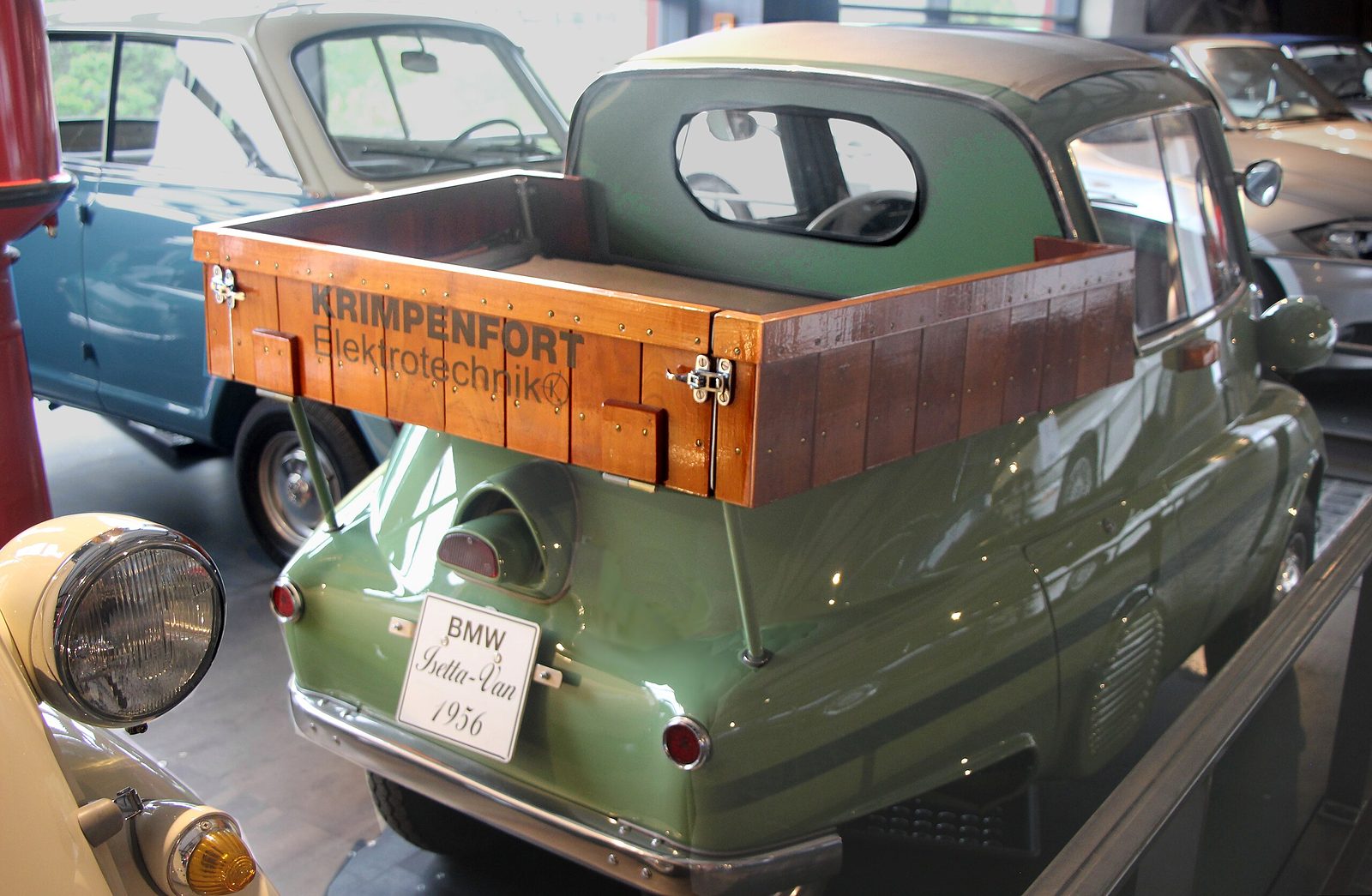
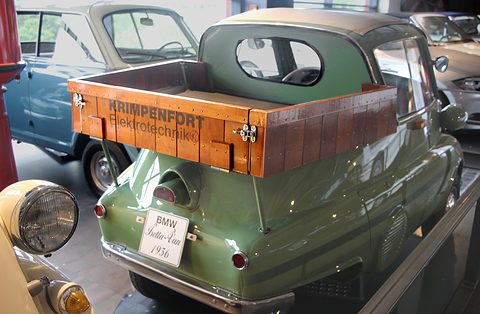
Jagdwagen1955An open hunting car for BMW’s chief executive, Kurt DonathOne

Specification

The Isetta 250 Standard, from BMW’s technical data unless noted

Engine and drive

Engine and drive
EngineBMW single-cylinder four-stroke, overhead valves, fan-cooled
Capacity247 cc (68 × 68 mm), compression 6.8:1245 cc in other sources
Power12 PS at 5,800 rpm; torque 14.2 Nm at 4,500 rpm
GearboxFour speeds and reverse, no synchromesh; lever on the left side wall
Final driveShaft with two rubber discs, then a duplex chain in an oil bath; no differential
Electrics12 V, Bosch Dynastart

Body and chassis

Body and chassis
BodyAll-steel, egg-shaped, on a tubular frame; one front door carrying the wheel and instruments
Front suspensionDubonnet-type swinging arms, coil springs
Rear suspensionRigid narrow axle on quarter-elliptic leaf springs
BrakesHydraulic drums, 180 mm
Tyres4.80-10
RoofFolding fabric sunroof as standard

Dimensions

Dimensions
Length2,285 mm (90 in)2,355 mm for the 300 Export
Width1,380 mm
Height1,340 mm
Wheelbase1,500 mm
Track1,200 mm front, 520 mm rear
Weight350 kg (772 lb) ready to drive (1955 report)359 kg empty in BMW’s table

Performance and running

Performance and running
Top speed85 km/h (53 mph)
Consumption3.3 to 3.8 litres per 100 km claimedBMW’s own table gives 5.8 litres
Fuel tank13 litres, including 3 in reservesource 2
Hill climbing32 per cent
Road tax and insuranceDM 44 and DM 95 a year (1955)
Price newDM 2,550 (March 1955); DM 2,580 in BMW’s tablesource 1source 4

How many were built?

Every figure, with its source

161,728 builtBMW’s own figure for 1955–⁠62, repeated by every source we have read. The figures by type do not add up to it, because they leave out the 250 Export, the 300 Standard, the three-wheelers and the kits.

  1. 161,728all BMW Isettas, 1955–⁠62One source

    BMW Group, repeated by German and English Wikipediasource 1source 2source 3
  2. 161,360all BMW IsettasUnconfirmed

    English Wikipedia’s BMW infobox, unexplainedsource 3
  3. 109,760sold in GermanyOne source

    German Wikipediasource 2

  4. 70,350Isetta 300 Export, 1956–⁠62One source

    BMW Groupsource 1

  5. 51,968exportedOne source

    German Wikipediasource 2

  6. 33,700built in 1957, the best yearOne source

    West German production statistics; BMW says “nearly 40,000”source 5source 1

  7. 29,947built in 1956One source

    West German production statisticssource 5

  8. 26,646Isetta 250 Standard, 1955–⁠57One source

    BMW Groupsource 1

  9. 25,697Isetta 300, 1957–⁠62Unconfirmed

    the Weiner museum’s label, found only theresource 9

  10. 12,911built in 1955Two sources agree

    BMW’s annual report, via BMW Group; the official statistics give 12,917source 1source 5

  11. 12,787sold in the USAOne source

    BMW Groupsource 1

  12. over 1,500three-wheeled Dreirad Spezial, 1959–⁠60One source

    German Wikipediasource 2

  • Two sources agreetwo good sources give the figure
  • One sourcea good source, alone
  • Unconfirmeda lead only, not yet checked

Famous for

Three points

  1. The door is the front

    The steering wheel and instruments ride on the single front door, and the column swings out with it.

  2. 161,728 singles

    BMW counts it the best-selling single-cylinder car ever built.

  3. The car that saved BMW

    Its sales carried the company until the 600, the 700 and the Neue Klasse were ready.

On screen

Confirmed appearances only

Elvis Presley was photographed with an Isetta, and BMW says that, “as legend has it”, he bought it for his manager; the purchase is legend, so it is not listed.

Survivors and collecting

Today

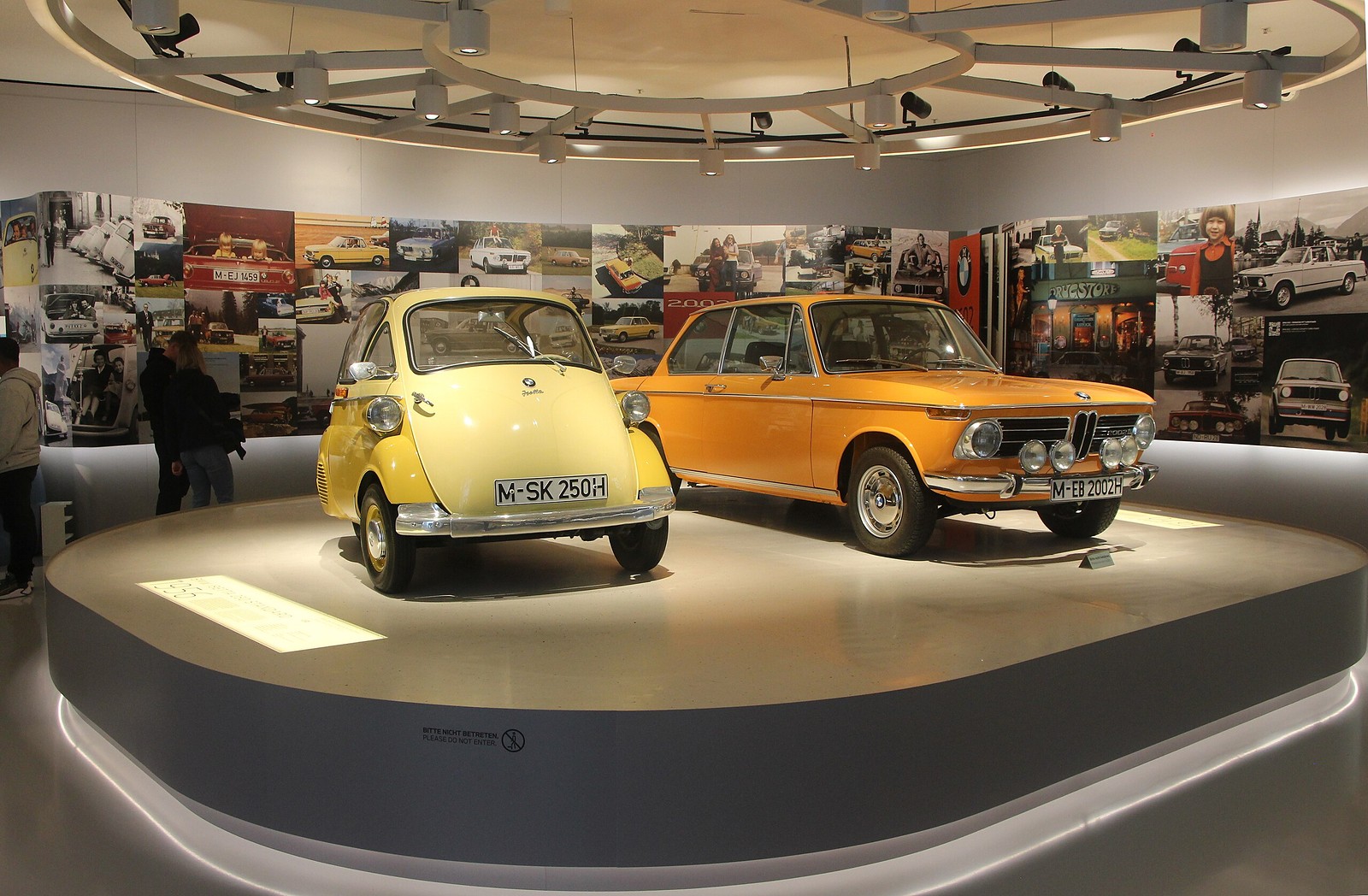
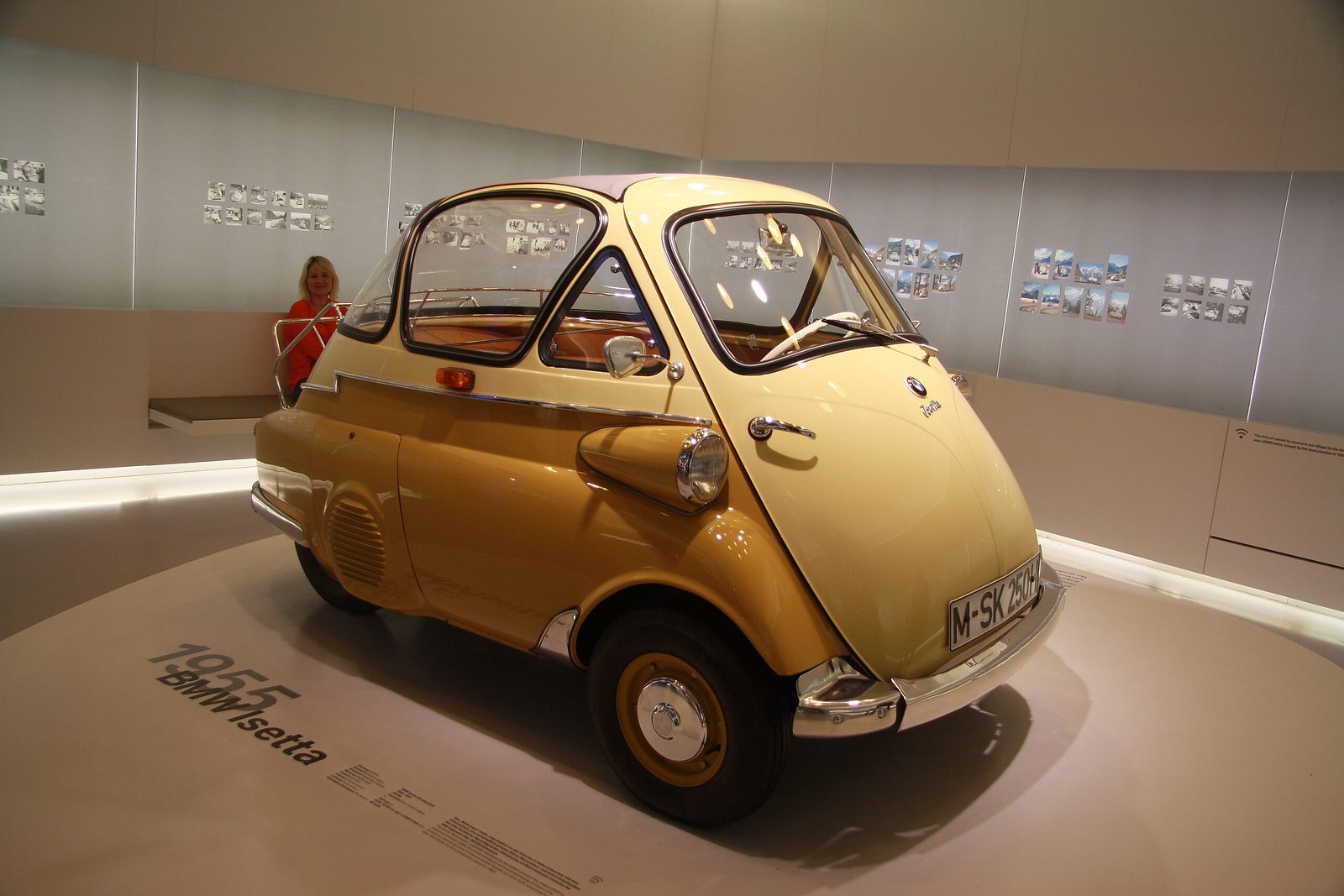
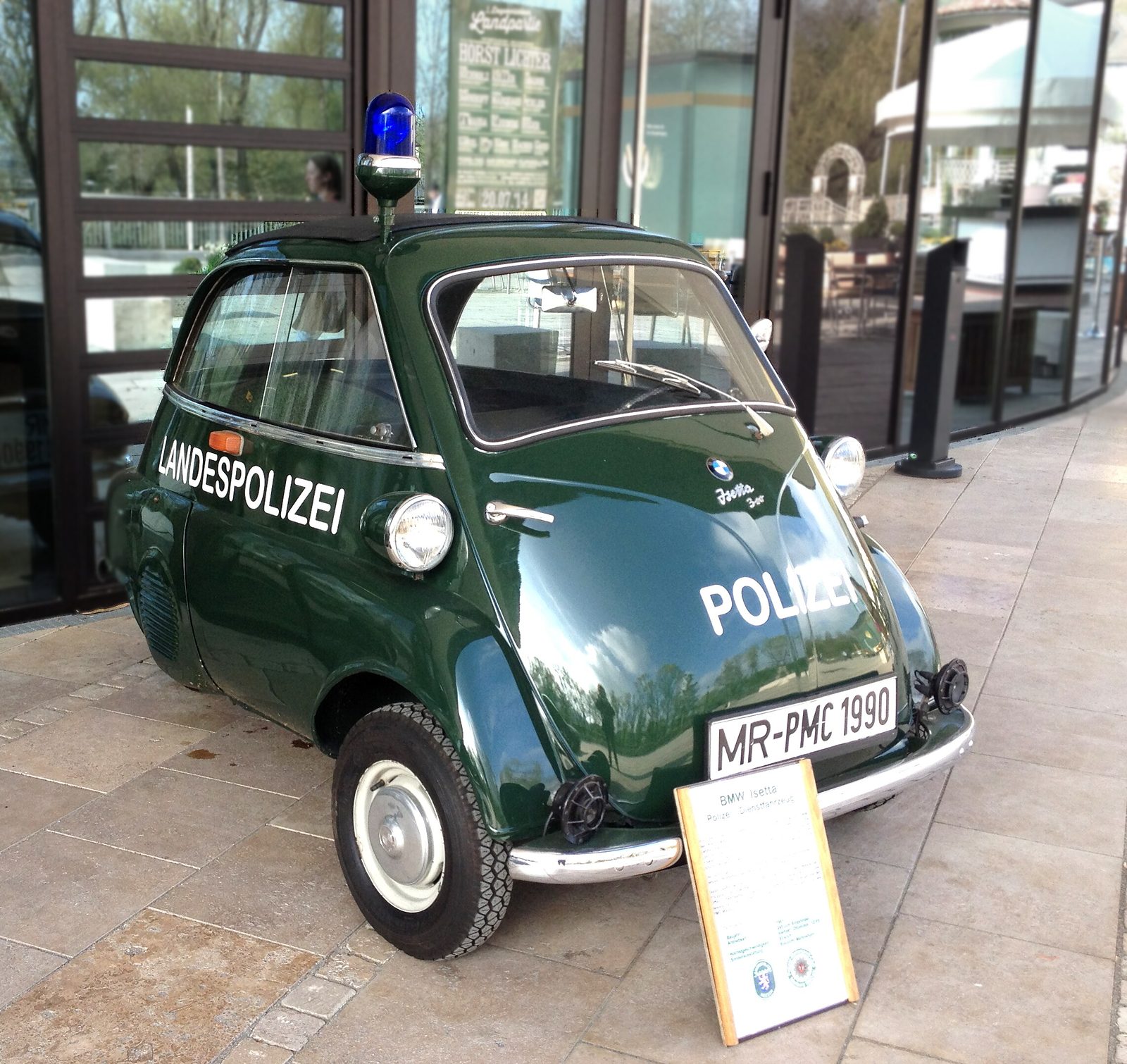
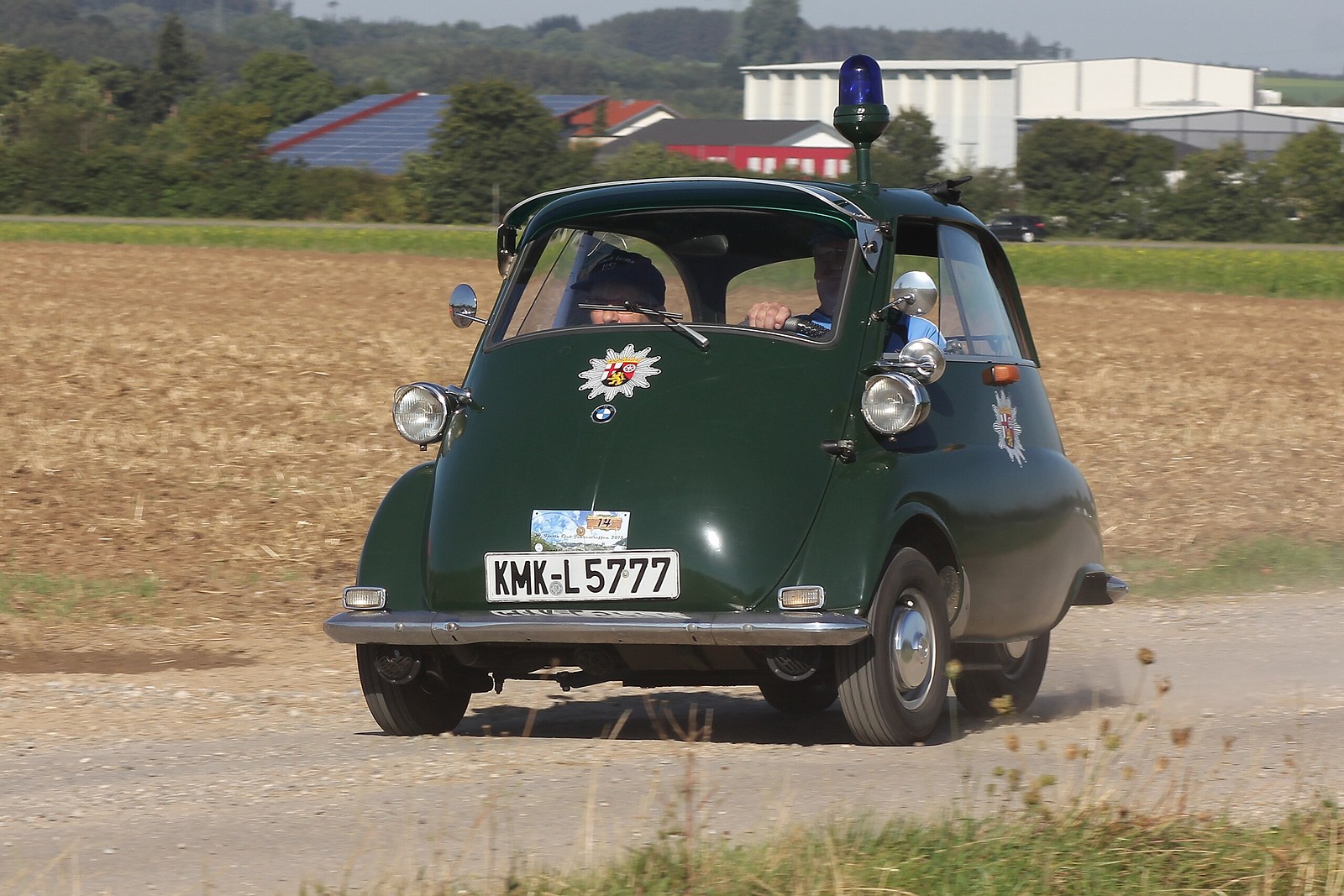
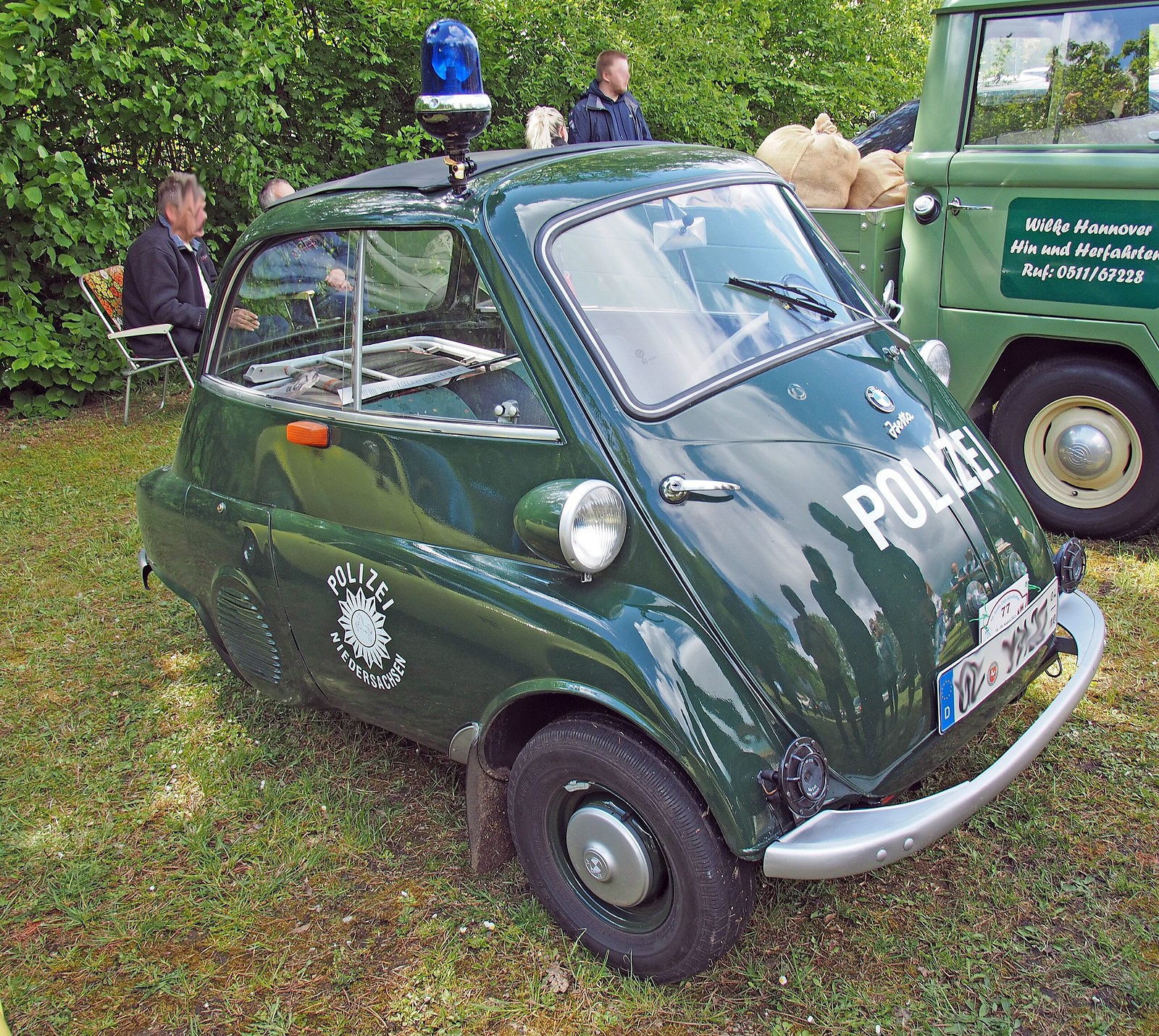
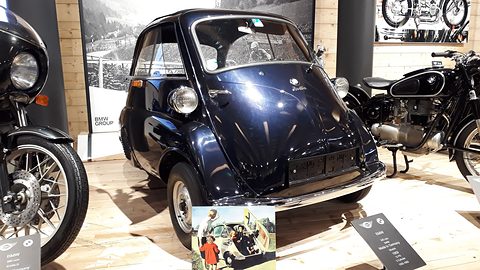
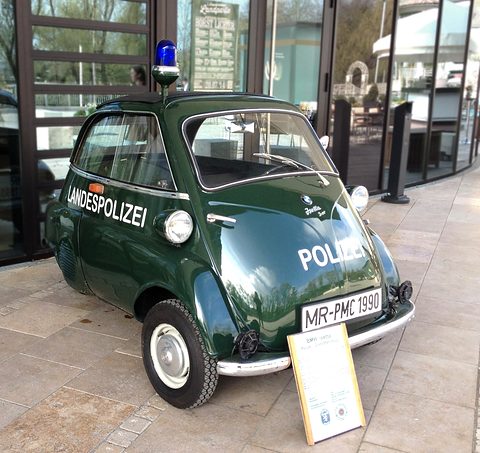
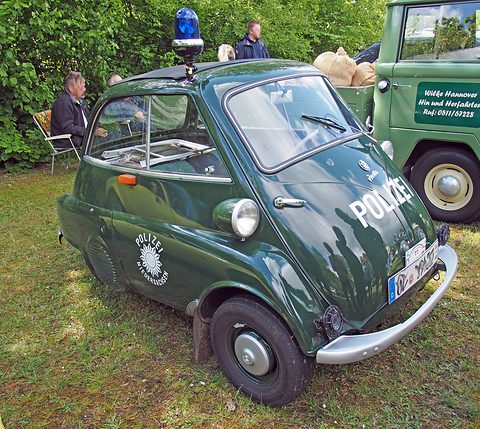
Isettas are on show in the BMW Museum in Munich, the Haus der Geschichte in Bonn, where it stands as one of the symbols of the Wirtschaftswunder, and the Verkehrsmuseum in Karlsruhe; a police Isetta is in the police vehicle museum at Marburg.source 2 The Isetta-Club holds an annual meeting.source 2 No survivor count has been found.

One myth needs clearing up. BMW’s press material says the Isetta earned its spurs in the Mille Miglia, and in 1955 the very first of 533 starters was an Isetta, averaging more than 75 km/h (47 mph) over the 1,000 miles. Those cars were Iso Isettas, not BMWs, and Iso’s cars had already taken the top three places in the economy classification in 1954, averaging more than 70 km/h (43 mph).source 1source 11source 3
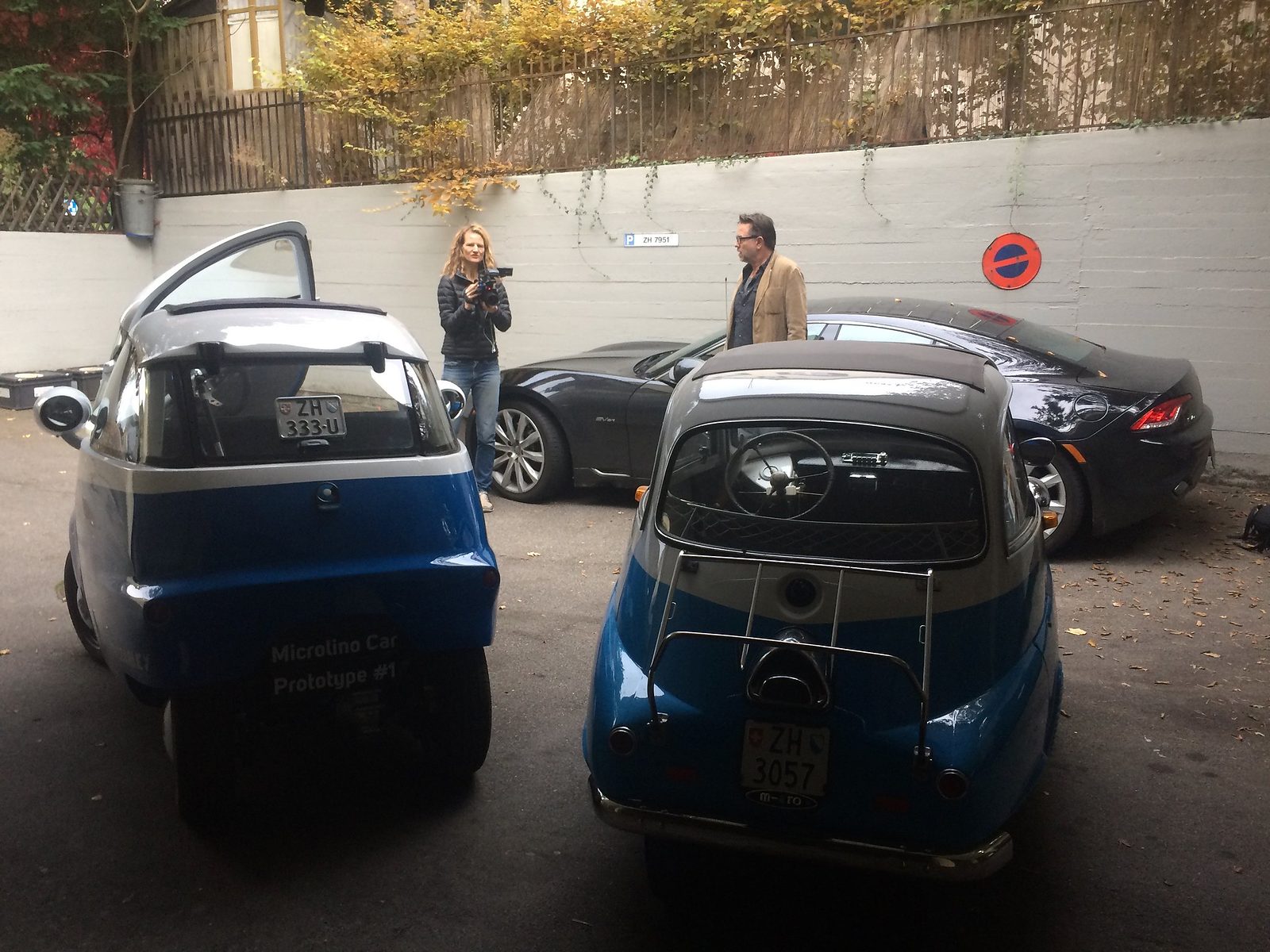
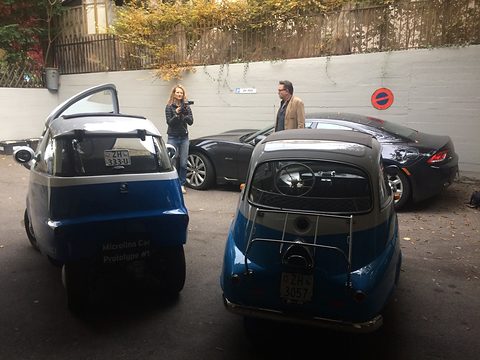
The idea has outlived the car. Britain’s Tri-Tech built a glass-fibre Zetta 300 in 1998, and the electric Microlino, shown at Geneva in 2016 and sold from 2022, was inspired by it.source 2 BMW’s chief executive, Kurt Donath, had a single open Isetta built for hunting trips in 1955; the Weiner museum showed a replica of it.source 12

At auction
CarSalePrice
1959 Isetta “Whatta Drag”, a drag racerRM Auctions, Weiner museum sale, 2013source 13$92,000
1956 Isetta “bubble window” CabrioRM Auctions, 2013$89,700

Sources

Numbered as in the text

Much of the dated history on this page comes from BMW’s own anniversary press kit of 2005 (the first source). Where the magazines of the day or other sources give a different figure, the page says so.

  1. BMW Group PressClub, “50 Years of BMW Isetta”, press release of 25 February 2005, and its long version “50 years of the BMW Isetta”, with technical data. Read in full.
  2. German Wikipedia, BMW Isetta, read in full. Used as a lead; it cites sales brochures, Motor Klassik and Der Spiegel 46/1955.
  3. English Wikipedia, Isetta, read in full. Used as a lead; it cites The Motor, 6 March 1957, and Norm Mort (2008).
  4. Werner Oswald, “BMW-Isetta für 2550 Mark!”, auto motor und sport 8/1955, p. 11, with a comparison table.
  5. “Produktionszahlen 1957”, West German production 1955–⁠57, auto motor und sport 4/1958.
  6. “Rollermobile brauchen Leistung und Sicherheit”, auto motor und sport 5/1955.
  7. “History of the Isetta factory”, by a committee member of the Isetta Owners Club of Great Britain, My Brighton and Hove, 22 March 2006.
  8. Brighton sources as summarised by a web search: Lancaster Insurance (2020), brightontoymuseum.co.uk and Sussex Industrial Archaeology Society News 186, with the blue plaque near Isetta Square. Not read in full; weak.
  9. Bruce Weiner Microcar Museum, “Isetta 300”, tour page.
  10. English Wikipedia, Steve Urkel.
  11. “Bravo, kleine Isetta!”, photograph caption and Mille Miglia results, auto motor und sport 10/1955.
  12. Bruce Weiner Microcar Museum, “1955 BMW Isetta Jagdwagen”, tour page.
  13. Report on RM Auctions’ sale of the Bruce Weiner Microcar Museum, Madison, Georgia, 15–16 February 2013.