microcarfan
  • Bubble car
  • Isle of Man
  • Three wheels
  • Two seats
  • No doors

Peel Trident

Also known as “The terrestrial flying saucer”

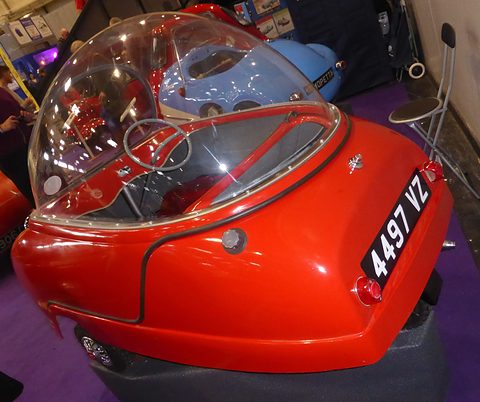
No door, just a clear dome that ratchets up and forward to let two people climb in, shoulder to shoulder, with a 49 cc engine behind them. The Trident was called the terrestrial flying saucer, sold at £190, and was claimed as the smallest two-seater in the world.

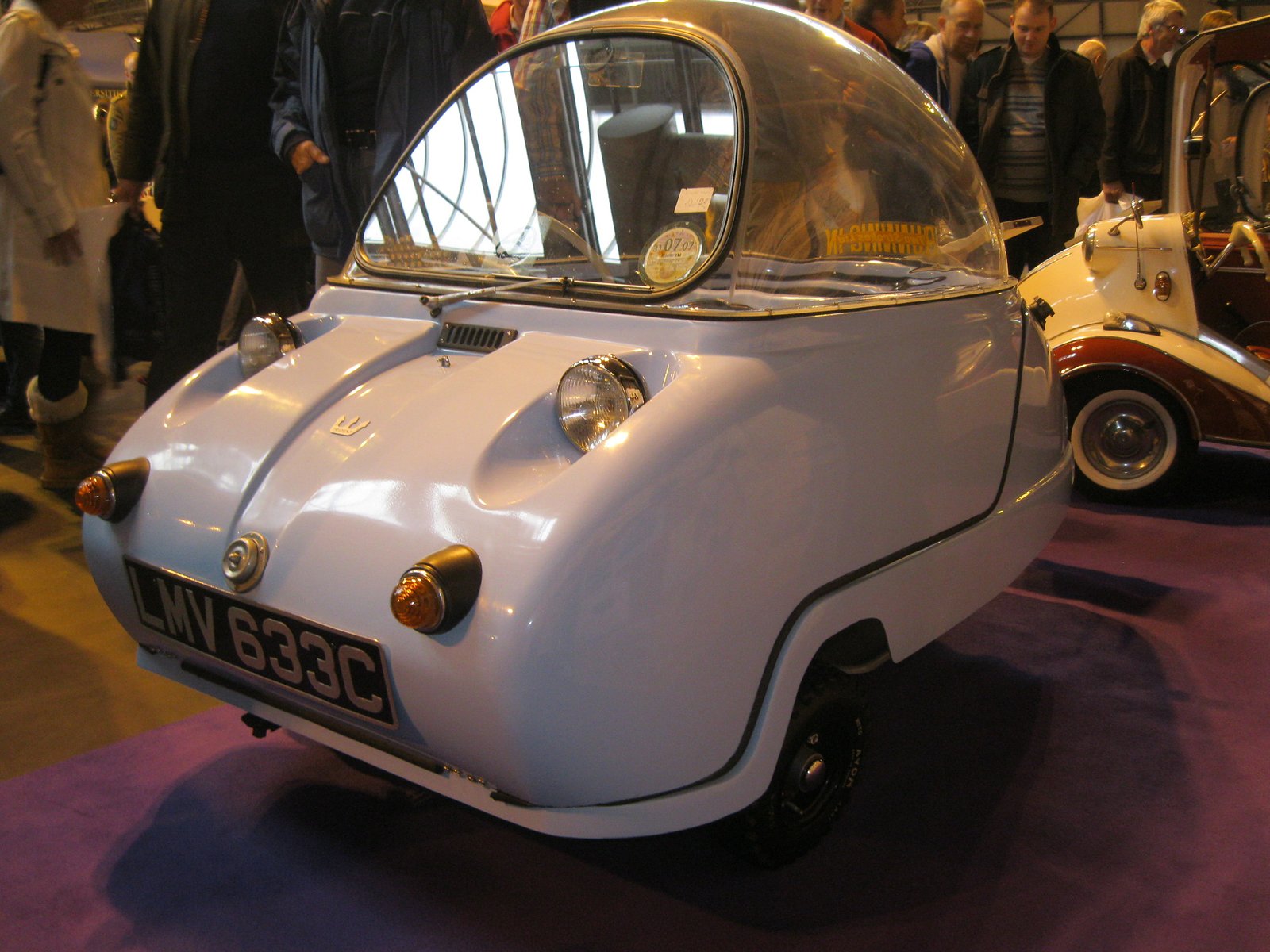
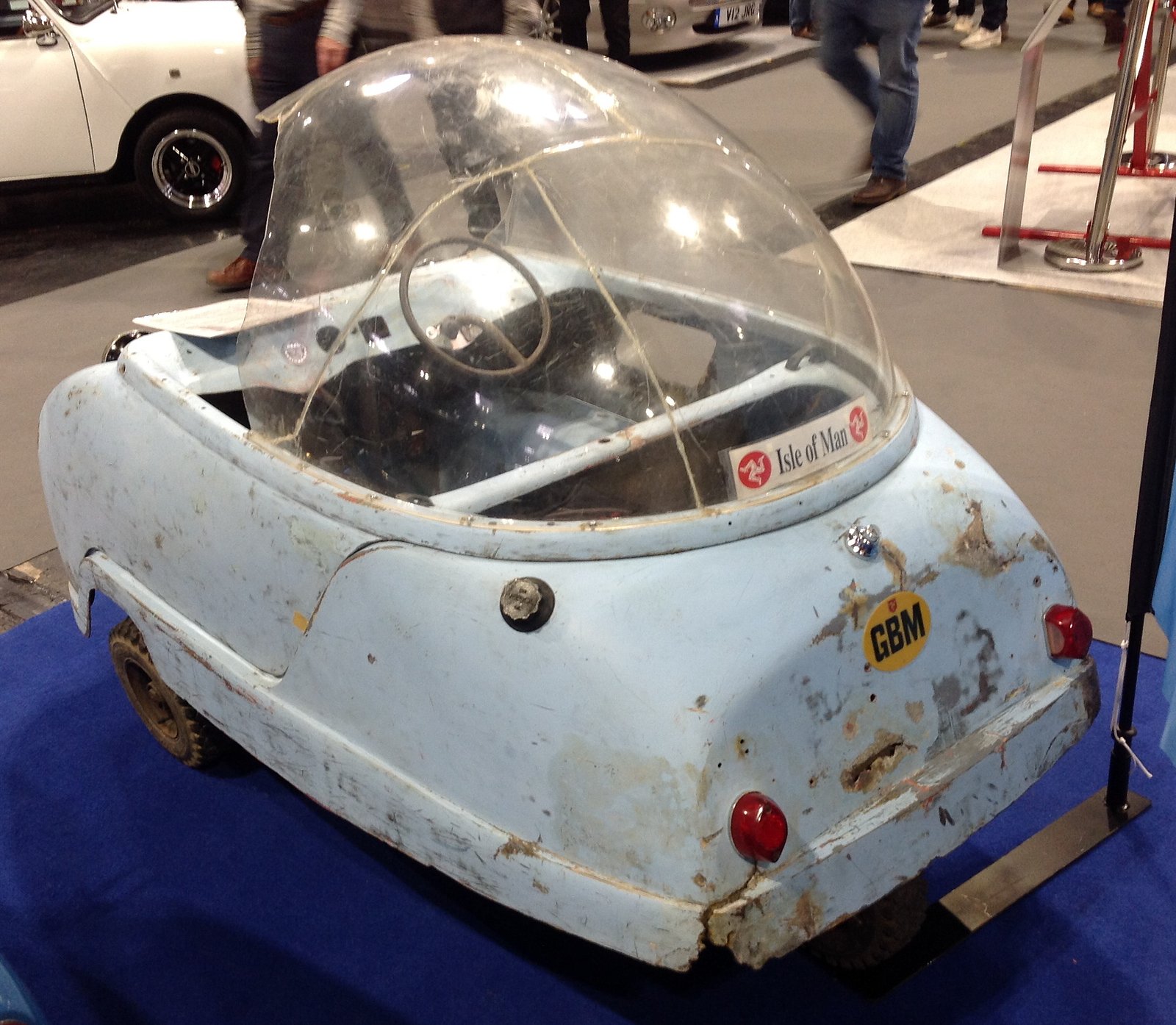
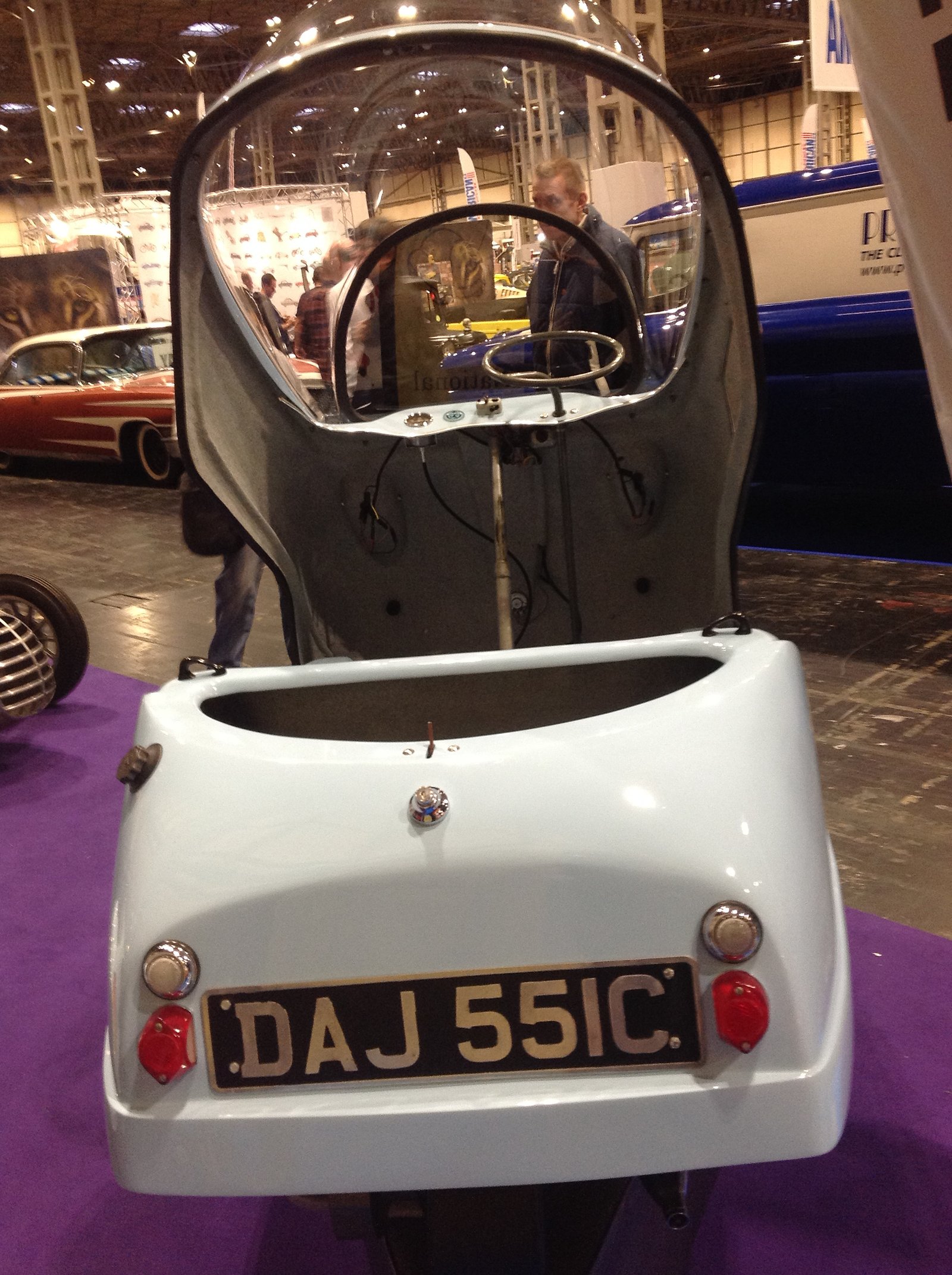
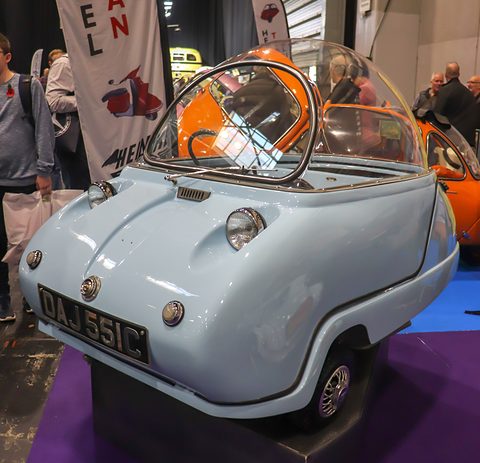
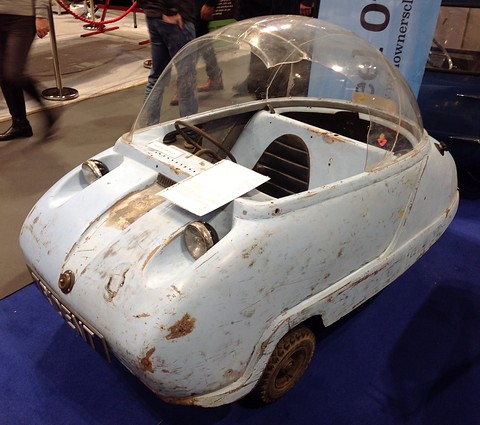
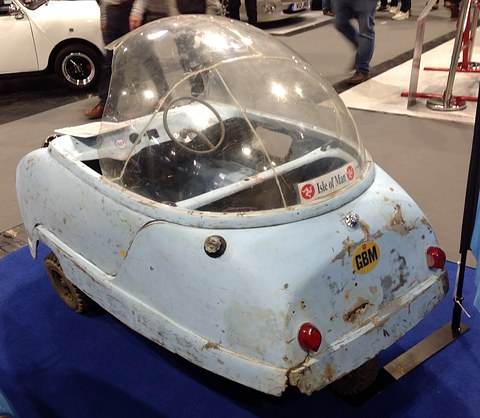
Pale blue bubble car with its clear dome closed on a purple plinth in a show hall.
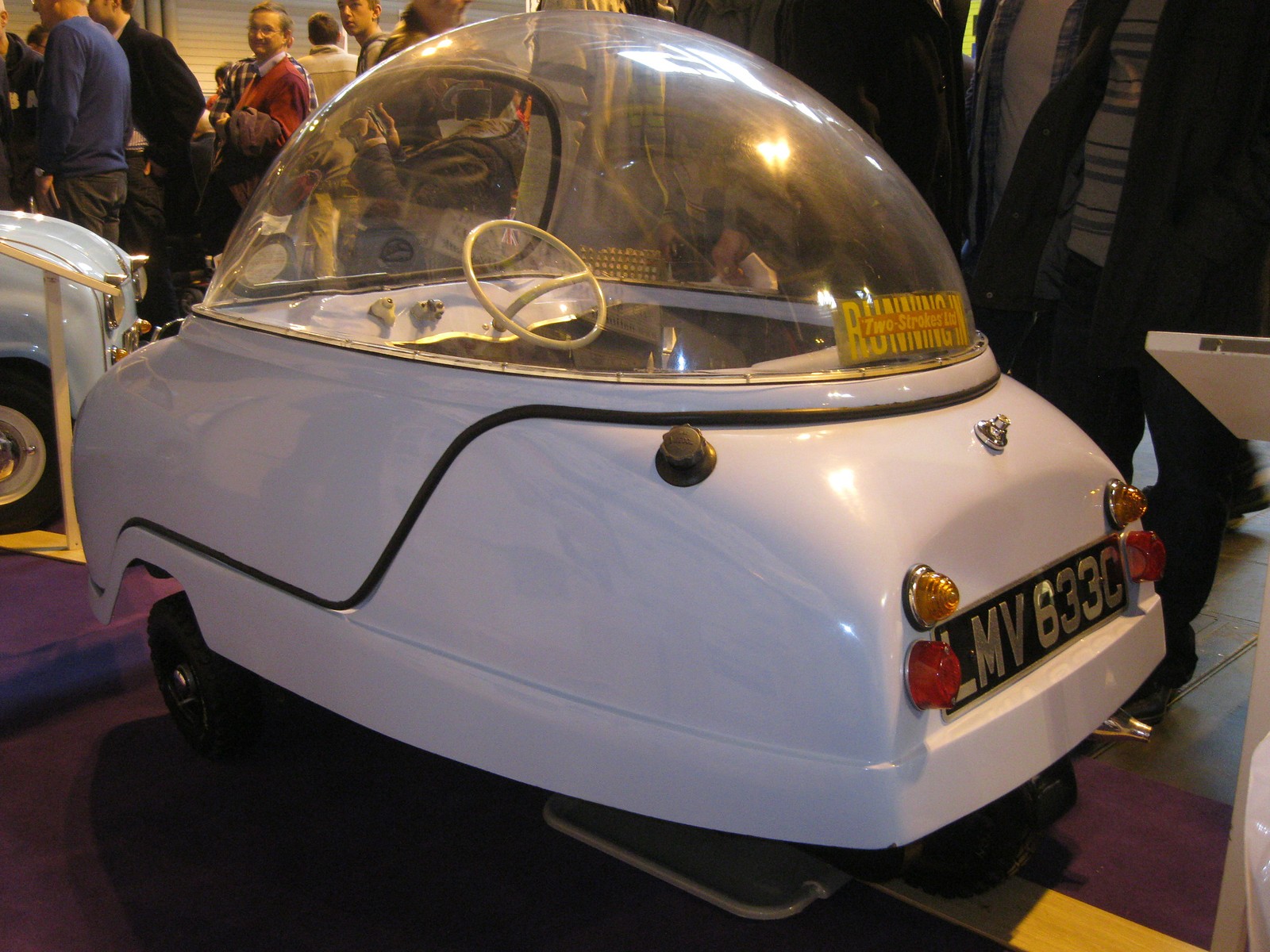
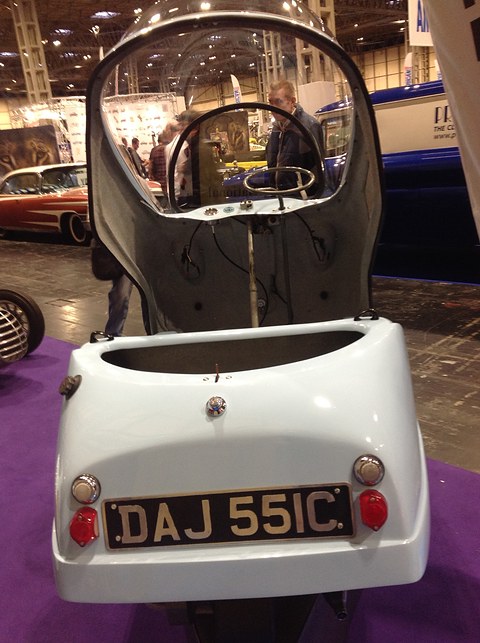
A pale-blue 1965 Peel Trident, DAJ 551C, on a plinth at the NEC Classic Motor Show, Birmingham, in 2018.Photo: Vauxford, CC BY-SA 4.0, via Wikimedia Commons

At a glance

The spec plate

Peel Trident

Trident · Peel, Isle of Man

Built
1965–⁠1966Shown in November 1964; built 1965–⁠66
Country
Isle of ManPeel Engineering Company, Peel
Maker
Peel Engineering CompanyCyril Cannell’s glass-fibre fairing and boat firm
Engine
49 cc Zweirad Union (DKW) two-stroke singleThe last six: a 98 cc Triumph Tina scooter engine with automatic belt drive
Power
4.2 hpAbout 3.1 kW; 6.5 hp in the Tina-engined cars
Length
1,854 mm
Weight
150 kg330 lb; the Weiner museum gives 90 kg
Seats
2On a 79 cm (31 in) bench, shoulder to shoulder
Wheels
3
Price new
£190
Production
about 45A replica maker’s 75 is unexplained
Survives
FewNo count has been published
Top speed
45km/h45 km/h28 mph; 30 mph by the Lane Motor Museum

How big is it?

True proportion

1.85 m

It is 1,116 mm shorter than a Fiat 500, about 1.1 adults laid end to end.

  • 150 kg: about two adults
  • Two seats on a 79 cm (31 in) bench
Drawn at true proportion. The track is 3.6 metres long; the adult stands at the same scale. The Peel P50 is the smallest production car, on every page for comparison.

The story

History

Cyril Cannell founded the Peel Engineering Company in the Manx fishing town of Peel in the late 1940s. It moulded glass-fibre fairings for motorcycles (the TT Tourer, the Peel 707, the Mountain Mile), built boats under the West Marine name, and tried cars: the Peel Manxcar of 1955, an experimental hovercraft in 1961 and, in 1962, the single-seat Peel P50.source 1source 2 The Trident was the P50’s sibling, and English Wikipedia credits its design to Cannell (more in the designers).source 3

How much it owed to the P50 is not agreed. The Bruce Weiner Microcar Museum, in Georgia, calls it a further development of the P50 on essentially the same chassis; the Lane Motor Museum, an evolution made slightly larger for two modest-size adults; English Wikipedia, a completely new design.source 4source 5source 3 The Weiner museum also lists it as having no chassis at all. The likeliest reading, ours rather than any source’s, is a new glass-fibre shell carrying the P50’s engine, gearbox and kind of running gear. It was shown at the British motorcycle show at Earls Court in November 1964, and The Motor Cycle described a glass-fibre monocoque on coil-sprung wheels without dampers, with a 79 cm (31 in) bench meant for occasional use by two.source 3 It could also be had with one seat and a detachable shopping basket.source 3

A dome for a door

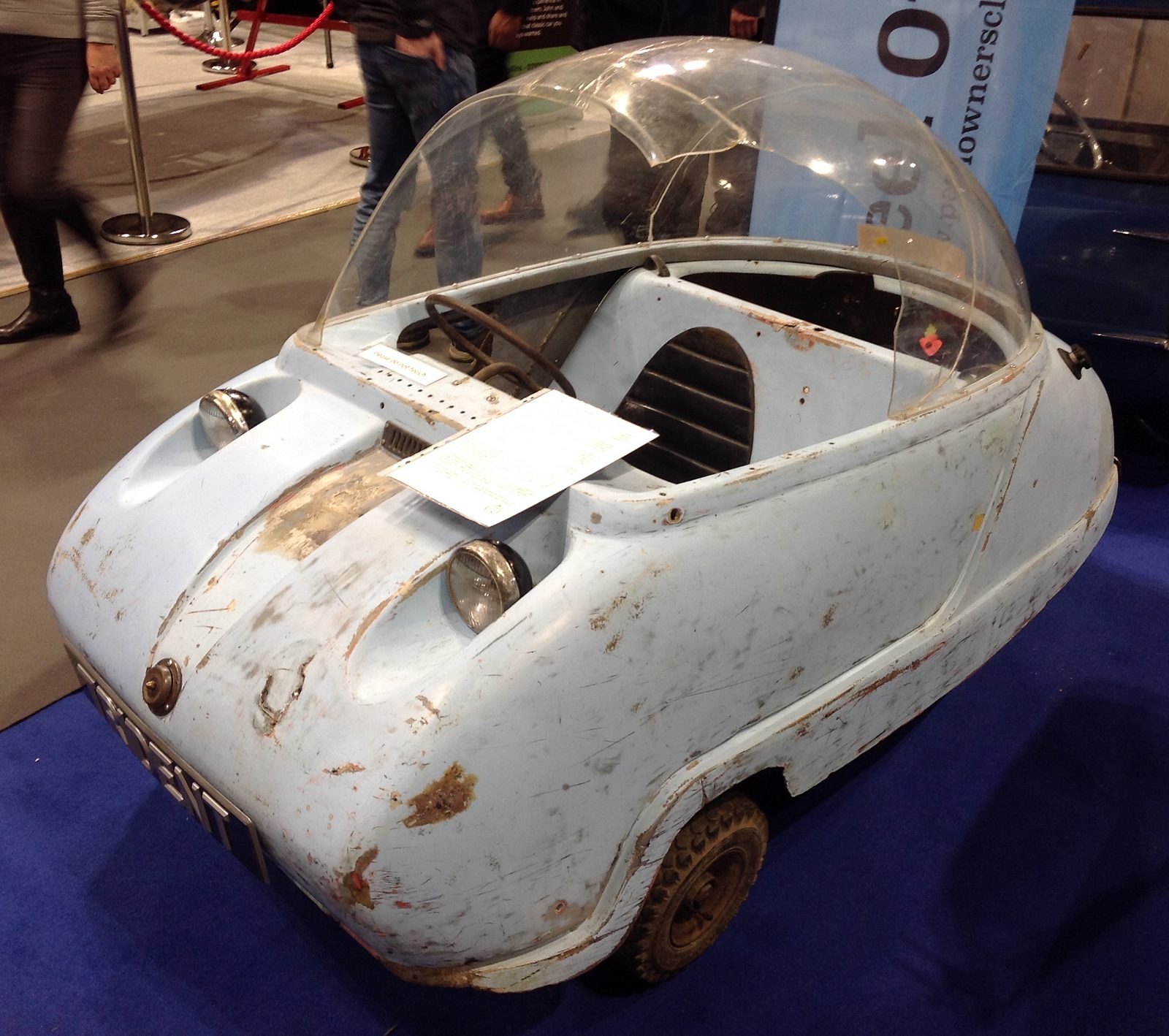
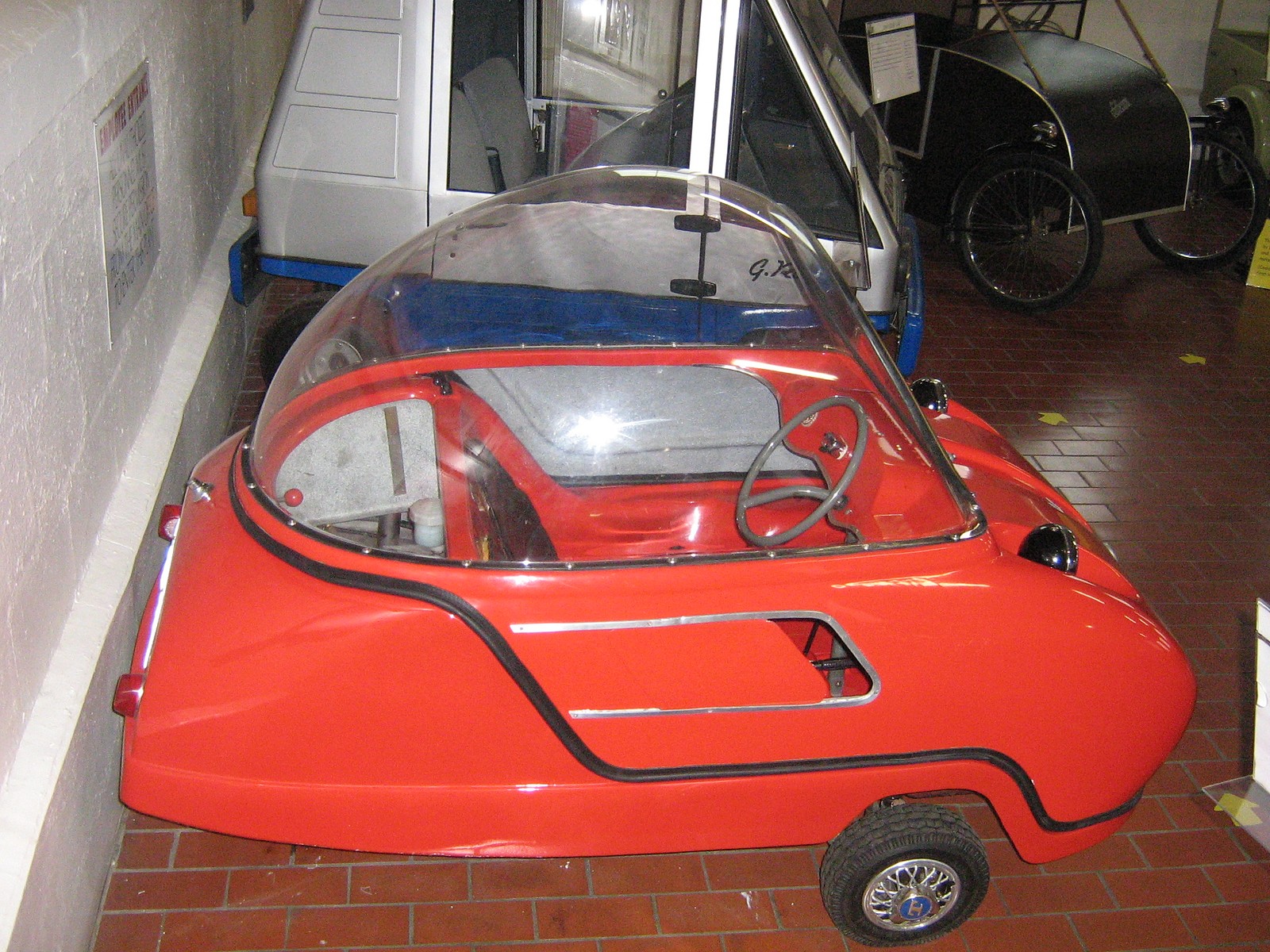
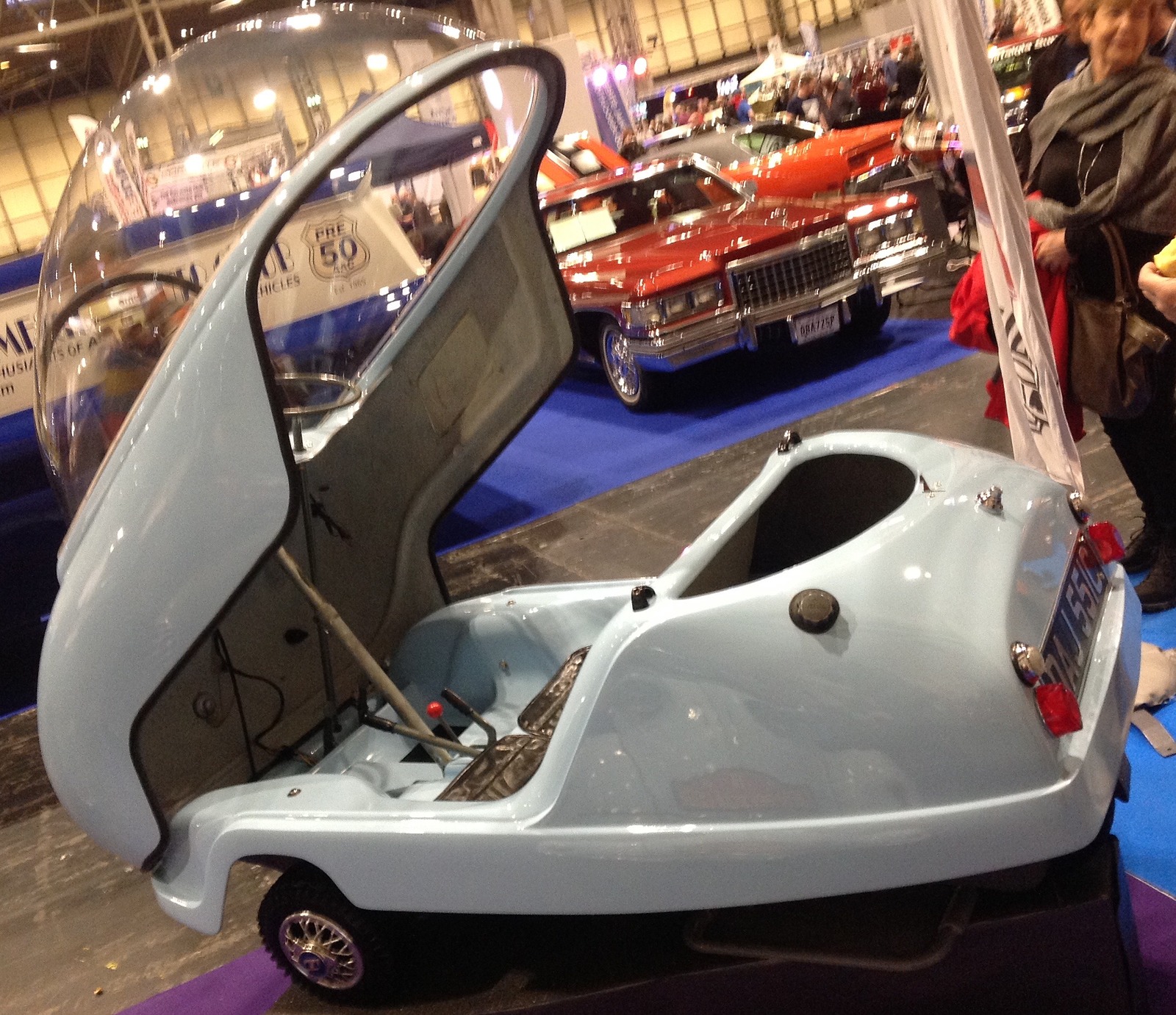
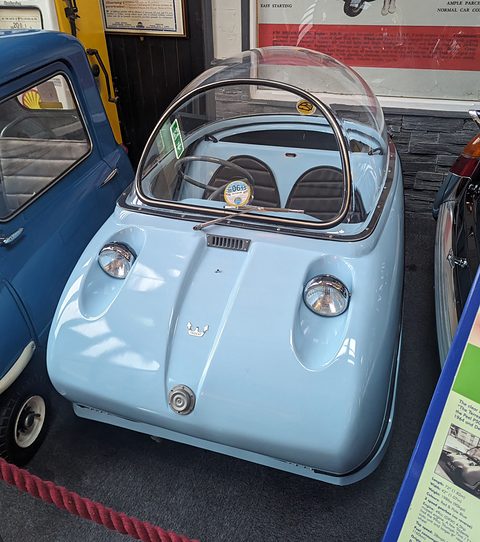
The Trident had no door. To get in, you raised its clear bubble top, which ratcheted upwards and forwards.source 4source 5 The Lakeland Motor Museum reports its nickname, the terrestrial flying saucer, and the badge on its nose was a three-pronged trident.source 3 English Wikipedia says, without giving a source, that Peel sold it as a shopping car or a saloon scooter.source 3 Two occupants could double its weight, about 150 kg (330 lb); the Weiner museum’s 90 kg is out of line with the other sources.source 5source 3source 4 It was about 1,854 mm (73 in) long.source 3source 5

The bubble glass top which ratchets upward to allow entry works great from an ergonomic viewpoint; it works very poorly for ventilation, as on a sunny day, the car becomes an oven.

The Lane Motor Museum, Nashville, collection page for its 1965 Trident.source 5

The engine was the P50’s 49 cc Zweirad Union (DKW) two-stroke single, air-cooled, giving 4.2 hp (3.1 kW) through a three-speed gearbox, with the engine and drive at the back; the Lane museum’s “twin-cylinder” is a slip.source 3source 5source 4 It was started by a pull cord, with magneto ignition and 6-volt electrics, cable brakes and direct steering, on 3.50 × 5 in wheels.source 4 Top speed was 45 km/h (28 mph) by English Wikipedia, or 30 mph by the Lane museum.source 3source 5 Peel advertised 100 miles per gallon and called the car almost cheaper than walking, the line it had used for the P50, and the price was £190.source 3source 5 The Lane museum calls it the world’s smallest two-seater car.source 5 It was a bubble car in the most literal sense, and a three-wheeler, though none of the sources read says in words how its three wheels were arranged. Nor do they say whether it had a reverse gear, which the P50 lacked; on the smaller car the driver lifted the tail and turned it round by hand.source 6

Forty-five, and six with Tina engines

The Trident was built in 1965 and 1966, by English Wikipedia’s and the Lane museum’s dates; the Weiner museum gives 1964–⁠65.source 3source 5source 4 About 45 were made.source 4source 5 The Weiner museum says the last six had the 98 cc engine of the Triumph Tina scooter, with automatic belt drive and 6.5 hp; its claim of 75 km/h for them seems high for that power.source 4 Its own car was one of the six, bought from the designer, who still lived on the Isle of Man, after some years on show in a German museum.source 4 In 1966 Peel also offered the Trident with a 12-volt electric motor and a range of 65 km; whether anyone bought one is not known.source 4

Peel stopped building cars in 1966, by English Wikipedia’s account, or 1967 by Grace’s Guide’s, and went back to fairings and boats; it also made glass-fibre prototype bodies for BMC’s Mini.source 1source 2 No other cars have ever been made on the island besides these two, the Viking Sport, the P1000 and the Manxcar.source 1source 2

A second life

In 2007 the Trident was on Dan Neil’s list of the 50 worst cars of all time for Time.source 3 Four years later Peel Engineering Ltd began building it again, by hand and to order, at Sutton-in-Ashfield in Nottinghamshire, in petrol and electric forms, alongside the P50.source 3 By 2018–⁠19 it was selling about ten Tridents a year.source 7 Another firm, P50CARS, also builds continuations of Peel’s cars.source 8 In August 2024 Tridents came back to the island with P50s and Vikings for the 60th-anniversary rally of the Manx Transport Heritage Museum, touring the island and calling at the motor museum at Jurby.source 9 Sixty years on, the little domes were back where they were made.
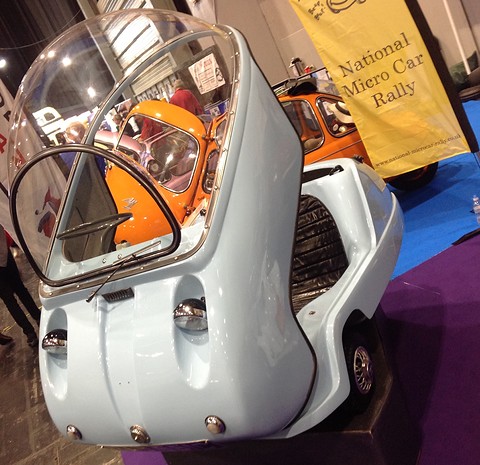
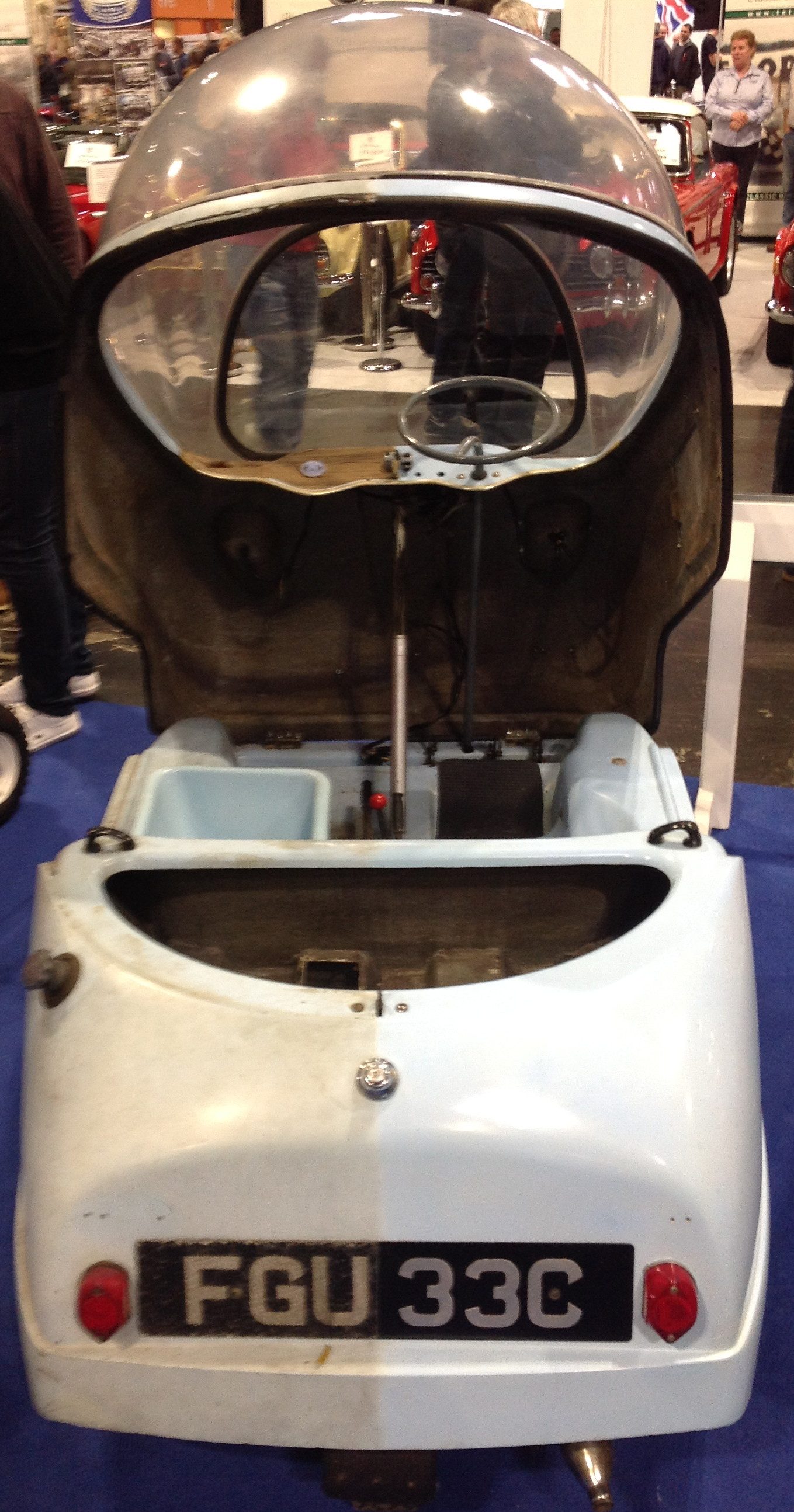
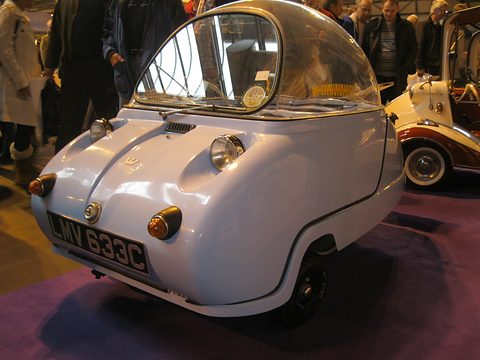
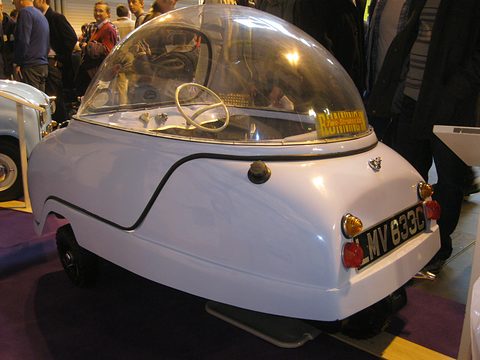
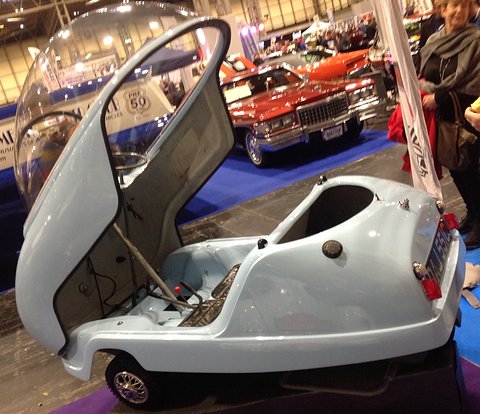
Pale blue bubble car with its dome and front panel hinged up, the seat visible inside.
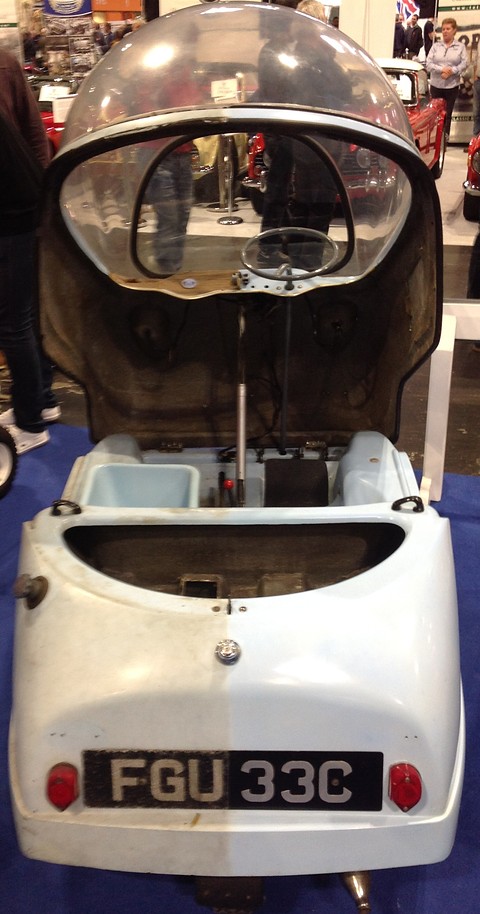
The pale-blue Trident DAJ 551C with its dome raised at the NEC in 2018: the whole bubble swings up and forward.Photo: andreboeni, CC BY 2.0, via Wikimedia Commons
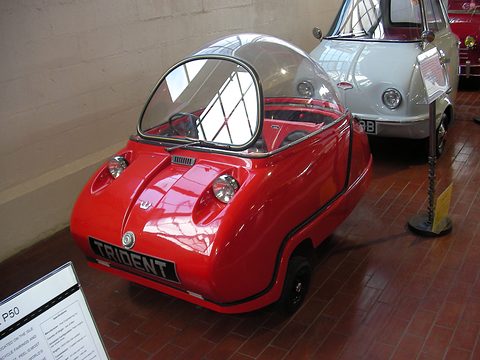
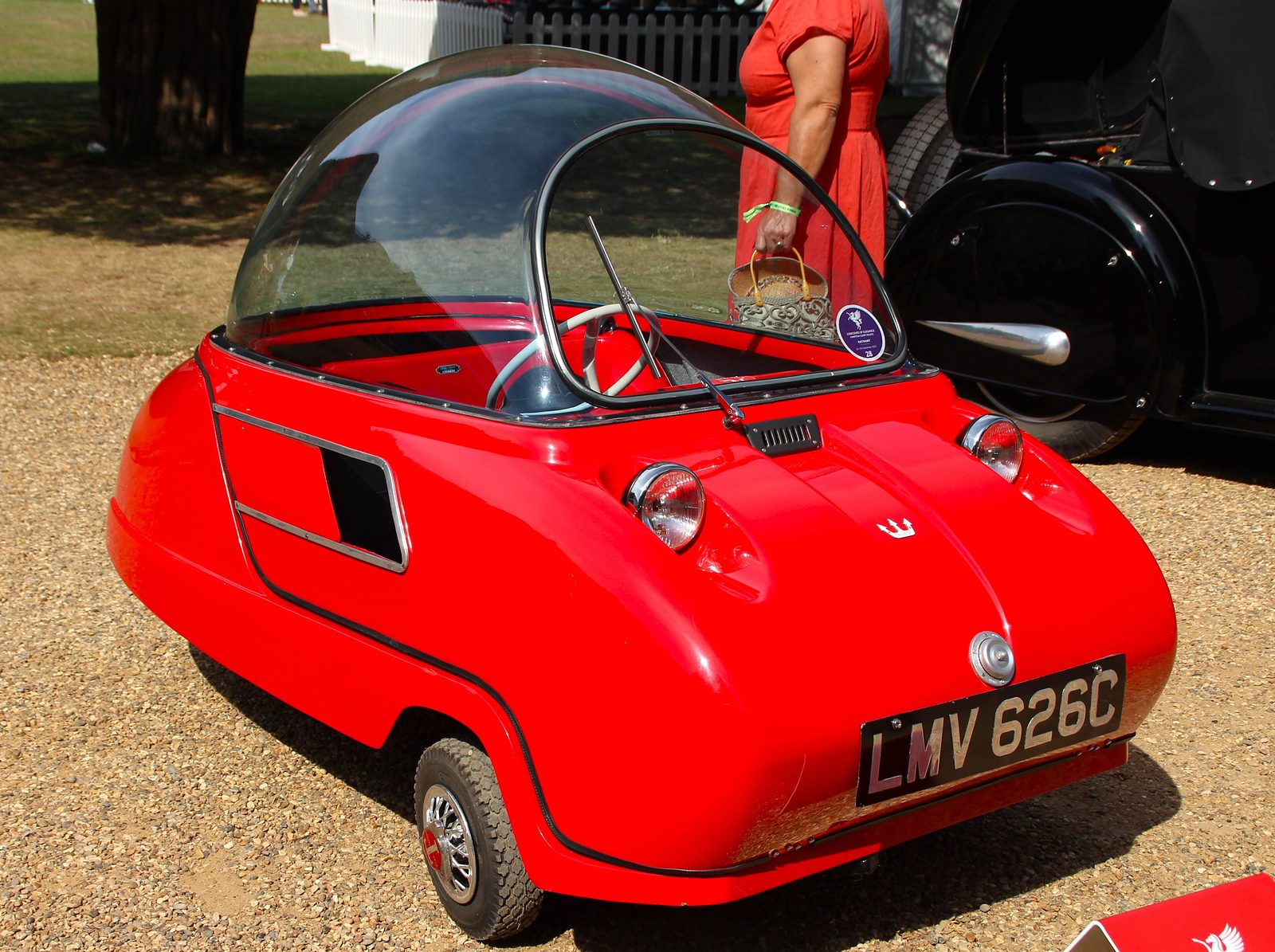
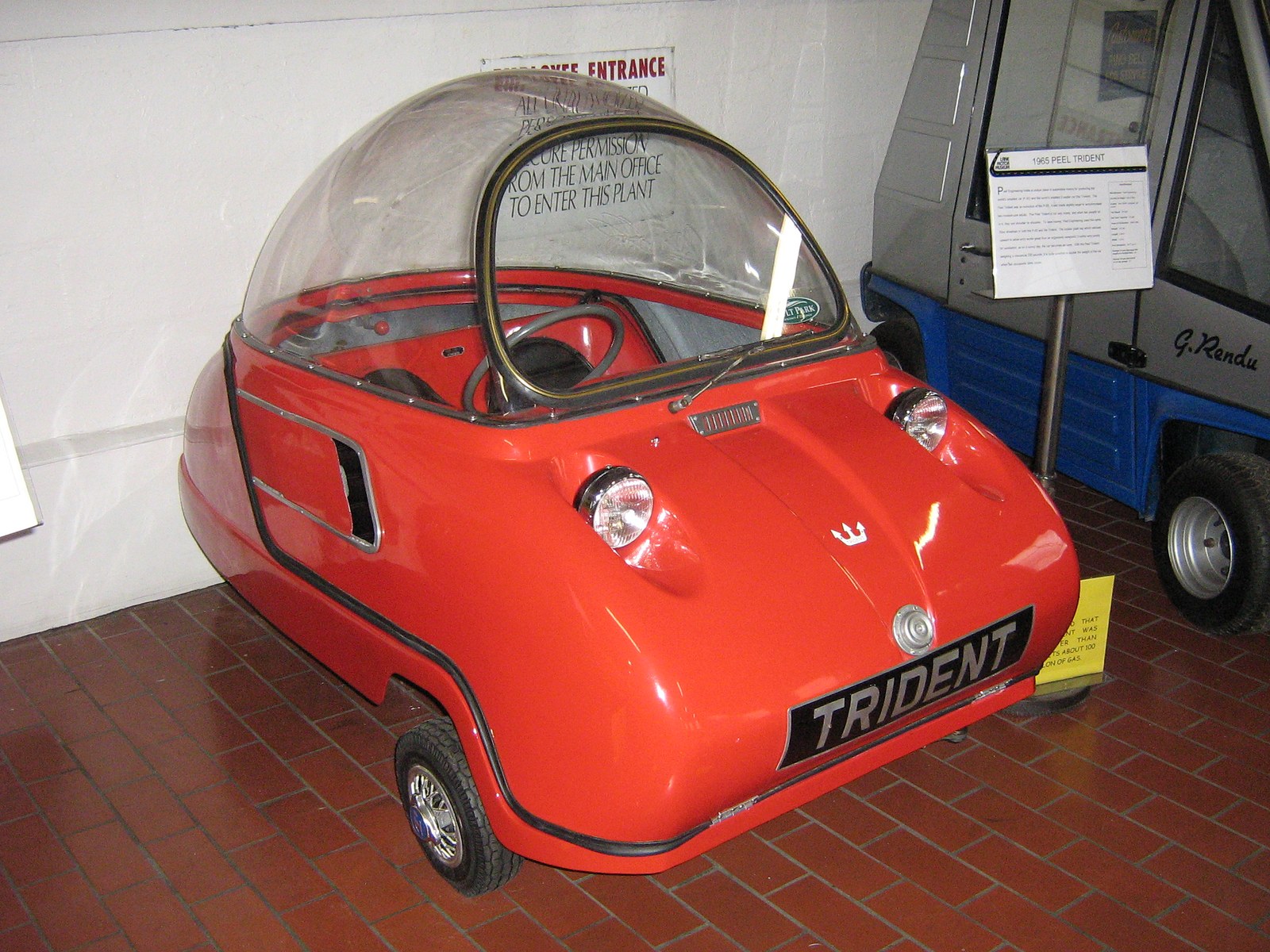
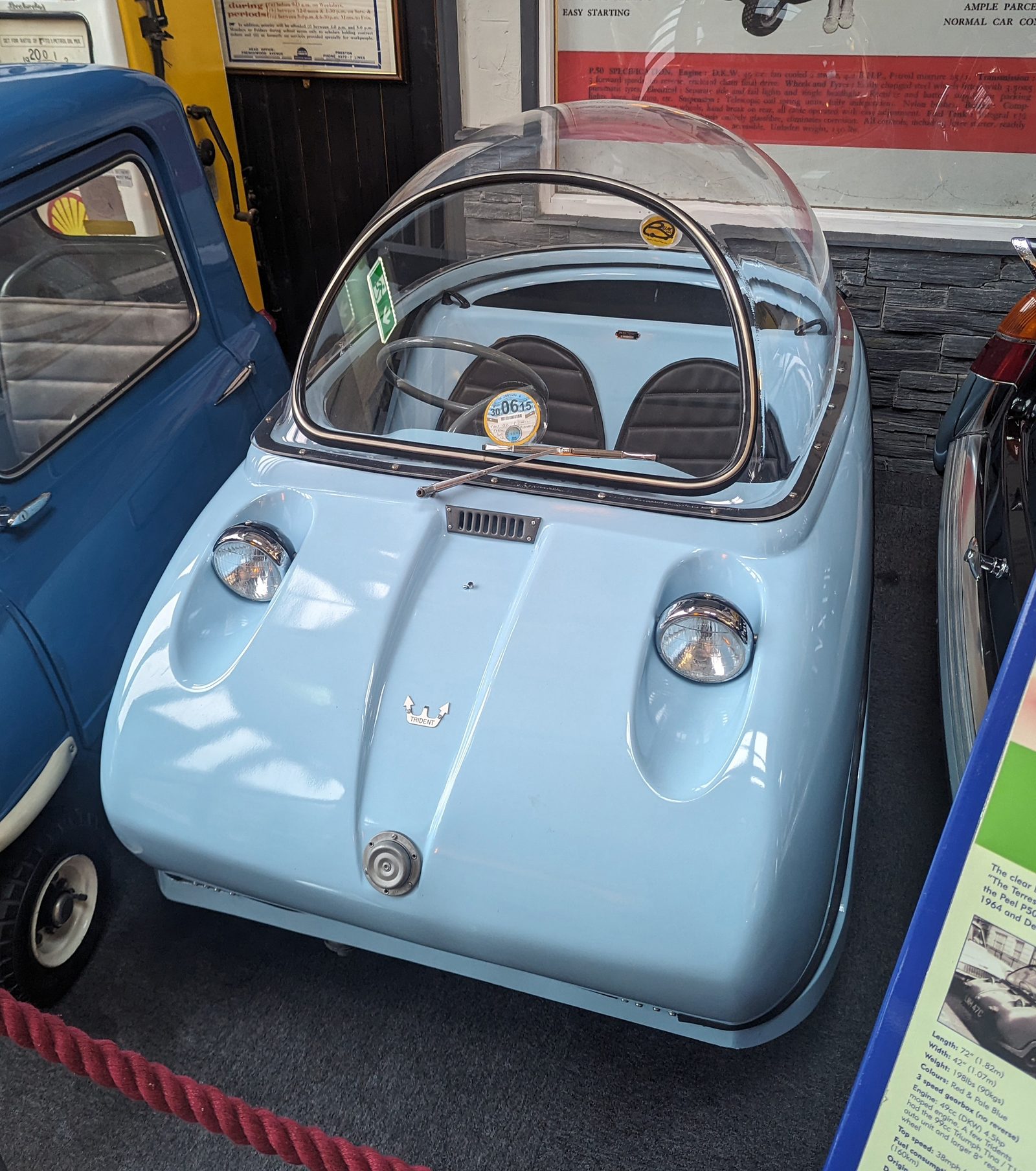
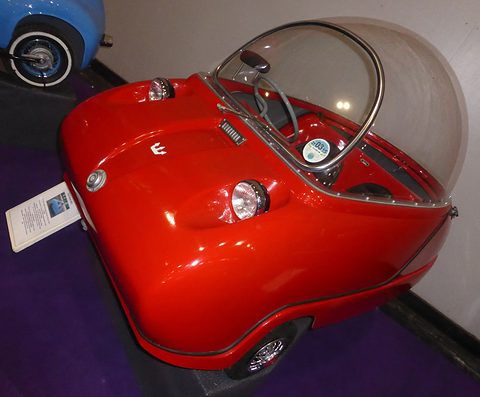
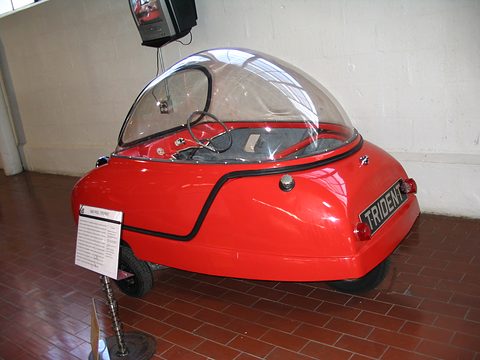
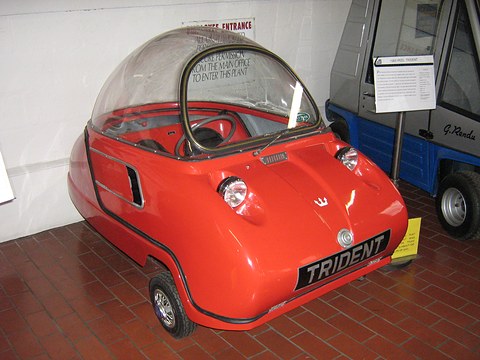
Red bubble car with its dome closed on a tiled floor, a pale microcar behind.
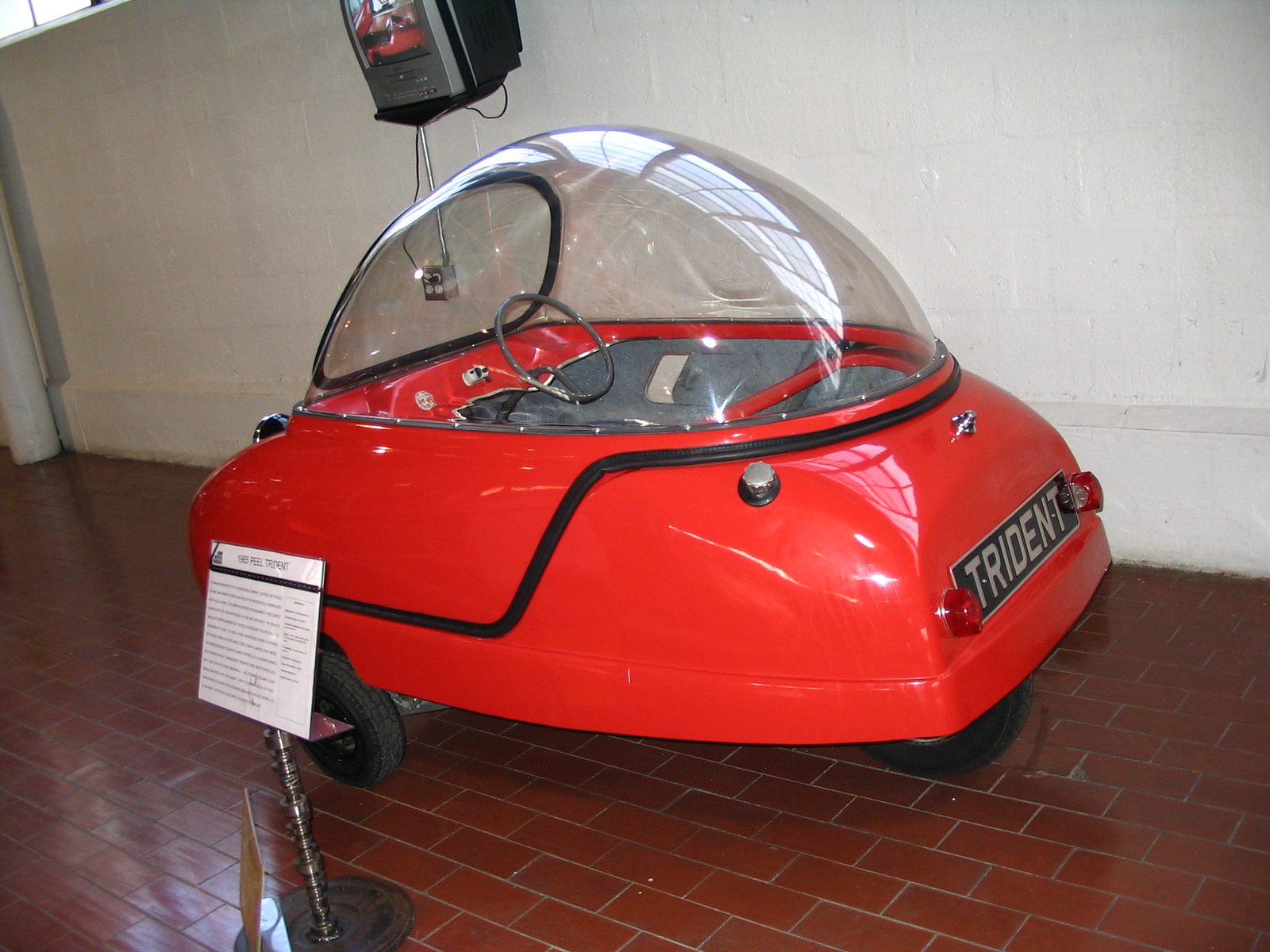
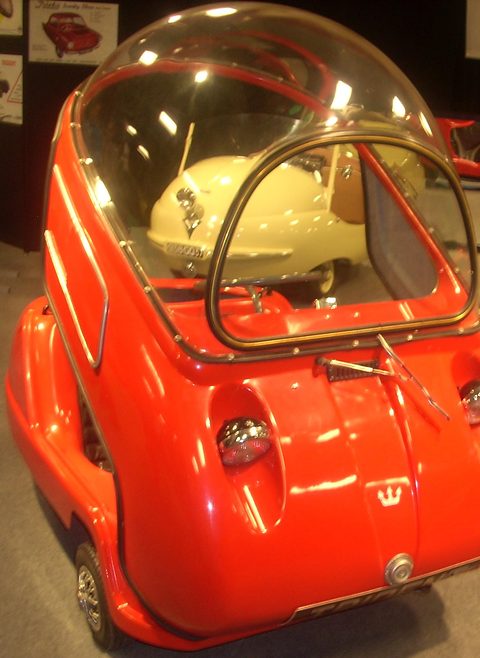
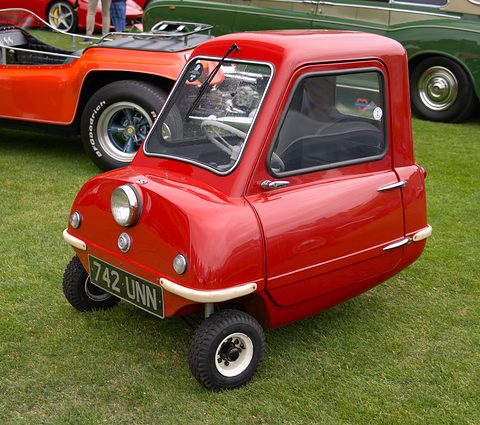
The Lane Motor Museum’s red 1965 Trident in Nashville in 2007.Photo: David Hunter, CC BY 2.0, via Wikimedia Commons
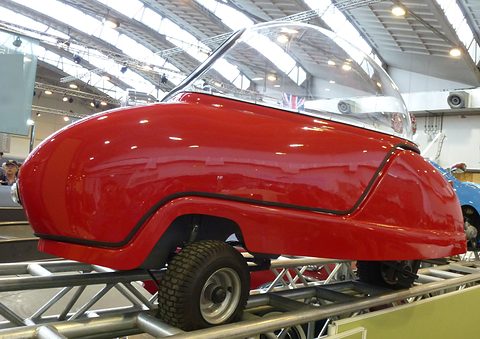
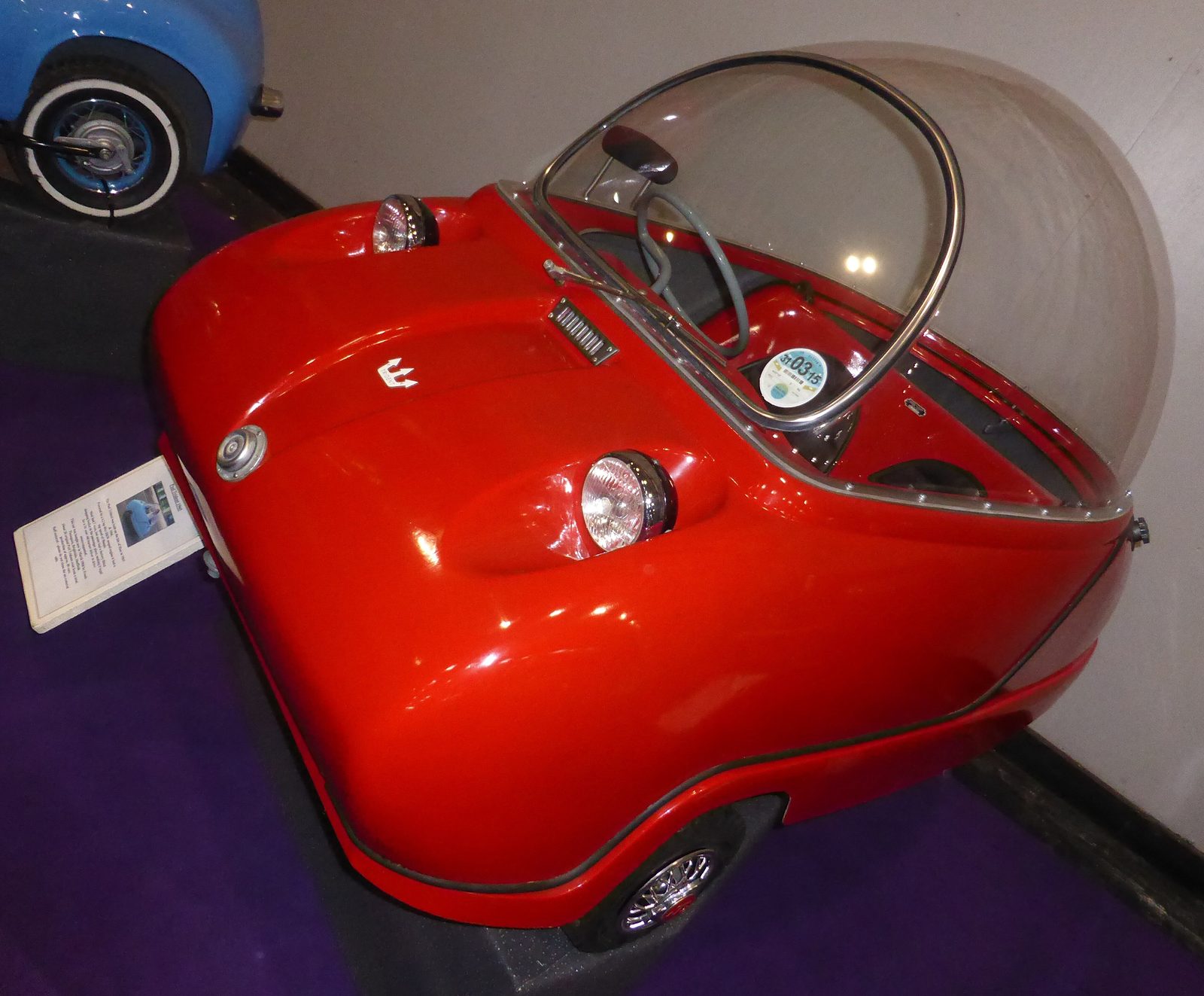
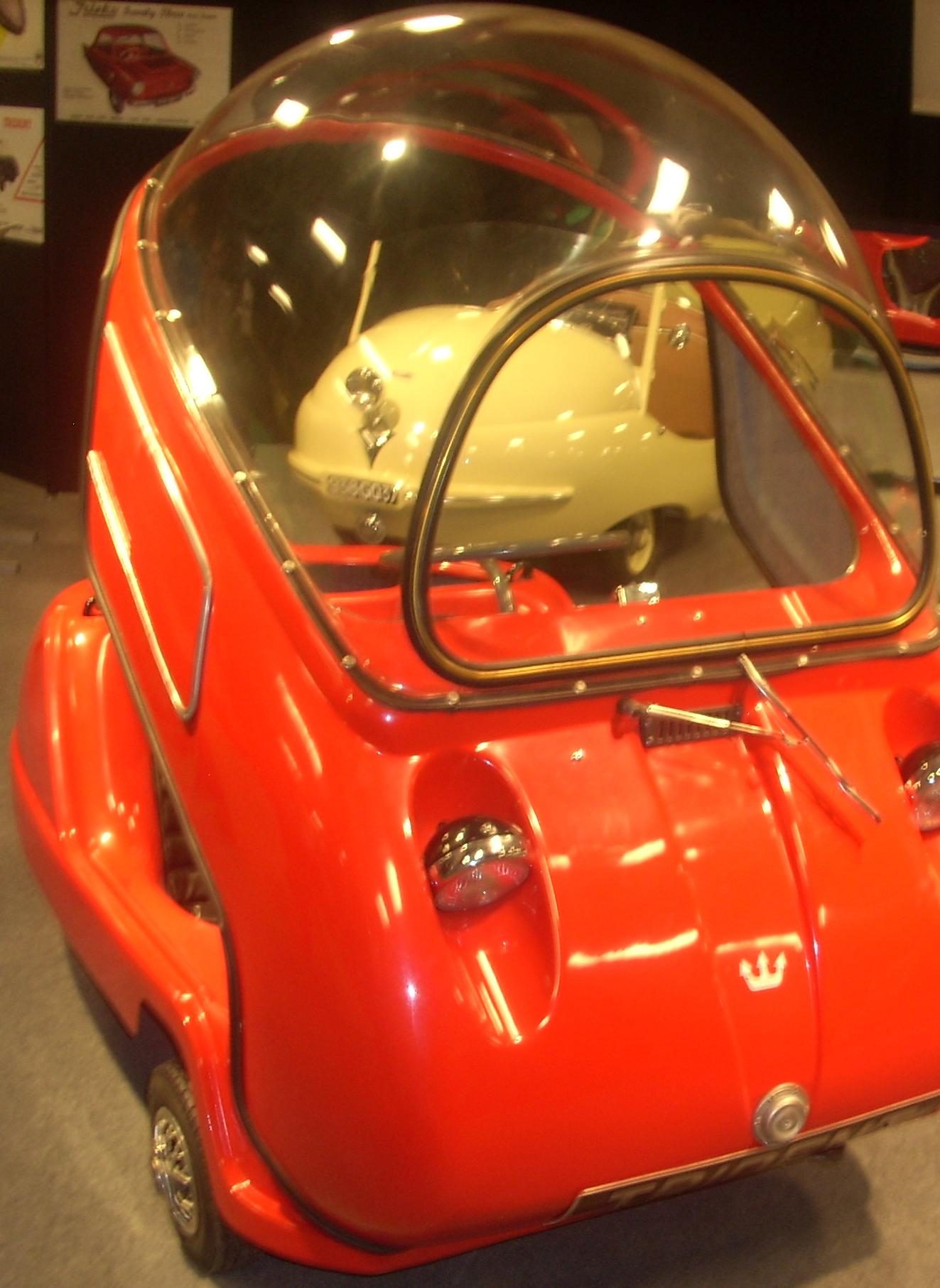
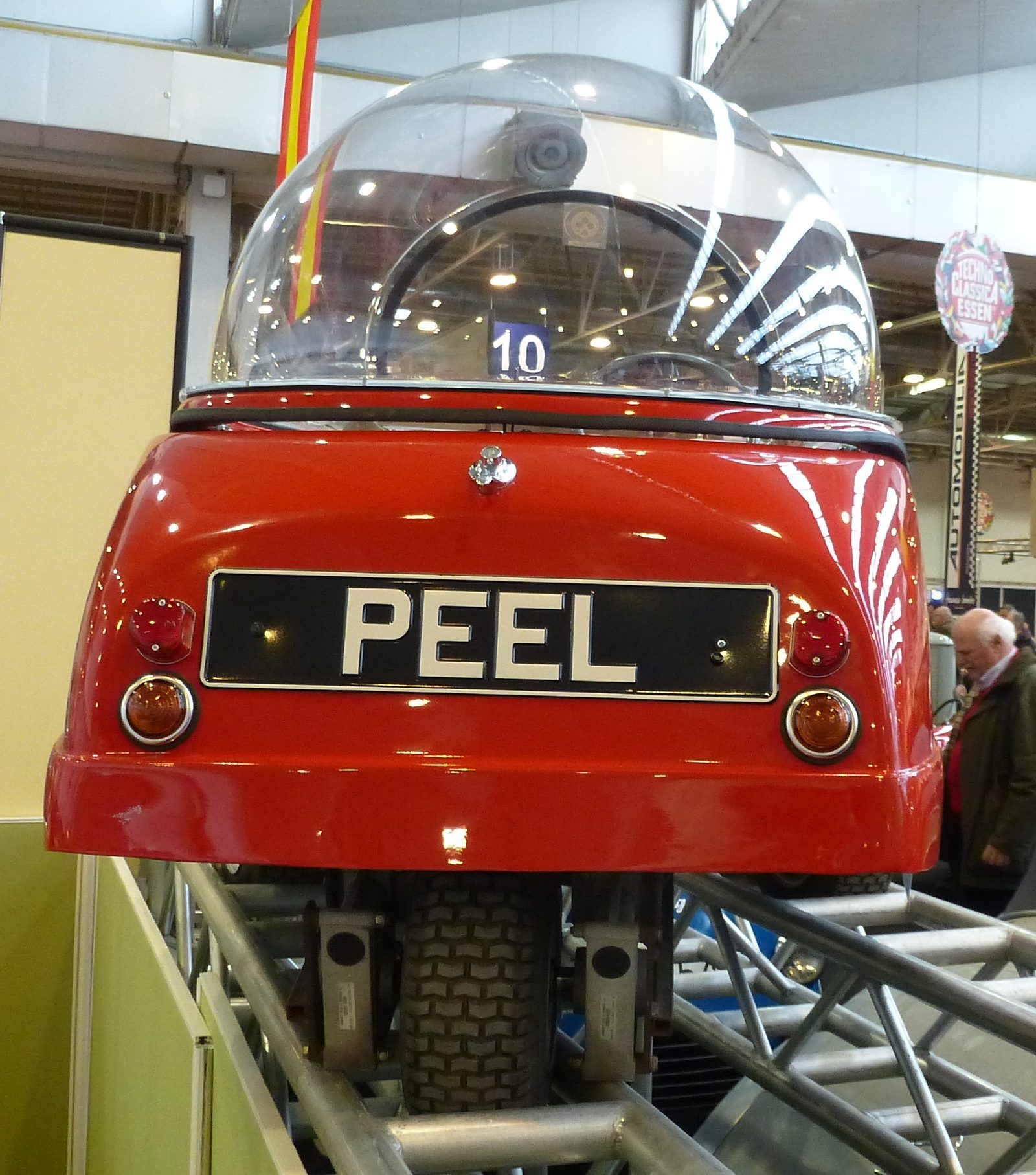
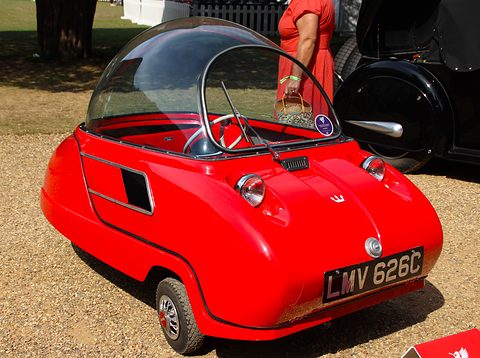
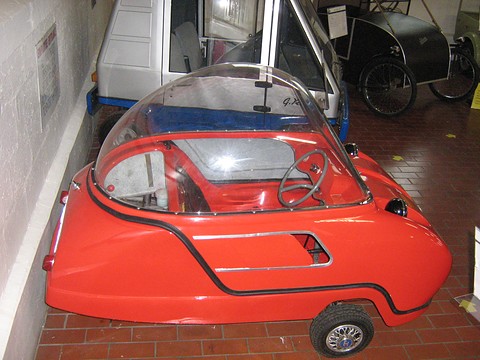
Red bubble car side-on on a metal ramp under an exhibition-hall roof.
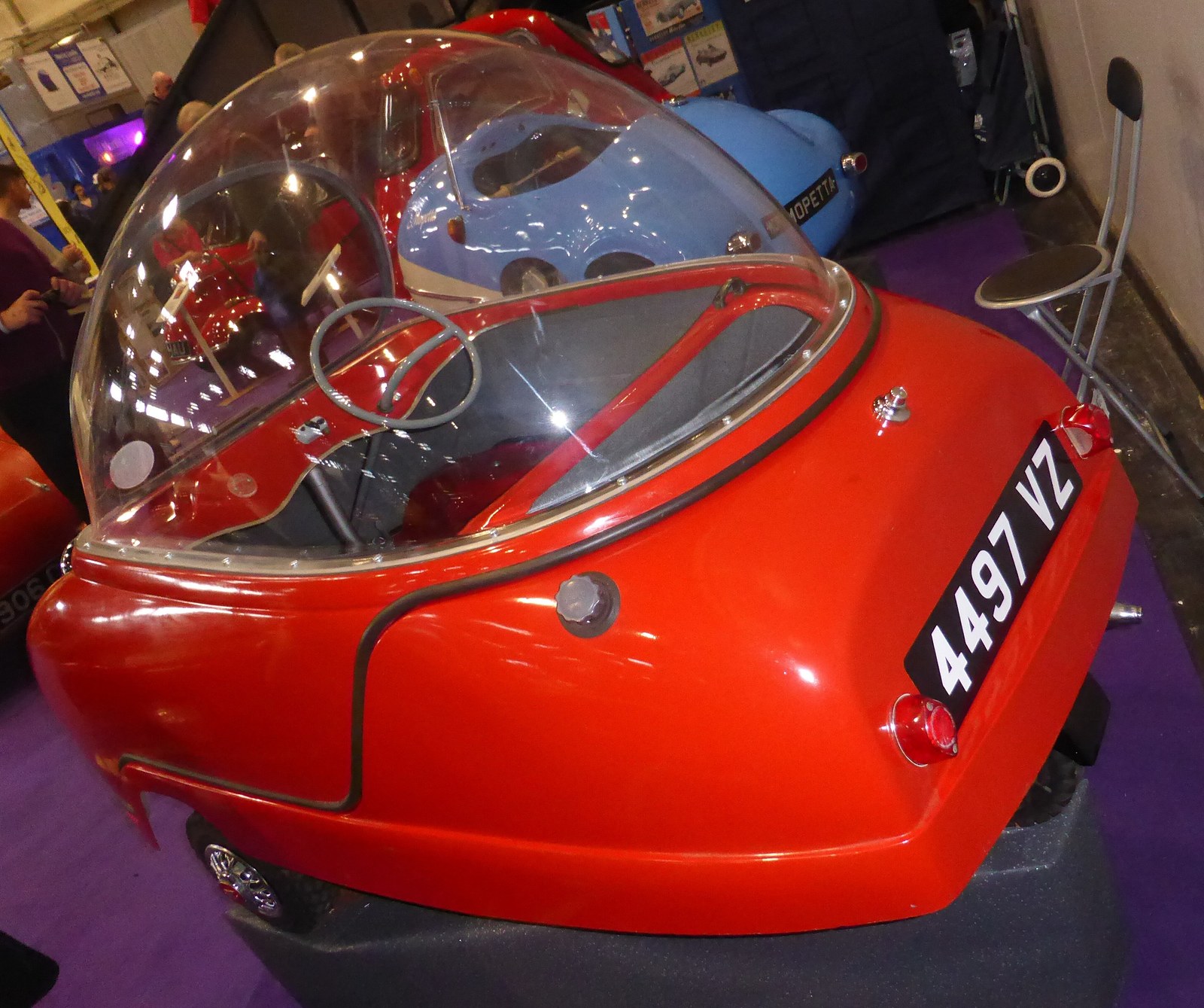
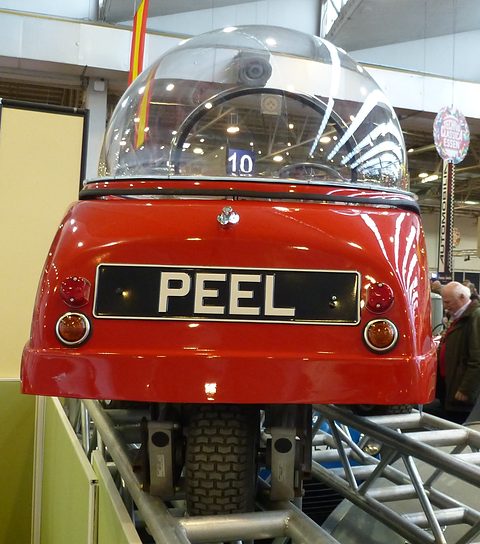
A Trident built by the revived Peel Engineering, on show at Techno-Classica, Essen, in 2018.Photo: Buch-t, CC BY-SA 3.0 de, via Wikimedia Commons

Pictures

More photographs, old and new

Variants

Two engines, one offer and a revival

The Trident family
VariantYearsWhat differsHow many
Trident1965–⁠1966Bubble-top two-seater with the P50’s 49 cc Zweirad Union engine and three-speed gearboxAbout 39, by our subtraction
Trident with Triumph Tina enginec.196698 cc Tina scooter engine of 6.5 hp, automatic belt driveThe last 6
Trident electric1966Offered with a 12-volt electric motor and a range of 65 kmNot known
Revival Trident2011–Hand-built to order by Peel Engineering Ltd in petrol and electric formsAbout 10 a year around 2018–⁠19

Specification

The 49 cc Trident, 1965–⁠66, unless noted

Engine and drive

Engine and drive
EngineZweirad Union (DKW) 49 cc single-cylinder two-stroke, air-cooledsource 3source 5The Lane Motor Museum calls it a twin, wrongly; the last six had a 98 cc Triumph Tina engine (99 cc in English Wikipedia)
Power4.2 hp (3.1 kW)source 3source 56.5 hp in the Tina-engined cars
GearboxThree speeds, manualsource 3Automatic belt drive in the Tina-engined cars
LayoutRear engine, rear-wheel drivesource 3
StartingPull start; magneto ignition; 6 Vsource 4

Body and chassis

Body and chassis
BodyGlass-fibre monocoque shell; a clear bubble top that ratchets up and forward, and no doorsource 3source 4source 5The Weiner museum says it shares the P50’s chassis; English Wikipedia calls it an all-new design
SuspensionCoil springs, undampedsource 3source 4
Brakes and steeringCable brakes; direct steeringsource 4
Wheels3.50 × 5 insource 4
SeatA 79 cm (31 in) benchsource 3Or one seat and a detachable shopping basket

Dimensions

Dimensions
Length1,854 mm (73 in)source 3source 51,830 mm by the Weiner museum
WidthAbout 991 mm (39 in) or 1,070 mm; the sources disagreesource 3source 5source 41,070 mm is the Weiner museum’s figure
Weight150 kg (330 lb)source 3source 590 kg by the Weiner museum
Fuel tank2.5 gallonssource 5Imperial or US gallons, the American source does not say

Performance and running

Performance and running
Top speed45 km/h (28 mph)source 330 mph by the Lane Motor Museum; 75 km/h claimed for the Tina-engined cars
Consumption100 mpg, as advertisedsource 3source 5
Price new£190source 3source 5

How many were built?

Every figure, with its source

About 45 builtAbout 45, the figure of the Weiner museum, which studied the cars, and of the Lane Motor Museum. The two may not be independent, but nothing better has been published; no chassis register exists in print.

  1. about 75TridentsUnconfirmed

    P50CARS, a maker of replicas, without explanationsource 8

  2. about 45Tridents, the last six with Tina enginesTwo sources agree

    The Weiner museum and the Lane Motor Museumsource 4source 5

  • Two sources agreetwo good sources give the figure
  • One sourcea good source, alone
  • Unconfirmeda lead only, not yet checked

Famous for

Three points

  1. A dome for a door

    The clear bubble top lifts up and forward; there is no door at all.

  2. Smallest for two

    The Lane Motor Museum calls it the world’s smallest two-seater car.

  3. Cheaper than walking

    Peel’s line for the P50 served again, with 100 mpg advertised and a price of £190.

Survivors and collecting

Today

Few Tridents survive, says the Weiner museum, and nobody has published a count.source 4 A 1965 Trident belongs to the Lane Motor Museum, Nashville.source 5 The Weiner museum’s own Tina-engined car was sold with the rest of its collection by RM Auctions in February 2013.source 4source 10 The Peel Owners Club looks after original Tridents and faithful replicas.source 3

Sources

Numbered as in the text

No period road test was read, and The Motor Cycle’s show report of 1964 is known only through English Wikipedia. Sources are given as plain text; the links are on the Credits page.

  1. English Wikipedia, Peel Engineering Company, read. Used as a lead; it cites Oldtimer Markt 4/2016.
  2. Grace’s Guide, “Peel Engineering Co”, read in full.
  3. English Wikipedia, Peel Trident, revision of 21 September 2025, read in full. Used as a lead; it cites The Motor Cycle of 10 November 1964, Time (2007) and the Lakeland Motor Museum.
  4. Bruce Weiner Microcar Museum, “1966 Peel Trident”, tour page, archived about 2015, read in full.
  5. Lane Motor Museum, “1965 Peel Trident”, collection page, read in full.
  6. Bruce Weiner Microcar Museum, “1964 Peel P50”, tour page (2009), read in full.
  7. Autocar, “New Peel P50: a drive in the world’s smallest car”, 2019, read in full from the archived copy.
  8. P50CARS (a replica maker), “History & Heritage”, read in full; promotional.
  9. Isle of Man Today, “Video shows world’s smallest cars return to the Isle of Man for this weekend’s rally”, 2 August 2024.
  10. RM Auctions, the Bruce Weiner Microcar Museum sale, Madison, Georgia, February 2013, “1964 Peel P50”, chassis D535.