France’s other small cyclecar makers
French cyclecars: the minor makers
1913–1936 · France · 13 makers
Also known as Hélica, Hélicocycle (the prototypes), “L’avion sans ailes”, the plane without wings
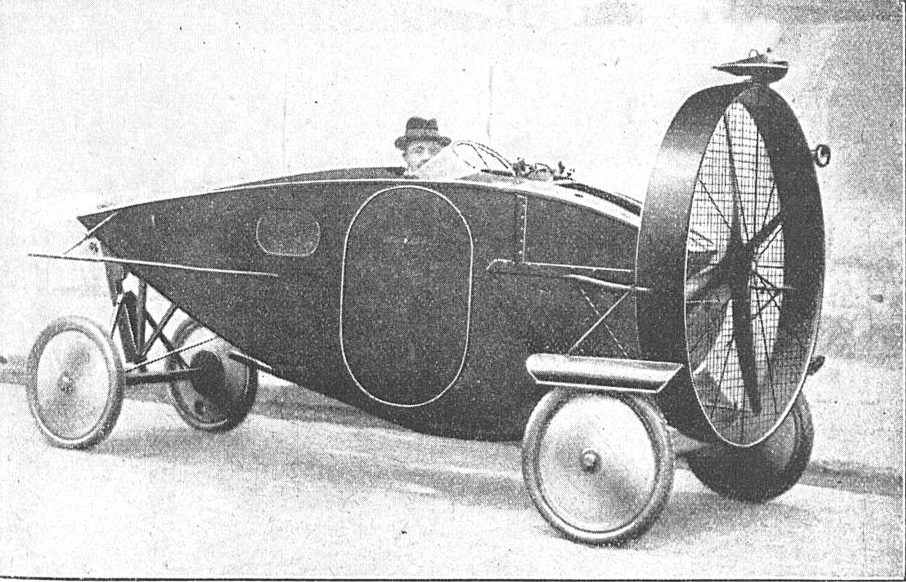
No clutch, no gearbox, no differential: just an engine at the front turning a wooden propeller, and a plywood fuselage on four wheels behind it, steered from the back. Marcel Leyat, an aviator, believed this was how the road would be travelled, and he built about two dozen to prove it.
The spec plate
Leyat Hélica
Hélica, sport and saloon · Paris
Not yet recordedpower, length and weight.
True proportion
Length unknown
No reliable length has been found. The Fiat 500, the Peel P50 and the adult stay, so the gap is shown, not hidden.
The French microcars on the road in 1913, on the same 3.5 m scale. Lengths of cars without a page yet come from the census and are unverified.
Peugeot Bébé1905–1916 · France
2.62 mLeyat Hélica1913–1926 · France
length unknownHistory
In 1919 a Gaumont newsreel filmed an Hélica driving down the Champs-Élysées.source 1 The French called it l’avion sans ailes, the plane without wings.source 2source 3 Its maker, Marcel Leyat, was born on 26 March 1885 at Die, in the Drôme, and trained as an engineer at the École centrale in Paris, graduating in 1911 by French Wikipedia’s date or 1907 by English Wikipedia’s.source 2source 3 From 1908 he worked for the Société Astra and built gliders; the second, towed by a 5 hp De Dion, flew 200 m at a height of 10 m on 15 August 1909. In 1910 came a propeller biplane 11 m long with a span of 16 m, and in 1911 his pilot’s licence. Some thirty aircraft designs followed, up to the Second World War (more in aircraft makers).source 2source 1 He was convinced that propeller drive was the future of road transport: with no transmission, a car would be lighter, simpler and more economical.source 4source 2
His first propeller car, in 1913, was a three-wheeler with a JAP engine, and the Lane Motor Museum says he tested it extensively.source 4source 2source 1 A second Hélicocycle, of 1914 or 1915, went with him to the front in the First World War, its window lettered for the 1st artillery regiment.source 1source 2
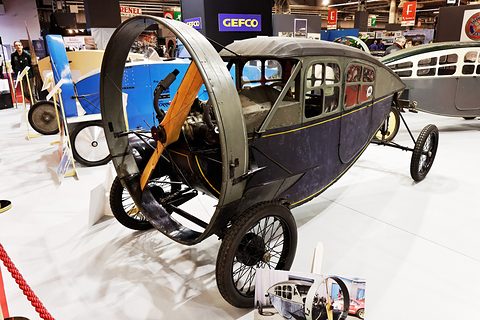
The Hélica, a propeller-driven cyclecar, went on sale in 1919, with four wheels and a MAG engine, and six were built.source 2source 1source 4 Its body was a plywood monocoque shaped like an aircraft fuselage, without wings or mudguards, and its two occupants sat one behind the other, as in an aeroplane. The front axle was streamlined, and the wheels were Leyat’s own spokeless “Cricri” discs, two sheets of aluminium riveted to a rim.source 4source 2source 3source 5 The propeller, two-bladed and 1.4 m (4 ft 7 in) across, turned inside a guard ring and drove the car directly.source 6source 4 The touring cars reached 80 km/h (50 mph) and used 6 litres per 100 km (47 mpg).source 4source 6source 2
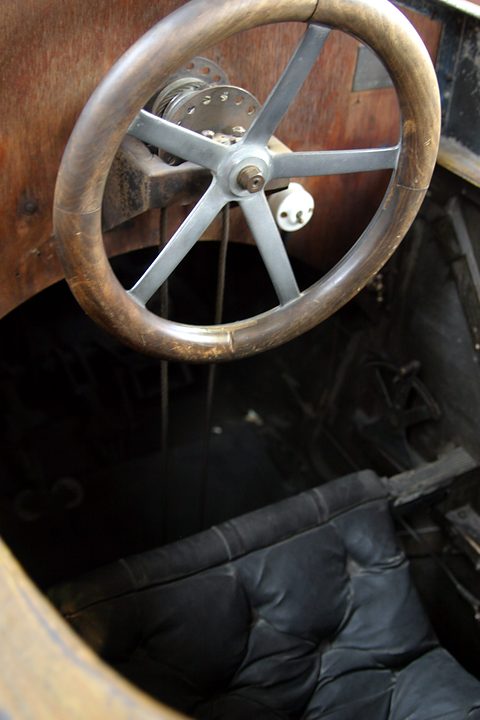
The controls were reversed too. The front wheels did the braking and the rear wheels the steering, worked by cables; the rear axle was inclined, so that in a turn the inner wheel lifted and the body leaned into the bend.source 2source 3source 7source 5 The engine was started from the cockpit, by a boxwood handle and an engaging lever.source 7 La Science et la Vie explained the voiture à hélice tractive, the car pulled by a propeller, to its readers in the autumn of 1920.source 3
La direction se fait par l’essieu arrière, et le freinage s’opère sur les roues avant du véhicule.
For 1921 there were two new models with the ABC Scorpion flat-twin: an open sport, of which three were built, and a conduite intérieure, an enclosed saloon, of which ten were.source 2source 3 Leyat showed the car at the Paris Salon in October 1921 and claimed 600 enquiries, but he never found the money for production on a large scale.source 4 A works photograph shows three Hélicas together in the Leyat shop, which the association that keeps his memory calls a tenth of all production.source 1
In 1922 Leyat moved to Meursault, in the Côte-d’Or.source 2 He built one version for rails, with guide wheels for 60 cm (2 ft) Decauville track, and Gaumont filmed it on trial on the Pithiviers–Toury line in 1925; it was meant for the Compagnie minière du Congo français and was reportedly used by its director from Brazzaville.source 1source 2 In 1926 a 1921 sport was modified, losing its stabiliser and gaining a vertical rear damper and a new exhaust.source 1 Production ended around 1925–27.source 4source 6
The last of the line was a three-wheeled record car with an ABC engine. The association says it was tried at Montlhéry in 1927 and reached 170 km/h (106 mph) on 6 litres per 100 km, and French Wikipedia dates the run to 7 September 1927.source 1source 2 Grace’s Guide repeats the figure without a source. No period report, timekeeper’s figure or record class has been found to confirm it (more in records and feats).source 8
The car’s best witness was an owner. Gustave Courau drove his Hélica all over France from 1921 to 1930, wrote two books about it, and in 1930 or 1931 gave it to the Conservatoire national des arts et métiers in Paris, where it is still shown.source 2source 7 It still carries traces of its last job, advertising “Gellicyne” cream for hands and face.source 7 His memoir, Mon hélice au pays des merveilles 1921–1930, appeared in 1979 and brought the car back to notice; the association Les Amis de l’Hélica now promotes Leyat’s work and has built cars from his original plans.source 2source 1
Leyat himself kept designing aircraft; in 1933 Lioré et Olivier built one of his “living wing” designs.source 2source 1 In 1927 he also devised a way of teaching music, with a new notation and a piano keyboard, which he presented to Maurice Ravel. He died on 3 December 1986, aged 101.source 2
1932 · a record on this page
The Helicron (sometimes misspelt “Helicon”) is a French propeller car of 1932, a one-off, and nobody knows who built it.source 9source 10source 11 Its torpedo-shaped open body and its frame are wood. The propeller is at the front, coupled straight to the crankshaft, so there is no gearbox and no reverse; like the Hélica it steers by the rear wheels, which alone are sprung, and the rear track is narrower than the front.source 9source 10source 11 Lane told Farm Show that the builder turned the chassis back to front, so that the rear wheels would steer.source 11
Its owner put it away in a barn in the late 1930s, around the outbreak of war, and it was found there under rubble in 2000. It was rebuilt keeping much of the original: the frame, the wire wheels, the dashboard, steering wheel and steering gear, the brake pedal, the light switch, the headlamps and the maker’s plate. The original engine had gone, perhaps a horizontally opposed twin, and a Citroën GS air-cooled flat-four now turns a two-bladed propeller about 0.9 m (3 ft) across.source 9source 10source 11 It passed the French roadworthiness test in 2000.source 9source 10
The Lane Motor Museum in Nashville bought it in 2004. Jeff Lane, the museum’s owner, has described it as noisy, poor on hills and fun to drive: it cruises at 48–64 km/h (30–40 mph), struggles to stop on a hill and has no reverse, though it has mechanical brakes on all four wheels.source 11source 10 Jalopnik’s Jason Torchinsky drove it on video in September 2016.source 12 Its length, weight and maker are not known.
1930–1935 · a record on this page
Jean Legeay, of Gennes in Maine-et-Loire, built L’Éclair, “the flash of lightning”, in his own garage in 1930. He made almost everything himself, the propeller included, which he carved by hand; only the air-cooled Indian V-twin of 1,189 cc, the wheels and the gauges were bought in. The engine drove the propeller directly, with no gearbox.source 13
Legeay drove it for five years and kept improving it. He said it ran well, accelerated smoothly and was faster than anything else of its day; the Lane Motor Museum gives 97 km/h (60 mph). Its drawback was its noise, which frightened people, and it was said to chop up chickens that ran in front of it.source 13 In 1935 he gave it up for other business. It hung in an attic until 2004, when it was given to Espace Air Passion, the aviation museum at Angers. The Lane Motor Museum borrowed it in 2005, on the understanding that it would restore the original and build a copy for itself, and finished both in 2015; the car Lane shows is the replica.source 13 Everything here rests on that one museum’s page. The number of wheels and seats, the size and the original’s present home are not recorded.
More photographs, old and new
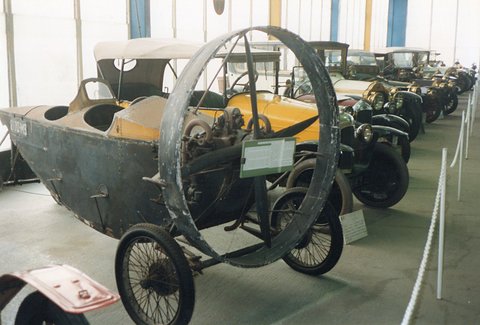
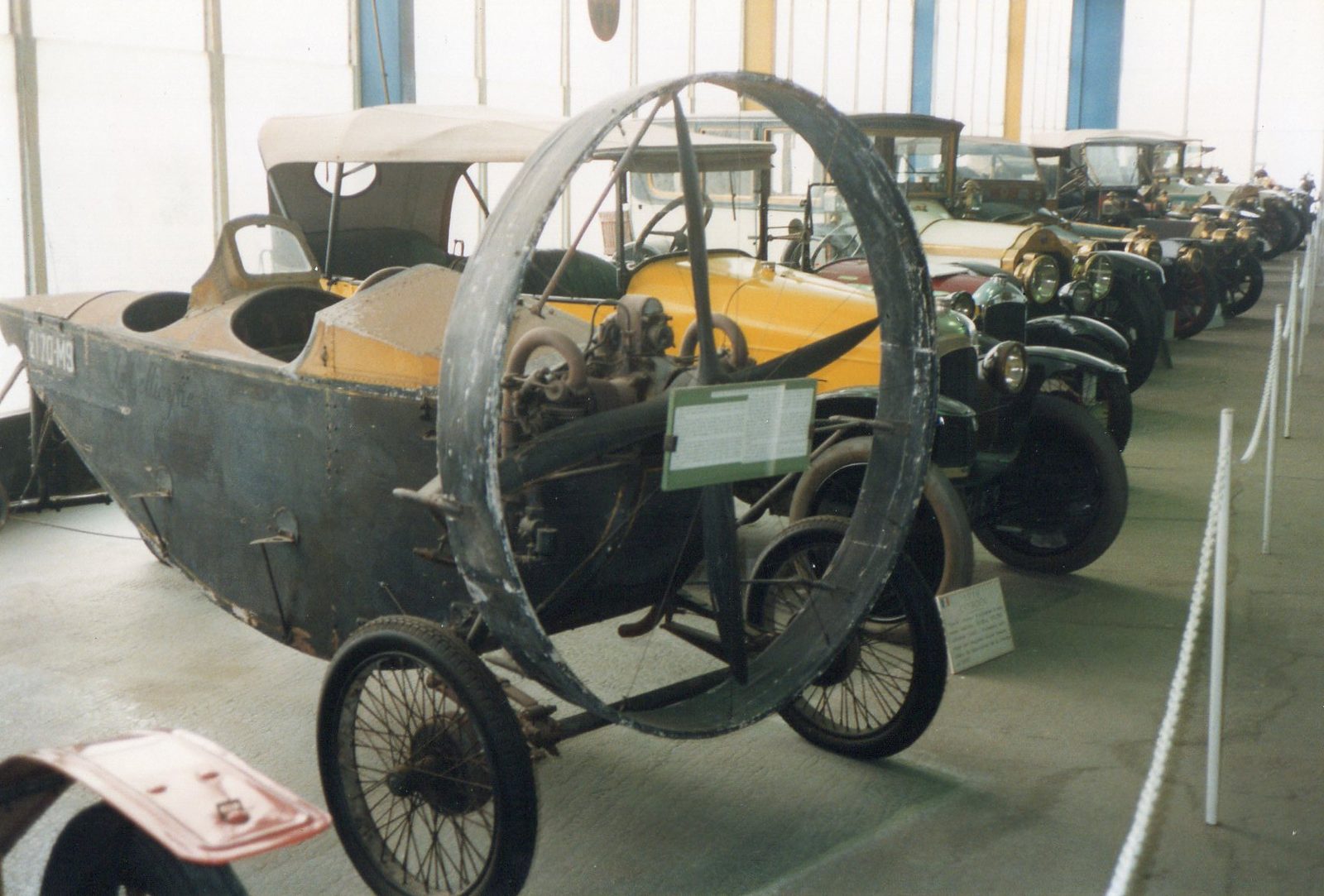
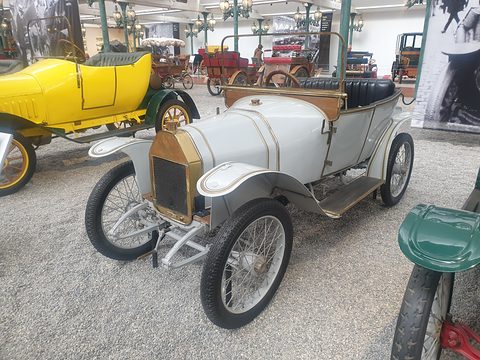
1 Weathered grey Leyat Hélica of the early 1920s, its propeller ring at the front, in a museum line-up of veteran cars.
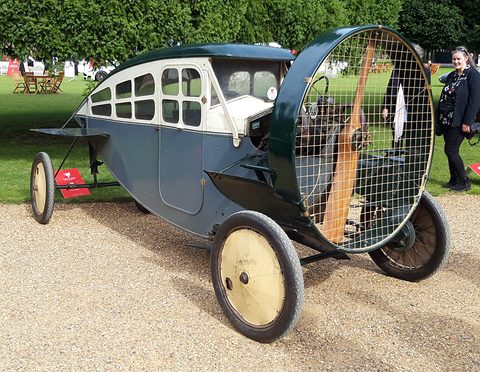
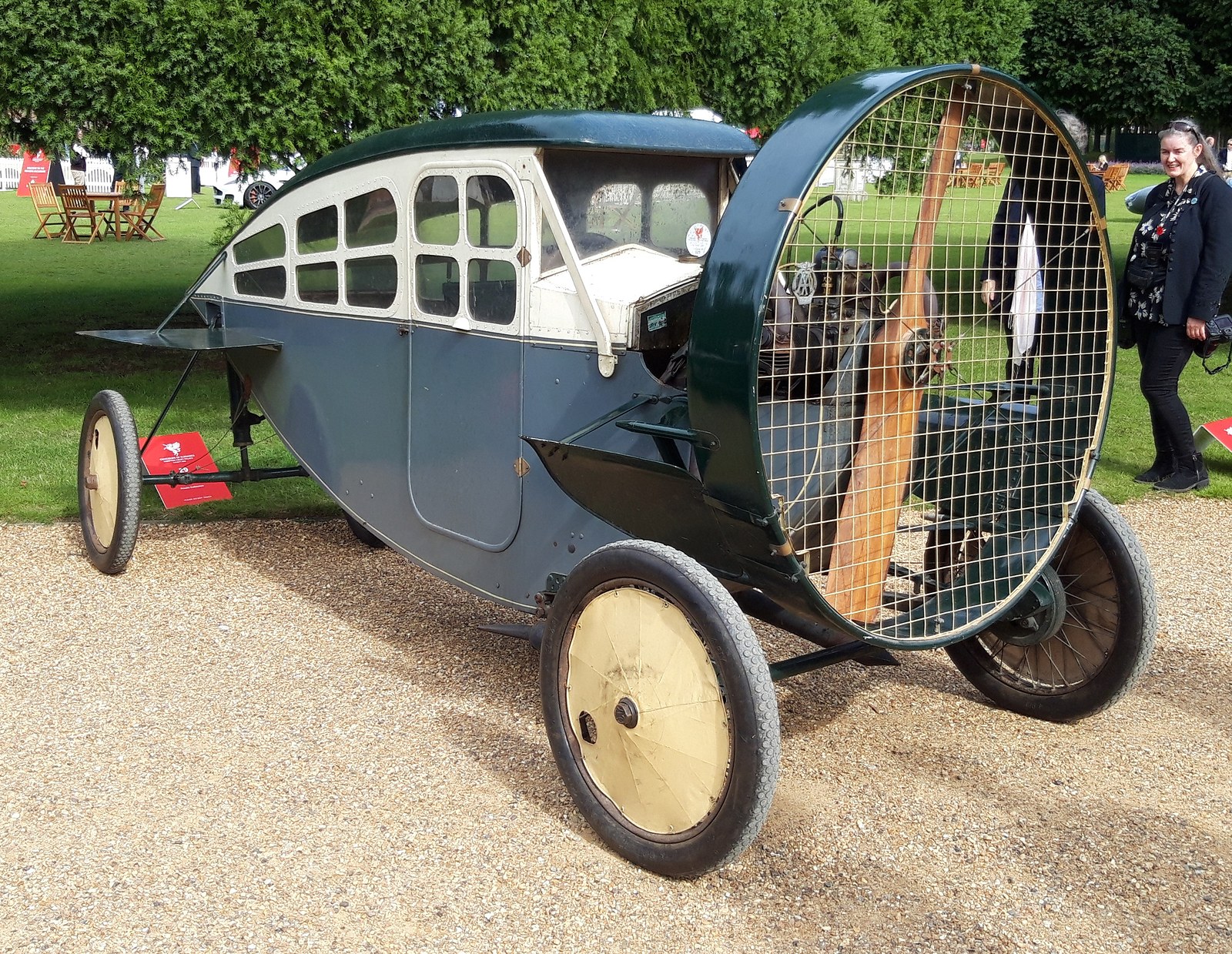
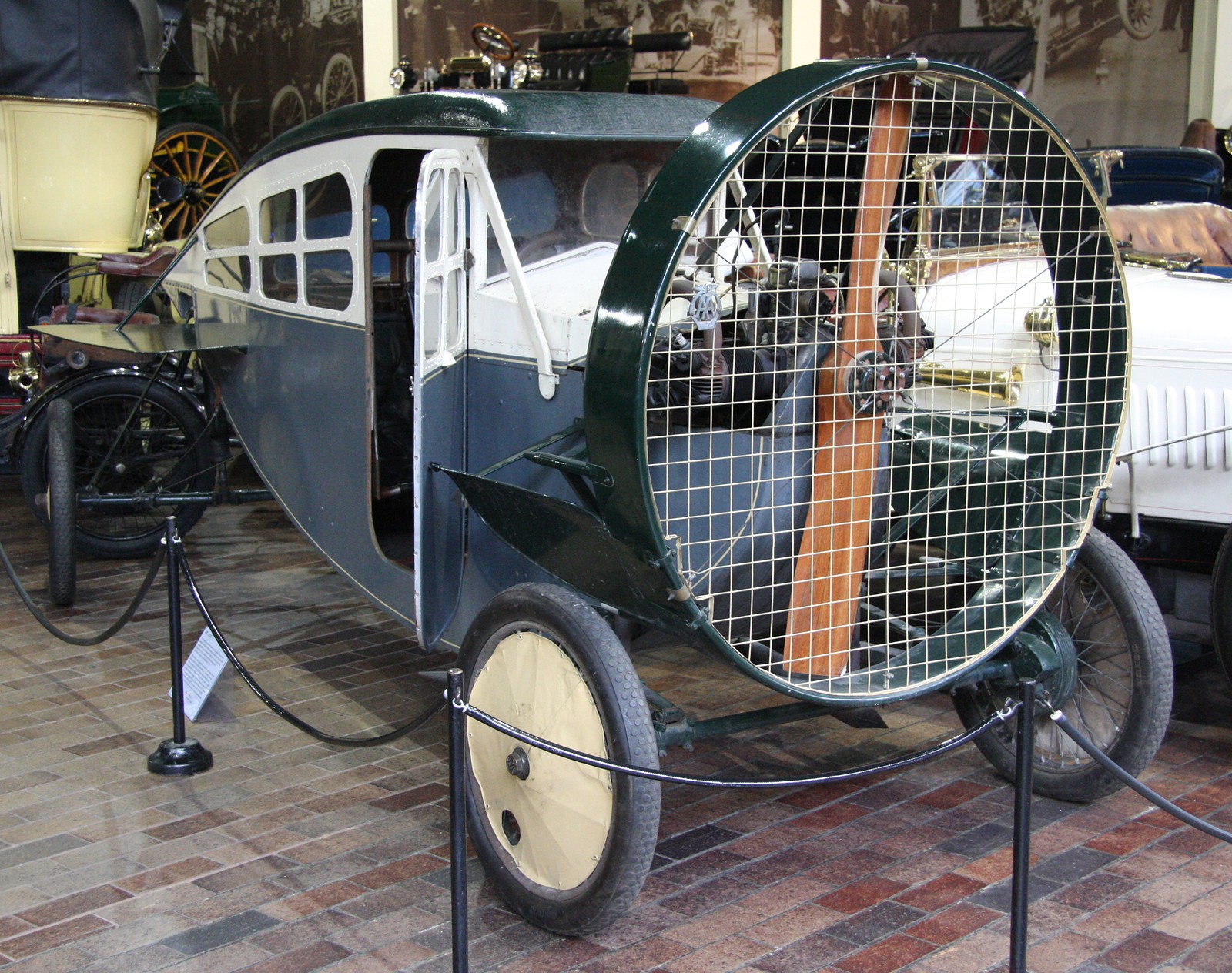
2 Leyat Hélica saloon of 1922 with its green propeller ring at a concours in London in September 2020.
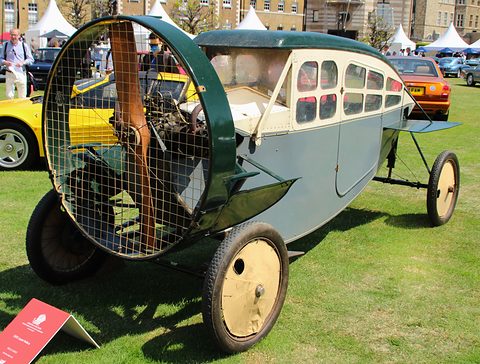
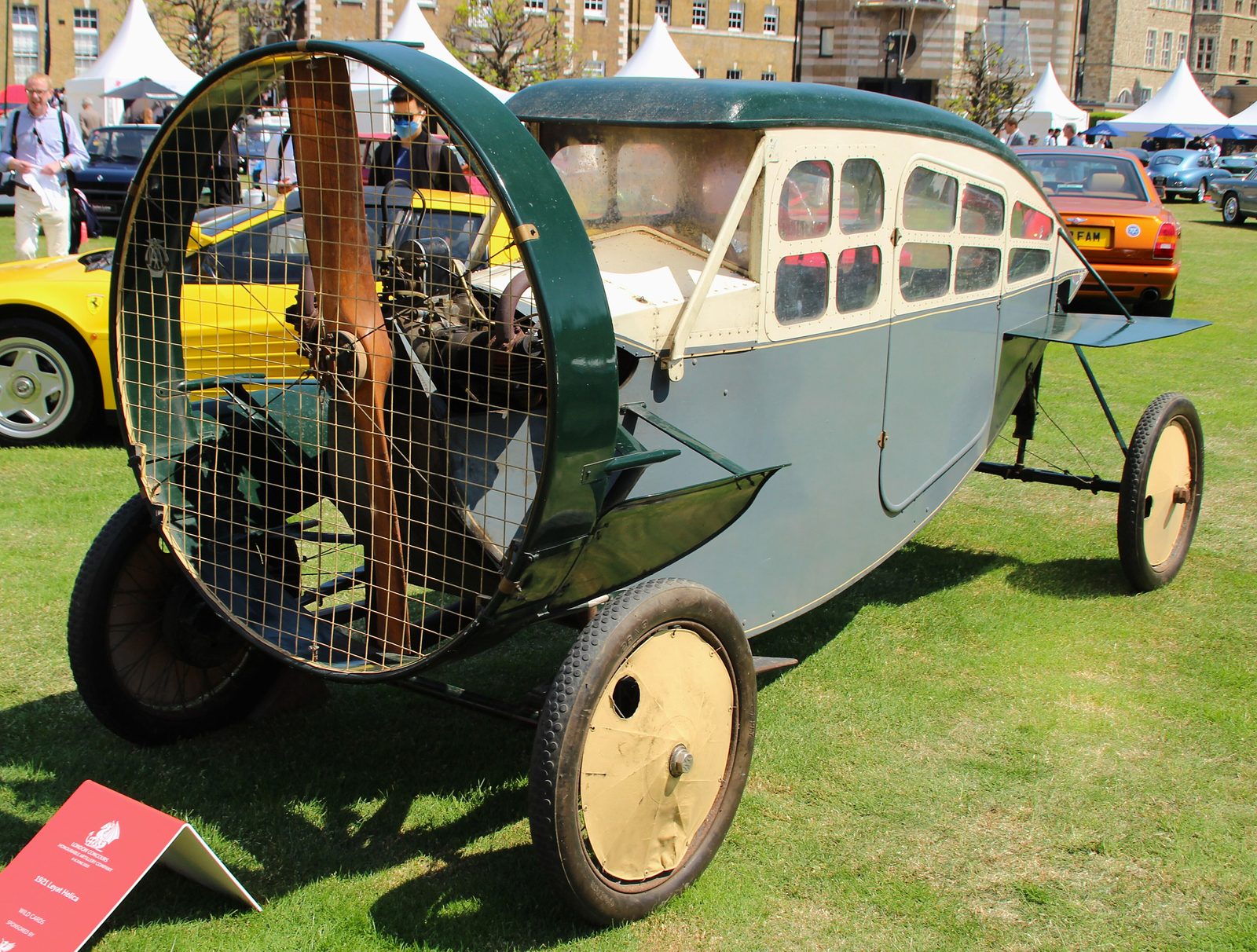
3 Leyat Hélica saloon of 1922 from the propeller side on the lawn at a concours in London in June 2023.
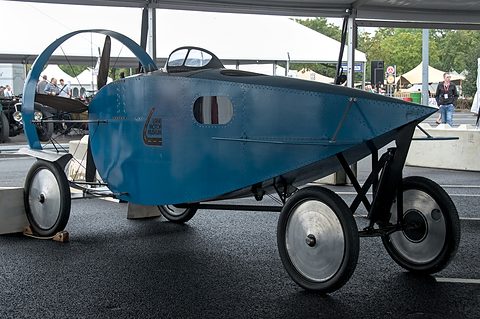
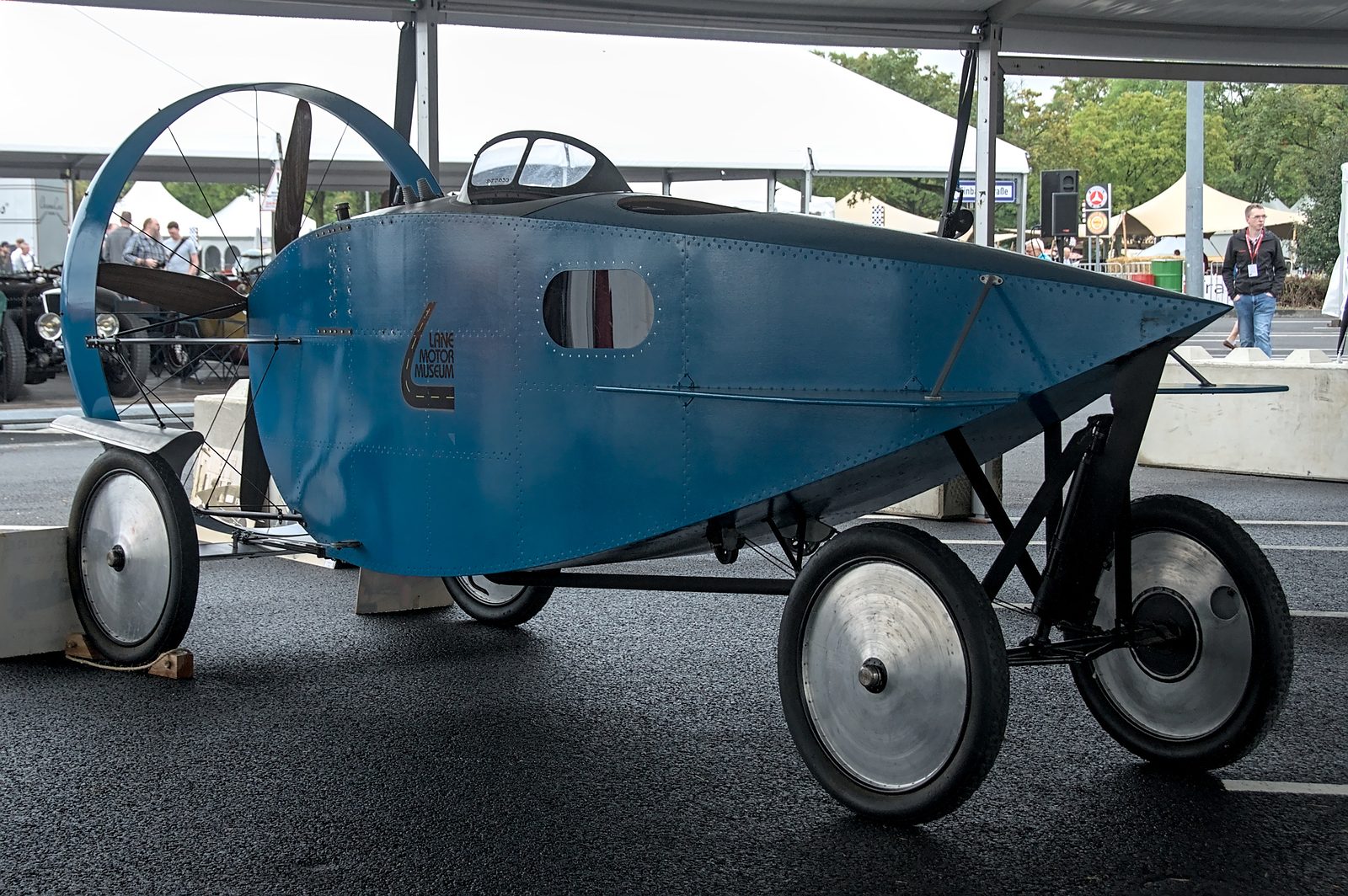
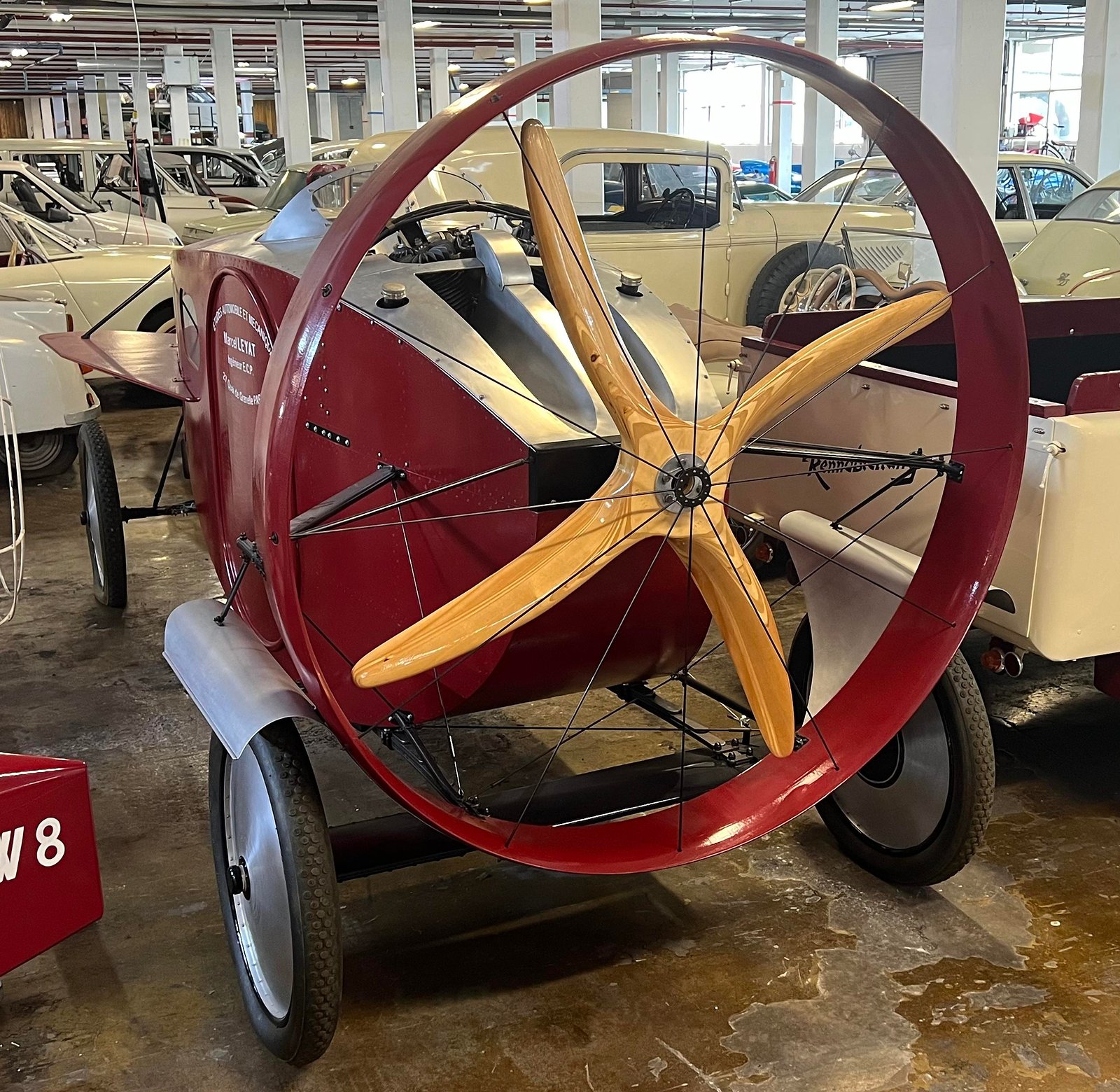
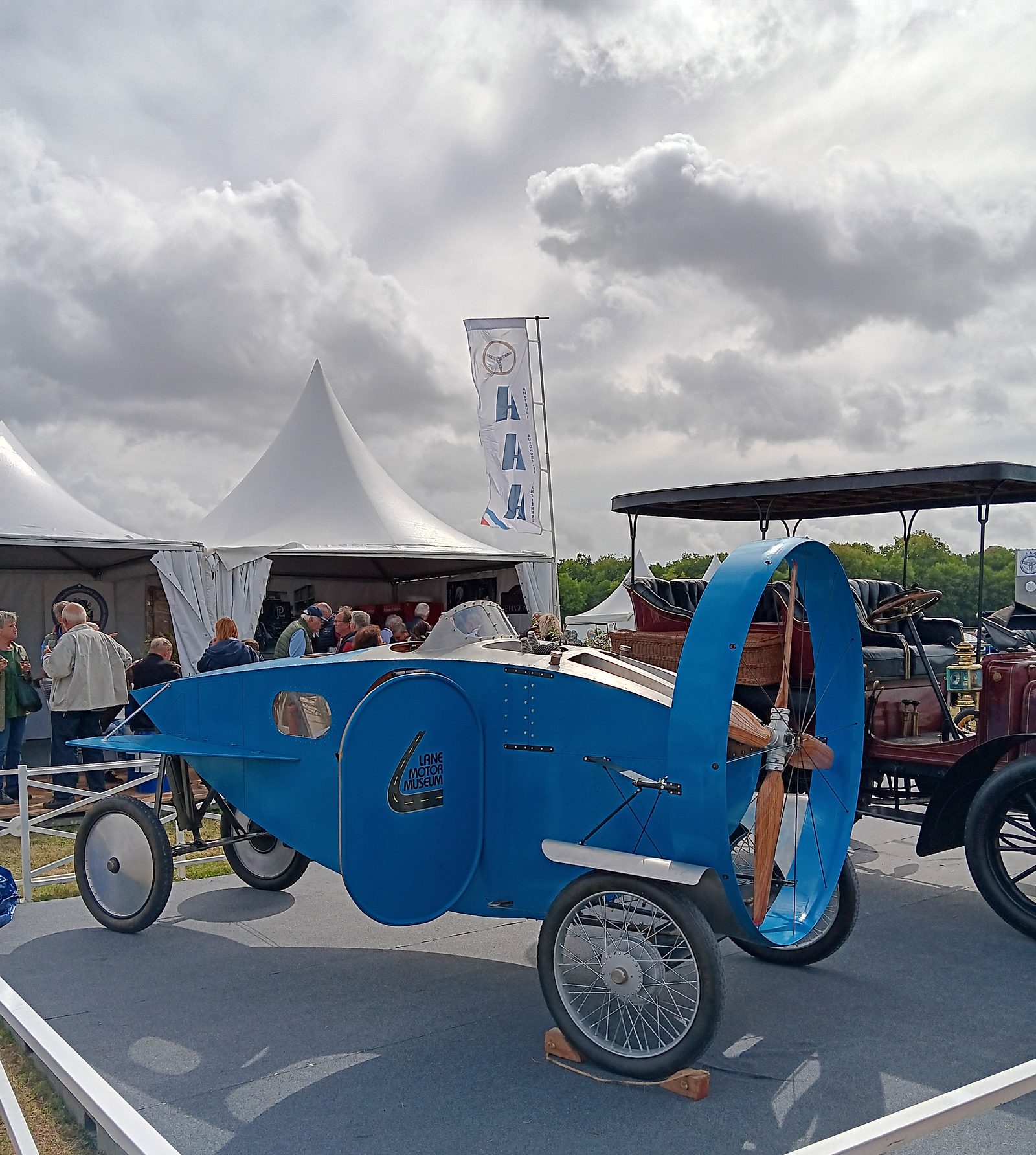
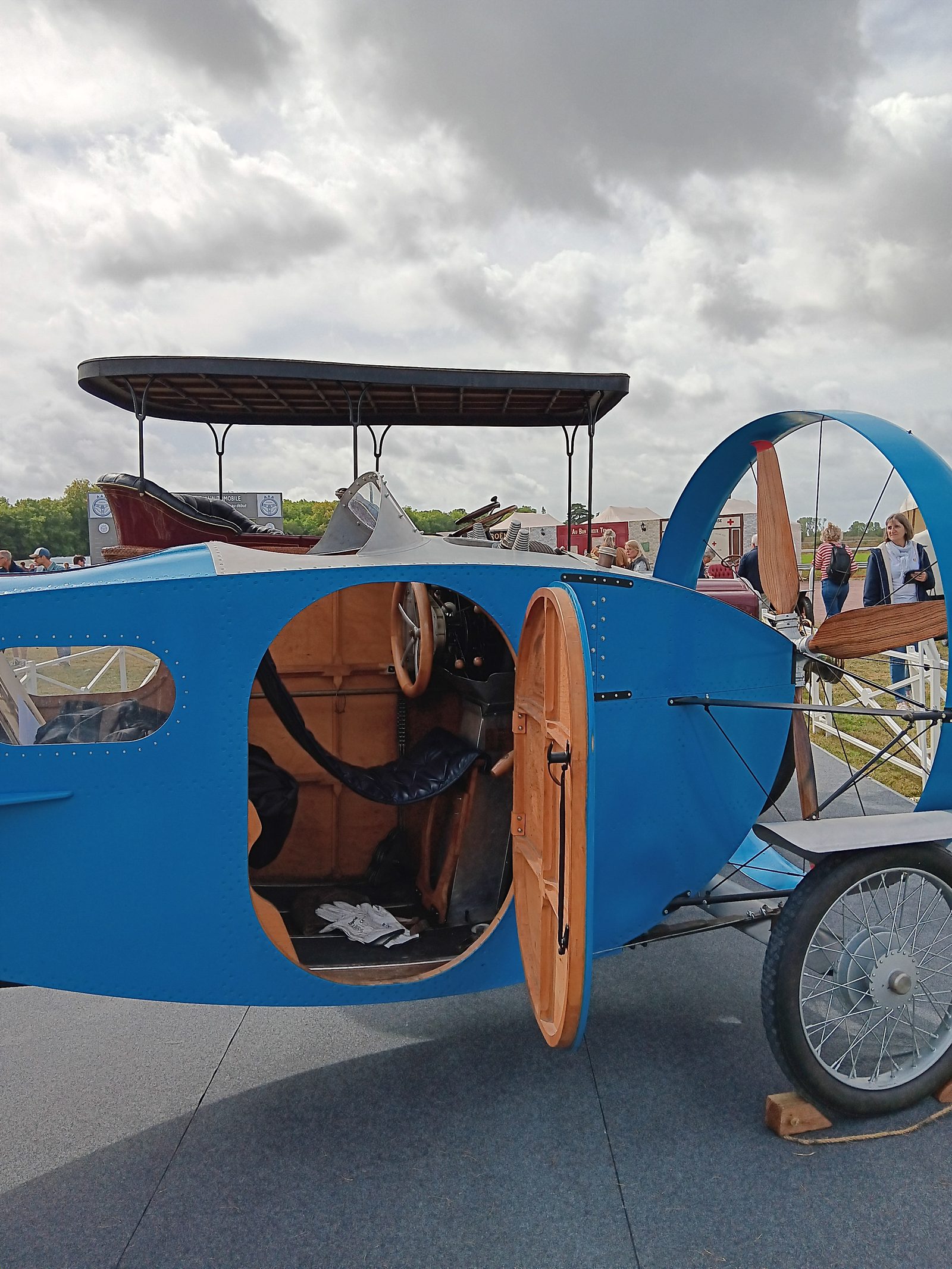
4 Lane Motor Museum’s re-creation of the 1919 Leyat Hélica in profile at Classic Days, France, in 2022.
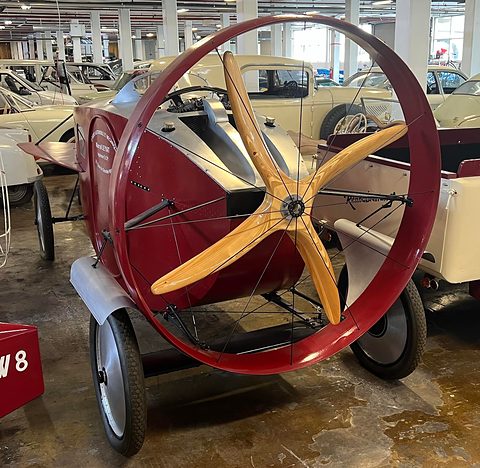
5 Re-creation of the Leyat Hélica built in 2005–09 from Leyat’s 1919 plans, at the Lane Motor Museum, Nashville, in July 2024.
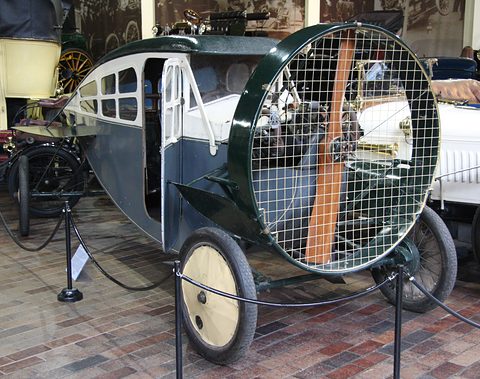
6 Leyat Hélica saloon of 1922, with a wire-mesh propeller guard, roped off at the Brooklands Museum, Weybridge, England, in June 2010.
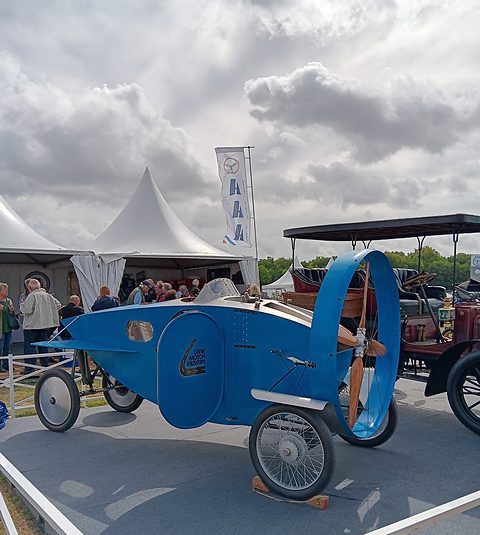
7 Lane Motor Museum’s re-creation of the 1919 Leyat Hélica from the front quarter at the Rétrofestival, Hippodrome de Caen, France, in August 2025.
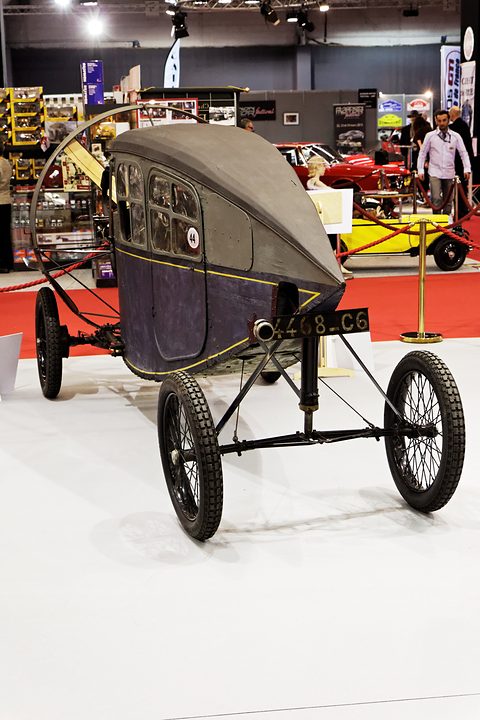
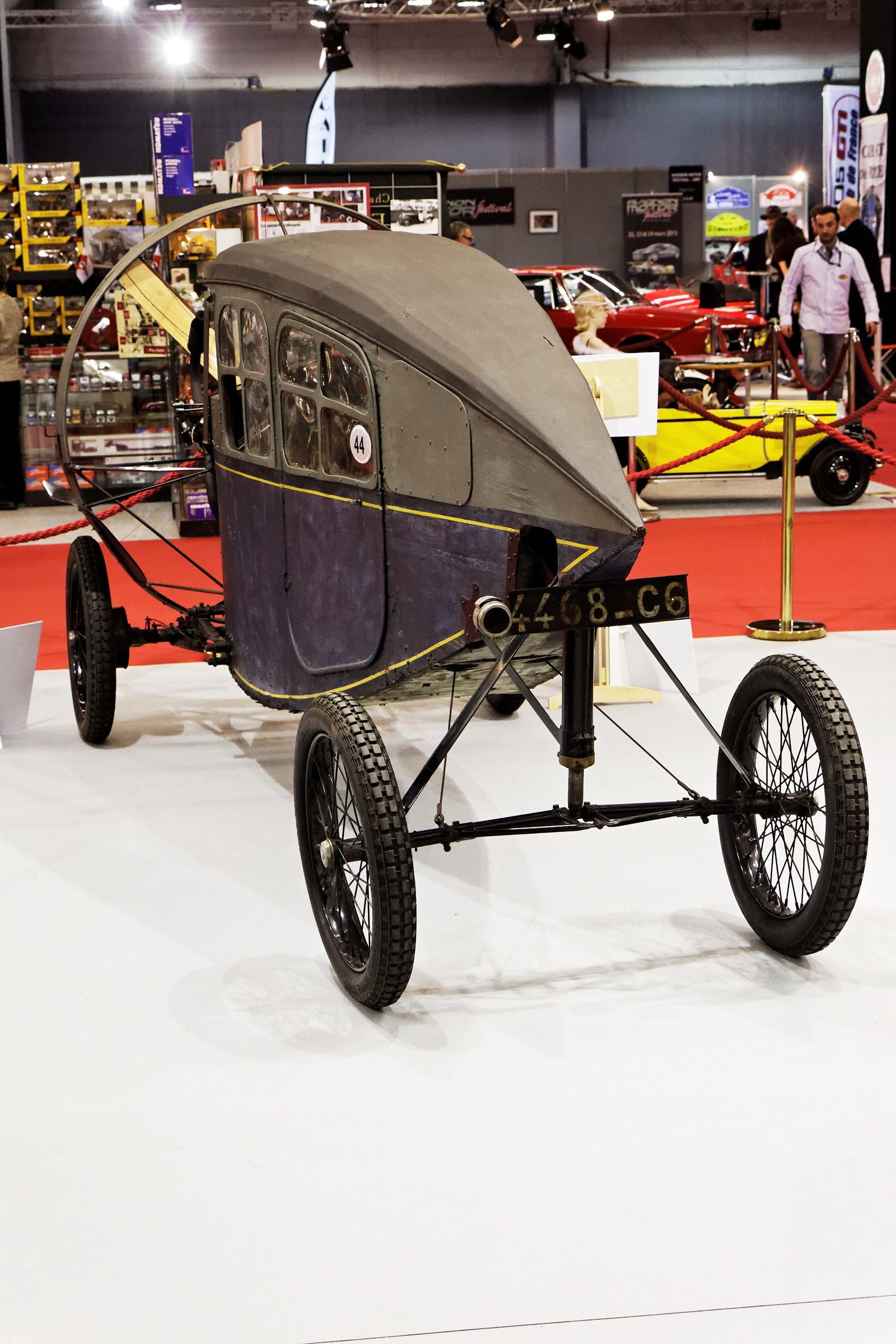
8 Rear of the Leyat Hélica conduite intérieure of 1921–22 at Rétromobile, Paris, in February 2013, showing its narrow rear track.
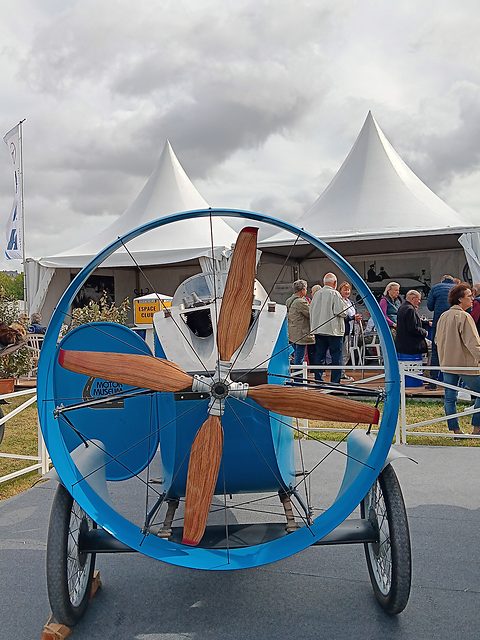
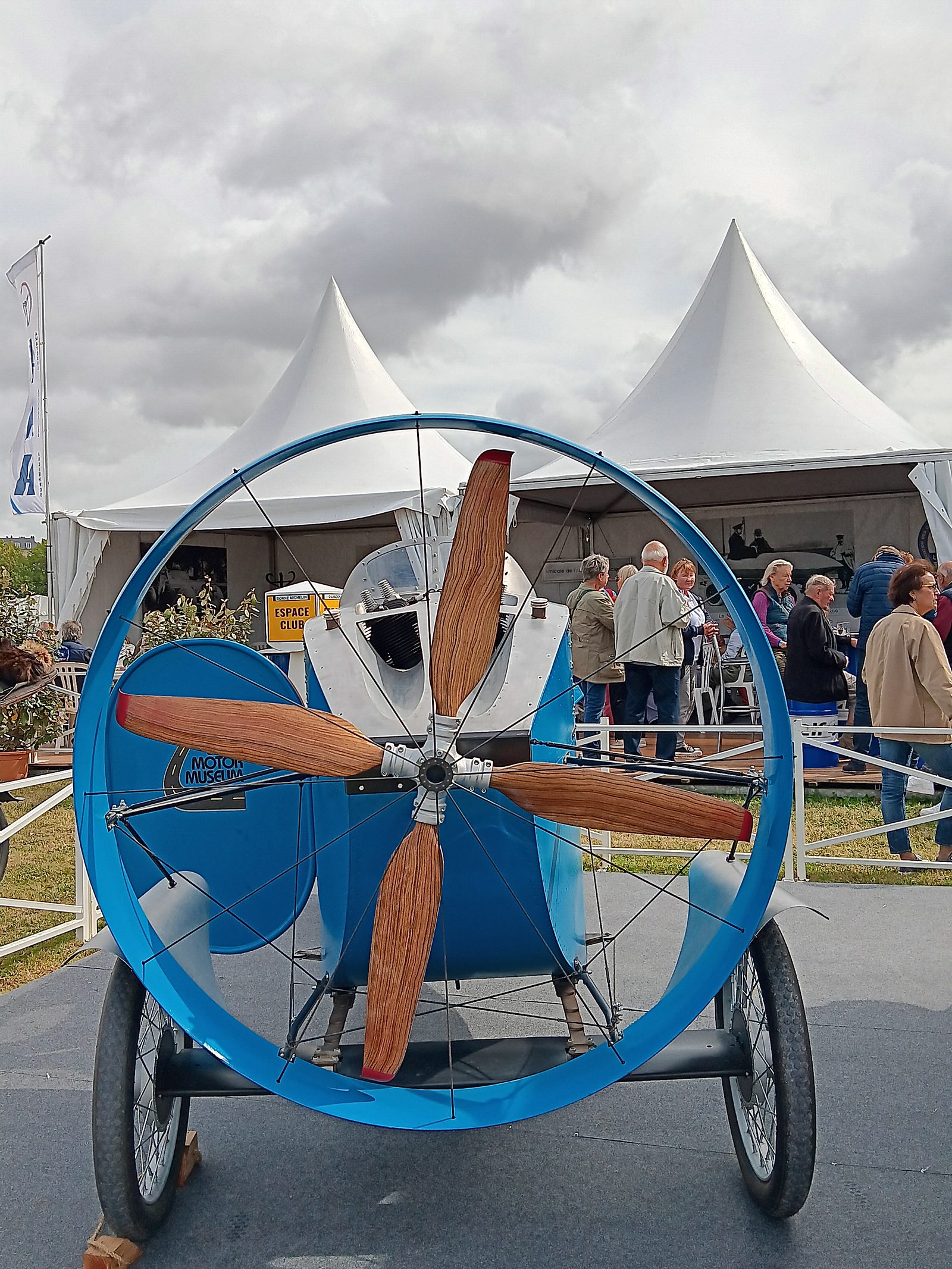
9 Lane Motor Museum’s re-creation of the 1919 Leyat Hélica head-on, its four-bladed wooden propeller in a blue guard ring, at the Hippodrome de Caen, France, in August 2025.
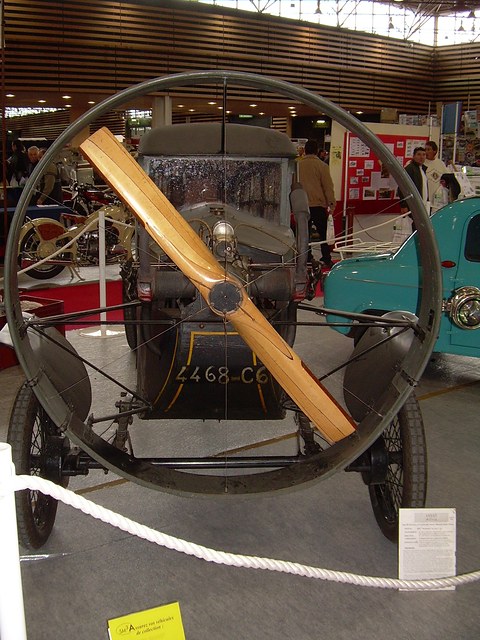
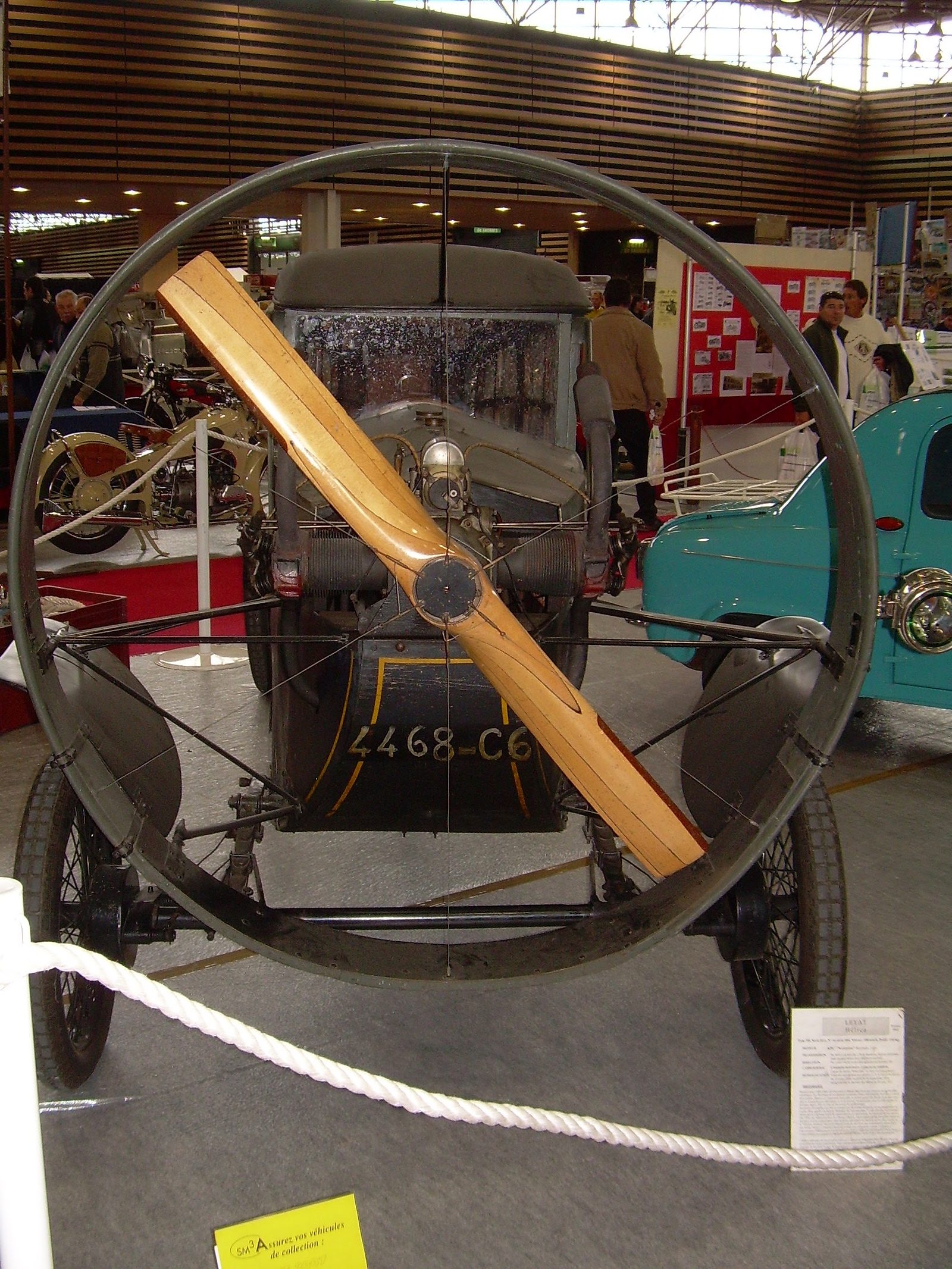
10 Leyat Hélica saloon head-on at Époqu’Auto, Lyon, in November 2007, its two-bladed wooden propeller in a guard ring before plate 4468-C6.
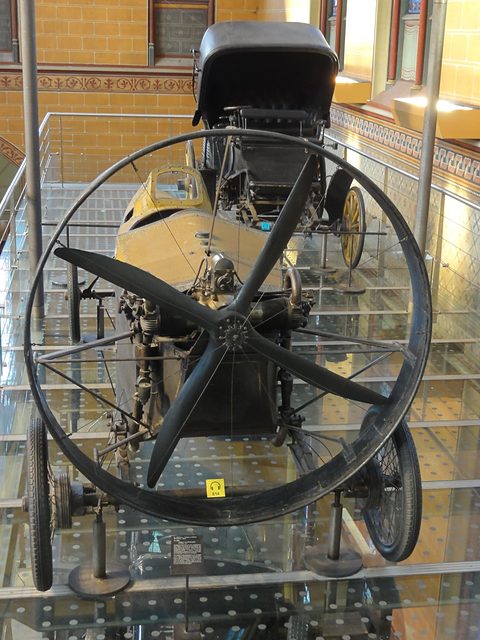
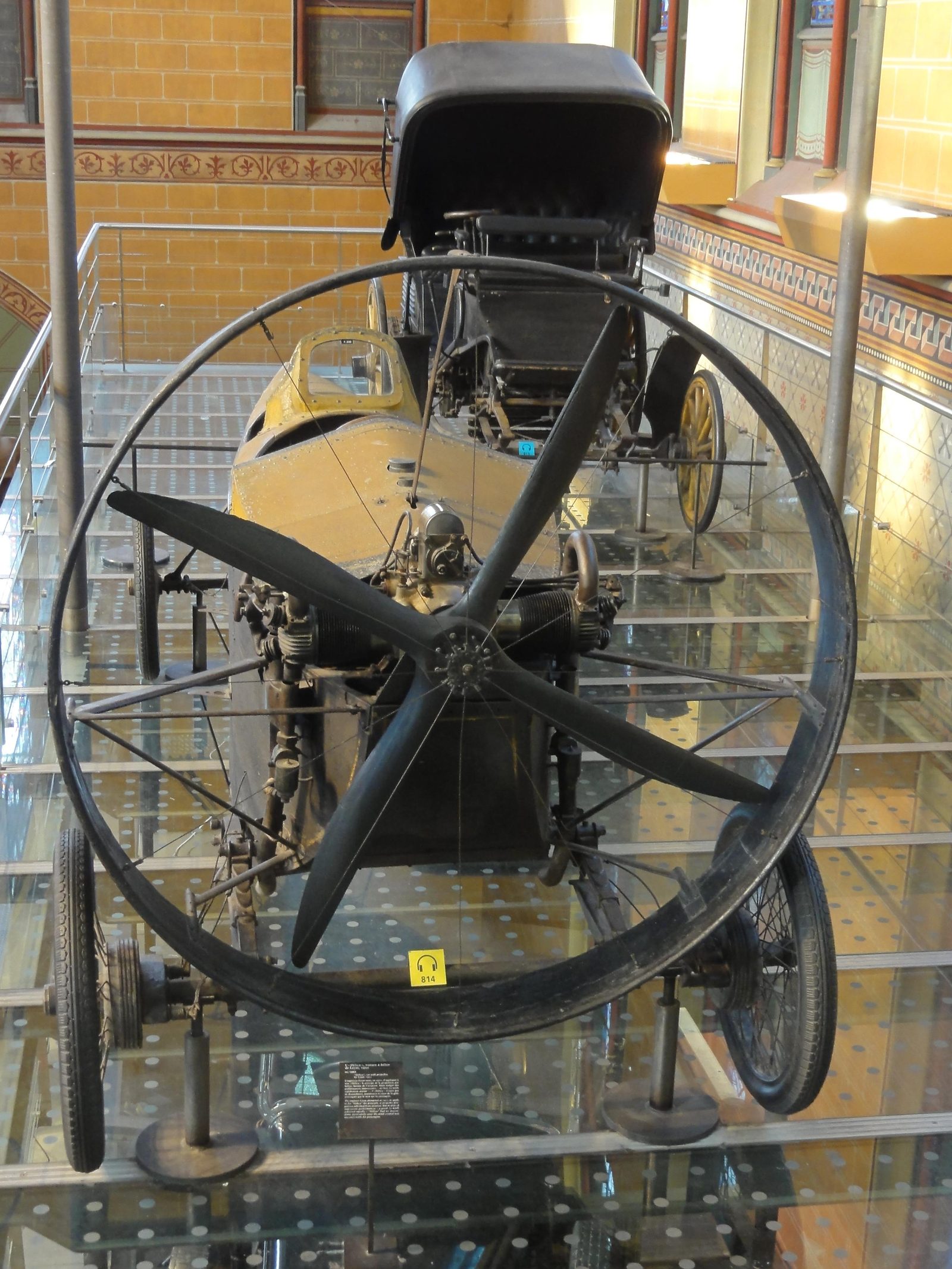
11 The 1921 Leyat Hélica sport head-on at the Musée des Arts et Métiers, Paris, in December 2013.
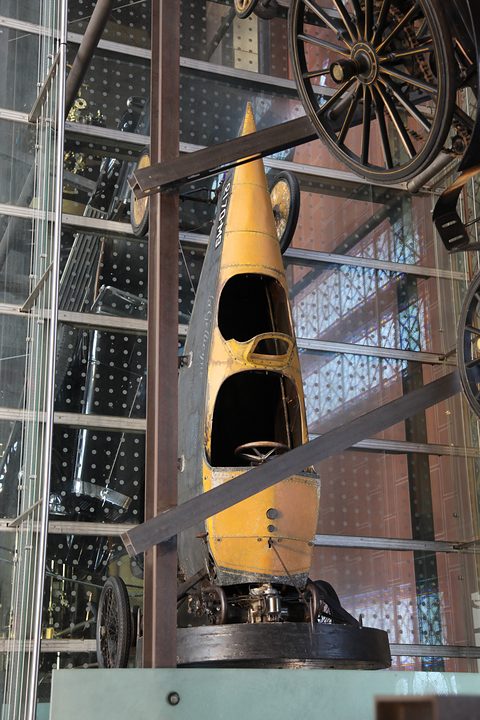
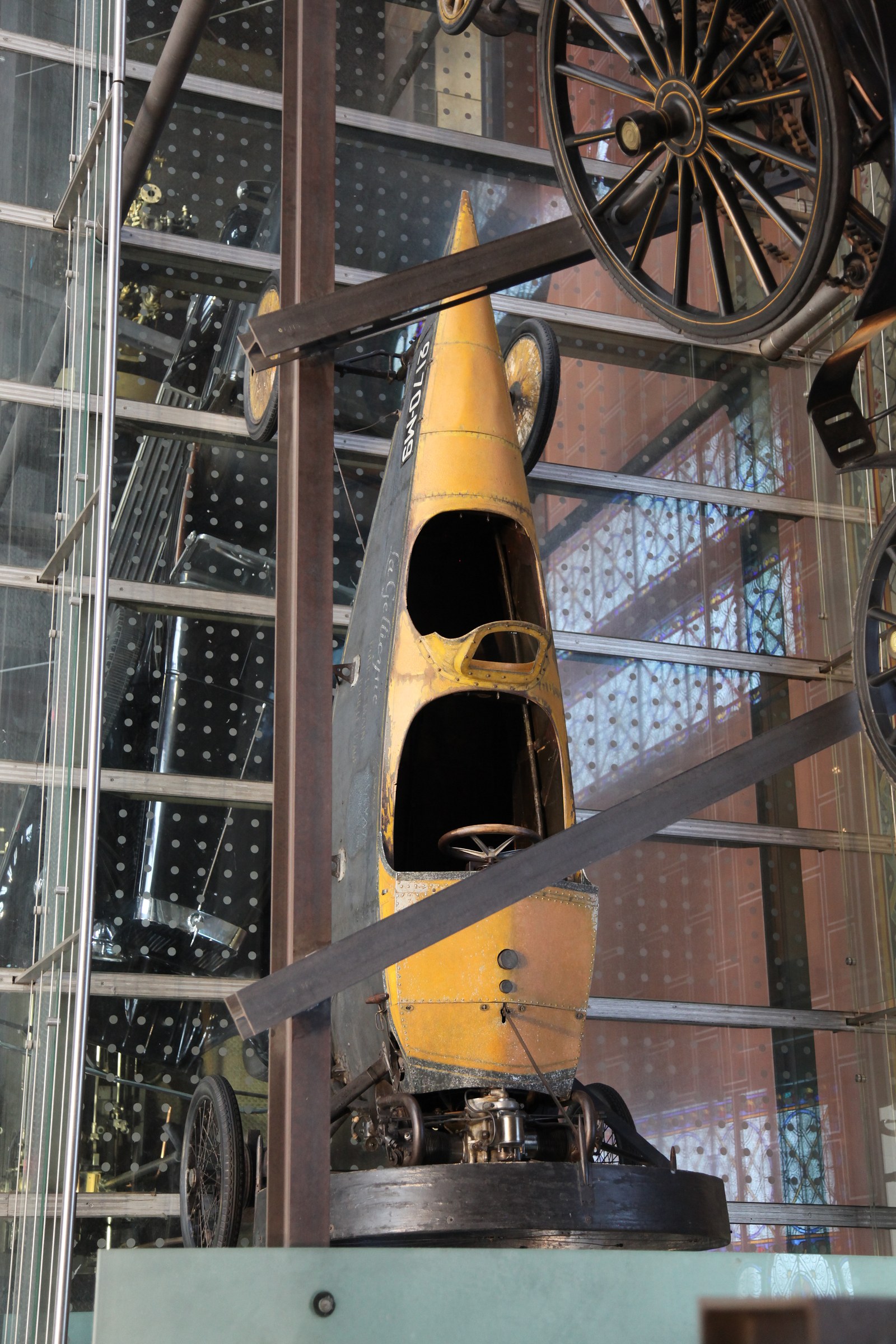
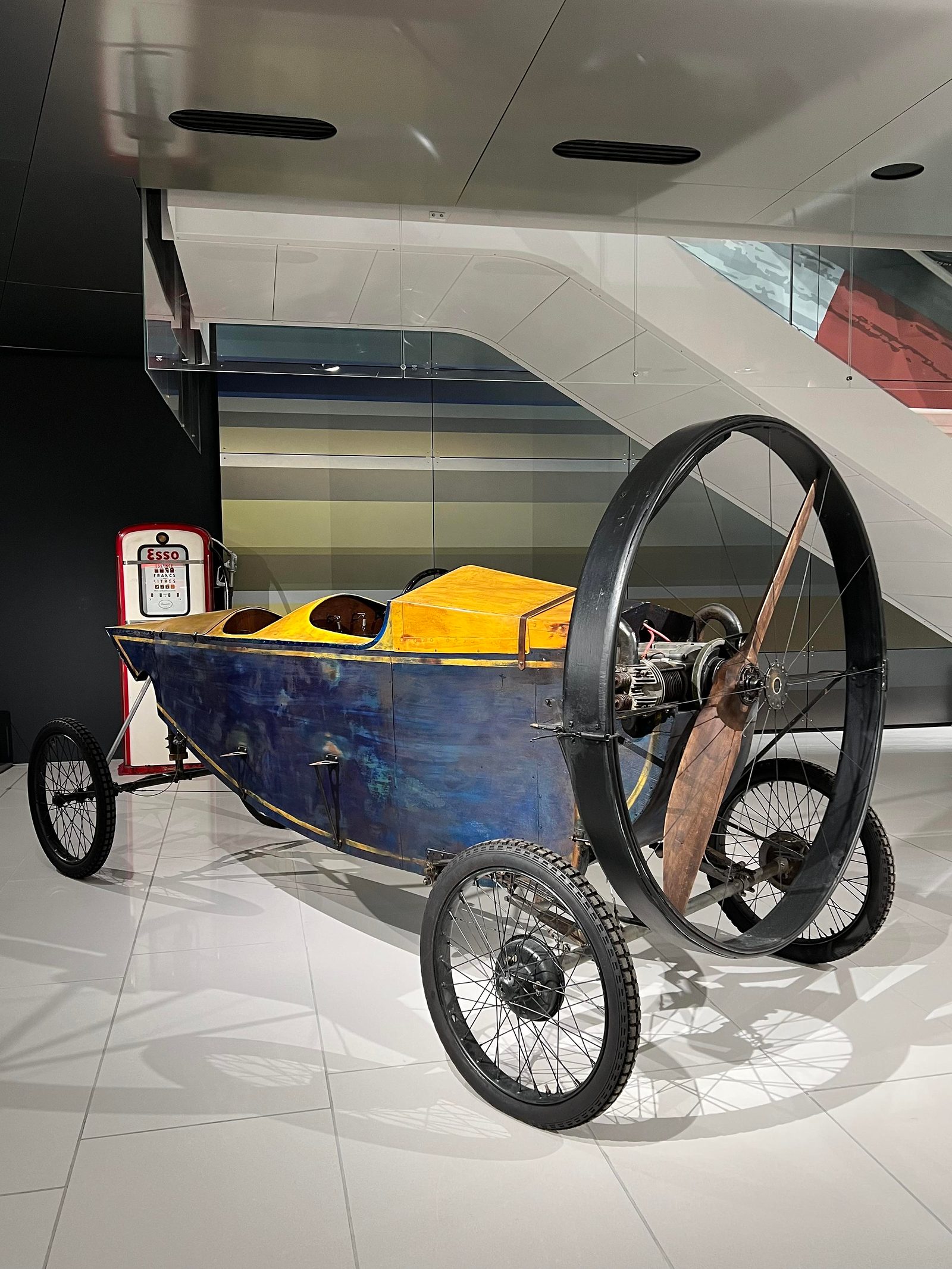
12 Yellow Leyat Hélica body standing upright, nose to the sky, in the vehicle display of the Musée des Arts et Métiers, Paris.
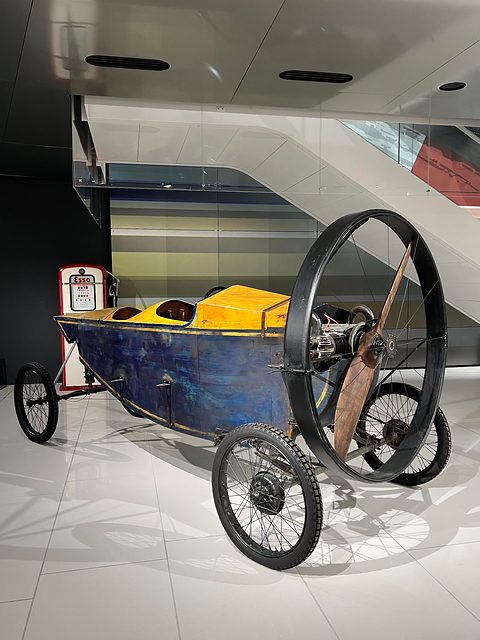
13 Blue and yellow Leyat Hélica with its propeller in a black guard ring, in the car collection of the Prince of Monaco, in March 2025.
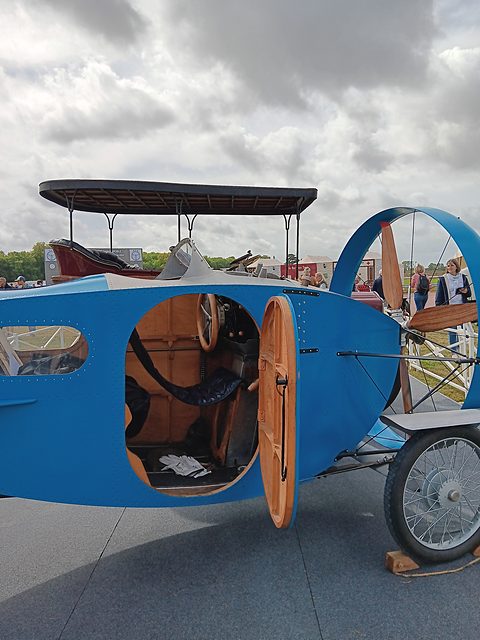
14 Lane Motor Museum’s re-creation of the 1919 Leyat Hélica, its small side door open on the plywood cockpit, at the Rétrofestival, Hippodrome de Caen, France, in August 2025.
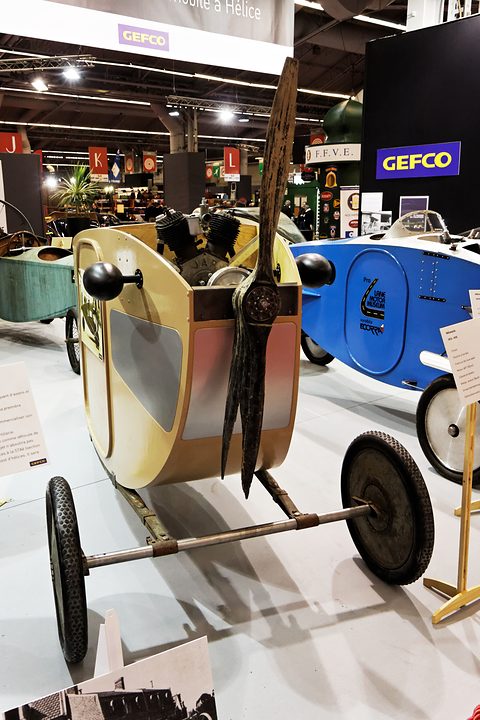
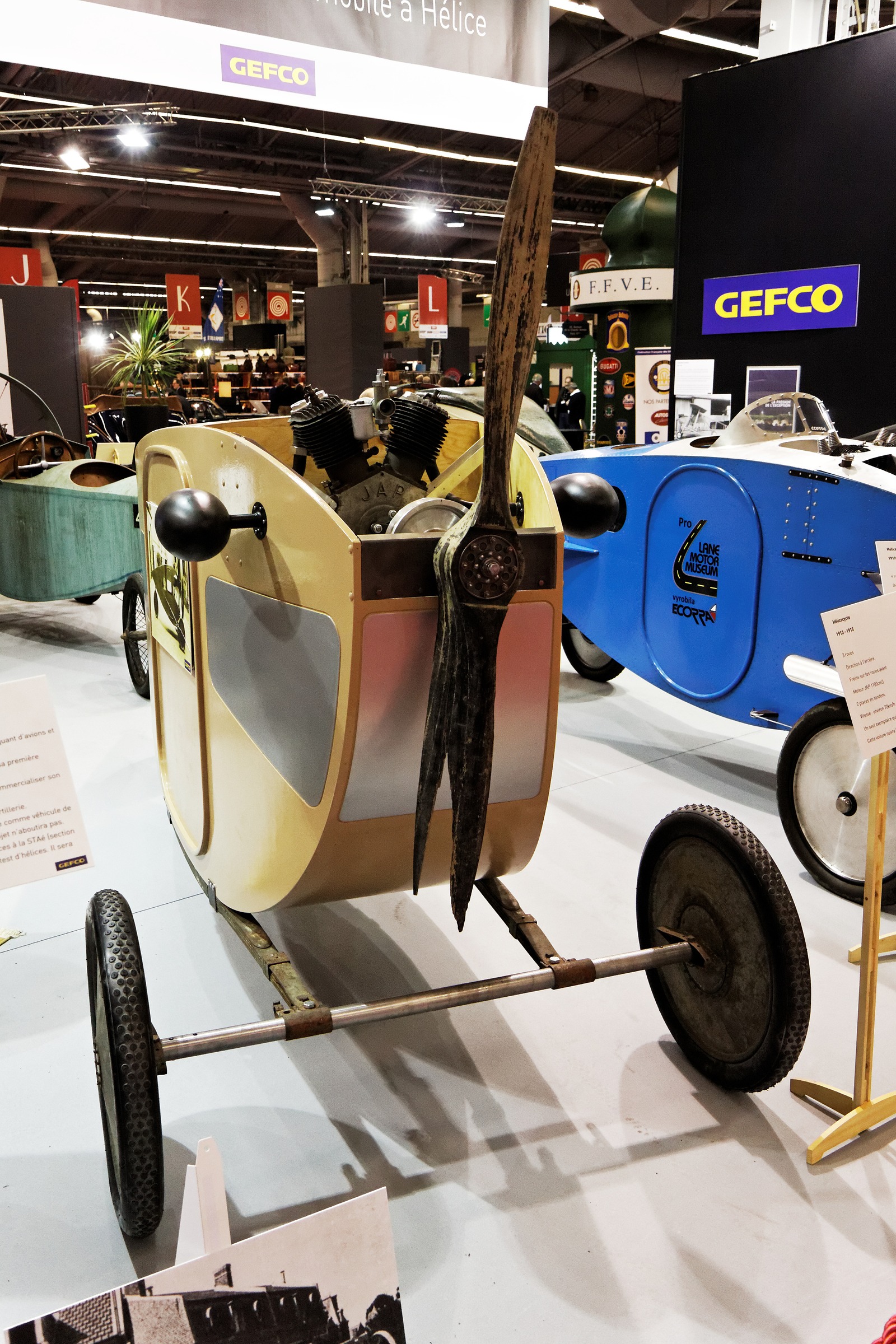
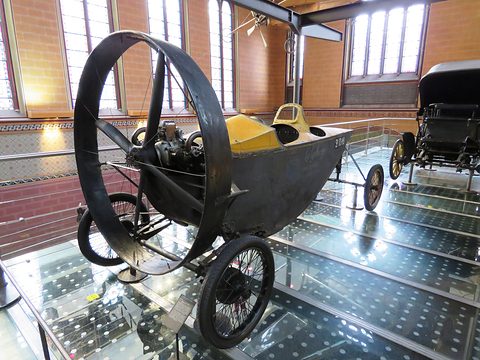
15 Leyat Hélicocycle, the three-wheeled propeller car of 1913–15, at Rétromobile, Paris, in February 2013.
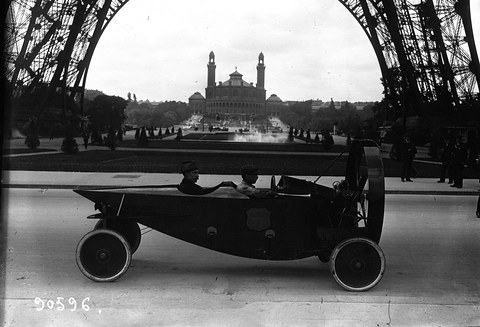
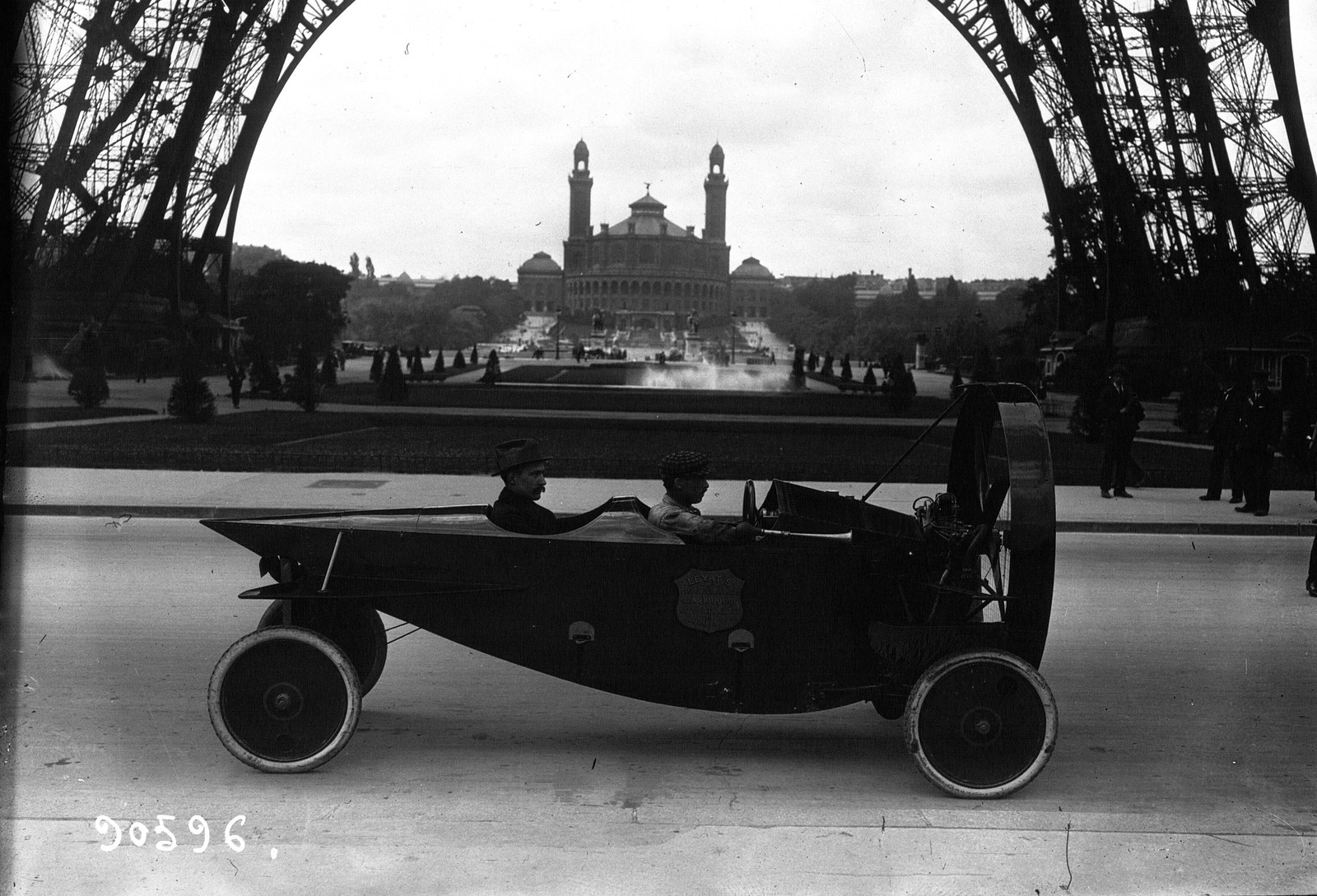
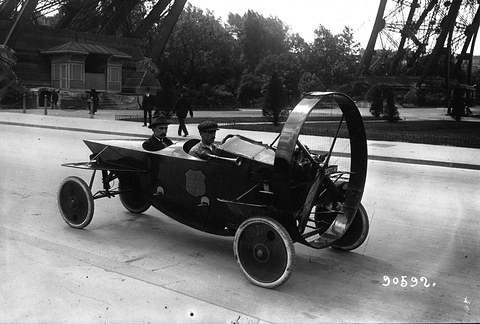
16 Leyat Hélica propeller car in profile beneath the Eiffel Tower, the Trocadéro behind, Paris, in July 1921.
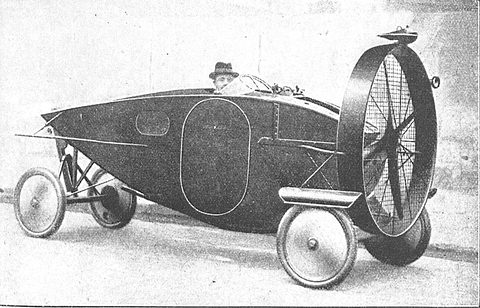
17 Leyat Hélica with its tractor propeller in a guard ring at the front and a driver in the tandem cockpit, from La Science et la Vie, about 1920.
Every propeller car Leyat built
| Variant | Years | What differs | How many |
|---|---|---|---|
| Hélicocycle I | 1913 | Three-wheeled prototype; JAP engine | 1 |
| Hélicocycle II | 1914 or 1915 | Three wheels; went to the front with Leyat | 1 |
| Hélica | 1919 | The first production model, an open tandem two-seater on four wheels; MAG engine | 6 |
| Sport | 1921 | Open; ABC Scorpion engine; one modified in 1926 | 3 |
| Conduite intérieure | 1921–22 | Enclosed saloon; ABC Scorpion engine | 10 |
| Rail-and-road car | 1924–25 | Retractable guide wheels for 60 cm Decauville track | 1 |
| Record car | 1927 | Three wheels; ABC engine | 1 |
| Re-creations | From 2005 | New cars built from the original plans, among them the Lane Motor Museum’s | Several |
The production cars of 1919–22
| Engines | JAP (1913), MAG (1919), ABC Scorpion air-cooled flat-twin with a carburettor per cylinder (1921 on); one car had a Harley-Davidson supplied by M. Jacquemin of Saucourtsource 5source 2source 7German Wikipedia also lists a later three-cylinder, and gives an “A.B.C.” of 1,093 cc and 82 × 103.5 mm for 1920, but those are the MAG’s dimensions |
|---|---|
| Propeller | Two-bladed, 1.4 m (4 ft 7 in) across, in a guard ring (1920); a double propeller of 1.40 m turning at 1,400–1,800 rpm on the Paris carsource 6source 7Leyat also tried four-bladed propellers |
| Transmission | None: the engine turns the propeller directly, with no clutch, gearbox, rear axle or differentialsource 4 |
| Starting | A boxwood handle in the cockpit turns the engine through an engaging leversource 7 |
| Body | Plywood monocoque shaped like an aircraft fuselage, with no wings or mudguards; side members milled for lightnesssource 4source 5source 3 |
|---|---|
| Wheels | Leyat’s spokeless “Cricri” wheels: two aluminium discs riveted to a rim, tensioned by the hubsource 4source 5 |
| Steering | By the rear wheels, worked by cables with tension dampers; the rear axle is inclined so that the inner wheel lifts in a turnsource 7source 5source 2source 3 |
| Brakes | On the front wheels only, built into the disc wheelssource 4source 7Two pedals on the Paris car, each working one shoe of both front brakes |
| Length, width, wheelbase | Not found for any model |
|---|---|
| Weight | Not settledsource 2source 6source 3source 8source 4225 kg in French and German Wikipedia, the latter citing La Pratique automobile of 1920; 250 kg in English Wikipedia and Grace’s Guide; 284 kg (625 lb) for the Lane Motor Museum’s re-creation |
| Top speed | 80 km/h (50 mph) for the touring carssource 4source 6 |
|---|---|
| Fuel | 6 litres per 100 km (47 mpg)source 2source 6 |
| Power | Not settledsource 2source 1source 3“8 ch” or “8 CV” in French sources, probably the fiscal rating rather than brake horsepower; 18 hp for the re-creation’s Harley-Davidson |
Every figure, with its source
23 vehicles, 19 of them production carsWe state 23: it is the sum of the model-by-model list kept by Les Amis de l’Hélica, the association that holds Leyat’s papers, and 19 of those are production cars, six Hélicas of 1919 and 13 cars of 1921. The rounder figures of about 20, 25 and 30, from encyclopaedias and a museum, look like rounding. Clément Genty’s book of 2022, not read here, should settle it.
about 30cars sold, 1919–25Unconfirmed
about 25carsOne source
Lane Motor Museumsource 4
23propeller vehicles of all kinds, “two still exist today”One source
Les Amis de l’Hélicasource 1
about 20propeller vehicles in allUnconfirmed
French Wikipediasource 2
13cars of 1921: 10 saloons and three sport modelsOne source
the association’s list, as French and English Wikipedia reproduce itsource 2source 3
6Hélicas of 1919Two sources agree
the association’s list and the Lane Motor Museumsource 2source 4
Three points
A plywood fuselage, tandem seats and a propeller in front, but no wings and no mudguards.
The propeller drove the car directly: no clutch, gearbox, rear axle or differential.
The rear wheels steered and the front wheels braked, and the body leaned into bends.
A claim, a tour and a track
The Hélica’s one speed record is a claim; its long-distance feat is better recorded.
Today
Two original Hélicas were known in 2016.source 1source 7 Courau’s 1921 sport stands in the Musée des arts et métiers in Paris as it was found, its engine incomplete and not running (more in museums and meets).source 2source 7 A 1922 conduite intérieure has never left the Bouzanquet family; it was restored for its return to the road in 1994 and is still registered and legal to drive. The association describes its spartan cockpit, with the carburettor between the driver’s knees.source 7 German Wikipedia says that one is shown in the Prince of Monaco’s collection, which has not been confirmed, and photographs in Grace’s Guide show a 1922 Hélica at the National Motor Museum, Beaulieu, without saying whether it was lent or owned.source 6source 8 No auction result has been found.
The Lane Motor Museum in Nashville shows a “1919” Hélica, with a period Harley-Davidson J engine. It is not a survivor: the association records that it was built new between 2005 and 2009 from original plans of 1919 found in an attic at Meursault in 2005, though the museum’s own page presents it as a car of 1919.source 5source 4 The Harley engine is at least true to period, since one Hélica had one.source 5
The French field
France’s other small cyclecar makers
1913–1936 · France · 13 makers
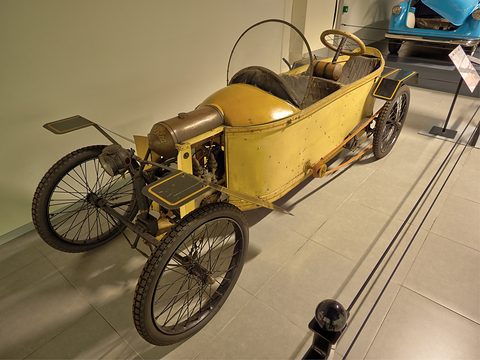
Numbered as in the text
Most of the Hélica’s history comes from one author, the association Les Amis de l’Hélica (its home page and its pages on three cars are counted as one source), through French and English Wikipedia, which reproduce its list. No period report of the 1921 Salon or of the 1927 run was read. The two folded propeller cars rest on the Lane Motor Museum and on articles drawn from it. Sources are given as plain text; the links are on the Credits page.