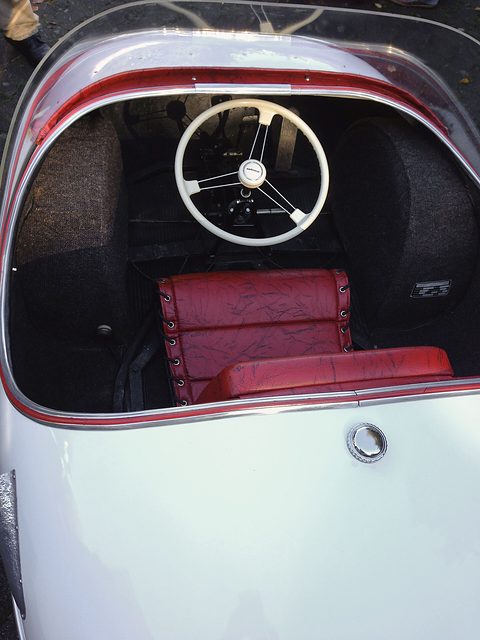
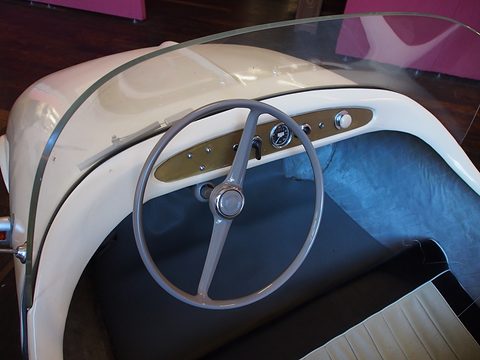
microcarfan
  • Microcar
  • West Germany
  • About a dozen designs

Brütsch

Also known as Egon Brütsch, Zwerg, Bussard, Pfeil, V2

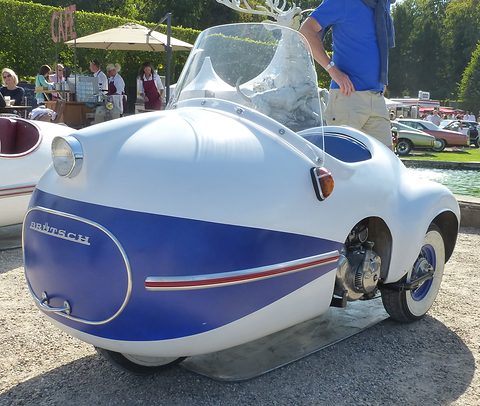
Egon Brütsch designed about a dozen microcars, mostly glass-fibre three-wheelers, and built hardly more than a dozen of any of them. His real business was selling the designs to other people, and many of those deals ended in quarrels.

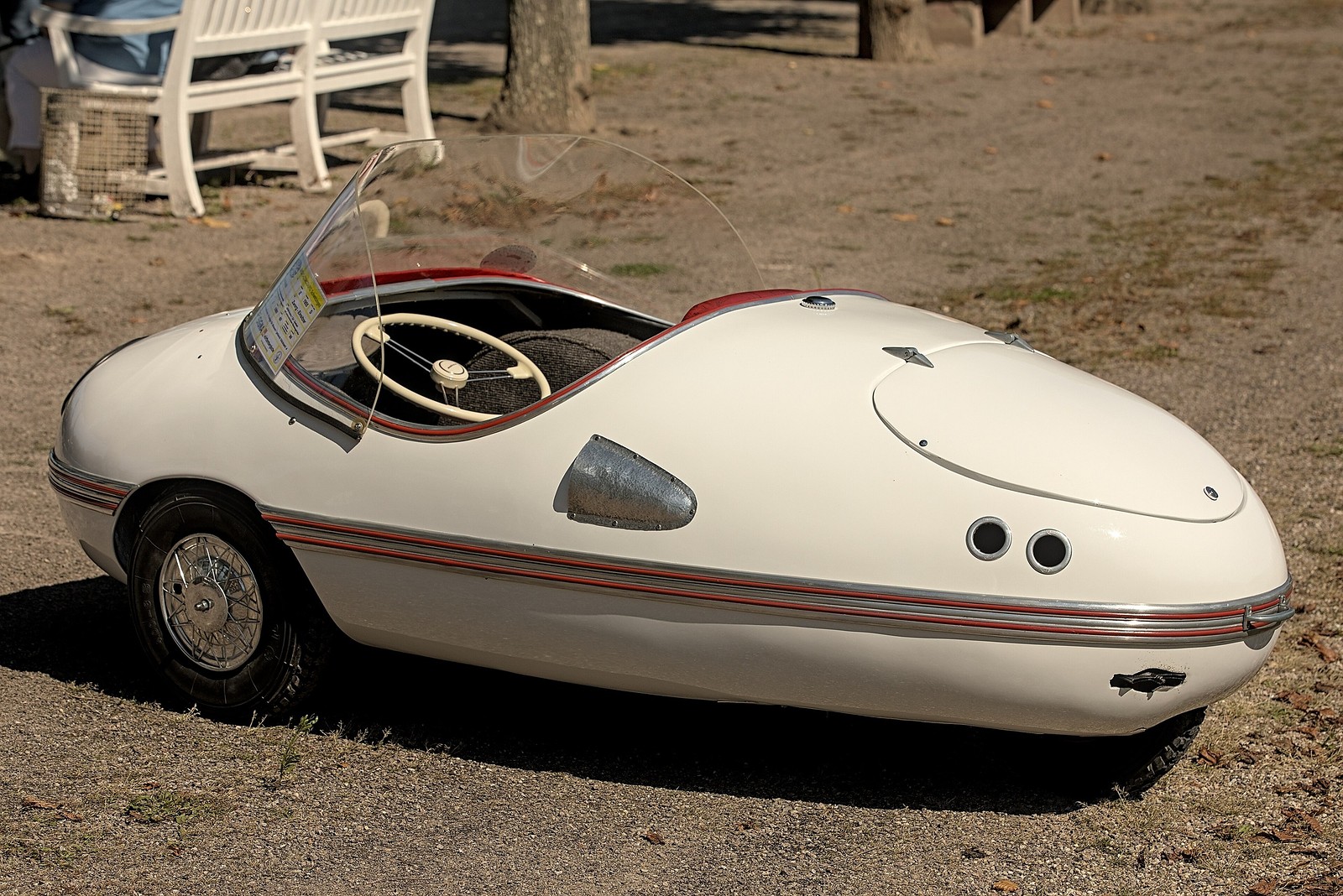
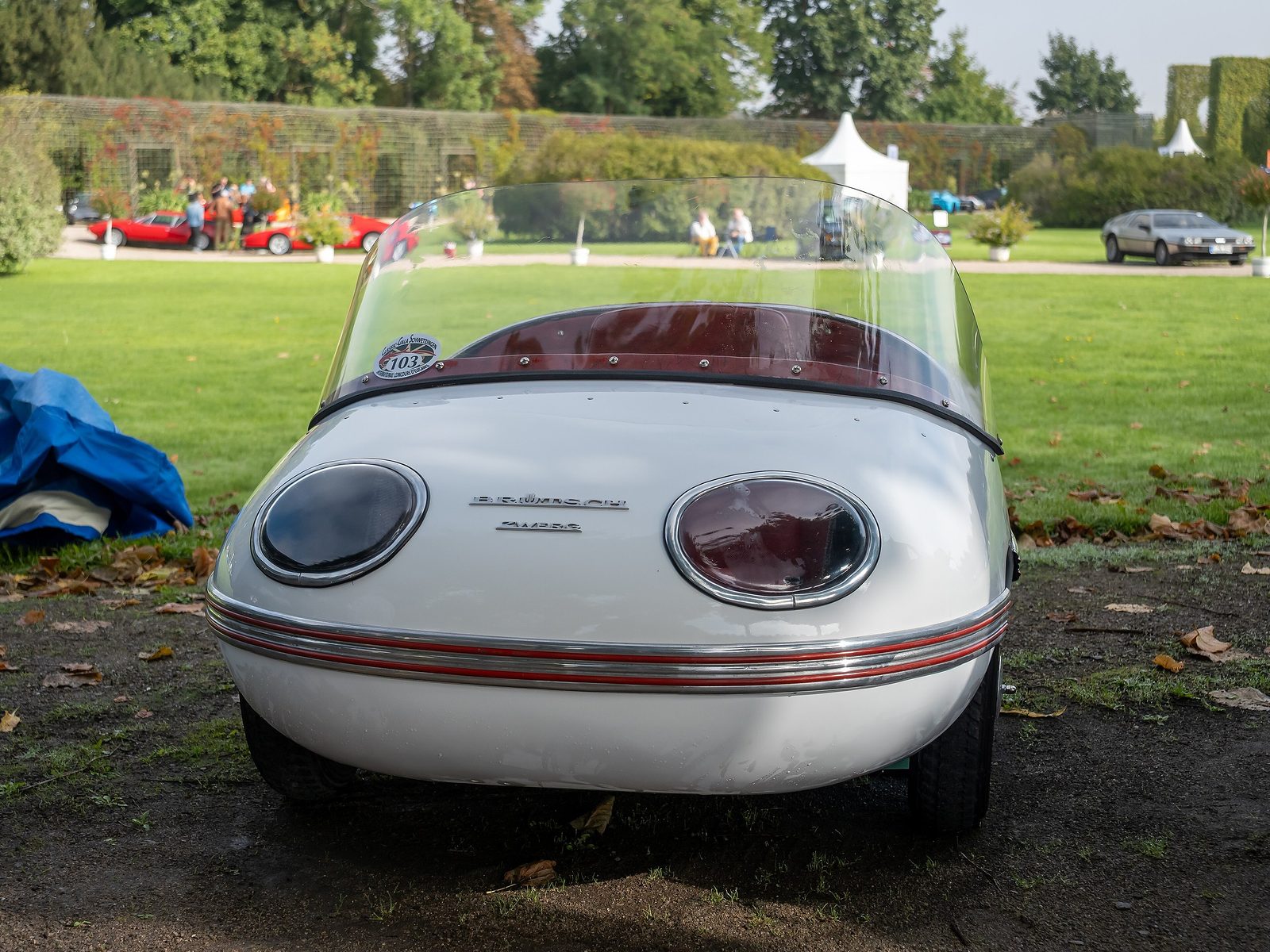
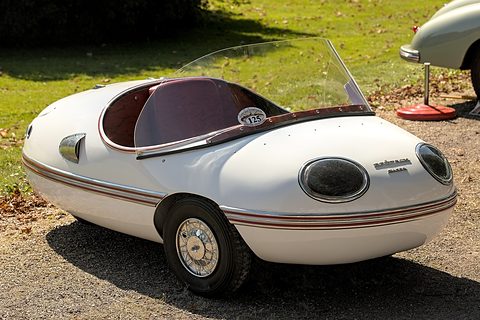
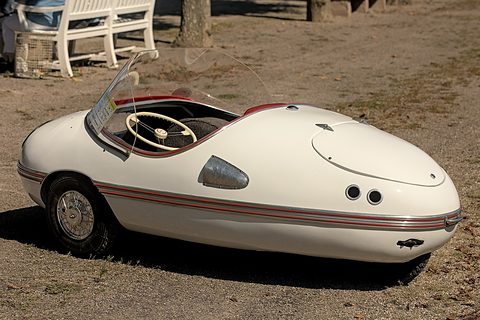
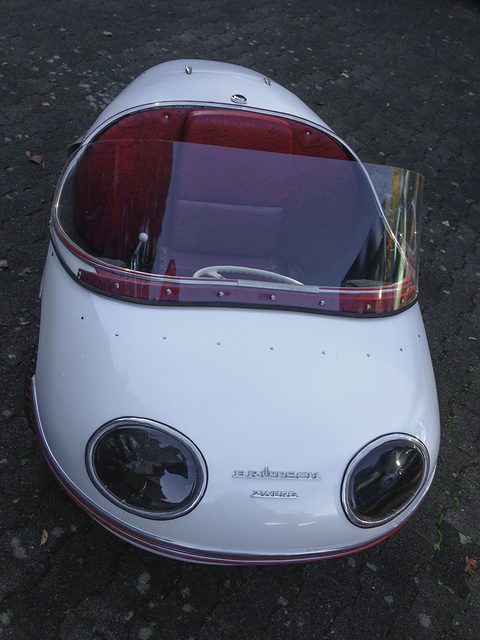
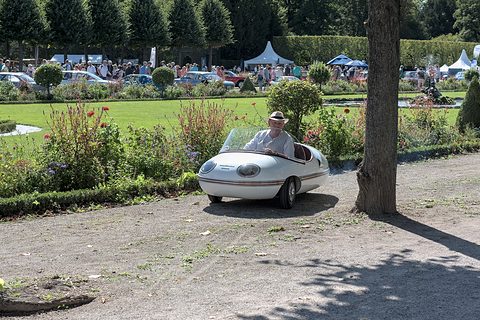
White egg-shaped single-seater with red pinstripes, oval lamps and a wrap-round screen, on gravel.
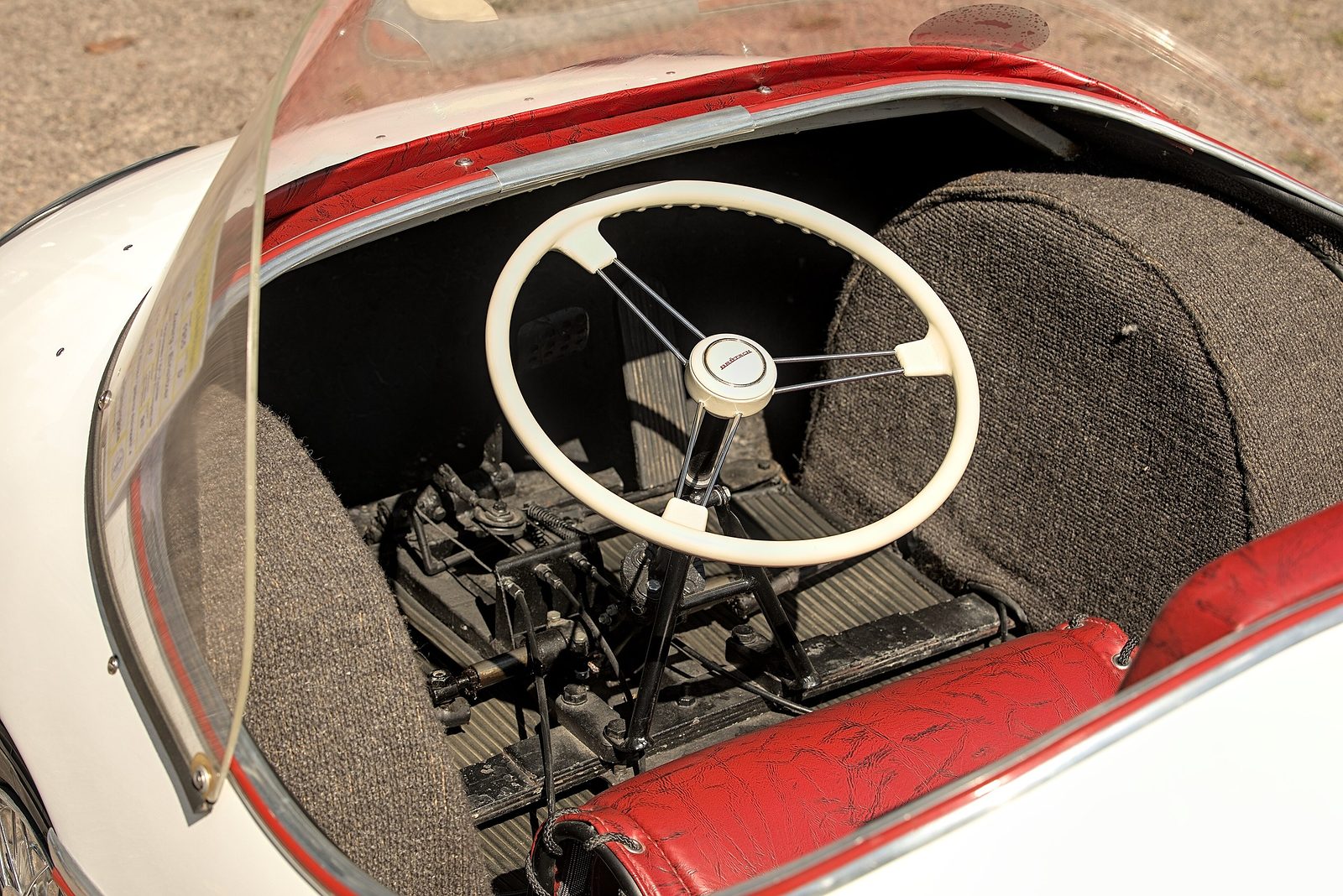
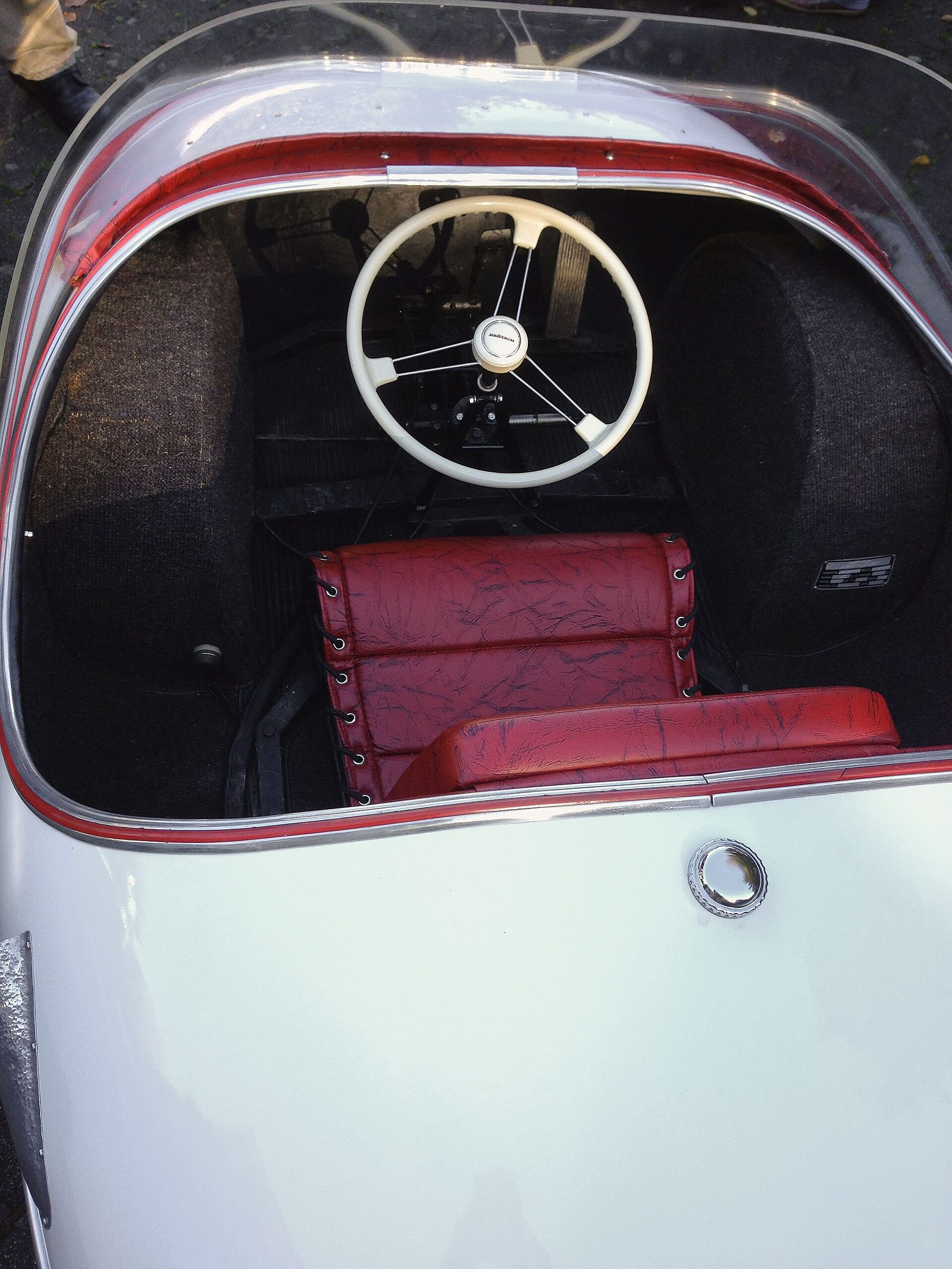
A Brütsch Zwerg single-seater at the Classic-Gala Schwetzingen in 2021.Photo: Alexander Migl, CC BY-SA 4.0, via Wikimedia Commons

At a glance

The spec plate

Brütsch

Egon Brütsch Fahrzeugbau · Stuttgart

Built
1951–⁠1958First prototypes 1951; about a dozen designs to 1958
Country
West GermanyStuttgart
Maker
Egon Brütsch FahrzeugbauThe Brütsch 1200 was built and sold by a separate Munich company
Engine
50 cc to the Ford Taunus 12M’s, by modelILO, DKW, Sachs, Maico, Lloyd, Fiat and Ford engines
Power
3 PSThe Zwerg Einsitzer’s 75 cc DKW; up to 15 PS in the Maico-engined cars
Length
2,200 mm1,100 mm wide
Weight
98 kgThe Zwerg Einsitzer, the car pictured
Seats
1 to 3By model
Wheels
3The Zwerg Einsitzer: two at the front, one at the back
Price new
DM 1,475 to DM 1,975The Zwerg family at Frankfurt, September 1955; the 1200 cost DM 10,500
Production
about 75Built in Germany, by the model counts; licence builds extra
Top speed
65km/h65 km/h60 km/h (37 mph) in the 1955 show table; 110 km/h (68 mph) for the Pfeil and 125 km/h (78 mph) for the V2-N

How big is it?

True proportion

2.20 m

It is 770 mm shorter than a Fiat 500, about 1.3 adults laid end to end.

  • 1.10 m wide
  • 98 kg: about one adult
  • Sizes shown are the Zwerg Einsitzer’s
  • The small single- and two-seaters about 2.0–2.4 m (6 ft 7 in – 7 ft 10 in) long
Drawn at true proportion. The track is 3.6 metres long; the adult stands at the same scale. The Peel P50 is the smallest production car, on every page for comparison.

The story

History

Brütsch (1904–⁠88) was the son of a successful Stuttgart stocking manufacturer. He raced motorcycles from 1929 to 1931 and cars from 1935 to 1950, some of them his own. His first vehicle was a half-scale Maserati for children, at DM 750.source 1 In 1951 came three prototypes, the Eremit, the 400 and the Zwerg: single-seat three-wheelers with two wheels at the front, engines of 77 to 125 cc, about 2 m (6 ft 7 in) long and about 100 kg (220 lb). The Eremit was shown at Frankfurt in 1951 at a proposed DM 2,000.source 1 A dealer paid a DM 2,000 deposit for an agency that October, and a court later ordered it repaid.source 2

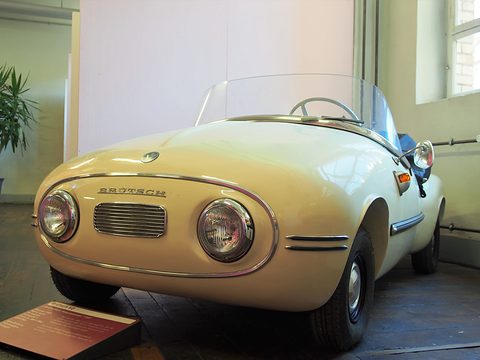
Then he went the other way. The Brütsch 1200 was a sports cabriolet on the parts of a Ford Taunus 12M, with a body by the Lorcher Karosseriefabrik, at DM 10,500. A separate Brütsch company in Munich built and sold it from November 1953 to April 1954.source 1source 2

Plastic and paper

Most of Brütsch’s cars had glass-fibre bodies, and he claimed to have been first, in a formal reply that auto motor und sport printed.

„Das Fahrzeug ‚Brütsch 200 aus Plastik‘ ist auf dem deutschen Markt das erste Kleinfahrzeug mit Fiberglaskarosserie.“

Egon Brütsch, printed reply in auto motor und sport 1/1955. In English: “The ‘Brütsch 200 in plastic’ is the first small vehicle with a glass-fibre body on the German market.”source 2

The editors disputed it, with a reader’s photograph of an earlier one: the Brütsch 200, they said, had not been first. The same pages carried a less happy document. On 2 November 1954 a Stuttgart court had placed Brütsch’s assets under sequestration at his creditors’ request, and the sequestrator wrote to them in December that Brütsch had stopped all payments some time before. He proposed a settlement over two and a half years, which depended on finding licensees for the Brütsch 200.source 2

That car was the 200 Spatz, an open three-seat three-wheeler with a 200 cc Sachs engine; only three were built.source 1 Spatz-Fahrzeugbau, near Traunstein, paid DM 25,000 for the right to make it, but the car failed its German type approval, so the firm dropped the load-bearing plastic body and had Hans Ledwinka design a central-tube chassis for a four-wheeled version, the Spatz. Brütsch demanded licence fees on that too and attacked the makers in public; in 1956 Spatz won an interim injunction forbidding him to call himself its designer.source 3source 1 In Switzerland the three-wheeler was built as the Belcar.source 1

Small but fine

At the Frankfurt show in September 1955 Brütsch showed his Zwerg family: a single-seater with a 75 cc DKW engine and stepless drive at DM 1,475, and single- and two-seaters with a 200 cc Sachs at DM 1,775 and DM 1,975. The magazine found them lovely to look at and quite cleanly made.source 4 The same price list gives the Spatz at DM 2,975, or DM 3,175 as a coupé. Read one way, the magazine lists it among Brütsch’s cars; its report also has Spatz-Fahrzeugbau showing the Spatz itself, already rebuilt with four wheels.source 4

„In alter Treue wieder eingefunden hat sich hingegen Brütsch — klein, aber fein. Im Ernst!“

auto motor und sport 20/1955, on the Frankfurt show. In English: “Brütsch, on the other hand, has turned up again as faithfully as ever — small but fine. Seriously!”source 4

A year later, at the IFMA, he had the tiny Brütsch Mopetta, the four-wheeled Pfeil, the three-wheeled Bussard and a smaller Zwerg, now on central-tube frames rather than load-bearing plastic. His brochure offered the Pfeil with the engine of the Lloyd LP 400, though the magazine doubted that Lloyd had agreed. He was looking for licensees again, and a large foreign concern was said to have bitten; his earlier licensees had distanced themselves from him.source 3

„Man kann über ihn denken, wie man will, Ideen hat er jedenfalls.“

auto motor und sport 22/1956, under its picture of the Mopetta. In English: “Think of him what you like, he certainly has ideas.”source 3

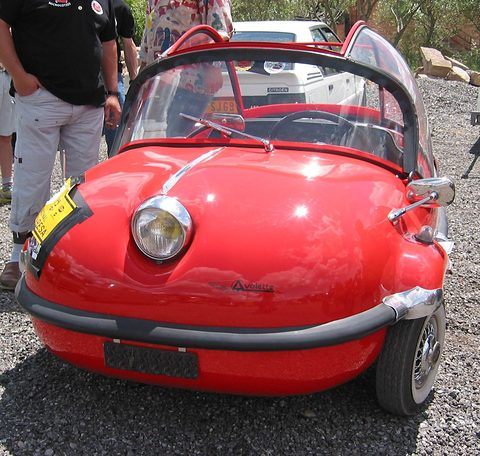
France, and the end

A licence for the Zwerg was sold to France at the end of 1954, and the car became the Avolette, built by Air-Tourist and then France-Jet. The Rollera was built under licence in France too, and the V2-N, a V2 with doors and a Fiat 500 engine, was developed for a French licensee who stopped after a year.source 1 In all, German Wikipedia’s counts come to about 75 cars built in Germany.source 1 In December 1956 auto motor und sport still called him tireless, a man who made beautiful plastic cars.source 5 His last car was a coupé prototype on a Ford Taunus 12M. Then he turned to prefabricated houses, among them spherical plastic ones, and took out several patents.source 1

He is remembered among the designers as much for the number of his cars as for any one of them, and for the way his ideas travelled: to Traunstein, to Switzerland and to Paris, under other people’s names.
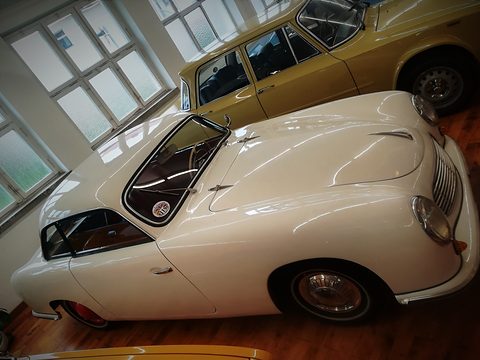
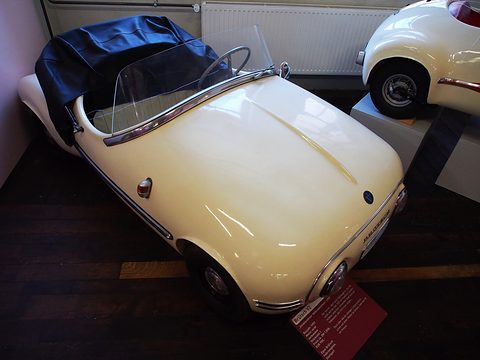
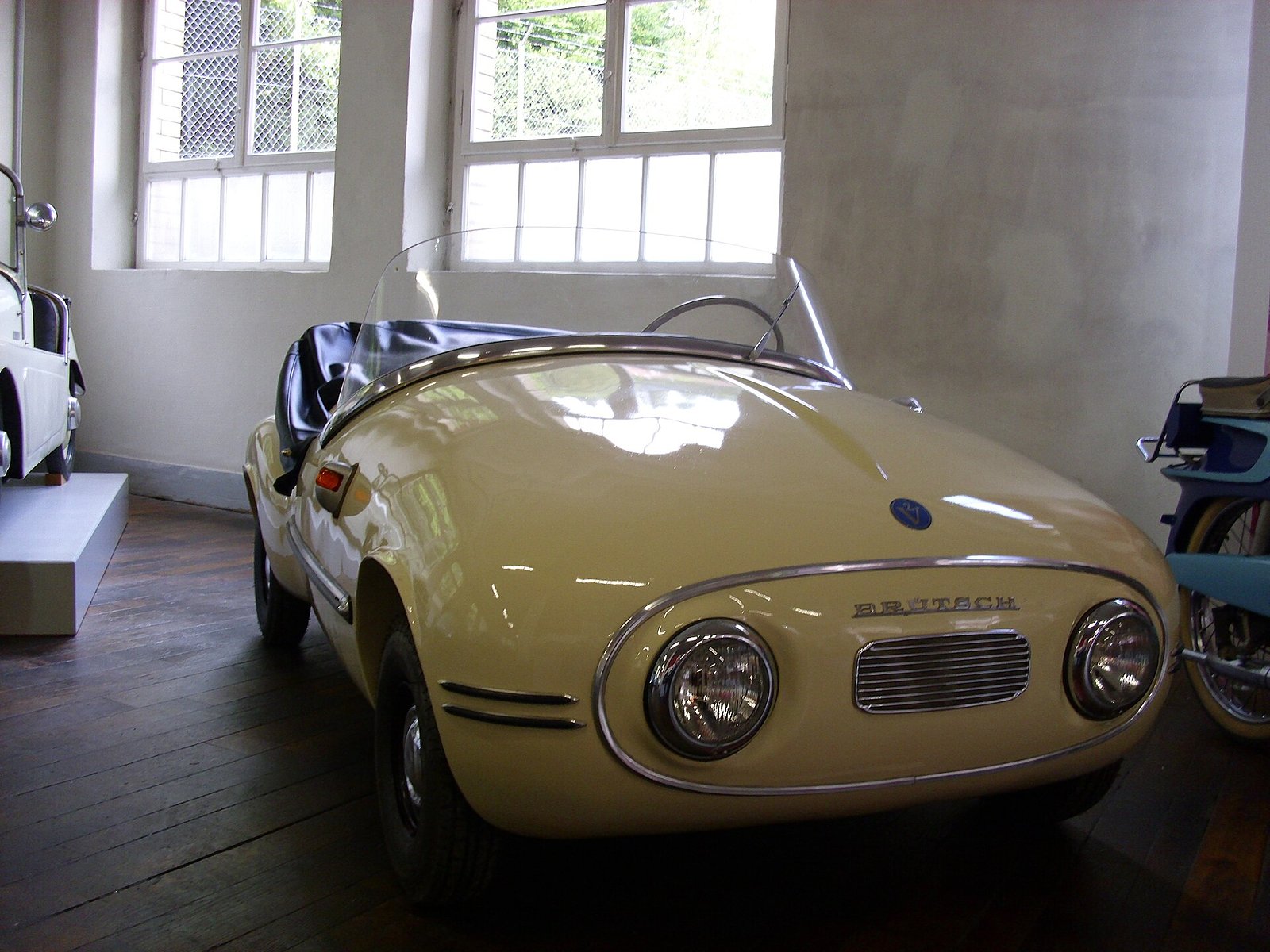
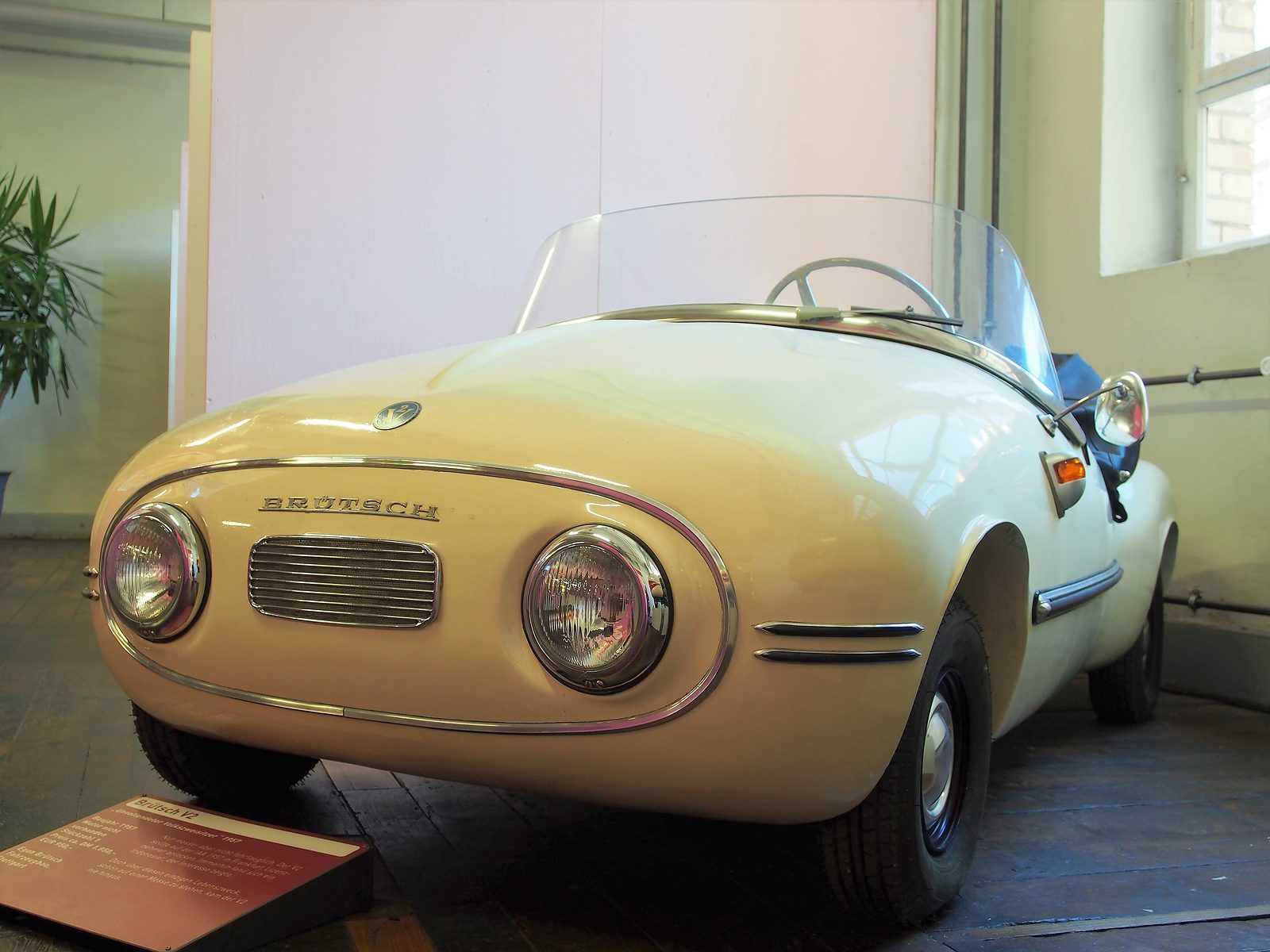
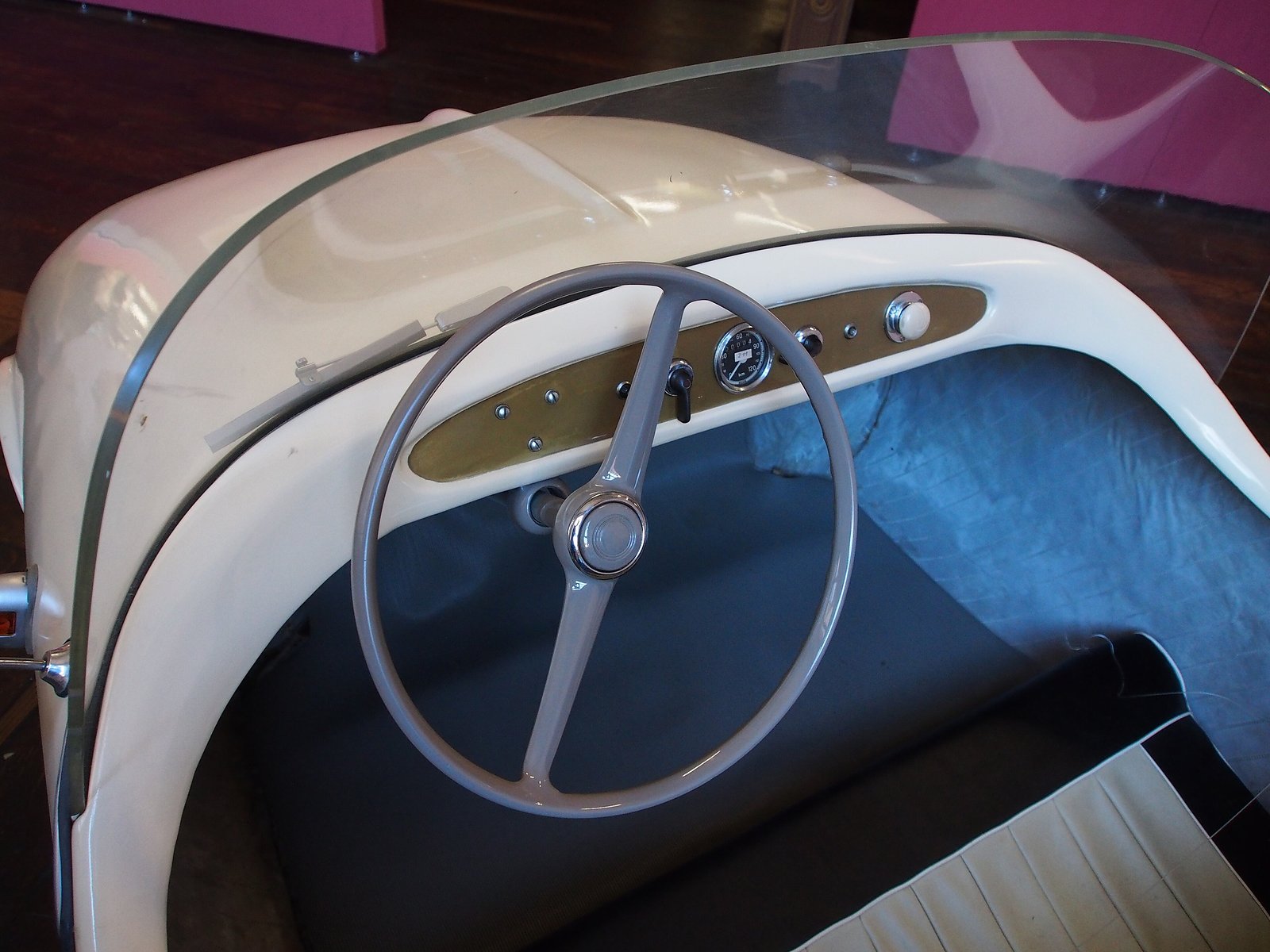
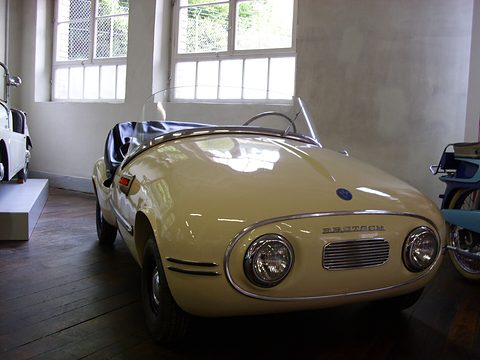
Cream rounded sports car with a low windscreen on a wooden floor beneath tall windows.
The Brütsch 1200 sports cabriolet in the Automuseum Engstingen in 2019.Photo: Lindemann97, CC BY-SA 4.0, via Wikimedia Commons
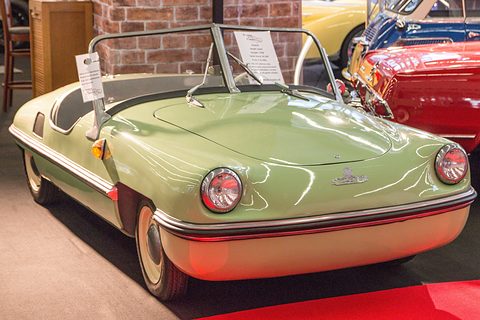
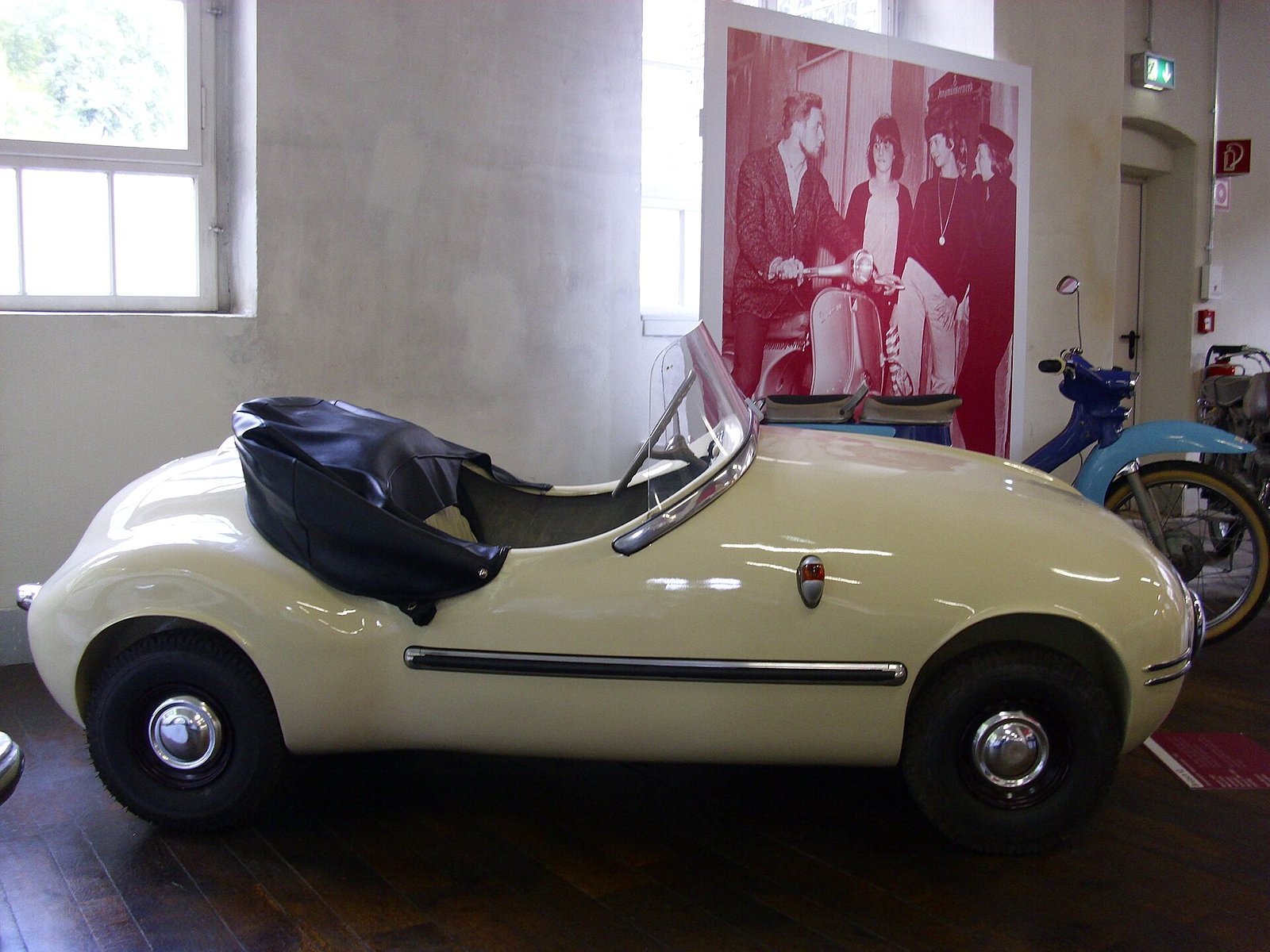
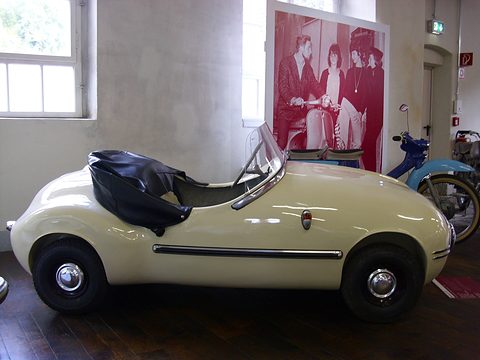
Small cream open two-seater with hood stowed under a black tonneau, on a museum floor.
A cream Brütsch V2, an open two-seater, in the Auto & Uhrenwelt Schramberg in 2015.Photo: Alf van Beem, Public domain, via Wikimedia Commons
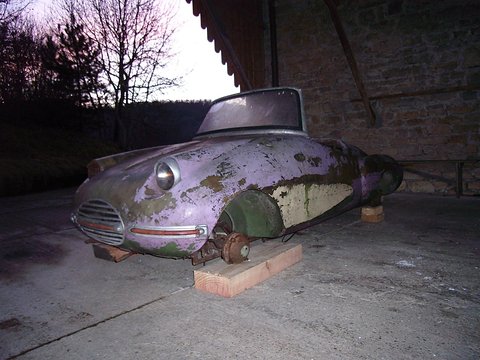
Flaking purple and green open sports body without wheels, resting on wooden blocks under a barn roof.
A derelict Brütsch V2-N propped up on blocks in a barn in 2008.Photo: JOHN LLOYD from Concrete, Washington, United States, CC BY 2.0, via Wikimedia Commons

Brütsch Rollera

1956–⁠1958 · a record on this page

The Rollera was a single-seat three-wheeler with a 100 cc Sachs engine, built in 1956–⁠58. Eight were built in Germany.source 1 It was also built under licence in France, but German Wikipedia names no French maker, and none has been confirmed.source 1

Belcar

years not recorded · a record on this page

The Belcar was Brütsch’s three-wheeler built in Switzerland, by the Fahrzeugfabrik Wollerau, formerly A. Grünhut & Co.source 1 By the autumn of 1956 Belcar was one of the licensees that had distanced themselves from Brütsch.source 3 No production figures have been found.

Pictures

More photographs, old and new

Variants

A dozen designs

The Brütsch models
VariantYearsWhat differsHow many
Eremit, 400, Zwerg1951Single-seat three-wheelers, two wheels at the front, 77–125 ccPrototypes
Brütsch 12001953–⁠54A sports cabriolet on Ford Taunus 12M parts, bodied in Lorch, DM 10,500Not found
200 Spatz1954–⁠55An open three-seat glass-fibre three-wheeler, Sachs or Maico engine3
Zwerg two-seater1955–⁠57An open three-wheeled two-seater; licensed to France as the Avolette12 in Germany
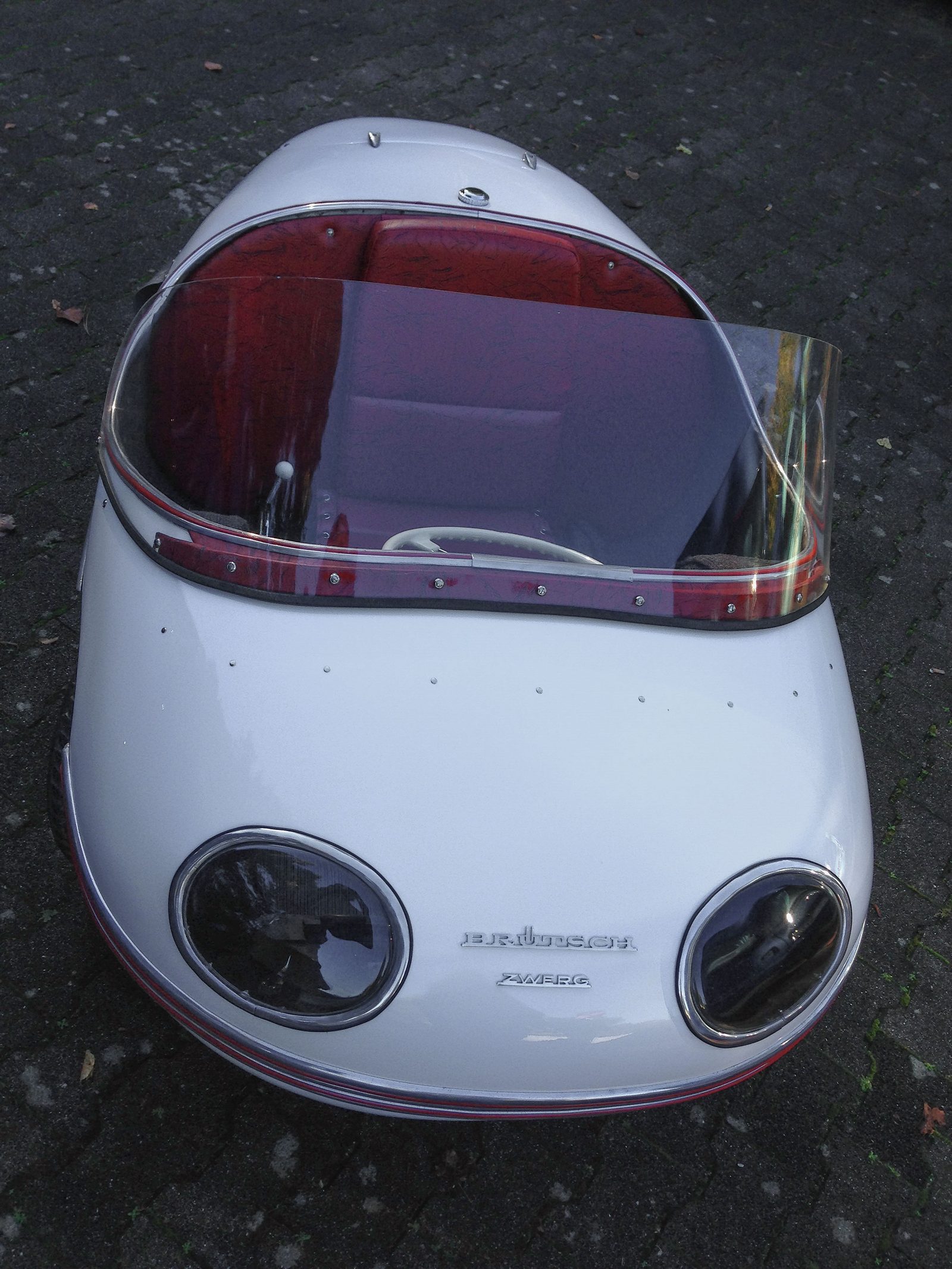
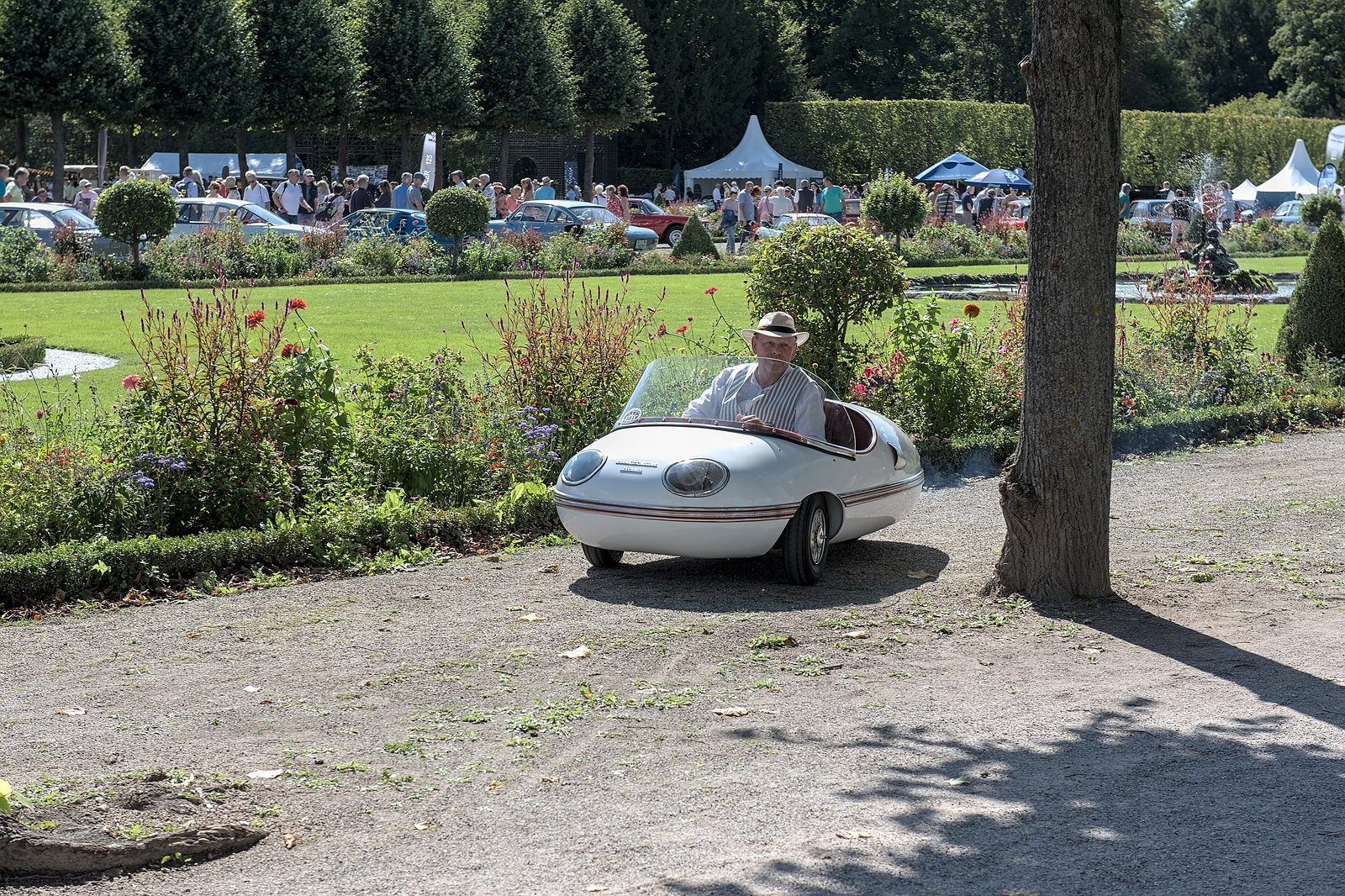
Zwerg Einsitzer1955–⁠56Two glass-fibre shells on a box frame, a central seat, a 75 cc DKW engine4
Mopetta1956–⁠58A single-seat three-wheeler with a 50 cc ILO engine; its own page14
Rollera1956–⁠58A single-seat three-wheeler, Sachs 100 cc; also built in France8 in Germany
Bussard1956–⁠58An open three-wheeler, Sachs 200 cc11
Pfeilc. 1956–⁠58An open four-wheeler, Lloyd 400 cc, 110 km/h8
V2 and V2-Nc. 1956–⁠58An open four-wheeler; the V2-N had doors and a Fiat 500 twin, for a French licensee12 and 3
Taunus coupélate 1950sHis last car, a coupé prototype on a Ford Taunus 12M1

Specification

Three models, from the 1955 Frankfurt show table and German Wikipedia

Zwerg Einsitzer (1955)

Zwerg Einsitzer (1955)
EngineDKW Hobby 75 cc, 3 PS, centrifugal clutch and stepless drive
BodyTwo glass-fibre shells on a box frame
Size2,200 × 1,100 mm; 98 kg
Top speed65 km/h60 km/h in the 1955 show table
PriceDM 1,475–1,495

Zwerg two-seater (1955)

Zwerg two-seater (1955)
EngineSachs 200 cc, 10 PS, or Maico 250 cc, 15 PS
WheelsThree, one at the back; 4.00-8 tyres
Size2,400 × 1,200 × 1,050 mm; 150 kg
Top speedAbout 100–105 km/h
PriceDM 1,975

200 Spatz three-wheeler (1955 show table)

200 Spatz three-wheeler (1955 show table)
EngineSachs 200 cc, 10 PS, or Maico 250 cc, 15 PS
BrakesHydraulic, on all three wheels
Size3,300 × 1,420 × 1,150 mm; 280 kg
Top speed90 km/h (Sachs) or 105 km/h (Maico)
PriceDM 2,975 open, DM 3,175 as a coupésource 4

How many were built?

Model by model

About 75 built in GermanyThe counts come from German Wikipedia, after Rosellen’s Deutsche Kleinwagen; no second source has been found. Cars built under licence by Spatz, Belcar and Avolette are not included.

  1. 14MopettaOne source

    German Wikipediasource 1

  2. 12Zwerg two-seaterOne source

    German Wikipediasource 1

  3. 12V2One source

    German Wikipediasource 1

  4. 11BussardOne source

    German Wikipediasource 1

  5. 8PfeilOne source

    German Wikipediasource 1

  6. 8RolleraOne source

    German Wikipediasource 1

  7. 4Zwerg EinsitzerOne source

    German Wikipediasource 1

  8. 3200 Spatz three-wheelerOne source

    German Wikipediasource 1

  9. 3V2-N, in GermanyOne source

    German Wikipediasource 1

  • Two sources agreetwo good sources give the figure
  • One sourcea good source, alone
  • Unconfirmeda lead only, not yet checked

Famous for

Three points

  1. Glass fibre, early

    His cars were an early German use of glass-fibre bodies, though his claim to have been first was disputed in print.

  2. A dozen designs, a dozen or so each

    No counted model reached 15 cars in Germany; the smallest, the Mopetta, was said to float.

  3. Licences and lawsuits

    His designs went to Spatz, Belcar and Avolette, and the Spatz deal ended in an injunction against him.

Survivors and collecting

Today

Survivors are very rare. Single cars appear in collections, such as the Mopetta in the Vehikelsammlung Eppelheim.source 1 No major auction result for any Brütsch other than the Mopetta has been found, and no club for the marque.

Sources

Numbered as in the text

Most of this page rests on German Wikipedia (the first source), which follows Rosellen’s Deutsche Kleinwagen; the magazine reports of 1955 and 1956 confirm several of the dated events.

  1. German Wikipedia, Brütsch (Automobilhersteller), read in full. It cites Rosellen, Deutsche Kleinwagen (1991), pp. 176–197, and Automobilchronik 5/1977.
  2. “Forum der Lesermeinungen: Brütsch — Gegendarstellung”, with the editors’ reply and the sequestrator’s circular of 16 December 1954, auto motor und sport 1/1955.
  3. Report on the IFMA show, auto motor und sport 22/1956.
  4. Report on the Frankfurt show, with its data table and price list, auto motor und sport 20/1955.
  5. Short mention of Egon Brütsch, auto motor und sport 26/1956.