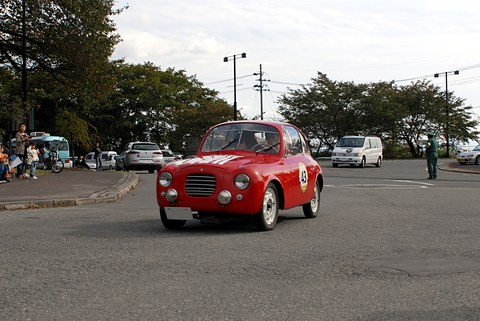
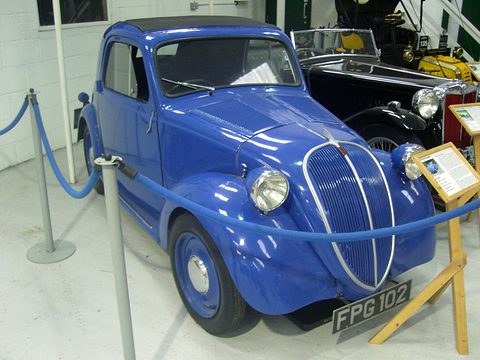
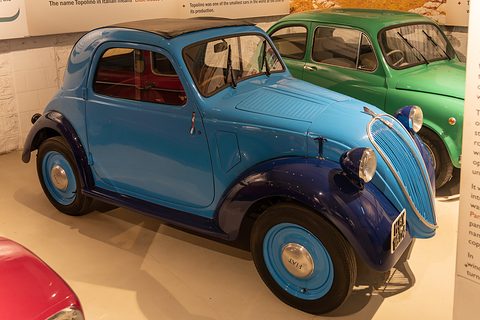
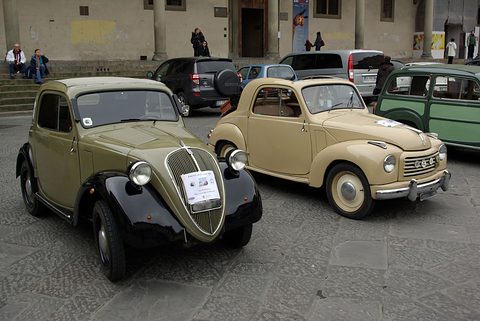
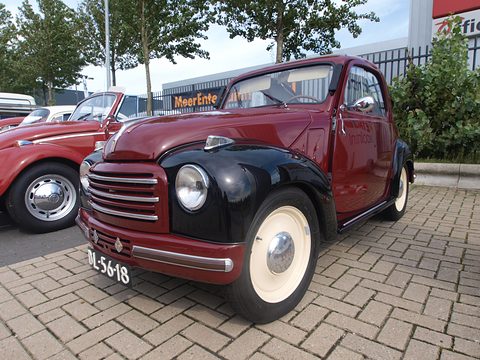
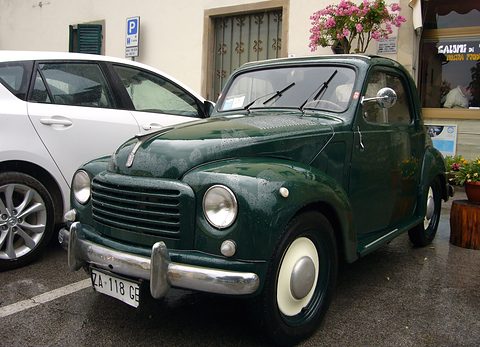
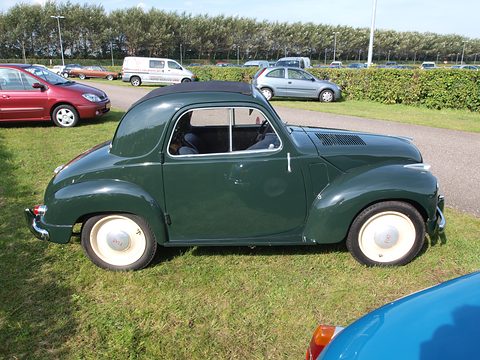
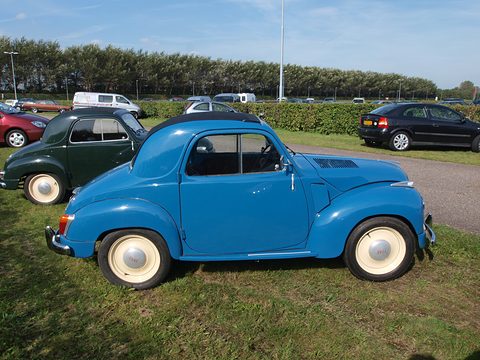
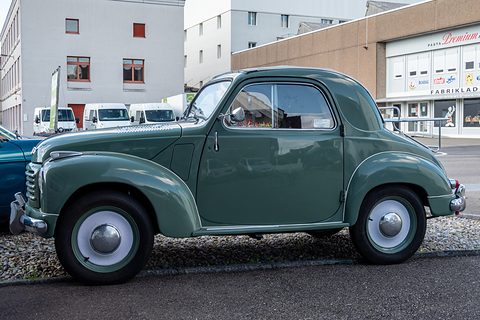
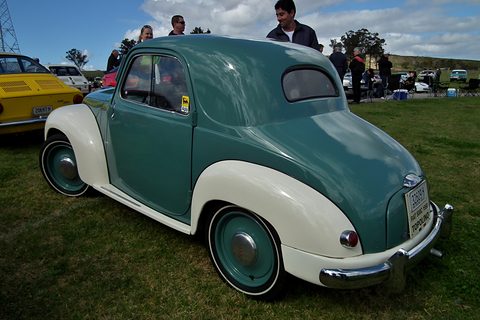
Also known as Fiat 500, Fiat 500 A, B and C, “Topolino”
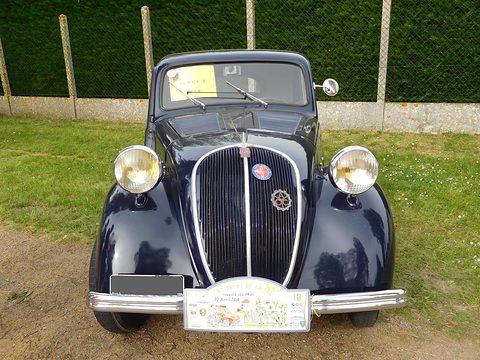
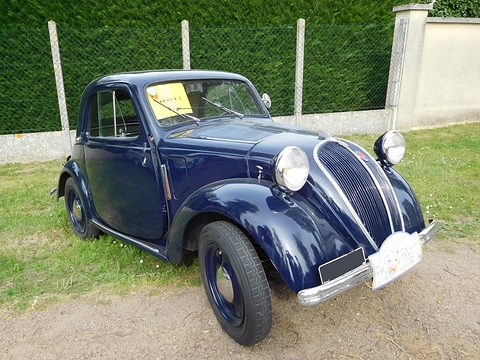
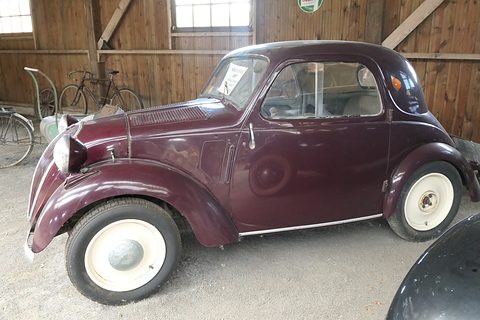
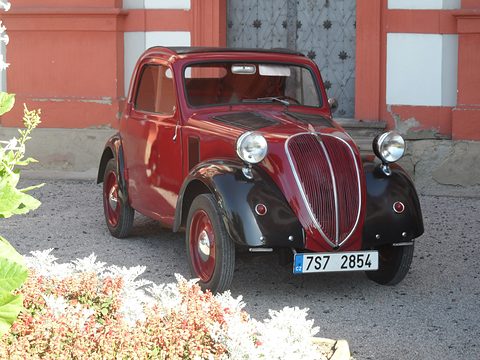
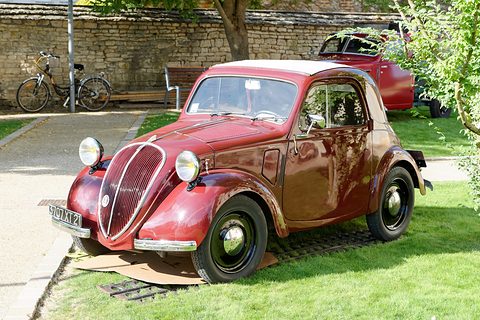
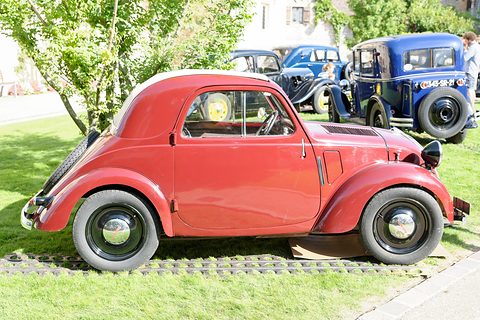
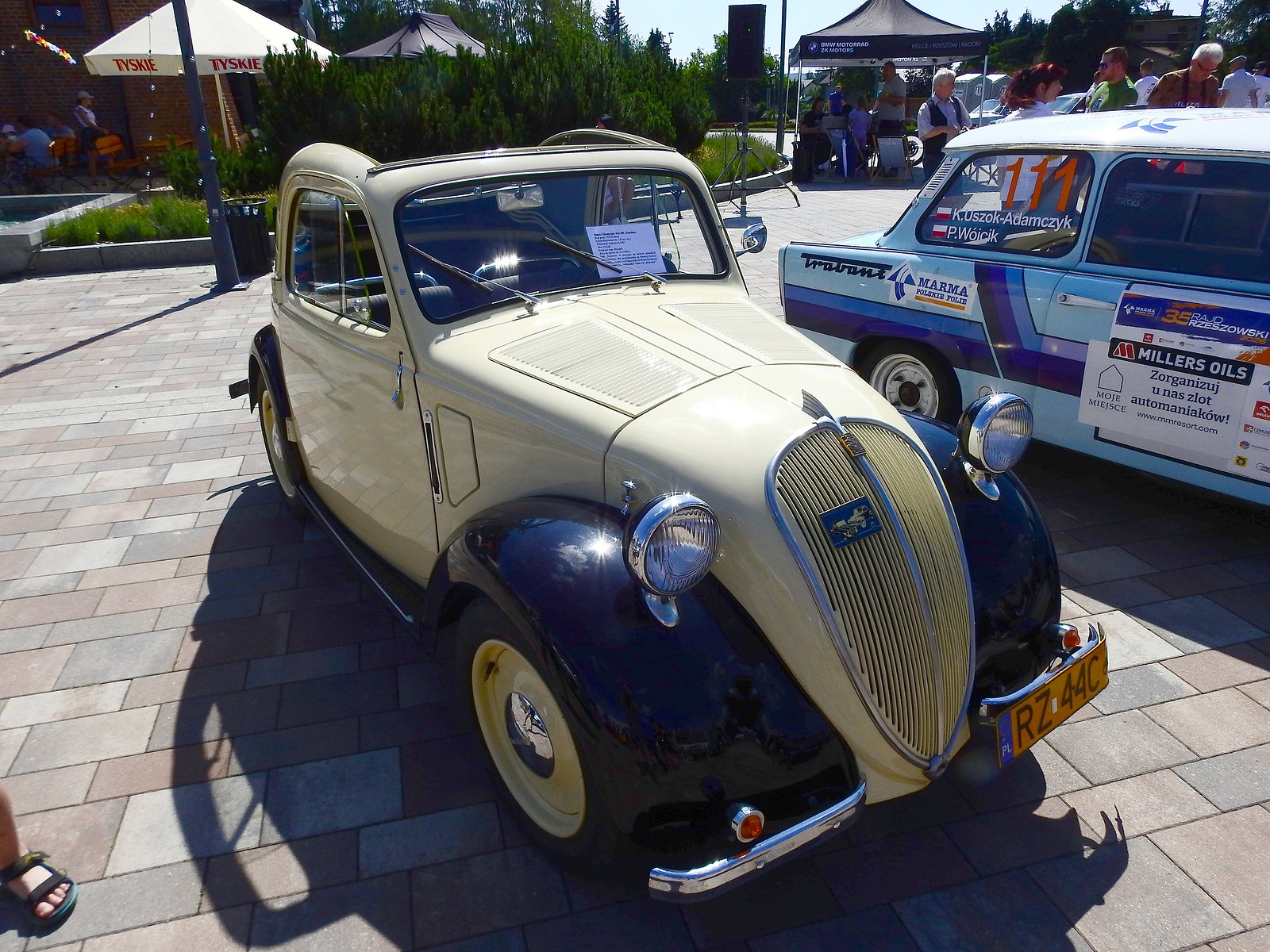
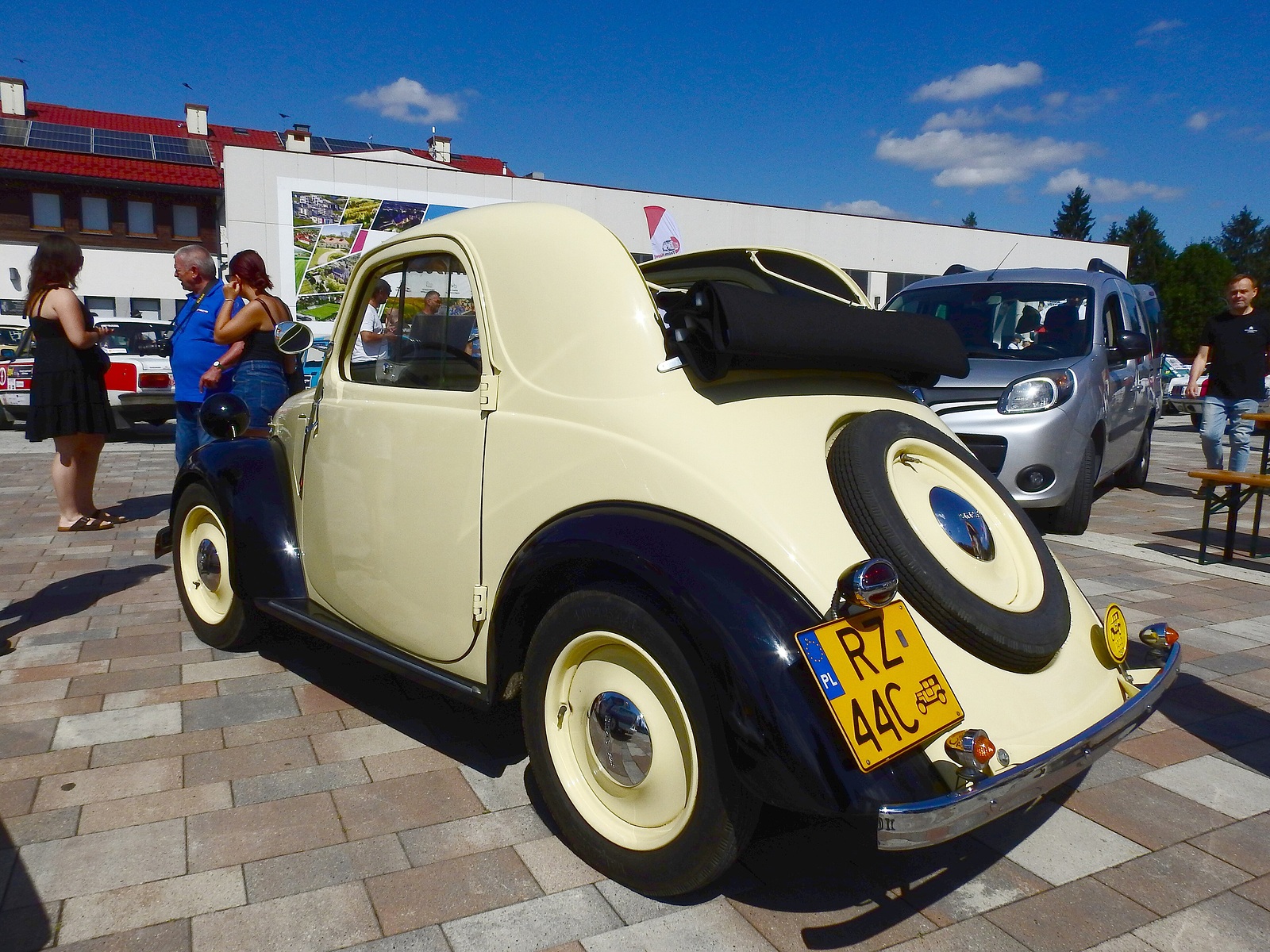
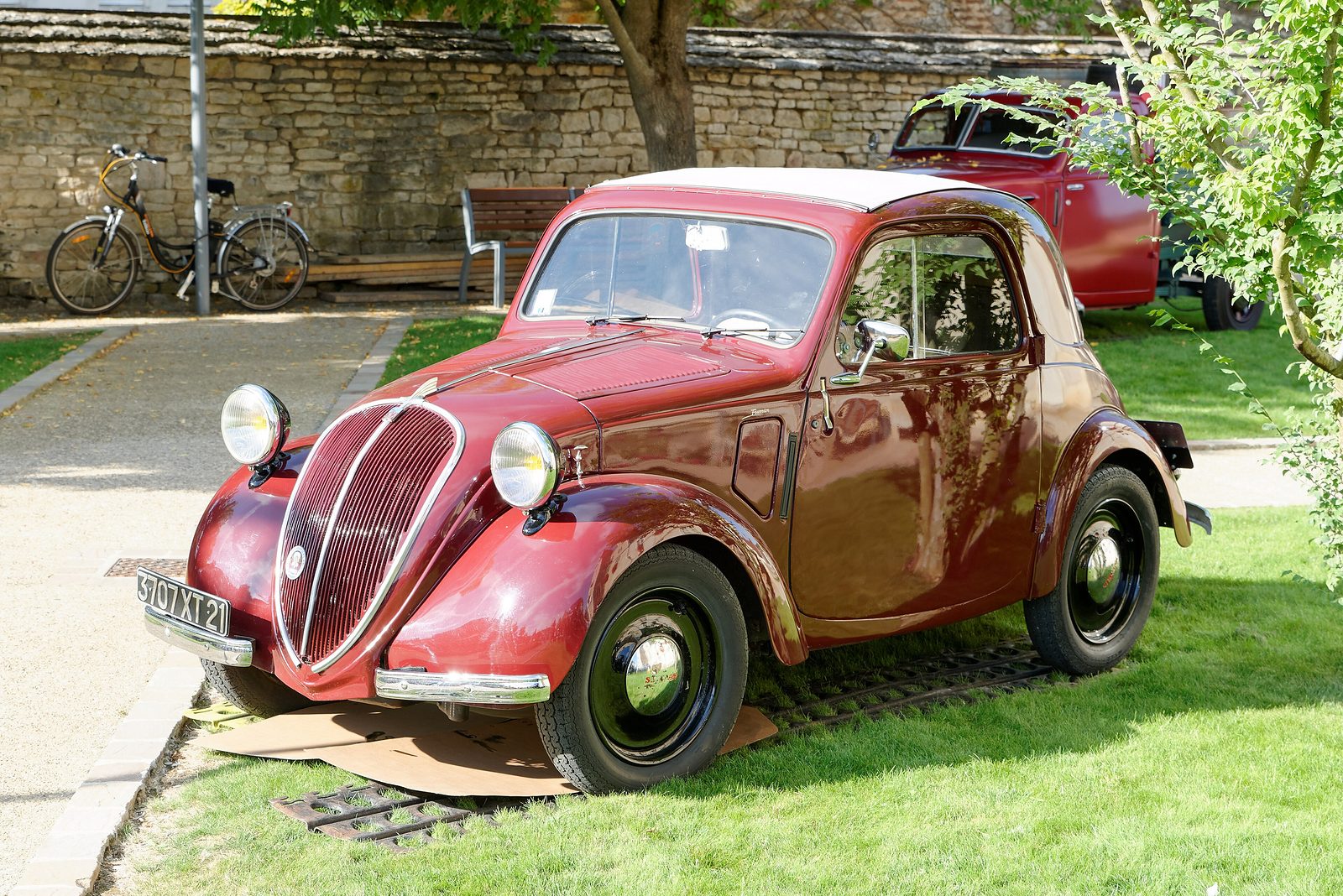
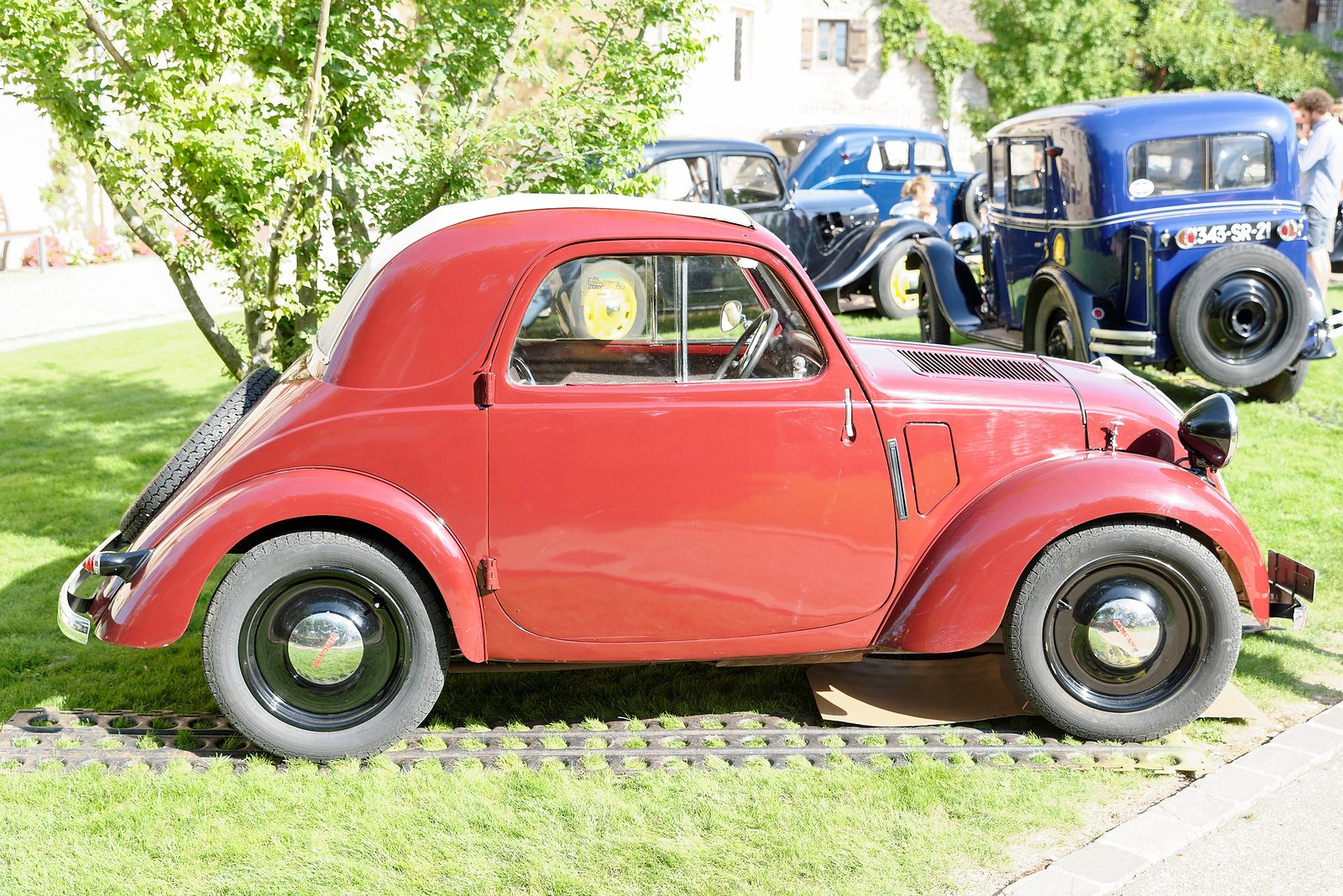
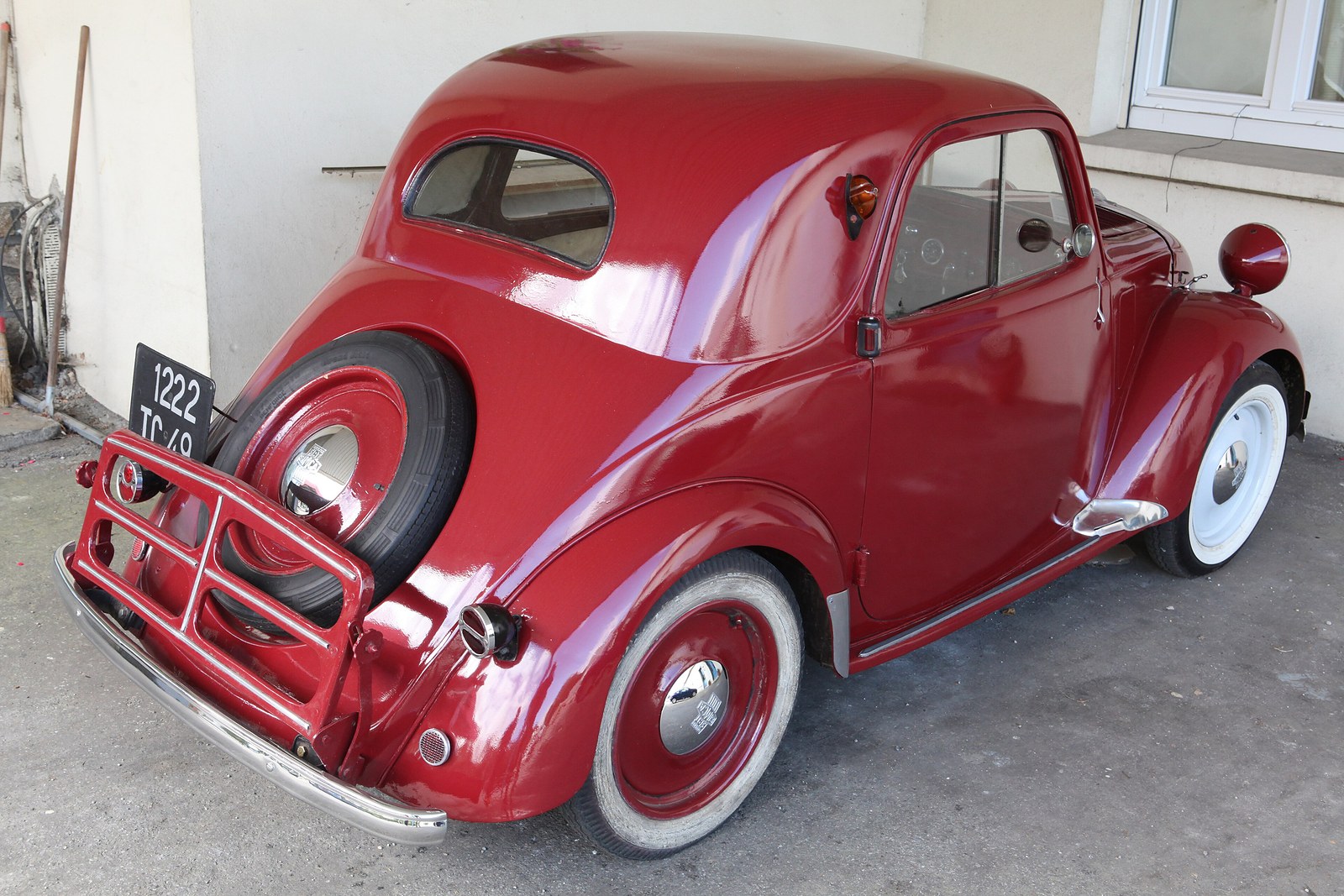
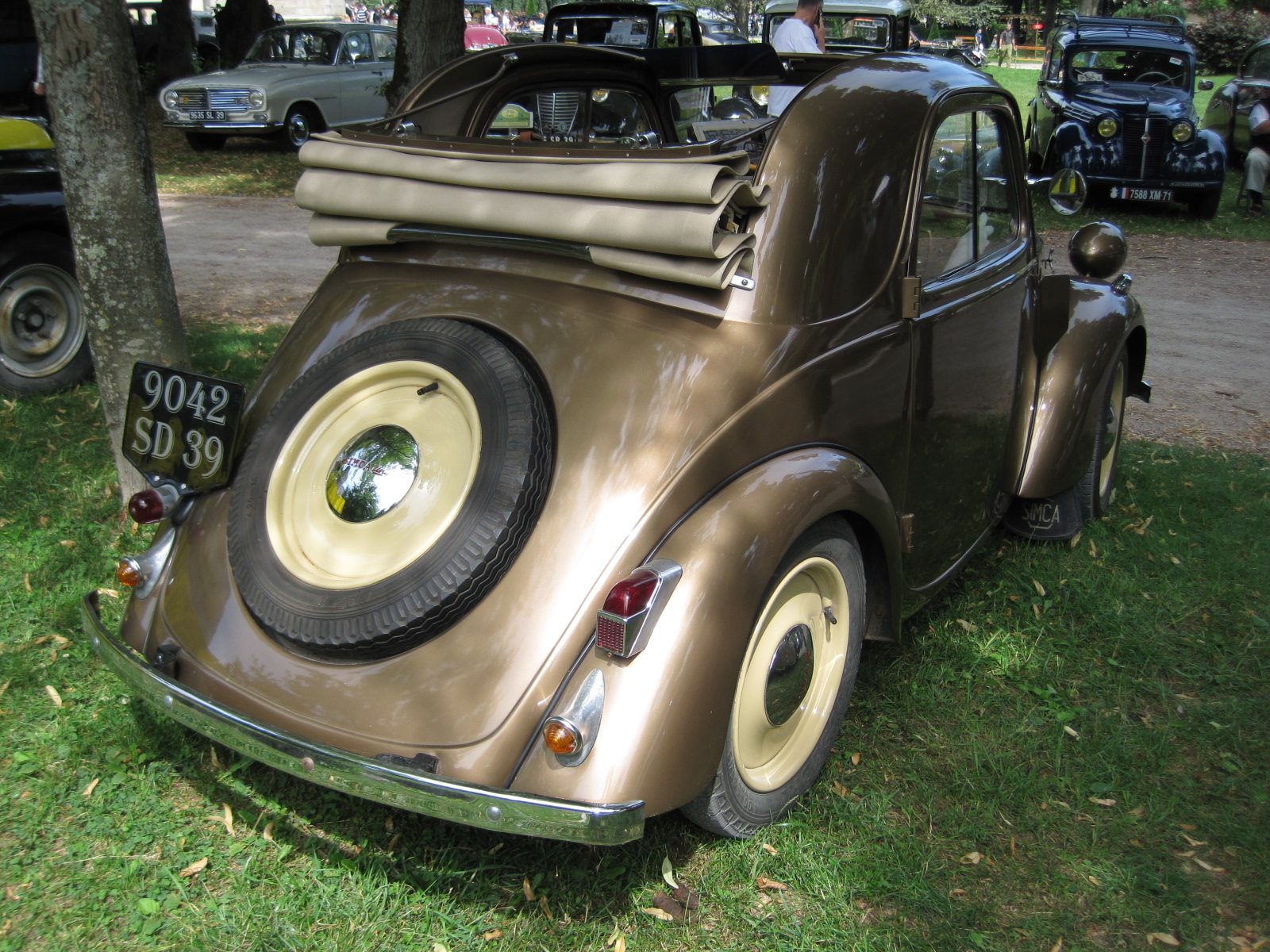
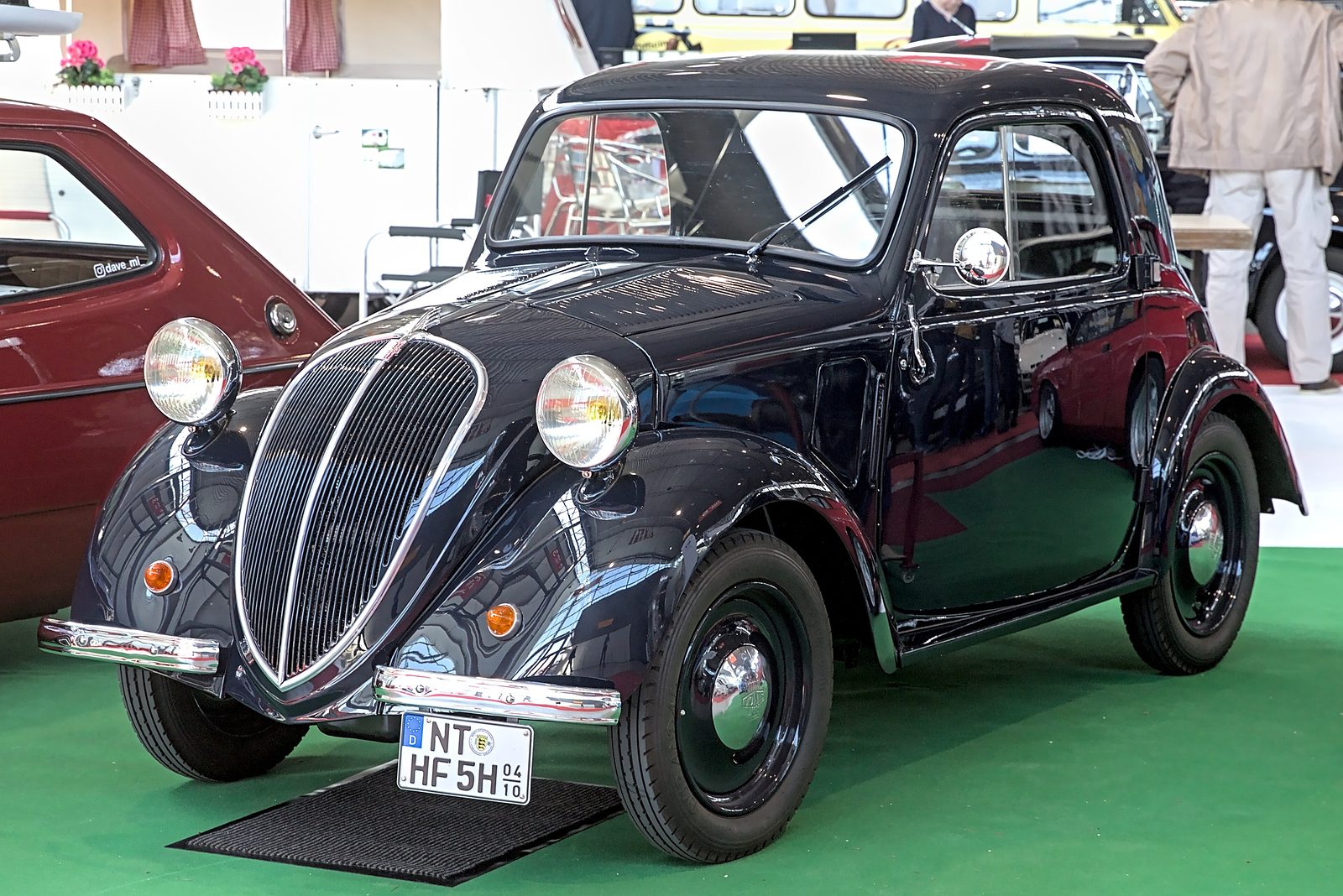
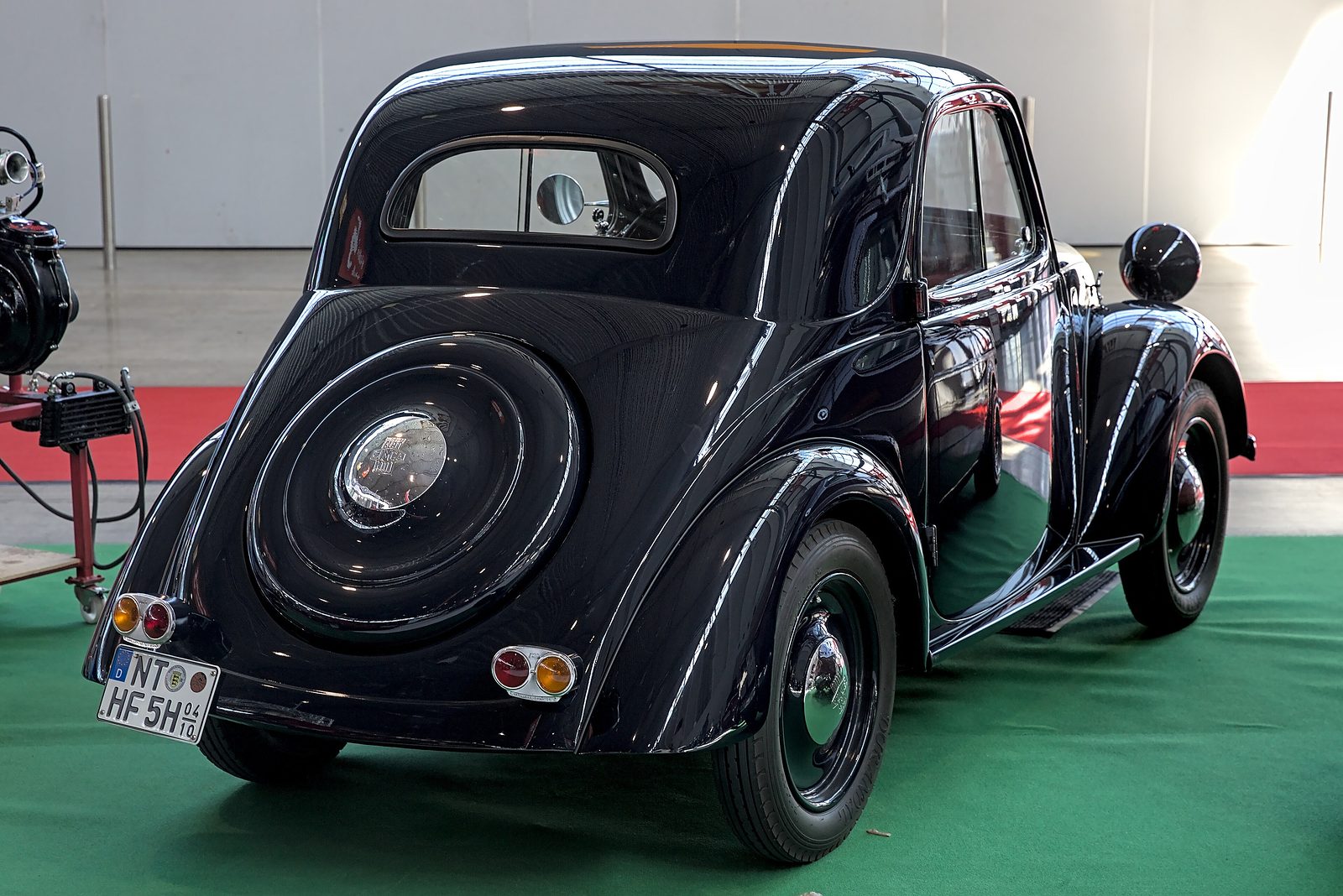
A real four-cylinder car, scaled down until two people fitted. The engine sat ahead of the front axle and the radiator behind it, so the nose sloped away between two headlamps perched on the wings, and Italy saw a mouse. It was called Topolino, the little mouse, from the first day, and Fiat built about half a million.
Built1936 –1955Turin
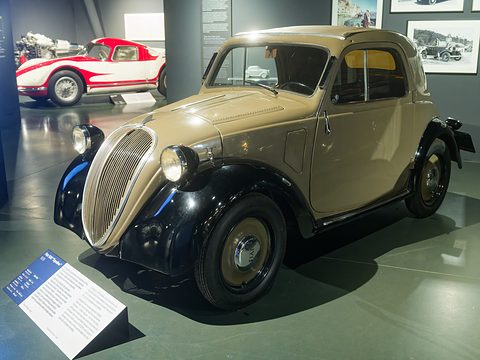
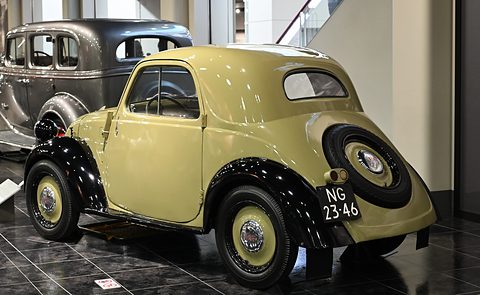
A cream and black 1936 Fiat 500 A at the Museo Nazionale dell’Automobile, Turin, in May 2026.Photo: Marie-Lan Taÿ Pamart, CC BY 4.0, via Wikimedia Commons
1
At a glance
The spec plate
Fiat 500 Topolino
500 A, B and C · Turin
Built
1936–1955On sale from 15 June 1936; the last Belvedere estates at the end of 1955
Country
ItalyLingotto, then Mirafiori, Turin
Maker
FiatAt the Lingotto, Turin; at Mirafiori from 1947
Engine
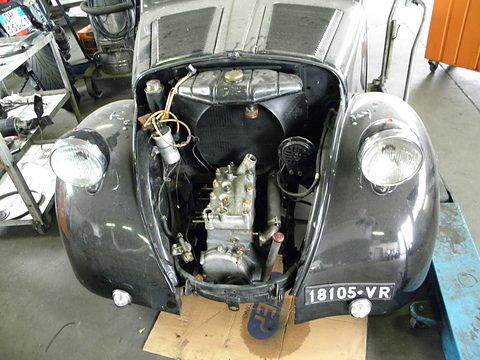
569 cc water-cooled side-valve fourAhead of the front axle; overhead valves from 1948
Power
13 CV9.6 kW at 4,000 rpm; 16.5 CV (12.1 kW) from 1948
Length
3,215 mm1,275 mm wide, 1,377 mm high
Weight
535 kgThe 500 A
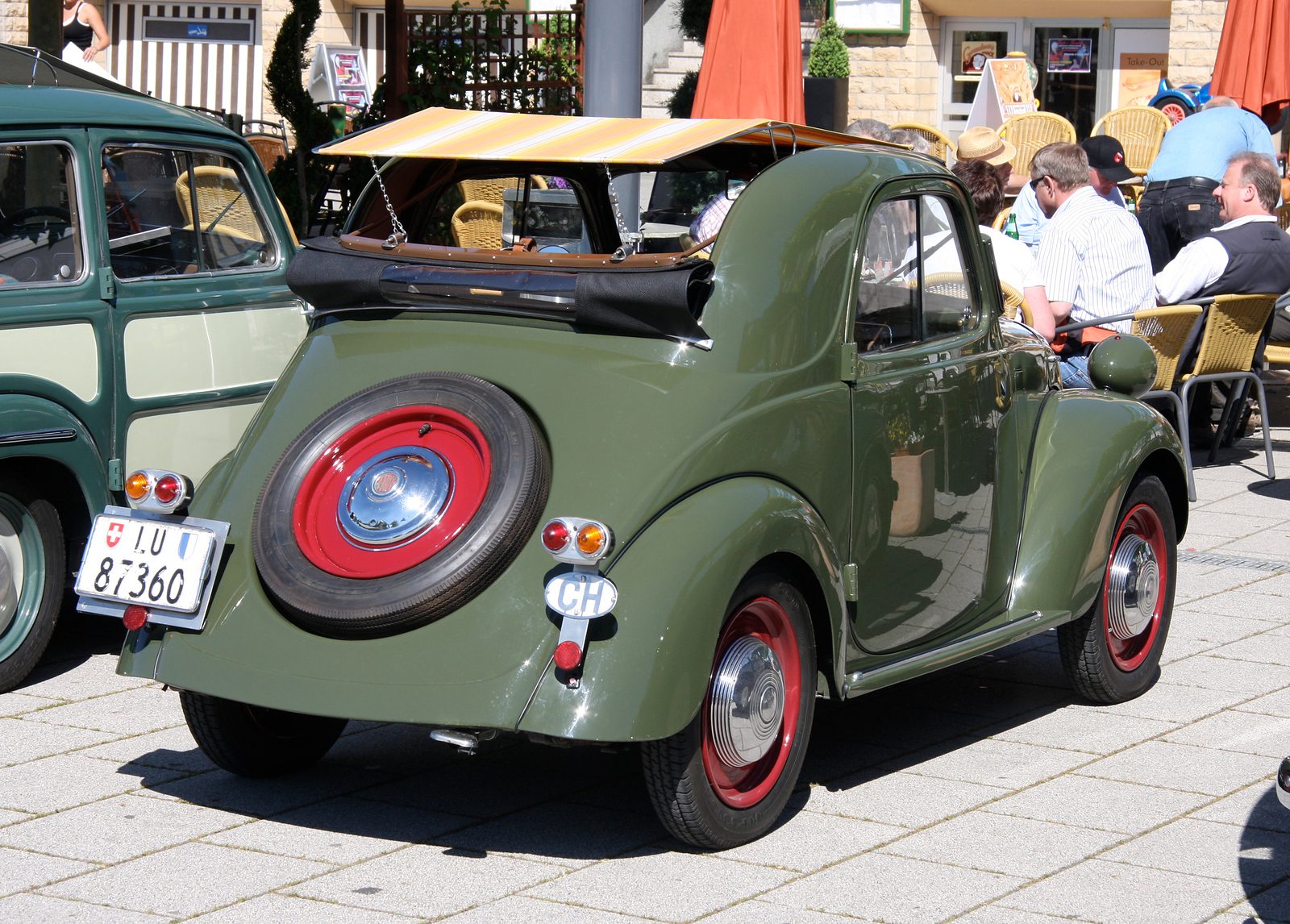
Seats
2With room behind for luggage or two children; the estate seated four
Wheels
4Engine ahead of the front axle, driving the rear wheels
Price new
8,900 lireJune 1936; the trasformabile 9,750 lire
Production
about 520,000Fiat, all versions, 1936–55; about 122,000 of them 500 As
Top speed
85km/h85 km/hThe 500 B and C saloons 95 km/h
2
How big is it?
True proportion
3.21 m
It is 245 mm longer than a Fiat 500, about 1.8 adults laid end to end.
1.27 m wide
535 kg: about seven adults
Two seats, and room behind for two children
A 2,000 mm wheelbase
Fiat 500 Topolino3.21 m
Fiat Nuova 5002.97 m
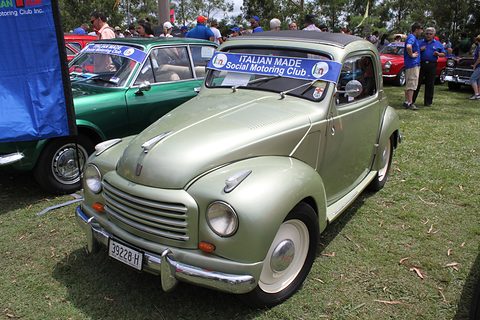
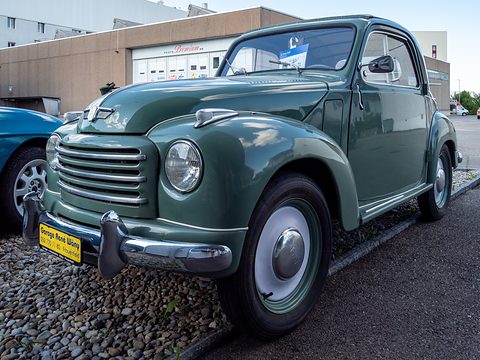
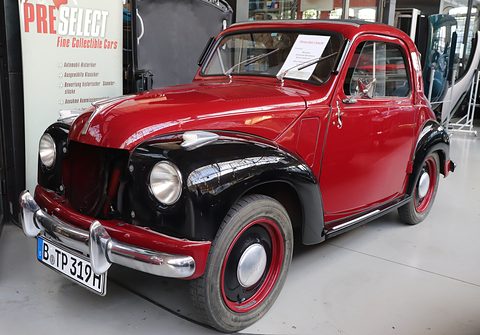
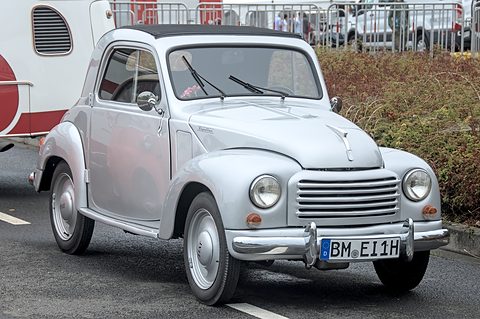
Peel P50, the smallest1.37 m
0 m1 m2 m3 m
Adult, 1.75 m
Drawn at true proportion. The track is 3.6 metres long; the adult stands at the same scale. The Peel P50 is the smallest production car, on every page for comparison.3
The story
History
The story Italians tell begins in 1930, when Mussolini summoned Senator Giovanni Agnelli and asked him for a car that would put Italy on wheels, at no more than 5,000 lire. Italian Wikipedia tells it that way, French Wikipedia calls it a legend, and German Wikipedia dates Agnelli’s order to his engineers to 1933.source 1source 2source 3 Italy had reason to want one: in 1936 it had about 222,000 motor vehicles of every kind for 42 million people.source 1
Fiat tried two ways at once. One camp would use what the firm already knew. The other was led by Oreste Lardone, a pupil of Giulio Cesare Cappa, who drew a four-seater with a 500 cc air-cooled twin and front-wheel drive. In the summer of 1931 it left the Lingotto works on its first outing, with the tester, the designer and Agnelli aboard, and on the climb to Cavoretto the engine caught fire. Agnelli banned front-wheel drive from Fiat, and Lardone was dismissed.source 1source 4 Fiat Heritage’s own account, as Italpress reported it in 2026, credits the front-drive idea to the technical director, Antonio Fessia, instead.source 5 When Mussolini visited Fiat in October 1932, he reminded Agnelli of his promise.source 1
Giacosa’s economies
Fessia and Tranquillo Zerbi gave the job, coded Zero A, to Fessia’s young assistant on the Balilla, Dante Giacosa, an aero-engine engineer; Italpress dates the handover to 1934.source 1source 4source 5 It was the first complete car of one of the designers on this site, and he took cost out of it wherever he could.source 3source 5 The engine, a side-valve four of 569 cc, went ahead of the front axle. The radiator sat behind and above it, so that the water could circulate by itself, by thermosiphon, with no pump. The fuel ran by gravity from a tank under the scuttle, with no fuel pump either; the engine was splash-lubricated, and the chassis was two pressed-steel beams.source 3source 1 Rodolfo Schaeffer, head of the body department, shaped the body.source 4 On 7 October 1934 Giacosa and Fessia took turns driving the final prototype over a rough loop from Turin through Ivrea, La Serra and Cigliano, and it touched 82 km/h (51 mph) on the autostrada.source 1source 4
Launched as the Fiat 500
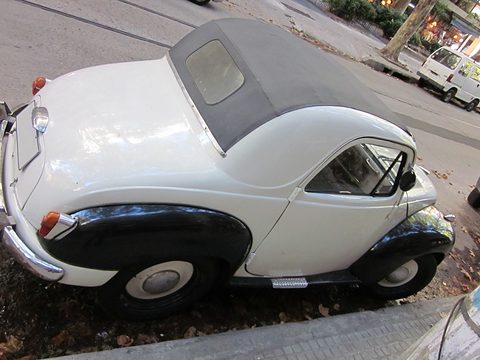
The name Topolino, after Disney’s Mickey Mouse, was considered; after the League of Nations’ sanctions of 1935 the press guessed at “Fiat Ginevra”.source 1 On 10 June 1936, at the Villa Torlonia, it was shown to Mussolini and the press simply as the Fiat 500, and it went on sale on 15 June at 8,900 lire, about twenty times a skilled worker’s monthly pay; the trasformabile, with a full-length roll-back roof, cost 9,750.source 1source 5 The 5,000-lire target had been missed by a long way.source 1source 5 Fiat filmed the launch with the Istituto Luce on the terrace of the Circolo della Stampa in Turin.source 5
nuova piccola grande vettura del risparmio e del lavoro
Fiat’s description of the 500 at its launch in June 1936, as reported by Italpress in 2026. In English: “The new little big car of saving and work.”source 5
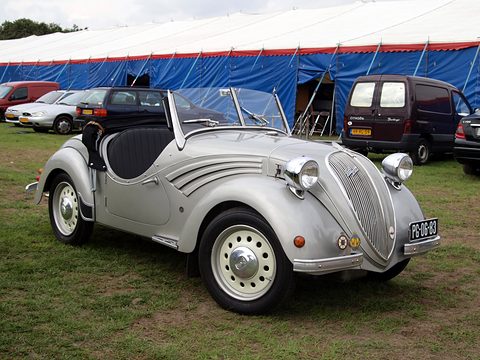
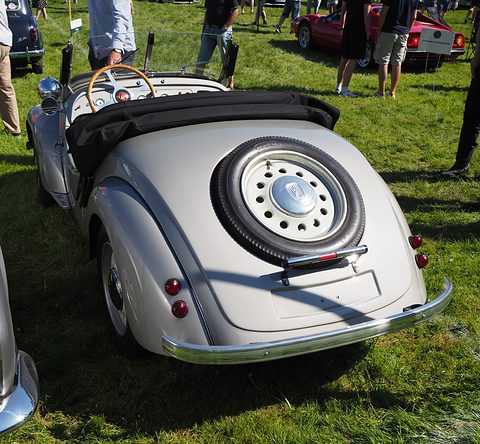
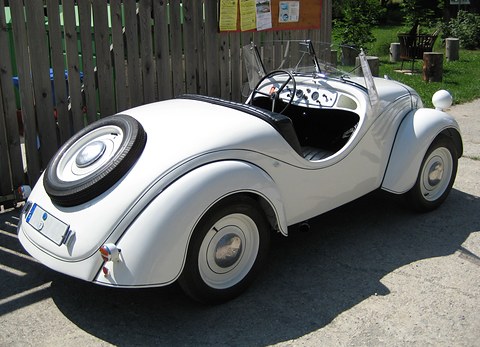
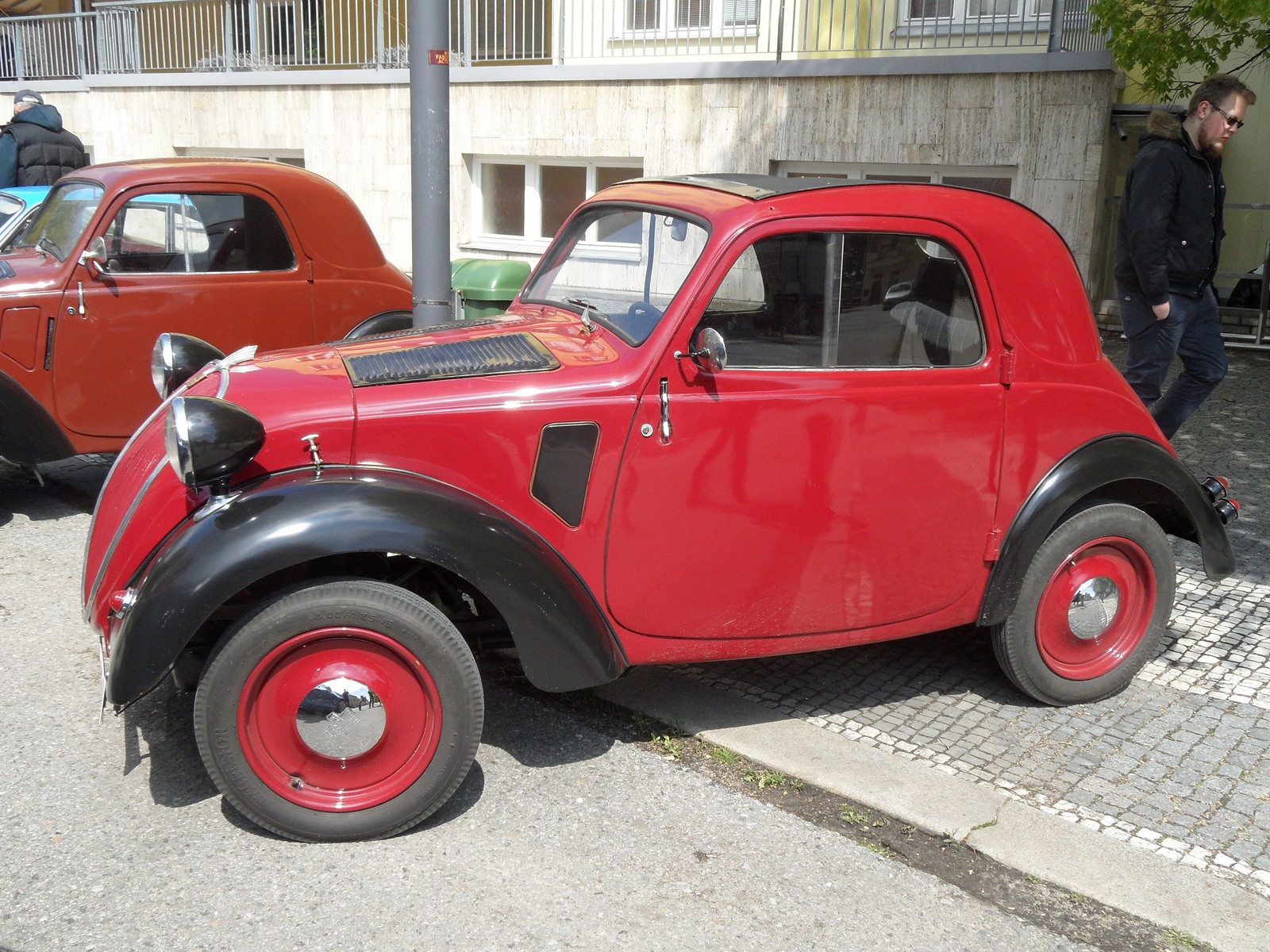
The sloping bonnet and the headlamps on the wings made the face, and the nickname stuck.source 5source 1 The Lane Motor Museum calls it the smallest mass-produced car of its time.source 6 Before the war Fiat sold about 20,000 a year.source 5 At 3,215 mm (10 ft 7 in) it runs past the length this site takes as a microcar’s limit, and it is here because it set the idea of the small car that its successor, the Fiat Nuova 500, made smaller still.source 1
Living with a mouse
Two sat in front, with room behind for luggage or two children.source 7 Its rear-hinged doors had sliding windows, and the boot could be reached only from inside, by folding the seat back. First and second gears needed double-declutching, a flap on the air intake stopped the carburettor icing in winter, and a starting handle waited for a flat battery.source 3 The early cars had no fuel gauge: the owner dipped a wooden stick into the tank.source 8 The engine gave 13 CV (9.6 kW), the car would do 85 km/h (53 mph), and it used about 6 litres per 100 km (47 mpg).source 7source 1source 2 Its weak point was the centre big-end, which went short of oil when hot.source 3 The low nose gave a good view ahead, but with so much weight in front it was poor on loose or steep ground.source 7source 1
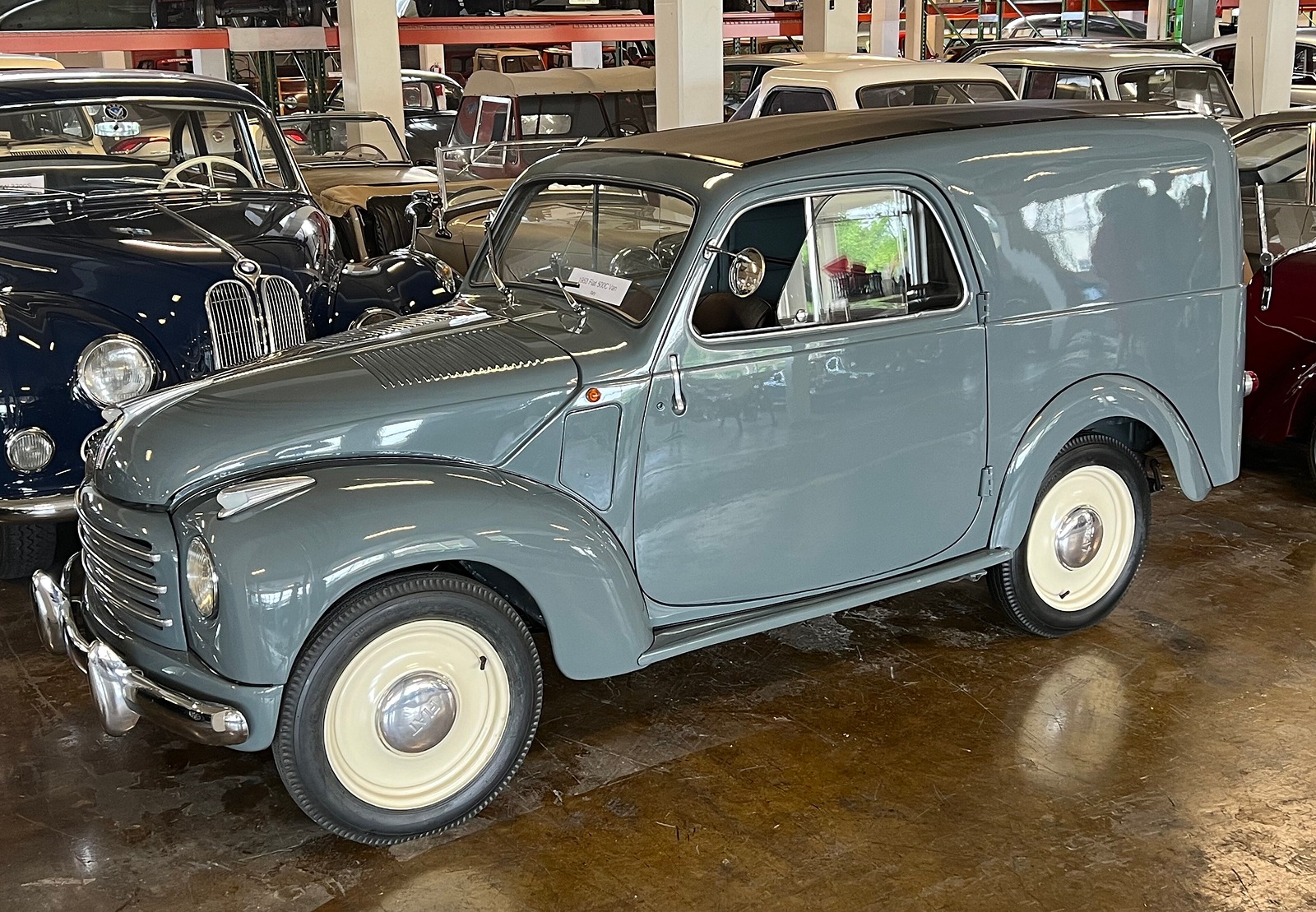
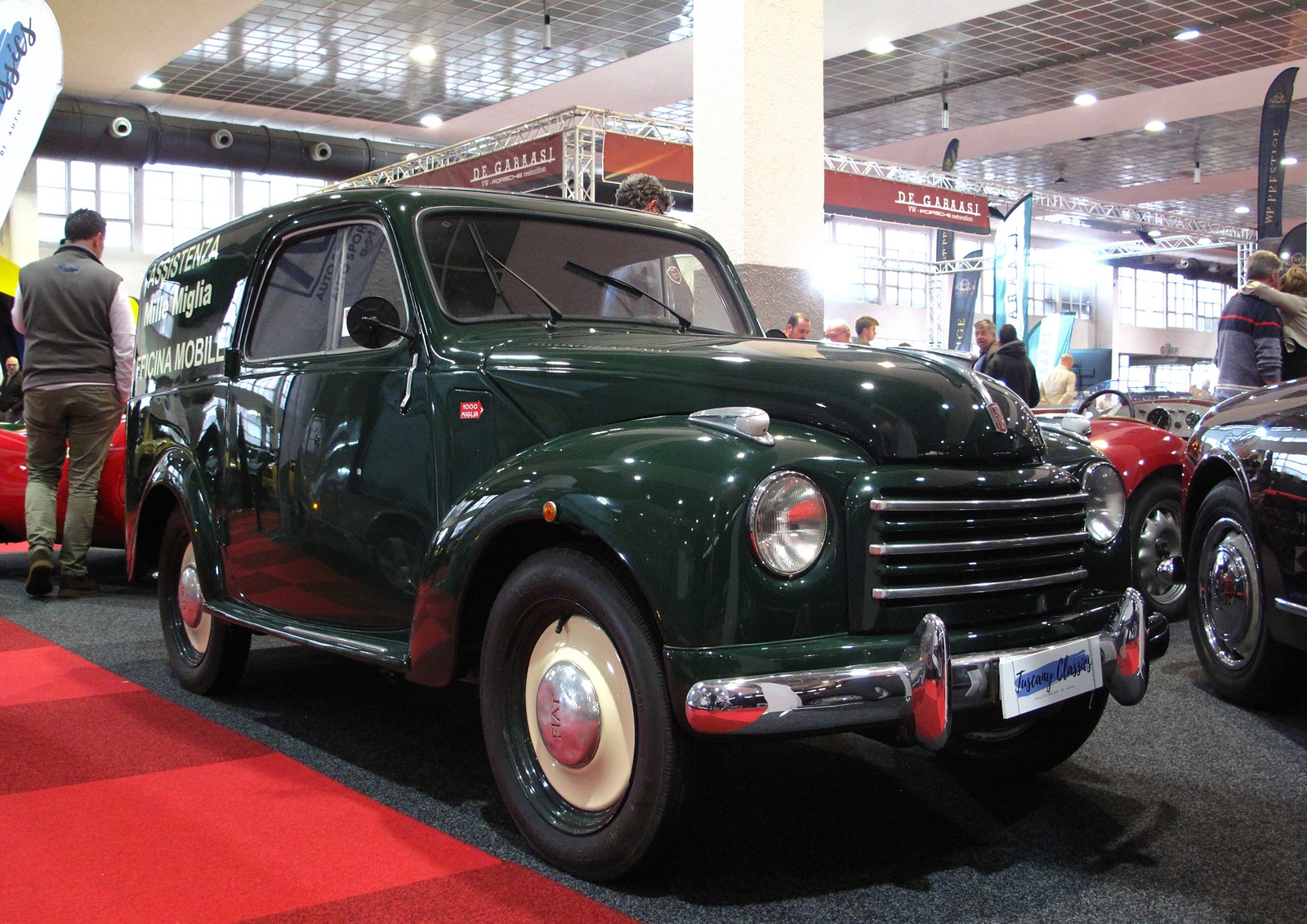
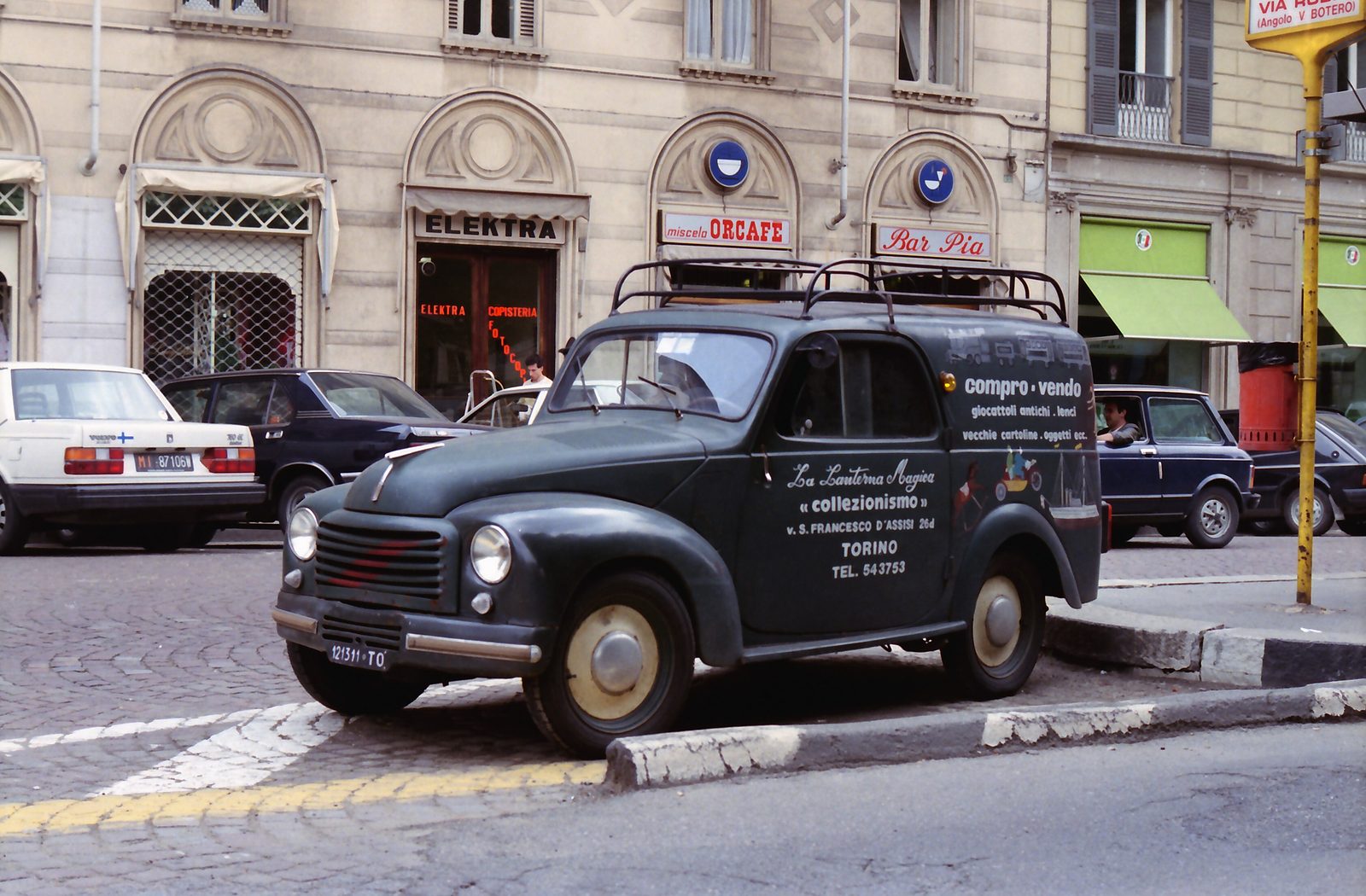
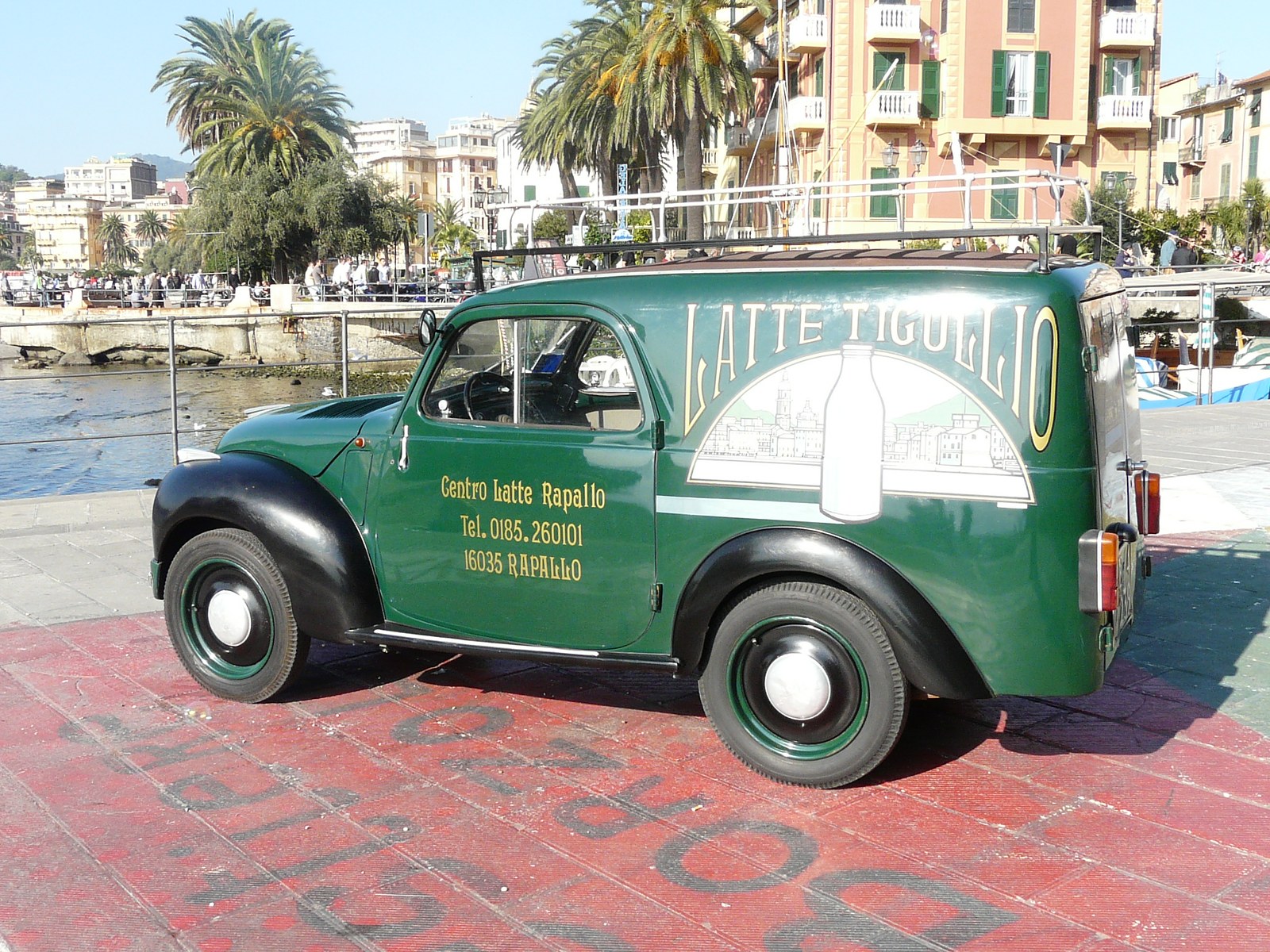
A van, the Furgoncino, for 300 kg, came late in 1936, largely for the army.source 1 Overloaded vans, and owners who crammed four or five people into a two-seater, cracked the rear of the frame. So from chassis 046000, in the second half of 1938, the frame was lengthened at the back to take full semi-elliptic springs in place of the quarter-elliptics: the first series is known as the balestra corta, the second as the balestra lunga.source 7source 1
The army used it as a liaison car from 1936 and at the front from 1940; after 8 September 1943 requisitioned cars served the Wehrmacht.source 1 The side-valve 500 A was built almost unchanged until early 1948, and from 1947 at Mirafiori instead of the Lingotto.source 1source 5
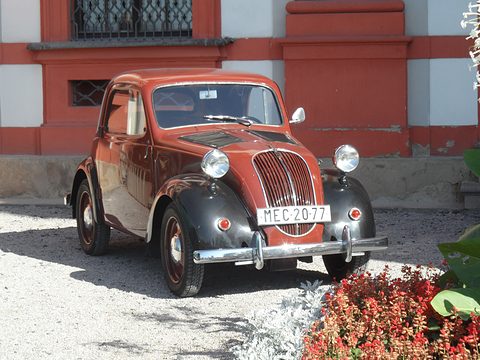
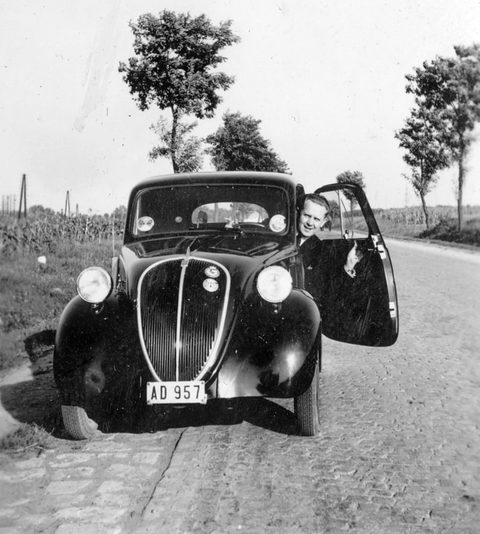
Plate III · 1939 A 500 A on a country road in Hungary in 1939, its rear-hinged door open.Photo: Fortepan, Public domain, via Wikimedia Commons
The B, the C and the estate
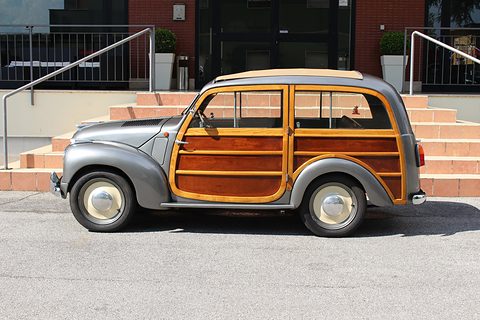
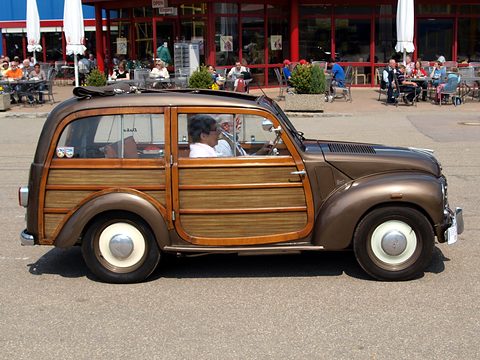
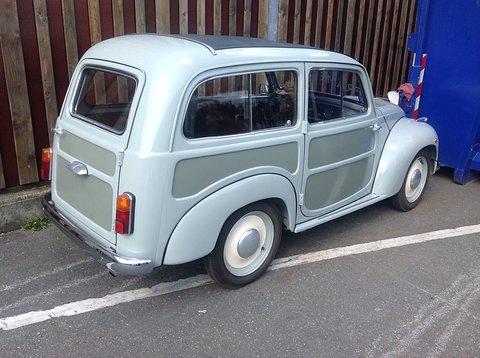
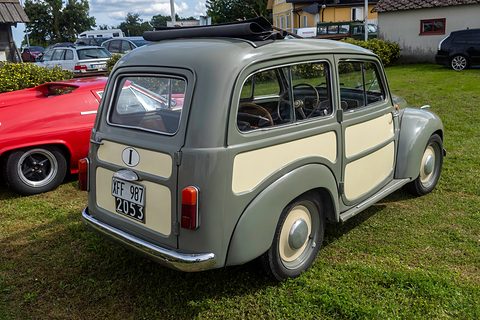
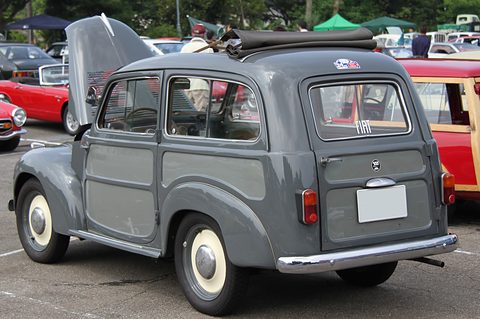
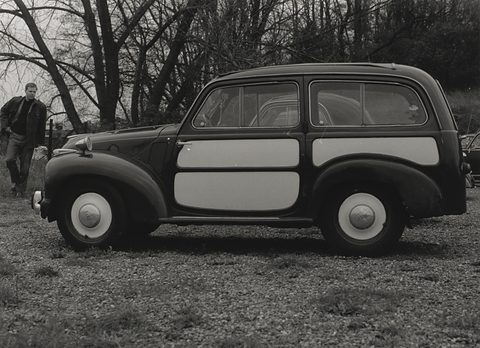
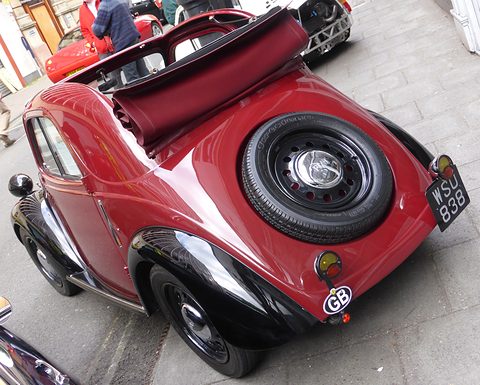
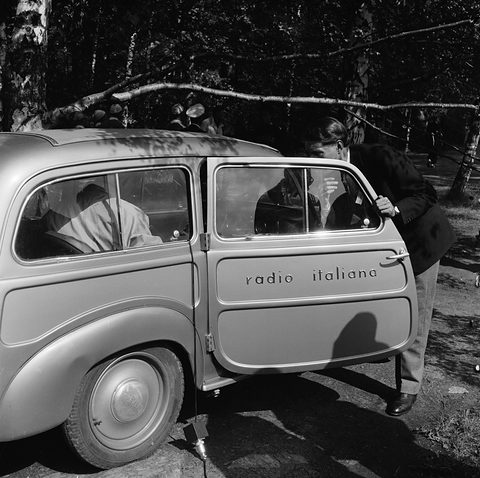
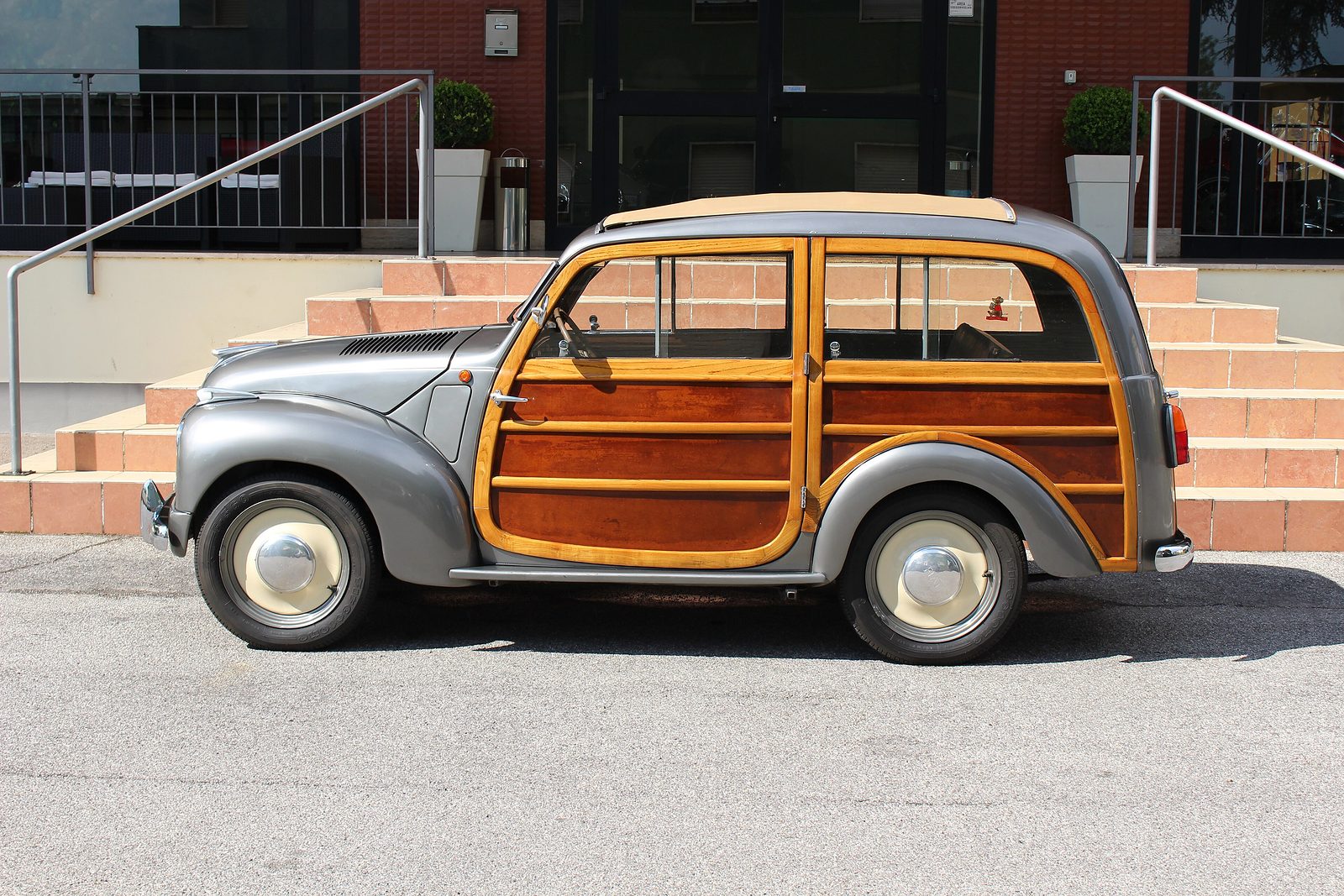
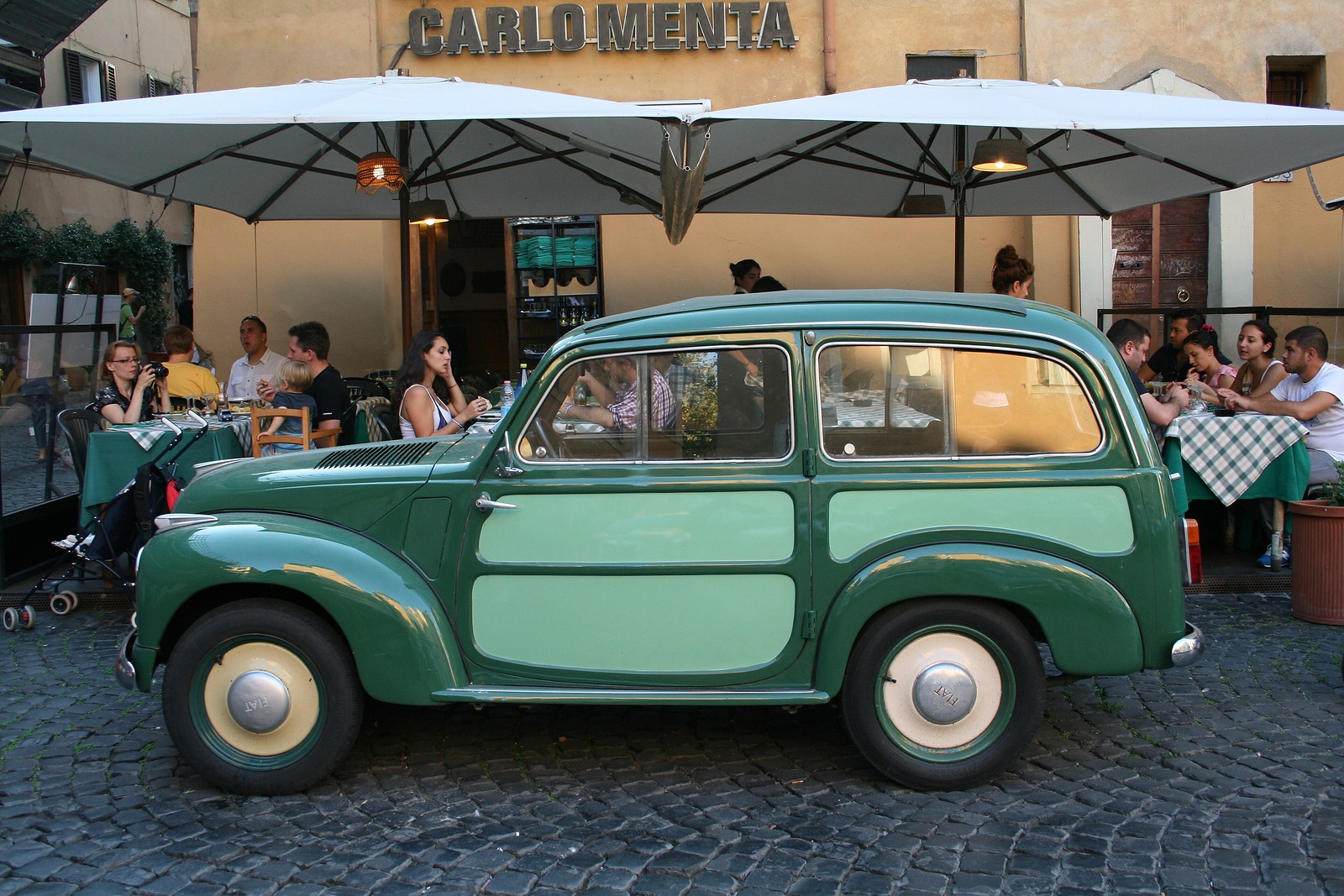
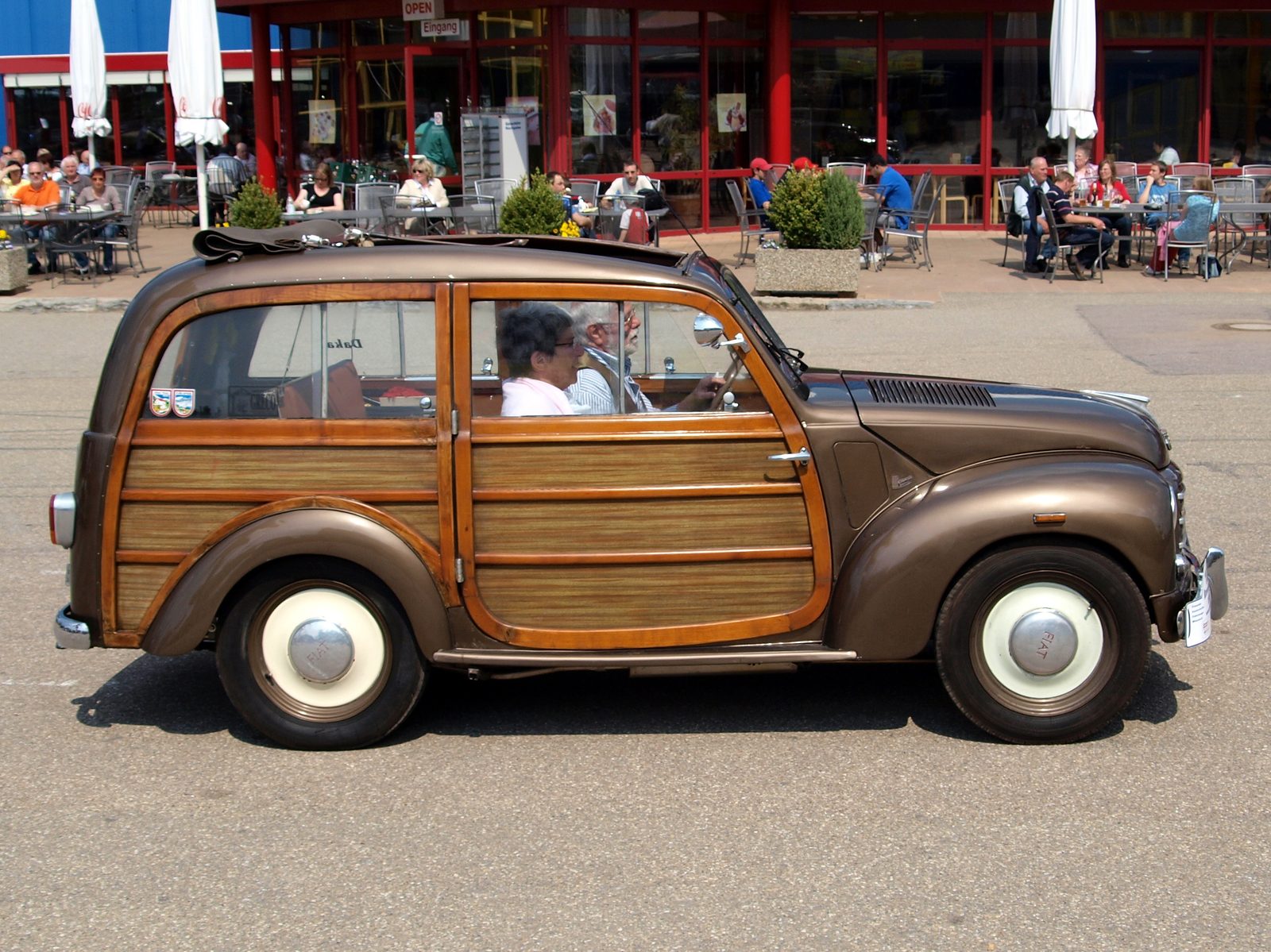
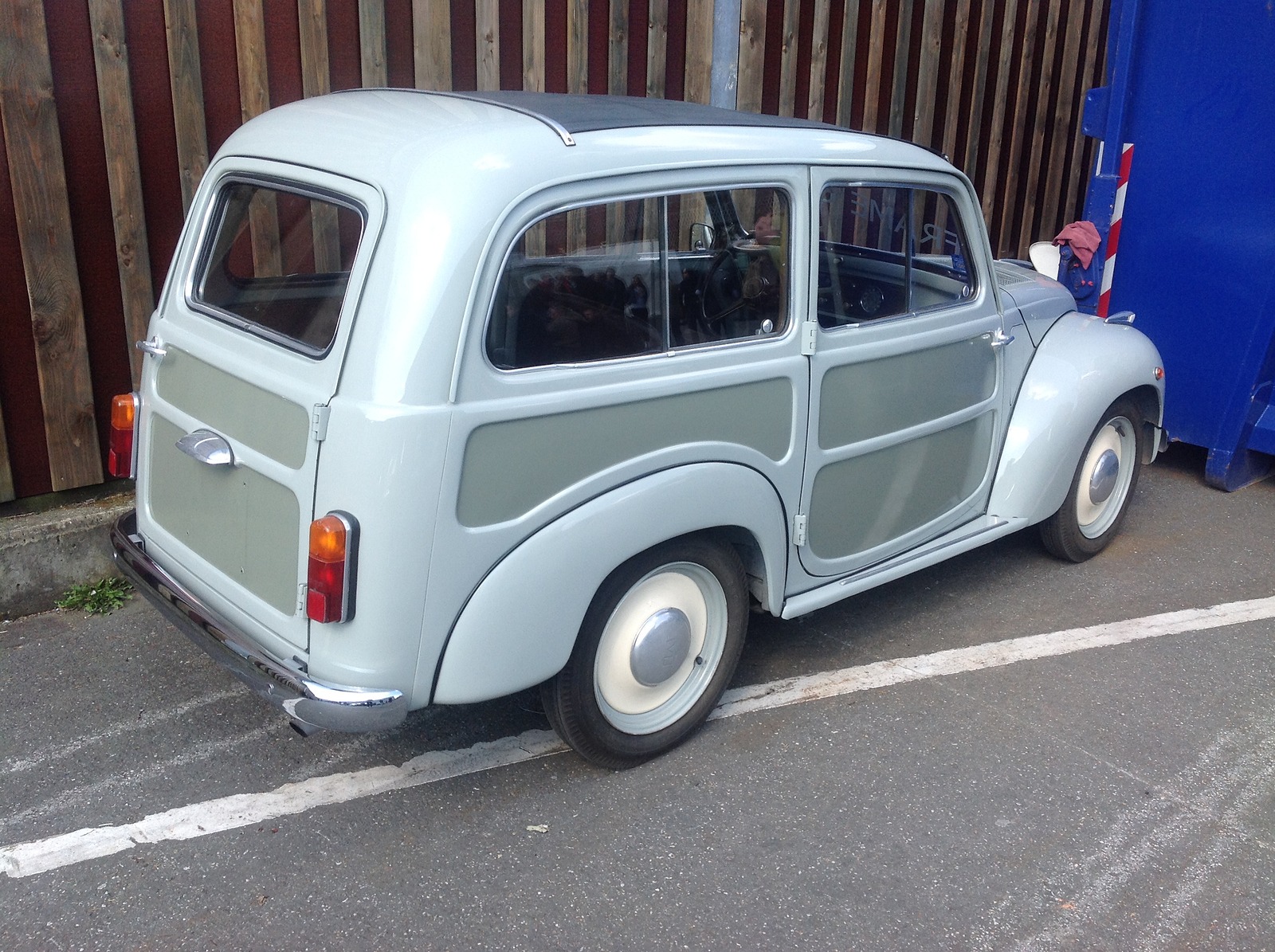
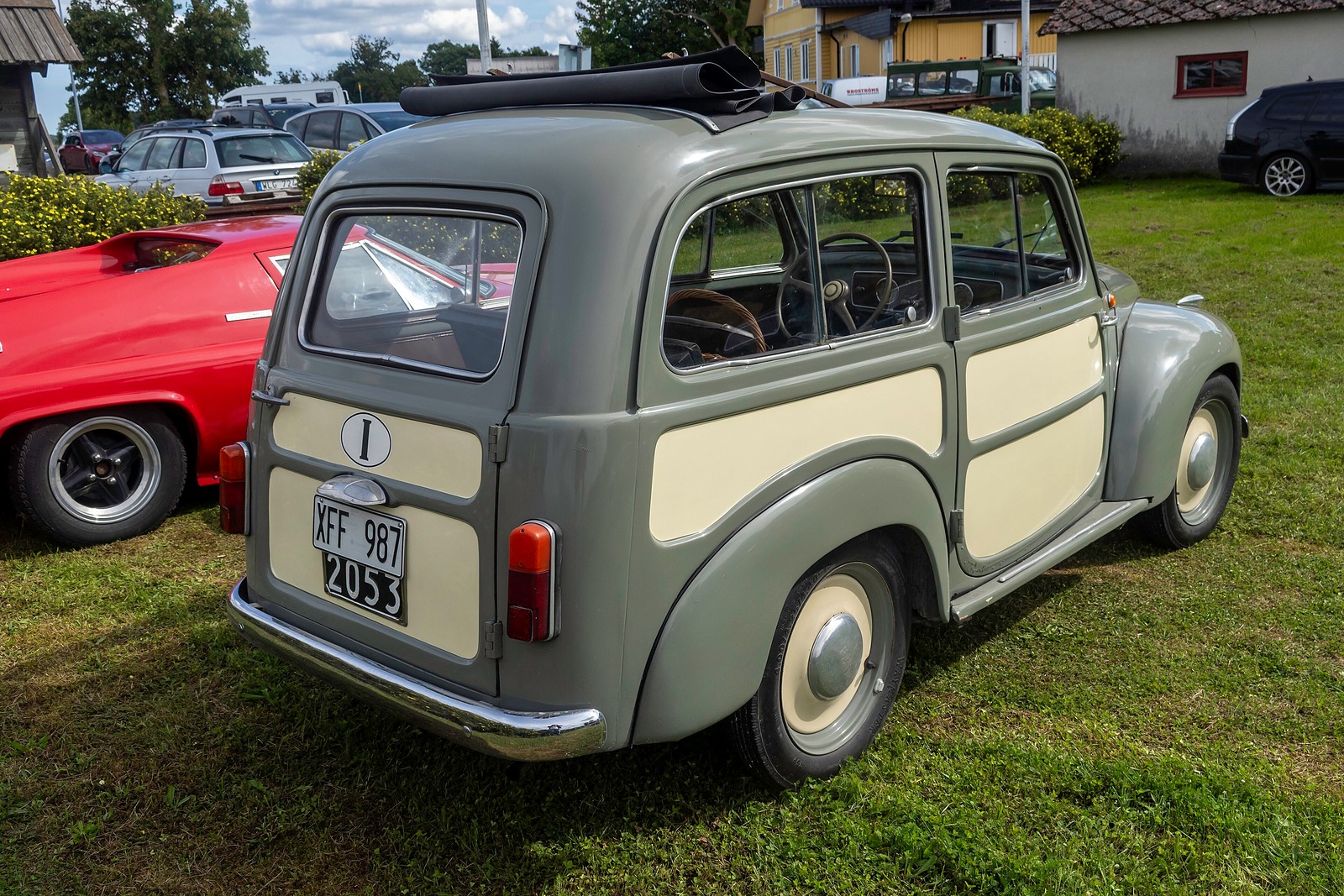
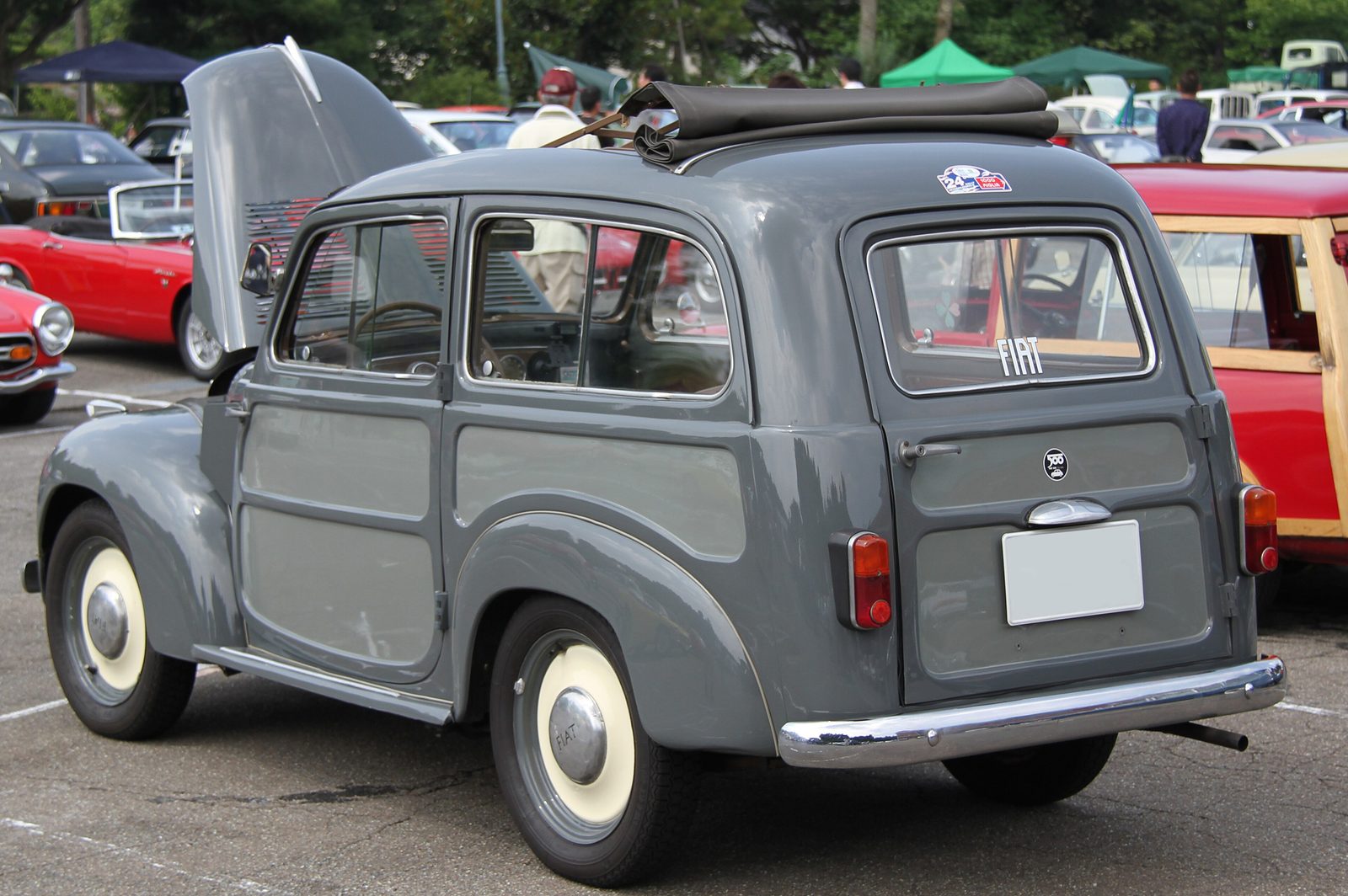
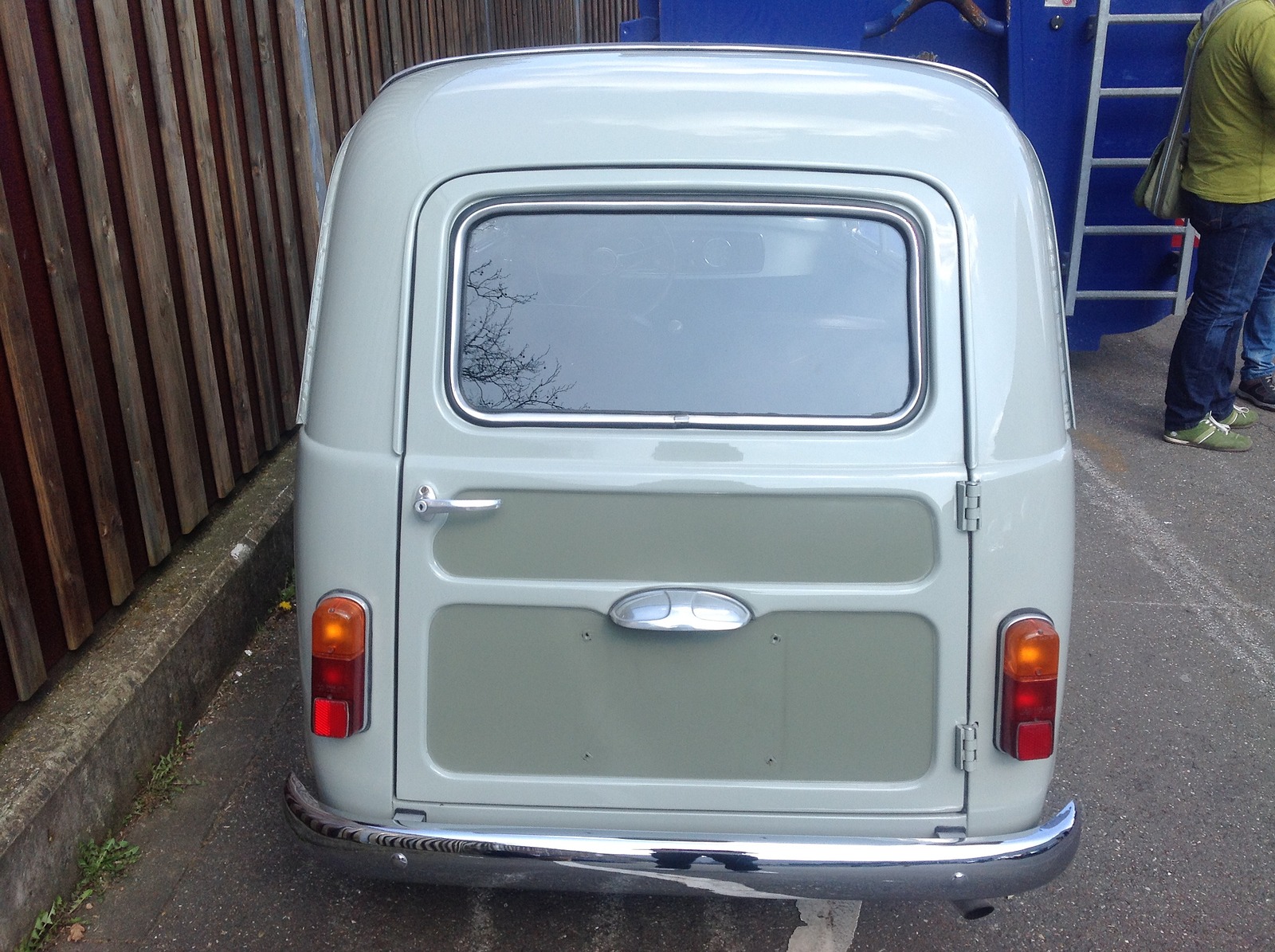
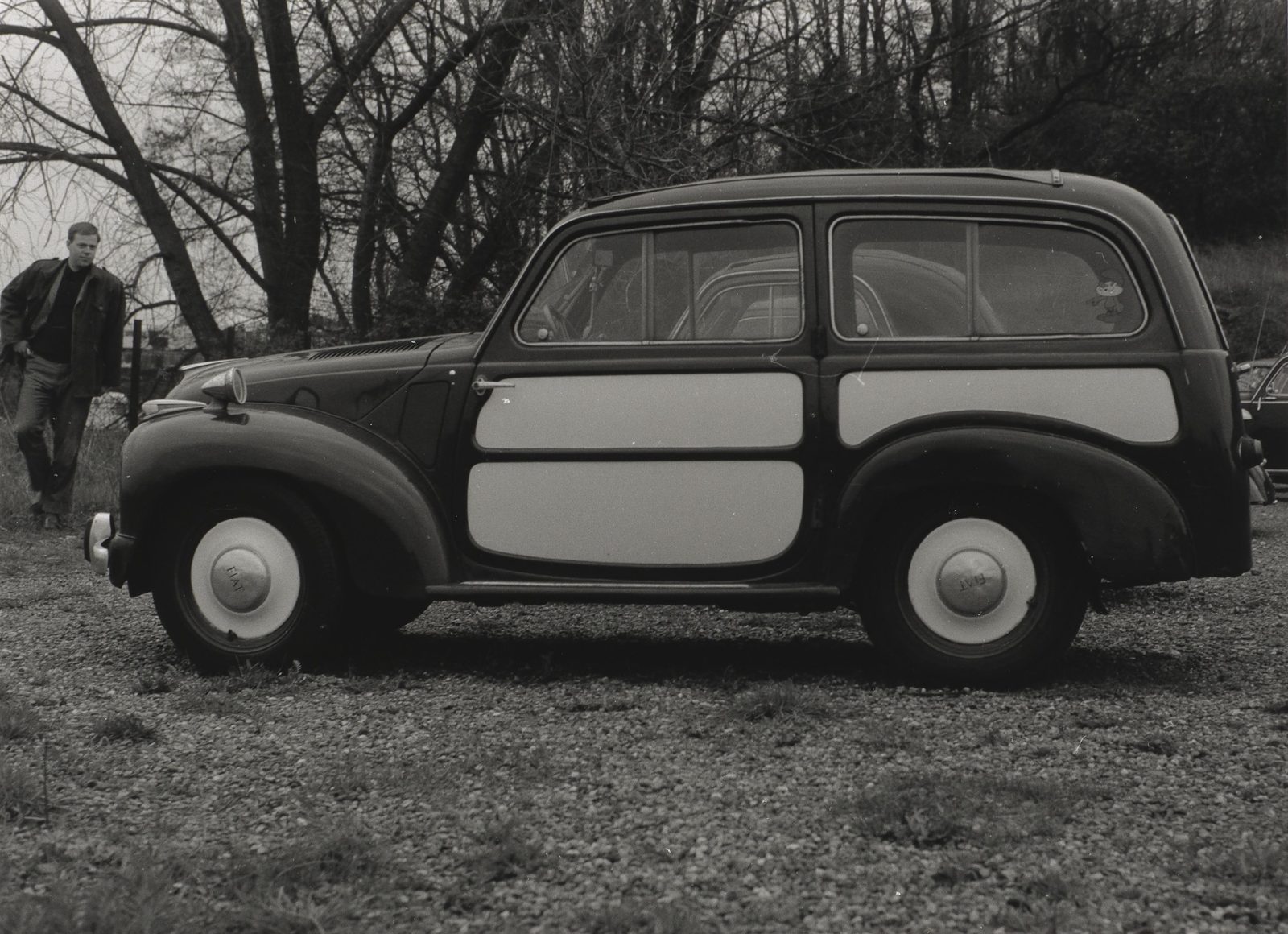
The 500 B of the 1948 Geneva show kept the body but had an overhead-valve head, 16.5 CV (12.1 kW), almost 30 per cent more power, telescopic dampers on all four wheels and an anti-roll bar at the back, and it would do 95 km/h (59 mph).source 1source 5 With it came the Giardiniera, a four-seat estate with a rear door, a folding rear seat and sides of ash framing and Masonite panels in the American woody manner. It scaled down Mario Revelli’s “functional body” of 1946 for Carrozzeria Viotti; Viotti owned the name Giardinetta, so Fiat’s was the Giardiniera, the word for the carts Italian greengrocers took to market.source 7source 1 Italian Wikipedia calls it the first estate car built in large numbers anywhere, a claim no other source read supports.source 1 The B lasted little more than a year, and about 21,000 were built.source 3source 1
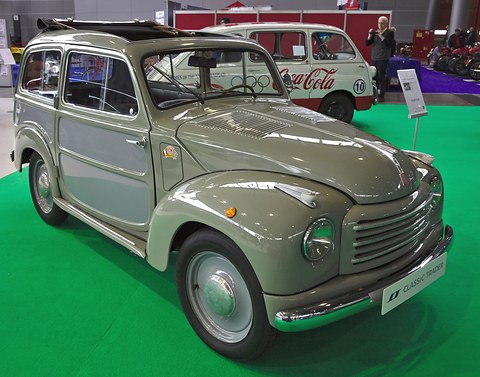
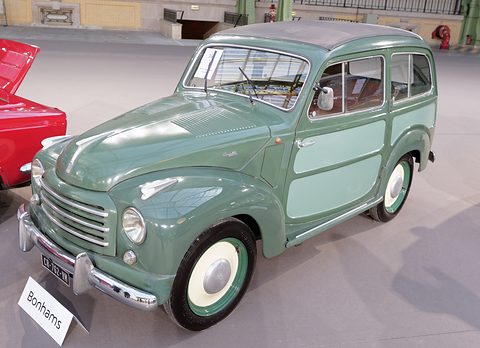
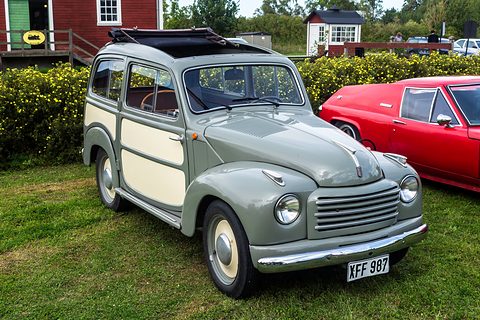
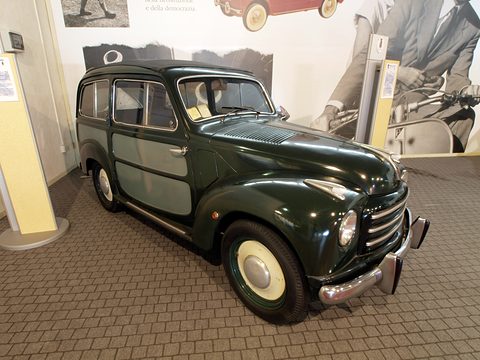
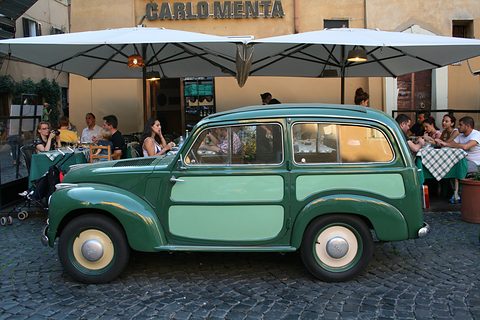
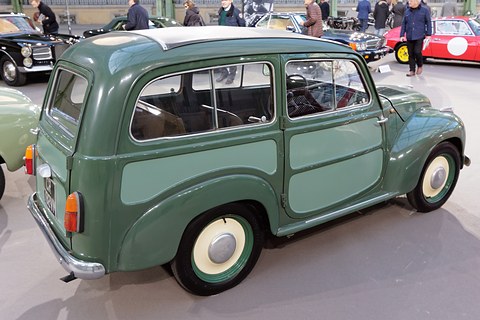
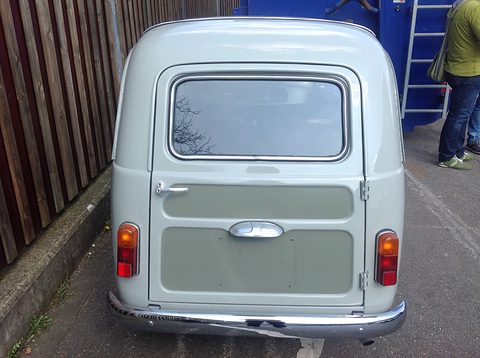
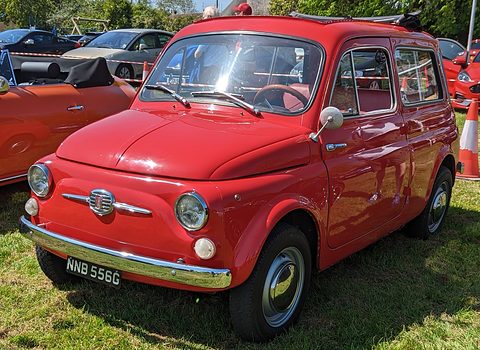
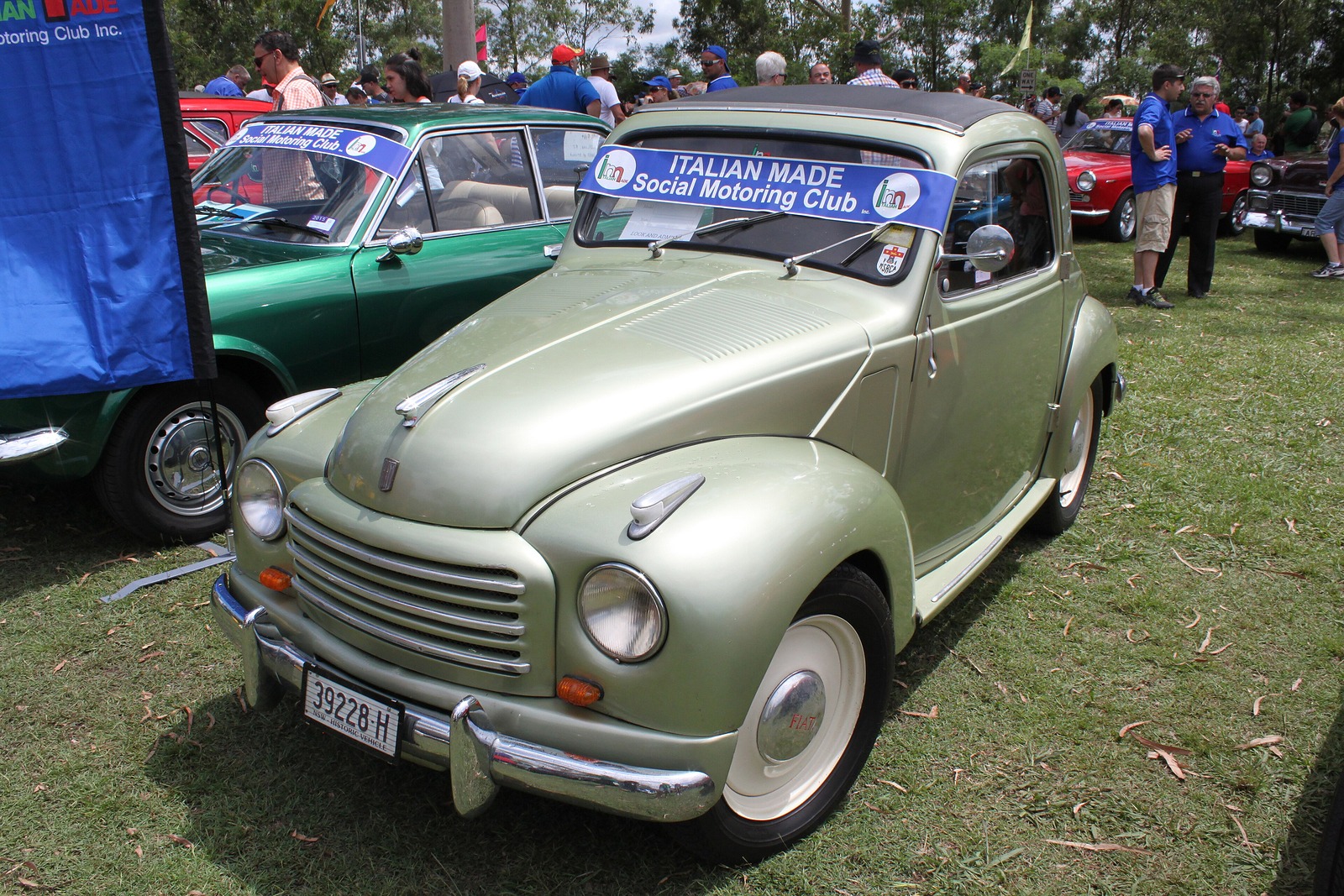
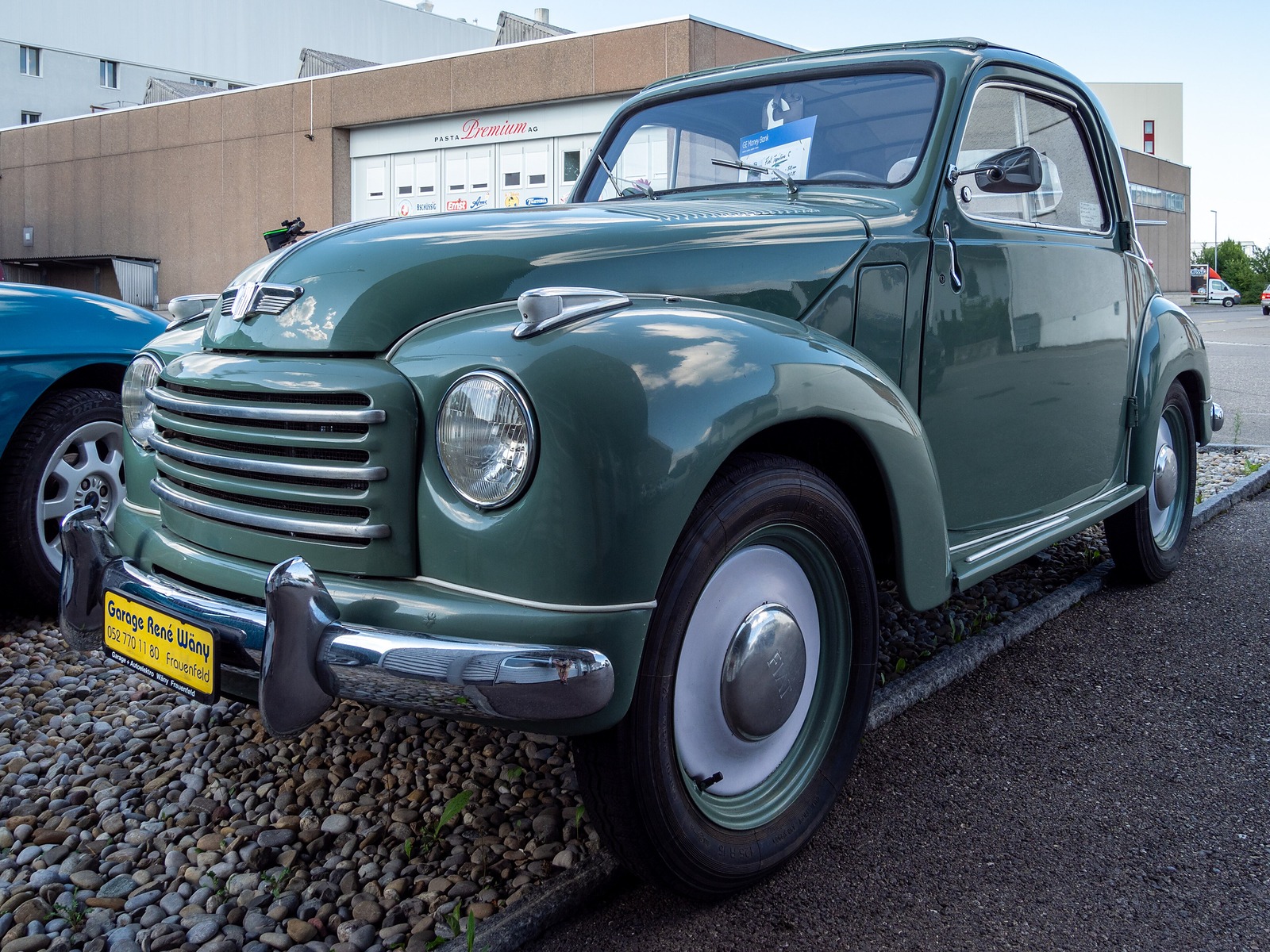
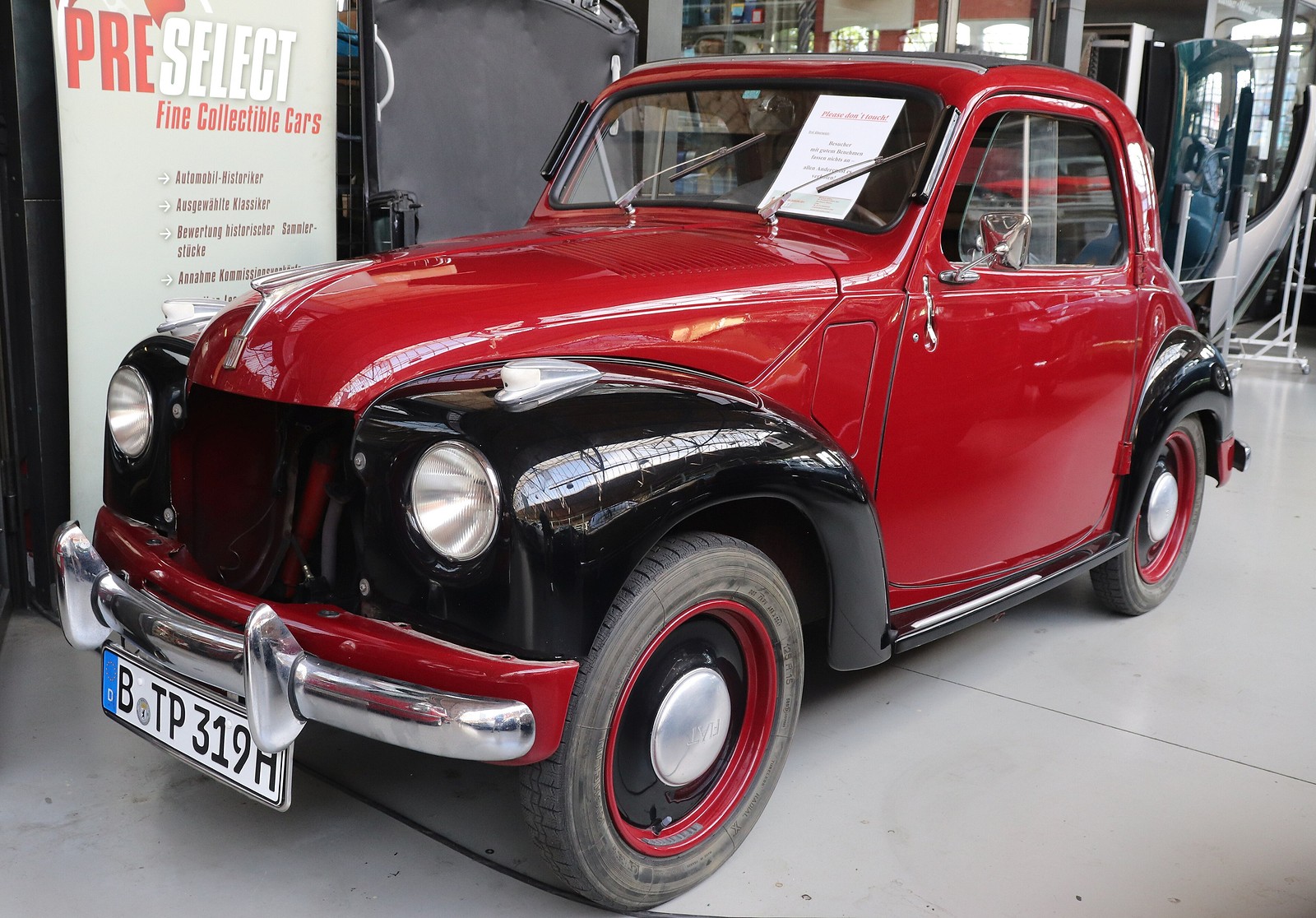
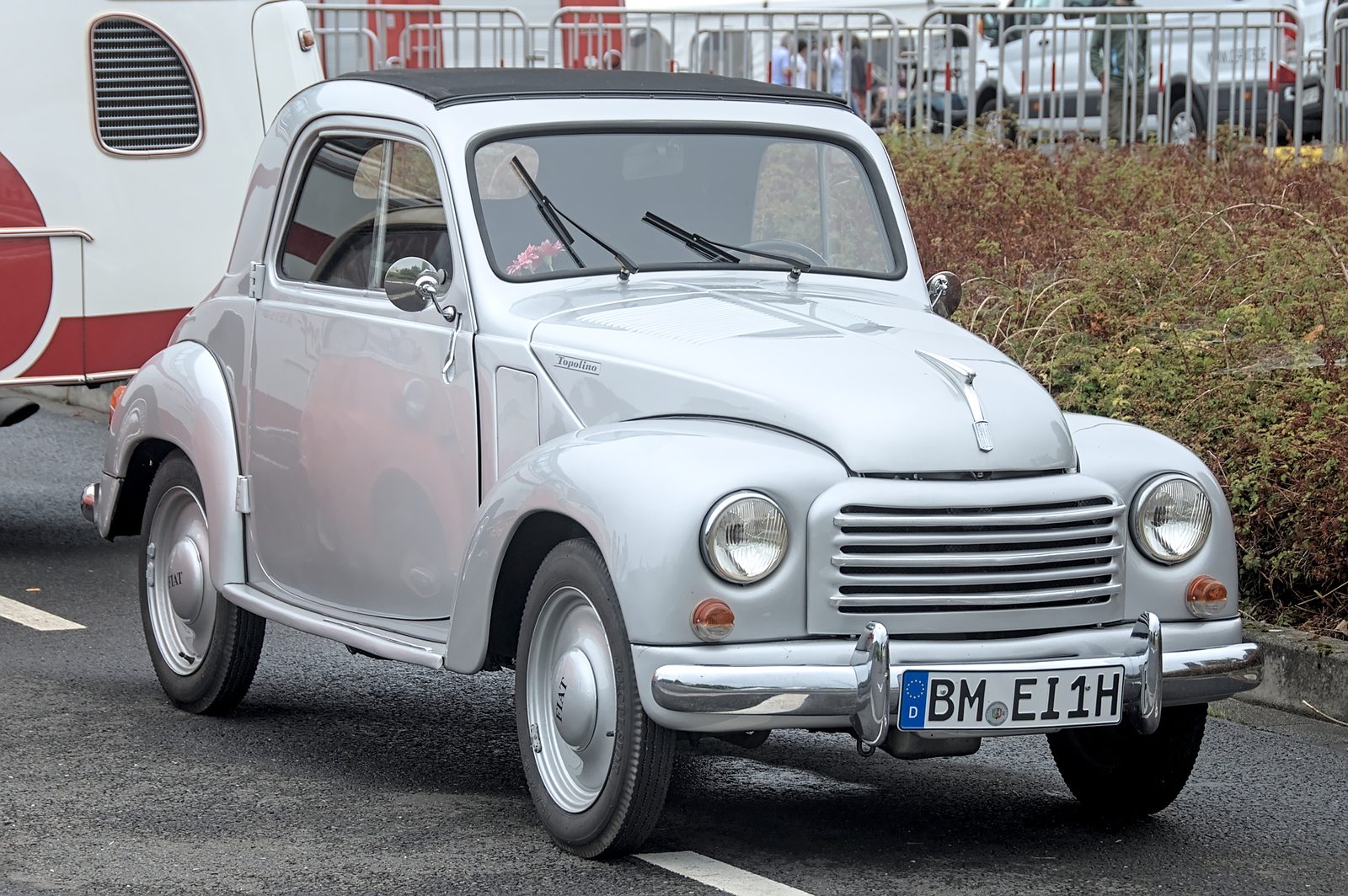
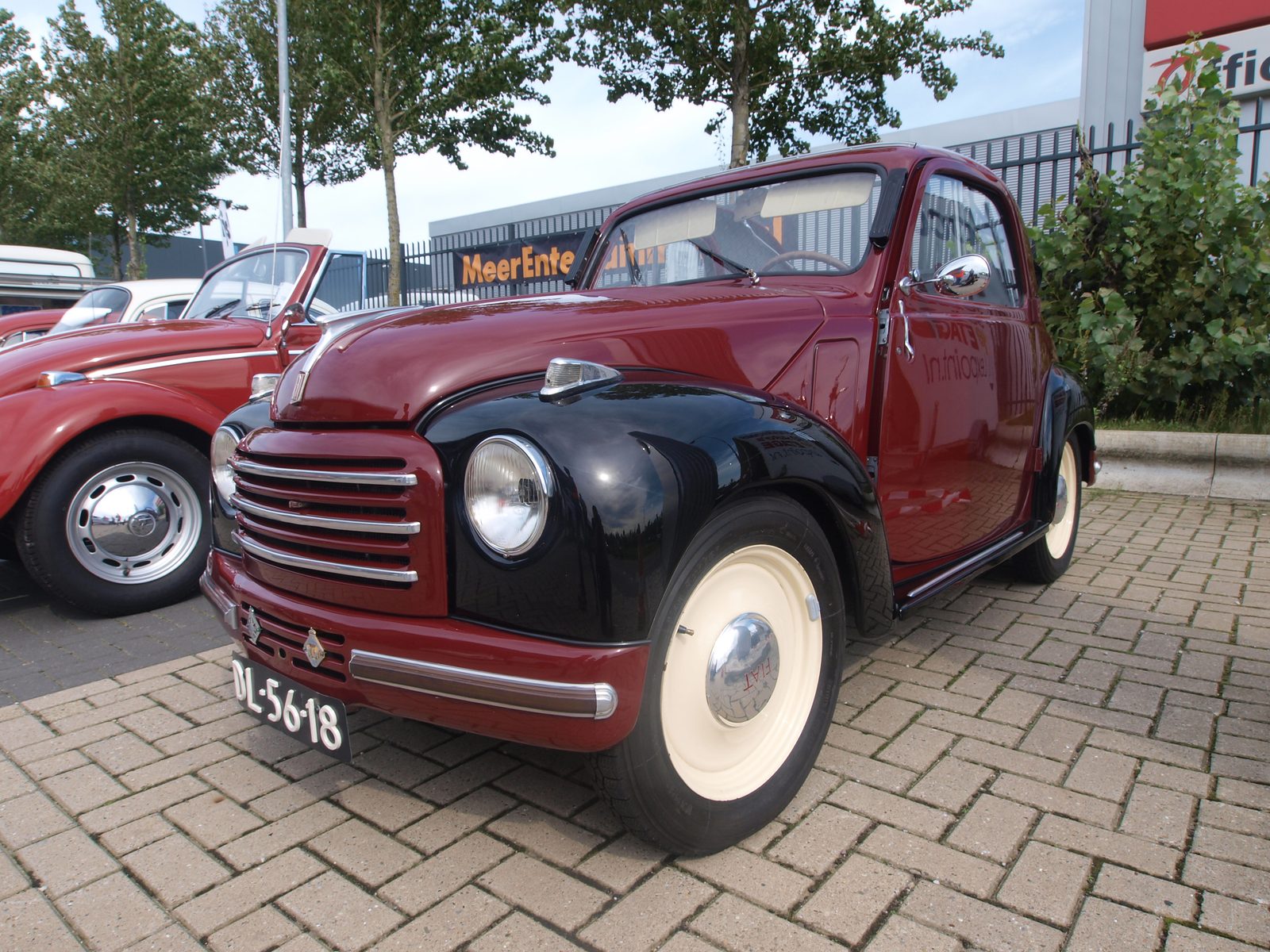
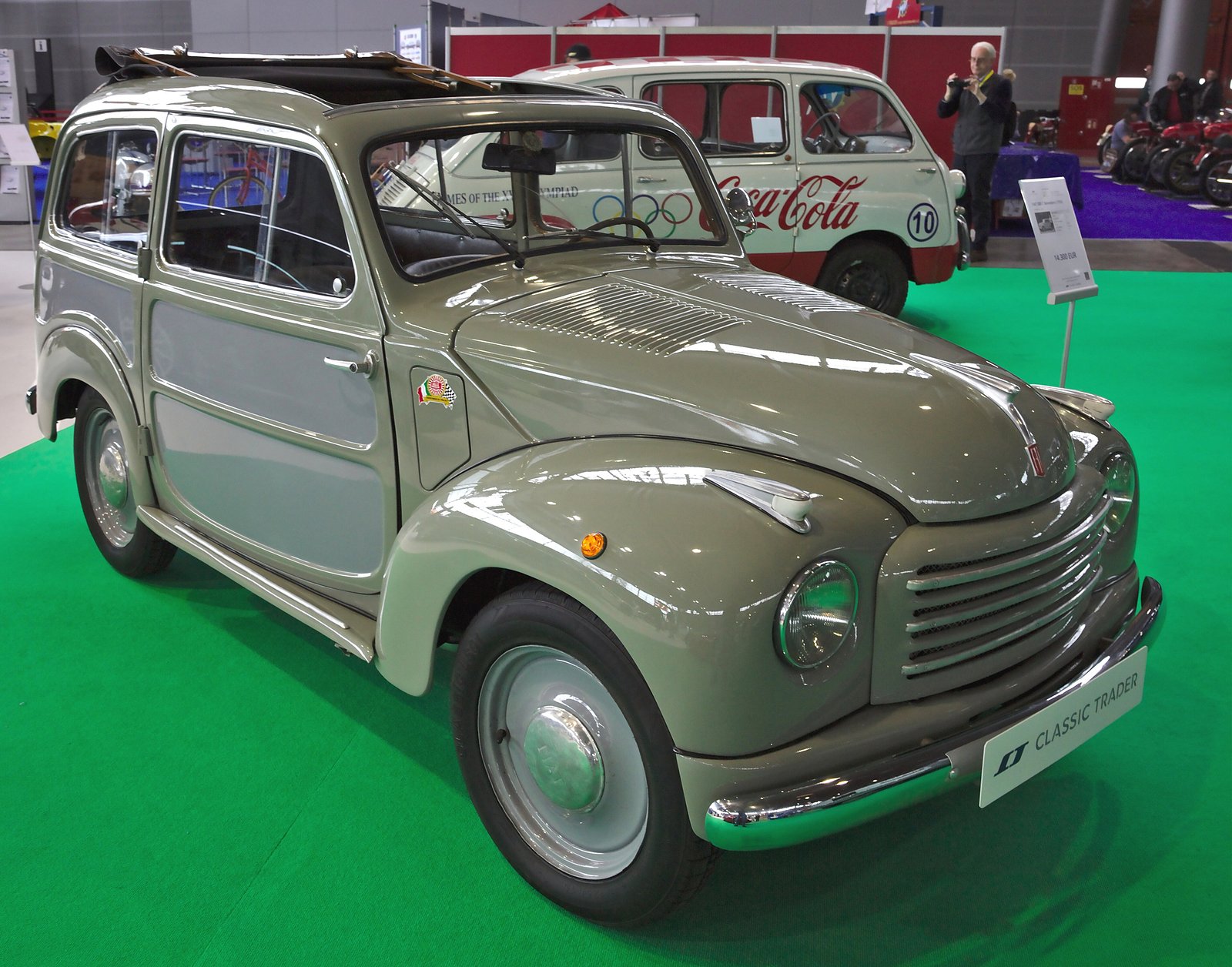
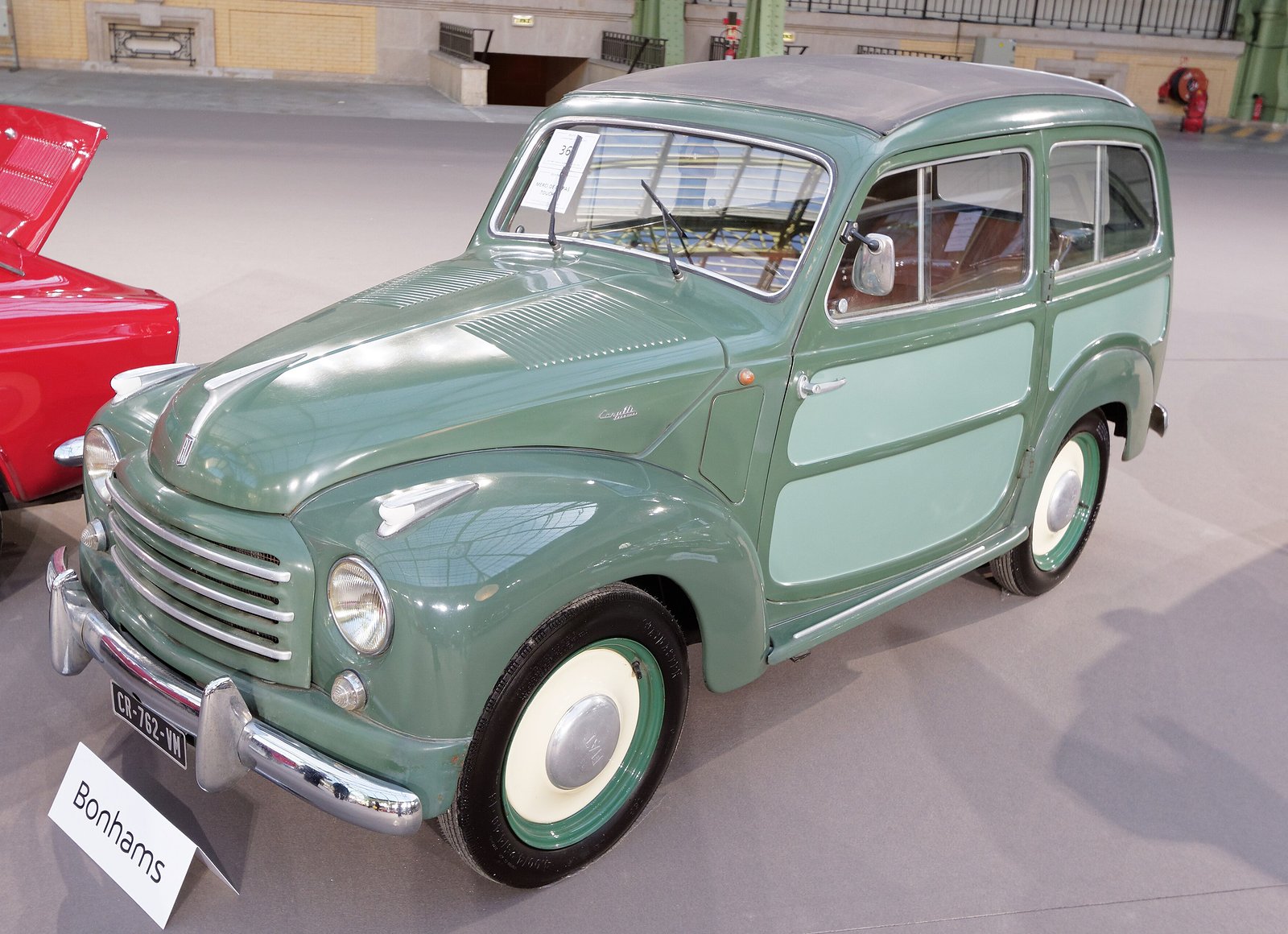
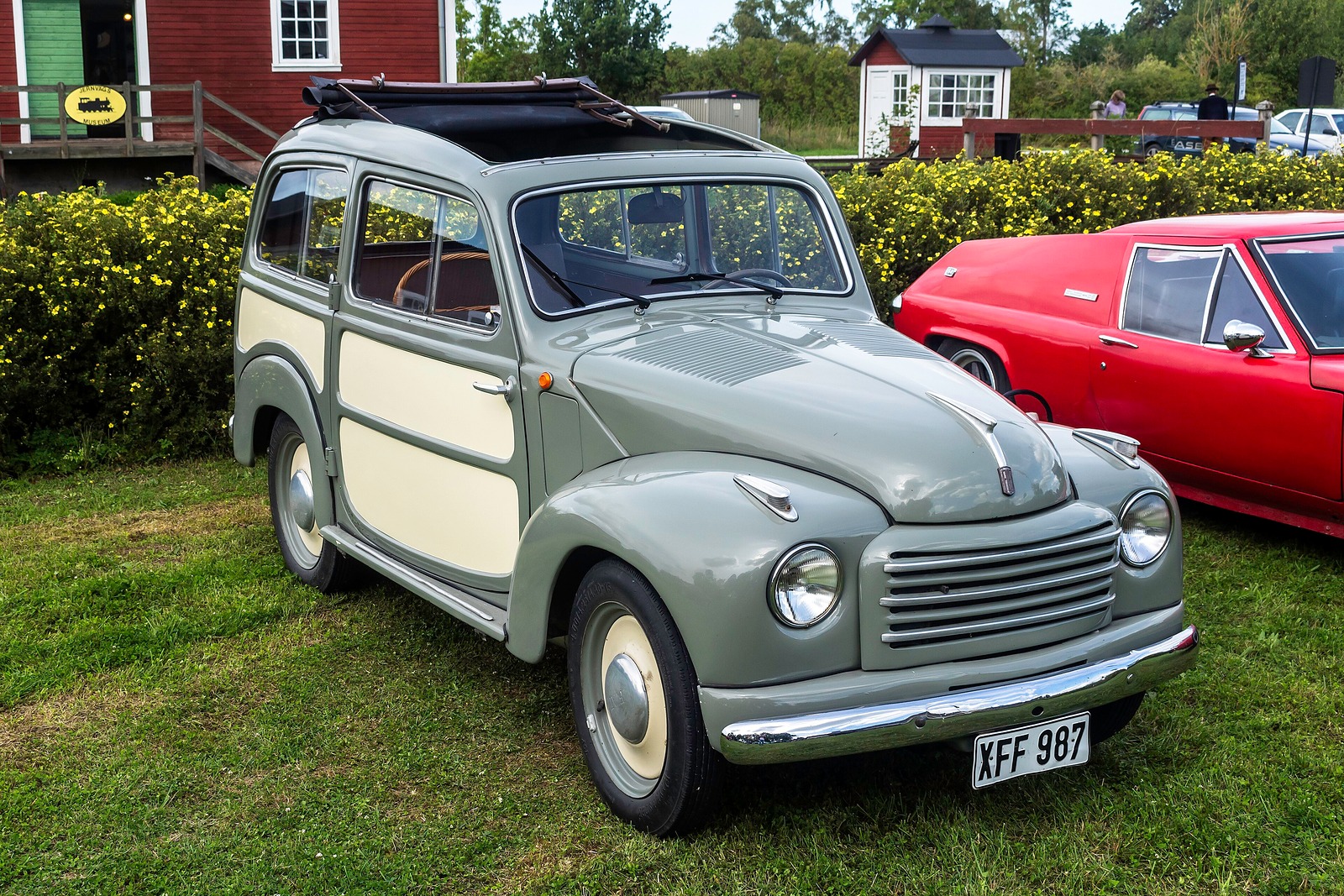
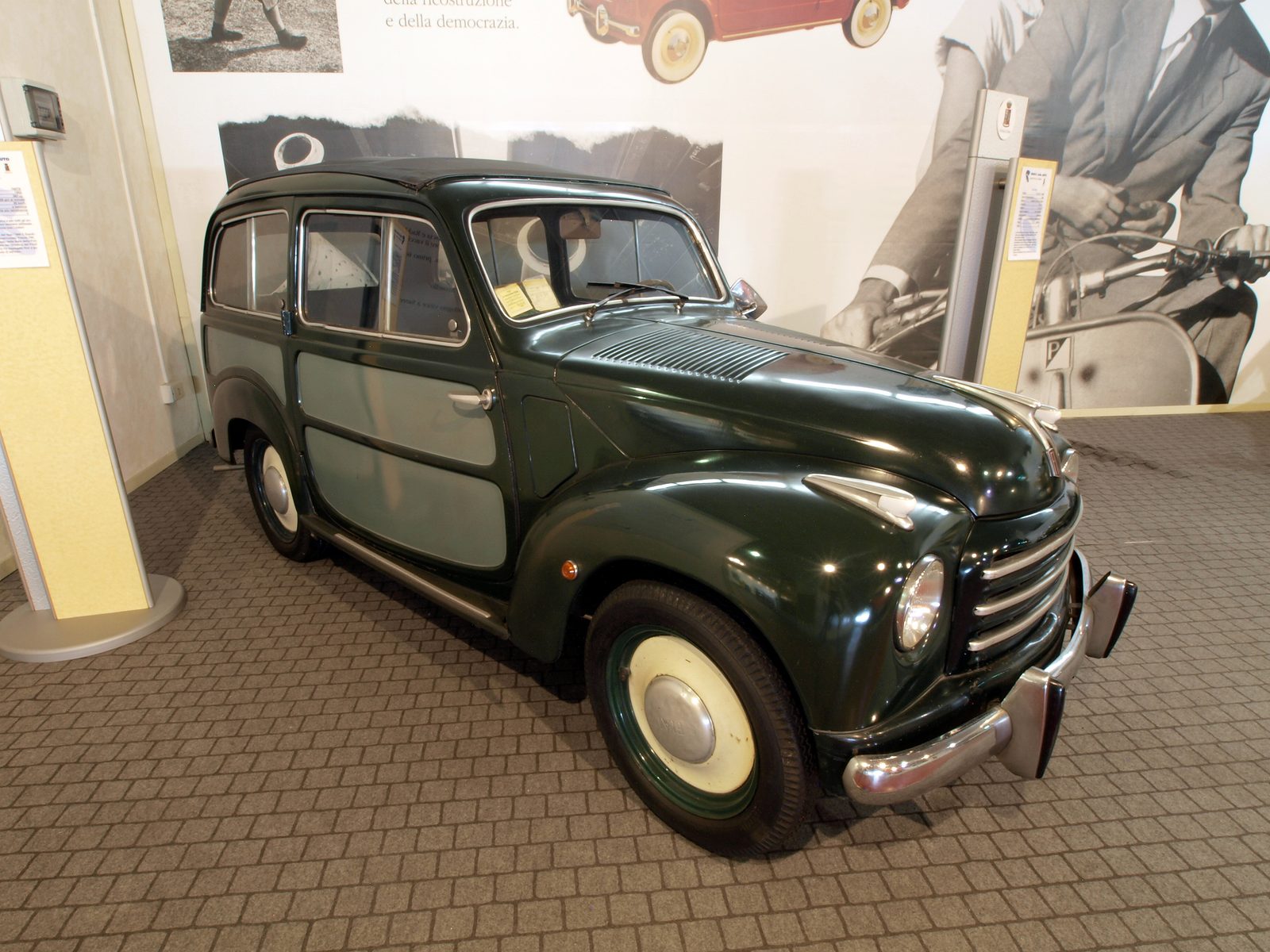
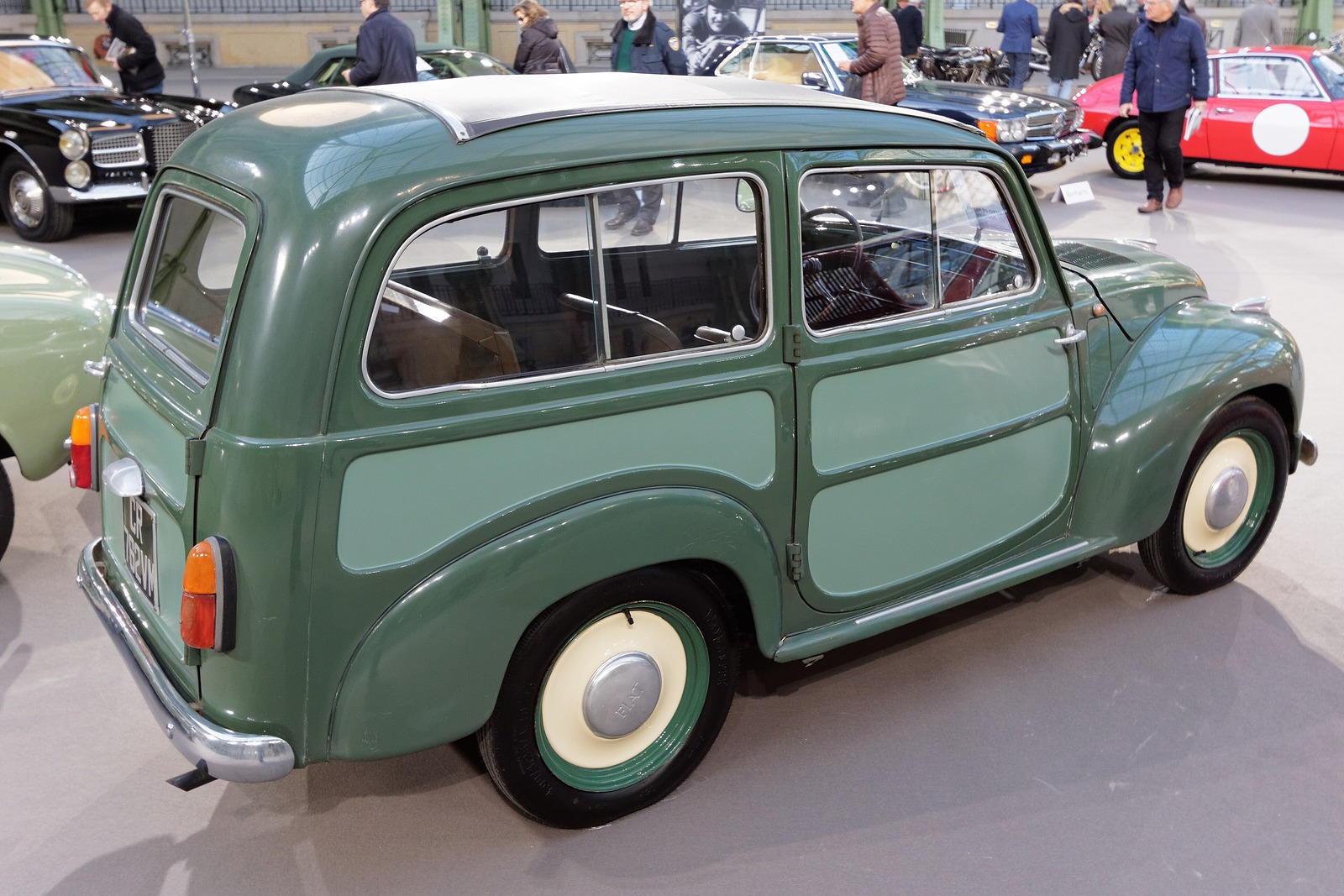
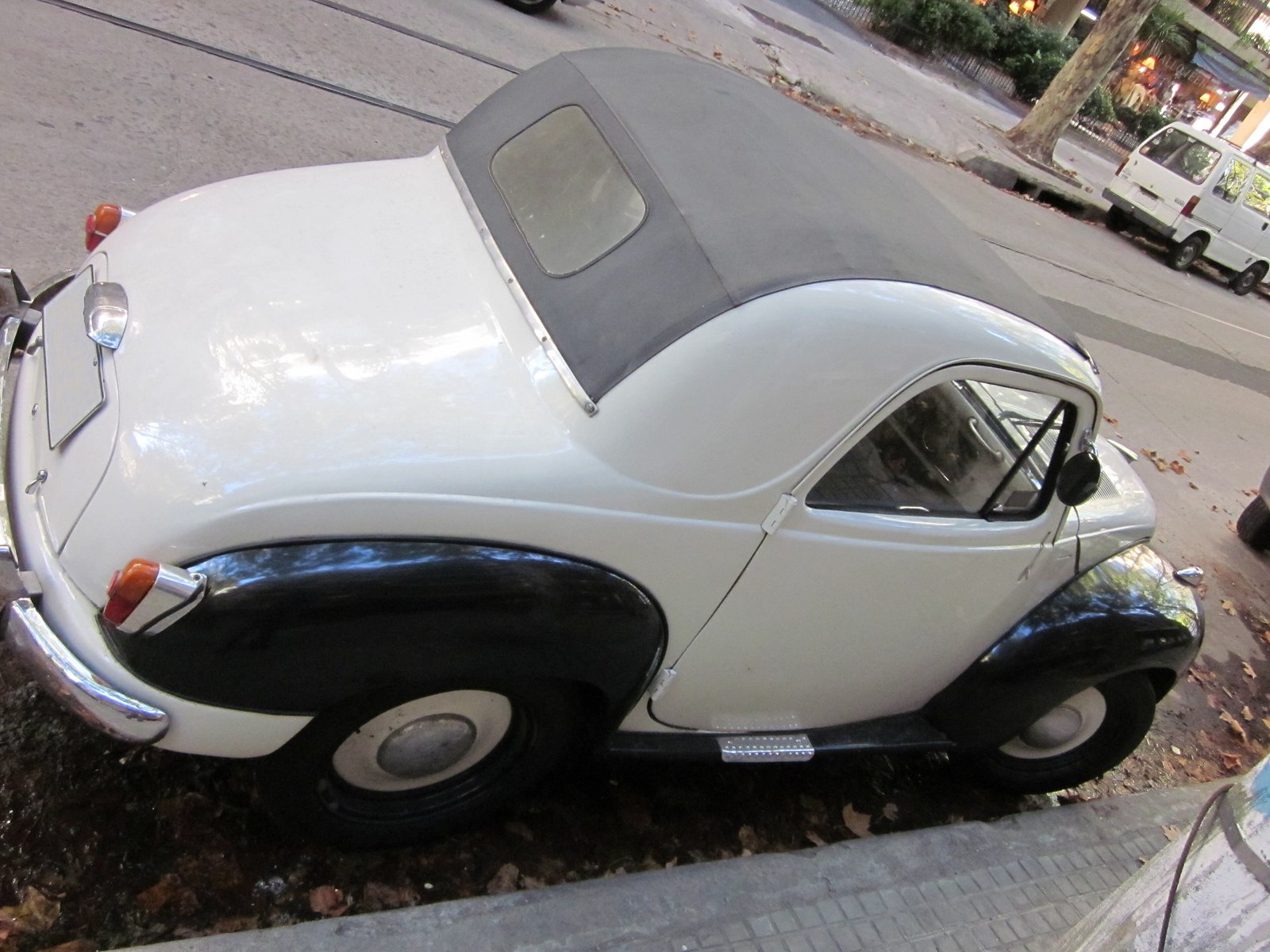
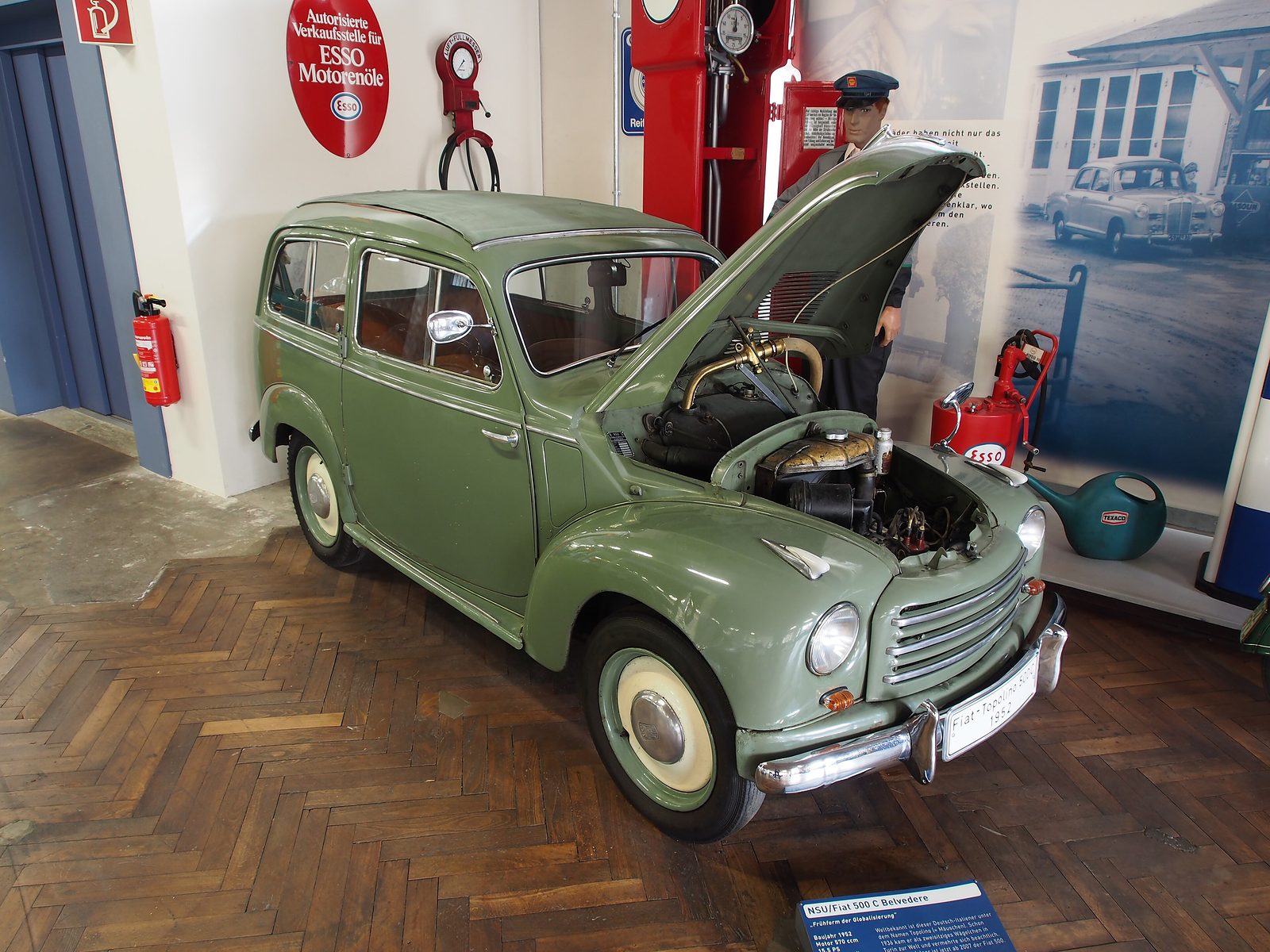
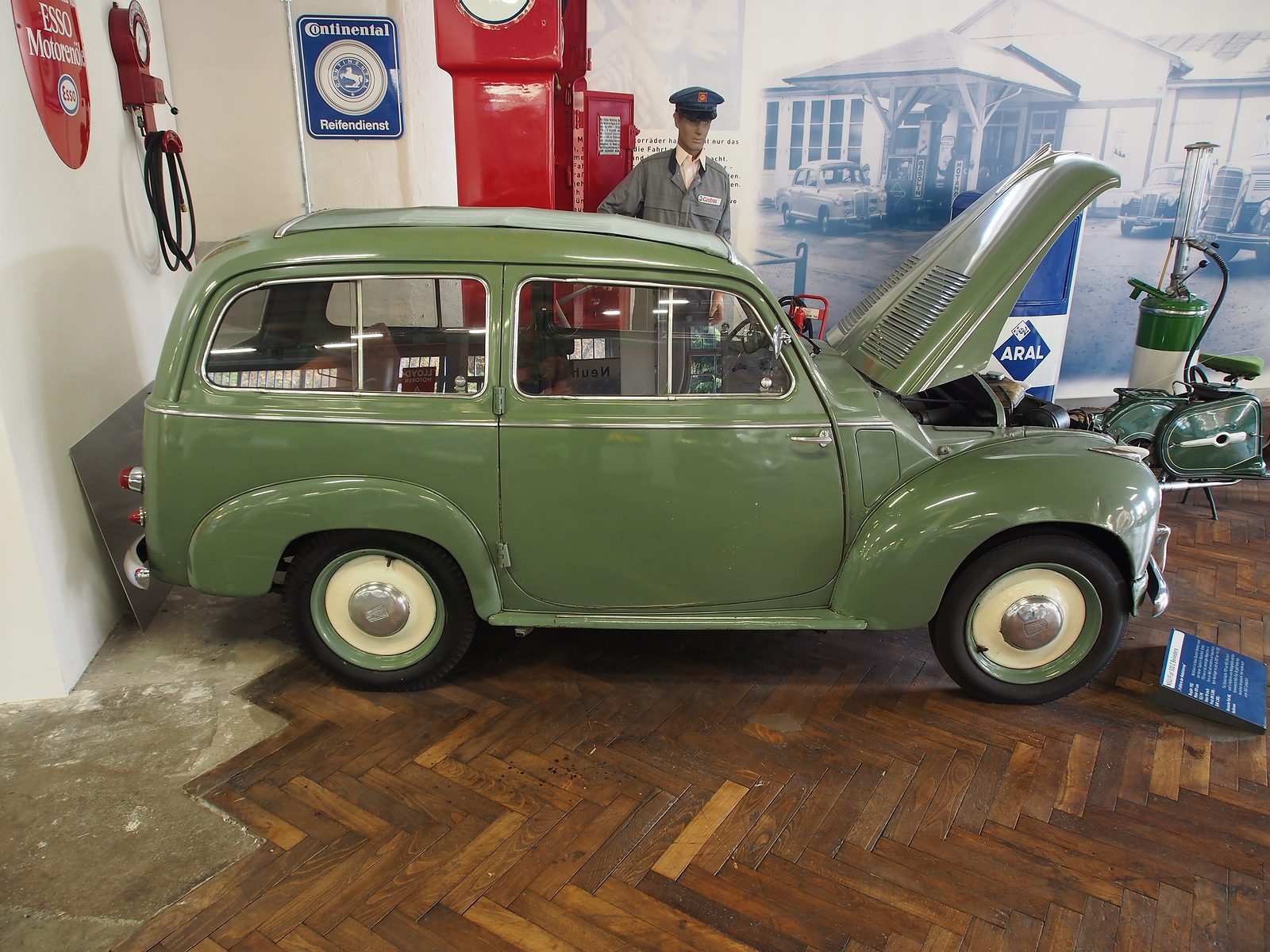
The 500 C of 1949 was Fiat’s hundredth model. Its headlamps were set into the wings behind a horizontal grille, the spare wheel no longer hung at the back, the head was aluminium, and it was the first Fiat built in series with a heater as standard; the roll-back roof became standard too.source 1source 5 In 1951 by Italian Wikipedia, 1952 by English, the wood-sided Giardiniera, hand-built in Fiat’s special-bodies shop, gave way to the steel Belvedere, named for the pleasant view through its opening roof, and its sales rose.source 1source 7 The saloon ended in 1954 and the Belvedere at the end of 1955. Fiat replaced them with the 600 in 1955 and the Nuova 500 in 1957, after which the old car was called Topolino to tell the two apart.source 7source 3source 1
Built abroad
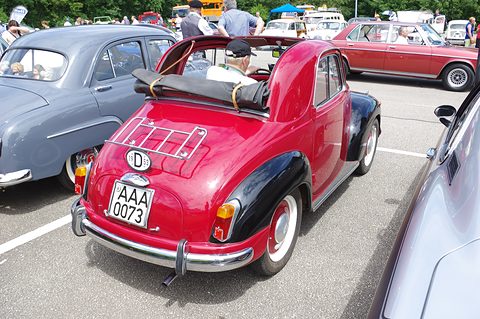
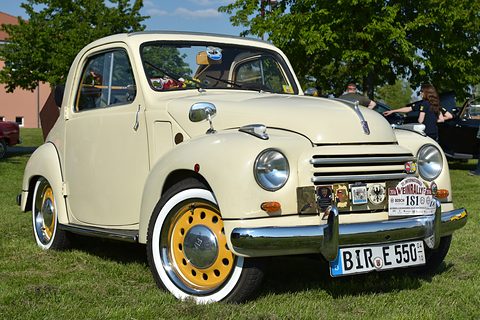
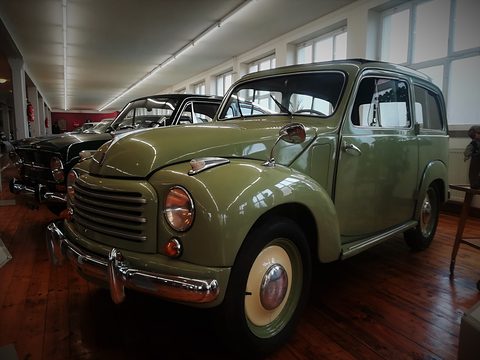
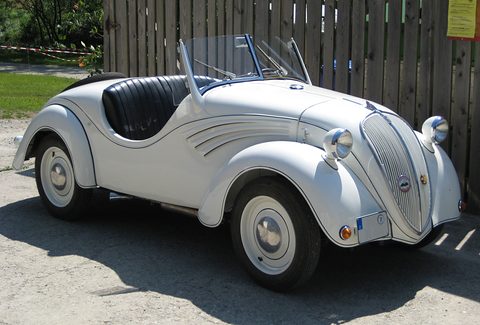
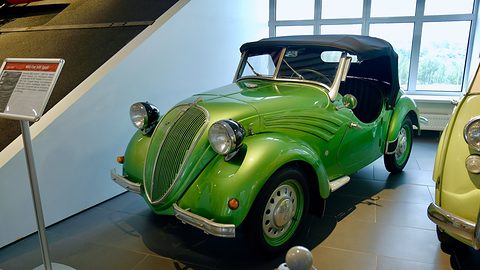
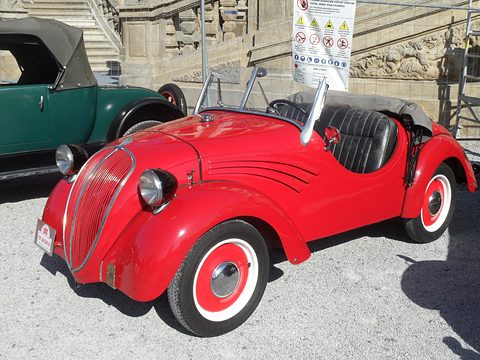
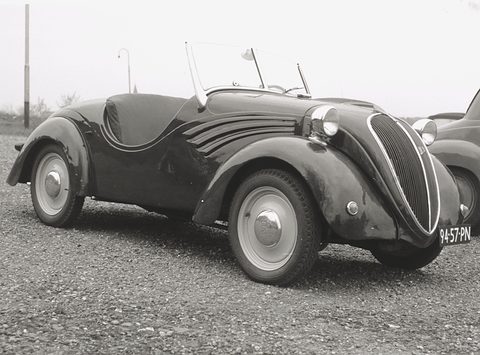
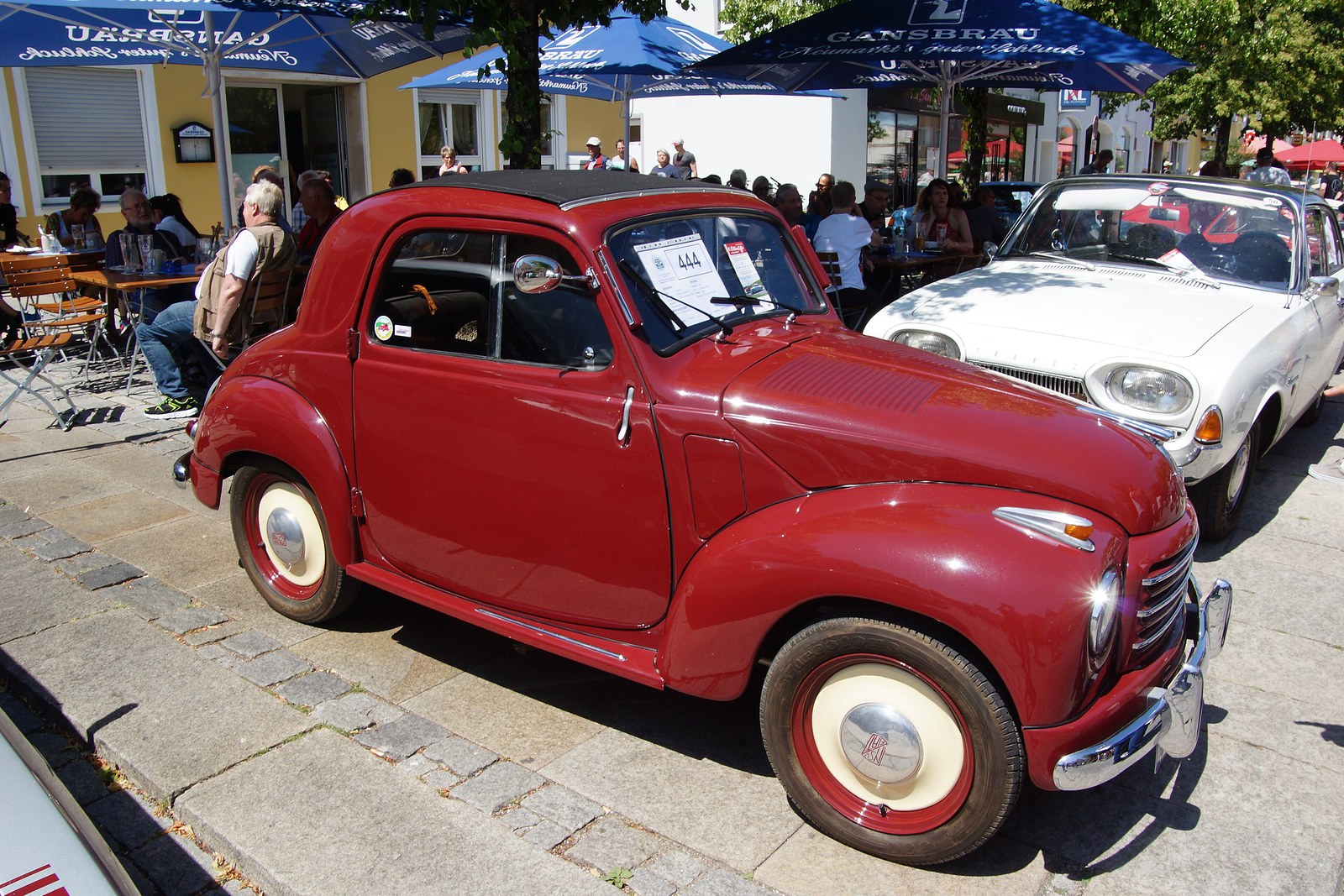
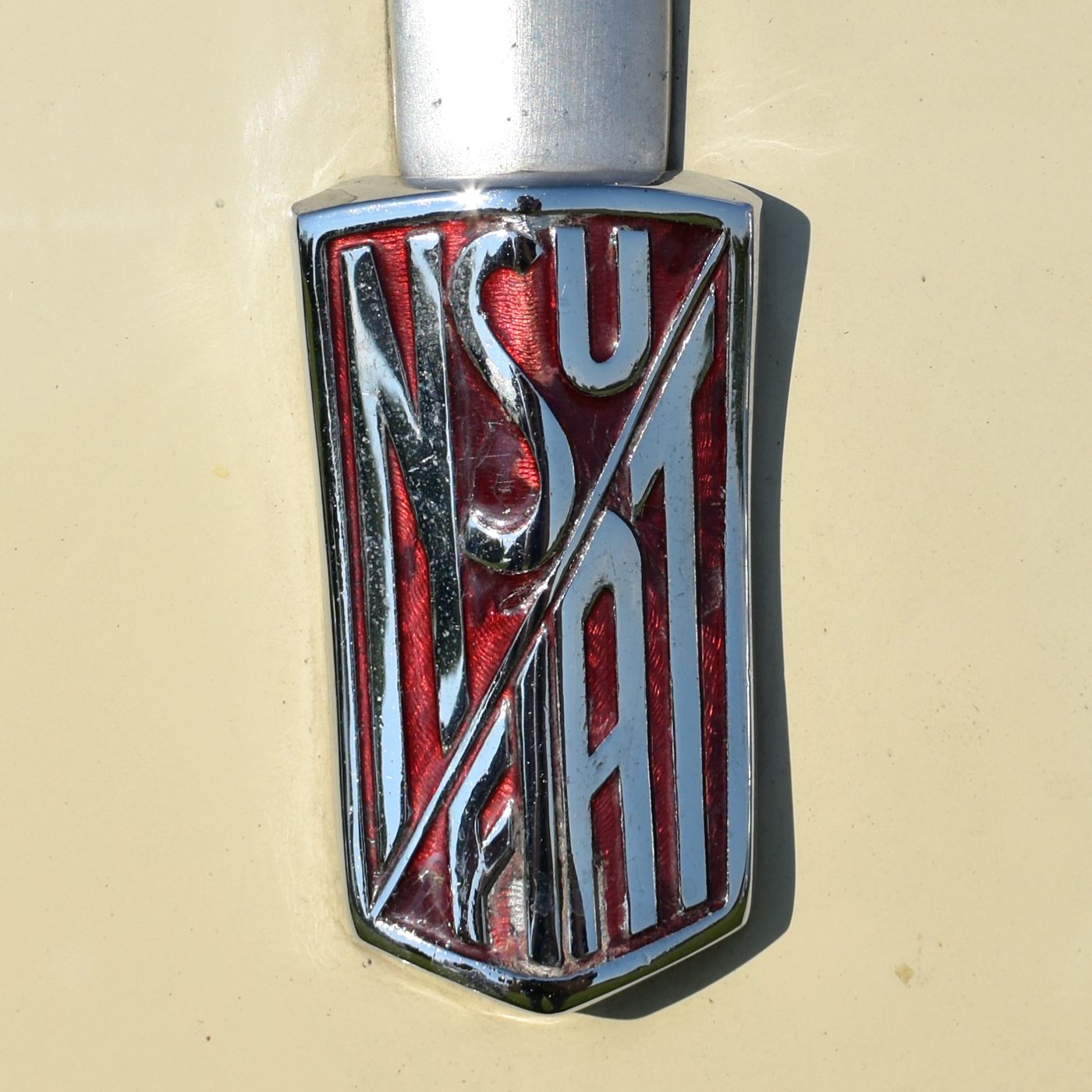
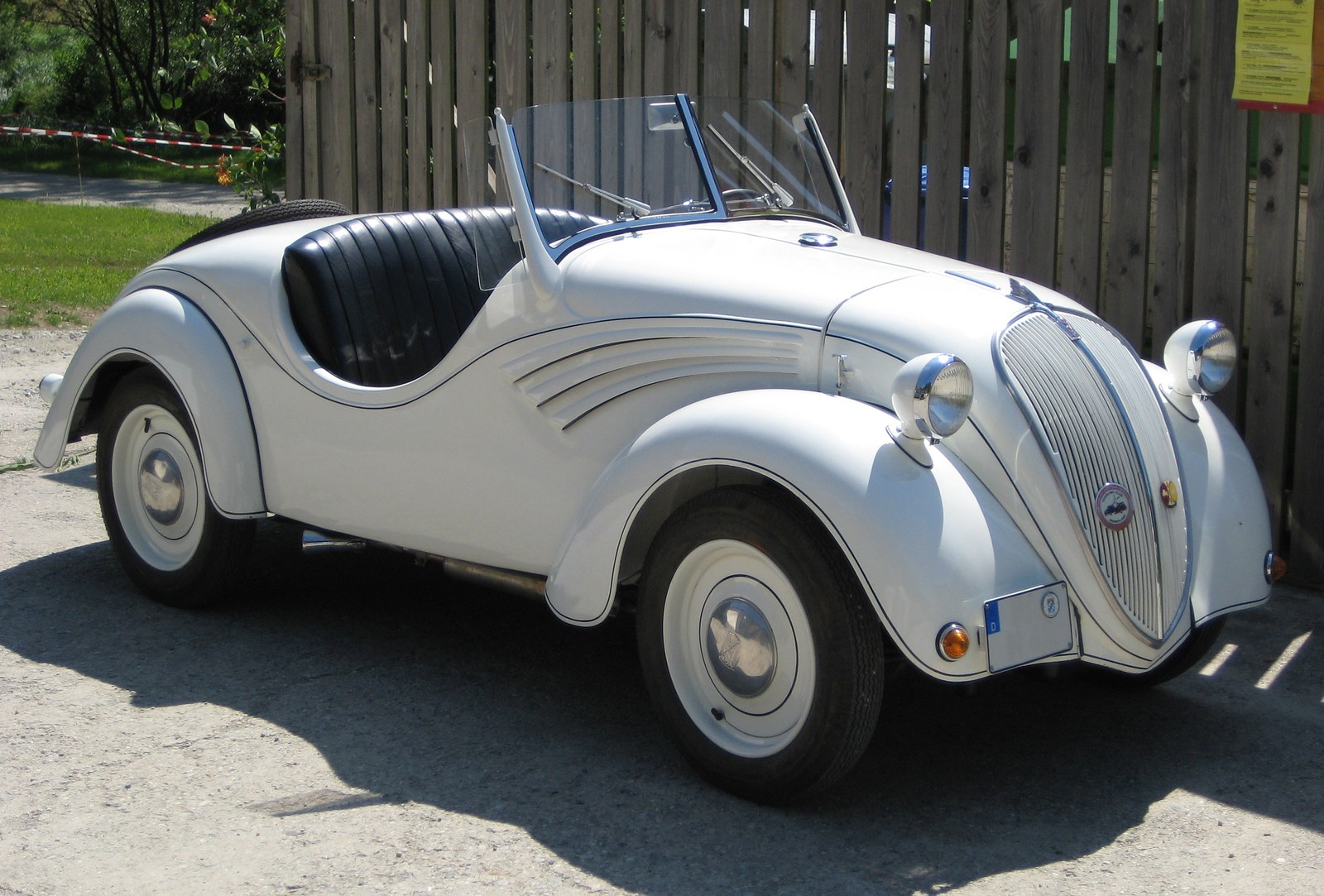
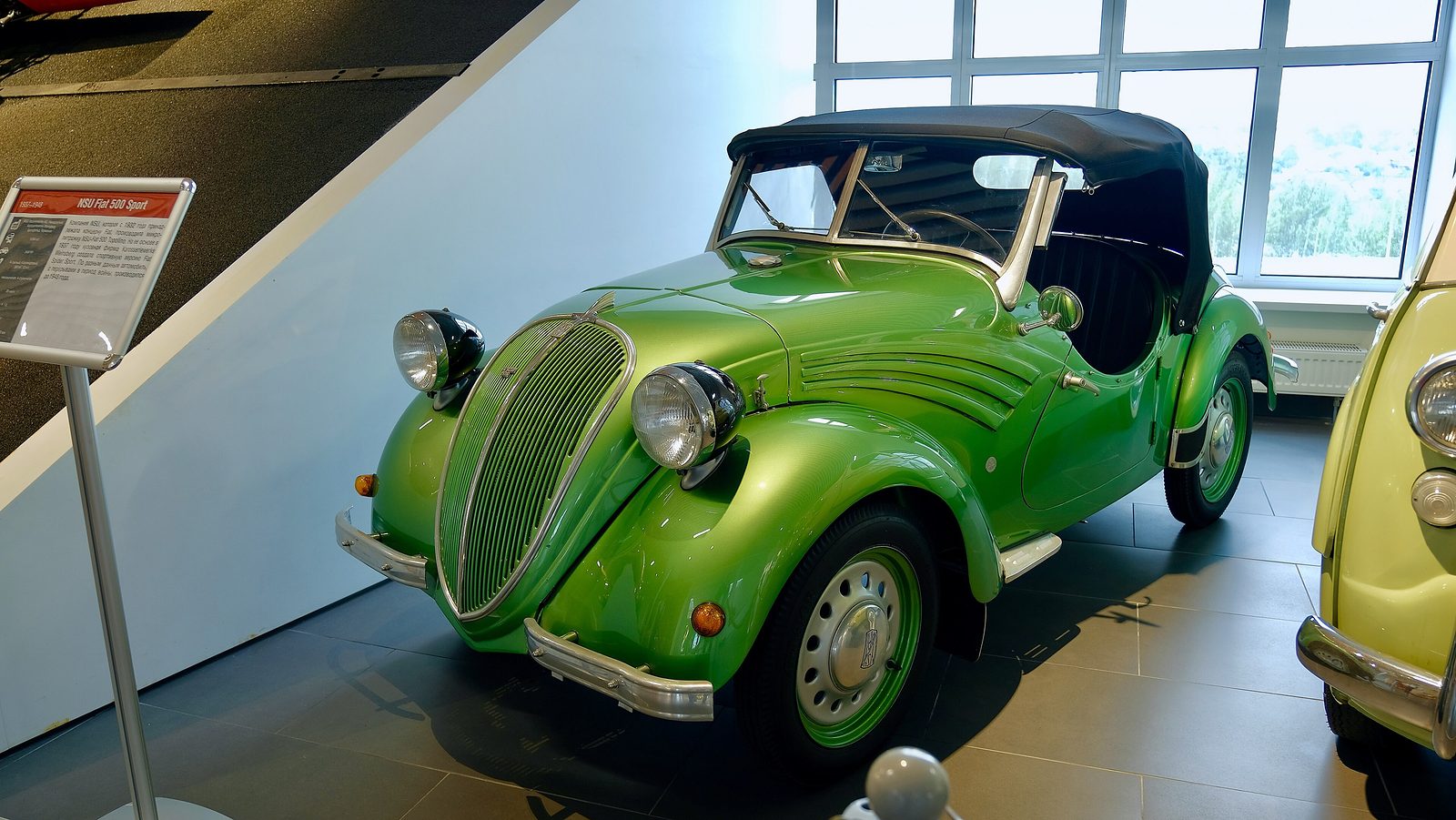
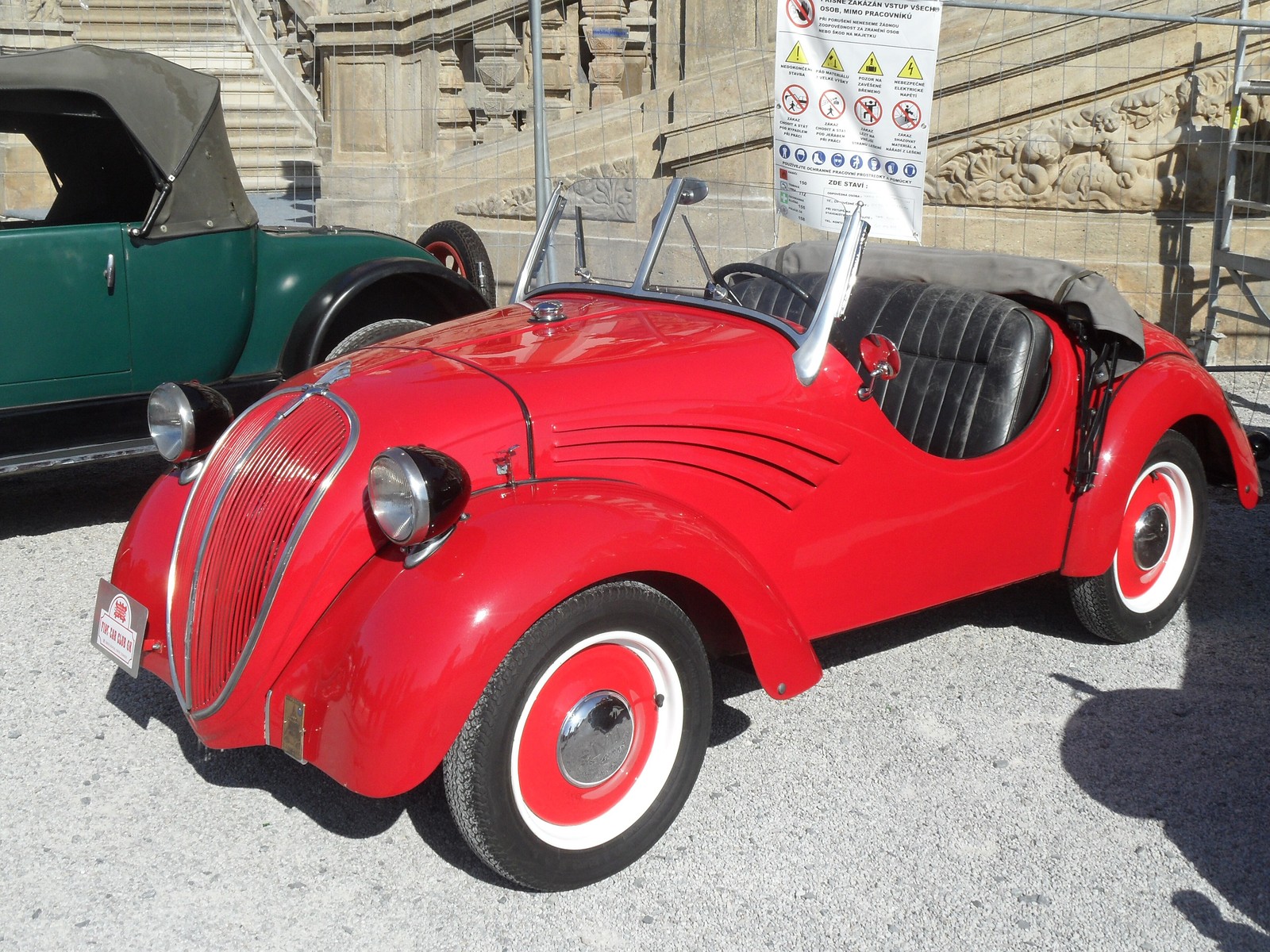
The Topolino was built under licence in several countries. In France it was the Simca 5. In Germany it was built at Heilbronn by NSU-Fiat, a Fiat-controlled company with nothing to do with NSU of Neckarsulm: about 4,000 by 1939, at RM 1,925, and 9,064 of the 500 C in 1951–55. The Weinsberg coachworks built roadsters on it, some cut down without doors.source 3source 9 It was assembled by Steyr-Puch in Austria, by Polski Fiat in Warsaw and by Premier in India, and a few by Todd Motors in New Zealand before 1937; a four-seat convertible was built for export to England.source 3source 1 In 1948 Fiat and Nash agreed on a spider with a Fiat chassis and a Nash body by Bill Flajole; the NXI prototype was shown in 1949, and the deal faded.source 1
Racing, and hot rods
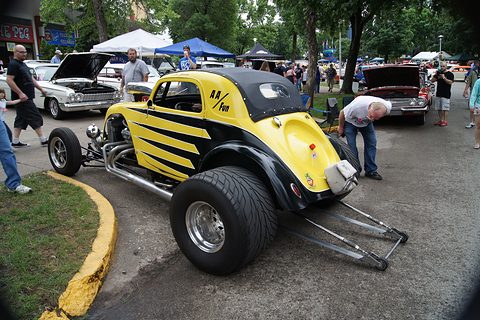
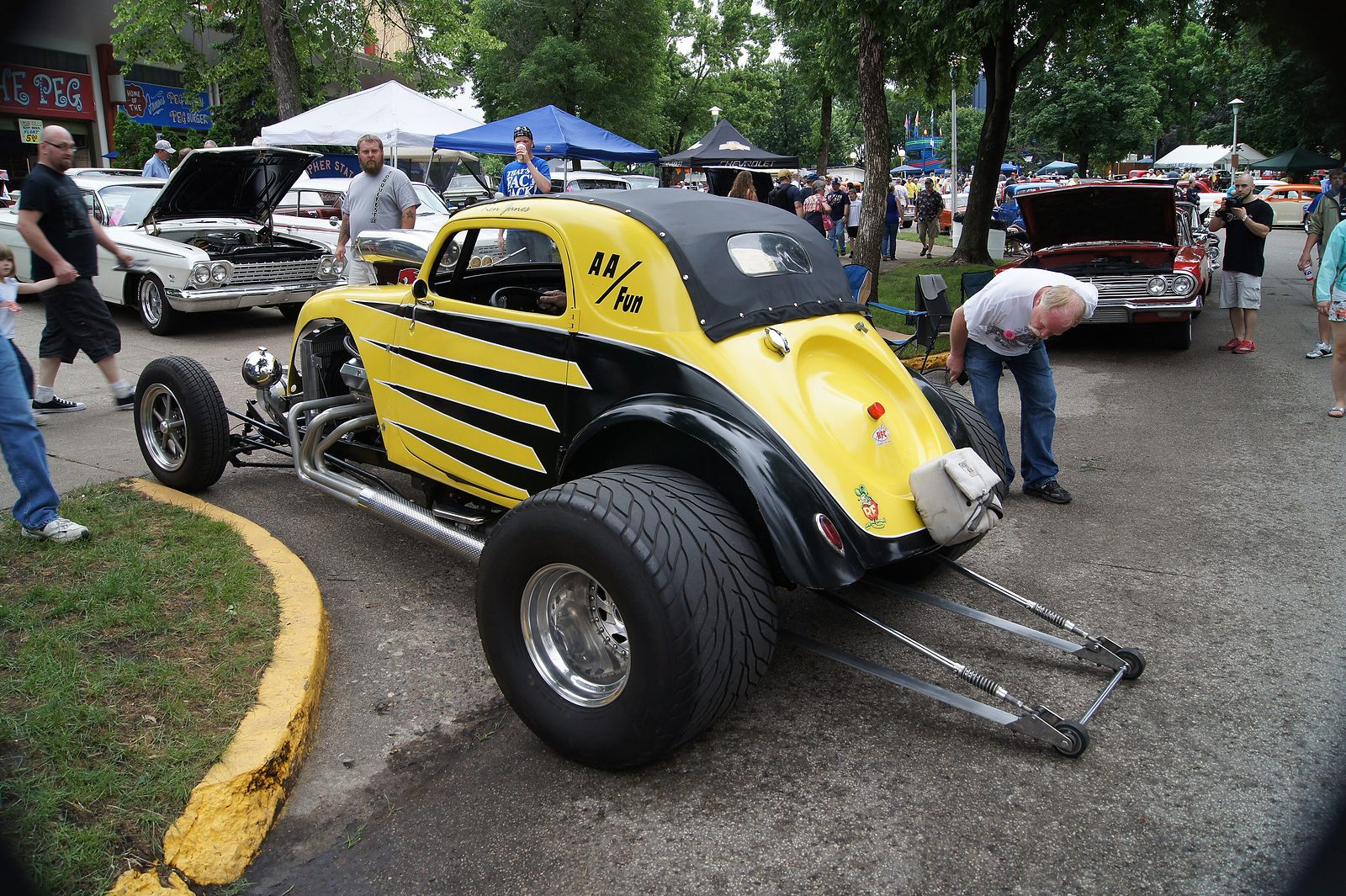
Topolinos, tuned more or less, ran in hundreds of Italian races. Elio Zagato began racing just after the war in a Furgoncino stripped into a barchetta.source 1 Siata sold an overhead-valve conversion giving 20 PS at 6,000 rpm, and the specials ran from the Siata Amica and the Giannini 750 Sport “Mille Miglia” to Giotto Bizzarrini’s “Macchinetta” of 1953; in Germany some had Viktor Derbuel’s superchargers.source 3source 1 (More in racing and rallying.) Across the Atlantic it had a second life: in the 1960s and 1970s Topolino bodies went onto American hot rods and dragsters, the “Fiat Altereds”.source 7source 3
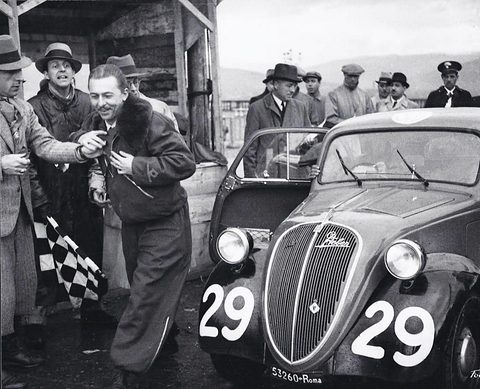
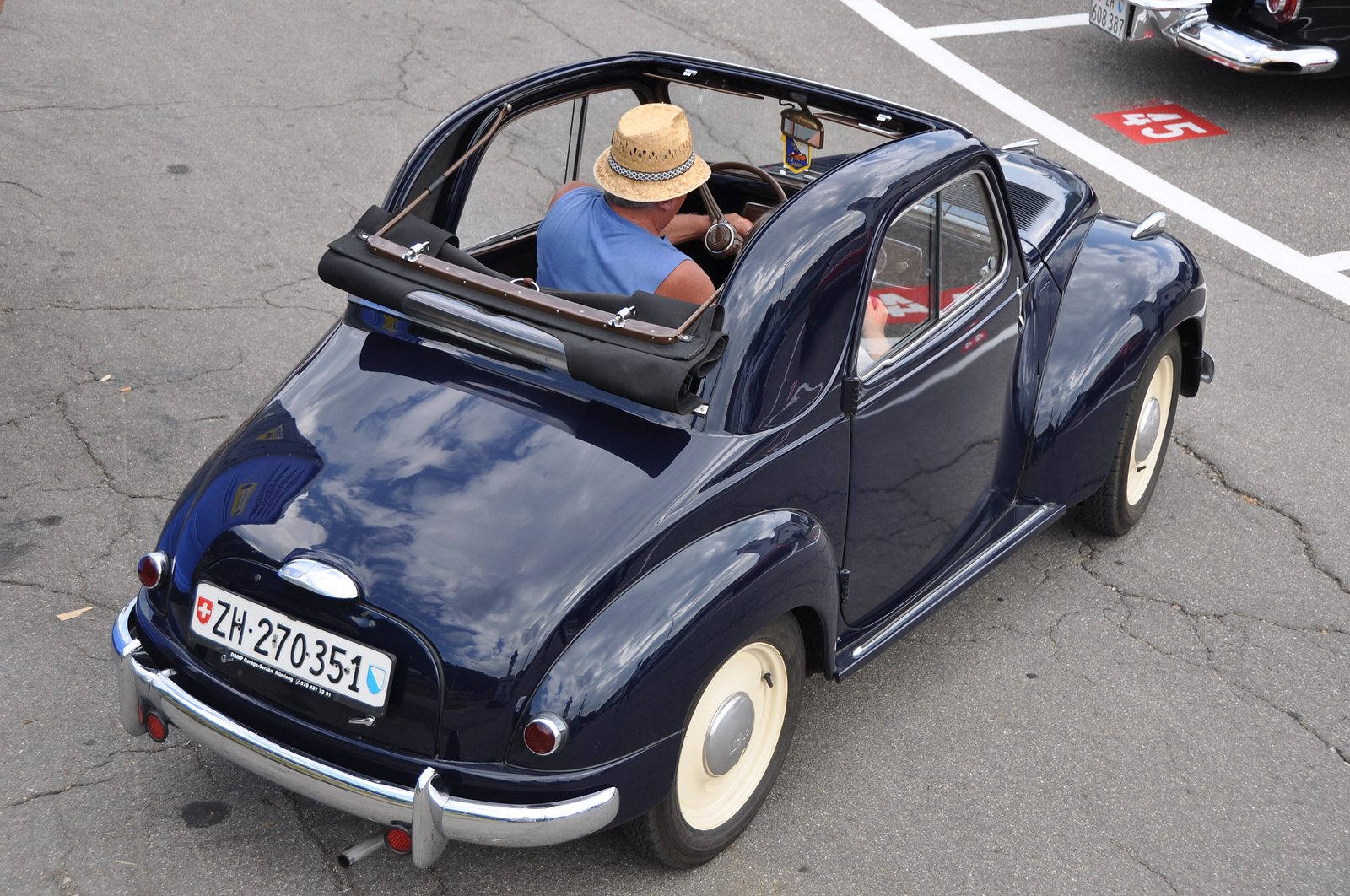
A 1937 500 A trasformabile with its full-length roof rolled back to the tail.Photo: Andrew Bone, CC BY 2.0, via Wikimedia CommonsPlate I · 1937 Raffaello Guzman climbs out of his Fiat 500, No. 29, at the 1937 Mille Miglia.Photo: Foto Locchi, Public domain, via Wikimedia CommonsPlate II · 1952 Italian radio’s 500 C estate, lettered “radio italiana”, at the Helsinki Olympic Games in July 1952.Photo: Volker von Bonin / Helsinki City Museum, CC BY 4.0, via Wikimedia Commons
4
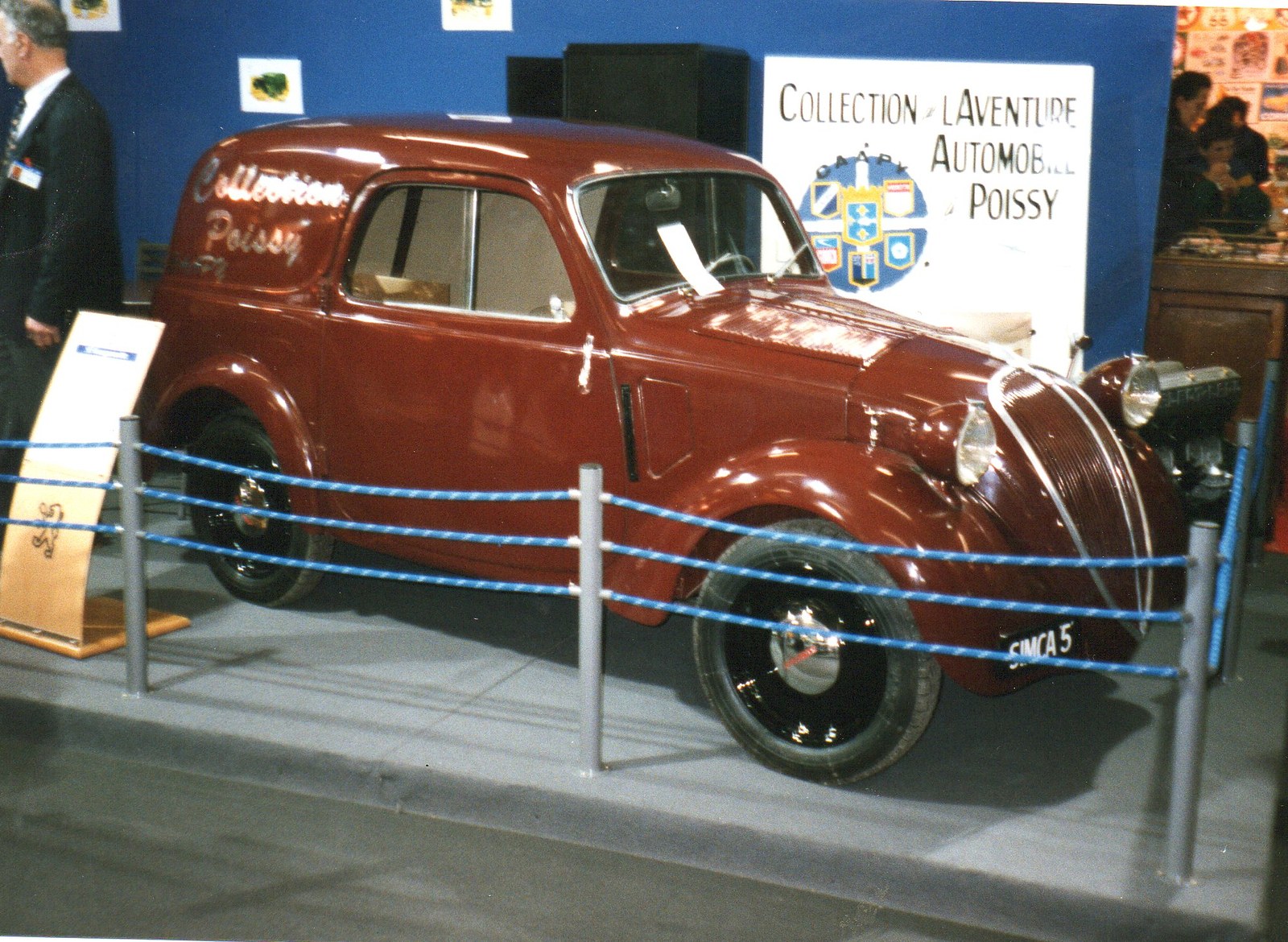
Simca 5
1936–1949 · a record on this page
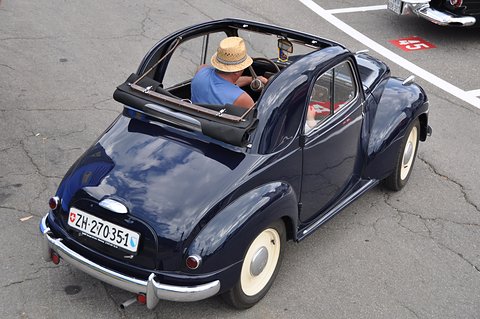
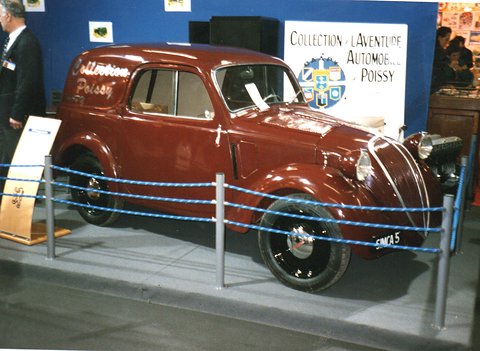
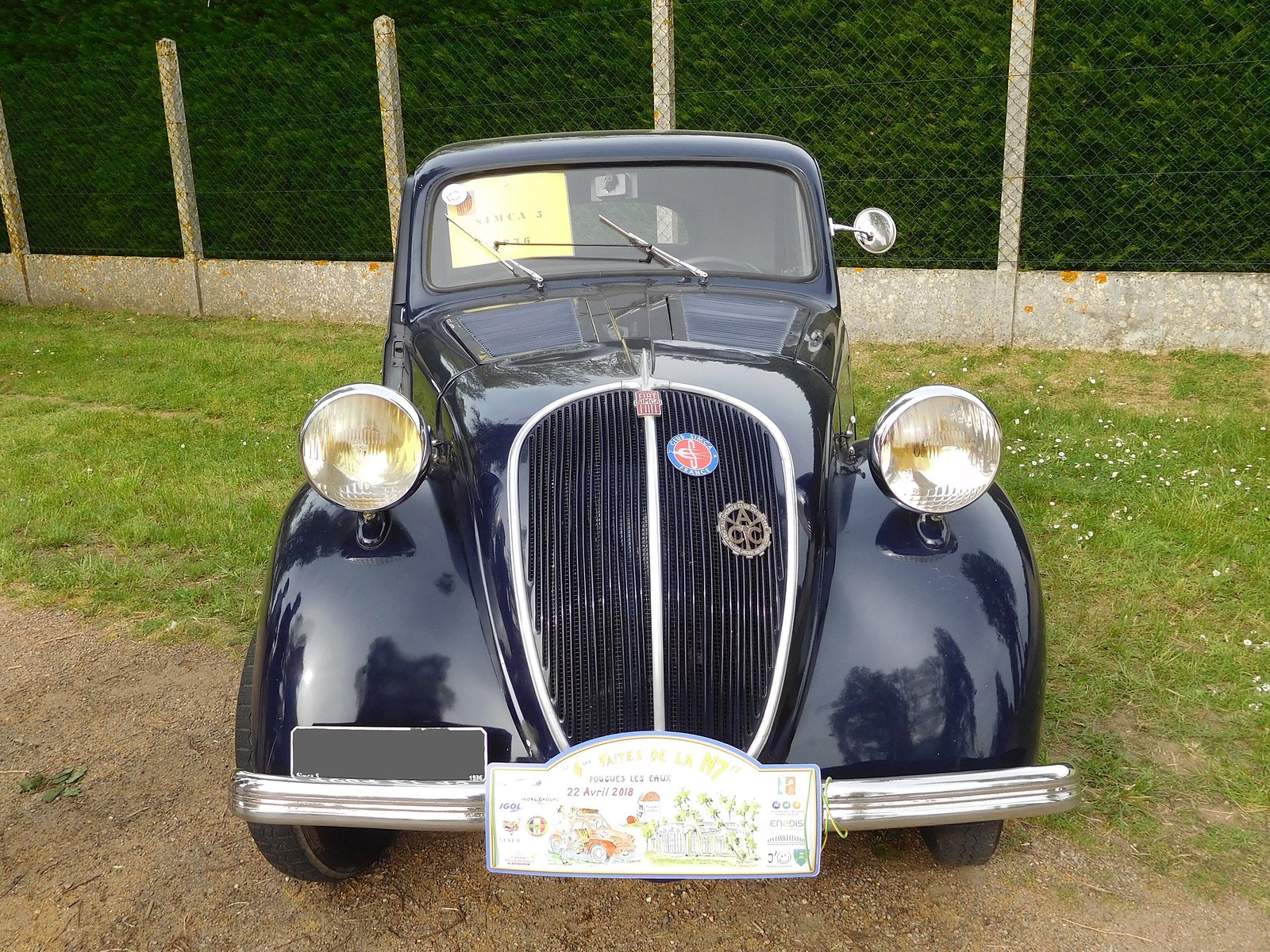
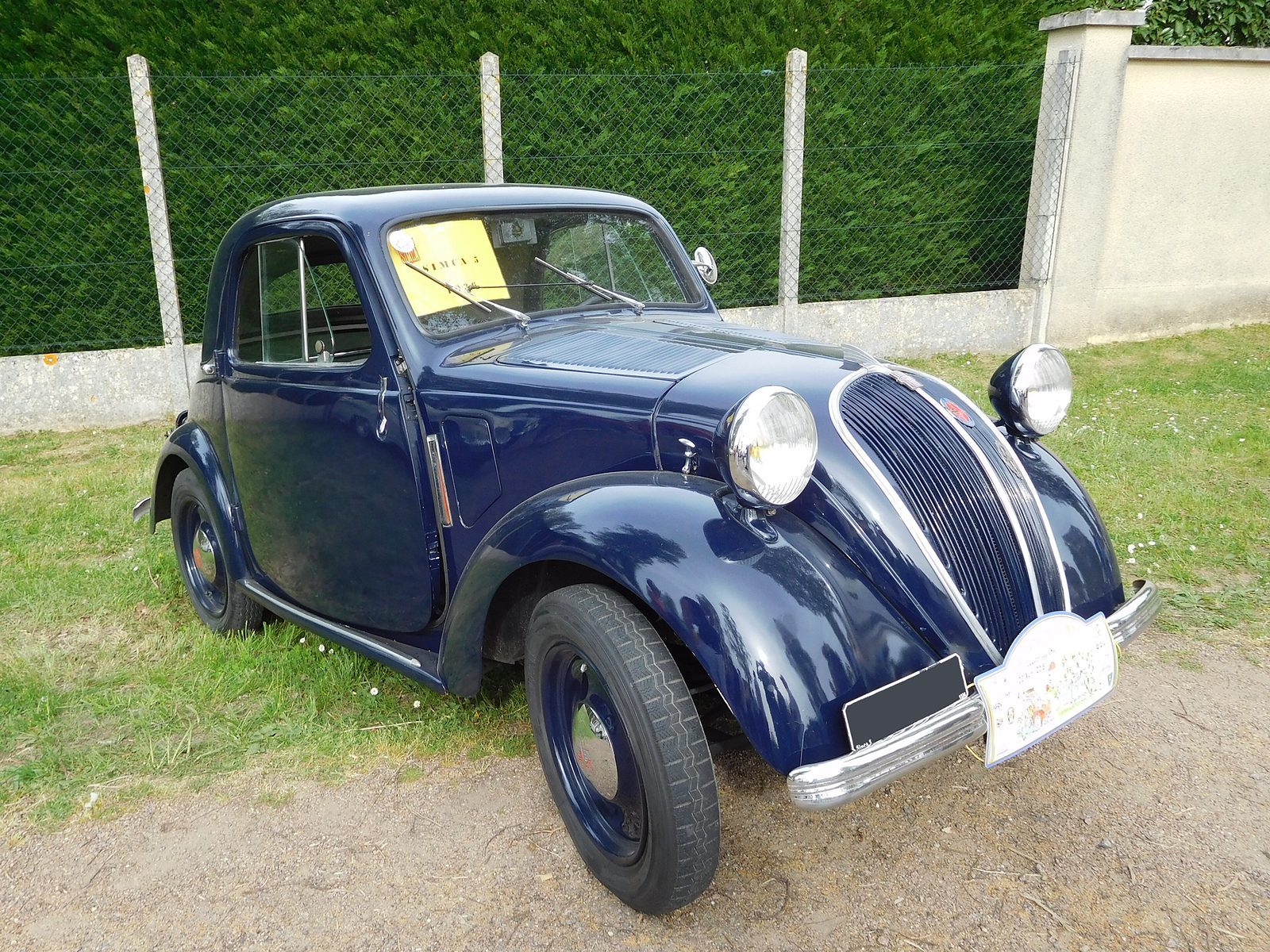
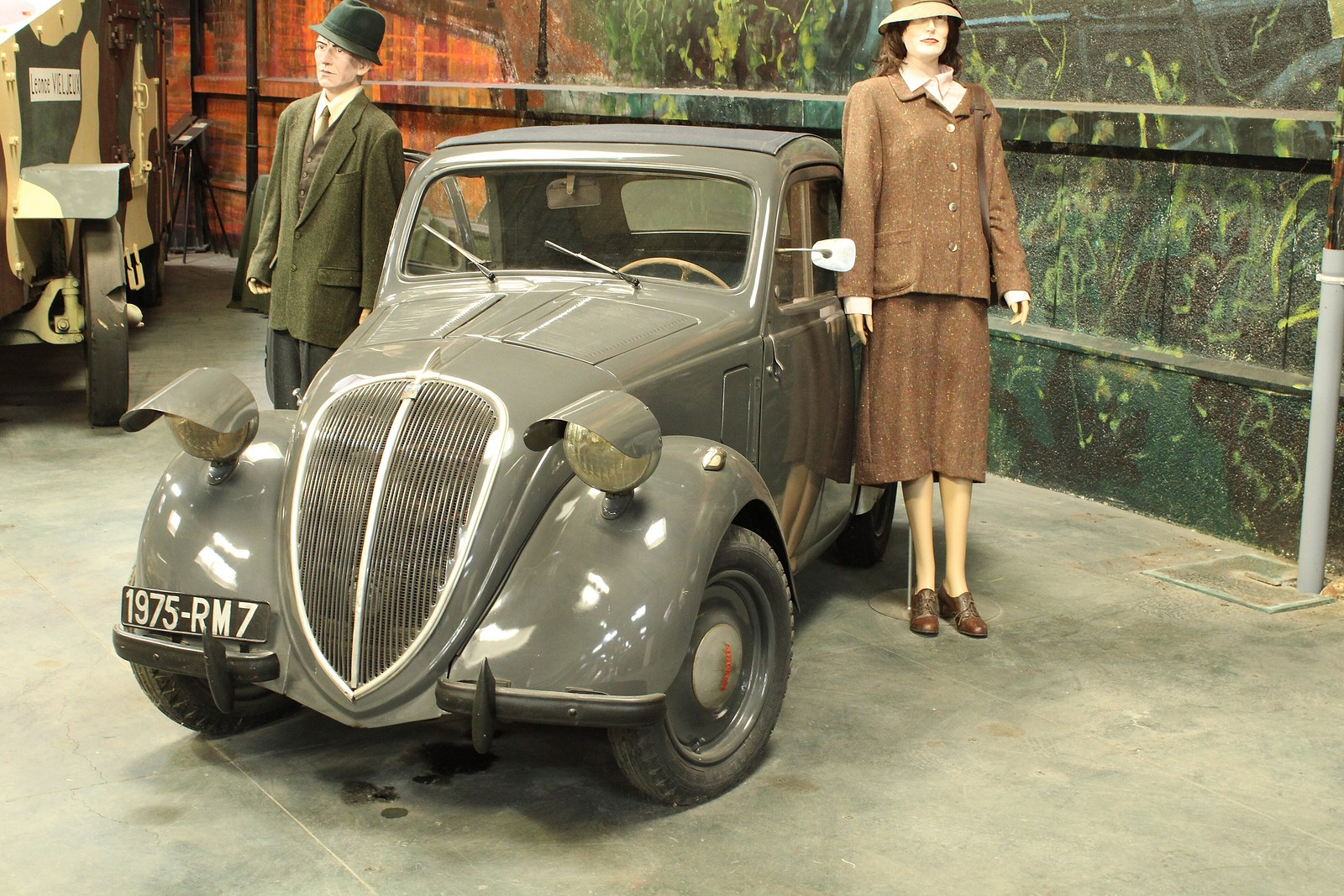
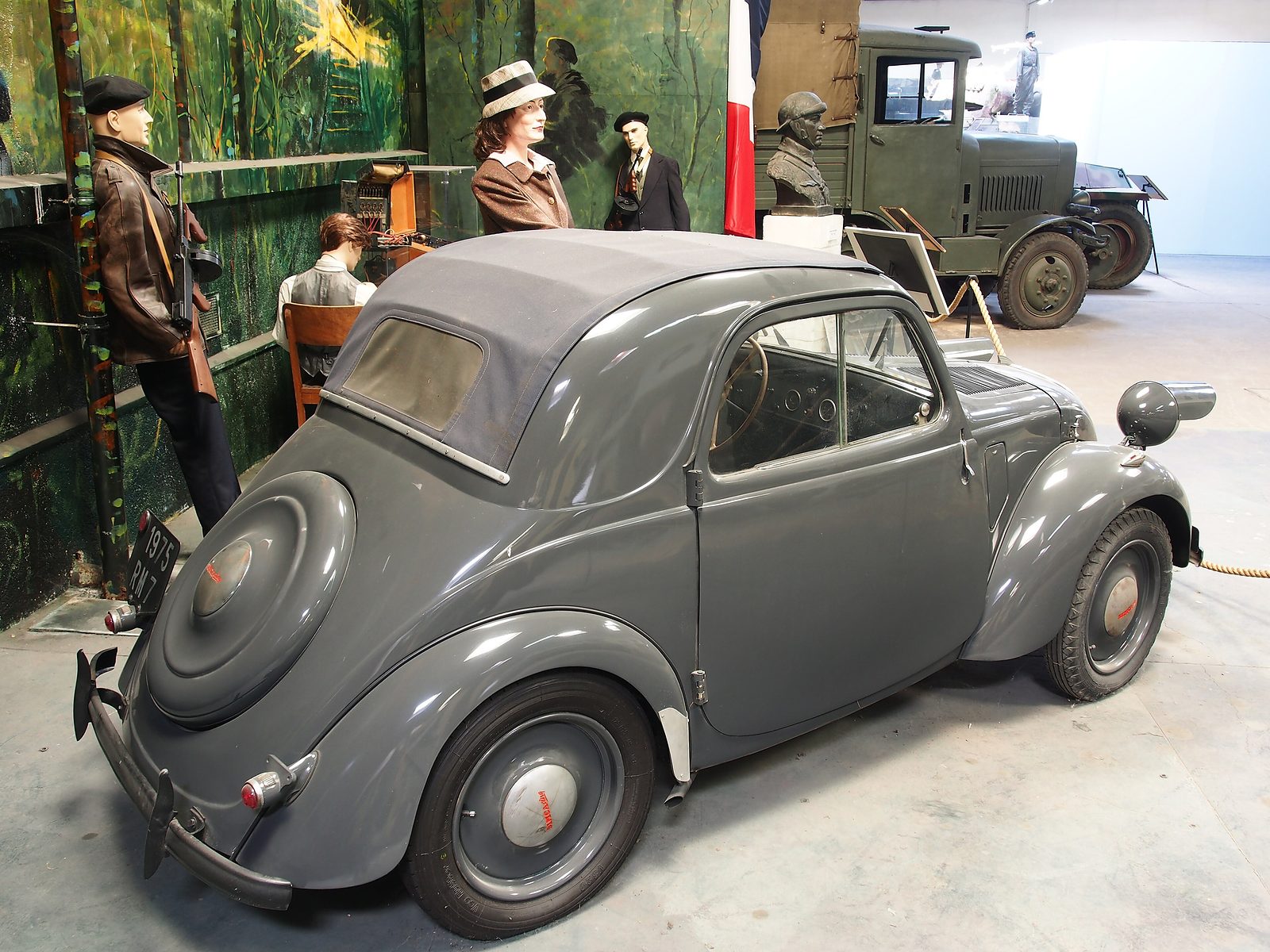
France saw the Topolino before Italy did. Henri Théodore Pigozzi’s new firm, Simca, at first Simca-Fiat, showed the Simca 5 at Nanterre on 10 March 1936, three months before the Italian launch, from drawings and pre-series cars that Fiat had sent.source 4source 2 The strikes of the Front Populaire held real production back until the autumn. In April 1936 it cost 9,900 francs as a Standard, 10,900 as a Luxe and 12,500 as a Grand Luxe, and the découvrable, with the roll-back roof, 12,950.source 2 A van for 250 kg followed at the Paris salon of October 1937 and lasted until February 1949, and the Simca 6 took the car’s place.source 2
René Bellu’s count, given by French Wikipedia, is 46,472, year by year: 7,282 in 1936, 12,131 in 1939, 604 in 1940 and 3,328 in 1941, then 3,411 in 1946, 3,733 in 1947, 3,901 in 1948 and 221 vans in 1949. For 1937 the same article gives both 12,925 and 14,194.source 2 The car was 570 cc by Simca’s reckoning, with 6.5:1 compression, and weighed 560 kg (1,235 lb) in running order.source 2
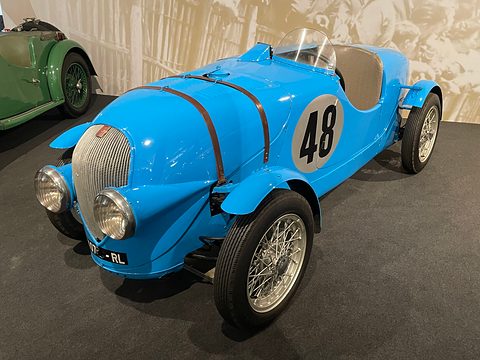
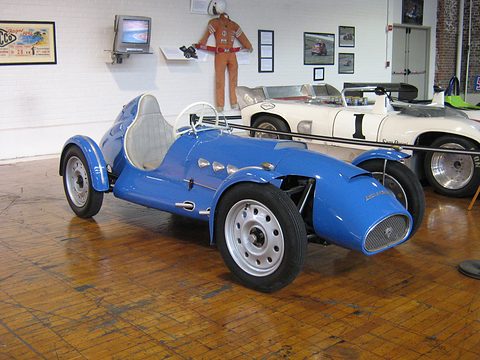
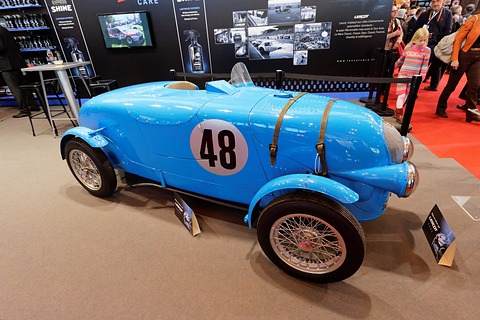
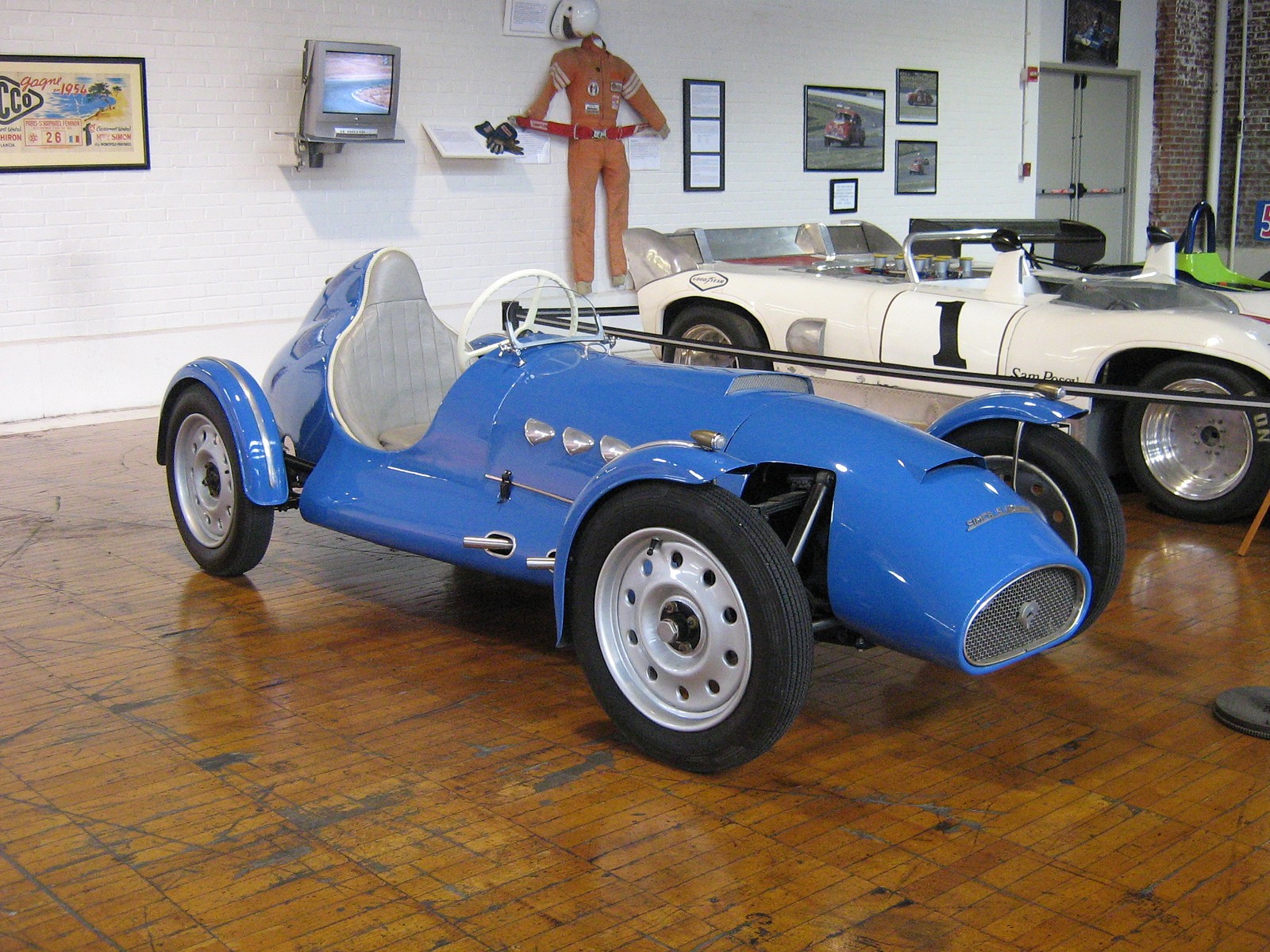
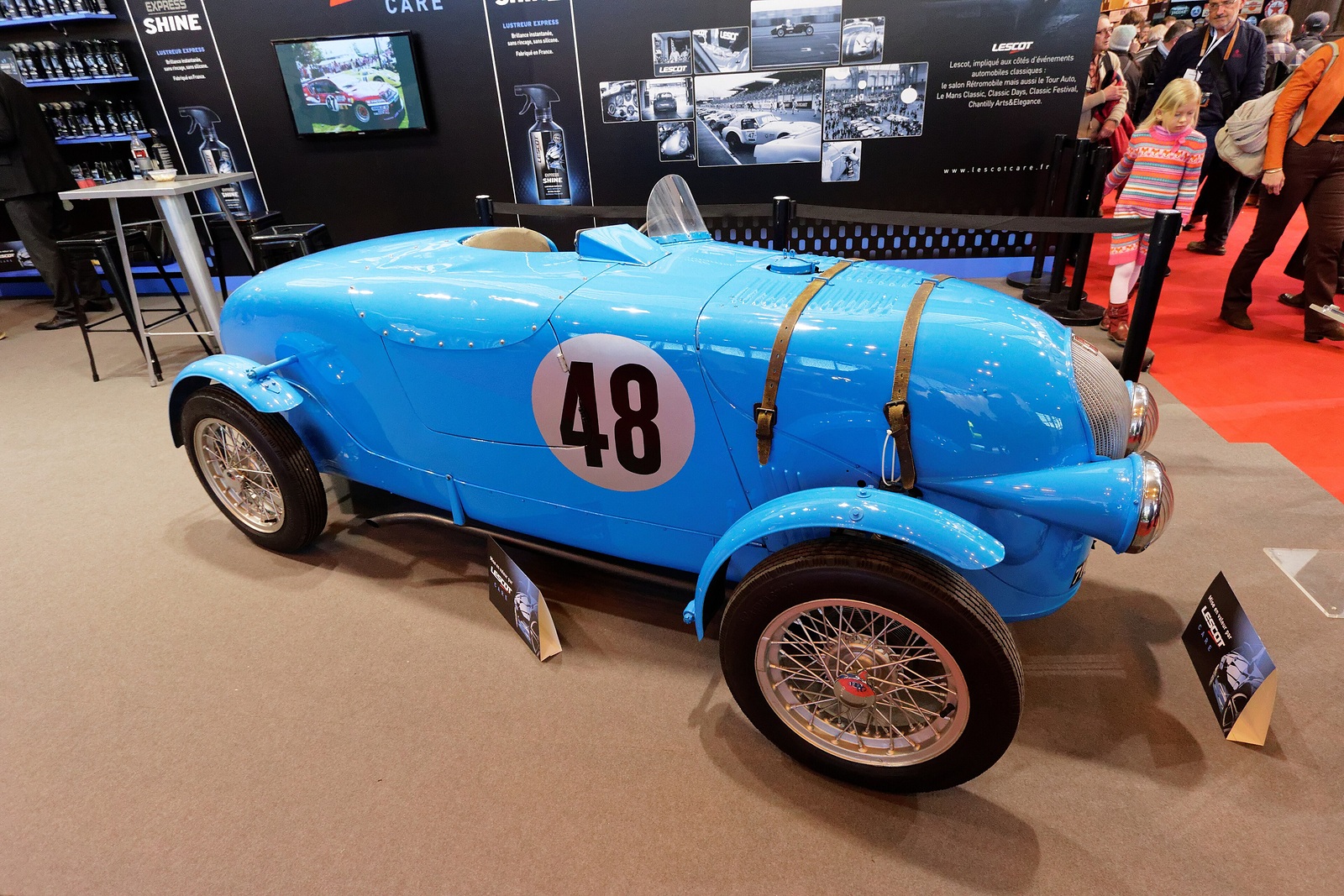
Simca proved it with economy runs. In the 1936 Concours du Bidon de Cinq Litres, five Simca 5s took the first five places in their class, and under the Automobile Club de France’s eye one ran Paris–Madrid and back (see the records). Prepared by Amédée Gordini as a 23 hp barchetta of 450 kg, it ran at Le Mans in 1937, 1938 and 1939 and won the class for cars of up to 750 cc, by the Le Mans museum’s account as French Wikipedia gives it.source 2
The blue Simca 5 Gordini, No. 48, of the 1937 Le Mans 24 Hours, at the Le Mans museum in 2024.Photo: Olinone, CC0 1.0, via Wikimedia Commons
5
Pictures
More photographs, old and new
The car 32
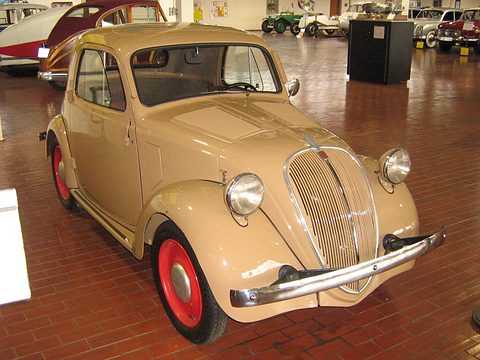
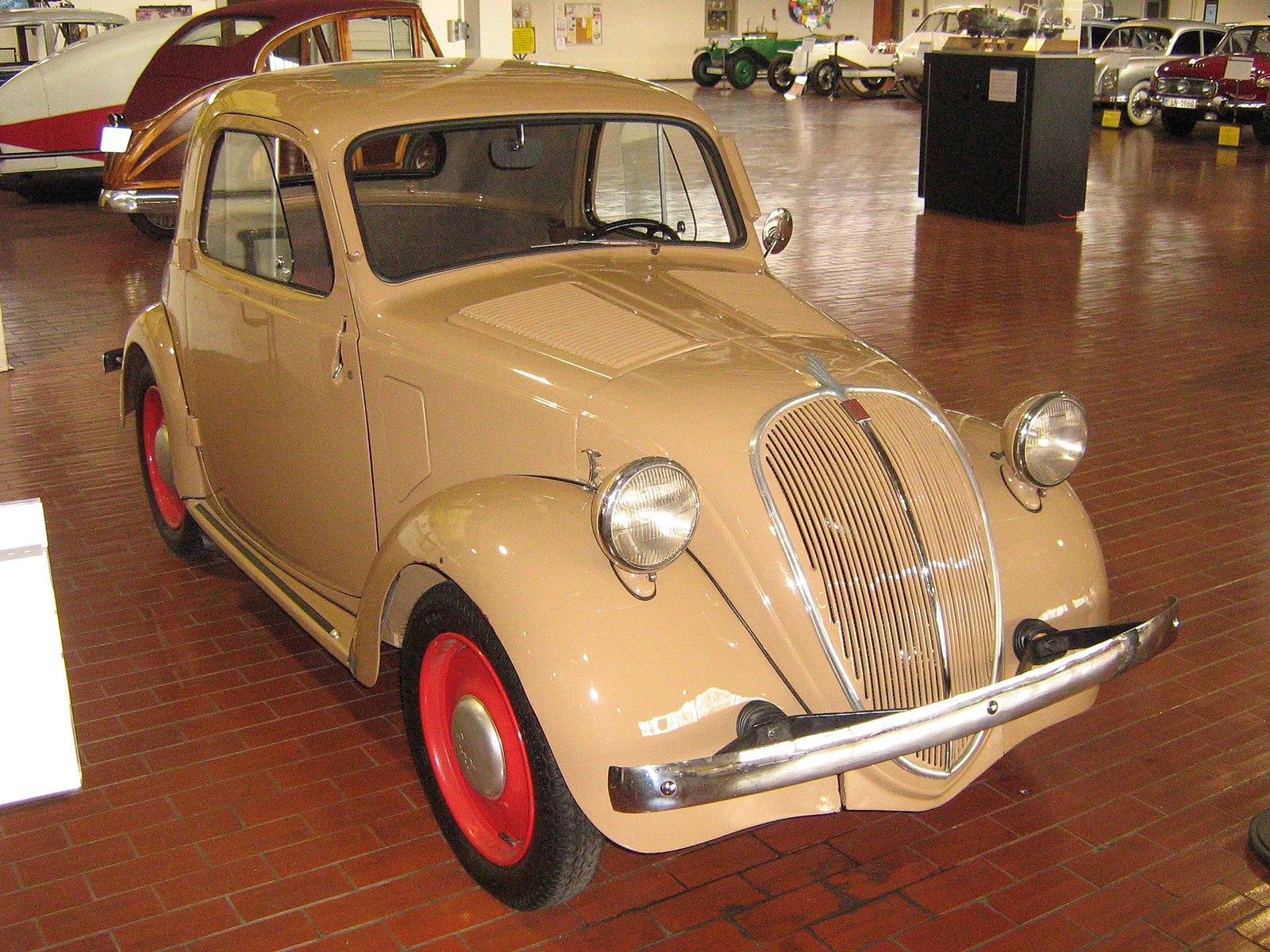
1 A cream 1936 Fiat 500 A with red wheels at the Lane Motor Museum, Nashville, in April 2009.
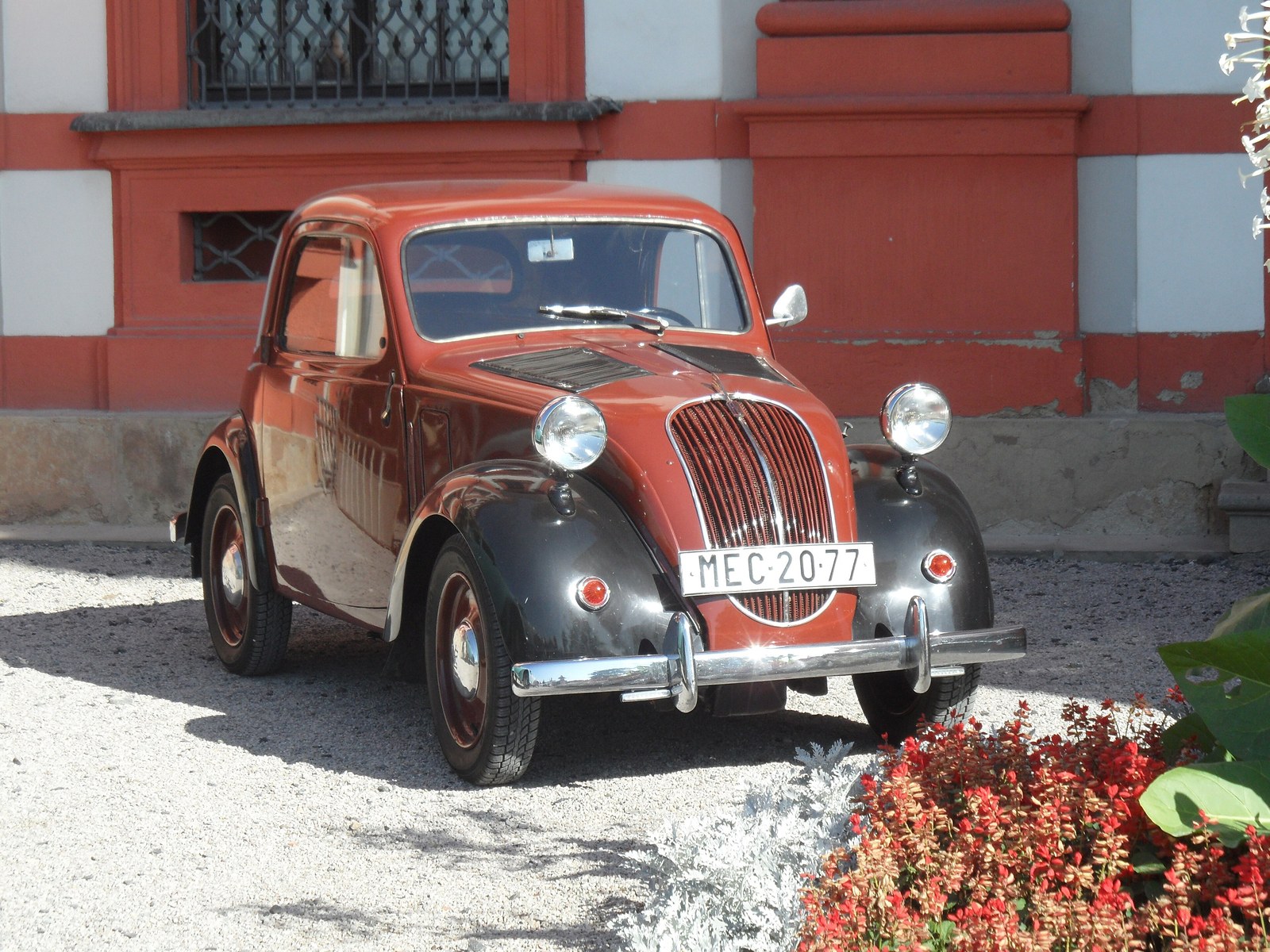
2 A restored 1936 Fiat 500 A at the Fiat 120th anniversary exhibition, Troja Palace, Prague, in September 2019.
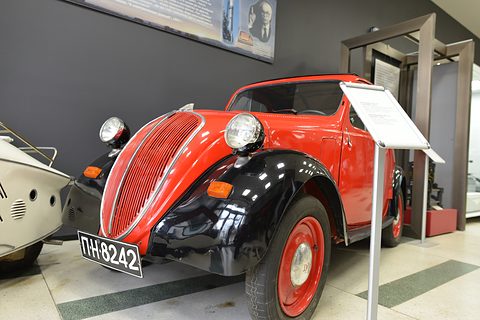
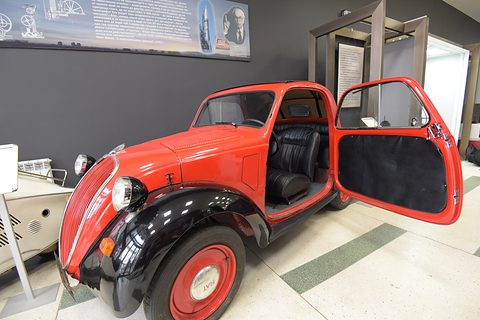
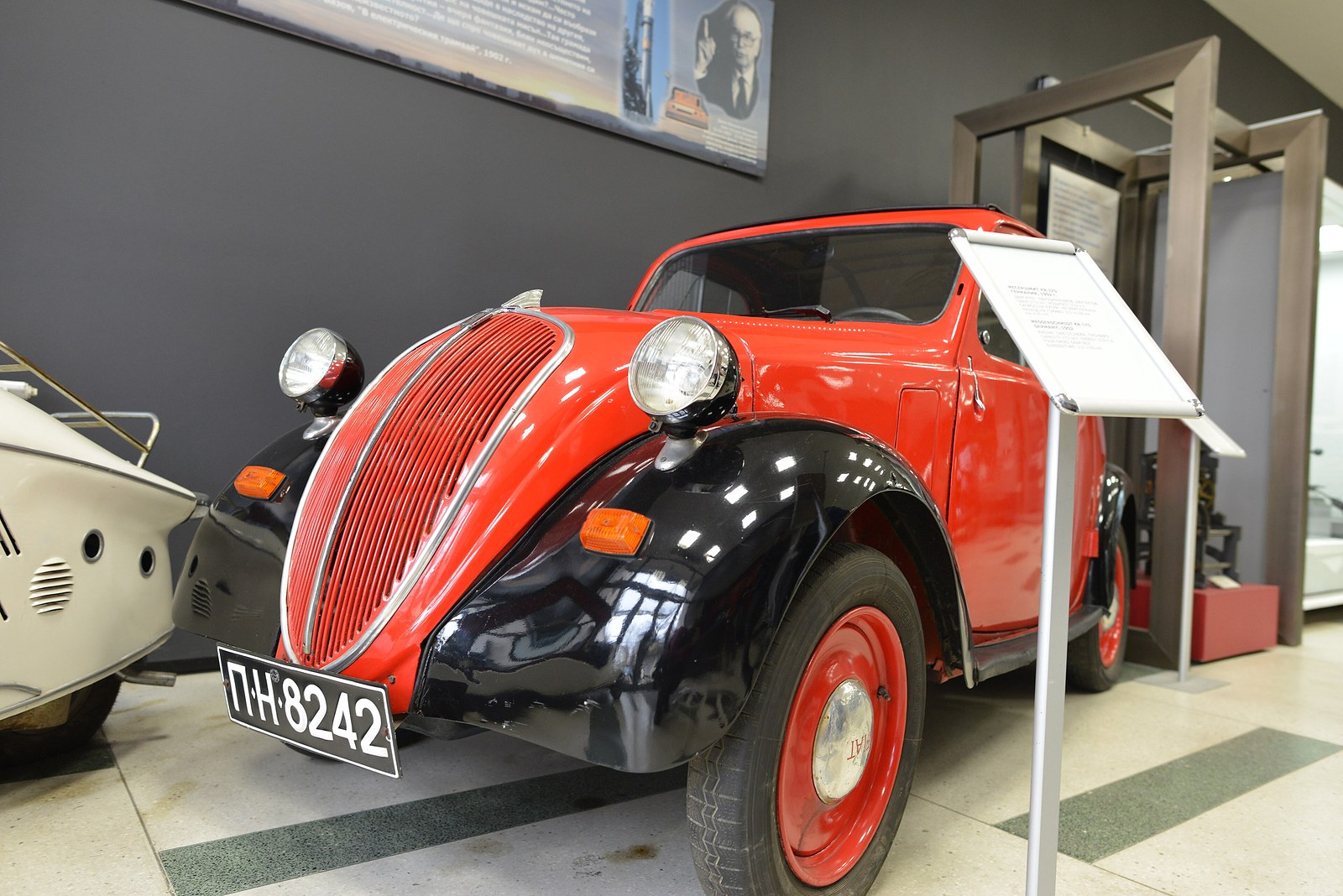
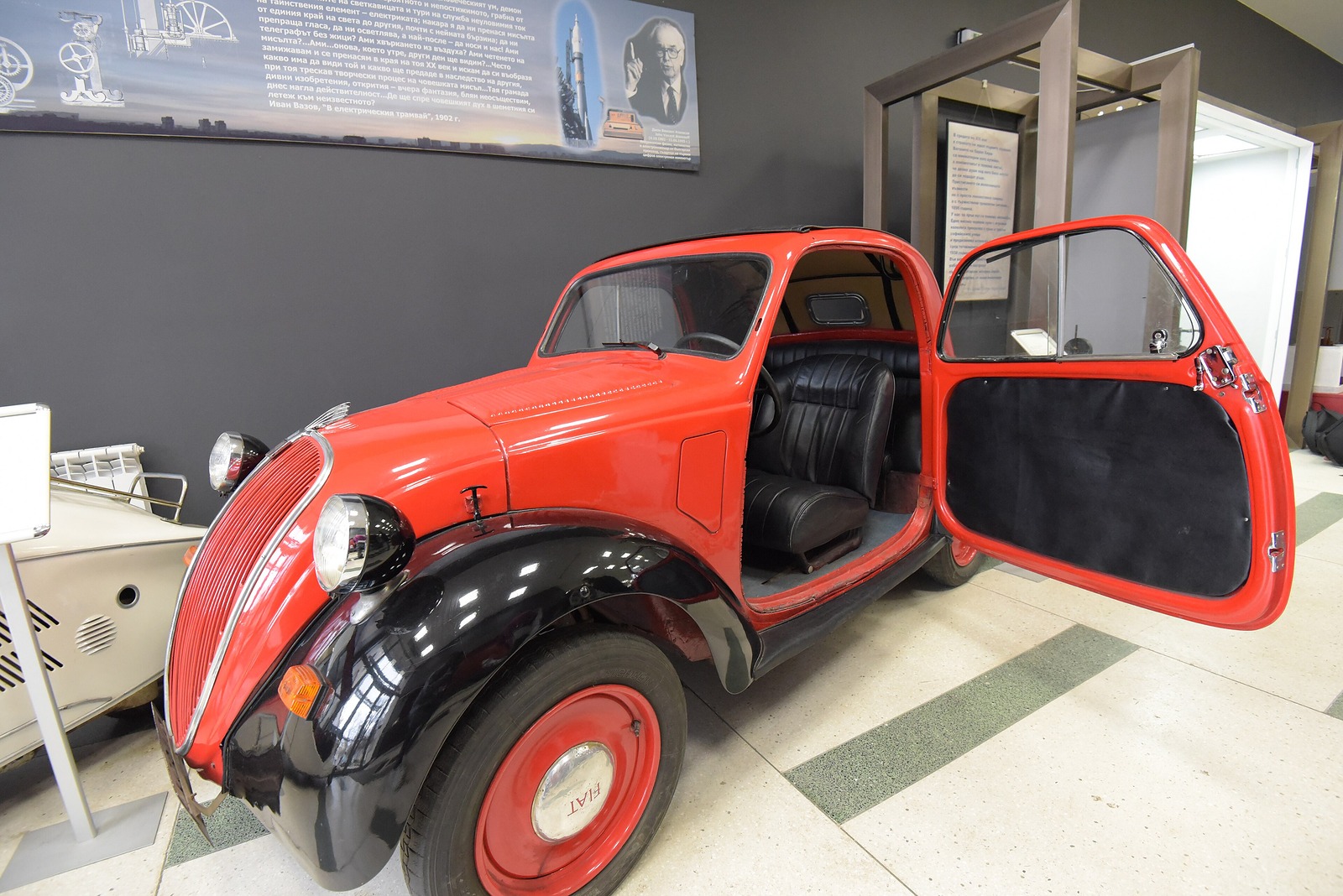
3 A red and black 1936 Fiat 500 A at the National Polytechnic Museum, Sofia, in March 2017.
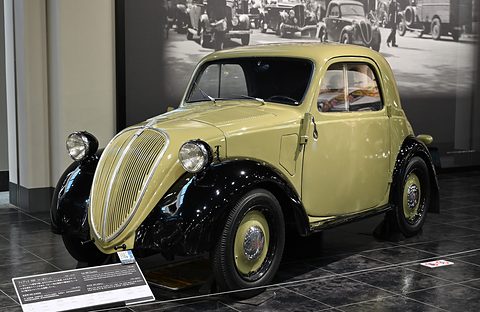
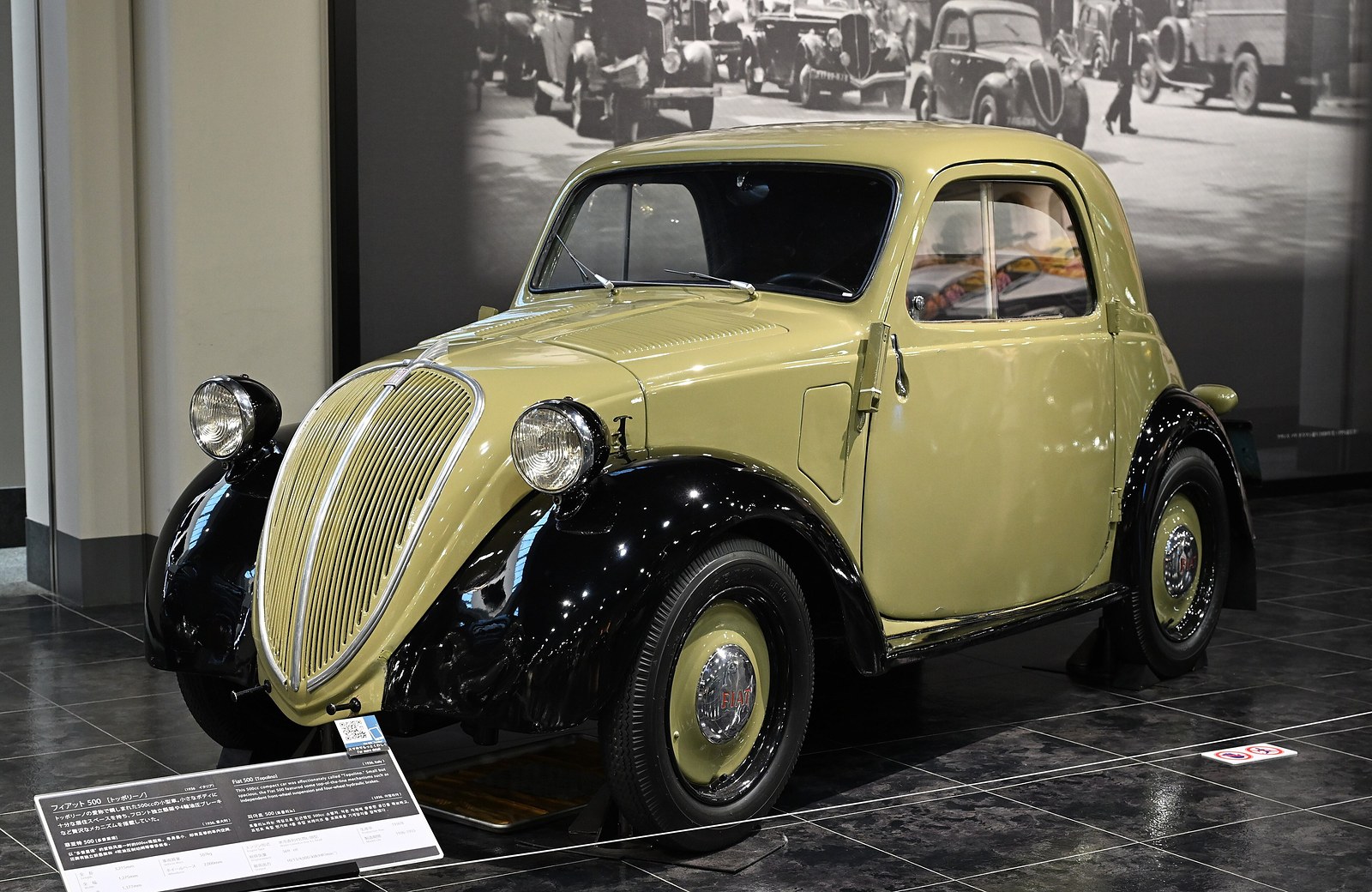
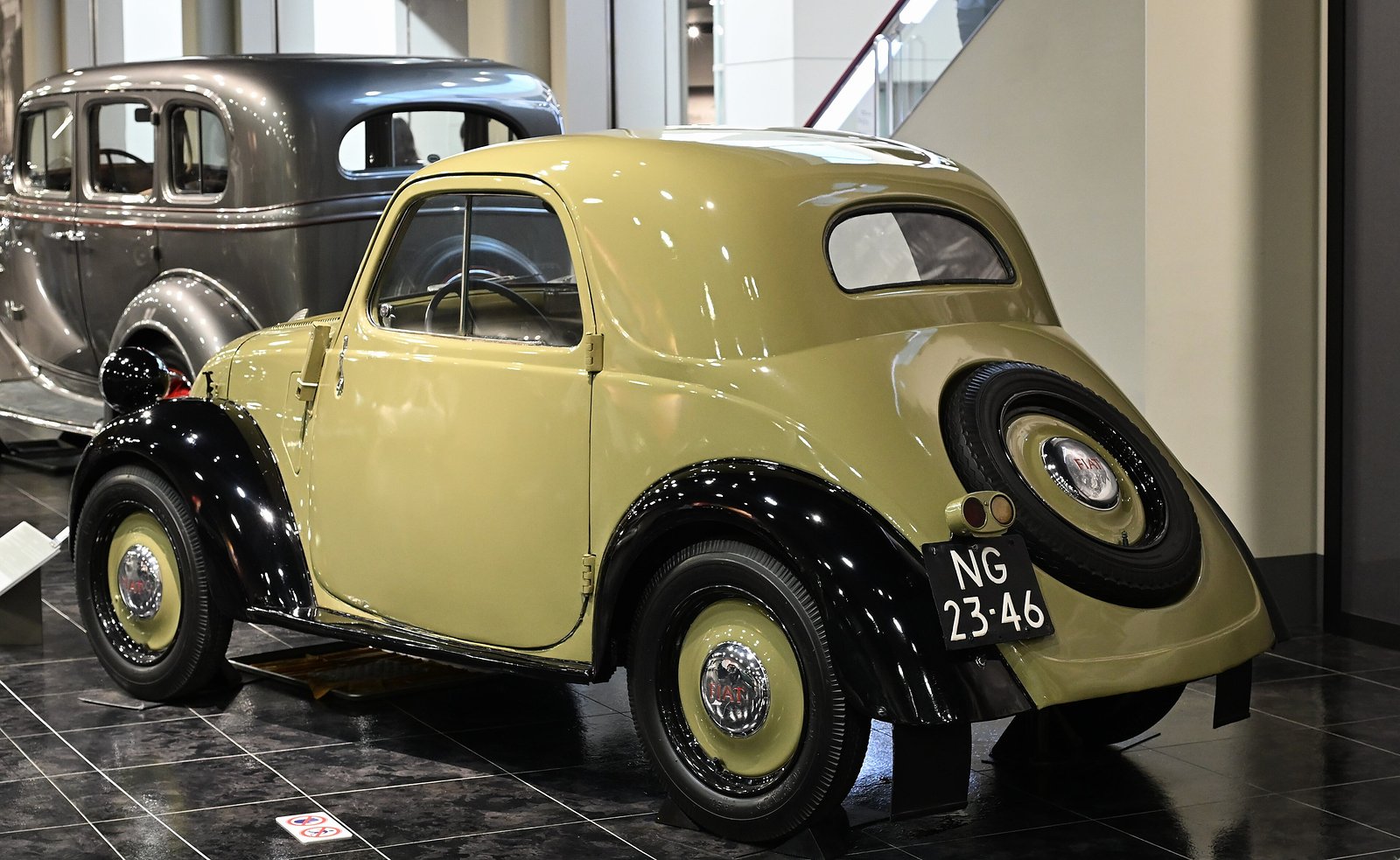
4 A yellow and black 1936 Fiat 500 A saloon at the Toyota Automobile Museum, Nagakute, in November 2025.
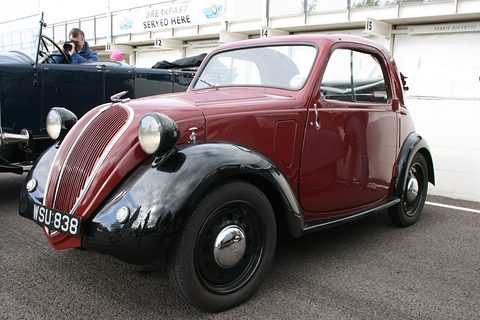
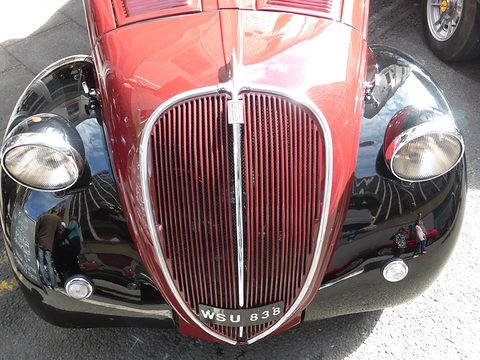
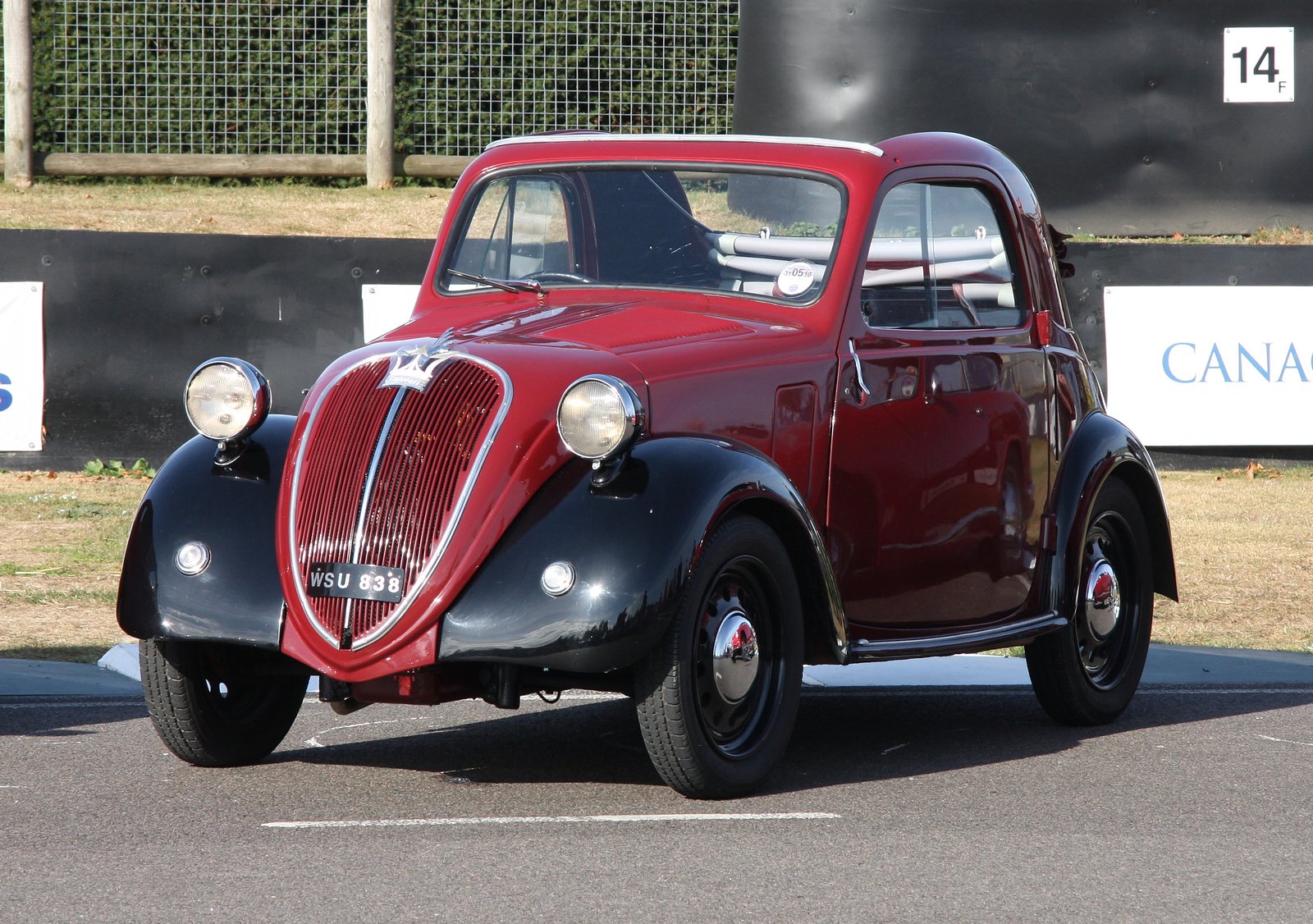
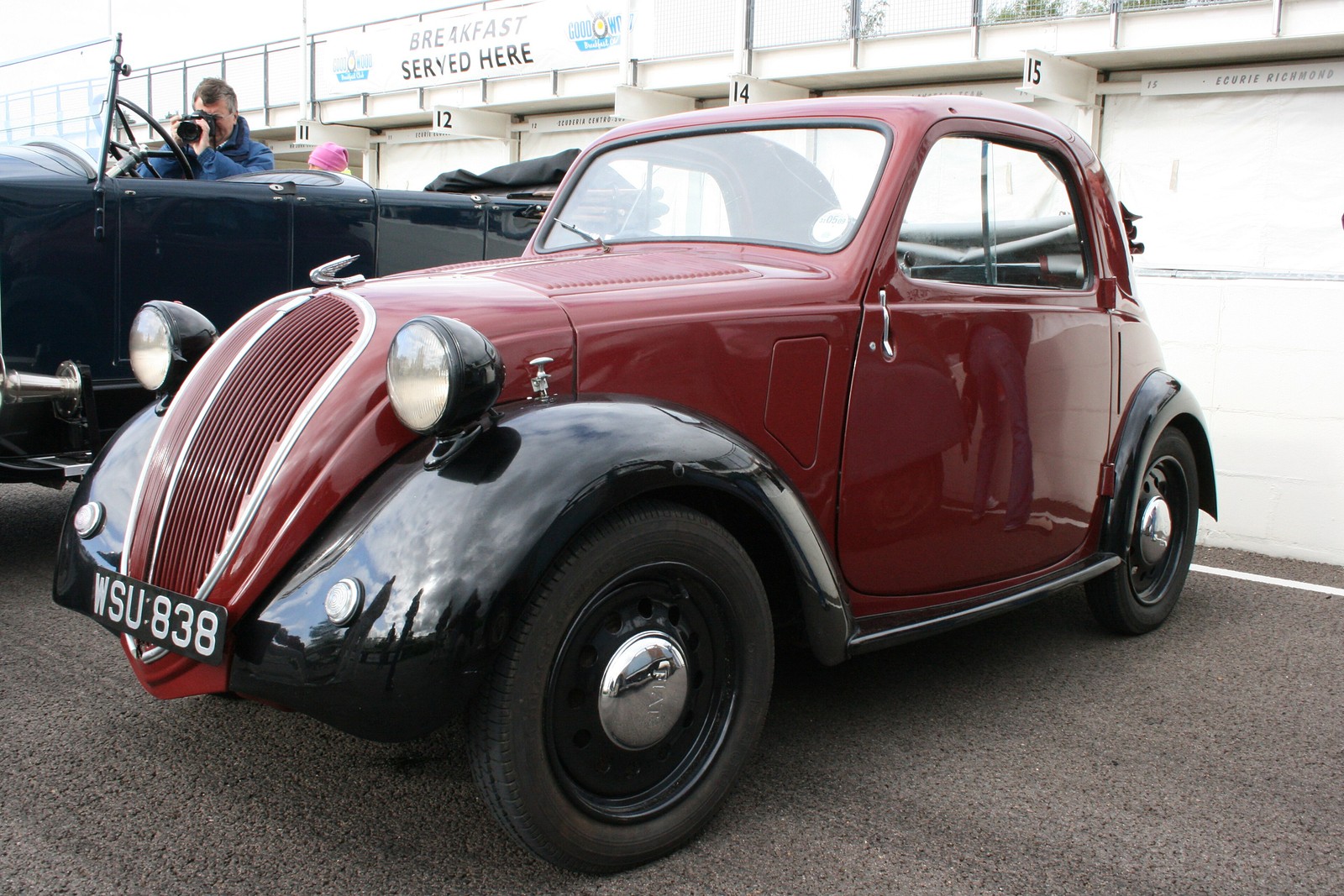
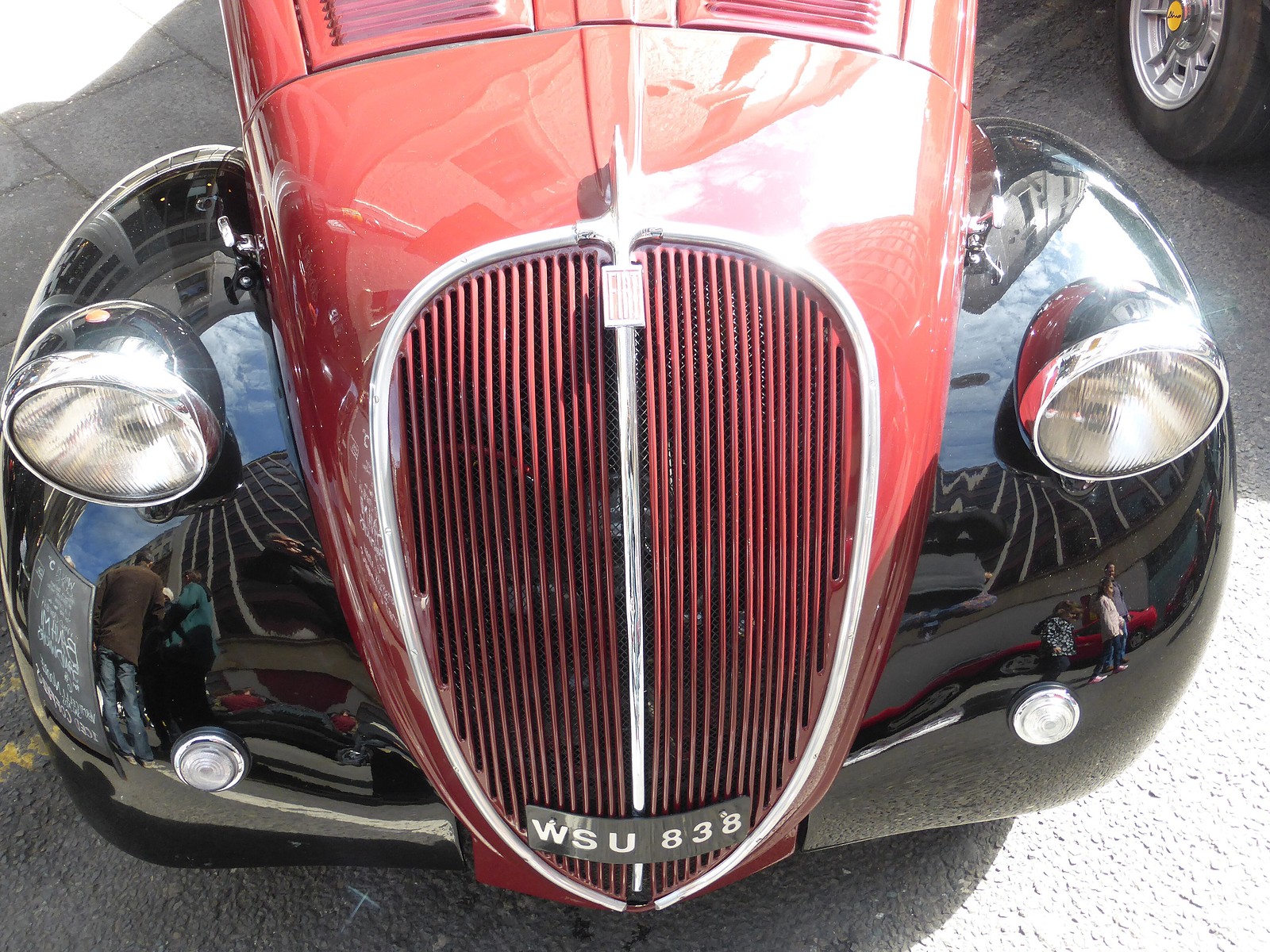
5 A maroon and black 1937 Fiat 500 A at a car show in England in October 2009.
27 more picturesFewer pictures
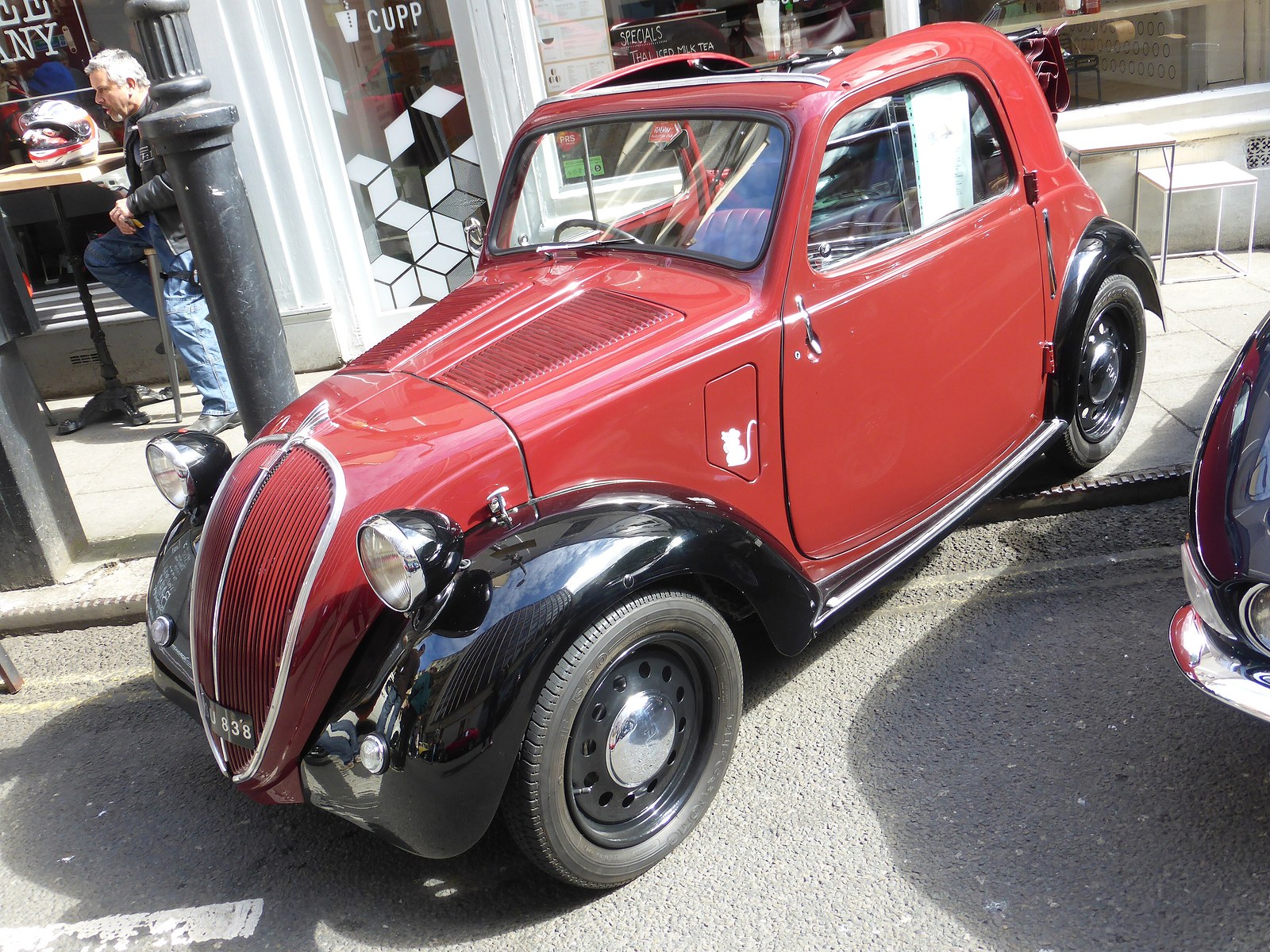
6 A red and black 1937 Fiat 500 A trasformabile at the Bristol Italian AutoMoto Festival in April 2017.
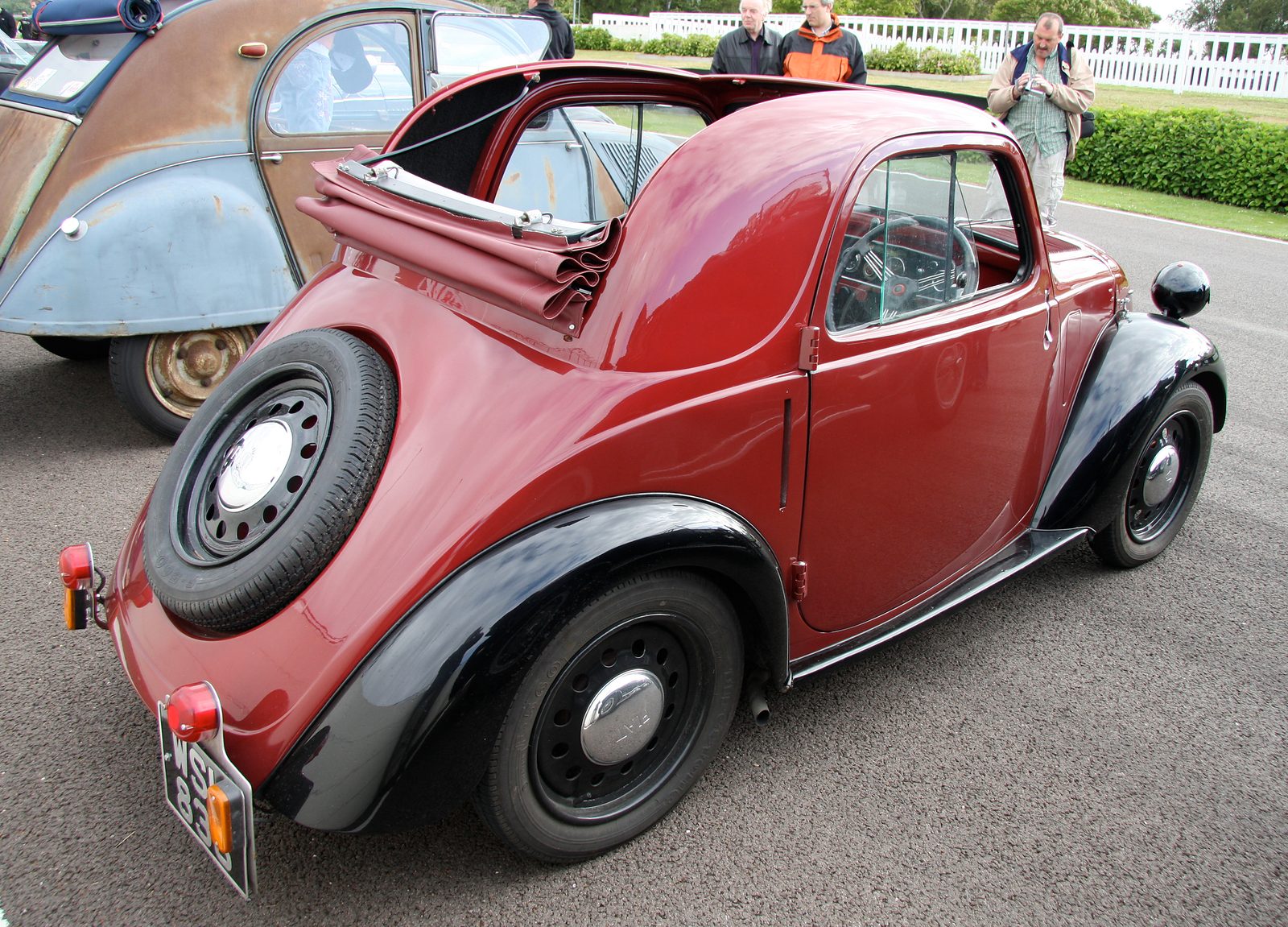
7 A maroon and black 1937 Fiat 500 A on a show field in England in July 2008.
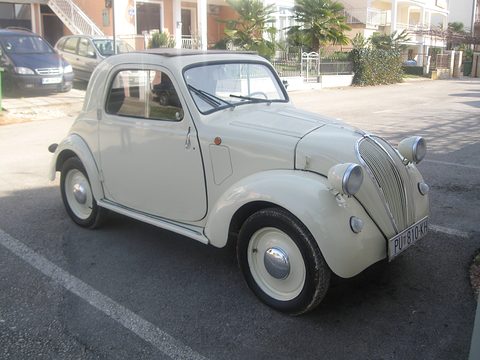
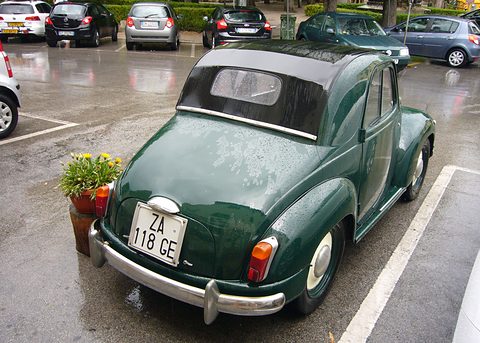
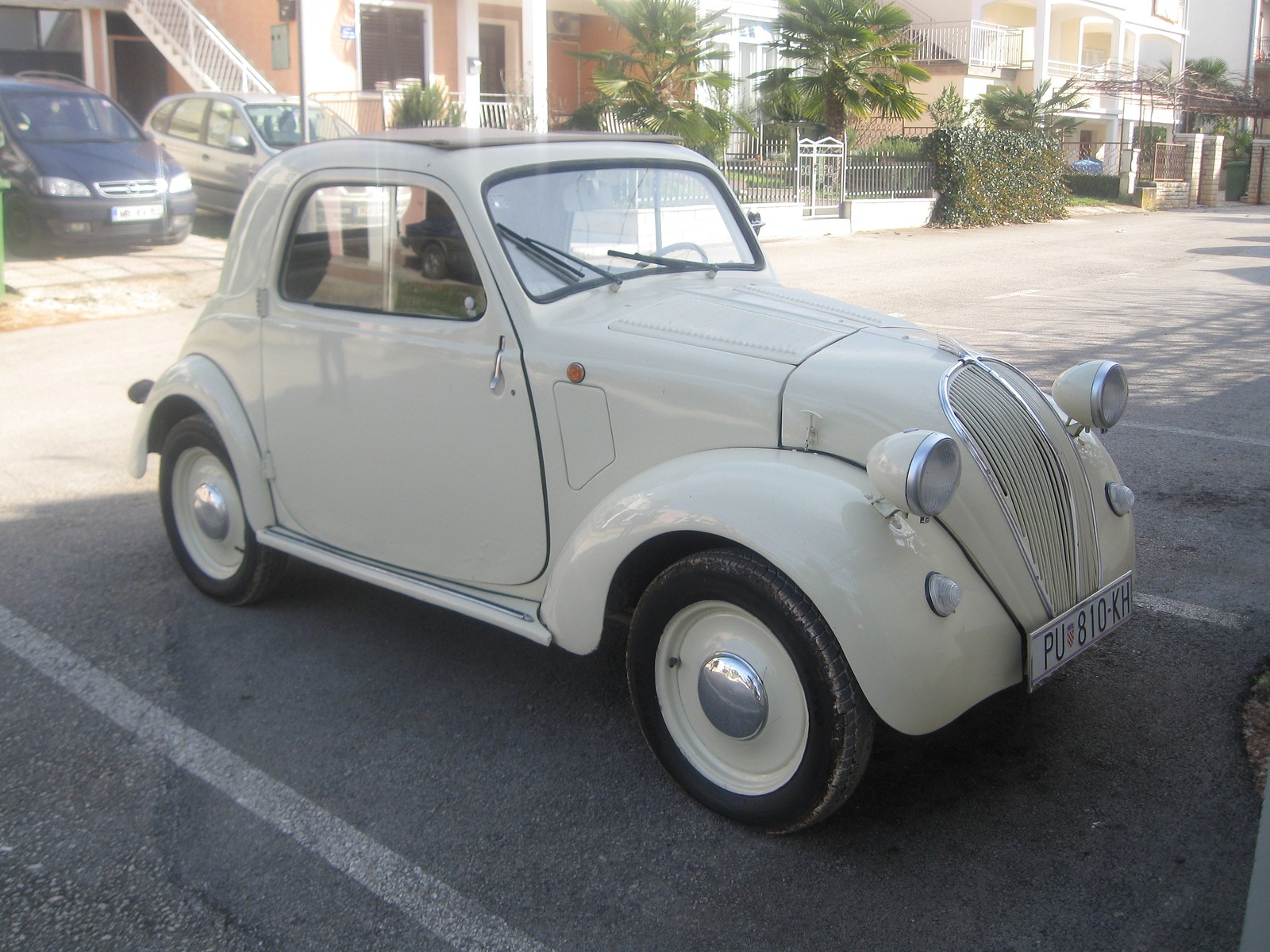
8 An off-white 1939 Fiat 500 A parked in Poreč, Croatia, in January 2011.
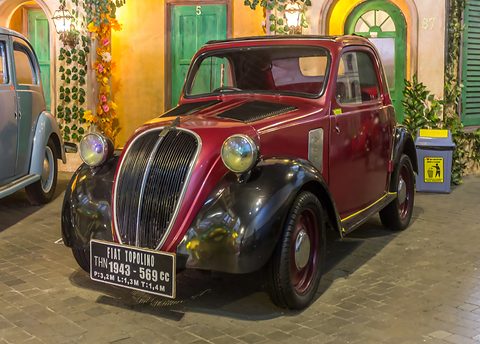
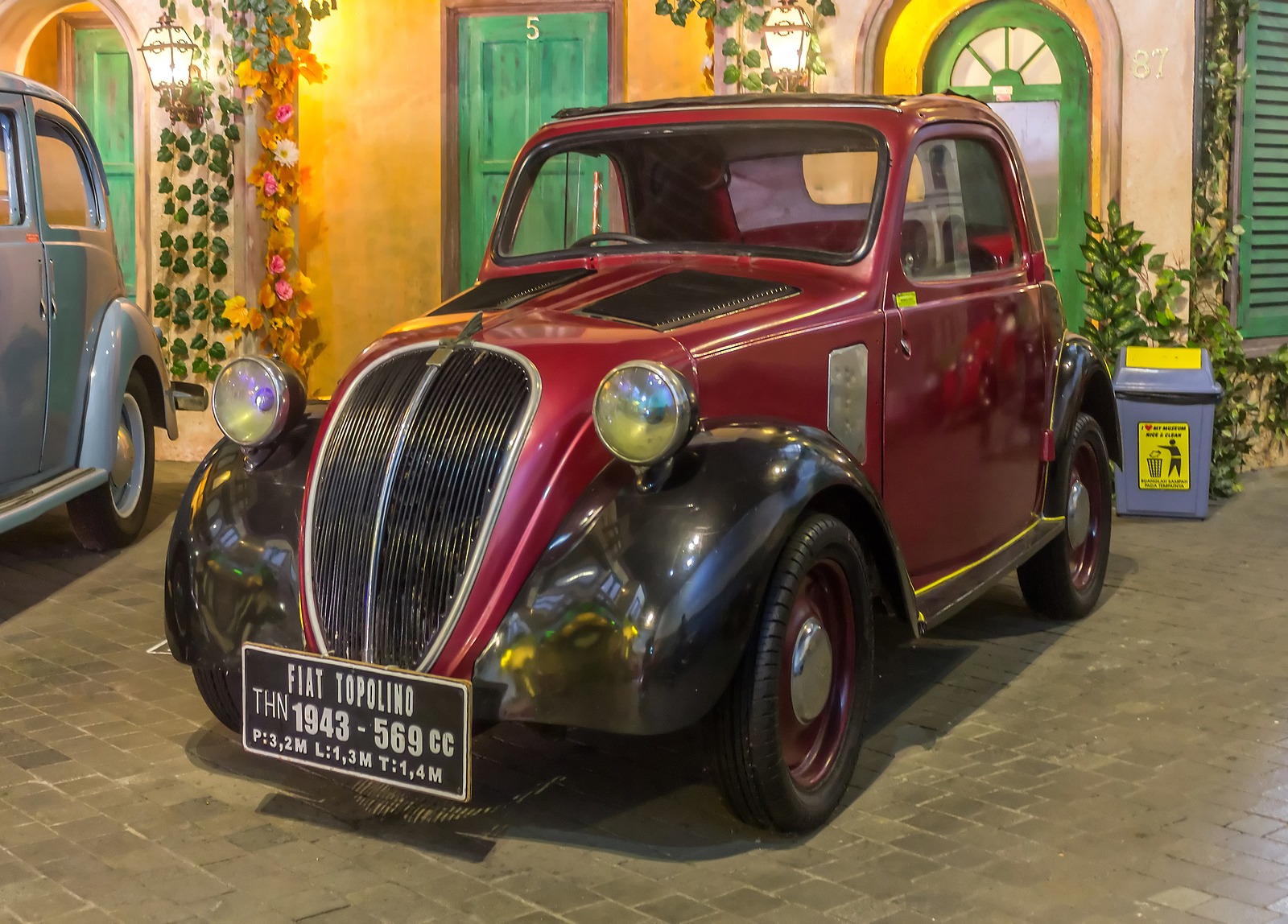
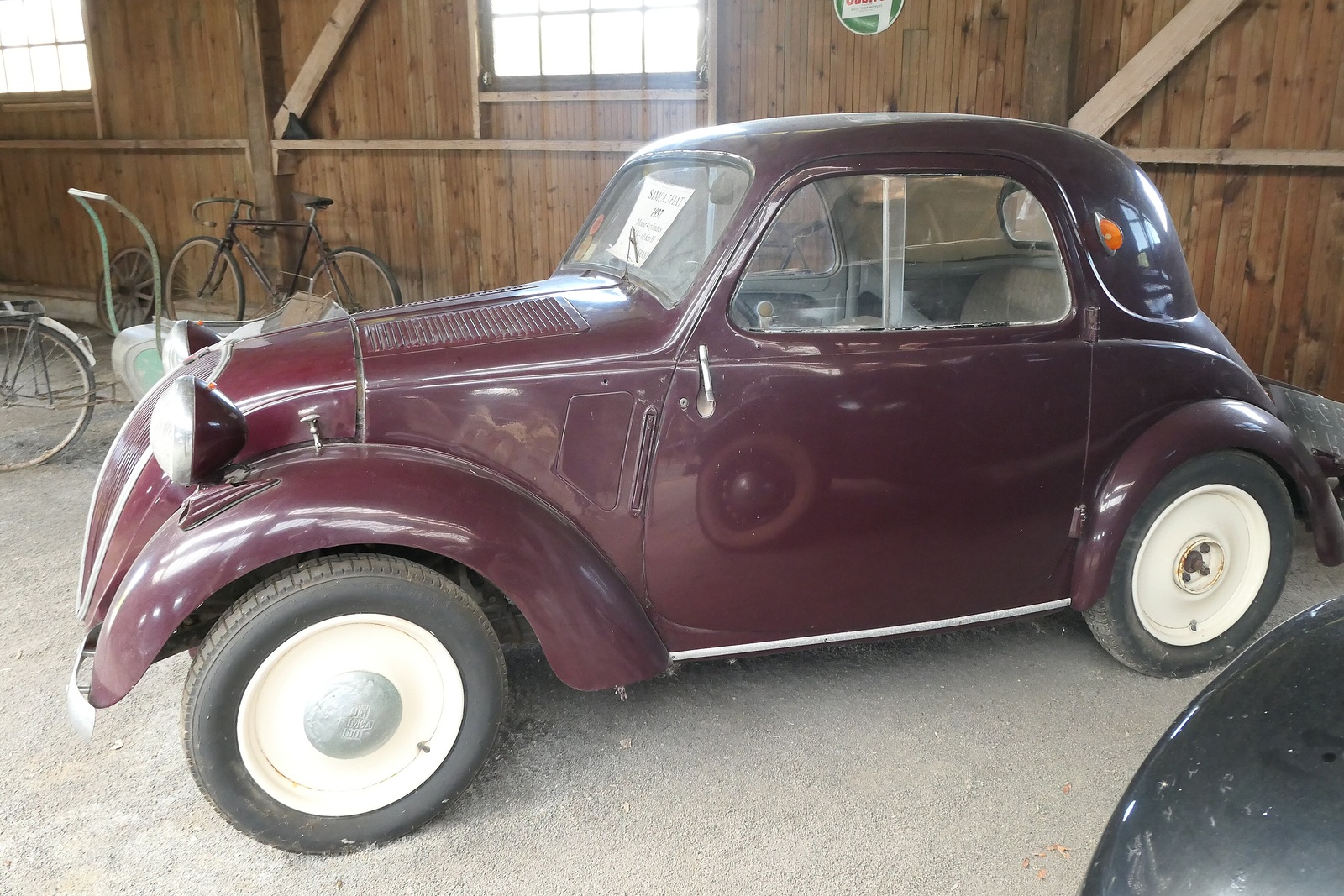
9 A maroon and black Fiat 500 A shown as a 1943 car at Museum Angkut, Batu, East Java, in October 2017.
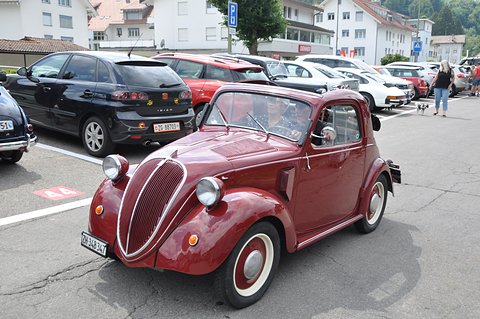
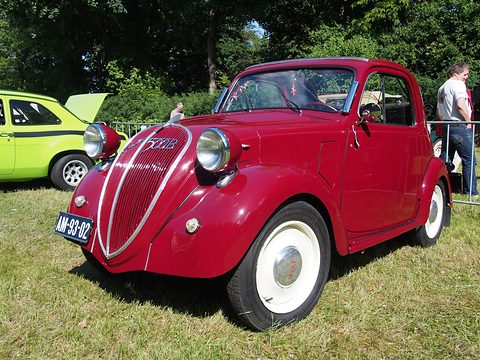
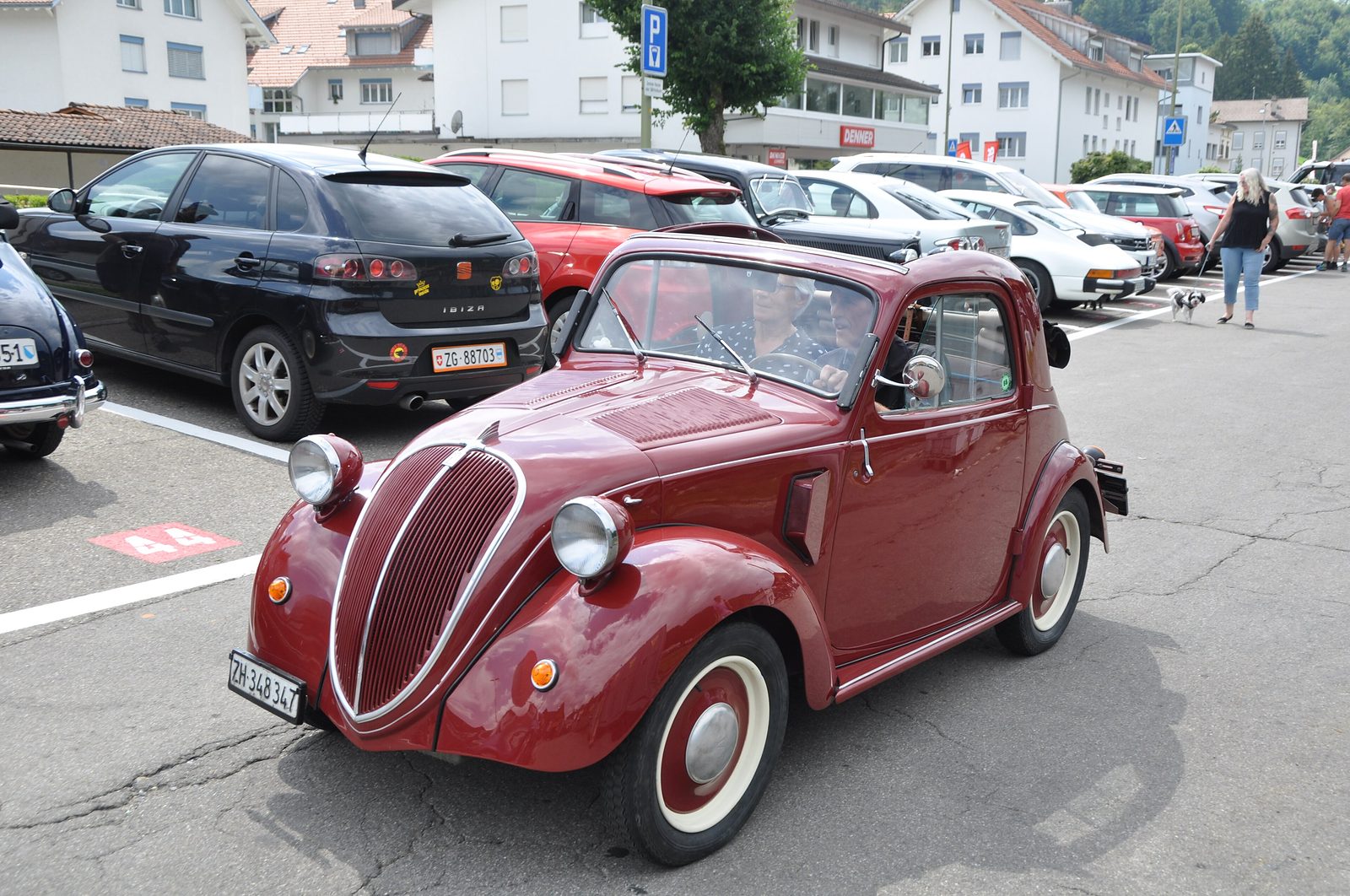
10 A maroon Fiat 500 A at the classic car meeting in Bauma, Switzerland, in July 2019.
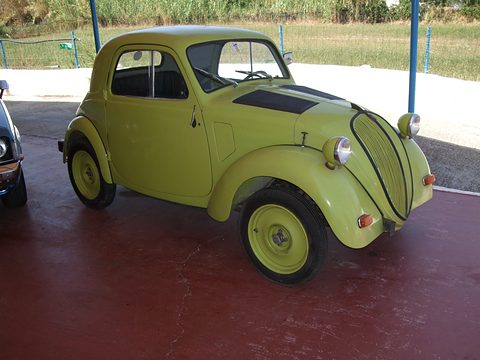
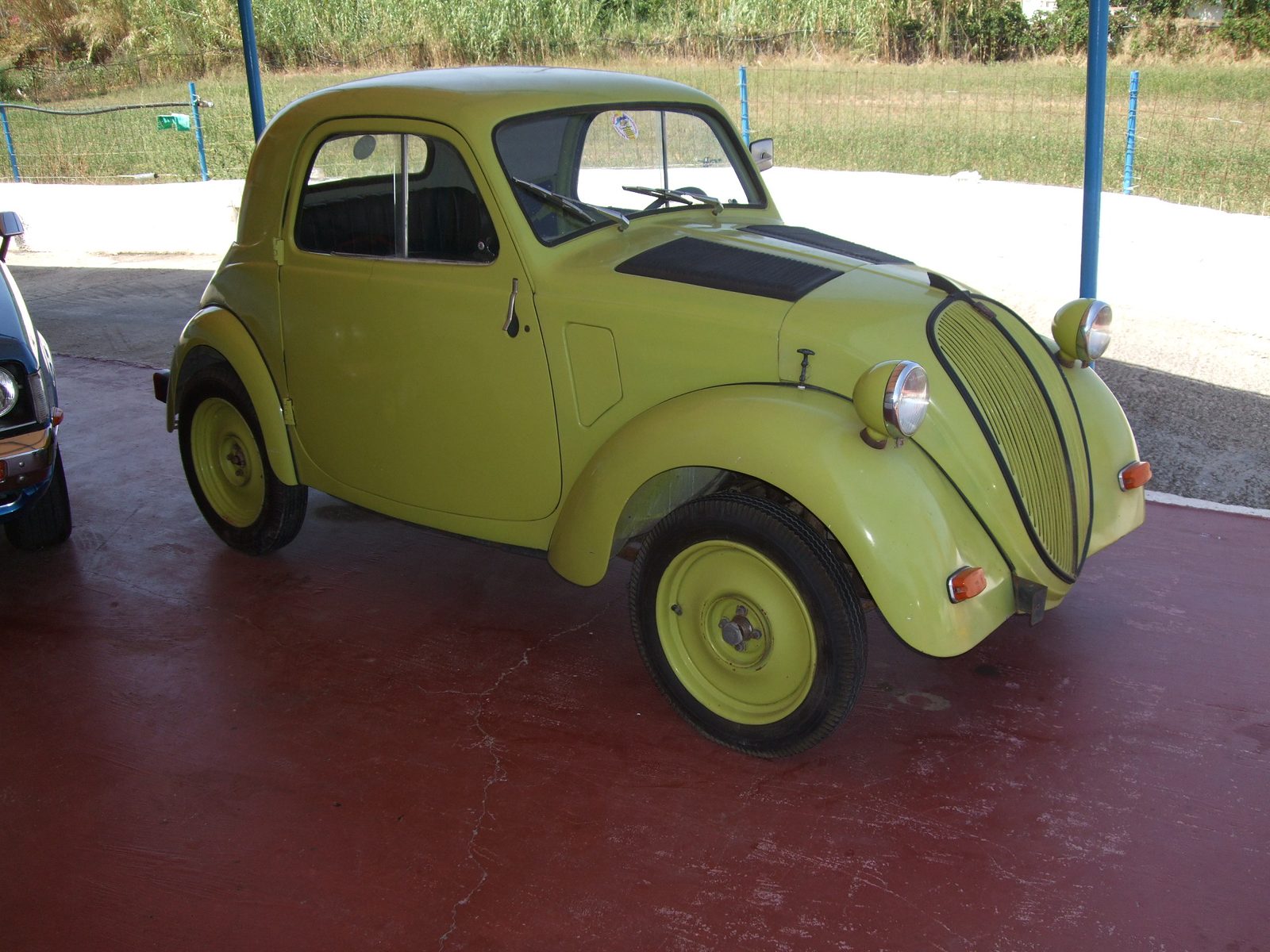
11 A lime-green Fiat 500 A at a car-hire yard in Maleme, Crete, in September 2010.
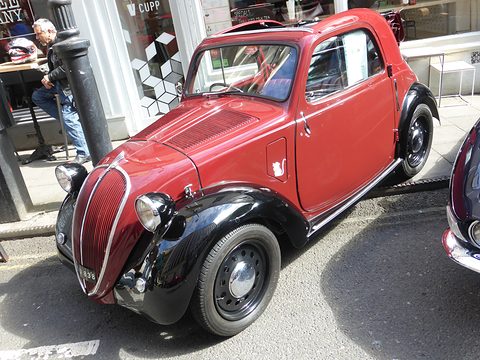
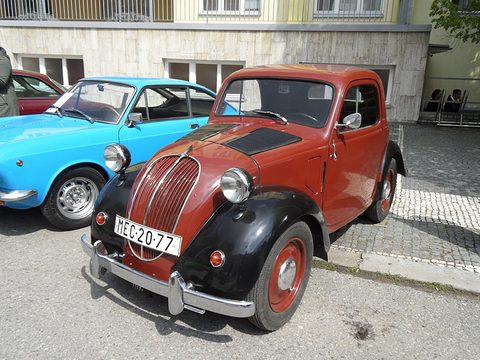
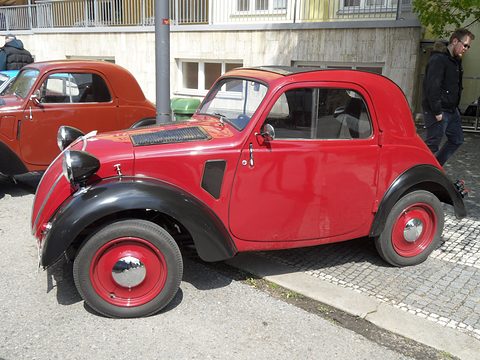
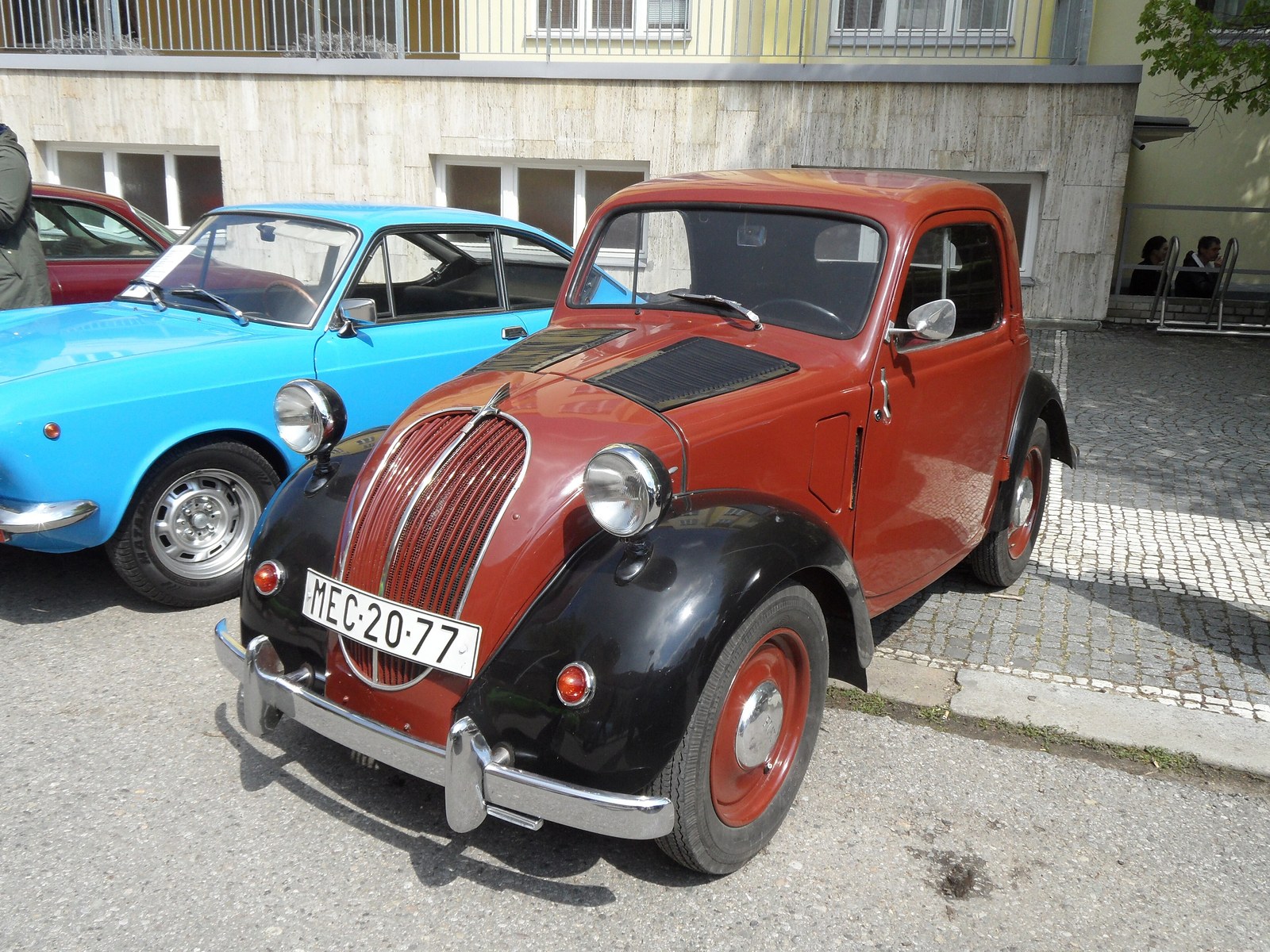
12 A red and black Fiat 500 A at the Meeting of Italian Cars in Poděbrady, Czech Republic, in April 2017.
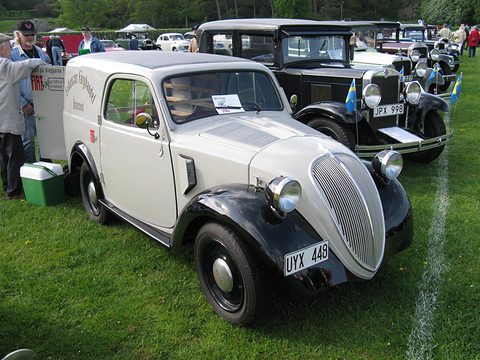
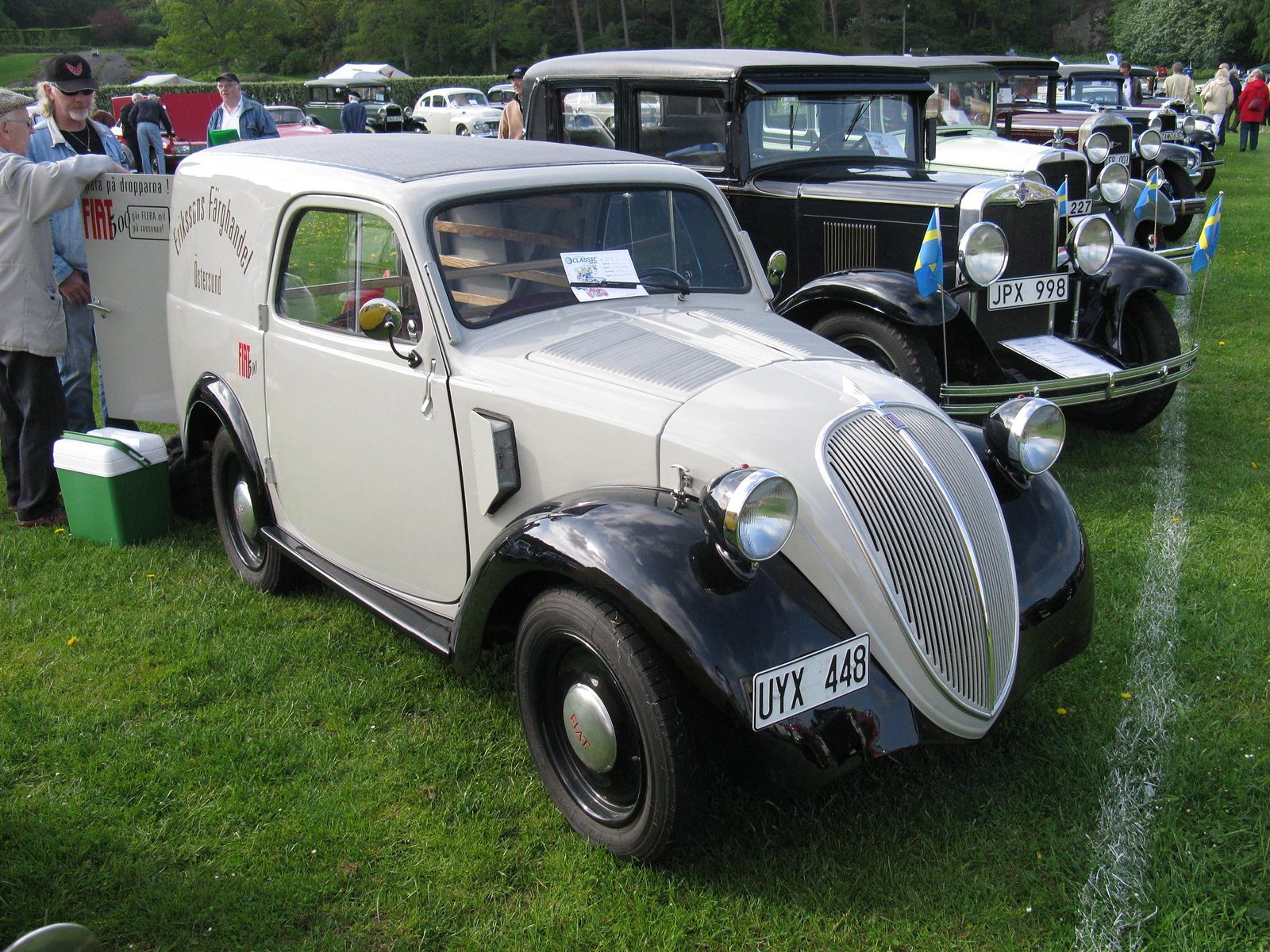
13 A cream and black Fiat 500 Furgoncino with the wing-mounted headlamps of the A and B, at a car show in May 2010.
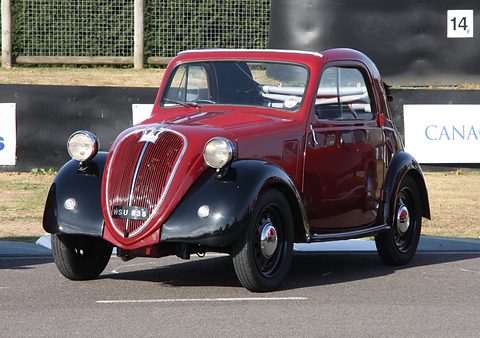
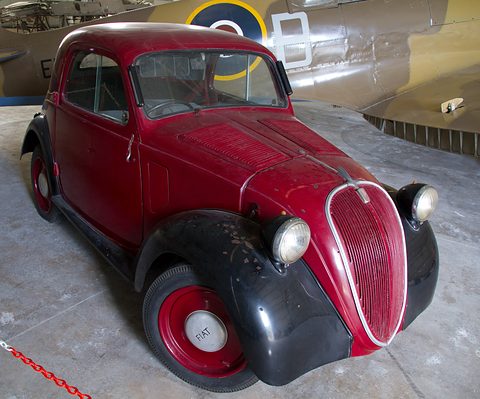
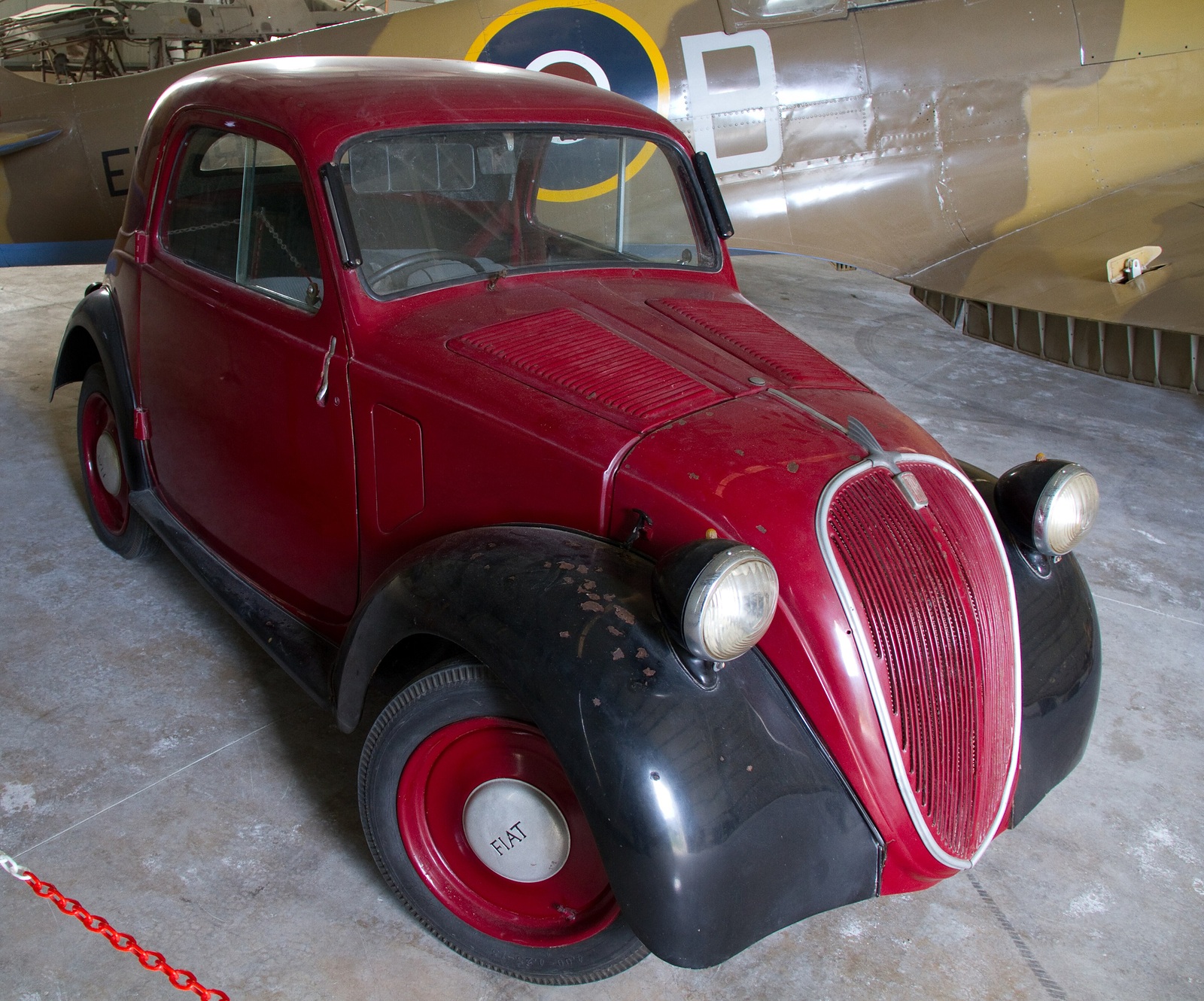
14 A maroon and black Fiat 500 A under an aircraft wing at the Malta Aviation Museum, Ta’ Qali, in February 2012.
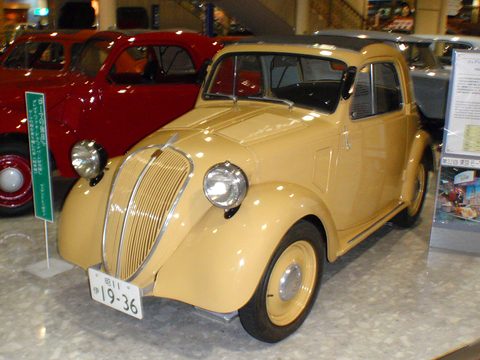
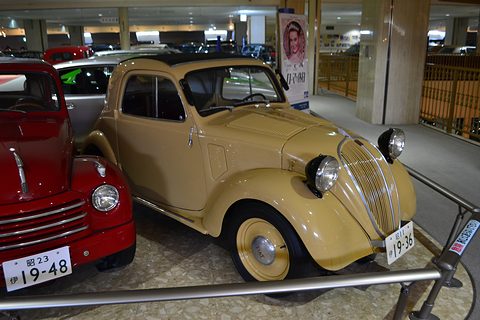
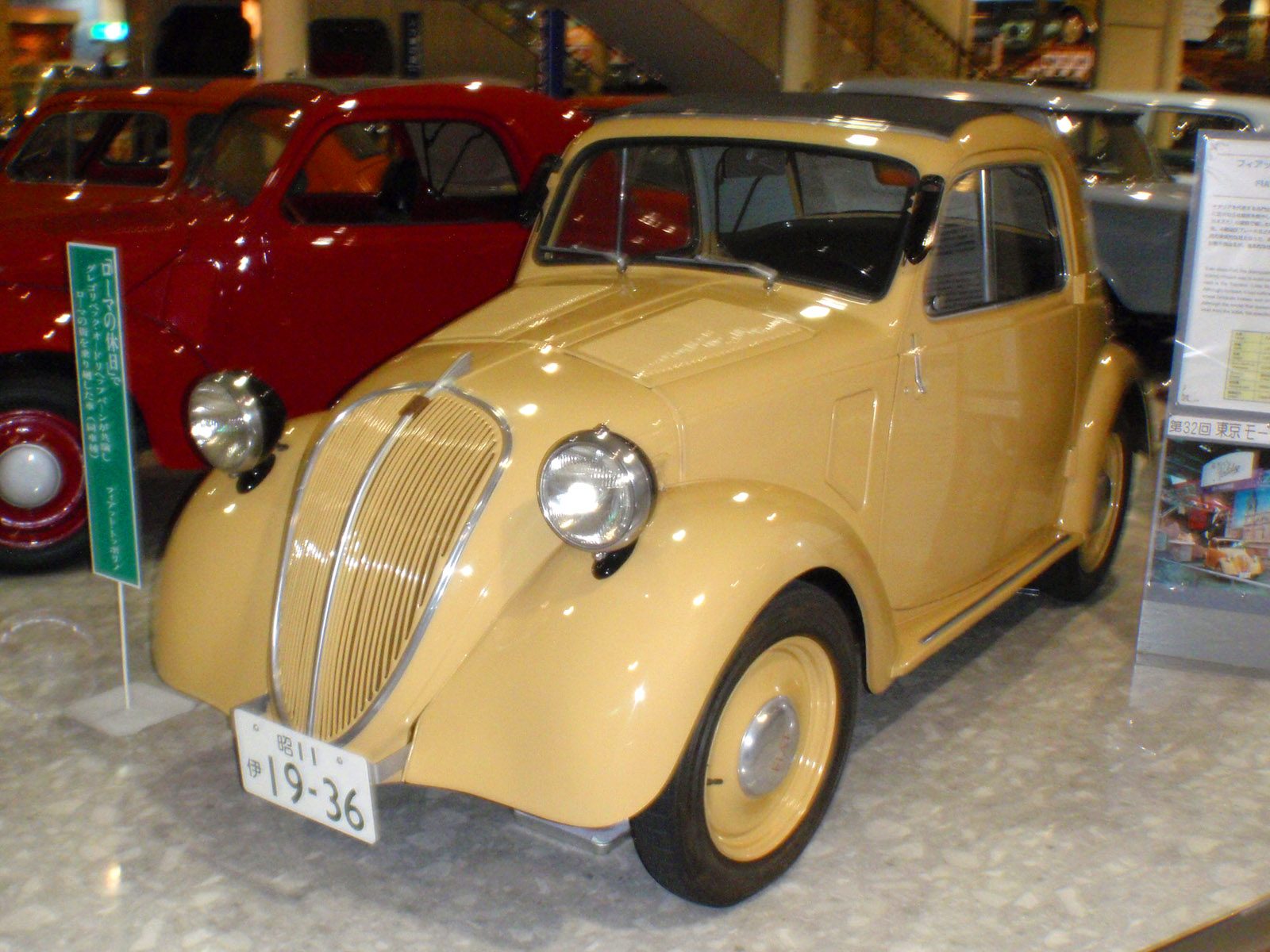
15 A cream Fiat 500 Topolino with wing-mounted headlamps at the Motorcar Museum of Japan, Komatsu, in October 2009.
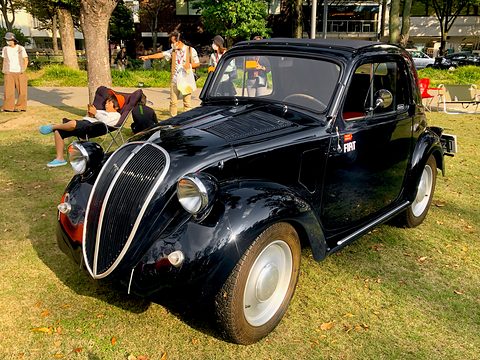
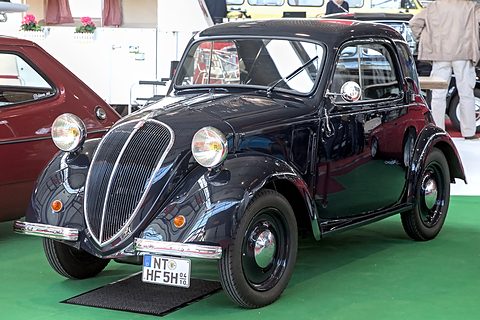
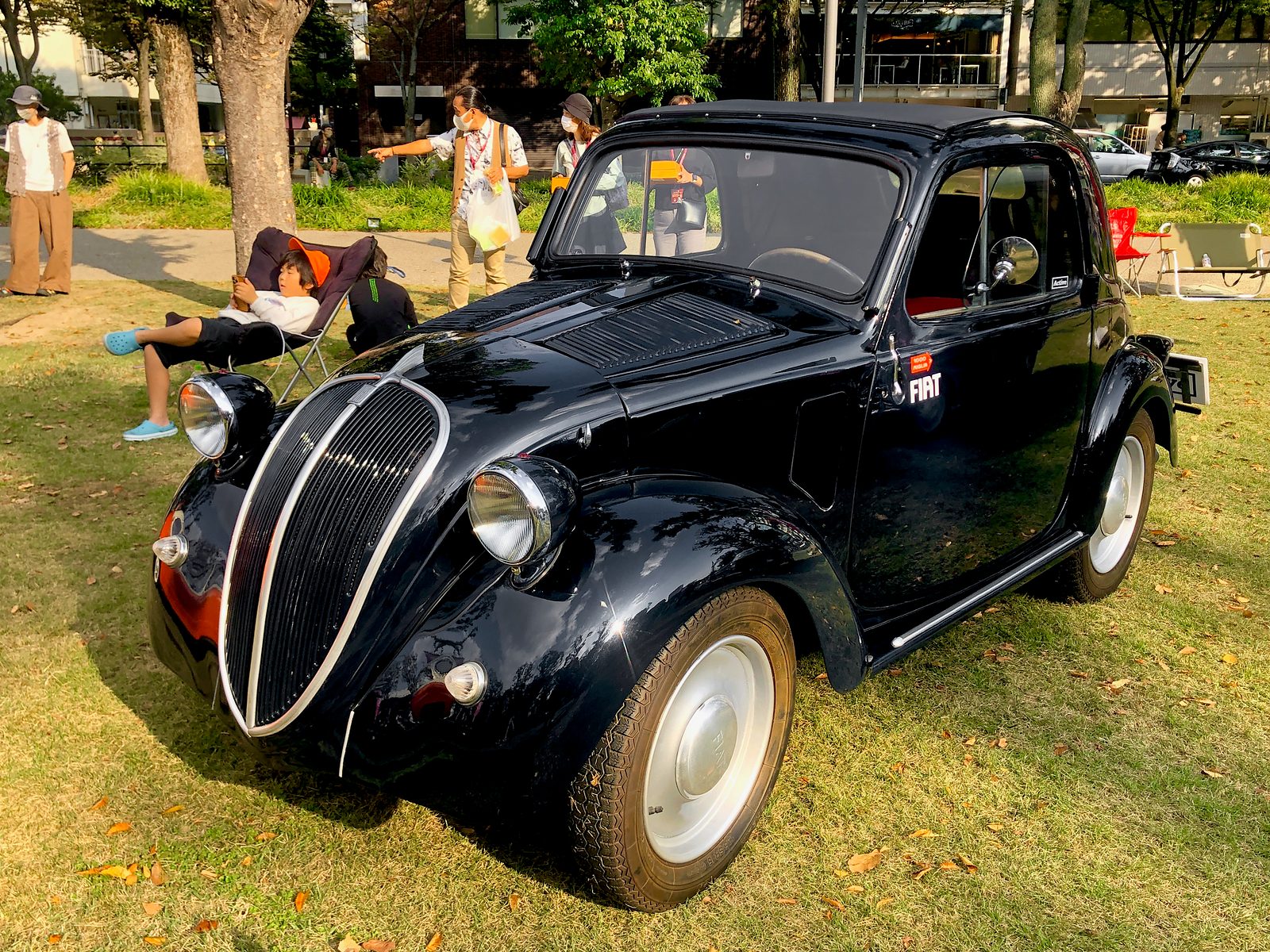
16 A black Fiat 500 Topolino, thought by its photographer to be a 1950 500 B, in Hisaya-ōdōri Park, Nagoya, in 2022.
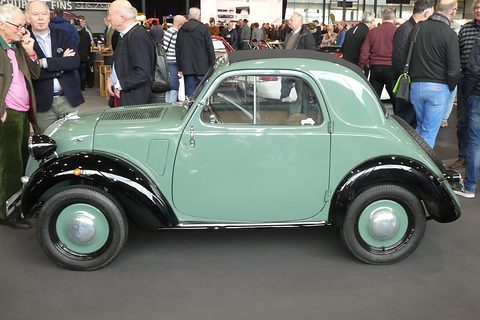
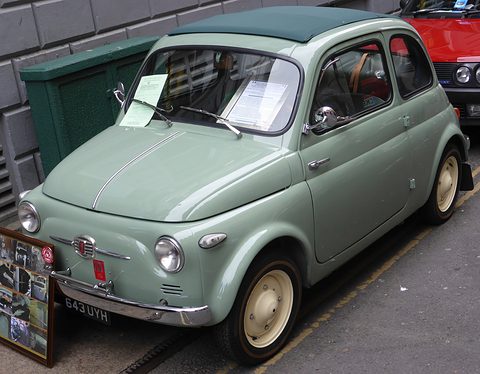
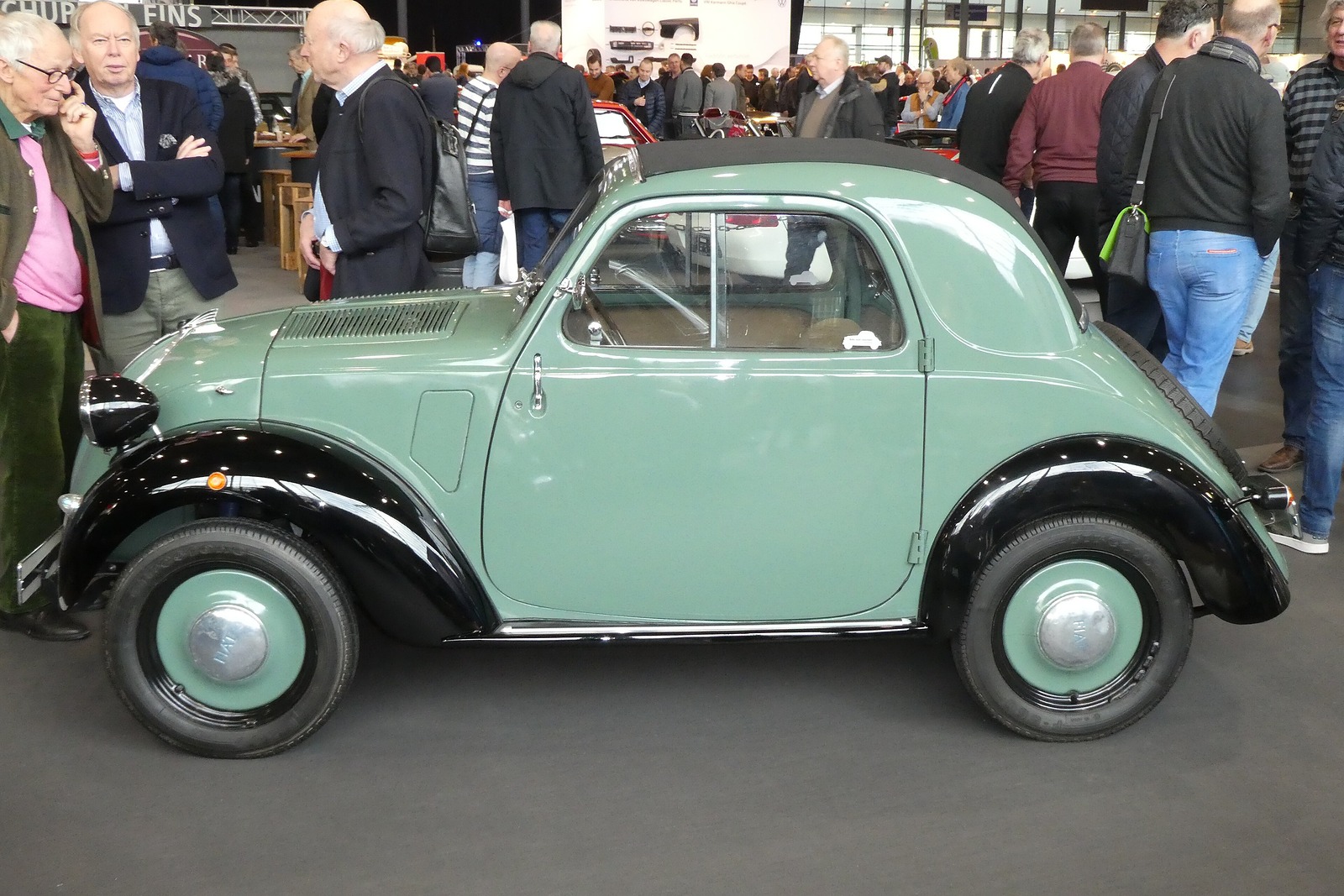
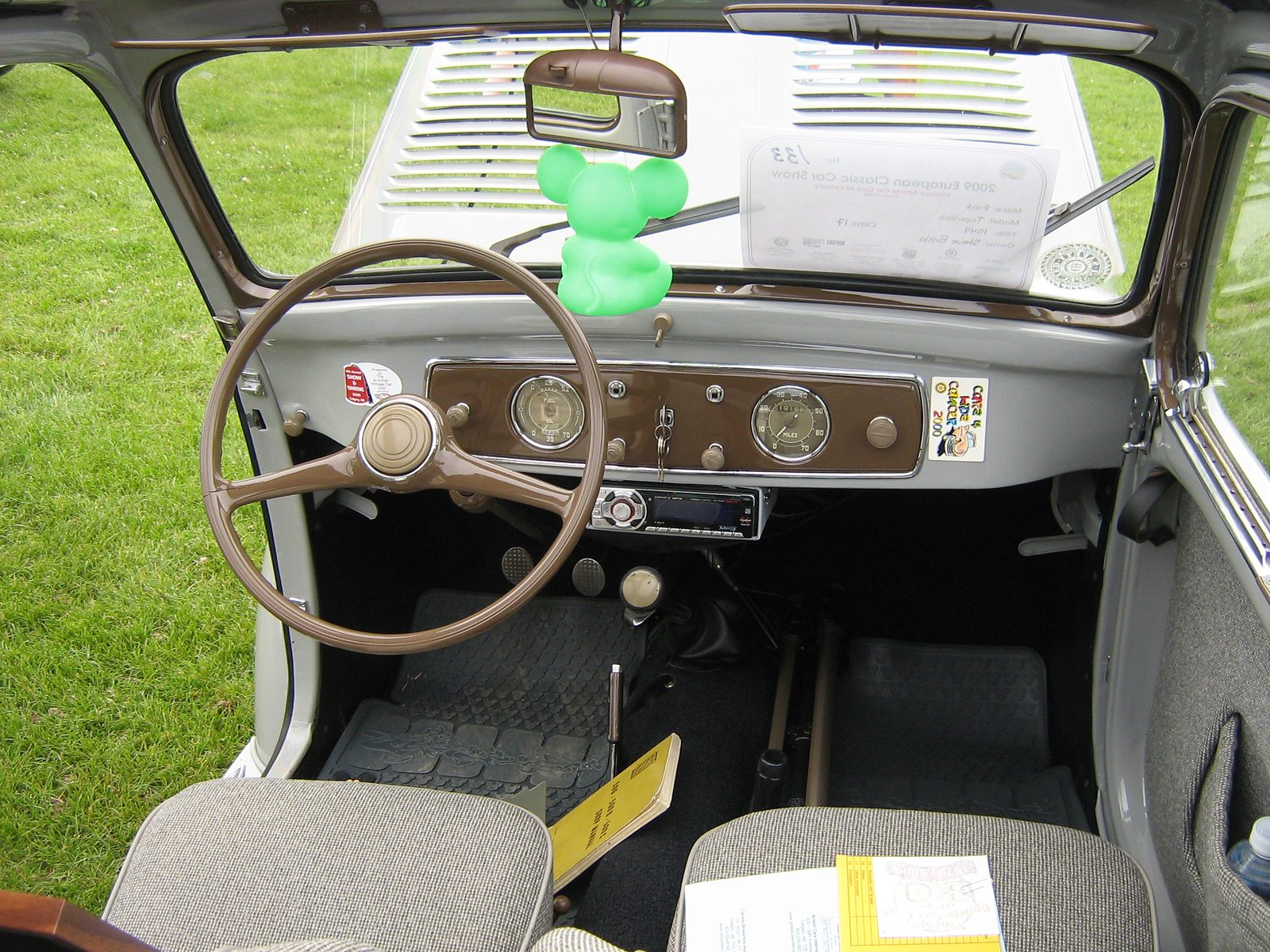
17 A mint-green Fiat 500 A in profile at the Bremen Classic Motorshow in January 2020.
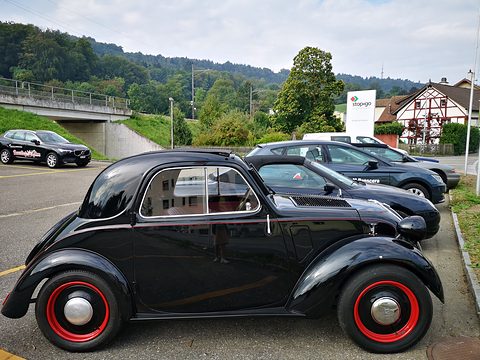
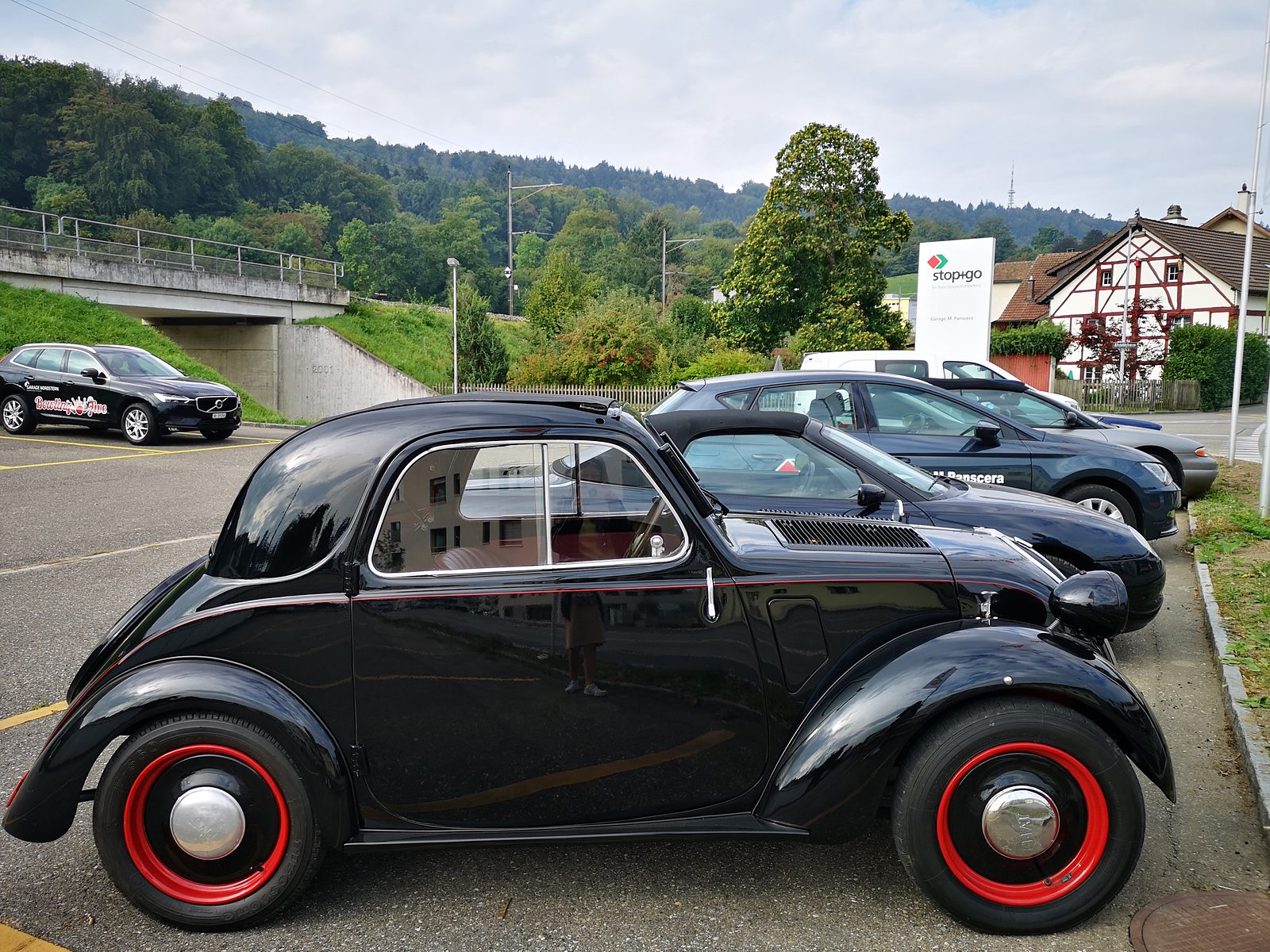
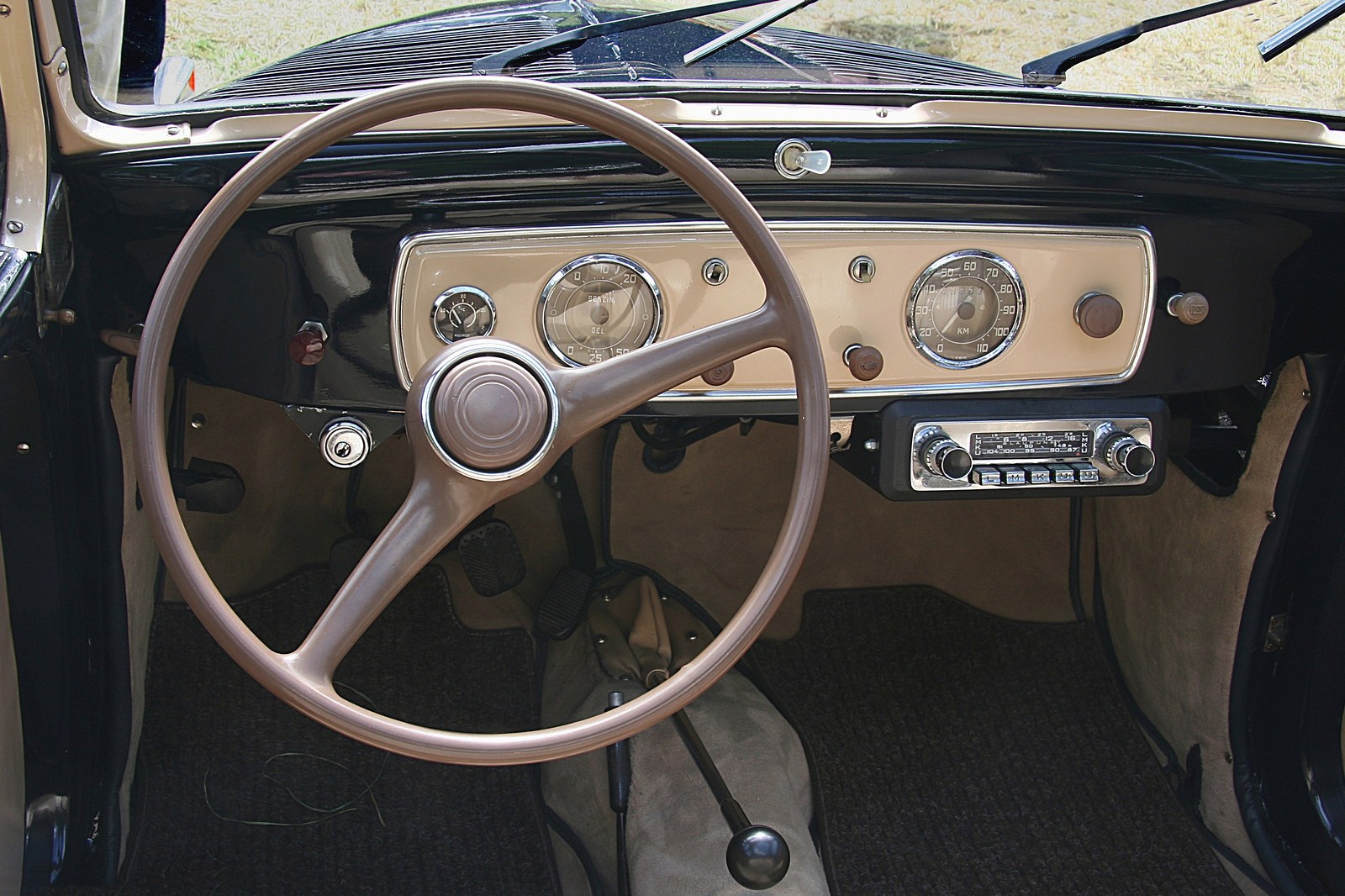
18 A black Fiat 500 A with red wheels in profile in Schaffhausen, Switzerland, in September 2020.
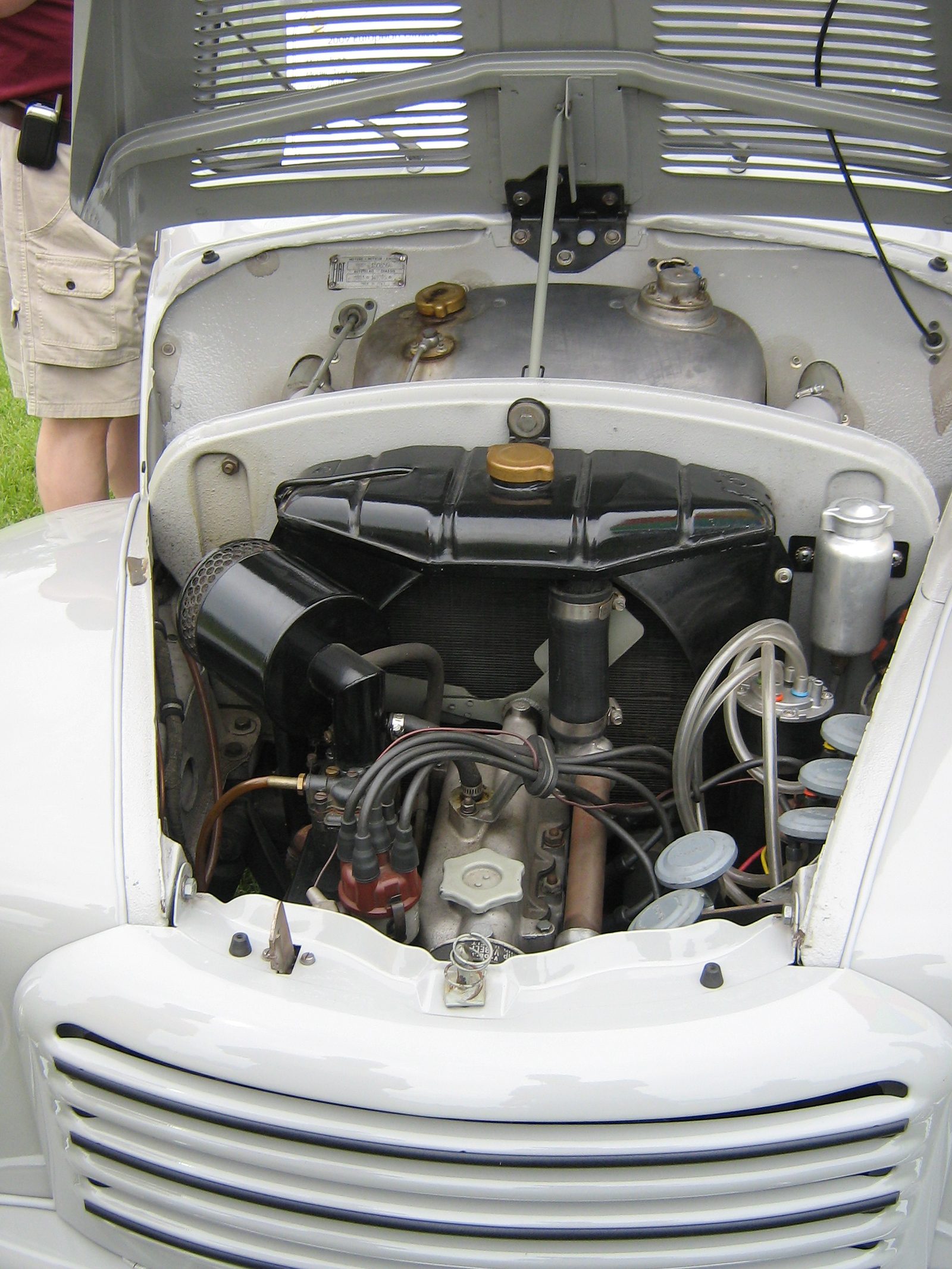
19 A red and black Fiat 500 A with its rear-hinged door open at the National Polytechnic Museum, Sofia, in March 2017.
20 The rear of a yellow and black 1936 Fiat 500 A saloon at the Toyota Automobile Museum, Nagakute, in November 2025.
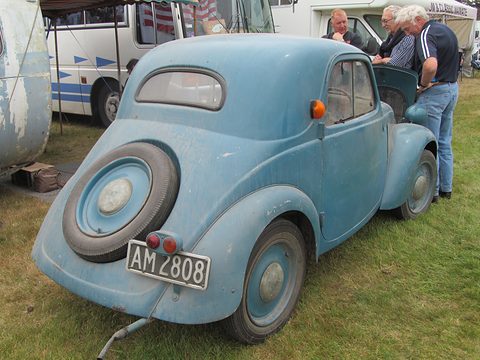
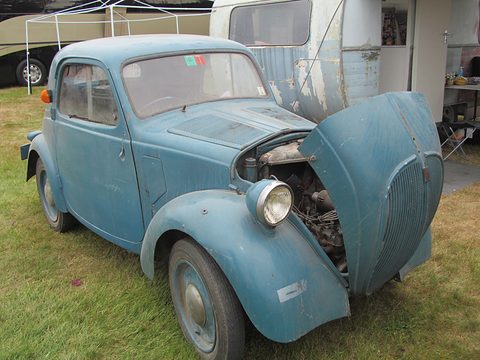
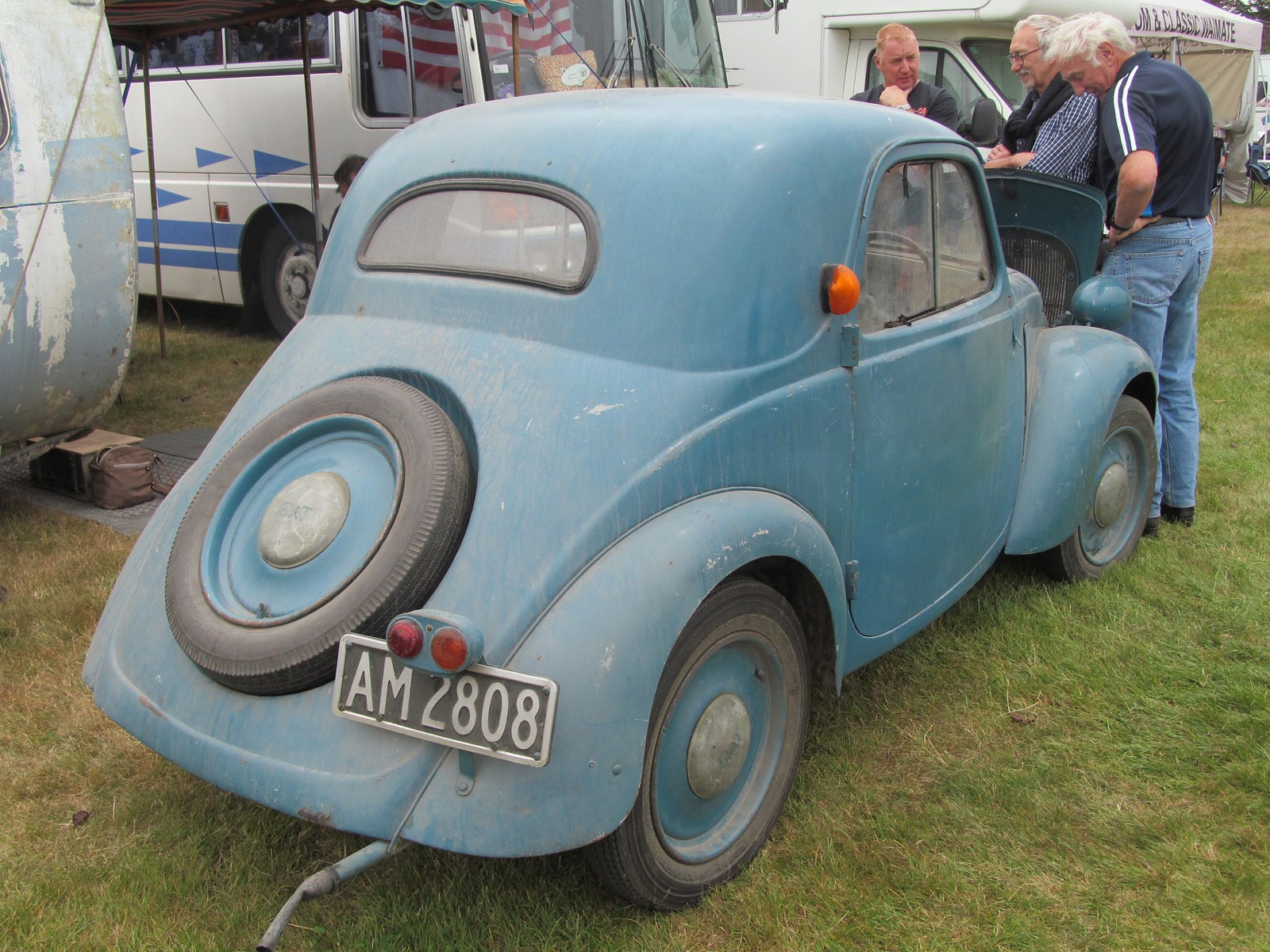
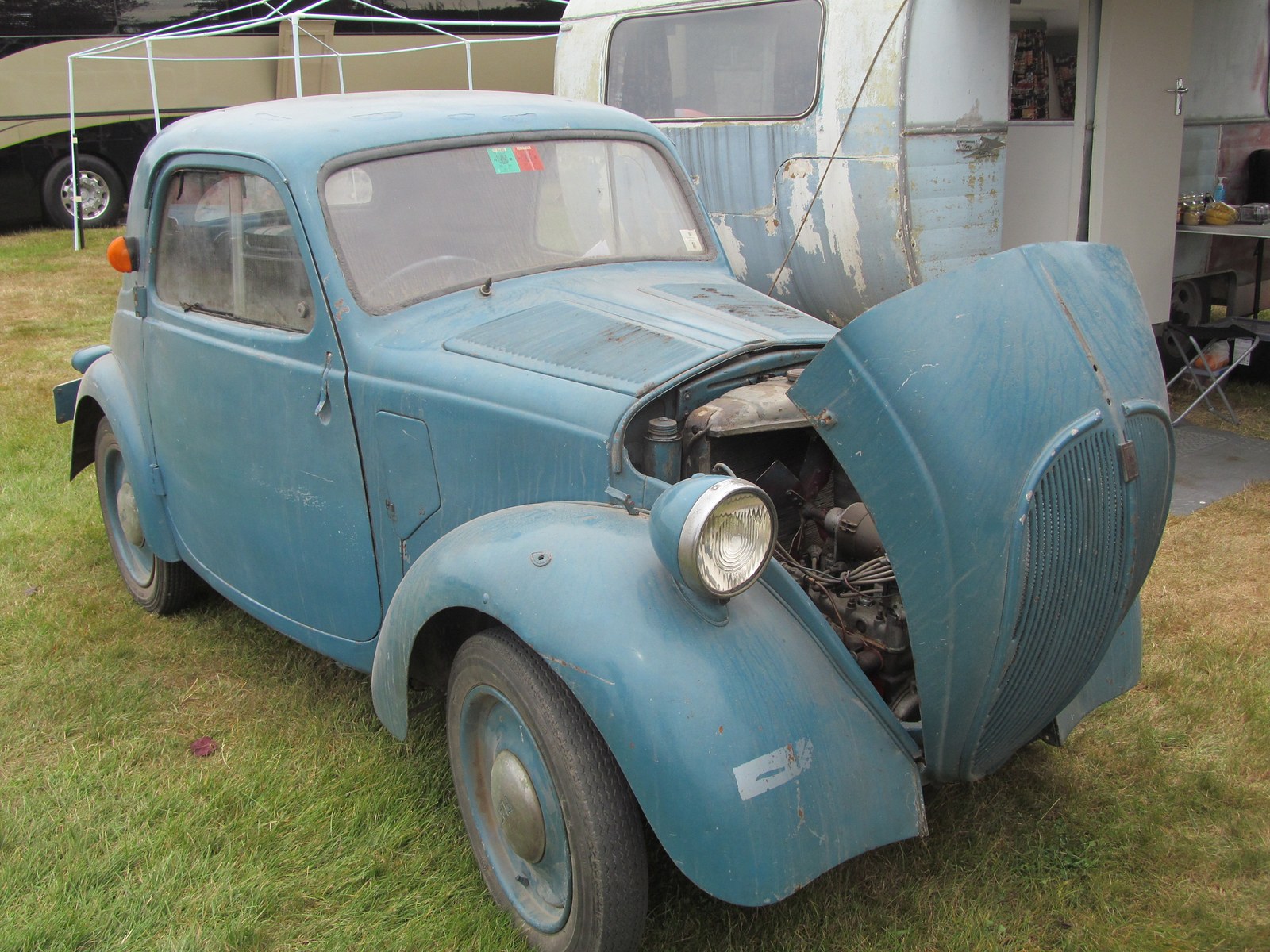
21 An unrestored blue 1937 Fiat 500 A after 40 years in a garage, at Rangiora, New Zealand, in January 2017.
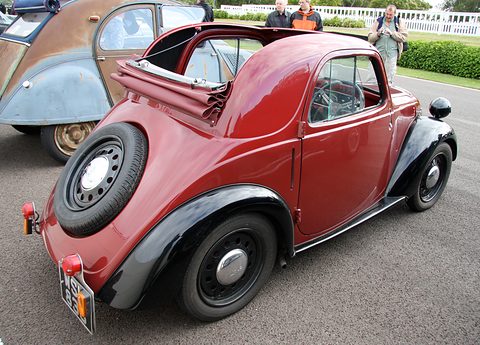
22 A red and black 1937 Fiat 500 A trasformabile with its roof folded back at a car show in England in July 2008.
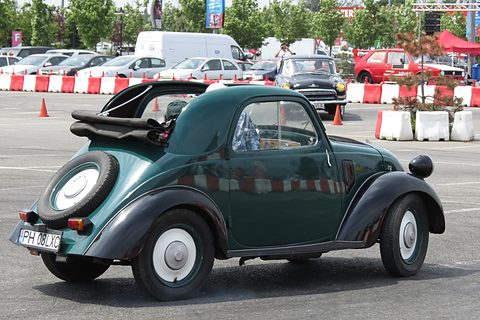
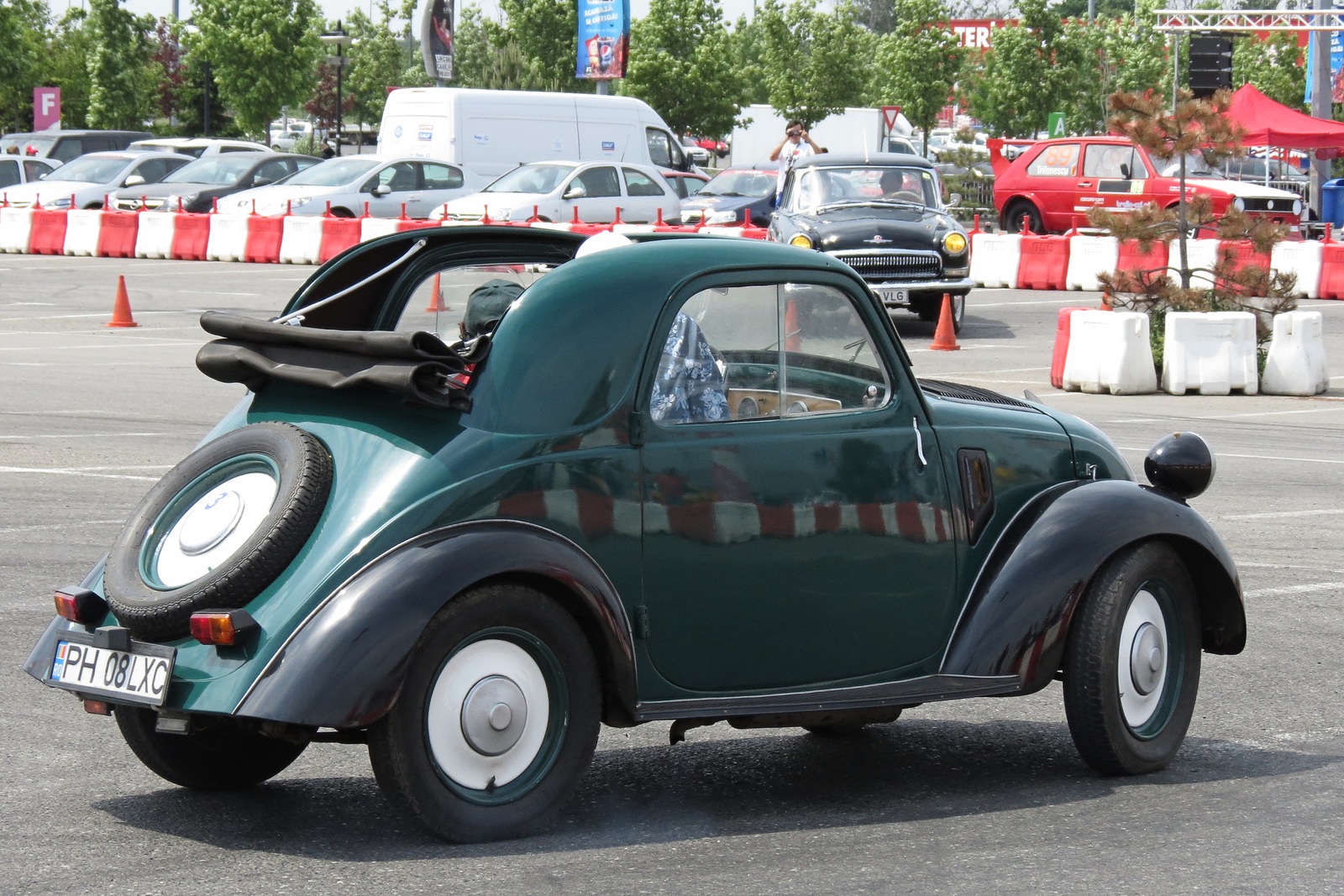
23 The rear of a green and black 1938 Fiat 500 A with its roof rolled back at the Băneasa period car show, Bucharest, in May 2012.
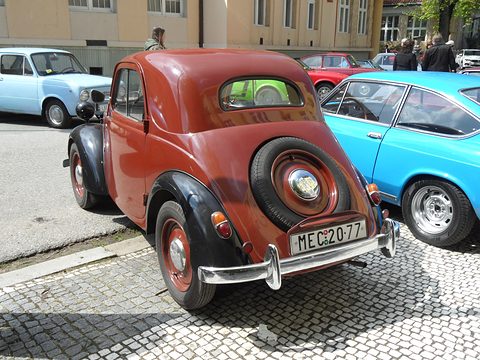
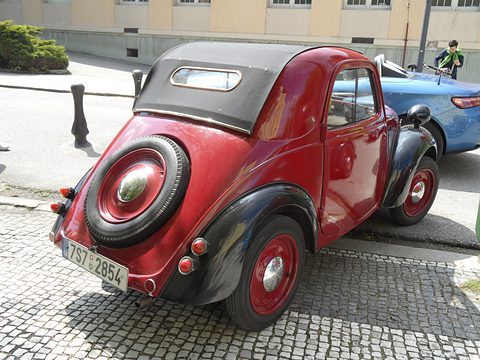
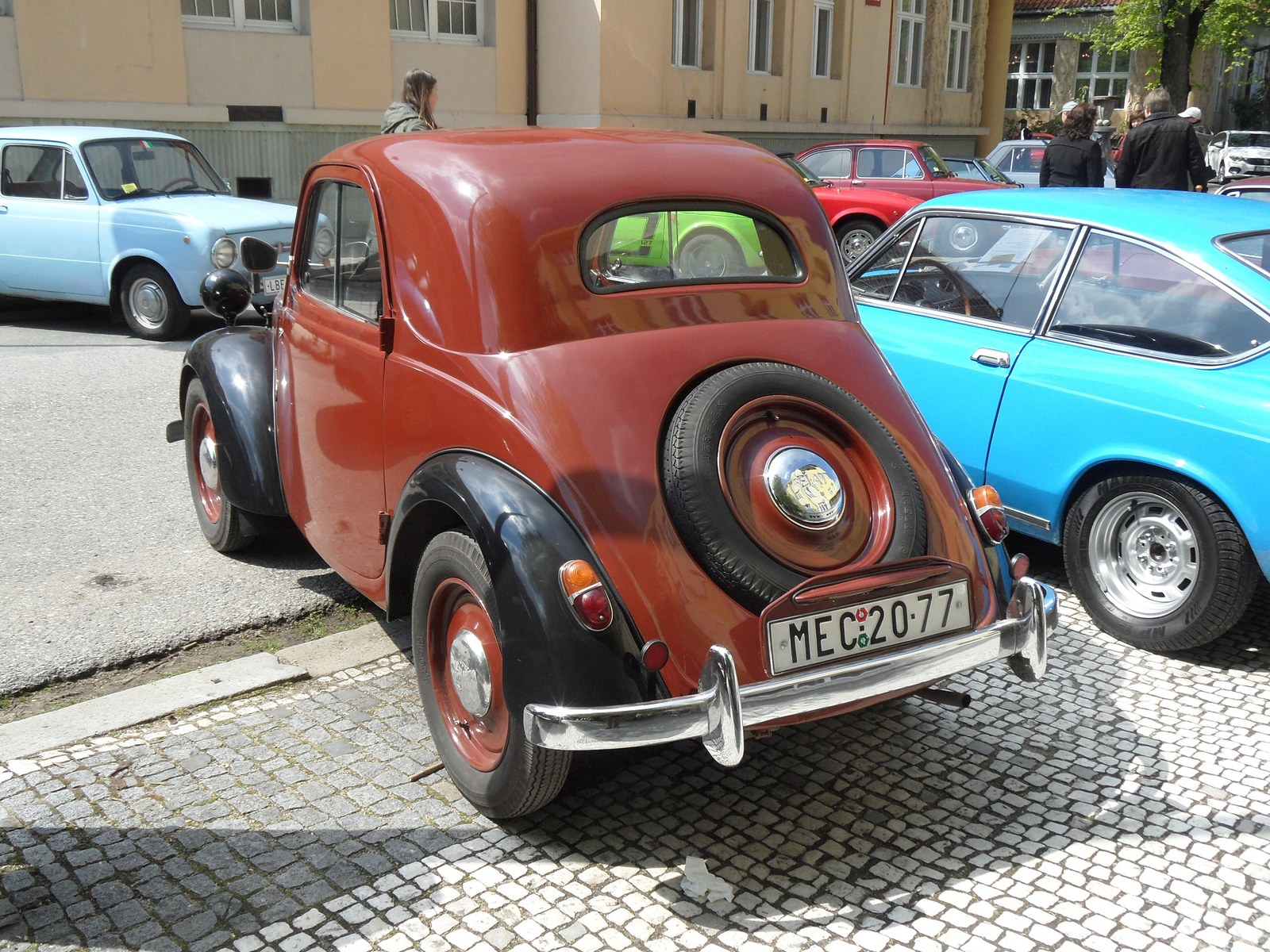
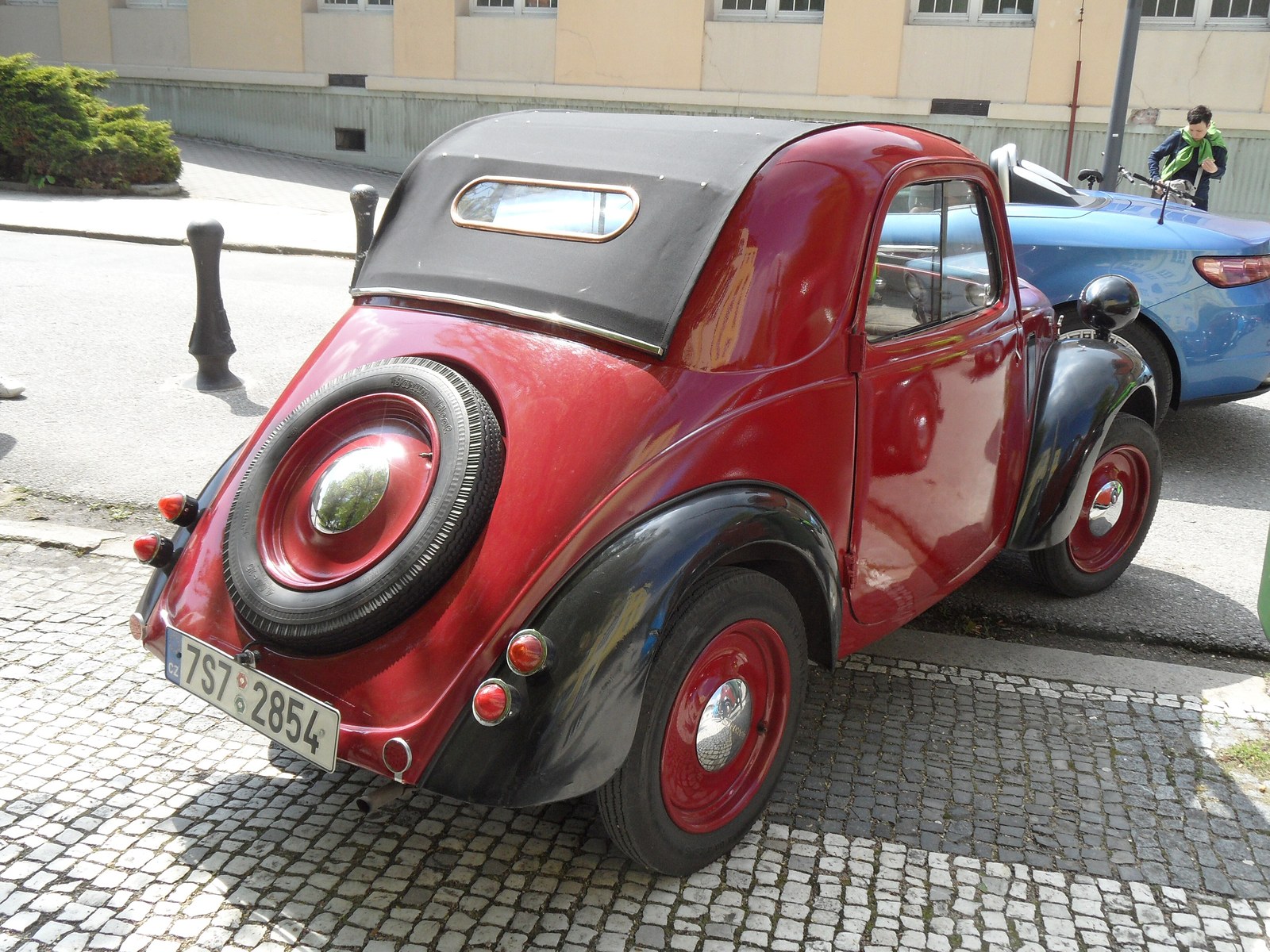
24 The rear of a red and black Fiat 500 A at the Meeting of Italian Cars in Poděbrady, Czech Republic, in April 2017.
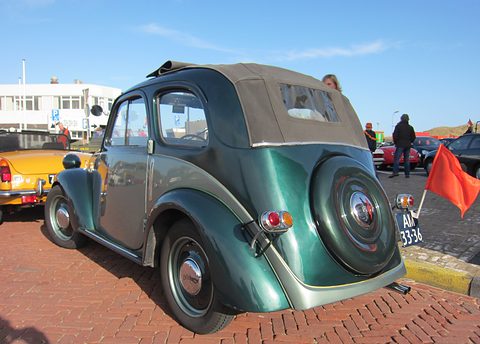
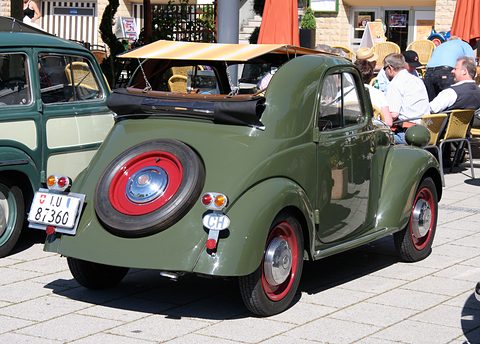
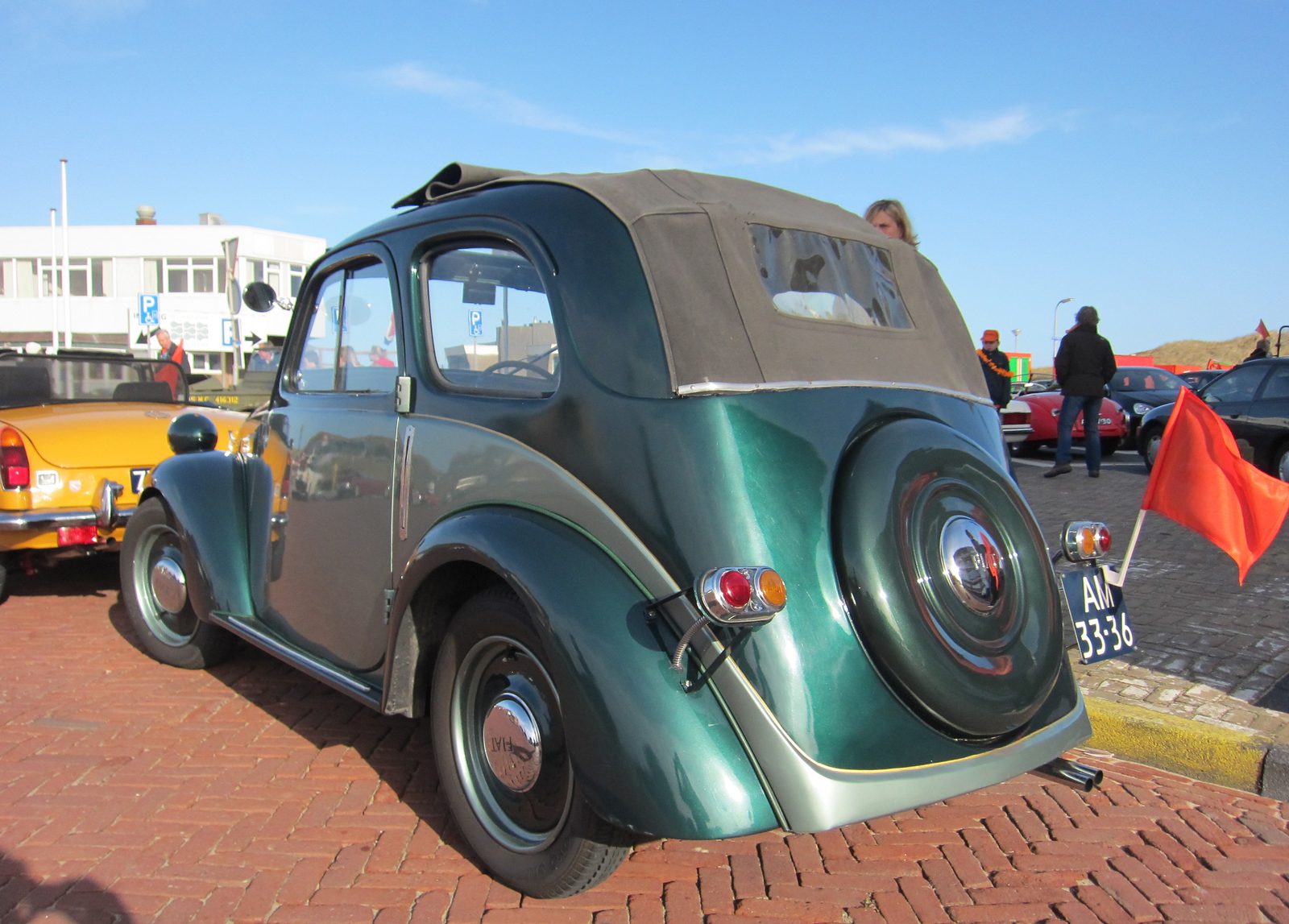
25 A green 1939 Fiat 500 A trasformabile with its roof closed at Bergen aan Zee, Netherlands, in April 2013.
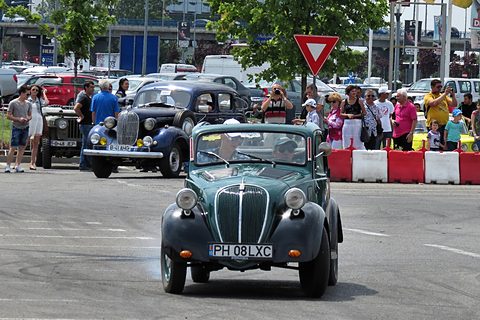
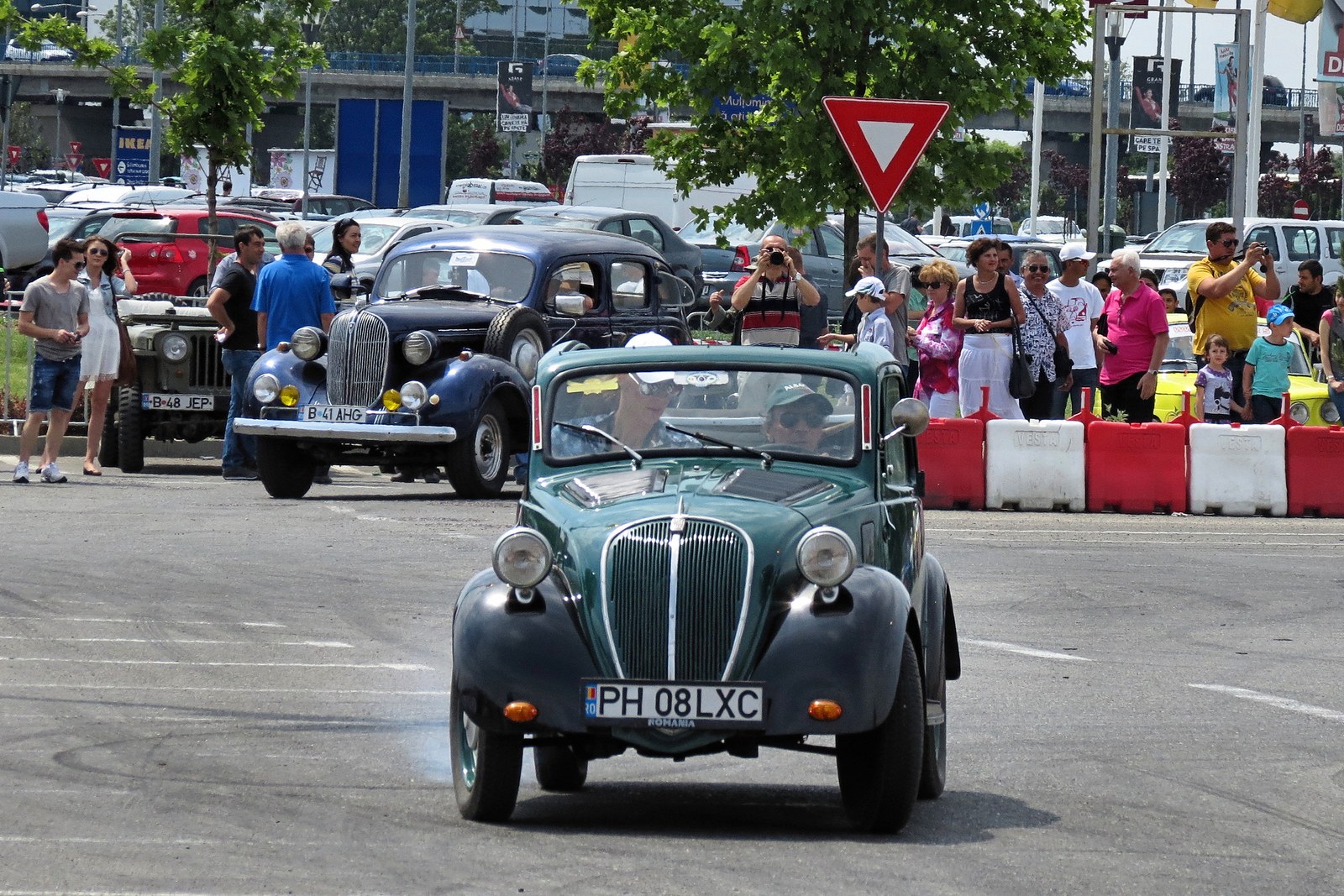
26 A green and black 1938 Fiat 500 A driving at the Băneasa period car show, Bucharest, in May 2012.
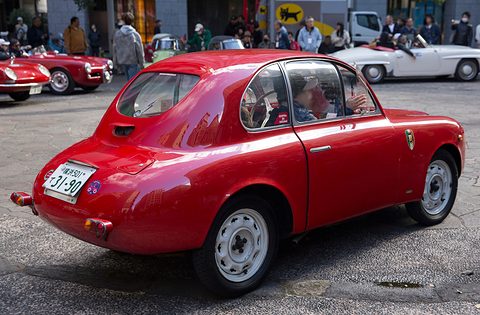
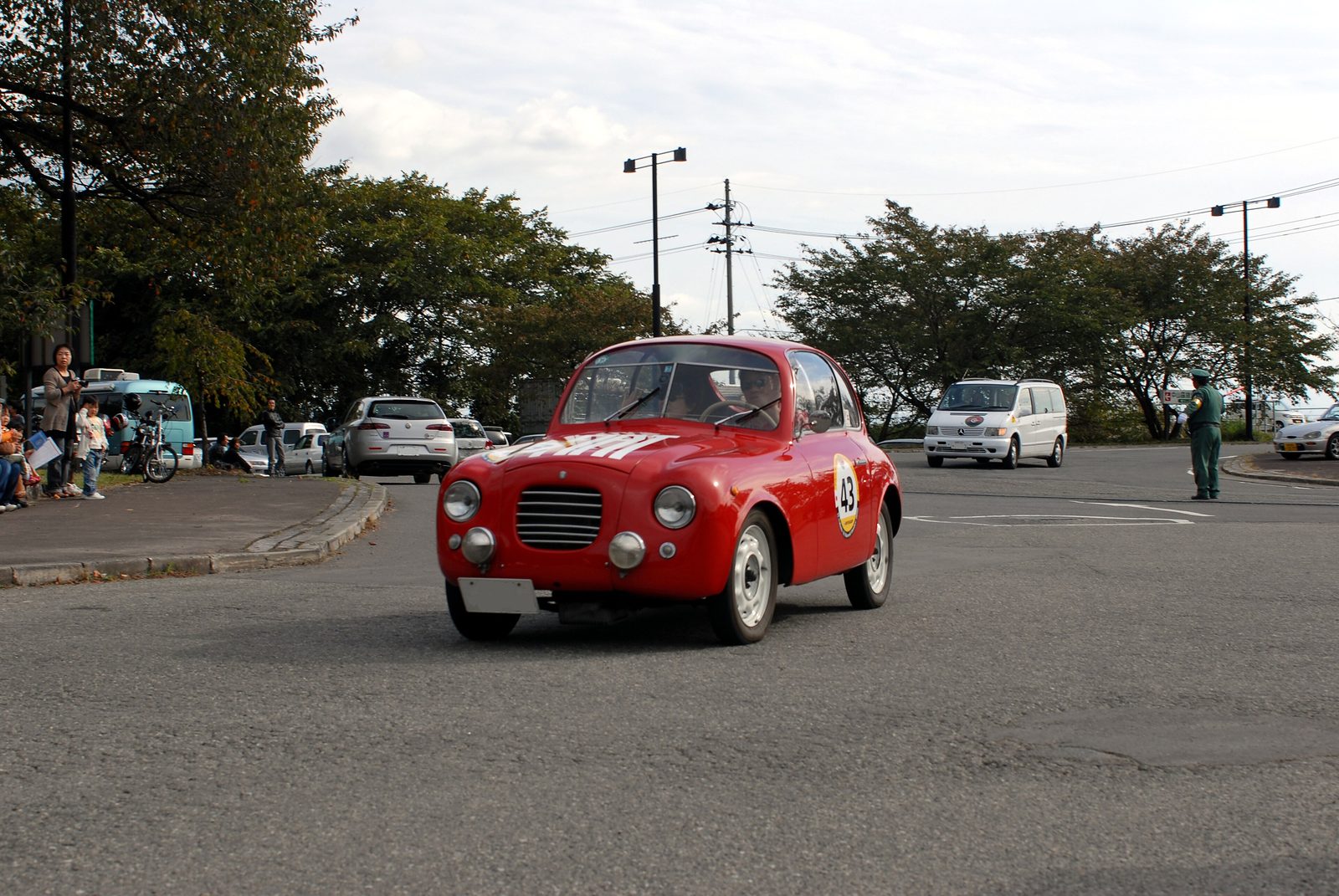
27 A red Fiat 500 Zagato Panoramica driving at a classic rally in Japan in October 2008.
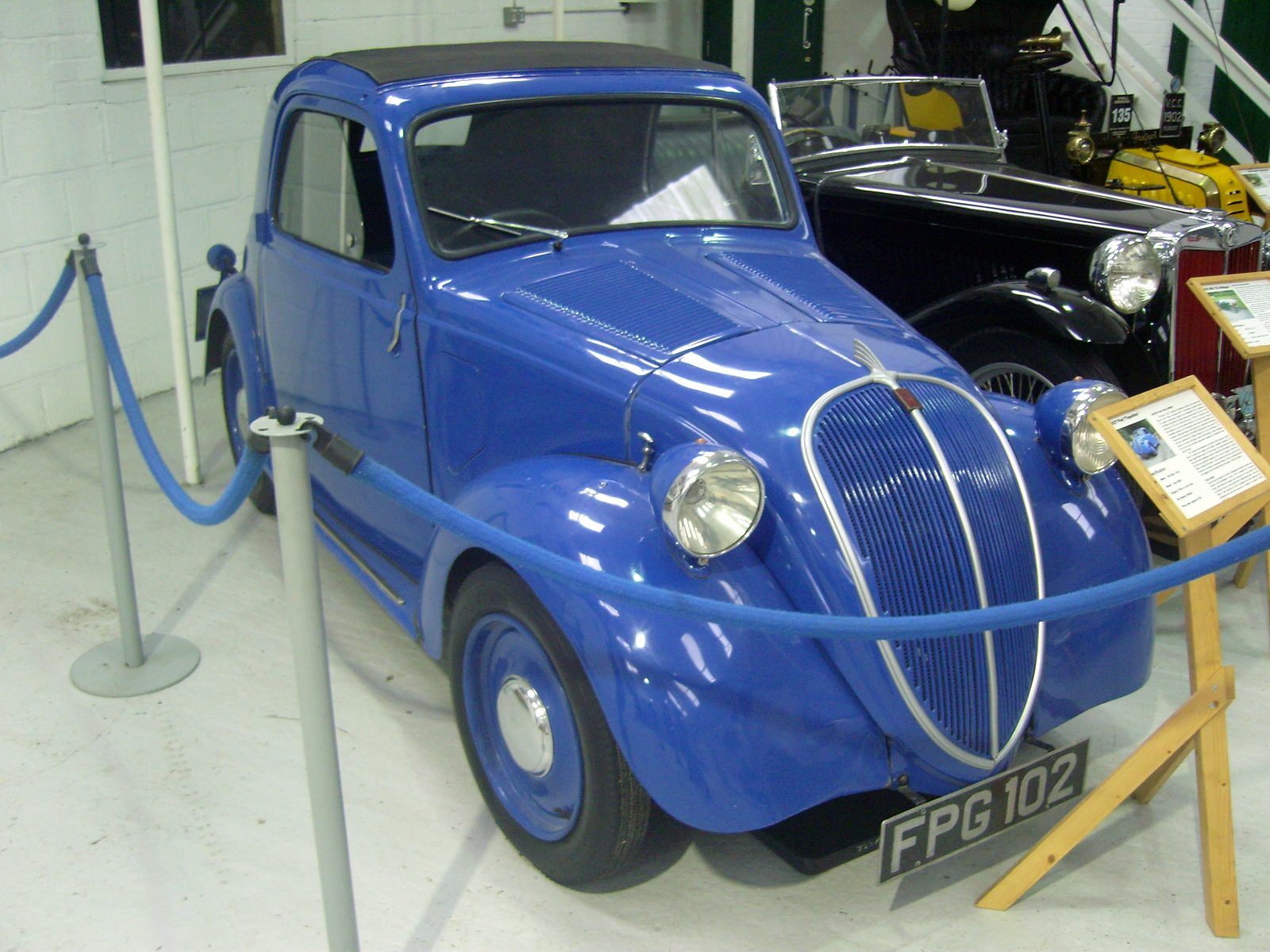
28 The Shuttleworth Collection’s blue 1937 Fiat 500 A at Old Warden in November 2011.
29 A blue and black Fiat 500 A at the Gedee Car Museum, Coimbatore, India, in a photograph uploaded in November 2025.
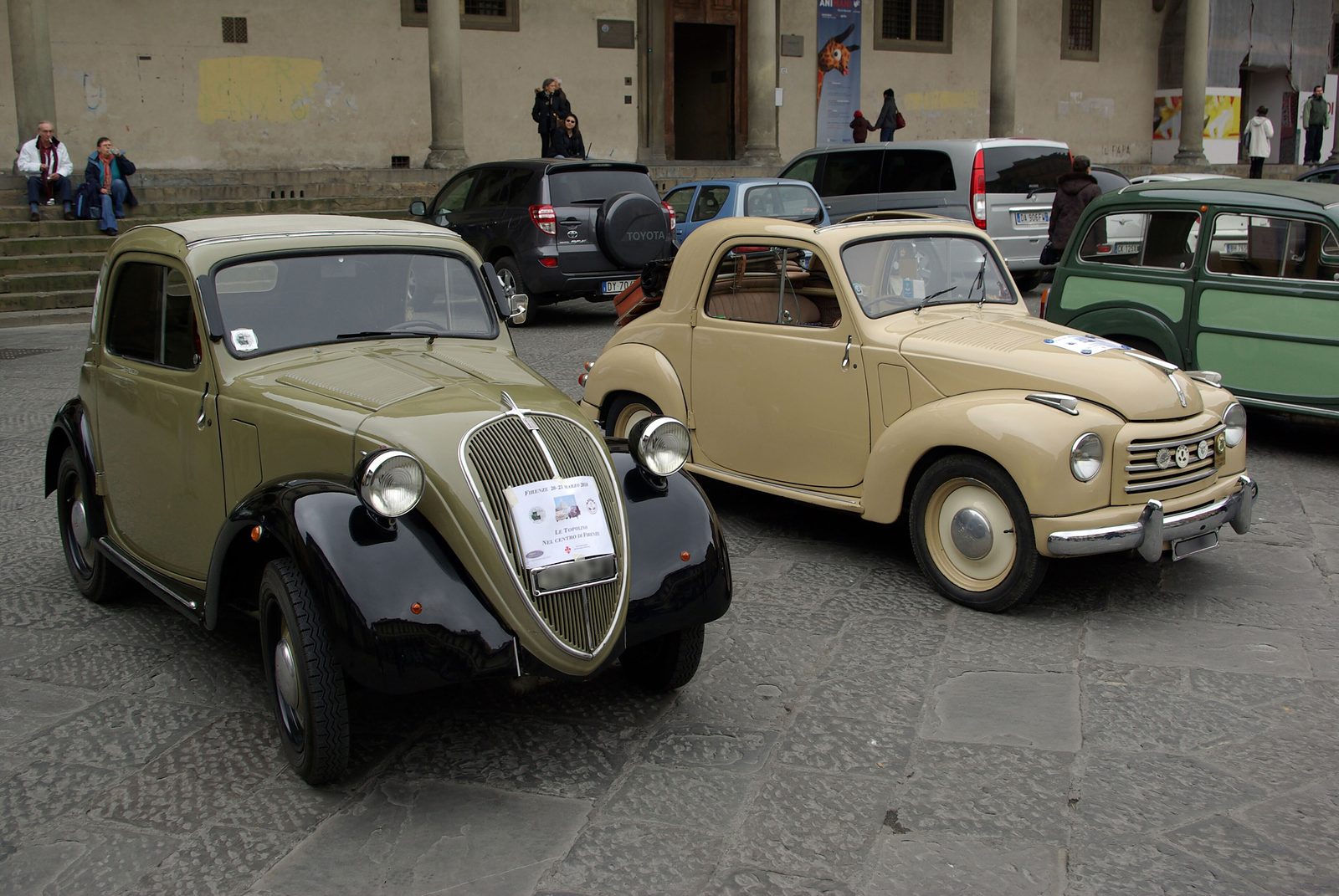
30 A Fiat 500 A beside a Fiat 500 C at a car meeting in March 2010, the A with separate headlamps, the C with faired-in lamps.
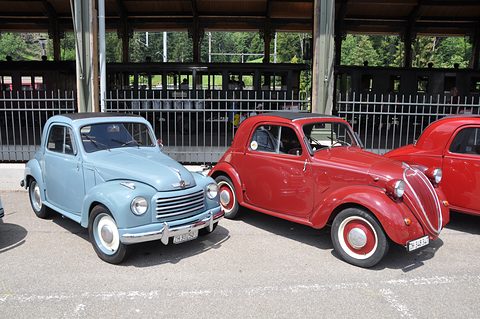
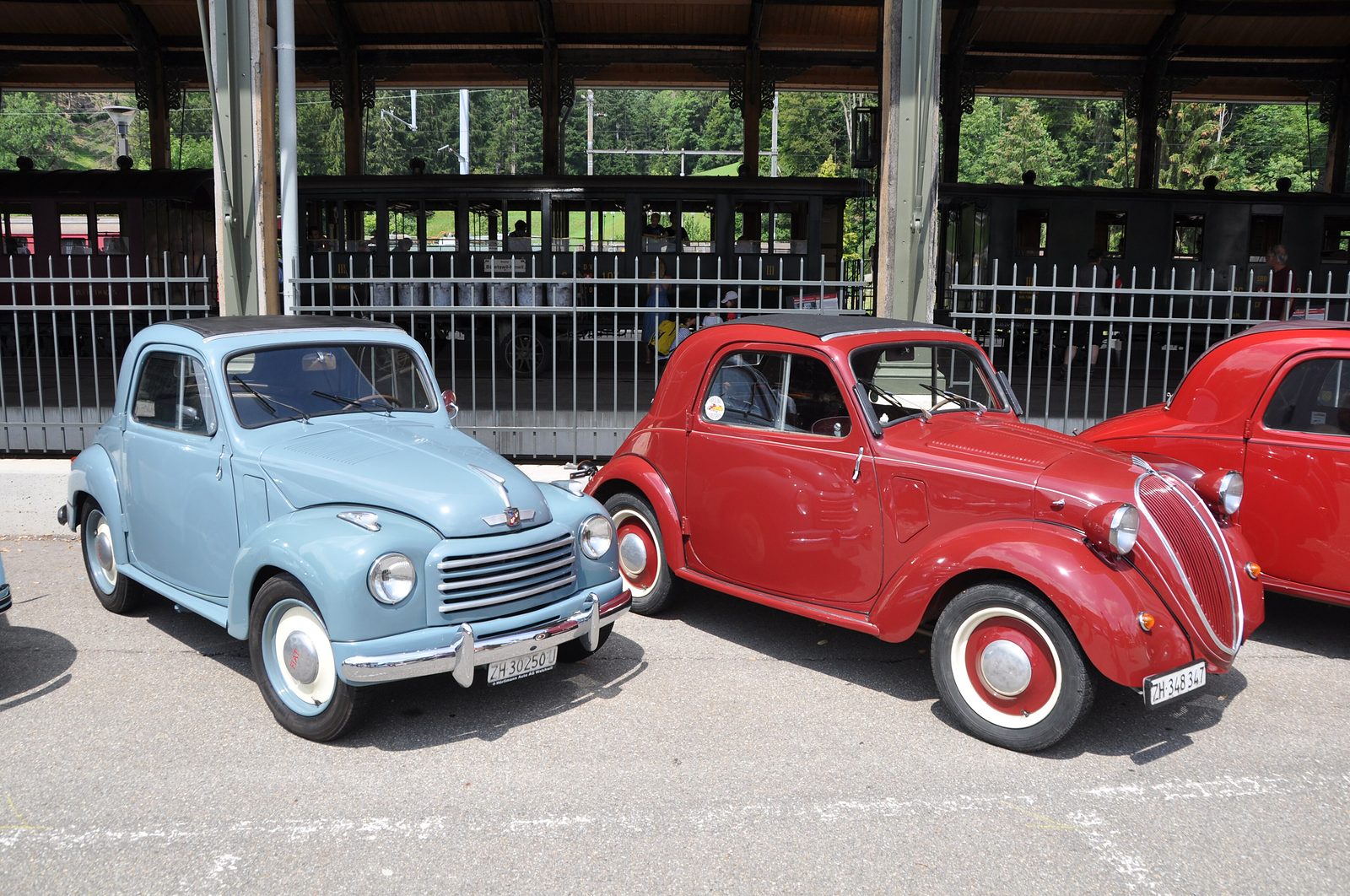
31 A light blue Fiat 500 C beside a red Fiat 500 A at the classic car meeting in Bauma, Switzerland, in July 2019.
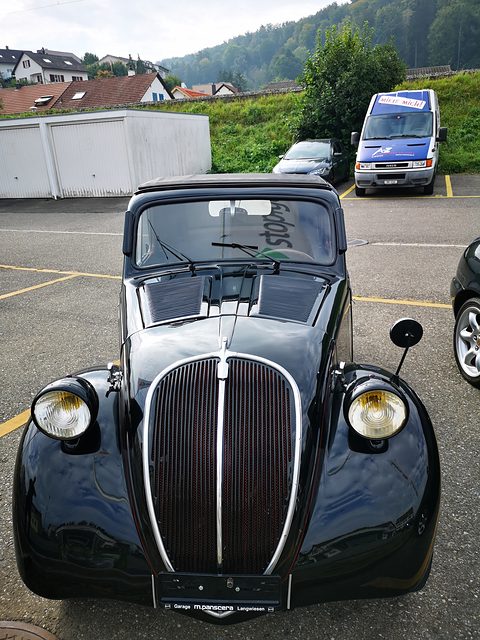
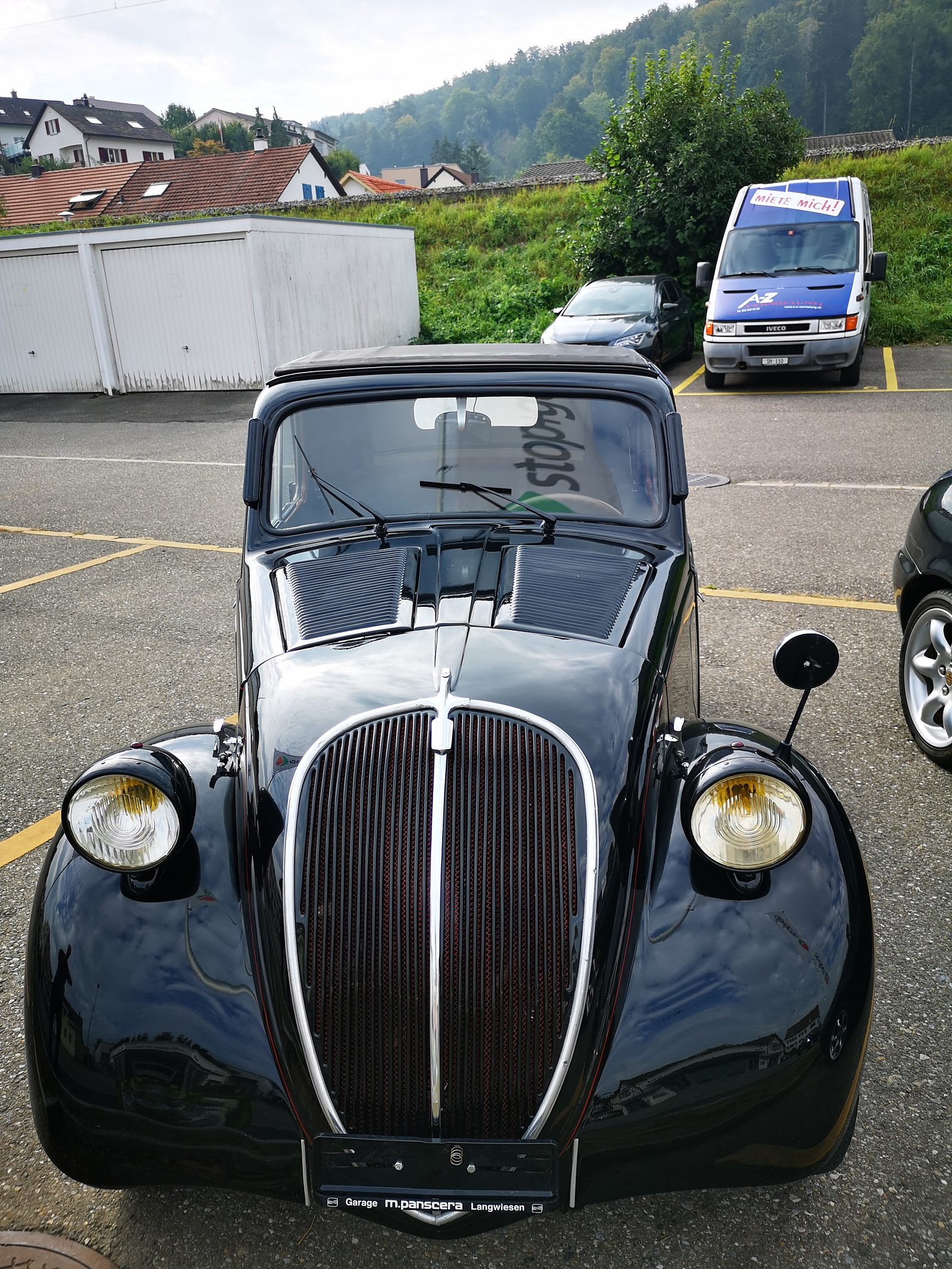
32 A black Fiat 500 A with red wheels seen head-on in Schaffhausen, Switzerland, in September 2020.
The car: 500 B 8
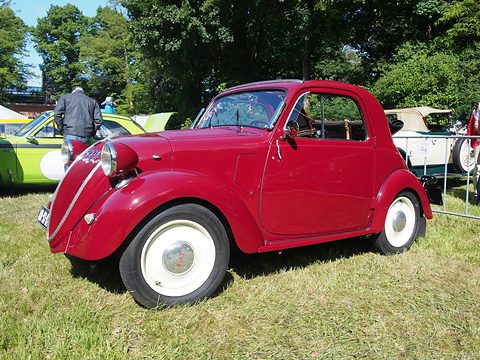
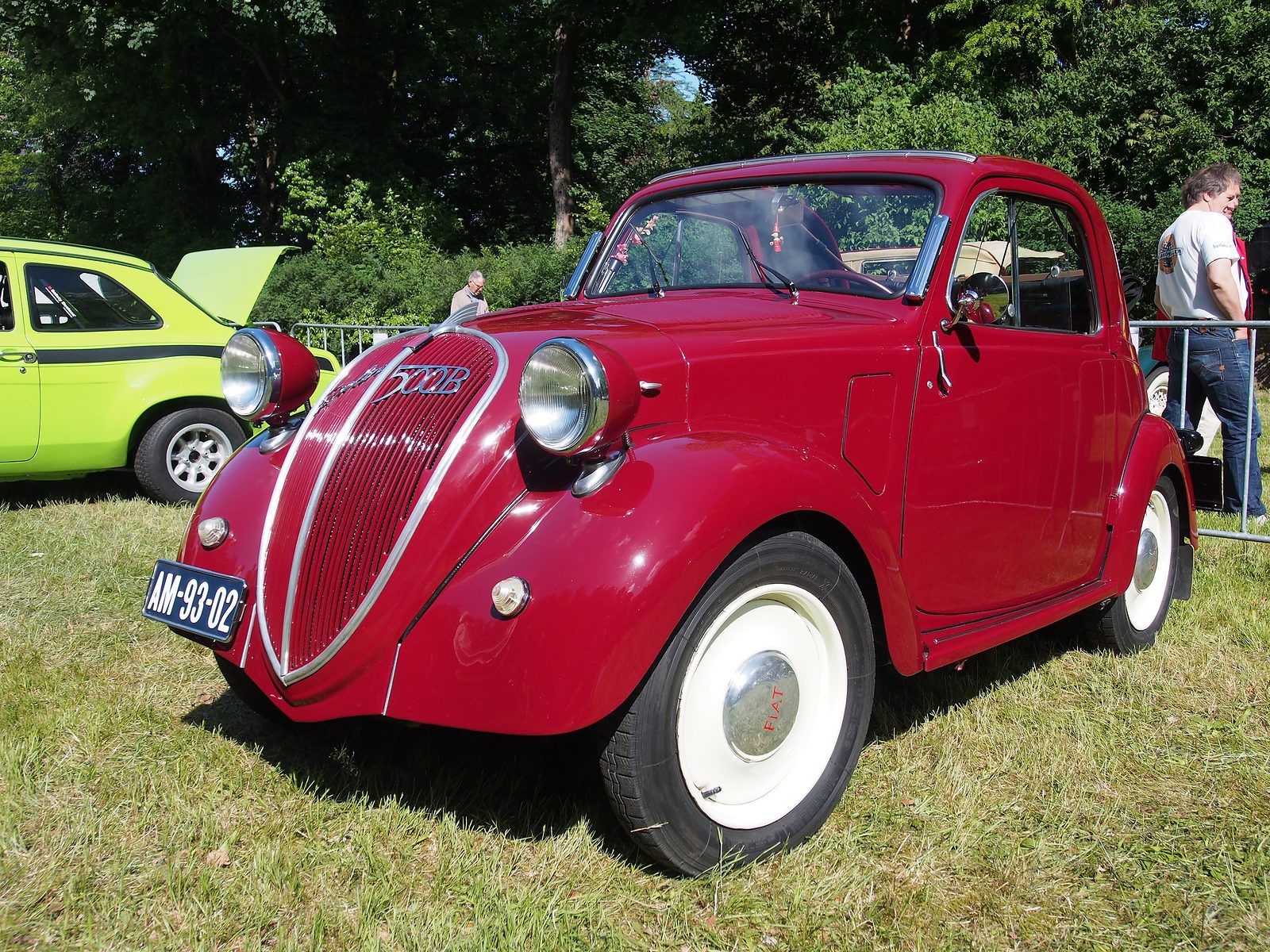
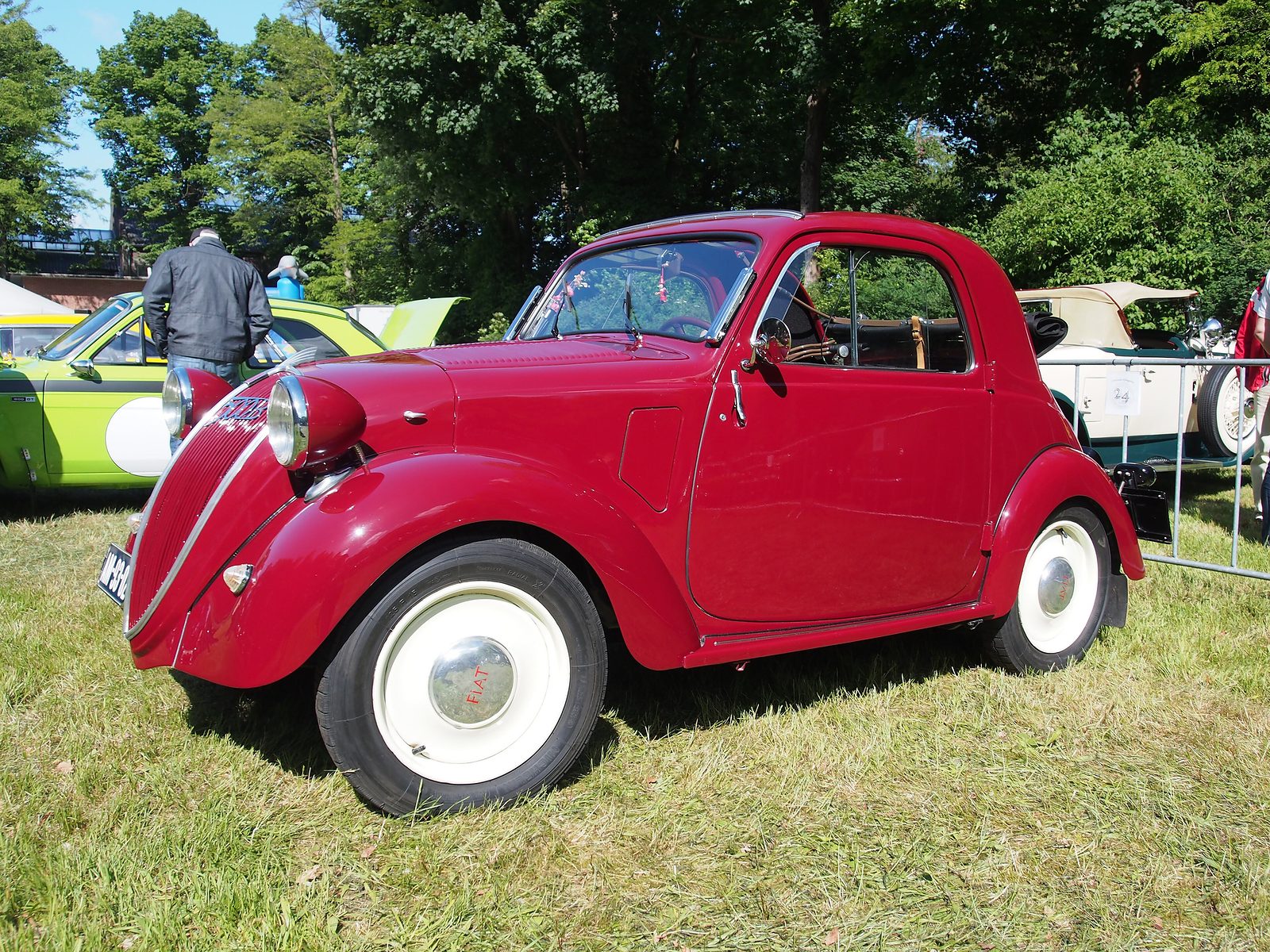
33 A red 1948 Fiat 500 B at a club meeting in Steyl, Netherlands, in June 2013.
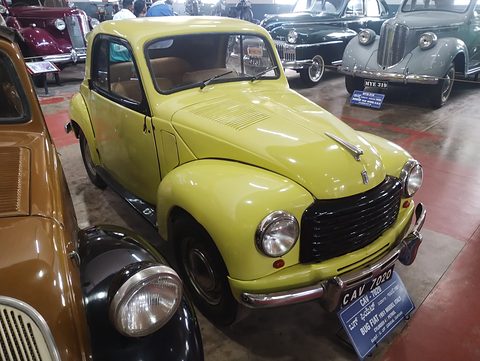
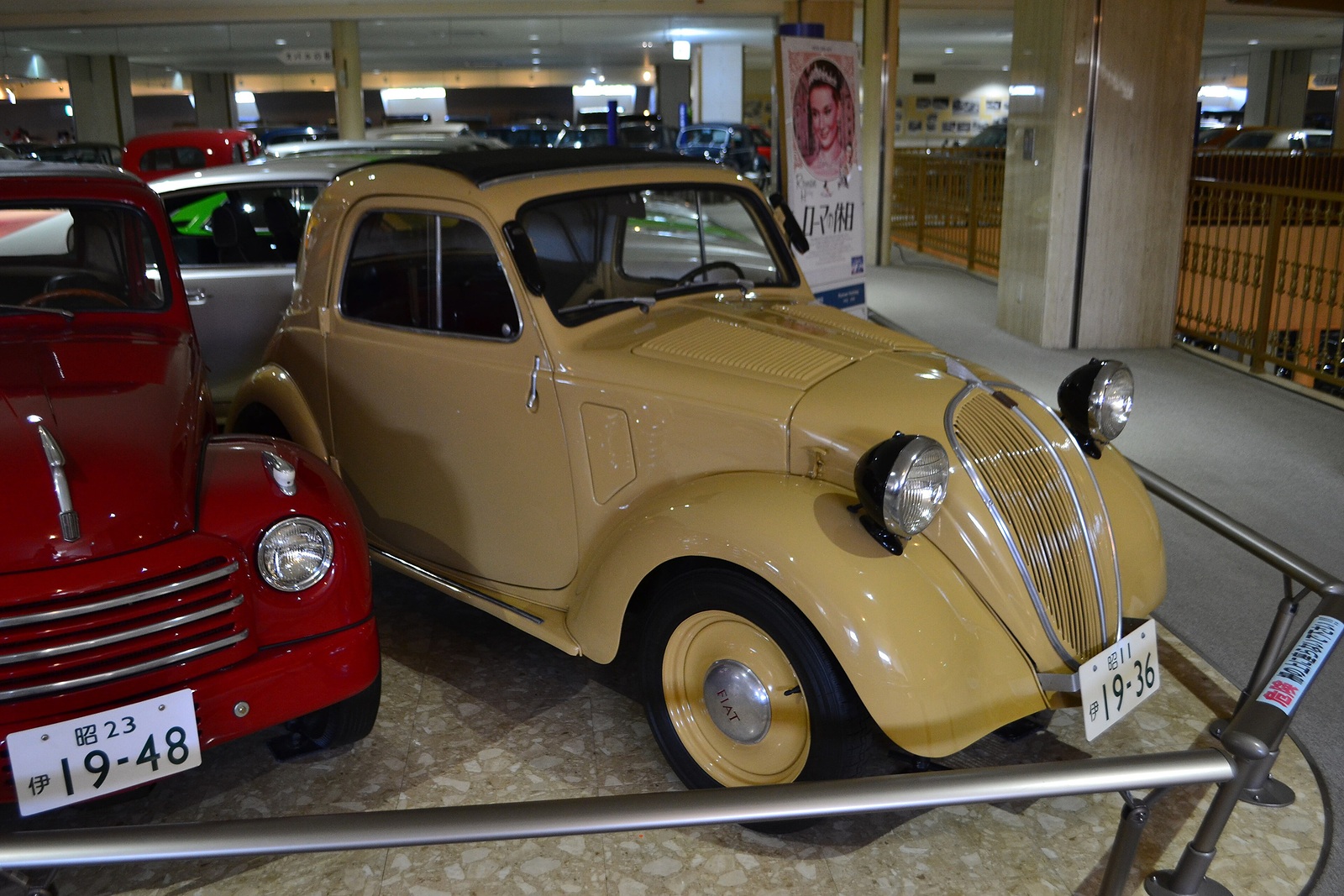
34 A yellow 1948 Fiat 500 B at the Motorcar Museum of Japan, Komatsu, in November 2023.
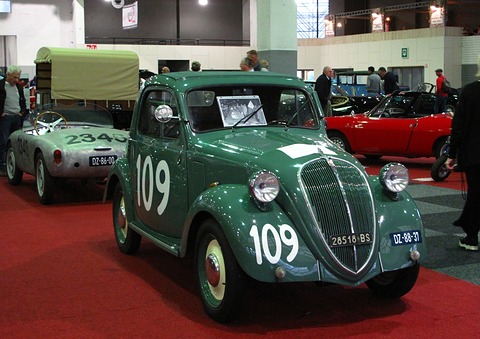
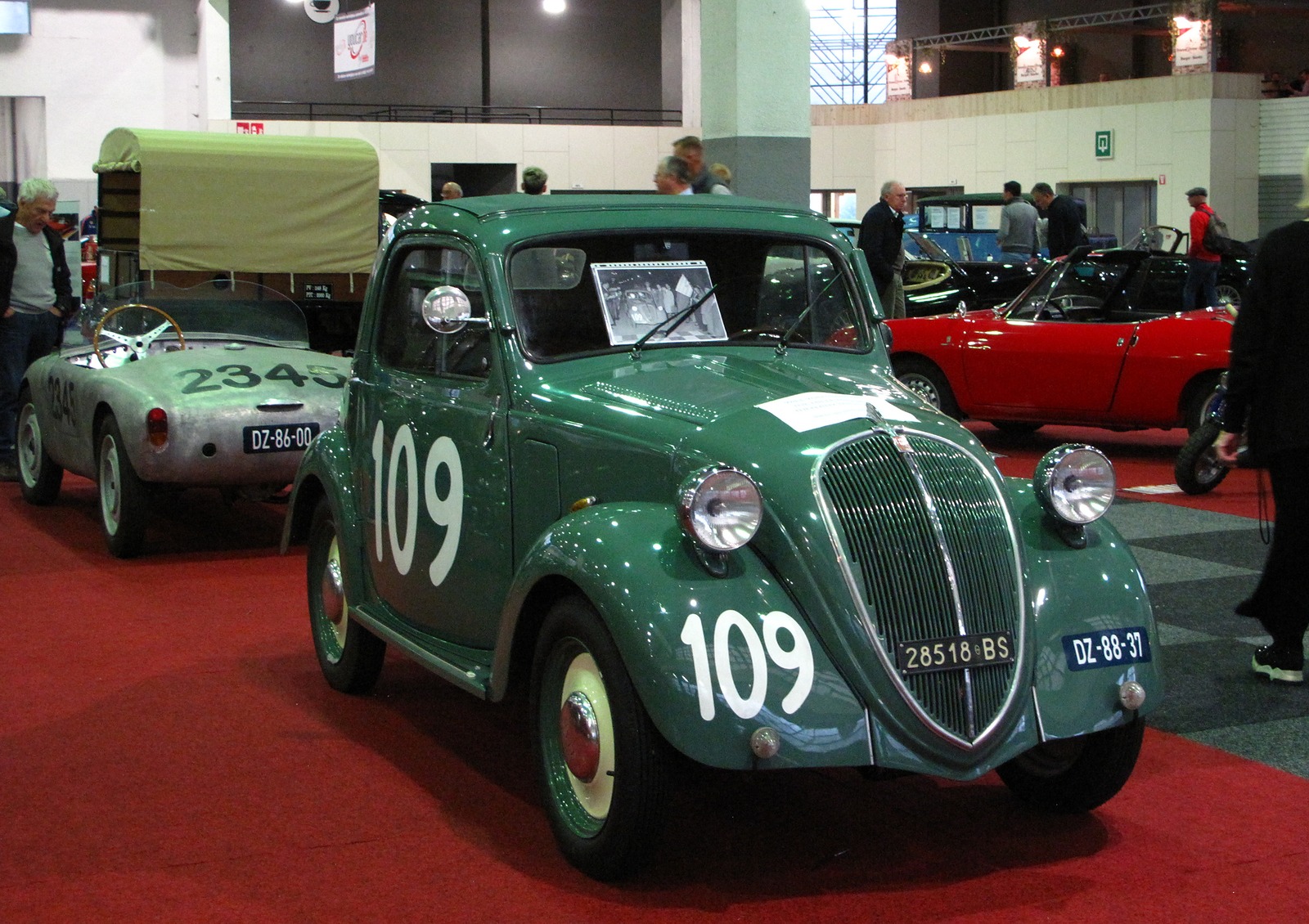
35 A green 1949 Fiat 500 B with rally number 109 at InterClassics, Brussels, in November 2024.
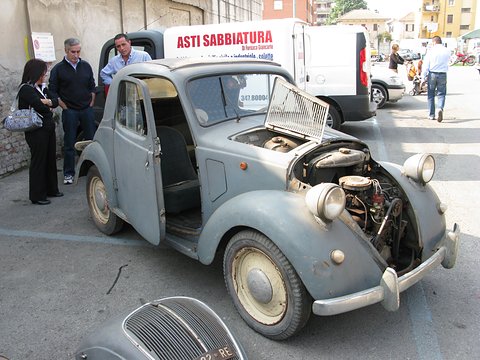
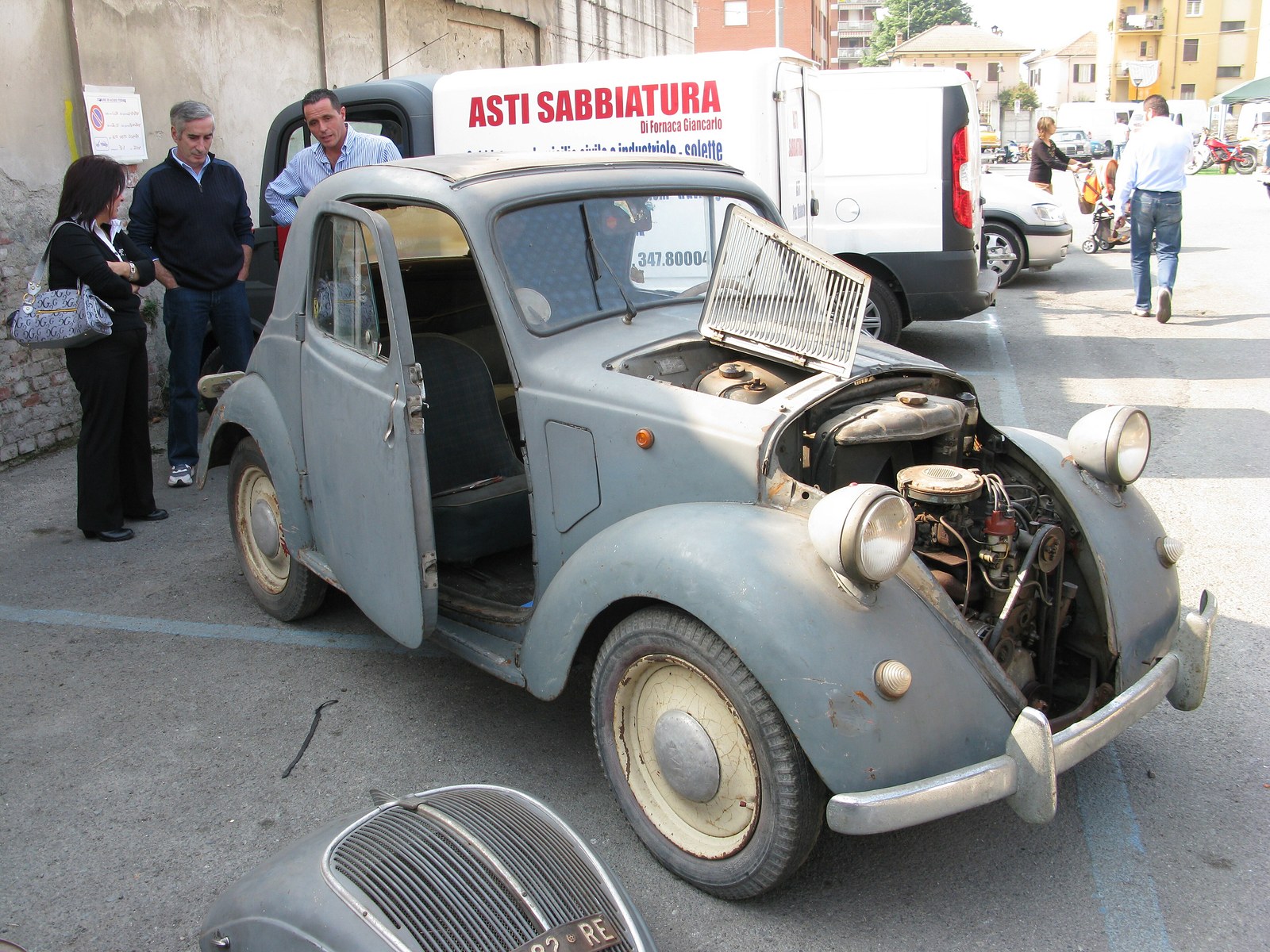
36 A grey Fiat 500 B with its bonnet open at the Acqui Terme motorcycle and parts fair, Italy, in October 2008.
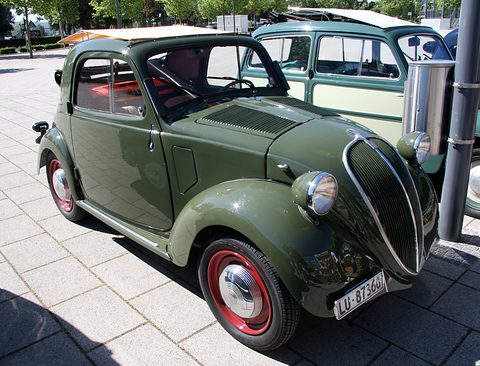
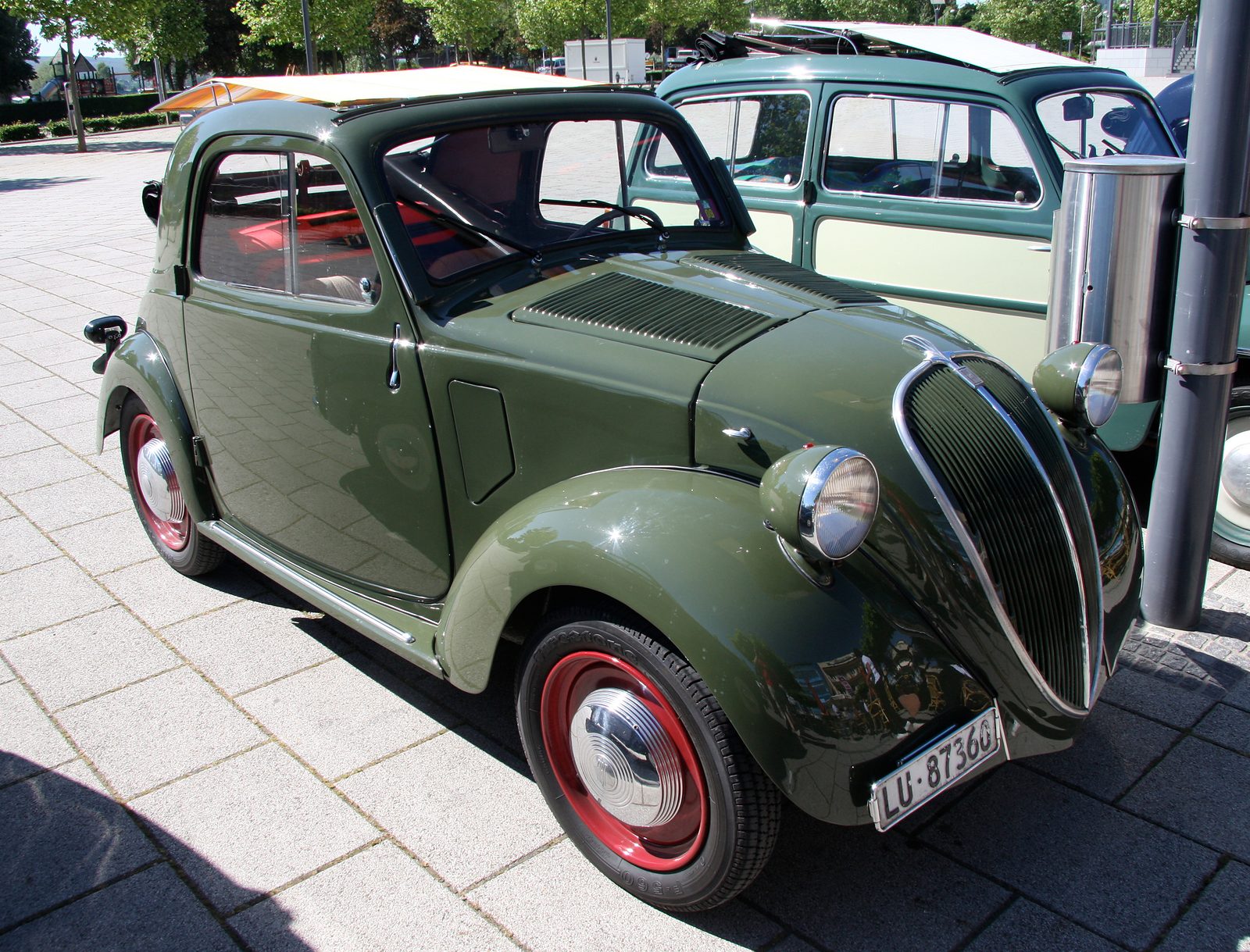
37 A green Fiat 500 B trasformabile in Remich, Luxembourg, in May 2009.
38 A red 1948 Fiat 500 B in profile at a club meeting in Steyl, Netherlands, in June 2013.
39 A green Fiat 500 B trasformabile with its roof folded back in Remich, Luxembourg, in May 2009.
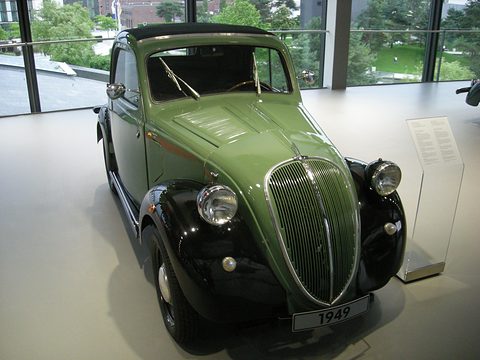
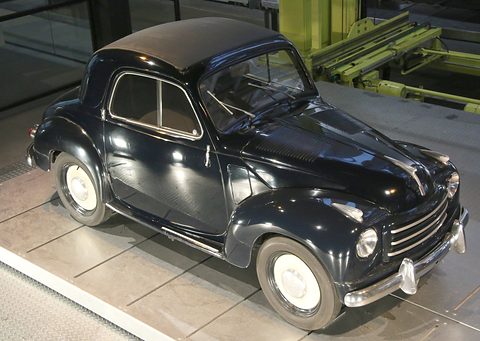
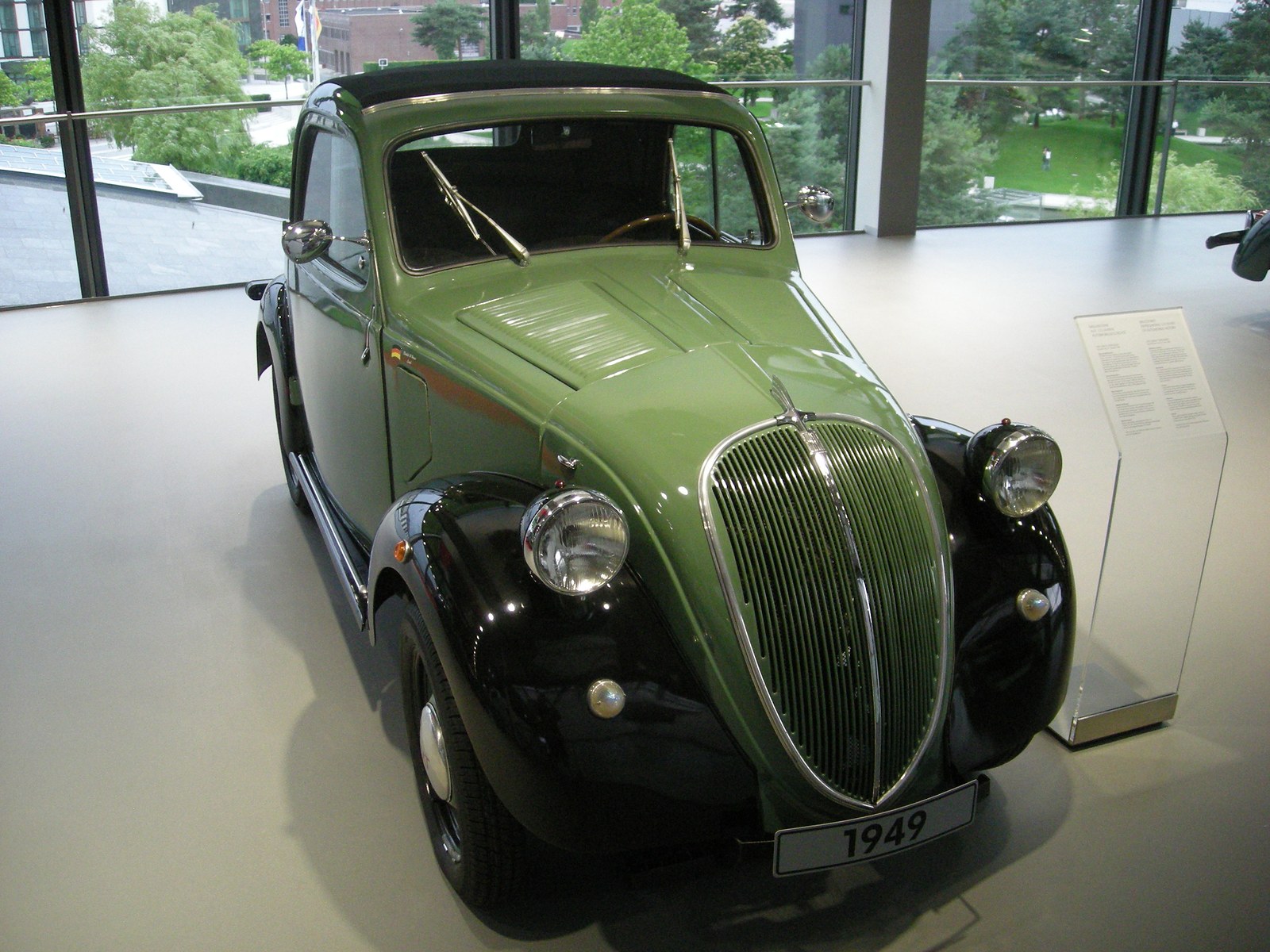
40 A green and black 1949 Fiat 500 B in the ZeitHaus, Autostadt, Wolfsburg, in June 2012.
The car: 500 C 22
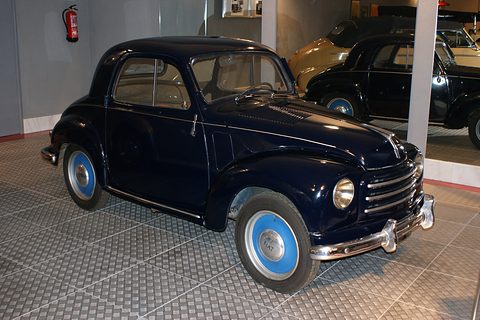
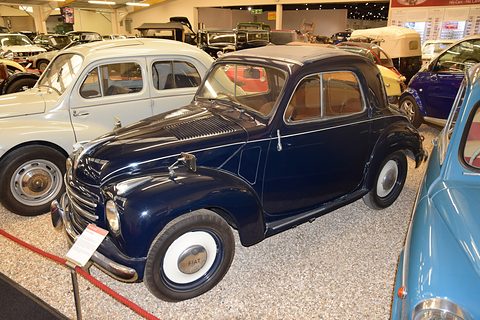
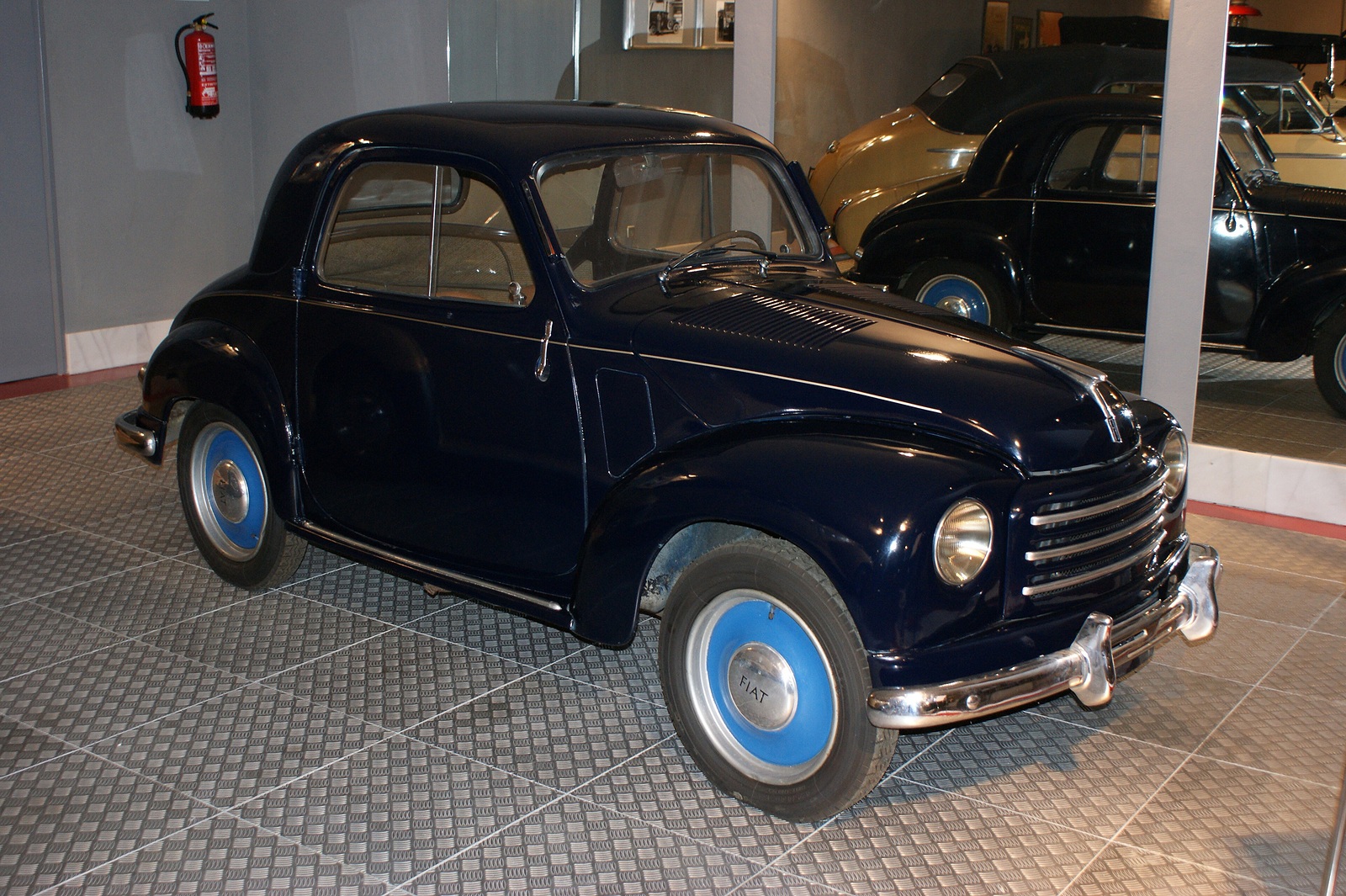
41 A dark blue 1949 Fiat 500 C with pale blue wheels at the Salamanca Motor Museum, Spain, in April 2008.
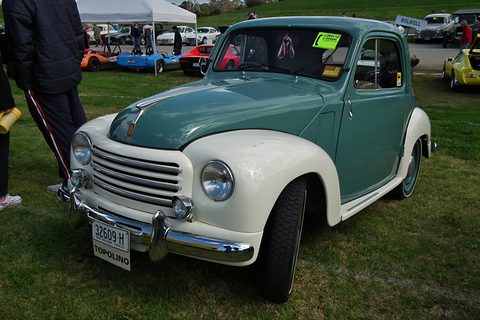
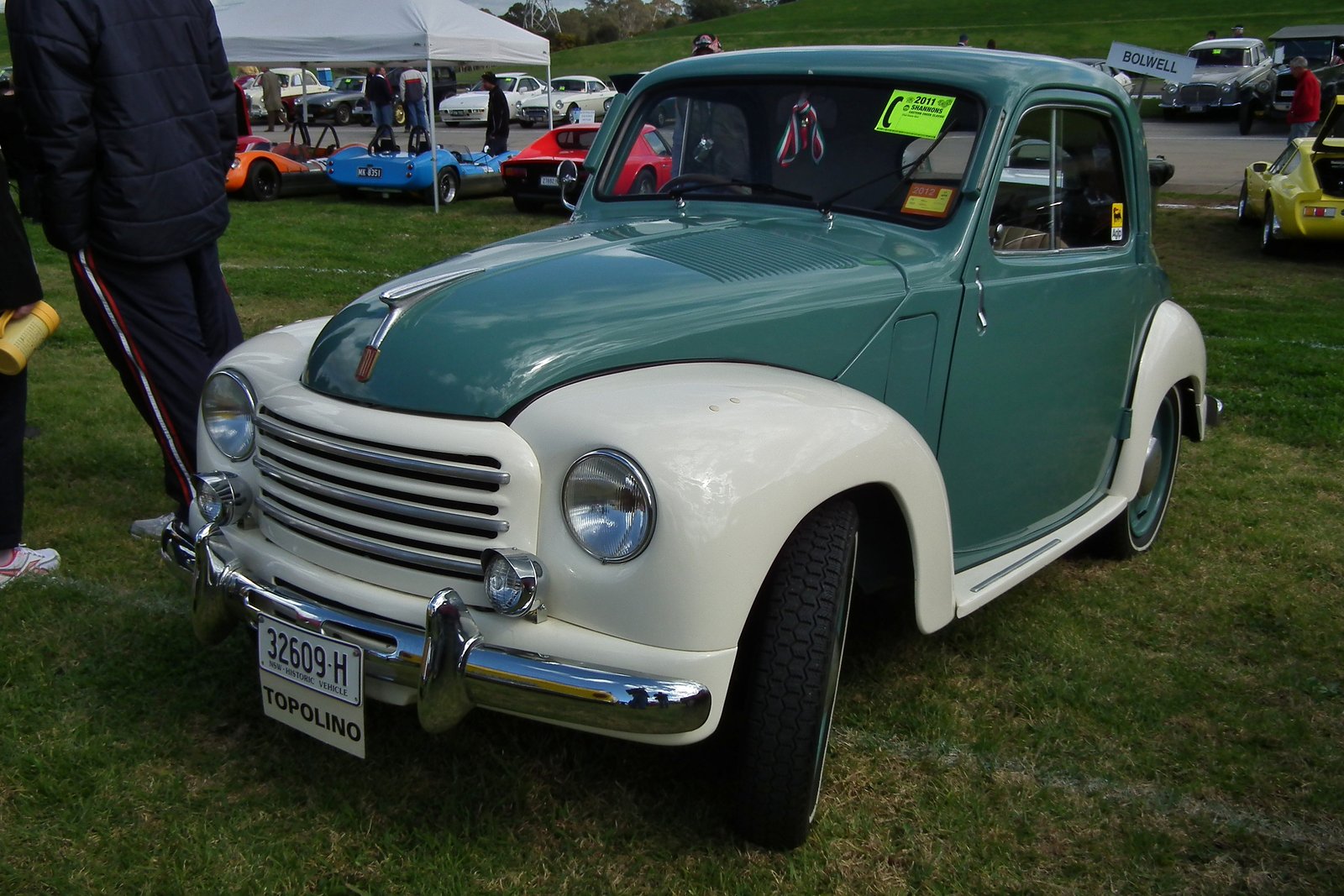
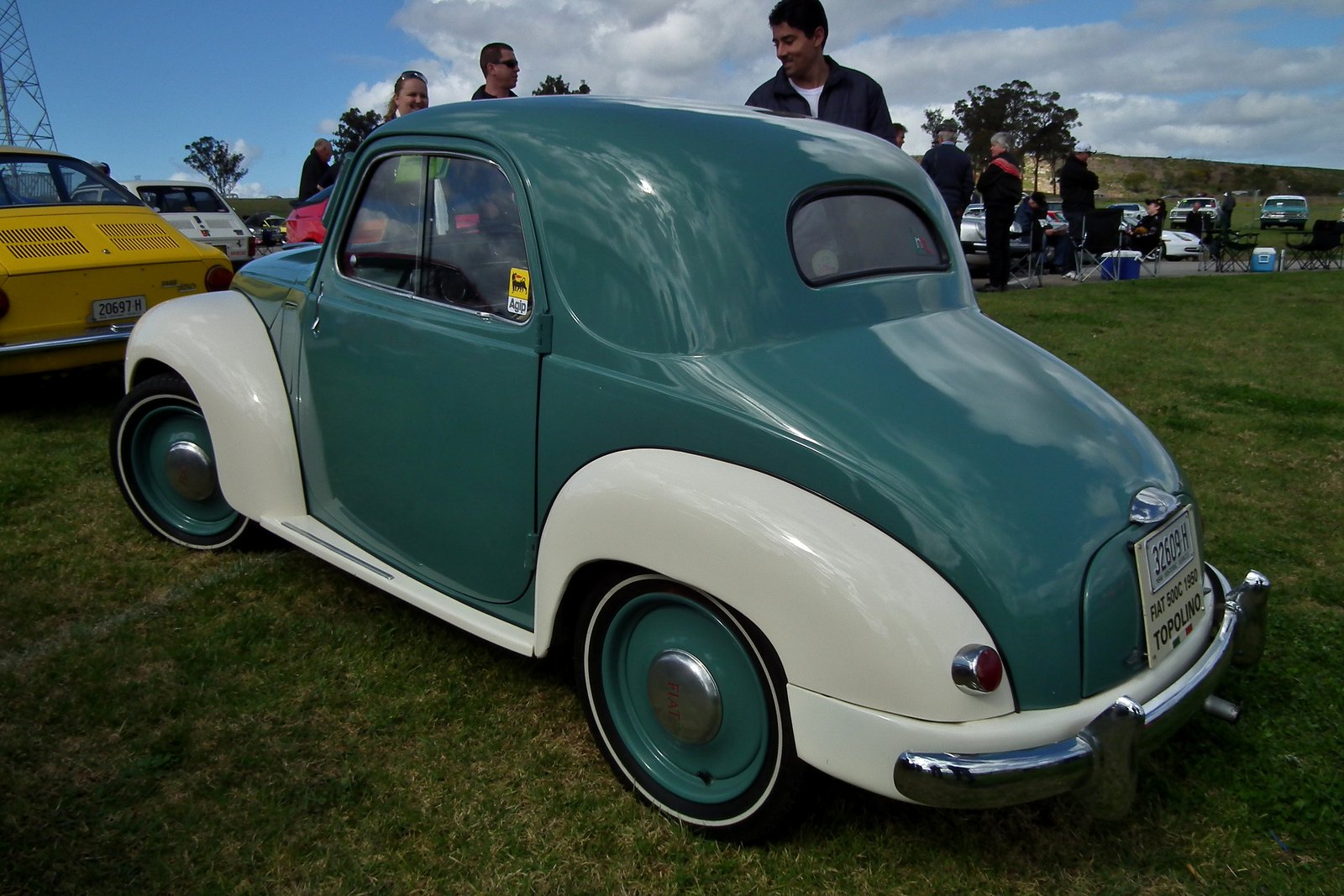
42 A two-tone green 1950 Fiat 500 C at Shannon’s Eastern Creek Classic, Sydney, in August 2011.
43 A pale green 1952 Fiat 500 C at CARnivale, Parramatta Park, New South Wales, in January 2016.
44 A green 1953 Fiat 500 C at Frauenfeld, Switzerland, in August 2021.
45 A red and black Fiat 500 C at Classic Remise, Berlin, in July 2025.
17 more picturesFewer pictures
46 A silver Fiat 500 C at Classic Days, Düsseldorf, in 2022.
47 A red and black 1949 Fiat 500 C, its headlamps faired into the wings, in Hoofddorp, Netherlands, in September 2011.
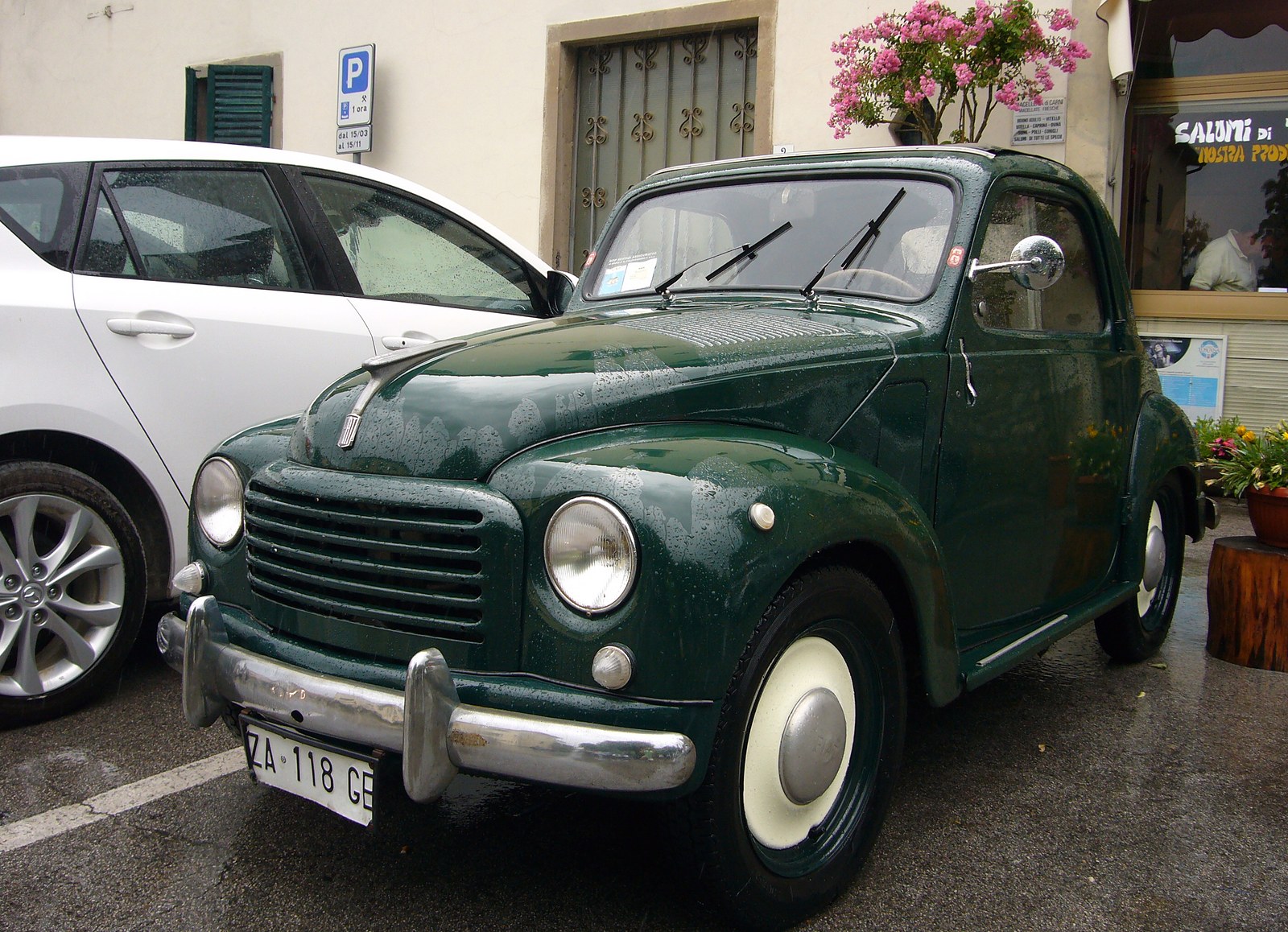
48 A dark green Fiat 500 C trasformabile in Radda in Chianti, Tuscany, in July 2011.
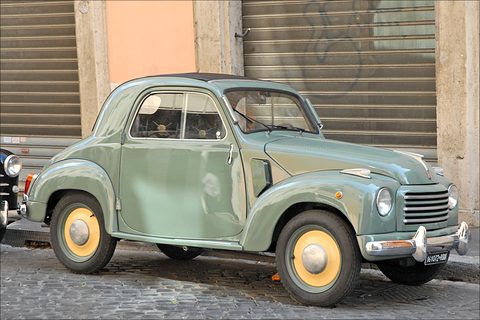
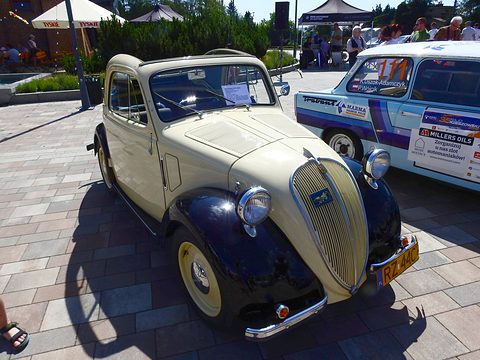
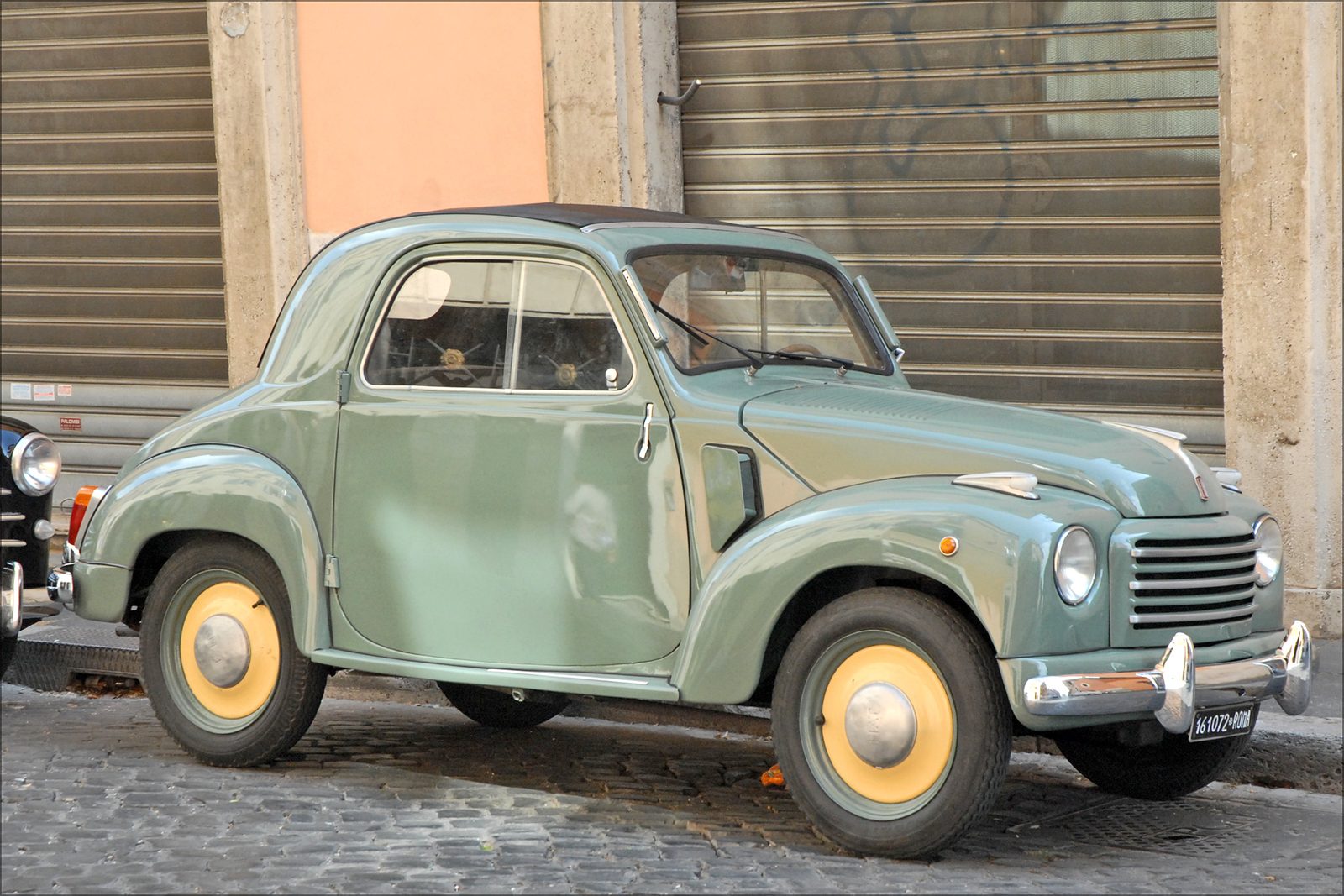
49 A faded pale green Fiat 500 C with yellow wheels against a shuttered shopfront in Rome in June 2011.
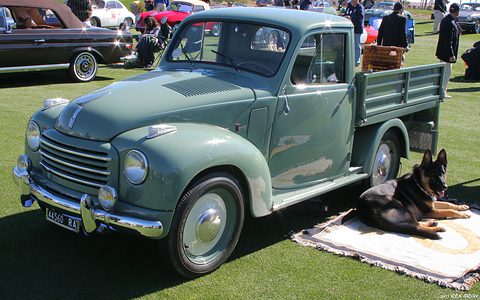
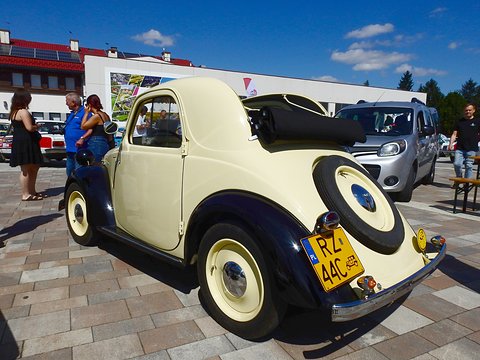
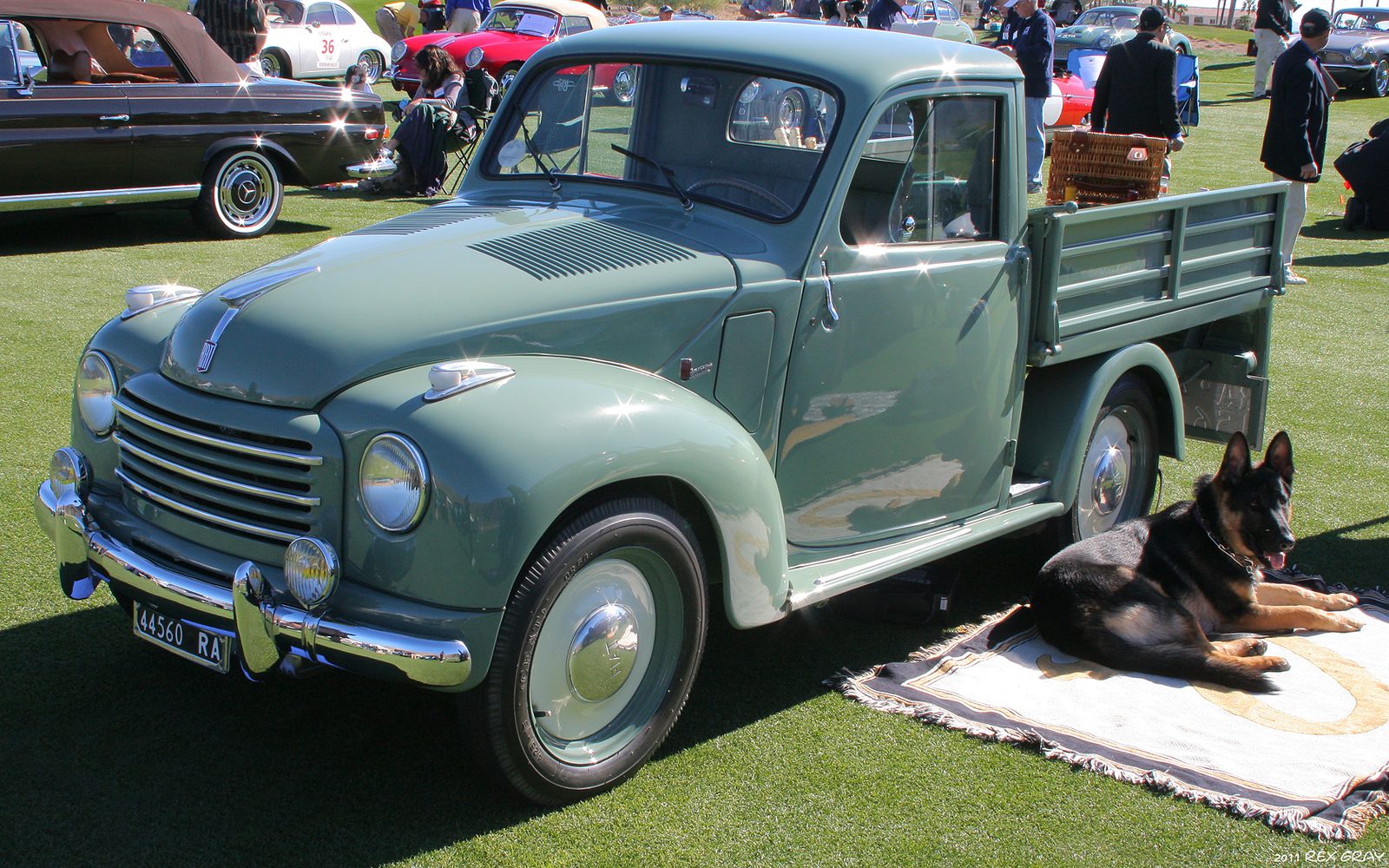
50 A green 1950 Fiat 500 C pick-up at the Desert Classic, La Quinta, California, in February 2011.
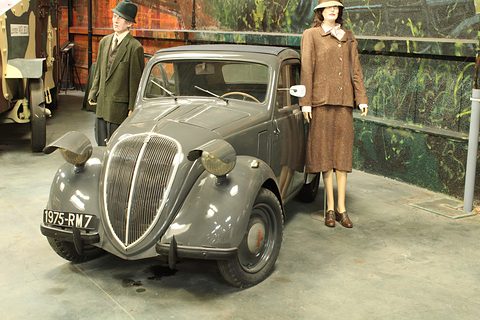
51 A dark green 1952 Fiat 500 C with a black fabric roof at Floriander, Haarlemmermeer, Netherlands, in September 2011.
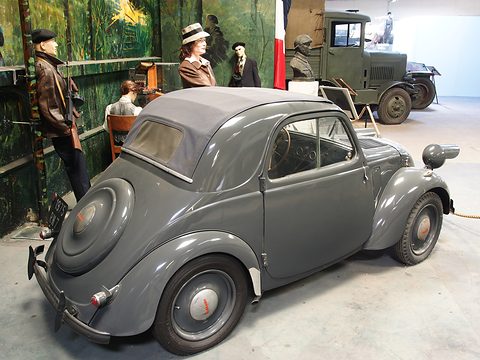
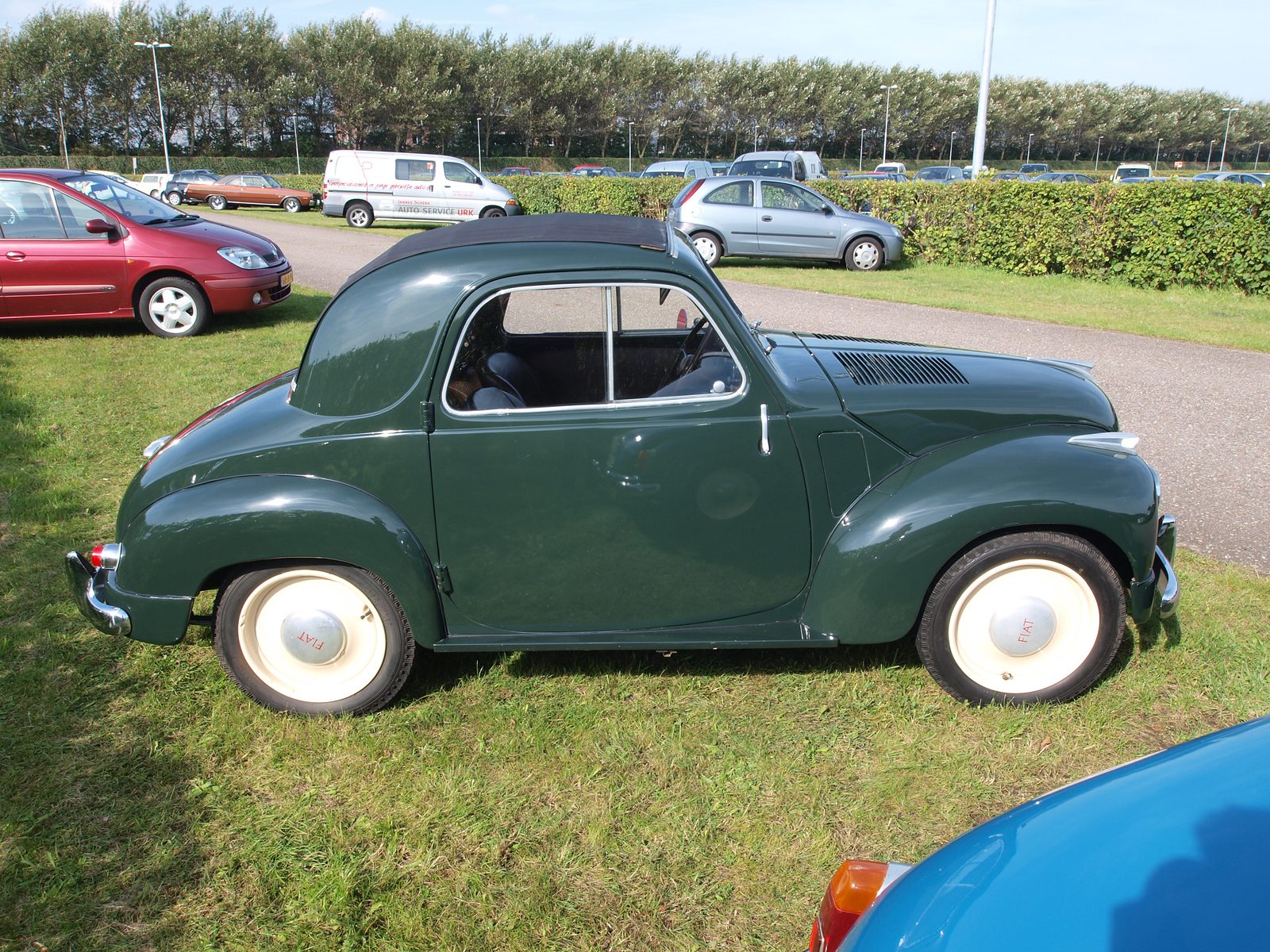
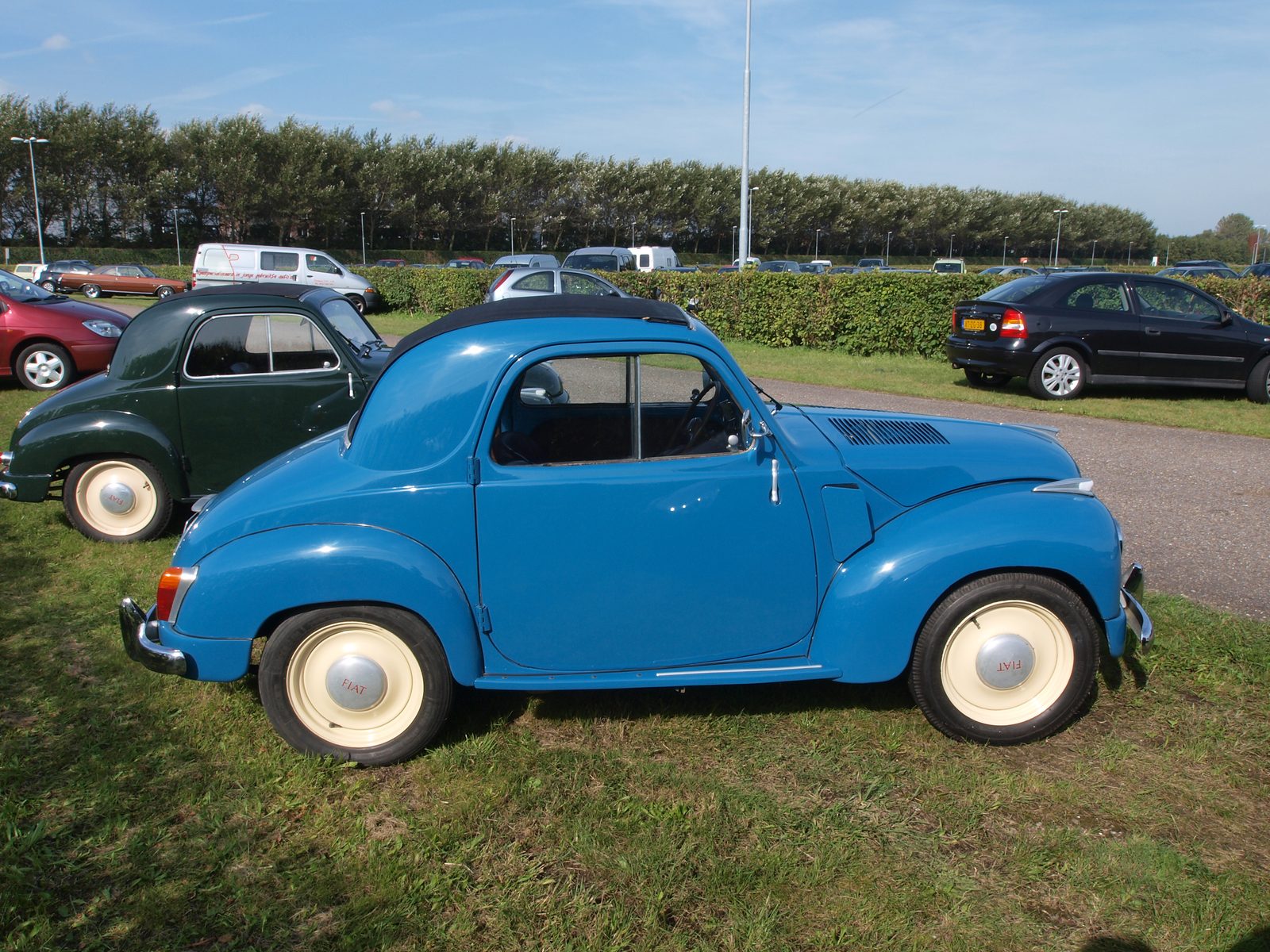
52 A blue 1952 Fiat 500 C in profile at Floriander, Haarlemmermeer, Netherlands, in September 2011.
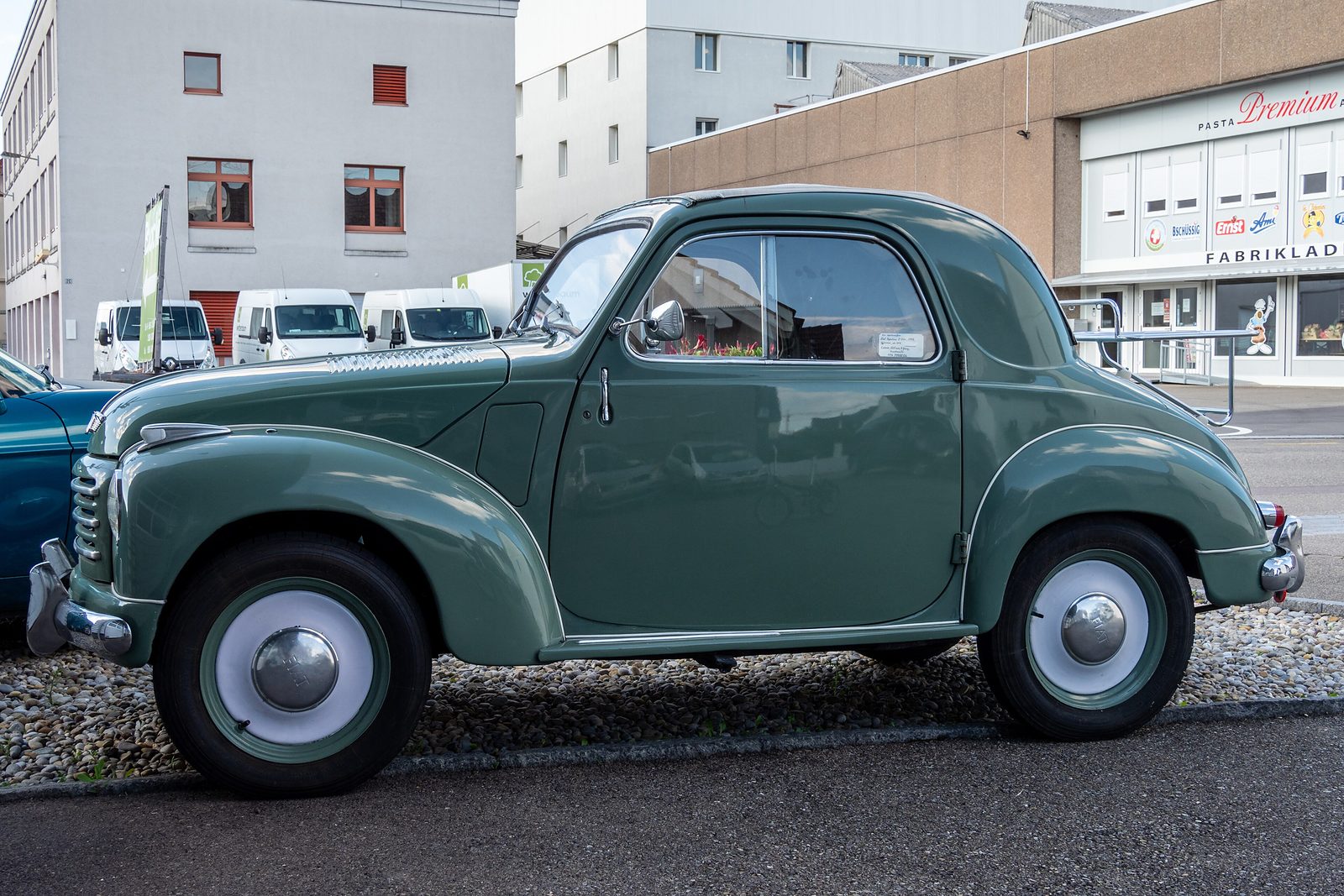
53 A green 1953 Fiat 500 C in profile at Frauenfeld, Switzerland, in August 2021.
54 The rear of a two-tone green 1950 Fiat 500 C at Shannon’s Eastern Creek Classic, Sydney, in August 2011.
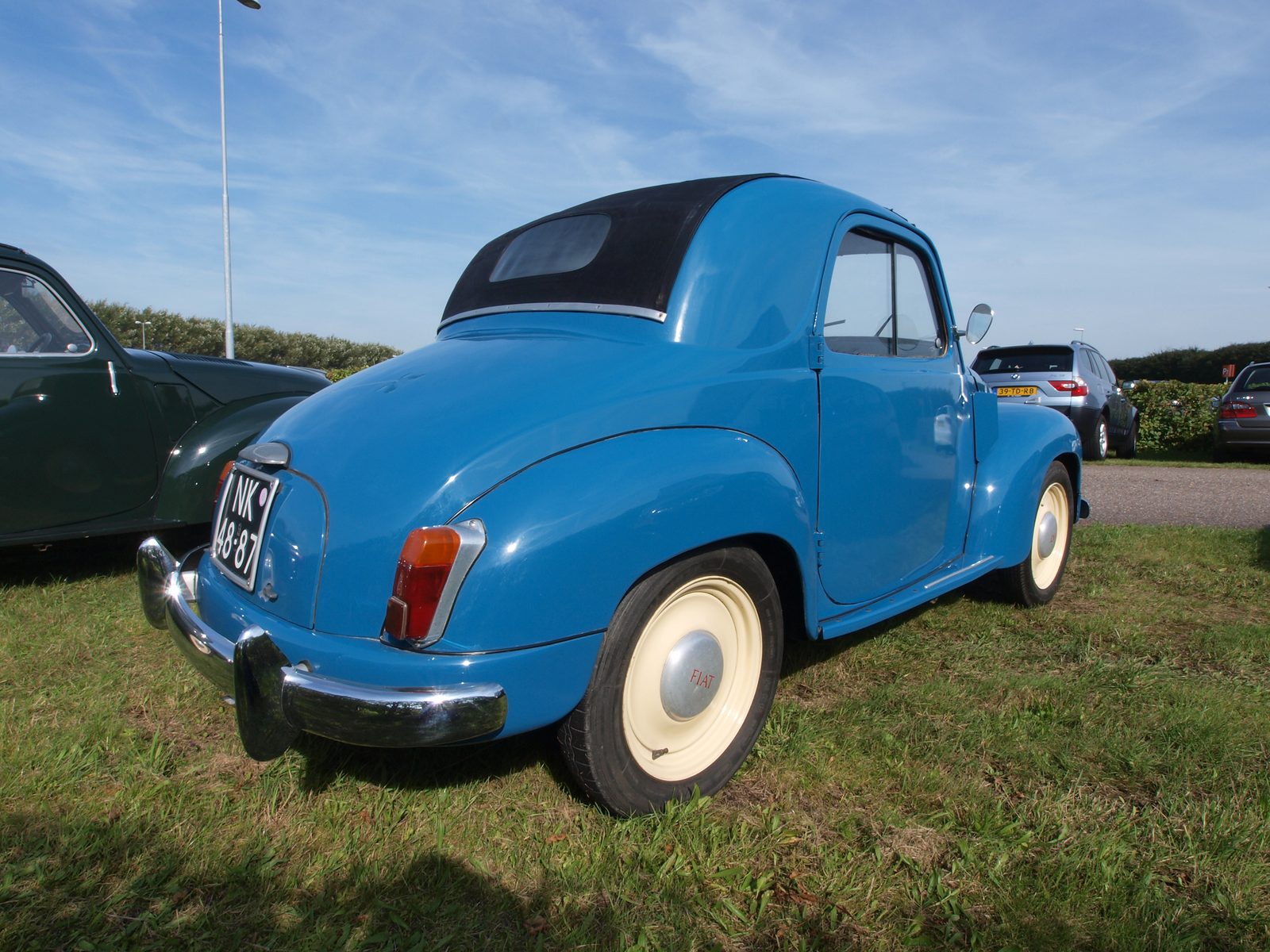
55 The rear of a blue 1952 Fiat 500 C at Floriander, Haarlemmermeer, Netherlands, in September 2011.
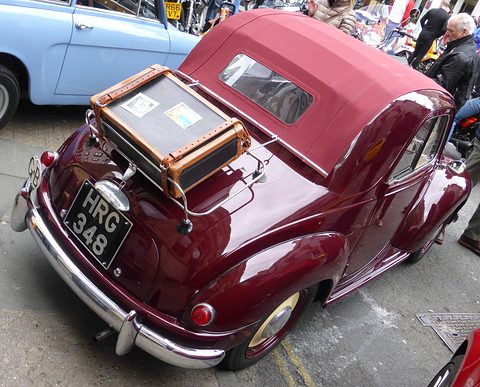
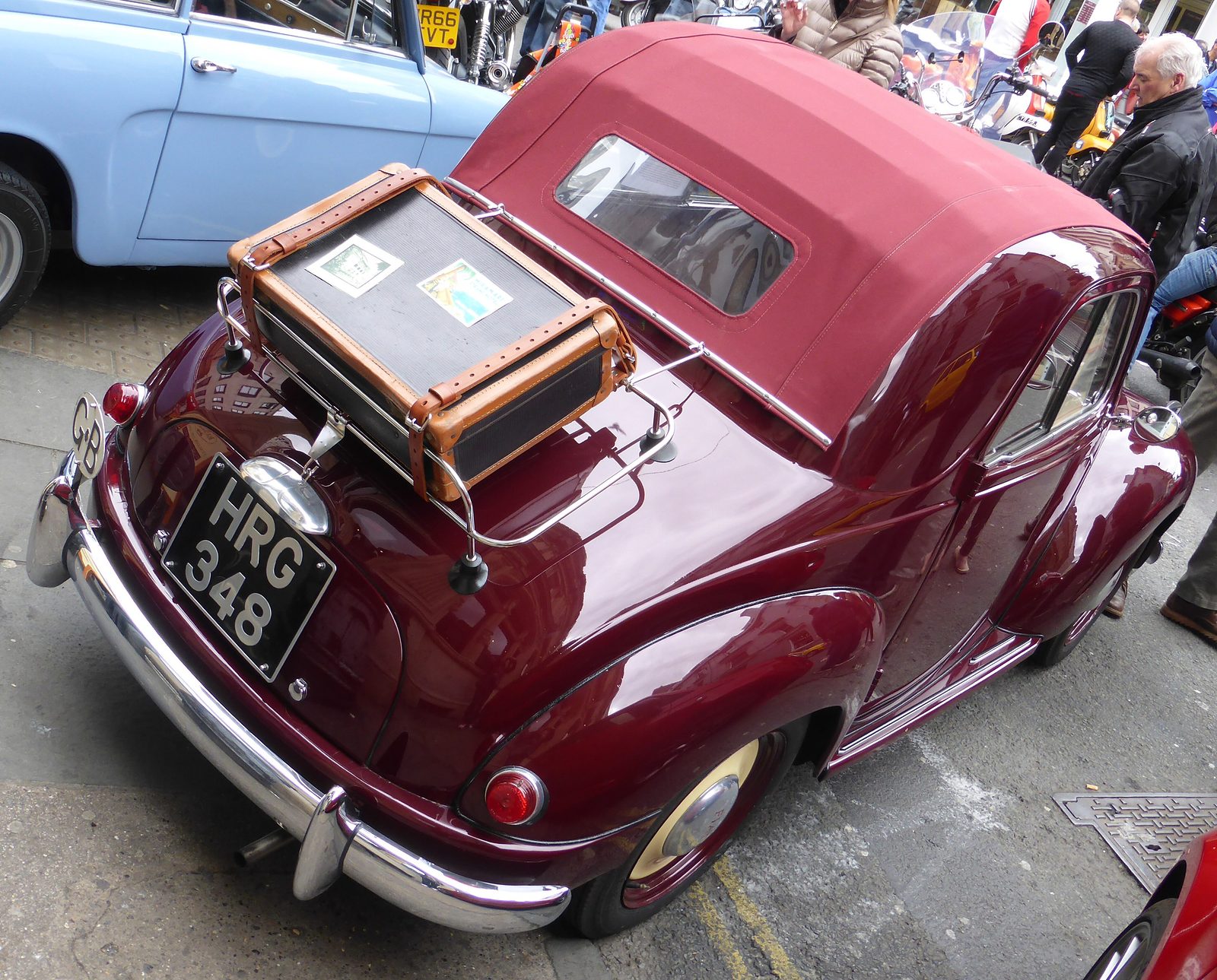
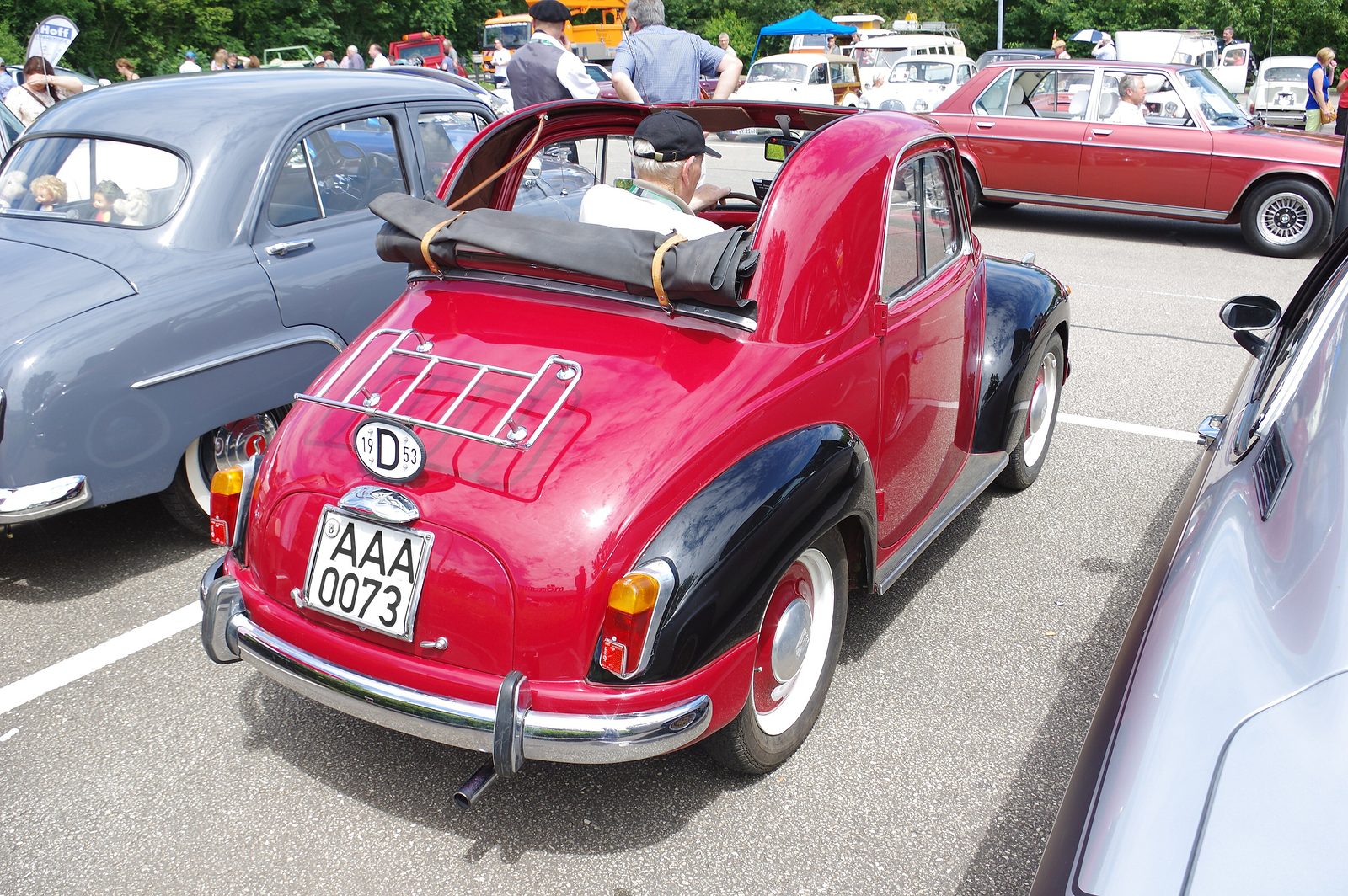
56 A maroon 1954 Fiat 500 C trasformabile with its roof open and luggage on the rack at the Bristol Italian AutoMoto Festival in April 2017.
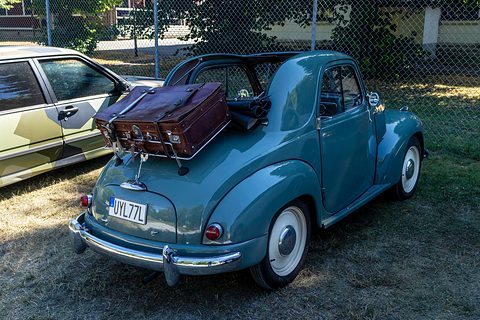
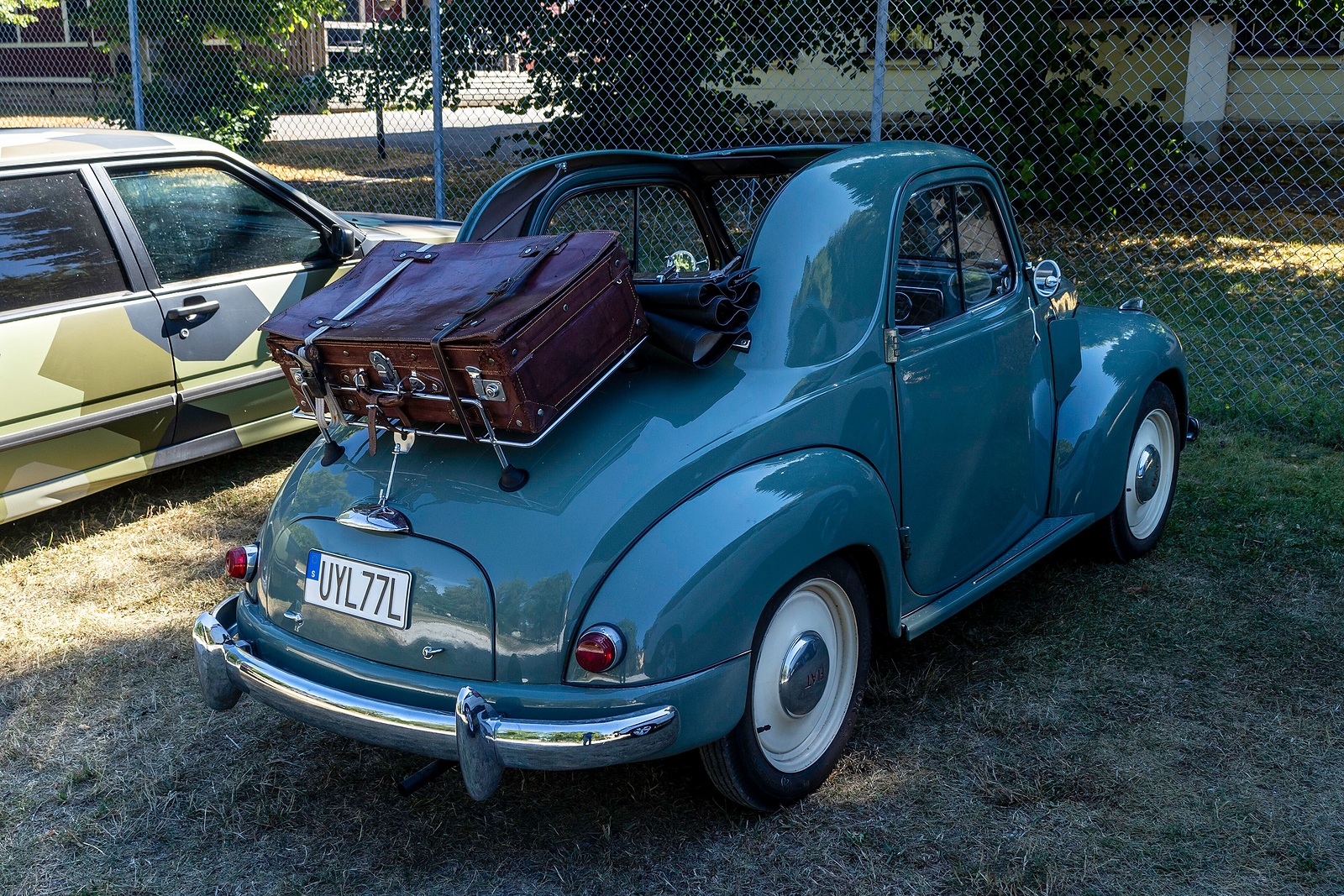
57 A grey 1955 Fiat 500 C trasformabile with luggage on its tail rack at Tingstäde, Gotland, in August 2022.
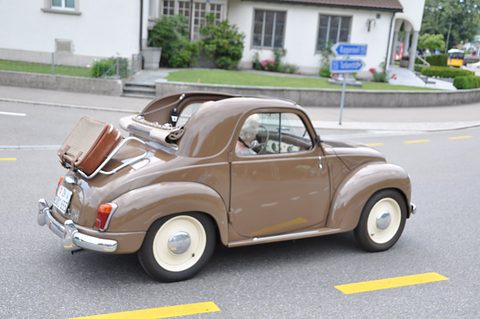
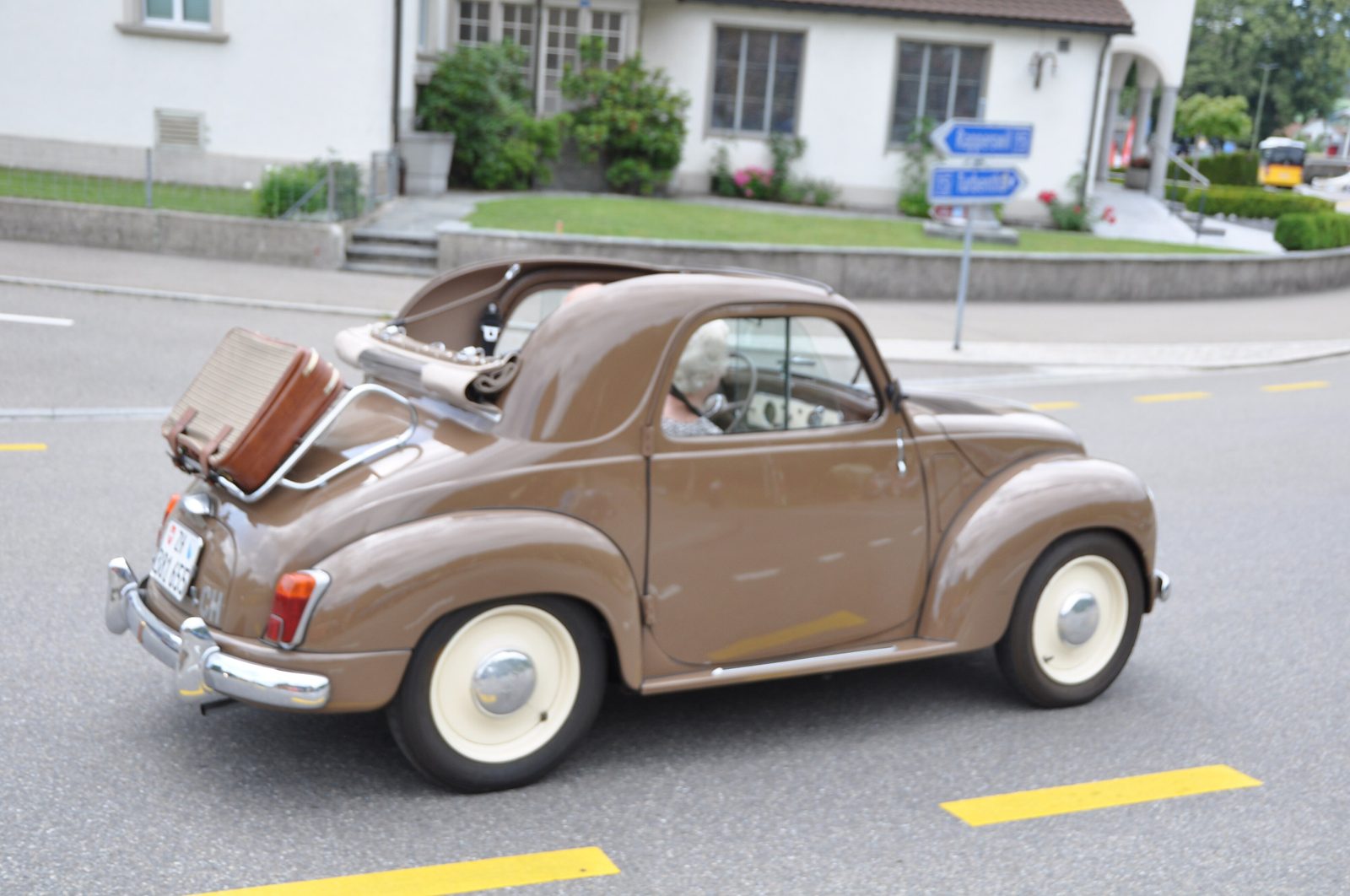
58 A brown Fiat 500 C with luggage on its tail rack at the classic car meeting in Bauma, Switzerland, in July 2019.
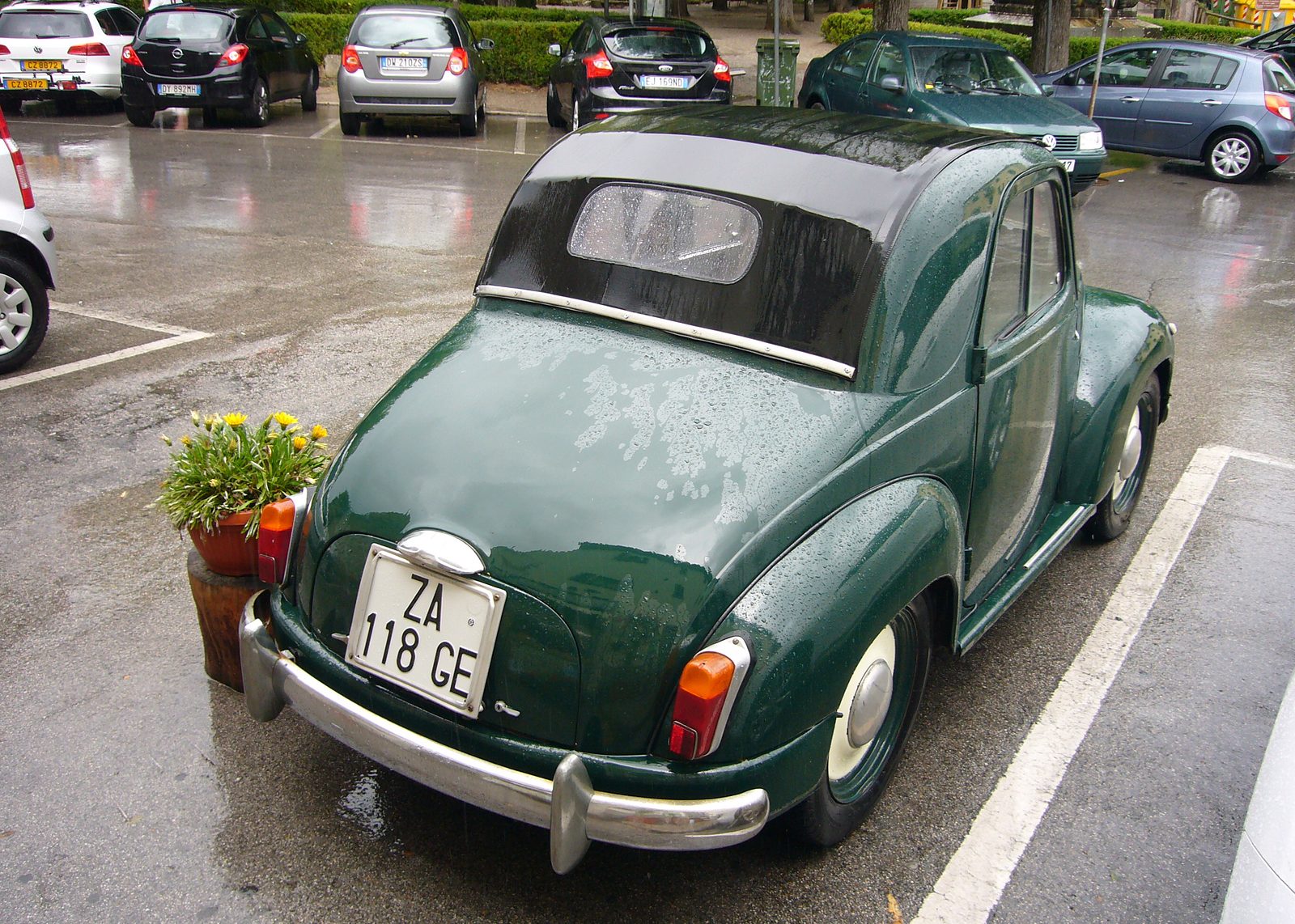
59 The rear of a dark green Fiat 500 C trasformabile on a wet street in Radda in Chianti, Tuscany, in July 2011.
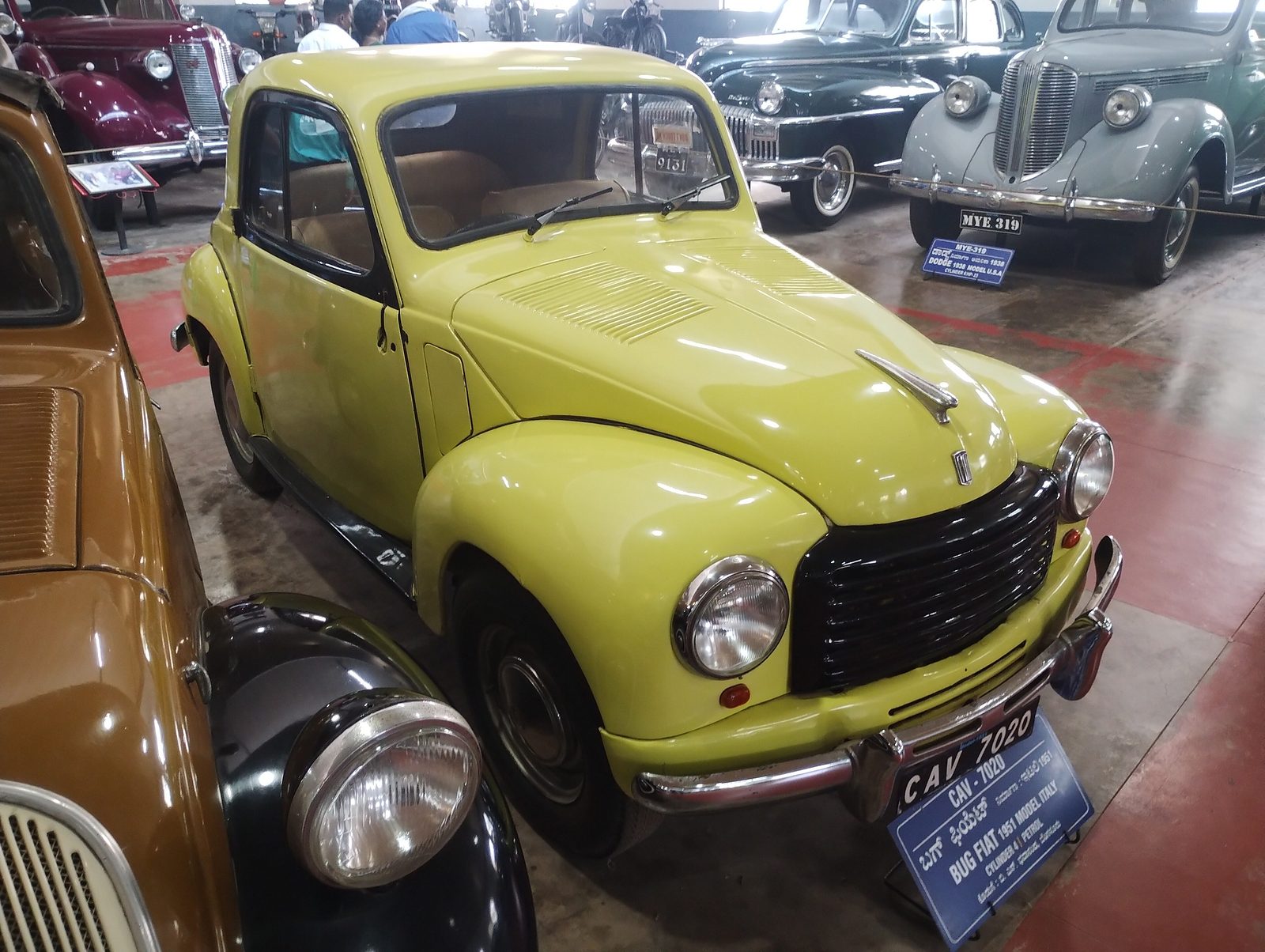
60 A yellow 1951 Fiat 500 C at the Manjusha Car Museum, Dharmasthala, Karnataka, in November 2025.
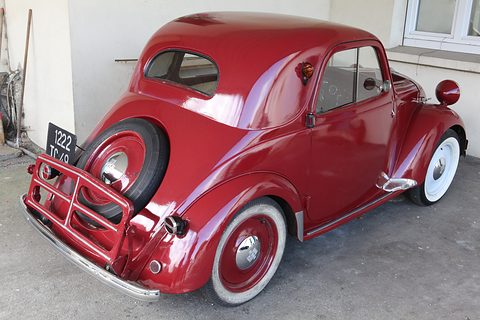
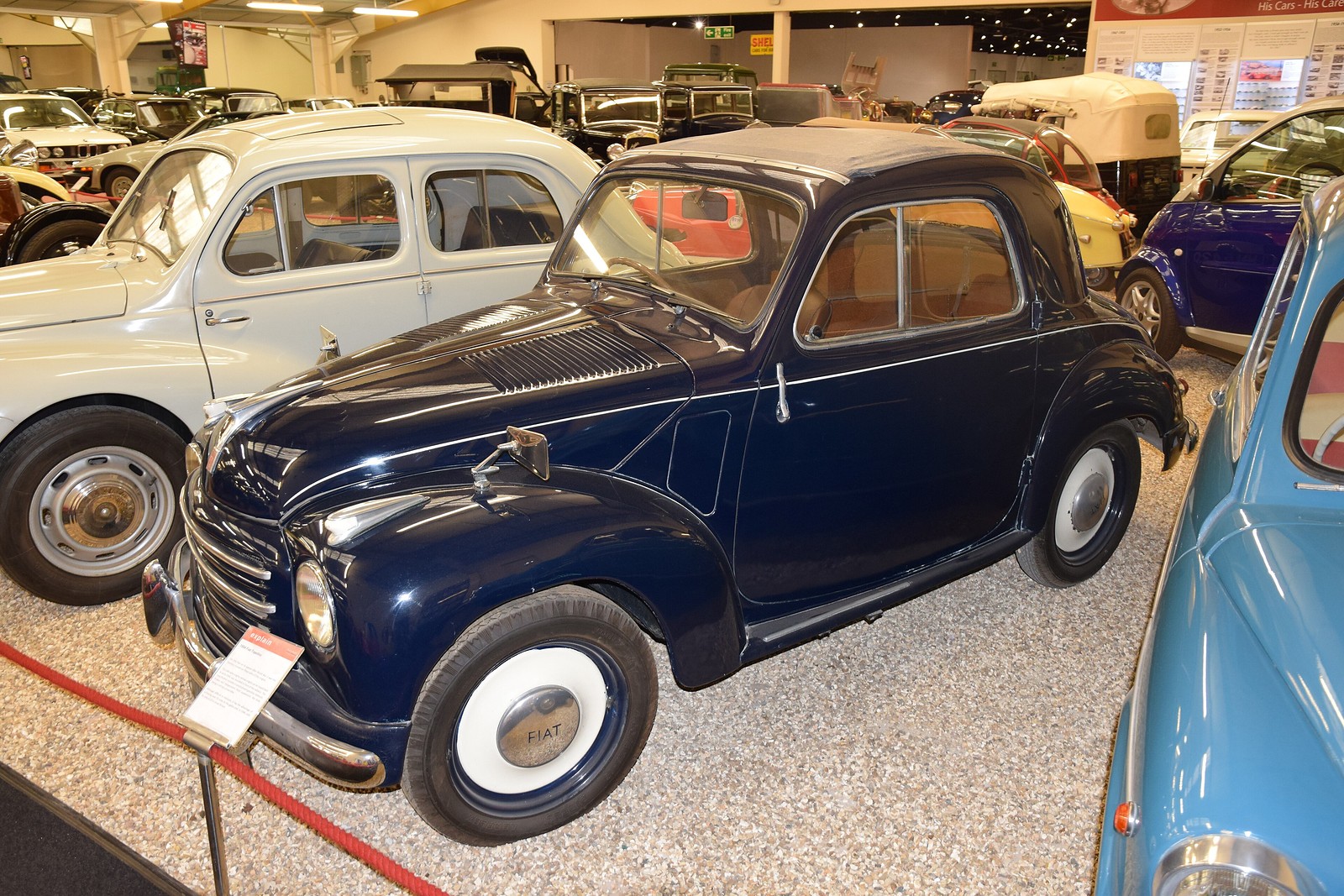
61 A navy 1954 Fiat 500 C at the Haynes International Motor Museum, Sparkford, in 2017.
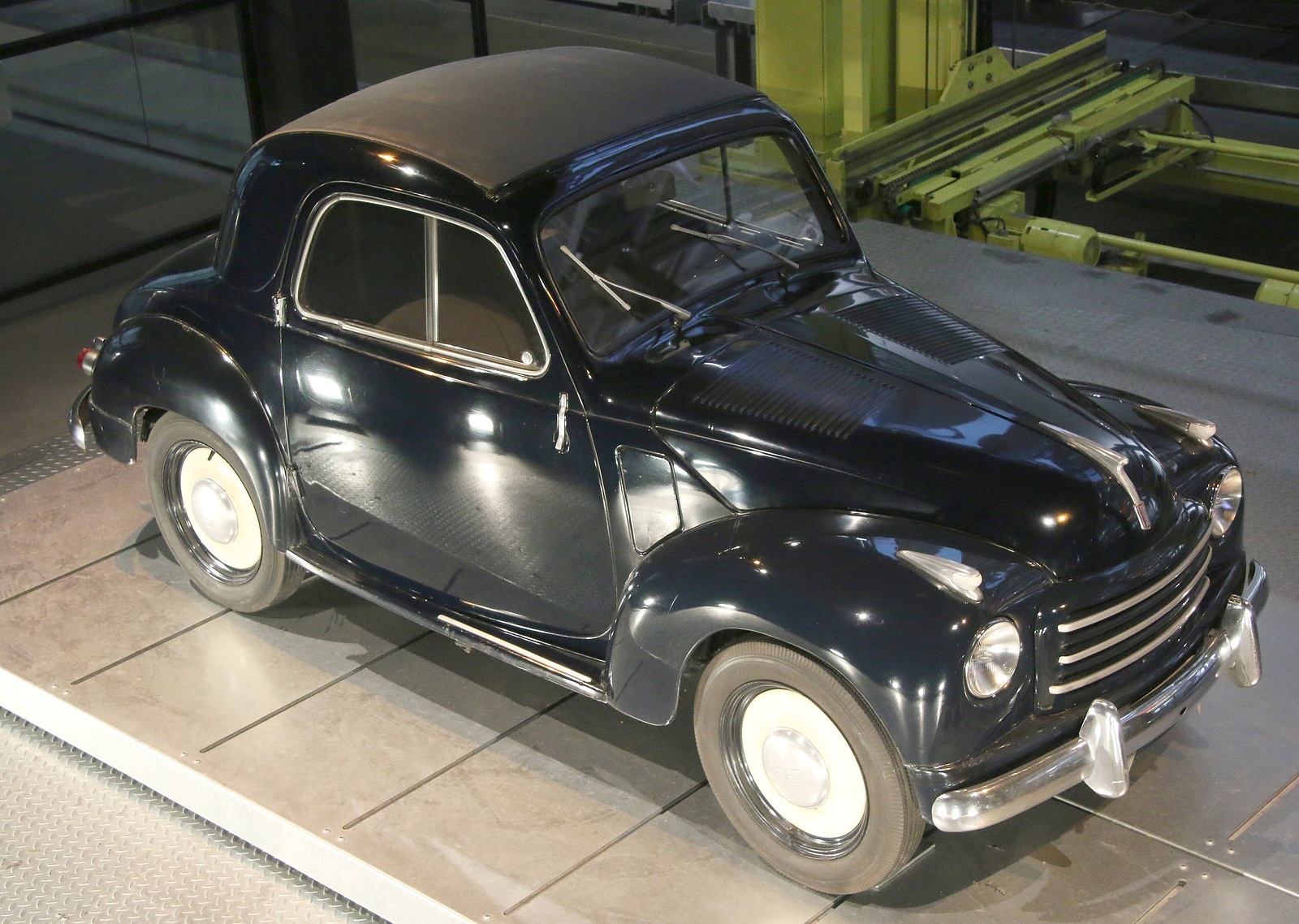
62 A black 1954 Fiat 500 C at the Swiss Museum of Transport, Lucerne, in December 2019.
The car: 500 C Giardiniera and Belvedere 20
63 A grey 1954 Fiat 500 C Belvedere at Retro Classics, Stuttgart, in March 2018.
64 A green Fiat 500 C Belvedere at the Bonhams sale, Grand Palais, Paris, in February 2015.
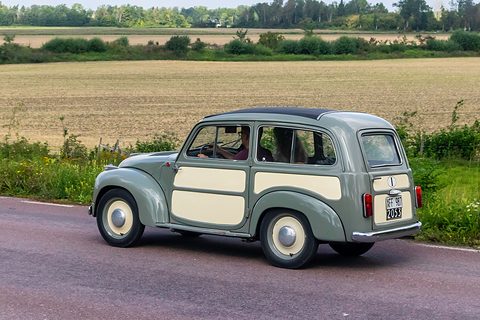
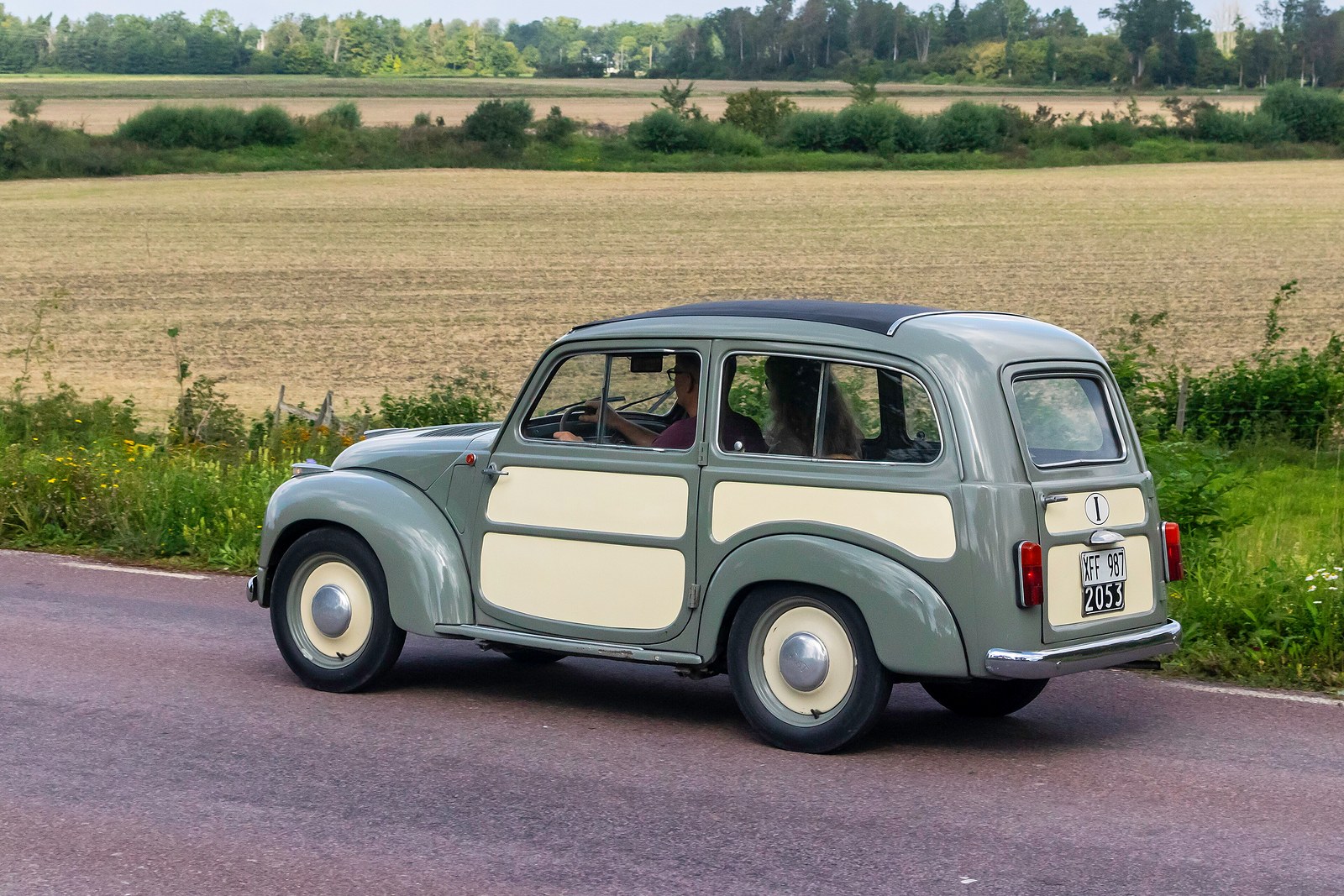
65 A grey and cream Fiat 500 C Belvedere at Dalhem, Gotland, in August 2023.
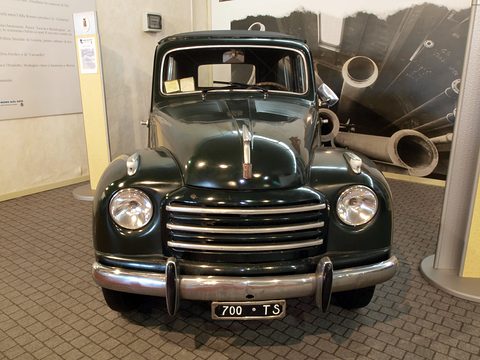
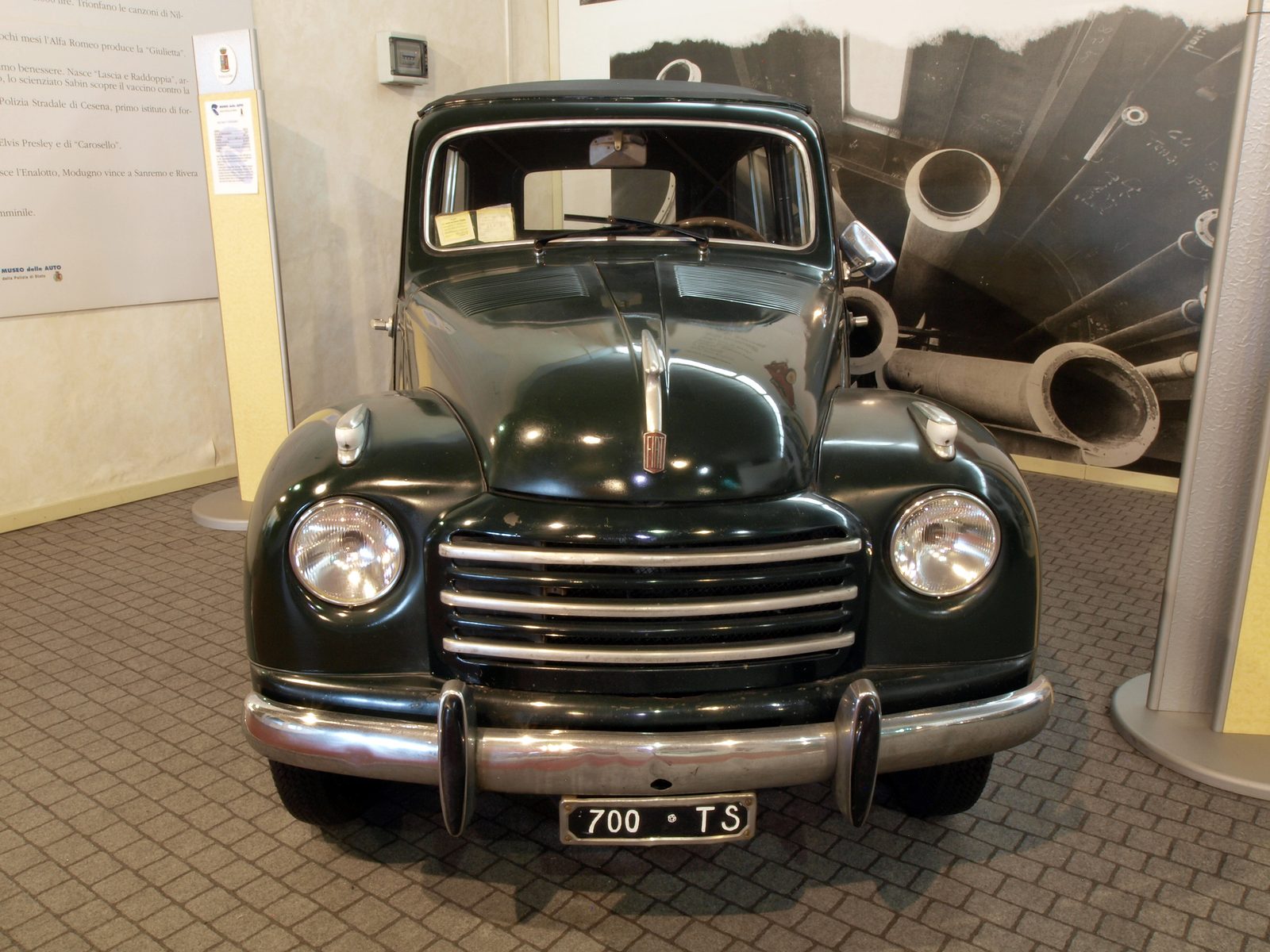
66 A dark green Fiat 500 C Belvedere police car, Polizia 700 TS, in Rome in October 2011.
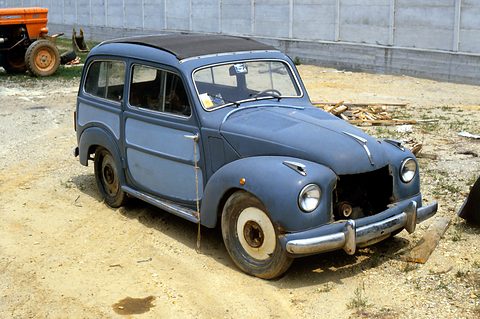
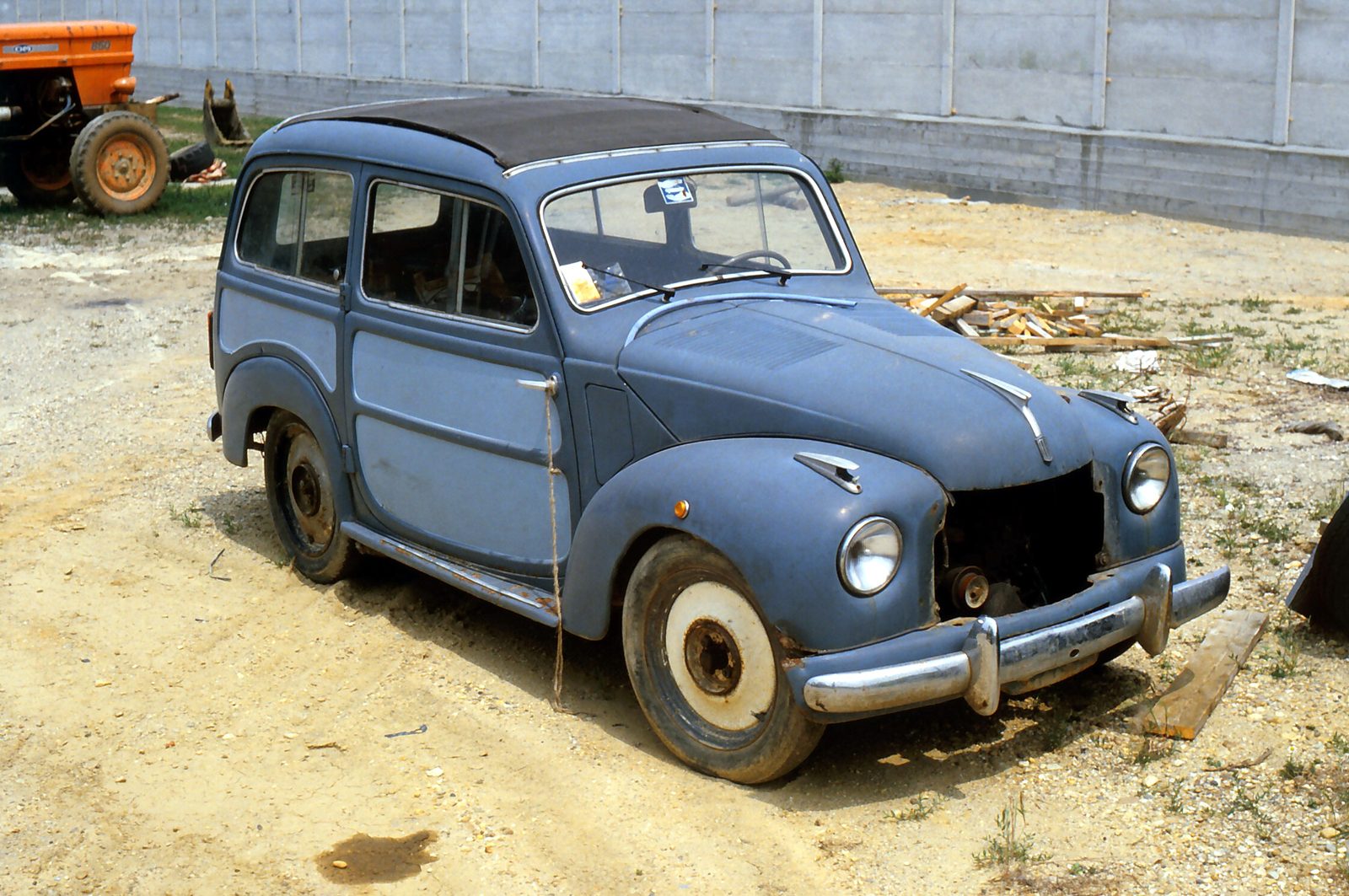
67 A weathered blue Fiat 500 C Belvedere, missing its grille, on a building site in October 2009.
15 more picturesFewer pictures
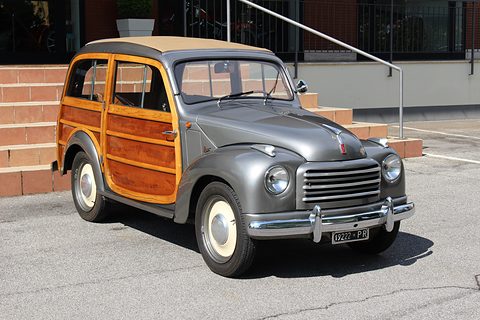
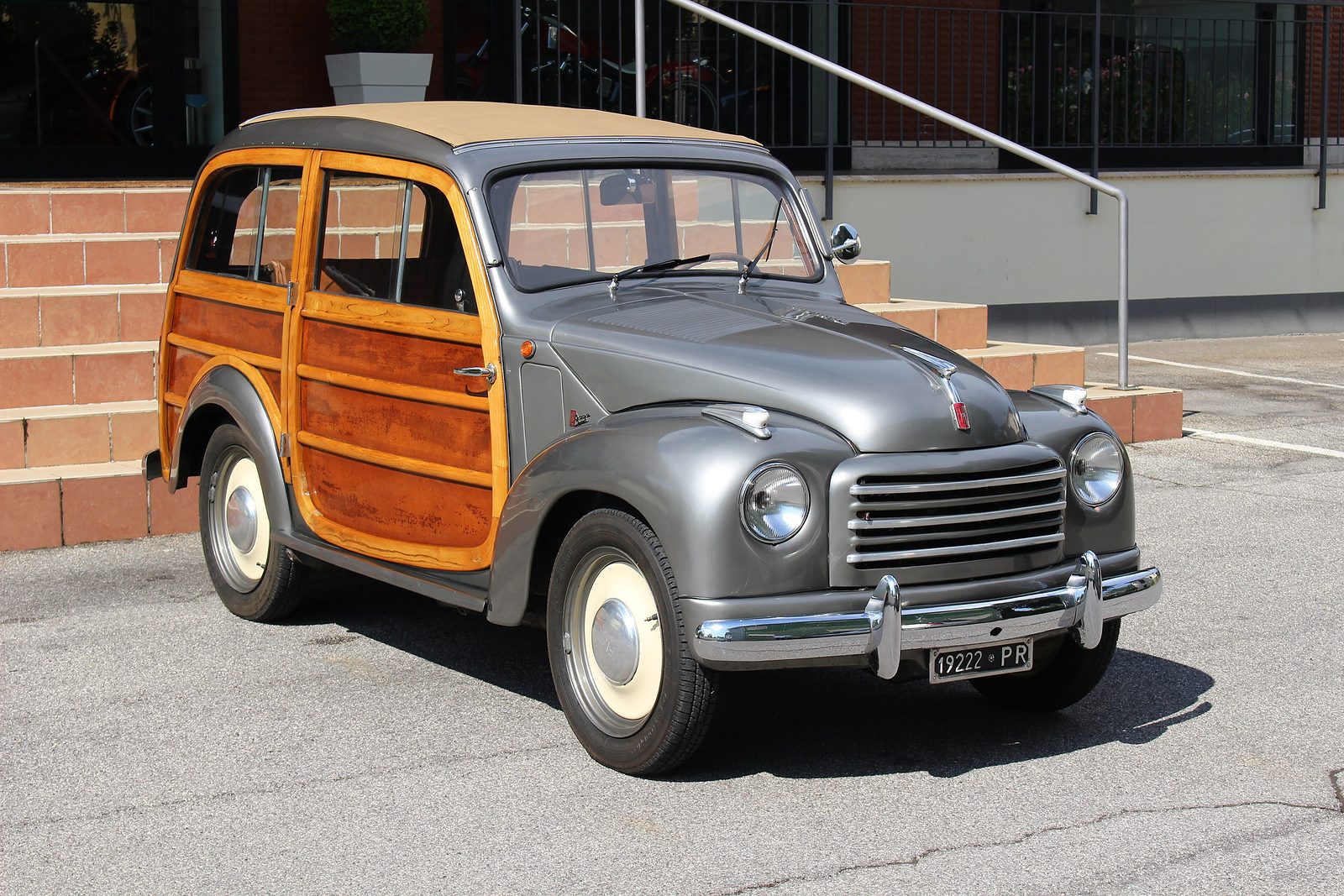
68 A grey Fiat 500 C Giardiniera with wooden sides at a club meeting in July 2016.
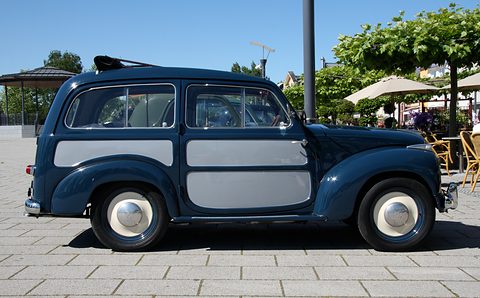
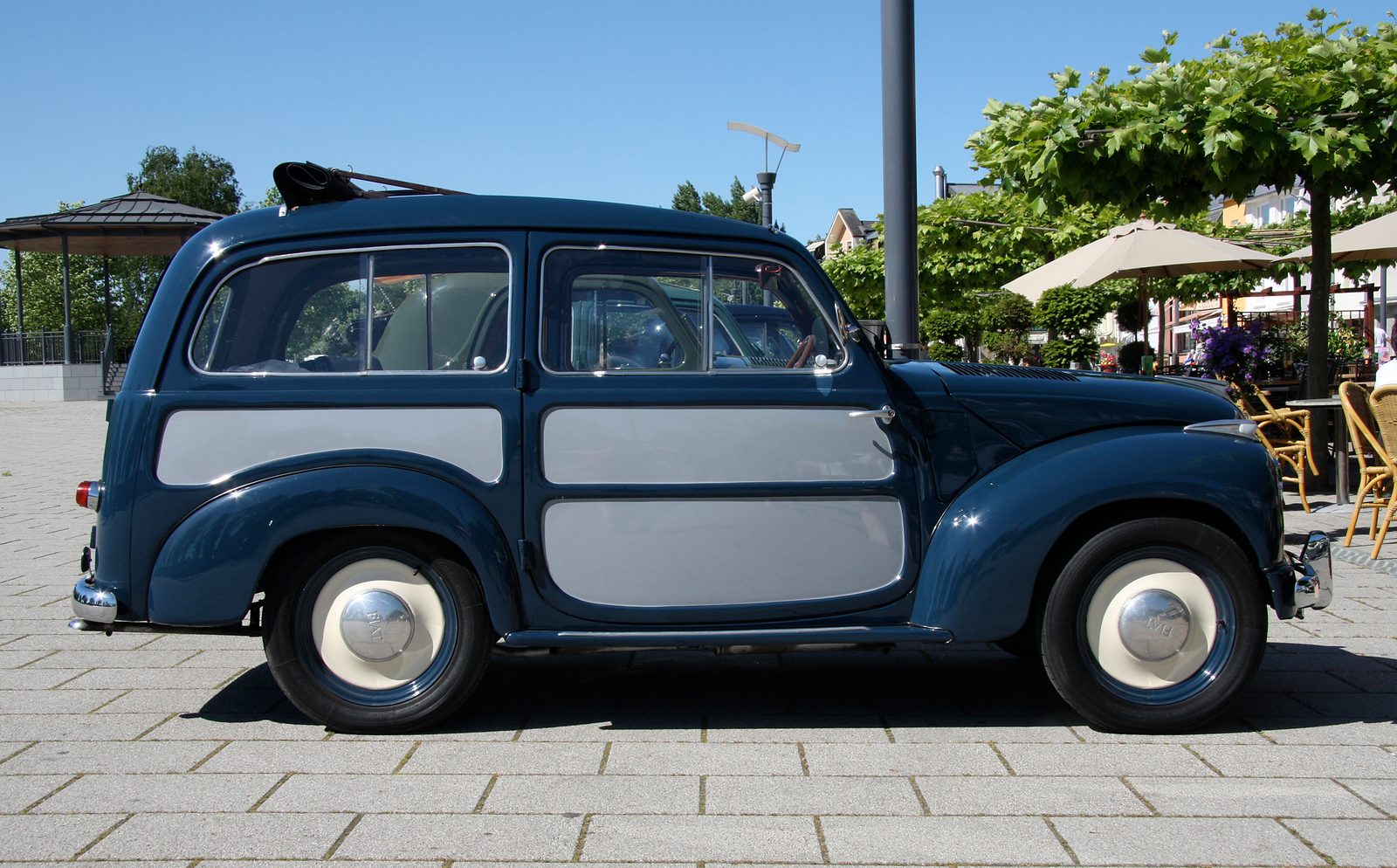
69 A navy and grey Fiat 500 C Belvedere in profile in Remich, Luxembourg, in May 2009.
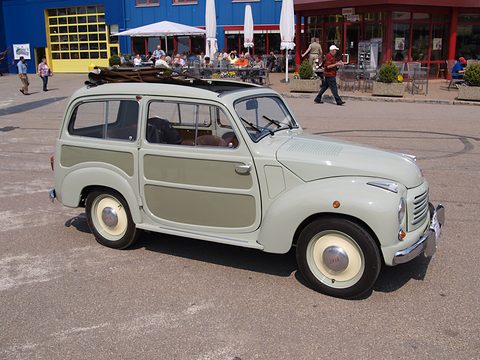
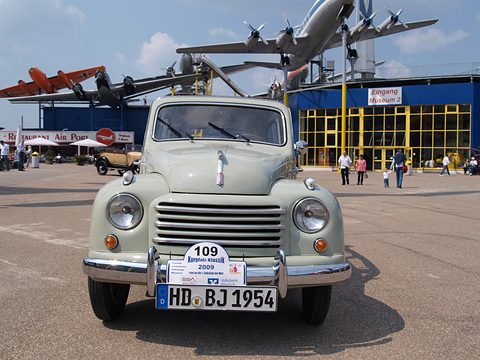
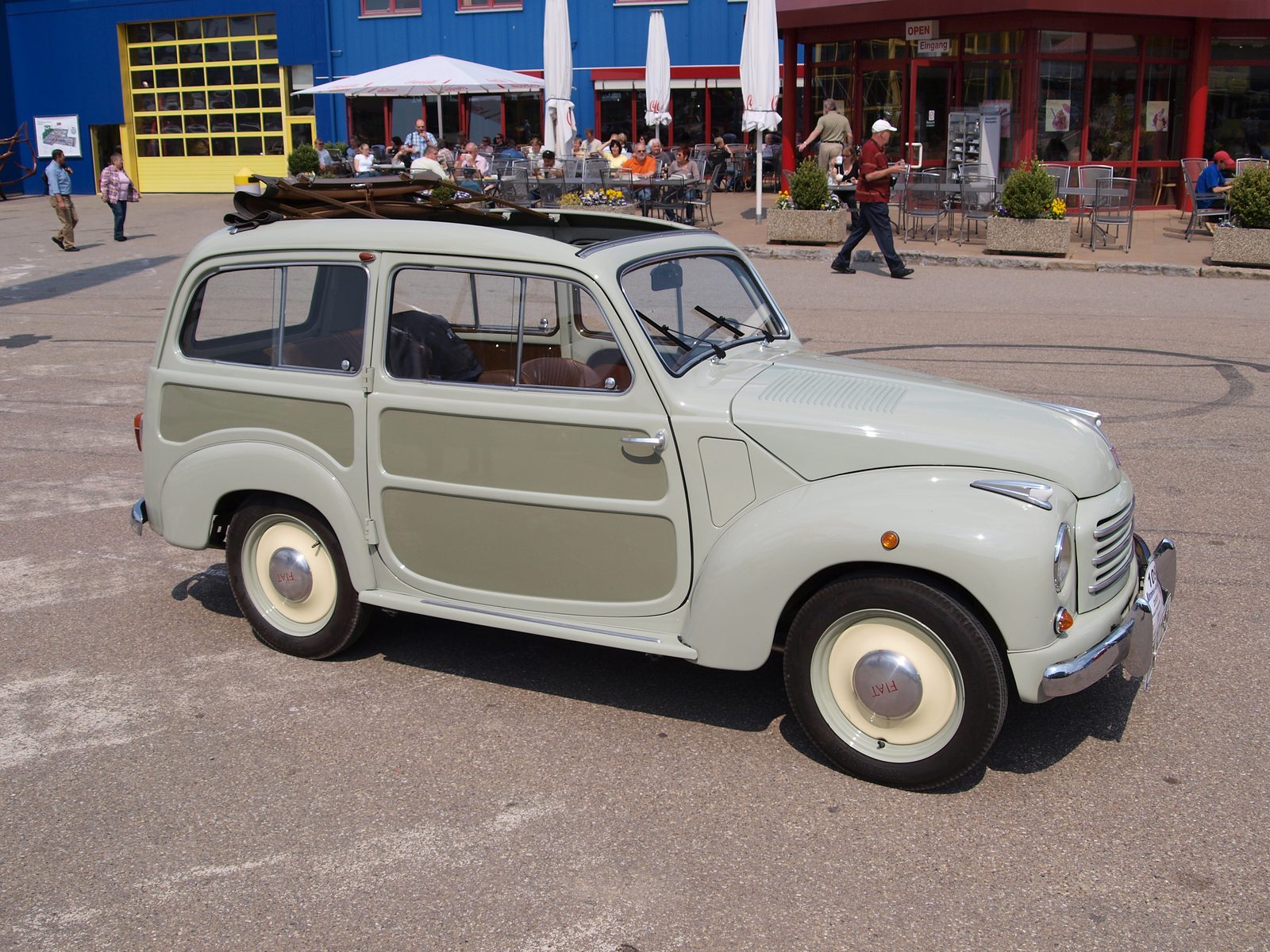
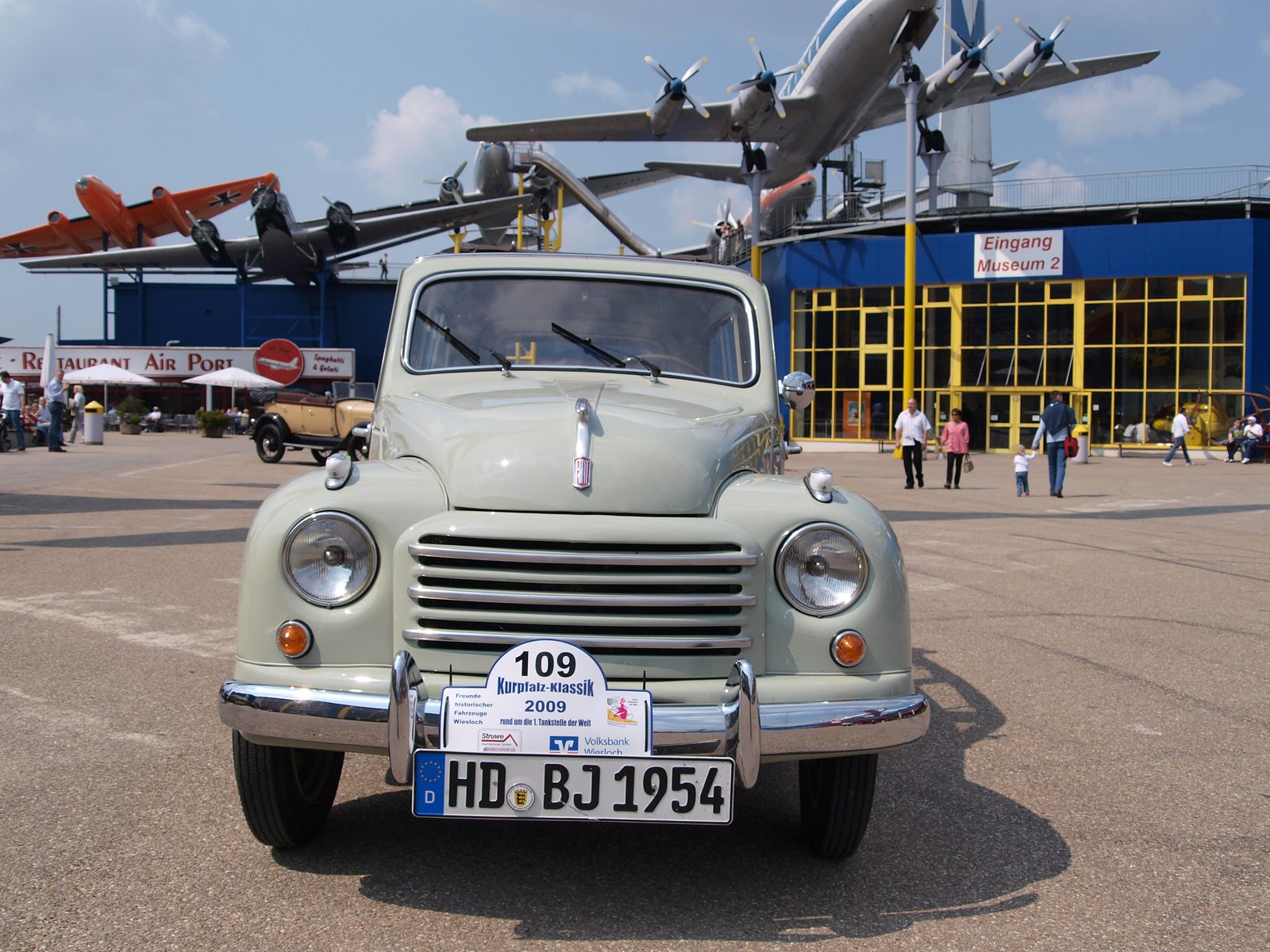
70 A pale green Fiat 500 C Belvedere with a roof rack at the Kurpfalz-Klassik, Technik Museum Sinsheim, in May 2009.
71 A grey 1950 Fiat 500 C Giardiniera with wooden sides at a club meeting in July 2016.
72 A two-tone green Fiat 500 C estate outside a trattoria in Via della Lungaretta, Rome, in October 2011.
73 A brown Fiat 500 C Giardiniera in profile at the Kurpfalz-Klassik, Technik Museum Sinsheim, in May 2009.
74 The rear of a green Fiat 500 C Belvedere at the Bonhams sale, Grand Palais, Paris, in February 2015.
75 A pale green Fiat 500 C Belvedere at Techno-Classica, Essen, in April 2016.
76 The rear of a grey and cream Fiat 500 C Belvedere at Dalhem, Gotland, in August 2023.
77 The rear of a grey Fiat 500 C Belvedere at a car show in Japan in July 2013.
78 The rear door of a pale green Fiat 500 C Belvedere at Techno-Classica, Essen, in April 2016.
79 A dark green Fiat 500 C Belvedere police car, Polizia 700 TS, seen head-on in Rome in October 2011.
80 A pale green Fiat 500 C Belvedere seen head-on at the Technik Museum Sinsheim in May 2009.
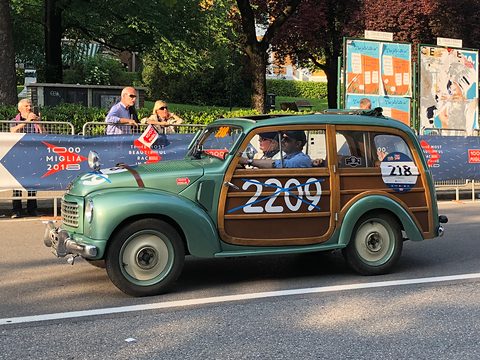
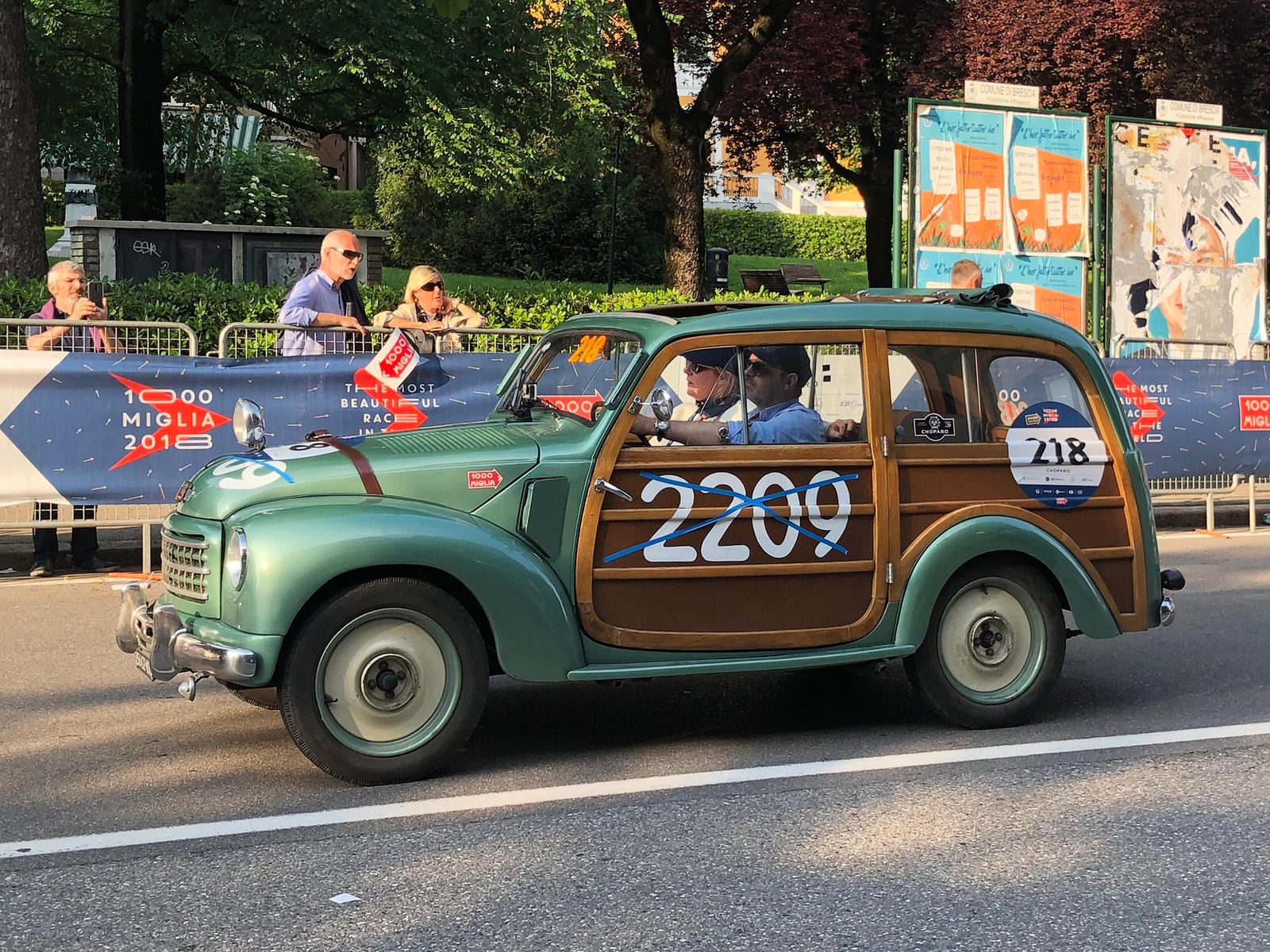
81 A 1951 Fiat 500 C Belvedere running in the 2018 Mille Miglia in Brescia in May 2018.
82 A grey and cream Fiat 500 C Belvedere on a country road at Gothem, Gotland, in August 2025.
The car: 500 C Furgoncino 4
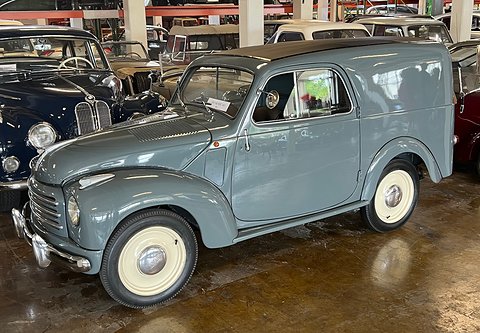
83 A grey 1953 Fiat 500 C Furgoncino van at the Lane Motor Museum, Nashville, in July 2024.
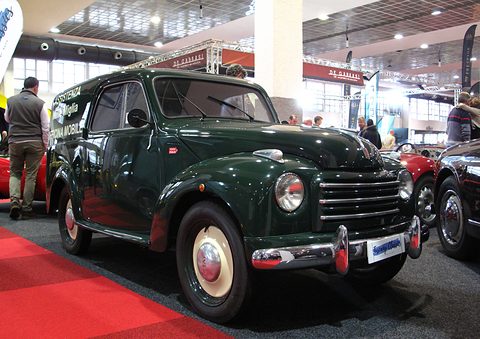
84 A dark green 1950 Fiat 500 C Furgoncino at InterClassics, Brussels, in November 2024.
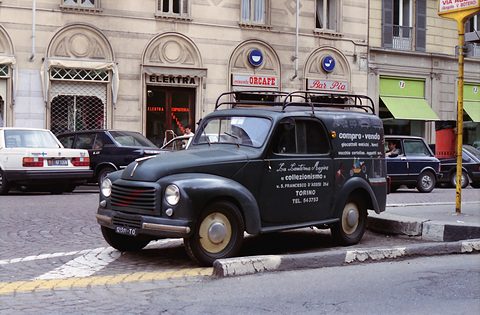
85 A black Fiat 500 C Furgoncino with a roof rack in a Turin street in November 2009.
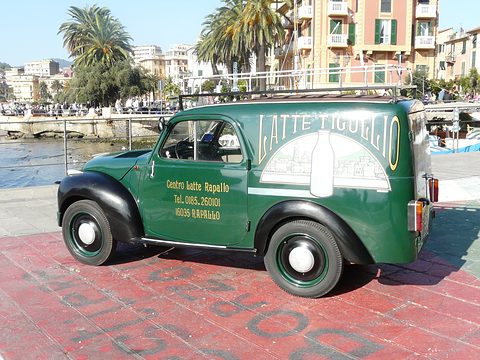
86 A green Fiat 500 C Furgoncino of the Centro Latte Rapallo dairy in Rapallo, Italy, in October 2008.
Inside and details 12
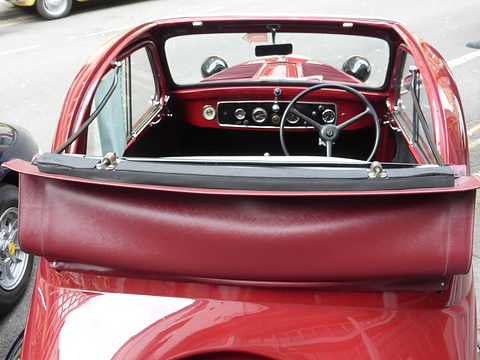
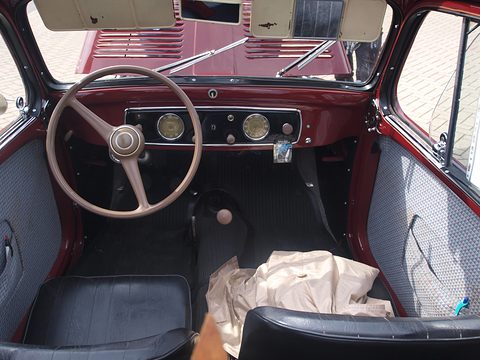
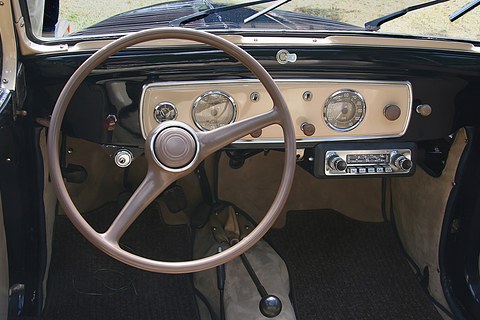
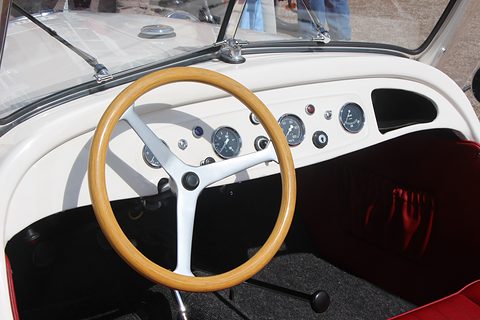
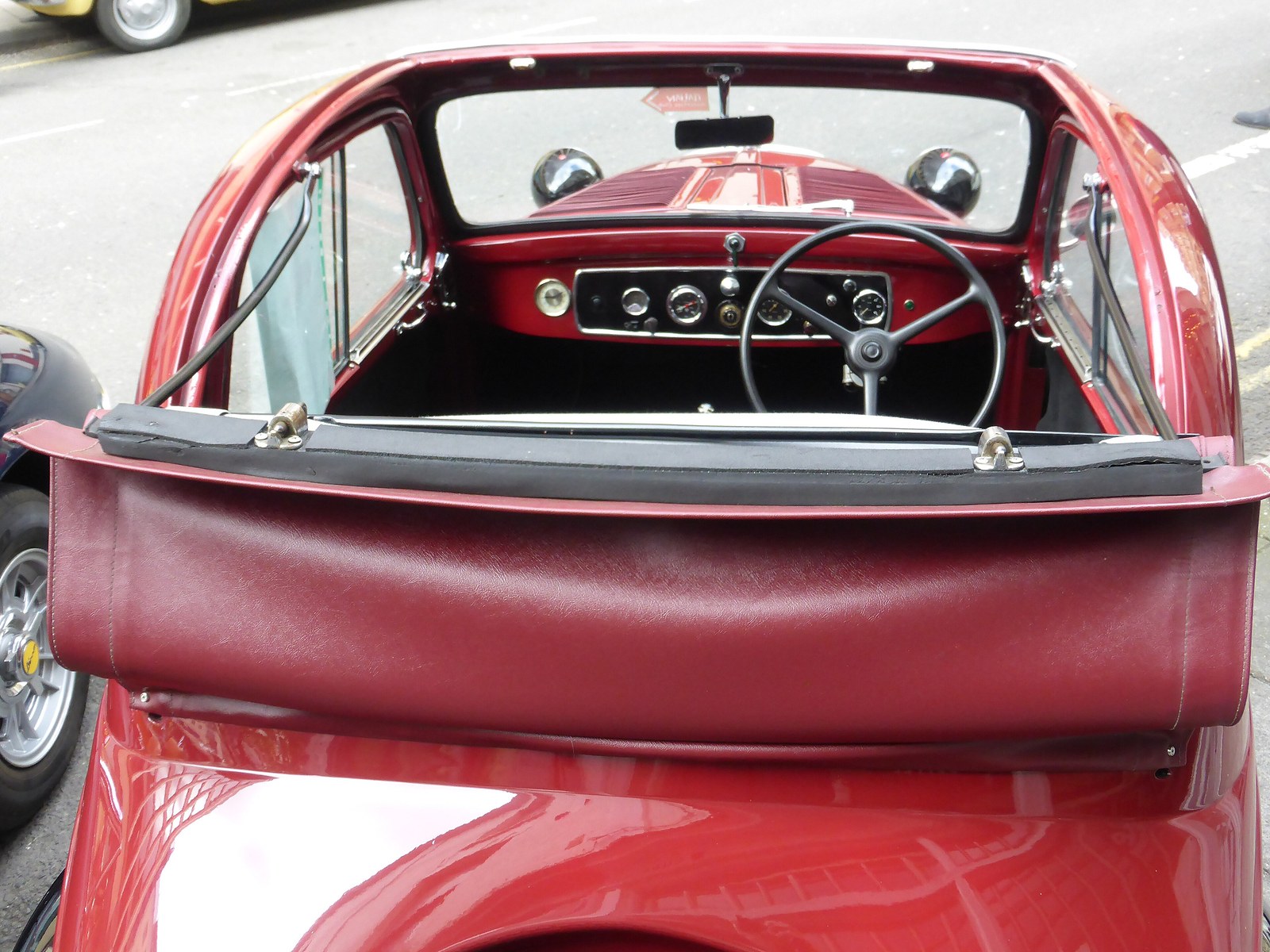
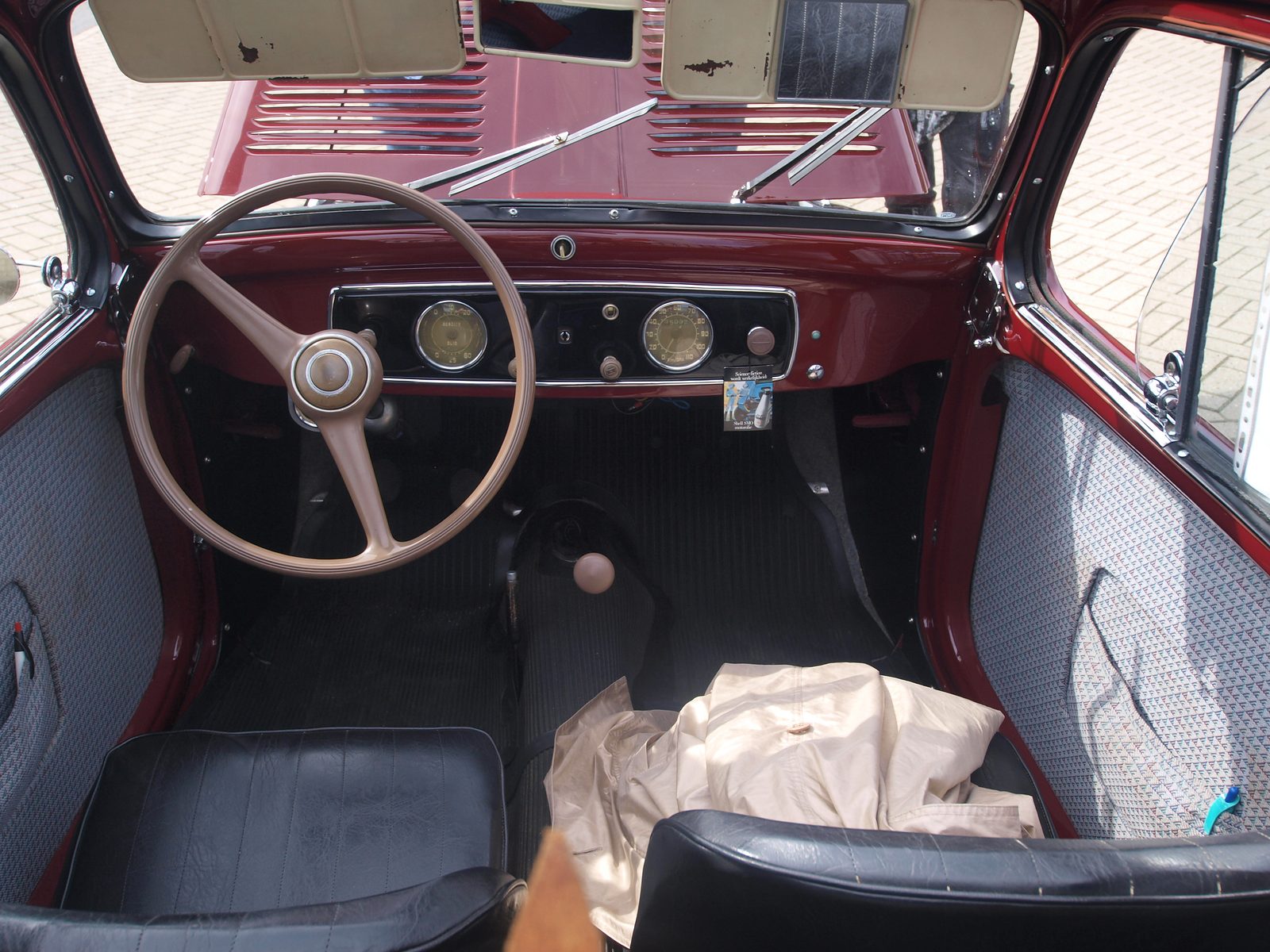
87 The cockpit of a 1937 Fiat 500 A trasformabile, seen over its rolled-back roof, at the Bristol Italian AutoMoto Festival in April 2017.
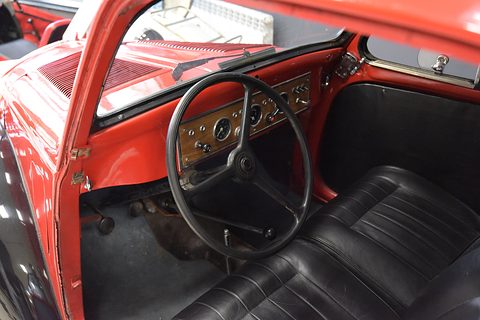
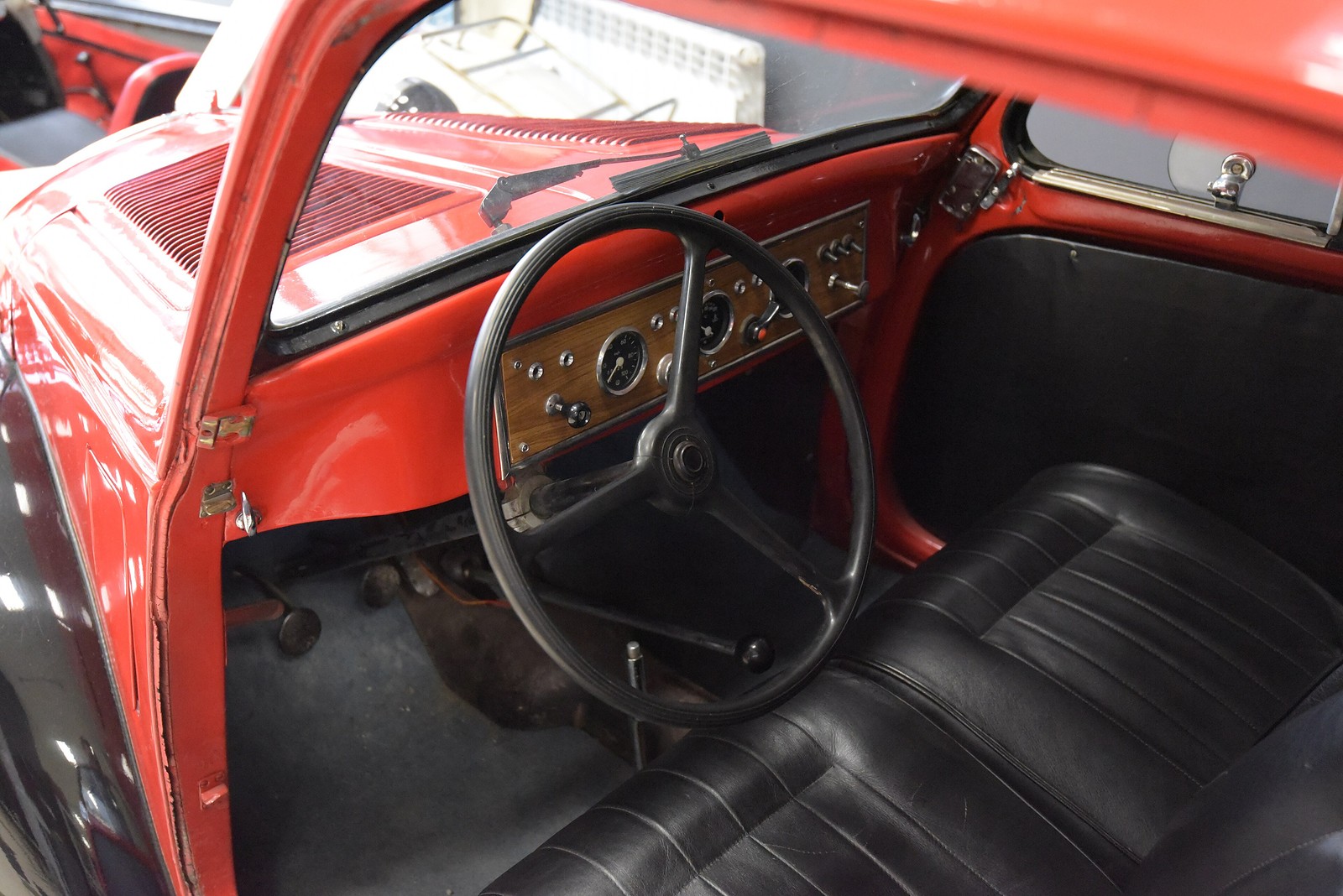
88 The cabin of a Fiat 500 C Belvedere at the Technik Museum Sinsheim in May 2009.
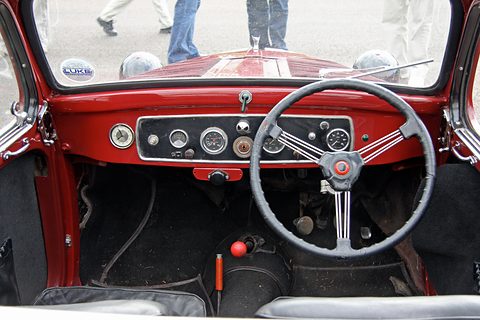
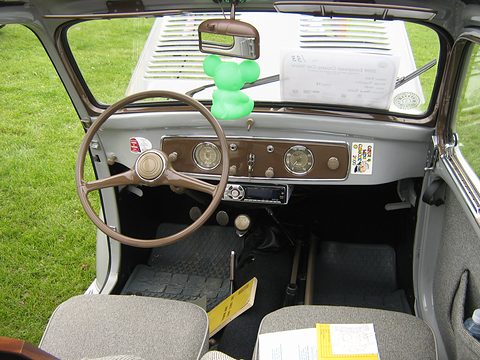
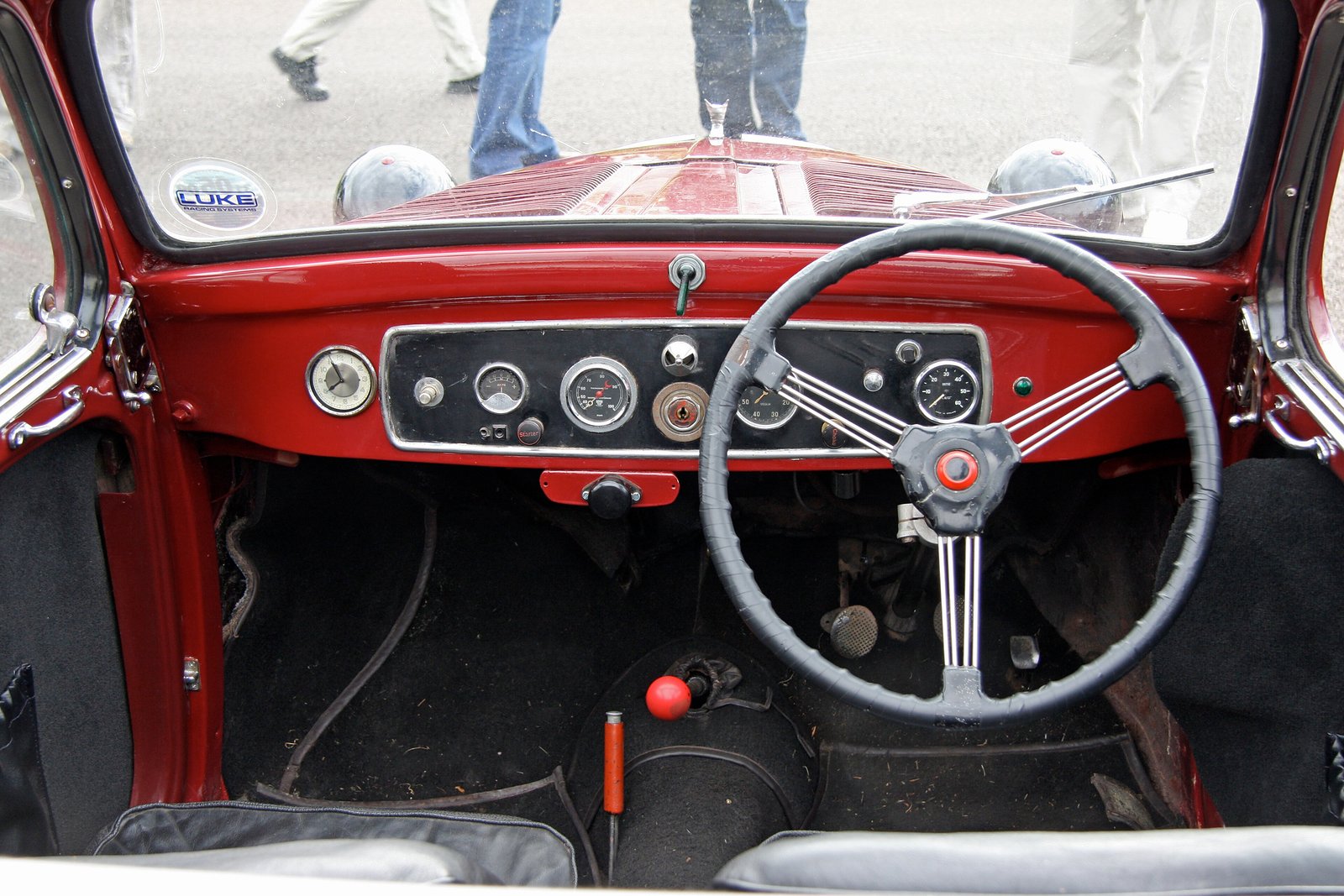
89 The dashboard of a 1937 Fiat 500 A at a car show in England in July 2008.
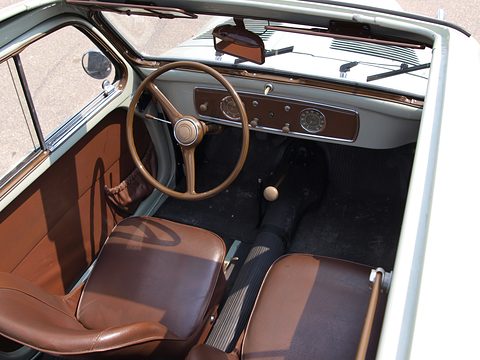
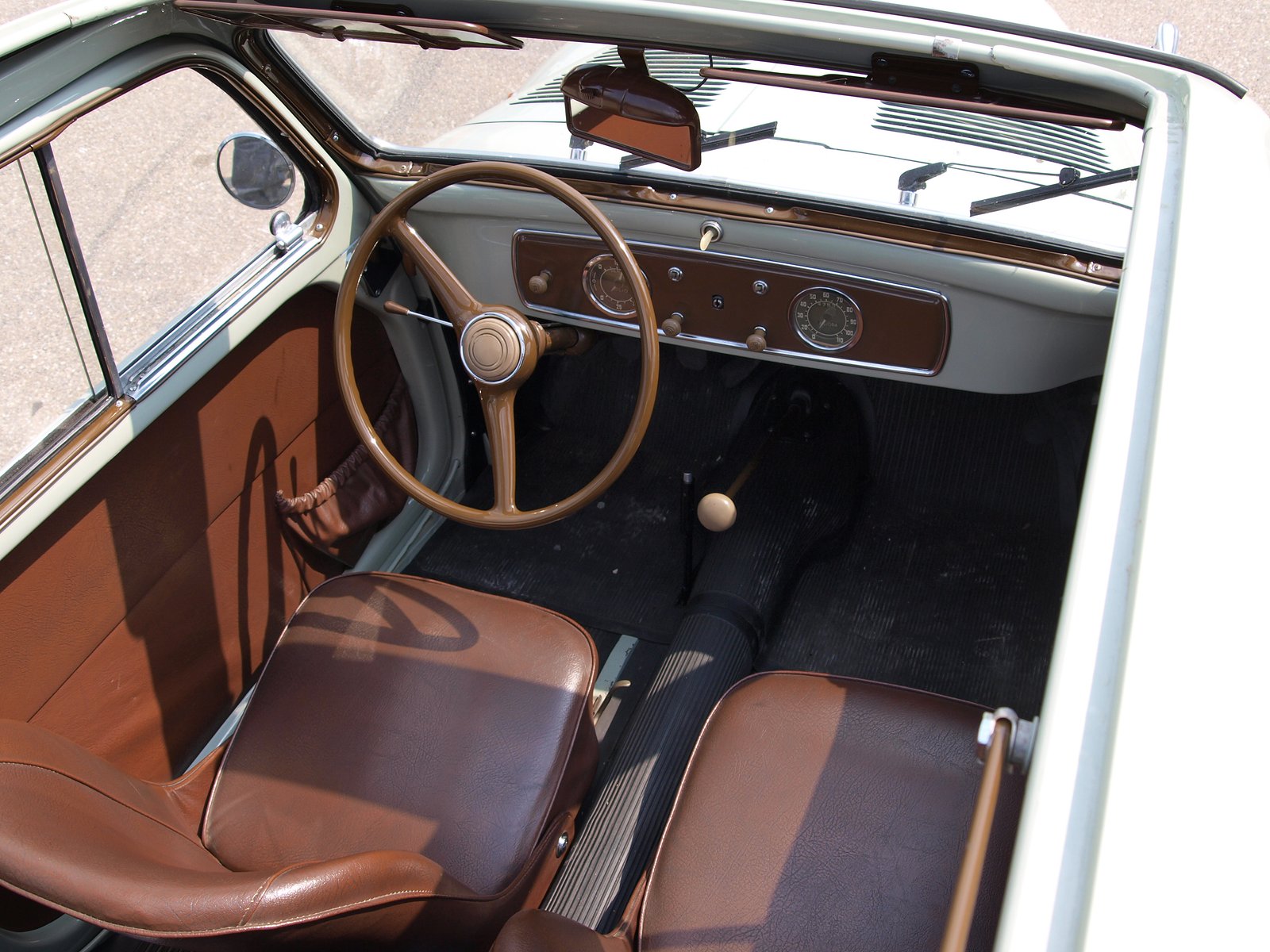
90 The dashboard and bench seat of a 1936 Fiat 500 A at the National Polytechnic Museum, Sofia, in March 2017.
91 The unrestored blue 1937 Fiat 500 A with its bonnet open at Rangiora, New Zealand, in January 2017.
7 more picturesFewer pictures
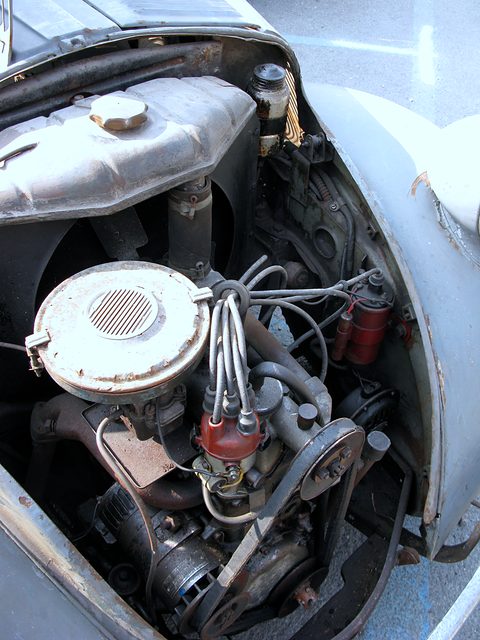
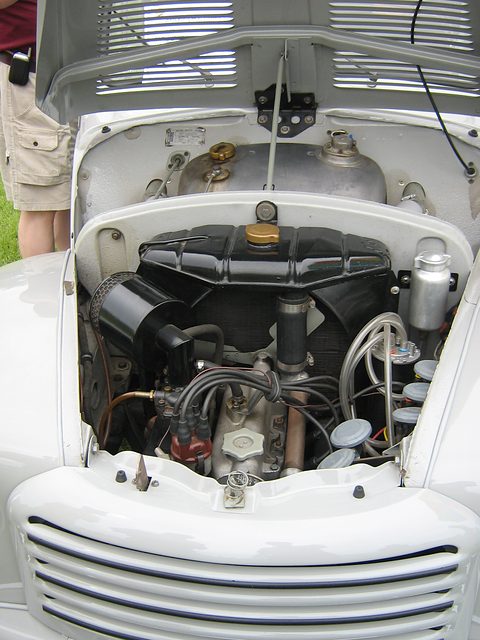
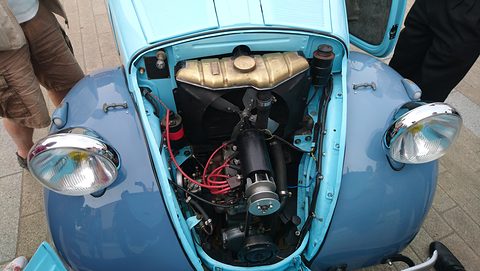
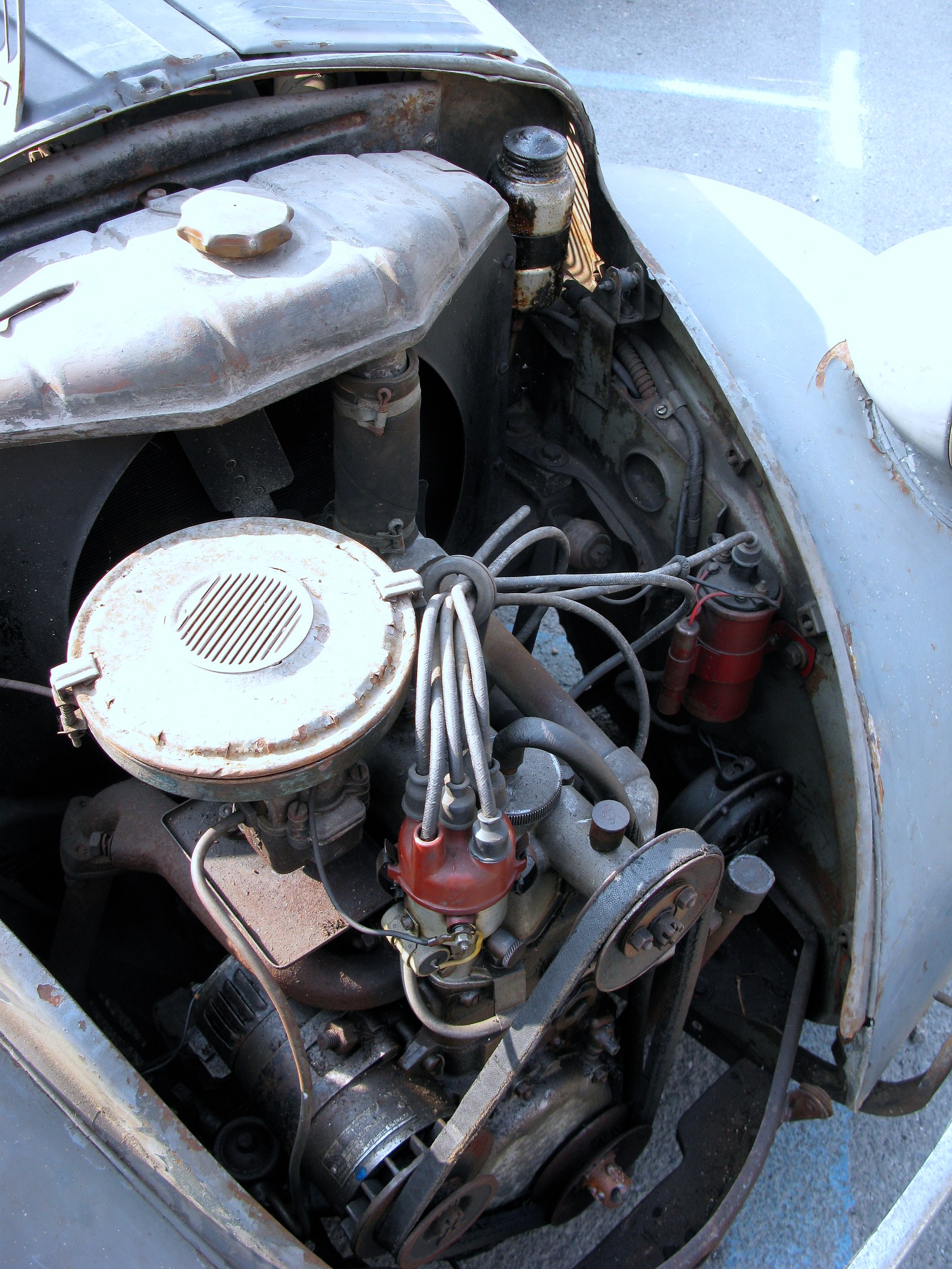
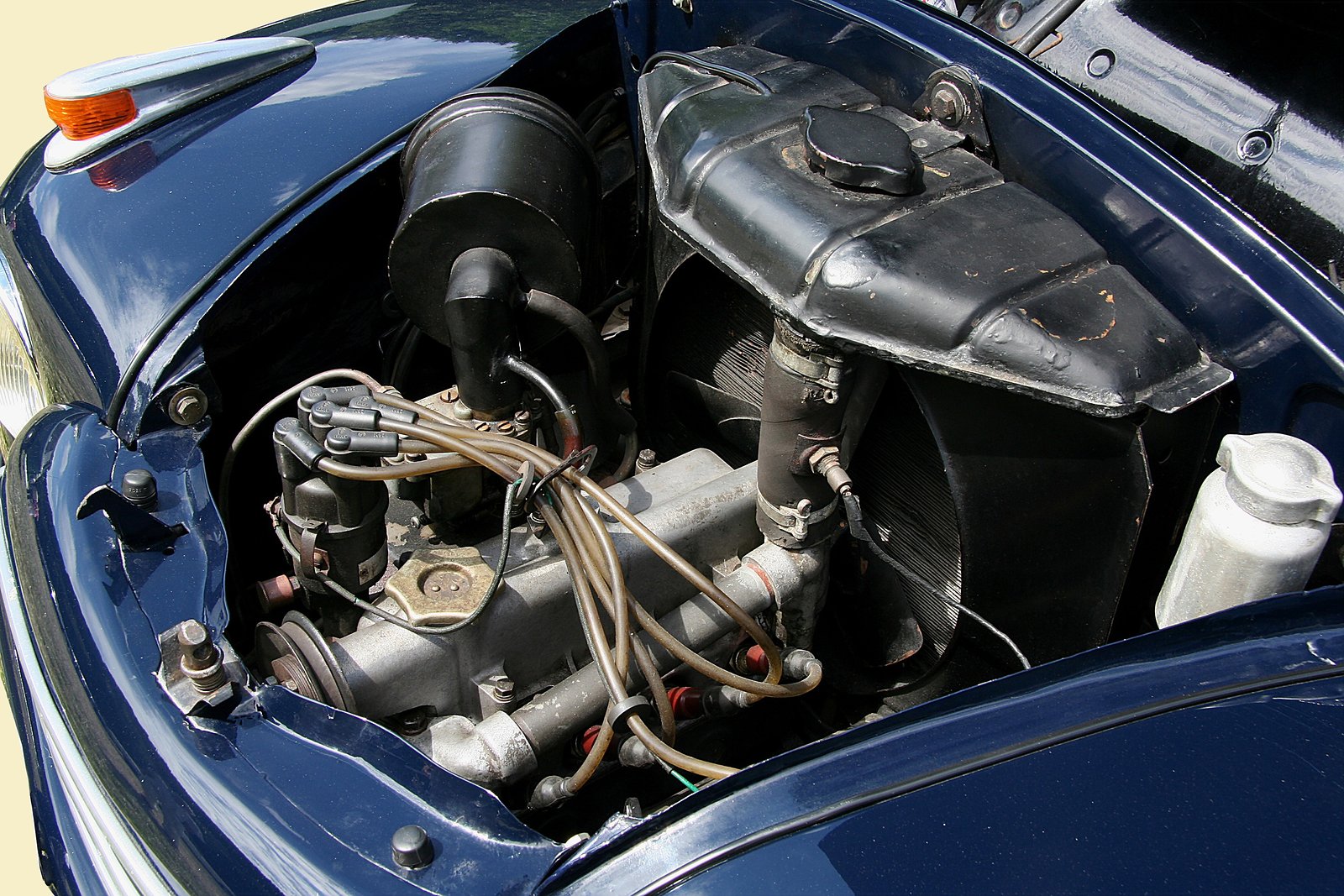
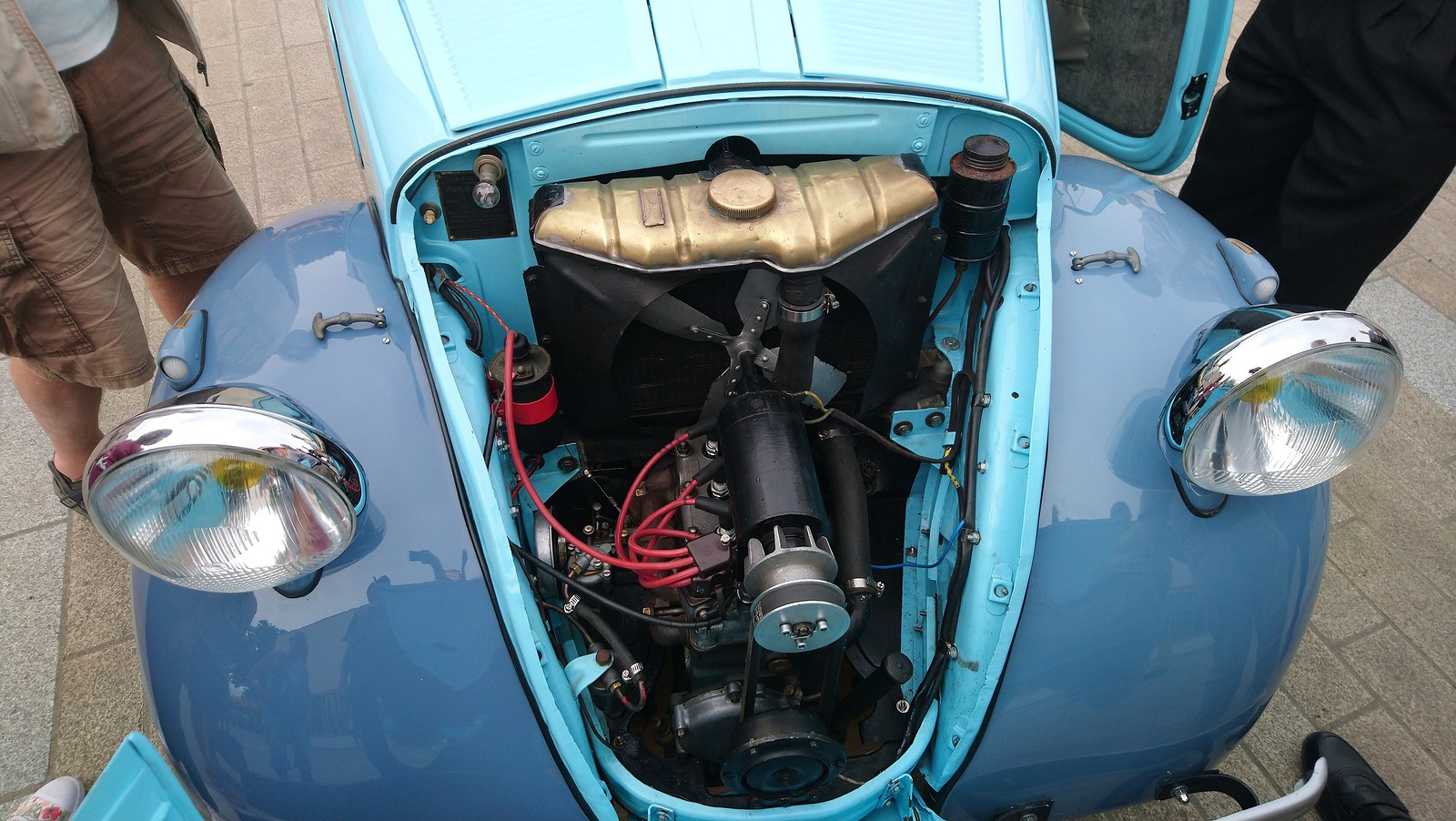
92 The engine bay of a Fiat 500 Topolino with its bonnet raised, in Italy in November 2019.
93 The engine bay of a Fiat 500 C Belvedere at a car show in Japan in July 2013.
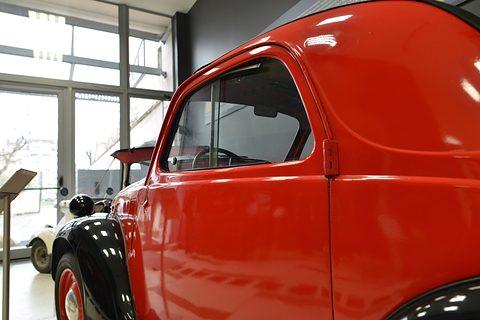
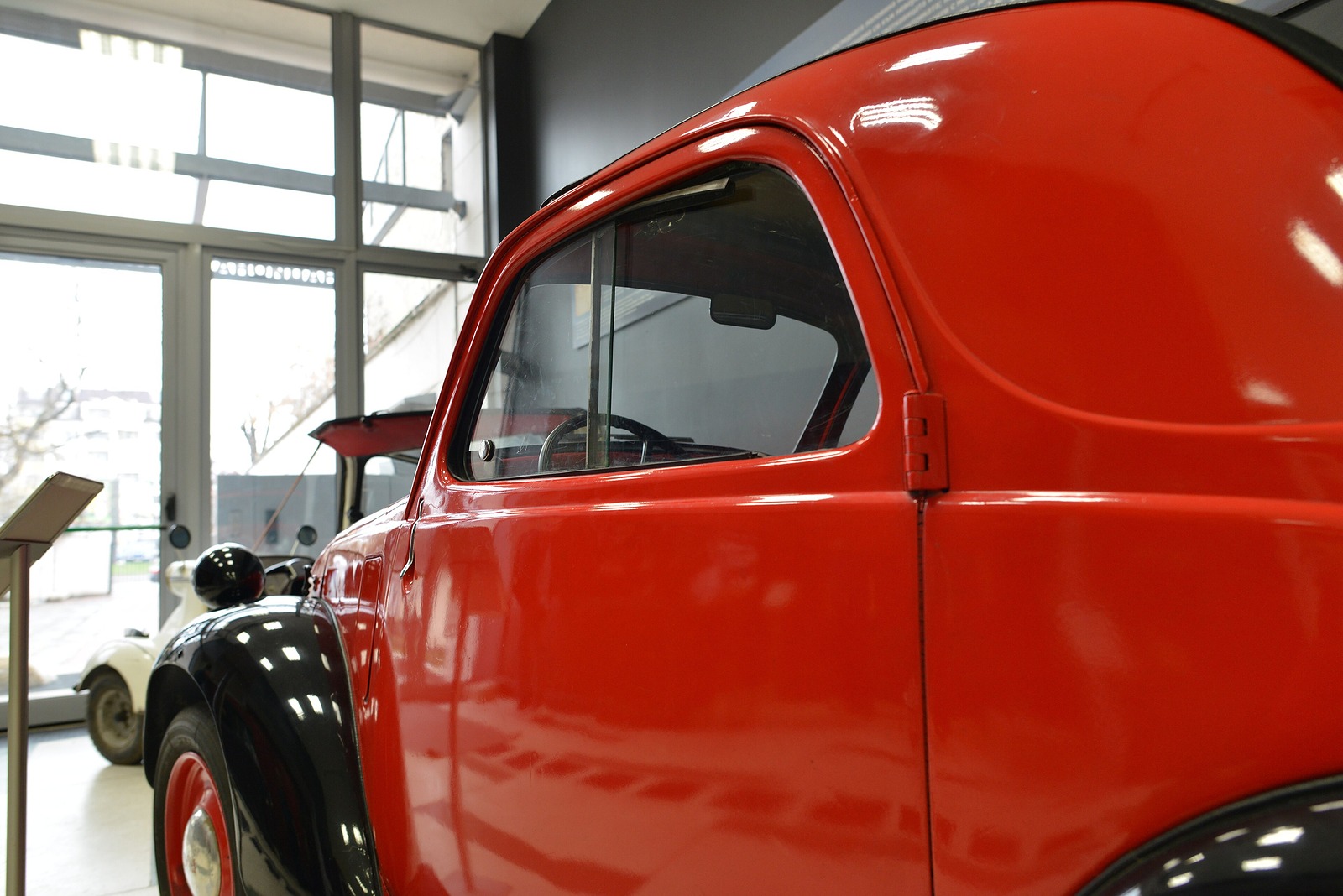
94 The flank and door of a red and black 1936 Fiat 500 A at the National Polytechnic Museum, Sofia, in March 2017.
95 The tall grille of a 1937 Fiat 500 A at the Bristol Italian AutoMoto Festival in April 2017.
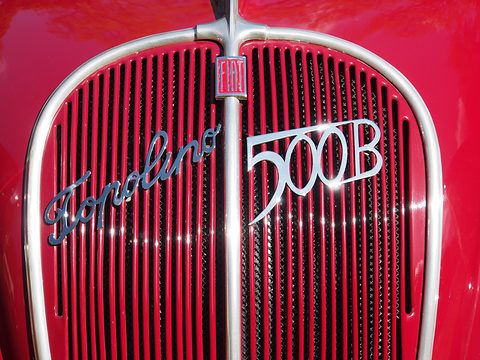
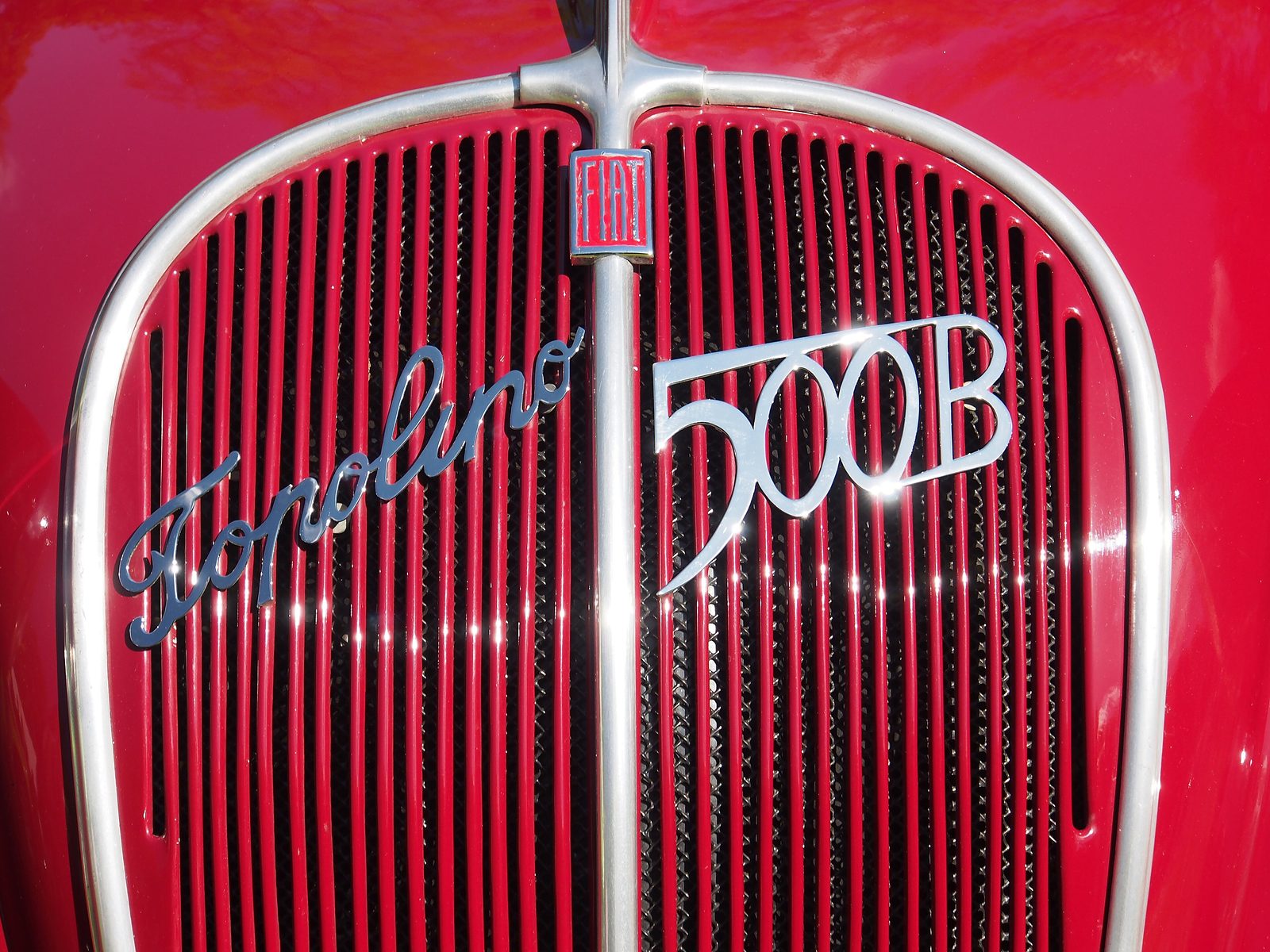
96 The ‘Topolino 500B’ script on the grille of a 1948 Fiat 500 B at Steyl, Netherlands, in June 2013.
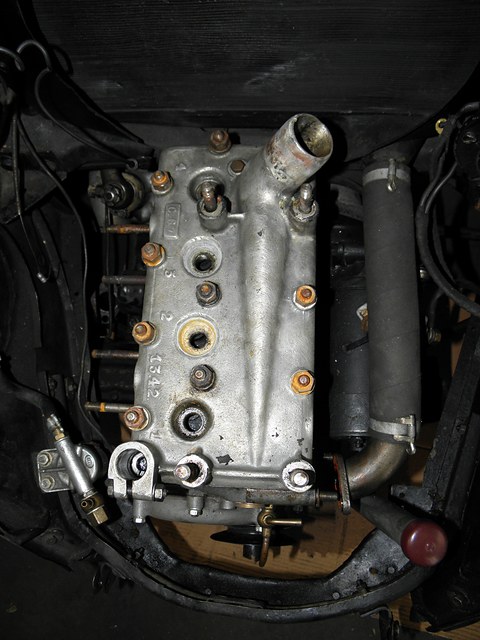
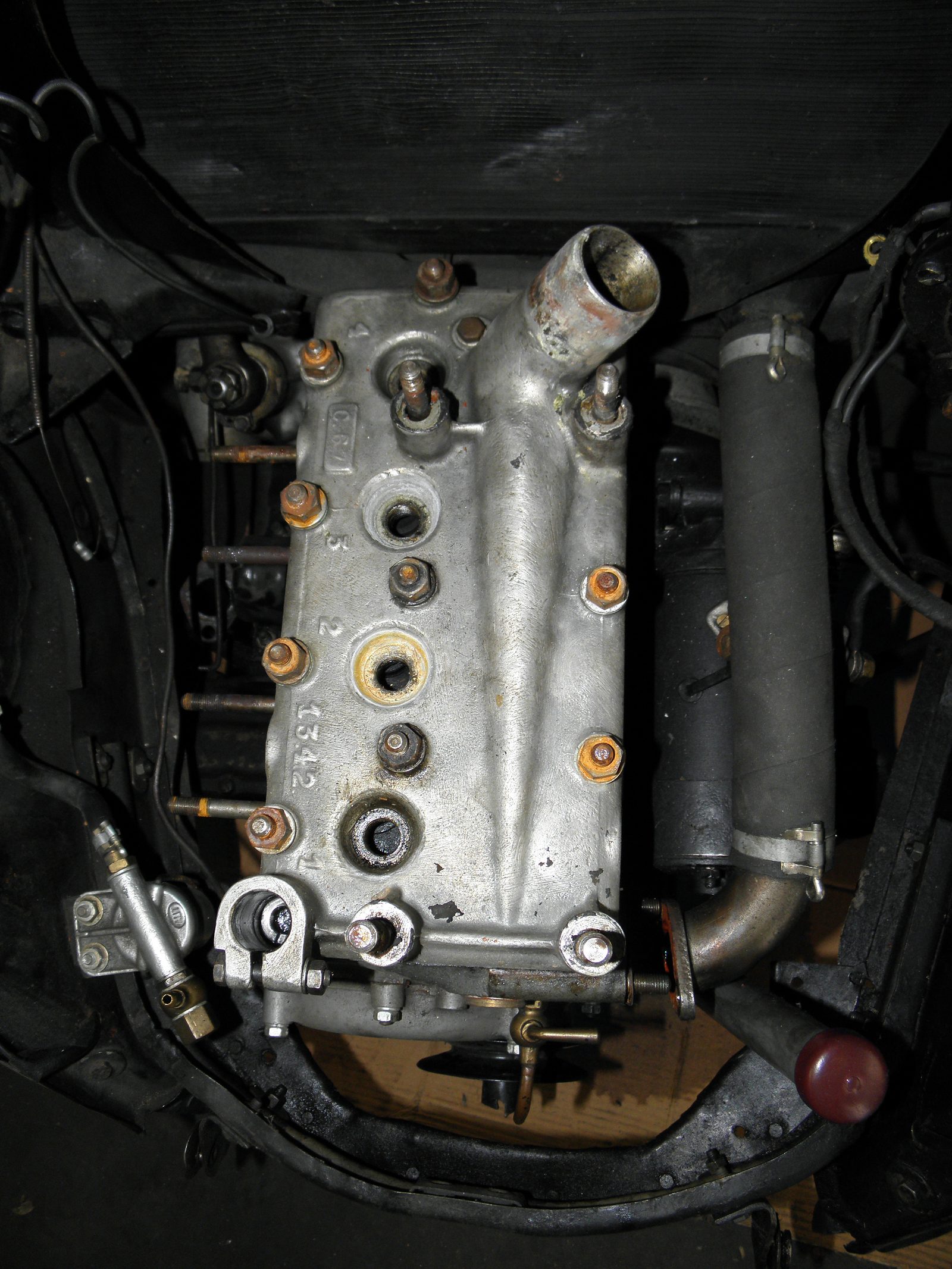
97 The four-cylinder engine of a Fiat 500 Topolino seen from above, in Italy in November 2019.
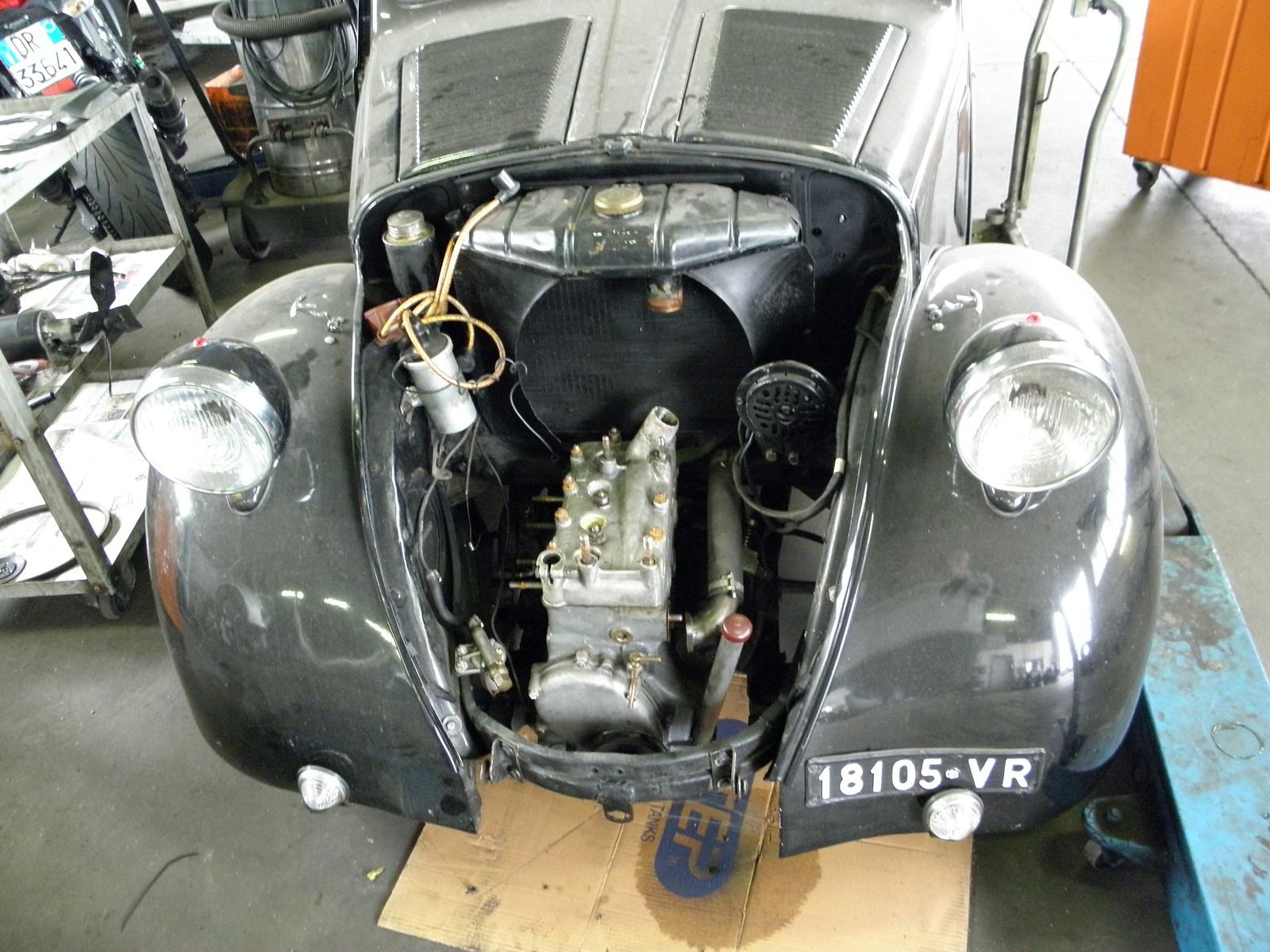
98 The overhead-valve four-cylinder engine of a Fiat 500 B at Acqui Terme, Italy, in October 2008.
Inside and details: 500 C 8
99 The cabin of a 1949 Fiat 500 C in Hoofddorp, Netherlands, in September 2011.
100 The dashboard of a 1949 Fiat 500 C registered in Alberta, Canada, in July 2009.
101 The dashboard of a 1949 Fiat 500 C at the oldtimer meeting in Vallendar, Germany, in July 2007.
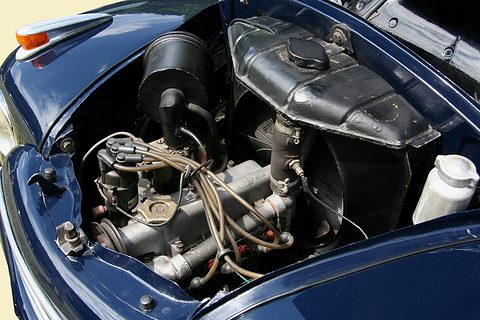
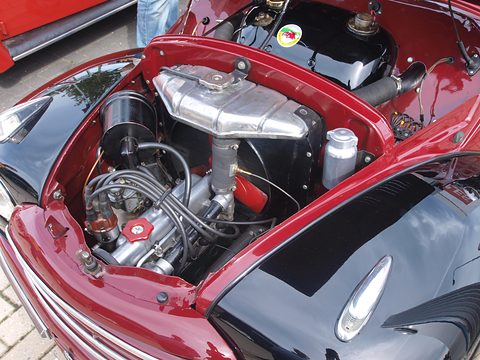
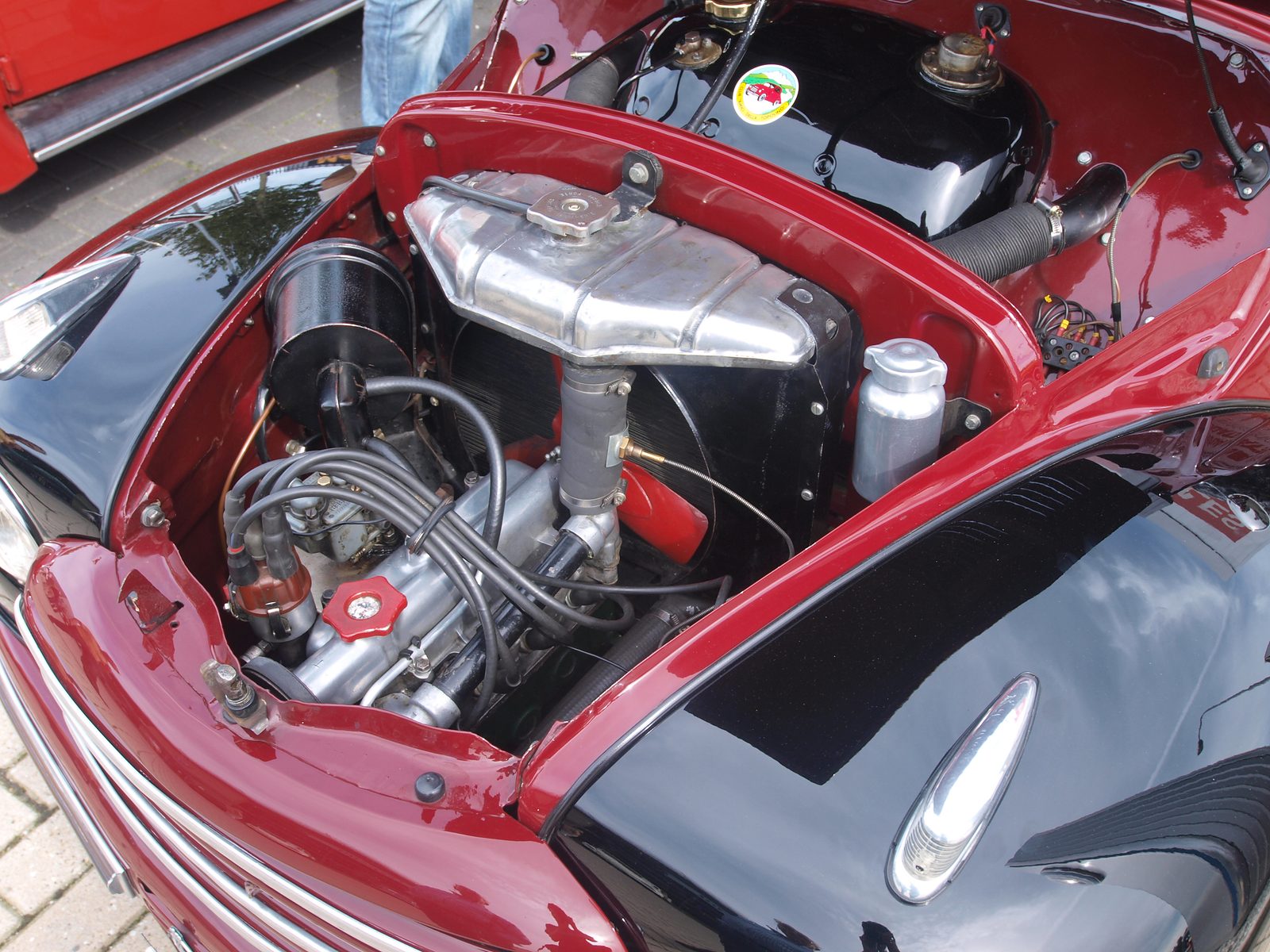
102 The engine bay of a 1949 Fiat 500 C registered in Alberta, Canada, in July 2009.
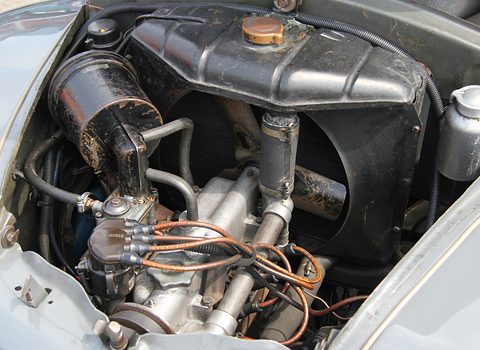
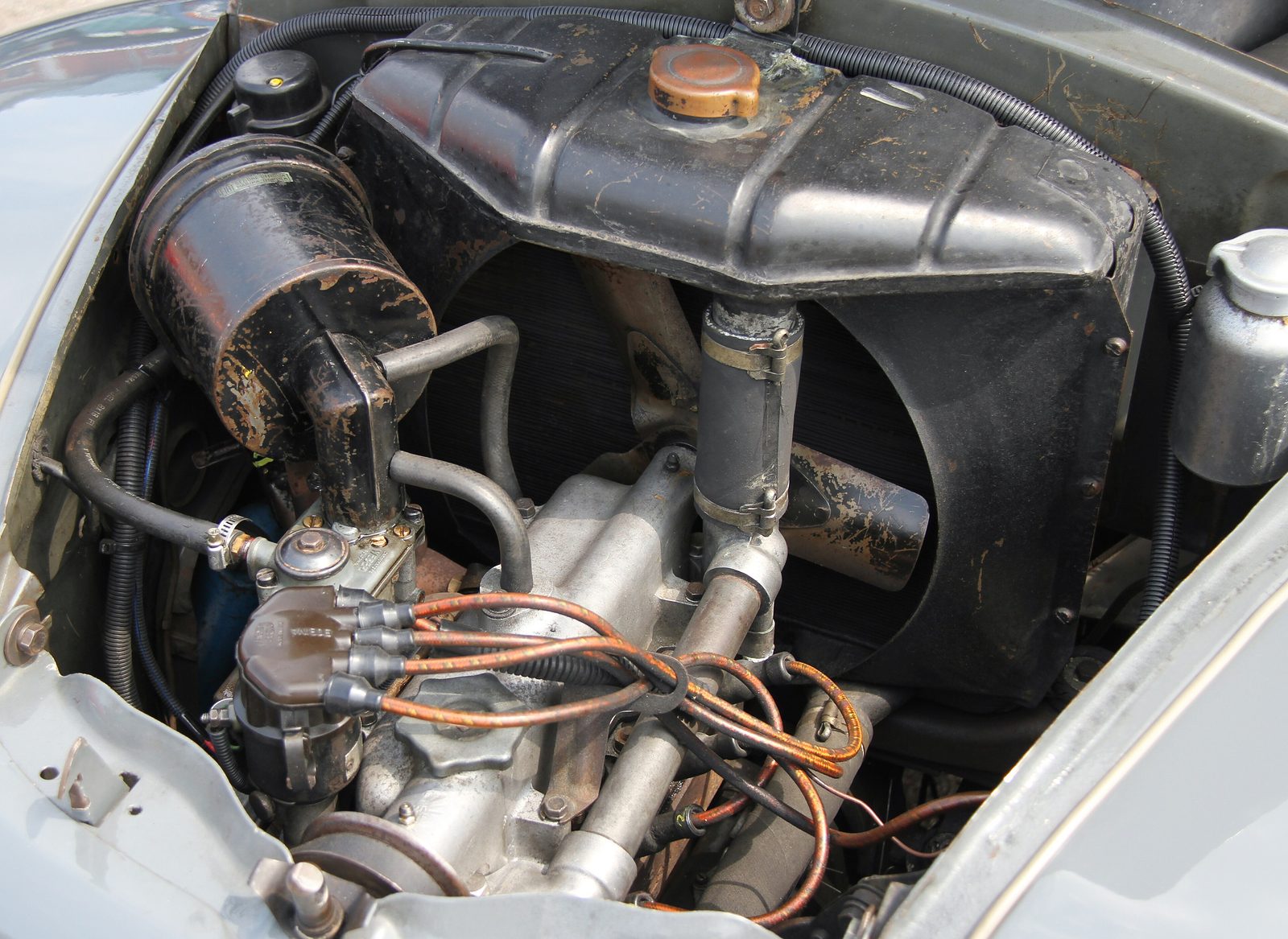
103 The engine of a 1949 Fiat 500 C, with its radiator behind it, at Vallendar, Germany, in July 2007.
104 The engine bay of a 1949 Fiat 500 C in Hoofddorp, Netherlands, in September 2011.
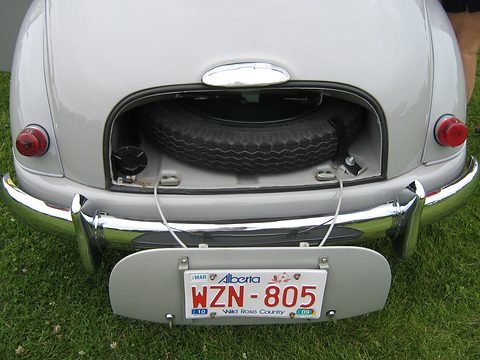
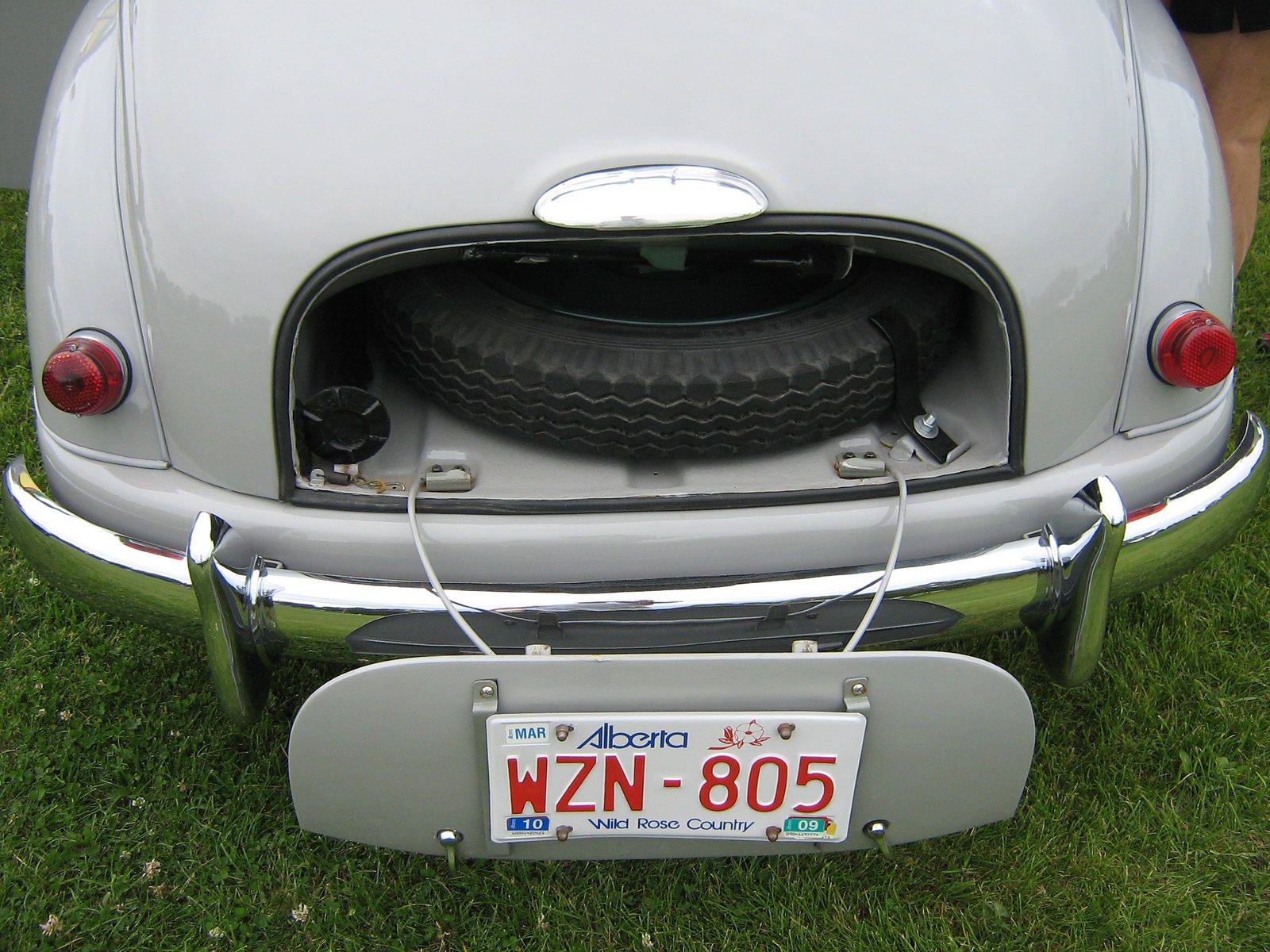
105 The spare wheel stowed in the tail of a 1949 Fiat 500 C registered in Alberta, Canada, in July 2009.
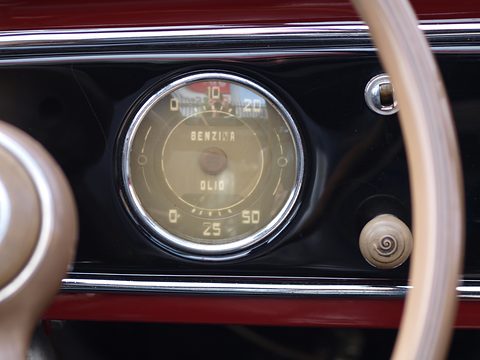
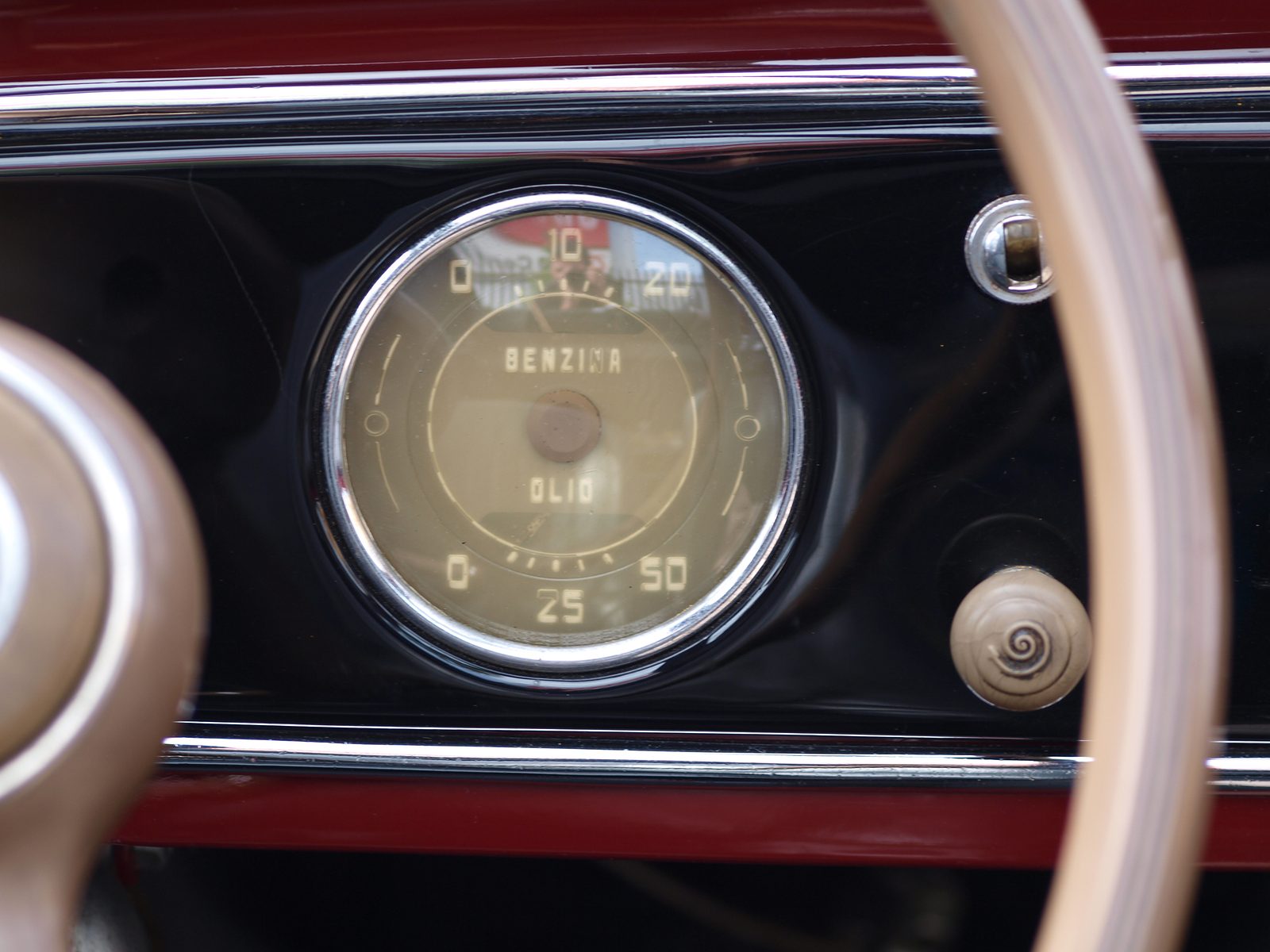
106 The fuel and oil gauge on the dashboard of a 1949 Fiat 500 C in Hoofddorp, Netherlands, in September 2011.
Variants and relatives 9
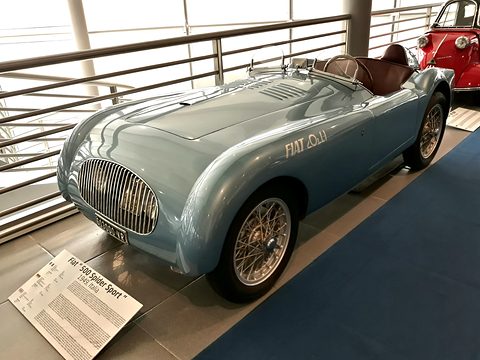
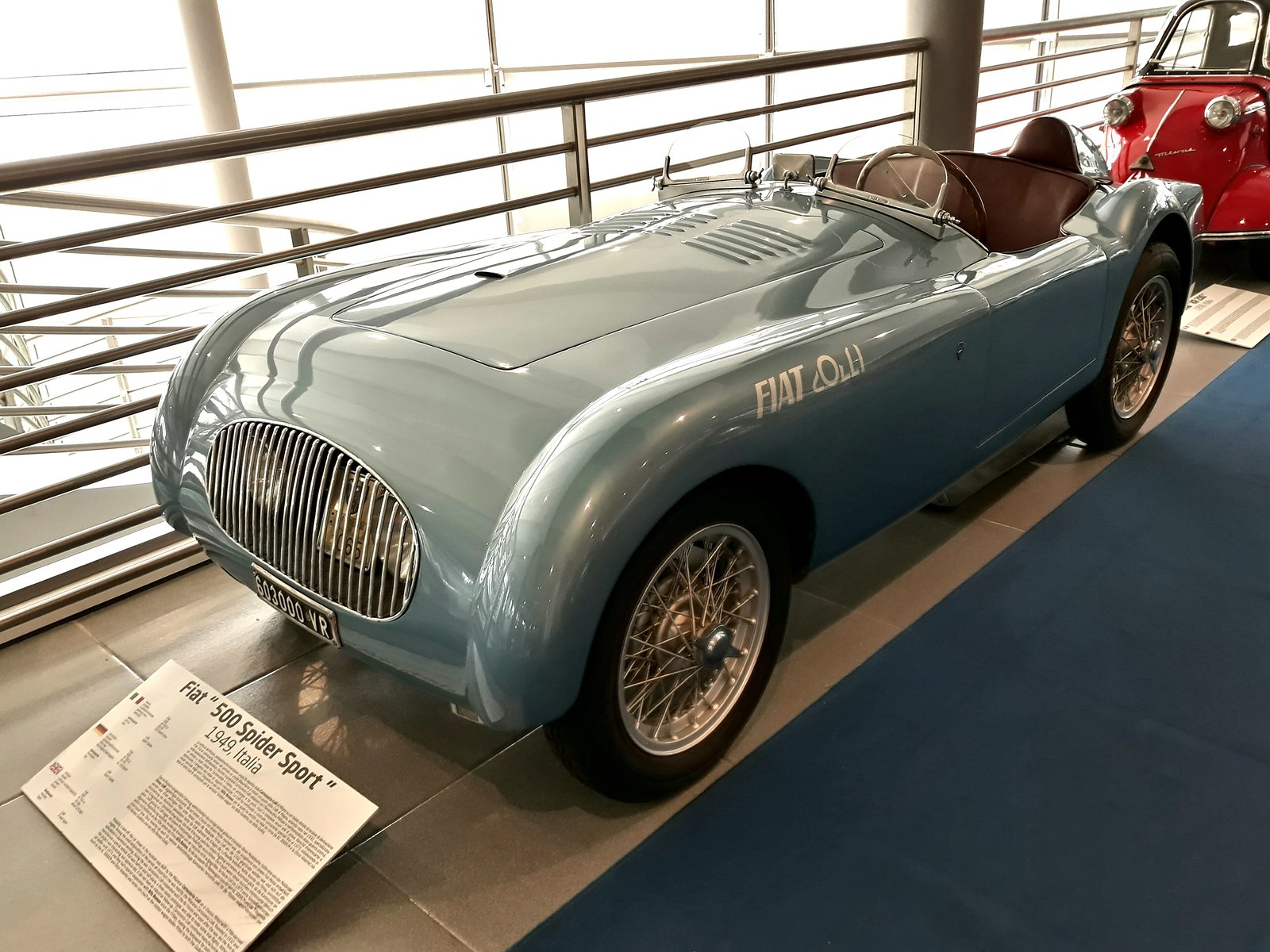
107 A pale blue 1949 Fiat 500 barchetta bodied by Carrozzeria Colli at the Museo Nicolis, Villafranca di Verona, in September 2018.
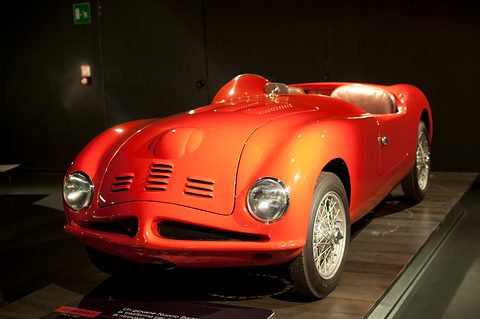
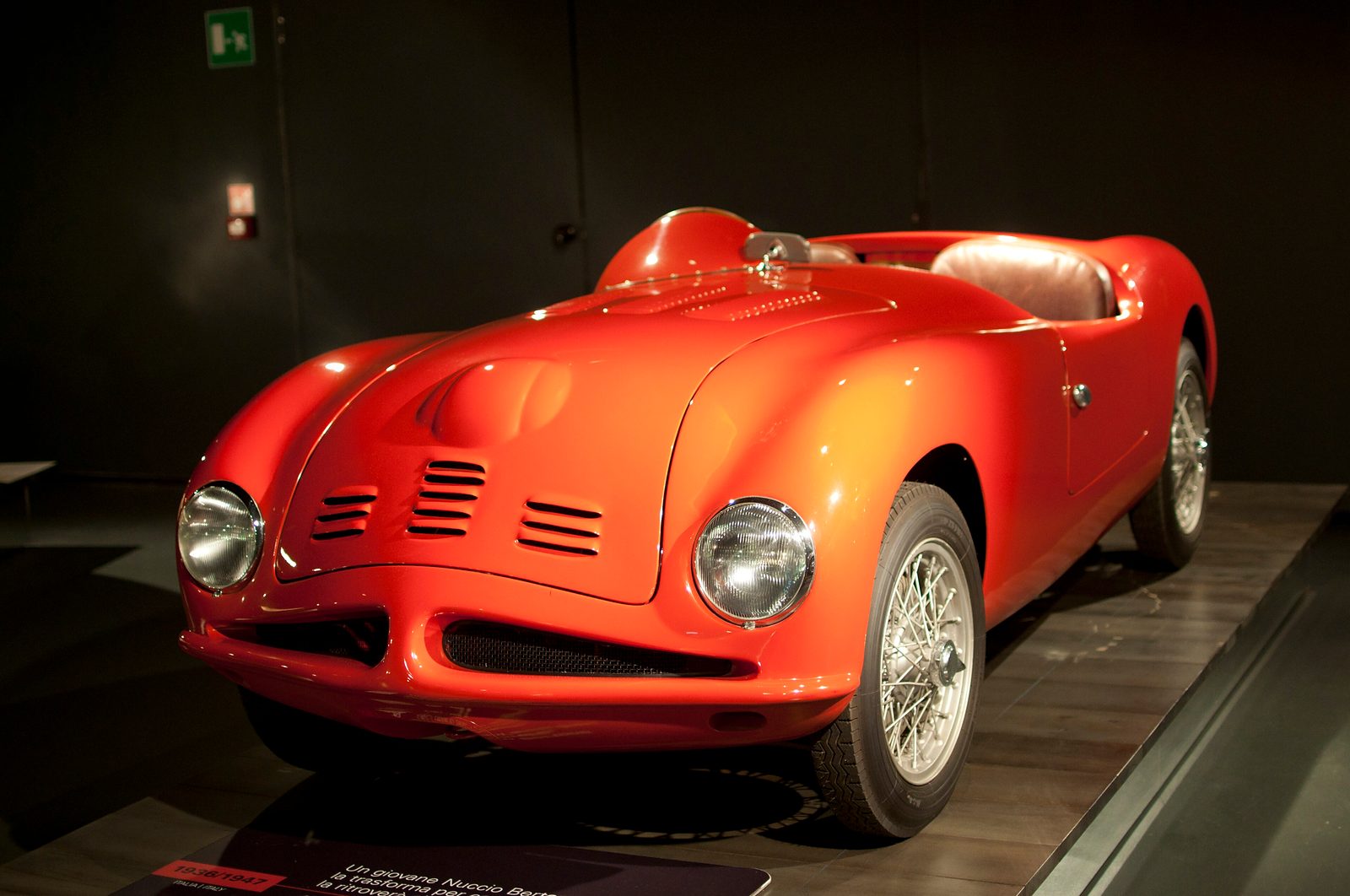
108 An orange Bertone-bodied barchetta on the Fiat 500 A chassis at the Museo Nazionale dell’Automobile, Turin, in April 2015.
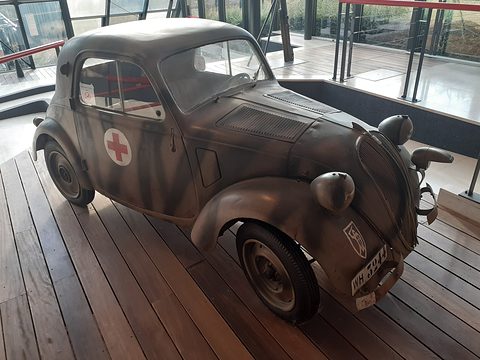
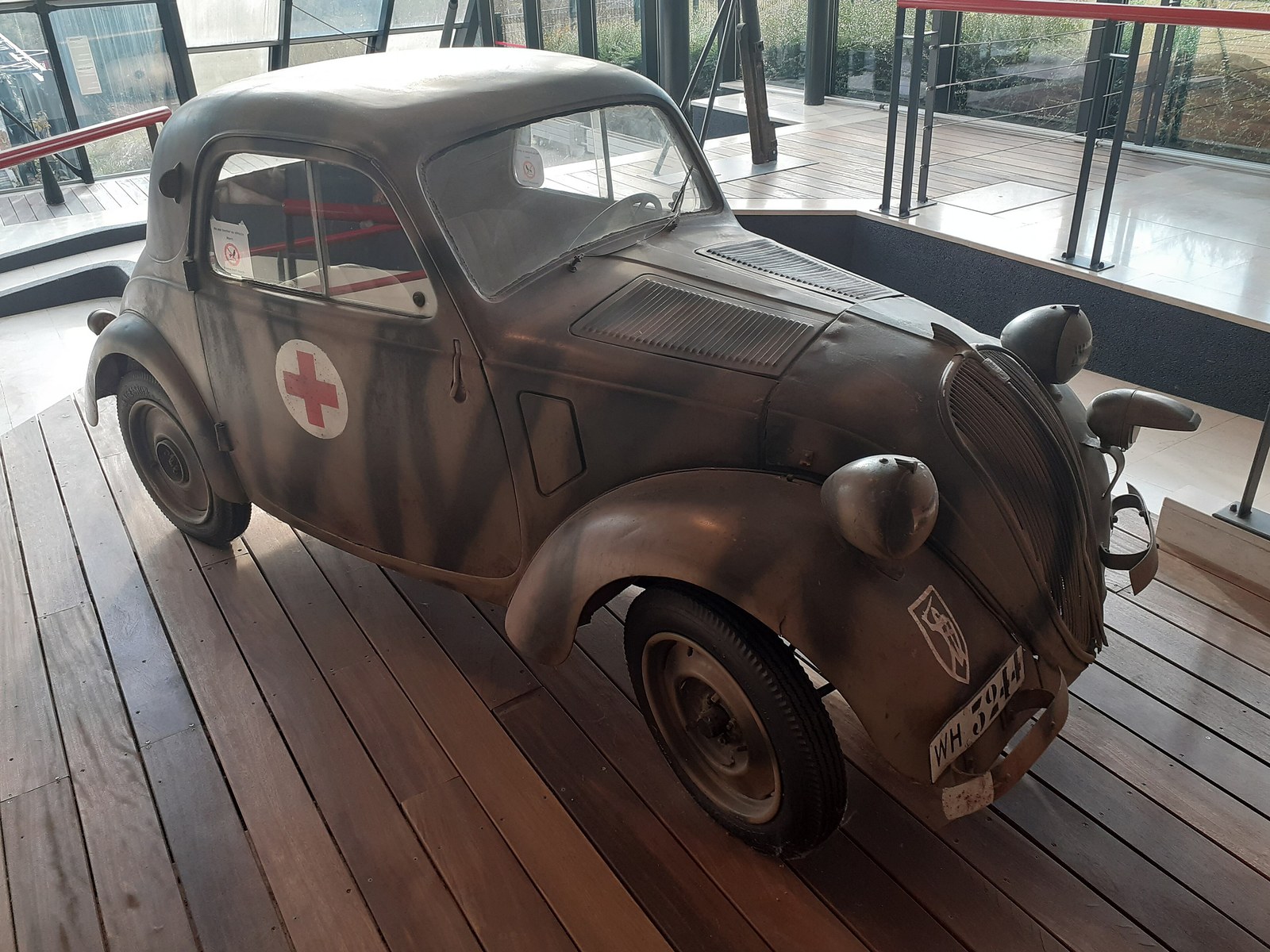
109 A camouflaged Fiat 500 A with Red Cross markings, used in the Second World War, at the Mémorial de Caen in November 2023.
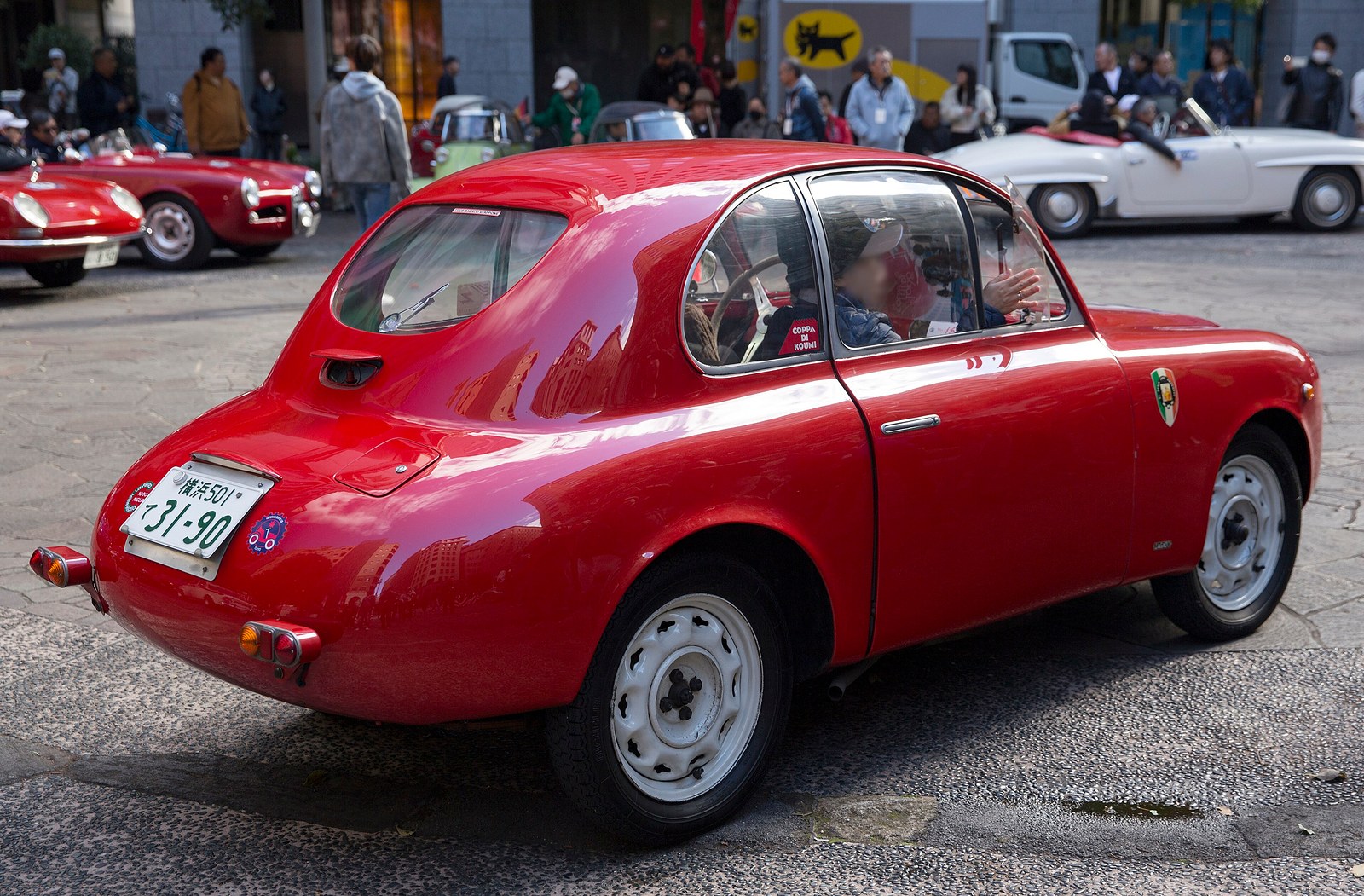
110 A red Fiat 500 B Zagato Panoramica at the Coppa di Tokyo, Japan, in November 2024.
111 A 1954 Fiat 500 C Giardiniera-Belvedere photographed by J.W.C. Postel in the Netherlands in 1972.
4 more picturesFewer pictures
112 A navy Fiat 500 C trasformabile with its roof open at the classic car meeting in Bauma, Switzerland, in July 2019.
113 A cream and black Fiat 500 C trasformabile with its roof closed, photographed in April 2013.
114 A yellow Topolino-bodied drag racer at the MSRA Back to the 50’s show, State Fairgrounds, St Paul, Minnesota, in June 2013.
115 A red 1948 Fiat 500 B barchetta at a Ferrari event in Italy in September 2019.
Variants and relatives: NSU-Fiat 500 7
116 The rear of a red and black 1953 NSU-Fiat 500 at the oldtimer meeting in Konz, Germany, in July 2016.
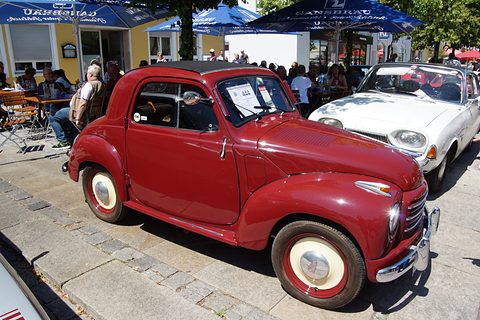
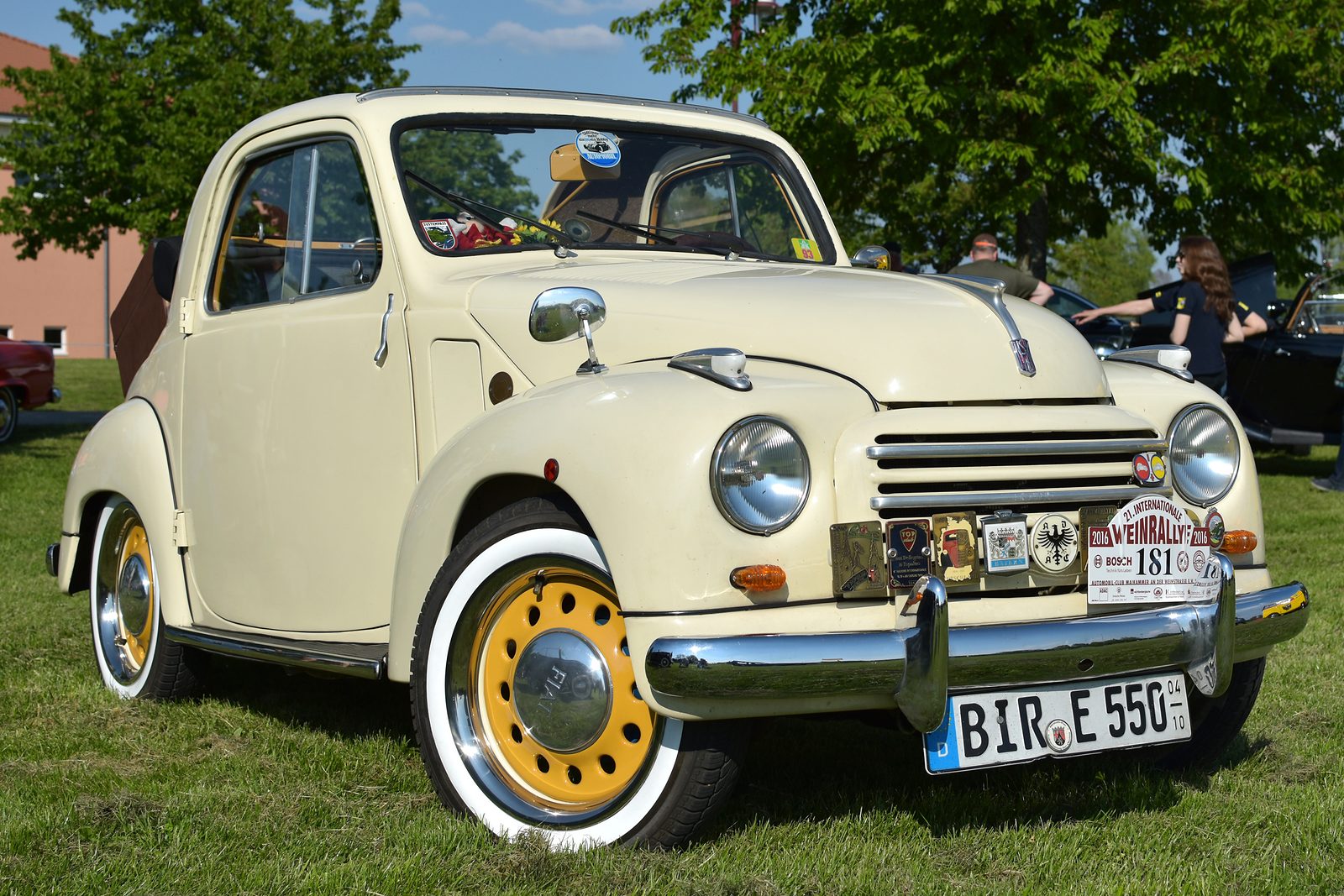
117 A cream NSU-Fiat 500 C with yellow wheels at a car show in Germany in May 2016.
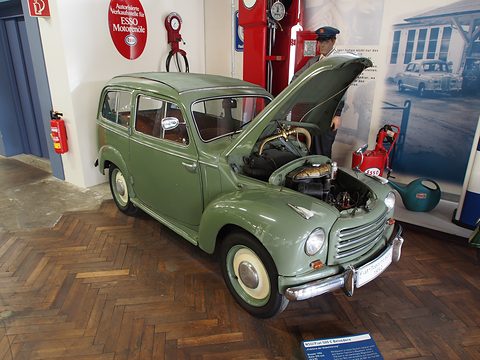
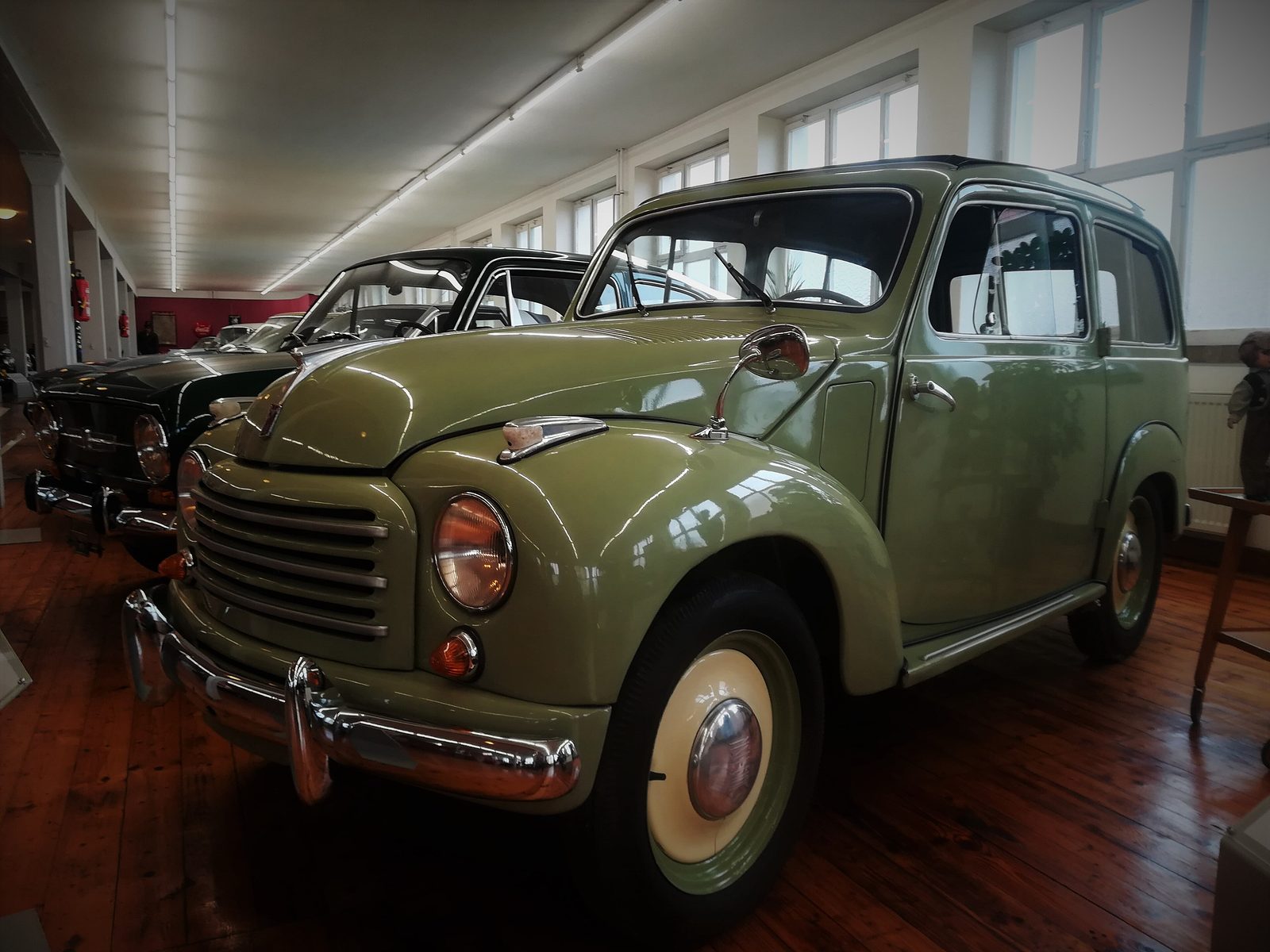
118 An olive NSU-Fiat 500 C estate at the Automuseum Engstingen, Germany, in September 2019.
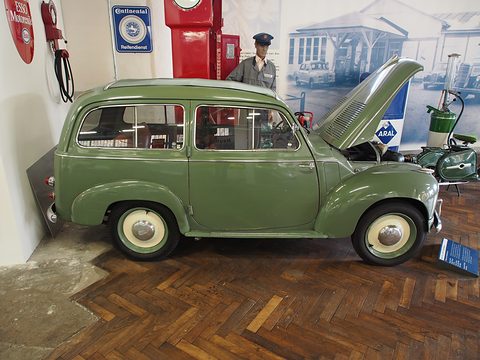
119 A green 1952 NSU-Fiat 500 C Belvedere with its bonnet raised at the Auto & Uhrenwelt, Schramberg, in November 2015.
120 A green 1952 NSU-Fiat 500 C Belvedere in profile at the Auto & Uhrenwelt, Schramberg, in November 2015.
121 A red NSU-Fiat 500 C at the oldtimer meeting in Neumarkt in der Oberpfalz, Germany, in June 2019.
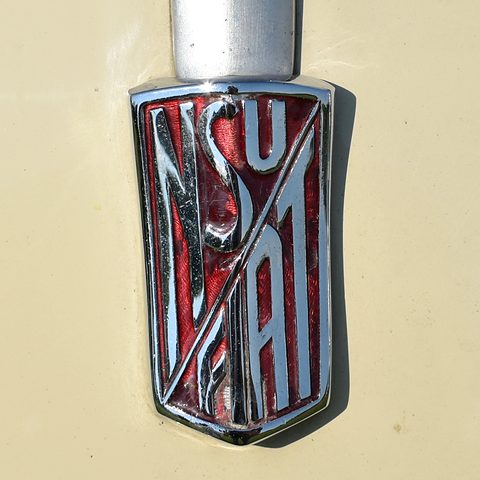
122 The NSU/FIAT badge on the nose of a cream NSU-Fiat 500 C at a car show in Germany in May 2016.
Variants and relatives: Weinsberg roadster 7
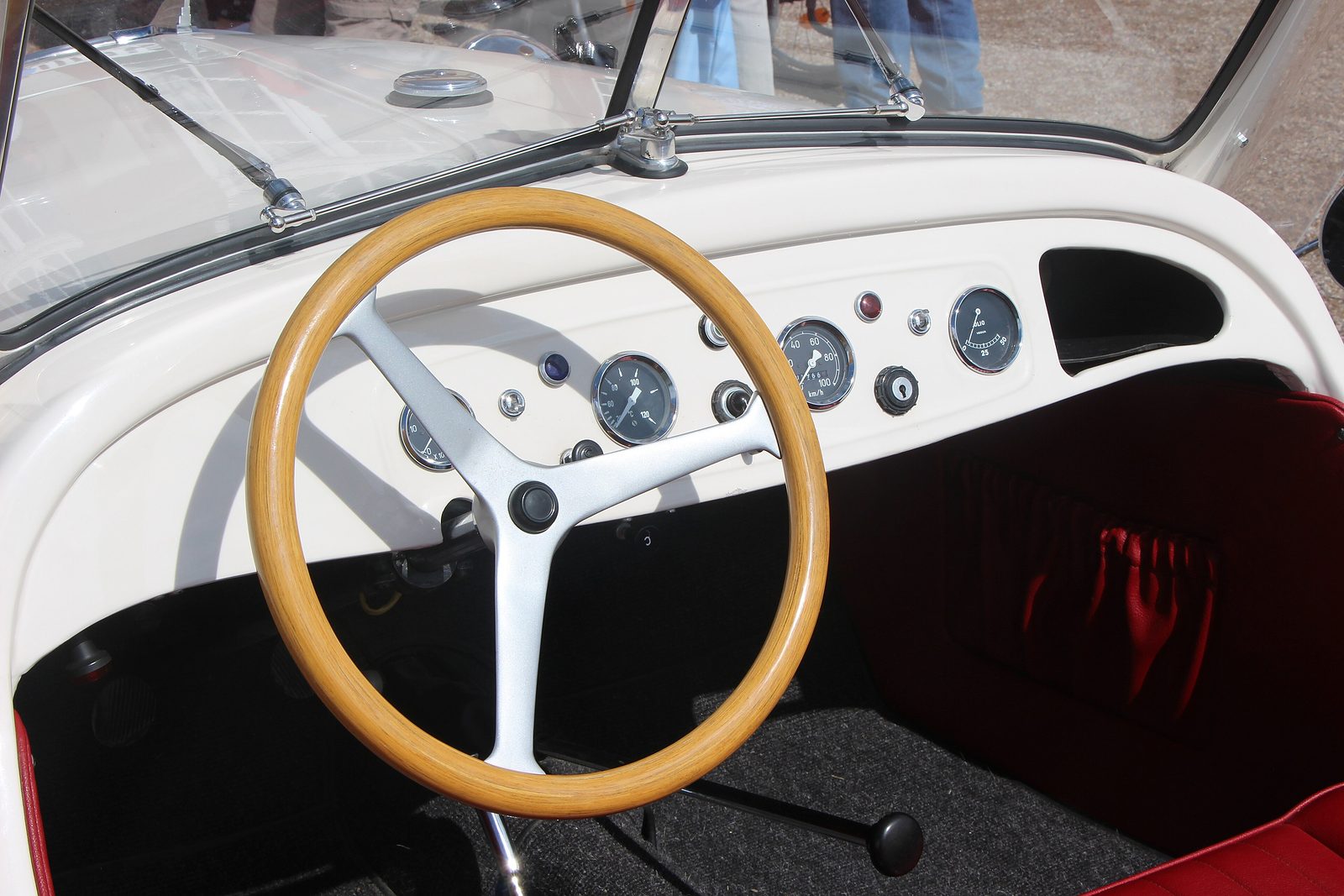
123 The dashboard of an NSU-Fiat 500 Weinsberg spider at the Classic-Gala, Schwetzingen, in September 2022.
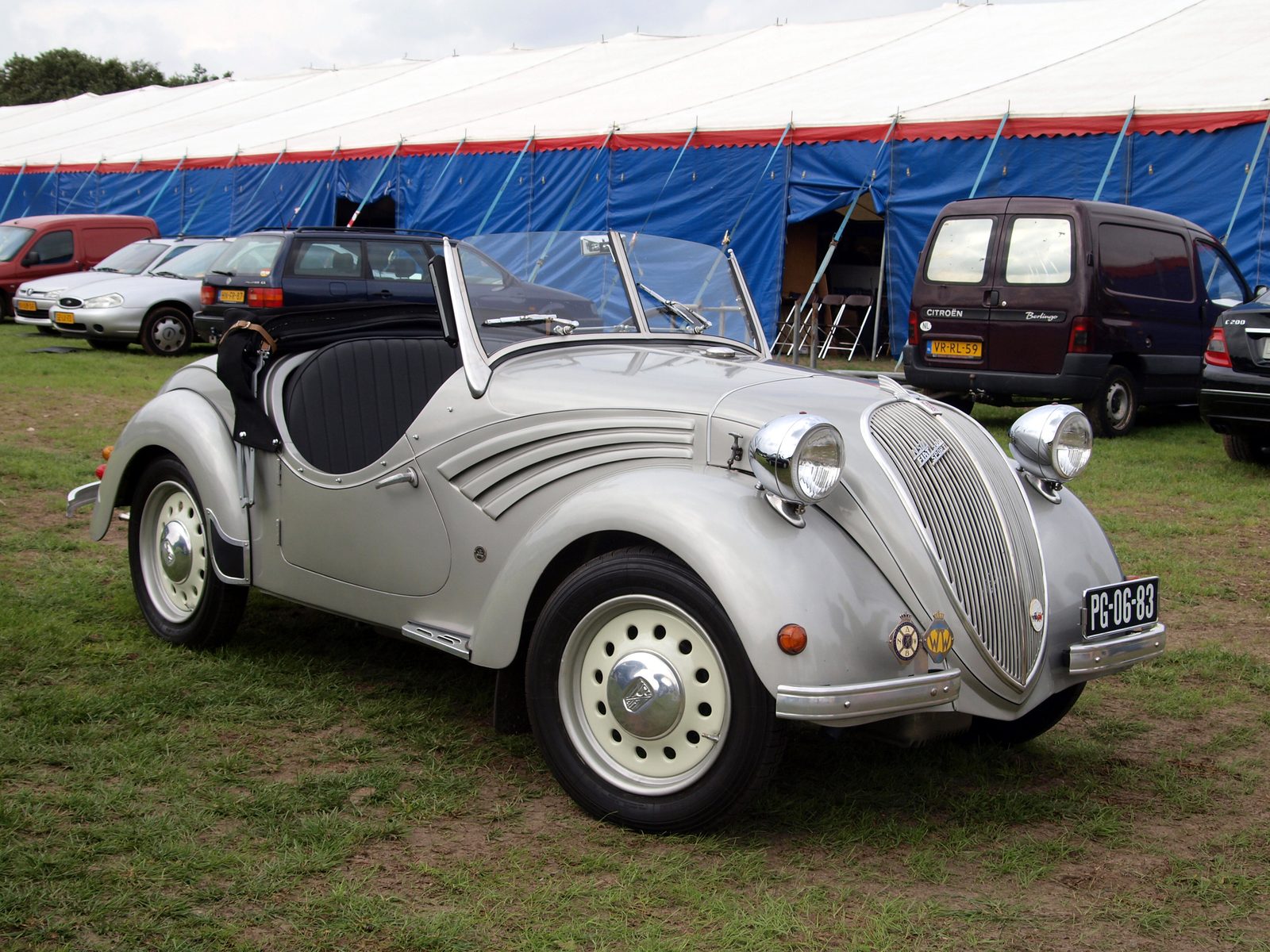
124 A silver NSU-Fiat 500 Weinsberg spider at the Autotron, Rosmalen, Netherlands, in August 2010.
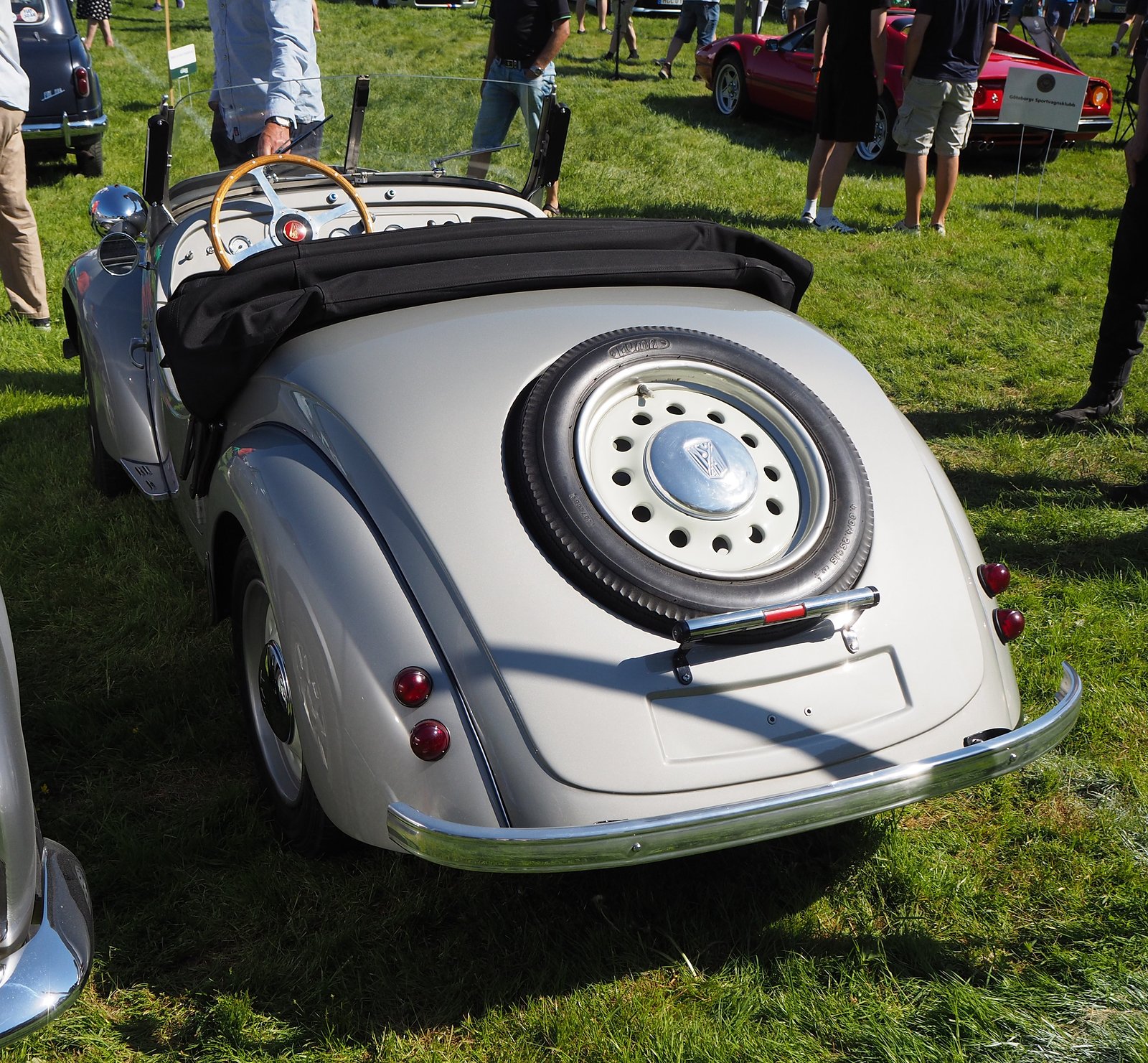
125 The rear of a cream NSU-Fiat 500 Spyder at Tjolöholm Classic Motor, Sweden, in May 2024.
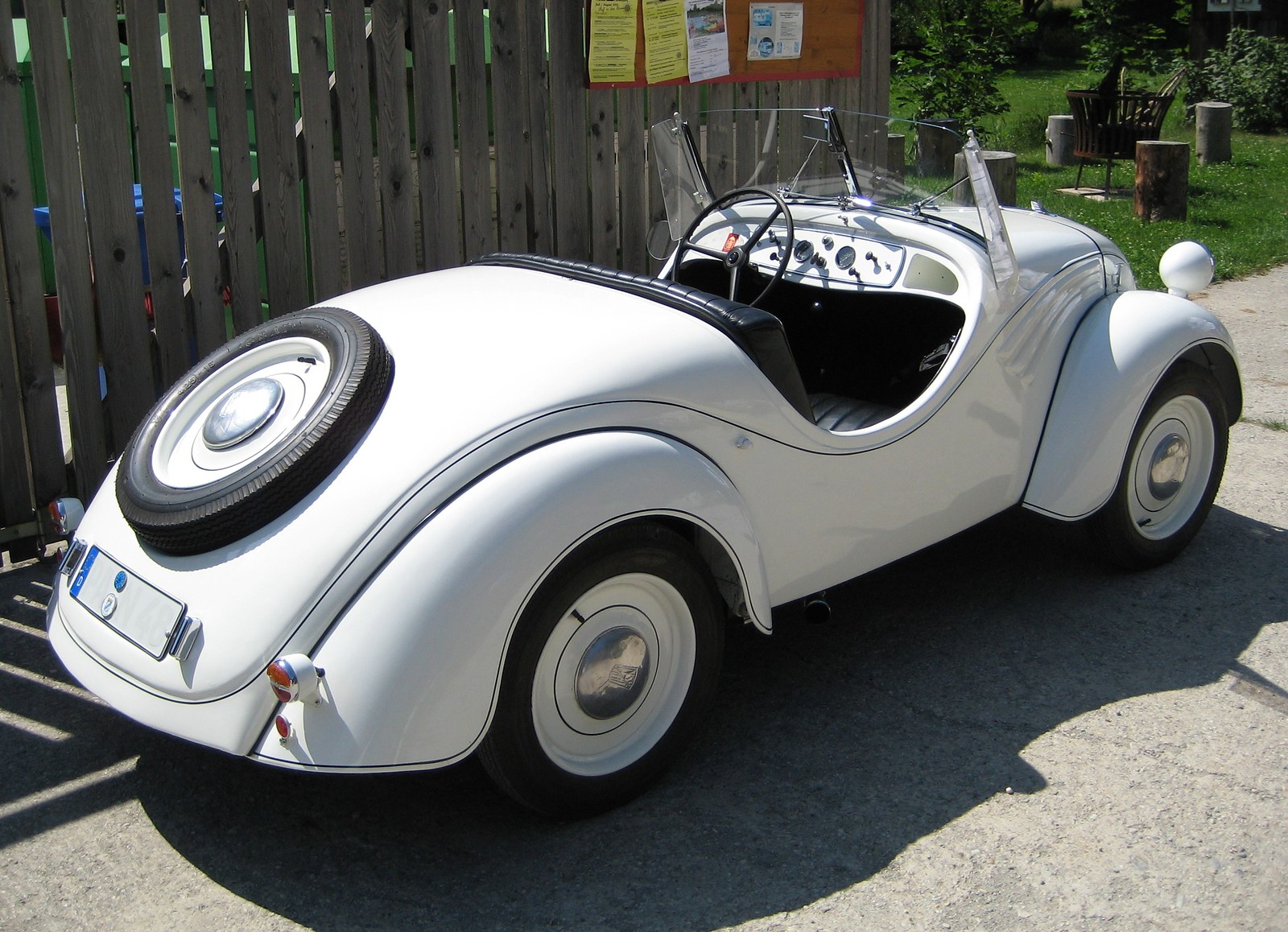
126 The rear of a white NSU-Fiat 500 Weinsberg spider in June 2007.
127 A white NSU-Fiat 500 Weinsberg spider in June 2007.
128 A green NSU-Fiat 500 spider with its hood up at the UMMC Museum of Military and Automotive Technology, Verkhnyaya Pyshma, Russia, in June 2021.
129 A red 1939 NSU-Fiat Topolino-Weinsberg roadster at the Fiat 120th anniversary exhibition, Troja Palace, Prague, in September 2019.
Variants and relatives: Simca 5 24
130 A blue 1948 Simca-Gordini Type 5 single-seater at the Lane Motor Museum, Nashville, in April 2009.
131 A navy 1936 Simca 5 seen head-on in France in April 2018.
132 A navy 1936 Simca 5 on grass in France in April 2018.
133 A maroon 1937 Simca 5 at the Domaine de la Petite Couère, Châtelais, France, in June 2024.
134 A restored 1937 Simca-Fiat 5 at the Fiat 120th anniversary exhibition, Troja Palace, Prague, in September 2019.
19 more picturesFewer pictures
135 A cream and navy 1939 Simca 5 at a car show in Poland in August 2026.
136 The rear of a cream and navy 1939 Simca 5 with its roof rolled back at a car show in Poland in August 2026.
137 A grey French Army Simca 5 in a 1940 diorama at the Musée des Blindés, Saumur, in September 2021.
138 The rear of a grey French Army Simca 5 at the Musée des Blindés, Saumur, in September 2013.
139 The engine bay of a blue Simca 5 in Pays de la Loire, France, in May 2022.
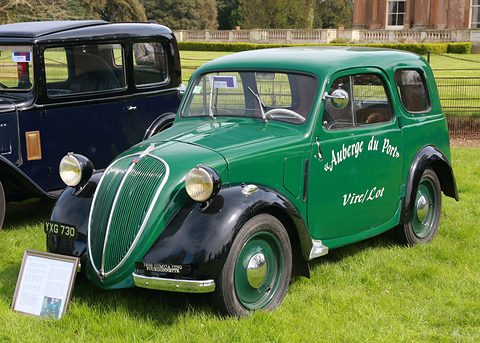
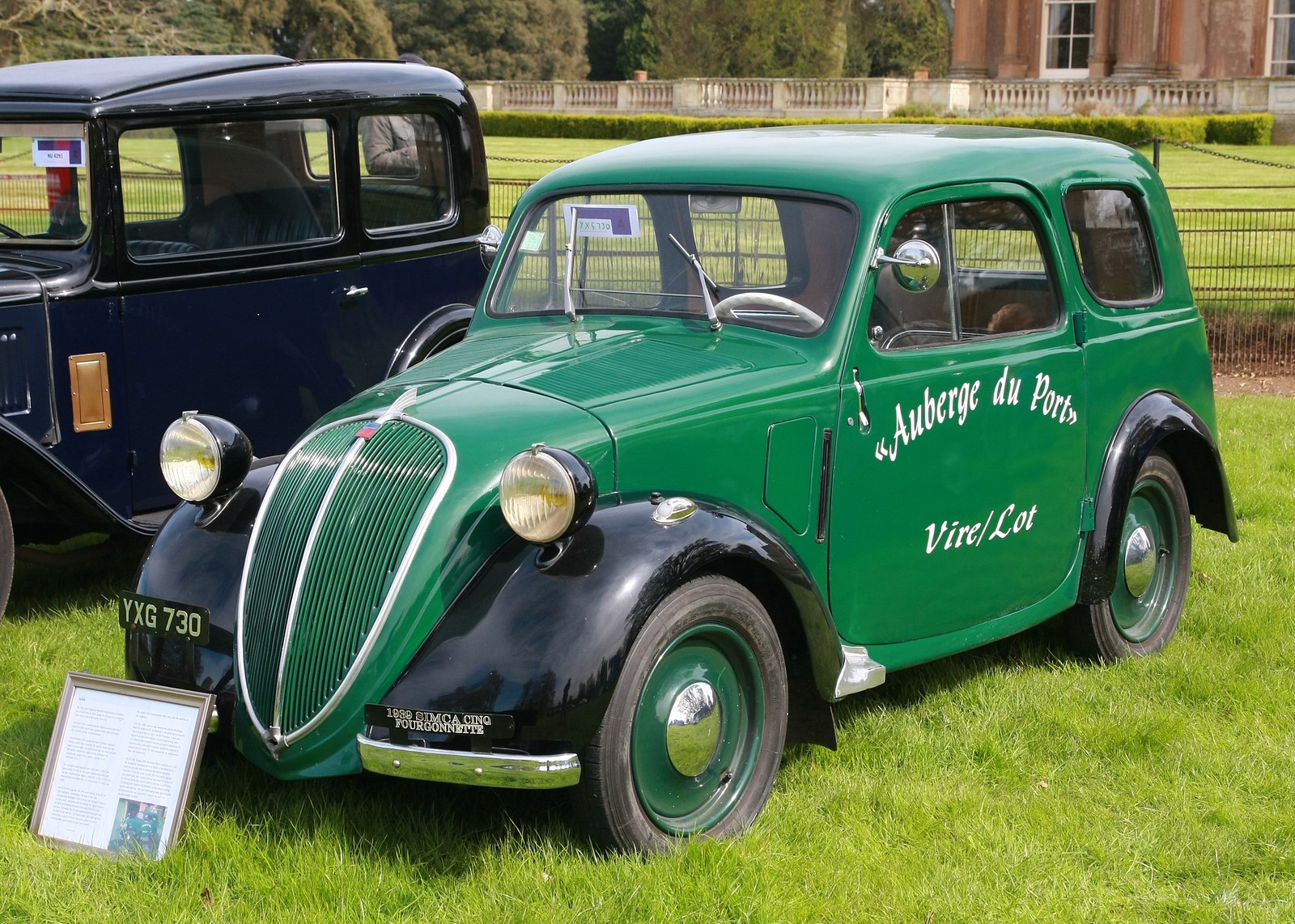
140 A green 1939 Simca 5 fourgonnette lettered for the Auberge du Port, Vire-sur-Lot, at Turvey, England, in May 2016.
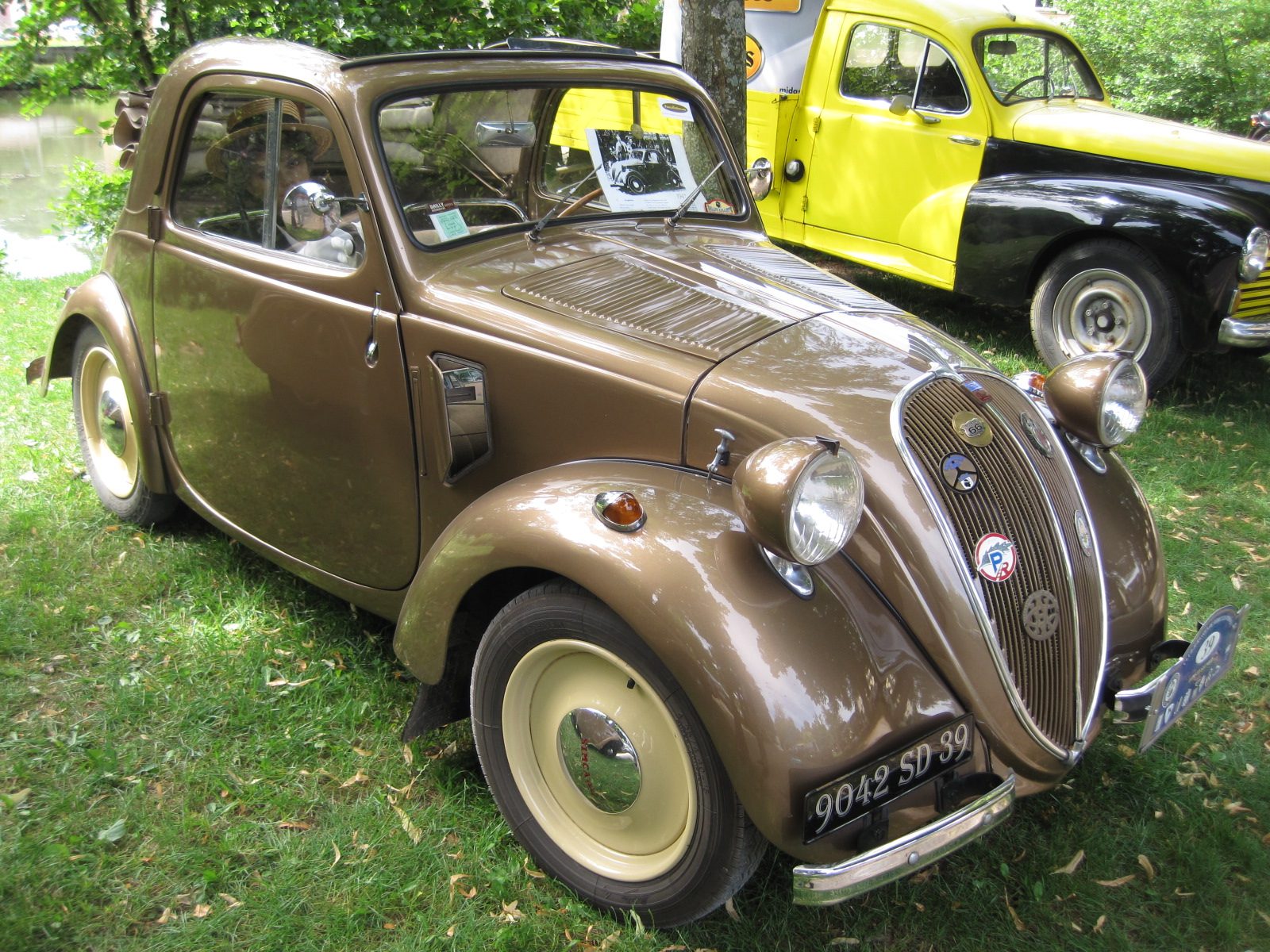
141 A brown Simca 5 découvrable in June 2012.
142 The blue Simca 5 Gordini No. 48 from the 1937 Le Mans 24 Hours at Rétromobile, Paris, in February 2015.
143 A red Simca 5 shown in Meursault, Côte-d’Or, for the 50th anniversary of the film La Grande Vadrouille in September 2016.
144 A red Simca 5 in profile in Meursault, Côte-d’Or, at the 50th anniversary of La Grande Vadrouille in September 2016.
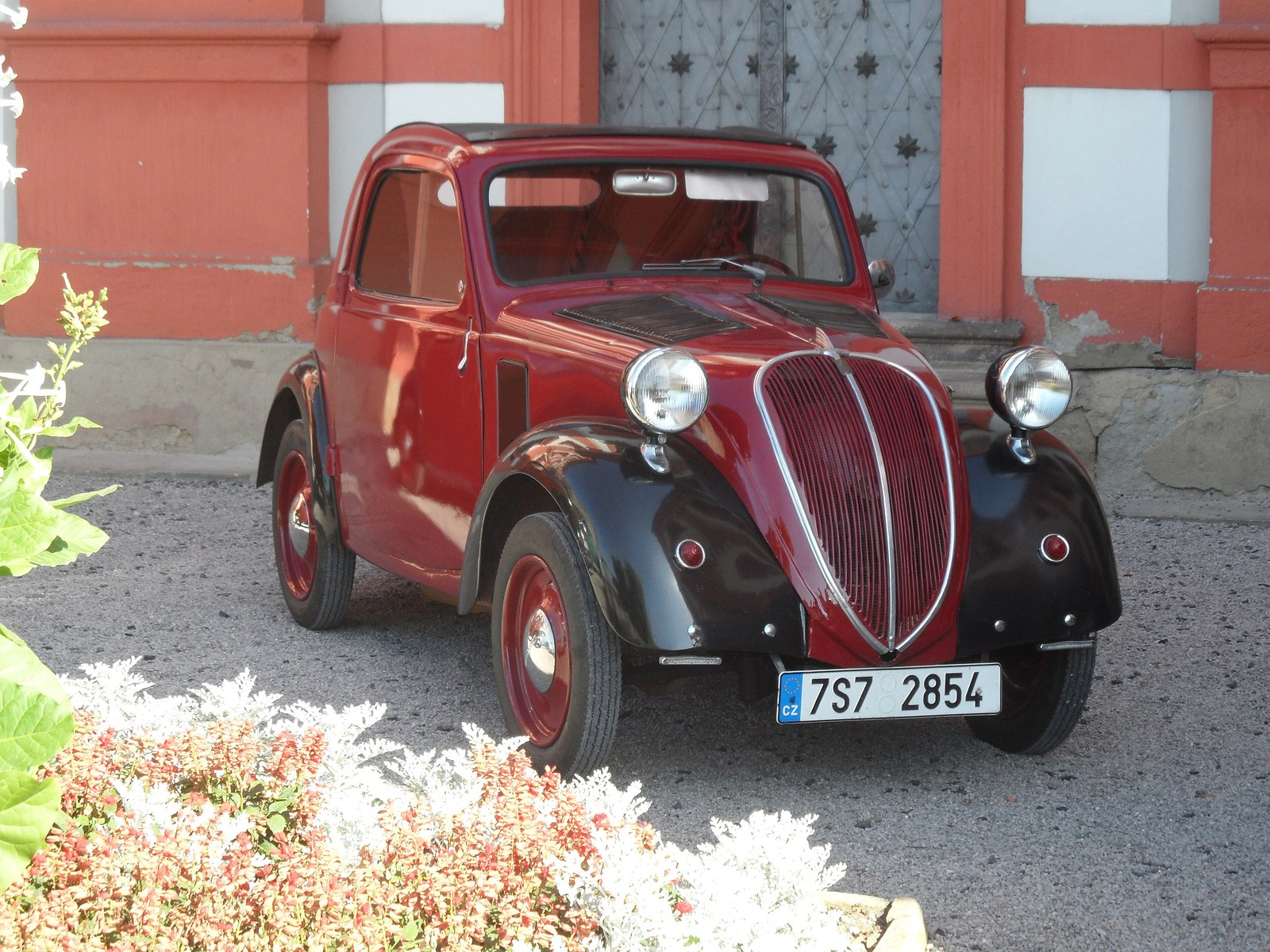
145 A red and black Simca 5 at the Meeting of Italian Cars in Poděbrady, Czech Republic, in April 2017.
146 The rear of a red and black Simca 5 at the Meeting of Italian Cars in Poděbrady, Czech Republic, in April 2017.
147 The rear of a red Simca 5 with a luggage grid on its tail in July 2010.
148 A brown Simca 5 découvrable with its roof rolled back in June 2012.
149 A black Simca 5 at Retro Classics, Stuttgart, in April 2022.
150 The rear of a black Simca 5 at Retro Classics, Stuttgart, in April 2022.
151 A brown Simca 5 van at the Collection L’Aventure Automobile, Poissy, in October 2016.
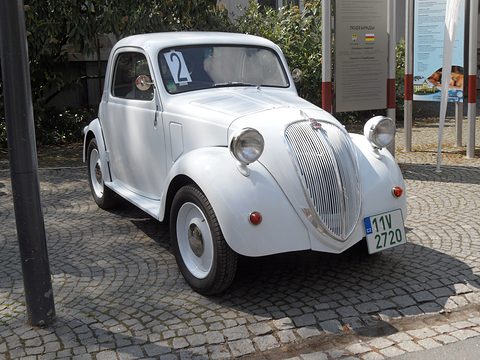
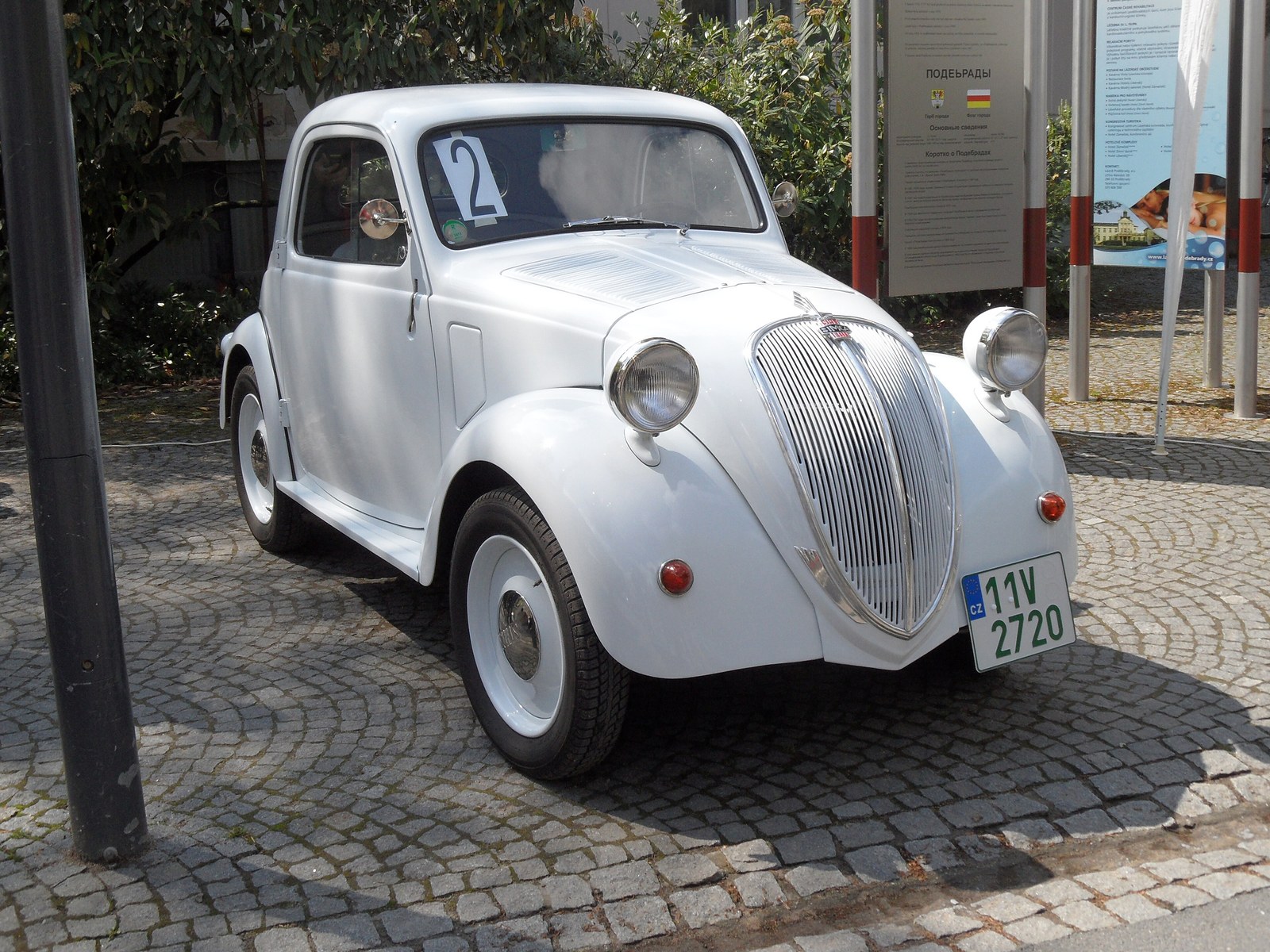
152 A white Simca 5 with race number 2 at the Meeting of Italian Cars in Poděbrady, Czech Republic, in April 2017.
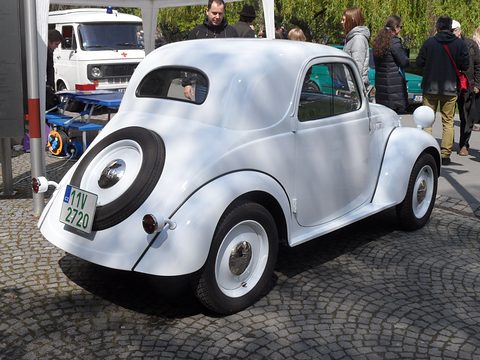
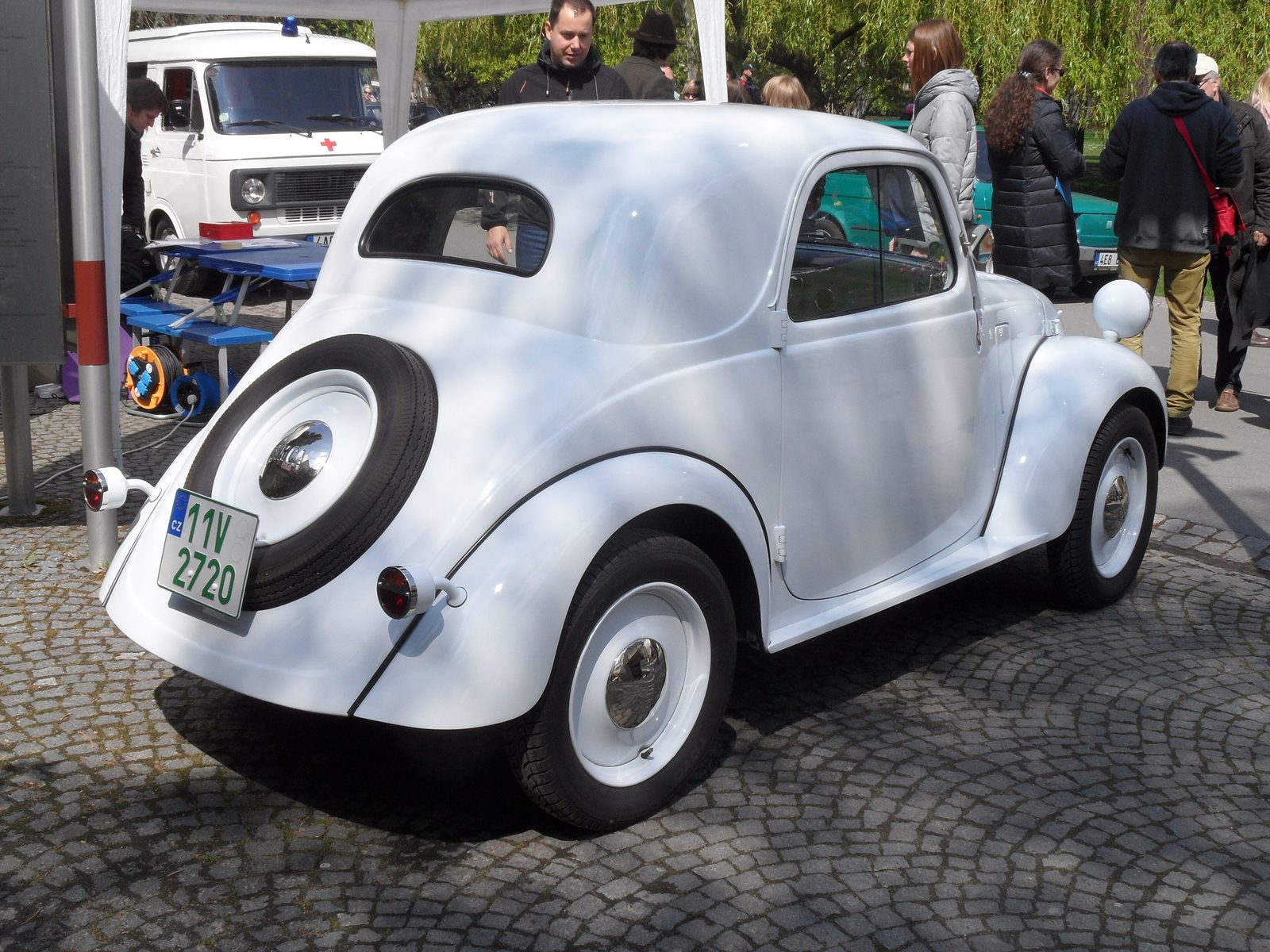
153 The rear of a white Simca 5 at the Meeting of Italian Cars in Poděbrady, Czech Republic, in April 2017.
Period photographs 10
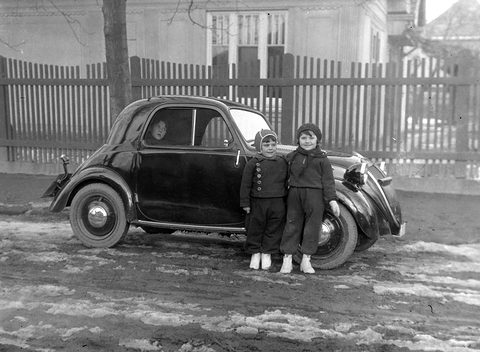
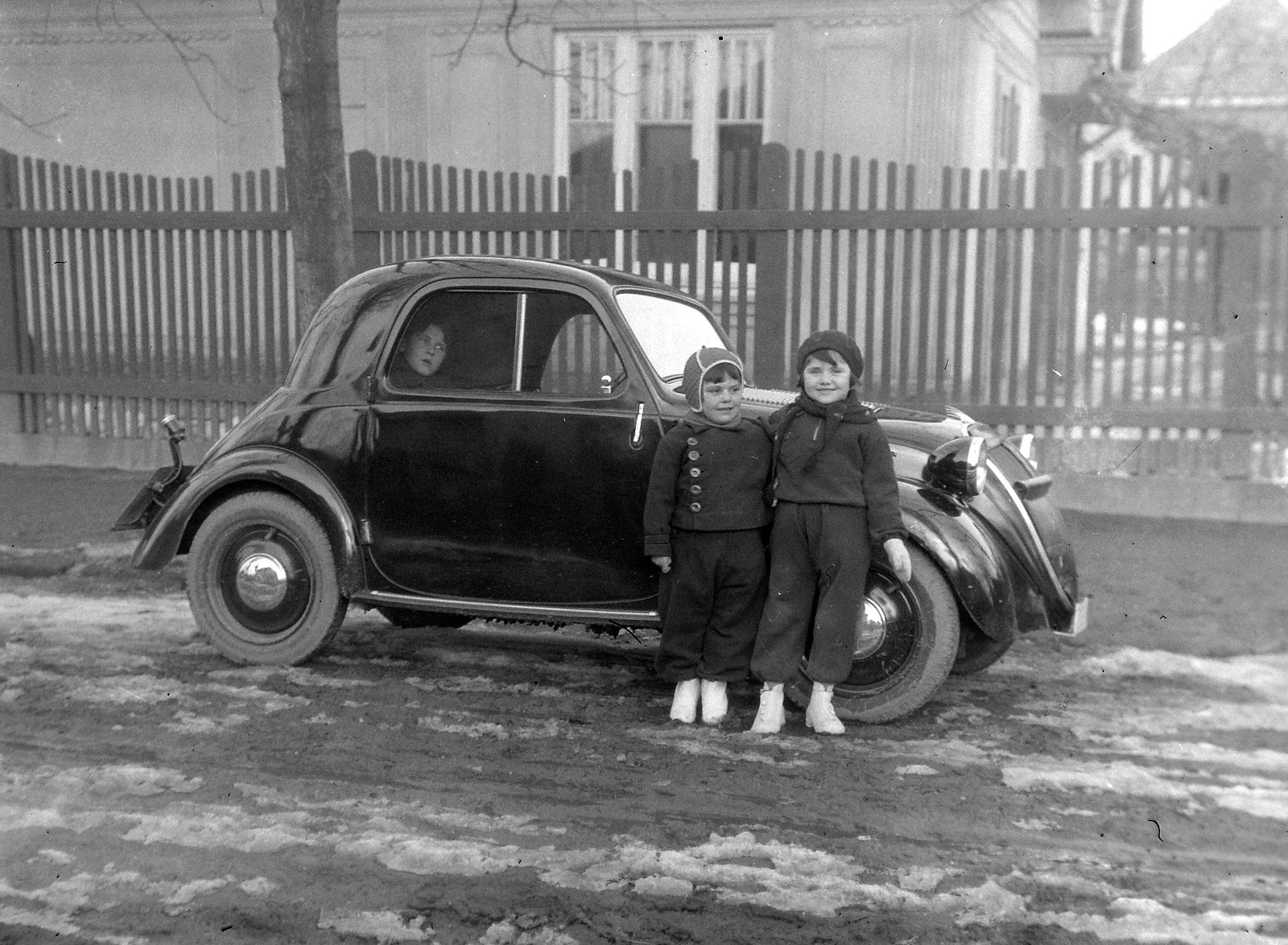
154 Two children beside a parked Fiat 500 A in Hungary in 1940.
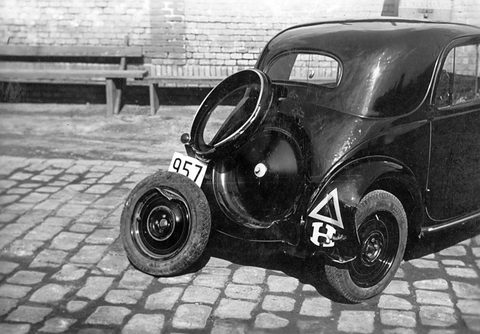
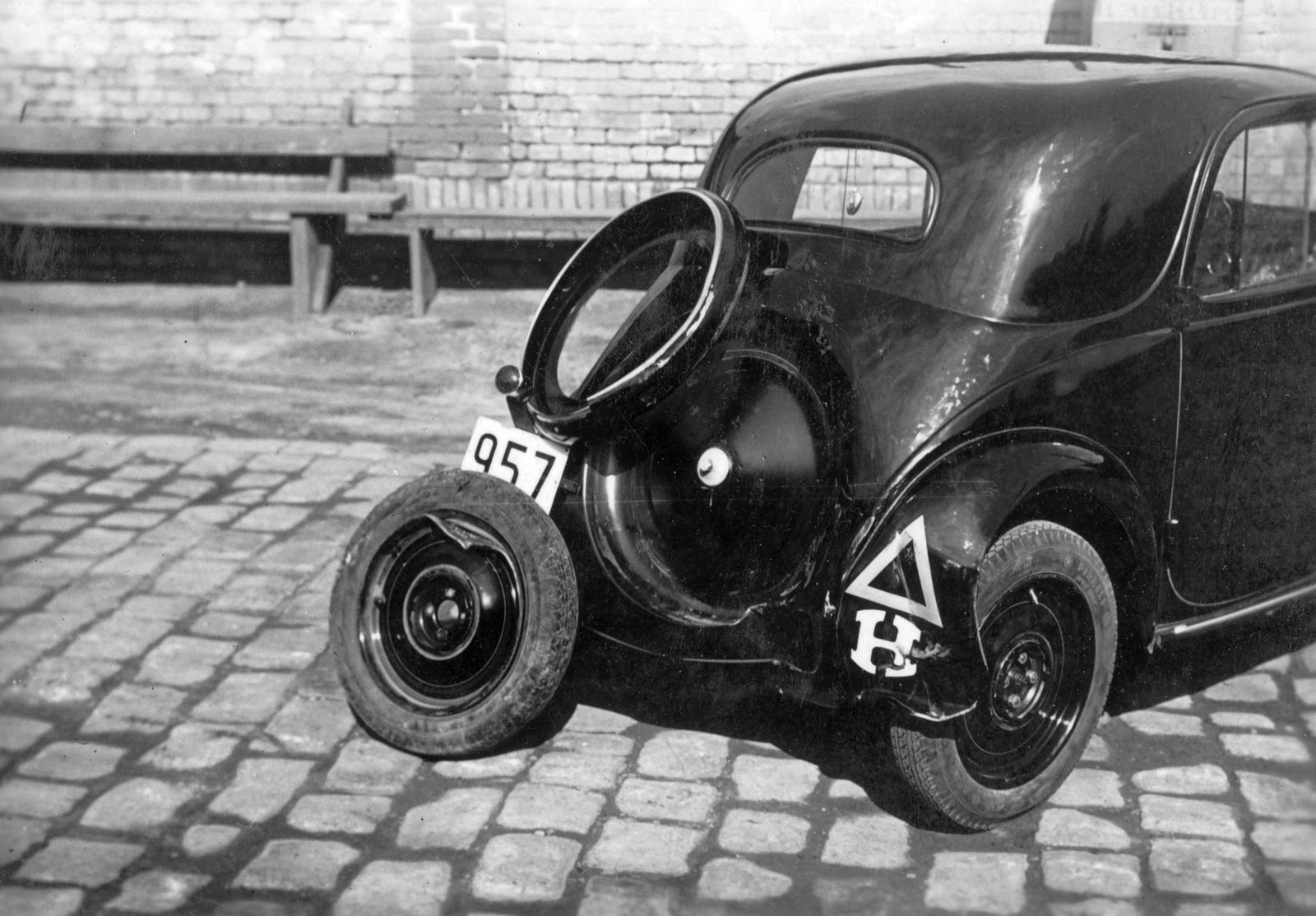
155 A new Fiat 500 A on the cobbles after an accident, its rear wheel off, in Hungary in 1936.
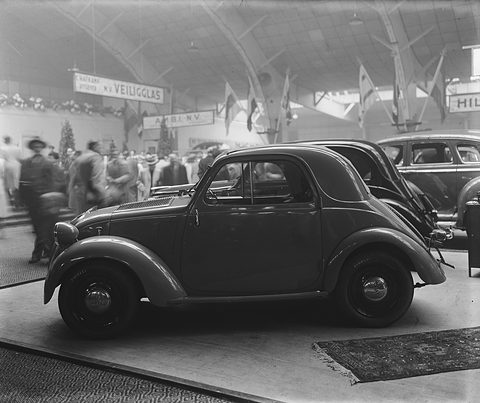
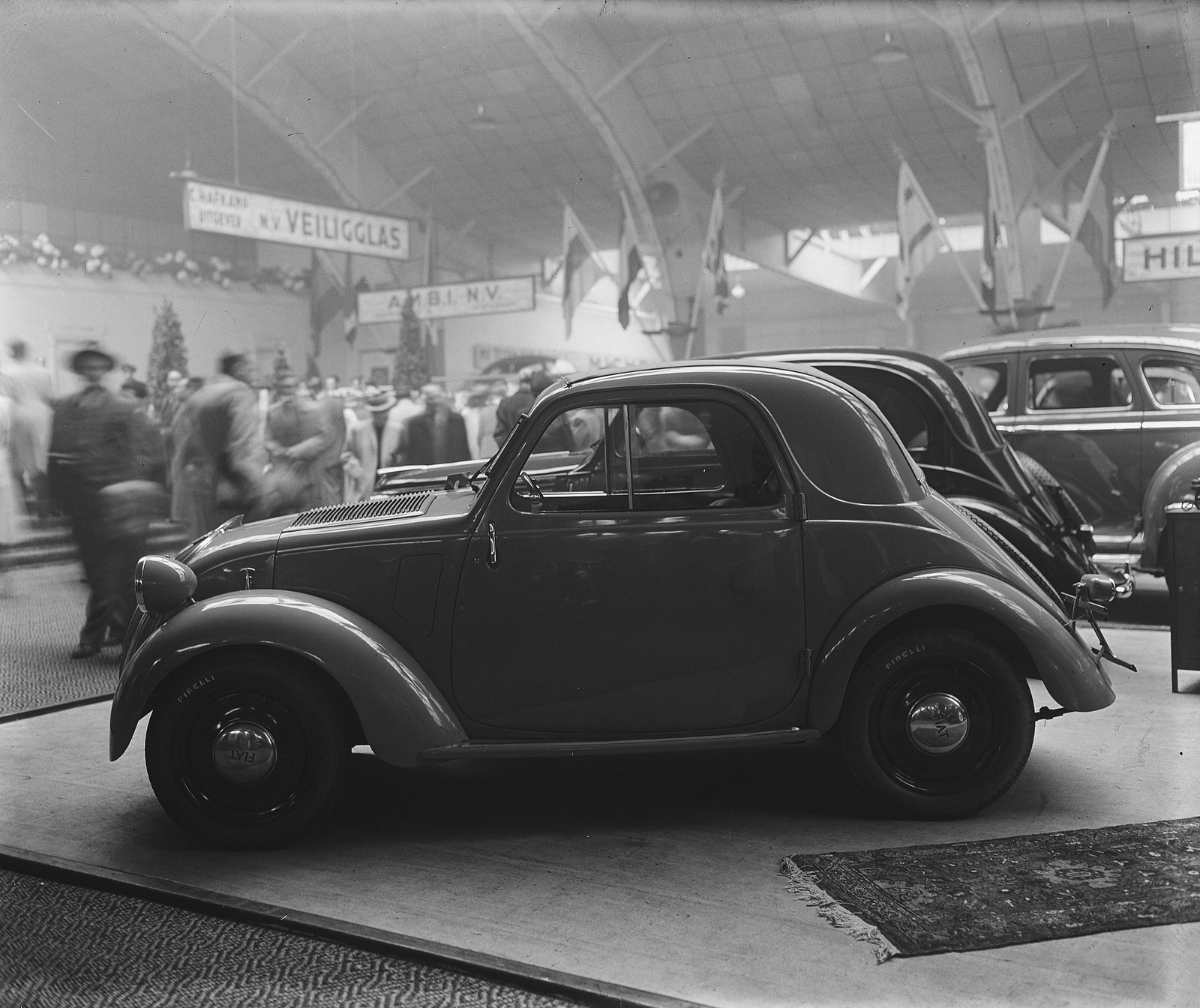
156 A Fiat 500 B with its roof open at the RAI motor show, Amsterdam, in May 1948.
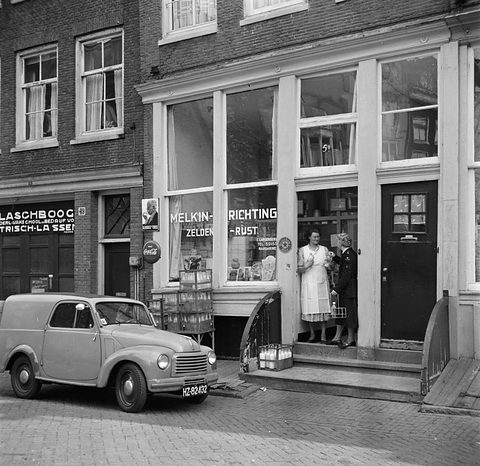
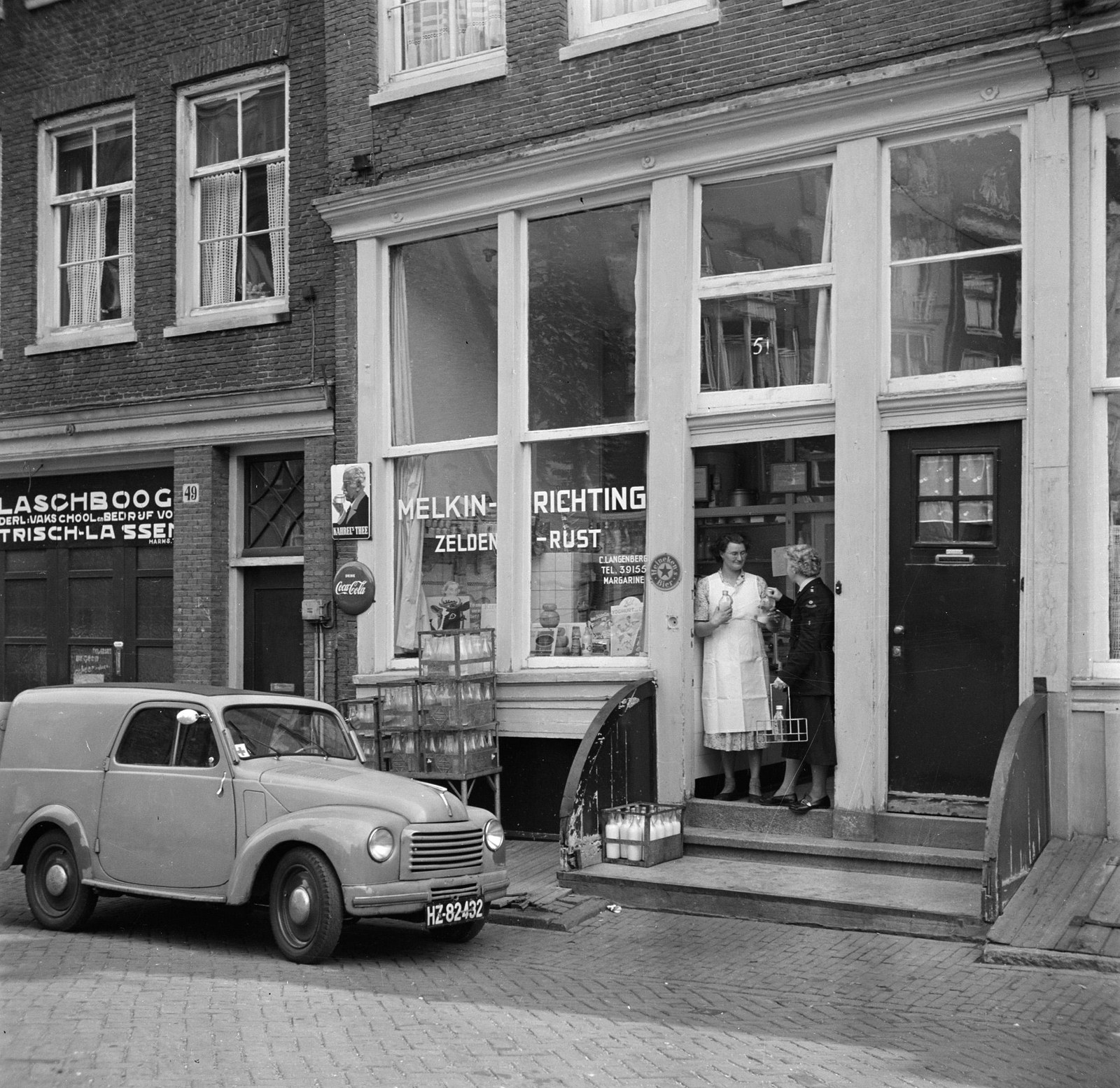
157 A Fiat 500 C Furgoncino outside the Zeldenrust dairy on the Rechtboomsloot, Amsterdam, in May 1954.
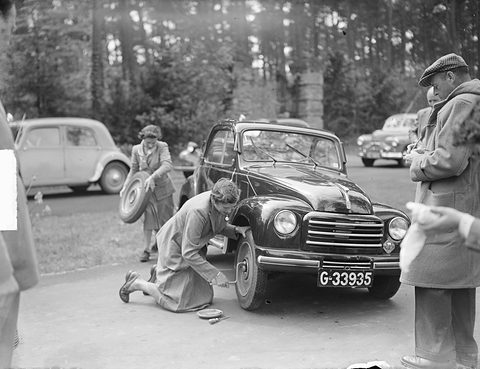
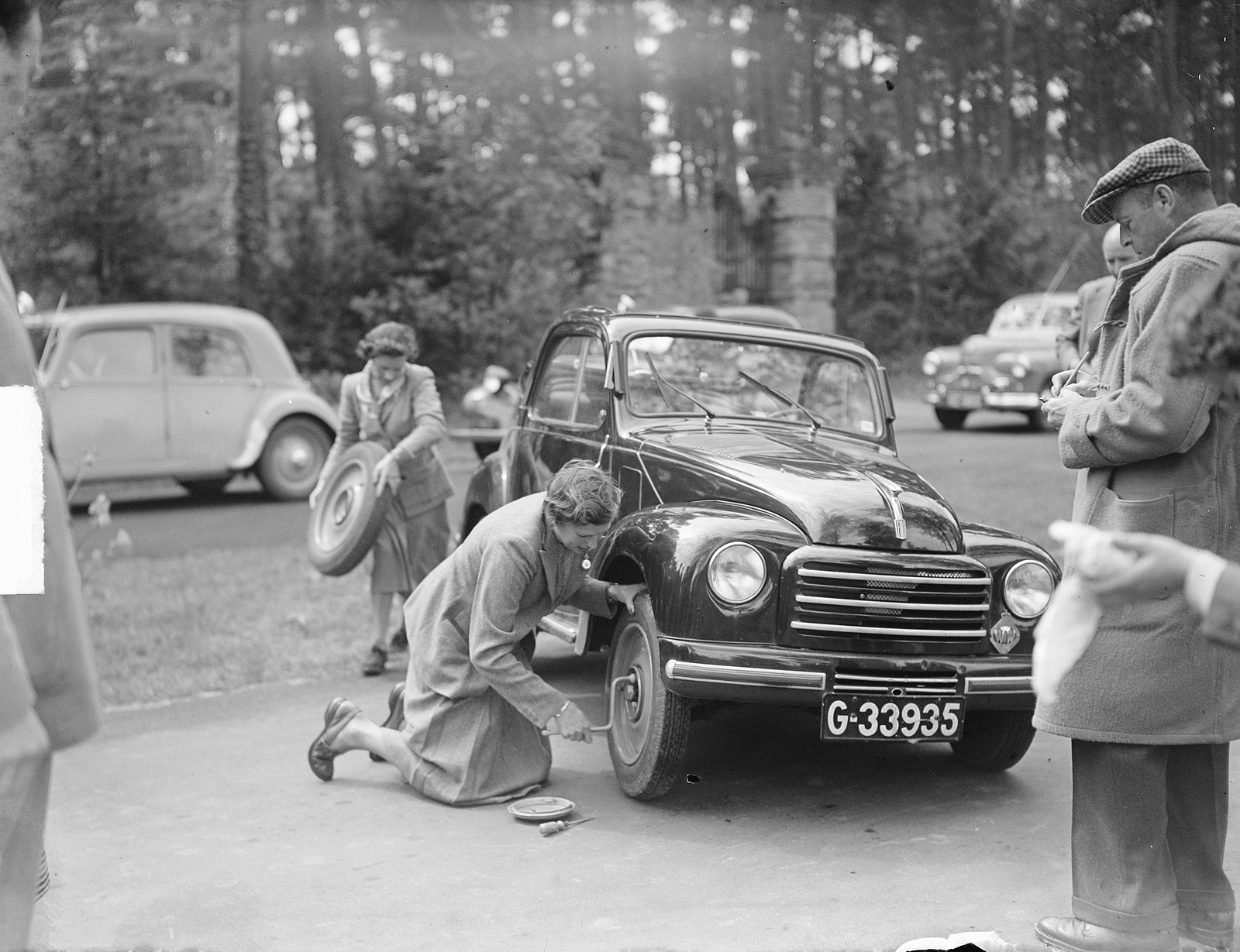
158 A wheel being changed on a Fiat 500 C during the KNAC ladies’ rally at Zeist, Netherlands, on 20 May 1950.
5 more picturesFewer pictures
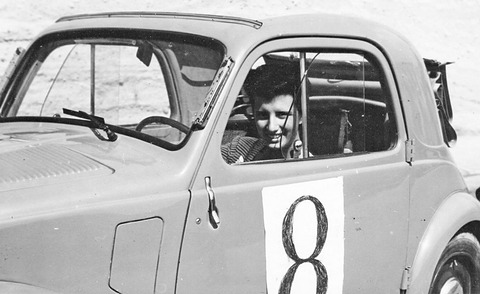
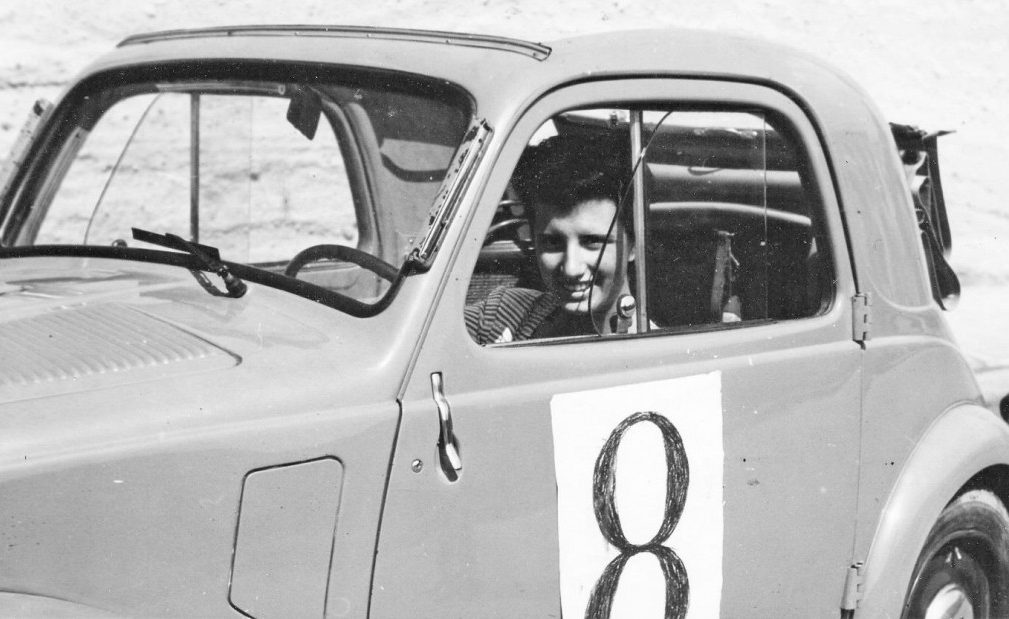
159 Maria Teresa de Filippis at the wheel of her Fiat 500, No. 8, the class winner at the Salerno–Cava de’ Tirreni hillclimb in June 1948.
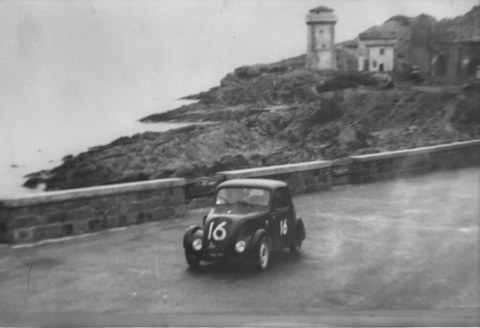
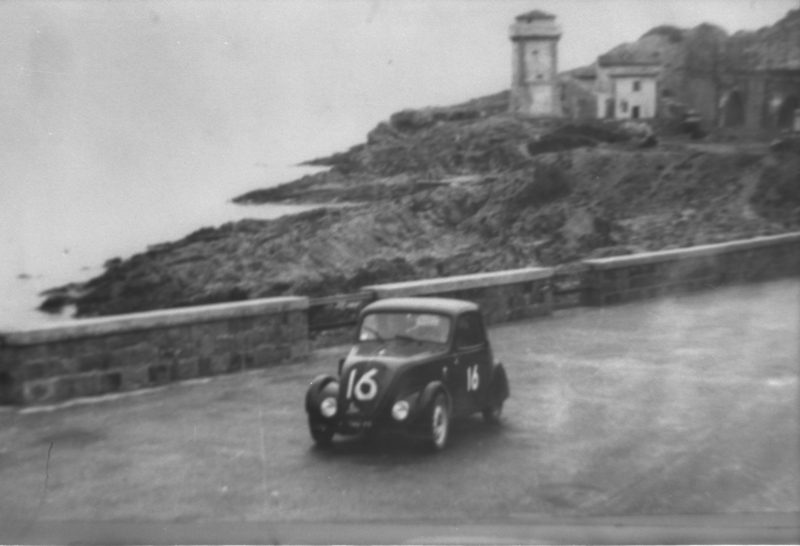
160 Entry No. 16, a Fiat 500, on the coast road at Calafuria near Livorno in the 1938 Mille Miglia.
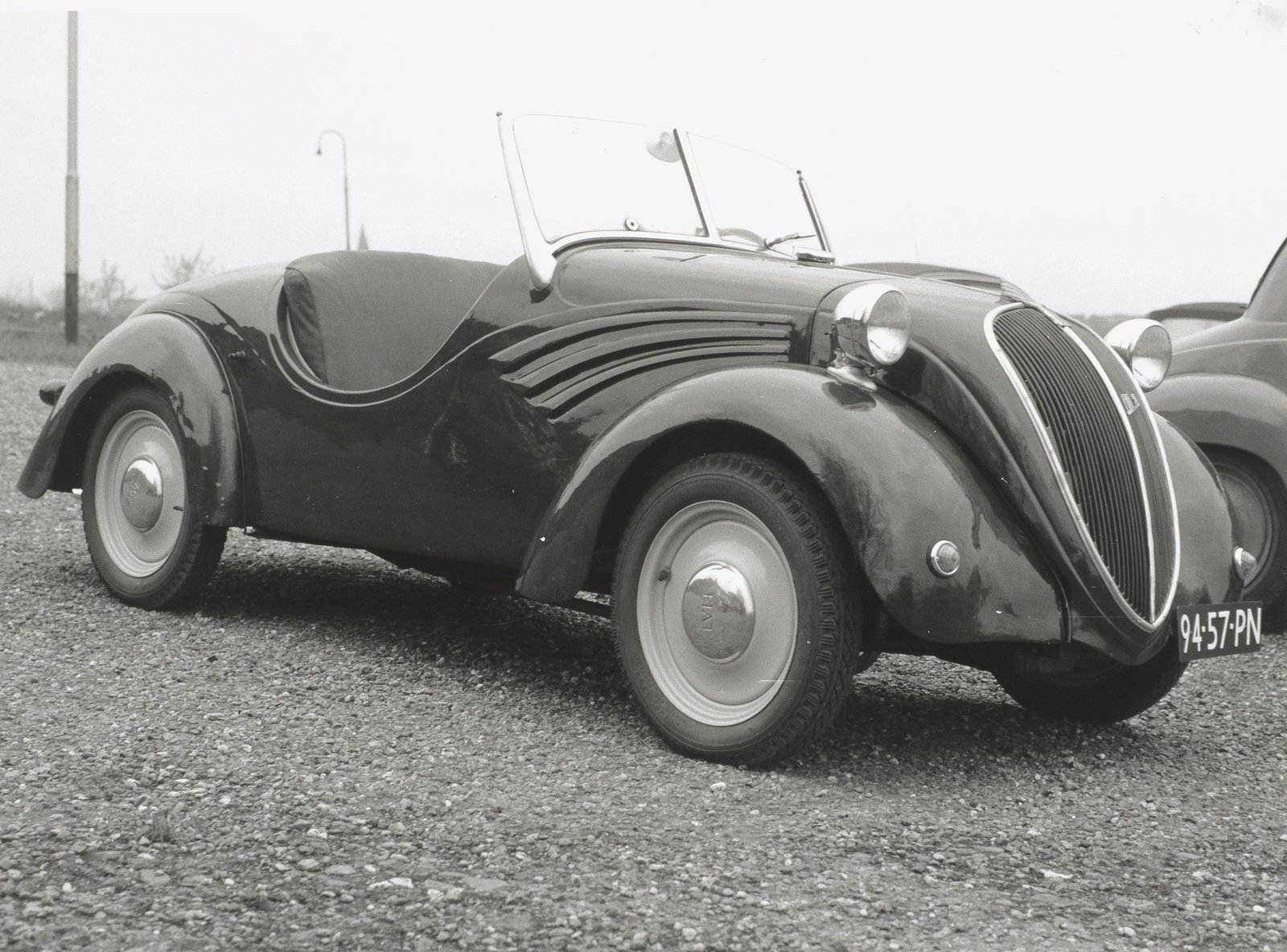
161 A 1938 NSU-built Fiat 500 A spider photographed by J.W.C. Postel in the Netherlands in 1972.
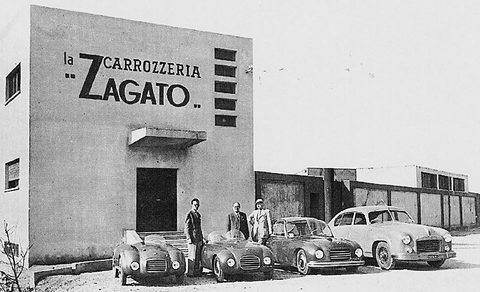
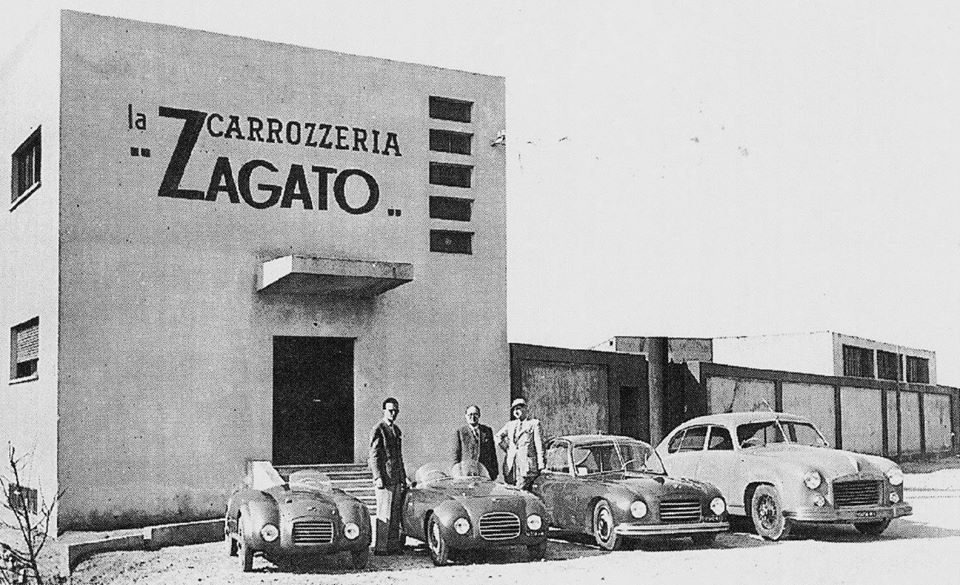
162 Elio and Ugo Zagato with Fiat-based Zagato cars outside the Carrozzeria Zagato works in Milan in 1947.
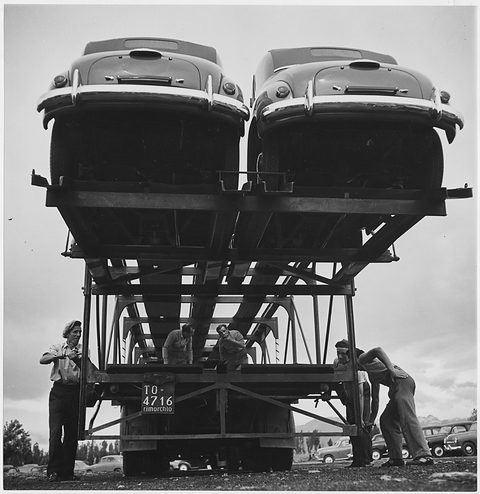
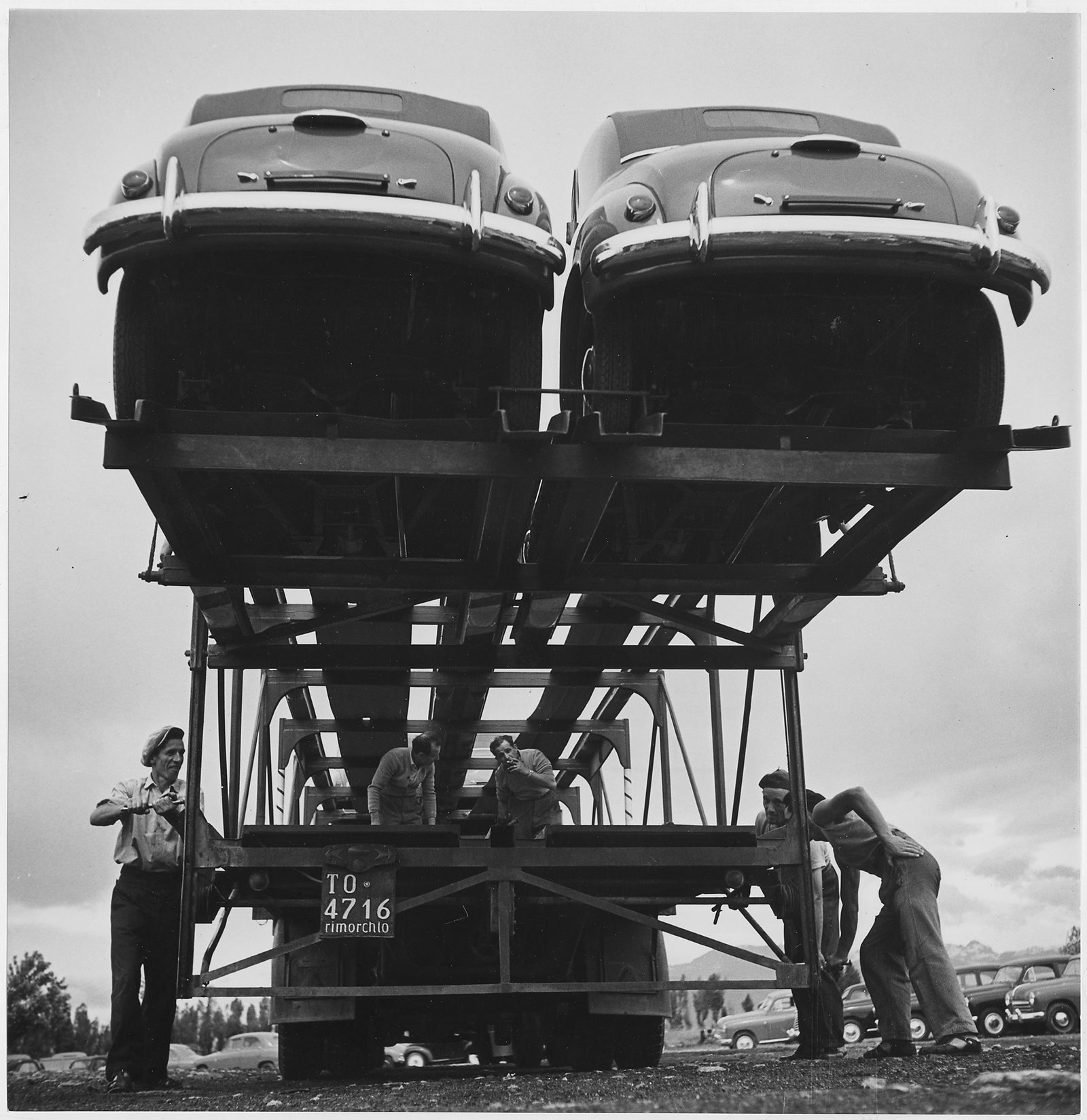
163 Two new Fiat 500 Cs high on a car transporter in Turin in about 1950.
Picture credits (163)
1 dave_7, CC BY 2.0
2 Stribrohorak, CC BY-SA 3.0
3 Georgy Palpurin ShareBulgaria team, CC BY-SA 4.0
4 TTTNIS, CC0 1.0
5 Brian Snelson, CC BY 2.0
6 Andrew Bone, CC BY 2.0
7 Supermac1961, CC BY 2.0
8 Dušan Kocmut, CC BY-SA 2.5 si
9 Crisco 1492, CC BY-SA 4.0
10 SchmalspurDVZO, CC BY-SA 4.0
11 Beemwej, CC BY-SA 3.0
12 Stribrohorak, CC BY-SA 3.0
13 nakhon100, CC BY 2.0
14 Tony Hisgett, CC BY 2.0
15 Kzaral, CC BY 2.0
16 KKPCW(Kyu3), CC BY-SA 4.0
17 Andrew Bone, CC BY 2.0
18 Sandra Becker 01, CC BY-SA 4.0
19 Antonio Georgiev, CC BY-SA 4.0
20 TTTNIS, CC0 1.0
21 Riley, CC BY 2.0
22 Brian Snelson, CC BY 2.0
23 Alexandru Panoiu, CC BY 2.0
24 Stribrohorak, CC BY-SA 3.0
25 Rutger van der Maar, CC BY 2.0
26 Alexandru Panoiu, CC BY 2.0
27 Take. I., CC BY-SA 2.0
28 Roland Turner, CC BY-SA 2.0
29 Rainer Halama, CC BY-SA 4.0
30 David Perez, CC BY 4.0
31 SchmalspurDVZO, CC BY-SA 4.0
32 Sandra Becker 01, CC BY-SA 4.0
33 Alf van Beem, CC0 1.0
34 先従隗始, CC0 1.0
35 Rutger van der Maar, CC BY 2.0
36 photobeppus, CC BY-SA 2.0
37 Brian Snelson, CC BY 2.0
38 Alf van Beem, CC0 1.0
39 Brian Snelson, CC BY 2.0
40 Michael Barera, CC BY-SA 4.0
41 Hugh Llewelyn, CC BY-SA 2.0
42 sv1ambo, CC BY 2.0
43 Jeremy, CC BY 2.0
44 JoachimKohler-HB, CC BY-SA 4.0
45 Andrzej Otrębski, CC BY-SA 4.0
46 Alexander Migl, CC BY-SA 4.0
47 Alf van Beem, CC0 1.0
48 Rutger van der Maar, CC BY 2.0
49 Jean-Pierre Dalbéra, CC BY 2.0
50 Rex Gray, CC BY 2.0
51 Alf van Beem, CC0 1.0
52 Alf van Beem, CC0 1.0
53 JoachimKohler-HB, CC BY-SA 4.0
54 sv1ambo, CC BY 2.0
55 Alf van Beem, CC0 1.0
56 Andrew Bone, CC BY 2.0
57 Bene Riobó, CC BY-SA 4.0
58 SchmalspurDVZO, CC BY-SA 4.0
59 Rutger van der Maar, CC BY 2.0
60 Gpkp, CC BY-SA 4.0
61 Hugh Llewelyn, CC BY-SA 2.0
62 kitmasterbloke, CC BY 2.0
63 Alexander Migl, CC BY-SA 4.0
64 Thesupermat, CC BY-SA 4.0
65 Bene Riobó, CC BY-SA 4.0
66 Alf van Beem, CC0 1.0
67 Joost J. Bakker, CC BY 2.0
68 Printy4927, CC BY-SA 4.0
69 Brian Snelson, CC BY 2.0
70 Alf van Beem, CC0 1.0
71 Printy4927, CC BY-SA 4.0
72 Jean-Pol GRANDMONT, CC BY-SA 3.0
73 Alf van Beem, CC0 1.0
74 Thesupermat, CC BY-SA 4.0
75 Andrew Bone, CC BY 2.0
76 Bene Riobó, CC BY-SA 4.0
77 TTTNIS, Public domain
78 Andrew Bone, CC BY 2.0
79 Alf van Beem, CC0 1.0
80 Alf van Beem, CC0 1.0
81 Wolfgang Moroder, CC BY-SA 3.0
82 Bene Riobó, CC BY-SA 4.0
83 TaurusEmerald, CC BY-SA 4.0
84 Rutger van der Maar, CC BY 2.0
85 Joost J. Bakker, CC BY 2.0
86 Davide Papalini, CC BY-SA 3.0
87 Andrew Bone, CC BY 2.0
88 Alf van Beem, CC0 1.0
89 Brian Snelson, CC BY 2.0
90 Antonio Georgiev, CC BY-SA 4.0
91 Riley, CC BY 2.0
92 Threecharlie, CC BY-SA 4.0
93 TTTNIS, Public domain
94 Georgy Palpurin ShareBulgaria team, CC BY-SA 4.0
95 Andrew Bone, CC BY 2.0
96 Alf van Beem, CC0 1.0
97 Threecharlie, CC BY-SA 4.0
98 photobeppus, CC BY-SA 2.0
99 Alf van Beem, CC0 1.0
100 dave_7, CC BY 2.0
101 Lothar Spurzem, CC BY-SA 2.0 de
102 dave_7, CC BY 2.0
103 Lothar Spurzem, CC BY-SA 2.0 de
104 Alf van Beem, CC0 1.0
105 dave_7, CC BY 2.0
106 Alf van Beem, CC0 1.0
107 Facquis, CC BY-SA 4.0
108 Rahil Rupawala, CC BY 2.0
109 Loxyger, CC0 1.0
110 Mr.choppers, CC BY-SA 3.0
111 J.W.C. Postel / Erfgoed Leiden en Omstreken, CC BY 4.0
112 SchmalspurDVZO, CC BY-SA 4.0
113 Zulmabm, CC BY-SA 3.0
114 Greg Gjerdingen, CC BY 2.0
115 PaolaDB, CC BY-SA 4.0
116 Berthold Werner, CC BY-SA 3.0
117 BlueBreezeWiki, CC BY-SA 3.0
118 Lindemann97, CC BY-SA 4.0
119 Alf van Beem, CC0 1.0
120 Alf van Beem, CC0 1.0
121 DALIBRI, CC BY-SA 4.0
122 BlueBreezeWiki, CC BY-SA 3.0
123 Wikisympathisant, CC BY-SA 4.0
124 Alf van Beem, CC0 1.0
125 Herranderssvensson, CC0 1.0
126 Aconcagua, CC BY-SA 3.0
127 Aconcagua, CC BY-SA 3.0
128 Vyacheslav Bukharov, CC BY-SA 4.0
129 Stribrohorak, CC BY-SA 3.0
130 dave_7, CC BY 2.0
131 Cjp24, CC BY-SA 4.0
132 Cjp24, CC BY-SA 4.0
133 Fab5669, CC0 1.0
134 Stribrohorak, CC BY-SA 3.0
135 Zbigniew Czernik, CC BY 4.0
136 Zbigniew Czernik, CC BY 4.0
137 Totorvdr59, CC BY-SA 4.0
138 Alf van Beem, CC0 1.0
139 Llann Wé², CC BY-SA 4.0
140 Charles01, CC BY-SA 4.0
141 Arnaud 25, CC BY-SA 3.0
142 Thesupermat, CC BY-SA 4.0
143 François de Dijon, CC BY-SA 4.0
144 François de Dijon, CC BY-SA 4.0
145 Stribrohorak, CC BY-SA 3.0
146 Stribrohorak, CC BY-SA 3.0
147 Joost J. Bakker, CC BY 2.0
148 Arnaud 25, CC BY-SA 3.0
149 Alexander Migl, CC BY-SA 4.0
150 Alexander Migl, CC BY-SA 4.0
151 Andrew Bone, CC BY 2.0
152 Stribrohorak, CC BY-SA 3.0
153 Stribrohorak, CC BY-SA 3.0
154 Fortepan, Public domain
155 Fortepan, Public domain
156 Snikkers / Anefo, CC0 1.0
157 Willem van de Poll / Nationaal Archief, CC0 1.0
158 Jack de Nijs / Anefo, CC0 1.0
159 Unknown photographer, Public domain
160 Unknown photographer, Public domain
161 J.W.C. Postel / Erfgoed Leiden en Omstreken, CC BY 4.0
162 Unknown photographer, Public domain
163 US Economic Cooperation Administration (National Archives), Public domain
6
Variants
Three series and many bodies
The Topolino family
Variant
Years
What differs
How many
500 A, first series
June 1936–1938
Quarter-elliptic rear springs; saloon, trasformabile and van
To chassis 046000
500 A, second series
1938–early 1948
Frame lengthened at the back for semi-elliptic springs
About 122,000 500 As in all
500 A Furgoncino
Late 1936–48
A van for 300 kg, mostly for the army
Within the 500 A total
500 B
1948–49
Overhead valves, 16.5 CV, hydraulic dampers, an anti-roll bar; the Giardiniera estate
About 21,000
500 C
1949–54
Headlamps in the wings, an aluminium head, a heater as standard
About 370,000–376,000, Belvedere and van included
500 C Belvedere
1951/52–55
The estate with steel sides in place of wood
Within the 500 C total
NSU-Fiat 500
1937–39; 500 C 1951–55
Built at Heilbronn, Germany; Weinsberg roadsters too
About 4,000, then 9,064
Simca 5
1936–49
Built at Nanterre, France
46,472
7
Specification
The 500 A of 1936 unless noted
Engine and drive
Engine and drive
Engine
Four cylinders in line, water-cooled, side valves, ahead of the front axle; Solex 22 HD carburettorsource 3source 1
About 520,000 built by FiatNearly 520,000 of every version were built in Italy from 1936 to 1955; Italian Wikipedia gives 519,847. The much-quoted 122,000 is not a rival figure: it is the 500 A alone, and the A, B and C together come to about 519,000.
0200,000400,000
nearly 520,000Fiat 500 A, B and C, Italy, 1936–55Two sources agree
English Wikipedia; “over half a million” at the Shuttleworth Collectionsource 7source 10
Thermosiphon cooling and gravity feed, with the radiator perched behind an engine set ahead of the axle.source 3source 1
The little mouse
A sloping nose between two wing-mounted headlamps gave the car its name.source 1source 5
Giacosa’s first car
The start of the line that led to the Fiat 600 and the Nuova 500.source 3source 5
10
Racing and records
The French car’s feats, 1936–39
Simca, building the car in France, set out to prove its economy and endurance, and Gordini took it to Le Mans.source 2
3.1 l/100 km
the best of five Simca 5s in the 1936 Bidon de Cinq Litres, over 160 km at an imposed 45 km/h (28 mph).source 2
3.624 l/100 km
Paris–Madrid and back, 2,500 km (1,550 miles), under Automobile Club de France control.source 2
105.532 km
covered in one hour at Montlhéry; a 50,000 km run at 1,000 km a day averaged 4.87 l/100 km.source 2
Le Mans
Gordini’s Simca 5 ran in 1937, 1938 and 1939, and won the class for cars of up to 750 cc.source 2
11
On screen
Confirmed appearances only
1944
Pin Up Girl
An oversized squad of soldiers climbs out of a lightly customised Topolino, in the Betty Grable film; Italian Wikipedia dates it 1943 (see microcars on screen).source 1
1966
La Grande Vadrouille
A Simca 5 appears in the French comedy.source 2 The photographs on this page include one shown at Meursault for the film’s 50th anniversary in 2016.
1978
Piedone l’africano
Brigadiere Caputo (Enzo Cannavale) drives a blue right-hand-drive 500 C in the Bud Spencer film.source 1
2011
Cars 2
Uncle Topolino is modelled on the first-generation car.source 7
One is said to appear in Il segno di Venere (1955); Italian Wikipedia mentions it only in passing.
12
Survivors and collecting
Today
No count of survivors has been found, but the clubs are many: the Topolino Autoclub Italia, the Club Topolino Fiat Torino, the club “La Topolino Amaranto”, the Topolino-Club Deutschland and Topolino Car Belgium, which takes the Simcas too.source 5source 1source 3source 2 Paolo Conte’s song of 1975, La Topolino amaranto, is set in the summer of 1946.source 7source 1
For the 80th anniversary, in June 2016, more than 200 Topolinos climbed the spiral ramp of the Lingotto to its rooftop test track and paraded on to the castle at Pralormo, led by Dante Giacosa’s own car from the Fiat Heritage collection.source 11 For the 90th, on 11–14 June 2026, the Topolino Autoclub Italia and the Club Topolino Fiat Torino ran “La Topolino va ai 90”, with a gala at Fiat’s Heritage Hub at Mirafiori.source 5
Turin’s Museo Nazionale dell’Automobile keeps a 500 A chassis that Fiat gave it in 1937, which shows ideas Giacosa borrowed from aircraft engineering.source 5 The Shuttleworth Collection at Old Warden has the right-hand-drive car Dorothy Shuttleworth bought new in 1937; the Lane Motor Museum in Nashville and the National Automobile Museum of Tasmania each have a car of 1936.source 10source 6source 12 Since 2023 the name has lived on in Fiat’s electric Fiat Topolinoquadricycle.source 3
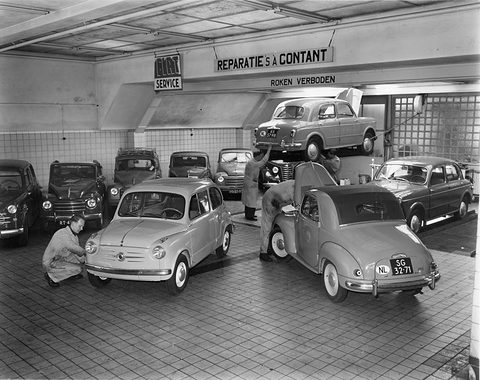
Plate IV · 1955 A 500 C among the cars in a Fiat dealer’s workshop in De Pijp, Amsterdam, in May 1955.Photo: Ben van Meerendonk / AHF, collectie IISG, CC BY-SA 2.0, via Wikimedia Commons
No period road test was read, and no Fiat production table: the history rests on the Italian, German and English Wikipedia articles, with museum pages and Fiat’s anniversary reports. Sources are given as plain text; the links are on the Credits page.
Italian Wikipedia, Fiat 500 “Topolino”, read in full with its infobox. Used as a lead; its bibliography includes Dante Giacosa’s memoir (1979) and Alessandro Sannia (2008).
French Wikipedia, Simca 5, read in full. Used as a lead; it cites René Bellu, Toutes les Simca, and the Le Mans museum.
German Wikipedia, Fiat 500 Topolino, read in full. Used as a lead.
German Wikipedia, Simca 5, read in full. Used as a lead.
Italpress, “Torino celebra i primi 90 anni della Fiat 500 ‘Topolino’”, June 2026, a report of Fiat’s Heritage Hub event, read in full.
Lane Motor Museum, “Fiat 500 Coupé ‘Topolino’, 1936”, collection page, read in full.
English Wikipedia, Fiat 500 “Topolino”, read in full. Used as a lead.
Artcurial, Rétromobile sale, Paris, 2014, lot 315, 1939 Fiat 500 A Topolino coupé découvrable, read in full.
German Wikipedia, NSU-Fiat, read in full. Used as a lead; it cites Werner Oswald, Deutsche Autos.
The Shuttleworth Collection, “Fiat 500 ‘Topolino’”, collection page, read in full.
Ken Zino, “Eightieth Anniversary of the Fiat 500 ‘Topolino’”, AutoInformed, June 2016, read in full.
National Automobile Museum of Tasmania, “1936 Fiat Topolino”, read in full.
A restored 1936 Fiat 500 A at the Fiat 120th anniversary exhibition, Troja Palace, Prague, in September 2019.Photo: Stribrohorak, CC BY-SA 3.0, via Wikimedia Commons
A red and black 1936 Fiat 500 A at the National Polytechnic Museum, Sofia, in March 2017.Photo: Georgy Palpurin ShareBulgaria team, CC BY-SA 4.0, via Wikimedia Commons
A red and black 1937 Fiat 500 A trasformabile at the Bristol Italian AutoMoto Festival in April 2017.Photo: Andrew Bone, CC BY 2.0, via Wikimedia Commons
A maroon and black Fiat 500 A shown as a 1943 car at Museum Angkut, Batu, East Java, in October 2017.Photo: Crisco 1492, CC BY-SA 4.0, via Wikimedia Commons
A red and black Fiat 500 A at the Meeting of Italian Cars in Poděbrady, Czech Republic, in April 2017.Photo: Stribrohorak, CC BY-SA 3.0, via Wikimedia Commons
A cream and black Fiat 500 Furgoncino with the wing-mounted headlamps of the A and B, at a car show in May 2010.Photo: nakhon100, CC BY 2.0, via Wikimedia Commons
A maroon and black Fiat 500 A under an aircraft wing at the Malta Aviation Museum, Ta’ Qali, in February 2012.Photo: Tony Hisgett, CC BY 2.0, via Wikimedia Commons
A cream Fiat 500 Topolino with wing-mounted headlamps at the Motorcar Museum of Japan, Komatsu, in October 2009.Photo: Kzaral, CC BY 2.0, via Wikimedia Commons
A black Fiat 500 Topolino, thought by its photographer to be a 1950 500 B, in Hisaya-ōdōri Park, Nagoya, in 2022.Photo: KKPCW(Kyu3), CC BY-SA 4.0, via Wikimedia Commons
A black Fiat 500 A with red wheels in profile in Schaffhausen, Switzerland, in September 2020.Photo: Sandra Becker 01, CC BY-SA 4.0, via Wikimedia Commons
A red and black Fiat 500 A with its rear-hinged door open at the National Polytechnic Museum, Sofia, in March 2017.Photo: Antonio Georgiev, CC BY-SA 4.0, via Wikimedia Commons
The rear of a yellow and black 1936 Fiat 500 A saloon at the Toyota Automobile Museum, Nagakute, in November 2025.Photo: TTTNIS, CC0 1.0, via Wikimedia Commons
An unrestored blue 1937 Fiat 500 A after 40 years in a garage, at Rangiora, New Zealand, in January 2017.Photo: Riley, CC BY 2.0, via Wikimedia Commons
A red and black 1937 Fiat 500 A trasformabile with its roof folded back at a car show in England in July 2008.Photo: Brian Snelson, CC BY 2.0, via Wikimedia Commons
The rear of a green and black 1938 Fiat 500 A with its roof rolled back at the Băneasa period car show, Bucharest, in May 2012.Photo: Alexandru Panoiu, CC BY 2.0, via Wikimedia Commons
The rear of a red and black Fiat 500 A at the Meeting of Italian Cars in Poděbrady, Czech Republic, in April 2017.Photo: Stribrohorak, CC BY-SA 3.0, via Wikimedia Commons
A green 1939 Fiat 500 A trasformabile with its roof closed at Bergen aan Zee, Netherlands, in April 2013.Photo: Rutger van der Maar, CC BY 2.0, via Wikimedia Commons
A green and black 1938 Fiat 500 A driving at the Băneasa period car show, Bucharest, in May 2012.Photo: Alexandru Panoiu, CC BY 2.0, via Wikimedia Commons
A blue and black Fiat 500 A at the Gedee Car Museum, Coimbatore, India, in a photograph uploaded in November 2025.Photo: Rainer Halama, CC BY-SA 4.0, via Wikimedia Commons
A Fiat 500 A beside a Fiat 500 C at a car meeting in March 2010, the A with separate headlamps, the C with faired-in lamps.Photo: David Perez, CC BY 4.0, via Wikimedia Commons
A light blue Fiat 500 C beside a red Fiat 500 A at the classic car meeting in Bauma, Switzerland, in July 2019.Photo: SchmalspurDVZO, CC BY-SA 4.0, via Wikimedia Commons
A black Fiat 500 A with red wheels seen head-on in Schaffhausen, Switzerland, in September 2020.Photo: Sandra Becker 01, CC BY-SA 4.0, via Wikimedia Commons
A green 1949 Fiat 500 B with rally number 109 at InterClassics, Brussels, in November 2024.Photo: Rutger van der Maar, CC BY 2.0, via Wikimedia Commons
A grey Fiat 500 B with its bonnet open at the Acqui Terme motorcycle and parts fair, Italy, in October 2008.Photo: photobeppus, CC BY-SA 2.0, via Wikimedia Commons
A dark blue 1949 Fiat 500 C with pale blue wheels at the Salamanca Motor Museum, Spain, in April 2008.Photo: Hugh Llewelyn, CC BY-SA 2.0, via Wikimedia Commons
A red and black 1949 Fiat 500 C, its headlamps faired into the wings, in Hoofddorp, Netherlands, in September 2011.Photo: Alf van Beem, CC0 1.0, via Wikimedia Commons
A faded pale green Fiat 500 C with yellow wheels against a shuttered shopfront in Rome in June 2011.Photo: Jean-Pierre Dalbéra, CC BY 2.0, via Wikimedia Commons
A dark green 1952 Fiat 500 C with a black fabric roof at Floriander, Haarlemmermeer, Netherlands, in September 2011.Photo: Alf van Beem, CC0 1.0, via Wikimedia Commons
The rear of a two-tone green 1950 Fiat 500 C at Shannon’s Eastern Creek Classic, Sydney, in August 2011.Photo: sv1ambo, CC BY 2.0, via Wikimedia Commons
A maroon 1954 Fiat 500 C trasformabile with its roof open and luggage on the rack at the Bristol Italian AutoMoto Festival in April 2017.Photo: Andrew Bone, CC BY 2.0, via Wikimedia Commons
A grey 1955 Fiat 500 C trasformabile with luggage on its tail rack at Tingstäde, Gotland, in August 2022.Photo: Bene Riobó, CC BY-SA 4.0, via Wikimedia Commons
A brown Fiat 500 C with luggage on its tail rack at the classic car meeting in Bauma, Switzerland, in July 2019.Photo: SchmalspurDVZO, CC BY-SA 4.0, via Wikimedia Commons
The rear of a dark green Fiat 500 C trasformabile on a wet street in Radda in Chianti, Tuscany, in July 2011.Photo: Rutger van der Maar, CC BY 2.0, via Wikimedia Commons
A pale green Fiat 500 C Belvedere with a roof rack at the Kurpfalz-Klassik, Technik Museum Sinsheim, in May 2009.Photo: Alf van Beem, CC0 1.0, via Wikimedia Commons
A two-tone green Fiat 500 C estate outside a trattoria in Via della Lungaretta, Rome, in October 2011.Photo: Jean-Pol GRANDMONT, CC BY-SA 3.0, via Wikimedia Commons
A brown Fiat 500 C Giardiniera in profile at the Kurpfalz-Klassik, Technik Museum Sinsheim, in May 2009.Photo: Alf van Beem, CC0 1.0, via Wikimedia Commons
The rear of a green Fiat 500 C Belvedere at the Bonhams sale, Grand Palais, Paris, in February 2015.Photo: Thesupermat, CC BY-SA 4.0, via Wikimedia Commons
A green Fiat 500 C Furgoncino of the Centro Latte Rapallo dairy in Rapallo, Italy, in October 2008.Photo: Davide Papalini, CC BY-SA 3.0, via Wikimedia Commons
The cockpit of a 1937 Fiat 500 A trasformabile, seen over its rolled-back roof, at the Bristol Italian AutoMoto Festival in April 2017.Photo: Andrew Bone, CC BY 2.0, via Wikimedia Commons
The dashboard and bench seat of a 1936 Fiat 500 A at the National Polytechnic Museum, Sofia, in March 2017.Photo: Antonio Georgiev, CC BY-SA 4.0, via Wikimedia Commons
The flank and door of a red and black 1936 Fiat 500 A at the National Polytechnic Museum, Sofia, in March 2017.Photo: Georgy Palpurin ShareBulgaria team, CC BY-SA 4.0, via Wikimedia Commons
The dashboard of a 1949 Fiat 500 C at the oldtimer meeting in Vallendar, Germany, in July 2007.Photo: Lothar Spurzem, CC BY-SA 2.0 de, via Wikimedia Commons
The engine of a 1949 Fiat 500 C, with its radiator behind it, at Vallendar, Germany, in July 2007.Photo: Lothar Spurzem, CC BY-SA 2.0 de, via Wikimedia Commons
The fuel and oil gauge on the dashboard of a 1949 Fiat 500 C in Hoofddorp, Netherlands, in September 2011.Photo: Alf van Beem, CC0 1.0, via Wikimedia Commons
A pale blue 1949 Fiat 500 barchetta bodied by Carrozzeria Colli at the Museo Nicolis, Villafranca di Verona, in September 2018.Photo: Facquis, CC BY-SA 4.0, via Wikimedia Commons
An orange Bertone-bodied barchetta on the Fiat 500 A chassis at the Museo Nazionale dell’Automobile, Turin, in April 2015.Photo: Rahil Rupawala, CC BY 2.0, via Wikimedia Commons
A camouflaged Fiat 500 A with Red Cross markings, used in the Second World War, at the Mémorial de Caen in November 2023.Photo: Loxyger, CC0 1.0, via Wikimedia Commons
A 1954 Fiat 500 C Giardiniera-Belvedere photographed by J.W.C. Postel in the Netherlands in 1972.Photo: J.W.C. Postel / Erfgoed Leiden en Omstreken, CC BY 4.0, via Wikimedia Commons
A navy Fiat 500 C trasformabile with its roof open at the classic car meeting in Bauma, Switzerland, in July 2019.Photo: SchmalspurDVZO, CC BY-SA 4.0, via Wikimedia Commons
A yellow Topolino-bodied drag racer at the MSRA Back to the 50’s show, State Fairgrounds, St Paul, Minnesota, in June 2013.Photo: Greg Gjerdingen, CC BY 2.0, via Wikimedia Commons
The rear of a red and black 1953 NSU-Fiat 500 at the oldtimer meeting in Konz, Germany, in July 2016.Photo: Berthold Werner, CC BY-SA 3.0, via Wikimedia Commons
A green 1952 NSU-Fiat 500 C Belvedere with its bonnet raised at the Auto & Uhrenwelt, Schramberg, in November 2015.Photo: Alf van Beem, CC0 1.0, via Wikimedia Commons
A green 1952 NSU-Fiat 500 C Belvedere in profile at the Auto & Uhrenwelt, Schramberg, in November 2015.Photo: Alf van Beem, CC0 1.0, via Wikimedia Commons
The NSU/FIAT badge on the nose of a cream NSU-Fiat 500 C at a car show in Germany in May 2016.Photo: BlueBreezeWiki, CC BY-SA 3.0, via Wikimedia Commons
The dashboard of an NSU-Fiat 500 Weinsberg spider at the Classic-Gala, Schwetzingen, in September 2022.Photo: Wikisympathisant, CC BY-SA 4.0, via Wikimedia Commons
A green NSU-Fiat 500 spider with its hood up at the UMMC Museum of Military and Automotive Technology, Verkhnyaya Pyshma, Russia, in June 2021.Photo: Vyacheslav Bukharov, CC BY-SA 4.0, via Wikimedia Commons
A red 1939 NSU-Fiat Topolino-Weinsberg roadster at the Fiat 120th anniversary exhibition, Troja Palace, Prague, in September 2019.Photo: Stribrohorak, CC BY-SA 3.0, via Wikimedia Commons
A restored 1937 Simca-Fiat 5 at the Fiat 120th anniversary exhibition, Troja Palace, Prague, in September 2019.Photo: Stribrohorak, CC BY-SA 3.0, via Wikimedia Commons
The rear of a cream and navy 1939 Simca 5 with its roof rolled back at a car show in Poland in August 2026.Photo: Zbigniew Czernik, CC BY 4.0, via Wikimedia Commons
A grey French Army Simca 5 in a 1940 diorama at the Musée des Blindés, Saumur, in September 2021.Photo: Totorvdr59, CC BY-SA 4.0, via Wikimedia Commons
A green 1939 Simca 5 fourgonnette lettered for the Auberge du Port, Vire-sur-Lot, at Turvey, England, in May 2016.Photo: Charles01, CC BY-SA 4.0, via Wikimedia Commons
The blue Simca 5 Gordini No. 48 from the 1937 Le Mans 24 Hours at Rétromobile, Paris, in February 2015.Photo: Thesupermat, CC BY-SA 4.0, via Wikimedia Commons
A red Simca 5 shown in Meursault, Côte-d’Or, for the 50th anniversary of the film La Grande Vadrouille in September 2016.Photo: François de Dijon, CC BY-SA 4.0, via Wikimedia Commons
A red Simca 5 in profile in Meursault, Côte-d’Or, at the 50th anniversary of La Grande Vadrouille in September 2016.Photo: François de Dijon, CC BY-SA 4.0, via Wikimedia Commons
A red and black Simca 5 at the Meeting of Italian Cars in Poděbrady, Czech Republic, in April 2017.Photo: Stribrohorak, CC BY-SA 3.0, via Wikimedia Commons
The rear of a red and black Simca 5 at the Meeting of Italian Cars in Poděbrady, Czech Republic, in April 2017.Photo: Stribrohorak, CC BY-SA 3.0, via Wikimedia Commons
A white Simca 5 with race number 2 at the Meeting of Italian Cars in Poděbrady, Czech Republic, in April 2017.Photo: Stribrohorak, CC BY-SA 3.0, via Wikimedia Commons
The rear of a white Simca 5 at the Meeting of Italian Cars in Poděbrady, Czech Republic, in April 2017.Photo: Stribrohorak, CC BY-SA 3.0, via Wikimedia Commons
A Fiat 500 C Furgoncino outside the Zeldenrust dairy on the Rechtboomsloot, Amsterdam, in May 1954.Photo: Willem van de Poll / Nationaal Archief, CC0 1.0, via Wikimedia Commons
A wheel being changed on a Fiat 500 C during the KNAC ladies’ rally at Zeist, Netherlands, on 20 May 1950.Photo: Jack de Nijs / Anefo, CC0 1.0, via Wikimedia Commons
Maria Teresa de Filippis at the wheel of her Fiat 500, No. 8, the class winner at the Salerno–Cava de’ Tirreni hillclimb in June 1948.Photo: Unknown photographer, Public domain, via Wikimedia Commons
Entry No. 16, a Fiat 500, on the coast road at Calafuria near Livorno in the 1938 Mille Miglia.Photo: Unknown photographer, Public domain, via Wikimedia Commons
A 1938 NSU-built Fiat 500 A spider photographed by J.W.C. Postel in the Netherlands in 1972.Photo: J.W.C. Postel / Erfgoed Leiden en Omstreken, CC BY 4.0, via Wikimedia Commons
Elio and Ugo Zagato with Fiat-based Zagato cars outside the Carrozzeria Zagato works in Milan in 1947.Photo: Unknown photographer, Public domain, via Wikimedia Commons
Two new Fiat 500 Cs high on a car transporter in Turin in about 1950.Photo: US Economic Cooperation Administration (National Archives), Public domain, via Wikimedia Commons