microcarfan
  • Microcar
  • Spain
  • Four wheels
  • No doors at first

Biscúter

Also known as “Zapatilla”, Biscúter Voisin, Biscúter 100, Biscúter 200, Autonacional Biscúter

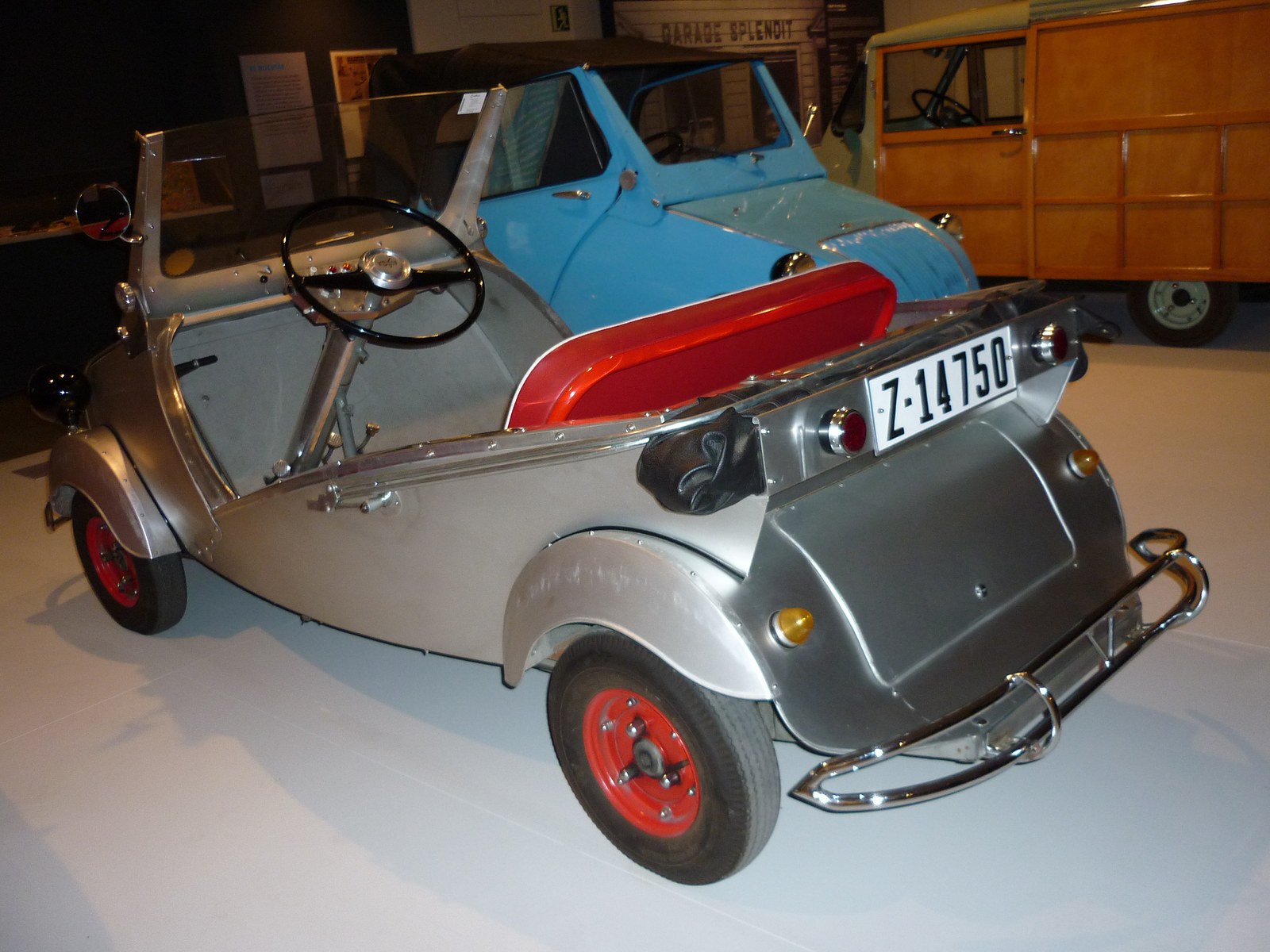
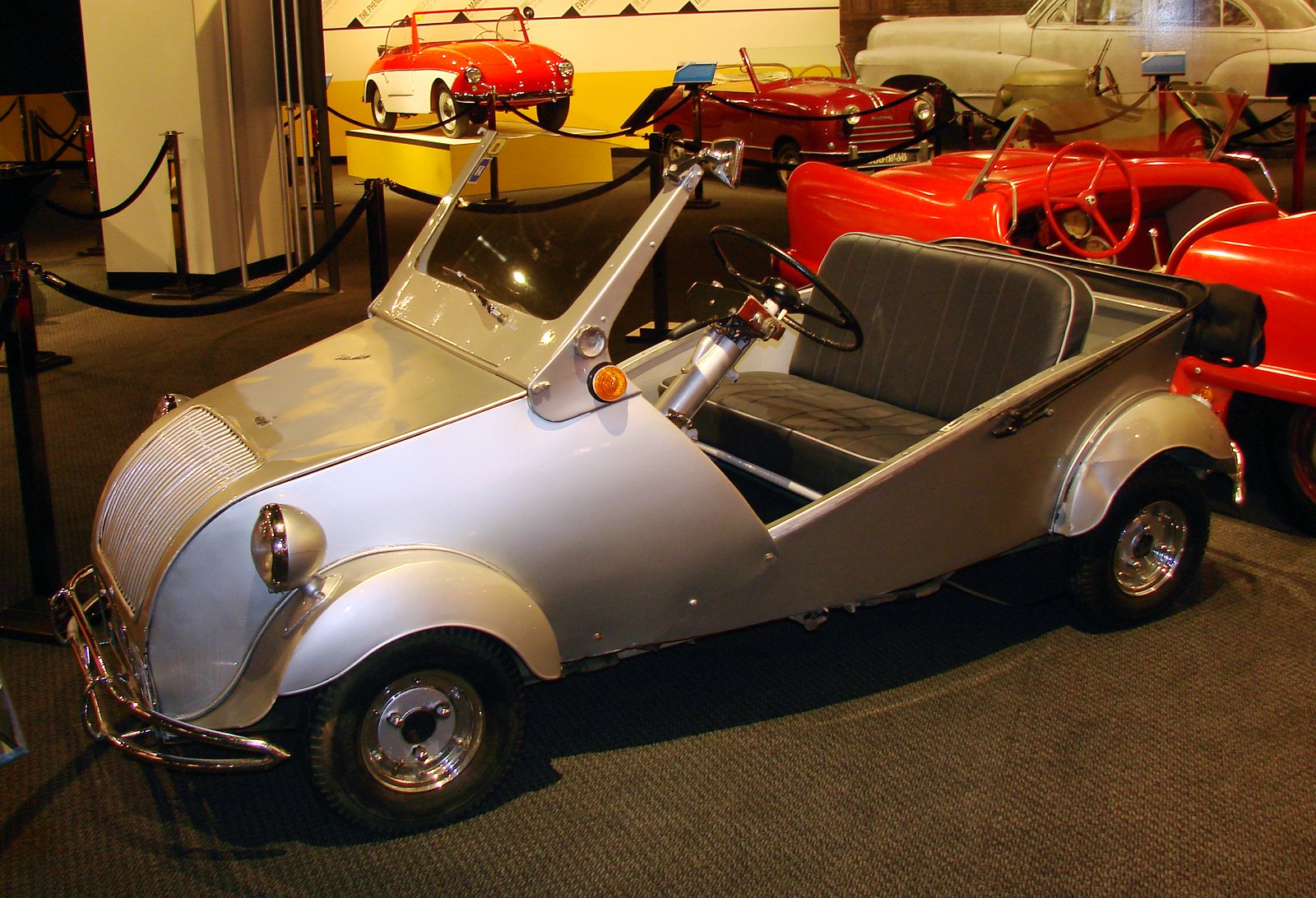
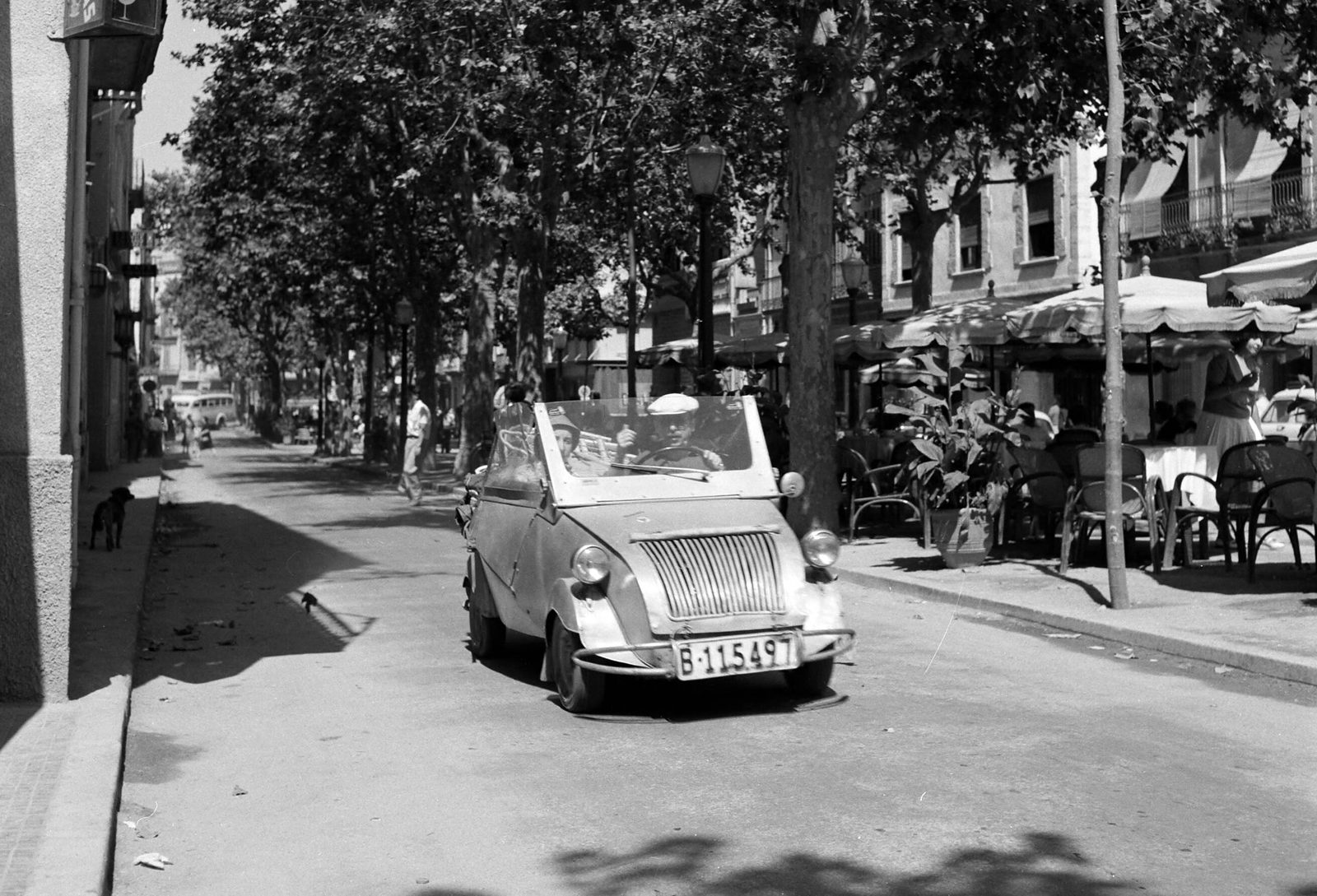
No doors, no reverse gear, a starter you pulled by hand and a single driven front wheel. The aviation pioneer Gabriel Voisin designed it for France, no French firm built it, and in Barcelona it became Spain’s best-selling microcar.

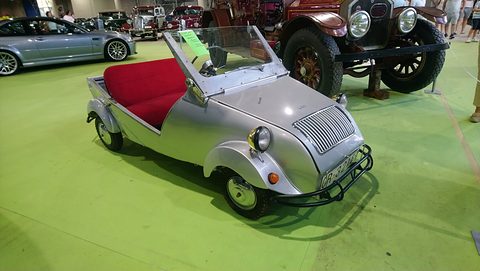
Silver doorless car with red seats and a tubular bumper on green carpet, a vintage car and a modern coupé behind.
An open Biscúter at a car show in Aguadulce, Almería, in 2019.Photo: Schumi4ever, CC BY-SA 4.0, via Wikimedia Commons

At a glance

The spec plate

Biscúter

Serie 100 and 200-A · Barcelona

Built
1953–⁠1960Shown in June 1953; the first deliveries most likely in 1954
Country
SpainAutonacional S.A., Sant Adrià de Besòs, Barcelona
Maker
Autonacional S.A., BarcelonaUnder licence from Gabriel Voisin; sold through Utilauto S.A.
Engine
197 cc Hispano-Villiers two-stroke singleIn the nose, chain-driving the right front wheel only
Power
9 CVAt 4,800 rpm
Length
2,560 mm1,140 mm wide, 1,380 mm high
Weight
240 kgThe aluminium Serie 100; the steel 200-A weighs 295 kg
Seats
2On a bench; “2/3 plazas” in the advertising
Wheels
4All four independently sprung; only the right front wheel is driven
Price new
25,000 pesetas28,600 pesetas for the Biscúter 100, by Motorpasión
Production
about 12,000About 10,000 by other counts; 20,000 only on the Weiner museum’s labels
Survives
YesMore than 300 restored, by one Spanish count
Top speed
76km/h76 km/h75 km/h by Motorpasión

How big is it?

True proportion

2.56 m

It is 410 mm shorter than a Fiat 500, about 1.5 adults laid end to end.

  • 1.14 m wide
  • 240 kg: about three adults
  • Two seats on one bench
  • No doors on the first cars
Drawn at true proportion. The track is 3.6 metres long; the adult stands at the same scale. The Peel P50 is the smallest production car, on every page for comparison.

The story

History

In the Spain of the 1940s, Franco’s policy of self-sufficiency, the United Nations embargo and the industrial policy of the INI starved Barcelona of car production: La Hispano-Suiza had become ENASA, the maker of Pegaso trucks, in 1946; Ford’s Spanish company was held to small trucks; and SEAT, founded in 1950, built its first car, the 1400, only in 1953, at a price that made it a luxury.source 1source 2 Spain built a little over 500 in 1945, more than 5,000 in 1950 and close to 70,000 in 1955. In 1951 the Villiers Engineering Co. founded a Barcelona subsidiary, Hispano Villiers S.A., whose first engines went on sale in 1953, and with them came the Spanish microcar built around a motorcycle engine.source 1

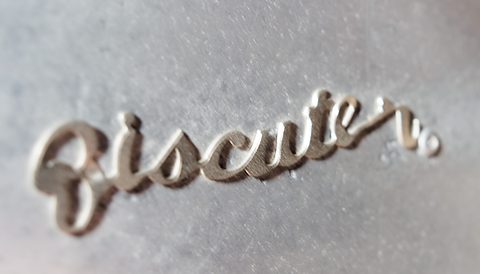
The design came from Paris. Gabriel Voisin, the aviation pioneer and maker of the Avions Voisin cars, drew the Voisin Biscooter in 1949–⁠50, which puts him among the aircraft makers who turned to microcars, and among their notable designers. It drew orders at its debut at the 1950 Paris show, but no French firm would build it.source 1 Its name meant a double scooter, or a scooter on four wheels, and in Spain it was spelt Biscúter.source 3source 2

Autonacional

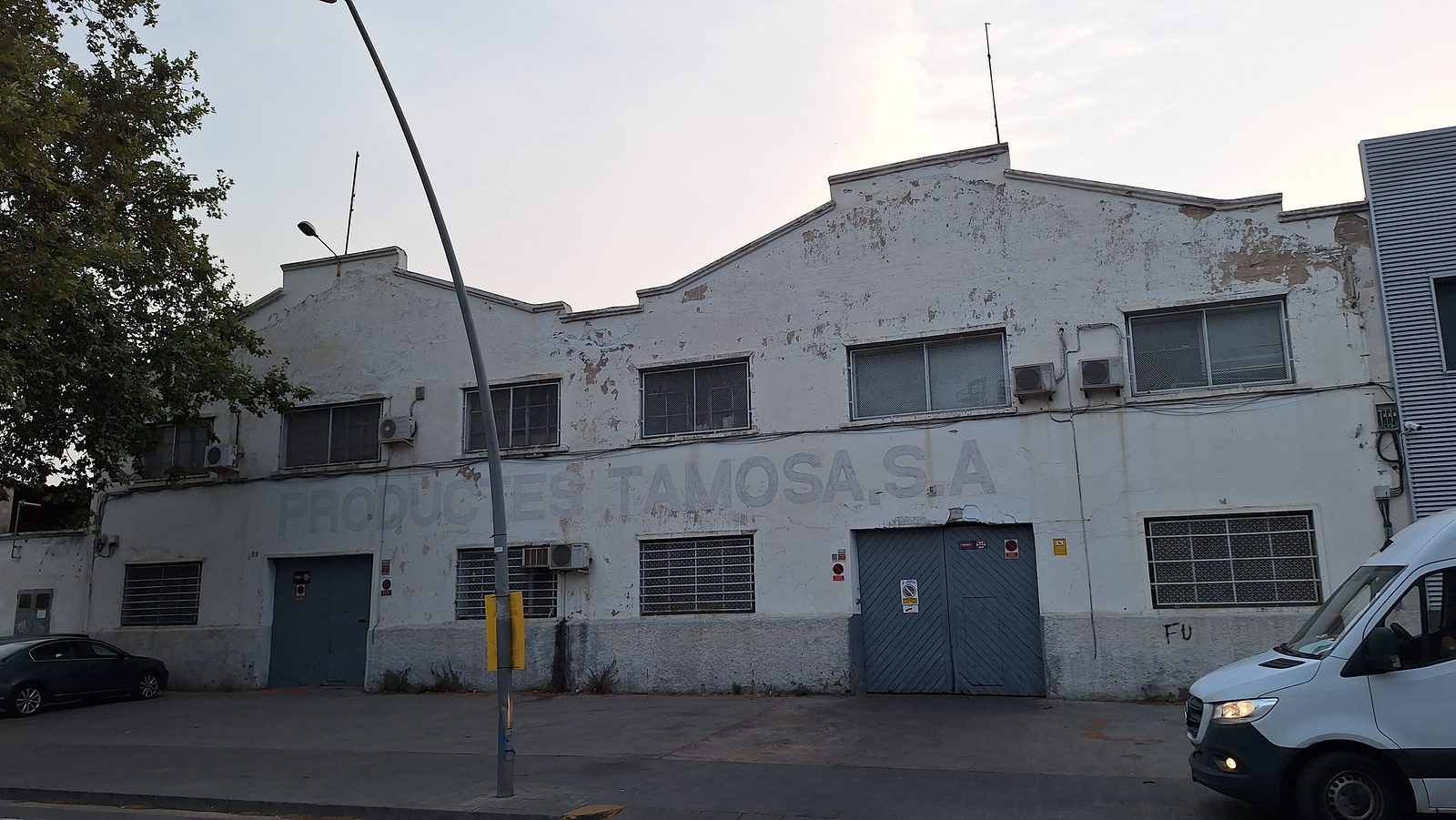
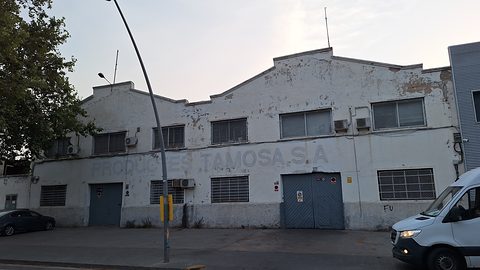
Autonacional S.L. was founded in Barcelona on 29 December 1950 by Ángel Gill Deu, Vicente Fulleda Boguña and Lorenzo Marco Sarrió.source 4 Gill and Fulleda came from Eucort, an unsuccessful car maker, and at first assembled and sold the last Eucort cars through the new firm. More money came from Benet Jofre, Damià Casanova and Josep Maria Marcet, the mayor of Sabadell, among others, and the firm became Autonacional S.A.; the former Eucort partners did not share the turn to microcars, and left.source 1 grupo7 makes Marcet, who also presided over the Sabadell Aero Club, the president, and Casanova the head of the workshop.source 3 Unlike most Spanish microcar makers, the museum booklet judges, Autonacional had the money for a real assembly line and for advertising on a wide scale.source 1source 5

On 11 January 1953 a delegation went to Paris to negotiate with Voisin, and the licence was bought from his Compagnie Aéromécanique Française, so the Biscúter was a French design built under licence.source 4source 3 RM Auctions and the Weiner museum date the licence variously to 1951, June 1952 or June 1953.source 6 Voisin adapted the car to the 197 cc Hispano-Villiers engine made in Barcelona and oversaw the project, and in June 1953 he travelled to Barcelona himself to settle the production arrangements.source 1source 3source 7 grupo7 has him driving the prototype from Paris to Barcelona in one go at the age of 77. He was born in 1880, so he was 72 or 73, and the drive itself is unconfirmed.source 3source 8

The car was shown at Barcelona’s trade fair, the Feria de Muestras, in June 1953, and it was a resounding success.source 3source 4source 7 Against the French car it had slightly reworked bodywork with bumpers, the Hispano-Villiers driving the right front wheel, no reverse, and brakes on the transmission and the rear wheels only.source 7 When the first customers got theirs is disputed: the Weiner museum says the standard model came at the end of 1953, the museum booklet says the first, very simple cars came out in June 1954, and Spanish Wikipedia puts series production in 1954, which is the likeliest.source 9source 1source 5 At the 1954 fair a bare chassis stood under the signs “Biscuter Voisin Autonacional” and “Compagnie Aéromécanique, Paris”.source 1

The slipper

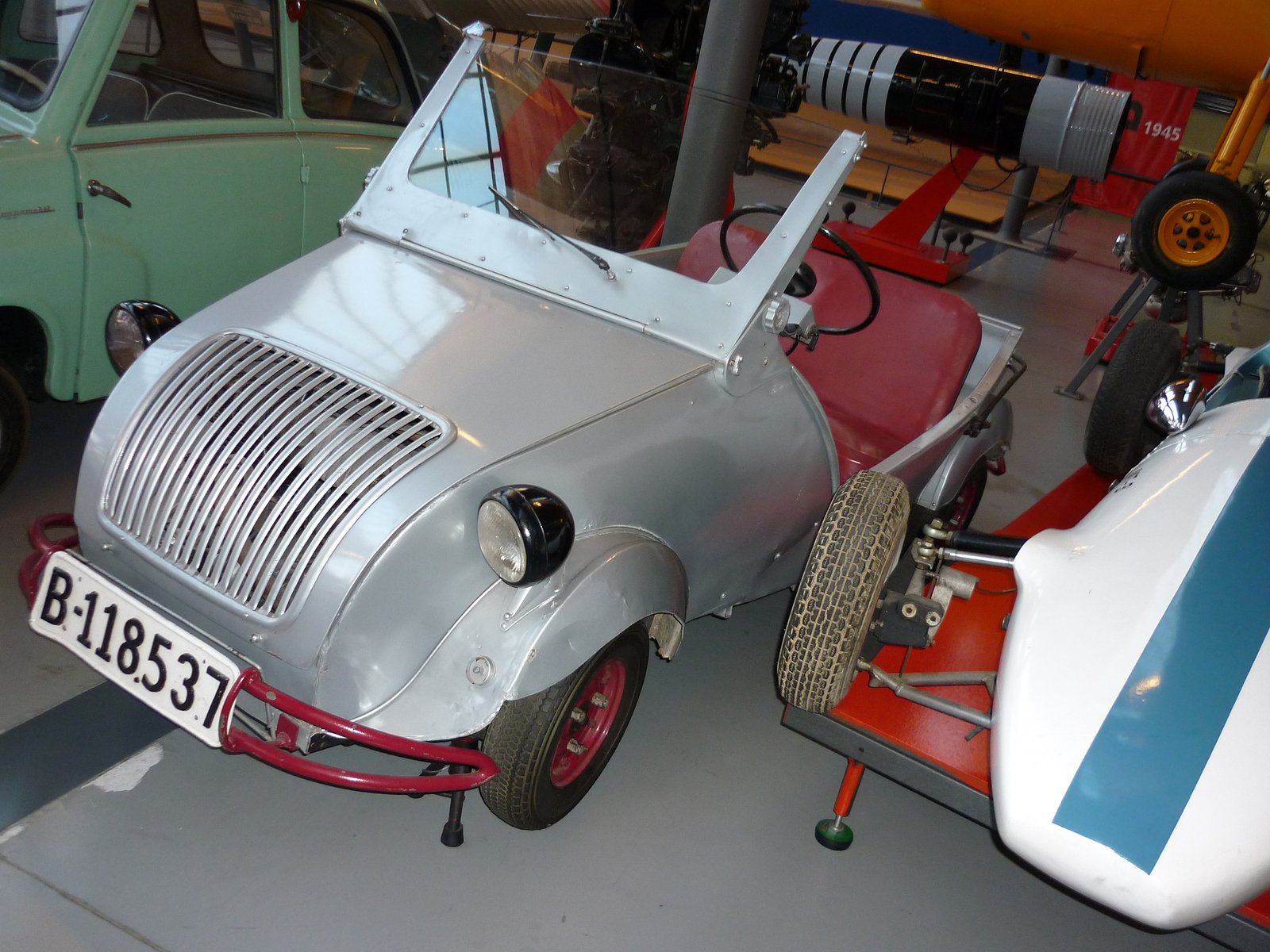
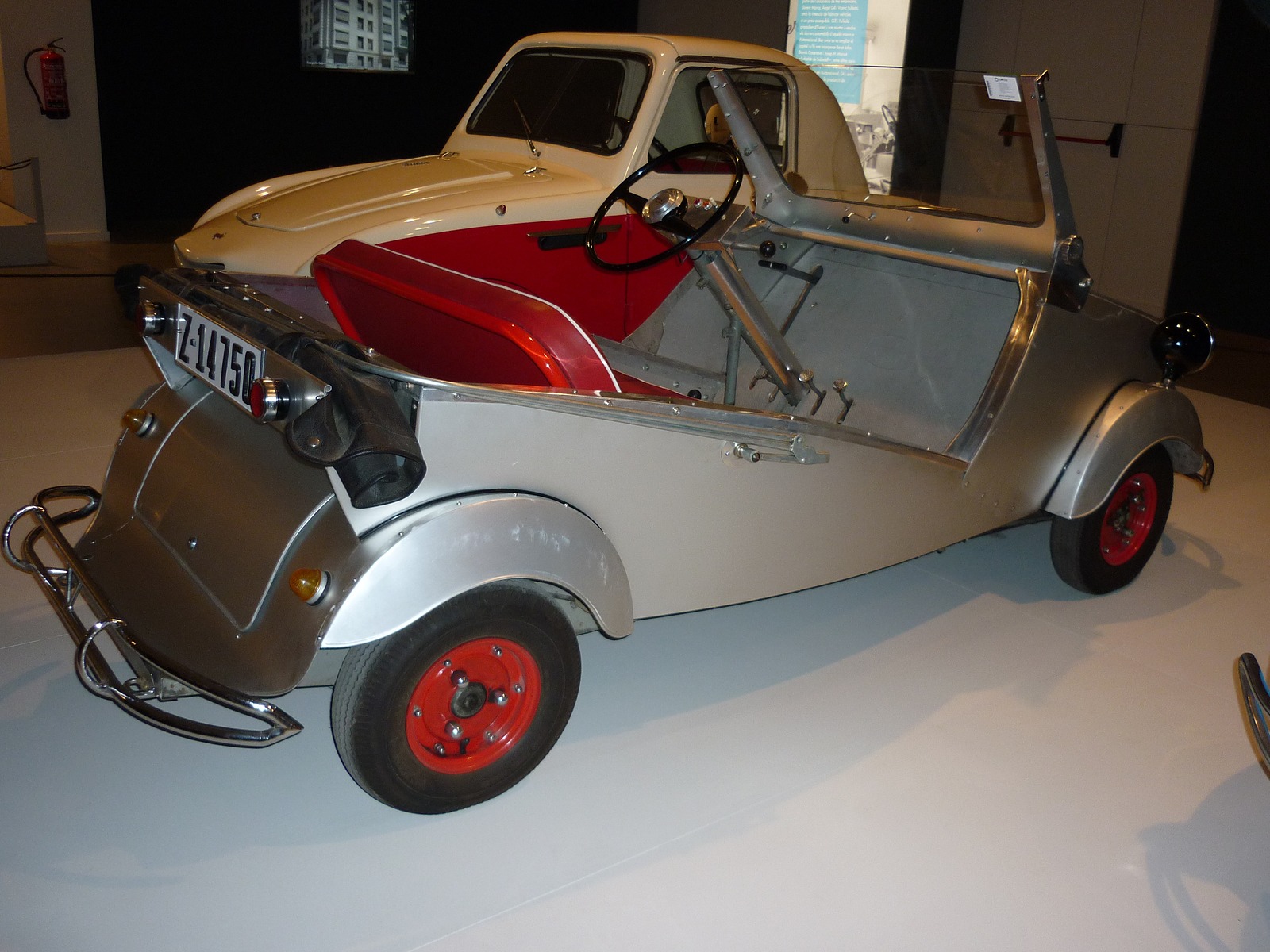
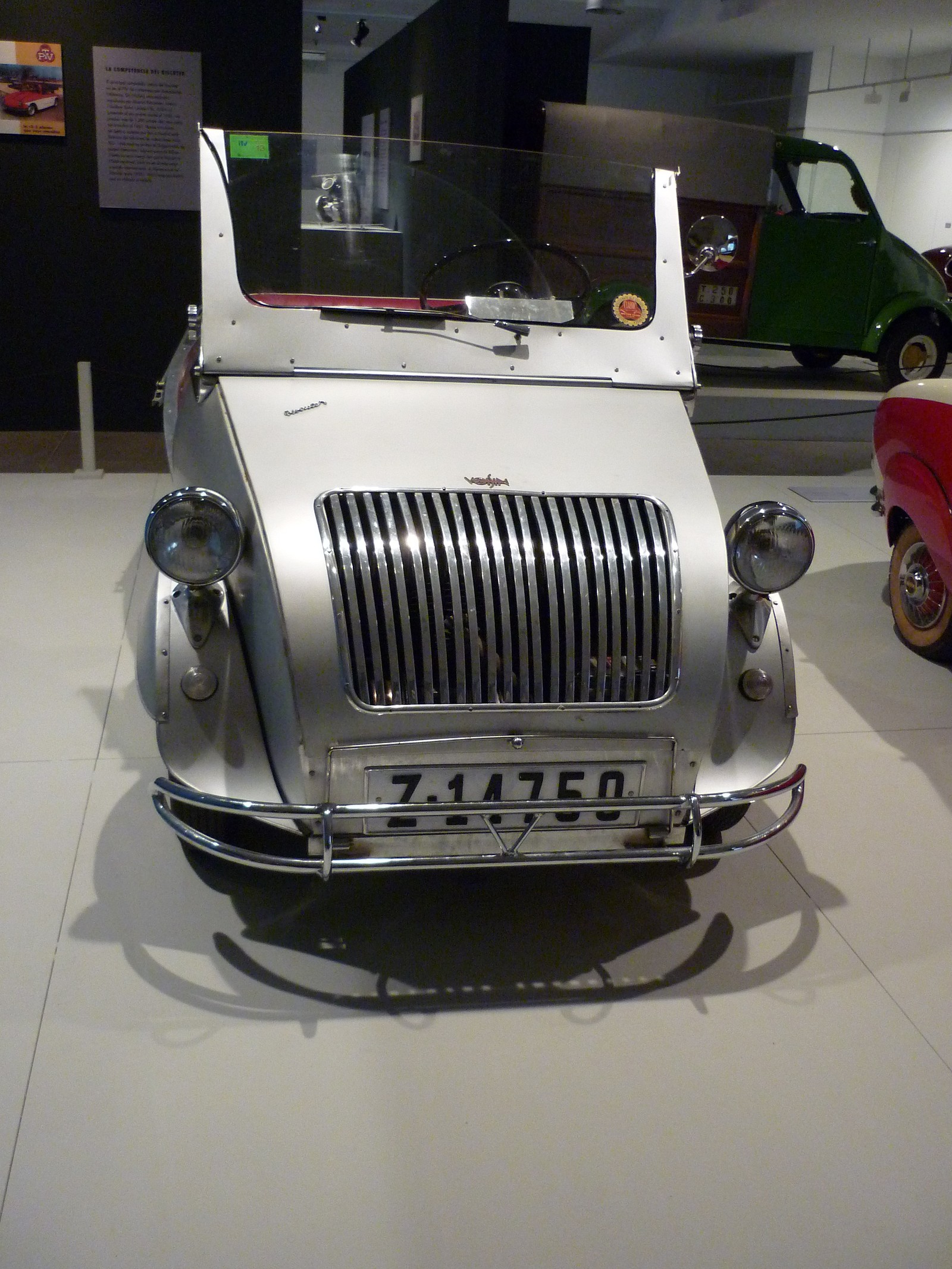
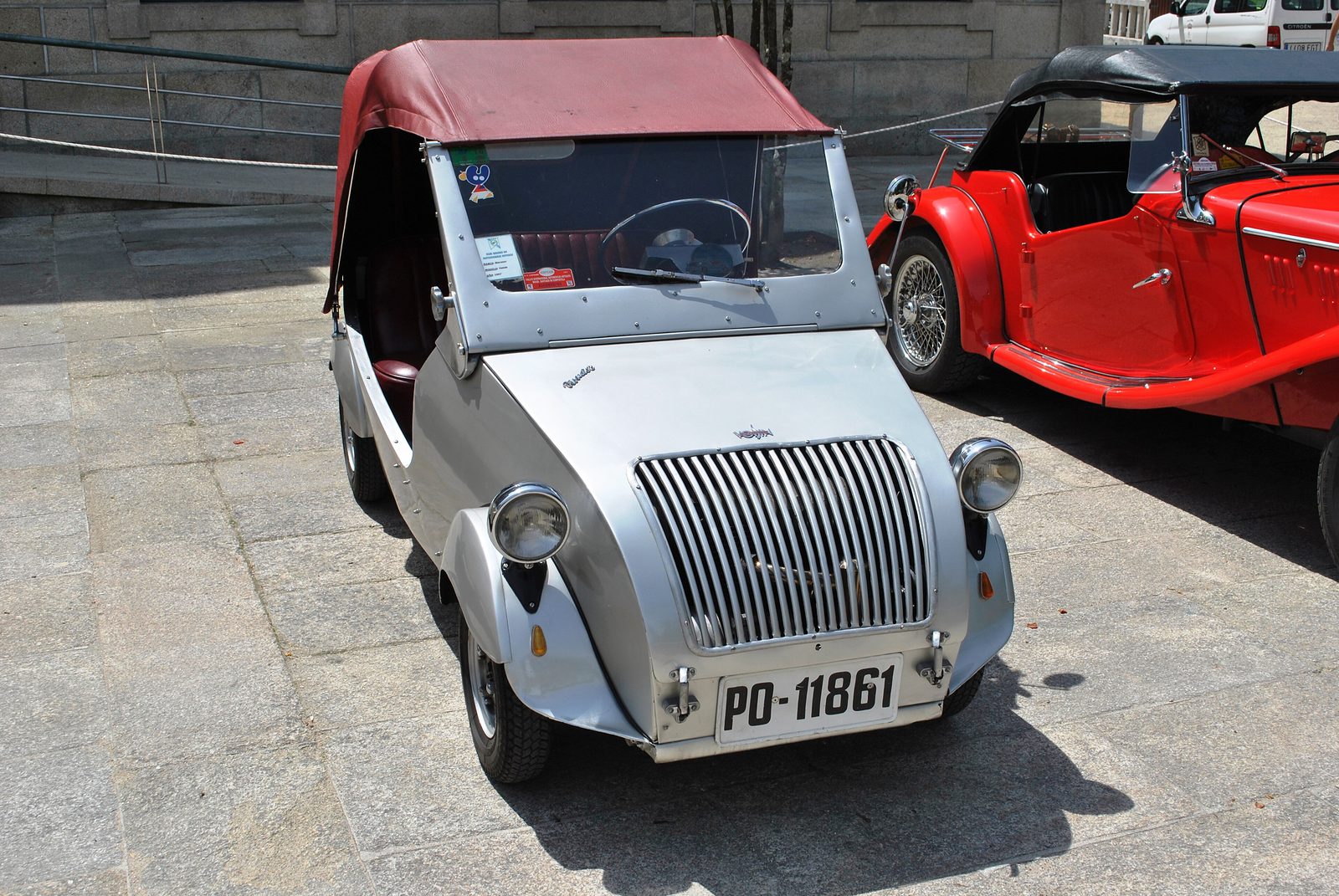
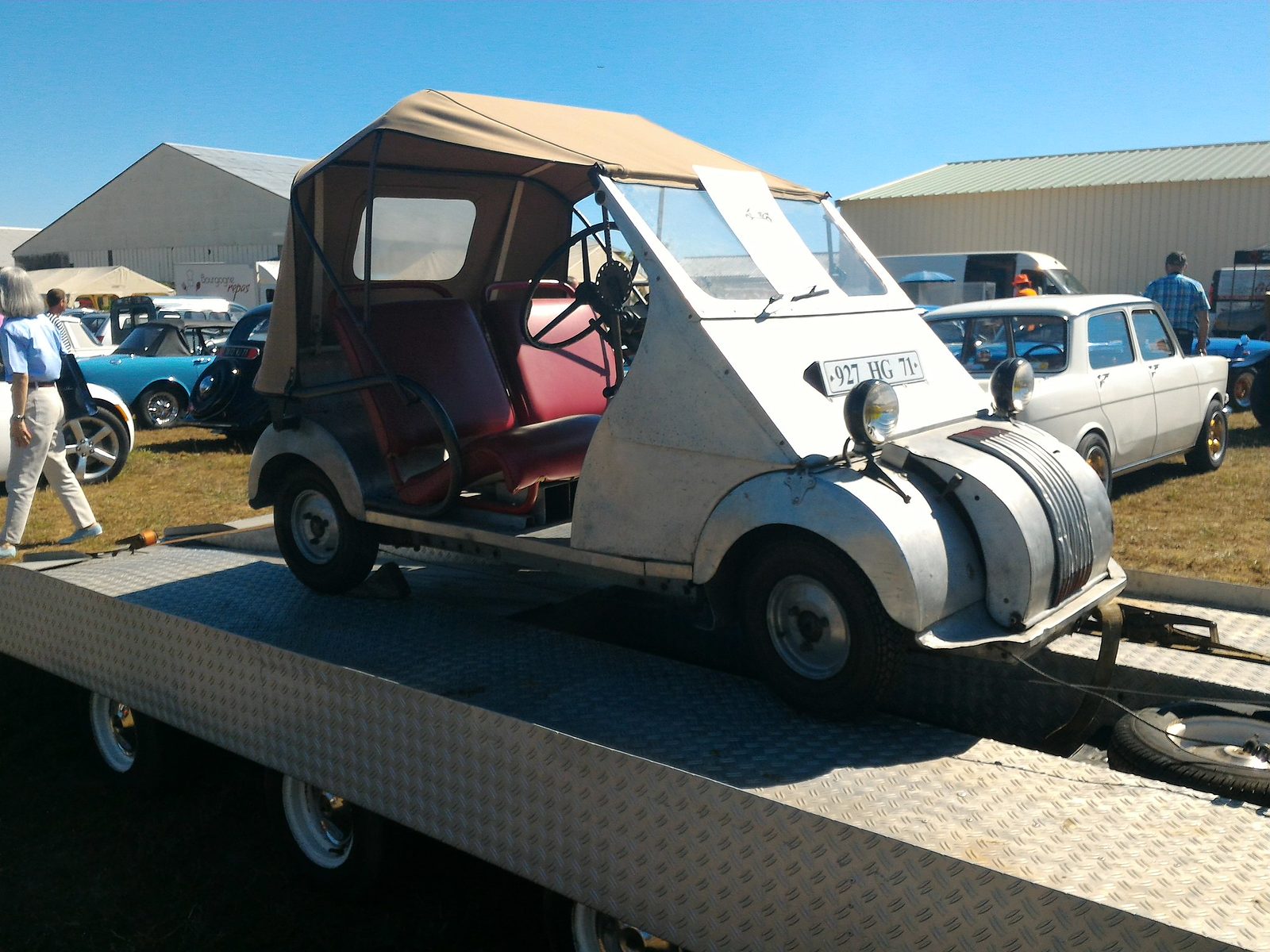
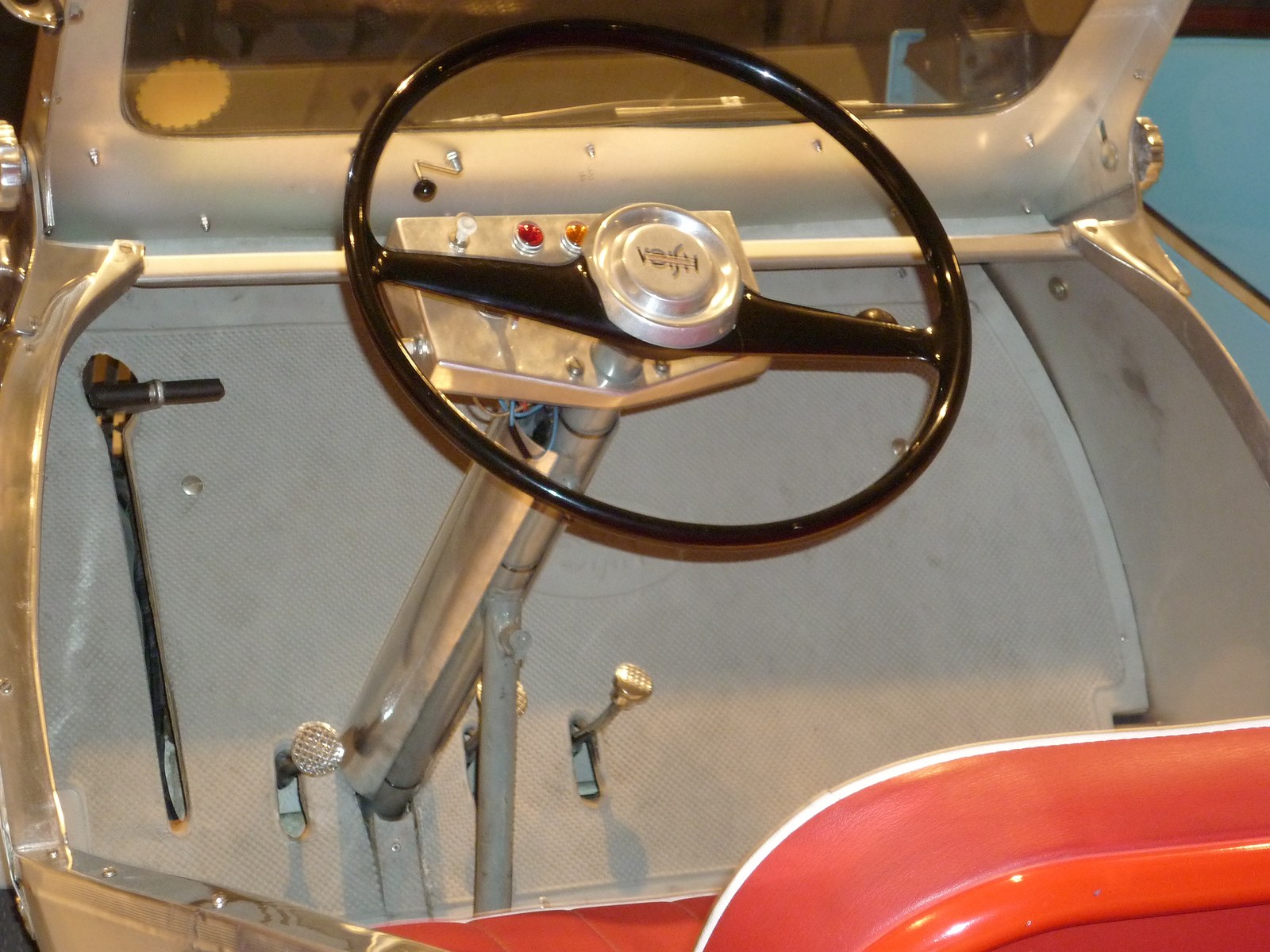
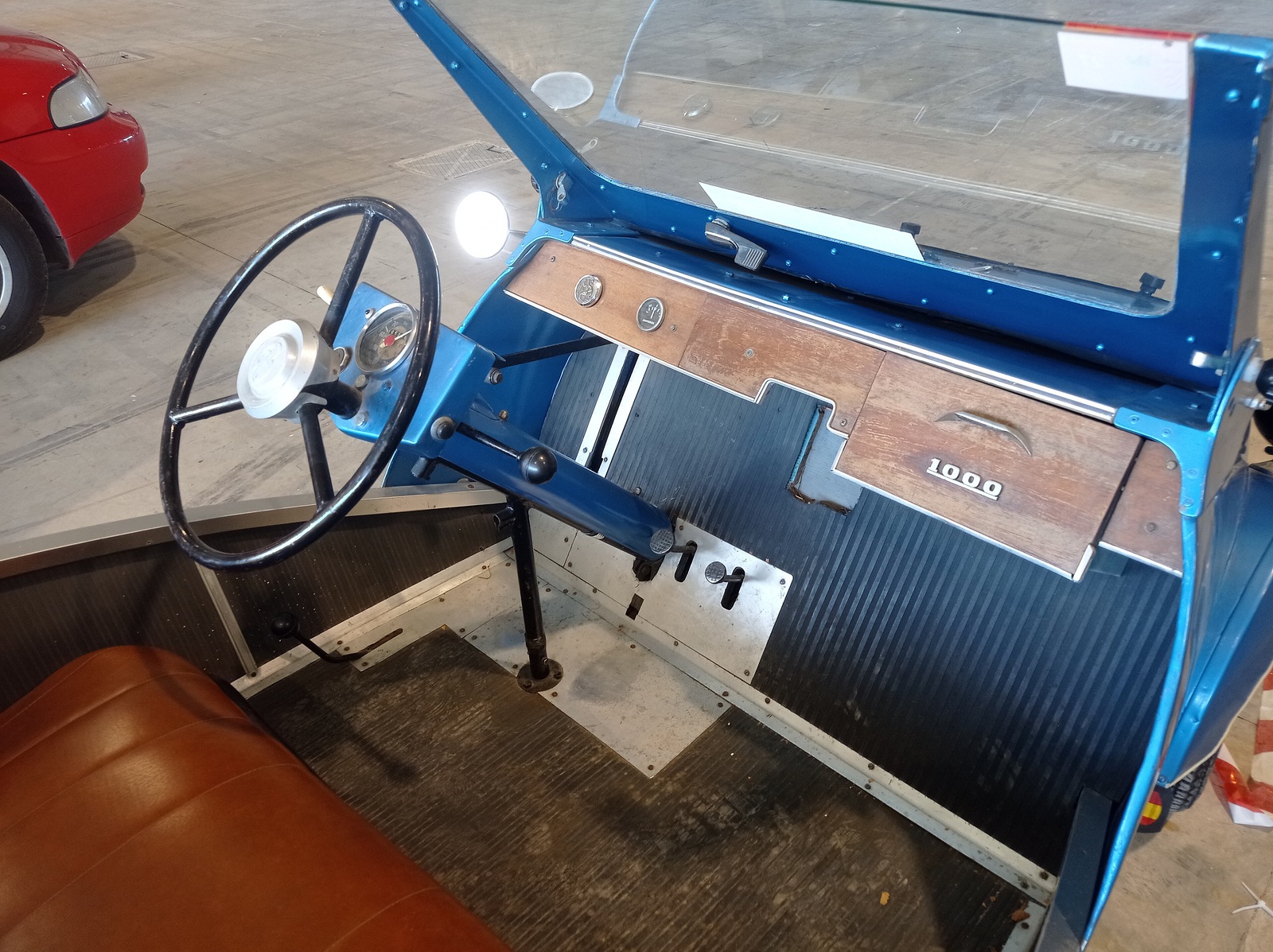
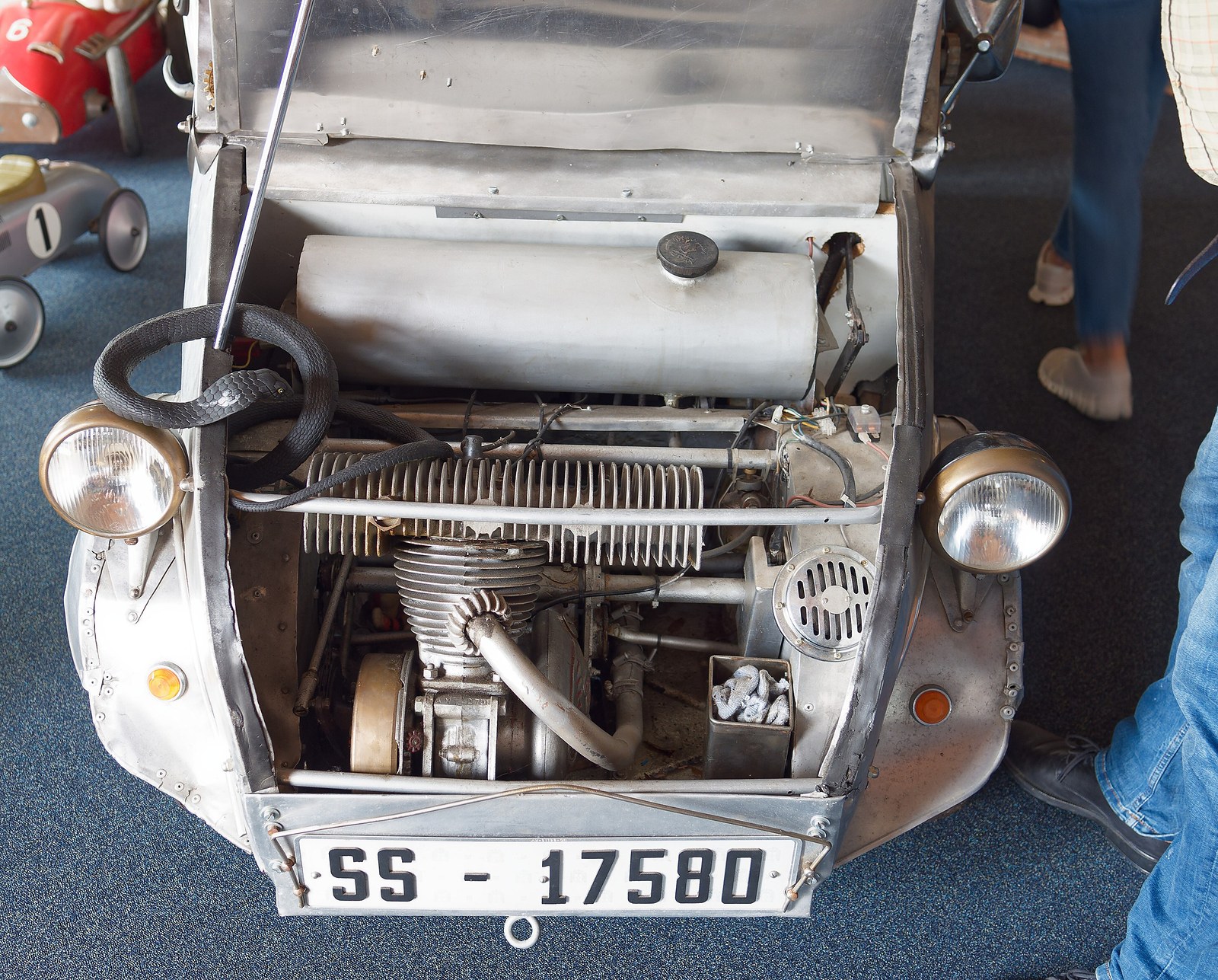
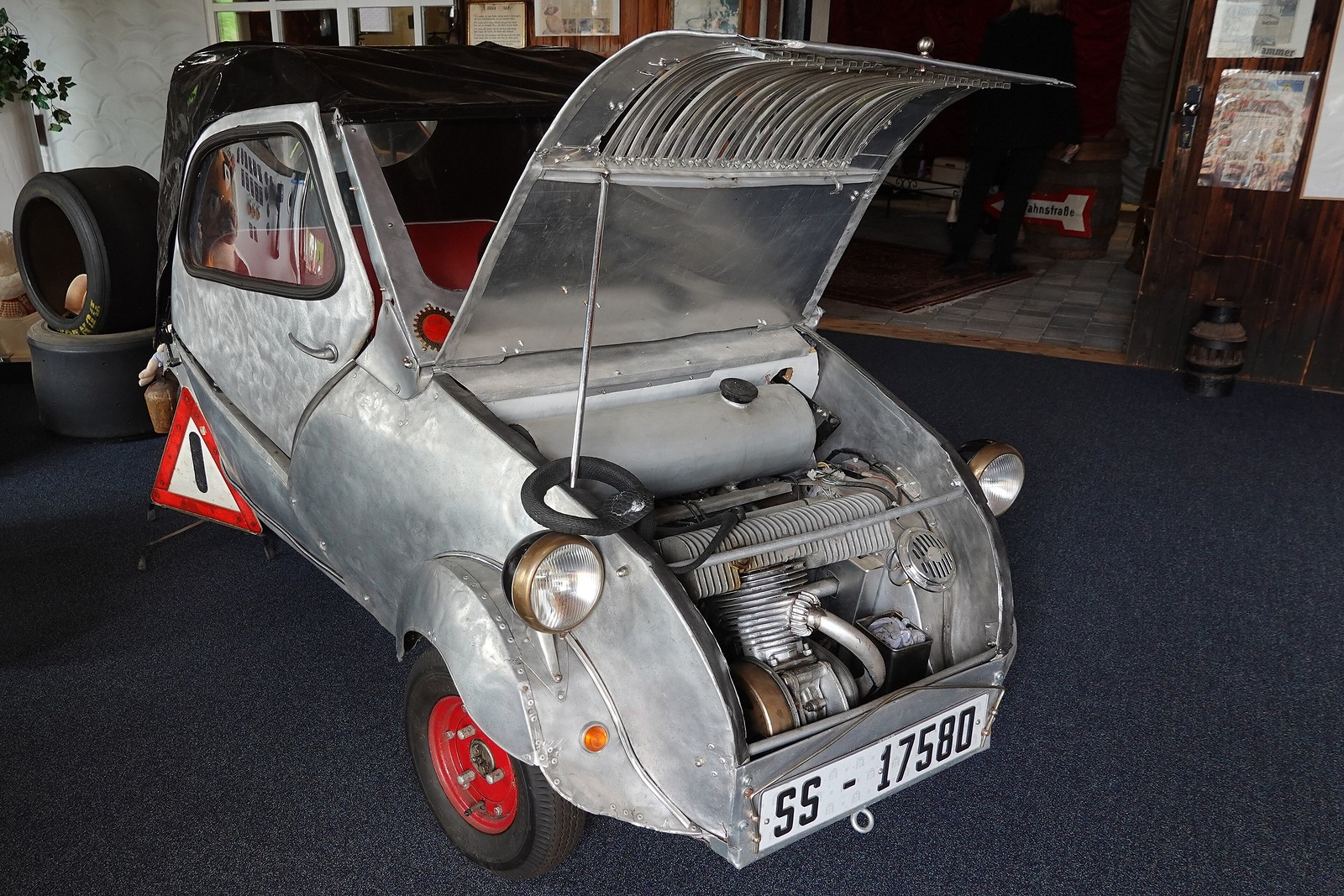
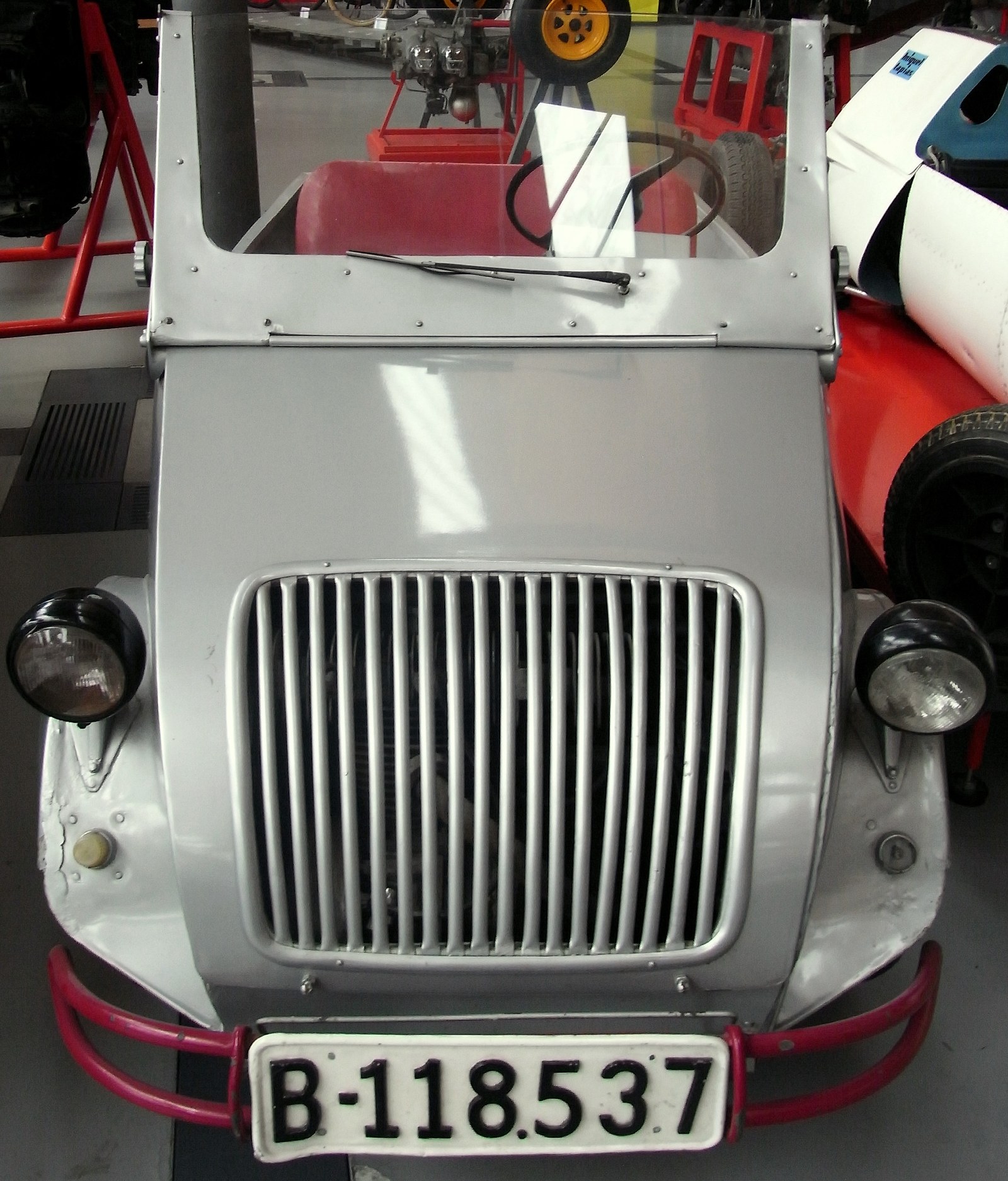
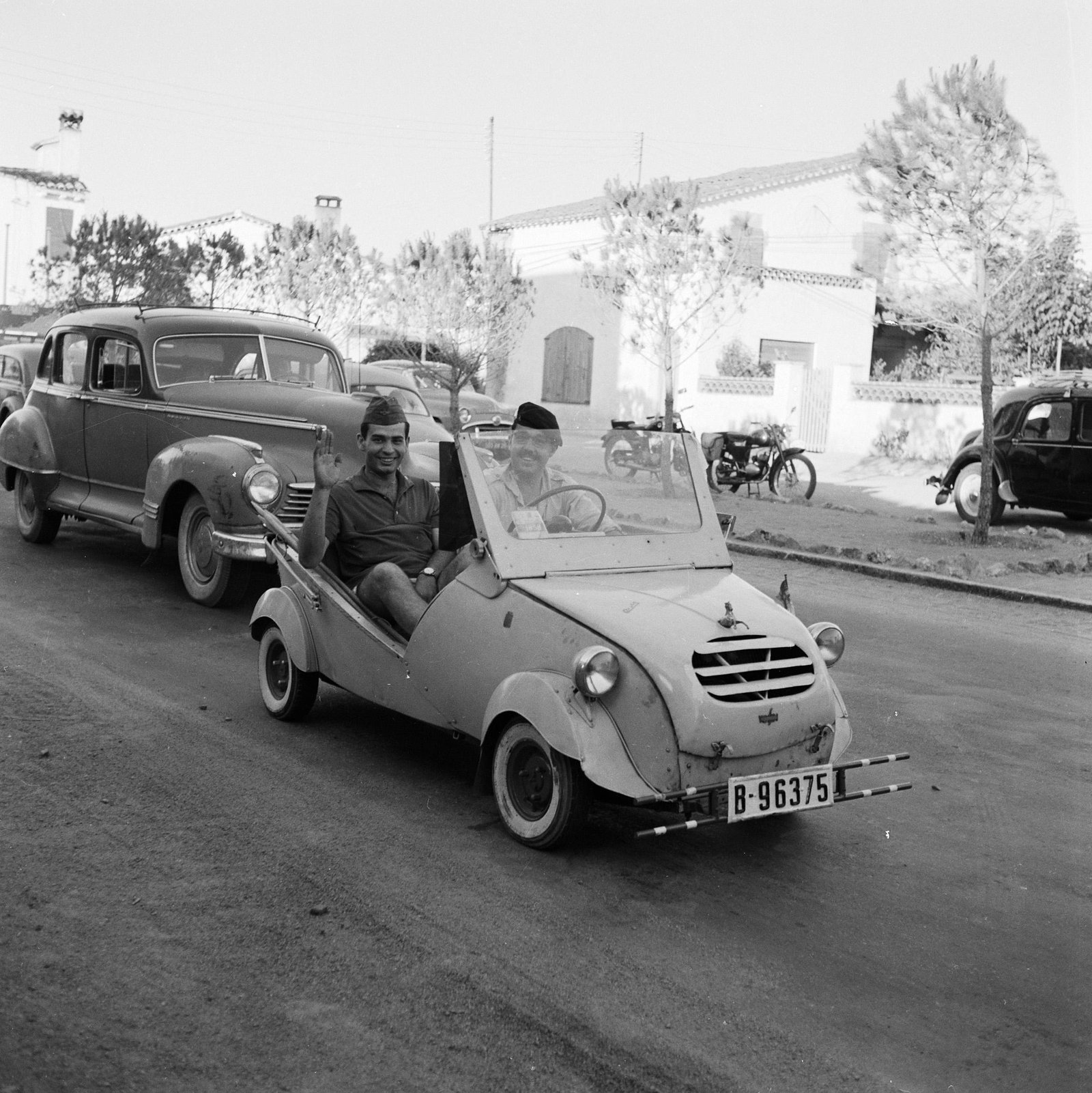
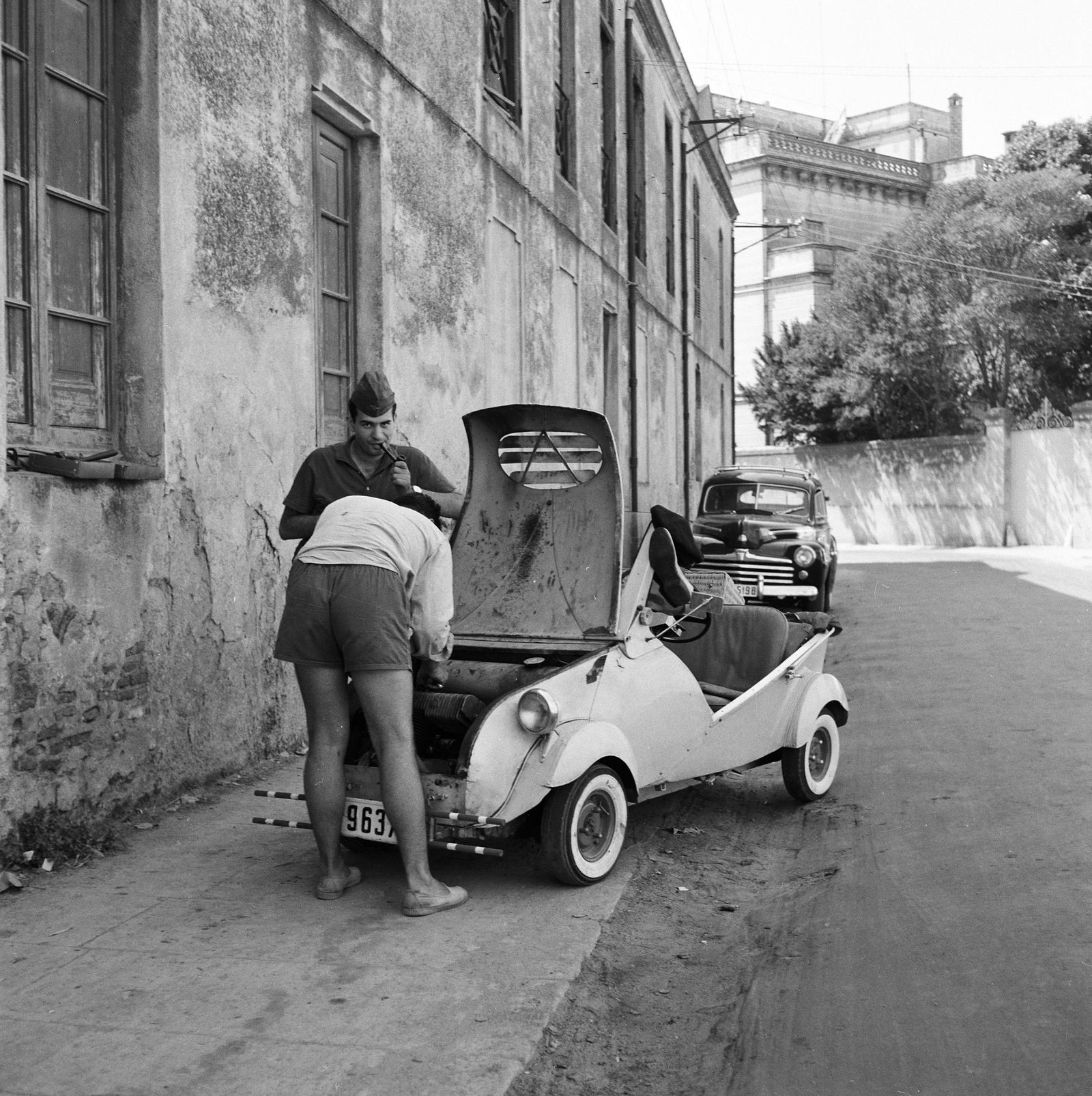
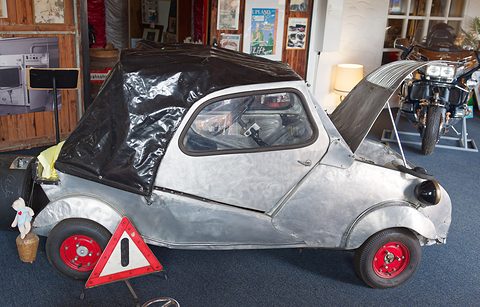
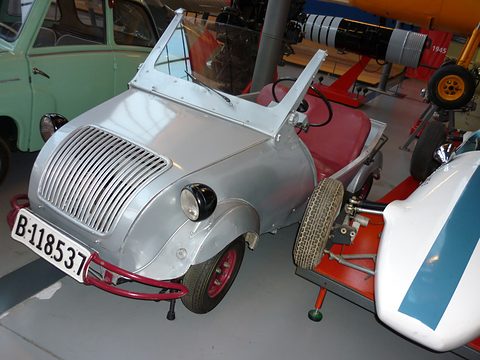
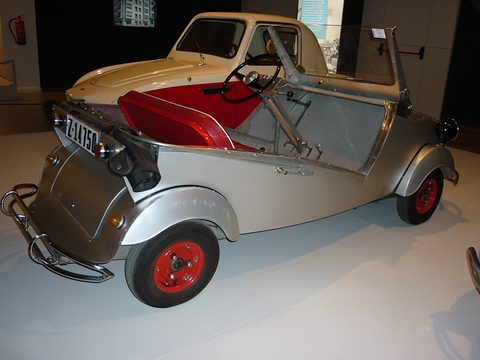
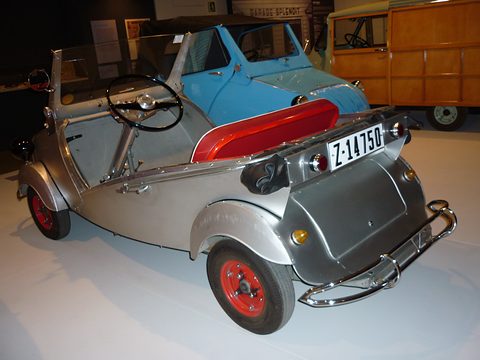
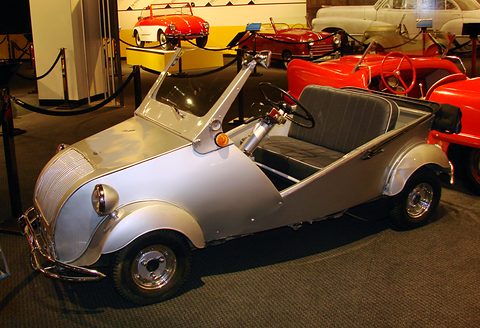
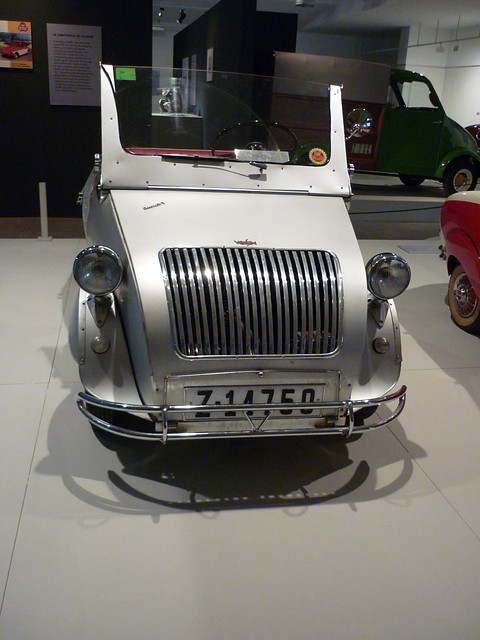
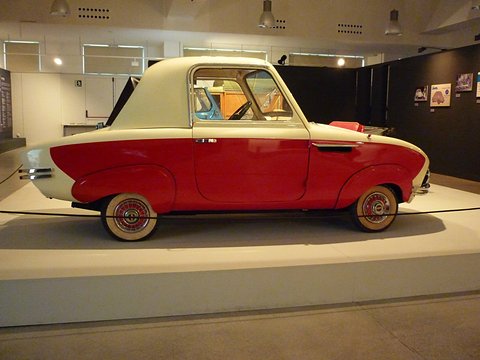
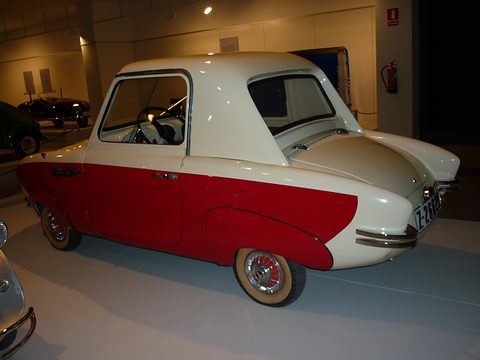
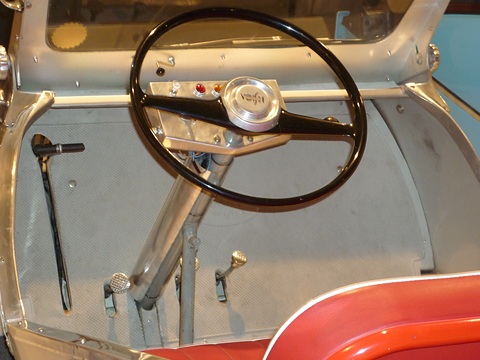
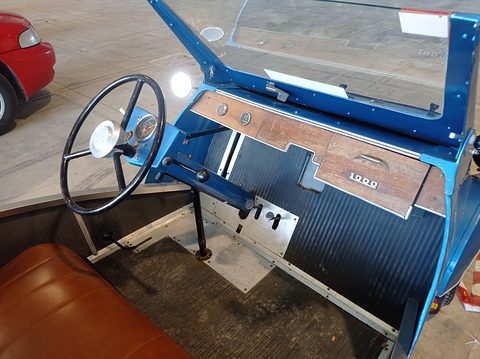
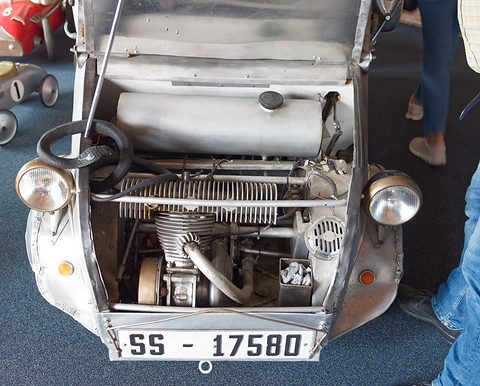
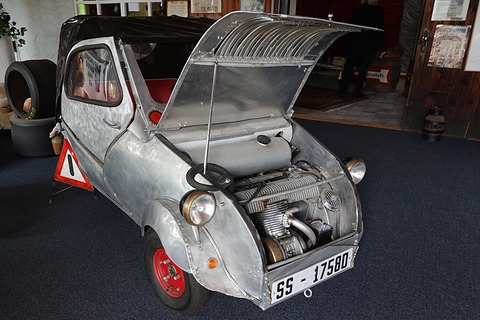
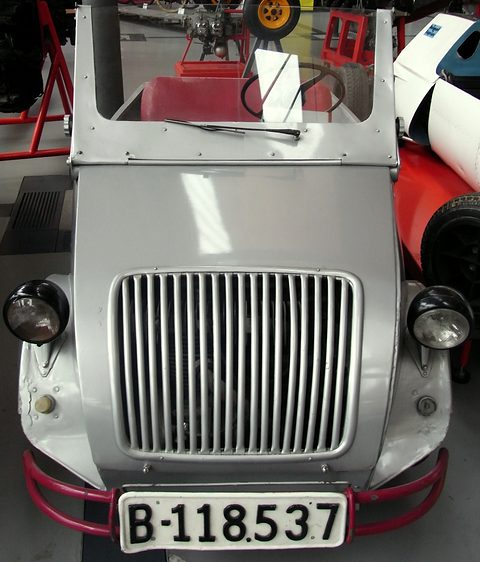
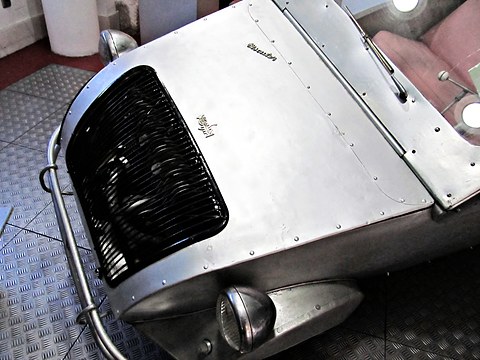
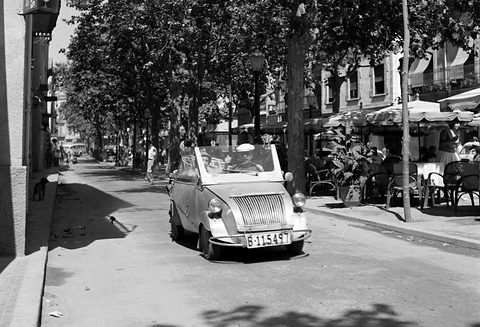
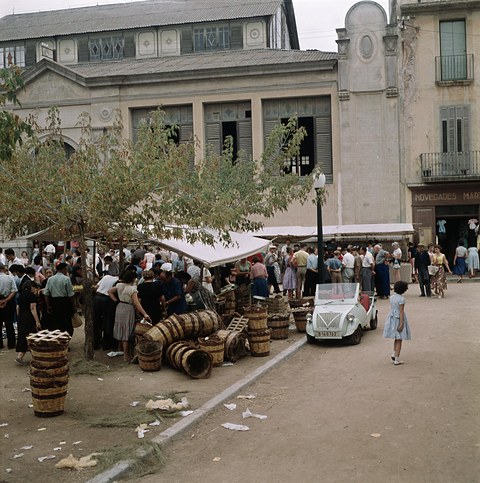
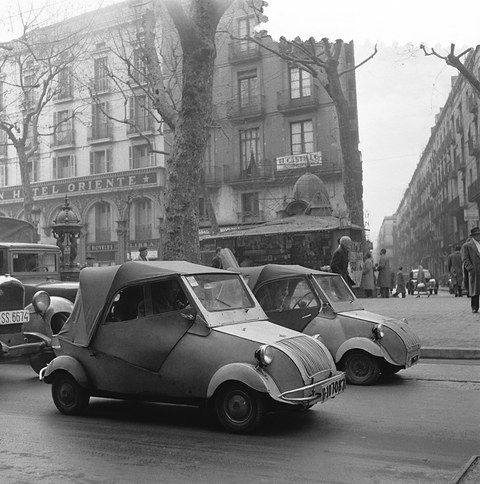
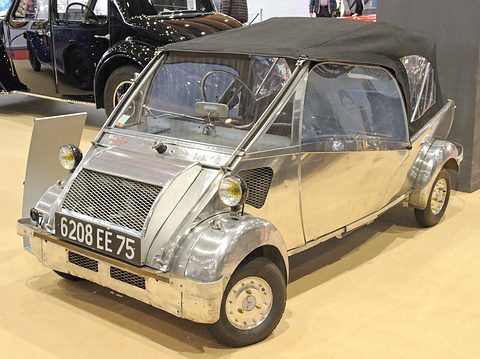
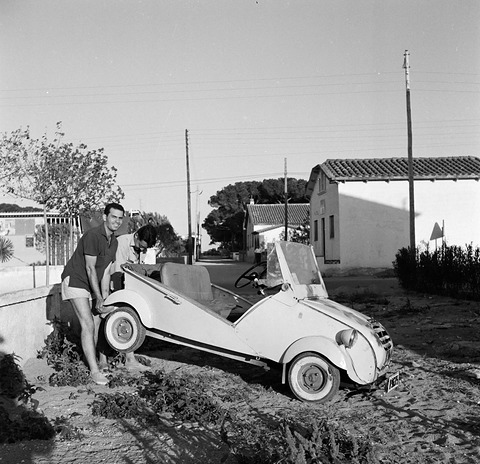
It was a car stripped to the minimum. The first Biscúters had an aluminium body with no doors, no reverse gear and a starter pulled by hand, and the chain from the engine drove the right front wheel alone.source 5source 2source 7 The single-cylinder two-stroke gave 9 CV, under an oil-filled aluminium head so big that it looked more like a three-cylinder’s; English Wikipedia says the 2.4 litres (4.2 pints) of oil in it acted as a temperature buffer while the car waited at traffic lights.source 3source 2 The two occupants shared a bench, though the advertising promised “2/3 plazas”. It was 2,560 mm (101 in) long, weighed 240 kg (529 lb) and reached 76 km/h (47 mph).source 3source 7source 10 Without a reverse gear, Motorpasión says, owners parked it by lifting it by hand.source 10 The advertising claimed 4.5 litres of mixture per 100 km (63 mpg), and grupo7 says it really used nearly double.source 3

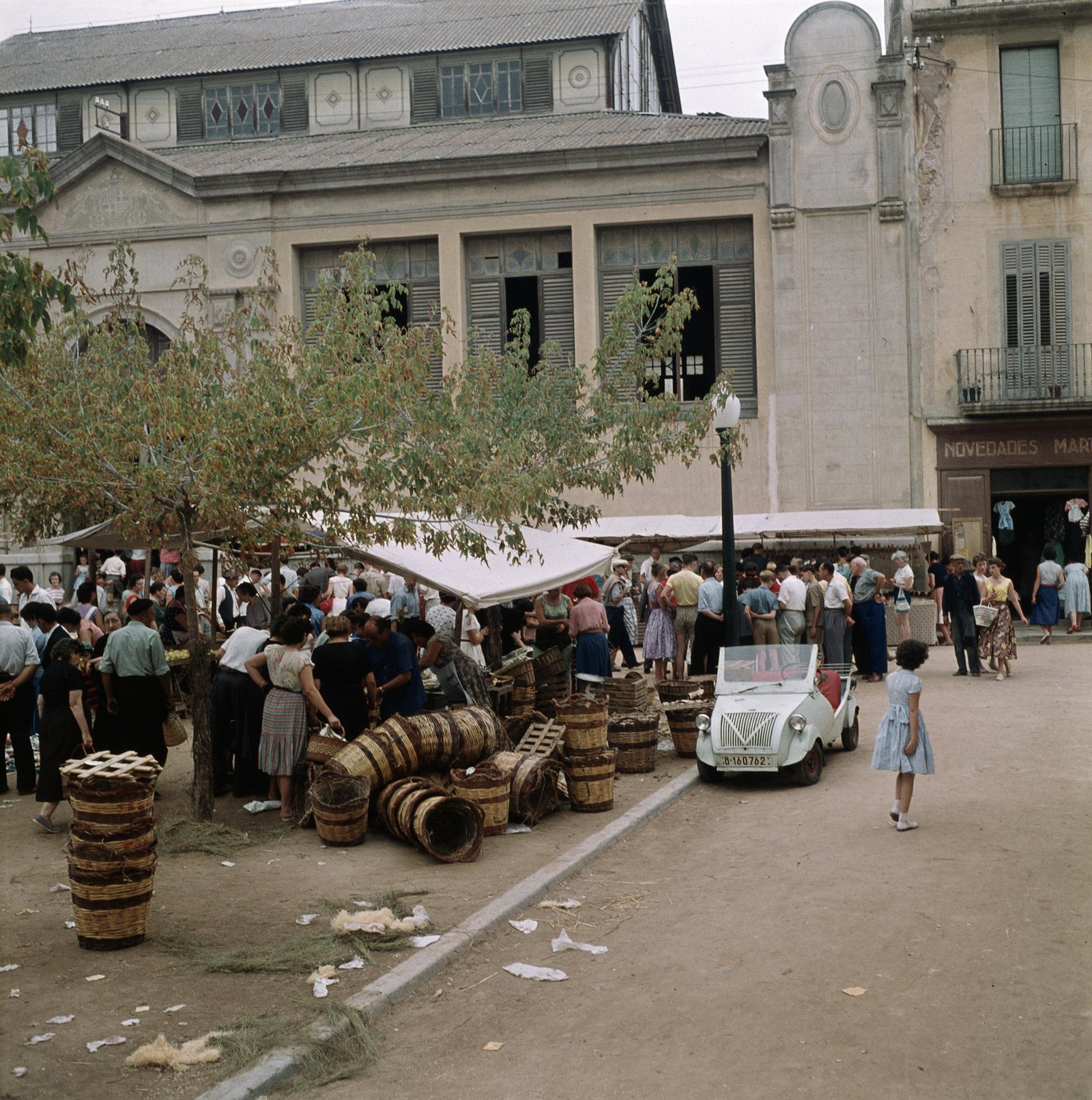
Spaniards called it the Zapatilla, the slipper, because its profile looked like the open-heeled slippers country people wore, and it gave Spanish a saying: feo como un Biscúter, as ugly as a Biscúter.source 5source 2source 3 It cost about 25,000 pesetas, by grupo7’s account roughly three years’ pay for a worker, when an imported car cost nearly 100,000; Motorpasión gives 28,600 pesetas for the Biscúter 100, probably at another date.source 3source 10

Fifteen a day

At its peak, from 1954 to 1956, the works at Sant Adrià de Besòs turned out 450 cars a month, about 15 a day, by Motorpasión’s figure.source 10 The firm had its own test track at the factory, its dealers spread quickly across Spain, and the Biscúter had several years of splendour.source 1source 5 A run of test drives up mountain passes and on racetracks won it public affection, though no date or result for any of them has been found.source 7source 11 Car number 1,000 was handed to General Franco, and grupo7 shows the photograph; no date for it has been found.source 3 The photographer Pérez de Rozas caught it at the blessing of cars on the Diagonal on St Christopher’s day in July 1954, and in March 1958 packed with students at the Sant Tomàs festival.source 1 In a condensed-milk advertisement drawn by the cartoonist Cesc, a child mistakes a Biscúter for a pram.source 3

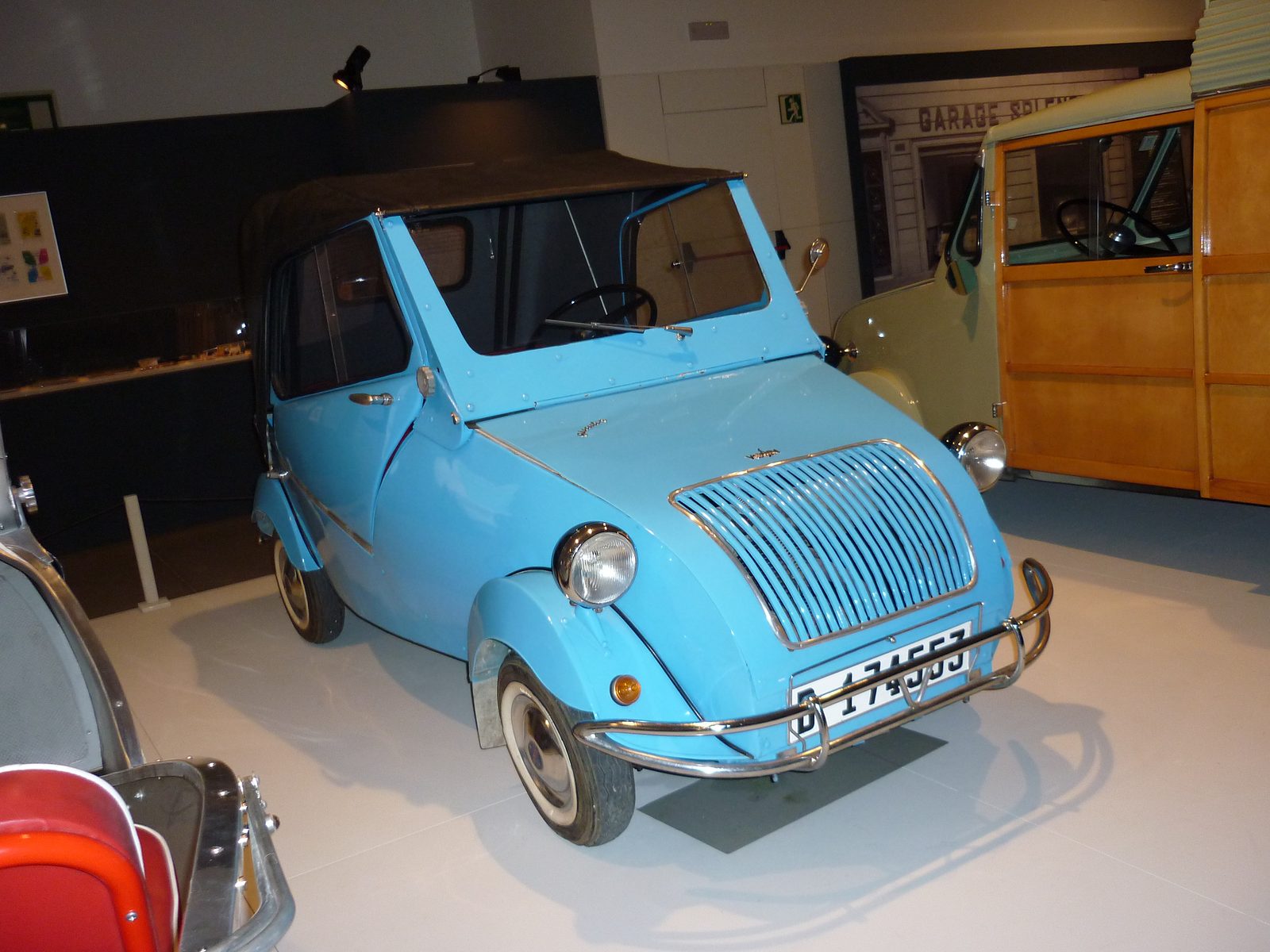
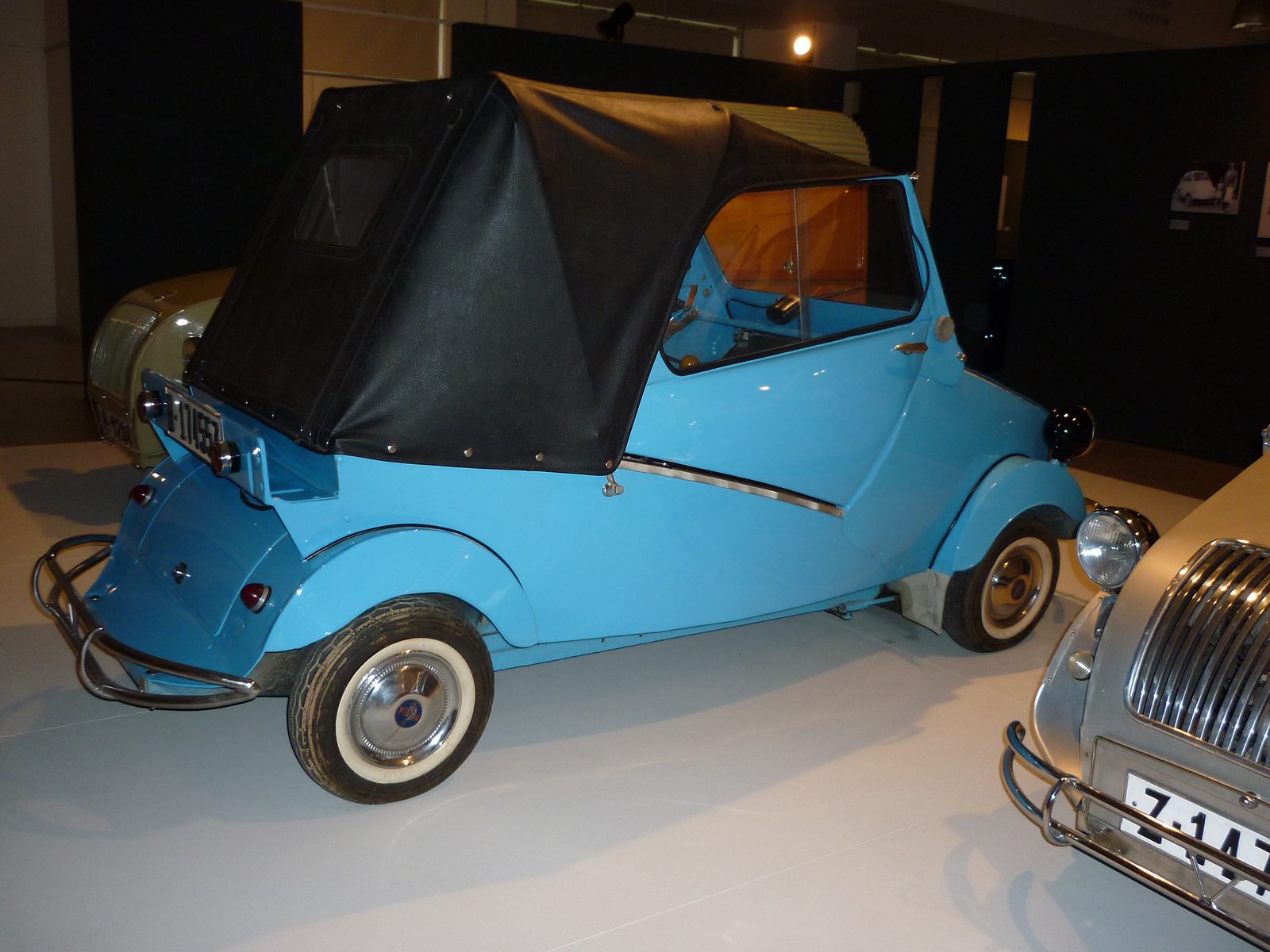
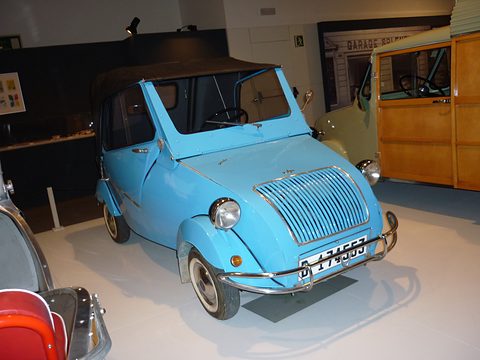
The car grew up as it went. From 1955 an inverter gave it reverse, and since the inverter turned round the whole gearbox, the Biscúter had three reverse gears.source 3 By 1957 the 200 had a steel body and could be had with doors and side windows, reverse and an electric starter.source 7source 11 Spanish Wikipedia, in an article flagged as needing references, says that in the firm’s final years the state cut off its aluminium, and that the later steel came from flattened Marshall Plan oil drums; no other source repeats the story.source 5

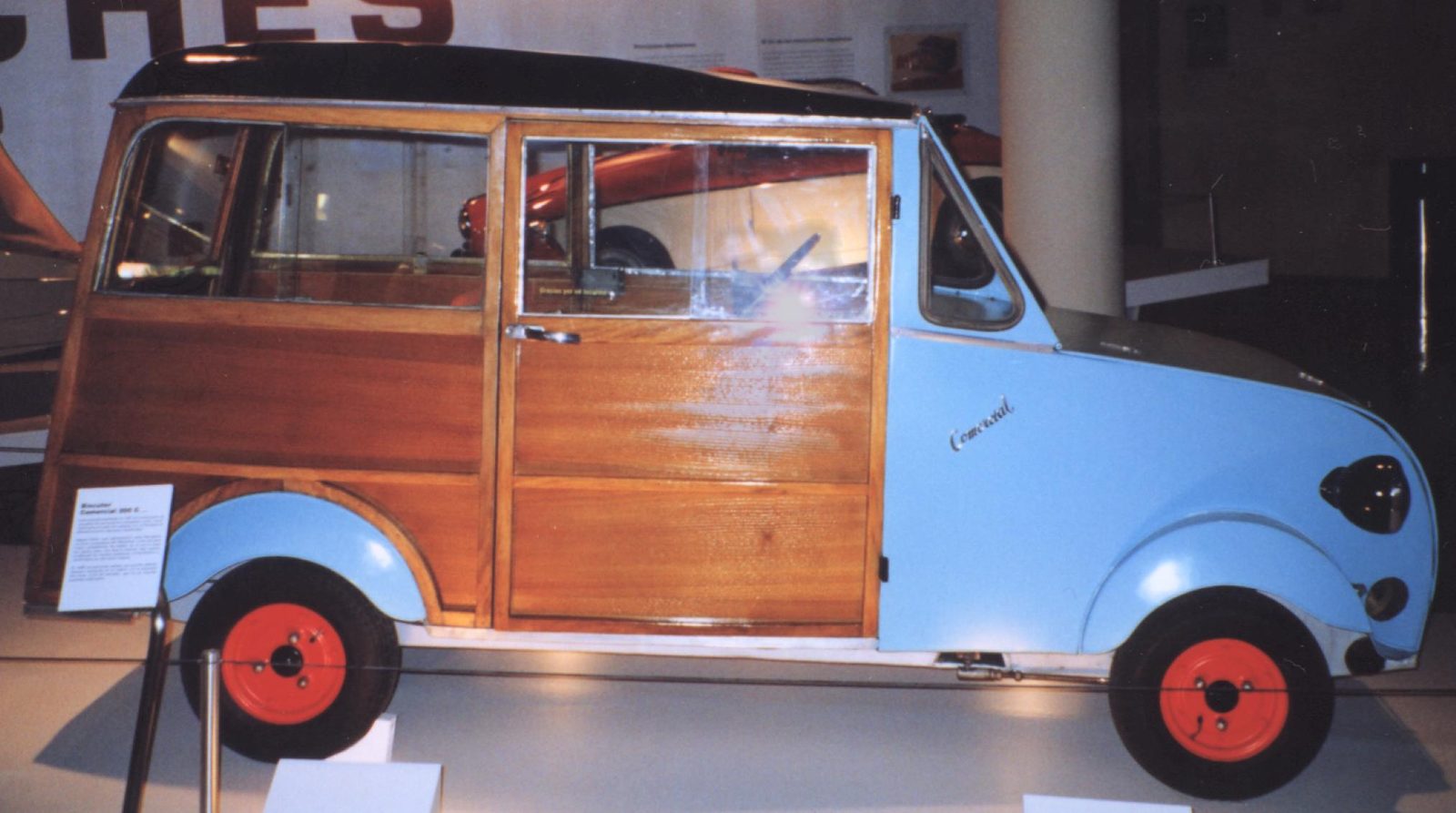
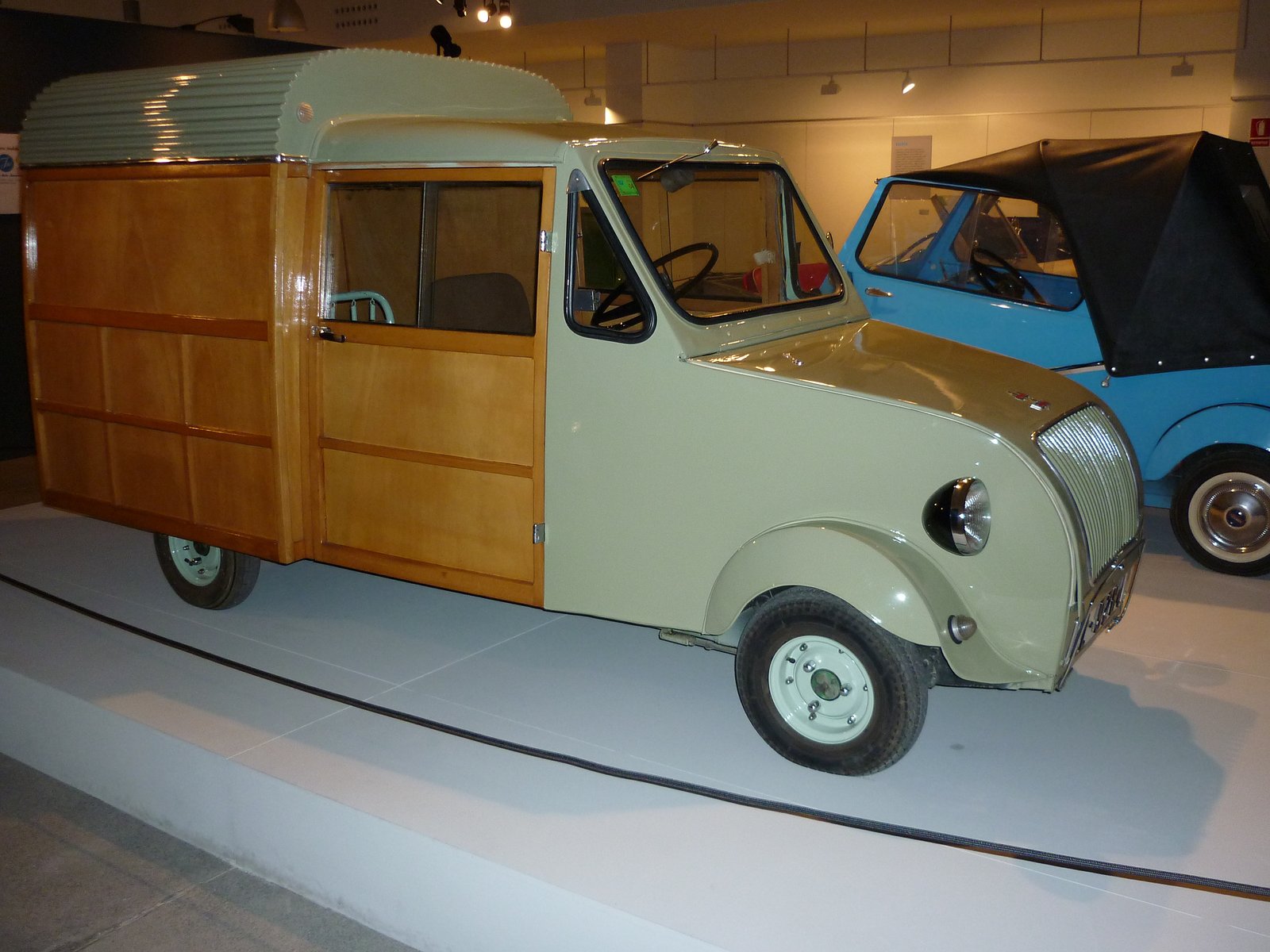
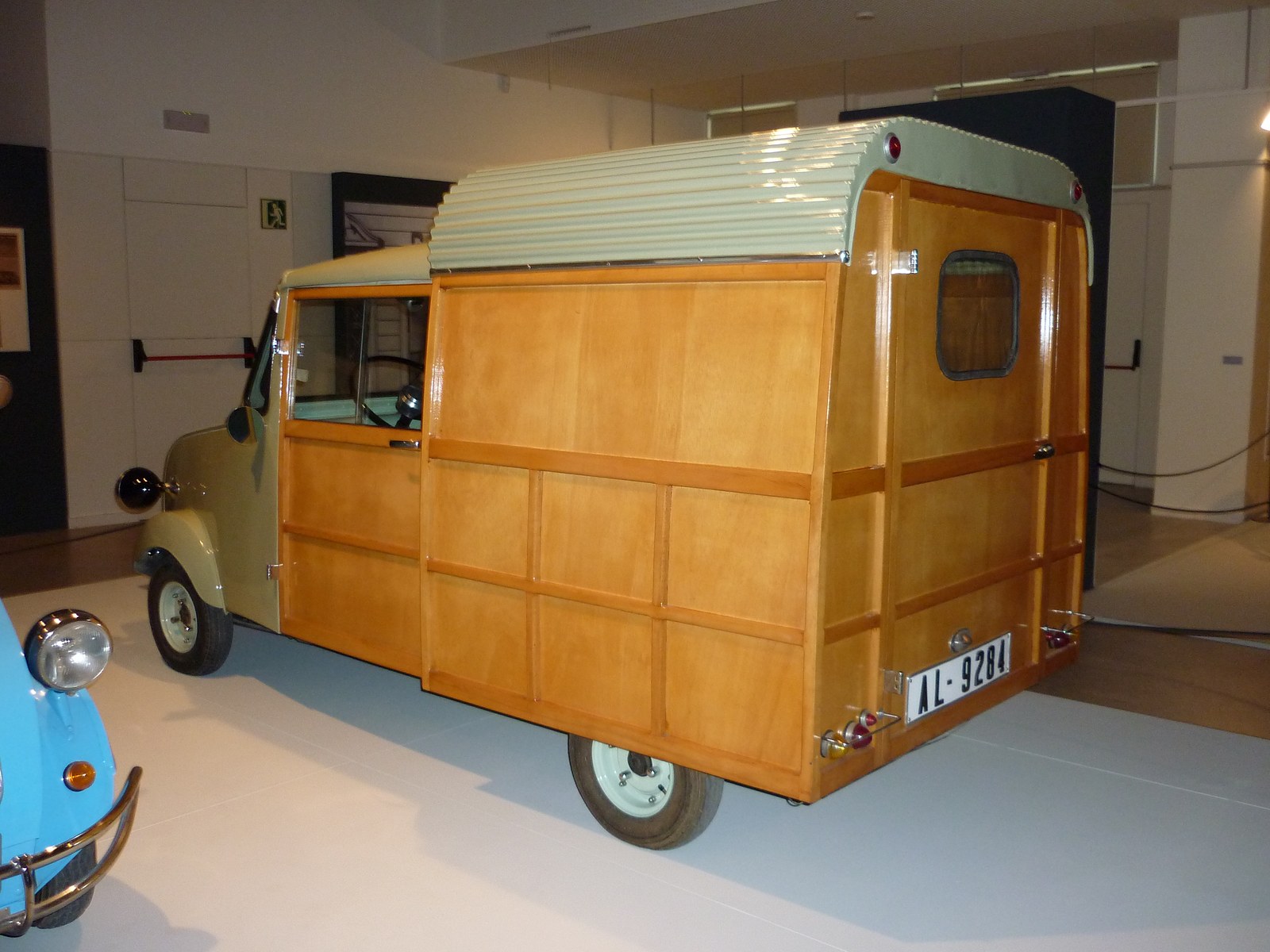
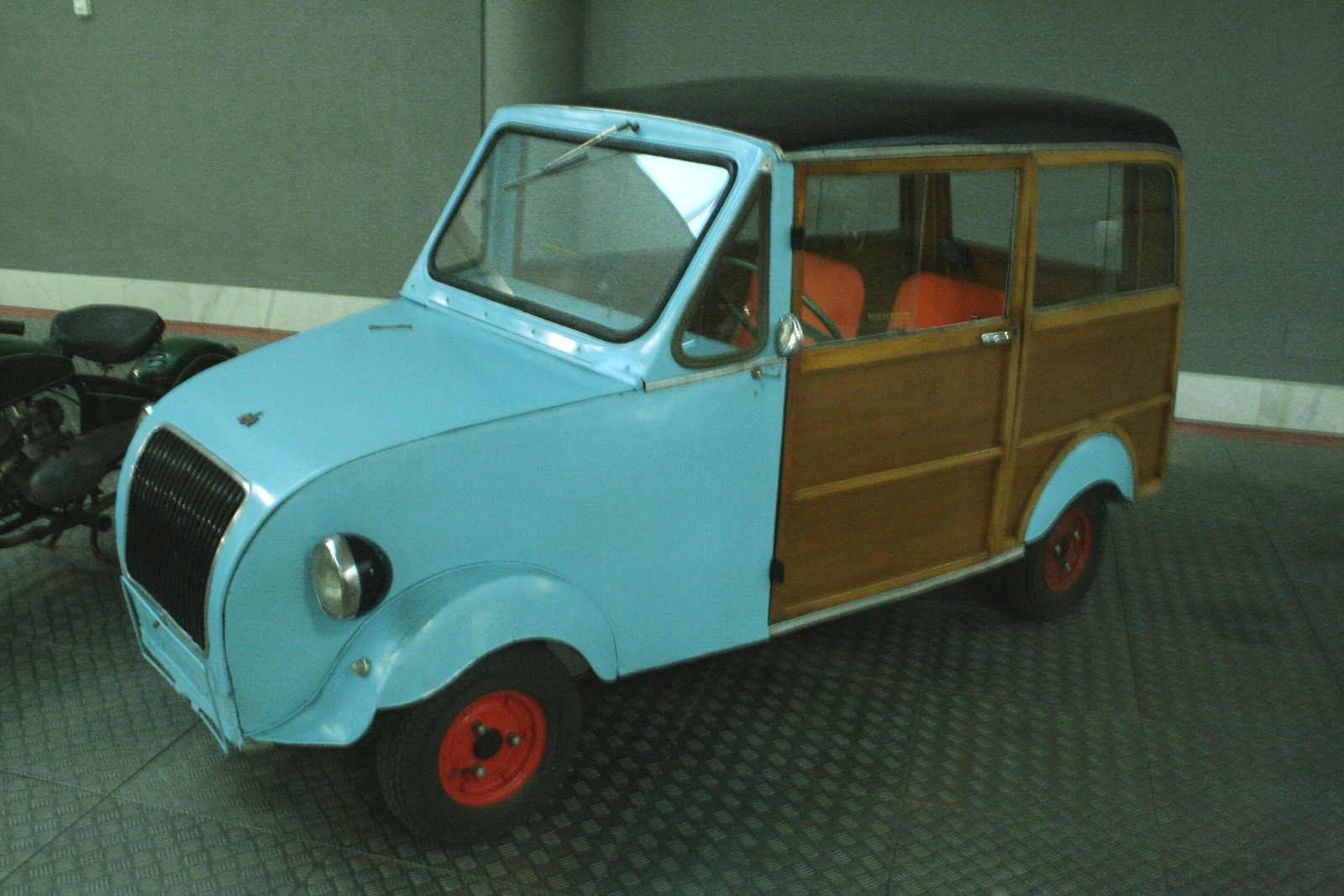
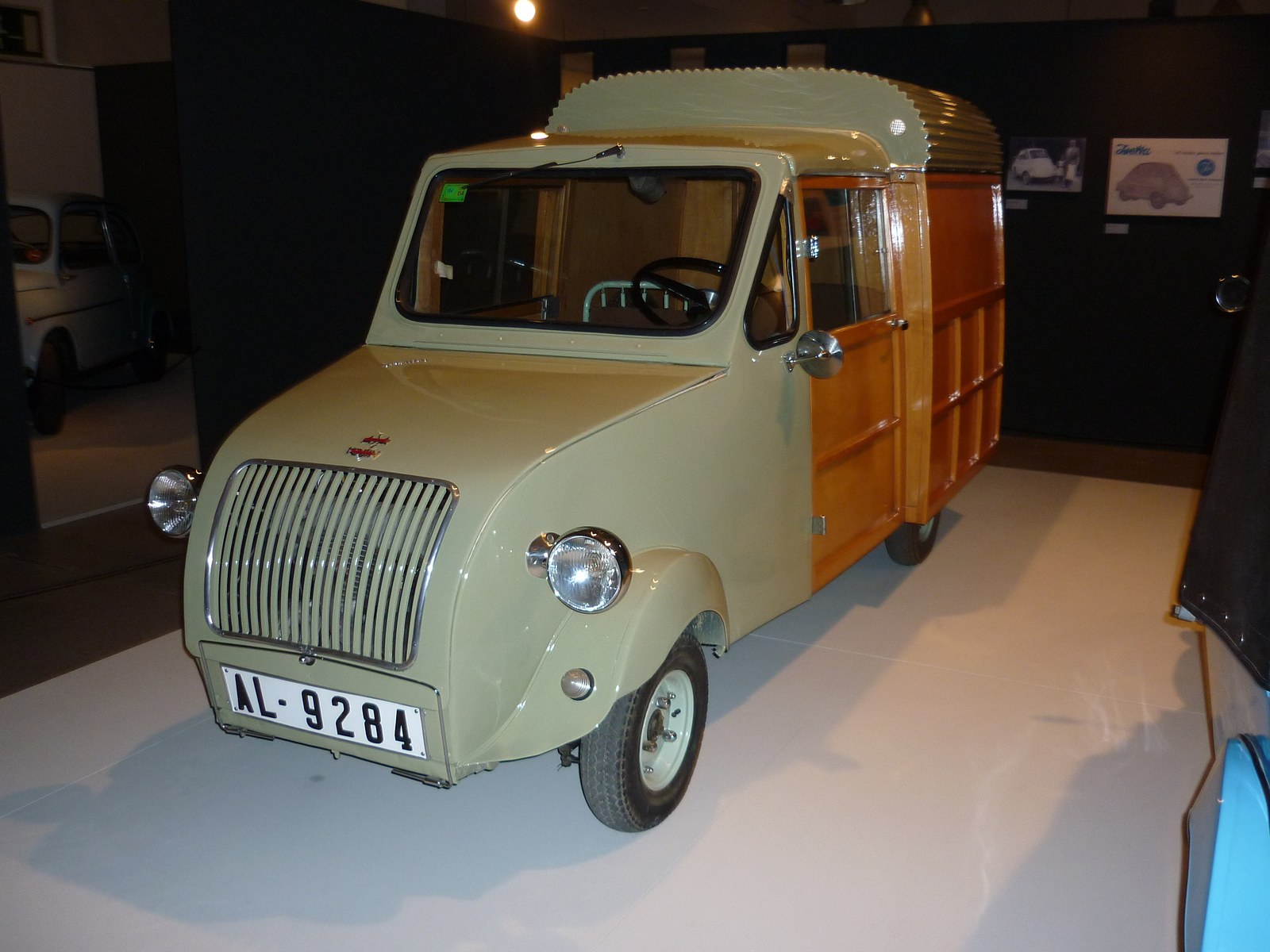
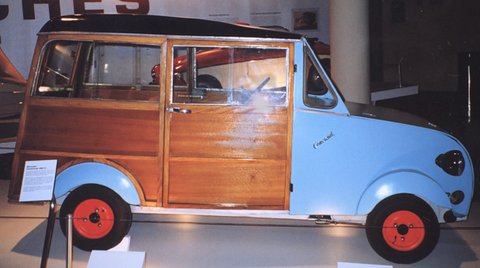
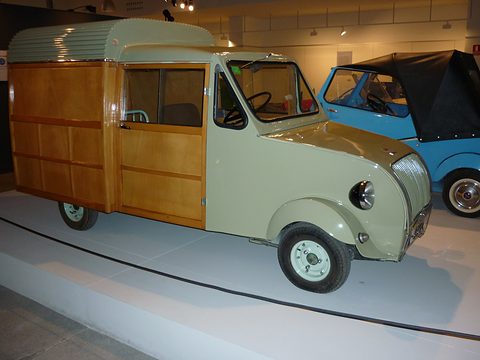
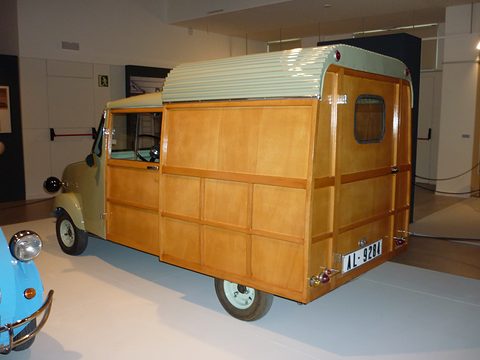
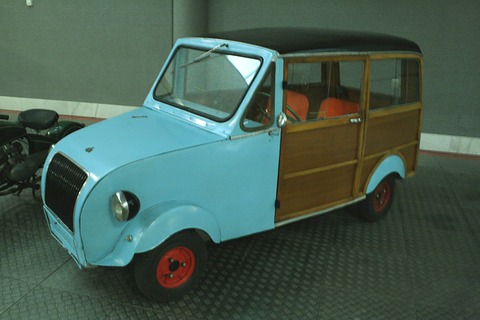
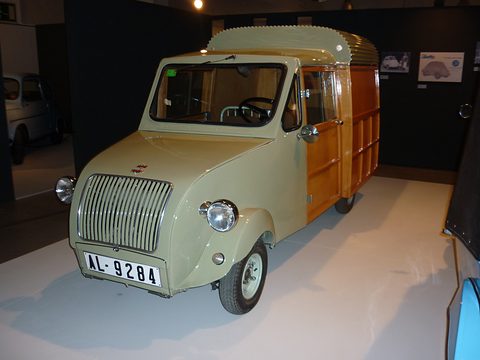
The range widened, amid strong disagreements on the board, by Spanish Wikipedia’s account.source 5 The 200-C Comercial, from 1957 or 1958 and known as the Rubia, was a woody estate with wooden side panels and a metal roof, seating four or carrying two and 200 kg (441 lb), and about 200 were built.source 3source 5source 9source 10 In February 1958 came the 200-I Furgoneta, a van or pick-up that could carry 250 kg (551 lb).source 12source 3 For buyers with more money there was the Pegasín, below. A four-seater and a larger van were planned and never built.source 3

After the 600

SEAT’s 600 arrived in June 1957, and Spain was growing richer.source 1source 5 The sources disagree on when the end came. The museum booklet says Autonacional stopped making cars in 1958 and sold stock and serviced them for four more years; grupo7 says the firm closed in 1960, having built nothing since the year before; autopasion18 has production ending in 1959; and the Weiner museum dates the last Biscúters to early 1960.source 1source 3source 4source 13 A sales leaflet of 1961 still invoked the designer’s name.source 1

VOISIN, prestigio de la automoción mundial, avala con su nombre la producción de este VEHÍCULO que ya es indispensable PARA TODOS

Autonacional sales leaflet, 1961, reproduced in the MUHBA’s L’enginy de postguerra (2012). In English: “Voisin, a world-famous name in motoring, puts its name to this vehicle, now indispensable for everyone.”source 1

Almost every Biscúter was scrapped.source 5source 2source 7 Twice there was talk of bringing it back: in the mid-1980s building it at Lora del Río, near Seville, was studied and dropped, and in 2013–⁠14 the Girona industrialist Isaac Valls spoke of a prototype, which came to nothing.source 3source 5
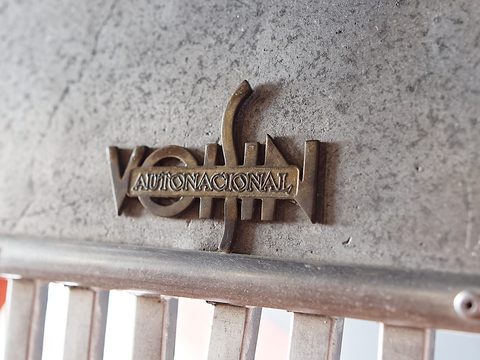
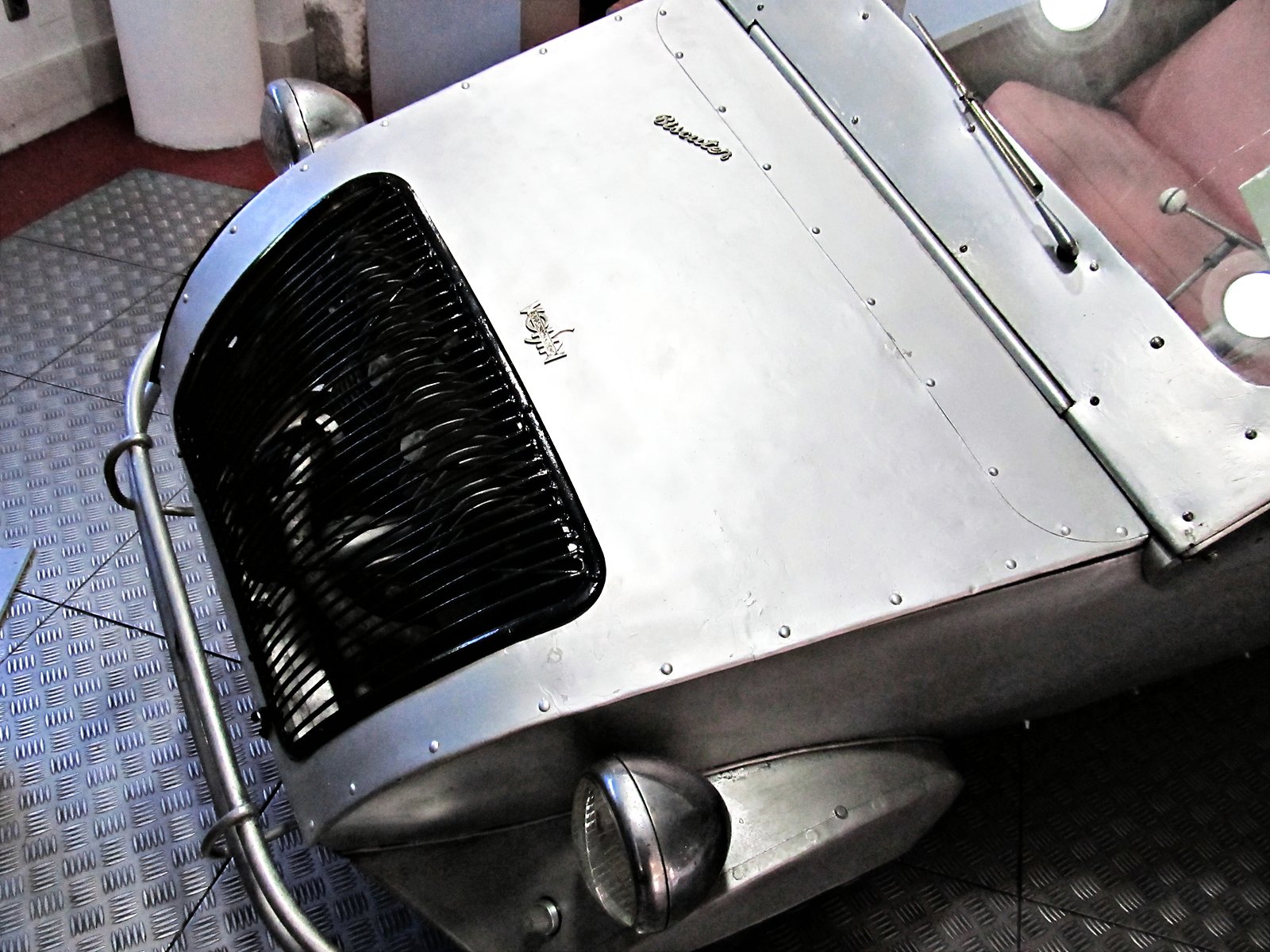
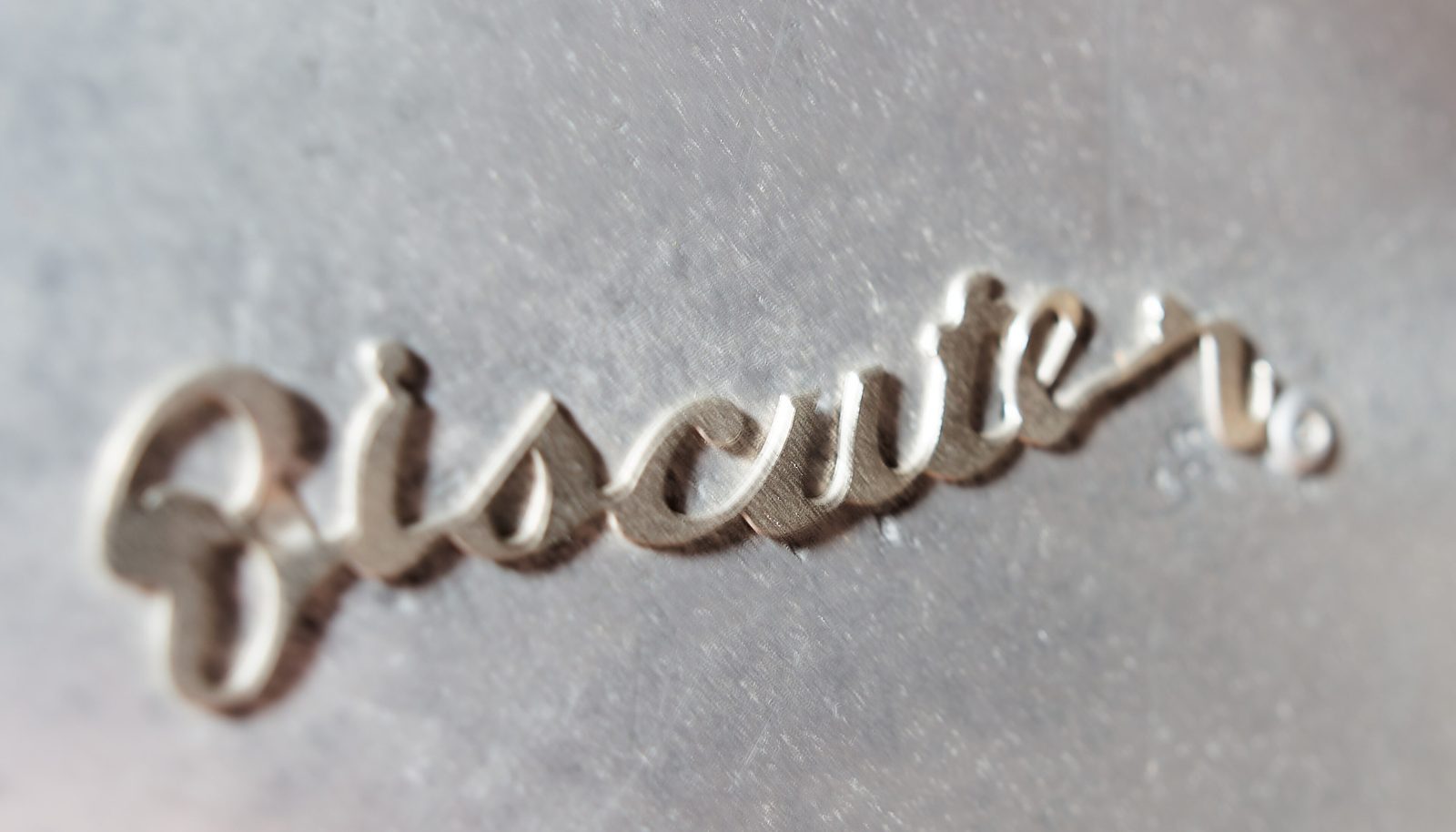
Bronze-coloured badge reading VOISIN with AUTONACIONAL across it, on a weathered silver nose above grille bars.
The Voisin Autonacional badge above the grille of a Biscúter in the Curioseum, Willingen-Usseln, Germany, in 2023.Photo: Arnoldius, CC BY-SA 4.0, via Wikimedia Commons
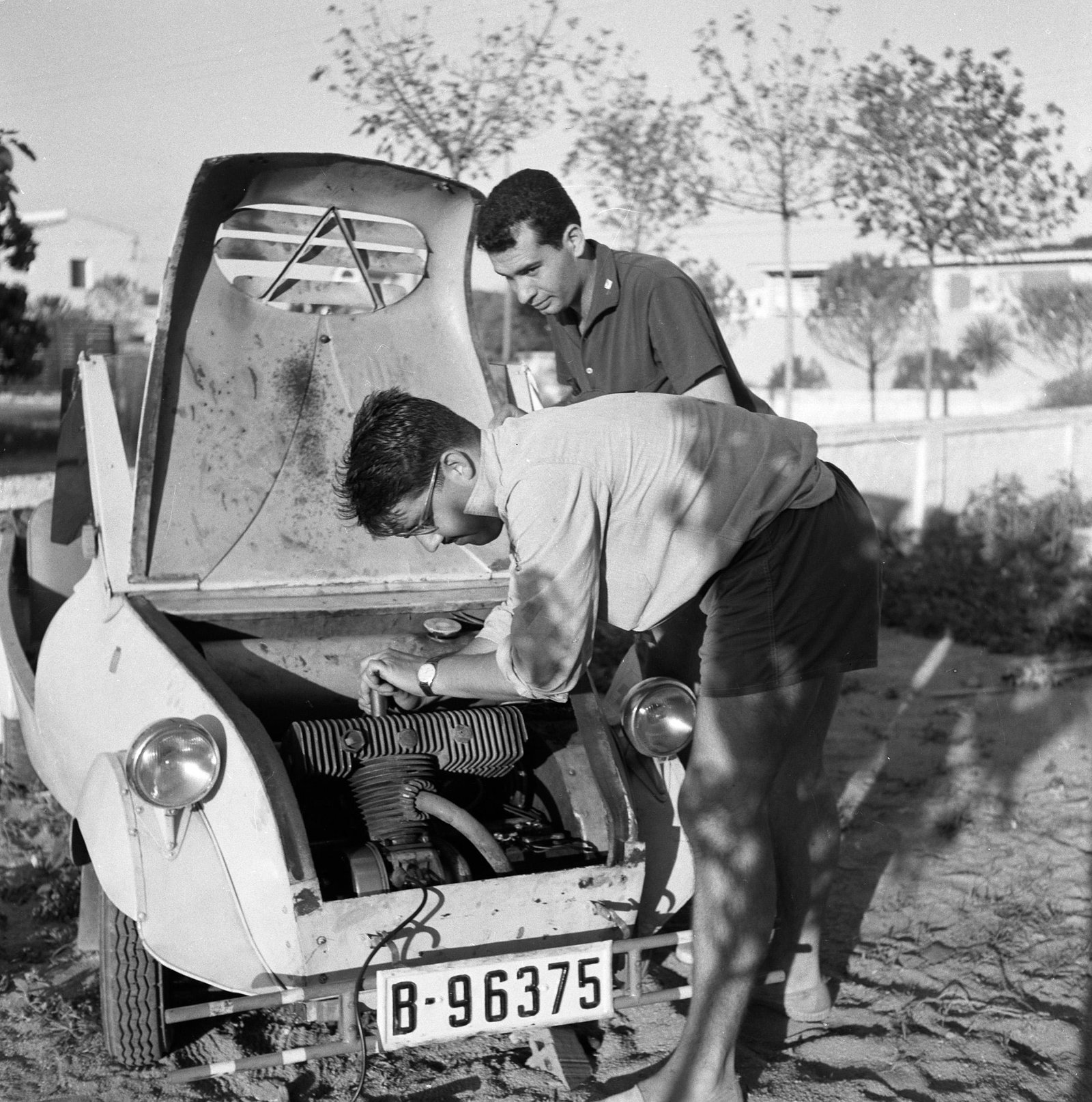
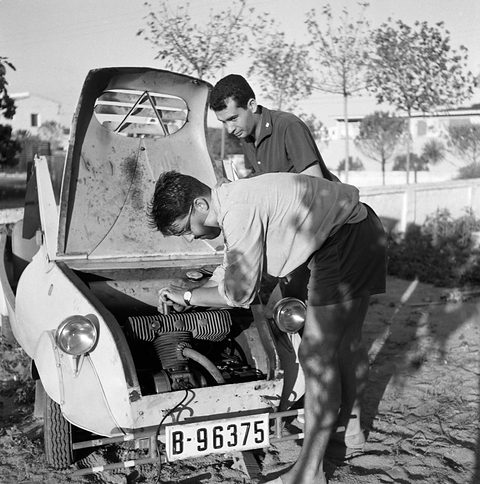
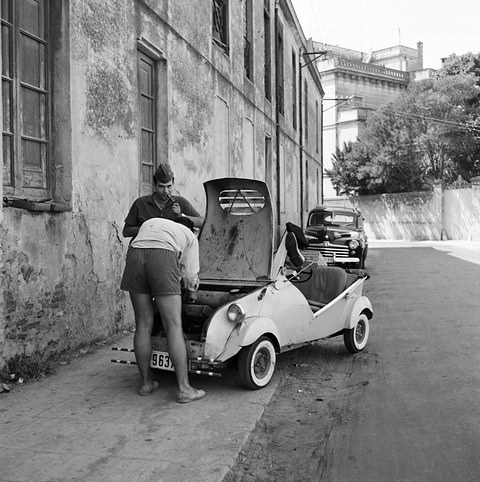
Black-and-white photograph of a man raising the side of a small white open car on rough ground, low white houses behind.
Plate I · 1958 Two young men lift the back of a doorless Biscúter by hand, in Spain in 1958.Photo: Willem van de Poll / Nationaal Archief, CC0, via Wikimedia Commons
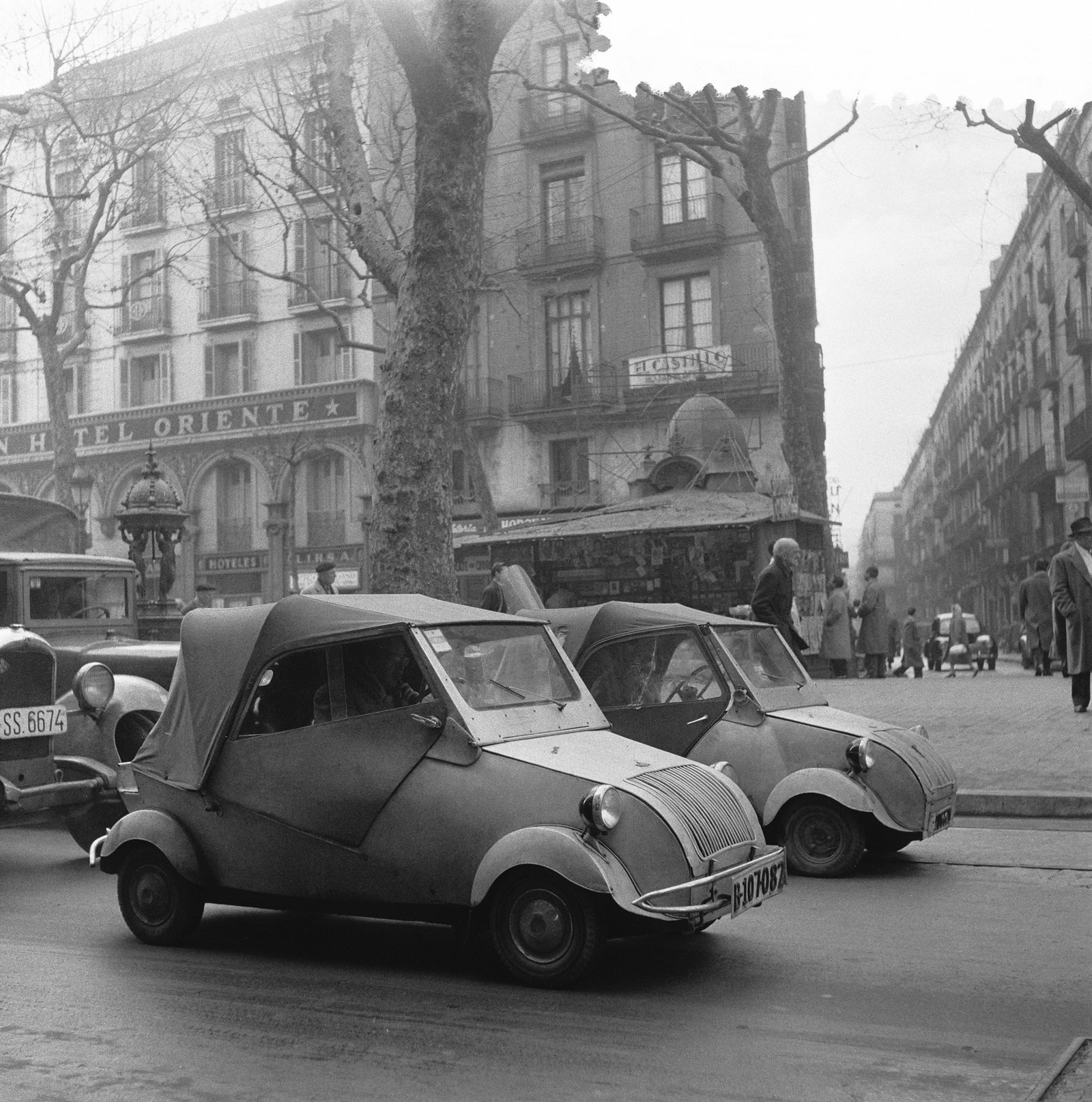
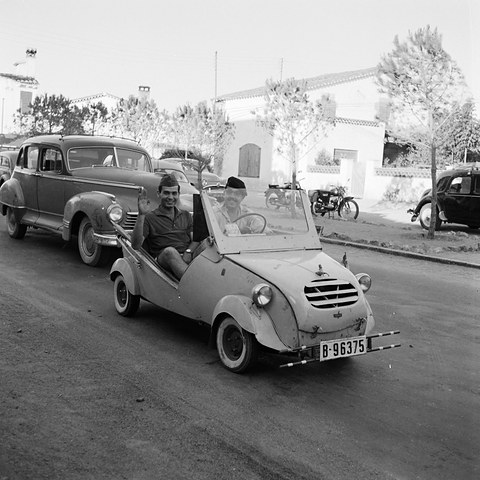
Black-and-white photograph of two men in a small open car beside a Volkswagen Beetle and a SEAT saloon, trams behind.
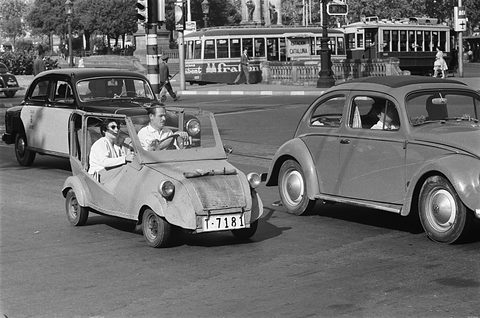
Plate II · 1960 A Biscúter in the traffic of Barcelona’s Plaça de Catalunya in October 1960, between a taxi and a Volkswagen Beetle.Photo: Harry Pot / Anefo, CC0, via Wikimedia Commons

Biscúter Pegasín

1957–⁠1960 · a record on this page

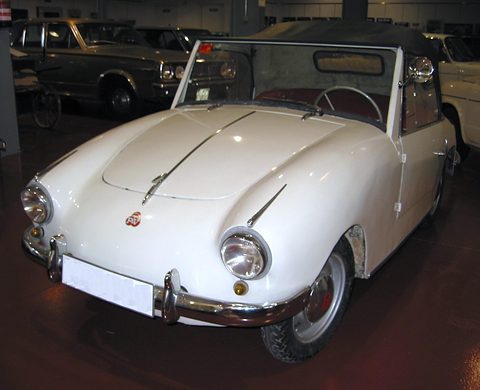
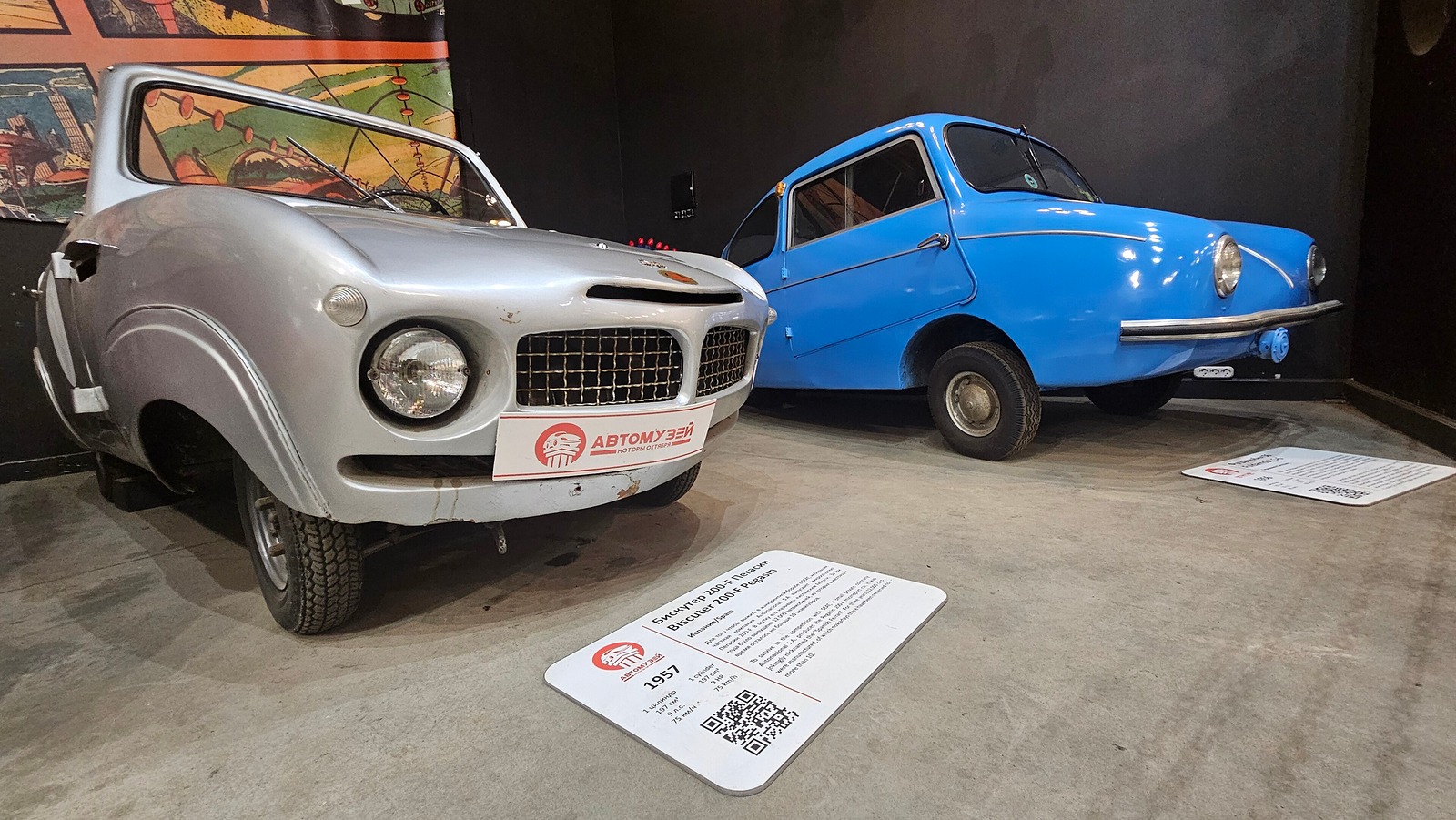
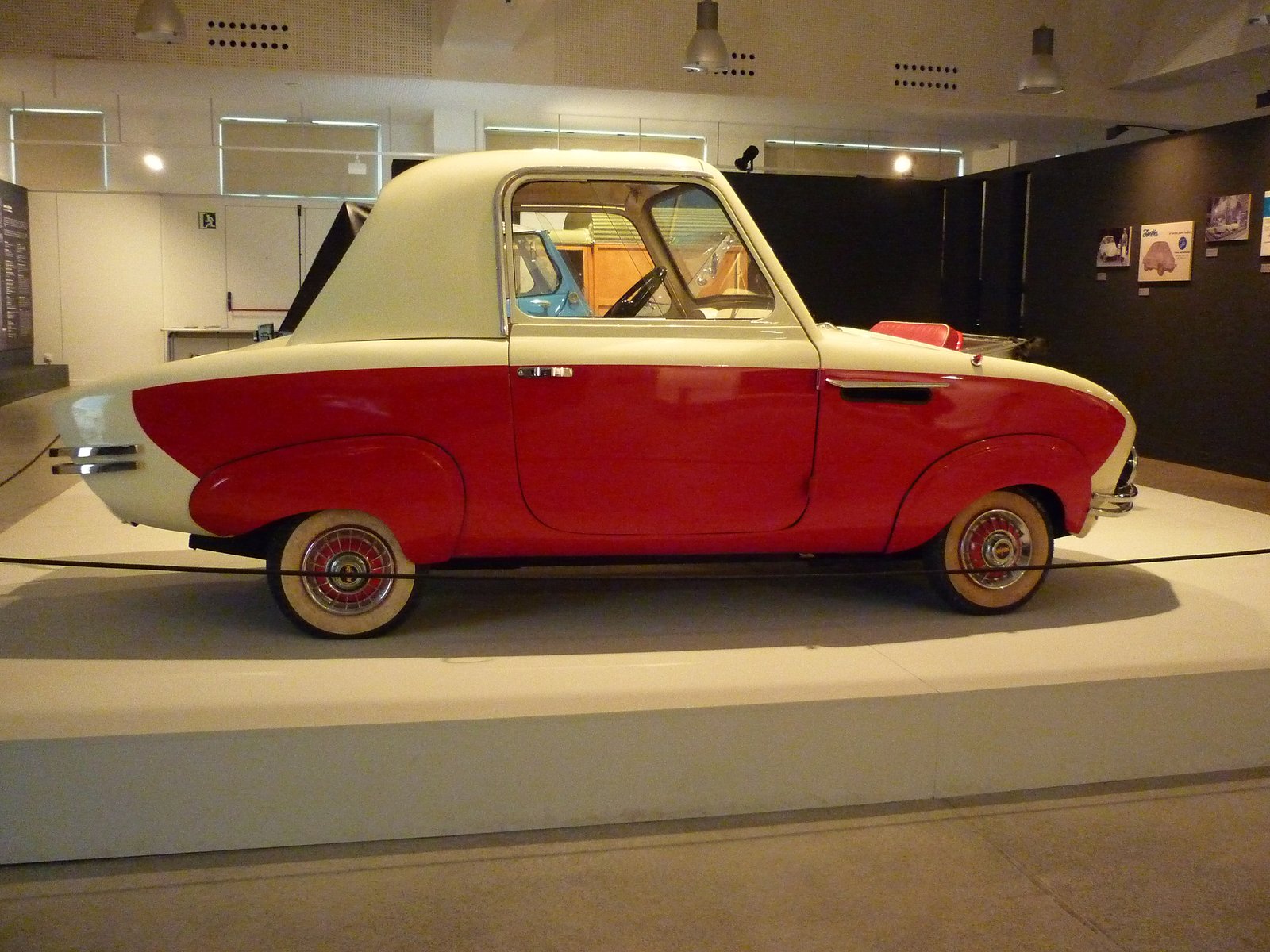
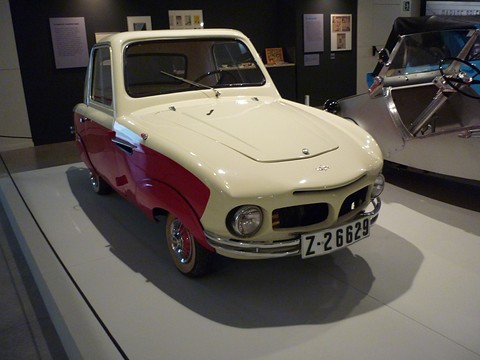
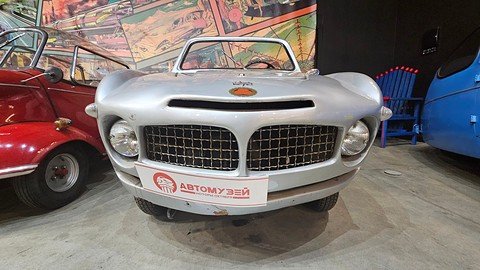
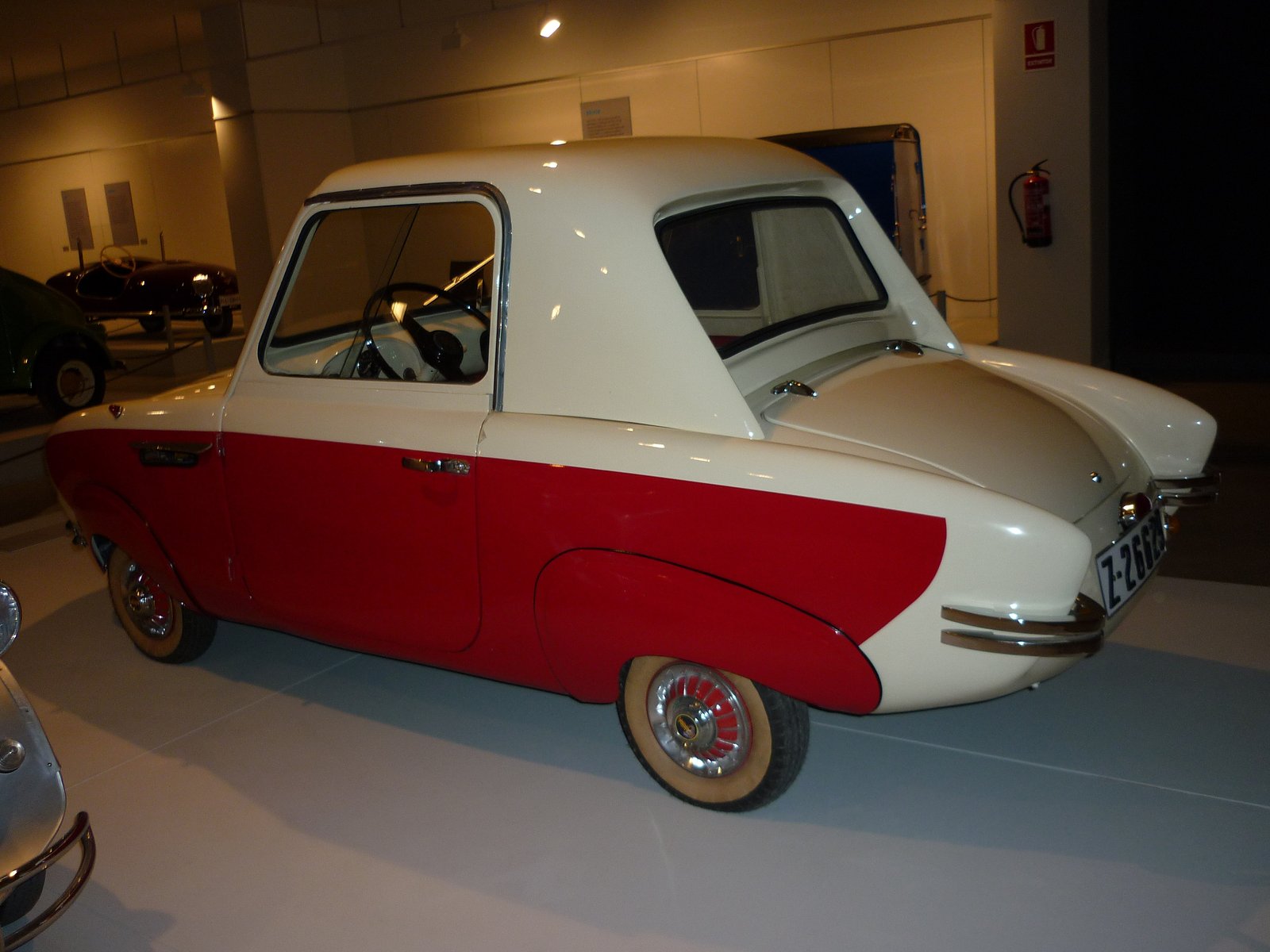
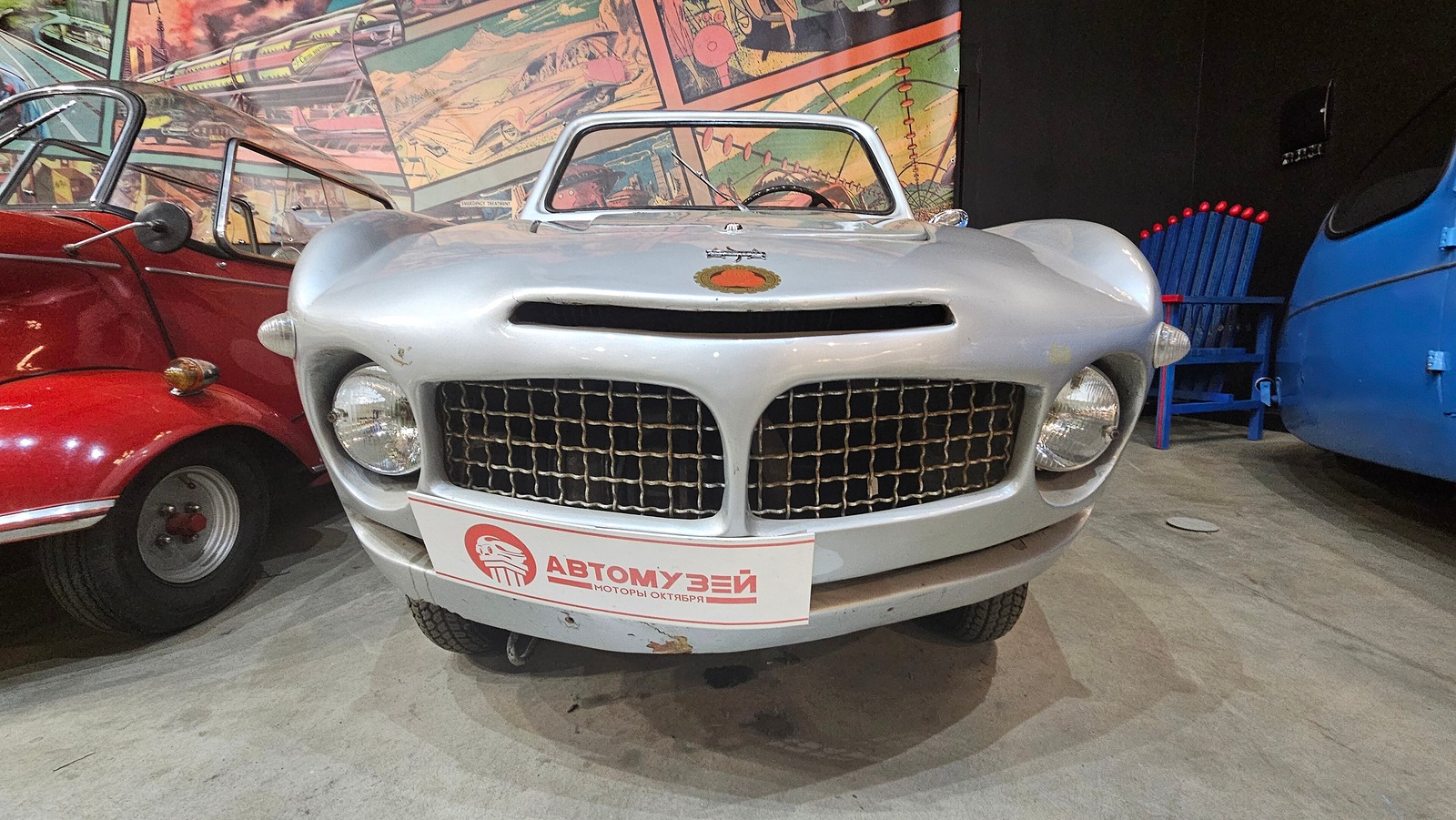
In the autumn of 1957, with sales falling, Autonacional tried to reach richer buyers with a sports version, the 200-F.source 14source 13 Press and public named it the Pegasín, the little Pegaso, for its likeness to the Pegaso Z‑102, the sports car also built in Barcelona.source 14source 3 The body was by the Barcelona coachbuilder Pedro Serra, who also designed the Clúa 500. His prototype was aluminium; the production cars were glass-fibre, against his wishes, and so they wear no Pegaso-style badges.source 14 It came as a two-tone cabriolet with a soft top and an optional hardtop.source 14source 13source 3

el carrozado más moderno de la industria automovilística internacional, uniendo así lo útil y lo bello

Autonacional’s advertising for the Pegasín, as quoted by Motorpasión. In English: “the most modern coachwork in the international motor industry, thus uniting the useful and the beautiful.”source 10

Underneath it was a Biscúter, with the same 197 cc single of 9 CV and a top speed of about 75 km/h (47 mph), which, the Weiner museum notes, kept it from being taken seriously.source 13source 3source 14 The figures for its size disagree: 2,900 mm and 240 kg by the museum, 3,030 mm and 310 kg by grupo7.source 13source 3 At about 40,000 pesetas it cost far more than the ordinary car, and few were sold; Motorpasión speaks of barely dozens, and Spanish Wikipedia of a commercial and material failure.source 10source 5 No production figure has been found. A Utilauto poster billed it as el esperado, the long-awaited.source 1 Very few survive. The Claudi Roca collection in Barcelona has one, and the Weiner museum had a 1957 car, whose data box calls the body aluminium while its text says plastic.source 1source 13

Cream and red two-tone coupé with a hardtop, twin grille openings and round headlamps, on a white museum floor.
A 1958 Biscúter Pegasín in cream and red, with its hardtop, shown in Barcelona in 2013.Photo: Peprovira, CC BY-SA 3.0, via Wikimedia Commons

Pictures

More photographs, old and new

Variants

From slipper to woody

The Biscúter family
VariantYearsWhat differsHow many
Serie 100 “Zapatilla”1953–c.56Aluminium body, no doors, no reverse at first, pull start; 240 kg; built in three seriesWithin the total; no split found
200-Ac.1956–⁠60Steel body, 295 kg; canvas doors with windows, reverse and an electric starter availableWithin the total
200-C Comercial “Rubia”1957/58–60Woody estate: a higher front, wooden side panels, a metal roof; four seats, or two and 200 kg of loadAbout 200
200-I Furgoneta1958–⁠60Van or pick-up with a box of wood and steel; the 200-I-P had a canvas tilt; 250 kg payloadNot known
200-F Pegasín1957–⁠60Two-tone glass-fibre coupé or cabriolet by Pedro Serra, after the Pegaso Z‑102Few
Voisin four-seater1950sA prototype made outside AutonacionalNever sold

Specification

Biscúter 100 and 200-A, from grupo7 and the Weiner museum unless noted

Engine and drive

Engine and drive
EngineHispano-Villiers two-stroke single, built under Villiers licence, at the frontsource 3source 7
Capacity197 cc (59 × 72 mm), compression 7.25:1source 3source 5
Power9 CV at 4,800 rpm; 5,800 rpm at mostsource 3source 5source 7
CoolingAir, with a big oil-filled aluminium cylinder head holding 2.4 litressource 3source 2
GearboxThree speeds, column change; from 1955 an inverter gave reverse on all threesource 3Ratios 2.97, 1.60 and 1:1; final drive 5.5:1
DriveBy chain to the right front wheel onlysource 5source 2source 7
StarterPulled by hand at first; electric latersource 3source 2source 7

Body and chassis

Body and chassis
BodyMonocoque, of duralumin at first and later of steelsource 3source 5
SuspensionIndependent all round: telescopic tubes with coil springs and rubber, hydraulically dampedsource 3source 9
SteeringRack and pinionsource 3source 7
BrakesA drum on the front transmission and cable drums on the rear wheelssource 3source 2source 9The Weiner museum calls the transmission brake ineffective
Wheels4.00 × 8 disc wheels, with a sparesource 3source 7
Electrics6 V, 36 W, with a selenium rectifiersource 312 V by the Weiner museum

Dimensions

Dimensions
Length2,560 mmsource 3source 7source 10
Width1,140 mmsource 7source 101,100 mm by grupo7
Height1,380 mmsource 3source 10
Weight240 kg for the Serie 100; 295 kg for the 200-Asource 3source 7source 10
Comercial and Furgoneta2,750 mm and 320 kg; 2,950 mm and 315 kgsource 9source 12grupo7 gives the van 320 kg and 65 km/h

Performance and running

Performance and running
Top speed76 km/h (47 mph)source 3source 775 km/h by Motorpasión
Consumption4.5 litres of petrol-oil mix per 100 km, as advertisedsource 3grupo7: nearly double in practice
Price new25,000 pesetassource 3source 428,600 pesetas for the 100 by Motorpasión, probably at another date

How many were built?

Every figure, with its source

About 12,000 builtAbout 12,000, the figure of the Barcelona history museum’s booklet, prepared with Manuel Garriga, the author of a book on the car; several other sources give it too, and a period advertisement claimed more than 12,000 Biscúters on the road. No factory register has been seen.

  1. 20,000Biscúters in allUnconfirmed

    the Weiner museum’s labels for its Comercial and Furgonetasource 9source 12

  2. about 12,000all modelsTwo sources agree

    the MUHBA booklet; Spanish and English Wikipedia; the Weiner museum’s 200-A label; RM; Motorpasiónsource 1source 5source 2source 7source 11source 10

  3. about 10,000cars, vans and coupésTwo sources agree

    grupo7; autopasion18; the opening of English Wikipedia’s articlesource 3source 4source 2

  4. 450a month, about 15 a day, at the peak in 1954–⁠56One source

    Motorpasiónsource 10

  5. about 200200-C Comercial estatesTwo sources agree

    Spanish Wikipedia; Motorpasiónsource 5source 10

  • Two sources agreetwo good sources give the figure
  • One sourcea good source, alone
  • Unconfirmeda lead only, not yet checked

Famous for

Three points

  1. Three reverse gears

    From 1955 an inverter turned the whole three-speed gearbox round, so the car went backwards in any gear.

  2. One driven wheel

    A chain from the engine drove the right front wheel alone; the first cars had no doors either.

  3. Feo como un Biscúter

    “As ugly as a Biscúter” passed into Spanish speech, and the car is a cult object today.

Survivors and collecting

Today

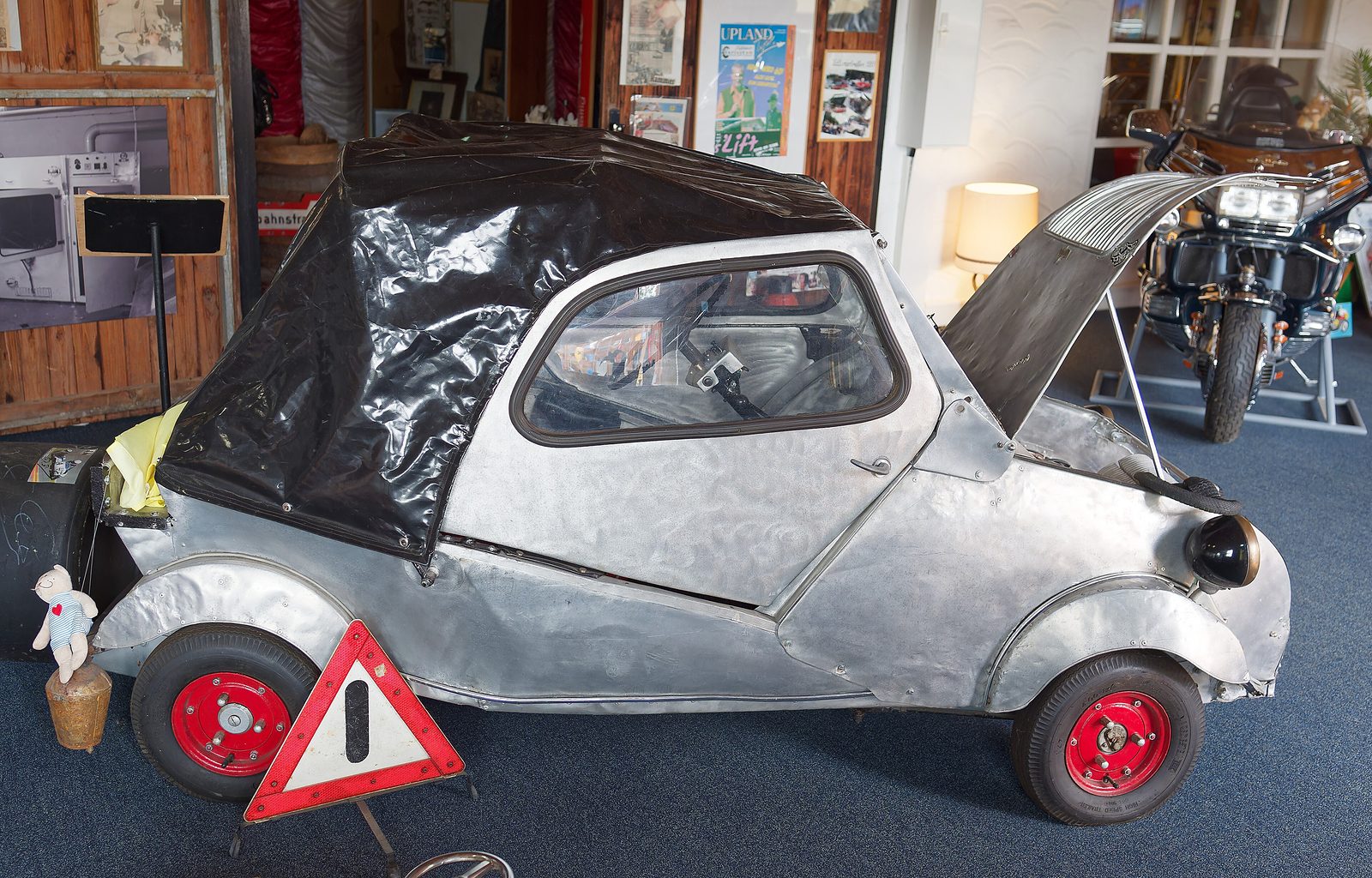
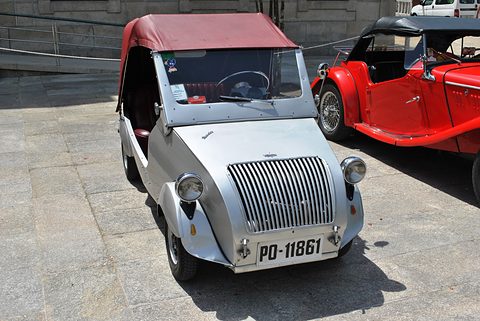
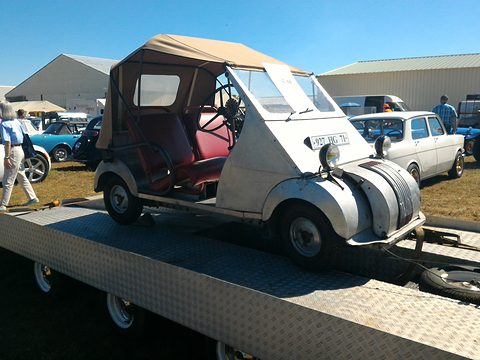
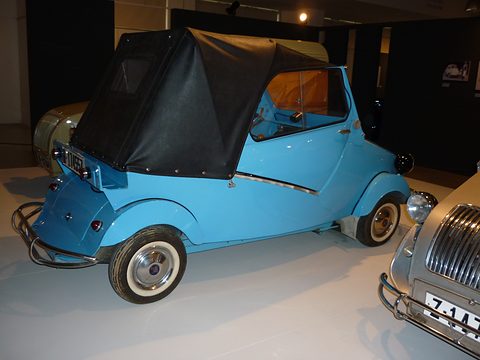
Almost all were scrapped, but Motorpasión counts more than 300 restored Biscúters running in Spain, France, Britain, the Netherlands, Germany and the United States; the Weiner museum said only that few survive.source 10source 7 It is a staple of the microcar meets at Manresa, where the Clàssic Motor Club del Bages runs an international gathering (more in museums and meets).source 10source 1 In 2012–⁠13 the Barcelona history museum built an exhibition, L’enginy de postguerra, around it.source 1

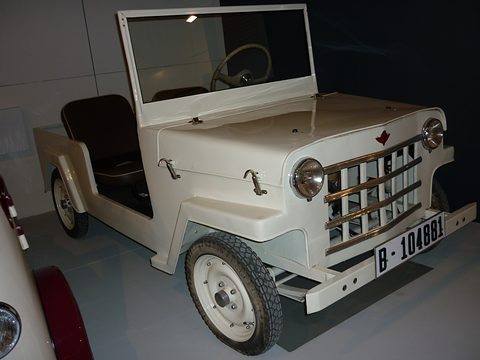
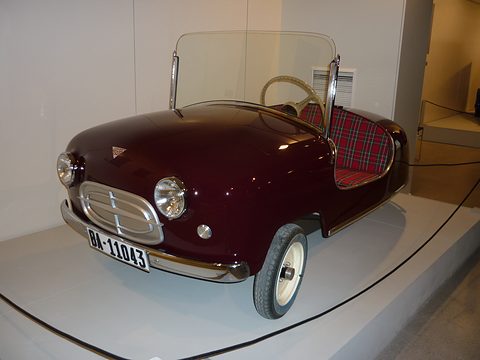
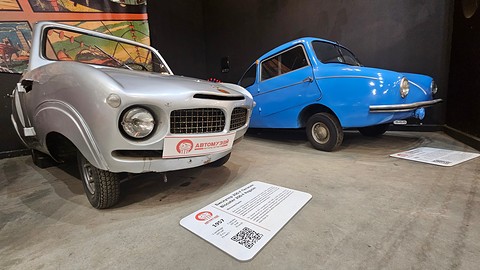
The Bruce Weiner Microcar Museum in Georgia had four: a 1957 200-A, a 1958 Furgoneta, a 1960 Comercial and a 1957 Pegasín.source 7source 9source 12source 13 When RM Auctions sold the collection in February 2013, the 200-A, number AN2035, made US$28,750; what the other three made has not been found.source 11 In the pictures here, Biscúters stand in museums at Terrassa, Salamanca, Los Angeles and Willingen-Usseln, and a Pegasín in Moscow.

Sources

Numbered as in the text

No period road test, price list or factory register has been seen, and Manuel Garriga’s book Biscuter has not been read; the museum booklet he advised on carries most of the company’s story. Sources are given as plain text; the links are on the Credits page.

  1. Albert Cubeles and Joan Roca, L’enginy de postguerra. Microcotxes de Barcelona, Llibrets de sala 11, Museu d’Història de Barcelona (MUHBA), 2012, consultants Jordi Catalan and Manuel Garriga. Read in full, in Catalan.
  2. English Wikipedia, Biscúter, read in full.
  3. Toni Solans, “Biscuter”, La web de los microcoches (grupo7.com), read in full.
  4. Autopasión 1/18, “Historia Biscuter (1953–⁠1960)”, read through a summary of the page.
  5. Spanish Wikipedia, Biscúter, read in full; it carries a banner asking for references.
  6. RM Auctions, the Bruce Weiner Microcar Museum sale, February 2013, lots 292 (“1957 Voisin Biscooter C31”) and 583 (“1949 Voisin Biscooter Prototype”), and the Bruce Weiner Microcar Museum, “1957 Voisin Biscooter”, tour page: the dates they give for the Spanish licence.
  7. Bruce Weiner Microcar Museum, “1957 Biscuter Zapatilla”, tour page, read in full from the archived copy.
  8. French Wikipedia, Gabriel Voisin, read in extract (for his year of birth).
  9. Bruce Weiner Microcar Museum, “1960 Biscuter Comercial 200-C”, tour page, read in full from the archived copy.
  10. Motorpasión, “La corta vida del Biscúter, el microcoche que se aparcaba levantándolo a mano”, read through a summary of the page.
  11. RM Auctions, the Bruce Weiner Microcar Museum sale, Madison, Georgia, February 2013, lot 548, “1957 Biscuter 200-A ‘Zapatilla’”.
  12. Bruce Weiner Microcar Museum, “1958 Biscuter Furgoneta 200-I”, tour page, read in full from the archived copy.
  13. Bruce Weiner Microcar Museum, “1957 Biscuter Pegasin”, tour page, read in full from the archived copy.
  14. Spanish Wikipedia, Biscúter Pegasín, read in full.