microcarfan
  • Bubble car
  • Japan
  • Three wheels
  • 85 built

Fuji Cabin

Also known as Fujicabin Model 5A, Metro 125 (the 1955 prototype)

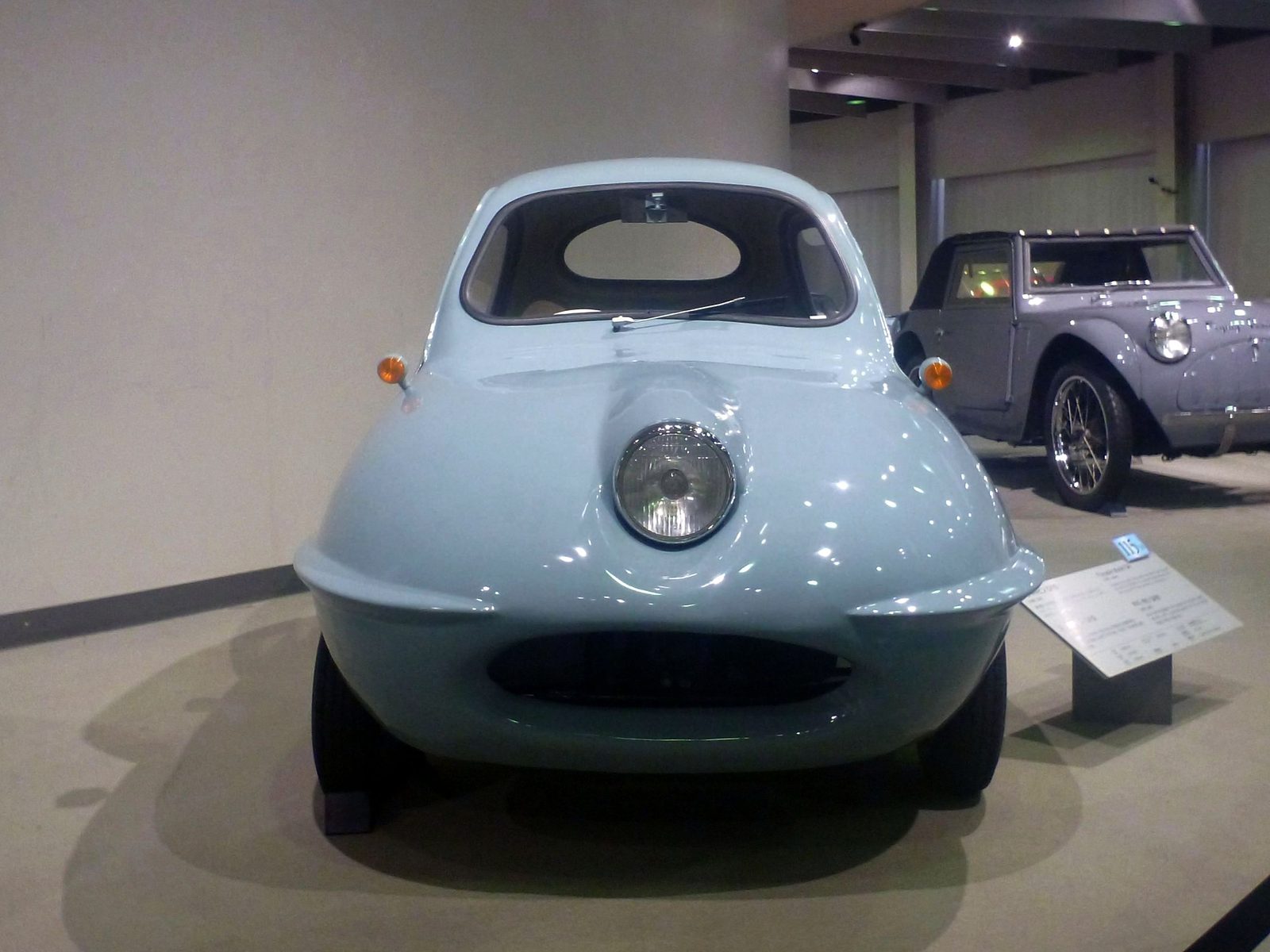
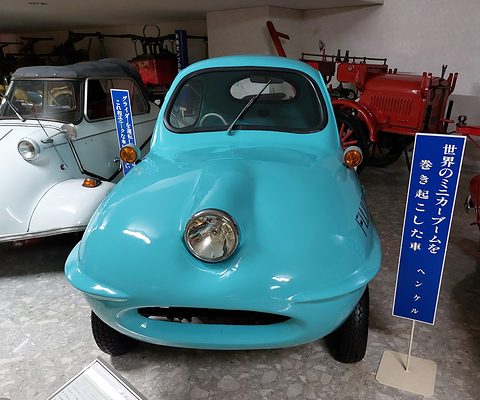
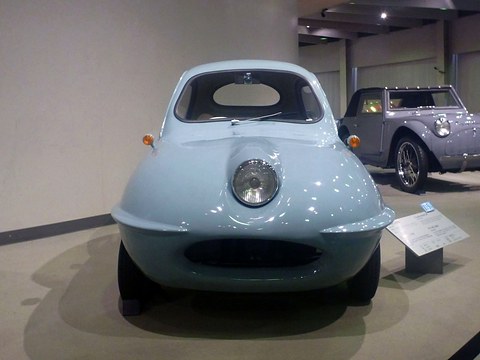
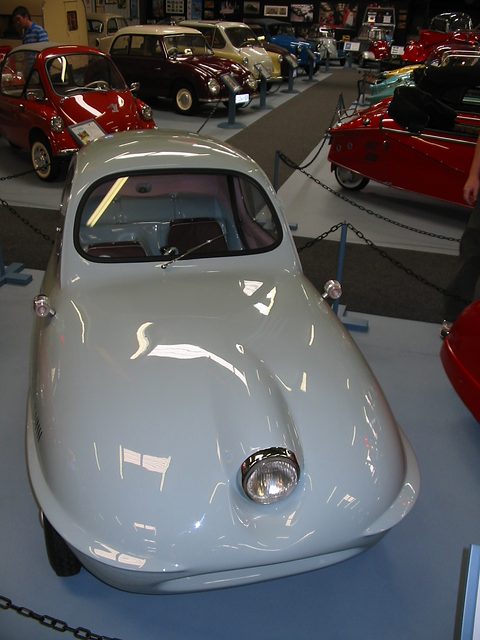
A single headlamp, centred in the nose, to save parts. A body of glass fibre with no chassis under it, so light that an adult could lift one end and turn it round. Japan’s first car body in fibreglass, by Japanese Wikipedia’s account, belonged to a bubble car, and only 85 were built.

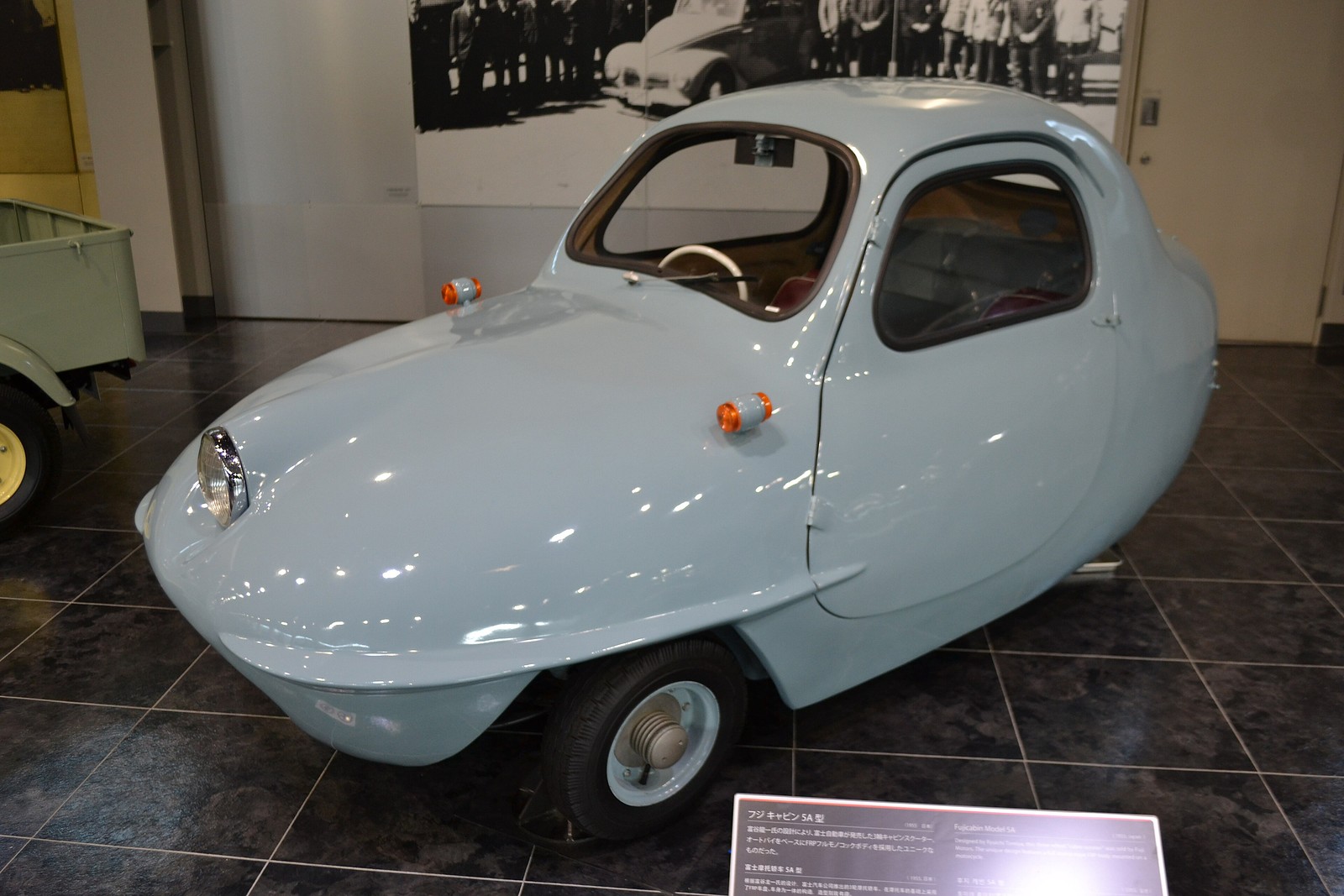
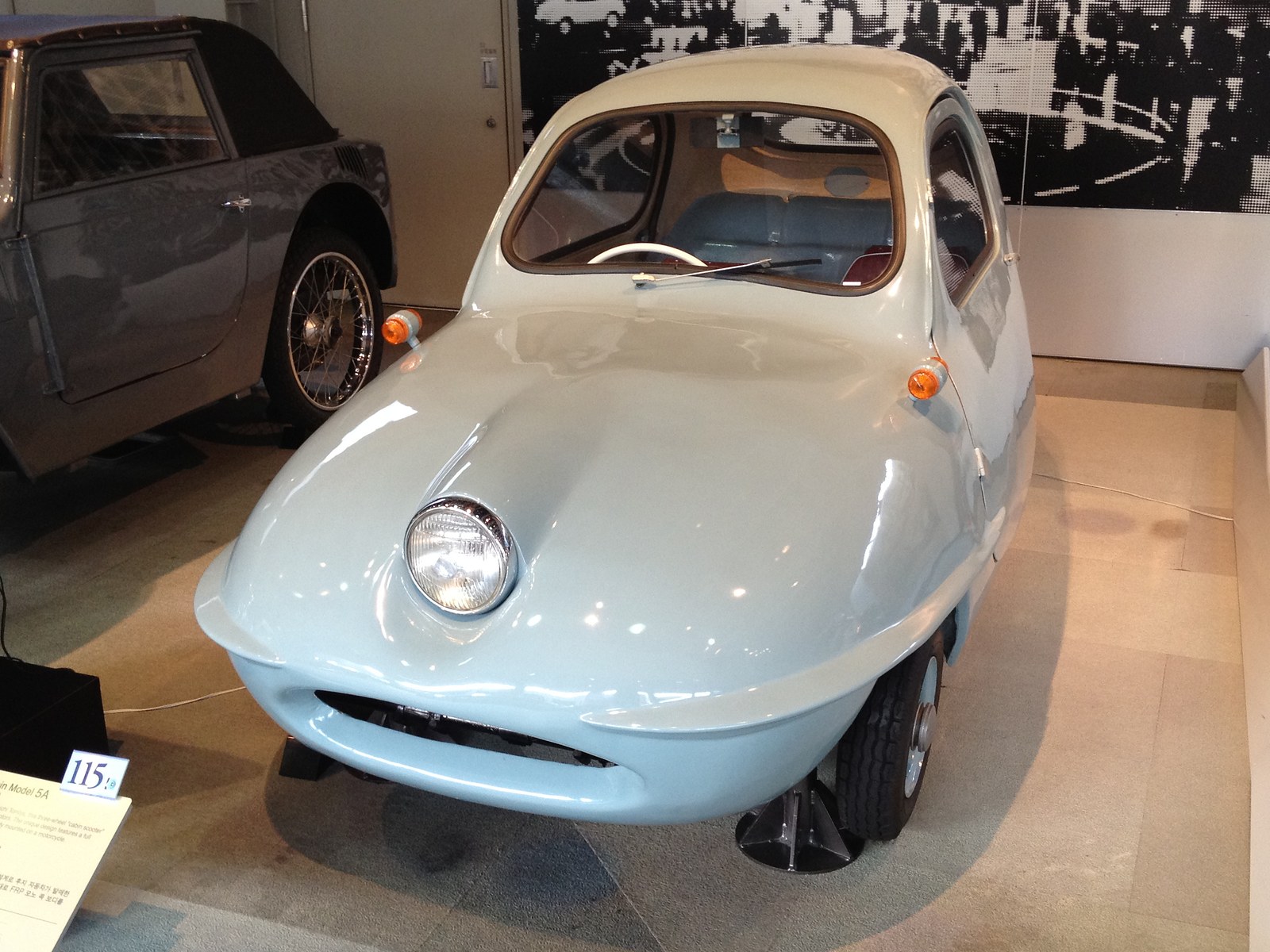
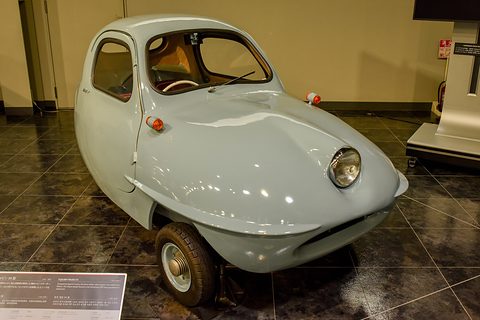
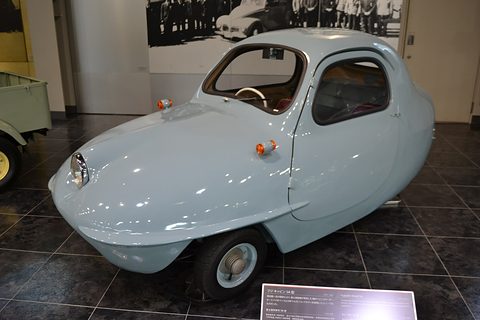
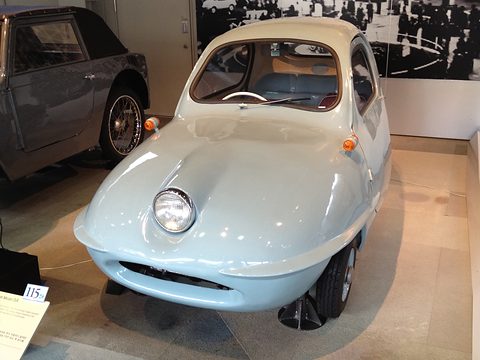
Pale blue teardrop-shaped three-wheeler with a single headlamp and two small front wheels on a polished dark floor.
The Toyota Automobile Museum’s Fuji Cabin 5A from the left front three-quarter in 2025.Photo: Coolalabright, CC BY 4.0, via Wikimedia Commons

At a glance

The spec plate

Fuji Cabin

Model 5A · Tokyo

Built
1955–⁠1957Shown as the Metro 125 in 1955; built from August 1956 to December 1957 (1957–⁠58 in one book)
Country
JapanFuji Jidōsha, Tokyo
Maker
Fuji JidōshaA Tokyo engine maker, unrelated to Fuji Heavy Industries and Subaru
Engine
121 cc Gasuden air-cooled two-stroke singleUnder the floor, ahead of the rear wheel; a 125 cc class engine
Power
5.5 PSAbout 4 kW at 4,400 rpm by Japanese Wikipedia; 5 hp (3.7 kW) by the Toyota museum
Length
2,950 mm1,270 mm wide, 1,250 mm high
Weight
150 kgWith two doors; 140 kg with one, and 130 kg for the body alone
Seats
2Side by side, the passenger 200 mm further back
Wheels
3Two at the front, one at the back, driven by chain
Price new
¥235,000August 1956
Production
85The one figure every source gives
Survives
YesThree in about 2002, by the Weiner museum’s count
Top speed
60km/h60 km/h60 km/h (37 mph) in the catalogue; 45 km/h by the Weiner museum

How big is it?

True proportion

2.95 m

It is 20 mm shorter than a Fiat 500, about 1.7 adults laid end to end.

  • 1.27 m wide
  • 150 kg: about two adults
  • A single headlamp, centred in the nose
  • Two seats, staggered by 200 mm
Drawn at true proportion. The track is 3.6 metres long; the adult stands at the same scale. The Peel P50 is the smallest production car, on every page for comparison.

The story

History

Its designer was Tomiya Ryūichi, born in Akasaka, Tokyo, in 1908. He studied design at the Tokyo Higher School of Arts and Technology and joined the company that became Nissan in 1934, to design Datsun bodies; the Datsun rabbit mascot is his. In 1949 he moved to Suminoe Seisakusho and created the Flying Feather, and in 1956 he joined Fuji Jidōsha.source 1 The Fuji Cabin was his second attempt at the creed Japanese Wikipedia gives him, the most work for the least consumption, this time as a European-style cabin scooter, a three-wheeled kei vehicle (more on him in the designers).source 2

the Leonardo da Vinci of Japan

RM Auctions’ catalogue description of Tomiya Ryūichi, Bruce Weiner Microcar Museum sale, February 2013.source 3

Fuji Jidōsha, in Tokyo, repaired, dismantled and rebuilt the American forces’ military vehicles and made “Gasuden” engines for small motorcycle makers; its president, Yamamoto Sōji, was a former Nissan executive.source 2 The Toyota Automobile Museum calls it a Nissan-affiliated engine maker.source 4 It had nothing to do with Fuji Heavy Industries, the makers of the Subaru 360, though the two are often confused.source 2 The Weiner museum’s story, of an aircraft maker forbidden to build aircraft and merged into Fuji, muddles the history: Gasuden was the short name of Tokyo Gas Electric, the pre-war forerunner of Hino, and the Japanese sources describe Fuji Jidōsha as a vehicle rebuilder and engine maker.source 2source 4source 5 The Weiner museum and RM call the maker “Fuji Toshuda Motors”, a name no Japanese source explains.source 5source 3

A scooter with a roof

The prototype was announced in 1955 as the Metro 125: a cabin scooter with a single rear wheel, one headlamp and a playful streamlined body with an opening underneath. The Japanese edition of Popular Science headlined it, that August, as a scooter with a roof, and it was shown at the Tokyo Motor Show that year.source 2source 5source 3 It had two front wheels and a single rear one, as the German Messerschmitt KR175 did (more on such layouts in three-wheelers).source 2source 6

The body was the car. It was a glass-fibre monocoque with no chassis, eight layers thick where it was stressed and three elsewhere.source 2source 4 Japanese Wikipedia calls it Japan’s first car body in the material.source 2 It goes further and calls it the world’s first car whose whole monocoque was glass fibre, two years before the Lotus Elite of 1957; no other source read makes that claim.source 2 The seats were part of the shell, and the occupants sat on cushions laid on the fibreglass. A teardrop body with a big opening below the waistline served as both air intake and backbone, and the single headlamp was chosen to save parts.source 2 The passenger sat 200 mm behind the driver, so the driver could walk through from the passenger’s side, and the first cars had only one door, on the left. Production cars got a door on each side, which put the weight up from 140 to 150 kg.source 2

The prototype’s rubber springs worked in tension and were too soft; production cars had rubber in compression at the front, and a coil-spring strut on the swinging arm at the back.source 2source 5source 3 The 121 cc Gasuden two-stroke sat under the floor ahead of the rear wheel, which it drove by chain.source 2 The driver had ordinary pedals for brake and throttle, but changed gear with a lever on the right: tilt it to declutch, push it forward to change up, pull it back from neutral for reverse. The engine was kick-started with the left foot, and the wiper worked by hand.source 2source 5 RM noted that reverse was unusual in a scooter-engined microcar.source 3

85 cars

Production began in August 1956, at ¥235,000, sold through Metropolitan Agencies.source 2 RM says the plans were for 400 to 500 a month.source 3 It did not work. The rubber springs gave poor handling and ride; the cabin was hot in summer and had no heater in winter: little more, Japanese Wikipedia says, than a scooter with a roof.source 2 The makers did not yet know fibreglass well: long curing times slowed production, and the stressed shell cracked on rough roads, which brought complaints.source 2source 4 The 60 km/h of the catalogue was hard to use with the awkward gear lever, the body was heavy for the engine, and the tyres were small and the track narrow.source 2 The Weiner museum adds a stiff price and poor marketing; RM blames unfamiliarity with fibreglass and a limited marketing strategy.source 5source 3

Production stopped in December 1957, after 85 cars. Dozens of half-finished bodies were left, and most were reportedly broken up. A more conventional version, a fibreglass body on a steel subframe with a stronger engine, was considered but not built.source 2 Fuji Jidōsha stayed out of cars until the Gasuden Mini Van EM36 at the 1961 Tokyo show, which never went on sale.source 2 Tomiya moved to Central Motors in 1958, founded his own research institute in 1972, later co-created the walking “Mechanimal” machines that Gakken sold as Mechamo, and entered the Japan Automotive Hall of Fame in 2013.source 1
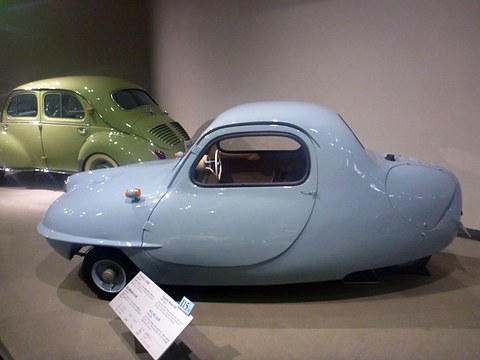
Side view of a pale blue three-wheeled car with a long tapering tail, one door and a museum label, a green saloon behind.
The teardrop in profile: the Toyota museum’s Fuji Cabin in 2013, its single rear wheel tucked under the tail.Photo: Kzaral, CC BY 2.0, via Wikimedia Commons
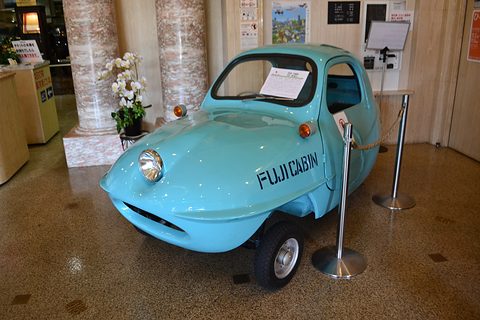
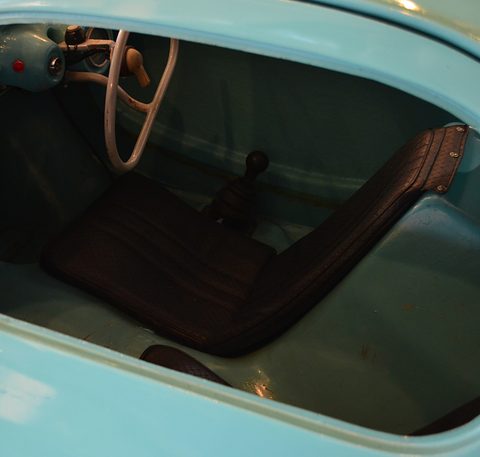
Black vinyl seat, a white steering wheel with a flattened rim and a floor gear lever inside a turquoise shell.
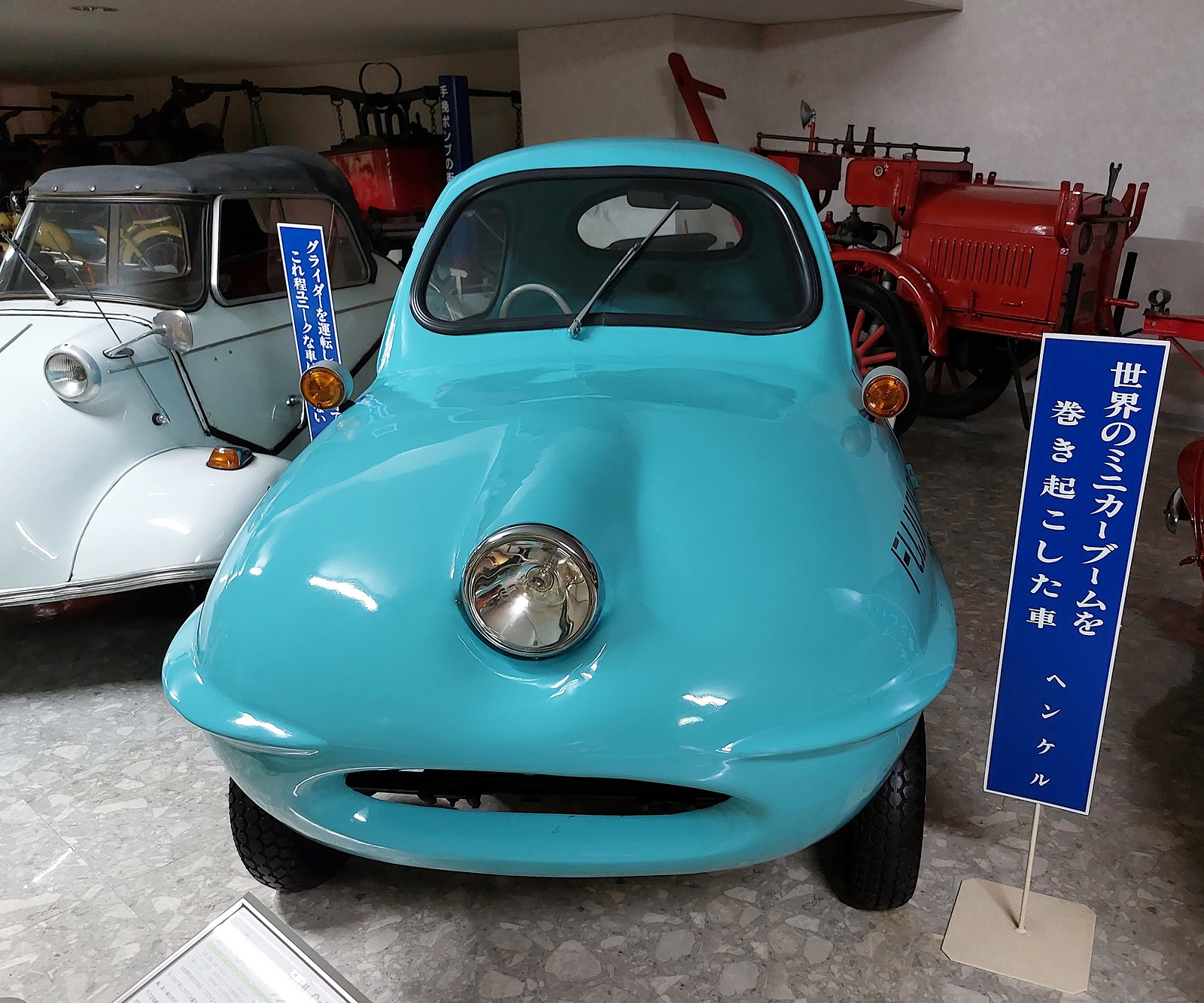
Inside the turquoise Fuji Cabin at Komatsu in 2023: its steering wheel and seat.Photo: 先従隗始, CC0, via Wikimedia Commons
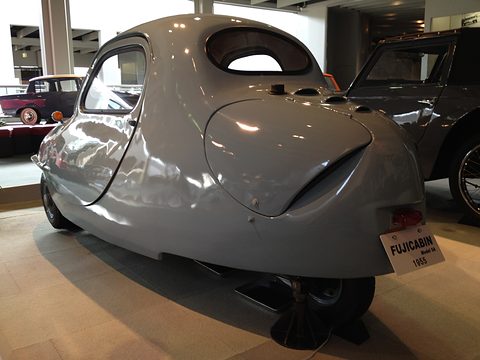
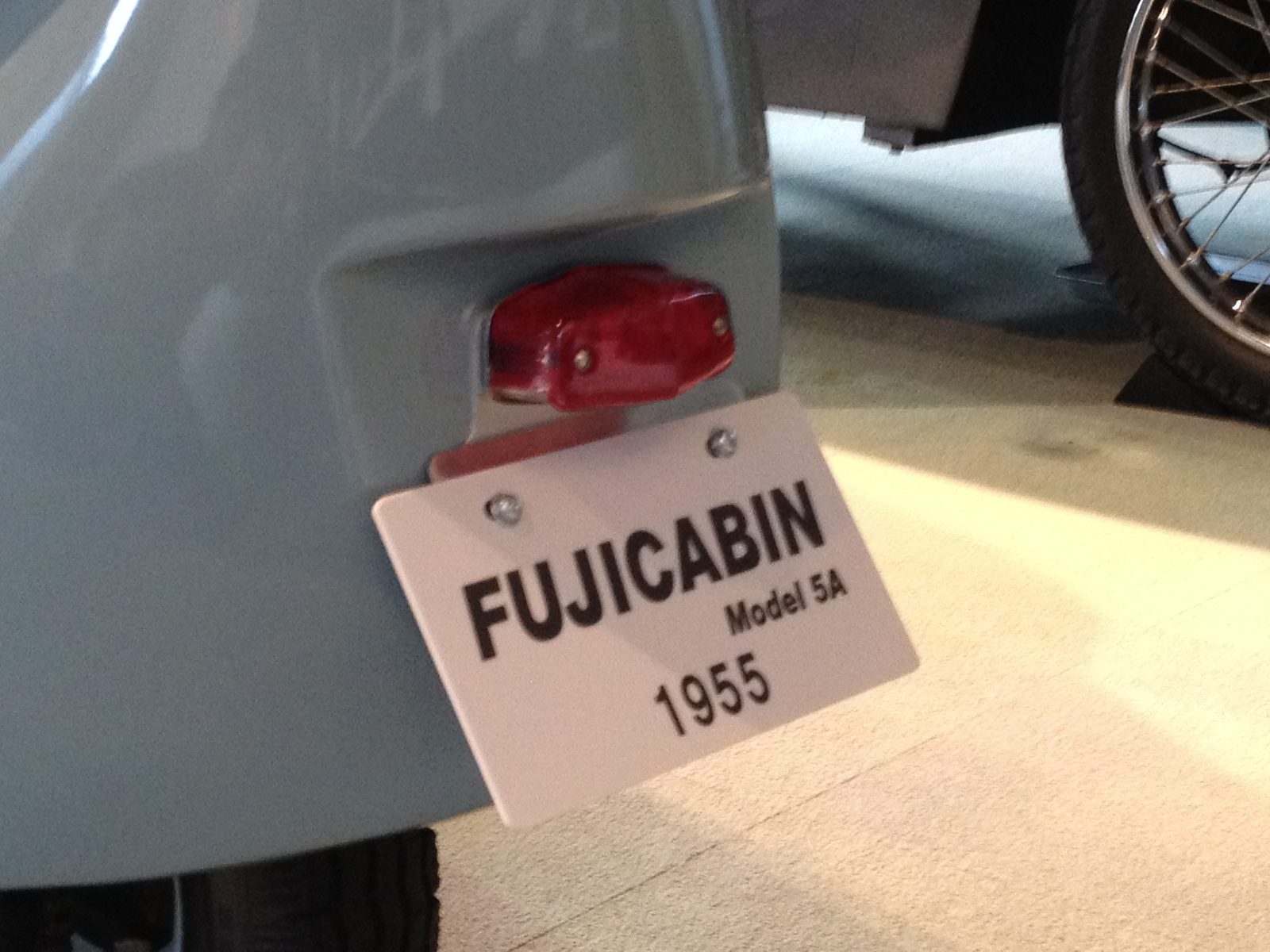
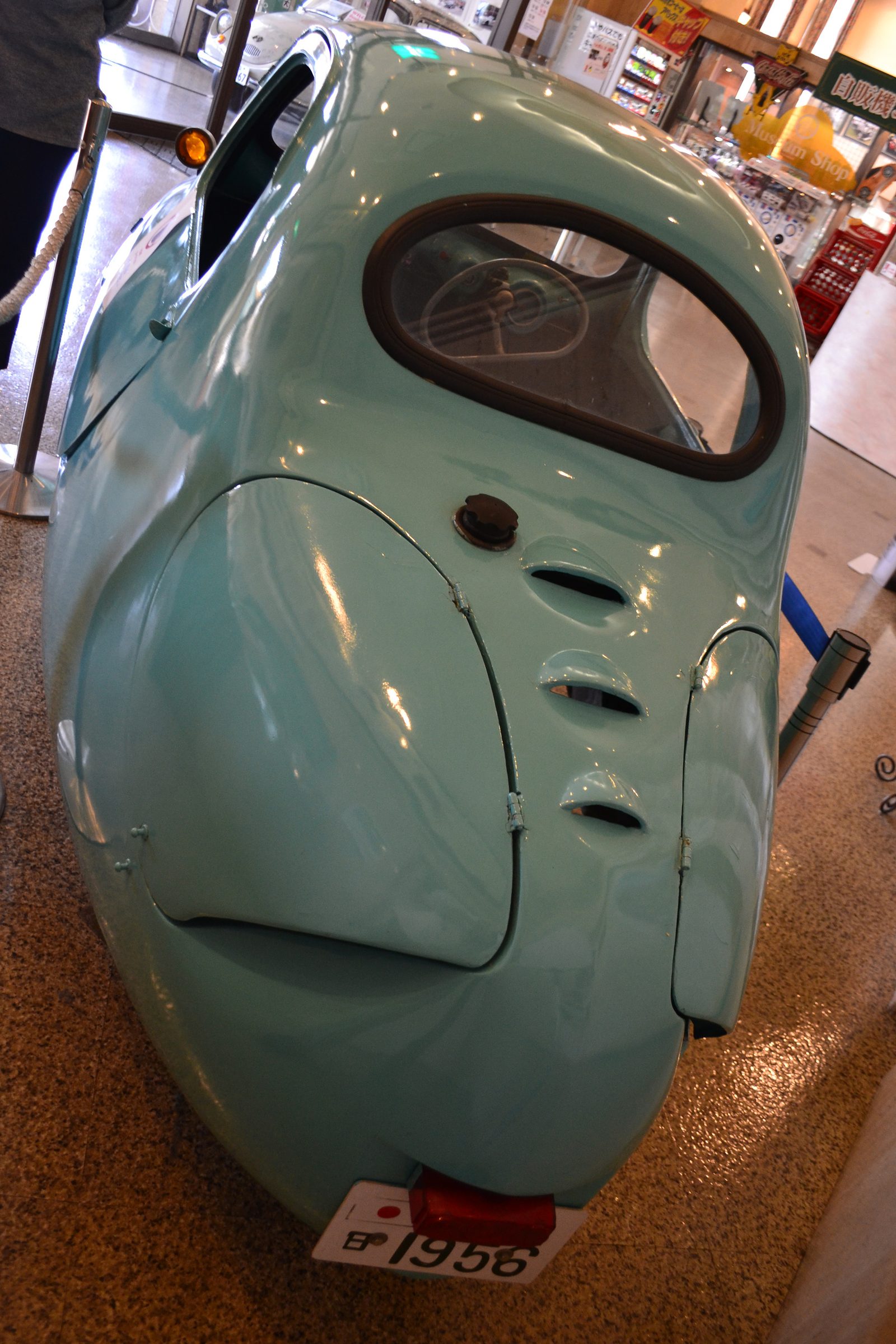
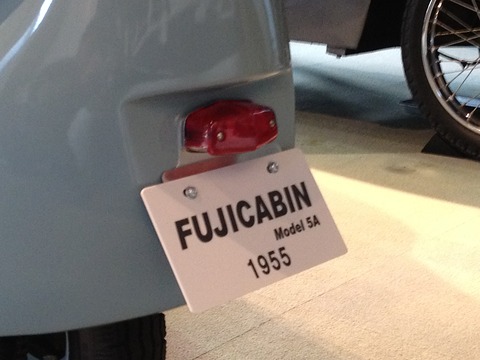
Rear view of a rounded pale grey three-wheeler with a large engine lid, a small rear wheel and a FUJICABIN plate.
The tail of the Toyota museum’s car in 2012: the engine lid and the single rear wheel.Photo: Iwao, CC BY 2.0, via Wikimedia Commons

Pictures

More photographs, old and new

Variants

One shape, two door counts

The Fuji Cabin, 1955–⁠57
VariantYearsWhat differsHow many
Metro 1251955The prototype, its rubber springs working in tension and found too softPrototype
5A, one doorFrom 1956A single door, on the left; 140 kgPart of the 85
5A, two doors1956–⁠57A door on each side; 150 kgPart of the 85

Specification

The production Model 5A

Engine and drive

Engine and drive
EngineGasuden SA-1 air-cooled two-stroke single, under the floorsource 2
Capacity121 cc (50 × 62 mm)source 2source 4121.7, 122 or 125 cc by source: one engine, 125 cc its nominal class
Power5.5 PS at 4,400 rpmsource 25 hp (3.7 kW) at 5,000 rpm by the Toyota museum; 5.5 hp by Weiner and RM
StartingA kick-start pedal by the driver’s left foot; no electric startersource 2source 5
GearboxThree speeds and reverse, on one lever: tilt it to declutch, push to change up, pull back from neutral for reversesource 2
Final driveBy chain to the rear wheel, through a swinging armsource 2

Body and chassis

Body and chassis
BodyA glass-fibre monocoque, with no chassis: eight layers where stressed, three elsewheresource 2source 4
Front suspensionIndependent, on rubber in compressionsource 2source 5
Rear suspensionA swinging arm with a coil-spring strutsource 5source 3
BrakesCable-operated; a lock holds the footbrake down for parkingsource 2source 5
SteeringA wheel shaped like a cut-off circle, with no reduction gearsource 2Rack and pinion by Weiner; a handlebar-type mechanism by RM
Tyres4.00 × 8source 5
ElectricsMagneto ignition, 6 voltssource 5

Dimensions

Dimensions
Length2,950 mm (116 in)source 2source 4115 in (2,921 mm) by Weiner and RM
Width1,270 mmsource 2source 4source 5
Height1,250 mmsource 2source 4
Wheelbase2,000 mmsource 2source 4
Weight150 kg (331 lb) with two doorssource 2130 kg for the body by the Toyota museum; 550 lb by Weiner, an outlier

Performance and running

Performance and running
Top speed60 km/h (37 mph), the catalogue figuresource 2source 445 km/h by Weiner
WiperWorked by hand, with the driver’s left handsource 2
Price new¥235,000 (1956)source 2

How many were built?

One figure, everywhere

85 builtEighty-five, from August 1956 to December 1957. The Toyota museum, the Weiner museum, RM, Chris Rees and Japanese Wikipedia all give it: the most consistent number in the whole early Japanese microcar record.

  1. 85Model 5As, 1956–⁠57Two sources agree

    The Toyota Automobile Museum, Japanese Wikipedia, the Weiner museum, RM and Chris Rees’s Three-Wheelers A–Zsource 4source 2source 5source 3source 6

  • Two sources agreetwo good sources give the figure
  • One sourcea good source, alone
  • Unconfirmeda lead only, not yet checked

Famous for

Three points

  1. A body of glass fibre

    A monocoque with no chassis beneath it, and Japan’s first car body in the material by Japanese Wikipedia’s account.source 2source 4

  2. One eye

    A single headlamp in the middle of the nose, chosen to save parts.source 2

  3. Eighty-five

    The one production figure on which every source agrees.source 2source 4source 5

Survivors and collecting

Today

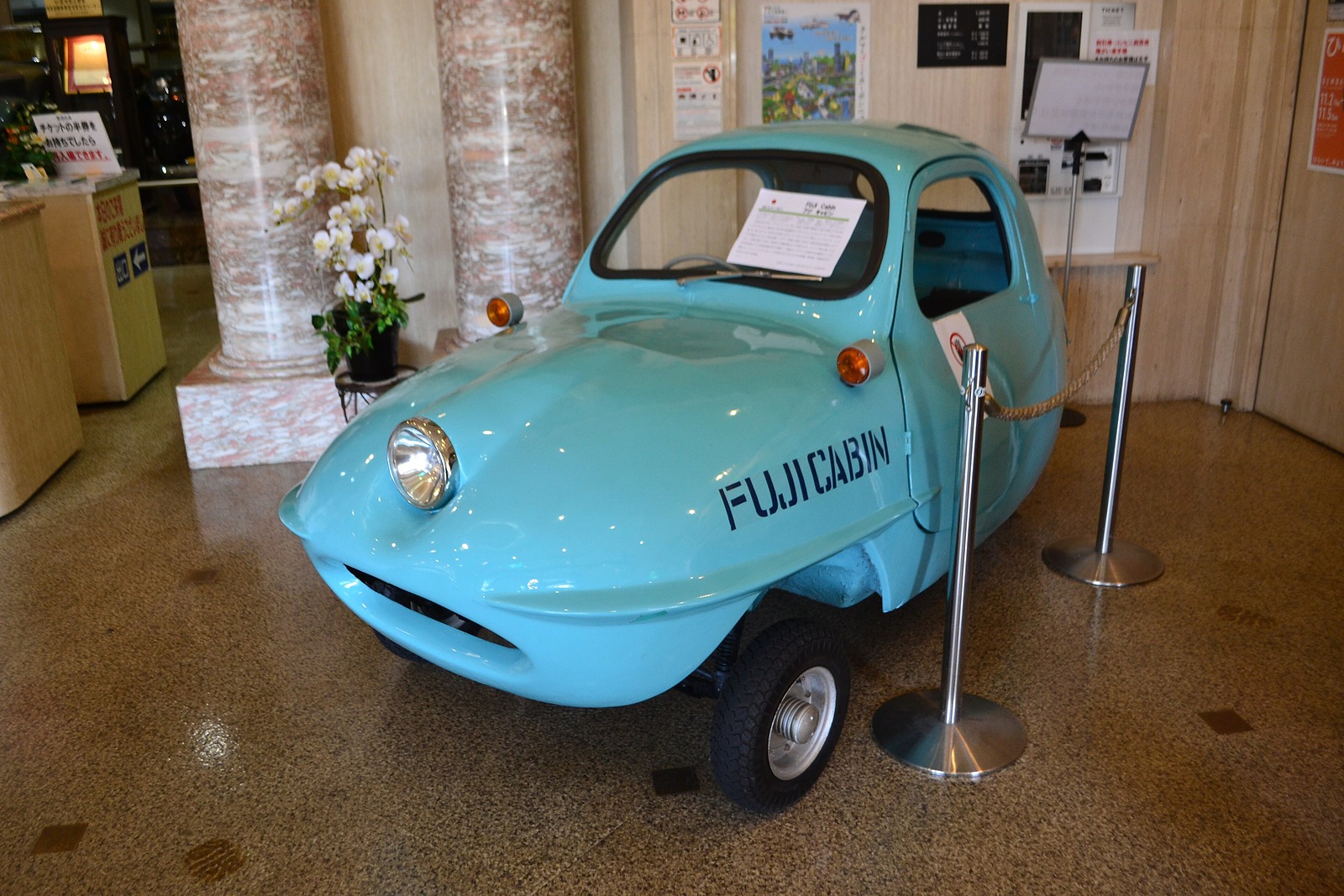
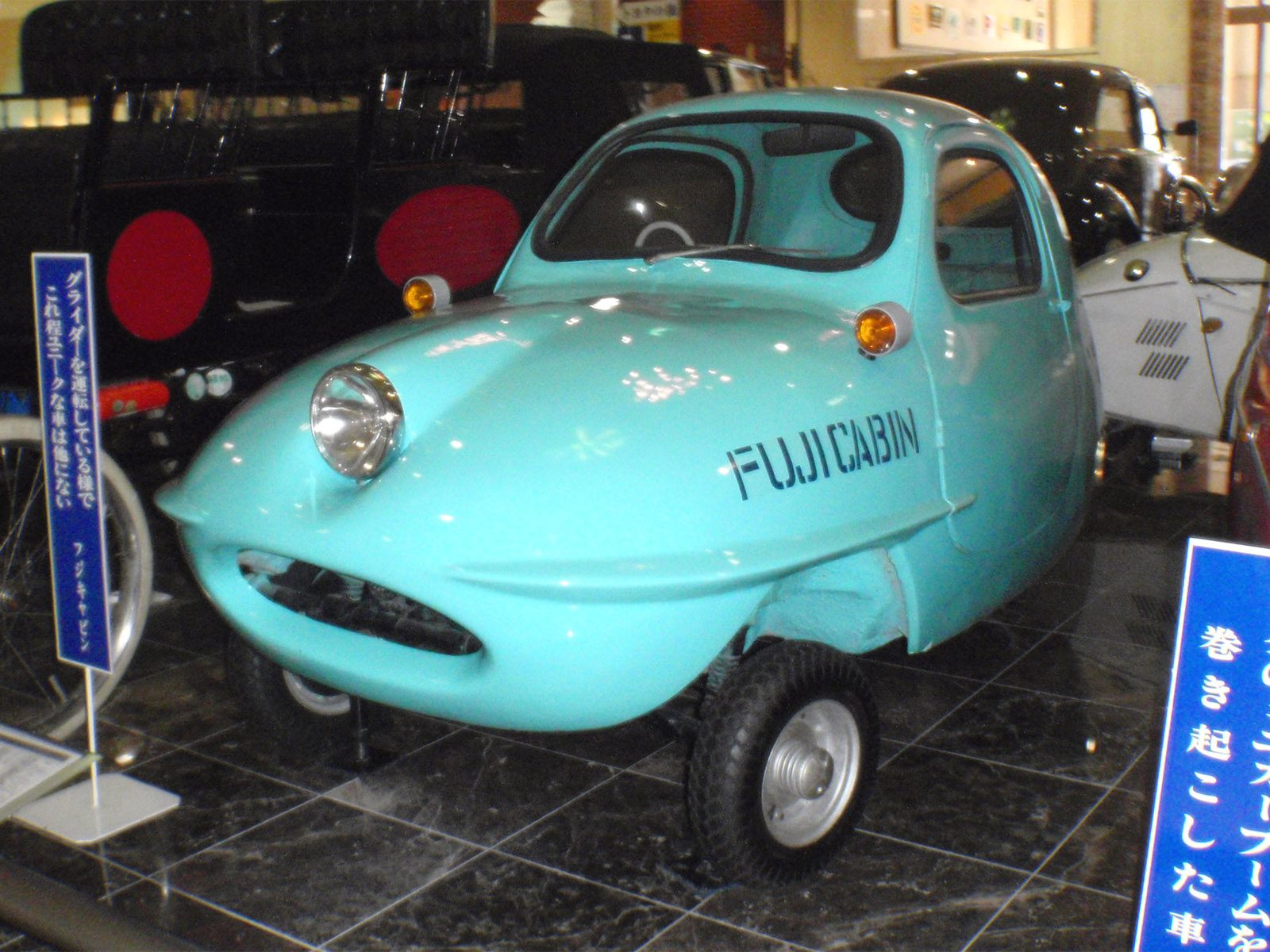
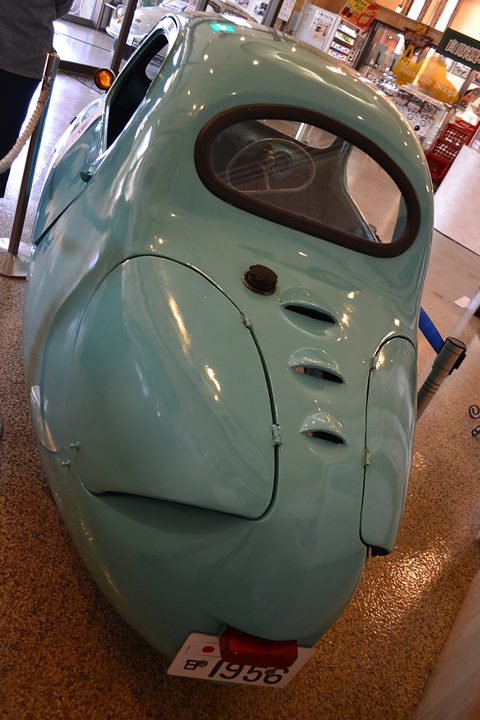
The Weiner museum counted three survivors in about 2002; Japanese Wikipedia says a few, and that fibreglass, which does not rot, helped them last.source 5source 2 The Toyota Automobile Museum shows its Model 5A on the third floor of its cars building, and the Motorcar Museum of Japan at Komatsu has one; the photographs on this page show a turquoise car there and a pale one at the Petersen Automotive Museum in Los Angeles (more in museums and meets).source 4source 2

The Bruce Weiner Microcar Museum’s car was found derelict in Pennsylvania, changed hands several times and was restored by the museum, which had to remake parts of the side lights and handle the primitive fibreglass with care.source 5source 3 When the collection was sold by RM Auctions in Madison, Georgia, in February 2013, it was lot 623, chassis 57570076, and it fetched US$126,500.source 3

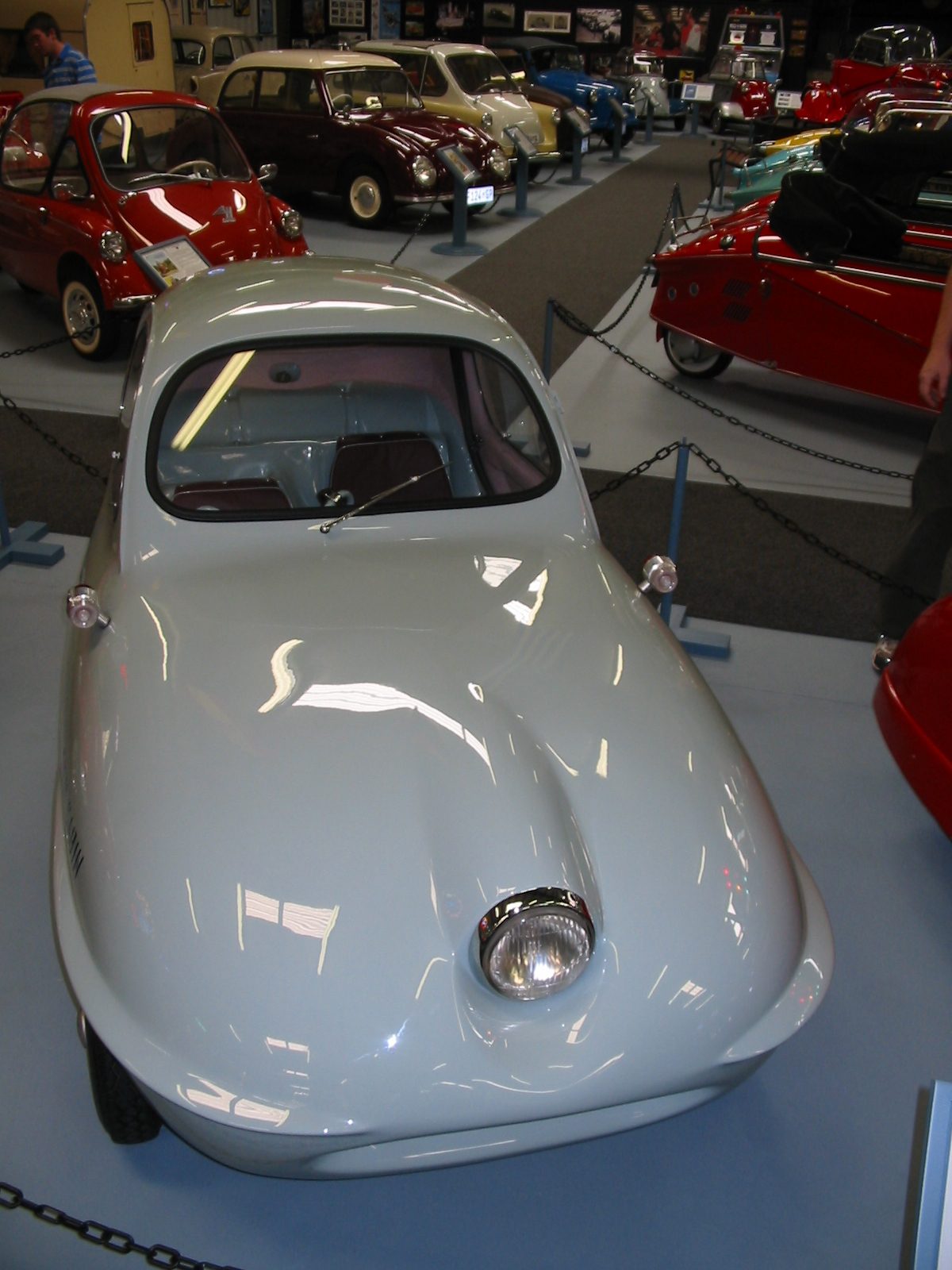
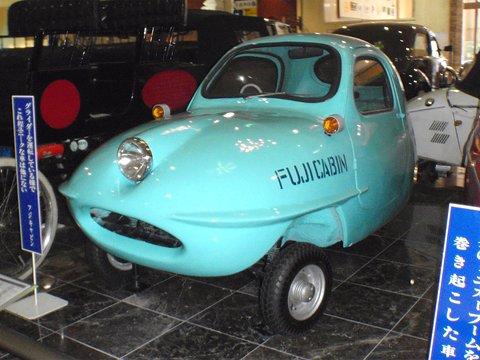
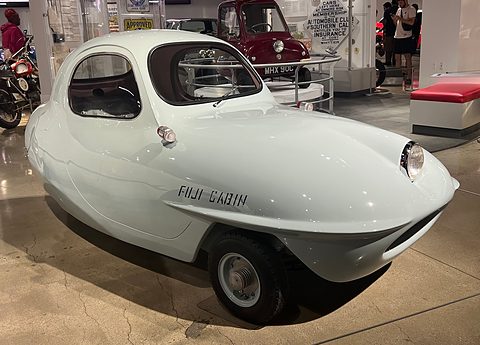
Very pale green rounded three-wheeler with a long nose, one headlamp and black lettering on its flank, other cars behind.
A pale Fuji Cabin 5A with “FUJI CABIN” on its flank in Los Angeles, at the Petersen Automotive Museum, in 2024.Photo: TaurusEmerald, CC BY-SA 4.0, via Wikimedia Commons

Sources

Numbered as in the text

No period road test was found, and the 1955 Popular Science article was not seen; the history rests mainly on Japanese Wikipedia and the Toyota and Weiner museums. RM’s catalogue was read through a summary, not word for word. Sources are given as plain text; the links are on the Credits page.

  1. Japanese Wikipedia, Tomiya Ryūichi, read in full.
  2. Japanese Wikipedia, Fuji Jidōsha Fuji Cabin, read in full on 7 October 2026. It cites the Toyota Automobile Museum and the Japanese edition of Popular Science, August 1955, pp. 94–95.
  3. RM Auctions, the Bruce Weiner Microcar Museum sale, Madison, Georgia, February 2013, lot 623, “1955 Fuji Cabin”, read in summary.
  4. Toyota Automobile Museum, collection record 85, “Fujicabin Model 5A”, read in full.
  5. Bruce Weiner Microcar Museum, “1955 Fuji Cabin”, read in full from the copy archived about 2015.
  6. Chris Rees, Three-Wheelers A–Z (Quiller, 2013), p. 77, as cited by English Wikipedia’s Fuji Cabin, which was read in full; the book was not seen.