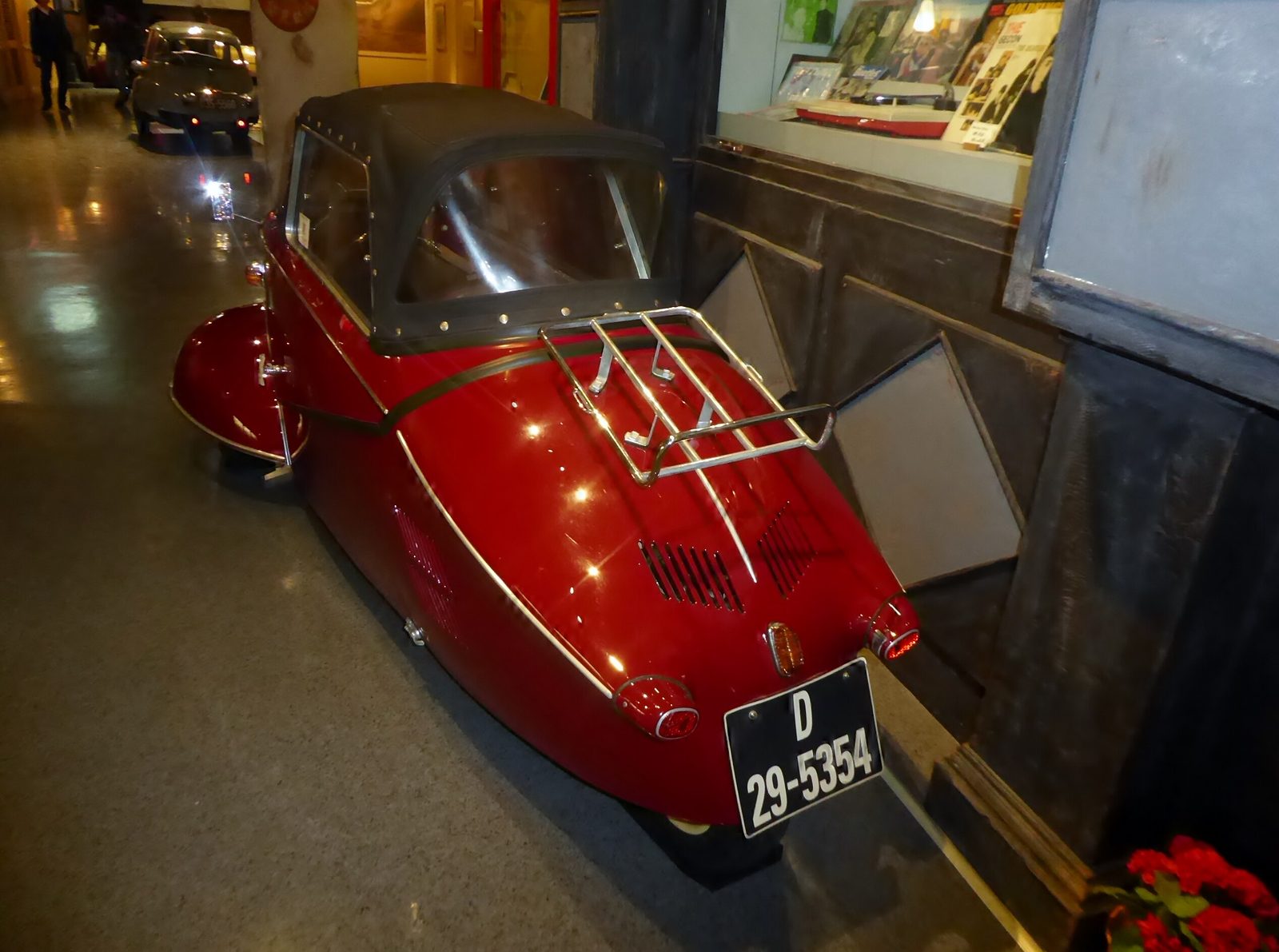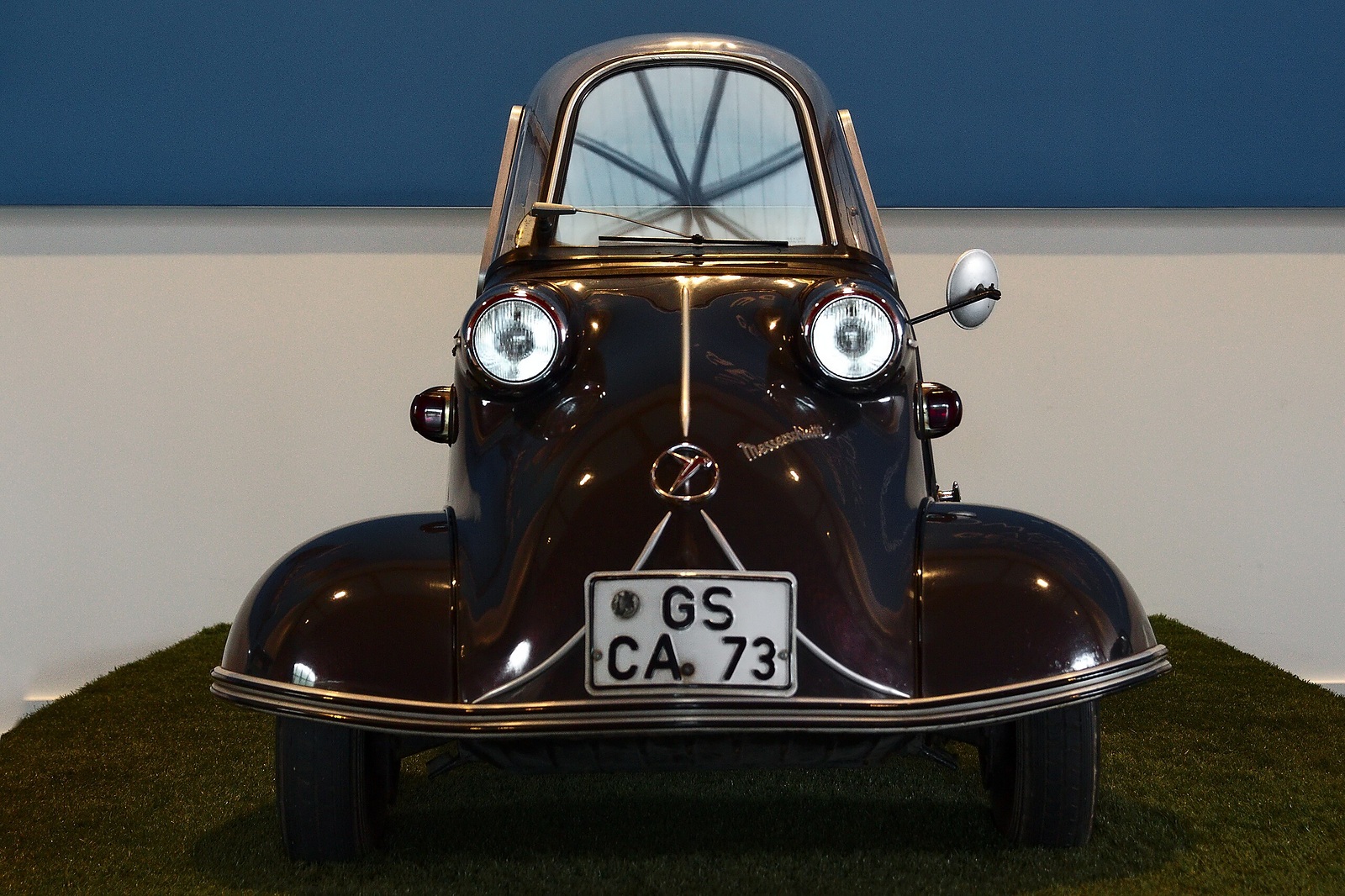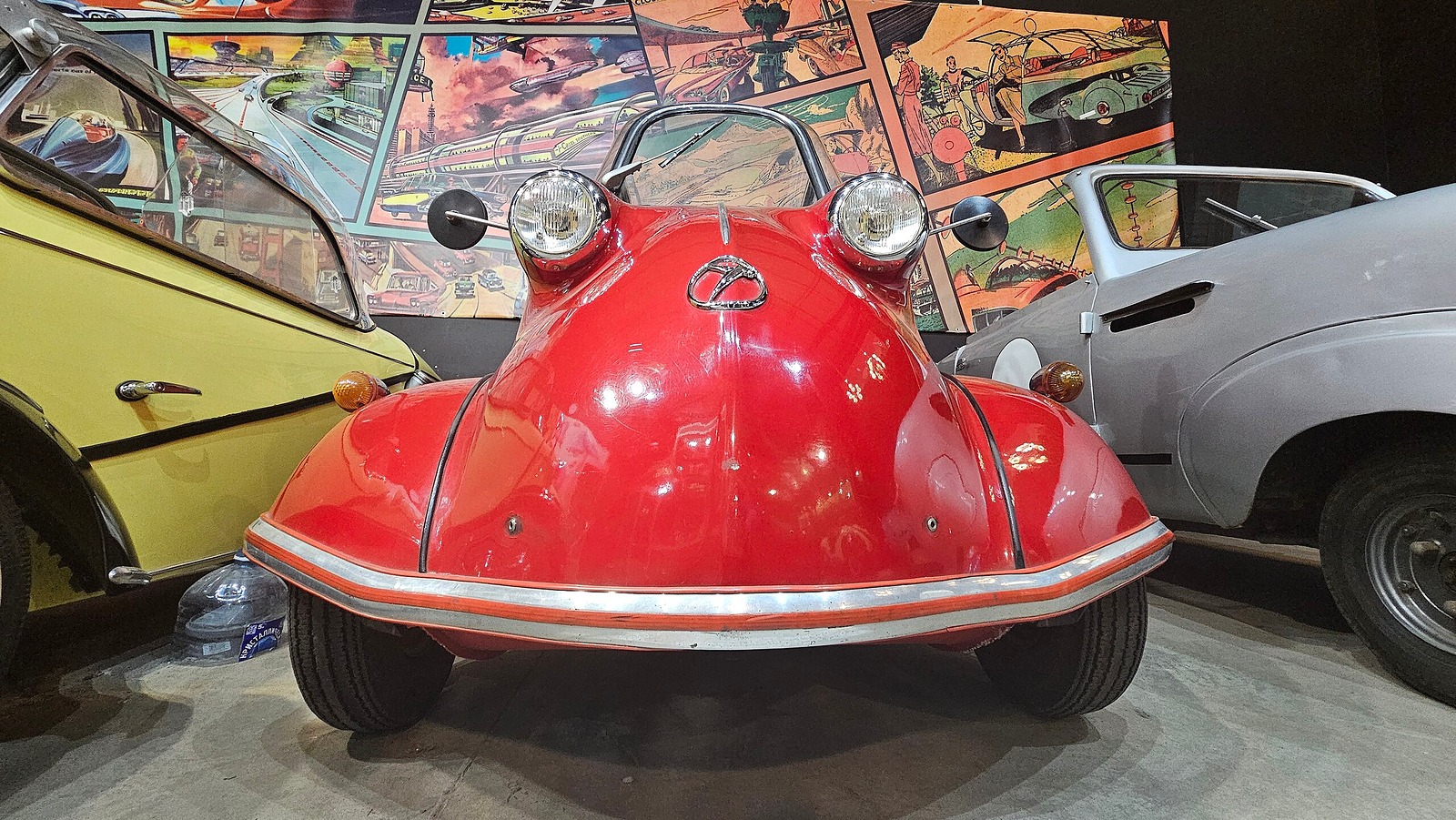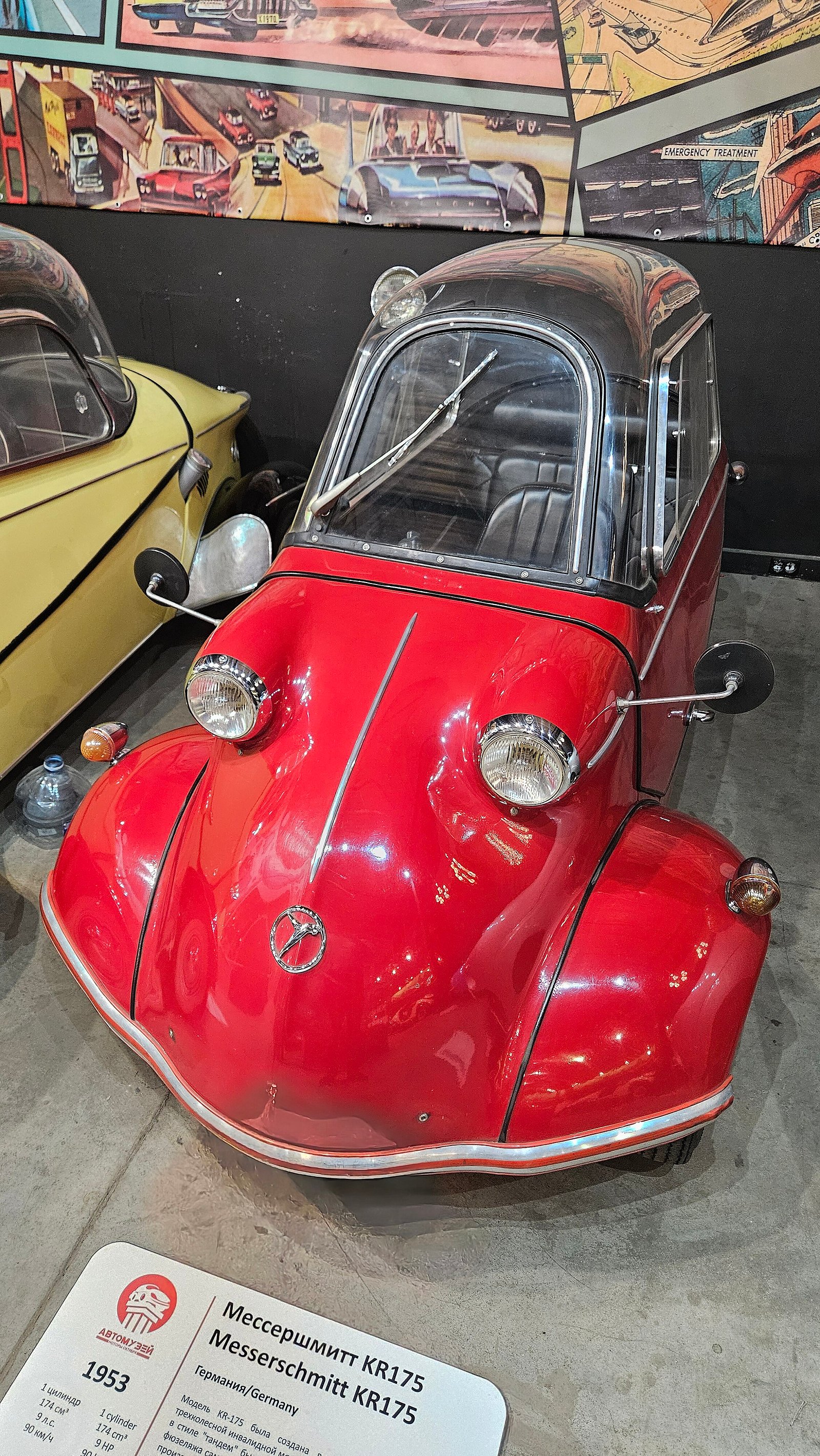
microcarfan
  • Bubble car
  • West Germany
  • Three wheels

Messerschmitt KR175

Also known as Kabinenroller, KR 175, FK 150 (prototype)

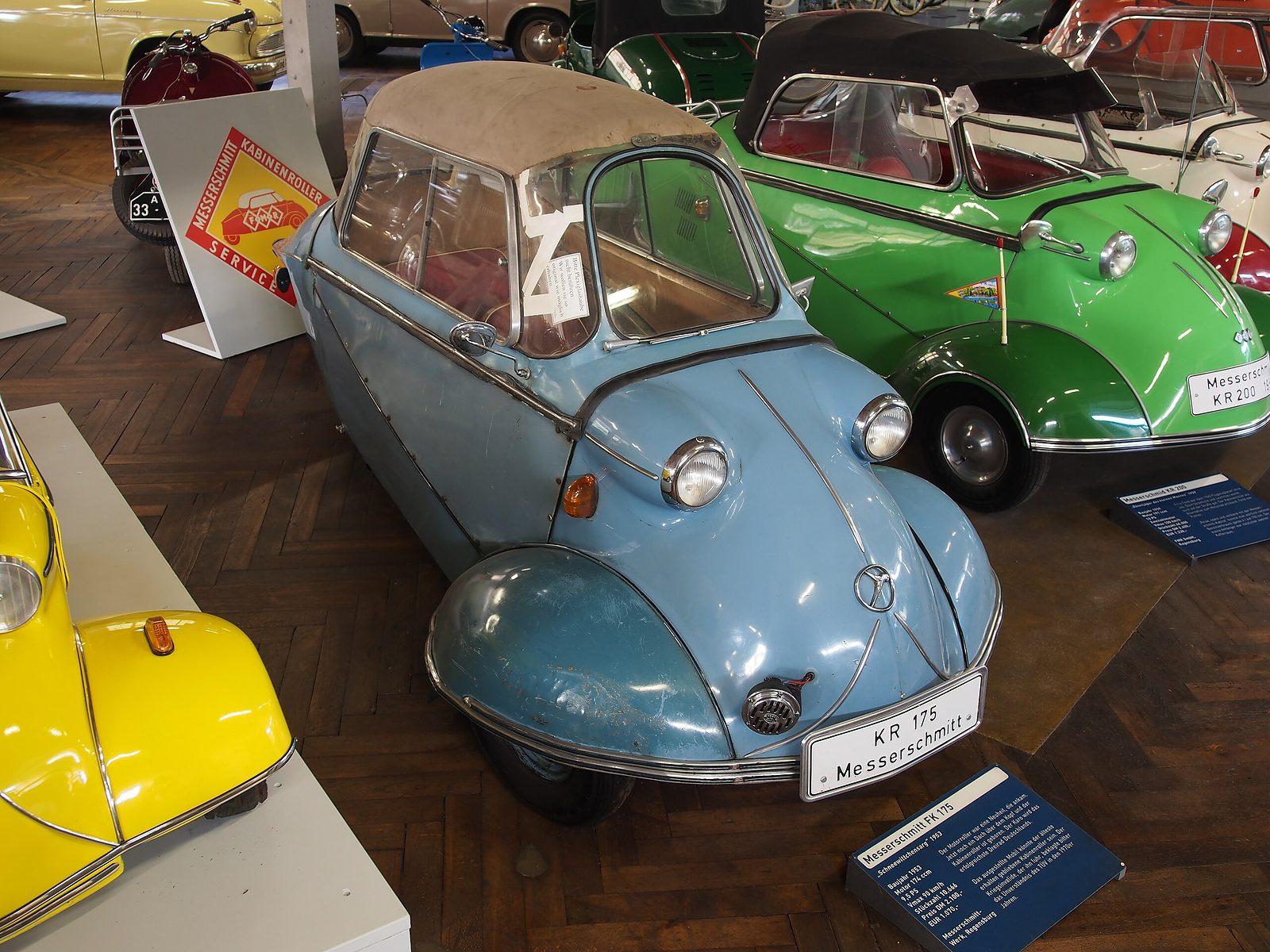
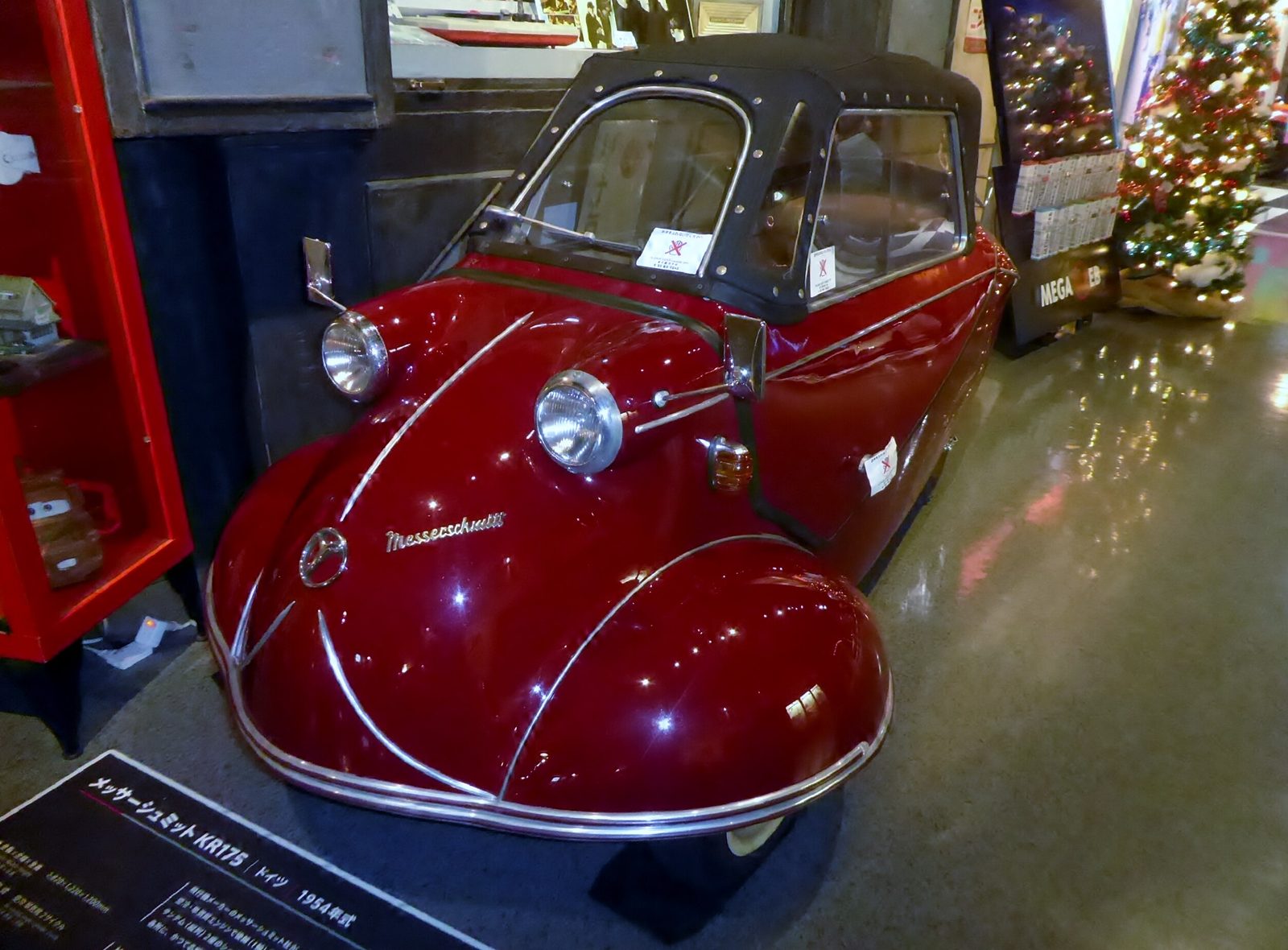
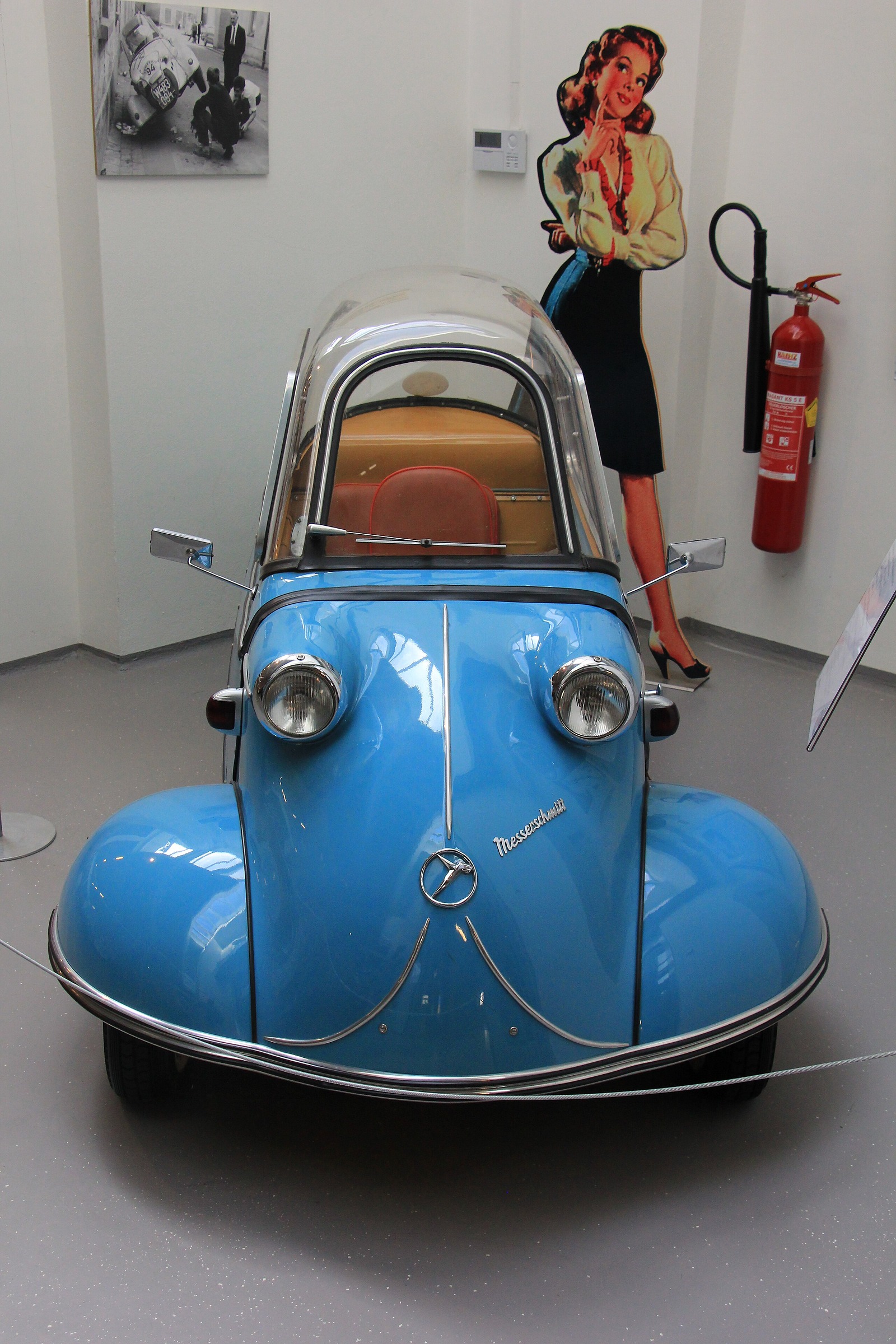
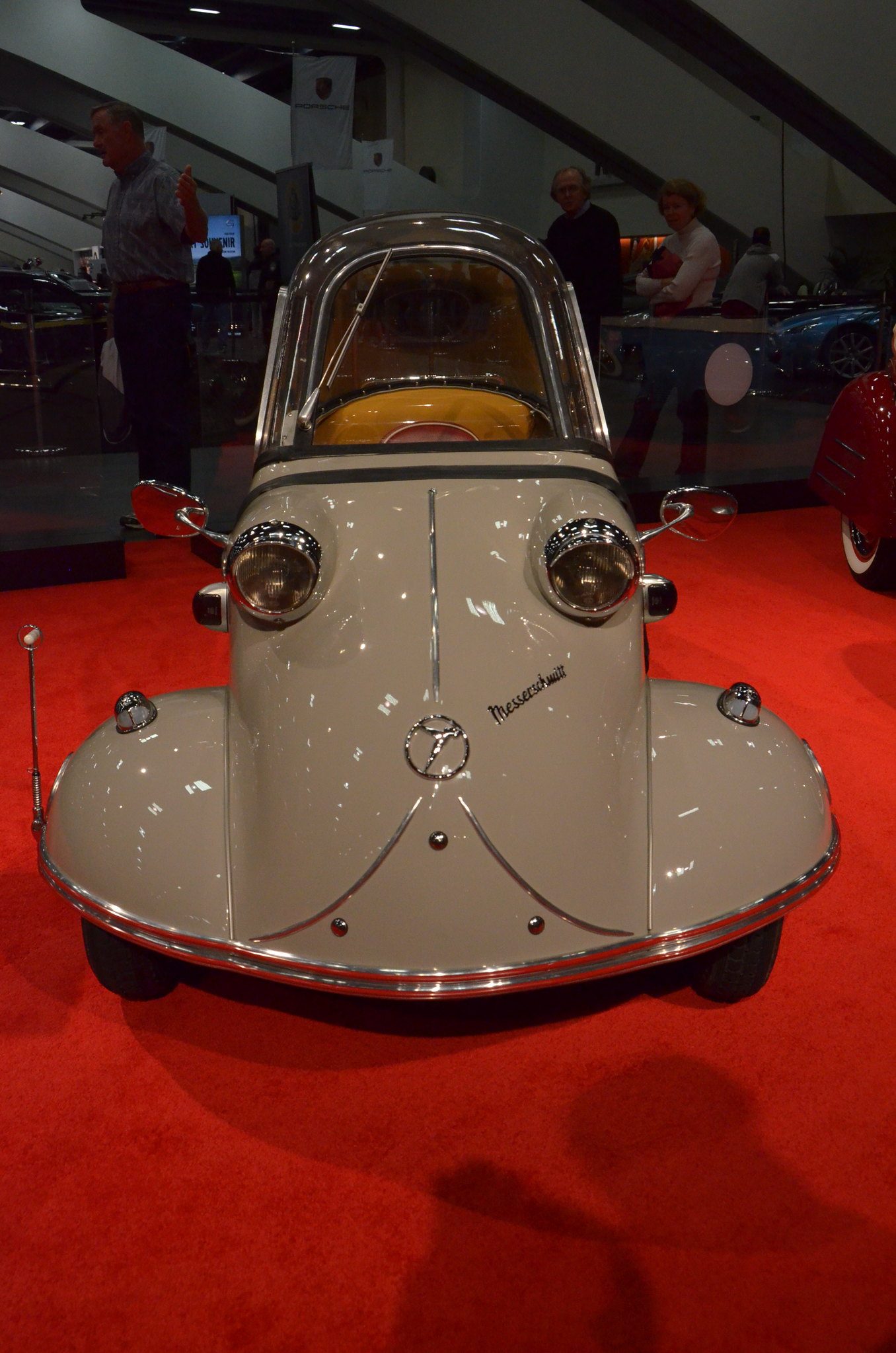
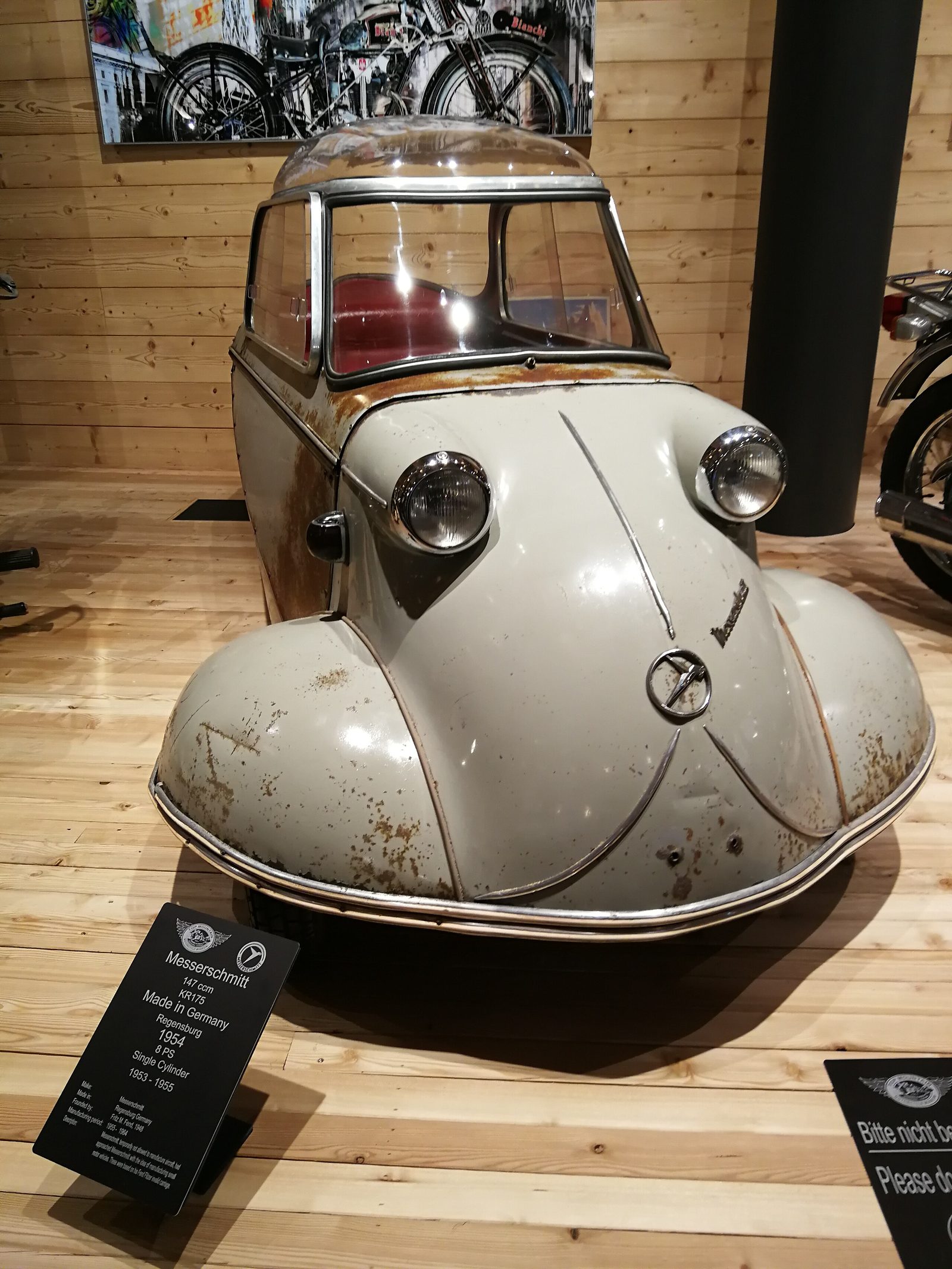
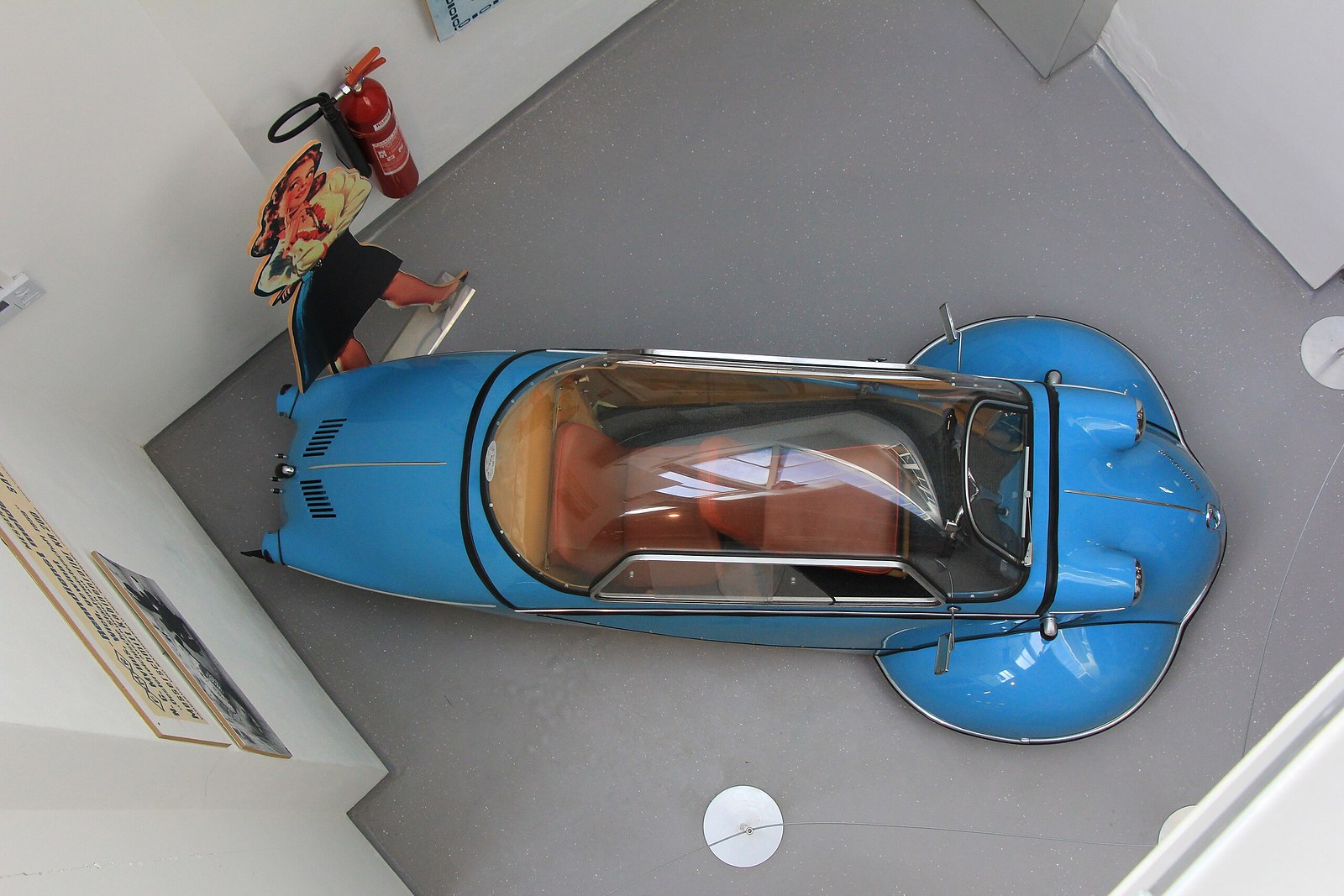
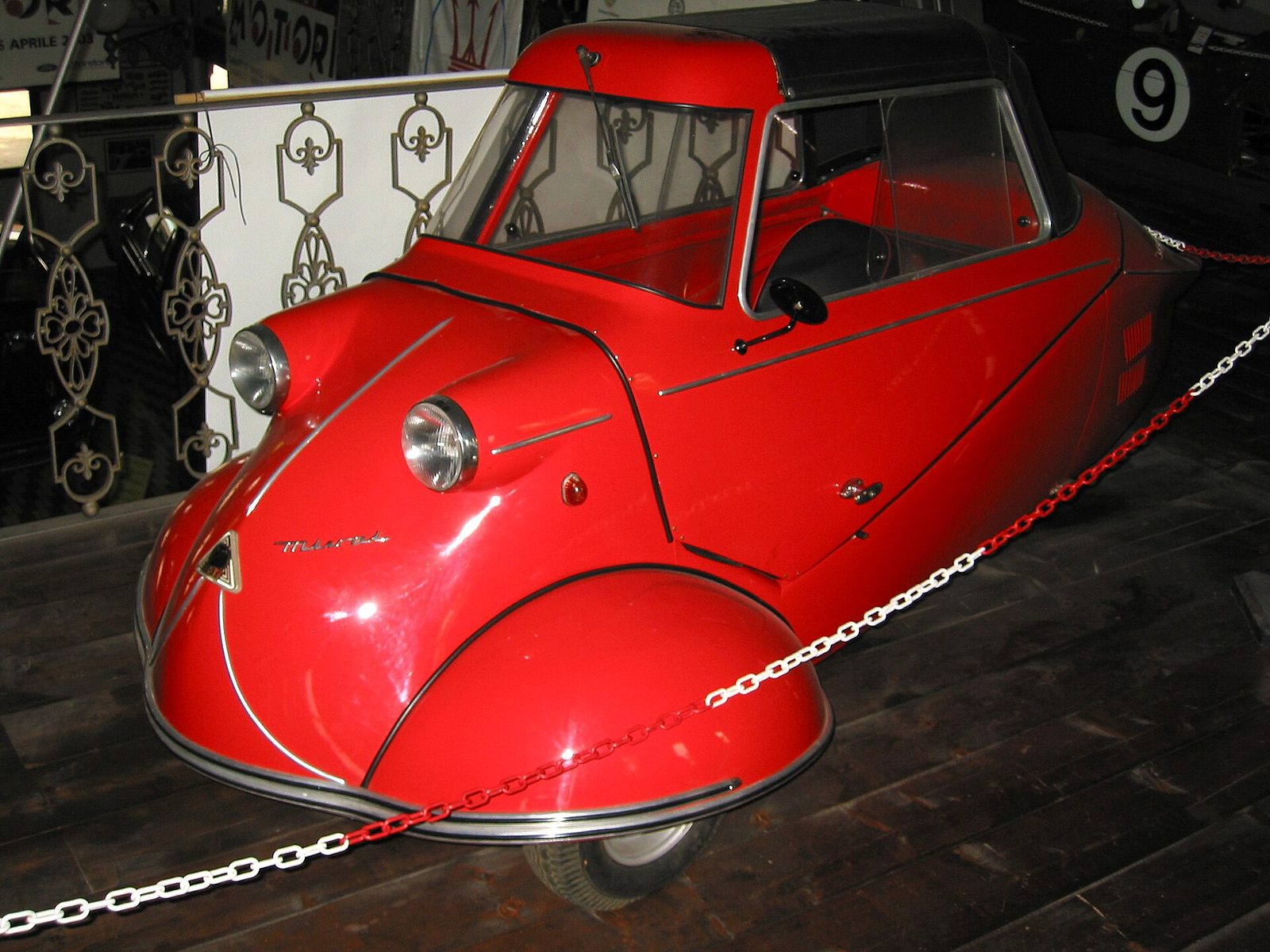
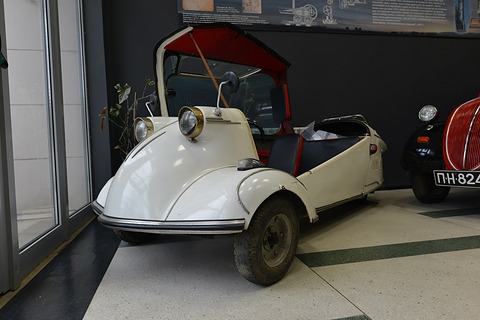
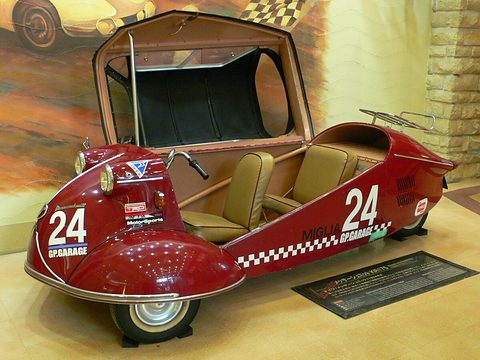
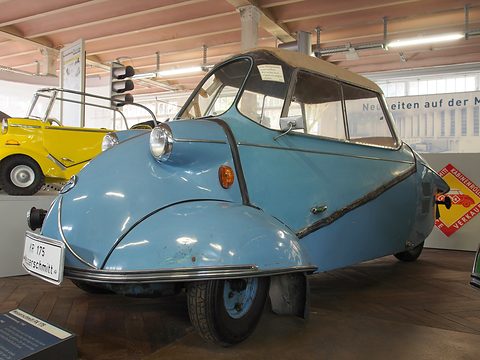
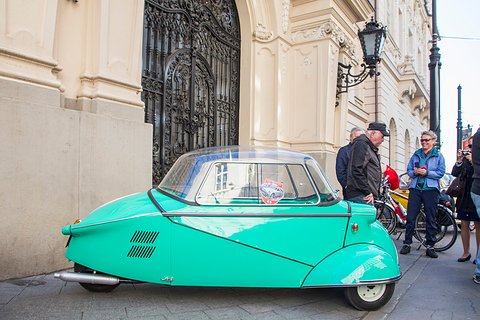
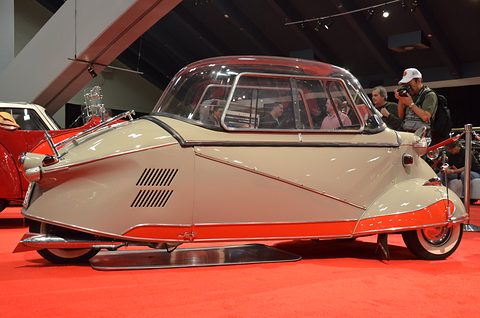
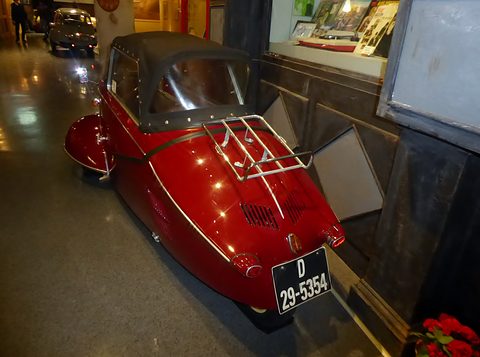
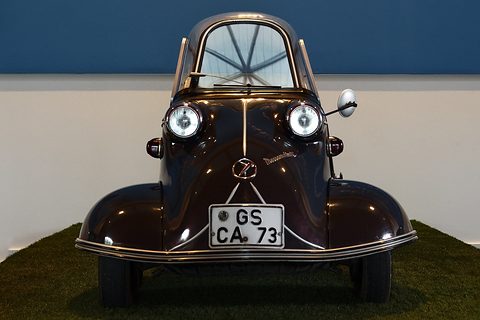
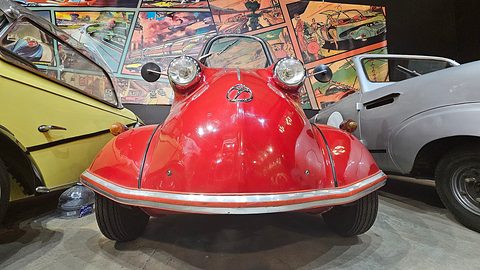
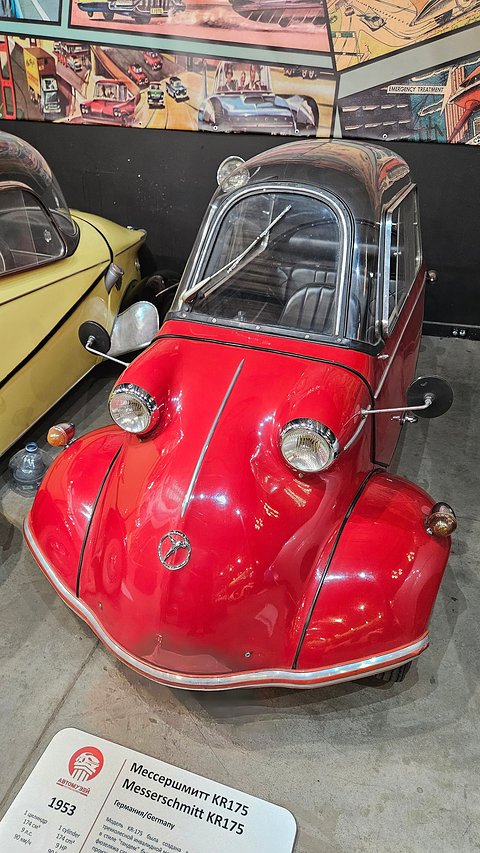
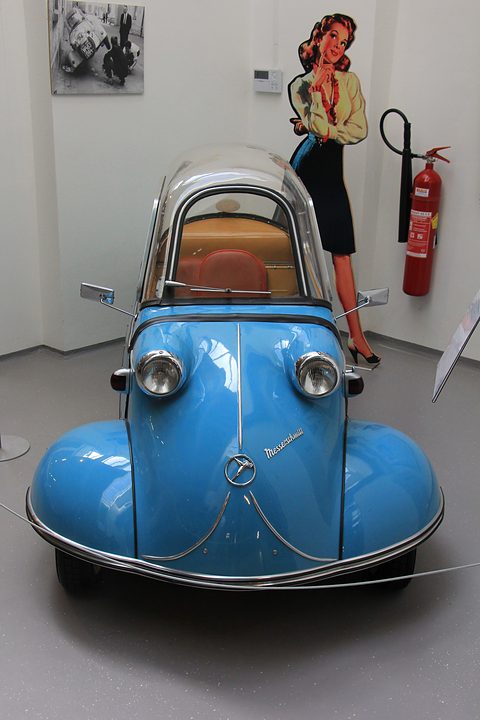
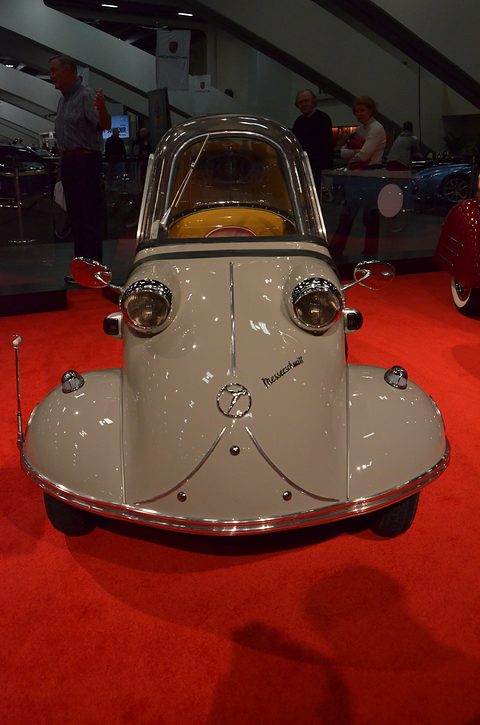
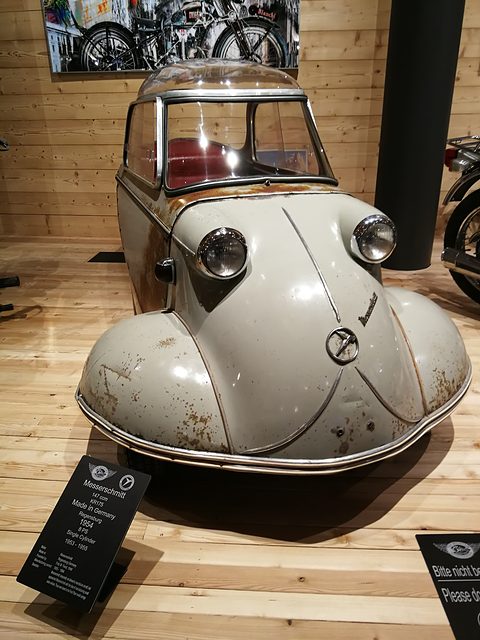
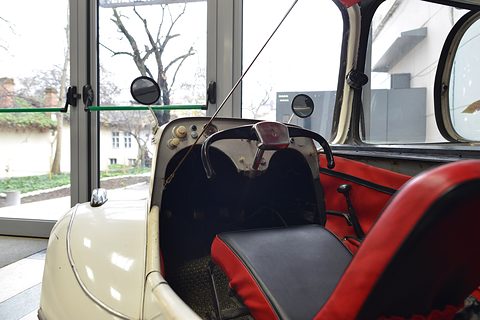
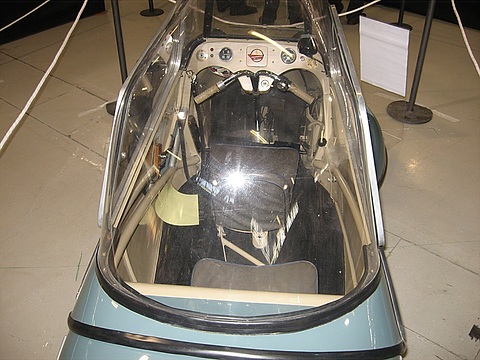
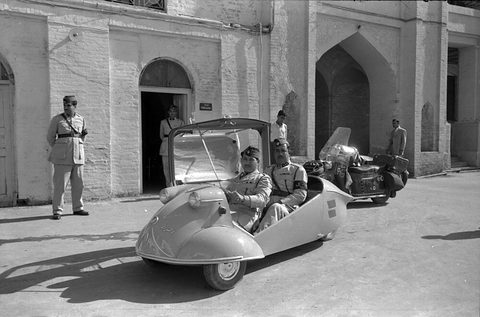
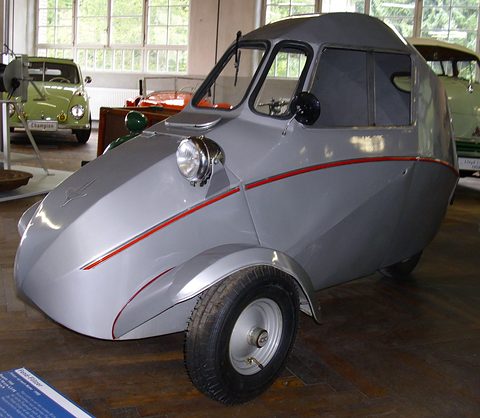
A motorcycle with a roof: two seats in tandem under a Plexiglas canopy, handlebars with a twist-grip throttle, and at first only one pedal. In two years it sold about 11,000, far more than any other German scooter car.

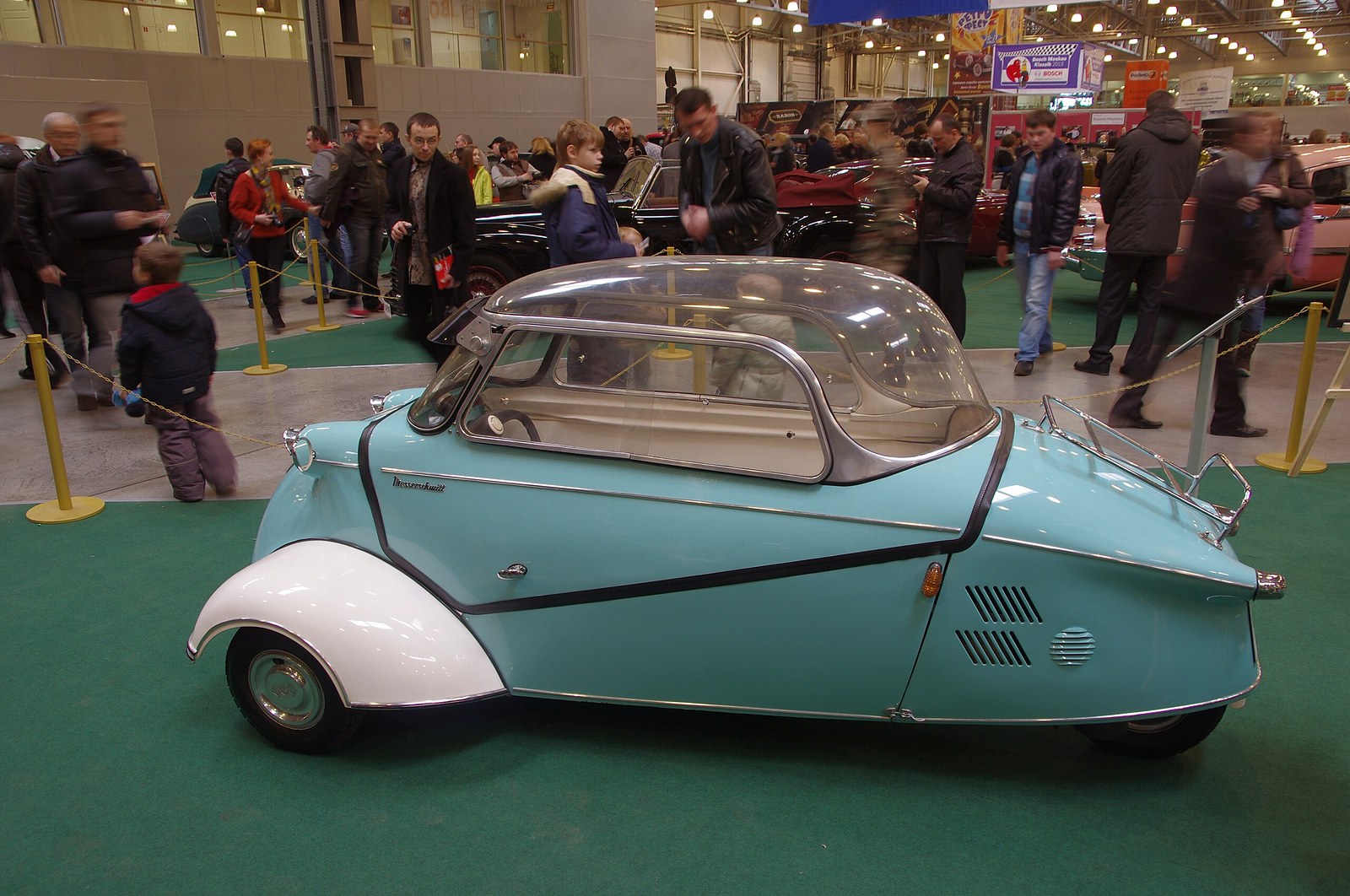
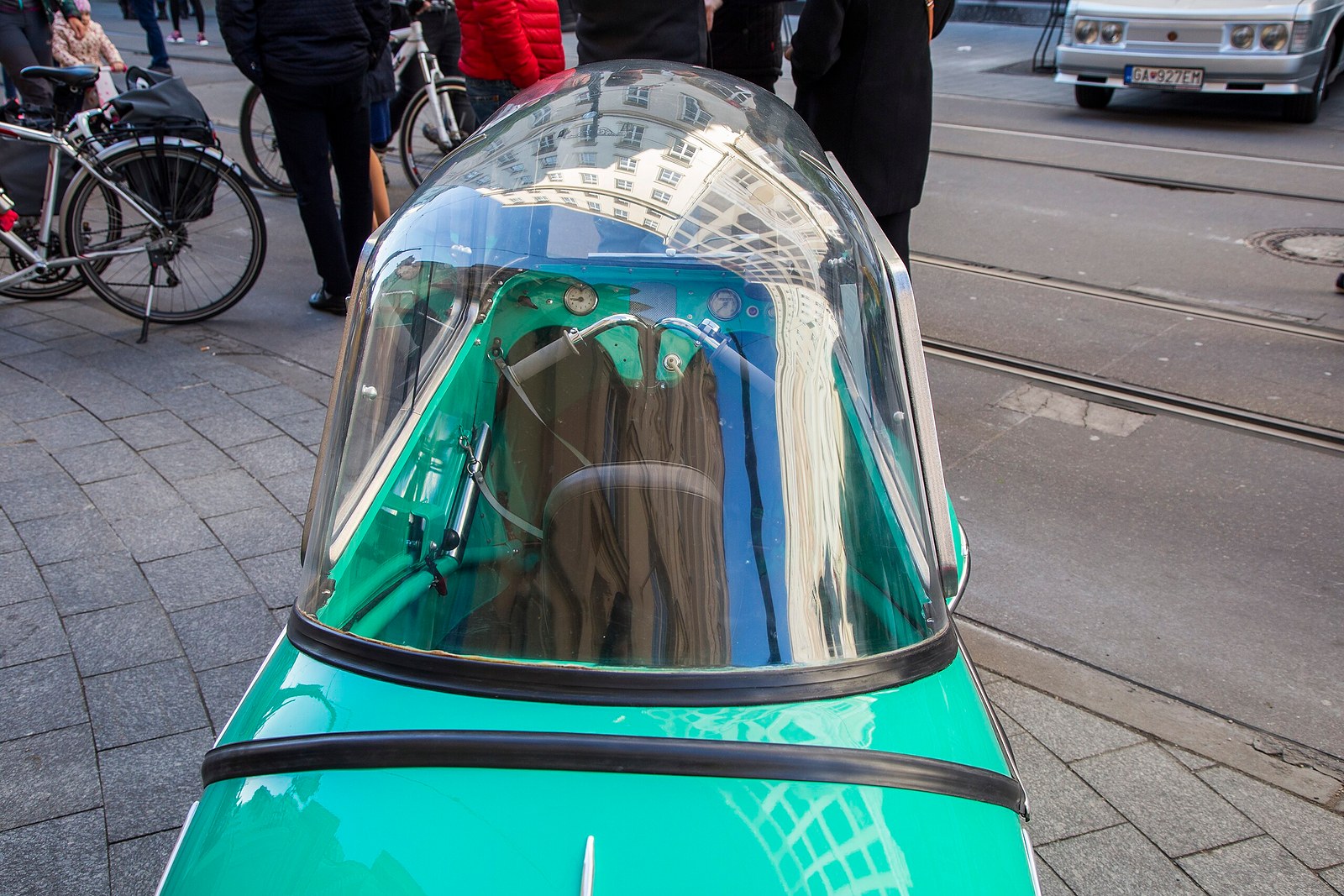
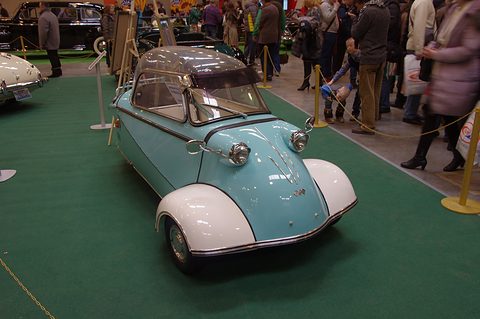
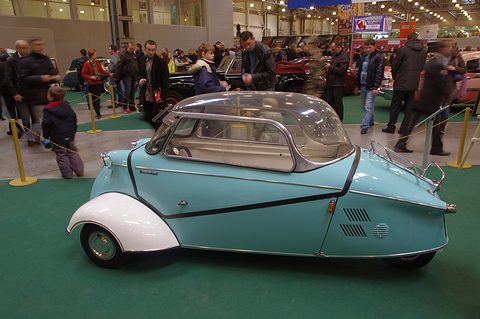
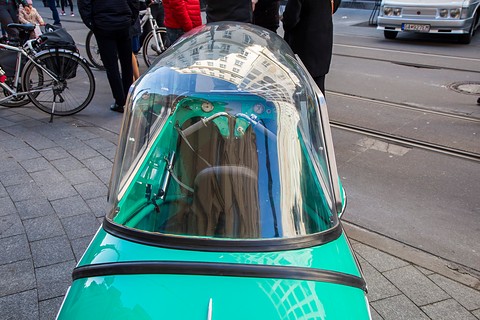
Turquoise bubble car with white front wings on green carpet, a crowd of visitors behind.
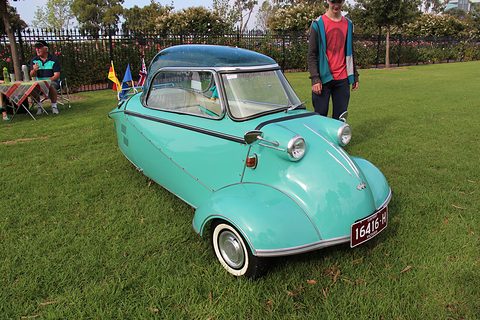
A turquoise and white Messerschmitt KR175 at the Oldtimer show in Moscow in 2013.Photo: Svetlov Artem, CC BY 4.0, via Wikimedia Commons

At a glance

The spec plate

Messerschmitt KR175

Typ KR 175 · Regensburg

Built
1953–⁠1955From early 1953; still listed in autumn 1955
Country
West GermanyRegensburg
Maker
Regensburger Stahl- und MetallbauThe Messerschmitt company at the Regensburg works; Fend’s design, built under licence
Engine
174 cc Fichtel & Sachs two-stroke single173, 174 or 175 cc by source; fan-cooled
Power
9 PS6.6 kW at 5,250 rpm
Length
2,820 mm1,220 mm wide, 1,200 mm high
Weight
220 kgAs listed in 1955; 210 kg empty in another source
Seats
1 + 1In tandem, under the canopy
Wheels
3Two steered at the front, one driven at the back
Price new
DM 2,100At launch, 1953
Production
about 11,000By February 1955, in a period count; 15,089 by the Weiner museum
Top speed
80km/h80 km/h85 km/h in a 1955 show table; 90 km/h by the Weiner museum

How big is it?

True proportion

2.82 m

It is 150 mm shorter than a Fiat 500, about 1.6 adults laid end to end, and twice the length of a Peel P50.

  • 1.22 m wide
  • 220 kg: about three adults
  • Two seats, one behind the other
Drawn at true proportion. The track is 3.6 metres long; the adult stands at the same scale. The Peel P50 is the smallest production car, on every page for comparison.

The story

History

It began with a car for people who could not walk. After the war the aeronautical engineer Fritz Fend built the Fend Flitzer, a single-seat tricycle for disabled drivers, one of the invalid carriages of its day, pushed by hand at first and later fitted with small Victoria, Sachs and Riedel engines. Its first buyer was a paraplegic from Offenbach.source 1 Fend had no capital to go further, so in January 1952 he went to Messerschmitt’s idle aircraft works at Regensburg. Messerschmitt himself insisted on a two-seater.source 1 The Weiner museum calls Fend Messerschmitt’s “former employee”; the Messerschmitt Owners’ Club says he never was one, and that the cars were built under licence from him.source 2source 3

The first Fend vehicle built at Regensburg was a load scooter, the Lastenroller, in 1952.source 3 By that summer the prototype FK 150, the Fend-Kabinenroller, or Fend cabin scooter, with a 150 cc Sachs engine, had every element of the production car except the multi-piece dome and the engine.source 1source 2 The maker was Regensburger Stahl- und Metallbau, a Messerschmitt company, and the car wore the Messerschmitt name and eagle.source 1source 4 It was shown at the Geneva Motor Show in the spring of 1953, and production began early that year, in January by German Wikipedia’s account and in February by the Weiner museum’s. It cost DM 2,100.source 1source 4source 2

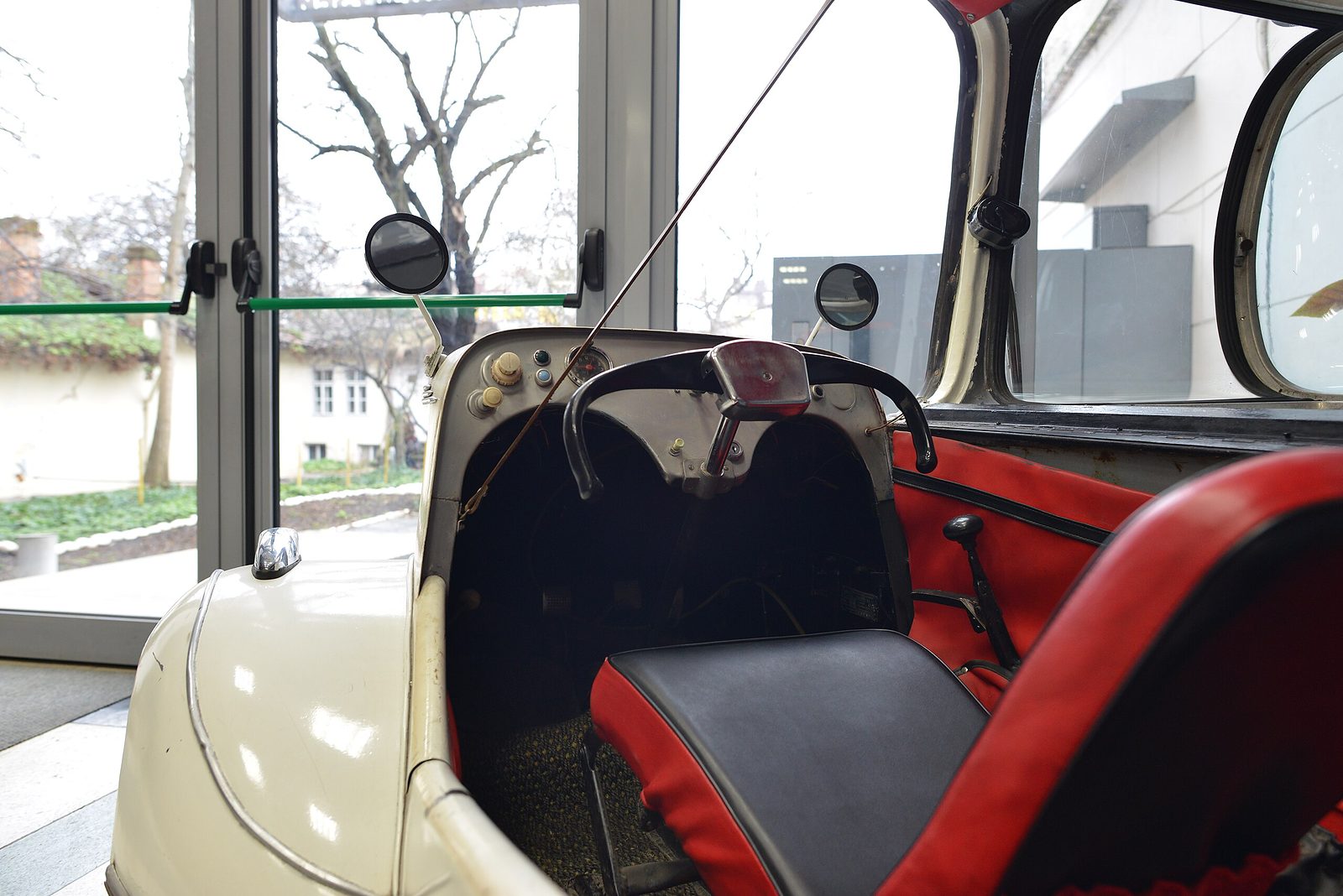
Here was the shape that would be called a bubble car: a 2,820 mm (111 in) fuselage of steel panels on a tubular frame, a Plexiglas canopy hinged sideways, a flat glass windscreen, and a passenger sitting behind the driver.source 4 It was a three-wheeler, with two steered wheels at the front and a 174 cc Fichtel & Sachs two-stroke in front of the single rear wheel, driving it by chain.source 4source 2 The driver steered with a handlebar that acted directly on the track rods and opened the throttle with a motorcycle twist-grip on its left end; at first the only pedal was the brake, and the clutch was a hand lever built into the gear lever.source 1source 4

Rough edges

The first cars were crude. By the Weiner museum’s account the suspension was very hard, the car was noisy and rattled, and the hand clutch did not work well in practice. About 70 modifications were made between February and June 1953.source 4source 2 Early cars had no reverse gear, and owners simply pushed or lifted the light car.source 4 In 1954 a clutch pedal replaced the hand lever, and electric starting became standard, although the sources disagree on how the earliest cars were started.source 1source 4source 2 The Series 1 cars are known by their open drive chain, their narrow rear seat, a windscreen wiper that could be worked by hand and a complicated early rear suspension.source 5

The buyers came anyway. At its peak the works built up to 80 cars a day, and the West German production table for the last months of 1954 gives 656 in October and 902 in November.source 1source 6 A Berlin newspaper looking back in 2003 noted that three-wheelers like the KR175 were often taxed like motorcycles and could be driven on a motorcycle or even a tractor licence.source 7 By February 1955 about 11,000 Messerschmitt Kabinenroller had been sold, well ahead, by auto motor und sport’s account, of every other German scooter car.source 8

„Der Wind- und Wetterschutz sowie die Straßenlage auch bei Schlechtwetter (und sicherlich auch auf Schnee und Eis) machen dies Fahrzeug zu einem zuverlässigen Kameraden, den man schätzen und liebgewinnen lernt.“

auto motor und sport’s test of the KR175, issue 15/1954, as quoted in the magazine’s 1955 test of the KR200. In English: “The wind and weather protection and the roadholding even in bad weather (and surely on snow and ice too) make this vehicle a reliable companion that one learns to value and love.”source 9

The same test found it still a little rough in many ways, and hoped its fathers would cure it of its last bad habits.source 9

To London

The export KR175 was first seen on London streets in April 1954, the start of Britain’s long attachment to the Messerschmitt.source 10 A press photograph taken there on 31 August 1954 was captioned as a two-seat, three-wheeled enclosed motorcycle made by the R.S.M. Messerschmitt company of Germany, doing 80 km/h (50 mph) and 2.4 litres per 100 km (120 miles to the gallon) for about £300.source 10 In Southampton, Testwood Motors ran KR175s in early competitive events, though no dated results have been found.source 3

Replaced, not dropped

The issue of auto motor und sport dated 5 February 1955 announced the Messerschmitt KR200, and said the KR175 would continue: DM 2,125 with an electric starter, or DM 2,195 with a reverse gear and an electric wiper.source 8 The new car cured most of what the testers had disliked in the old one: the narrow 920 mm (36 in) front track, the lack of dampers, the engine and rear suspension, the 12-litre (2.6-gallon) tank, the motorcycle-style controls, the small flat screen, the 25-watt headlamp bulbs and a passenger seat so cramped that its occupant could not sit with knees together.source 9source 8 The Weiner museum ends KR175 production in March 1955, but the Frankfurt show’s price list still offered it at DM 2,195 that September, so main production probably stopped in the spring and the last cars were sold through the year.source 2source 11
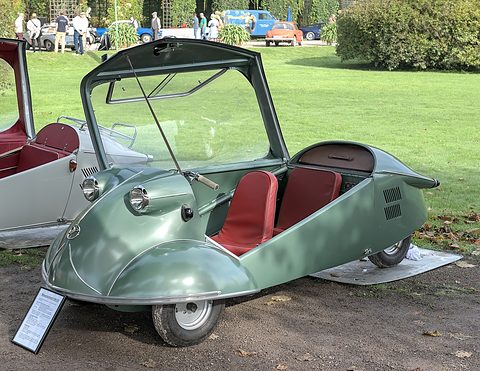
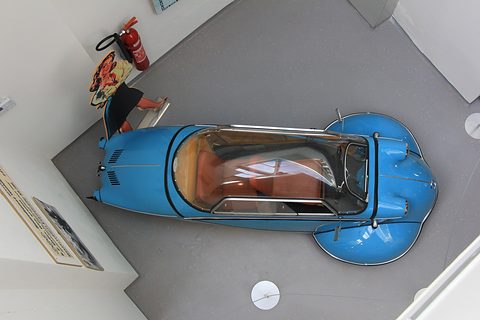
A green 1953 Messerschmitt KR175 with its canopy open, showing red tandem seats
A green 1953 Series 1 KR175 with its canopy open on its red tandem seats, at the Classic-Gala Schwetzingen in 2025.Photo: Alexander Migl, CC BY-SA 4.0, via Wikimedia Commons
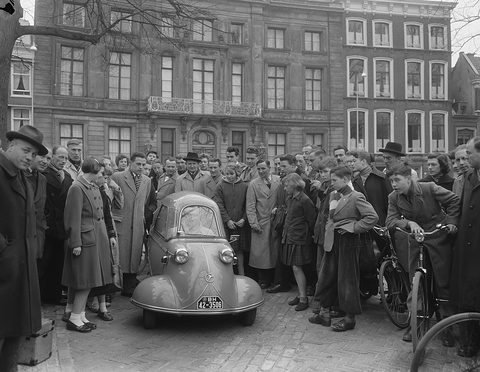
Men and boys in coats press round a small tandem-seat bubble car on a cobbled street.
Plate I · 1954 A crowd round a new Messerschmitt KR175 in a street in The Hague on 12 April 1954.Photo: van Duinen / Anefo, CC0, via Wikimedia Commons
Black-and-white photograph of five Messerschmitt cabin scooters lined up on a wet quay
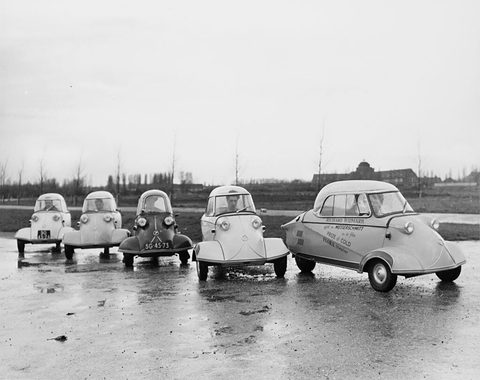
Plate II · 1955 KR175s with a KR200 lined up in Amsterdam on 23 November 1955 to advertise the film A Prize of Gold.Photo: Ben van Meerendonk / AHF, collection IISG, CC BY-SA 2.0, via Wikimedia Commons

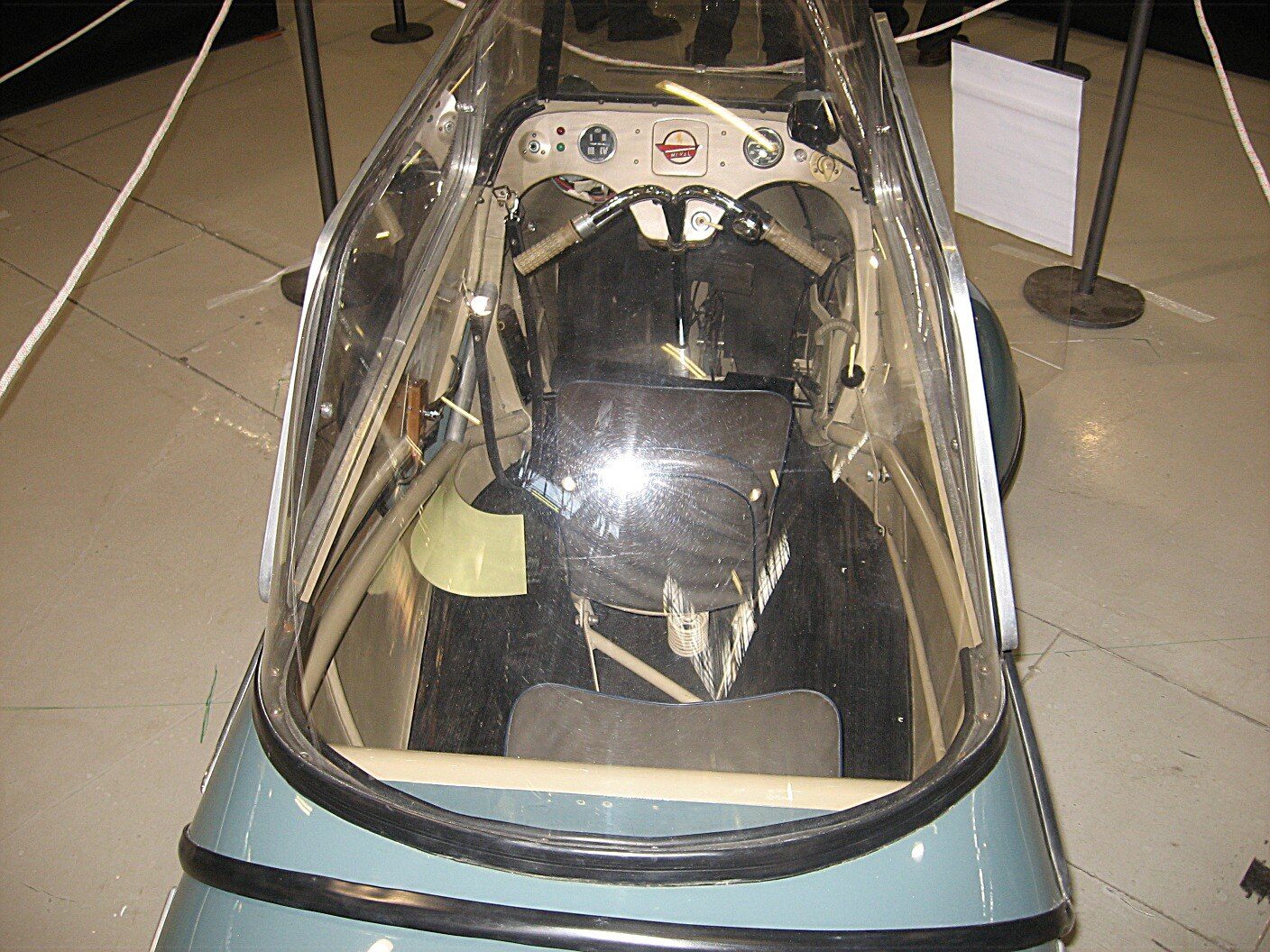
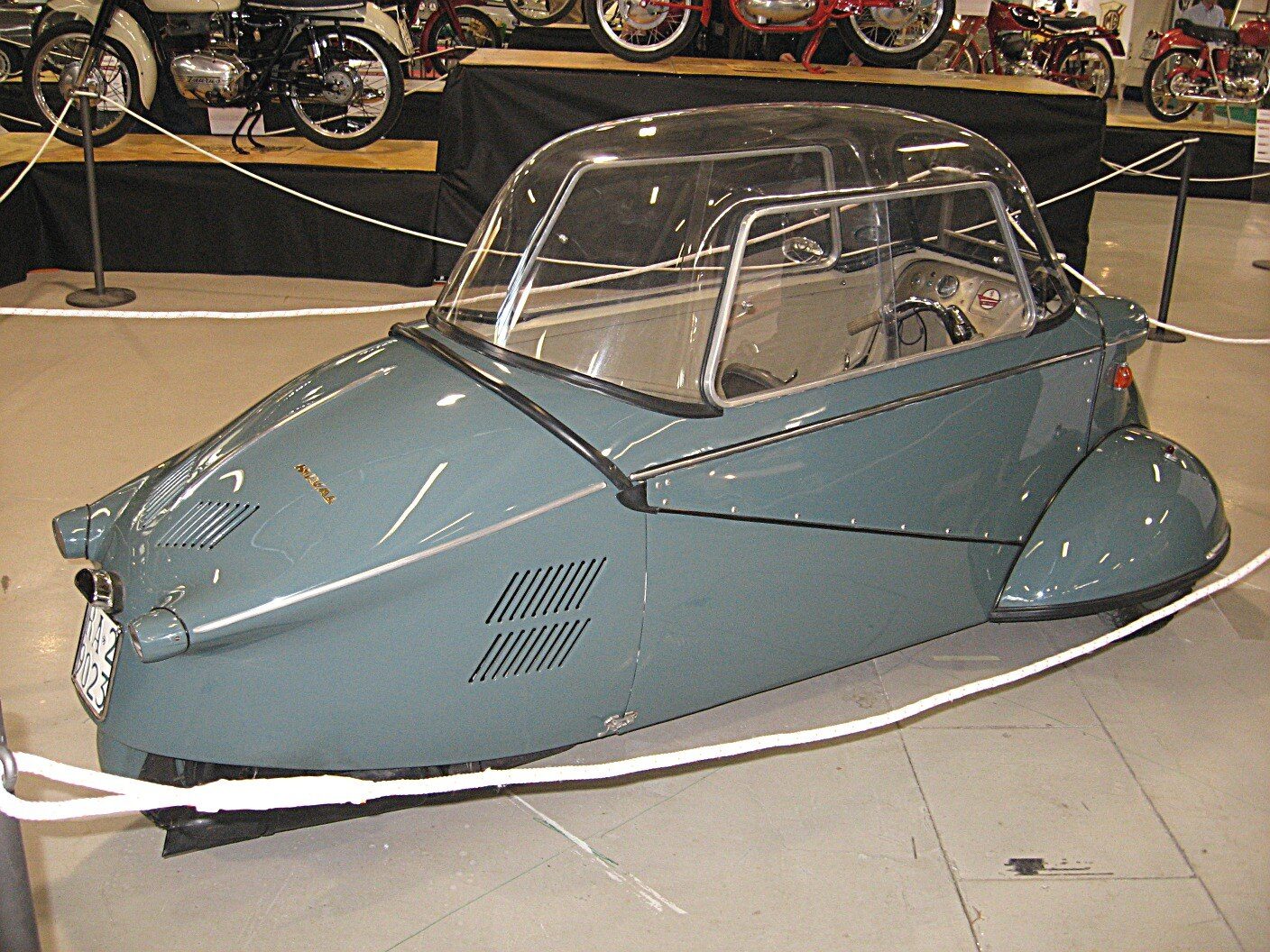
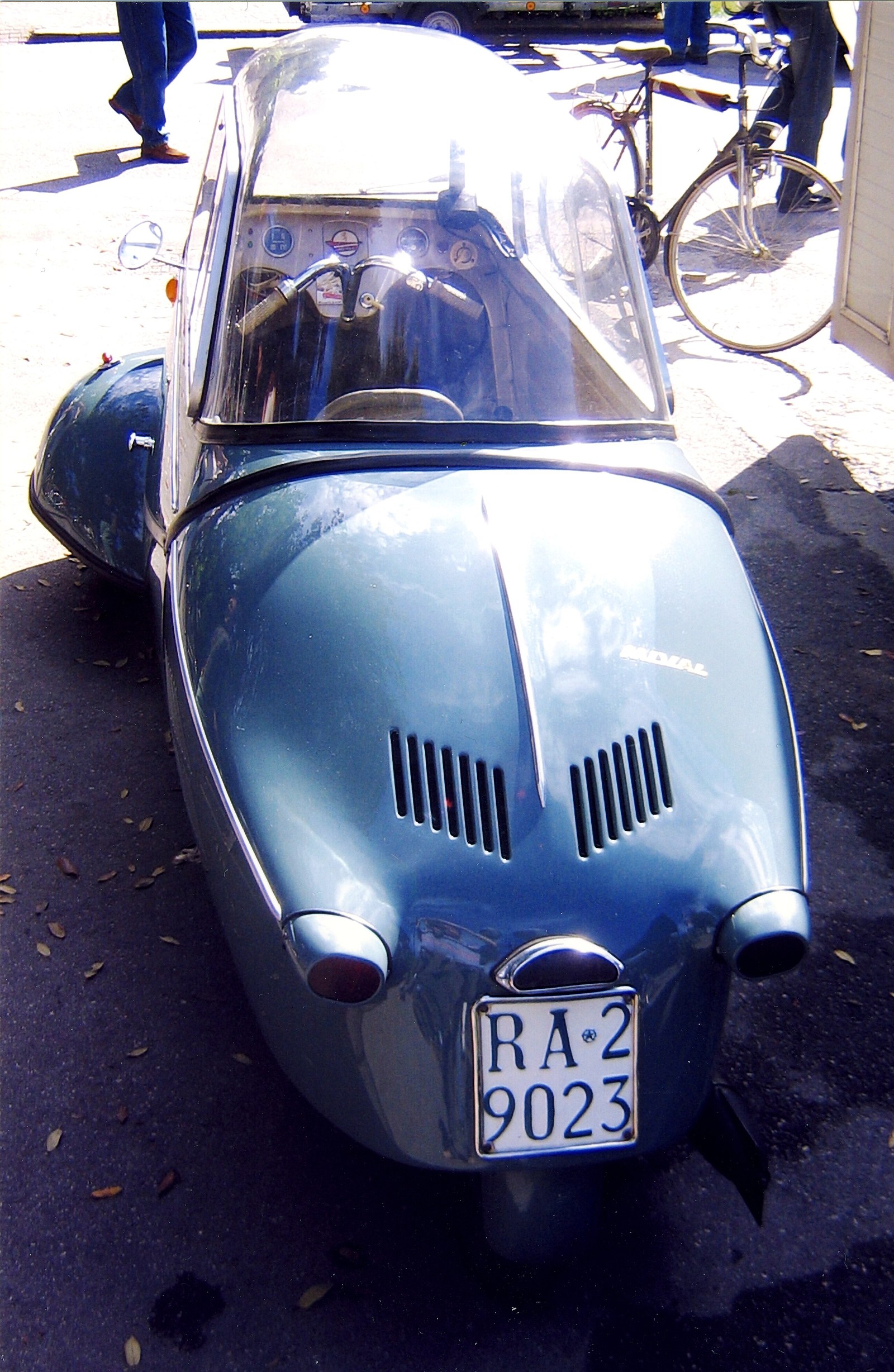
Mi-Val Mivalino

years not recorded · a record on this page

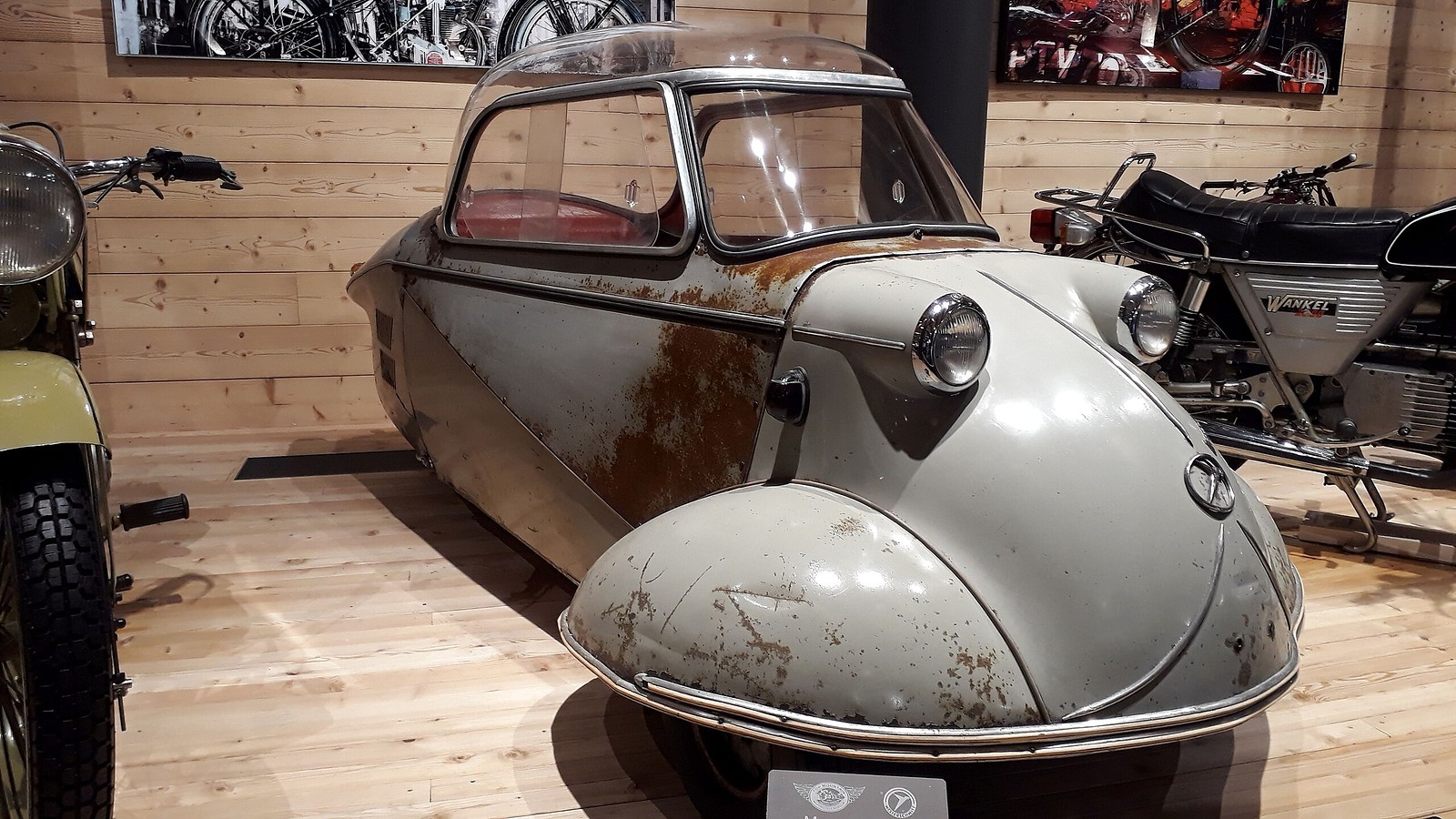
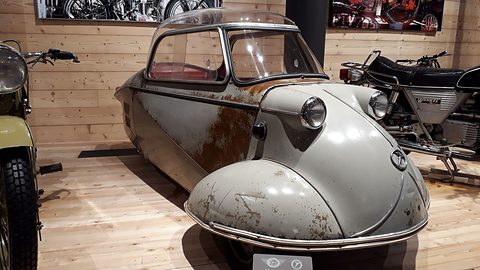
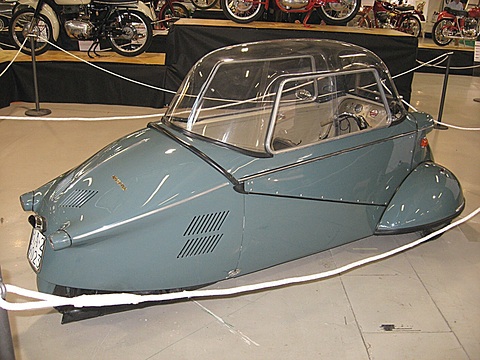
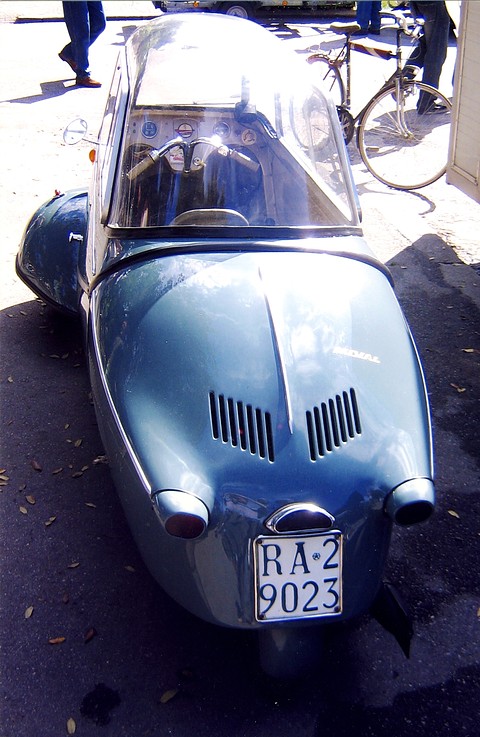
In Italy the KR175 had a second life. Metalmeccanica Italiana Valtrompia of Brescia, Mi-Val, assembled the car from imported Messerschmitt components but fitted its own 172 cc two-stroke engine, and sold it as the Mivalino.source 4source 5 It was one of the licence builds of the 1950s. The Weiner museum kept a Mivalino beside its two KR175s until its collection was sold in 2013.source 2source 5

That is nearly all that is known for certain. No production figure and no firm dates for the Mivalino have been found; Italian sources may hold more.

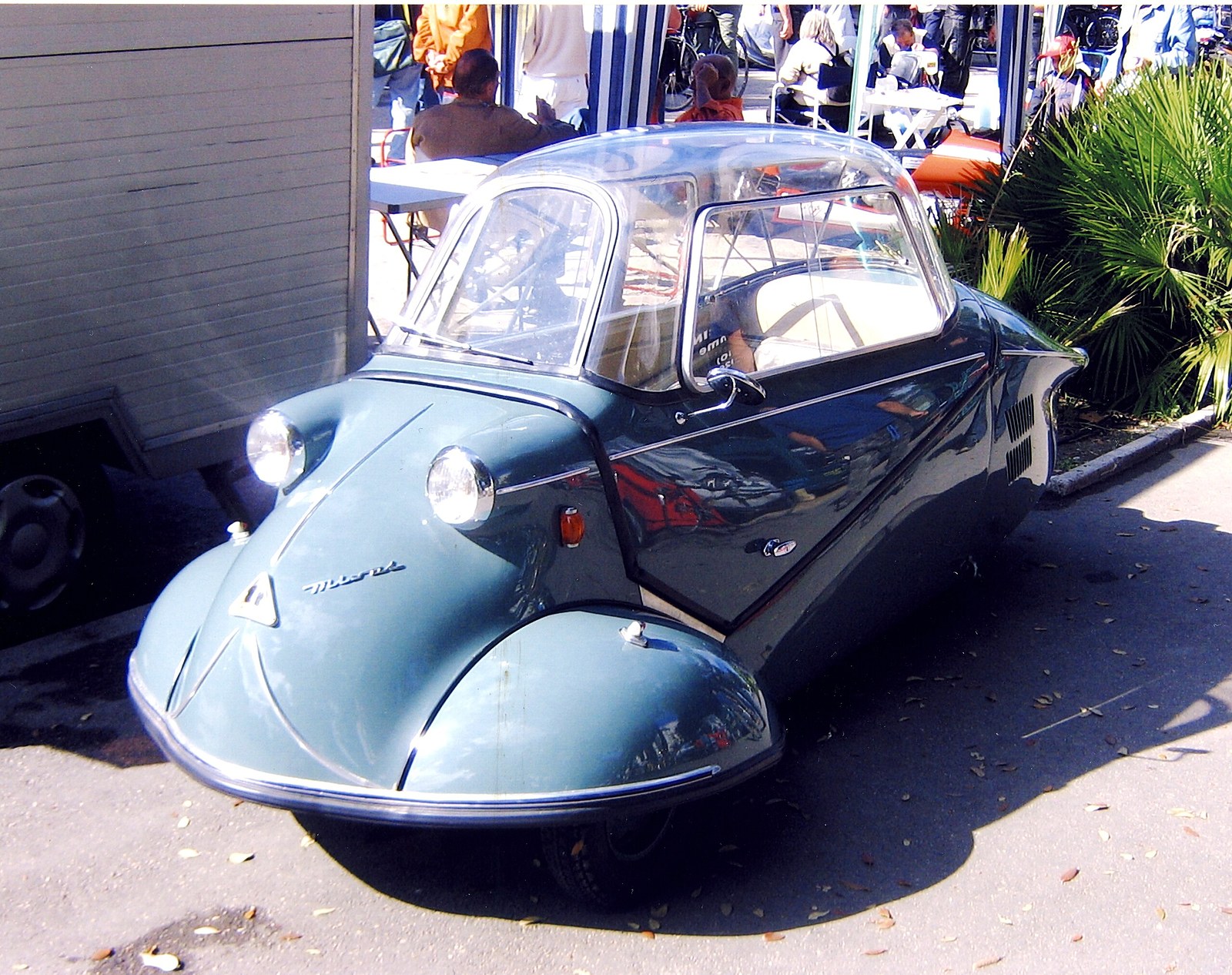
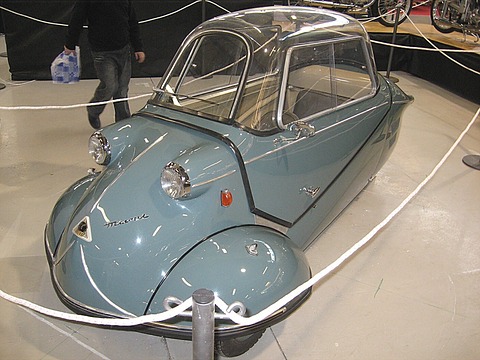
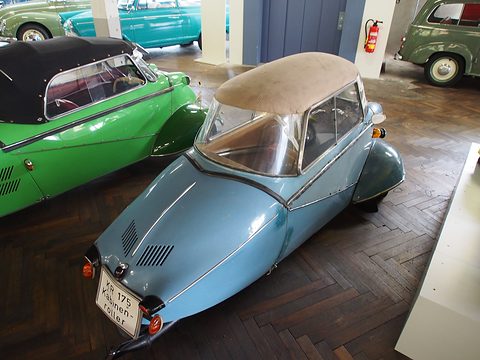
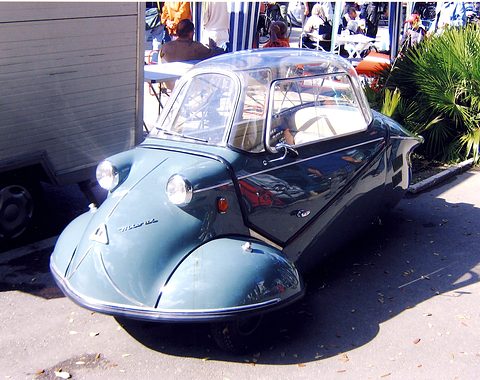
Blue-grey bubble car with clear canopy, roped off on a pale floor.
A blue-grey Mi-Val Mivalino with its clear canopy at the Forlì Old Timer Show in 2008.Photo: Luc106, Public domain, via Wikimedia Commons

Pictures

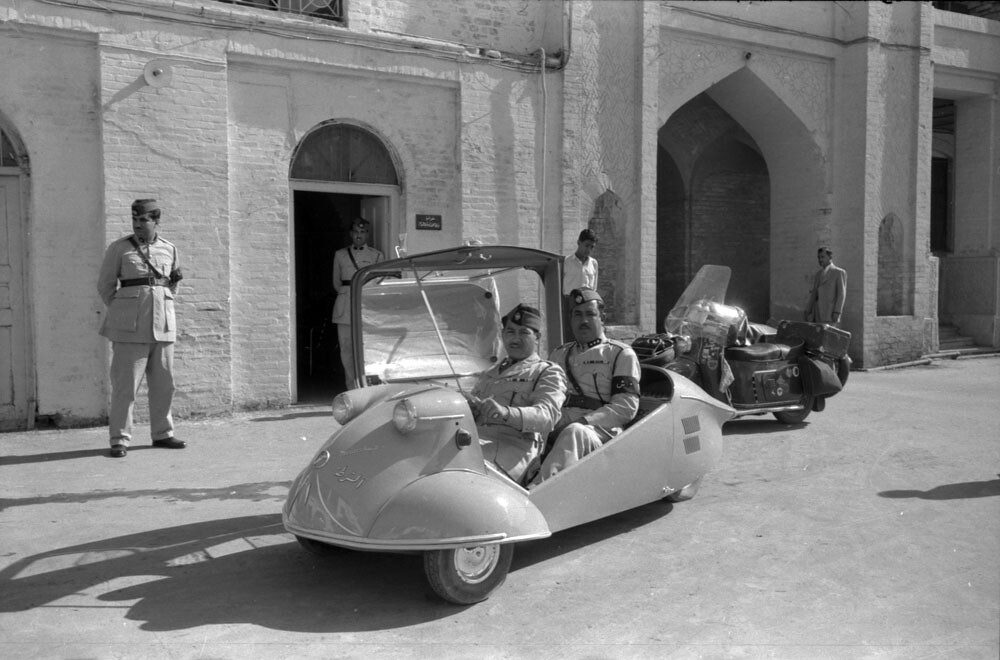
More photographs, old and new

Variants

Prototype, two series, a licence

The KR175 family
VariantYearsWhat differsHow many
FK 1501952Prototype with a 150 cc Sachs engine; no multi-piece dome yetPrototypes
KR175 Series 11953–⁠54Hand clutch on the gear lever, open drive chain, narrow rear seat, a wiper worked by handNot recorded separately
KR175 Series 21954–⁠55A clutch pedal; electric starting standardNot recorded separately
Sportster1953–⁠55No dome or side windows, only the windscreenNot known
KR175 with reverse1955Reverse gear and an electric wiper, DM 2,195Not known
Mi-Val Mivalino1954–Assembled in Brescia from imported parts, with Mi-Val’s own 172 cc engineNot found

Specification

From English Wikipedia’s data unless noted

Engine and drive

Engine and drive
EngineFichtel & Sachs single-cylinder two-stroke, fan-cooled
Capacity174 cc (62 × 58 mm), compression 6.8:1173 cc in German Wikipedia; 175 cc in the 1955 show table
Power9 PS at 5,250 rpm
GearboxFour speeds, sequential, no synchromesh; reverse optional by 1955
StartingPull rope or kick at first; electric standard from 1954Sources disagree
Final driveChain to the single rear wheel, open on Series 1 cars

Body and chassis

Body and chassis
FrameTubular space frame with steel panels
CanopyPlexiglas, hinged sideways; flat glass windscreen
SuspensionRubber cones, no dampers
SteeringHandlebar acting directly on the track rods; twist-grip throttle on the left
BrakesCable-operated, on all three wheels
Tyres4.00 × 8

Dimensions

Dimensions
Length2,820 mm
Width1,220 mm
Height1,200 mm
Wheelbase2,030 mm
Front track920 mm
Weight210 kg empty, 360 kg laden220 kg in German Wikipedia and the 1955 table; 180 kg by the Weiner museum

Performance and running

Performance and running
Top speed80 km/h85 km/h in the 1955 table; 90 km/h by the Weiner museum
Consumption3.7 litres per 100 km3.5 litres in the 1955 table
Fuel tank12 litres, including 1.5 in reservesource 9
Electrics12 V, from two 6 V batteriessource 2
Price newDM 2,100 (1953); DM 2,125, or DM 2,195 with reverse (February 1955)source 1source 8

How many were built?

Every figure, with its source

Probably about 11,000 builtThe period figure is about 11,000 Kabinenroller sold by February 1955, when the KR200 took over, and the yearly counts agree with it. The 15,000 often repeated has no primary source behind it that we have found.

  1. 19,668the KR175, “from another source”Unconfirmed

    English Wikipedia’s data box, with no source givensource 4

  2. 15,089KR175s producedOne source

    Bruce Weiner Microcar Museum; English Wikipedia’s “approximately 15,000” cites the museumsource 2source 4

  3. about 11,000Messerschmitt Kabinenroller sold by February 1955One source

    auto motor und sport, 1955source 8

  4. 10,2531,609 in 1953 and 8,644 in 1954Unconfirmed

    German Wikipedia’s yearly figures, unsourced; not in the magazine page cited beside themsource 1

  5. about 9,000KR175sOne source

    Messerschmitt Owners’ Clubsource 10

  • Two sources agreetwo good sources give the figure
  • One sourcea good source, alone
  • Unconfirmeda lead only, not yet checked

Famous for

Three points

  1. The first production Kabinenroller

    Fritz Fend’s design, built in Messerschmitt’s idle aircraft halls, started the line that the KR200 made famous.

  2. Handlebars and a twist-grip

    It was steered by a bar on the track rods, with a motorcycle throttle on the left grip and, at first, a single pedal.

  3. No reverse at first

    Owners of the early cars pushed or lifted them; a reverse gear came as an extra by 1955.

Survivors and collecting

Today

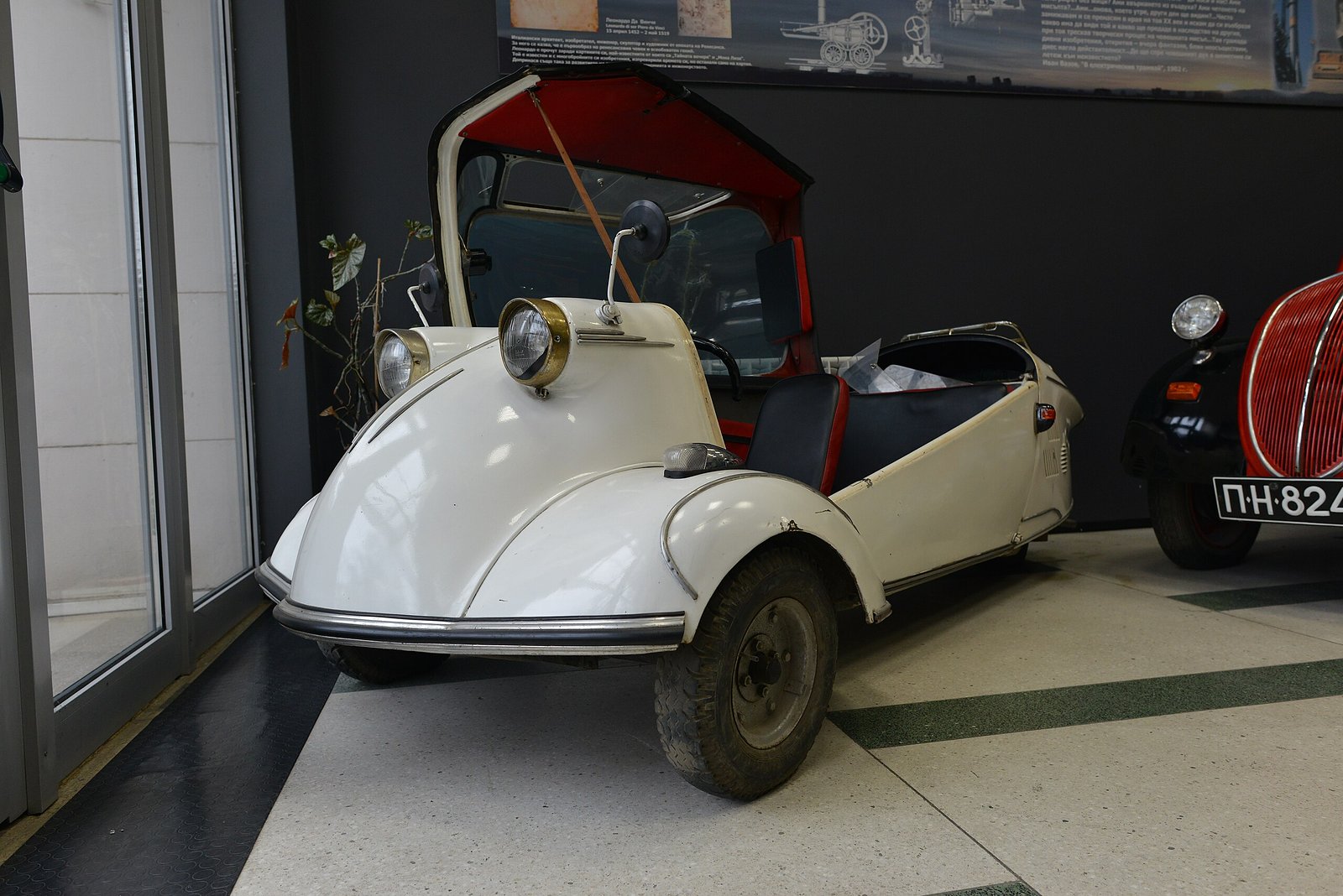
The Weiner museum estimated that about 50 KR175s survive. That seems low, and it is unverified.source 2 The museum itself held two, a dark early car and a white 1954 Series 1 with its original side luggage rack, until they were sold with the rest of the collection in 2013.source 2source 5 No KR175 result from a major auction house has been found.

The Messerschmitt Owners’ Club in Britain keeps the type alive, with an article on restoring a KR175 and a copy of the 1954 brochure, and Germany has the Messerschmitt-Club Deutschland.source 10 The cars that survive are the first of the Kabinenroller, the line that took the idea of Fend’s invalid tricycle from a workshop to the streets of London.

Sources

Numbered as in the text

Sources are given as plain text; the links are on the Credits page.

  1. German Wikipedia, Messerschmitt Kabinenroller, read in full with its references. It cites Rosellen, Deutsche Kleinwagen (1991), pp. 27–35, and auto motor und sport 3/1955.
  2. Bruce Weiner Microcar Museum, “Messerschmitt KR-175”, tour page.
  3. David Garner, “Fritz Fend: father of the Messerschmitt Kabinenroller”, Messerschmitt Owners’ Club, 2014.
  4. English Wikipedia, Messerschmitt KR175, read in full. Used as a lead; its data come from Carl Wagner, Automobile Quarterly 11 (2), 1973, and the Weiner museum.
  5. Bruce Weiner Microcar Museum, “1954 Messerschmitt KR-175” (the white Series 1 car), tour page.
  6. “Westdeutsche Kraftfahrzeugproduktion, 4. Vierteljahr 1954”, table, auto motor und sport 3/1955, p. 8.
  7. “Vor fünfzig Jahren kam der Messerschmitt-Kabinenroller auf die deutsche Straße: Menschen in Aspik”, Berliner Zeitung, 19 March 2003.
  8. auto motor und sport 3/1955 (5 February 1955), news of the KR200 with the KR175’s prices; and 5/1955, “Rollermobile brauchen Leistung und Sicherheit”.
  9. Dr Paul Simsa, “Unser Test: Messerschmitt Kabinenroller KR 200”, auto motor und sport 22/1955, quoting the magazine’s KR175 test in 15/1954 and listing what changed.
  10. Messerschmitt Owners’ Club (UK), model list and Phil Boothroyd and David Garner, “Messerschmitt KR175: the Kabinenroller comes to Britain”.
  11. auto motor und sport 20/1955, Frankfurt show data table and price list.