The story
History
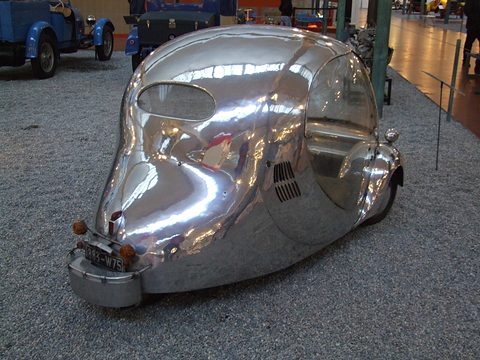
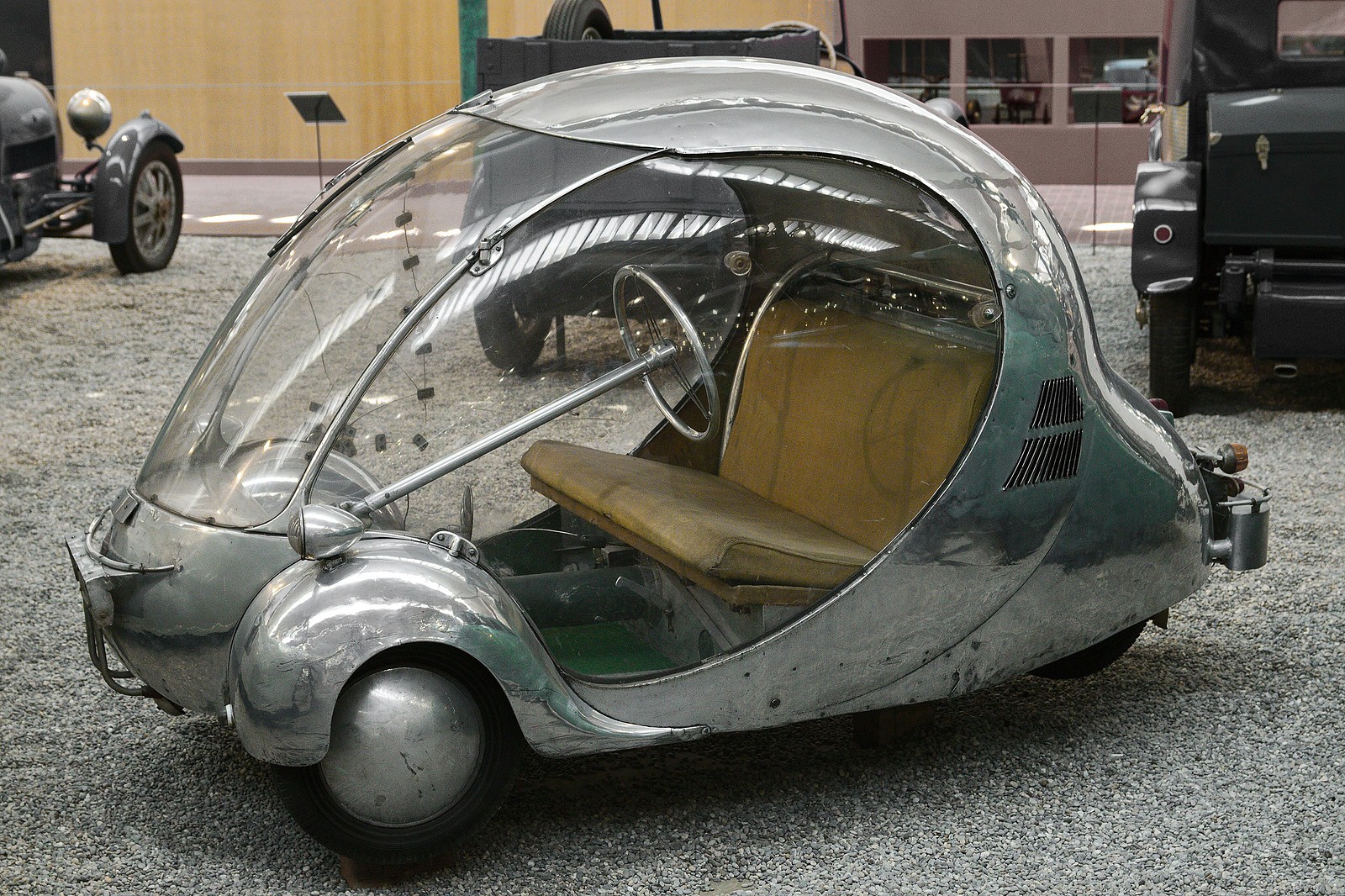
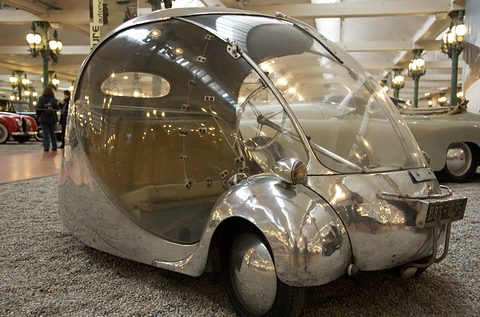
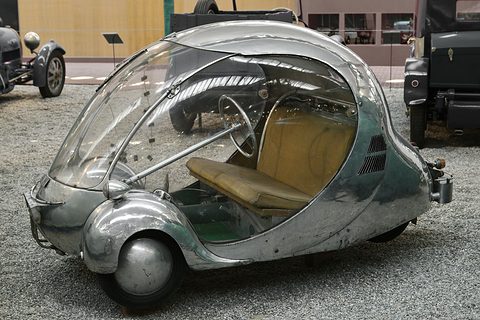
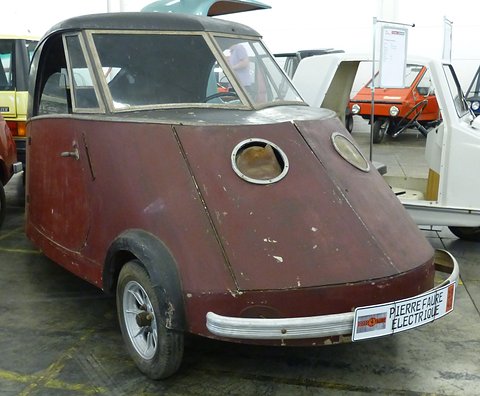
Paul Arzens (1903–1990) trained at the École des Beaux-Arts and worked as a painter, a decorator and an industrial designer. In 1938 he made La Baleine, “the whale”, a long streamlined body on an American Buick chassis.source 1source 2 Four years later, with Paris under German occupation and petrol out of reach, he built another, very much smaller, to get round the fuel restrictions: L’Œuf électrique, the electric egg.source 2source 3 French Wikipedia says he had conceived it in 1938, alongside La Baleine, and the old microcarfan.com dates its design to 1941, but the car was built in 1942.source 4source 5source 2
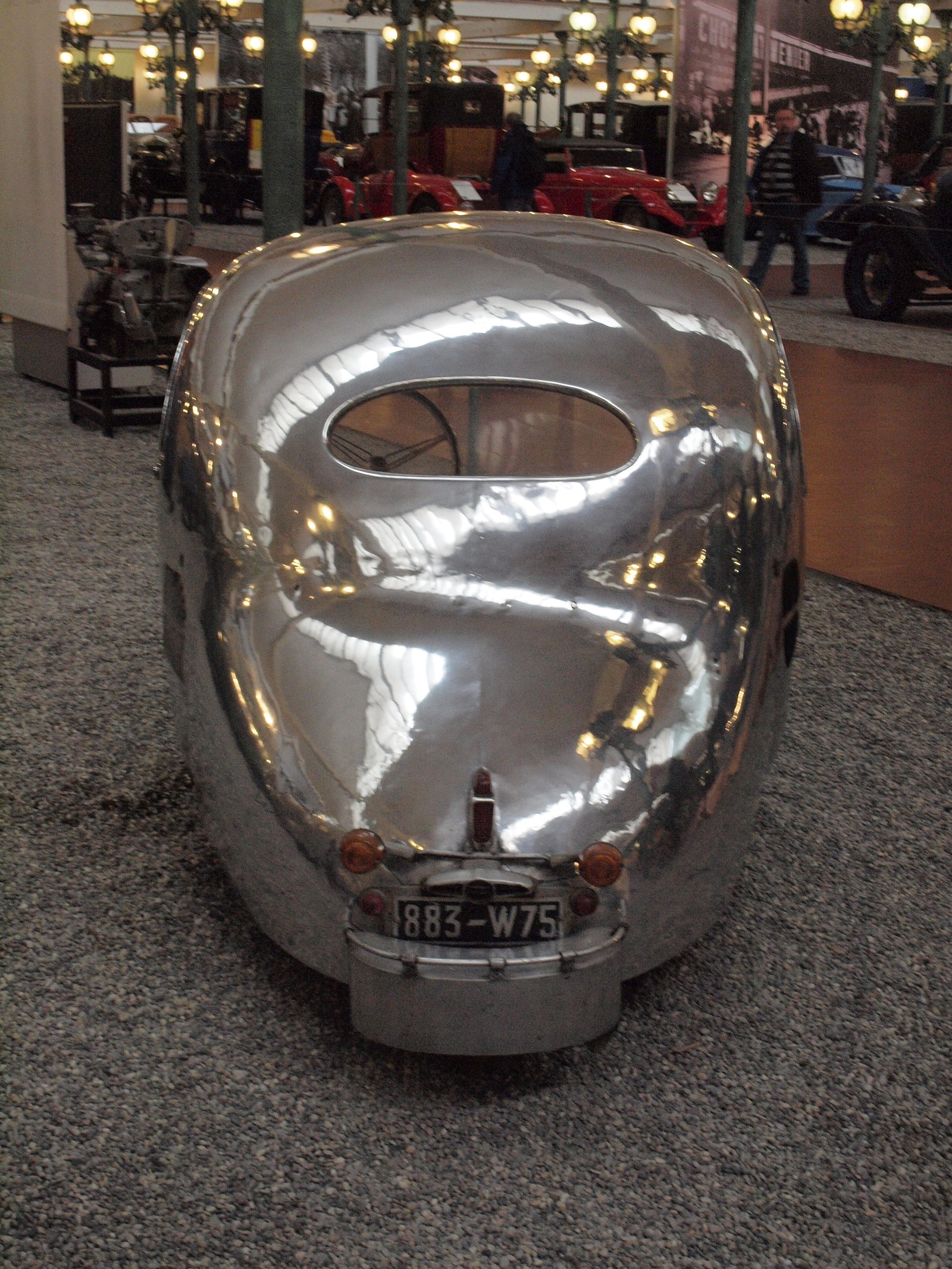
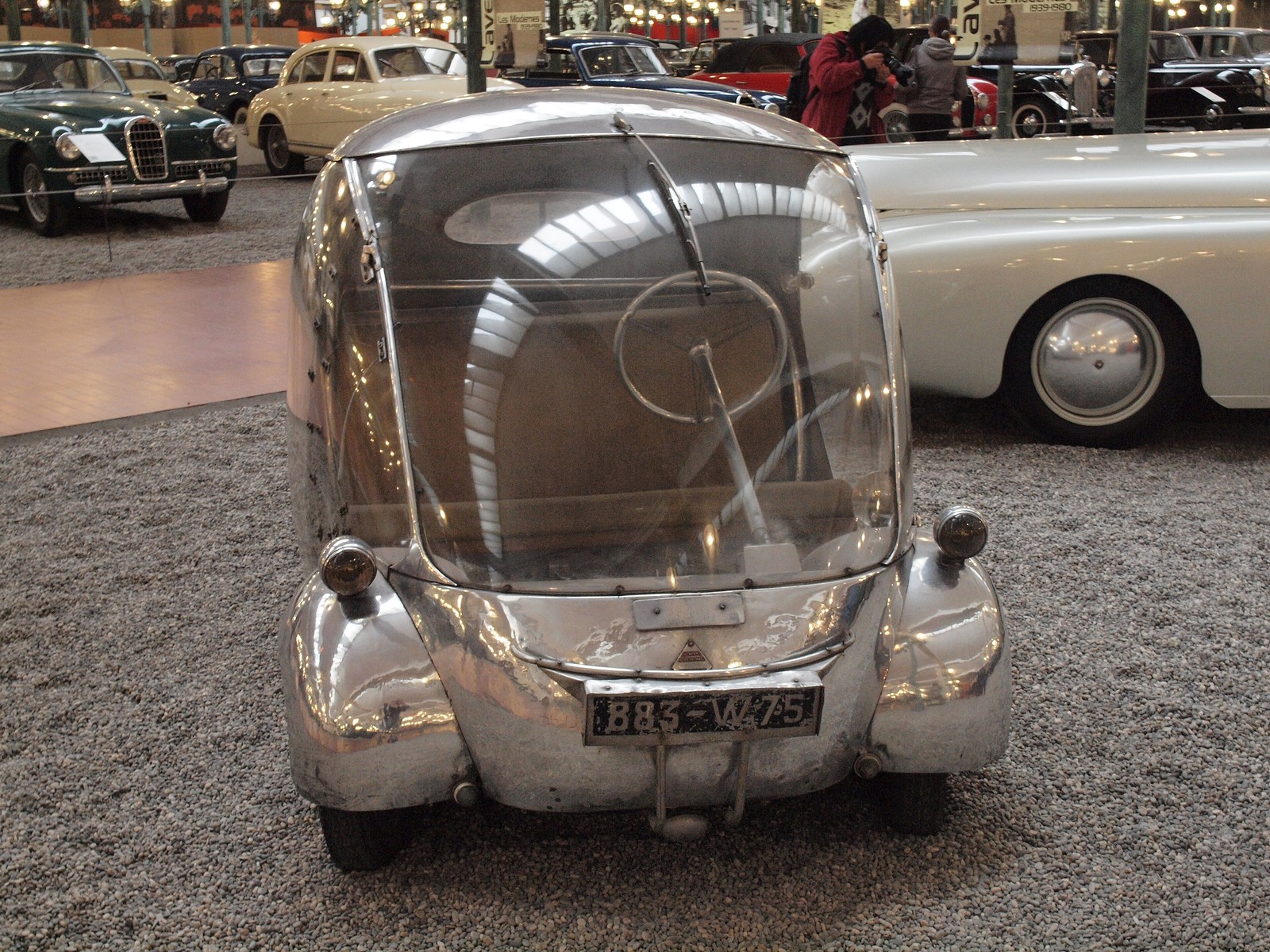
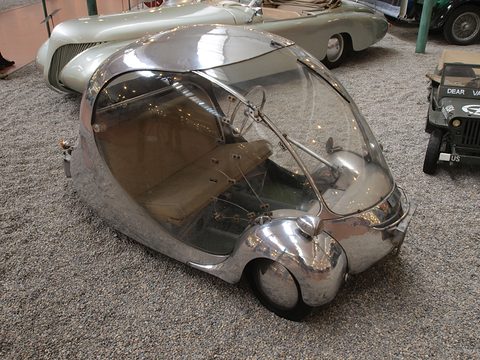
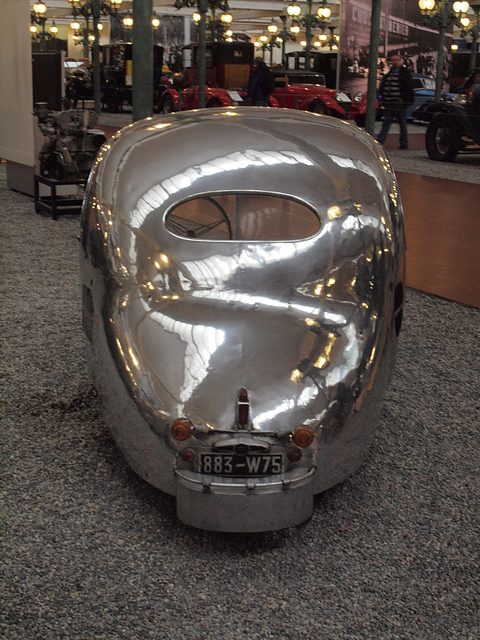
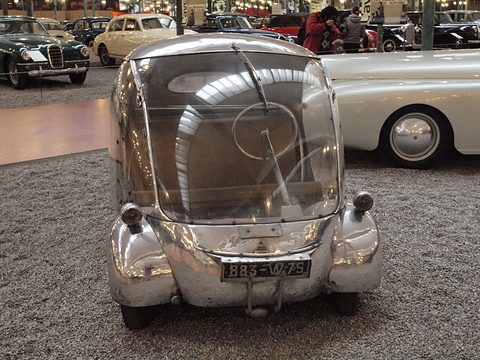
He built it from materials that were then rare and modern. The body is an aluminium shell, round in front and drawn out into a fastback, and the windscreen and the doors are thermoformed Plexiglas, so that the top half of the car is one great transparent bubble.source 2source 4 Plexiglas was made in France at the time under licence by Alsthom, which, French Wikipedia says, explains Arzens’s later ties with that firm.source 1 Underneath there is no frame in the usual sense, only a single tube of Duralinox, an aluminium and magnesium alloy, which runs back to the sprung fork of the one rear wheel.source 2source 3 It is a three-wheeler with its pair of wheels in front, and the driver and one passenger share a single space inside.source 2source 3
The weight sits low. Five 12 V batteries, 300 kg (660 lb) of them, ride at the back under the seat, and they gave the car a range of about 100 km (62 miles) and a top speed of 70 km/h (43 mph).source 2source 1source 4 The museum that owns it credits that low centre of gravity, with the sprung rear wheel, for a most pleasant ride.source 2 The old microcarfan.com claimed more: 180 km at 60 km/h, and three seats.source 5 The owner’s figures, 100 km and two seats, are the ones to trust.
Tout en rondeur et en brillance, l’œuf électrique est une automobile plus qu’atypique, véhicule unique qui surprend encore aujourd’hui par la modernité de sa conception et de ses lignes.
In the streets of Paris
The car was used, not just shown. The Roger-Viollet agency holds a photograph taken in Paris in June 1943 and captioned as Arzens’s electric Egg. Two more of its pictures, one captioned “Electric car by Paul Arzens, 1940–1941”, the other dated July 1942 and showing a car with aluminium bodywork designed by Arzens, with him at the wheel, beside a Breguet electric coupé, may show the Œuf or an earlier car of his; the captions do not settle it.source 6 Period newsreel footage of the car is held by France’s national audiovisual archive, INA.source 4 The old microcarfan.com adds that in 1943 Ettore Bugatti himself said he was very interested in it.source 5 No other source says so, though Bugatti was then in Paris drawing a small car of his own, the Bugatti Type 68.
After the war Arzens took the batteries out and fitted a 125 cc Peugeot petrol engine, of 5.5 hp by French Wikipedia’s account, good for 80 km/h (50 mph).source 2source 3source 4 He kept the car and used it from time to time until he died in 1990; a reader of l’Automobile Ancienne remembered seeing it often parked in the rue de Vaugirard, where Arzens had his studio.source 2source 3 In 1951 he built one more small car, Le Carrosse, an aluminium prototype.source 1source 4
From egg to locomotive
By then Arzens was better known for trains. From the mid-1940s he was the designer Alsthom and the French railways, the SNCF, turned to first: he drew the “nez cassé”, the broken-nosed CC 40100 and CC 6500 locomotives, and the BB 9200 family, and French Wikipedia says the fronts of the ETG and RTG turbotrains took their inspiration from the Œuf.source 1 He has a place among the designers, and the Œuf among the electric microcars, where some commentators see it as an ancestor of today’s two-seat town cars; that is their opinion.source 4