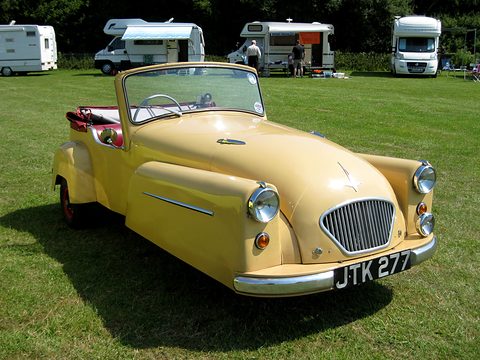
Micro vans
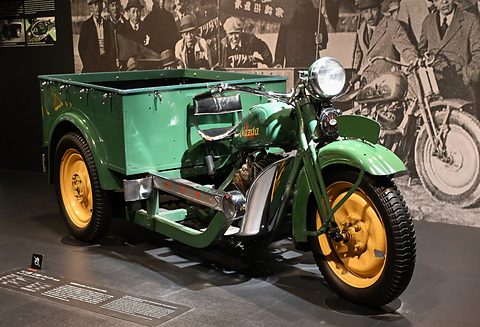
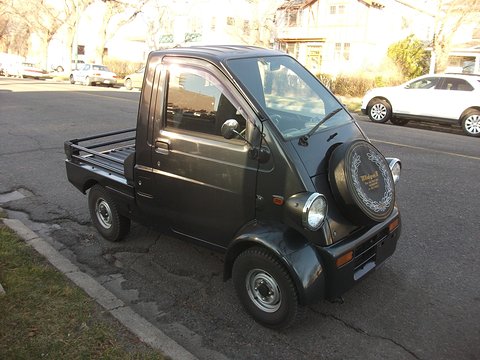
A Vespa with a load bed, a three-wheeler a 16-year-old could drive on a motorcycle licence, a post-office van with sliding doors for narrow streets: the laws that made small cars cheap made small vans cheaper still, and Daihatsu alone built 336,534 of its three-wheeled Midget.
The microcar at work
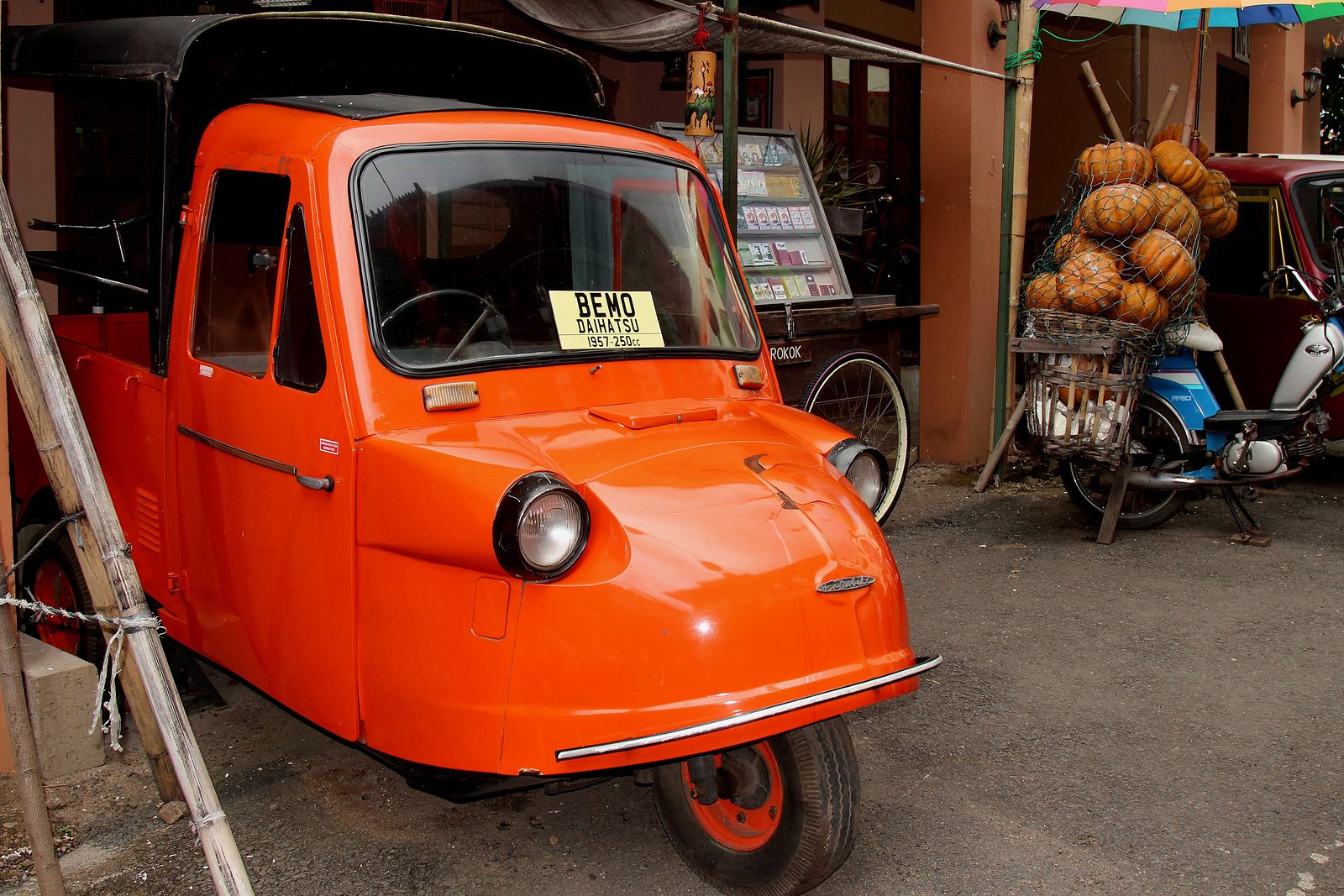
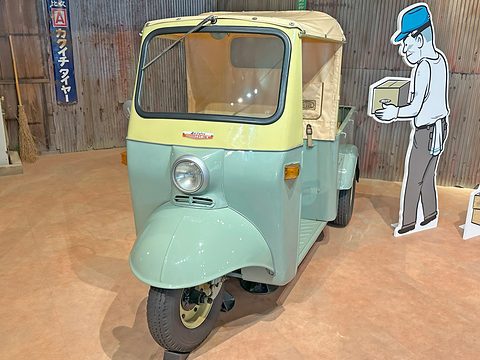
When the Japan Management Association looked at how Japanese businesses moved their goods, it found that firms with 10 or more staff already used small three-wheeled trucks, while the 93 per cent with nine or fewer still delivered by bicycle or motorcycle.source 1 That was the market Daihatsu went after with the Daihatsu Midget, on sale from 1 August 1957: one seat, motorcycle handlebars, a kick-starter, a single headlamp, no doors and a canvas roof.source 1source 2 A grocer could now deliver in the same trip as he took the orders, and Daihatsu called its truck a helicopter for the town.source 1source 2 By the time the last one was sold, in January 1972, there had been 336,534.source 1
The micro van is the microcar at work. The laws that made small cars cheap applied to small vans as well: Germany’s tax-free three-wheelers of 1928, Britain’s weight limit for the motor-cycle class, France’s 125 cc licence-free rule, Japan’s kei class and Greece’s generous treatment of three wheels.source 3source 4source 5source 6source 7 Many of these vehicles had three wheels (more on three-wheelers), and some of them, like the Piaggio Ape, have been built for more than 70 years.source 8
Tax tricars: Germany, 1924–1960
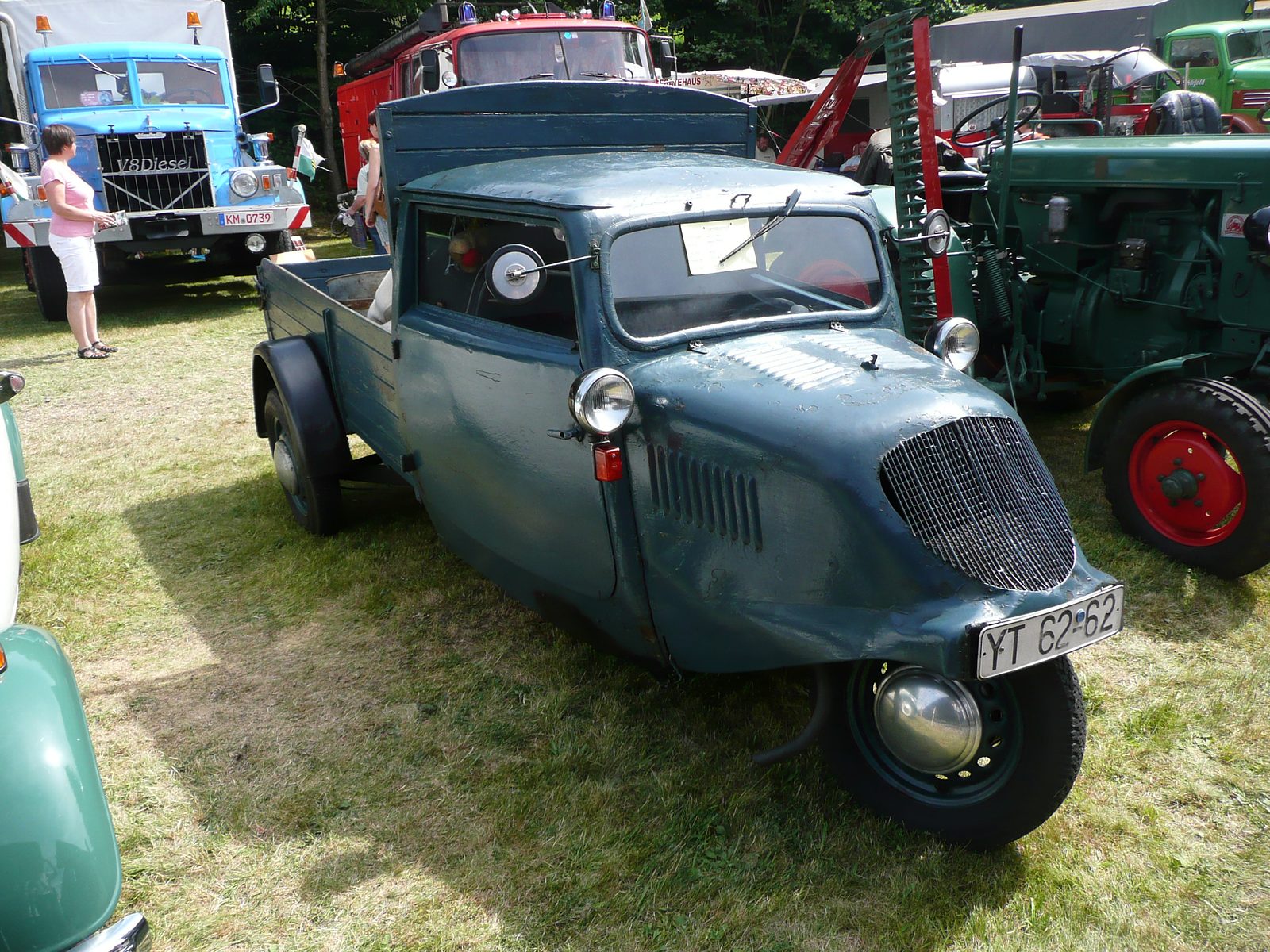
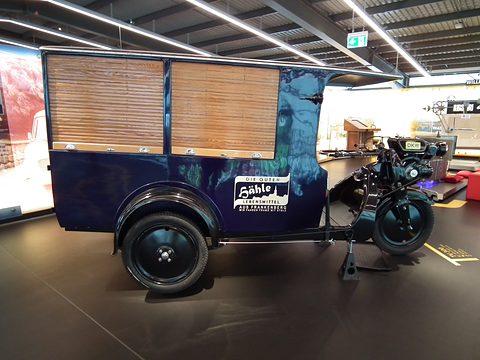
Carl Borgward made his start in Bremen with a radiator firm, and with a designer’s complaint: Dietrich Klie complained about pushing handcarts of radiator material from one works hall to the next. So, in 1924, Borgward built a motor cart, the Goliath Blitzkarren or lightning cart, an open tricar with no cab and a load platform in front of the driver, rated for 250 kg (550 lb).source 9source 10 In Saxony, Framo, a sister firm of Rasmussen’s DKW, built the TV 300 of 1927 in the same spirit: the front of a motorcycle, a bed for 500 kg (1,100 lb) and no steering wheel, cab, starter or reverse, drivable by anyone with a motorcycle licence.source 11source 12
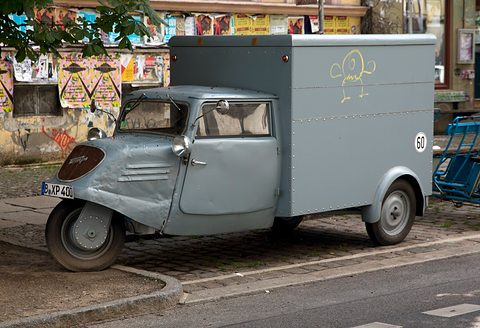
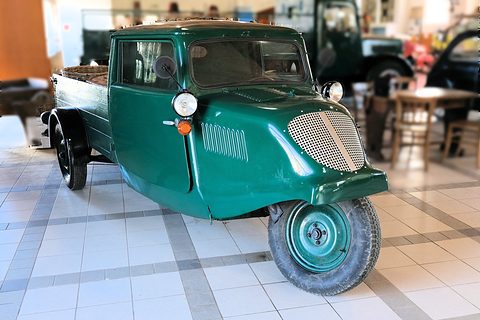
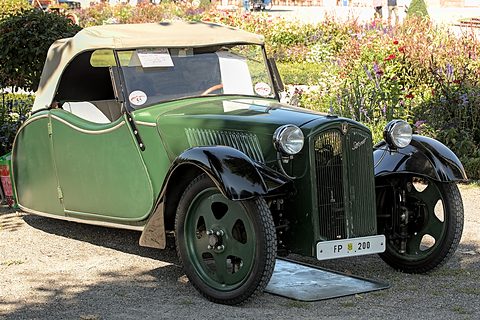
In 1928 the law made such vehicles a business. A German three-wheeler with an engine under 200 cc, by German Wikipedia’s figure, now needed neither a driving licence nor vehicle tax.source 3 That year Max Vidal, a Hamburg coal merchant, and his son Oscar took over a small firm called Tempo, and from 1929 Otto Daus was its engineer.source 3source 13 Tempo’s governing idea was a drive unit carried whole in the cab, so that any body at all could be fitted behind it; by 1937, by the firm’s history, 25,000 had been built, and Tempos made up more than 6,000 of the 14,000 small lorries sold in Germany that year.source 3source 13 In 1938 the two-cylinder A 400 of 12 PS was named Germany’s standard three-wheeler under the Nazi type-reduction programme, and 36,790 were made, the best-selling Tempo before the war.source 3source 13
After the war Tempo went on with the same layout. Germany’s registers held 101,000 three-wheeled Tempos in the mid-1950s, and Bajaj made them in India from 1962, where a diesel descendant lasted until 2000.source 3 The smaller Tempo Boy of 1950 was, by RM Auctions’ account, the model whose end left the West German post office looking for something new.source 14
The scooter with a load bed
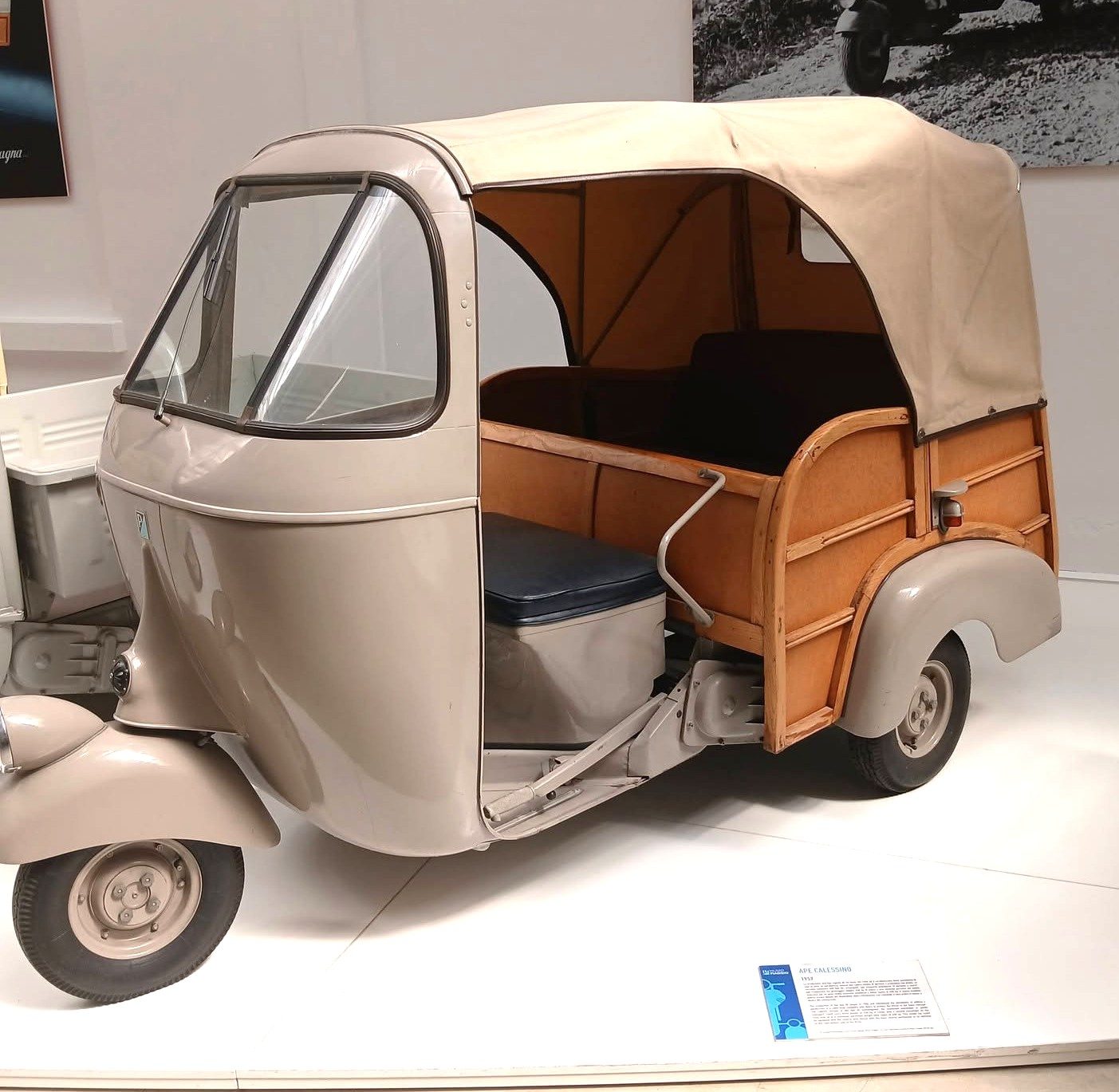
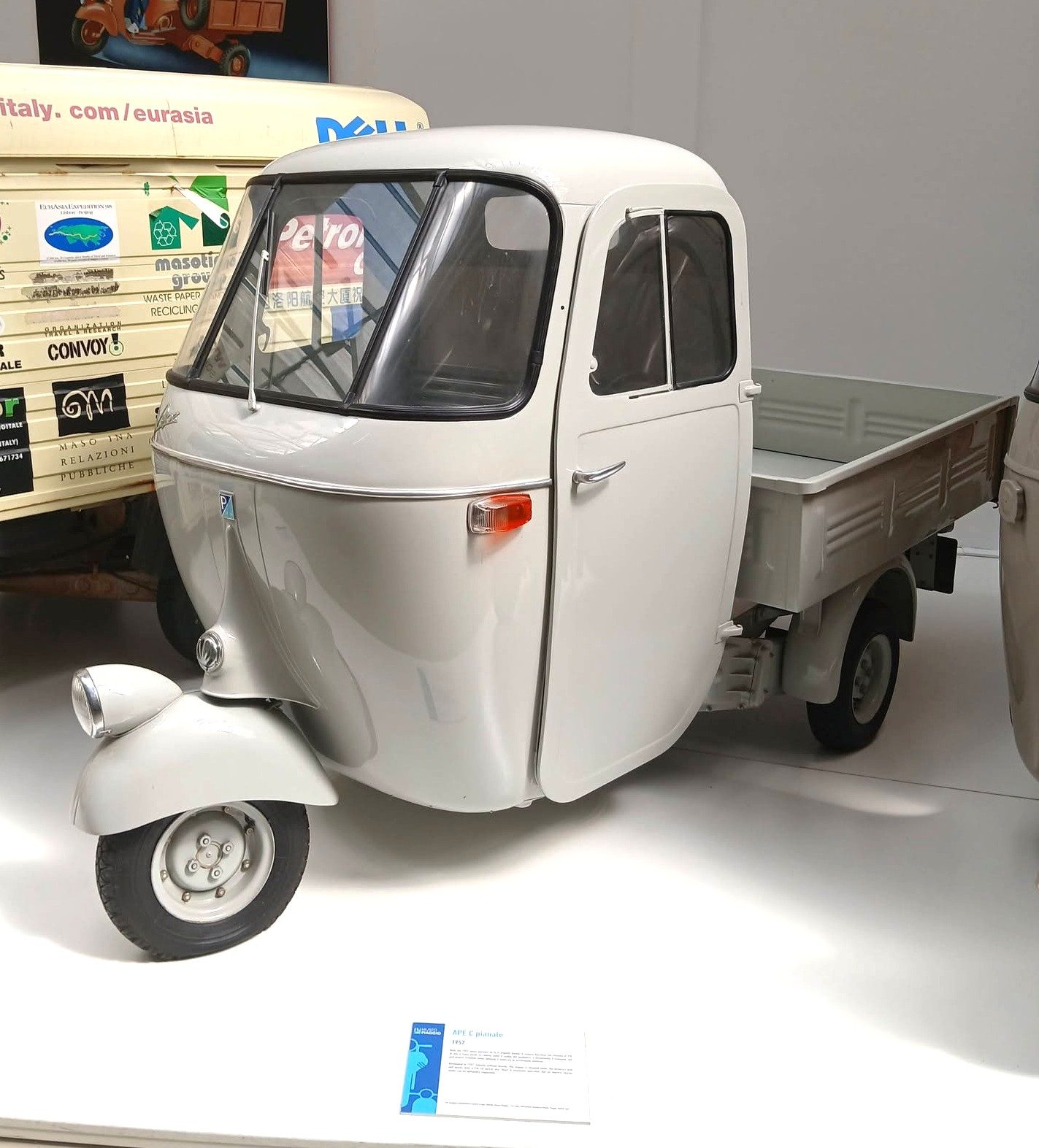
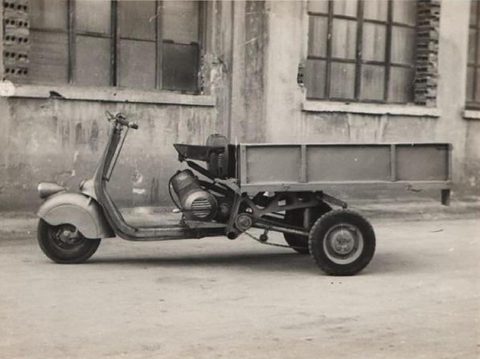
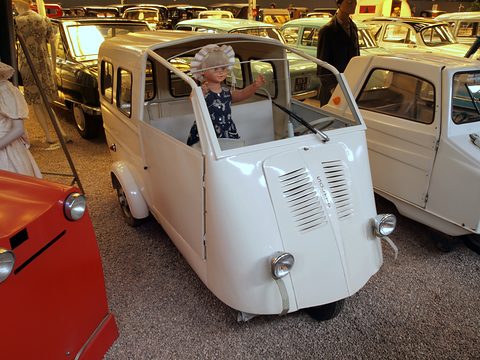
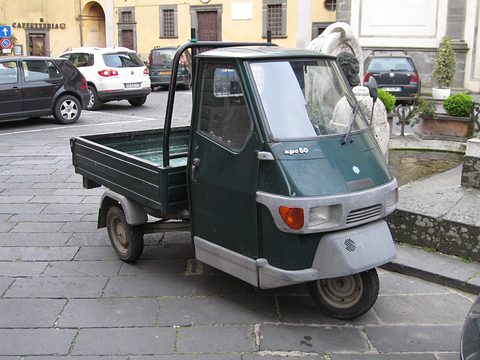
Italy’s answer was lighter still. Corradino D’Ascanio, the aircraft engineer behind Piaggio’s Vespa, conceived a three-wheeled carrier on the same pattern in 1947, and the Piaggio Ape, the bee, reached the market in 1948, priced at about 170,000 lire, in effect a scooter pulling a flat bed on two rear wheels.source 15source 16source 8 It gained a cab with doors in 1956, then a steering wheel and an engine under the bed, and in the Pentarò of the 1960s even towed a semi-trailer.source 15source 16source 8 Piaggio claims about six million distributed round the world, and in 2013 it announced that Italian production would move to India.source 8source 15 Its passenger version, the Calessino, belonged to the Amalfi coast and Capri in the 1960s, and Italian Wikipedia makes it the ancestor of the Asian tuk-tuk; for Thailand, though, the better-documented ancestor is Daihatsu’s Midget, whose exports became tuk-tuks there and bemos in Indonesia.source 17source 1source 18
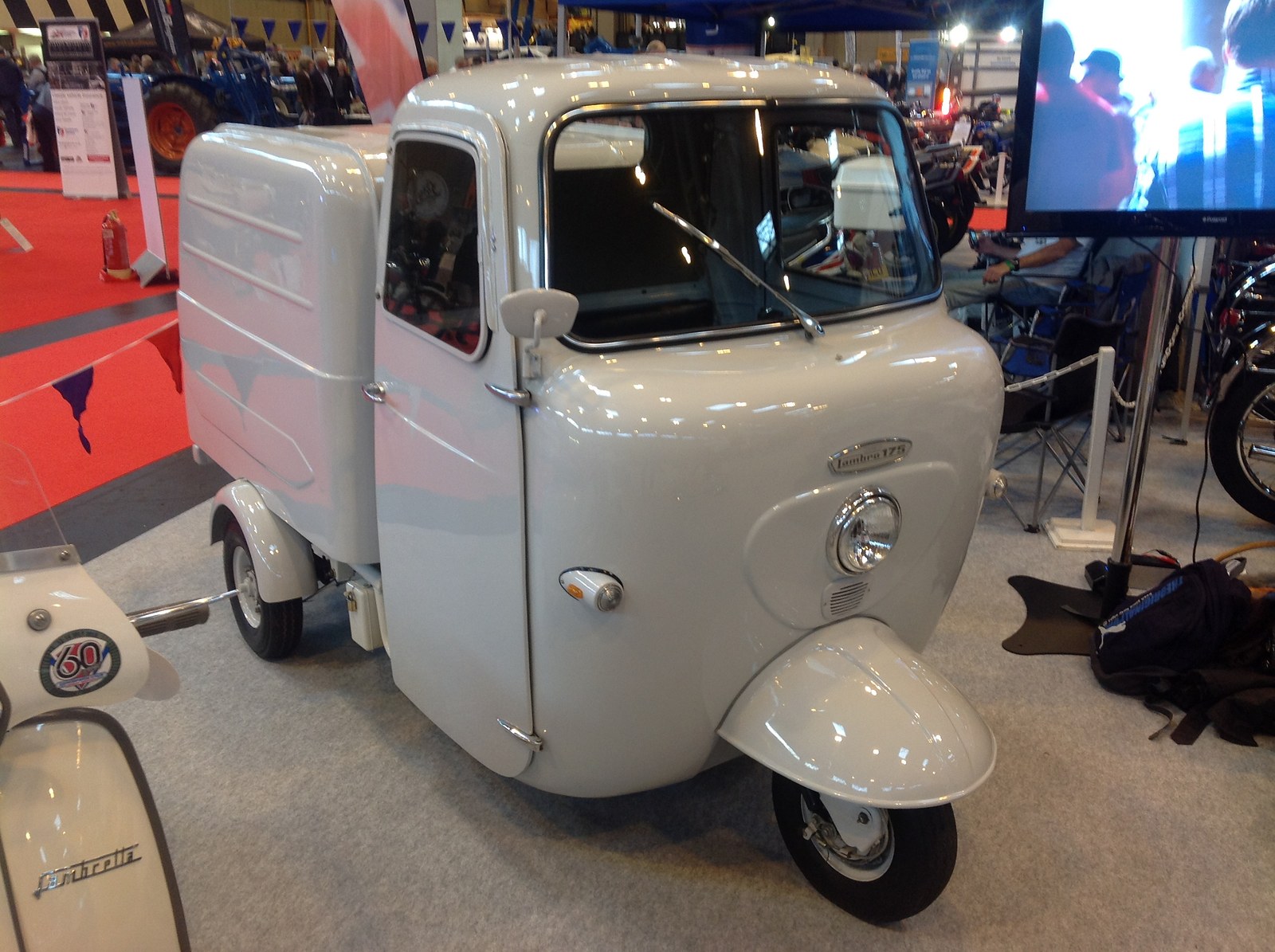
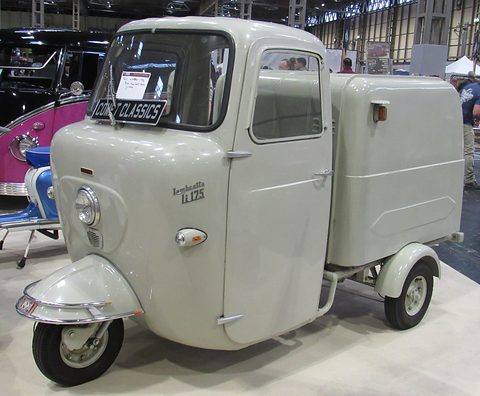
Innocenti’s Lambretta Lambro began in February 1949 as a front-loader, its box between two front wheels and the back half of a Lambretta scooter pushing it, for about 200 kg.source 19 Its driver had no reverse gear until a cab arrived in 1957, with reverse selected by a pedal, and the last ones, with a square cab by Bertone, ended in January 1972.source 20source 21 Scooters India built it at Lucknow as the Vikram from about 1977, and in Vietnam, it is said, many 550s still work.source 22source 23
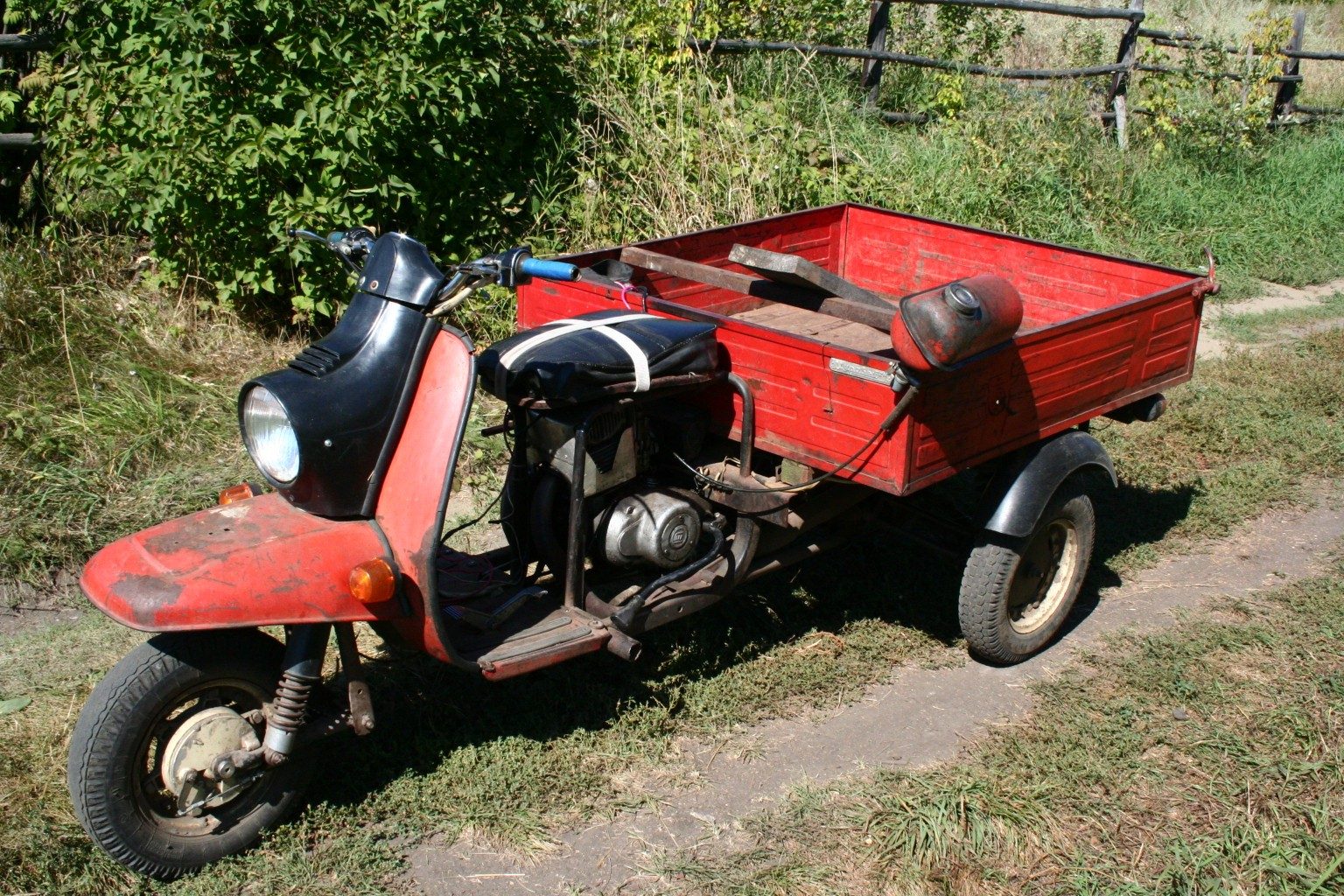
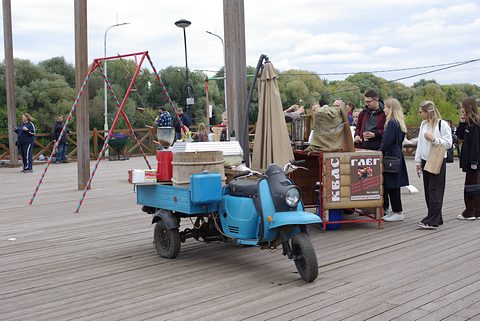
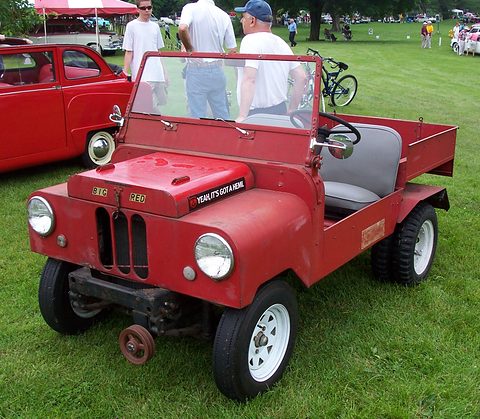
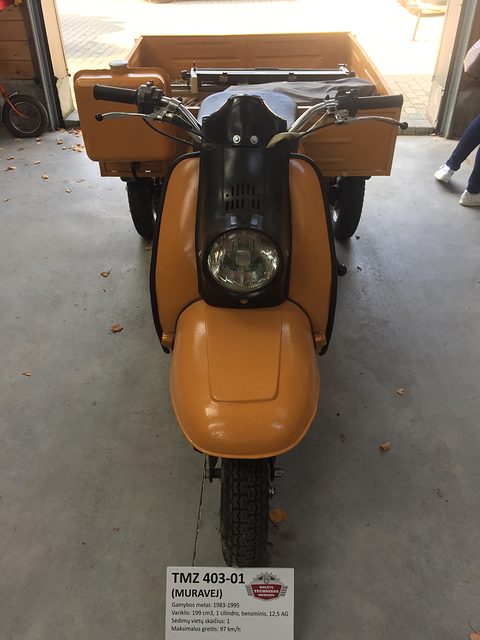
The Soviet Union built its own cargo scooter. The Tula Muravei, the ant, was a cargo scooter made at Tula from 1959 to 1995, its ancestor by one popular account the Goggo 200 scooter of the firm that later made the Goggomobil.source 24source 25 In 1960 Tula’s chief designer called cargo scooters a new kind of transport for the USSR, and in 1978 one went on sale to private buyers at 775 roubles, for gardeners, dacha owners and villagers. For years no other small truck was open to an ordinary Soviet buyer.source 26source 27source 24
France, Spain and Greece: licence-free and tax-light
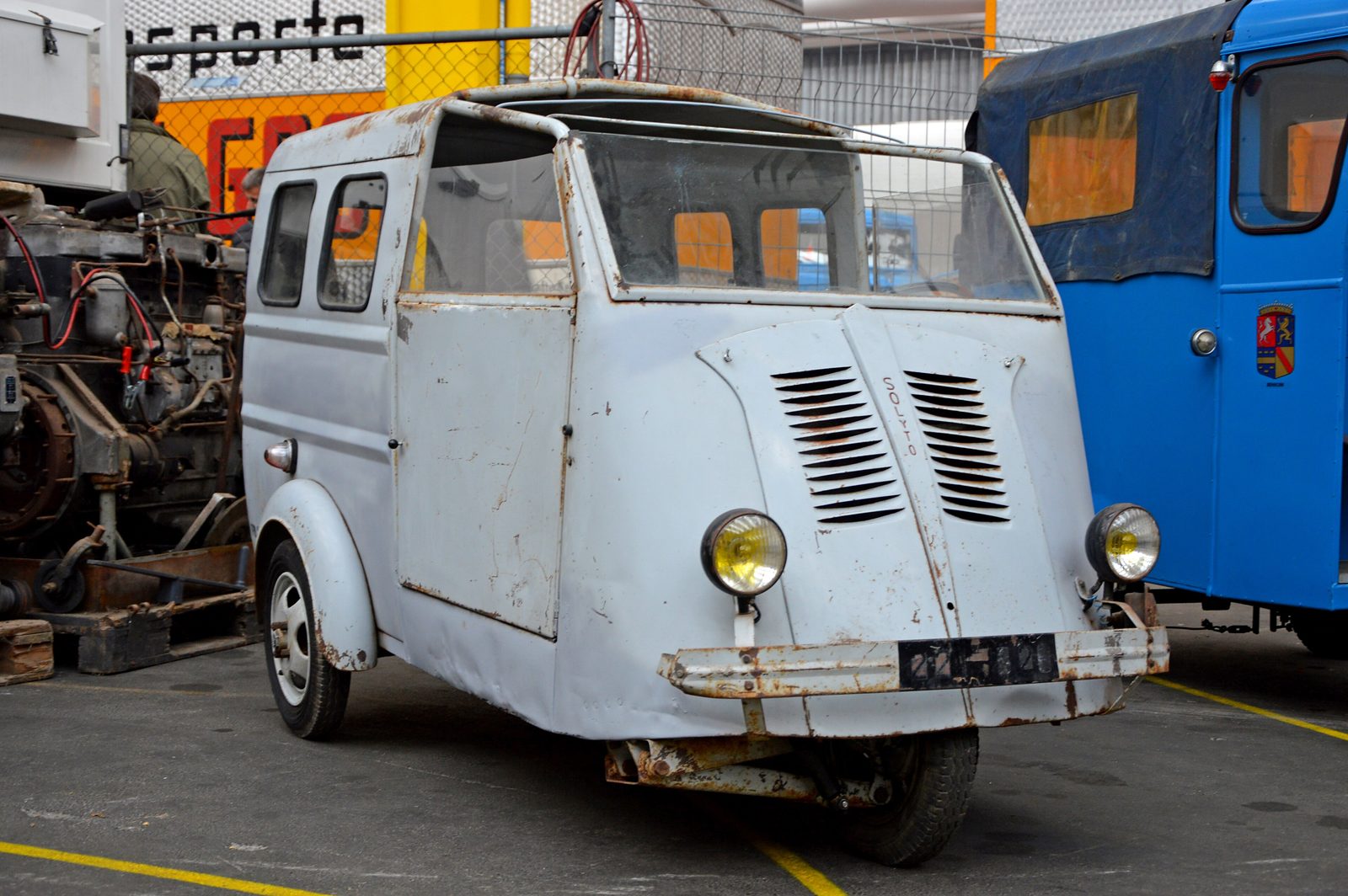
In France a 125 cc engine needed no driving licence, and the Solyto made a living out of that rule for artisans and small shopkeepers: one front wheel carrying a 125 cc engine, steered by a wheel, and a box on two wheels behind.source 5source 28 It was spare. Early vans lacked a heater, a spare wheel and a passenger seat, and, by Gazoline’s account, reverse, and its payload was about 350 kg by that magazine’s figure or 200 kg by the Weiner museum’s.source 5source 28 When an engine supplier sent its motors without gearboxes, Joseph Spalek designed a V-belt automatic for it, which Gazoline calls the first automatic vehicle sold in France.source 5 About 4,000 were built, the last in February 1974.source 5source 29 It was one of France’s licence-free cars that earned its keep.
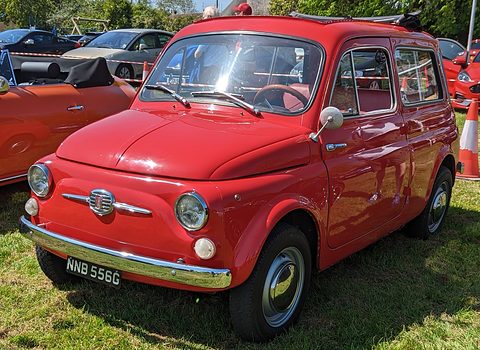
In Spain the engines of Hispano Villiers, made in Barcelona from 1953, became the standard power both for microcars and for the motocarros, the three-wheeled load carriers that many Spanish microcar makers built beside their cars.source 30source 31 In Greece three-wheelers fell outside the tax categories of four-wheeled cars, and under the military government of 1967–74 they kept that advantage.source 7 A whole industry of three-wheeled trucks grew on it. Styl Kar, whose most successful model had a Volkswagen engine, made thousands; MotorCar built tippers in 1967–71 that were classed for 350 kg but in use carried as much as two tonnes; and in 1968 Attica turned the rear half of its Attica 200 into the front of a light truck, the Delta.source 7source 32source 33source 34
Britain: the five-hundredweight van
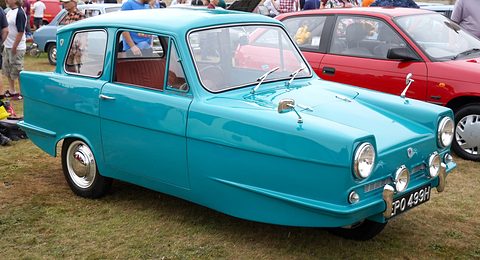
Britain’s rule was weight. The Road Traffic Act of 1930 put a three-wheeler weighing 8 cwt (about 406 kg) or less unladen in the motor-cycle class, and that applied to vans as much as to cars.source 4source 35 Reliant began with one. T. L. Williams licensed his first vehicle on 1 January 1935: a van on three wheels with a 600 cc JAP engine, put together in his own garden at Tamworth.source 36
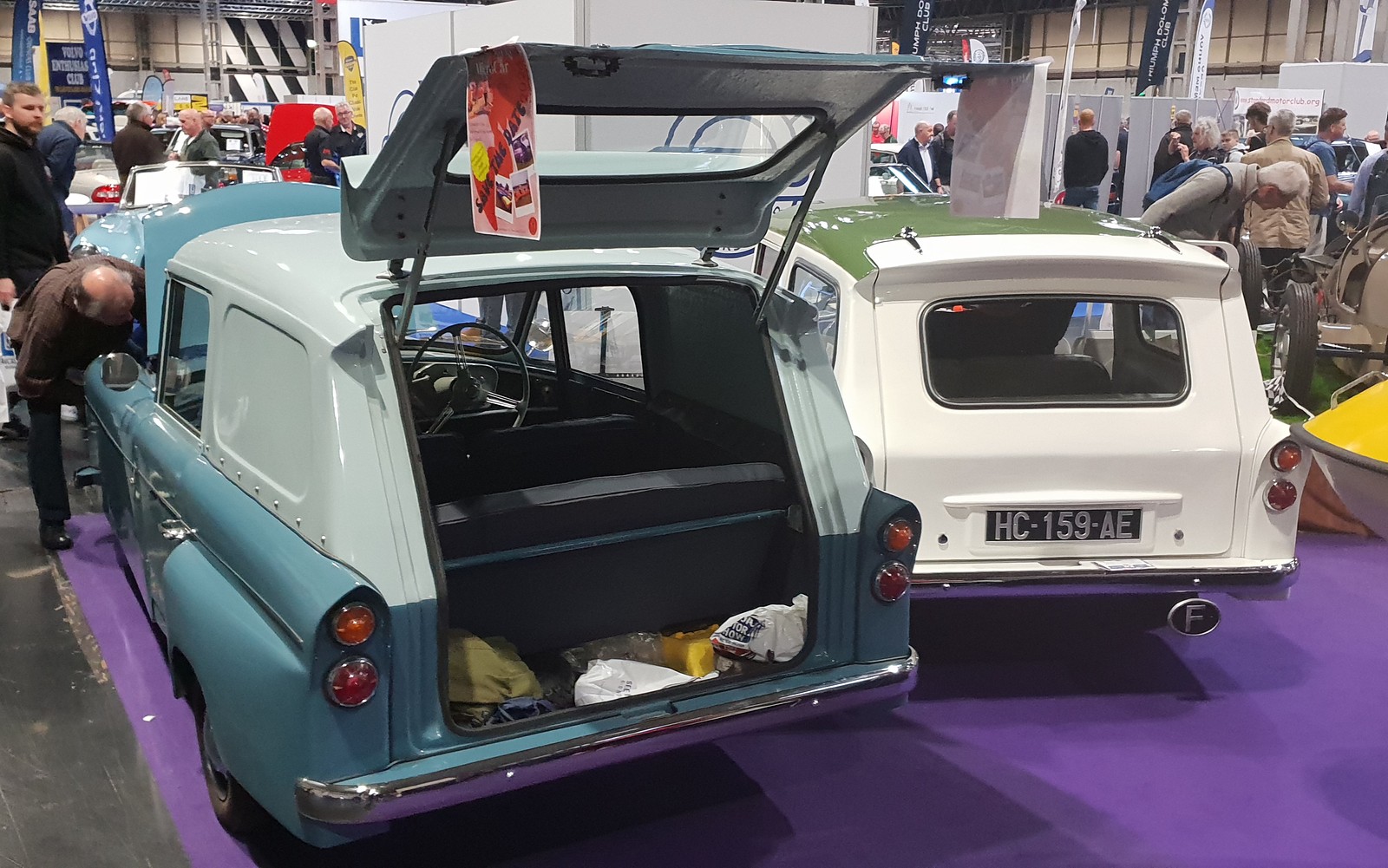
Bond did the same for the post-war generation. In May 1952 Sharp’s offered the Minitruck, a 3 cwt pick-up with only the driver’s seat, for £265 8s 4d, and a Minivan beside it at £289 8s 4d; with one seat, such a three-wheeler was open to a 16-year-old holding a motorcycle licence.source 37source 38source 39 Trojan, which built Heinkel’s bubble car at Croydon, tried a van version in 1962 and made 19 before Customs and Excise refused it the purchase-tax exemption that the Mini van enjoyed.source 40 That settled it: in March 1963 a Mini van cost £368; a right-hand-drive Trojan van cost £369 15s.source 40
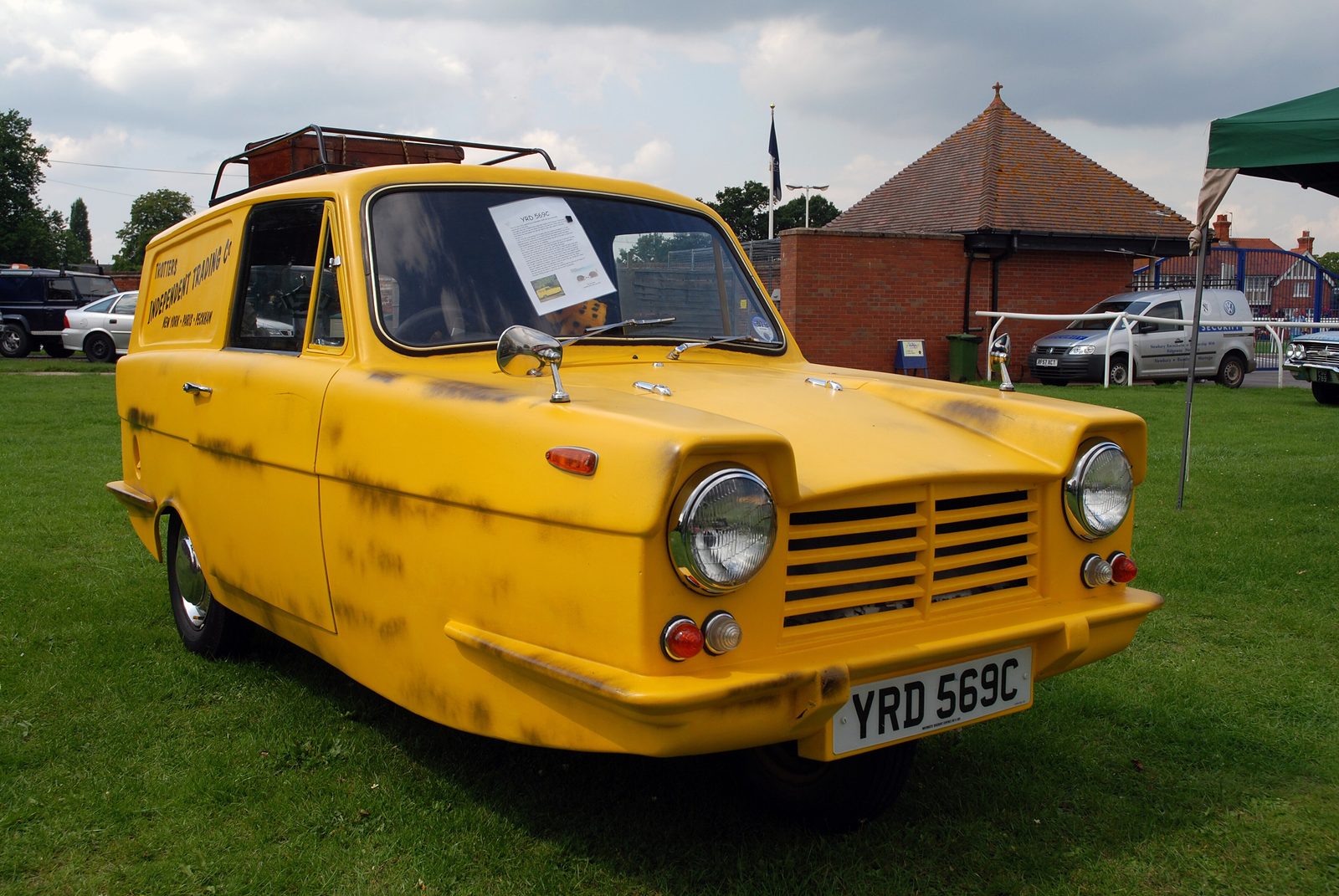
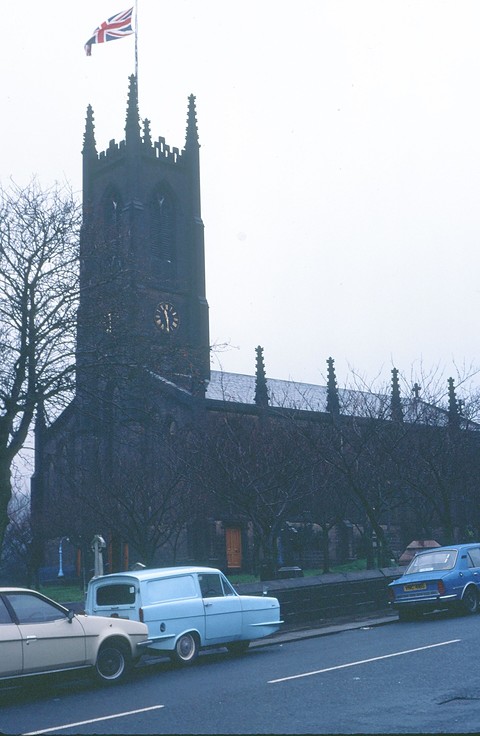
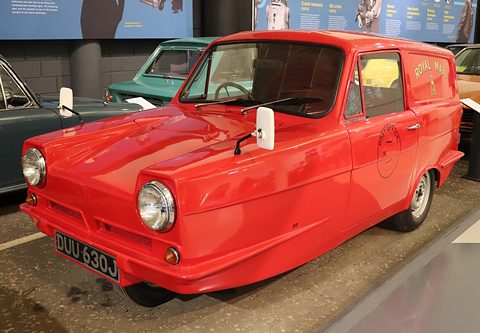
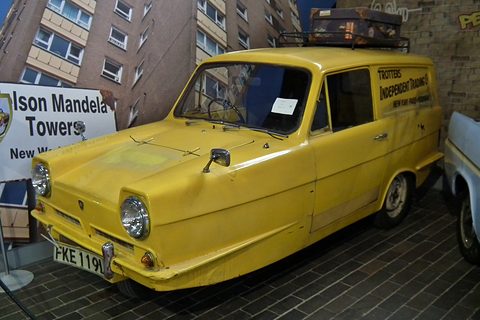
The van Britain remembers is the Reliant Supervan of 1966–73, a five-hundredweight van, about 250 kg, with 1.4 m³ (50 cu ft) behind its single big door.source 41source 42 At Mallory Park in 1968 a Supervan lapped the circuit carrying 16 people in the back; by 1970 it was outselling the saloon; in 1971 it cost £437.source 42source 41 That year the Royal Mail, looking for a successor to its Morris Minor vans, bought 50 for a road trial, by German Wikipedia’s account drawn from a photograph caption, and ordered no more.source 43 Production ended in 1973, when a van in the style of the new Reliant Robin took over.source 41 So the yellow van that became Del Boy’s in Only Fools and Horses in 1981 was a Supervan, not a Robin (more on microcars on screen).source 41
Possibly the nation’s most famous three-wheel vehicle
Vans for the post office
A pair
Sliding doors and tipping mailsters
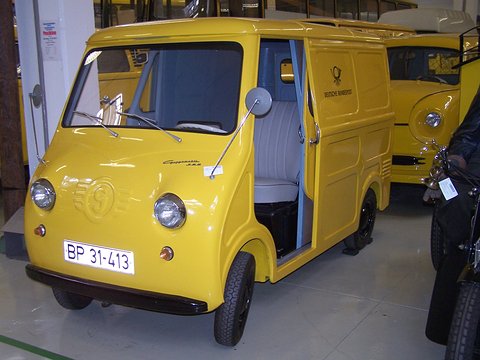
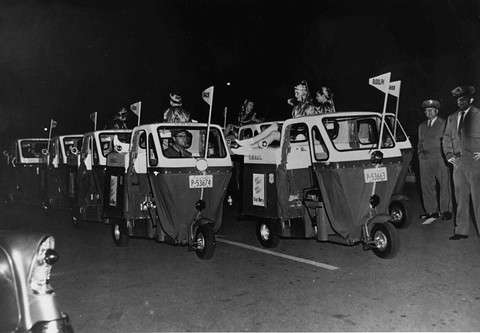
West Germany’s post office had run three-wheeled Tempo vans, and when the small Tempo went out of production, Glas’s van was the only small one that could carry a quarter of a ton.source 14source 44 Glas showed its Goggomobil TL Transporter for the Bundespost at Frankfurt in the autumn of 1956, with sliding cab doors that let the driver step out in a narrow street, a novelty on a commercial vehicle that small.source 45source 46 The post office took about 2,000, painted in its yellow, between October 1957 and November 1965; tradesmen and towns took the rest, some for street cleaning and snow clearing, and 3,667 were built in all.source 46source 44source 47
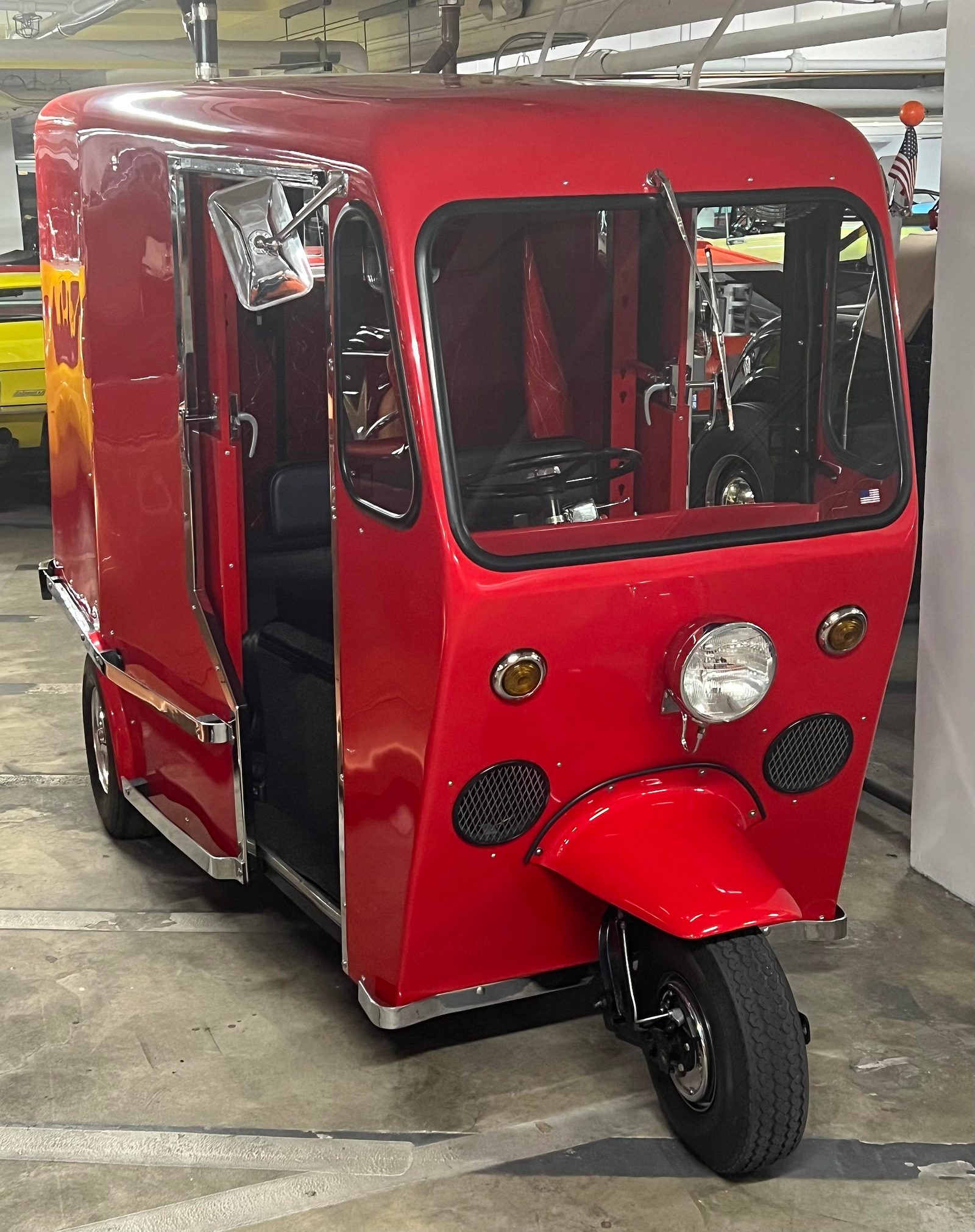
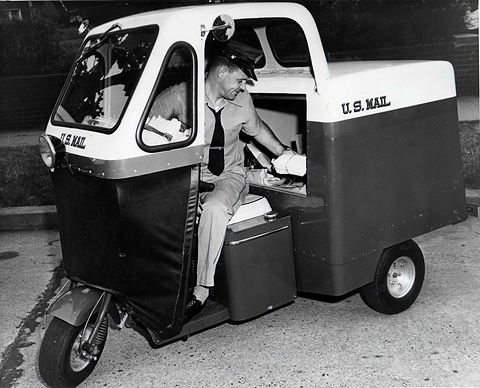
The United States Post Office went the other way, from walking to three wheels. A carrier on foot could manage 16 kg (35 lb) of mail, and one in a mailster about 230 kg (500 lb); after trials with three-wheeled scooters in Miami in 1950, over 5,700 were in service by 1960, one vehicle in three in the fleet by the early 1960s, and about 17,700 at the peak in 1966.source 48source 49 The Westcoaster Mailster was one of at least seven makes. Snow just 8 cm (3 in) deep could halt one, the heater was feeble, and a corner taken at over 40 km/h (25 mph), or a gust of wind, could put it on its side; one carrier blamed a large dog for knocking his down.source 49 The Post Office even had a film made to train its carriers, How to Drive the Mailster Safely,source 50 and in the end it replaced the mailsters with Jeeps and other sturdier vehicles.source 48source 49
Japan: from three wheels to four
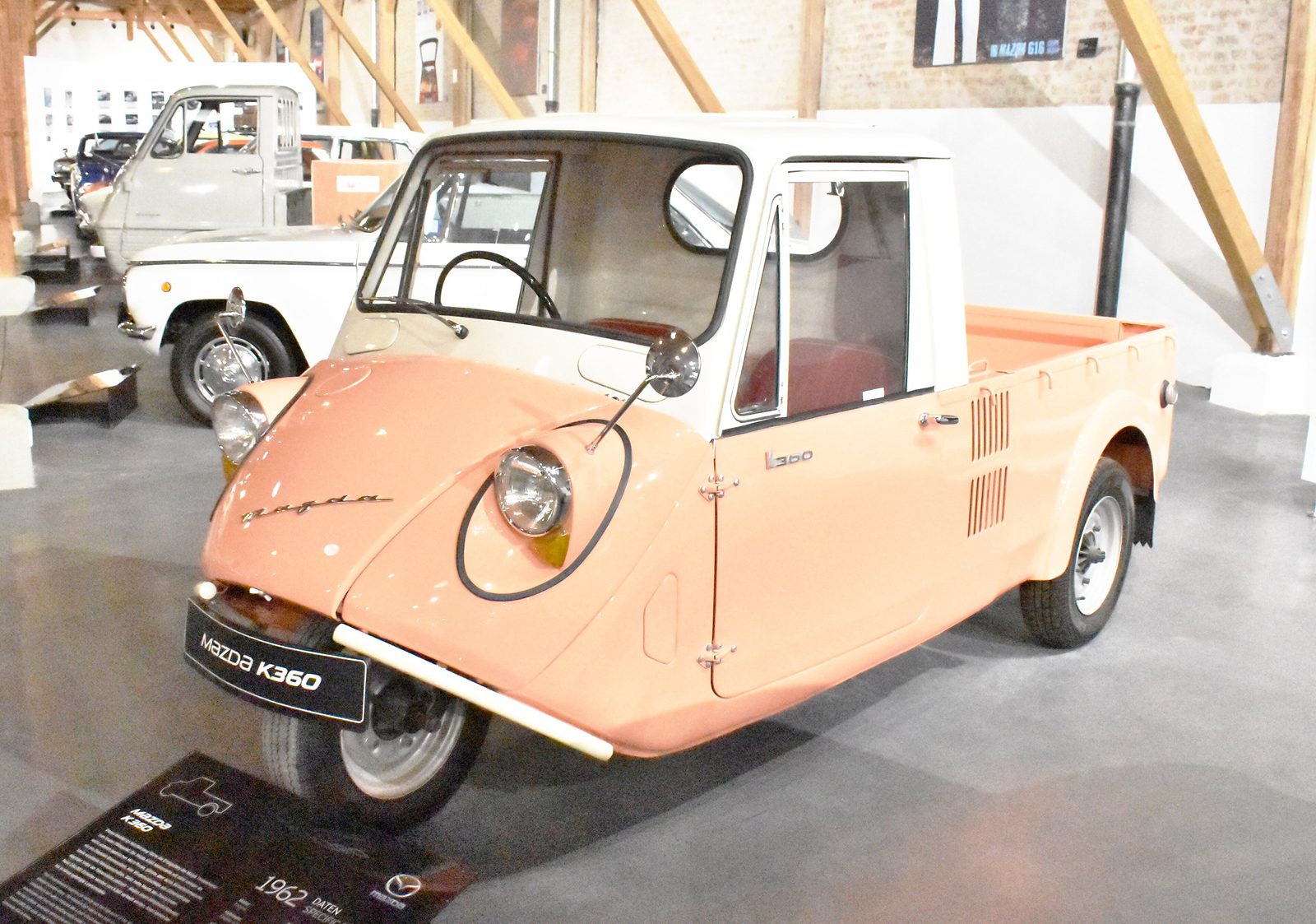
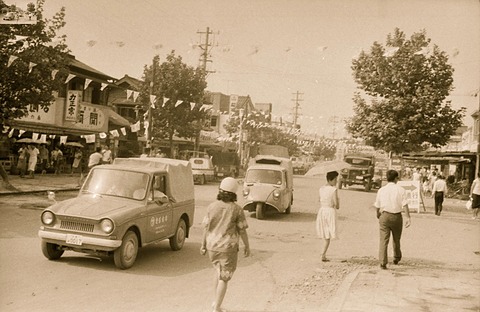
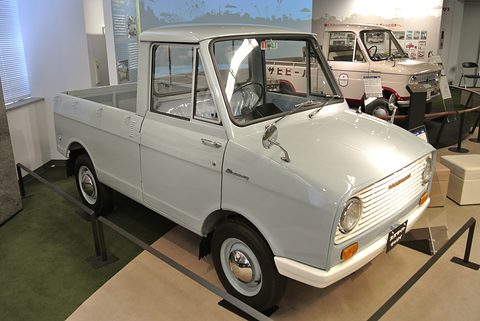
Japan’s small trade went to three wheels before four. From 1952 small workshops assembled kei trucks from scooter parts; Hope Motor’s Hope Star, that year, is counted the first true one.source 6 The Midget set off a boom, and three-wheelers had the kei commercial market to themselves until about 1960: the Mazda K360 and the Mitsubishi Leo.source 6 The K360 of 1959, styled by Kosugi Jirō in bright two-tone paint that made a working truck look smart, had a steering wheel and a quiet V-twin behind the cab; in 1962 Kia began to assemble it under licence, Korea’s first three-wheeled vehicle.source 51source 52
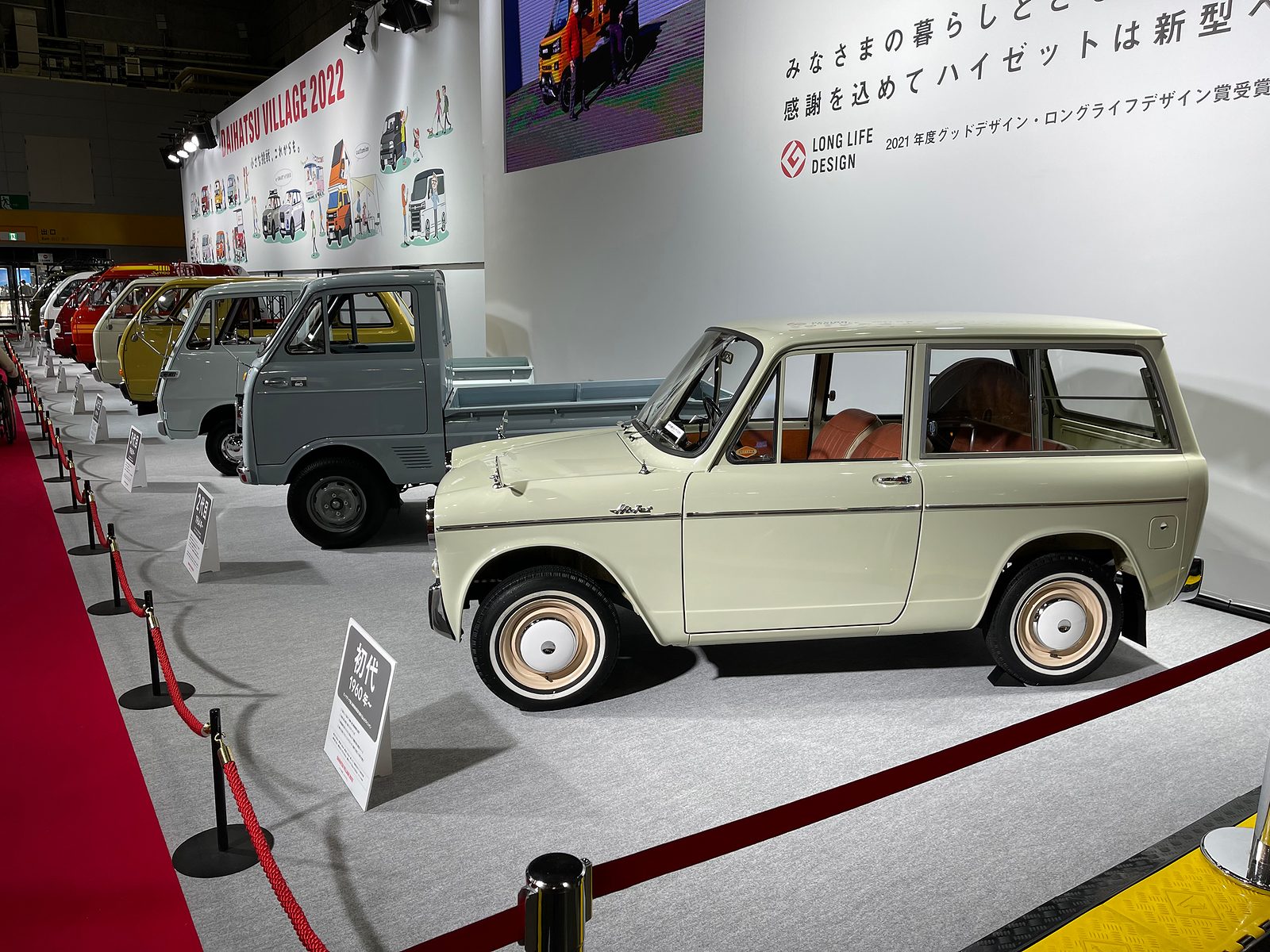
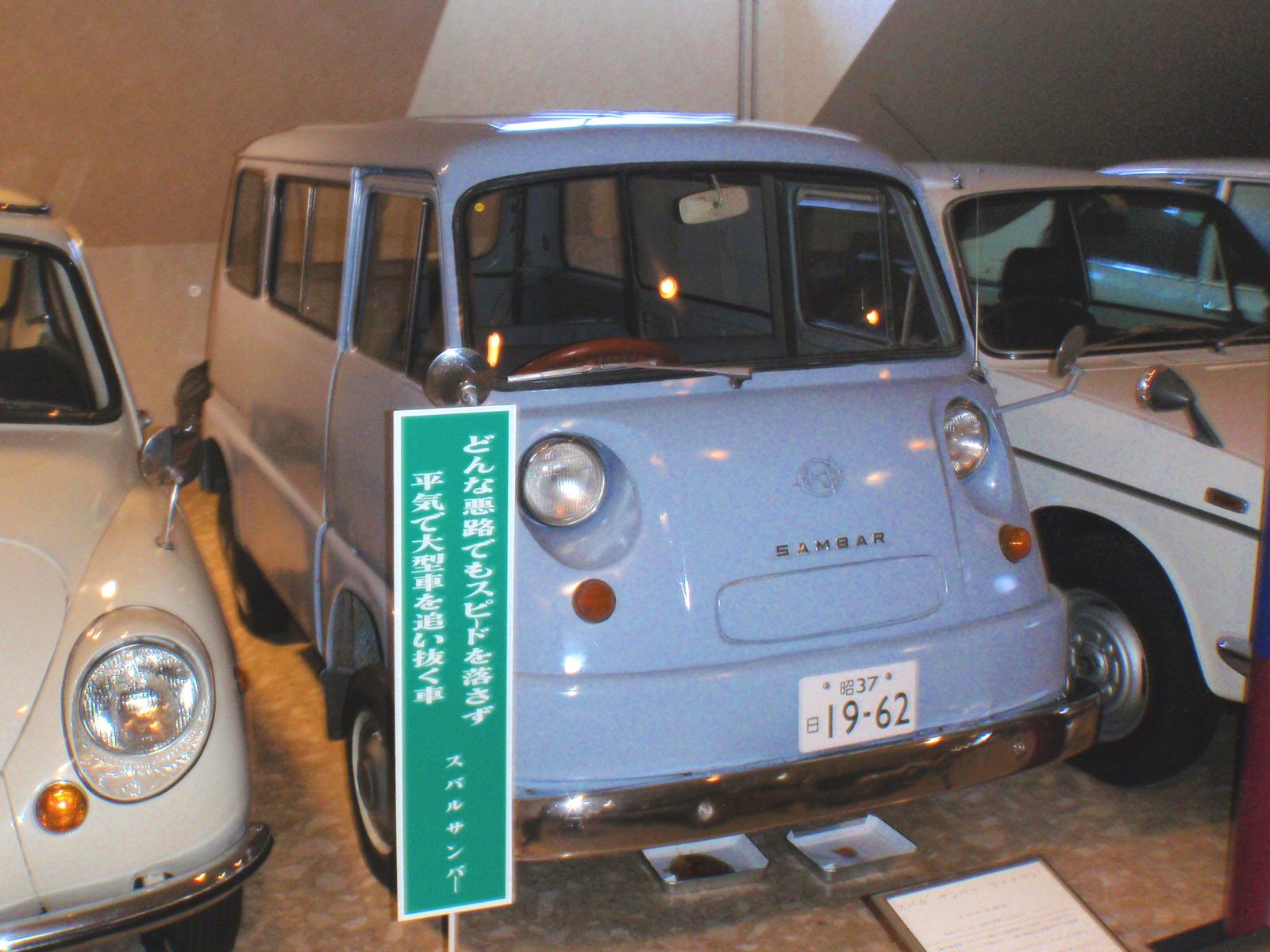
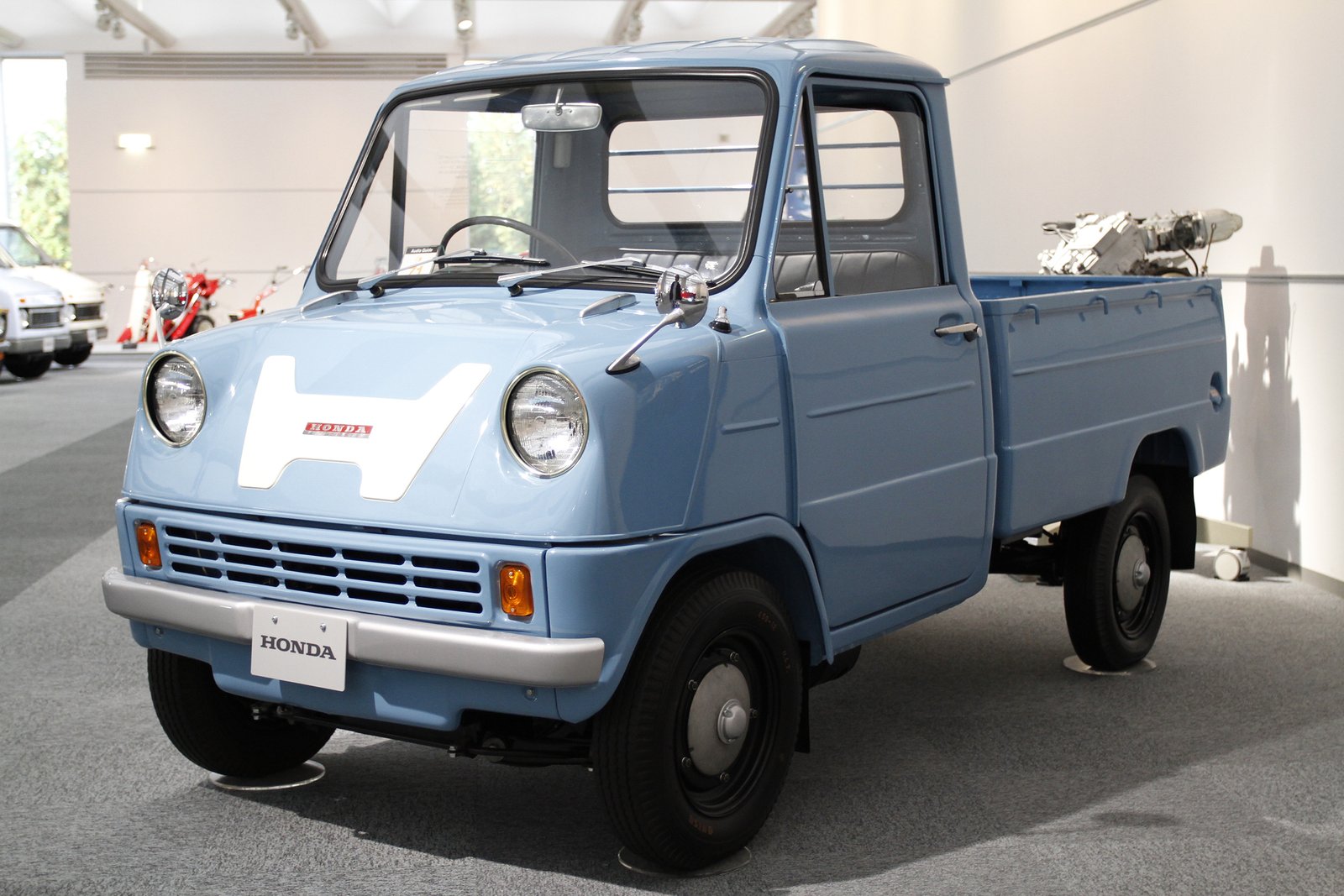
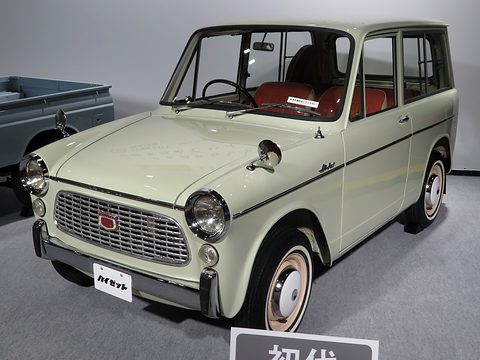
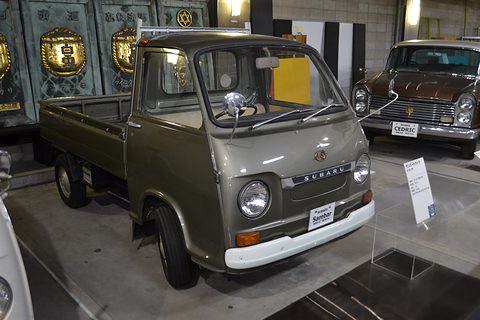
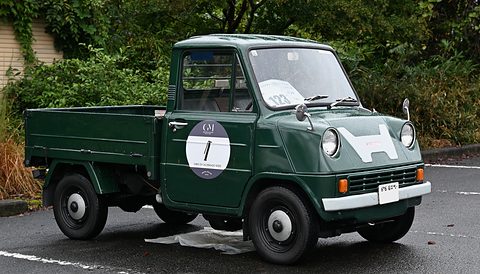
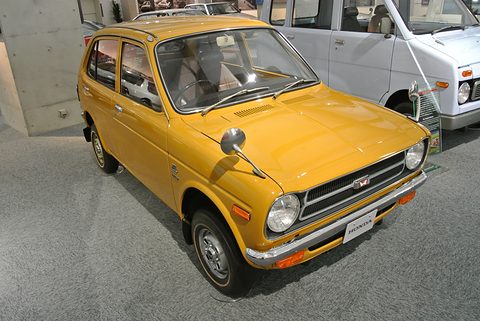
Then came four wheels: the Kurogane Baby of 1959, Japan’s first rear-engined cab-over kei truck; the Daihatsu Hijet of 1960; and in 1961 the Subaru Sambar and the Suzuki Carry, among others.source 6source 53source 54 The Sambar gave a cab-over body the rear engine and independent suspension of the Subaru 360, and rode so softly that, by the JSAE’s account, the story went round that even a tofu seller could not break it.source 55source 56 The Sambar was the first kei truck to offer part-time four-wheel drive, in 1980, and Subaru had built about 3.7 million when it stopped in 2012.source 6source 57 Honda’s first car to go on sale was a truck, the Honda T360 of 1963, because its managing director, Fujisawa Takeo, argued that commercial vehicles were the larger part of demand and that Honda’s motorcycle dealers needed a truck to sell through the winter.source 58source 59source 60source 61
Three-wheelers were gone by the early 1970s, and the kei truck had settled into its four-wheeled cab-over form.source 6 It is still the workhorse of Japan’s farms and shops, and it has found a second life abroad: about 7,500 used ones were shipped to America in 2023 alone.source 6

Narrow, quiet and electric
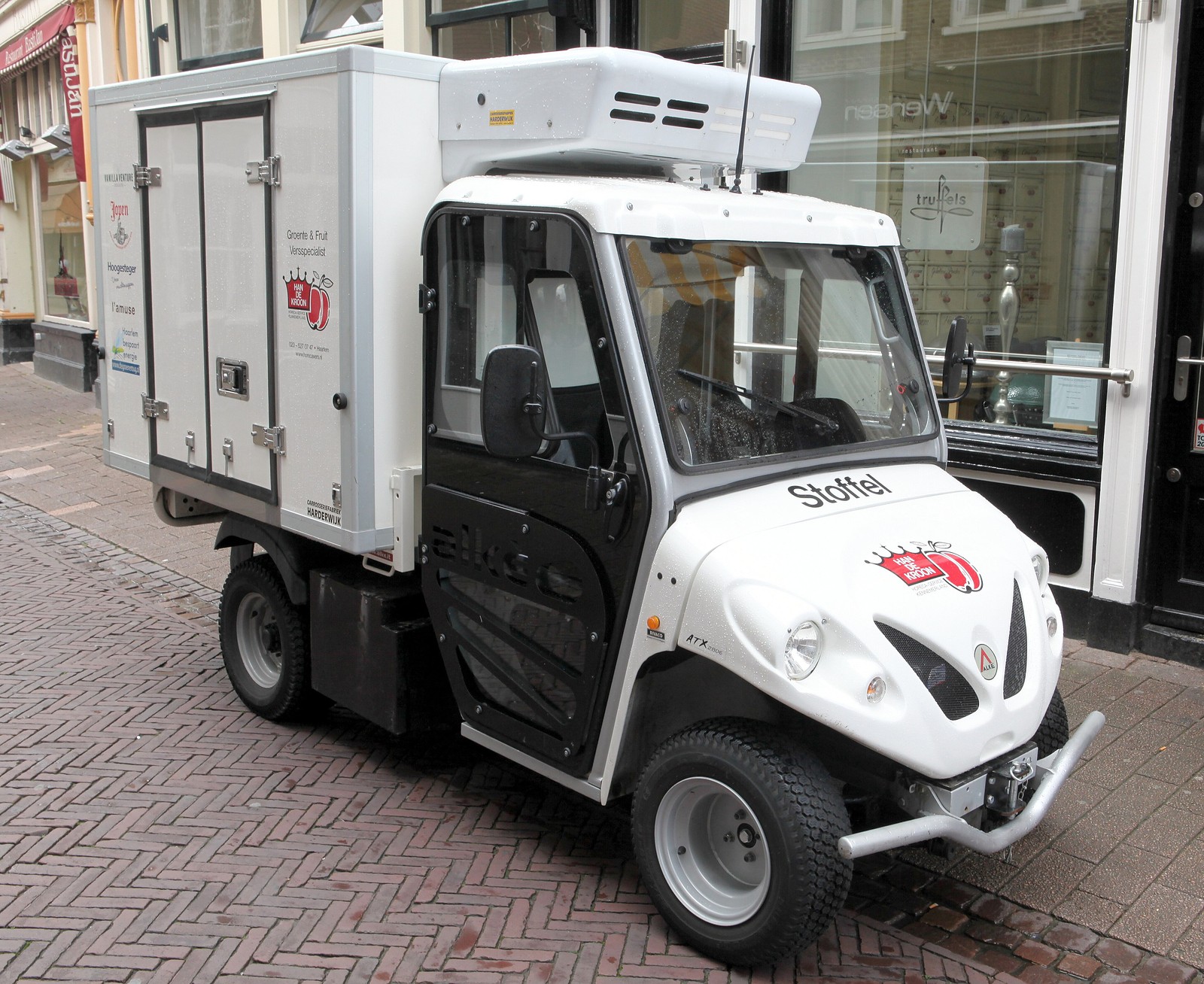
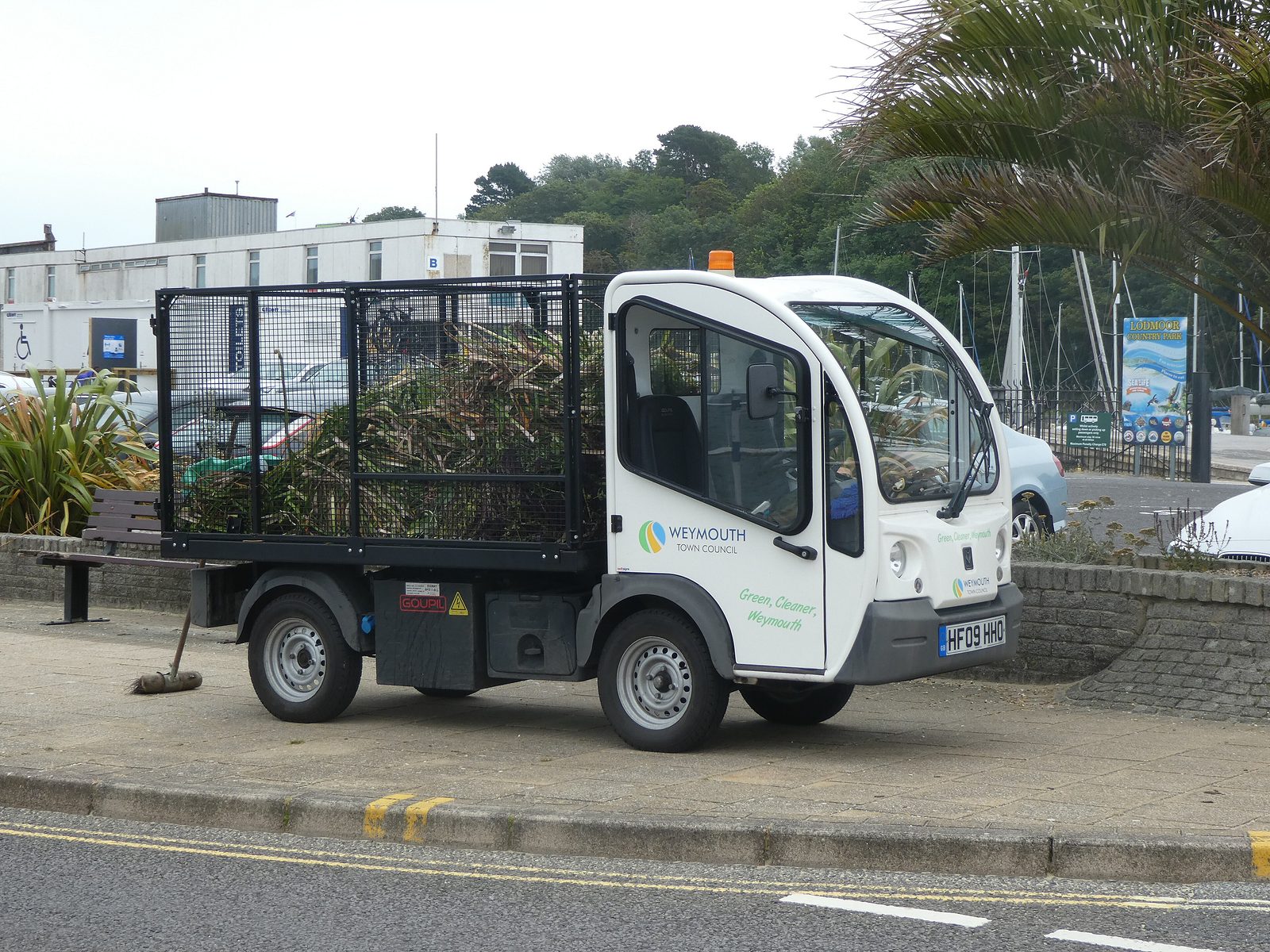
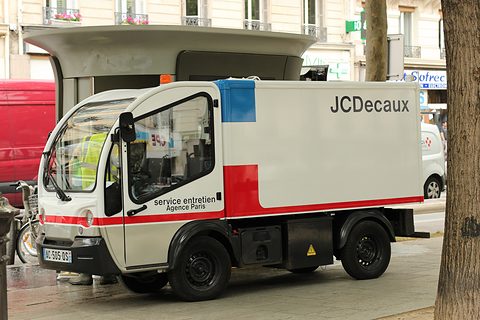
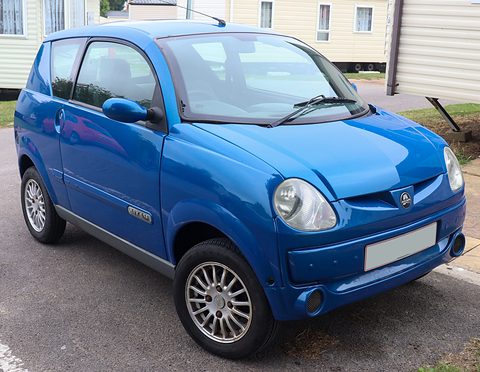
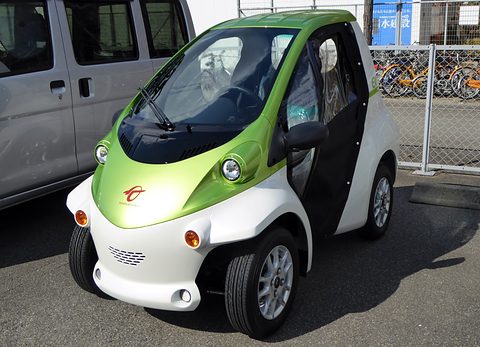
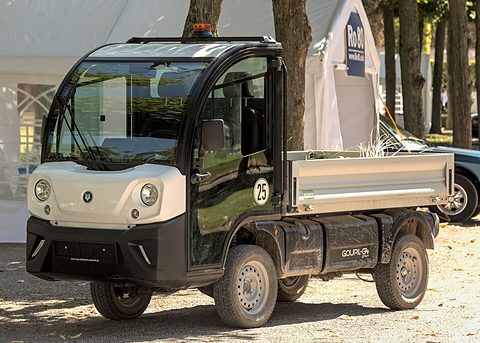
The micro van’s latest form runs on batteries. French and Italian towns took to narrow electric trucks for streets where an ordinary van will not fit.source 62source 63 Pascal Duclos and Thierry Zerbato founded Goupil at Bourran, in the Lot-et-Garonne, in 1996 to build narrow electric utility trucks; Polaris bought it in 2011, and its smallest truck today is just 1.1 metres wide.source 62source 64 Achille Salvan’s Alkè of Padua, founded in 1992, builds them too, and the licence-free car maker Aixam sells working vehicles under its Mega brand.source 63source 65 (More on modern micro utility vehicles.)
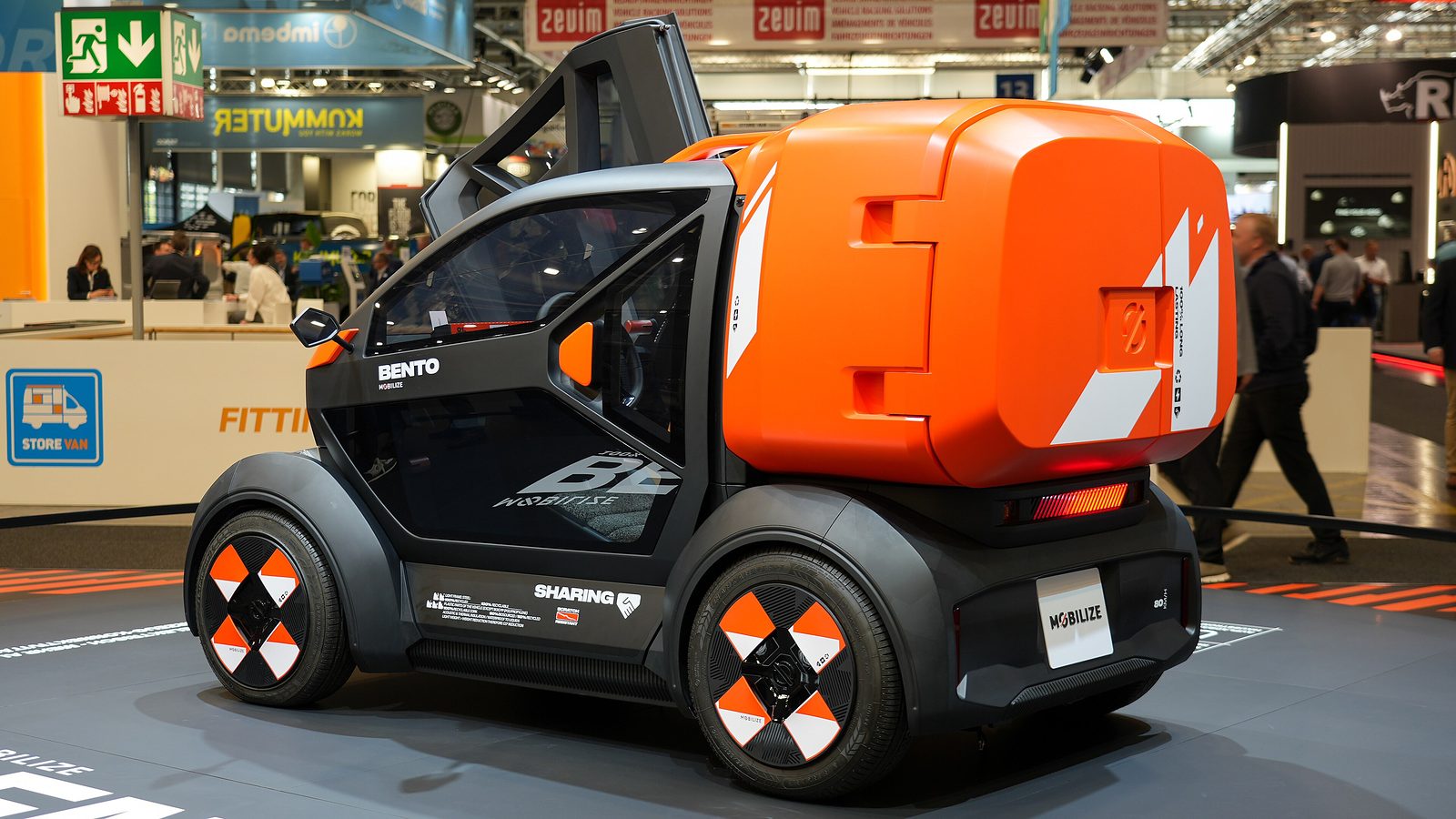
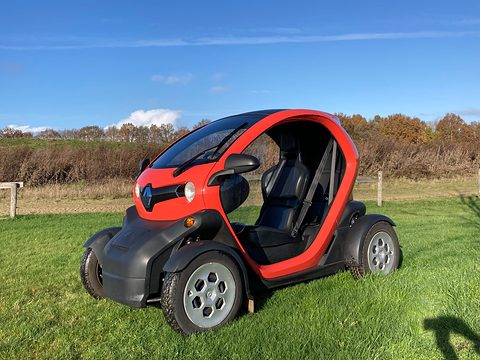
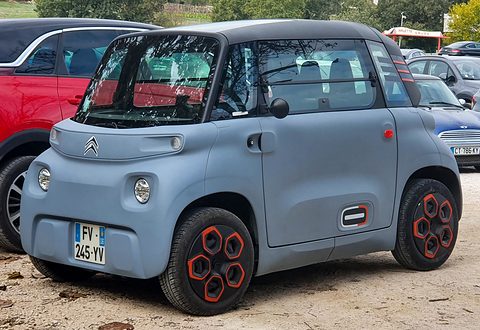
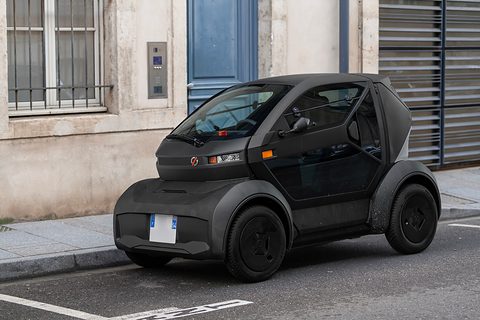
The big makers turned their small electric cars into vans by taking out the passenger. The Renault Twizy Cargo of 2013 gave its passenger’s place to a 180-litre box for 75 kg, and Citroën’s My Ami Cargo of 2021 to a seven-part plastic module of 260 litres and 140 kg.source 66source 67 In Japan, Mitsubishi made its Minicab kei van electric in 2011, as the Minicab MiEV, and about 13,000 had been built by the end of 2023.source 68 The Bento, the cargo version of the Mobilize Duo, had a load box of 649 litres by one figure or about a cubic metre by others, and ended with the Duo in December 2025.source 69 The reason for the narrow town trucks is the one the Bundespost gave in 1956: the streets are narrow, and the van has to fit.
Smallest to largest
35 cars and 7 maker groups, to scale
Each bar is the car’s length on a 3.5 metre track; the red notch is a Fiat 500.
-
Renault Twizy2012–2023 · France · 4 wheels
2.32 m -
Crosley Farm-O-Road1950–1952 · United States · 4 wheels
2.32 m -
Toyota COMS2000– · Japan · 4 wheels
2.40 m -
Mochet CM-1251945–1958 · France · 4 wheels
2.40 m -
Citroën Ami2020– · France · 4 wheels
2.41 m -
Mobilize Duo2024–2025 · France · 4 wheels
2.43 m -
Solyto1952–1974 · France · 3 wheels
2.45 m -
Daihatsu Midget1957–1972 · Japan · 3 wheels
2.54 m -
Trojan 2001961–1965 · Britain · 3 wheels
2.66 m -
Piaggio Ape1948– · Italy · 3 wheels
2.68 m -
Bond Minicar1949–1966 · Britain · 3 wheels
2.69 m -
Daihatsu Midget II1996–2001 · Japan · 4 wheels
2.79 m -
Steyr-Puch Haflinger1959–1974 · Austria · 4 wheels
2.85 m -
Tula Muravei1959–1995 · Soviet Union · 3 wheels
2.88 m -
Goggomobil TL1957–1965 · West Germany · 4 wheels
2.91 m -
Lambretta Lambro1949–1972 · Italy · 3 wheels
2.92 m -
Westcoaster Mailster1950–? · United States · 3 wheels
2.92 m -
Mazda K3601959–1969 · Japan · 3 wheels
2.98 m -
Daihatsu Hijet1960– · Japan · 4 wheels
2.99 m -
Subaru Sambar1961–2012 · Japan · 4 wheels
2.99 m -
Honda Vamos1970–1973 · Japan · 4 wheels
3.00 m -
Suzuki Jimny1970–1981 · Japan · 4 wheels
3.00 m -
Goliath Pionier1931–1934 · Germany · 3 wheels
3.10 m -
Fiat 500 Giardiniera1960–1977 · Italy · 4 wheels
3.19 m
11 more cars and 7 more maker groupsFewer
-
Reliant Regal1952–1973 · Britain · 3 wheels
3.43 m -
Reliant Supervan1963–1973 · Britain · 3 wheels
3.43 m -
AC Sociable1904–1914 · Britain · 3 wheels
length unknown -
Aixam1984– · France · 4 wheels
length unknown -
Attica 2001962–1971 · Greece · 3 wheels
length unknown -
Cony Guppy1961–1963 · Japan · 4 wheels
length unknown -
Framo Stromer1933–1935 · Germany · 3 wheels
length unknown -
Honda Life1971–1974 · Japan · 4 wheels
length unknown -
Honda T3601963–1967 · Japan · 4 wheels
length unknown -
Mazda-Go1931–1938 · Japan · 3 wheels
length unknown -
Tempo three-wheelers1928–1943 · Germany · 3 wheels
length unknown -
Spanish microcars: the minor makers1941–1969 · Spain · 3 wheels
26 makers -
Kei trucks and vans1959–1990 · Japan · 4 wheels
7 makers -
American post-war microcars1944–1964 · United States · 4 wheels
22 makers -
Britain’s forgotten 1950s microcars1948–1969 · Britain
12 makers -
British three-wheelers of the 1920s and 1930s1926–1939 · Britain · 3 wheels
4 makers -
German cyclecars and Kleinwagen: the minor makers1919–1933 · Germany · 4 wheels
10 makers -
Micro vans and utility microcars since 19901992– · Several countries
8 makers
Pictures
17 photographs
Micro vans 17
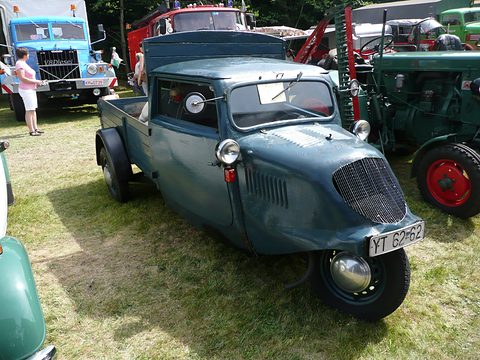
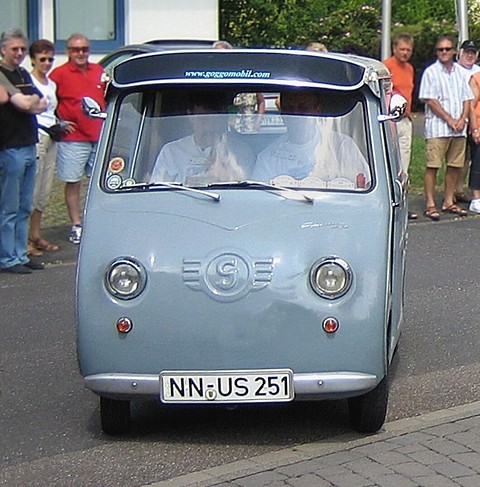
1 Blue-grey Tempo A 400 three-wheeled pick-up at Jonsdorf, Saxony, in August 2015.
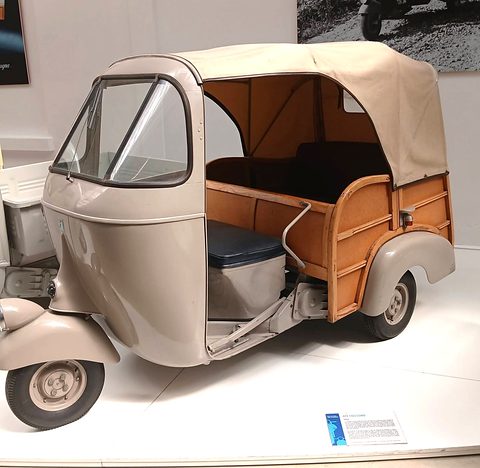
2 A 1957 Ape Calessino with its canvas roof and wood-trimmed passenger seat.
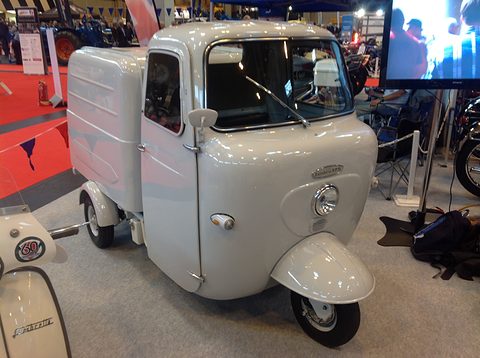
3 A grey Innocenti Lambro 175 delivery van at the Classic Motor Show, NEC Birmingham, England, in November 2015.
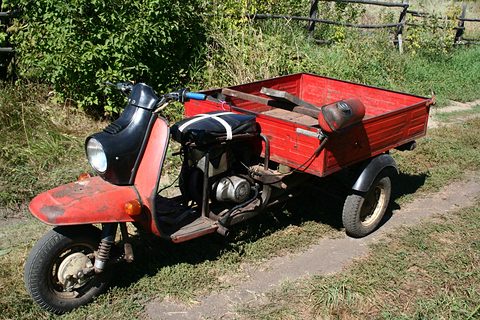
4 A red Tula Muravei cargo scooter from the left, showing its scooter body and steel load box, in Russia in August 2010.
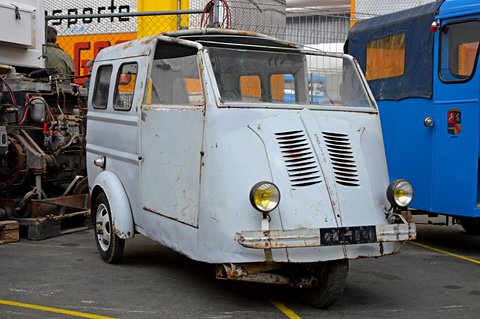
5 A grey 1960 Solyto steel-backed van (fourgonnette tôlée), worn and unrestored, on display in 2016.
12 more picturesFewer pictures
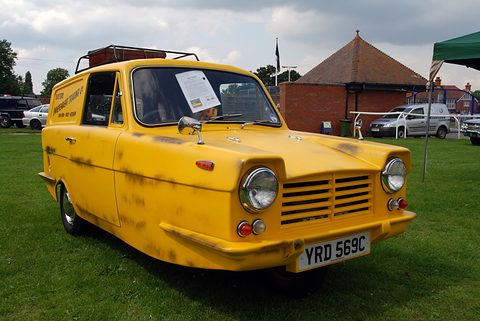
6 A 1965 Reliant 5 cwt van, YRD 569C, in Trotters replica livery at a show in Newbury, Berkshire, in 2009.
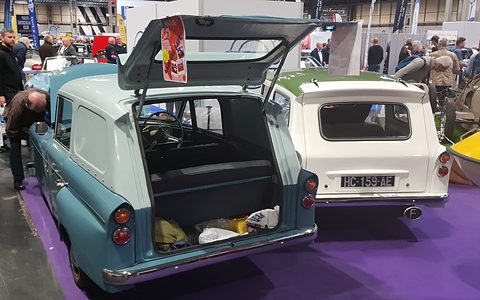
7 A 1962 Bond Ranger van and a 1965 Mark G Estate, one with its tailgate open, at the NEC Classic Motor Show in 2025.
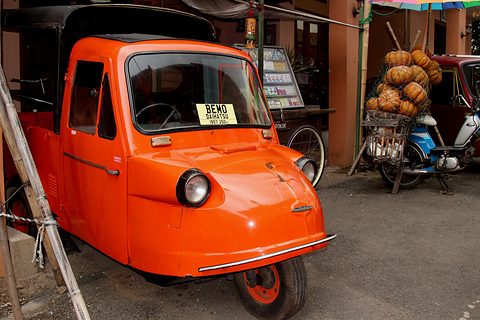
8 An orange 1967 Midget converted into a Bemo share-taxi, the Indonesian public-transport version, photographed in 2016.
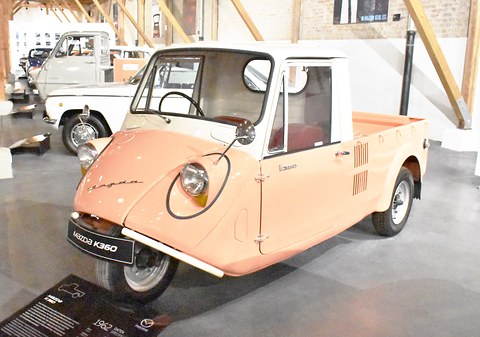
9 An orange and white 1962 Mazda K360 in the Mazda Classic museum, Augsburg, Germany, in 2017.
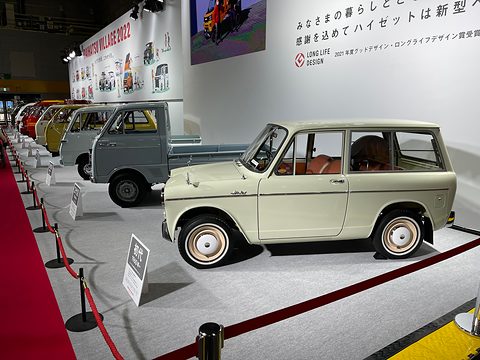
10 Every generation of the Daihatsu Hijet lined up at the Daihatsu 60th-anniversary display, Osaka Auto Messe, Japan, in February 2022.
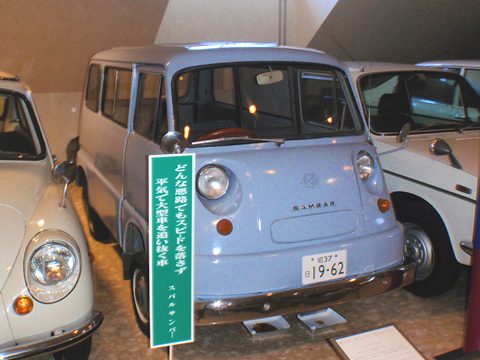
11 A pale blue first-generation Subaru Sambar light van at the Motorcar Museum of Japan, Komatsu, Japan, in October 2009.
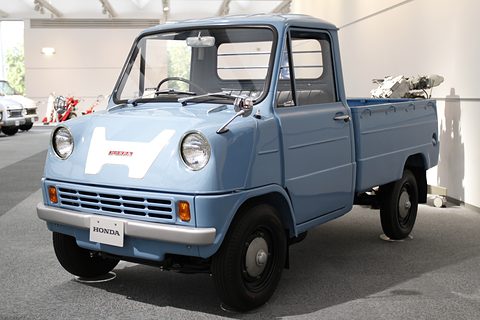
12 The Honda Collection Hall’s 1963 T360 at Twin Ring Motegi in 2010.
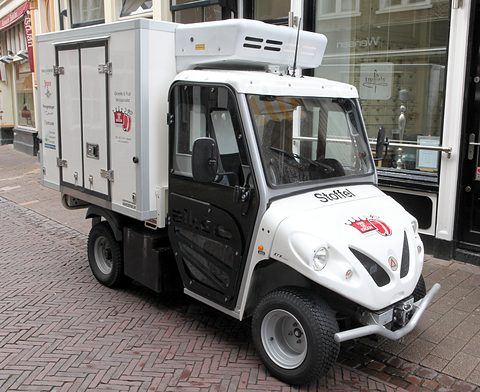
13 An Alkè ATX 280E with an insulated box body in the Netherlands in August 2011.
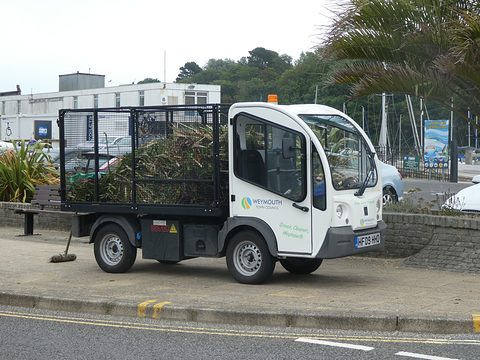
14 A Goupil G3 tipper loaded with garden waste on the seafront at Weymouth, England, in July 2020.
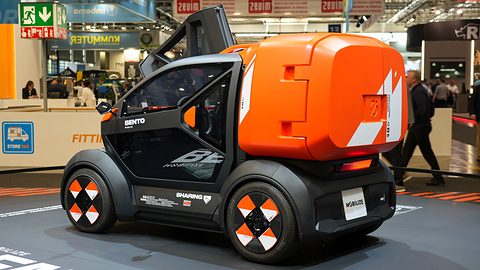
15 A Mobilize Bento with an orange cargo box at IAA Transportation, Hanover, Germany, in September 2024.
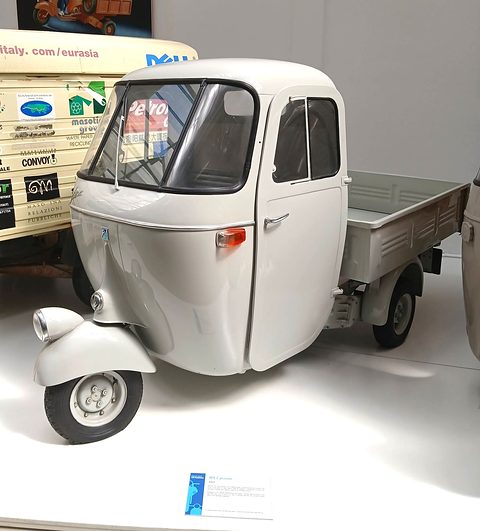
16 A 1957 Ape C flatbed, the first Ape with an enclosed cab, in the Museo Piaggio, Pontedera.
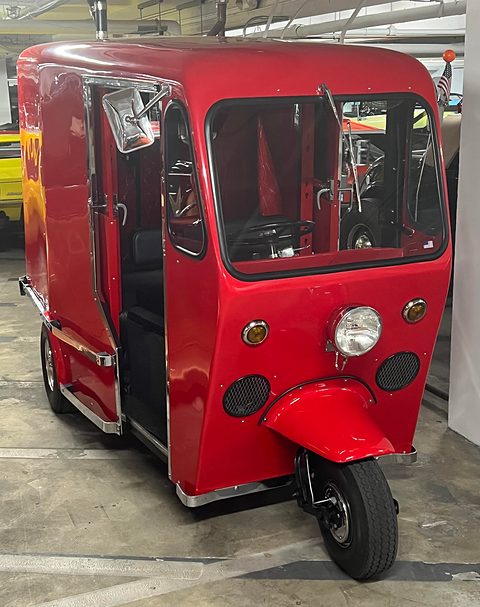
17 A restored red Westcoaster Mailster at the Petersen Automotive Museum, Los Angeles, in August 2024.
Picture credits (17)
- 1 Rainerhaufe, CC BY-SA 4.0
- 2 Guzzista76, CC BY-SA 4.0
- 3 Andrew Bone, CC BY 2.0
- 4 Игоревич, Public domain
- 5 Spielvogel, CC0
- 6 allen watkin, CC BY-SA 2.0
- 7 Andrea Boano, CC BY 4.0
- 8 Thank You (25 Millions ) views, CC BY 2.0
- 9 Bergfalke2, CC BY-SA 4.0
- 10 Tokumeigakarinoaoshima, CC BY-SA 4.0
- 11 Kzaral, CC BY 2.0
- 12 baku13, CC BY-SA 2.1 jp
- 13 Joost J. Bakker, CC BY 2.0
- 14 Andrew Bone, CC BY 2.0
- 15 MarcelX42, CC BY-SA 4.0
- 16 Guzzista76, CC BY-SA 4.0
- 17 TaurusEmerald, CC BY-SA 4.0
The cars
Profiles
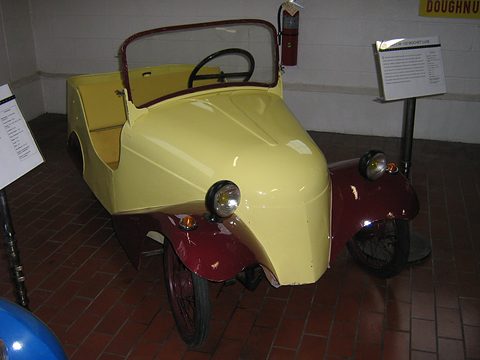
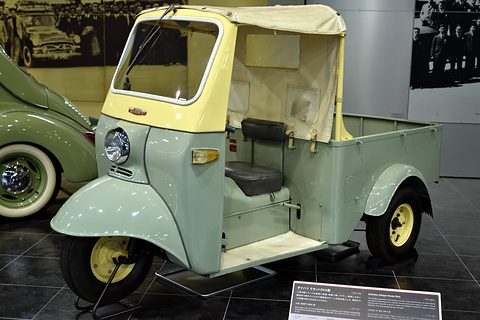
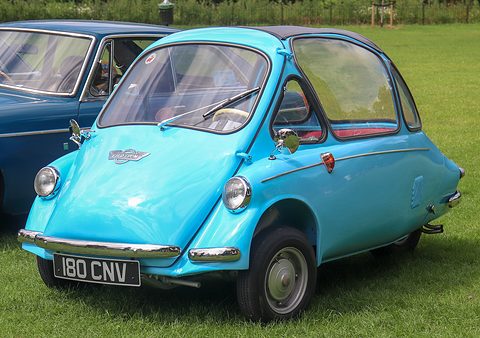
23 more cars and 7 more maker groupsFewer
Sources
Numbered as in the text
Sources are given as plain text; the links are on the Credits page.
- Japanese Wikipedia, Daihatsu Midget, read in full; it cites 360cc kei-jidōsha no subete (2013) and JSAE’s 1996 interview with Ōsuga Jirō, former vice-president of Daihatsu.
- Society of Automotive Engineers of Japan (JSAE), Landmarks of Japanese Automotive Technology, item 3-13, “Daihatsu Midget DKA”.
- German Wikipedia, Vidal & Sohn Tempo-Werk, read in full with its model table; it cites Werner Oswald, Deutsche Autos 1920–1945 (1996), and the Kraftfahrt-Bundesamt (2008).
- Road Traffic Act 1930, section 2(1), as enacted.
- Eric Favre, article on New-Map, Solyto and KVS, Gazoline, web version, archived in 2006; written with Joseph Spalek.
- Japanese Wikipedia, Kei truck, the history and the list of makers, read in full; its bibliography includes Katsuragi Yōji’s chronicle of small and kei trucks (Grand Prix Shuppan, 2006).
- English Wikipedia, Styl Kar, citing Skartsis (2012). Used as a lead.
- Piaggio Group press office, “APE (1948–2019): una storia italiana”, 21 September 2018, read via a summary.
- German Wikipedia, Blitzkarren, read in full; it cites Georg Schmidt, Borgward – Carl F. W. Borgward und seine Autos (1986), pp. 35–39.
- Goliath Veteranen-Club, “Typenblatt Blitzkarren” (2010), archived copy.
- German Wikipedia, Framo, read in full. Used as a lead; it cites Werner Oswald’s Deutsche Autos (1996).
- f-r-a-m-o.de, “Firmengeschichte”, a history of the firm.
- Tempo-dienst, “1928 – 1978: 50 Jahre Vidal + Sohn”, the firm’s history by a specialist parts firm, read through a summary.
- RM Auctions, Bruce Weiner Microcar Museum sale, Madison, Georgia, February 2013, lot 563, “1958 Goggomobil TL-250 Transporter ‘Dubble Bubble’”.
- English Wikipedia, Piaggio Ape, read in full. Used as a lead.
- Italian Wikipedia, Piaggio Ape, read in full. Used as a lead; it cites l’Unità, la Repubblica and Piaggio press material.
- Italian Wikipedia, Piaggio Ape Calessino, read in full. Used as a lead; it cites no sources for its figures.
- English Wikipedia, Daihatsu Midget, read in full. Used as a lead; it cites Bernd-Wilfried Kießler, Daihatsu Automobile (1992).
- theLambro.com, “Lambretta 3 Wheeler – FA, FB, FC and FD Models”, crediting Bruno Strigini.
- theLambro.com, “History of the Lambro”.
- theLambro.com, “Lambretta 150 FD-C”.
- Scooternova, “Has Scooters India Ltd finally finished?”, 22 January 2021.
- theLambro.com, “Lambro 550 and Lambro 450”.
- Russian Wikipedia, Муравей (мотороллер), read in full; it cites the catalogue Мир мотоциклов (Za Rulyom, 1999).
- Overclockers.ru blog, «Тула-200 – „дедушка“ русских мотороллеров», a popular history, read through a summary.
- A. Pototsky, «Тула будет лучшей», Za Rulyom, January 1960, read through a summary of the archive page.
- «По письму приняты меры», Za Rulyom, June 1978, read through a summary of the archive page.
- Bruce Weiner Microcar Museum, “1958 Solyto”, tour page.
- Bruce Weiner Microcar Museum, “1967 Solyto Break Camping”, tour page.
- MUHBA (Museu d’Història de Barcelona), L’enginy de postguerra. Microcotxes de Barcelona, Llibrets de sala 11 (2012).
- Toni Solans, La web de los microcoches (grupo7.com), the index of makers and its maker pages.
- English Wikipedia, MotorCar (trucks), citing Skartsis and Avramidis, Made in Greece (2003). Used as a lead.
- English Wikipedia, Attica (automobiles), read in full; it cites Skartsis and Avramidis (2003) and Skartsis (2012).
- German Wikipedia, Bioplastic, read in full; it cites Linz and Schrader and Georgano’s Beaulieu Encyclopedia of the Automobile (2001).
- W. B., “Reliant at Tamworth”, Motor Sport, June 1964, a factory visit.
- Reliant Motor Club, “A (very) brief history of Reliant”.
- Bond Owners’ Club, “Mark B – April 1951 to November 1952: Vehicle Modifications by Chassis Number”, archived copy of 2012.
- Bond Owners’ Club, “Mark F – November 1958 to January 1963”, same series, archived copy of 2012.
- English Wikipedia, Bond Minicar, read in full. Used as a lead; it cites The Motor, Motor Cycling, Light Car and The Times.
- Heinkel Trojan Club, “Cabin Cruisers”, a model and production history from Trojan’s records, Glass’s Guide and Motor Cycle, archived 2015.
- Reliant Motor Club, “Know your Supervan”.
- National Motor Museum, Beaulieu, “Reliant Regal Supervan III”, collection entry.
- German Wikipedia, Reliant Supervan, read in full. Used as a lead; it cites Pither (2002), Wilson-Hall (2014) and a Staffordshire Past Track photograph.
- German Wikipedia, Goggomobil, the Transporter paragraph and the totals line.
- auto motor und sport 22/1956, report on the IFMA show in Frankfurt.
- English Wikipedia, Goggomobil, the Transporter section and specification box, which cite the GLAS Automobil Club International.
- Secret Classics, “Glas Goggomobil TL-250”.
- English Wikipedia, Westcoaster Mailster, read in full in a plain-text copy without its references.
- Smithsonian Institution, National Postal Museum, object record “Westcoaster mailster”, 1985.0372.1, archived copy.
- National Archives, The Unwritten Record blog, “How to Drive the Mailster: A Time-Traveling Lesson in Postal Technology”, 6 December 2022, read through a summary.
- Japanese Wikipedia, Mazda K360, read in full.
- Kia Heritage Archive, “K‑360”, read in summary.
- Japanese Wikipedia, Kurogane Baby, read in full.
- Society of Automotive Engineers of Japan, 日本の自動車技術330選, no. 3-17, ダイハツハイゼットL-35 (1960).
- Society of Automotive Engineers of Japan, 日本の自動車技術330選 (330 landmarks of Japanese automotive technology), no. 3-18, Subaru Sambar K‑151 (1961).
- Japanese Wikipedia, スバル・サンバー, read for the Subaru-built years.
- webCG, news report on the end of Subaru Sambar production, 29 February 2012, read through a summary.
- Japanese Wikipedia, ホンダ・T360, read in full.
- Paul Niedermeyer, “Honda’s Wild 9000 RPM Mid-Engine T360 Pickup Of 1963”, The Truth About Cars, 30 March 2010.
- Honda, “Trajectory of Challenges: 1960s”, Honda’s history digest.
- English Wikipedia, Honda T360, read in full.
- Polaris Industries, “Polaris to Acquire Goupil Industrie SA”, 17 November 2011, as republished by Dirt Trax Online.
- English Wikipedia, Alkè, read in full.
- Trade-press articles on Goupil, among them the Journal de l’Automobile, Fleet News (6 July 2023) and The Driven (9 September 2021), read only in search summaries.
- French Wikipedia, Mega (automobile), with the Aixam articles in French and German Wikipedia.
- English Wikipedia, Renault Twizy, the section on the Twizy Cargo.
- Stellantis & You UK, “Citroen Launches MY AMI Cargo: Made For Business Users”, 14 May 2021, Citroën’s release.
- English Wikipedia, Mitsubishi Minicab, the section on the Minicab MiEV.
- English Wikipedia, Mobilize Duo, in part.