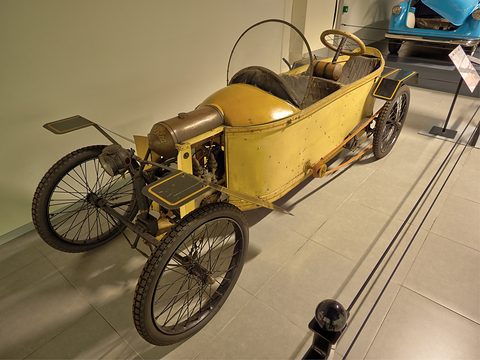
What is a microcar?
In most countries no law says. The word belongs to enthusiasts, museums and clubs, and every era had its own name for the smallest car on the road. Here the line is drawn at the length of a Fiat 500, and a car over it comes in only when the story needs it.
In most countries no law defines it
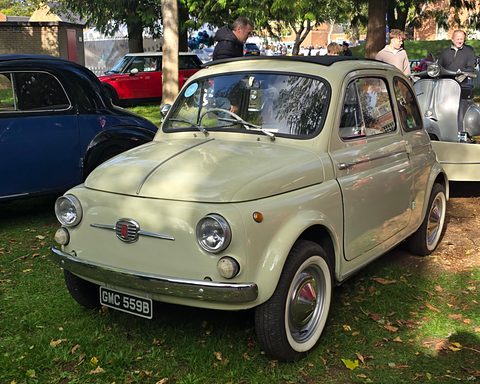
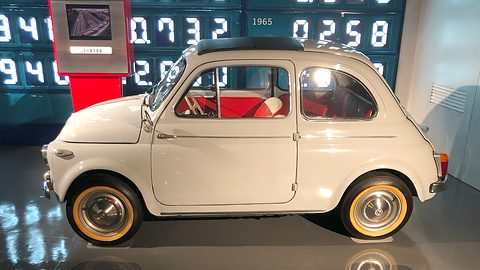
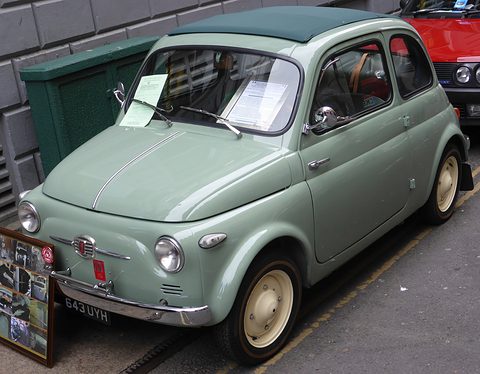
A Fiat Nuova 500 is 2,970 mm (117 in) long, and that is the line drawn here: a microcar is, roughly, a car no longer than one.source 1source 2 A few larger cars come in because a story about small cars cannot be told without them: a famous three-wheeler, or the car that defined a category.
In most countries no law defines a microcar.source 3 The word belongs to clubs, museums and writers, and they do not agree on it. English Wikipedia, drawing on a 2015 A–Z of scooters and microcars, settles for the smallest size of car, with three or four wheels and usually an engine under 700 cc; it adds that some clubs, among them the Vintage Microcar Club, admit cars of up to 1,000 cc.source 3 An engine size leaves out the electric cars.
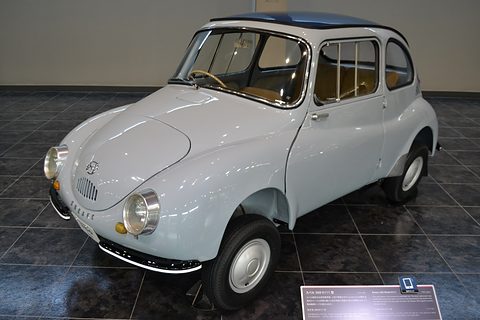
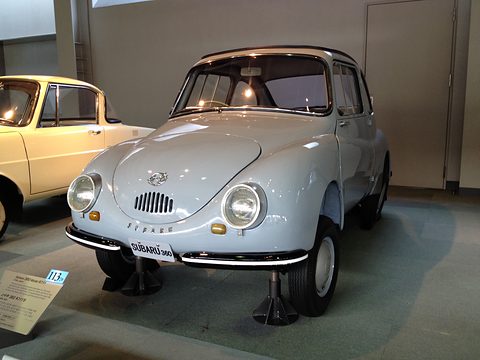
The rule is about size, not about a decade or a shape. A microcar is not only a bubble car of the 1950s, and not only a three-wheeler: the Fiat 500 itself, most BMW Isettas and the Subaru 360 have four wheels.source 1source 4source 5 Nor is it a post-war idea. The word is modern, but the small car goes back to the 1890s, and almost every wave of small cars was shaped by a law.source 6source 7source 8source 9
The yardstick
Why the Fiat 500? Because it is small, familiar and was built in millions. Fiat launched the Fiat Nuova 500 in July 1957: 2,970 mm long, 1,320 mm (52 in) wide and 1,325 mm (52 in) high, 470 kg (1,036 lb) empty, with an air-cooled twin of 479 cc in the tail.source 1source 2source 12 By Fiat’s count it built 3,893,294 of them by 1975.source 1source 12 It was 245 mm (10 in) shorter than the Fiat 600 of two years before.source 1
The yardstick also happens to fit Japan. From 1950 the kei class allowed a car 3.0 m (118 in) long and 1.3 m (51 in) wide, and from 1951 a four-stroke engine of 360 cc; two-strokes were held to 240 cc until 1954 or 1955. That box held until the end of 1975, which is why the kei cars of the period are almost all between 2,980 and 2,995 mm long.source 8source 13 The Subaru 360, at 2,990 mm, is one of them.source 5
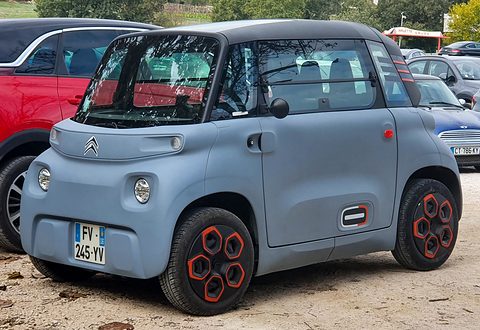
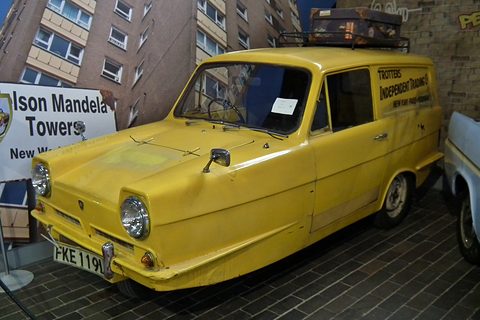
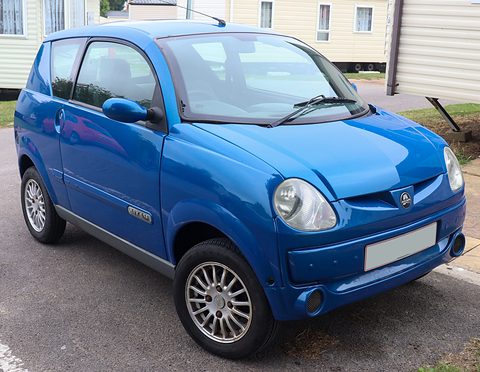
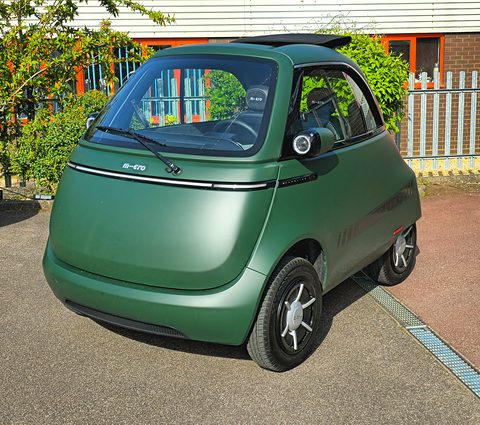
Some cars over the line are here too. The Reliant Regal three-wheeler, the post-war Lloyd LP300 and the Fiat 126 that followed the 500 all run past 2,970 mm, and all belong to the history of the small car.source 14source 15source 16 Modern city cars show that the yardstick still works the other way: the Smart Fortwo and the Citroën Ami fit under it with room to spare.source 17source 18
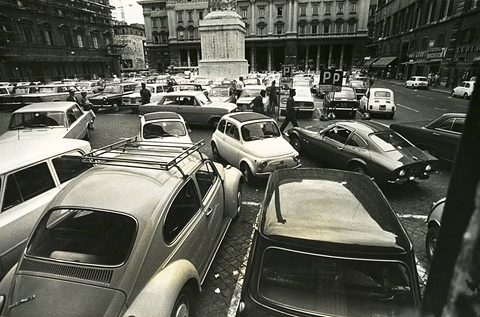
The yardstick and the smallest
Side by side
A word for every era
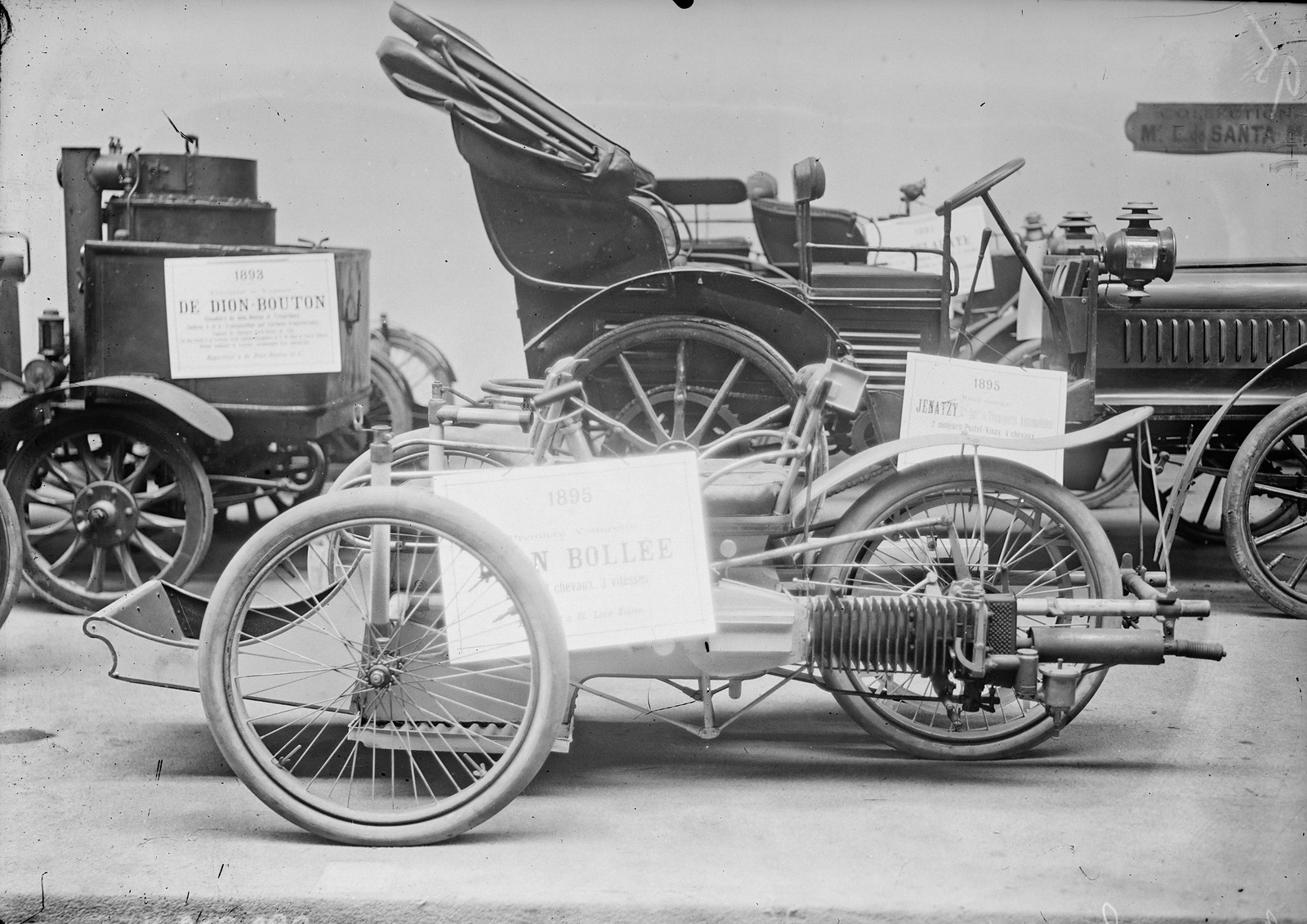
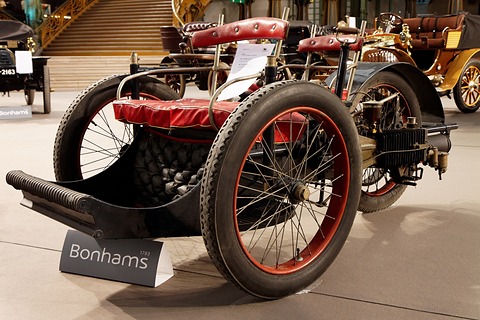
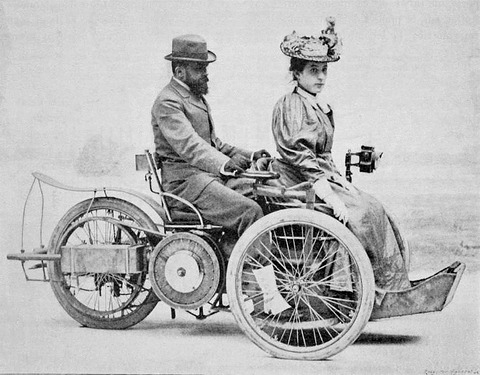
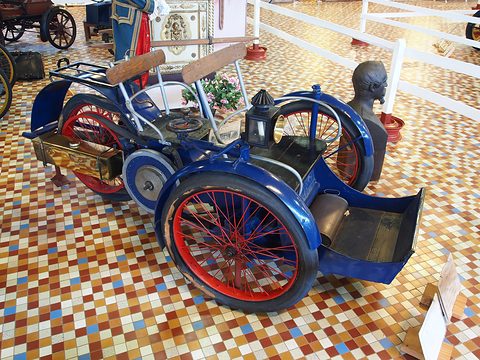
Voiturette. Léon Bollée called his tandem three-wheeler of 1896 a voiturette, a little car, a word he invented and then registered. The Léon Bollée Voiturette gave France its word for any light car.source 6
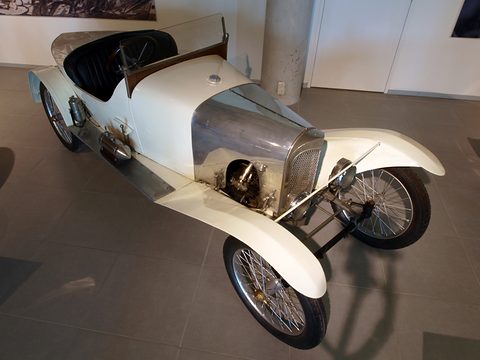
Cyclecar. The light car built from motorcycle parts had a British definition before it had an international one. Until December 1912, The Cyclecar noted, the only one was that of the RAC and the Auto-Cycle Union: a chassis of no more than 6 cwt (305 kg), or 7 cwt (356 kg) with its body, and an engine no larger than 1,100 cc.source 7 On 14 December 1912 the international motorcycling federation agreed two classes for competition: a large class with a weight limit of 356 kg (784 lb) and engines up to 1,100 cc, and a small one weighing between 150 and 300 kg with up to 750 cc.source 7 See cyclecars.
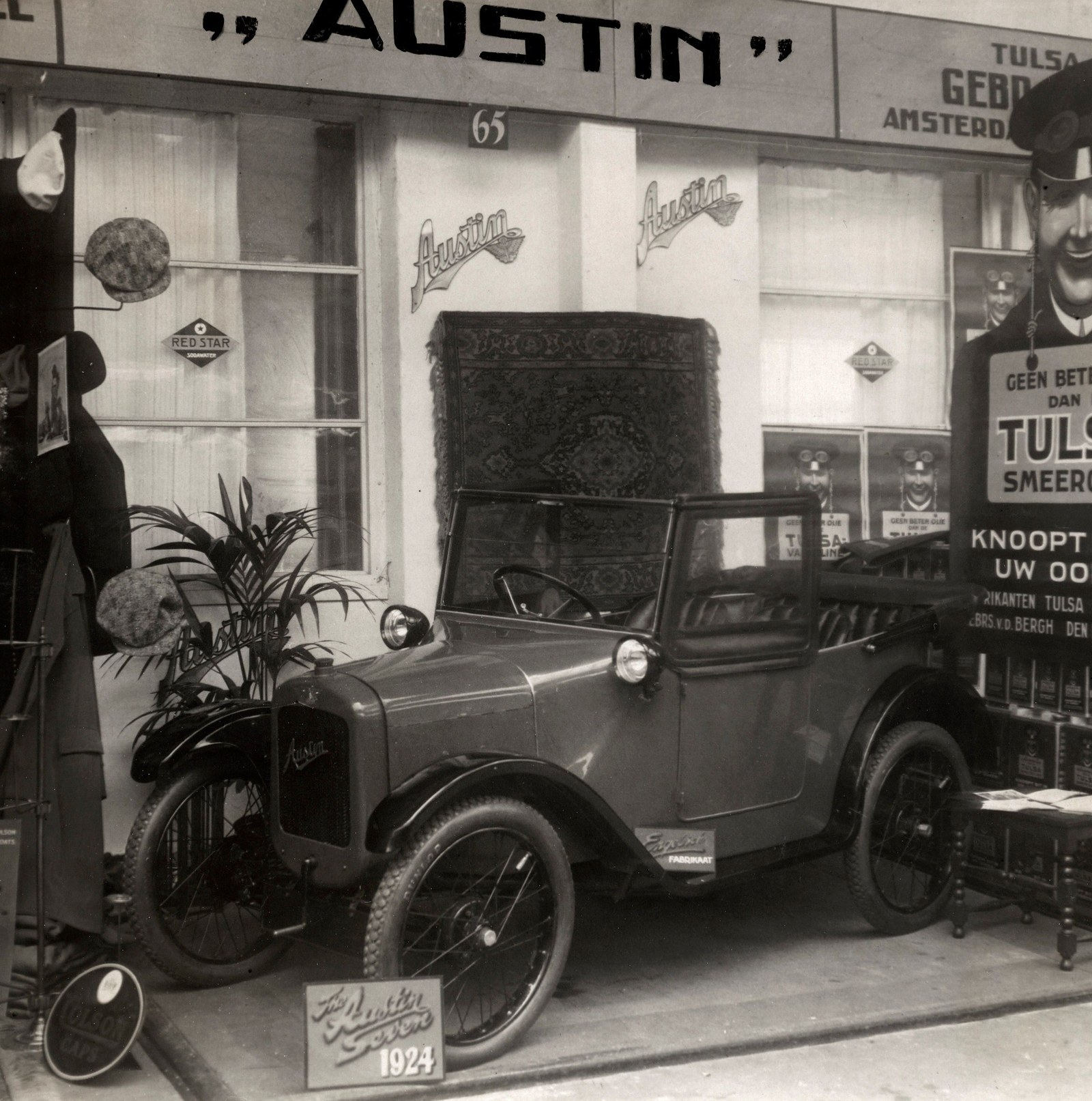
Light car. In Britain the cyclecar gave way to the better-built light car, and Temple Press’s magazine was already The Light Car and Cyclecar in 1919.source 19 The Austin Seven, conceived in 1920–21 as a full-size car shrunk for young families whose alternative was a motorcycle combination or a cyclecar, is the type.source 20source 21
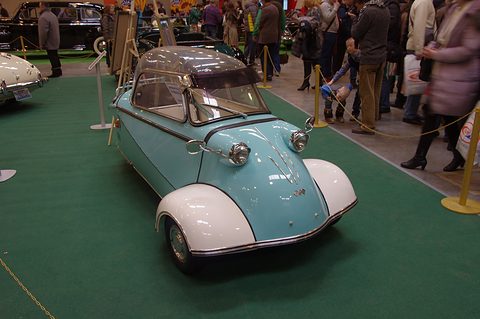
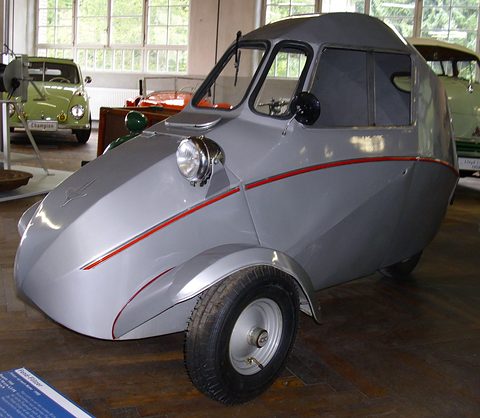
Kleinstwagen, Kabinenroller and Rollermobil. In 1950s West Germany the smallest cars were the Kleinstwagen, and the cabin scooters were Kabinenroller or Rollermobile: auto motor und sport headed a table of 1955 “Kleinstwagen und Rollermobile”, and the Finance Ministry used the second word in 1956.source 22source 23 Fritz Fend’s prototype of 1952, the FK 150, took its K from Kabinenroller.source 24
Bubble car. The English name for the same cars is informal; Merriam-Webster finds it first in 1957.source 25 See bubble cars.
Kei car. Japan’s kei jidōsha, light motor vehicle, was created by ministry ordinance on 8 July 1949, with a box of 2.8 × 1.0 × 2.0 m (110 × 39 × 79 in) and engines of 150 cc four-stroke or 100 cc two-stroke. The box grew to 3.0 by 1.3 m, with 360 cc for a four-stroke, in 1950–51, to 3.2 × 1.4 m (126 × 55 in) and 550 cc in 1976, to 3.3 m (130 in) and 660 cc in 1990, and to 3.4 × 1.48 m (134 × 58 in) in 1998.source 8source 13
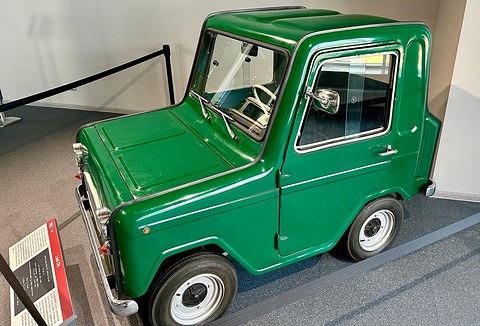
Minicar. In Britain the word was a car’s name: the Bond Minicar, in production from January 1949.source 26 In Japan minikā is a legal class, a vehicle of more than 20 cc and up to 50 cc, and until February 1985 one could be driven on a moped licence.source 27 See Japanese 50 cc minicars.
Quadricycle. Directive 92/61/EEC of 1992 created the European light quadricycle: under 350 kg (772 lb) unladen without its batteries, 45 km/h (28 mph), 50 cc for a petrol engine or 4 kW for any other.source 28 Directive 2002/24/EC named it L6e, and Regulation (EU) No 168/2013 allowed 425 kg in running order from 2016.source 10source 11 The Citroën Ami is one, an L6e-BP.source 29
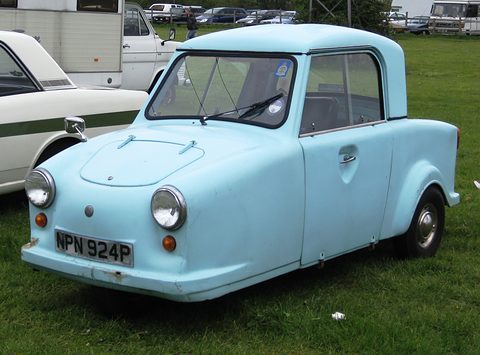
Invalid carriage and three-wheeler. Britain’s Road Traffic Act 1930 made both legal classes. An invalid carriage weighed no more than 5 cwt (254 kg) unladen and was built specially for a disabled person, rather than adapted; and any vehicle on fewer than four wheels weighing no more than 8 cwt unladen counted as a motorcycle.source 9
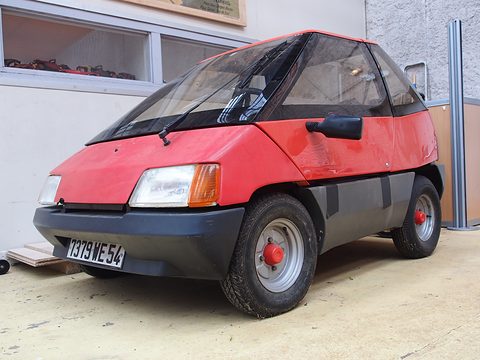
Microcar. The word that covers all of them is the one clubs and museums use: the Bruce Weiner Microcar Museum in Georgia, whose collection RM Auctions sold in 2013, and Britain’s National Bubble and Microcar Museum.source 30source 31 In France it was a brand: Jeanneau’s licence-free car of 1980 was the Microcar RJ49.source 32
The laws that made them
Small cars were shaped by tax and licence lines. In France the finance law of 30 July 1920 taxed a cyclecar at 100 francs a year if it weighed at most 350 kg bare, had two seats and an engine no bigger than 1,100 cc, and makers built to the limit.source 33 In Britain a three-wheeler under 8 cwt counted as a motorcycle, and in 1956 its road tax was £5 a year, a car’s £12 10s.source 9source 34 In Austria, too, three-wheelers were taxed less and open to motorcycle-licence holders, so Heinkel kept three wheels for that market.source 35 In West Germany holders of the old motorcycle licence, class 4, could drive small cars of up to 250 cc, and the BMW Isetta 250 was built for them.source 4 In Japan the kei box set the size of a generation of cars.source 8 In France the licence-free car grew out of a 1939 exemption for light motorised bicycles, and since 1992 the European light quadricycle has been the common rule.source 36source 28
Engine limits followed the same lines: 50 cc for the French licence-free cars of the 1970s and for the Japanese minicars, 250 cc for the West German licence, and 360, 550 and then 660 cc for the kei car.source 37source 38source 27source 4source 8 Three wheels, likewise, were usually an answer to a law rather than to an engineering problem.source 9source 34
The smallest of all
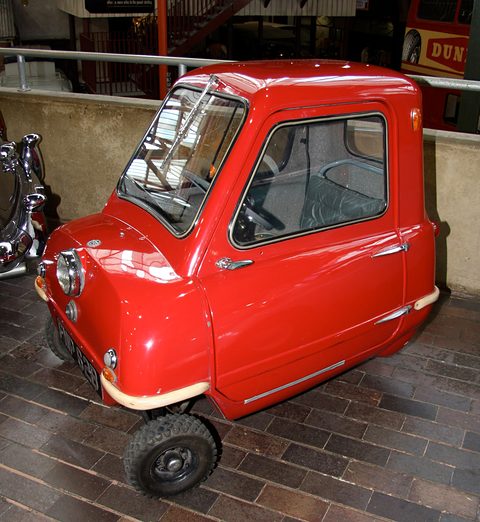
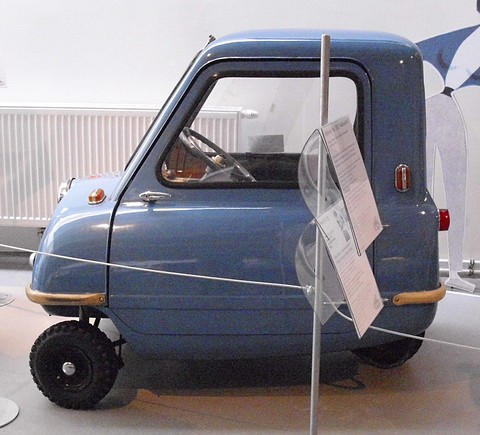
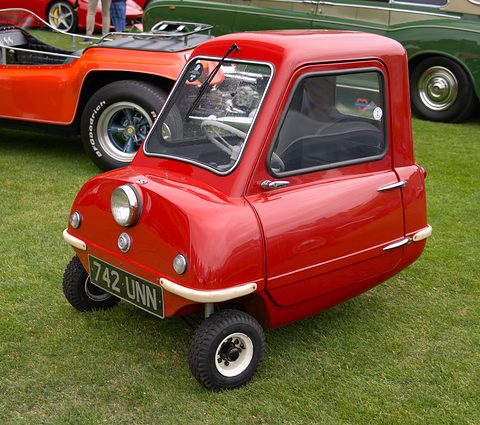
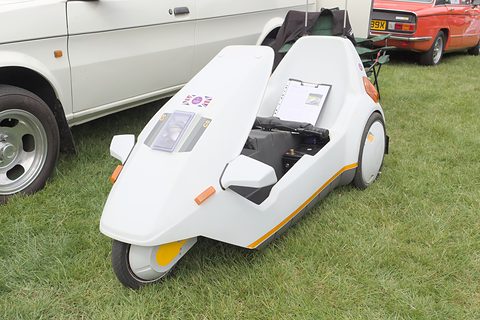
Guinness World Records counts the Peel P50 the smallest production car. Built on the Isle of Man in the 1960s, it was 1,372 mm (54 in) long, weighed 59 kg (130 lb) and had a 49 cc engine.source 39source 40 Shorter still, though hardly a road car, was the Airscoot, made by Aircraft Products of Wichita in 1947 as a folding two-seater that a pilot could stow in a light aircraft. It measured just 934 mm (37 in), weighed 33 kg (72 lb) and had a 2.6 hp single.source 41 Among road vehicles the Sinclair C5 electric tricycle of 1985 is lighter than the P50, at 45 kg (99 lb) with its battery.source 42
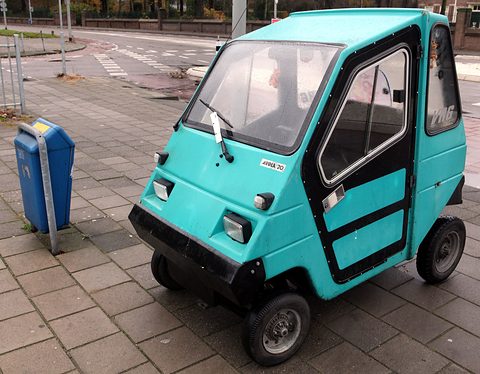
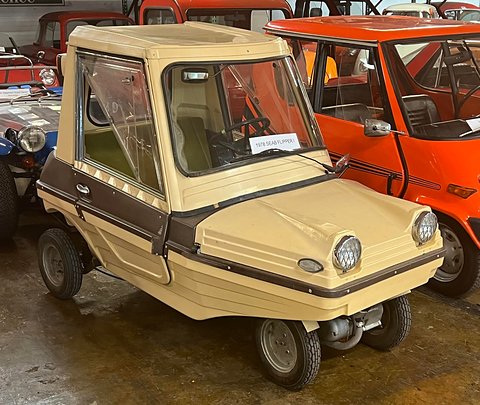
Engines went smaller than 50 cc. Many French licence-free cars of the 1970s ran on 47 cc Sachs singles: the Acoma Mini Comtesse could have a Saxonette mounted on its single front wheel, the Arola had one under its polyester body, and the SEAB Flipper I a Sachs ADLX of the same size.source 37source 43source 38 The first series of the Fend Flitzer, built from August 1948 to March 1949, had less still: a 38 cc Victoria two-stroke of 1 PS, in a single-seater weighing 75 kg (165 lb).source 44 Fend’s next idea, a cabin scooter with two seats in tandem, became the Messerschmitt KR175, the first production Kabinenroller.source 24
Smallest to largest
29 cars, to scale
Each bar is the car’s length on a 3.5 metre track; the red notch is a Fiat 500.
-
Peel P501962–1965 · Isle of Man · 3 wheels
1.37 m -
Minicat1978–1980 · France
1.58 m -
Acoma Mini Comtesse1972–1984 · France · 3 wheels
1.68 m -
Erad1978–1997 · France · 4 wheels
1.69 m -
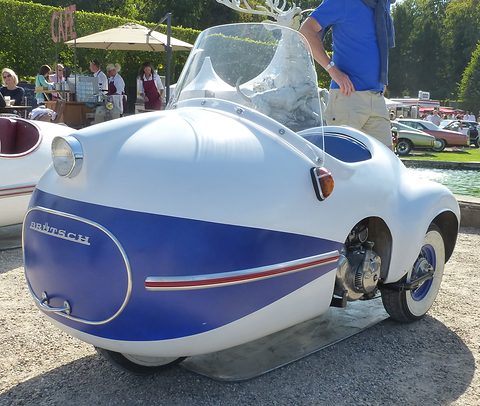
Brütsch Mopetta1956–1958 · West Germany · 3 wheels
1.70 m -
Sinclair C51984–1985 · Britain · 3 wheels
1.74 m -
Willam City1967–1988 · Italy · 4 wheels
1.78 m -
Arola1976–1983 · France · 3 wheels
1.84 m -
Delsaux Modulo1979–1983 · France · 4 wheels
1.84 m -
Ligier JS41980–1987 · France · 4 wheels
1.97 m -
Fend Flitzer1948–1951 · Germany · 3 wheels
2.00 m -
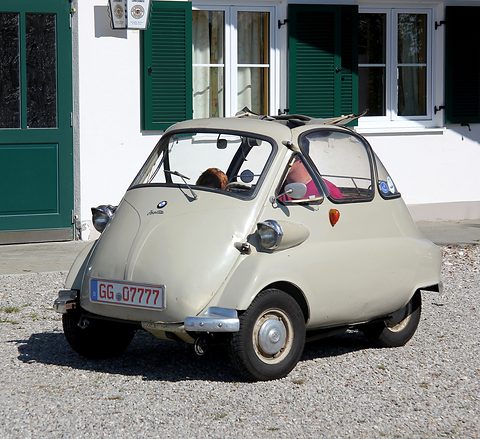
BMW Isetta1955–1962 · West Germany · 4 wheels
2.29 m -
Citroën Ami2020– · France · 4 wheels
2.41 m -
Léon Bollée Voiturette1895–1899 · France · 3 wheels
2.50 m -
Microlino2022– · Switzerland · 4 wheels
2.52 m -
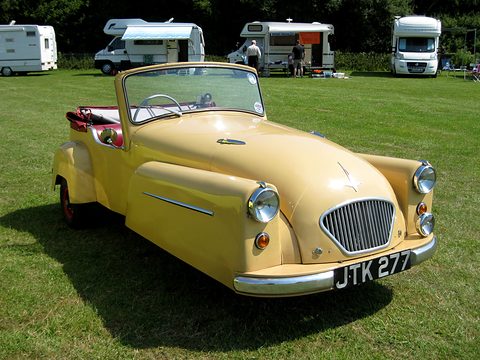
Bond Minicar1949–1966 · Britain · 3 wheels
2.69 m -
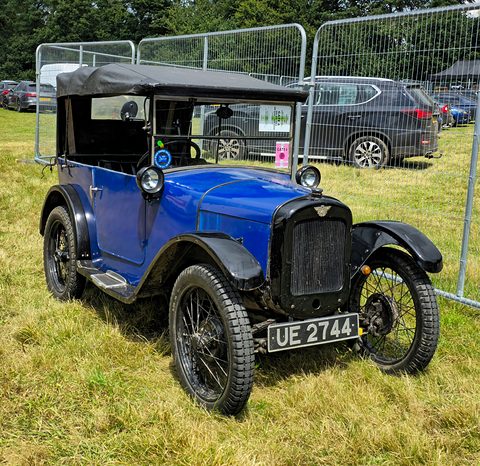
Austin Seven1922–1939 · Britain · 4 wheels
2.79 m -
Messerschmitt KR1751953–1955 · West Germany · 3 wheels
2.82 m -
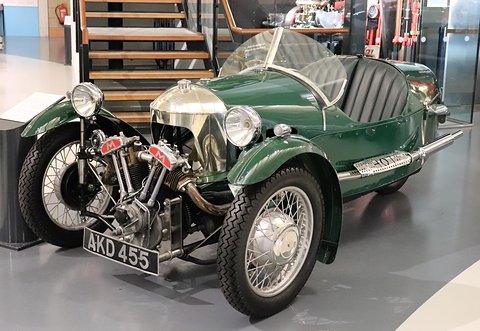
Morgan Three-Wheeler1910–1952 · Britain · 3 wheels
2.90 m -
Fiat Nuova 5001957–1975 · Italy · 4 wheels
2.97 m -
Invacar1946–1977 · Britain · 3 wheels
2.97 m -
Subaru 3601958–1970 · Japan · 4 wheels
2.99 m -
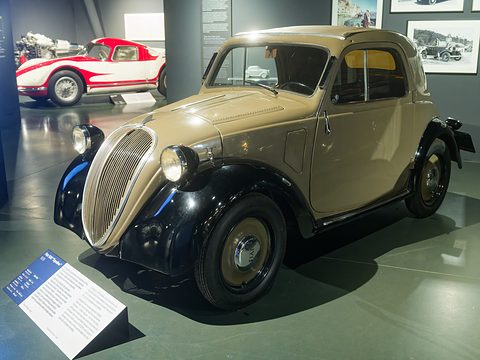
Fiat 500 Topolino1936–1955 · Italy · 4 wheels
3.21 m -
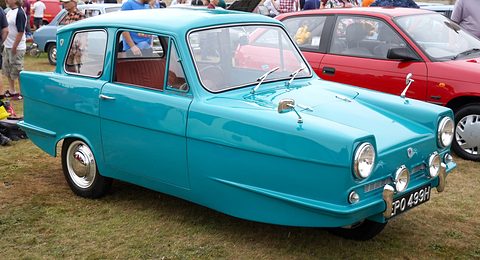
Reliant Regal1952–1973 · Britain · 3 wheels
3.43 m
5 more carsFewer
-
Reliant Supervan1963–1973 · Britain · 3 wheels
3.43 m -
Aixam1984– · France · 4 wheels
length unknown -
Bédélia1910–1925 · France · 4 wheels
length unknown -
GN cyclecar1910–1925 · Britain · 4 wheels
length unknown -
SEAB Flipper1978–1984 · France · 4 wheels
length unknown
Pictures
Five photographs
What is a microcar? 5
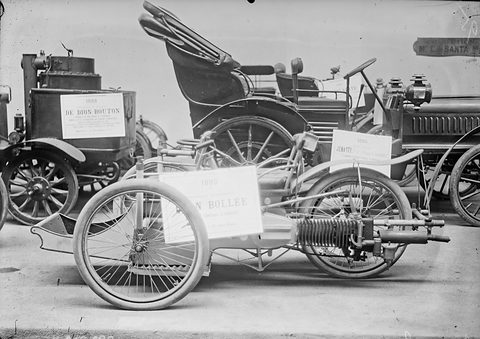
1 An 1895 Léon Bollée voiturette tricar with its placard at the retrospective exhibition on the Esplanade des Invalides, Paris, France, in November 1907.
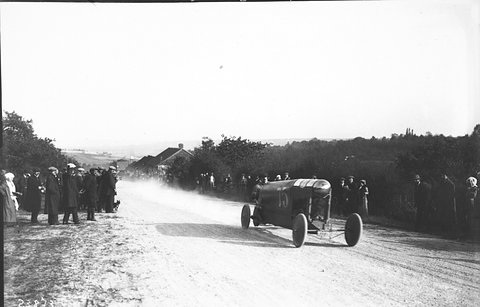
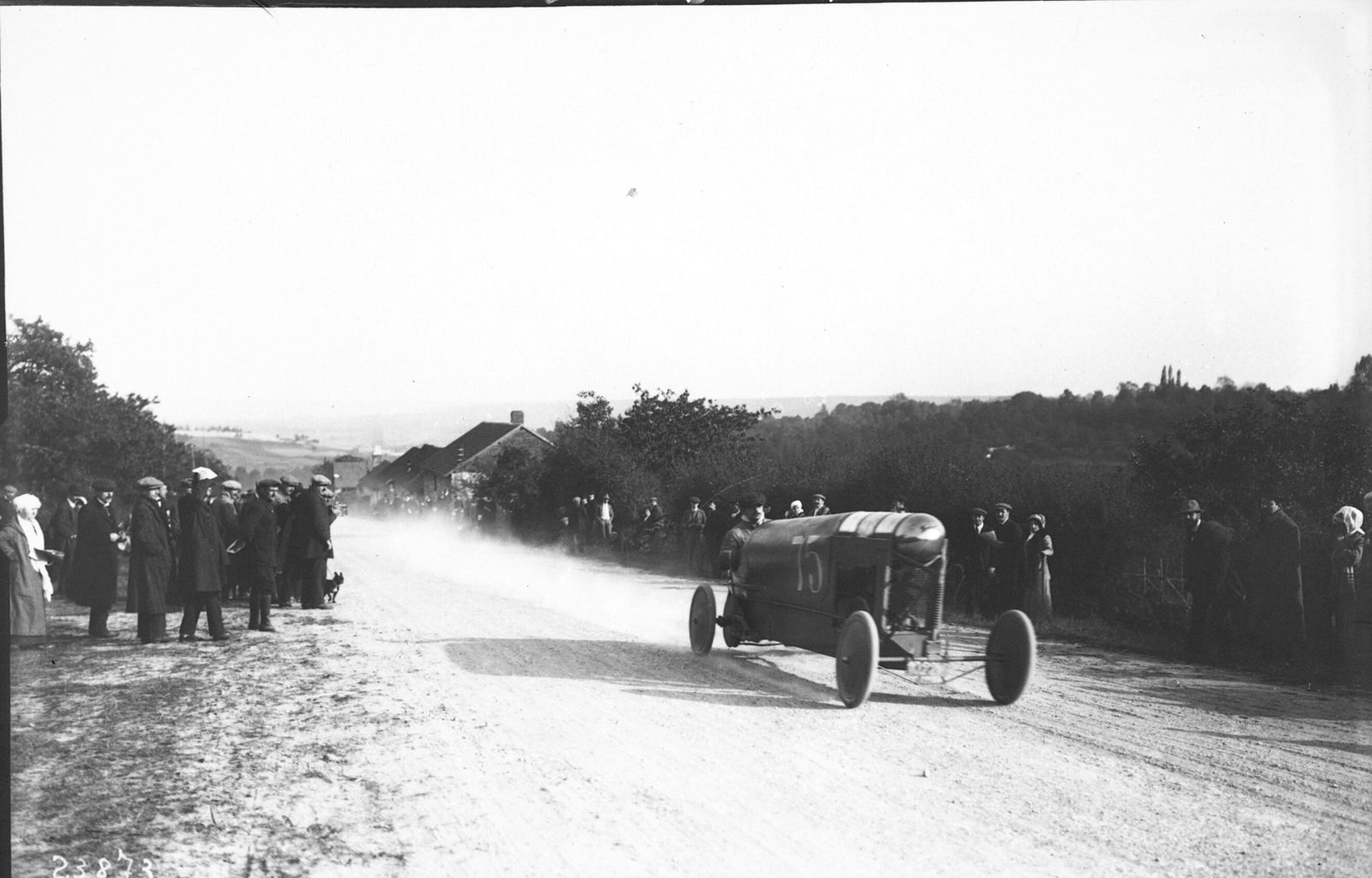
2 Bonville’s Bédélia climbing the Gaillon hill at speed, Eure, France, in October 1912.
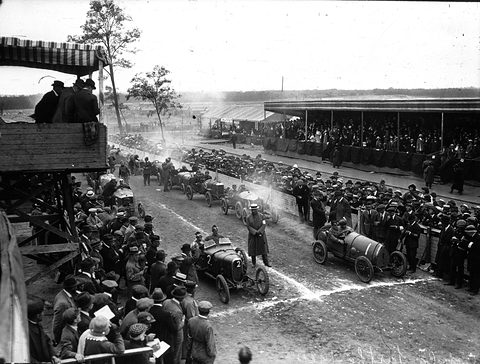
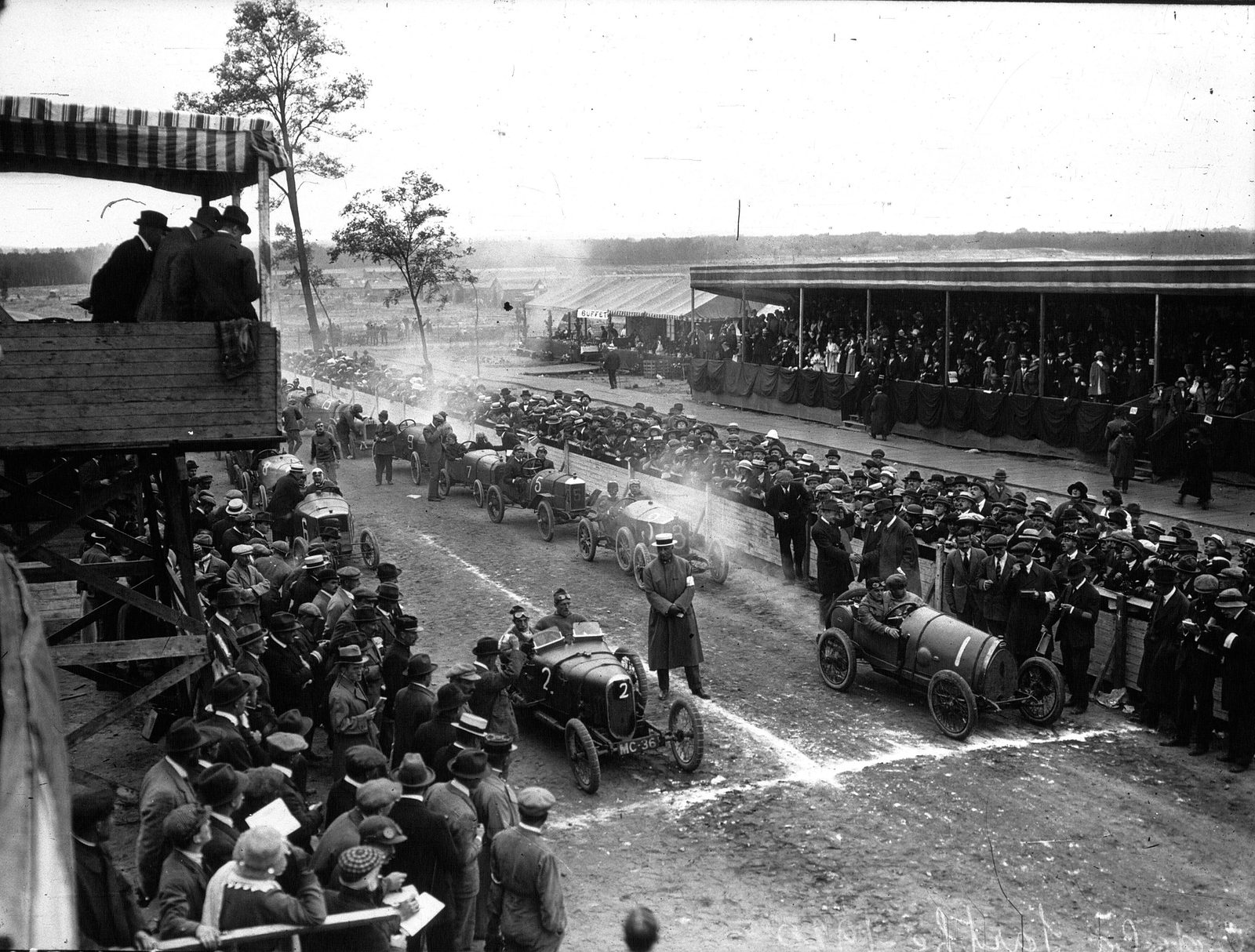
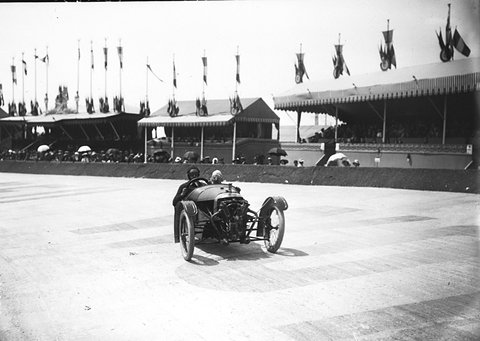
3 Start of the voiturette race on the Circuit de la Sarthe, Le Mans, in August 1920, with Douglas’s GN and Viscaya’s Bugatti among the crowd.
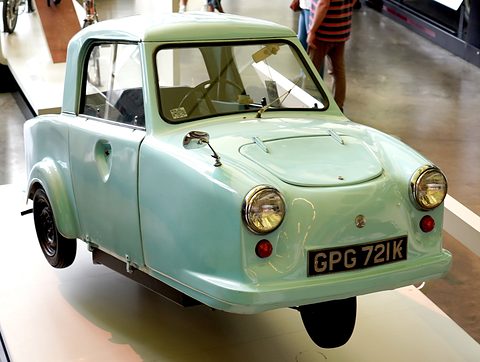
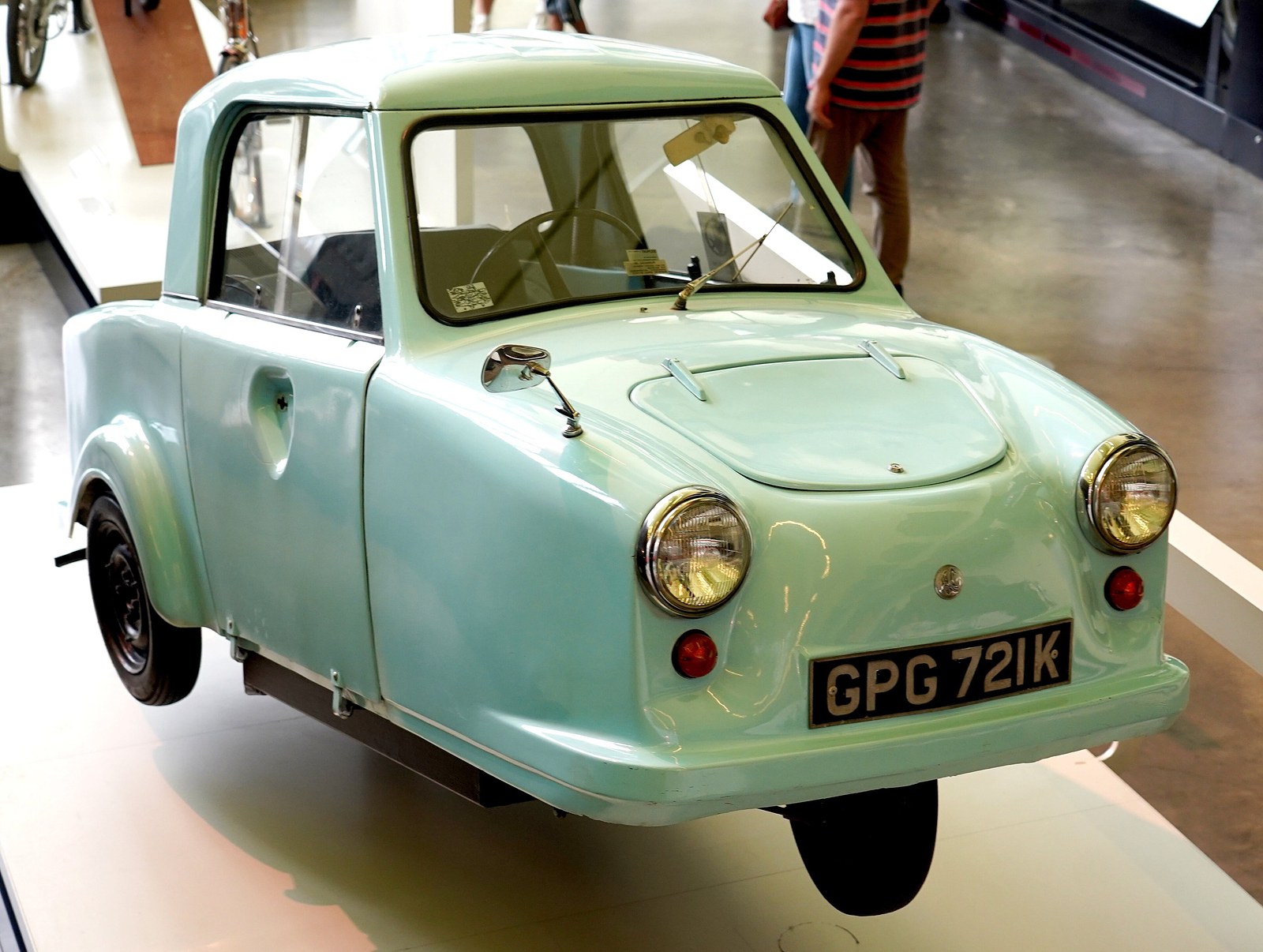
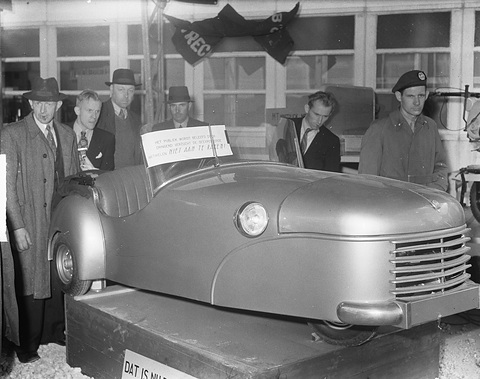
4 Wee Bluey, the mint-green 1971 AC Model 70, GPG 721K, on its plinth in the Riverside Museum, Glasgow, in 2023.
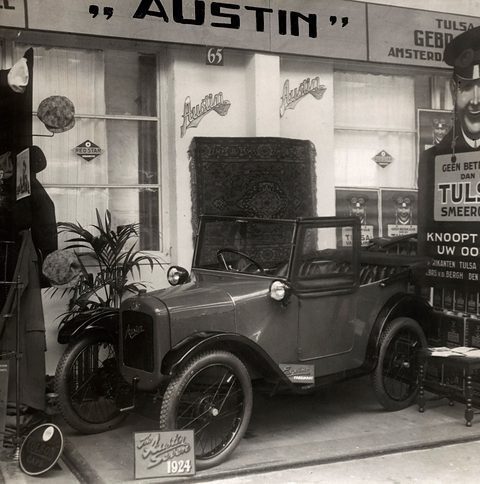
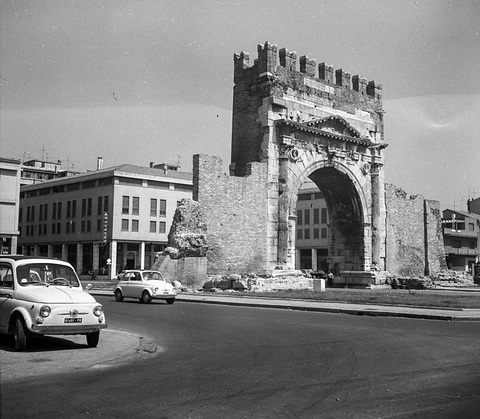
5 An Austin Seven tourer on the stand of the Hague dealer Riemer at the Amsterdam motor show (AutoRAI) in 1924.
Picture credits (5)
- 1 Agence Rol, Public domain
- 2 Agence Rol, Public domain
- 3 Agence Meurisse, Bibliothèque nationale de France, Public domain
- 4 kitmasterbloke, CC BY 2.0
- 5 Spaarnestad Photo, Public domain
The cars
Profiles
17 more carsFewer
Sources
Numbered as in the text
Sources are given as plain text; the links are on the Credits page.
- English Wikipedia, Fiat 500, read in full; it cites Fiat: Tutti i modelli del Novecento and automania.be.
- German Wikipedia, Fiat Nuova 500, read in full, with its technical table.
- English Wikipedia, Microcar; used as a lead. It cites Mike Dan, The A–Z of Popular Scooters & Microcars (Veloce, 2015), and the Vintage Microcar Club’s membership page.
- BMW Group PressClub, “50 years of the BMW Isetta”, press release of 25 February 2005, long version.
- Society of Automotive Engineers of Japan, Landmarks of Japanese Automotive Technology, item 1-20, “Subaru 360 K111”.
- French Wikipedia, Léon Bollée; used as a lead.
- The Cyclecar, 25 December 1912, “Classification of Cyclecars”, scanned by Grace’s Guide.
- Zenkeijikyo (Japan Light Motor Vehicle and Motorcycle Association), hearing papers for the Ministry of Internal Affairs and Communications, 19 August 2025, with the table of kei regulations from 1949 to 1998.
- Road Traffic Act 1930 (20 & 21 Geo. 5 c. 43), s. 2(1), as enacted.
- Directive 2002/24/EC of 18 March 2002, art. 1(3).
- Regulation (EU) No 168/2013, Annex I and art. 82.
- Christian Bouchat, “Fifty years since the launch of the Fiat 500 (Part II)”, automania.be, 19 June 2007, read from the archived copy.
- Japanese Wikipedia, 軽自動車 (kei car), the history; used as a lead.
- English Wikipedia, Reliant Regal; used as a lead; it cites Autocar of 2 May 1968 and 29 August 1968.
- Bruce Weiner Microcar Museum, “1952 Lloyd LS 300”, tour page, archived.
- Polish Wikipedia, Fiat 126, read on 7 October 2026; it cites Podbielski, Polski Fiat 126p, czyli Maluch (2011).
- English Wikipedia, Smart Fortwo.
- English Wikipedia, Citroën Ami (electric vehicle); used as a lead.
- Grace’s Guide, “Carden Engineering Co”; it cites The Light Car and Cyclecar of 8 November 1919.
- Lane Motor Museum, “Austin 7 ‘Fabric Saloon’ – 1929”, collection page.
- English Wikipedia, Austin 7; it cites Wyatt, The Austin 1905–1952 (1981).
- auto motor und sport 20/1955, the Frankfurt show data table.
- “Für Rollermobile”, auto motor und sport 3/1956.
- German Wikipedia, Messerschmitt Kabinenroller, read in full; it cites Rosellen, Deutsche Kleinwagen (1991).
- Merriam-Webster and Dictionary.com, entries for “bubble car”, read as search summaries.
- Bond Owners’ Club (Paul Grogan and James Mander), “Mark A – January 1949 to April 1951”, archived 2012.
- Japanese Wikipedia, ミニカー (車両) (minicar, the vehicle class), read in full; it cites the texts of the laws.
- Council Directive 92/61/EEC of 30 June 1992, art. 1(3).
- French Wikipedia, Citroën Ami (2020); used as a lead.
- RM Auctions, the Bruce Weiner Microcar Museum sale, Madison, Georgia, February 2013, lot “1964 Peel P50”.
- Classic & Sports Car, “Classic shrine: National Bubble and Microcar Museum”.
- Lane Motor Museum, “Microcar RJ 49E – 1985”, collection page.
- Cercle Pégase Amilcar, “Histoire”, the club’s history of the firm and of the 1920 cyclecar tax.
- Heinkel Trojan Club, “Cabin Cruisers”, archived 2015: British road tax and licence rules for three-wheelers in the 1950s.
- German Wikipedia, Heinkel Kabine; used as a lead; it cites Oswald, Deutsche Autos 1945–1990, vol. 4.
- AMLGC17, “Évolution administrative des BMA”, a motorcycle club’s compilation of period texts, including the Code de la route of 1939, art. 48.
- Paul Clément-Colin, “Acoma Comtesse, Mini et Super Comtesse : la voiturette des seventies”, CarJager, 3 January 2017.
- Lane Motor Museum, “SEAB Flipper I 1978”, collection page.
- English Wikipedia, Peel P50, read in full; used as a lead; it cites Guinness World Records 2010 and Motor Cycle of 23 May 1963.
- Bruce Weiner Microcar Museum, “1964 Peel P50”, tour page (2009).
- Small Cars Club, “Airscoot”.
- English Wikipedia, Sinclair C5, read in full; used as a lead.
- German Wikipedia, Arola SARL, citing Linz and Schrader (1986).
- German Wikipedia, Fend Flitzer, read in full; it draws on Rosellen (1991) and Thyssen-Bornemissza, Lexikon der vergessenen Automarken.