microcarfan
  • Bubble car
  • West Germany
  • Three wheels
  • Licensed abroad

Fuldamobil

Also known as Fulda-Mobil, “Silberfloh”, NWF 200

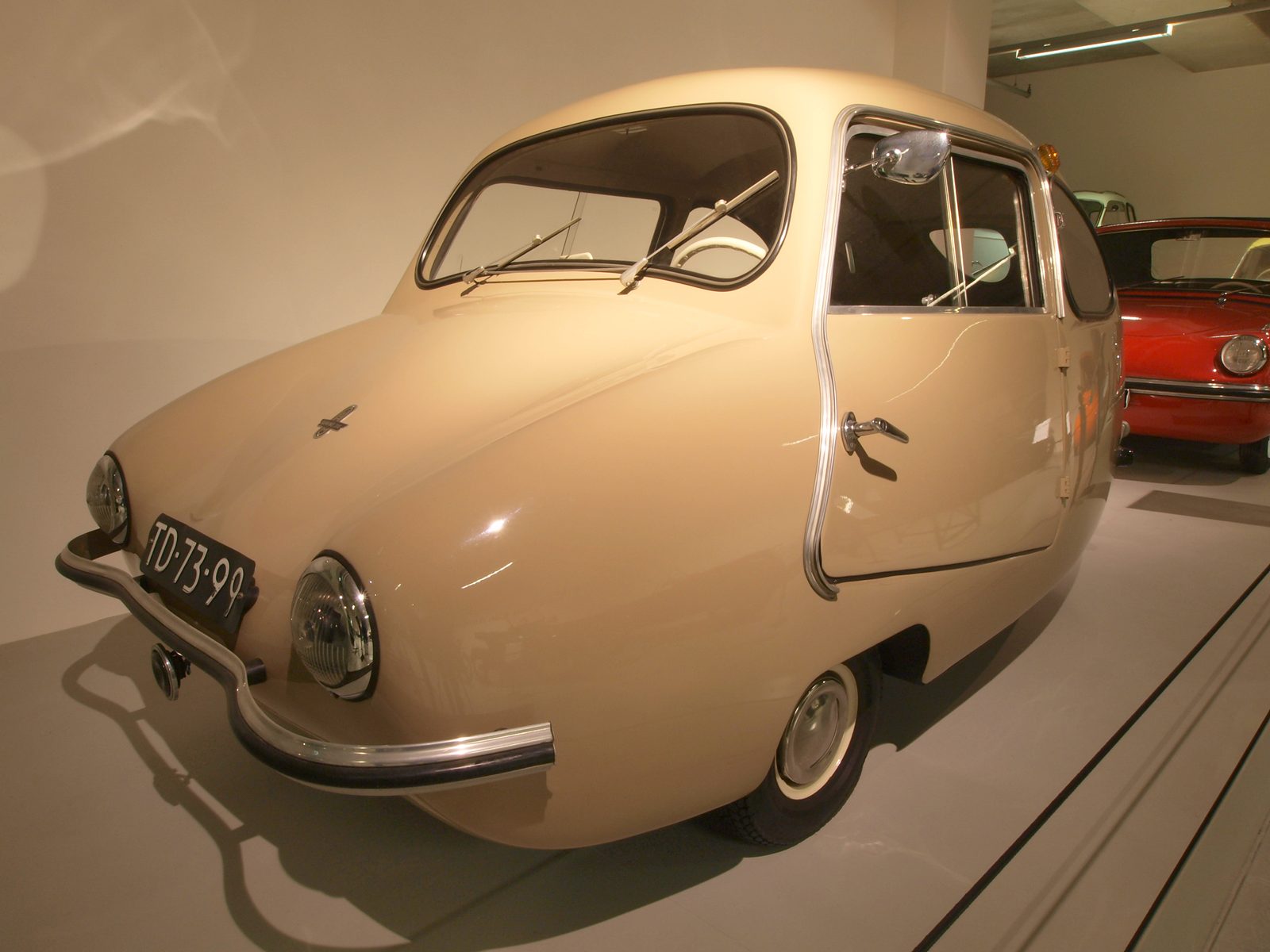
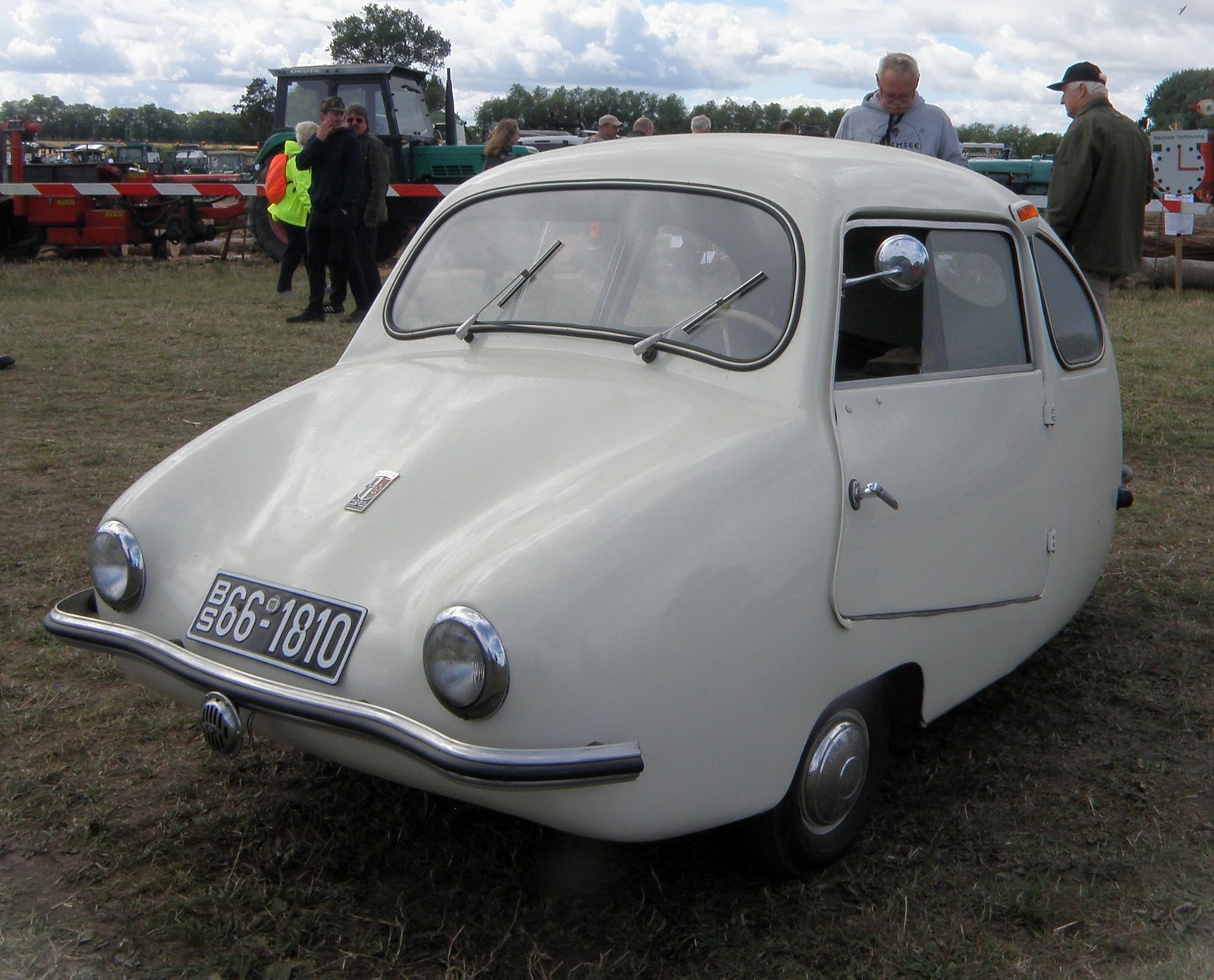
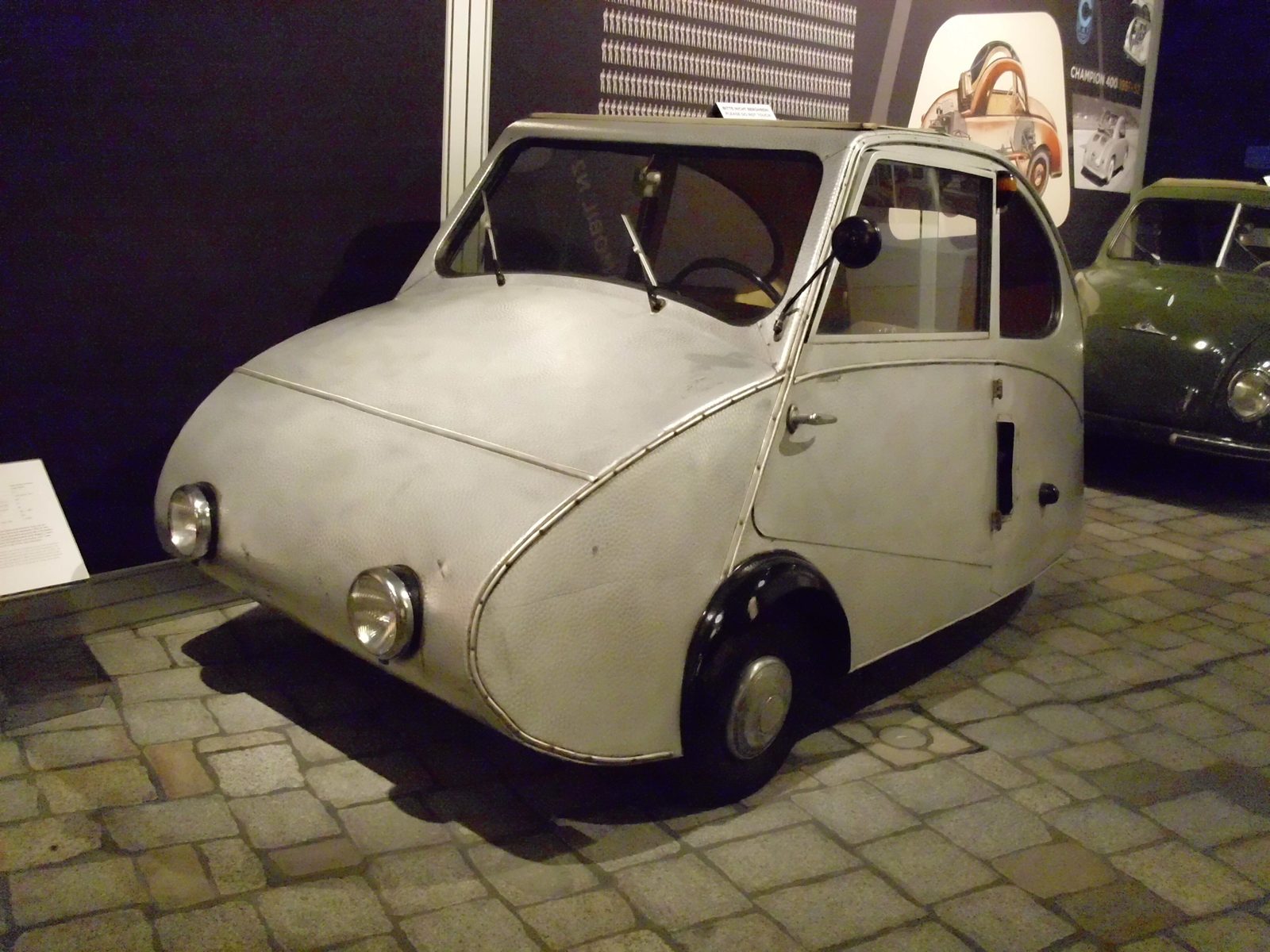
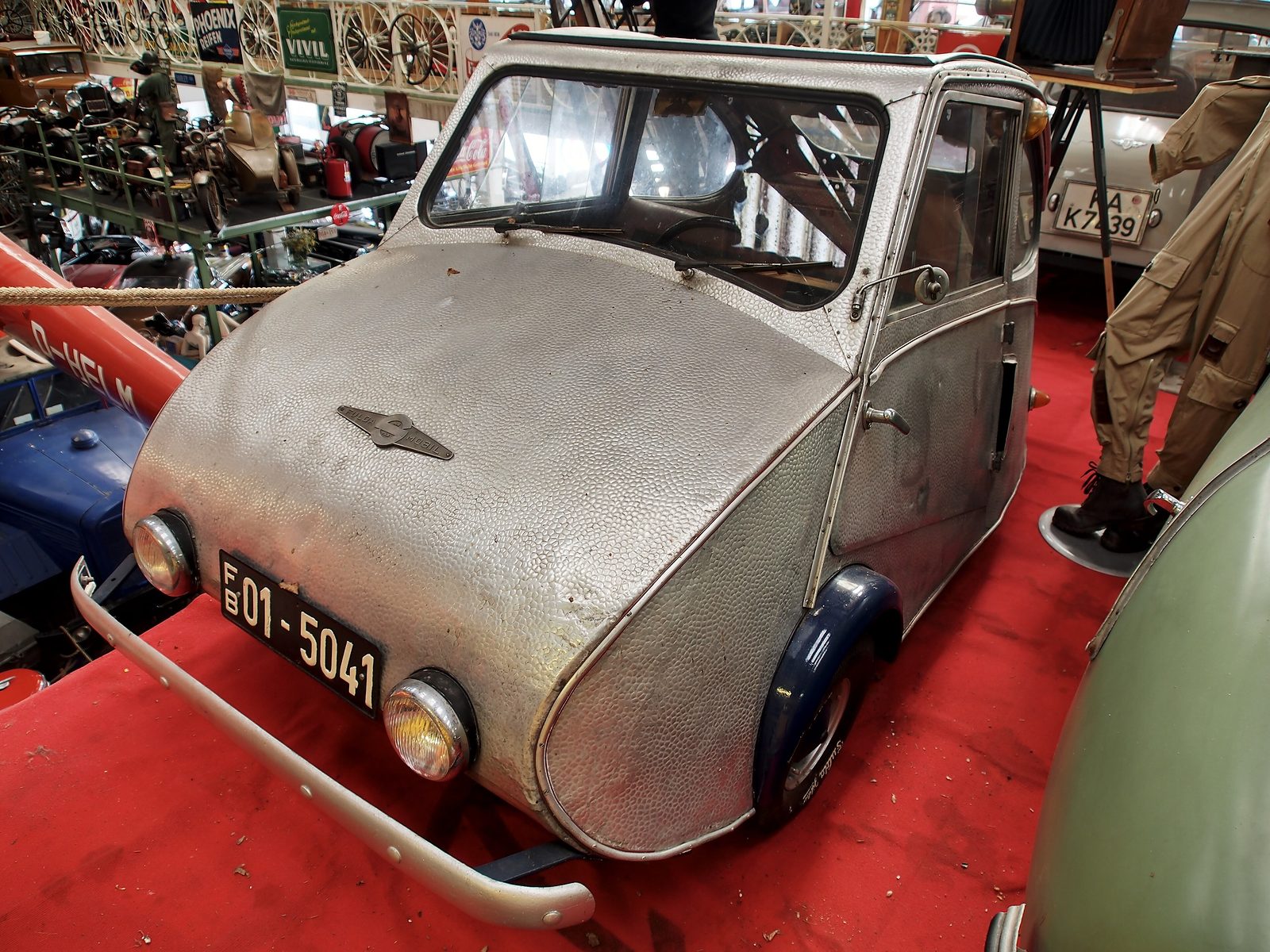
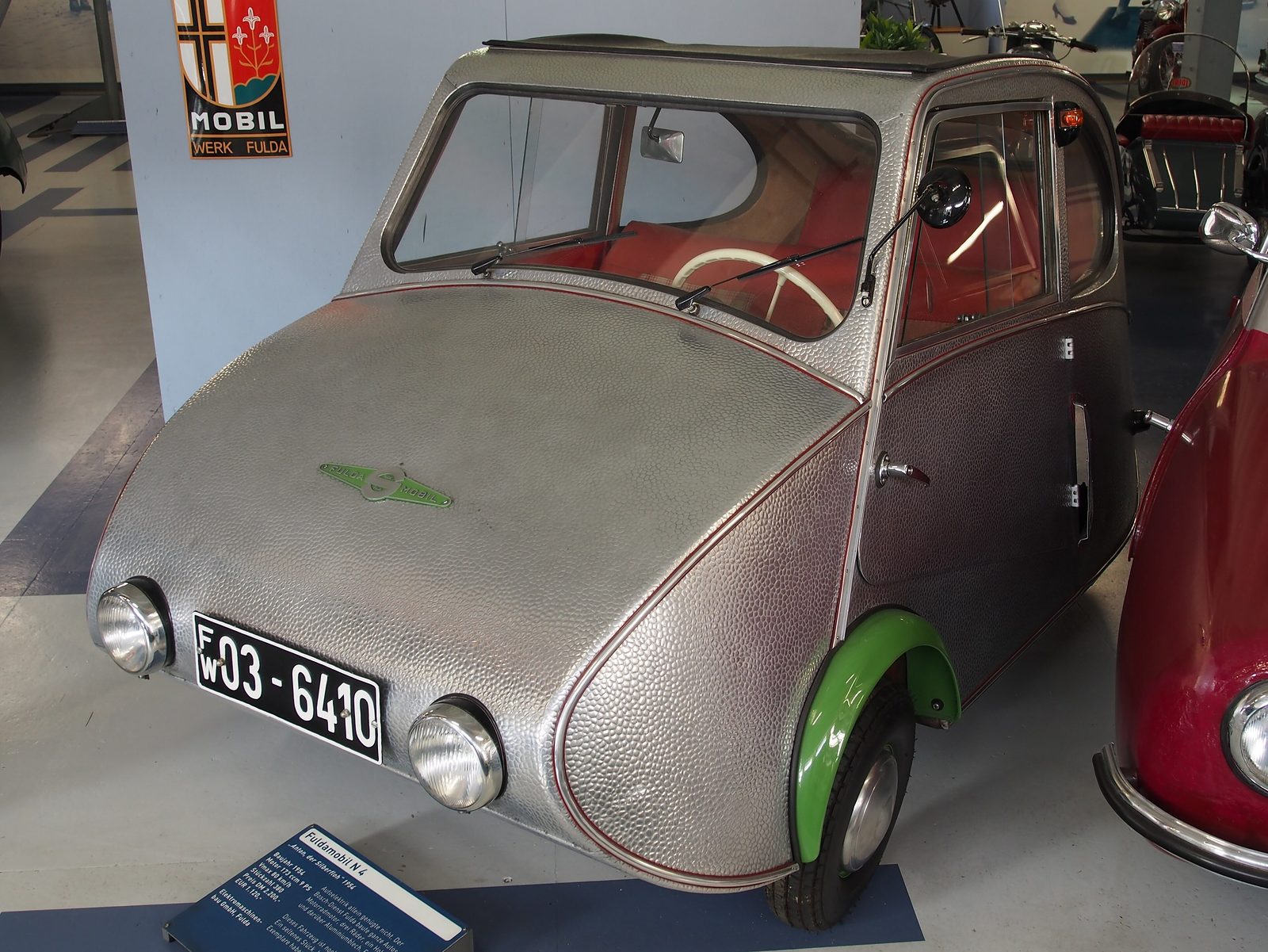
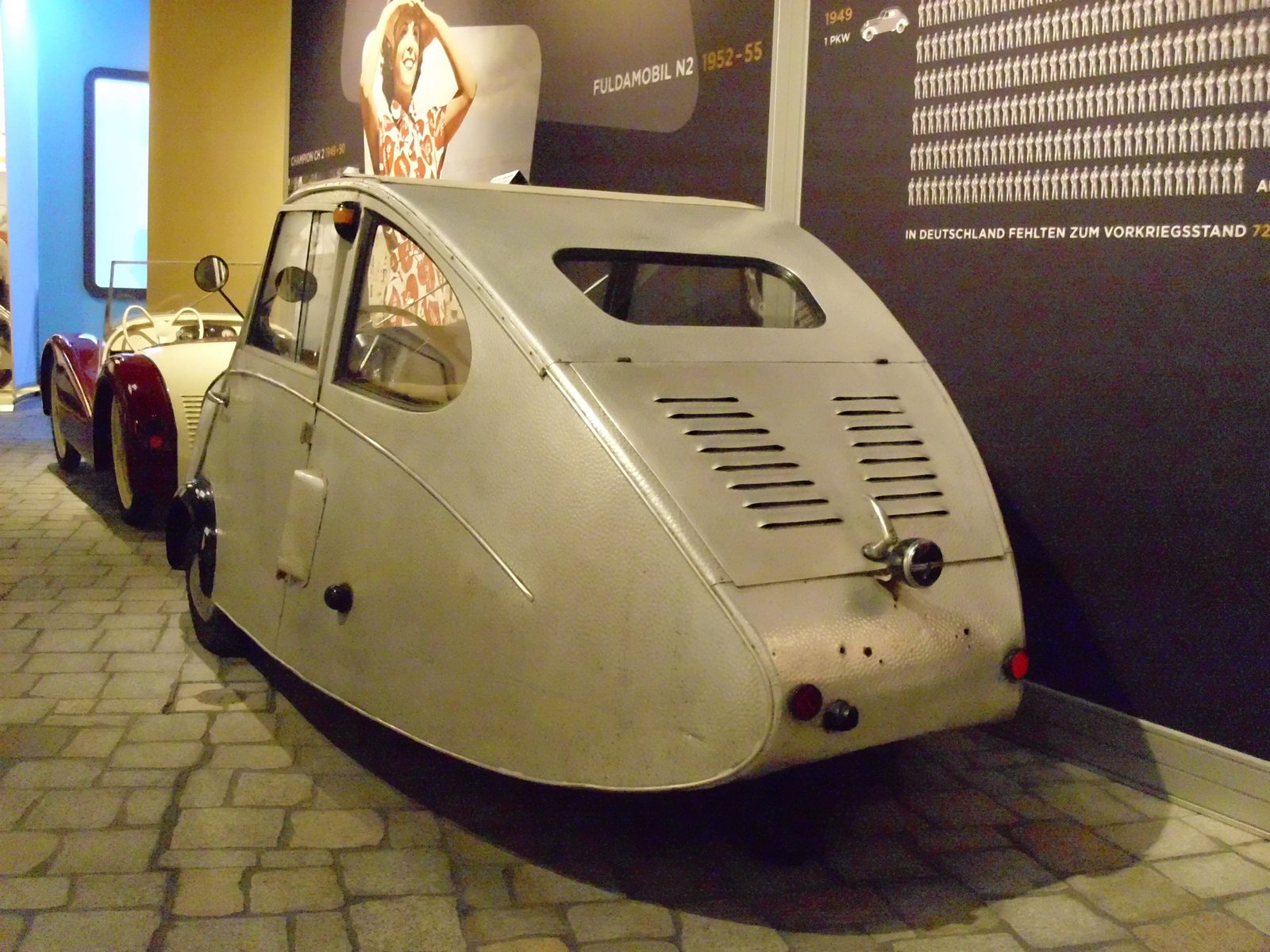
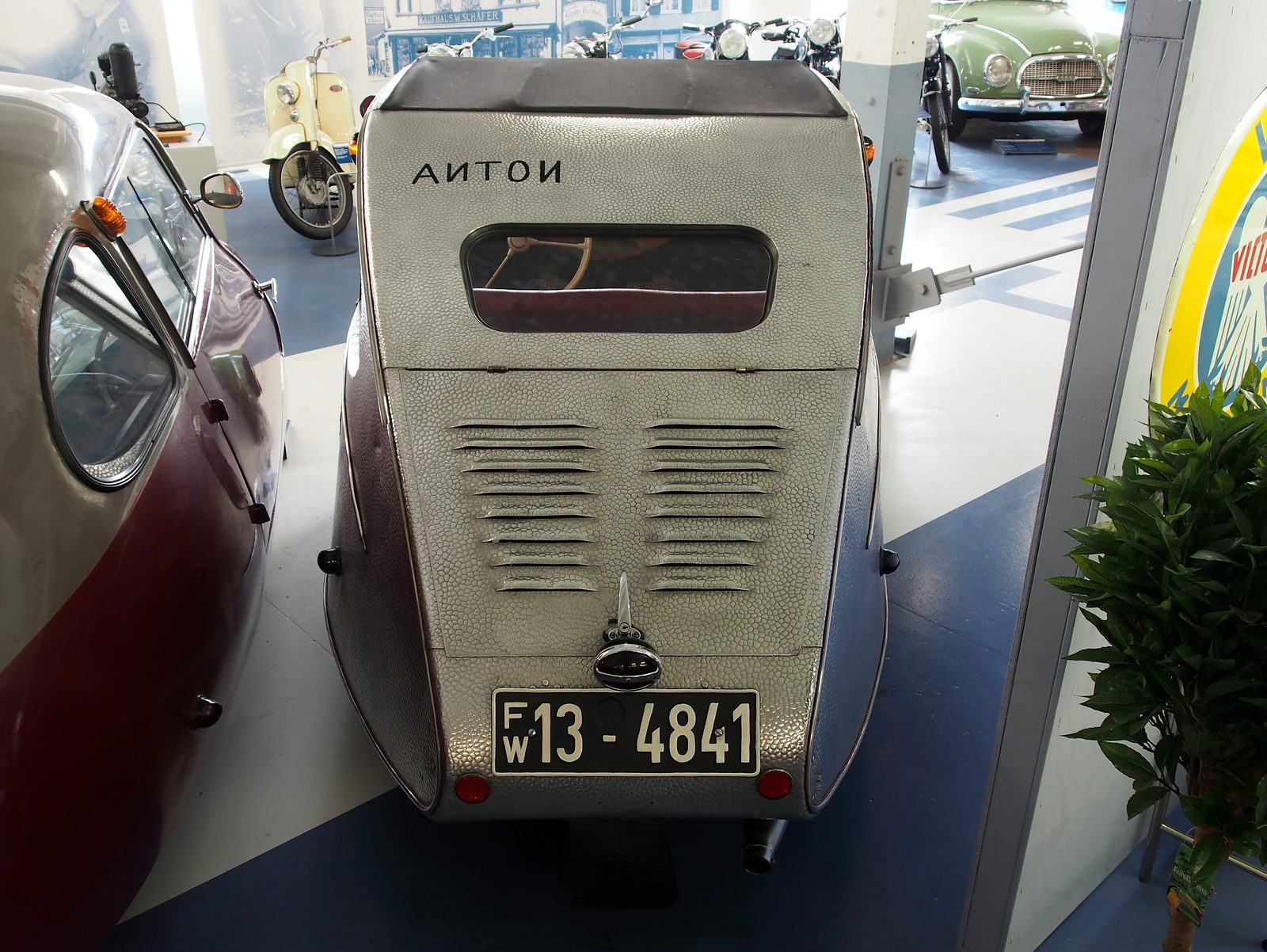
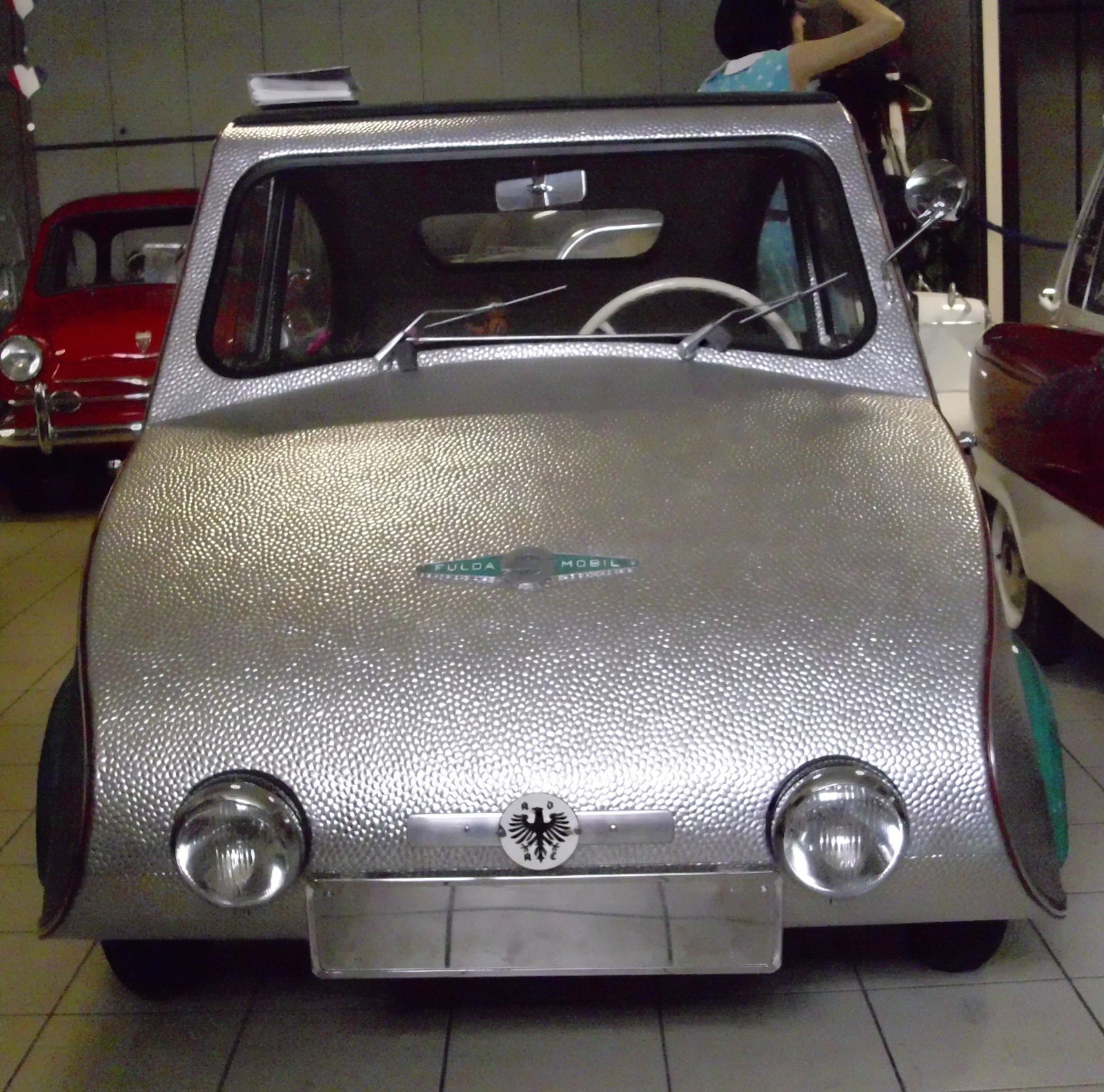
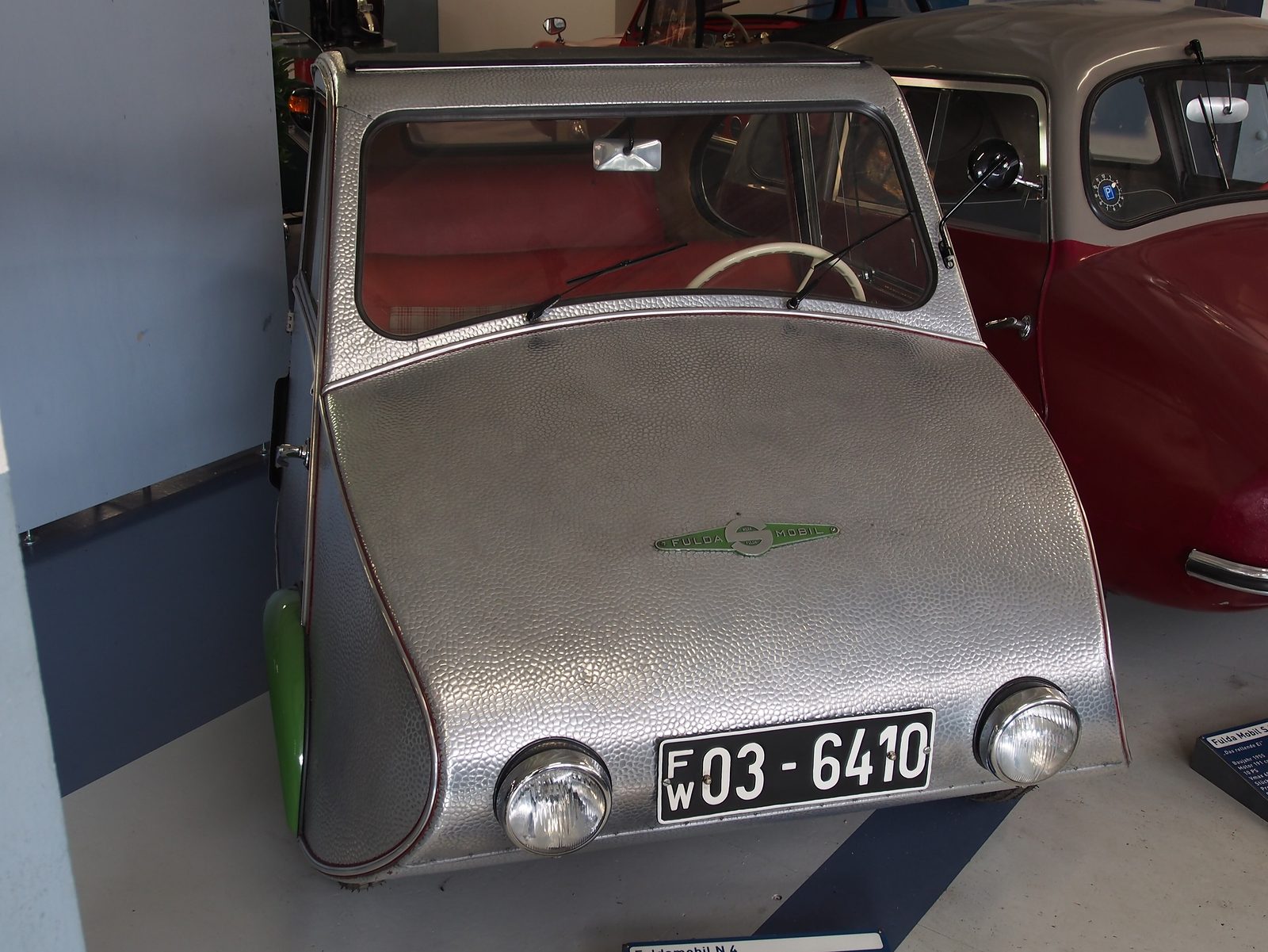
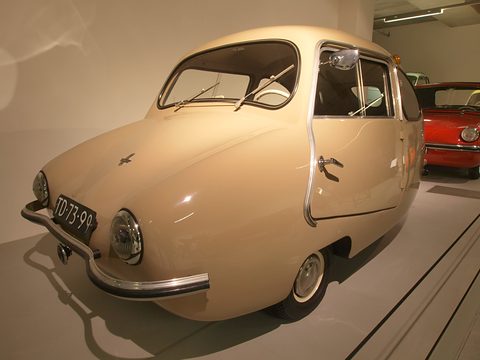
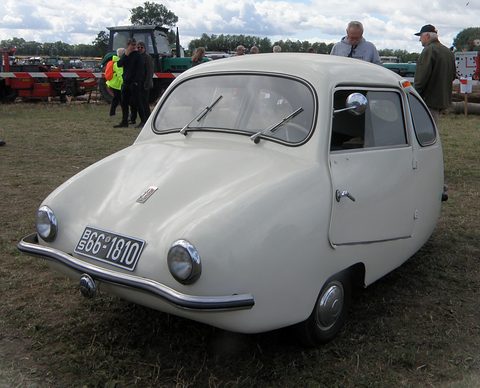
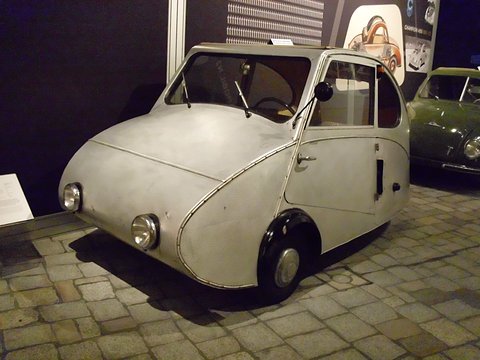
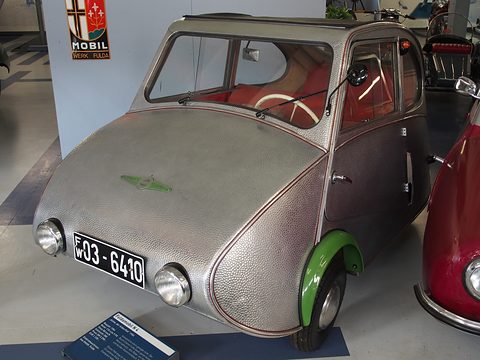
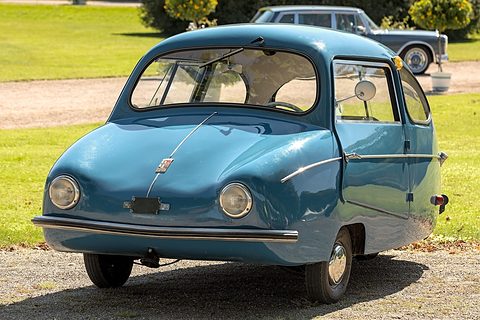
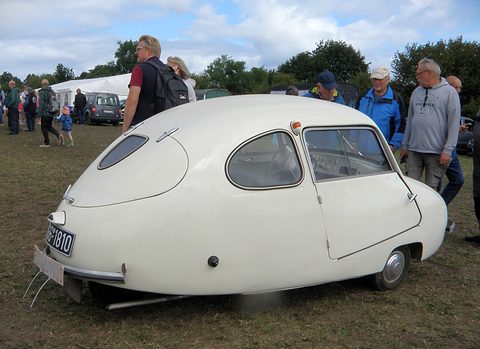
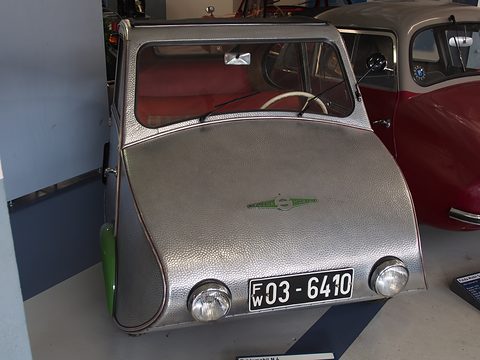
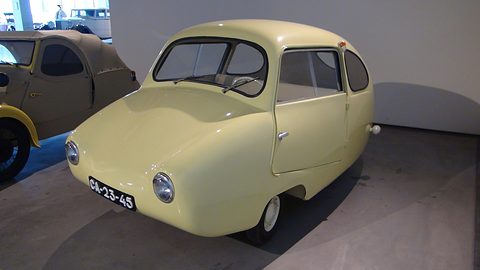
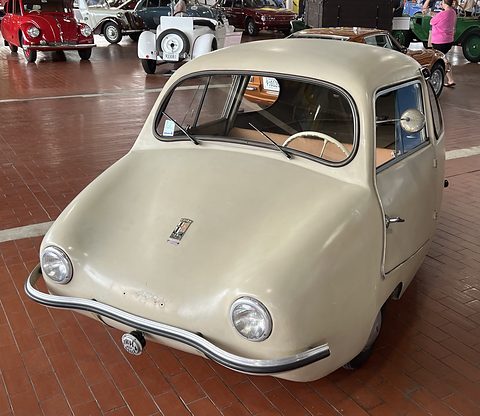
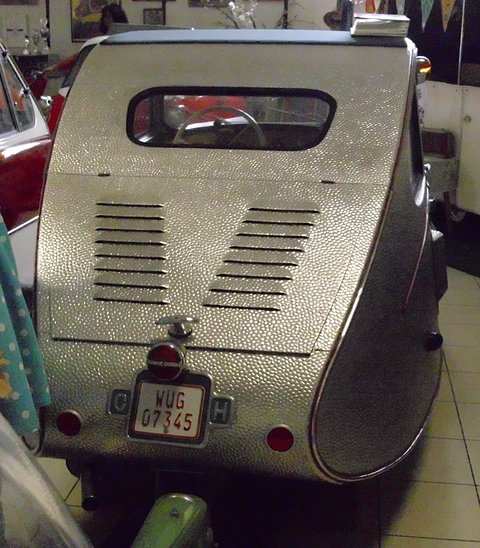
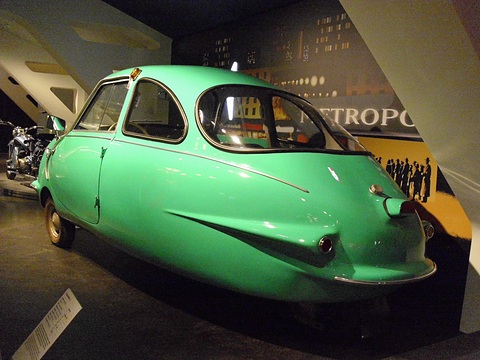
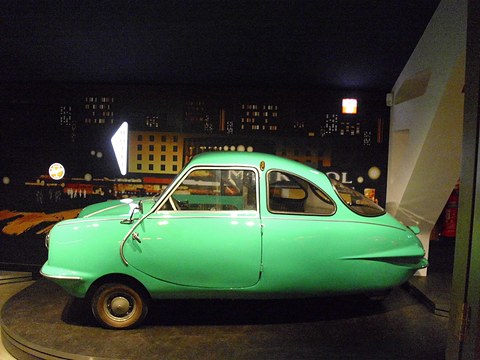
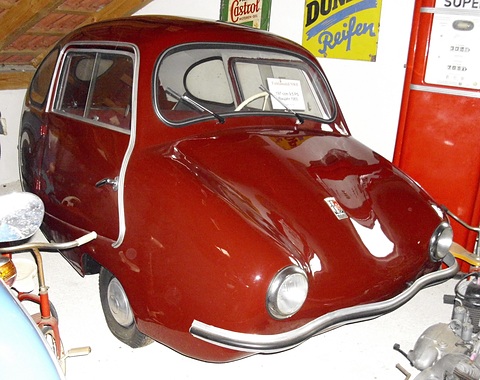
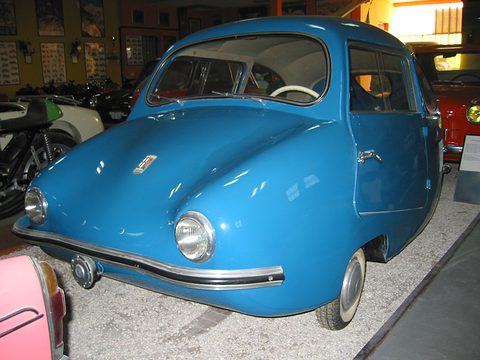
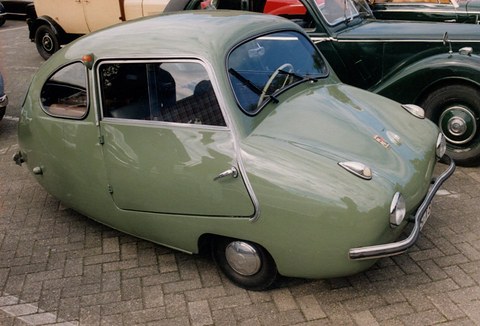
A journalist with one wartime term of engineering drew it, and an electrical wholesaler built it, first in plywood and leatherette and then in hammered, unpainted aluminium: the Silberfloh, the silver flea. Fulda itself made only about 2,200, but it was built under licence in more countries than any other bubble car.

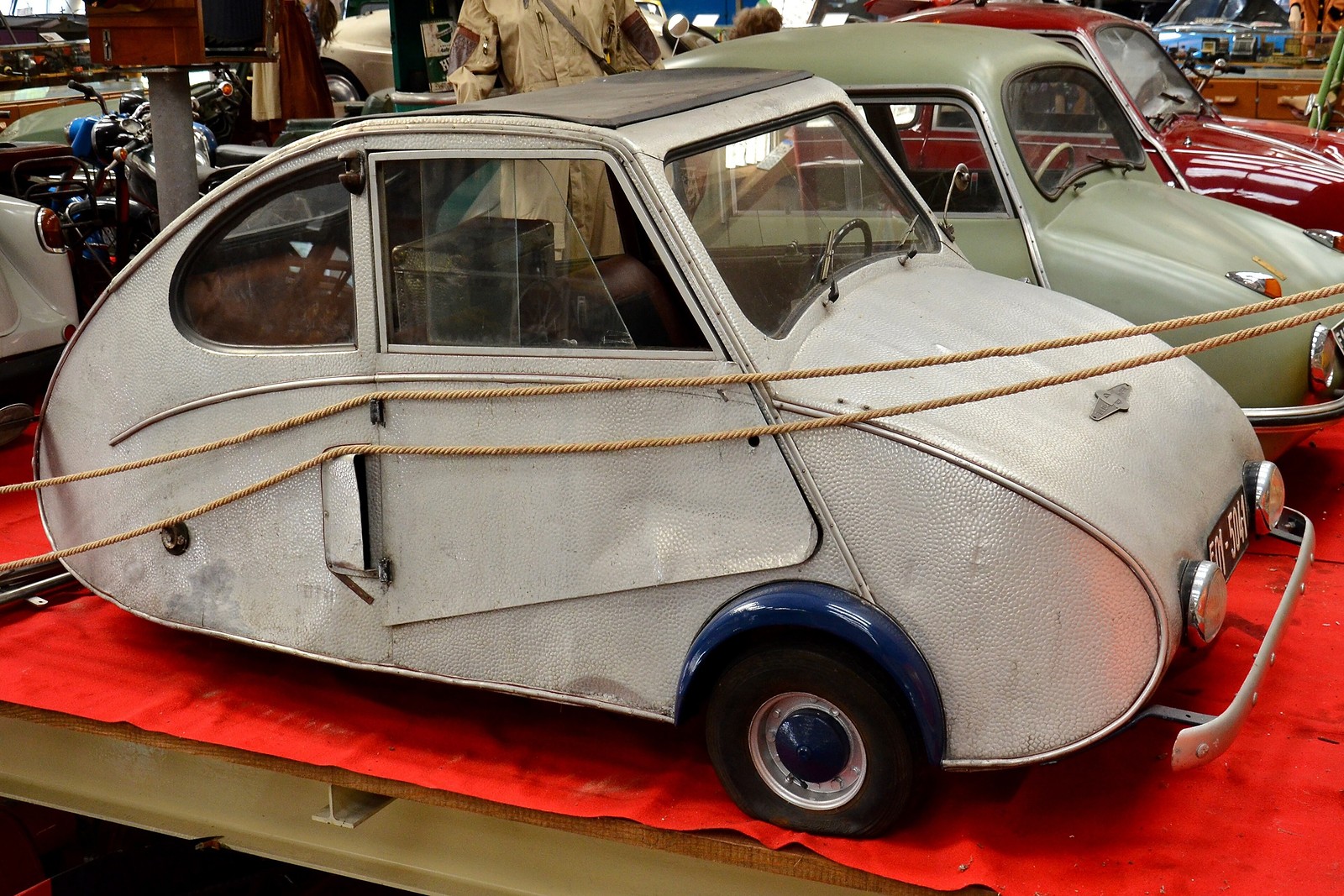
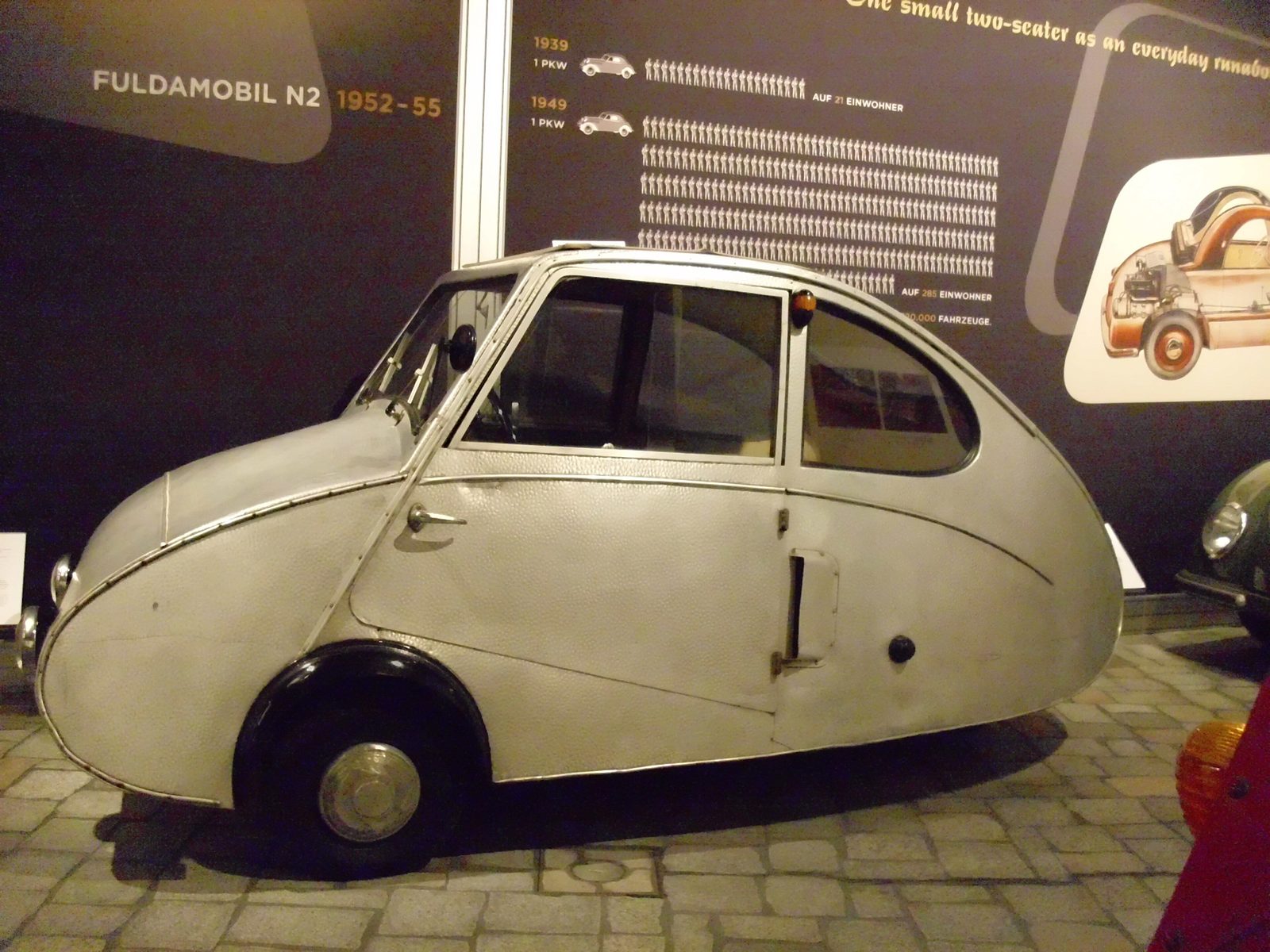
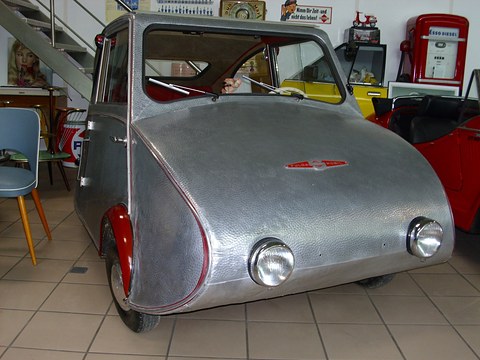
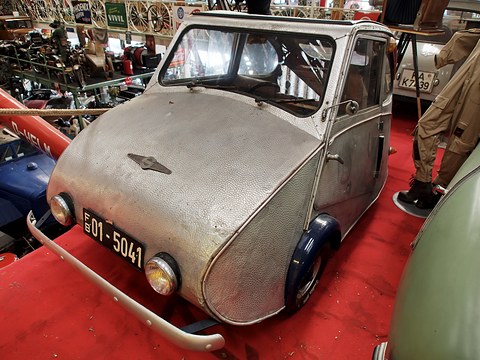
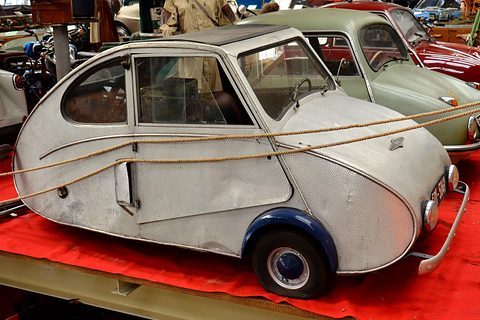
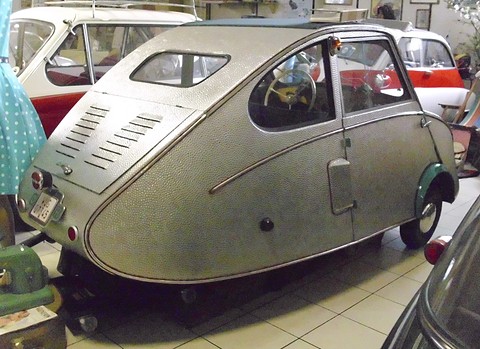
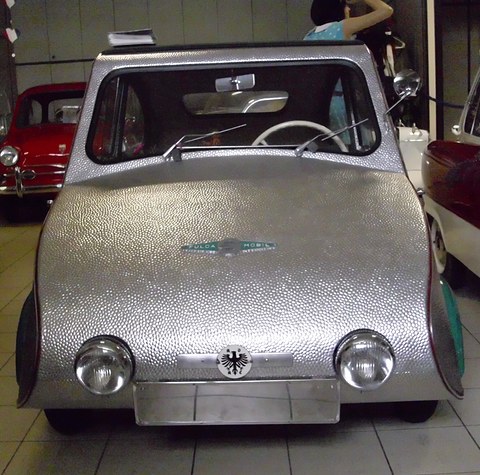
Silver bubble-shaped three-wheeler with a dimpled aluminium nose and two small headlamps in a museum with retro furniture.
A 1953 Fuldamobil N‑2 with its hammered-aluminium body, photographed in 2010.Photo: Buch-t, Public domain, via Wikimedia Commons

At a glance

The spec plate

Fuldamobil

N‑2 “Silberfloh” · Fulda

Built
1950–⁠1969Prototype shown in March 1950; built from February 1951 to spring 1969
Country
West GermanyFulda, Hesse; licensed to at least six other countries
Maker
Elektromaschinenbau Fulda GmbHKarl Schmitt’s firm; Nordwestdeutscher Fahrzeugbau built the NWF 200 under licence in 1954–⁠55
Engine
359 cc Fichtel & Sachs two-stroke singleN‑2; a Zündapp 198 cc in the prototype, Baker & Pölling 248 cc in the N and 247 cc in the N‑1, a 175 cc Sachs option from 1953, ILO 197 cc in the S‑1 and NWF 200, Sachs 191 cc from the S‑4, a Heinkel 198 cc four-stroke in the last S‑7s
Power
9.5 PS7 kW
Length
2,850 mm1,397 mm wide
Weight
305 kgN‑2
Seats
2 + 2Coupé; two in the roadster
Wheels
3Two at the front, one driven at the back; from the S‑4 of 1955, two rear wheels 400 mm apart
Price new
DM 2,9901952; DM 2,200 from June 1954
Production
380N‑2; about 2,900 Fuldamobils of all types in Germany, NWF’s included
Survives
3N‑2s, by the Weiner museum’s count in 2002
Top speed
80km/h80 km/h85 km/h for the S‑6 and the Heinkel-engined S‑7

How big is it?

True proportion

2.85 m

It is 120 mm shorter than a Fiat 500, about 1.6 adults laid end to end, and twice the length of a Peel P50.

  • 1.40 m wide
  • 305 kg: about four adults
  • Seats that folded flat into a double bed, in the S-type
Drawn at true proportion. The track is 3.6 metres long; the adult stands at the same scale. The Peel P50 is the smallest production car, on every page for comparison.

The story

History

Norbert Stevenson was a freelance journalist, once of the Rhein-Zeitung, whose engineering training amounted to one wartime semester at the Technische Hochschule in Berlin.source 1source 2 His idea was a very simple three-wheeler for two, with two wheels at the front for stability and a small engine at the back.source 2 In the summer of 1949 he found a backer in Karl Schmitt, a Bosch wholesaler in Fulda, whose Elektromaschinenbau Fulda GmbH serviced emergency generators.source 2source 3

Work started that October, and by Christmas a bare chassis was on the road, with tractor seats to sit on.source 4 It had a steel central tube, swing axles in front, cable brakes on the front wheels only, and no dampers at all, so it wallowed like a ship.source 2 The prototype shown on 9 March 1950 had a Zündapp 198 cc engine of 6.5 PS (4.8 kW) and steel sheet nailed to a wooden frame, built by Josef Leibold of Fulda in eight days, with a sloping nose and a split windscreen. It was to cost DM 1,850.source 2source 5 It made its debut in Fulda’s Rosenmontag carnival procession, where it overheated at walking pace; the press liked it anyway, and after 3,000 km (1,860 miles) it was scrapped.source 2

Triumph of Nuremberg would not supply engines, so a chainsaw maker, Baker & Pölling of Niedernhall, enlarged its 200 cc engine to about 250 cc, and Fulda added a Hurth gearbox with reverse and an electric starter.source 2

The silver flea

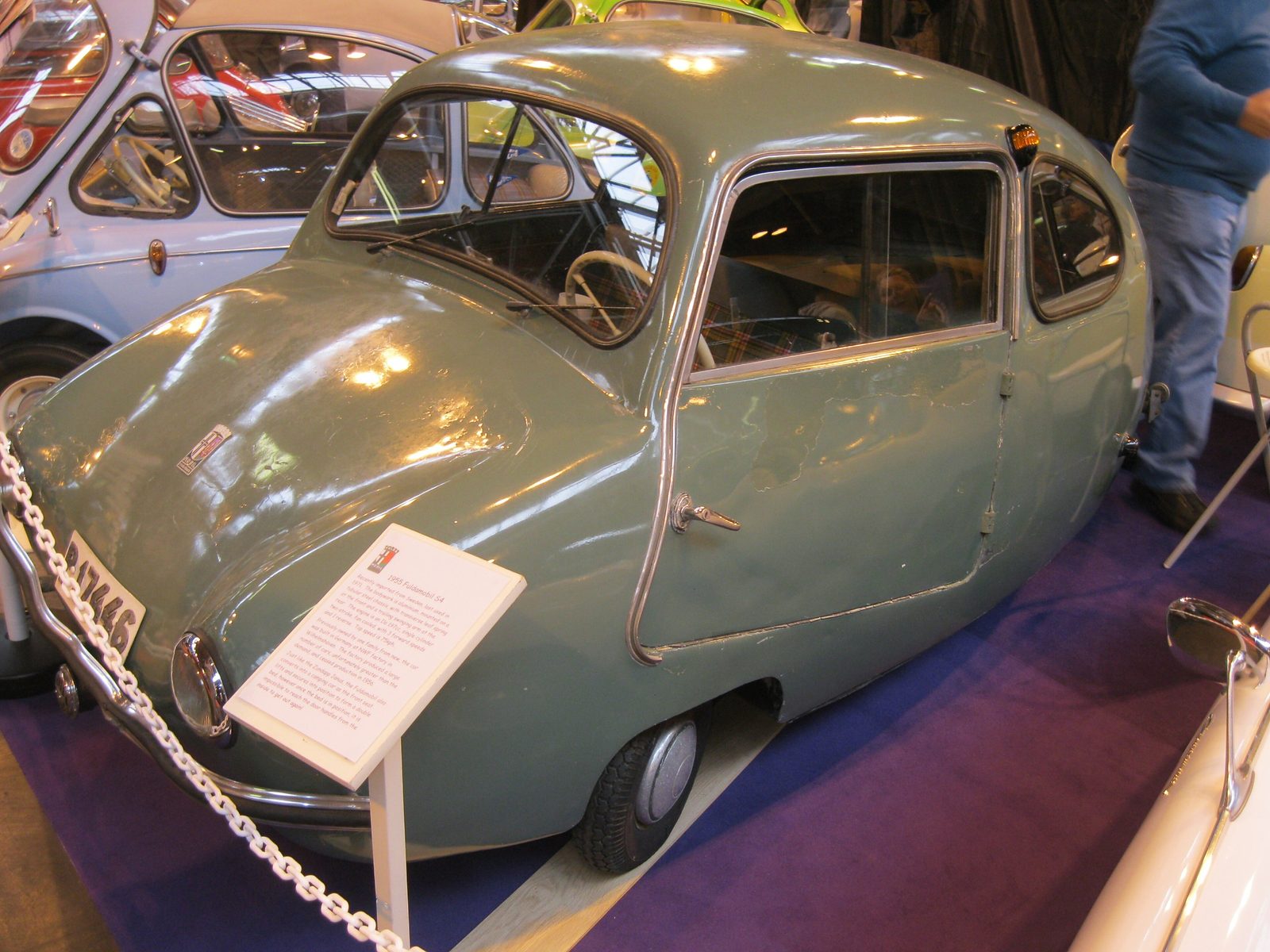
Production began in February 1951.source 2source 6 The wooden frames came from Alexander Schleicher, a glider maker, and most were skinned in plywood covered with synthetic leather.source 2source 3 Seventy-four of the first type, the N, were built.source 5 Buyers disliked its sloping nose and could not reach the misted windscreen, so in April 1951 a rounded nose and a more upright screen arrived, which the factory itself called the Busen-Auto, the bosom car.source 2 About 320 of this N‑1 were built, at DM 2,490, and the last of them were panelled in hammered aluminium.source 5 The Baker & Pölling engines gave trouble: pistons hit the head, barrels blew off, and 100 sent back returned merely shimmed. Fulda withheld payment; that the supplier then failed is not confirmed. In July 1952 a version for disabled drivers was shown at an exhibition of invalid carriages in Munich.source 2

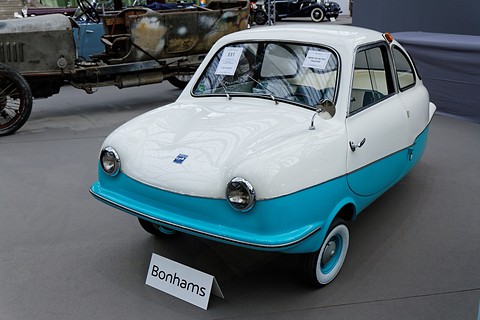
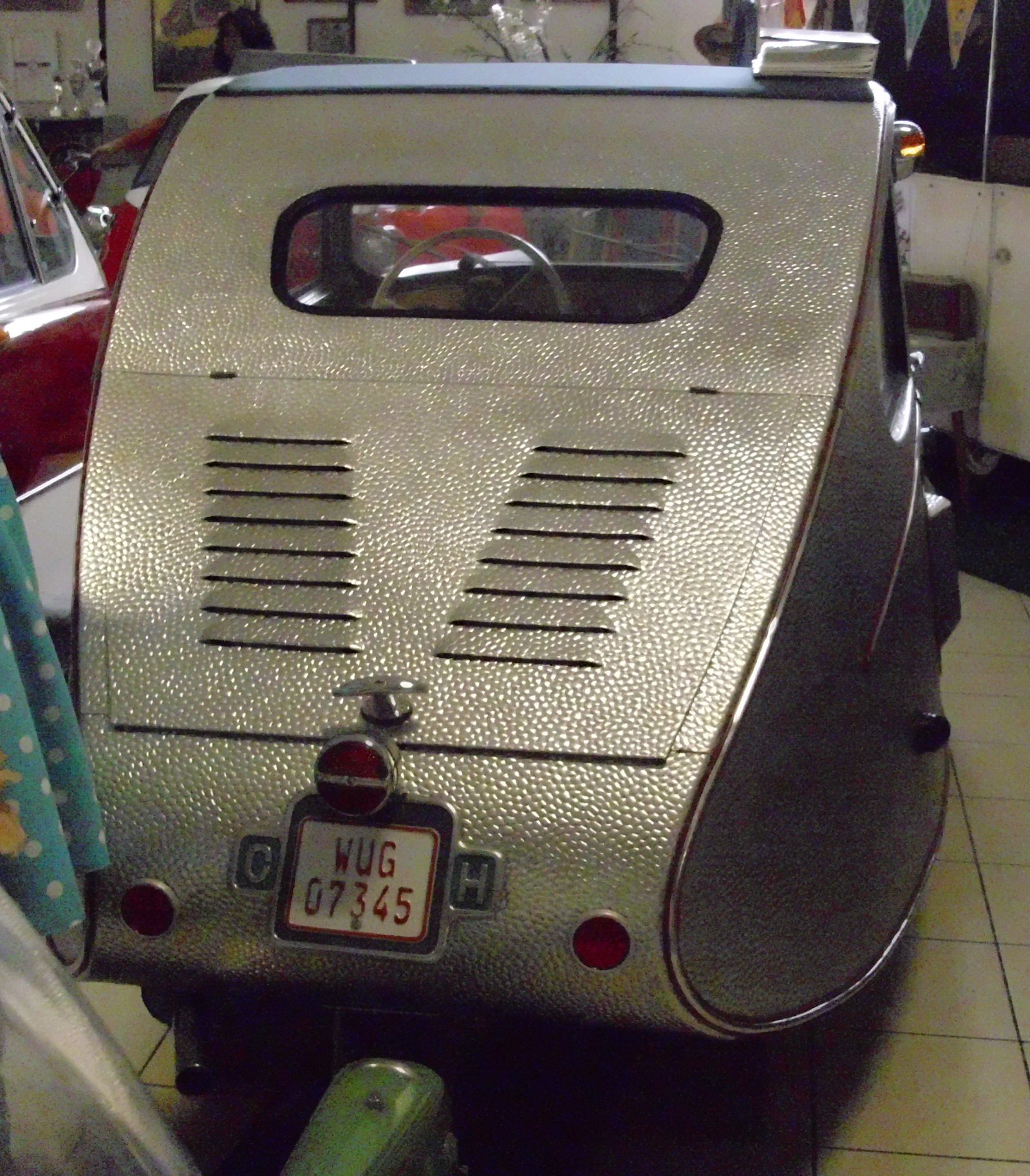
The N‑2 of September 1952 had a fan-cooled 359 cc Sachs of 9.5 PS (7 kW), for 80 km/h (50 mph), and its aluminium panels were hammered, nailed to the wooden frame and left unpainted: this is the Silberfloh. Paint cost extra from the spring of 1953. It came as a 2 + 2 coupé or a two-seat roadster, at DM 2,990, cut to DM 2,200 in June 1954, and 380 were built.source 3source 5source 4 The bigger engine was itself a problem, because a German class IV licence covered only 250 cc, and a 175 cc Sachs option was announced in March 1953. The works made about four cars a week in 1953, later about eight.source 2

Round shapes and a coachbuilder

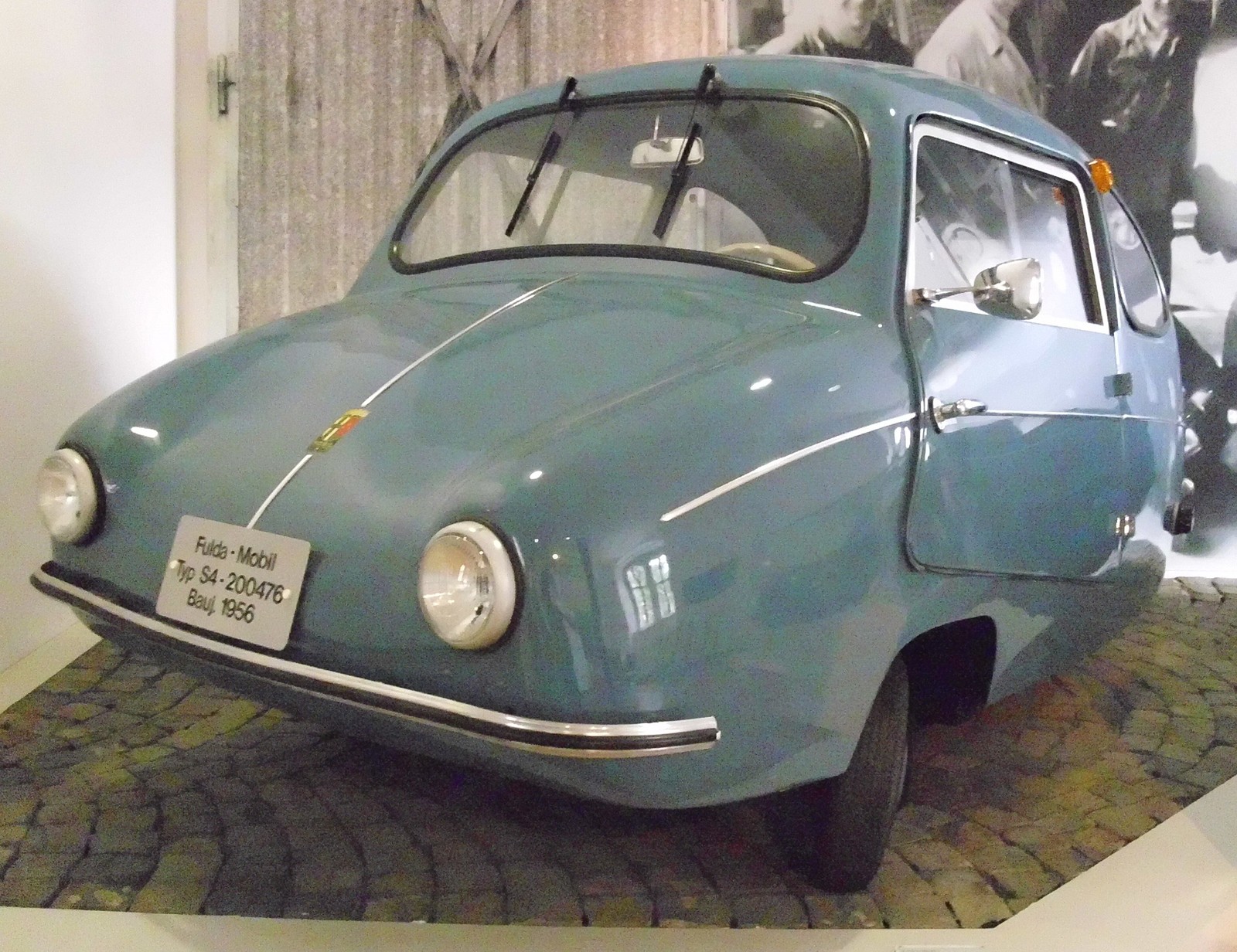
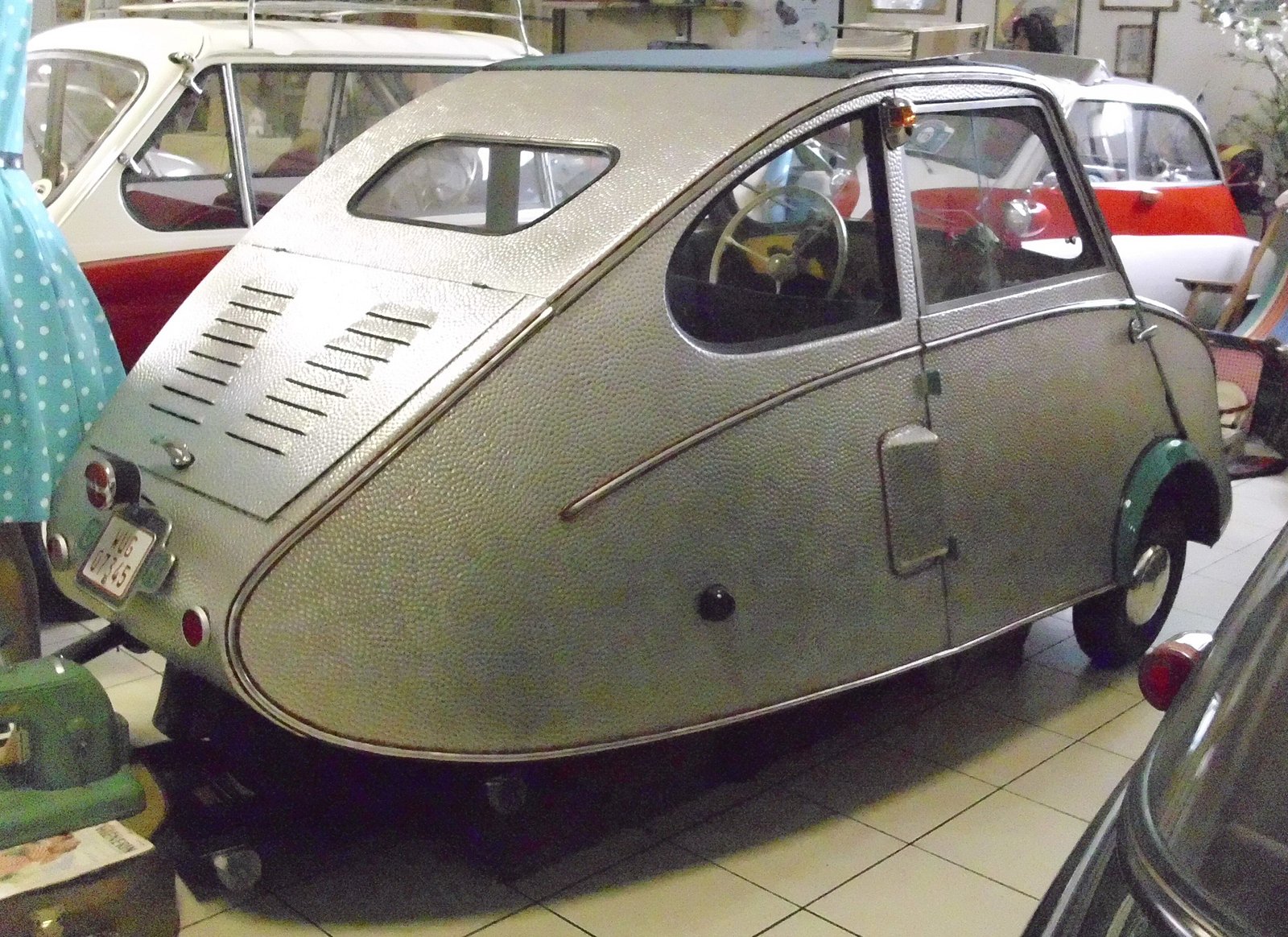
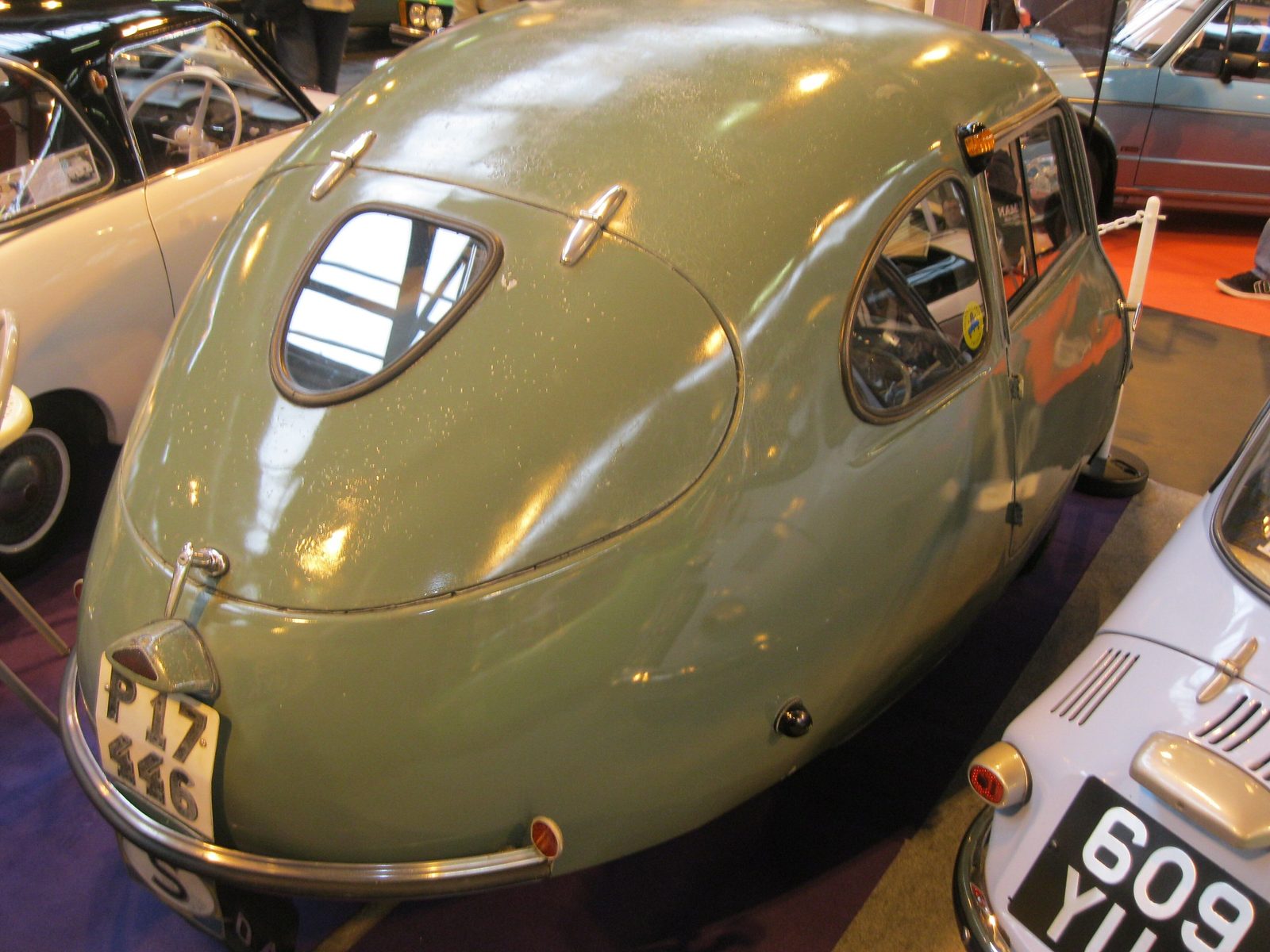
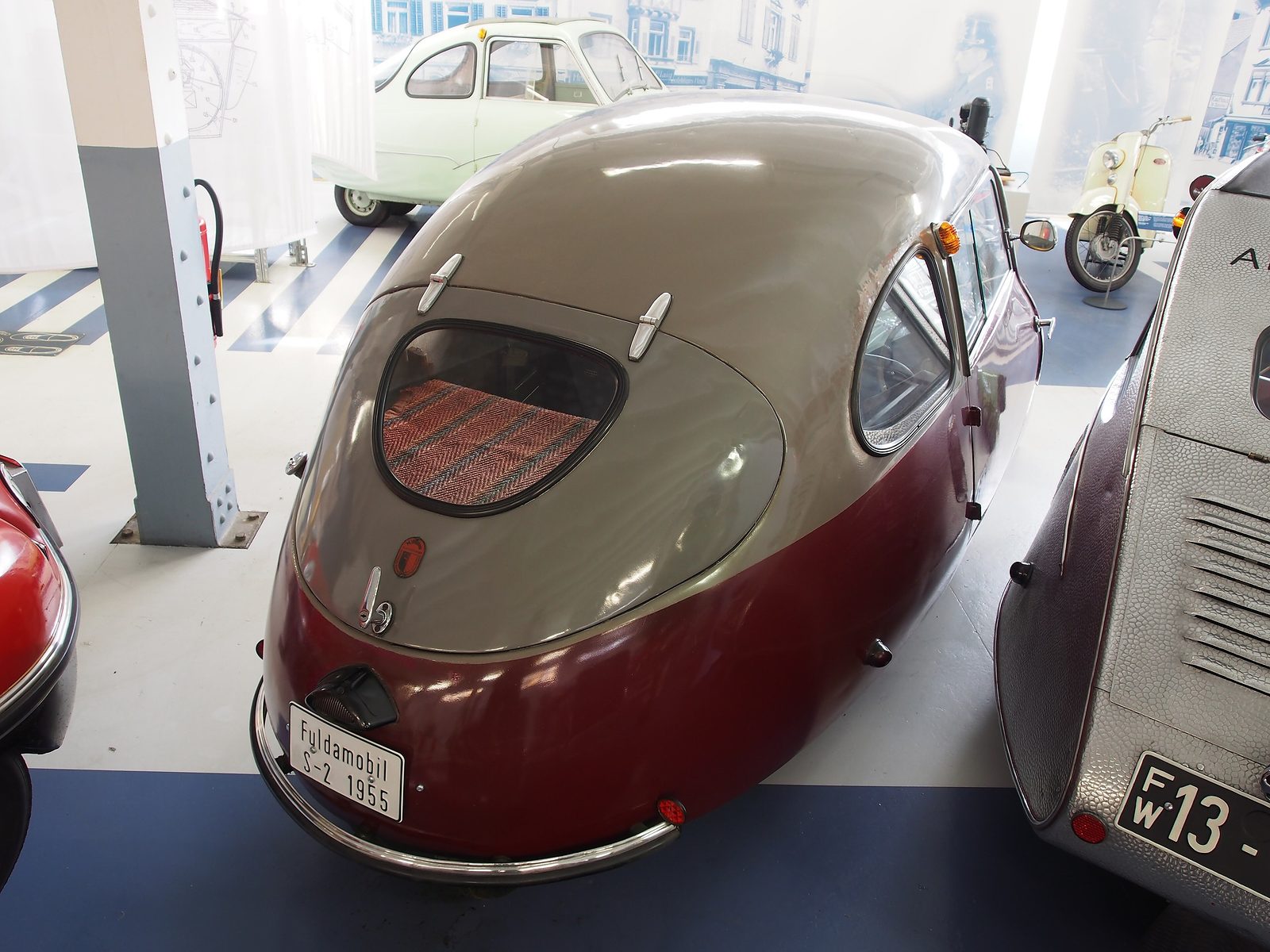
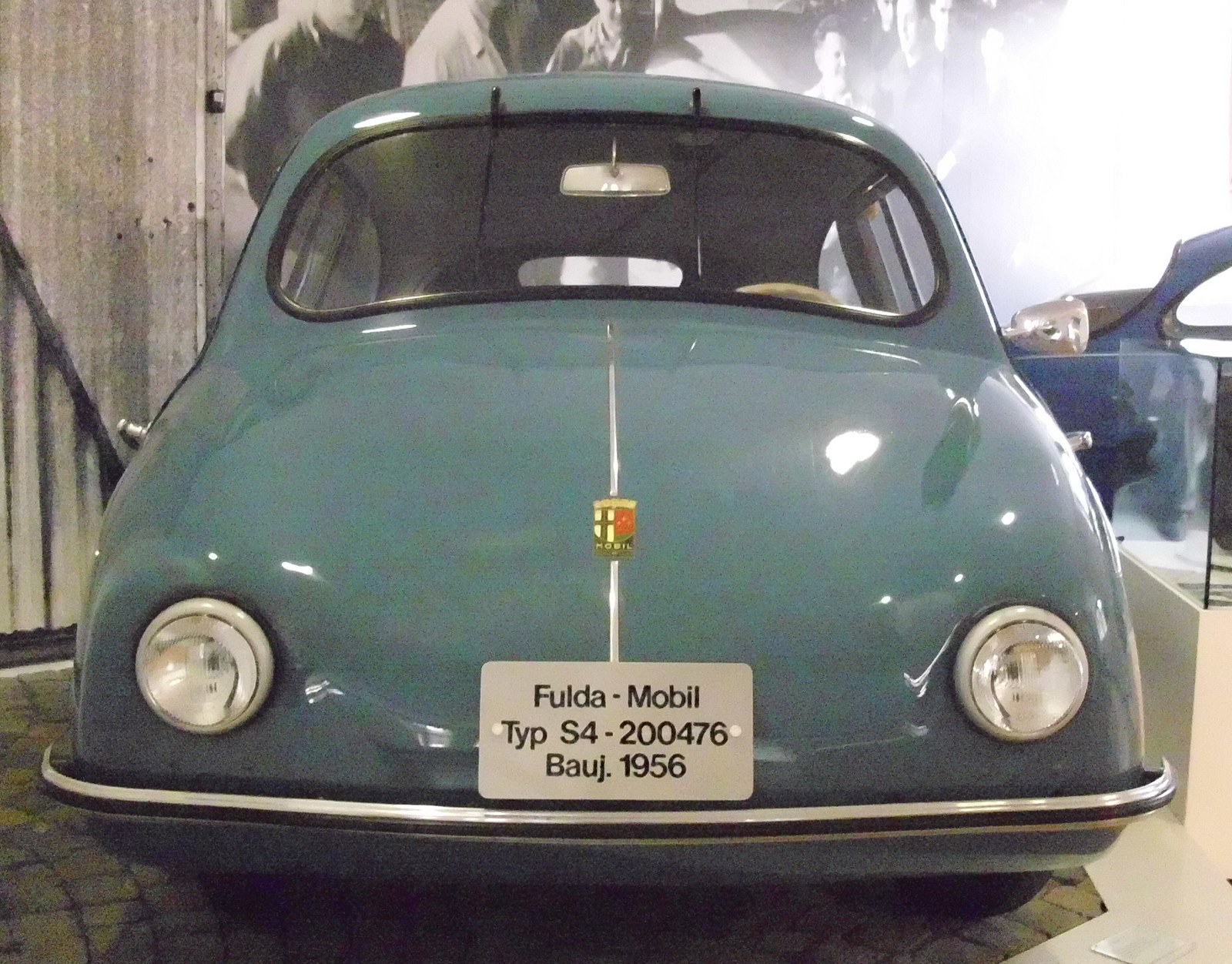
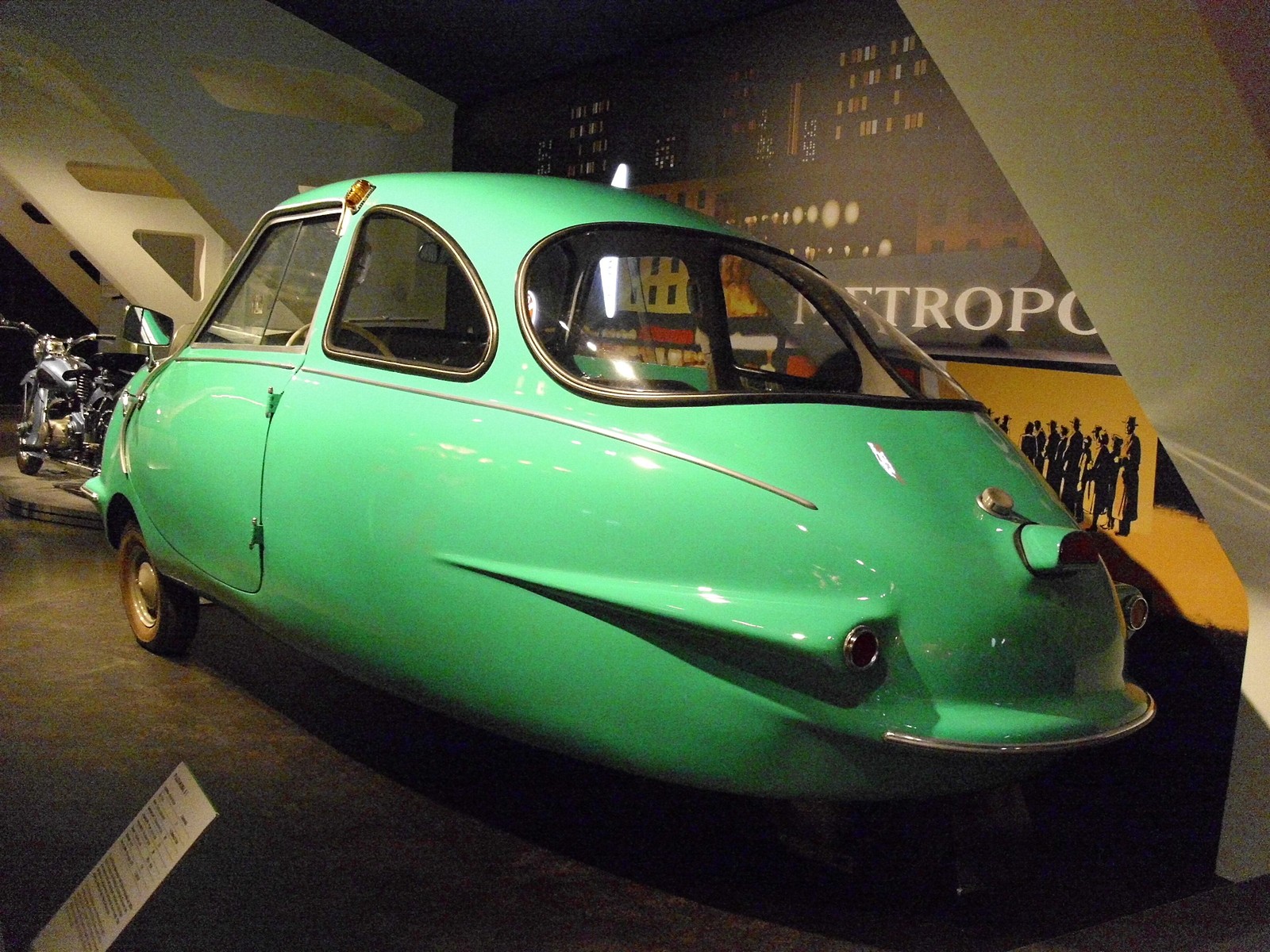
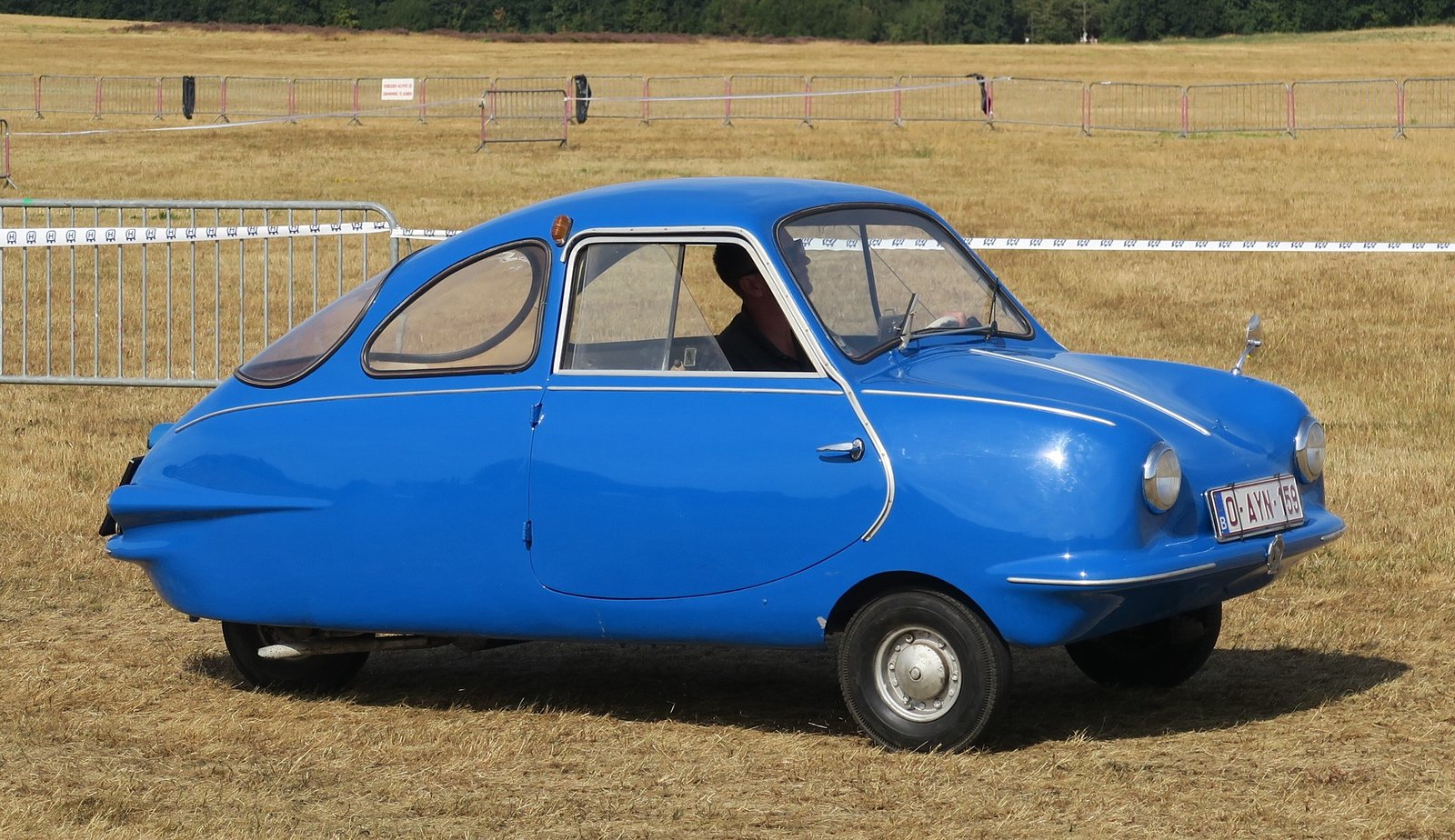
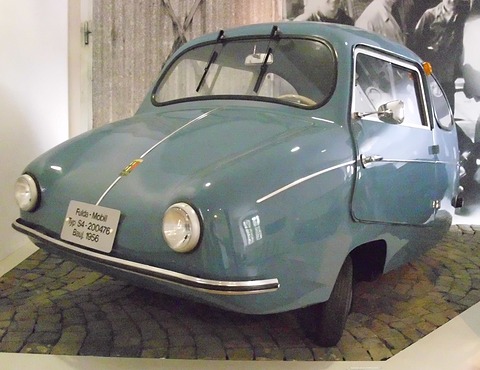
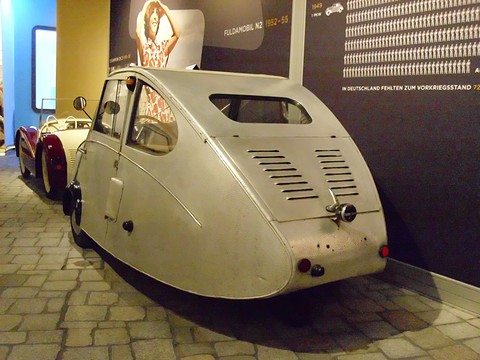
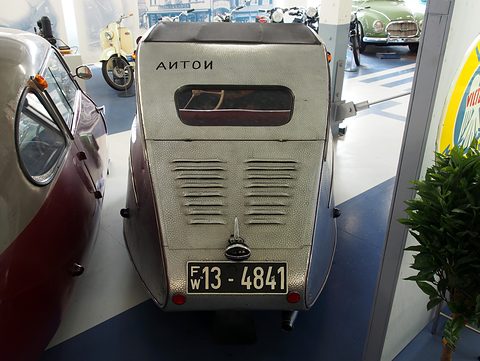
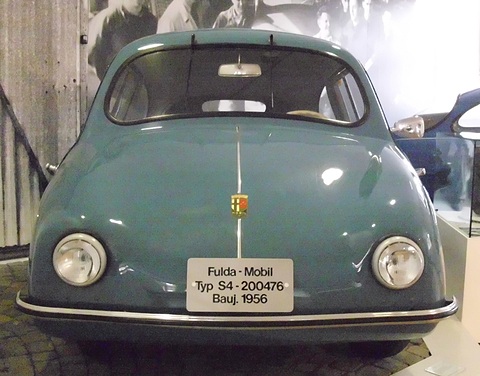
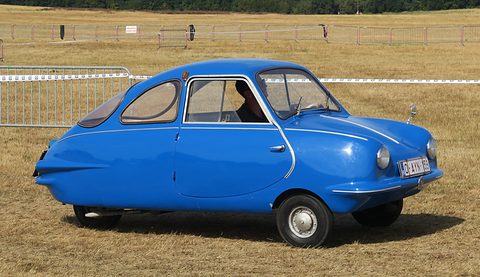
To cut the hand work Schmitt went to VDM, the Vereinigte Deutsche Metallwerke of Werdohl, which could form aluminium provided the shapes were round and curved, as the Weiner museum puts it.source 2source 7 Stevenson and the master coachbuilder Wilhelm Lehnebach shaped the new body in ten days in June 1953. It was likened to a baby Porsche, or to a Walt Disney pig, and mocked as the Cellokasten, the cello case.source 2source 7source 1 Shown at Frankfurt that October, the S-type had seats that folded flat into a double bed and a small tailgate over the engine.source 2

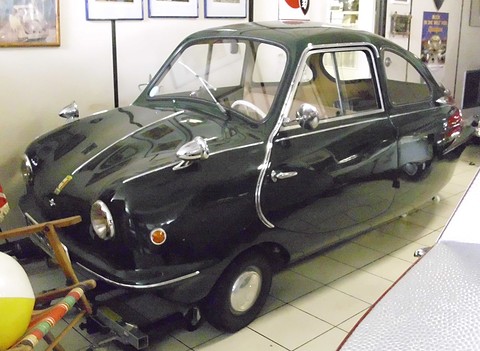
Fulda built only three of the first S‑1s. Most were made by Nordwestdeutscher Fahrzeugbau, NWF, of Wilhelmshaven-Mariensiel, which had grown from trailers to bus bodies and become Germany’s second-largest coachbuilder.source 5source 7source 2source 8 It took a licence and began series production in July 1954, by English Wikipedia’s date (German Wikipedia says March), expecting to make 1,000 a month; it gave its NWF 200 bumpers, a VW split rear window and a 197 cc ILO engine, at DM 2,780.source 2source 9 It built 701. It stockpiled cars, sold some back to Fulda in place of licence fees and stopped by September 1955, a few months after opening a new plant at Lohne; in November NWF, Wilhelmshaven’s biggest employer, went bankrupt, and 1,500 people lost their jobs.source 1source 9source 2source 8 About 430 of Fulda’s own S‑2, with the 359 cc Sachs, were built.source 5

Four wheels, four reverse gears

The S‑4 of September 1955 had two rear wheels only 400 mm (16 in) apart, with no differential, and the reversible 191 cc Sachs: to back up, you stopped, switched off and started the engine again the other way, and had as many speeds backwards as forwards.source 2source 7source 10 The Weiner museum says the twin wheels answered the loss of the three-wheeler’s tax advantage in 1955; English Wikipedia says three wheels could still be had, and that a German law of May 1956 gave twin rear wheels set closer than a tyre’s width the same tax status as one.source 7source 2 Late in 1955 Schmitt signed a licence with Fritz Neumeyer, head of Zündapp, the maker of the Zündapp Janus, and simplified the chassis for it; two cars went to Zündapp, and the project was dropped early in 1956.source 2 The changes reached the S‑6 of October 1956, with a small rear bench and two-tone paint, of which about 123 were built.source 2source 7source 5 There was even a light truck, the TL 400, with the engine of the Lloyd 400 (see the Lloyd LP300); it was never advertised, and the one that survives may be the only one.source 2

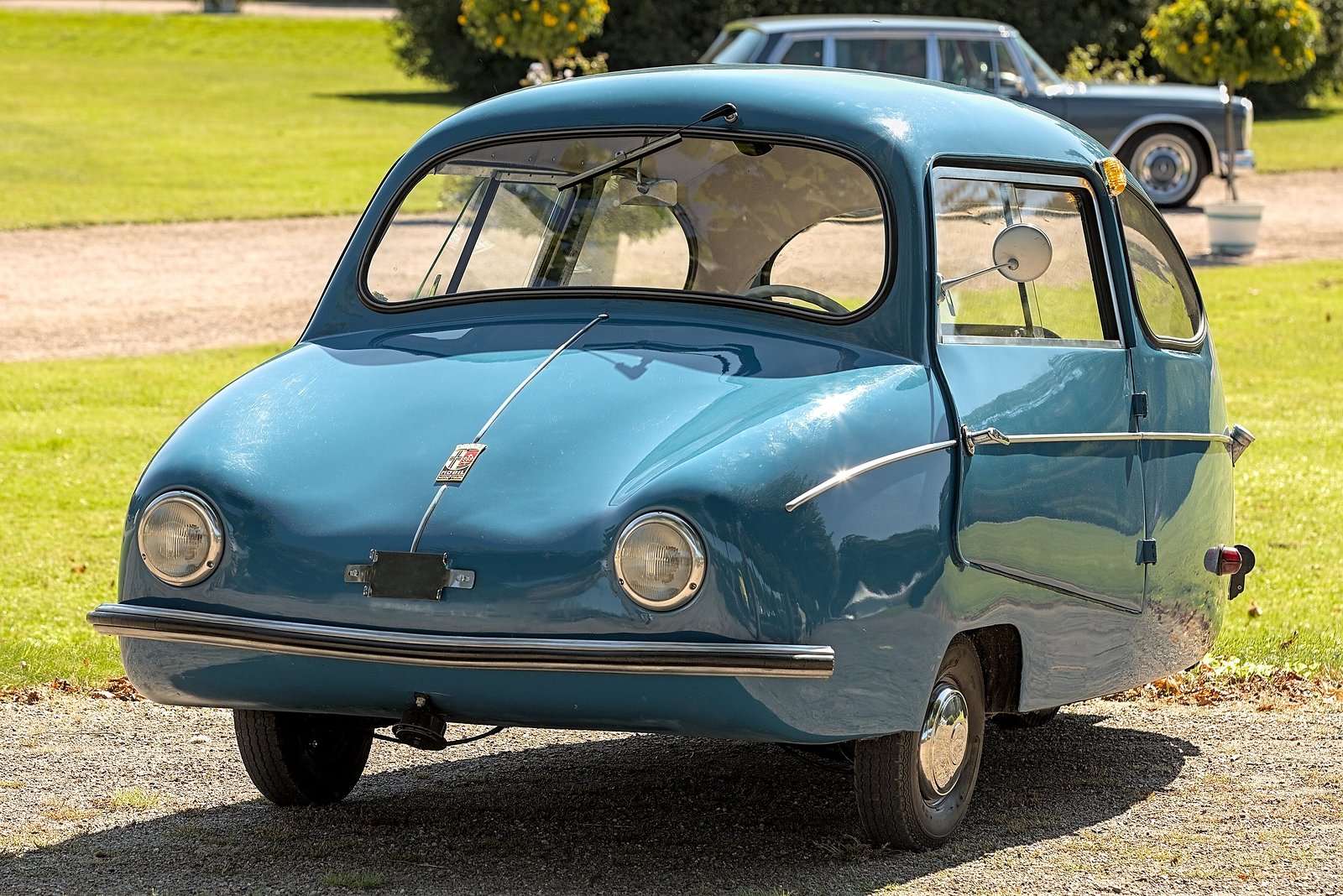
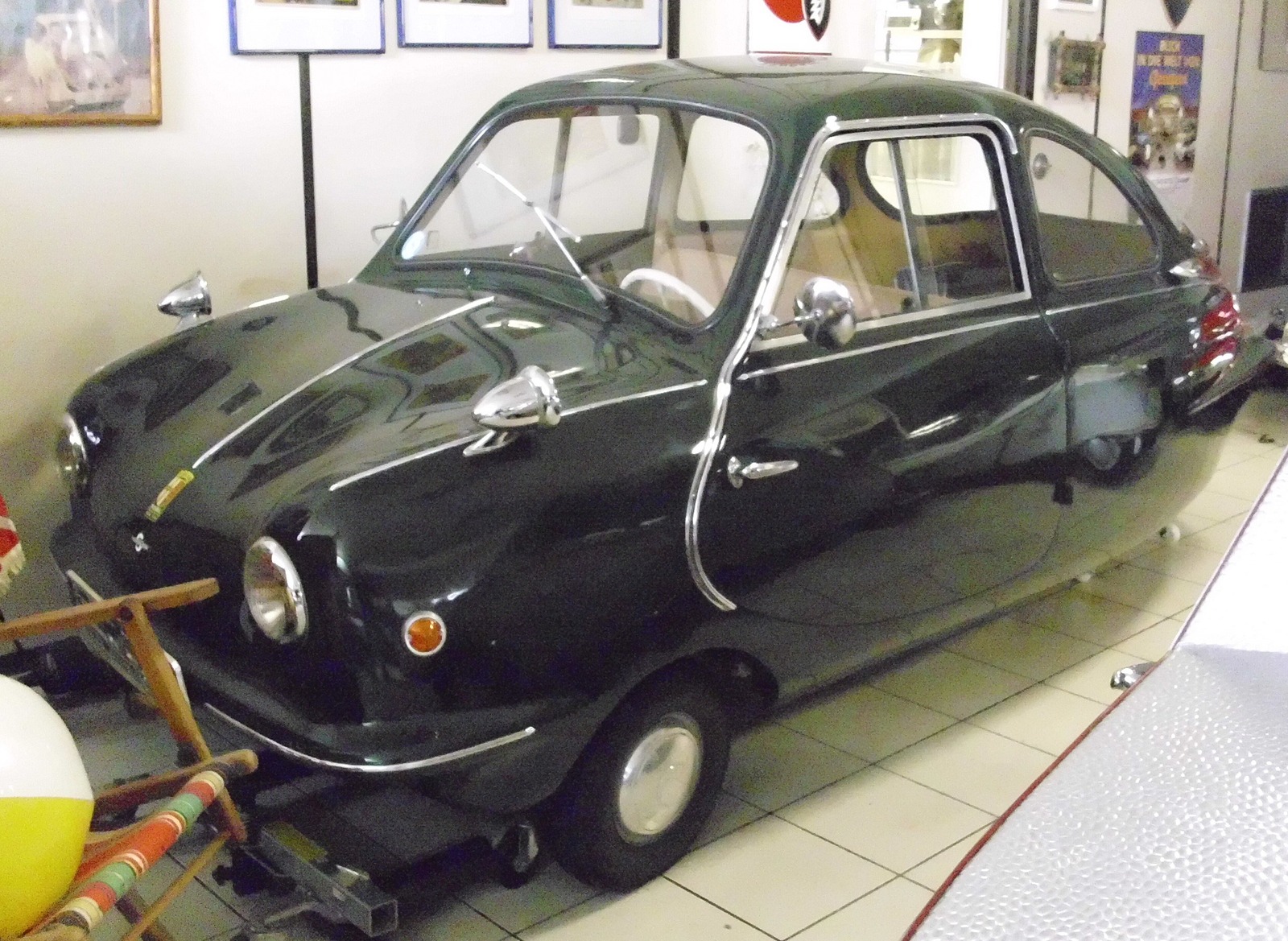
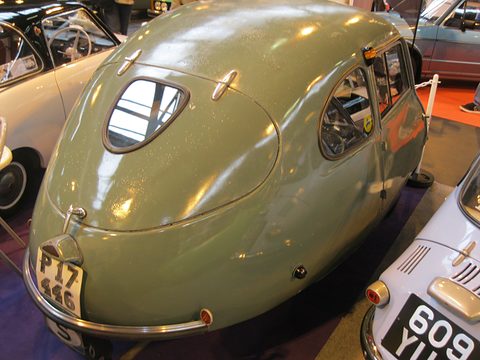
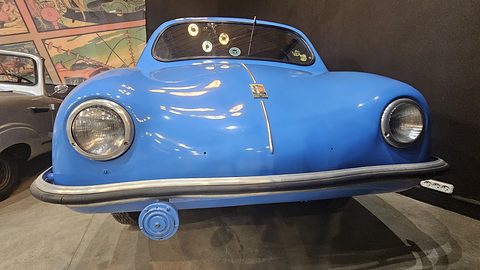
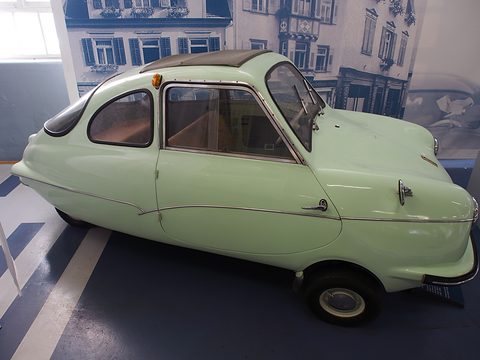
The S‑7 of July 1957 had a glass-fibre body by Adolf Sander, about 55 kg (121 lb) lighter, with bigger windows, and cost DM 3,100; a Sporty roadster was made until September 1965.source 2source 5 When Sachs stopped making the 200 cc engine in 1965, the last S‑7s took the 198 cc four-stroke of the Heinkel Kabine and the Trojan 200, with hydraulic brakes and a dummy grille, at DM 3,450. About 440 Sachs and 260 Heinkel S‑7s were built, and production at Fulda ended in the spring of 1969 with no successor.source 2source 5 German and English Wikipedia credit the Fuldamobil with the first front axle with negative scrub radius, about 20 years before the Audi 80 made it common; the claim rests on those two encyclopaedias.source 1source 2

Built under licence

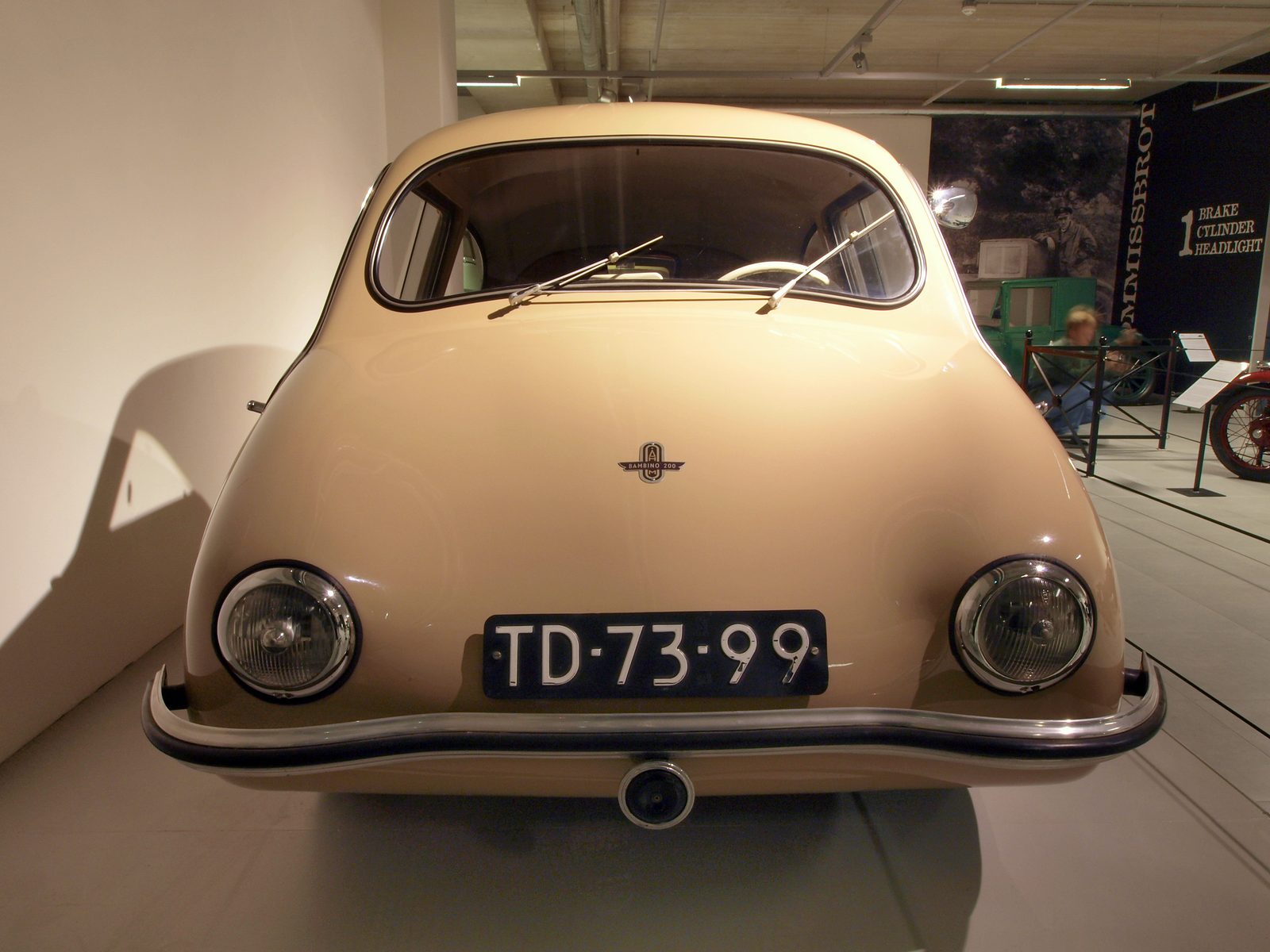
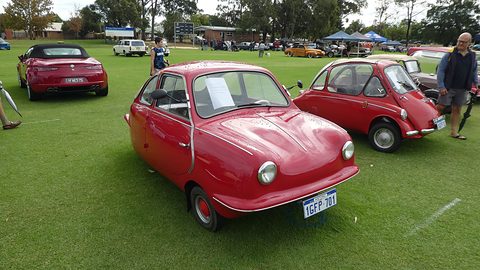
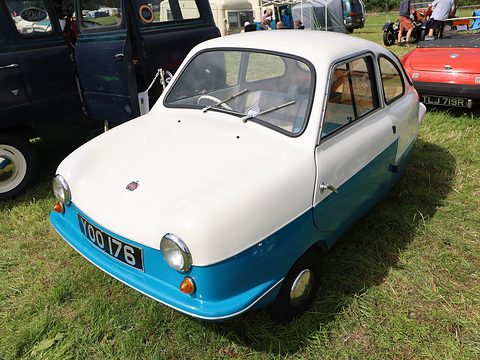
Schmitt sold everything from full manufacturing rights to kits, and often sent complete cars first, so the record is tangled.source 2 The S‑7 became the model for the licence builds: the Nobel 200 in Britain and Northern Ireland, the Attica 200 in Greece, the Fram King Fulda in Sweden, the Bambi in Argentina, and the Nobel in Chile; the Bambino 200 in the Netherlands came earlier.source 1source 2 Builds in South Africa, Rhodesia, Turkey and India are reported but unconfirmed, and the successor firm says licence production went on until 1975.source 1source 2source 11
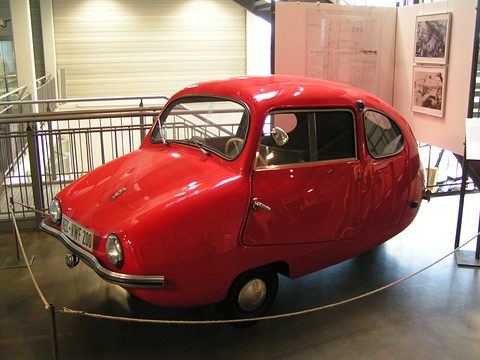
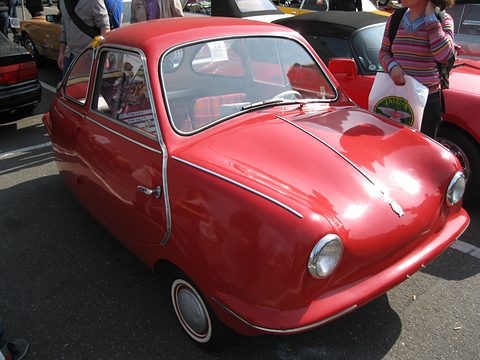
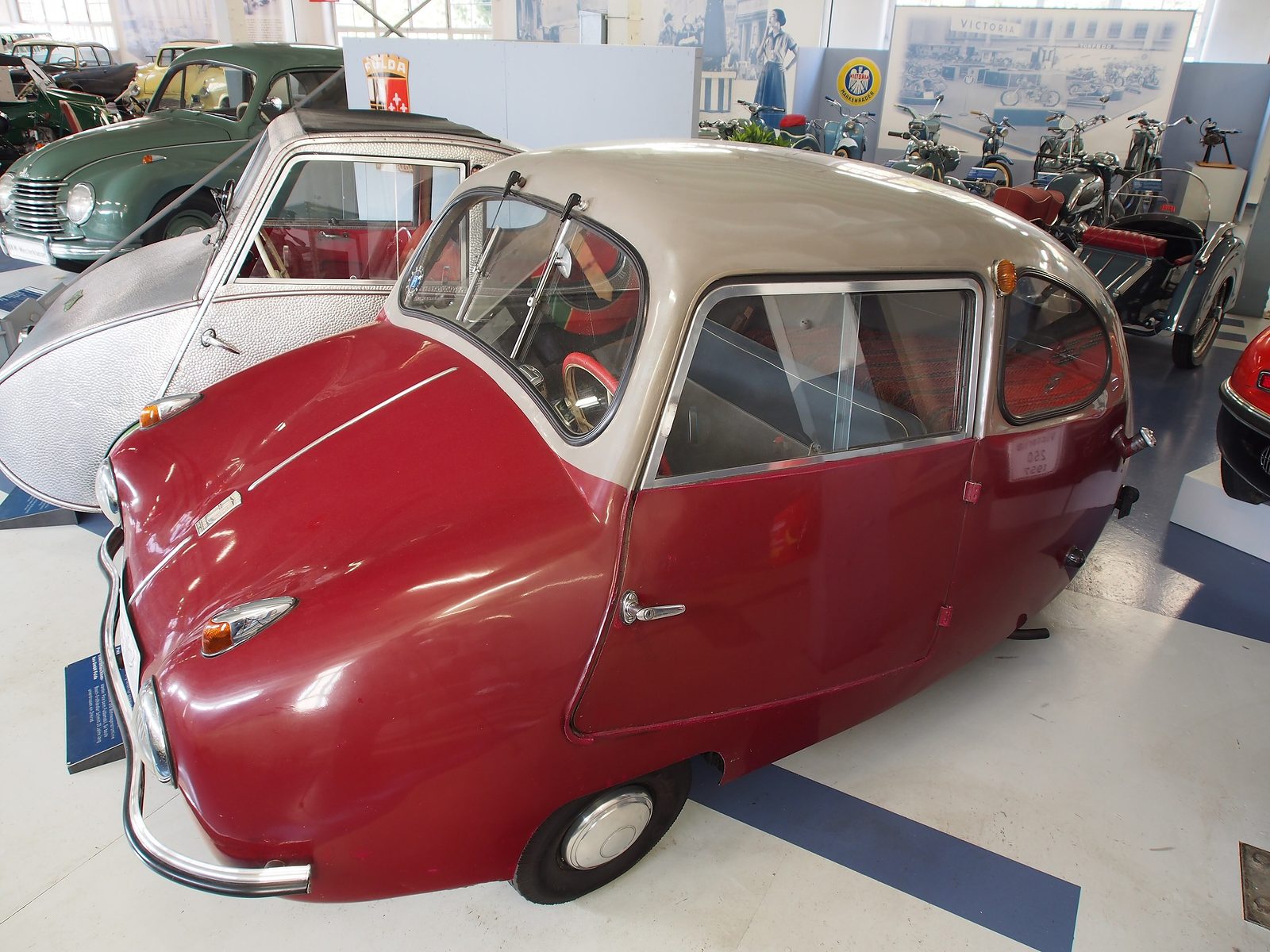
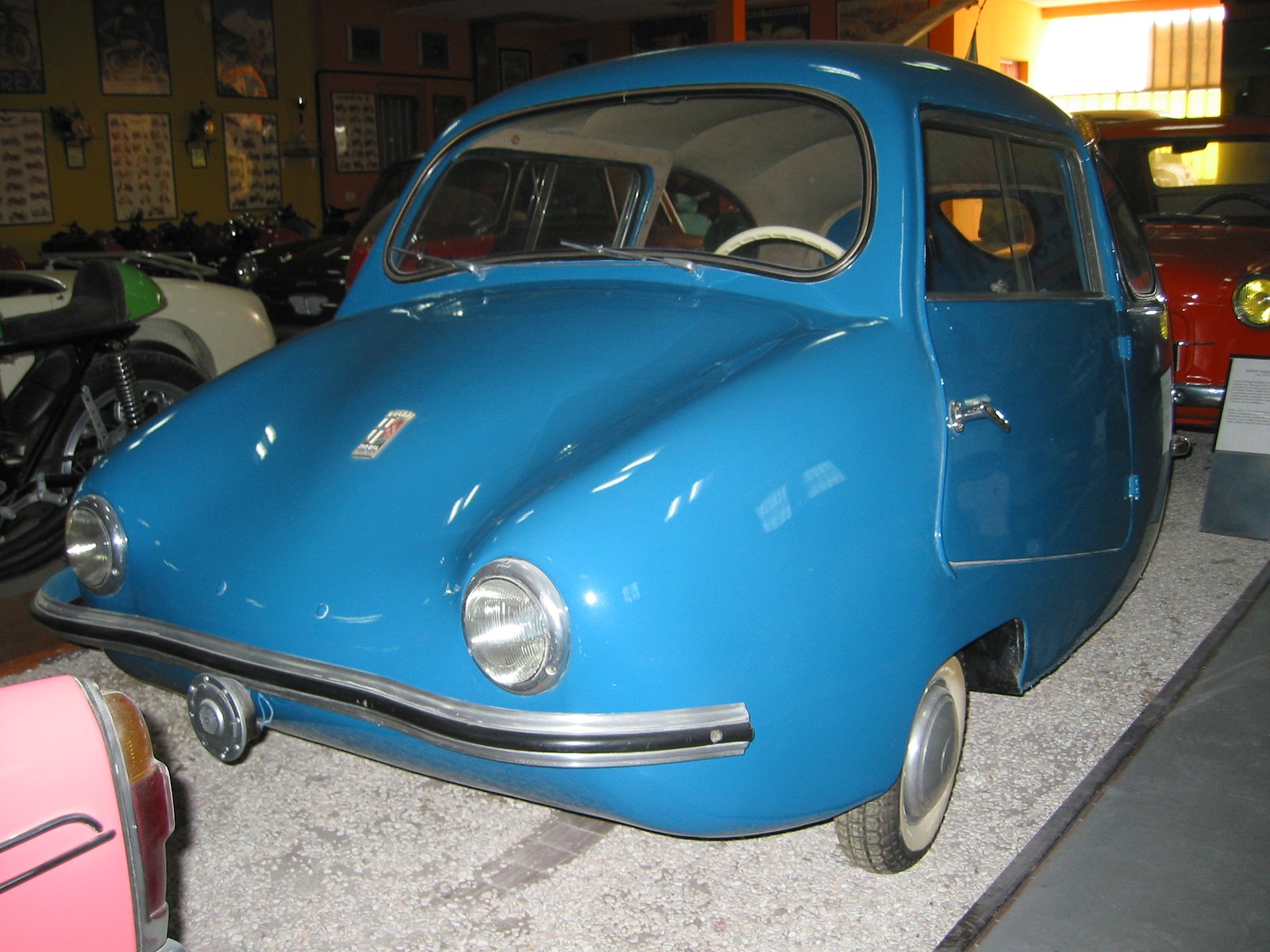
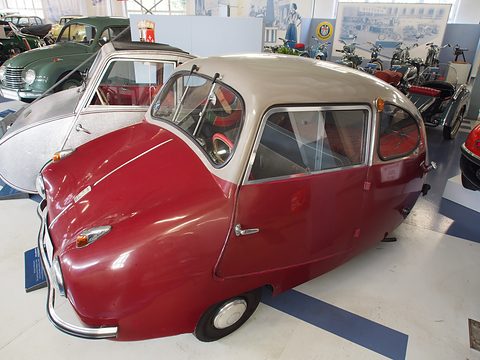
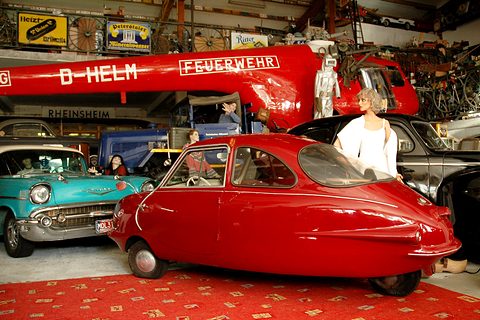
Glossy red egg-shaped three-wheeler with chrome bumpers behind a low rope in a bright museum hall.
A red NWF 200, the licence-built S-type, at the Industriemuseum Lohne in 2007.Photo: Corradox, CC BY-SA 3.0, via Wikimedia Commons
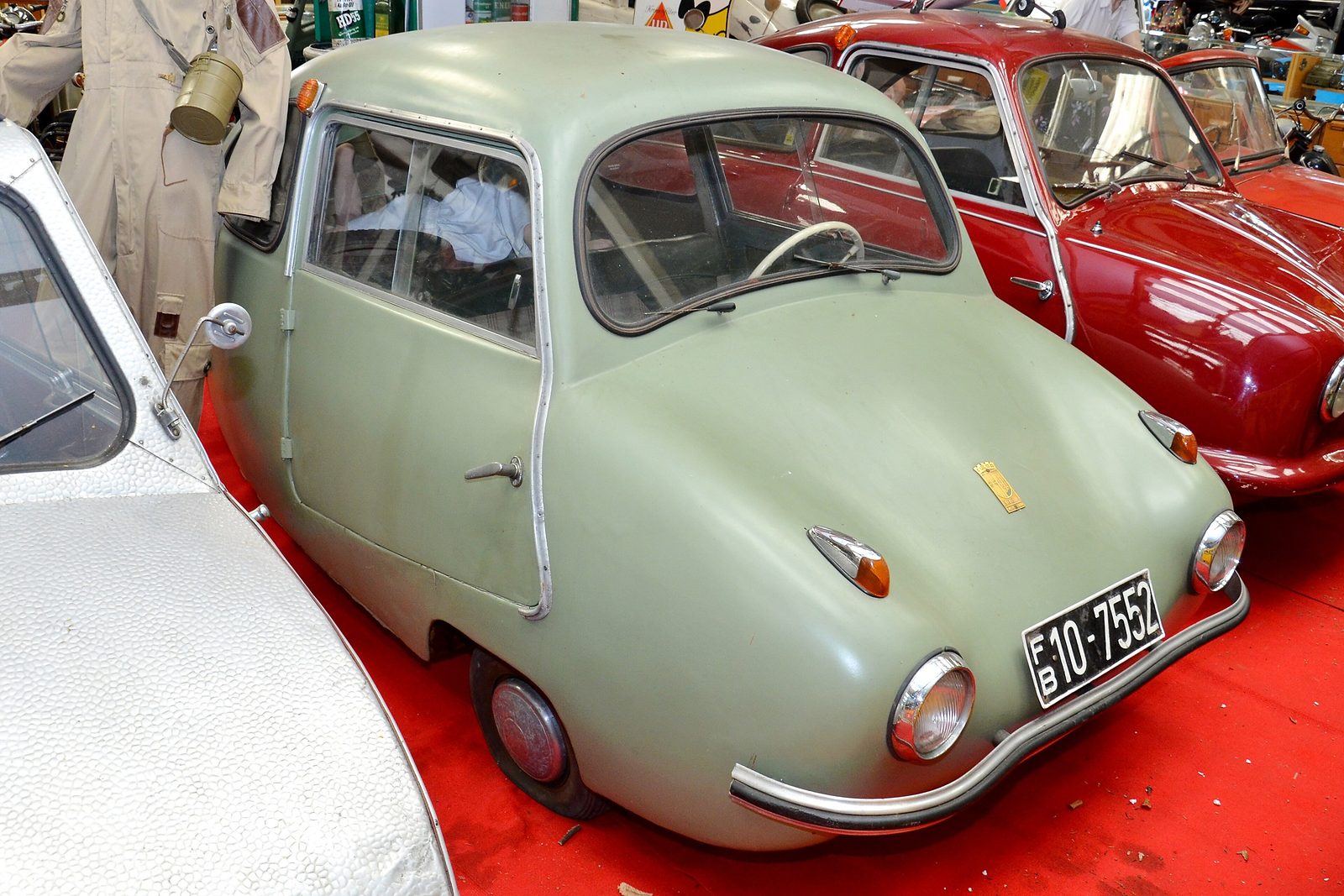
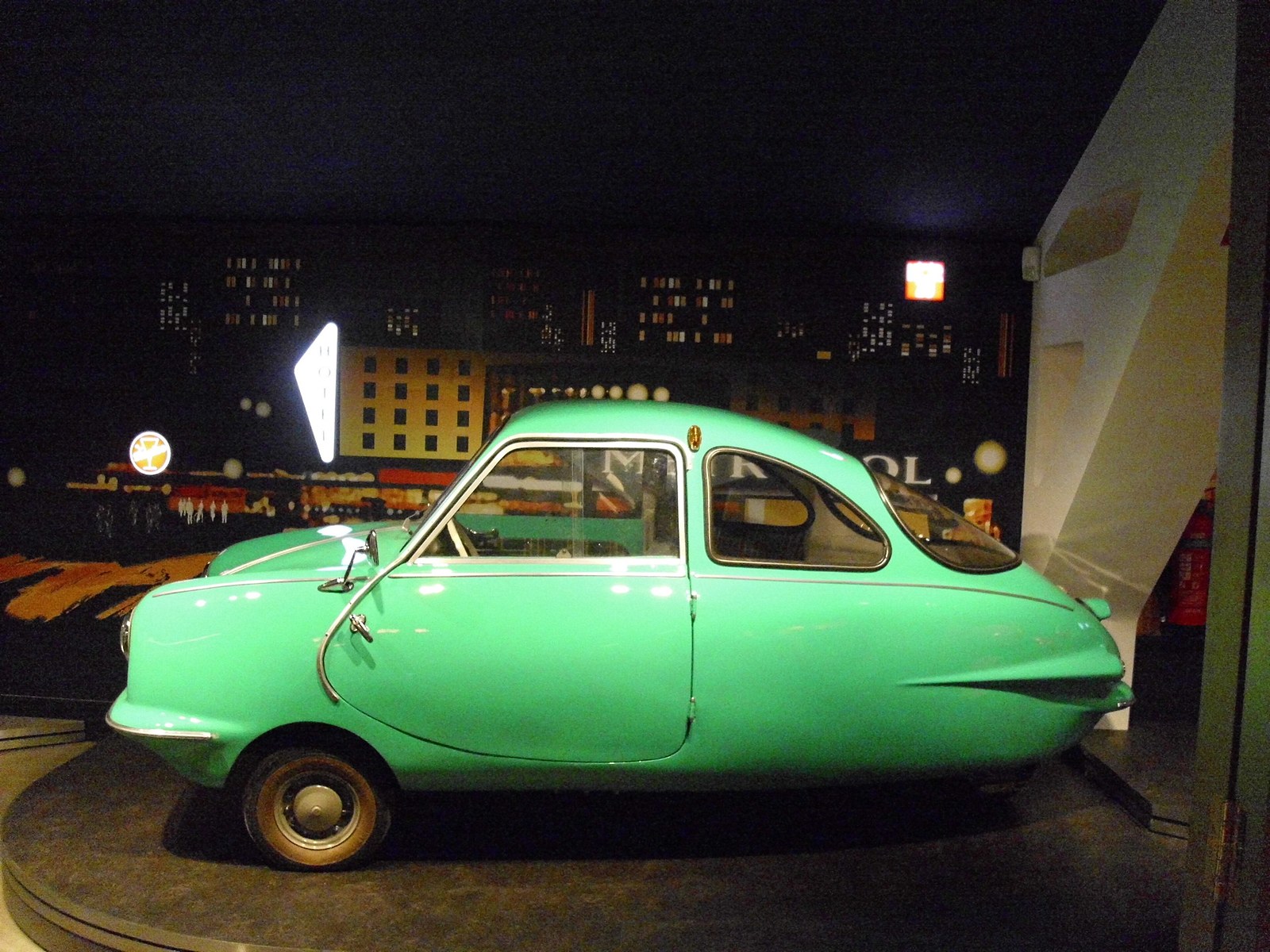
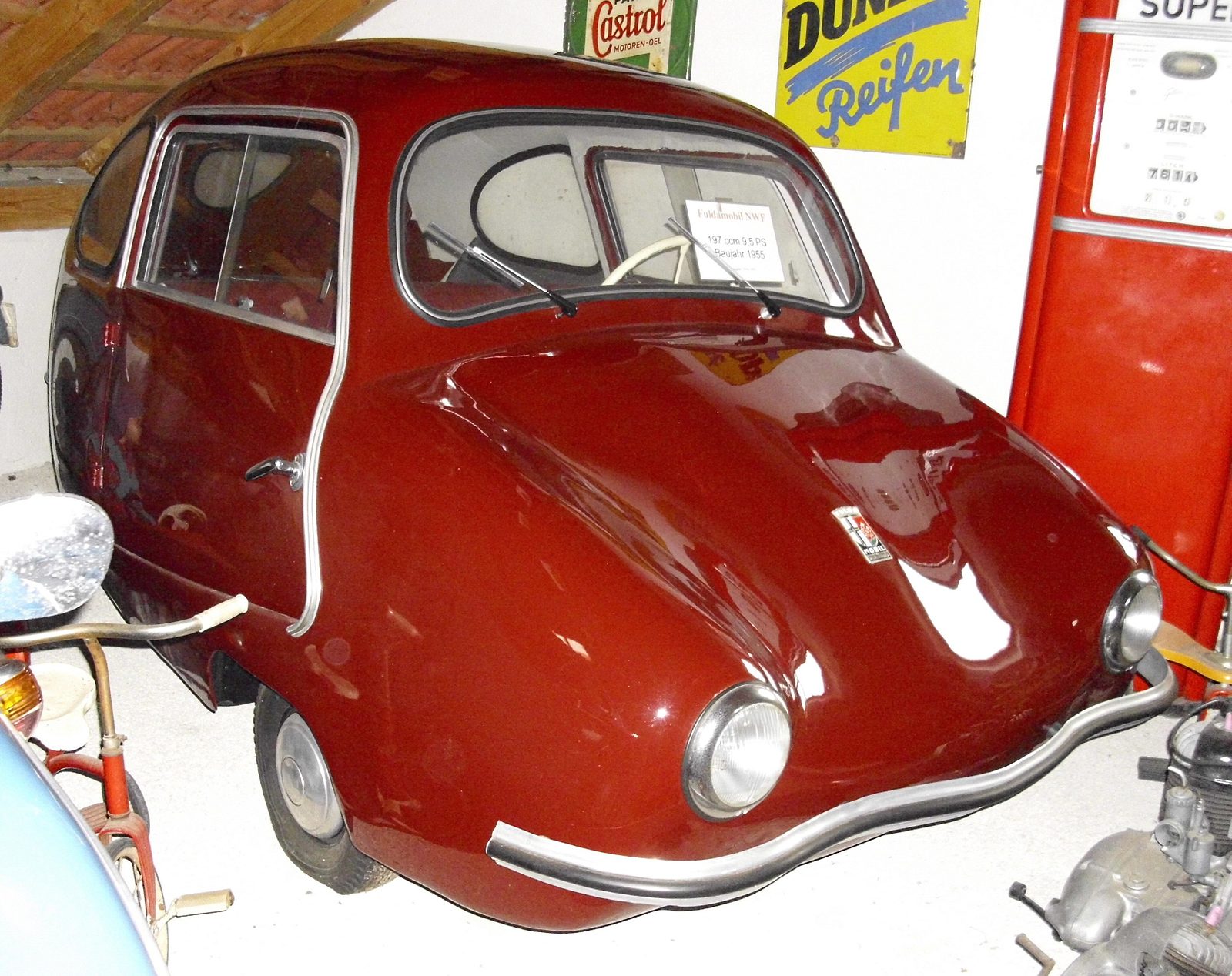
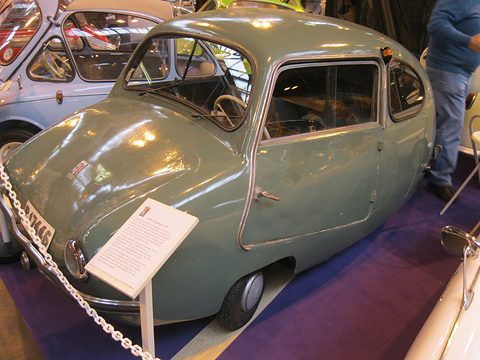
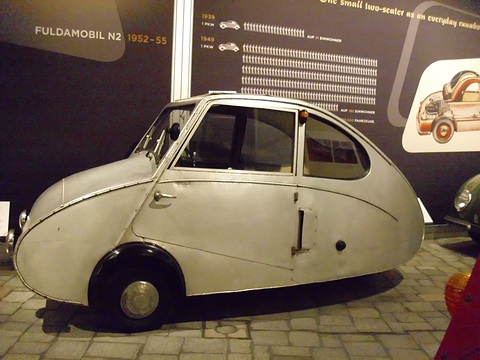
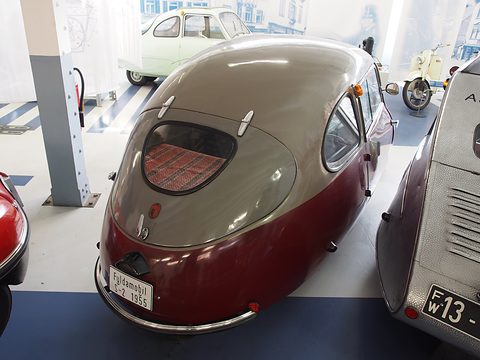
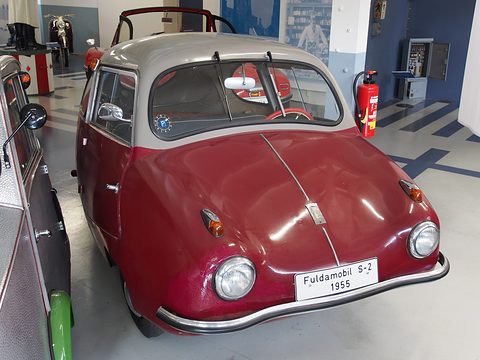
Two-tone red and grey rounded three-wheeler with a “Fuldamobil S-2 1955” display plate in a museum hall.
A 1955 S‑2, the rounded aluminium body that VDM formed for Fulda, at Schramberg in 2015.Photo: Alf van Beem, Public domain, via Wikimedia Commons
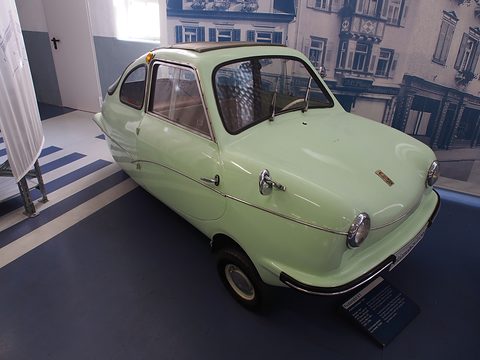
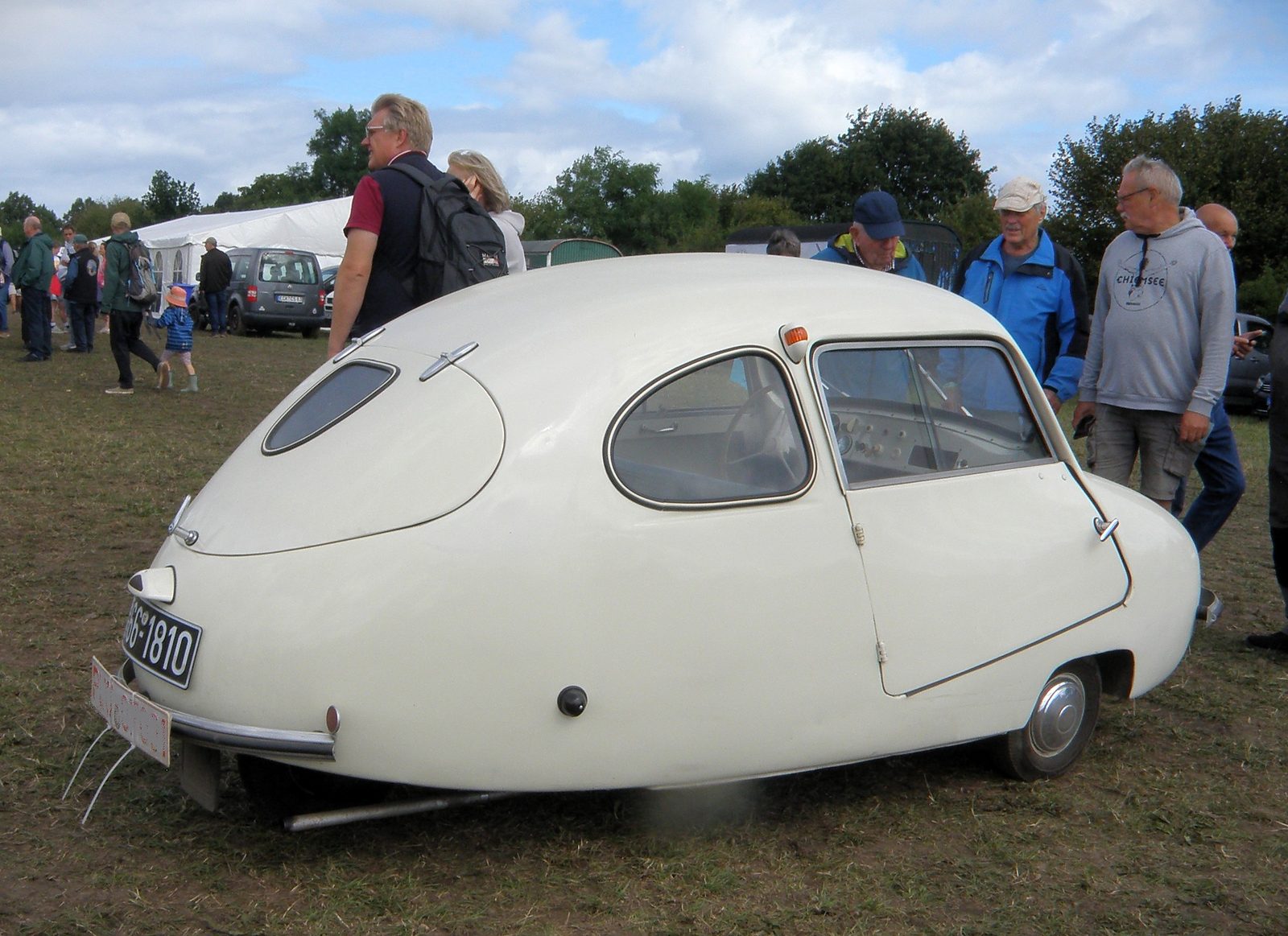
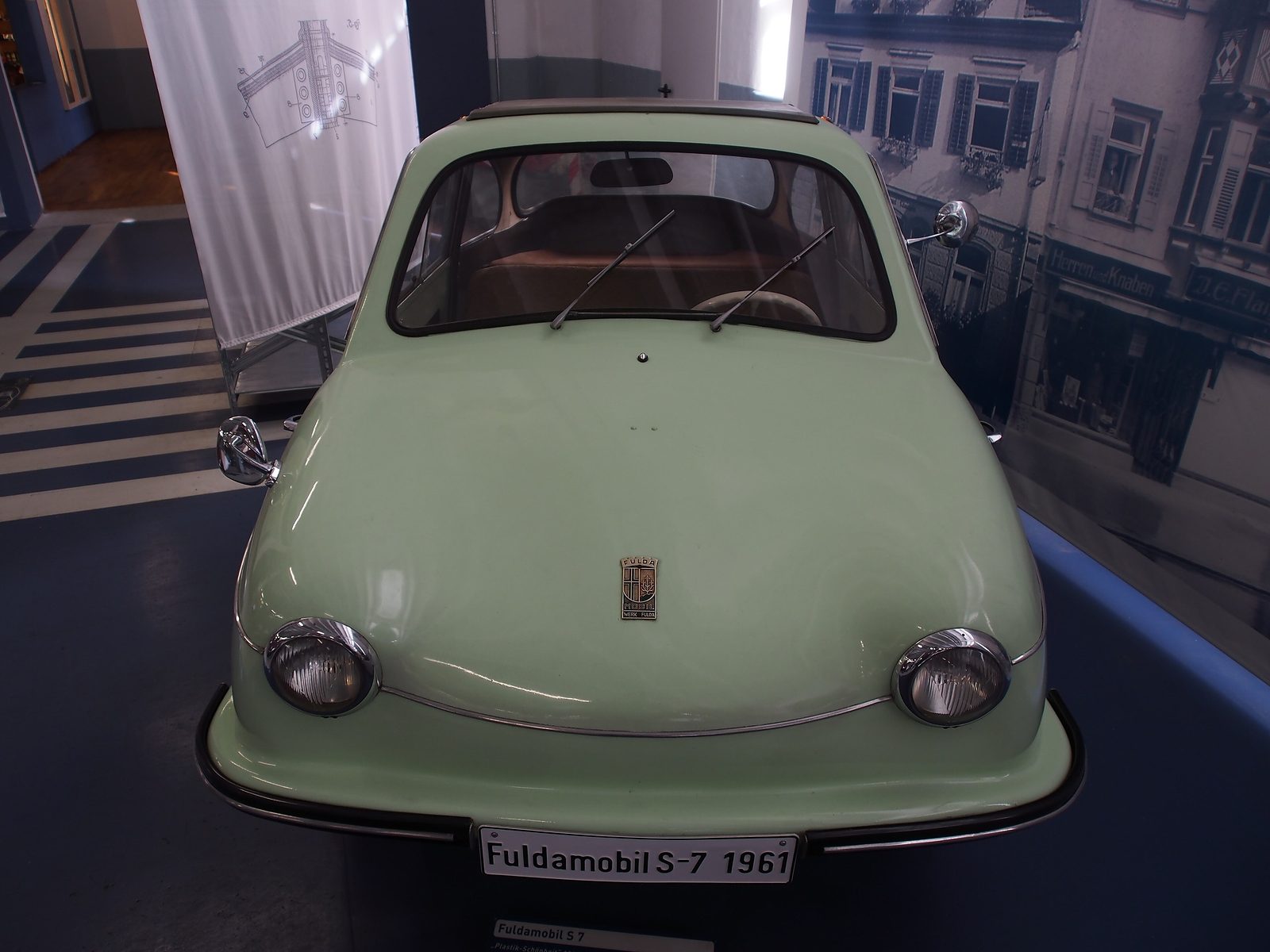
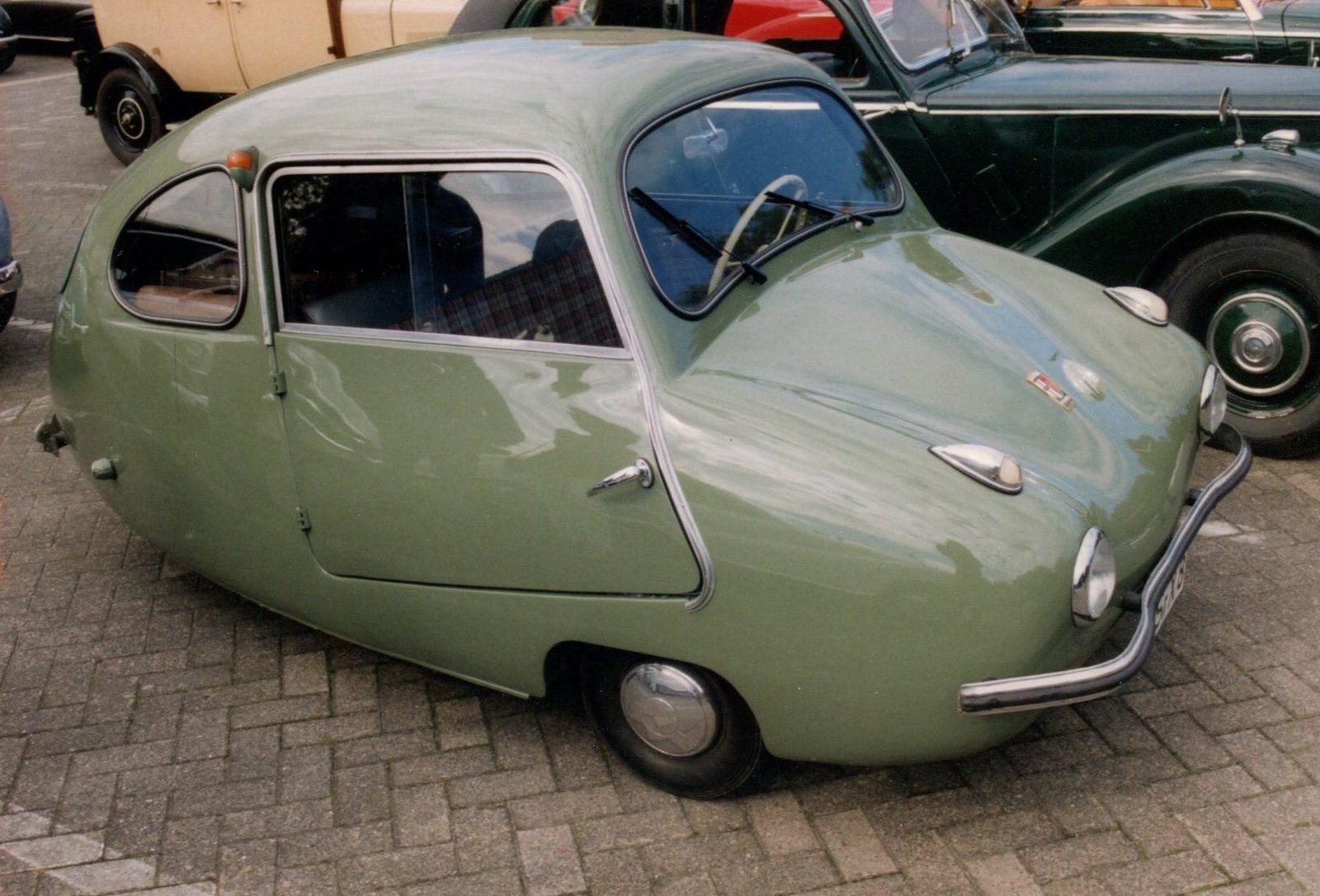
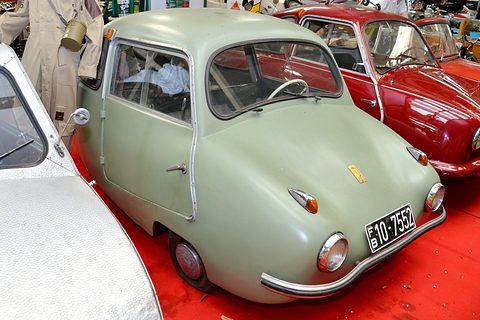
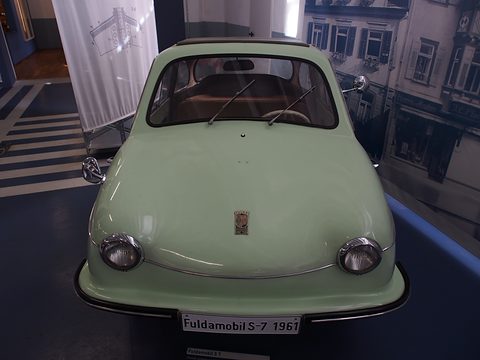
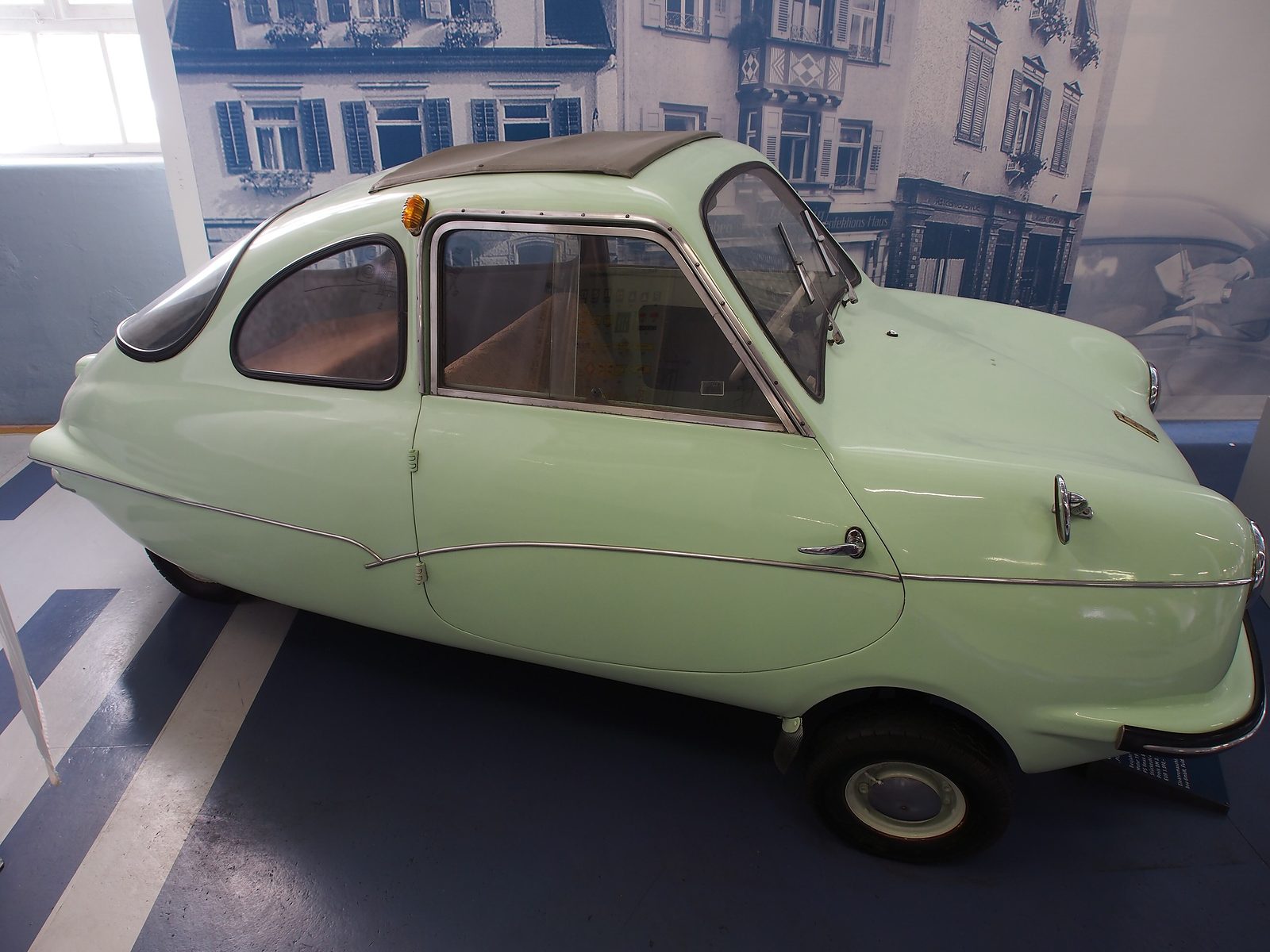
Pale green three-wheeler with a fabric sunroof on a blue-striped floor before a large period street photograph.
A pale green 1961 S‑7, the glass-fibre Fuldamobil, at Schramberg in 2015.Photo: Alf van Beem, Public domain, via Wikimedia Commons

Fram King Fulda

1956–⁠1962 · a record on this page

Sweden’s Fuldamobil was built at Helsingborg by Fram-King, AB Industrikompaniet King, a bicycle maker that bought its licence in 1956.source 10source 12source 13 It meant to build the aluminium S‑6, but it hired the German chief designer, who brought the new S‑7 with him, and the Swedes made an improved S‑7 with a body all of plastic. It was shown in Sweden in March 1957, before the S‑7 appeared in Germany.source 10source 2 The bodies were vacuum-formed on the island of Ven, by the one Swedish firm that could do it, and then at Roskilde in Denmark after the Ven plant burned down; the frames were welded at Fram-King’s works in Uppsala.source 10source 12

It used the Messerschmitt KR200’s 191 cc Sachs engine, geared lower, and four speeds each way, the engine started backwards by the ignition key for reverse. It was 3,200 mm (126 in) long and weighed 310–330 kg.source 10source 12source 13 Sold as the FKF 57 and 58, it became the King 59 and 60 after the bearing maker SKF objected to the initials, in 1959.source 10source 12source 13 Production was 411 from 1957 to 1962, or about 400 by the Weiner museum’s count.source 1source 10source 12source 13 Several are in Swedish museums, and its Swedish story is told on the page for Scandinavian microcars.source 1
Bambino 200

1955–⁠1957 · a record on this page

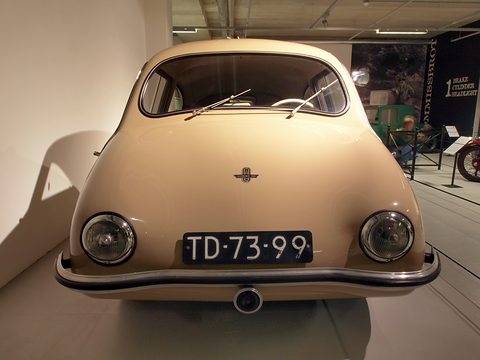
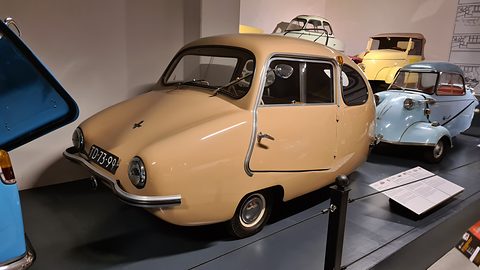
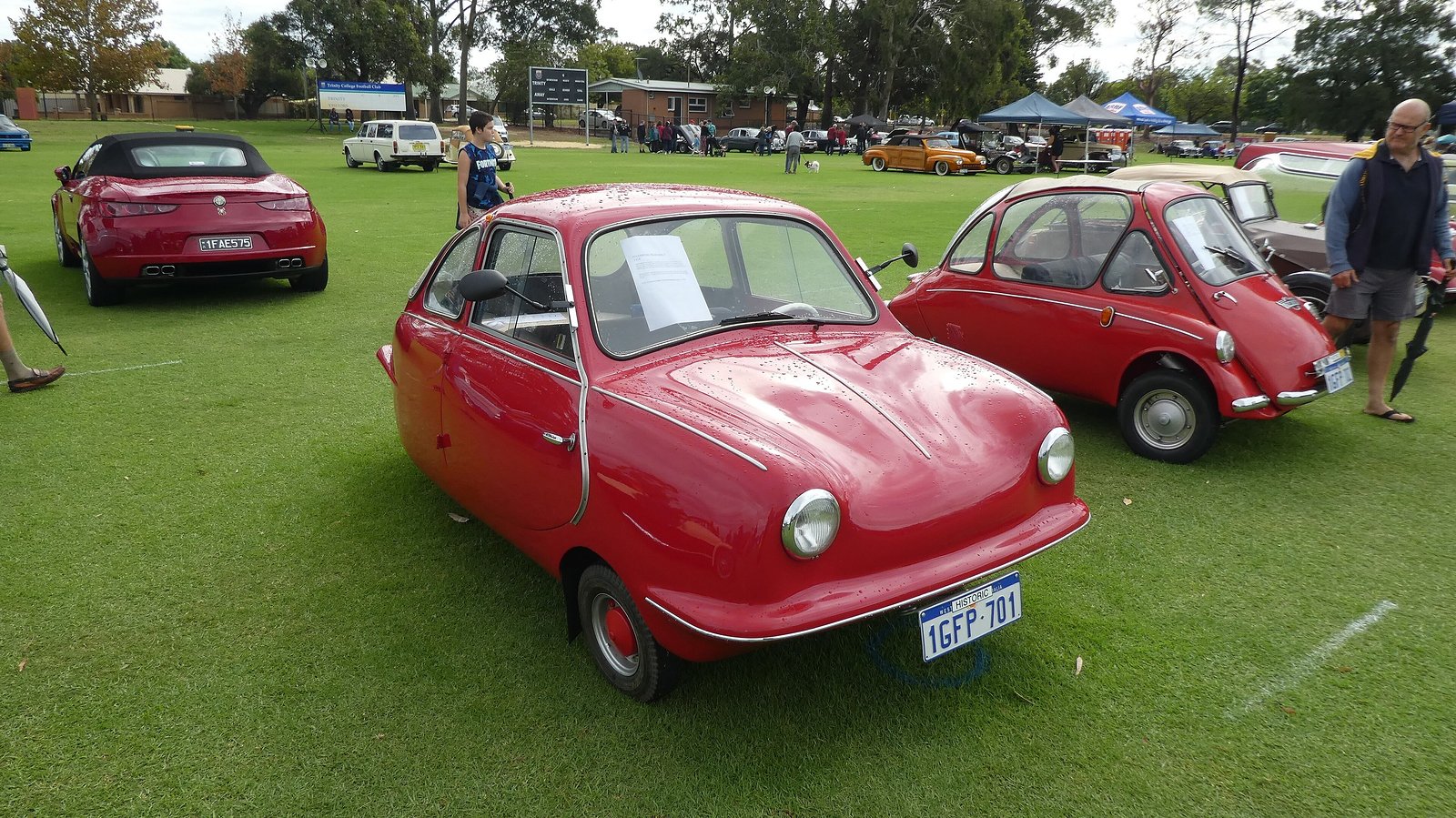
The Dutch Fuldamobil was sold by Hostaco-Mobiel of Rotterdam, either first as the Hostaco and then as the Bambino, or with Hostaco as the make and Bambino as the model, by different accounts. NV Alweco of Veghel assembled it.source 14source 15source 16 It was a three-wheeler with a single rear wheel, a 197 cc ILO single of 9 hp (6.7 kW) ahead of the rear wheel, three gears and reverse, room for two adults and a small child, and a coupé or an open two-seater body. A 1957 advertisement priced it at 2,995 guilders and gave it 75 km/h (47 mph).source 15source 14

A restyled Bambino Sport convertible at the Amsterdam RAI show in 1957 drew no interest, a four-wheeler followed without orders, and the parent firm went back to transport equipment and mopeds.source 15 No production figure has been found, and Georgano and Tony Marshall doubted that any were built in the Netherlands at all: they thought the cars sold were more likely German Fuldamobils, bought in and rebadged.source 16 One is in the Louwman Museum in The Hague.source 14 For the rest of the Netherlands’ small cars, see Dutch and Belgian microcars.

Bambi

1960–⁠1966 · a record on this page

The Bambi was built at Ciudadela, in Greater Buenos Aires, by Fábrica de Automotores Utilitarios from 12 May 1960. At 140,000 pesos it was the cheapest car on the Argentine market, and the first 500 sold quickly.source 17source 6 Its Sachs 192 cc engine was made locally by Televel and gave 10.2–10.5 hp (7.6–7.8 kW) through four gears.source 17source 6

Una de las curiosidades del Bambi era que la marcha atrás se lograba deteniendo el motor y arrancándolo otra vez invirtiendo la corriente, alcanzando de esta manera, la misma velocidad que hacia delante.

auto-historia.com.ar, “Bambi la microcupé de Fuldamobil”, archived 2016. In English (our translation): “One of the Bambi’s curiosities was that reverse was obtained by stopping the engine and restarting it with the current reversed, so reaching the same speed as forwards.”source 17

It had a one-piece body of glass-reinforced polyester on a rectangular steel-tube frame, 3,200 mm long, with the rear wheels 400 mm apart, and a front bench 1,250 mm wide that could take three; it reached 80 km/h.source 17 In July 1963 came the Sporty pick-up, with a doorless cab, a bench for two, a load bed for 300 kg and an optional top of plastic or canvas, at 139,800 pesos.source 17source 6 From 1963 the Bambi was built only to order, and it ended in 1966, after 480 coupés and 20 pick-ups.source 6

Pictures

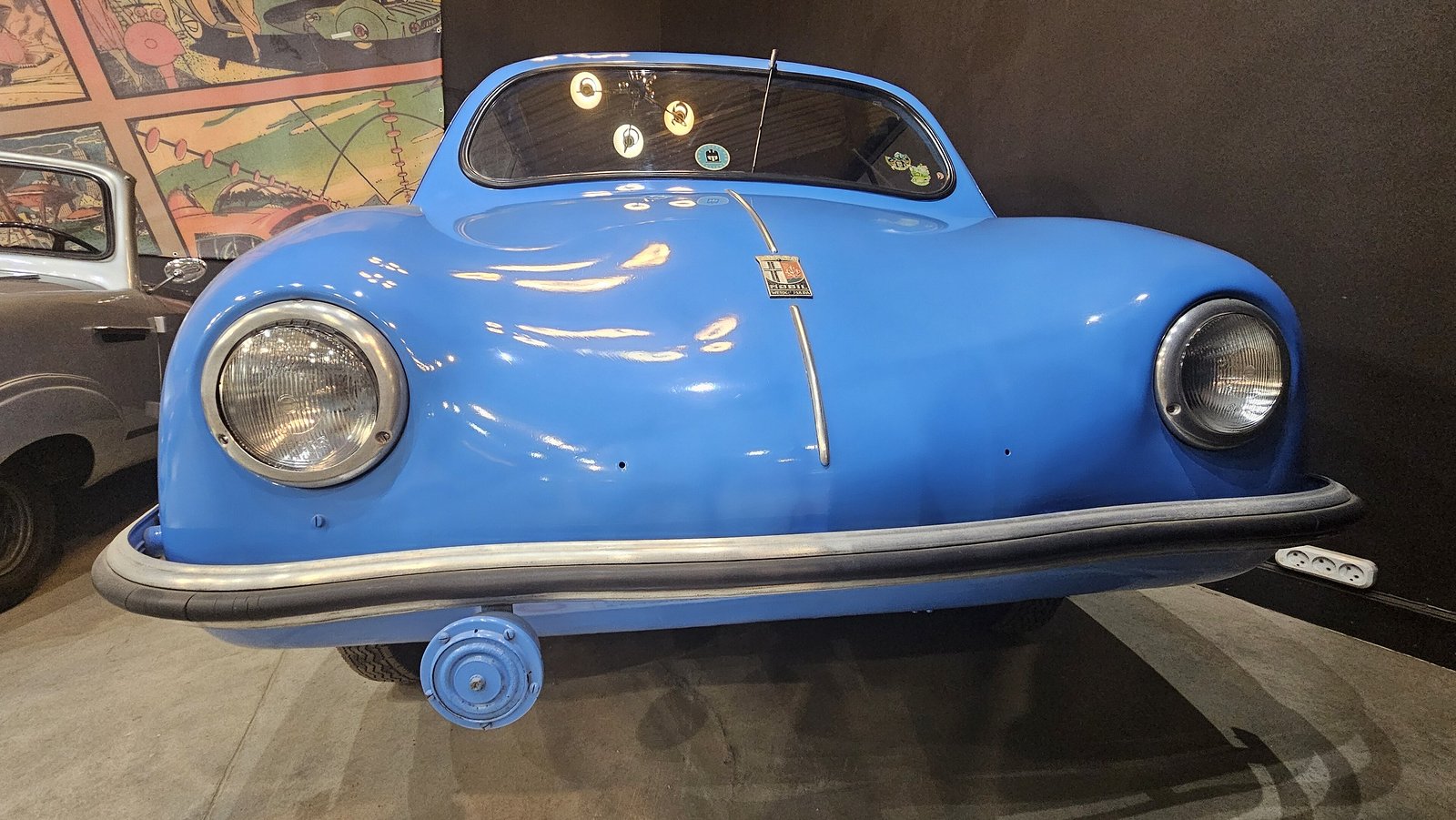
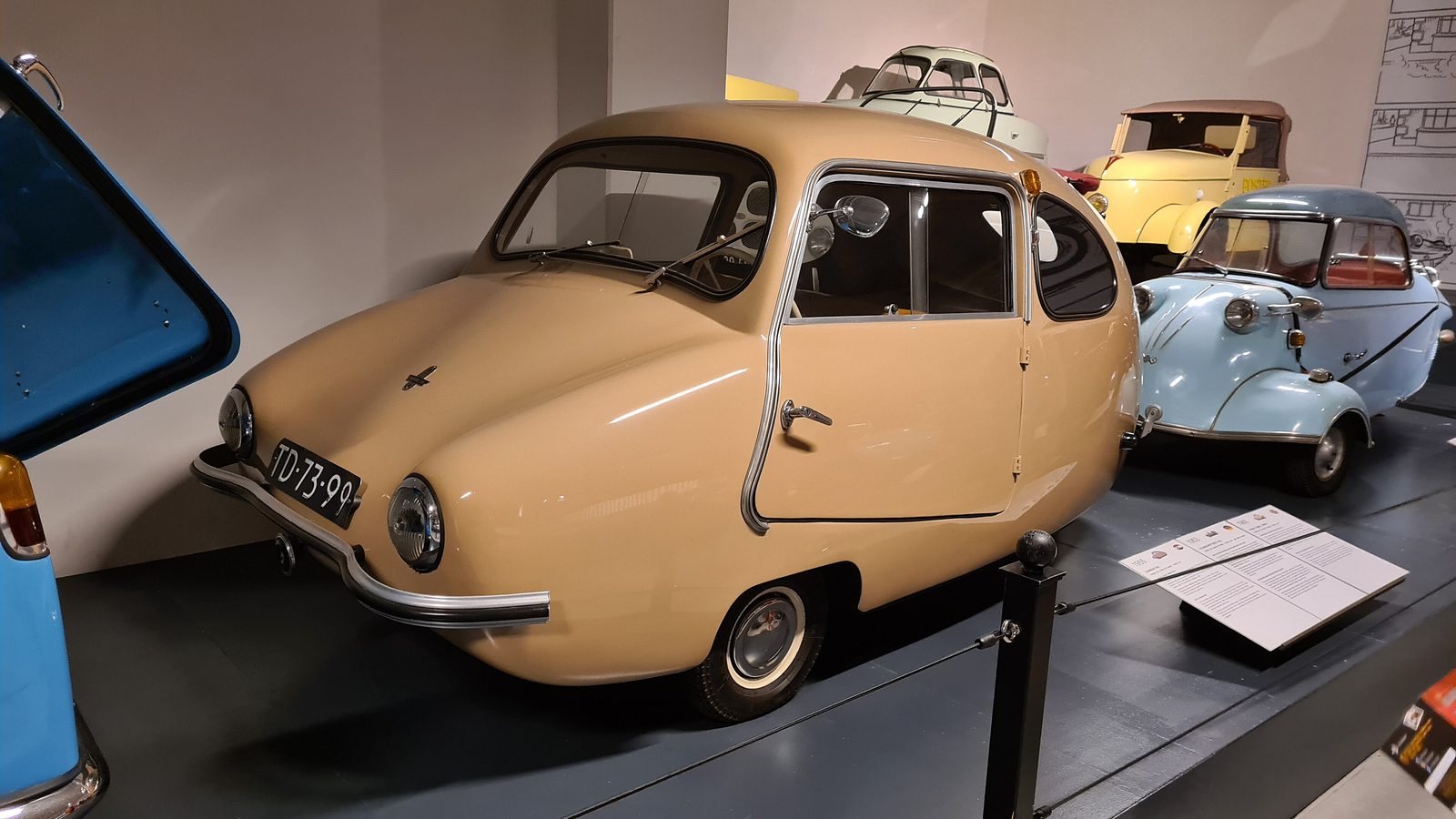
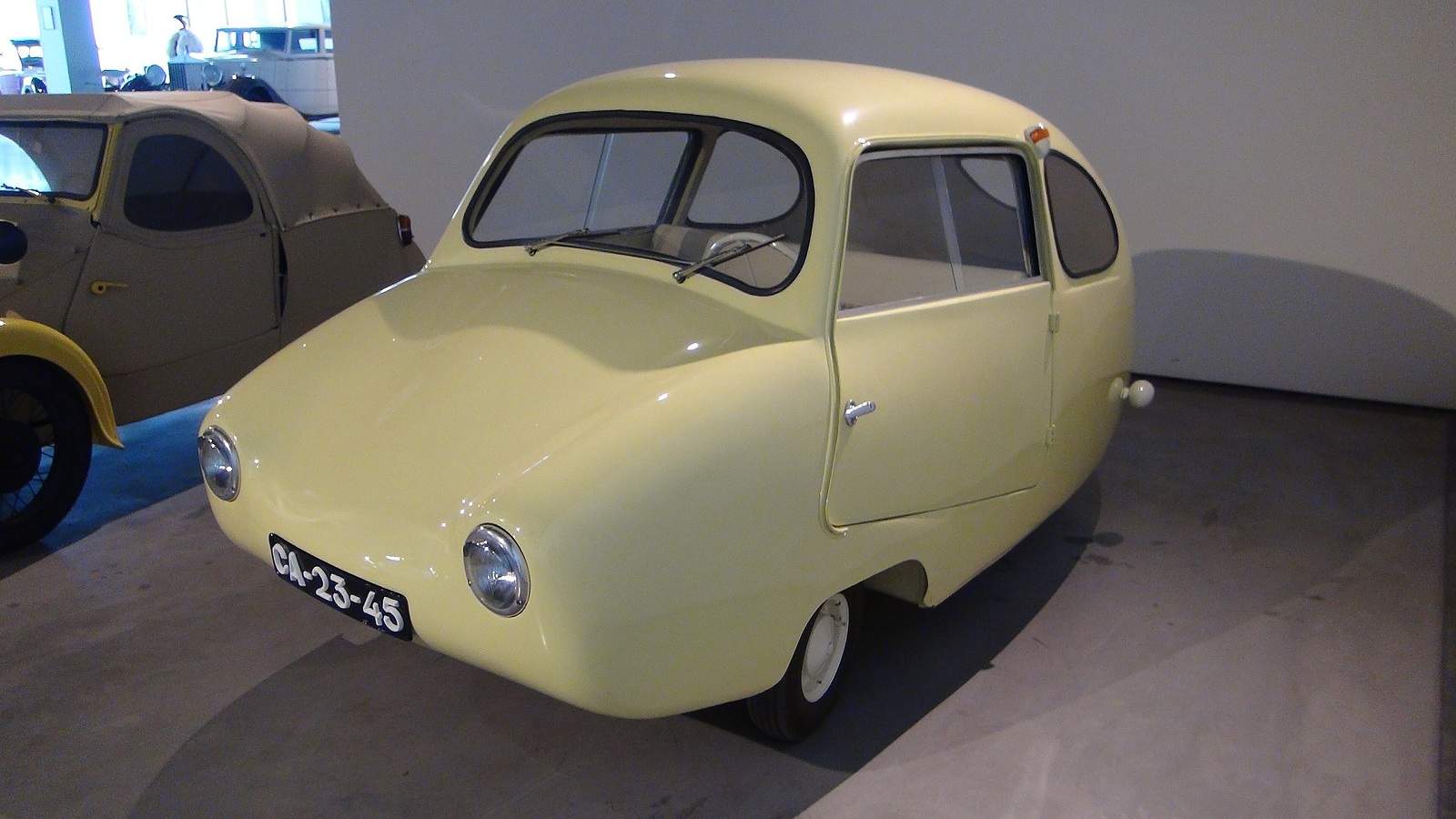
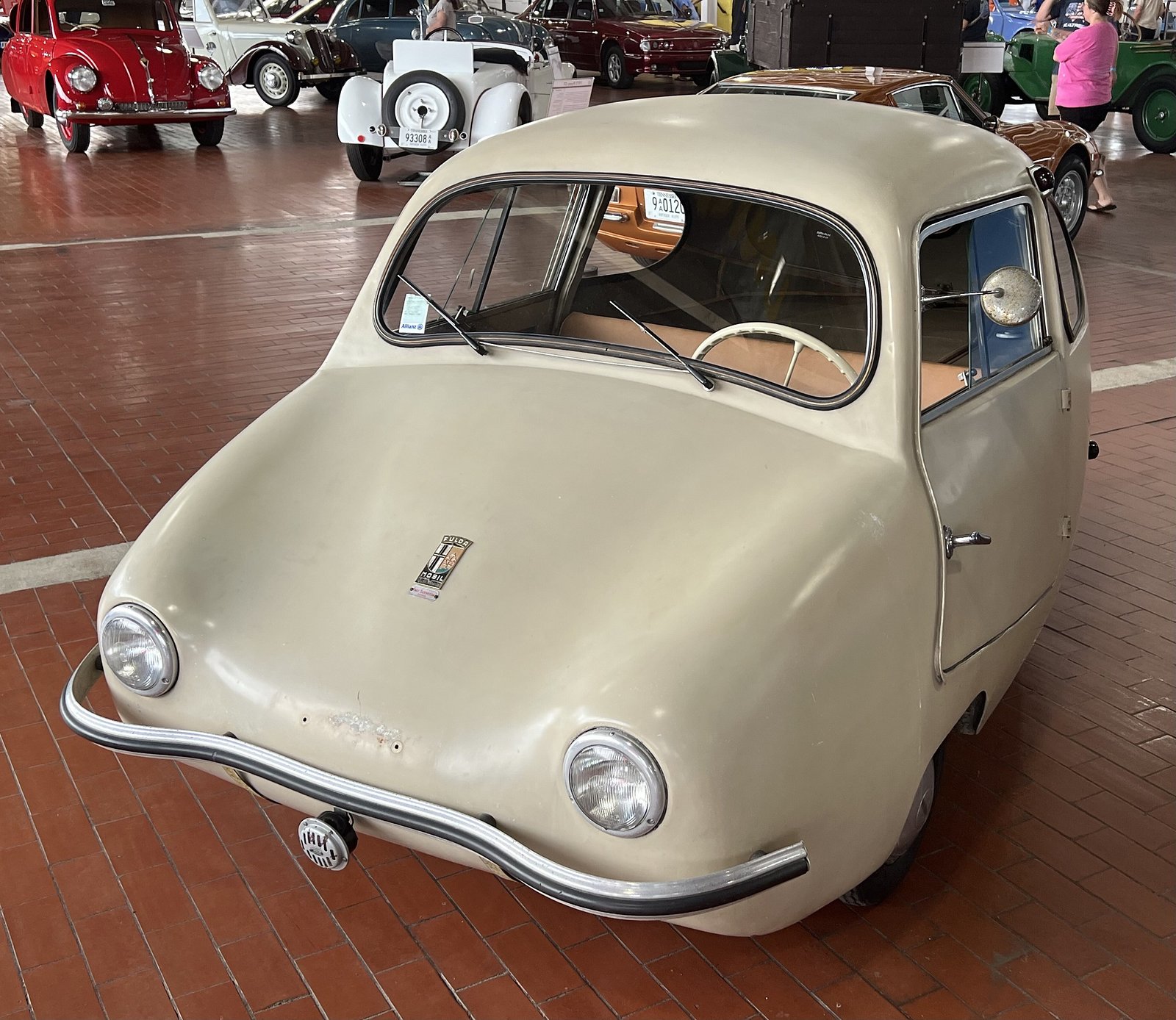
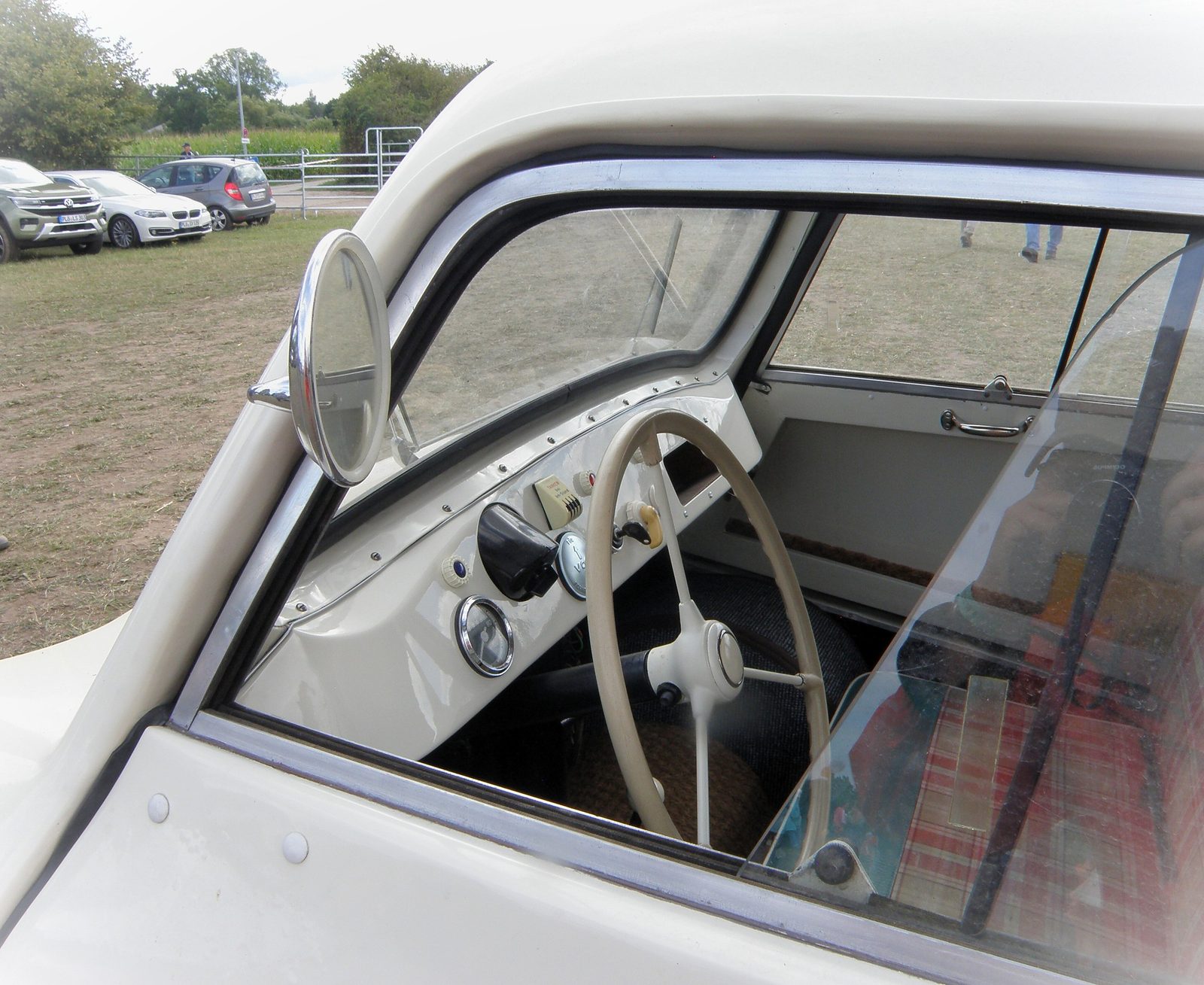
More photographs, old and new

Variants

Nineteen years of Fuldamobils

The German models
VariantYearsWhat differsHow many
Prototype1950Sloping nose, steel on a wooden frame, split windscreen; Zündapp 198 cc, 6.5 PS1source 5
N1951Prototype-style front; plywood skinned in leatherette; Baker & Pölling 248 cc74source 5
N‑11951–⁠52Rounded nose, upright screen; the last ones in aluminium; 8.5 PSAbout 320source 5
N‑2 “Silberfloh”1952–⁠55Hammered aluminium; coupé and roadster; Sachs 359 cc, 9.5 PS380source 3source 5
S‑11954Rounded VDM body with a tailgate; ILO 197 cc3 at Fuldasource 5
NWF 2001954–⁠55NWF’s S: bumpers, a VW split rear window; ILO 197 cc, 9.5 PS701source 1source 9
S‑21954–⁠55The Fulda-built S; Sachs 359 ccAbout 430source 5
S‑4 and S‑51955–⁠56Two rear wheels close together; reversible Sachs 191 cc; the S‑5 a roadsterAbout 168 togethersource 5
S‑61956–⁠57Chassis changed for Zündapp, a small rear bench, two-tone paint; 10 PSAbout 123source 7source 5
TL 400From 1956A four-wheeled light truck with a Lloyd 400 enginePerhaps 1source 2
S‑71957–⁠65Glass-fibre body; Sachs 191 cc; a Sporty roadsterAbout 440source 5
S‑7, Heinkel1965–⁠69Heinkel 198 cc four-stroke, hydraulic brakes, a dummy grilleAbout 260source 5

Specification

The N‑2 of 1952–⁠55 unless noted

Engine and drive

Engine and drive
EngineFichtel & Sachs single-cylinder two-stroke, fan-cooledsource 3source 5S‑4 to S‑7: Sachs 191 cc, 10 PS; last S‑7s: Heinkel 198 cc four-stroke
Capacity359 ccsource 3source 5source 4
Power9.5 PS (7 kW)source 3source 5source 4
GearboxHurth, three speeds and reverse; chain to the rear wheelsource 2source 3From the S‑4, four forward and four reverse, by running the engine backwards
StarterDynastartsource 3

Body and chassis

Body and chassis
FrameSteel tubesource 3
BodyAn ash frame panelled in hammered aluminiumsource 3source 4S-type: formed aluminium; S‑7: glass fibre
SuspensionTransverse leaf in front, coil spring behindsource 3
BrakesCable-operated, front wheels onlysource 2source 3Hydraulic on the Heinkel S‑7
Tyres4.00 × 8source 3
Electrics6 Vsource 312 V on the S‑6

Dimensions

Dimensions
Length2,850 mmsource 3S‑6: 3,100 mm; S‑7: 3,200 mm
Width1,397 mmsource 3S‑6: 1,470 mm
Weight305 kgsource 3S‑6: 375 kg

Performance and running

Performance and running
Top speed80 km/hsource 3source 5S‑6: 85 km/h
Price newDM 2,990 (1952); DM 2,200 from June 1954source 5S‑7: DM 3,100 in 1957, DM 3,450 in 1965

How many were built?

Every figure, with its source

About 2,900 in Germany; 2,200 at FuldaFulda itself built about 2,200 from 1951 to 1969 and NWF 701 under licence, about 2,900 in Germany in all. Counting NWF’s, the licence-built cars came to about 2,700, probably more than Fulda’s own, as English Wikipedia says; both sums are ours.

  1. a mere three thousandin a run of nearly 20 yearsOne source

    Bruce Weiner Microcar Museumsource 3

  2. about 2,9001951–⁠69, NWF’s cars includedOne source

    German Wikipedia, citing the Fuldamobil literaturesource 1

  3. some 2,000built in Germany, 1950–⁠69Unconfirmed

    Konditori 100, a Swedish enthusiasts’ sitesource 10

  4. 701NWF 200s, 1954–⁠55One source

    German Wikipedia (its Fuldamobil and NWF 200 articles)source 1source 9

  5. 380N‑2s, 1952–⁠55Two sources agree

    the Weiner museum and German Wikipediasource 3source 5

  • Two sources agreetwo good sources give the figure
  • One sourcea good source, alone
  • Unconfirmeda lead only, not yet checked

Famous for

Three points

  1. The silver flea

    Hammered aluminium, nailed to a wooden frame and left unpainted: the Silberfloh of 1952–⁠55.

  2. A chainsaw maker’s engine

    The first production cars used Baker & Pölling engines, and they gave trouble.

  3. Licensed round the world

    Britain, Sweden, Greece, Argentina and Chile built Fuldamobils, and the Netherlands sold them as the Bambino.

Racing and records

Long runs

The Fuldamobil’s feats were tests of endurance (see records and feats).source 2

9,000 km
nearly, driven to Lapland and back from Kassel in about July 1952 by Werner Ritterbusch, a disabled war veteran.source 2
32 per cent
a 2 km climb at that gradient, part of a non-stop run over the Grossglockner, Plöcken and Katschberg passes in August 1953 by Georg Kremel, a former Czech racing driver and Fuldamobil agent.source 2
3,206.5 km
covered by a Bambi in 6,413 laps of a football pitch in 92 hours, 8 minutes and 19 seconds, driven by Demófilo López from 10 April 1961; Spanish Wikipedia says it was the car’s official presentation in Argentina.source 17source 6

Survivors and collecting

Today

In 2002 the Weiner museum knew of three surviving N‑2s.source 3 The oldest known Fuldamobil, by the Swiss Rollermobil club’s account, is a 1950 Type N roadster, chassis No. 8, with a steel body on a wooden frame.source 21 An N‑2 from the Automuseum Störy is shown at the PS.Speicher in Einbeck.source 5 The marque’s history is Manfred Schermer’s Das dritte Rad (1998), and there is an enthusiasts’ site, fuldamobil.de.source 1

At auction
CarSalePrice
1953 N‑2, chassis 360392, restored by a German museum in 1980RM Auctions, Weiner museum sale, February 2013source 4$75,900
1956 S‑6, chassis 200604, Hunter GreenRM Auctions, February 2013source 22$51,750
1956 S‑6RM Auctions, February 2013source 23$34,500

Sources

Numbered as in the text

Much of the story rests on one source, English Wikipedia’s detailed article, which draws on Das Auto and auto motor und sport; the model figures come from Rosellen’s book through German Wikipedia. No period road test has been found. Sources are given as plain text; the links are on the Credits page.

  1. German Wikipedia, Fuldamobil, read in full with its model table. It cites Schermer, Das dritte Rad (1998), and Rosellen, Deutsche Kleinwagen (1991).
  2. English Wikipedia, Fuldamobil, read in full; used as a lead, but detailed, citing Das Auto, auto motor und sport and club and museum sites.
  3. Bruce Weiner Microcar Museum, “1953 Fuldamobil N‑2”, tour page, archived, read in full.
  4. RM Auctions, Bruce Weiner Microcar Museum sale, February 2013, lot 566, 1953 Fuldamobil N‑2.
  5. German Wikipedia’s pages on the Fuldamobil prototype, N‑1, N‑2, S‑2 and S‑7, all citing Rosellen (1991), read in full.
  6. Spanish Wikipedia, Fuldamobil Bambi, read in full; it cites Clarín and Argentine enthusiasts’ sites.
  7. Bruce Weiner Microcar Museum, “1956 Fuldamobil S‑6”, tour page, archived, read in full.
  8. Förderverein Gemeinschaftsplatz Rüstersiel, “Der Nordwestdeutsche Fahrzeugbau – ein Stück Wilhelmshavener Industriegeschichte”, notice of a lecture by Bernd Coldewey, 2018, archived.
  9. German Wikipedia, Fuldamobil NWF 200, read in full.
  10. Arne Granfoss, “Fram King Fulda – Cars made in Sweden”, Konditori 100, 2000, archived, read in full.
  11. FEGA & Schmitt, company history.
  12. Swedish Wikipedia, Fram-King-Fulda, read in full.
  13. Bruce Weiner Microcar Museum, “1959 ‘KING’ (Fram King Fulda)”, tour page, archived, read in full.
  14. German Wikipedia, Bambino (Automarke), read in full; it cites Linz and Schrader (1986) and Georgano (1975).
  15. Dutch Wikipedia, Hostaco, read in full; it cites a 1957 Hostaco-Mobiel advertisement and Het Motorrijwiel no. 115 (2012).
  16. English Wikipedia, List of microcars by country of origin: N, Bambino entry, citing Georgano’s Complete Encyclopedia of Motorcars (1982) and Tony Marshall’s More Microcars.
  17. auto-historia.com.ar, “Bambi la microcupé de Fuldamobil”, archived 2016, read in full.
  18. German Wikipedia, York Noble Industries, read in full; it cites Linz and Schrader and Georgano’s Beaulieu Encyclopedia.
  19. German Wikipedia, Bioplastic, read in full; it cites Georgano’s Beaulieu Encyclopedia.
  20. Small Cars Club, “Attica 200”, 19 October 2019; an enthusiasts’ site.
  21. Rollermobilclub Schweiz, “Das älteste Fuldamobil…”, 30 May 2013, archived, read in full.
  22. RM Auctions, Bruce Weiner Microcar Museum sale, February 2013, lot 267, 1956 Fuldamobil S‑6.
  23. Search results for RM Sotheby’s Weiner sale, lot r151 (a second 1956 S‑6) and a 1959 King; not read in full.