Aircraft makers
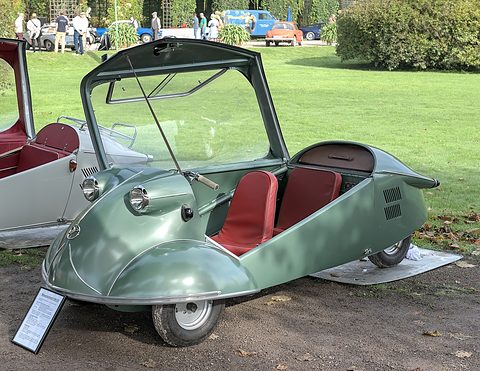
A canopy, a tandem seat, a handlebar for a wheel: the small cars that came out of the aircraft industry wore their origins openly. The usual story says the aircraft makers turned to cars because they were banned from building aircraft. The dates say that is only half true.
Halls without aircraft
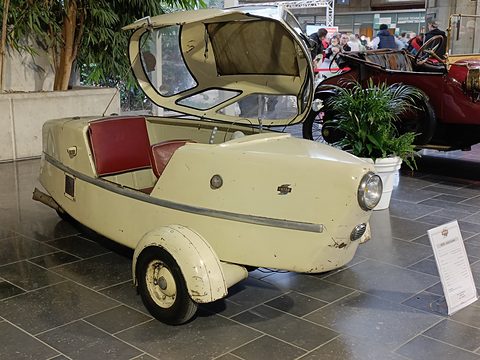
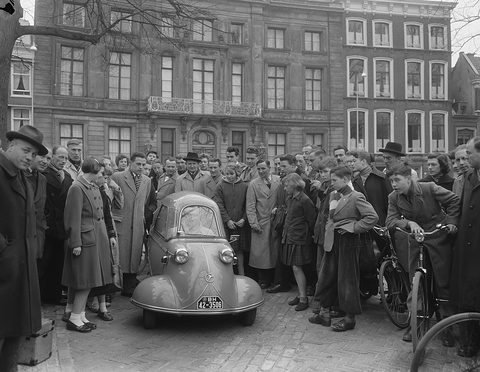
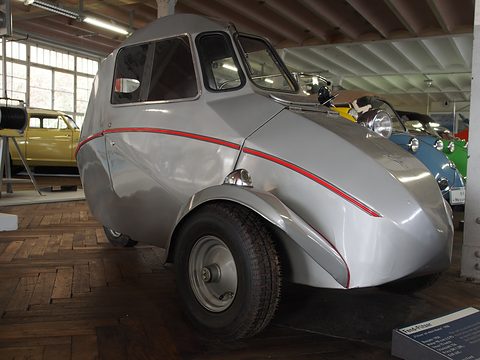
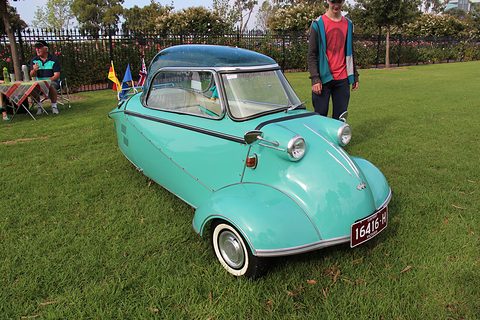
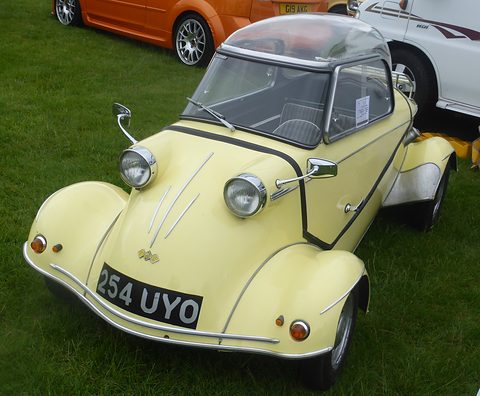
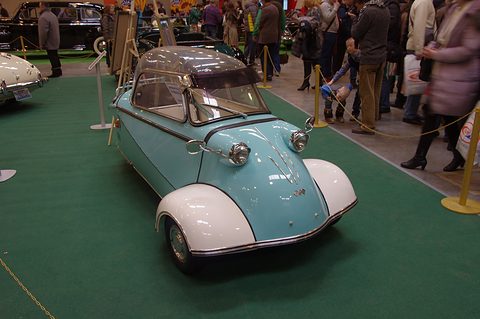
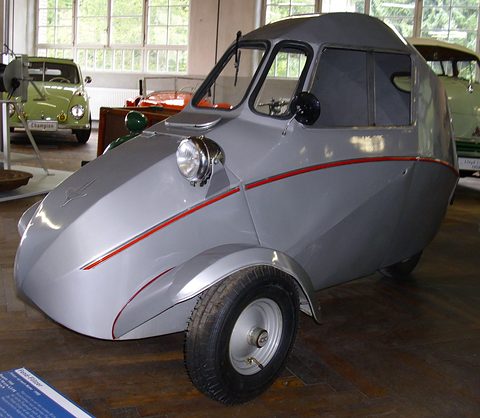
In January 1952 Fritz Fend, an aeronautical engineer from Rosenheim with a design for a small car and no capital to build it, called at Messerschmitt’s idle Regensburg works. Willy Messerschmitt agreed to build a car, but only one with two seats, and from that bargain came the Messerschmitt KR175, unveiled at the Geneva show in spring 1953, and then the Messerschmitt KR200, three-wheeled cabin scooters of the kind Britain called bubble cars.source 1
The story is usually told in one sentence: the aircraft makers were banned from building aircraft, so they built cars. There was a ban, and it was written plainly.
In order to eliminate Germany’s war potential, the production of arms, ammunition and implements of war as well as all types of aircraft and sea-going ships shall be prohibited and prevented.
Japan had its own ban from September 1945. Set against the dates, though, the sentence fits one German works well and two others loosely, and most of the aircraft industry’s small cars not at all. They were built in countries that never had a ban, or years after it had ended, and many of them came not from aircraft firms but from aircraft engineers.
The ban, and the limits before it
Japan’s ban was SCAP Directive No. 3 of 22 September 1945, which put every type of aircraft, those designed for civilian use included, and the parts made for them on its list of prohibited items.source 3 Nakajima Aircraft was forced to close.source 4 Kawasaki’s history dates the return of aircraft manufacturing to 1952, once the peace treaty with Japan had come into force.source 5
In West Germany the occupation statute ended when the Paris Treaties came into force on 5 May 1955.source 6 Aircraft work came back with rearmament. Messerschmitt formed Flugzeug-Union Süd in 1956 to build the Fouga Magister trainer;source 7 Dornier’s Do 27 first flew on 17 October 1956 and became the first German powered aircraft built in series after the war;source 8 Heinkel took up aircraft development again at Speyer in 1958.source 9 Nor had every firm simply waited. Dornier’s design office in Madrid, founded in 1951, drew the Do 25 for a Spanish requirement, and it first flew on 25 June 1954, built by CASA.source 8
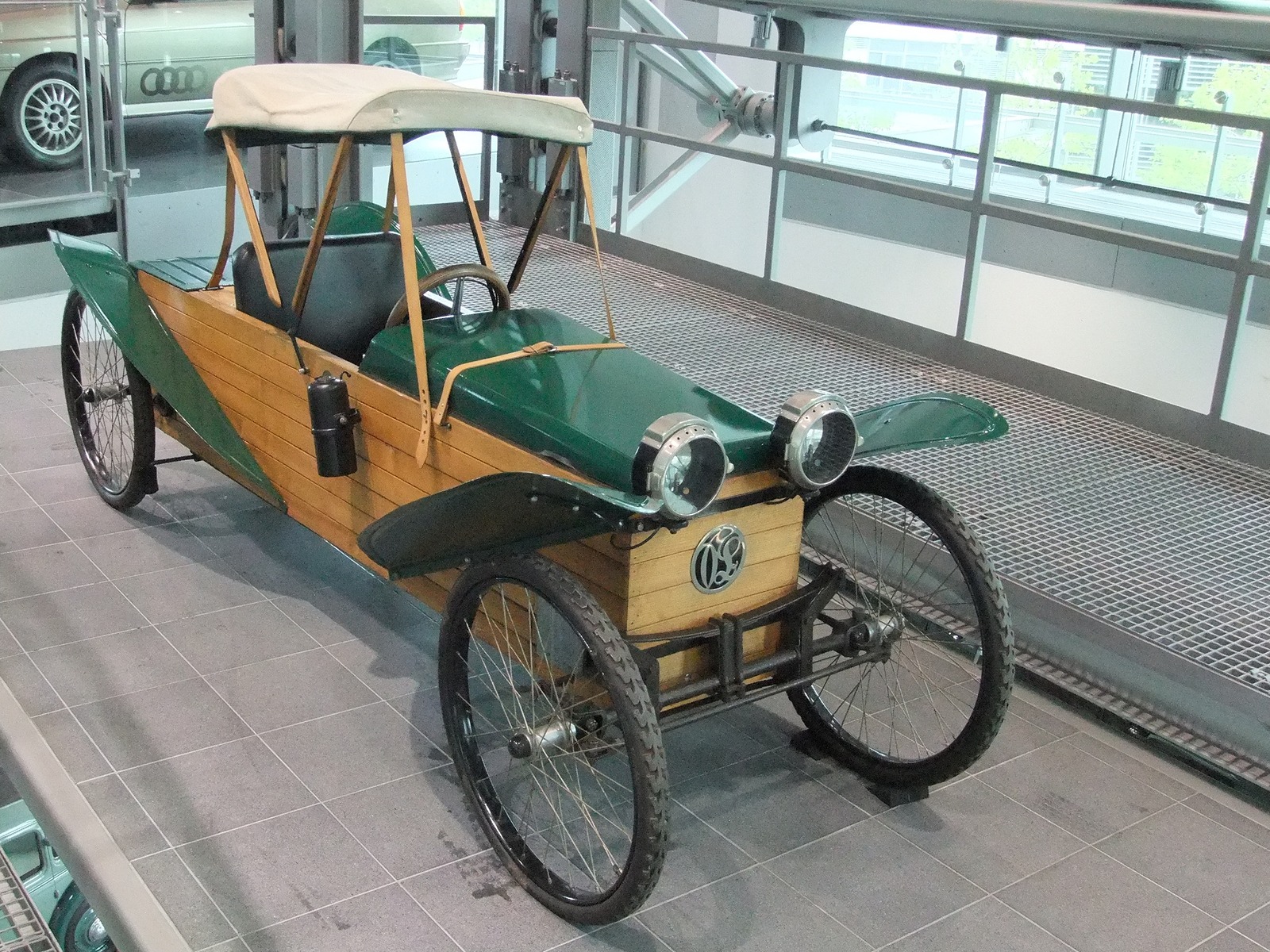
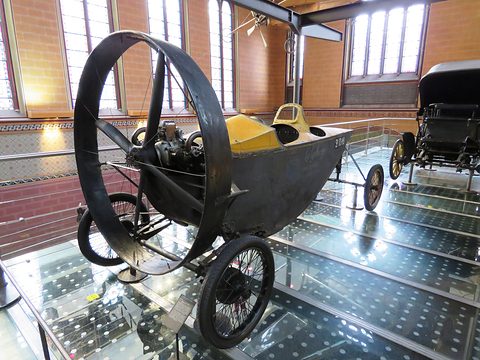
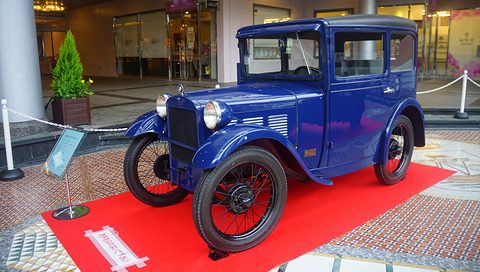
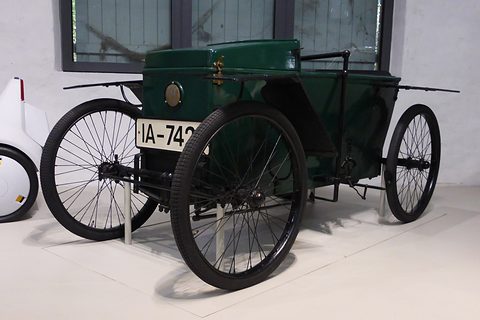
There had been earlier limits, and the story fits them better. After 1918 the Treaty of Versailles restricted German aviation. BMW, a builder of aero engines, was pushed into motorcycles and truck engines, and it came to cars in 1928 by buying the works at Eisenach, which was building the Austin Seven under licence as the Dixi: that car became the BMW 3/15.source 10source 11 Rudolf Slaby, an aircraft engineer, had to change field after Versailles, and in 1919 he and his cousin Hermann Beringer founded a Berlin firm to build small electric cars, the Slaby-Beringer.source 12
Regensburg, 1952–1956
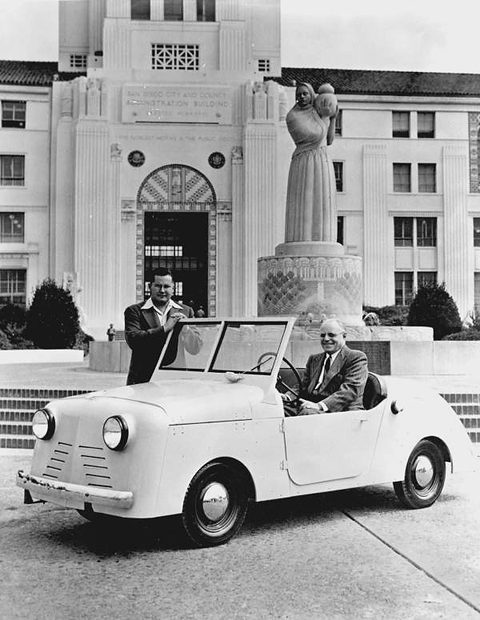
Fend had trained in aeronautics at Munich’s Technische Hochschule, and in the war he tested and developed aircraft.source 13 The Messerschmitt Owners’ Club says Fend never worked for Messerschmitt, at that time or afterwards; the Weiner museum calls him Messerschmitt’s former employee.source 14source 15 After the war his own small firm in Rosenheim built the Fend Flitzer, a single-seat three-wheeler for the war-disabled (more on invalid carriages). The war-disabled association, the VdK, helped him get materials through the Americans, and the Flitzer counted as a mobility aid, which let him slip past some of the occupiers’ limits on vehicle building.source 16 It was not built in the Messerschmitt factory.source 17 Its last series had a 98 cc Riedel engine which, by Bill Cawthon’s account, derived from the starter motor fitted to the Me 262’s jet engines; no second source has been found for it.source 16
The Rosenheim workshop soon reached its limit. Fend’s agreement of 1952 was with Regensburger Stahl- und Metallbau, the Messerschmitt company at the old aircraft works, which needed products while aircraft building was forbidden.source 13source 16 The first Fend vehicle built there was a load-carrying three-wheeler, the Lastenroller, in 1952,source 14 and the cars that followed were Fend’s designs, built under licence from him.source 14 By February 1955 about 11,000 Kabinenroller had found buyers, well ahead of every other German cabin scooter,source 18 and almost 12,000 KR200s were built in 1955 alone, the best year any Kabinenroller had.source 1source 19 In the spring of 1956 Willy Messerschmitt told a Nuremberg paper that Regensburg was for vehicles for good.
Es war von jeher mein fester Entschluss, neben dem Flugzeugbau auch Fahrzeuge zu entwickeln. So ist das Werk Regensburg ausschließlich für den Fahrzeugbau eingerichtet worden und wird auch in Zukunft diesem allein vorbehalten bleiben.
Within months the firm was out. Able to build aircraft again, Messerschmitt lost interest in the car; on 29 November 1956 dealers were told that production would cease.source 1source 20 On 17 January 1957 a new firm owned by Fend and Valentin Knott, FMR (Fahrzeug- und Maschinenbau GmbH Regensburg), was announced to restart it; German Wikipedia dates FMR from 15 January.source 20source 1 Because Messerschmitt now held aircraft work, its name could not appear in the type name of FMR’s four-wheeler, which is why it was the FMR Tg500.source 1 An auction catalogue of 2021 says that the German government bought Messerschmitt’s car business; FMR was in fact a private company of Fend and Knott.source 21source 1source 20 Of all the aircraft industry’s small cars, this is the one the ban explains: an idle aircraft works took on a car to fill its halls, and let it go when aircraft came back.
Heinkel and Dornier, 1955–1958
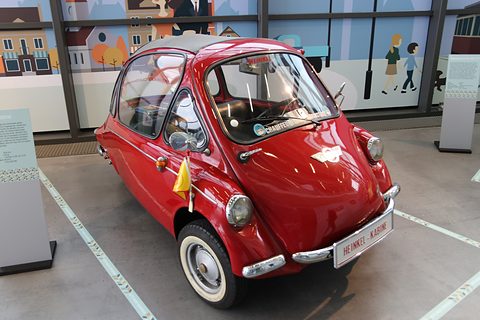
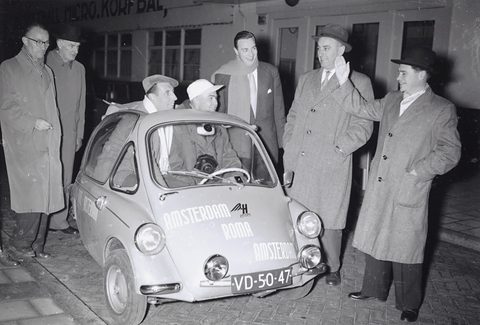
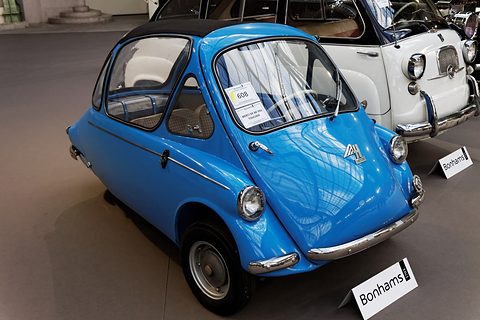
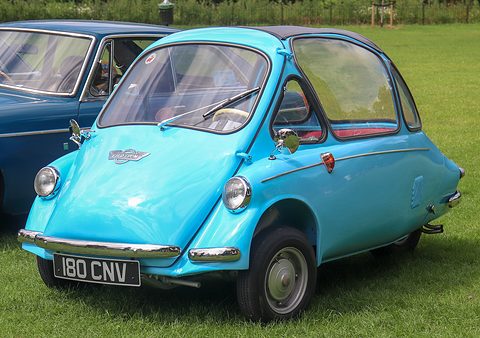
In 1955 Werner Oswald of auto motor und sport counted Dornier third among the well-known aircraft firms, after Messerschmitt and Heinkel, in taking up the Rollermobil, the cabin scooter.source 22 Neither of the other two fits the ban as neatly as Messerschmitt. Ernst Heinkel’s firm had been making the Tourist scooter for years, and engines for others: Maico and Tempo used them.source 23source 24 A photograph of its cabin car’s prototype appeared early in 1955, and the Heinkel Kabine was built from December 1955 to June 1958, 11,975 of them: months after sovereignty, not during the ban.source 25source 26source 27 It took the Tourist scooter’s whole power unit, engine, gearbox and swinging arm, with hardly a change; when Paul Simsa tested it in 1956 its cabin strongly reminded him of an aircraft.source 28
Ernst Heinkel died in January 1958, days after his 70th birthday,source 23source 29 and by March Dundalk Engineering in Ireland had bought the rights, with Heinkel still supplying the engines.source 30 The Weiner museum and RM tie the sale to his death and to the resumption of aircraft production, and the museum adds that the car was losing money and that the scooter and engine work needed the space.source 23source 31 The magazine drew its own lesson.
Die Tatsache, daß eine Firma, die nicht davon leben muß, aus dem Kleinwagenbau aussteigt, sollte zu denken geben.
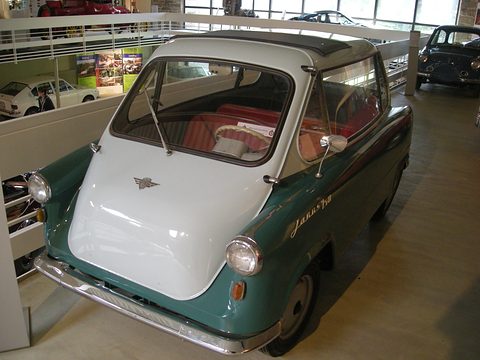
The design lived on in Ireland and then in Croydon as the Trojan 200.source 26 Dornier never put its car into production. Its Dornier Delta of 1955 seated four back to back, with a door at each end, and with both doors raised it looked, Oswald thought, like a helicopter. Dornier told him it would decide on making the car itself only once it knew whether aircraft building would resume, and that licence production elsewhere was possible.source 22 The Delta was shown at the Frankfurt show that September;source 32 a few weeks before, on 26 August 1955, a second Do 25 had been put on show at Dornier’s Oberpfaffenhofen works.source 8 The motorcycle maker Zündapp, in trouble as buyers deserted motorcycles, took the licence and reworked the design, built 6,902 Zündapp Janus in 1957 and 1958, and then sold its Nuremberg works to Bosch.source 33source 34source 35 An aircraft firm’s design, built by a motorcycle firm, is a long way from the story of idle hangars.
No ban at all: France, Britain and the East
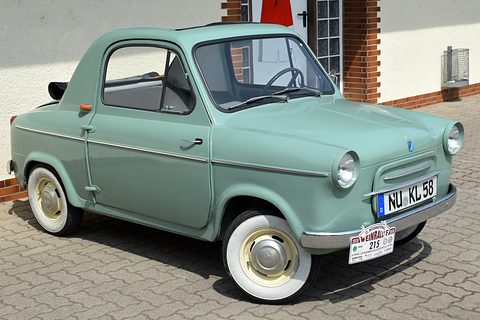
France, Britain, Poland and Czechoslovakia had no such ban, and their aircraft firms built small cars for other reasons. The French case is the cleanest test. The Inter 175 A Berline was designed and sold by AEMS of Saint-Ouen and built in Lyon by the nationalised aircraft maker SNCAN, which later became part of Aérospatiale; it was shown at the Paris show in the autumn of 1953.source 36source 37source 38 It wore its origins. Early cars had front wheels that folded under the body narrowing it from 1.35 m (53 in) to roughly 0.9 m (35 in), and it was started by a Westinghouse Gyrostarter, a helicopter-type inertia starter.source 36source 39source 38
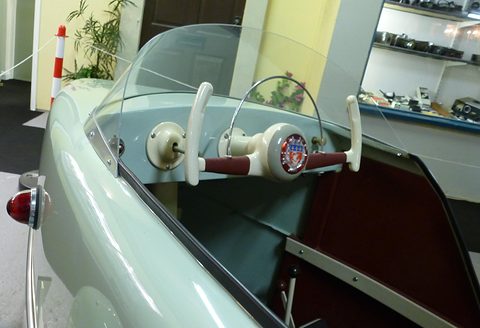
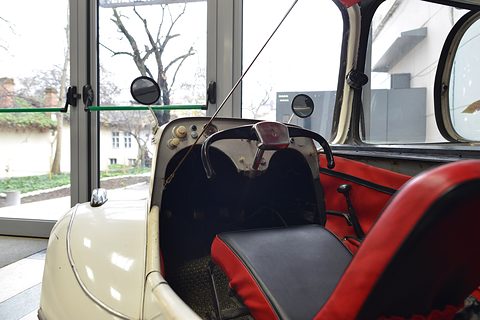
The steering bar with its vertical grips, was even more aircraft-like than the Messerschmitt, as was the pointed ‘fuselage’.
About 300 were built by most accounts; Linz and Schrader’s encyclopedia gives about 100.source 37source 40 The same Gyrostarter turned up on the P. Vallée Chantecler.source 41
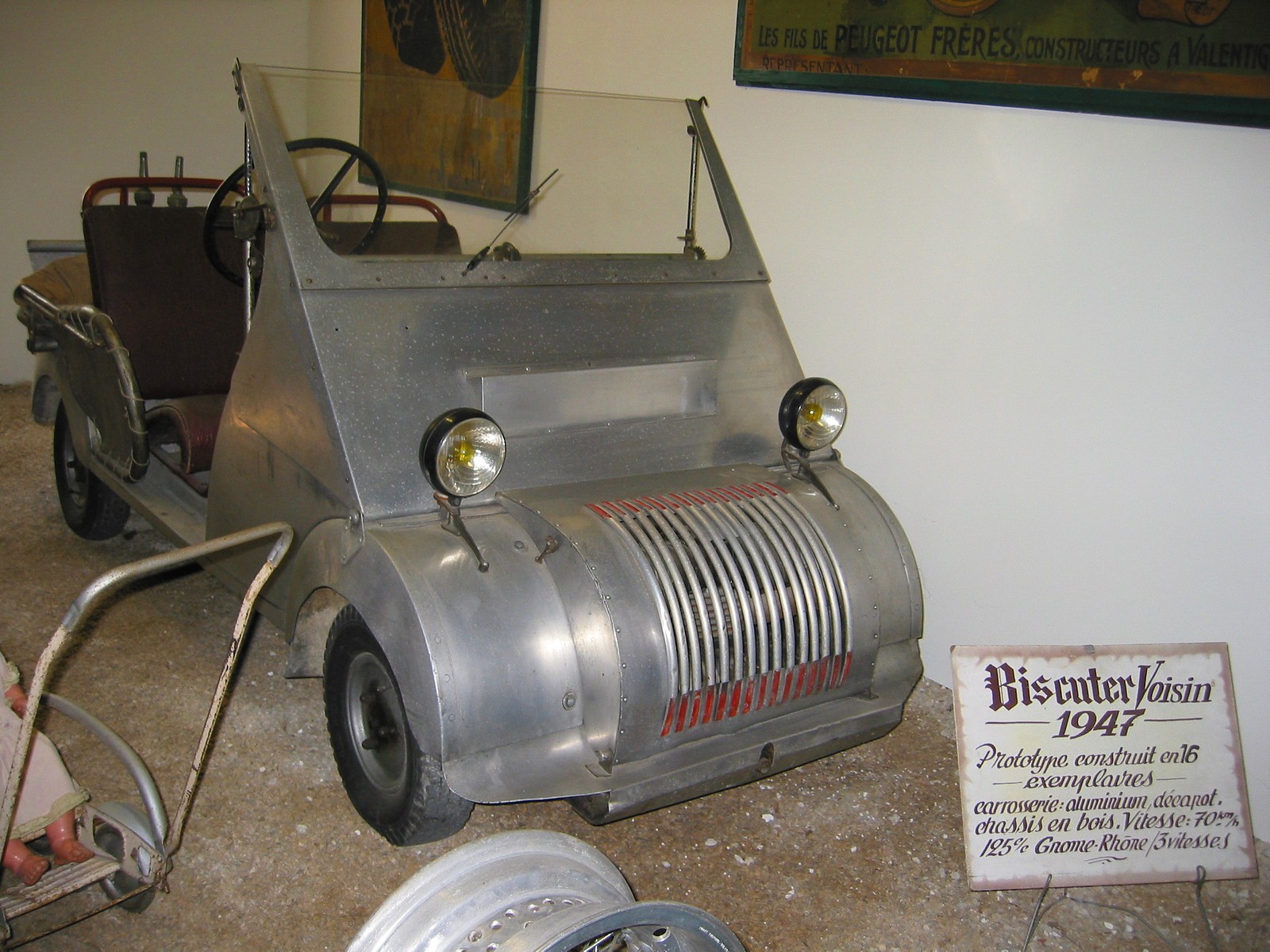
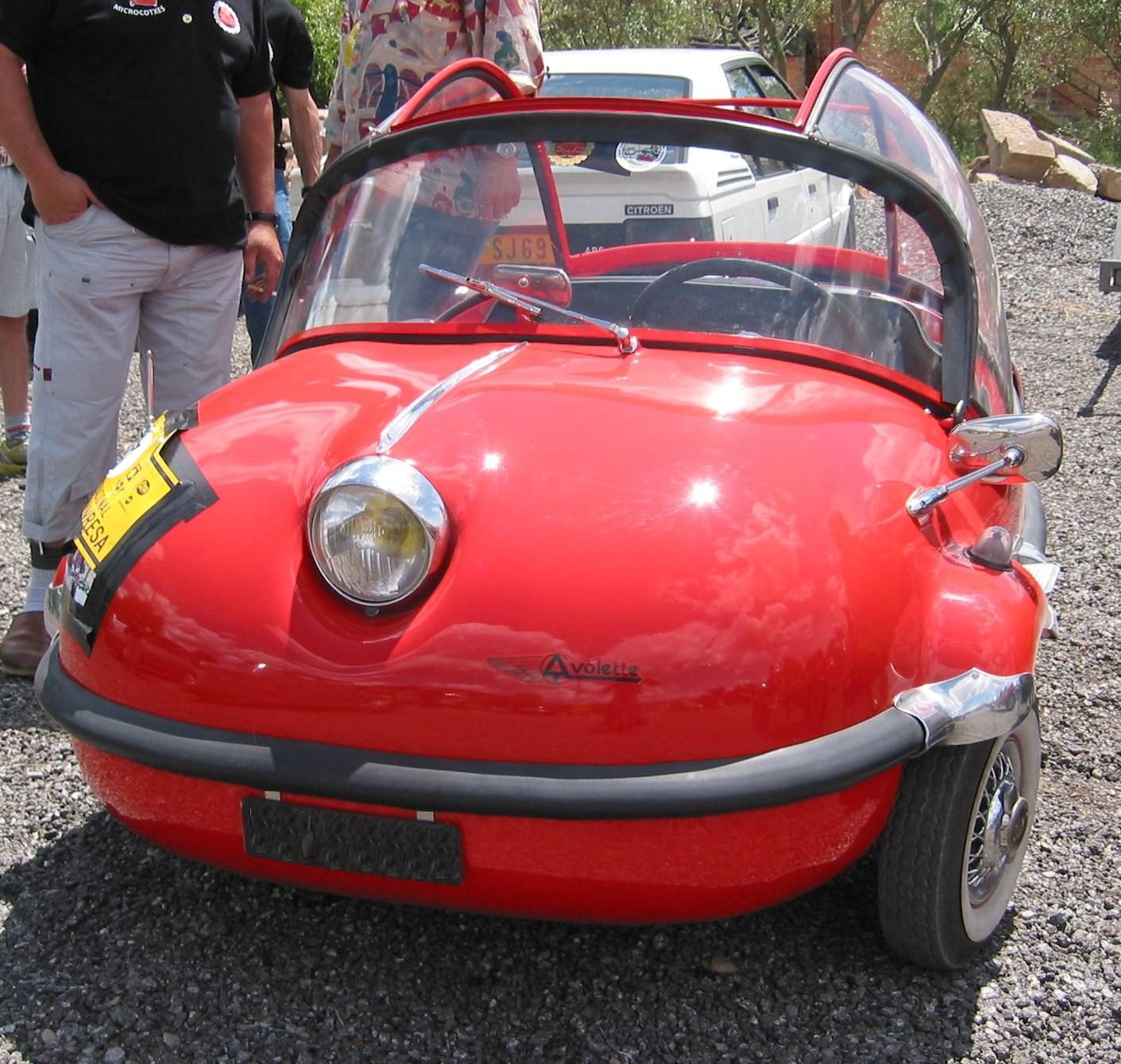
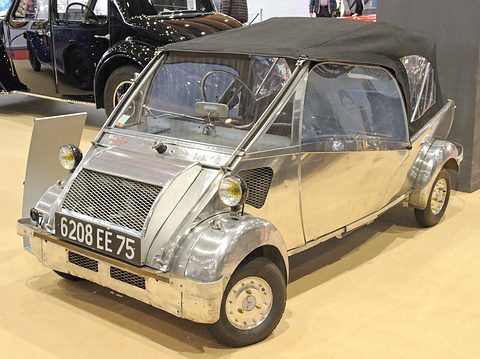
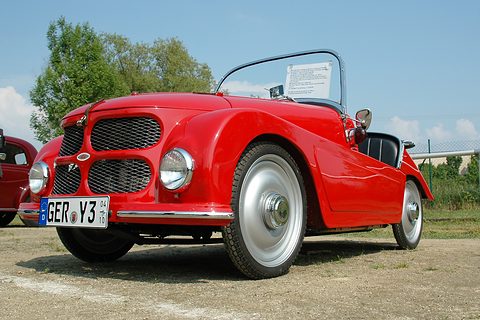
By 1907 Gabriel Voisin had built a practical aeroplane, and his firm became the first mass producer of aircraft, but he had left aviation for cars after 1918.source 42source 43 In 1949 he offered SNECMA, the nationalised group that had absorbed both his old firm and Gnome et Rhône, a microcar with a Gnome et Rhône 125 cc engine. About 15 or 16 of the Voisin Biscooter were built that summer, but SNECMA judged it to have no future, and although it drew more than 1,000 orders at the Paris show of 1950, SNECMA would not build it.source 44source 43source 42 Its obstacle was a nationalised board, not an Allied rule, and the design went to Autonacional of Barcelona, which launched the Biscúter in 1953.source 45 Other French small cars simply moved into aircraft buildings. Piaggio’s French company ACMA took over a former SNCAC aircraft factory at Fourchambault to make scooters from March 1951, and later built the Vespa 400 there;source 46 Société Air Tourist, the French agent for Cessna aircraft, assembled the Avolette in a hangar on the old military airfield at Toussus-le-Noble.source 47source 48
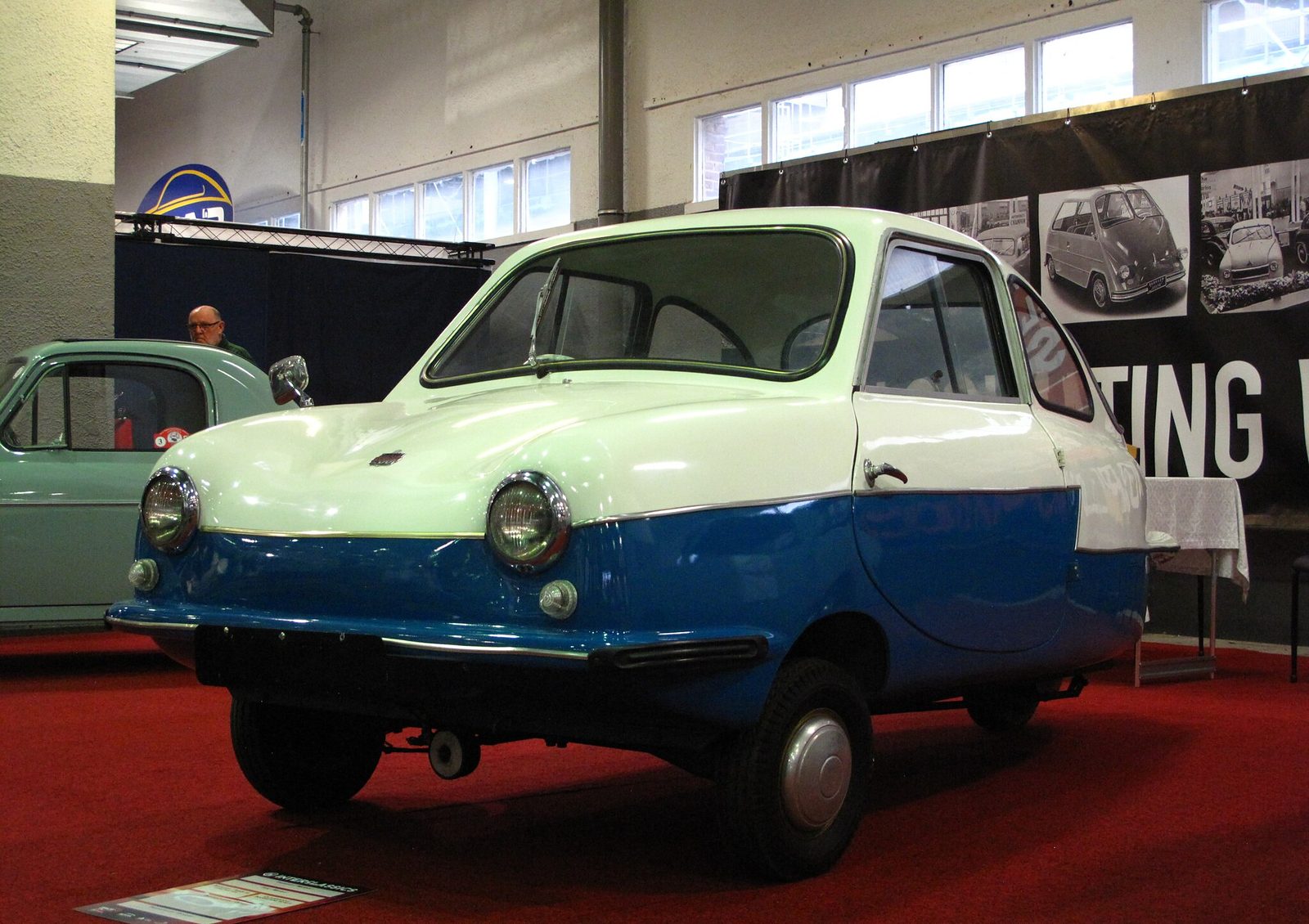
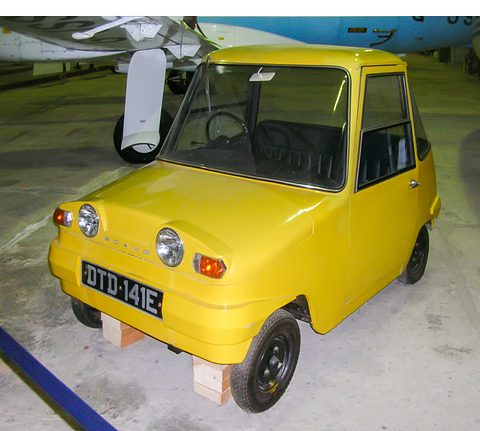
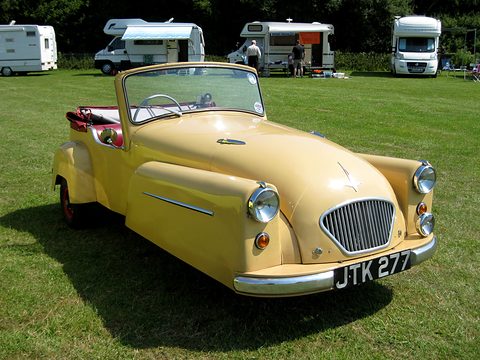
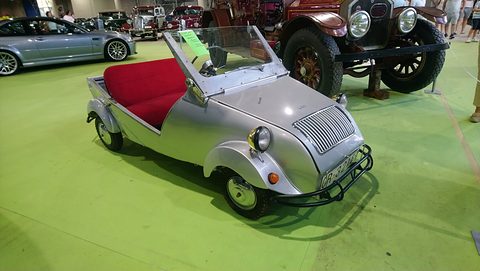
In Britain, Short Brothers & Harland assembled the Nobel 200, a Fuldamobil reworked for Britain, in Northern Ireland, and the Bristol Aeroplane Company moulded its glass-fibre bodies.source 49source 50 At the Paris show of 1958 the racing driver Mike Hawthorn was named Technical Director of York Noble Industries, the firm behind it.source 49
Call me the outfit’s tea-boy.
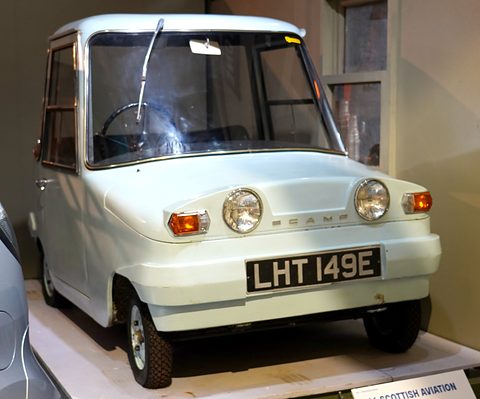
Cost overruns, a dispute with Bristol over the price of the bodies and a strike at Shorts ended production in Northern Ireland. Chassis numbers suggest that only some 400 existed by January 1960; Beaulieu and RM give about 1,000 in all.source 49source 50source 51 At Prestwick, Scottish Aviation, builder of the Twin Pioneer and, later, the Bulldog, took the idea for an electric car from the airport’s battery baggage tugs.source 52source 53 Its Project Department, under Dr W. Gordon Watson, built 13 of the Scottish Aviation Scamp, a prototype and 12 pre-production cars. MIRA’s tests of 1967 and 1968 were damning, the Electricity Council withdrew, and the project ended in 1968.source 53
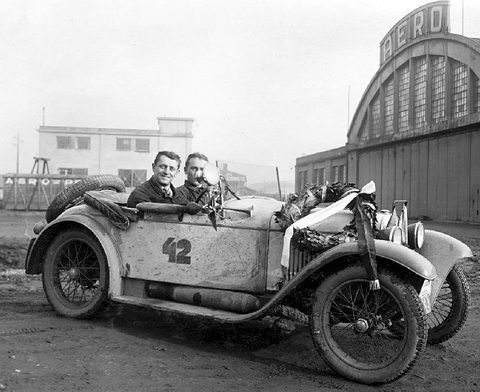
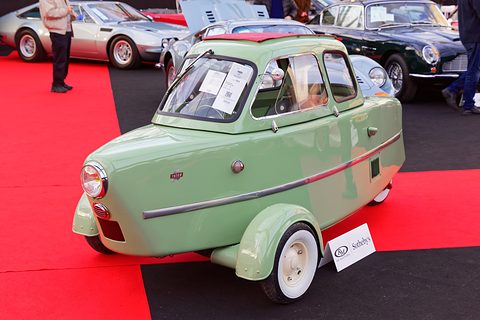
In Poland the state used spare capacity. At the end of 1956 the authorities decided to make a car at two aviation works: WSK Rzeszów drew the engine, and WSK Mielec built the chassis and body of the Mikrus MR-300. Wikipedia gives 1,728 built between 1957 and 1960, a figure not yet confirmed from a primary source.source 54source 55 In Prague the aircraft maker Aero began building cars at Vysočany in 1929, a decade before the war, with the Aero 10, of which about 1,360 were made; it went on making cars until 1951.source 56source 57 In Hungary the ministry put its microcar programme into the engine-repair works at Székesfehérvár, a former aircraft-repair works used to aluminium, with two men who had designed aircraft, Pál Kerekes and Ernő Rubik Sr., whose son would invent the Rubik’s Cube. The Alba Regia and Balaton prototypes, ready by early 1956, ran on aircraft tail-wheels, and Rubik sprang the Balaton on rubber blocks, as he had sprung the landing gear of his gliders.source 58source 59
Handlebars for a wheel
A pair
Japan: the engineers who stayed
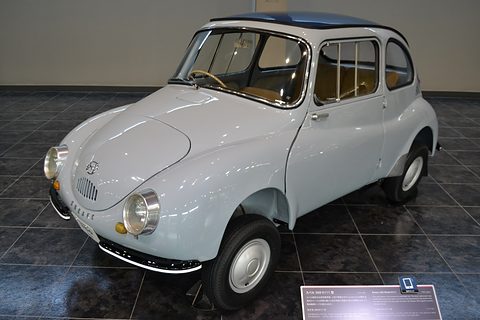
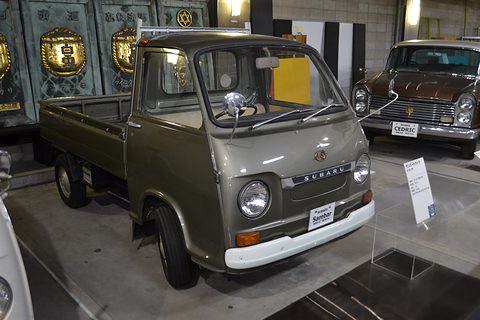
In Japan the ban did shape what came after it, but the cars came late. Nakajima’s successor, Fuji Sangyō, turned to the Rabbit scooter from 1946 and from 1947 to building bus bodies at Isesaki. The occupation split it into 12 companies, and in 1953 five of them came together again as Fuji Heavy Industries,source 60 which was building aircraft again by the middle of the decade.source 4 Its Subaru 360, a four-seater inside the kei car rules, was launched on 3 March 1958, six years after the ban was lifted, and about 392,000 were built by 1970.source 60source 61source 62source 63 Its project leader, Shinroku Momose, had joined Nakajima in January 1942 and worked on supercharging the Homare aero engine, and he and his team treated the car like an airframe;source 64source 60source 65 Momose went on to lead the Subaru Sambar, the van that followed it.source 66 The 360 came from aviation skills and a deliberate car programme, a decade after the scooters, not from an idle works.
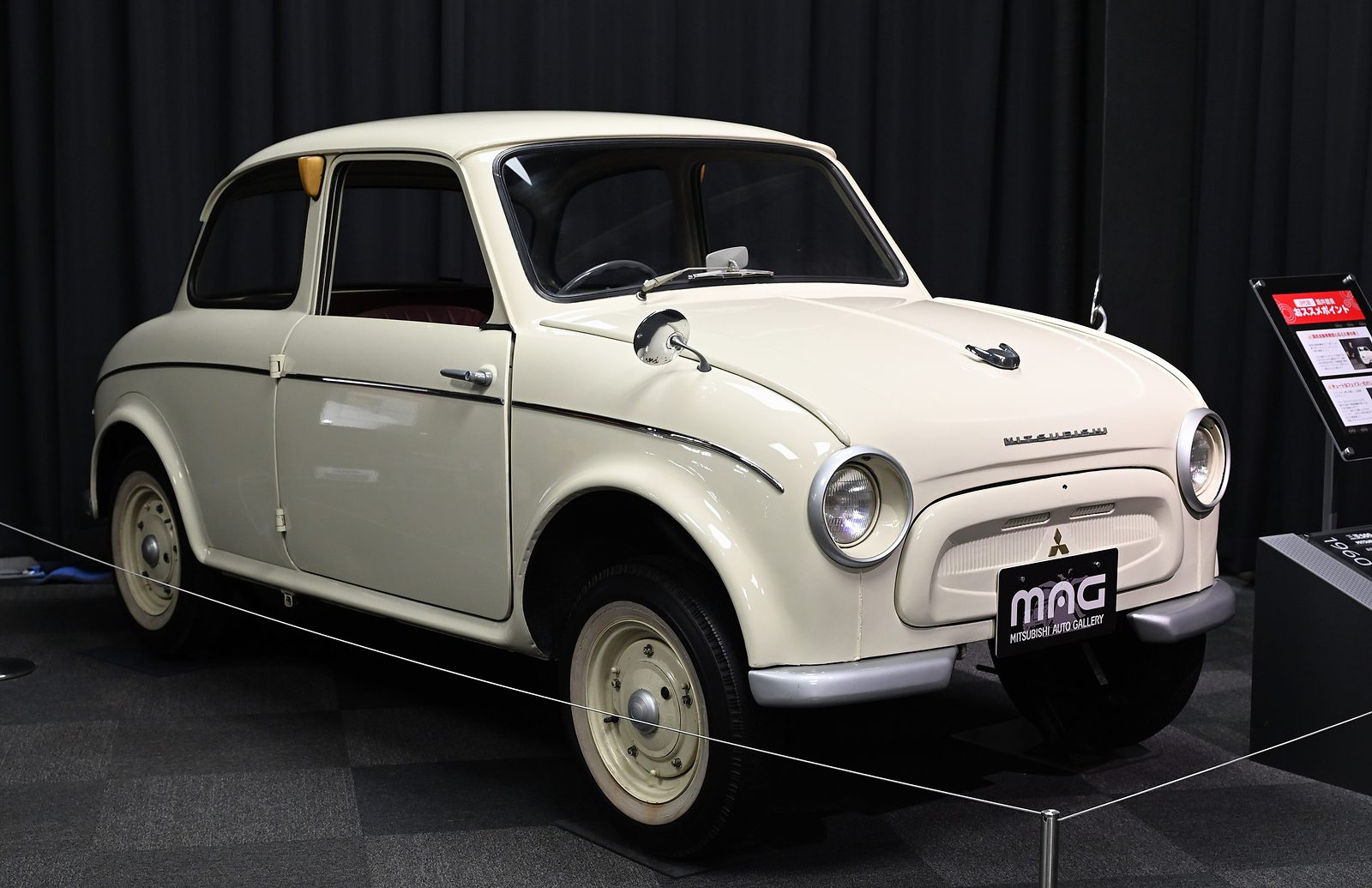
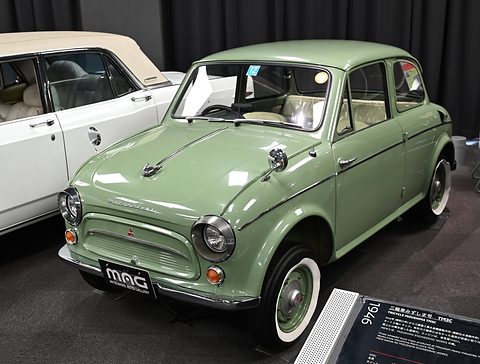
Mitsubishi’s Nagoya works, too, had turned to civilian products when aircraft building was banned.source 67 Its Mitsubishi 500 of 1960 was designed by men who had been aircraft designers during the war, and a one-fifth-scale model of it went into what Mitsubishi and the Society of Automotive Engineers of Japan call the first wind-tunnel test of a Japanese car.source 68source 67source 69 It was built in answer to the trade ministry’s people’s-car plan of 1955, not to the ban, and it sold poorly: 13,289 were made.source 67
One Japanese car is often filed here by mistake. The Weiner museum tied the Fuji Cabin to an aircraft firm forbidden to build aeroplanes, but Japanese sources describe its maker, Fuji Jidōsha, as a rebuilder of military vehicles and a maker of engines, unconnected with Fuji Heavy Industries.source 70source 71
Aircraft people, not aircraft firms
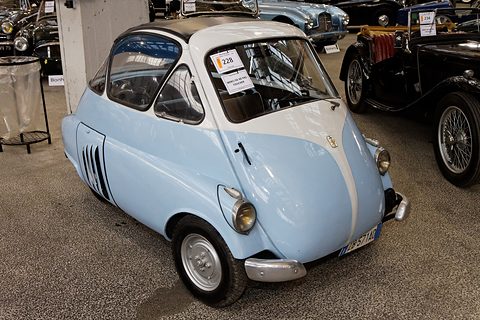
The truer version of the story is about people (more on the designers). The Iso Isetta was designed for the refrigerator and scooter maker Renzo Rivolta by two aircraft engineers, Ermenegildo Preti and Pierluigi Raggi. Preti was a designer of gliders and light aeroplanes at Milan’s Politecnico, and Italian Wikipedia traces the Isetta’s opening front to the hinged nose of his wartime AL.12 glider.source 72source 73source 74 In the war Lawrie Bond had designed for Blackburn Aircraft, before he drew the Bond Minicar.source 75 Air Vice-Marshal Don Bennett, who had commanded the RAF’s Pathfinder Force, founded Fairthorpe, whose first car was the Fairthorpe Atom; in 1954 its associate company was Dart Aircraft.source 76source 77 Paul Kleinschnittger, just after the war, gathered material by stripping wrecked military aircraft, and the Weiner museum says that his Kleinschnittger F125 was partly built from scrapped aircraft and army vehicles.source 78source 79
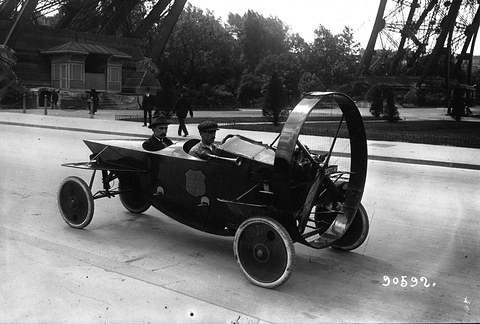
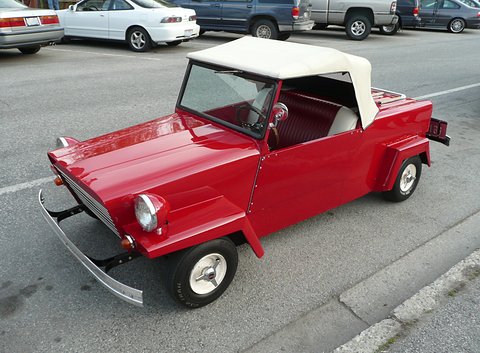
In San Diego the men came from Convair. The Bobbi-Kar was designed by John Liefeld, who had worked for Chrysler and then spent the war years at Convair,source 80source 81 and the Airway was the work of T. P. Hall, Convair’s chief development engineer and a builder of flying cars.source 82source 83 In Ohio the founders of the King Midget, Claud Dry and Dale Orcutt, had met in the wartime Civil Air Patrol.source 84 The habit is older than the bubble cars. Marcel Leyat, who designed some 30 aircraft, drove his Leyat Hélica with a propeller,source 85 and after 1918 the Air Navigation and Engineering Company built the Blériot-Whippet cyclecar in the former Blériot aircraft factory at Addlestone (more on the British cyclecars).source 86source 87
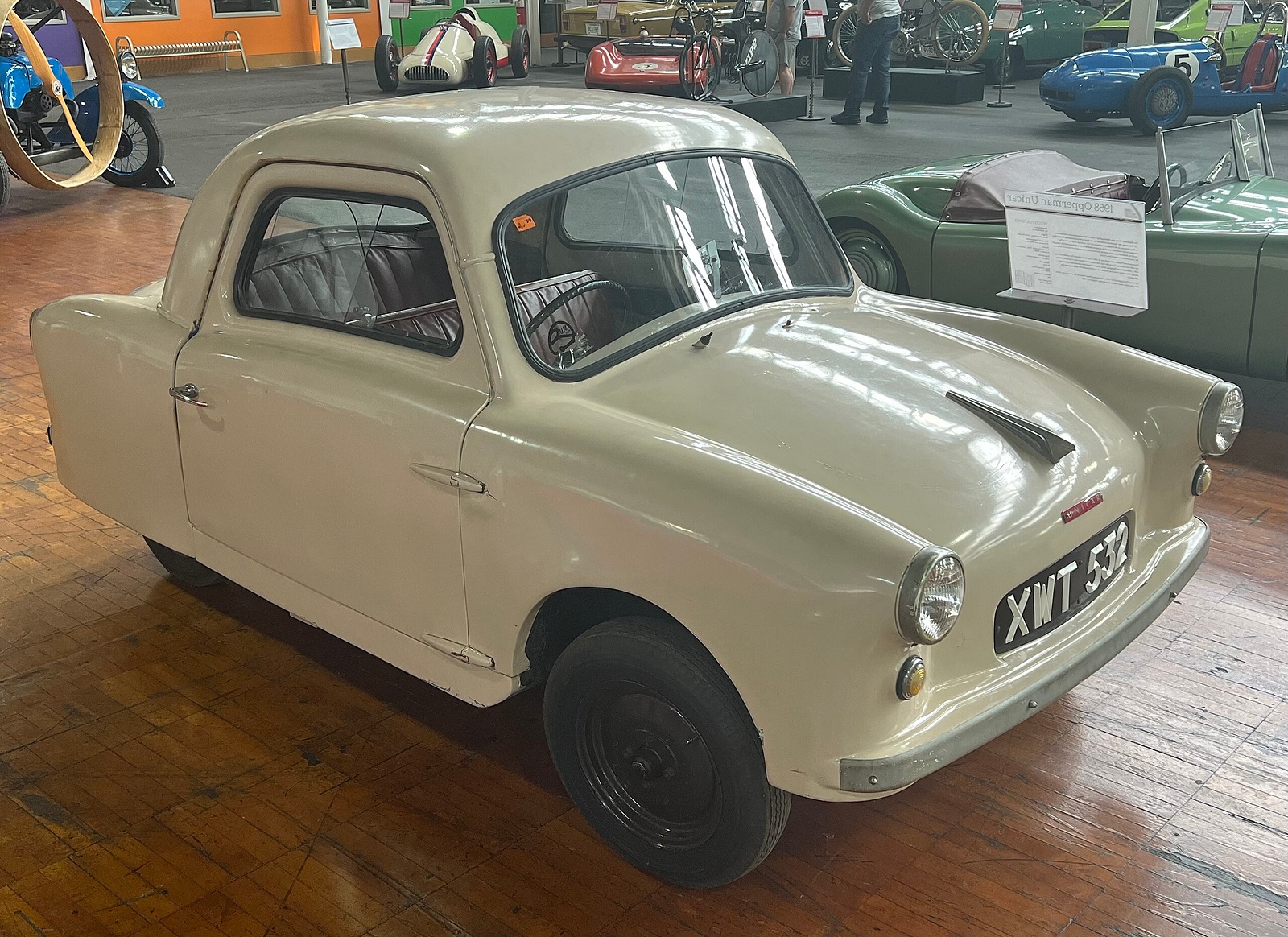
Others supplied the aircraft industry. The glass-fibre bodies of the Allard Clipper came from Hordern-Richmond, an aircraft-propeller firm at Thame airfield;source 88source 89 S. E. Opperman, which made aircraft components, built the Opperman Unicar;source 90source 91 ALCA of Milan, maker of the ALCA Volpe, had made nacelles for aero engines in the war;source 92 and Volugrafo of Turin, one of the Italian post-war minicars makers, made aircraft parts as well as its Bimbo.source 93source 94 In Japan, Ohta came under Tachikawa Aircraft in 1937 for war production, and its cars ended in 1940.source 95source 96
So the line about the ban is half true. It fits Messerschmitt’s Regensburg works from 1952 to 1956, and the first post-war products of Japan’s aircraft firms, which were scooters and bus bodies rather than cars. It fits the Heinkel and the Dornier only loosely, since both appeared as the ban was ending, and it does not fit France, Britain, Poland, Czechoslovakia or the Subaru 360 at all. What the aircraft industry gave the microcar was less its empty halls than its engineers, and the cars show it still: a canopy hinged like a cockpit’s, two seats in tandem, a handlebar where the wheel should be.
Smallest to largest
32 cars and 4 maker groups, to scale
Each bar is the car’s length on a 3.5 metre track; the red notch is a Fiat 500.
-
Fend Flitzer1948–1951 · Germany · 3 wheels
2.00 m -
Scottish Aviation Scamp1965–1967 · Britain · 4 wheels
2.13 m -
Iso Isetta1953–1956 · Italy · 4 wheels
2.25 m -
Slaby-Beringer1919–1924 · Germany · 4 wheels
2.30 m -
Avolette1955–1958 · France · 3 wheels
2.40 m -
ALCA Volpe1947–1948 · Italy · 4 wheels
2.50 m -
Heinkel Kabine1955–1958 · West Germany · 3 wheels
2.55 m -
Biscúter1953–1960 · Spain · 4 wheels
2.56 m -
Voisin Biscooter1949–1957 · France · 4 wheels
2.57 m -
Trojan 2001961–1965 · Britain · 3 wheels
2.66 m -
Bond Minicar1949–1966 · Britain · 3 wheels
2.69 m -
Messerschmitt KR1751953–1955 · West Germany · 3 wheels
2.82 m -
Messerschmitt KR2001955–1964 · West Germany · 3 wheels
2.82 m -
Vespa 4001957–1961 · France · 4 wheels
2.85 m -
Zündapp Janus1957–1958 · West Germany · 4 wheels
2.89 m -
Kleinschnittger F1251950–1957 · West Germany · 4 wheels
2.90 m -
Opperman Unicar1956–1959 · Britain · 4 wheels
2.95 m -
King Midget1946–1970 · United States · 4 wheels
2.97 m -
Subaru 3601958–1970 · Japan · 4 wheels
2.99 m -
Subaru Sambar1961–2012 · Japan · 4 wheels
2.99 m -
BMW 3/151927–1932 · Germany · 4 wheels
3.00 m -
FMR Tg5001958–1961 · West Germany · 4 wheels
3.00 m -
Inter 175 A Berline1953–1956 · France · 3 wheels
3.00 m -
Mikrus MR-3001957–1960 · Poland · 4 wheels
3.02 m
8 more cars and 4 more maker groupsFewer
-
P. Vallée Chantecler1956–1958 · France · 3 wheels
3.10 m -
Mitsubishi 5001960–1962 · Japan · 4 wheels
3.14 m -
Aero 101929–1932 · Czechoslovakia · 4 wheels
3.20 m -
Nobel 2001958–1962 · Britain · 3 wheels
3.20 m -
Allard Clipper1953–1955 · Britain · 3 wheels
length unknown -
Fairthorpe Atom1954–1957 · Britain · 4 wheels
length unknown -
Leyat Hélica1913–1926 · France · 4 wheels
length unknown -
Ohta1933–1940 · Japan · 4 wheels
length unknown -
Italian post-war minicars (Volugrafo Bimbo, Fimer, Atomo and others)1946–1954 · Italy · 4 wheels
5 makers -
American post-war microcars1944–1964 · United States · 4 wheels
22 makers -
British cyclecars: the minor makers1903–1927 · Britain · 4 wheels
10 makers -
Hungarian microcars1946–1996 · Hungary
6 makers
Pictures
Seven photographs
Aircraft makers 7
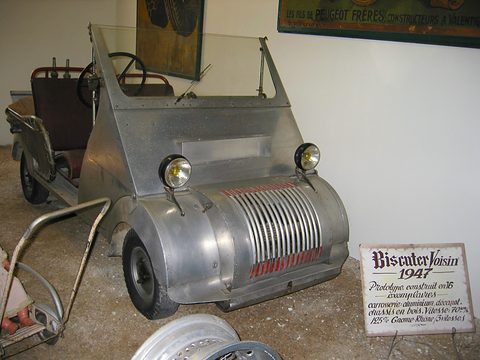
1 A bare aluminium Voisin Biscooter in a museum at Orgon, signed by the museum as a 1947 prototype.
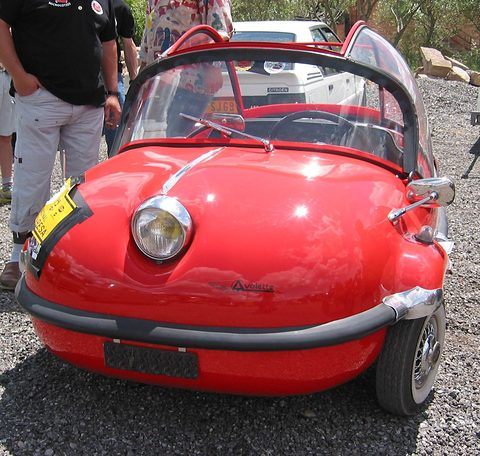
2 A red Avolette, an open fibreglass car, at an outdoor club meeting in 2009.
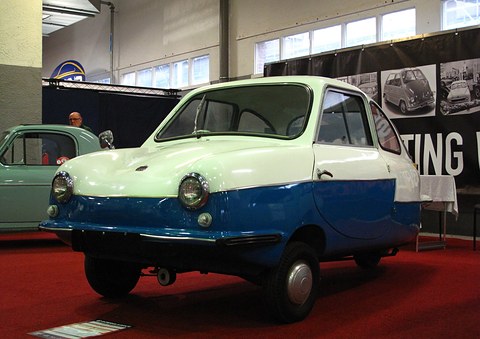
3 A pale green and blue 1960 Nobel 200 at InterClassics Brussels in 2024.
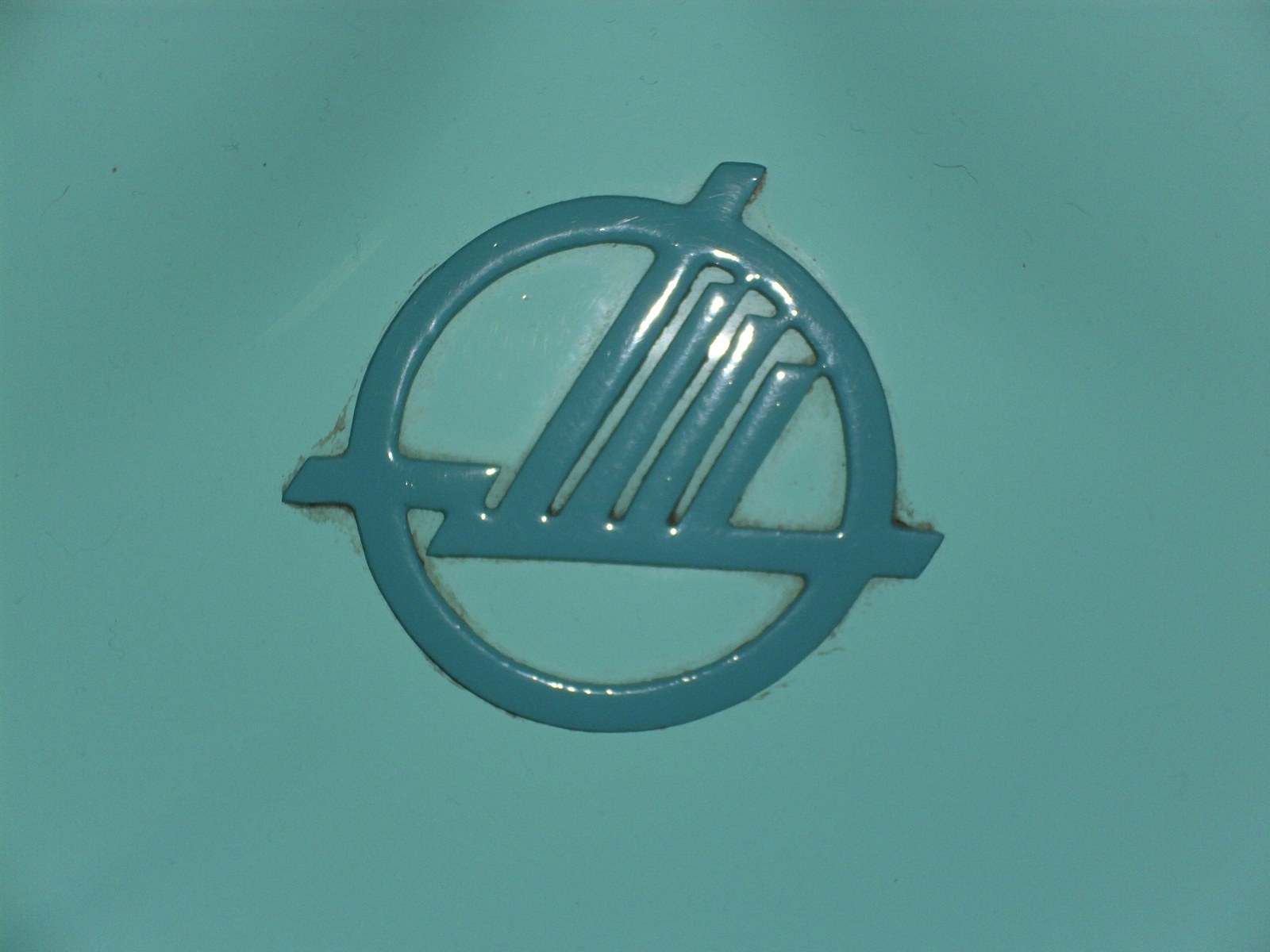
4 The WSK emblem on the nose of a Mikrus MR-300, photographed in 2010.
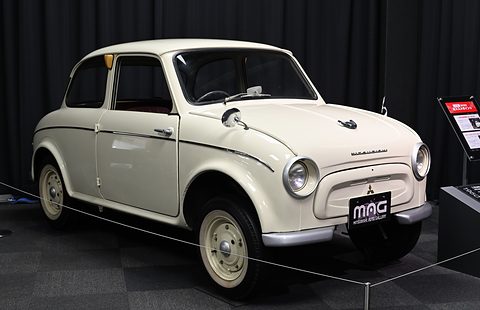
5 A cream 1960 Mitsubishi 500 in the Mitsubishi Auto Gallery, Okazaki, in 2026.
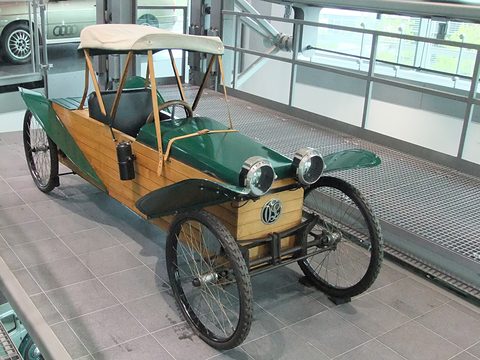
6 Wooden-bodied Slaby-Beringer two-seater of 1924 with green wings and a canvas hood at the Audi museum mobile, Ingolstadt, Germany, in August 2014.
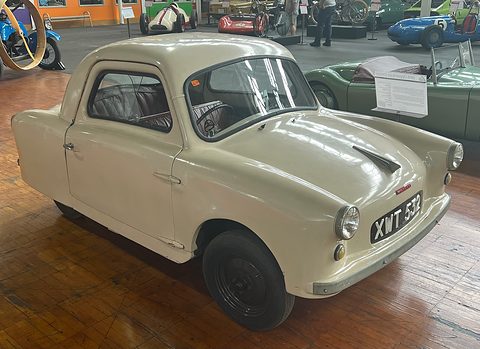
7 A white 1958 Opperman Unicar in the Lane Motor Museum, Nashville, in 2024.
Picture credits (7)
- 1 Buch-t, CC BY-SA 3.0 de
- 2 Buch-t, Public domain
- 3 Rutger van der Maar, CC BY 2.0
- 4 Buch-t, Public domain
- 5 TTTNIS, CC0
- 6 Glen Bowman, CC BY 2.0
- 7 TaurusEmerald, CC BY-SA 4.0
The cars
Profiles
20 more cars and 4 more maker groupsFewer
-
-
-
-
-
-
-
-
-
-
-
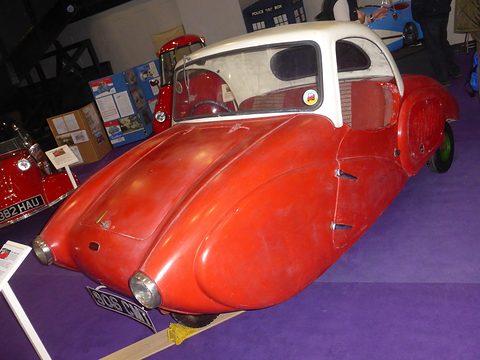
-
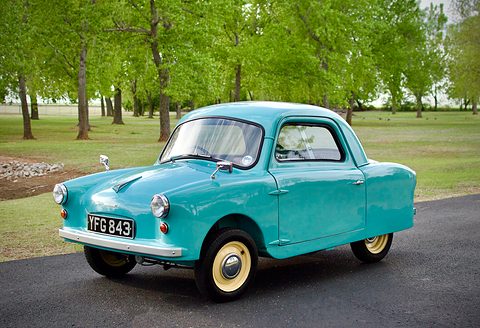
-
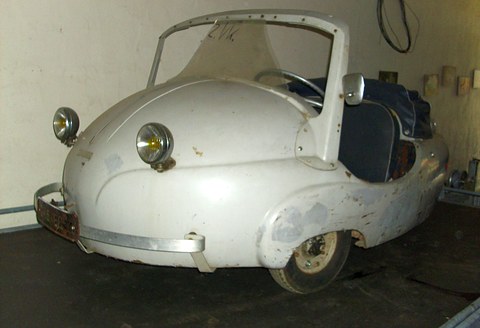
-
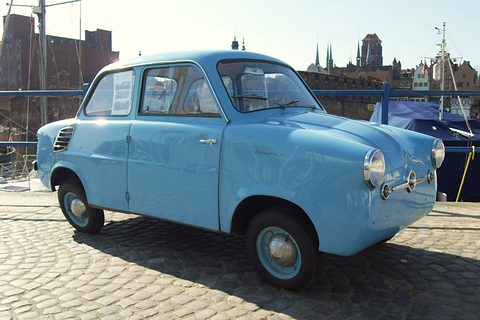
-
-
-
-
-
-
-
-
-
-
Microcar
Italian post-war minicars (Volugrafo Bimbo, Fimer, Atomo and others)
1946–1954 · Italy · 5 makers
Sources
Numbered as in the text
Sources are given as plain text; the links are on the Credits page.
- German Wikipedia, Messerschmitt Kabinenroller, read in full. Used as a lead; its references include Rosellen, Deutsche Kleinwagen (1991), and the 8-Uhr-Blatt’s Messerschmitt supplement of 1956.
- Protocol of the Proceedings of the Berlin Conference (the Potsdam Agreement), 1 August 1945, economic principles, paragraph 11, in the Avalon Project, Yale Law School.
- SCAP Directive No. 3 (SCAPIN-47), 22 September 1945, section 4, “Prohibited Items”, in the database “The World and Japan”, University of Tokyo.
- English Wikipedia, Nakajima Aircraft Company, read in summary; used as a lead.
- Kawasaki Heavy Industries, corporate history timeline.
- Konrad-Adenauer-Stiftung, “Inkrafttreten der Pariser Verträge”, 5 May 1955, in its calendar of the history of the CDU.
- German Wikipedia, Messerschmitt AG, read in summary; used as a lead.
- German Wikipedia, Dornier Do 27, read in summary; used as a lead.
- German Wikipedia, Ernst Heinkel Flugzeugwerke, read in summary; used as a lead.
- Lane Motor Museum, “BMW Dixi – 1930”, collection page.
- German Wikipedia, Fahrzeugfabrik Eisenach; it cites Oswald and Kittler, Alle BMW-Automobile seit 1928.
- German Wikipedia, Slaby-Beringer, read in full. Used as a lead.
- Stadtarchiv Rosenheim, “Fritz Fend und sein ‘Flitzer’”, from Rosenheim 2000. Eine Stadt im 20. Jahrhundert (2000).
- David Garner, “Fritz Fend: father of the Messerschmitt Kabinenroller”, Messerschmitt Owners’ Club, 14 January 2014.
- Bruce Weiner Microcar Museum, “Messerschmitt KR-175”, tour page.
- Bill Cawthon, “Fritz Fend’s Marvelous Micro-cars”, Promotex Online, March 2004, written with the Messerschmitt Owners’ Club’s help; a secondary hobby column.
- Bruce Weiner Microcar Museum, “1950 Fend Flitzer 101”, tour page, archived.
- auto motor und sport 3/1955 (5 February 1955), news of the KR200 with the KR175’s sales; and 5/1955, “Rollermobile brauchen Leistung und Sicherheit”.
- English Wikipedia, Messerschmitt KR200, read in full. Used as a lead; it cites Automobile Quarterly 11 (2), 1973.
- Wolfgang Kraus, Uschi Kettenmann and Heiko Zimmermann, KR201 History, translated by David Garner, Messerschmitt Owners’ Club.
- RM Sotheby’s, Amelia Island, 2021, lot 150, 1958 FMR Tg 500, chassis 20555, catalogue text.
- Werner Oswald, on the Dornier Delta, with works photographs by Toni Schneiders, auto motor und sport 11/1955.
- Bruce Weiner Microcar Museum, “1956 Heinkel Kabine”, tour page (2002), archived.
- auto motor und sport 8/1955 and 20/1955, on Tempo vans and the Maico Champion with Heinkel engines.
- “Ei auf 3 Rädern”, photograph and caption of the Heinkel prototype, auto motor und sport 5/1955.
- Heinkel Trojan Club, “Cabin Cruisers”: German, Irish, Argentine and English production, archived 2015.
- German Wikipedia, Heinkel Kabine, read in full. Used as a lead; it cites Oswald, Deutsche Autos 1945–1990, vol. 4.
- Dr Paul Simsa, “Unser Test: Heinkel-Kabine 175 ccm”, auto motor und sport 19/1956 (15 September 1956).
- Birthdays: Ernst Heinkel, 70 on 24 January 1958, auto motor und sport 2/1958.
- News: “Die Heinkel-Kabine wird in Deutschland nicht mehr gebaut”, auto motor und sport 6/1958.
- RM Auctions, the Bruce Weiner Microcar Museum sale, Madison, Georgia, February 2013, lot 301, “1956 Heinkel Kabine 153”.
- Report from the Frankfurt show, auto motor und sport 20/1955.
- German Wikipedia, Zündapp Janus, read in full. Used as a lead; its production table is from Oswald, Deutsche Autos 1945–1975 (1979).
- Bruce Weiner Microcar Museum, “1958 Zundapp Janus”, tour page (2002), archived.
- “Bosch kaufte Zündapp”, auto motor und sport 15/1958.
- Bruce Weiner Microcar Museum, “1955 Inter 175 A Berline”, tour page (2002).
- Lane Motor Museum, “Inter 175A Berline – 1956”, collection page.
- Richard Dredge, “SNCAN Inter 175A Autoscooter”, Below the Radar.
- RM Sotheby’s, Amelia Island, 2018, lot 120, “1957 Inter 175A Berline”, catalogue text.
- German Wikipedia, Inter (Automarke), read in full; it cites Linz and Schrader, not seen.
- RM Auctions, the Bruce Weiner Microcar Museum sale, Madison, Georgia, 2013, lot 284, “1956 Paul Vallée”, catalogue text.
- RM Auctions, the Bruce Weiner Microcar Museum sale, Madison, Georgia, February 2013, lot 292, “1957 Voisin Biscooter C31”, catalogue text.
- RM Auctions, the same sale, lot 583, “1949 Voisin Biscooter Prototype”, catalogue text.
- Bruce Weiner Microcar Museum, “1957 Voisin Biscooter”, tour page (2002).
- English Wikipedia, Biscúter, and Spanish Wikipedia, Biscúter.
- Jean Goyard, “La Vespa 400 — la petite auto de Fourchambault”, Automobilia no. 34, February 1999, pp. 44–49.
- Bruce Weiner Microcar Museum, “1956 Avolette Record De Luxe”, tour page (2002).
- RM Auctions, the Bruce Weiner Microcar Museum sale, Madison, Georgia, 2013, lot 604, “1956 Avolette Record Deluxe”, catalogue text.
- English Wikipedia, Nobel (automobile), read in full. Used as a lead; it cites Moore, Motor Makers in Ireland (1982), The Autocar, the Daily Herald of 7 October 1958, the Belfast News-Letter and Glass’s guide.
- RM Auctions, the Bruce Weiner Microcar Museum sale, Madison, Georgia, February 2013, lot 627, “1958 Nobel 200”.
- German Wikipedia, York Noble Industries; it cites Linz and Schrader, and Georgano’s Beaulieu Encyclopedia.
- Grace’s Guide, “Scottish Aviation”.
- English Wikipedia, Scottish Aviation Scamp, revision of 18 September 2026, read in full. Used as a lead; it cites Design no. 211 (1966), W. G. Watson’s unpublished account of the project and the MIRA reports of 1967 and 1968.
- Polish Wikipedia, Mikrus MR-300. Used as a lead; it cites the Encyklopedia miasta Mielca and Motor (1959).
- English Wikipedia, Mikrus MR-300; used as a lead.
- German Wikipedia, Aero 10; it cites aero-ig.de.
- Czech Wikipedia, Aero (automobilka).
- magyarjarmu.hu, “Törpeautó-program Magyarországon (Alba Regia, Balaton, Úttörő)”, drawing on ministry documents and the transport museum’s archive photographs.
- Pál Négyesi, “Hungarian MicroCars of the 50’s”, part two, The Auto Channel.
- Japanese Wikipedia, スバル・360 (Subaru 360), read in full; it cites Katsuragi, てんとう虫が走った日 (1987), and Fuji Heavy Industries’ thirty-year history (1984).
- Subaru Corporation, Subaru Museum pages on the Subaru 360, with its chronology, in Japanese.
- English Wikipedia, Subaru 360; used as a lead.
- Lane Motor Museum, “Subaru 360 Sedan – 1970”.
- Japanese Wikipedia, 百瀬晋六 (Momose Shinroku), read in full.
- Toyota Automobile Museum, collection record 109, “Subaru 360 Model K111”.
- Japanese Wikipedia, スバル・サンバー (Subaru Sambar).
- Japanese Wikipedia, 三菱・500 (Mitsubishi 500), read in full.
- Society of Automotive Engineers of Japan, 330 Landmarks of Japanese Automotive Technology, 1-23: Mitsubishi 500 A10.
- Mitsubishi Motors, “Car History”, read in summary.
- Bruce Weiner Microcar Museum, “1955 Fuji Cabin”, tour page, archived about 2015.
- Japanese Wikipedia, 富士自動車・フジキャビン (Fuji Cabin), and the Toyota Automobile Museum’s collection record 85, “Fujicabin Model 5A”.
- Italian Wikipedia, Iso Isetta, read in full; its bibliography includes Flavio Campetti, Da ISO a Iso Rivolta (2004).
- Italian Wikipedia, Ermenegildo Preti, read in full; it cites Franco Bugada in VFR Aviation no. 18 (2016).
- English Wikipedia, Isetta, read in full; its Iso section cites Norm Mort (2008).
- English Wikipedia, Bond Minicar, read in full. Used as a lead; it cites Wotherspoon (1993).
- Fairthorpe Sports Car Club, “Fairthorpe Limited – The vision of Air Vice Marshall Donald (Pathfinder) Bennett”.
- Grace’s Guide, “Fairthorpe”.
- “Dach überm Kopf”, Der Spiegel 4/1989, a feature on Paul Kleinschnittger after his death.
- Bruce Weiner Microcar Museum, “1952 Kleinschnittger F‑125”, tour page, archived.
- Mal Pearson, “Towne Shopper”, The Makes That Didn’t Make It, 2022.
- English Wikipedia, Keller (automobile). Used as a lead; it rests largely on John Liefeld’s recollections.
- Mal Pearson, “Take to the Air in an Airways”, The Makes That Didn’t Make It, 25 October 2021.
- Small Cars Club, “Airway”.
- Athens Messenger, Throwback Thursday, “King Midget Motors glory days”, 2024.
- French Wikipedia, Marcel Leyat, read in full. Used as a lead; it cites helica.info, Courau and Genty.
- English Wikipedia, Blériot-Whippet. Used as a lead; it cites Culshaw and Horrobin (1974) and Georgano (2000).
- Grace’s Guide, “Air Navigation and Engineering Co”.
- Register of Unusual Microcars, “Allard Clipper”, archived copy of 2014.
- Undiscovered Classics, Forgotten Fiberglass, “1954 Allard Clipper and Margaret Woolsey”, 2009.
- English Wikipedia, Opperman. Used as a lead; it cites Sedgwick and Gillies, Auto-Parade (1958).
- Grace’s Guide, “S. E. Opperman”.
- Cars Forgotten Stories, “The ghost car”, 20 March 2020, read as a page summary.
- English Wikipedia, Volugrafo; it cites Linz and Schrader (2008) and Walter Zeichner, Kleinwagen International (1999).
- German Wikipedia, Volugrafo; it cites Linz and Schrader.
- Japanese Wikipedia, オオタ自動車工業 (Ohta Jidōsha Kōgyō). Used as a lead.
- Bruno Vijverman, “Book of the dead: Ohta Jidōsha”, Driven to Write, 5 May 2025; based partly on Walter Zeichner’s book.