The story
History
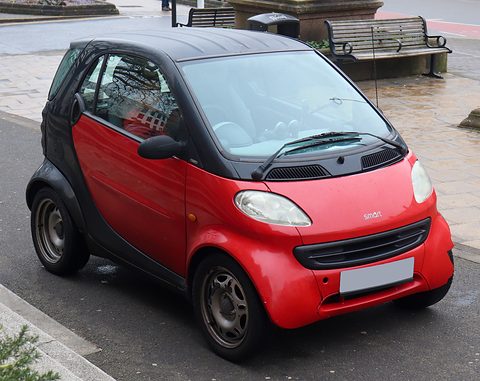
Gordon Murray designed Grand Prix winners for Brabham and McLaren, and then the McLaren F1 road car.source 1source 2 His consultancy, Gordon Murray Design, was founded in 2005 by one account or in July 2007 by another, and in July 2007 it announced a city car, the T.25 or “Type 25”, which was to be smaller than a Smart Fortwo.source 2source 1 Murray is one of the outsiders who have shaped small cars, this time from Formula 1 (more in the designers).
The car was the showcase; the product was a way of making it. Murray called the process iStream: a tubular steel frame with bonded composite panels, which by his account needed an assembly plant a fifth of the usual size.source 3 Autocar named it its “Idea of the Year” for 2008.source 1 In February 2009 the firm said the T.25 would come in four versions, with a launch aimed at 2012. It would be half the size of an average car, with a smaller footprint than the original Mini or Fiat 500; two could be driven side by side in one motorway lane and three parked in one parallel-parking space; 12 times as many bodies would fit in a shipping container as a normal car’s; its panels could be replaced; and it was meant to earn at least four stars in Euro NCAP’s tests. An electric version was planned (more in electric microcars).source 4 In November 2009 Gordon Murray Design and Zytek announced it as the T.27.source 1
Oxford, 28 June 2010
The T.25 was unveiled at the Smith School of Enterprise and the Environment at Oxford University. It measured 2.4 m (7 ft 10 in) by 1.3 m (4 ft 3 in) and had a 660 cc three-cylinder petrol engine of 51 bhp, a five-speed automated gearbox and a top speed limited to 90 mph (145 km/h). It was claimed to give 74 mpg and emitted 86 g/km of CO2, and it weighed around half as much as a typical supermini.source 3 Three could park nose-in in one ordinary parking bay.source 3source 4
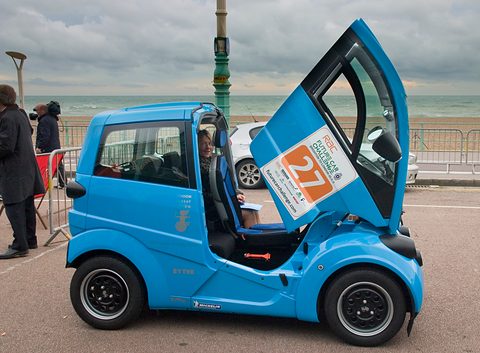
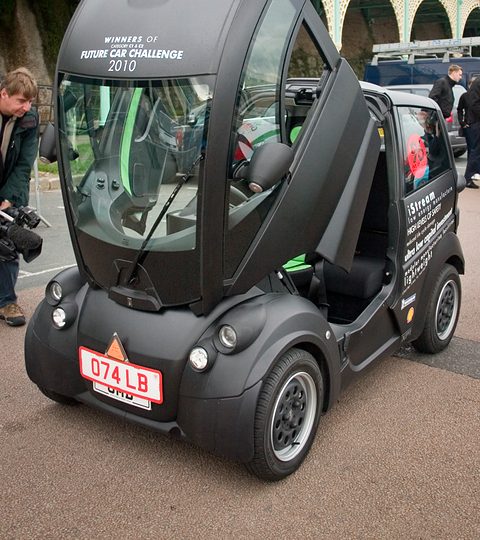
Inside, the driver sat in the middle, with a passenger behind on either side, exactly like the McLaren F1, and the cabin could be arranged in six ways; the boot held 160 to 720 litres.source 3 There was a single door, hinged at the front.source 2 Murray was looking for backers or partners to build it in volume, and his pitch was the factory.source 3
The simplified assembly process means that an assembly plant can be designed to be 20% of the size of a conventional factory. This could reduce capital investment in the assembly plant by approximately 80%.
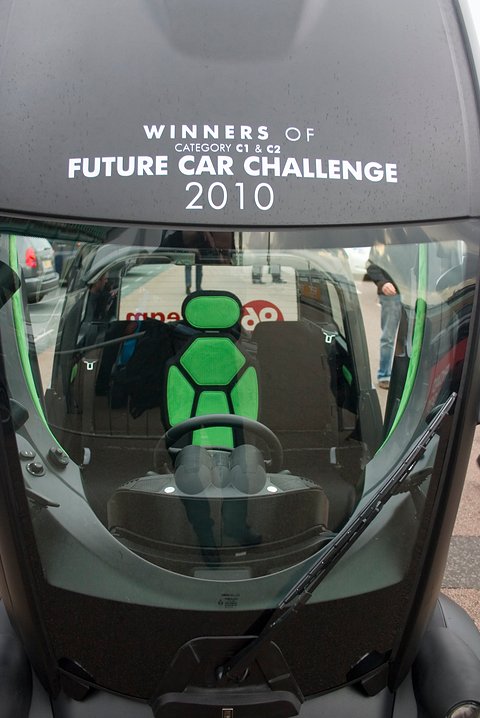
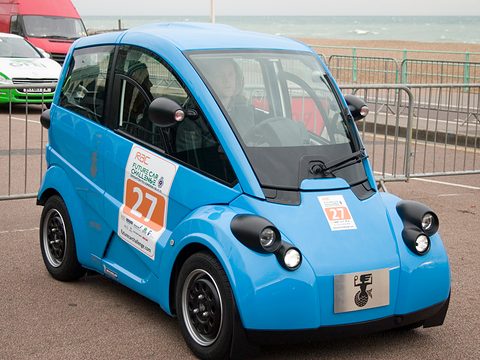
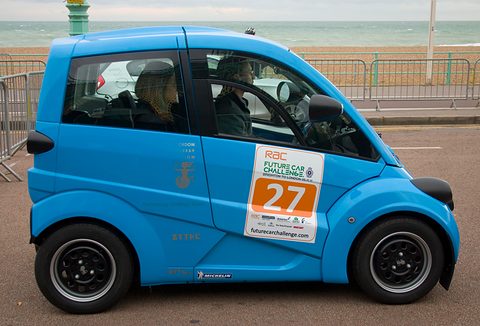
That year iStream also won the Society of Motor Manufacturers and Traders’ Automotive Innovation Award.source 2 In November 2010 the T.25 ran in the first RAC Future Car Challenge, about 60 miles (97 km) from Brighton to London on the day before the London to Brighton Veteran Car Run. Murray drove it himself, and it won the awards for the most economical small passenger car with a combustion engine, and the most economical environmentally friendly one.source 2 English Wikipedia gives its economy over the course as 97 mpg.source 1
The electric T.27
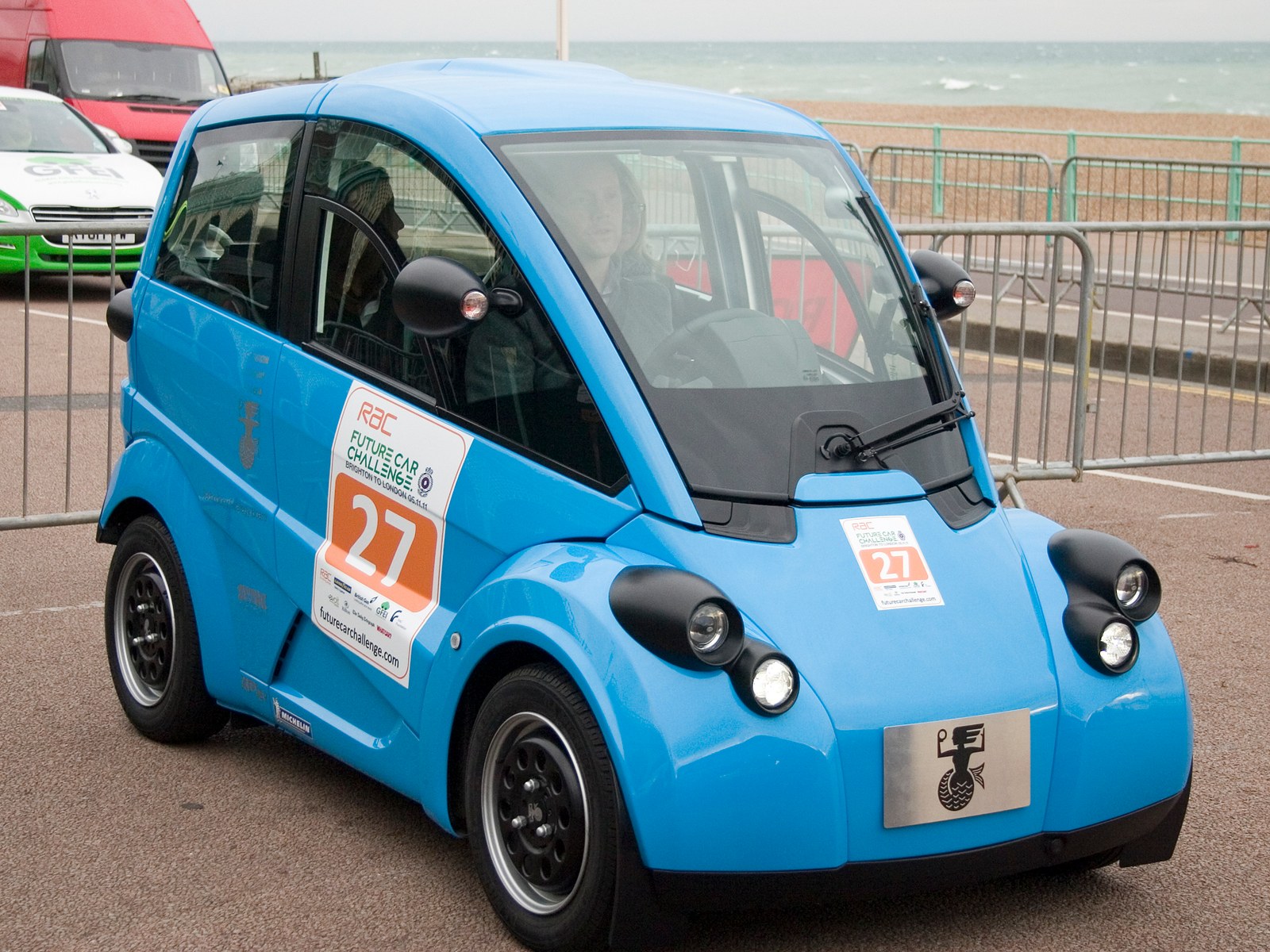
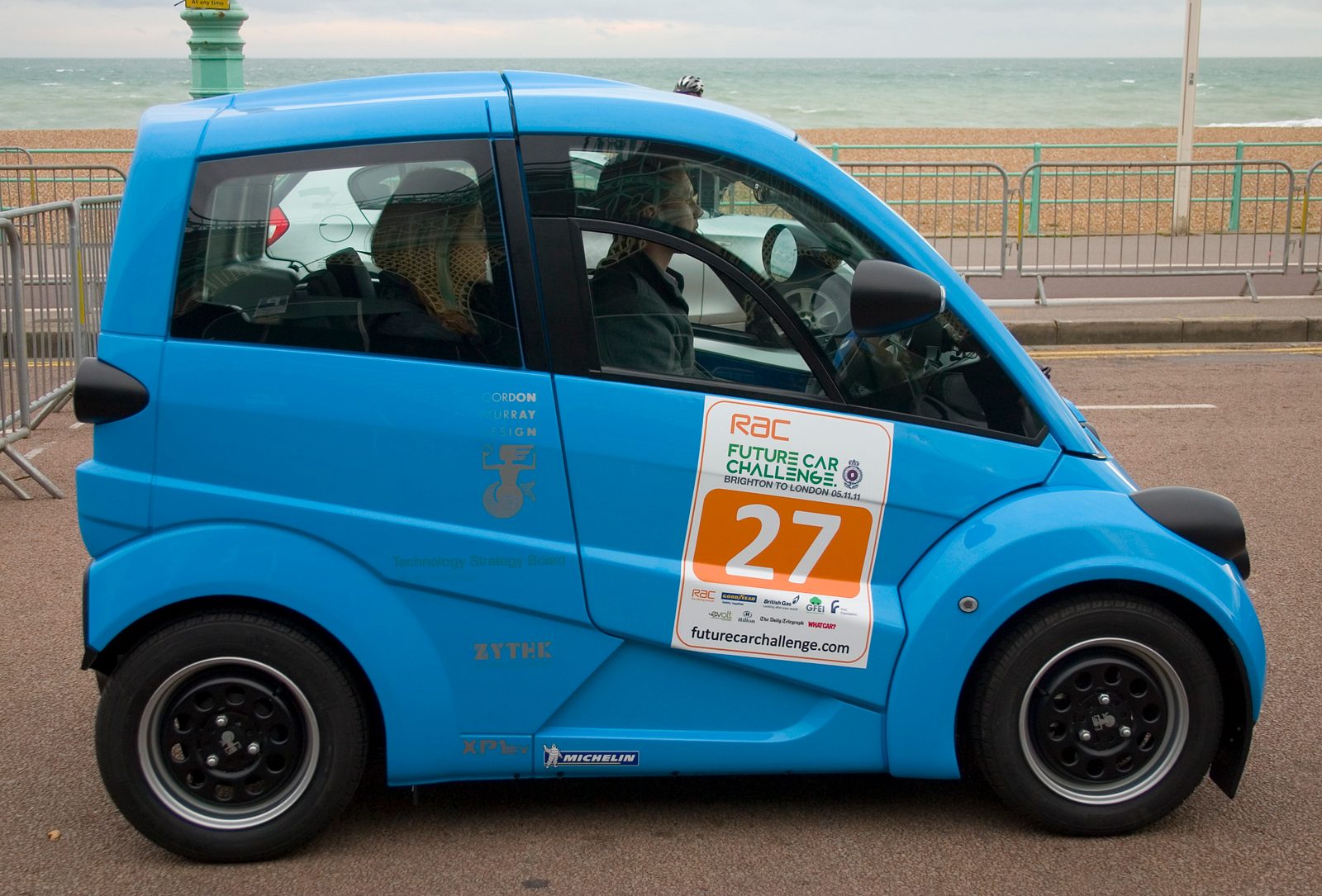
Early in 2011 the T.27 was crash-tested to the mandatory European 40 per cent offset frontal test, against a deformable barrier, and came through with no intrusion into the cabin.source 2source 5 It was shown to the press at the Royal Automobile Club in Pall Mall on 29 June 2011, billed as “the world’s most efficient electric car”.source 2source 6source 5 Zytek had designed its motor, its control system and the way its battery was built in.source 1source 2source 5 It was 2.5 m (8 ft 2 in) long and 1.3 m wide, weighed 680 kg (1,500 lb) with its battery, and had a 25 kW motor; it reached 100 km/h in under 15 seconds, topped out at 105 km/h (65 mph) and turned in 6.0 m (19 ft 8 in).source 2source 6source 5 Its makers claimed a range of up to 100 miles (160 km), or up to 130 miles driven gently, and 43 g/km of CO2 on Britain’s mix of electricity.source 2source 6 Murray told the launch that the work was no easier than his old job.
Designing green cars is every bit as demanding as engineering Formula One cars and many of the same principles apply – the search to save weight and maximise efficiency.
On 5 November 2011 the T.27 made its public debut in that year’s Future Car Challenge, with Murray entering a T.25 as well, and it won the electric class and the award for best overall.source 2source 6source 1 Gordon Murray Design said it was talking to three major manufacturers.source 6source 5 Neither car went into production.source 1