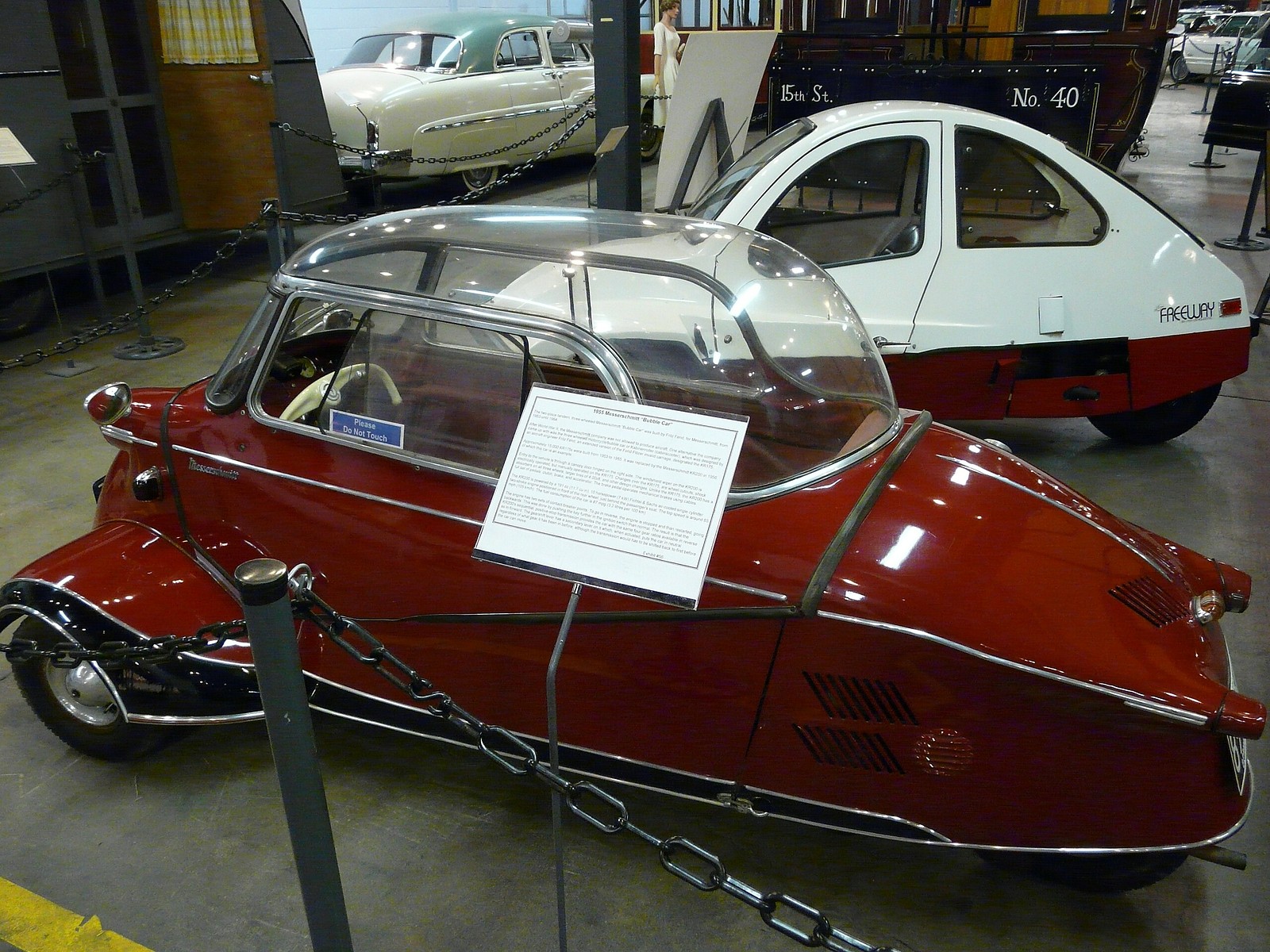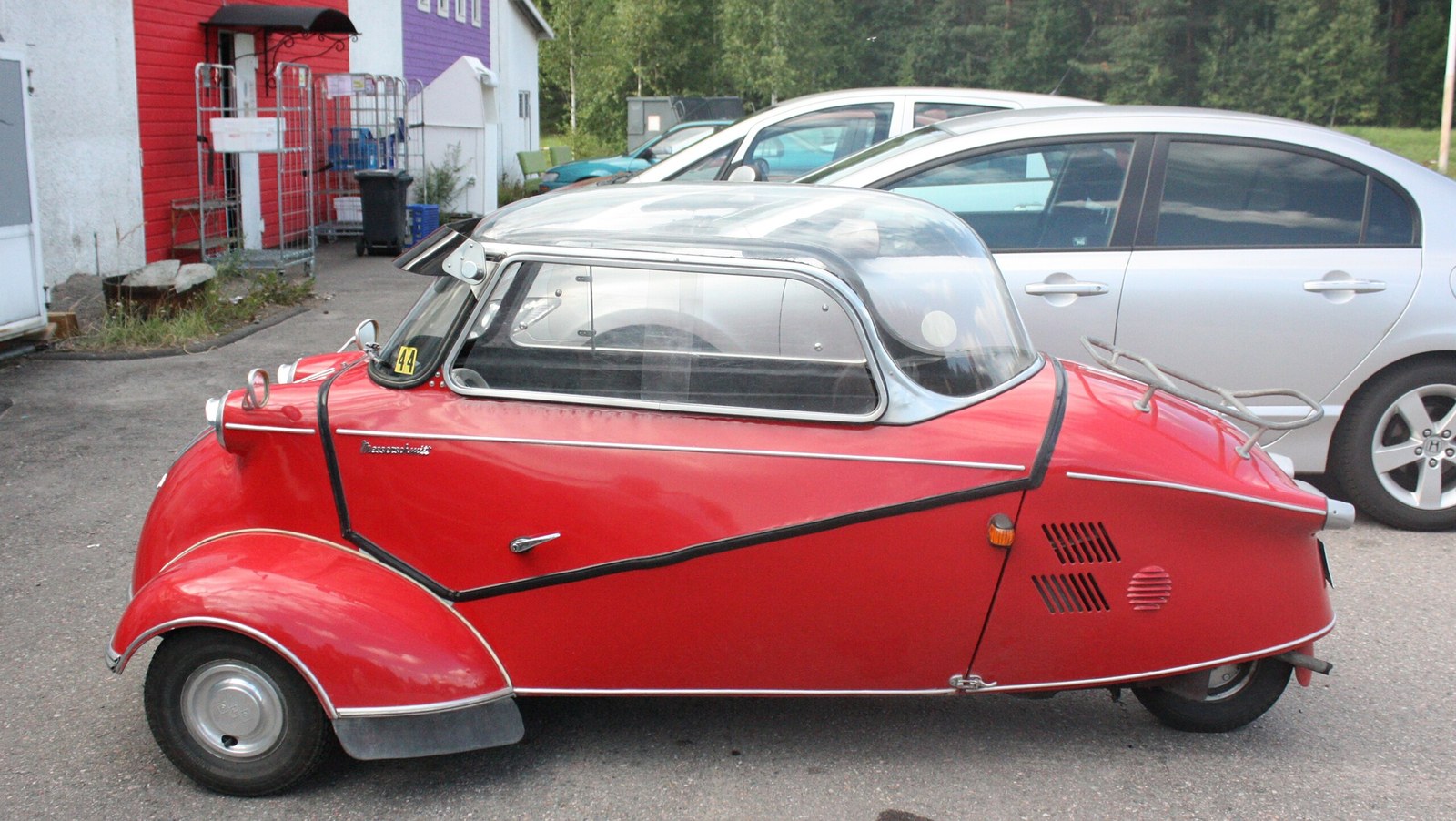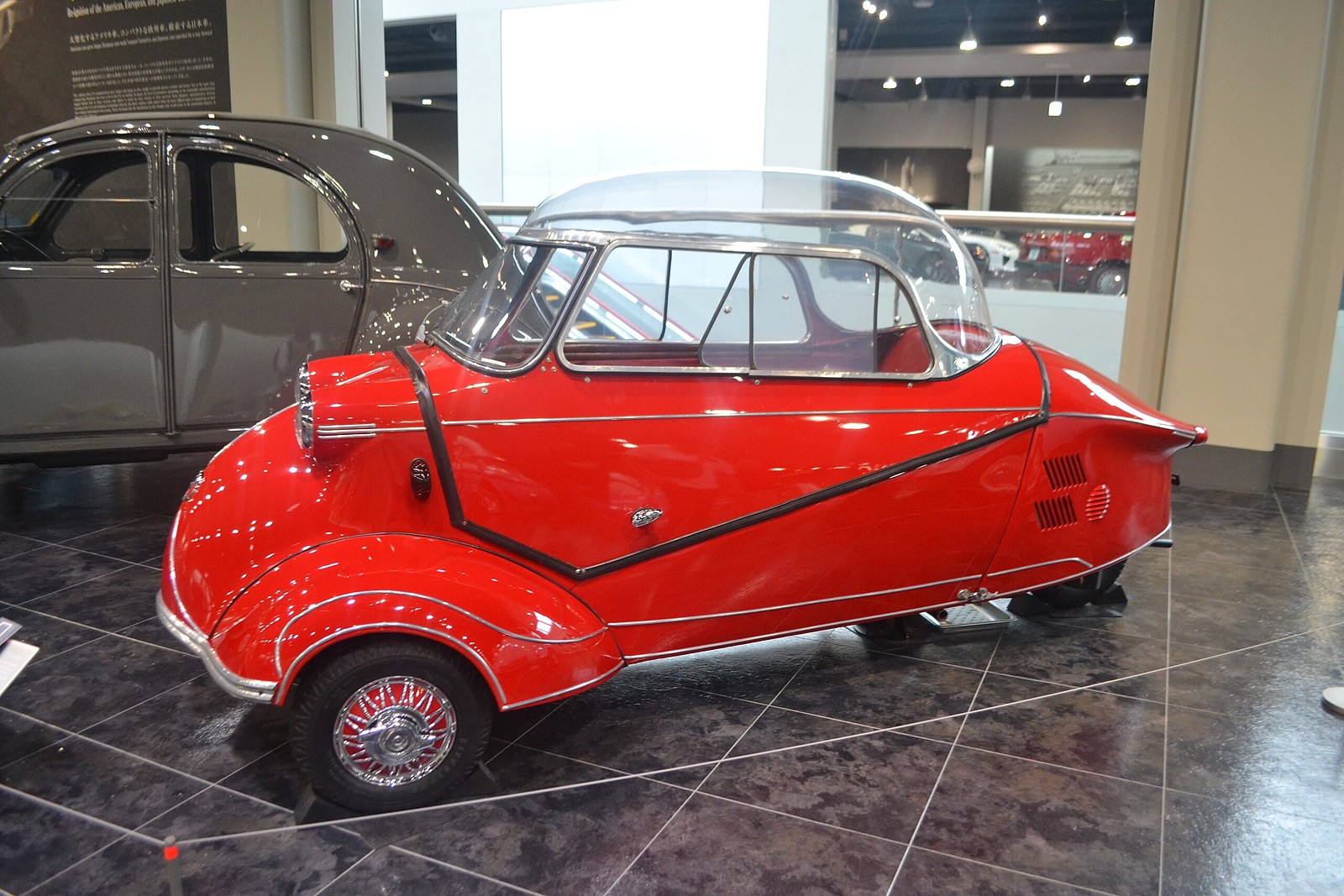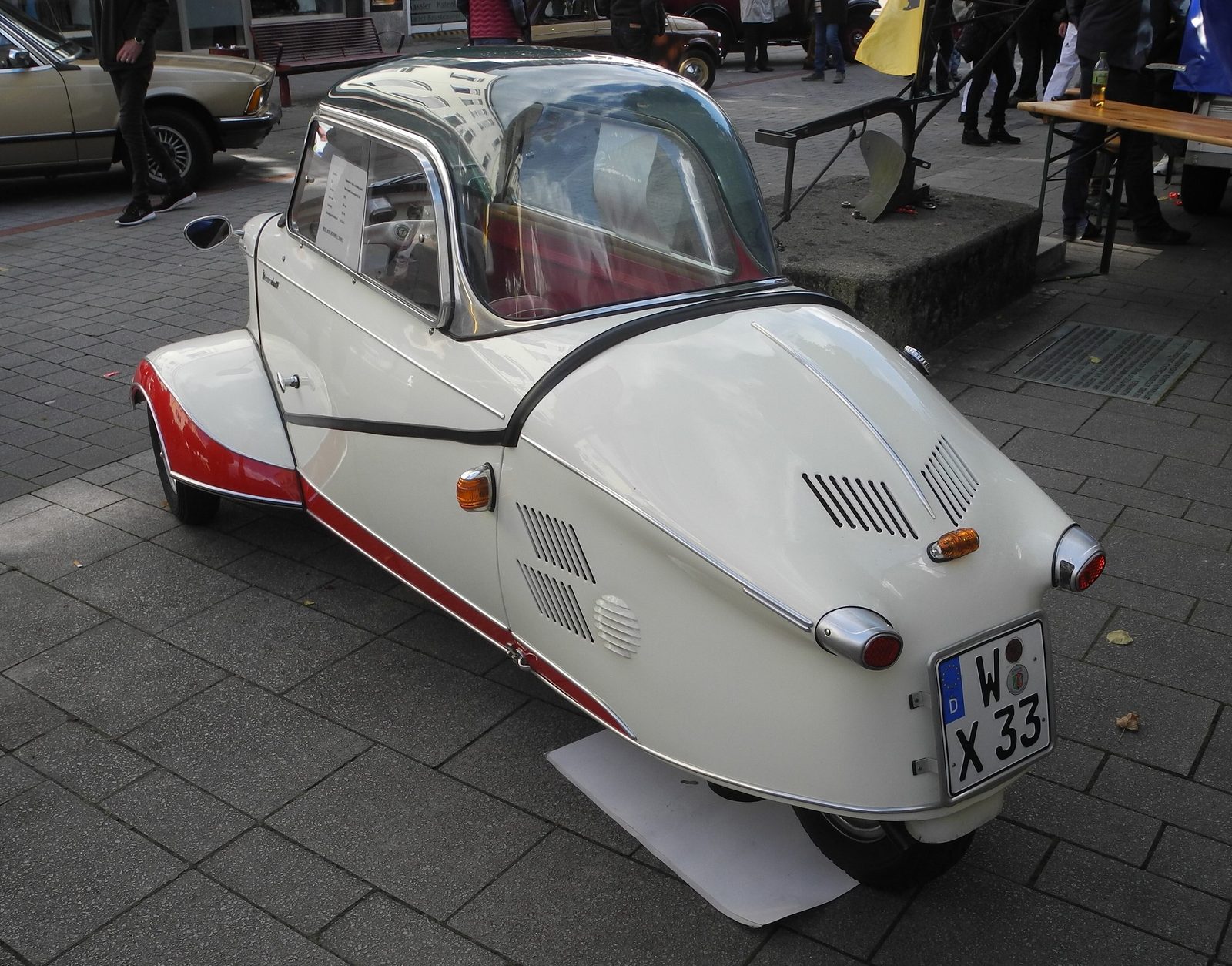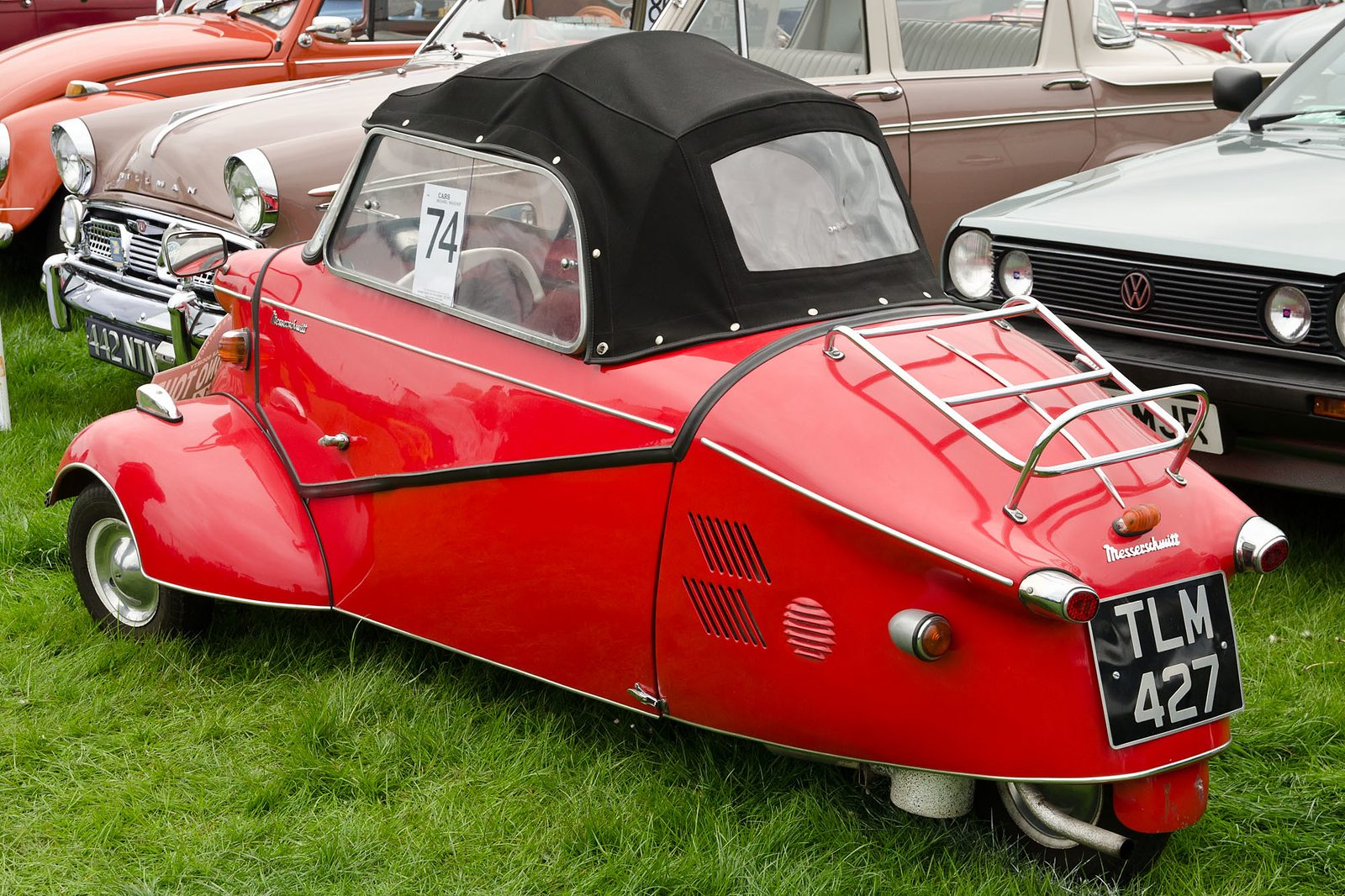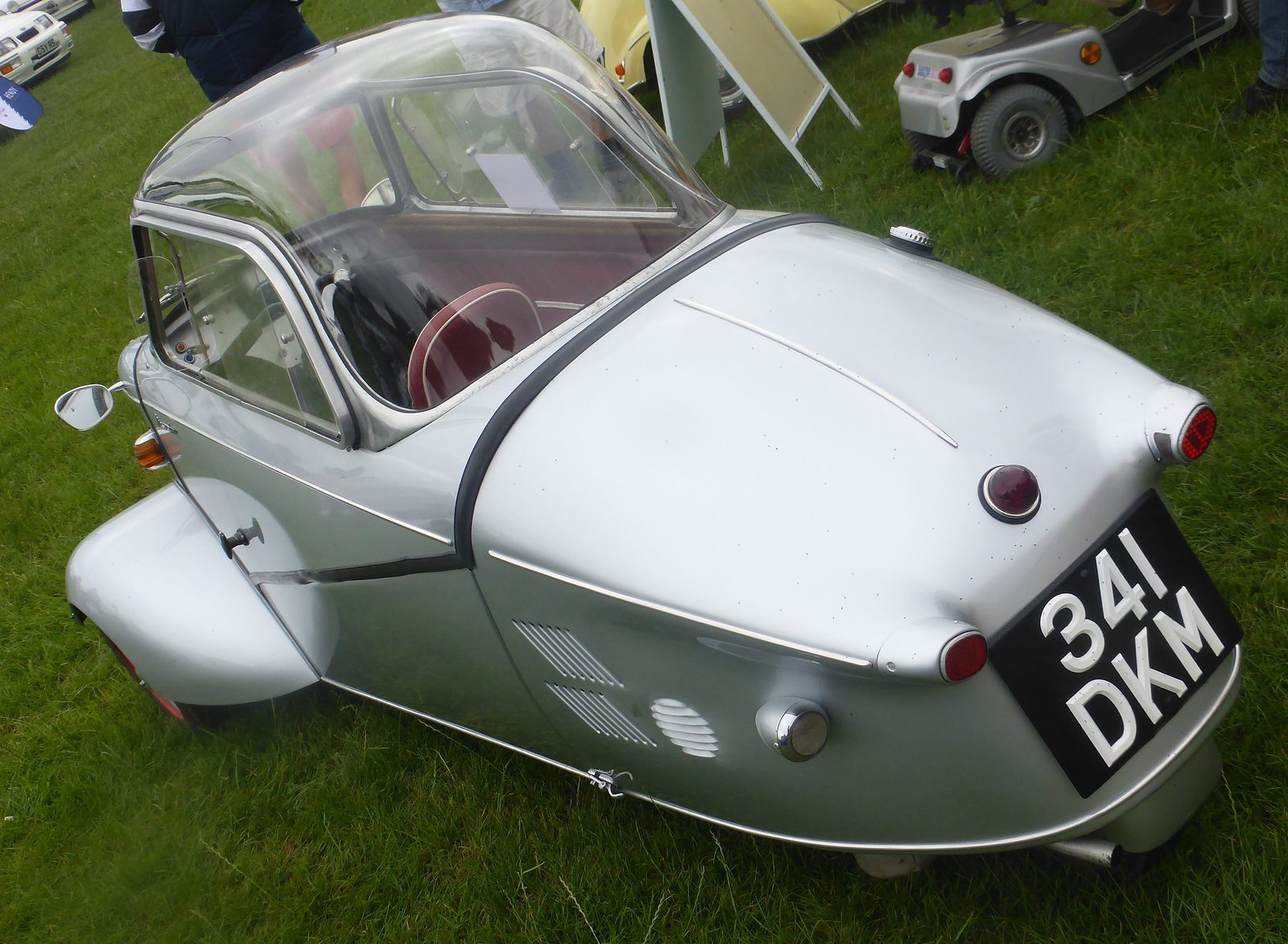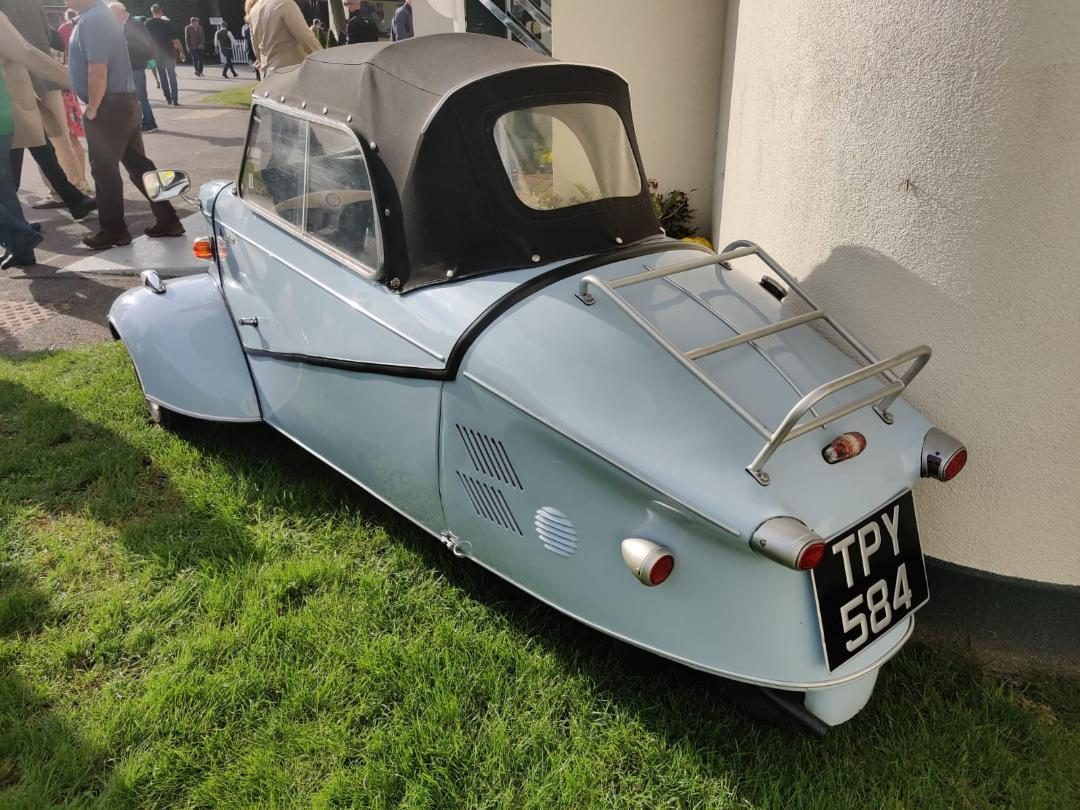
microcarfan
  • Bubble car
  • West Germany
  • Three wheels

Messerschmitt KR200

Also known as Kabinenroller, “Karo”, KR 200

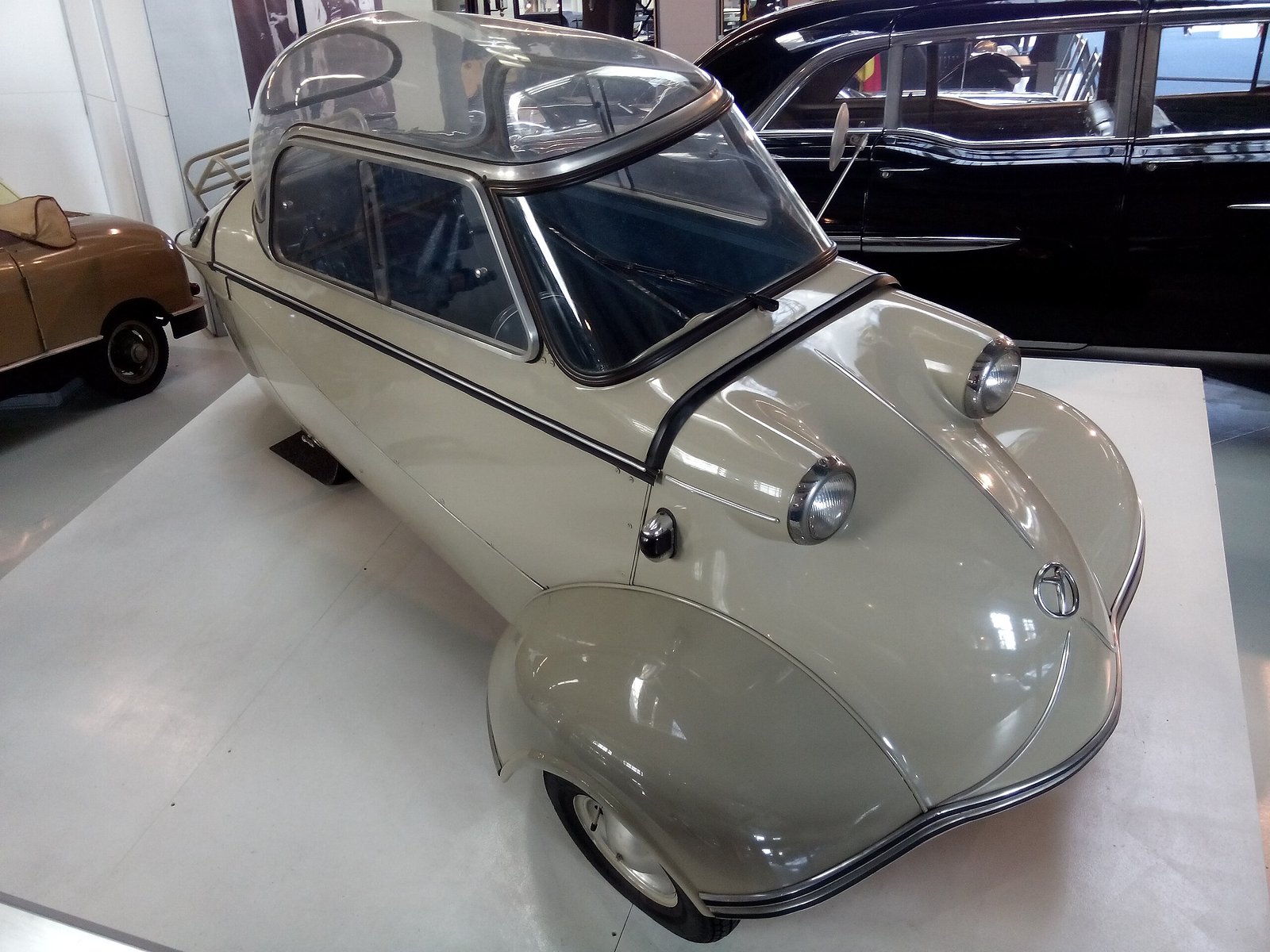
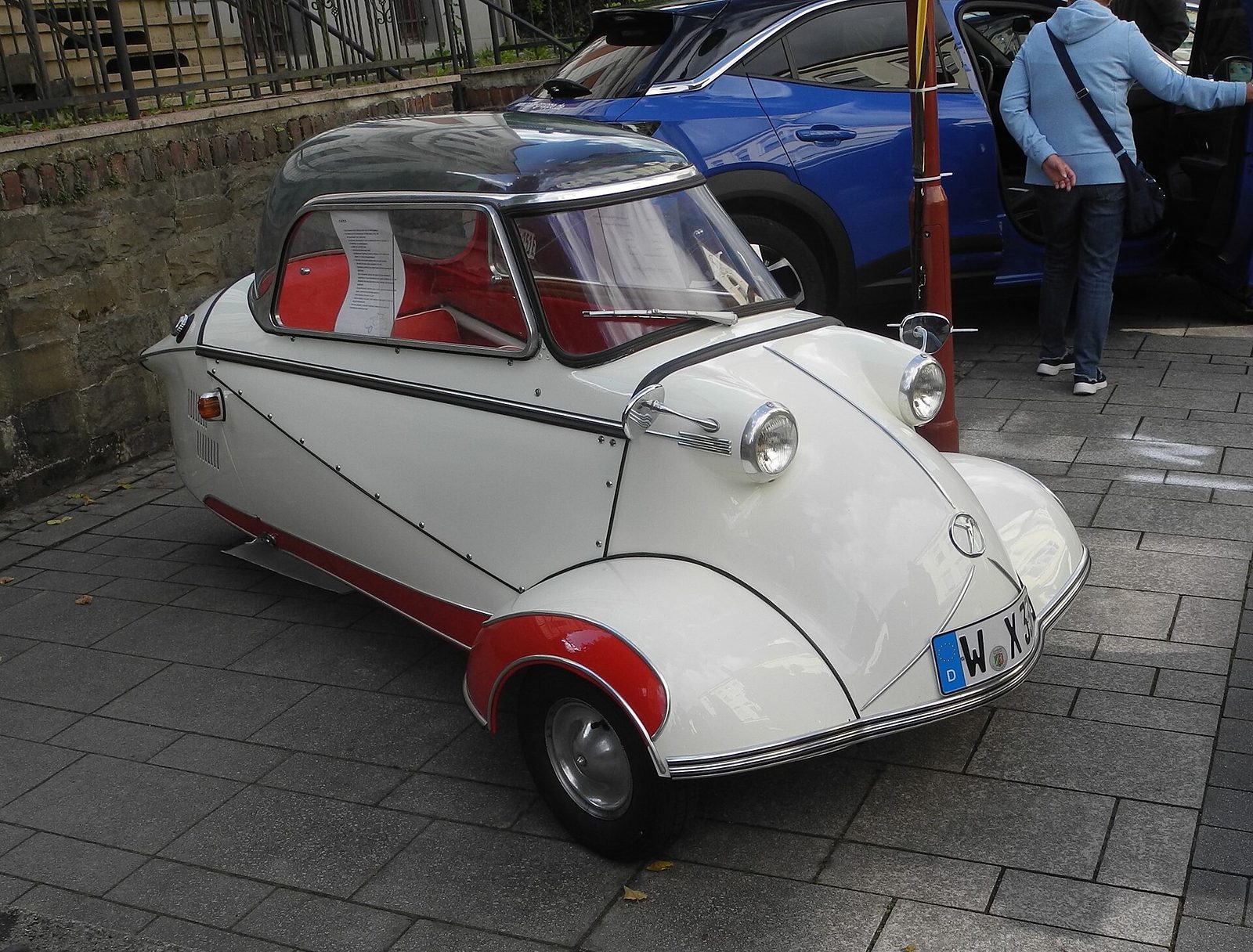
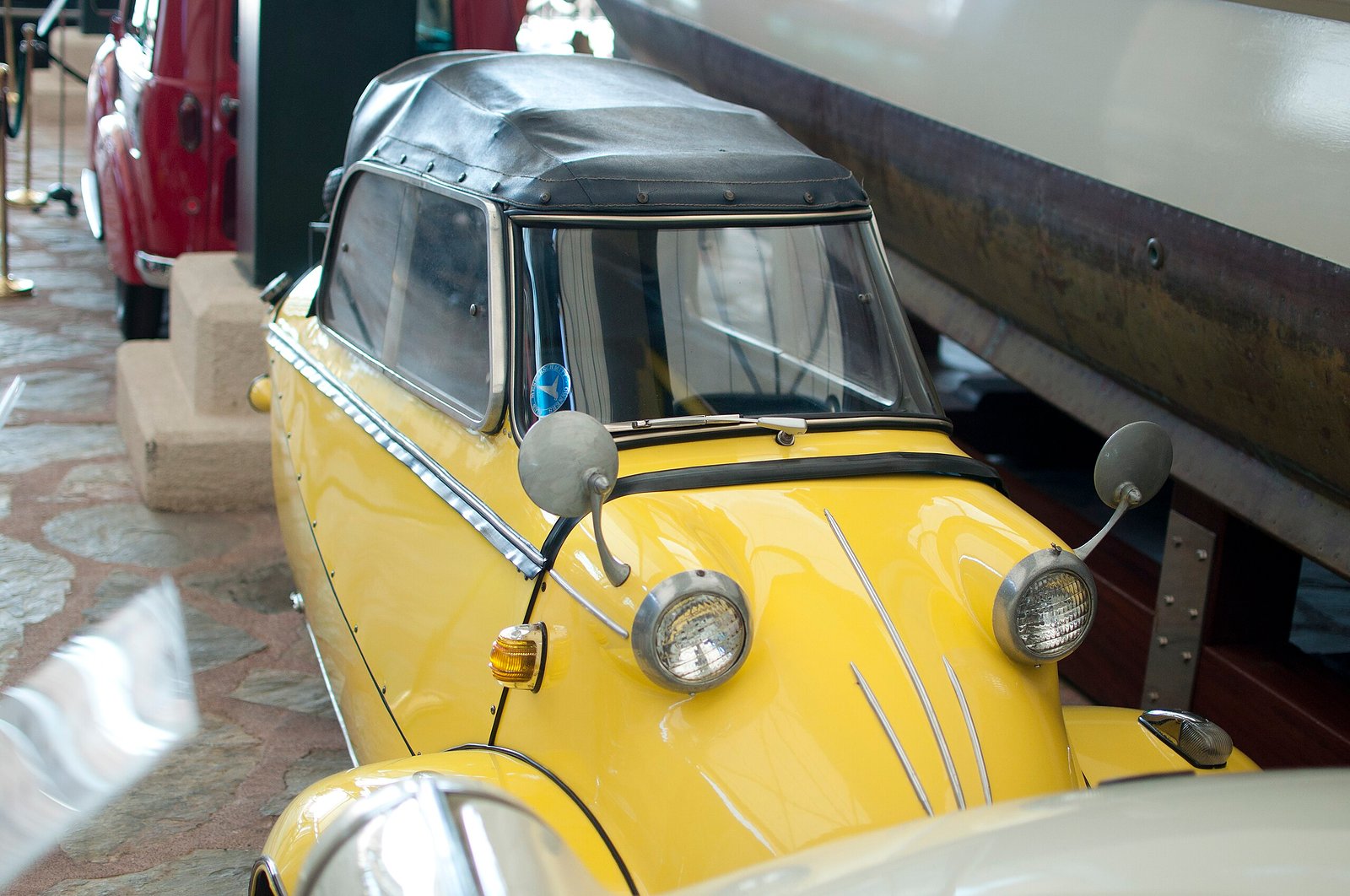
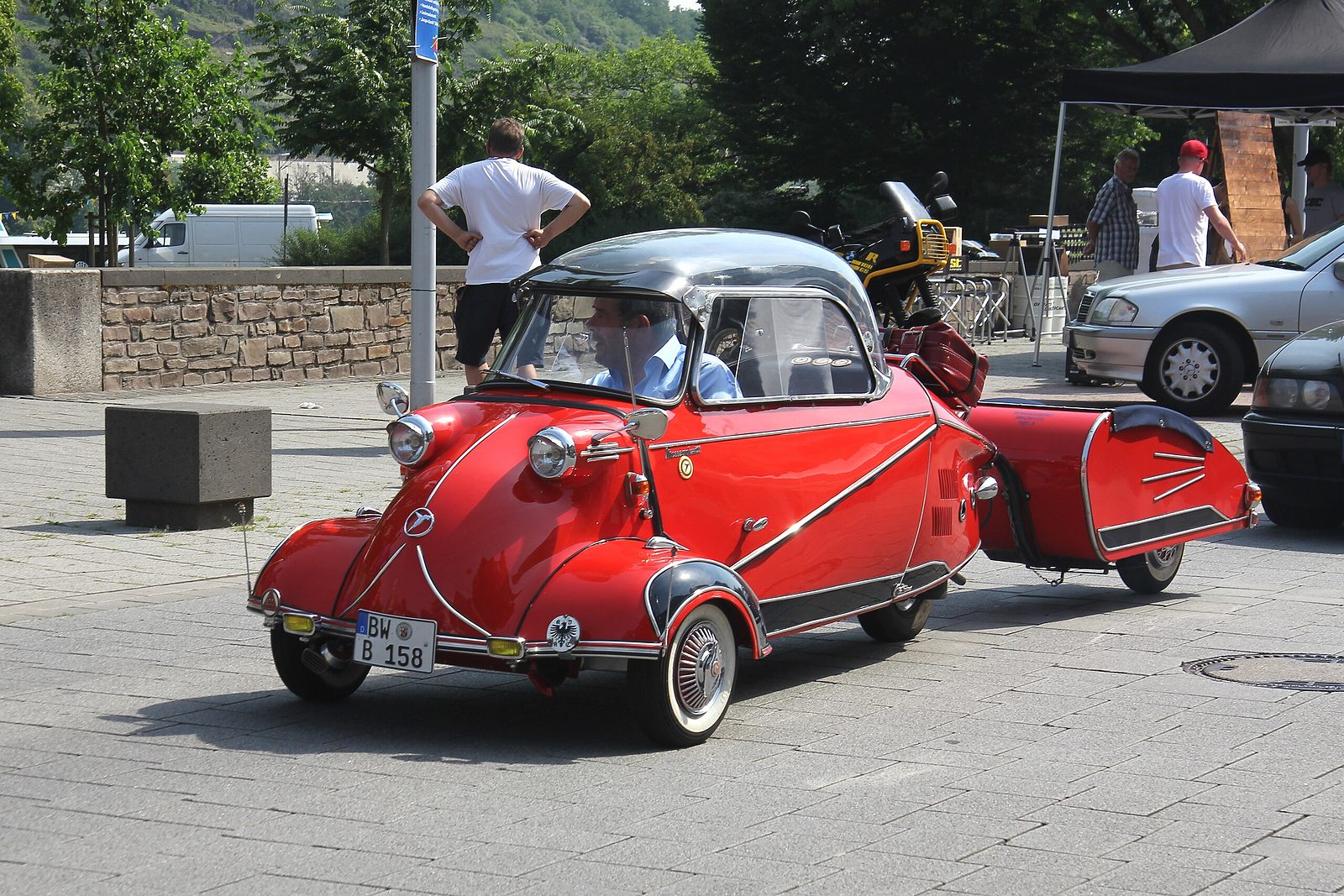
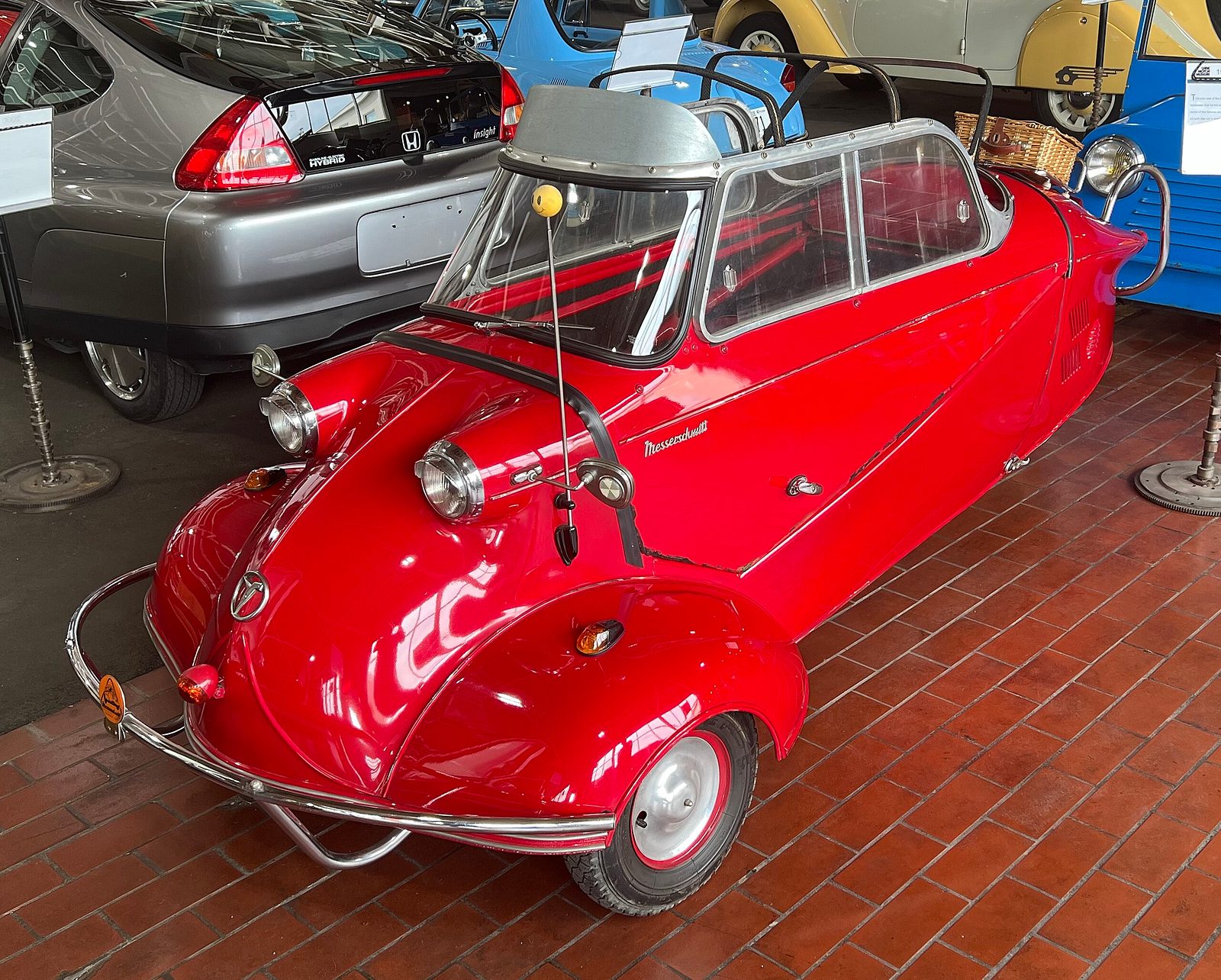
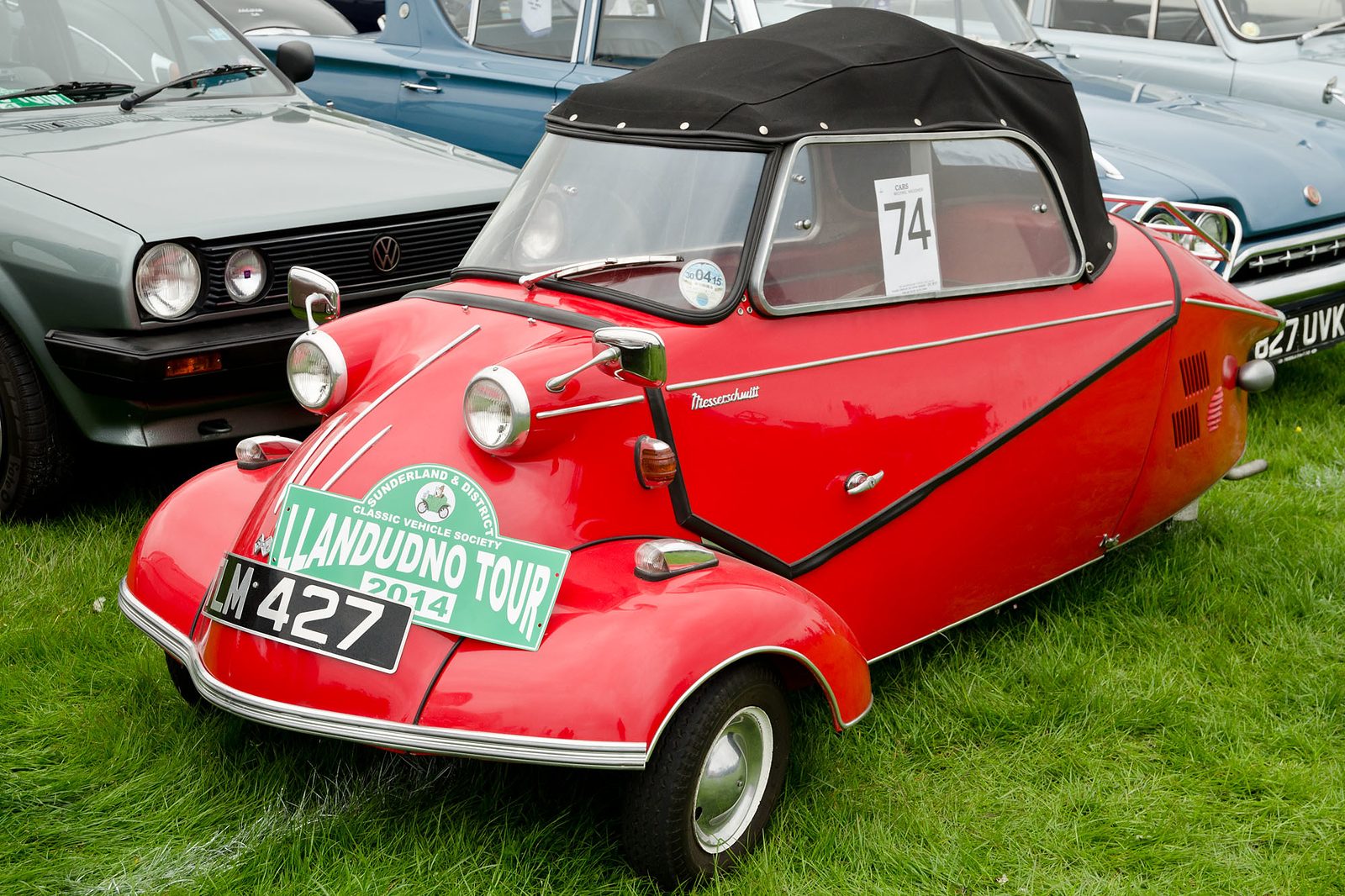
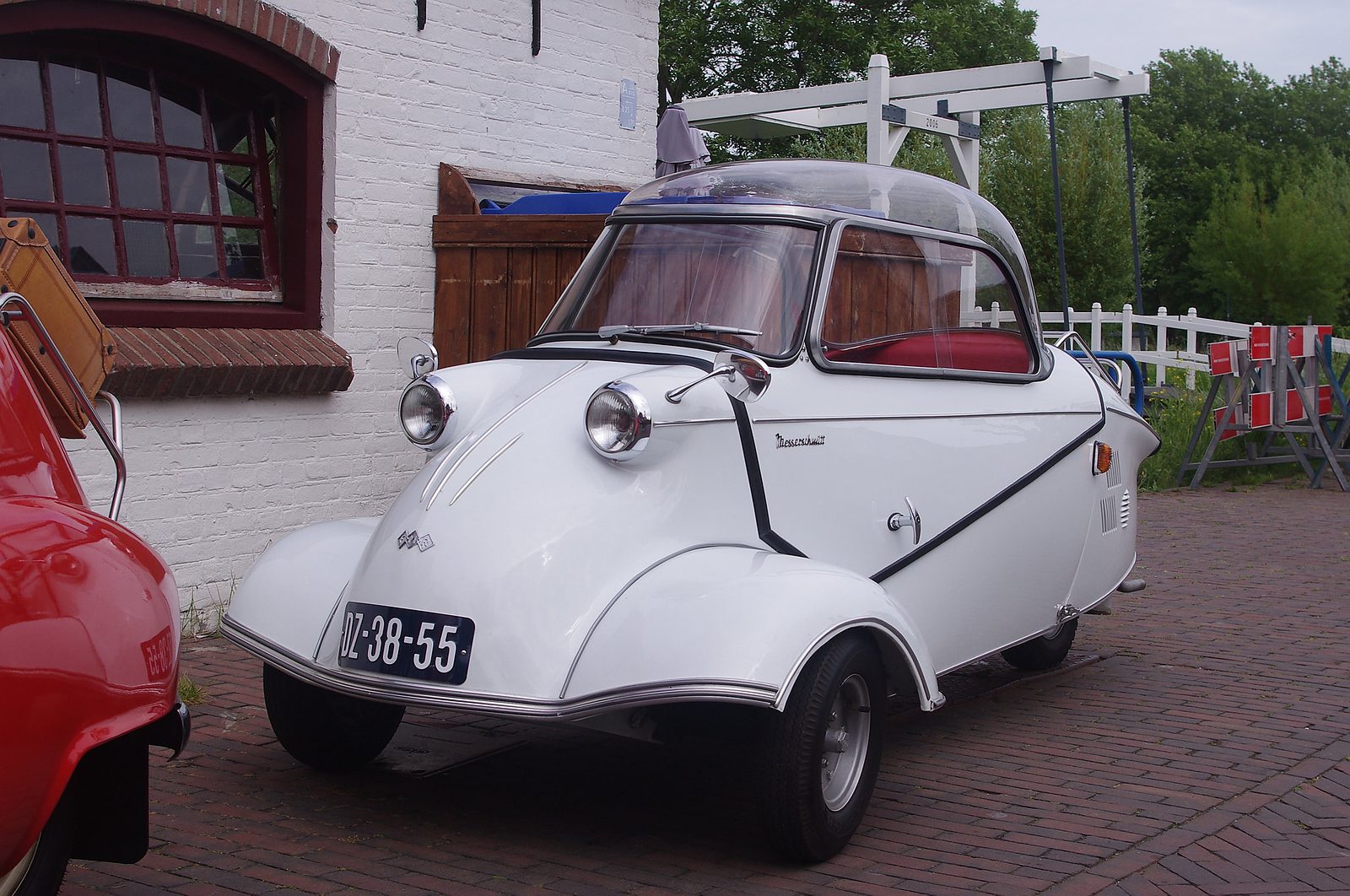
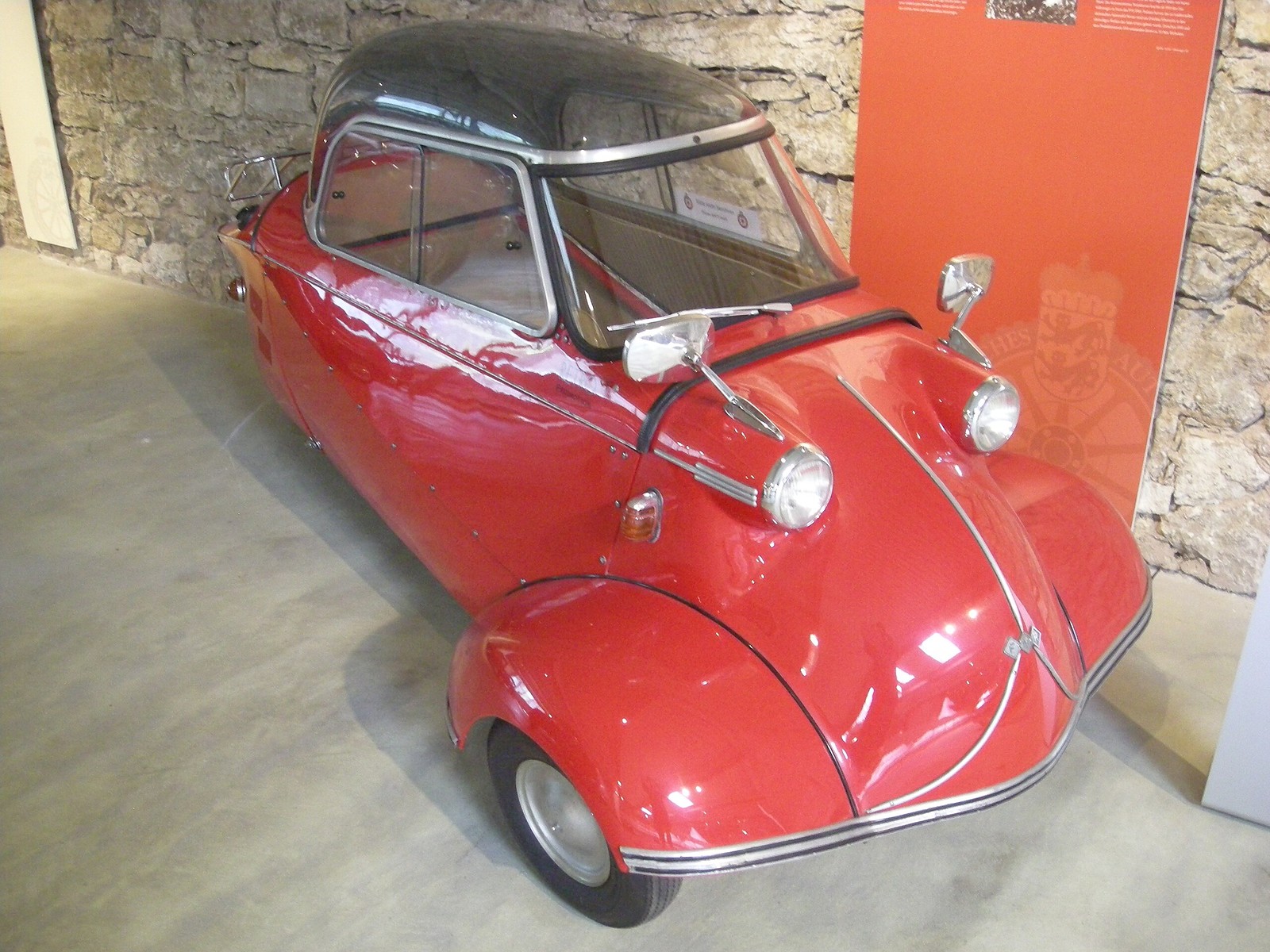
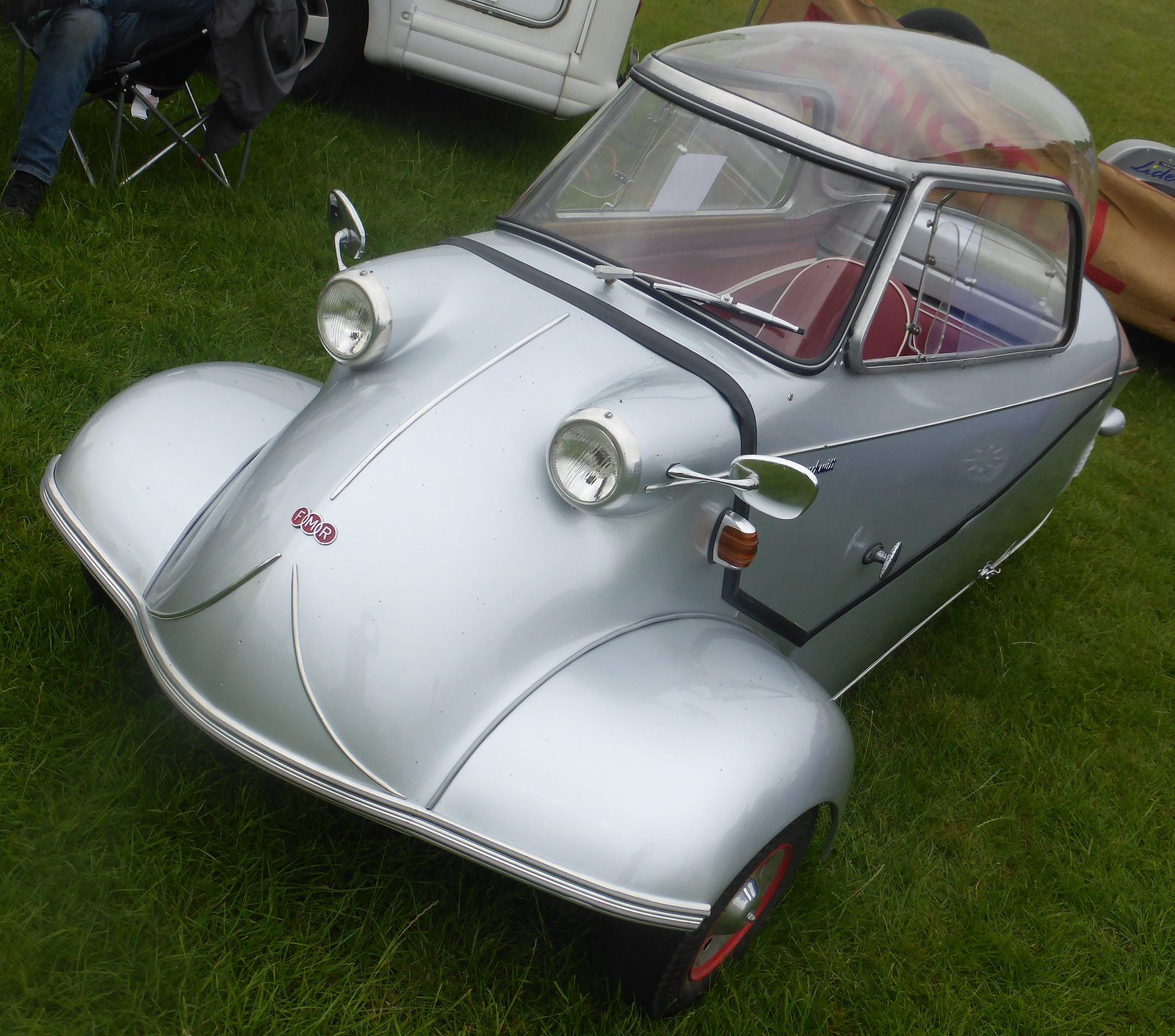
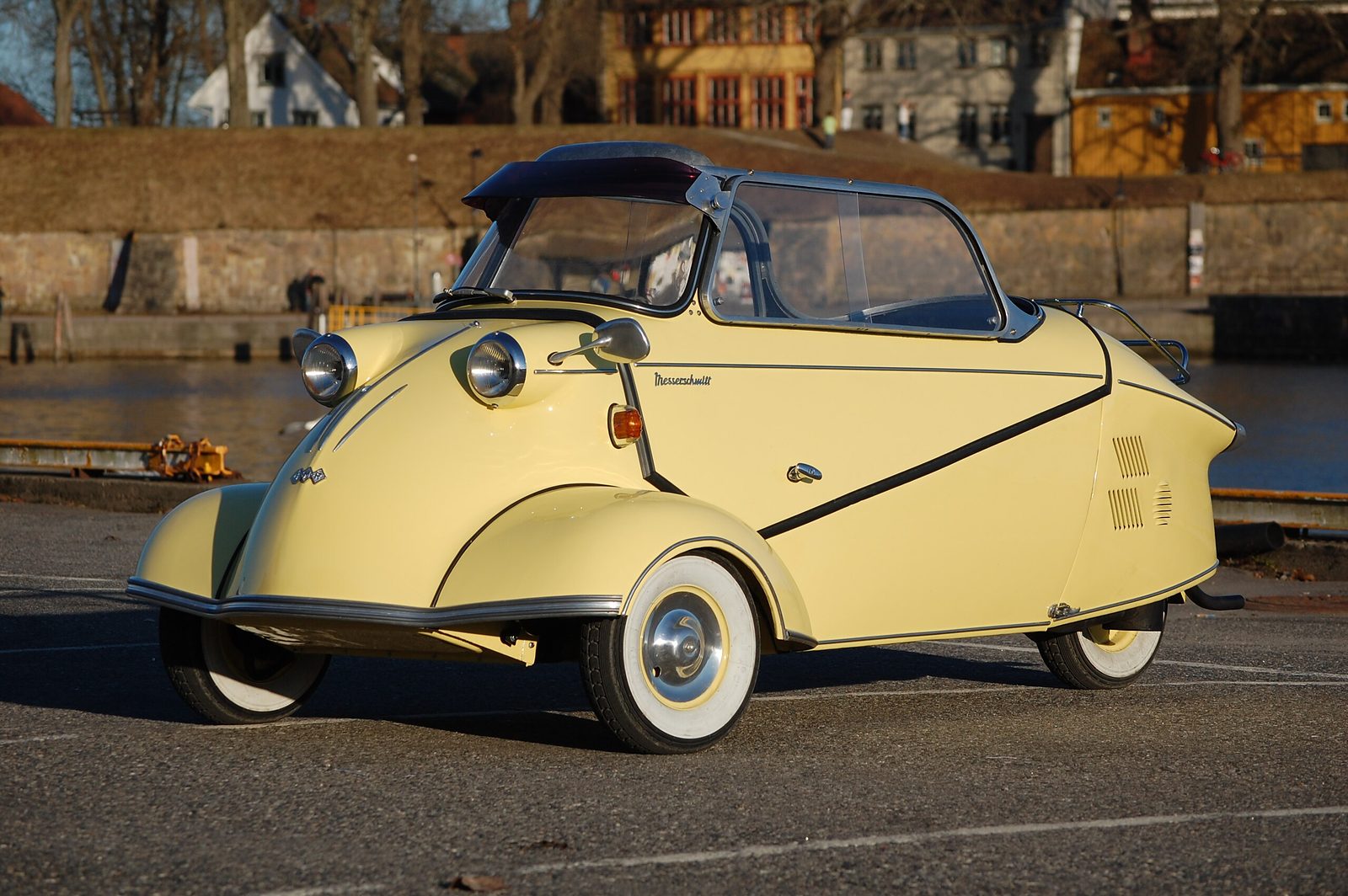
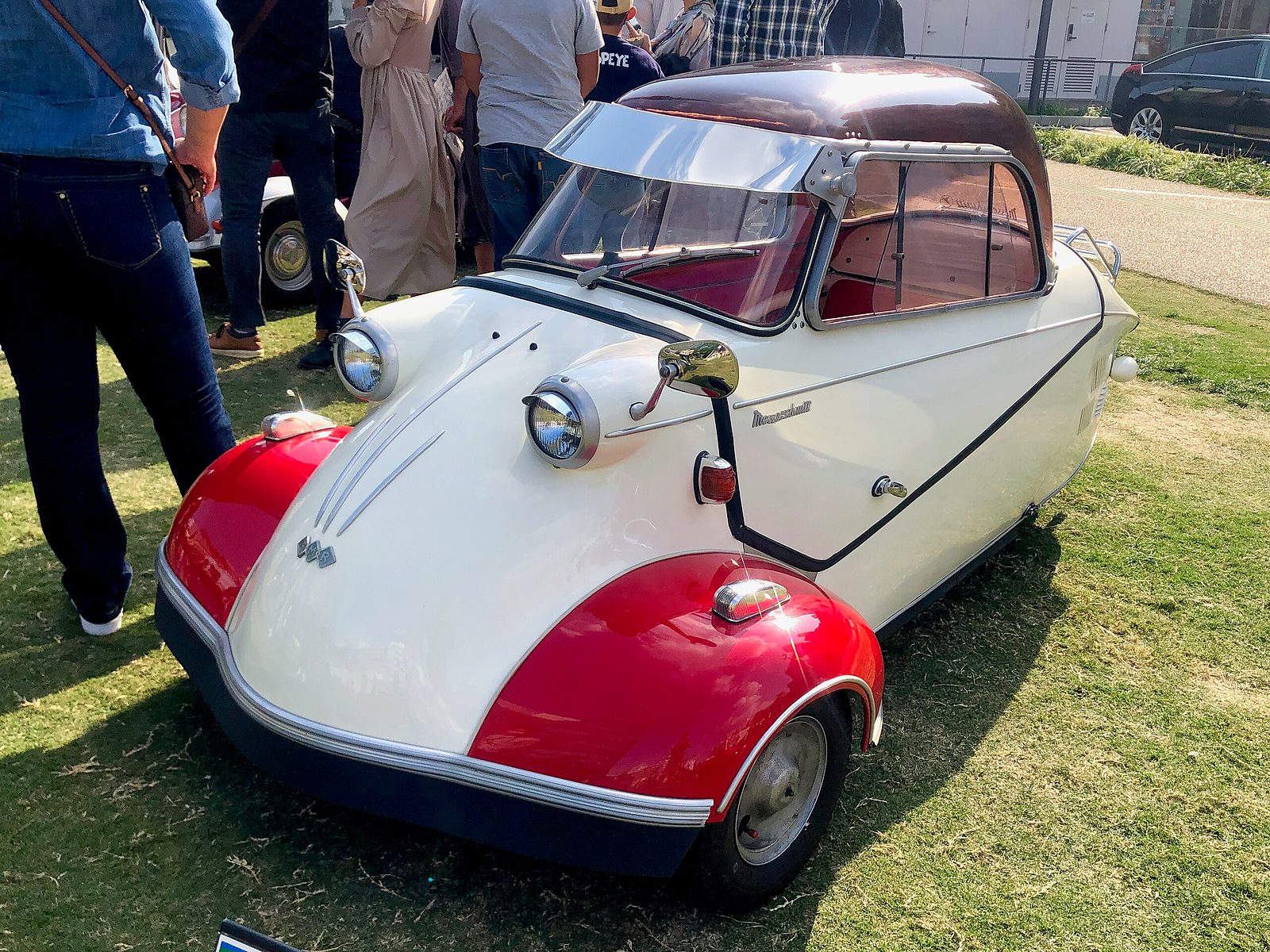
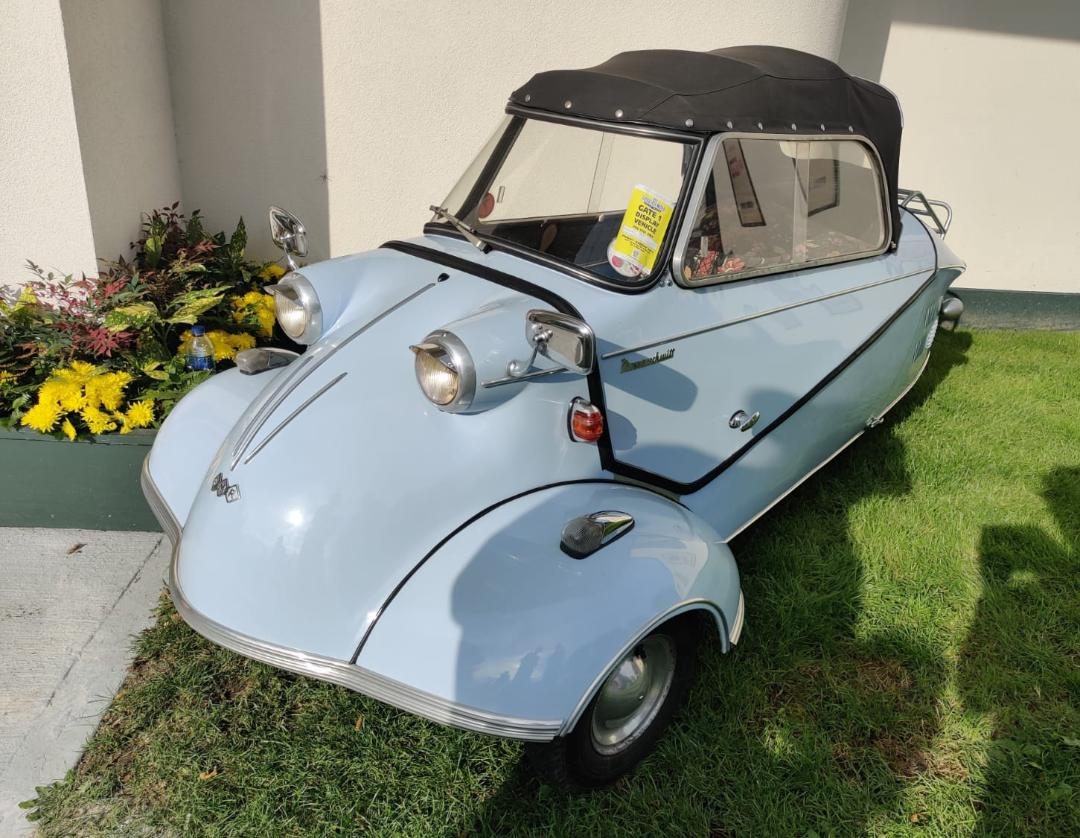
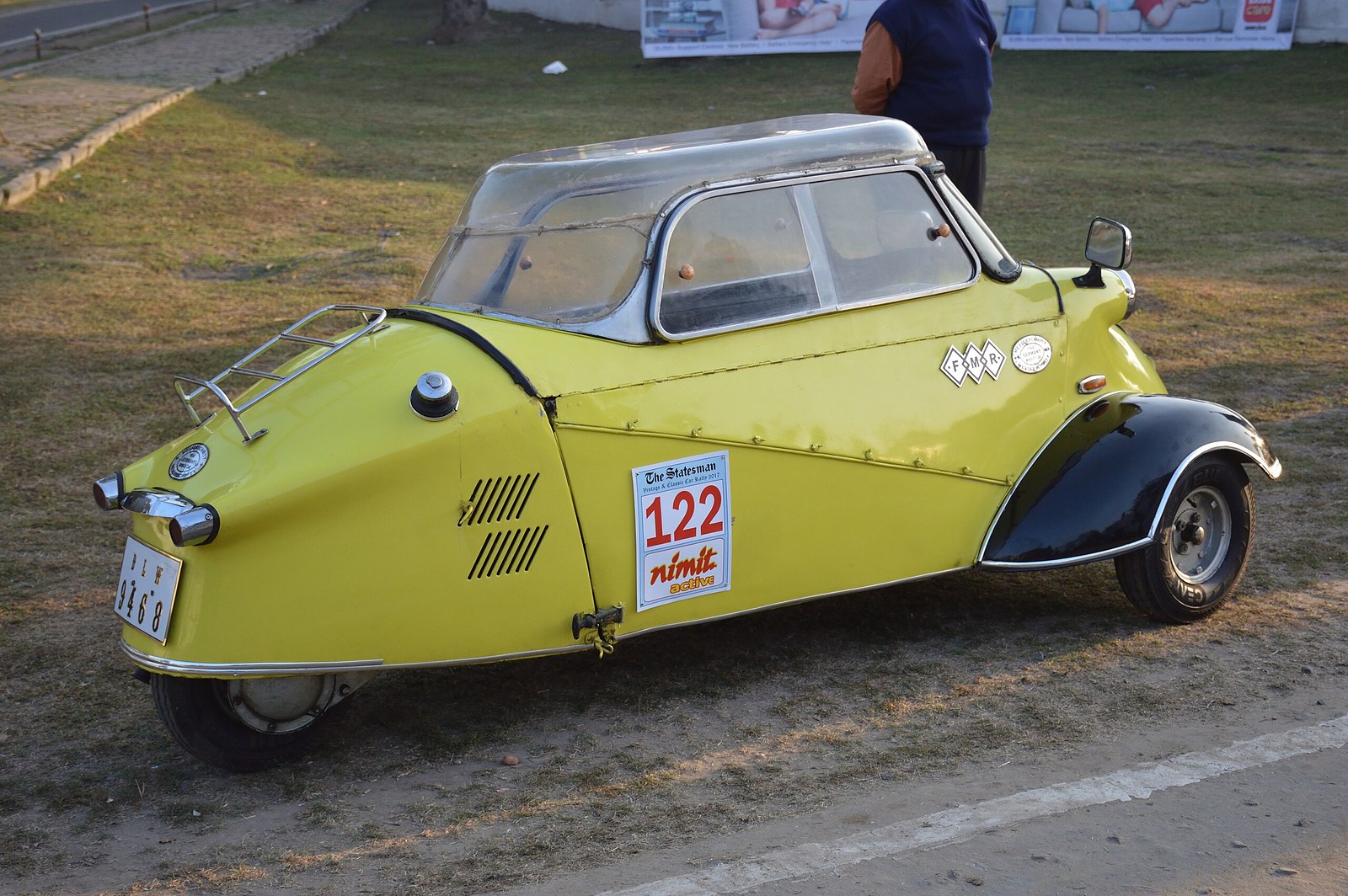
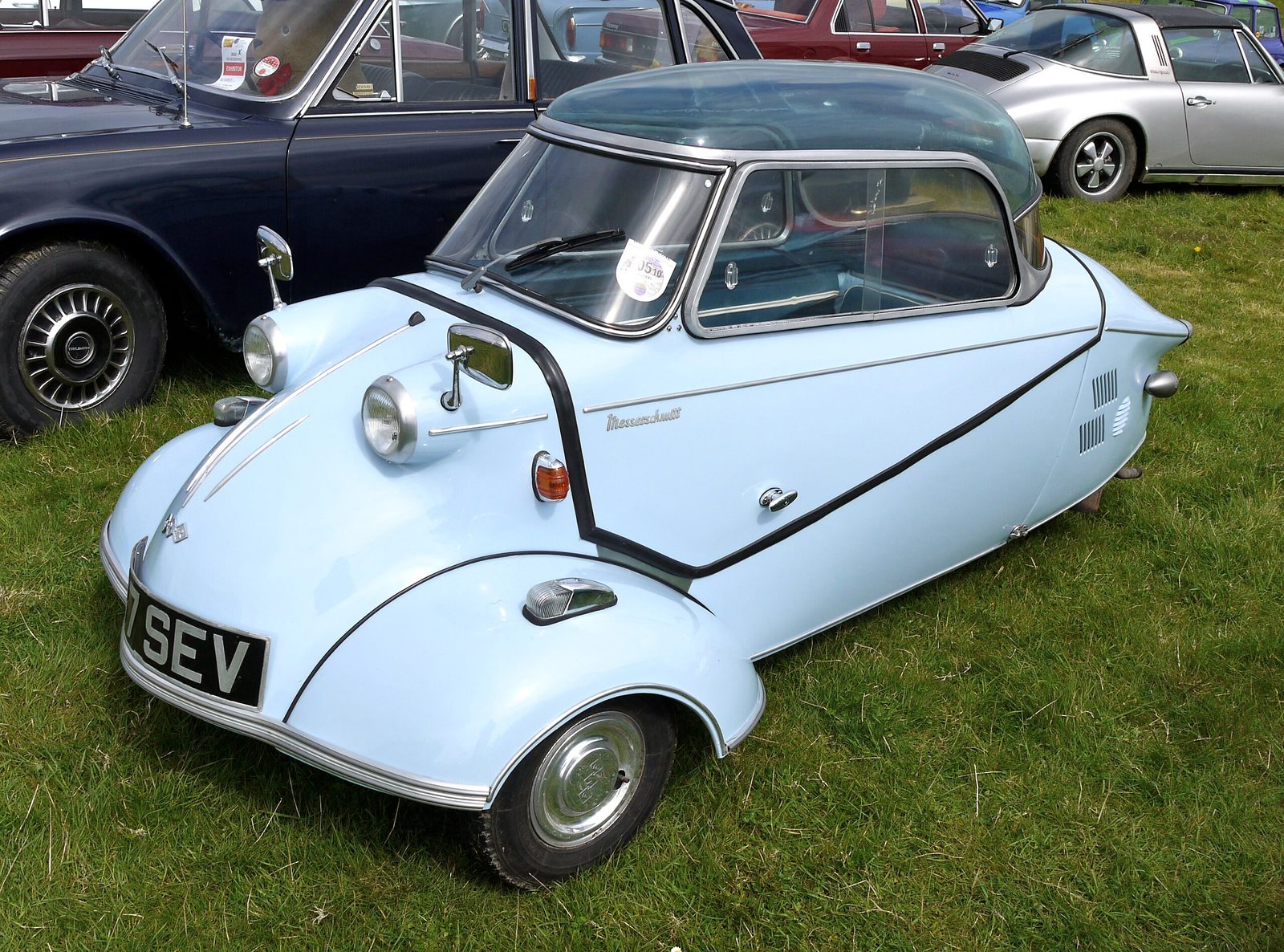
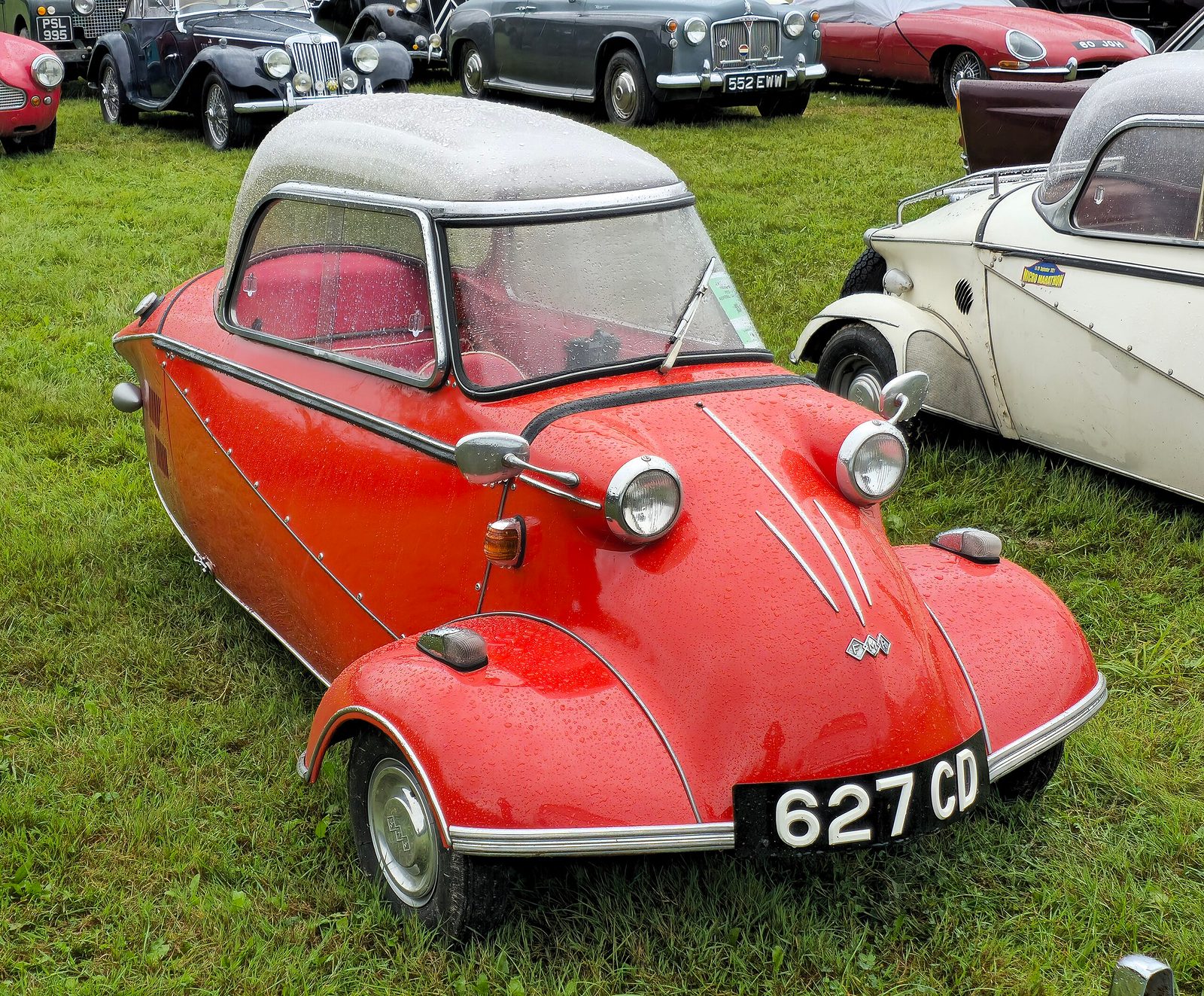
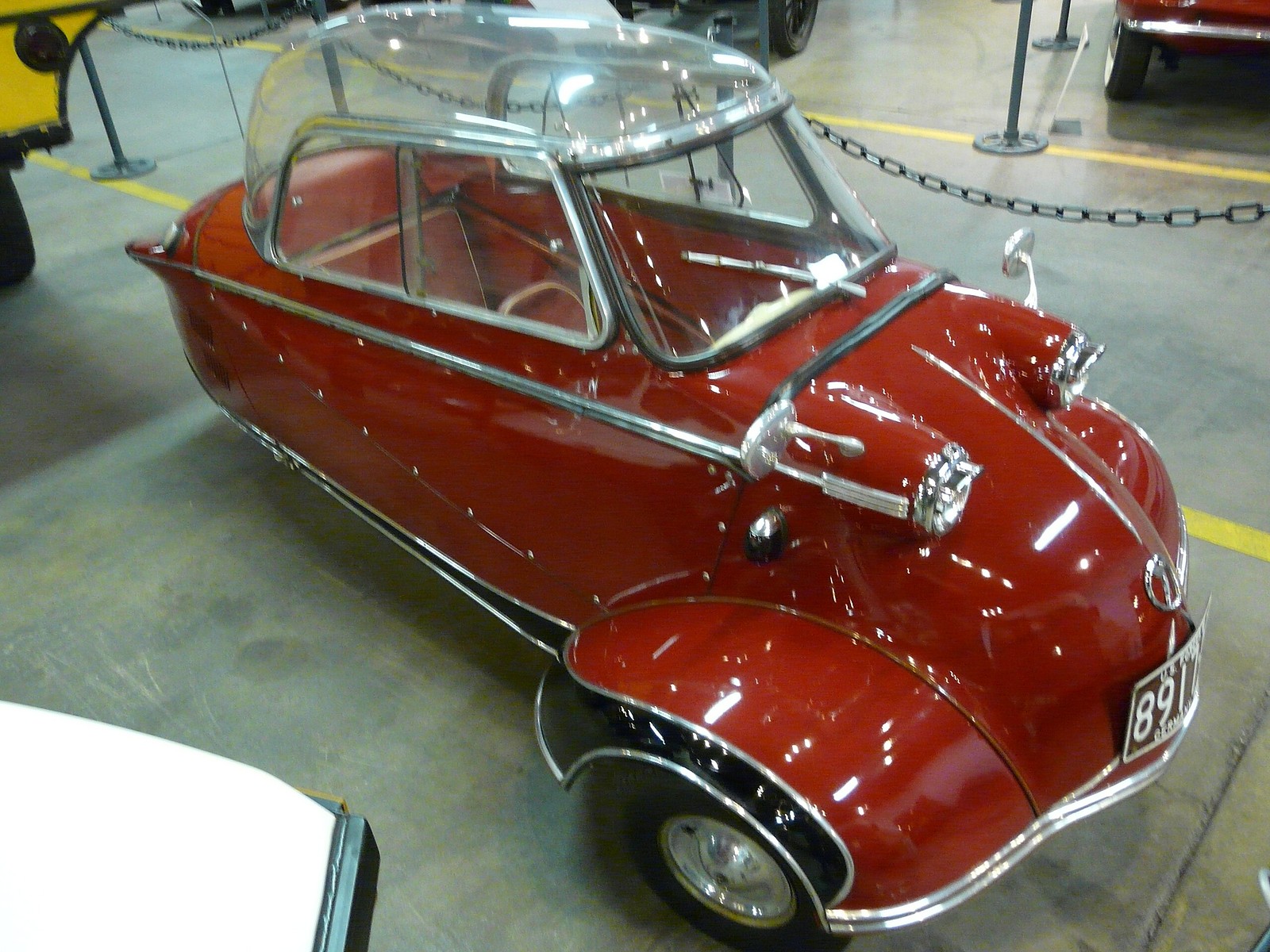
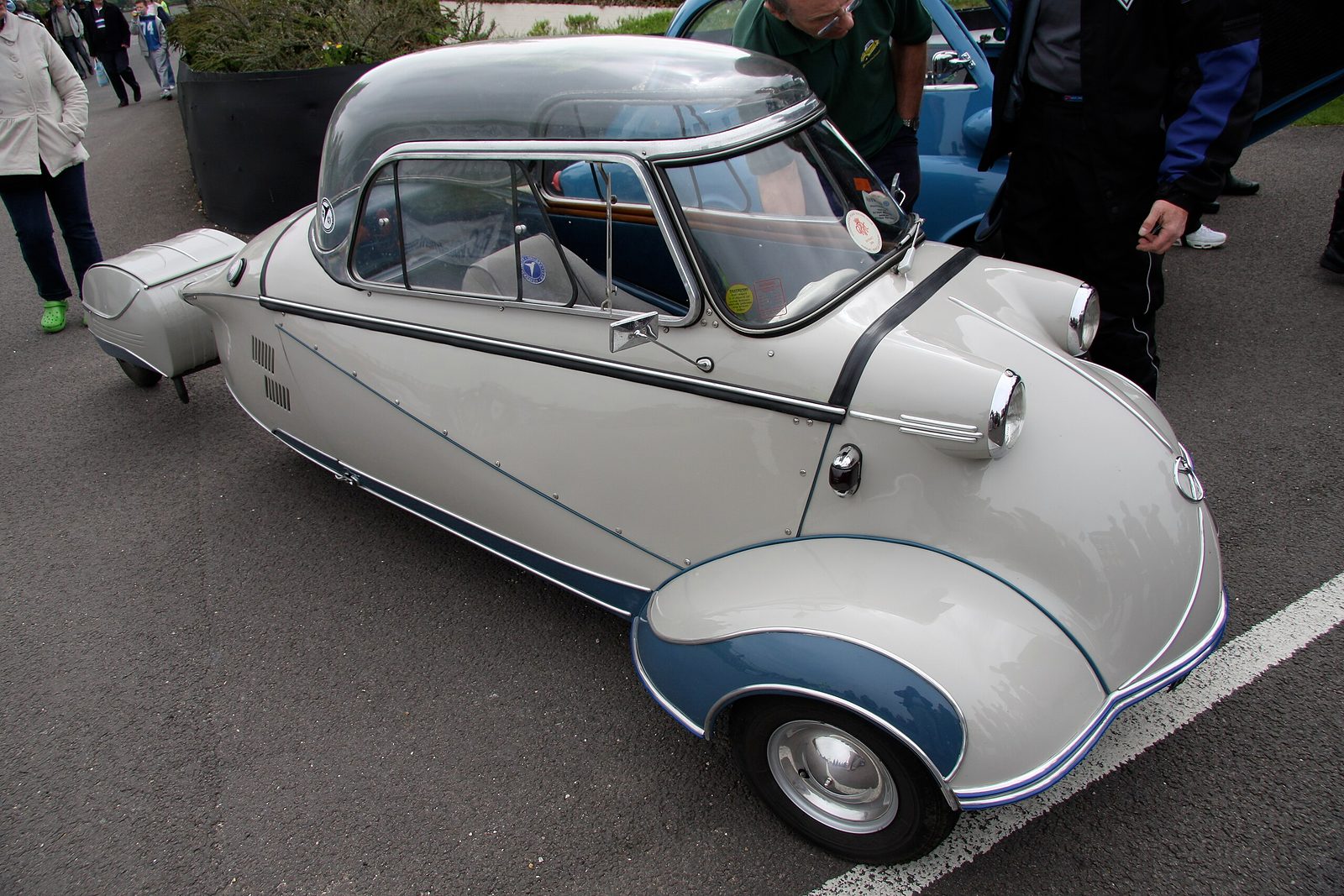
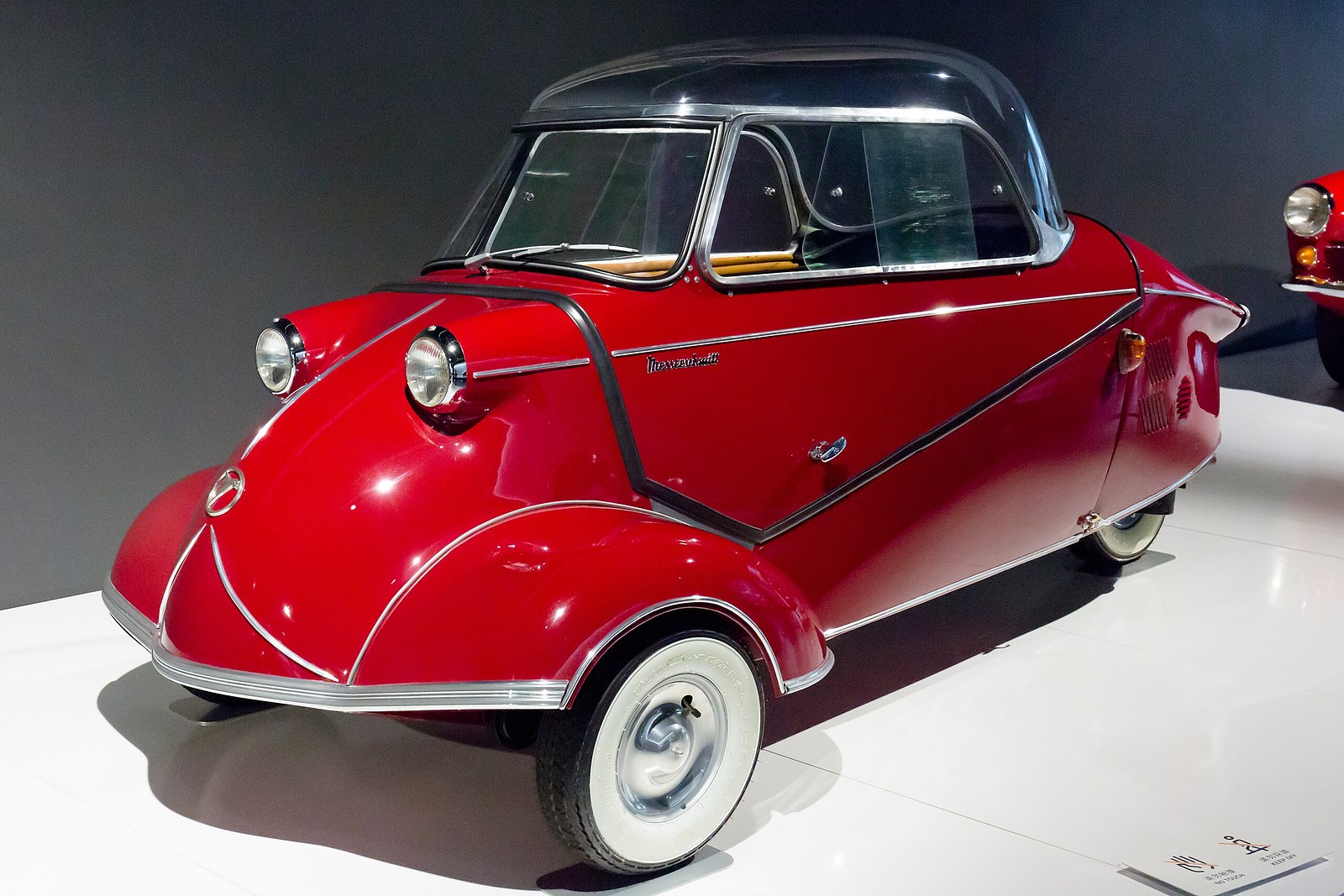
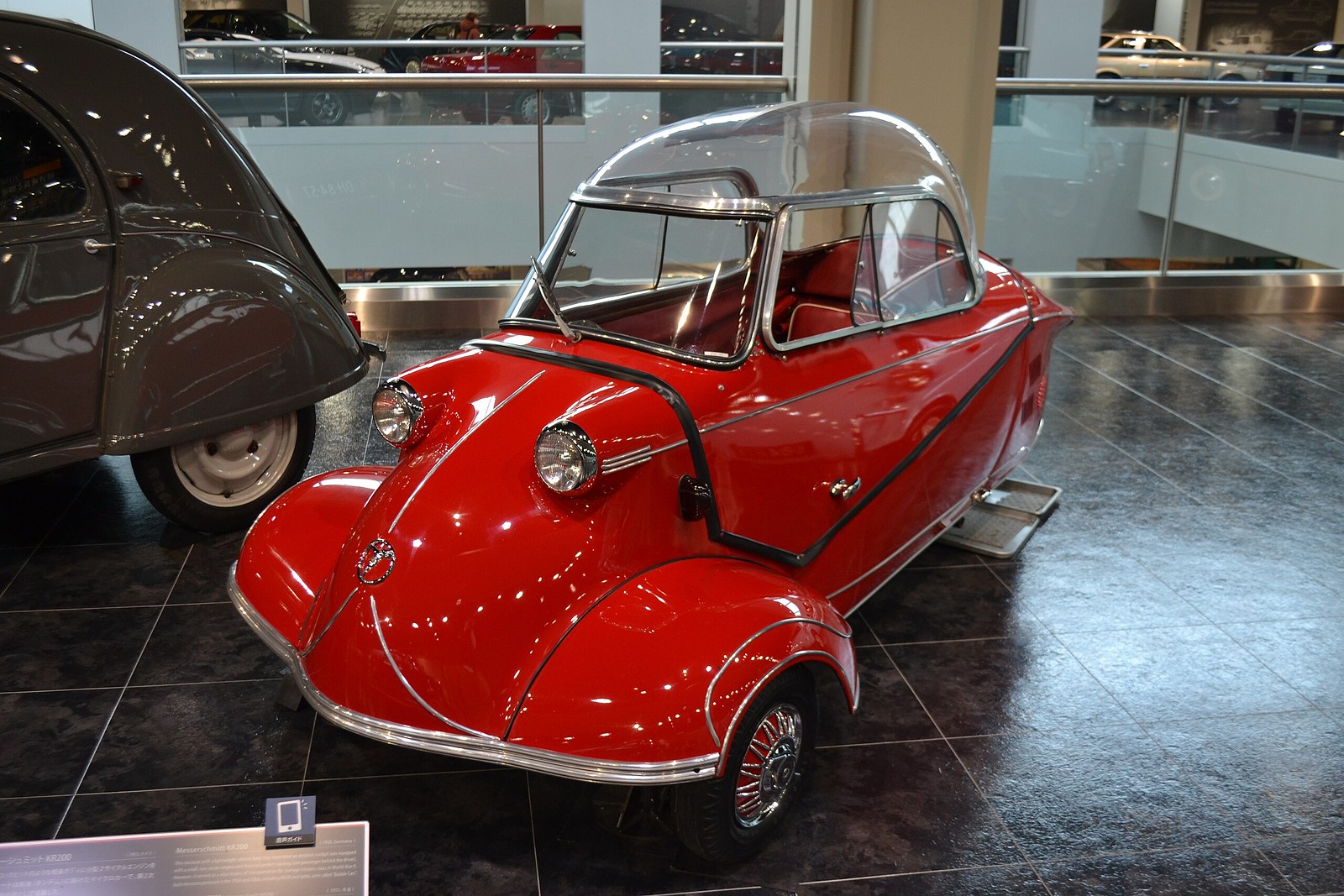
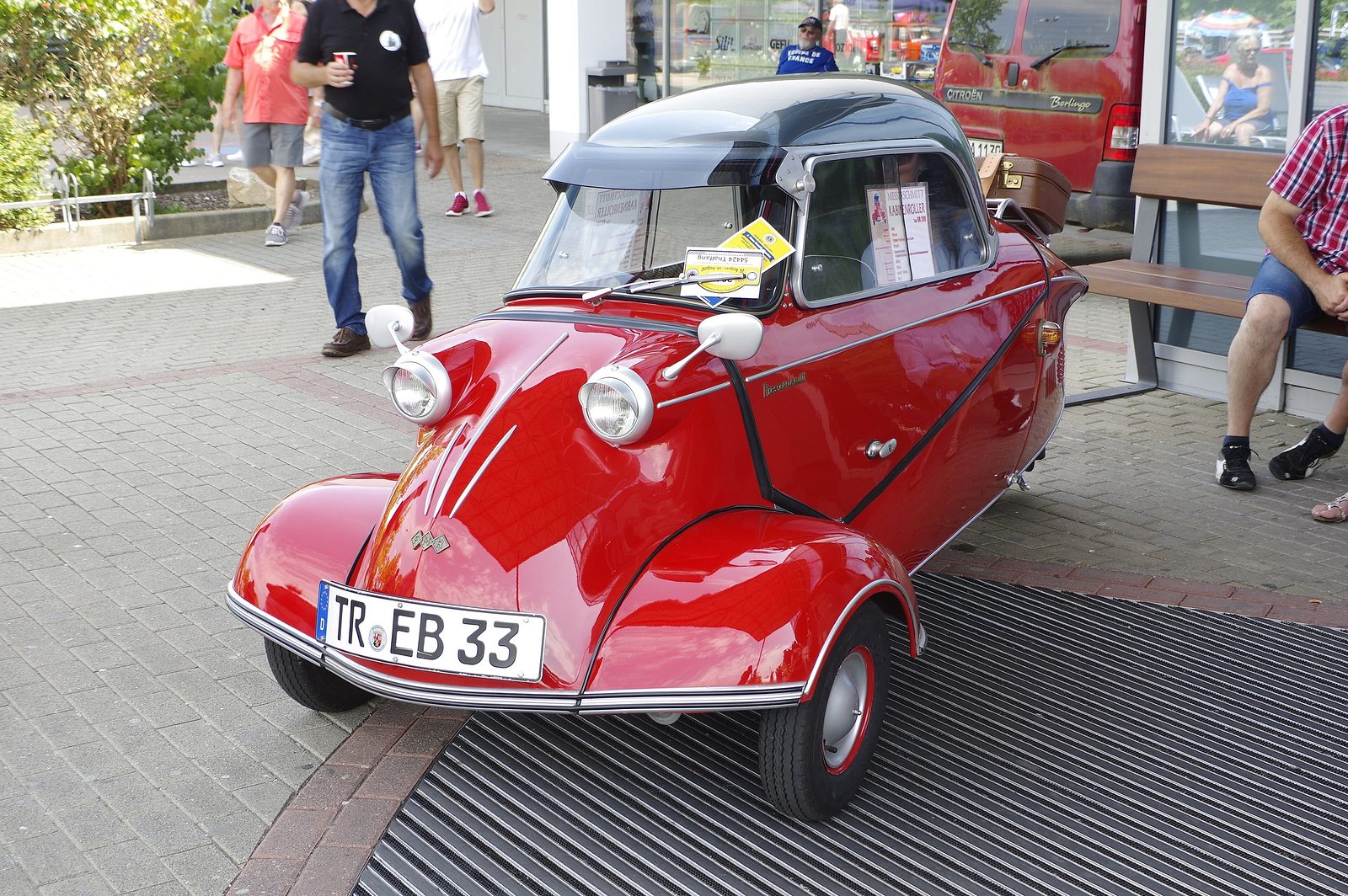
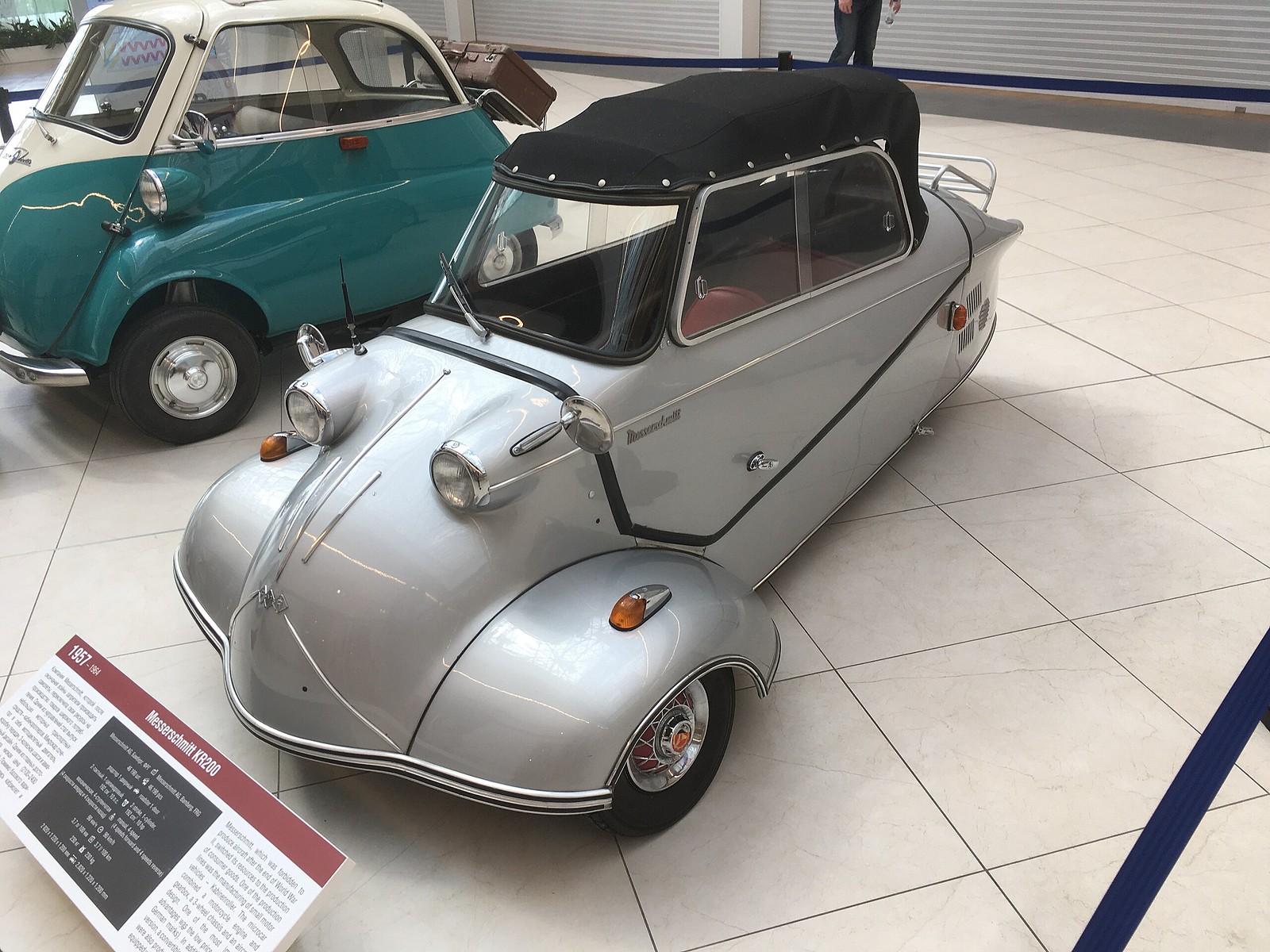
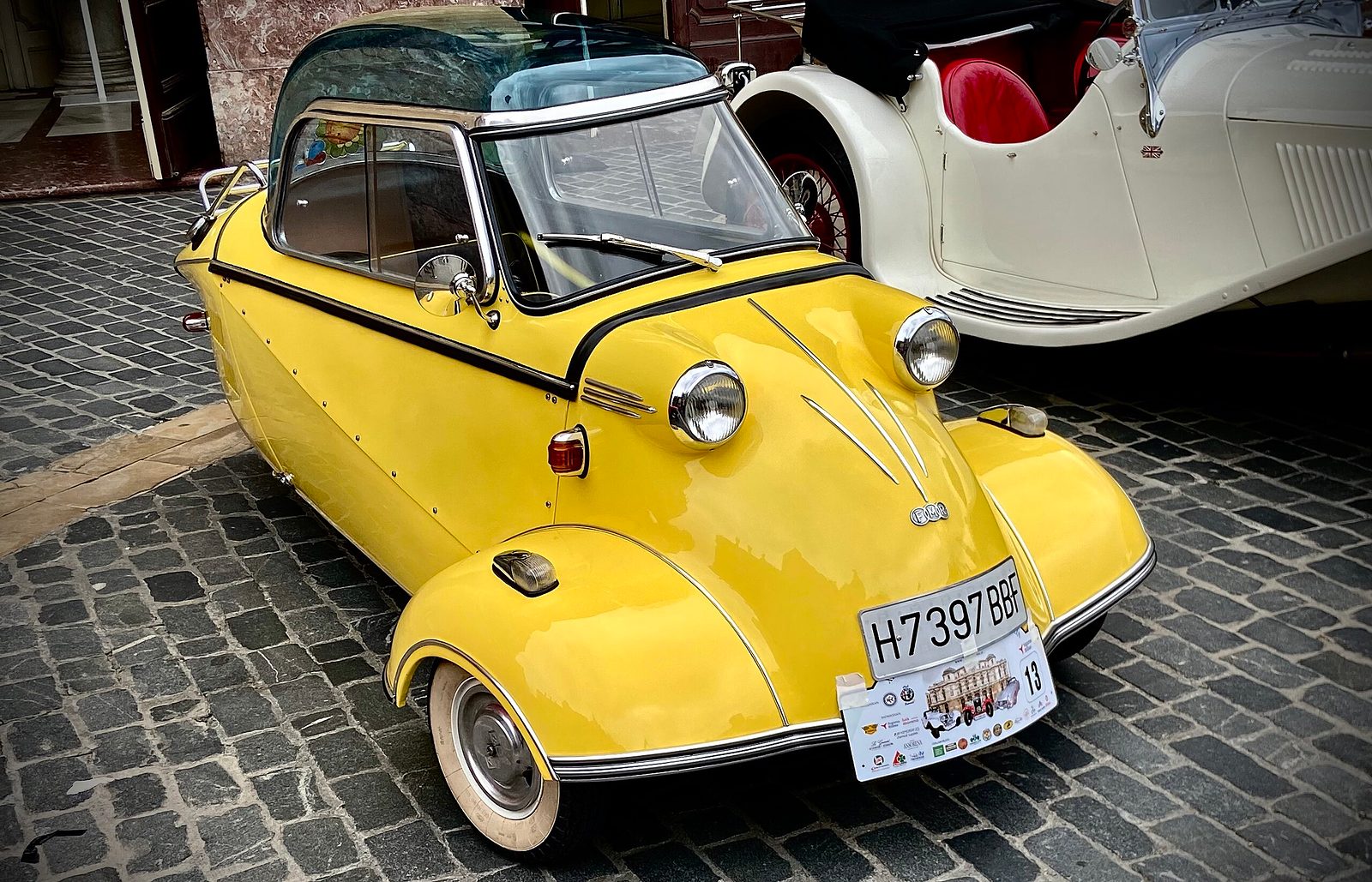
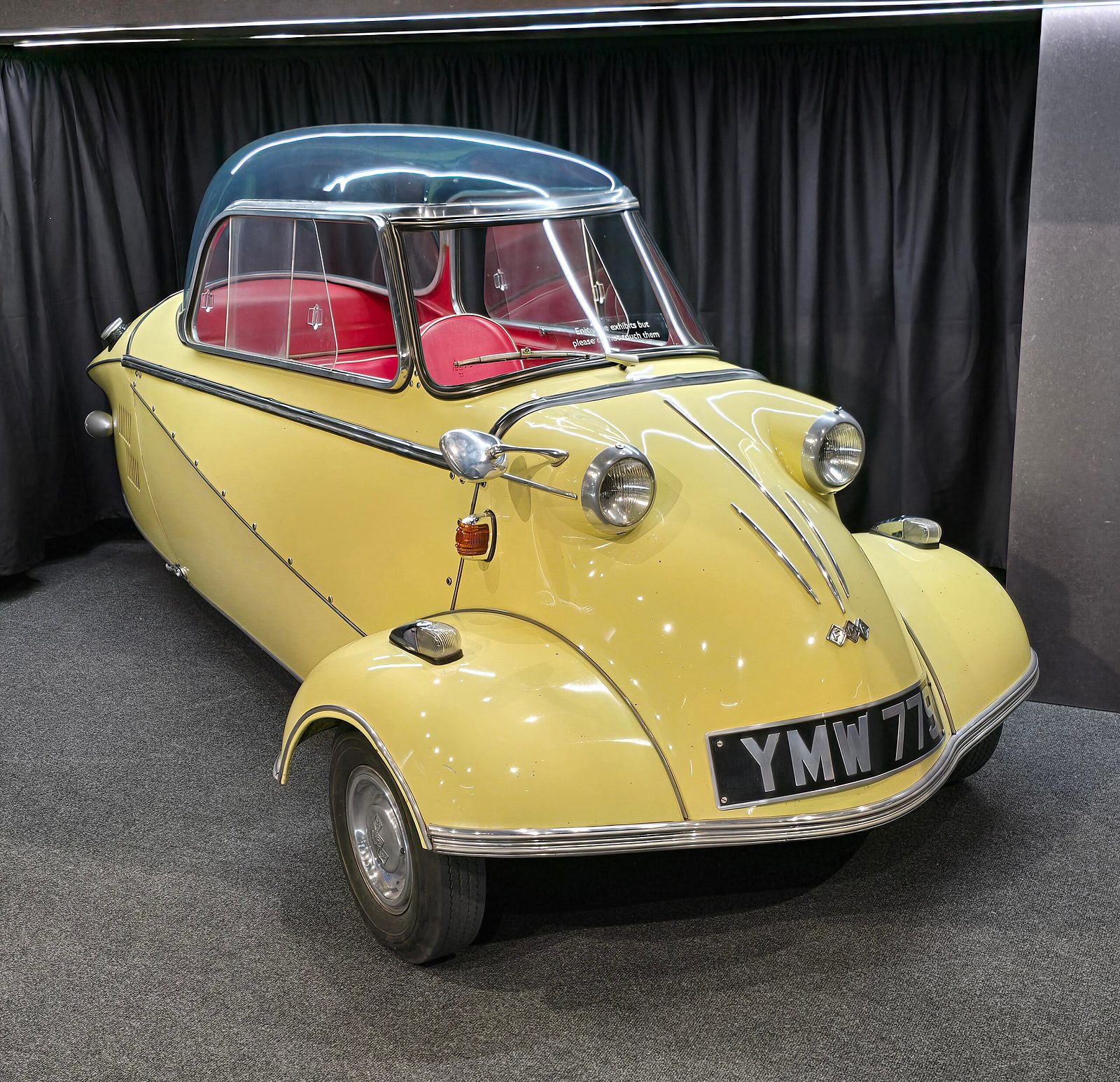
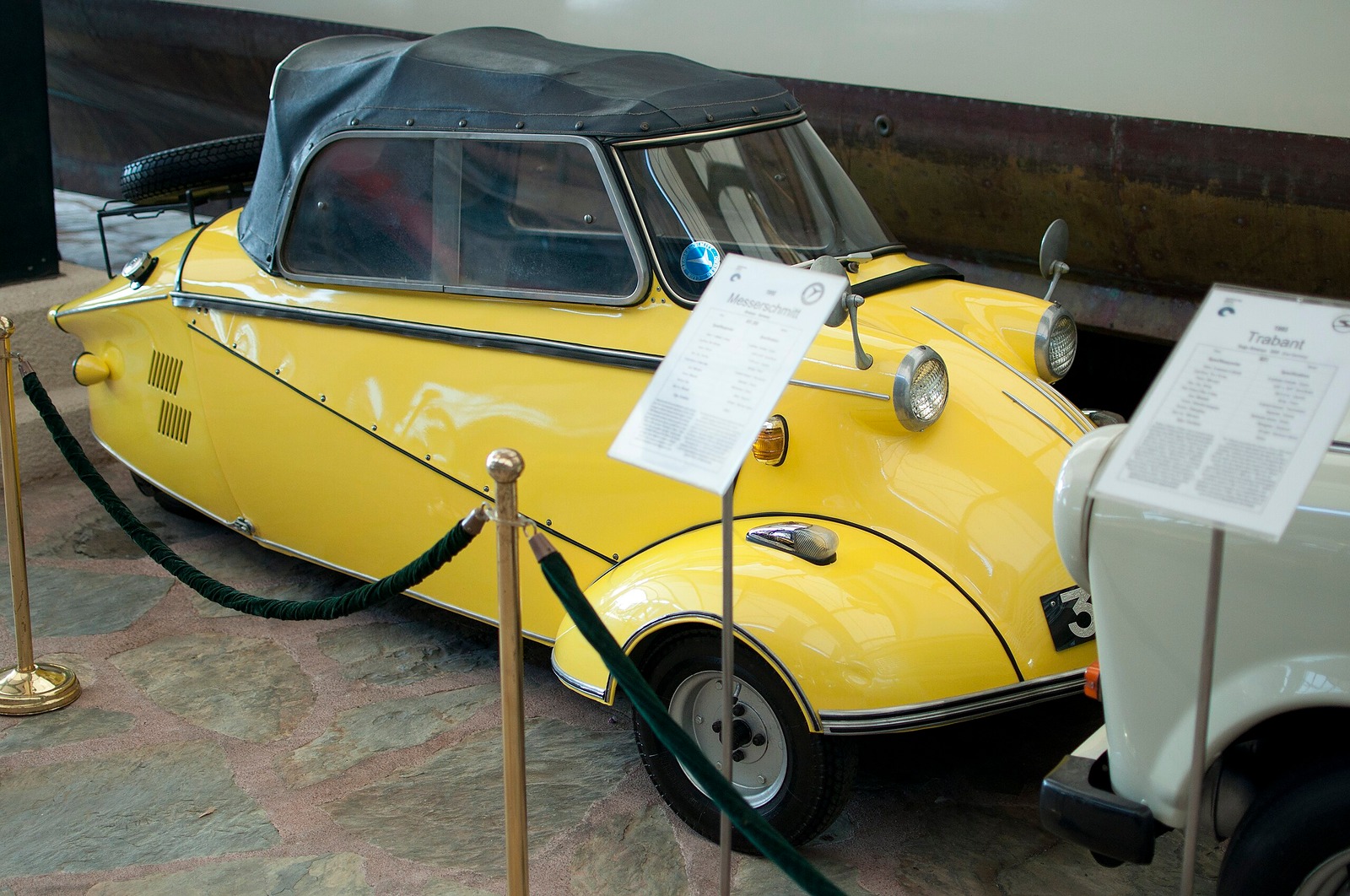
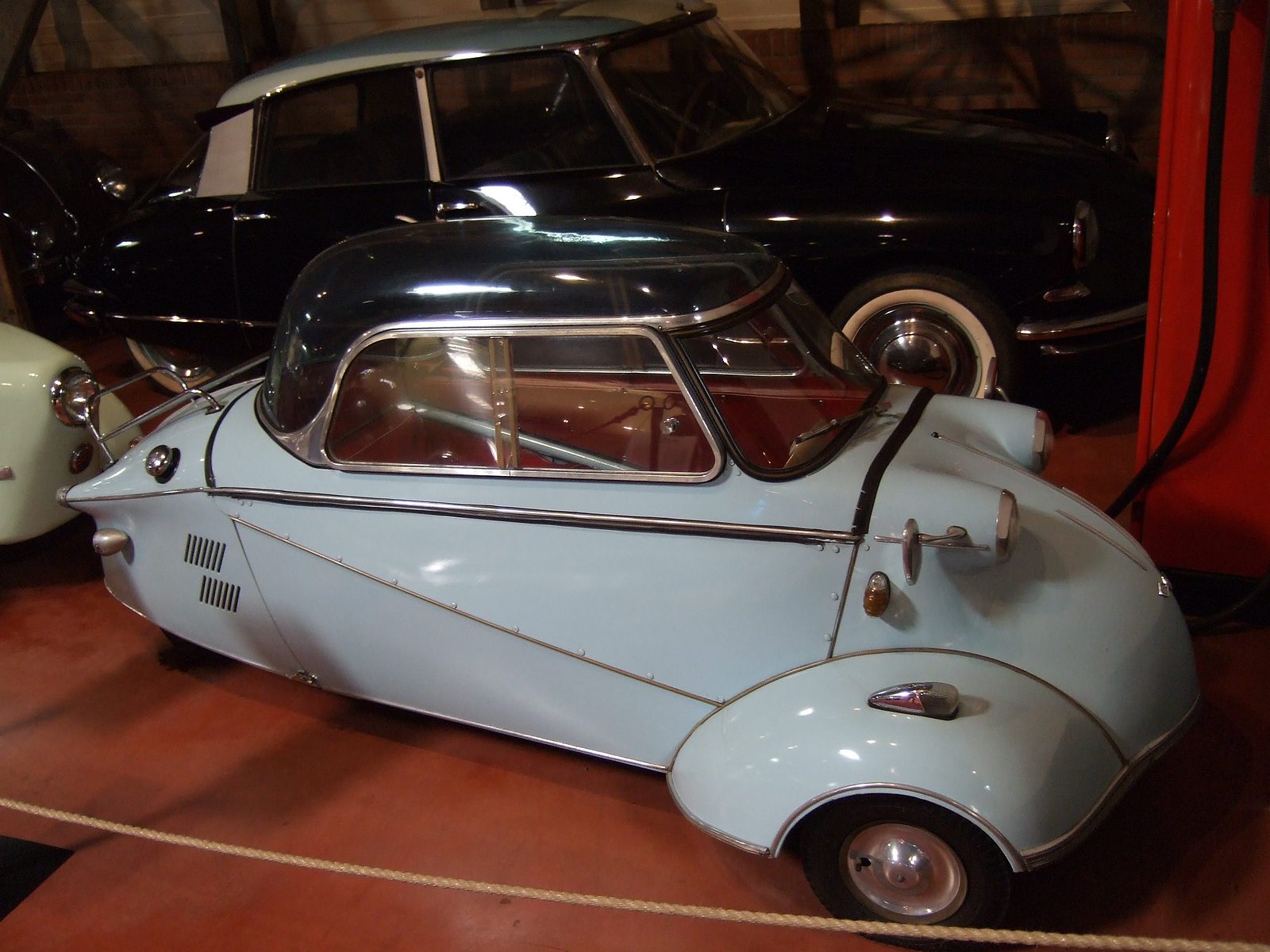
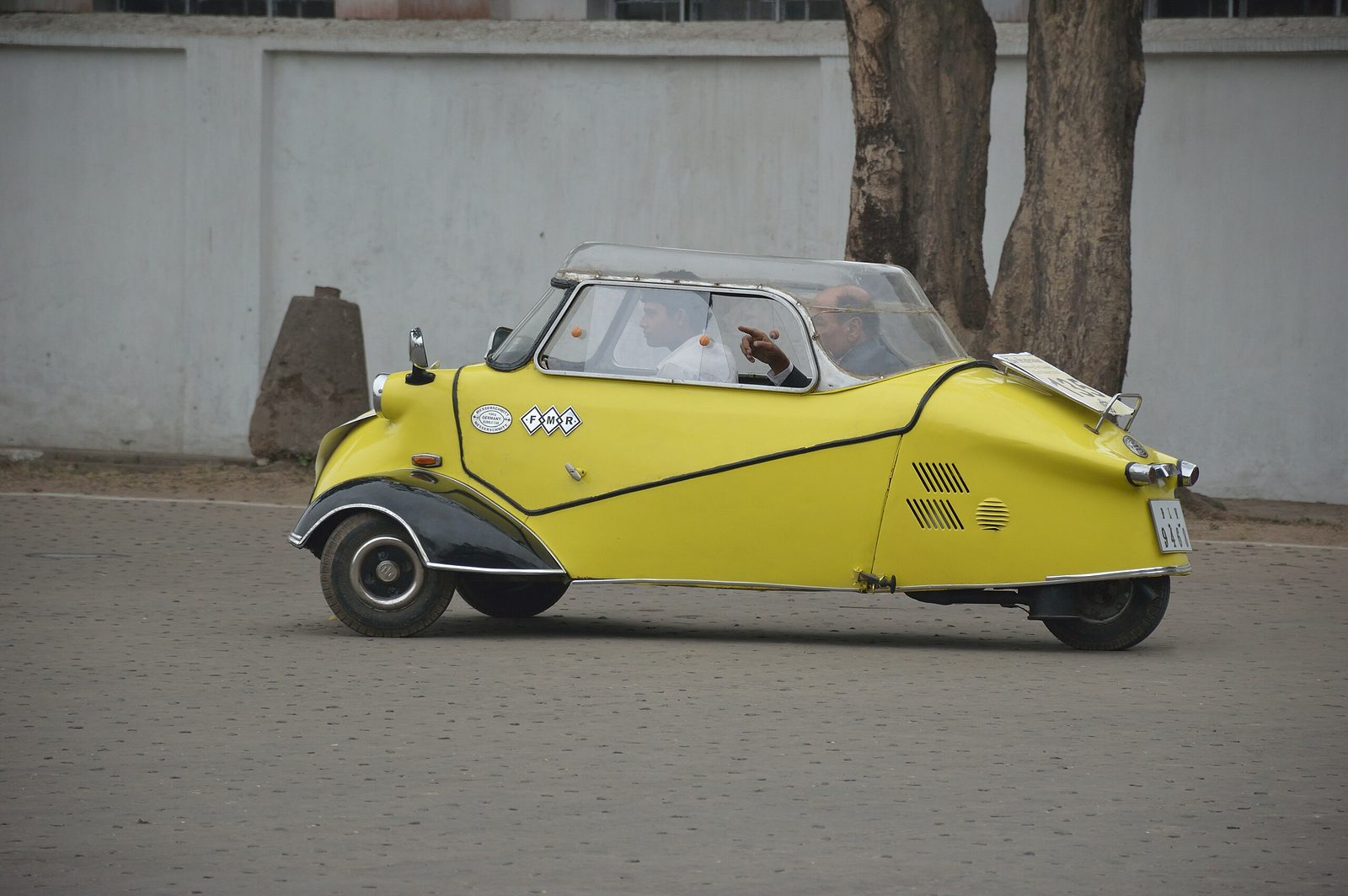
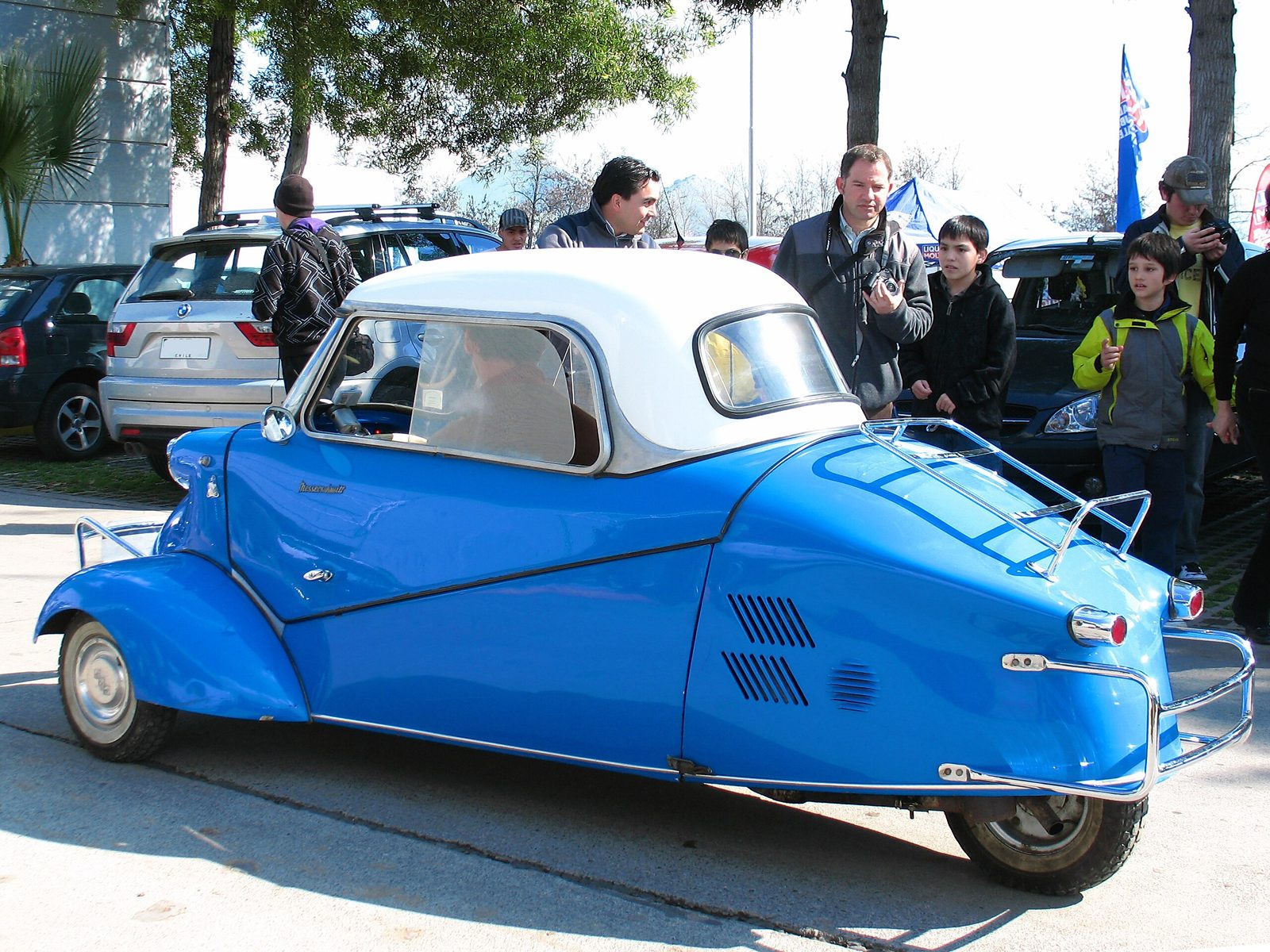
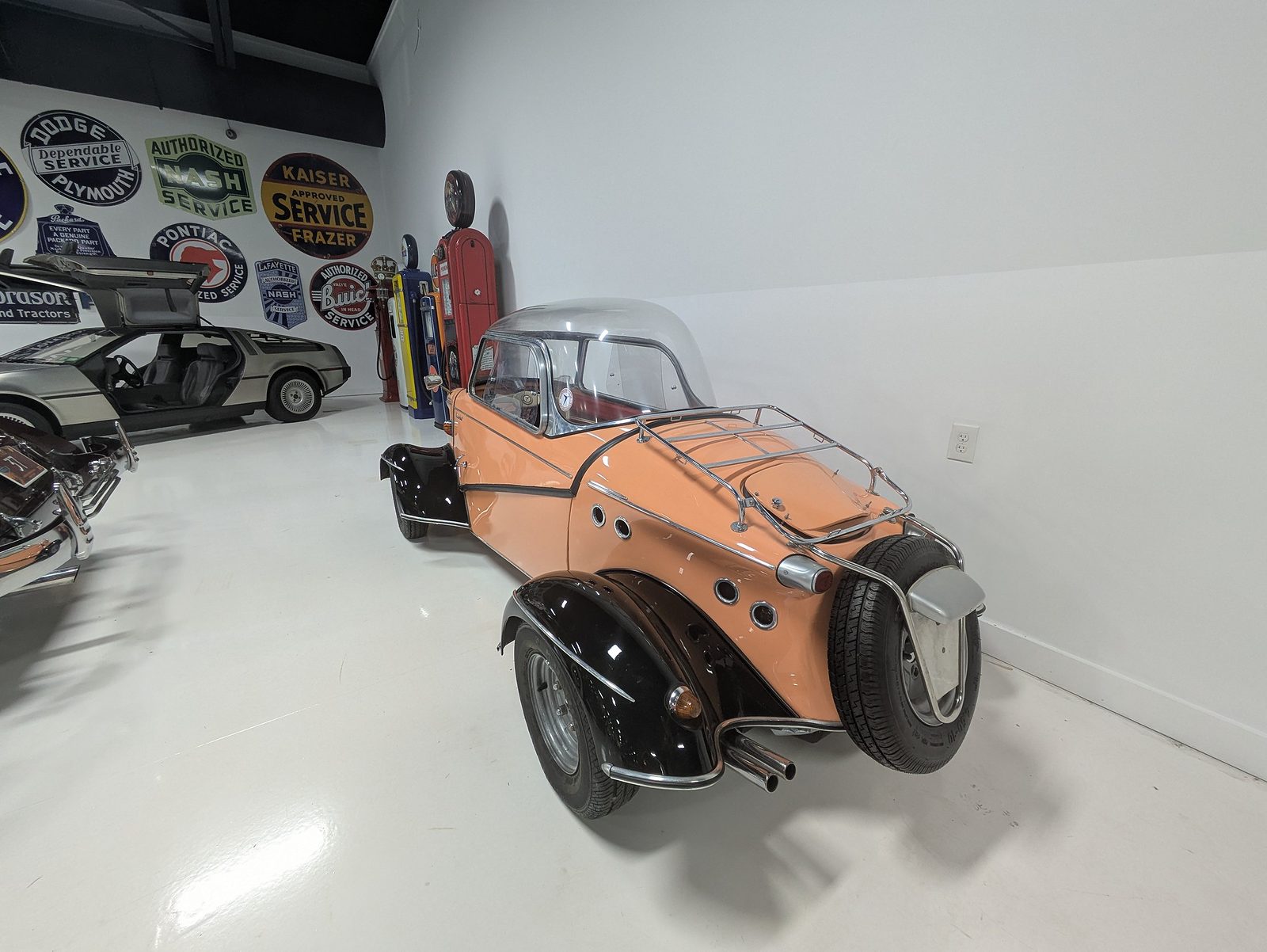
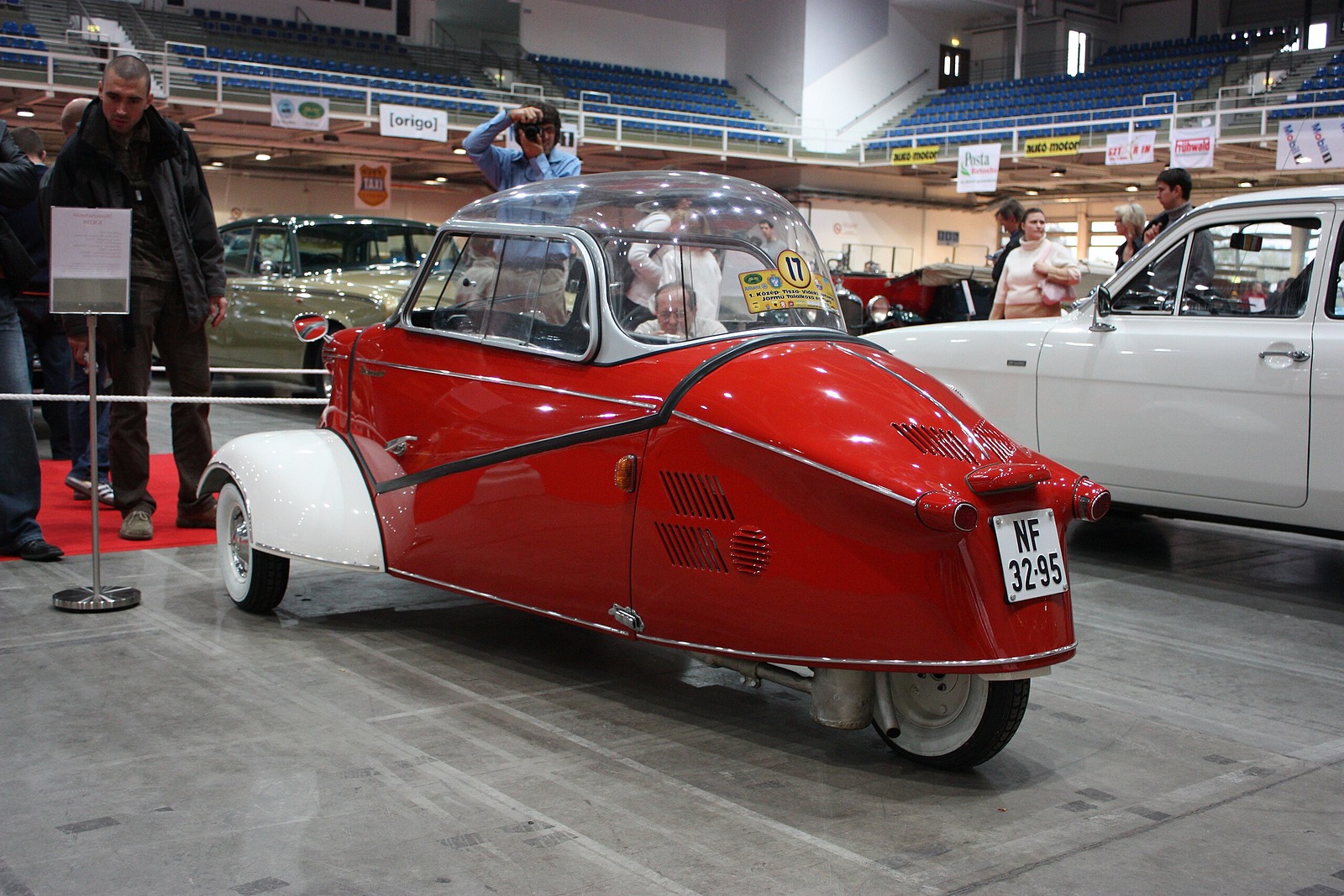
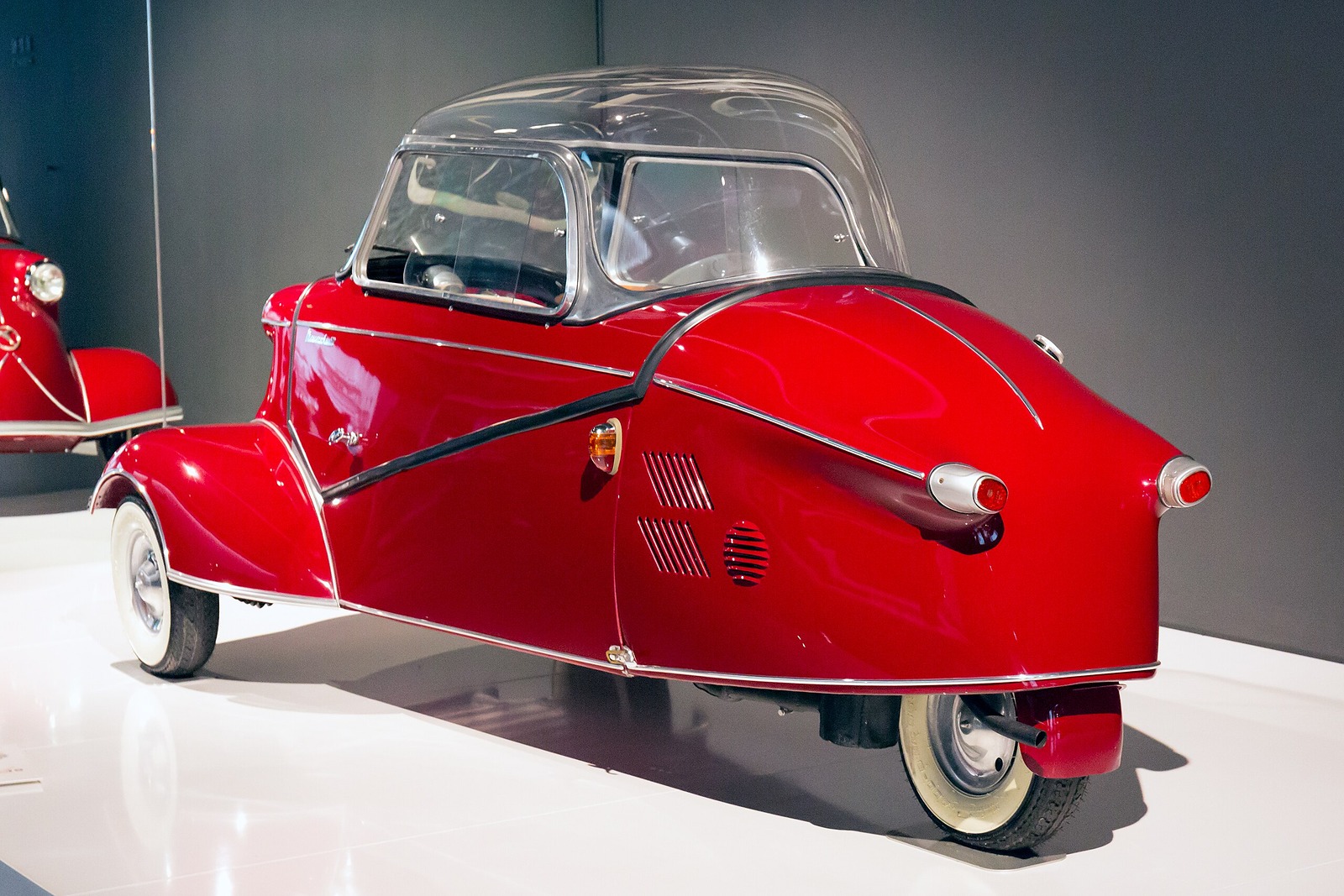
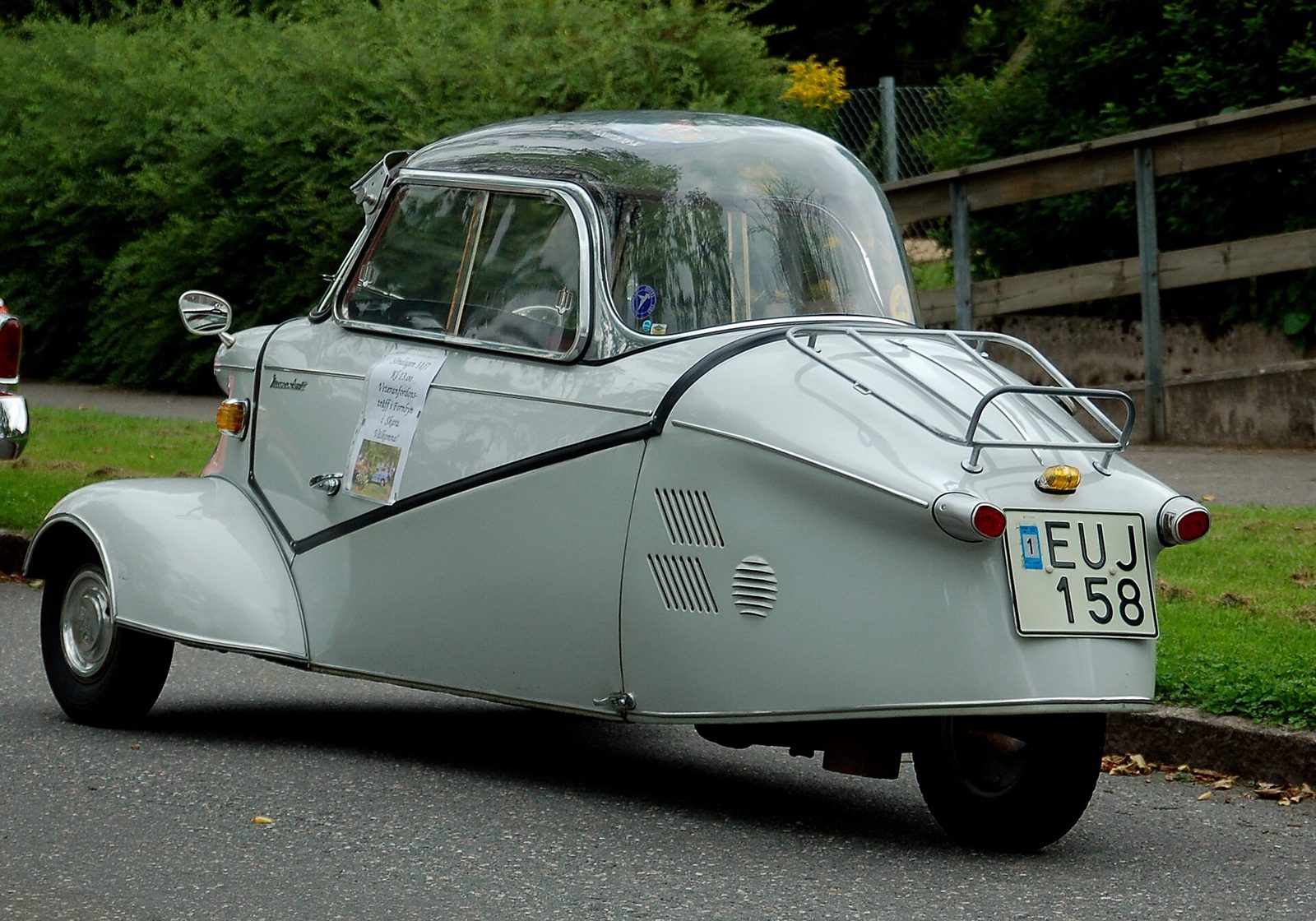
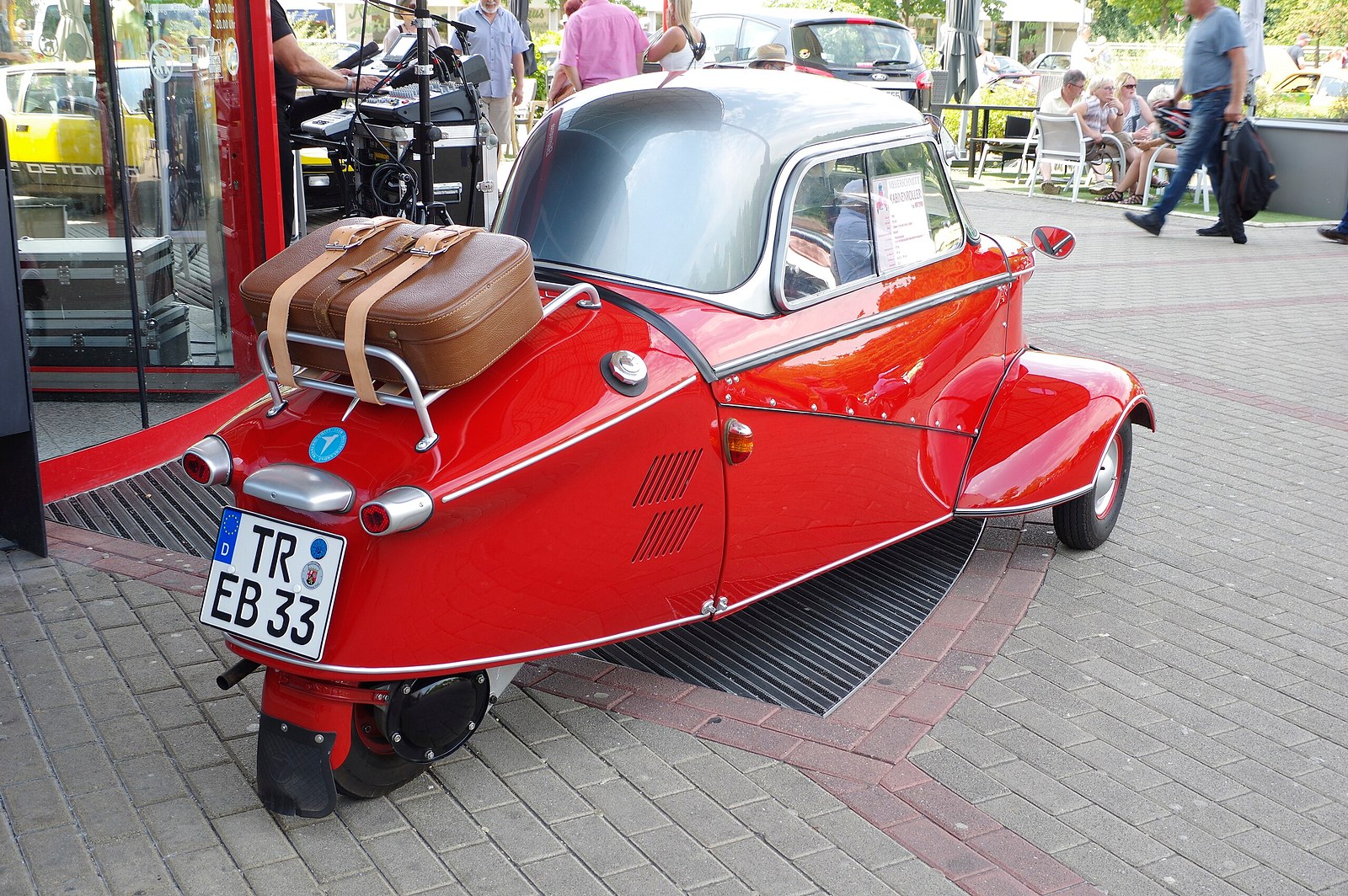
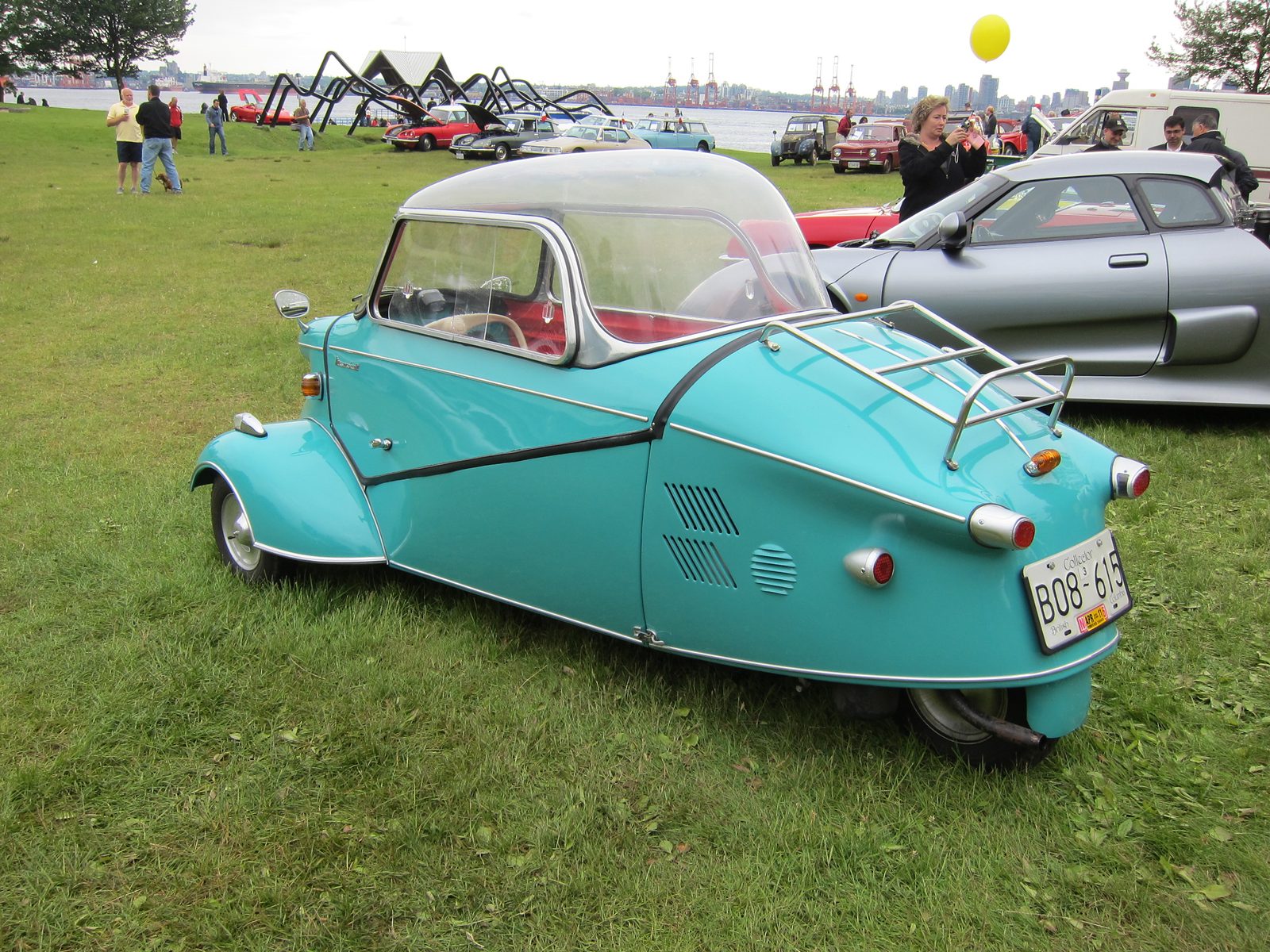
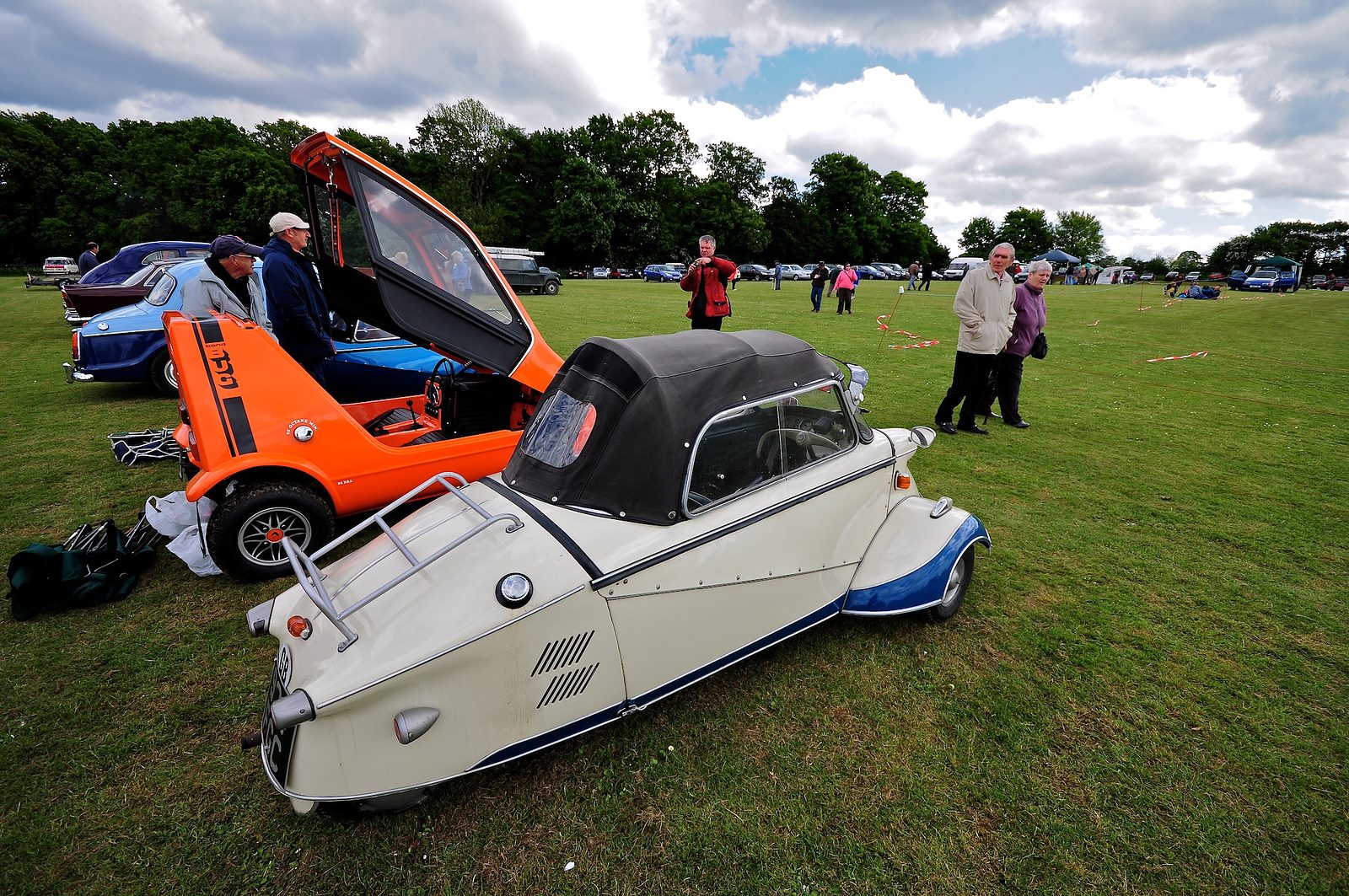
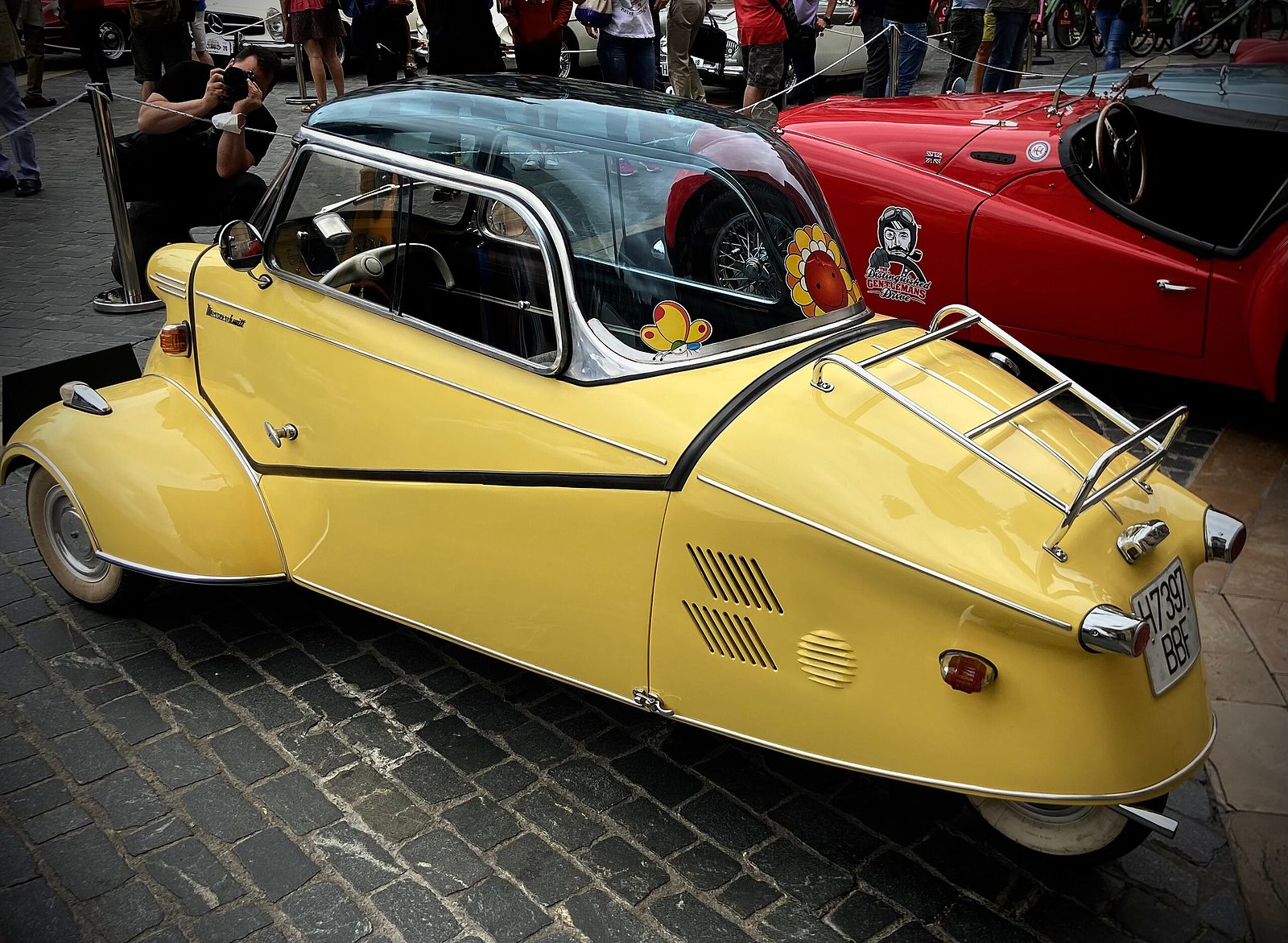
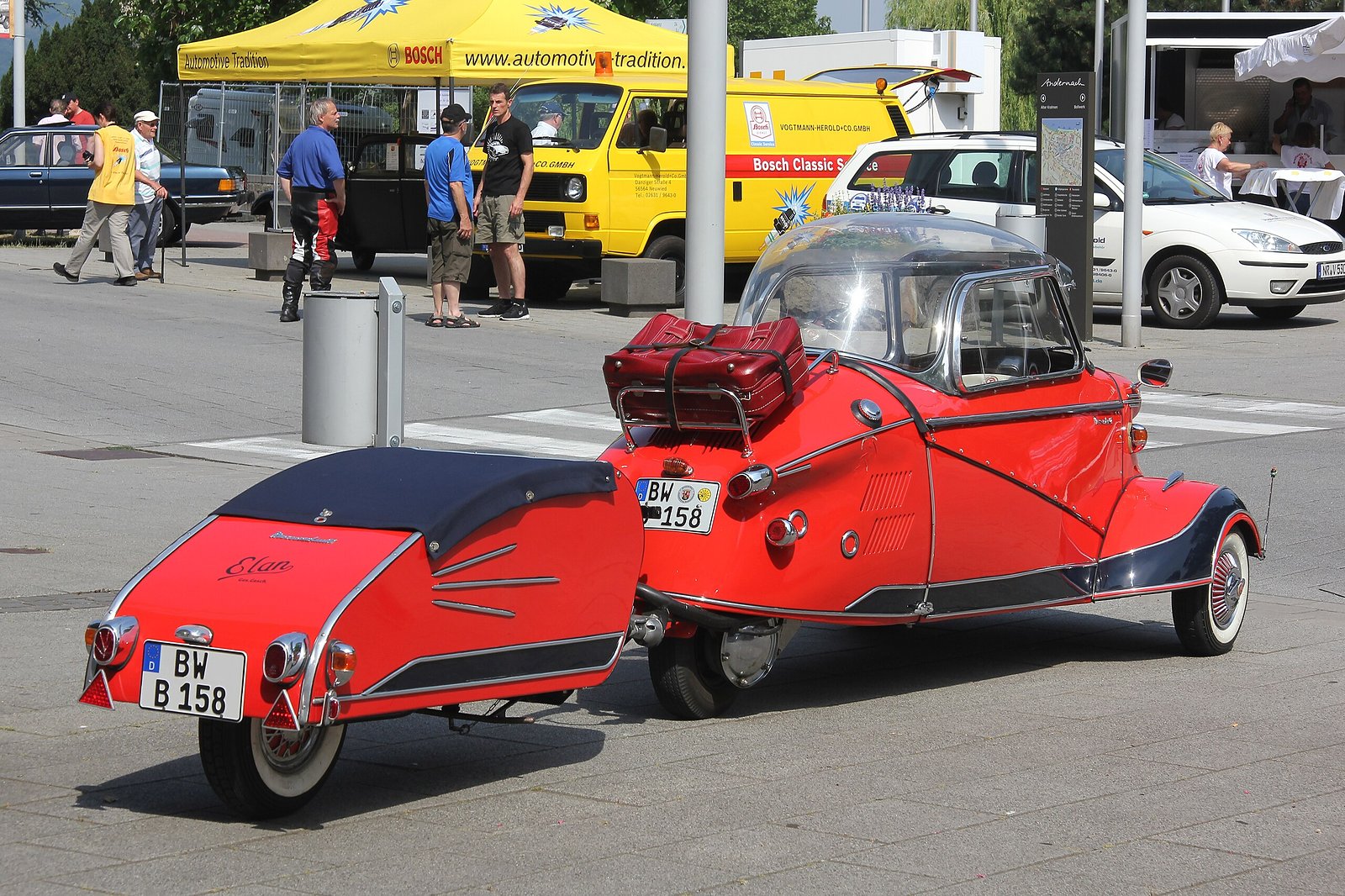
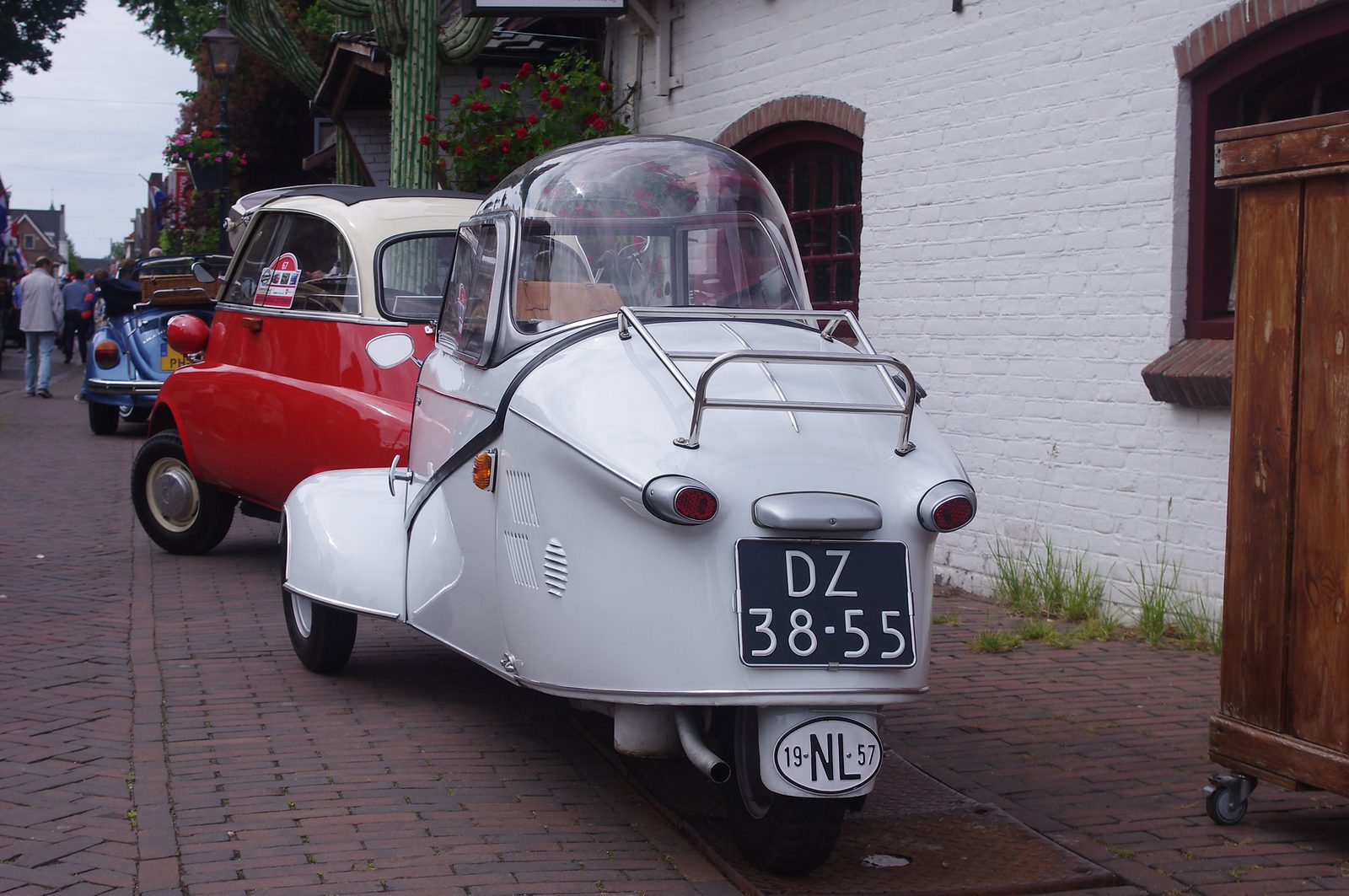
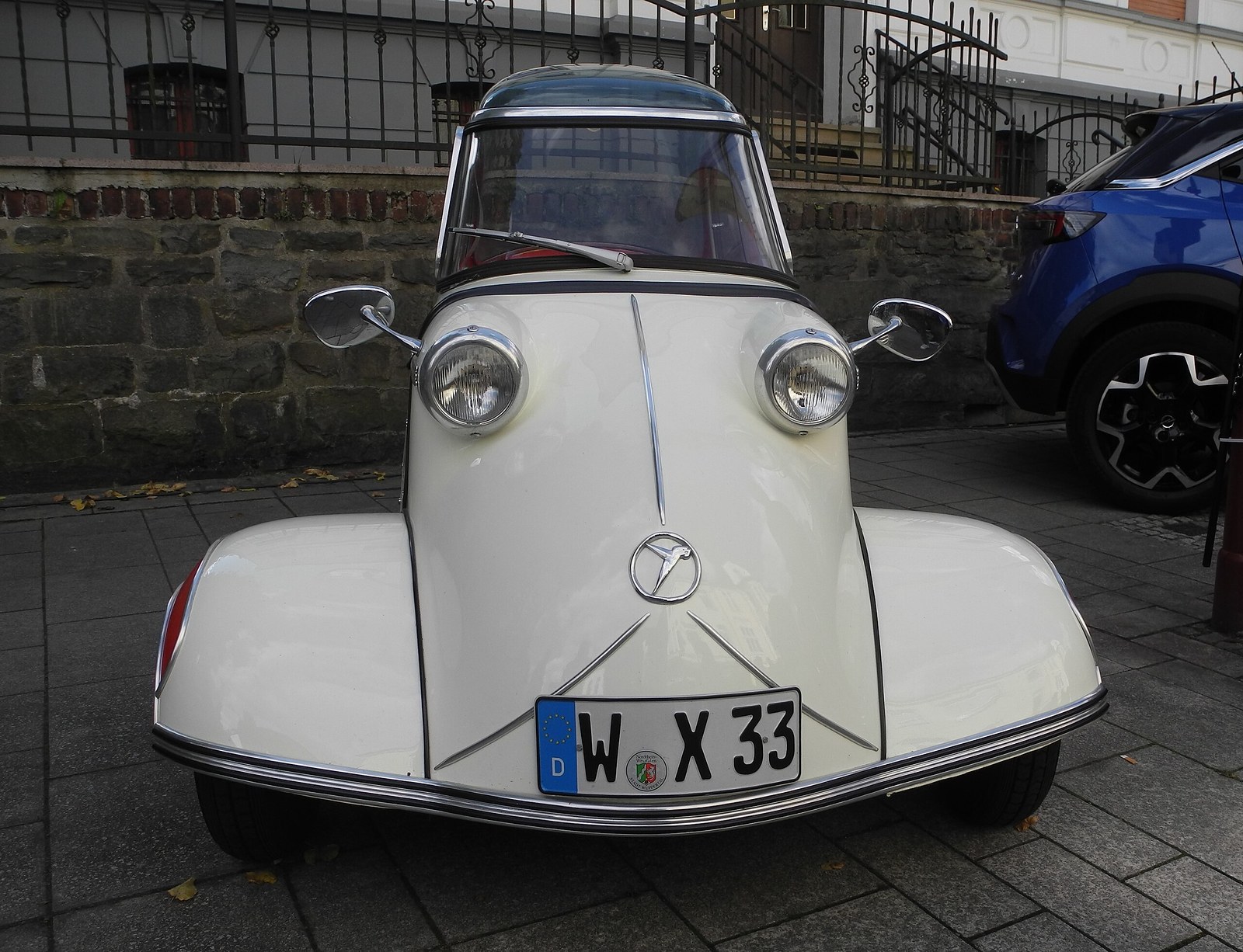
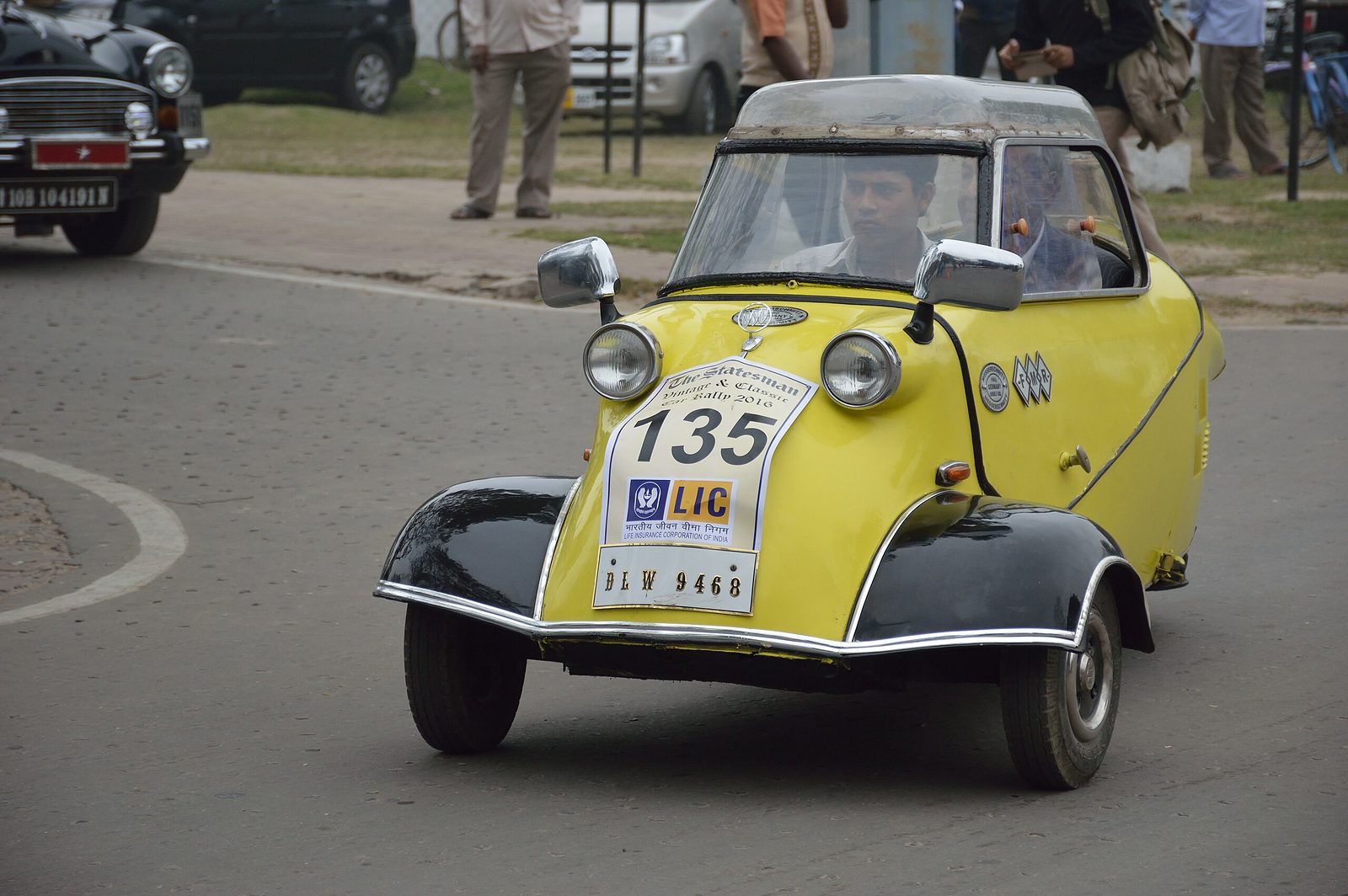
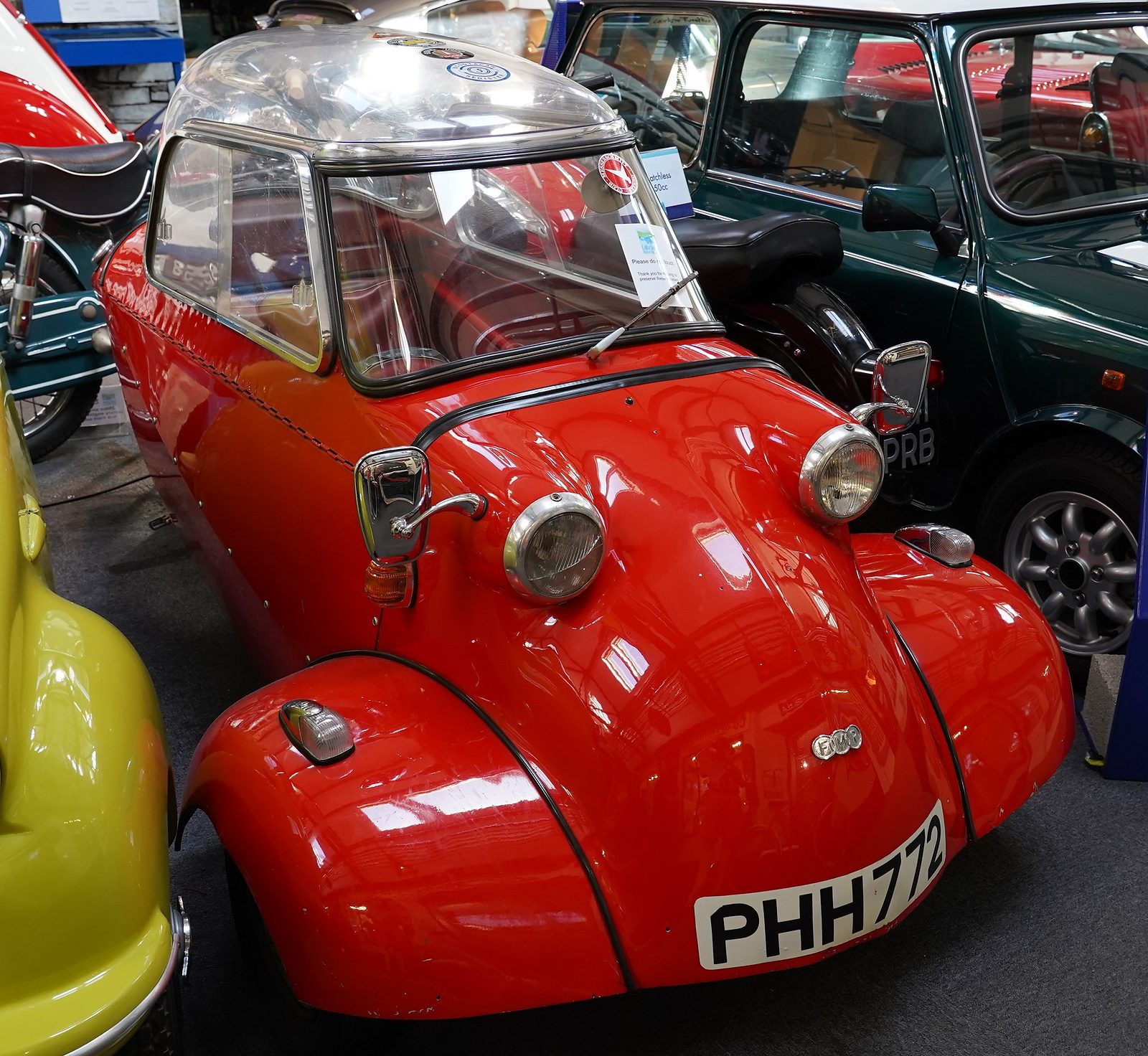
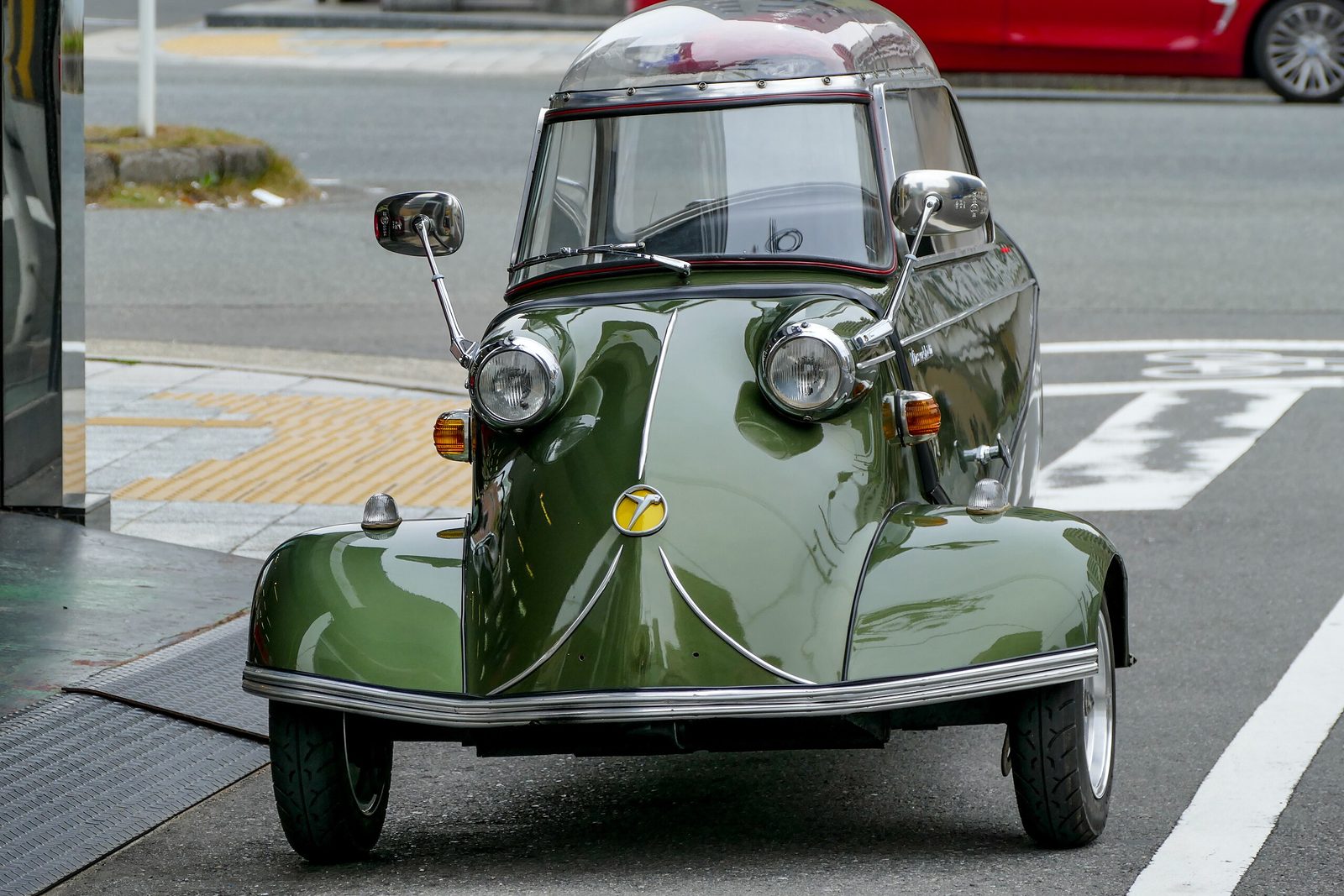
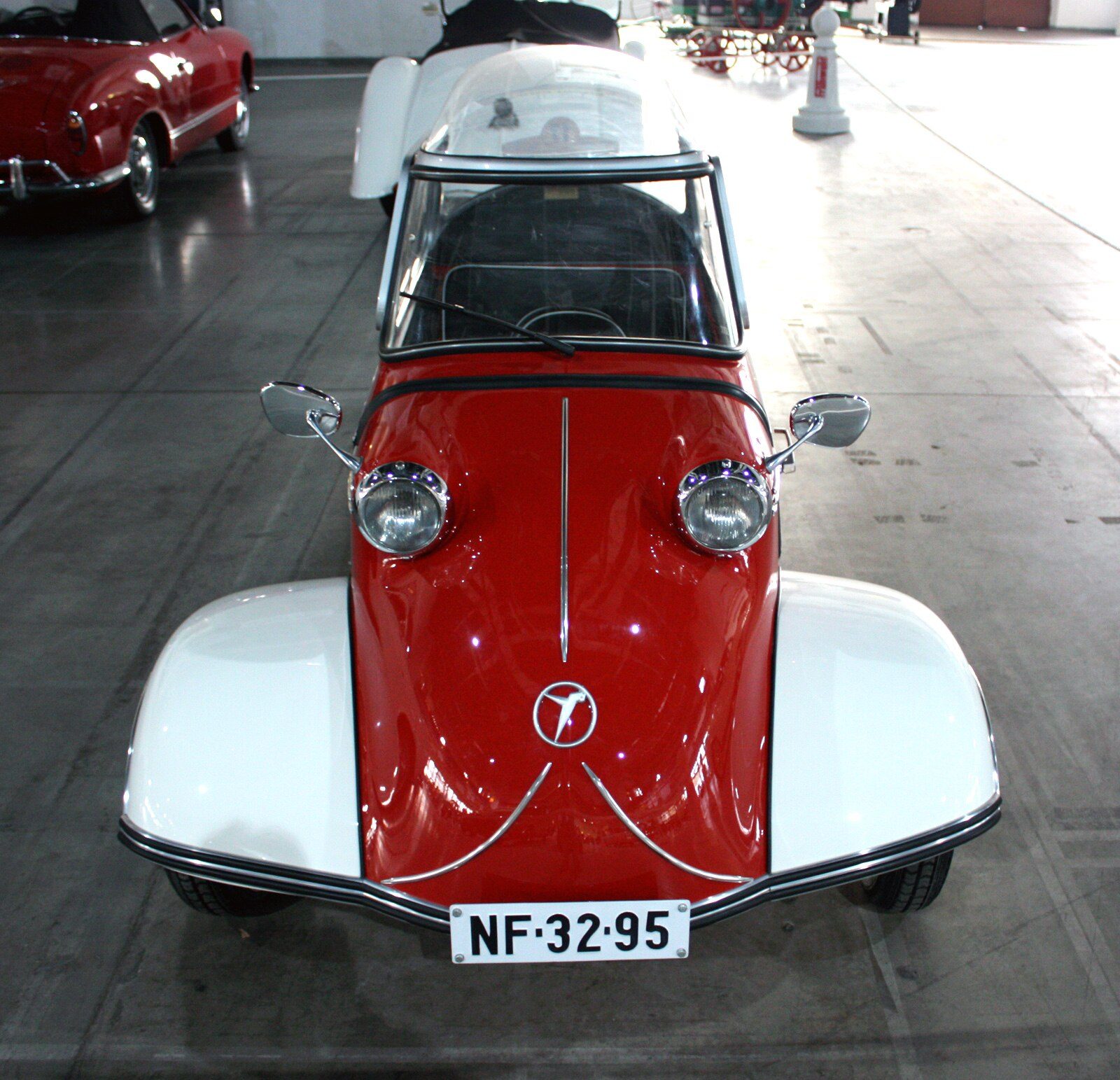
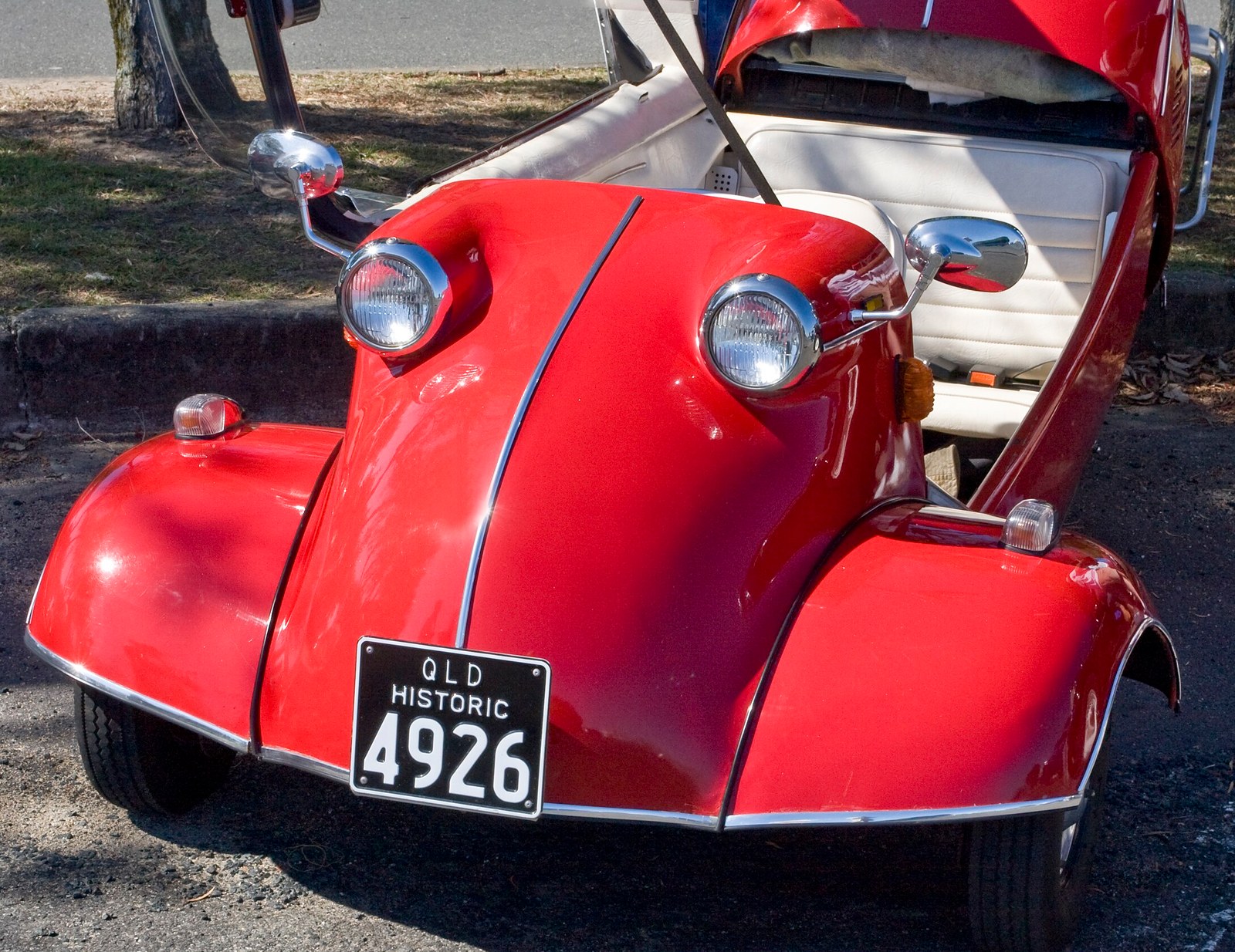
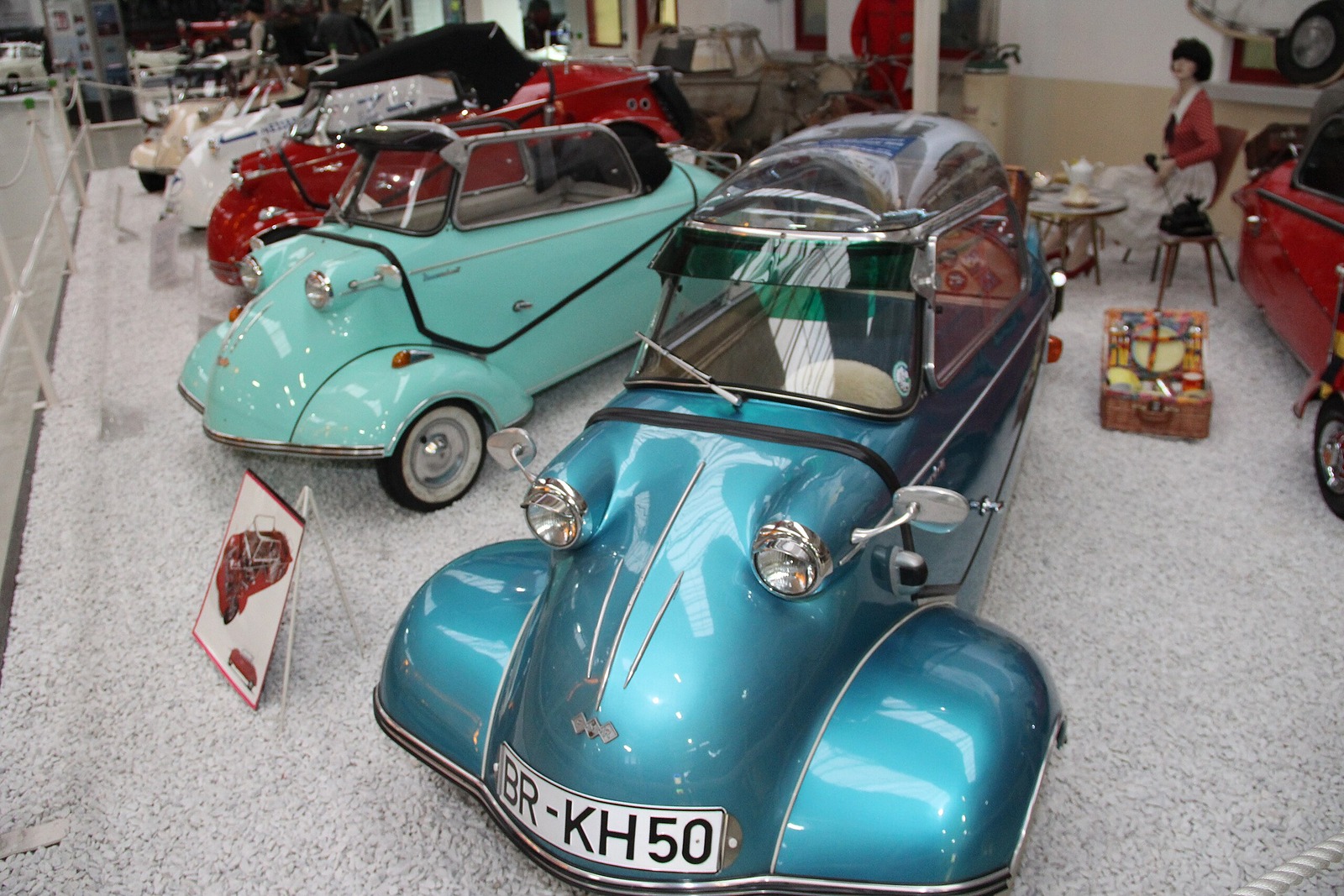
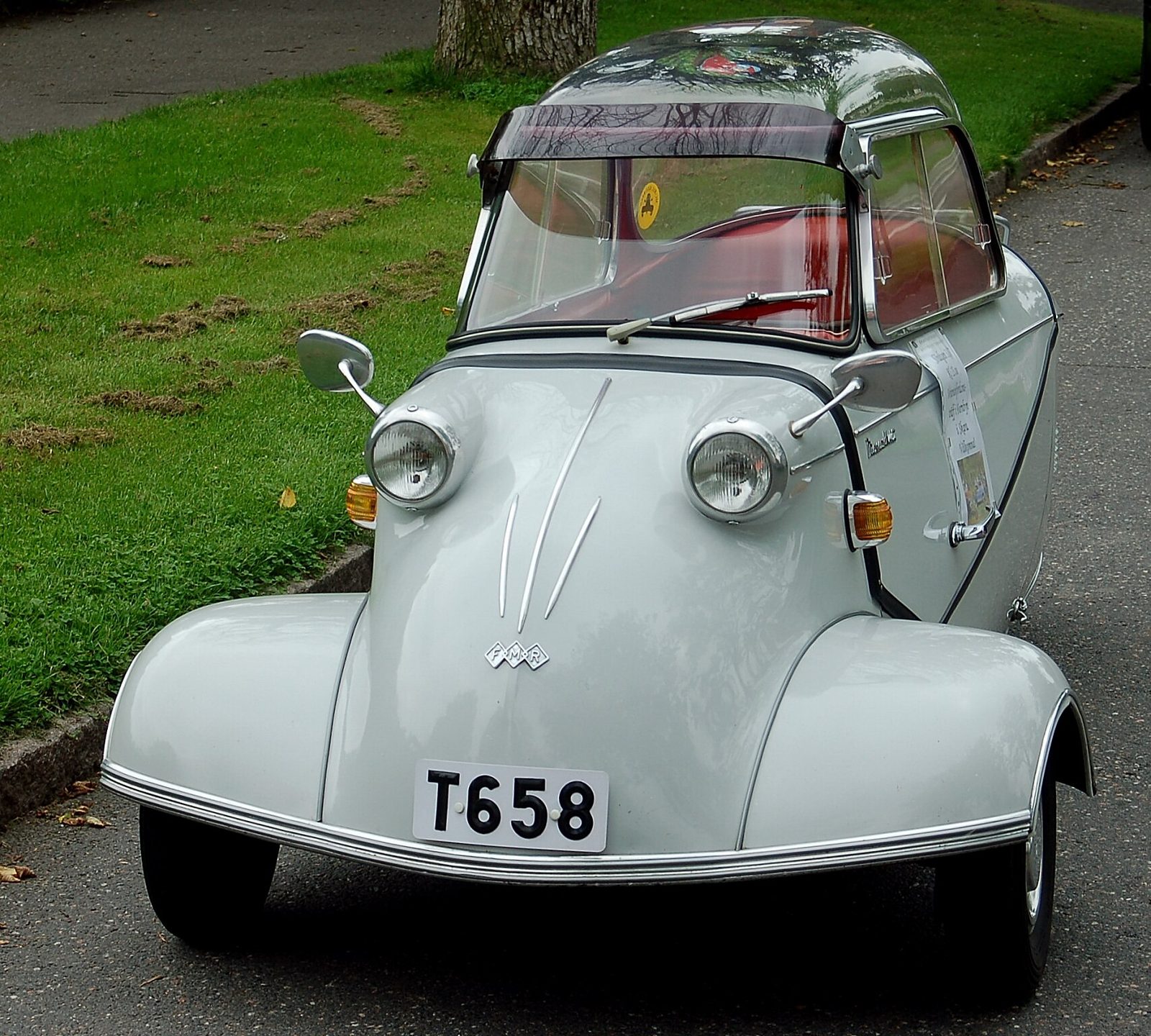
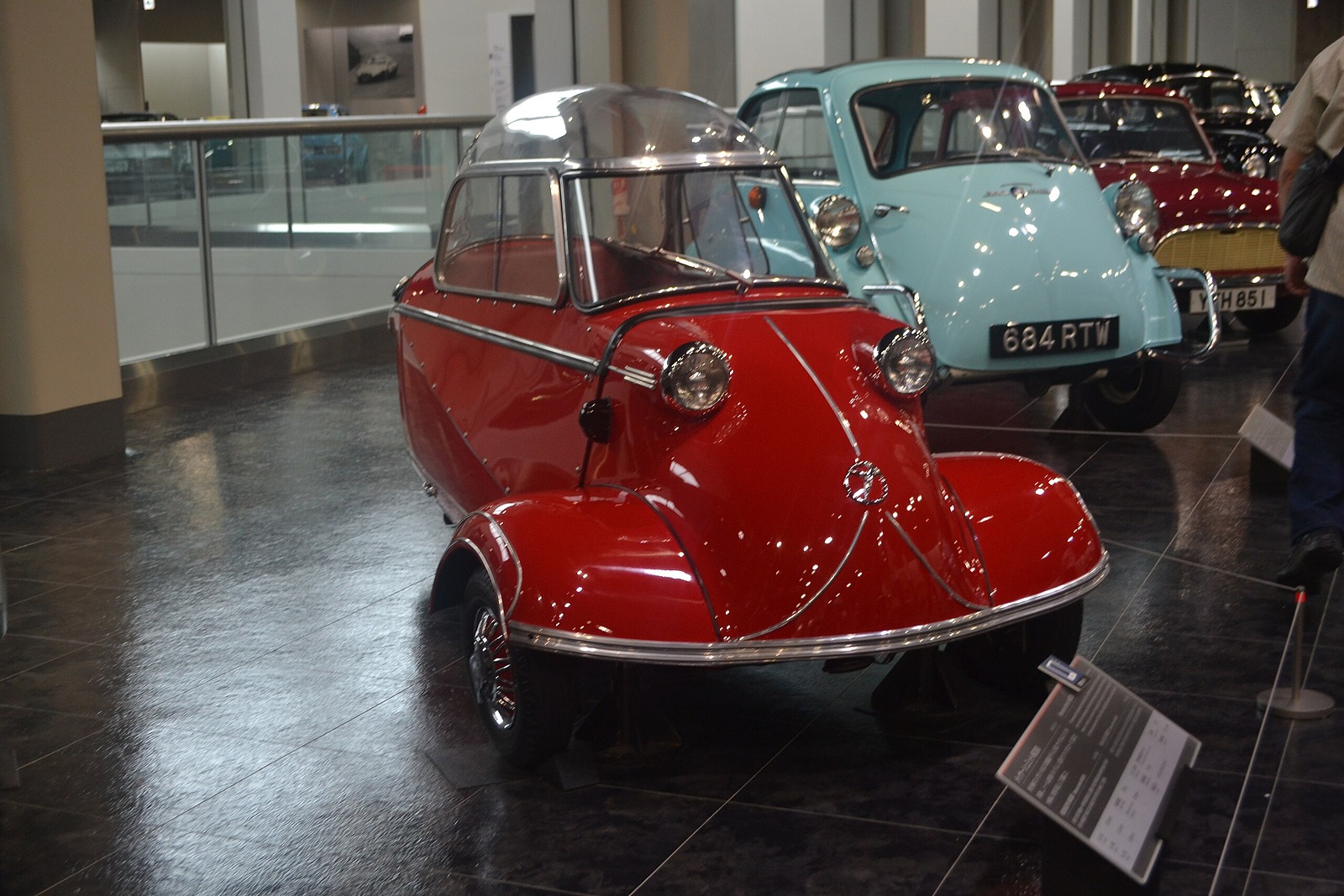
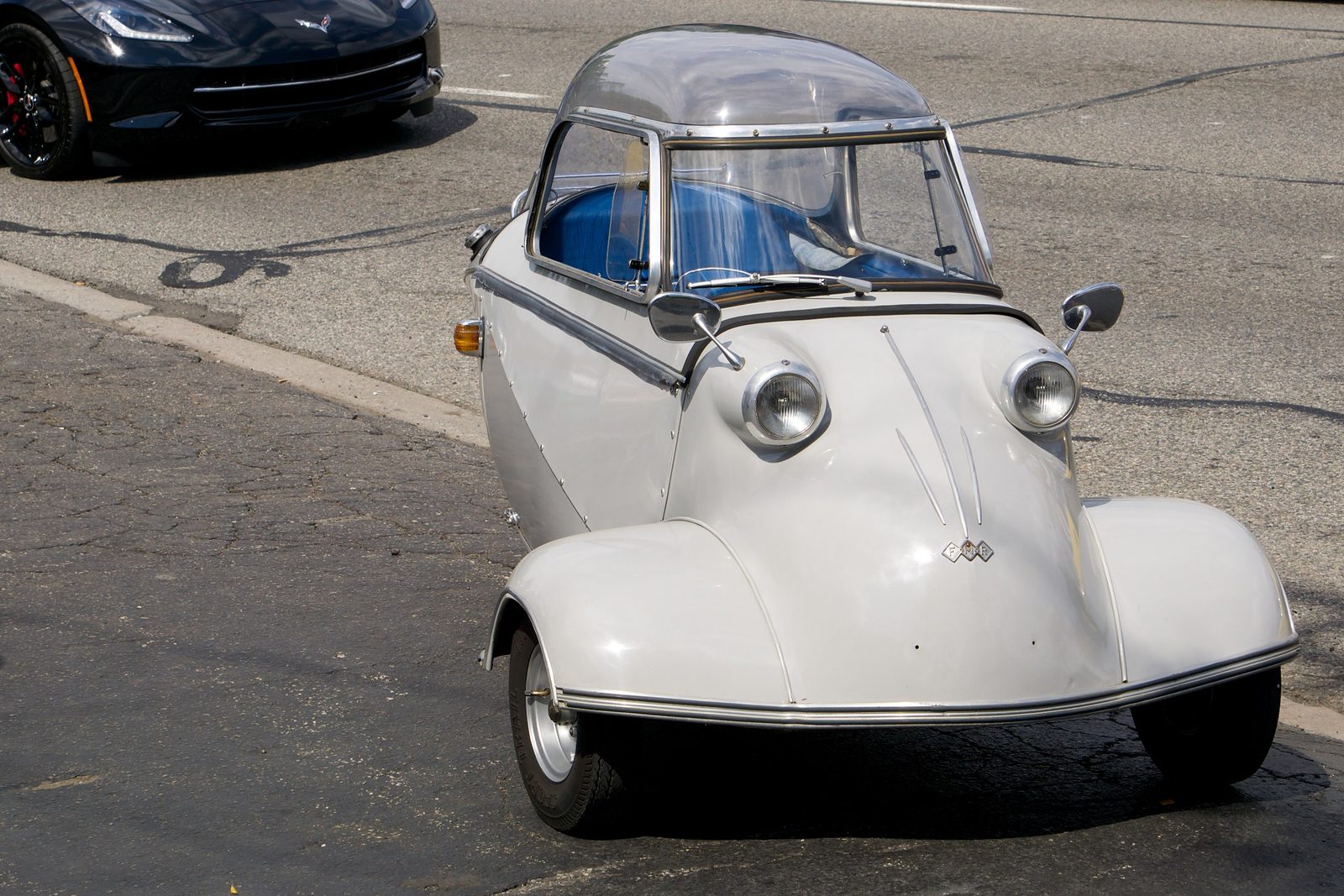
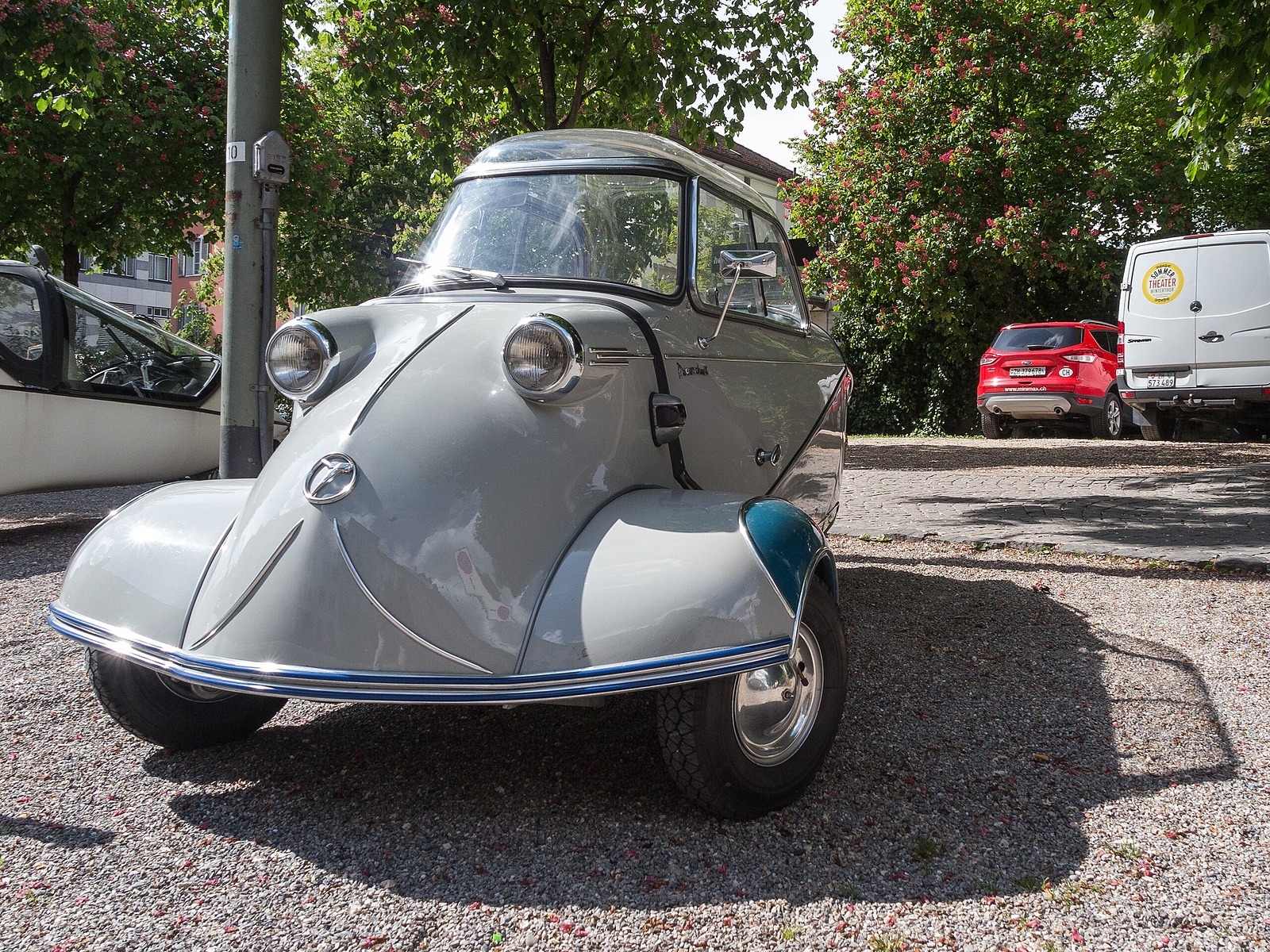
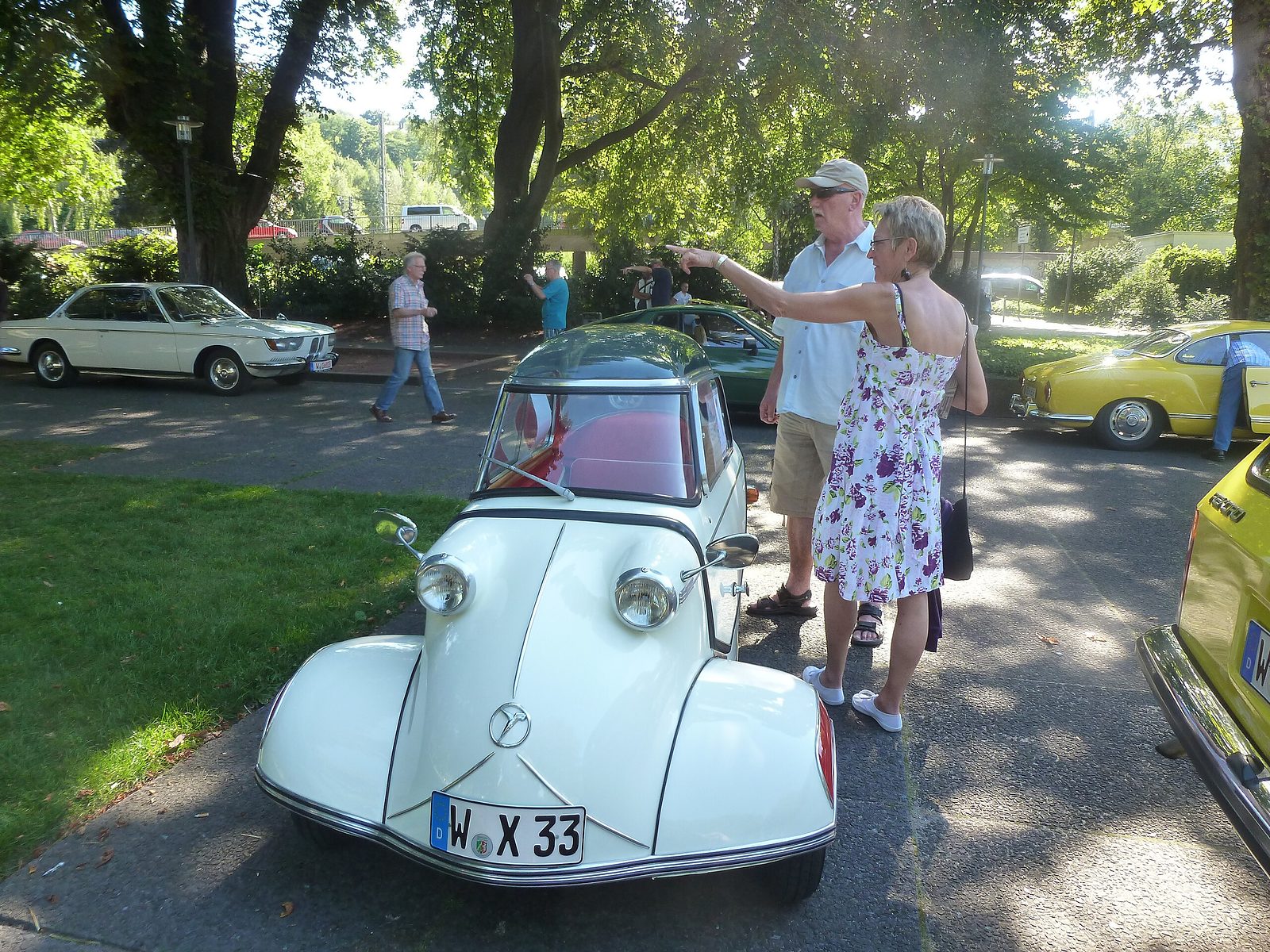
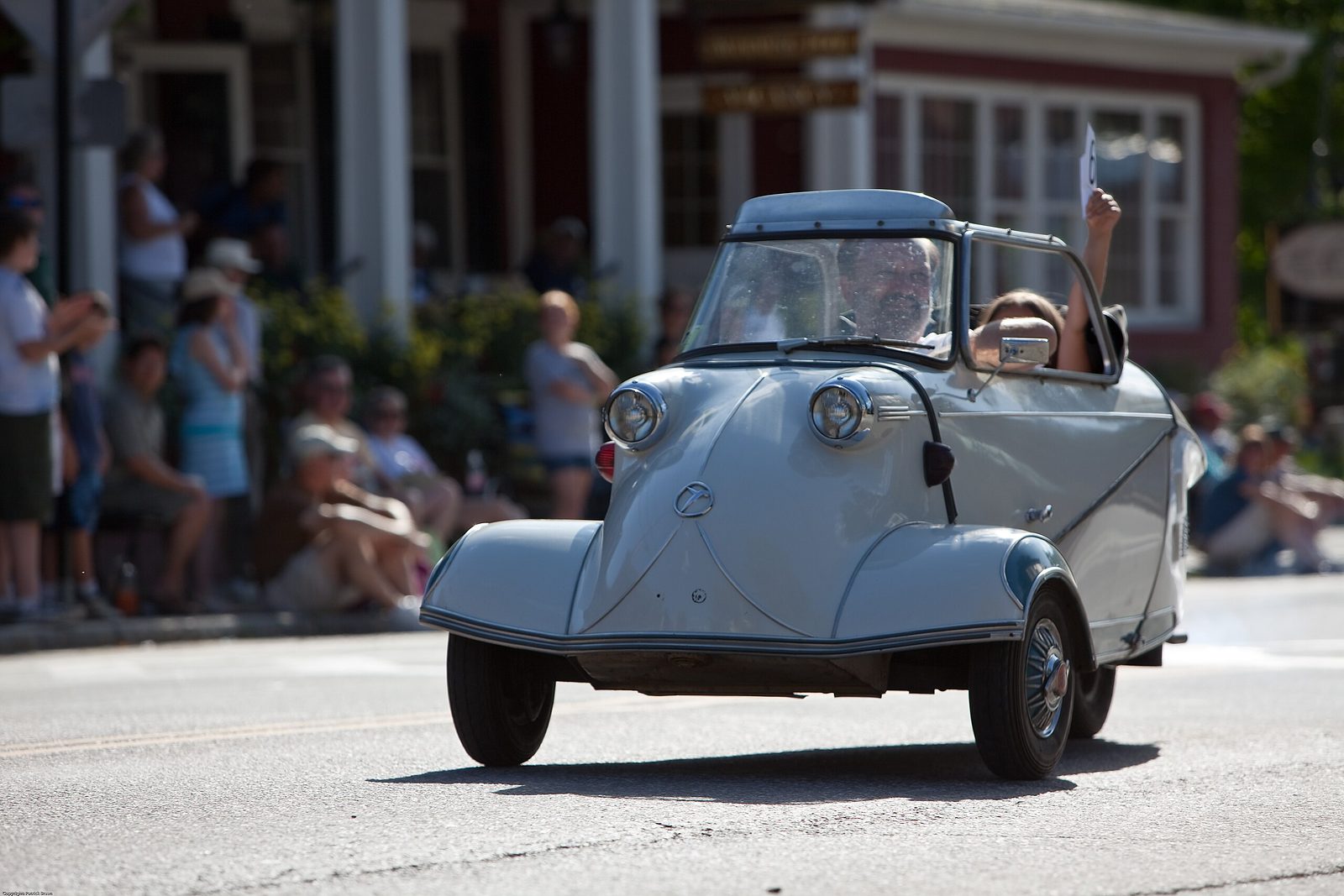
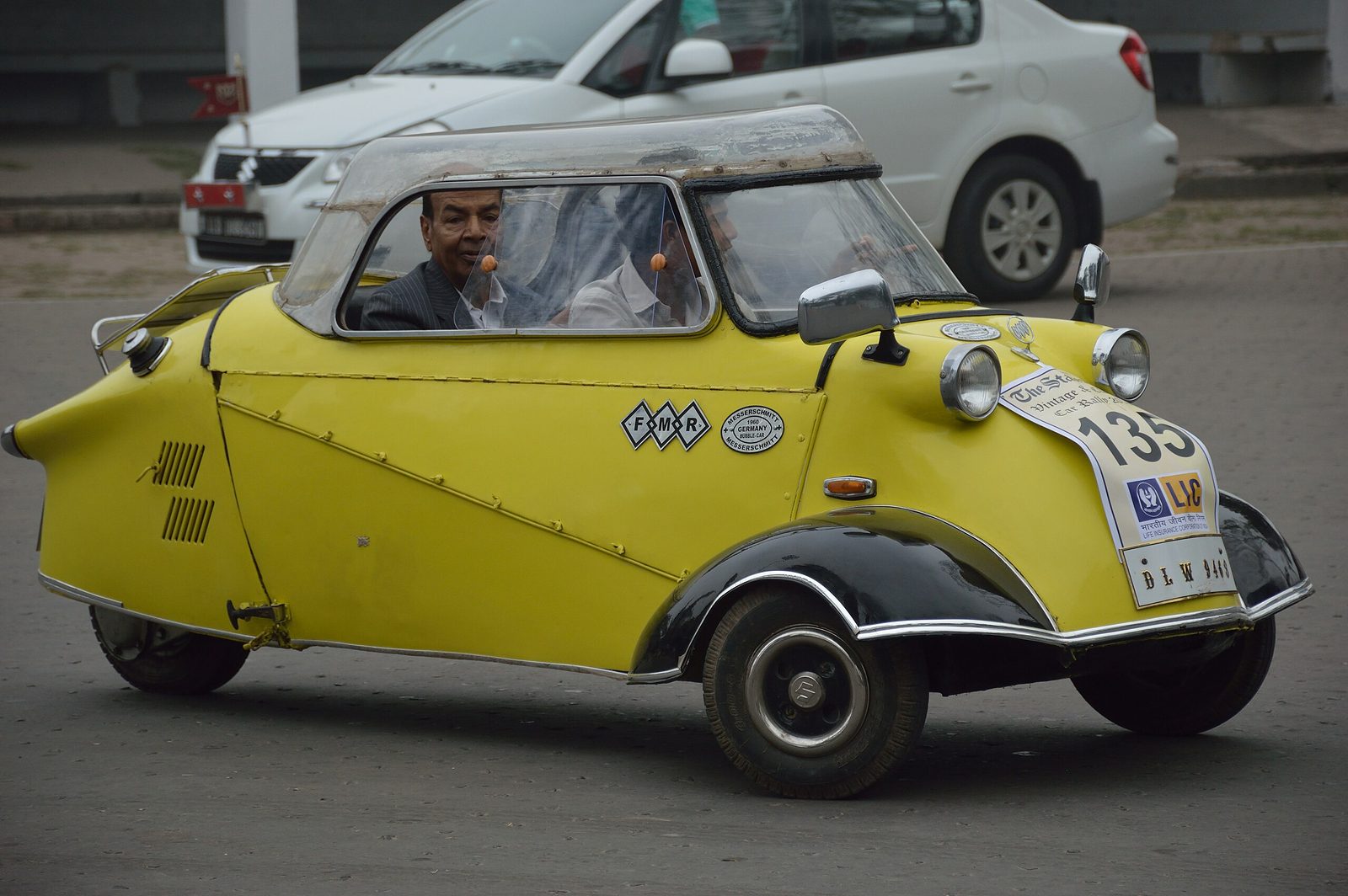
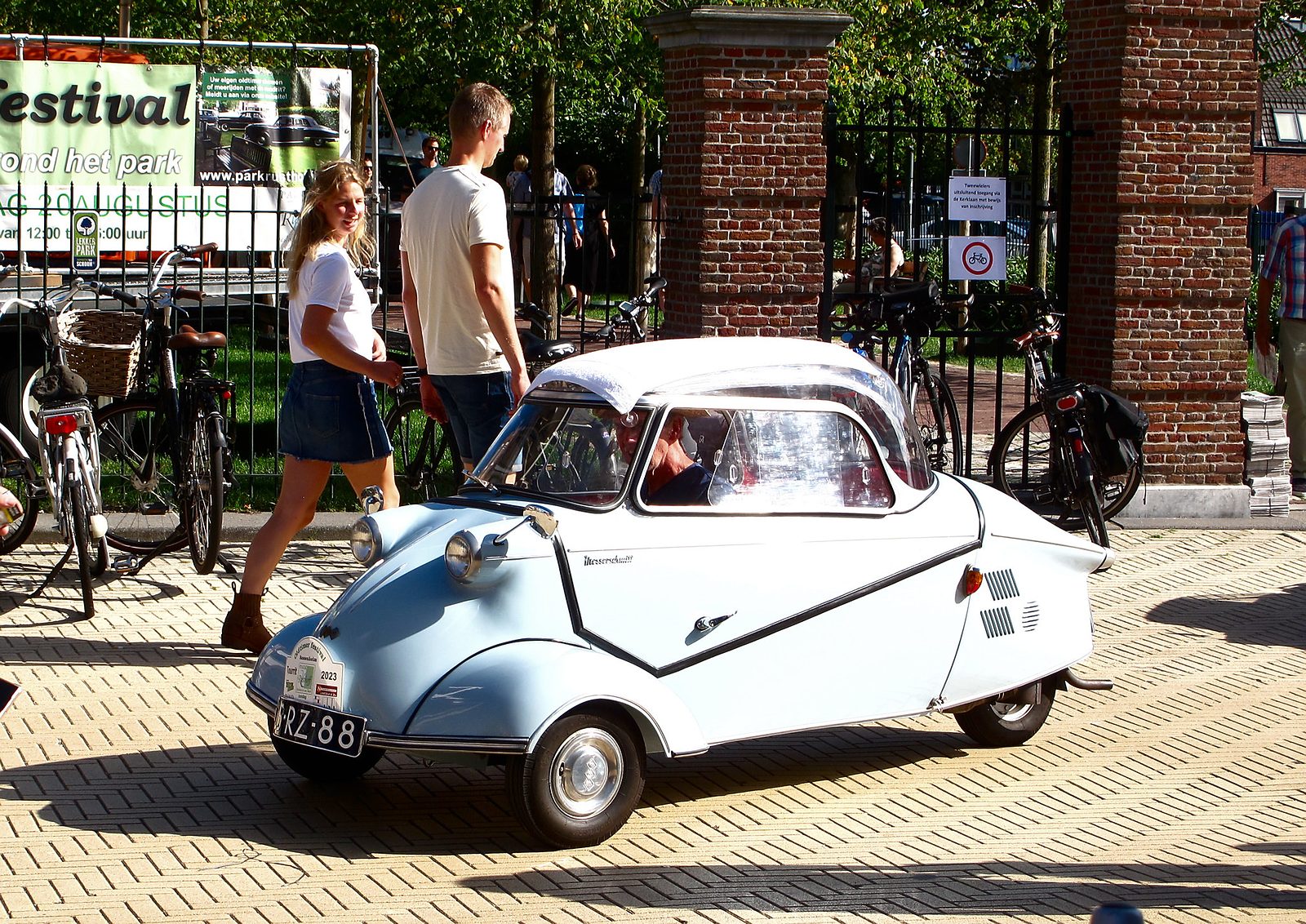
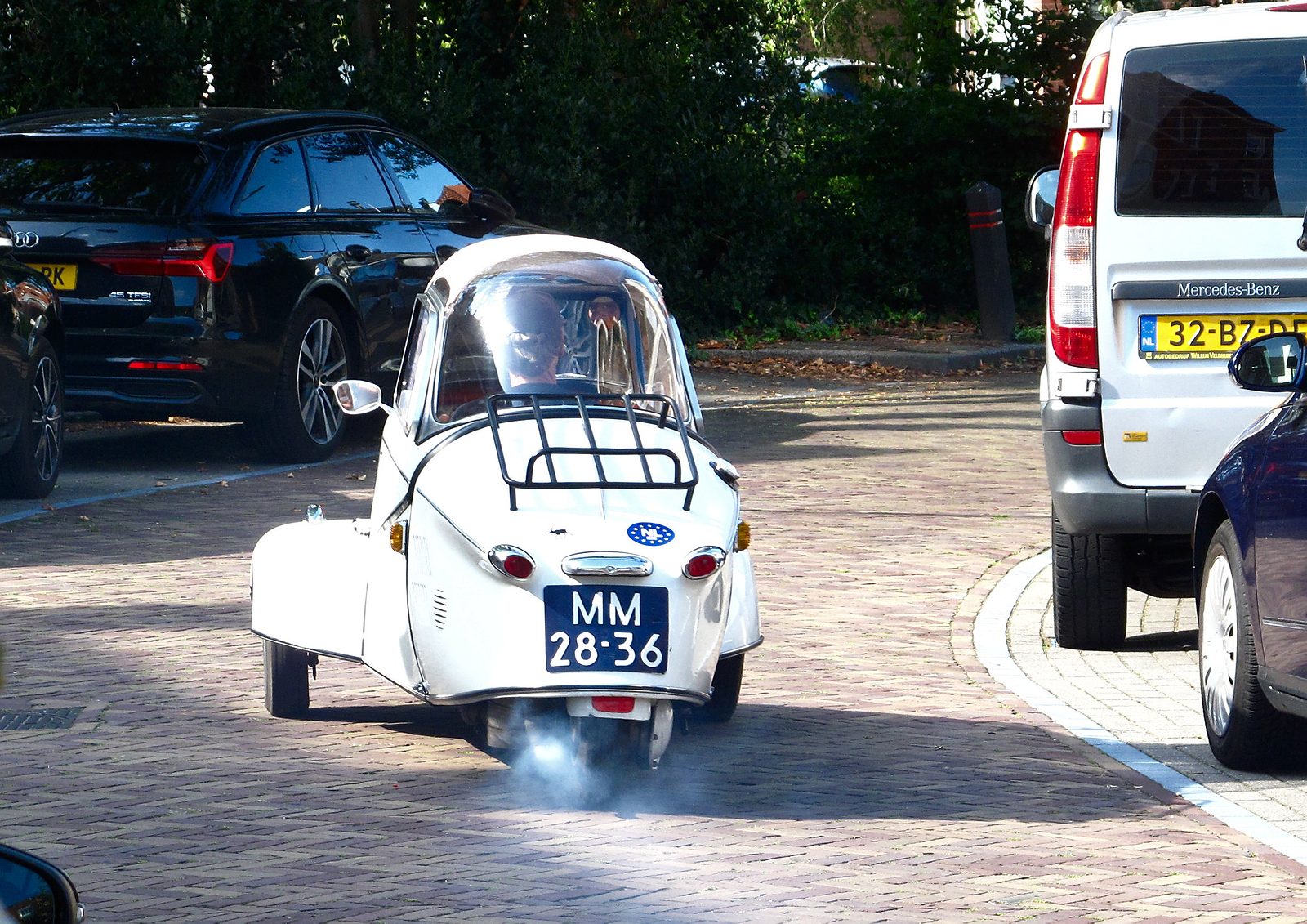
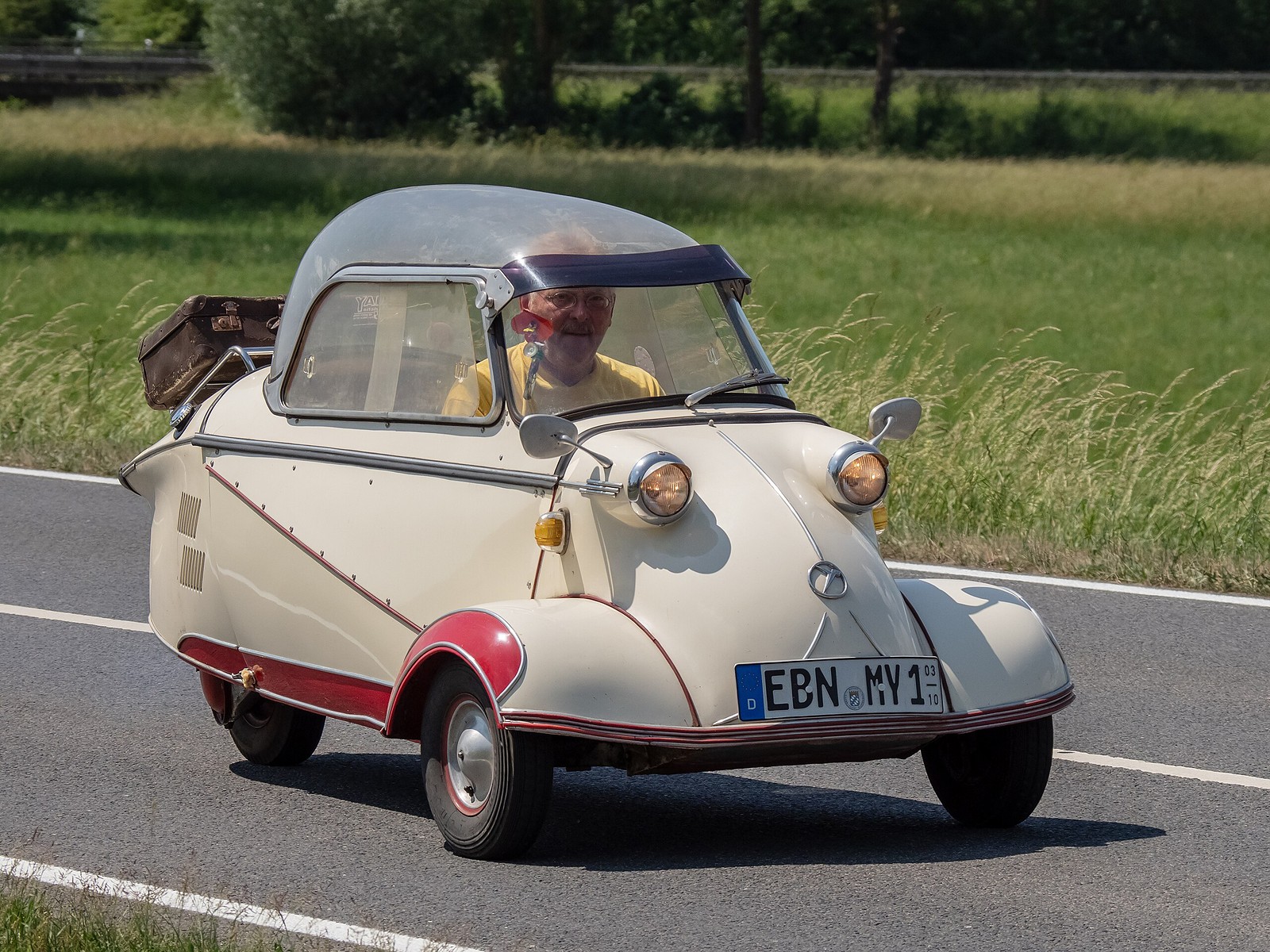
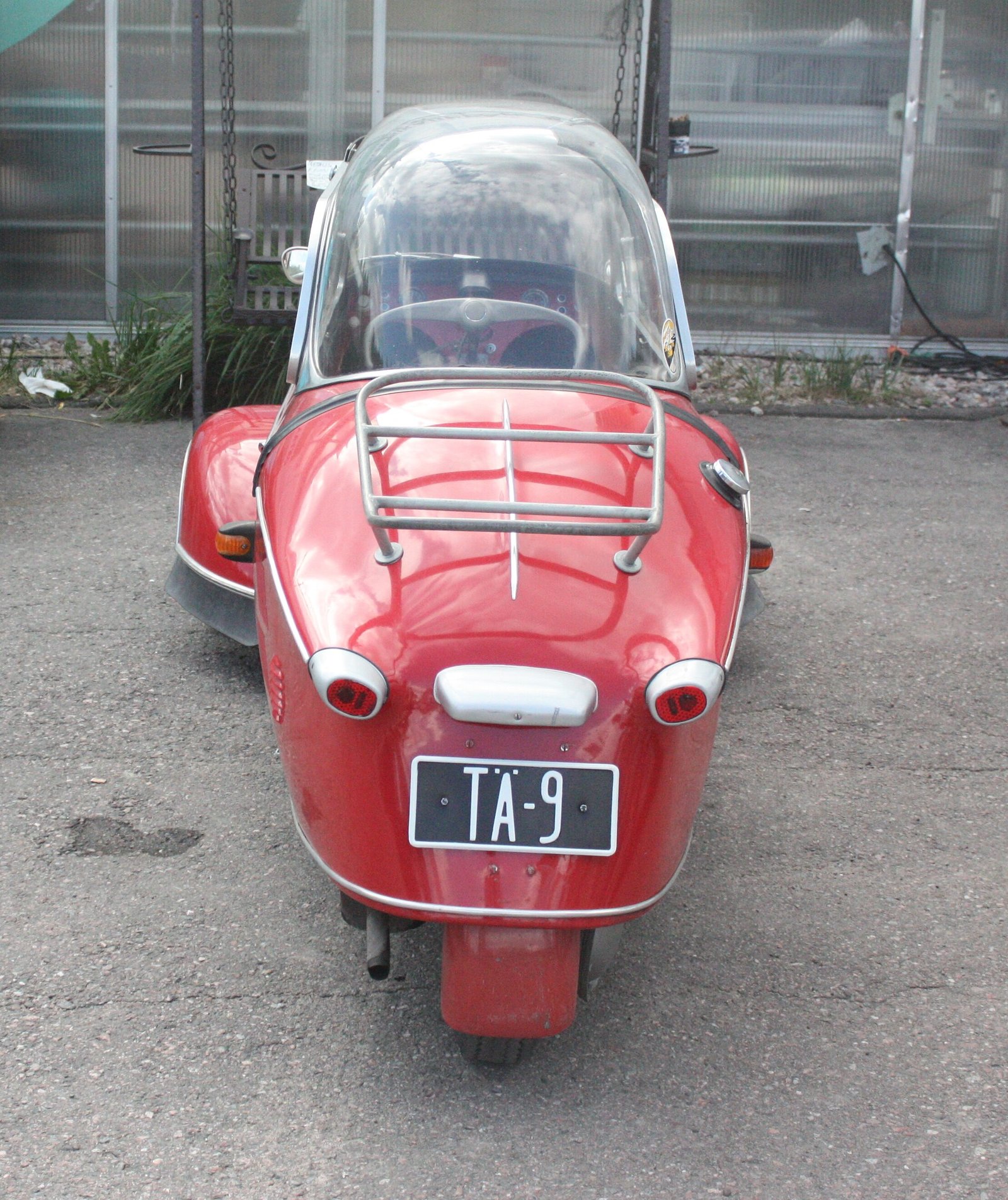
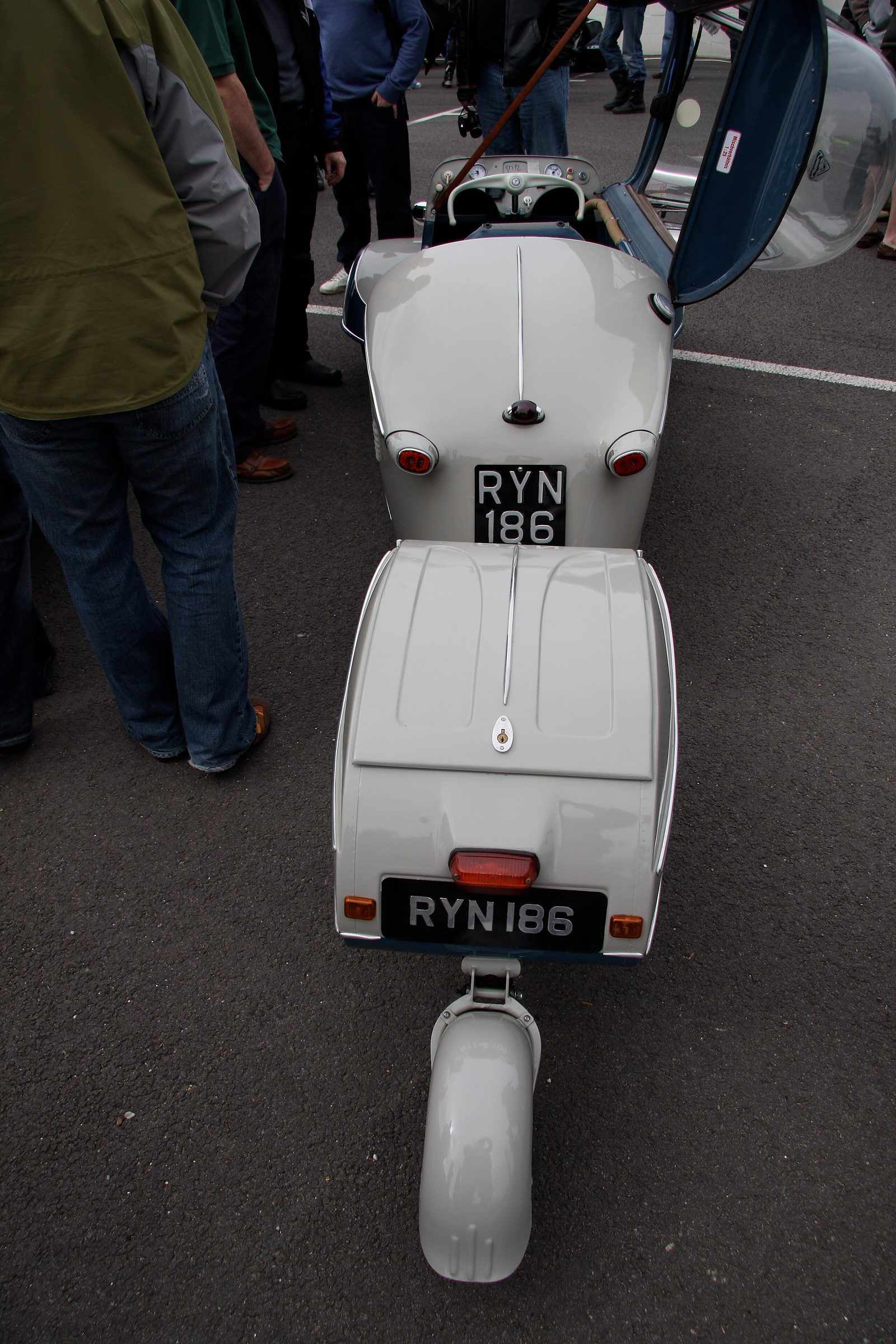
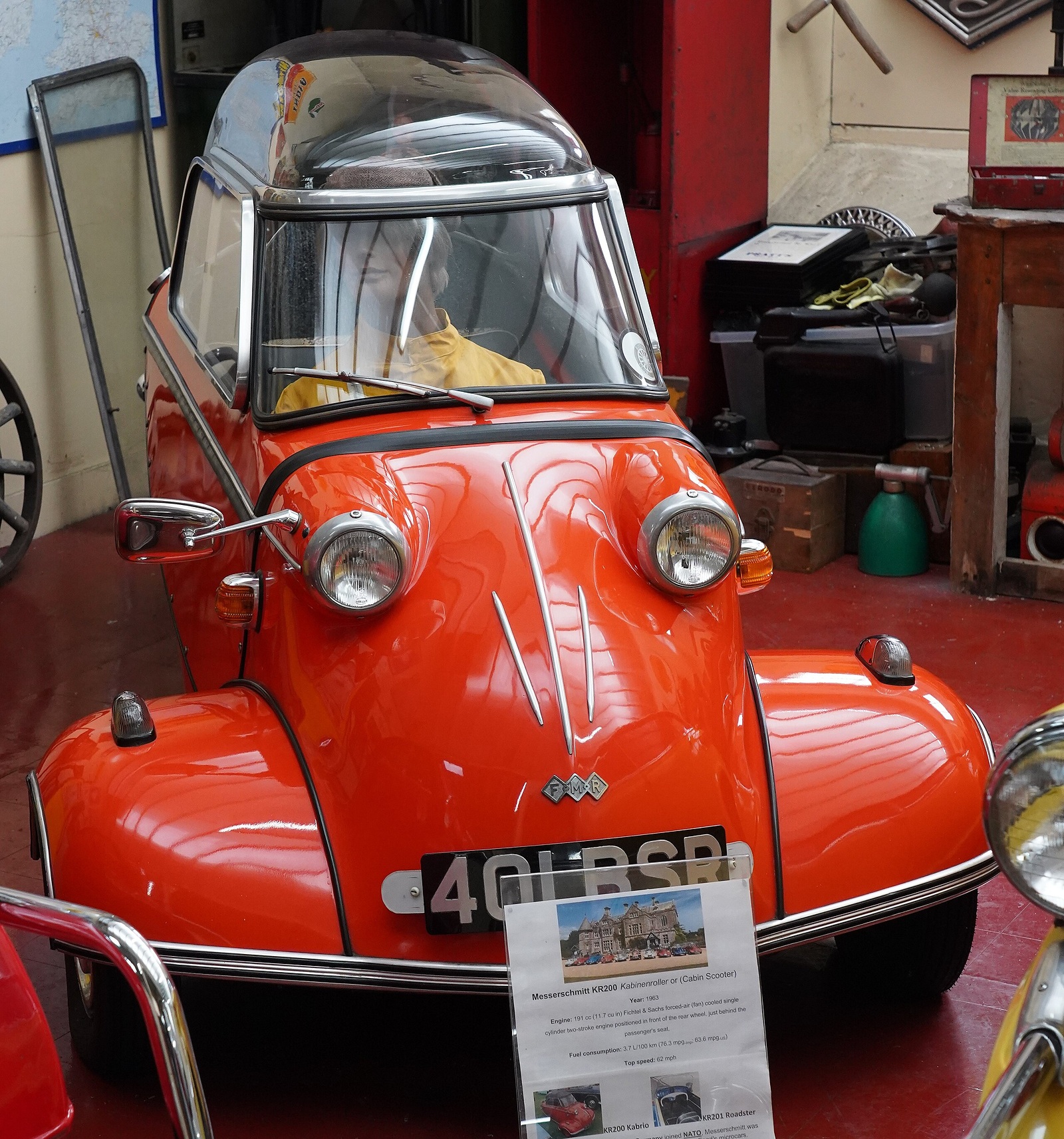
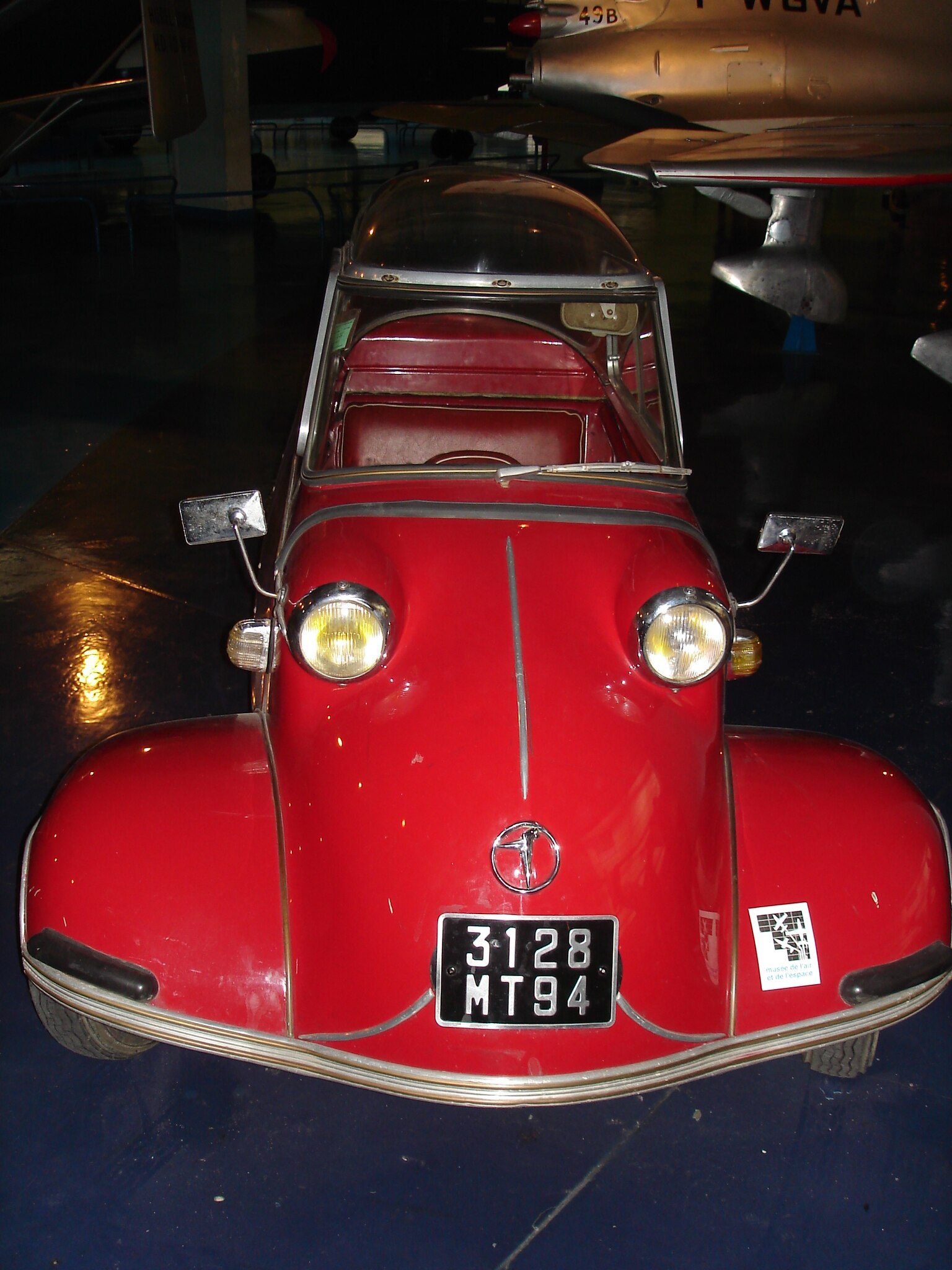
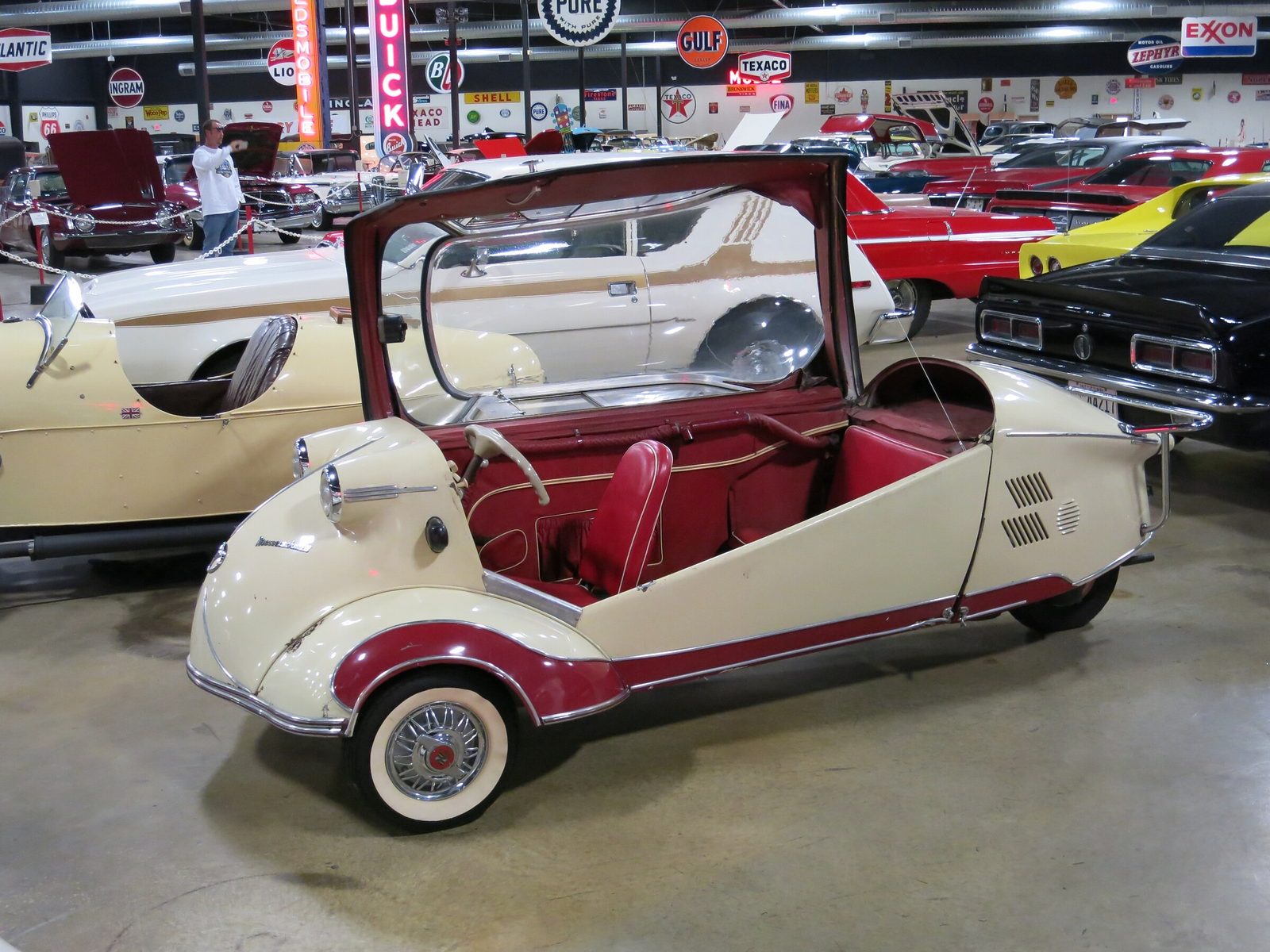
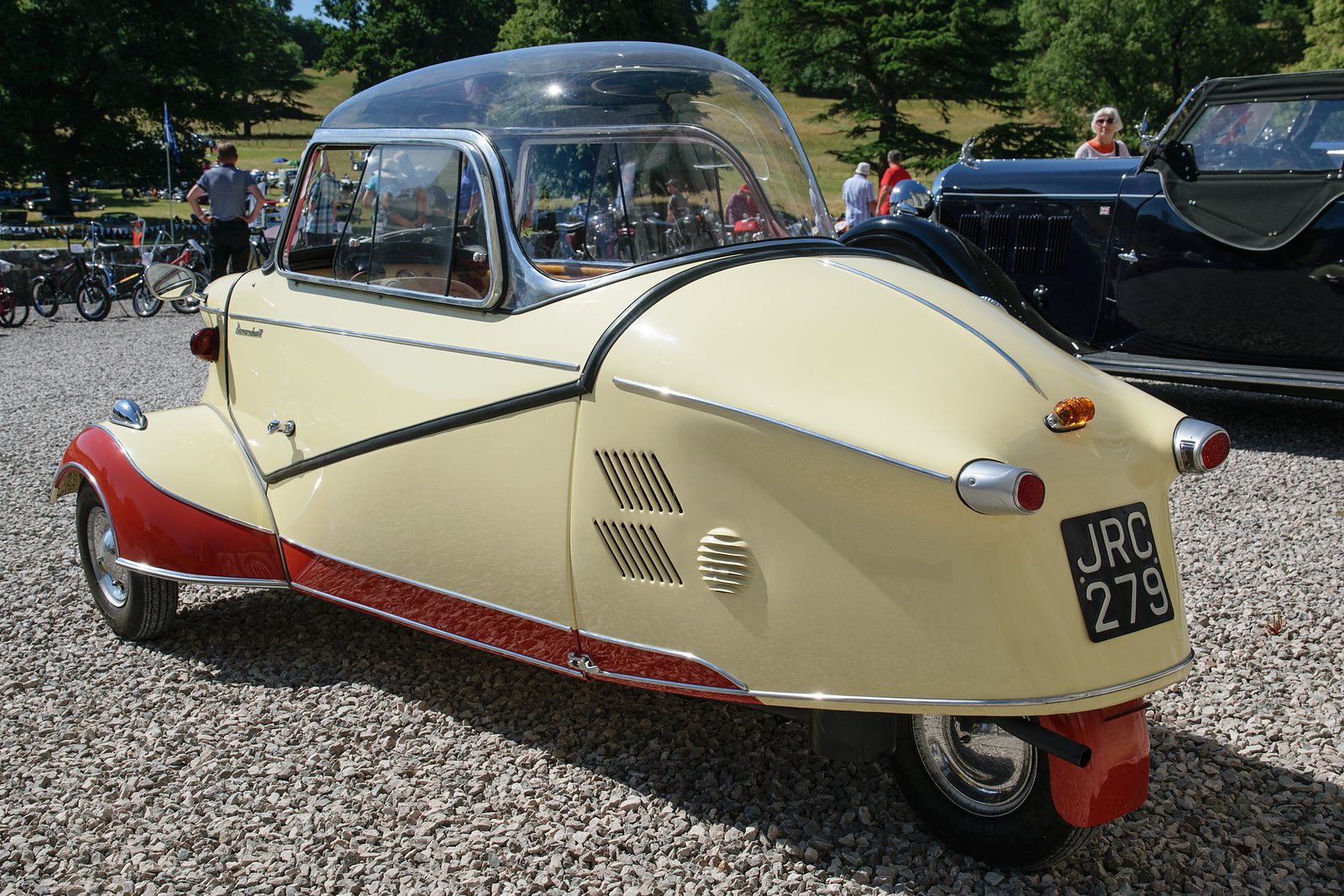
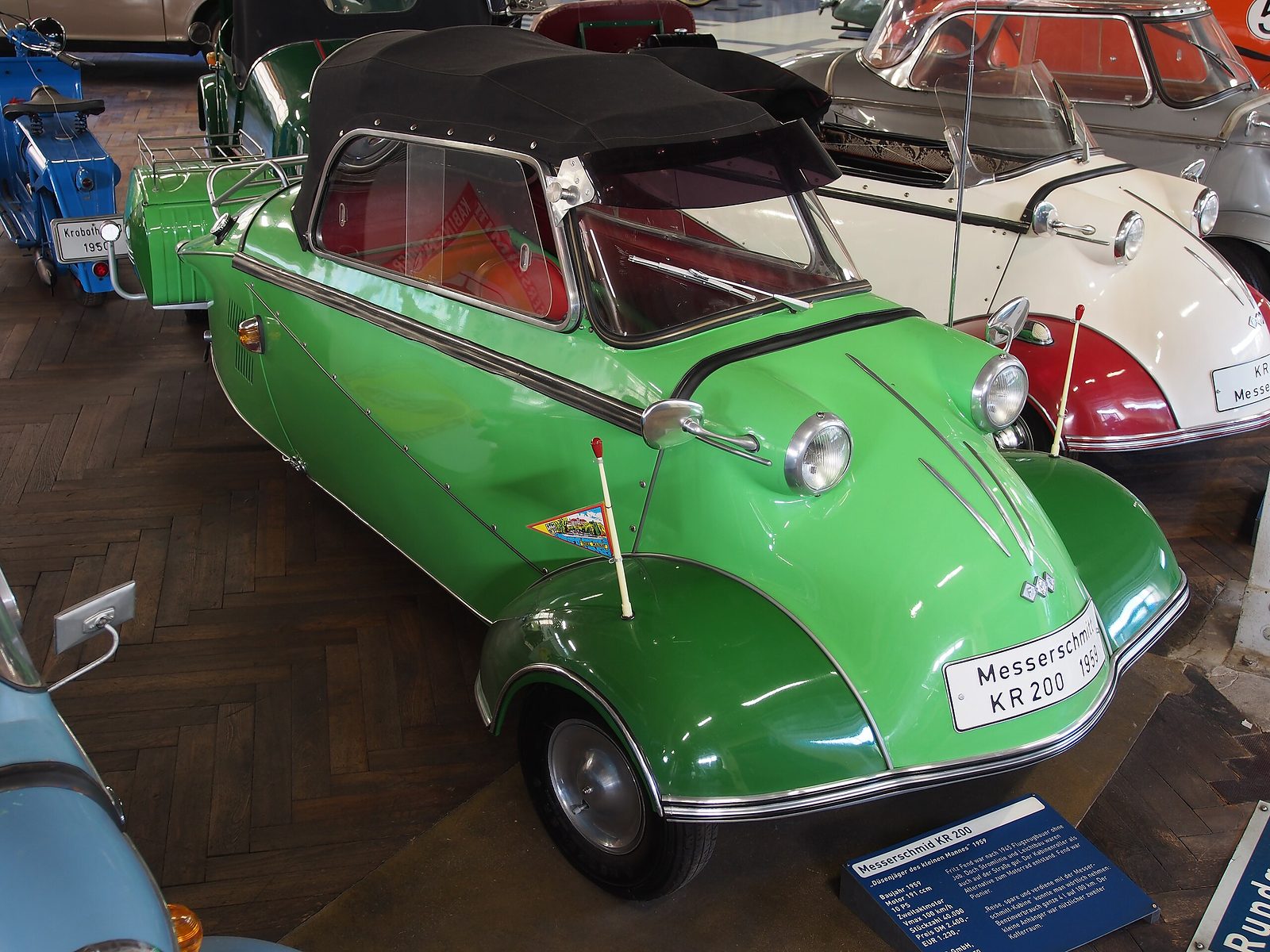
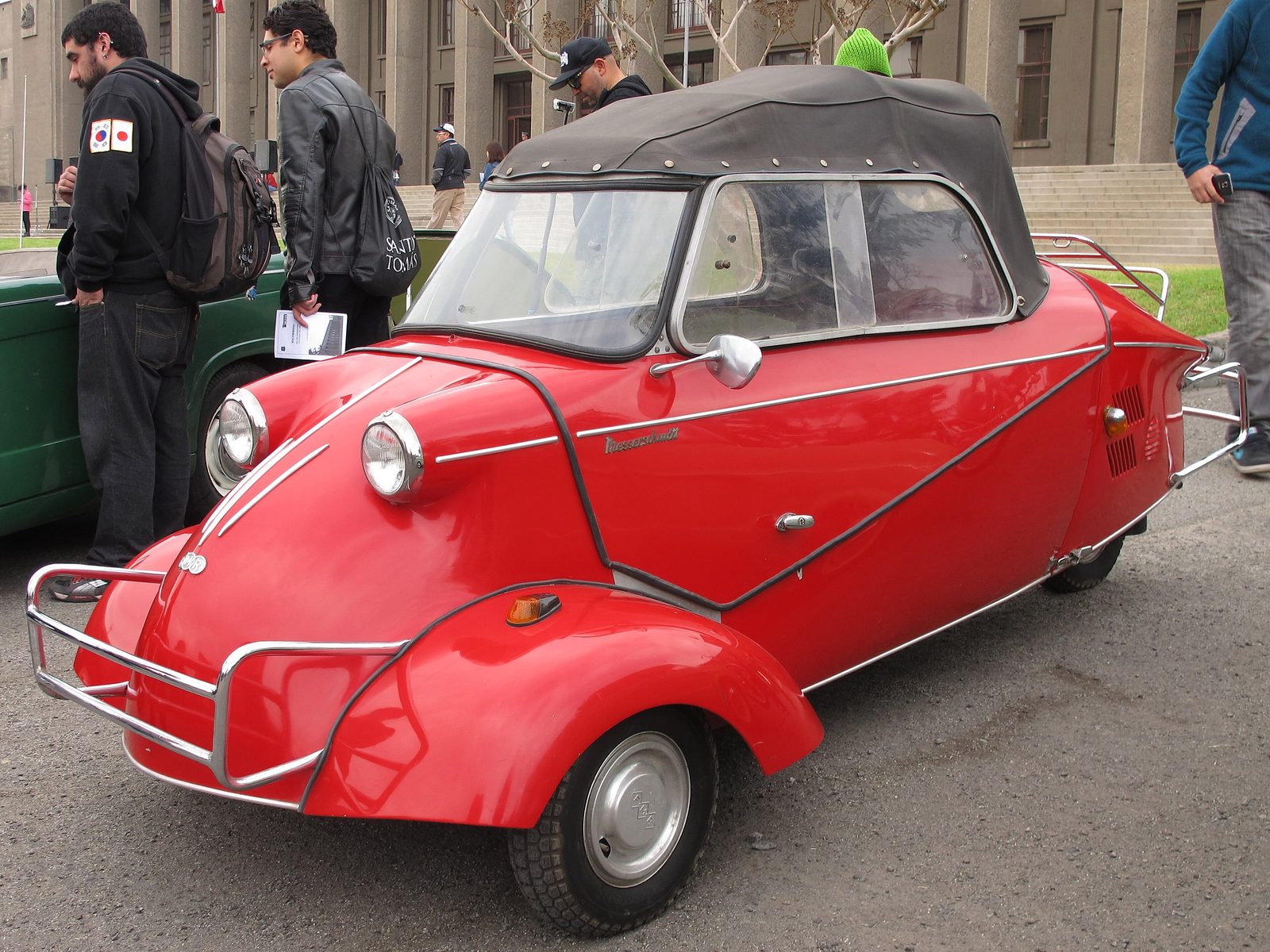
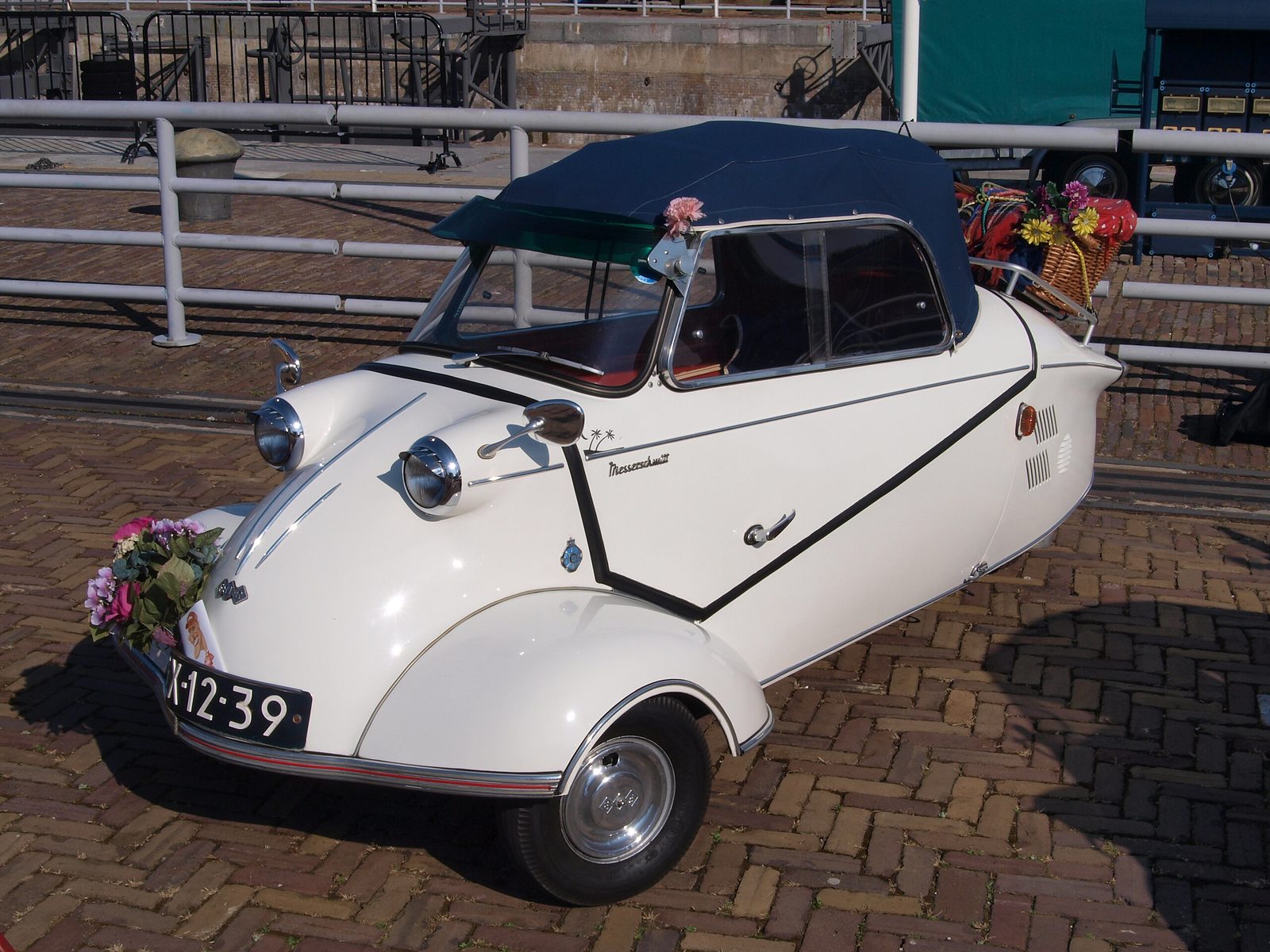
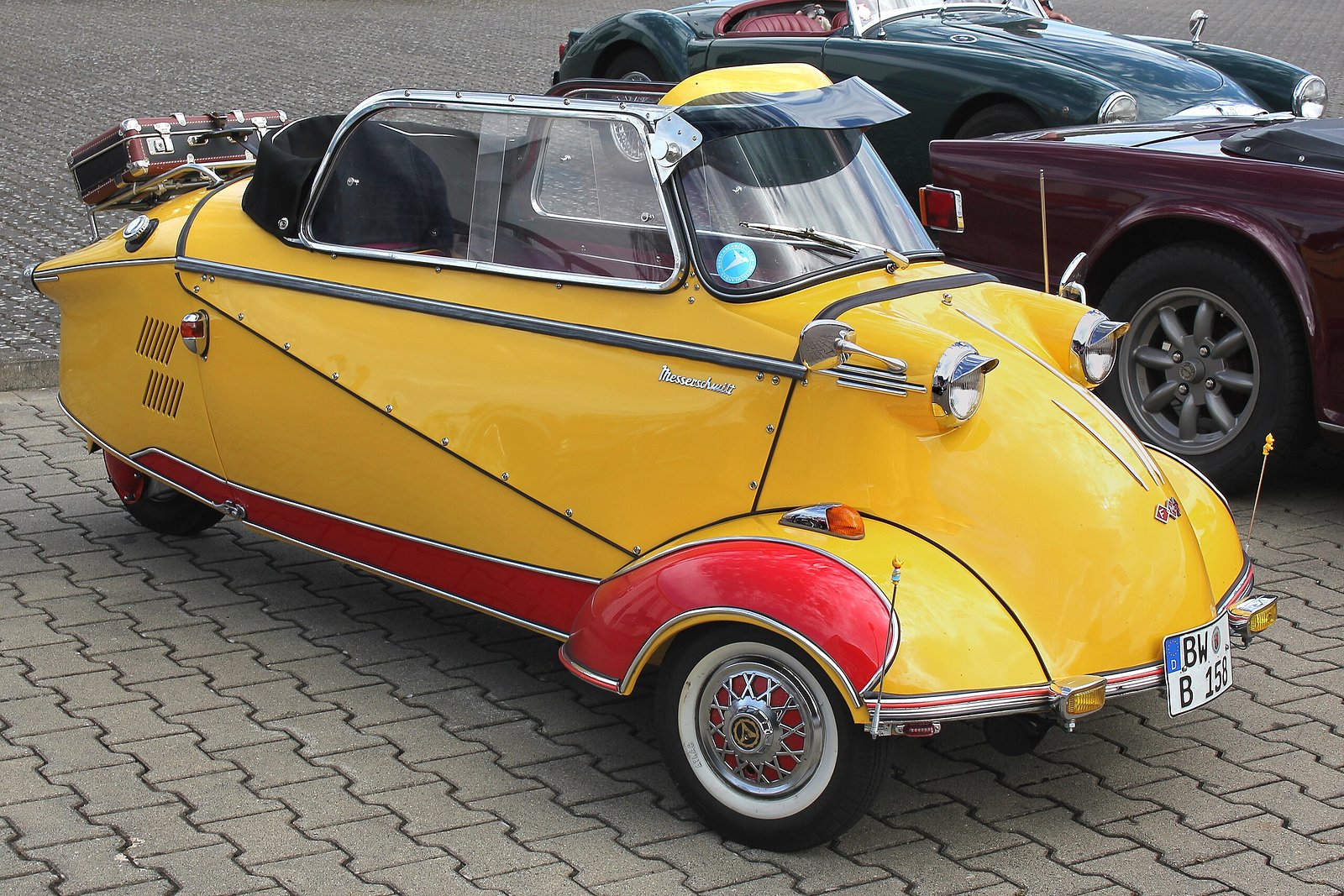
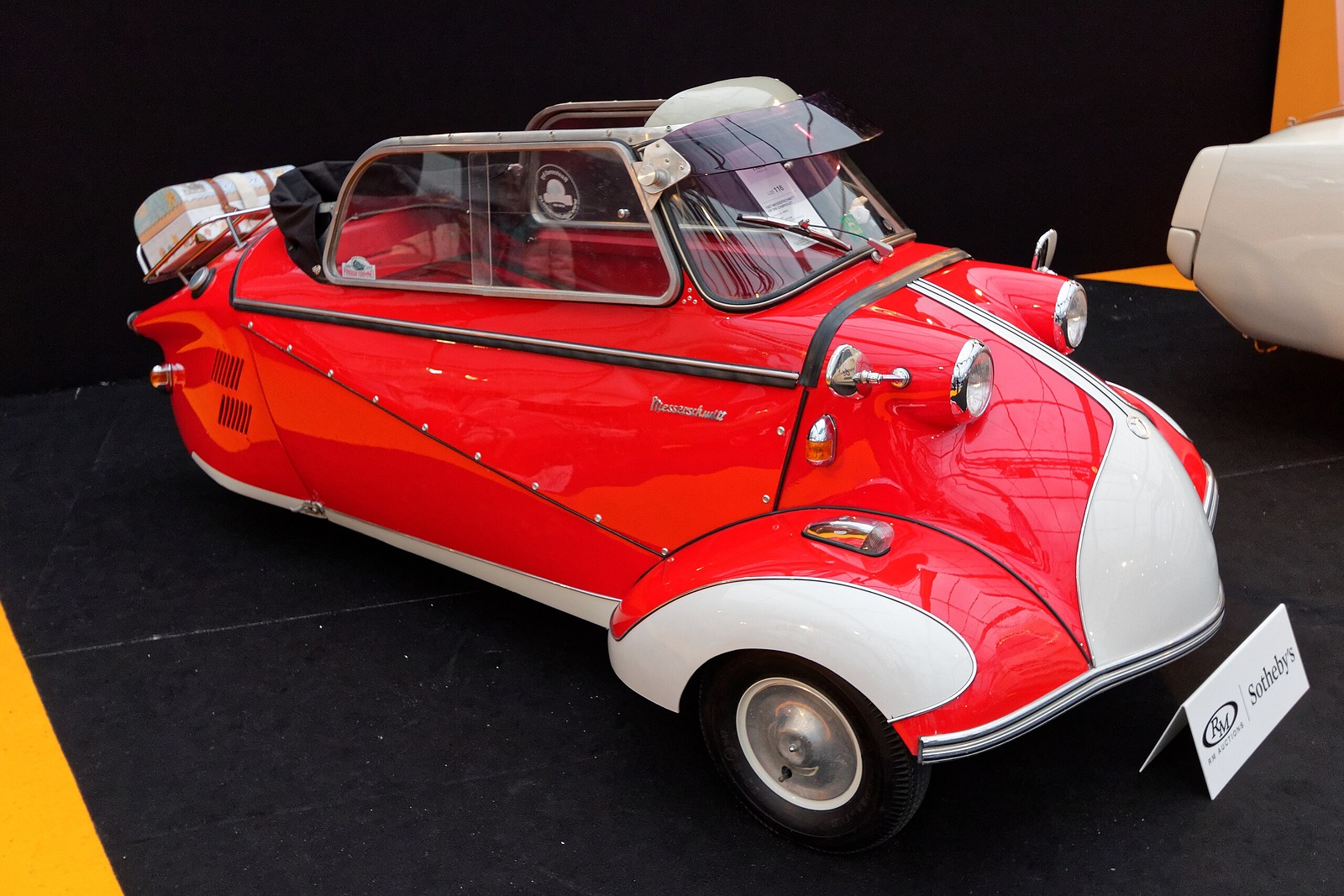
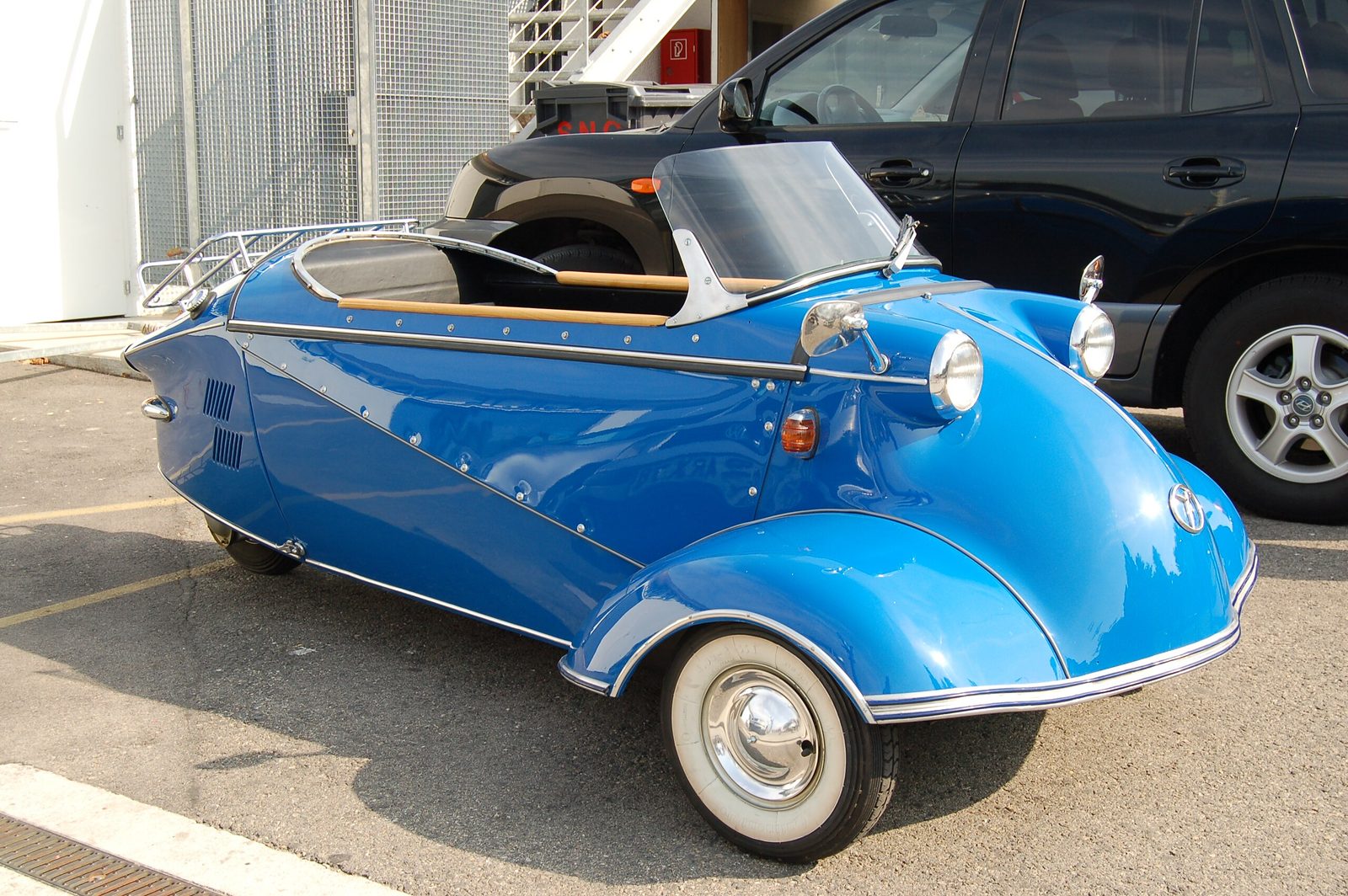
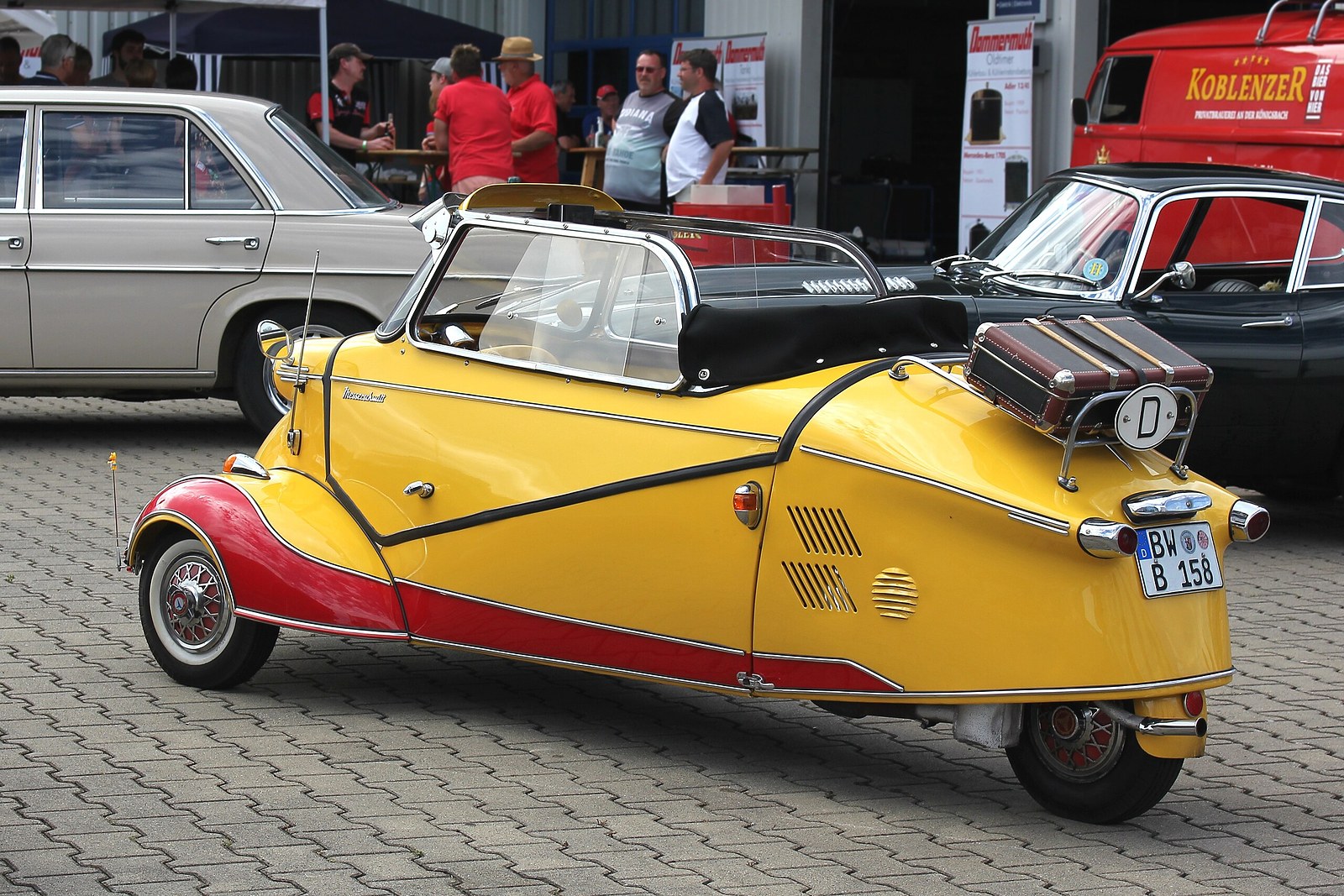
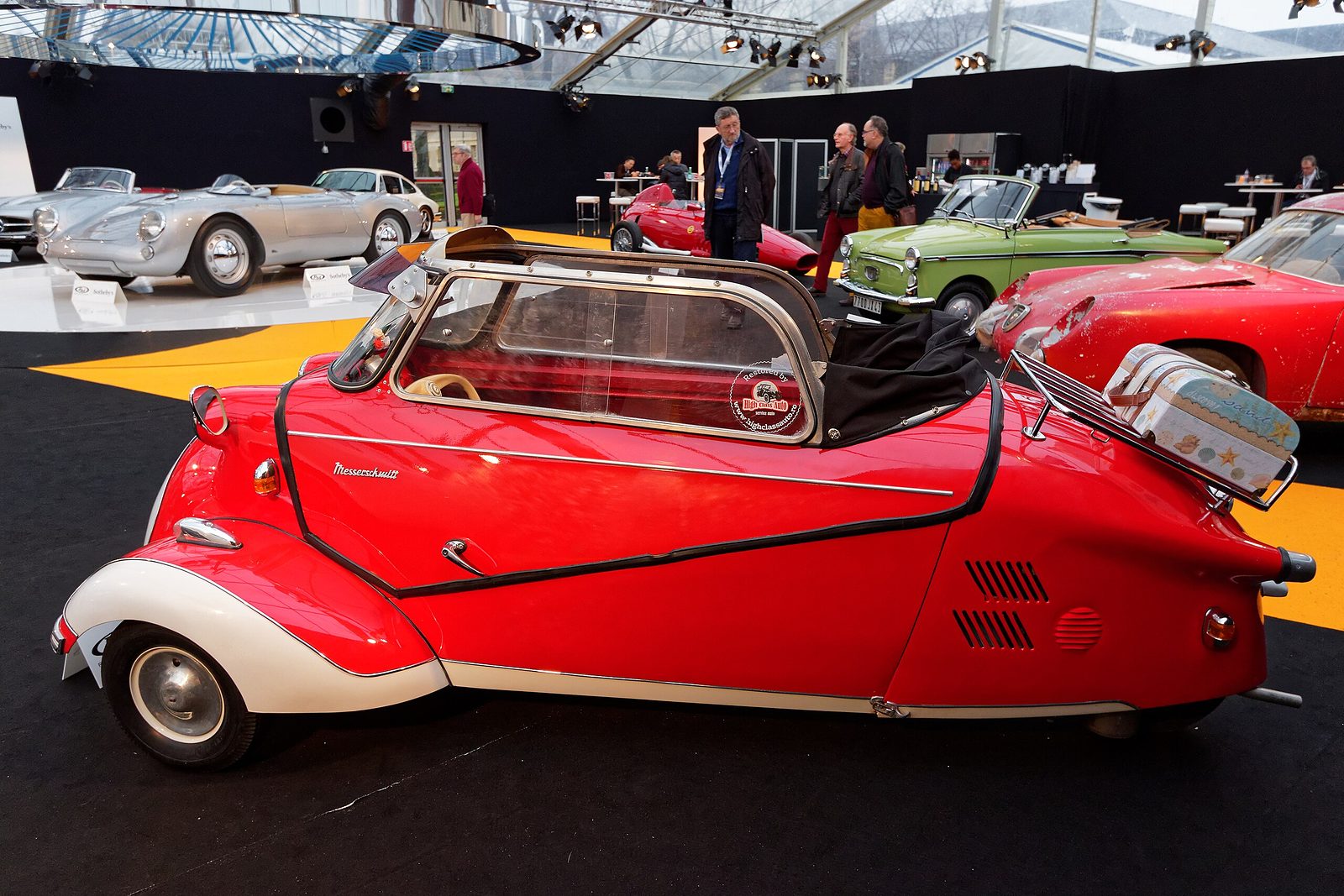
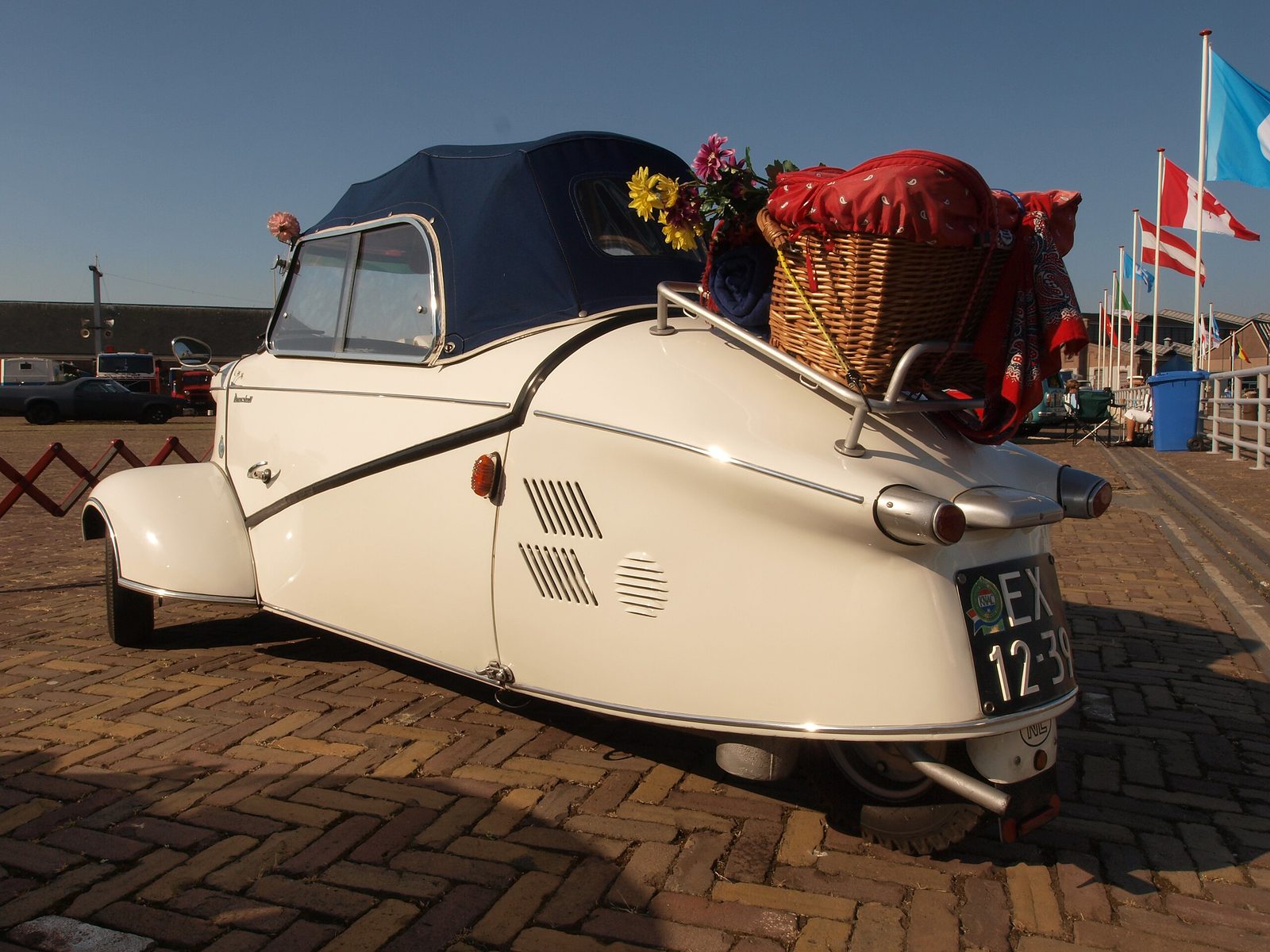
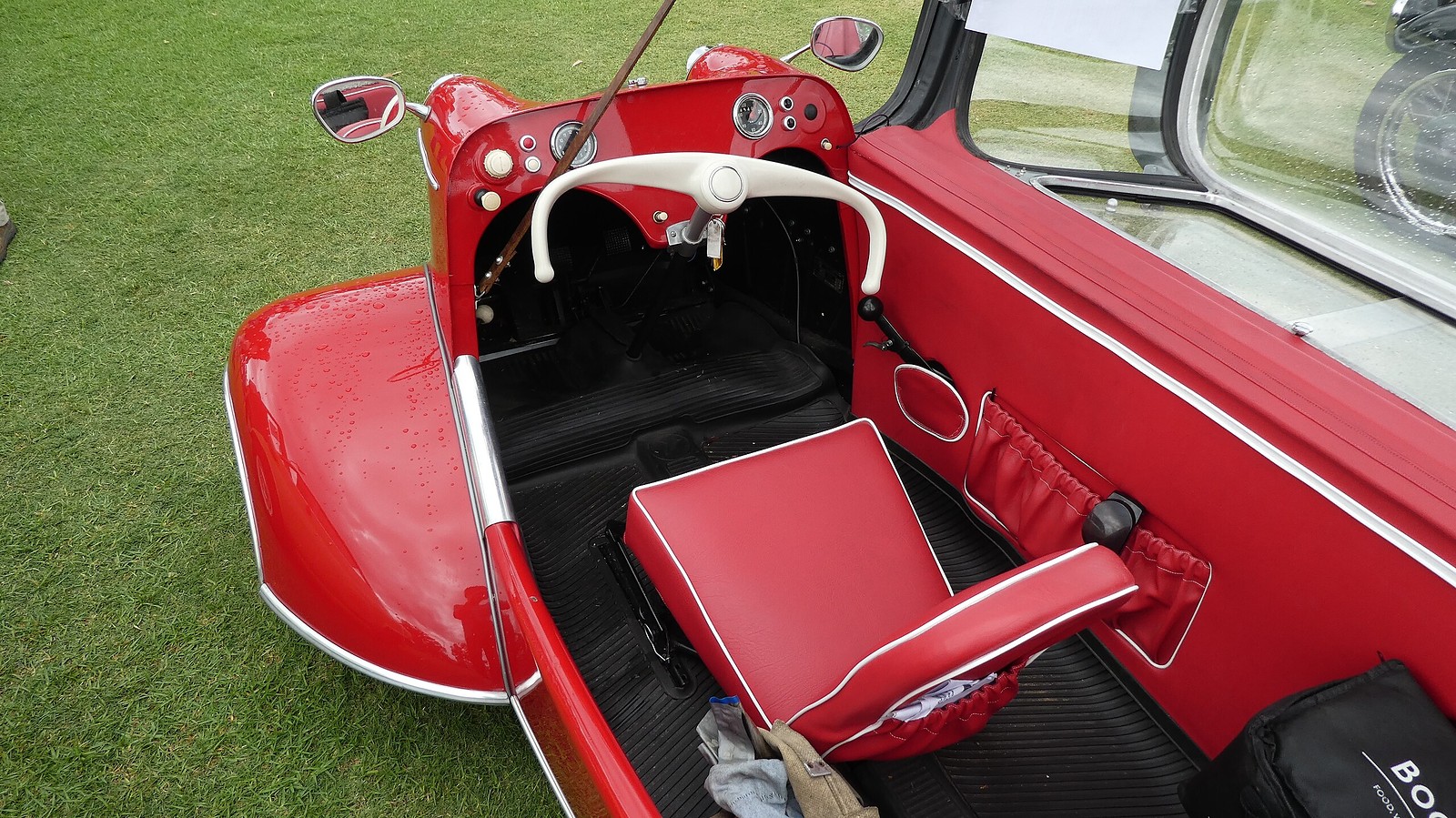
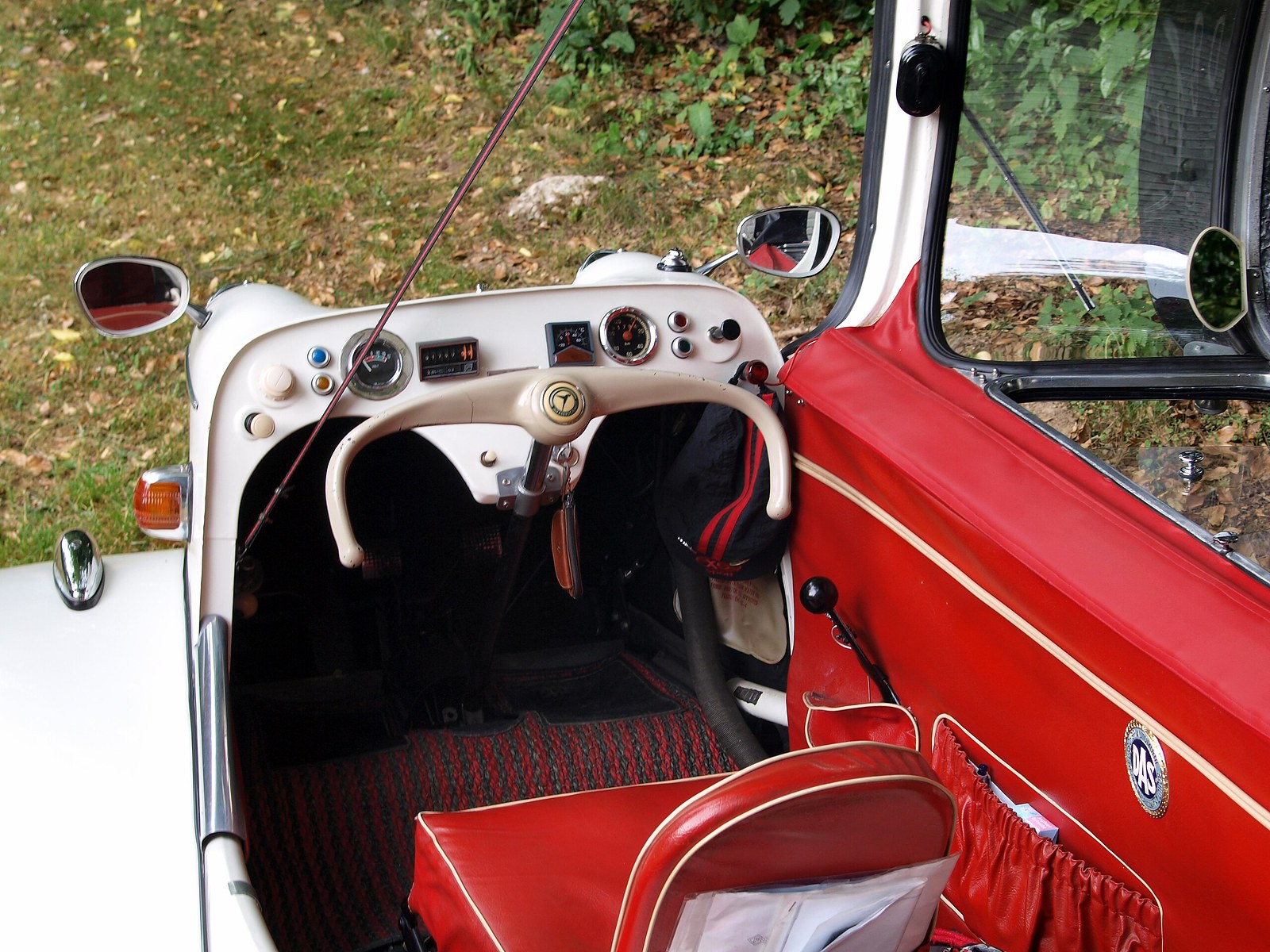
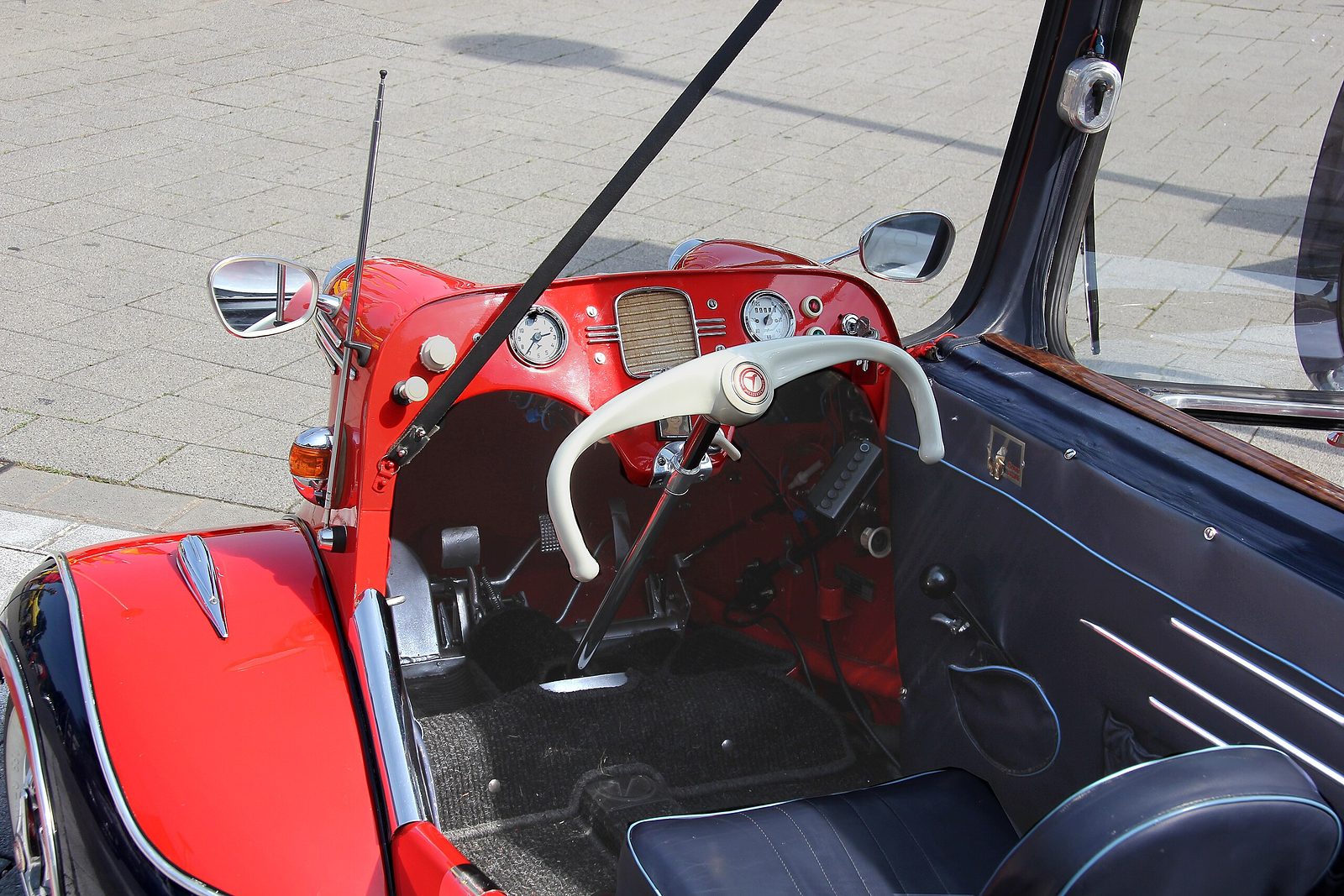
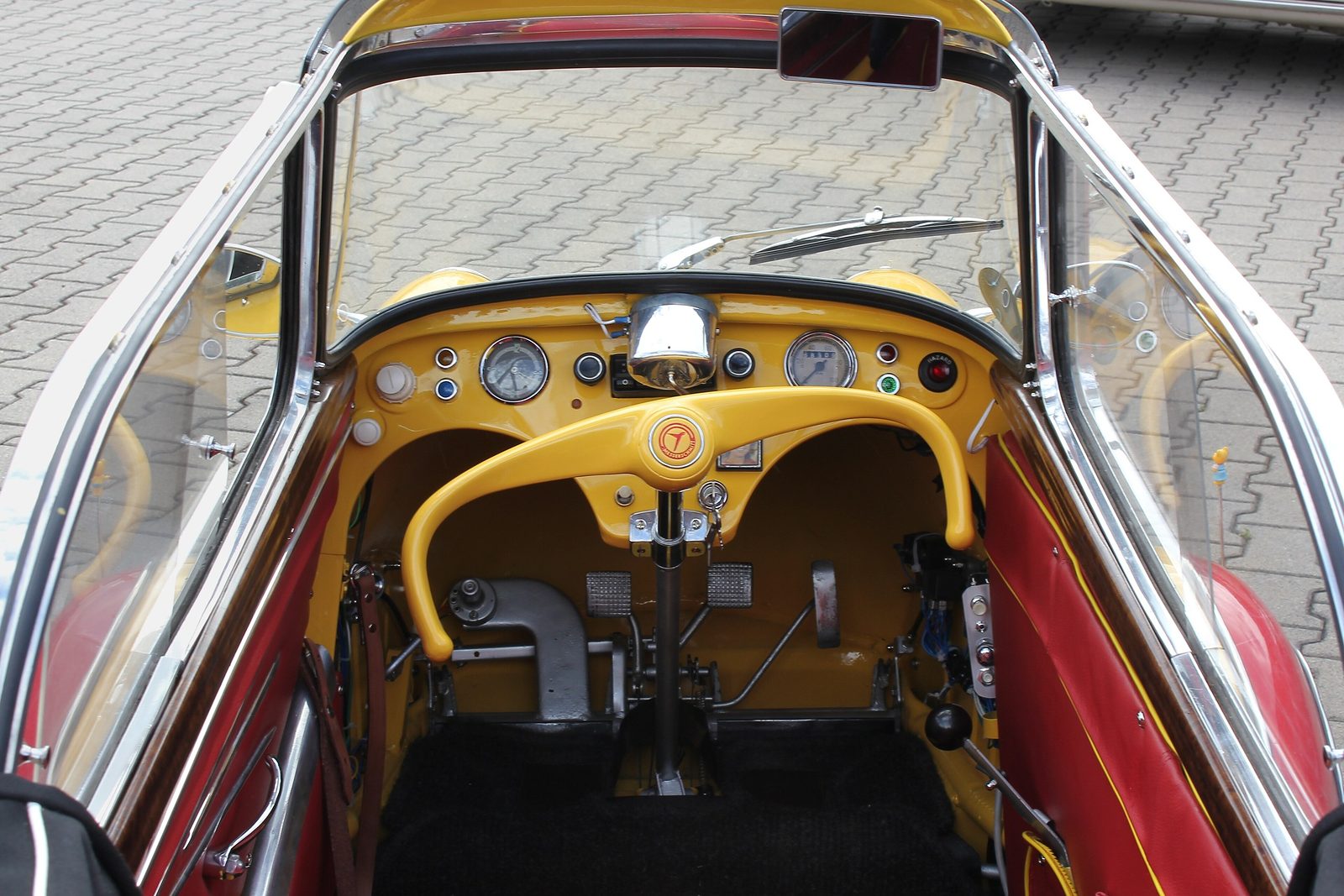
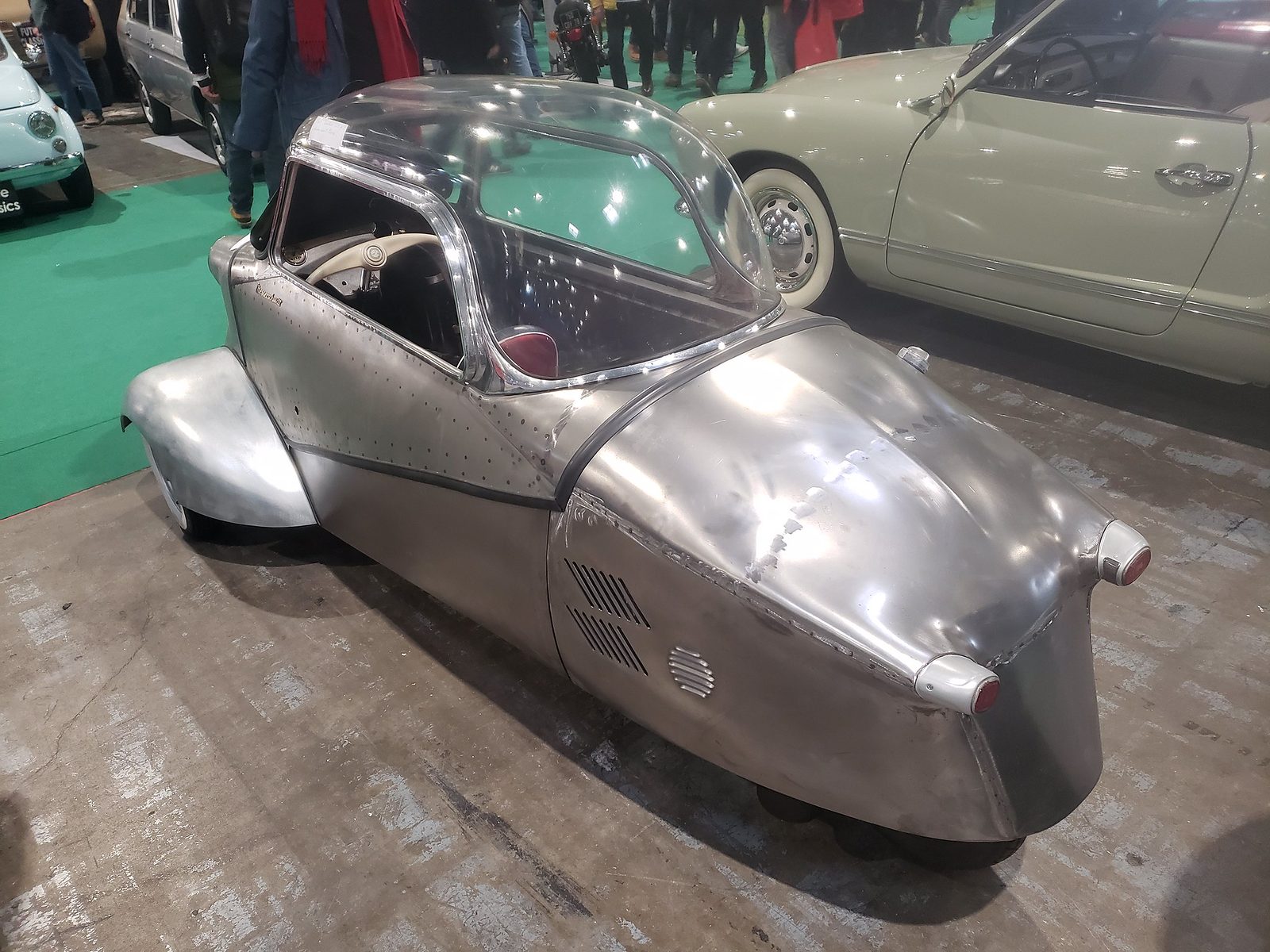
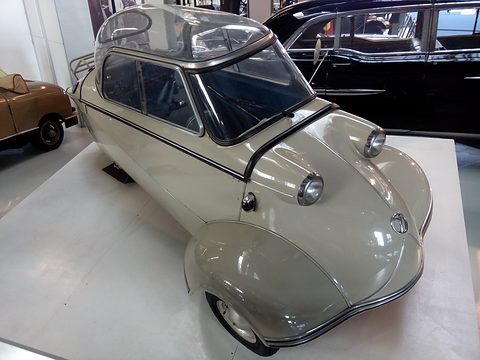
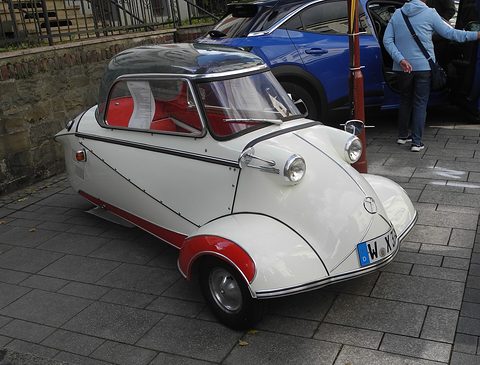
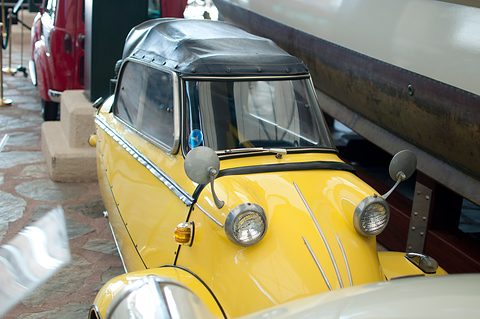
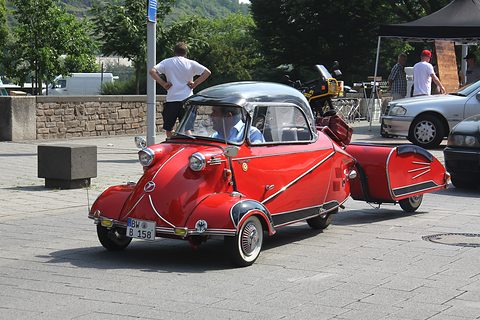
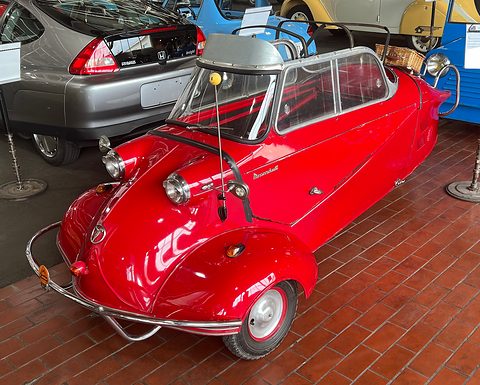
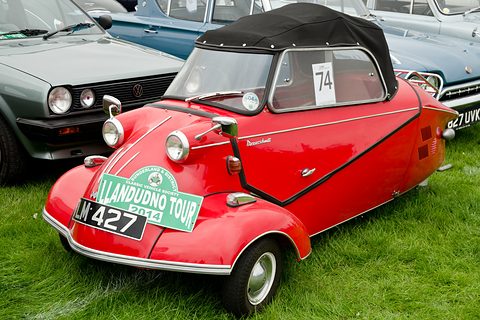
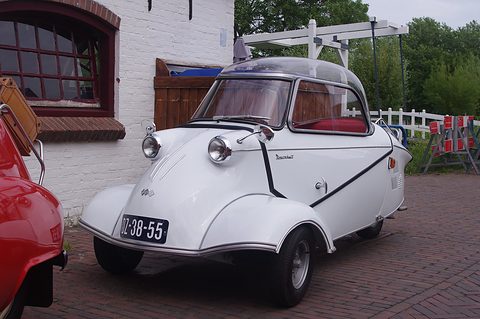
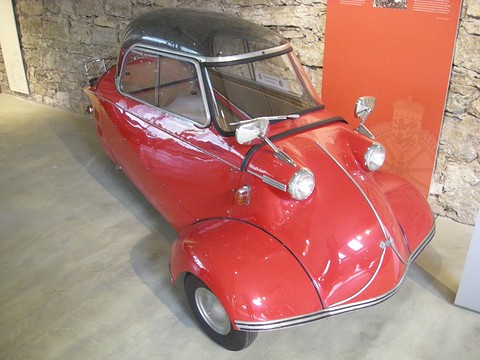
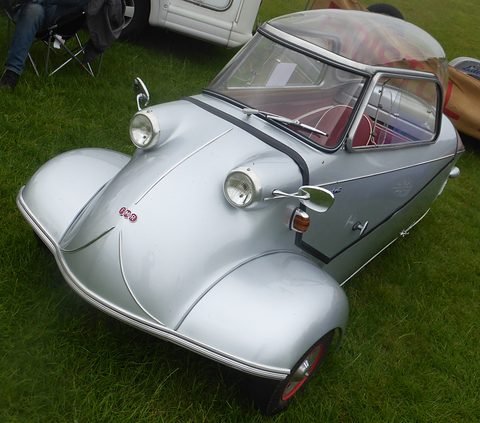
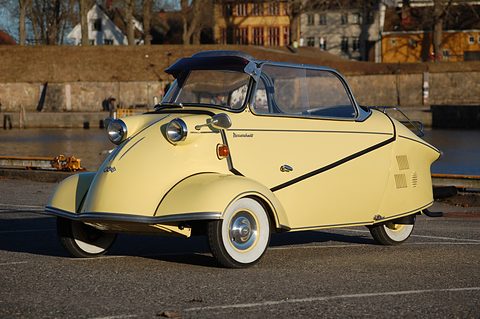
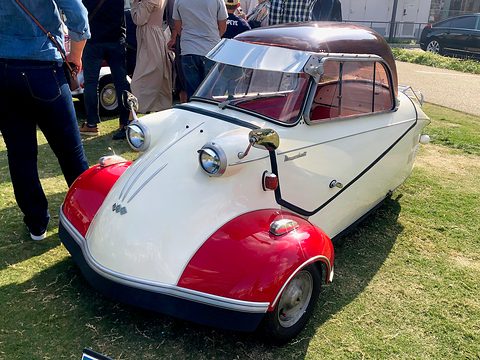
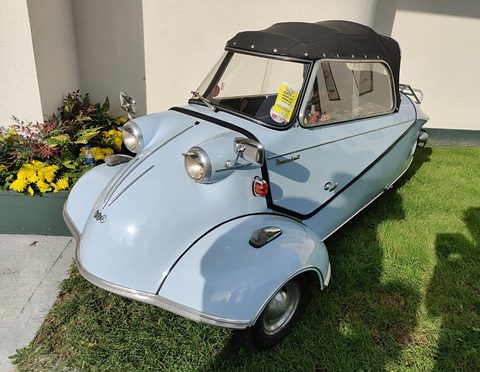
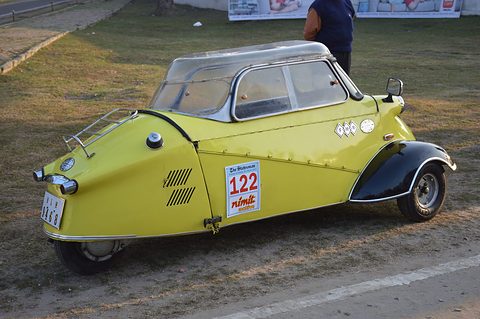
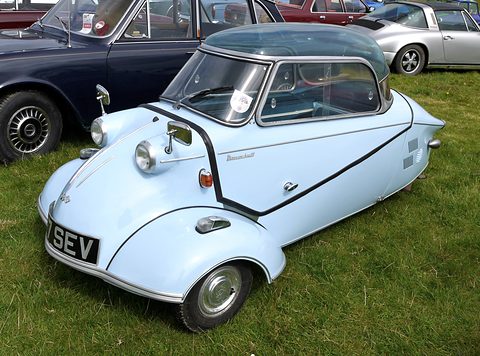
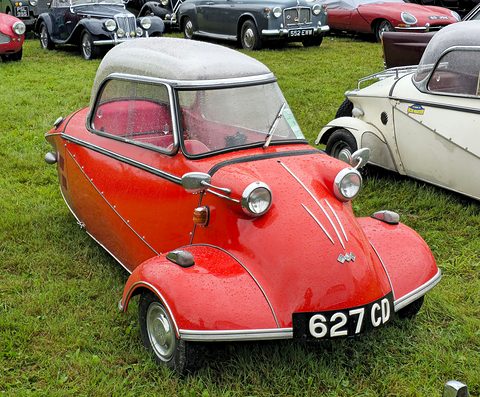
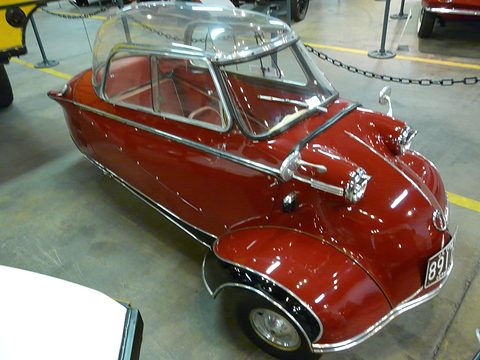
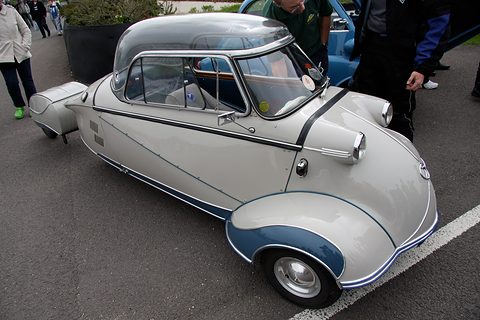
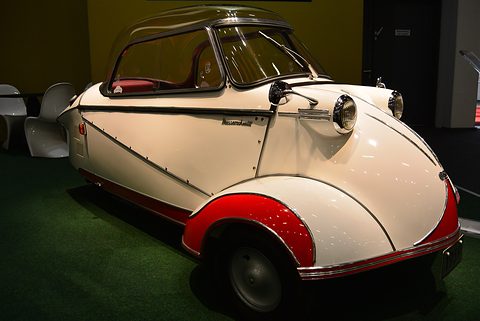
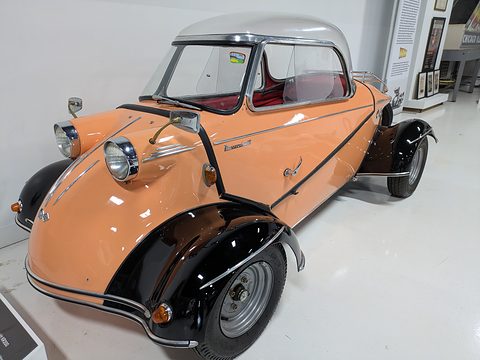
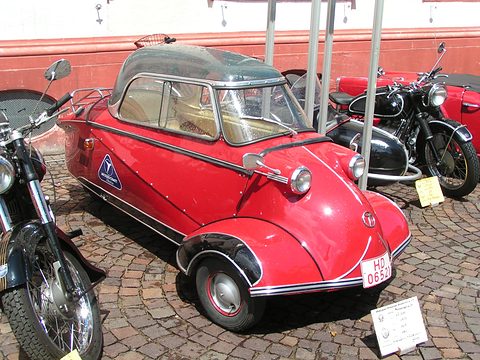
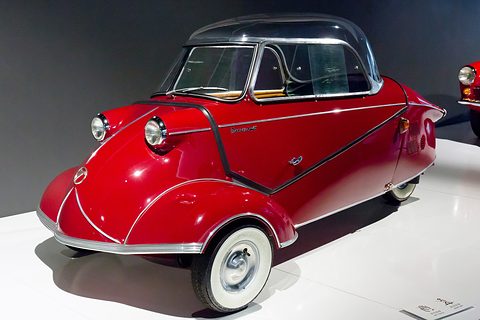
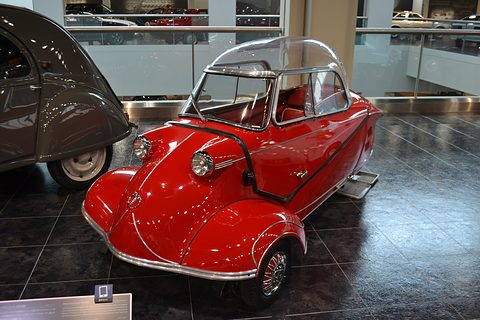
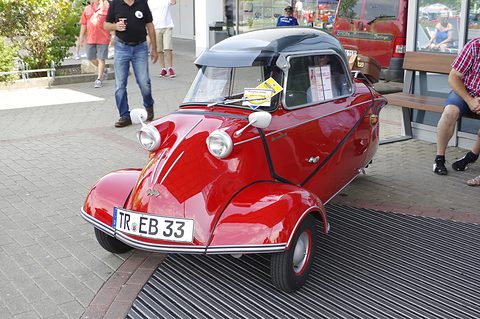
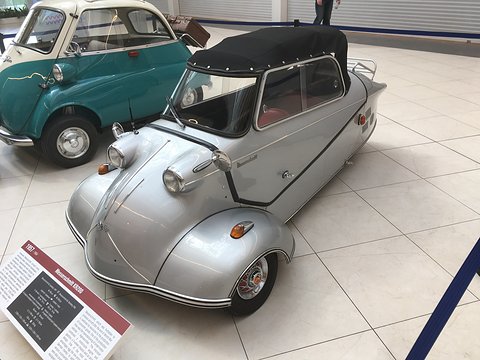
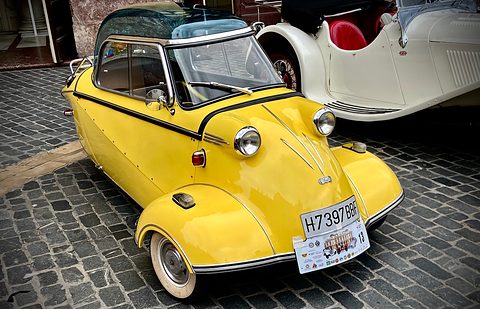
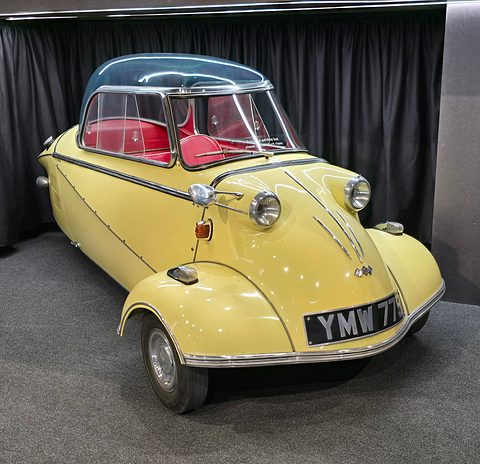
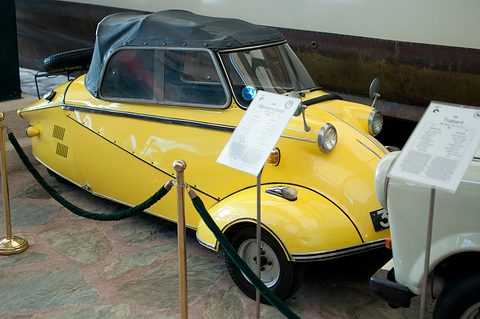
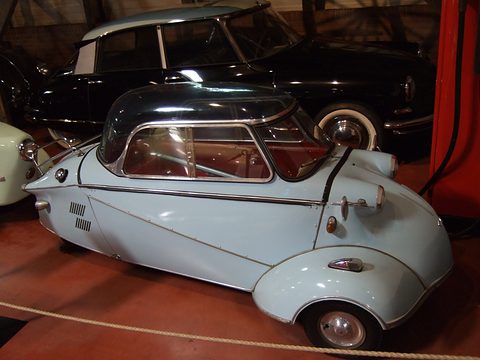
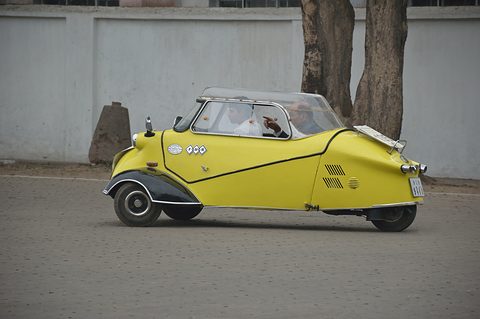
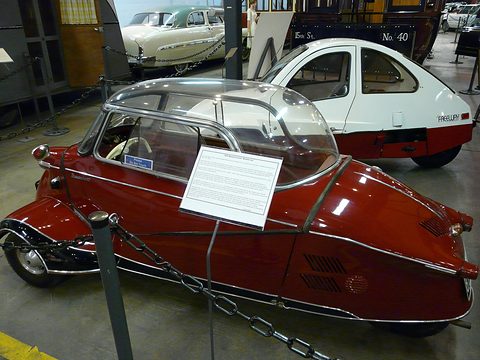
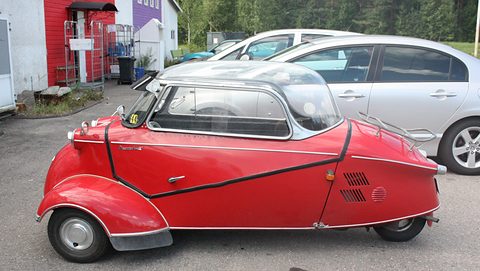
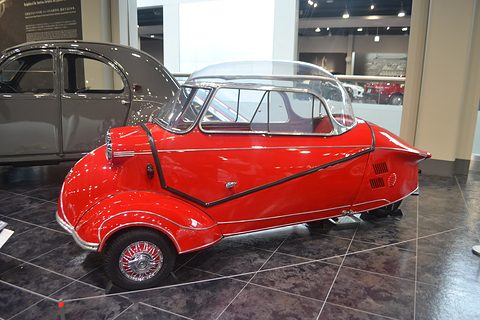
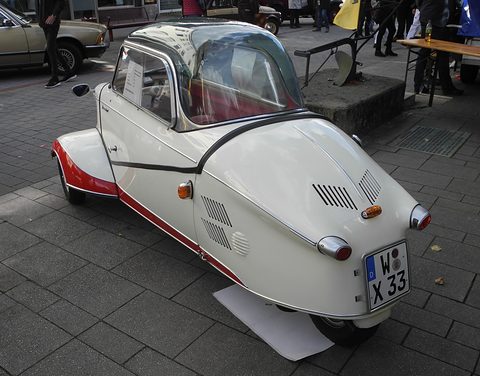
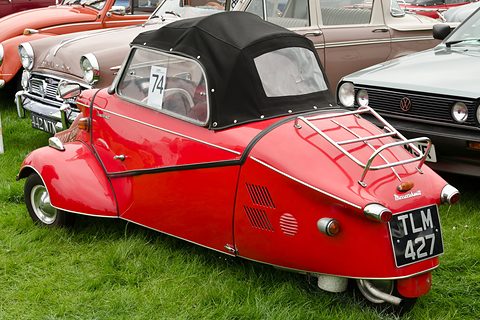
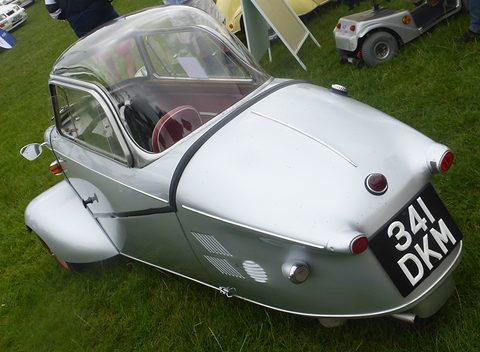
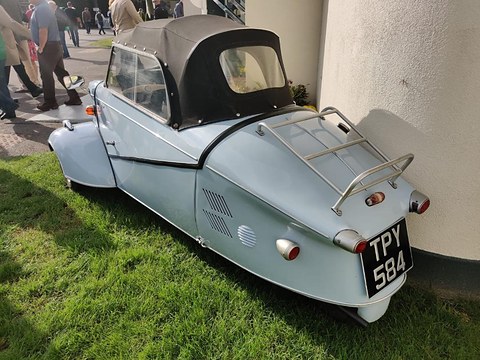
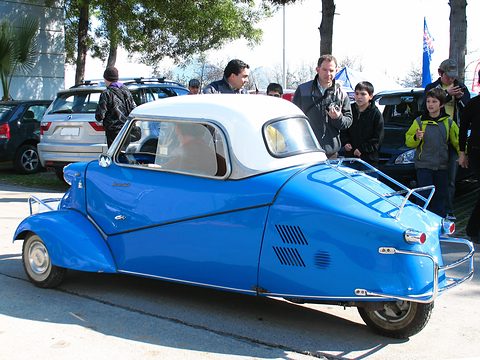
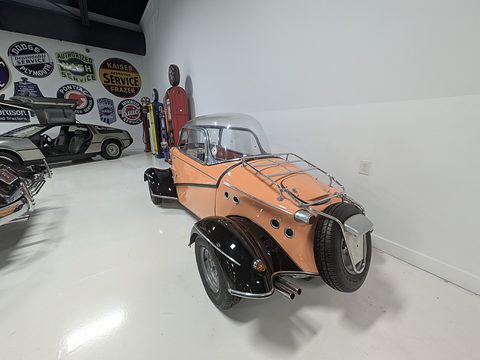
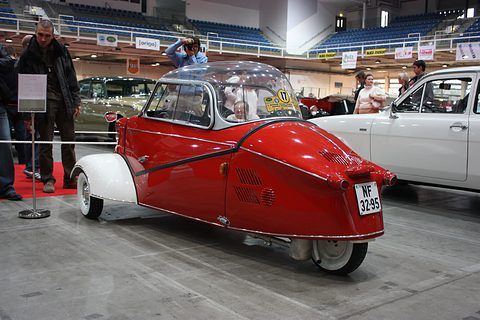
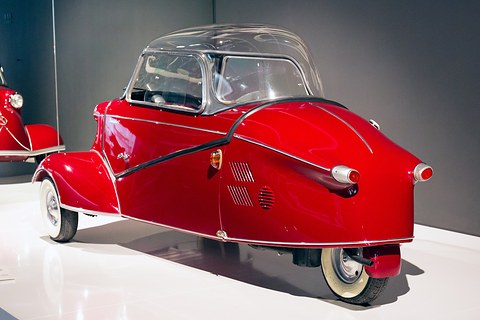
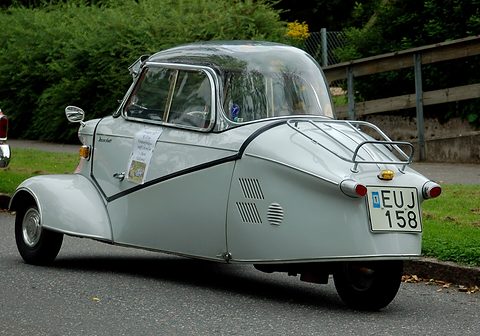
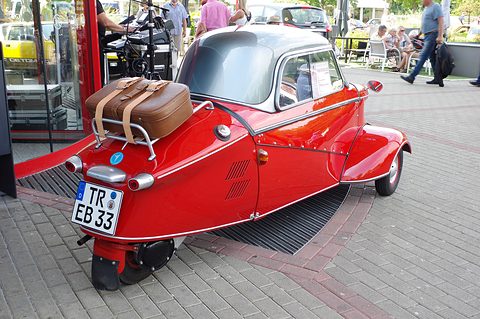
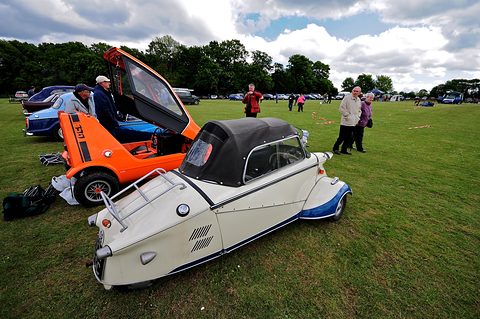
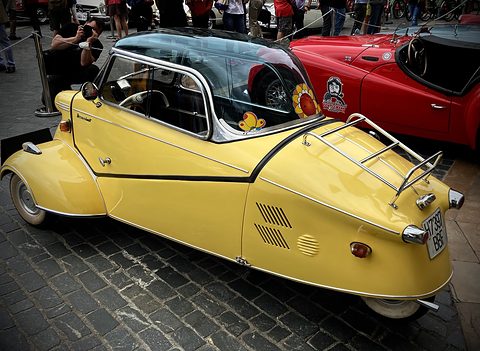
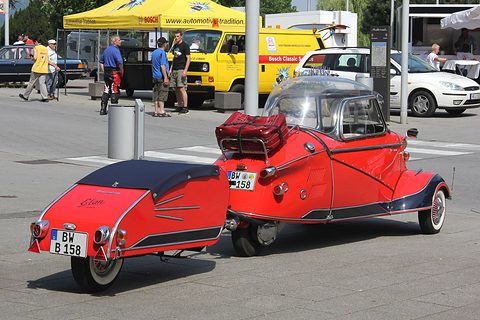
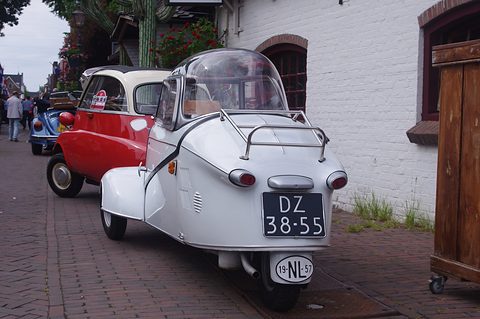
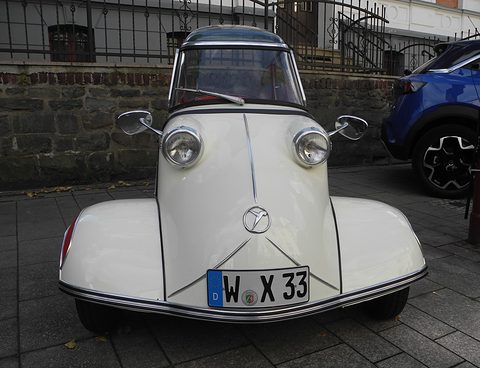
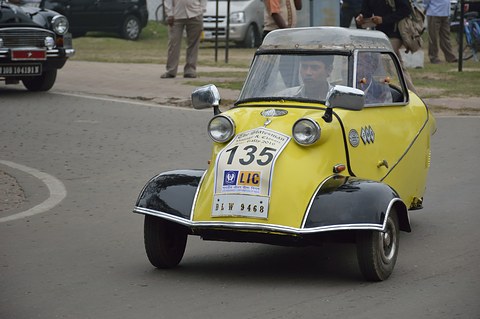
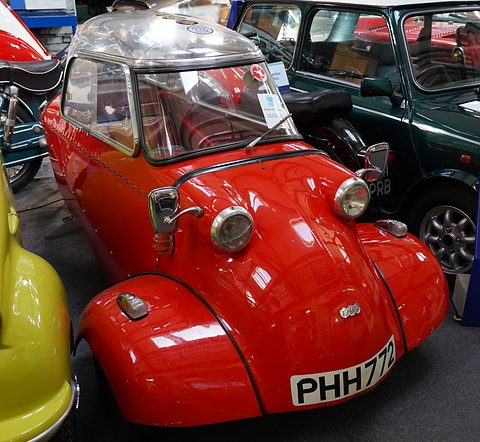
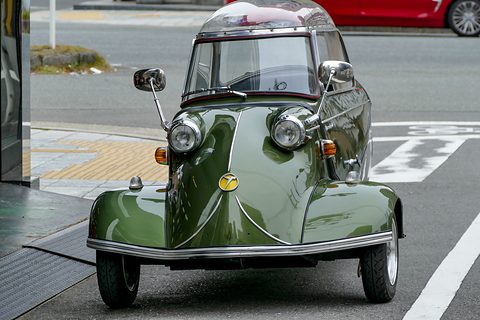
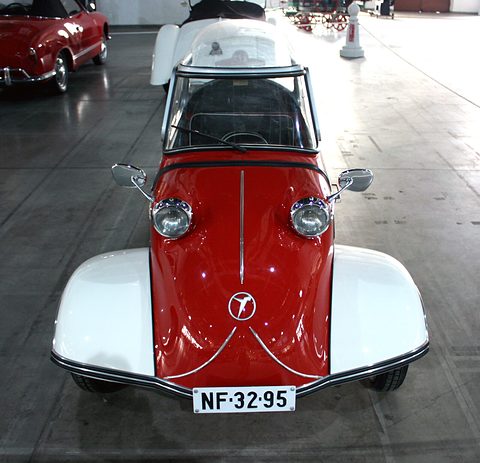
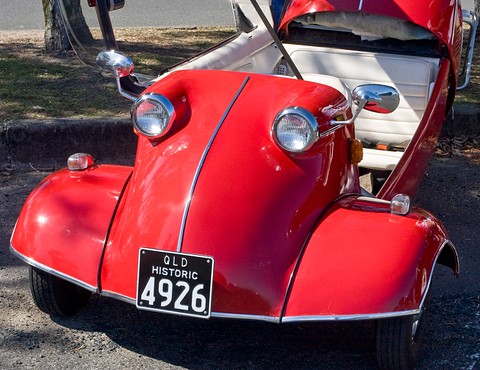
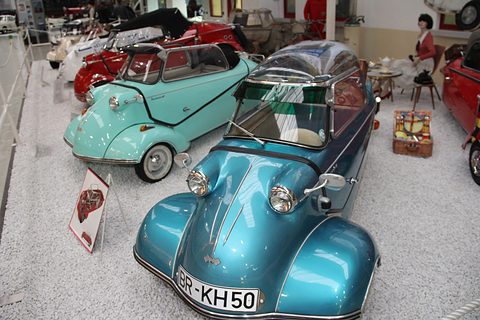
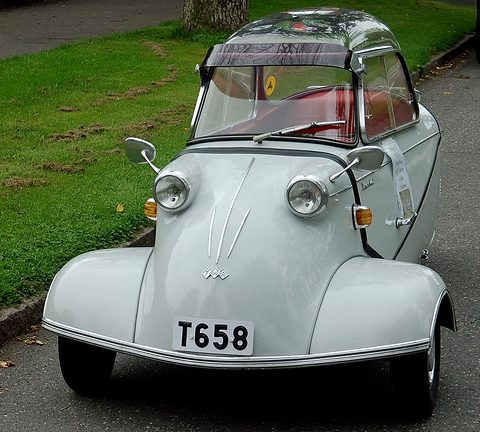
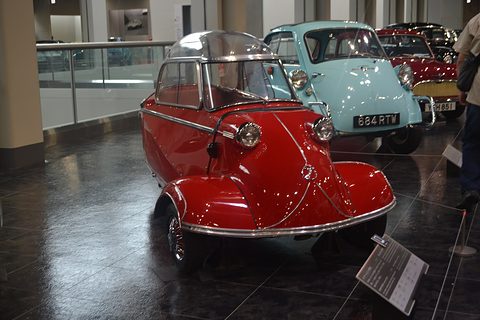
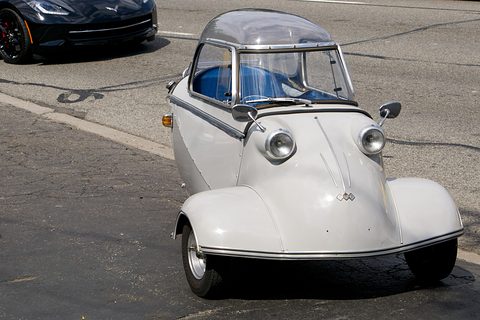
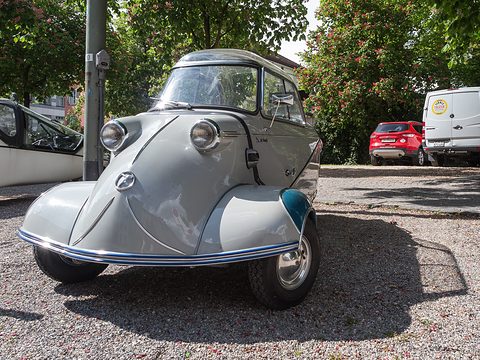
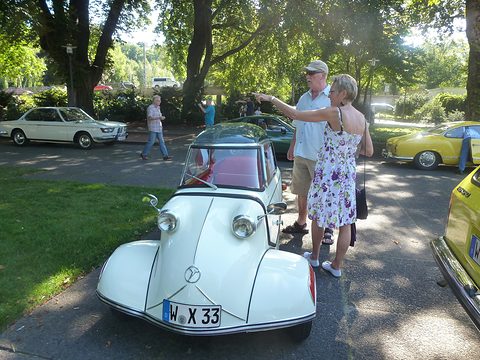
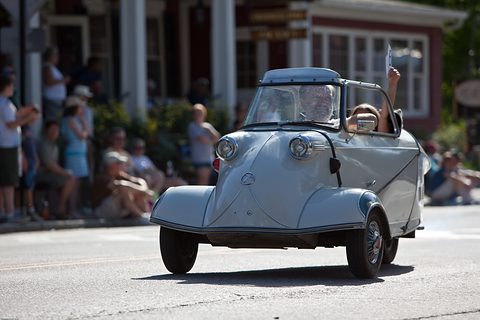
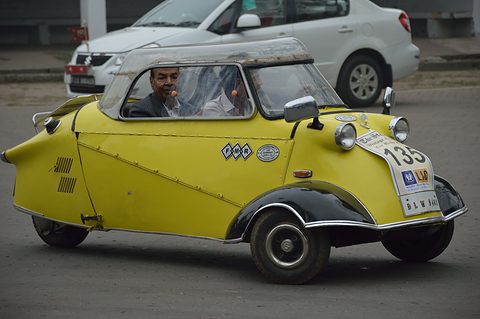
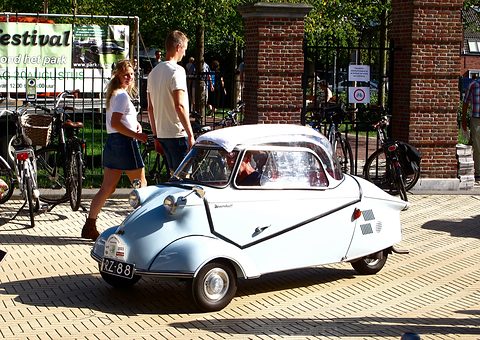
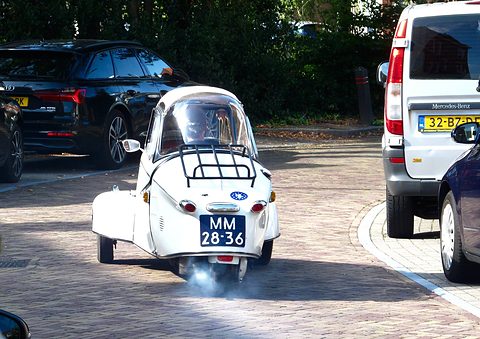
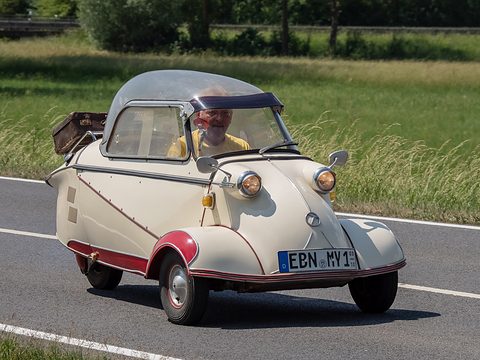
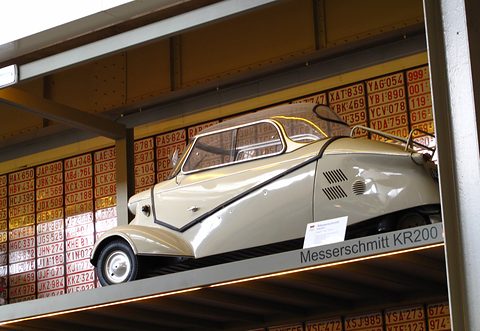
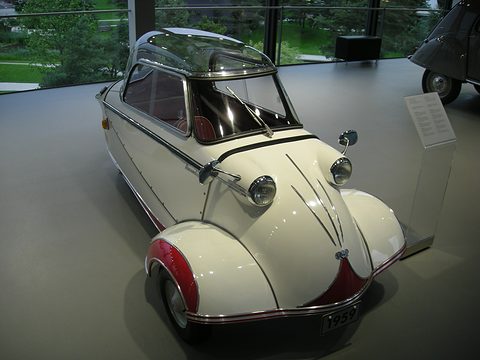
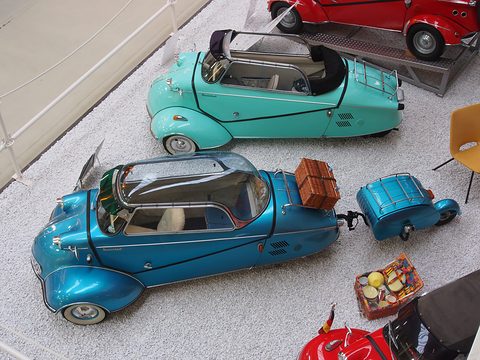
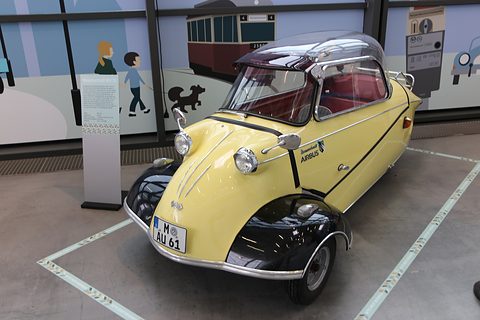
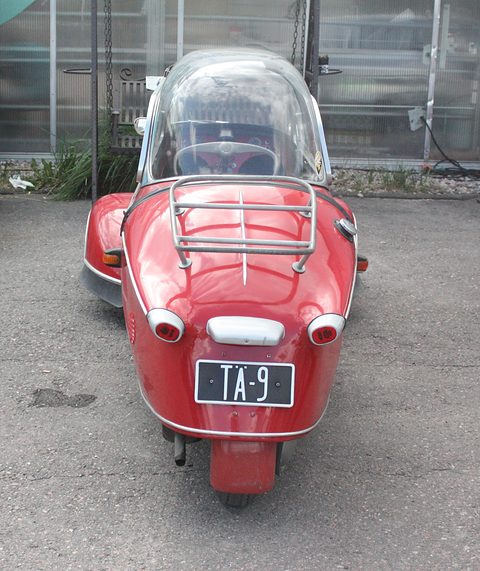
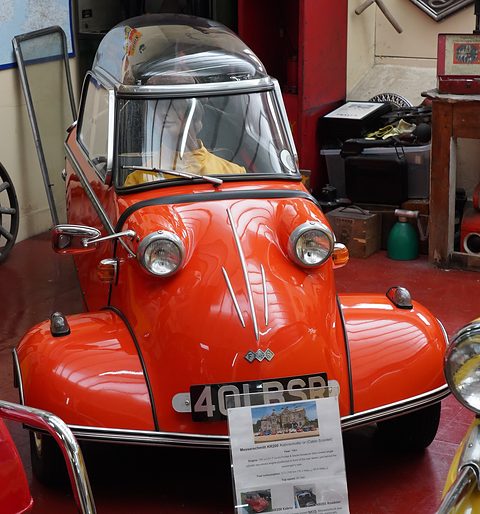
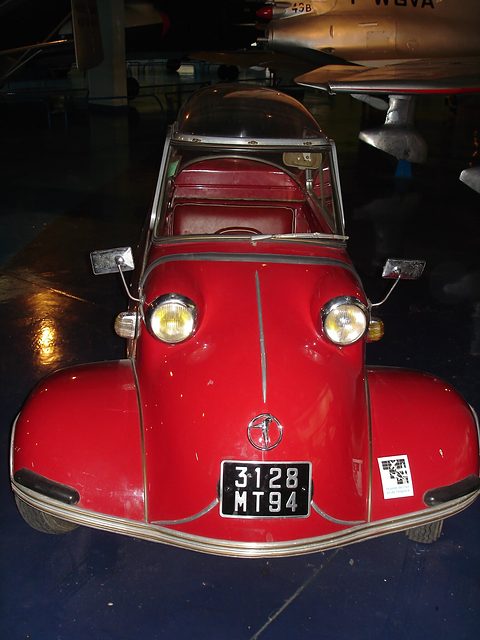
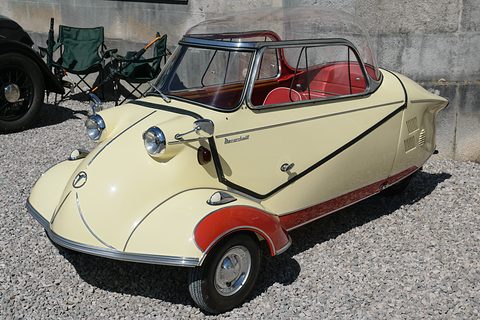
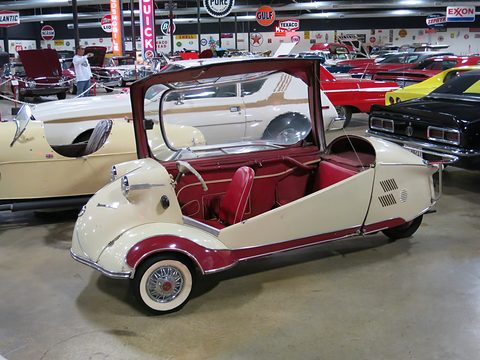
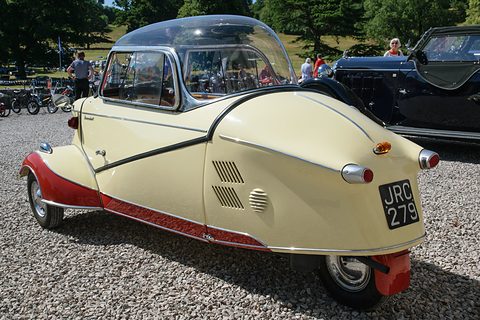
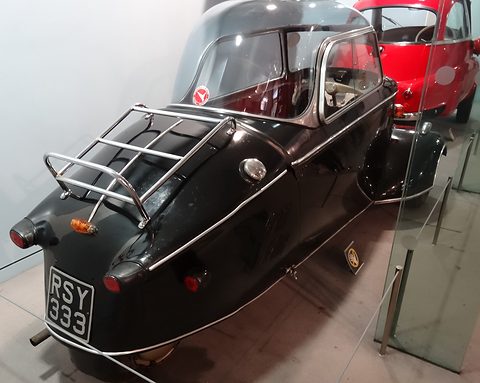
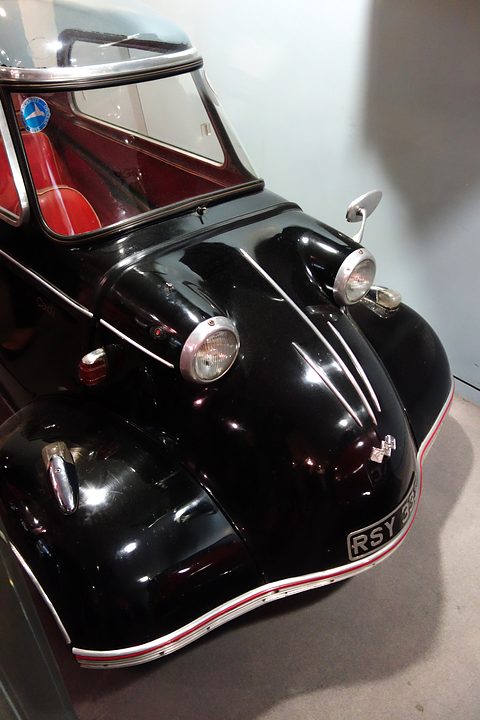
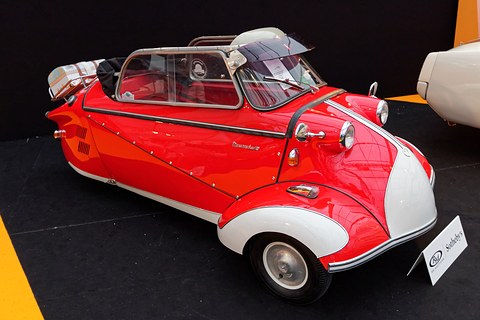
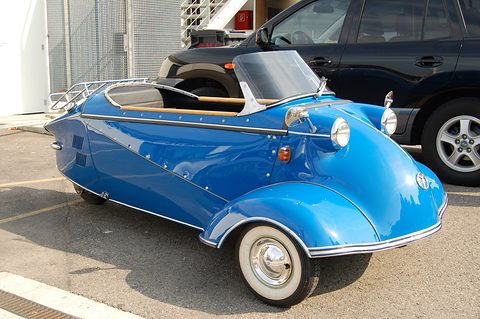
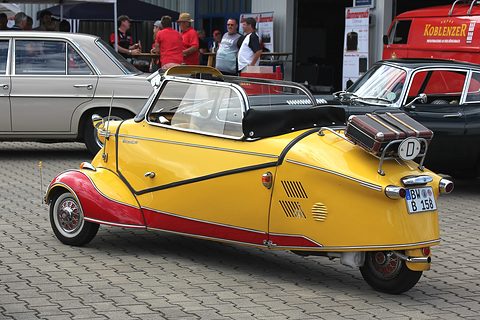
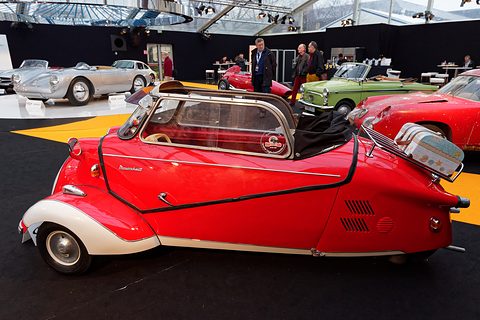
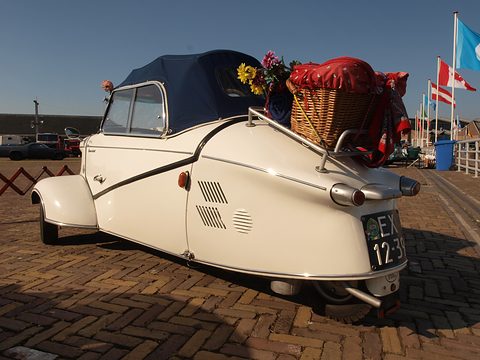
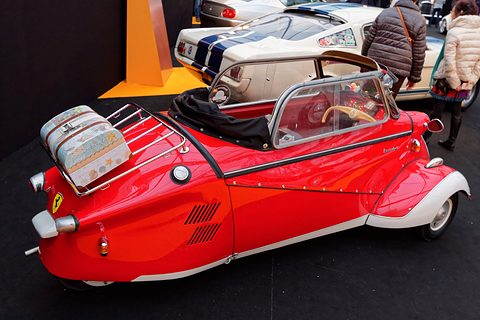
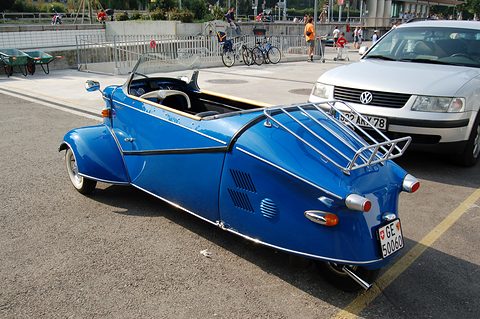
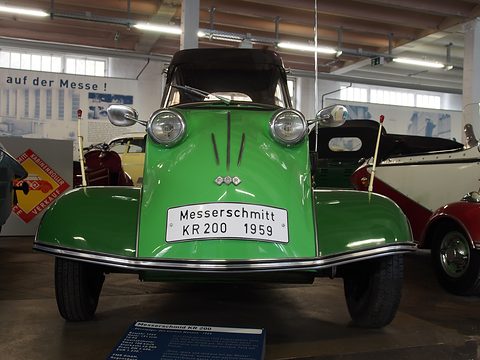
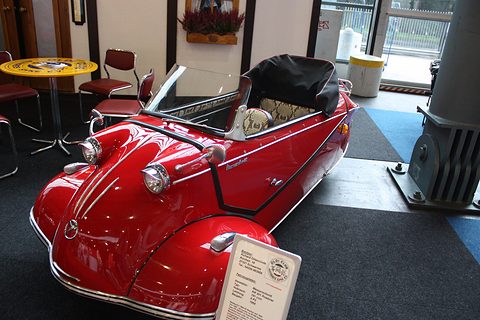
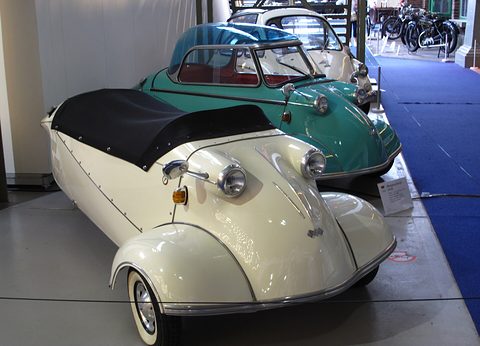
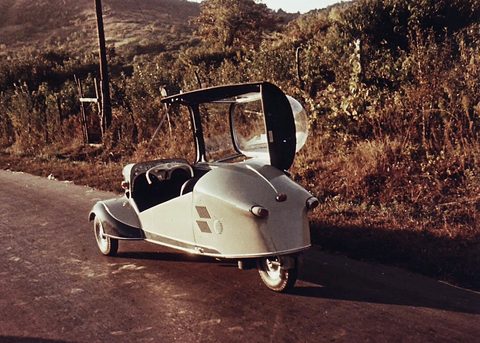
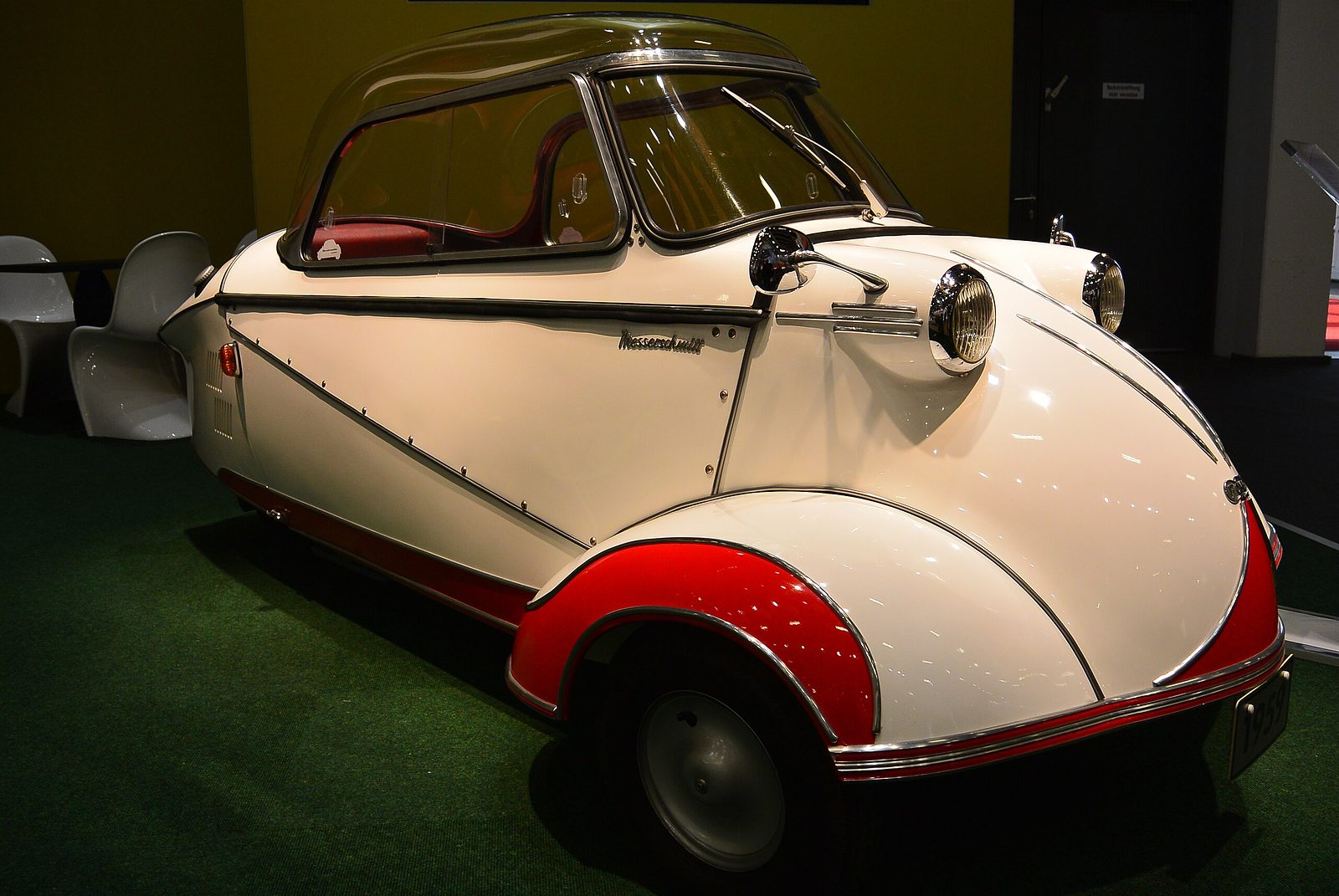
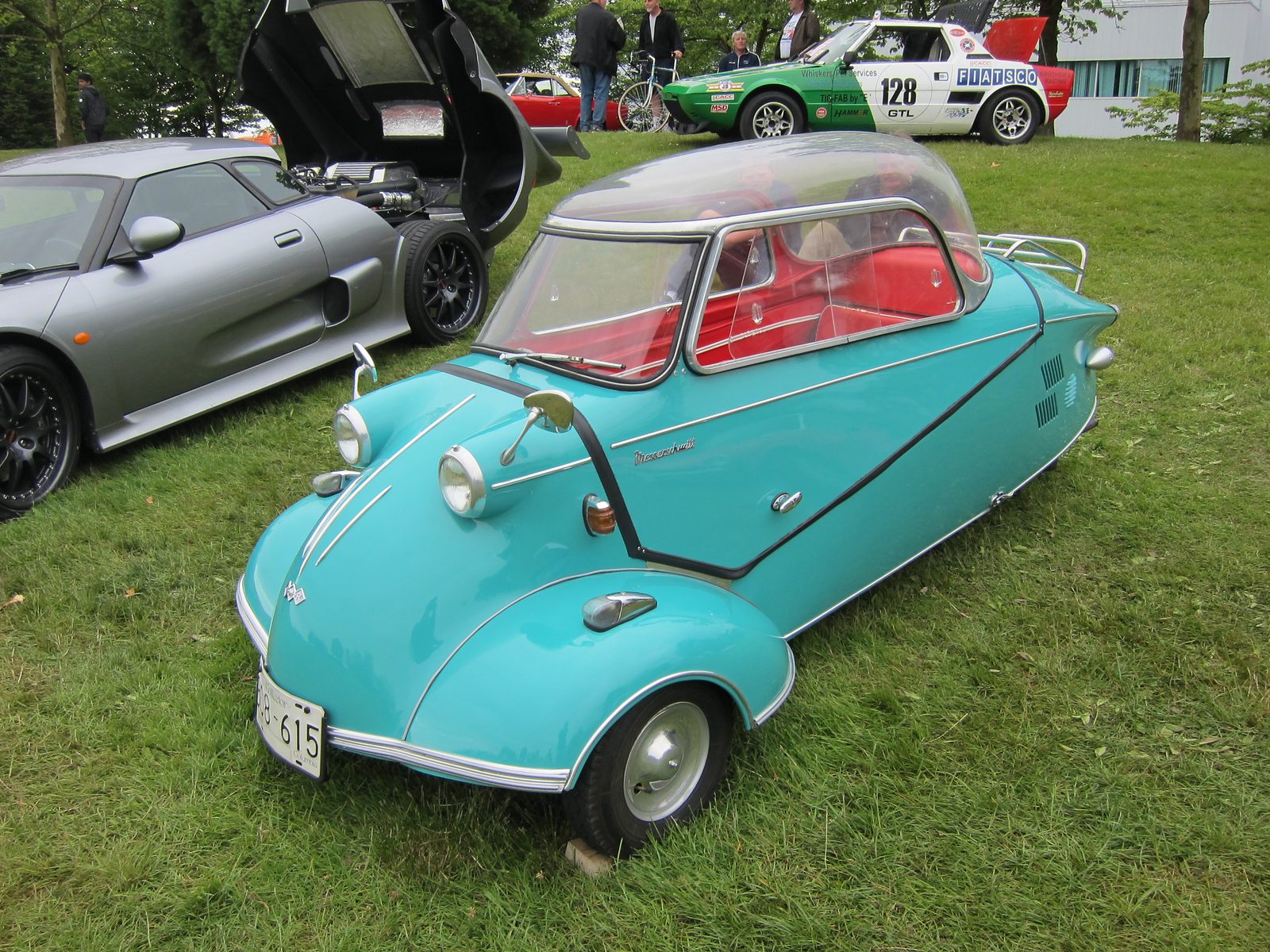
The bubble car most people picture: an aircraft canopy over two seats in tandem, a bar to steer with, three wheels and no reverse gear. To back out of a parking space, you stop the engine and start it again the other way round.

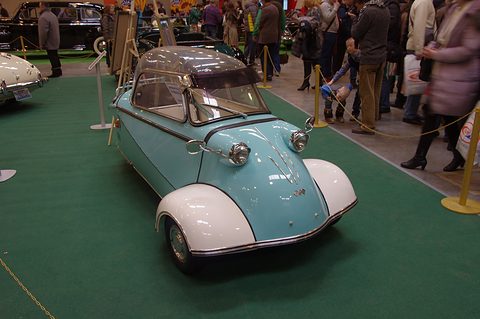
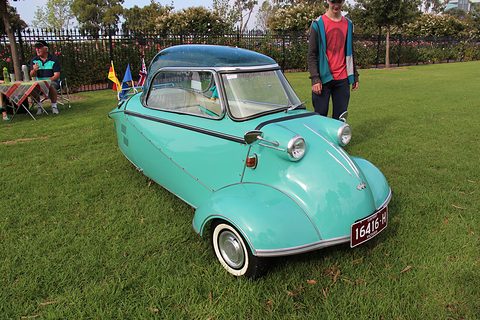
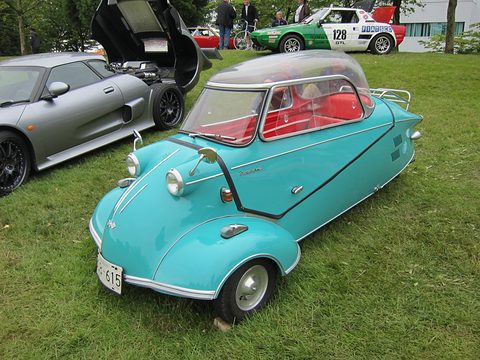
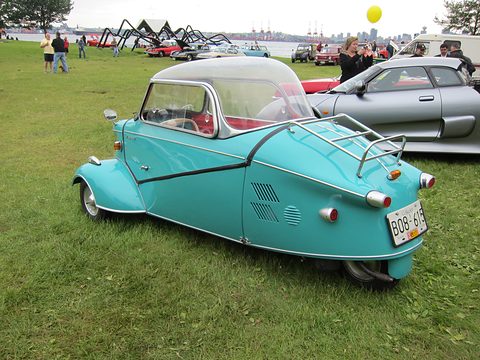
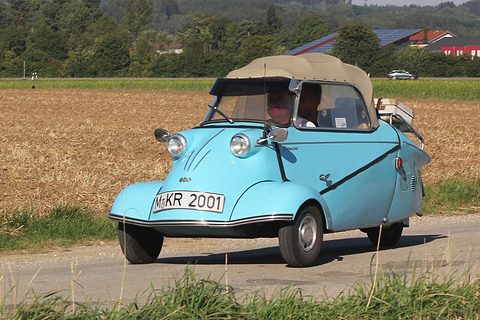
Turquoise bubble car with a dark roof on a lawn, a boy standing behind it.
A turquoise 1960 KR200 with whitewall tyres at an Australian show in 2014.Photo: Sicnag, CC BY 2.0, via Wikimedia Commons

At a glance

The spec plate

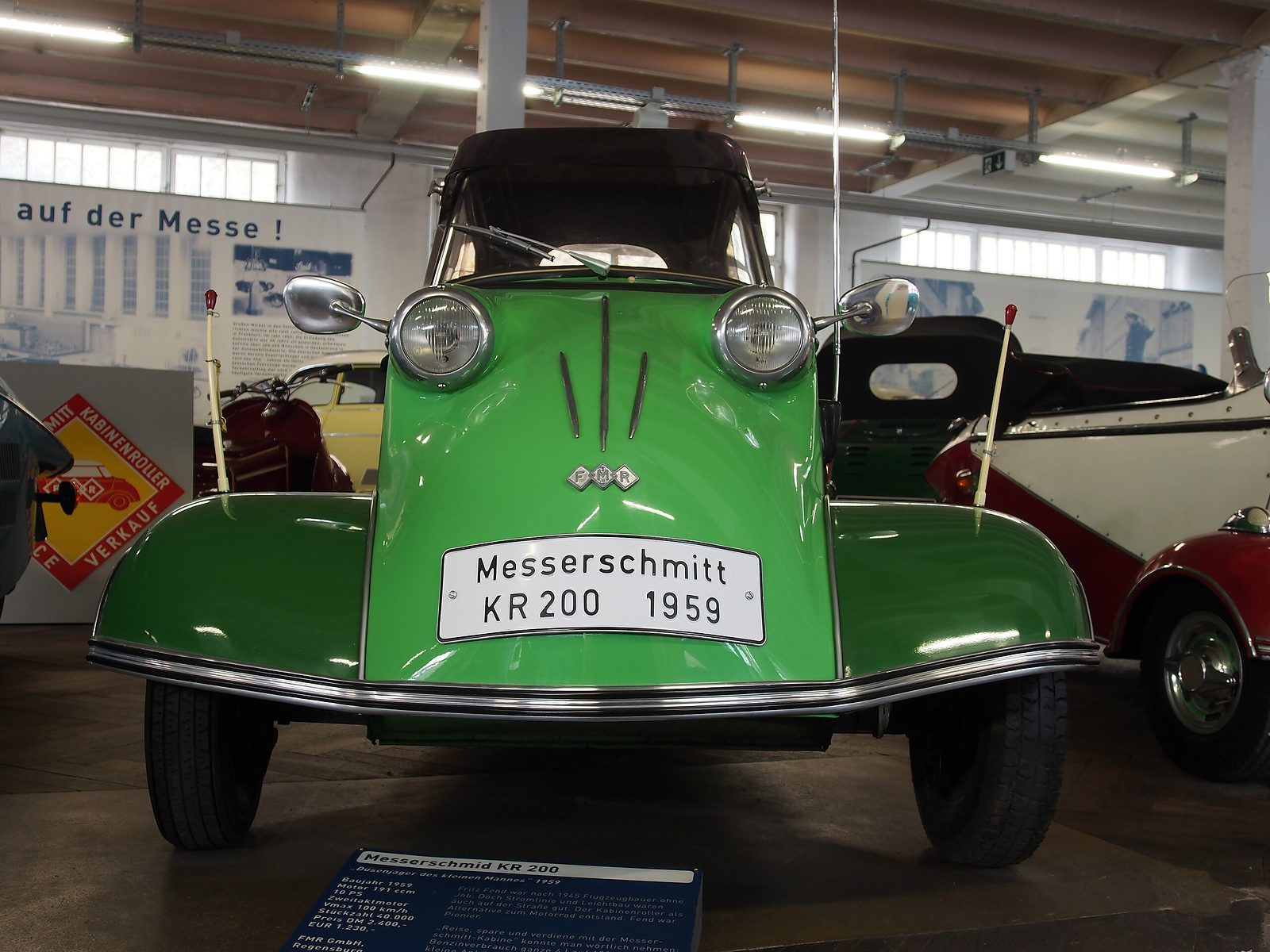
Messerschmitt KR200

Typ KR 200 · Regensburg

Built
1955–⁠1964From February 1955
Country
West GermanyRegensburg, Bavaria
Maker
Regensburger Stahl- und MetallbauFrom January 1957 FMR, Fahrzeug- und Maschinenbau Regensburg (Fend and Knott)
Engine
191 cc Fichtel & Sachs two-stroke singleFan-cooled; reversed by restarting it backwards
Power
10.2 PS7.5 kW at 5,250 rpm
Length
2,820 mm1,220 mm wide, 1,200 mm high
Weight
230 kgWith a full tank
Seats
1 + 1In tandem, under the canopy
Wheels
3Two steered at the front, one driven at the back
Price new
DM 2,550February 1955
Production
about 30,00030,286 by the most-cited count; 41,190 probably includes the KR175
Top speed
91km/h91 km/hMeasured solo in 1955; 84 km/h two-up

How big is it?

True proportion

2.82 m

It is 150 mm shorter than a Fiat 500, about 1.6 adults laid end to end, and twice the length of a Peel P50.

  • 1.22 m wide
  • 230 kg: about three adults
  • Two seats, one behind the other
Drawn at true proportion. The track is 3.6 metres long; the adult stands at the same scale. The Peel P50 is the smallest production car, on every page for comparison.

The story

History

The man behind it never worked for Messerschmitt. Fritz Fend was an aeronautical engineer who worked during the war at the Rechlin test centre, some of it on the Me 262 programme, and the Messerschmitt Owners’ Club is firm that he “was never employed by Messerschmitt then or later”.source 1 After the war he built the Fend Flitzer, an invalid carriage with three wheels, and in January 1952 he took his ideas to Messerschmitt’s idle works at Regensburg. Willy Messerschmitt would build only a two-seater. The result, the Messerschmitt KR175, went into production early in 1953, built under licence from Fend.source 2source 3source 1 It is the case that best fits the story that the aircraft makers built cars because they were not allowed to build aircraft, and even here the design was not the aircraft firm’s.

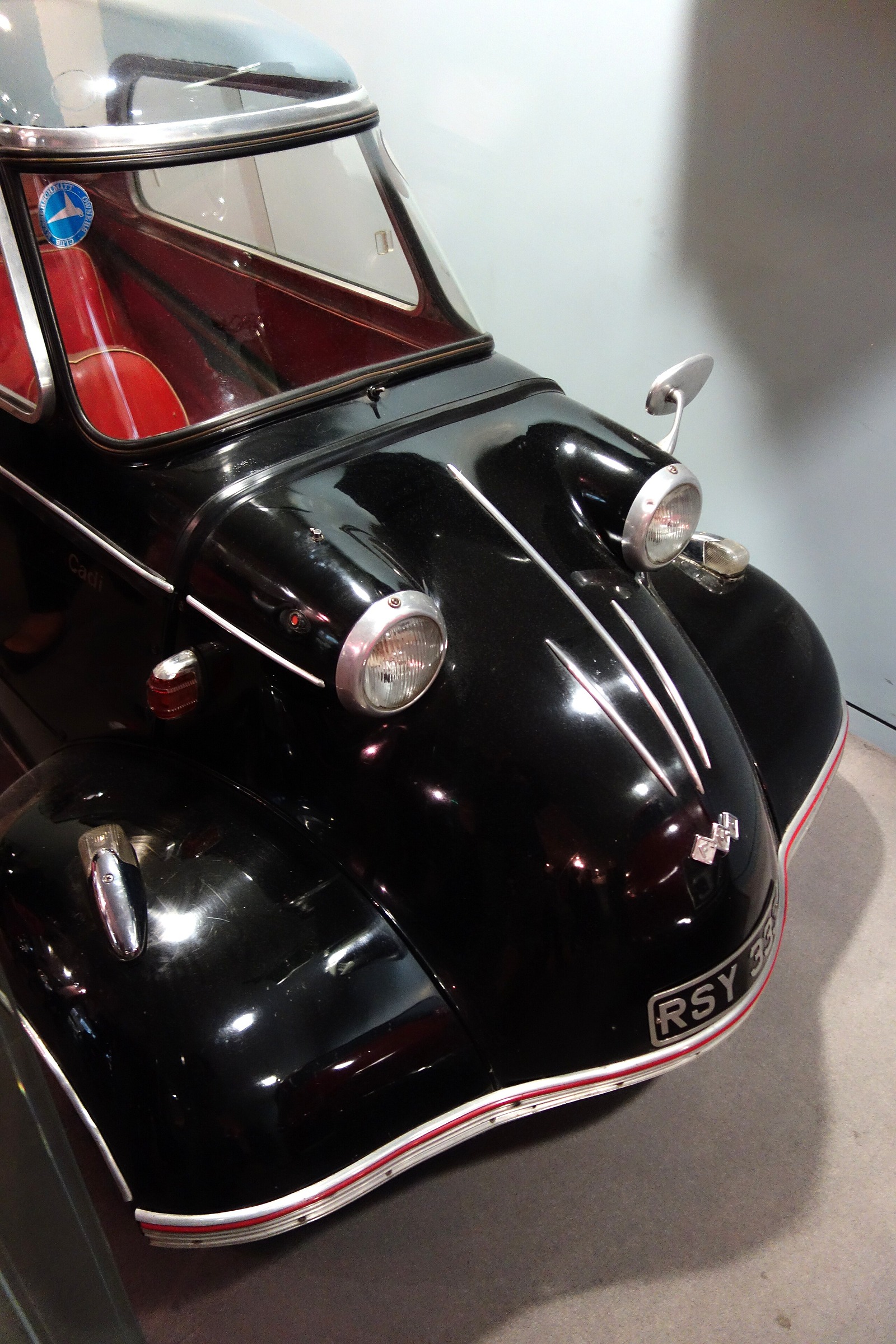
The KR200 kept the KR175’s frame and changed much of the rest. The search for a replacement for the 175 cc engine began in January 1954, by the Weiner museum’s account; the specification was being discussed in June, and production drawings were ready in September. A pre-production car existed that winter, still in the KR175’s yellow-ochre primer, and the factory gave it to the American circus entertainer Vic Hyde for publicity. He fitted it to carry his musical instruments and toured Europe and America in it.source 3source 4 On 5 February 1955 auto motor und sport announced the KR 200 for delivery at the end of March. It kept the frame and the wheelbase, but the front track grew from 920 mm (36 in) to 1,080 mm (43 in), there were hydraulic dampers and softer springing, a curved “panorama” windscreen, and a fan-cooled 200 cc Sachs engine, for a claimed 100 km/h (62 mph). It cost DM 2,550, and the Export model DM 150 more; the KR175 carried on beside it at DM 2,125.source 5 It also kept the KR175’s three-wheeler layout: a pair of steered wheels in front, a single driven wheel behind.source 2source 6

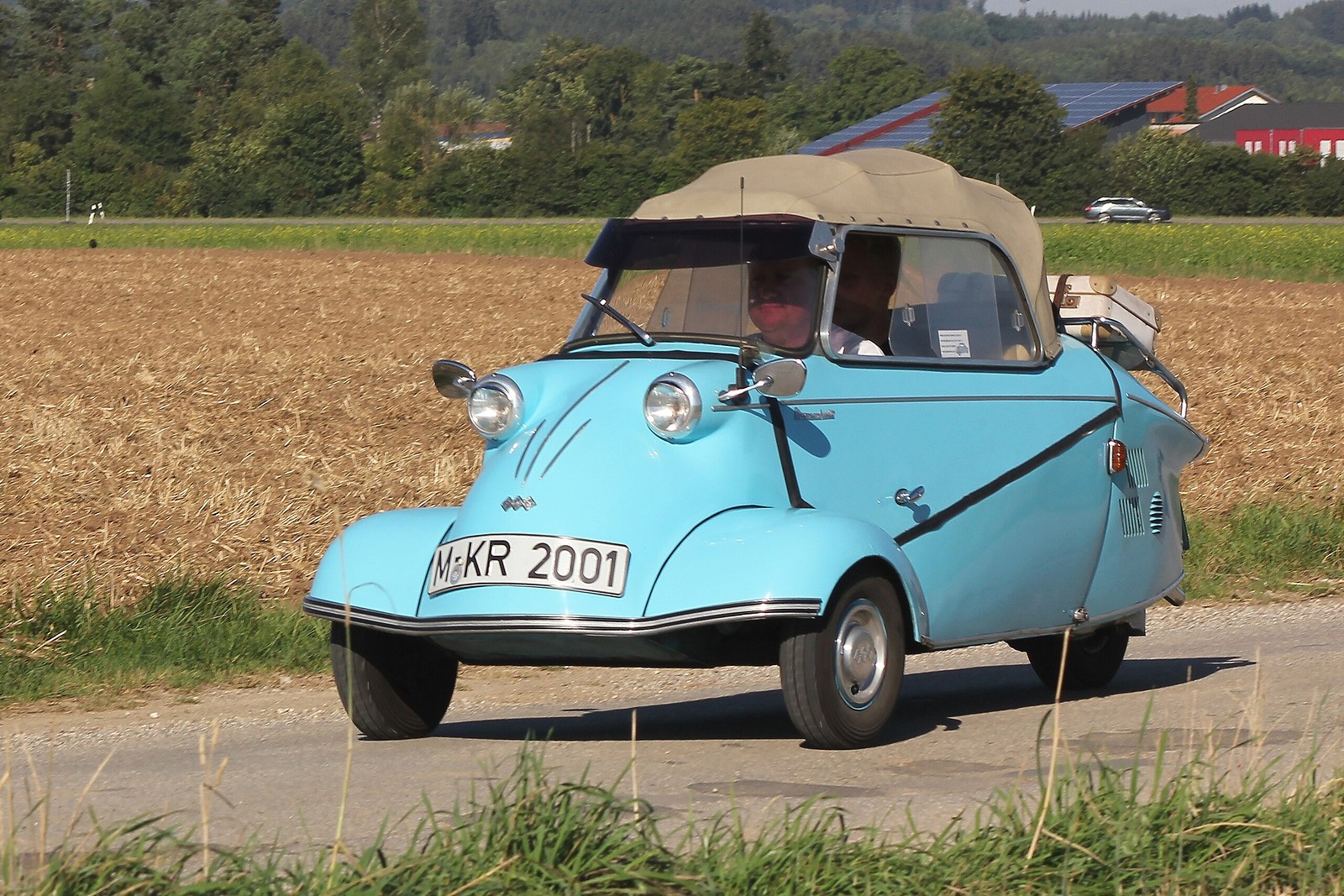
The first roof did not last. The earliest KR200s had a transparent Rhenalon top that could be rolled up and stowed above the engine in fine weather. Sun and heat made it brittle, so it was recalled and replaced with Plexiglas, and brochures already printed were blacked out rather than pulped.source 2 The 1955 road test still describes a roof of flexible material that could be taken off.source 6

A cockpit for two

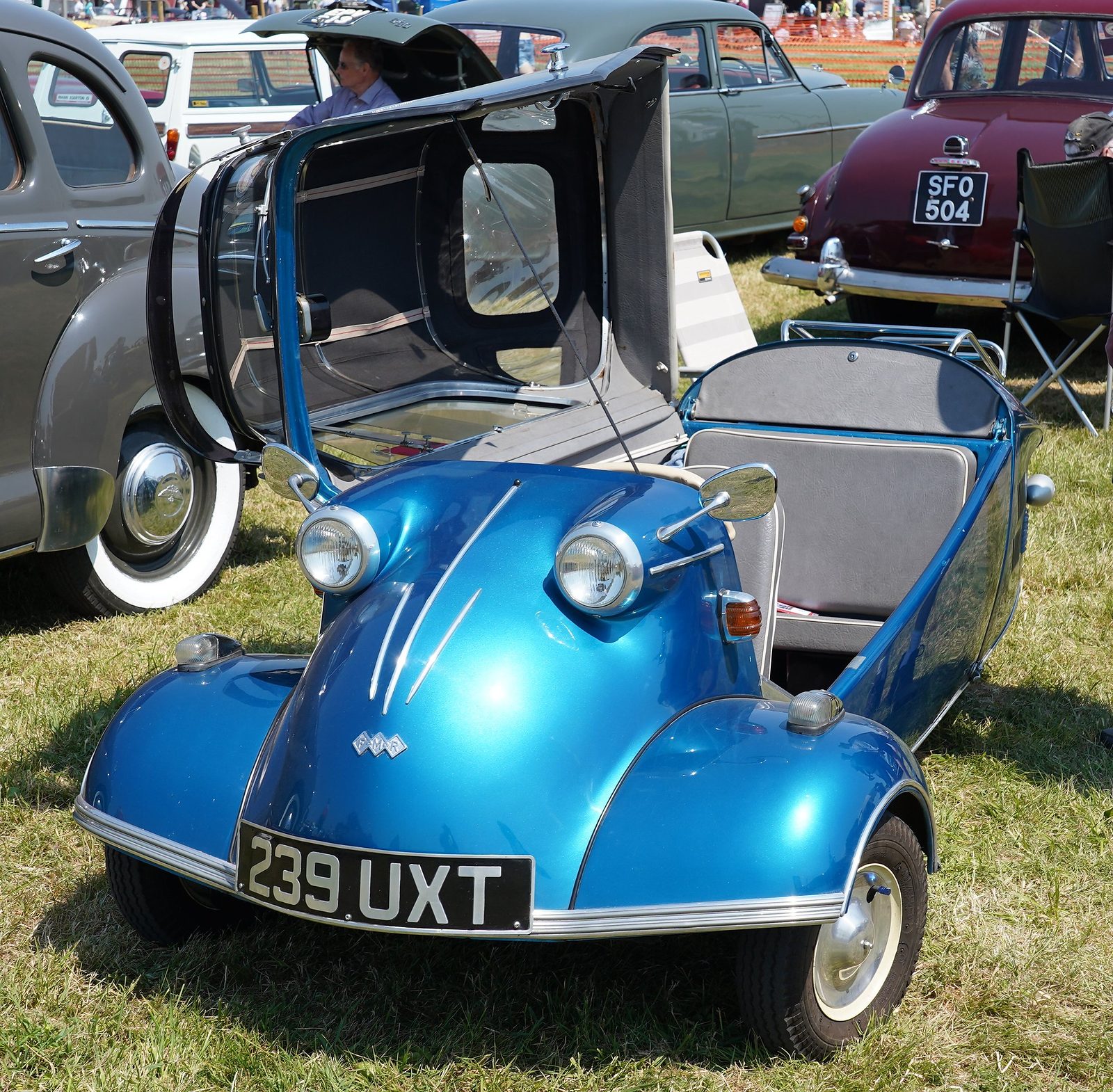
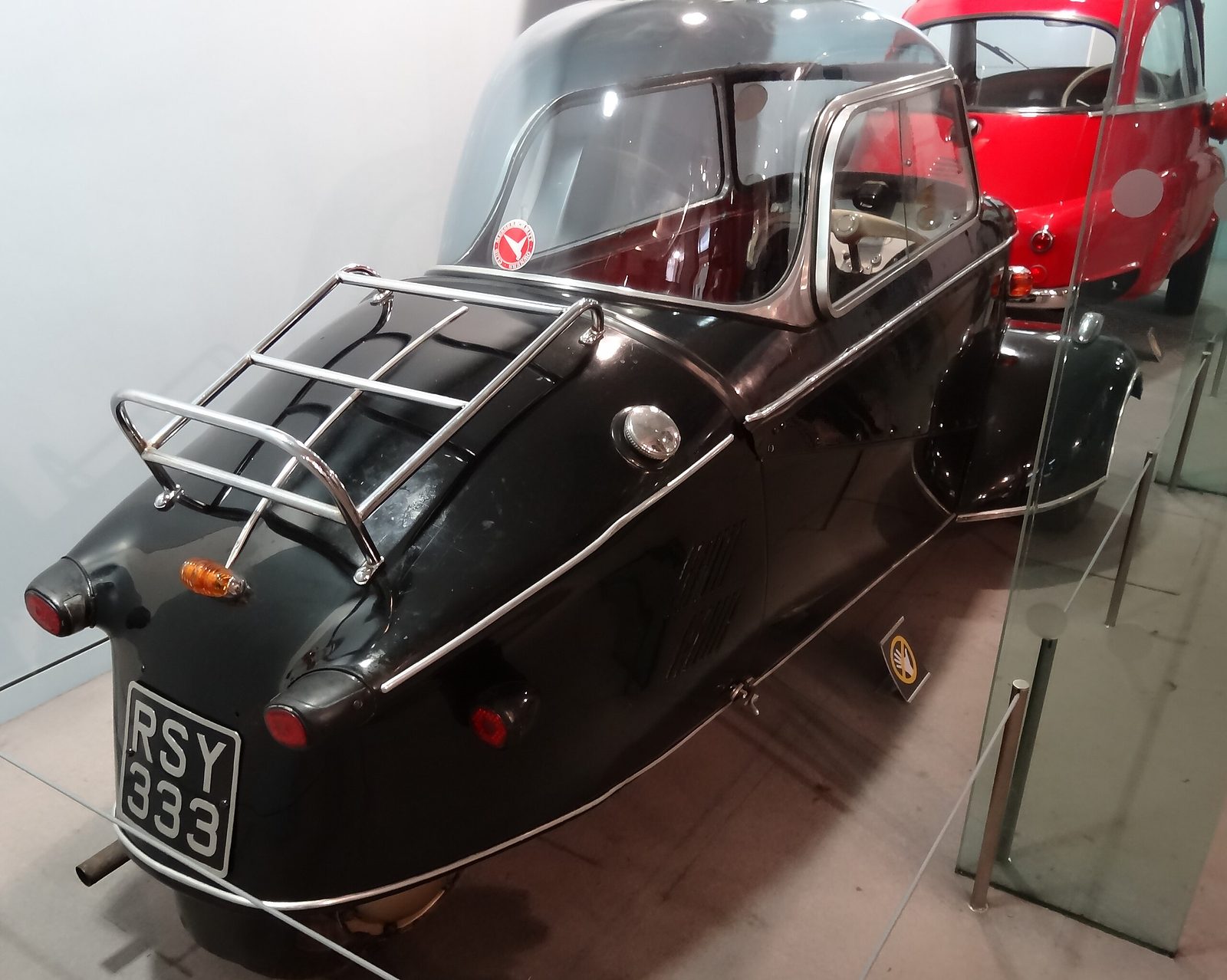
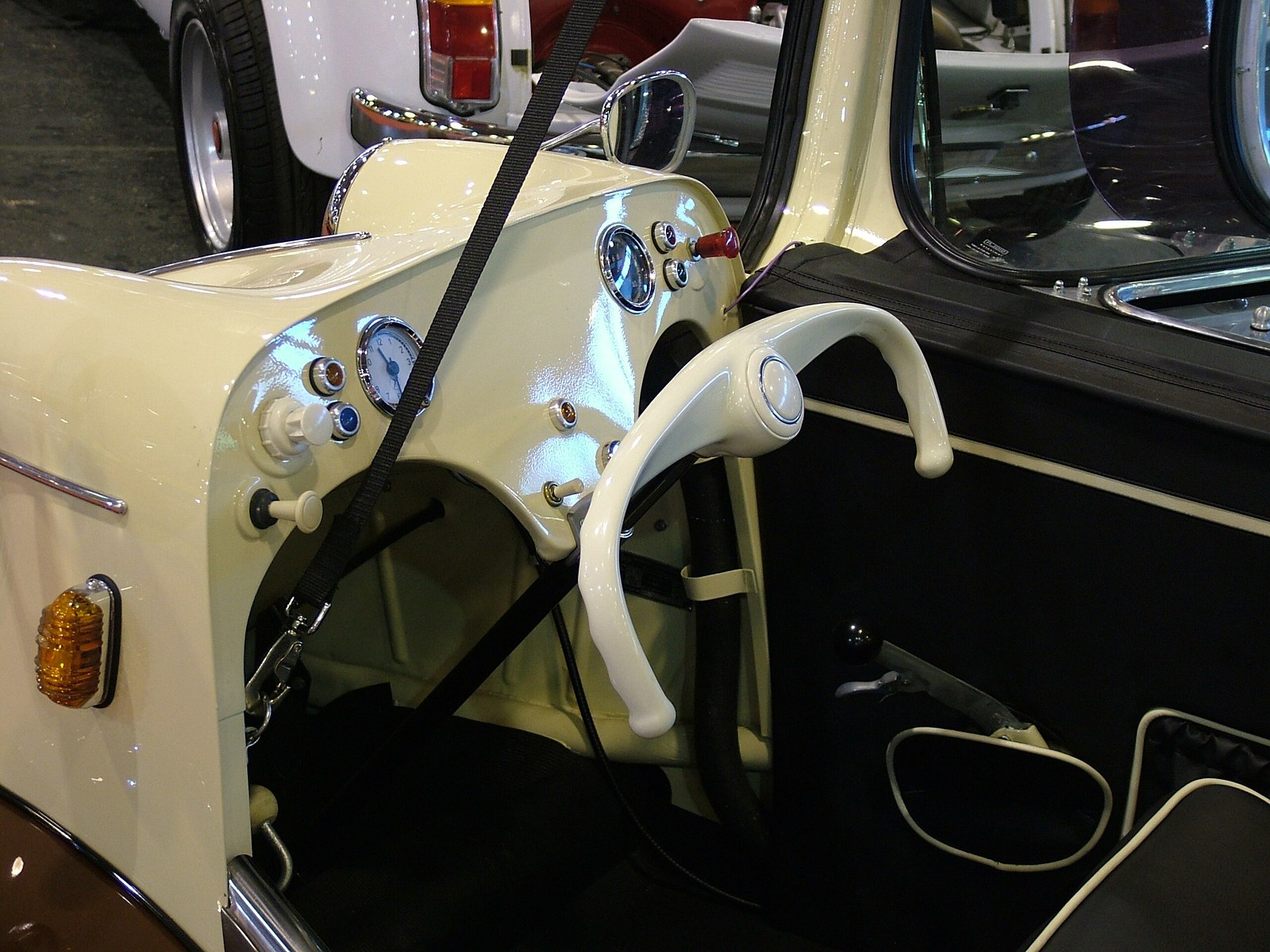
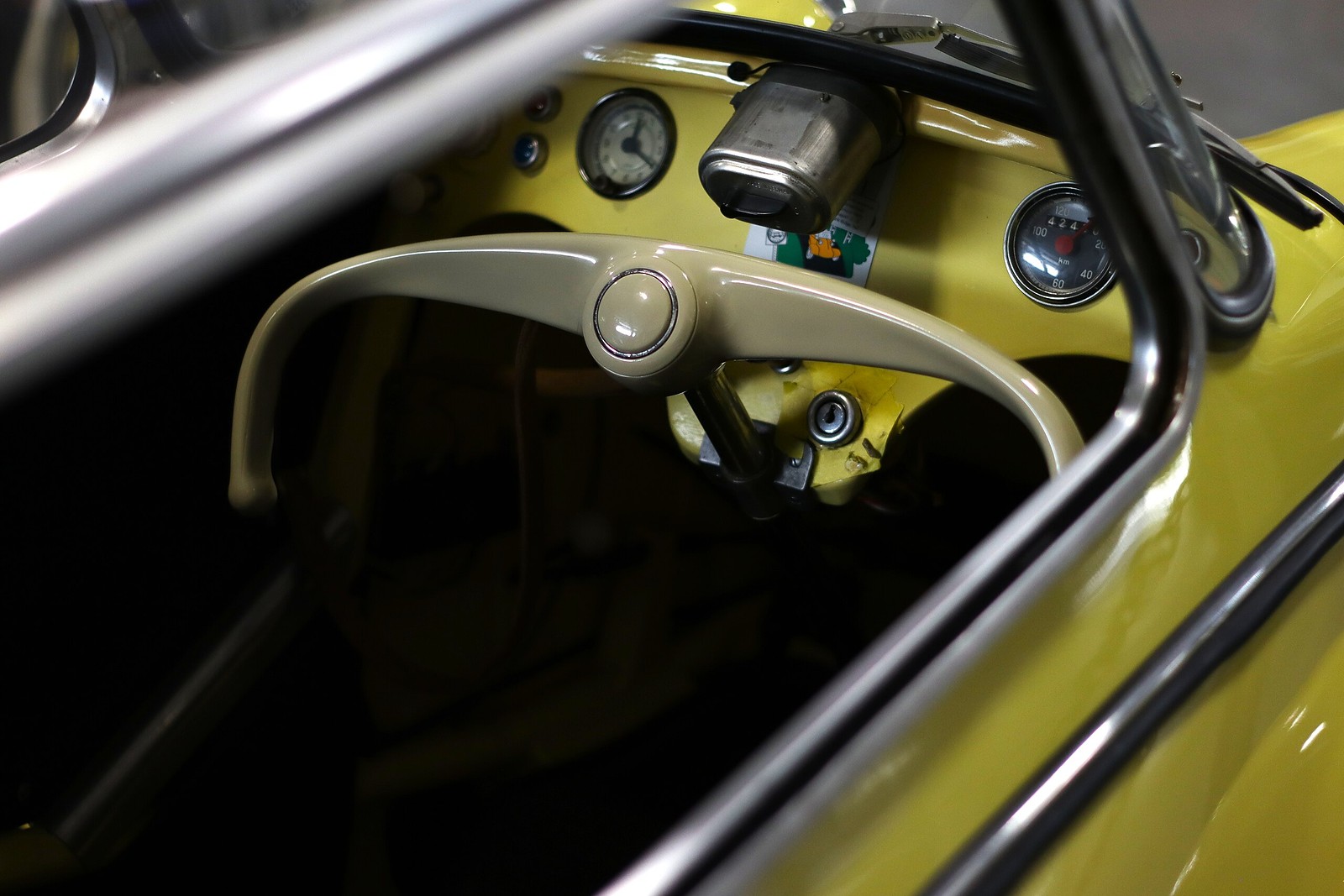
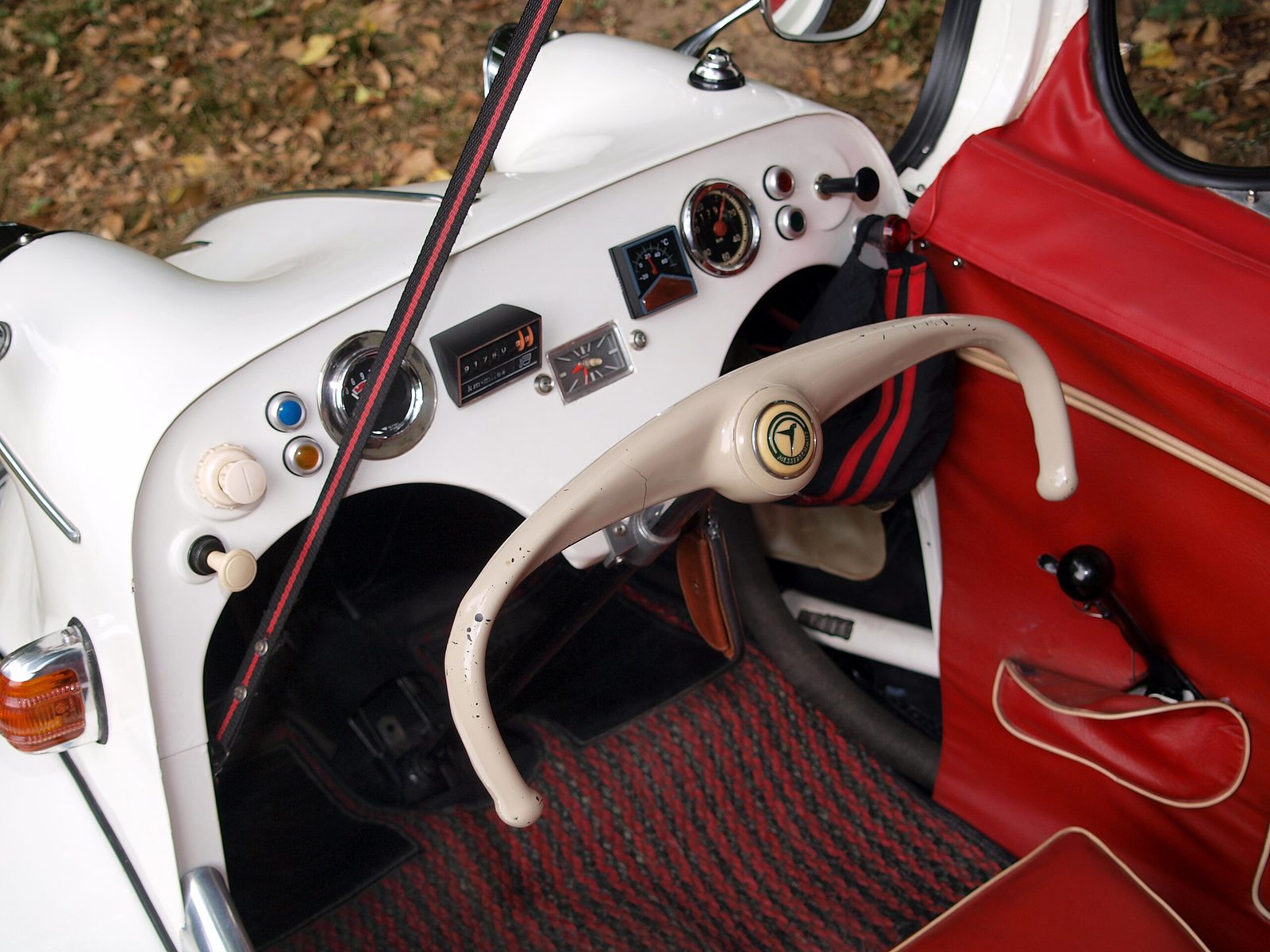
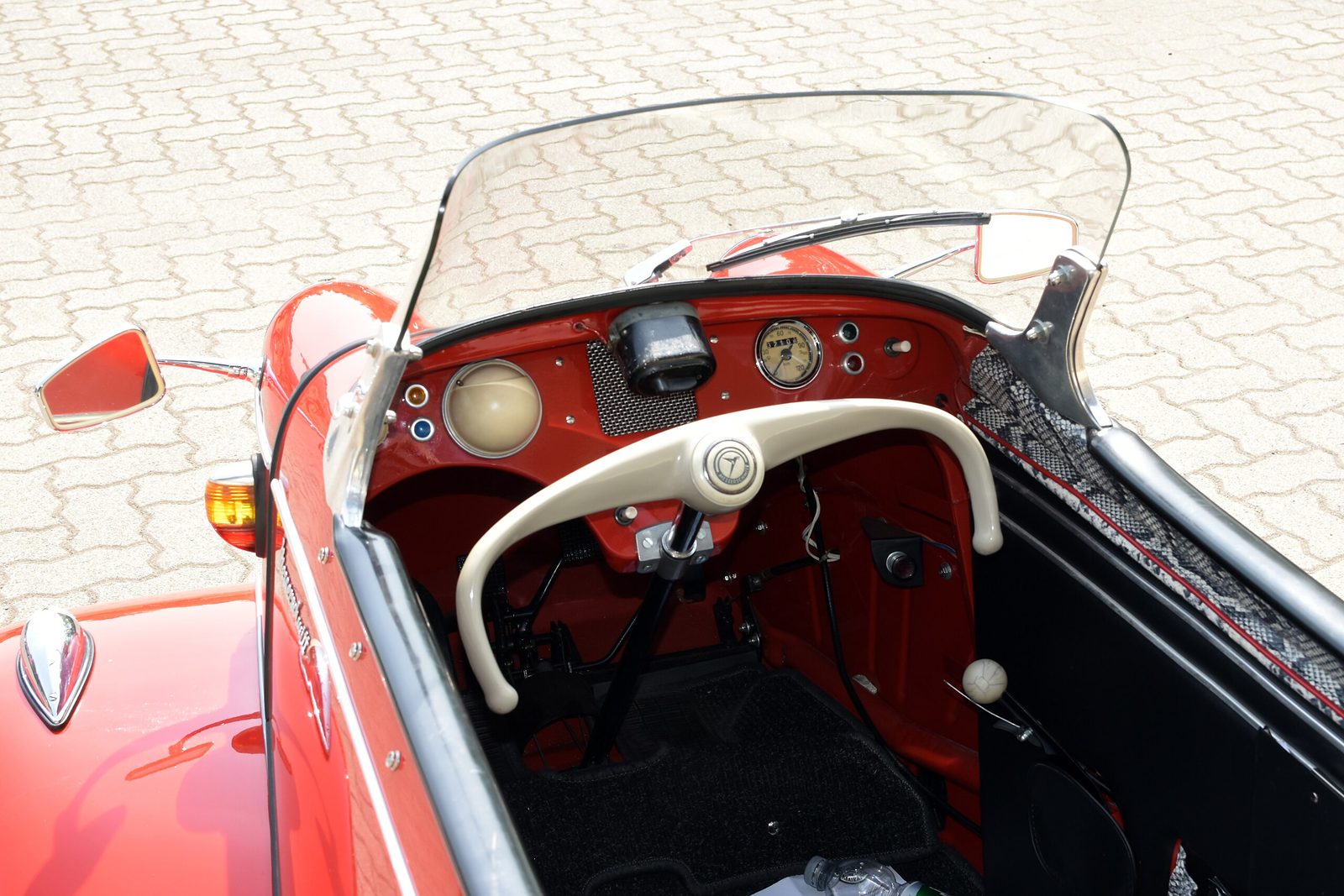
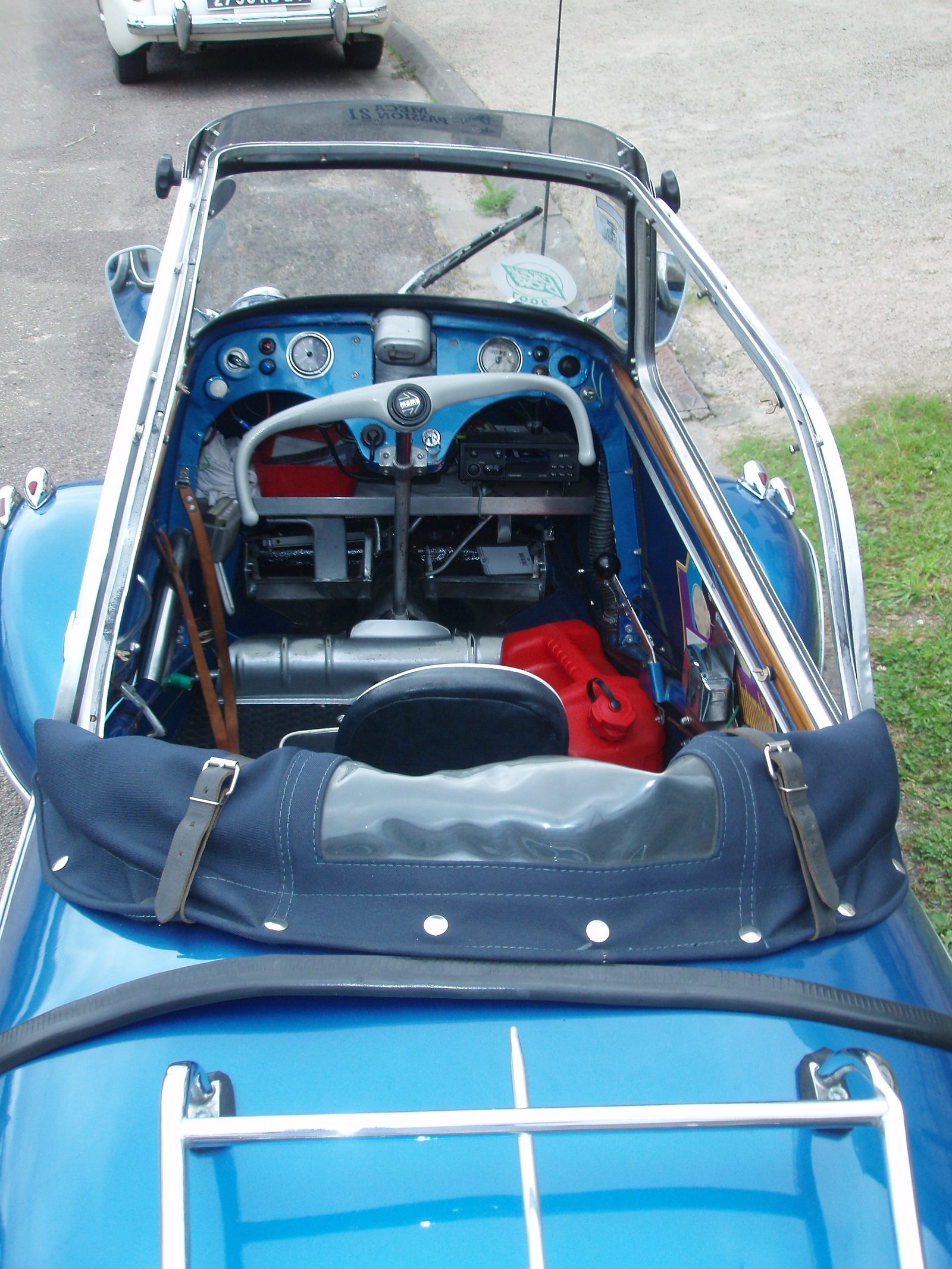
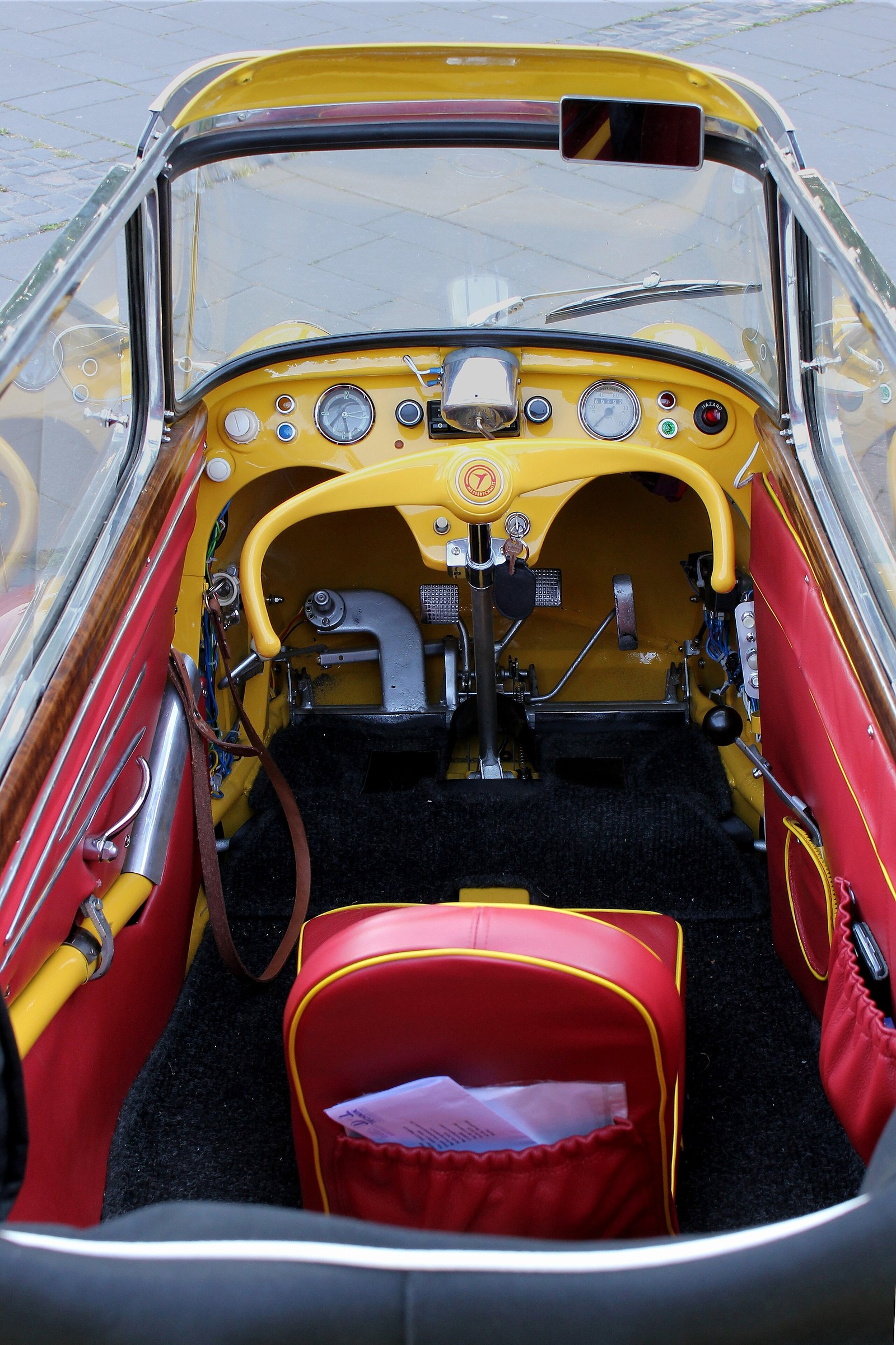
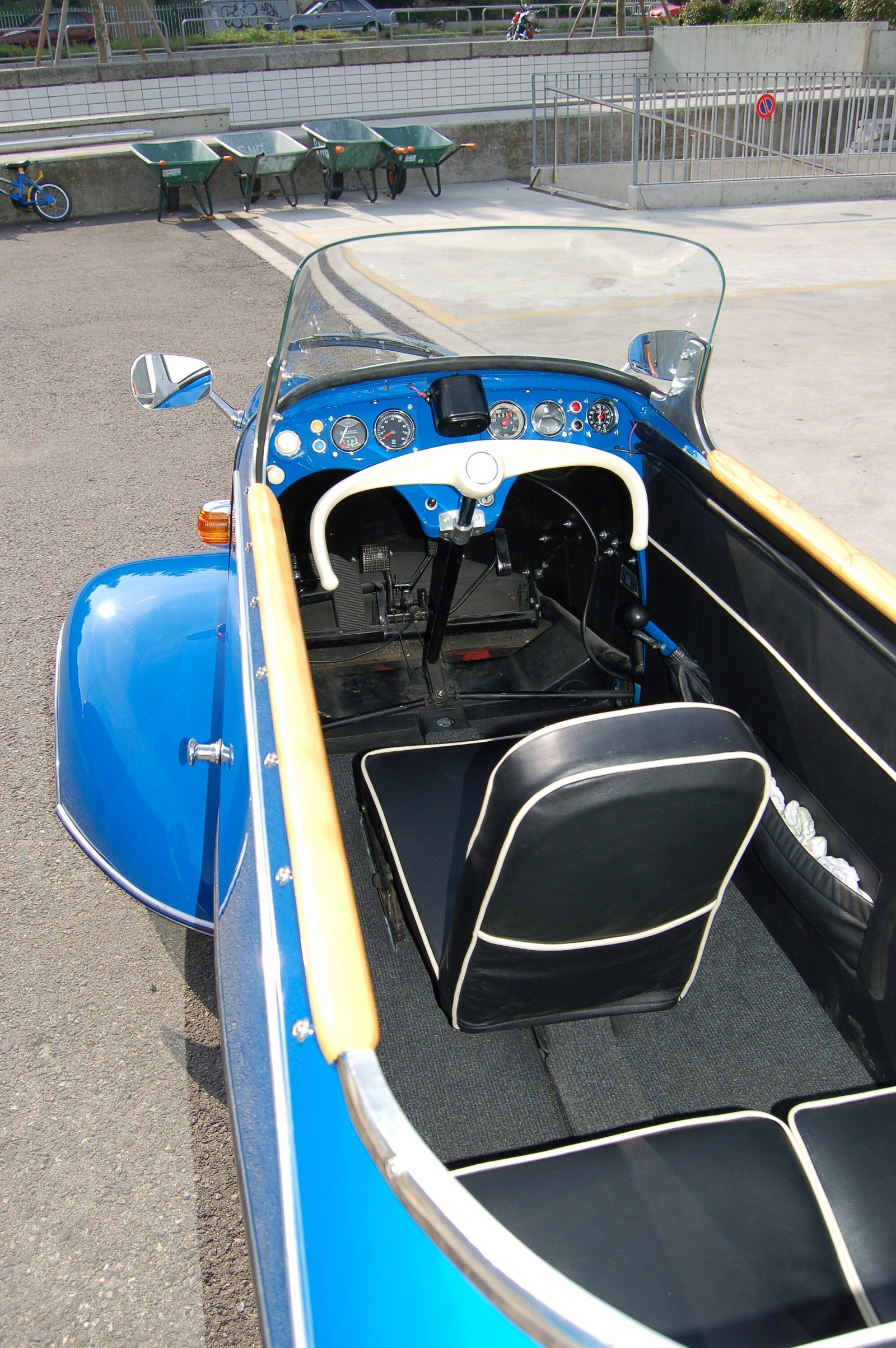
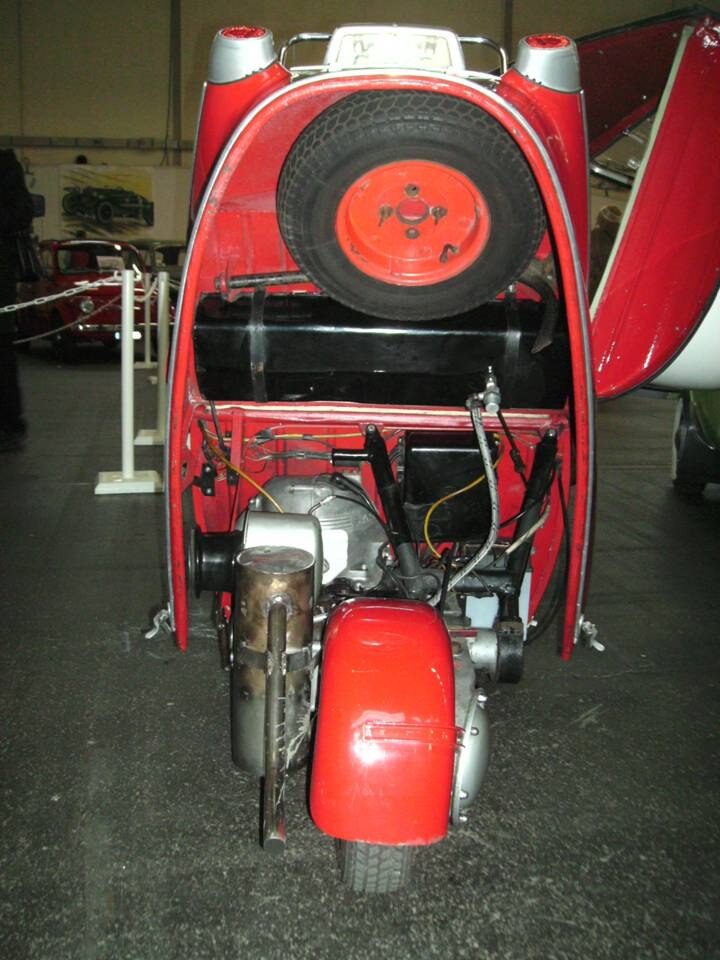
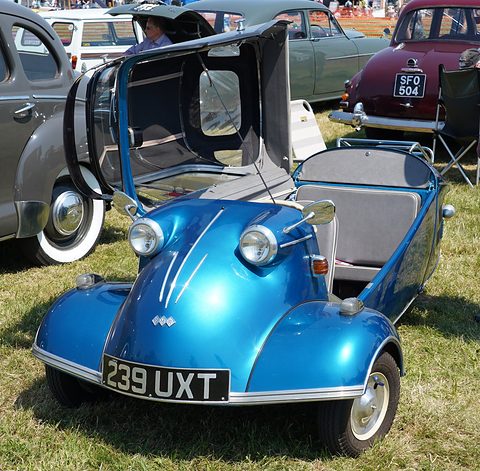
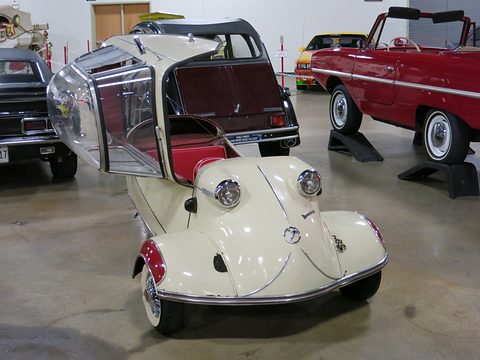
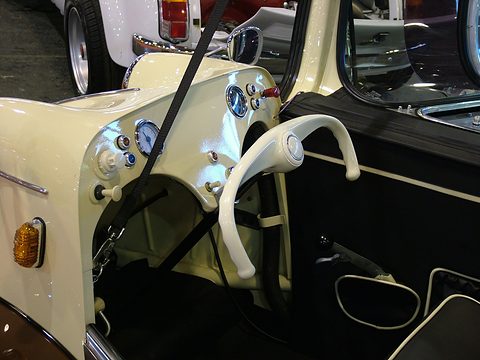
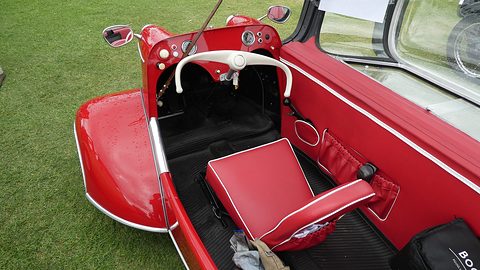
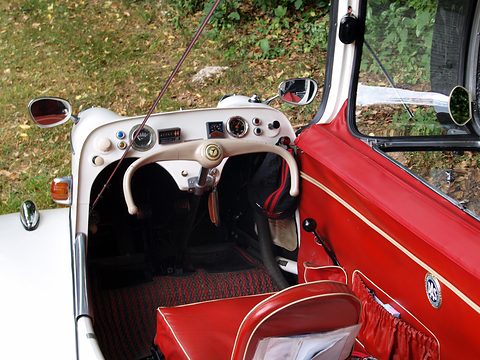
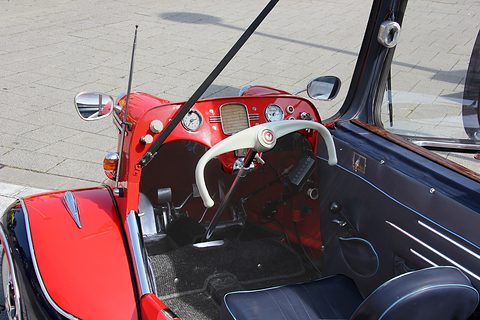
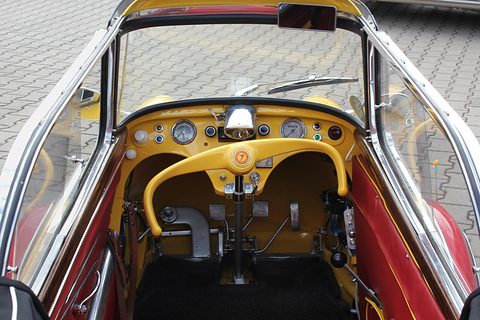
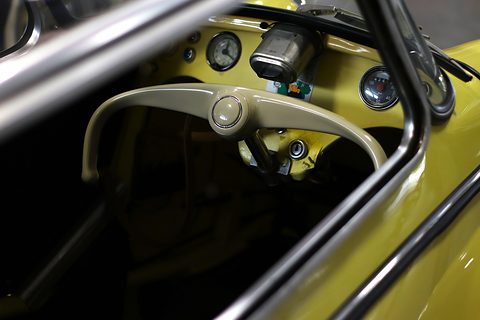
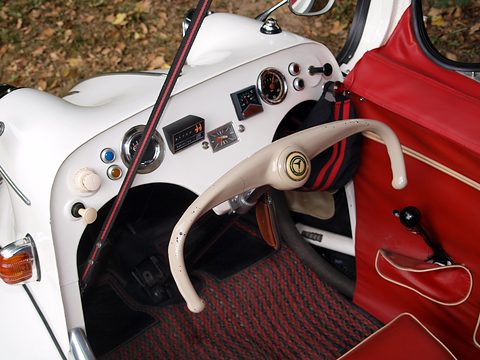
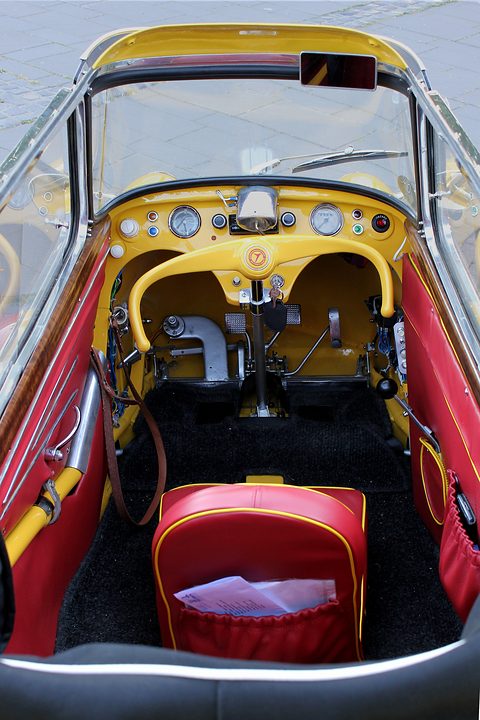
It is less a car than a fuselage. The driver sits in front and steers with a bar that acts straight on the track rods, with no steering box between; the passenger sits behind, on a bench about 65 cm (26 in) wide that could also take a small child. To get in, the driver’s seat slides back and lifts in one movement, so that even disabled drivers could manage it.source 6 Cars were also adapted one by one, with hand controls, for amputees and other disabled drivers; Fend said that as long as a driver still had a head, a car could be adapted for them.source 7source 1 The engine sits behind the passenger, in front of the single rear wheel, and drives it through a shaft and an enclosed chain in an oil bath.source 2source 6 The whole car is 2,820 mm (111 in) long and weighs 230 kg (507 lb) with a full tank.source 6

Dr Paul Simsa tested a Standard model for auto motor und sport in October 1955. His car had covered more than 9,000 hard everyday kilometres (5,600 miles), and the only wear he could find was in the track-rod joints; it did not drum or rattle, and it stayed dry in steady rain. The brochure’s 100 km/h appeared only on the speedometer, but it reached 91 km/h (57 mph) with one aboard and 84 km/h (52 mph) with two. Up to 65 km/h (40 mph) anyone could drive it, he wrote; beyond that it asked for commitment, and then it was real fun. The screen misted quickly in the rain, its top rail sat uncomfortably close to the driver’s head, and the engine noise of the Standard model only strengthened the feeling of sitting in an aeroplane.source 6

„… und man ist versucht, von einem ‚Düsenjäger des kleinen Mannes‘ zu sprechen.“

Dr Paul Simsa, road test of the KR200, auto motor und sport 22/1955. In English: “… and one is tempted to speak of a ‘little man’s jet fighter’.”source 6

He defended the direct steering, which the magazine’s 1954 test of the KR175 had counted as a fault. A three-wheeler’s single rear wheel can step sideways, and the slide must be caught at once; the direct bar, which he found extraordinarily sensitive, let the driver do it by instinct.source 6

„Wendigkeit, geringer Raumbedarf im Verkehr, sehr gute Sicht und ausgezeichnetes Temperament räumen dem Kabinenroller auch weiterhin einen ganz besonderen Platz unter den Mobilen ein.“

Dr Paul Simsa’s verdict, auto motor und sport 22/1955. In English: “Agility, small footprint in traffic, very good visibility and excellent liveliness continue to give the Kabinenroller a very special place among the Mobile.”source 6

Backwards, four ways

There is no reverse gear. To back up, the driver stops the two-stroke, pushes the ignition key further in and turns it, and the engine starts running the other way; all four forward gears then work in reverse.source 2source 8source 6 In theory the KR200 is as fast backwards as forwards. A mechanical reverse was available at extra cost, according to German Wikipedia.source 2 Simsa added a practical warning: change down before you stop, or you will not be in first to move off.source 6

Messerschmitt lets go

1955 was the best year any Kabinenroller, or cabin scooter, ever had: almost 12,000 KR200s were sold, and in August a streamlined single-seater set a string of records at Hockenheim.source 2source 8source 9 Then West Germany joined NATO, Messerschmitt was allowed to build aircraft again, and it lost interest in the cars.source 2source 8source 3 The market had turned too. In the first half of 1956 German registrations counted only 2,084 Kabinenroller, KR175s and KR200s together, against 15,043 BMW Isettas and 12,596 Goggomobils.source 10 That spring Willy Messerschmitt promised that the cars would go on.

„Es war von jeher mein fester Entschluss, neben dem Flugzeugbau auch Fahrzeuge zu entwickeln. So ist das Werk Regensburg ausschließlich für den Fahrzeugbau eingerichtet worden und wird auch in Zukunft diesem allein vorbehalten bleiben.“

Willy Messerschmitt, in the “Messerschmitt” supplement to the Nuremberg 8-Uhr-Blatt, 1956, as quoted by German Wikipedia. In English: “It was always my firm decision to develop vehicles as well as aircraft. The Regensburg works has thus been equipped solely for vehicle building and will remain reserved for it in future.”source 2

At the IFMA show in Frankfurt that October the firm showed a de Luxe KR200 with a gold folding top and two open “Me 201” roadsters at DM 1,998, the first Kabinenroller under DM 2,000. On 29 November 1956 the dealers were told that production would stop. The line stood still for two months, and the workers were laid off.source 10 Who then owned the buildings is still disputed: the Weiner museum says the Bavarian state, English Wikipedia says Fend.source 11source 8

FMR, 1957–⁠64

On 17 January 1957 Friedrich Goy, director of Regensburger Stahl- und Metallbau (RSM), announced that a new company, Fahrzeug- und Maschinenbau GmbH Regensburg, would restart production under Fend and Valentin Knott, a supplier of brakes and hubs who in time bought out all of Fend’s shares.source 10source 2source 8 Because Messerschmitt now had aircraft work again, its name could not go into the type name of FMR’s new four-wheeler, which became the FMR Tg500; the three-wheelers kept their Messerschmitt badges.source 2

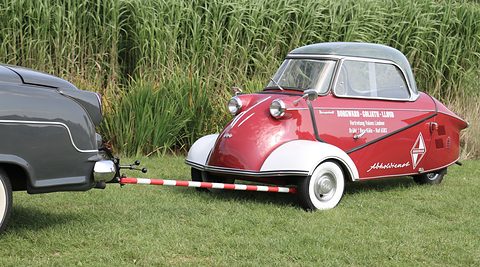
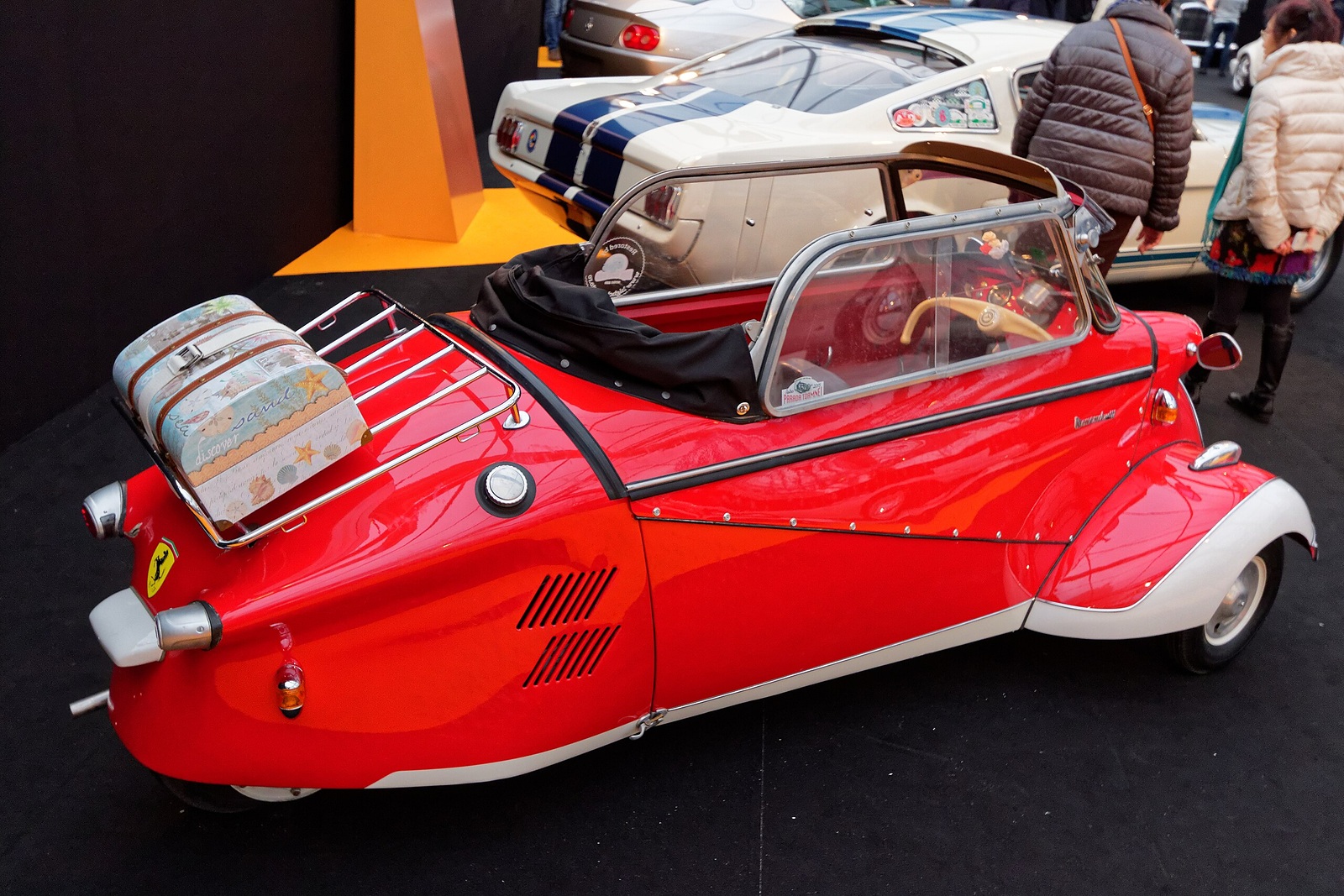
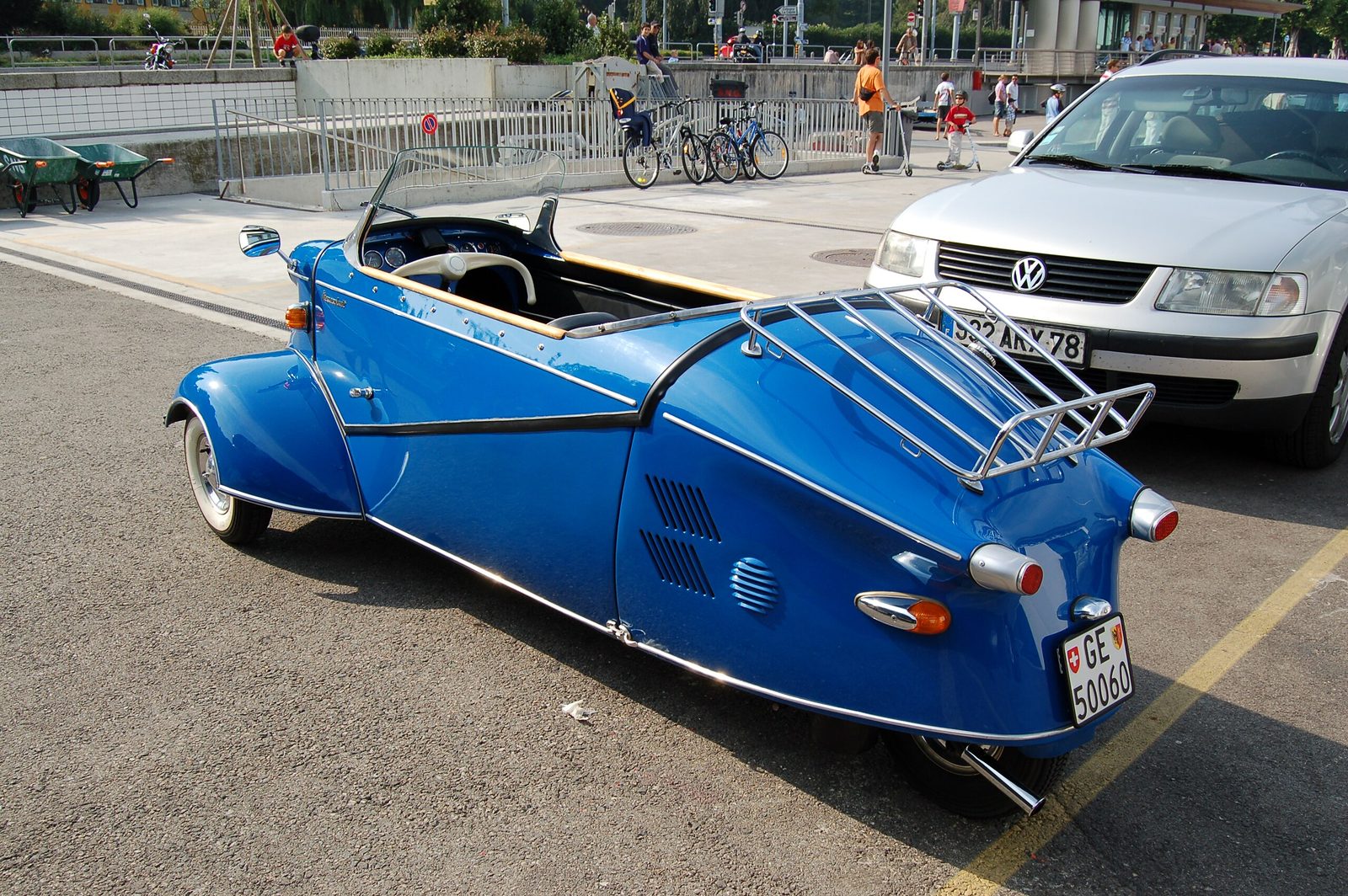
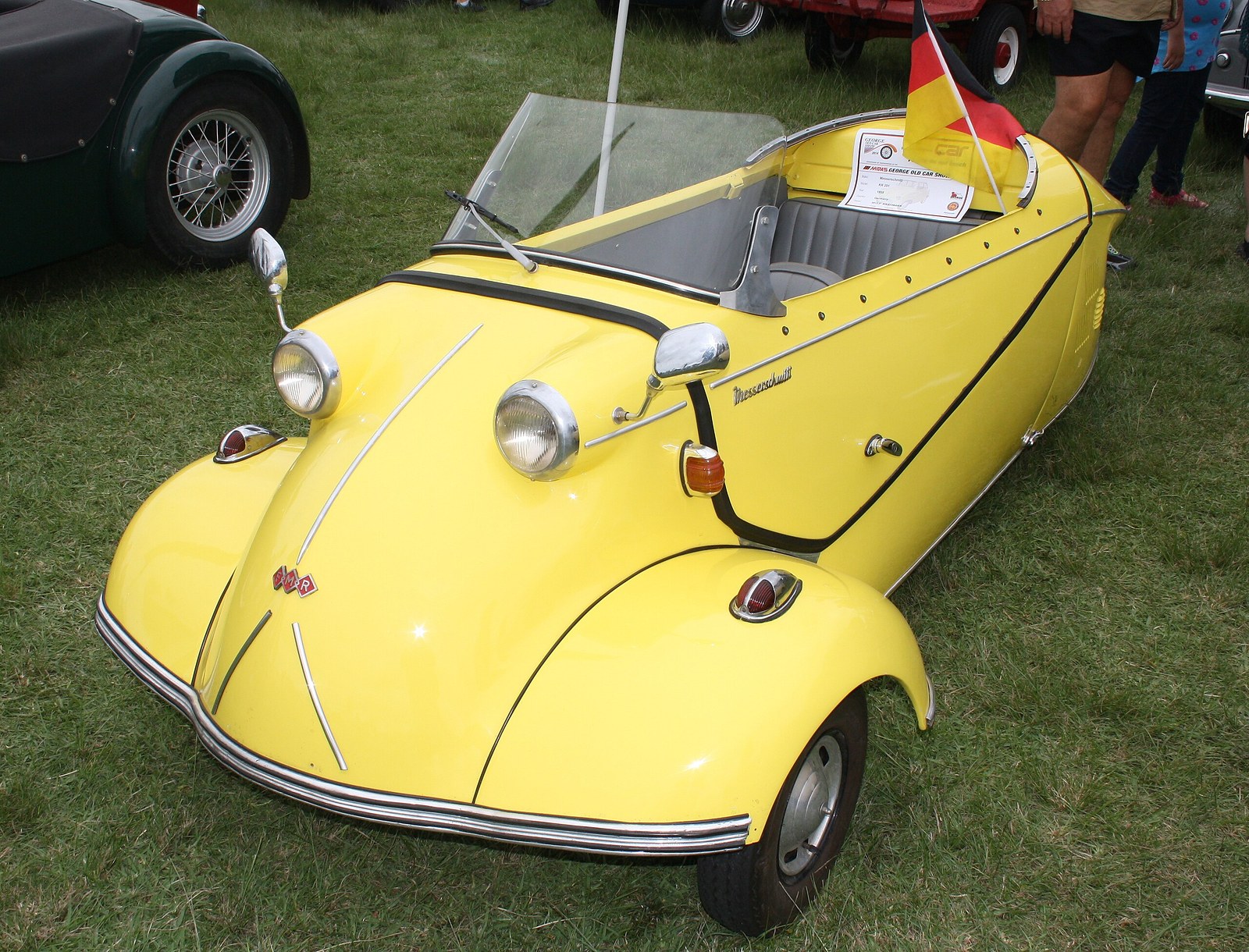
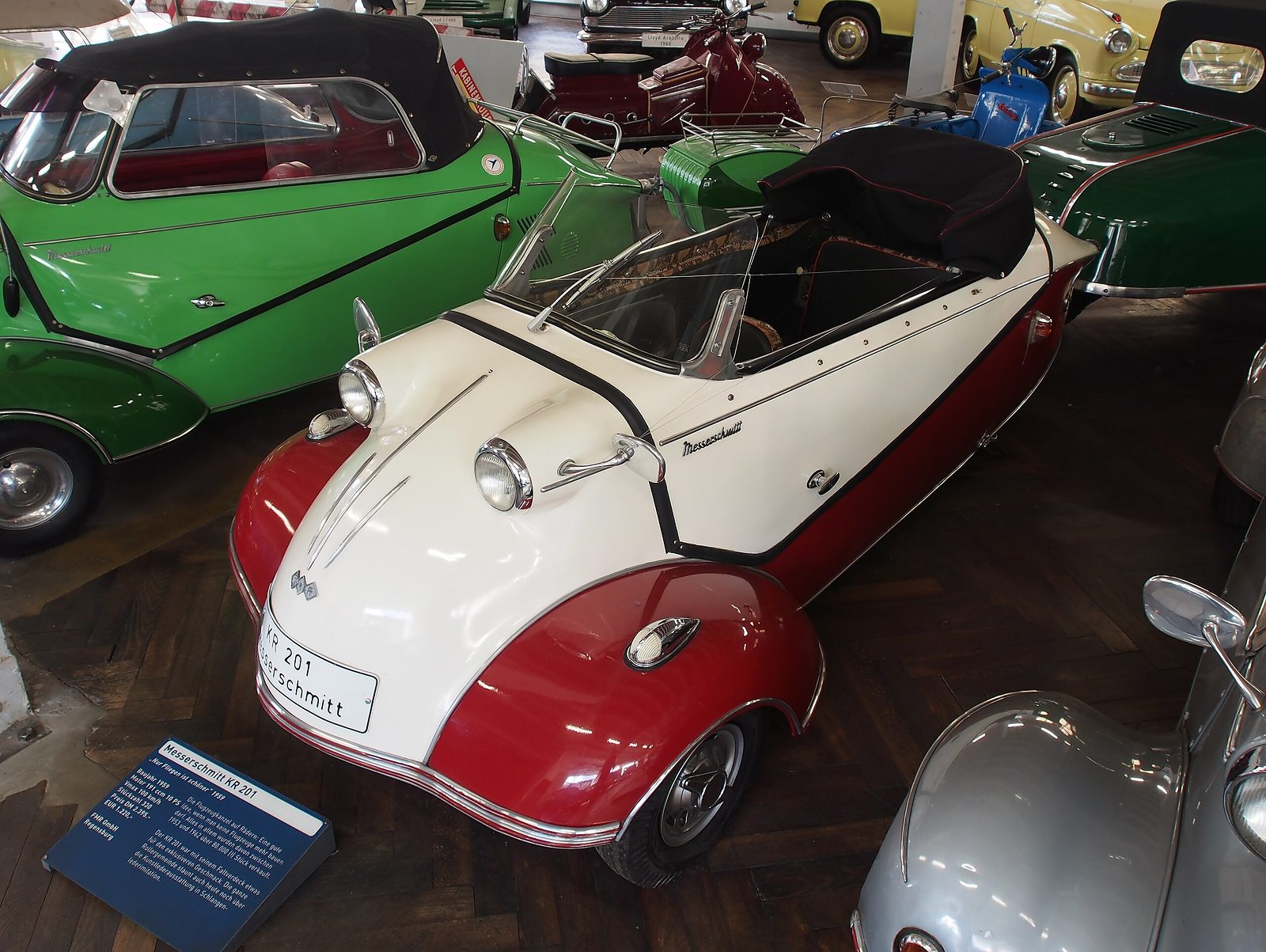
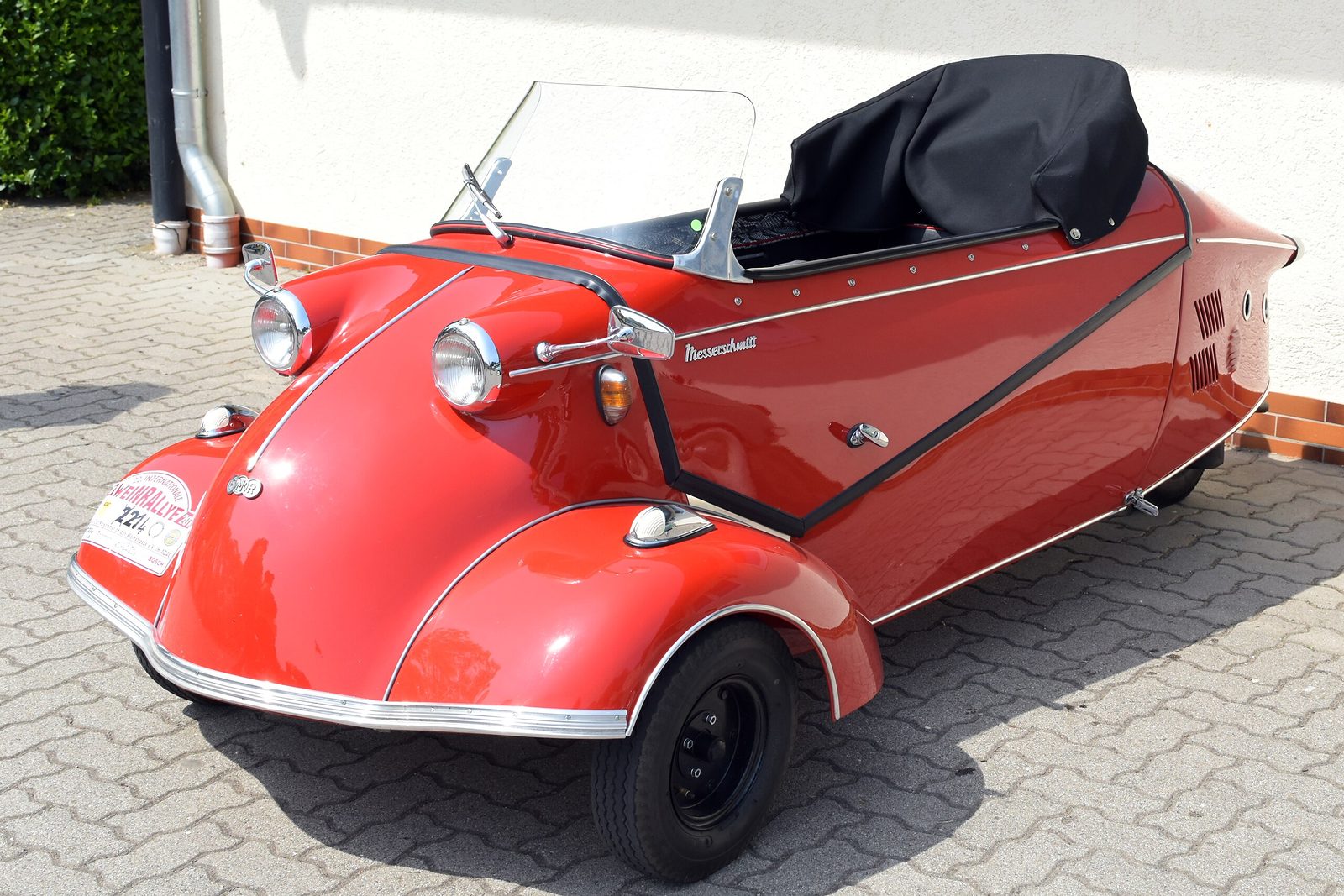
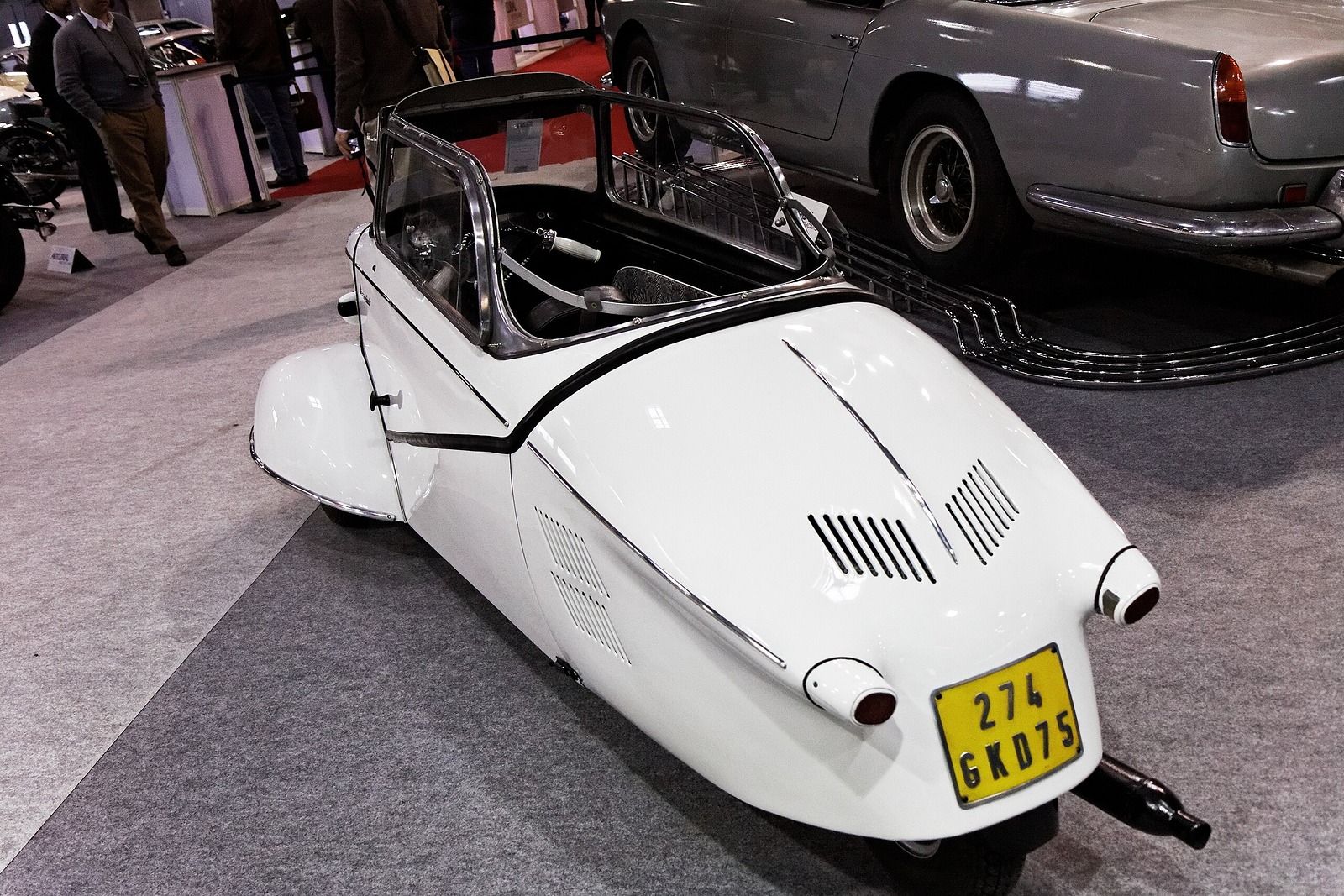
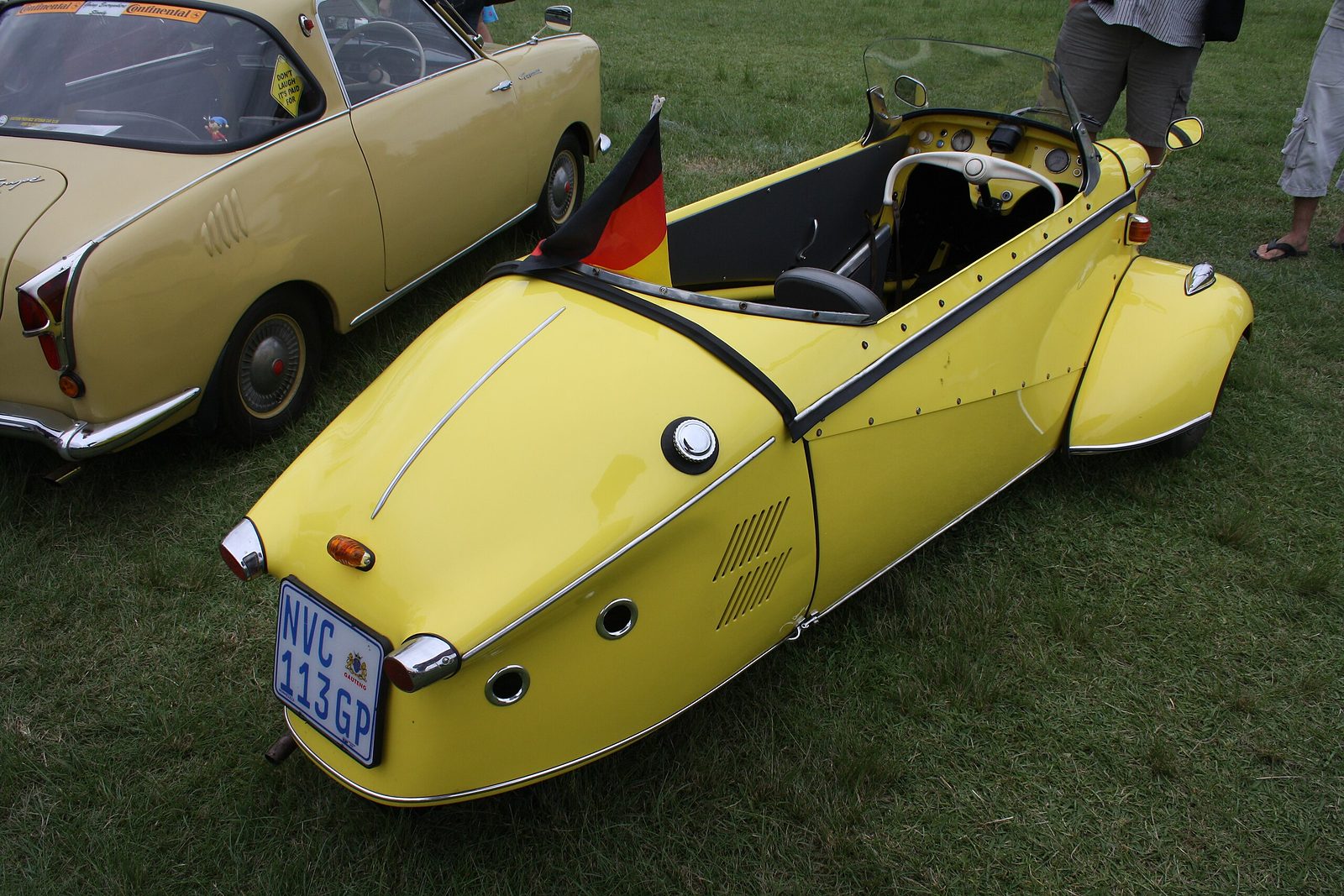
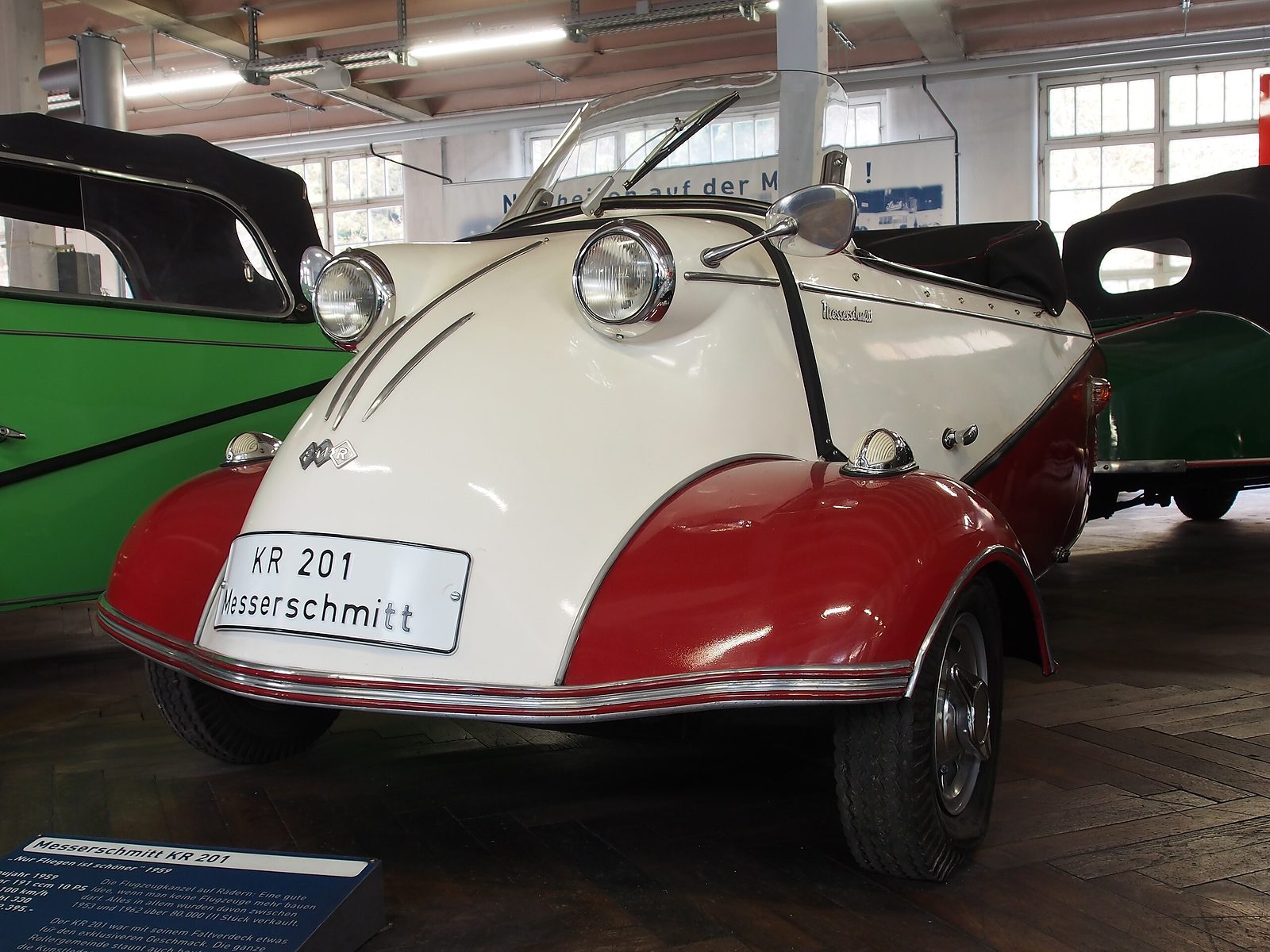
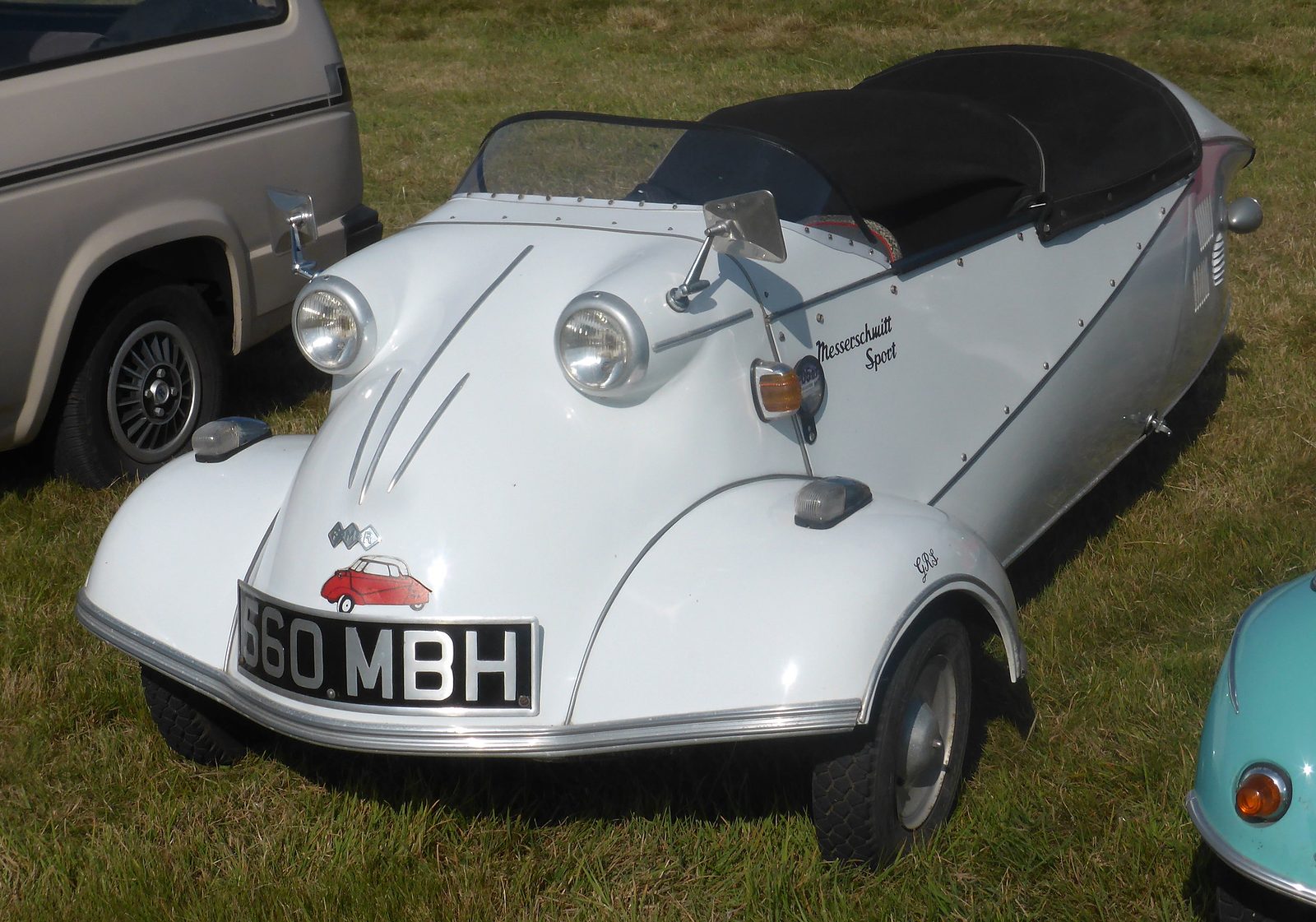
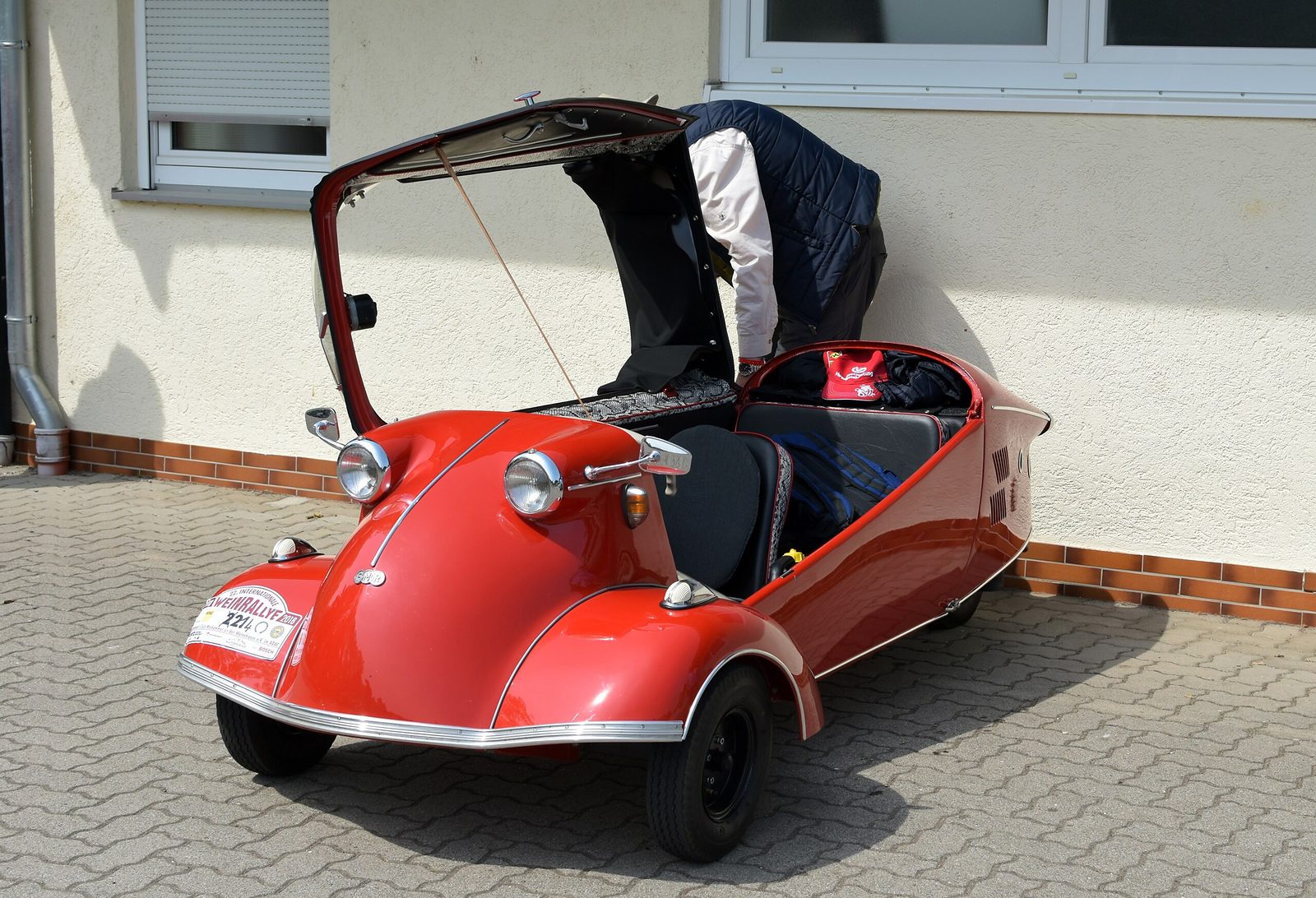
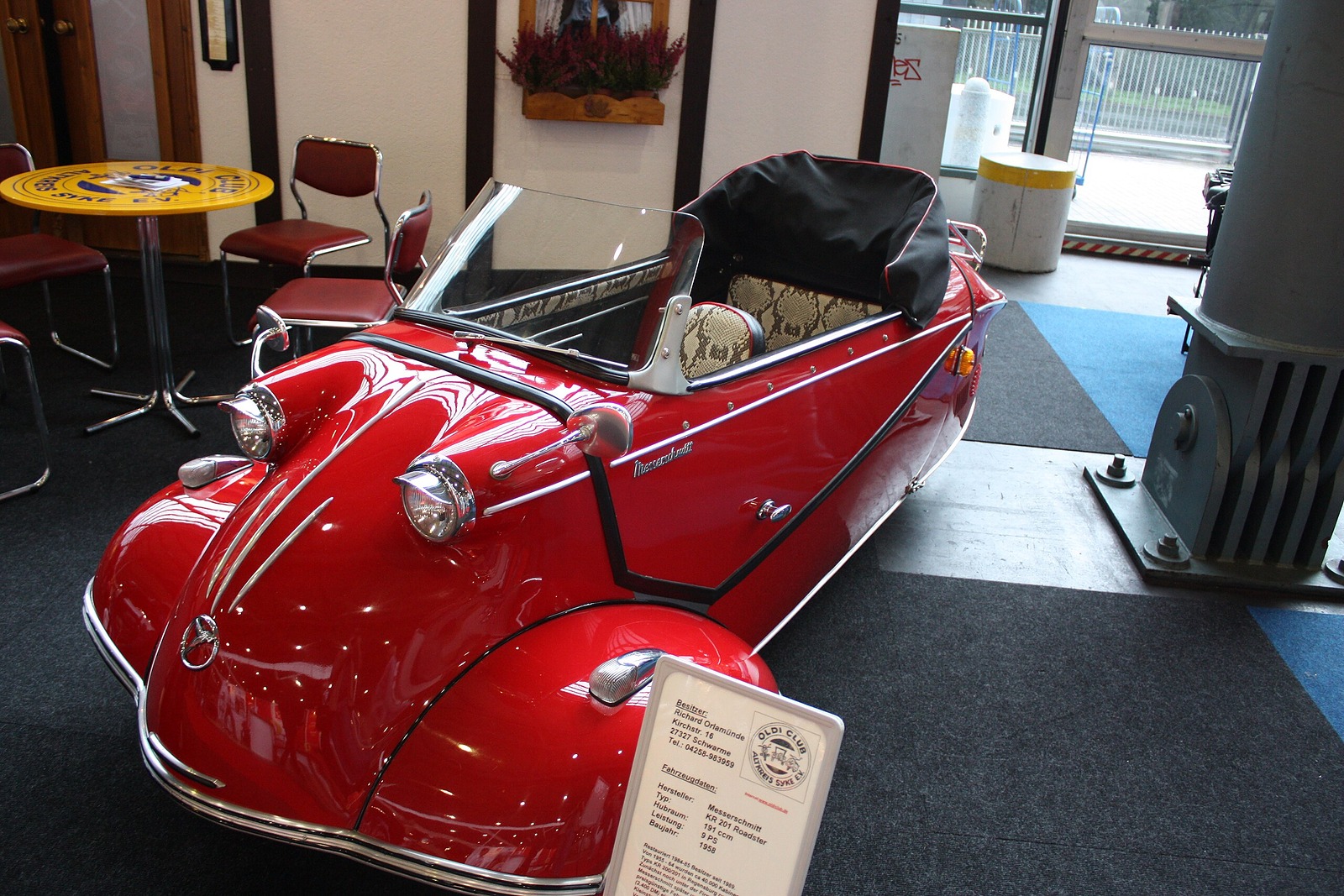
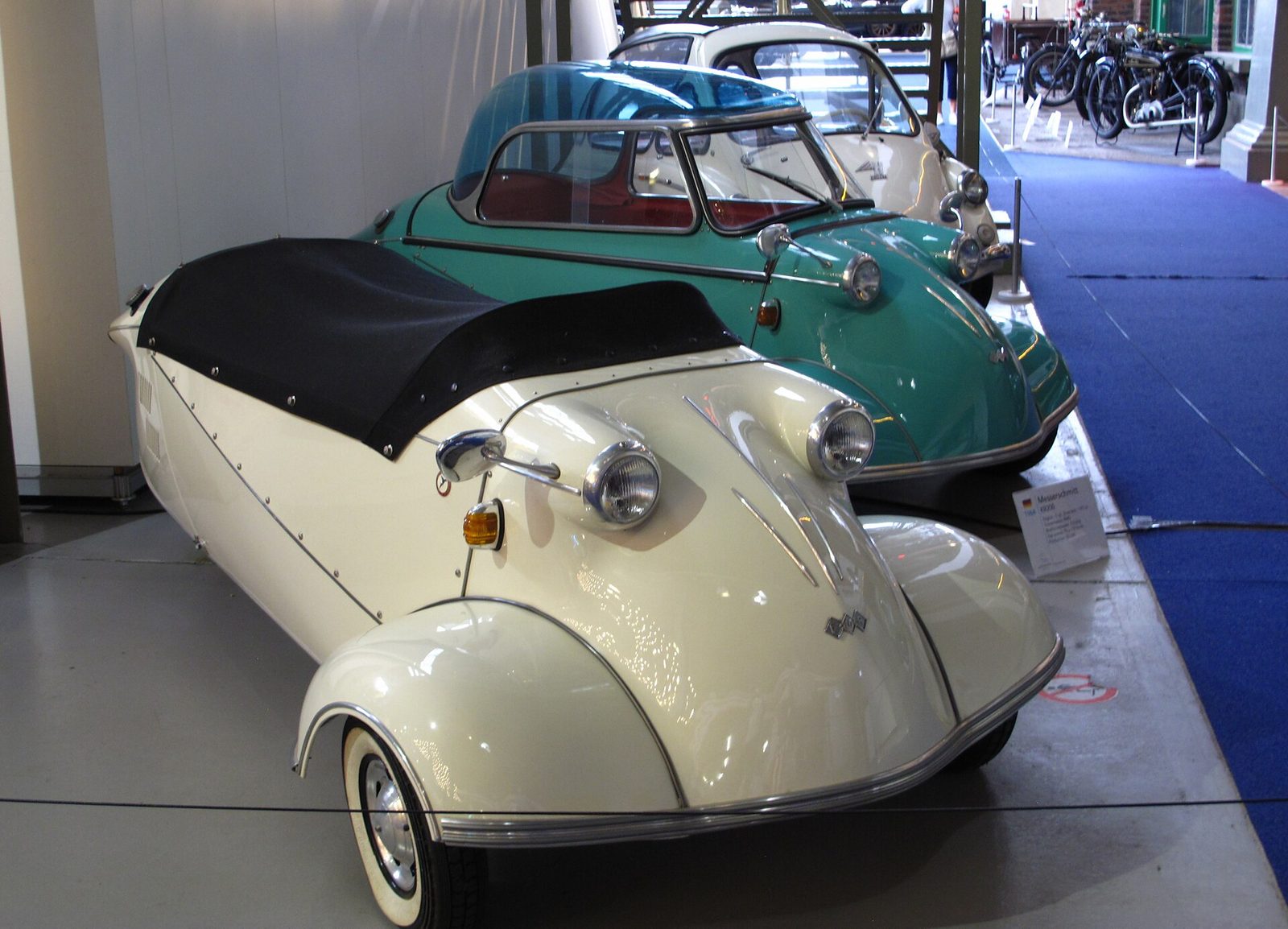
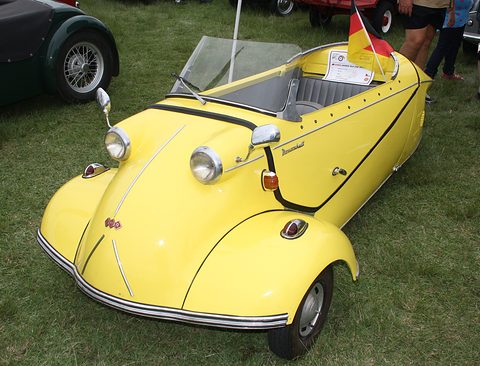
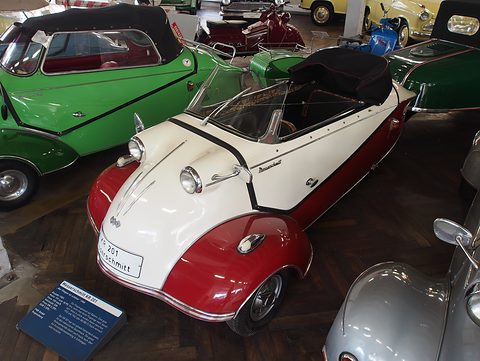
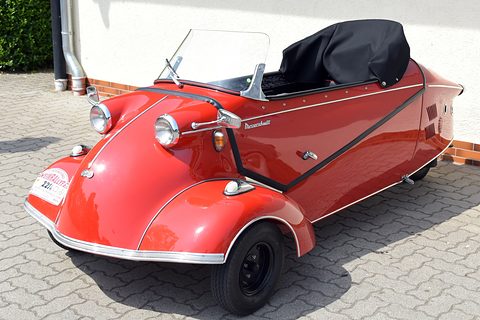
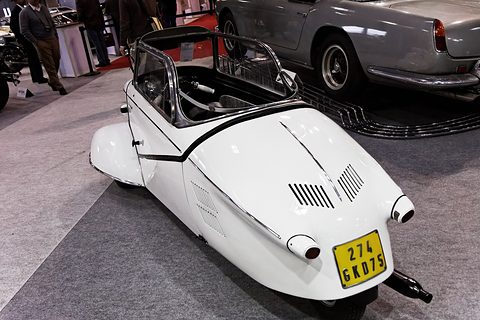
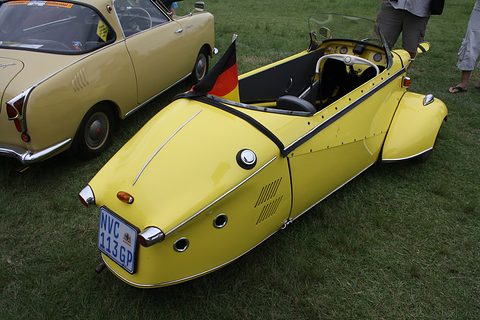
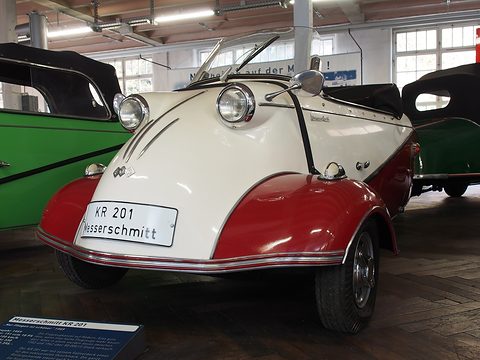
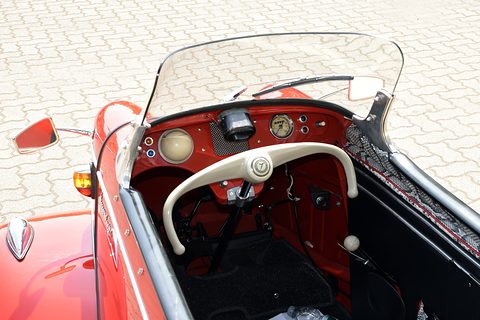
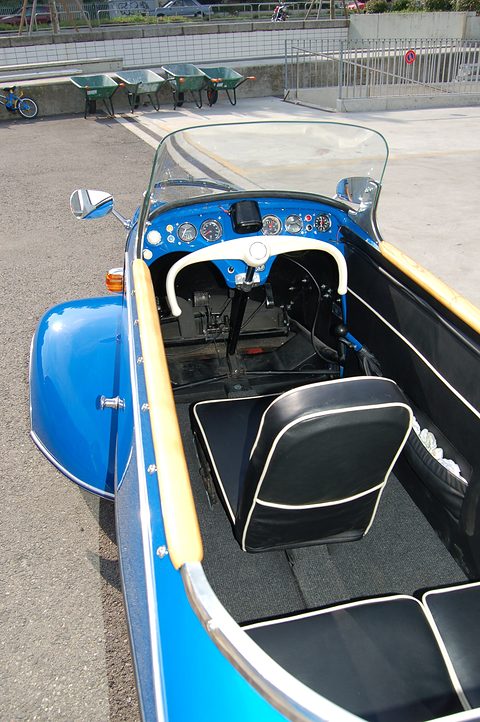
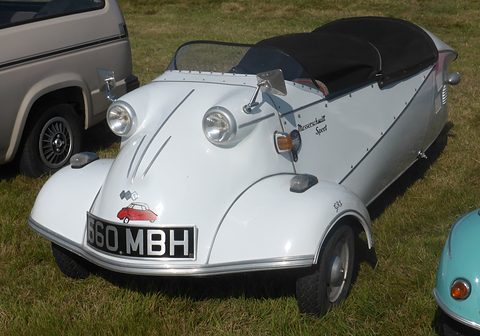
FMR widened the range. The open KR201 Roadster went on sale in July 1957 at DM 2,200, in Signal Red or white with imitation-snakeskin trim, and a folding hood and side screens cost DM 195 extra; the Kabrio-Limousine, with a fabric top on three hoops, followed in 1958, and then the Sport, which had no canopy at all, only a small aircraft-style screen, so that the driver climbed in over the top.source 10source 11source 2source 8source 7 From 1958 there was also a service car. A mechanic drove it to a customer, fixed a tow bar between the customer’s bumper and a coupling on the Messerschmitt’s left brake back-plate, and drove the customer’s car to the workshop with the Kabinenroller following behind, empty, steering itself.source 2 About 12 were built.source 8

Britain became FMR’s largest export market. The cars arrived without wheels and batteries to avoid purchase tax on imported vehicles, and the petrol rationing that followed the Suez crisis in 1956–⁠57 helped demand.source 10 Germany’s Wirtschaftswunder ended it. Basic economy transport was no longer wanted, the Mini took the British market, output was heavily cut in 1962, and production stopped in 1964.source 8 Fend had left FMR in late 1963. He set up a development institute and later designed the Fend 2000, once again a tandem; it was finished and registered for the road only after his death in Regensburg on 22 November 2000.source 1source 2
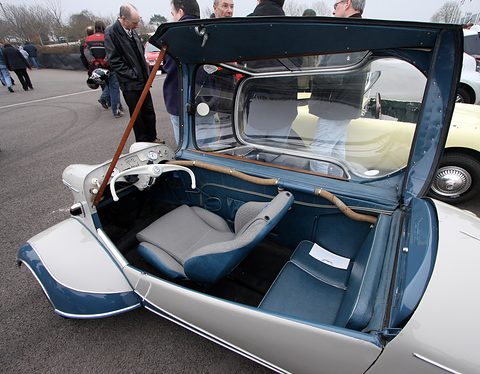
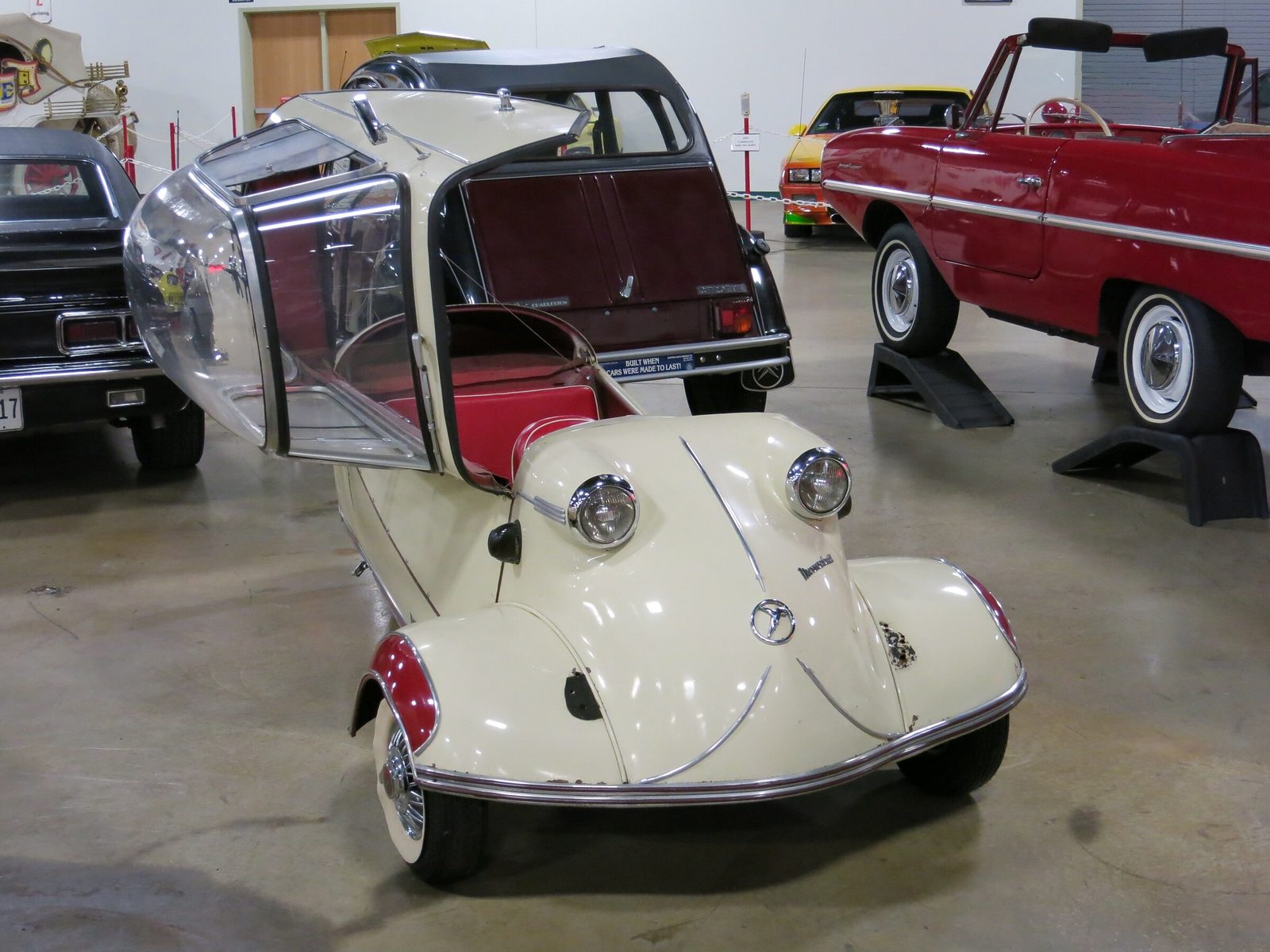
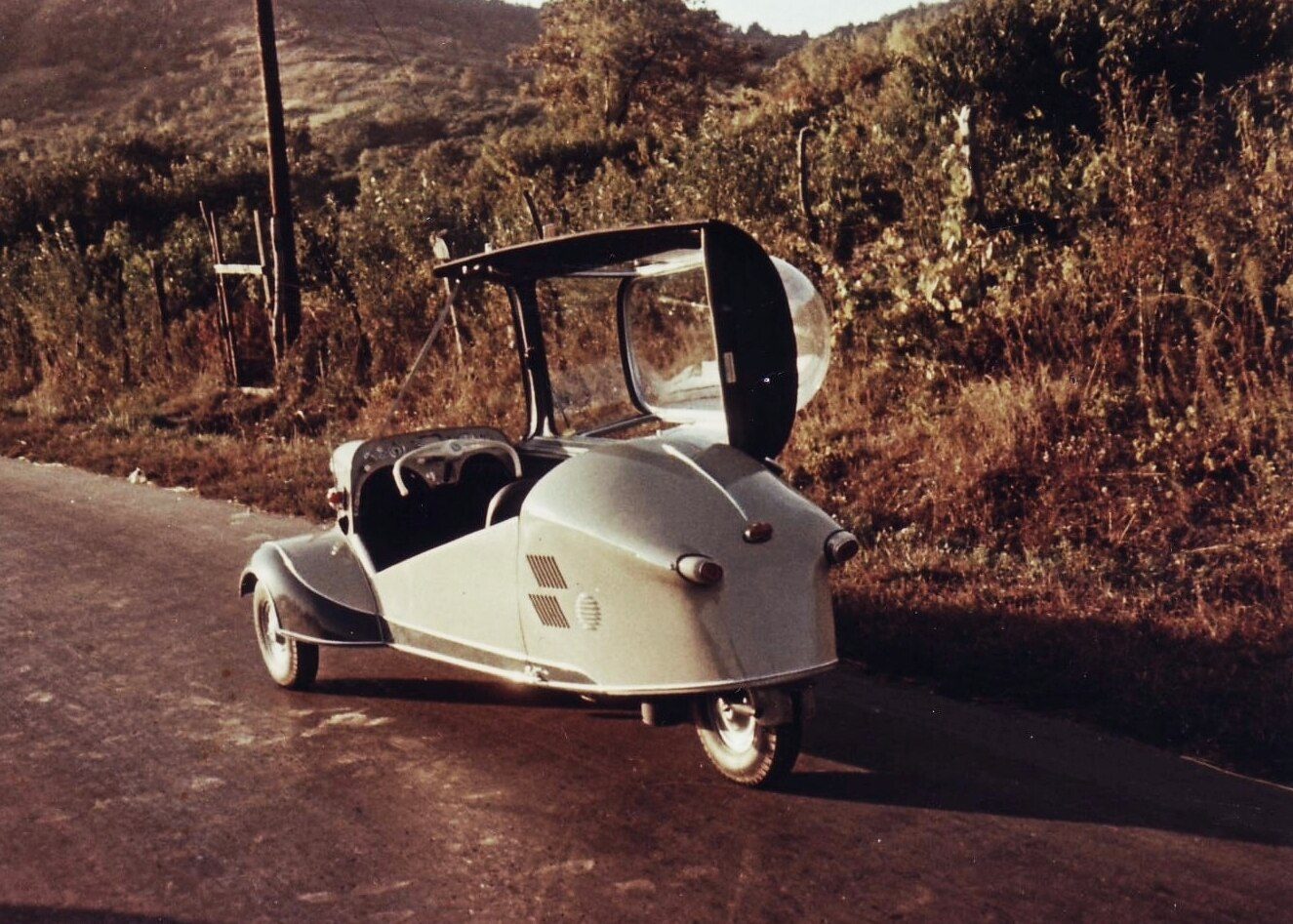
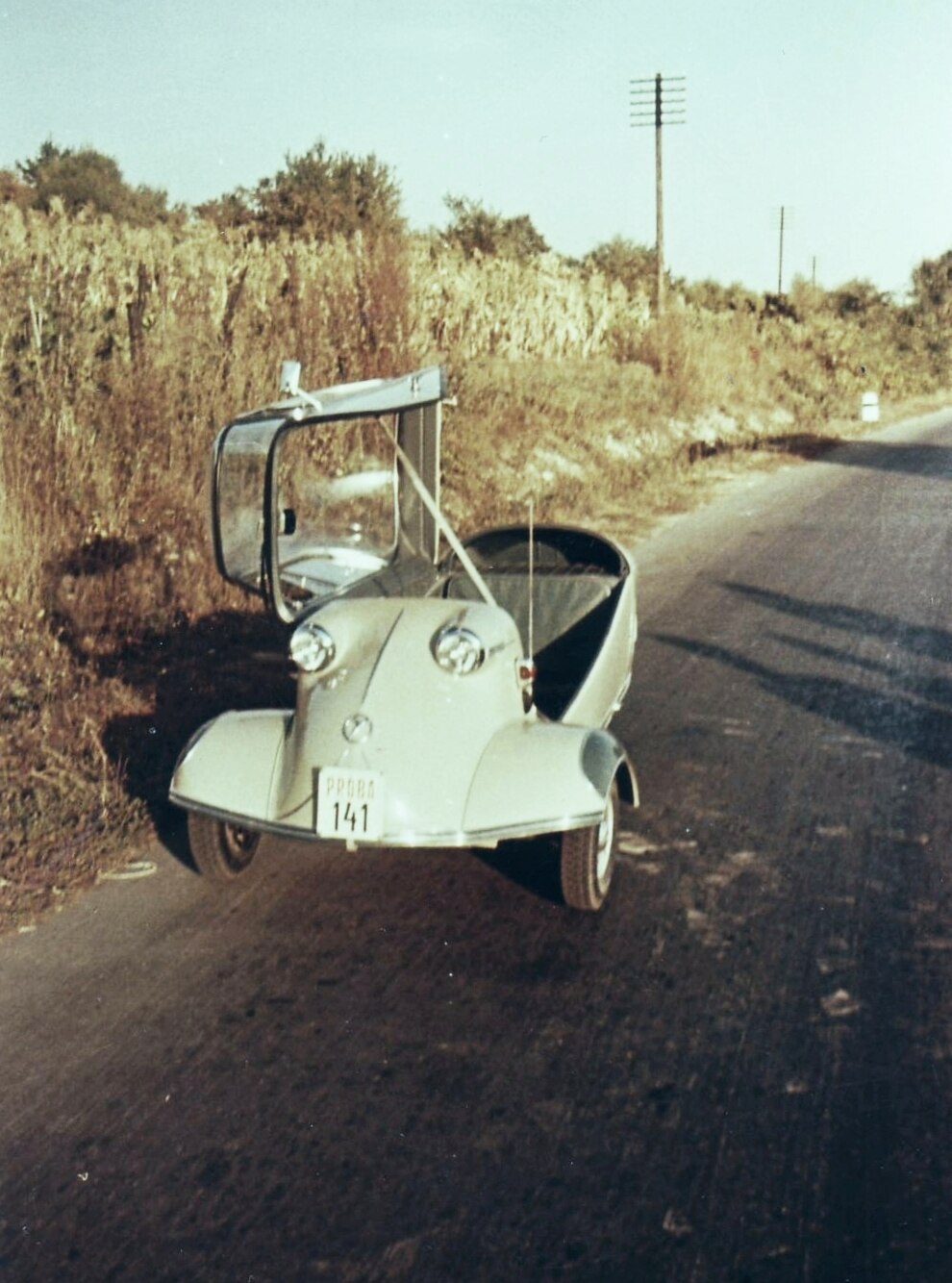
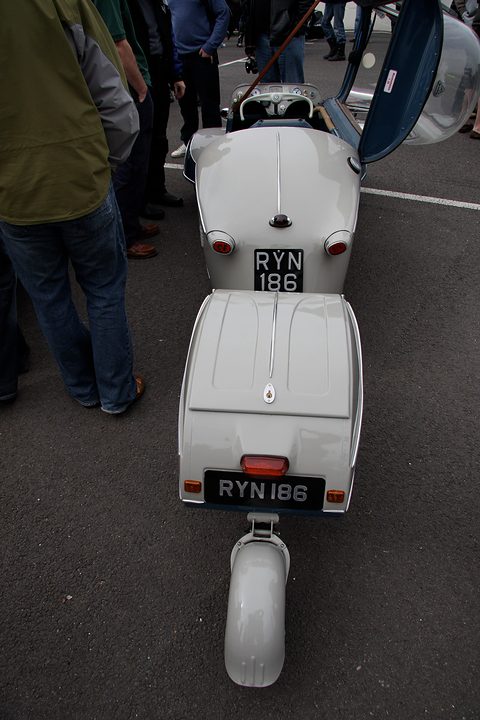
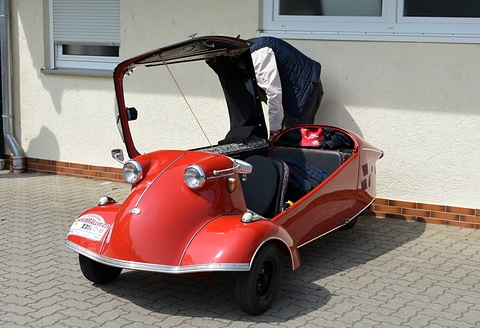
A grey and blue KR200 with its whole canopy swung open to the side, showing the two seats one behind the other
A grey and blue KR200 with its canopy swung up to the side, showing the steering bar and the two seats one behind the other, in 2009.Photo: Brian Snelson, CC BY 2.0, via Wikimedia Commons
Maroon and white three-wheeler lettered Abholdienst, linked by a striped tow bar to a grey car.
A KR200 service car being towed by its bar behind a customer’s car, steering itself, at a meeting in 2014.Photo: Ralf Hermanns, CC BY-SA 4.0, via Wikimedia Commons
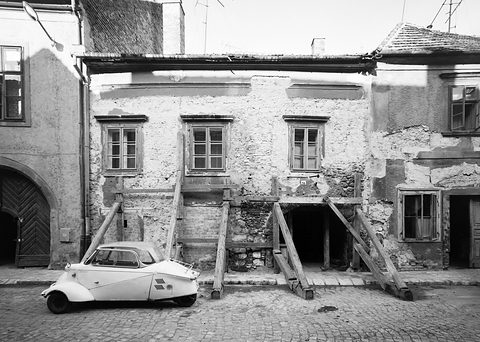
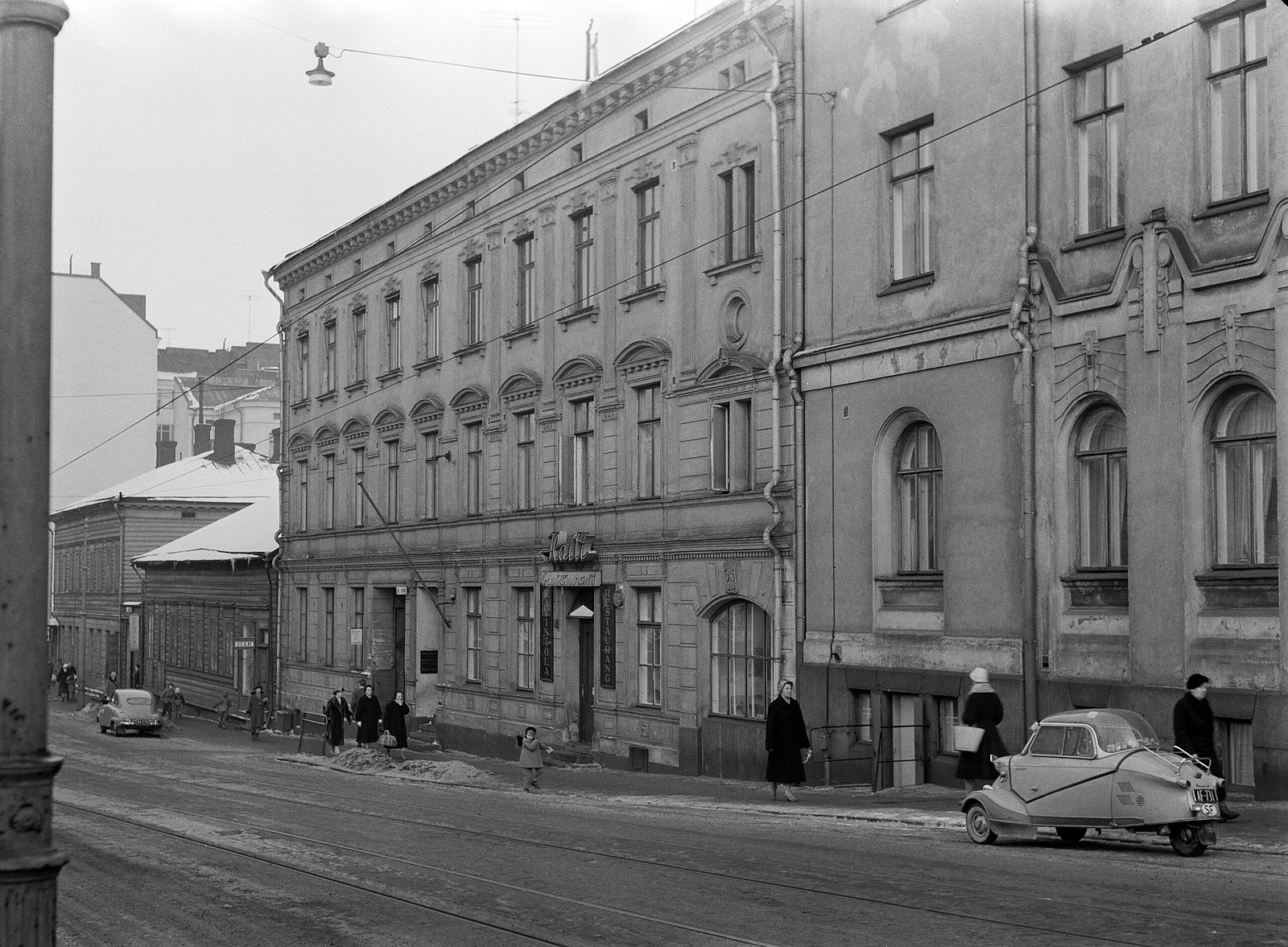
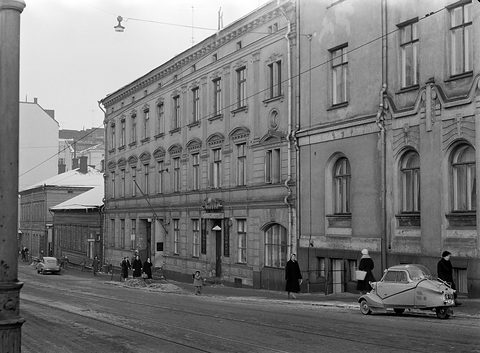
Black-and-white photograph of a small pale Kabinenroller parked in front of a shabby two-storey house propped up with timber struts
Plate I · 1969 A Messerschmitt Kabinenroller parked outside Új utca 24 in Hungary in 1969.Photo: Fortepan / Lechner Nonprofit Kft., CC BY-SA 3.0, via Wikimedia Commons
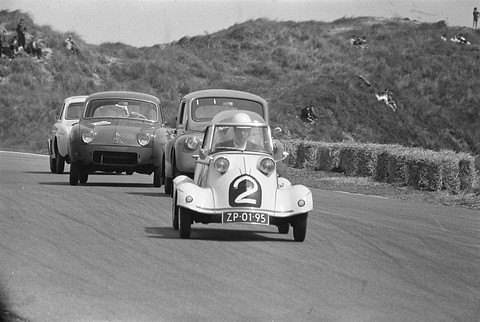
Black-and-white photograph of a small four-wheeled bubble car numbered 2 leading two saloons round a circuit bend below dunes.
Plate II · 1959 FMR’s four-wheeler, the FMR Tg500, numbered 2, leads two saloons round a bend at Zandvoort on Whit Monday, 18 May 1959.Photo: Harry Pot / Anefo, CC0, via Wikimedia Commons
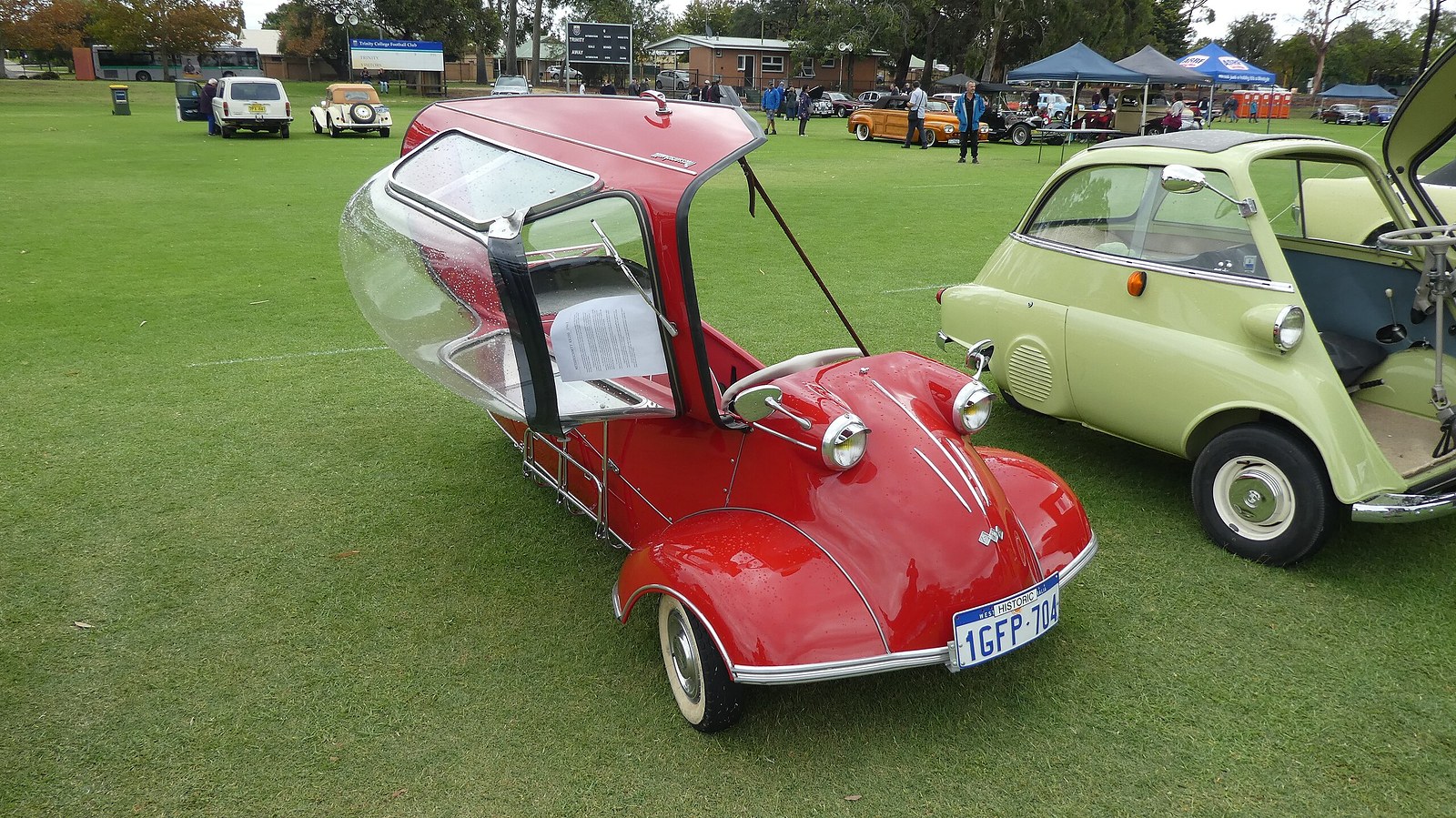
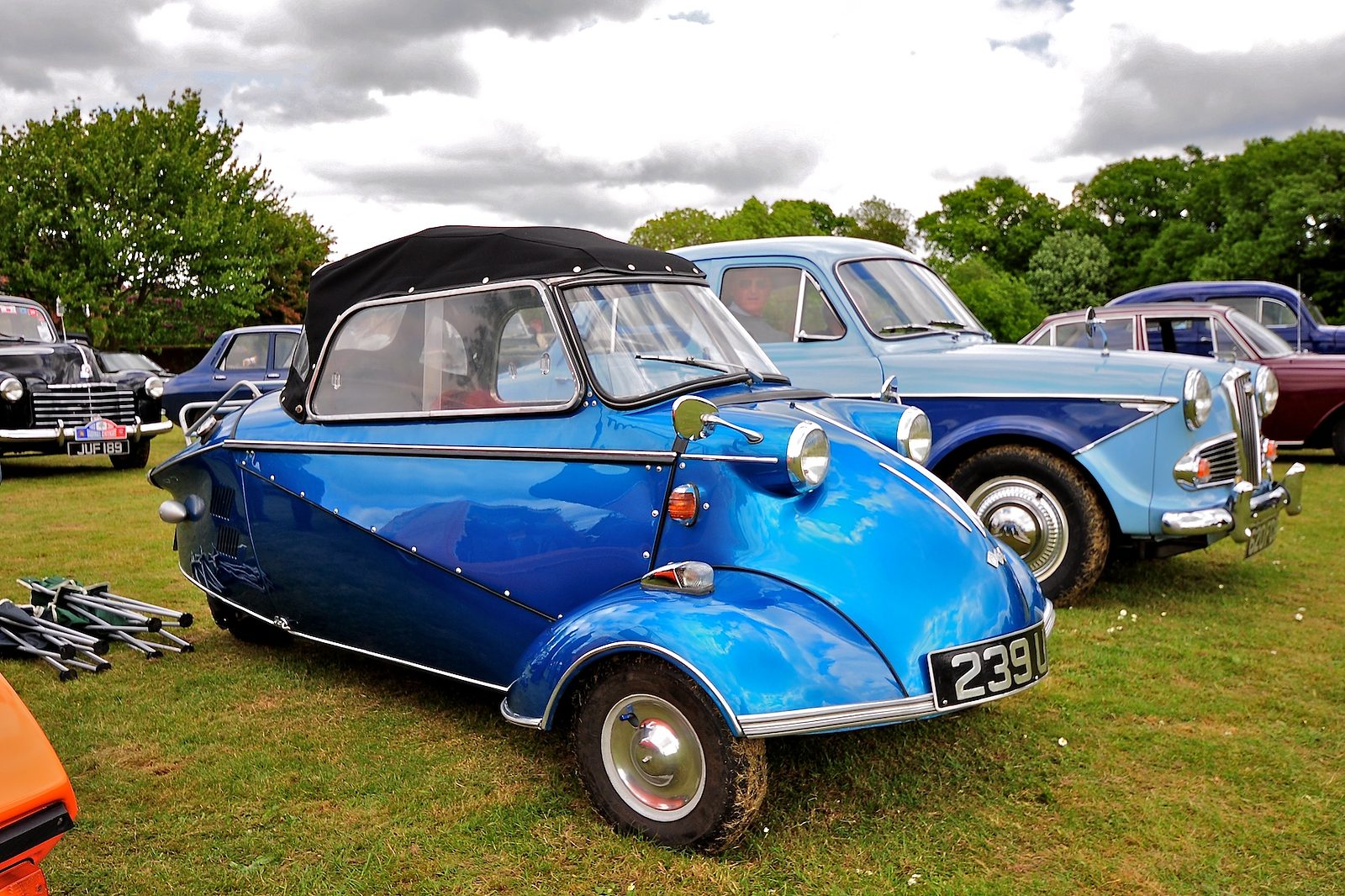
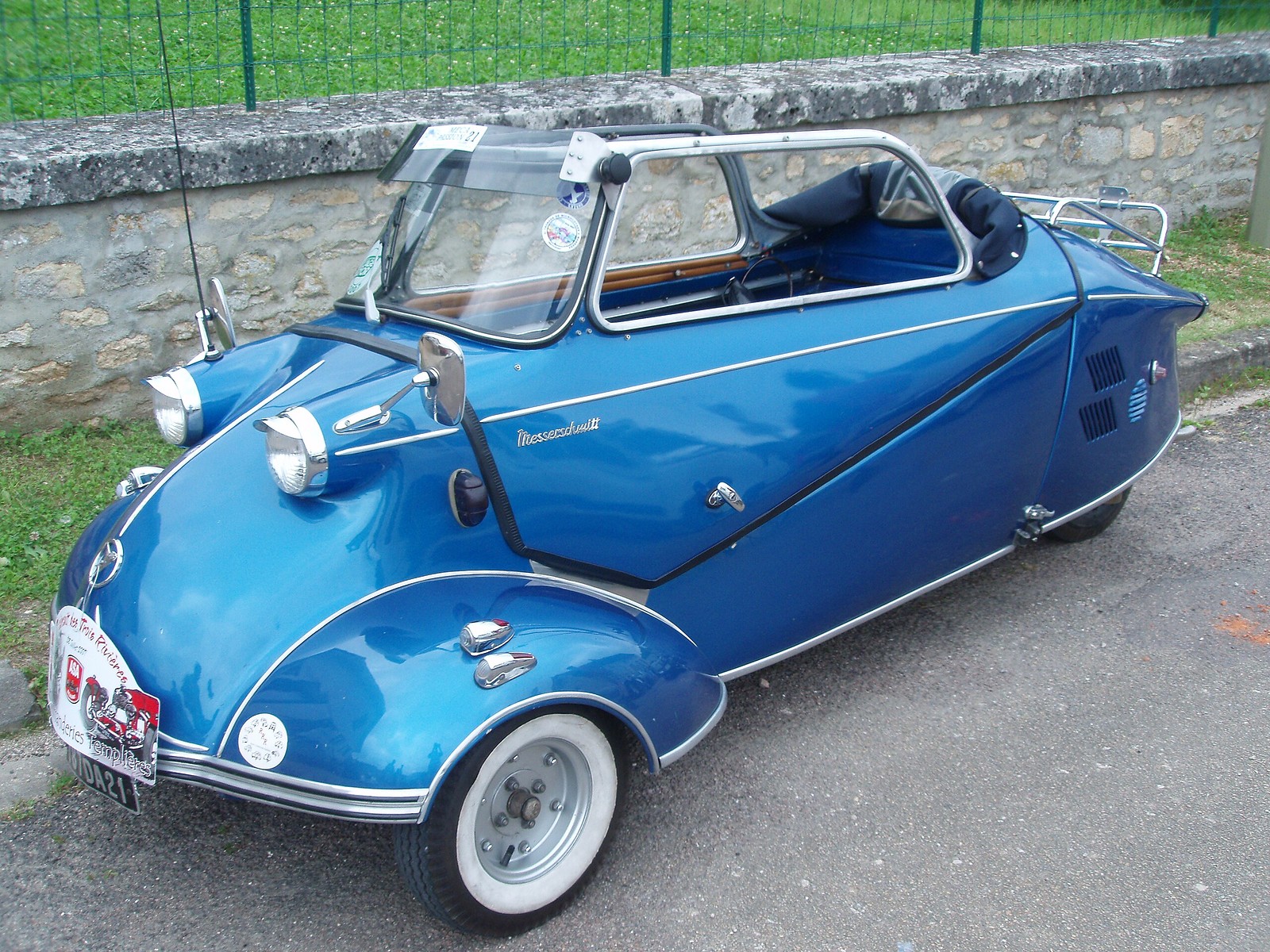
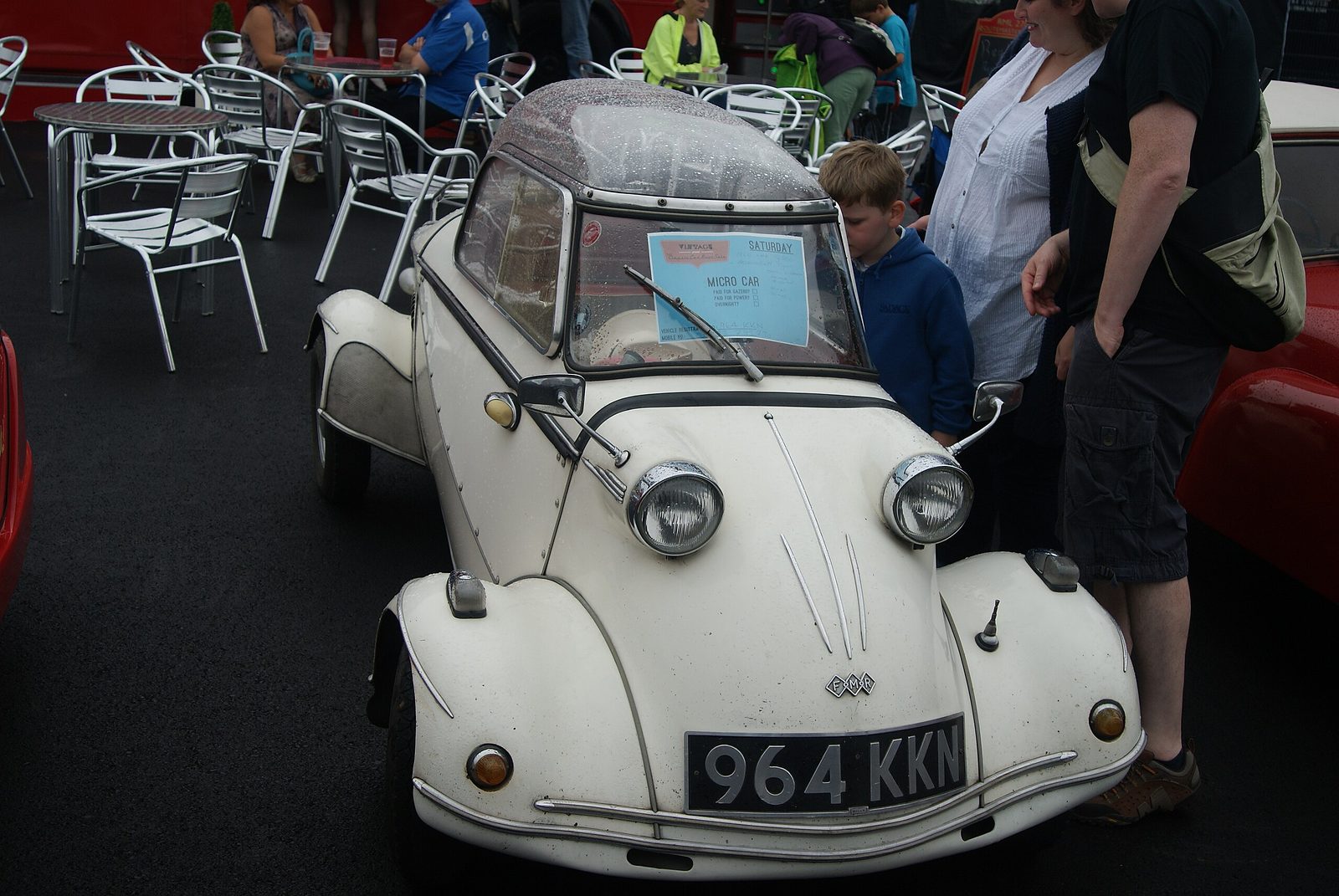
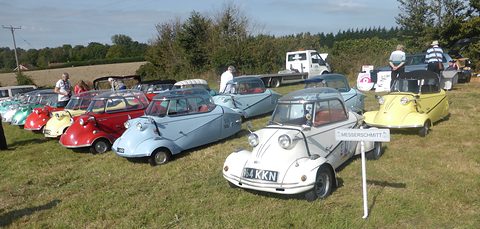
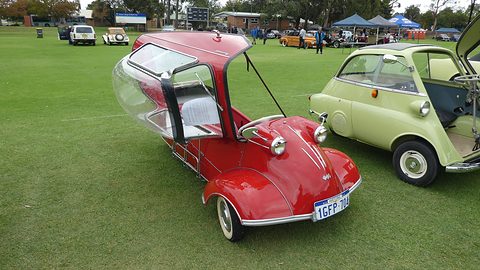
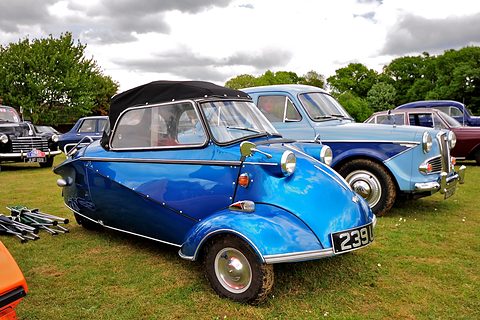
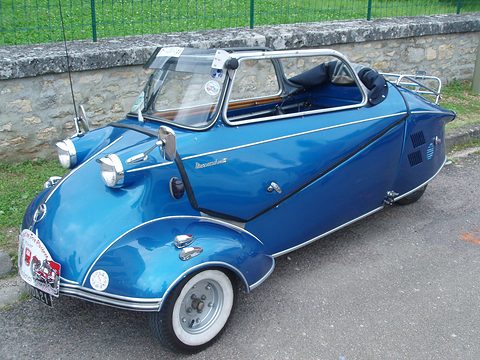
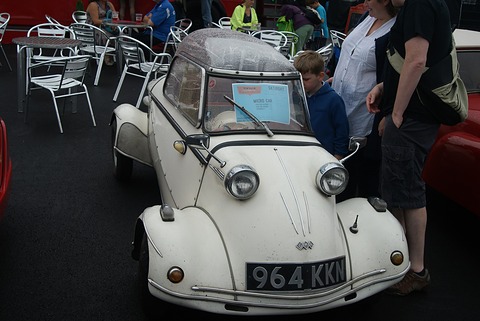
A row of bubble cars in many colours across a field, a white one in front.
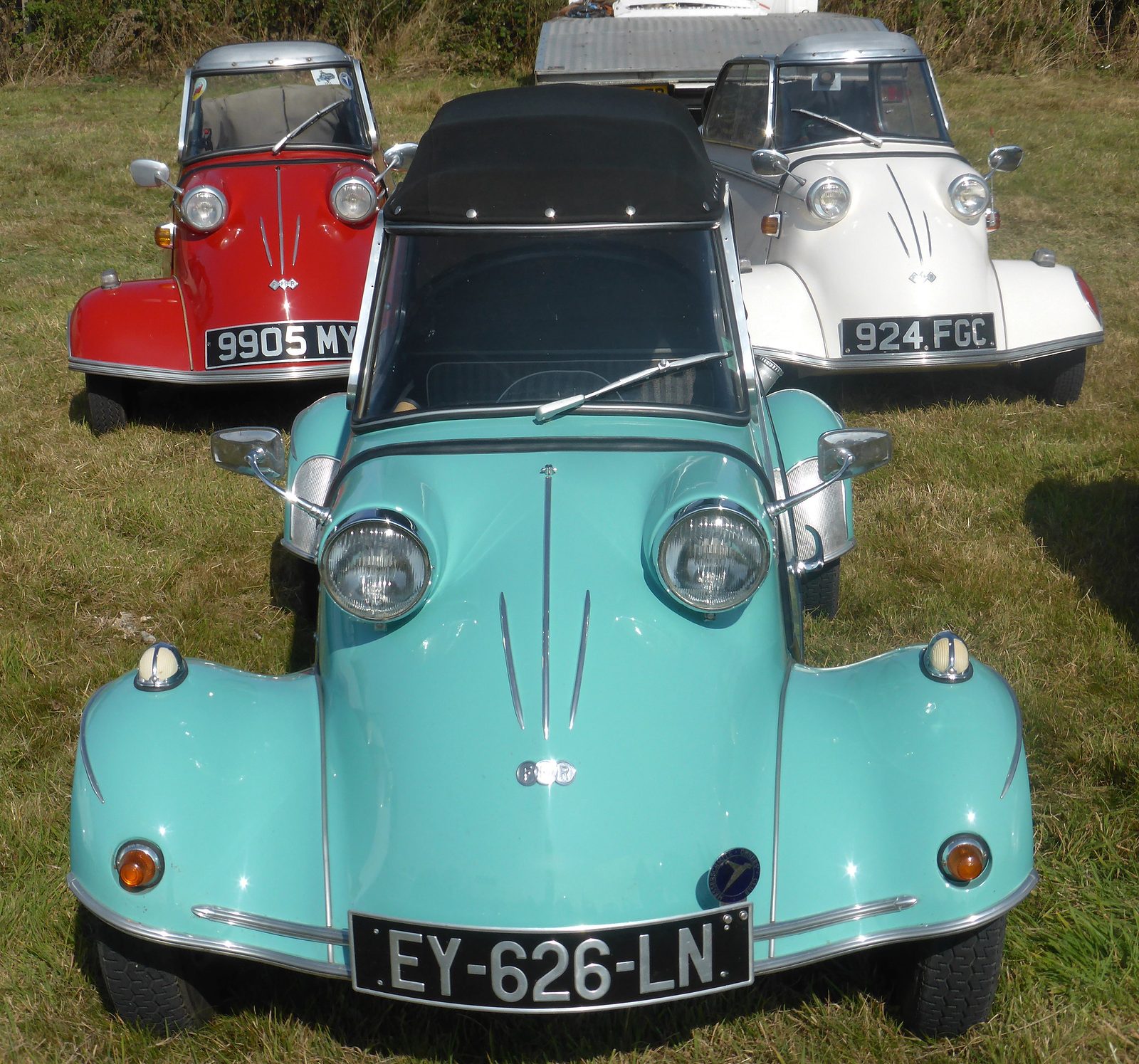
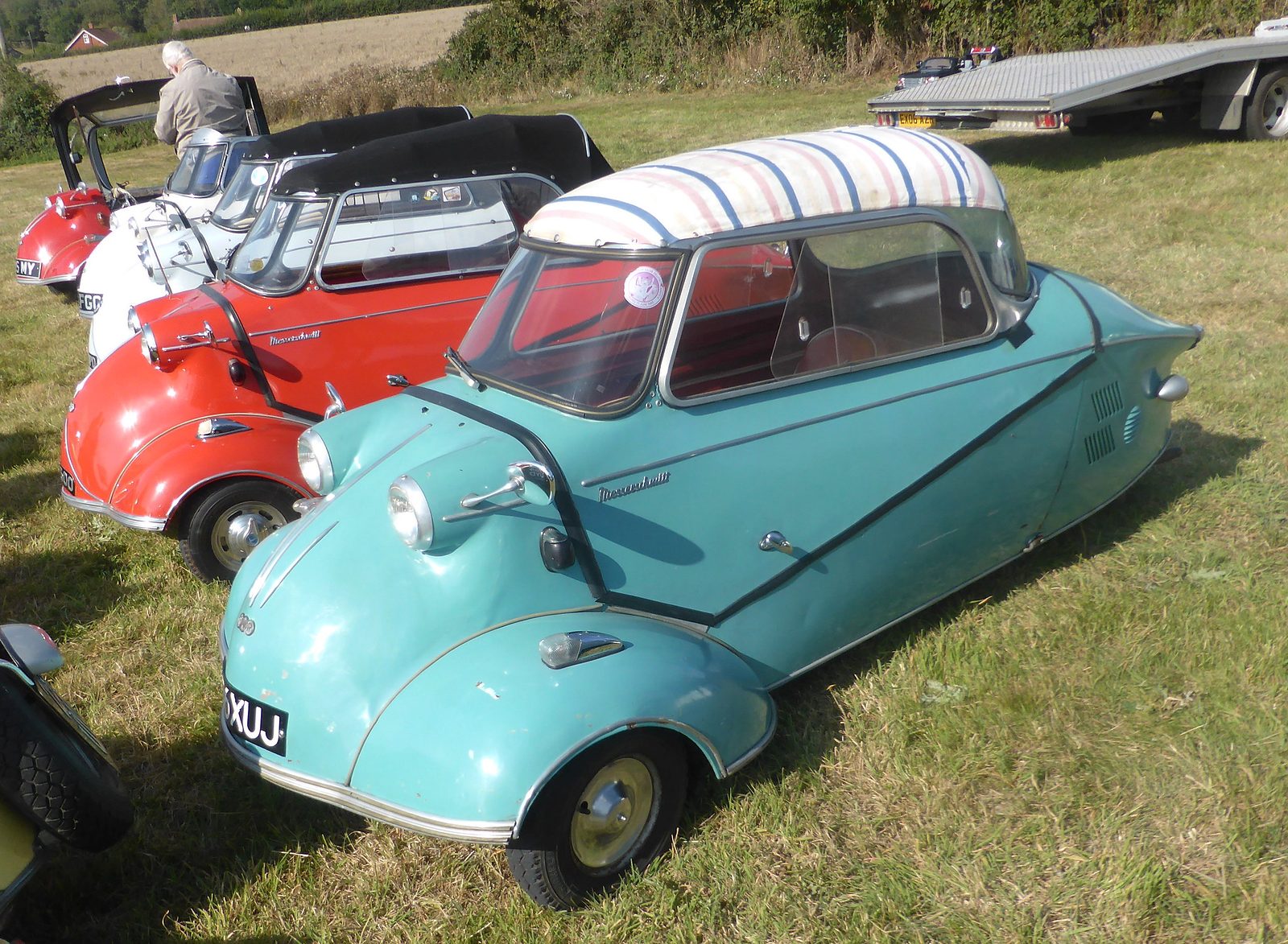
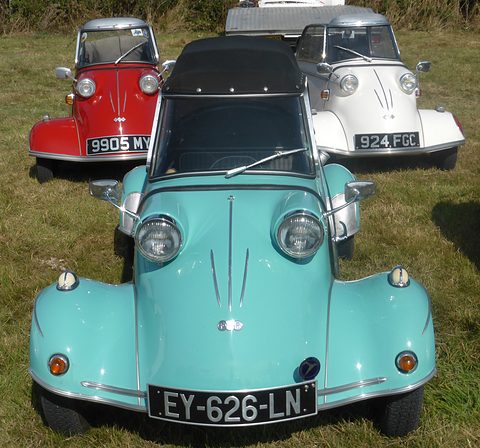
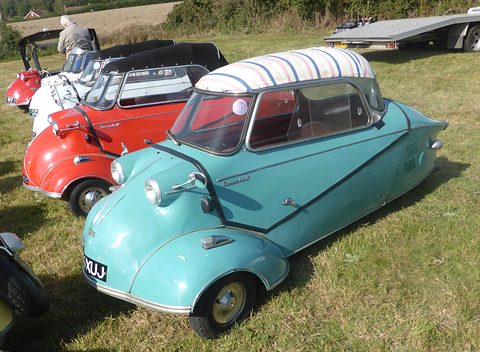
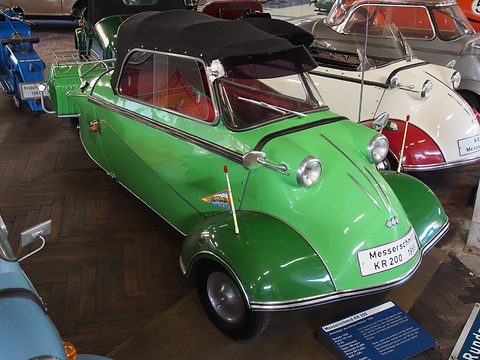
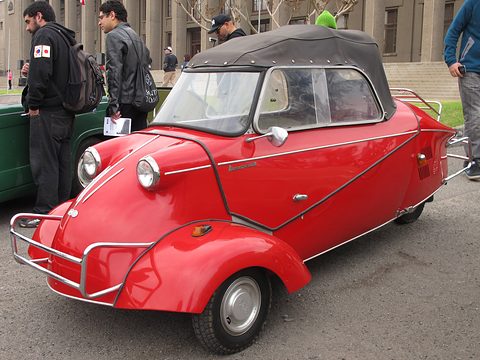
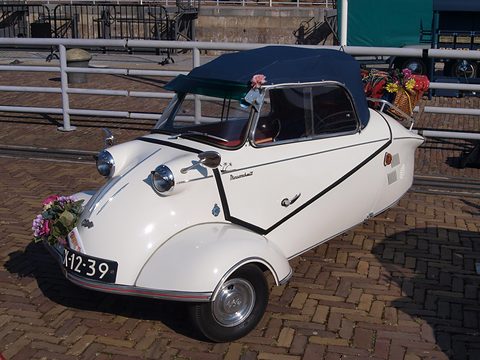
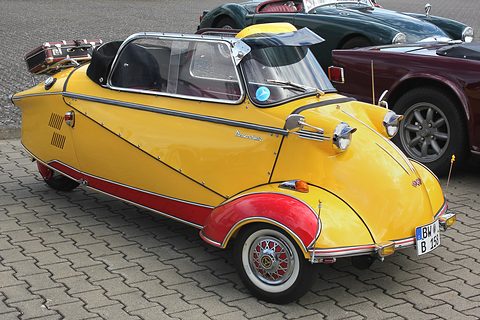
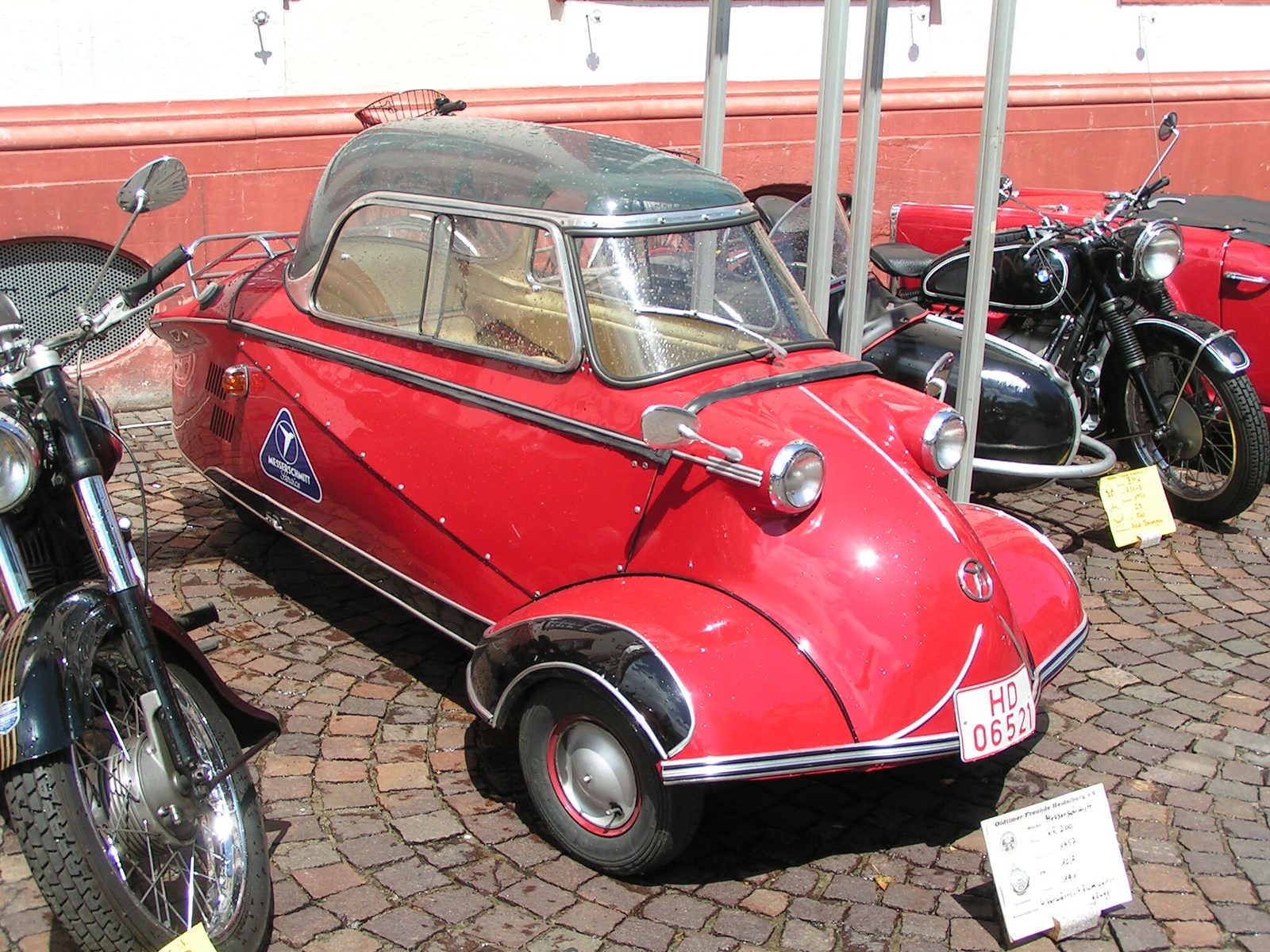
A long line of Messerschmitts at a British club rally in September 2019.Photo: Andrew Bone, CC BY 2.0, via Flickr

Pictures

More photographs, old and new

Variants

Seven ways to have one

The KR200 family
VariantYearsWhat differsHow many
KR2001955–⁠64Plexiglas canopy; Standard and two-tone Export trimsAbout 14,000, by the owners’ club
Rhenalon roofearly 1955A flexible roof you could roll up and stowRecalled for Plexiglas when it went brittle
Kabrio-Limousine1958–⁠64A fabric top on hoops, fixed side-window frames“Approximately 10,000” by the owners’ club, which looks high
KR201 Roadster1957–⁠64Open, a frameless screen, an optional hood; Signal Red or white, with imitation-snakeskin trim300, about 400 or about 450, by source
KR200 Sport1958/59–No canopy; a small aero screen; you climbed in over the topTwo or three genuine cars survive
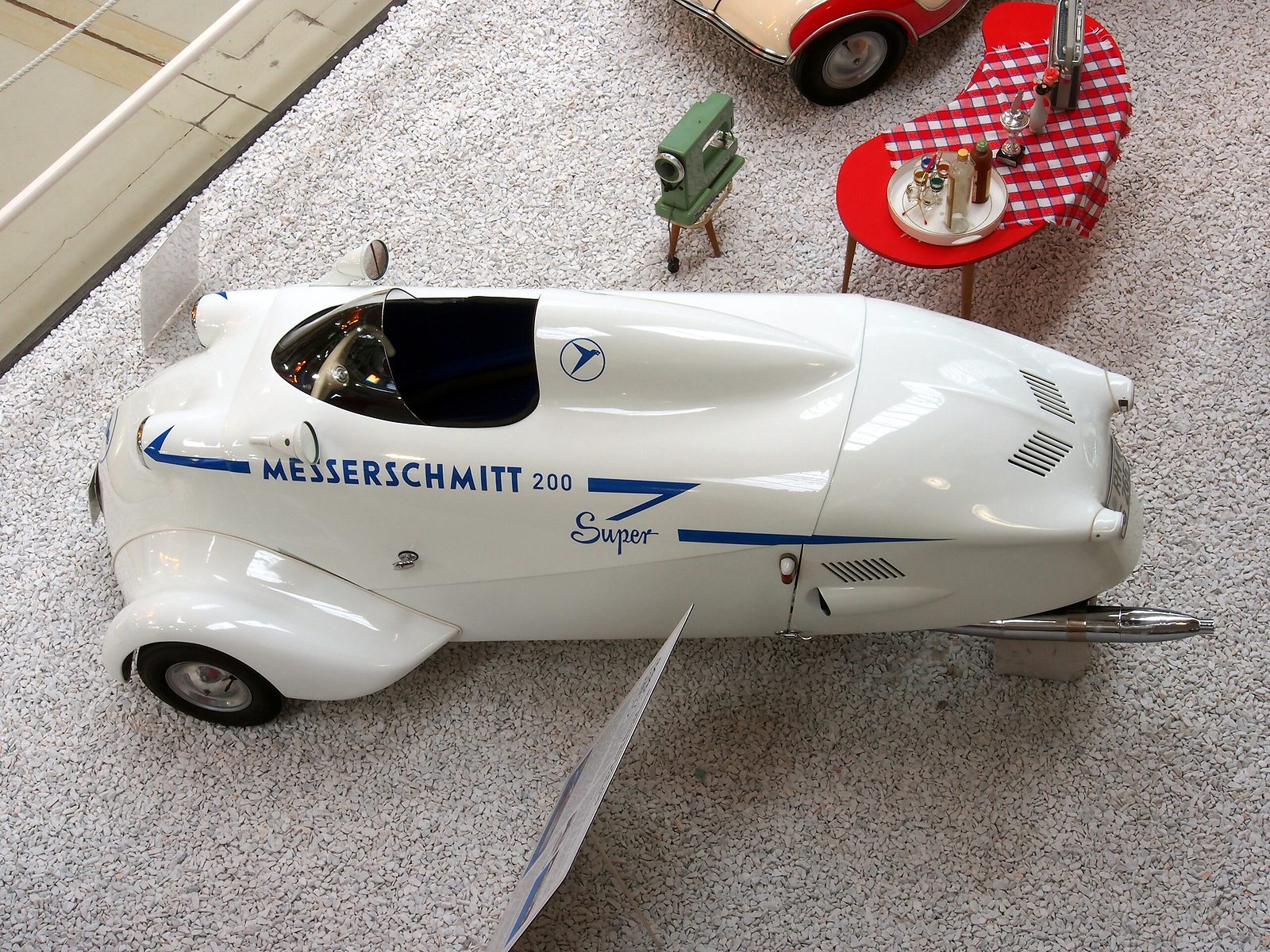
KR200 Super1955Single-seat record car, tuned engine, 30-litre tankOne; now in the Deutsches Museum
Service car1958–A tow bar: it towed itself behind a customer’s carAbout 12; one survives

Specification

From the 1955 road test unless noted

Engine and drive

Engine and drive
EngineFichtel & Sachs 200 L single-cylinder two-stroke, fan-cooled
Capacity191 cc (65 × 58 mm), compression 6.6:1
Power10 PS at 5,250 rpm in the 1955 test; 10.2 PS elsewhere; later 9.7 hpSources differ by period
GearboxFour speeds, sequential, lever on the right, with a neutral finder
ReverseNone: the engine is restarted backwards, giving four reverse speeds
Final driveShaft, then a chain in an oil bath that doubles as the rear swing arm

Body and chassis

Body and chassis
FrameTubular frame with stressed sheet-steel panels
SuspensionIndependent, rubber in torsion, hydraulic dampers on every wheel
SteeringDirect, by a bar; no steering box
BrakesCable-operated drums on all three wheels
Tyres4.00-8
ElectricsSiba Dynastart, 12 V, two 6 V batteries

Dimensions

Dimensions
Length2,820 mm
Width1,220 mm
Height1,200 mm
Wheelbase2,030 mm
Front track1,080 mm
Weight230 kg with a full tank240 kg without driver in other sources

Performance and running

Performance and running
Top speed91 km/h solo, 84 km/h two-up (1955 test)The brochure claimed 100 km/h
Consumption3.5–5 litres per 100 km
Fuel tank14 litres, including 2.5 in reserve
Hill climbingUp to 32 per cent
Turning circle9 msource 12
Price newDM 2,550 (February 1955); DM 2,395 with a heater in 1960source 5source 13

How many were built?

Every figure, with its source

About 30,000 built30,286 by the most-cited count. The often-quoted 41,190 probably counts the KR175 as well, and no factory ledger has been seen.

  1. about 41,190all KR200s, 1955–⁠64Unconfirmed

    English Wikipedia, infobox, with no source givensource 8

  2. 30,286KR200sTwo sources agree

    English Wikipedia’s text, citing Jornal dos Clássicos; the Weiner museum gives the same number, but for February 1955 to December 1956source 8source 3

  3. 25,000KR200sOne source

    Lane Motor Museumsource 14

  4. about 24,00014,000 canopy cars and 10,000 Kabrio-LimousinesOne source

    Messerschmitt Owners’ Club, model pagessource 7

  5. 11,909all Messerschmitts built in 1955 aloneOne source

    West German production statisticssource 15

  6. 7,500all Messerschmitts built in 1956One source

    West German production statistics, which may themselves estimate itsource 15

  • Two sources agreetwo good sources give the figure
  • One sourcea good source, alone
  • Unconfirmeda lead only, not yet checked

Famous for

Three points

  1. Four gears backwards

    Stop the engine, restart it backwards with the key, and every forward gear works the other way.

  2. A bar, not a wheel

    The steering bar acts straight on the track rods, with no steering box. The 1955 tester called it extraordinarily sensitive.

  3. Hockenheim, 1955

    Twenty-four hours at 103 km/h (64 mph) on 191 cc, and a string of international records for small three-wheelers.

Racing and records

Hockenheim, August 1955

103km/h · 24 h

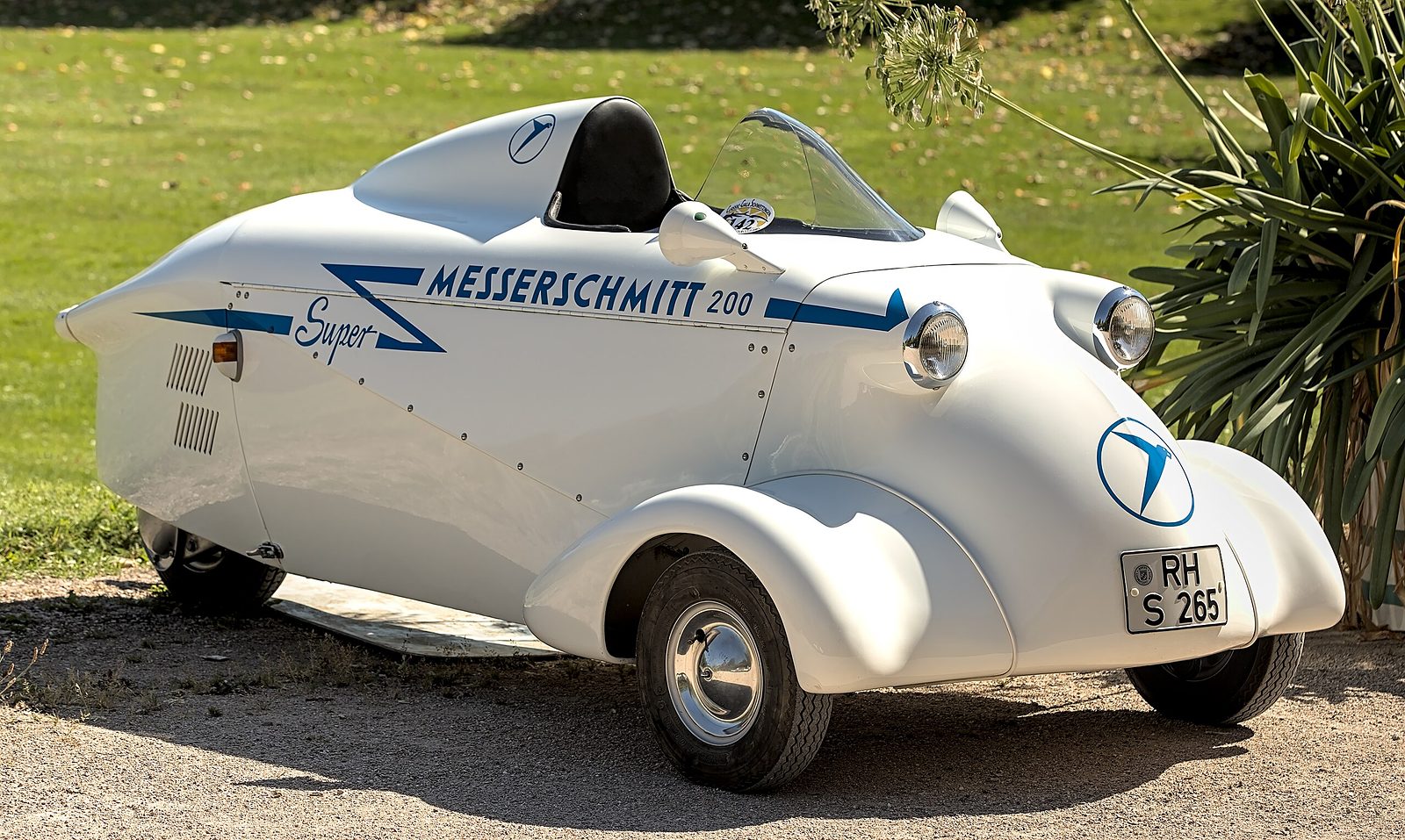
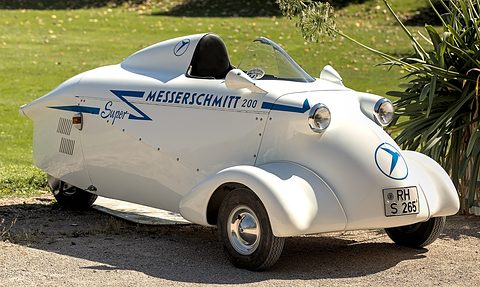
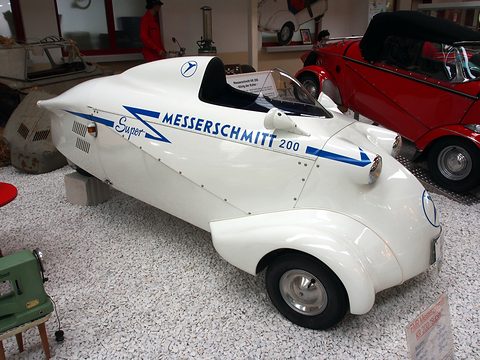
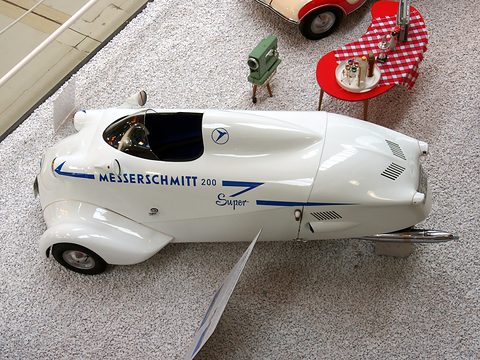
On 29–30 August 1955 a lightly streamlined single-seat KR200 “Super”, with a tuned engine, a 30-litre (6.6-gallon) tank and duplicated throttle, clutch and brake cables, ran for 24 hours at Hockenheim. Its six drivers included Fritz Fend, and the circuit was chosen because its bumps would test the steering and brakes at speed. A failed flywheel hub stopped any attempt to go on beyond 24 hours, and Willy Messerschmitt complained that records cost money and brought in no extra orders.source 9source 7source 2
22
international records for three-wheelers up to 250 cc in the magazine’s table; the owners’ club and German Wikipedia count 25.source 9source 2source 7
2,473 km
covered in the 24 hours (1,537 miles), an average of 103 km/h (64 mph).source 7source 9
19 h 03
to cover 2,000 km (1,243 miles), at 105 km/h (65 mph); this and the 24-hour mark also beat the 350 cc class.source 9source 7
60 kg
(132 lb) of lead in place of a passenger, as the rules required.source 9source 2
On screen

Confirmed appearances only

A Messerschmitt in Terry Gilliam’s Brazil (1985) is claimed but not yet confirmed.

Survivors and collecting

Today

No count of surviving KR200s has been found. The Messerschmitt Owners’ Club was founded in London in November 1956, publishes Kabinews and has more than 550 members; Germany has the Messerschmitt-Club Deutschland, and the Messerschmitt Foundation of Great Britain, at Pebworth, holds factory invoices.source 7source 10 The rare types are counted one by one: 21 KR201 Roadsters by the Weiner museum’s count, two or three genuine Sports and one service car.source 11source 7source 8

A buyer should know that the chassis plate reads “KR200” even on a KR201, and that many cabriolets and roadsters were converted from canopy cars.source 10source 7 The Hockenheim record car is in the Deutsches Museum in Munich, without its record engine, which was lost in storage at Fichtel & Sachs; at least three replicas have been built. The Lane Motor Museum in Nashville keeps a 1957 KR200, now running on a Honda engine.source 7source 14

The shape has outlived its makers. Britain’s Tri-Tech built a kit version, the Schmitt, with a Honda 250 engine, and from 2021 a Spanish firm offered a KR-202 with petrol or electric power.source 2 In 2013 the car Vic Hyde had taken on tour sold for more than twice its estimate.source 4
At auction
CarSalePrice
1955 KR200, the Vic Hyde carRM Auctions, Weiner museum sale, 2013source 4$115,000
1957 KR201 RoadsterRM Auctions, 2013$103,500
1962 service carRM Auctions, 2013$94,875
1959 KR200 SportRM Auctions, 2013$92,000
1955 KR200, chassis 55522Bonhams, Tupelo, 2019source 17$31,360
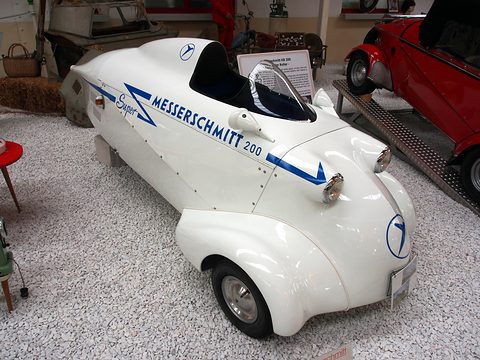
White streamlined single-seater with a blue Super Messerschmitt 200 stripe on a gravel display.
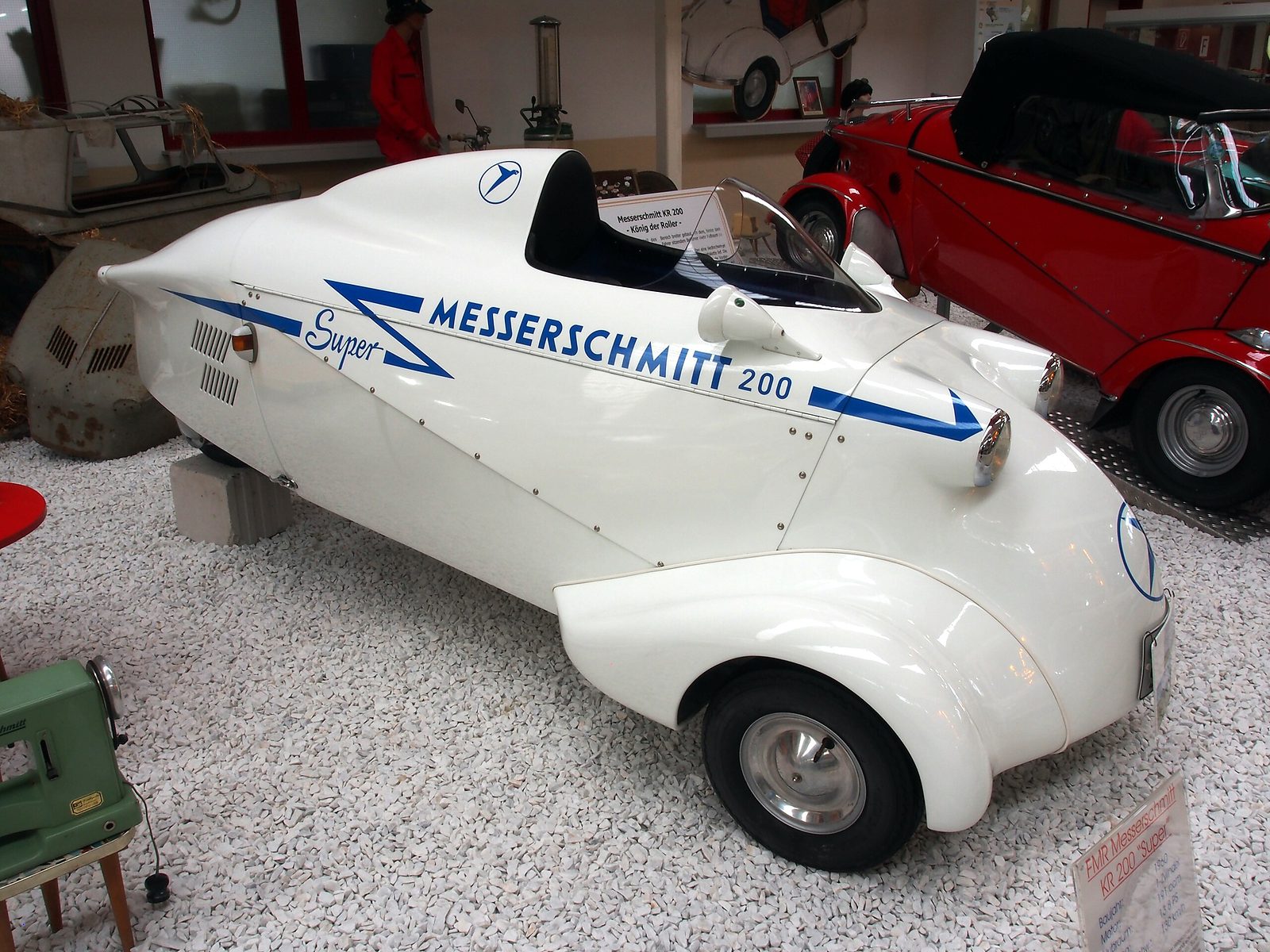
A KR200 Super at the Technik Museum Speyer in 2012. The Hockenheim car itself is in the Deutsches Museum, and replicas have been built.Photo: Alf van Beem, CC0, via Wikimedia Commons

Sources

Numbered as in the text

Sources are given as plain text; the links are on the Credits page.

  1. David Garner, “Fritz Fend: father of the Messerschmitt Kabinenroller”, Messerschmitt Owners’ Club, 14 January 2014.
  2. German Wikipedia, Messerschmitt Kabinenroller, read in full. Used as a lead; its references include Rosellen, Deutsche Kleinwagen (1991).
  3. Bruce Weiner Microcar Museum, “1955 Messerschmitt KR-200” (the Vic Hyde car), tour page.
  4. Report on RM Auctions’ sale of the Bruce Weiner Microcar Museum, Madison, Georgia, 15–16 February 2013.
  5. “KR 200 heißt der neue Kabinenroller”, news item, auto motor und sport 3/1955 (5 February 1955).
  6. Dr Paul Simsa, “Unser Test: Messerschmitt Kabinenroller KR 200”, auto motor und sport 22/1955 (October 1955), pp. 12–15.
  7. Messerschmitt Owners’ Club (UK), model pages and “Messerschmitt 200 Super: a world record breaker!” (Messerschmitt Foundation of Great Britain, May 1994).
  8. English Wikipedia, Messerschmitt KR200, read in full. Used as a lead; it cites Automobile Quarterly 11 (2), 1973, and Jornal dos Clássicos, 2017.
  9. Günther Molter, “Rekorde der Kleinsten”, auto motor und sport 19/1955, p. 25, with the record table.
  10. Wolfgang Kraus, Uschi Kettenmann and Heiko Zimmermann, KR201 History, translated by David Garner, Messerschmitt Owners’ Club.
  11. Bruce Weiner Microcar Museum, “Messerschmitt KR-201 Roadster”, tour page.
  12. neue-kabinenroller.de, “Historical example KR 200” (a maker of modern replicas).
  13. BMW Group, 50 years of the BMW Isetta, press kit, February 2005 (1960 price comparison).
  14. Lane Motor Museum, “Messerschmitt KR200, 1957”, collection page.
  15. “Produktionszahlen 1957”, West German car production 1955–⁠57, auto motor und sport 4/1958.
  16. “Rollermobile brauchen Leistung und Sicherheit”, auto motor und sport 5/1955.
  17. Bonhams, Tupelo Automobile Museum sale, 27 April 2019, lot 501; and classic-car-auctions.info, “2013 top auction prices: mini microcars”.