microcarfan
  • Microcar utility
  • Italy
  • Estate and van

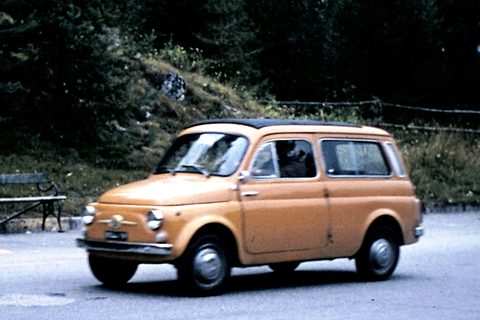
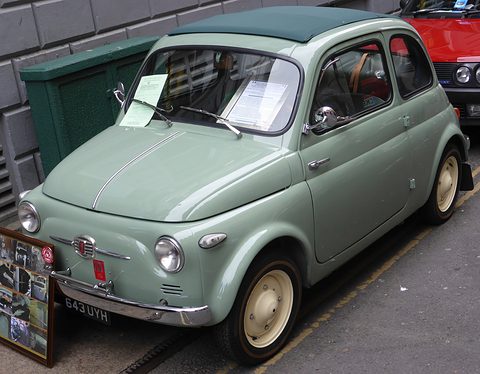
Fiat 500 Giardiniera

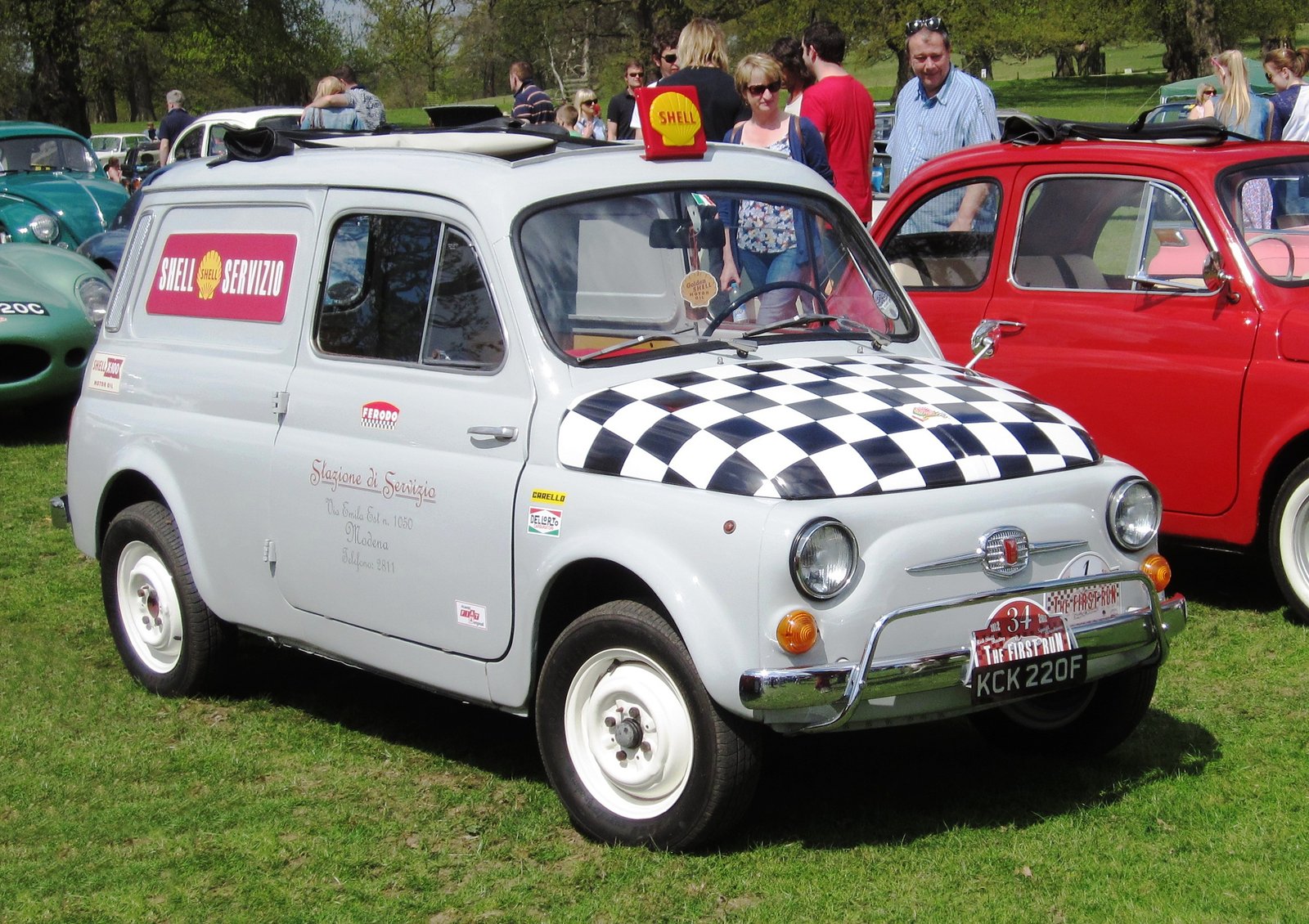
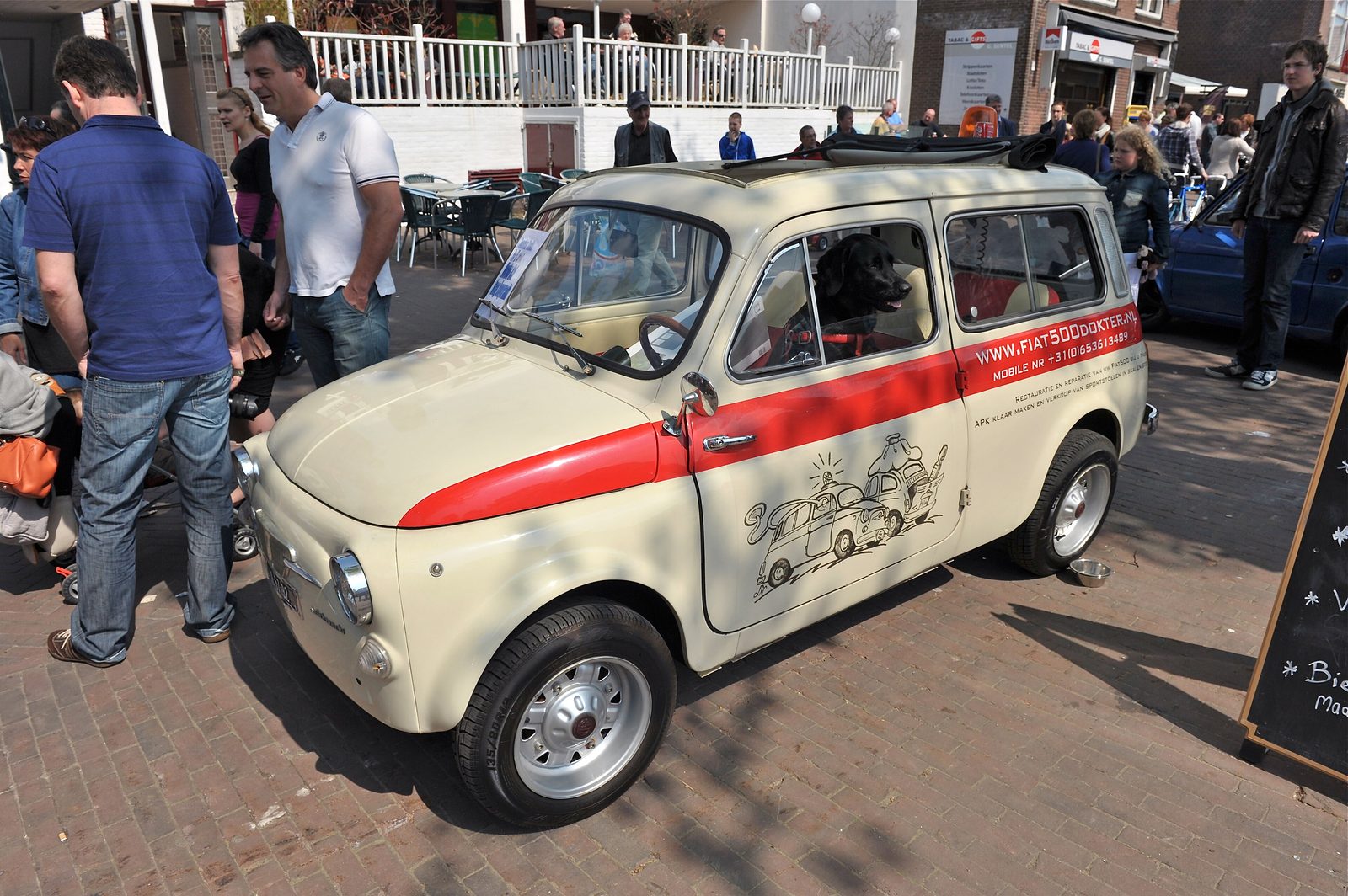
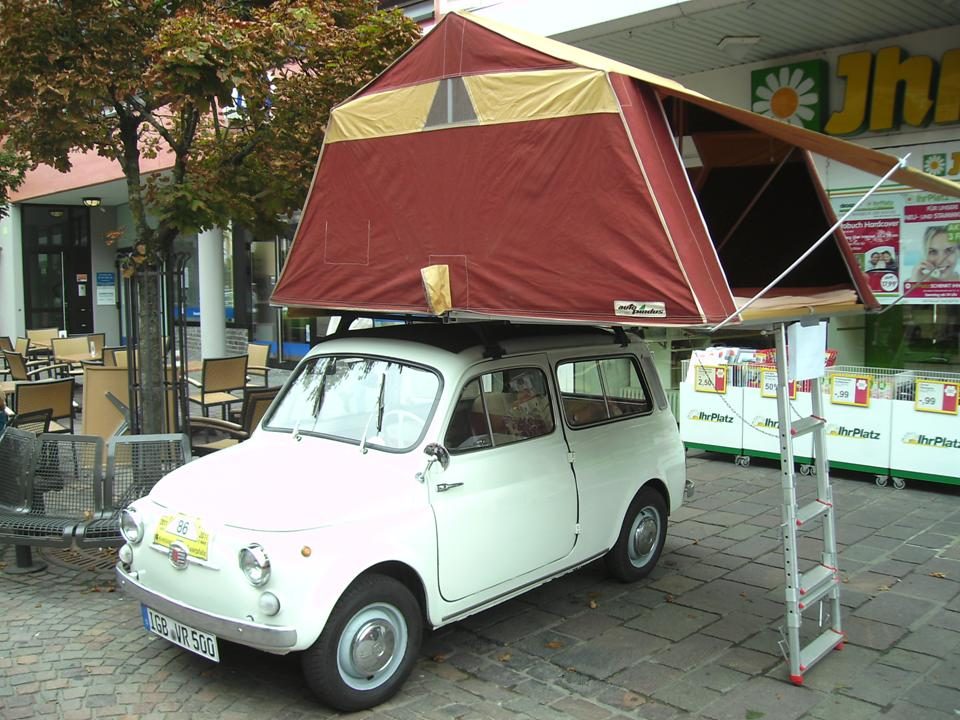
Also known as Nuova Fiat 500 Giardiniera, Autobianchi Giardiniera 500, Fiat 500 K, Fiat 500 Commerciale, Furgoncino 500

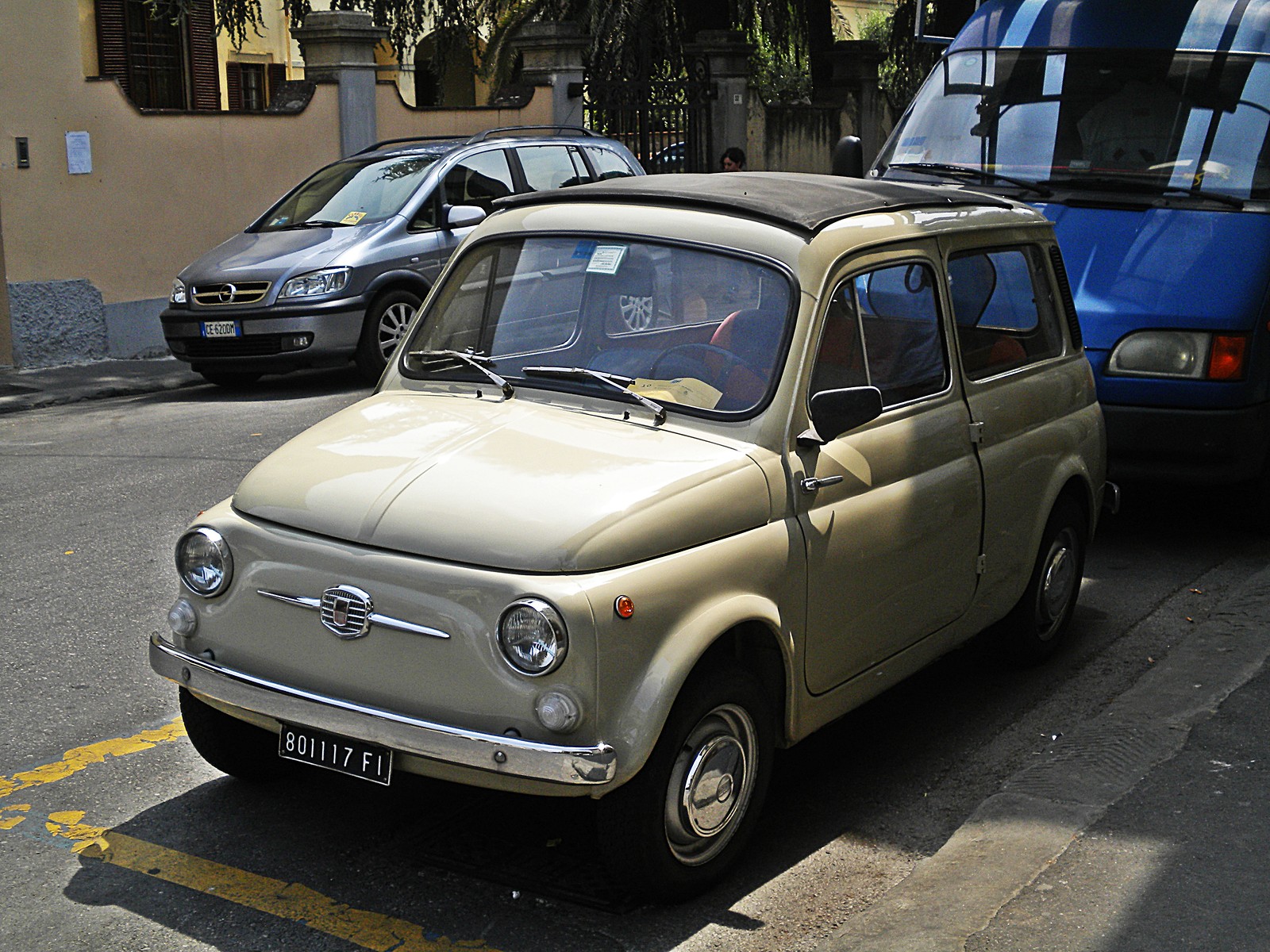
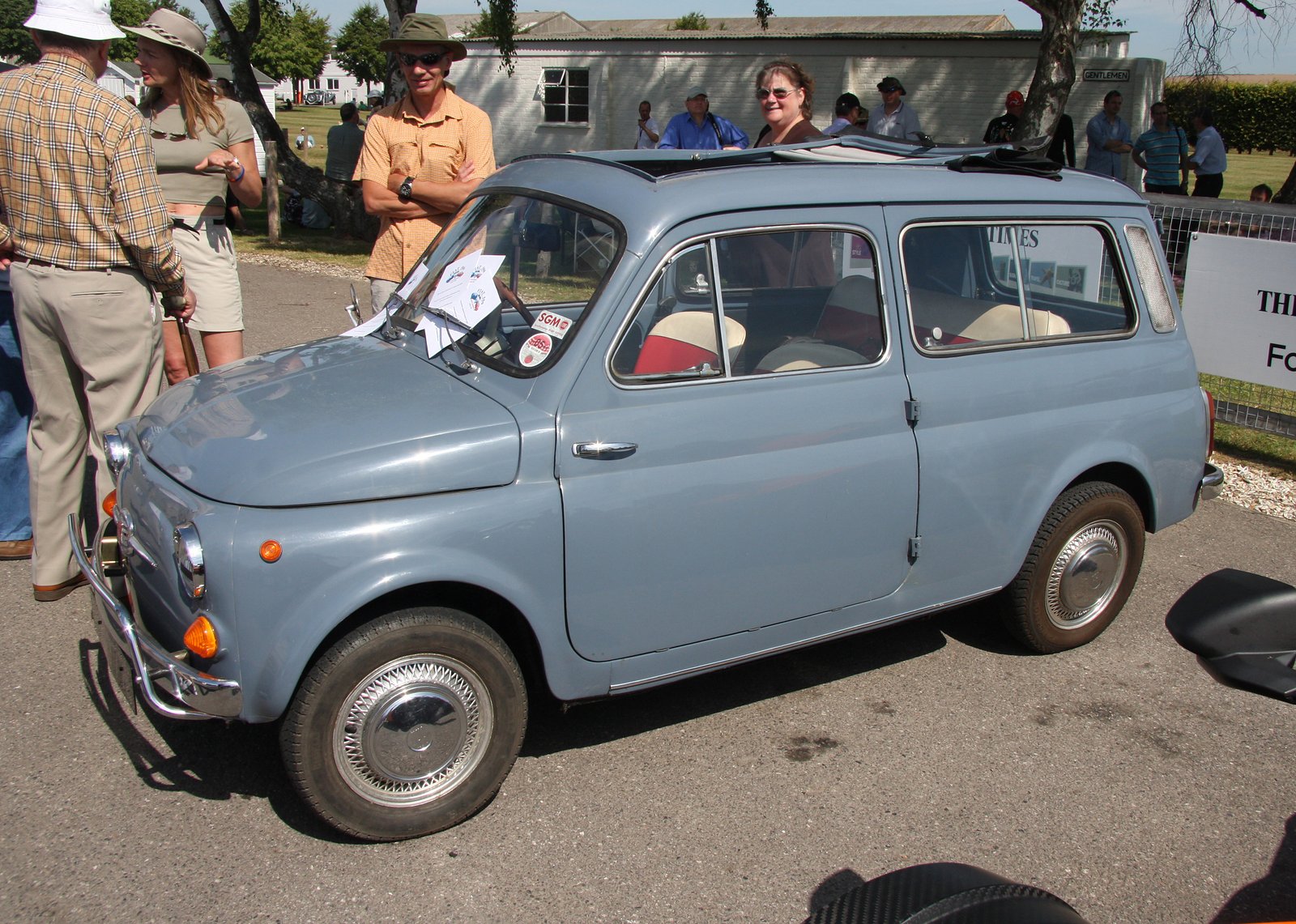
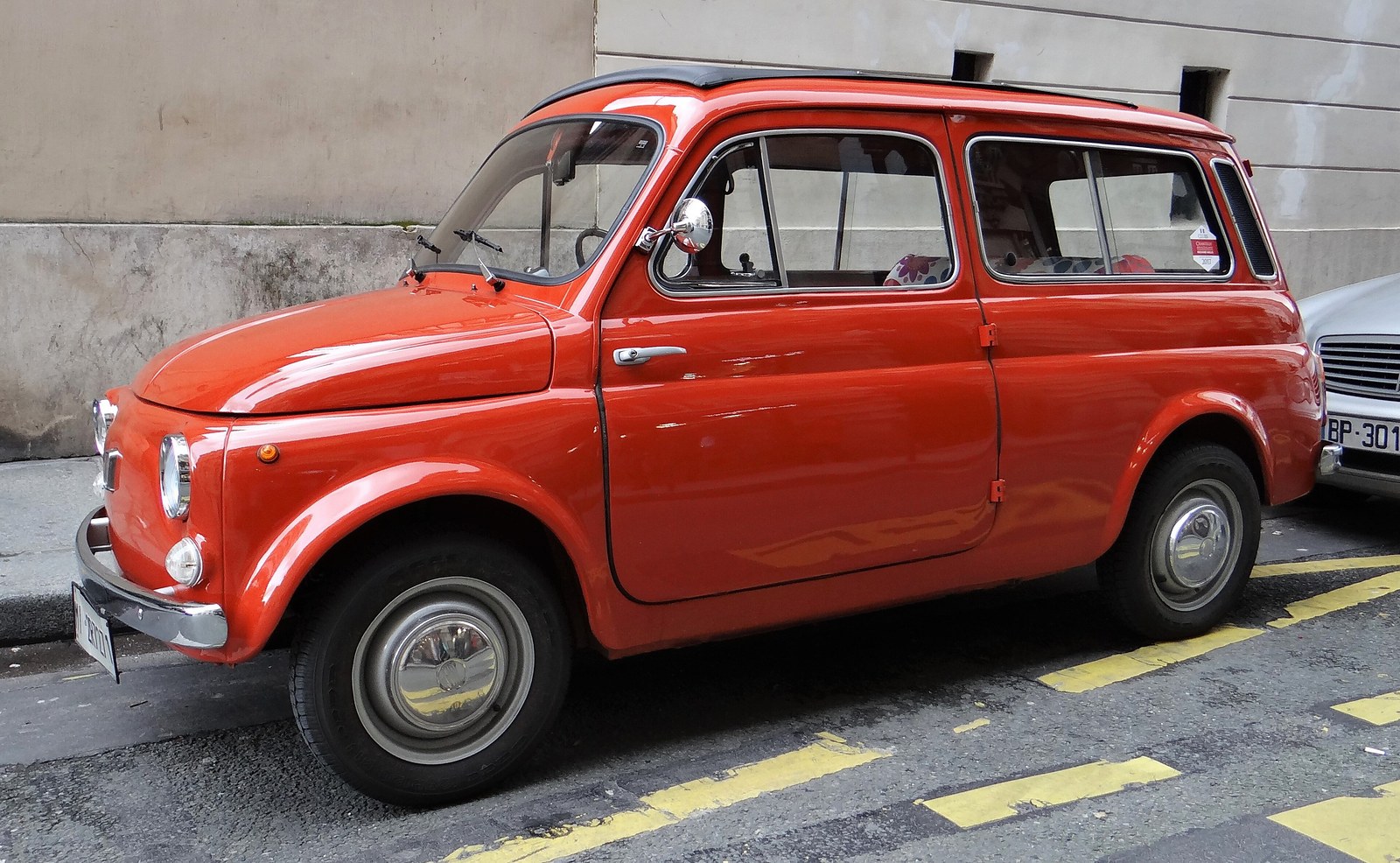
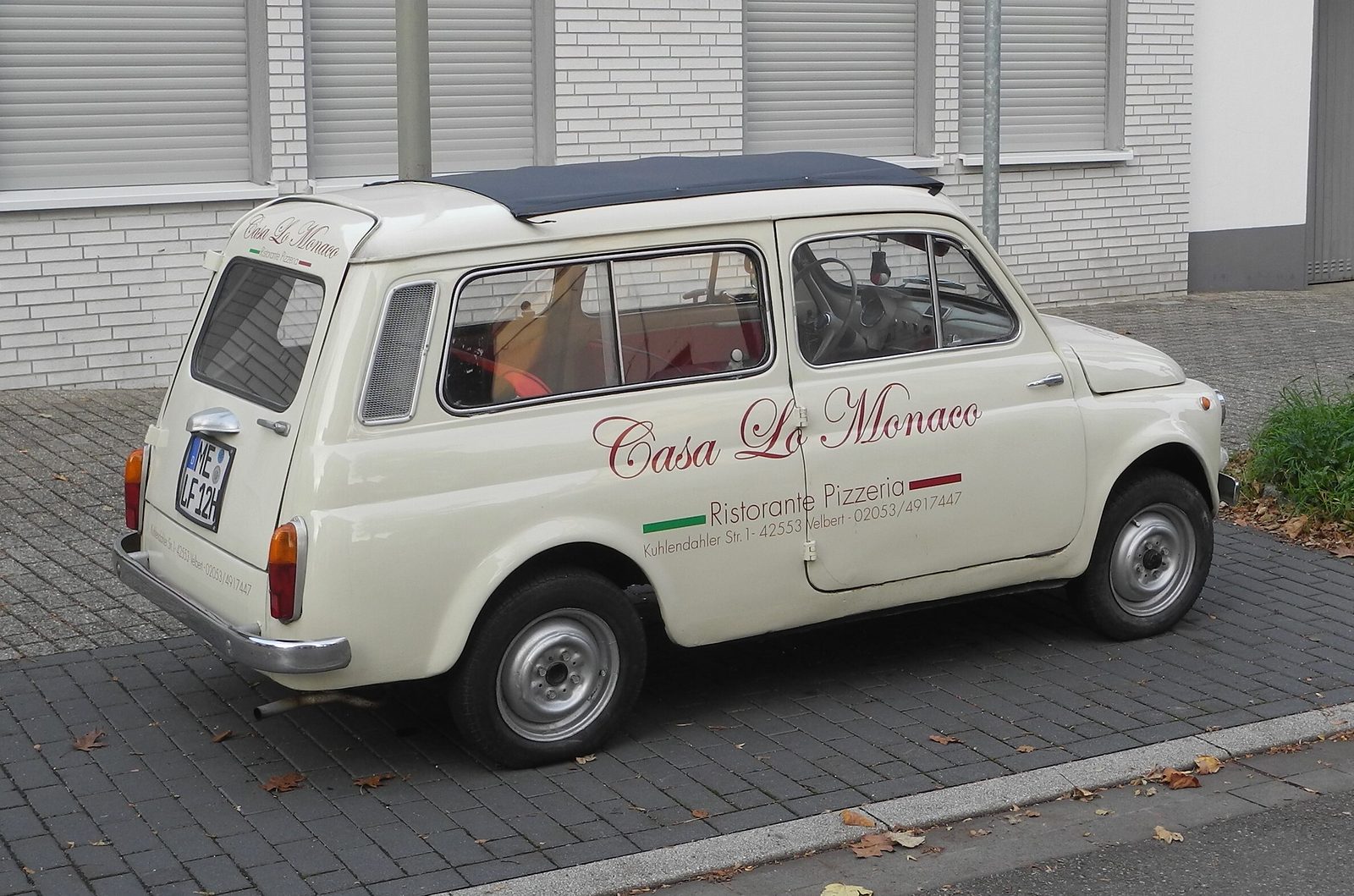
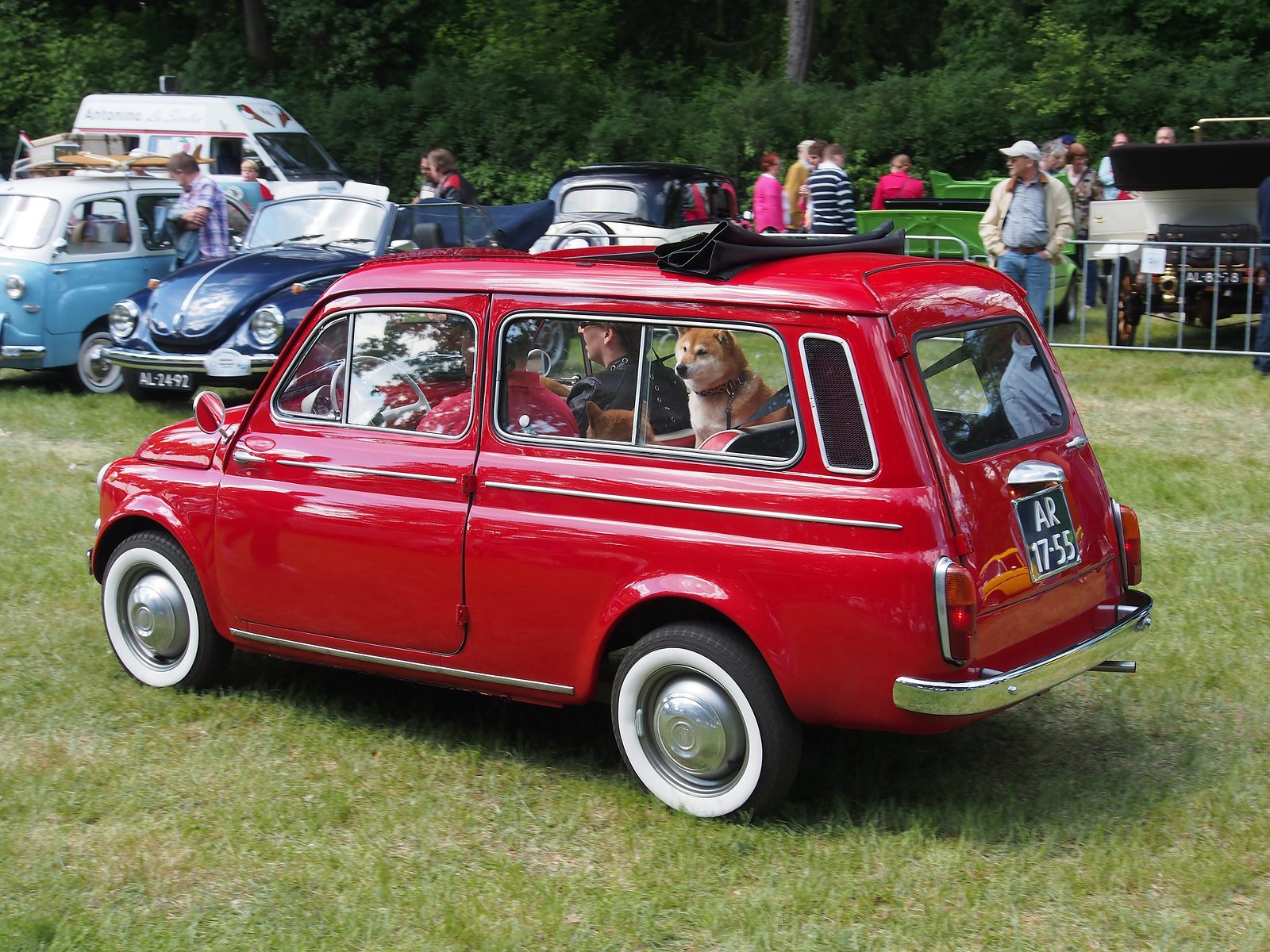
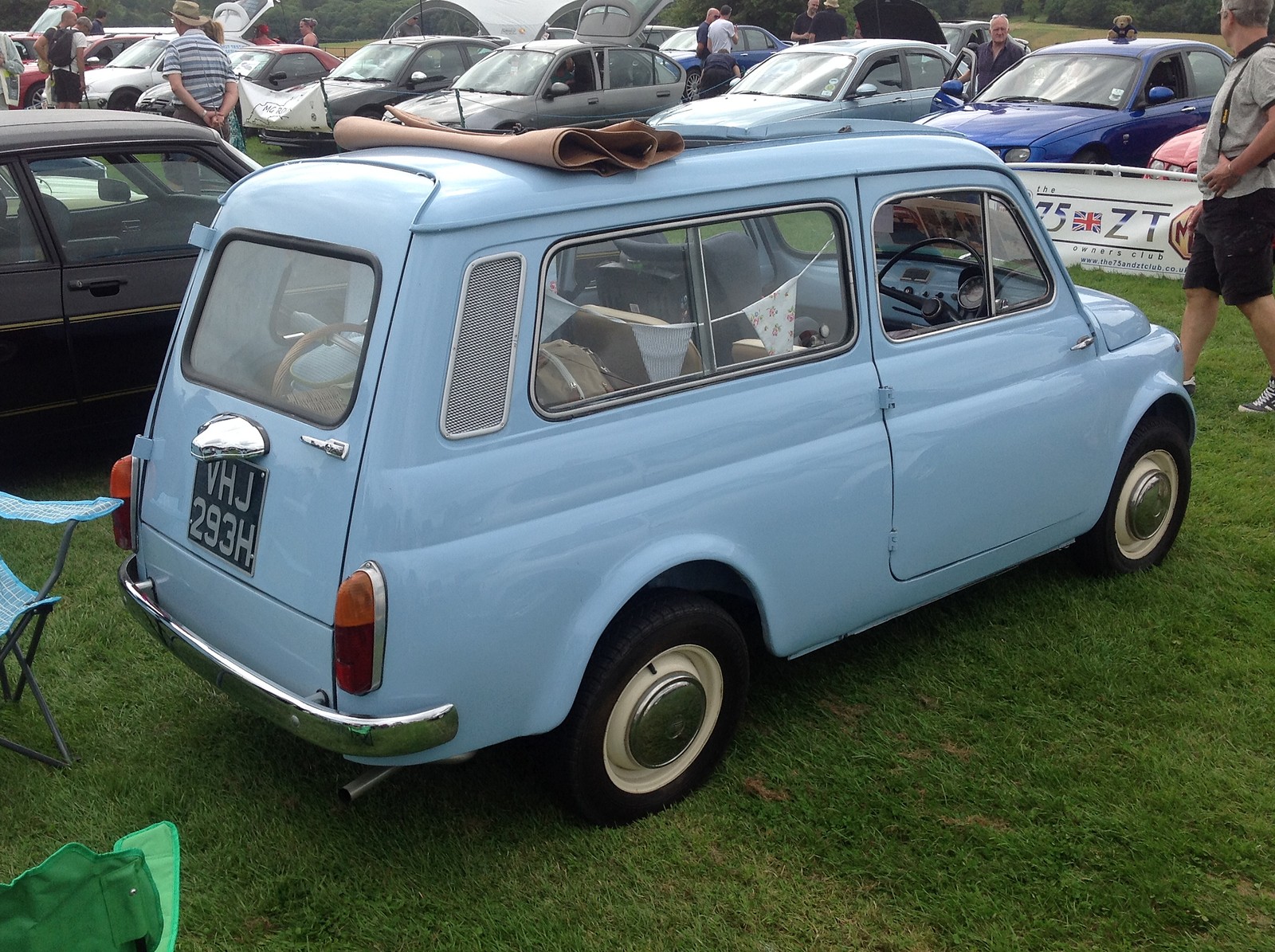
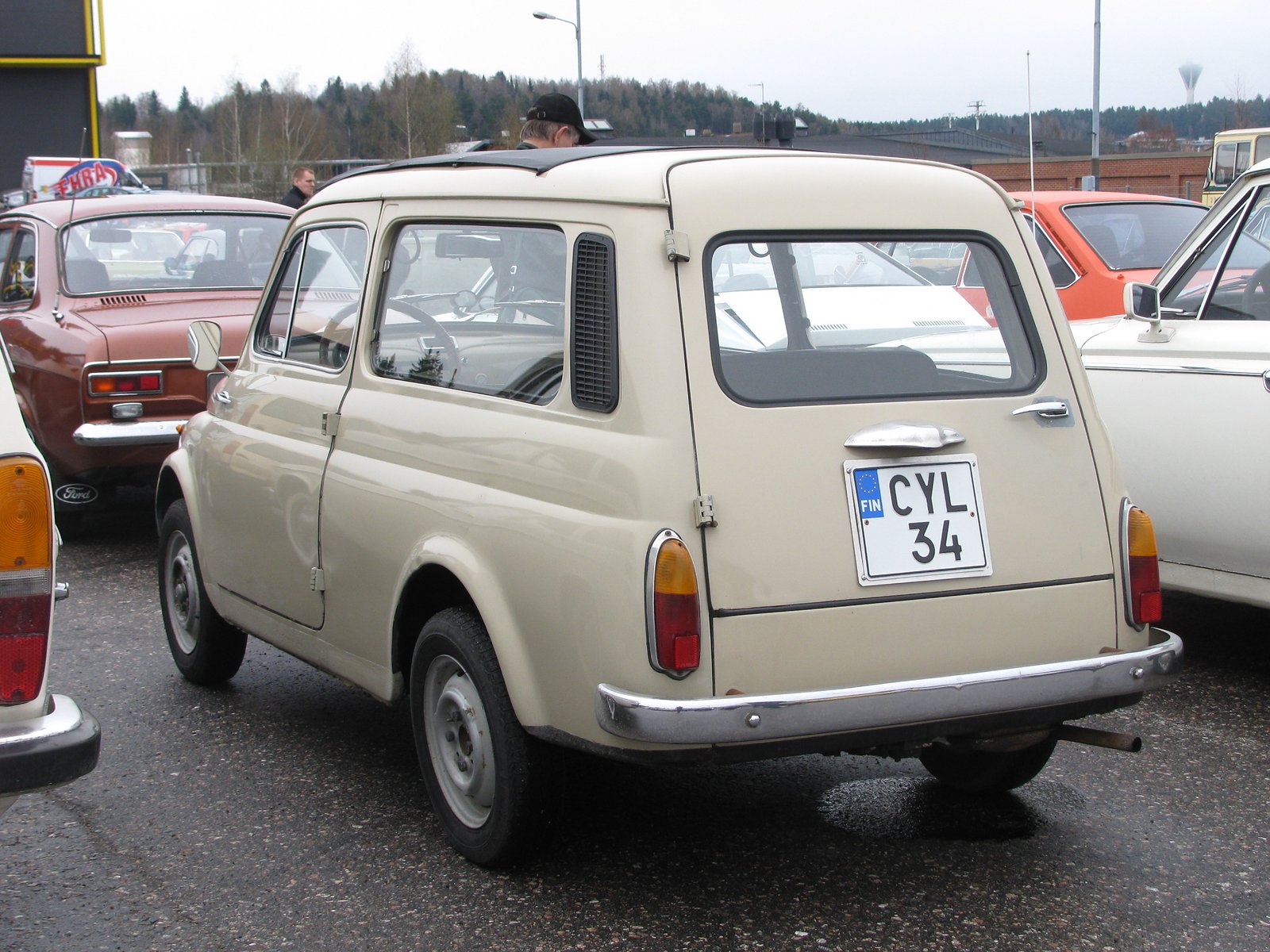
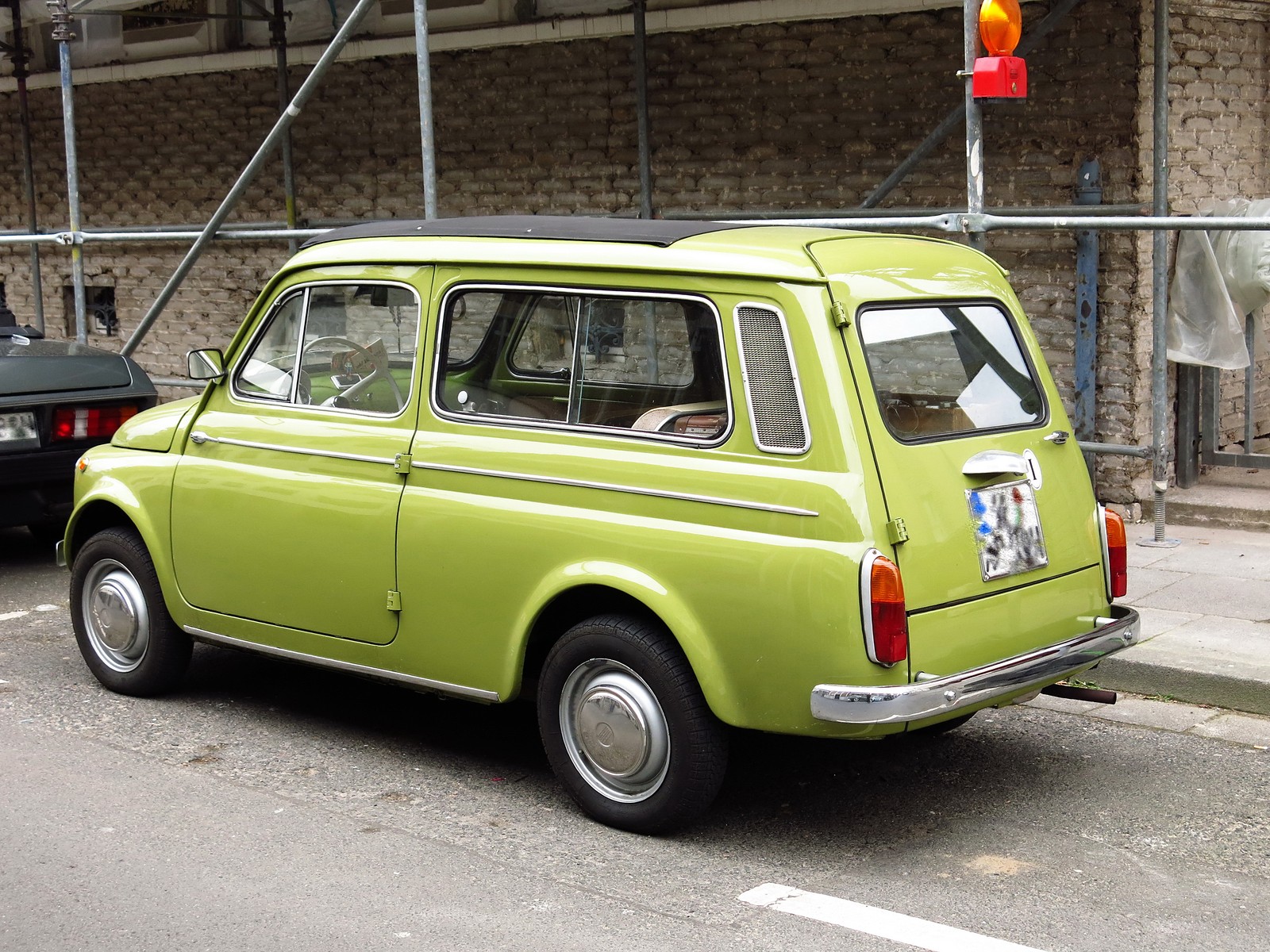
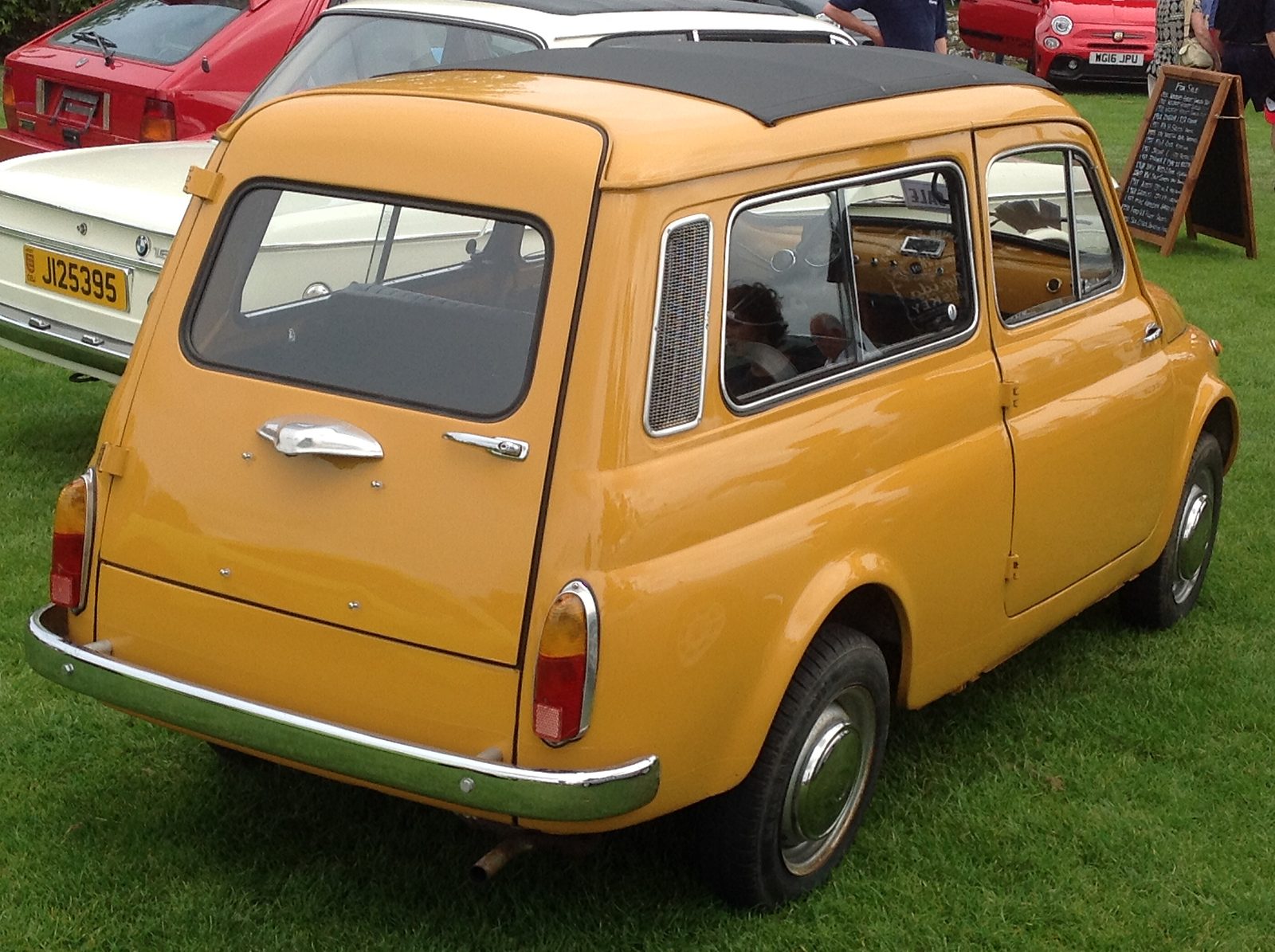
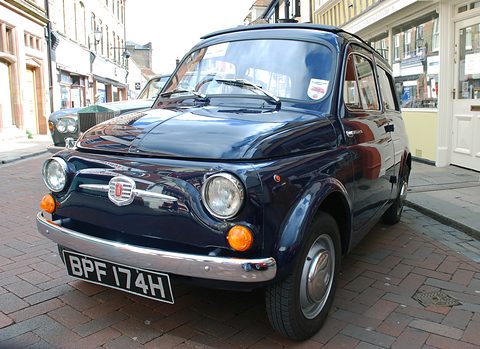
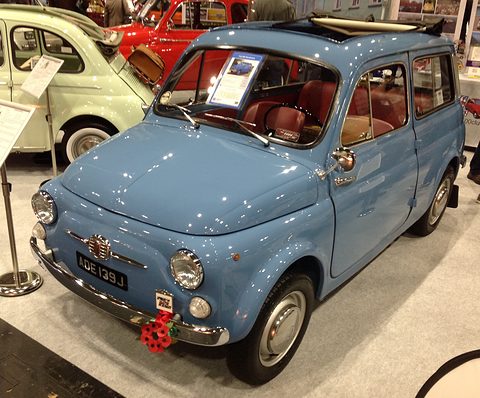
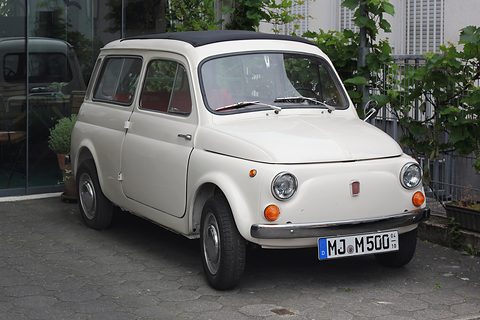
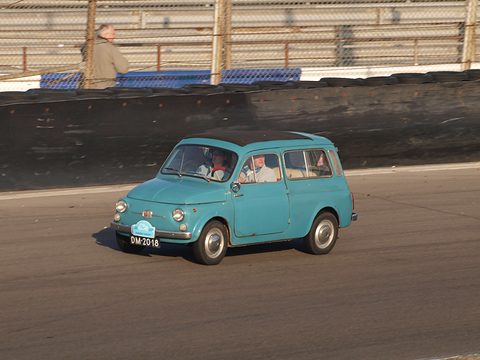
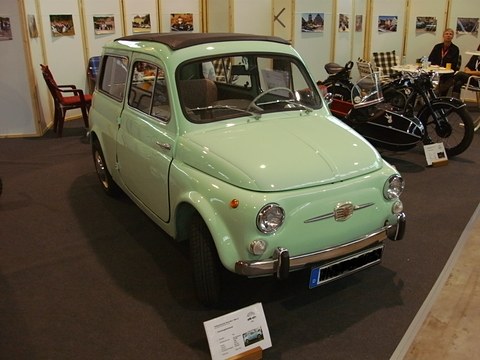
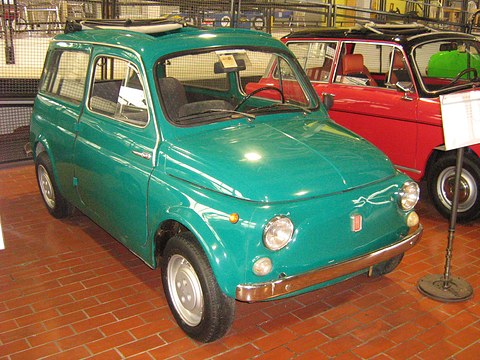
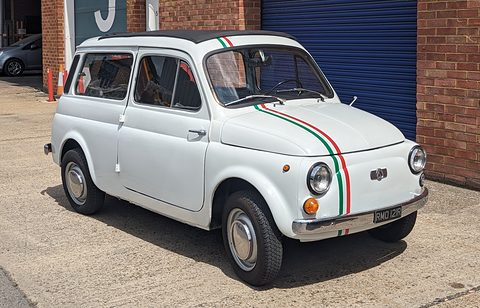
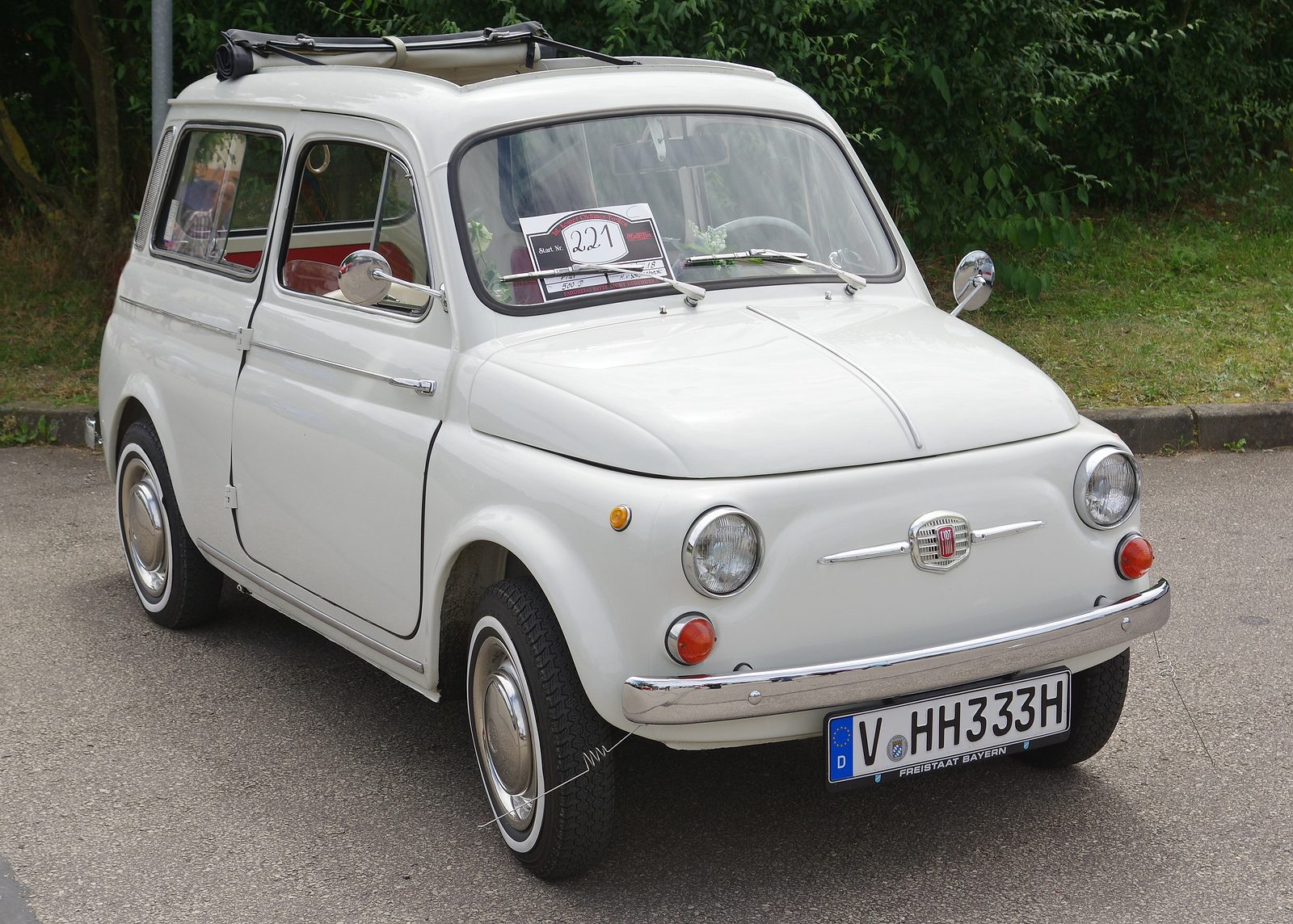
To make the Fiat Nuova 500 carry things, Dante Giacosa turned its engine on its side and slid it under the floor, a sogliola: flat, like a sole. The little estate it made possible was still being built two years after the last 500 saloon.

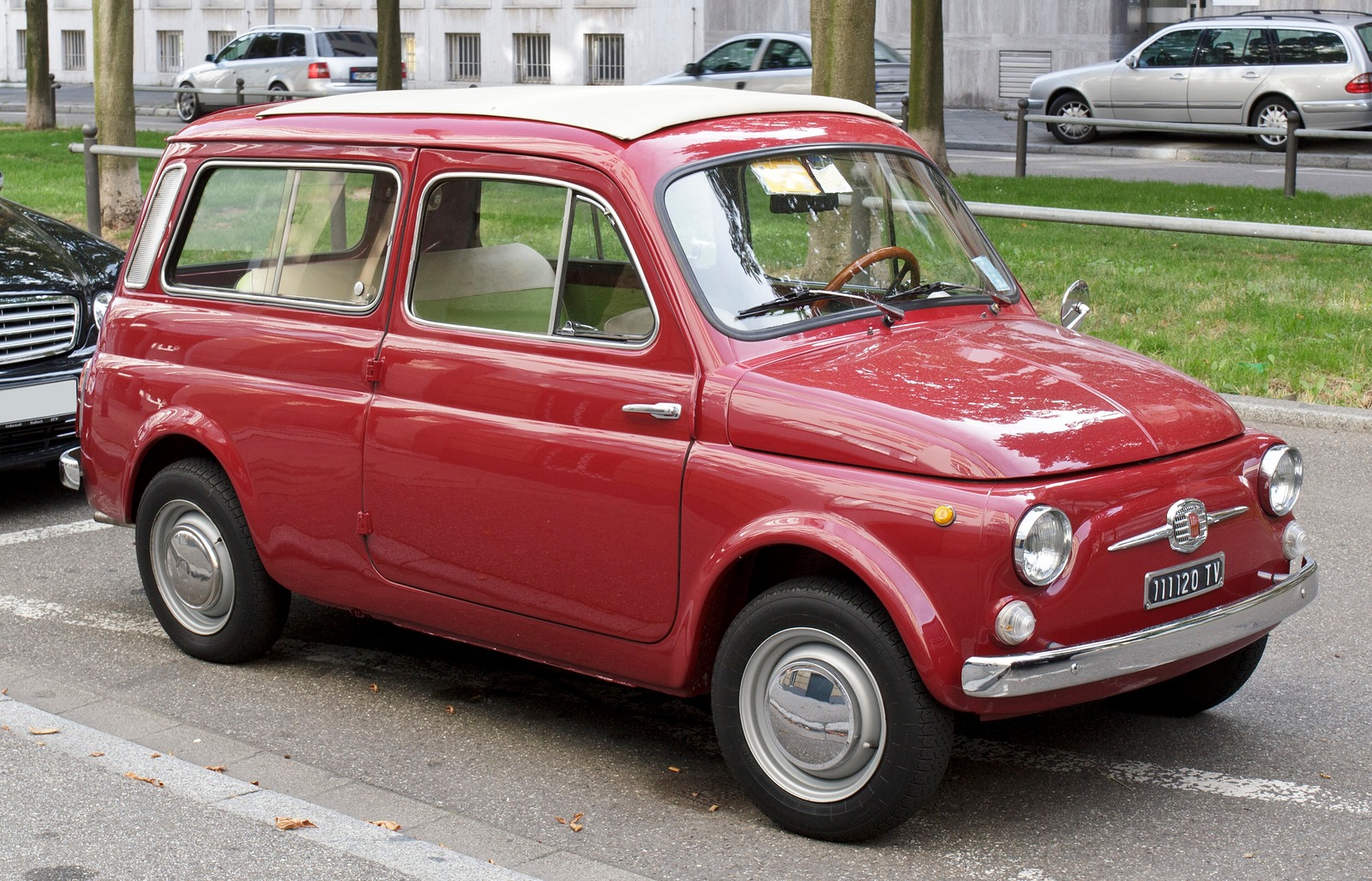
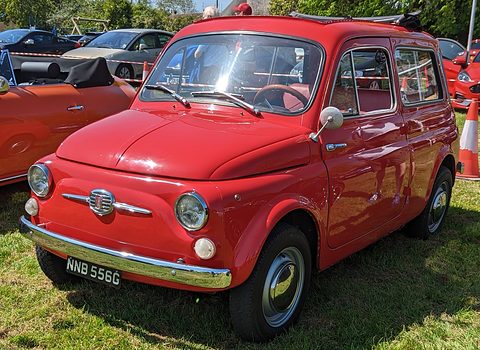
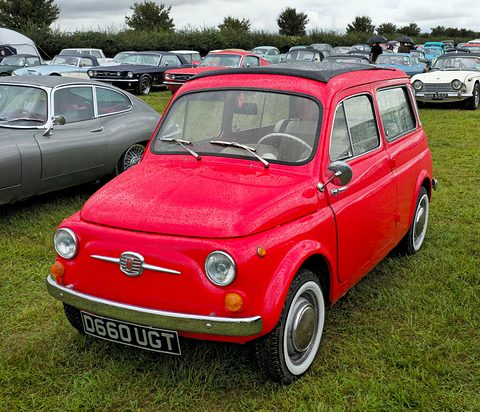
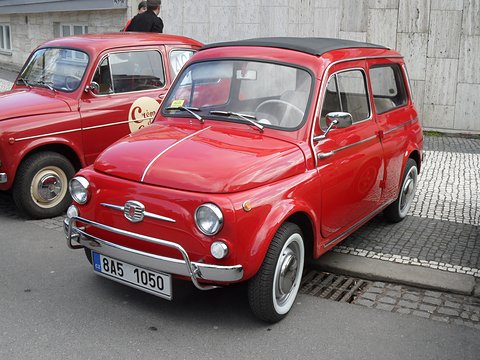
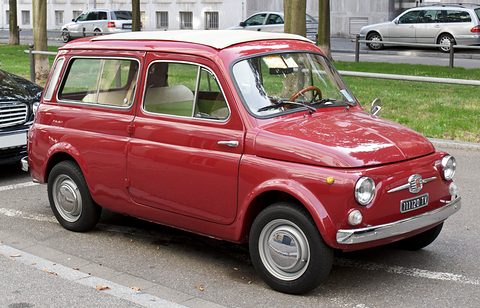
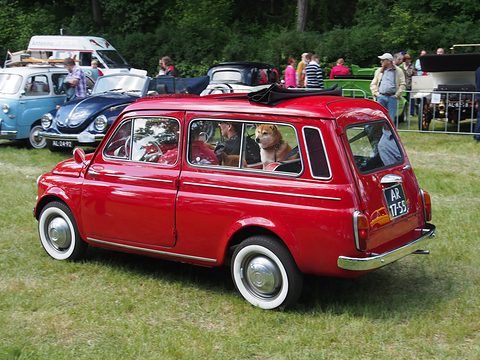
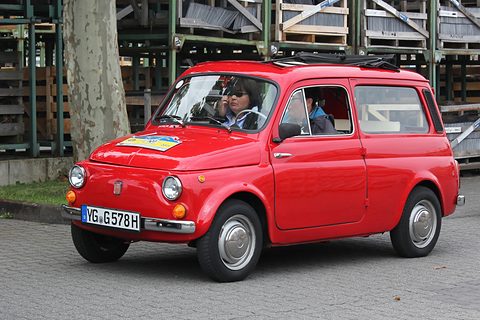
Bright red small estate with a chrome bumper and round headlamps, parked on grass by a red convertible.
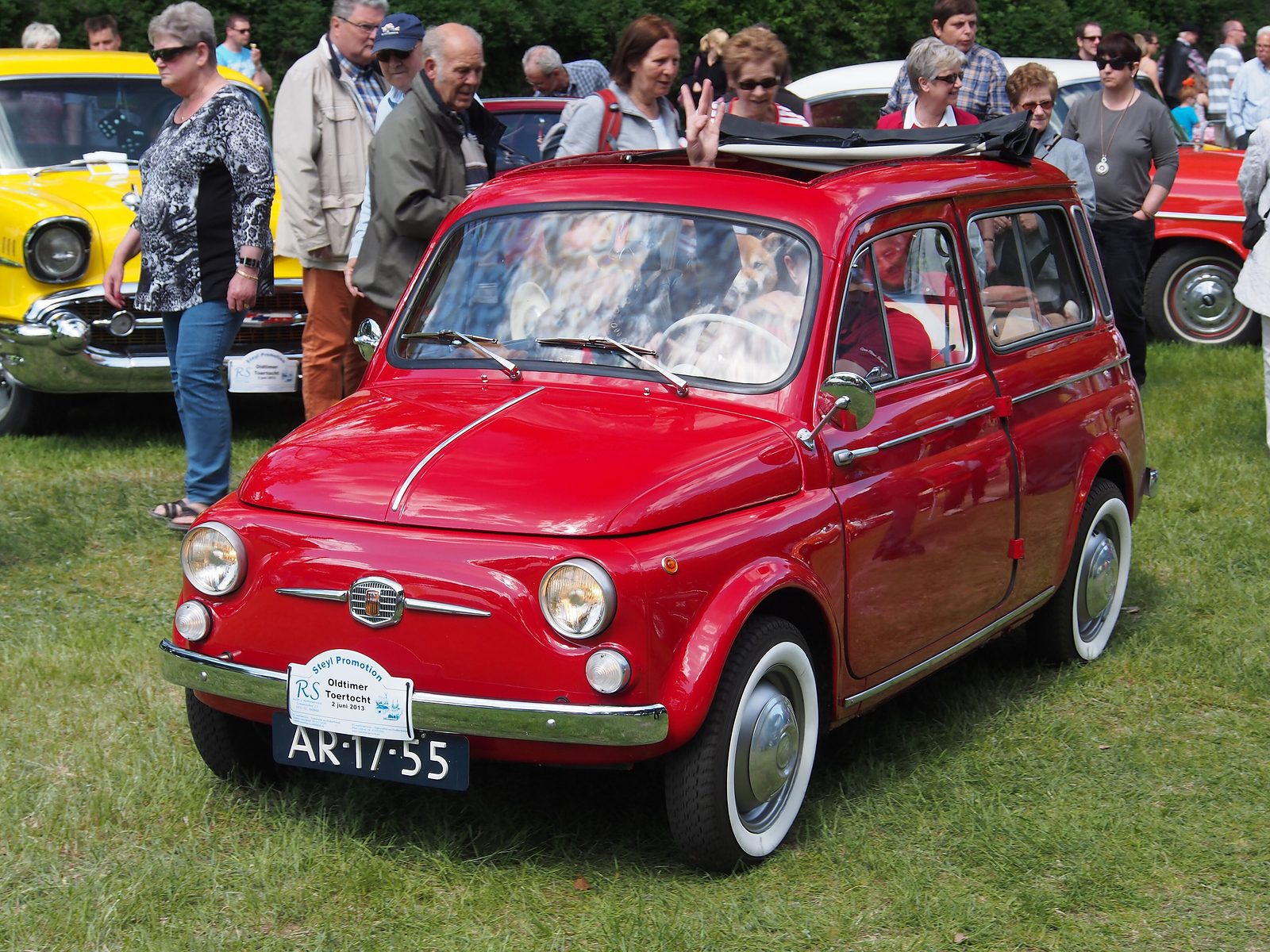
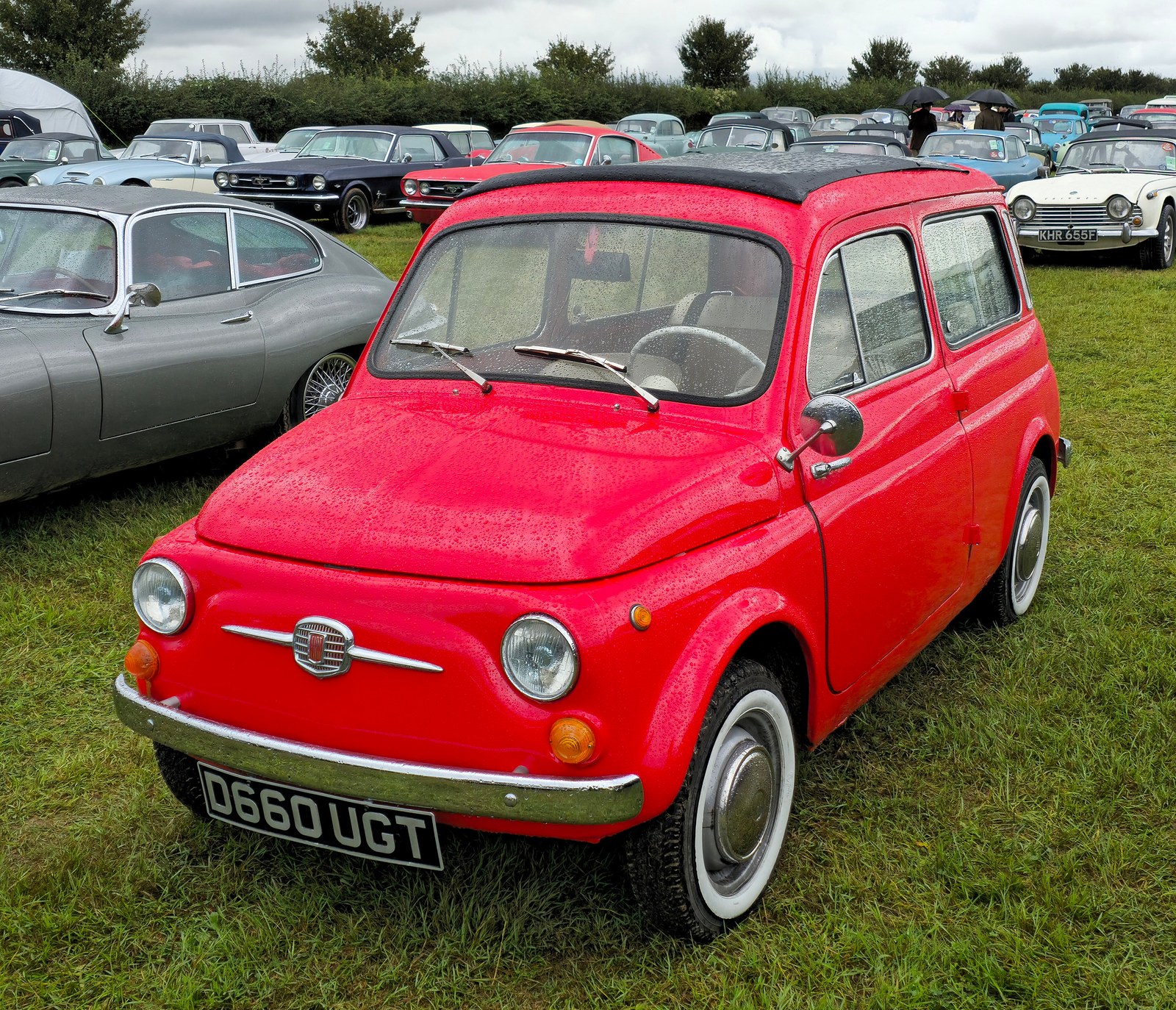
A red 1969 Fiat 500 Giardiniera at a show in 2022.Photo: Calreyn88, CC BY-SA 4.0, via Wikimedia Commons

At a glance

The spec plate

Fiat 500 Giardiniera

Tipo 120 · Turin and Desio

Built
1960–⁠1977From May 1960, two years beyond the last saloon
Country
ItalyTurin; then Autobianchi at Desio, from 1966 or 1968
Maker
Fiat, TurinThen Autobianchi at Desio, badged Autobianchi in Italy from 1968
Engine
499.5 cc air-cooled twin, laid flatUnder the load floor, with a radial fan and air intakes in the rear pillars
Power
17.5 CVThe 500 D’s output; 21 CV by the gross SAE measure
Length
3,185 mm1,320 mm wide, 1,354 mm high
Weight
555 kgEmpty; 875 kg laden
Seats
4Two in the Commerciale and Furgoncino vans
Wheels
4Engine laid flat under the floor at the back, driving the rear wheels
Price new
565,000 lireAt the launch in 1960
Production
327,000 or 458,000The first without, the second with the Autobianchi-built cars, by automania’s count
Top speed
95km/h95 km/h

How big is it?

True proportion

3.19 m

It is 215 mm longer than a Fiat 500, about 1.8 adults laid end to end.

  • 1.32 m wide
  • 555 kg: about seven adults
  • Four seats, or two in the van
  • A wheelbase 100 mm longer than the saloon’s
Drawn at true proportion. The track is 3.6 metres long; the adult stands at the same scale. The Peel P50 is the smallest production car, on every page for comparison.

The story

History

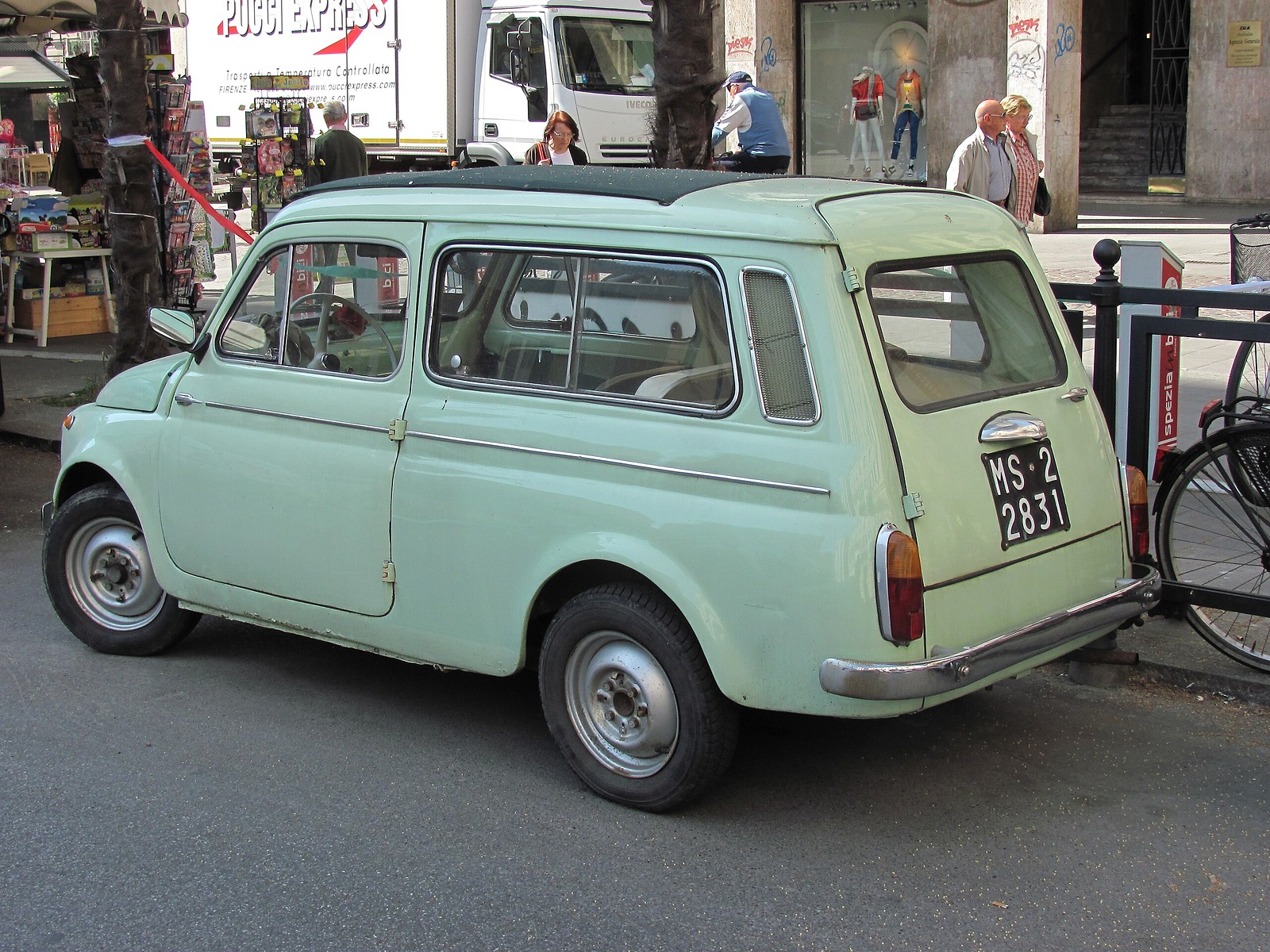
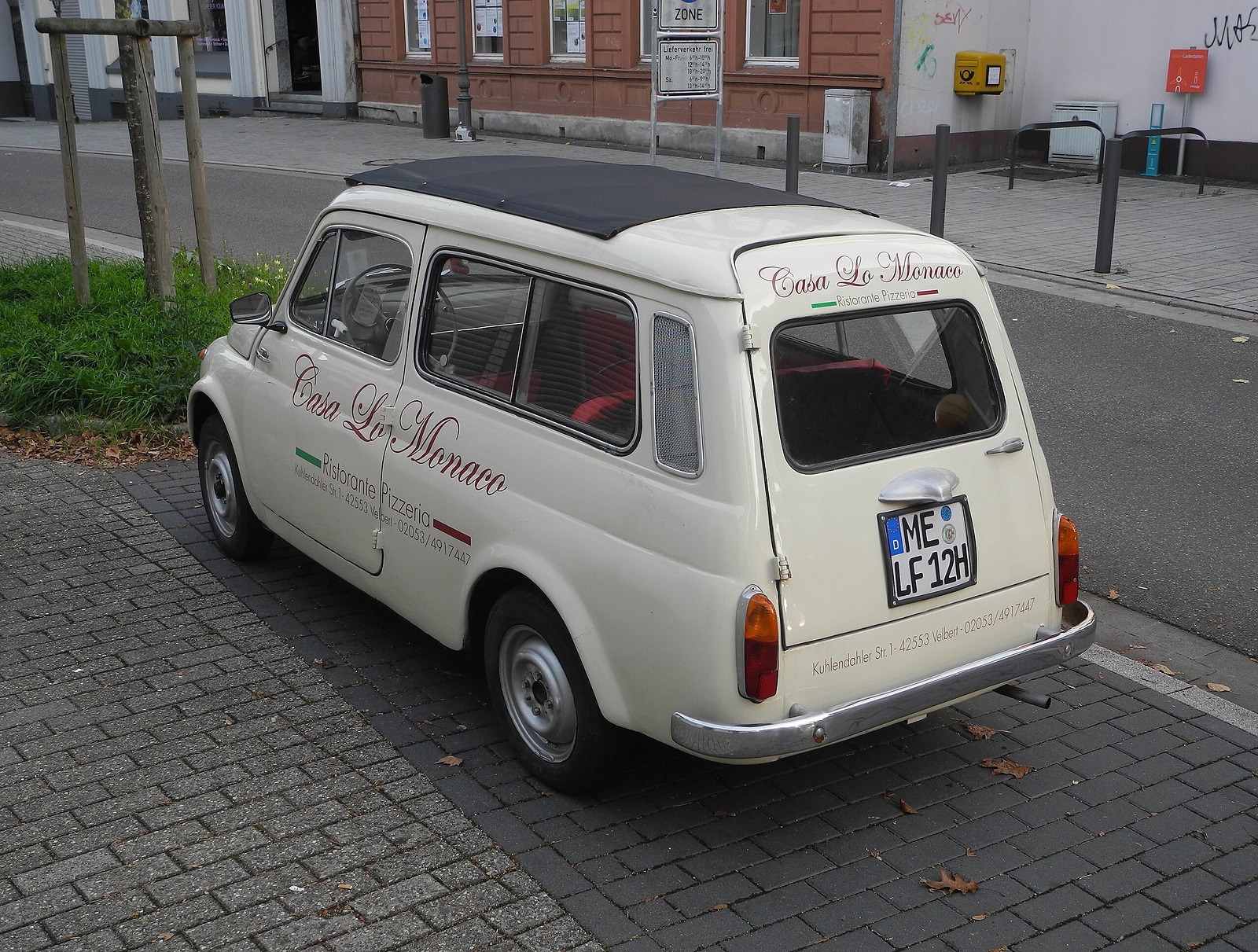
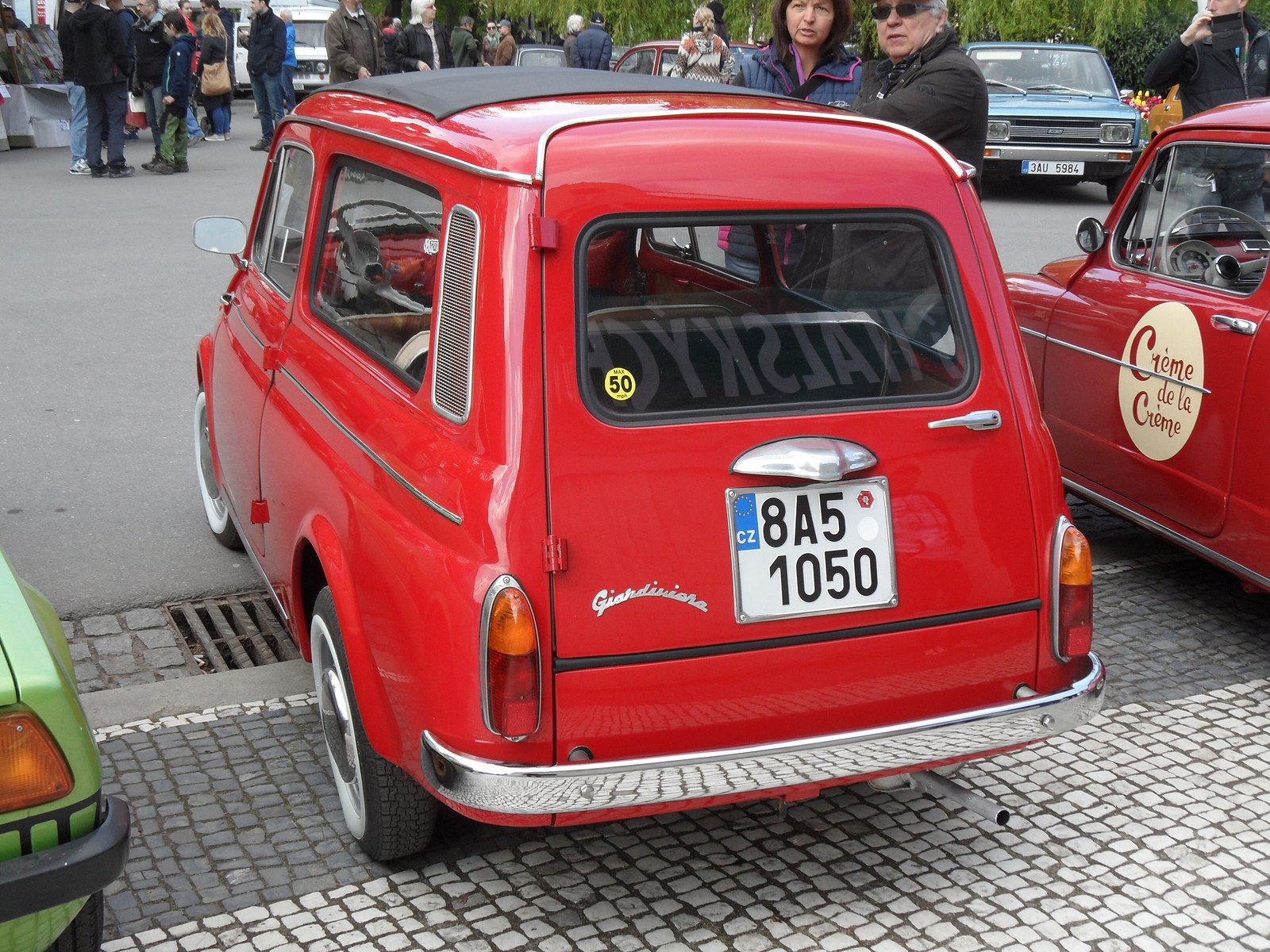
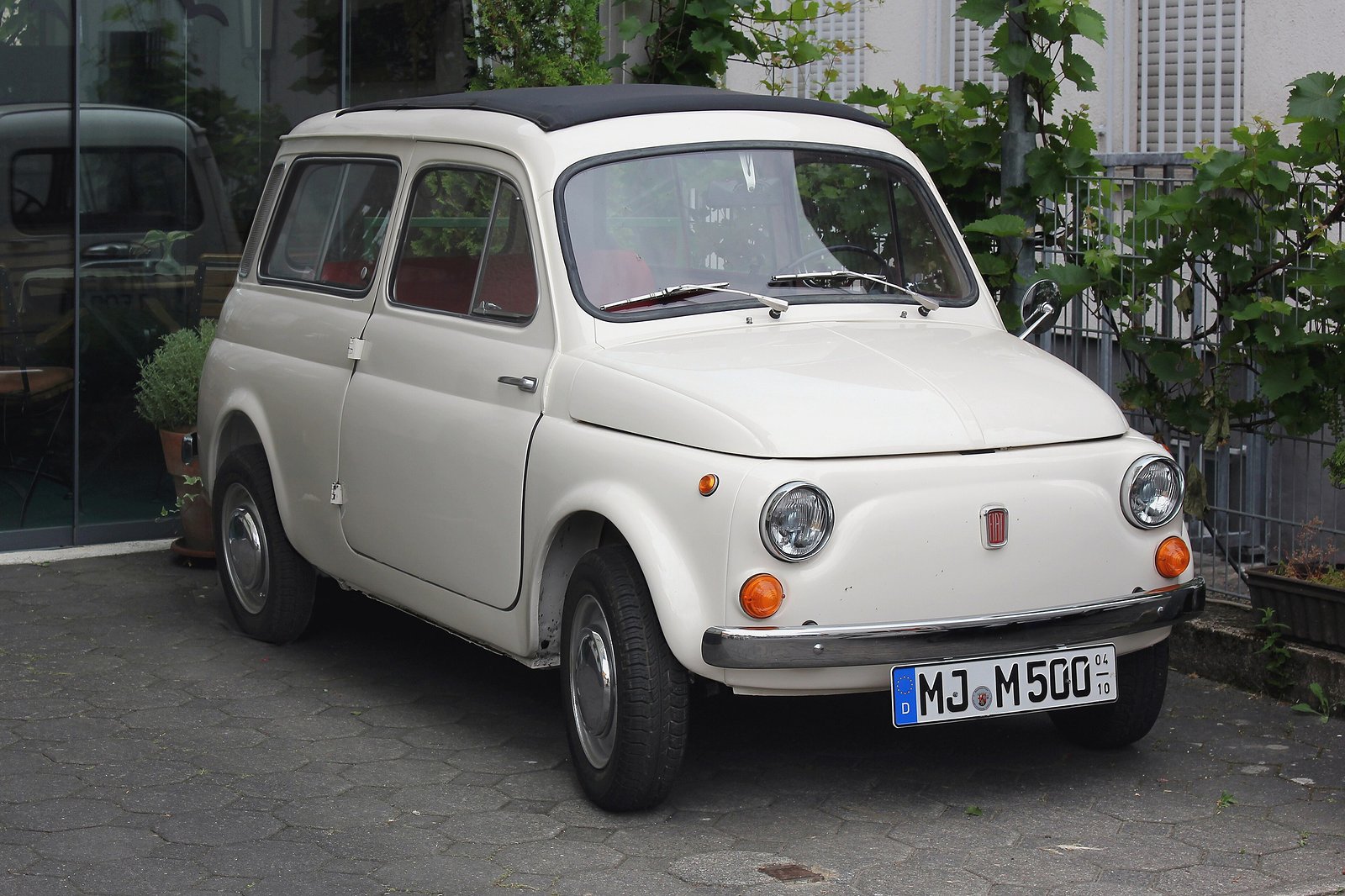
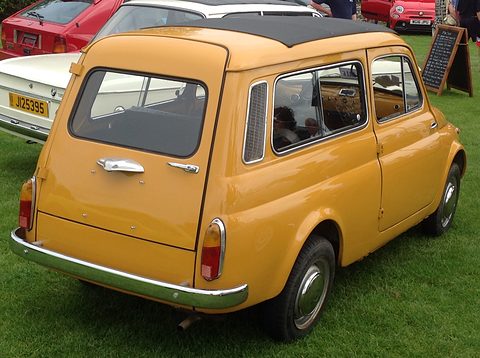
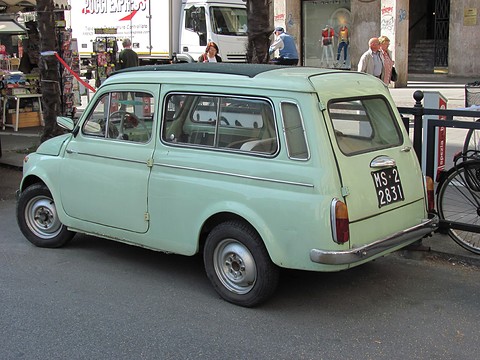
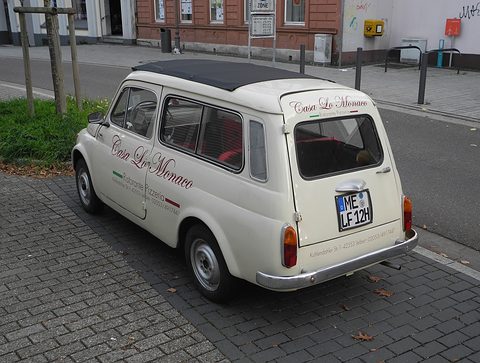
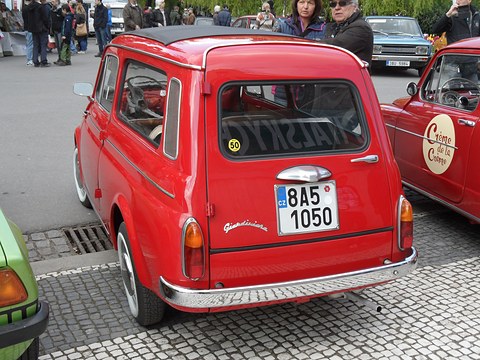
Fiat had had no small estate since the Giardiniera Belvedere of the Fiat 500 Topolino, and the new 500 was a hard car to make into one. Its upright twin sat in the tail, just where a long load floor would have to go.source 1 Giacosa (more on him among the designers) laid the twin flat. The cowling was reshaped, the centrifugal fan gave way to a radial one, and instead of a grille in the tail the engine breathed through two intakes high in the rear pillars, away from the dust thrown up by the road.source 1source 2source 3 It had the 500 Sport’s 499.5 cc, in a softer tune. Italian Wikipedia notes that the flat version had already been worked out for project 110B, which became the Autobianchi Bianchina.source 1

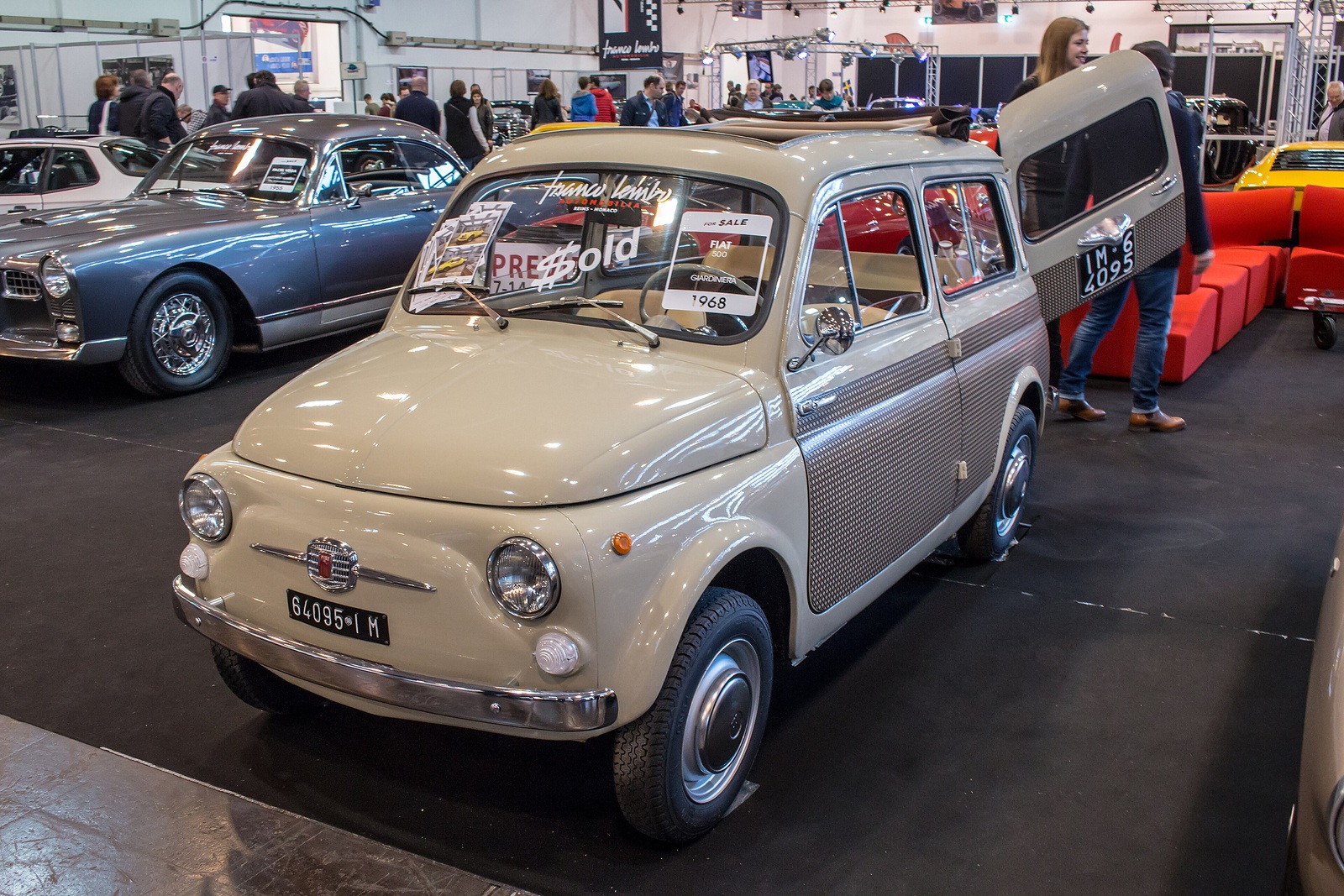
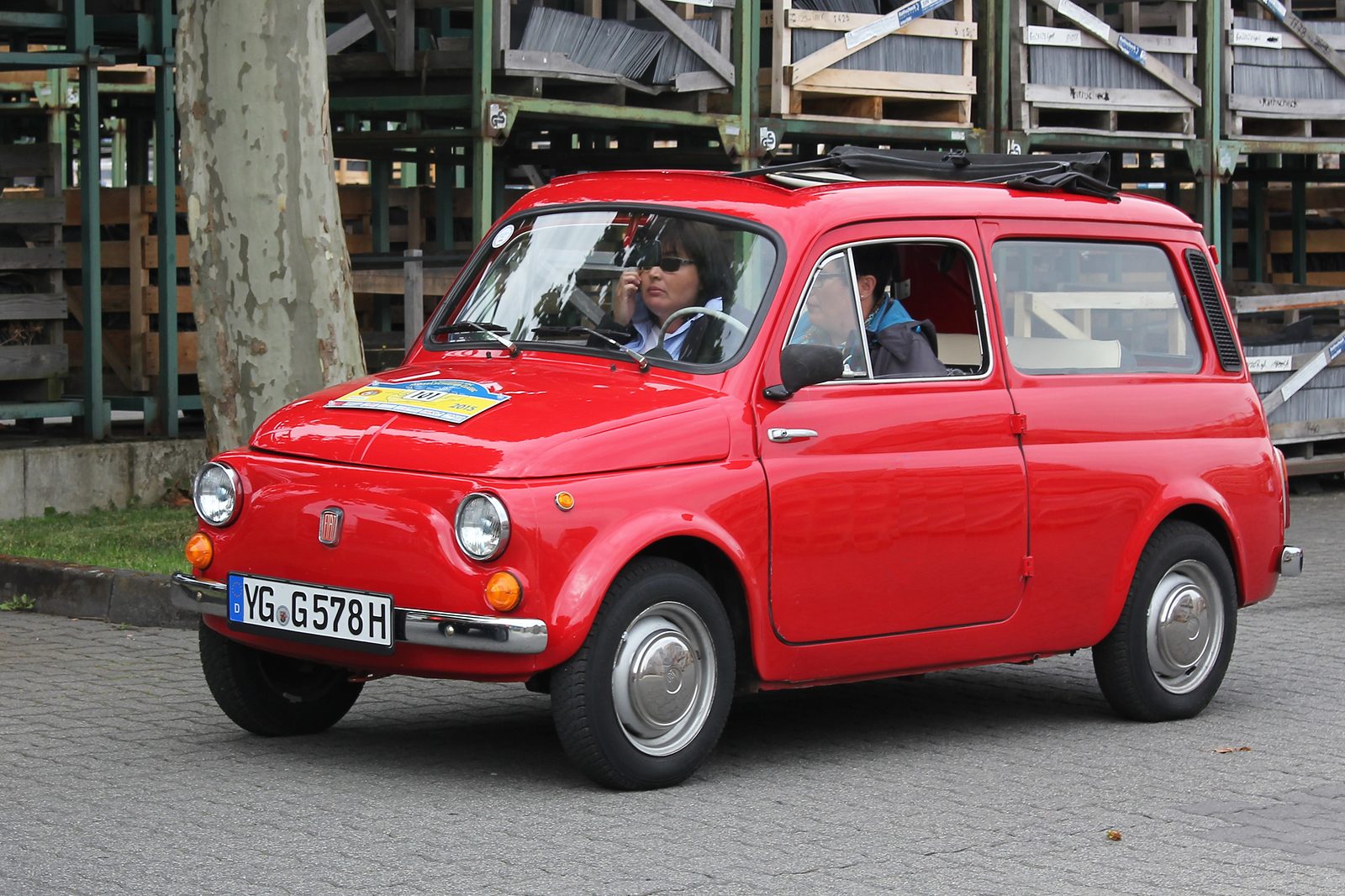
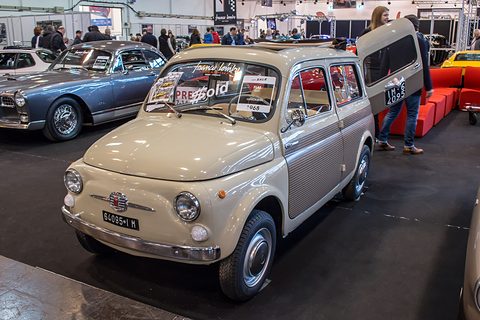
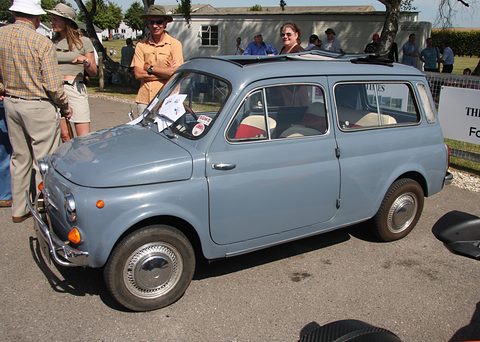
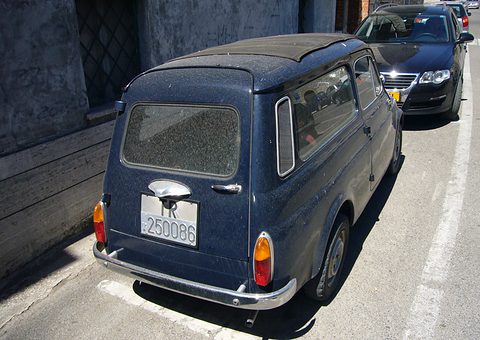
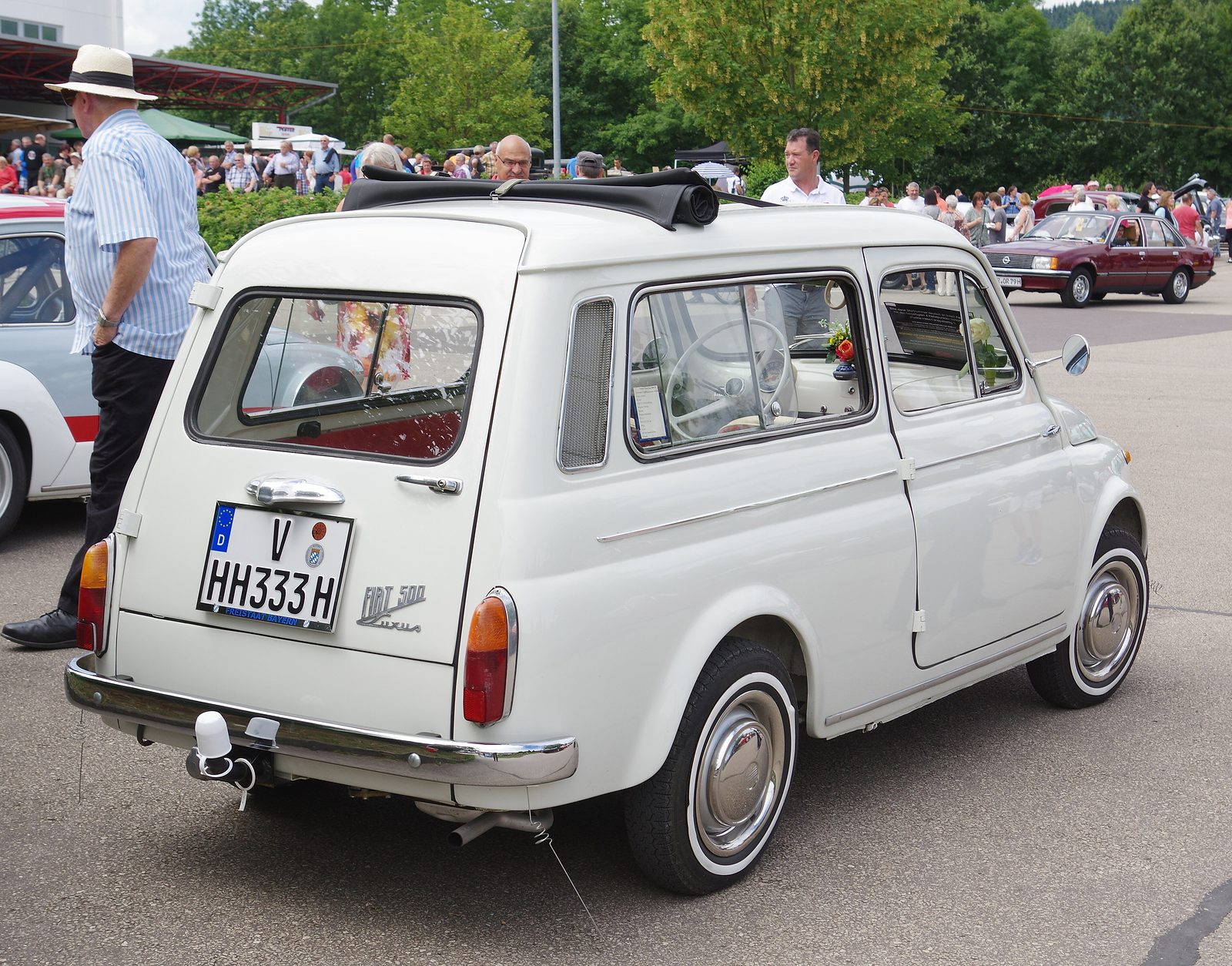
The Giardiniera was launched in May 1960, with a windowless micro van, the Commerciale, beside it.source 1source 2 Up to the central pillar the body was the saloon’s; behind it came a squared-off tail with a door at the back hinged at the side, rectangular rear windows that slid, and a partly fixed roof with a very long section of fabric that rolled back.source 1 The wheelbase grew by 100 mm to 1,940 mm (76 in), and the car was 3,185 mm (125 in) long. With 17.5 CV it reached 95 km/h (59 mph), like the 500 D saloon.source 1source 4source 2source 3 Suspension and brakes were strengthened for the load, with brake shoes and drums from the Fiat 600, and it cost 565,000 lire.source 1source 2 For export it was the 500 K, K for Kombi, and the Weiner museum counts about 120,000 of them between August 1960 and February 1965.source 3

No period road test of it has been found. Because it had the 500 D’s engine and gearing, it was as fast as the saloon despite carrying 55 kg (121 lb) more, and it used about 5.2 litres per 100 km.source 2 At first the load floor was not quite flat, because of the folded rear seatback; a thinner seatback later made it so.source 1 It had a windscreen washer from the start, which the saloon did not, and its later changes followed the saloon’s: self-parking wipers in 1964, and from March 1965 the 500 F’s details, with a 22-litre tank, less chrome, a new dashboard and flatter hubcaps.source 1

The doors that stayed

The saloon’s doors were hinged at the back, and in 1965 they were turned round. The Giardiniera’s never were. The rule of 1965 that called for doors hinged at the front exempted commercial vehicles, and the Giardiniera kept its rear-hinged doors to the end.source 1source 3

Autobianchi

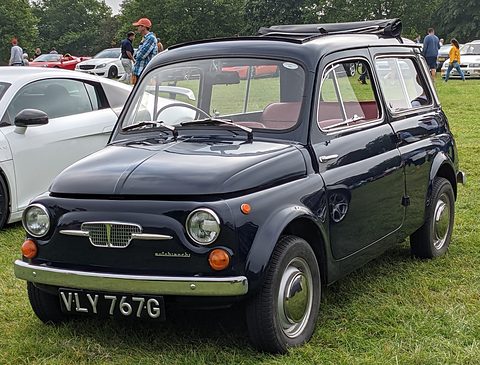
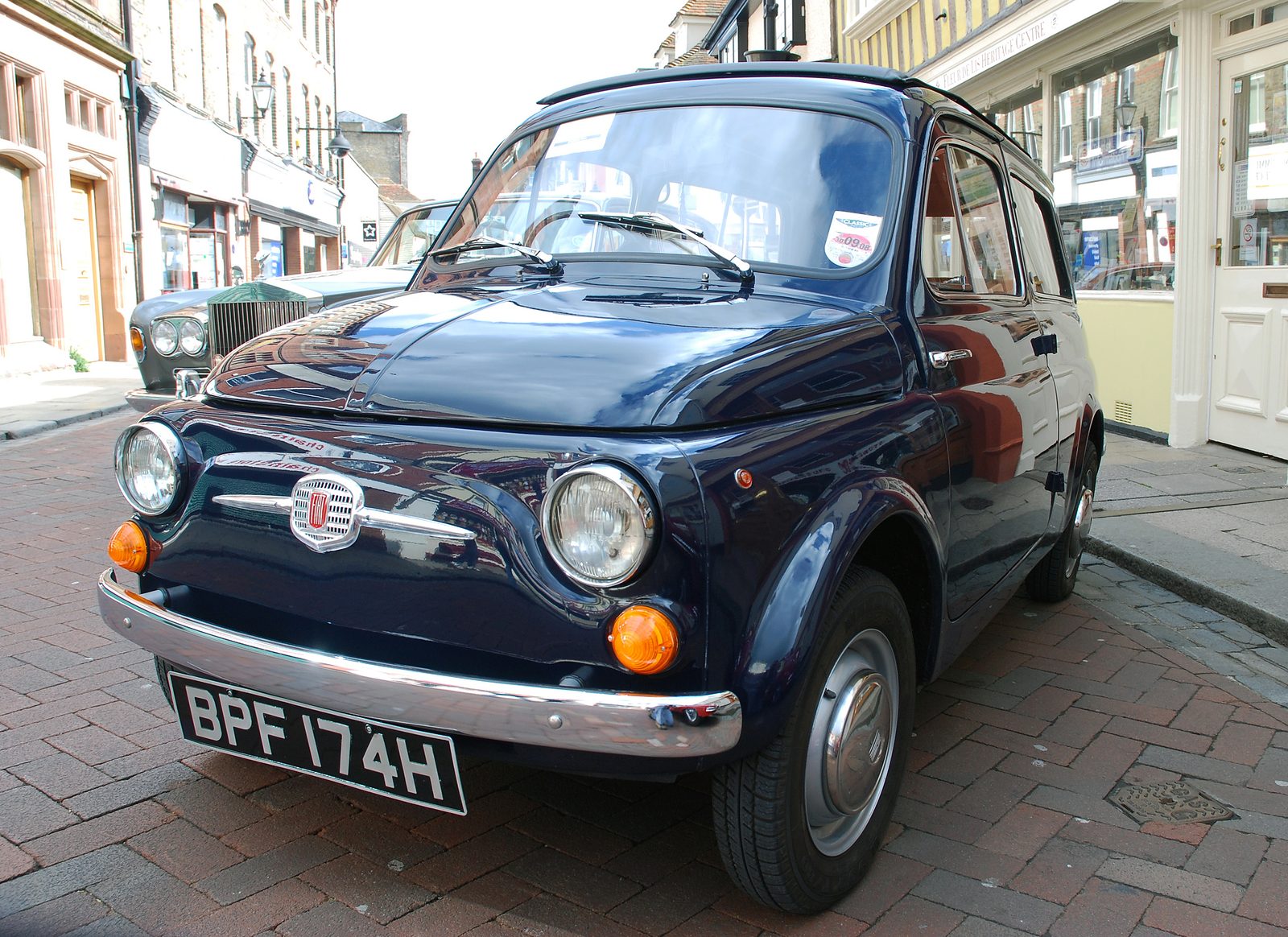
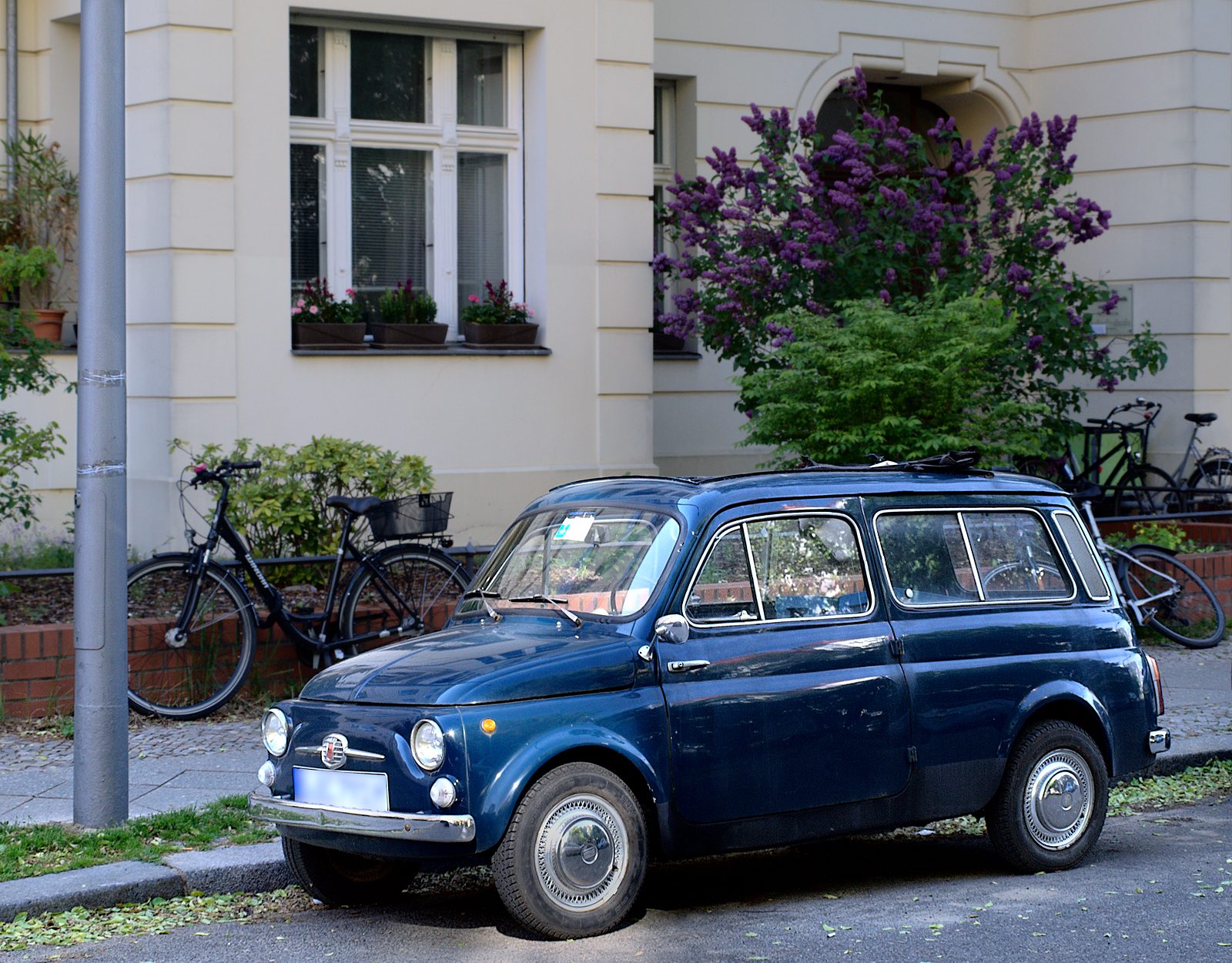
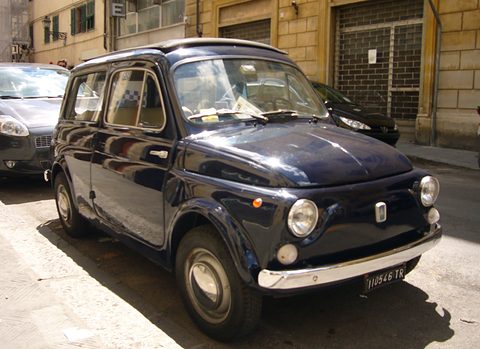
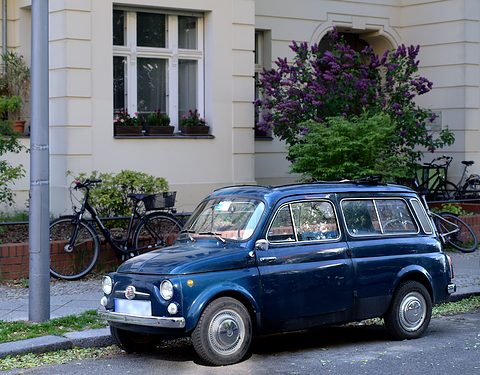
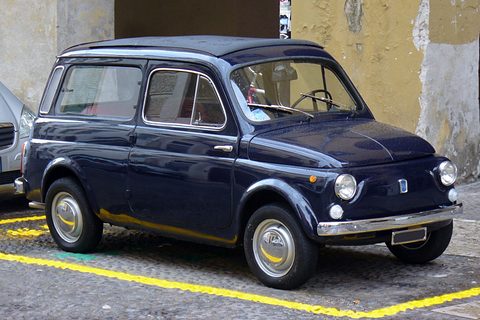
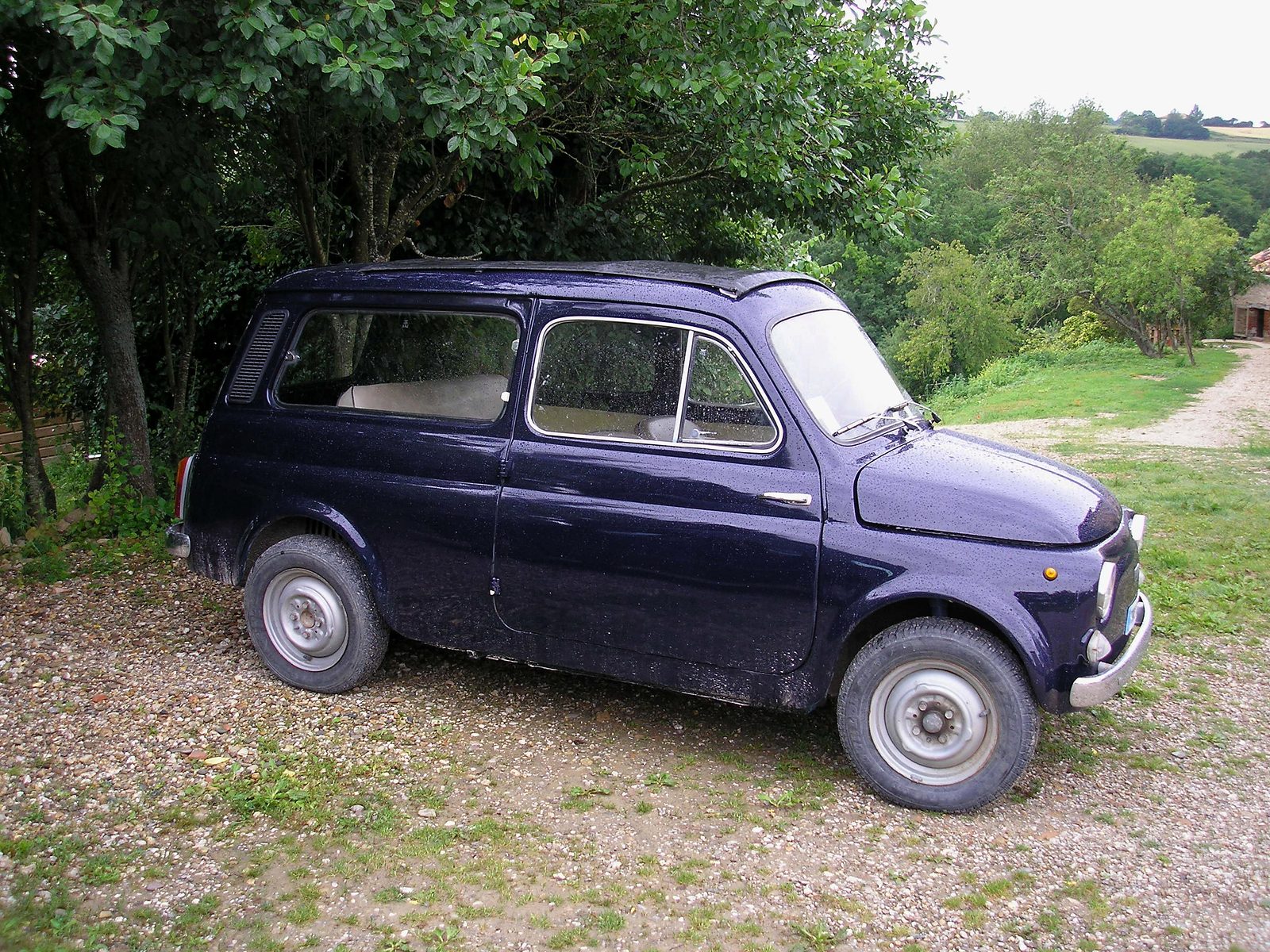
Production moved to Autobianchi’s works at Desio, near Milan. Automania dates the move to 1966; Italian Wikipedia says it moved for good in February 1968, when Autobianchi came wholly under Fiat. Both may be right, with the move begun in one year and finished in the other, but no source says so.source 2source 1 From 1968 it was sold in Italy as the Autobianchi Giardiniera 500, with a nose in the style of the Bianchina and a black steering wheel and dashboard.source 1 In 1972 the rear side windows were hinged instead of sliding and the engine grilles became plastic instead of aluminium; from 1974 a new front carried the Autobianchi badge.source 1

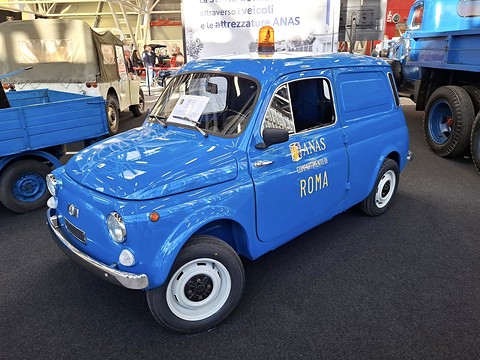
The van, renamed the Furgoncino, had two front seats only. Steel replaced the rear windows and the canvas roof, four ribs stiffened the roof, and a covered well sat behind the seats.source 1 The Weiner museum says the commercial version was sold under the Autobianchi name, but the Commerciale was a Fiat from 1960.source 3source 1

The Giardiniera, the last of the Nuova 500 family, was built until 1977, two years after the saloon ended in August 1975.source 1source 2 The idea outlived it. The flat twin had already powered the Bianchina’s Panoramica estate, and in 1987 Fiat laid an engine flat the same way for the Fiat 126 Bis.source 1source 2
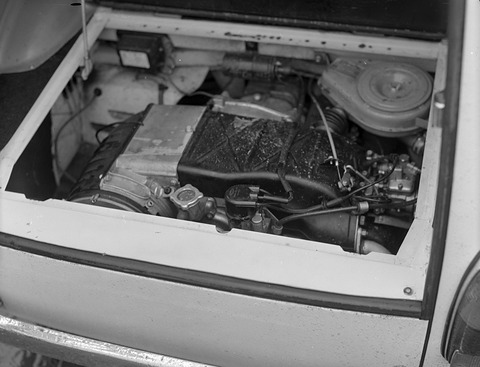
Looking down into an open floor hatch at a small horizontal twin-cylinder engine with its fan housing.
Plate I · 1961 The flat twin under its hatch in the load floor, opened during a road test of the new estate in Wales on 1 February 1961.Photo: Geoff Charles (National Library of Wales), CC BY-SA 4.0, via Wikimedia Commons
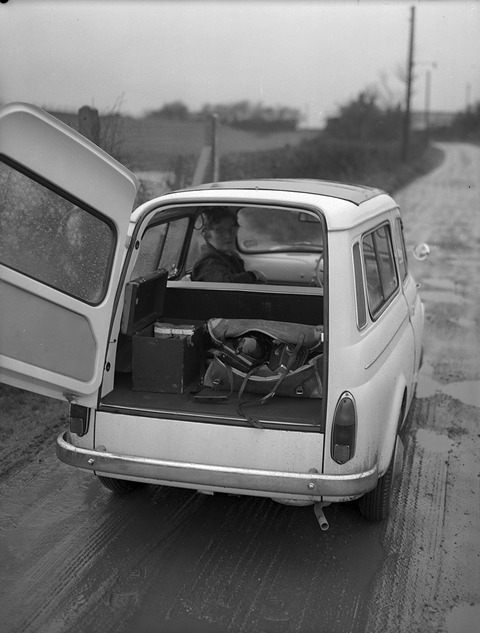
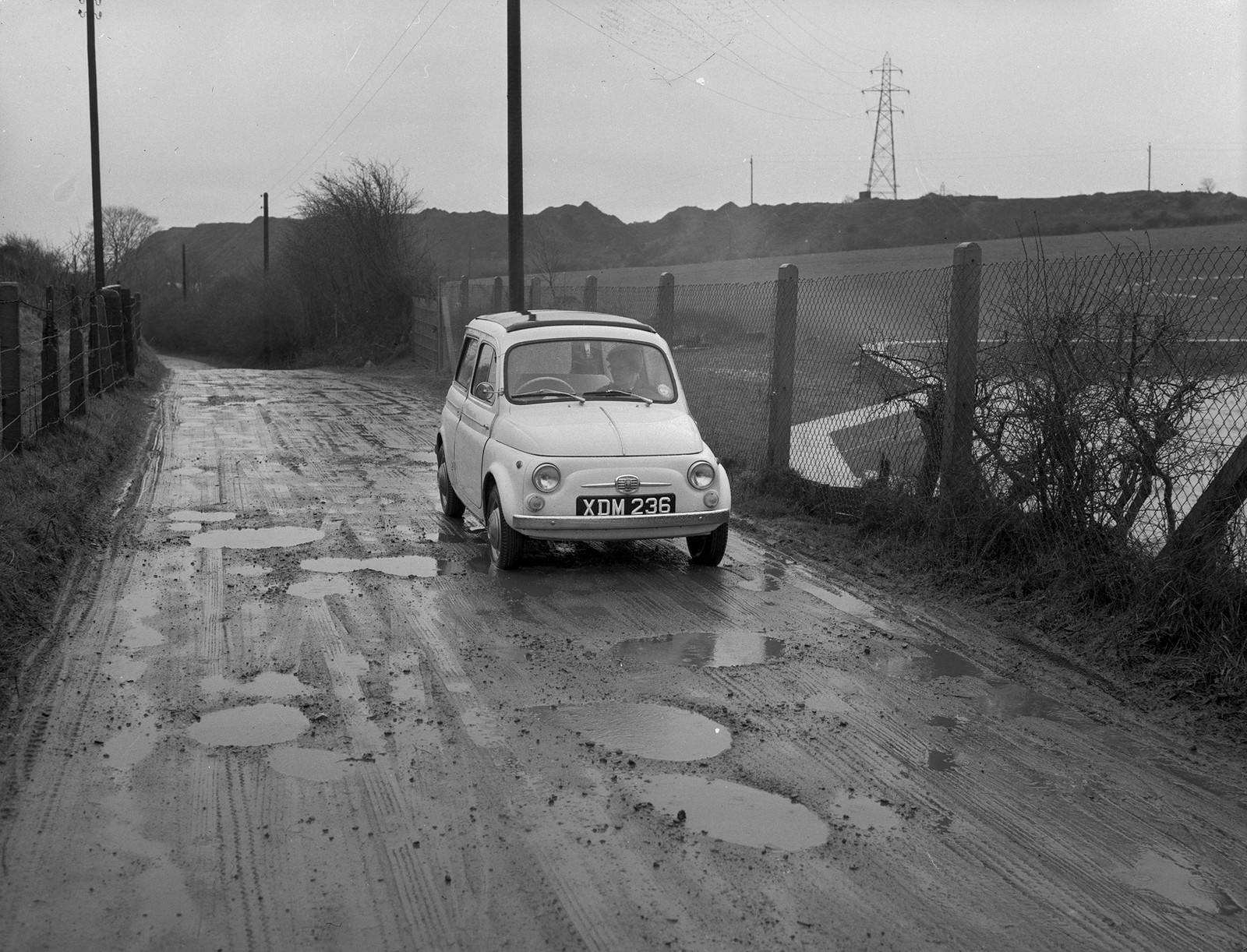
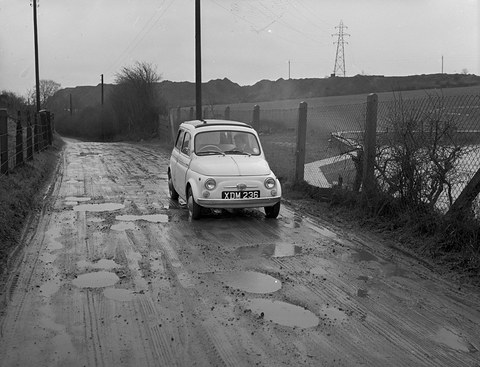
Rear of a small white estate car with its side-hinged back door open, a man at the wheel, on a wet lane.
Plate II · 1961 The side-hinged rear door open, on the same road test in Wales.Photo: Geoff Charles (National Library of Wales), CC BY-SA 4.0, via Wikimedia Commons
Dark blue small estate car with an Autobianchi badge on grass beside a white sports car.
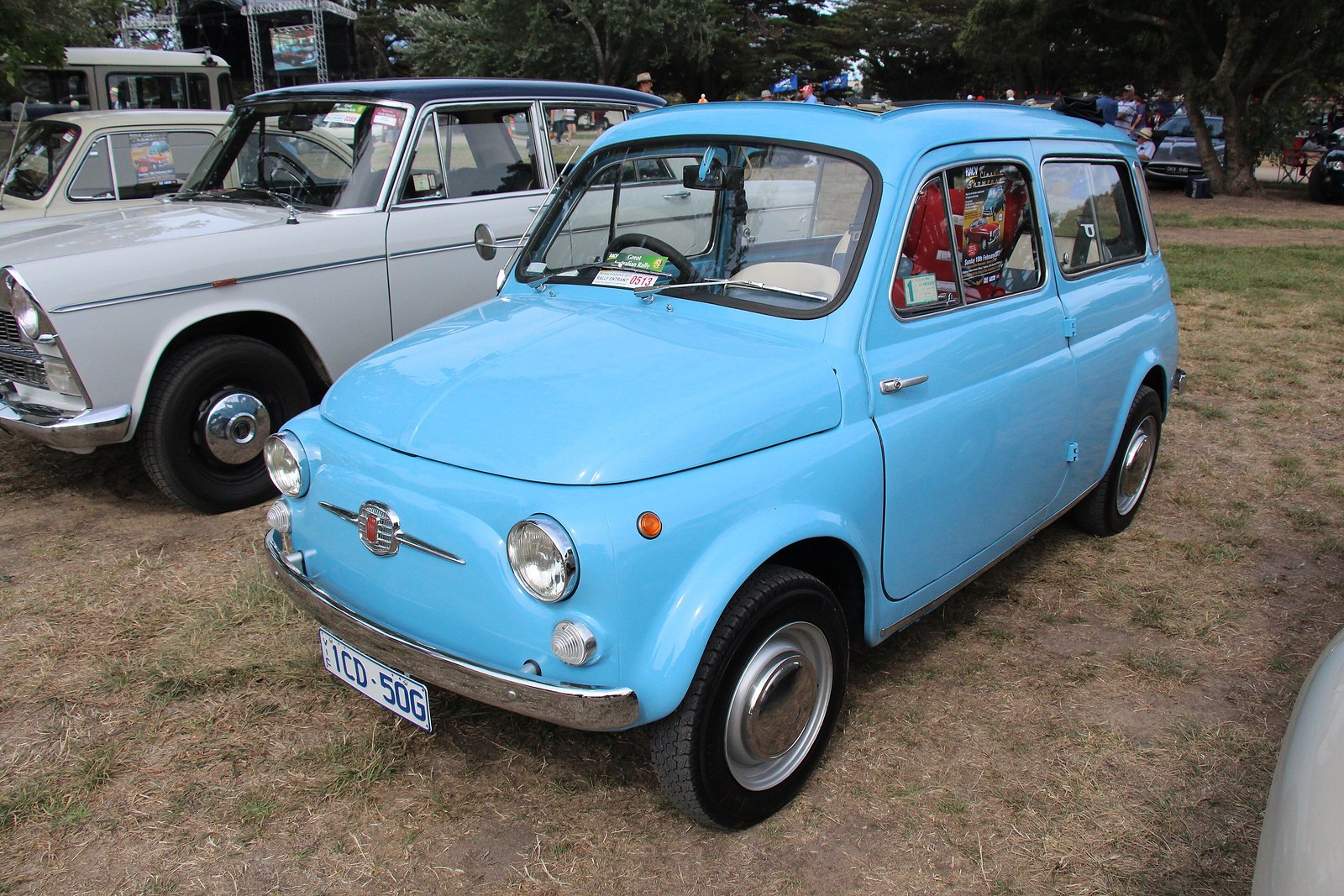
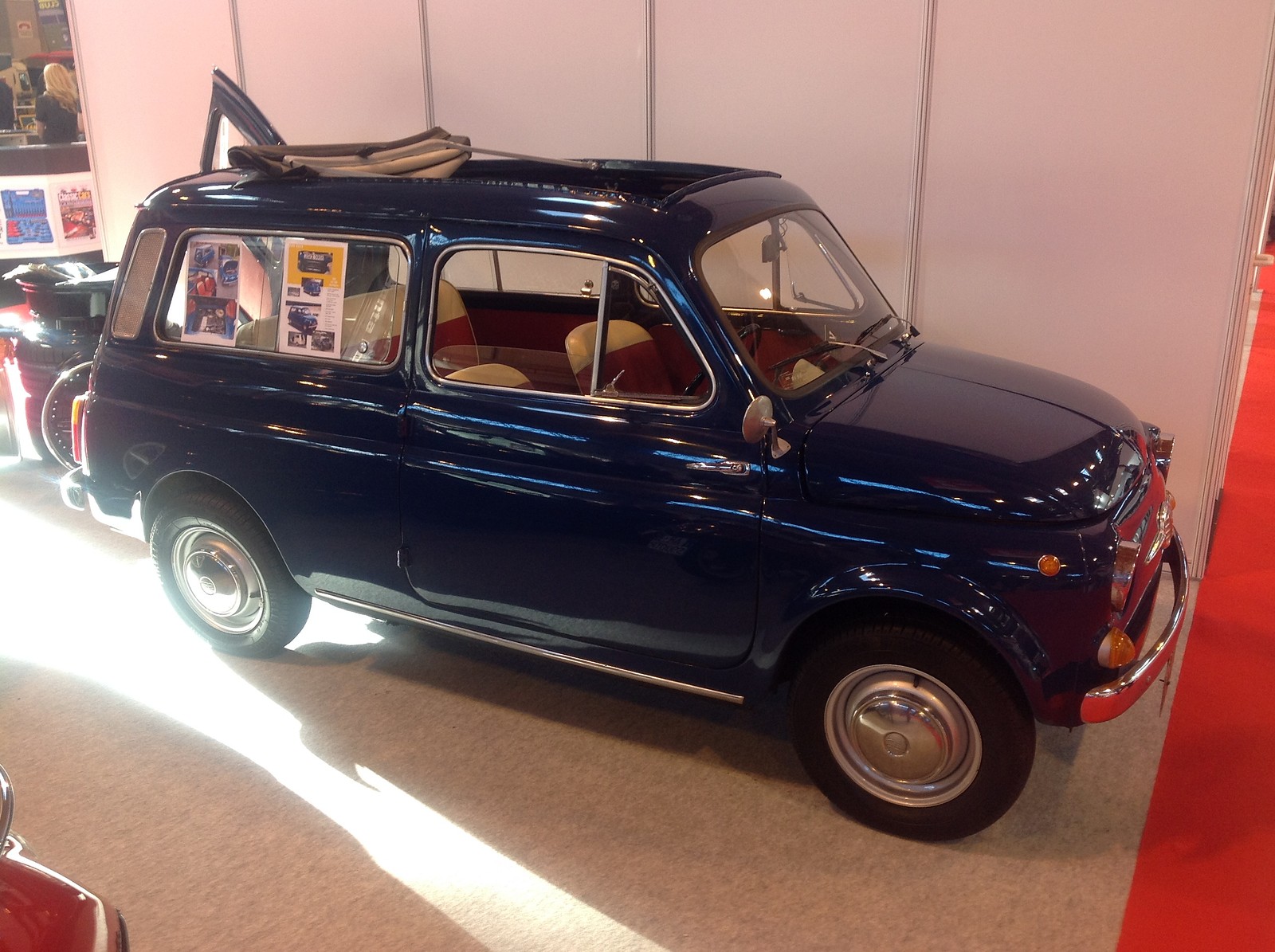
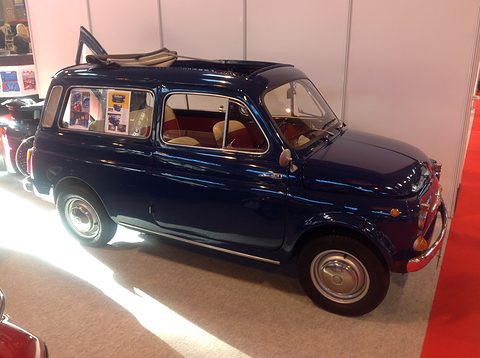
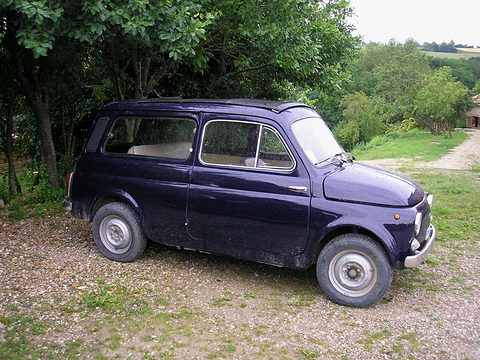
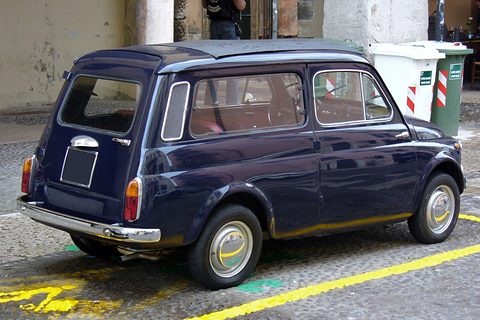
A 1968 Autobianchi Giardiniera, with the Bianchina-style nose, at Salon Privé in England in September 2021.Photo: Calreyn88, CC BY-SA 4.0, via Wikimedia Commons
Blue windowless small van with an orange roof beacon and ‘ANAS Roma’ lettering in a show hall.
An Autobianchi van, windowless behind the doors, in ANAS Roma road-service livery at a show in June 2026.Photo: Versante790, CC BY-SA 4.0, via Wikimedia Commons

Pictures

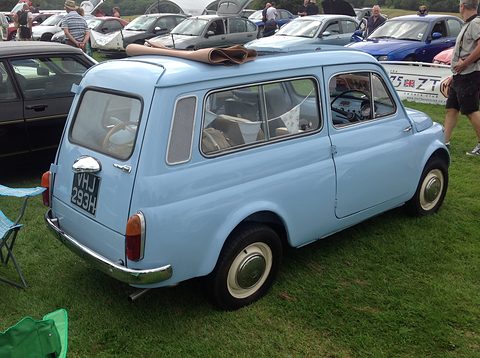
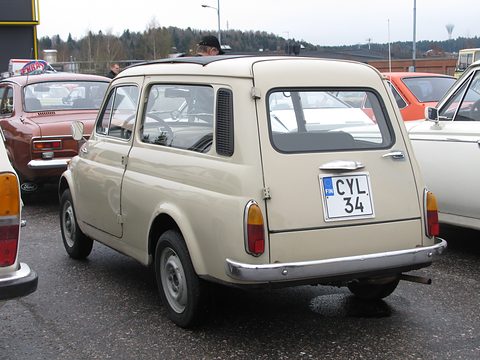
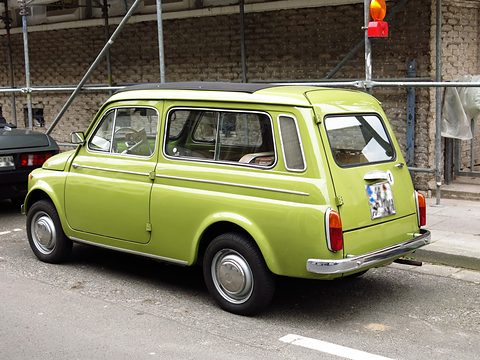
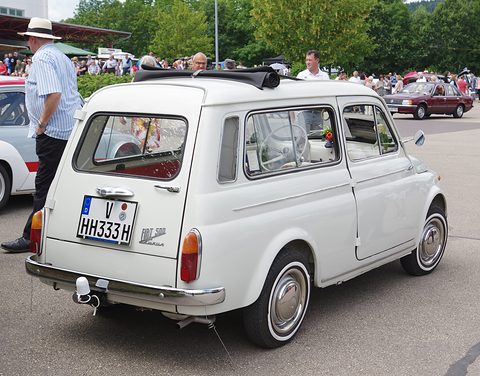
More photographs, old and new

Variants

Estate, van and badge

The Giardiniera family, 1960–⁠77
VariantYearsWhat differsHow many
500 GiardinieraMay 1960–⁠1968Estate with the flat engine; 500 D details, then 500 F details from March 1965See How many were built
500 Commerciale, later Furgoncino1960–⁠77Windowless van: two seats, a steel roof stiffened by four ribs, a covered well behind the seatsNot found
500 KAugust 1960–February 1965The export name, K for KombiAbout 120,000, by the Weiner museum
Autobianchi Giardiniera 5001968–⁠77Sold in Italy under the Autobianchi badge with a Bianchina-style nose and a black dashboard; hinged rear windows from 1972, a new front from 1974Not split

Specification

The 1960 Giardiniera, from Italian Wikipedia’s technical table unless noted

Engine and drive

Engine and drive
EngineFiat four-stroke in-line twin, air-cooled, its cylinders horizontal, at the backsource 1source 4
Bore and stroke67.4 × 70 mmsource 4
Capacity499.5 cc, compression 7.1:1source 1source 4
Power17.5 CVsource 1source 2source 321 CV SAE at 4,000 rpm in the technical table, a gross figure
CarburettorWeber 26 OC, horizontalsource 4
GearboxFour speeds and reverse; final drive 8:41source 4

Body and chassis

Body and chassis
BodyThree-door estate with a side-hinged rear door and a long fabric roof; or a windowless vansource 1source 3
Front suspensionWishbones and a transverse leaf spring, telescopic damperssource 4
Rear suspensionIndependent, semi-trailing arms and coil springssource 4source 3
BrakesHydraulic drums, with shoes and drums from the Fiat 600source 1source 4
Tyres125 × 12source 4source 3

Dimensions

Dimensions
Length3,185 mmsource 1source 4source 33,182 mm by automania
Width1,320 mmsource 41,323 mm by automania and the Weiner museum
Height1,354 mmsource 1source 4source 2
Wheelbase1,940 mm, 100 mm longer than the saloon’ssource 4source 2
Weight555 kg empty, 875 kg ladensource 2source 3source 4

Performance and running

Performance and running
Top speed95 km/hsource 1source 2source 3
Consumption5.2 litres per 100 kmsource 2
Fuel tank22 litres from the 1965 updatesource 1
Price new565,000 lire in 1960source 1source 2
How many were built?

Every figure, with its source

327,000 or 458,000Both figures are automania’s, and they count different things: 327,000 Fiat 500 Giardinieras, and 458,000 including the cars Autobianchi built. Italian Wikipedia gives the same 327,000 but says it counts cars built in Italy with Fiat and Autobianchi badges. We state 458,000 in all as the likelier total, an inference explained below.

  1. 458,000all Giardinieras, including those built by AutobianchiOne source

    Christian Bouchat, automania.be, 2007, in his table of the seriessource 2
  2. 327,000Fiat 500 Giardinieras, by automania; cars built in Italy with Fiat and Autobianchi badges, by Italian WikipediaTwo sources agree

    automania.be; Italian Wikipediasource 2source 1

  3. about 120,000500 Ks for export, August 1960 to February 1965, part of the totalsOne source

    Bruce Weiner Microcar Museumsource 3

  • Two sources agreetwo good sources give the figure
  • One sourcea good source, alone
  • Unconfirmeda lead only, not yet checked

Famous for

Three points

  1. The sole

    The twin laid flat under the floor, breathing through grilles in the rear pillars, so the 500 could have a load floor.

  2. Last of the line

    Built until 1977, two years after the last Nuova 500 saloon.

  3. Doors to the end

    It kept the rear-hinged doors after 1965, because a commercial vehicle was exempt from the new rule.

Survivors and collecting

Today

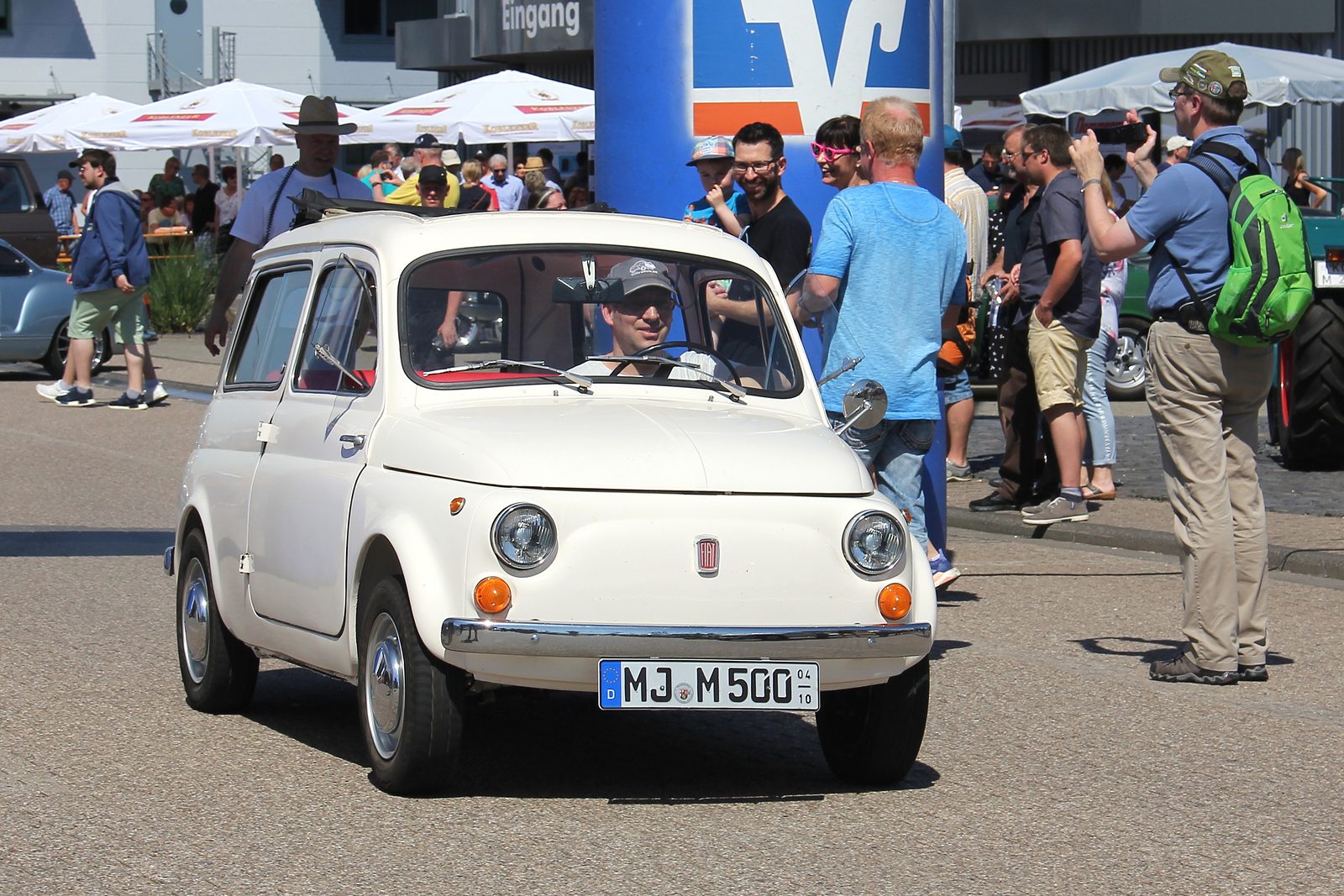
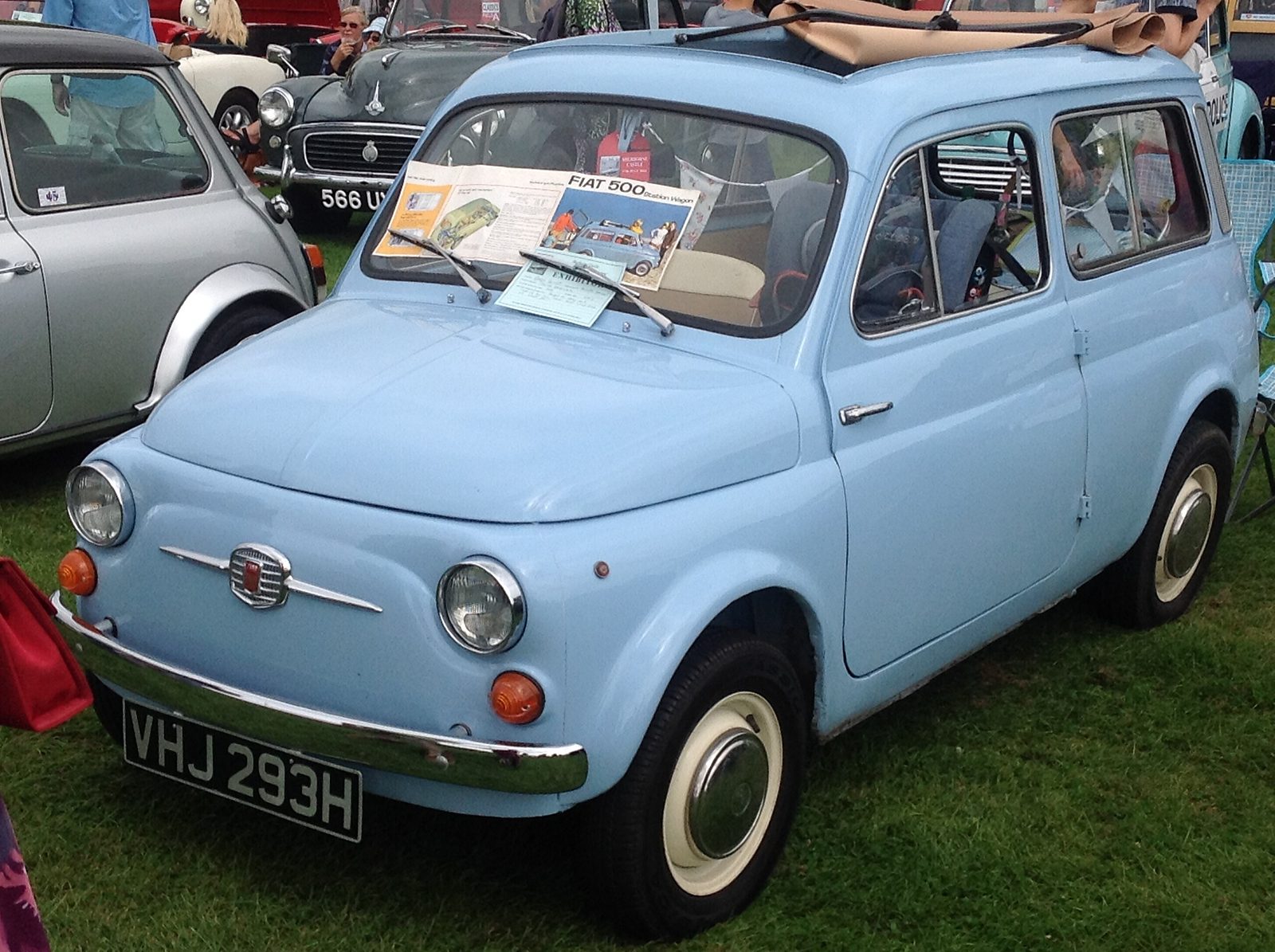
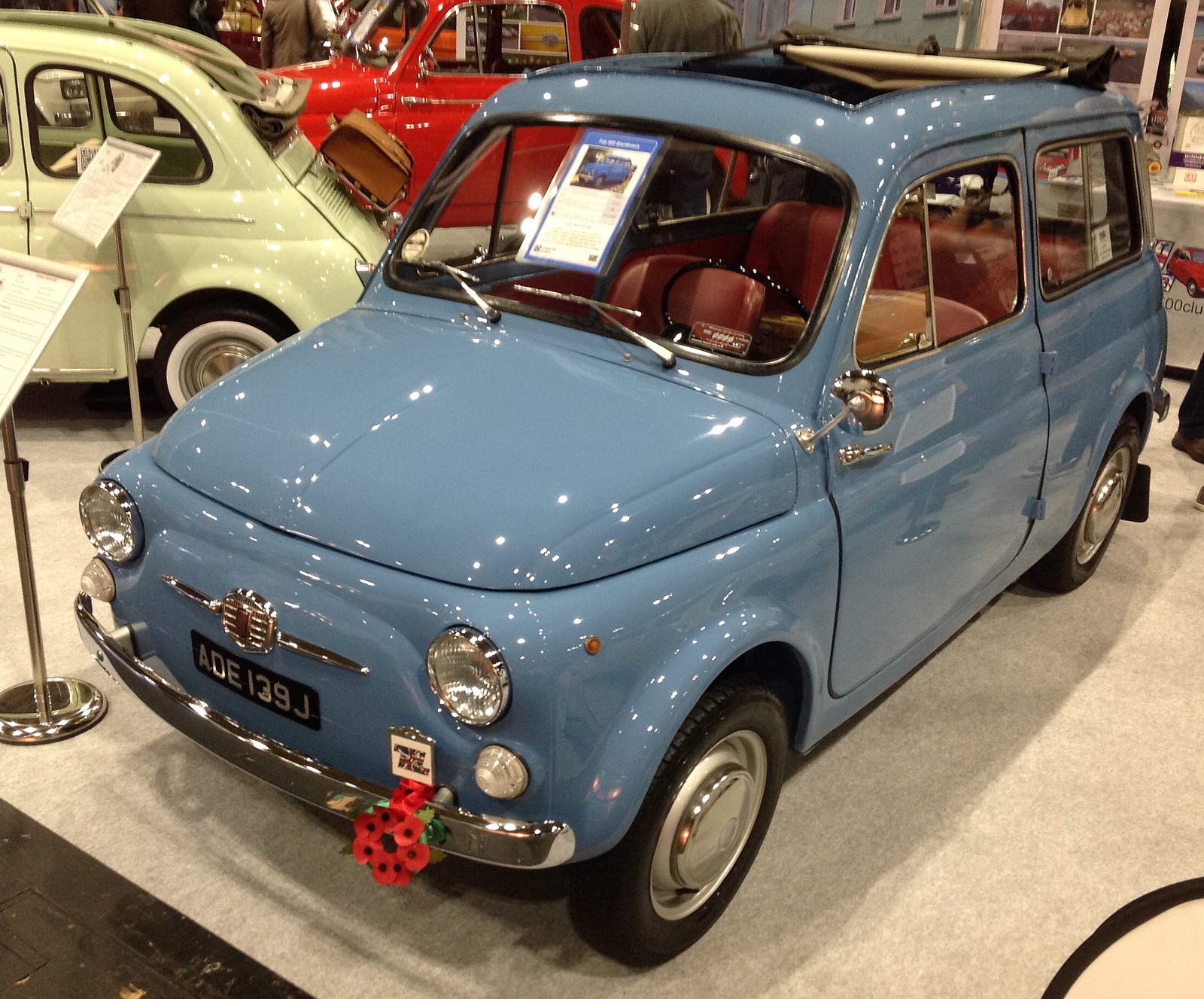
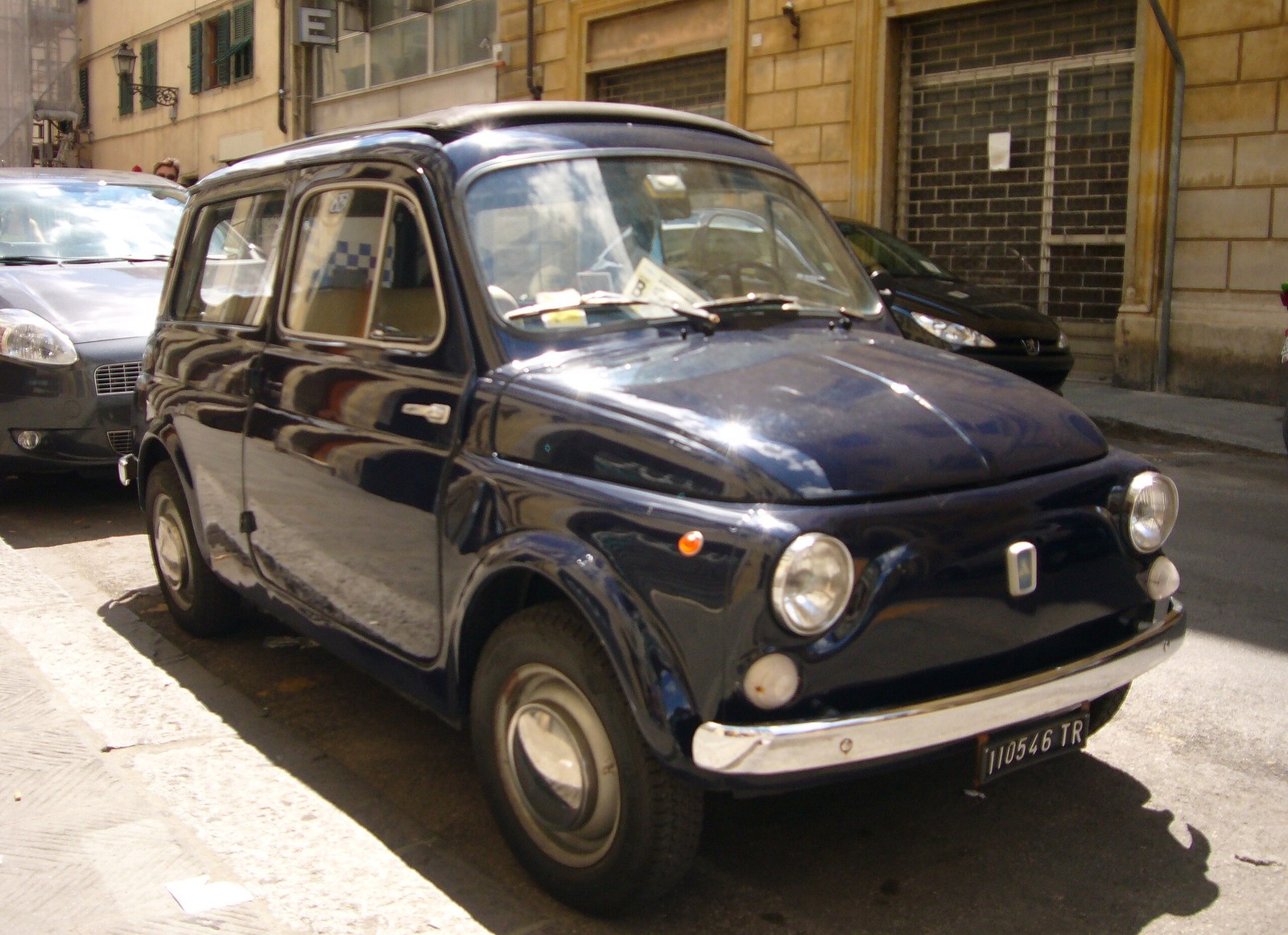
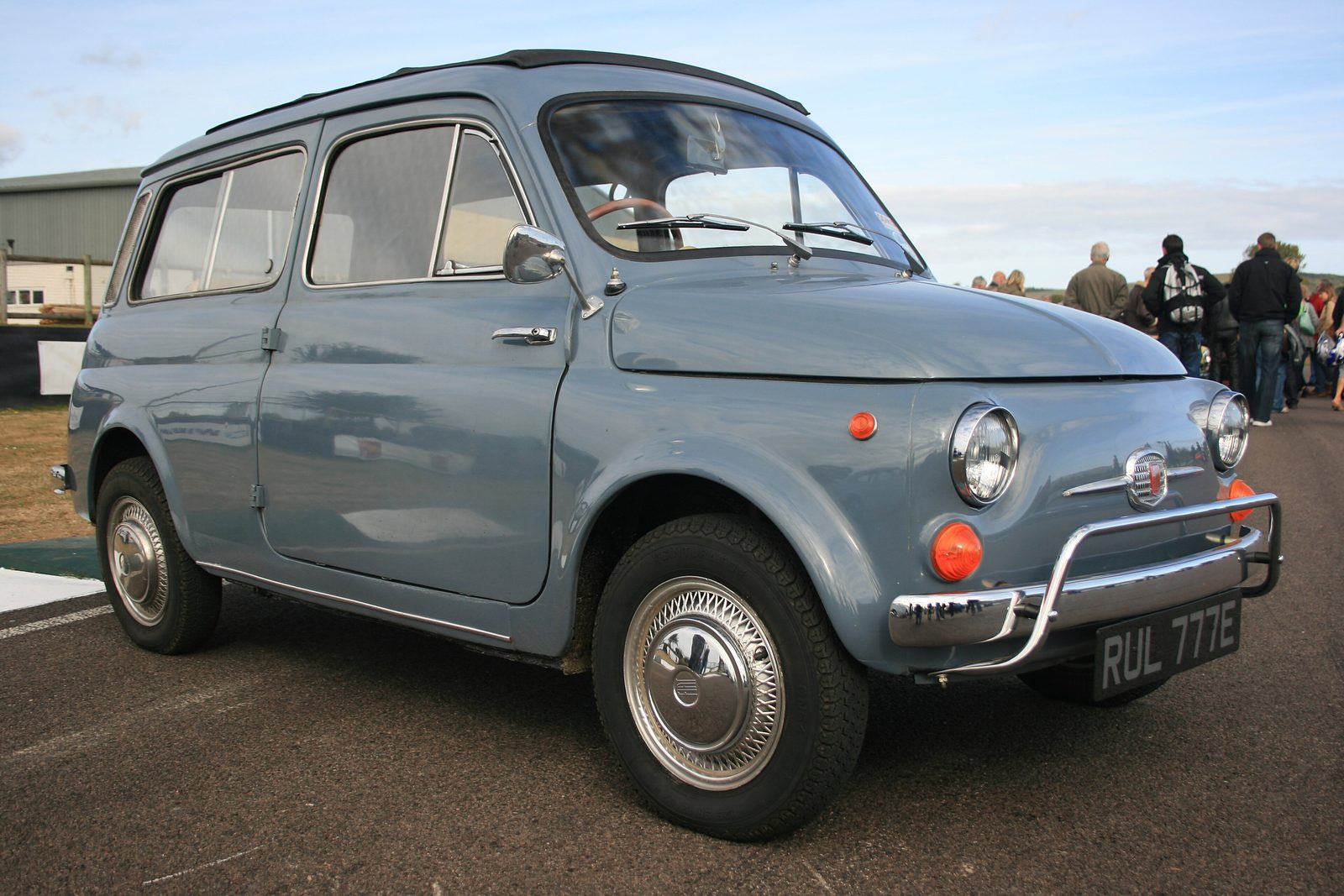
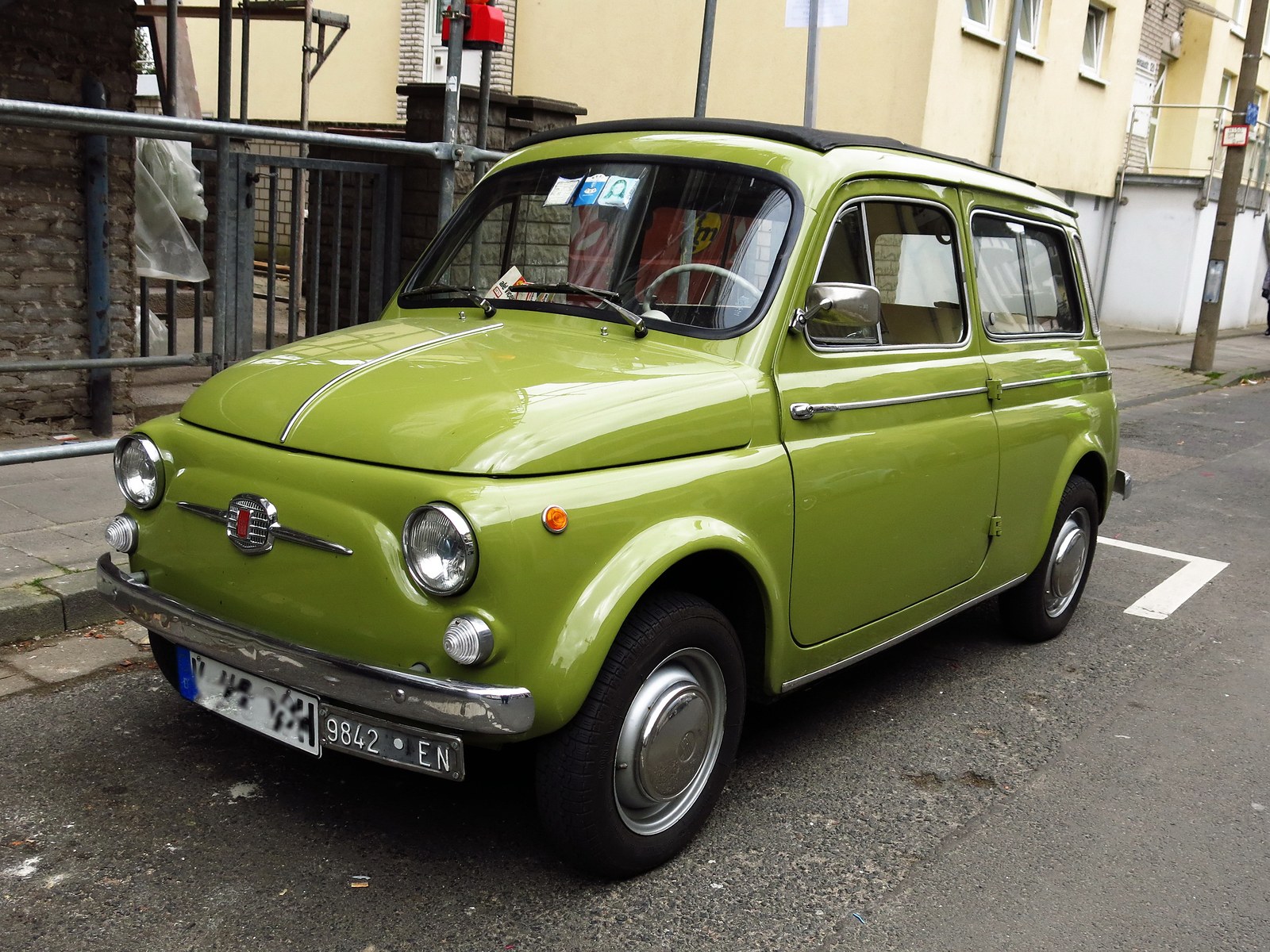
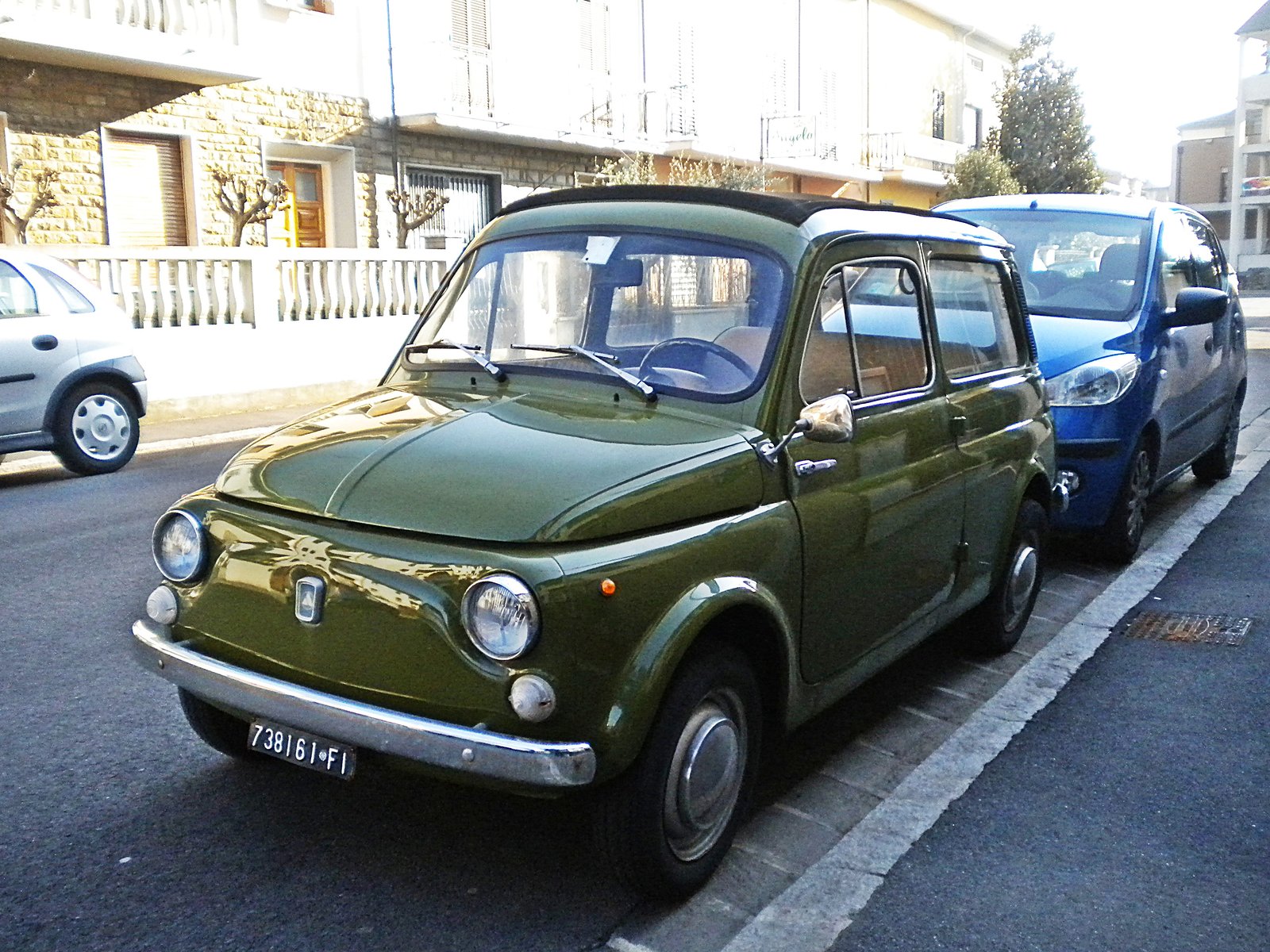
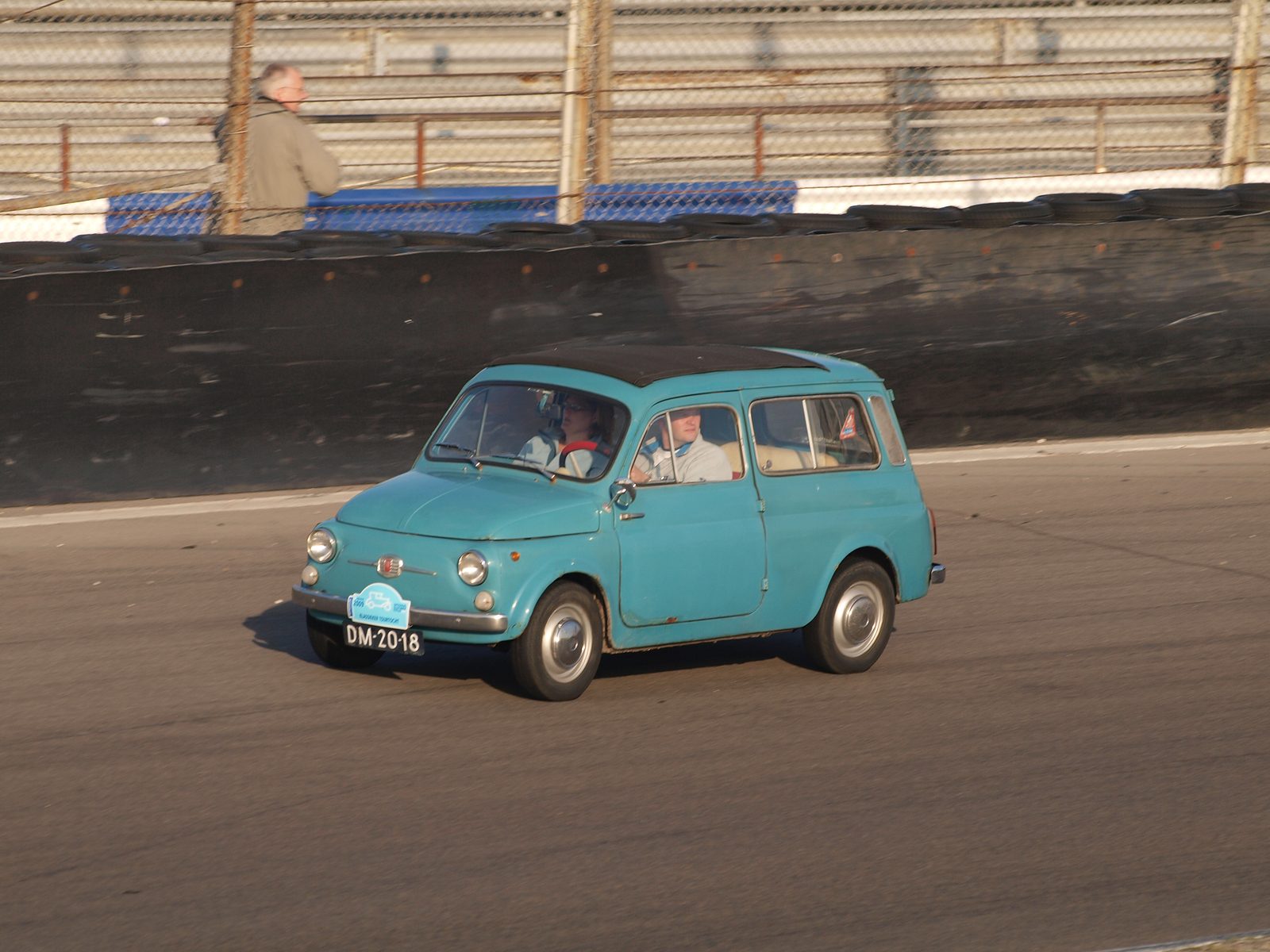
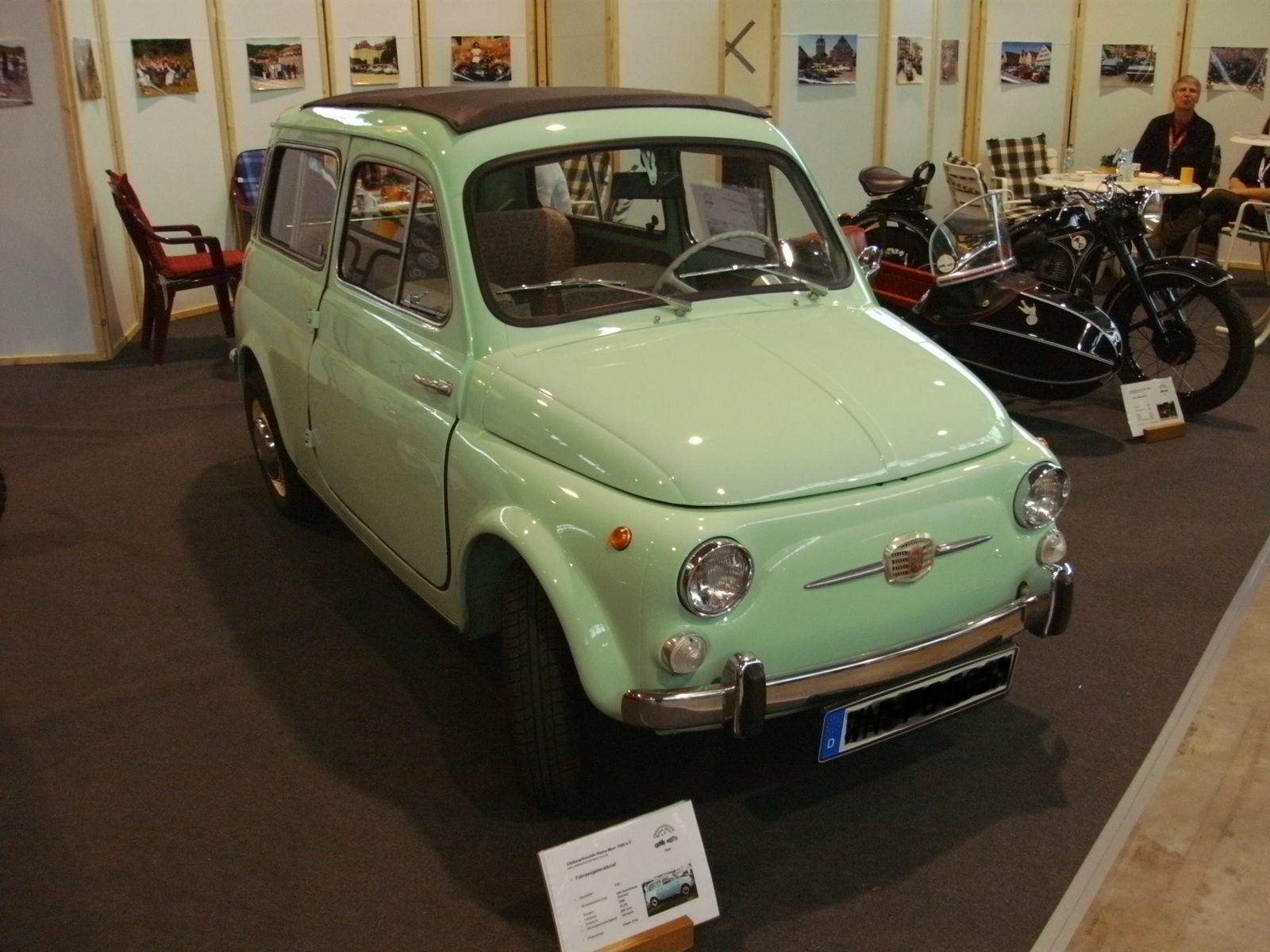
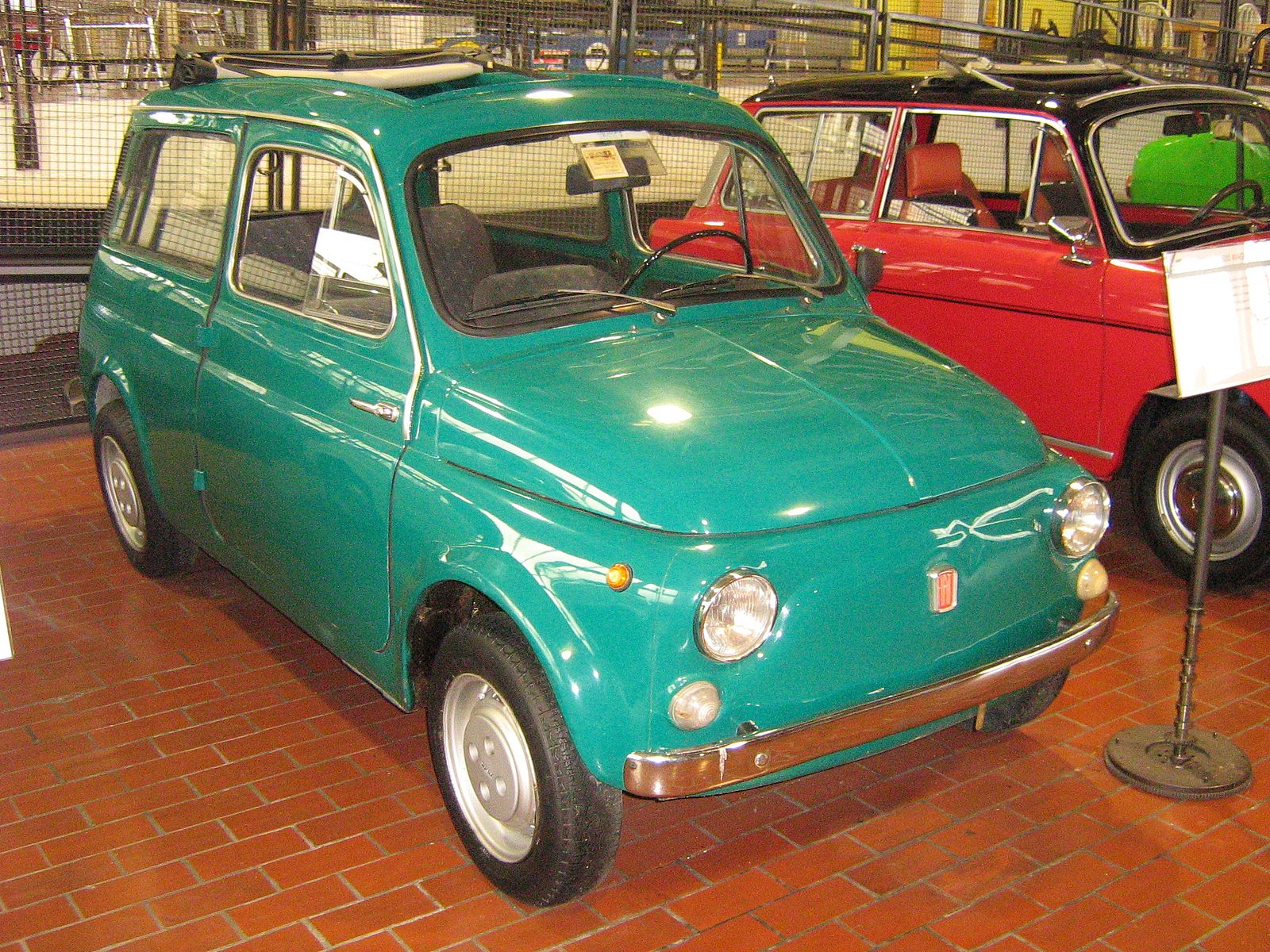
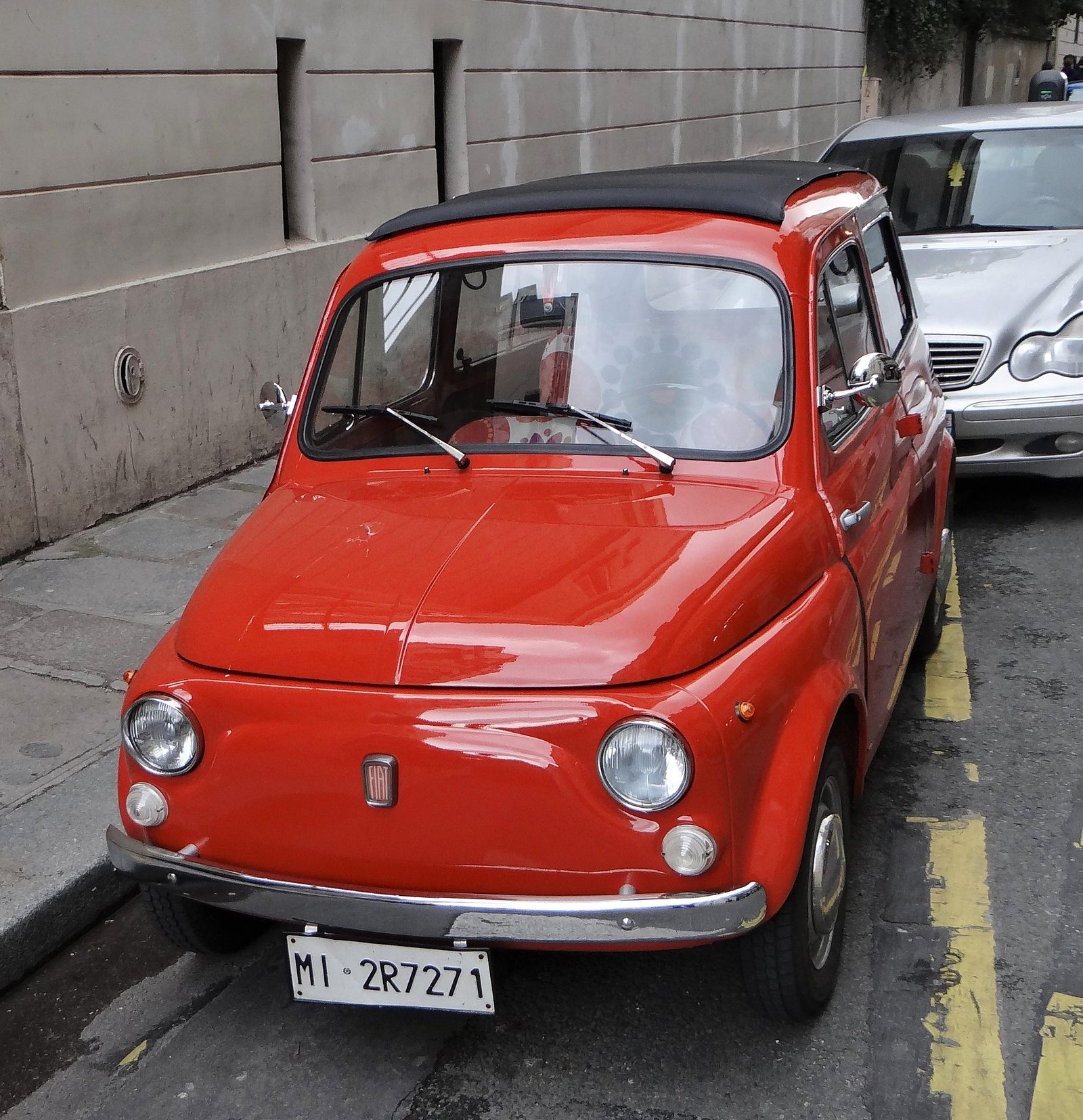
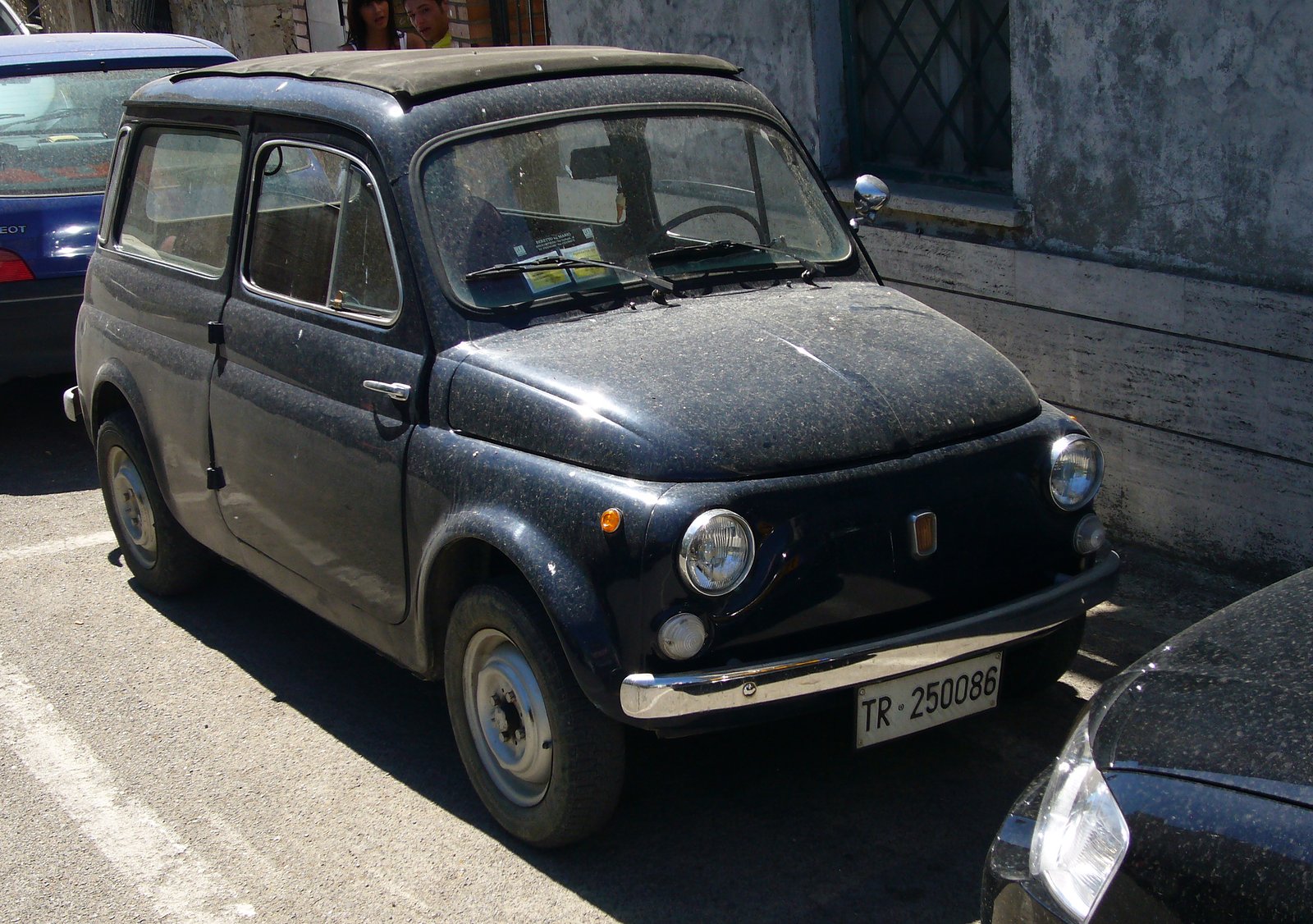
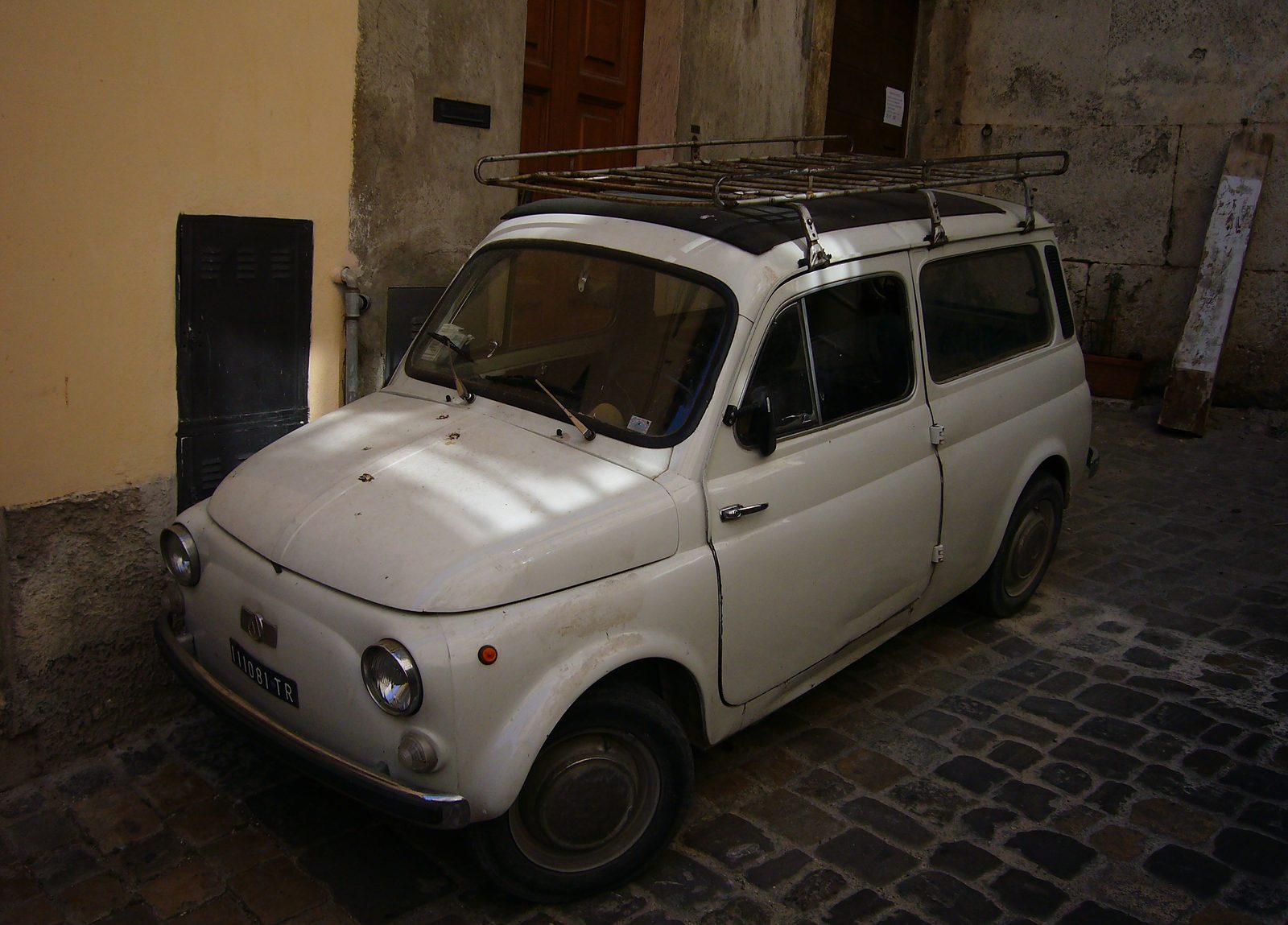
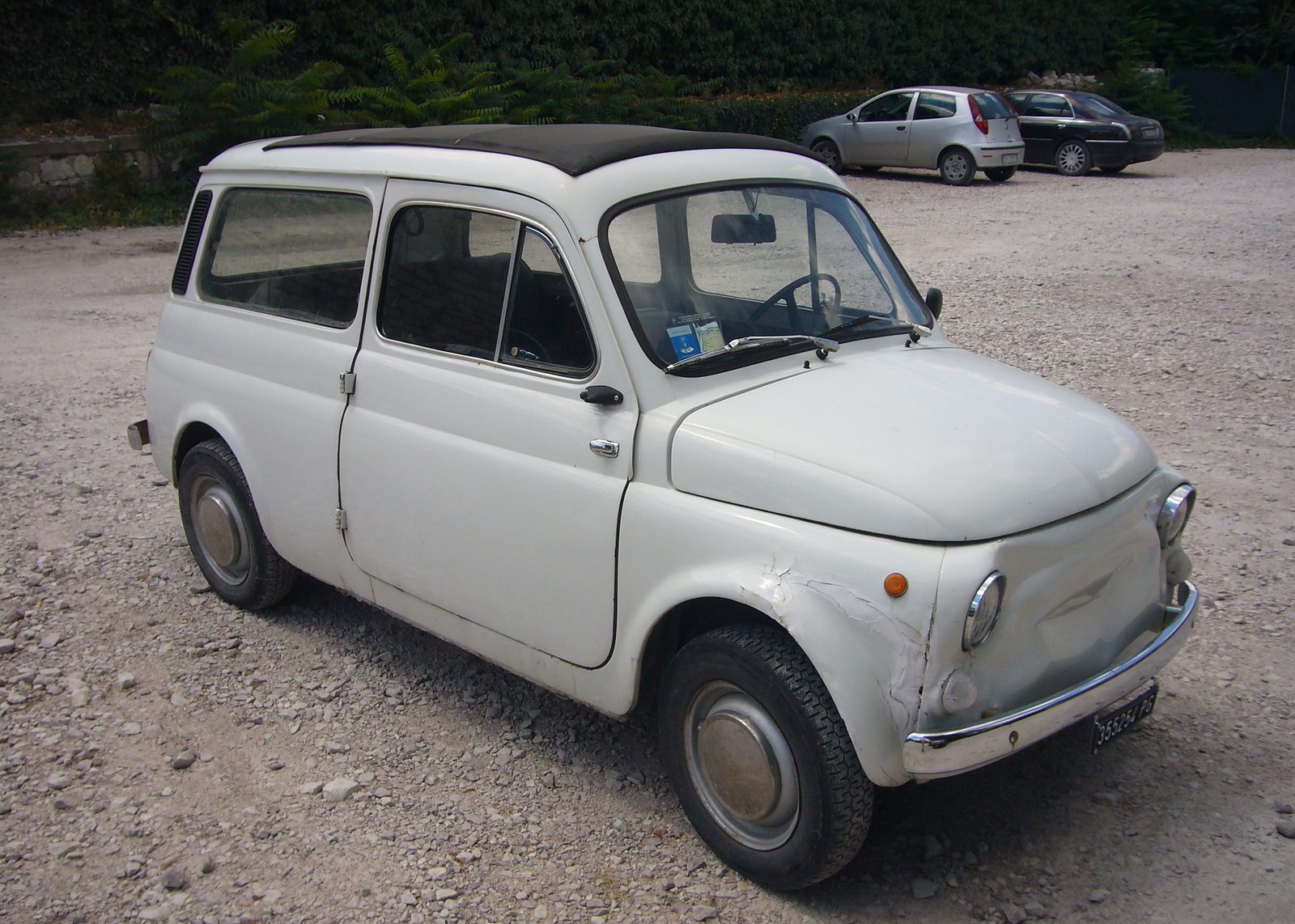
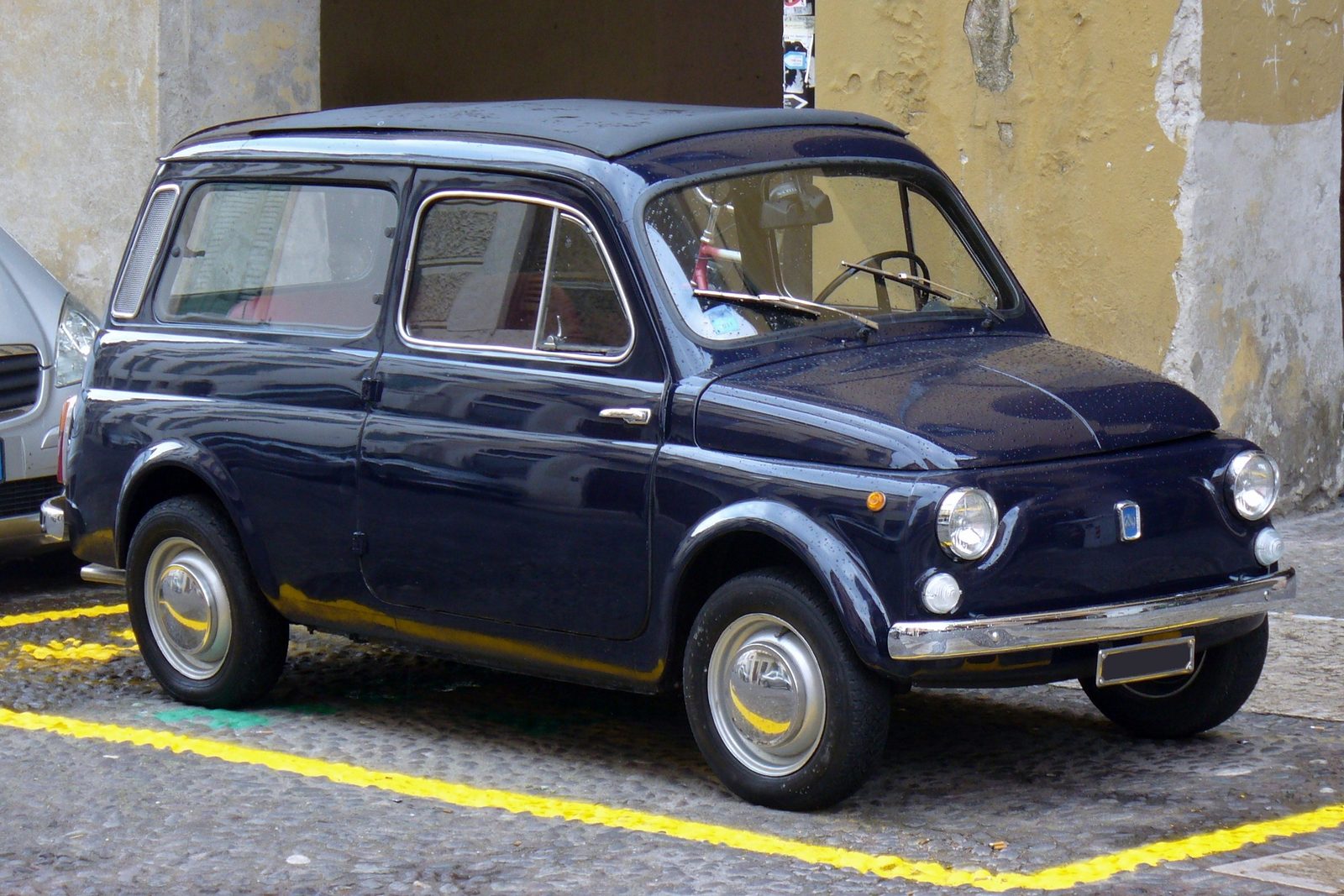
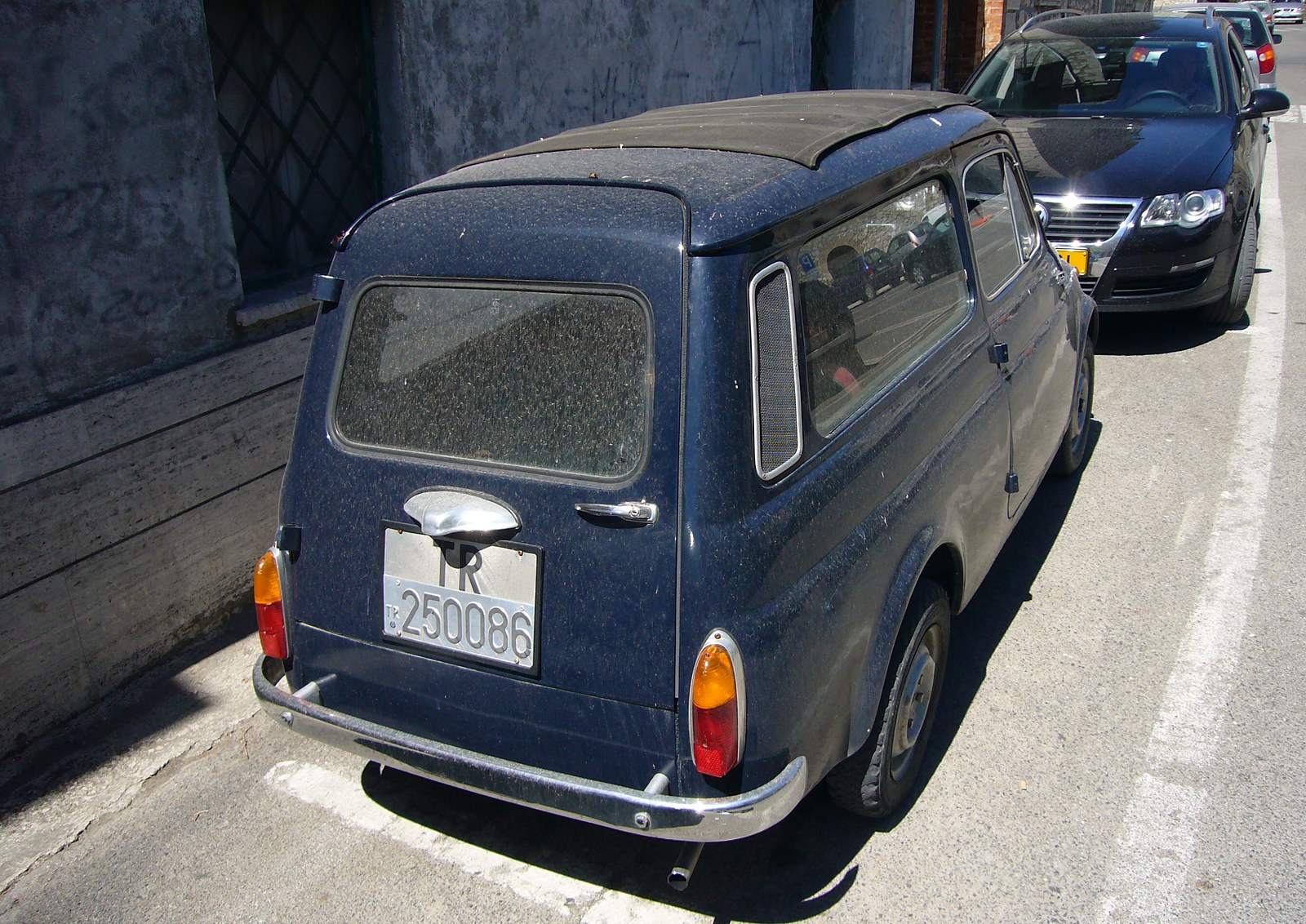
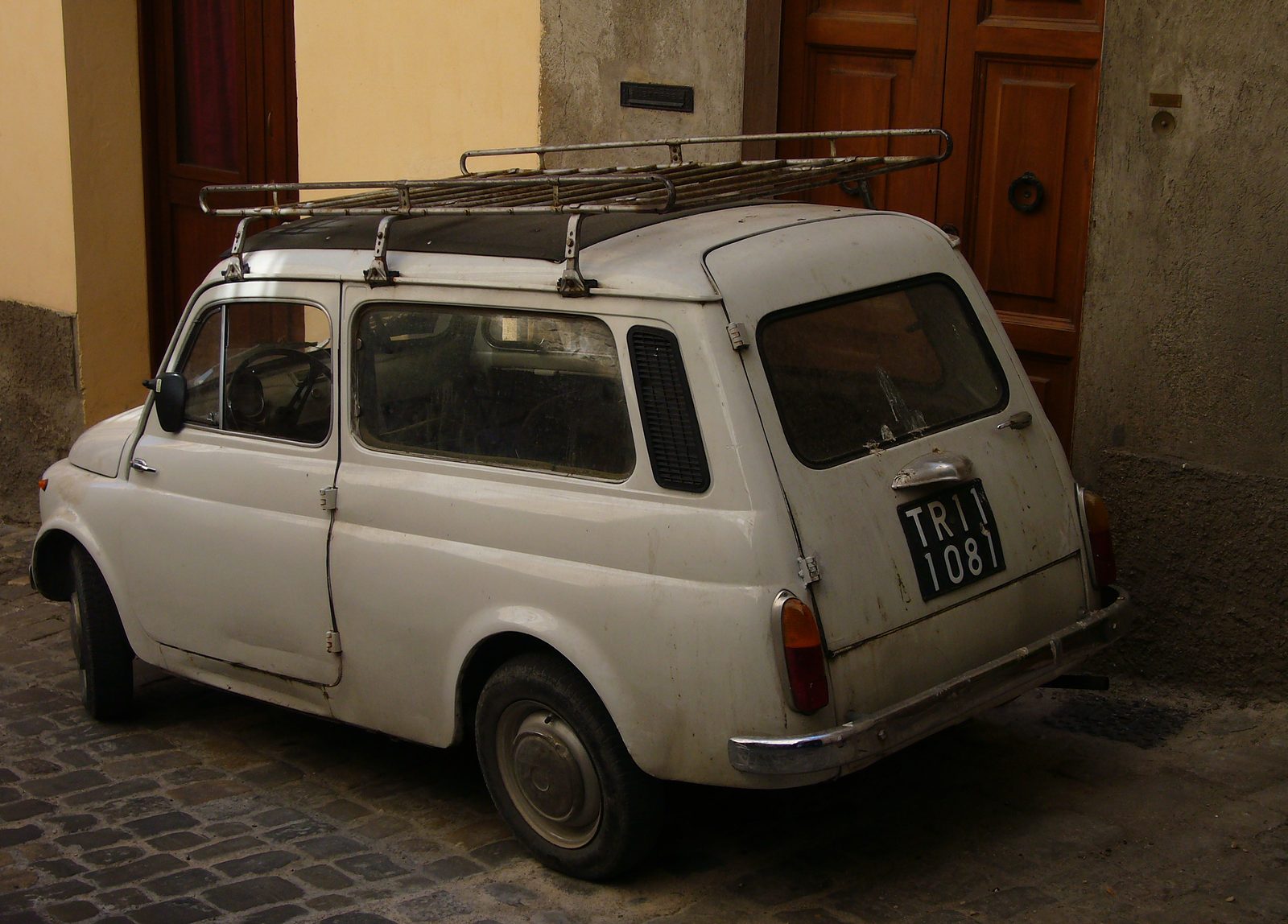
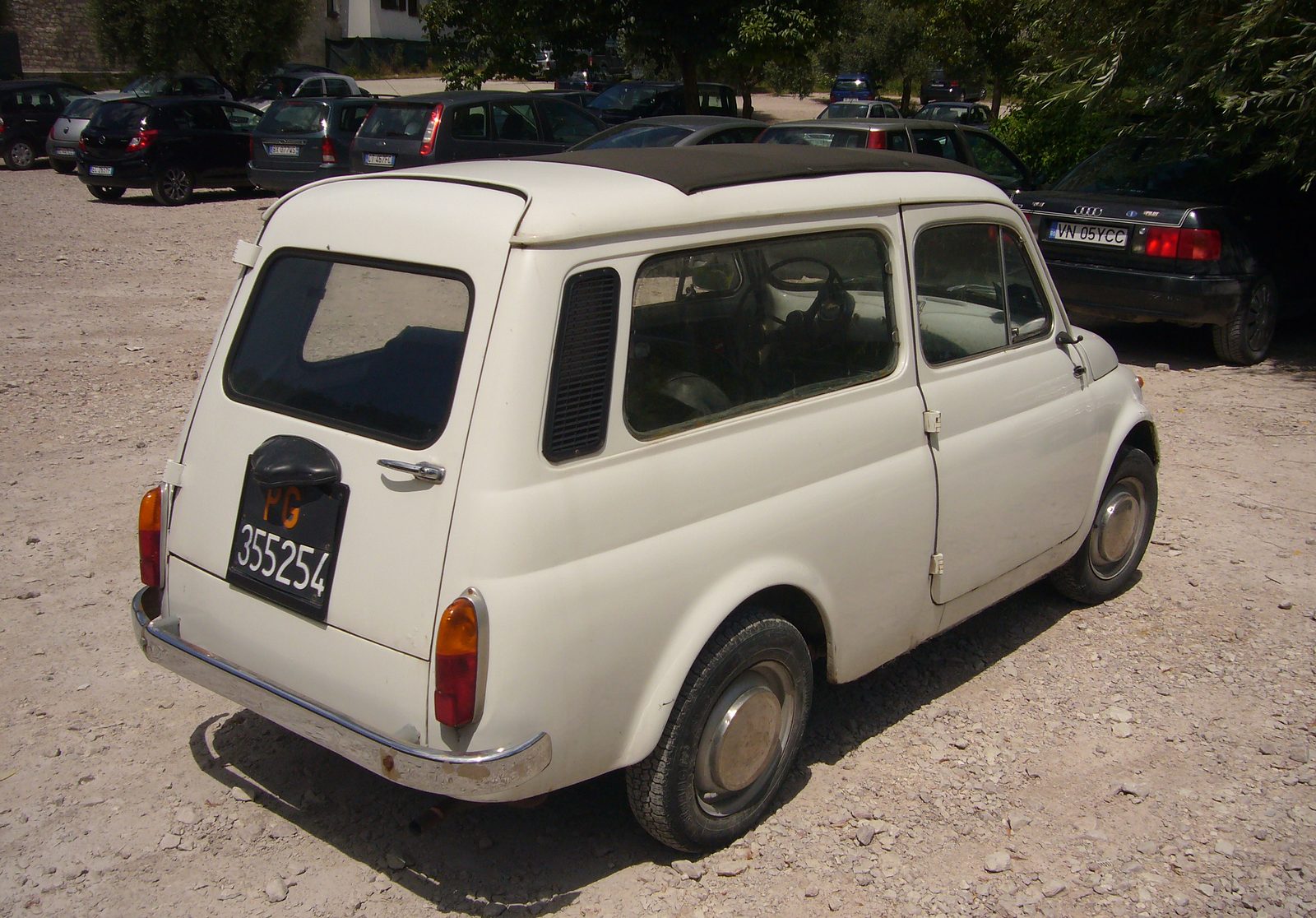
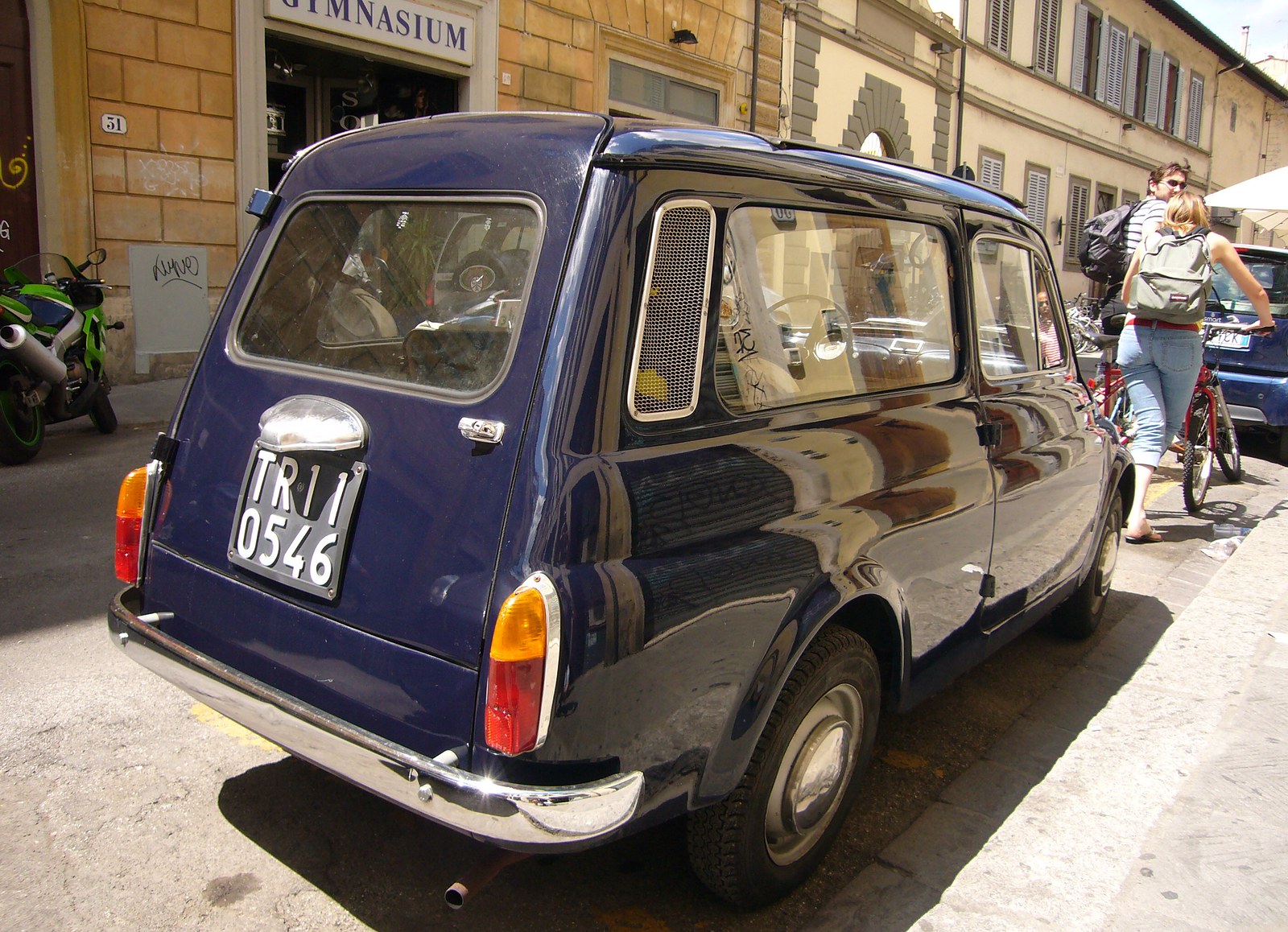
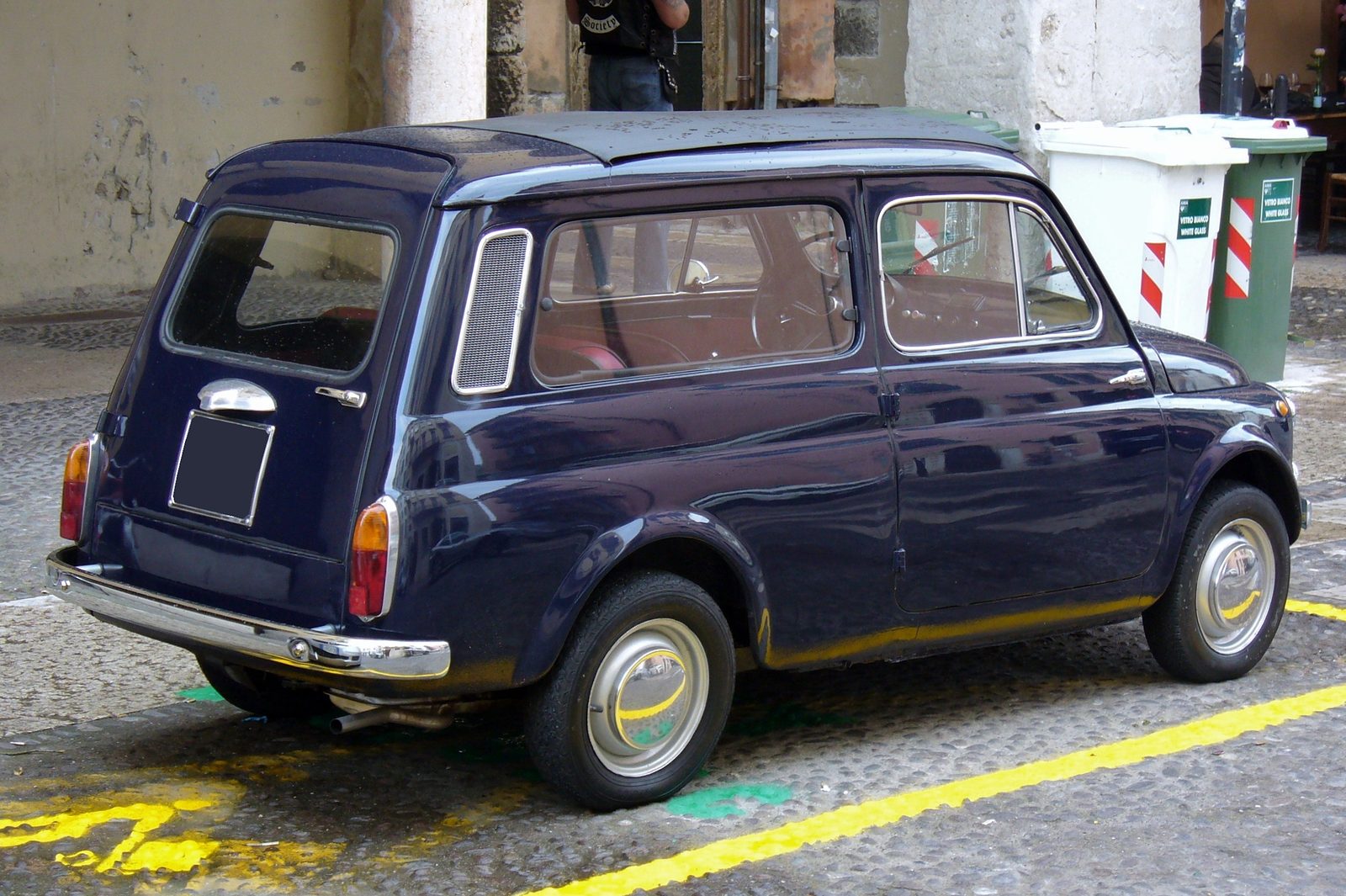
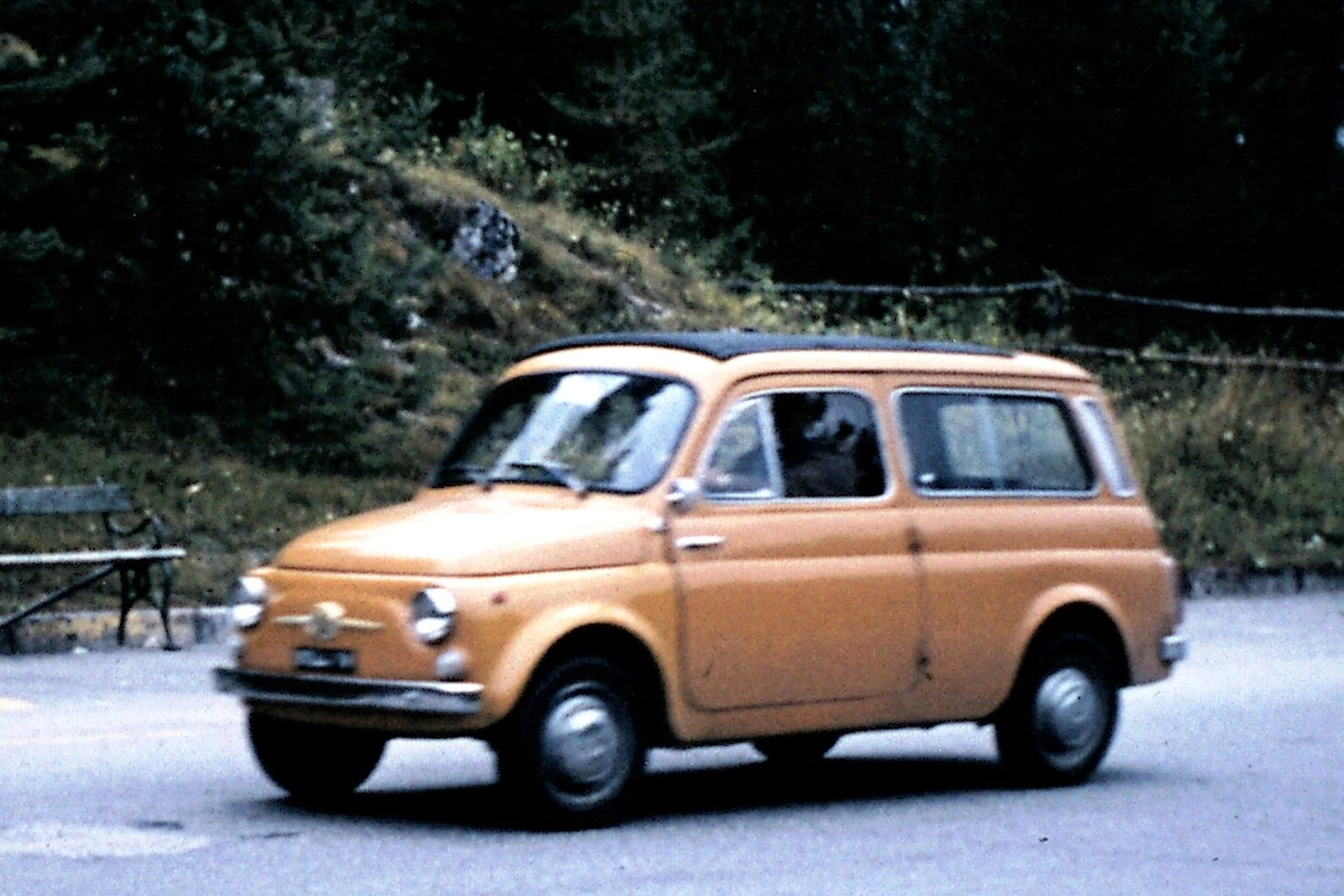
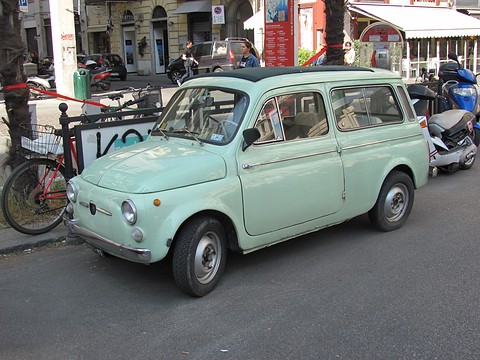
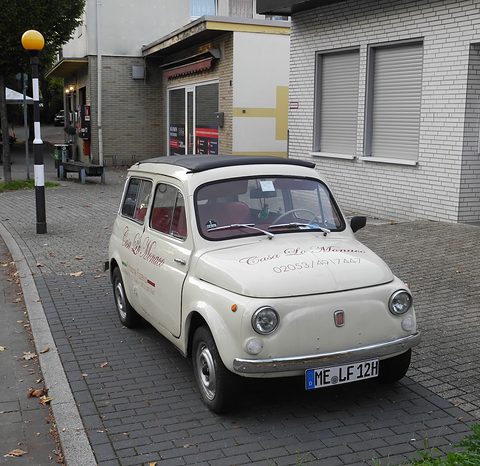
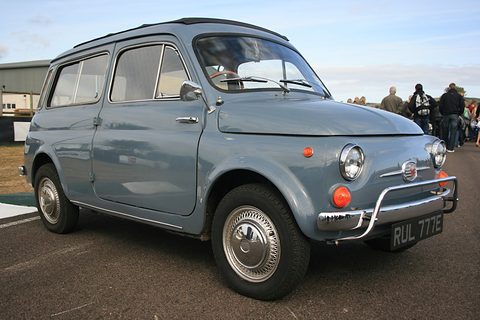
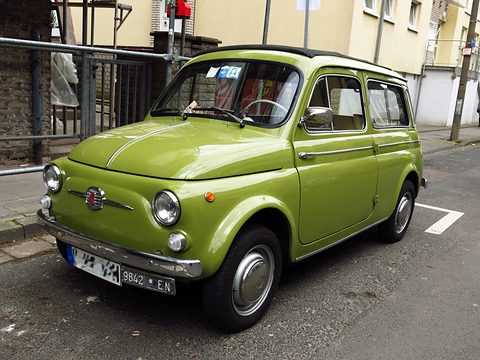
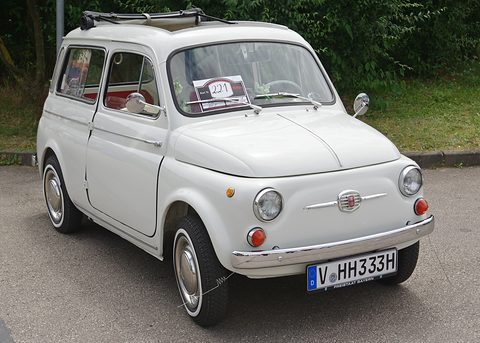
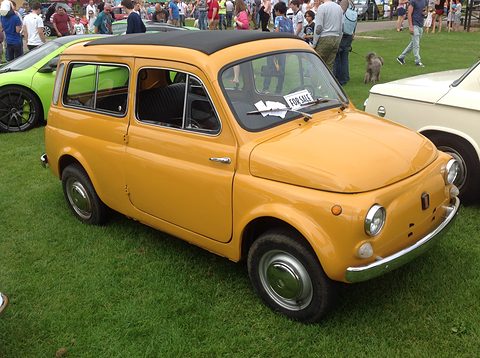
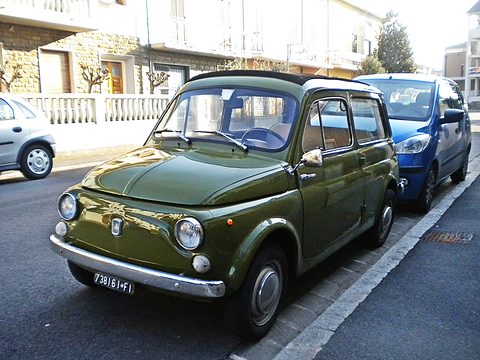
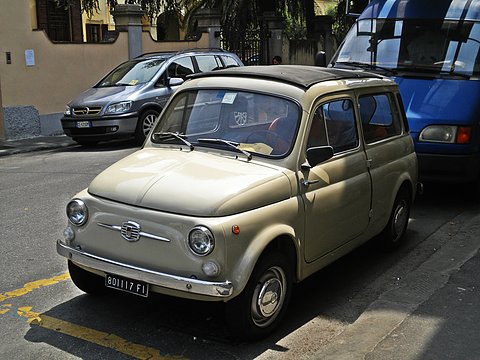
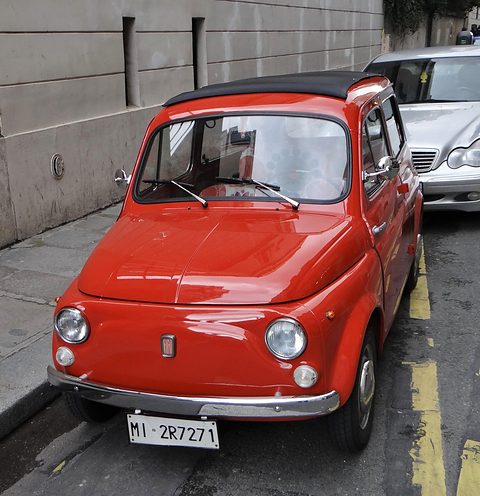
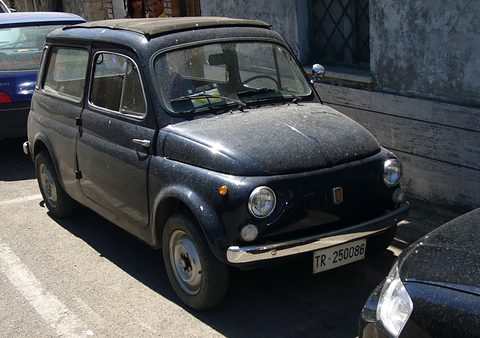
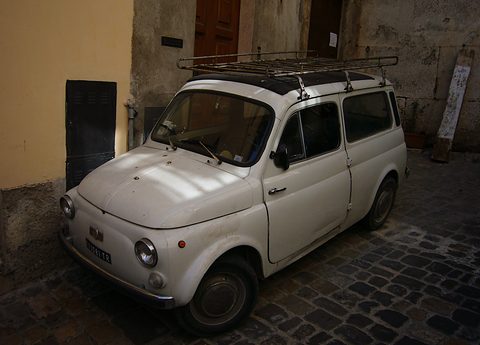
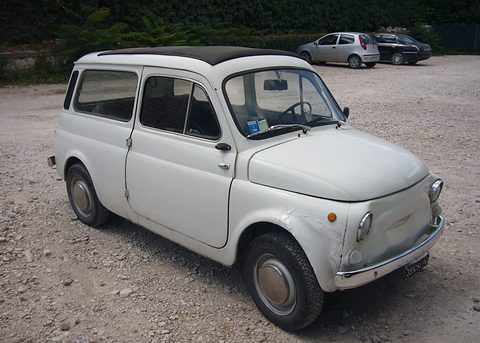
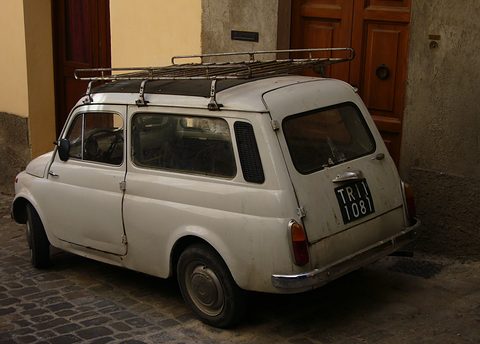
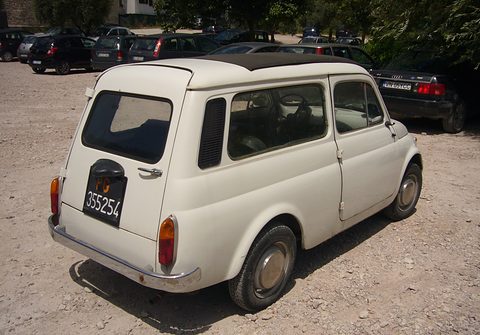
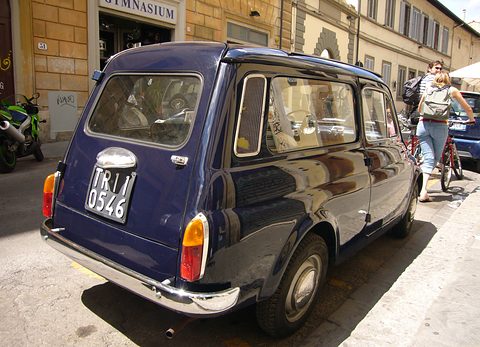
No survivor count has been found. A historic register of the 500 family is kept by the Fiat 500 Club Italia, based at Garlenda in Liguria.source 5 When RM Auctions sold the Bruce Weiner Microcar Museum’s collection in February 2013, its 1961 500 K Giardiniera made $19,550.source 6 Autobianchi Giardinieras were photographed still parked in Umbrian towns in 2007 and 2011, and a 1972 Fiat was photographed at the Lane Motor Museum in Nashville in 2009.
Sources

Numbered as in the text

No period road test of the Giardiniera has been found; the Italian monthly Quattroruote of 1960 would be the place to look. Sources are given as plain text; the links are on the Credits page.

  1. Italian Wikipedia, Fiat Nuova 500, the Giardiniera and Autobianchi sections and the production table, read in full.
  2. Christian Bouchat, “Fifty years since the launch of the Fiat 500 (Part II)”, automania.be, 19 June 2007, read in full in the archived copy.
  3. Bruce Weiner Microcar Museum, “1961 Fiat 500 K Giardiniera”, tour page, read in full in the archived copy of 2015.
  4. Italian Wikipedia, Caratteristiche tecniche della Fiat Nuova 500, the Giardiniera column, whose figures it credits to fiat500mylove.it.
  5. Fiat 500 Club Italia, “Modelli”, the club’s series chronology, archived 25 June 2007.
  6. RM Auctions, Bruce Weiner Microcar Museum sale, Madison, Georgia, February 2013, lot 324, “1961 Fiat 500 K Giardiniera”.