Racing and rallying
A Morgan that crossed the line first and lost the class, seven Isettas on the Mille Miglia, a Crosley that beat a Ferrari by arithmetic: small cars could rarely be fastest, so they raced in classes, on handicap and on fuel, and sometimes they won outright.
First across the line, second in the class
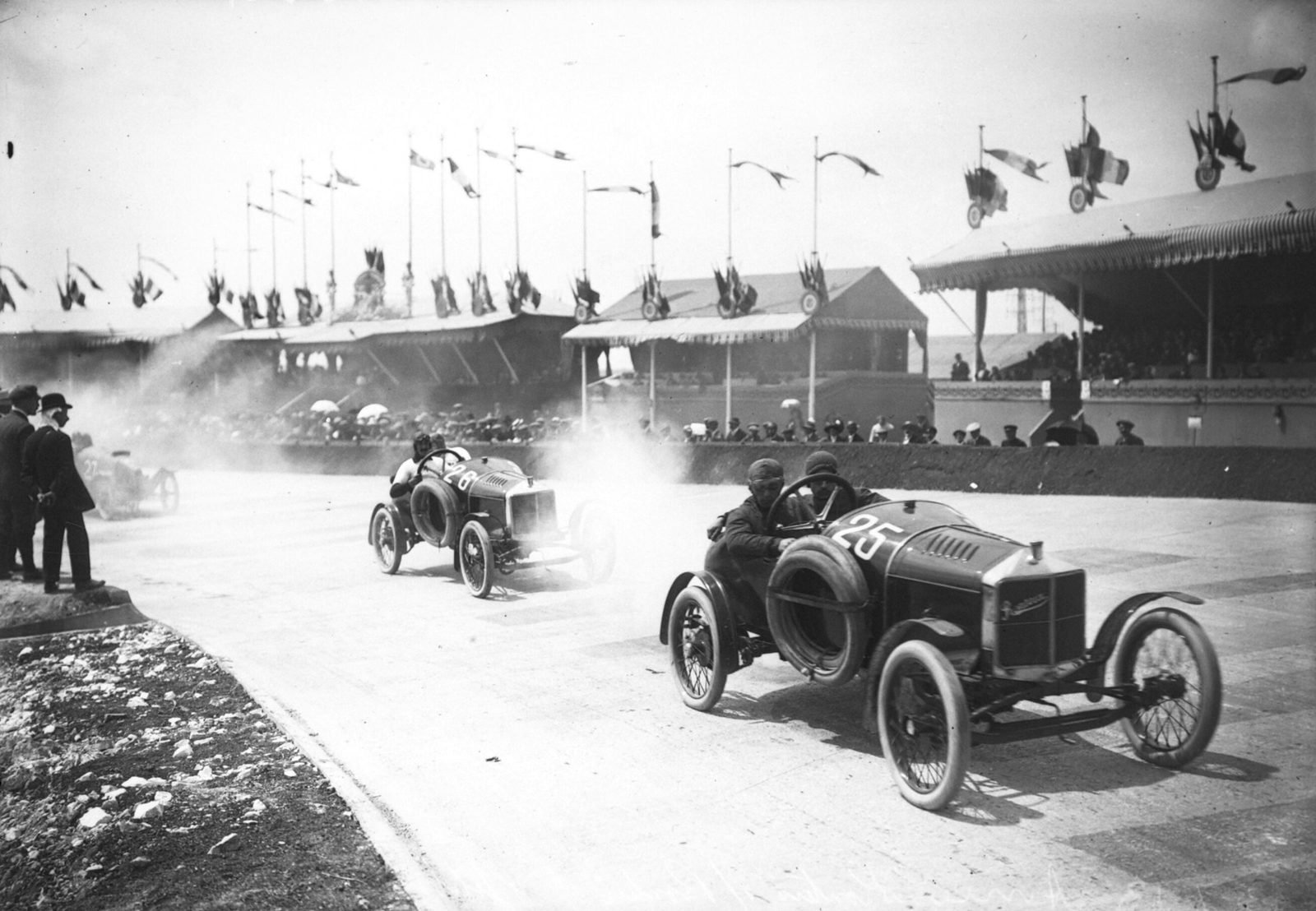
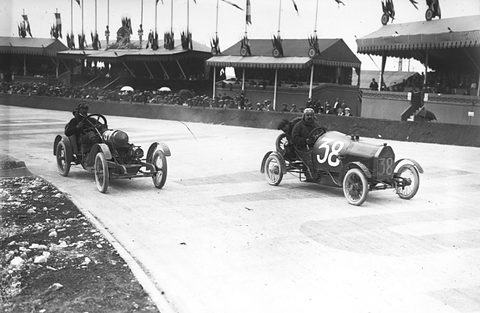
On 13 July 1913, the day after the French Grand Prix, the cyclecars and sidecars raced over the same Picardy roads outside Amiens: 15 laps of 17.5 km (10.86 miles), 262 km (162.9 miles) in all.source 1source 2 W. G. McMinnies, with his mechanic Frank Thomas beside him, drove a Morgan three-wheeler with an overhead-valve JAP engine. A front-tyre puncture and a broken truss rod cost him time, yet he set the fastest first lap and crossed the line first, after 3 h 53 min 9 s; his average was about 68 km/h (42 mph).source 1 The crowd heard that the English had won the first French Cyclecar Grand Prix, and McMinnies was carried shoulder-high.source 1 But the French rules did not count a three-wheeler as a cyclecar. The Morgan was classed as a sidecar, and the cyclecar prize went to the Bédélia of Bourbeau, second on the road by under three minutes.source 1source 3
the officials said it was a sidecar and gave first place to a Bedelia.
The Morgan was not disqualified; it was classed elsewhere.source 1source 3 Within ten days Bédélia’s advertisements claimed first place in the Cyclecar Grand Prix, which was true of its class.source 4
That race holds most of the story. A small car could rarely be the fastest thing on the road, so it raced in classes of its own, on handicap, or for fuel; the rules decided who had won, and the makers advertised the result. What follows is the competition story of the cyclecars and microcars, with a few cars larger than a microcar, the Morgan, the Crosley Hotshot and the Berkeley among them, whose racing belongs to the same story. Speed and distance records are told in records and feats.
The cyclecar era, 1896–1929
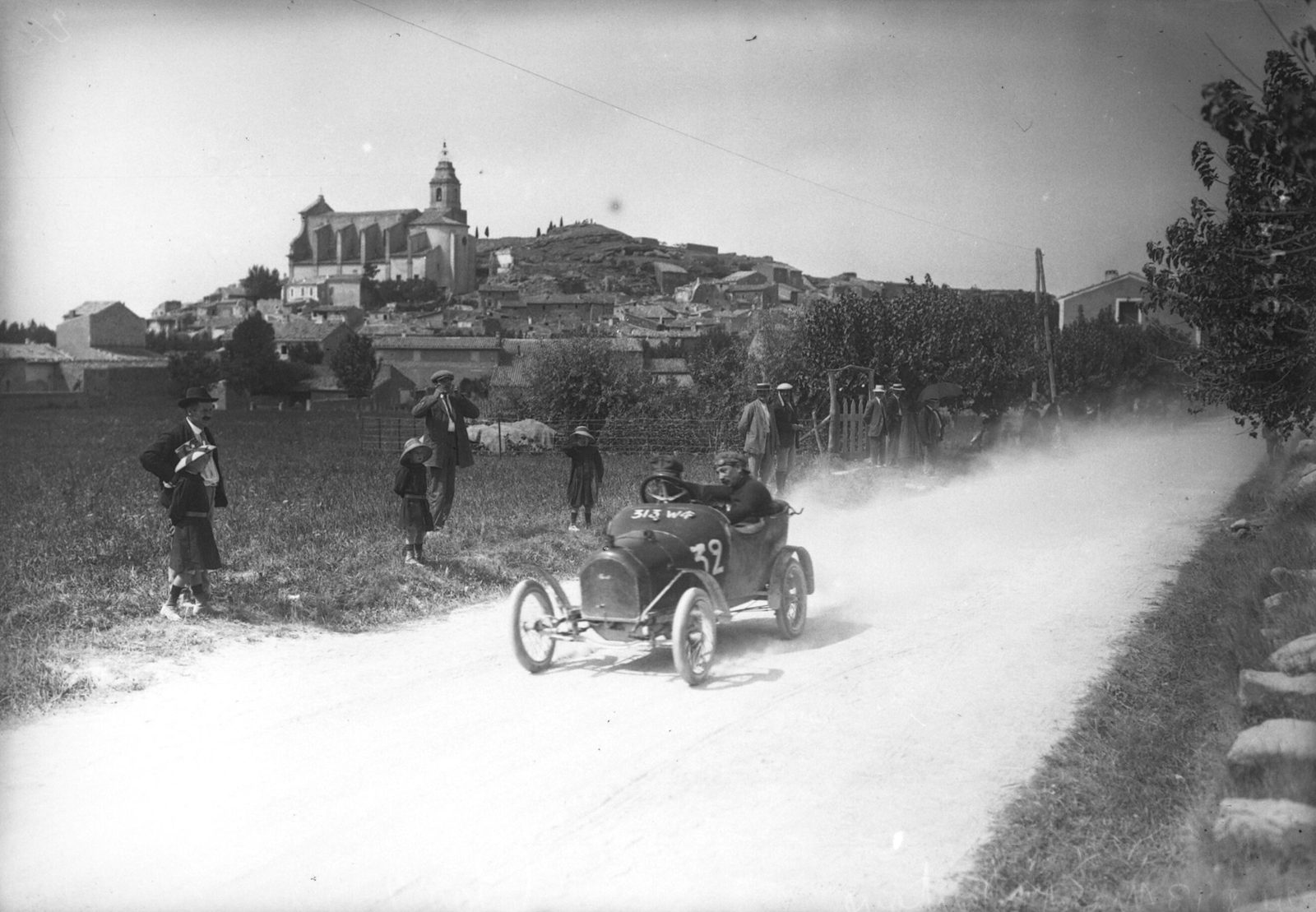
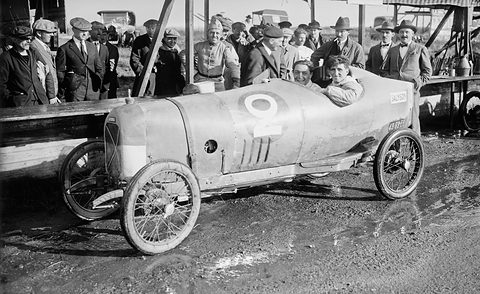
The light car had raced from the start. On 14 November 1896, on the London to Brighton run that celebrated the lifting of Britain’s 4 mph limit, Léon Bollée reached Brighton first on his Voiturette, a tandem tricar, with his brother Camille second on another; it was not officially a race.source 5 In 1913 a Peugeot Bébé won its class on the Mont Ventoux hill climb, by Peugeot’s account; Dennis Simanaitis says Bébés were first and second.source 6source 7
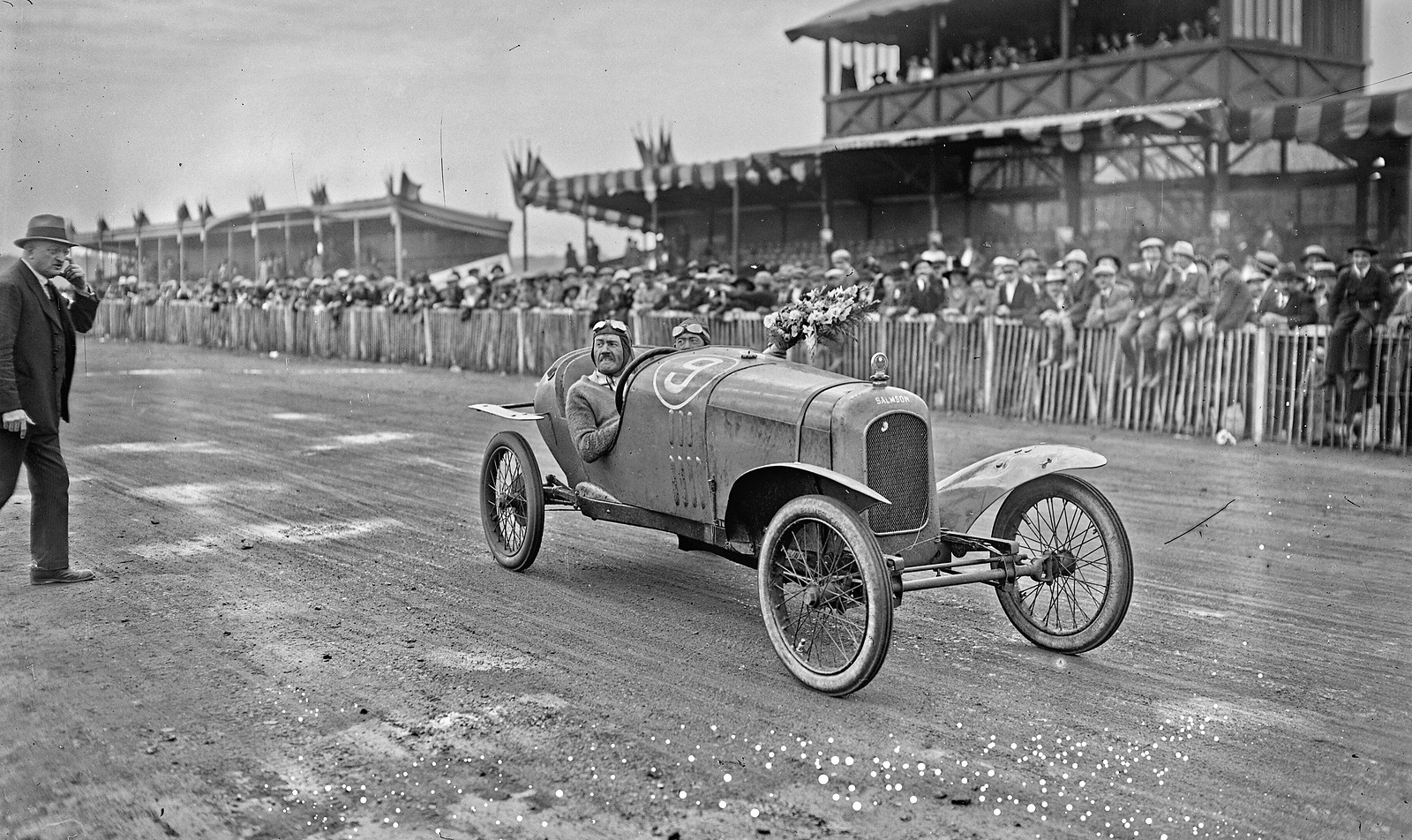
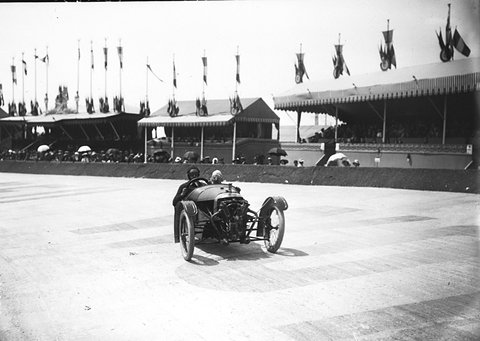
Brooklands held its first cyclecar scratch race in 1912, and Harry Martin’s Morgan won it at 57.31 mph.source 3 After the war the French cyclecar Grand Prix, the Grand Prix de l’UMF, was run at Le Mans. Marcel Violet won it in 1920 in a Major at 75.42 km/h, and from 1921 the Salmsons took over: André Lombard in 1921, Robert Benoist in 1922 and 1923.source 8 In 1921 five Morgans started and only Henri Stoffel’s finished, fifth and last.source 8source 3
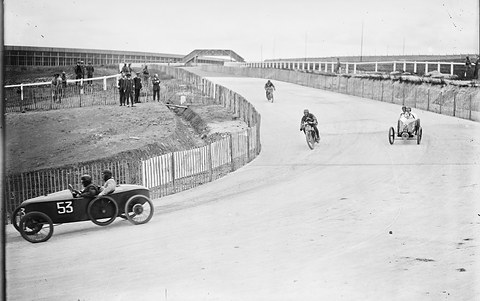
The first Bol d’Or, at Vaujours, north-east of Paris, in May 1922, had a rule of its own. After the motorcycles, the sidecars and cyclecars ran for 24 hours from 8.30 on Sunday morning, and one driver had to do the whole distance, resting for at most four hours, an hour at a time, with a passenger or 60 kg of ballast beside him.source 9 André Morel won it in an 1,100 cc Amilcar, with 1,450.658 km at 60.447 km/h; 23 cyclecars started and 11 retired.source 9source 10 From 1923 the race moved to the Les Loges circuit at Saint-Germain-en-Laye.source 9
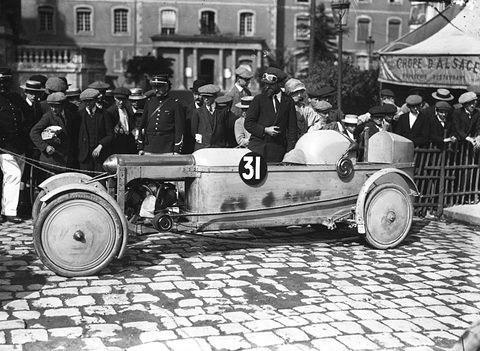
In Britain the Junior Car Club ran its 200-mile race at Brooklands from 1921, and in the cyclecar race of 19 August 1922 the GNs of Ron Godfrey, G. Hawkins and Archie Frazer-Nash were third, fourth and fifth behind two Salmsons.source 8 Three-wheelers had already been shut out of the cyclecar handicaps at Brooklands, and after a crash at the Fork in 1924 badly hurt E. B. Ware and his mechanic, the club banned them altogether.source 3 The New Cyclecar Club gave them a stage again at Brooklands in 1928 and 1929, where Clive Lones and C. T. Jay won its Cyclecar Grands Prix in Morgan-JAPs.source 3
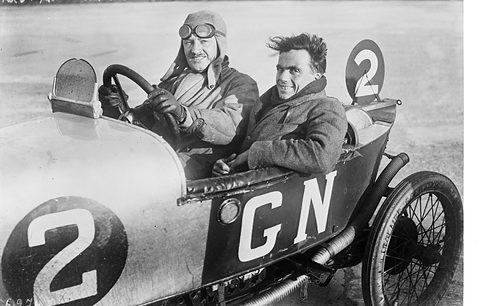
Sidecar or cyclecar?
A pair
Baby cars on the circuits, 1923–1939
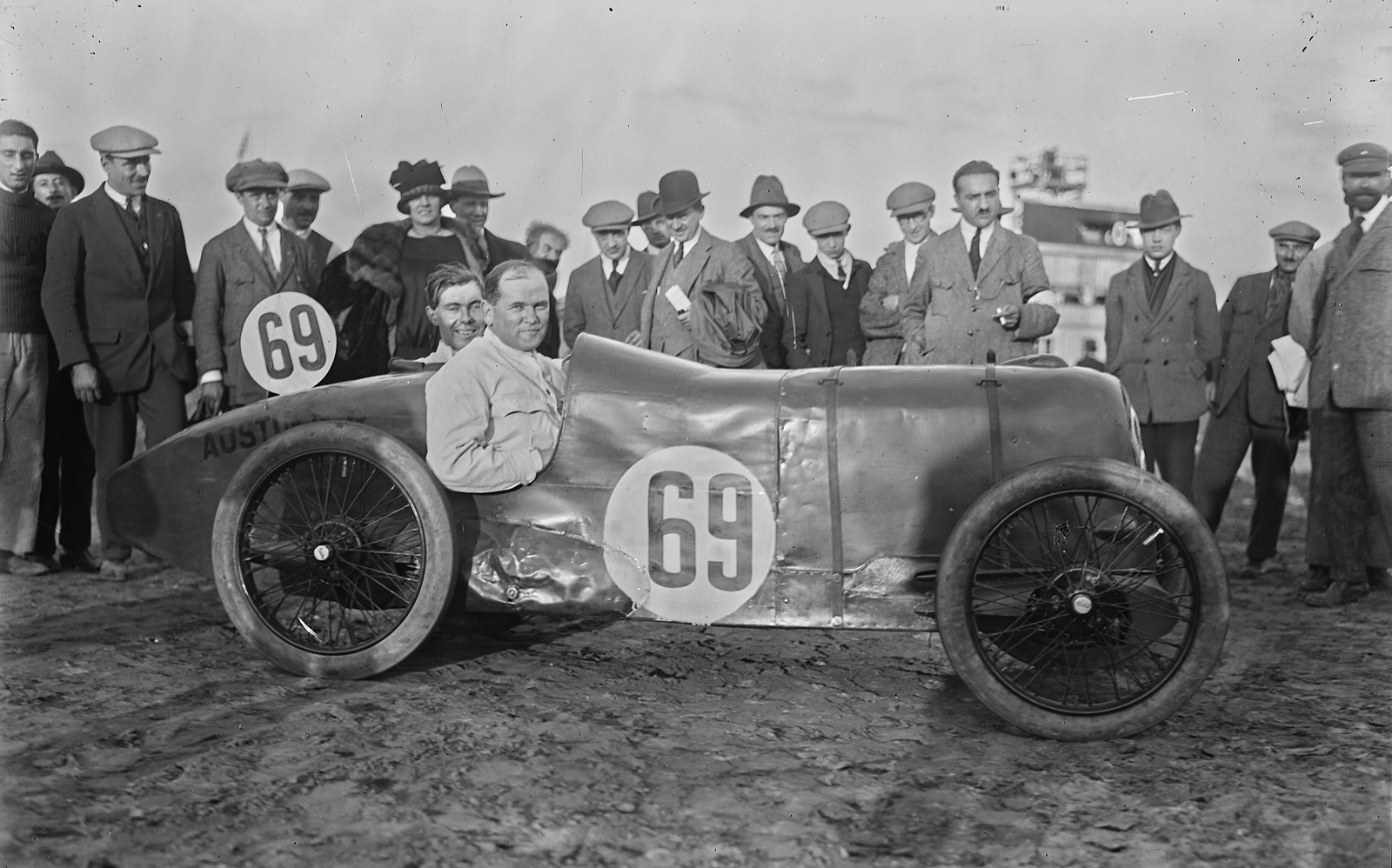
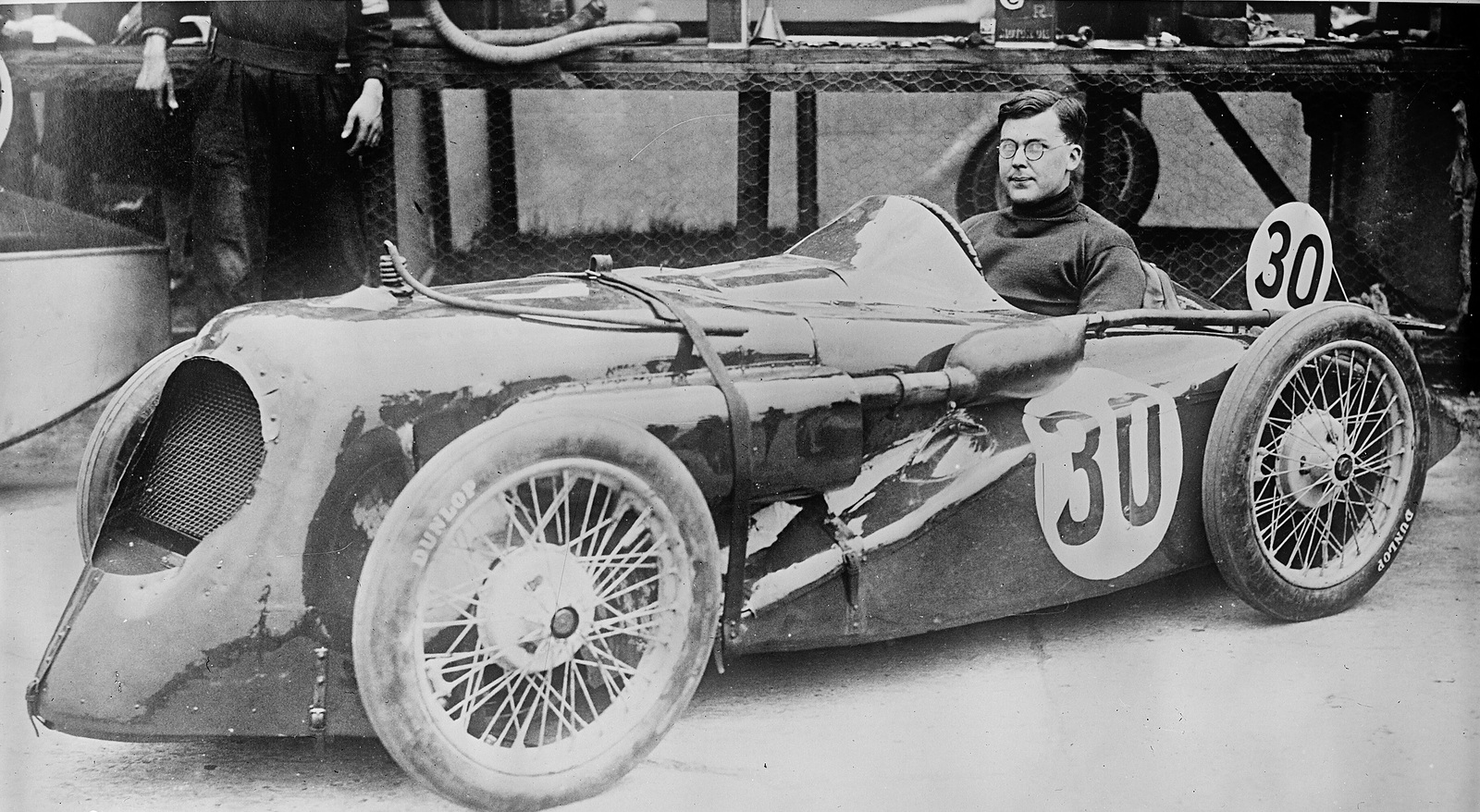
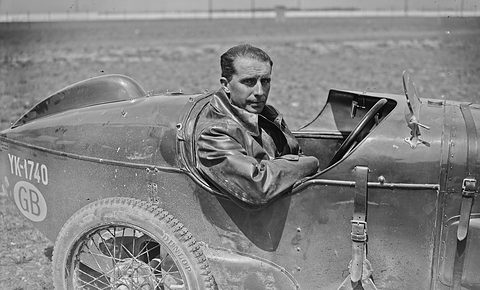
At Monza on 29 April 1923 Arthur Waite, in an Austin Seven, won his class, cars of 750 cc, in the cyclecar Grand Prix at 89.88 km/h, and that September he was third in the 750 cc race at Le Mans.source 8 In 1928 he won a 100-mile road race on Phillip Island that came to be counted as that year’s Australian Grand Prix.source 11 The works racers went on to Driscoll’s lap of the Brooklands outer circuit at 111.92 mph at Easter 1934 and Charles Dodson’s Empire Trophy at Donington in 1938.source 12
The Seven’s longest race was run by its owners. Bill Boddy suggested in Motor Sport, in February 1939, that Austin Seven owners should have a club of their own, and the 750 Motor Club’s first rally followed that April.source 13 In 1949 its chairman, Holly Birkett, wrote the 750 Formula for specials built on the Seven, and 16 cars came to its first race, at Silverstone in June 1950.source 13 Colin Chapman’s first Lotus was a Seven special.source 11source 14
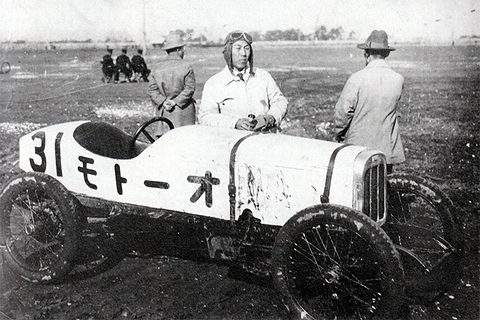
Elsewhere the small car raced where it could. At the opening of the Nürburgring on 19 June 1927, Hellmuth Butenuth’s Hanomag 2/10 PS spun into a ditch, lost 20 minutes, and still finished its 12 laps of the class to 750 cc; the other two Hanomags retired.source 15source 16 In Tokyo, on 6 December 1925, Japan’s only home-built car in the Japan Motor Race, an Otomo built in five days, was second in the final; the winning Curtiss carried a young Honda Sōichirō as its riding mechanic.source 17source 18 In Czechoslovakia, before the Aero 10 had even been shown to the public, Bohumil Turek and Antonín Nahodil drove one 3,613 km in the Prague–Paris–Brest–Prague star rally of 1929, went on to Hamburg and back, and won outright; in 1930 Turek took the small-car class of an ADAC run from Berlin to Manzanares, in Spain, and back.source 19 And Amédée Gordini’s barchetta-bodied Simca 5, the French Topolino, was entered in the Le Mans 24 Hours of 1937, 1938 and 1939 and took the class win for cars of no more than 750 cc, as French Wikipedia reports the Le Mans museum’s record.source 20
Winning by arithmetic, 1950–1955
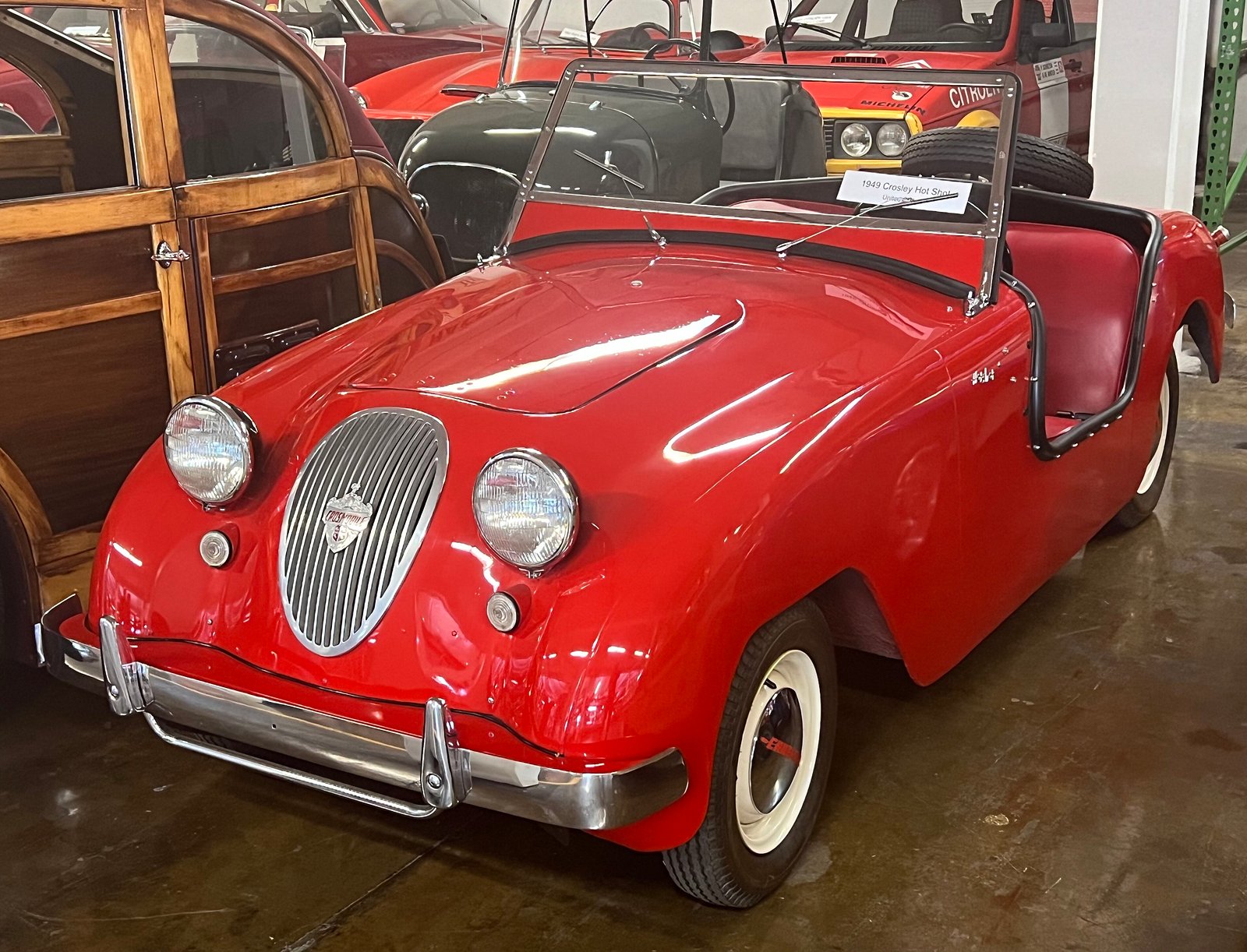
The first race at Sebring, Florida, on the last day of 1950, was a six-hour race on an airfield, run on the Index of Performance, which set each car its own distance to cover. The Crosley Hotshot of the local dealer Victor Sharpe, driven by Fritz Koster and Bob Deshon, started 28th and last, and was ahead on the handicap after the first hour.source 21 It covered 89 laps to the 108 of the Ferrari behind it, and won.source 22source 21 What its average speed was, and whether the story of a car borrowed from a spectator is true, the sources do not settle.source 21
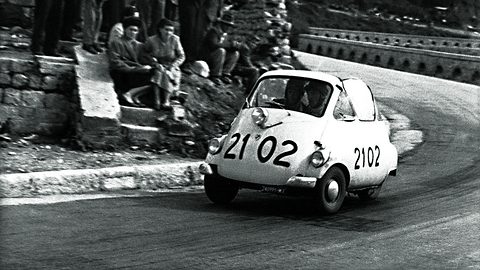
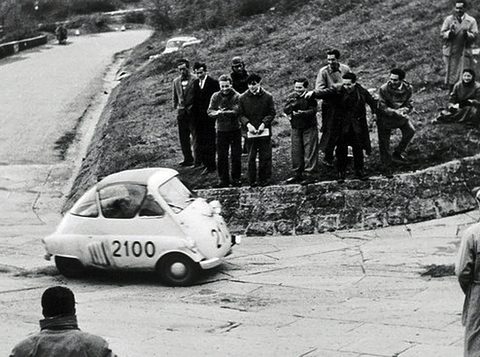
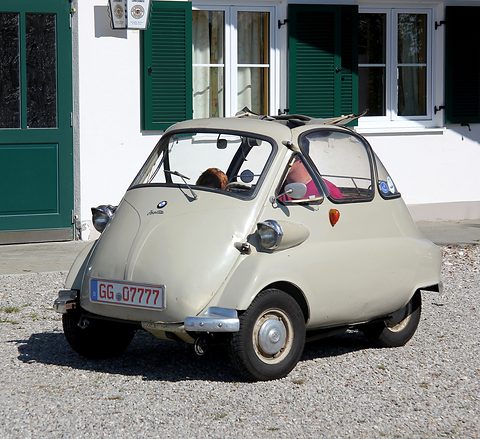
The Mille Miglia of 1–2 May 1954 had a touring class for cars of no more than 750 cc, and seven Iso Isettas started, the egg-shaped bubble cars with a door in the nose, on the 1,600 km from Brescia to Rome and back. Five reached Brescia. The best, Mario Cipolla and L. Brioschi, took 22 hours 4 minutes, about 72 km/h (45 mph); the slowest, by Motor Sport’s account, finished outside the 24-hour limit and could not be classified.source 23source 24source 25 The Automobile Club d’Italia gives them the first four places in the classification by performance index, the measure English accounts call economy.source 25
Un altro poker di unità … si aggiudicò i primi quattro posti assoluti della classifica dell’indice di prestazione.
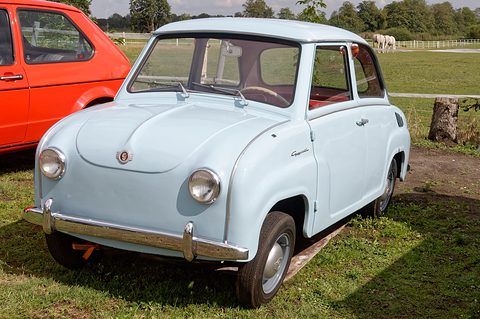
In 1955 Cipolla drove alone and finished in 20 hours 8 minutes, two hours faster.source 23 The Isettas of the Mille Miglia were Iso’s, not BMW’s.source 23 Small cars rallied too. On the Lisbon–Madrid rally of August 1953 only a Porsche 356 beat the Kleinschnittger F125 in their class, cars up to 1,100 cc.source 26source 27
The small-car summer of 1958
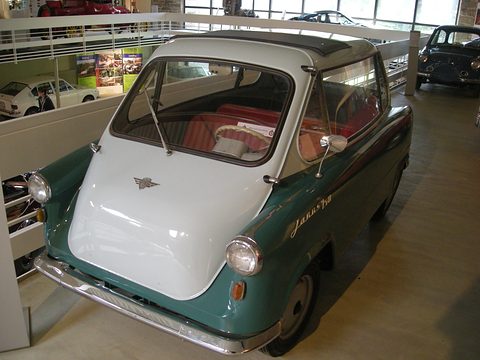
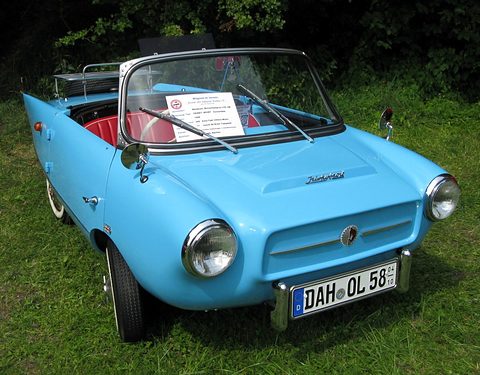
On Whit Monday, 26 May 1958, the AvD ran West Germany’s first race for small cars, 12 hours at Hockenheim for series-built four-wheelers up to 600 cc, with a separate classification for fuel.source 28 Lloyd brought six Alexanders, BMW a works team of three 600s, the Scuderia Ambrosiana an Abarth 500 and Fiat 500s, and among the rest were Goggomobils, a Zündapp Janus, a 2CV and a Frisky Sport from England.source 28 The Abarths led early and broke their engines on standard fuel; the Frisky wobbled through the Stadtkurve, by Günther Molter’s account like Donald Duck, and was wrecked against the wall, though nobody was hurt; and Herz and Günzler’s NSU Prinz led until the last lap, when two Lloyds passed it.source 28source 29 Schäufele and Hewitt won by 0.4 seconds, at 110.7 km/h.source 28 On fuel, BMW 600s took the first four places in their class, Fiat 500s the first three in theirs, and the Janus won the class to 350 cc.source 28
… jedoch ist die Tatsache allein, daß einmal ein Rennen für Kleinwagen veranstaltet wurde, zu erfreulich, um diesen Schönheitsfehlern zu große Bedeutung beizumessen.
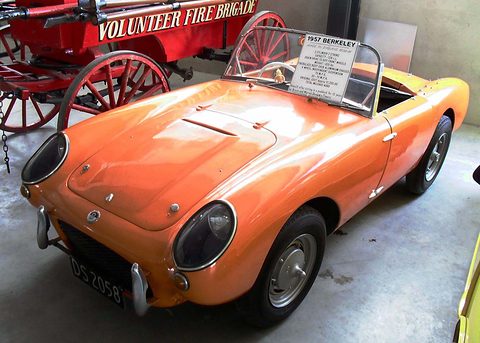
That summer the first Liège–Brescia–Liège rally, open to cars of 500 cc or less, drew 27 starters, and a Fiat Nuova 500 driven by Brunetto won it.source 30source 31 All the British cars retired, among them the Berkeley of Pat Moss and Ann Wisdom; how many cars finished, 13 or 10, depends on whether you read Motor Sport or auto motor und sport.source 30source 31 At home, the Berkeleys did better. Stirling Moss had tried one at Goodwood in 1956, and at the BARC members’ meeting there on 14 June 1958 Ashby’s 328 cc car won the last race of the day.source 32source 33
Racing concluded with a final 5-lap handicap, which the handicappers virtually awarded to Ashby’s 328-c.c. Berkeley before the start. It averaged 58.68 m.p.h.
The next winter the Vespa 400, built in France by Piaggio’s subsidiary ACMA, tried the Monte Carlo Rally. By French Wikipedia’s account, three works cars started from Stockholm in January 1959; all three got to Monaco, and one was classified.source 34source 35
Kei cars at Suzuka, a small car in Europe’s rallies
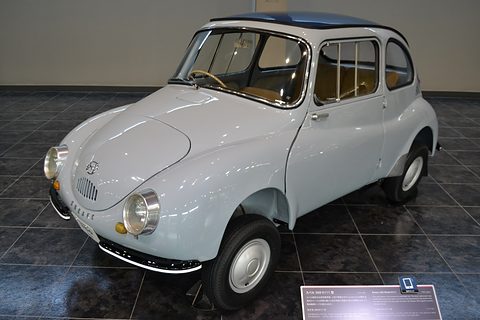
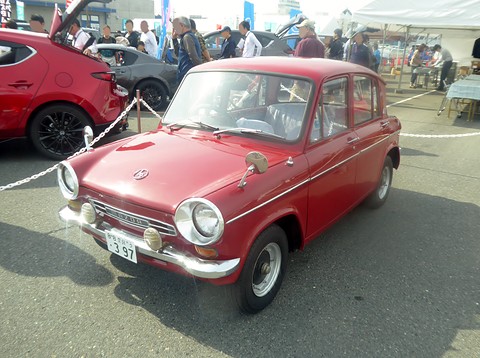
Japan’s small cars got races of their own at the first Japanese Grands Prix at Suzuka. In May 1963 Suzuki’s tuned Suzulight Fronte works cars, which had practised hard on the firm’s new test track, took the first two places in the class for kei cars up to 400 cc, and Subaru vowed to win in 1964.source 36 It did: Ōkubo Chikara won in a Subaru 360 at 104.27 km/h, with Koseki Noriyuki second, beating the Mazda Carol 360 and the Suzulight.source 36source 37 At Macau in 1962 cars based on the Mitsubishi 500 had taken the first four places in the touring class up to 750 cc.source 38
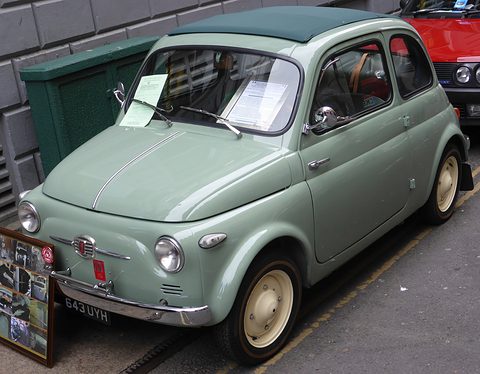
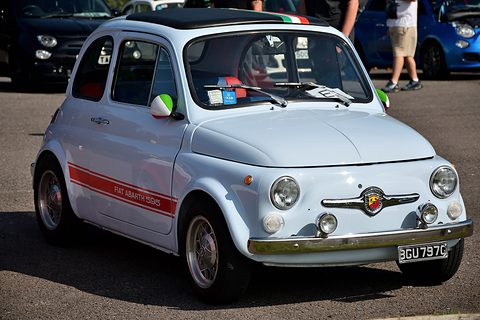
In Europe the small Fiat bred tuners. Abarth turned the Nuova 500 into the 595 and 695, and from 1963 Giannini of Rome became its chief rival, though no dated head-to-head result between them has been found.source 39source 40 At a four-hour race at Monza in 1970 the wide-track Abarth 595 and 695 won their classes on their first outing.source 41 The most remarkable result, though, came from Austria. In 1966 Sobiesław Zasada, driving a Steyr-Puch 650 TR II, became European rally champion among touring cars.source 42source 43
The Steyr-Puch 650 remains the smallest engine car to win the European championship ever.
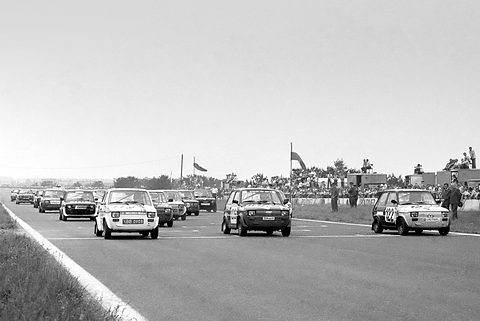
In Poland the Polski Fiat 126p was homologated for Group 1 in January 1976, and FSM kept a sport department for it until 1 January 1990.source 44
Ice, sand and a ten-hour race at Fuji
The licence-free maker Aixam went racing with full-size cars, not quadricycles. A Mega took the Trophée Andros, the French championship on ice, in the 1993–94 season with François Chauche, and in the Paris–Dakar of 2000 Stéphane Peterhansel was second in a Mega Désert.source 45source 46source 47 No competition record has been found for a licence-free Aixam.source 45source 46
The small car’s own racing today lives on above all in Japan. Twice a year a tuning shop, Mad House, runs the K4-GP at Fuji Speedway, an endurance race for cheap cars whose longest round lasts 10 hours; the top class is limited to 100 litres of fuel, which makes it partly a contest of economy, and the field is mostly kei cars, many dressed as tributes to famous racing cars.source 48 In 2023 a six-wheeled tribute to a Porsche 935 set the second-fastest lap and finished 109th.source 48 The 750 Motor Club still runs its formulae.source 14 And the licence-free car has its own stunt: on 6 January 2026 a diesel Ligier JS50 lapped the Nordschleife in 28 minutes 25.8 seconds, claimed as the slowest lap ever recorded, though nobody independent timed it.source 49
Smallest to largest
51 cars and 5 maker groups, to scale
Each bar is the car’s length on a 3.5 metre track; the red notch is a Fiat 500.
-
Iso Isetta1953–1956 · Italy · 4 wheels
2.25 m -
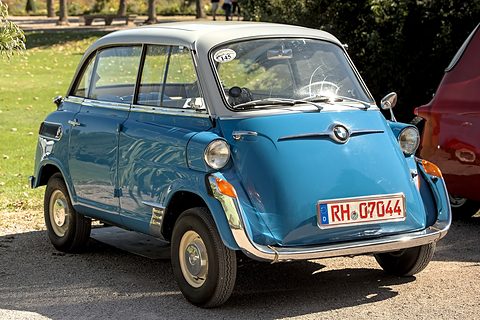
BMW Isetta1955–1962 · West Germany · 4 wheels
2.29 m -
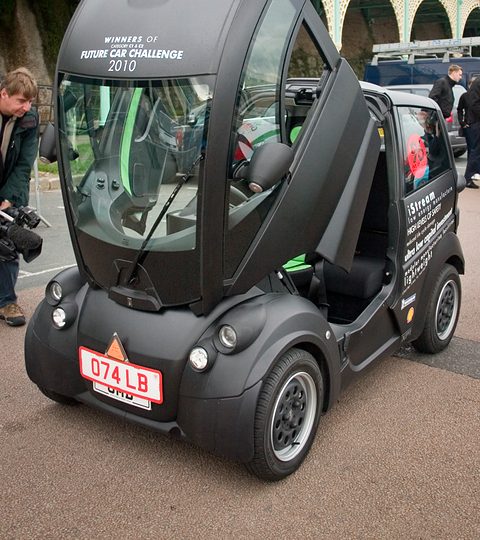
Gordon Murray T.252010–2011 · Britain · 4 wheels
2.40 m -
ALCA Volpe1947–1948 · Italy · 4 wheels
2.50 m -
Léon Bollée Voiturette1895–1899 · France · 3 wheels
2.50 m -
Peugeot Bébé1905–1916 · France · 4 wheels
2.62 m -
Twike1995– · Switzerland · 3 wheels
2.65 m -
Bond Minicar1949–1966 · Britain · 3 wheels
2.69 m -
Hanomag 2/10 PS1924–1928 · Germany · 4 wheels
2.78 m -
Austin Seven1922–1939 · Britain · 4 wheels
2.79 m -
Rovin1946–1958 · France · 4 wheels
2.80 m -
Ligier JS502012– · France · 4 wheels
2.83 m -
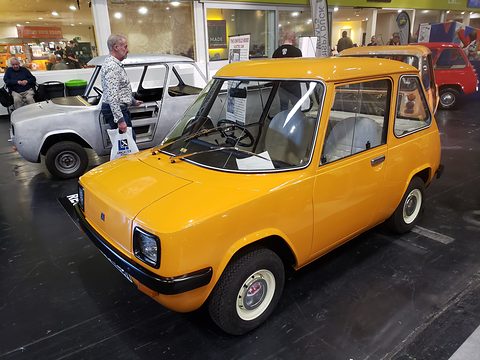
Enfield 80001973–1976 · Britain · 4 wheels
2.85 m -
Vespa 4001957–1961 · France · 4 wheels
2.85 m -
Frisky1958–1961 · Britain · 4 wheels
2.86 m -
Zündapp Janus1957–1958 · West Germany · 4 wheels
2.89 m -
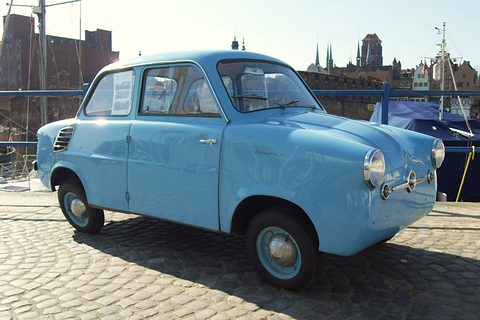
Kleinschnittger F1251950–1957 · West Germany · 4 wheels
2.90 m -
Morgan Three-Wheeler1910–1952 · Britain · 3 wheels
2.90 m -
BMW 6001957–1959 · West Germany · 4 wheels
2.90 m -
Goggomobil1955–1969 · West Germany · 4 wheels
2.90 m -
HMV Freeway1979–1982 · United States · 3 wheels
2.92 m -
Fiat Nuova 5001957–1975 · Italy · 4 wheels
2.97 m -
Fiat-Abarth 595 and 6951963–1971 · Italy · 4 wheels
2.97 m -
Steyr-Puch 5001957–1975 · Austria · 4 wheels
2.97 m
27 more cars and 5 more maker groupsFewer
-
Mazda Carol1962–1970 · Japan · 4 wheels
2.98 m -
Subaru 3601958–1970 · Japan · 4 wheels
2.99 m -
Suzuki Suzulight1955–1968 · Japan · 4 wheels
2.99 m -
Suzuki Fronte1967–1989 · Japan · 4 wheels
3.00 m -
BMW 3/151927–1932 · Germany · 4 wheels
3.00 m -
FMR Tg5001958–1961 · West Germany · 4 wheels
3.00 m -
Mikrus MR-3001957–1960 · Poland · 4 wheels
3.02 m -
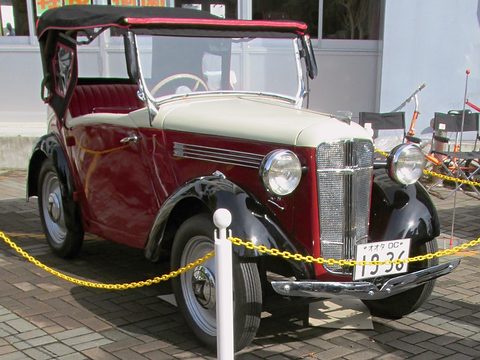
Otomo1924–1928 · Japan · 4 wheels
3.03 m -
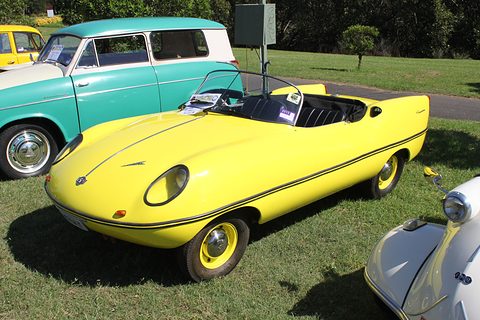
Goggomobil Dart1959–1961 · Australia · 4 wheels
3.05 m -
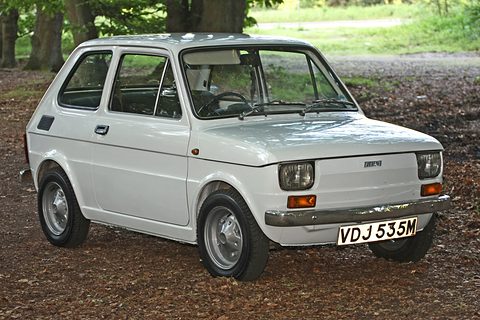
Fiat 1261972–2000 · Italy · 4 wheels
3.05 m -
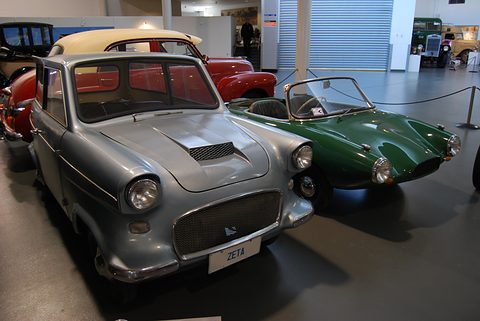
Lightburn Zeta1963–1966 · Australia · 4 wheels
3.07 m -
Berkeley1956–1960 · Britain · 4 wheels
3.11 m -
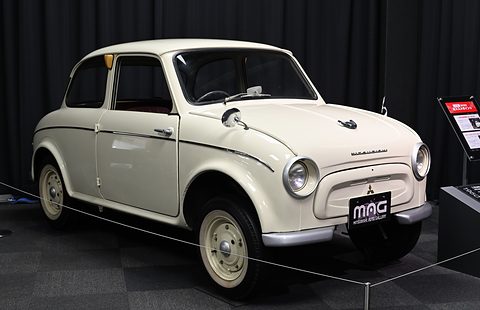
Mitsubishi 5001960–1962 · Japan · 4 wheels
3.14 m -
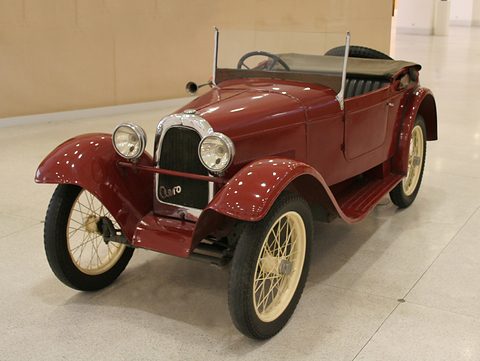
Aero 101929–1932 · Czechoslovakia · 4 wheels
3.20 m -
Fiat 500 Topolino1936–1955 · Italy · 4 wheels
3.21 m -
Reliant Robin1973–2002 · Britain · 3 wheels
3.33 m -
AC Sociable1904–1914 · Britain · 3 wheels
length unknown -
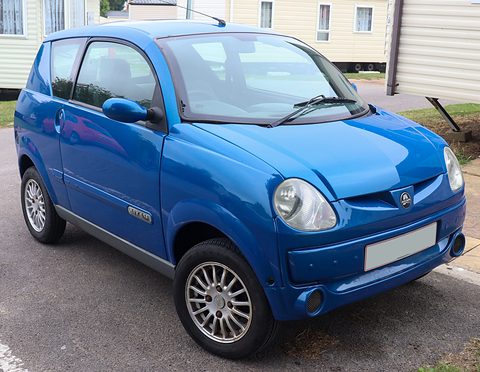
Aixam1984– · France · 4 wheels
length unknown -
Amilcar CC1921–1925 · France · 4 wheels
length unknown -
Bédélia1910–1925 · France · 4 wheels
length unknown -
Crosley1939–1942 · United States · 4 wheels
length unknown -
Darmont1919–1939 · France · 3 wheels
length unknown -
David cyclecar1913–1923 · Spain · 4 wheels
length unknown -
GN cyclecar1910–1925 · Britain · 4 wheels
length unknown -
Ohta1933–1940 · Japan · 4 wheels
length unknown -
Sima-Violet1924–1929 · France · 4 wheels
length unknown -
Temperino1908–1924 · Italy · 4 wheels
length unknown -
ABC kei sports cars (AZ-1, Beat, Cappuccino)1991–1998 · Japan · 4 wheels
3 makers -
American cyclecars and small-car experiments1913–1932 · United States · 4 wheels
10 makers -
British cyclecars: the minor makers1903–1927 · Britain · 4 wheels
10 makers -
Cyclecars elsewhere: Austria, Poland, Scandinavia and beyond1913–1939 · Several countries · 4 wheels
24 makers -
French cyclecars: the minor makers1913–1936 · France · 4 wheels
13 makers
Pictures
14 photographs
Racing and rallying 14
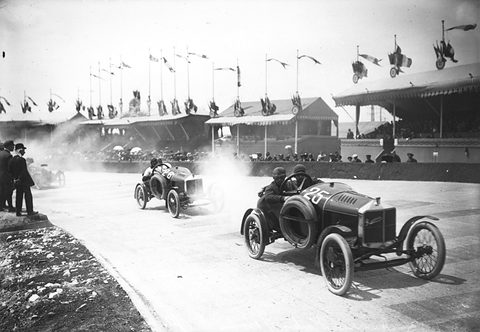
1 The Ronteix cyclecars of Ronteix and Jolibois racing in the Cyclecar Grand Prix at Amiens, France, on 13 July 1913.
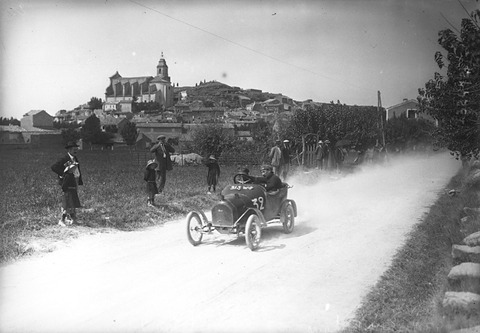
2 Bas driving a Peugeot Bébé BP1 up the Mont Ventoux hill climb near Bédoin, France, in August 1913.
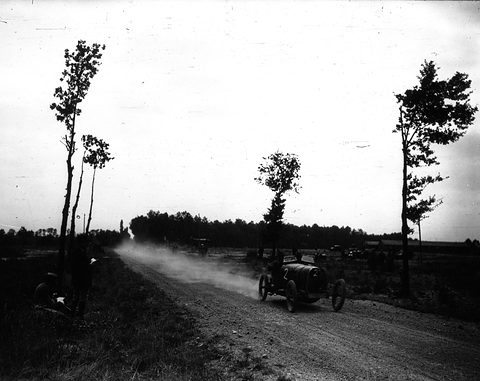
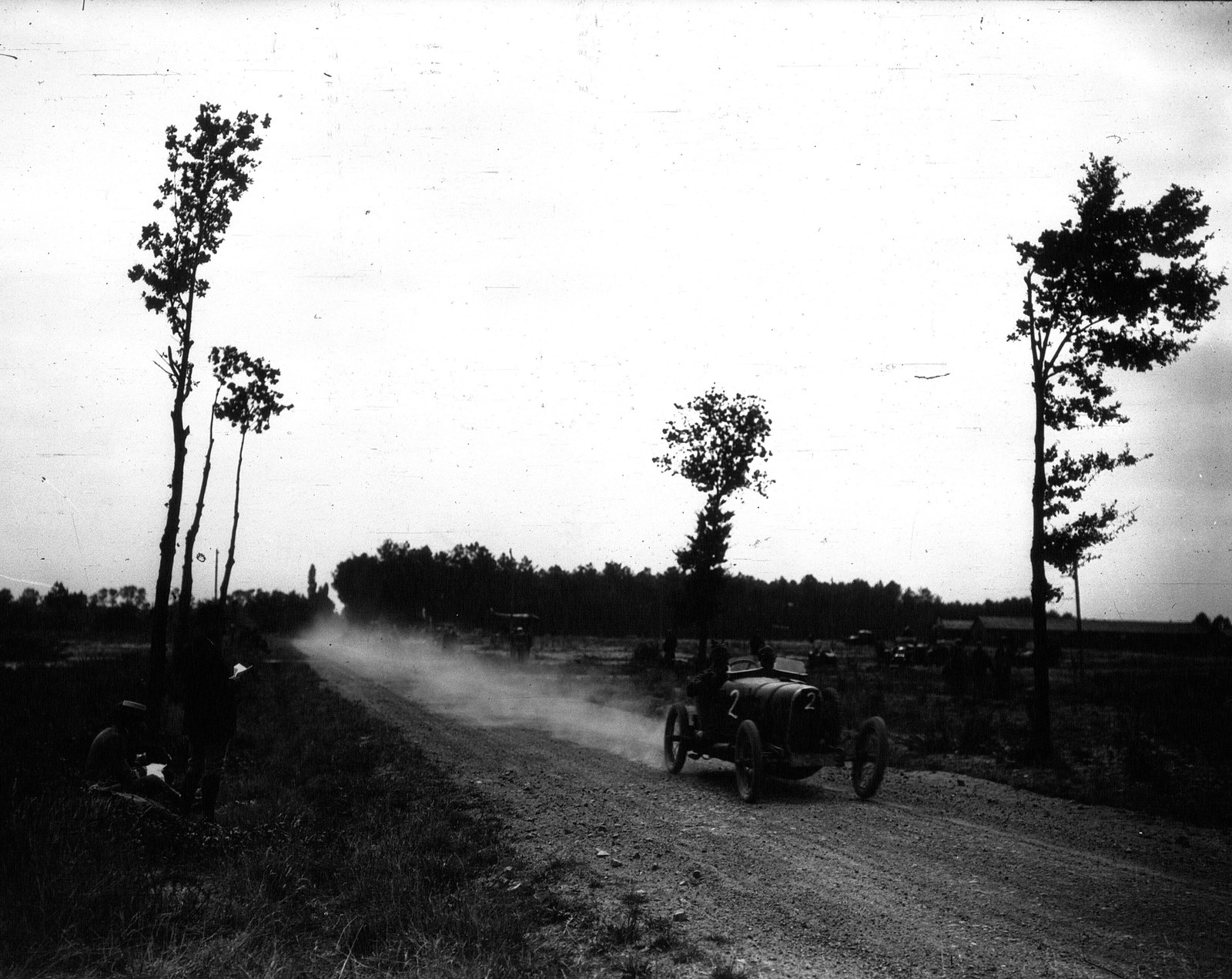
3 Douglas Hawkes’s GN, number 2, raising dust on the Circuit de la Sarthe in the voiturette race at Le Mans, France, in August 1920.
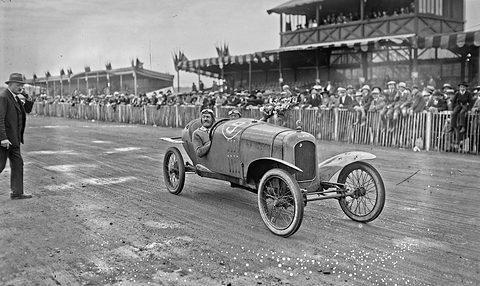
4 André Lombard’s Salmson racing cyclecar before the grandstands at the Cyclecar Grand Prix, Le Mans, France, in September 1921.
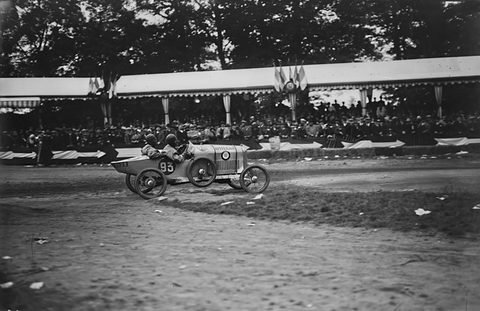
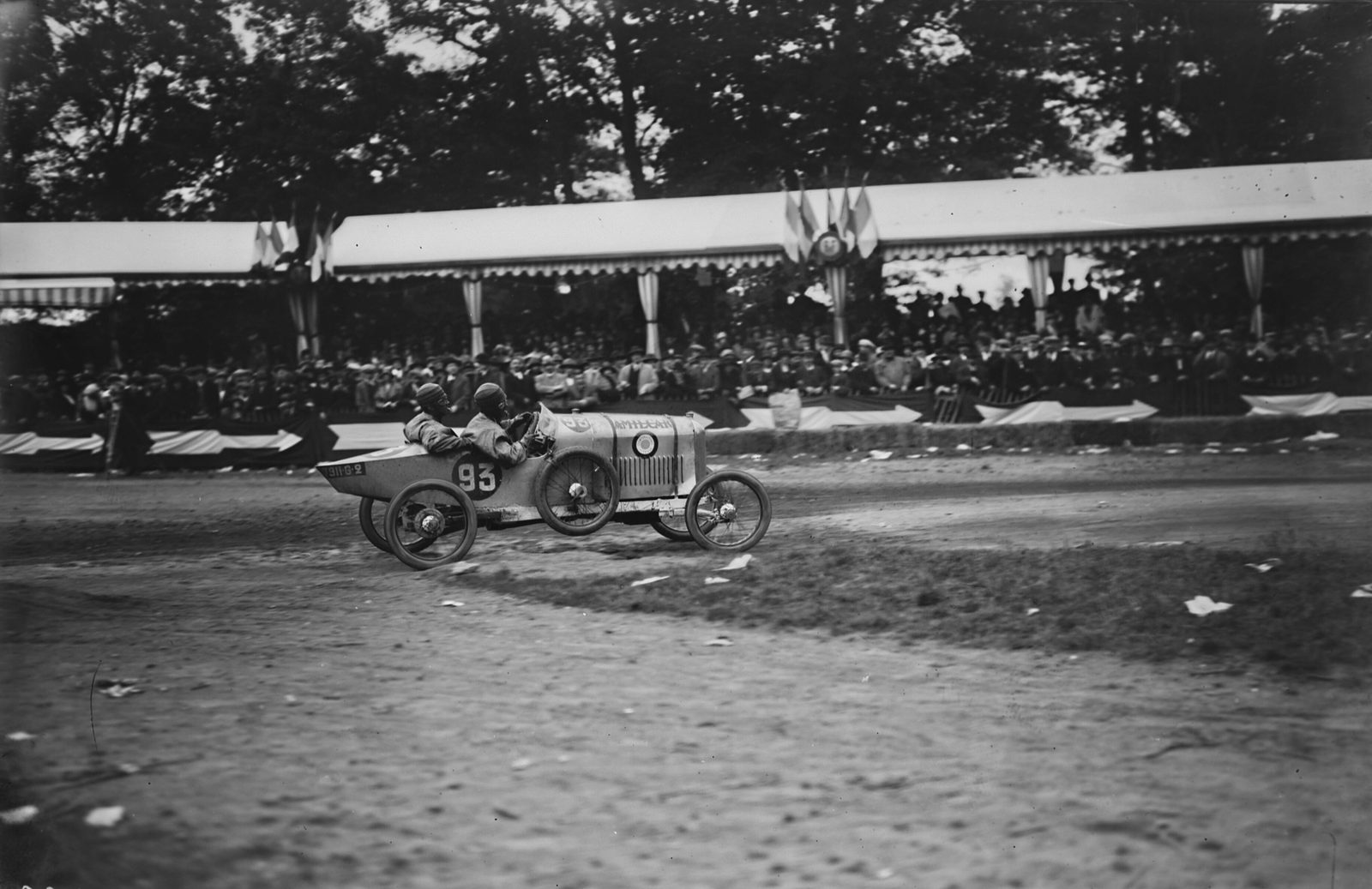
5 Fratissier’s Amilcar racing past the grandstand on the Circuit des Loges, Saint-Germain-en-Laye, in the Bol d’Or of May 1923.
9 more picturesFewer pictures
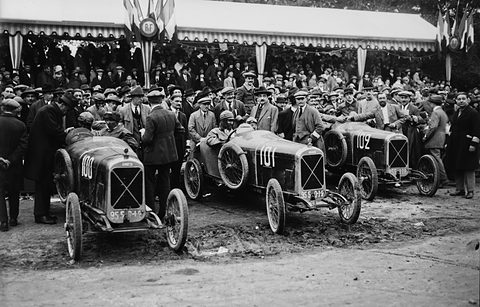
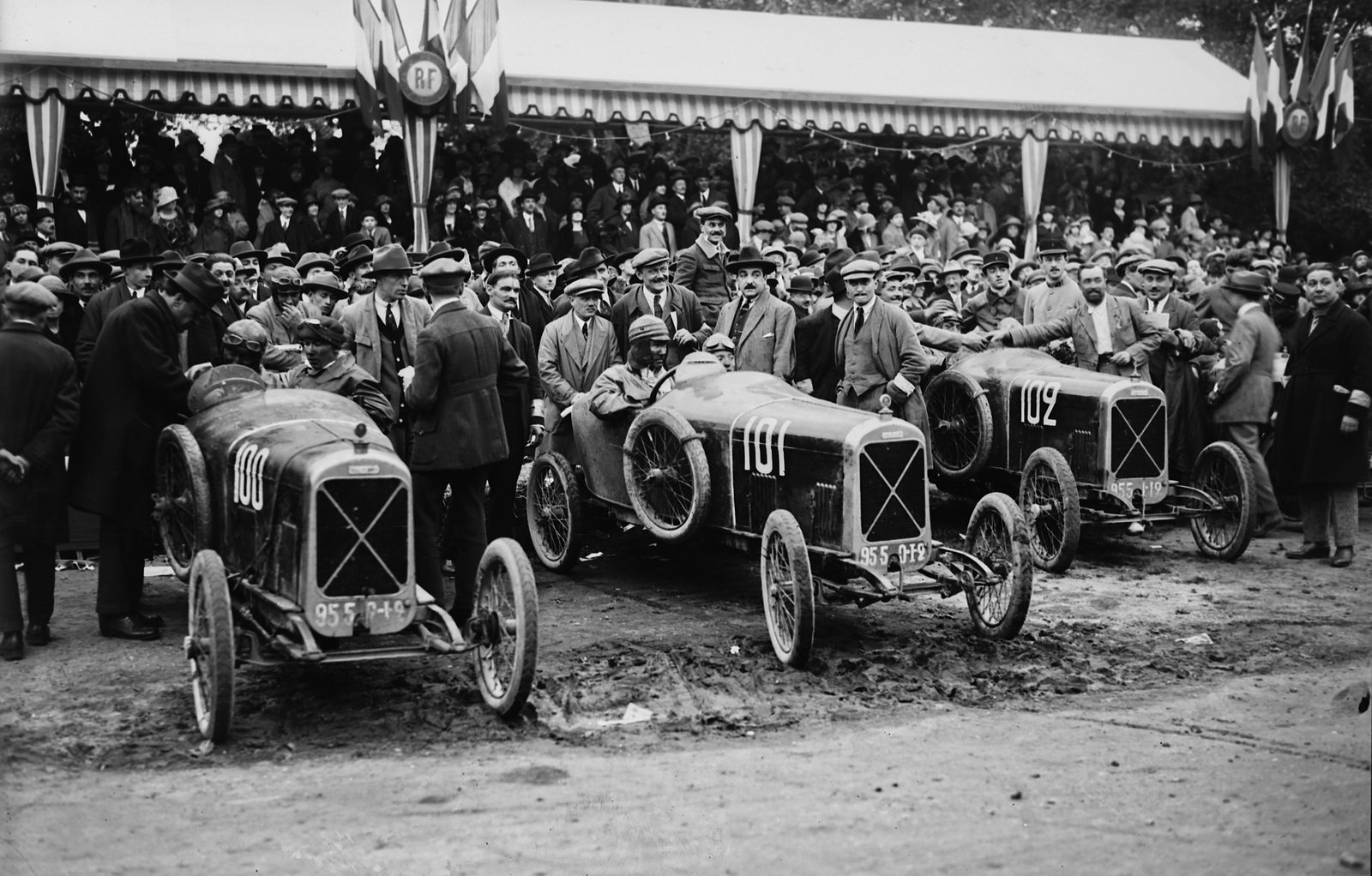
6 The Salmson team of Benoist (102), Casse (101) and Desvaux (100) lined up at the Bol d’Or, Saint-Germain-en-Laye, France, in May 1923.
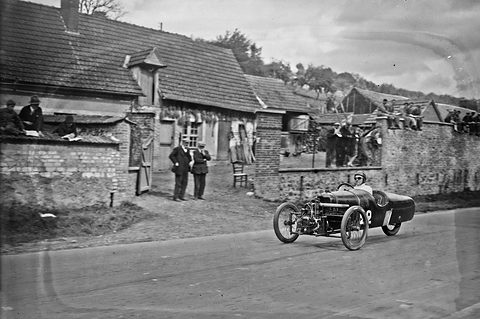
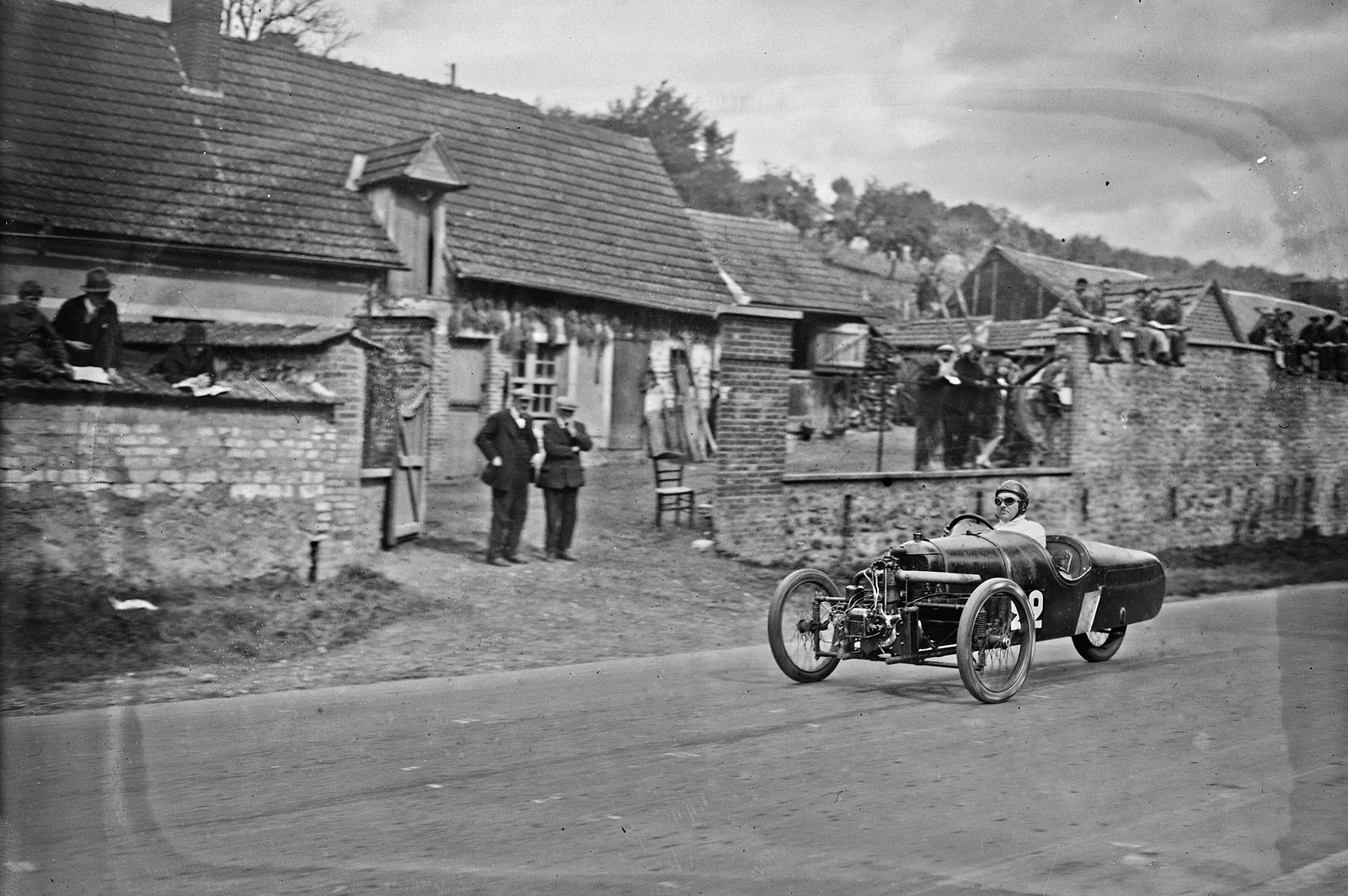
7 Marcel Dhôme’s 500 cc Darmont-Morgan climbing past village houses at the Gaillon hill-climb, Normandy, France, in September 1927.
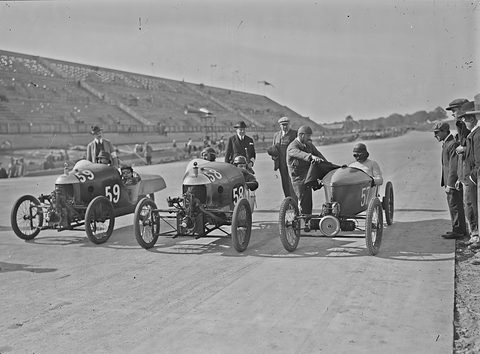
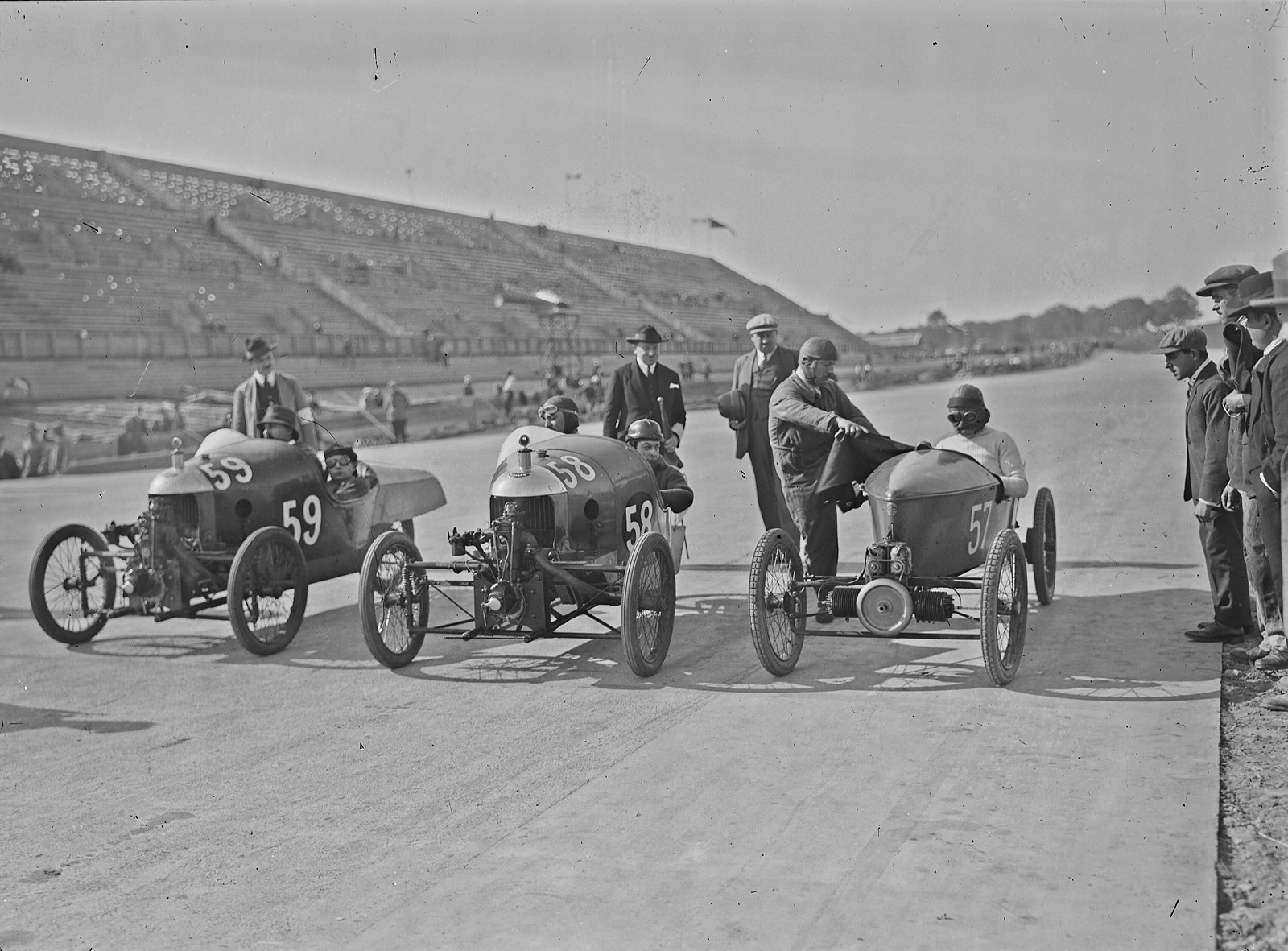
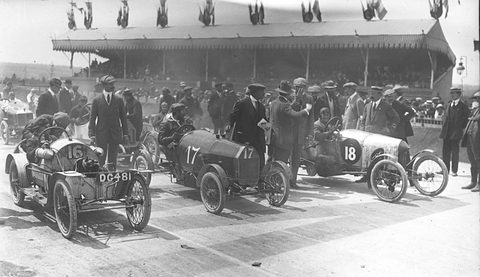
8 500 cc cyclecars of Darmont, Dhôme and Violet, numbered 57 to 59, on the line for the French cyclecar Grand Prix at Montlhéry, October 1924.
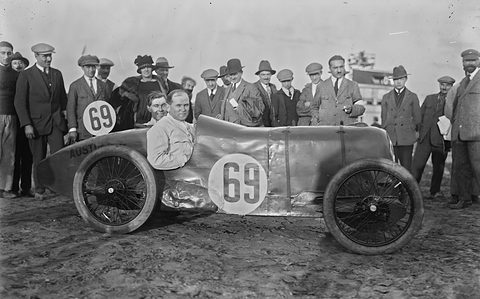
9 E. C. Gordon England in his Austin Seven racer, No. 69, at the French 750 cc cyclecar championship at Montlhéry, France, in October 1924.
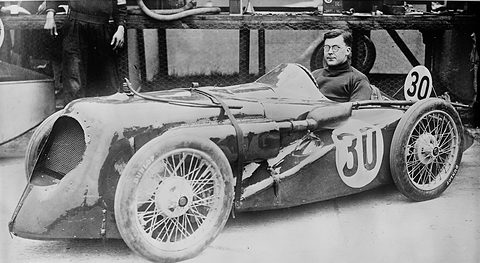
10 Francis Boyd-Carpenter in the supercharged Austin Seven racer, No. 30, at the JCC 200 Mile race, Brooklands, in October 1927.
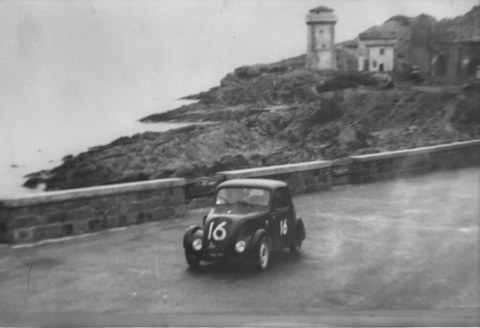
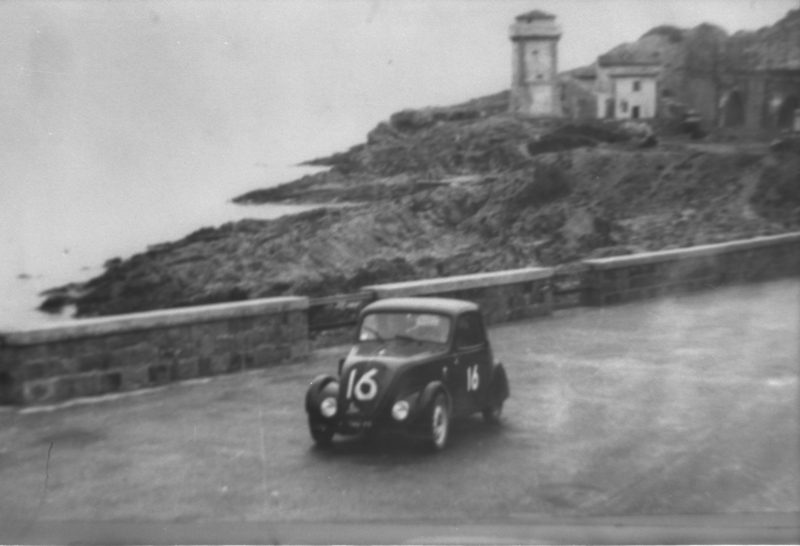
11 Entry No. 16, a Fiat 500, on the coast road at Calafuria near Livorno in the 1938 Mille Miglia.
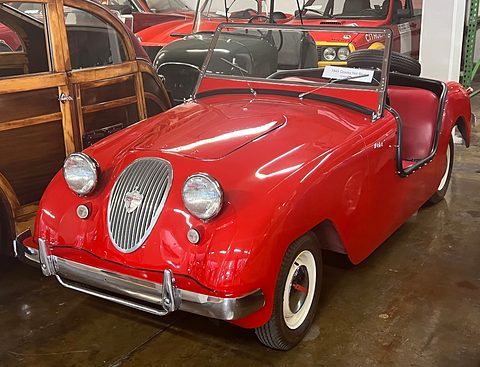
12 A red 1949 Crosley Hotshot at the Lane Motor Museum, Nashville, in July 2024.
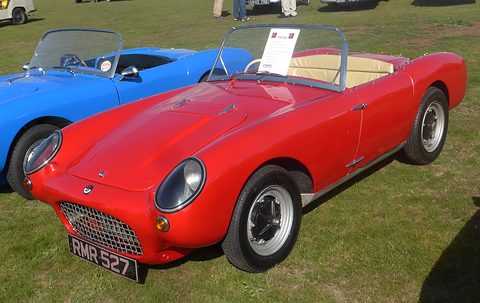
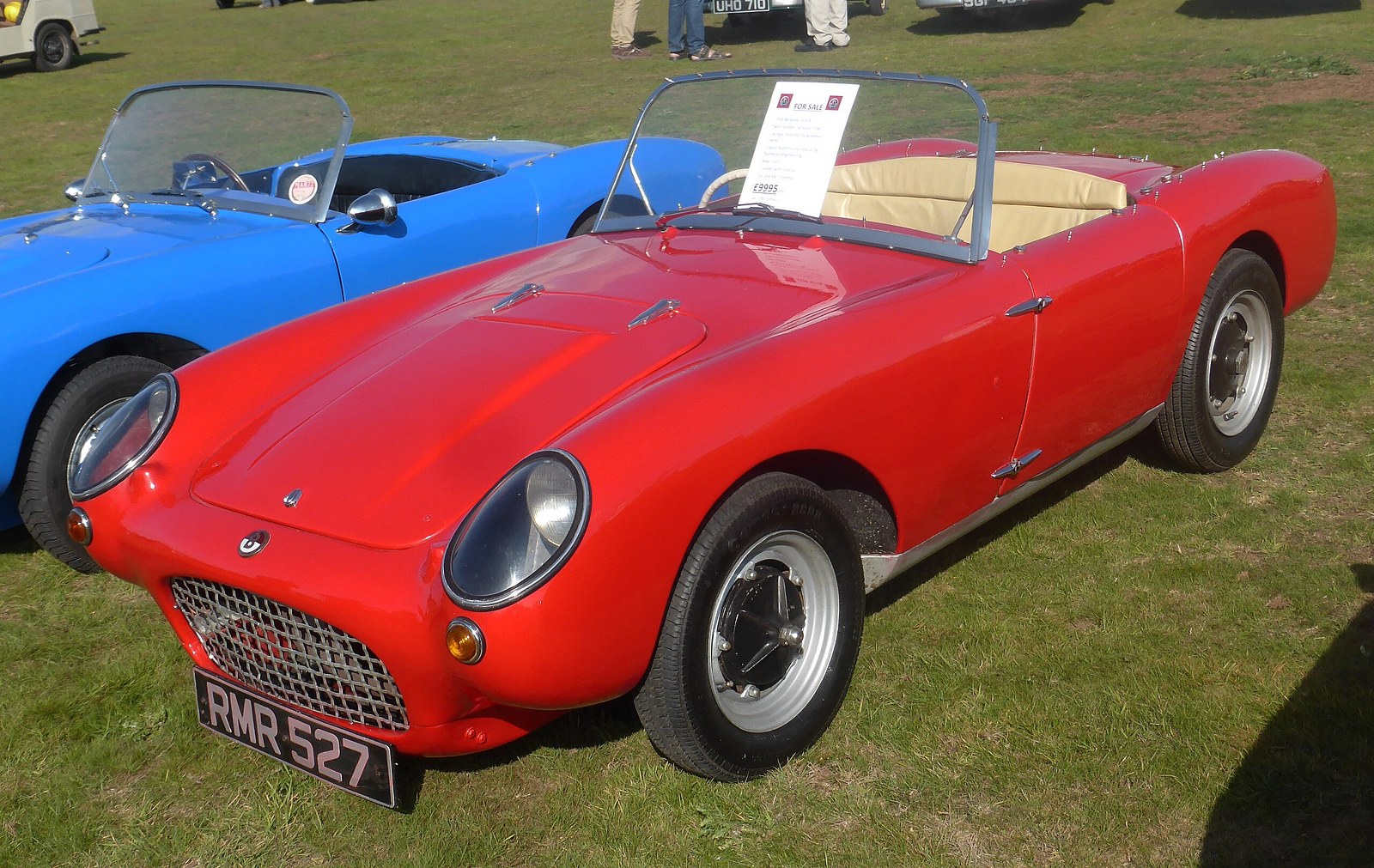
13 A red 1958 Berkeley SE328 at a rally, 2019.
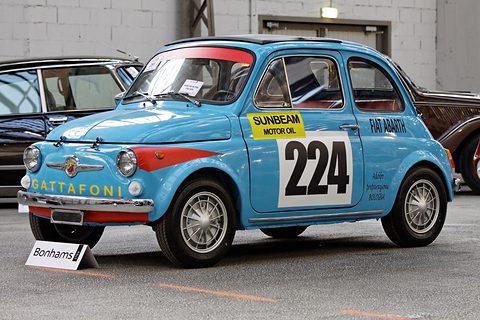
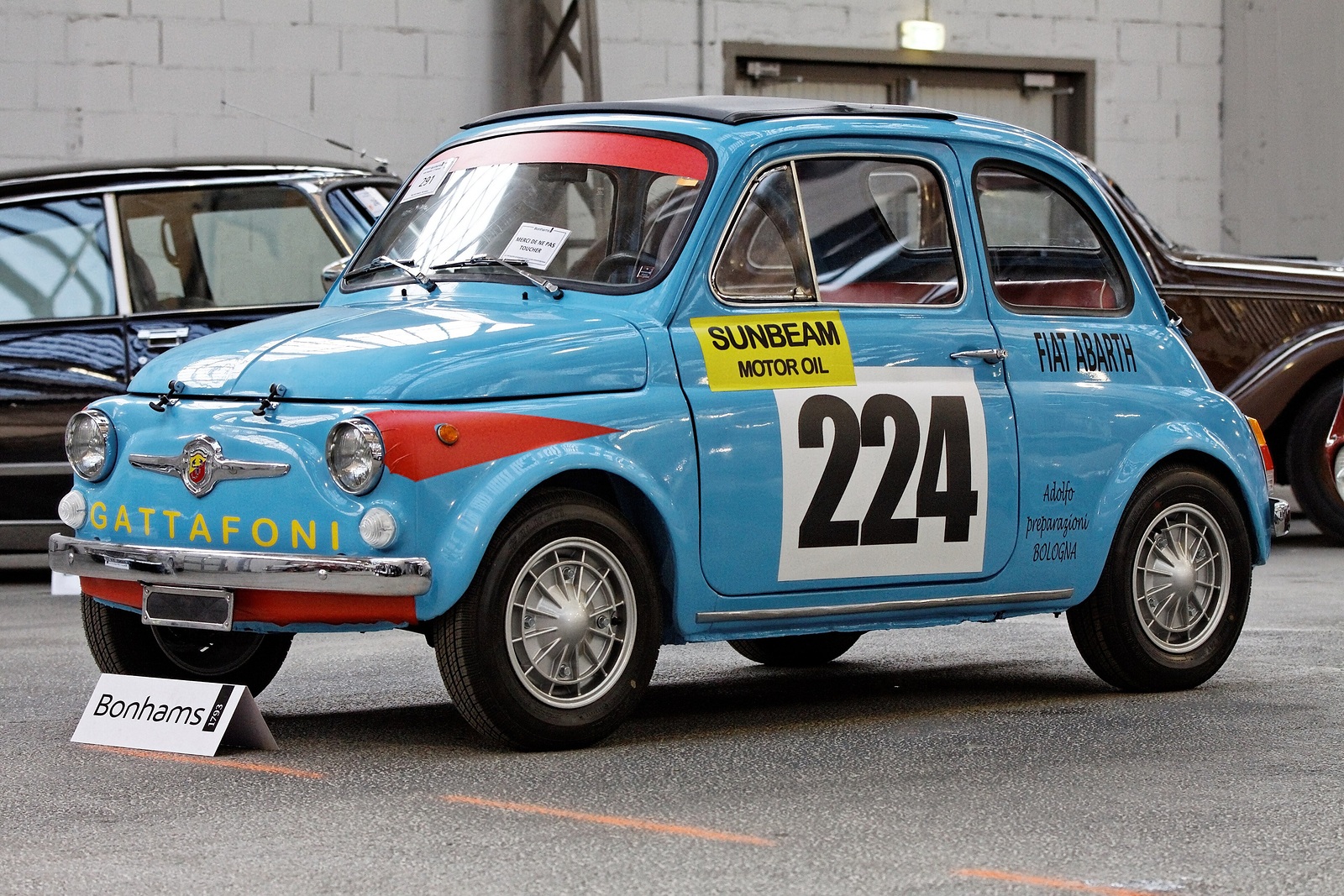
14 A 1965 Fiat Abarth 595 in rally livery, number 224, at the Bonhams Paris sale in 2012.
Picture credits (14)
- 1 Agence Rol, Public domain
- 2 Agence Rol, Public domain
- 3 Agence Meurisse, Bibliothèque nationale de France, Public domain
- 4 Agence Rol, Public domain
- 5 Agence Rol, Public domain
- 6 Agence Rol, Public domain
- 7 Agence Rol, Public domain
- 8 Agence Rol, Bibliothèque nationale de France, Public domain
- 9 Agence Rol, Public domain
- 10 Agence Rol, Public domain
- 11 Unknown photographer, Public domain
- 12 TaurusEmerald, CC BY-SA 4.0
- 13 Andrew Bone from Weymouth, England, CC BY 2.0
- 14 Thesupermat, CC BY-SA 3.0
The cars
Profiles
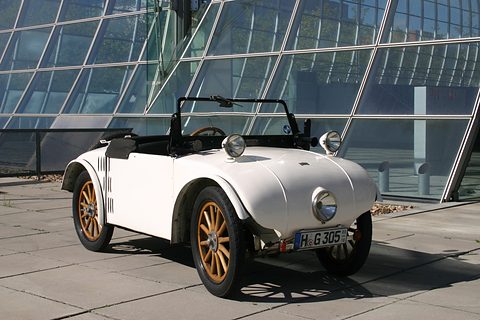
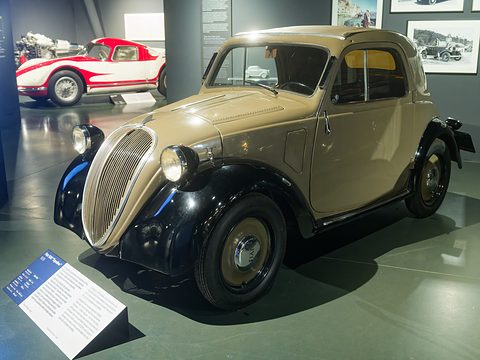
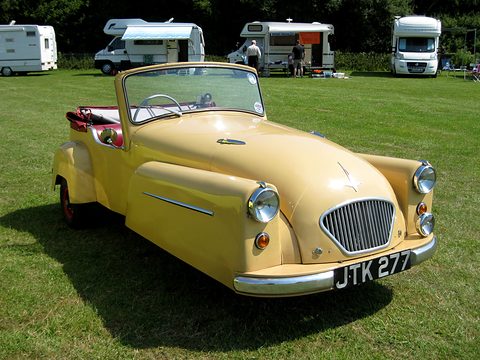
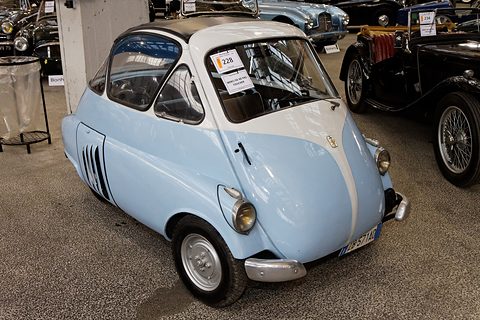
39 more cars and 5 more maker groupsFewer
-
-
-
-
-
-
-
-
-
-
-
-
-
-
-
-
-
-
-
-
-
-
-
-
-
-
-
-
-
-
-
-
-
-
-
-
-
-
-
-
-
-
-
-
Cyclecar
Cyclecars elsewhere: Austria, Poland, Scandinavia and beyond
1913–1939 · Several countries · 24 makers
Sources
Numbered as in the text
Sources are given as plain text; the links are on the Credits page.
- The Cyclecar, 16 July 1913, pp. 193–198, the Cyclecar Grand Prix reports and official classification, read from Grace’s Guide’s scan.
- Kenneth Neve, “An account of the 1913 Cyclecar Grand Prix”, Motor Sport, January 1943.
- W. Boddy, “The vintage years of the Morgan 3-wheeler”, Motor Sport, June, July and August 1965, compiled from H. F. S. Morgan’s cuttings books.
- The Cyclecar, 23 July 1913: “Cross Channel Comments” and the Bédélia advertisement, read from Grace’s Guide’s scan.
- English Wikipedia, Léon Bollée Automobiles, read in full. Used as a lead; it cites Rendall, The Chequered Flag (1997), and The Times.
- Peugeot, “A century of models: 1913 Bébé Type BP 1”, peugeot.com, archived 2011.
- Dennis Simanaitis, “What a sweet little Bébé”, Simanaitis Says, 12 August 2018.
- teamdan.com race-results archive, the pages for 1920, 1921, 1922, 1923 and 1926, archived copies.
- AMCN, “Centenary celebrations: 100 years of Bol d’Or”.
- G. N. Georgano (ed.), The Encyclopedia of Motor Sport (1971), entries Bol d’Or and Darmont-Morgan, snippets only.
- English Wikipedia, Austin 7, read in full; it cites Wyatt, The Austin 1905–1952 (1981).
- W.B. (Bill Boddy), “The Development of the Racing Austin Seven”, Motor Sport, April 1947.
- “Grass roots”, Motor Sport, September 1989, on the 750 Motor Club.
- English Wikipedia, 750 Motor Club, introduction read.
- Leif Snellman and Hans Etzrodt, “Nürburgring Eröffnungsrennen” (1927), The Golden Era of Grand Prix Racing.
- German Wikipedia, Hanomag 2/10 PS, read in full; it cites Horst-Dieter Görg (2005).
- Japan Automotive Hall of Fame, “Junya Toyokawa”, inductee page in English.
- Japanese Wikipedia, オートモ号 (Ōtomo-gō), read in large part; it cites Motor magazine (1925–27).
- German Wikipedia, Aero 10, read in full; it cites aero-ig.de.
- French Wikipedia, Simca 5, read in full. Used as a lead; it cites René Bellu, Toutes les Simca, and the Le Mans museum.
- Crosley Automobile Club, “Forgotten History: The First Sebring Race on 12/31/1950”, from accounts by Barry Seel and Louis Rugani.
- racingsportscars.com, results of the Sebring 6 Hours, 31 December 1950.
- racingsportscars.com, results of the Mille Miglia of 2 May 1954 and 1 May 1955, the Isetta entries.
- “Mille Miglia Musings”, Motor Sport, June 1954, the Isetta passage.
- L’Automobile (Automobile Club d’Italia), article on the Iso Isetta, read in summary.
- German Wikipedia, Kleinschnittger F 125, read in full; it cites Rosellen, Deutsche Kleinwagen (1991), pp. 152–171.
- “Dach überm Kopf”, Der Spiegel 4/1989, a feature on Paul Kleinschnittger.
- Günther Molter, “12 Stunden von Hockenheim”, auto motor und sport 12/1958 (7 June 1958), with results, read in full.
- The Frisky Register, “The Year of 1958”.
- “Matters of Moment”, Motor Sport, September 1958, on the Liège–Brescia–Liège rally.
- Sport news on the Liège–Brescia–Liège small-car rally, auto motor und sport 16/1958, read in extract.
- English Wikipedia, Berkeley Cars, read in full. Used as a lead.
- “B.A.R.C. Members’ Goodwood Meeting (June 14th)”, Motor Sport, July 1958, p. 24.
- Jean Goyard, “La Vespa 400 — la petite auto de Fourchambault”, Automobilia no. 34, February 1999, pp. 44–49.
- French Wikipedia, Vespa 400, read in full.
- Japanese Wikipedia, Subaru 360, read in full; it cites Katsuragi Yōji, Tentōmushi ga hashitta hi (1987 and 1995).
- Subaru Museum, the Subaru 360 story, with the 1964 Grand Prix.
- English Wikipedia, Mitsubishi 500, its motor-sport section, which cites Mitsubishi’s archived “A Glorious Heritage” page. Used as a lead.
- Italian Wikipedia, Fiat Nuova 500 Abarth.
- Italian Wikipedia, Fiat Nuova 500 Giannini.
- radical-mag.com, “Fiat Abarth 500/595/695” (German; versions of 2018, 2019 and 8 January 2025), read in summary.
- FIVA, “Heroes of motoring history: Sobieslaw Zasada”.
- English Wikipedia, Puch 500, read in full. Used as a lead.
- Polish Wikipedia, Fiat 126, read in full; it cites Zdzisław Podbielski, Polski Fiat 126p, czyli Maluch (2011).
- English Wikipedia, Andros Trophy, list of champions.
- Aixam Mega, Dossier de presse 2010, the maker’s press kit, read via the Internet Archive.
- French Wikipedia, Aixam, citing among others an interview with Philippe Colançon in Les Échos.
- The Drive, “That Mini Six-Wheeled Porsche Is the Star of the World’s Most Delightful Endurance Race”, 23 August 2023.
- Autocar, “Ligier claims slowest ever lap of the Nurburgring”, January 2026.