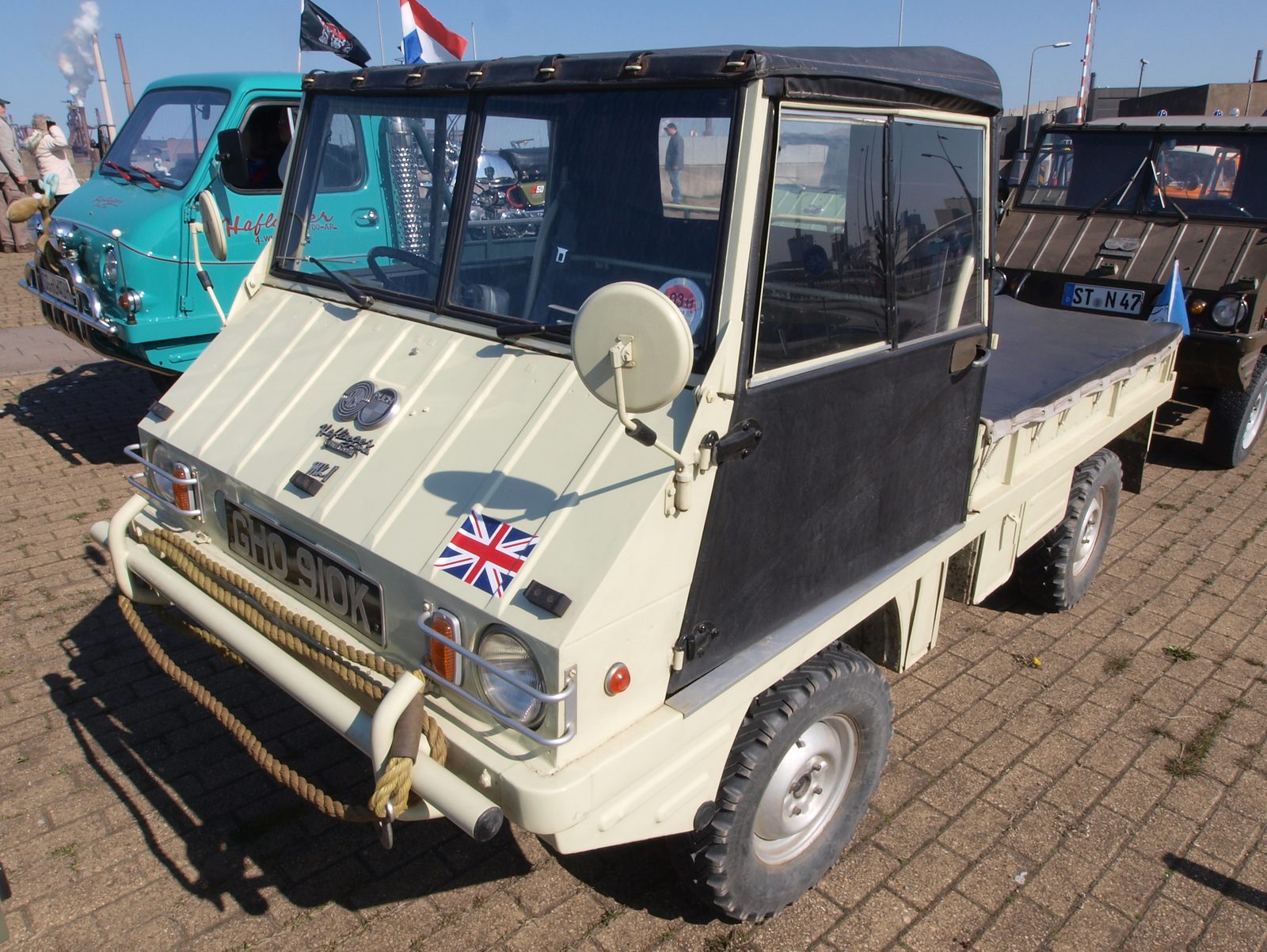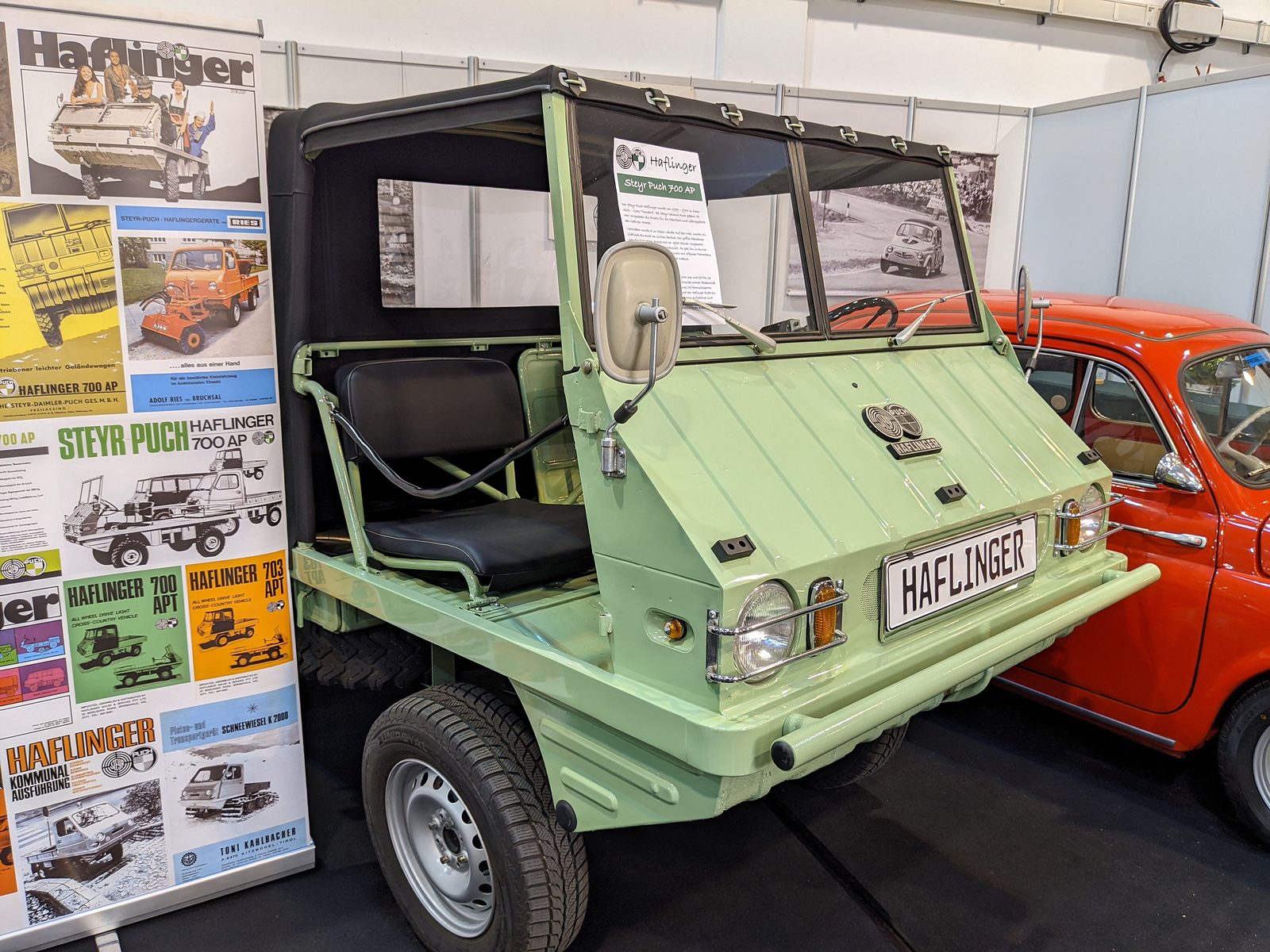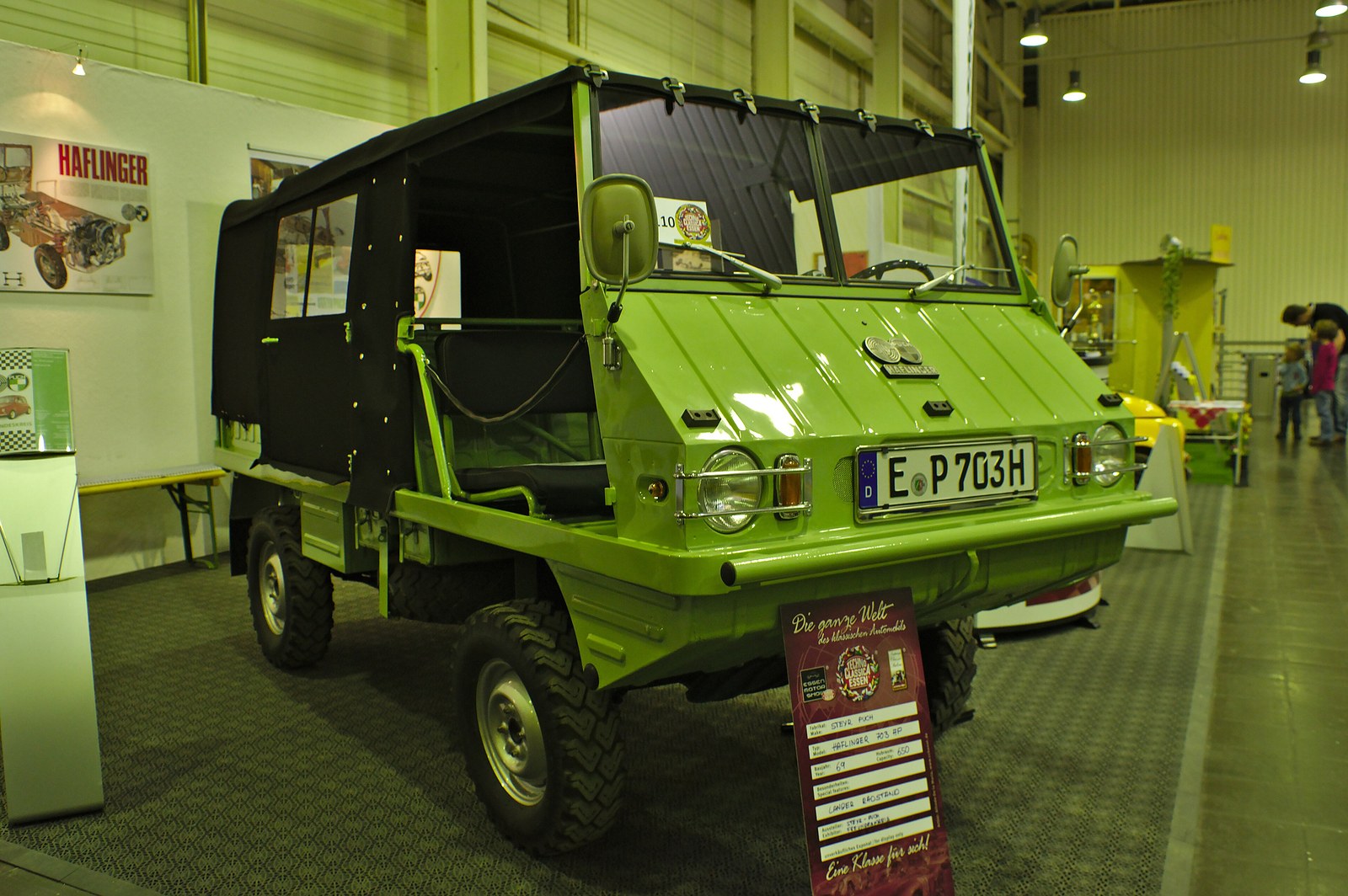
microcarfan
  • Microcar utility
  • Austria
  • Four-wheel drive

Steyr-Puch Haflinger

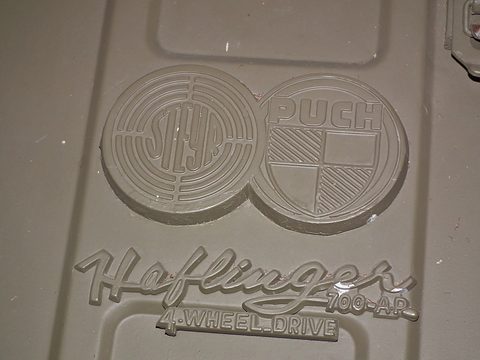
Also known as Puch Haflinger, AP 700 and AP 703, Pathfinder (USA), Steyr-Puch 700 AP (Italy)

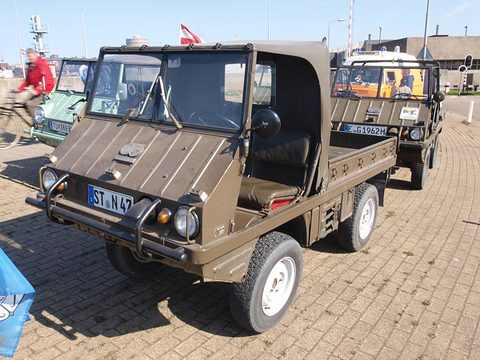
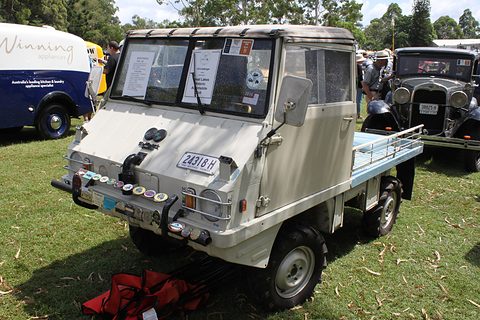
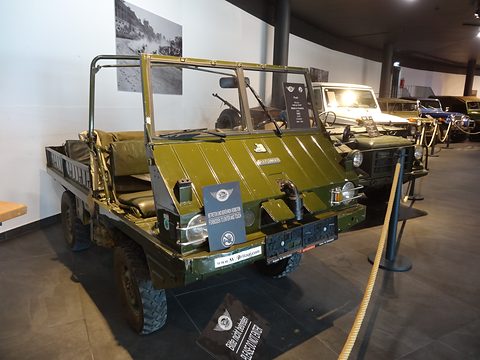
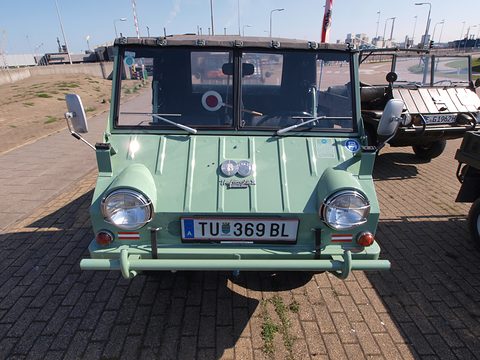
It weighs about 600 kg, carries about 500 kg, and four strong people can lift it. Austria’s army wanted its own small four-wheel drive to replace its old Jeeps, and Graz gave it a mountain horse.

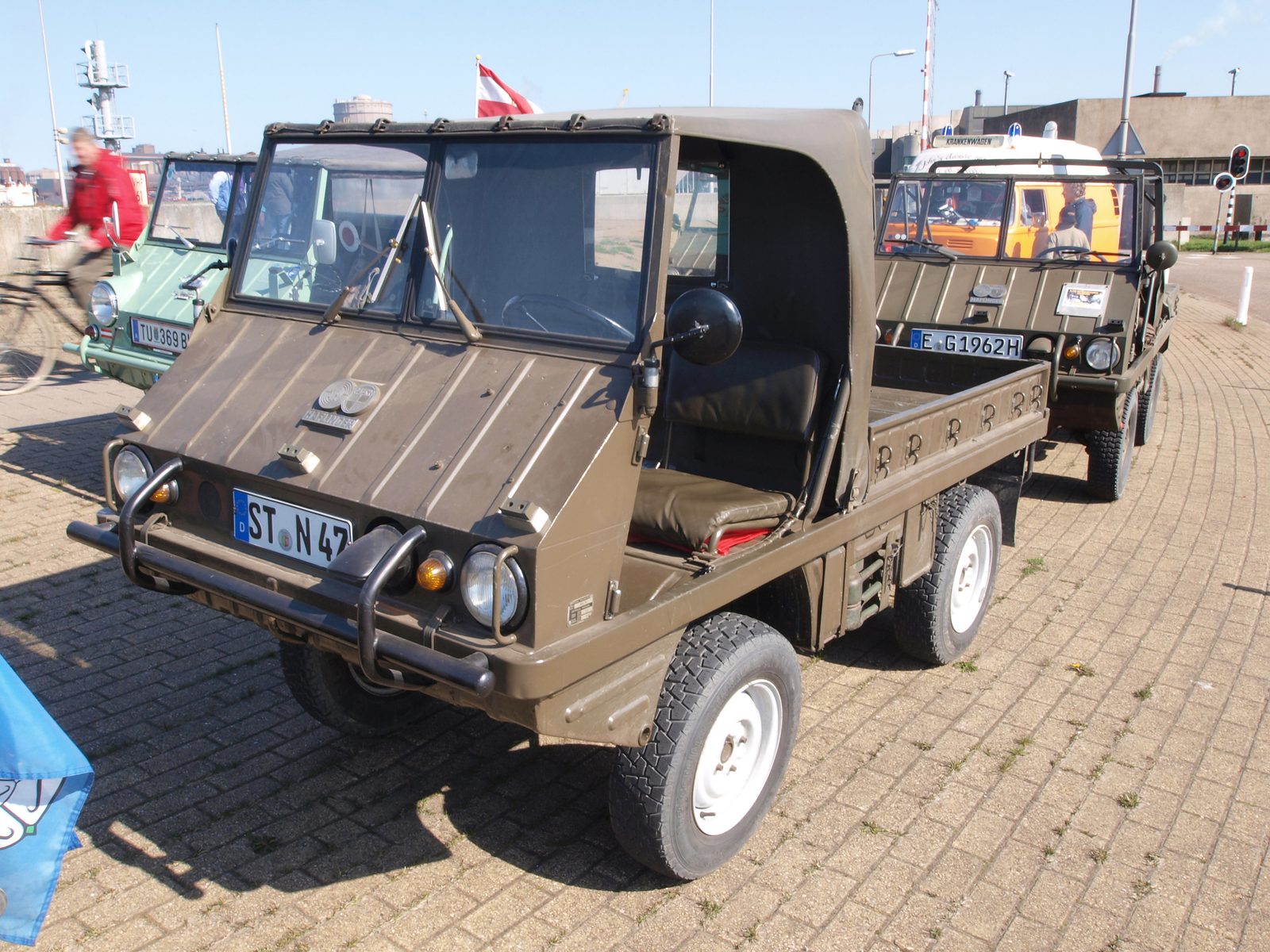
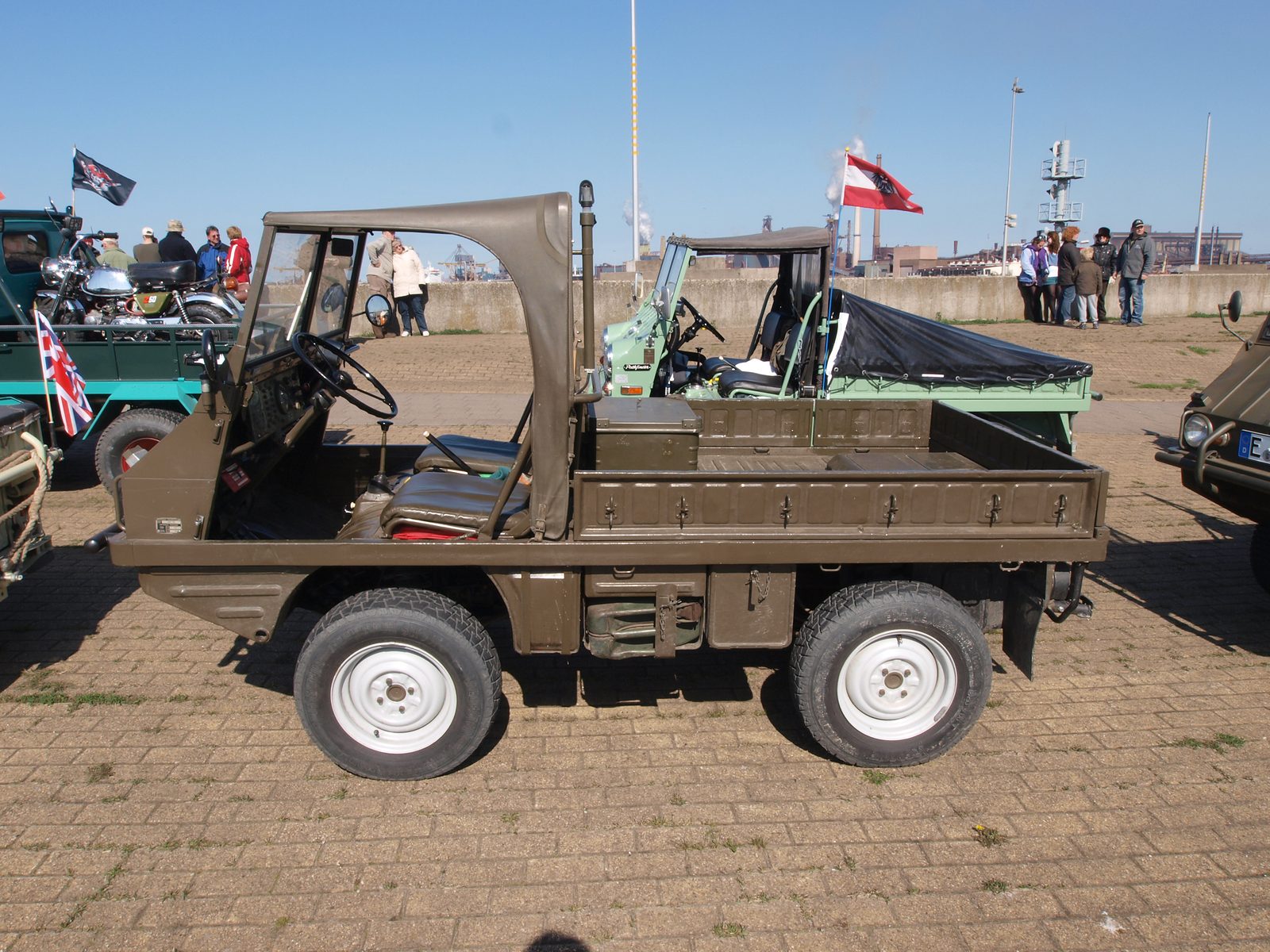
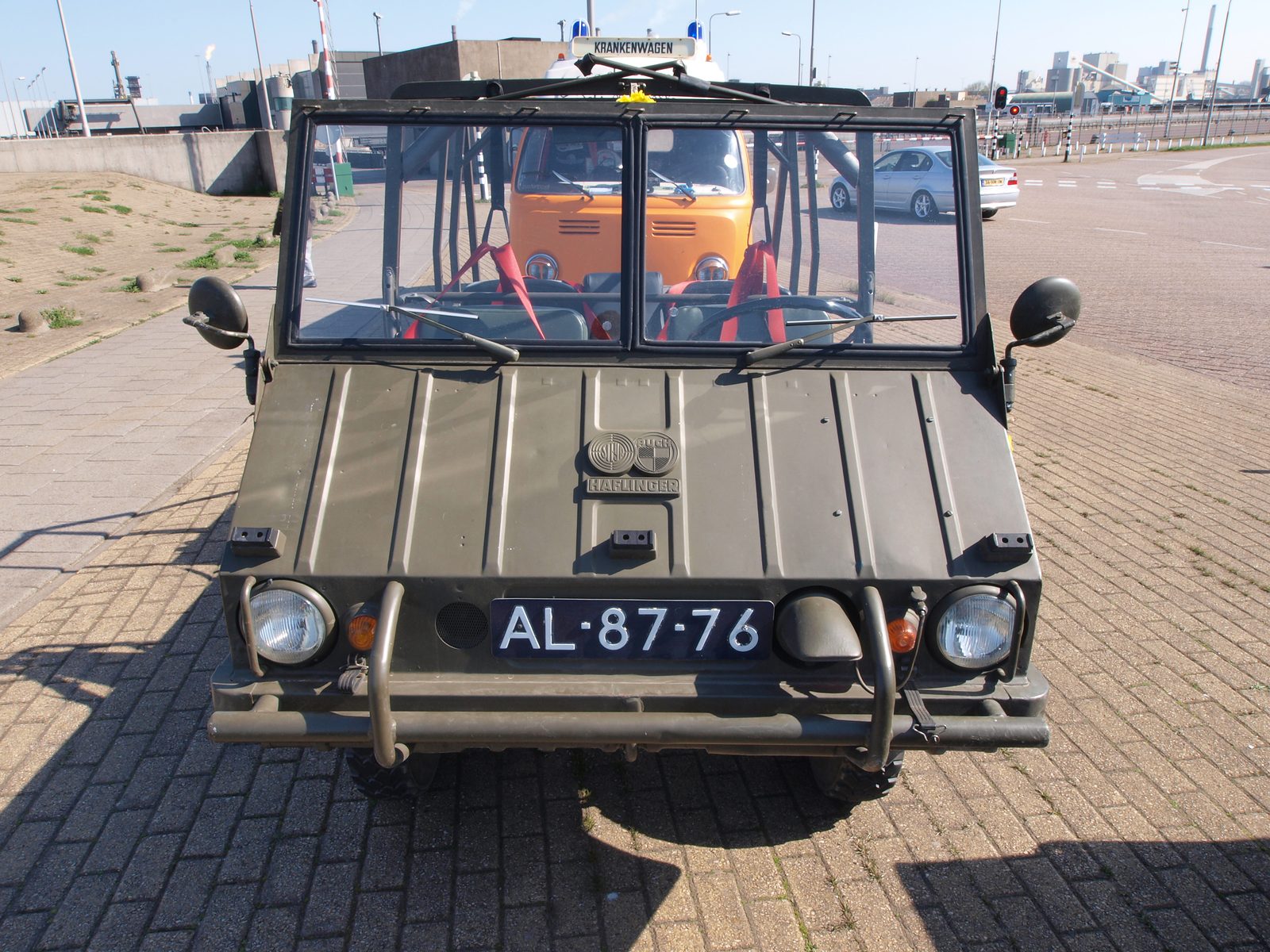
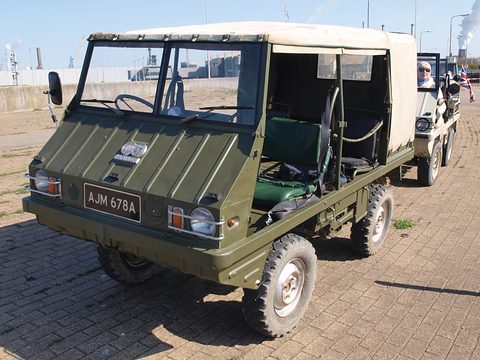
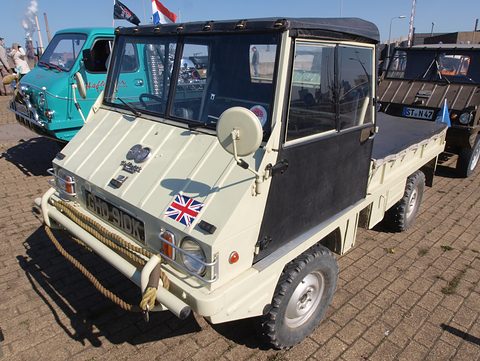
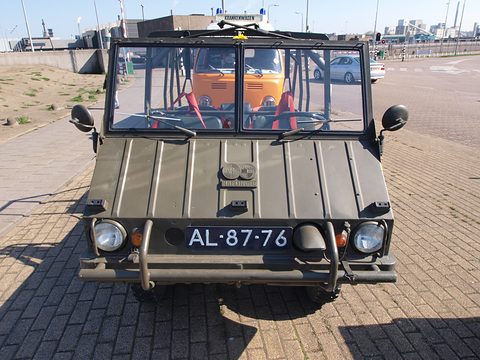
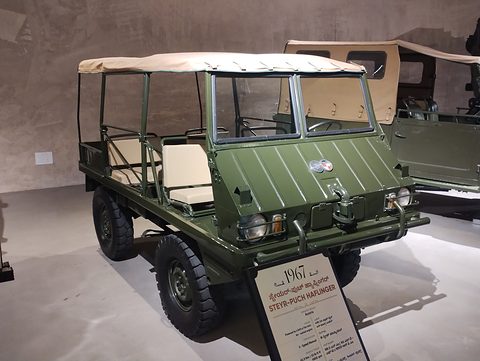
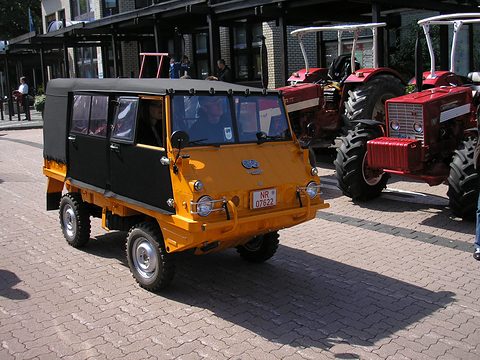
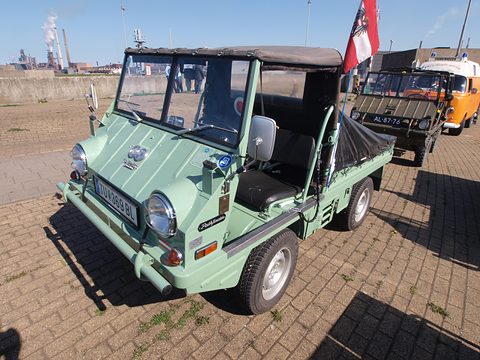
Olive small 4x4 with a cream canvas top and green seats on brick paving under a blue sky.
An olive Steyr-Puch Haflinger 700 AP with a cream canvas tilt, AJM 678A, at the Haflinger meeting in IJmuiden, Netherlands, in April 2010.Photo: Alf van Beem, CC0, via Wikimedia Commons

At a glance

The spec plate

Steyr-Puch Haflinger

AP 700 and AP 703 · Graz

Built
1959–⁠1974
Country
AustriaSteyr-Daimler-Puch, Graz
Maker
Steyr-Daimler-Puch AGNo Daimler-Benz involvement until after the Haflinger ended
Engine
643 cc air-cooled flat twinAt the back, driving all four wheels
Power
22 to 27 PS22 PS at first, later 24 PS, and finally 27 PS
Length
2,850 mm1,350 mm wide
Weight
600 kgAbout 600 kg by German Wikipedia; about 635 kg by English
Wheels
4Engine at the back, four-wheel drive, the driver right at the front
Production
16,6471959–⁠74, all versions; about 7,000 for armed forces
Top speed
75km/h75 km/h64, 58 or 52 km/h with the lower ones

Not yet recordedseats.

How big is it?

True proportion

2.85 m

It is 120 mm shorter than a Fiat 500, about 1.6 adults laid end to end, and twice the length of a Peel P50.

  • 1.35 m wide
  • 600 kg: about eight adults
  • A payload of about 500 kg, almost its own weight
  • 3.15 m long on the long wheelbase
Drawn at true proportion. The track is 3.6 metres long; the adult stands at the same scale. The Peel P50 is the smallest production car, on every page for comparison.

The story

History

After the war the new Austrian army ran on surplus Willys and Ford Jeeps, and about ten years later it went looking for a modern replacement, designed and built at home.source 1source 2 By German Wikipedia’s account, the idea came out of conversations at a demonstration of Puch motorcycles to the army.source 3 The design was led at Steyr-Daimler-Puch in Graz by Erich Ledwinka, son of Tatra’s Hans Ledwinka, and it shows: a central tube for a chassis and independent swing axles. It was nicknamed both “a little Tatra” and “the Austrian Jeep”.source 1source 3source 2 Prototypes were built and tried in the field, and production began in 1959. The name is a mountain horse’s, the Haflinger breed.source 1source 3 Despite the “Daimler” in the maker’s name, Daimler-Benz had no hand in it until after the Haflinger had ended.source 1

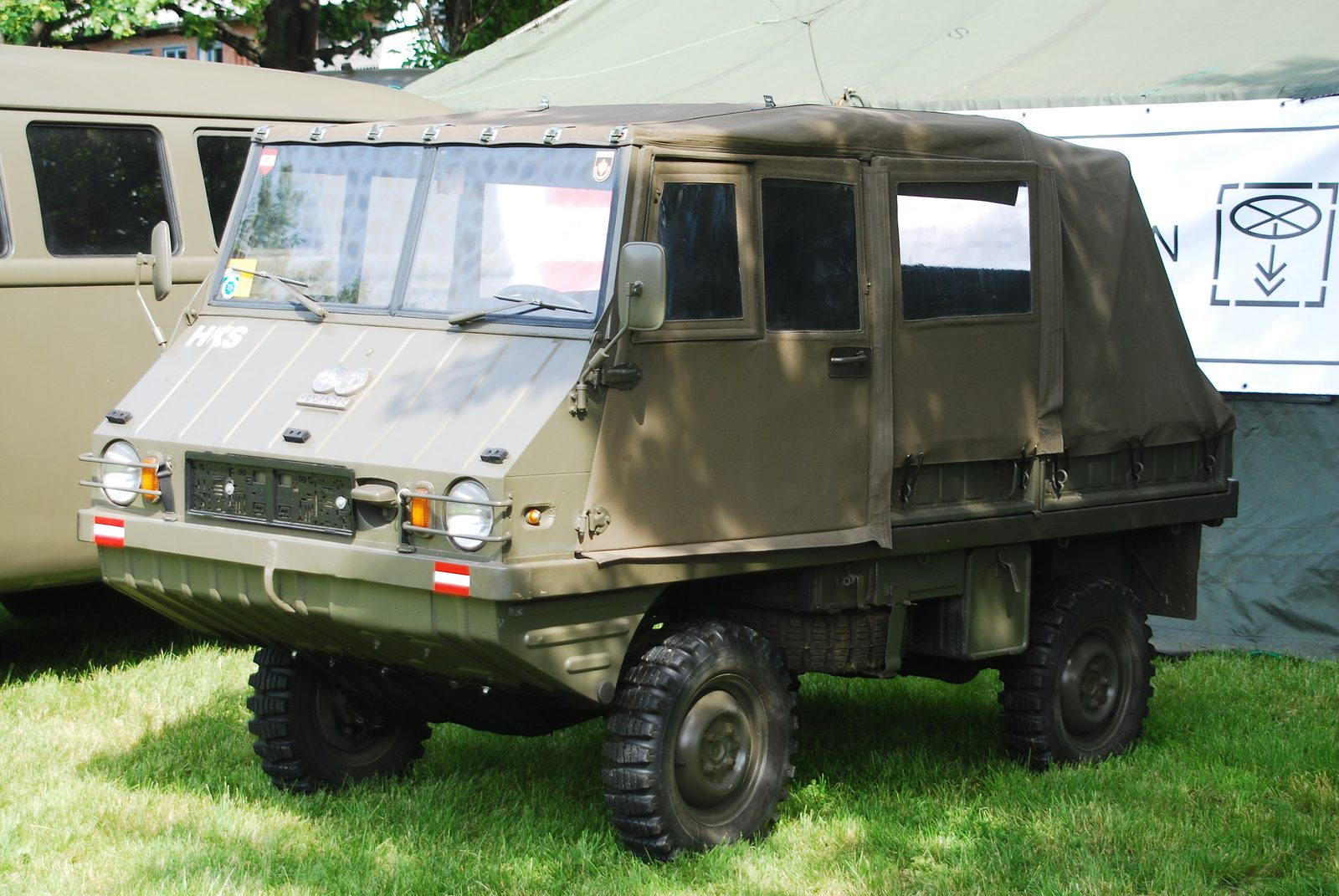
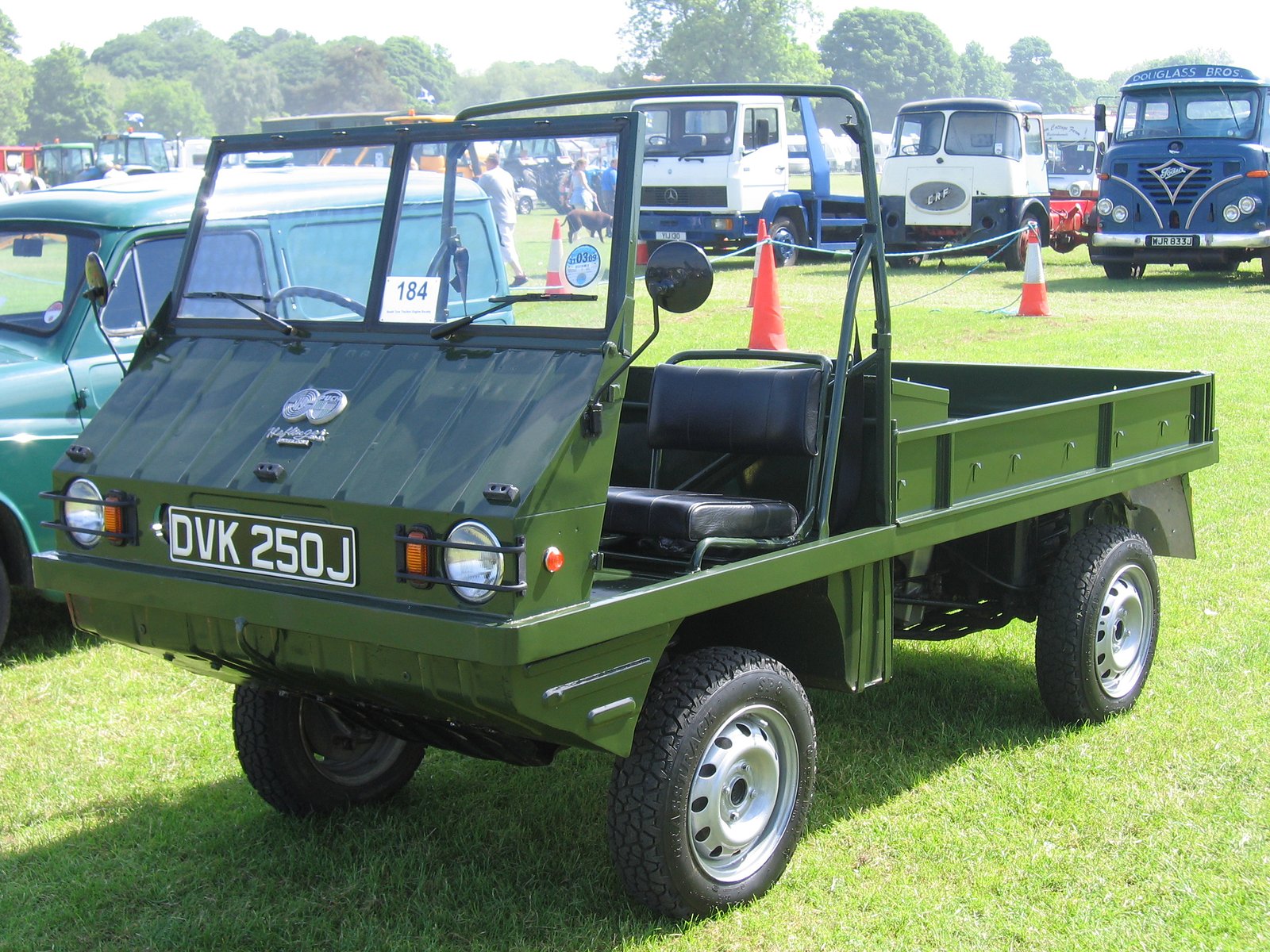
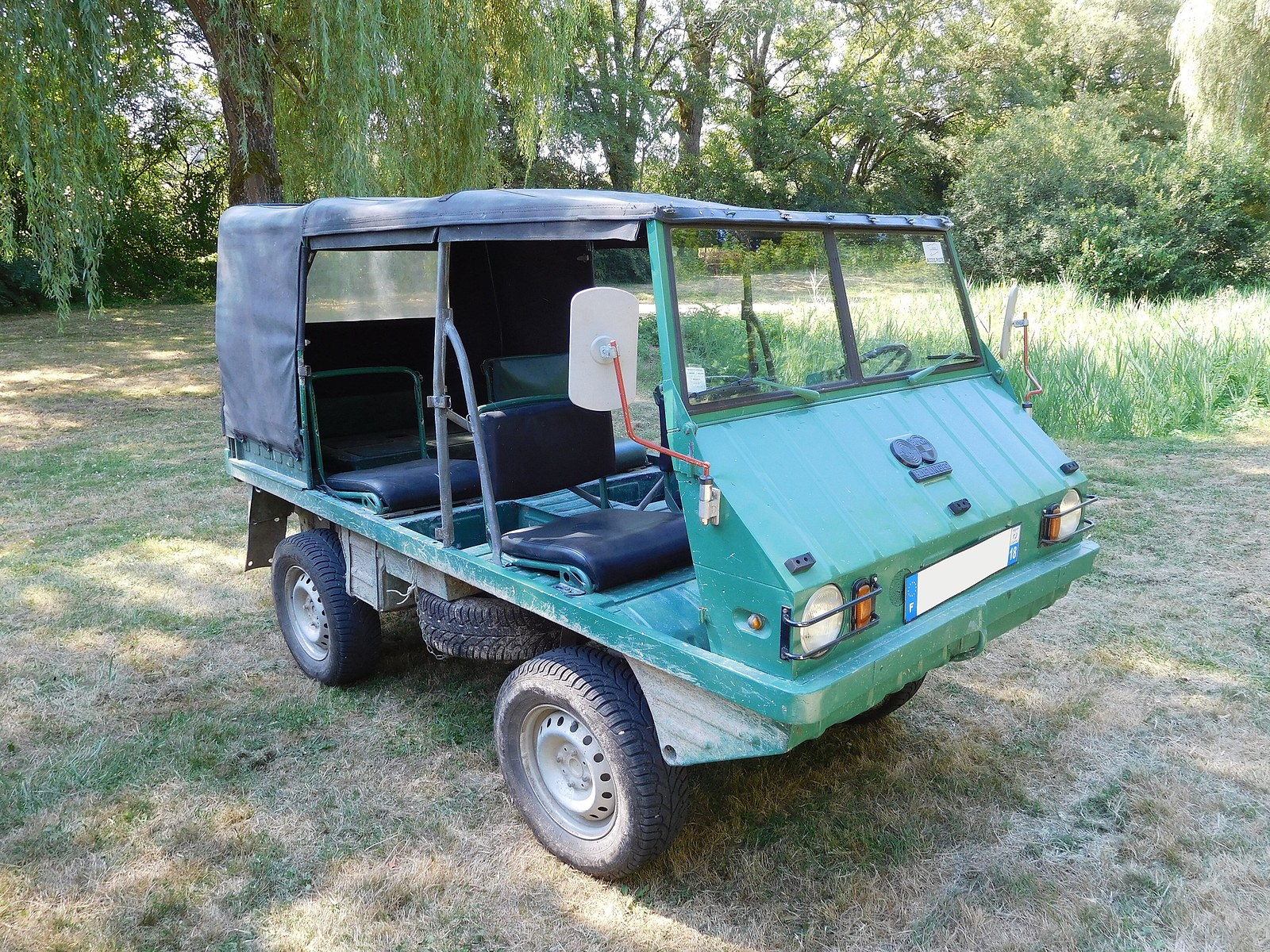
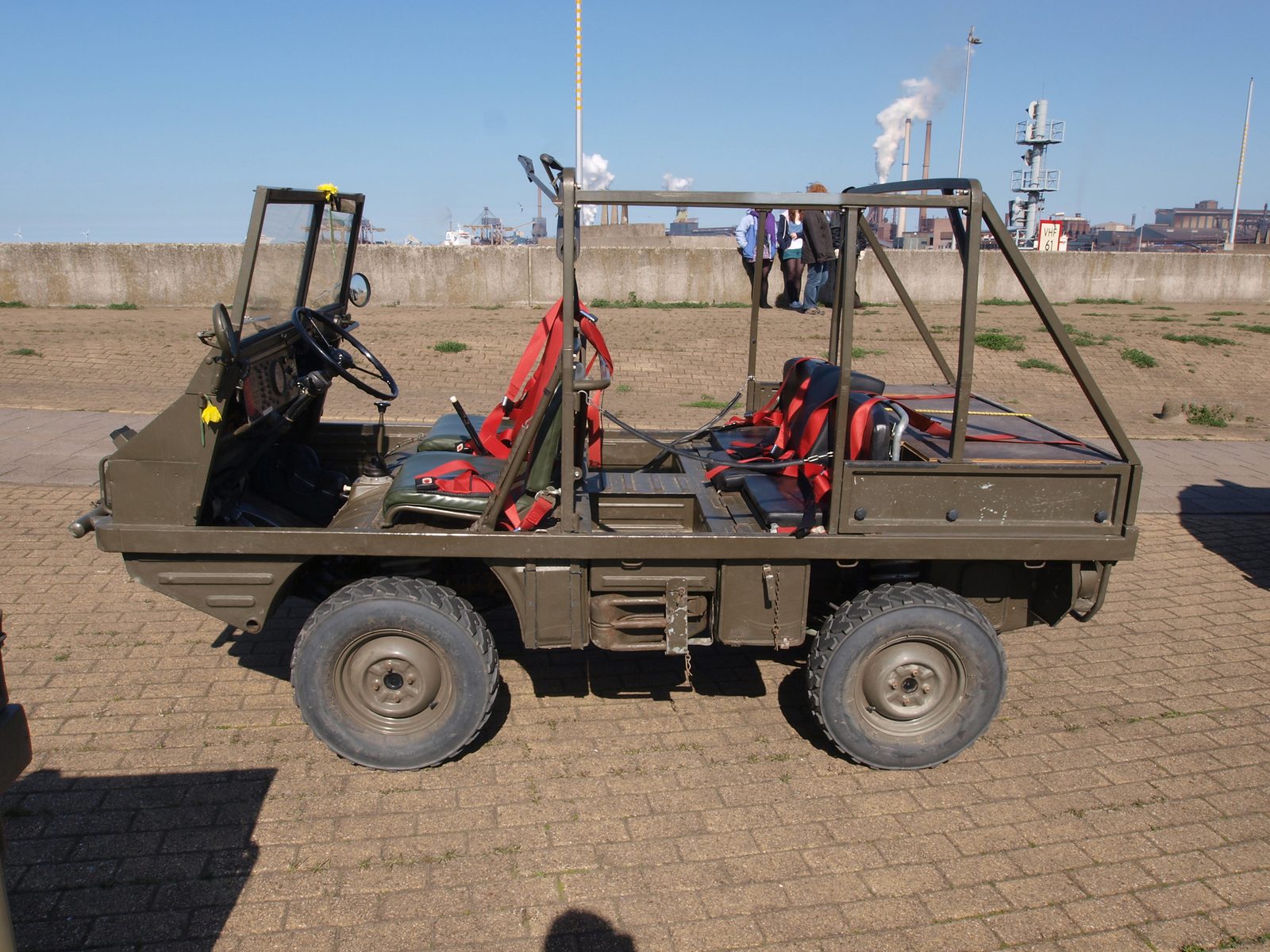
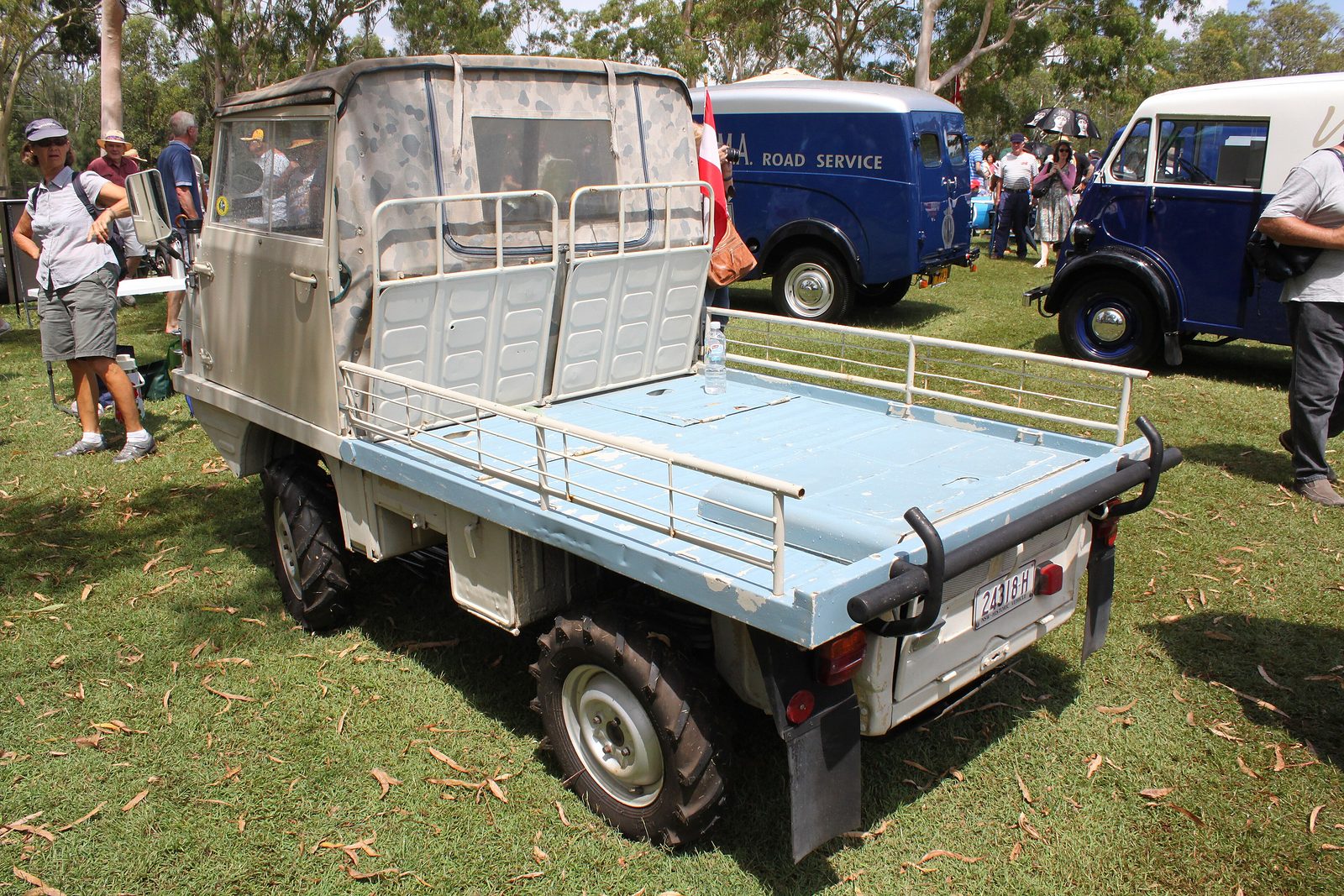
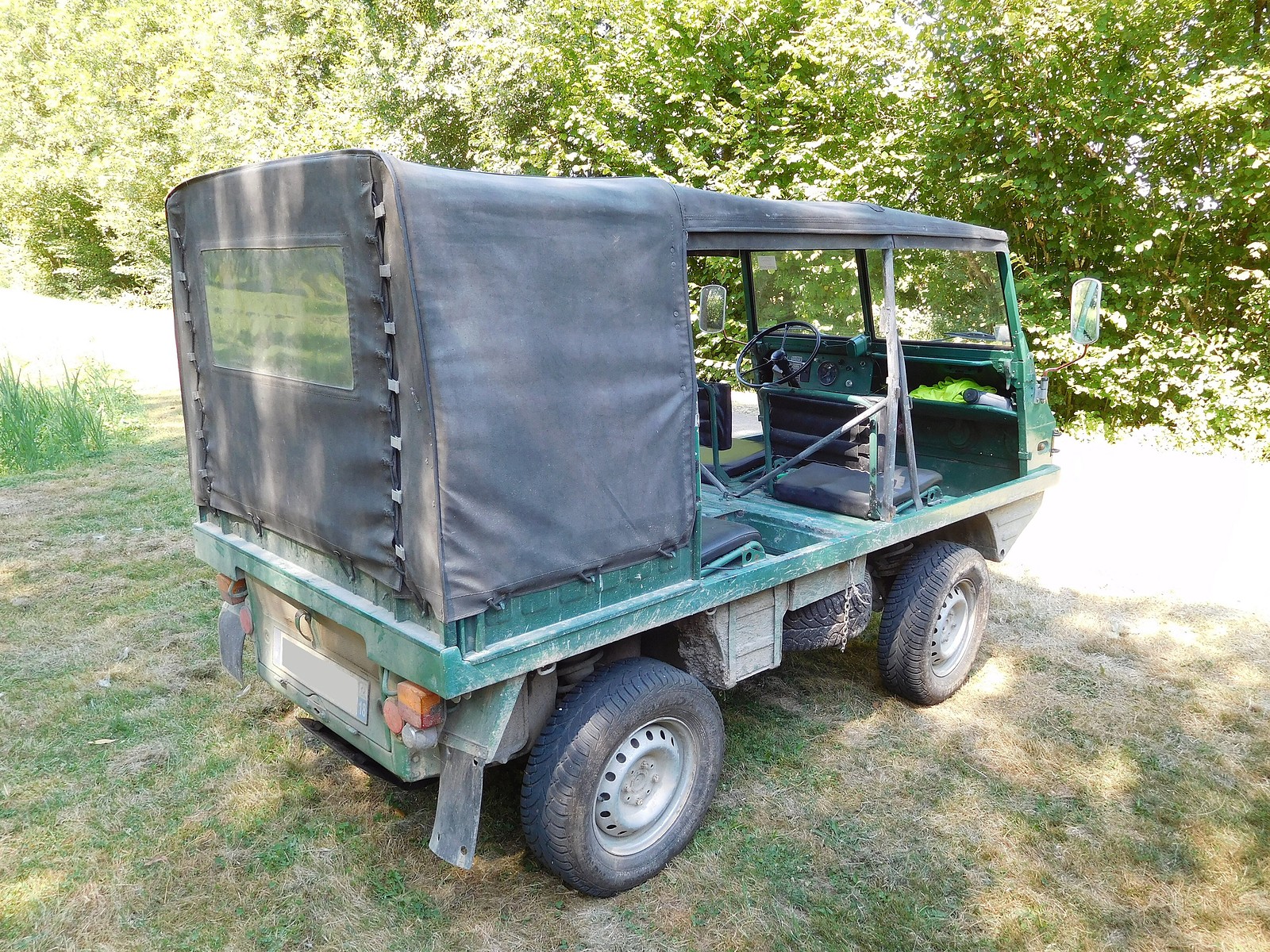
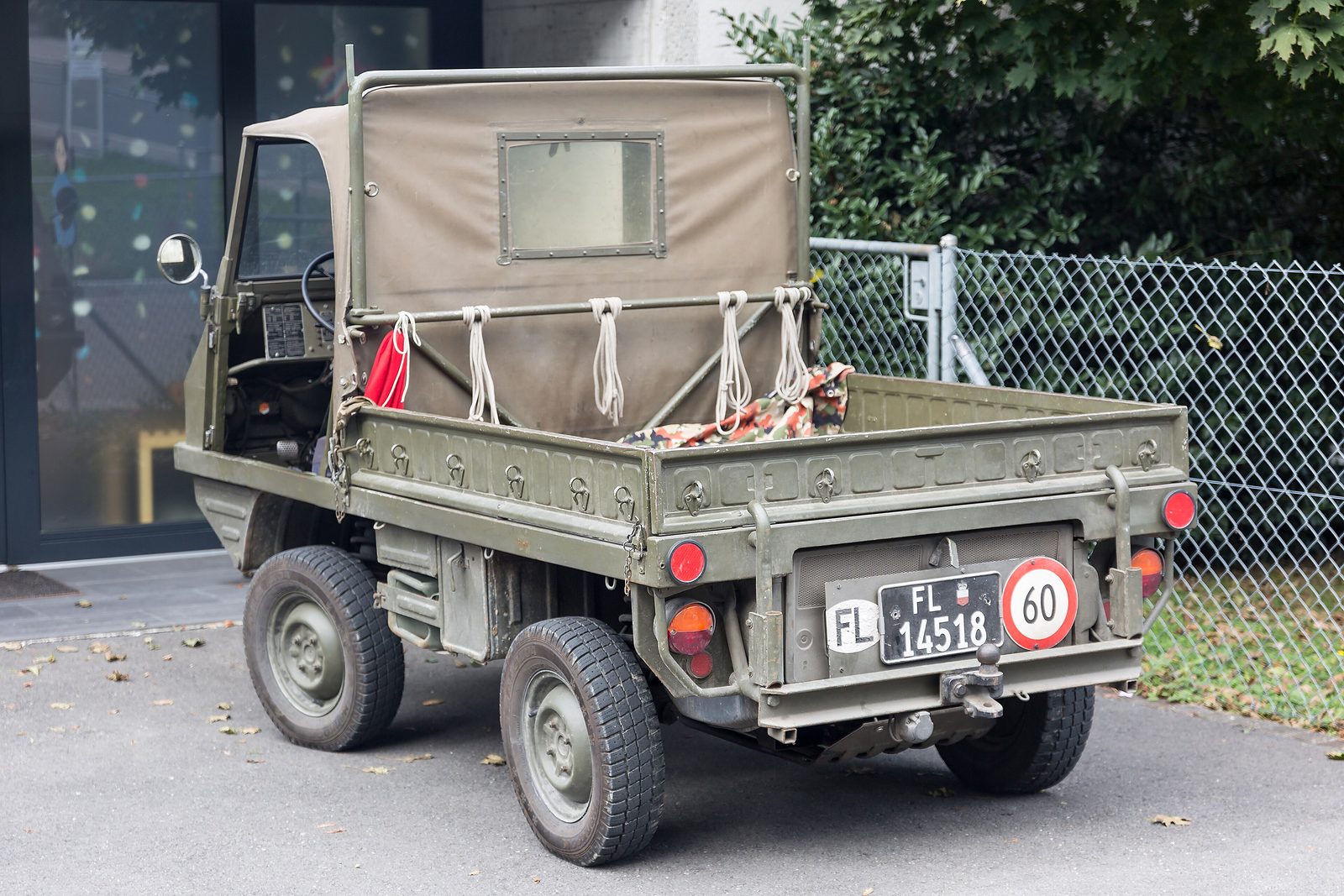
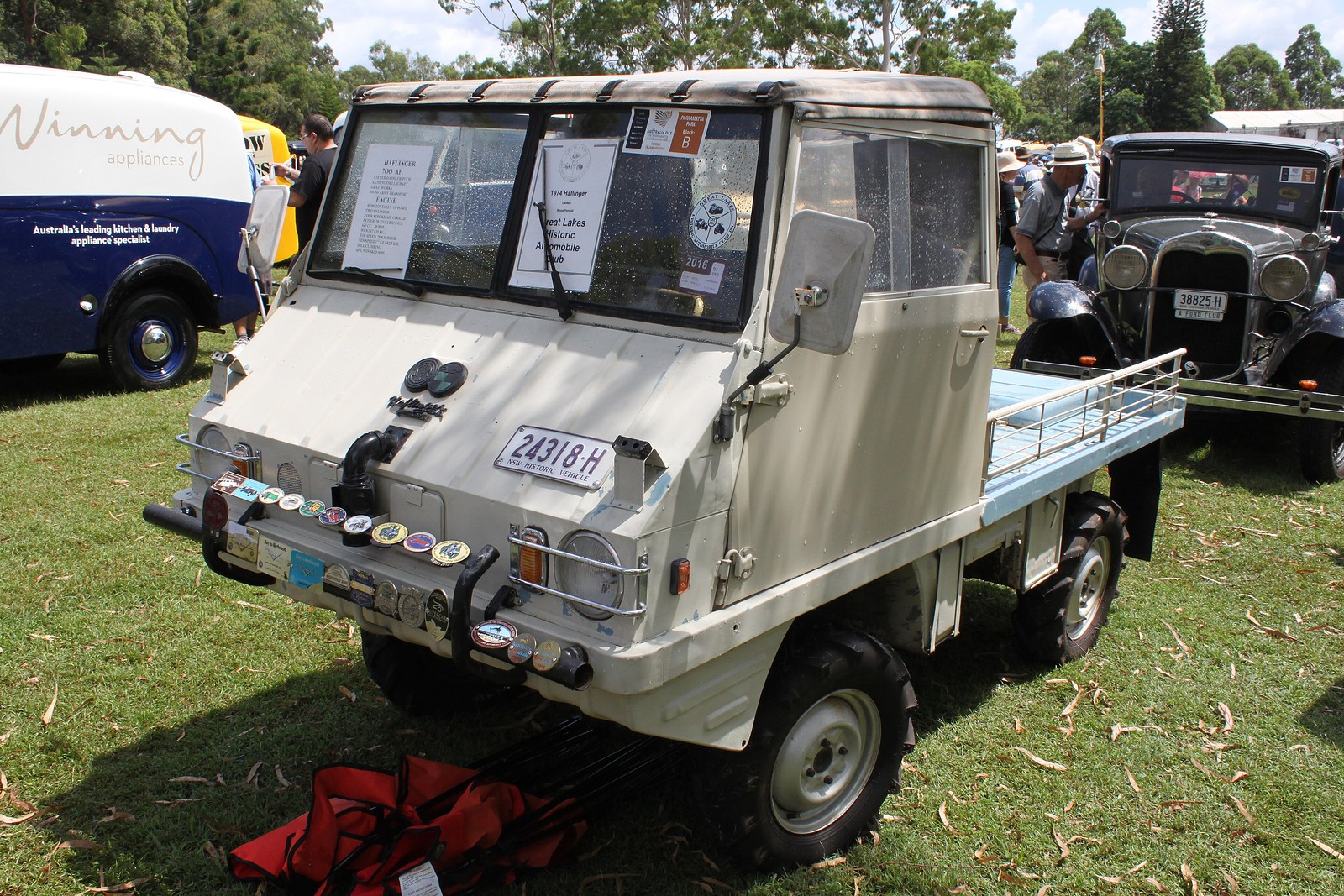
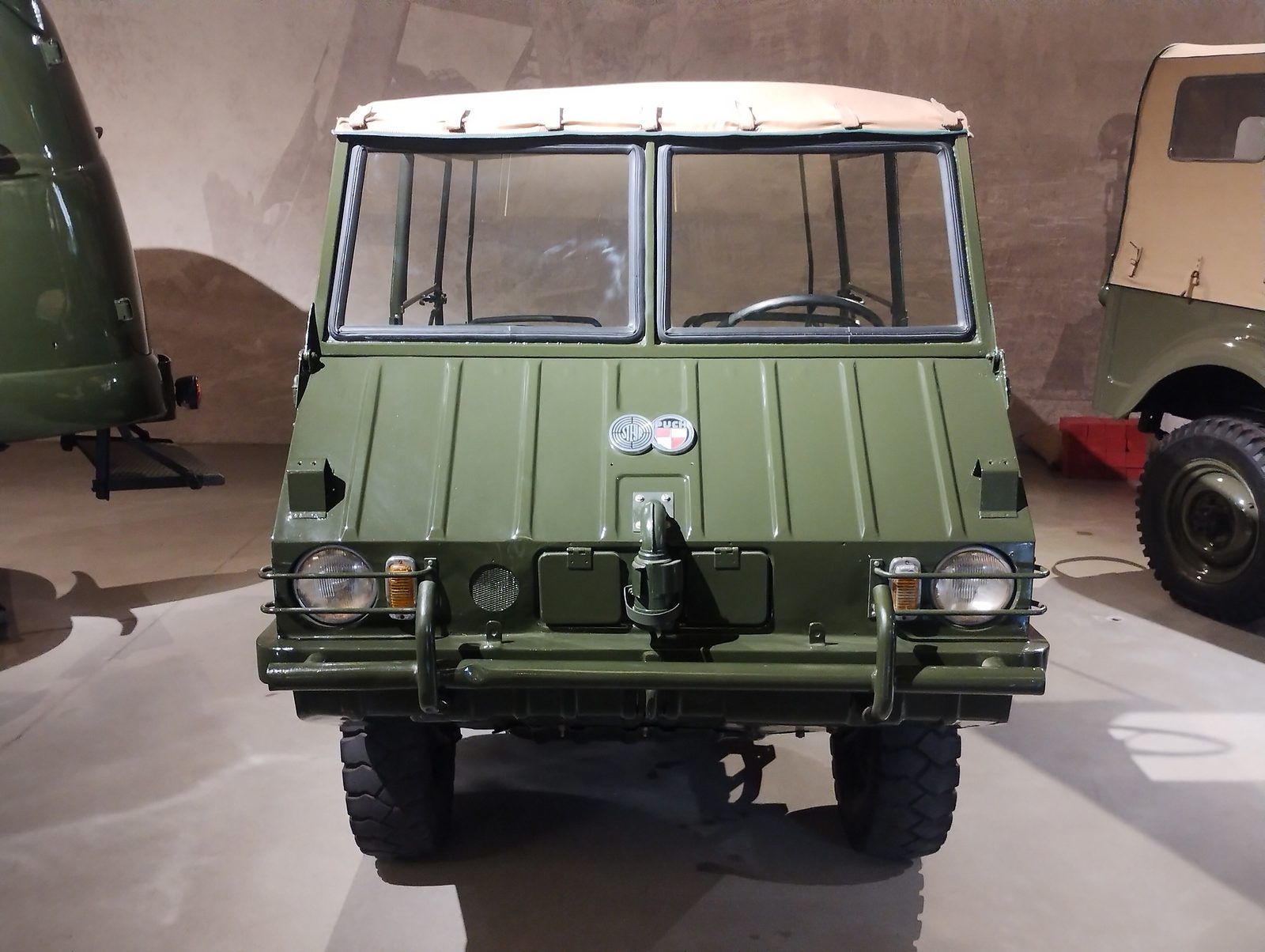
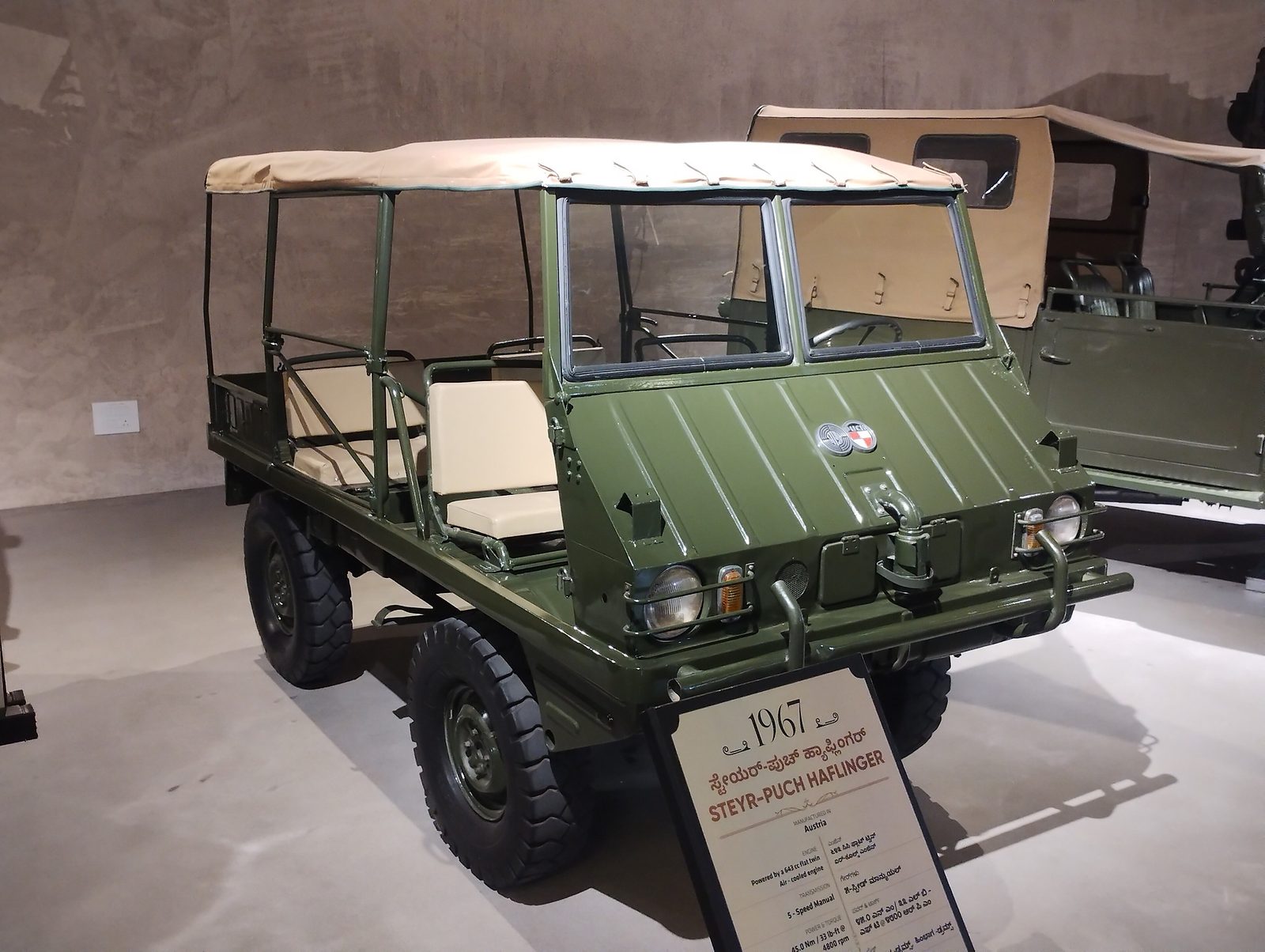
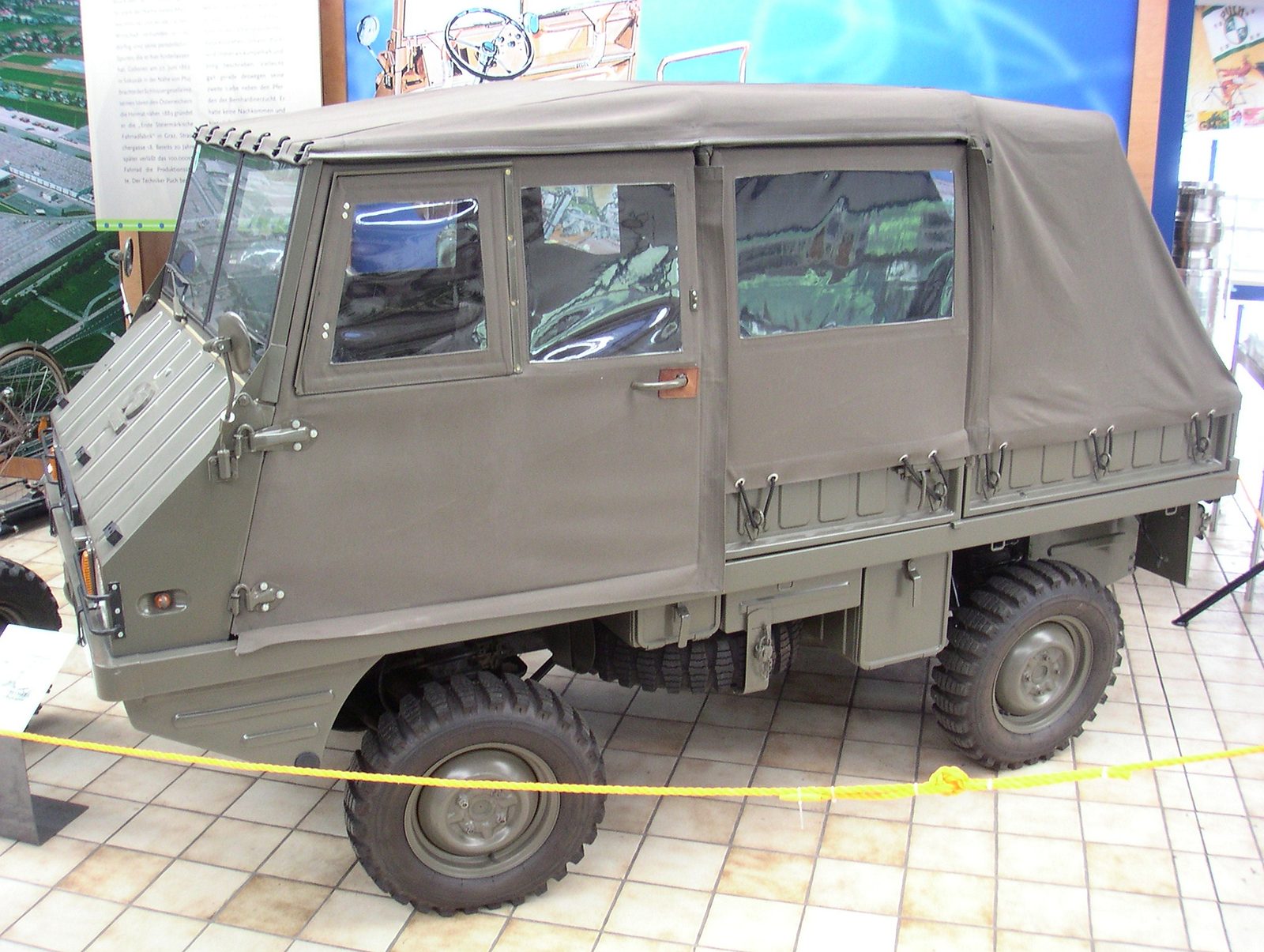
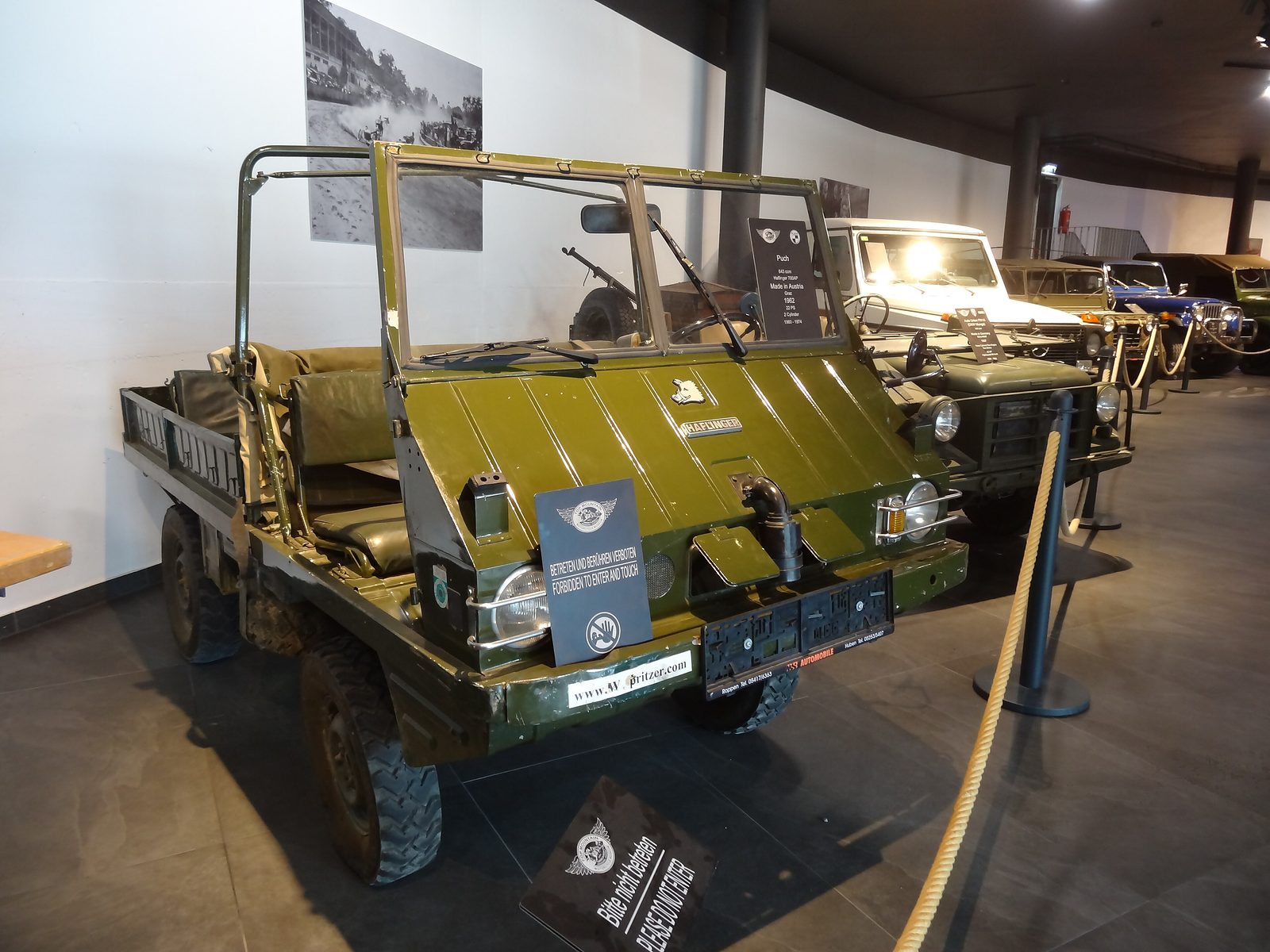
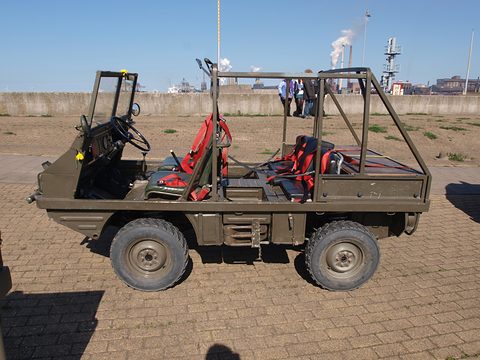
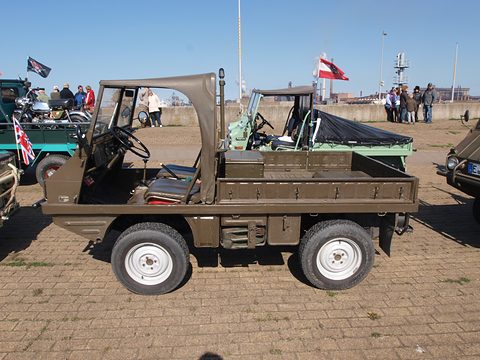
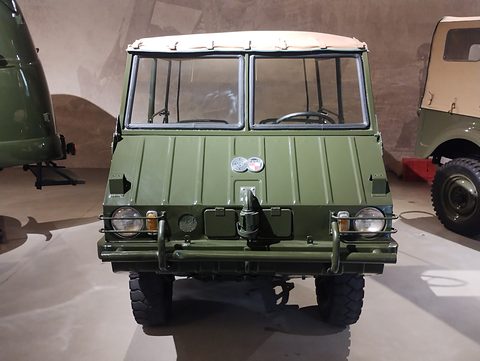
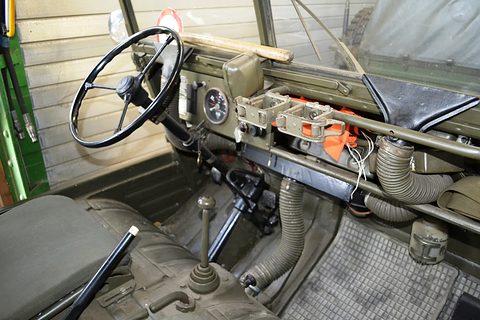
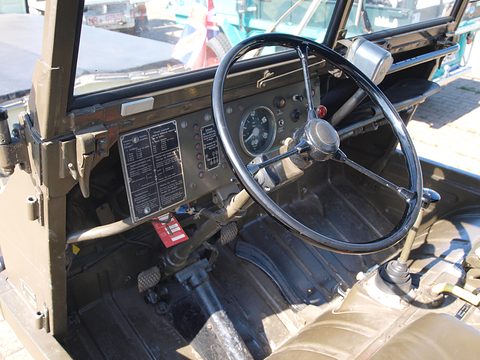
Like a micro van, it puts the driver right at the front, with a flat load platform behind; the 643 cc air-cooled flat twin sits at the back.source 1source 3source 2 Drive to all four wheels can be selected, and each axle has its own differential lock. The portal axles, with reduction gears in the hubs, give a large ground clearance on small wheels, and each half-axle moves about 250 mm (10 in).source 1source 3source 2 About 2,850 mm (112 in) long and weighing about 600 kg (1,320 lb), it carries about 500 kg and tows about 350 kg more; English Wikipedia makes it 635 kg and 515 kg.source 3source 1 The engine first gave 22 PS, later 24 and finally 27 PS.source 3 Puch’s promotional film of about 1960 was called Mit 22 PS durch Dick und Dünn, “through thick and thin with 22 PS”.source 3

It was never fast. Depending on its gearing it reached 75, 64, 58 or only 52 km/h (47, 40, 36 or 32 mph), and owners today often take their Haflingers to meetings on a trailer.source 3 No road test from the period has been found.

To the world’s armies

The 48th Haflinger built, chassis 5350048, left the works on 22 October 1959. It had been meant for the Austrian army, but was kept as a prototype for the American market, with big headlamps and an odometer in miles, for an attempt at a contract with the American forces that never came. On 24 October 1960 it was sold to Fiat and registered in Turin.source 4 The first Haflingers reached the United States that year, sold there as the Pathfinder.source 1source 3

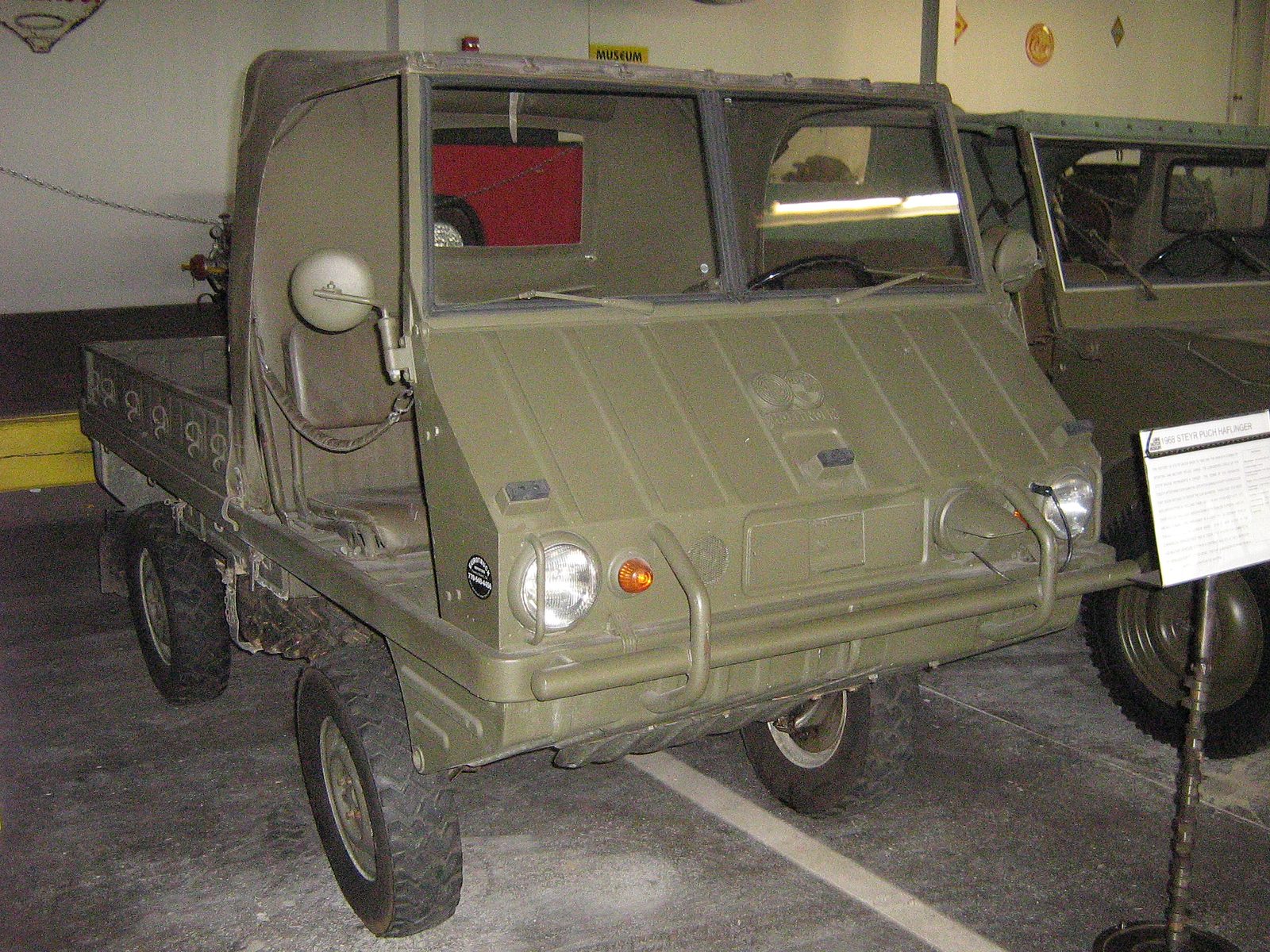
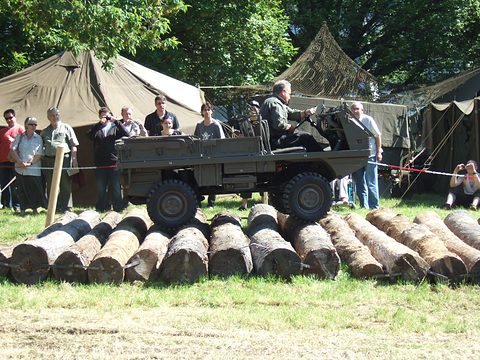
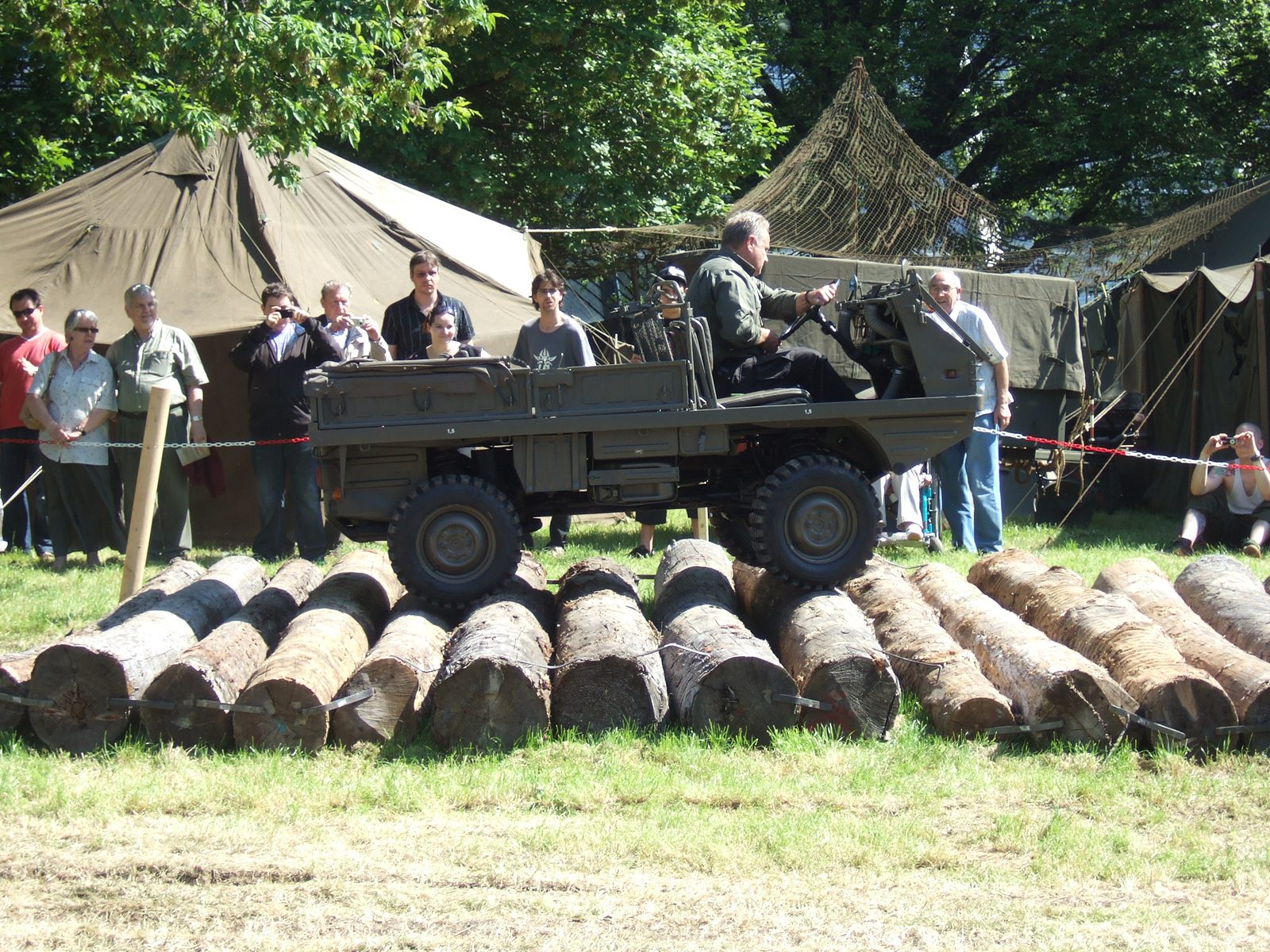
The armies came anyway. Austria, Switzerland, Sweden, Indonesia, Australia and the Royal Navy used it.source 1source 3 Some carried a machine gun, a recoilless rifle or, in Switzerland and Sweden, Bofors BANTAM anti-tank missiles.source 3 In 1966 the Australian Army bought 46, registered 101-816 to 101-861, each with a matching trailer, and they served mostly with the craftsmen of the RAEME; about 800 were assembled and sold in Australia from that year.source 1 The story that Australian Haflingers went to Vietnam does not hold: they are not in M. Cecil’s list of the army’s vehicles there, Mud & Dust, and English Wikipedia suggests a confusion with the American M274 Mule.source 1 About 7,000 Haflingers went to armed forces in all, and they were exported to 35 countries besides Austria.source 1

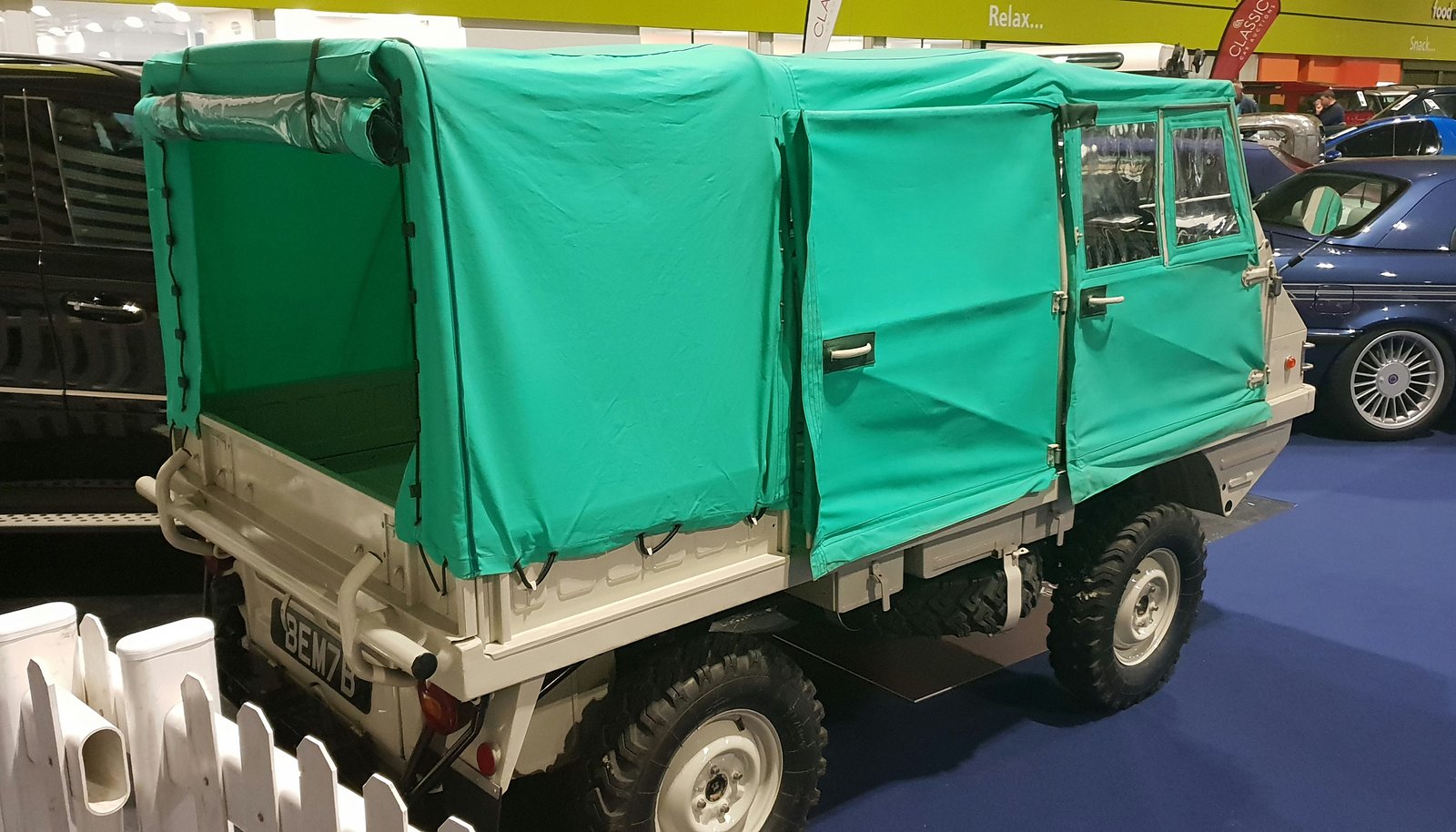
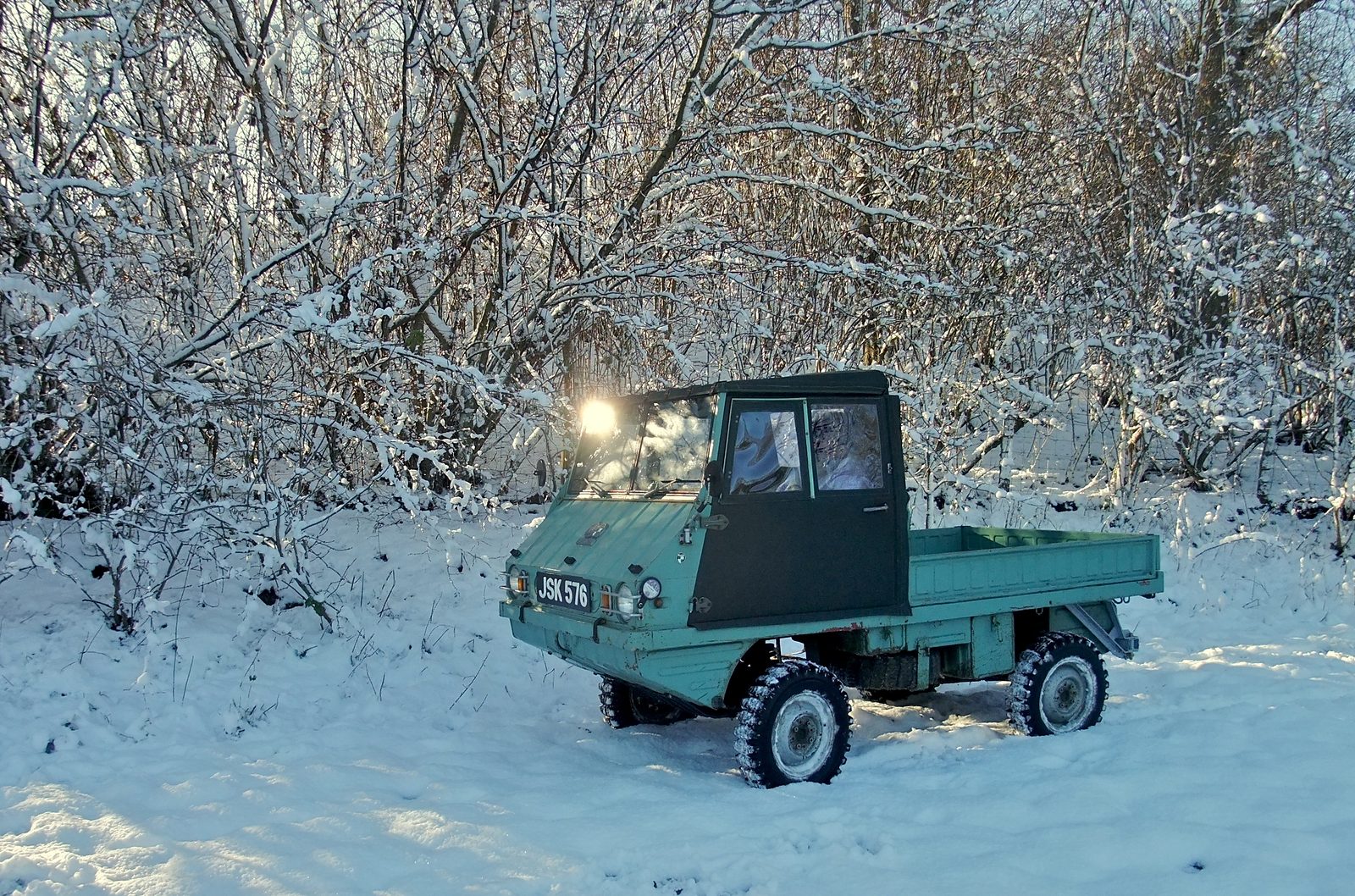
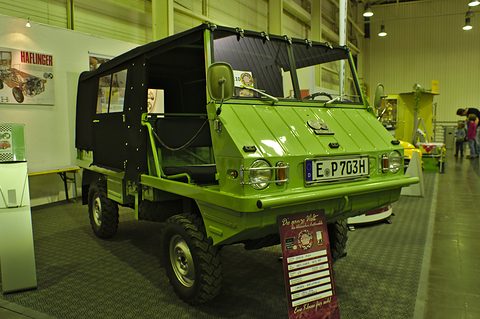
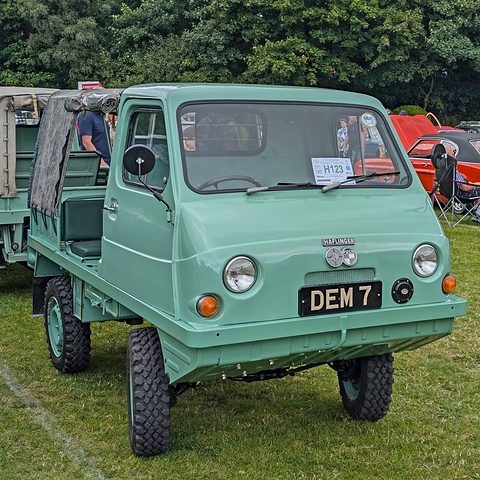
The Series 2 brought a five-speed gearbox with a crawler gear, more power and, if wanted, a longer wheelbase, the AP 703, 3.15 m (124 in) long.source 1source 3source 2 There was a closed cab of glass fibre, the Polycab; a stronger municipal Kommunalhaflinger with a brake servo and about 1,200 kg of payload; a Tropenhaflinger for the tropics; right-hand-drive, fire-brigade and mountain-rescue versions; and the Schneewiesel, the “snow weasel”, which ran on two small track units made by Kahlbacher, 81 of them.source 3

Production ended in 1974, after 16,647.source 1source 3 The bigger Pinzgauer, as a four-wheeler and a six-wheeler, followed the same layout, and a planned “H2” became the Puch G, the Mercedes-Benz G-Class.source 1source 3
A small open military 4x4 with a soldier at the wheel tilted on a steep rocky hillside below mountains.
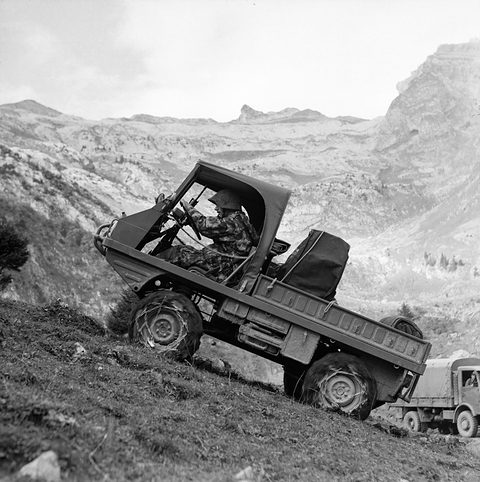
Plate I · 1964 A Swiss Army Haflinger climbing a steep, stony slope at Thurwis near Wildhaus in 1964.Photo: Jack Metzger, Comet Photo AG (ETH-Bibliothek Zürich), CC BY-SA 4.0, via Wikimedia Commons
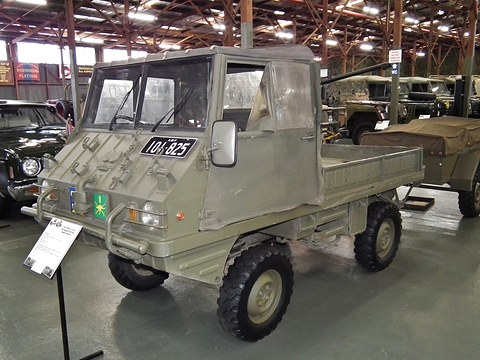
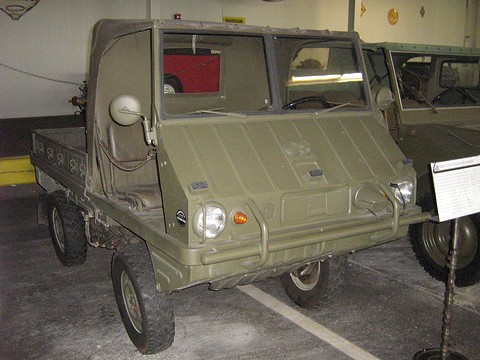
Olive small 4x4 with a soft-top cab and army number plate in a long museum shed.
One of the Australian Army’s 46, 101-825, in the military museum at Bandiana, Wodonga, in 2011.Photo: sv1ambo, CC BY 2.0, via Wikimedia Commons
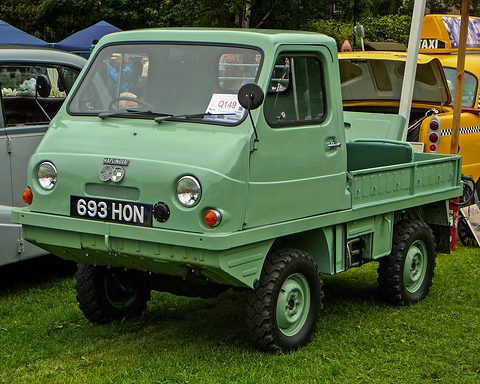
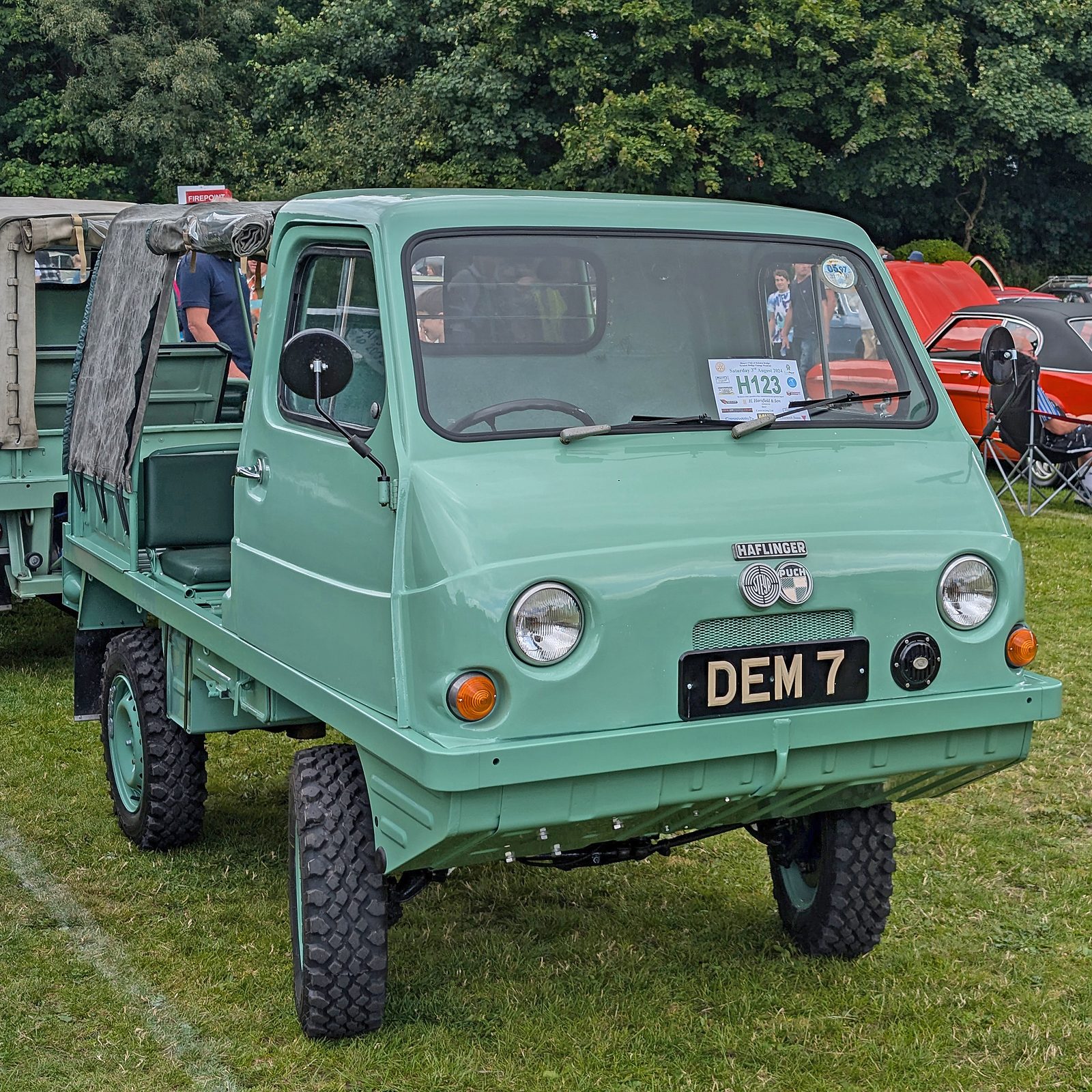
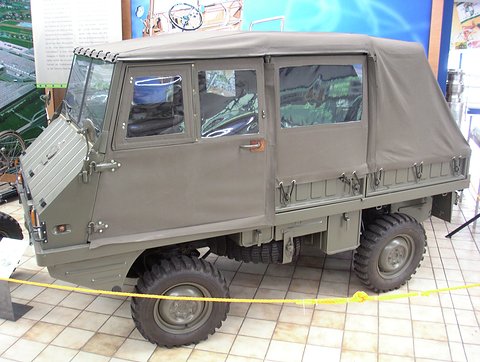
Light green small truck with a rounded plastic cab and a British plate parked on grass.
A 1963 Haflinger with the glass-fibre Polycab, at a show in Britain in 2017.Photo: Tim Green, CC BY 2.0, via Flickr
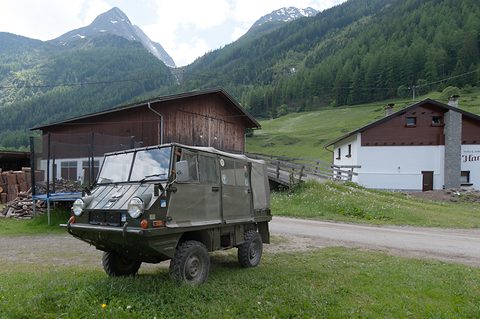
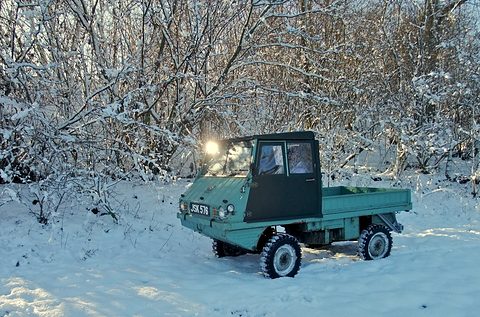
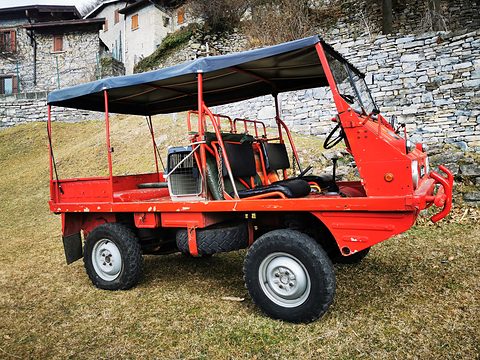
Olive small 4x4 with a canvas cab on a grass verge, a barn and snowy peaks behind.
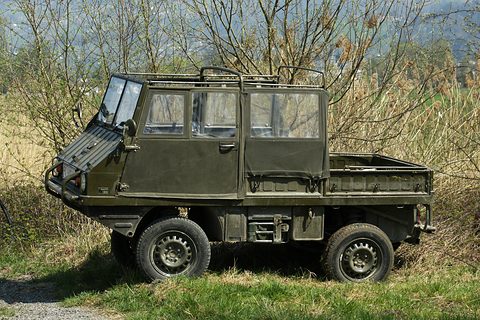
A Haflinger with a canvas cab by mountain farm buildings in the Tyrolean Oberland, Austria, in June 2015.Photo: Ailura, CC BY-SA 3.0 at, via Wikimedia Commons

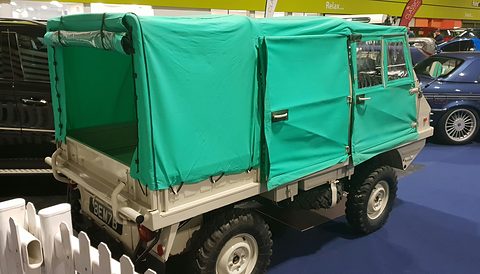
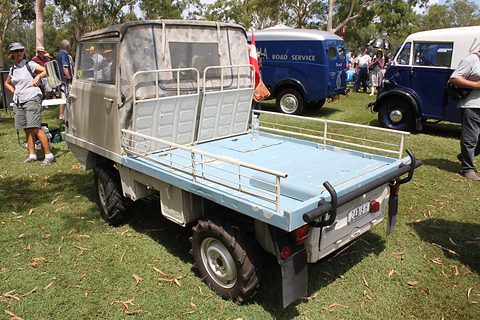
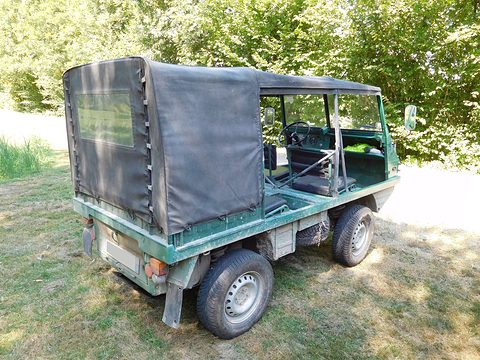
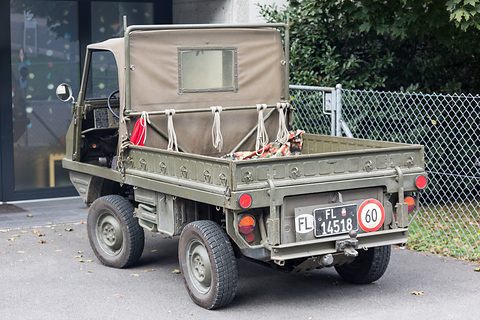
Pictures

More photographs, old and new

Variants

Platforms, cabs and tracks

The Haflinger’s versions, as German and English Wikipedia list them
VariantYearsWhat differsHow many
AP 700, Series 1From 1959Short wheelbase, four-speed gearbox, 22 PSPart of the 16,647
Series 2 (AP 700 and AP 703)1960s–1974Five speeds with a crawler gear, more power; a long wheelbase as an option, the AP 703Part of the 16,647
PolycabNot recordedA closed cab of glass fibreNot found
KommunalhaflingerNot recordedFor towns: a stronger frame, a brake servo and about 1,200 kg of payload, usually with the plastic cabNot found
TropenhaflingerNot recordedA cyclone air filter on the nose, for the tropicsNot found
PathfinderFrom 1960The American version, with large sealed-beam headlampsNot found
SchneewieselNot recordedThe “snow weasel”, on two small track units built by Kahlbacher81
Australian Army1966Truck, Utility, 1/4 Ton, GS, Lightweight, with a matching trailer each46

Specification

From German and English Wikipedia unless noted; the sources differ by a few per cent

Engine and drive

Engine and drive
EngineAir-cooled horizontally opposed twin, at the backsource 1source 3source 2
Capacity643 ccsource 1source 3source 2
Power22 PS, later 24 PS, finally 27 PSsource 3Manro Classic gives “around 25 hp” and 27 hp
GearboxFour speeds in the Series 1; five, with a crawler gear, in the Series 2source 1source 3
DriveFour-wheel drive, selectable, with separate locks on the front and rear differentialssource 1source 3source 2

Body and chassis

Body and chassis
ChassisA central tube, as on a Tatrasource 1source 3
SuspensionIndependent swing axles with portal hub reduction gears and coil springs; about 250 mm of travel each sidesource 1source 3
BodiesAn open platform with a folding screen and canvas; the Polycab; a municipal chassis; the Schneewiesel on trackssource 1source 3

Dimensions

Dimensions
Length2,850 mmsource 3About 2.8 m in English Wikipedia; 2,830 mm by Silodrome
Long wheelbase3,150 mm longsource 1source 3source 2
Width1,350 mmsource 3source 21.3 m in English Wikipedia
WeightAbout 600 kgsource 3About 635 kg in English Wikipedia

Performance and running

Performance and running
PayloadAbout 500 kgsource 3515 kg in English Wikipedia and Silodrome
TowingAbout 350 kgsource 3
Top speed75, 64, 58 or 52 km/h, by gearingsource 3Silodrome: a little over 42 mph, governed
Price newNot found

How many were built?

Every figure, with its source

16,647 builtBoth Wikipedias give 16,647 of all versions, 1959–⁠74, without a source that could be read; a dealer’s page gives about 16,600. No figure by year has been found.

  1. 16,647all versions, 1959–⁠74One source

    German and English Wikipedia, neither citing a source that could be read; they may share onesource 3source 1

  2. about 16,600all versionsUnconfirmed

    Manro Classic, an Austrian dealer and museum, read through a summarysource 5

  3. about 7,000for armed forces in Switzerland, Austria, Australia and Britain’s Royal NavyOne source

    English Wikipediasource 1

  4. about 800assembled and sold in Australia from 1966One source

    English Wikipediasource 1

  • Two sources agreetwo good sources give the figure
  • One sourcea good source, alone
  • Unconfirmeda lead only, not yet checked

Famous for

Three points

  1. Lift it with four

    About 600 kg, a payload of about 500 kg, and light enough for four strong people to lift.

  2. Portal axles, under 3 m

    Two differential locks and portal hubs on a four-wheel drive about 2.85 m long.

  3. Missiles on a mule

    Swiss and Swedish Haflingers carried Bofors BANTAM anti-tank missiles.

On screen

Confirmed appearances only

Survivors and collecting

Today

Many ex-army Haflingers were sold to enthusiasts. They have a strong following in southern Germany, Austria and Switzerland, and owners in Britain, North America, Australia and Asia; among the most important club meetings is the one held every year at Hafling, Avelengo in Italian, near Merano in South Tyrol.source 1source 3 Austria, Britain, France, Italy, Switzerland, South Tyrol and North America have clubs.source 1
The Austrian travel writer Ernst Wiese described a four-month round trip in one from Vienna to the southern tip of Arabia, in 10,000 Miles Through Arabia, and in 1983 one was driven from Vermont to California.source 1 The film director Nikolaus Geyrhalter says his could take film equipment up almost any mountain where a helicopter was not allowed.source 3
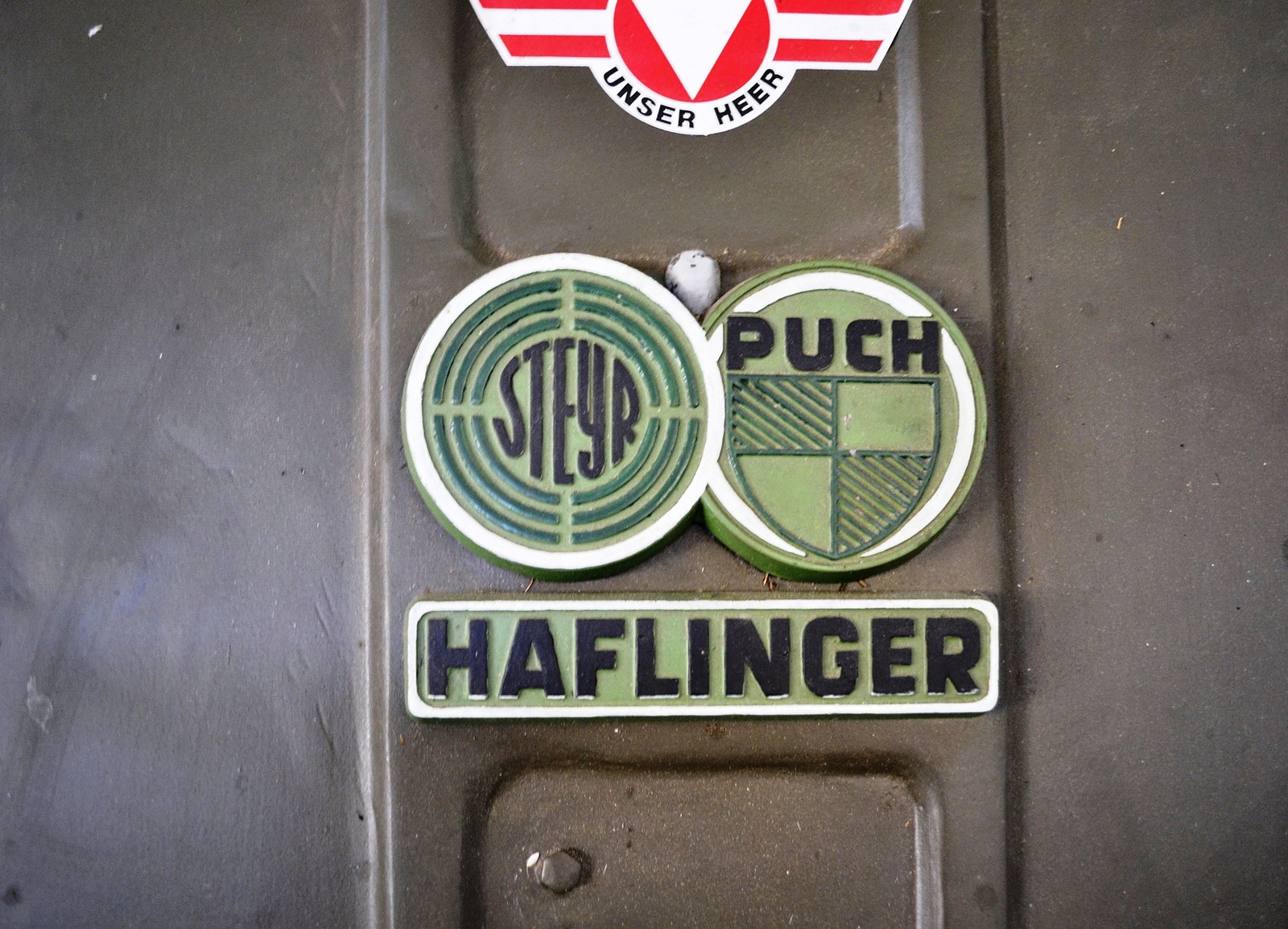
Chassis 5350048, the American-market prototype that went to Fiat, was sold without reserve by Artcurial at Rétromobile in Paris in 2025 for €21,456, under its estimate of €28,000–38,000.source 4 Haflingers have been photographed in Graz’s Johann Puch Museum, the Heeresgeschichtliches Museum in Vienna and the Lane Motor Museum in Nashville.

Sources

Numbered as in the text

Most of this history rests on the German and English Wikipedia articles, whose own references have not been checked; no period road test and no Puch or Magna heritage source has been found. Sources are given as plain text; the links are on the Credits page.

  1. English Wikipedia, Steyr-Puch Haflinger, read in full in a plain-text copy without its references.
  2. Silodrome, “Steyr-Puch Haflinger 4×4”, read through a summary.
  3. German Wikipedia, Steyr-Puch Haflinger, read in full in a plain-text copy.
  4. Artcurial, Rétromobile sale 2025 (sale 6144), lot 34, “1959 Steyr Puch Haflinger 700 AP”, read through a summary.
  5. Manro Classic, Austria, “Steyr-Puch Haflinger 700AP”, read through a summary.