microcarfan
  • Microcar
  • Britain
  • Four wheels
  • Sold as a kit

Opperman Unicar

Also known as Unicar, Unicar Model T

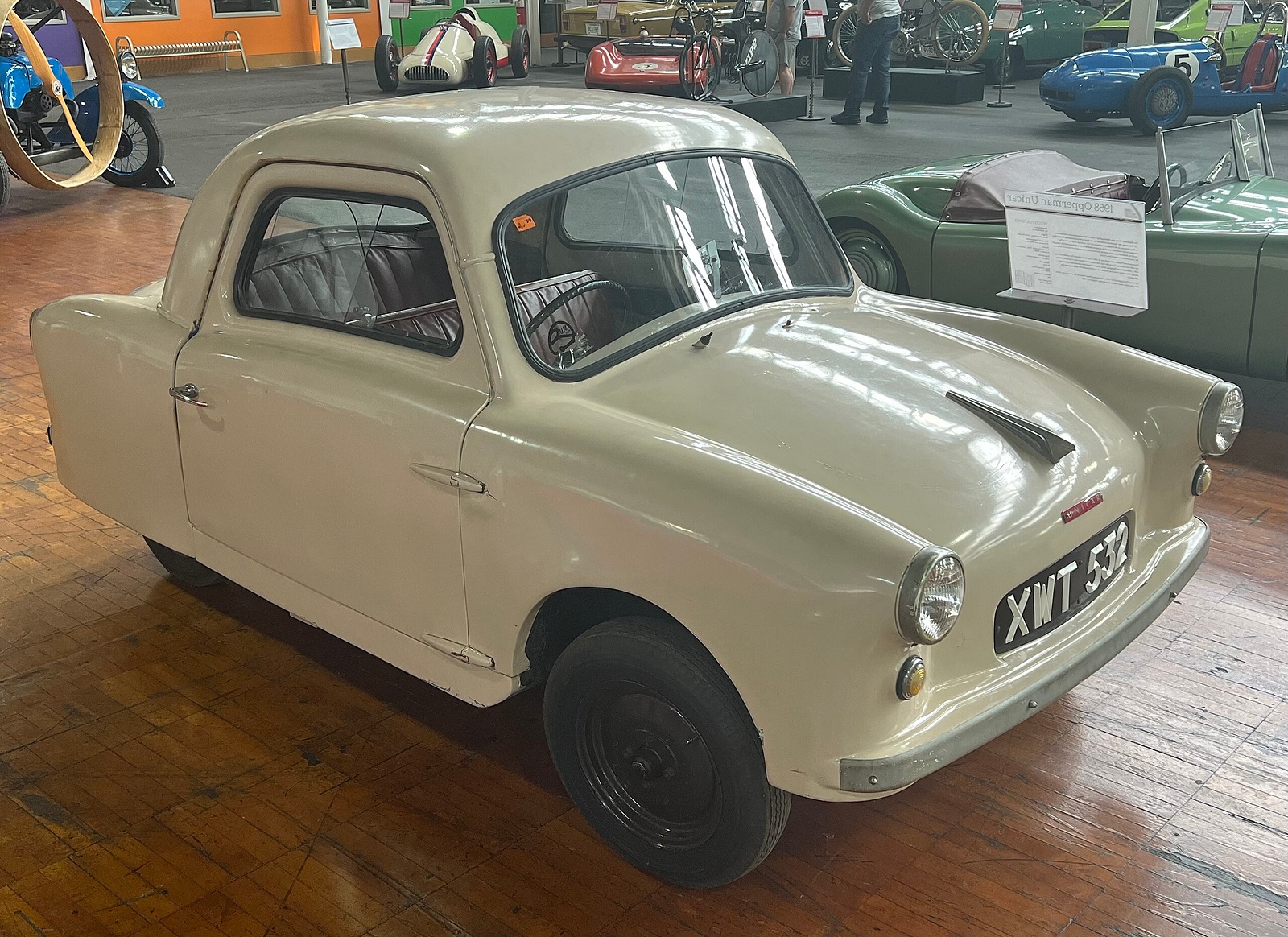
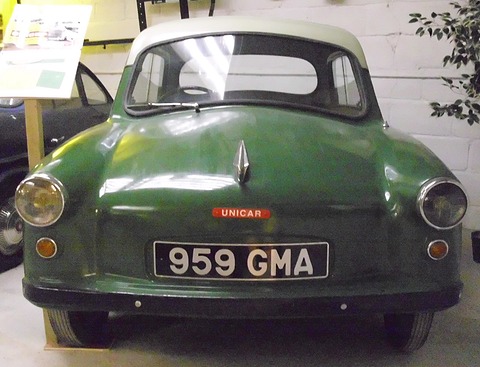
The cheapest car at the 1956 London Motor Show, made by a firm of gear cutters. To do without a differential it ran its rear wheels close together, fitted inside out, and neither its bonnet nor its boot would open.

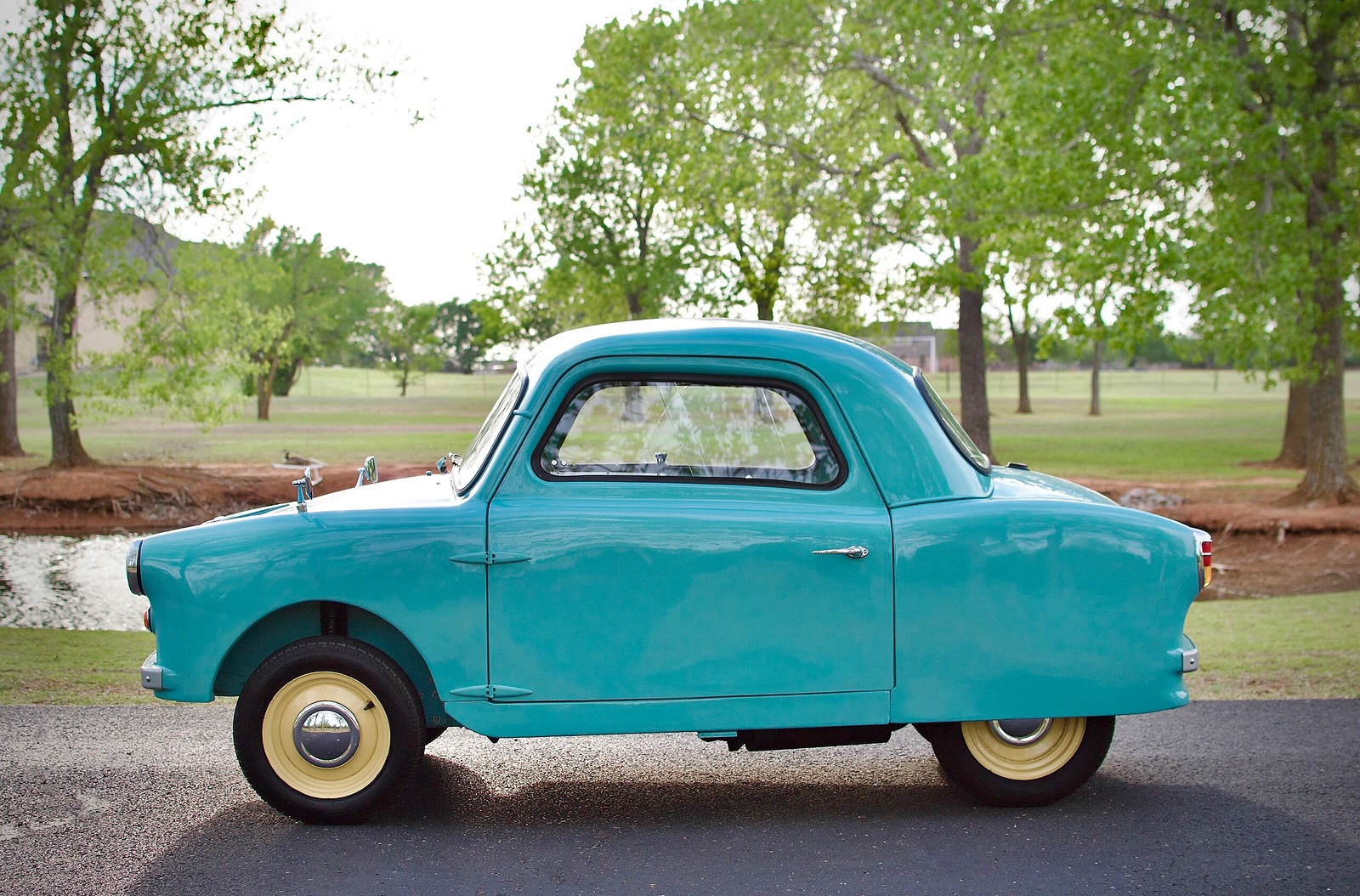
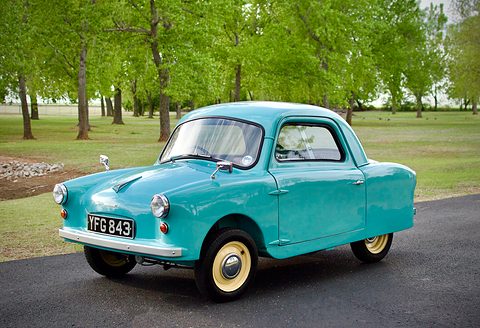
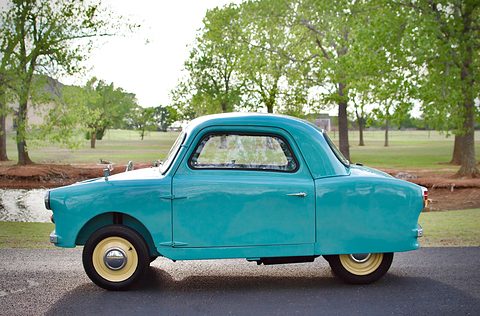
Light-blue two-door microcar with cream wheels, registration YFG 843, parked on a tarmac drive among trees.
A 1958 Opperman Unicar T in light blue, in the Williams Microcars collection in 2024.Photo: Guards951, CC BY 4.0, via Wikimedia Commons

At a glance

The spec plate

Opperman Unicar

Model T · Boreham Wood

Built
1956–⁠1959Shown in October 1956; car making ended in 1959
Country
BritainStuart Works, Stirling Corner, Boreham Wood, Hertfordshire
Maker
S. E. Opperman LtdGear cutters and makers of aircraft components
Engine
328 cc Excelsior Talisman two-stroke twinModel T; the first cars had a 322 cc British Anzani
Power
18 bhpAbout 13.4 kW, at 5,000 rpm
Length
2,946 mm1,473 mm wide, 1,397 mm high
Weight
330 kgReady for the road, as Motor Sport weighed it
Seats
2 + 2A bench, and two infants’ seats beside the engine
Wheels
4Engine at the back; a solid rear axle with no differential, its track 12 in narrower than the front
Price new
£399 10sJune 1958; £427 17s for the De Luxe
Production
about 200All types; the only figure found
Survives
FewNo count published
Top speed
90km/h90 km/h56 mph; 45 mph by the Weiner museum

How big is it?

True proportion

2.95 m

It is 24 mm shorter than a Fiat 500, about 1.7 adults laid end to end.

  • 1.47 m wide
  • 330 kg: about four adults
  • Two seats and two infants’ seats
Drawn at true proportion. The track is 3.6 metres long; the adult stands at the same scale. The Peel P50 is the smallest production car, on every page for comparison.

The story

History

Opperman had cut gears since 1862, when it was founded as Opperman Sons & Taskers. As S. E. Opperman Ltd, from 1934, it made aircraft components (see aircraft makers), and before the war it built the 60 hp Walter Mikron aero engine under licence.source 1source 2 In 1942 it built the prototype of the Scorpion, an eight-wheeled amphibious scout car, and from 1946 to 1958 it made the Motocart, a tractor that ran on a single big wheel.source 1 Then, says the Weiner museum, it saw how well the Bond Minicar was selling and decided to build a small car of its own.source 3

Motor Sport said in 1958 that the design had been laid down, inevitably, by Laurie Bond, and developed over 56,000 km (35,000 miles) of testing; RM’s catalogue credits either Bond or George Trolley (see the designers).source 4source 5 The Unicar was shown at the London Motor Show in October 1956, and was the cheapest car there.source 3source 5 Motor Sport wrote two years later that it was making its first appearance at the show, perhaps because it had been outside the main hall in 1956; the record does not say.source 6

A saloon in miniature

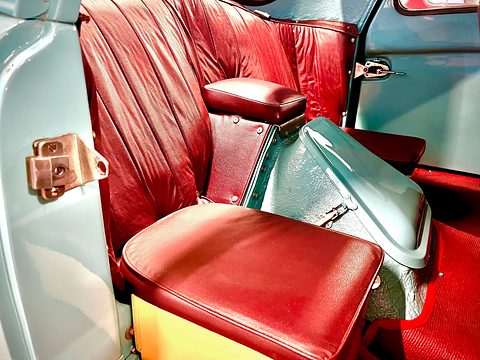
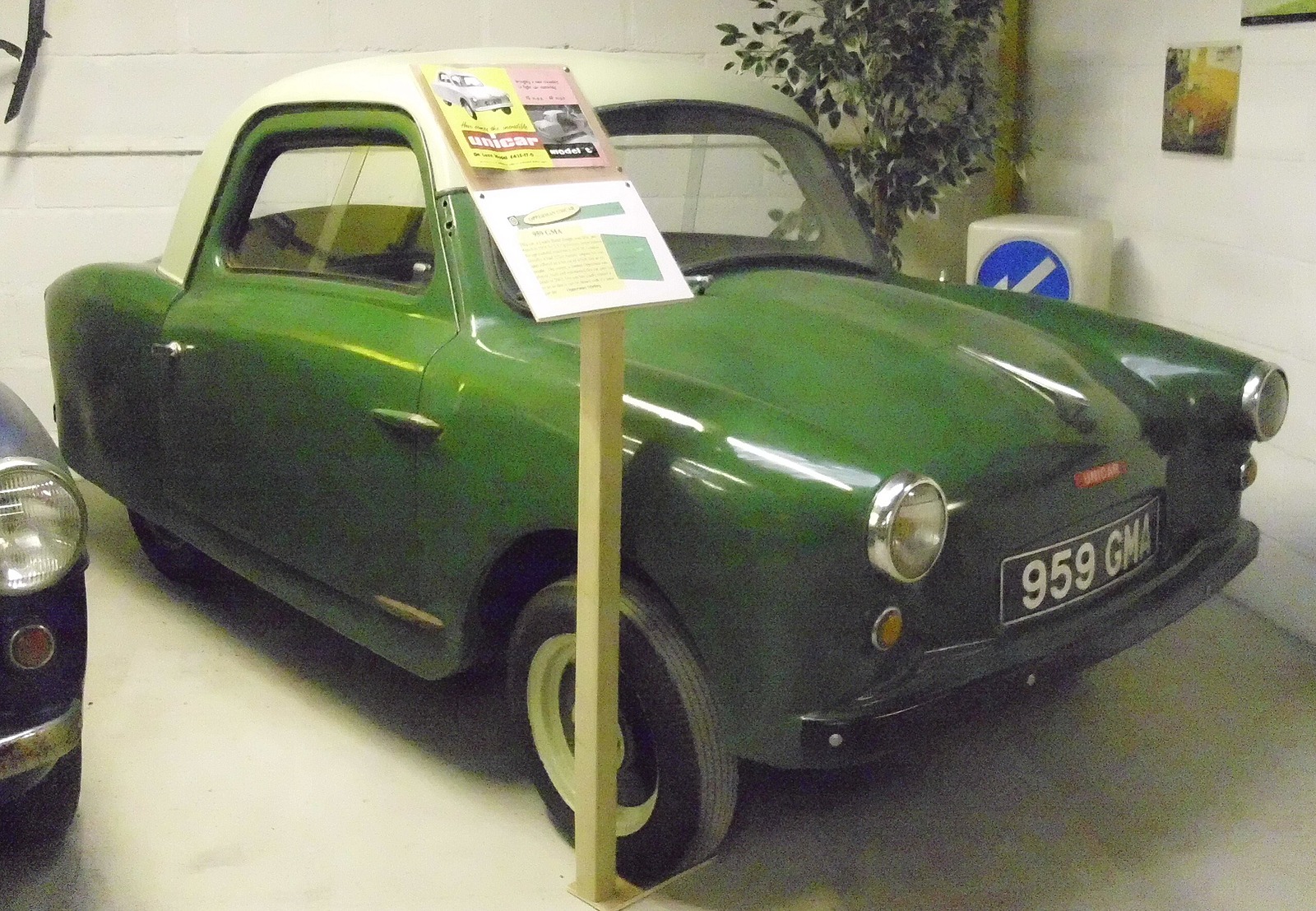
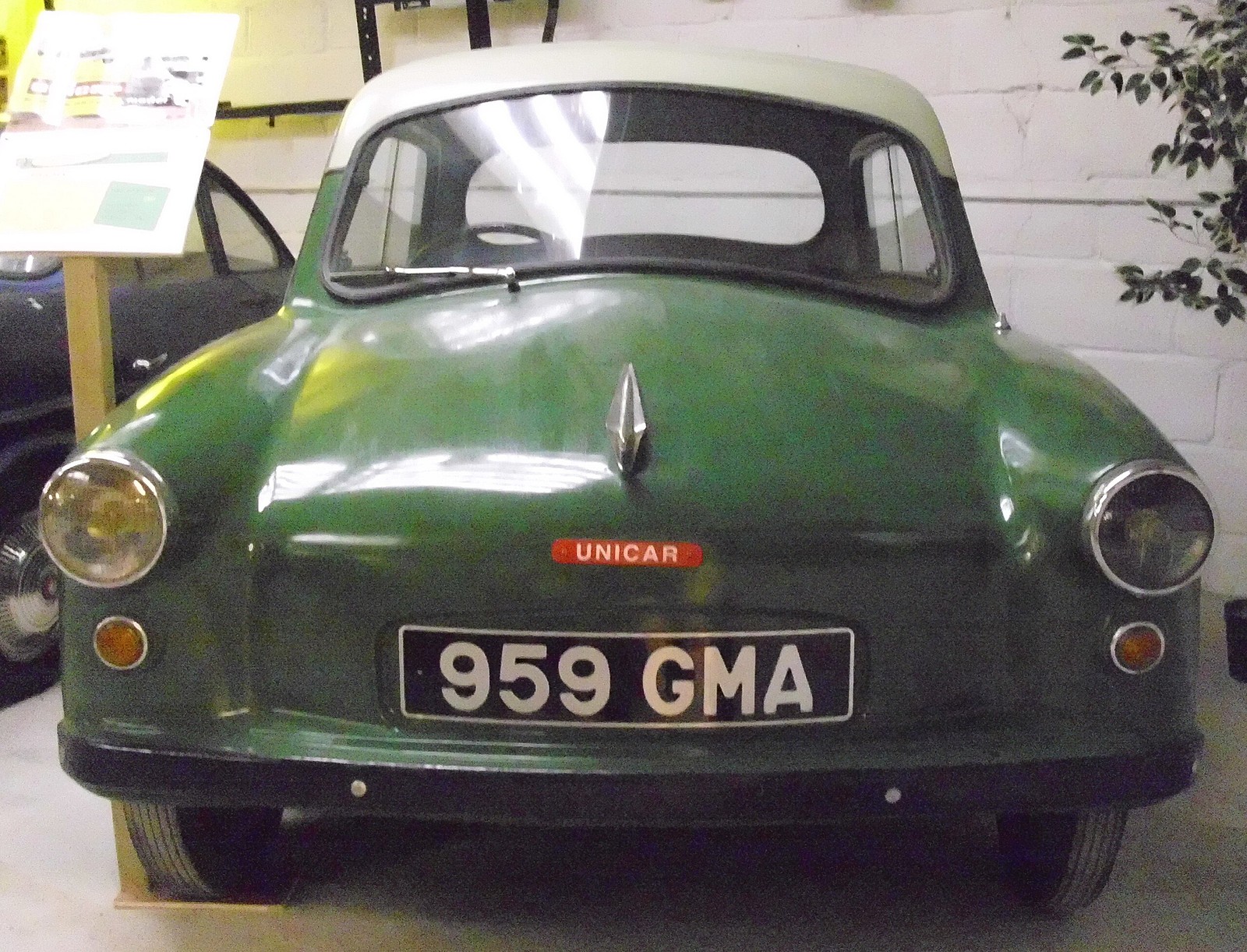
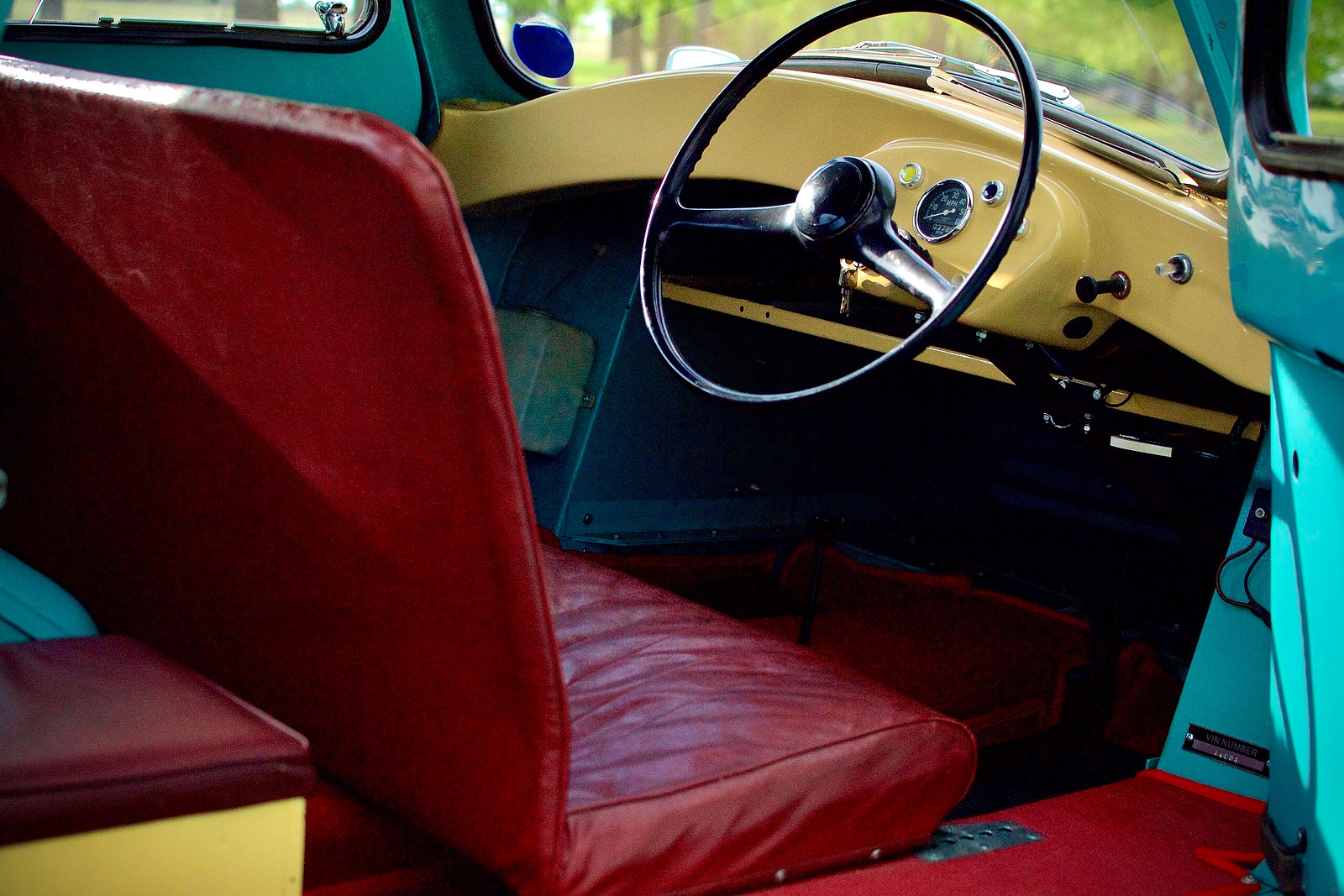
It looked like a larger saloon scaled down.source 3 The body was a two-door glass-fibre saloon on a glass-fibre platform with bonded metal side members, with rear-hinged doors and sliding windows.source 4 Neither the bonnet nor the boot opened: the spare wheel lived under the dashboard and came out through the passenger door, and the spark plugs were changed from inside the car through a hatch.source 3source 4 Two adults sat on a bench, and two small infants’ seats flanked the engine cover behind them.source 3source 4

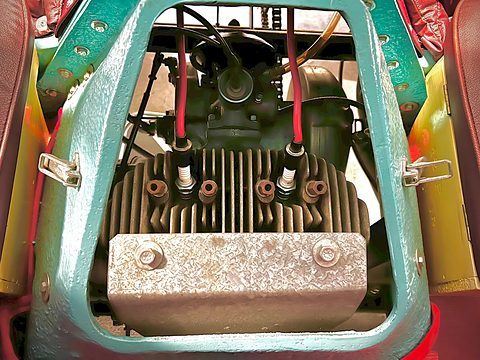
The engine sat across the car at the back, almost amidships, and drove by chains to a solid rear axle with no differential. To make that work the rear track was 12 inches narrower than the front, which was done by fitting the rear wheels inside out; some dealers turned them the “right” way round, and the tyres scrubbed.source 4 The first version, the Model A, had a 322 cc British Anzani twin. The Model T used Excelsior’s 328 cc Talisman Twin, giving 18 bhp at 5,000 rpm, and the T stood for Talisman, not, Motor Sport insisted, for Ford.source 4source 5

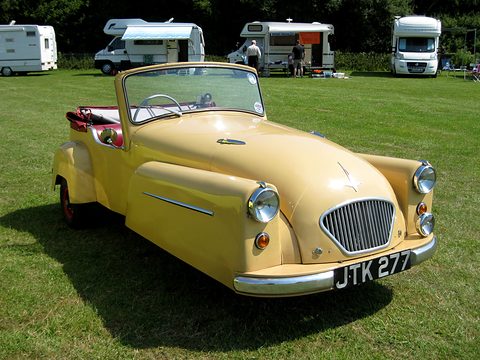
In June 1958 it cost £399 10s, or £427 17s as a De Luxe, and it was also sold as a kit, which avoided purchase tax.source 4source 3source 5 Motor Sport called it the least expensive true four-wheeler on the British market. That was also its weakness: as a four-wheeler it paid full road tax, while its three-wheeled rivals paid less.source 4source 3source 5

A modern cyclecar

Bill Boddy drove one for more than 800 km (500 miles) for Motor Sport, and placed it in a long line.source 4

It is fair to describe the Unicar as a modern cyclecar, descendant of the Bedelias, Rollos and G.N.s which proved commendably economical, if not particularly reliable.

W.B. (Bill Boddy), “A Modern Cyclecar”, Motor Sport, June 1958.source 4

He meant the cyclecars, the Bédélia and the GN among them. On a three-hour run to Peterborough the Unicar averaged 64 km/h (40 mph) and time and again passed and out-accelerated ordinary cars. It cornered flat and steered accurately, though it would oversteer when pushed; the ride was hard, the car wandered, and the brakes were just adequate. The gear change, Boddy thought, would delight an enthusiast. Driven fast, it was so loud that he suggested ear-plugs or Anadin be supplied with it.source 4 He listed the faults, crude trim, sharp edges, a cracked door pull and no fuel gauge, and concluded that it was worth considering as a second car or for the shopping, and that Opperman’s initiative deserved support.source 4 Seven years later he remembered it less fondly: he would not care to drive one any great distance, and it had done 53 mpg against the 75 claimed.source 7

The end

At Earls Court in October 1958 the Unicar stood unchanged beside a new and larger coupé, the Opperman Stirling.source 6source 8 In 1959 Opperman was bought by E. V. Industrials, which had no interest in cars, and car making stopped.source 1source 2 About 200 Unicars had been built.source 3source 5
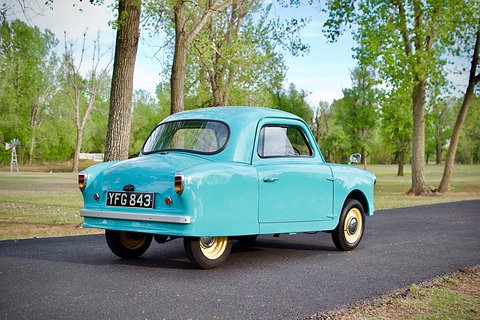
Back and side of a light-blue microcar with chrome bumper and small tail lamps on a park drive.
The Unicar T from behind: the rear wheels sit well inside the line of the front ones.Photo: Guards951, CC BY 4.0, via Wikimedia Commons
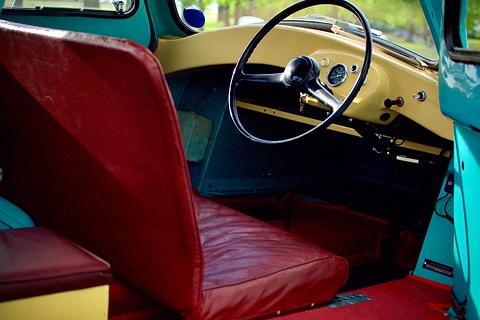
Two small red seats in the back of a light-blue cabin, a hump-shaped engine cover between them.
The rear seats of a 1958 Opperman Unicar Model T in the Williams Microcars collection, USA, in 2024, with the engine cover between them.Photo: Guards951, CC BY 4.0, via Wikimedia Commons
Finned twin-cylinder engine with spark-plug leads, framed by the light-blue engine cover opening.
The Excelsior twin two-stroke of a 1958 Opperman Unicar Model T under its opened cover between the rear seats, in the Williams Microcars collection, USA, in 2024.Photo: Guards951, CC BY 4.0, via Wikimedia Commons

Opperman Stirling

1958–⁠1959 · a record on this page

The Stirling was the Unicar’s intended successor: a larger glass-fibre coupé with independent rear suspension and a proper differential. It was shown at Earls Court in October 1958 with a 424 cc two-stroke derived from the Excelsior.source 1source 9source 8 Opperman planned an initial run of 50, to be fitted with Steyr-Puch flat-twin engines in Austria; the second of the two prototypes had the 493 cc Steyr-Puch. When E. V. Industrials bought the company in 1959 the plan was dropped, the blame put on supply problems and on BMC’s imminent Mini.source 1 Only those two prototypes were built.source 1source 9 One survives: it was in the Hammond microcar collection in Kent, which was auctioned on 27 October 2022.source 10

Pictures

More photographs, old and new

Variants

Two engines, one body

The Unicar and its sibling
VariantYearsWhat differsHow many
Unicar Model A1956–⁠1957The first version, with a 322 cc British Anzani twin of 15 hpNot known
Unicar Model Tc.1957–⁠1959328 cc Excelsior Talisman twin; standard and De Luxe; also sold as a kitAbout 200 of both models
Stirling1958–⁠1959A larger glass-fibre coupé with independent rear suspension and a differentialTwo prototypes

Specification

The Model T as Motor Sport tested it in June 1958, unless noted

Engine and drive

Engine and drive
EngineExcelsior Talisman Twin Mk VI two-stroke, 328 cc (58 × 62 mm), compression 7.9:1source 4
Power18 bhp at 5,000 rpmsource 4source 5
GearboxAlbion, three speeds and reverse, in a positive-stop gatesource 4
DriveEnclosed primary chain; an exposed final chain to a solid axle, no differentialsource 4
CarburettorAmal, gravity-fedsource 4

Body and chassis

Body and chassis
BodyTwo-door glass-fibre saloon on a glass-fibre platform with bonded metal side memberssource 4The Weiner museum says a steel-tube chassis
Front suspensionDouble wishbones with Girling strut unitssource 4
Rear suspensionLong trailing arms and a single central coil springsource 4
SteeringBurman box, two turns lock to locksource 4
BrakesGirling, cable-operatedsource 3source 4
Electrics12 V, Siba Dynastartsource 3source 4

Dimensions

Dimensions
Length2,946 mm (9 ft 8 in)source 42,896 mm (9 ft 6 in) by the Weiner museum and RM
Width1,473 mm (4 ft 10 in)source 44 ft 8 in by the Weiner museum
Height1,397 mm (4 ft 7 in)source 4
Rear track12 in narrower than the frontsource 4
Weight330 kg (6 cwt 2 qr) ready for the roadsource 4317 kg by the Weiner museum and RM

Performance and running

Performance and running
Top speed90 km/h (56 mph) indicated in third; cruising at 72–80 km/h (45–50 mph)source 445 mph by the Weiner museum
Consumption49 mpg driven hard, 57 mpg at 30 mphsource 4The maker claimed 75 mpg
FuelPetroil, about 3½ gallons (16 litres), for about 270 km (170 miles)source 4
Price new£399 10s; De Luxe £427 17s; £265 12s before purchase tax (June 1958)source 4

How many were built?

The only figure

About 200 builtAbout 200 of all types, the Weiner museum’s figure, which RM repeated when it sold the museum’s car. No other count has been found, so treat it as approximate.

  1. about 200Unicars of both models, 1956–⁠1959One source

    The Weiner museum, repeated in RM’s sale cataloguesource 3source 5

  • Two sources agreetwo good sources give the figure
  • One sourcea good source, alone
  • Unconfirmeda lead only, not yet checked

Famous for

Three points

  1. Cheapest in the show

    The Unicar was the cheapest car at the 1956 London Motor Show.

  2. Wheels inside out

    A narrow rear track, made by reversing the wheels, did away with the differential.

  3. Nothing opens

    No bonnet, no boot lid: the spare wheel came out through the passenger door.

Survivors and collecting

Today

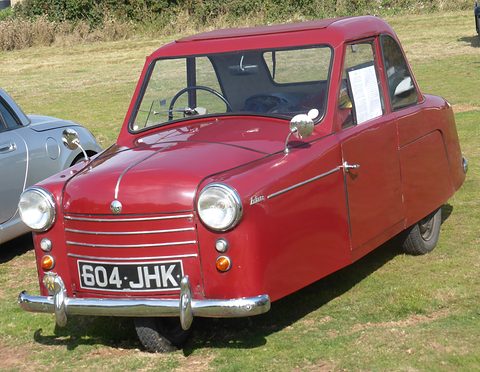
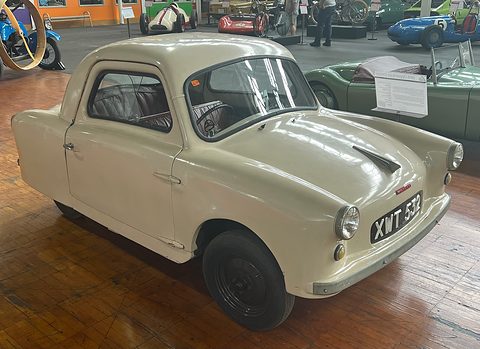
Few Unicars survive, and no count has been published; the Register of Unusual Microcars covers the make.source 3source 9 One was among the cars sold when the Hammond collection was dispersed in October 2022.source 10 The Weiner museum’s 1959 car, an older restoration in red with a cream roof, sold for US$9,200 at its auction in February 2013.source 5

Sources

Numbered as in the text

Most of the detail comes from one period road test, Motor Sport’s of June 1958. Sources are given as plain text; the links are on the Credits page.

  1. English Wikipedia, Opperman, read in full. Used as a lead; it cites Sedgwick and Gillies, Auto-Parade (1958) and the Motor Cycle Data Book (1960).
  2. Grace’s Guide, “S. E. Opperman”, read in full.
  3. Bruce Weiner Microcar Museum, “1959 Opperman Unicar (model T)”, tour page (2005), read in full.
  4. W.B. (Bill Boddy), “A Modern Cyclecar”, road test of the Unicar Model T, Motor Sport, June 1958, p. 27, read in full.
  5. RM Auctions, the Bruce Weiner Microcar Museum sale, Madison, Georgia, February 2013, lot 275, “1959 Opperman Unicar”.
  6. “The Cars at Earls Court”, Motor Sport, November 1958, p. 22.
  7. “Small-car topics”, Motor Sport, February 1965, p. 32.
  8. “Earls Court Impressions”, Motor Sport, November 1958, p. 46.
  9. Register of Unusual Microcars, “Opperman” (the Stirling), archived 2020, read in full.
  10. postwarclassic.de, “Farewell to the Hammond Microcar Museum”, read 7 October 2026.