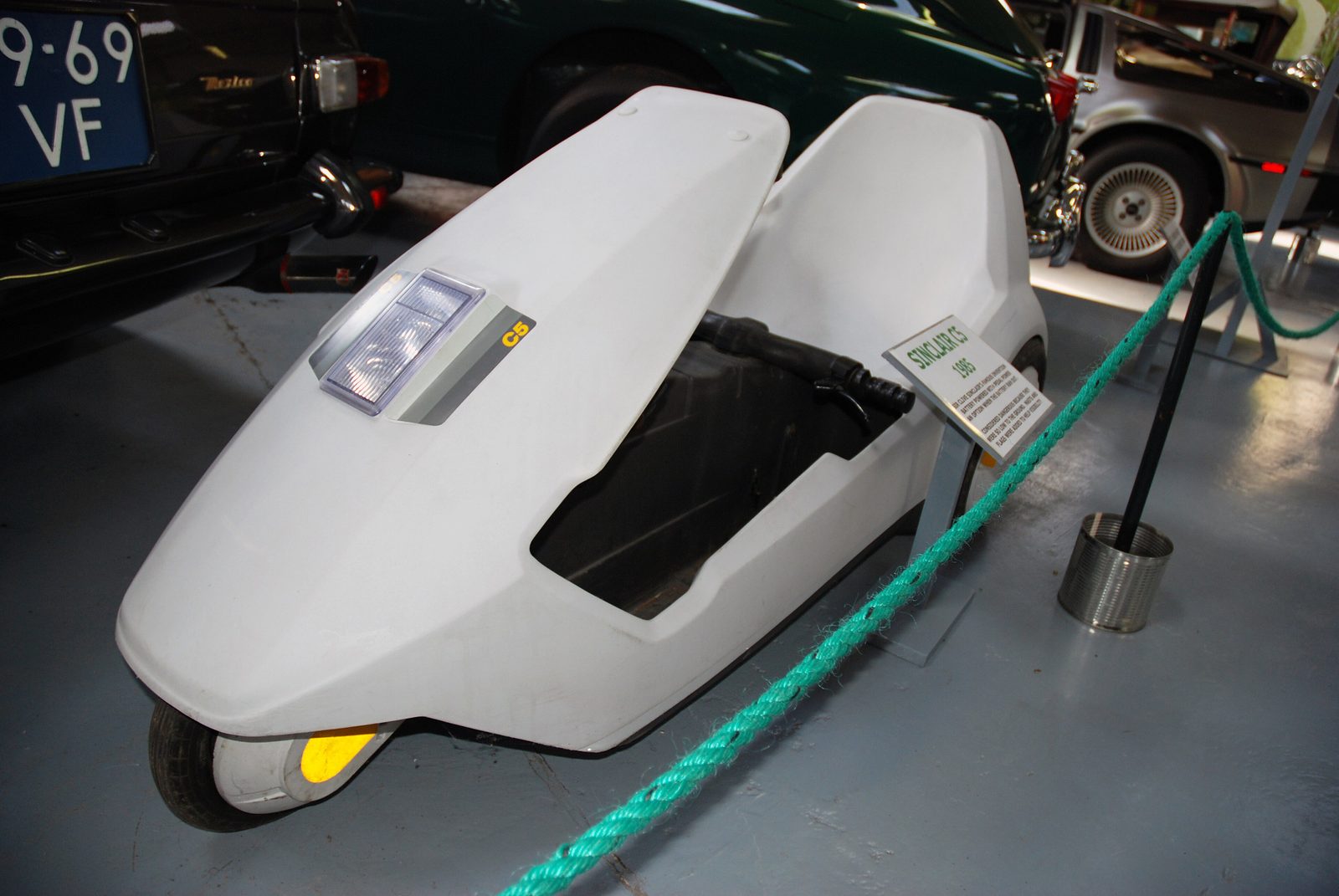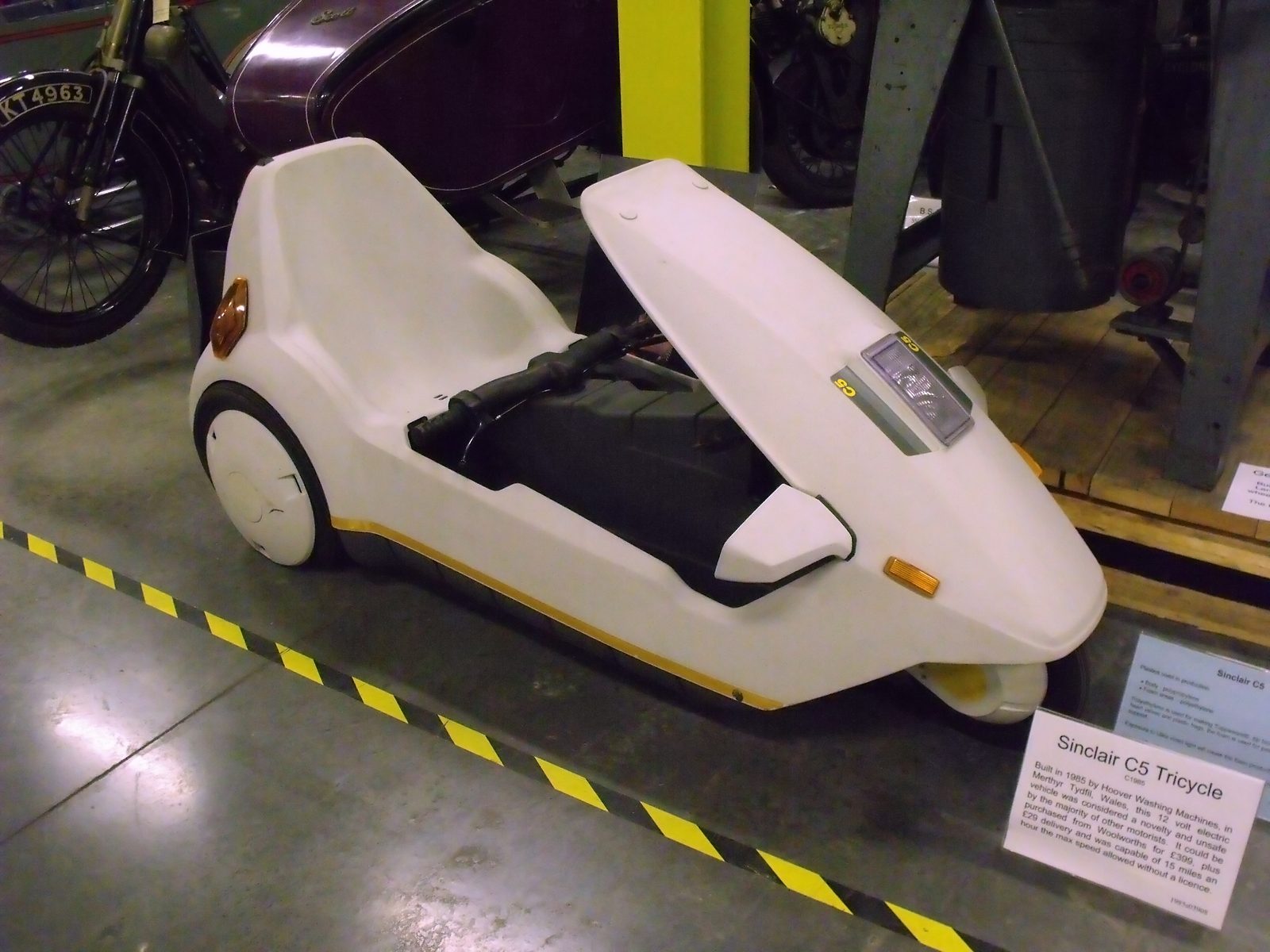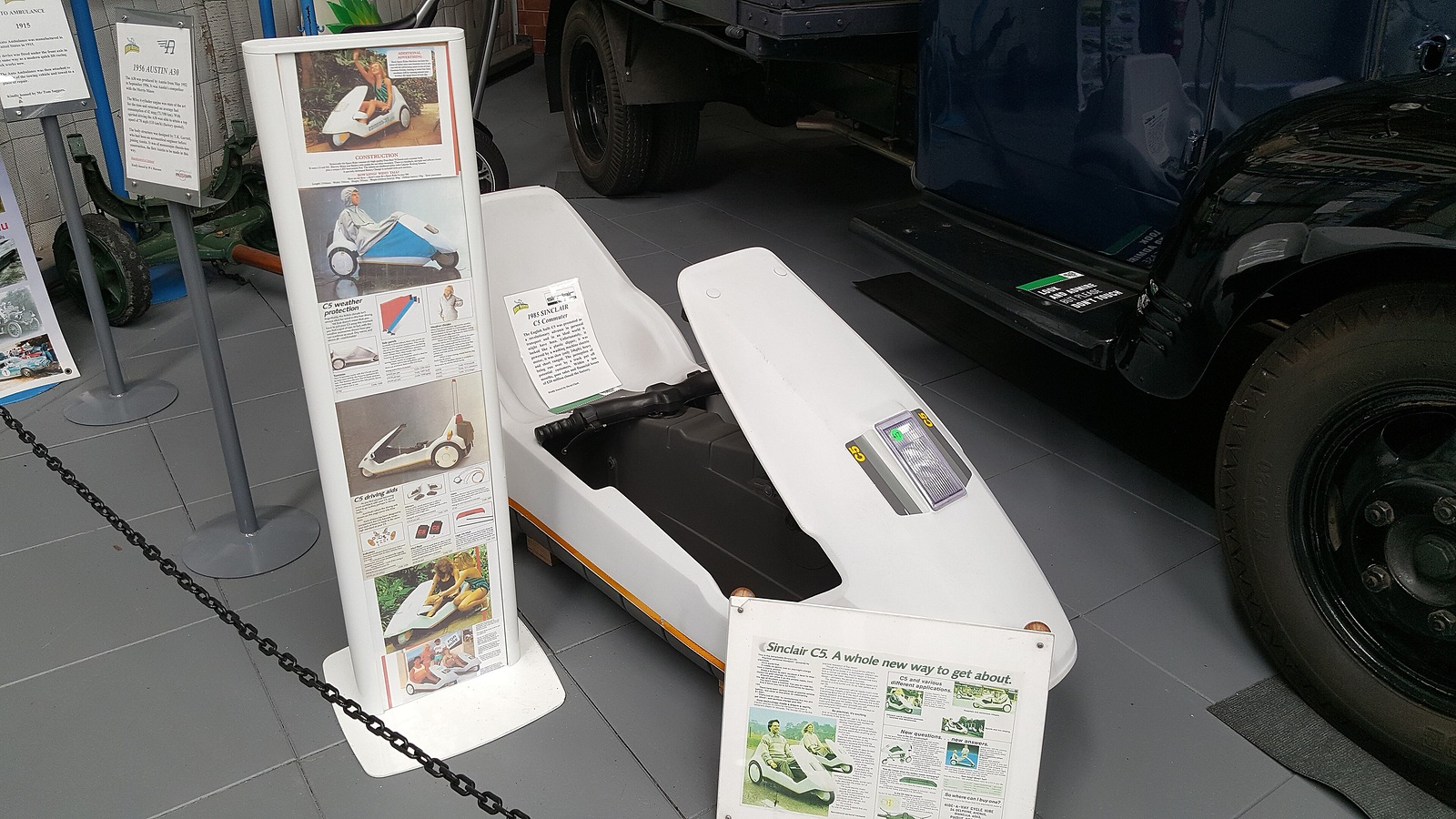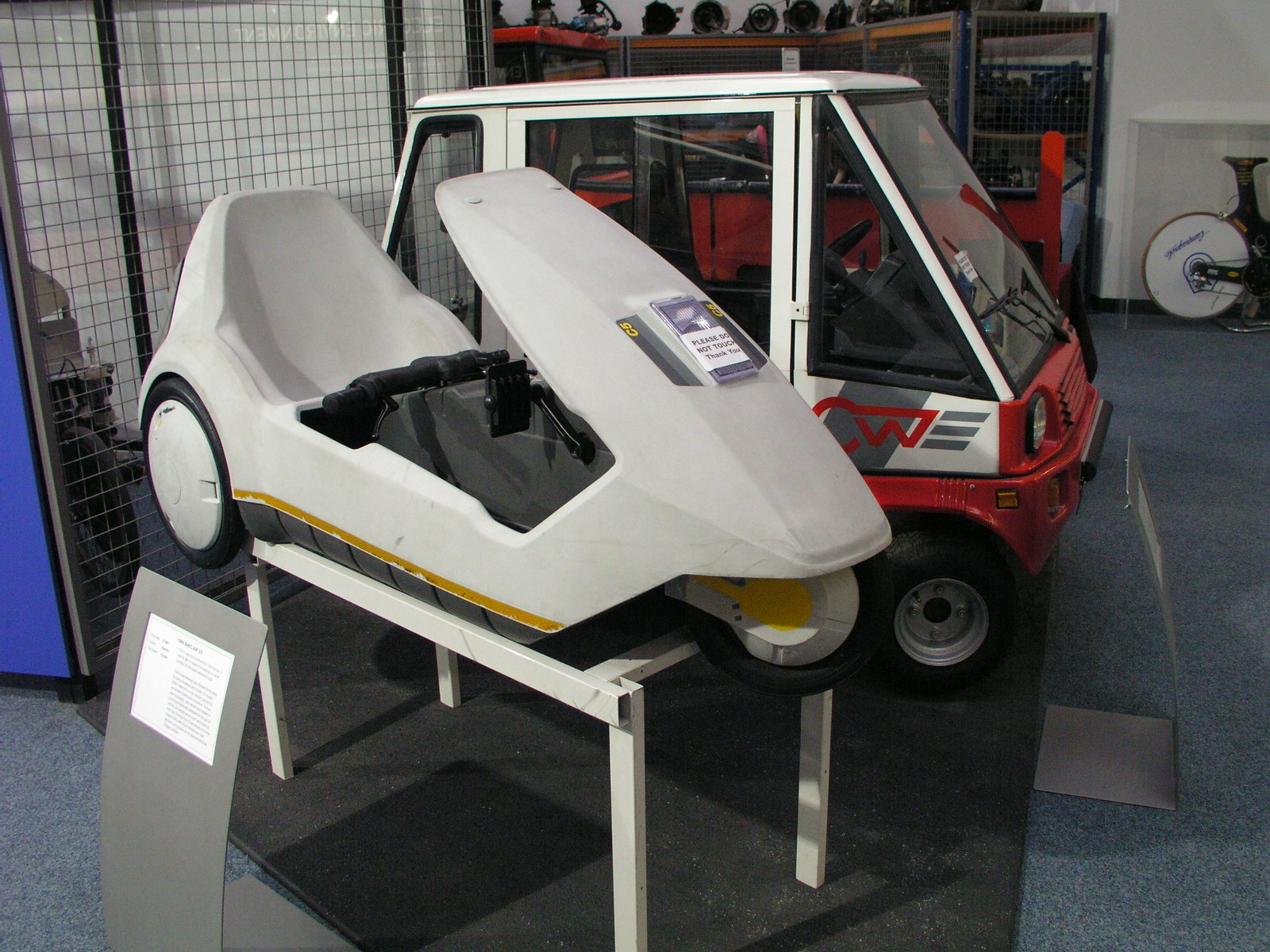
microcarfan
  • Electric microcar
  • Britain
  • Three wheels
  • One seat
  • Pedals

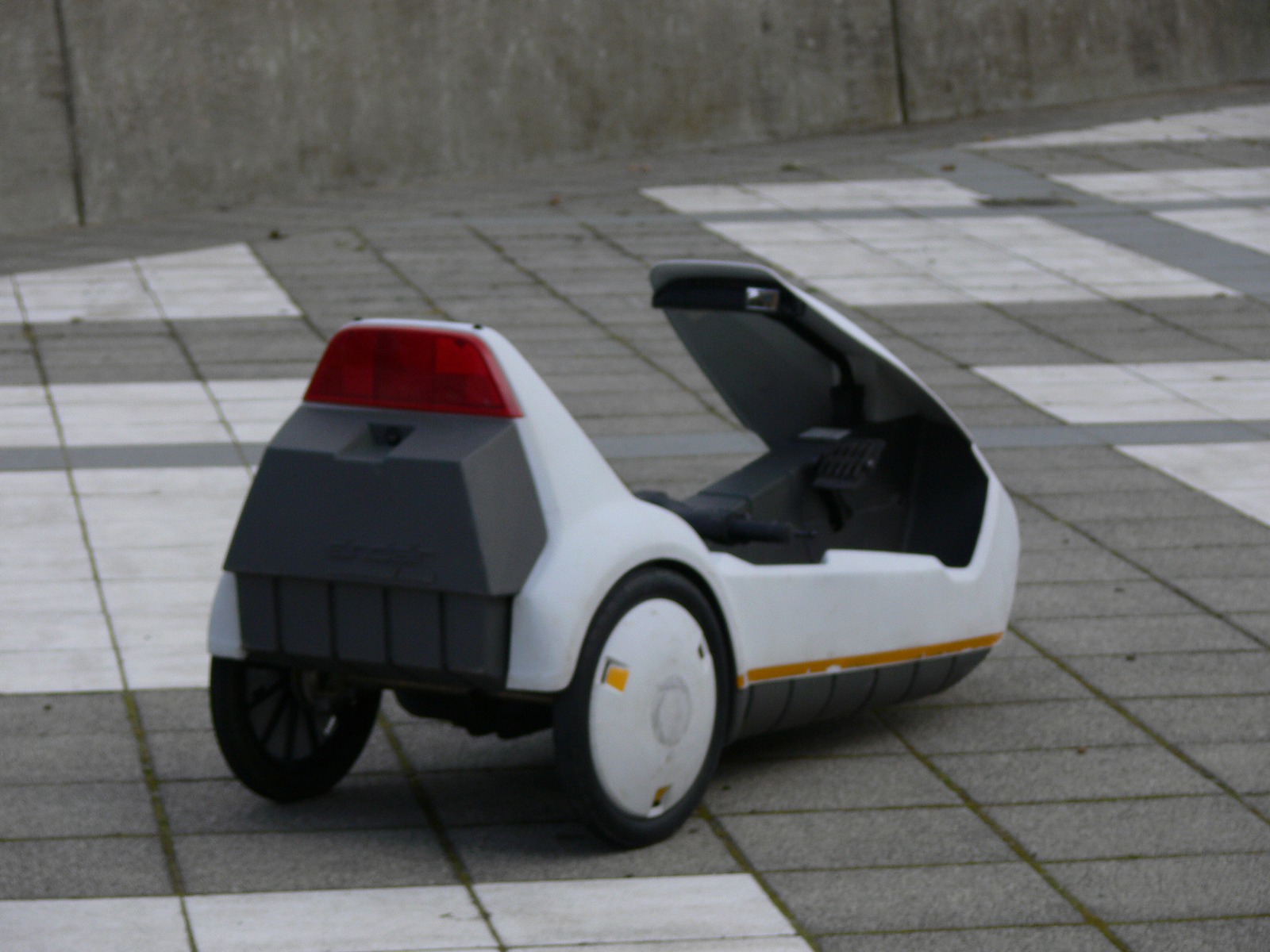
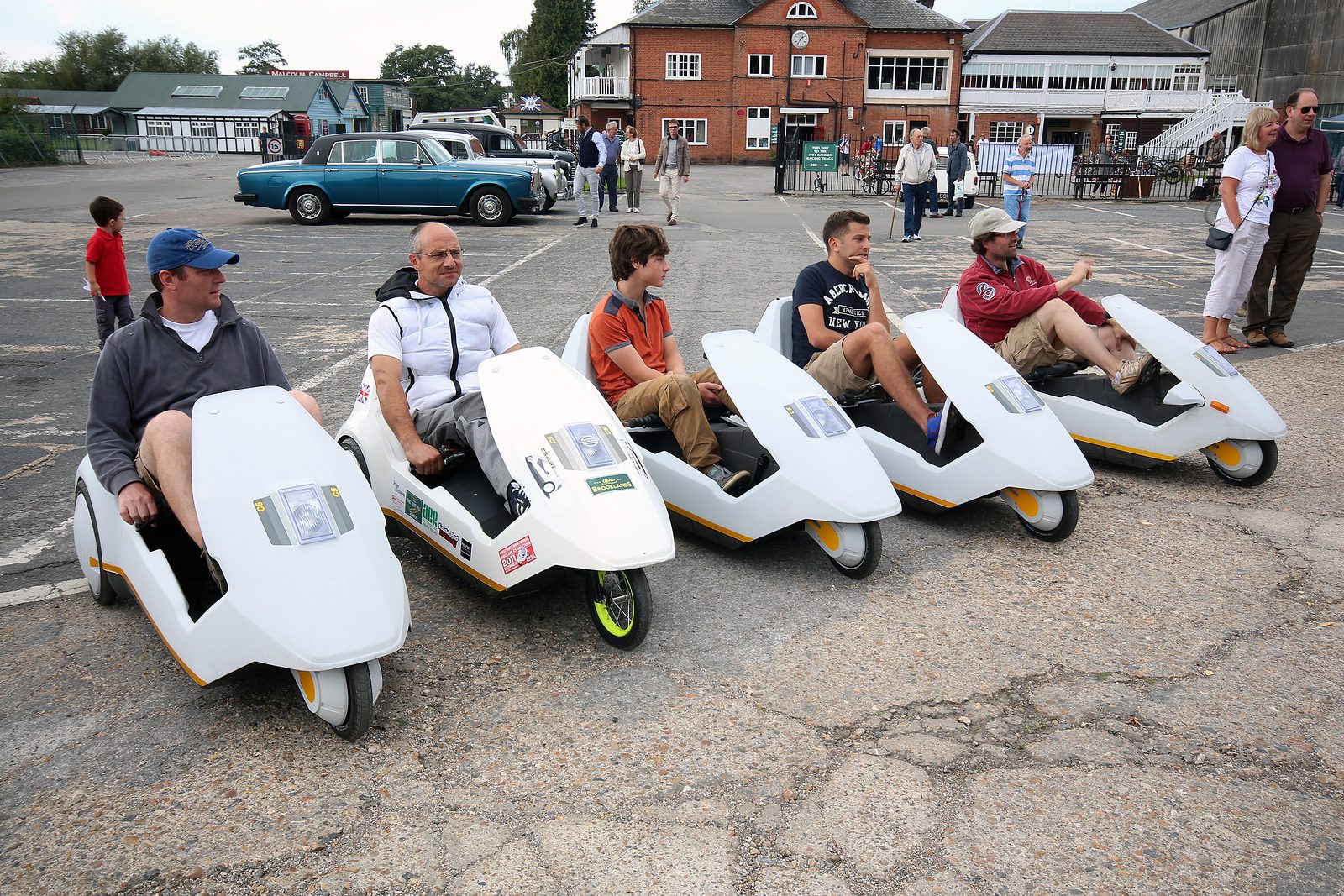
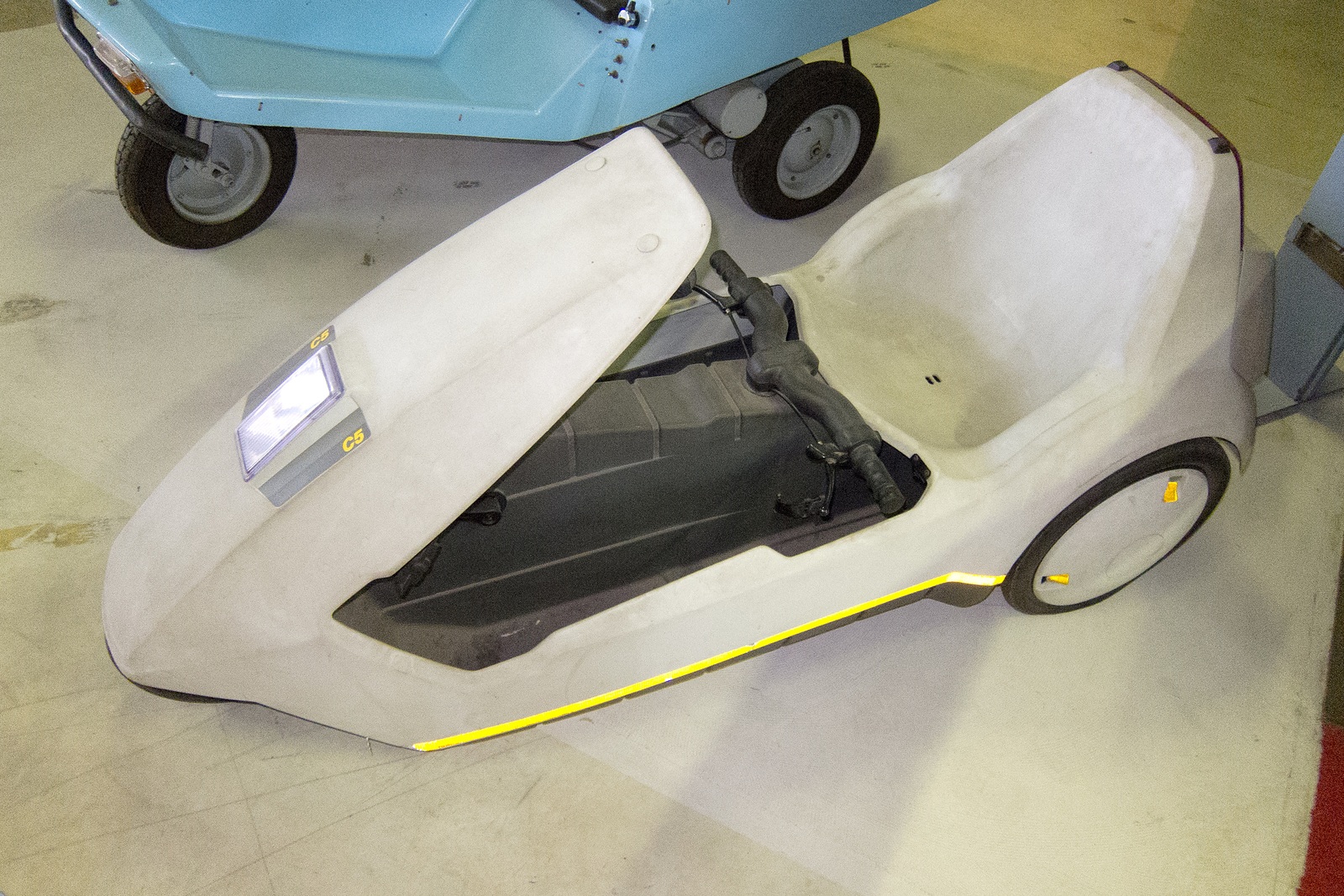
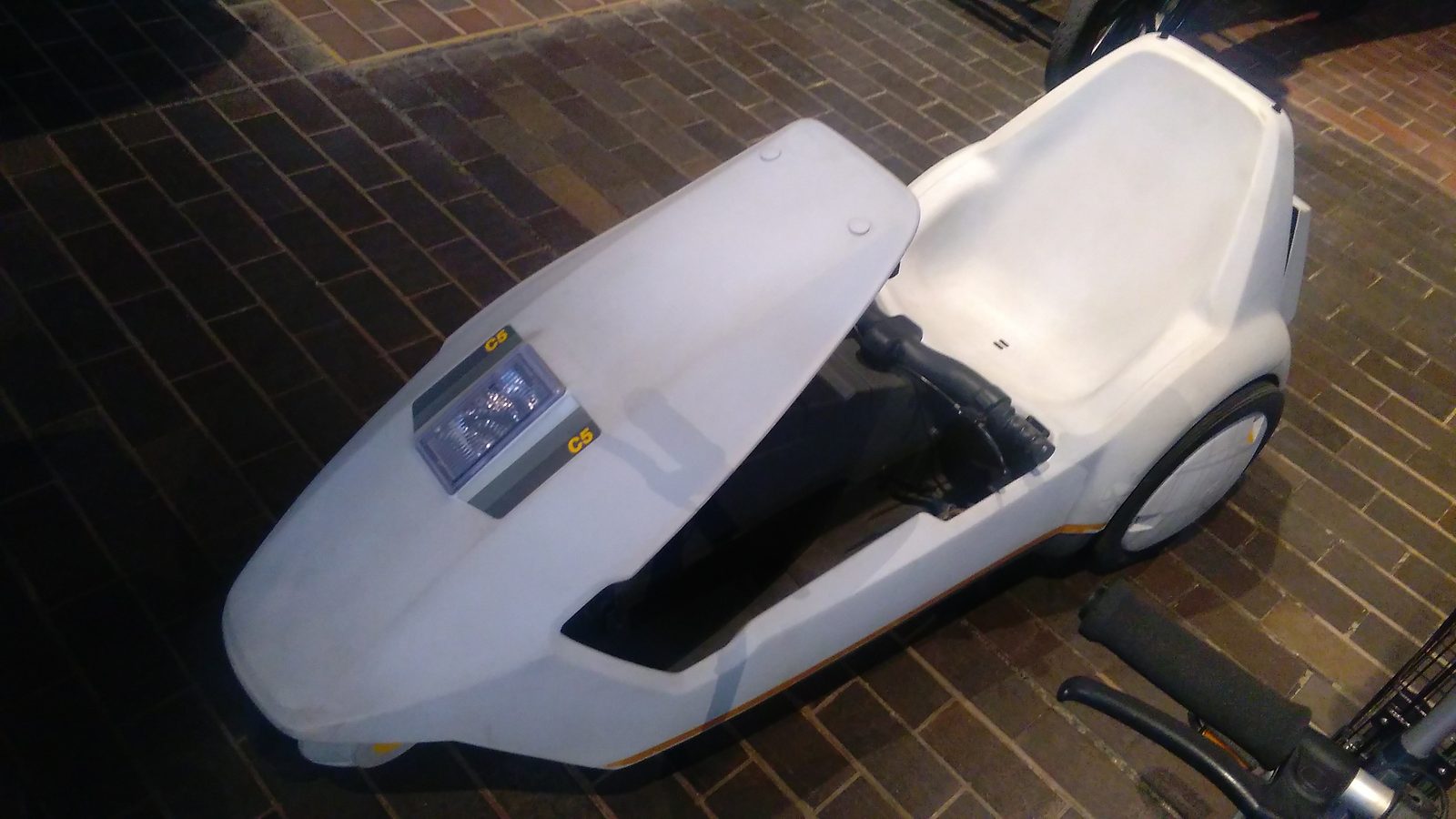
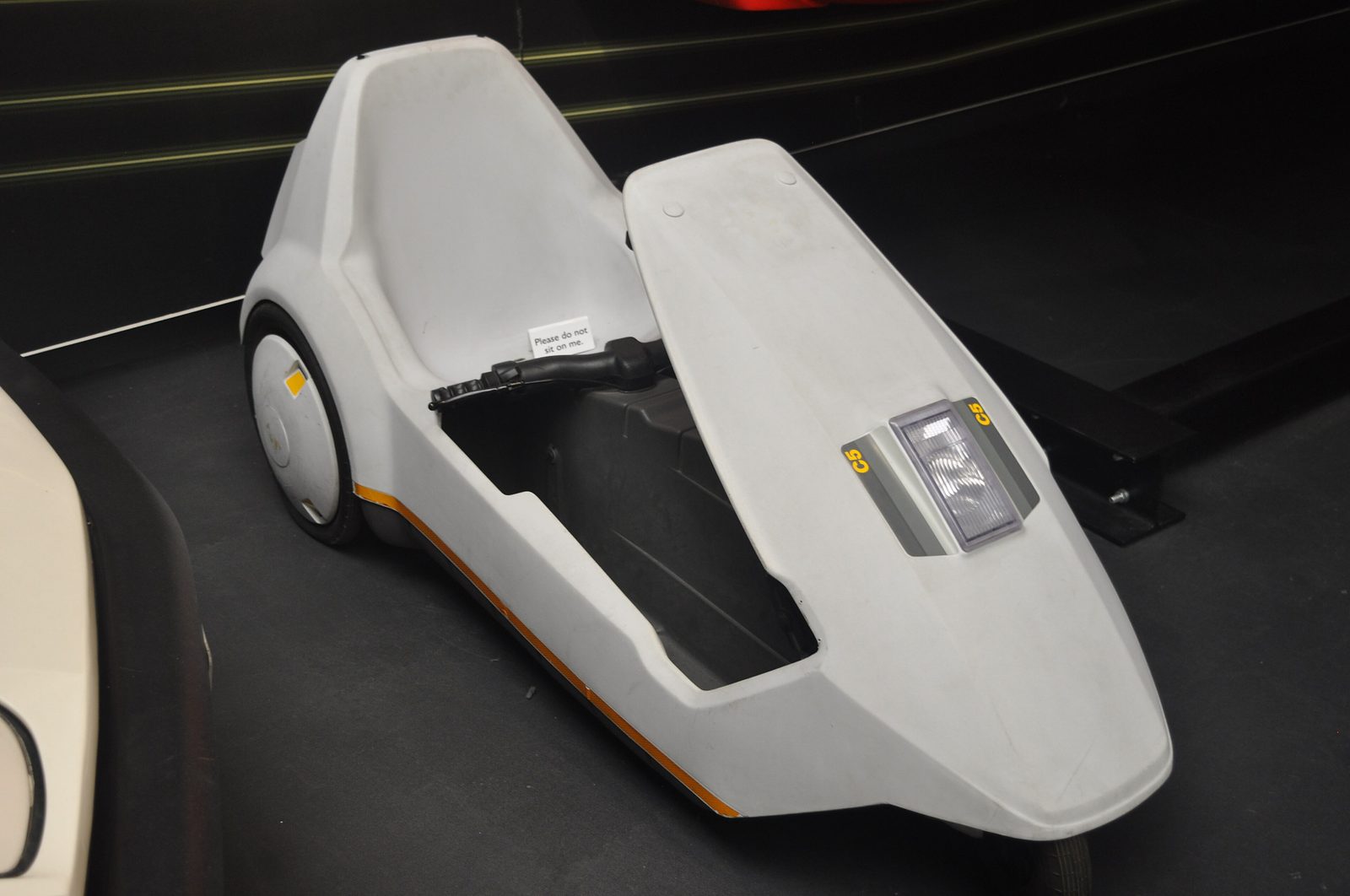
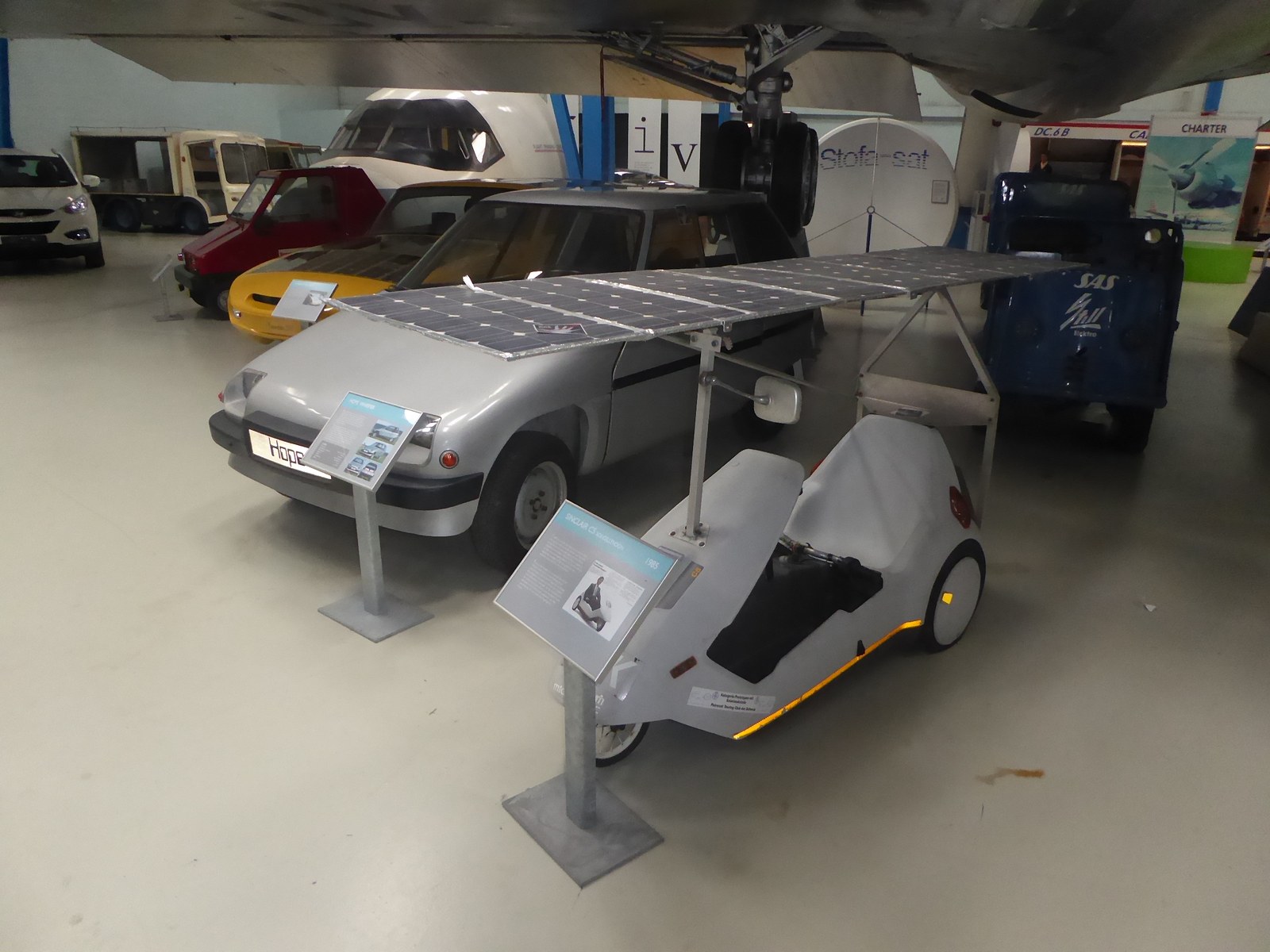
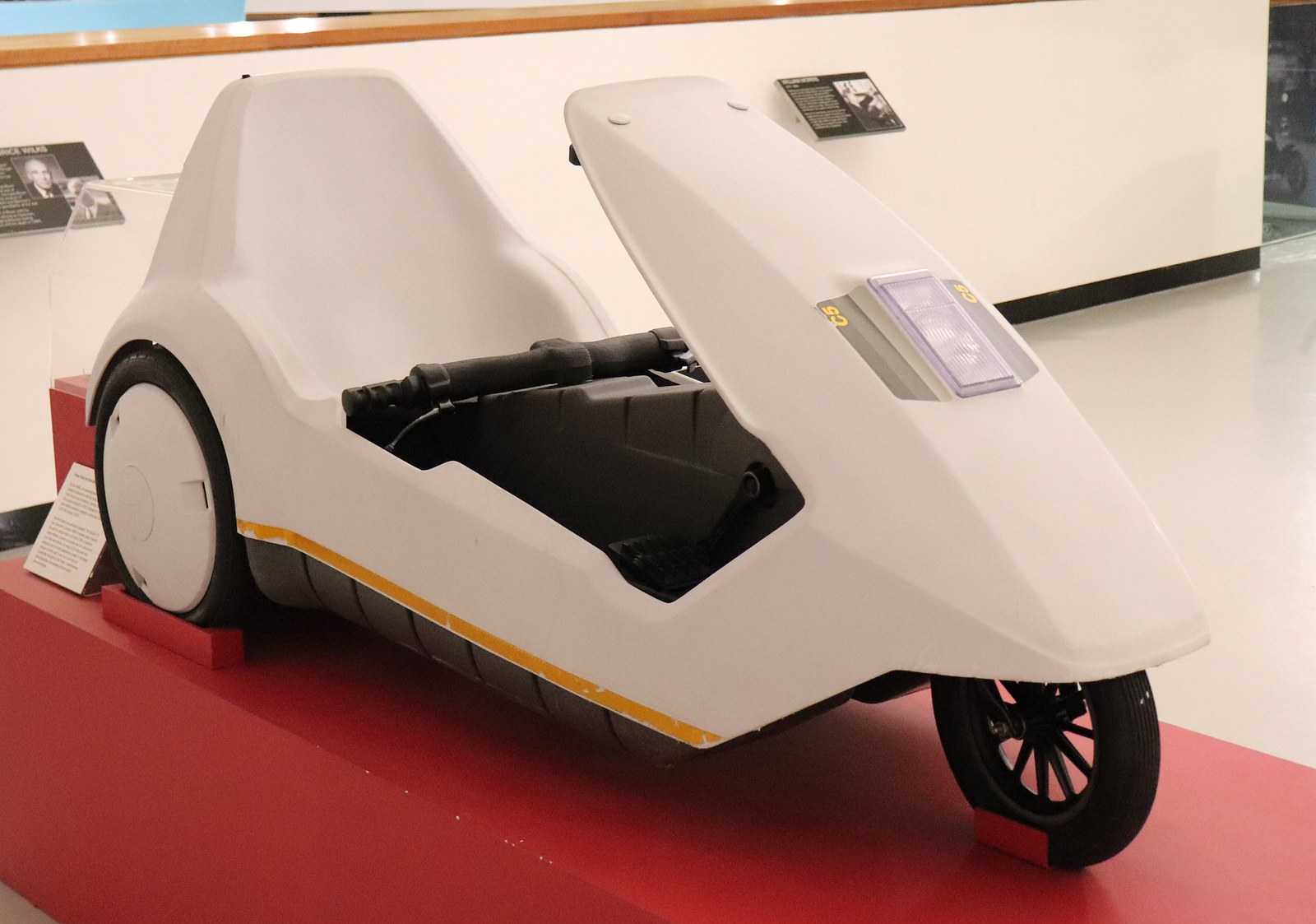
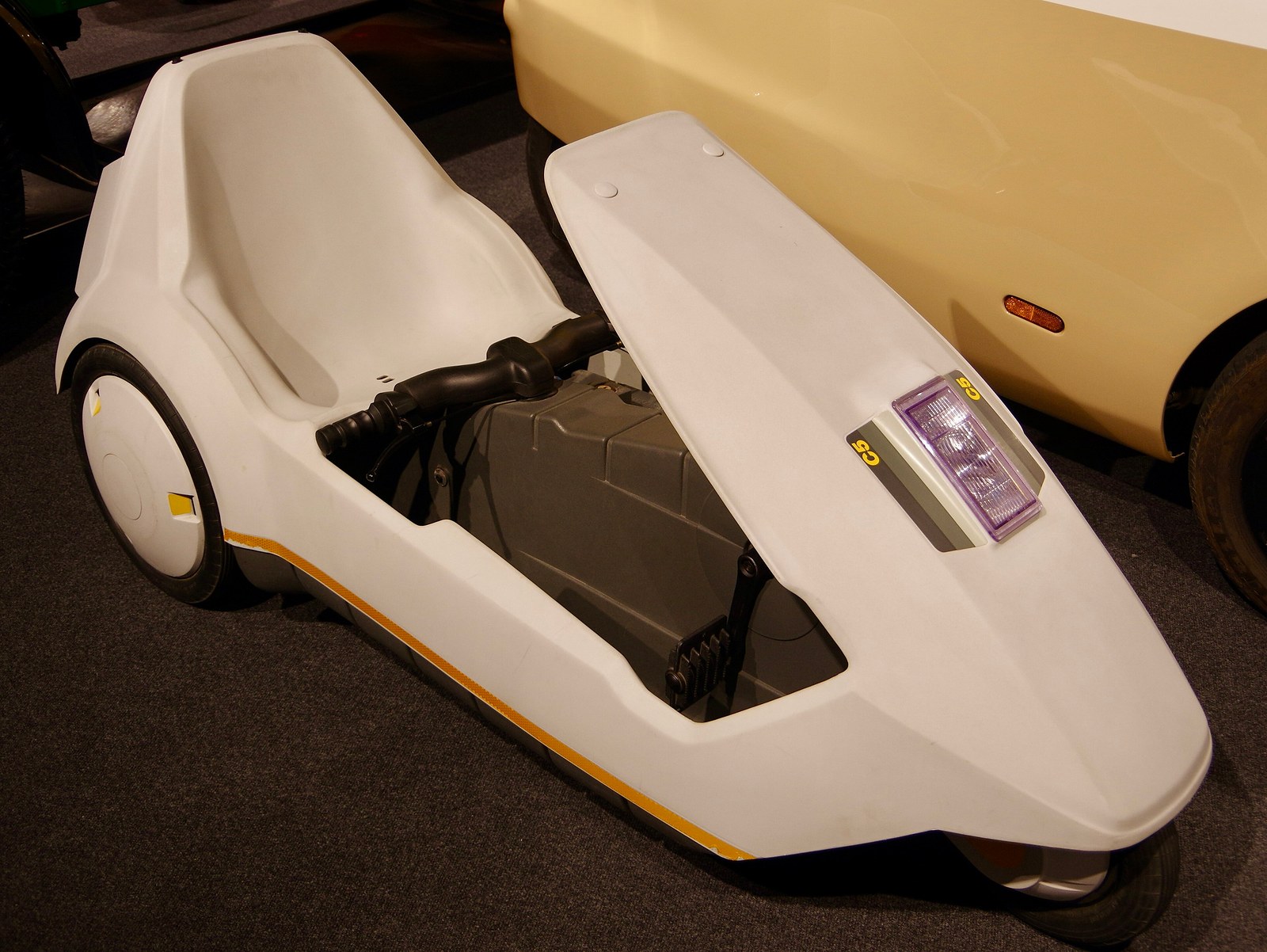
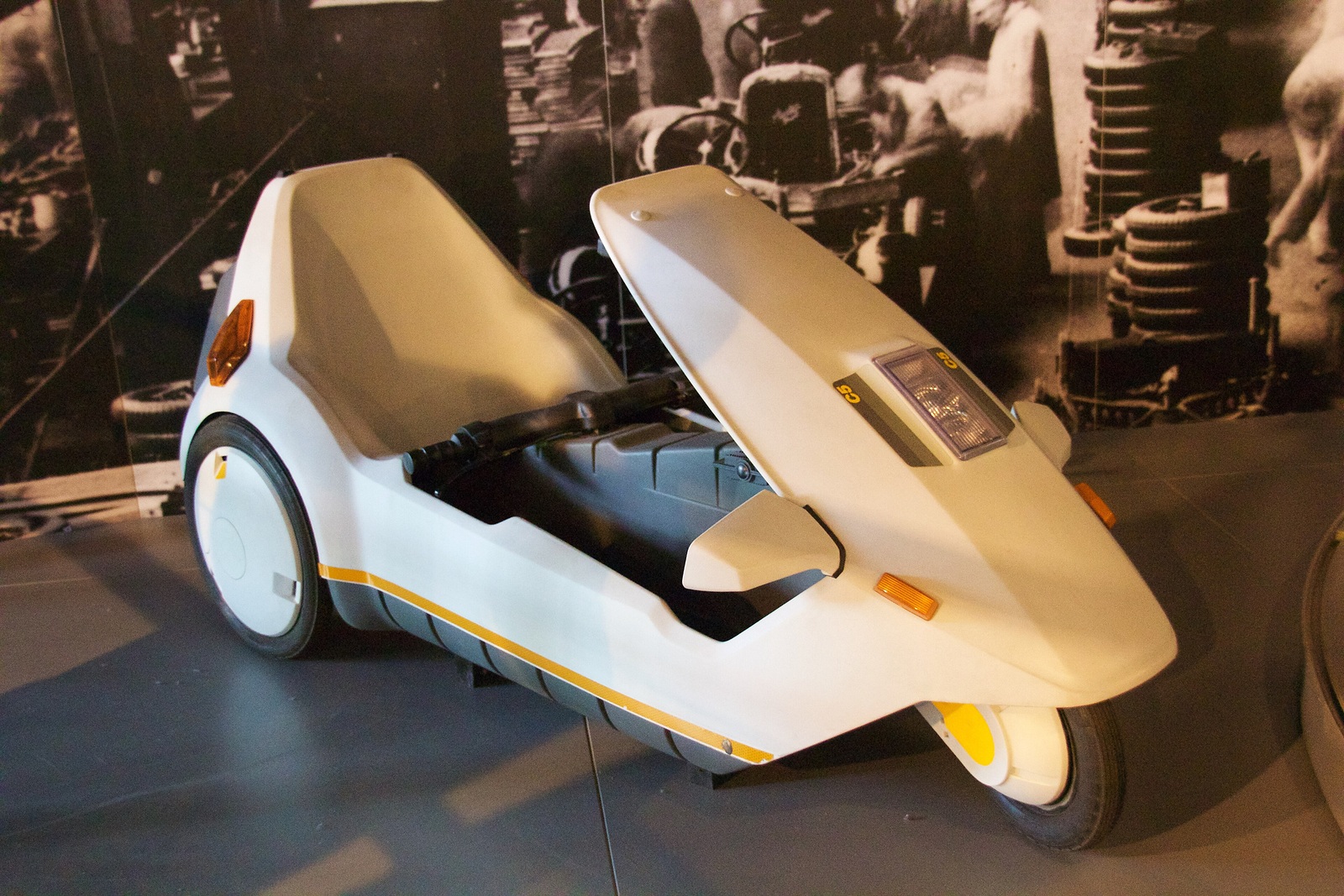
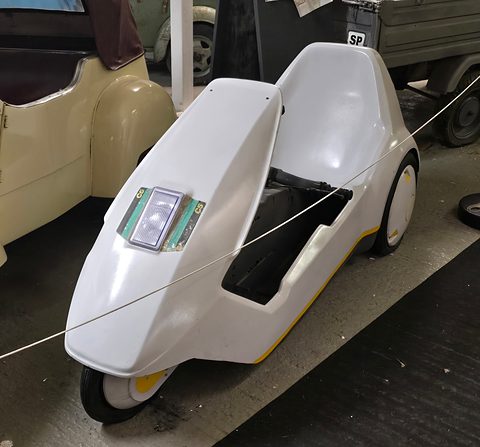
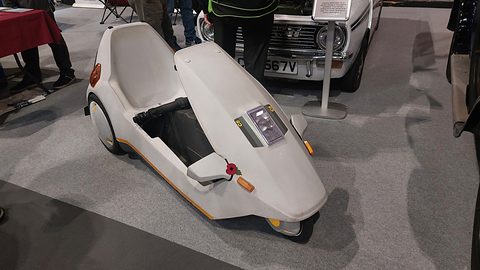
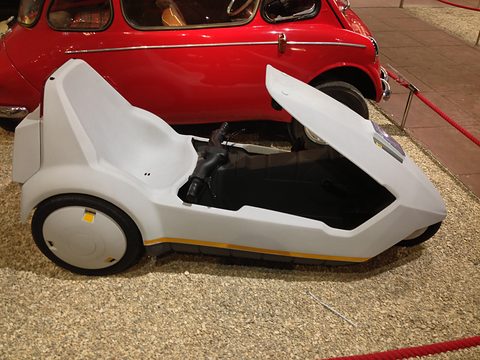
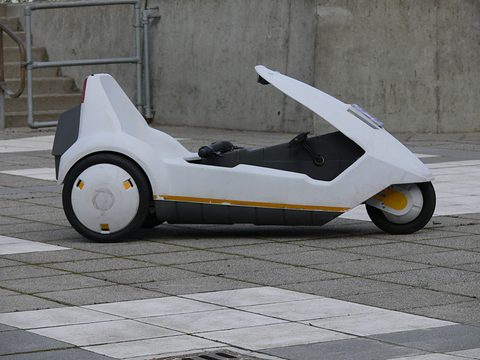
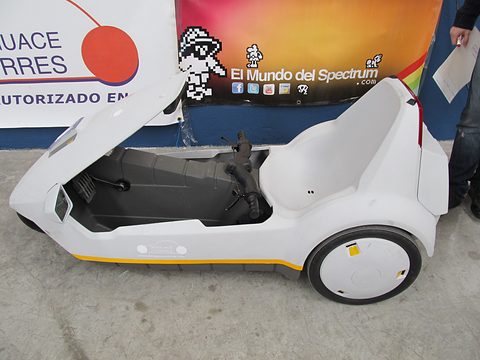
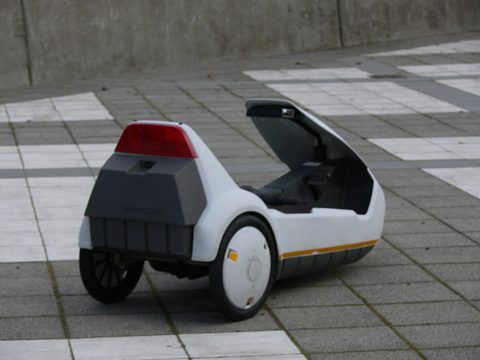
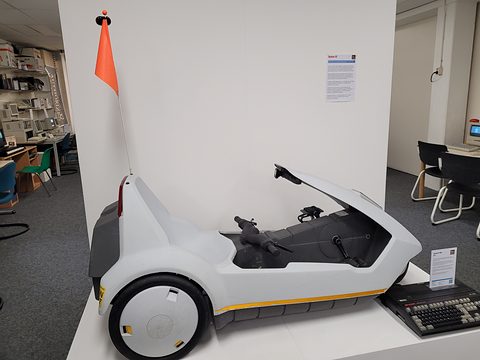
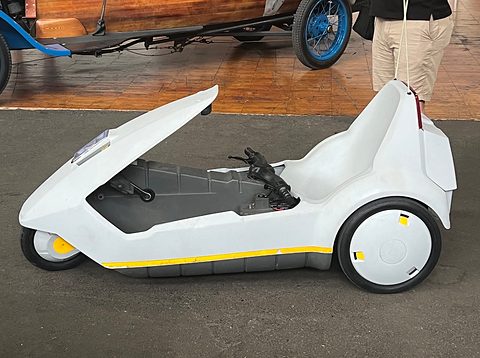
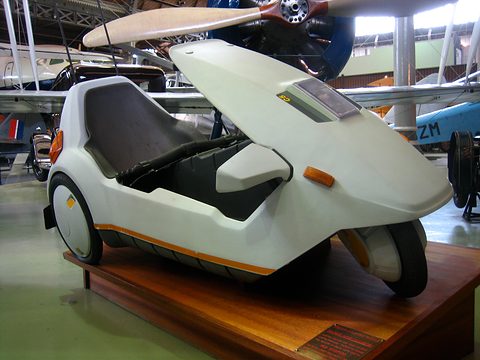
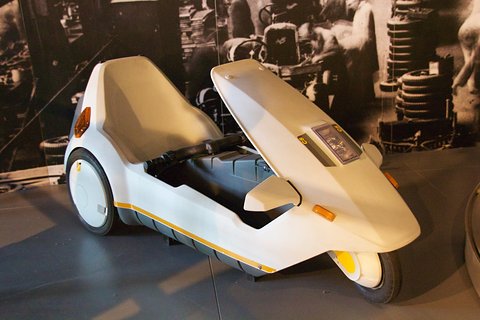
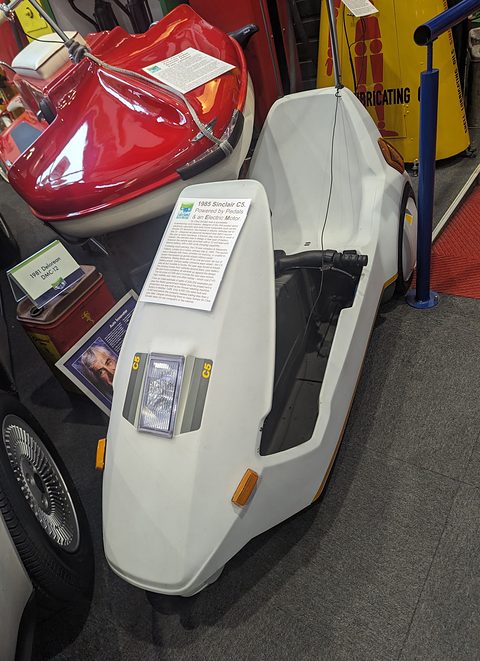
Sinclair C5

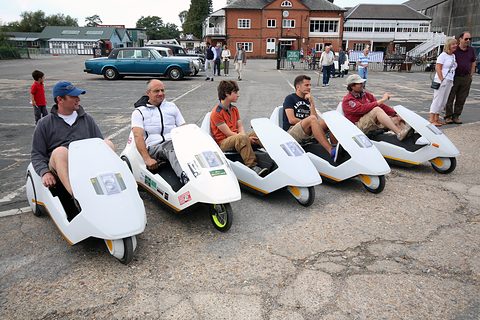
In law it was a pedal cycle with a little help, so a 14-year-old could ride it with no licence, no tax, no insurance and no helmet. It was launched in the snow, sold by mail order for £399, and stopped within eight months.

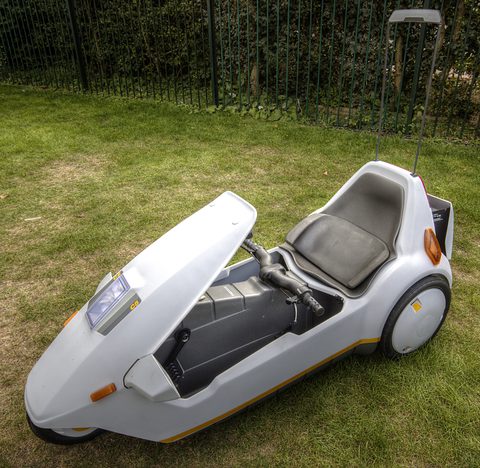
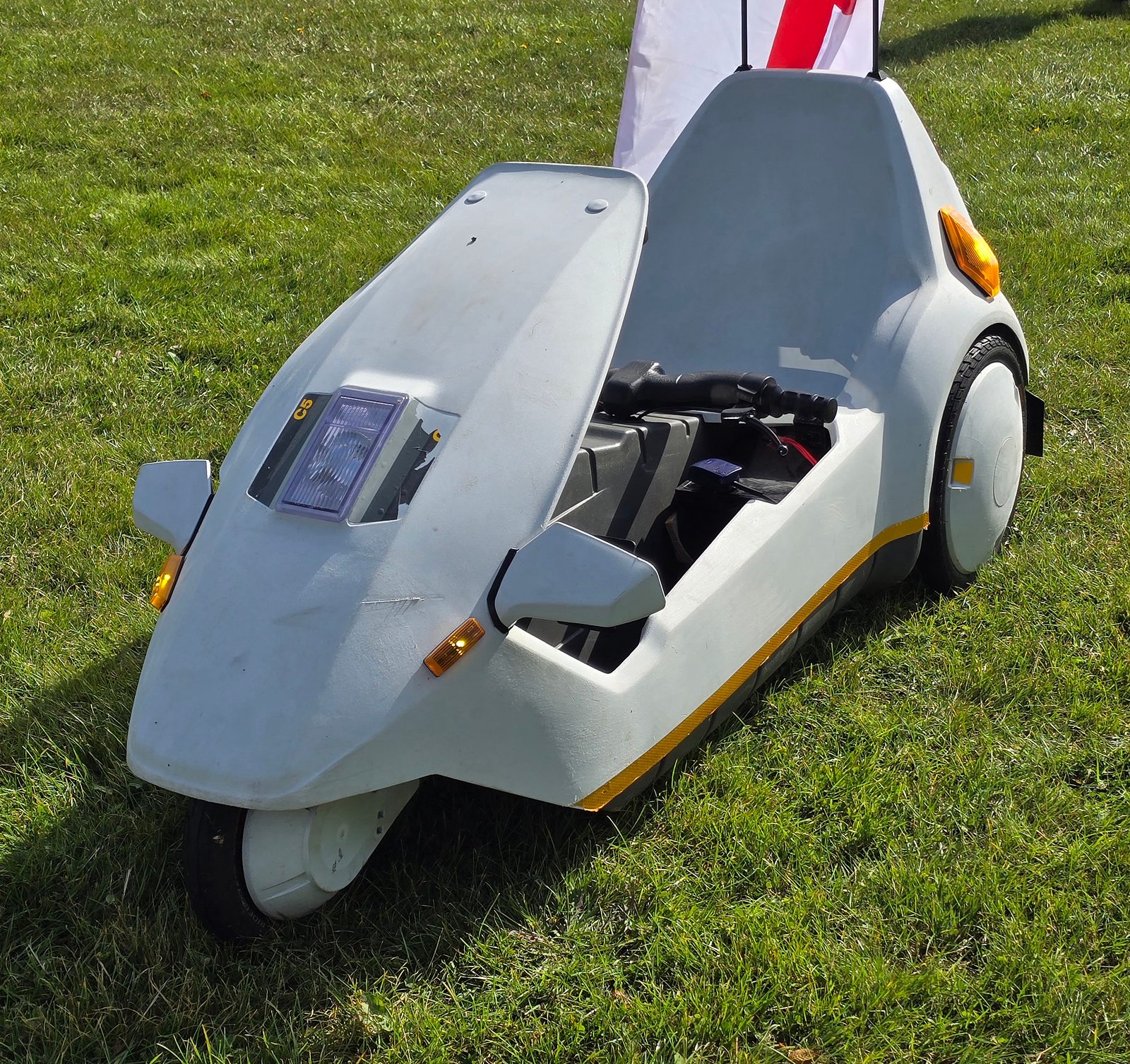
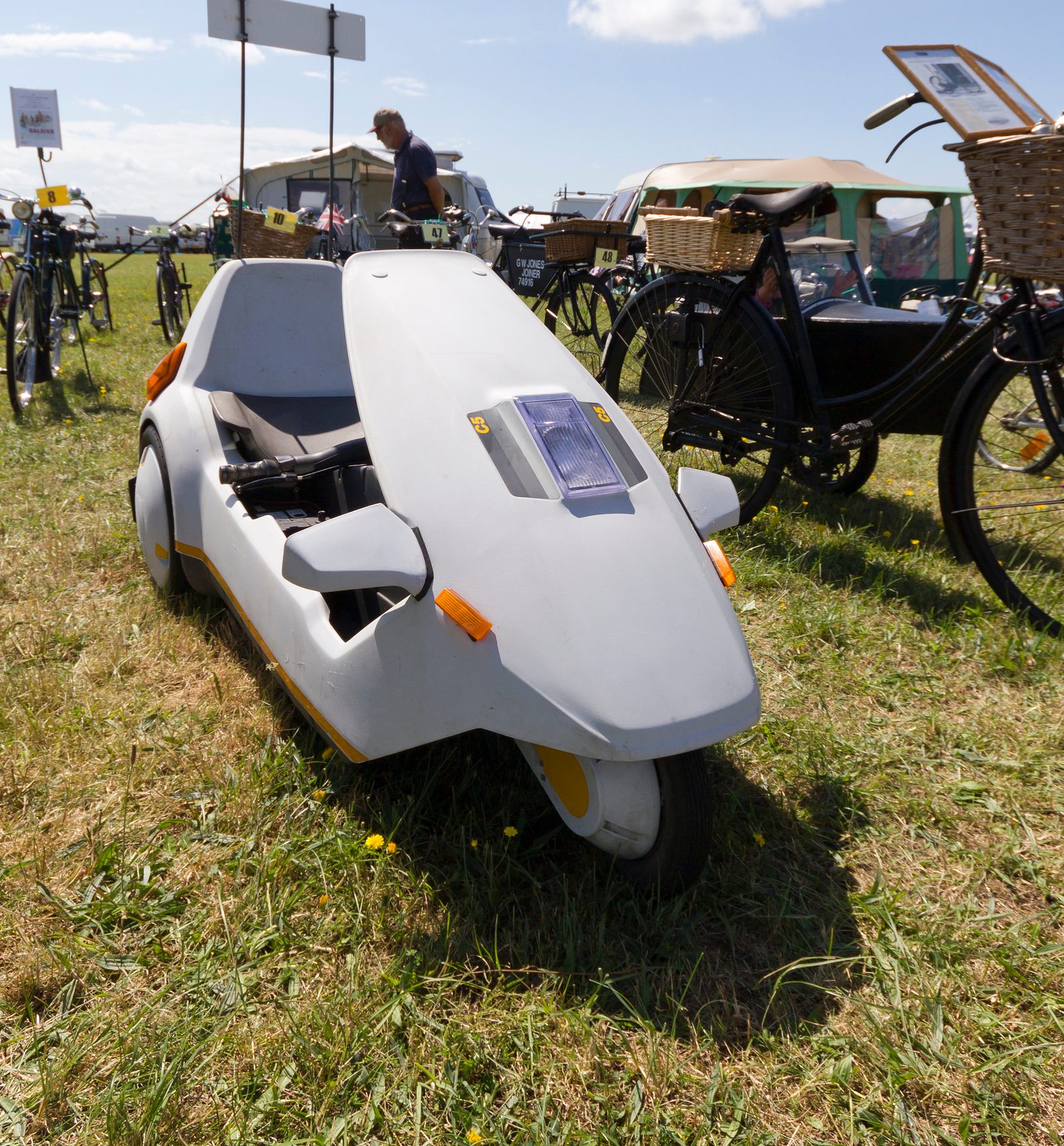
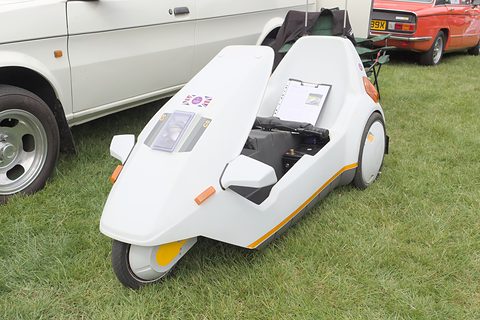
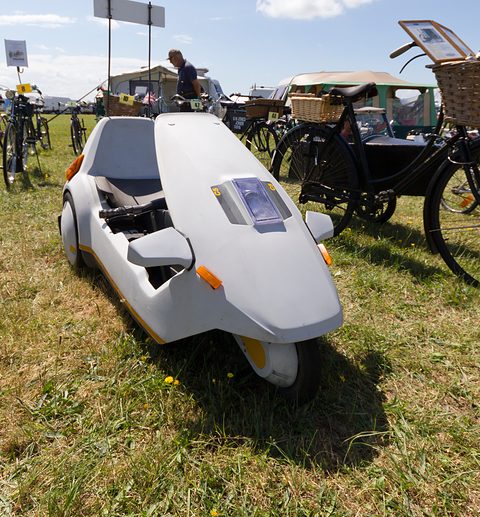
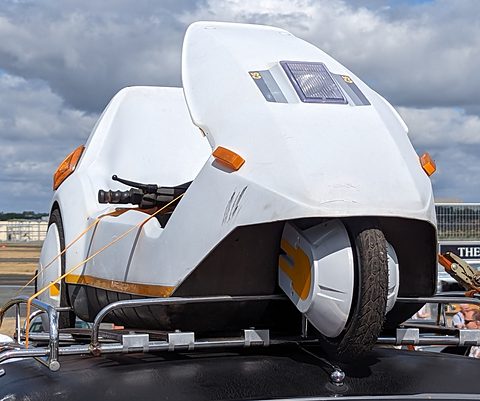
White recumbent electric tricycle with a yellow coachline, parked on grass beside a white car.
A Sinclair C5 on grass at the Nottingham Motor Show in 2026.Photo: Aethonatic, CC0, via Wikimedia Commons

At a glance

The spec plate

Sinclair C5

C5 · Merthyr Tydfil

Built
1984–⁠1985Full production from November 1984; launched 10 January 1985; stopped August 1985
Country
BritainBuilt by Hoover at Merthyr Tydfil, South Wales
Maker
Sinclair Vehicles LtdAssembled by Hoover; chassis engineered by Lotus
Engine
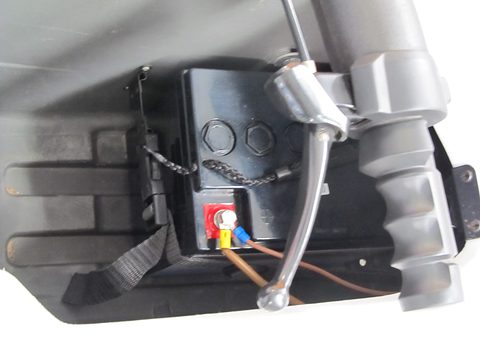
250 W Polymotor electric motor12 V lead-acid battery, and pedals
Power
250 W0.25 kW, the legal limit for an assisted tricycle
Length
1,744 mm744 mm wide, 795 mm high
Weight
45 kgWith its battery; about 30 kg without
Seats
1Reclining, in an open cockpit
Wheels
3One at the front, two at the back; the motor drives one rear wheel
Price new
£399By mail order, January 1985; £428 by the National Motor Museum
Production
about 14,000“Just under 17,000” in German Wikipedia; see below
Top speed
24km/h24 km/h15 mph; about 12.5 mph in practice

How big is it?

True proportion

1.74 m

It is 1,226 mm shorter than a Fiat 500, about one adult laid end to end.

  • 0.74 m wide
  • 45 kg: about one adult
  • A pedal tricycle in law, not a car
Drawn at true proportion. The track is 3.6 metres long; the adult stands at the same scale. The Peel P50 is the smallest production car, on every page for comparison.

The story

History

Sir Clive Sinclair was famous for pocket calculators and the ZX81 and ZX Spectrum home computers, and he had wanted to build an electric vehicle since the 1970s (more in electric microcars).source 1source 2 The idea went back to a holiday job at Solartron in the late 1950s. In the early 1970s, at Sinclair Radionics in St Ives, he had Chris Curry, later of Acorn, research electric vehicles; they fitted a thin motor to a child’s scooter before calculators took over.source 1 Around Christmas 1979 Sinclair hired Tony Wood Rogers, an engineer from the Radionics days, to study a one-person replacement for the moped, with a top speed of 30 mph, at least 30 miles’ range and a price of no more than £500. Development of this C1 moved to the University of Exeter in 1982 for wind-tunnel tests of glass-fibre shells. Ogle Design was hired to style it and engineer it for production, but Ogle’s car-like approach pushed the weight above 150 kg (330 lb), and by March 1983 the C1 had been stopped.source 1

That month Sinclair sold Sinclair Research shares in a £12 million deal and put £8.3 million into a new company, Sinclair Vehicles; Barrie Wills, formerly of DeLorean, became its managing director.source 1source 2source 3 The law had just moved his way. Electric vehicles had been freed from road tax in March 1980,source 1 and the Electrically Assisted Pedal Cycles Regulations 1983, in force from 12 August that year, took a new class of machine out of the definition of a motor vehicle. A tricycle qualified if it weighed no more than 60 kg, had pedals by which it could be propelled, and had no motor but an electric one of no more than 0.25 kW, which could not drive it faster than 15 mph.source 4 It needed no driving licence, road tax, insurance or helmet, and could be ridden from the age of 14.source 1source 5source 6 English Wikipedia says cycle makers such as Raleigh had lobbied for the change.source 1 Sinclair shrank his car to fit, as a single-seat electric three-wheeler, and planned it as the first of a family: a two-seat C10 and a C15 car were to follow.source 1source 6 One carmaker told The Economist in June 1983: “If it were anyone but Sinclair, we’d say he was bonkers.”source 1

Ogle, Lotus and Hoover

Ogle drew the three-wheeled C5, which looks related to its Bond Bug, and Wood Rogers chose handlebars under the driver’s knees so that getting in and out would be easy.source 1 Lotus was brought in in the autumn of 1983 to detail the design, build prototypes and test rigs, and test the car at MIRA; development took 19 months, in secret.source 1 Gus Desbarats, a 23-year-old graduate of the Royal College of Art, was given eight weeks to restyle the shell, having asked for four months, and added the High-Vis Mast, a tall reflective pole. He later described his job as “convert[ing] an ugly pointless device into a prettier, safer, and more usable pointless device”.source 1 More on Sinclair and his team is in the designers.

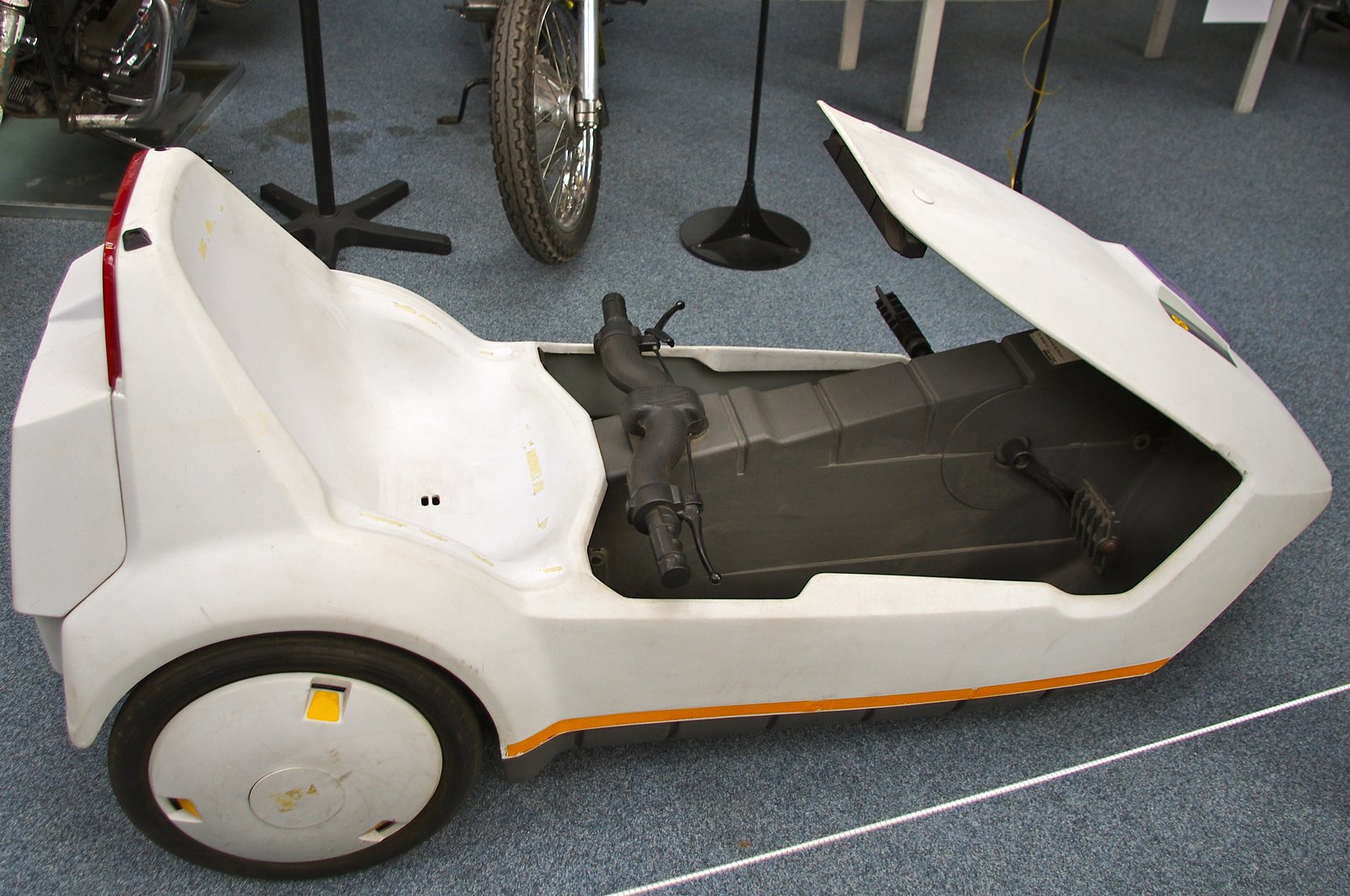
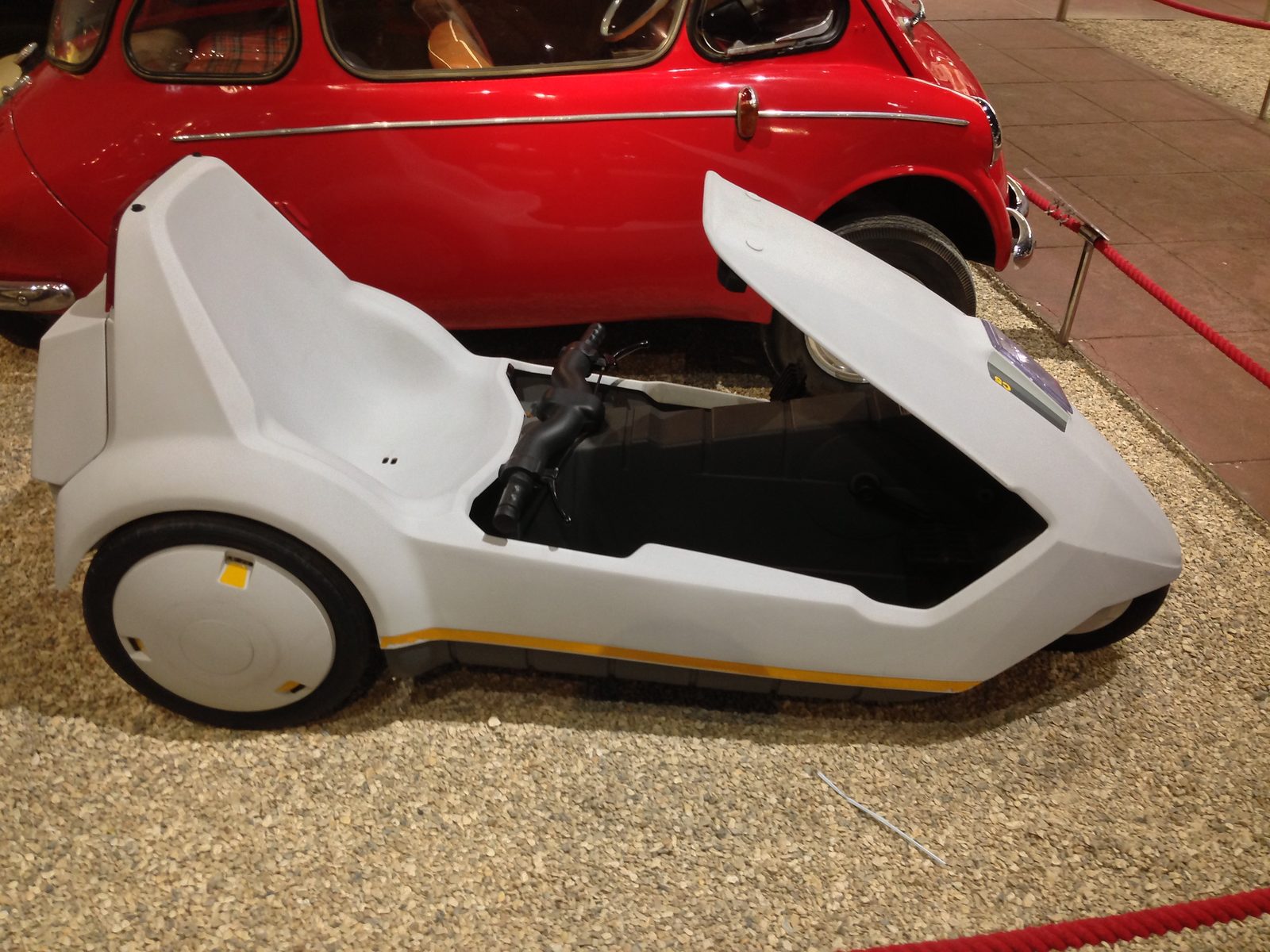
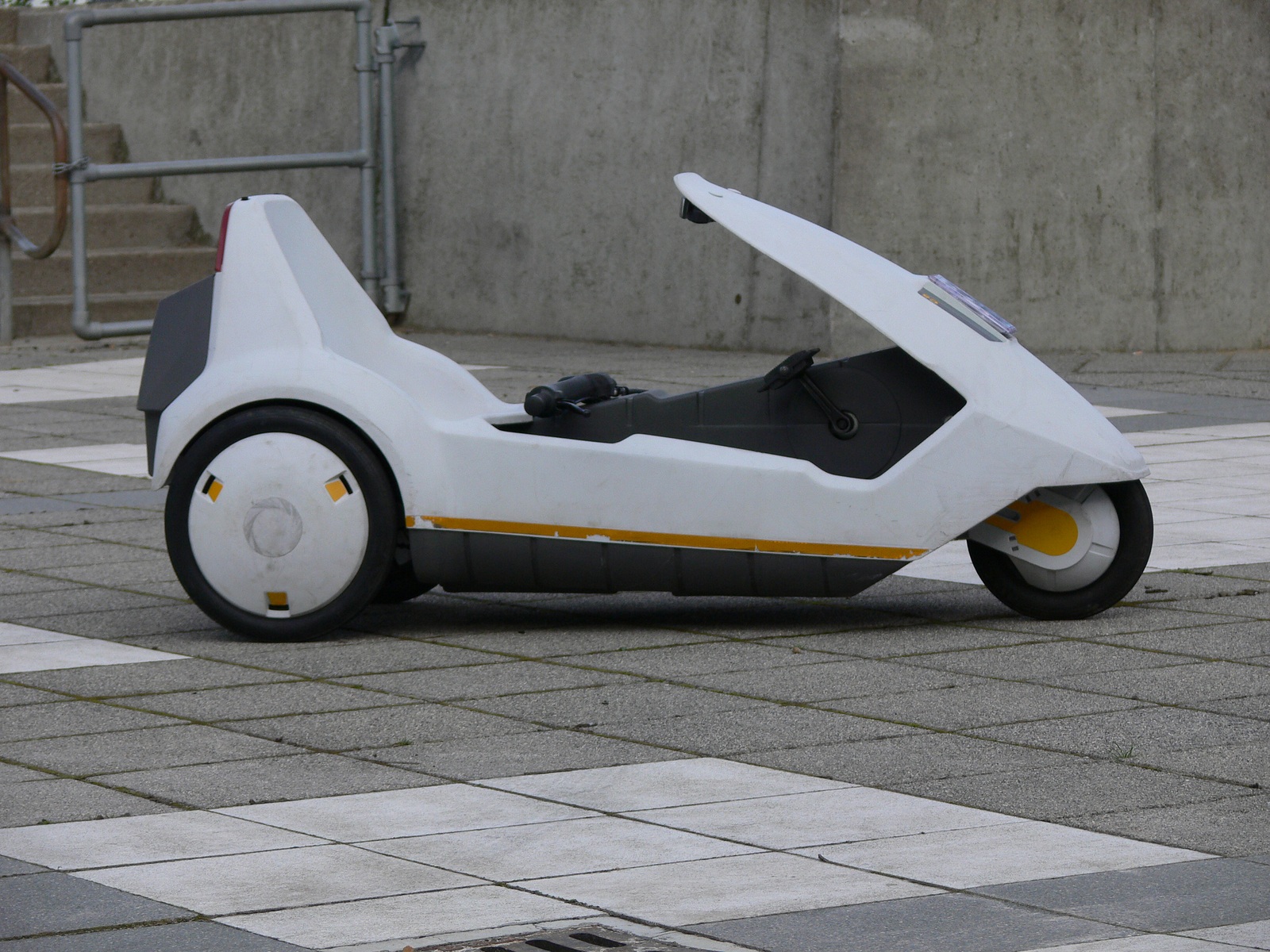
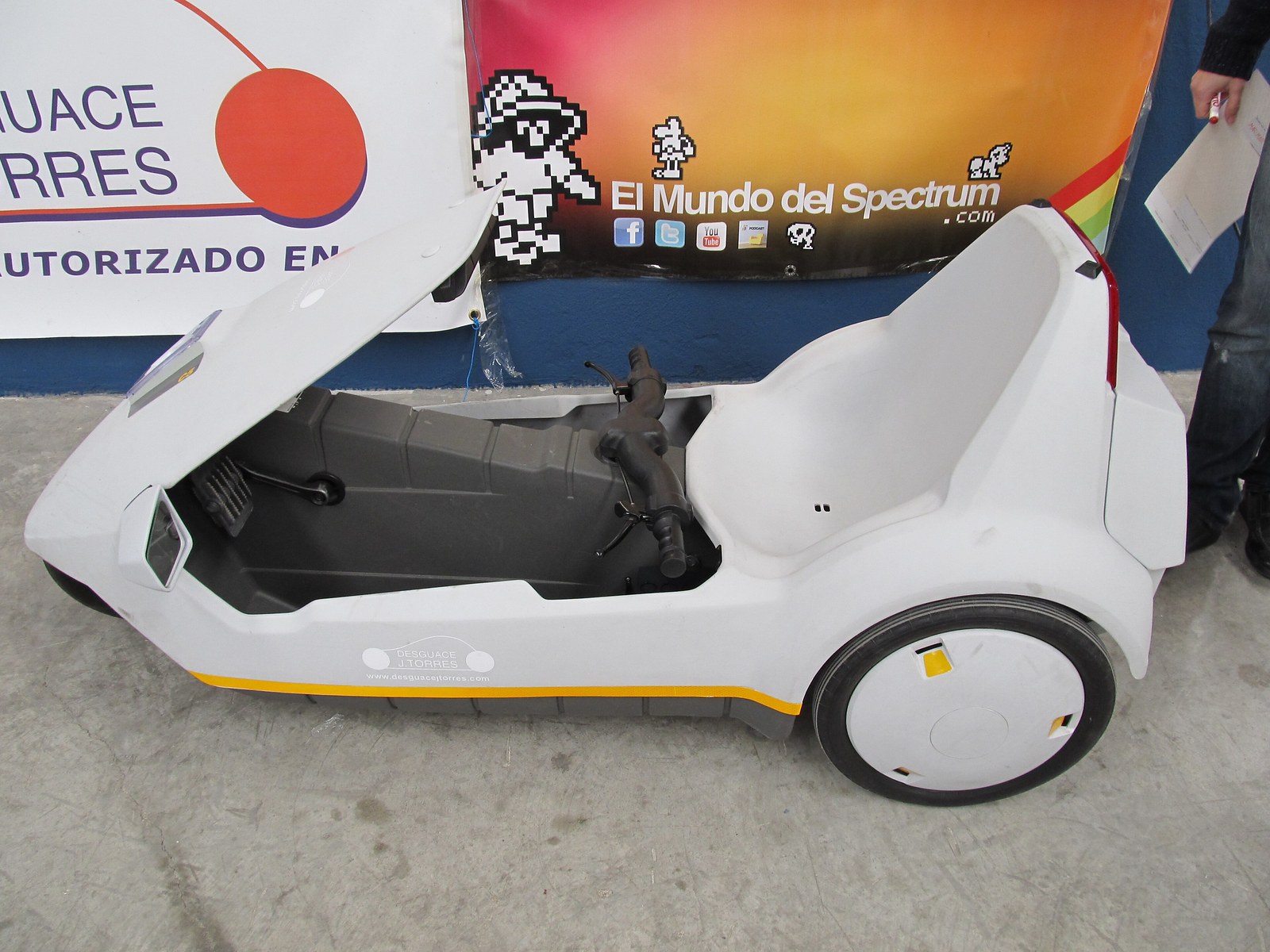
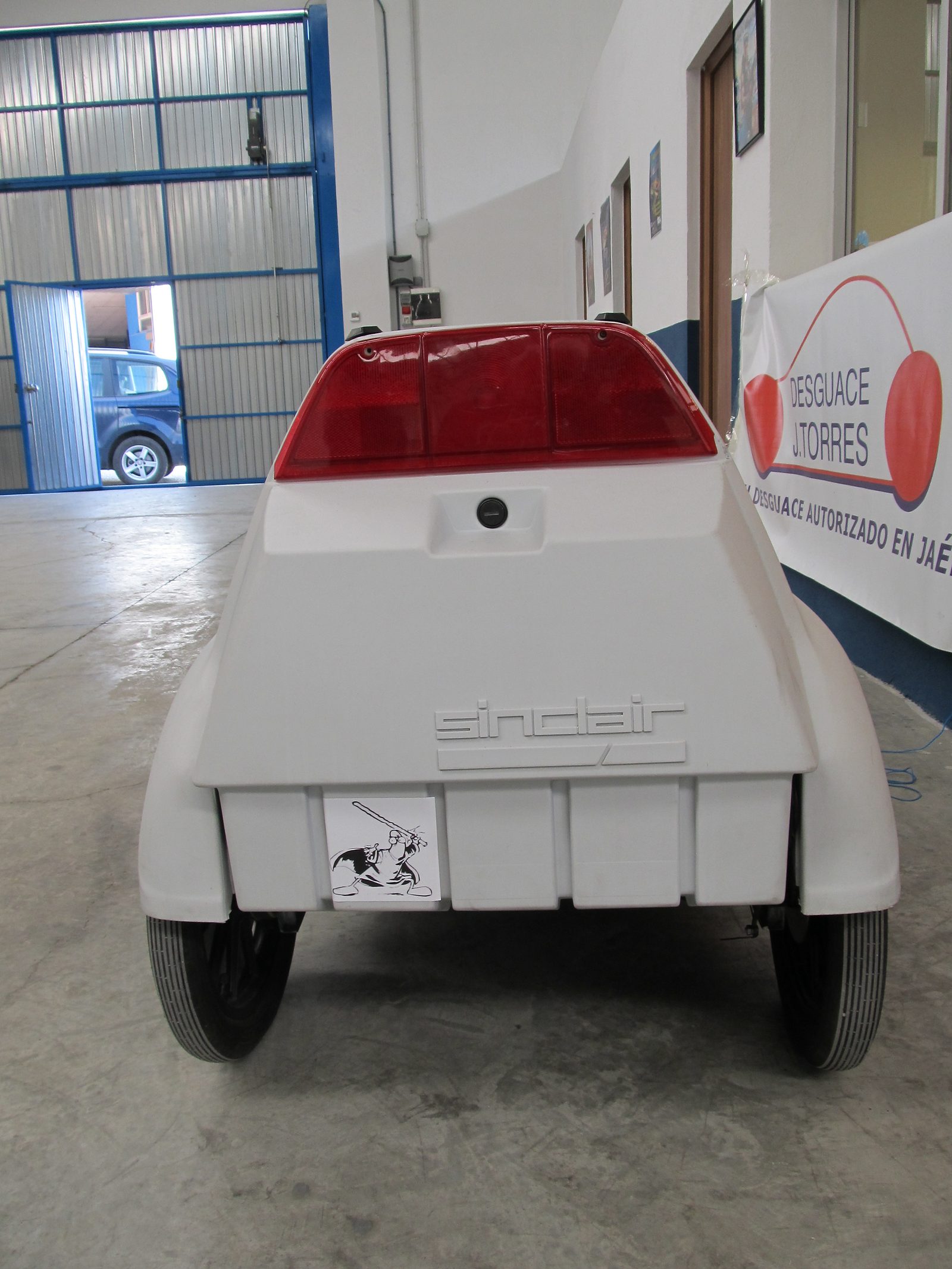
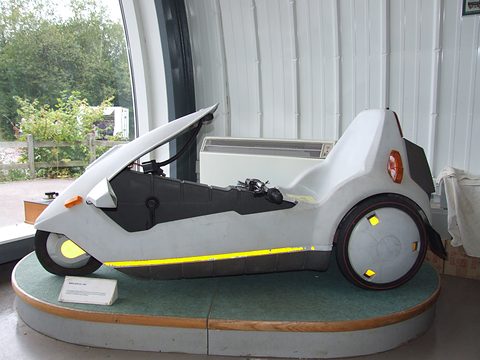
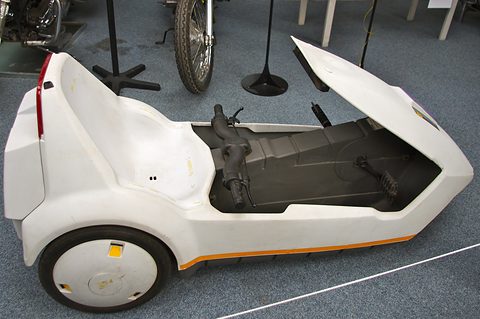
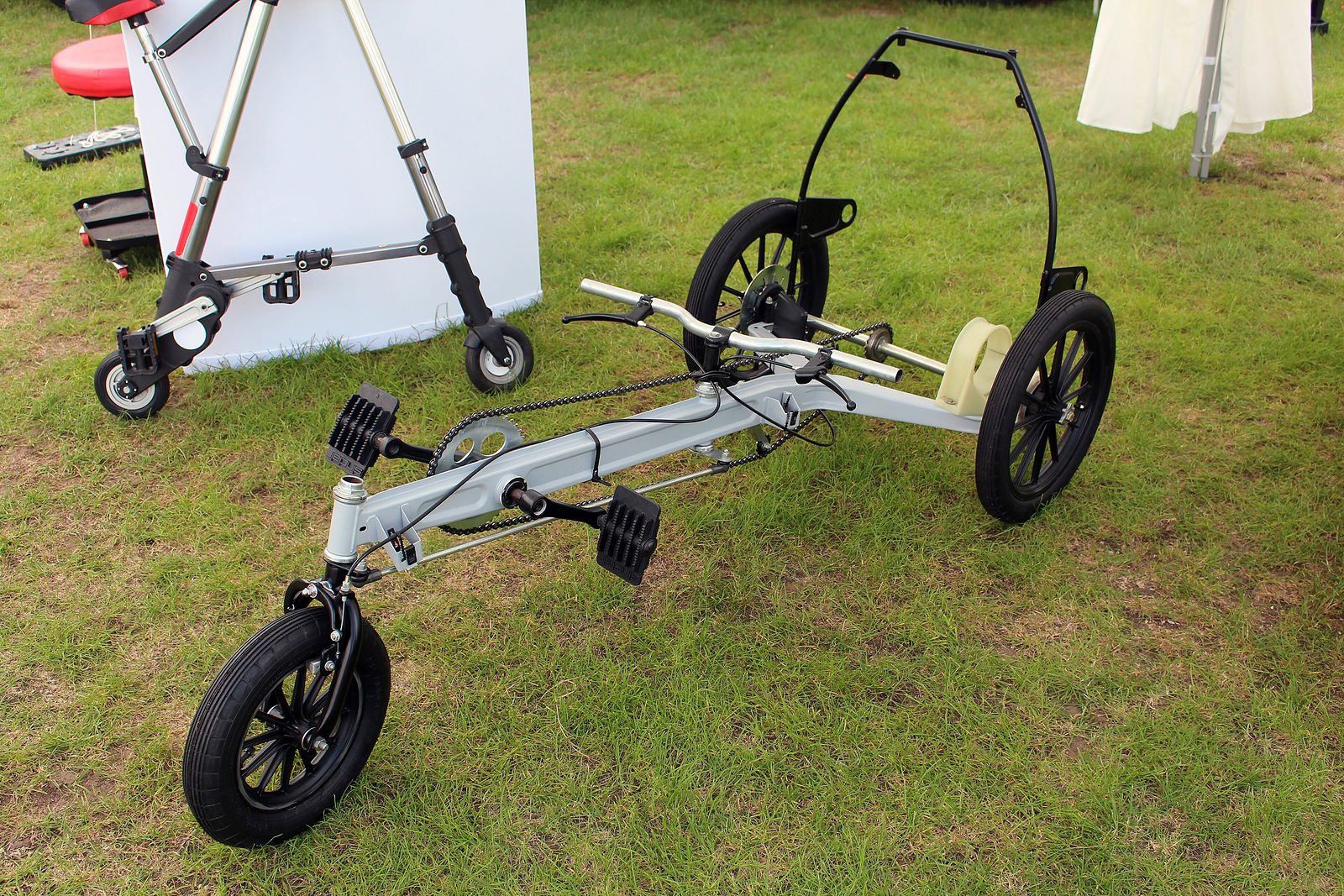
The chassis was two identical steel pressings joined top and bottom, with no suspension beyond the flex of the frame.source 1source 3source 2 The upper body was a single injection moulding in polypropylene, which Sinclair’s biographer Rodney Dale thought might be the largest of its type in Britain or the world; the two shells were joined with heated tape, the process used for the bumpers of the Austin Maestro.source 1 The 250 W motor came from Polymotor, an Italian subsidiary of Philips, and was developed from a lorry’s cooling-fan motor, not from a washing machine, whatever the story says. It drove one rear wheel through a belt and a freewheel, from a 12 V lead-acid battery.source 1source 3

Sinclair had thought of building it in the former DeLorean factory at Dunmurry, until DeLorean’s collapse ended that.source 1source 2 Instead the Welsh Development Agency introduced him to Hoover in the spring of 1983, and Hoover, drawn by Sinclair’s forecast of 200,000 a year rising to 500,000, agreed to build it at its washing-machine factory at Merthyr Tydfil.source 1source 5 The National Motor Museum gives the plan as 100,000 a year.source 6 The lines cost about £100,000 to set up and could build 50 an hour each, up to 8,000 a week, and a test rig loaded every C5 with a 12-stone (76 kg) dummy. Full production began in November 1984, and more than 2,500 had been built by early January.source 1source 3

Alexandra Palace, 10 January 1985

Six C5s, driven by women in grey and yellow, burst out of cardboard boxes at Alexandra Palace in north London. A £3 million advertising campaign began, and the price was £399 by mail order.source 1 Snow and ice covered the hill.source 1source 2 The press ride was, in the words of Sinclair’s historians Adamson and Kennedy, “an unqualified disaster”: batteries ran flat and motors overheated on the slopes, and Stirling Moss, trying one on the roads round the palace, ran out of charge on a hill.source 1 The Sunday Times called it a “Formula One bath-chair”; its reporter “had travelled five yards outdoors when everything went phut”. The Guardian’s motoring correspondent wrote: “On a sharp turn it too easily lifts a rear wheel, is hazardously silent, and low down.” The Daily Express, on the other hand, found it “stable, comfortable and easy to handle”, and The Engineer “a smashing big boy’s toy”.source 1

The safety lobby saw a driver whose head was at the height of a lorry’s tyres.source 1

I am shattered that within a few days 14-year-old children will be allowed to drive on the road in this Doodle Bug without a licence … without insurance and without any form of training.

James Tye, chairman of the British Safety Council, January 1985, as quoted by English Wikipedia.source 1

Sinclair threatened to sue. His own view, given in 1985, was this: “I have qualms about seven-year-olds riding bicycles on the open road, but I have far fewer qualms about a 14-year-old driving one of these.”source 1

How it went

The driver reclines, steers with the bar under the knees and presses a thumb button for power; there is no speed control. The handbook advised pedalling to start, to spare the motor’s brushes, and on hills.source 1source 3 LED gauges showed the battery’s charge and the current drawn, and the last light gave ten minutes before the motor cut out; the electronics also cut it after four seconds at a stall.source 1 There is no reverse: you get out and lift the front round by hand.source 1 Sinclair claimed a range of 20 miles (32 km). The AA found about 10 miles in ordinary use and 6.5 on a cold day, and real speeds were about 12.5 mph (20 km/h).source 1 Its report of May 1985 concluded:

The C5 looks more comfortable and convenient than it really is – older cyclists looking for less pedal effort will be disappointed by the agility its layout demands. Although it is delightfully quiet, performance, range, and comfort do not compare with the better mopeds …

The Automobile Association’s report, May 1985, as quoted by English Wikipedia.source 1

Which? was worse in June: all three of its test cars broke down with a “major gearbox fault”, the masts snapped, and the C5 was “too easy to steal”.source 1 Sinclair publicity had posed Desbarats in a C5 beside a cut-out Mini, to argue that its driver sat higher than a Mini’s.source 1 A modern tester, Sam Dawson of Classic & Sports Car, found it “incredibly fun to drive”.source 1

Eight months

Fewer than 200 were sold at the launch event, despite 20,000 visitors, but 5,000 went within four weeks by mail order to Sinclair’s computer customers. Shops took it from March 1985, Comet 1,600 of them.source 1 Then a fault in a gearbox moulding stopped production for three weeks, and it restarted at a tenth of its former rate, 100 a week instead of 1,000.source 1 By July, 8,000 had been sold, and that month the Advertising Standards Authority ordered the advertisements amended. Comet cut its price to £259.90, then to £139.99 with every accessory.source 1 An export drive failed when the Dutch authorities, among others, asked for better brakes, more reflectors and the mast as standard.source 1 In June Hoover issued a writ for over £1.5 million, never served, and in mid-August it stopped production.source 1source 3

Sinclair Vehicles was renamed TPD Ltd on 19 September 1985, receivers were appointed on 15 October, and it was liquidated on 5 November. The receivers reported 4,500 sold and 4,500 still in stock, and debts of £7.75 million, £7 million of them owed to Sir Clive himself.source 1

It was presented as a serious transport, when perhaps it should have been presented as a luxury product, an up-market plaything.

John Sapte, one of the receivers, 1985, as quoted by English Wikipedia.source 1

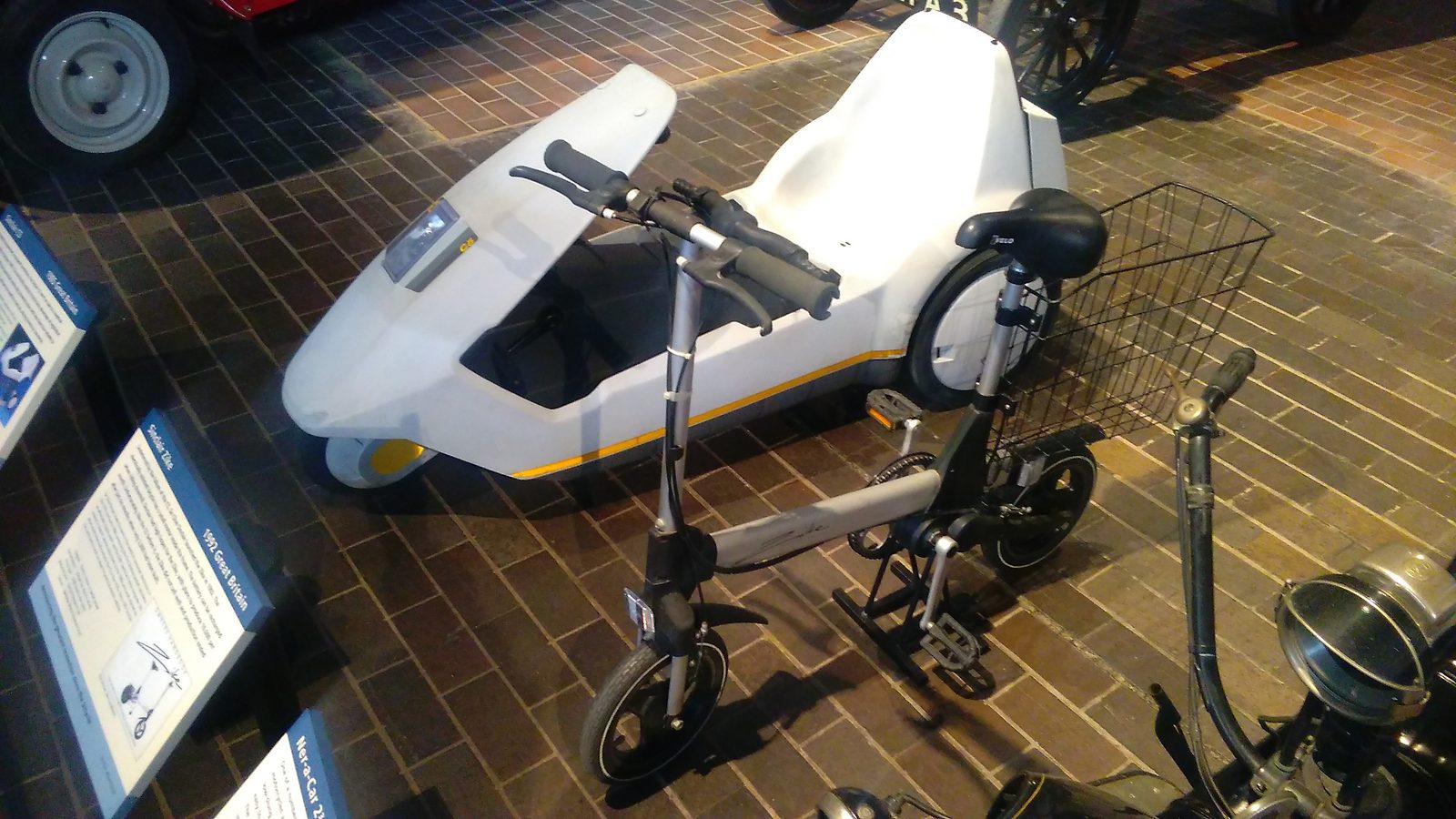
The plaything sold well enough. Ellar (Surplus Goods) Ltd of Liverpool bought the remaining stock at £75 each and sold nearly 7,000 at up to £700 as “a sophisticated toy”, and in 1987 Adam Harper bought 600 from a film company and resold them for up to £2,500.source 1 Neither successor was built: the C10 got only as far as a mock-up, and the C15 had been planned for the 1988 Birmingham show. Later Sinclair made the Zike (1992), and in 2017 his nephew Grant Sinclair showed the Iris eTrike.source 1 In 2005 Sir Clive’s verdict was that the C5 “was early for what it was”, and too low down for people to feel secure.source 1 It is a microcar only by courtesy, but it is the small electric vehicle that Britain remembers.
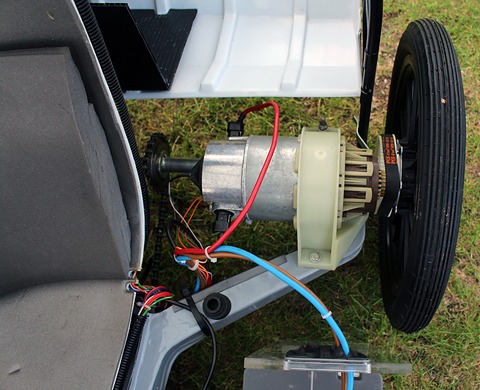
Silver electric motor with coloured wiring mounted beside a narrow rear wheel.
A C5’s electric motor and its drive to the left rear wheel, with the body removed, at Brooklands in 2014.Photo: Prioryman, CC BY-SA 4.0, via Wikimedia Commons
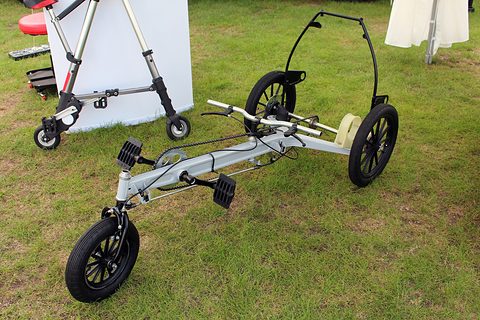
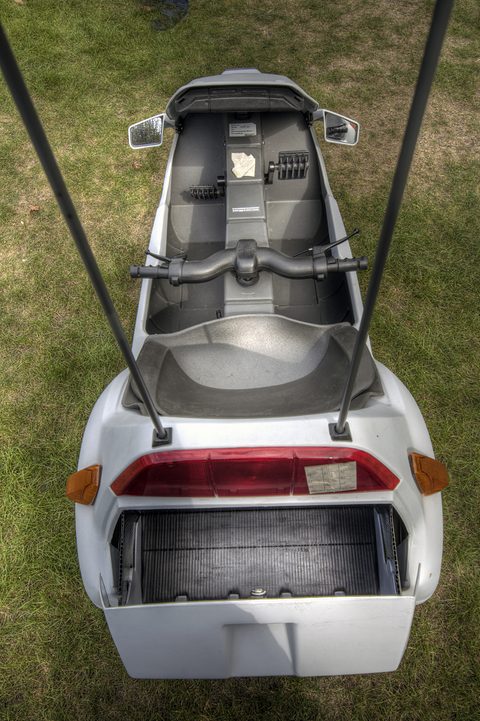
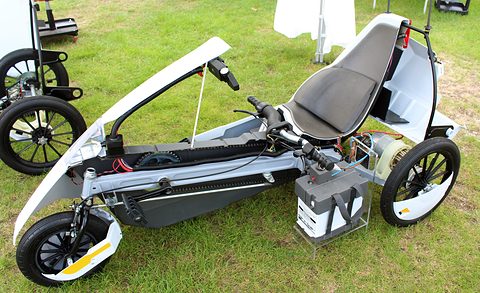
Cut-away electric tricycle on grass with part of its white body removed to show the frame and battery.
A sectioned C5 at Brooklands in 2014, showing its steel chassis, drive and electrics.Photo: Prioryman, CC BY-SA 4.0, via Wikimedia Commons
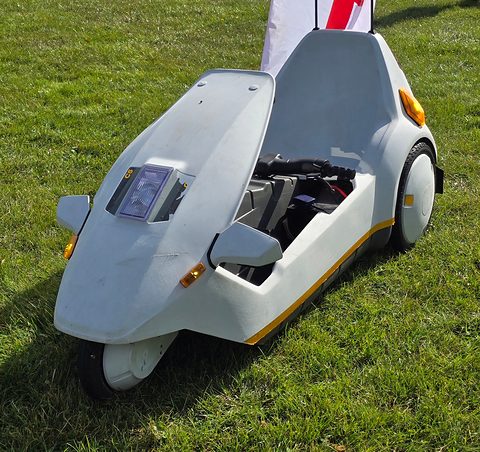
White electric tricycle on grass with a tall thin mast rising from behind the seat.
A C5 fitted with the optional High-Vis Mast, at Brooklands in 2014.Photo: Prioryman, CC BY-SA 4.0, via Wikimedia Commons

Pictures

More photographs, old and new

Variants

One model, and two that never came

The C5 and its planned family
VariantYearsWhat differsHow many
C51984–⁠1985The only production model; indicators, mirrors, the High-Vis Mast, waterproofs, seat pads and a spare battery sold separatelyAbout 14,000
Boxed “Special Edition”1985?Not known in detailNot recorded
C10PlannedAn open two-seater, 40 mph, two wheels at the front and one at the backA mock-up only
C15Planned for 1988Three seats, 80 mph, sodium-sulphur batteriesNever built

Specification

Figures from English and German Wikipedia unless noted

Motor and drive

Motor and drive
MotorPermanent-magnet DC motor by Polymotor (Philips), 250 W continuous, 4,100 rpm maximumsource 1source 3
DriveBy belt and freewheel to one rear wheel (the left, by German Wikipedia)source 1source 3
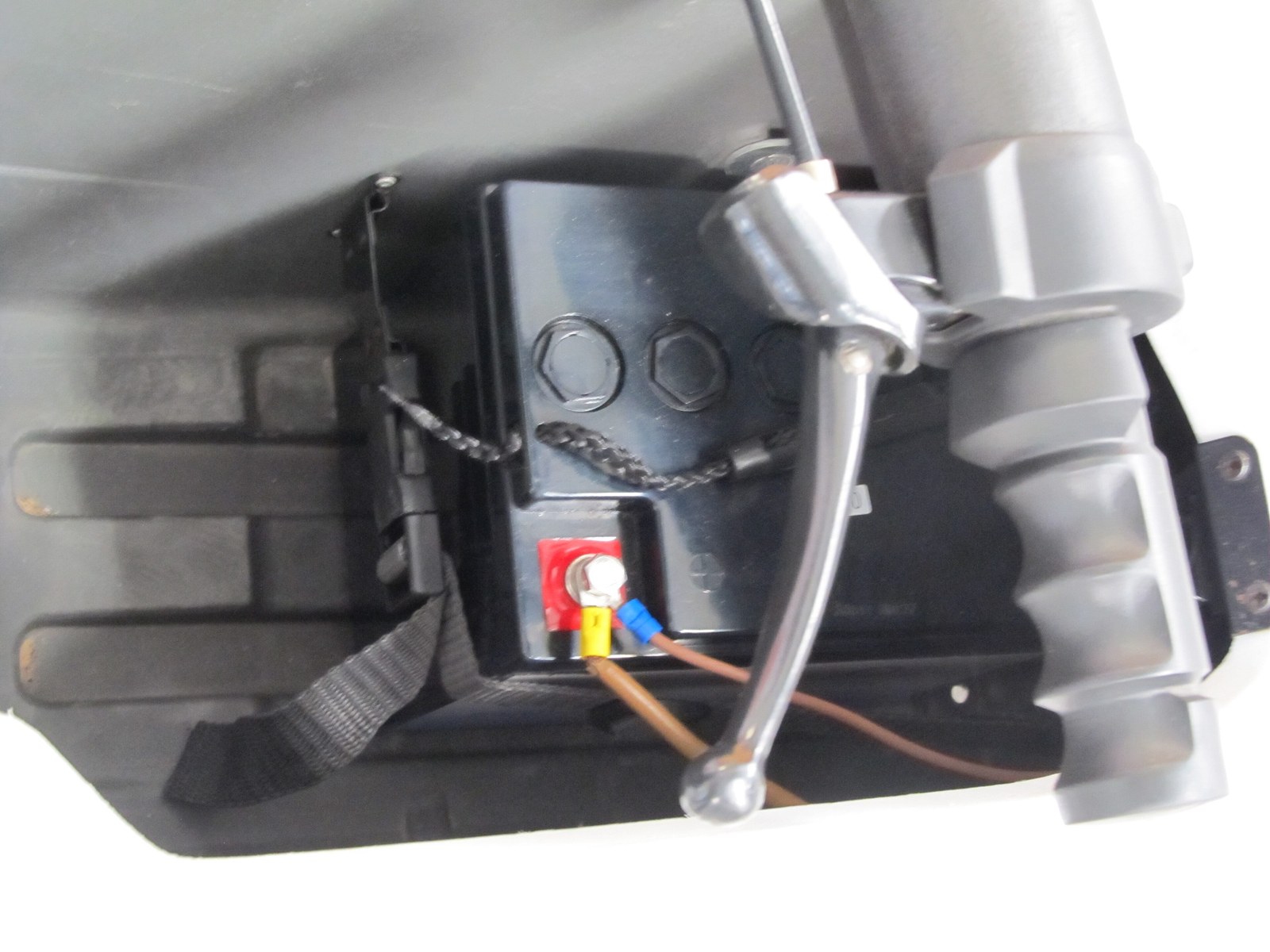
Battery12 V lead-acid, by Oldham Batteries; 36 Ahsource 3
PedalsBicycle-type, at the front of the cockpitsource 1source 3
ControlsHandlebar under the knees; a thumb button for the power, with no speed controlsource 1source 3
ReverseNone: lift the front round by handsource 1

Body and chassis

Body and chassis
BodyTwo injection-moulded polypropylene shellssource 1source 3“Polyester” on the Weiner museum’s panel
ChassisSteel, two identical pressings joined top and bottomsource 1source 3source 2
SuspensionNone; pneumatic tyres with tubessource 1source 3source 2
BrakesCable rim brake at the front; cable drum on the right rear wheel, also the parking brakesource 3
WheelsPlastic; 12.5 in (317 mm) at the front, 16 in (406 mm) at the rearsource 1source 3

Dimensions

Dimensions
Length1,744 mm (69 in)source 1source 21,470 mm as measured by Museum Wales
Width744 mm (29 in)source 1source 2650 mm by Museum Wales
Height795 mm (31 in)source 1840 mm by Museum Wales
Weight45 kg (99 lb) with the battery; about 30 kg withoutsource 1source 2
Luggage28 litressource 1About 40 litres in German Wikipedia

Performance and running

Performance and running
Top speed24 km/h (15 mph), the legal limitsource 1source 4source 2
Range, claimed20 miles (32 km)source 1source 324 miles at Beaulieu, 30 at Museum Wales
Range, testedAbout 10 miles (16 km) by the AA, 6.5 on a cold daysource 1Which?: 14.2 miles at best
Hills1 in 12 on the motor; 1 in 7 with pedalling, in Sinclair’s testssource 1
Running cost“Five miles for one penny”source 5
Price new£399 by mail order (January 1985)source 1source 3£428 at Beaulieu

How many were built?

Every figure, with its source

About 14,000 builtAbout 14,000, the most widely quoted figure, by the end of production in August 1985. Rodney Dale’s contemporary history, the likely primary source, was not read, and the sales figures cannot be reconciled from the sources that were.

  1. just under 17,000built by August 1985One source

    German Wikipediasource 3

  2. about 14,000built by August 1985One source

    English Wikipediasource 1

  3. fewer than 9,000sold by the end of 1985One source

    National Motor Museum, Beaulieusource 6

  4. 8,000sold by July 1985One source

    English Wikipediasource 1

  5. nearly 7,000later resold from the leftover stock by Ellar (Surplus Goods)One source

    English Wikipediasource 1

  6. 4,500 and 4,500sold by Sinclair Vehicles, and still in its stock, in October 1985One source

    the receivers, as reported by English Wikipediasource 1

  7. 1,000builtUnconfirmed

    the Weiner museum’s display panel; clearly wrongsource 2

  • Two sources agreetwo good sources give the figure
  • One sourcea good source, alone
  • Unconfirmeda lead only, not yet checked

Famous for

Three points

  1. A pedal cycle in law

    Under the 1983 regulations it needed no licence, tax, insurance or helmet, from the age of 14.

  2. Snow at the launch

    Alexandra Palace, 10 January 1985: flat batteries, a snowy hill and Stirling Moss out of charge.

  3. Hoover-built

    Assembled in a washing-machine factory, though its motor began as a lorry’s cooling fan.

Racing and records

End to end, and faster

A 15 mph tricycle invited long journeys and silly speeds (more in records and feats).

1,479 km
(919 miles) end to end, John o’ Groats to Land’s End, 30 April to 4 May 1985, in 103 hours 15 minutes, by John W. Owen and Roy Harvey, as the 1987 Guinness Book of Records is quoted.source 1
166 km
(103 miles) to Glastonbury, by Chris Crosskey of Abingdon, who also made three attempts at Land’s End to John o’ Groats.source 1
240 km/h
(150 mph), the aim of Adam Harper’s modified C5, built for an electric speed record attempt; no record is known to have been set.source 1
64 km/h
(40 mph) from Colin Furze’s petrol-engined “monster trike”, 5 ft (1.5 m) tall; Adrian Bennett built a jet-engined C5.source 1

Survivors and collecting

Today

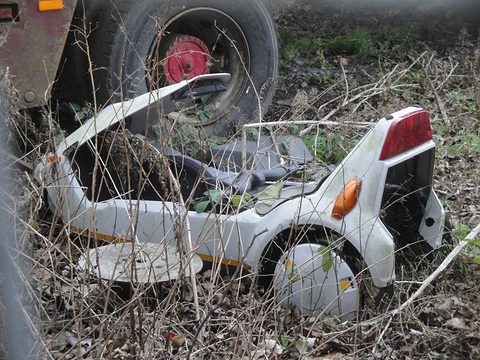
How many C5s survive is not known. The National Waterfront Museum in Swansea has one, bought on 10 December 1986: grey and black with yellow trim, No. 2250.source 5 The National Motor Museum at Beaulieu has another, and the Weiner museum showed one.source 6source 2 The owners included Princes William and Harry, at Kensington Palace; Sir Elton John, who had two; the magician Paul Daniels; Sir Arthur C. Clarke, who had two shipped to Colombo; and the Mayor of Scarborough, Michael Pitts, who swapped his official Daimler for one. John Otway uses one in his stage show.source 1

The £399 tricycle that Ellar sold off as a toy is now collected. Resold C5s fetched up to £2,500 in the late 1980s, a boxed Special Edition was worth over £5,000 to collectors by 1996, and English Wikipedia reports prices of as much as £6,000.source 1 Owners’ clubs exist.source 1

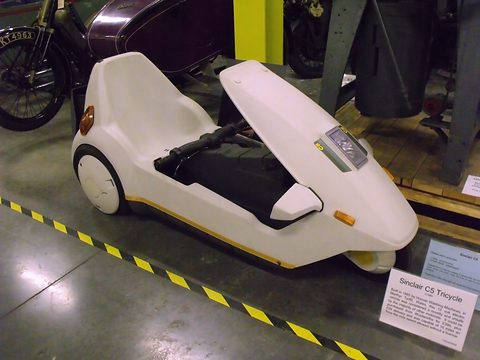
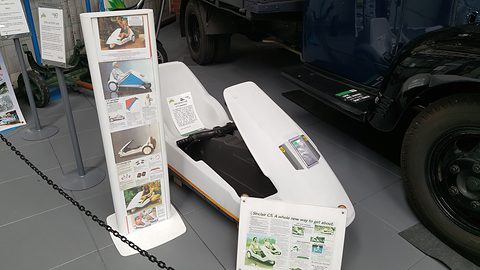
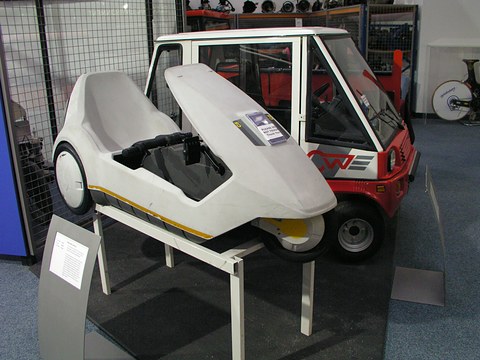
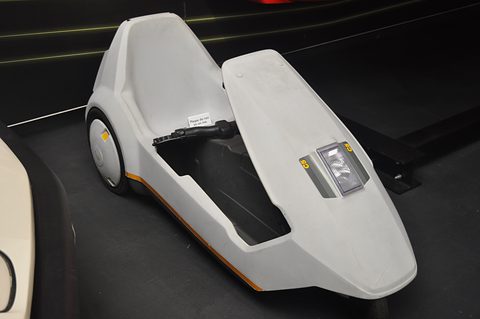
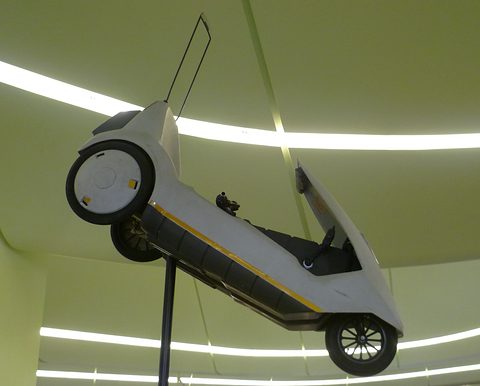
White electric tricycle tilted on a pole against a lime-lit museum ceiling.
A Sinclair C5 mounted high on a pole in the Riverside Museum, Glasgow, in 2012.Photo: Kim Traynor, CC BY-SA 3.0, via Wikimedia Commons

Sources

Numbered as in the text

Much of the story rests on English Wikipedia, which draws on Rodney Dale’s The Sinclair Story (1985) and Adamson and Kennedy’s Sinclair and the ‘Sunrise’ Technology; neither book, nor the AA and Which? reports, was read directly. Sources are given as plain text; the links are on the Credits page.

  1. English Wikipedia, Sinclair C5, read in full. Used as a lead; it is referenced to Dale, Adamson and Kennedy, The Times, The Guardian, the Financial Times, the AA and Which?.
  2. Bruce Weiner Microcar Museum, “1985 Sinclair C5”, display panel, read in an archived copy of about 2015.
  3. German Wikipedia, Sinclair C5, read in full. Used as a lead, chiefly for the technical description.
  4. The Electrically Assisted Pedal Cycles Regulations 1983, SI 1983/1168, as made, read in full.
  5. Amgueddfa Cymru – Museum Wales, Collections Online, “Sinclair C5”, item 86.189I, read in full.
  6. National Motor Museum, Beaulieu, vehicle collection, “Sinclair C5”, read in full.