The story
History
Fritz Fend was a grocer’s son. His father, Johann Fend, kept a shop on the Max-Josefs-Platz in Rosenheim, where Fritz was born on 12 April 1920; he went to school in the town and studied aeronautics at the Technische Hochschule in Munich. In the war he was a test and development engineer in aircraft construction, and afterwards, for a while, a clerk in his father’s shop.source 1source 2 English-language accounts make him a Luftwaffe technical officer who had worked with Messerschmitt, on the Me 262 among other things.source 3source 4 His firm, “Fritz Fend, Technischer Fertigungsbetrieb”, was founded in 1946 by German Wikipedia’s date; the town archive says he applied to the Rosenheim trade office in 1947 to make food-processing machines, small machine tools and vehicles for the war-disabled, and was approved after initial difficulties.source 2source 1
The first of those vehicles was hardly a car at all. It was a tricycle, a kind of wheelchair, whose single front wheel was steered and driven by pushing the handlebars back and forth. It ran on bicycle wheels at first, then on scooter wheels to bring it lower, and could be had with or without a 38 cc Victoria engine. About 50 were sold.source 4source 1
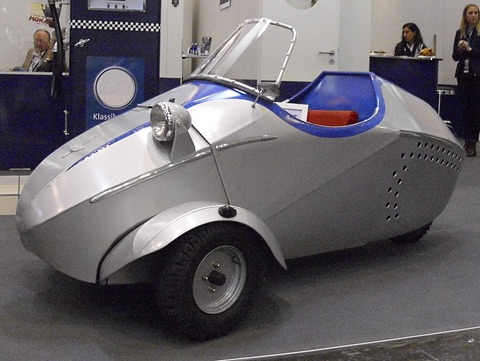
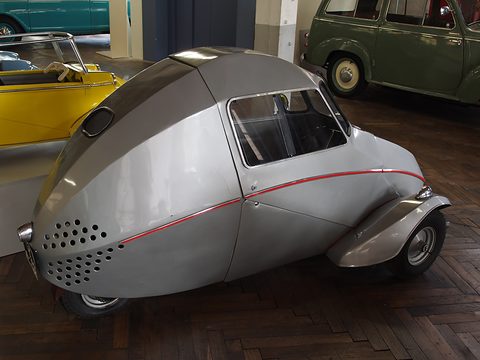
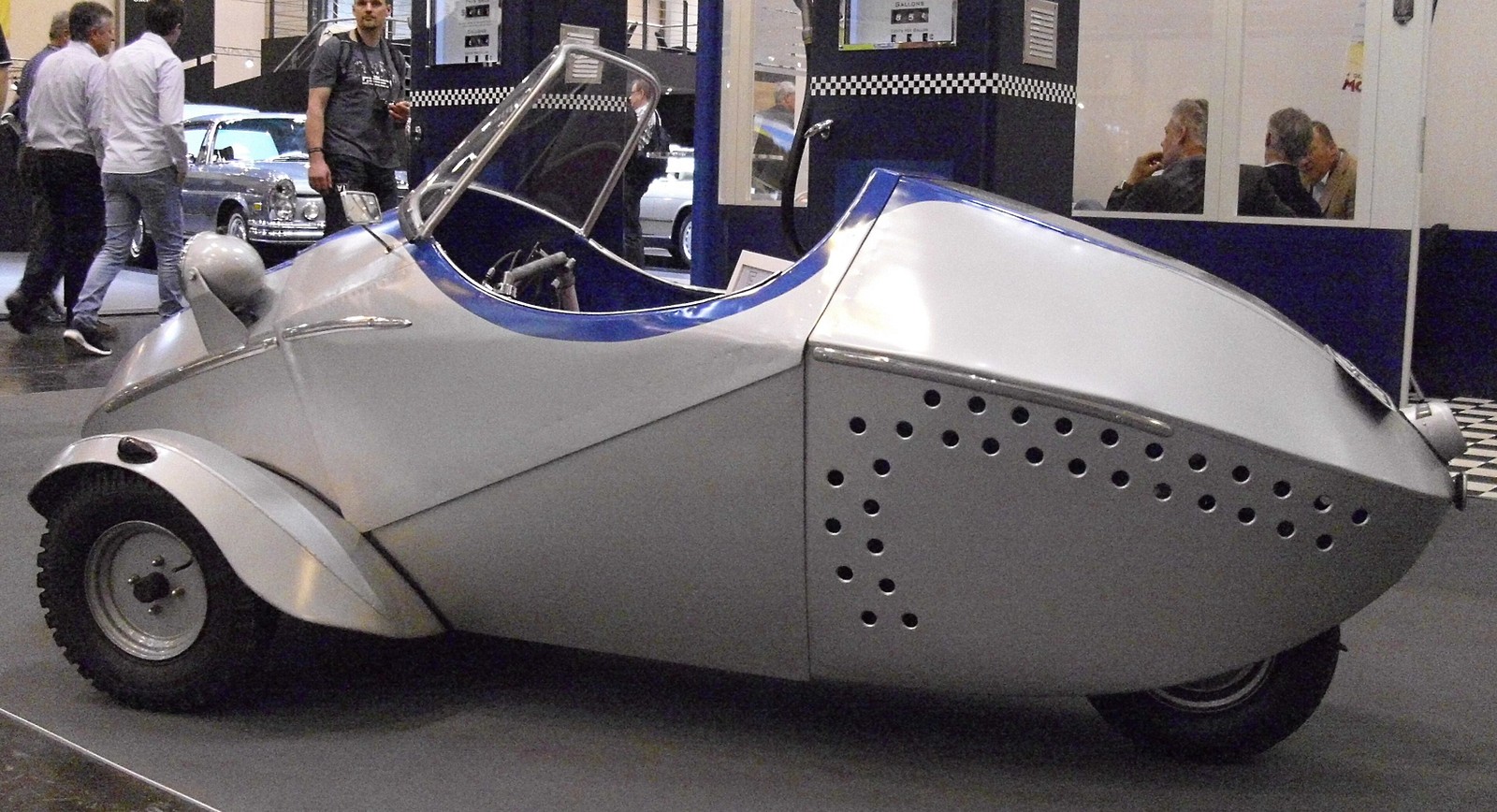
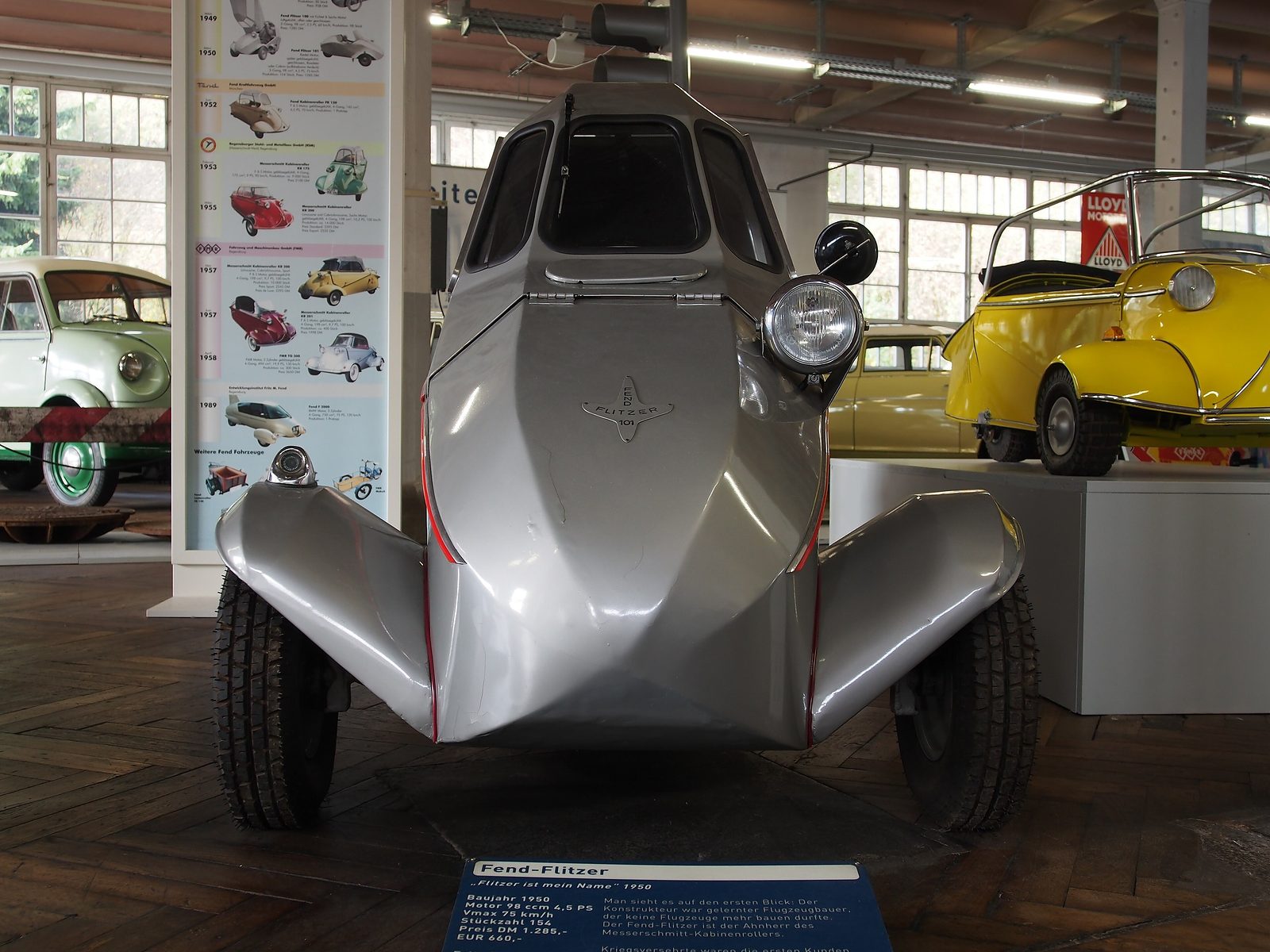
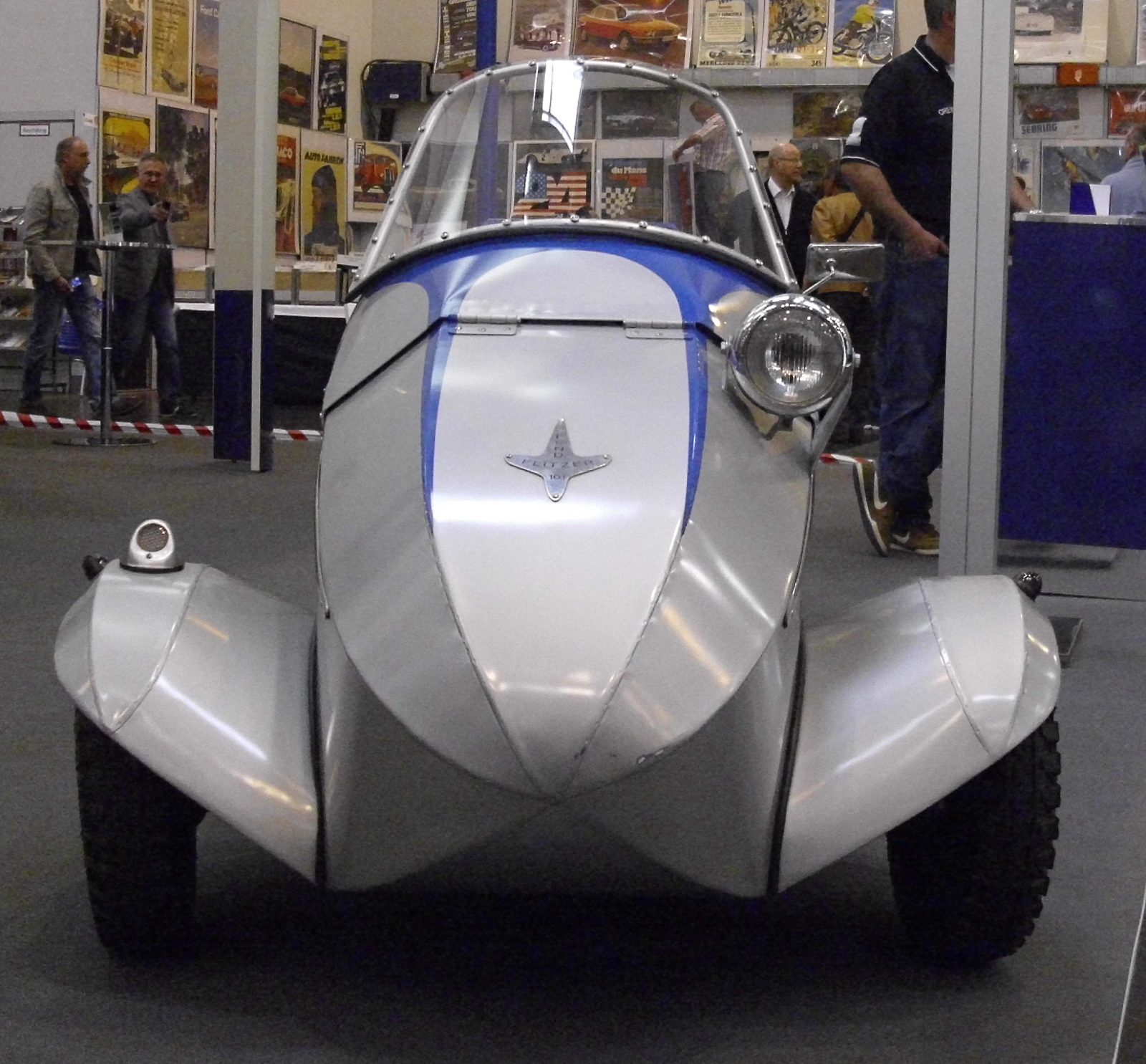
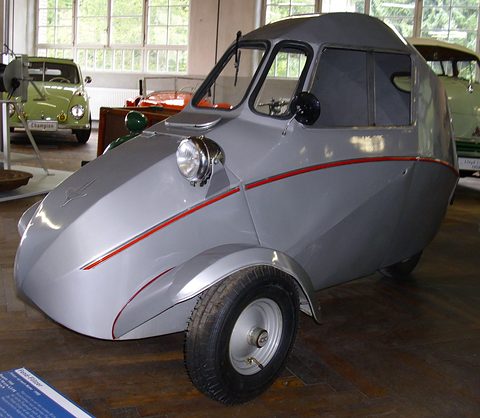
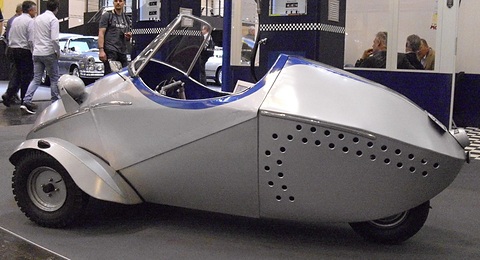
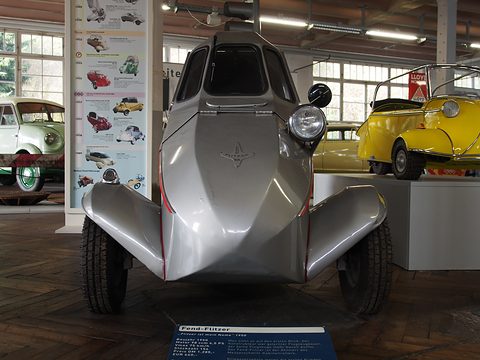
Then Fend turned the layout round: two steered wheels at the front, one driven wheel behind, and a design meant for an engine from the start.source 4 Bill Cawthon, writing in 2004, dates the first working Flitzer, still unpowered, to June 1948 and the first with an engine to that September.source 3 The VdK, the German association of the war-disabled, backed the project and helped him get materials through the Americans; because the Flitzer was a mobility aid, he could get round some of the Allied restrictions on making vehicles.source 3 It belongs among the invalid carriages, and among the three-wheelers, but Fend did not want it labelled “for the disabled”: he meant it as a car that also suited disabled people.source 5 It could be driven with hand and foot pedals, its green body recalled a bomber’s cockpit canopy, by the town archive’s account, and locals called it the “Fend-Flitzer”, the Fend whizzer.source 1
„kein teueres Auto sein, sondern für jedermann erschwinglich“
Three series
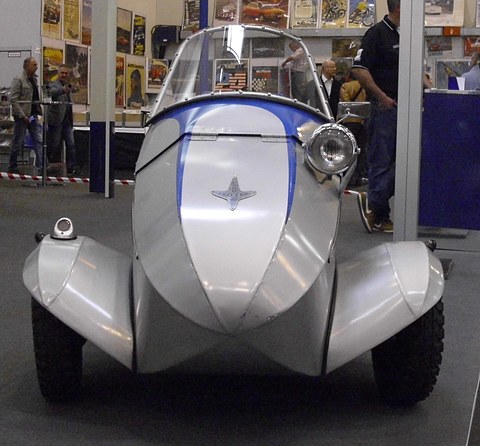
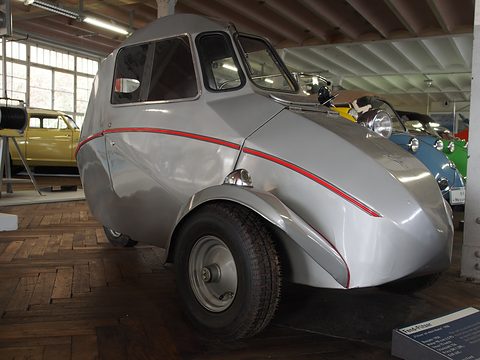
The first series, from August 1948 to March 1949, had the 38 cc Victoria air-cooled two-stroke of 1 PS (0.7 kW). It weighed 75 kg (165 lb), reached 40 km/h (25 mph) and was a coupé only, the top half of its body folding forward to let the driver in. About 30 were built, at DM 938.source 6 No production car on this site has a smaller engine.
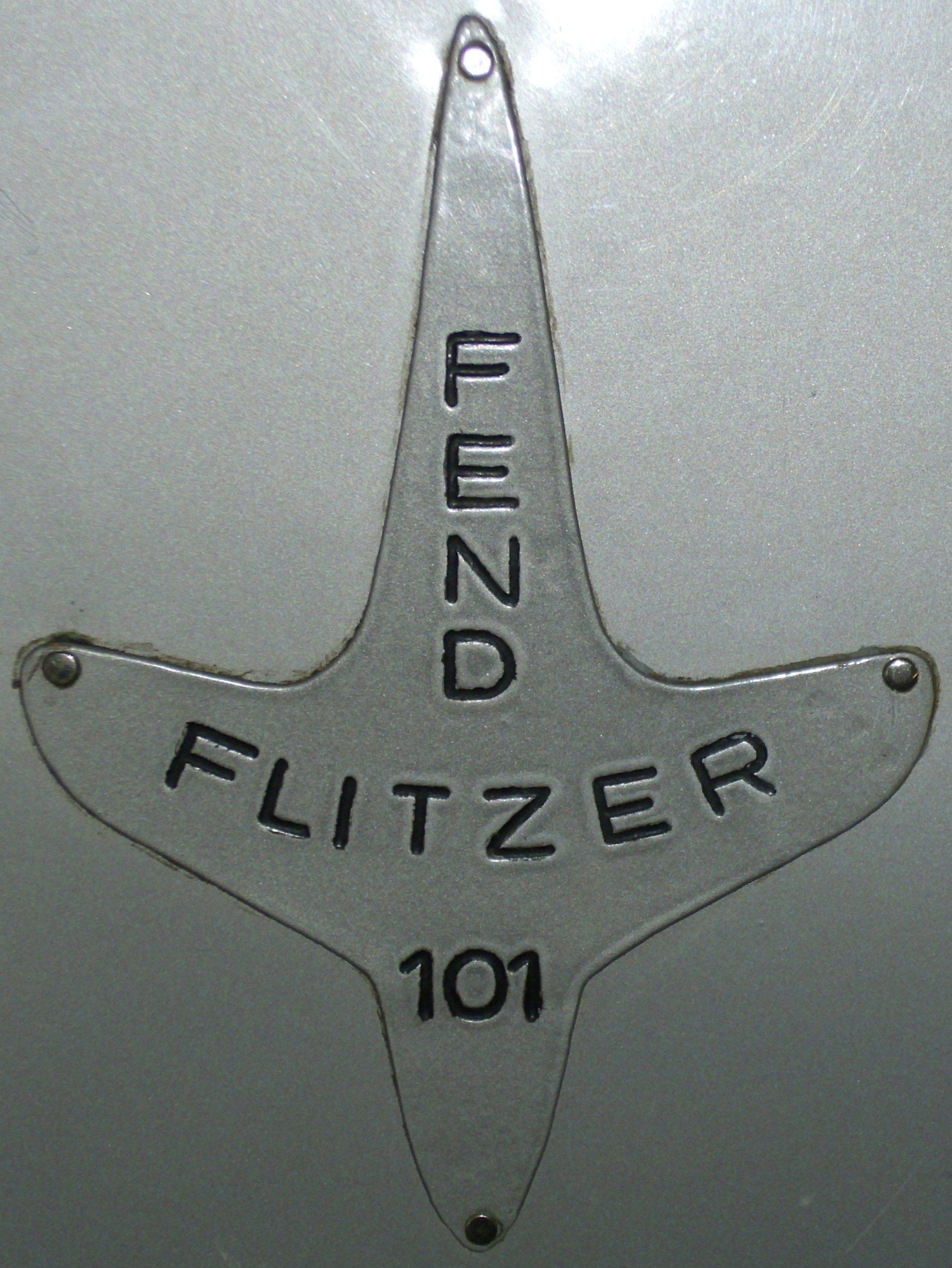
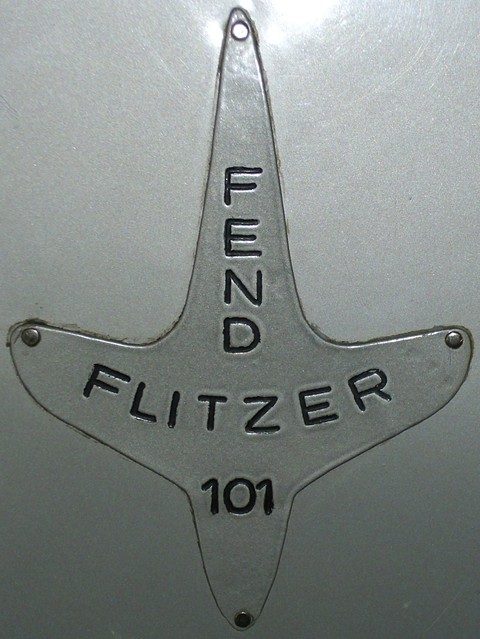
From March 1949 a 98 cc Fichtel & Sachs engine of 2.5 PS (1.8 kW) took it to 60 km/h (37 mph), and an open roadster joined the coupé. This second series weighed 95 kg (209 lb) and cost DM 1,285; 98 were built in a year.source 6 The third, the Flitzer 101 of March 1950 to December 1951, had a fan-cooled 98 cc Riedel of 4.5 PS (3.3 kW), weighed 120 kg (265 lb) and reached 75 km/h (47 mph); 154 were sold at the same price.source 6source 7 The whole car was 2,000 mm (79 in) long.source 6source 5source 7 The series dates and most of these figures come from one source, German Wikipedia, drawing on the Thyssen-Bornemissza lexicon.source 6
Riedel also made the Imme motorcycle, and Cawthon traces the engine to the starter motor Riedel developed for the Me 262’s jets. On the jet a key in the side cranked it; on the Flitzer the key could still be used as well as the foot linkage, which by Cawthon’s account made the driver look as if winding up a clockwork toy.source 3source 8 The story is plausible, since Riedel’s starter served the Jumo 004 jets of the Me 262, but it rests on Cawthon alone: the most that can safely be said is that the engine was derived from Riedel’s jet-engine starter motor.
Over the Grossglockner
Fend tested the Flitzer on the Tatzelwurm road in the Bavarian Alps and on the Grossglockner. In 1950 one climbed the Grossglockner High Alpine Road without stopping, at an average of 40 km/h; the run made headlines and silenced the car’s critics, by the archive’s account, and Cawthon describes it too, over cobbles and hairpins.source 1source 3 In September 1949 an Austrian newspaper had already announced the Flitzer as a new German Kleinstauto, a micro-car.source 6
Too small for its customers
Within a year the Rosenheim shop had reached its limit; Cawthon puts that at 150 Flitzers a year.source 3 Many of the buyers were not disabled at all. They wanted cheap transport, and that convinced Fend there was a mass market, so he designed a larger, two-seat version, the Fend 150.source 4source 3 He also built the Fend Lastenroller, a three-wheeled moped with a load platform or box between its front wheels.source 4
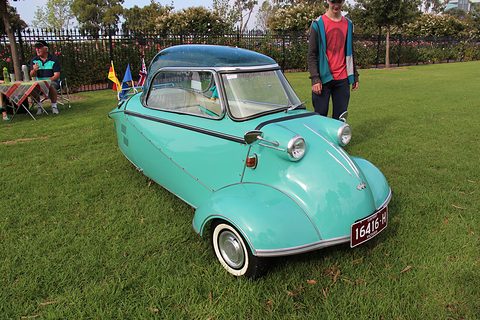
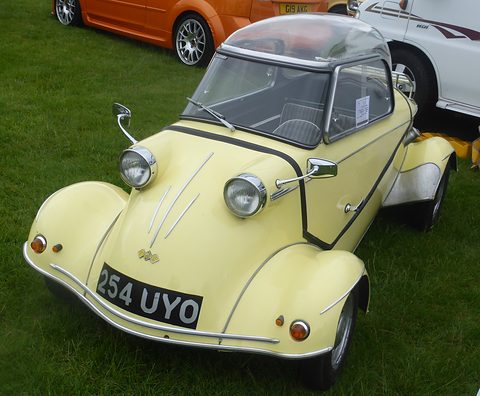
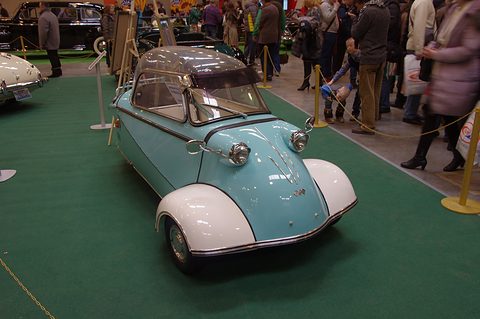
Flitzer production stopped in December 1951, because it no longer paid.source 6source 1 In 1952 Fend came to an agreement with Messerschmitt, whose works at Regensburg, Regensburger Stahl- und Metallbau, needed something to make while aircraft building was forbidden; its managers were looking for work for the empty halls.source 1source 3source 9 Messerschmitt took on the Fend 150, which became the Messerschmitt KR175 of 1953, and put the Lastenroller into production; it later became FMR’s Mokuli.source 4 The Flitzer itself was never built in the Messerschmitt factory, so it is no example of aircraft makers turning to cars; it was one aircraft engineer’s own work.source 5 The canopy, the scooter mechanicals and the tandem thinking of Messerschmitt’s bubble cars, the Kabinenroller, start here.source 6source 3
Fend moved his firm to Munich in 1953 and himself to Regensburg in 1957, the year he and Valentin Knott formed FMR to carry on the cars.source 1source 2source 4source 3 In 1999 he showed the Fend 2000, a modern car in the Kabinenroller manner that stayed a one-off but is registered for the road.source 2 In September 2000 an original 1951 Flitzer came to the Regensburg rally under its own power, and Fend talked about the early days. He died two months later, on 22 November 2000, after a stroke.source 3source 1source 2 Regensburg named Fritz-Fend-Straße after him in 2011.source 2