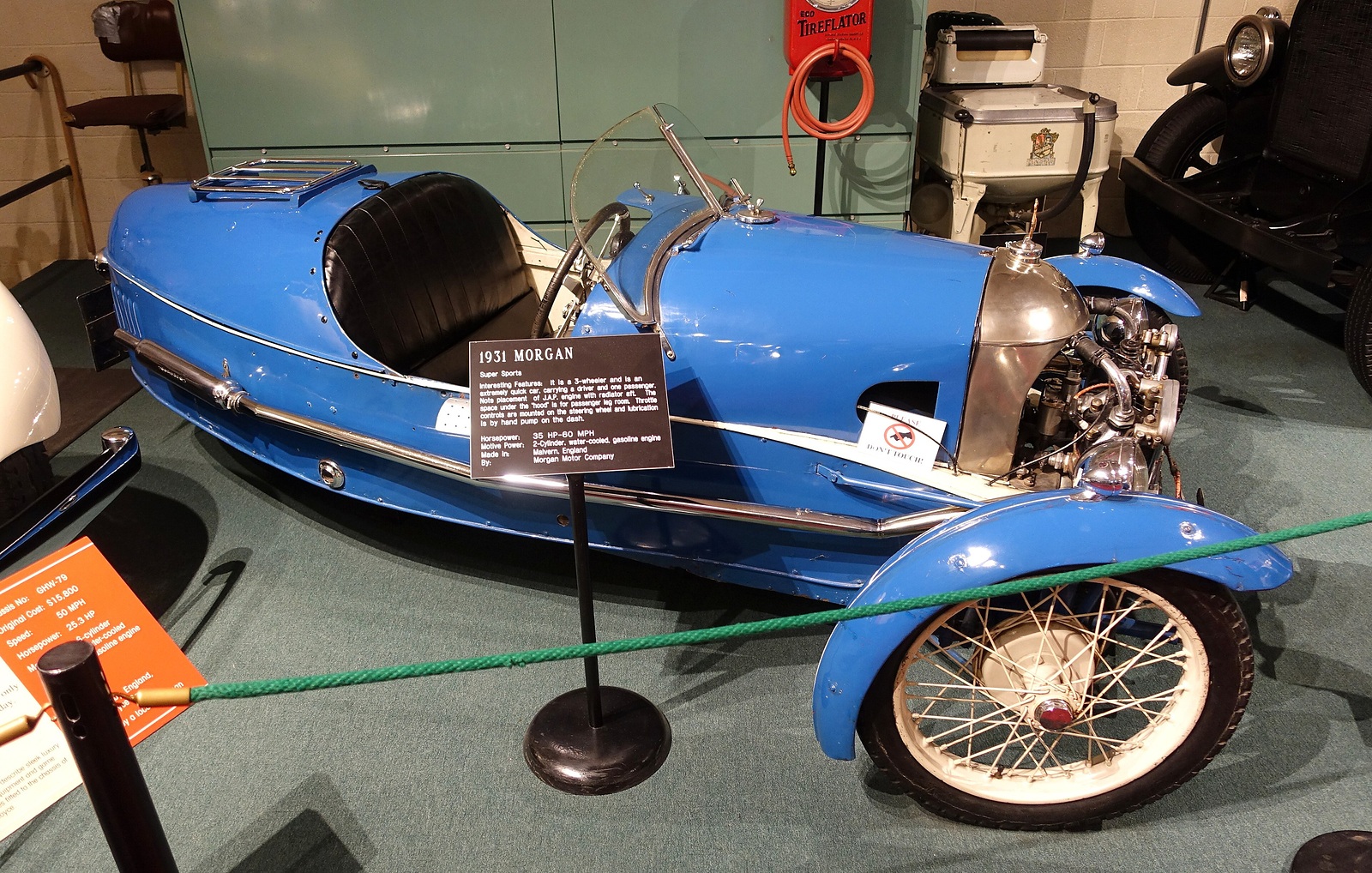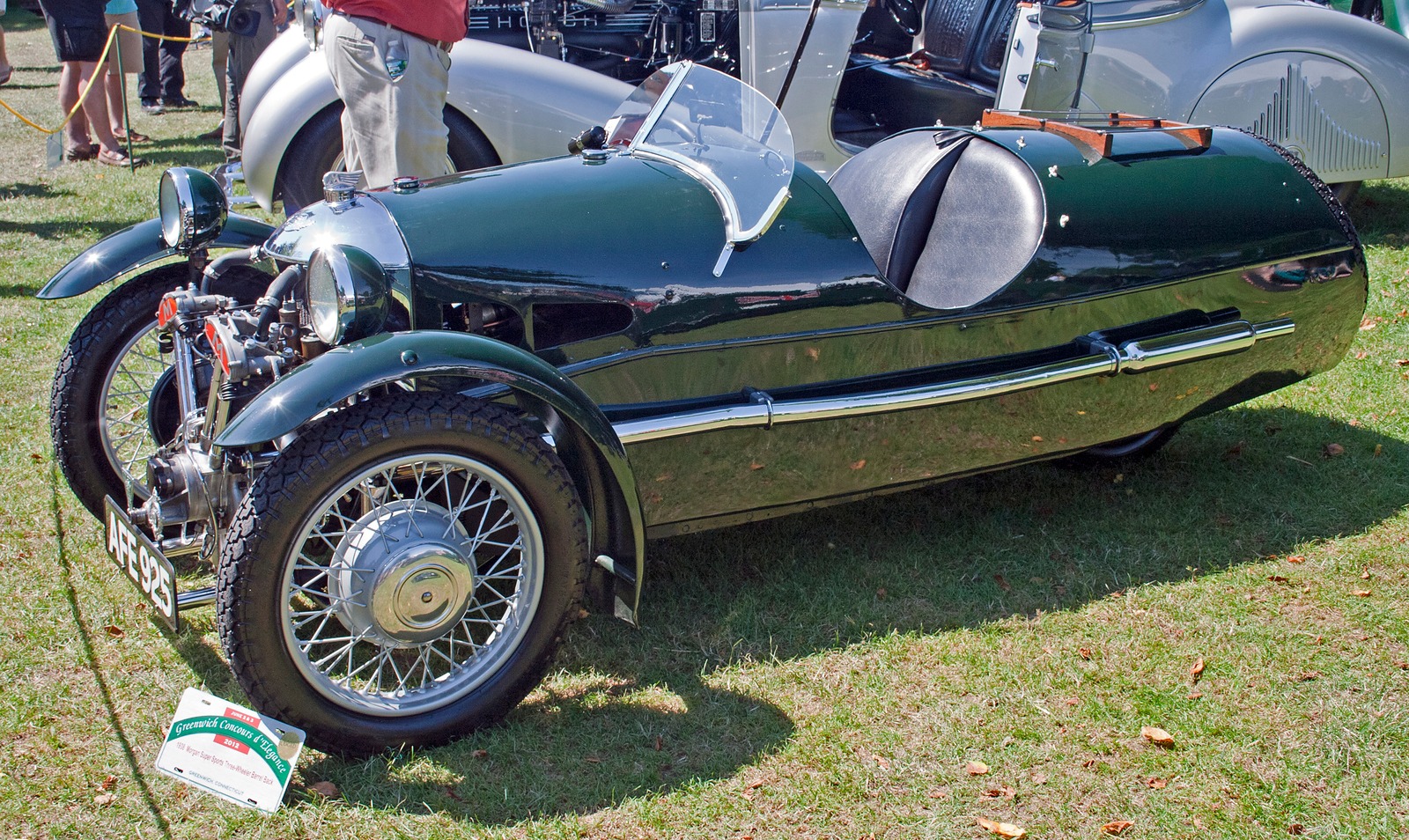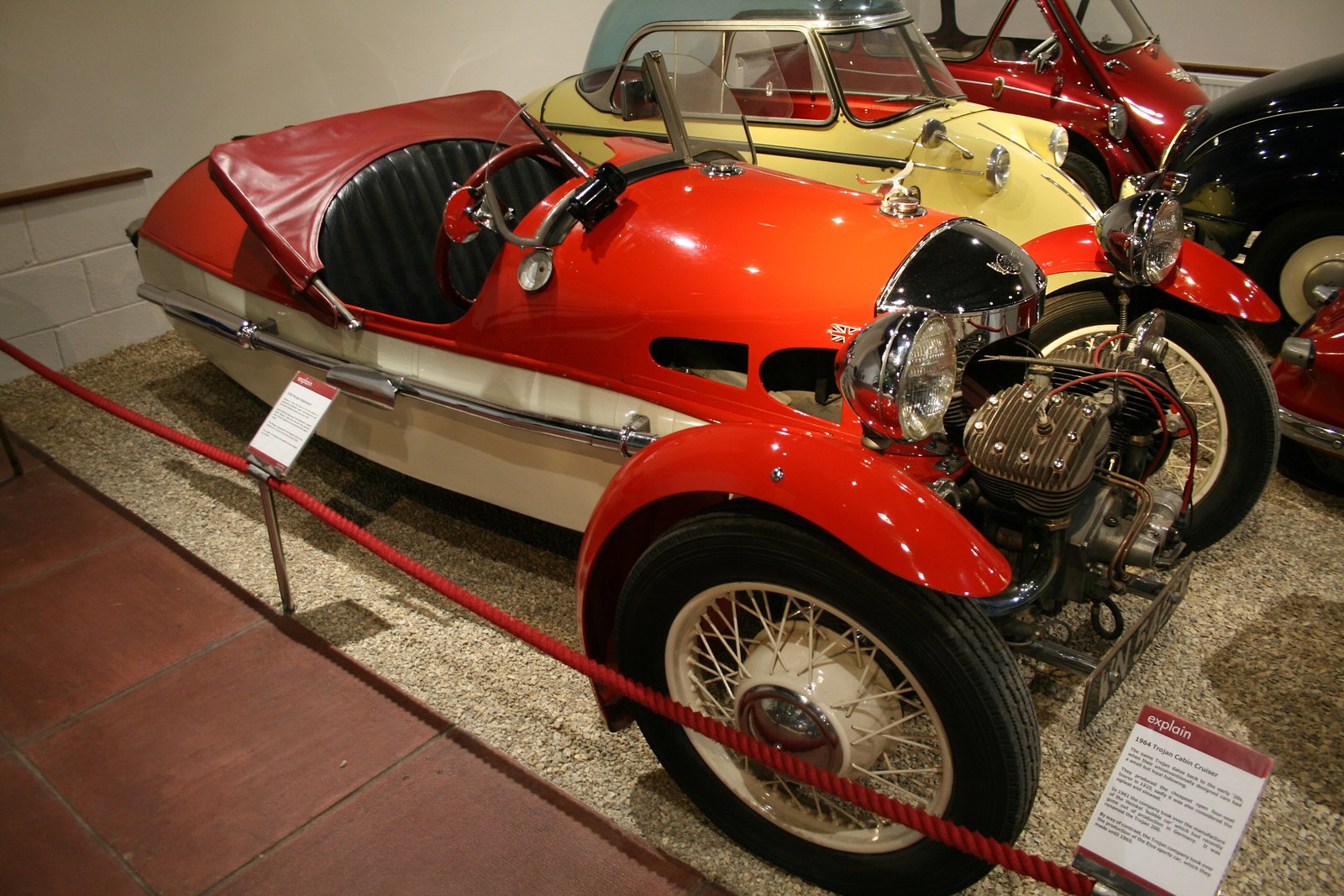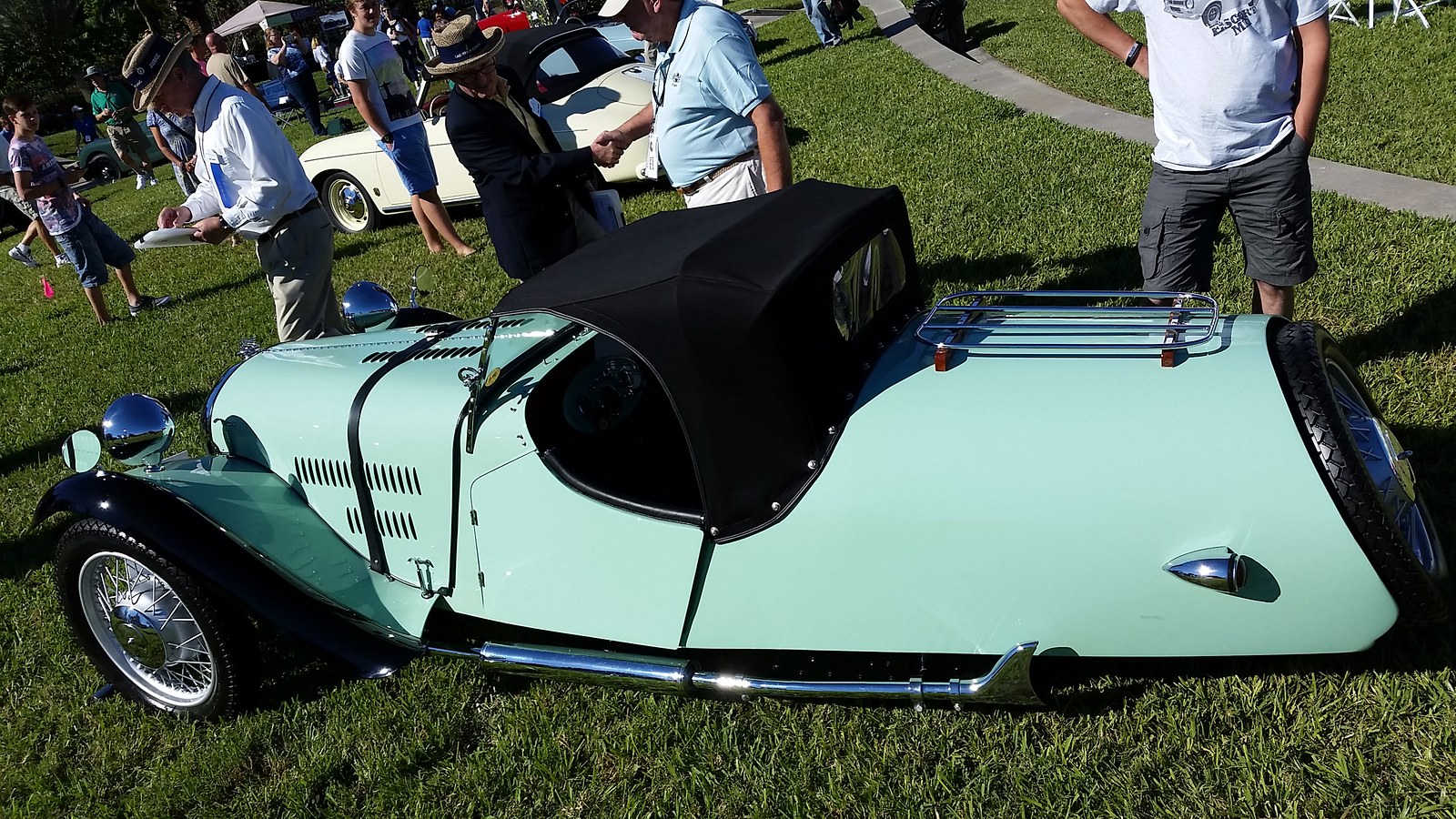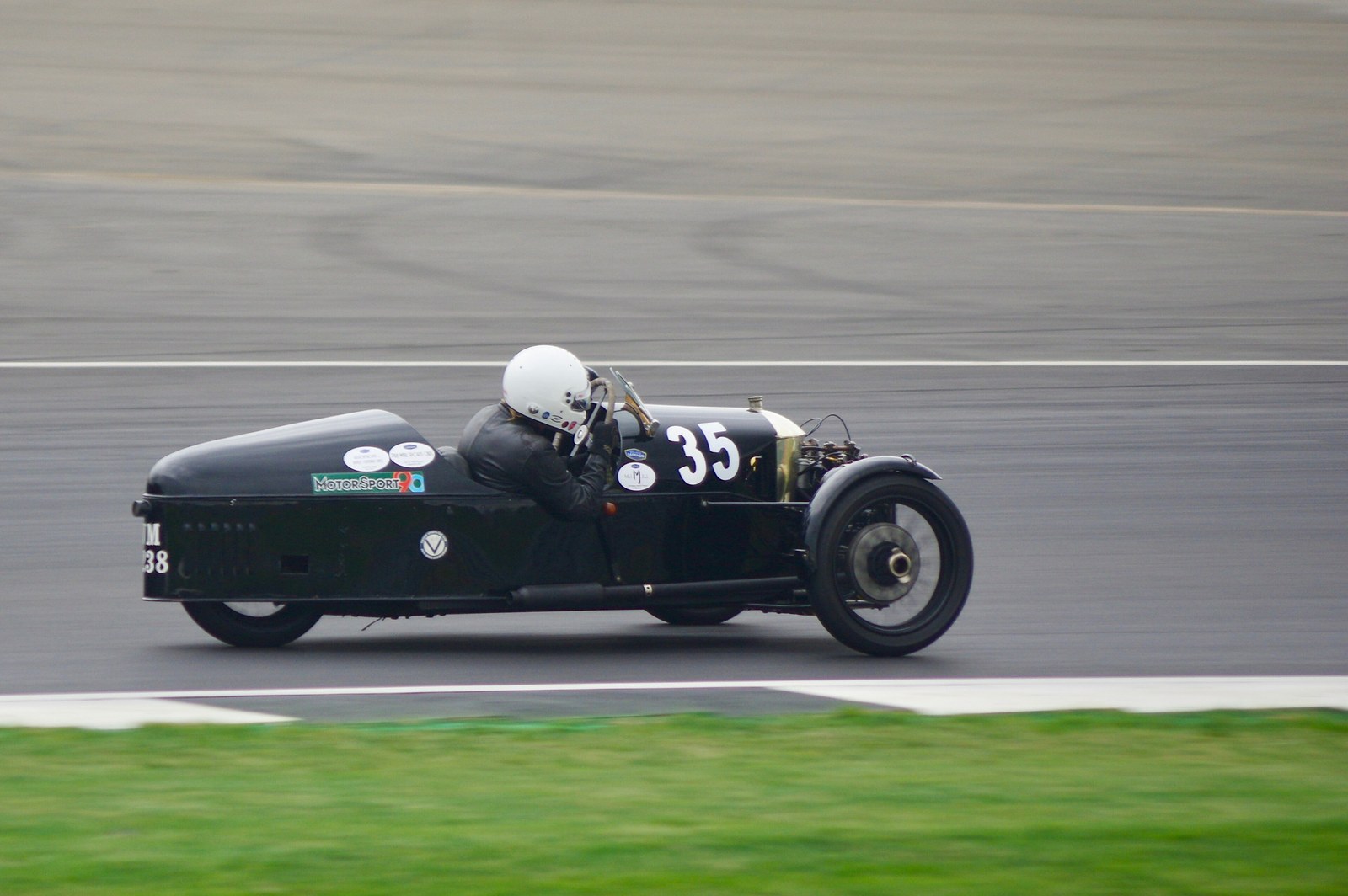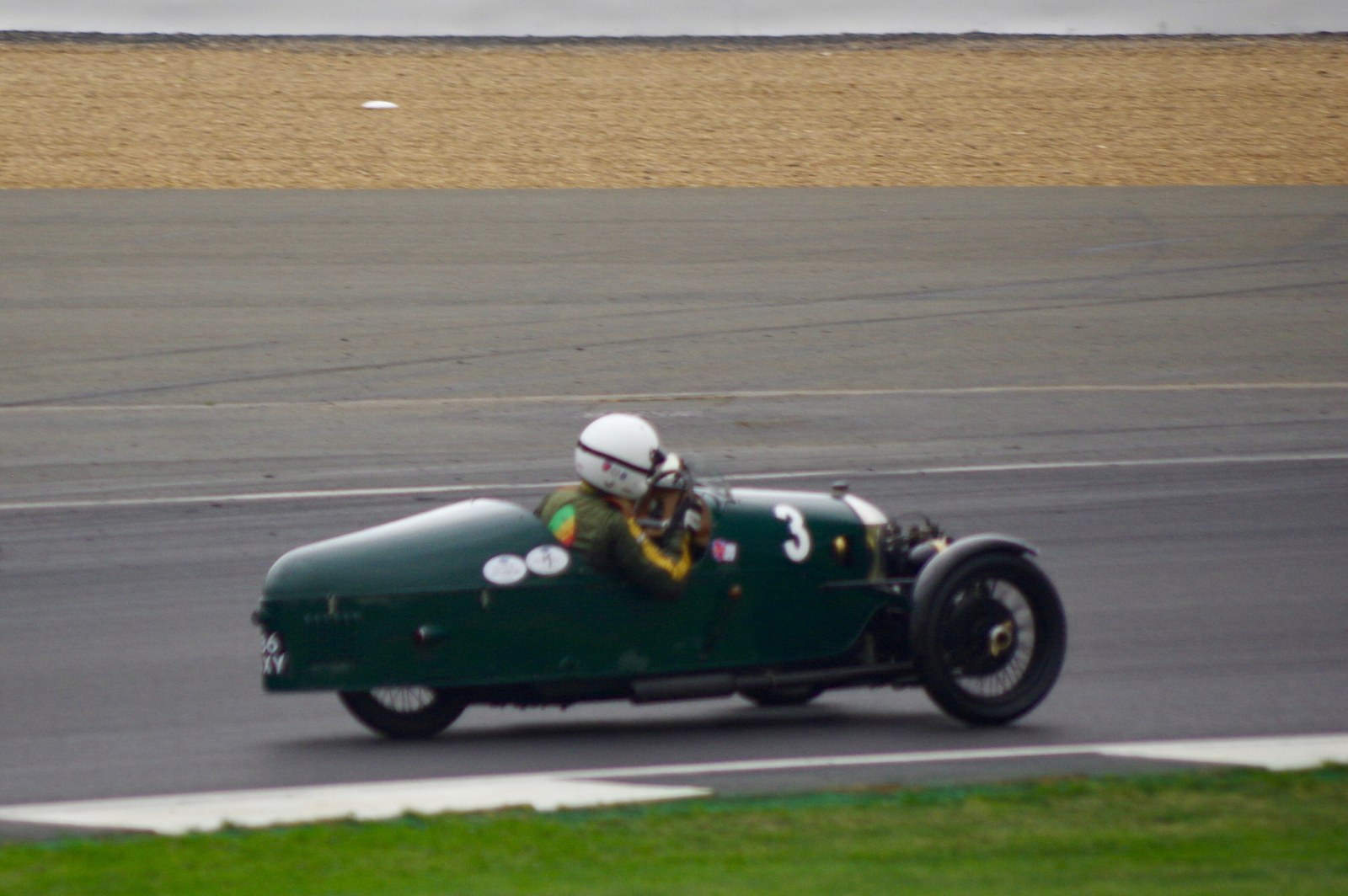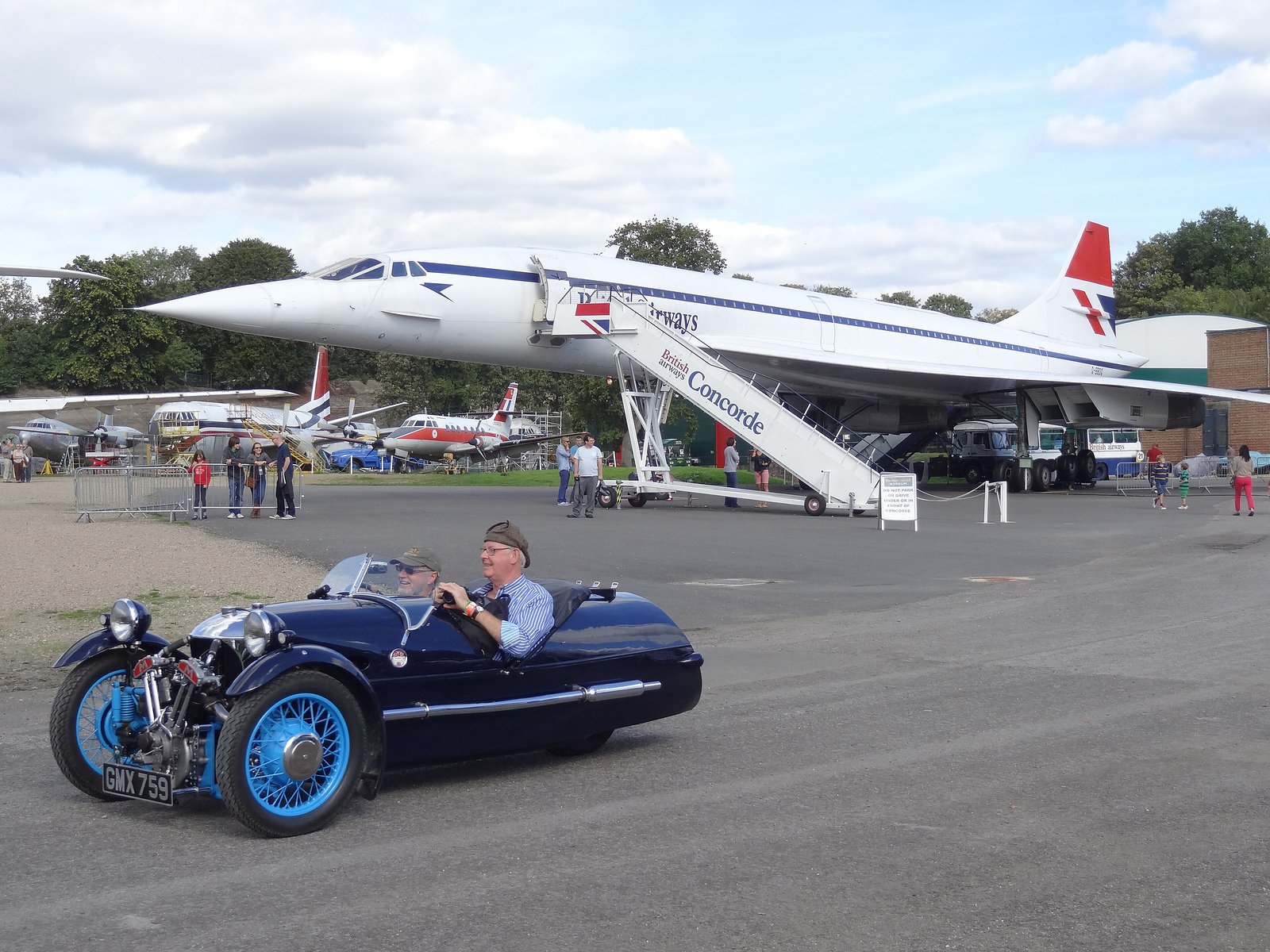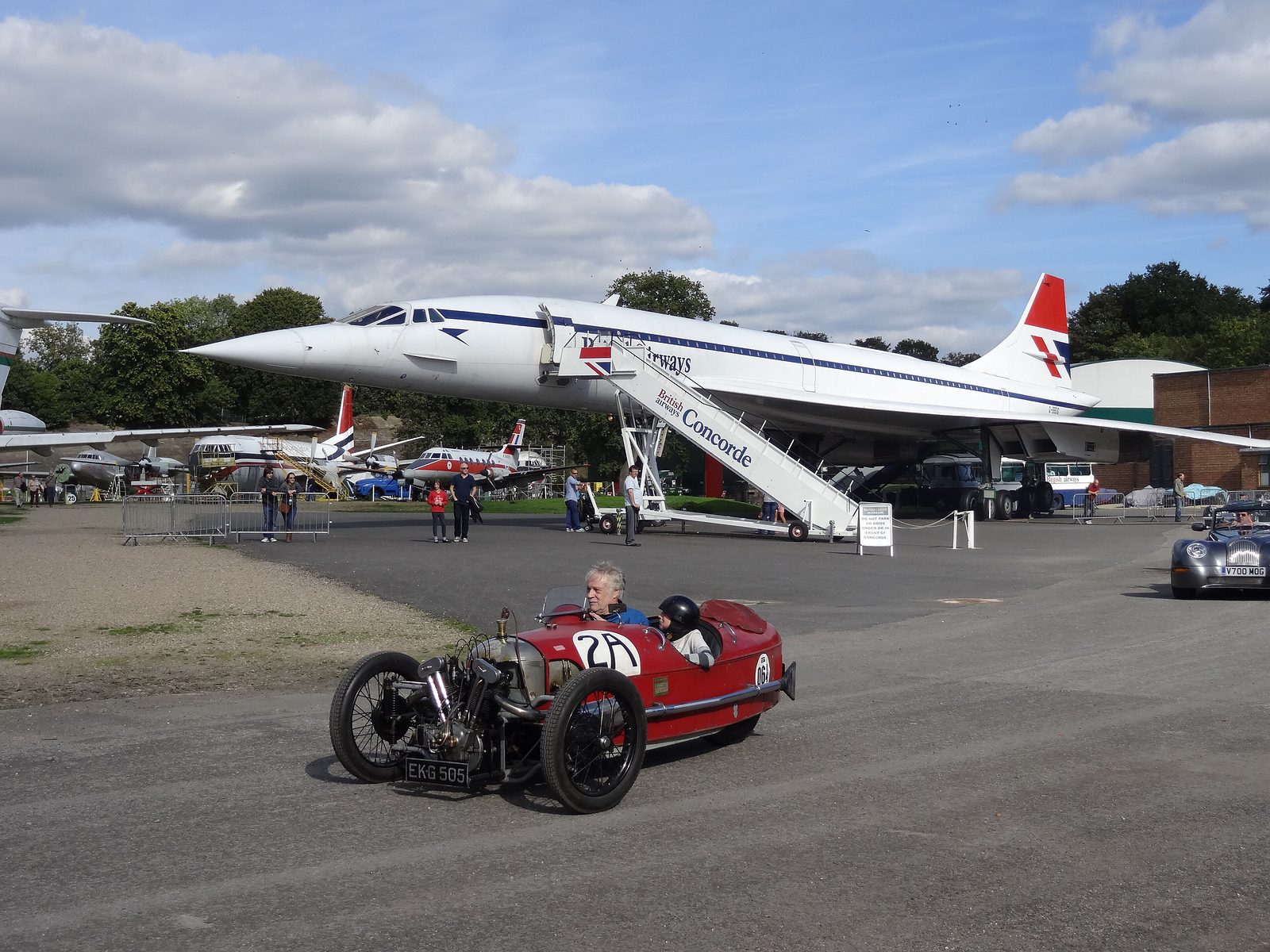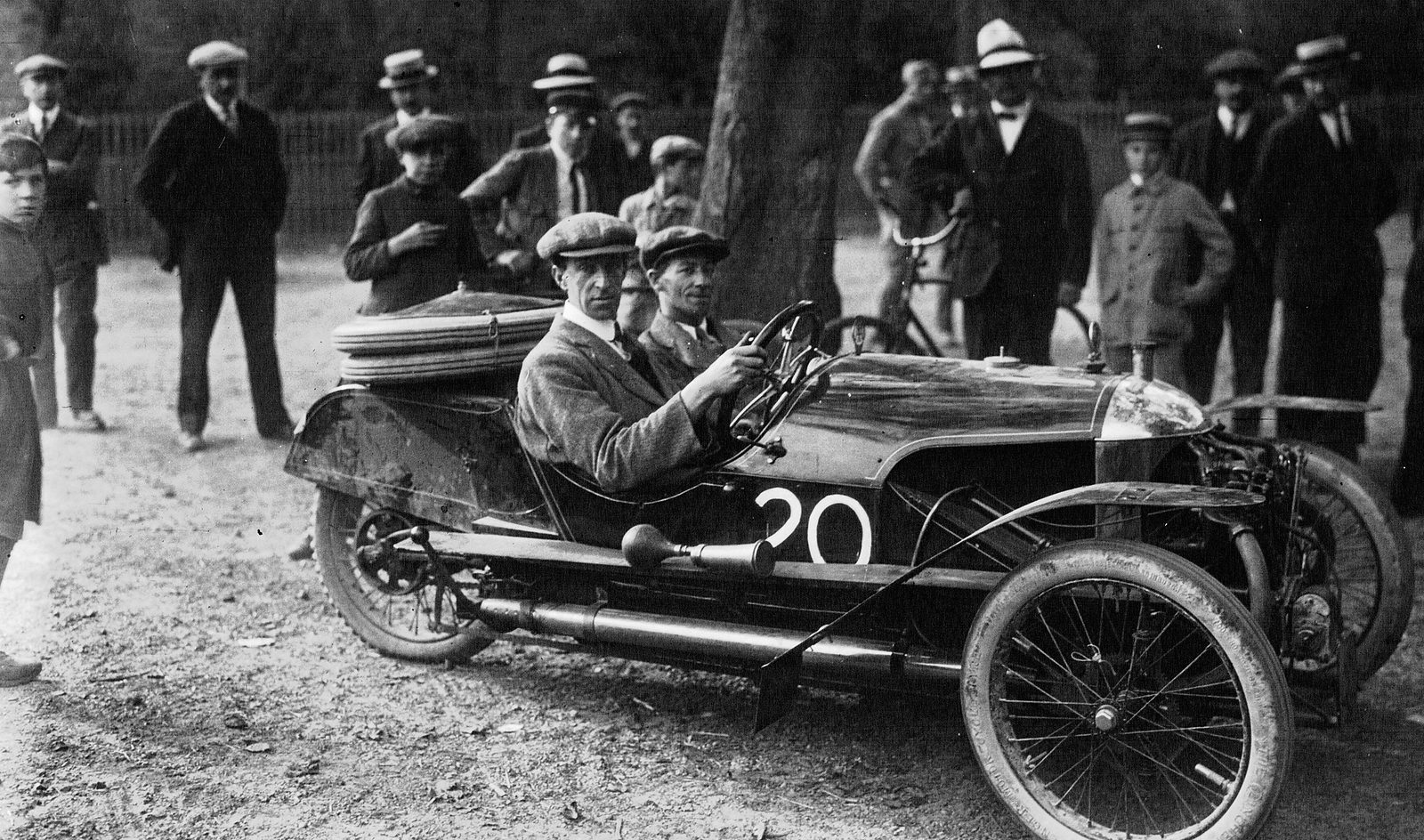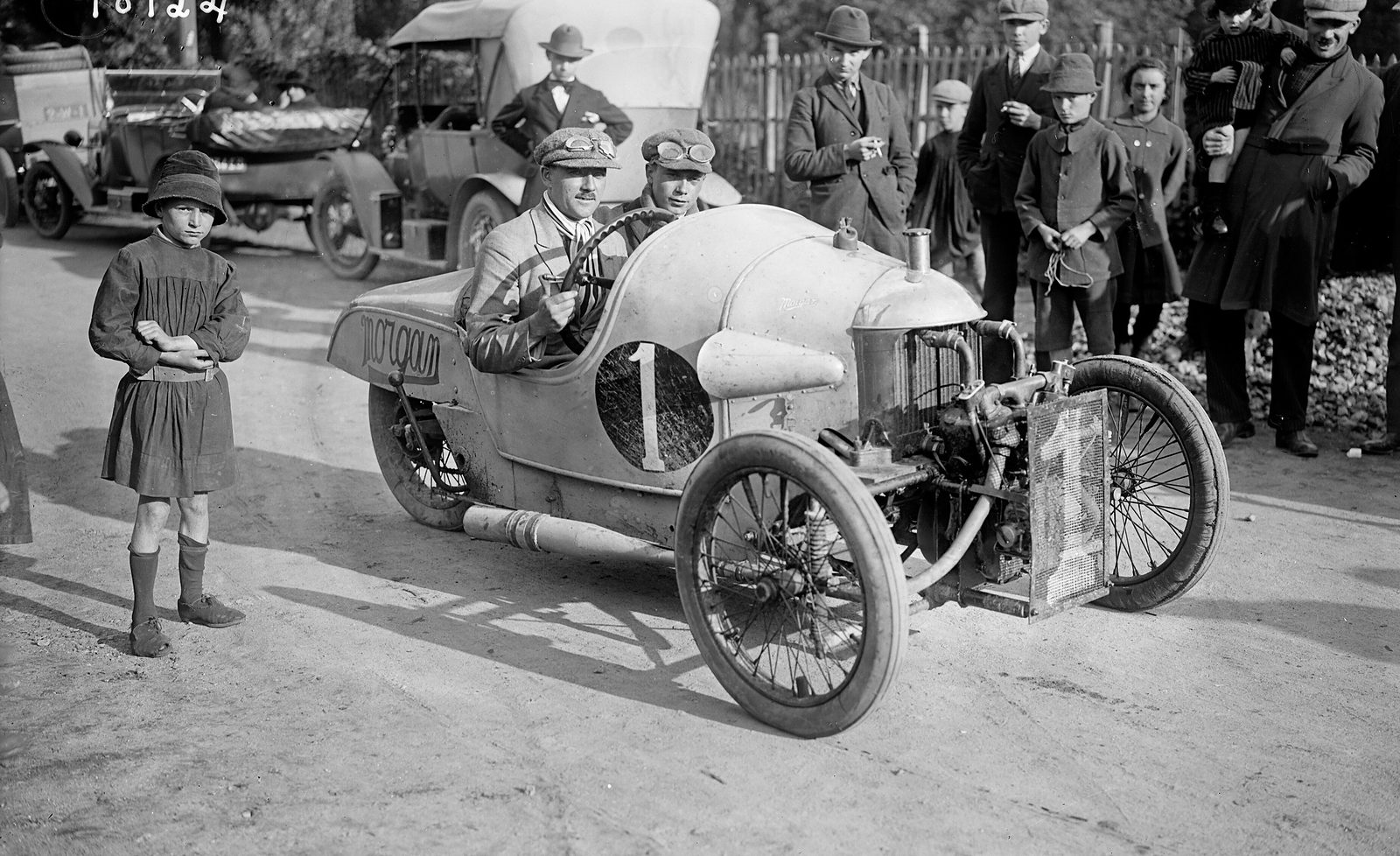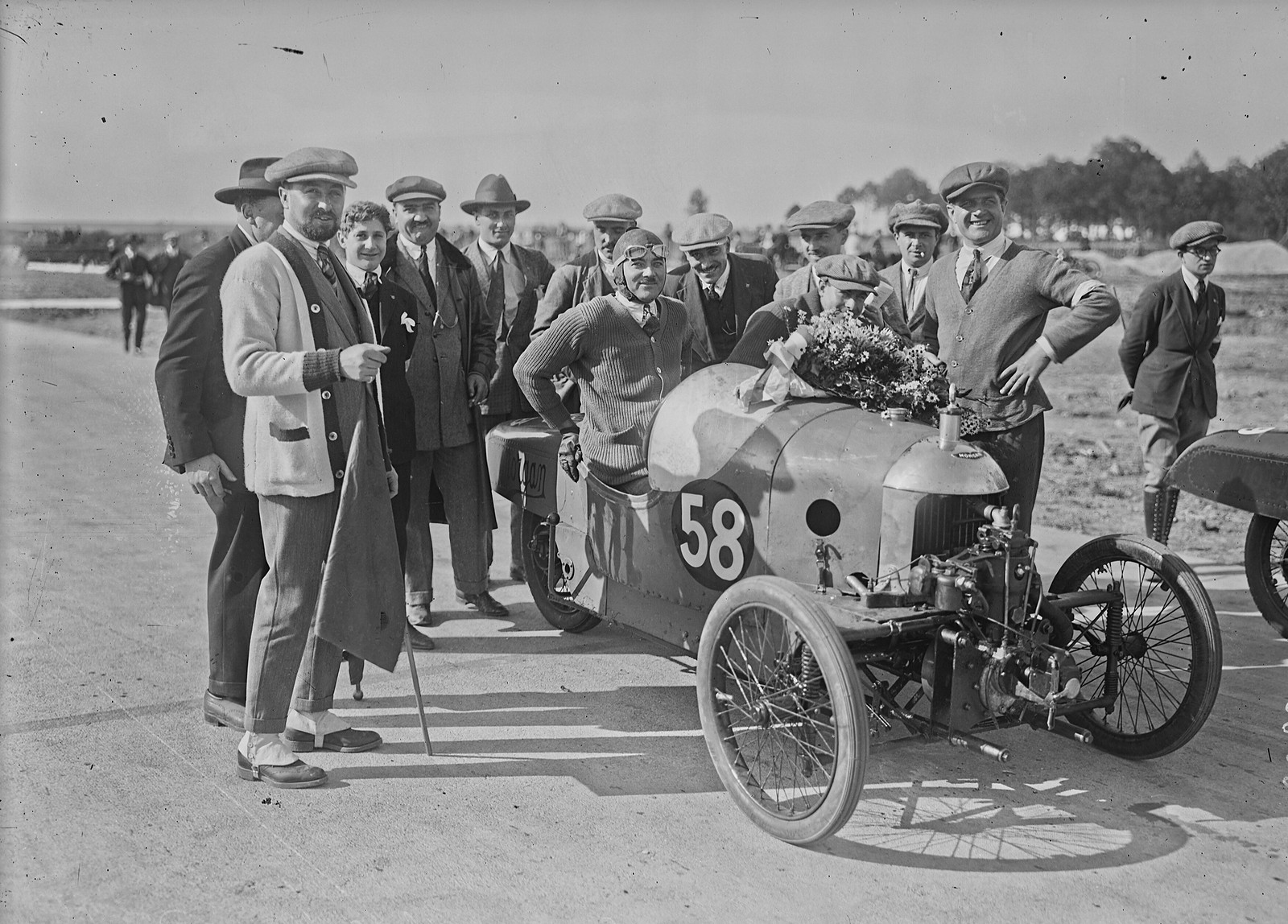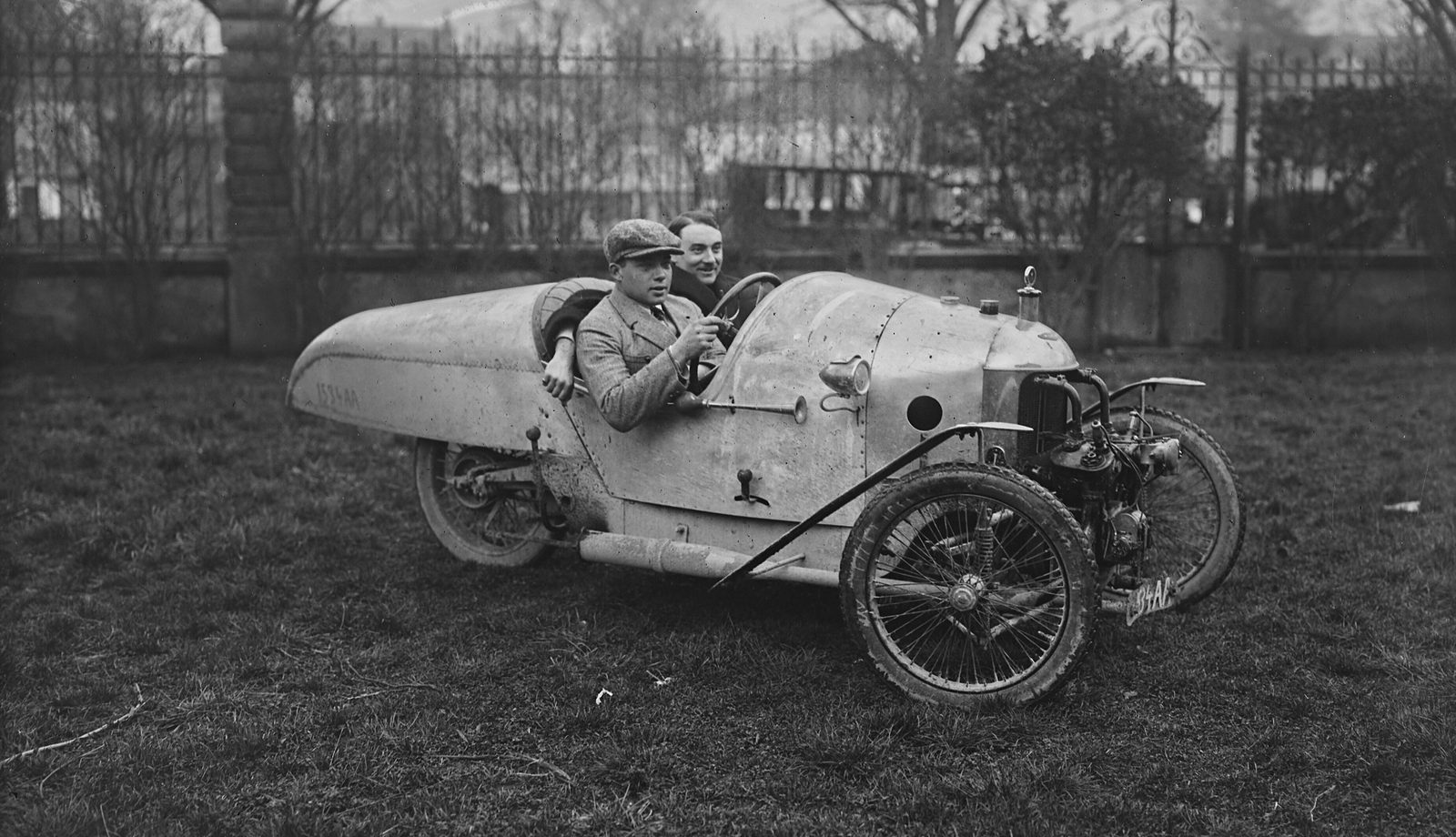
The story
History
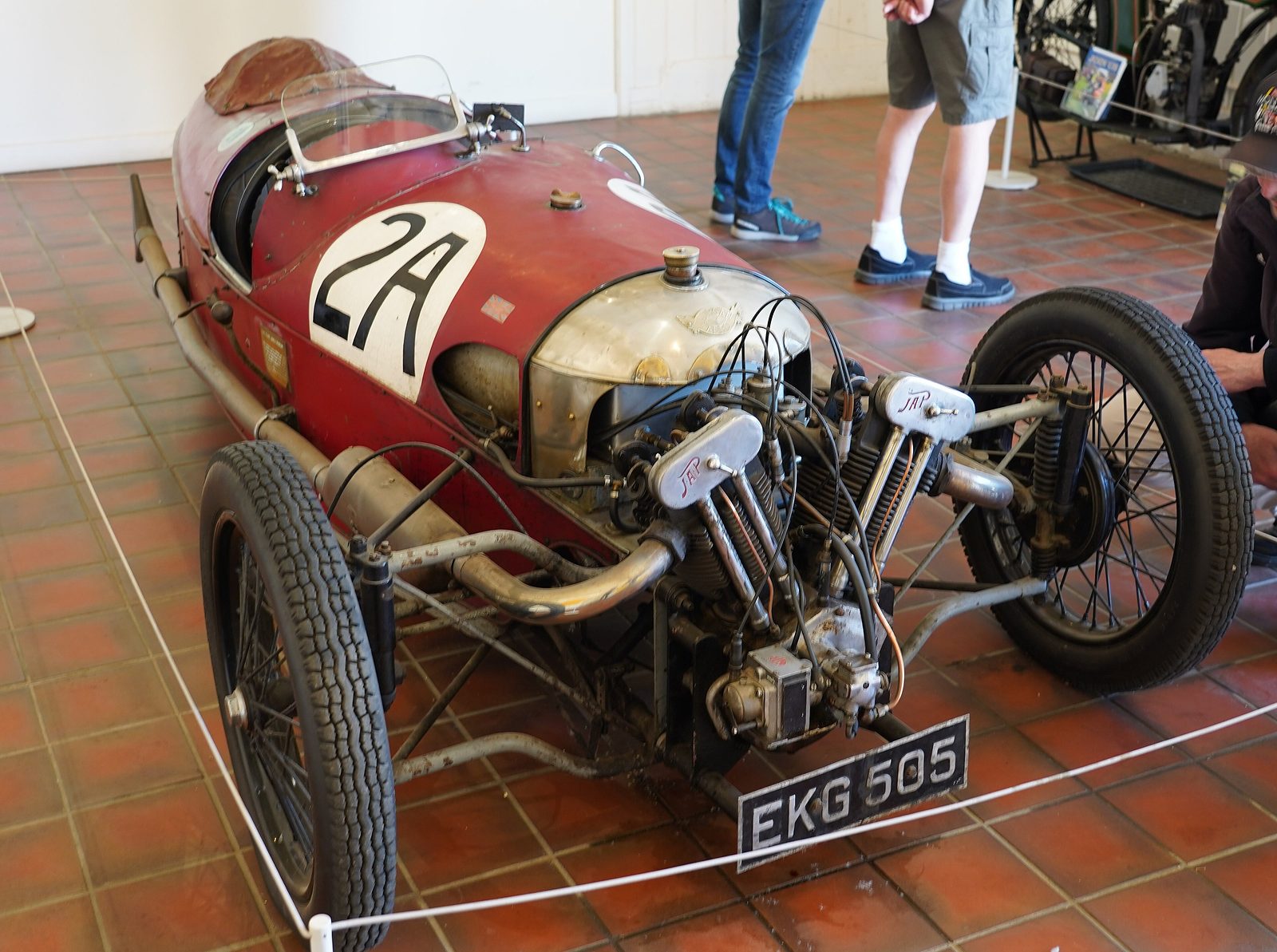
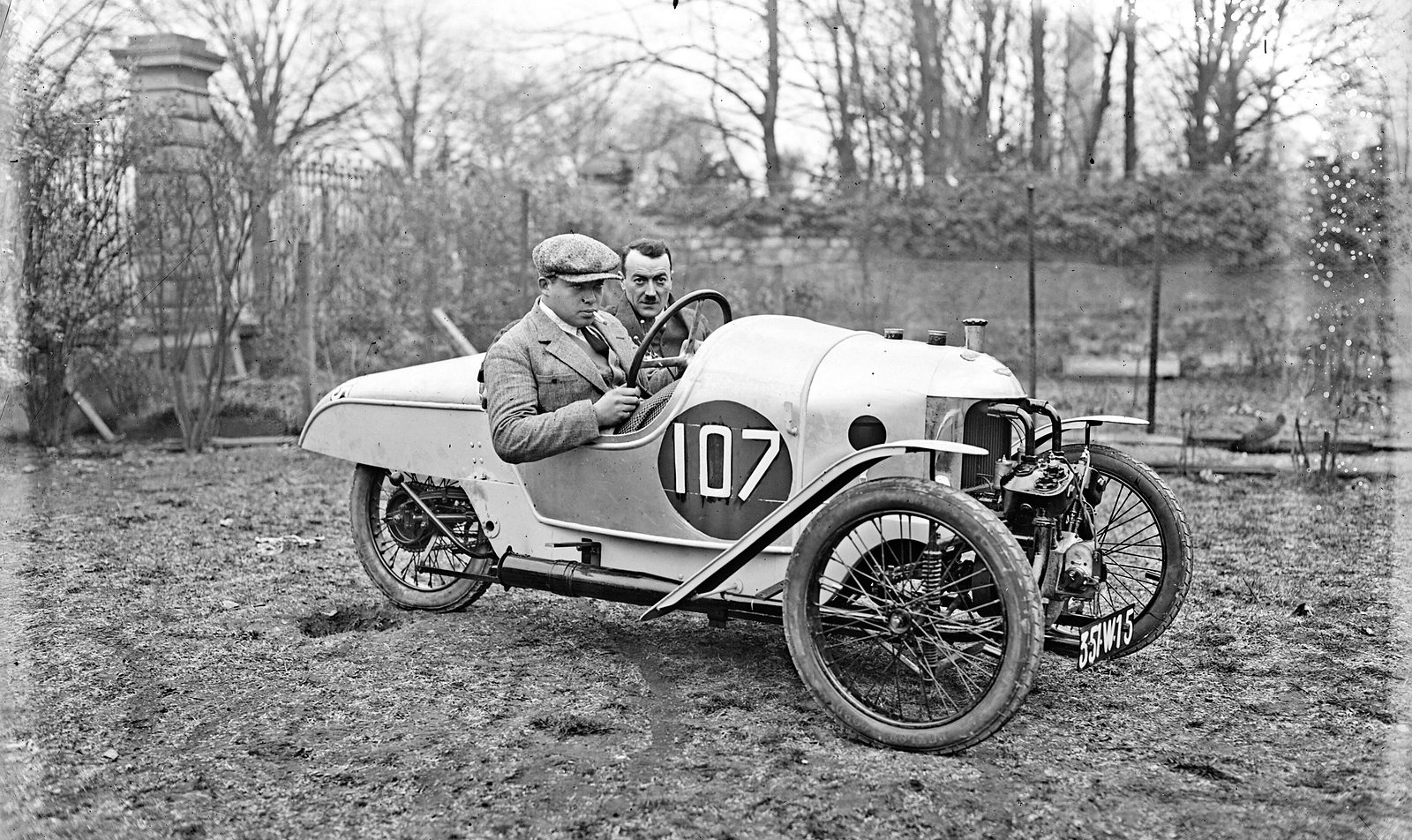
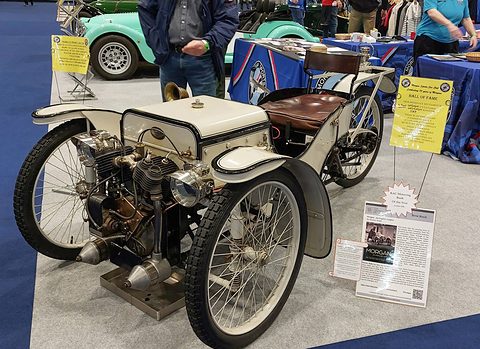
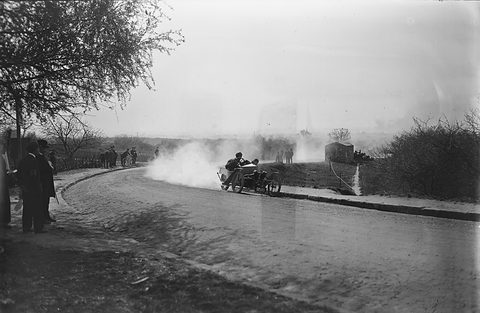
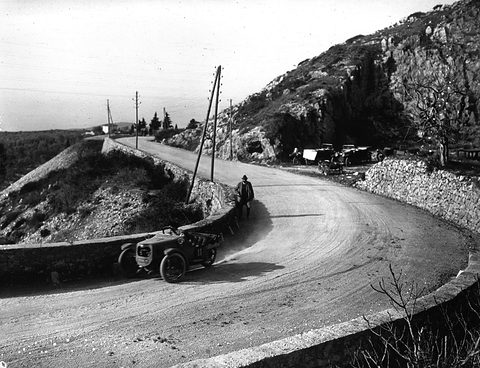
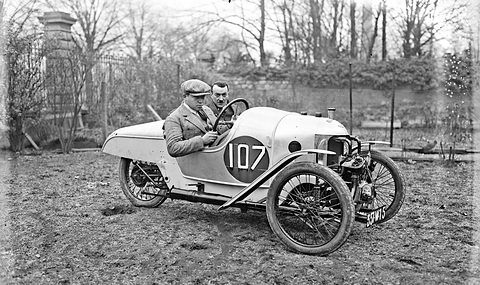
In November 1912 a clergyman in a top hat and clerical dress stood at Brooklands to watch his son drive for an hour. H. F. S. Morgan, in a single-seater of his own make with an overhead-valve JAP twin of 1,082 cc, covered 95.98 km (59 miles 1,120 yards), 96.0 km/h (59.64 mph), with a fastest lap of 100 km/h (62 mph). It was the cyclecar hour record, and it made him the first holder of The Cyclecar’s Challenge Trophy.source 1source 2 The marque had begun three years earlier with a car he built for himself.
A railwayman’s runabout
Henry Frederick Stanley Morgan was born in 1881 at Stoke Lacy Rectory, in Herefordshire, the son of the Rev. Prebendary H. George Morgan. In 1900 he became a pupil of the Great Western Railway’s chief engineer at Swindon, and later worked in its drawing office for about seven years.source 3source 1 His motoring had begun with a Minerva motorcycle in 1899 and, by his own account, a hired 3½ hp Benz that ran away down a hill and cost his father £28.source 3 In 1906 he left Swindon and opened a garage at Malvern Link, in Worcestershire, as an agent for Wolseley and Darracq, and ran one of the first bus services with 15-seat Wolseleys.source 3source 1
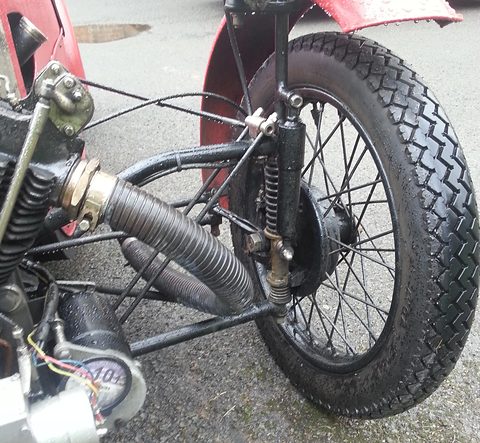
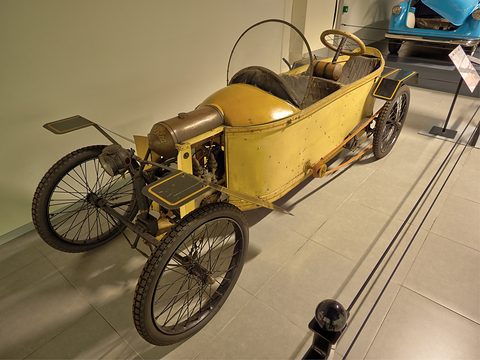
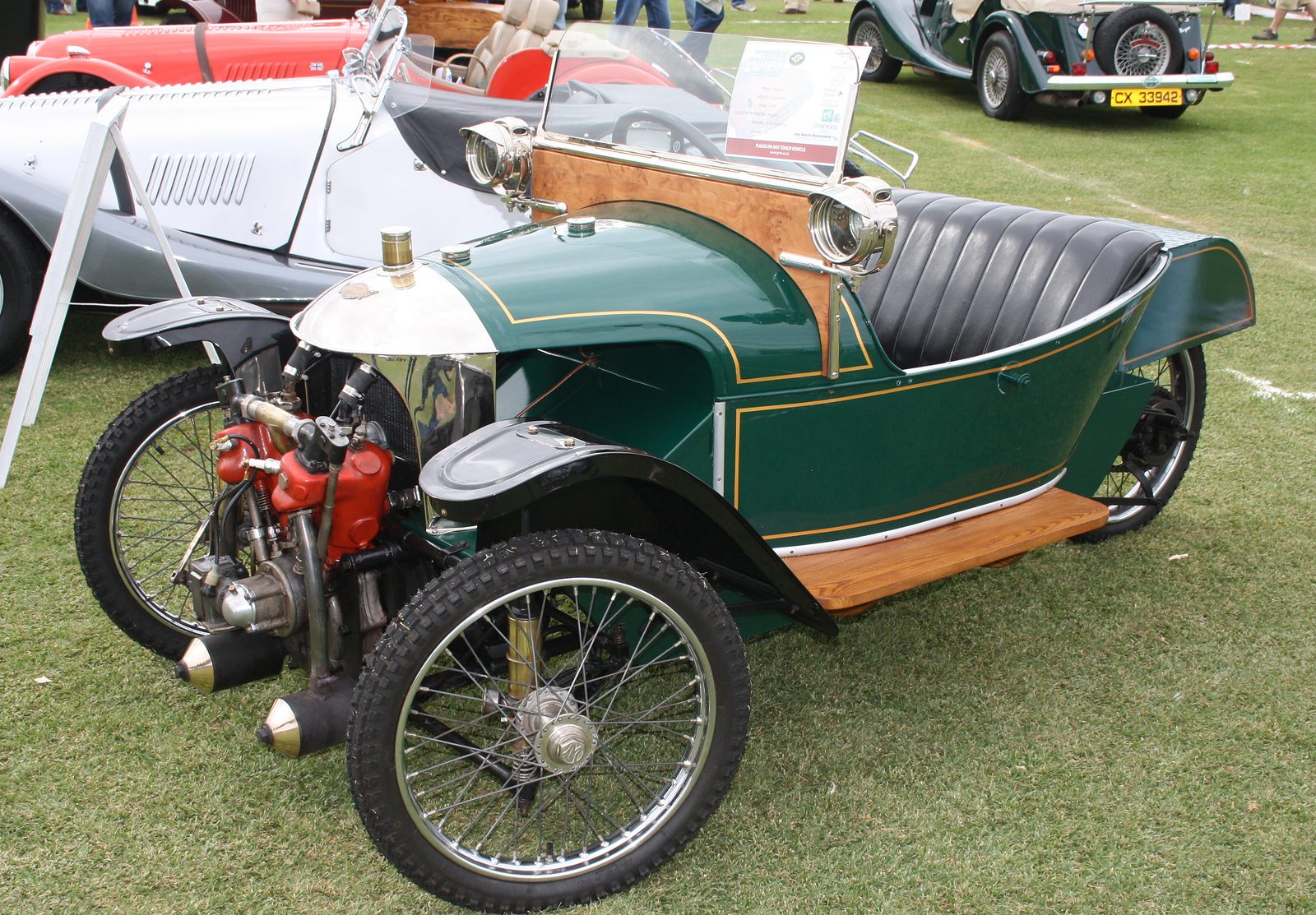
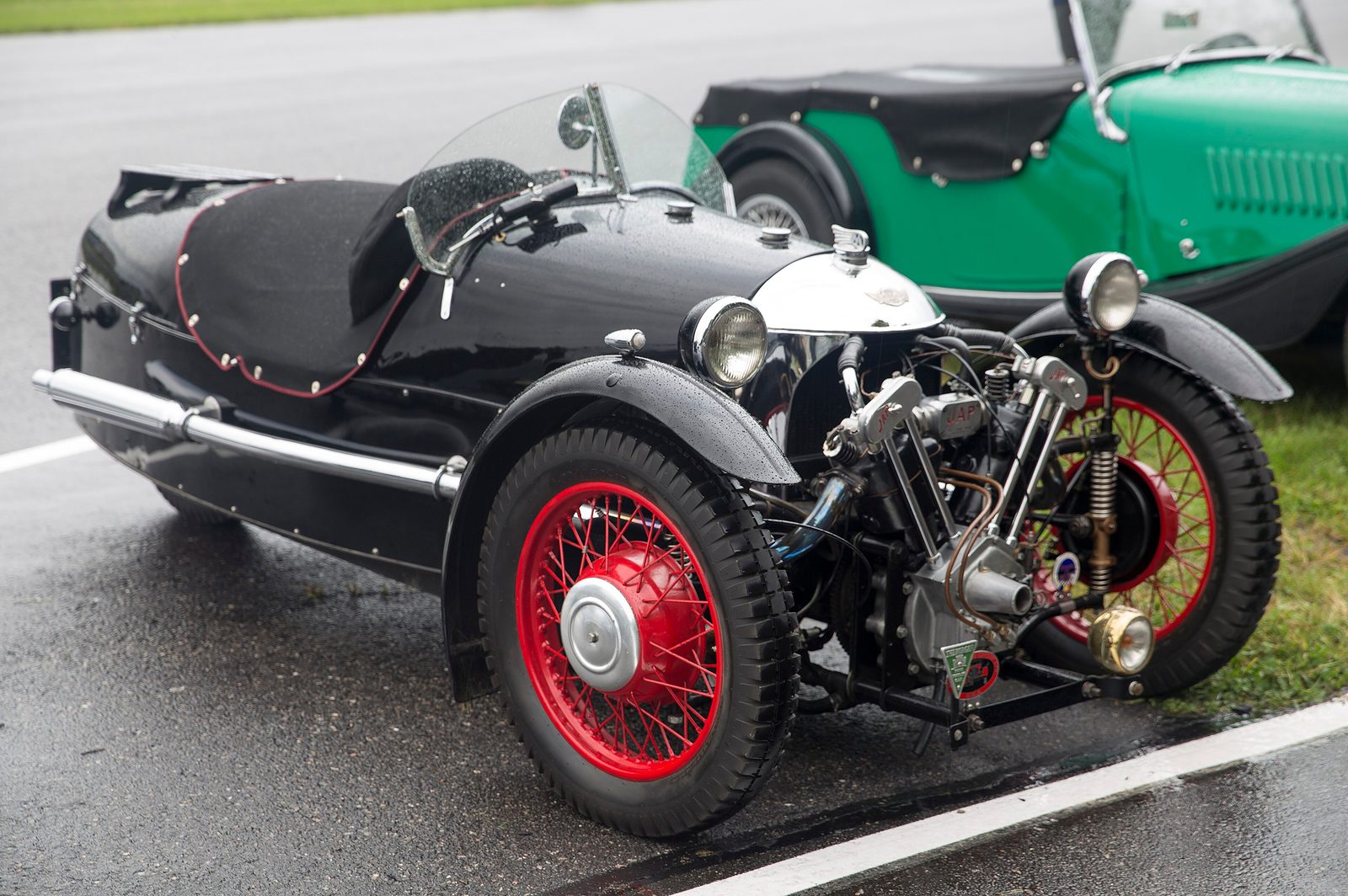
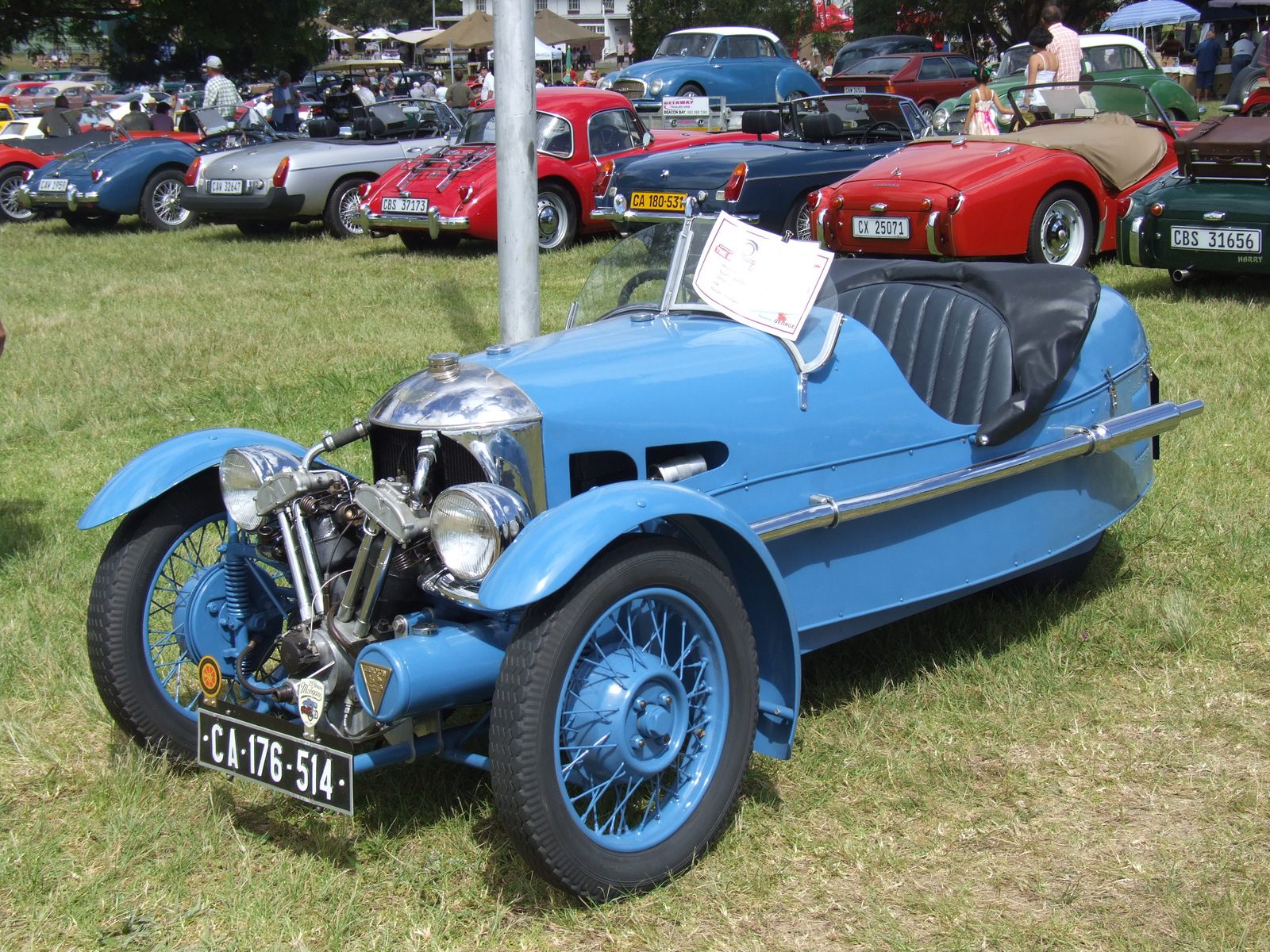
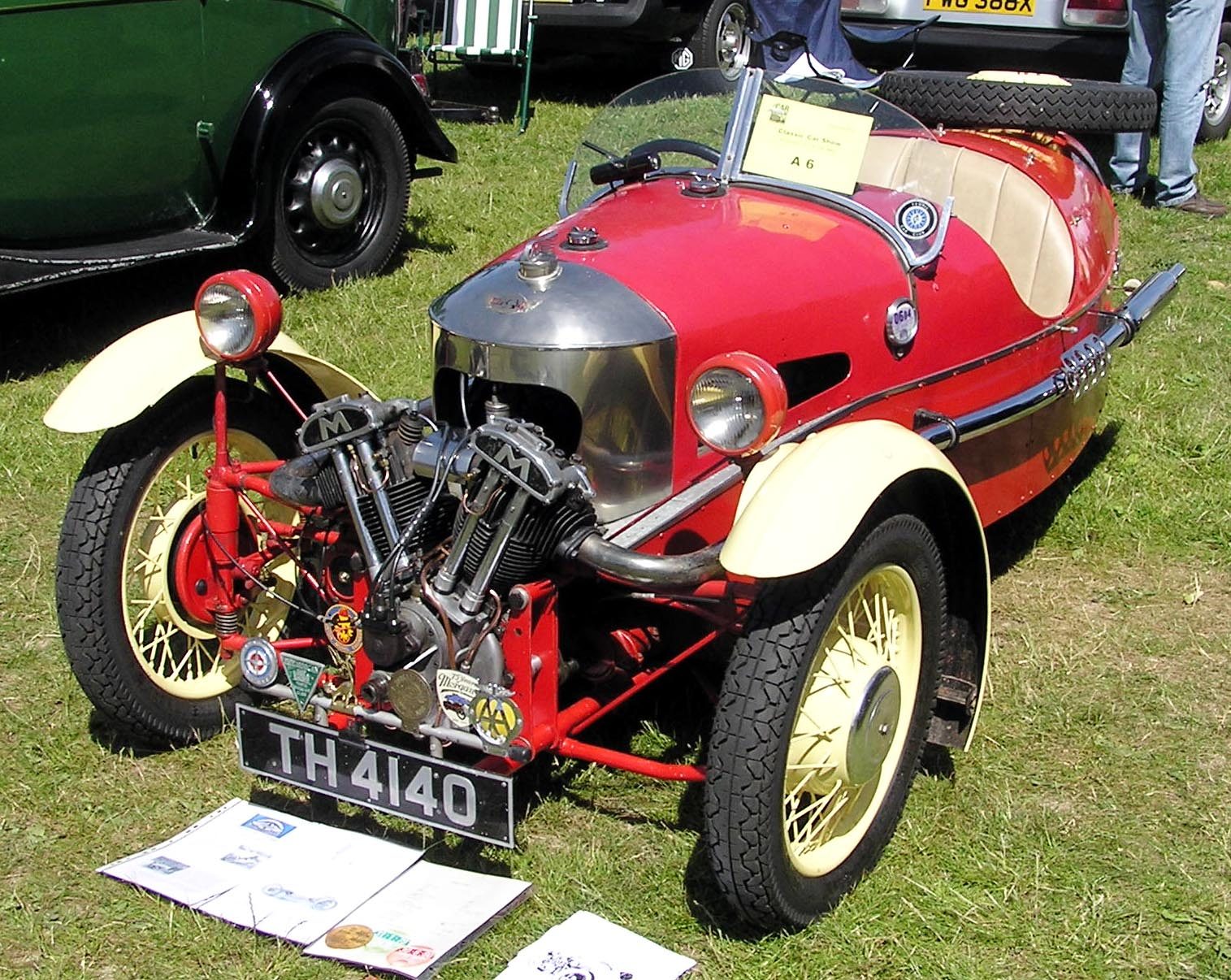
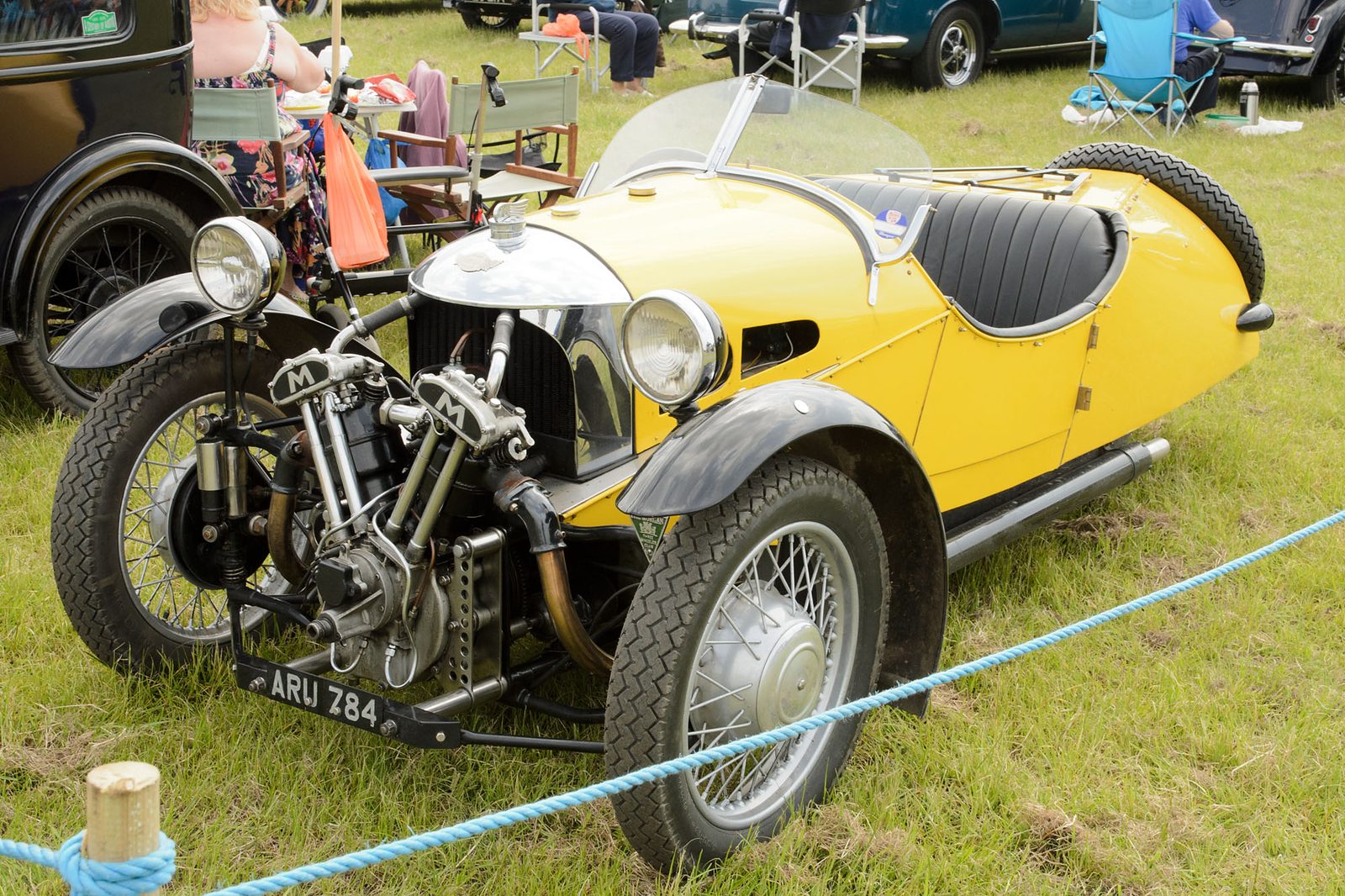
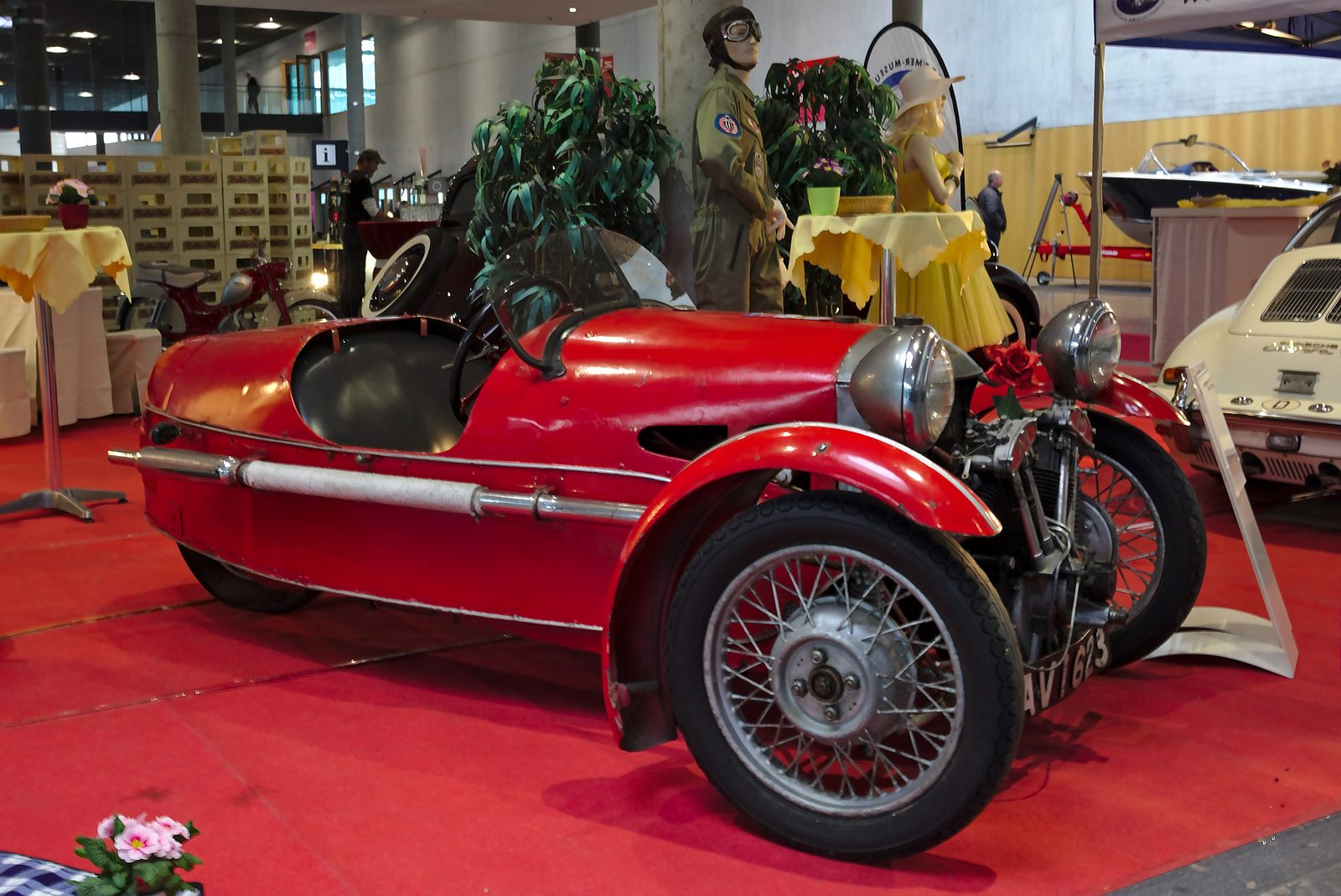
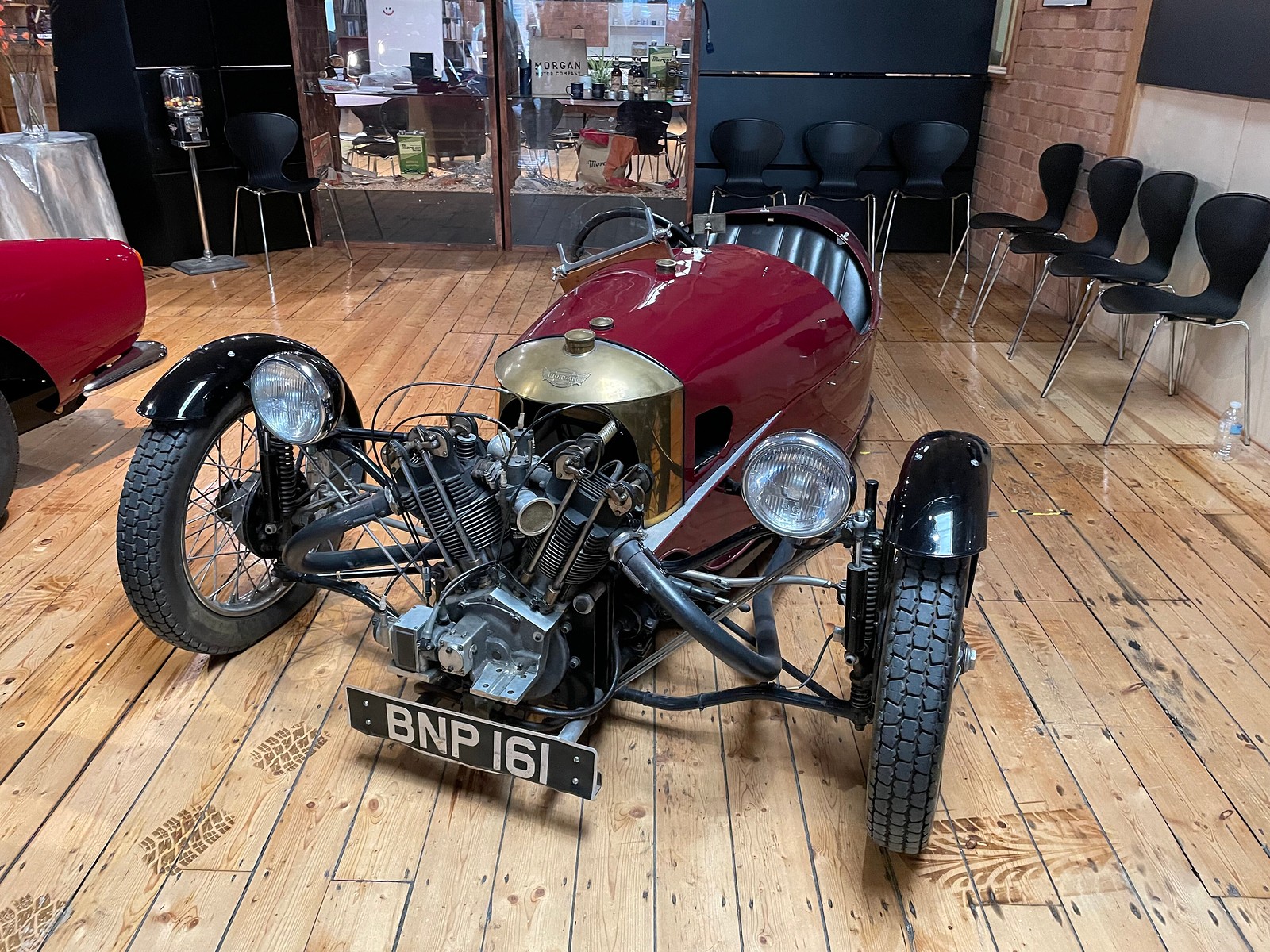
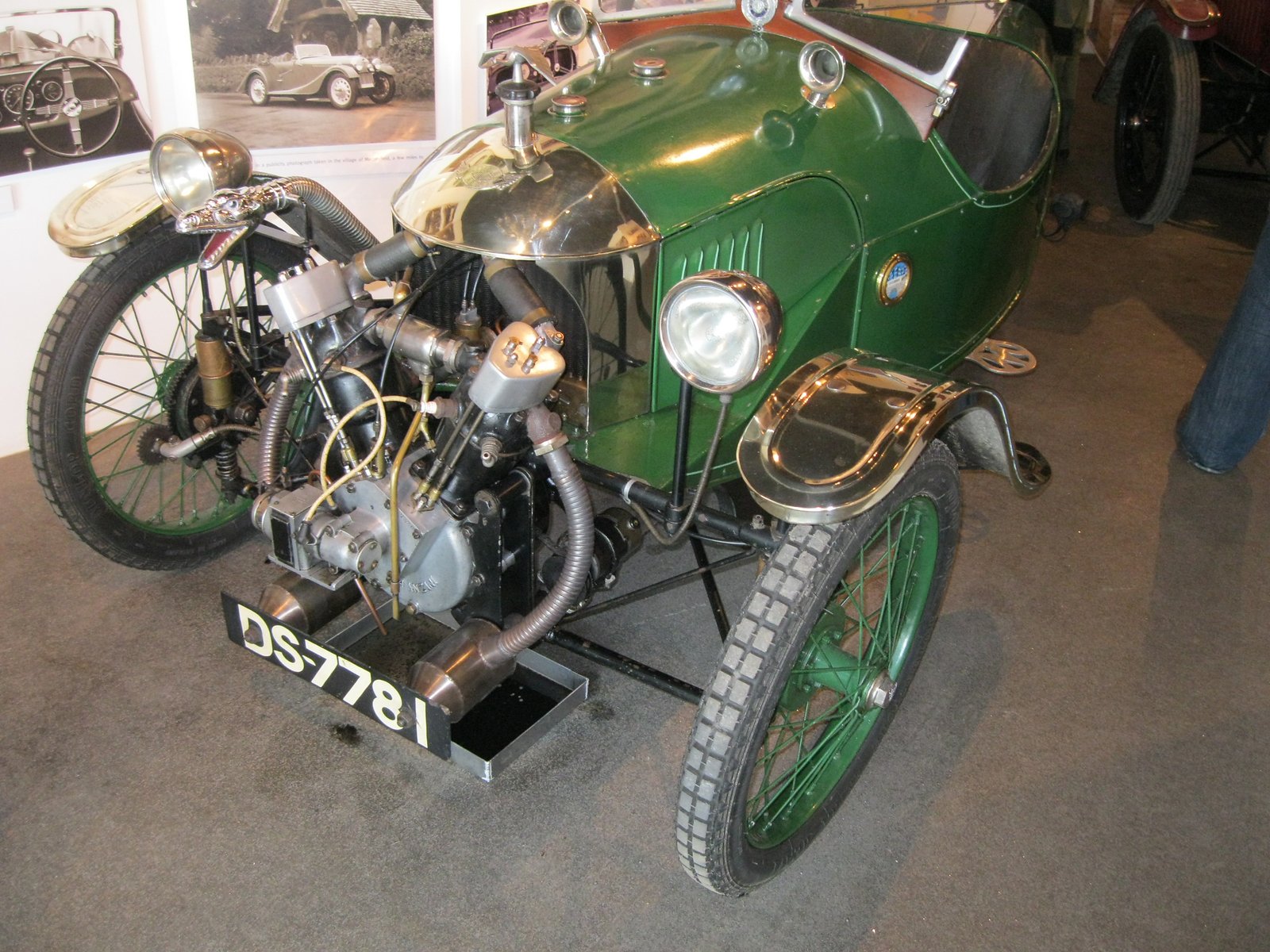
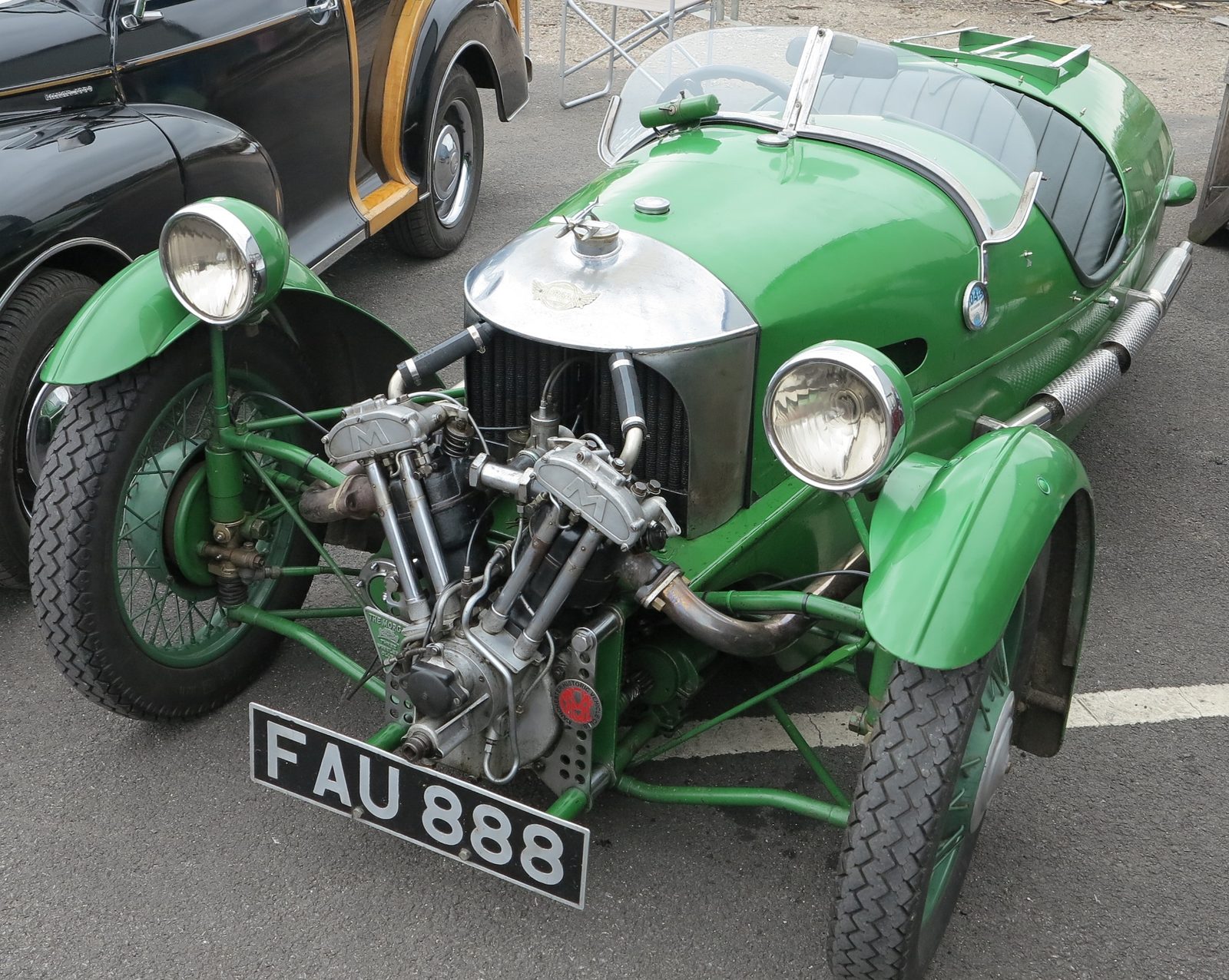
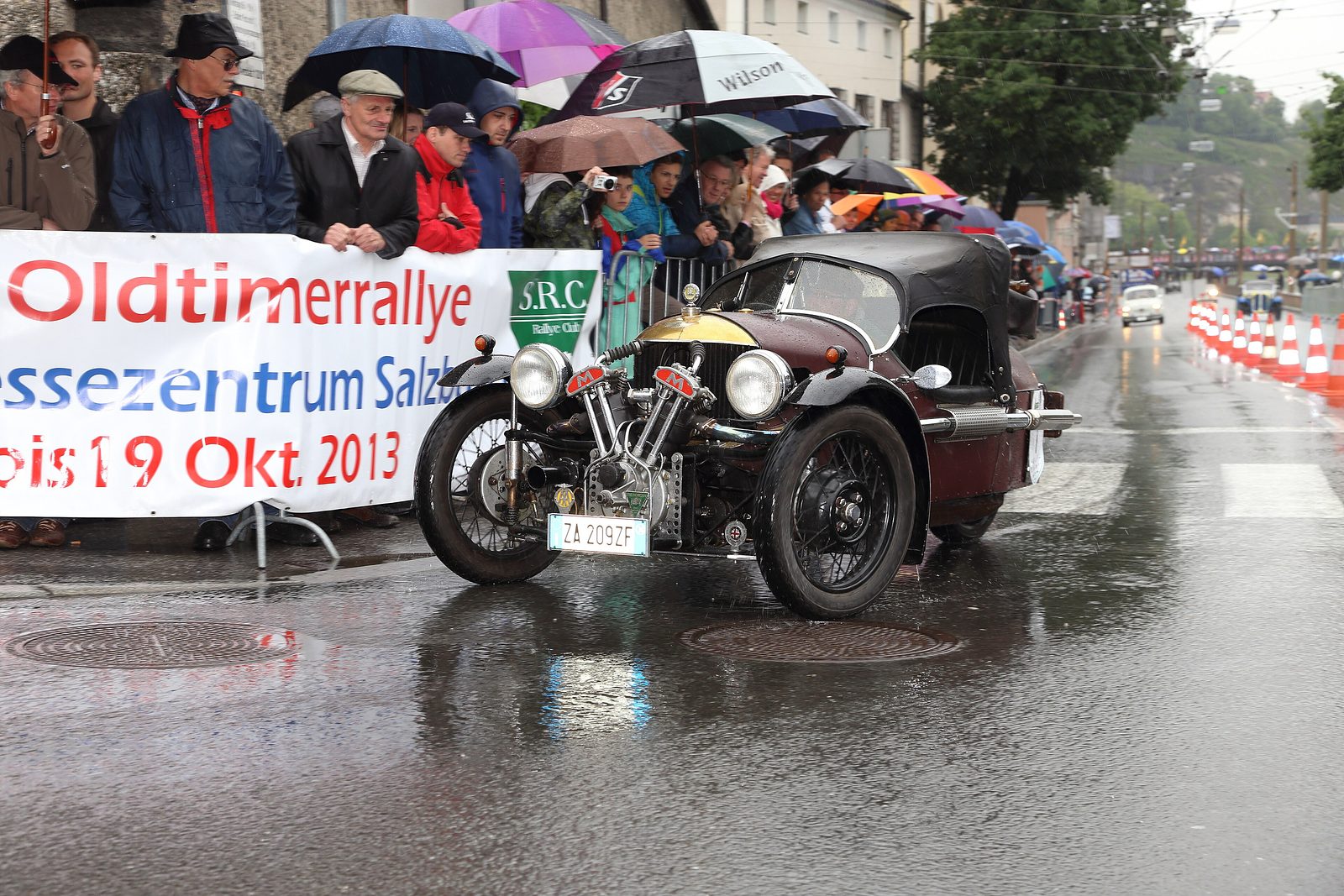
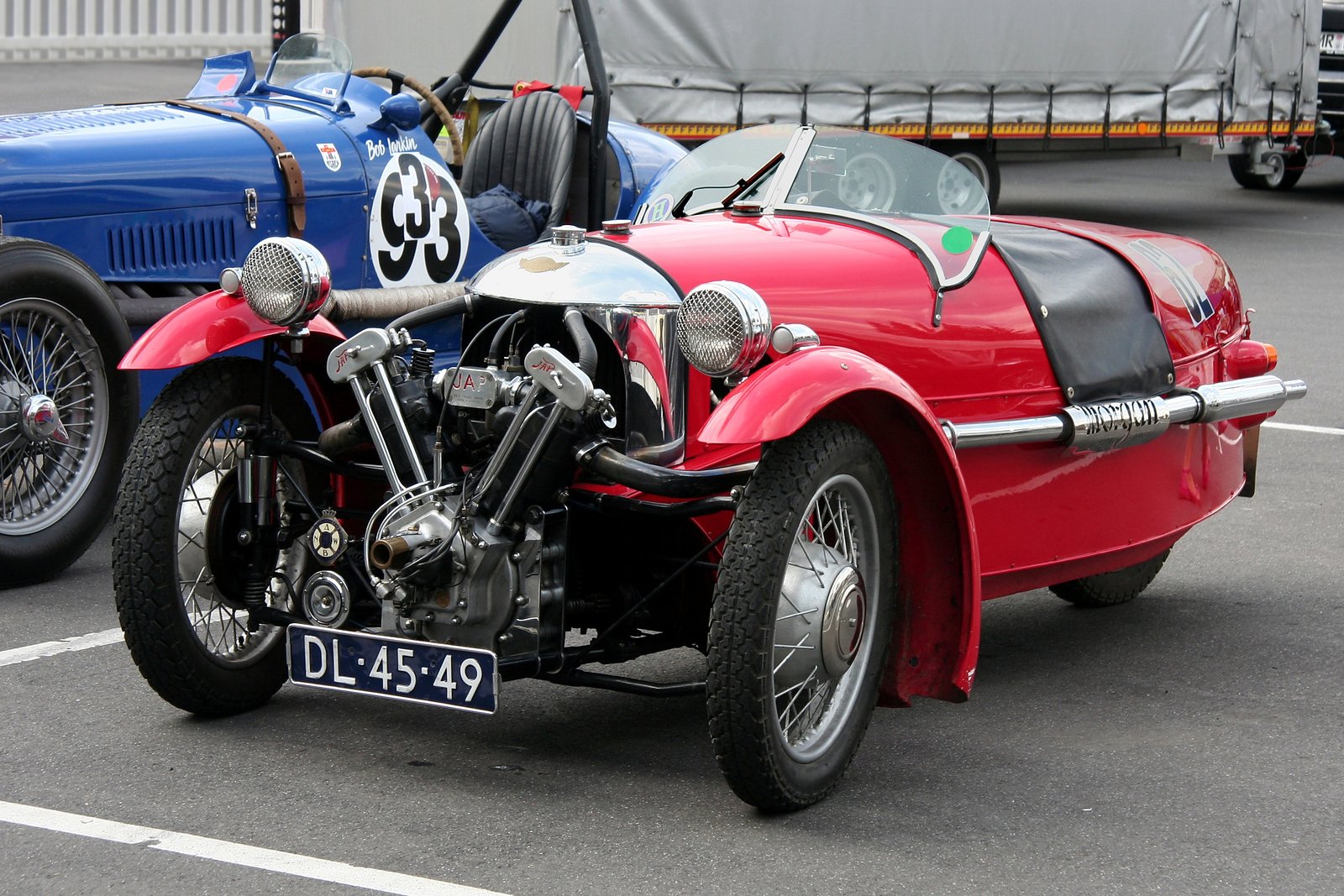
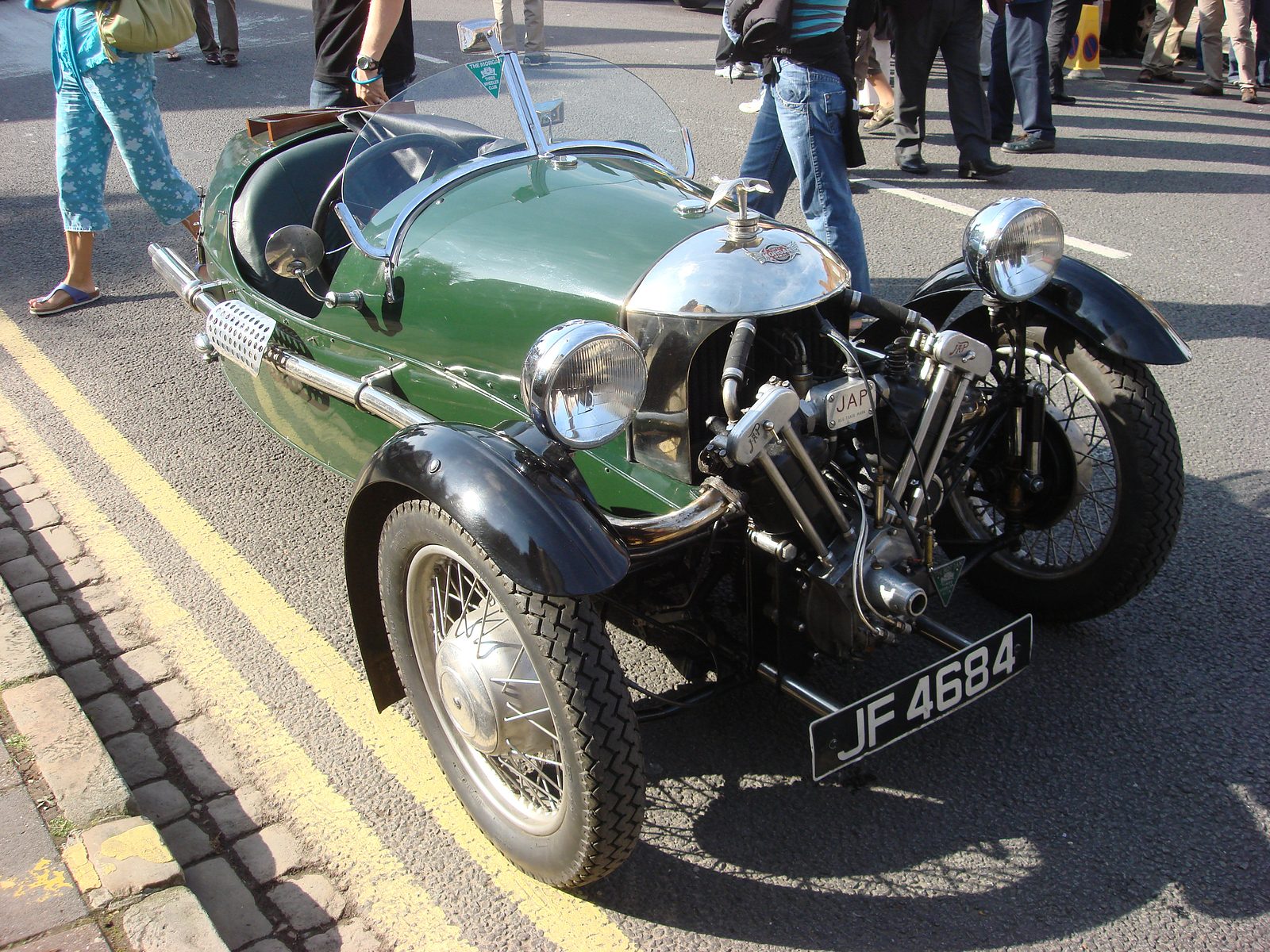
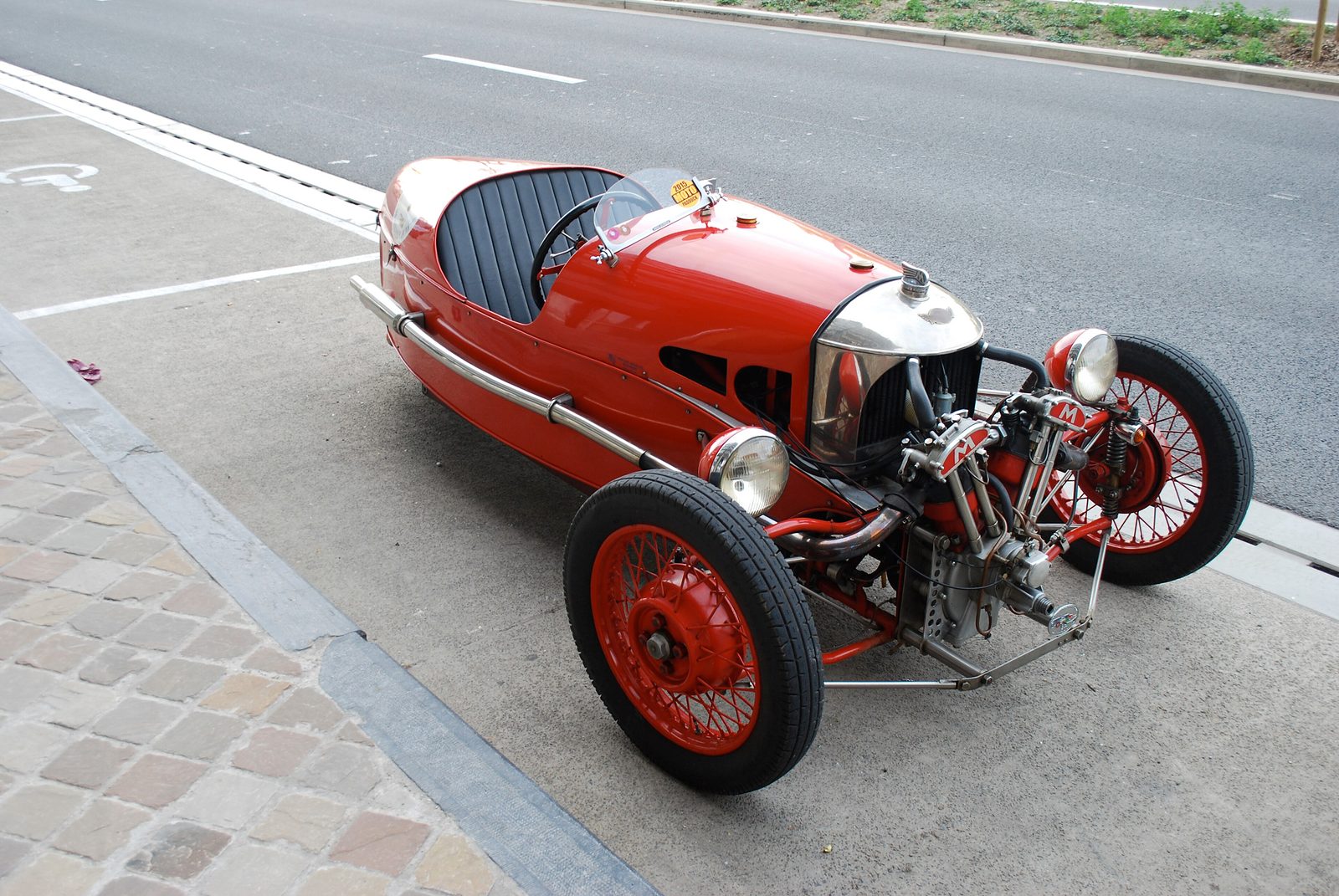
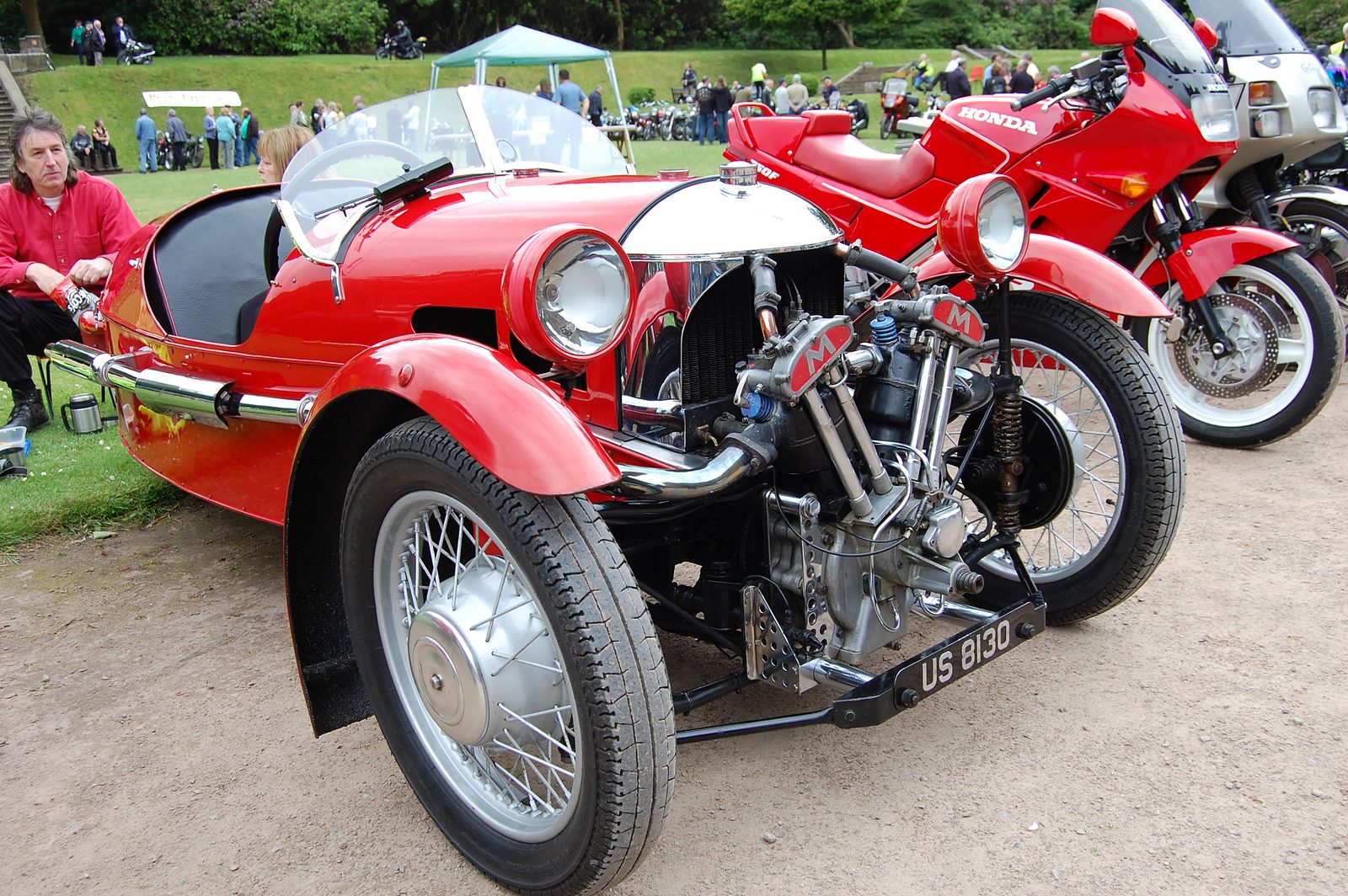
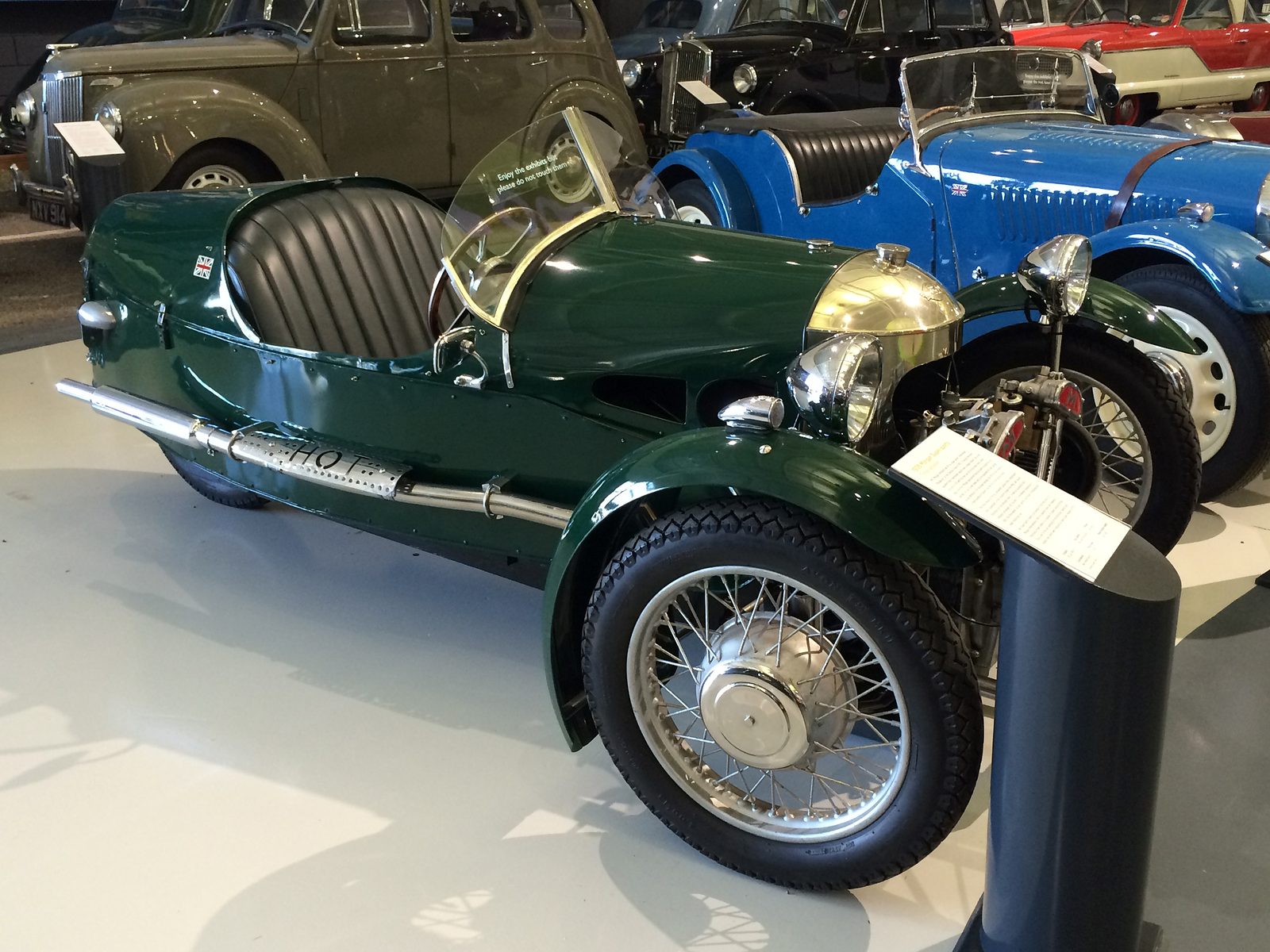
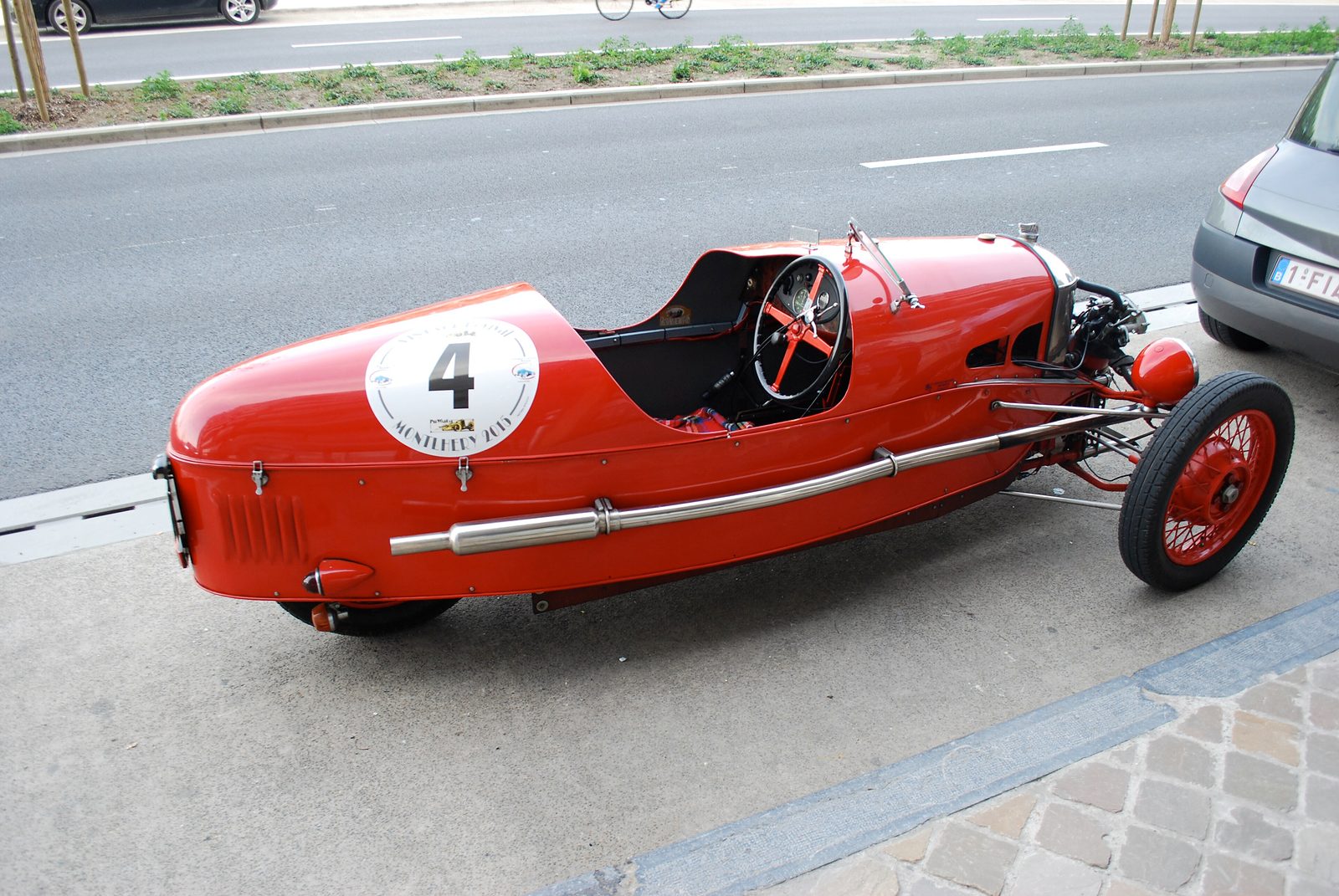
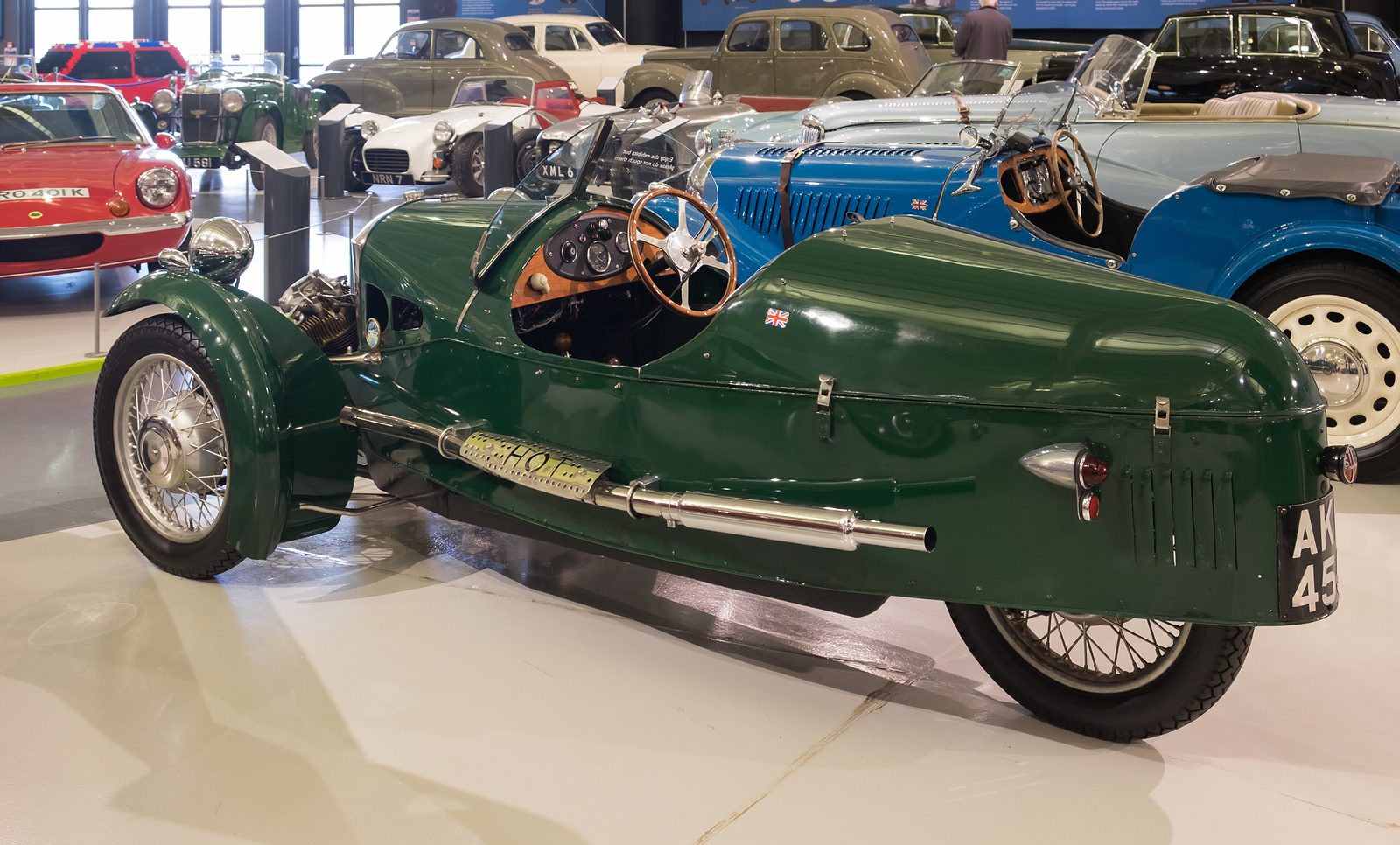
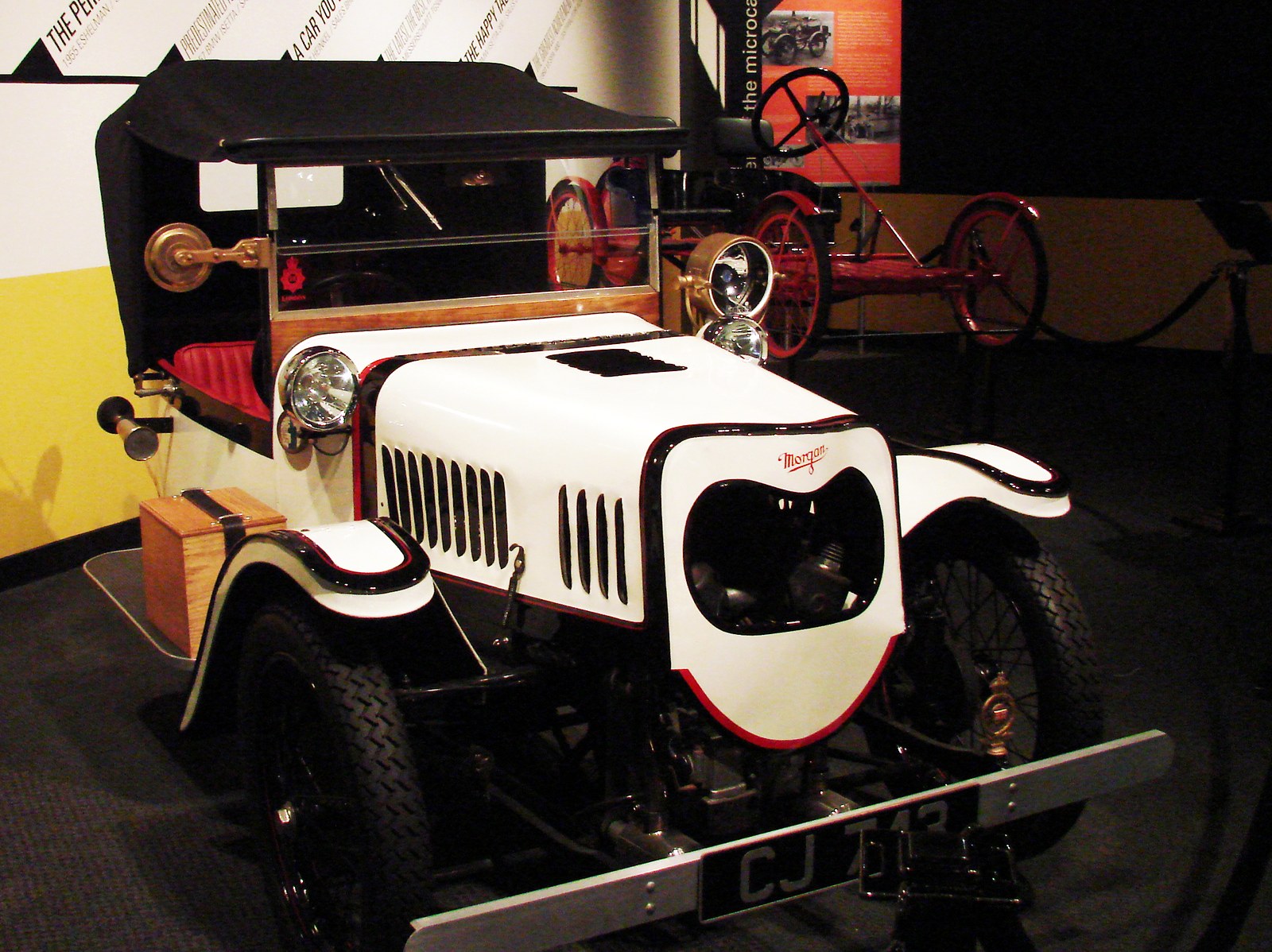
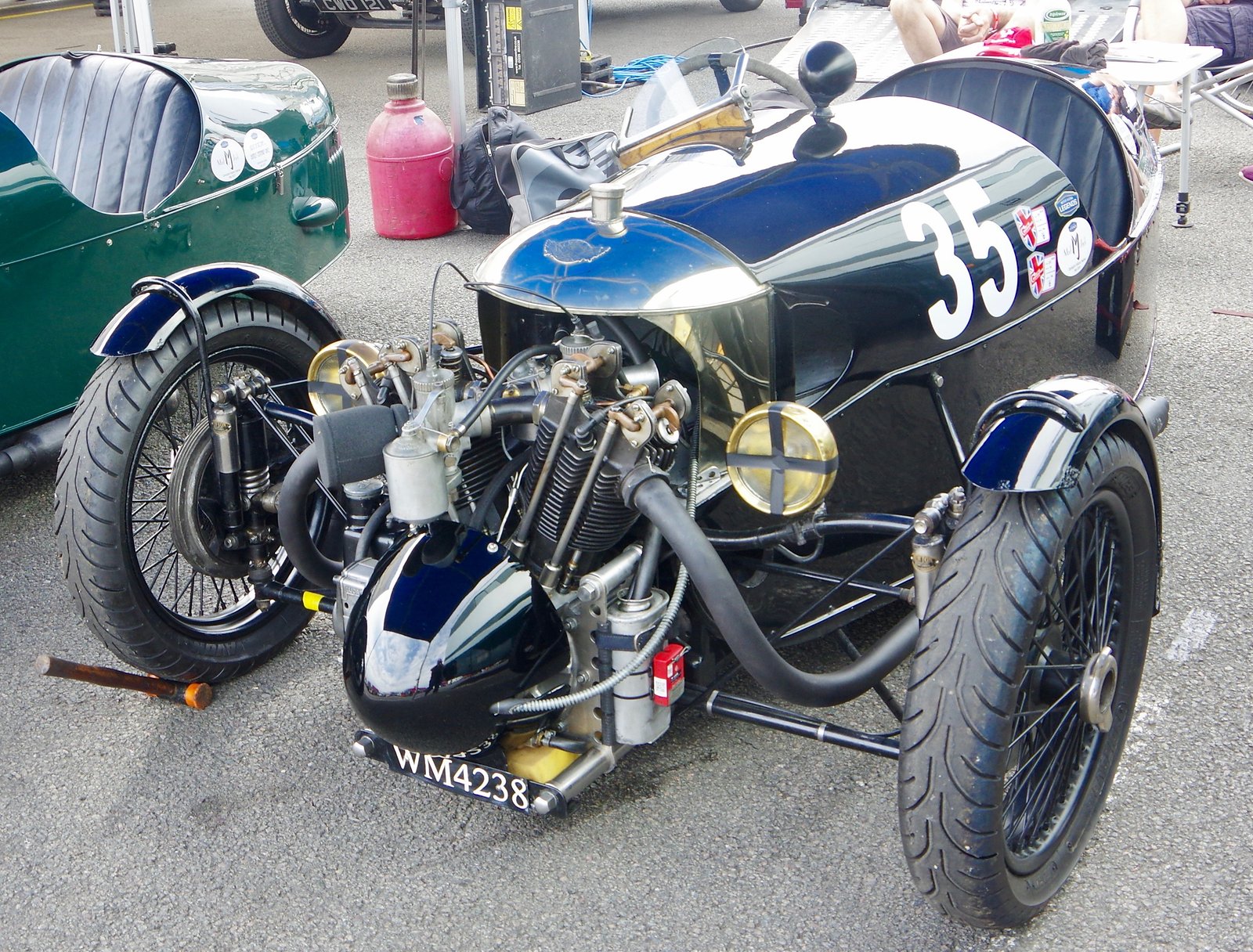
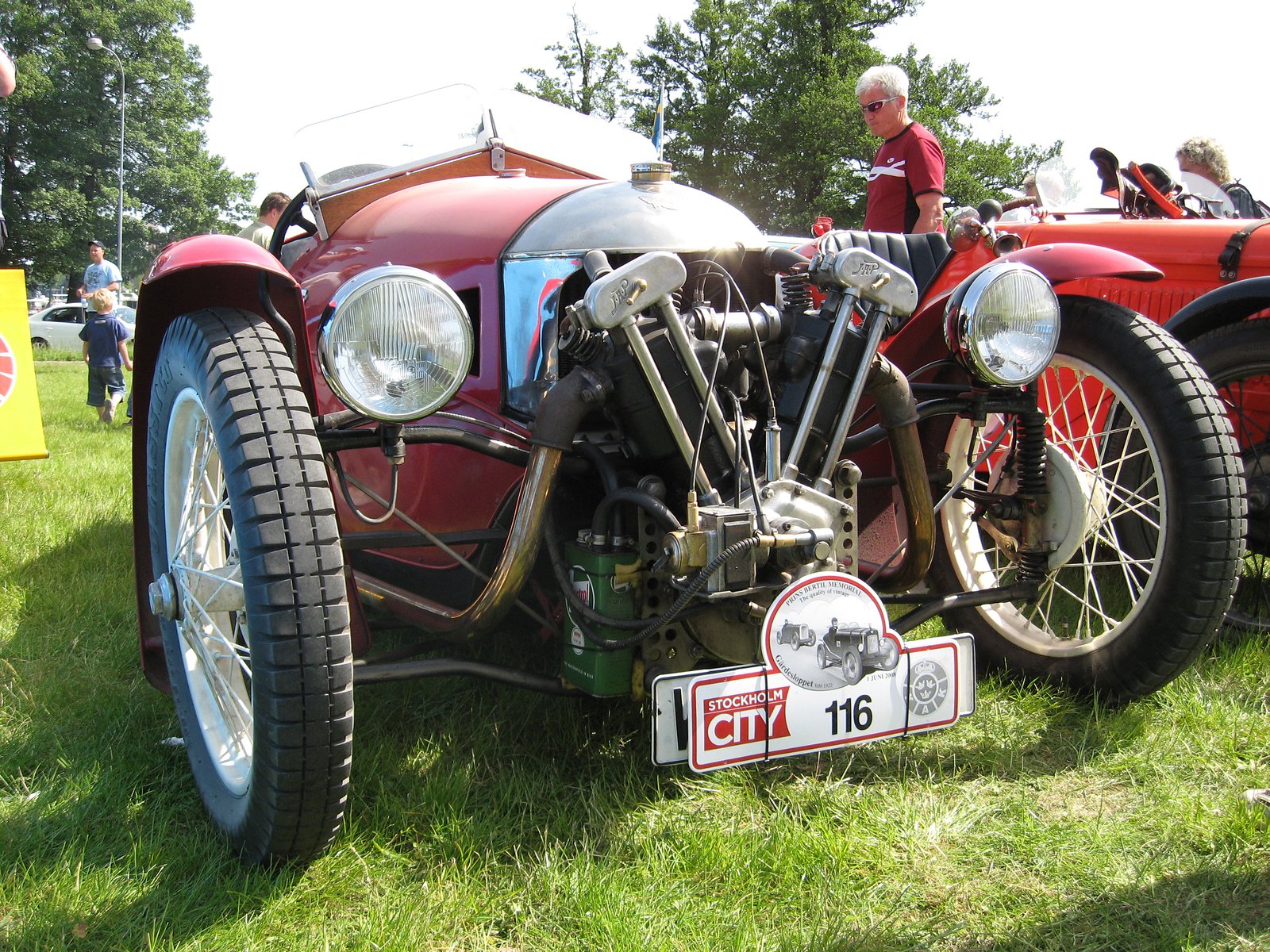
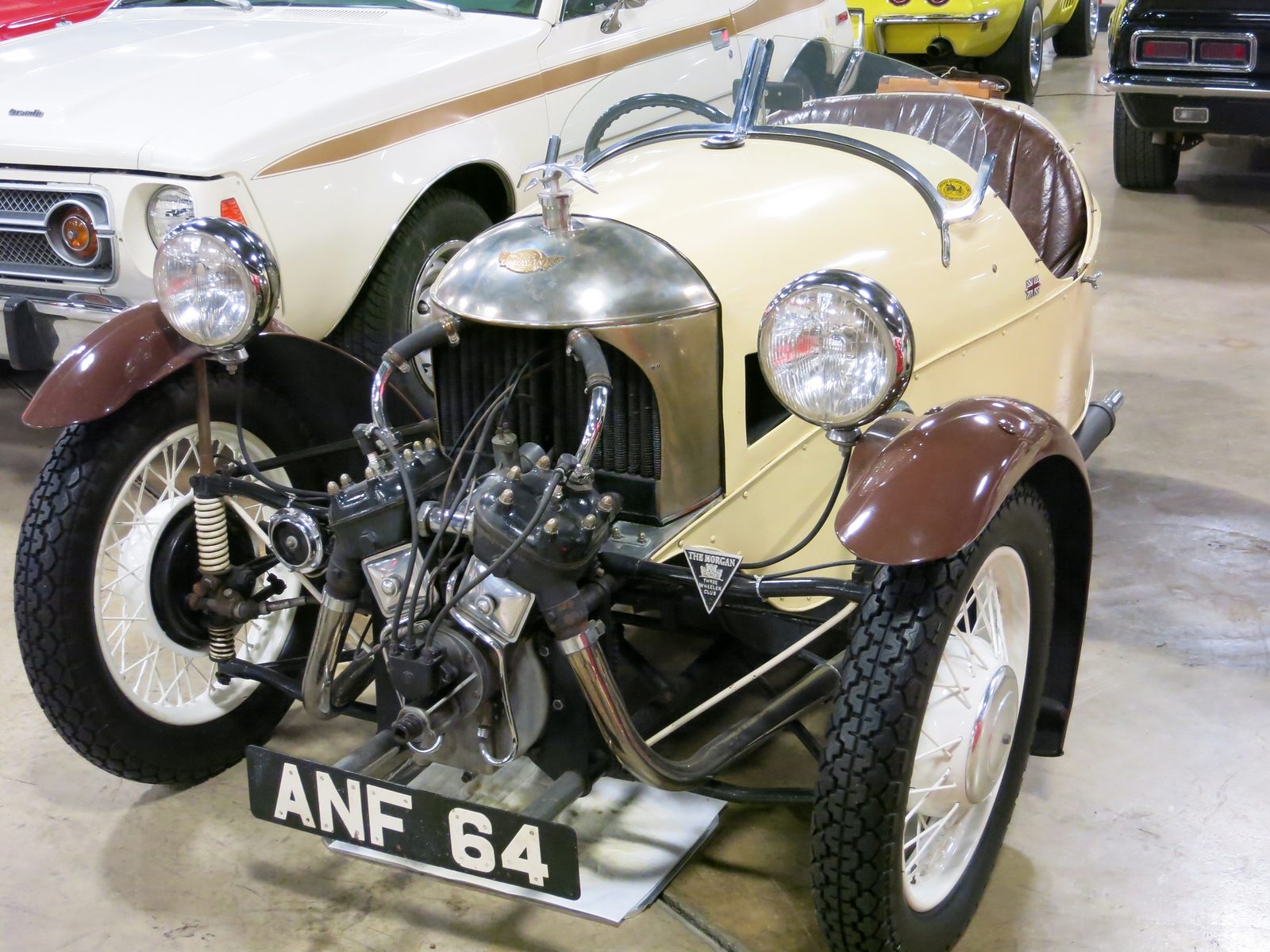
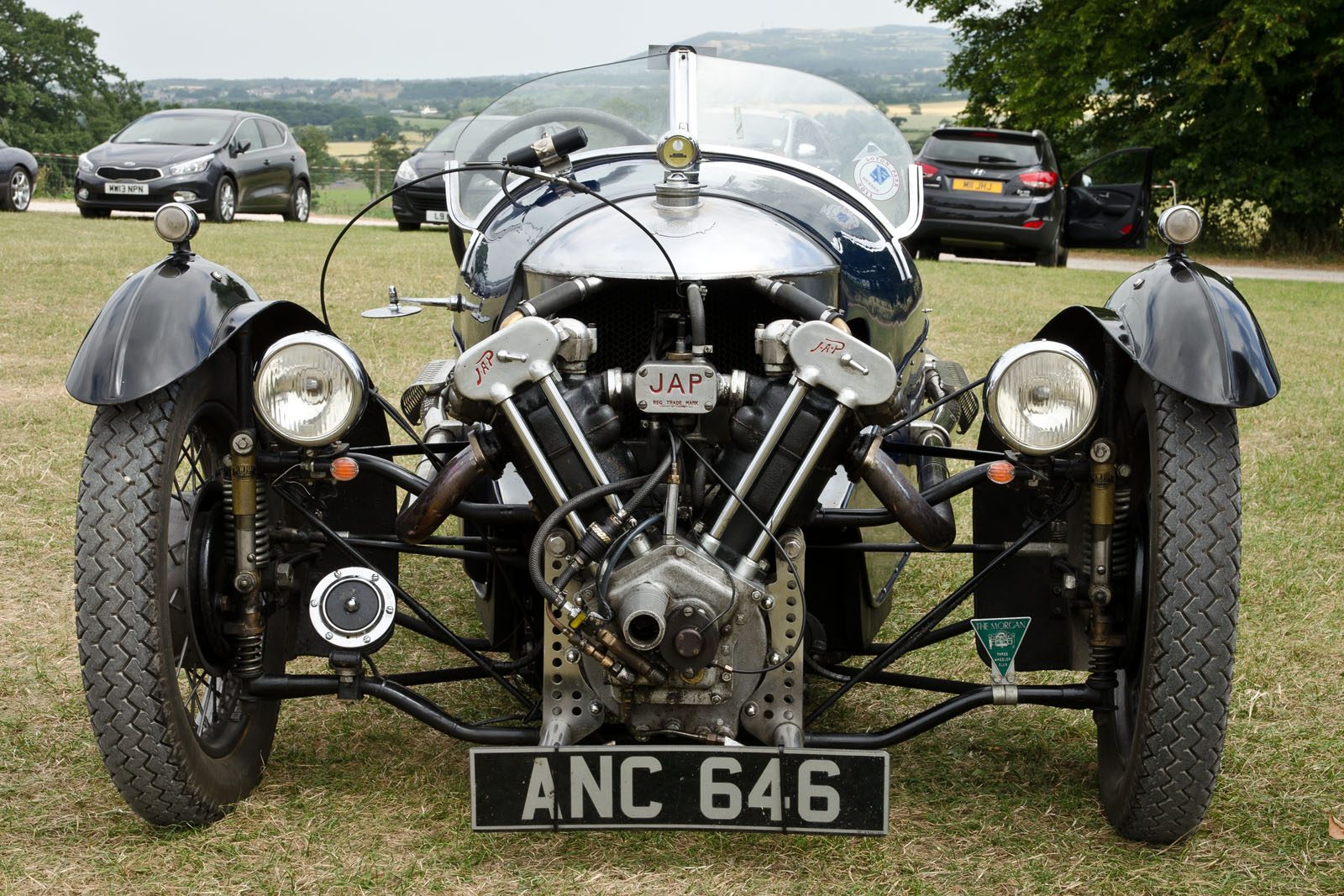
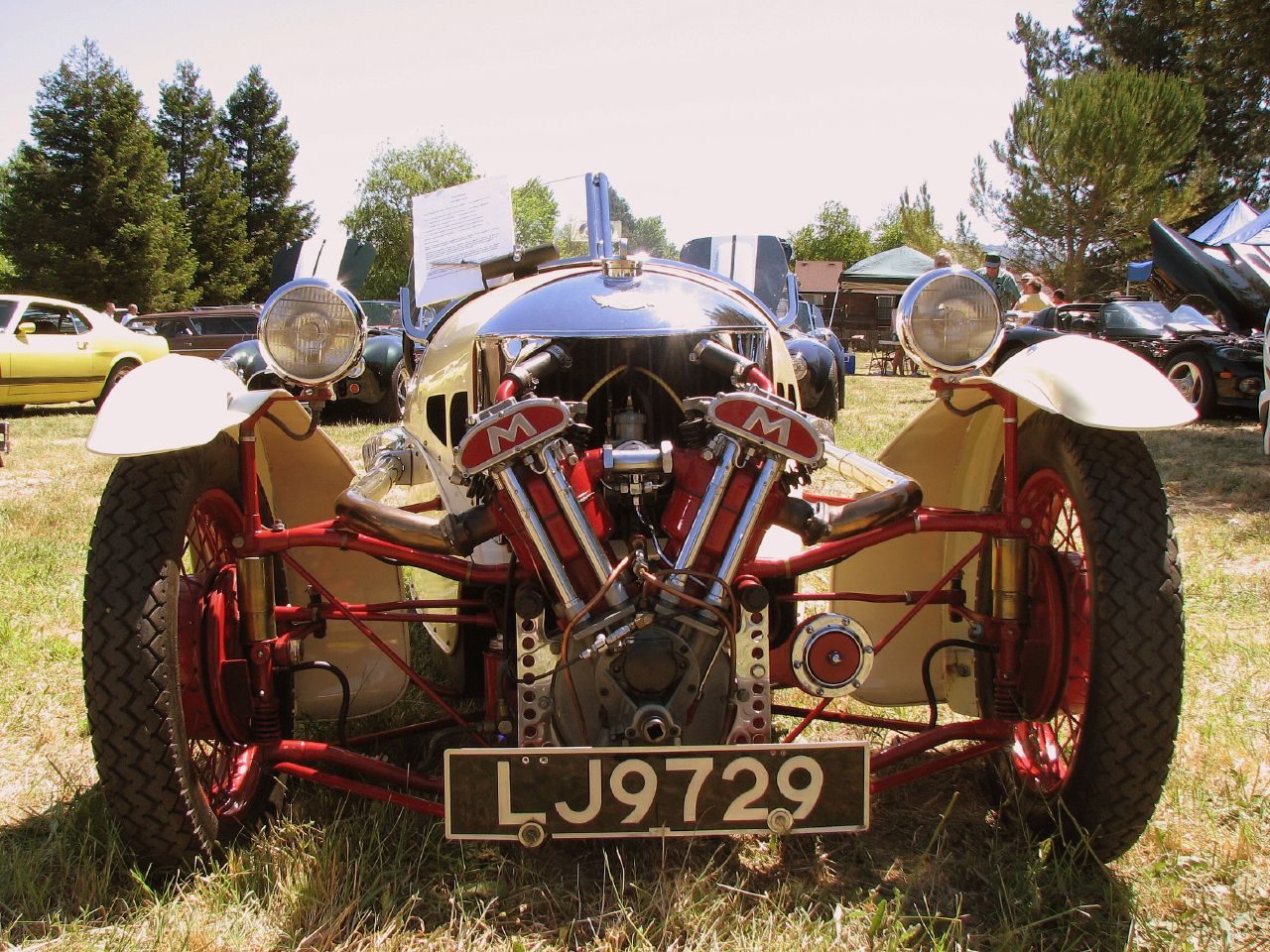
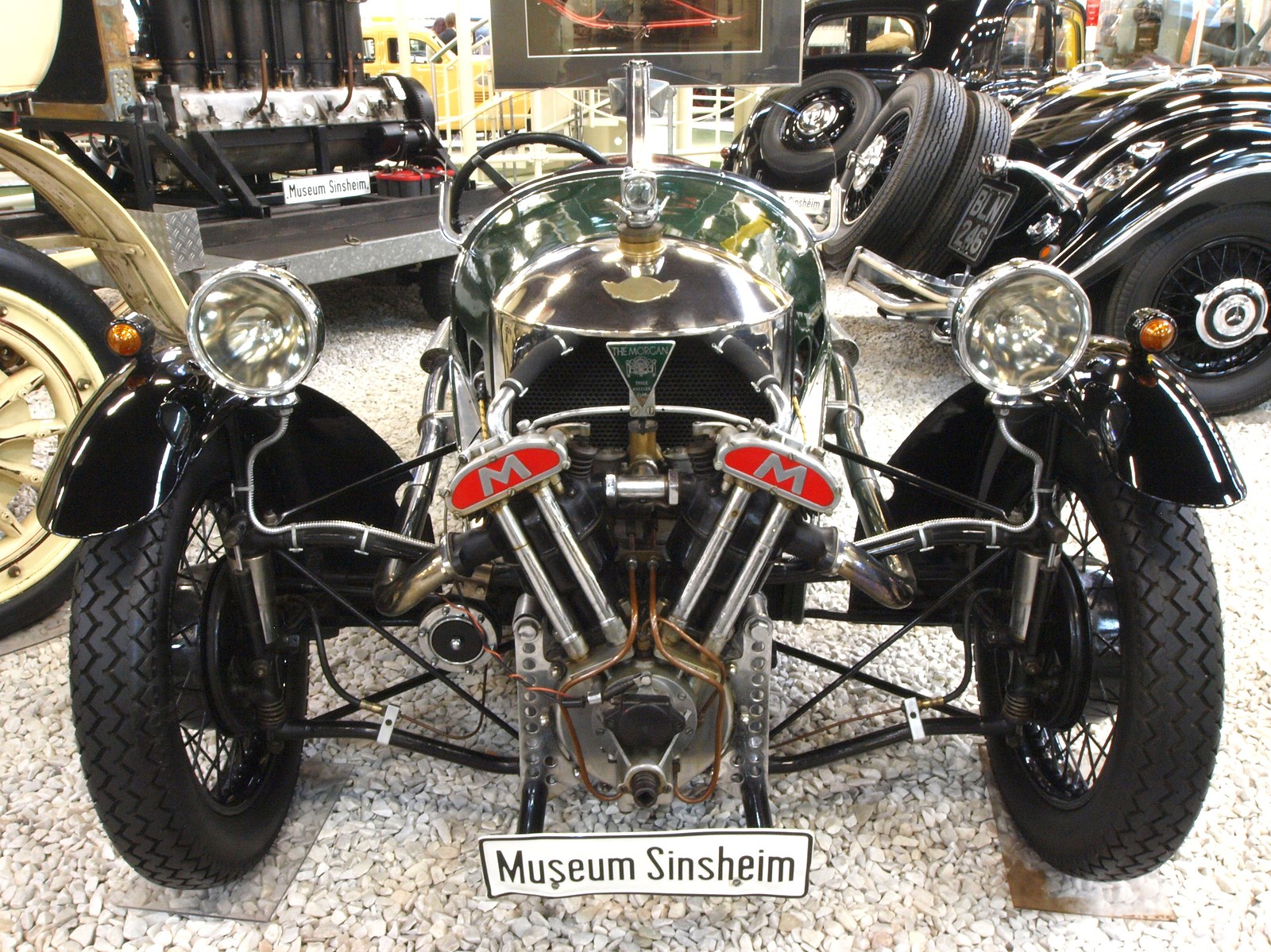
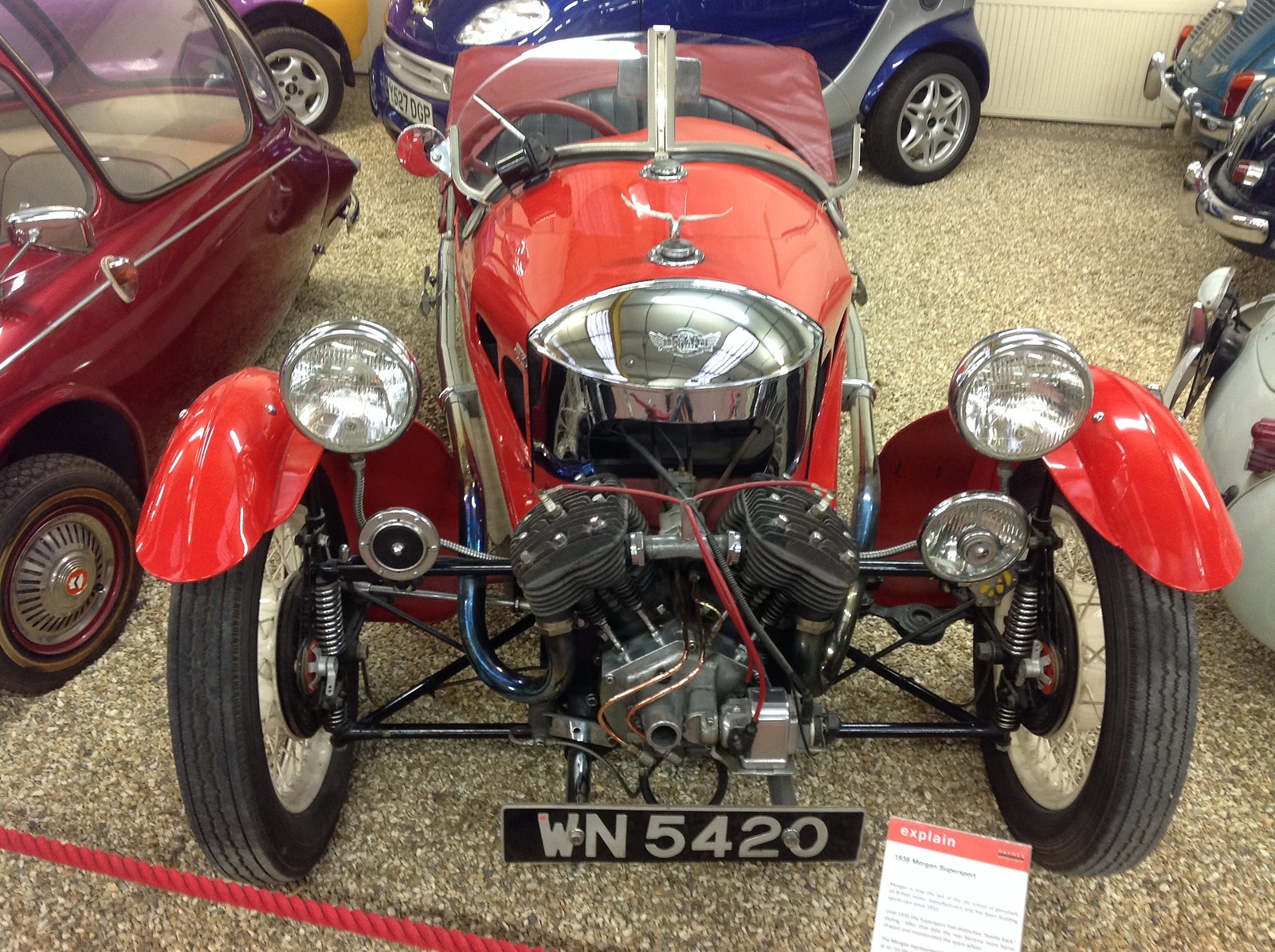
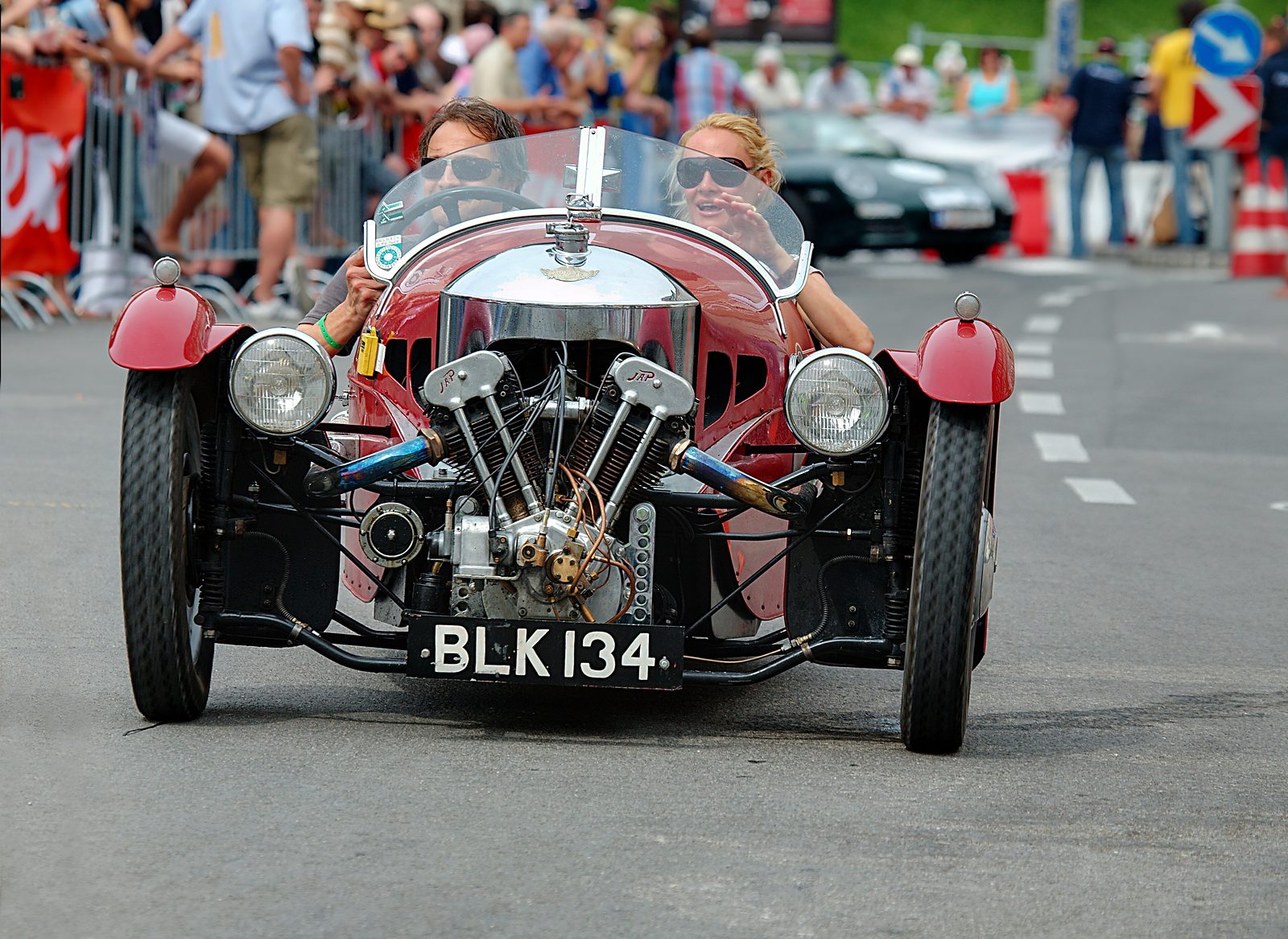
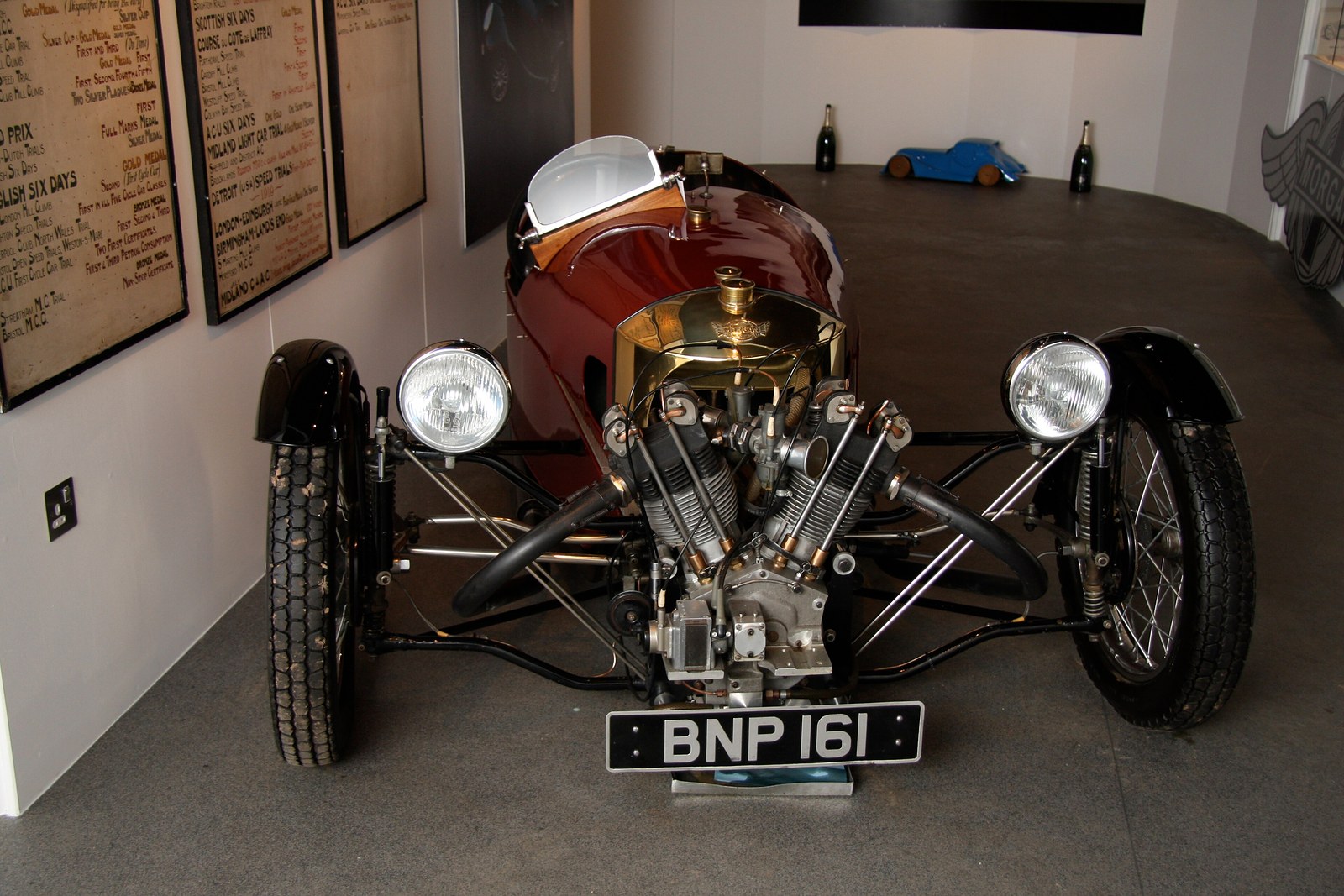
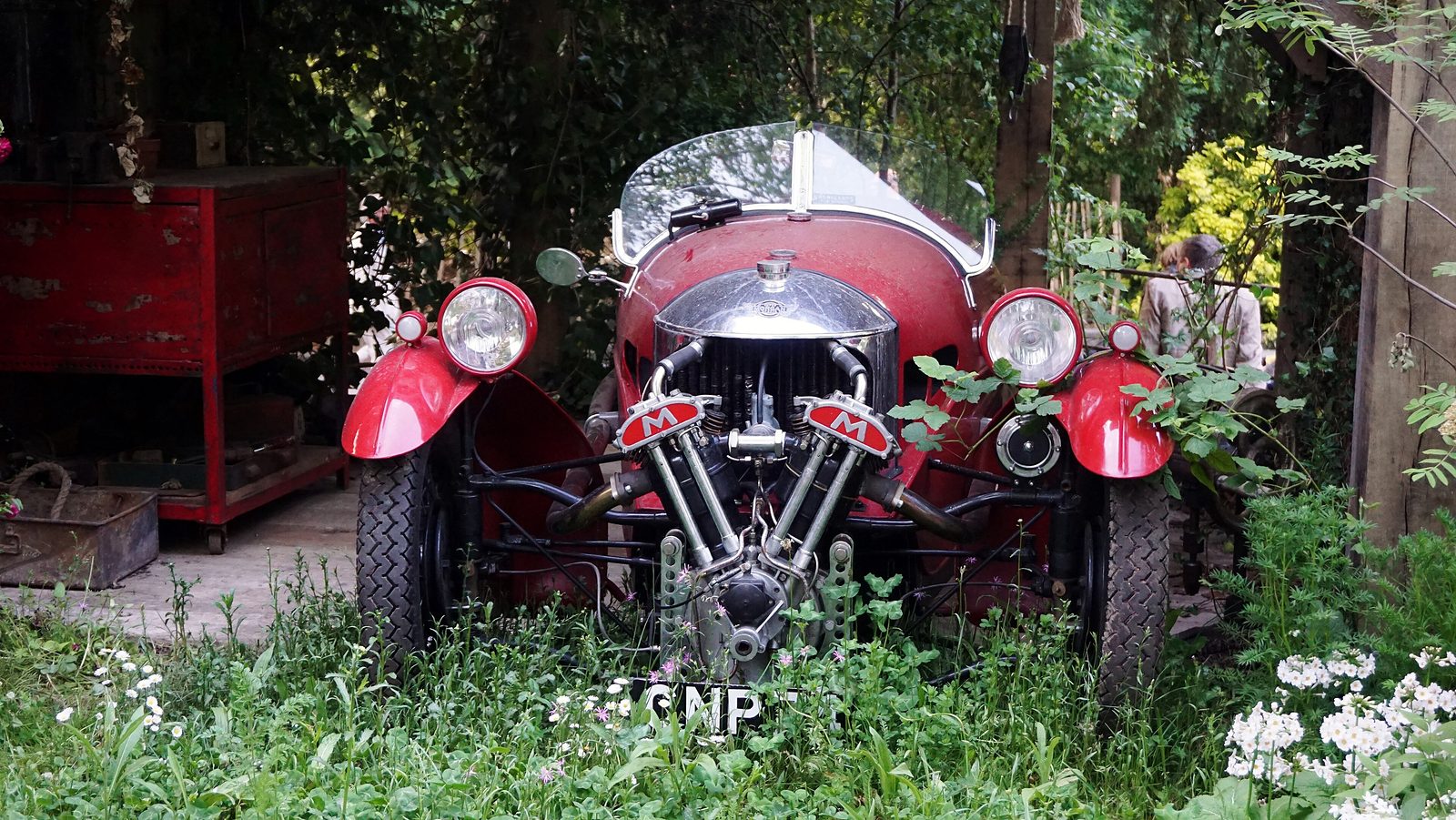
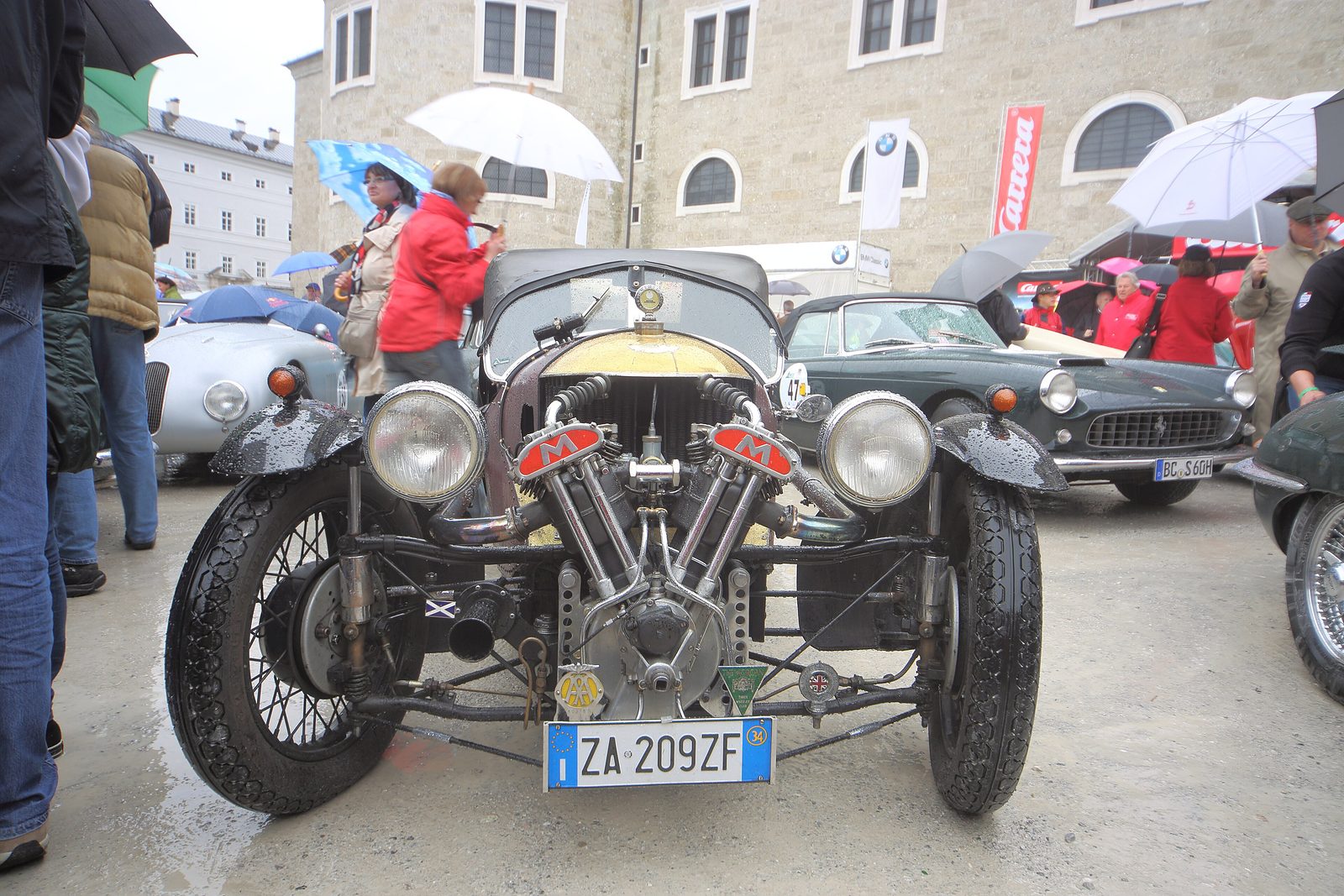
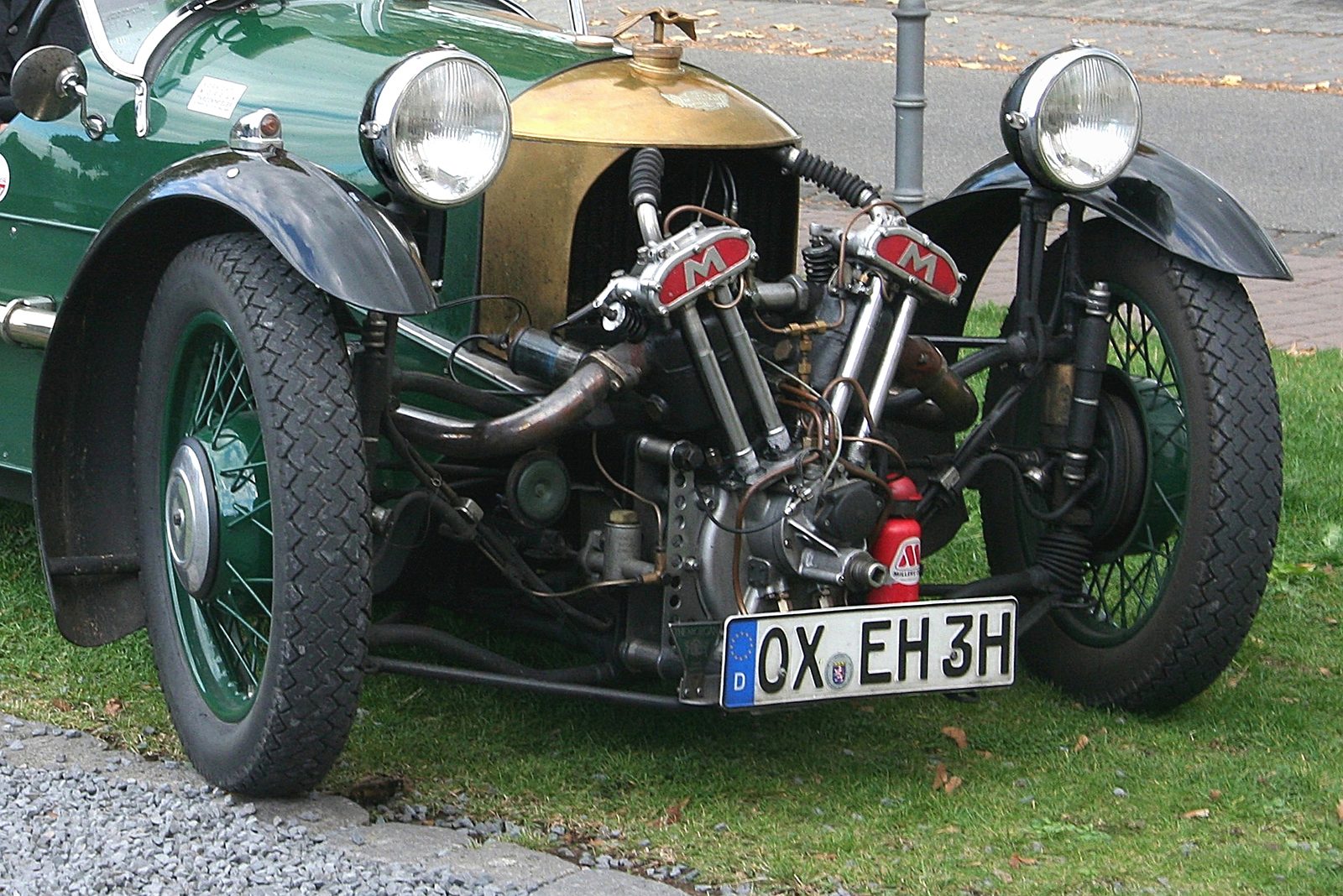
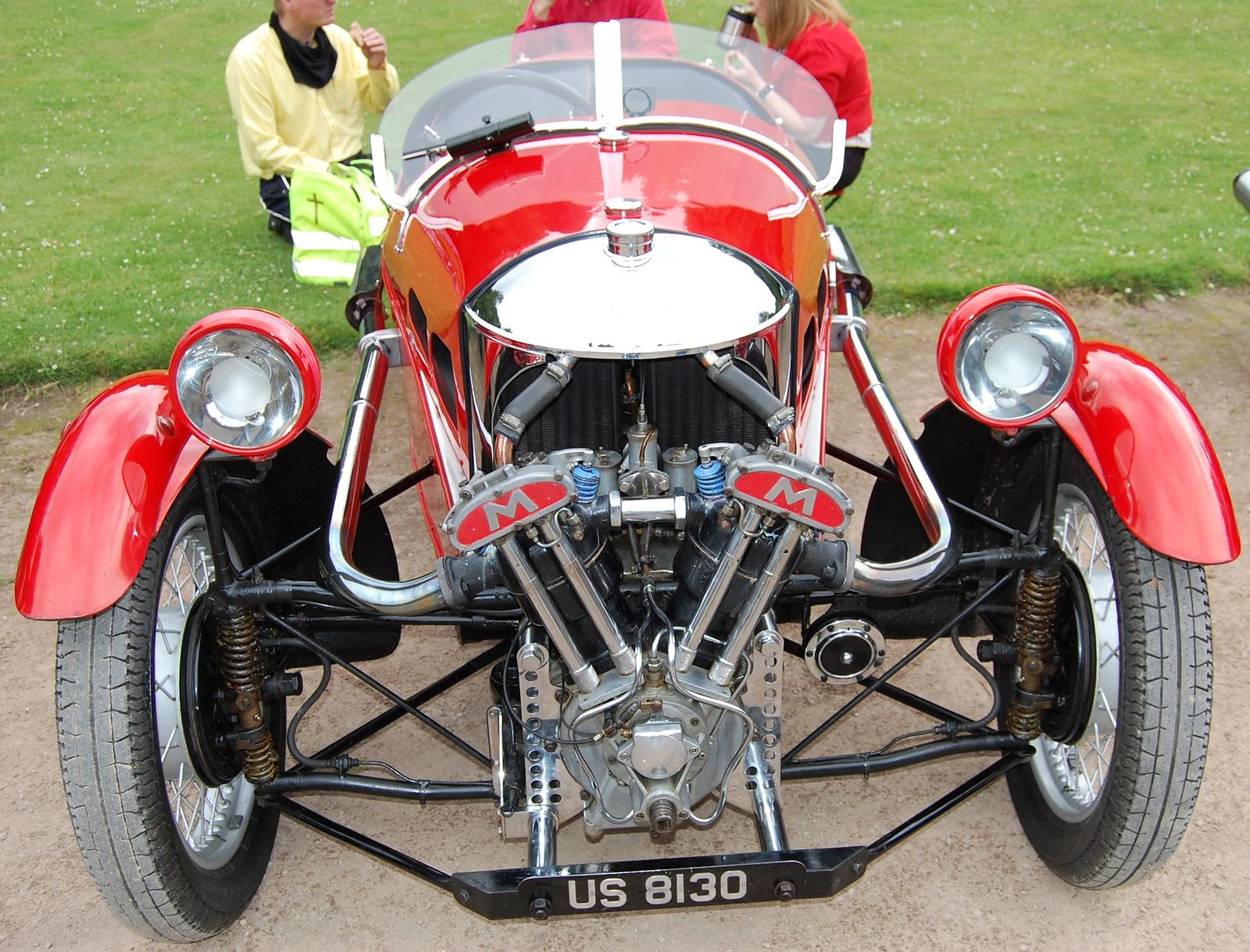
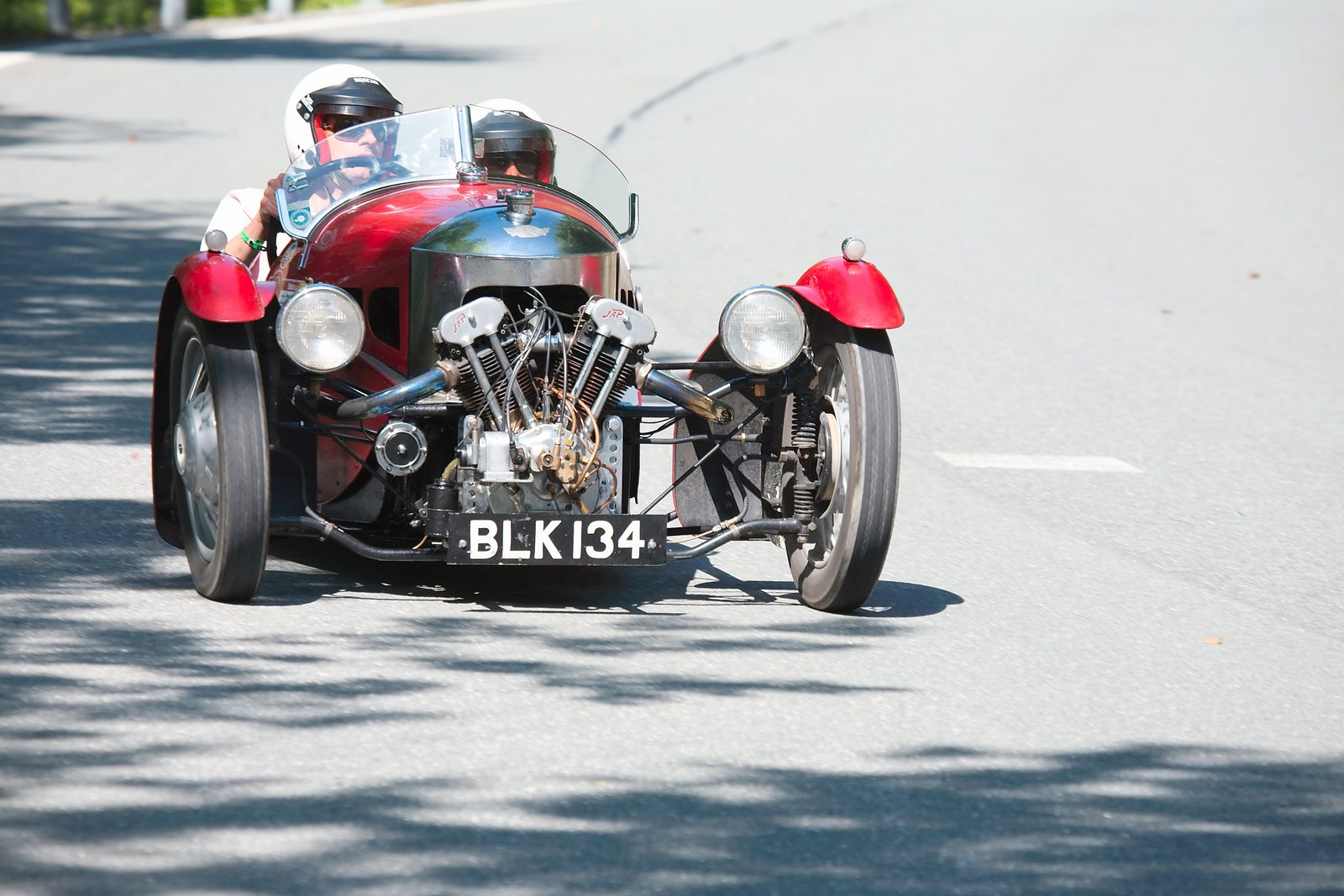
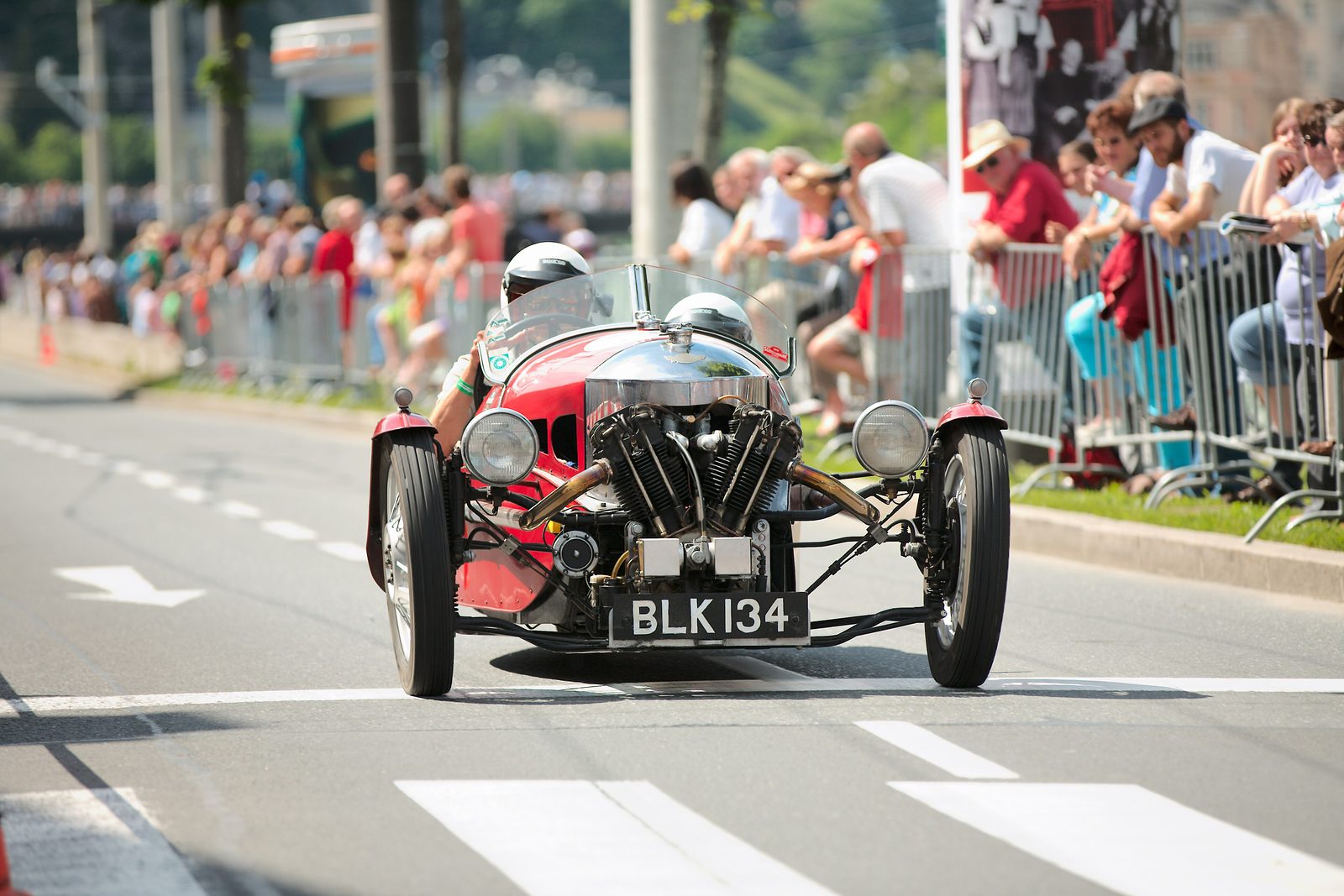
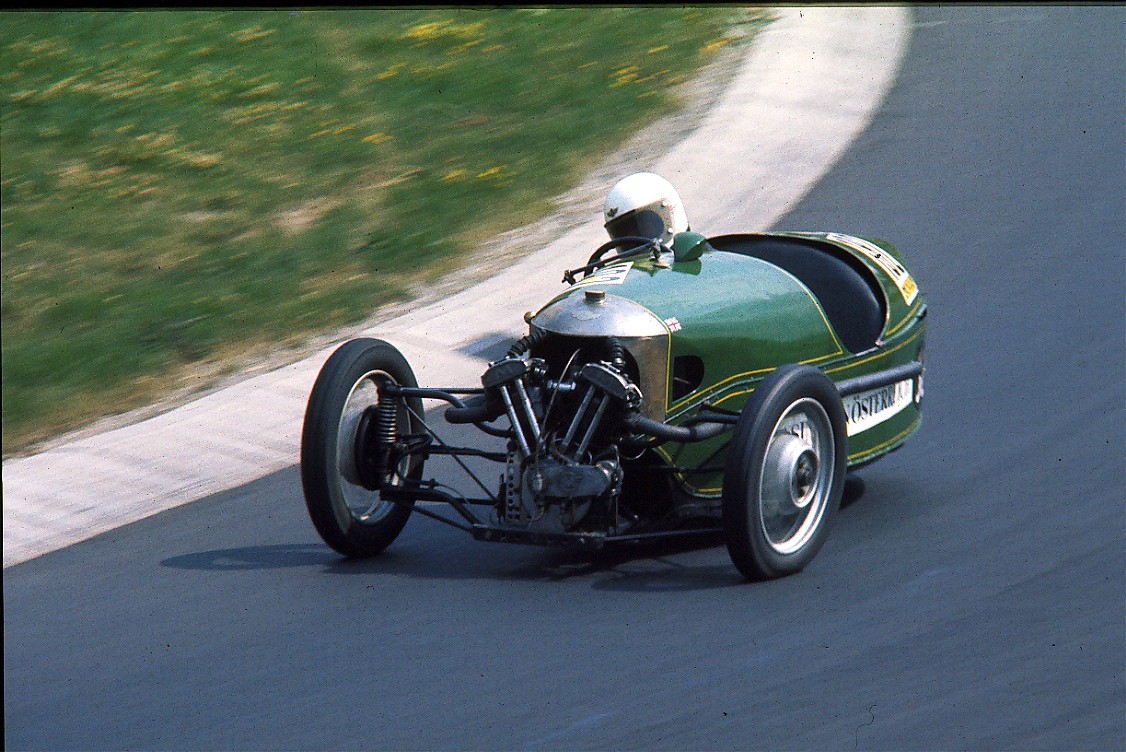
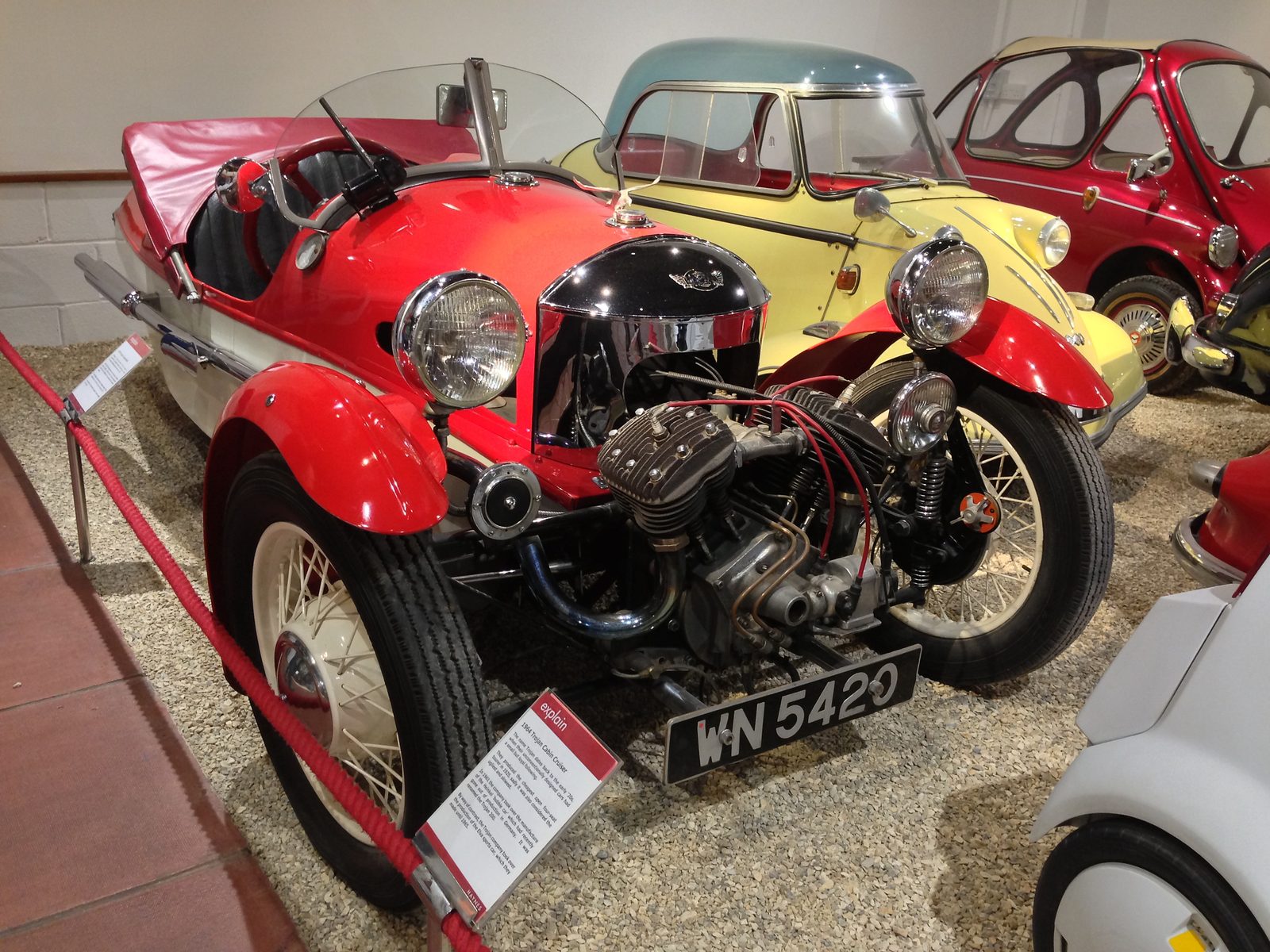
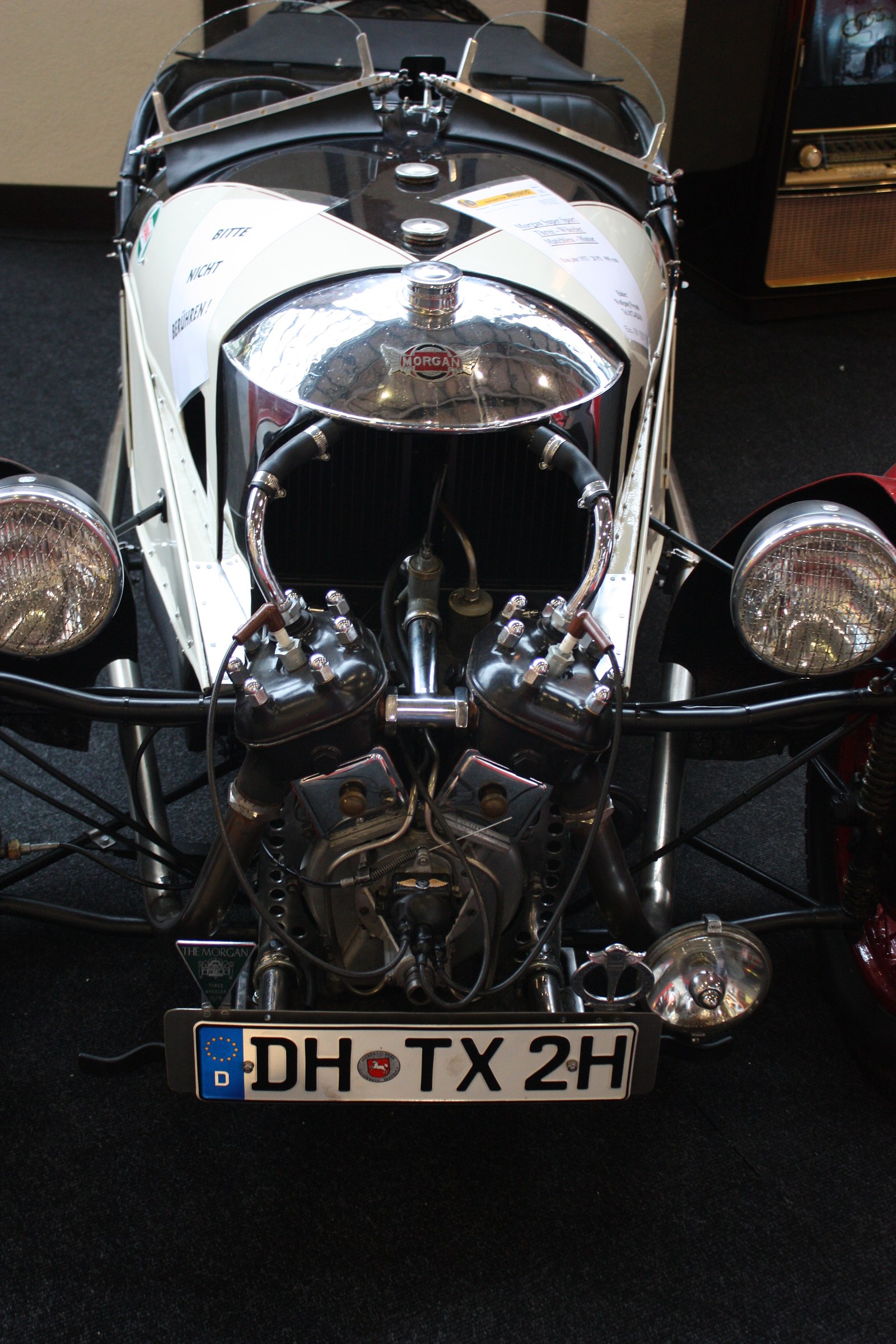
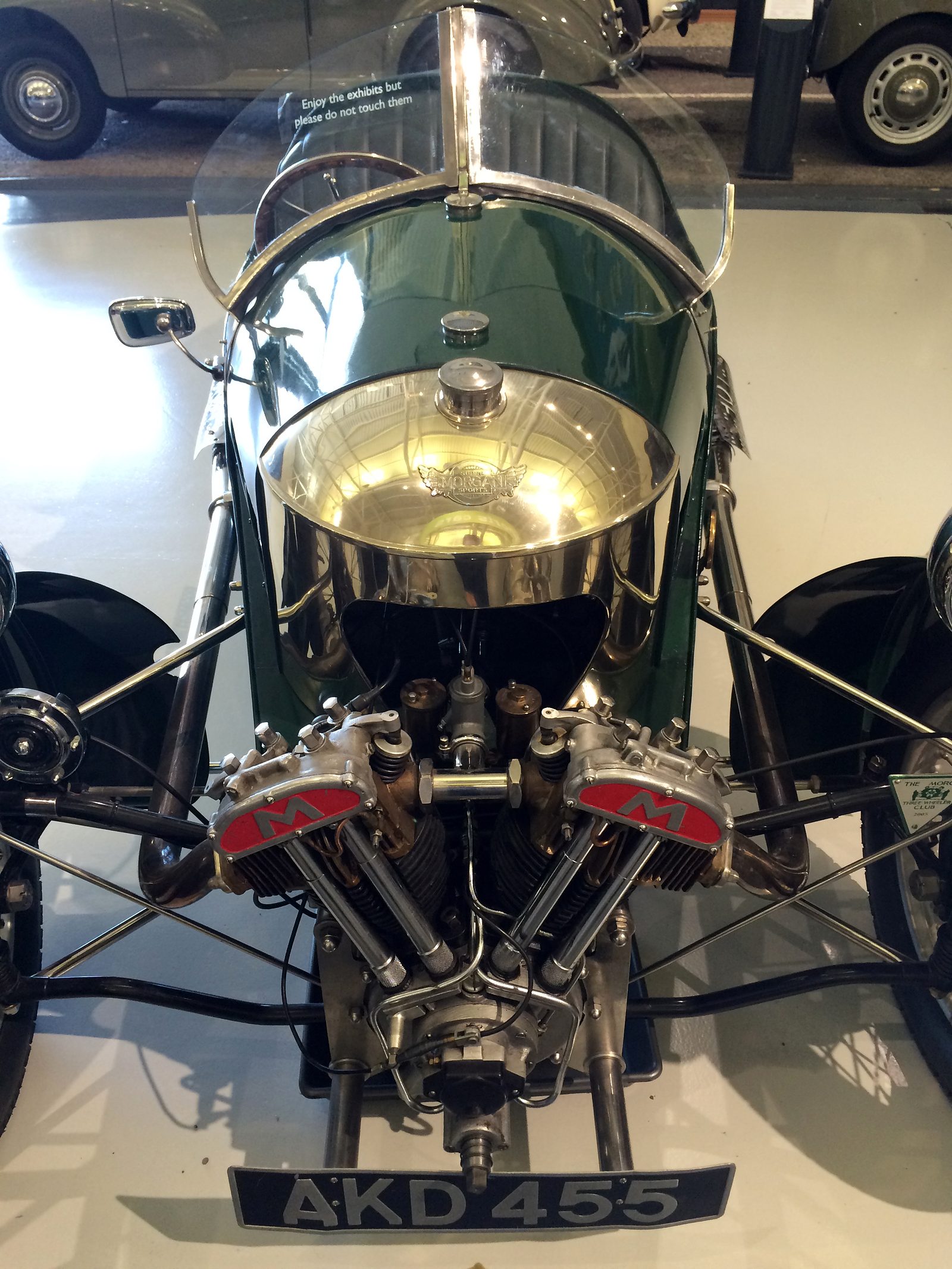
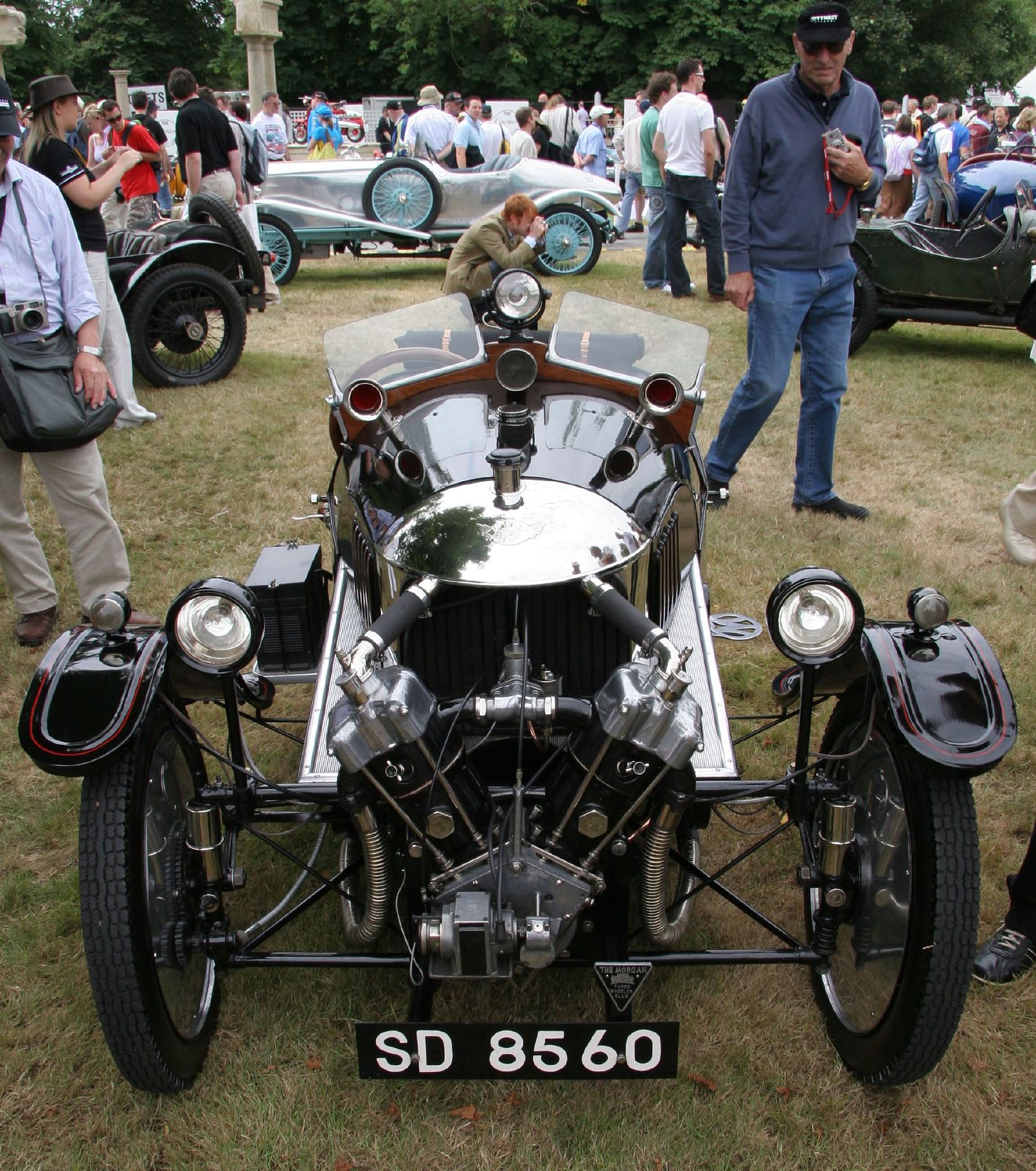
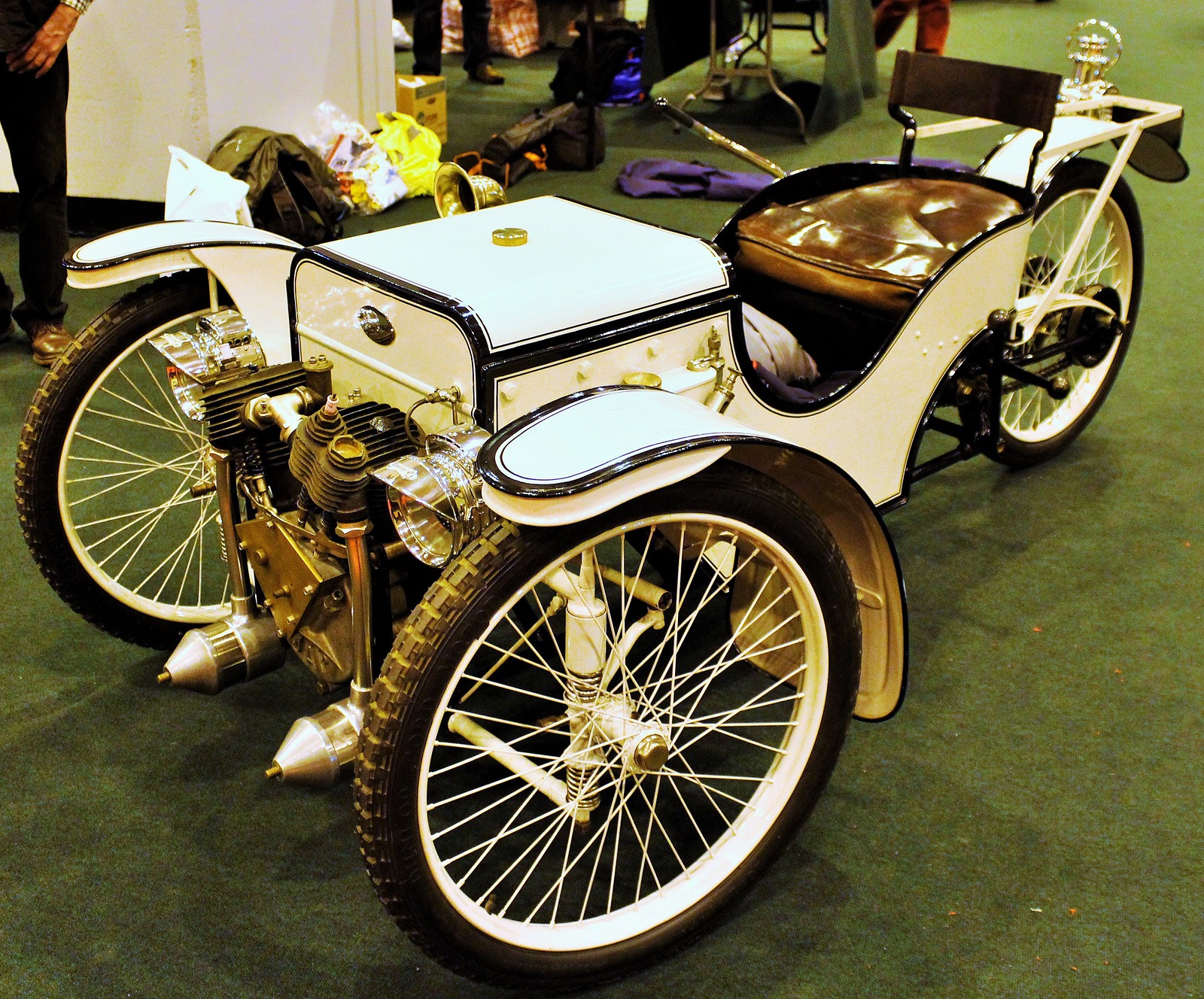
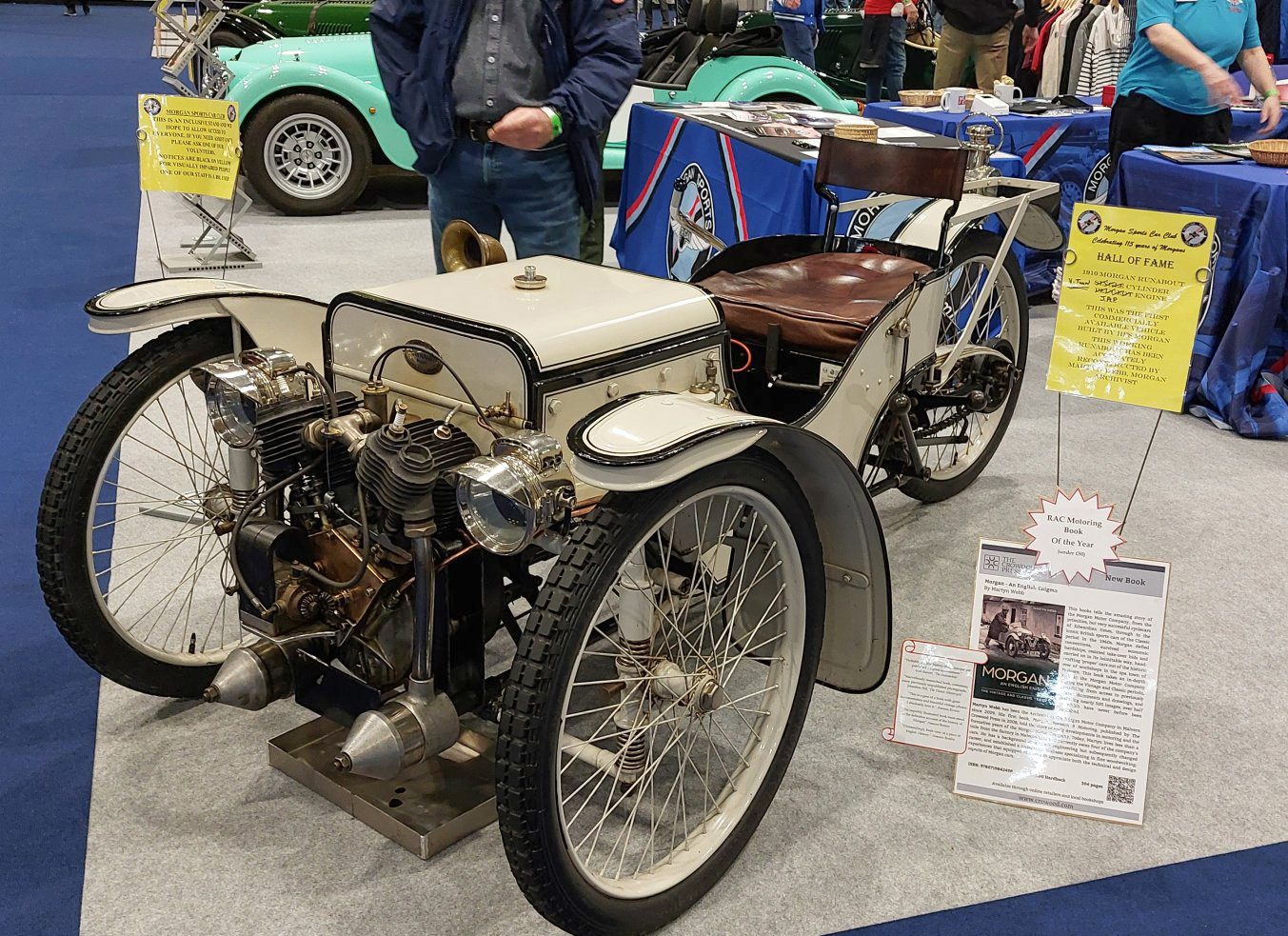
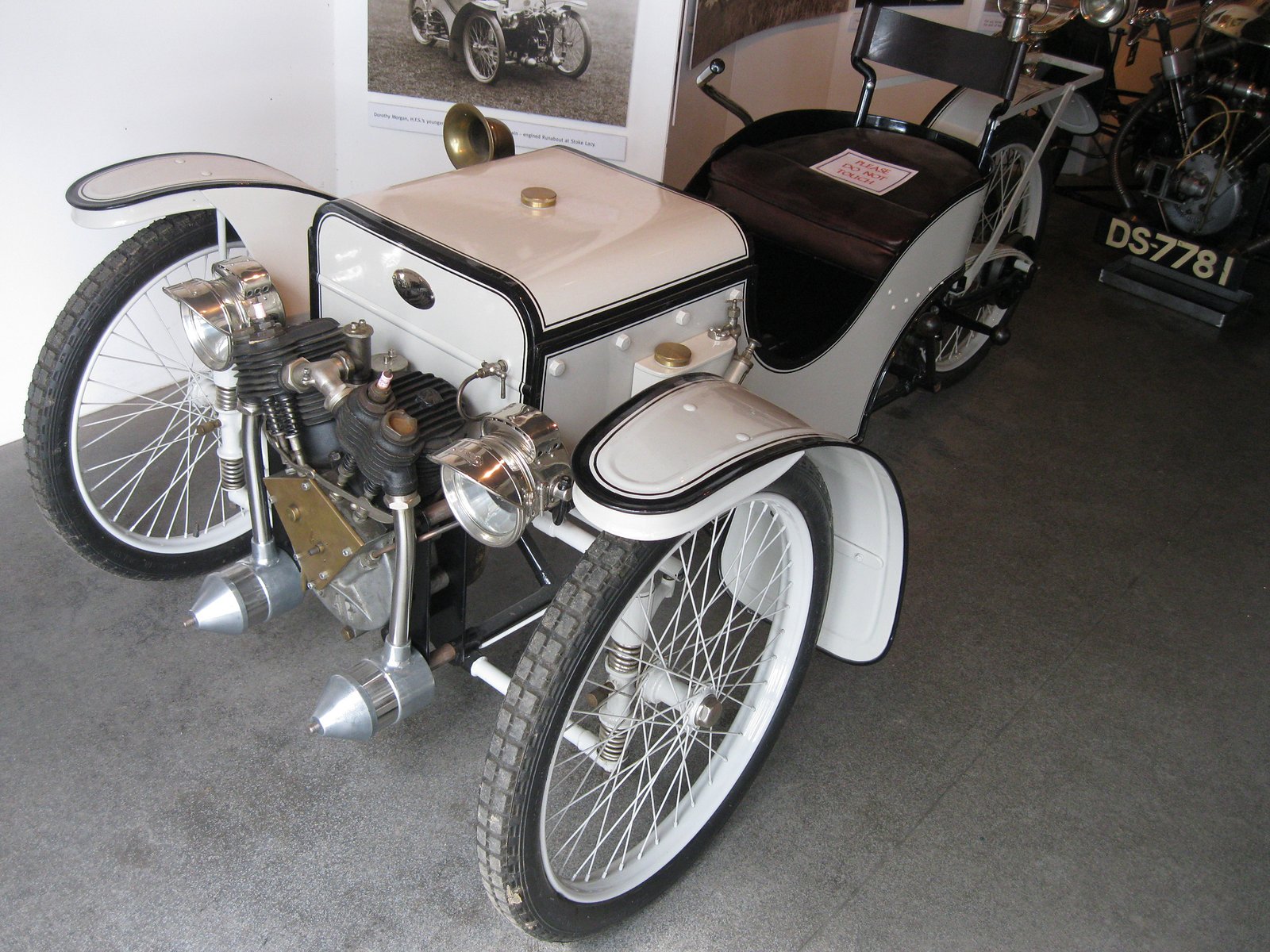
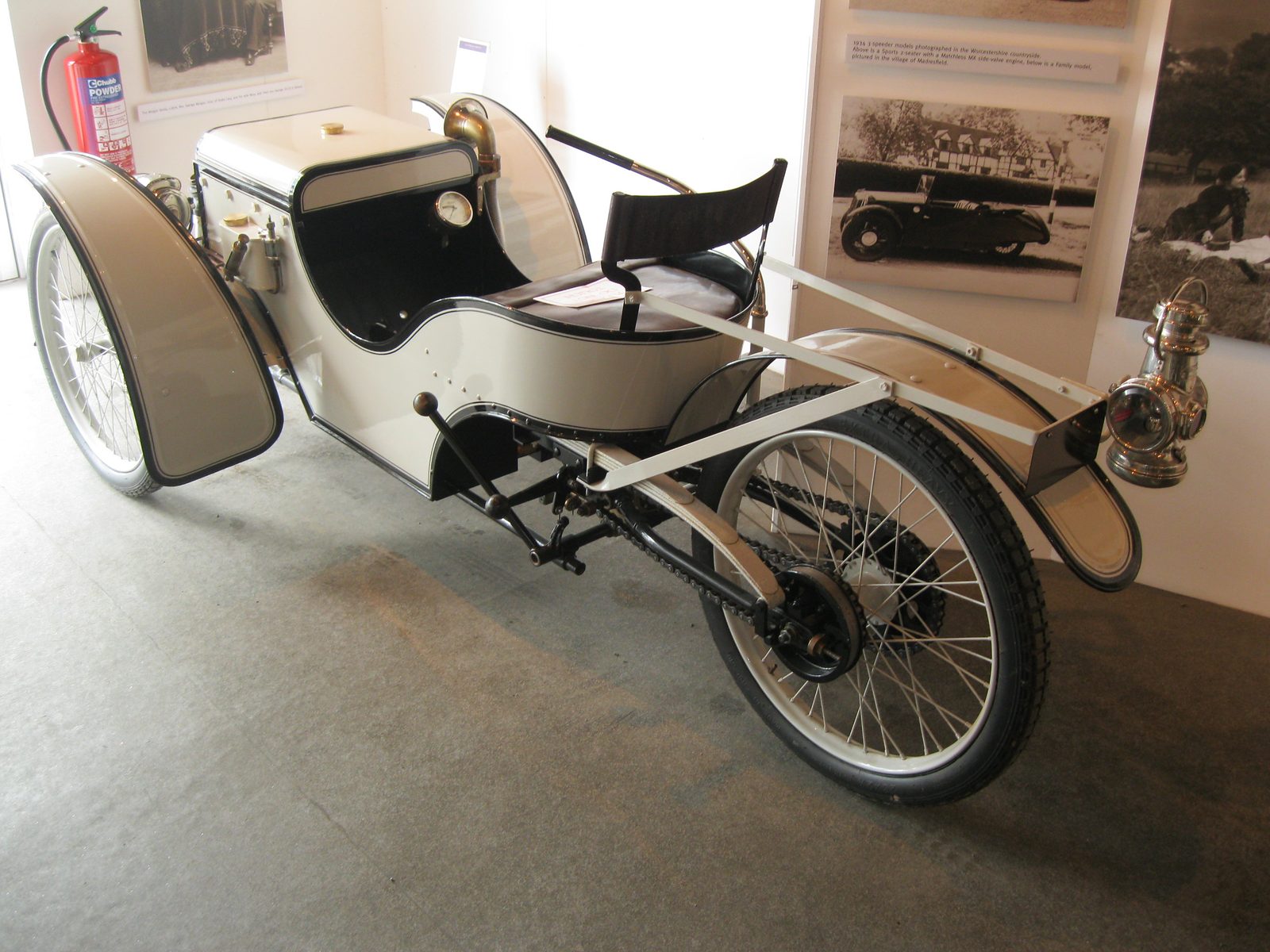
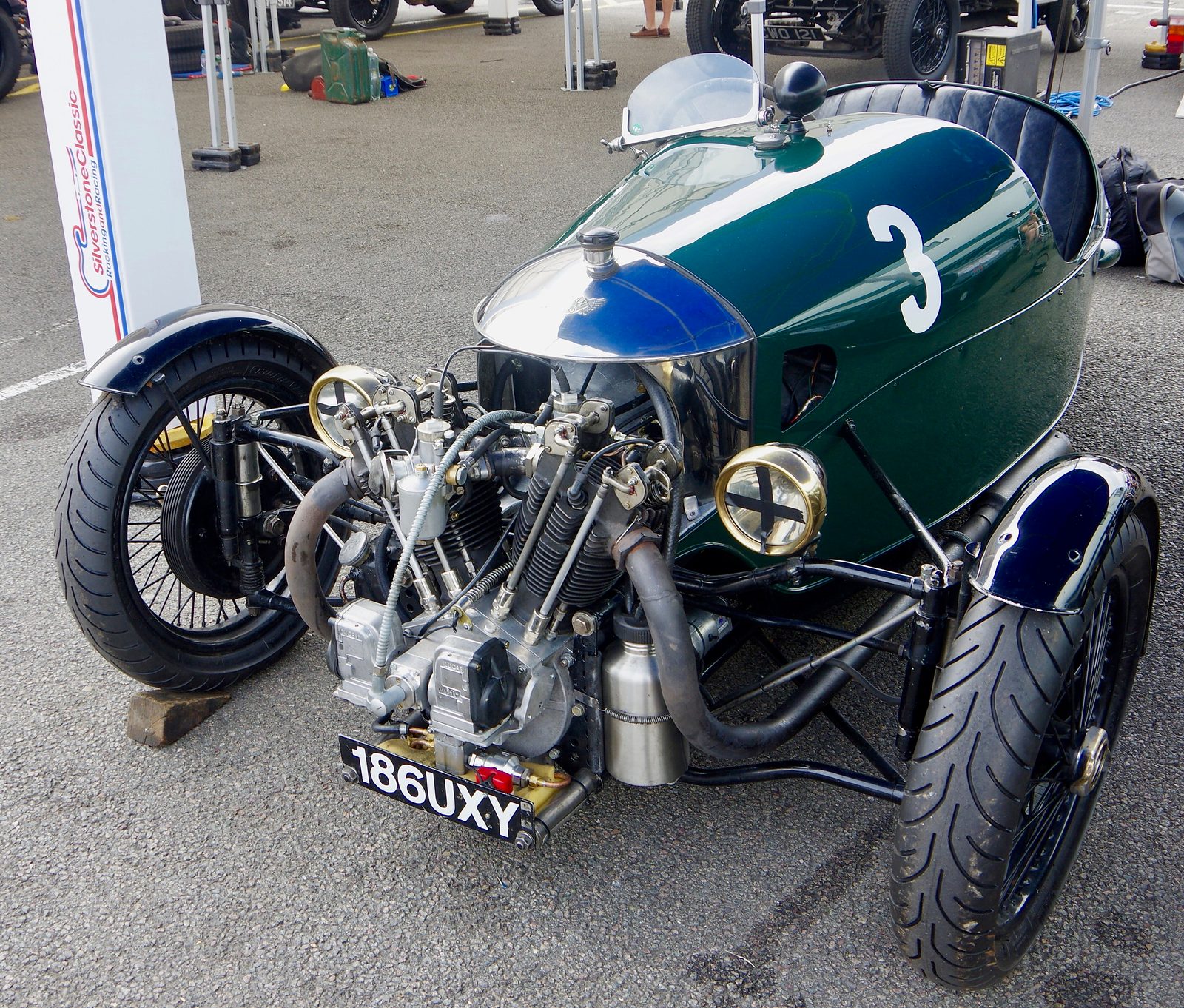
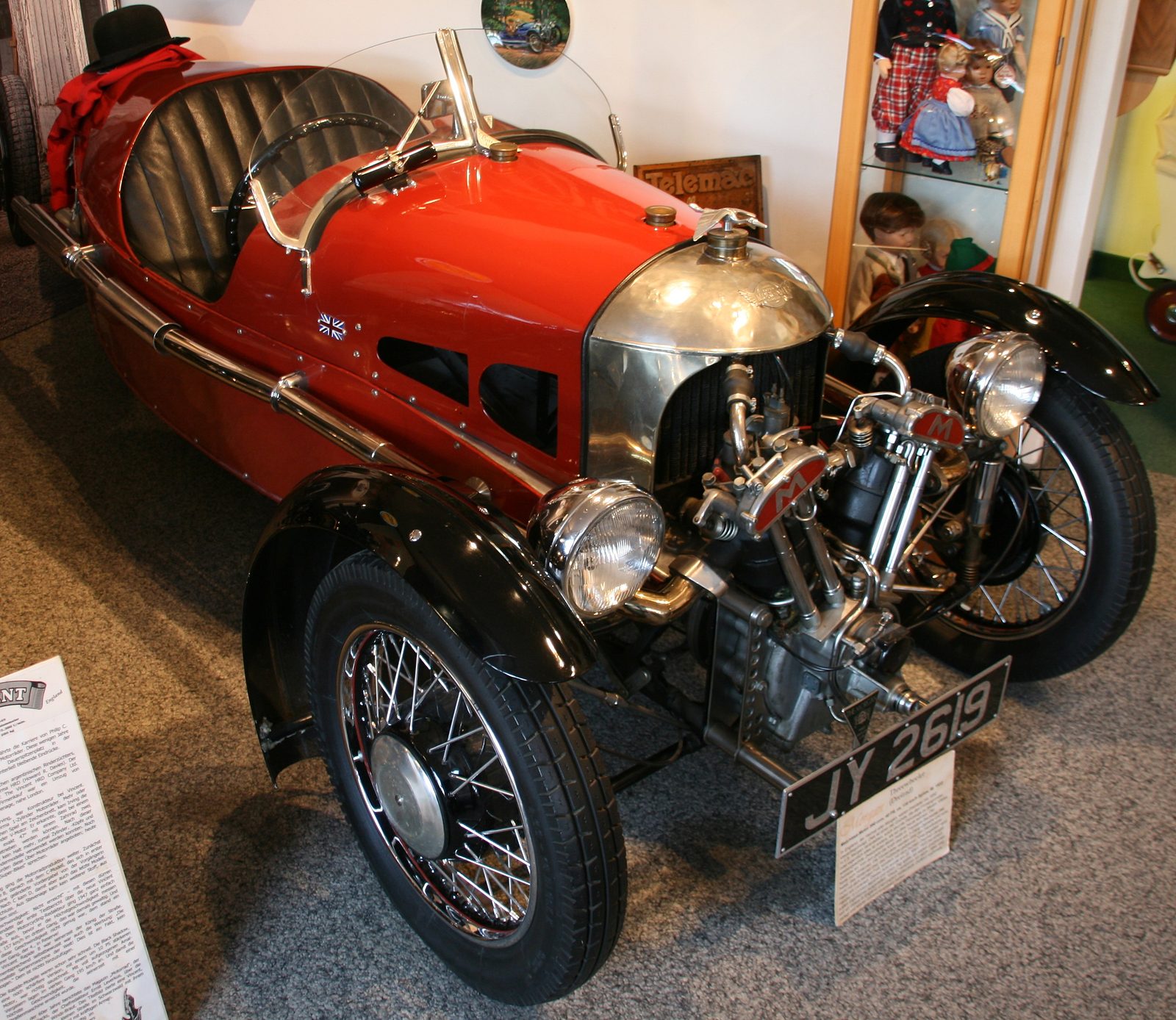
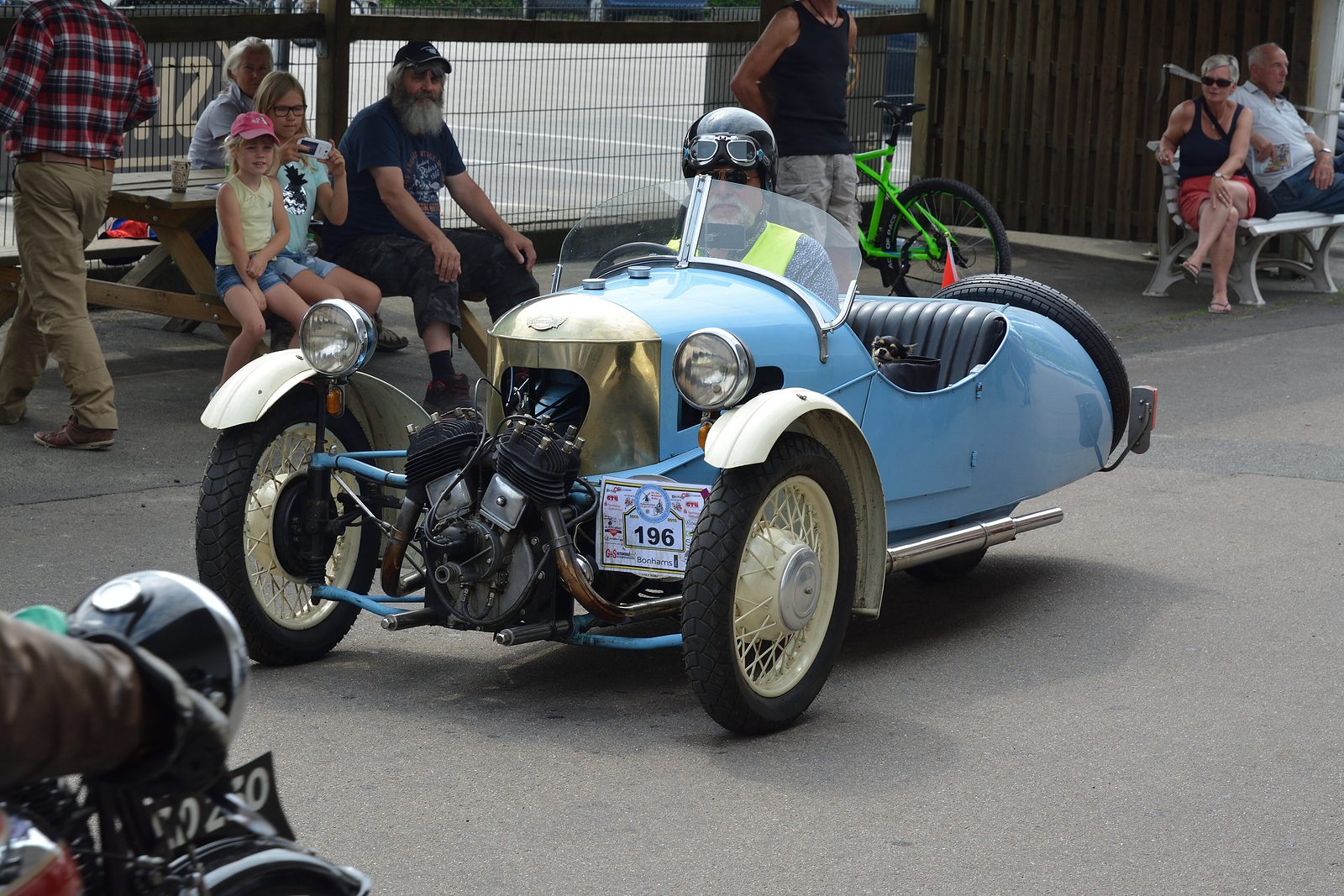
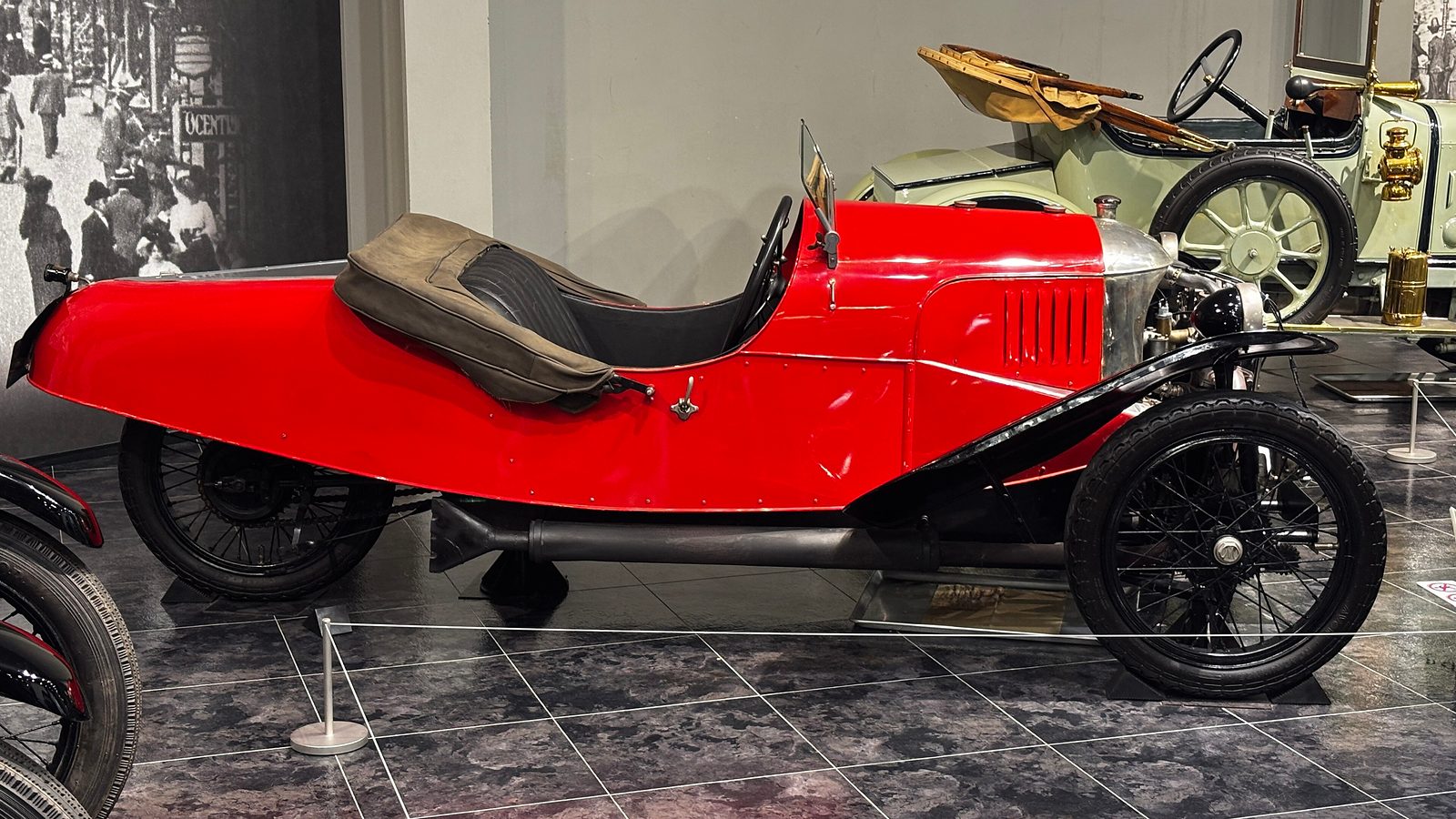
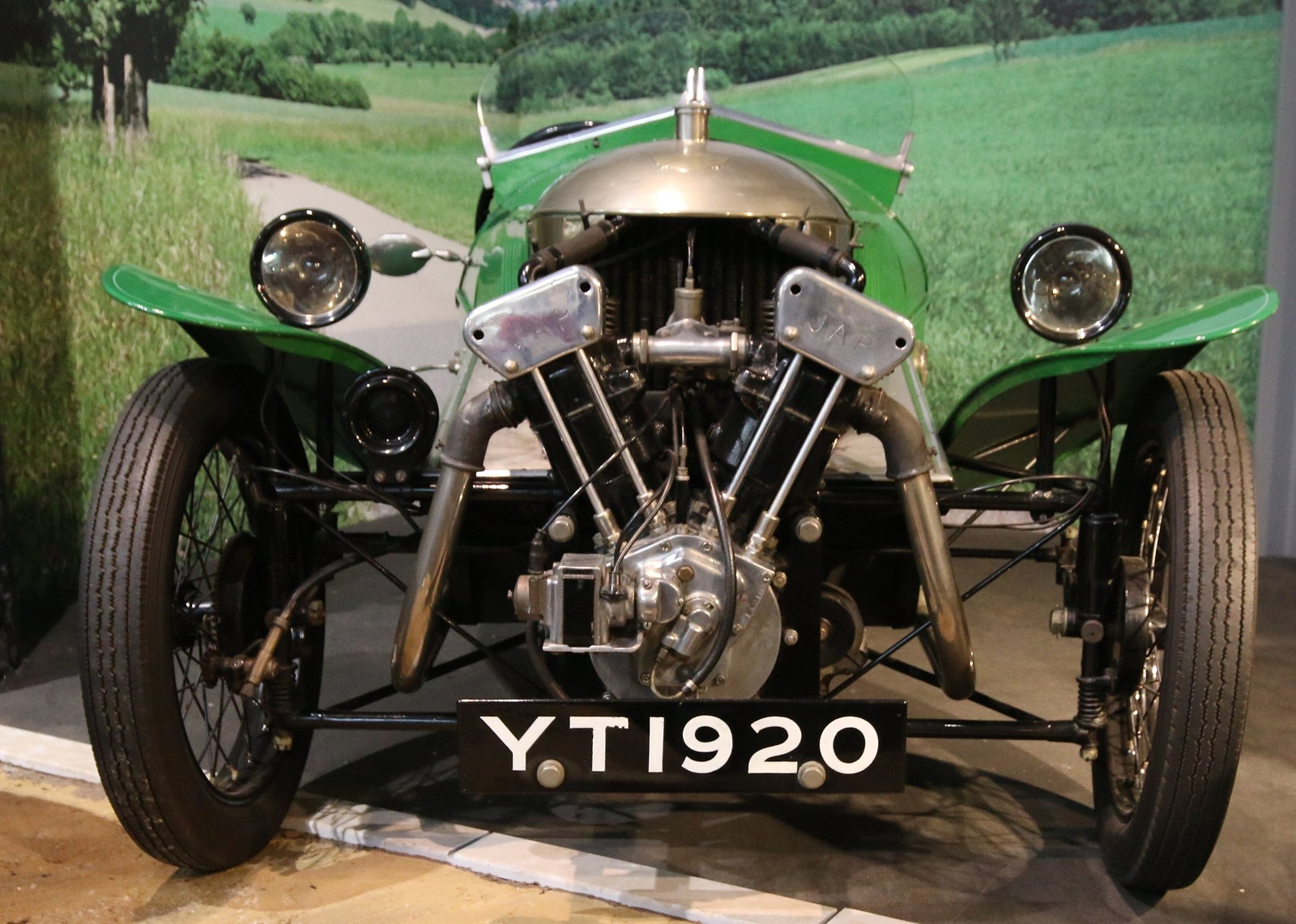
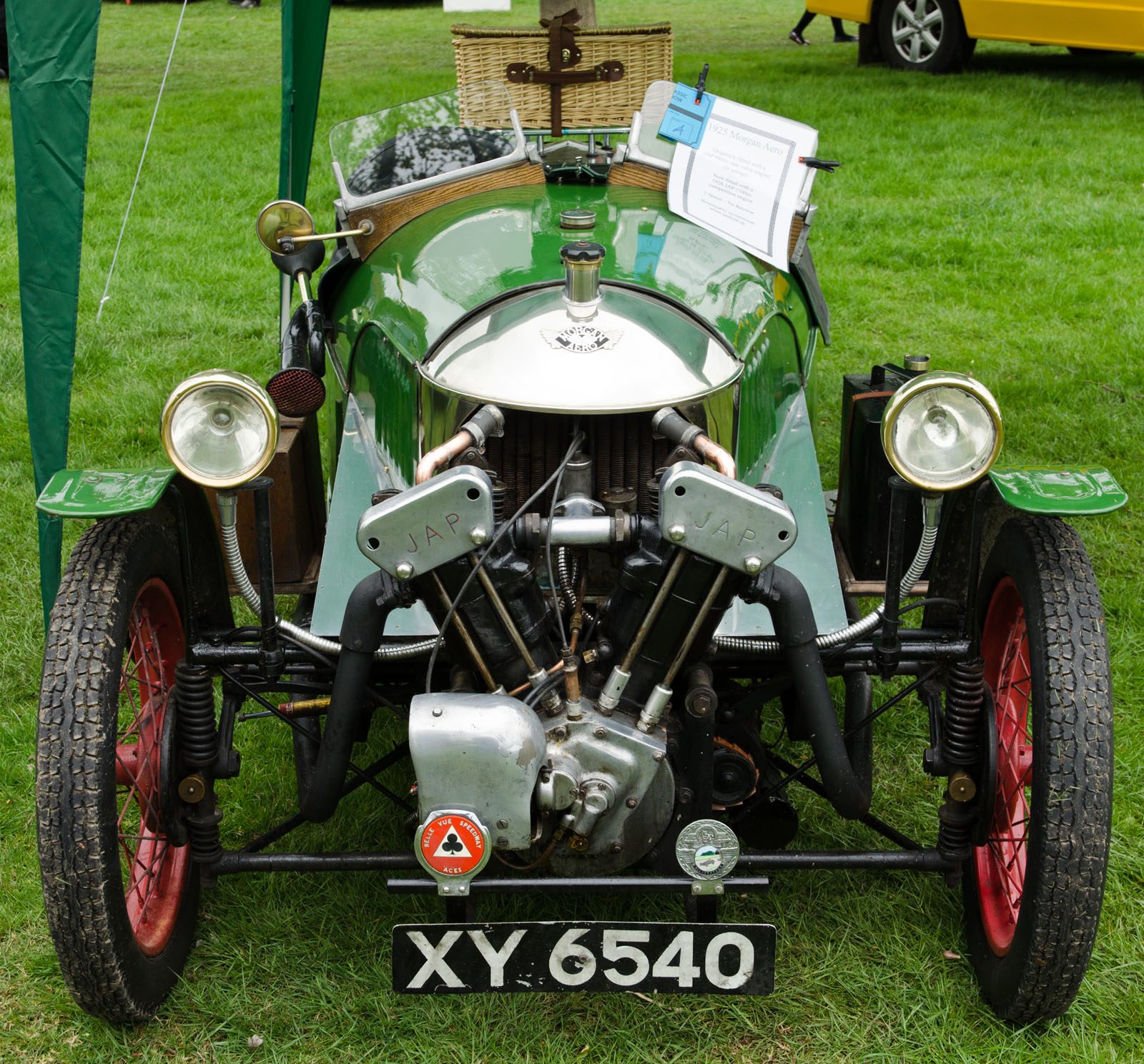
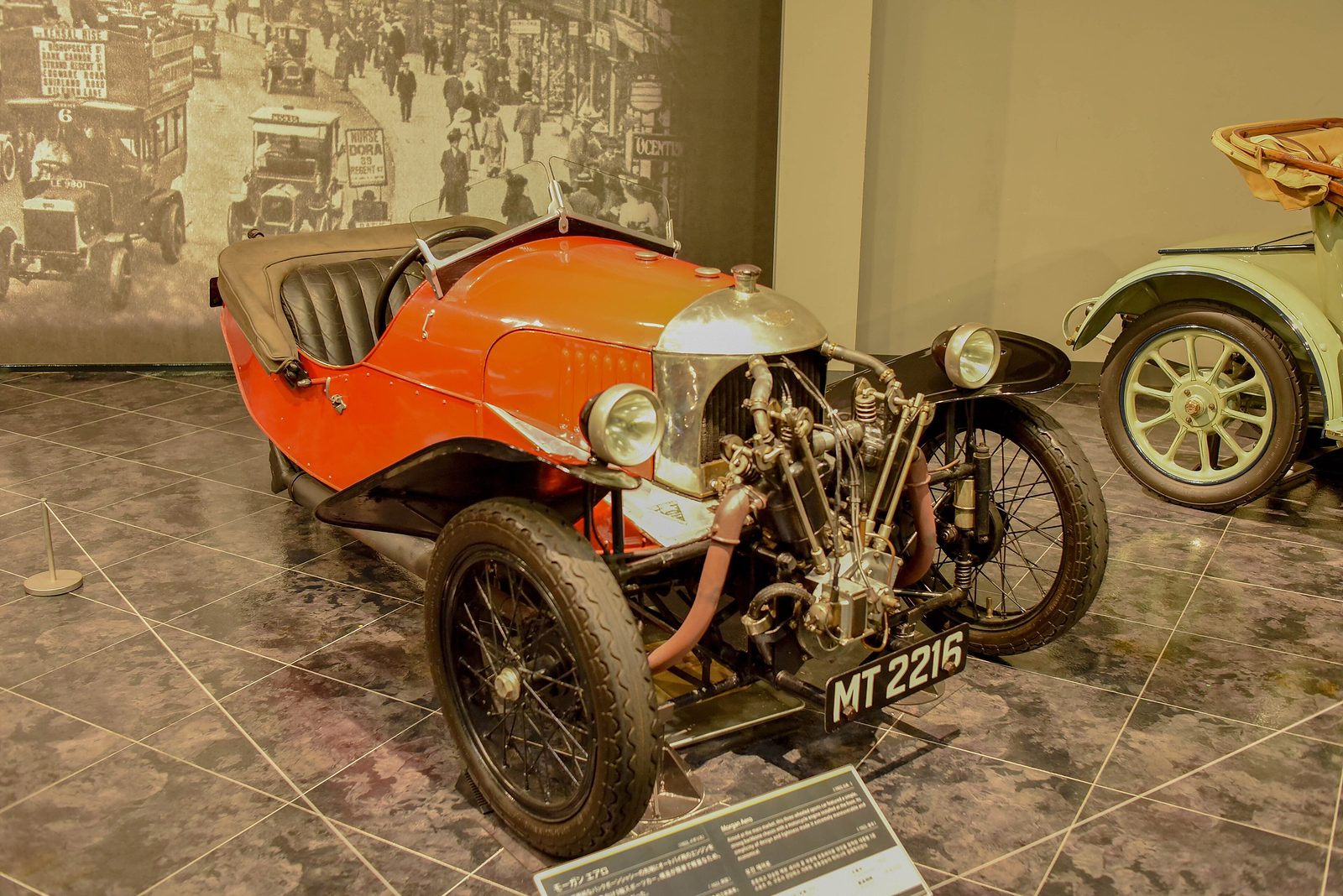
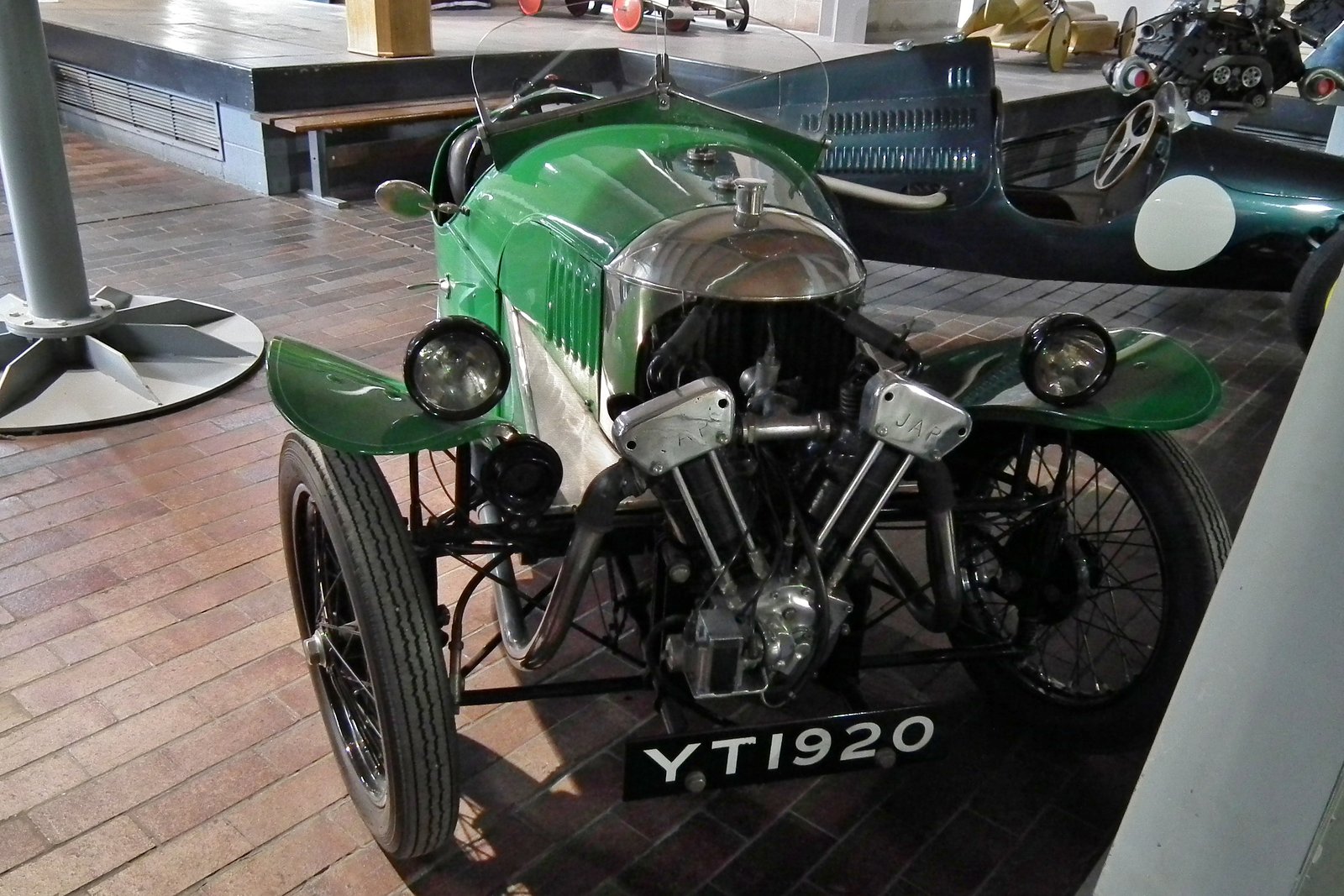
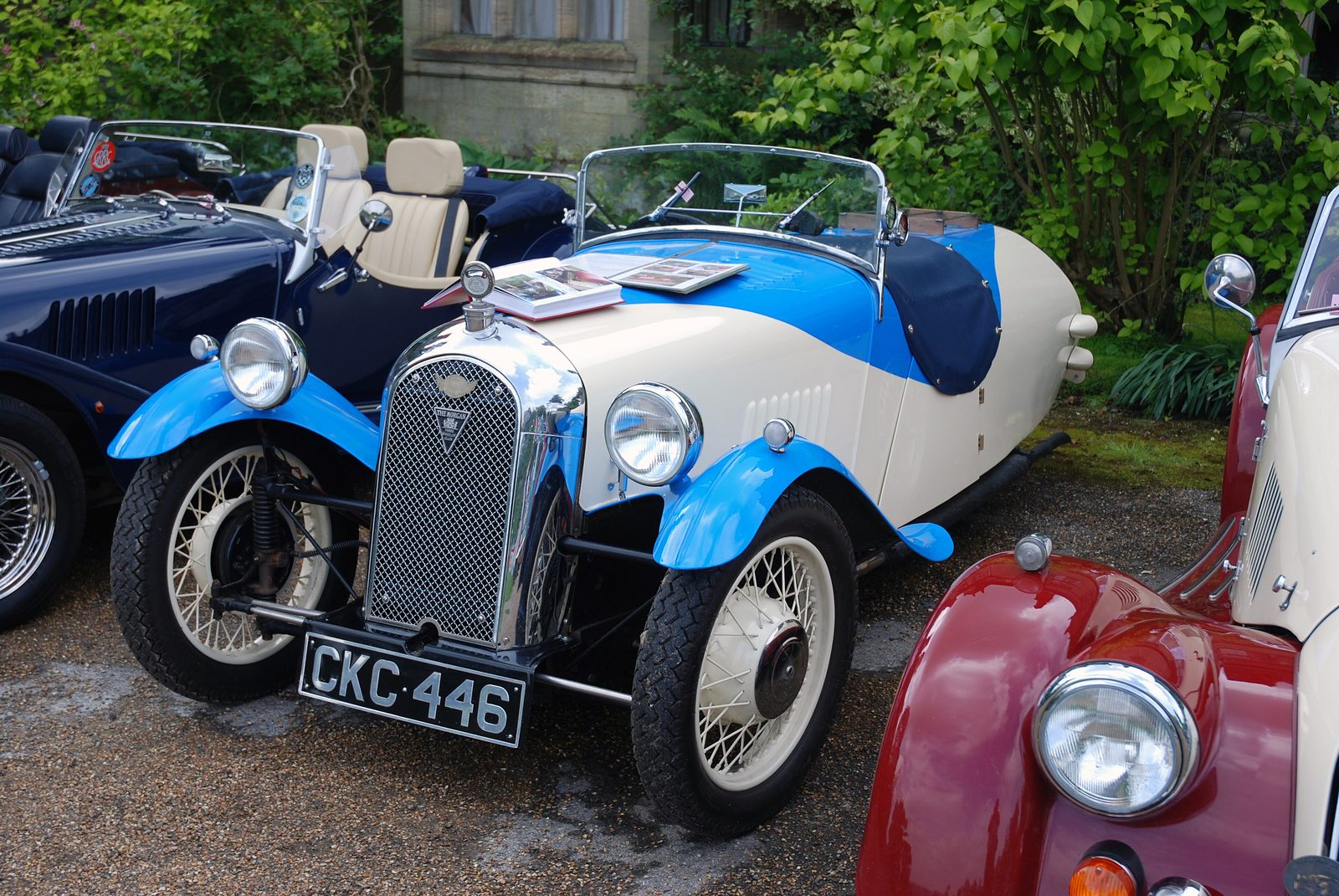
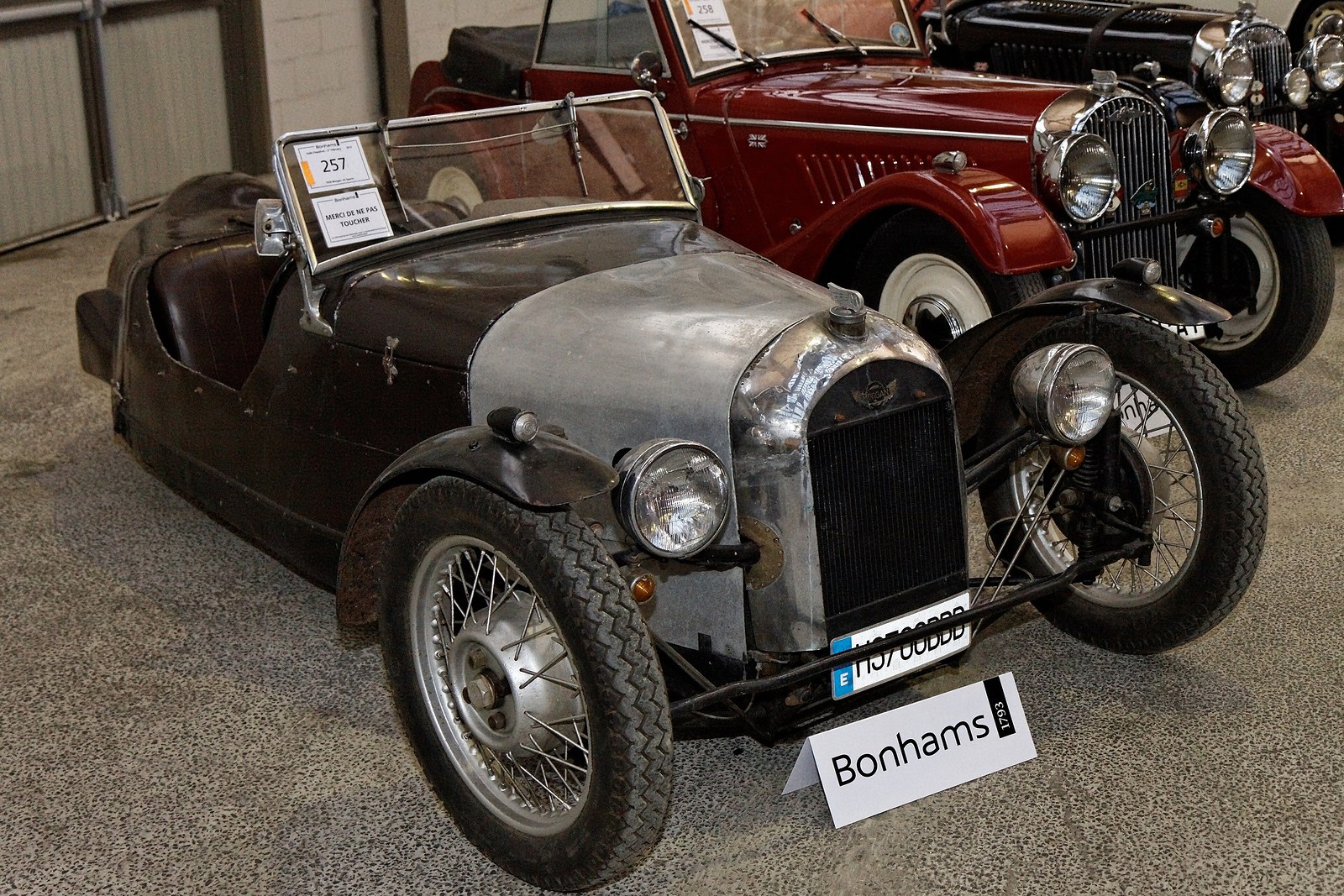
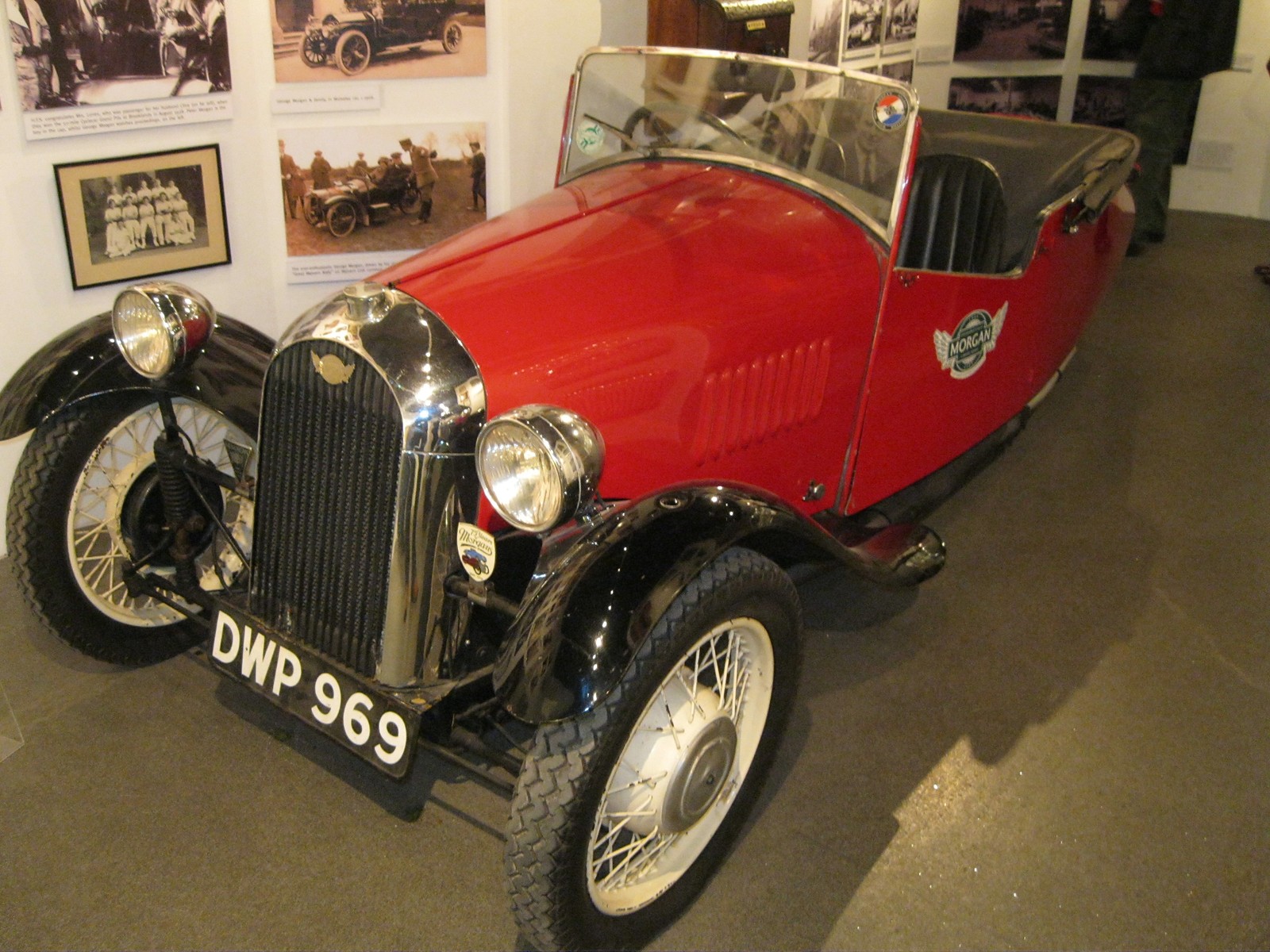
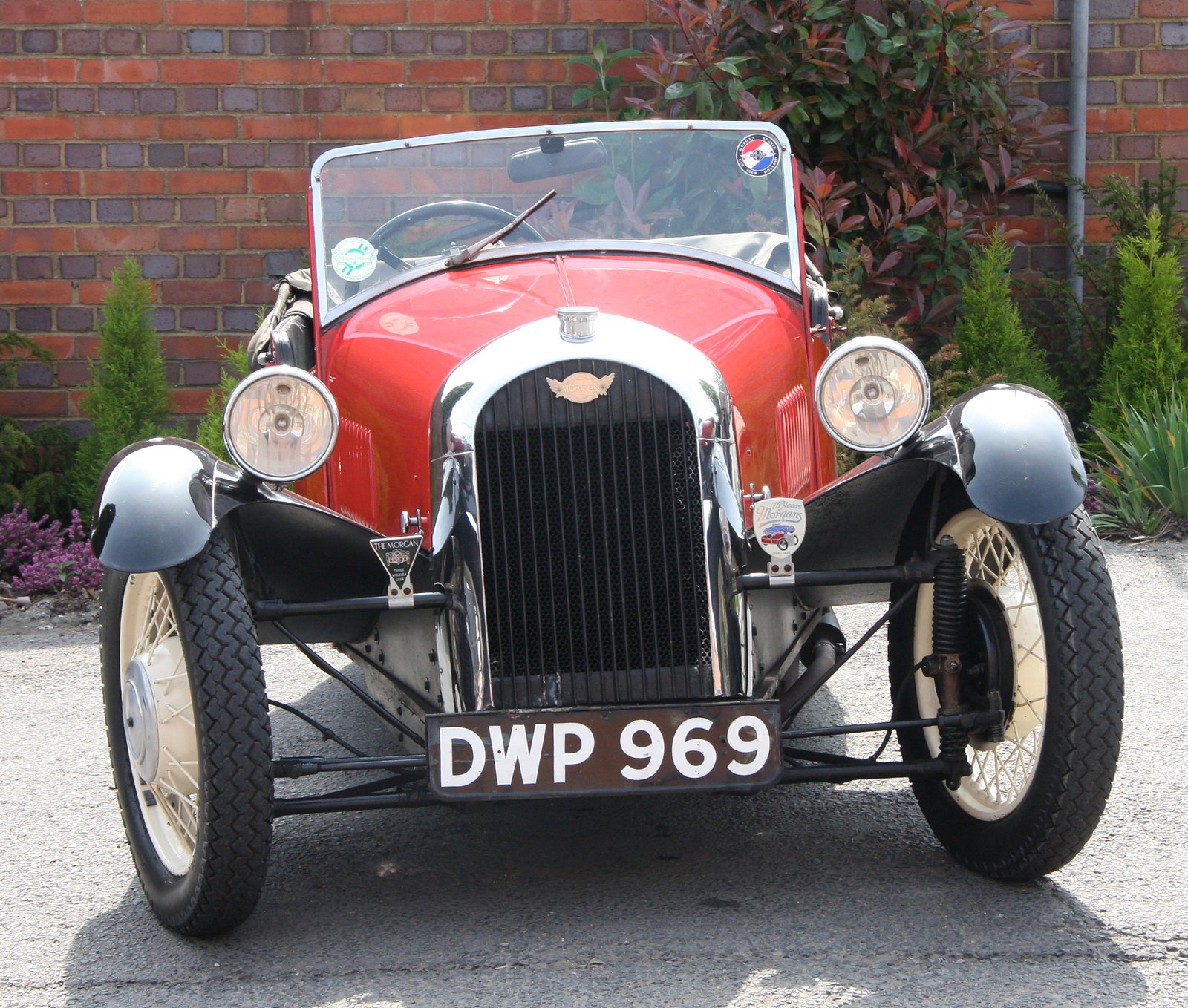
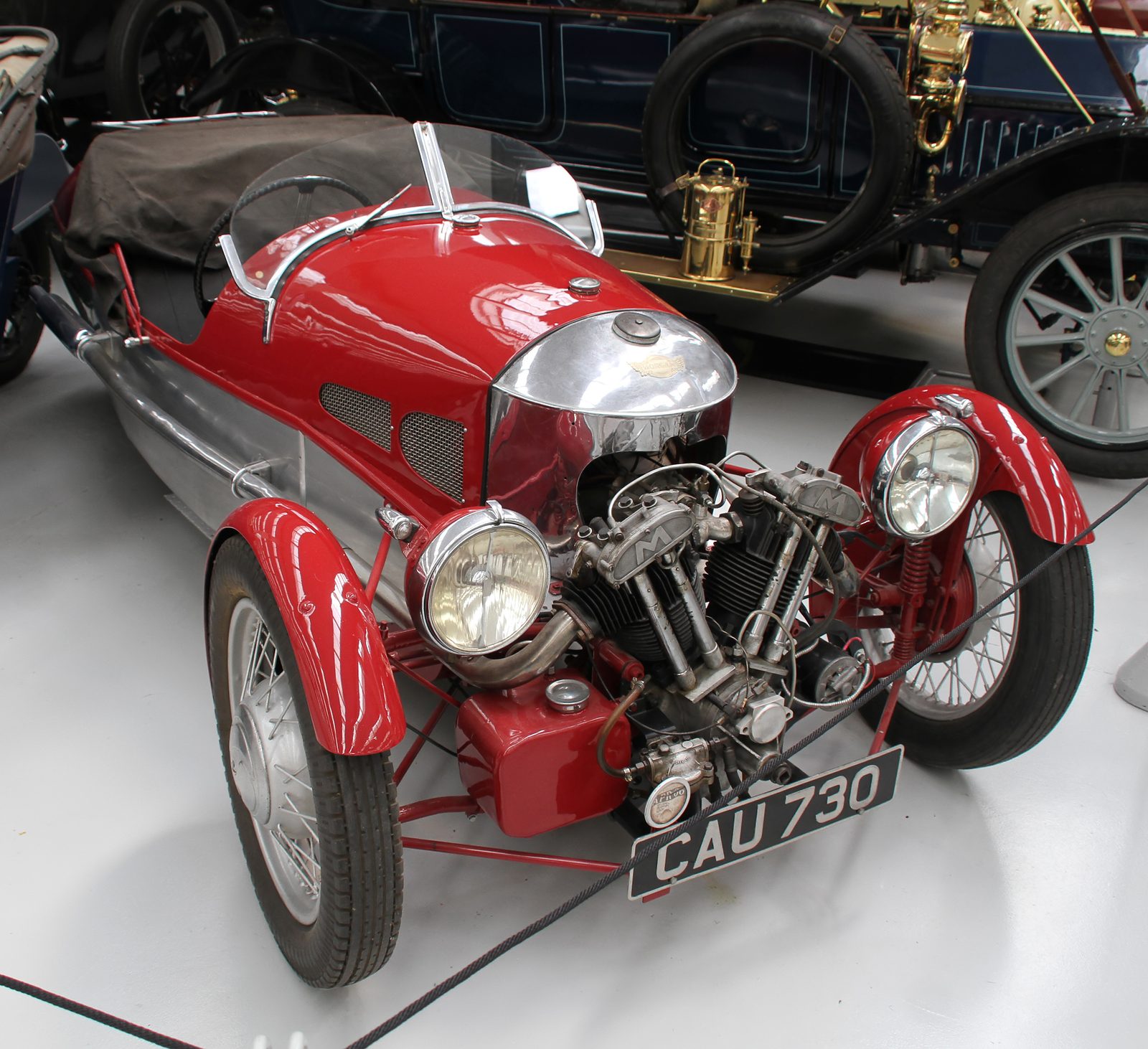
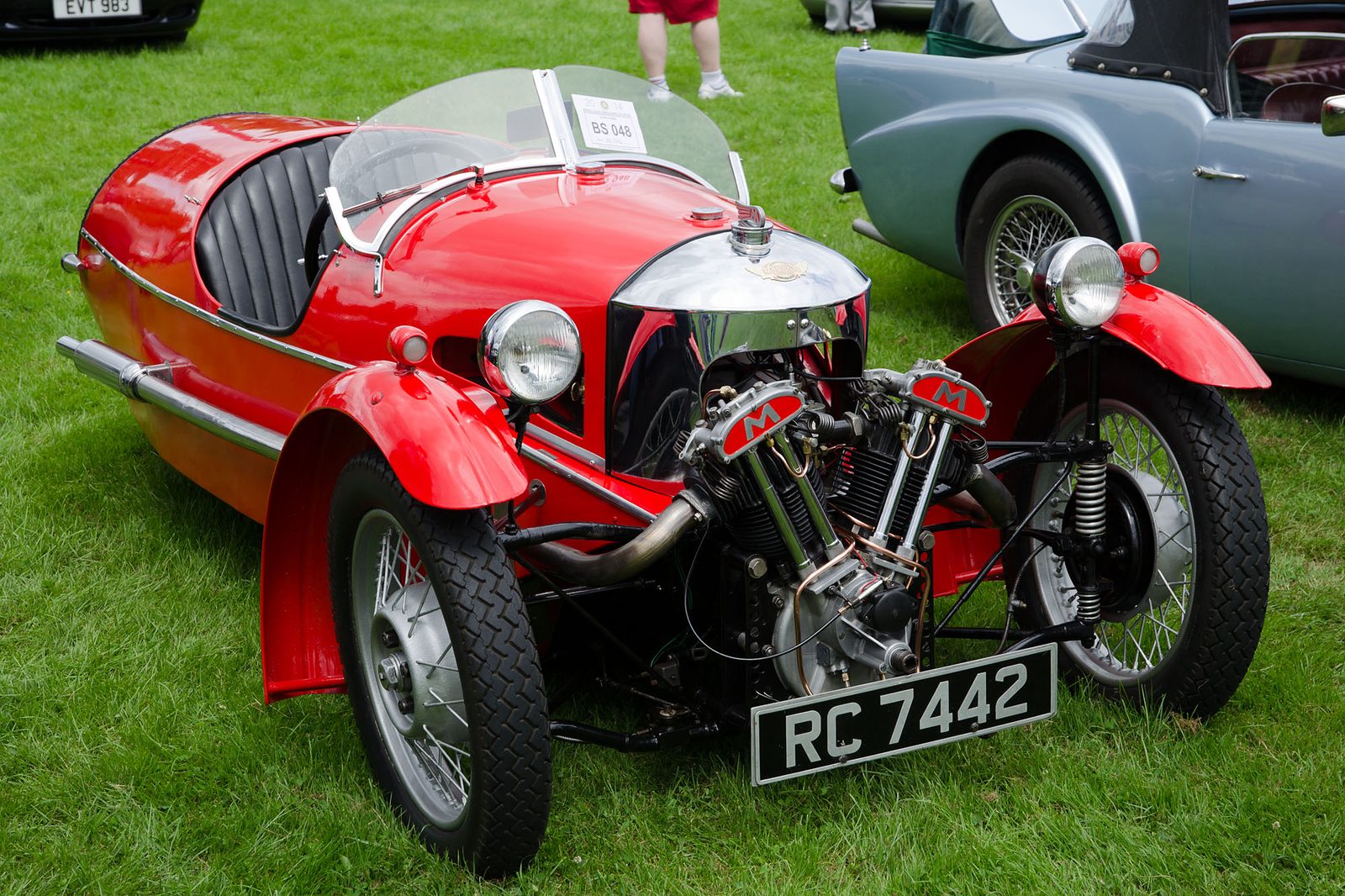
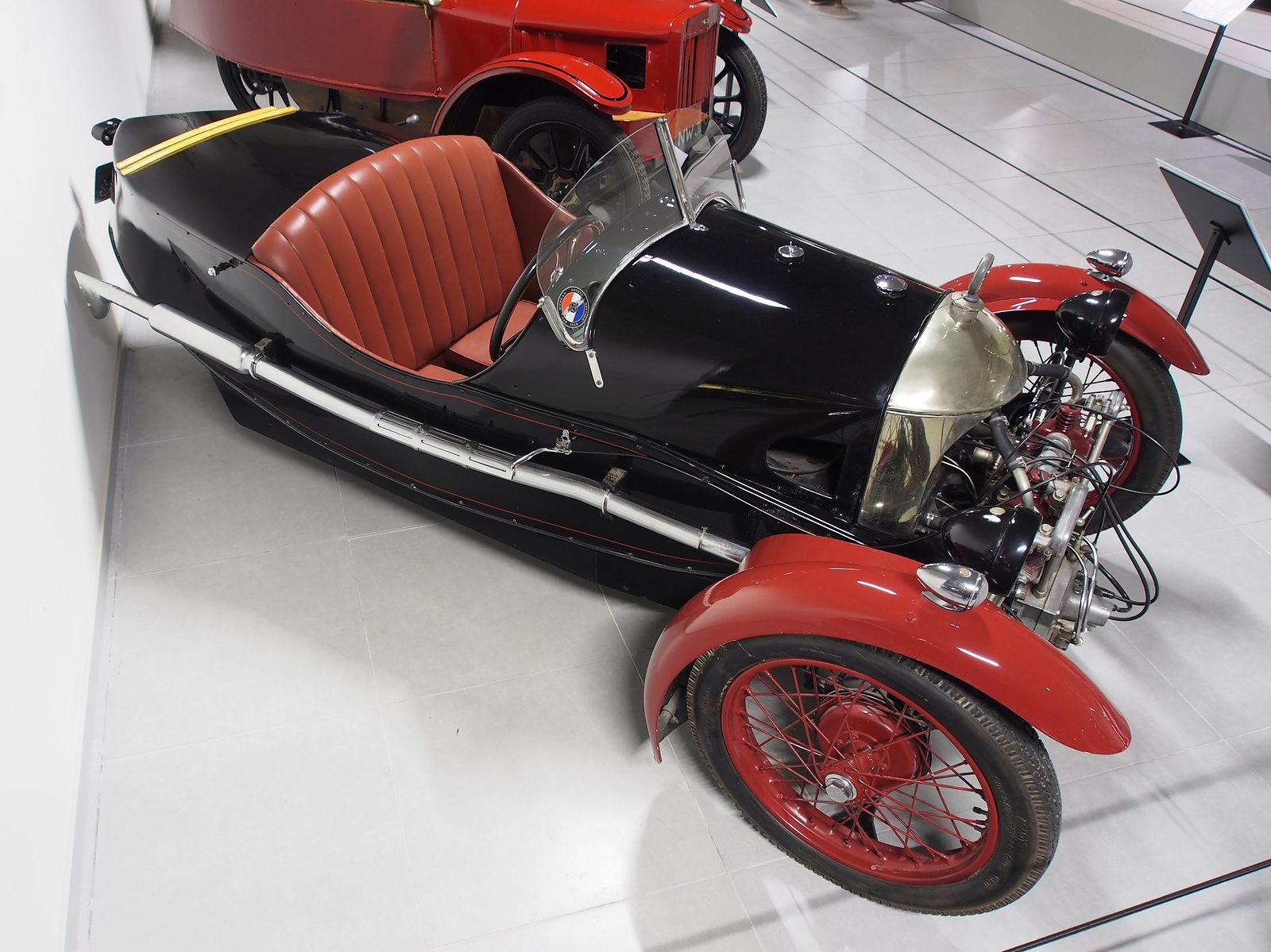
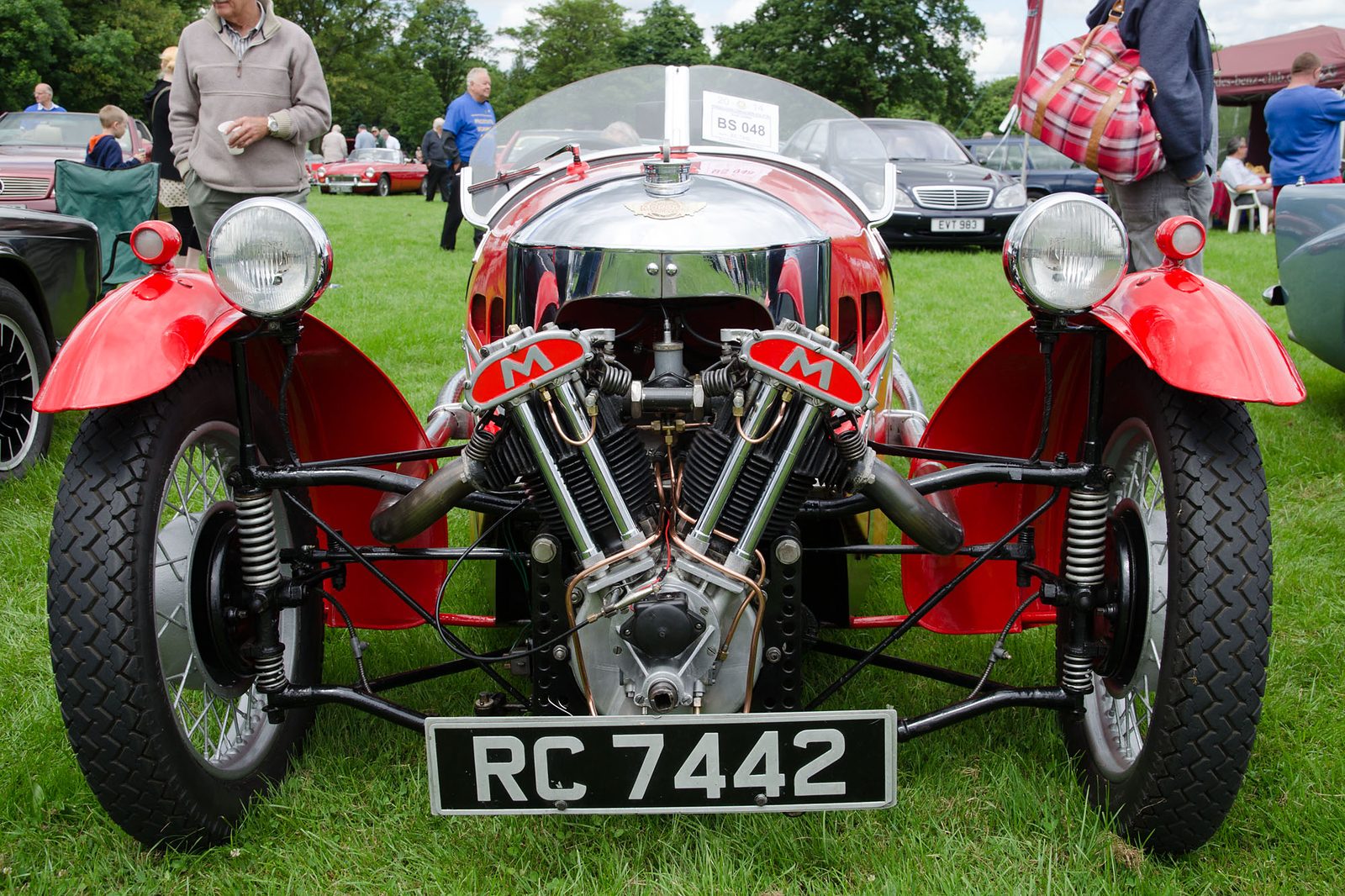
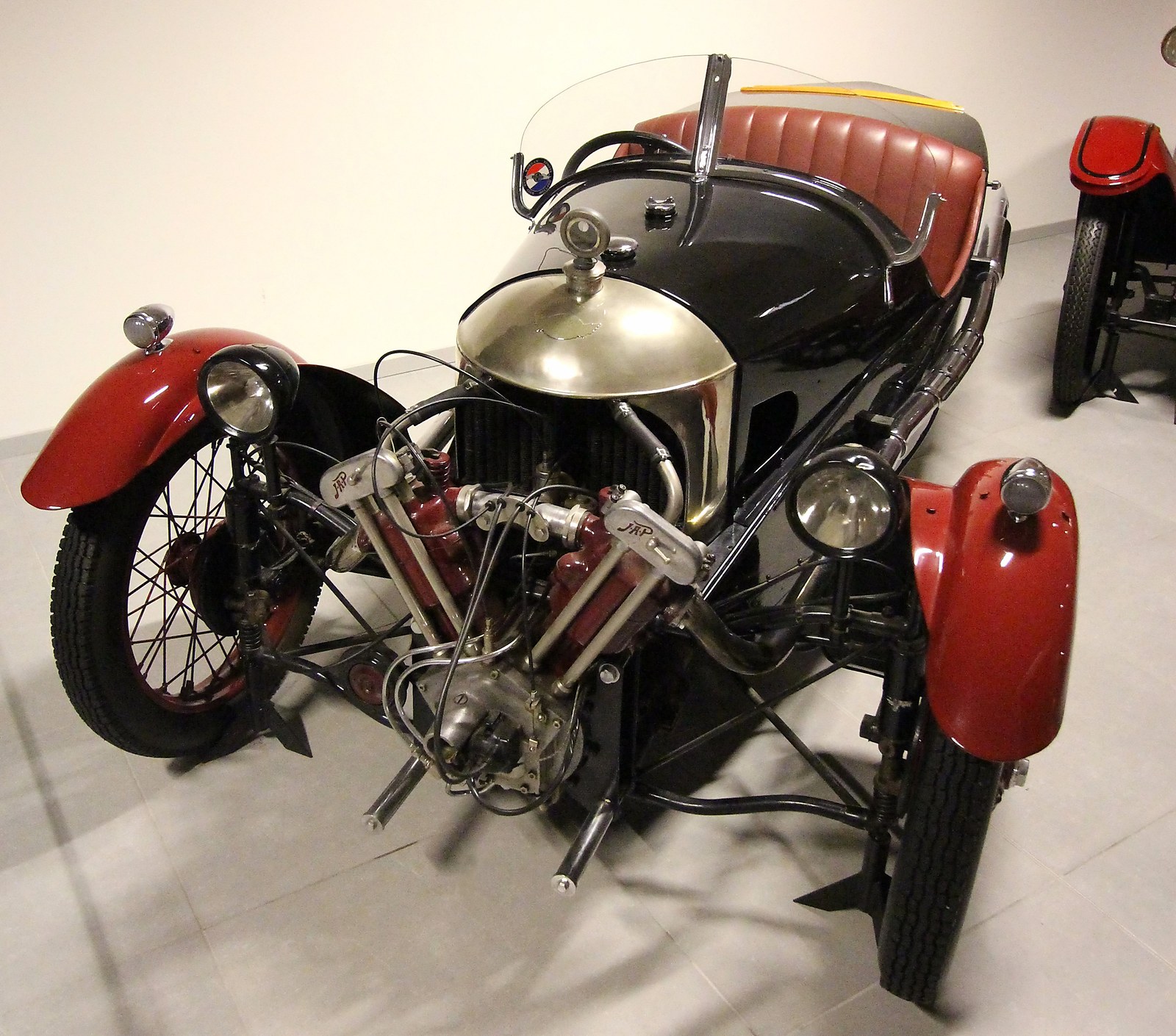
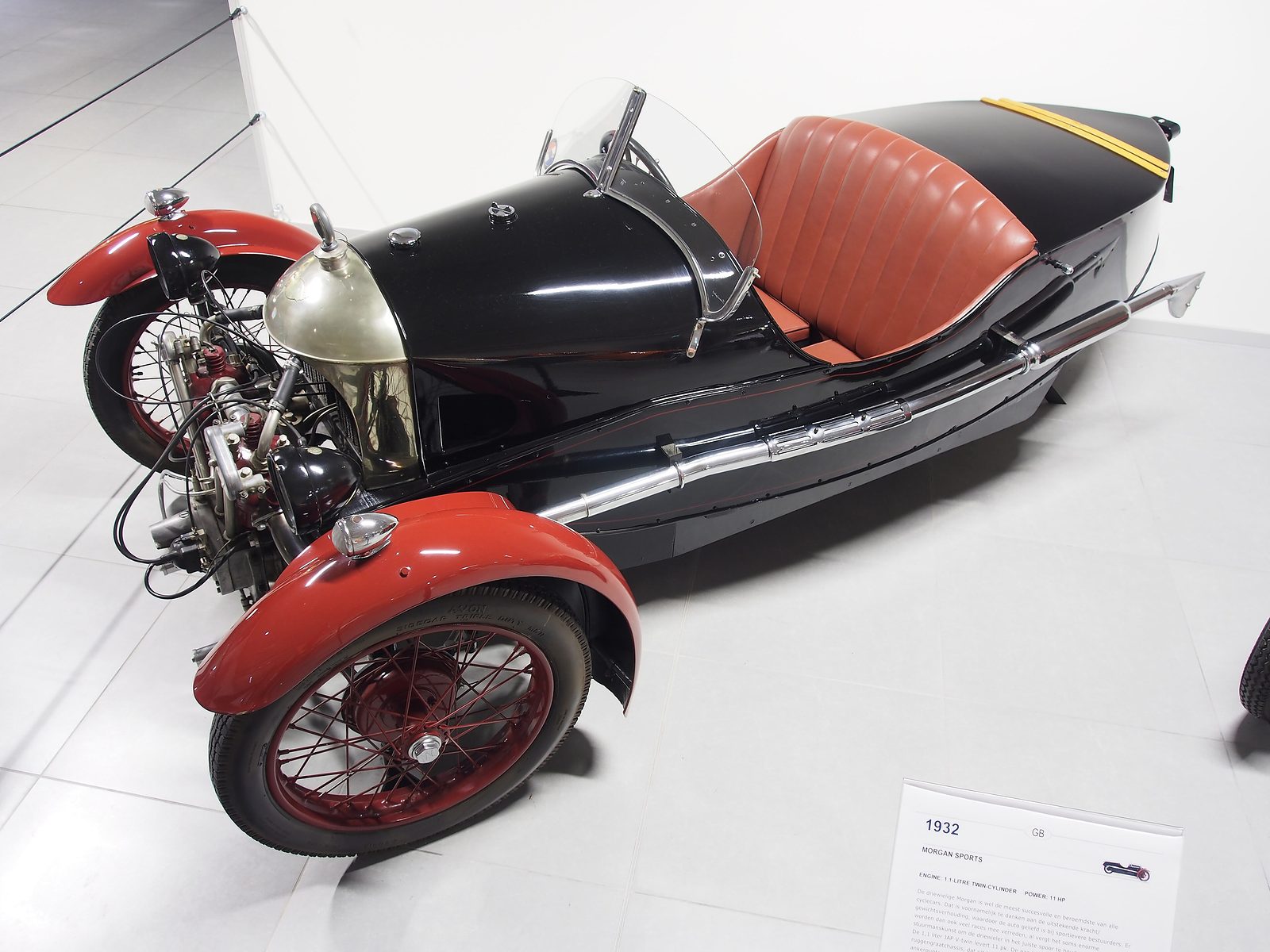
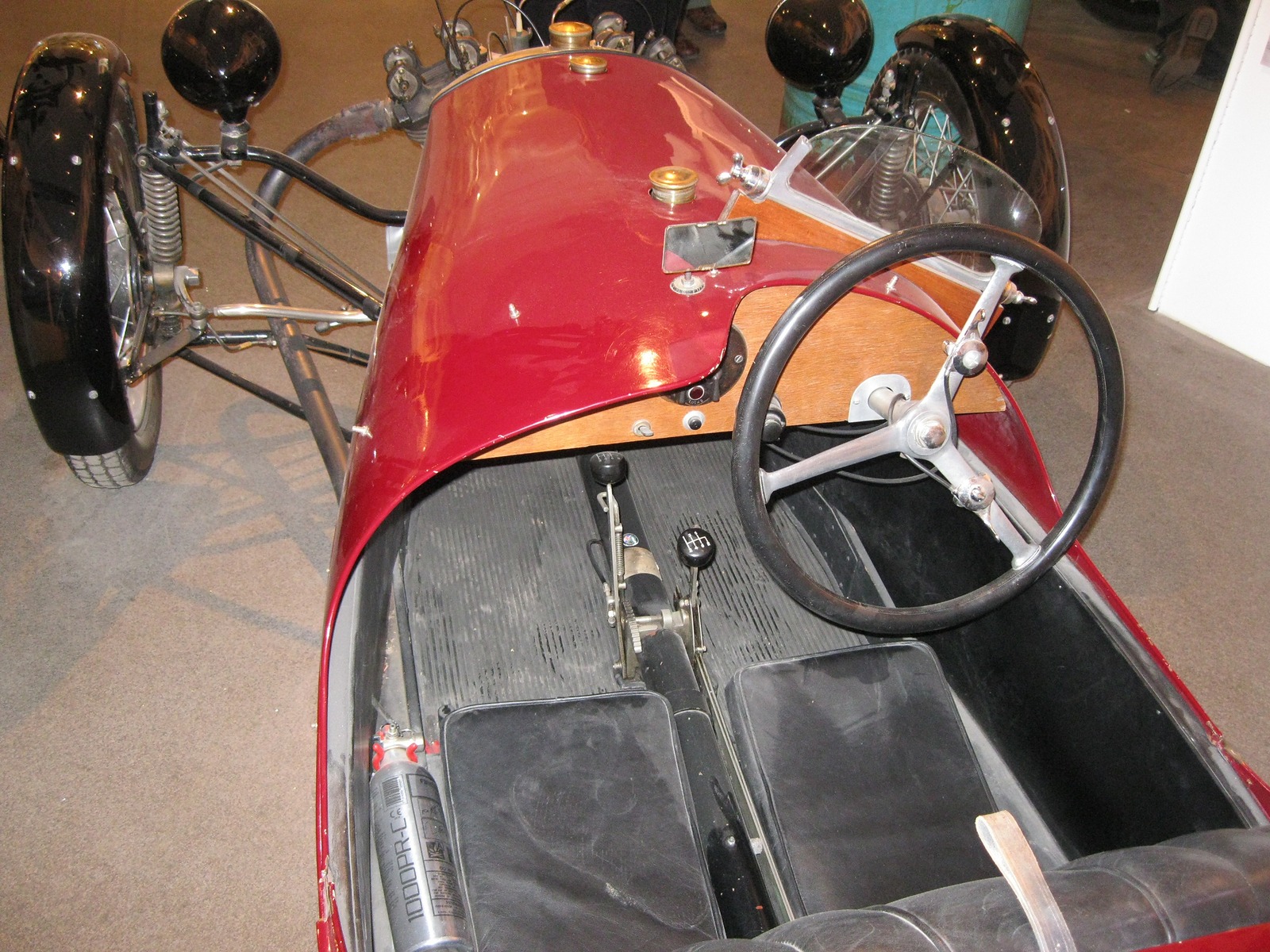
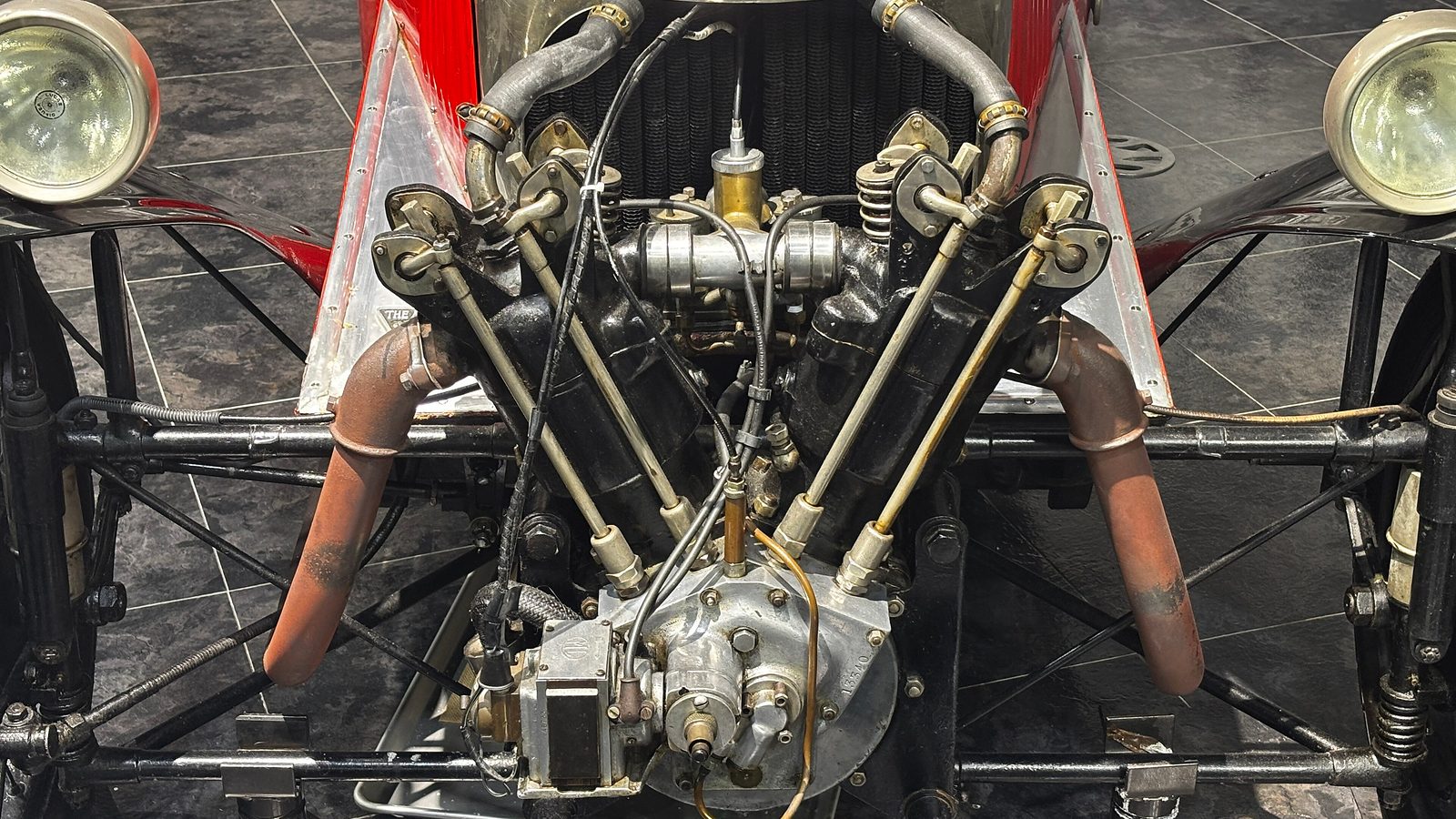
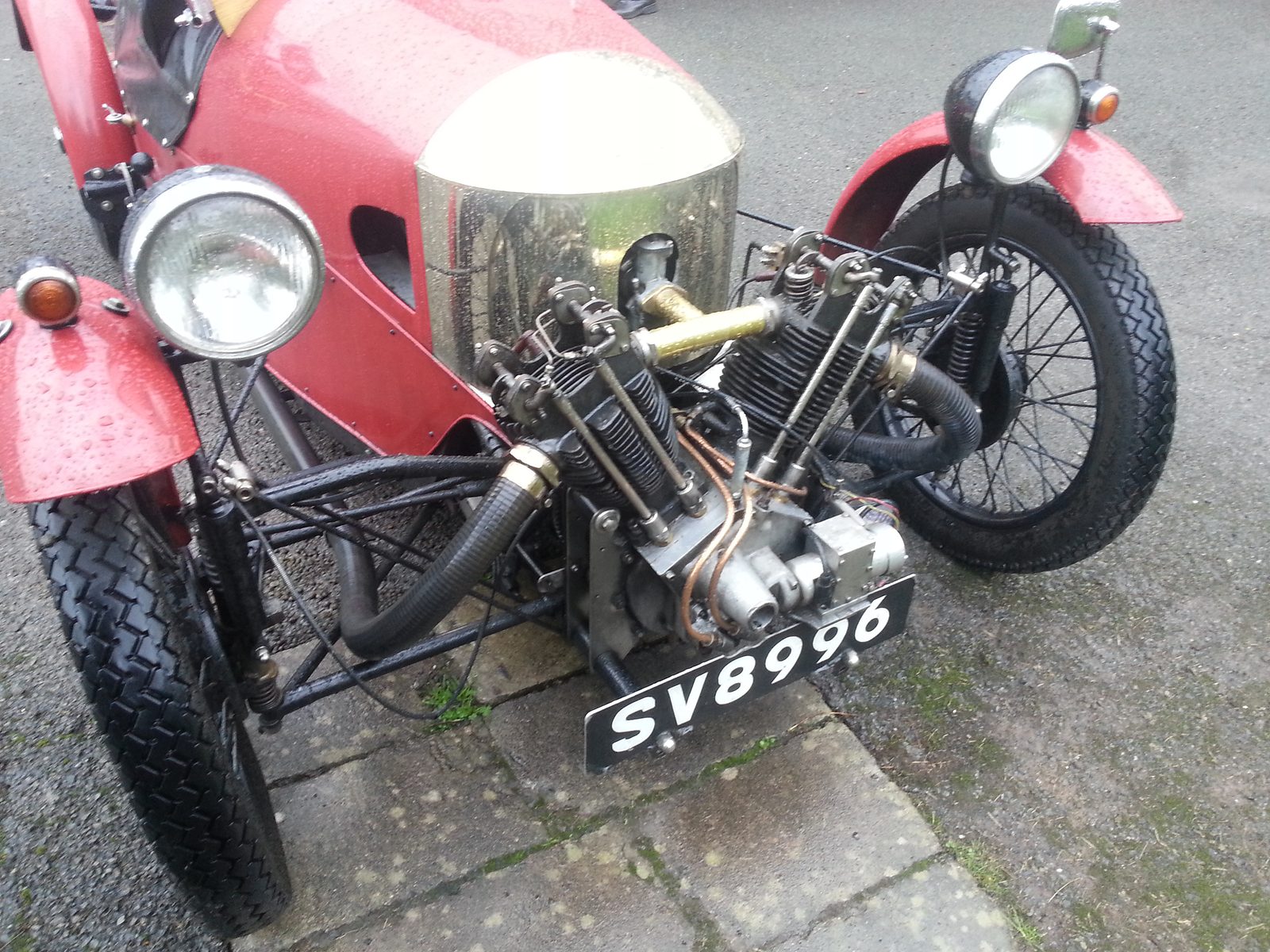
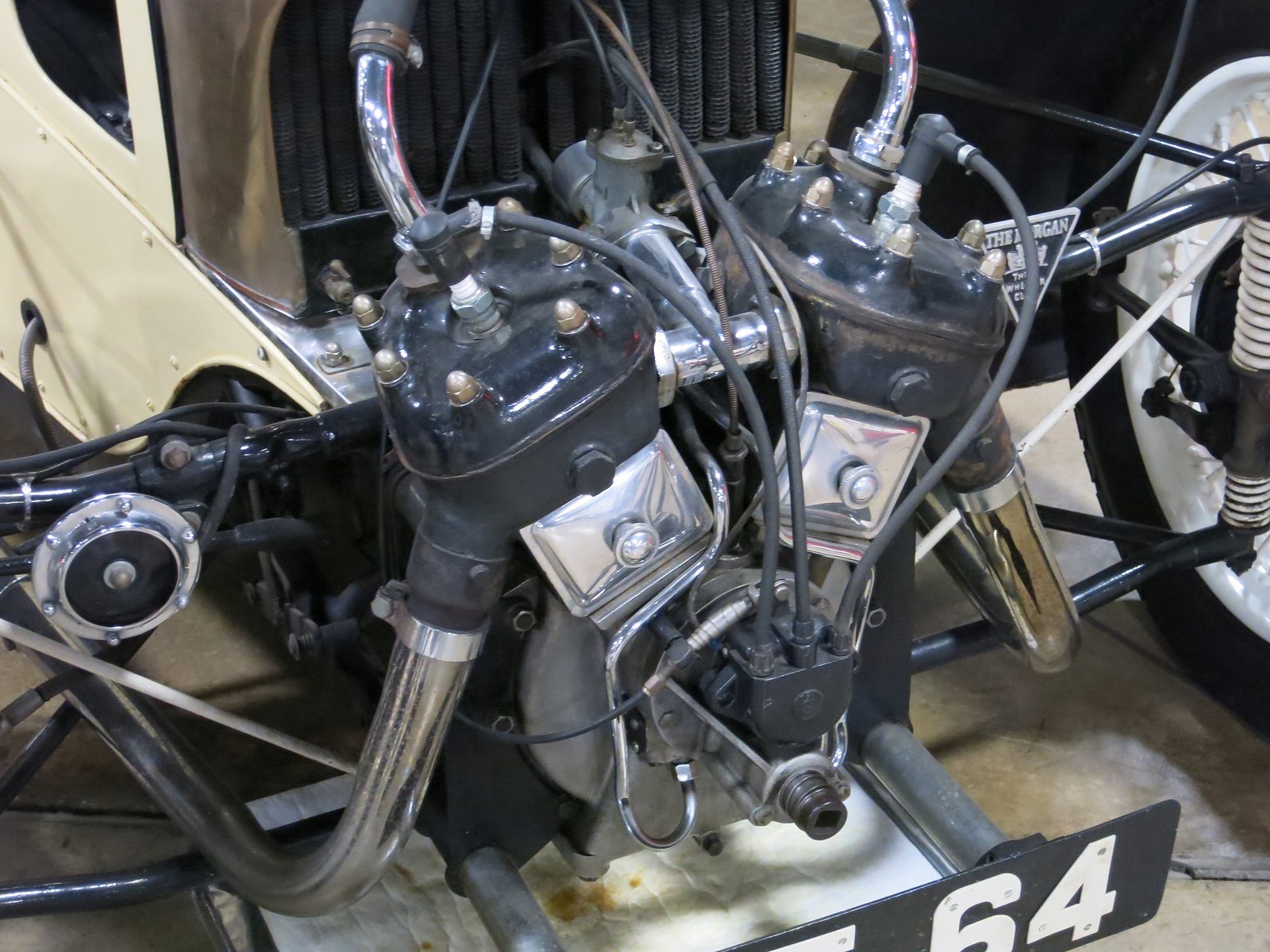
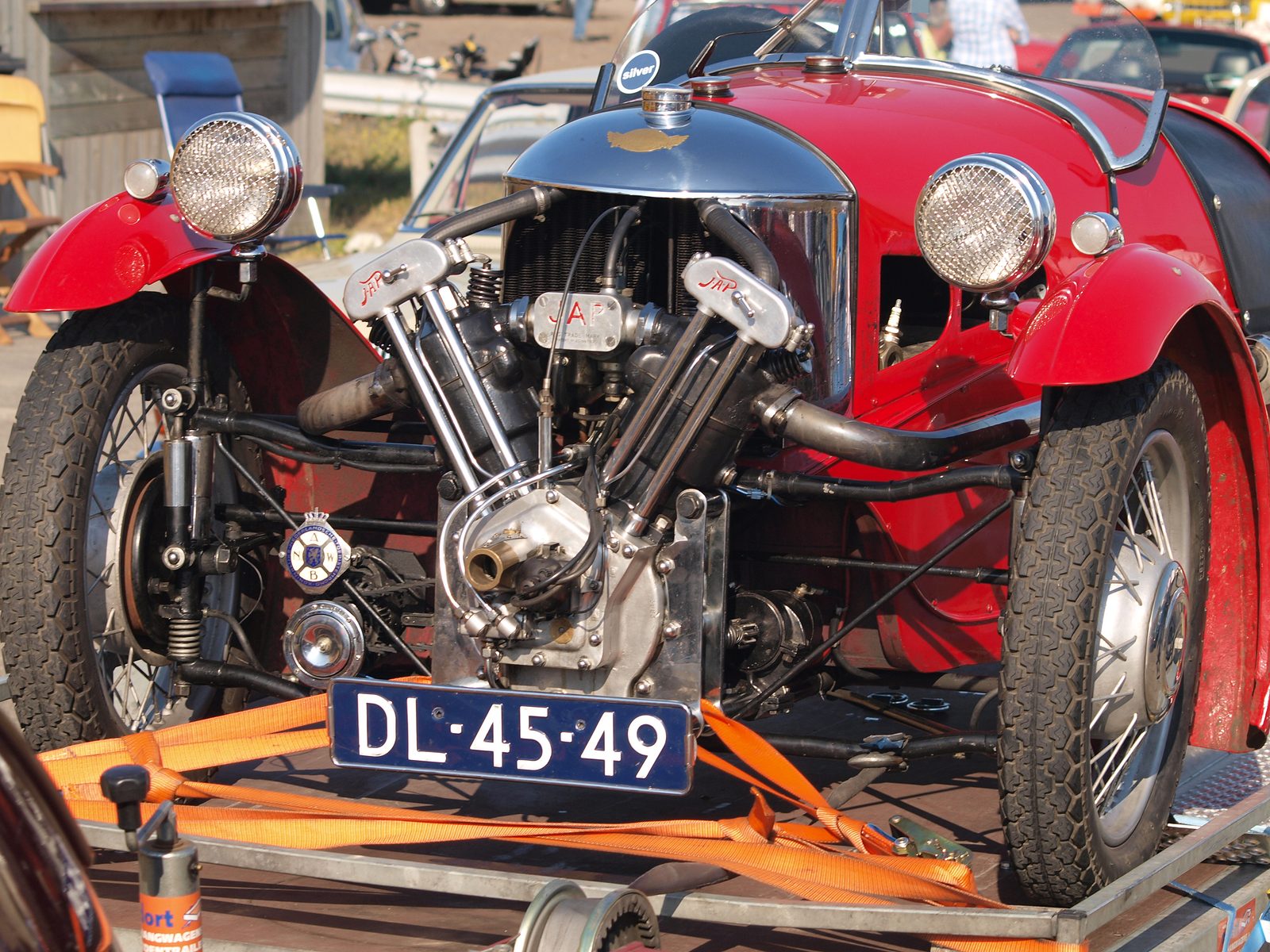
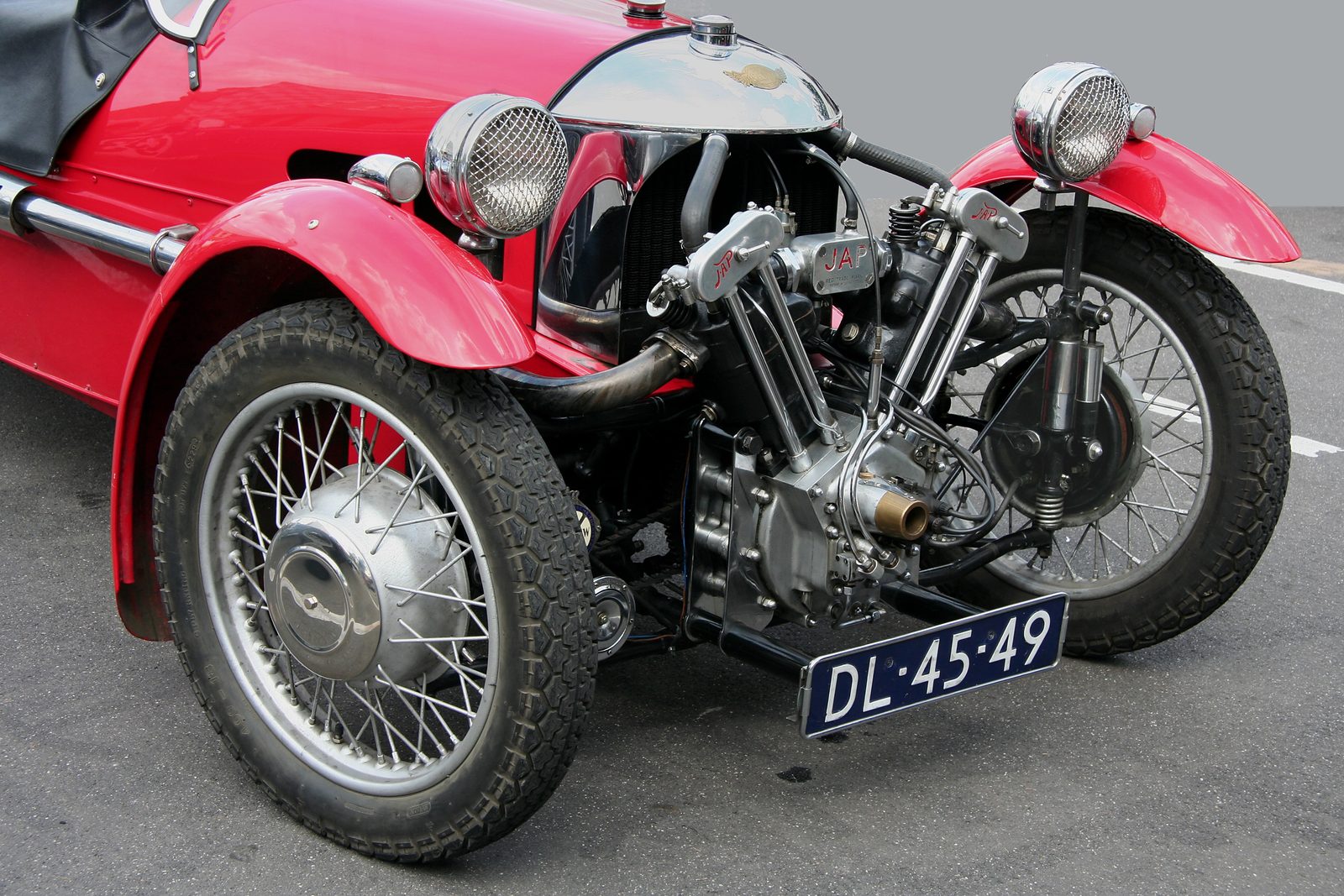
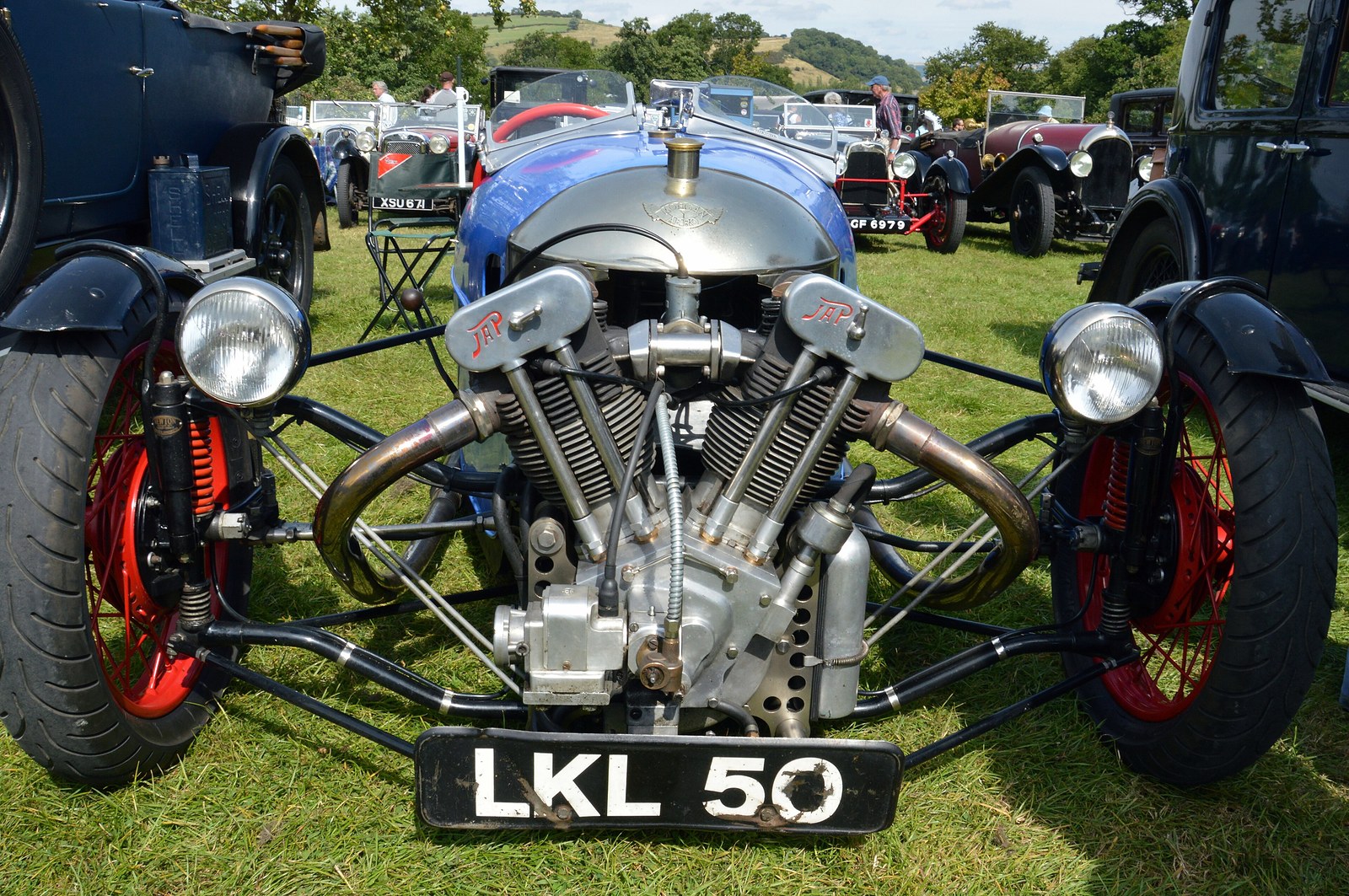
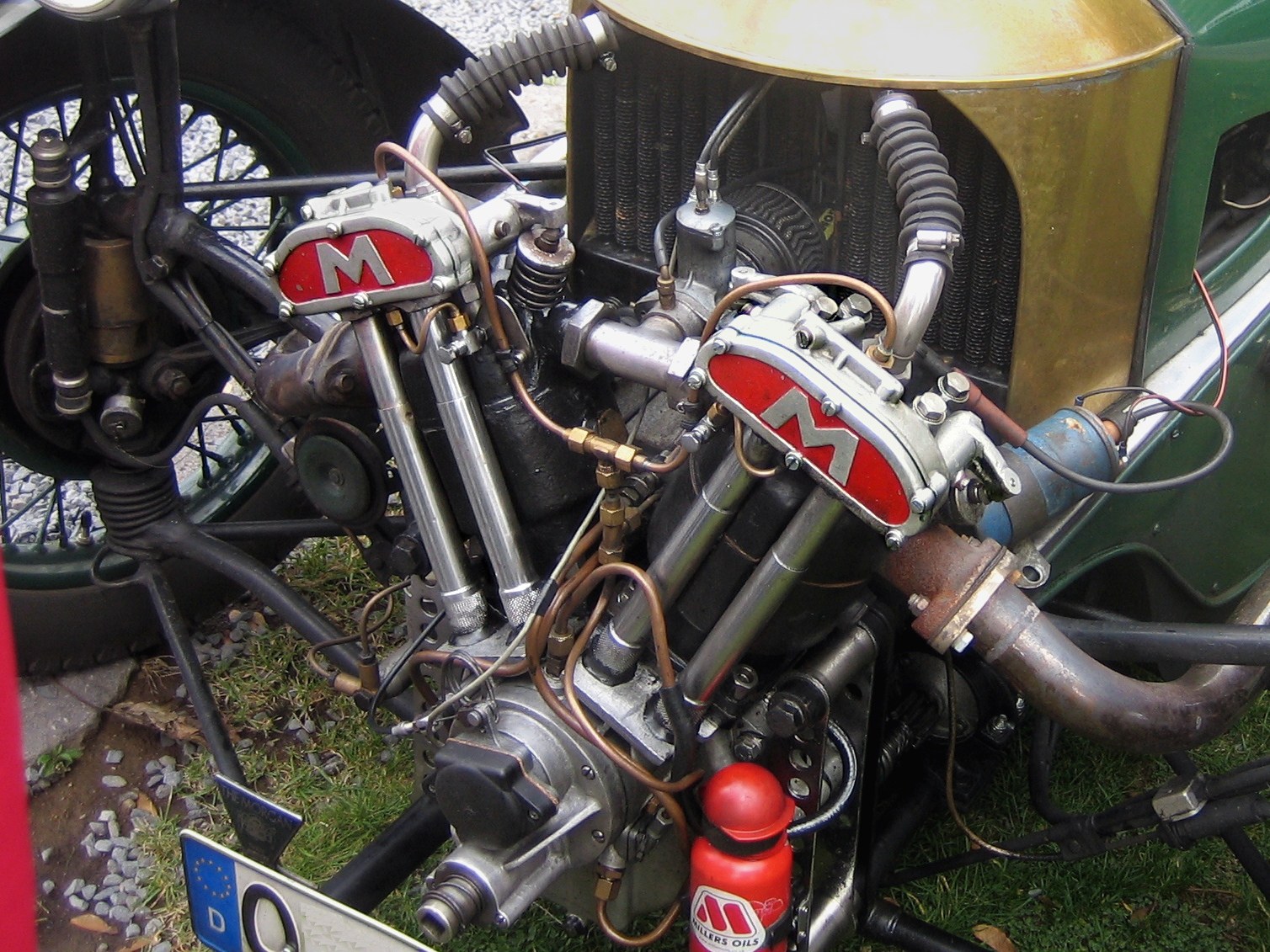
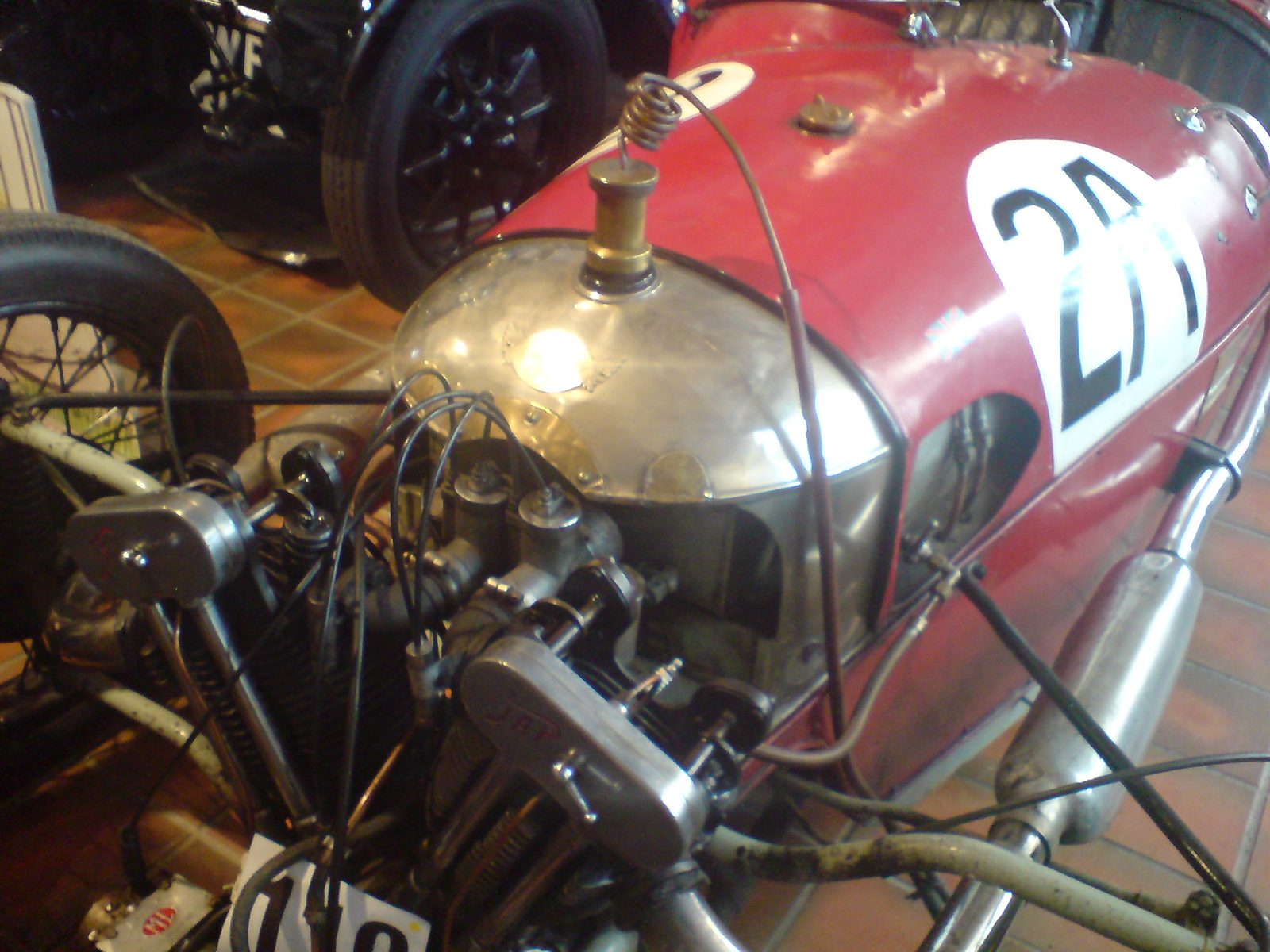
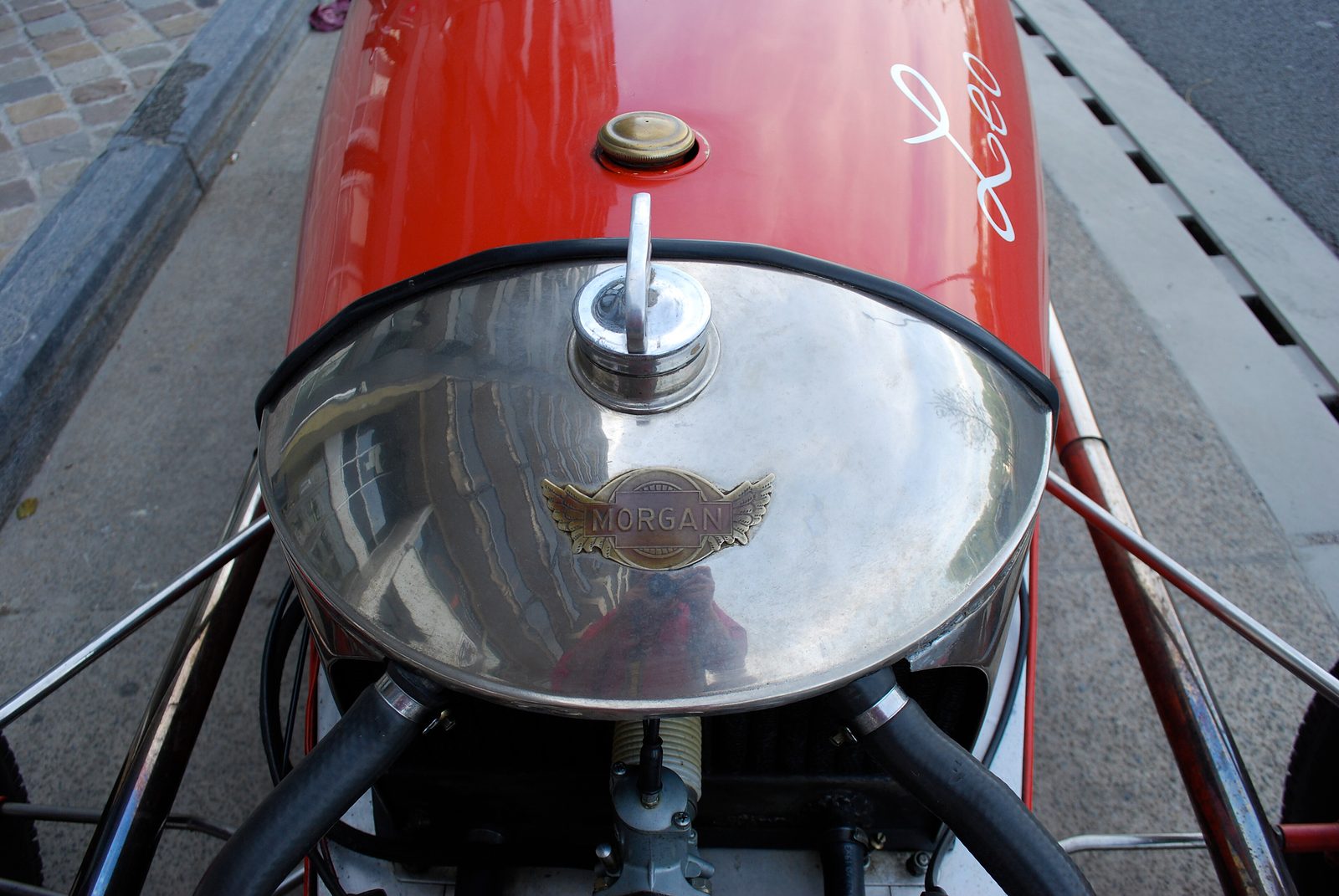
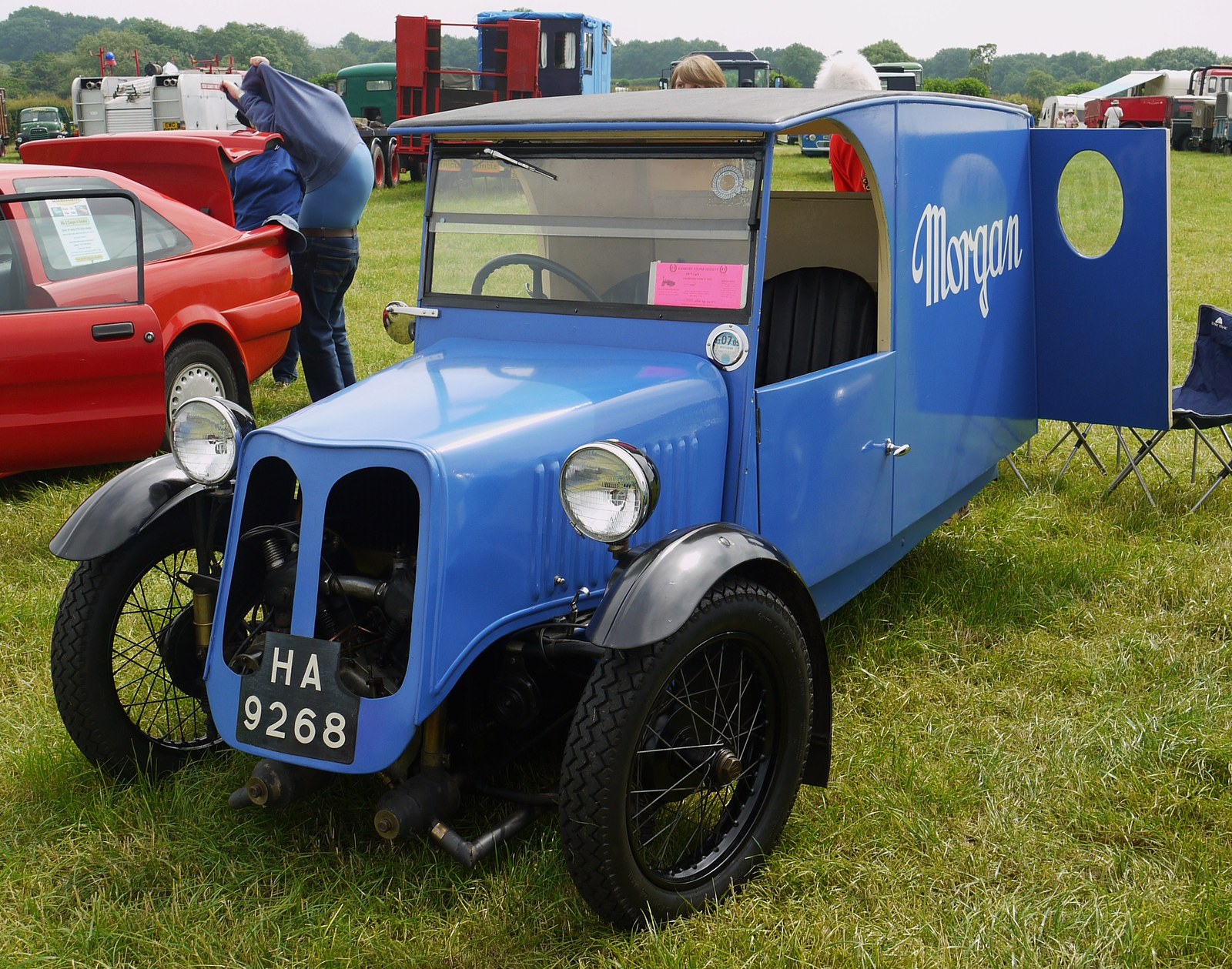
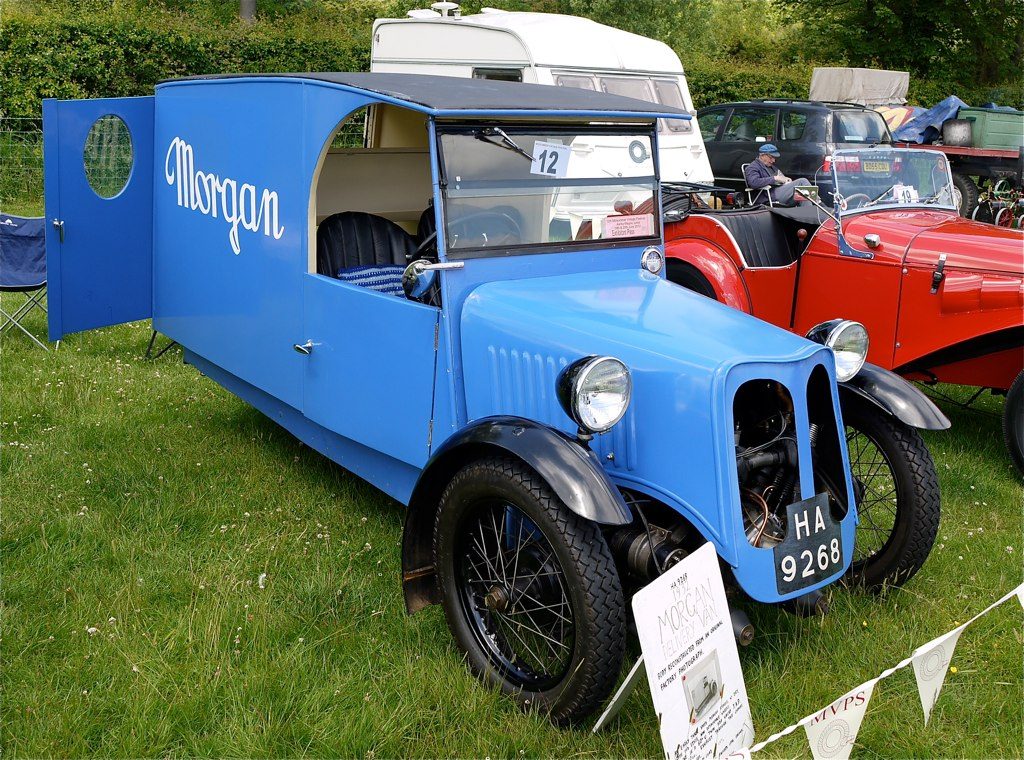
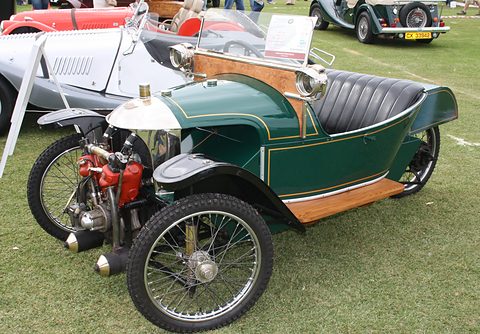
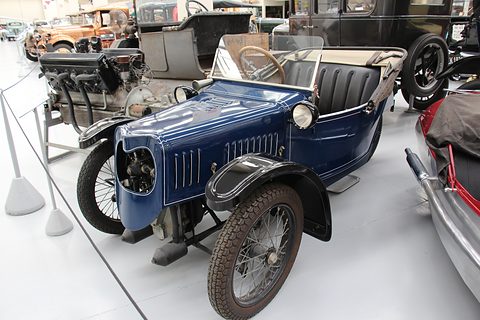
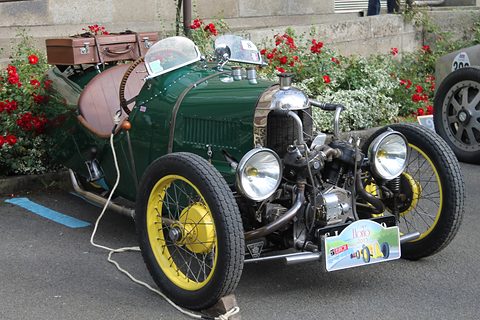
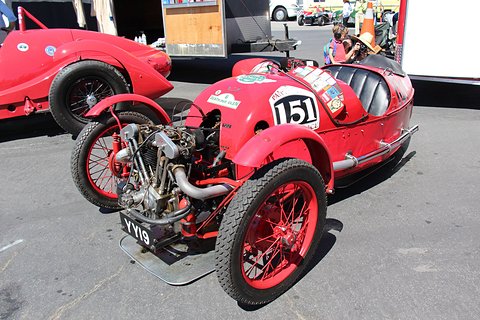
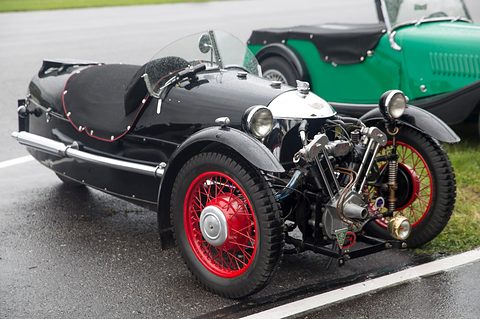
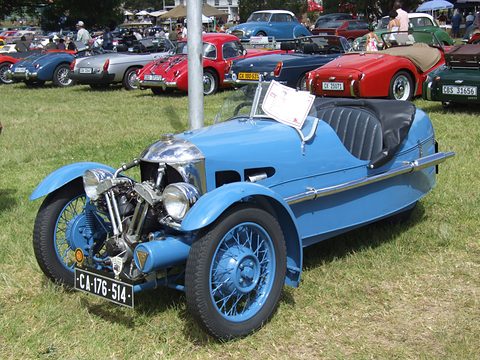
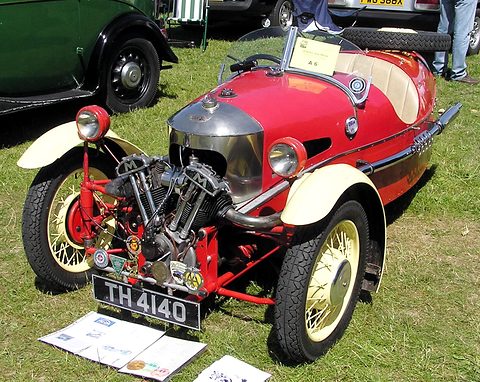
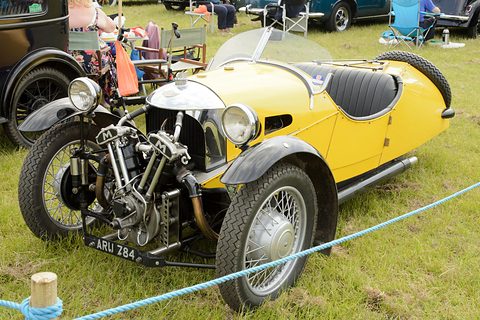
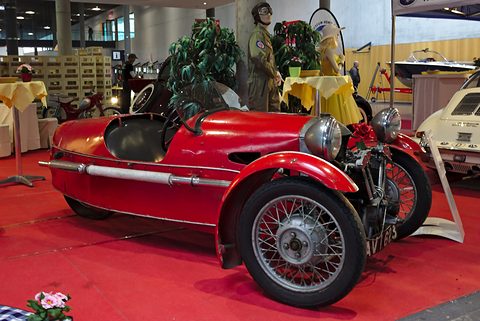
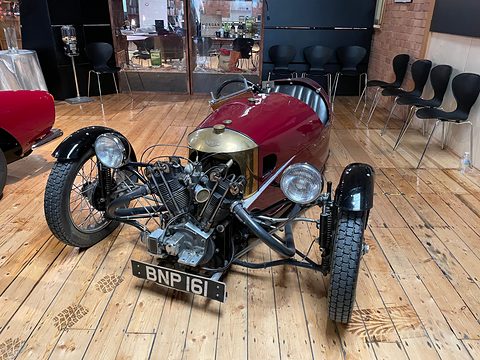
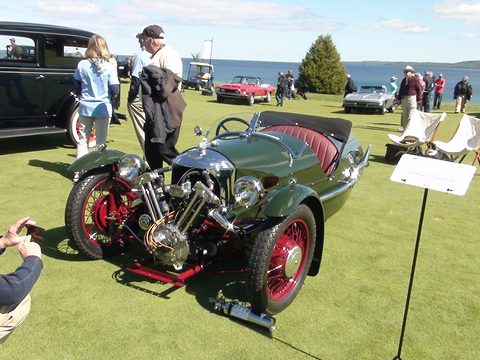
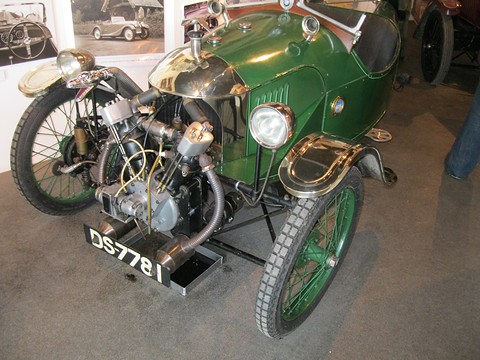
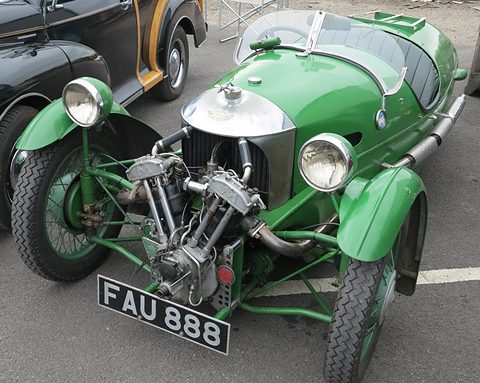
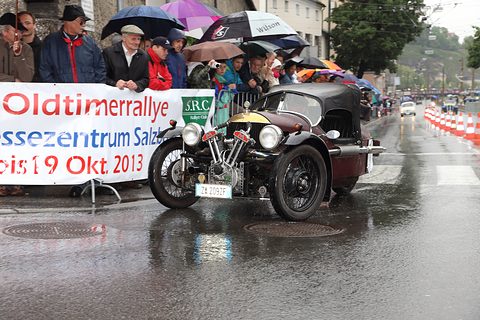
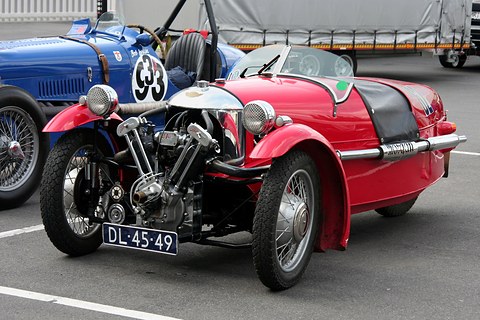
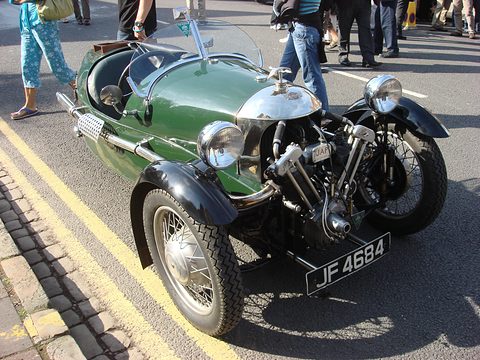
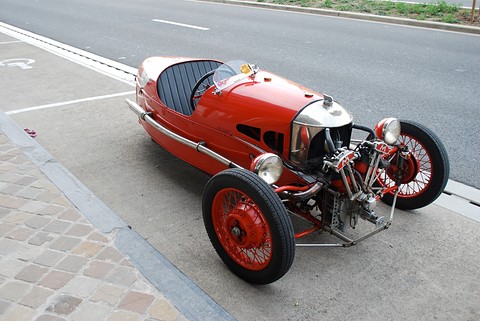
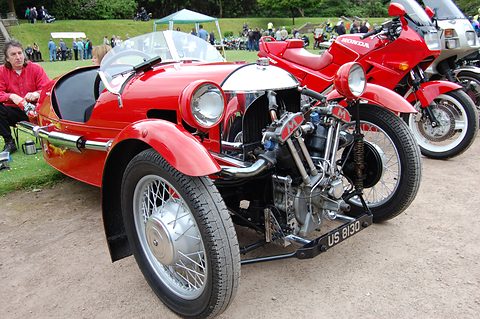
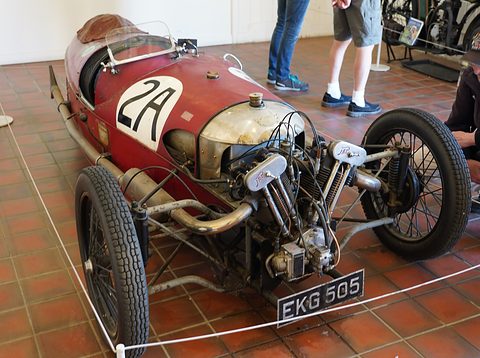
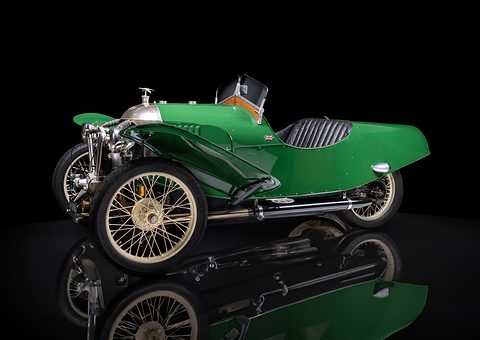
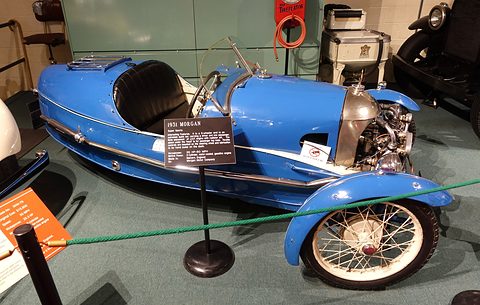
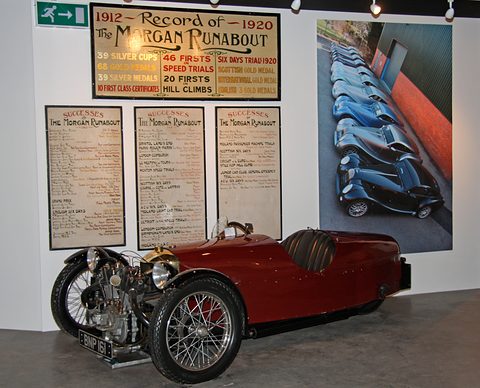
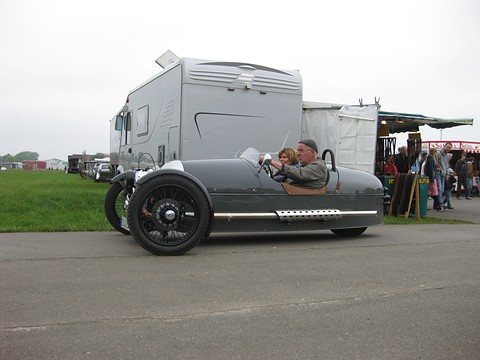
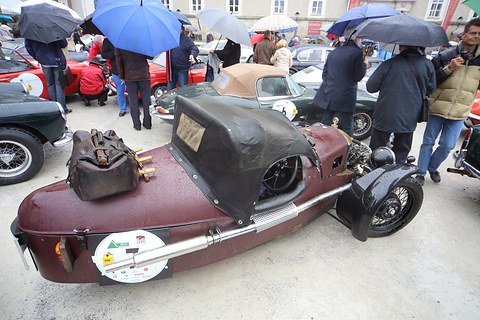
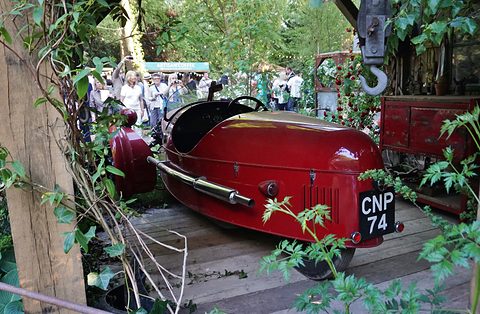
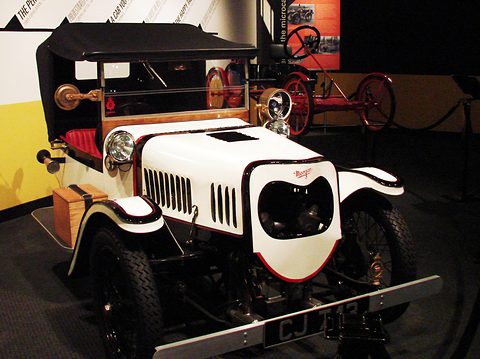
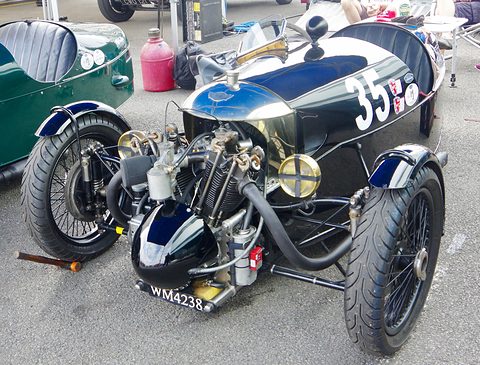
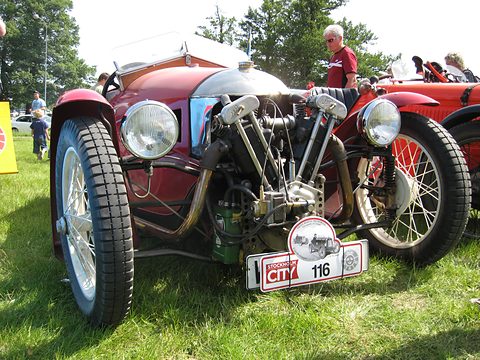
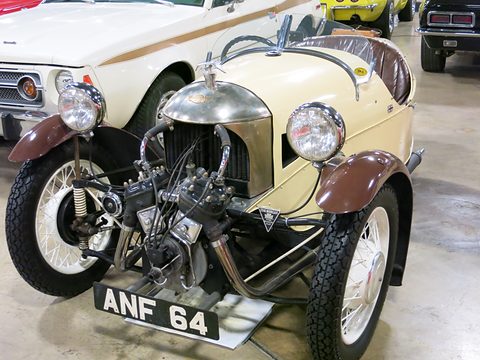
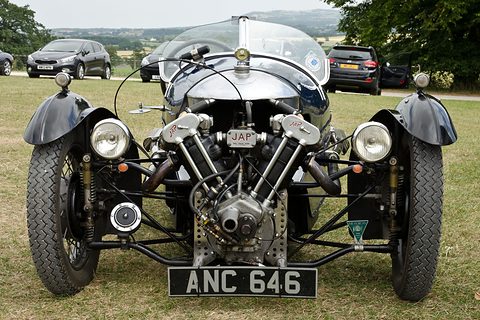
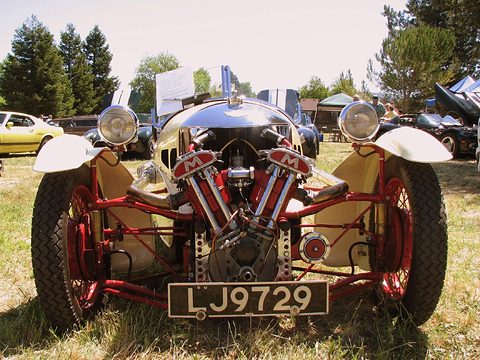
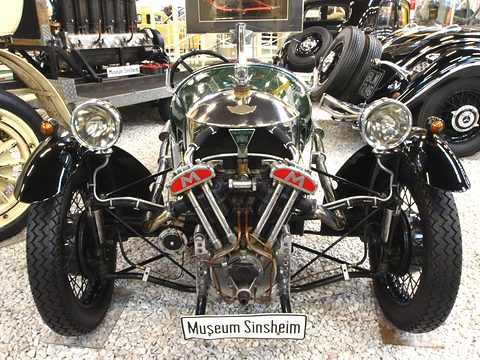
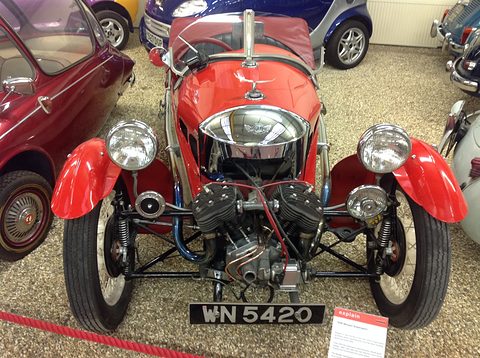
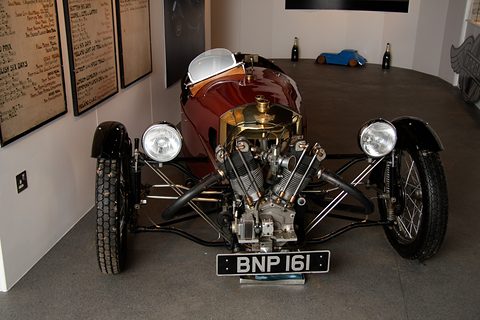
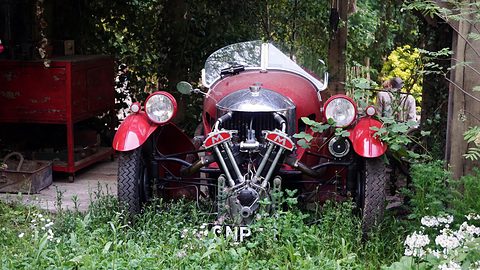
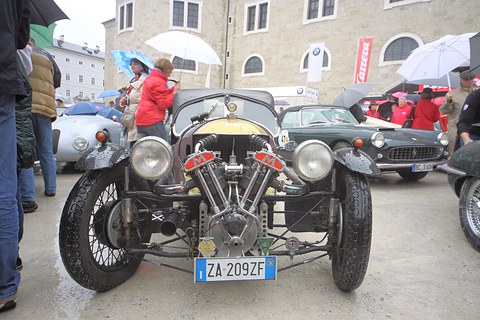
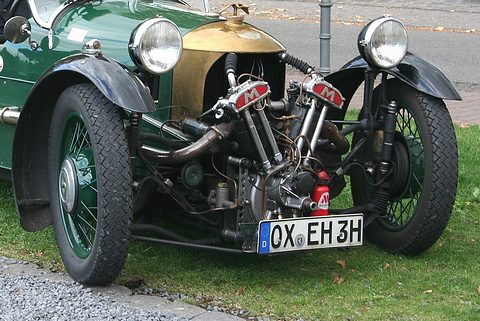
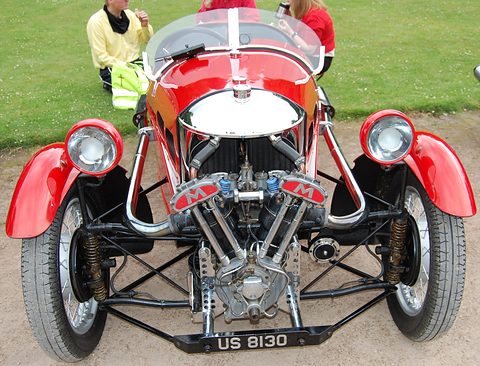
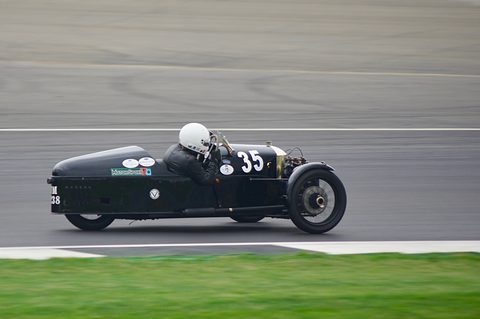
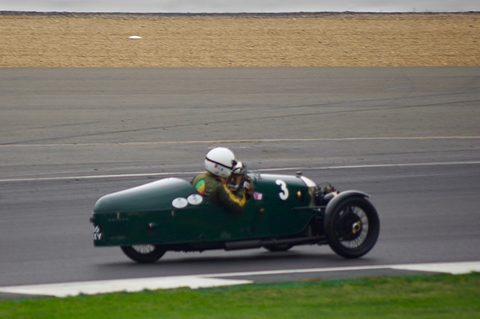
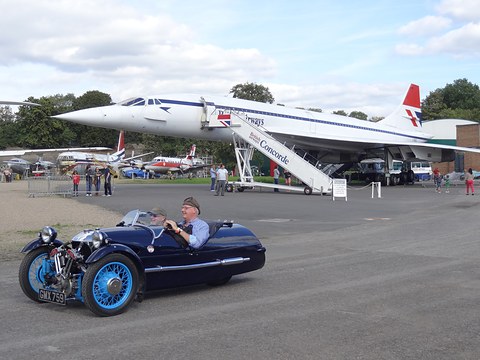
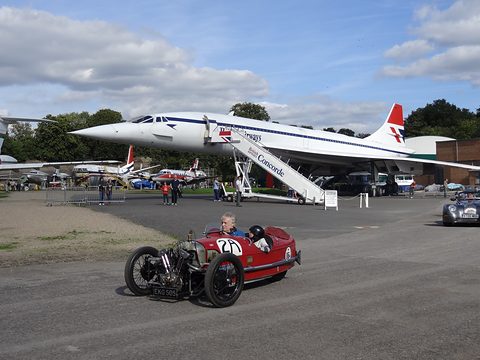
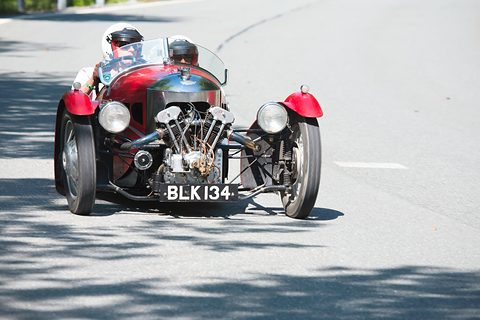
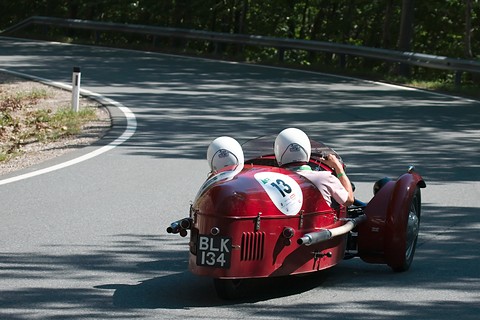
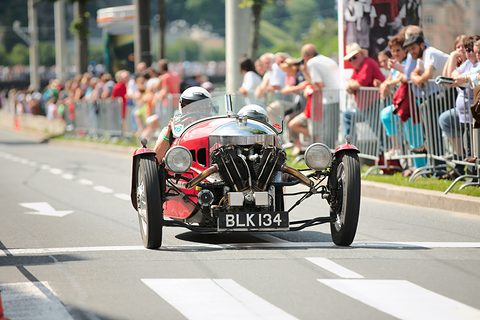
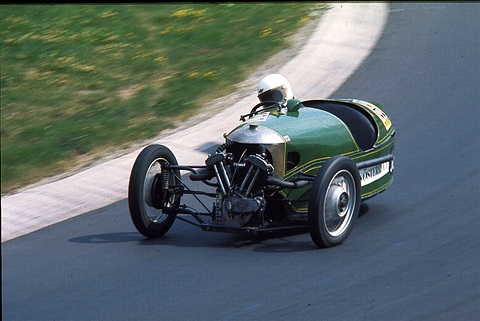
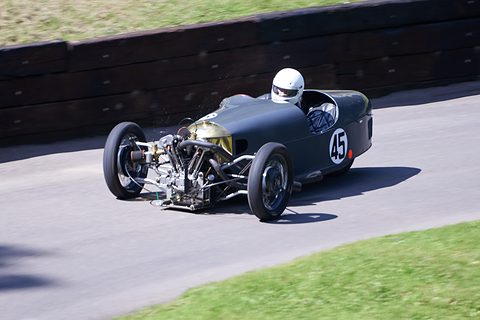
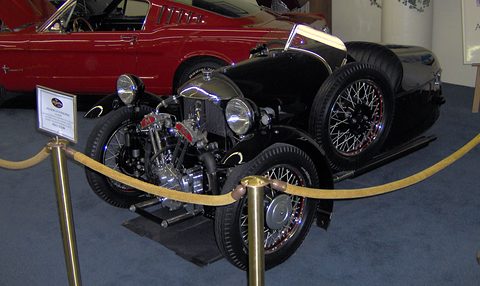
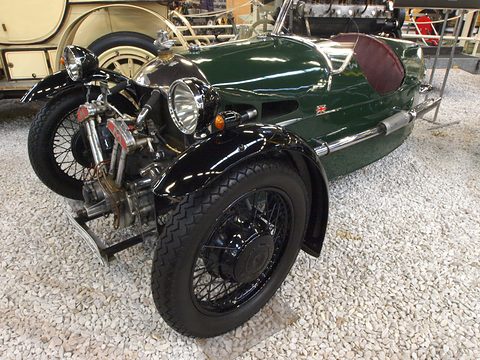
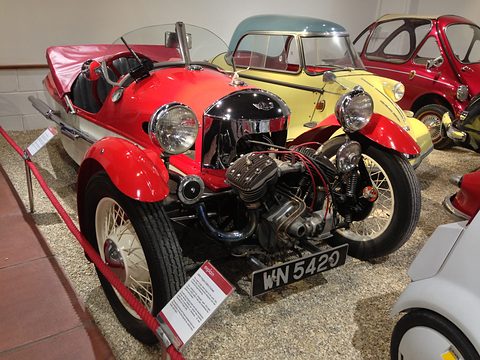
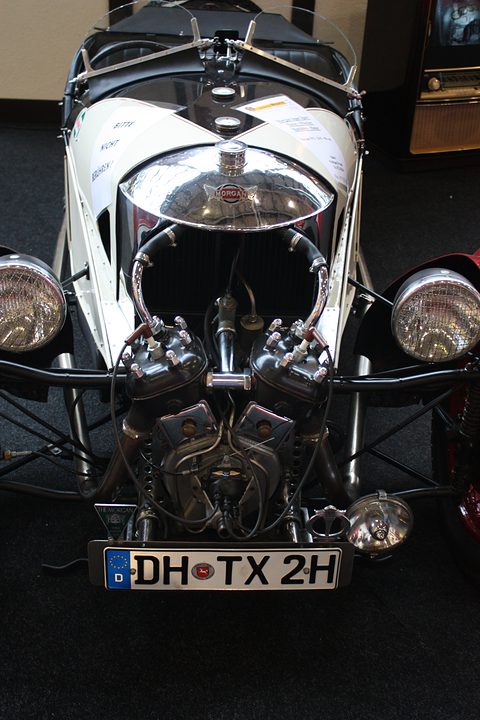
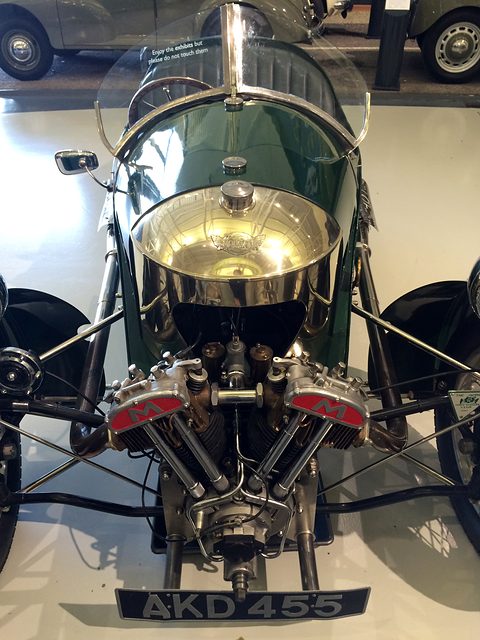
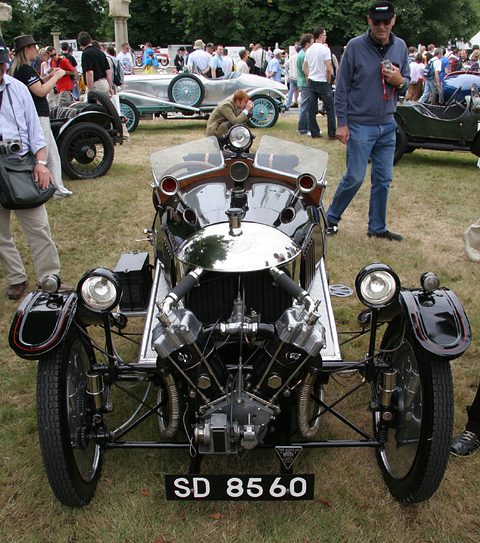
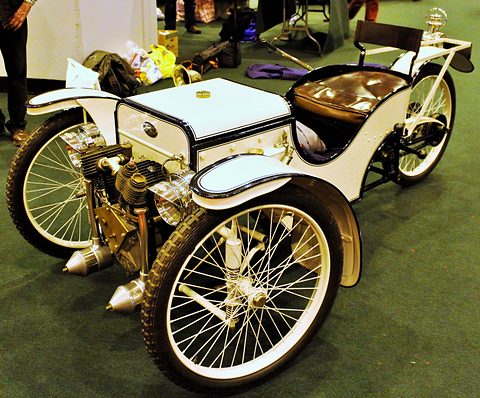
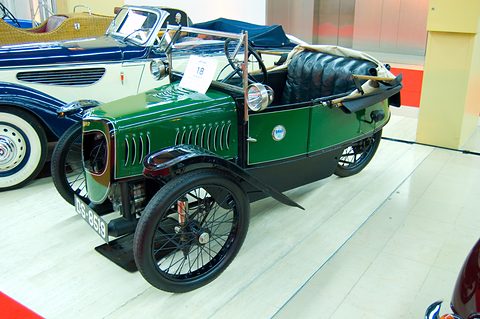
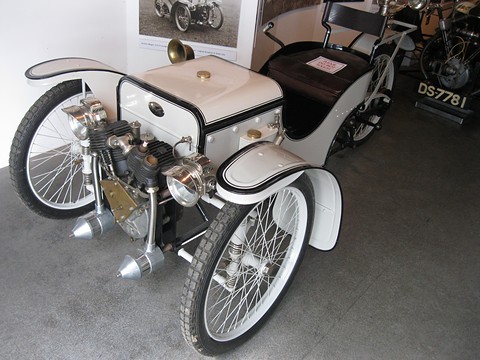
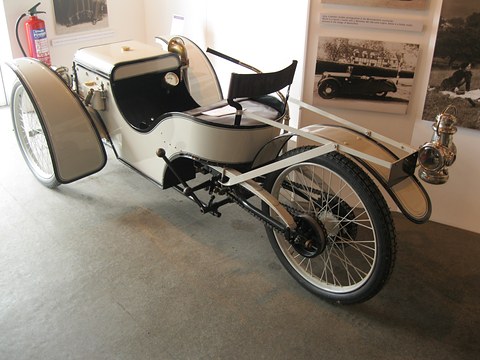
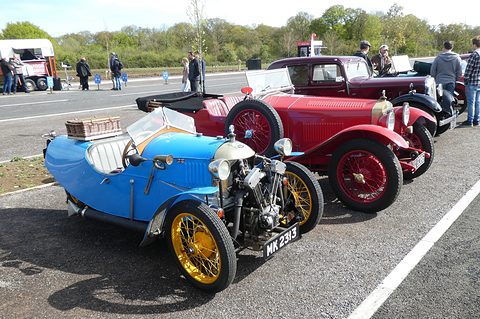
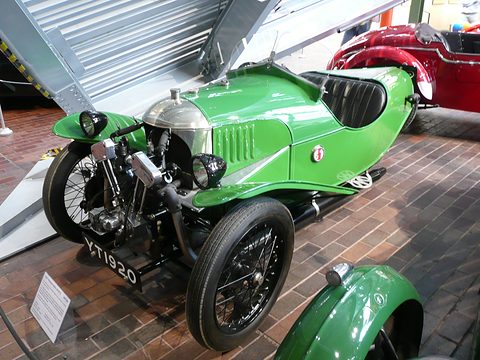
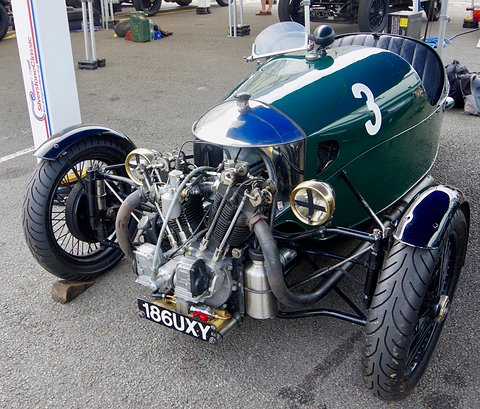
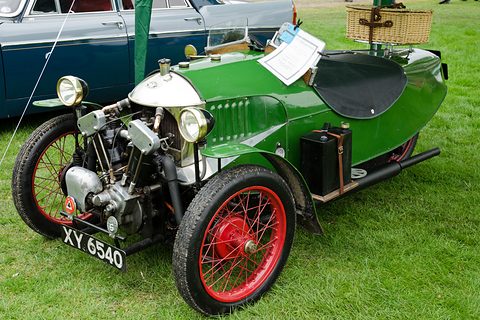
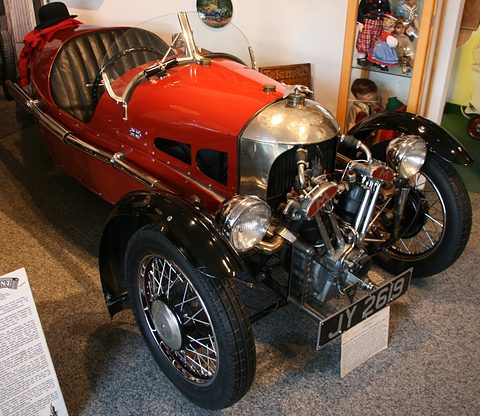
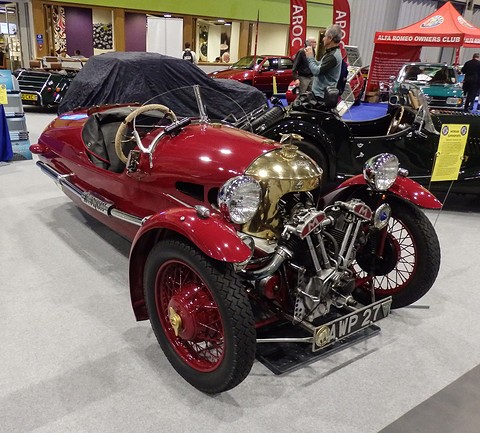
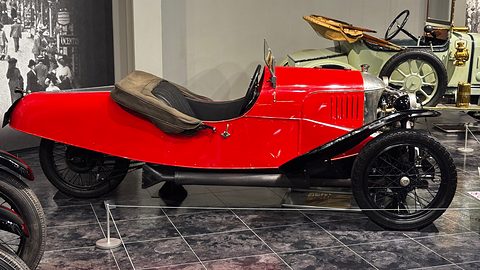
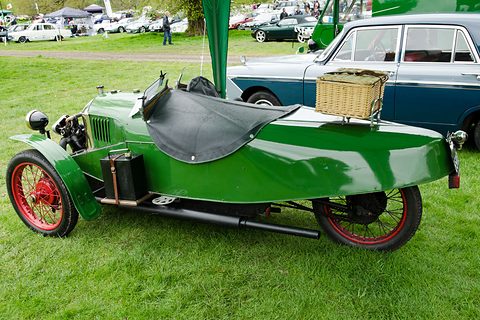
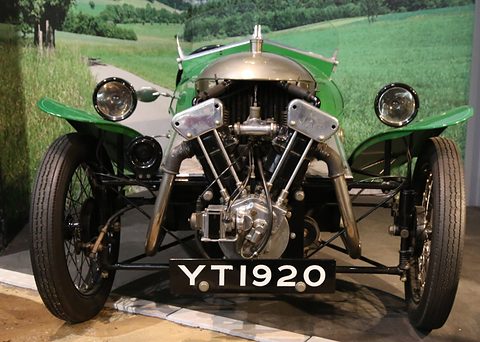
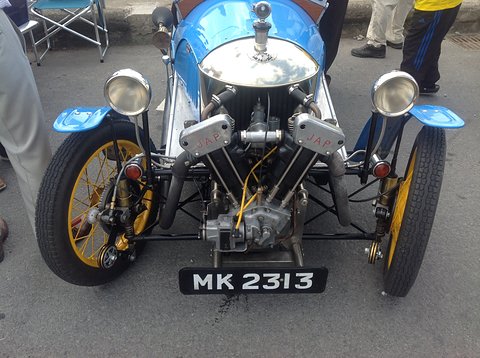
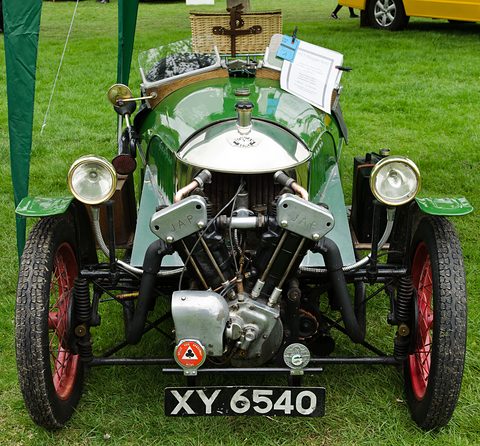
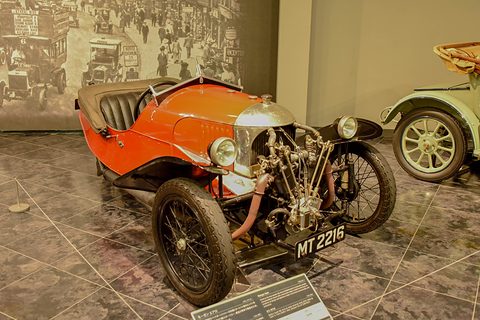
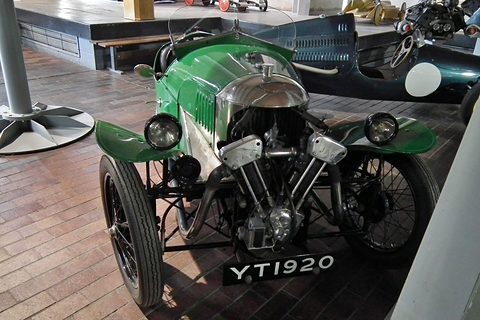
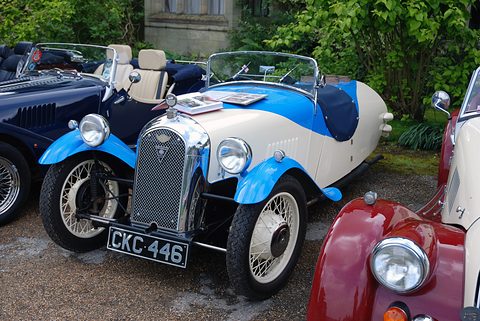
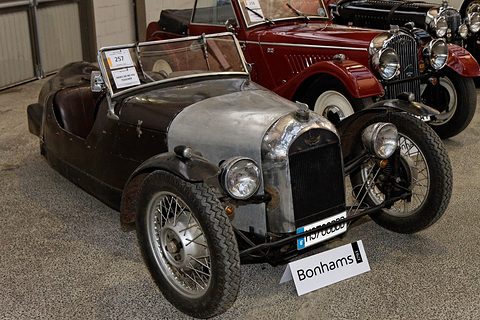
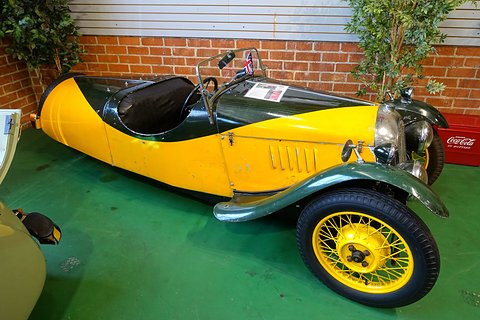
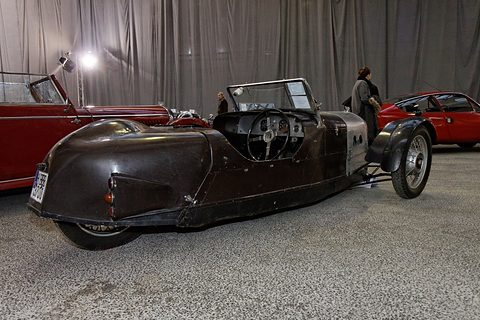
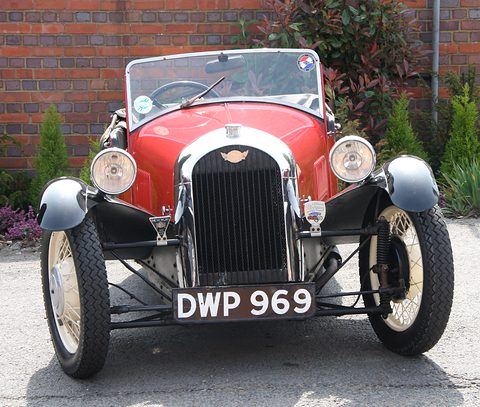
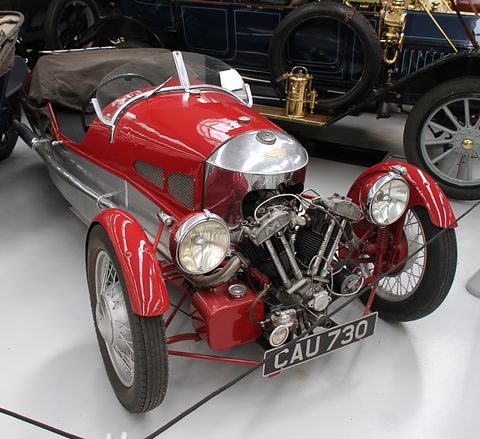
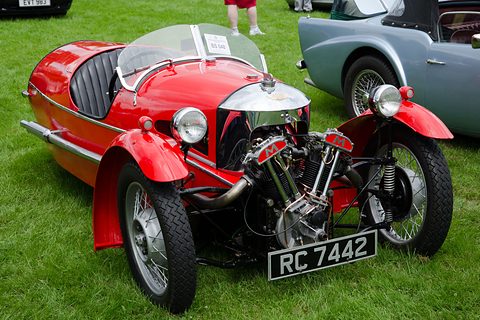
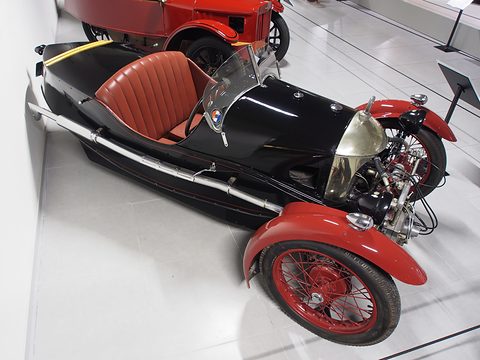
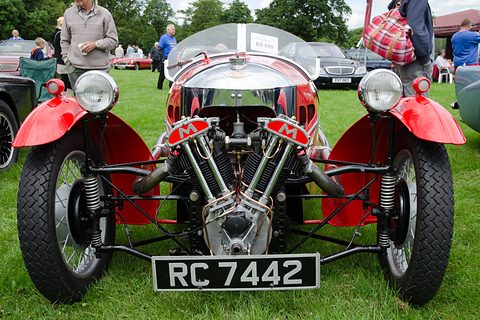
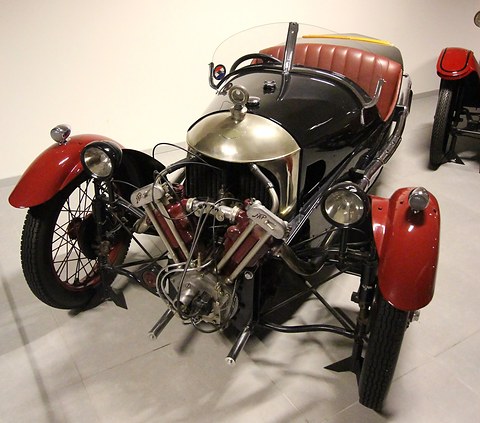
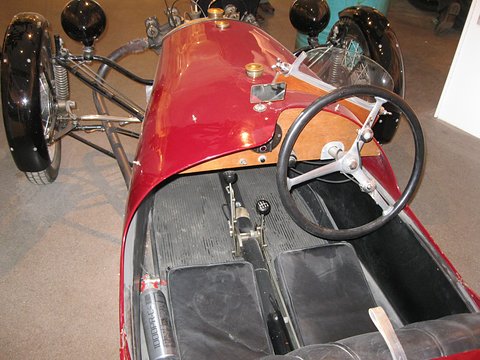
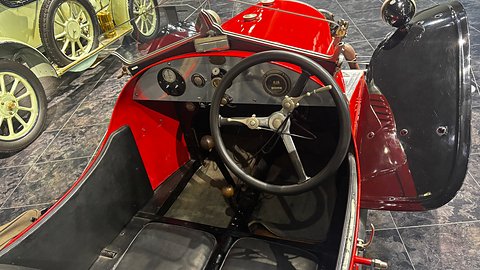
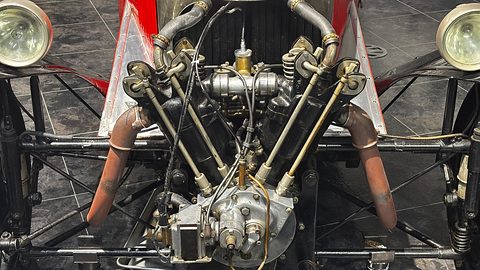
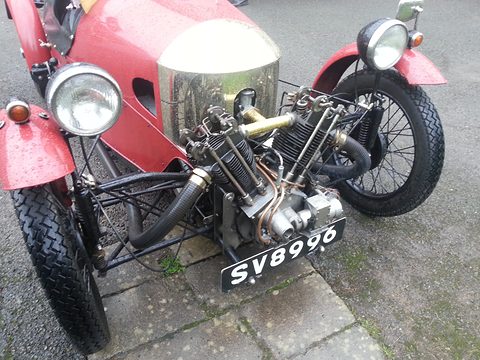
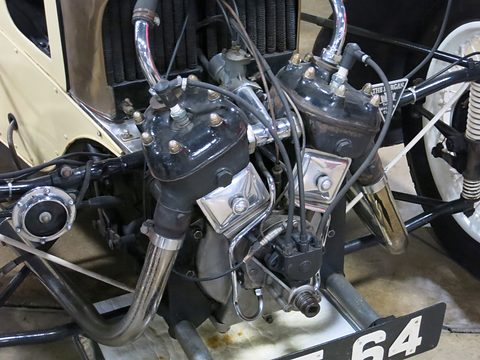
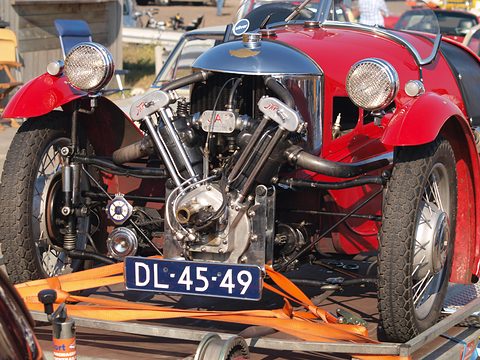
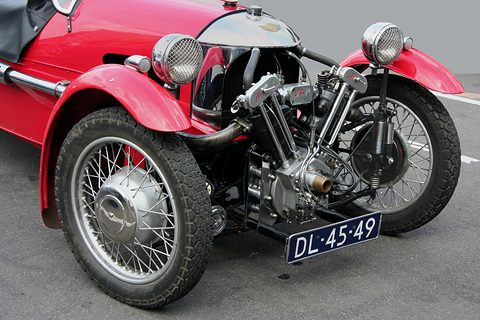
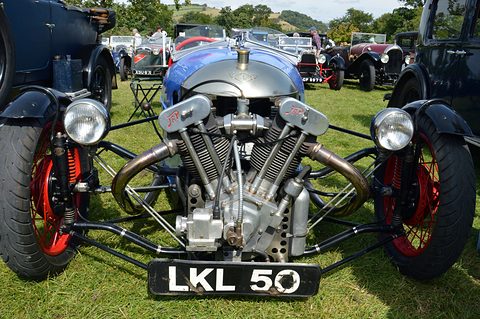
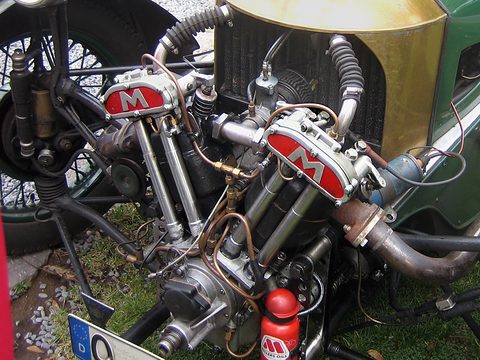
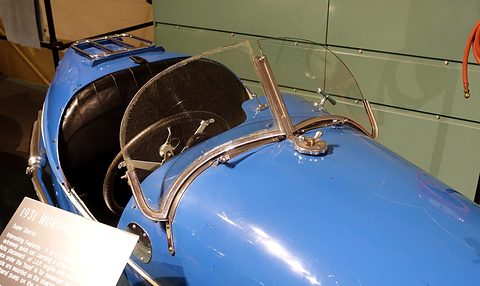
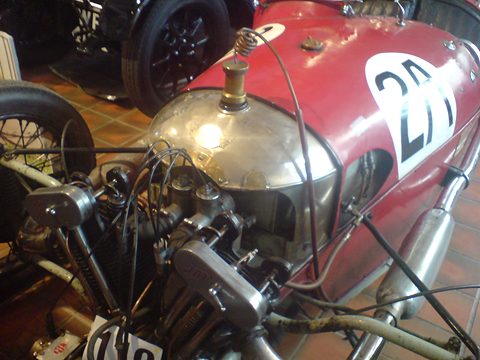
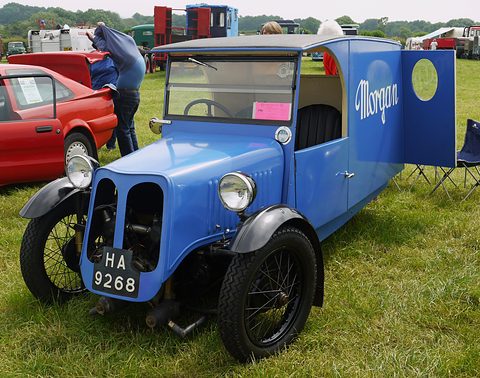
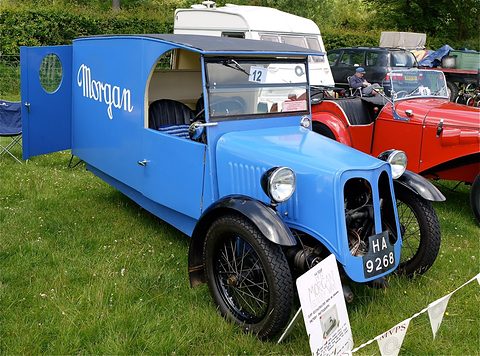
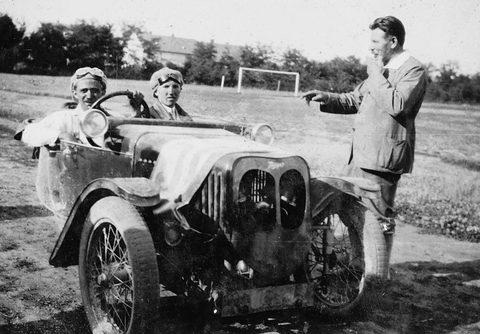
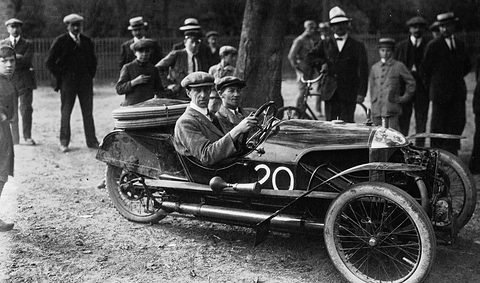
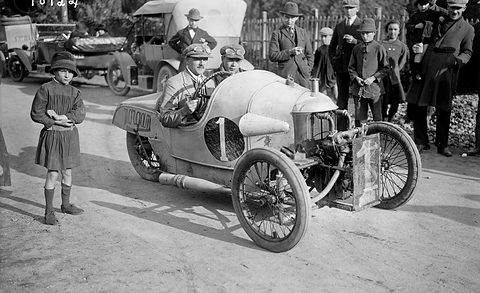
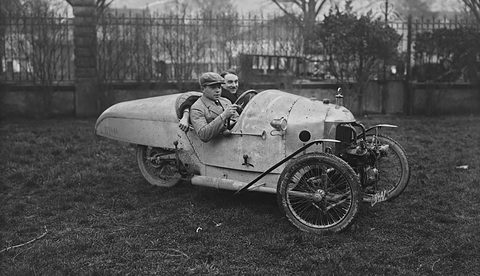
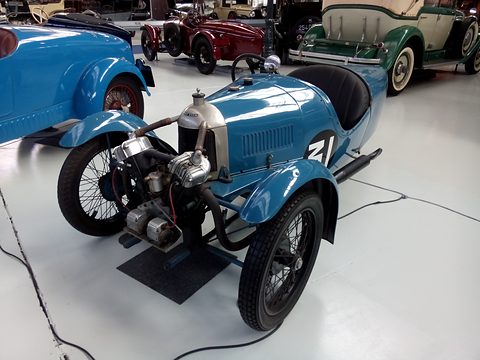
In 1909 he took a 7 hp Peugeot V-twin, bought for a motorcycle he never built, and put it in a three-wheeled tubular chassis of his own design. Most of the machining was done in the workshops of Malvern College, through its engineering master, William Stephenson-Peach.source 3source 1 The engine sat at the very front, ahead of the front wheels, with its cylinders in the air stream; a propeller shaft ran inside a central backbone tube to a bevel box, and chains drove the single rear wheel.source 3source 1source 4 There were two speeds, chosen by dog clutches on two chains, and no reverse: a Morgan was light enough to push, and it stayed without one until 1931.source 1source 5source 4 The front wheels were sprung independently on sliding pillars, Morgan’s patent and still used on the four-wheeled Morgans of 2012.source 1source 4 It was not the first car with sliding pillars, though: Boddy notes that the Sizaire-Naudin had used them from 1905.source 1
I drove the machine, which I called the Morgan Runabout, in 1909. It was most successful, due to its rigid frame, independent front-wheel suspension and light weight.
From one car to a company
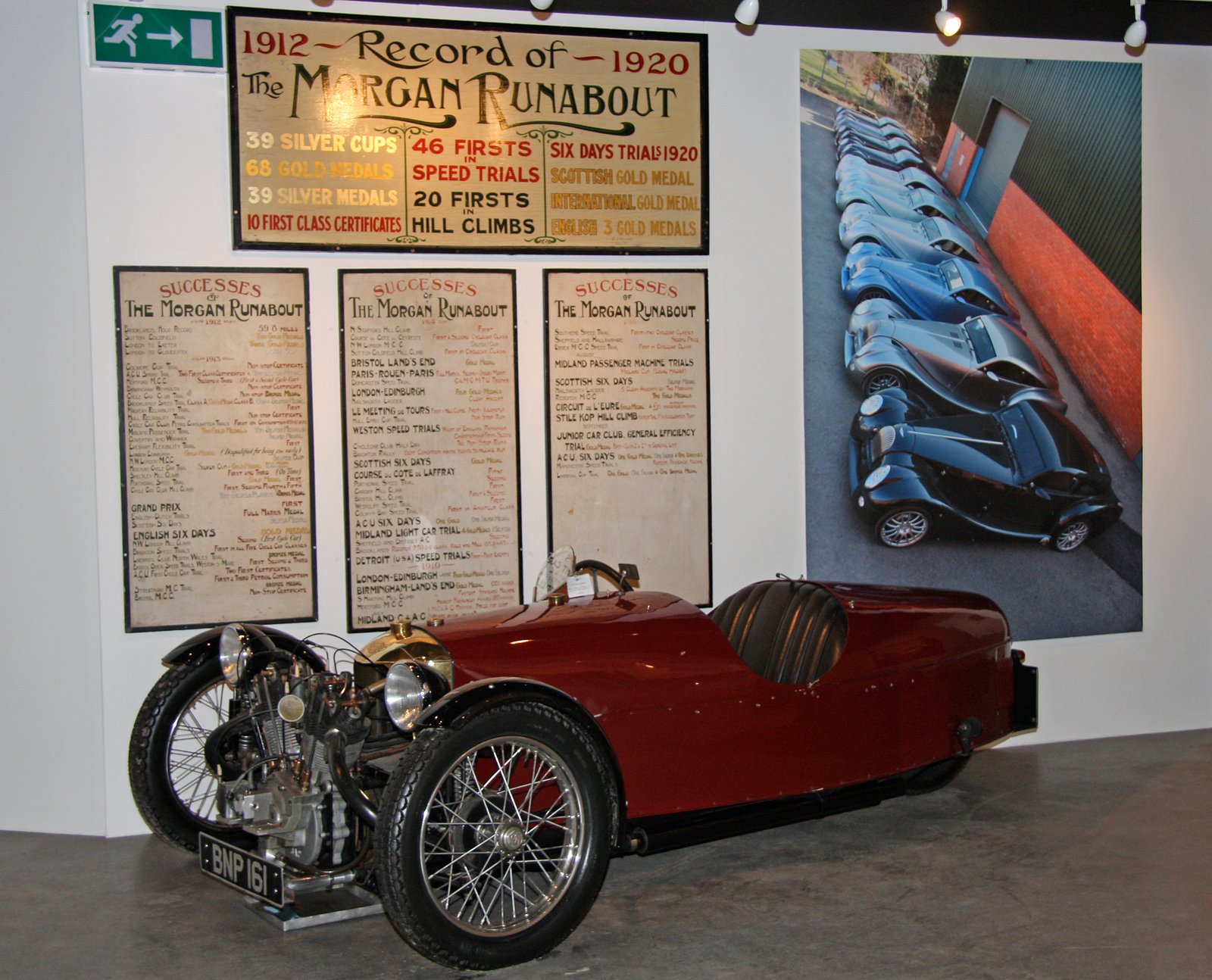
His father put up the money for machine tools, the garage was enlarged, and manufacture began in 1910. The drawings for the first patent were made by a young articled clerk at the patent agents, John Black, later Sir John Black of Standard.source 3source 1 Single-seat Runabouts, with a JAP twin or a JAP single and tiller steering, went to the Olympia show, in 1911 by Morgan’s own memory and in 1910 by Boddy’s, and brought about 30 orders.source 3source 1 Just after the show Morgan won a gold medal in the London–Exeter trial.source 3source 1
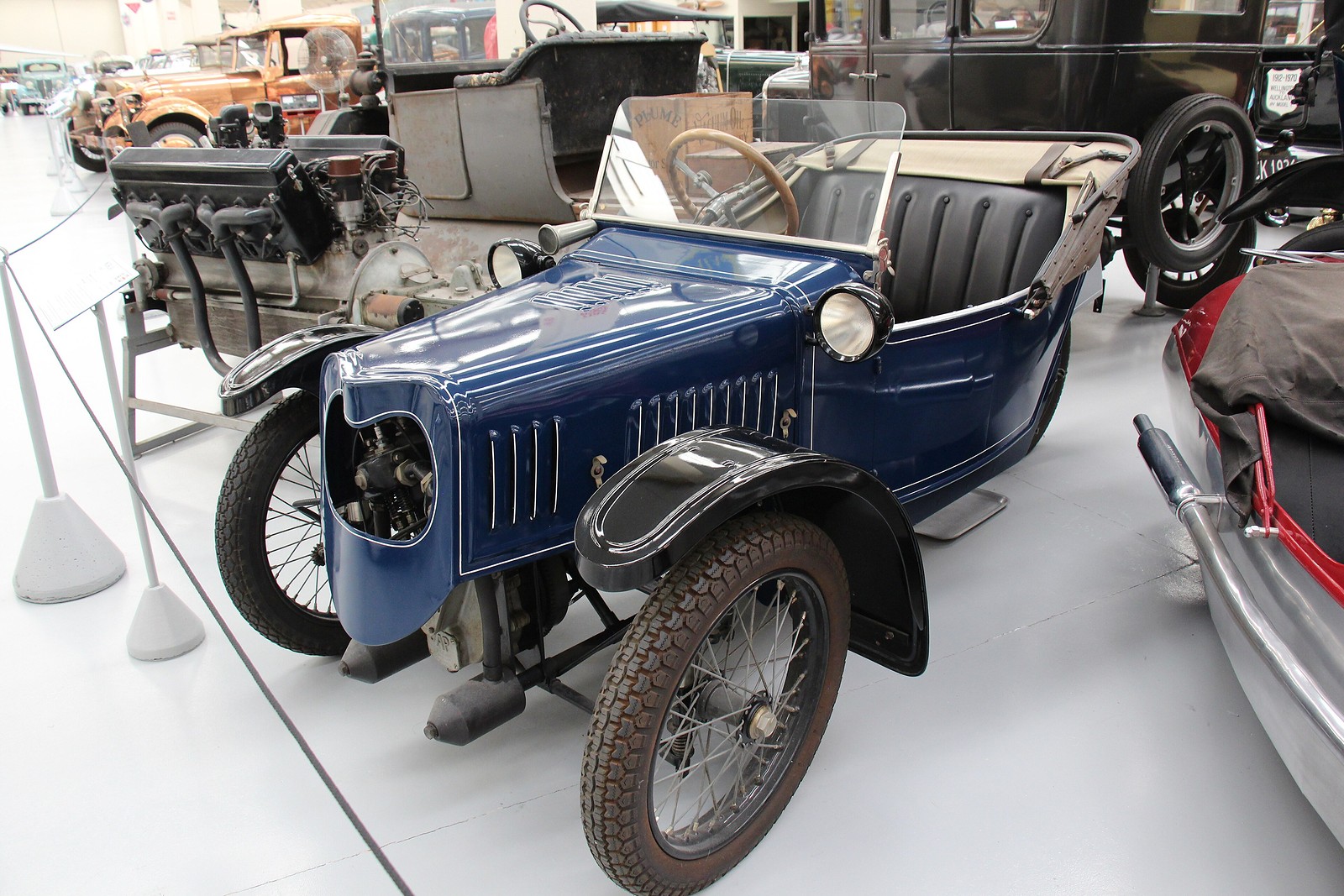
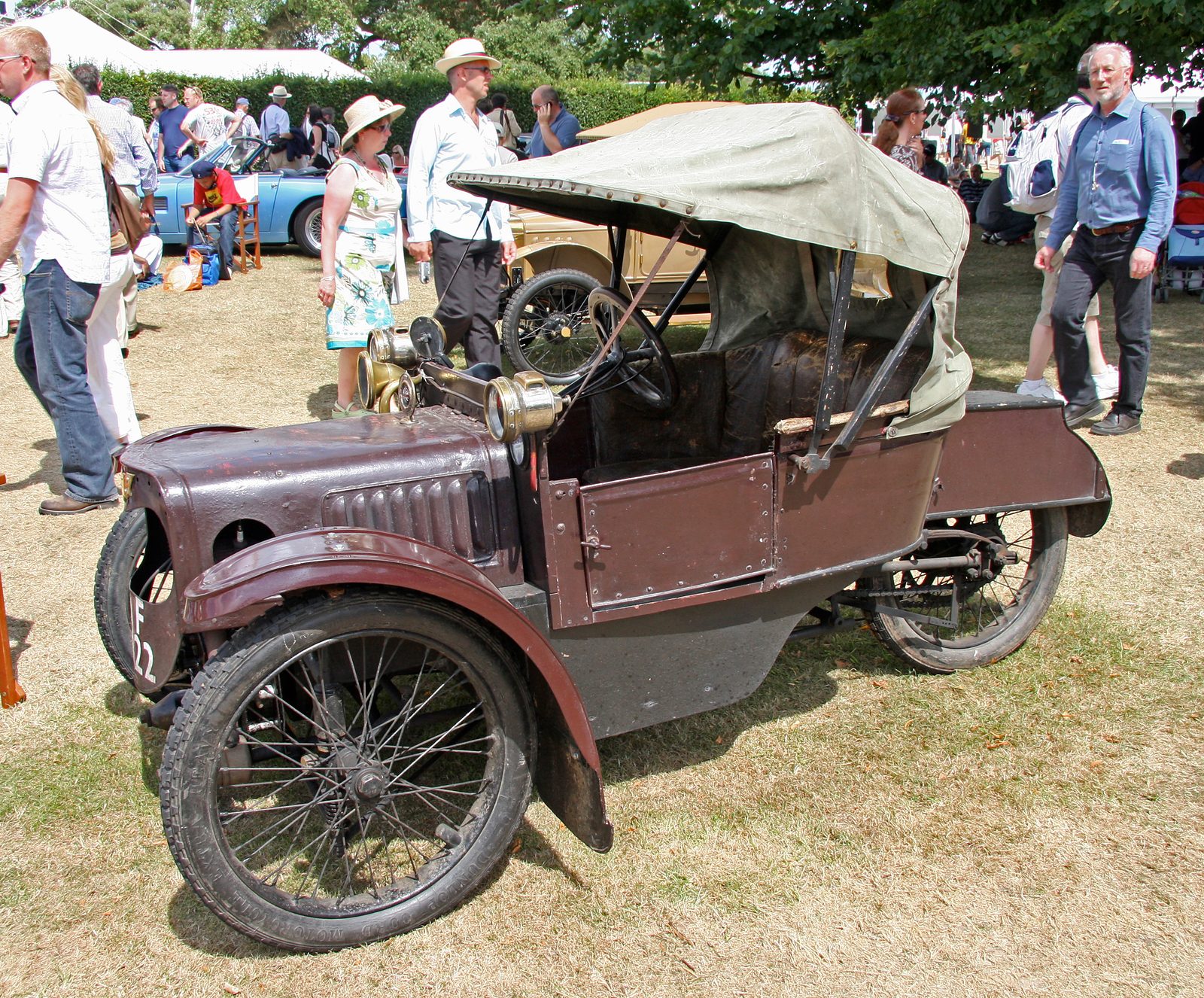
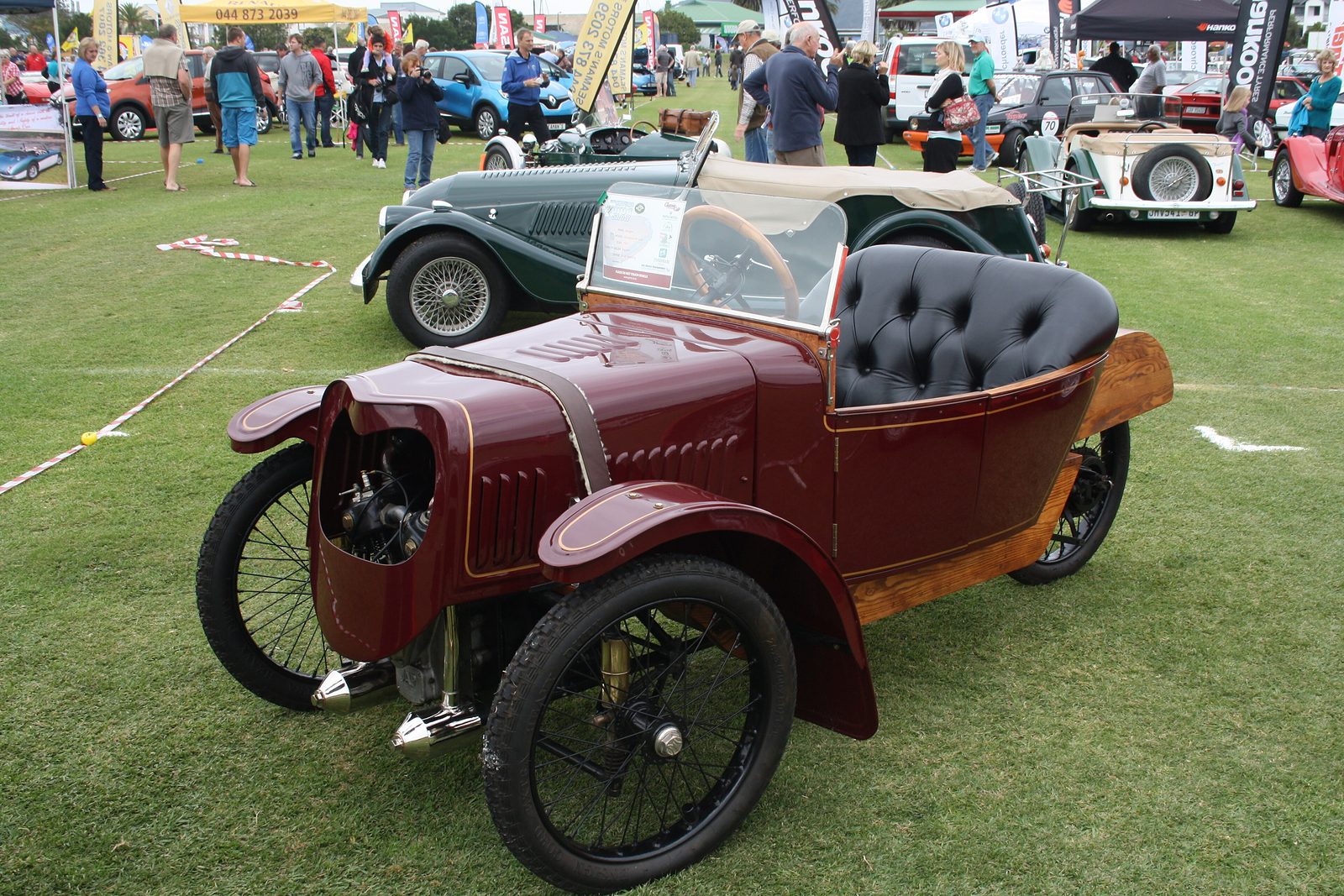
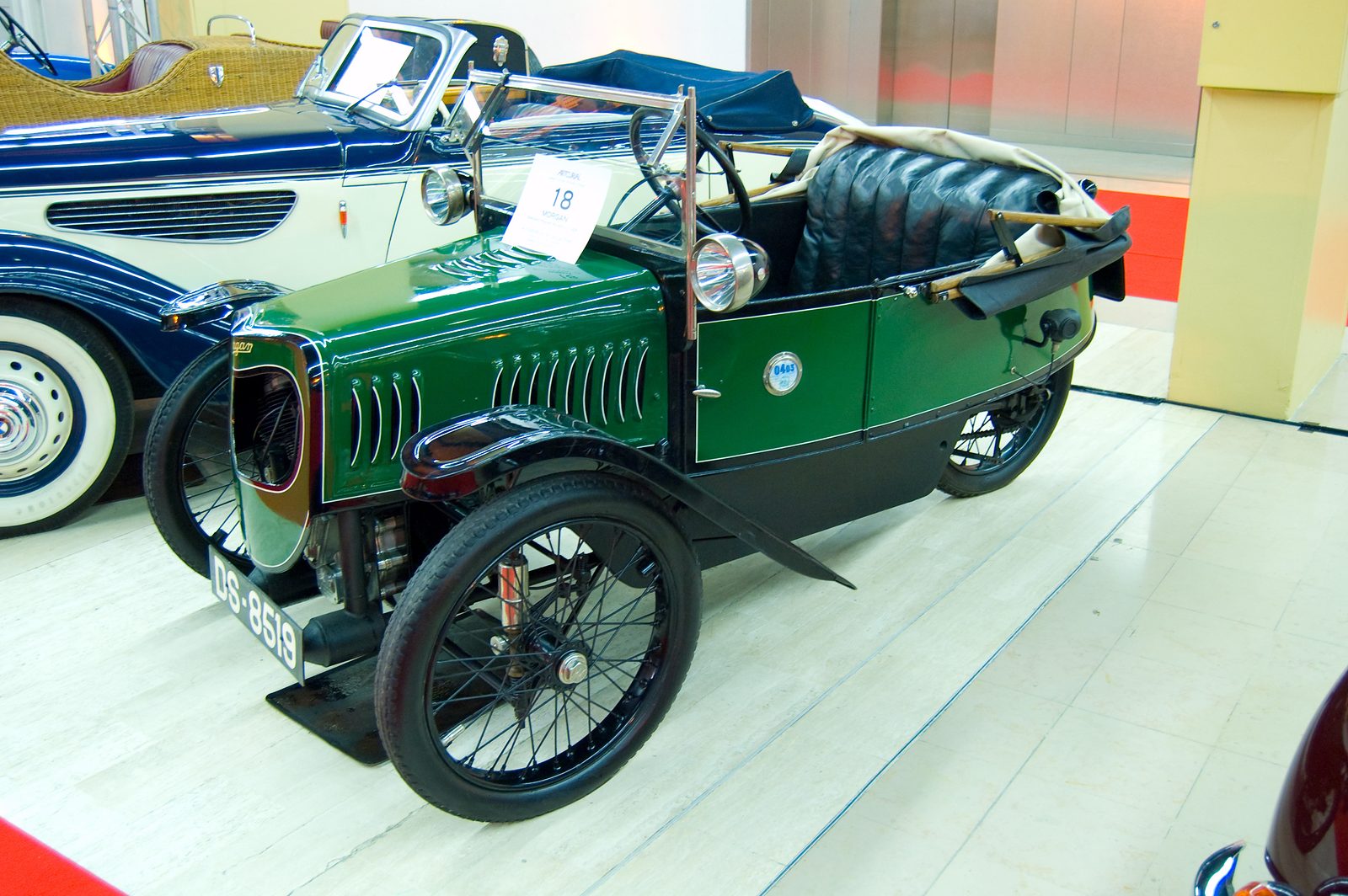
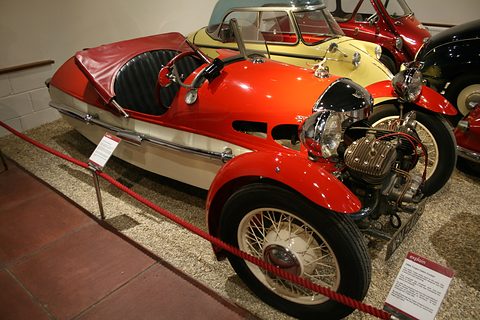
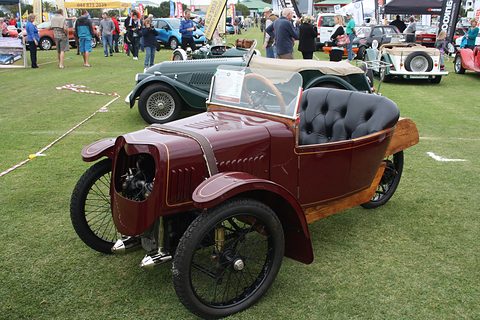
The car that made the business was a two-seater with wheel steering, developed in 1911–12. One was lent to W. G. McMinnies of Motor Cycling, whose “very enthusiastic” report, Morgan recalled, was the first press road test of a Morgan.source 3source 1 In 1912 the Morgan Motor Co. Ltd was formed, the father as chairman and the son as managing director. Orders at that year’s show outran what the works could make; large makers declined to build the car, so Morgan built new workshops, paid for partly with customers’ deposits, and gave up the garage trade.source 3source 1 The two-seater on Stand 18 had an 8 hp air-cooled JAP of 85 × 85 mm, weighed 152 kg (3 cwt) as quoted, and cost 85 guineas.source 1
Amiens, 13 July 1913
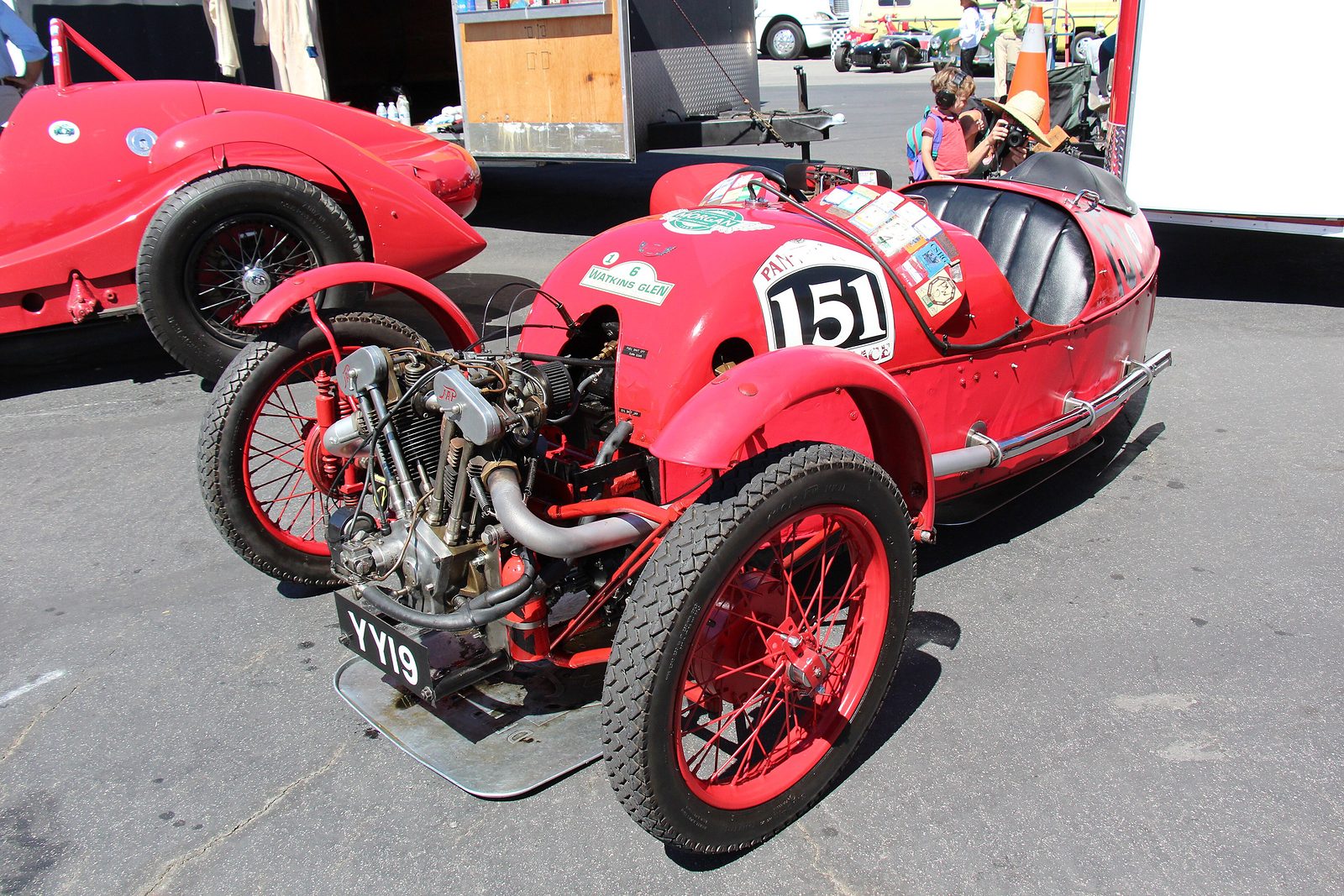
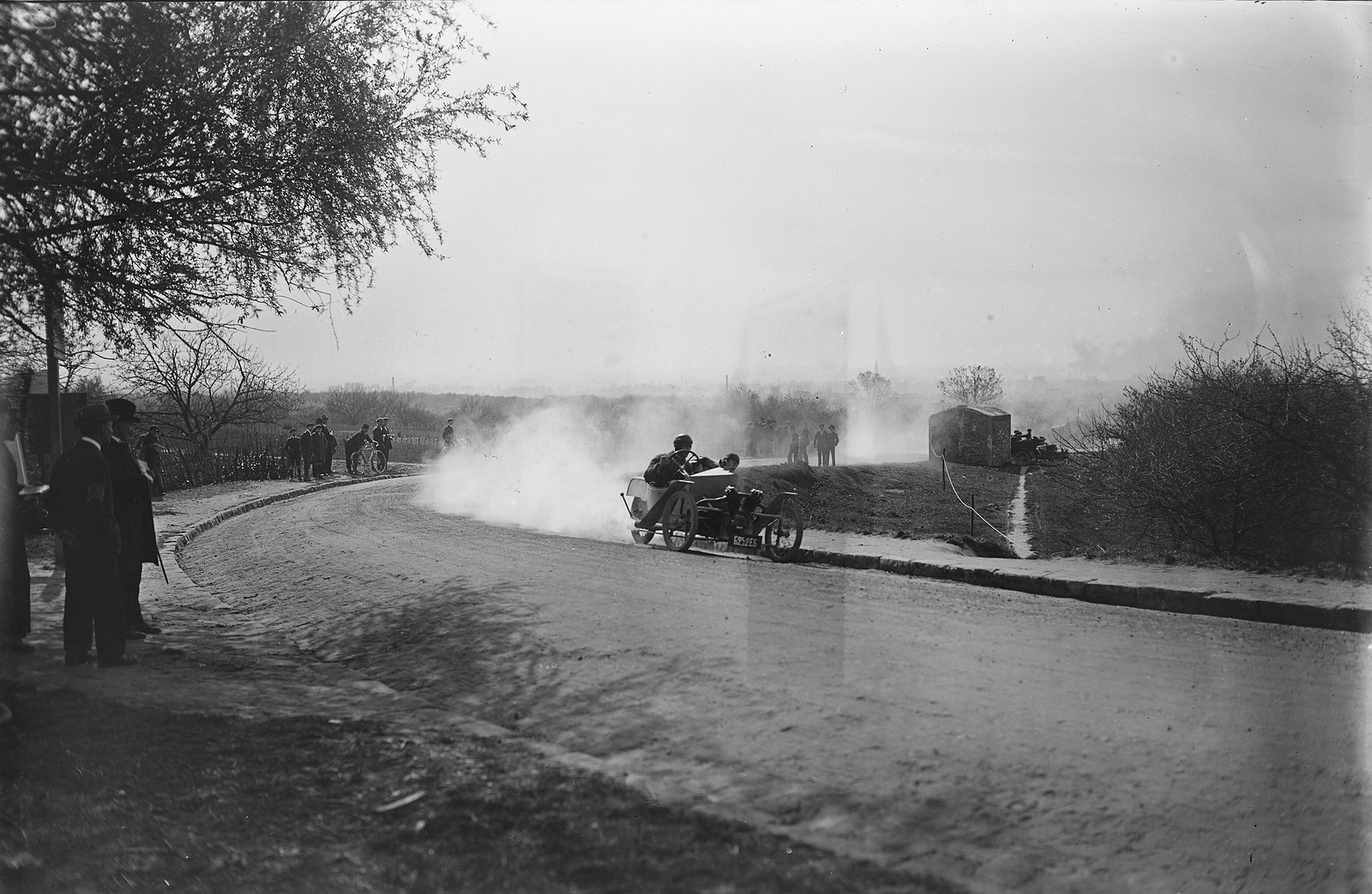
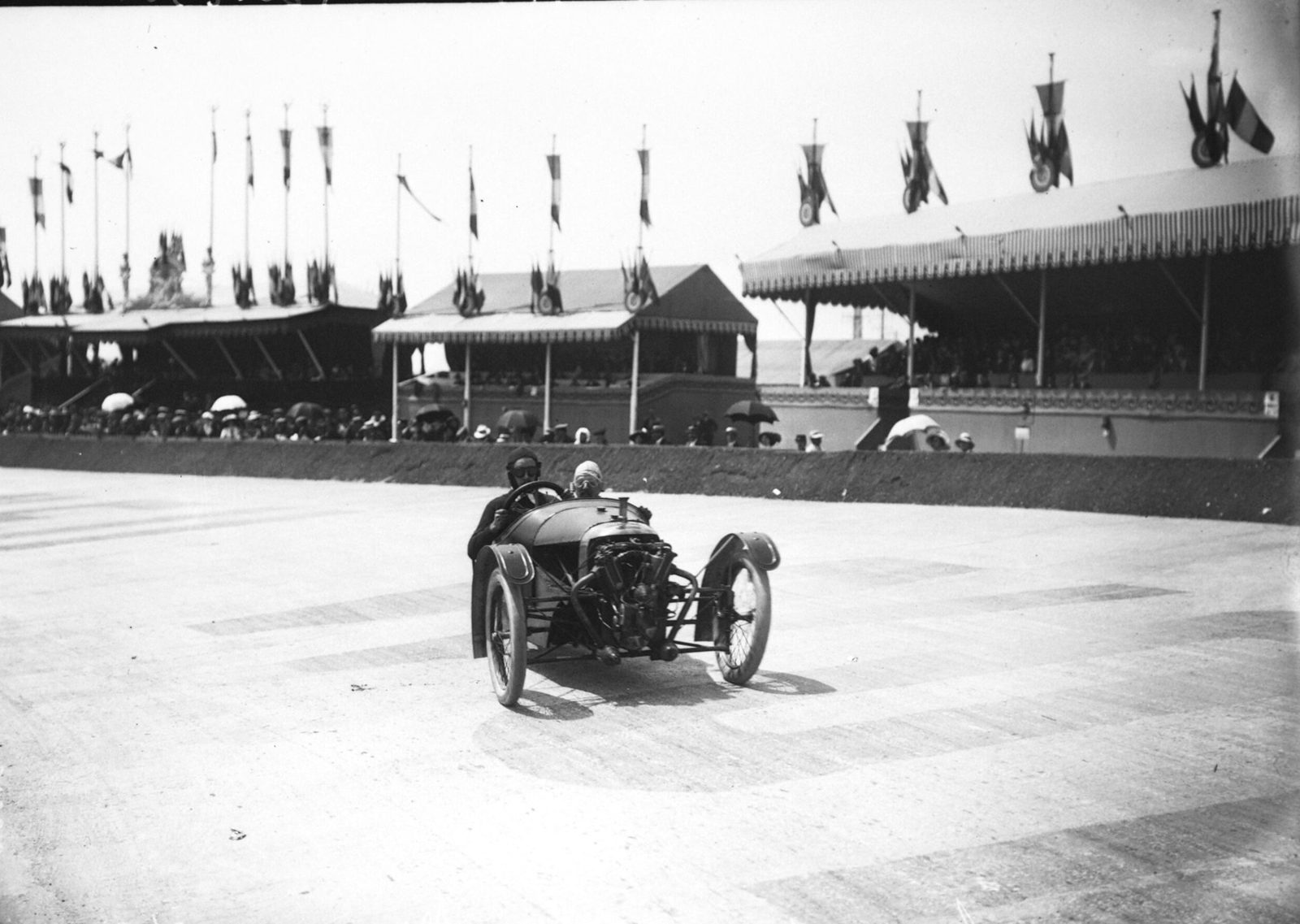
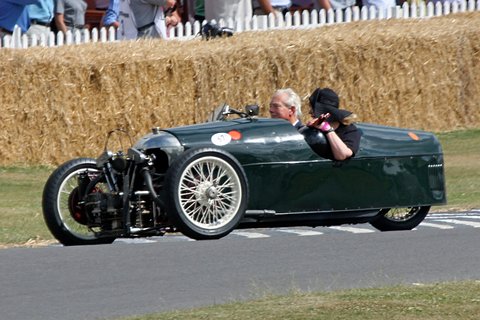
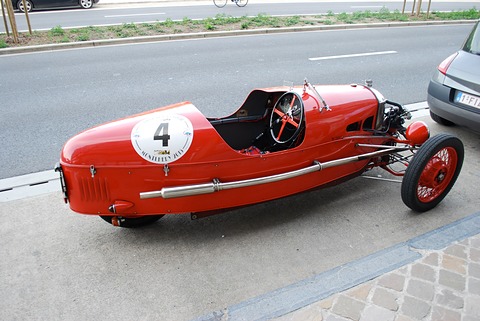
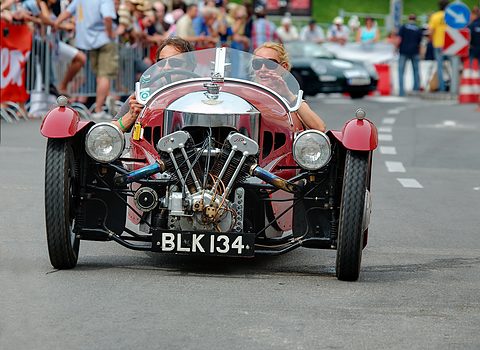
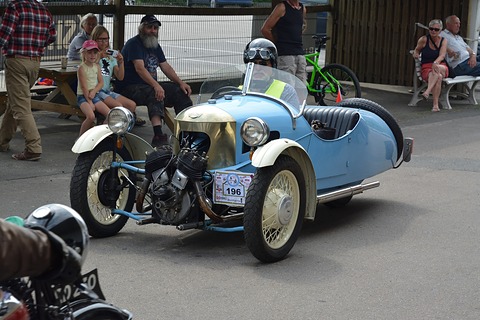
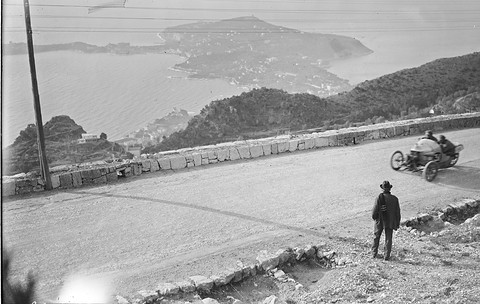
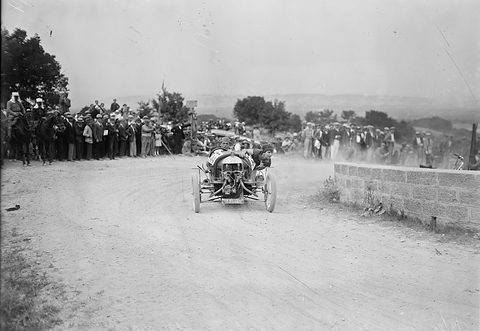
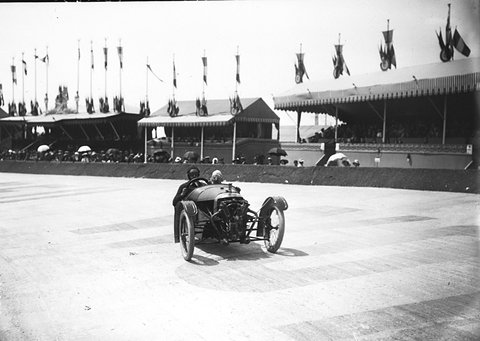
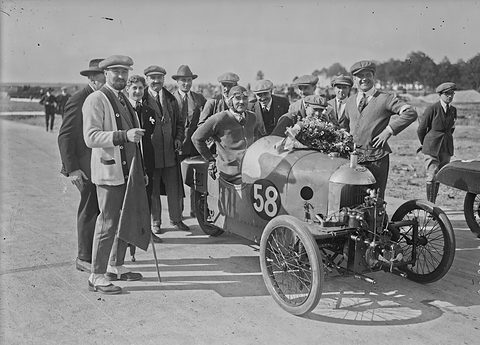
Brooklands was full of Morgans by then. Harry Martin won the first cyclecar scratch race there in 1912, at 92.2 km/h (57.31 mph), and Morgan himself won the 1,100 cc Passenger Hour race before his record.source 2 For the first Cyclecar Grand Prix, at Amiens, the works built racers with a chassis 279 mm (11 in) longer, low seats and overhead-valve JAP engines.source 3source 1 The course was 15 laps of a 17.48 km (10.86-mile) circuit through Boves, 262.2 km (162.9 miles), and the race was run on the roads the big cars had used the day before.source 6source 7 Morgan’s own car broke a piston and Rex Mundy’s front wheel collapsed on the first lap. McMinnies, with Frank Thomas, who had prepared the car, beside him, made the fastest first lap, 13 min 53 s, then lost time to a punctured front tyre and a broken truss rod, and still finished first, in 3 h 53 min 9 s, at about 67 km/h (42 mph). Bourbeau’s Bédélia came in 2 min 45 s later.source 6
One of these was bought by Mr. Mc.Minnies, who ran it in the Cyclecar Grand Prix at Amiens and won the race. It was a wonderful performance, as he had to change an inner tube of one of the front tyres during the event.
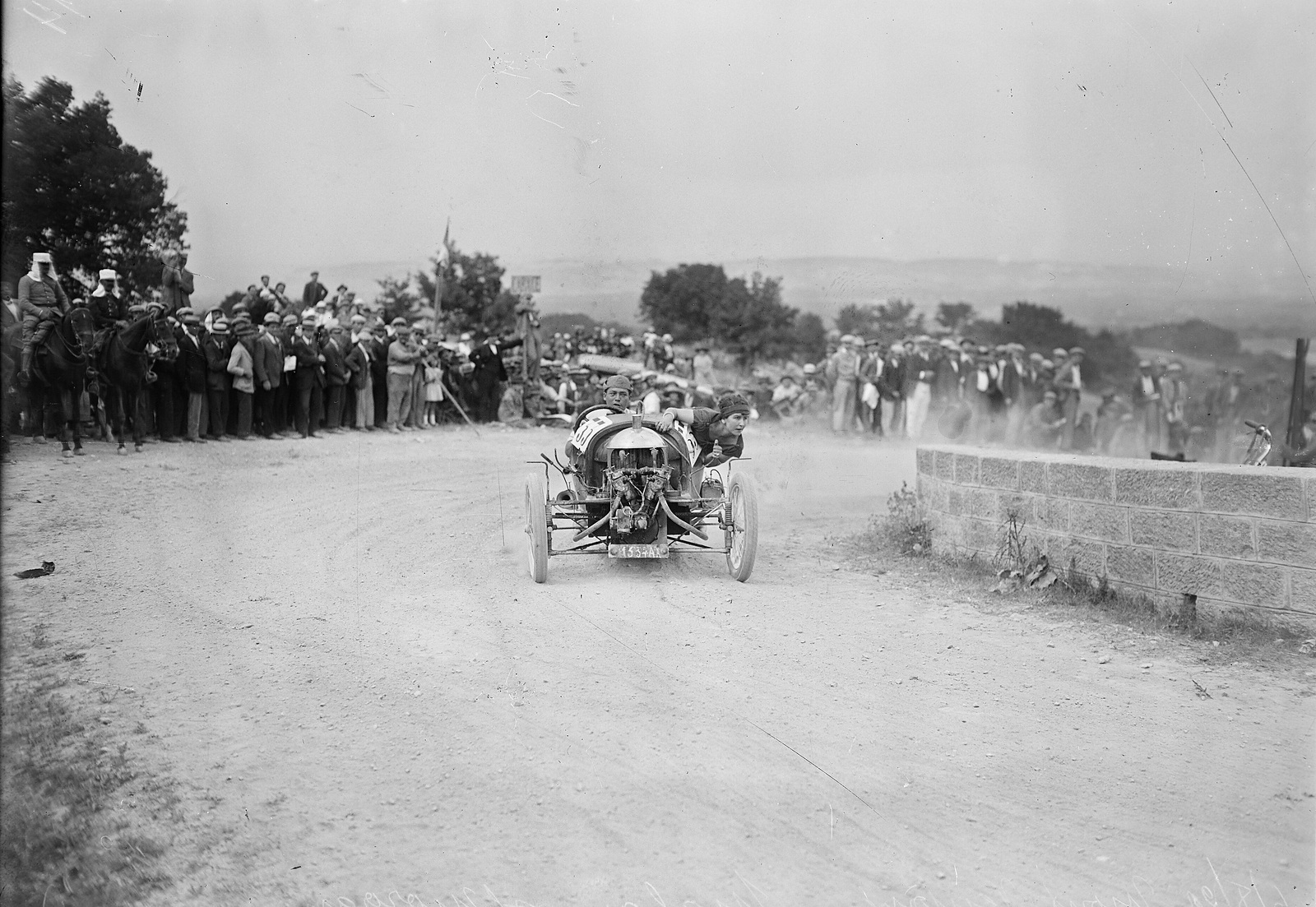
Who won has been argued ever since, and the answer is that both did. McMinnies’s Morgan made the fastest time and finished first, but the French rules classed three-wheelers as sidecars, so the cyclecar class went to Bourbeau’s Bédélia. The Morgan was never excluded; it simply ran in another division, one in which no sidecar finished.source 6source 1 The Cyclecar printed the official results with the Morgan first, and the crowd heard of “an English victory in the first French Cyclecar Grand Prix” and carried McMinnies shoulder-high.source 6 Its reporter liked the way the Morgan took the two turns into and out of the track “as if it were on rails”, with no acrobatics from the passenger.source 6
Mr. W. G. McMinnies … wins the “Sidecar” Class on the Morgan. No Sidecars finished. M. Bourbeau wins the Cyclecar Class on the novel Bedelia.
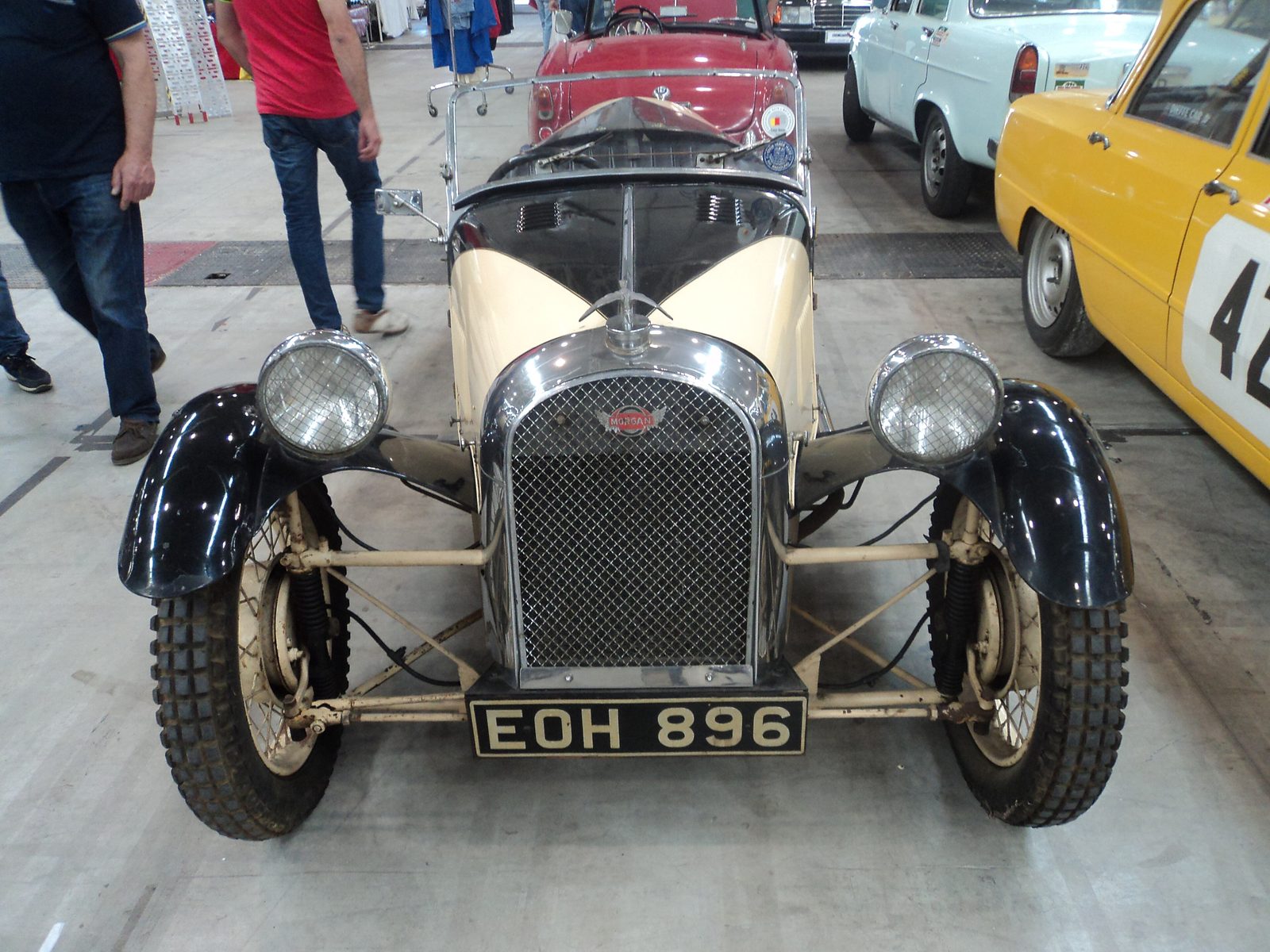
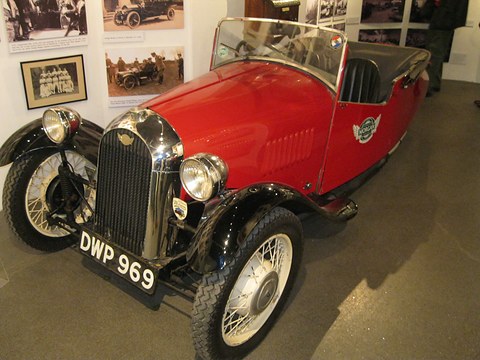
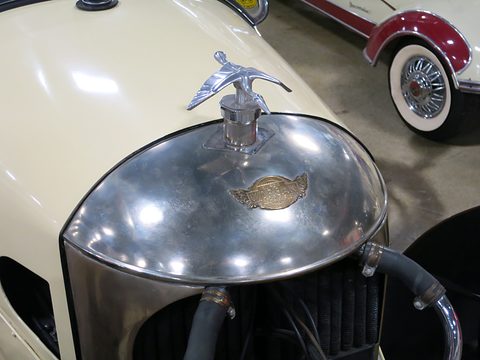
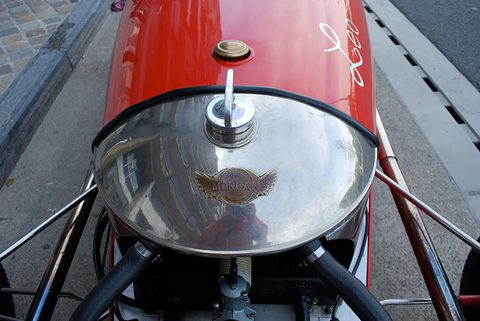
The race gave Morgan its Grand Prix model, a replica of the Amiens car and the first with Morgan’s domed radiator. The club dates it to 1913, Bonhams to 1914, and it was sold for many years.source 3source 5source 8 The same year R. D. Oliver’s 965 cc Morgan won the 1,100 cc class of the Cyclecar Club’s fuel economy contest, using 4.1 litres per 100 km (69.4 mpg).source 1
War, the Family and a new works
Through the First World War the works made mainly munitions. In 1915 Morgan built a four-seater for his own family, and it became the Family model, announced in 1917 by one account.source 3source 1source 4 Two wartime holders of the Victoria Cross drove Morgans: Captain Albert Ball, in a water-cooled MAG model with disc wheels, and the Lieutenant Robinson “who shot down a German zeppelin”, presumably William Leefe Robinson.source 1source 5 In 1918 the Sporting model cost £130, and the De Luxe £135, “which meant with a door!”, as Boddy put it; cars were sold only against priority certificates from the Ministry of Munitions.source 1 About 1919 Morgan fell into a lathe and lost two fingers of his right hand.source 1
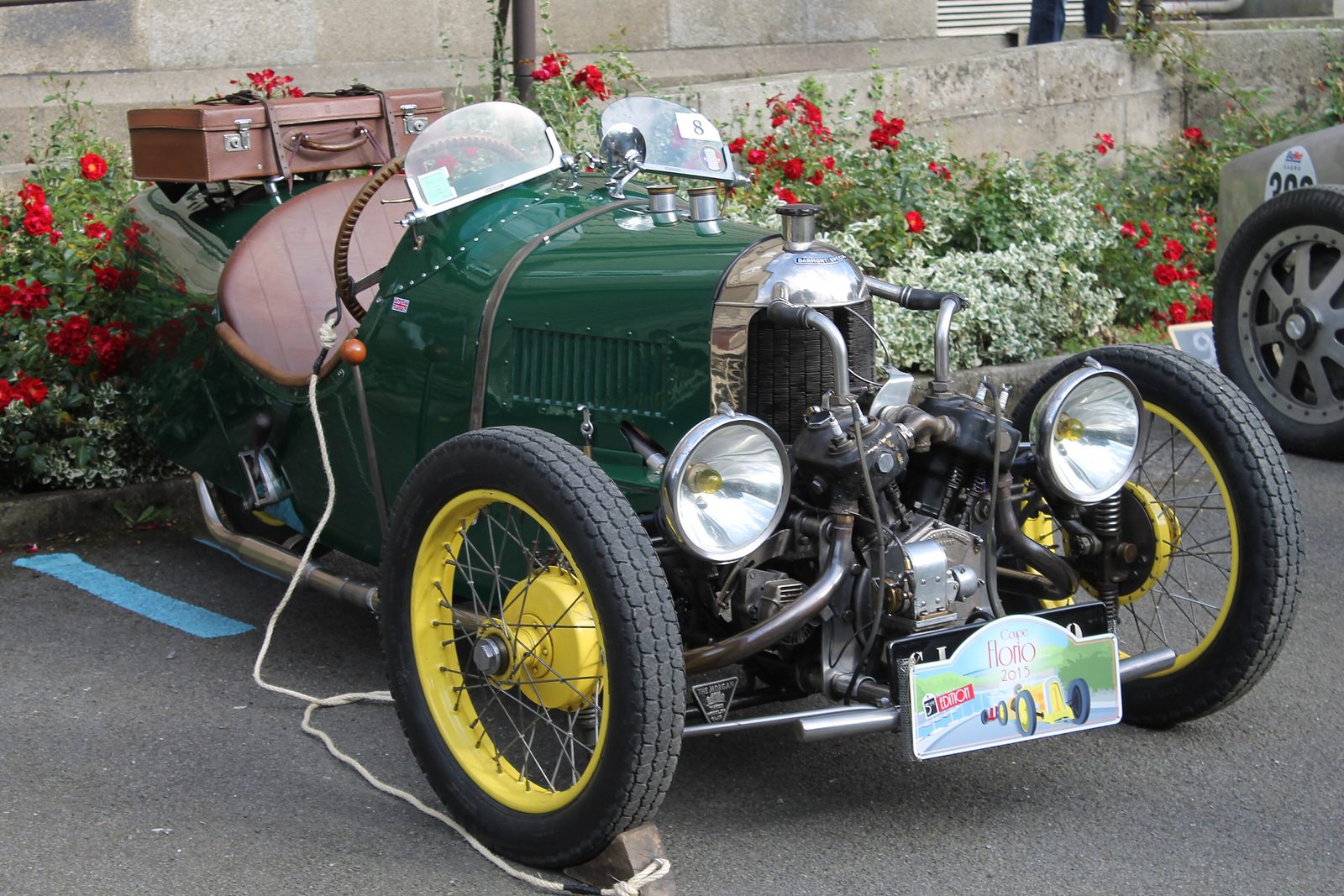
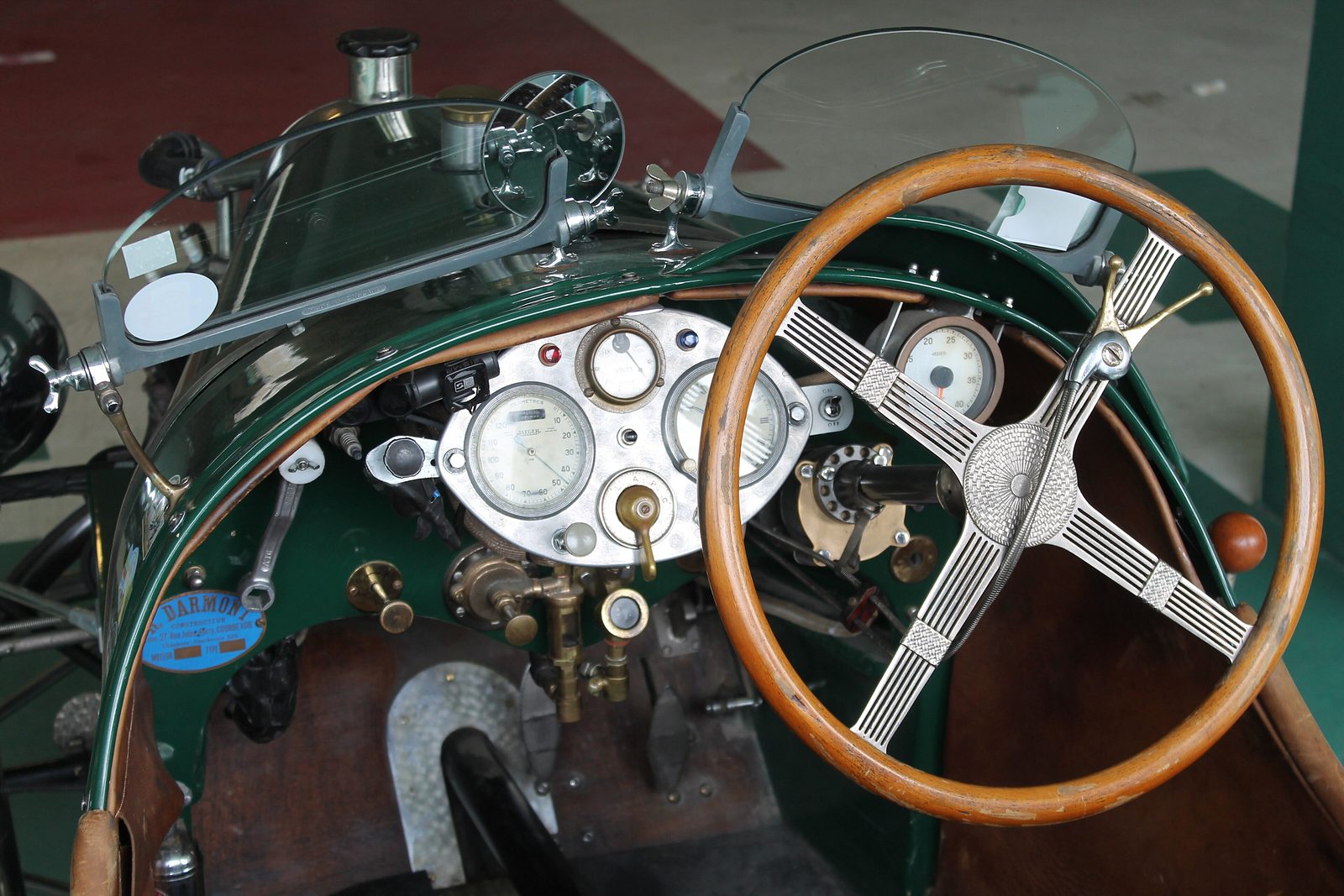
On 16 October 1919 new works opened on Pickersleigh Road, Malvern Link, aiming at 40 to 50 cars a week.source 1source 9 In 1920, short of engines, the factory still built about 20 a week, and by the Olympia show 30; a press cutting of 1921 spoke of “close on 129 machines per month”.source 1 The advertisements of 1921 promised that “The Private Owner can win on a Morgan”.source 1 Morgans were also in production in France by 1920, built at Courbevoie by Darmont and sold as Darmont-Morgans (more in built under licence).source 1source 10 JAP built Ware a special engine for the French cyclecar Grand Prix of 1920, and at Le Mans in 1921 four French-built Morgans supported him; only Stoffel’s finished, fifth and last.source 1
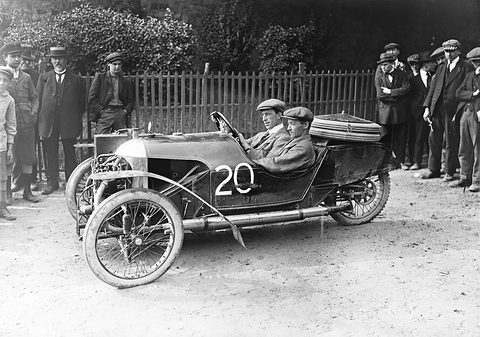
Four pounds a year
Britain’s tax law was on the Morgan’s side. As a tricycle it paid £4 a year in road tax, against £1 per horsepower for a car.source 1source 10 The price came down as the Austin Seven arrived: the Standard cost £150 in 1922, £128 in 1923, £100 in 1924, £95 in 1925, £89 in 1927 and £85 in 1928. In 1923, when the Morgan cost £128, the Seven cost £165.source 1 Readers of The Light Car & Cyclecar reported in 1924 that 9,656 km (6,000 miles) had cost £54 12s 3d in a Morgan, £65 14s in an Austin Seven and £68 15s 5d in a Rover 8, the Morgan using 5.6 litres per 100 km (50 mpg).source 1 The cheapest model, the Popular, was at first bodied in poplar; the club tells that the wood was soon given up “as the embedded shrapnel quickly wrecked the woodworking machinery”, a story it alone tells.source 5
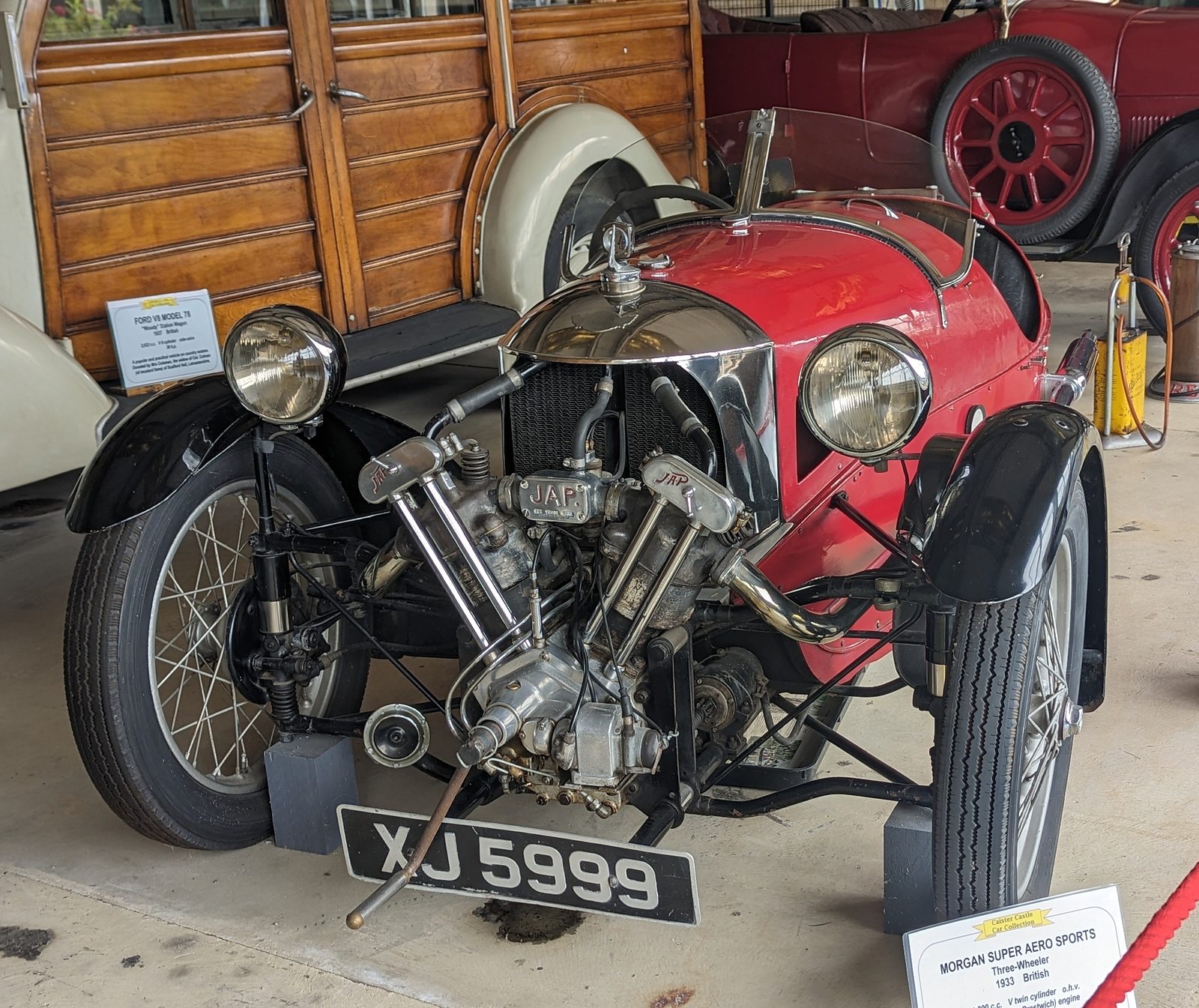
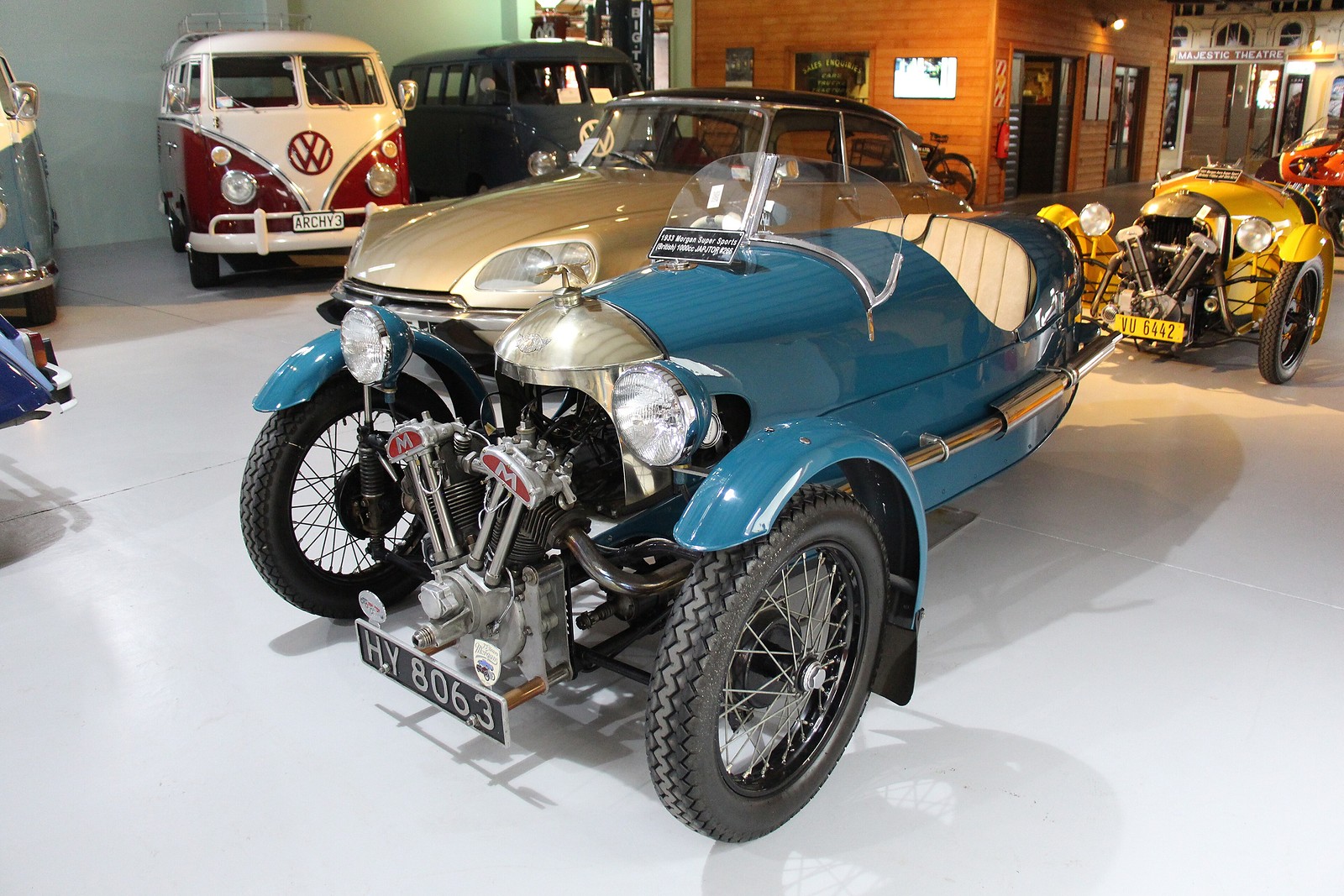
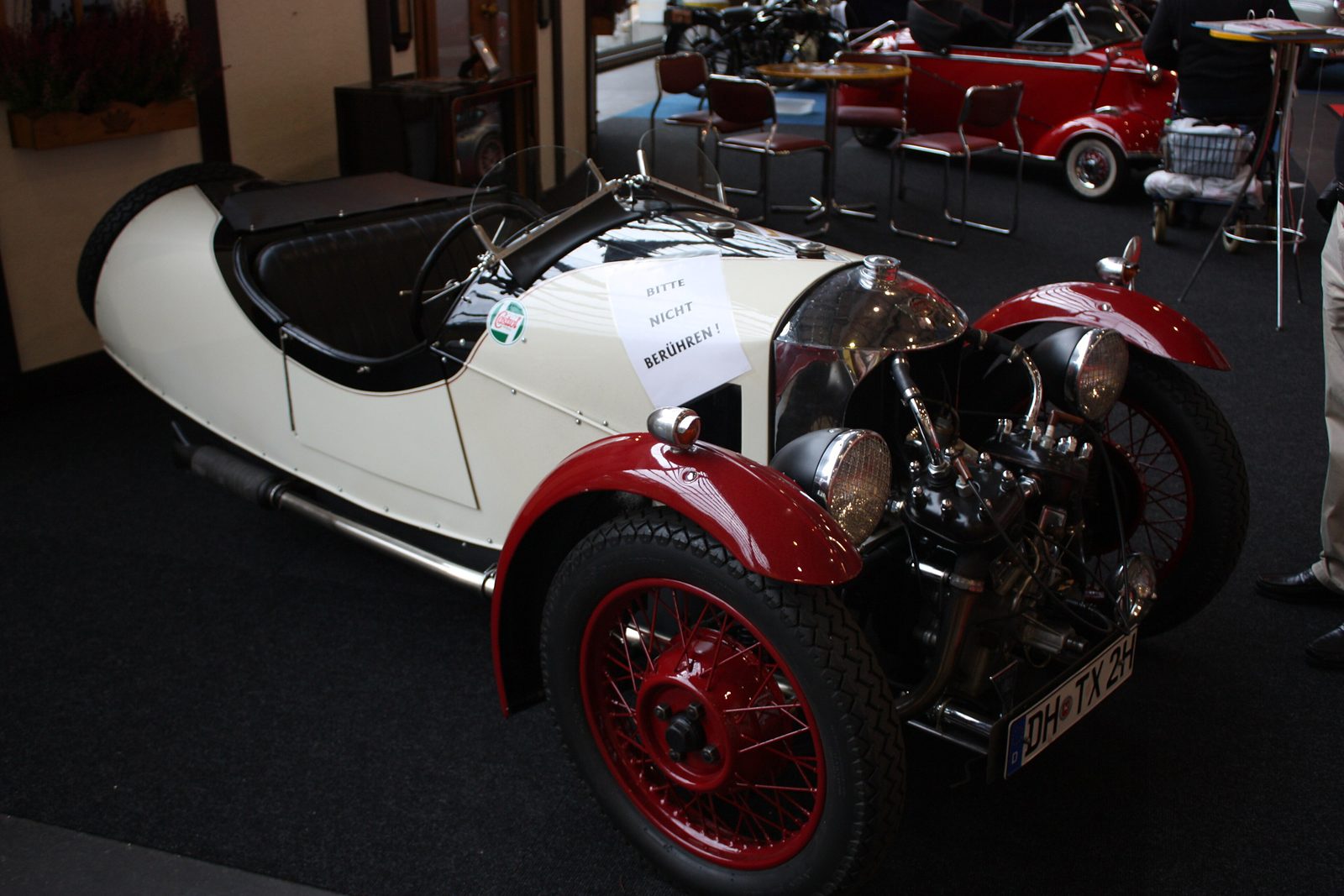
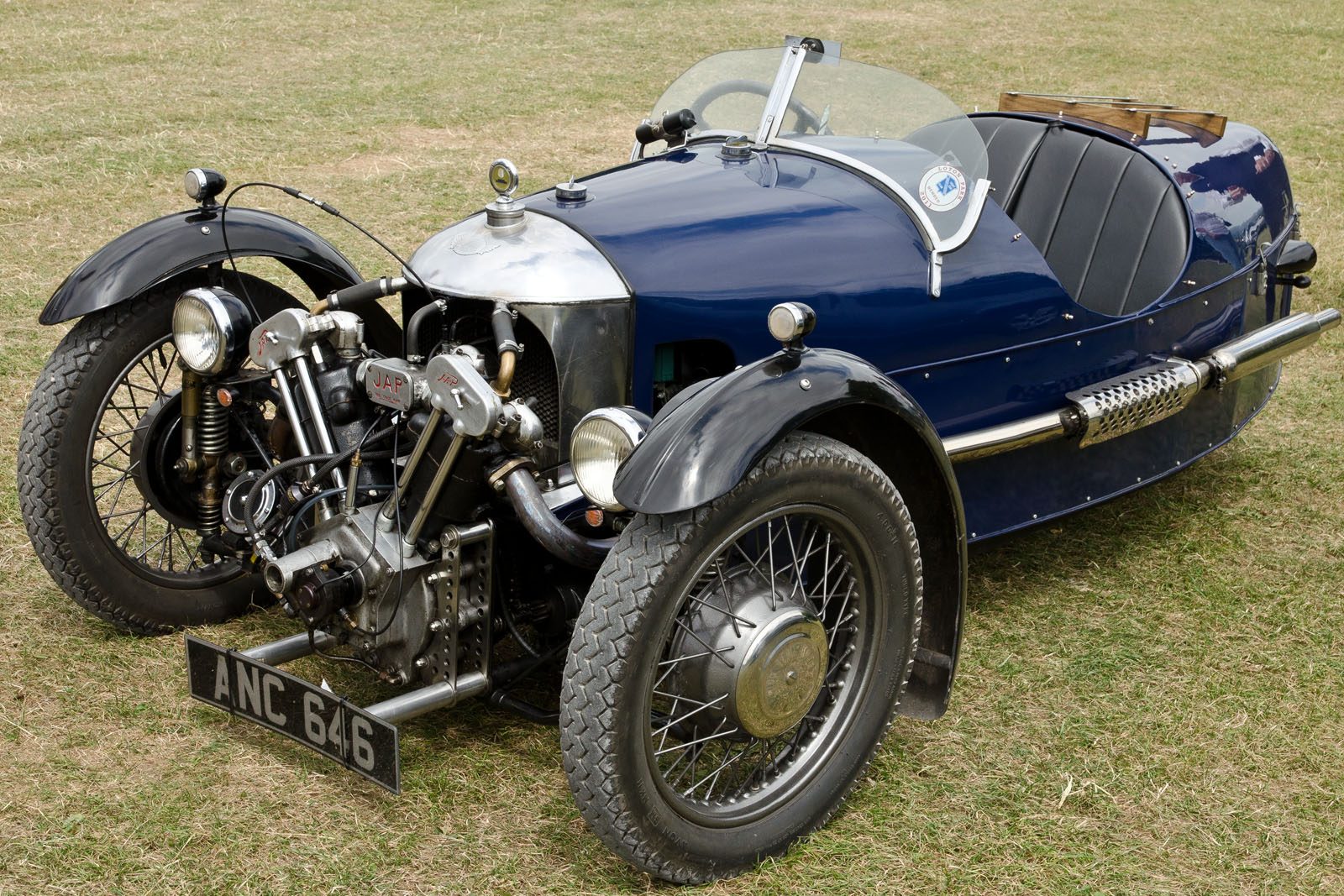
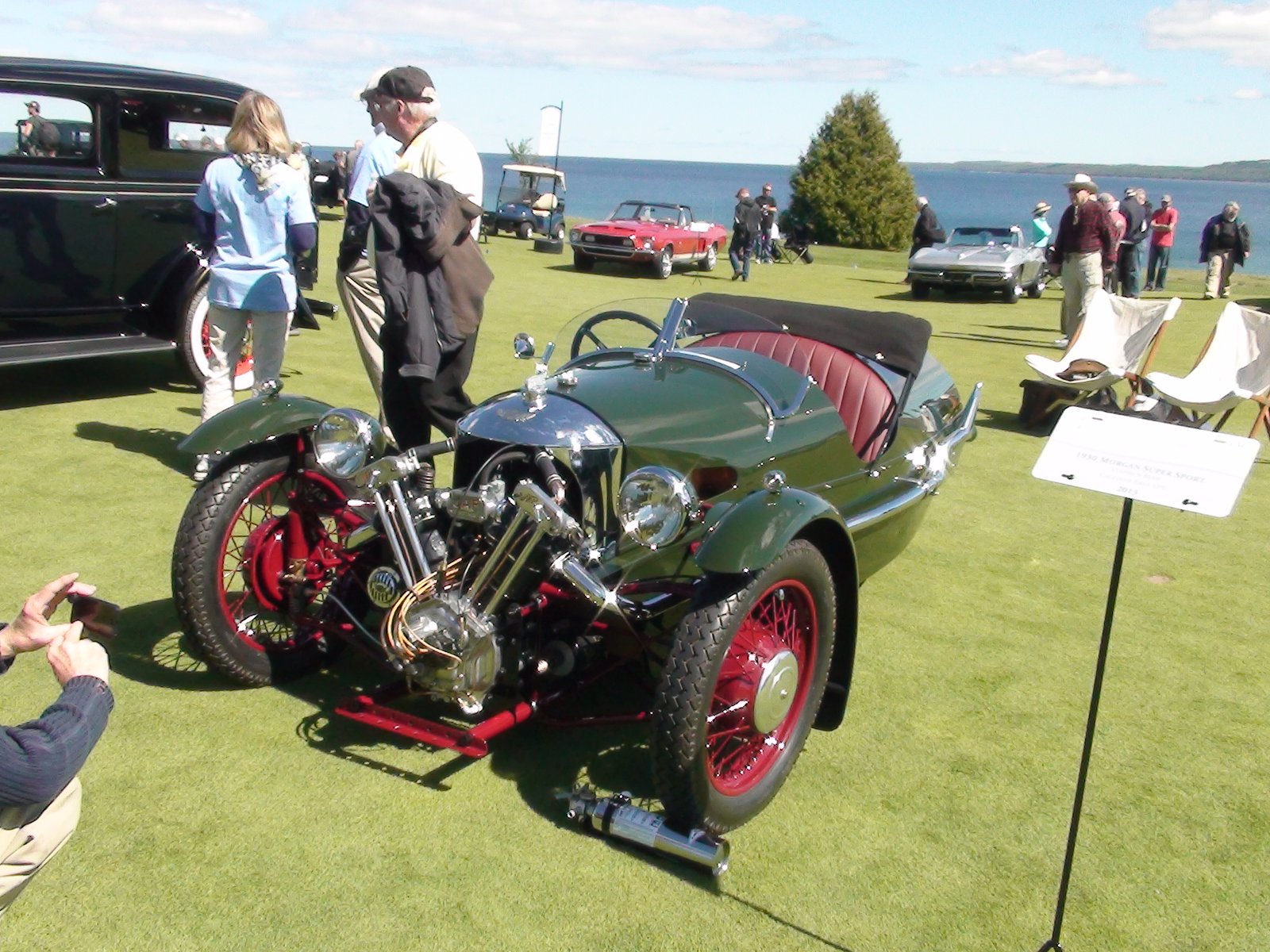
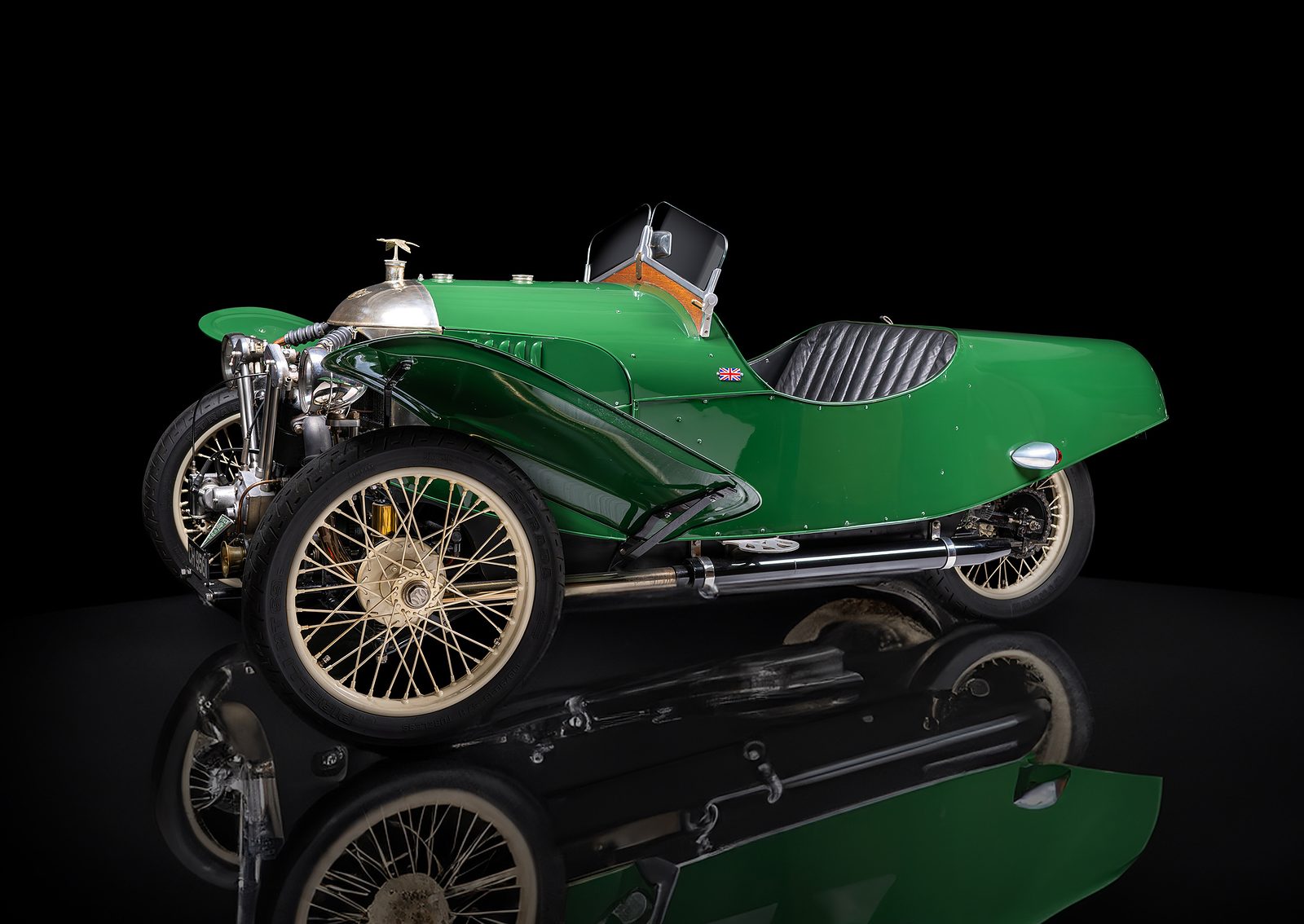
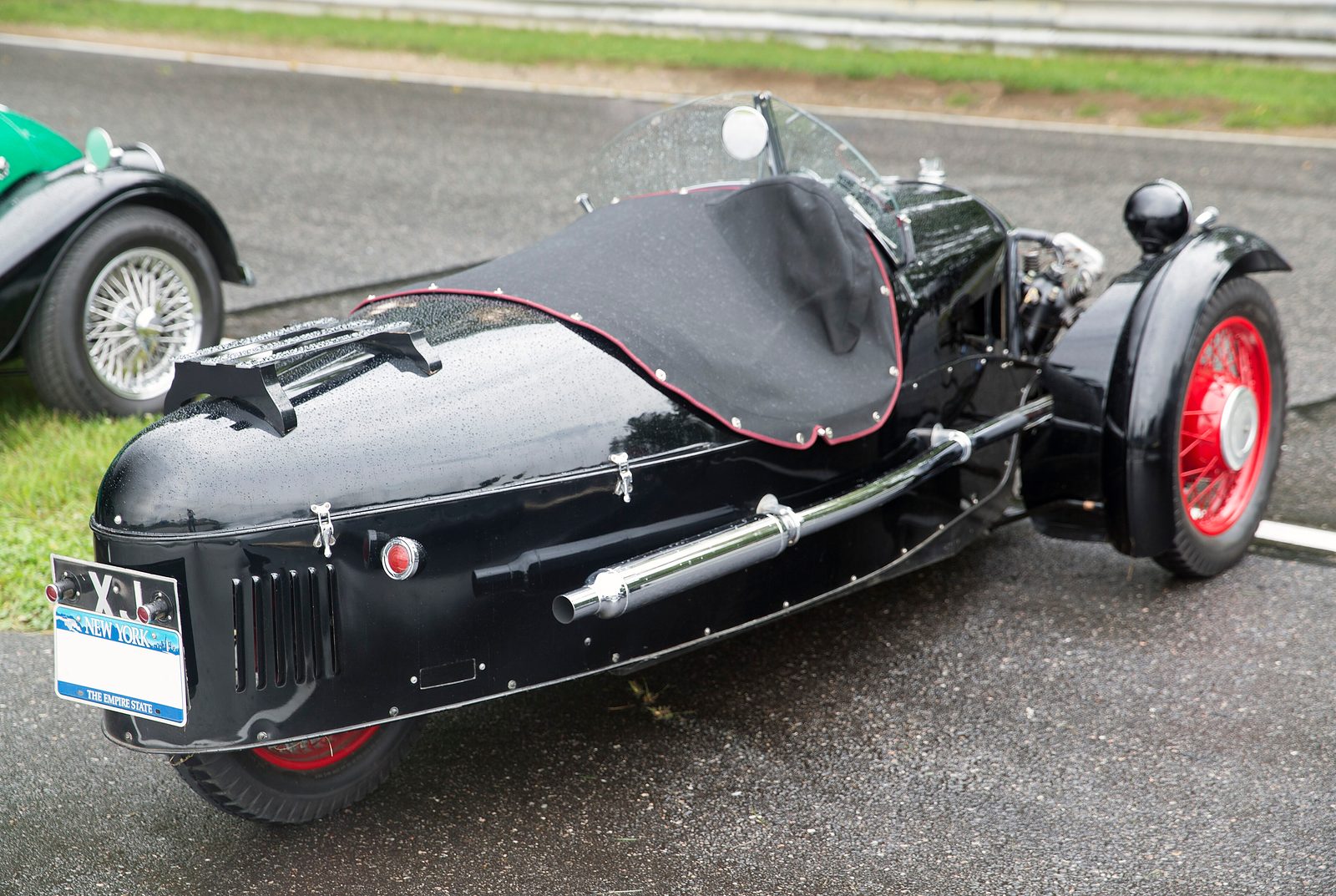
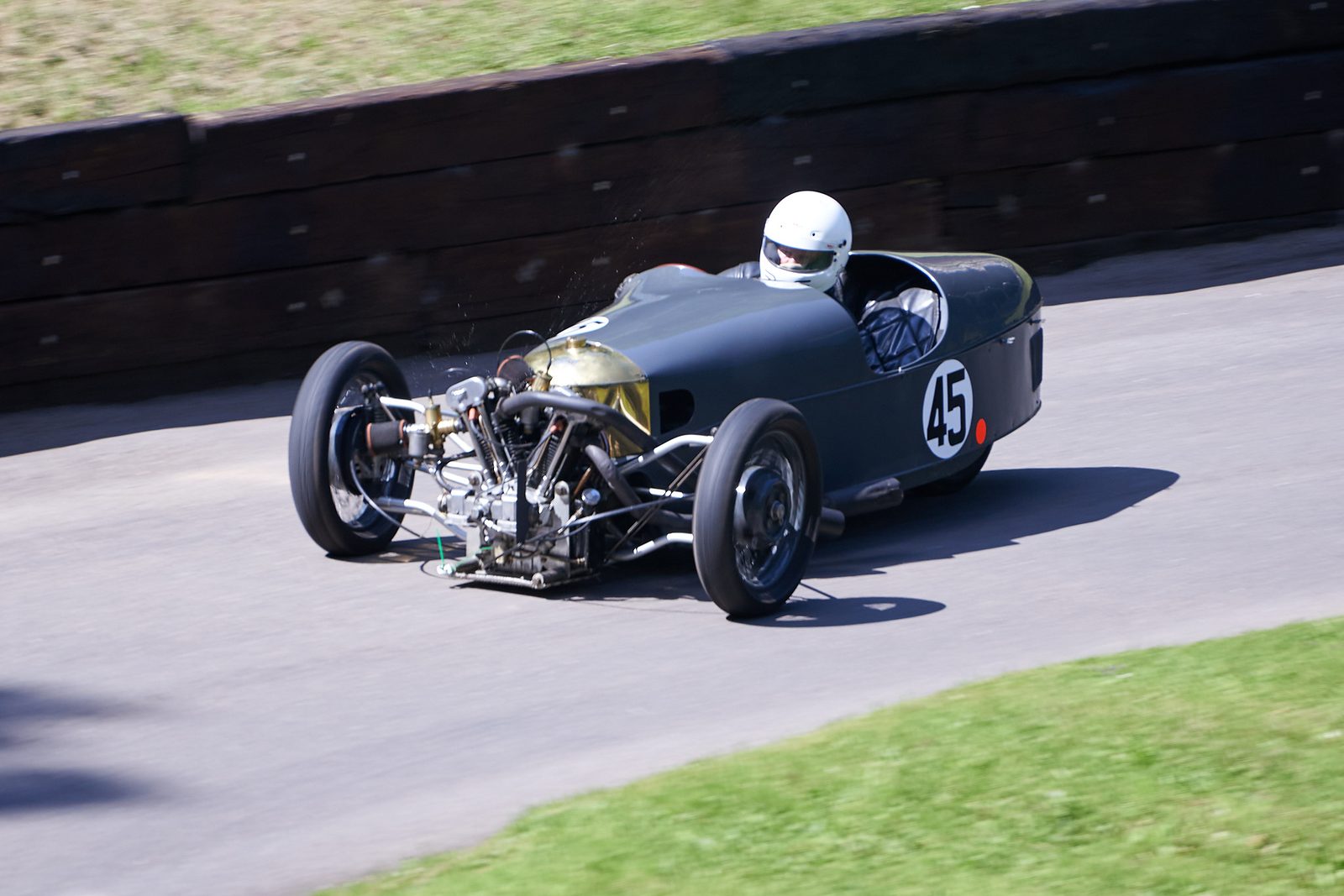
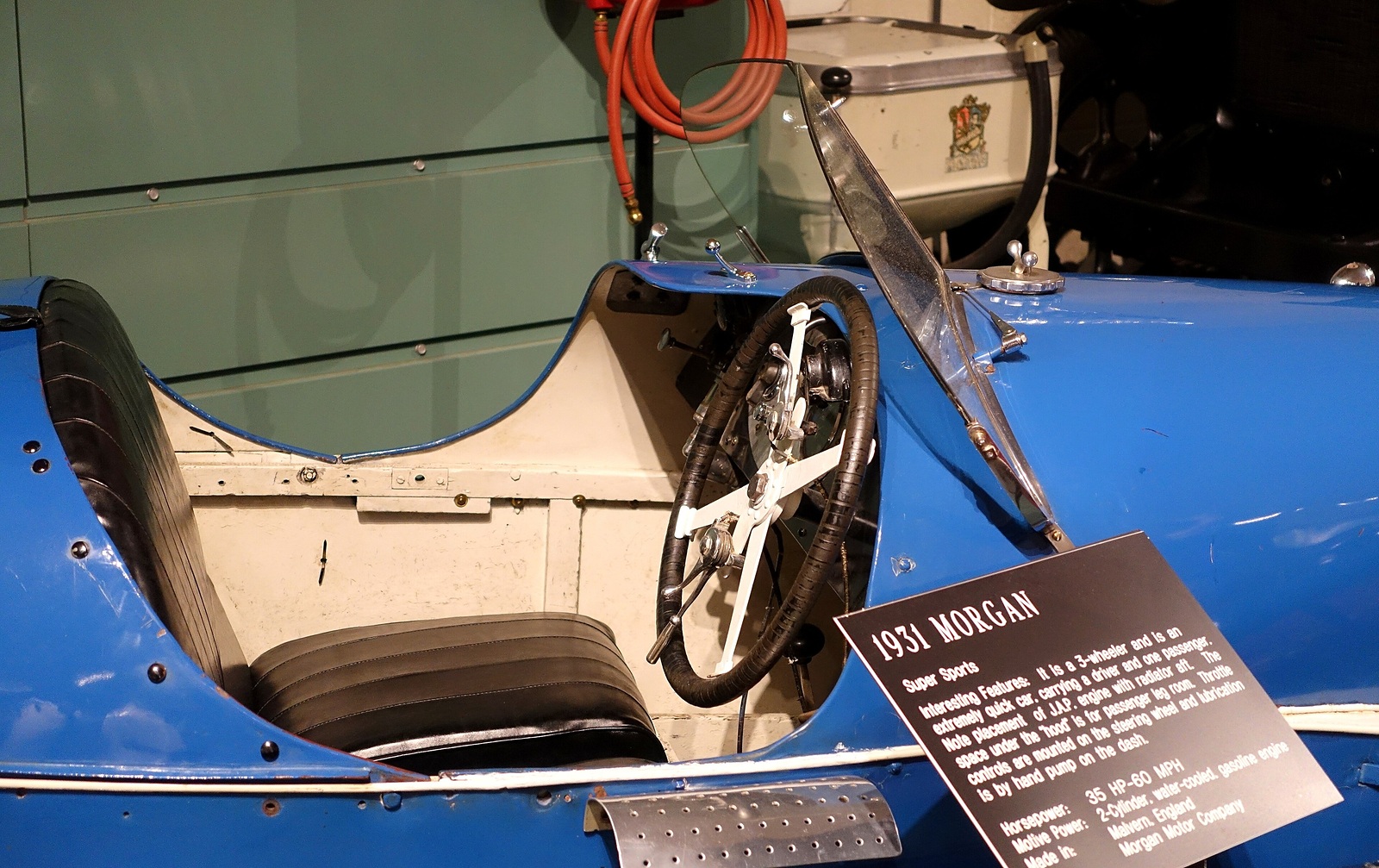
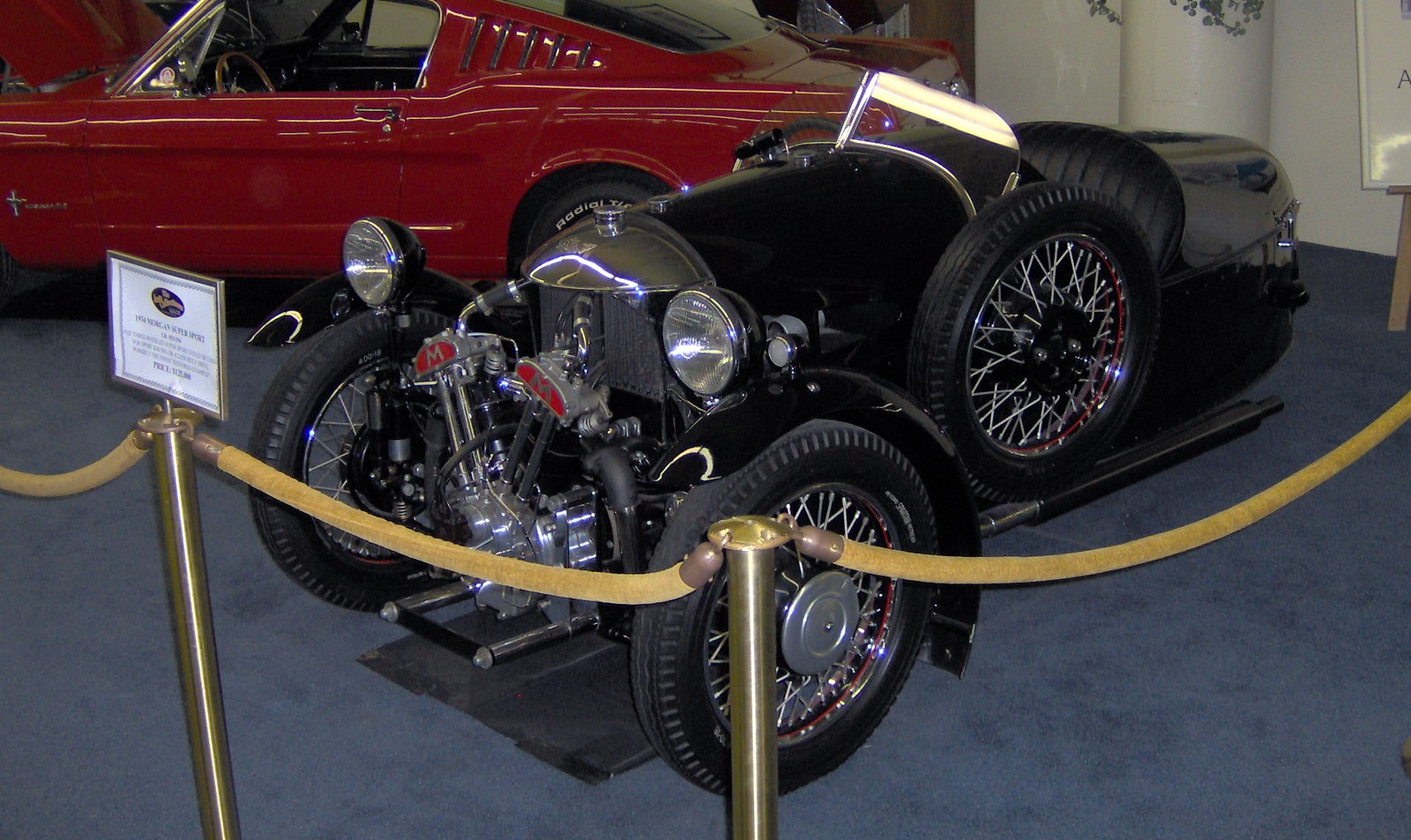
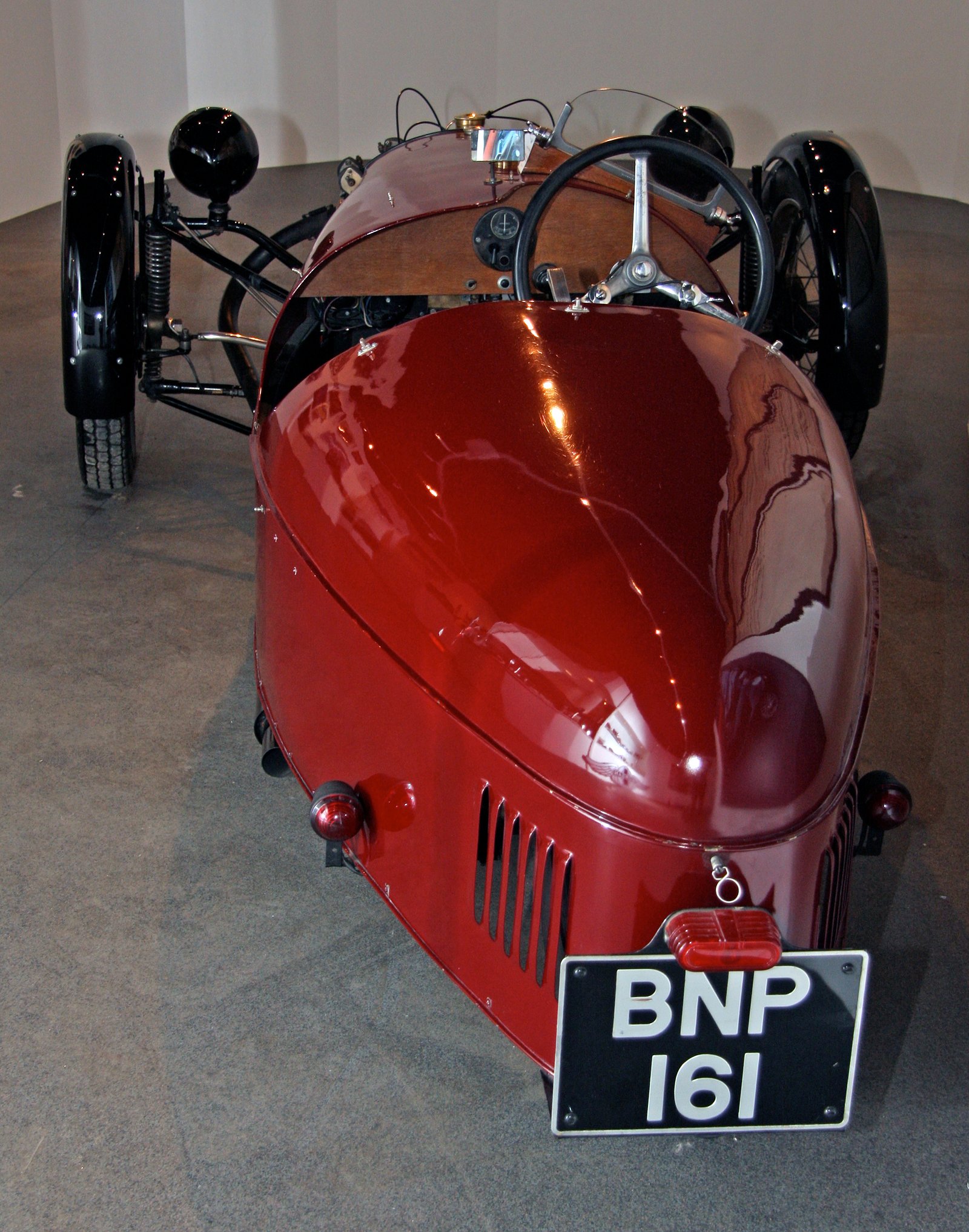
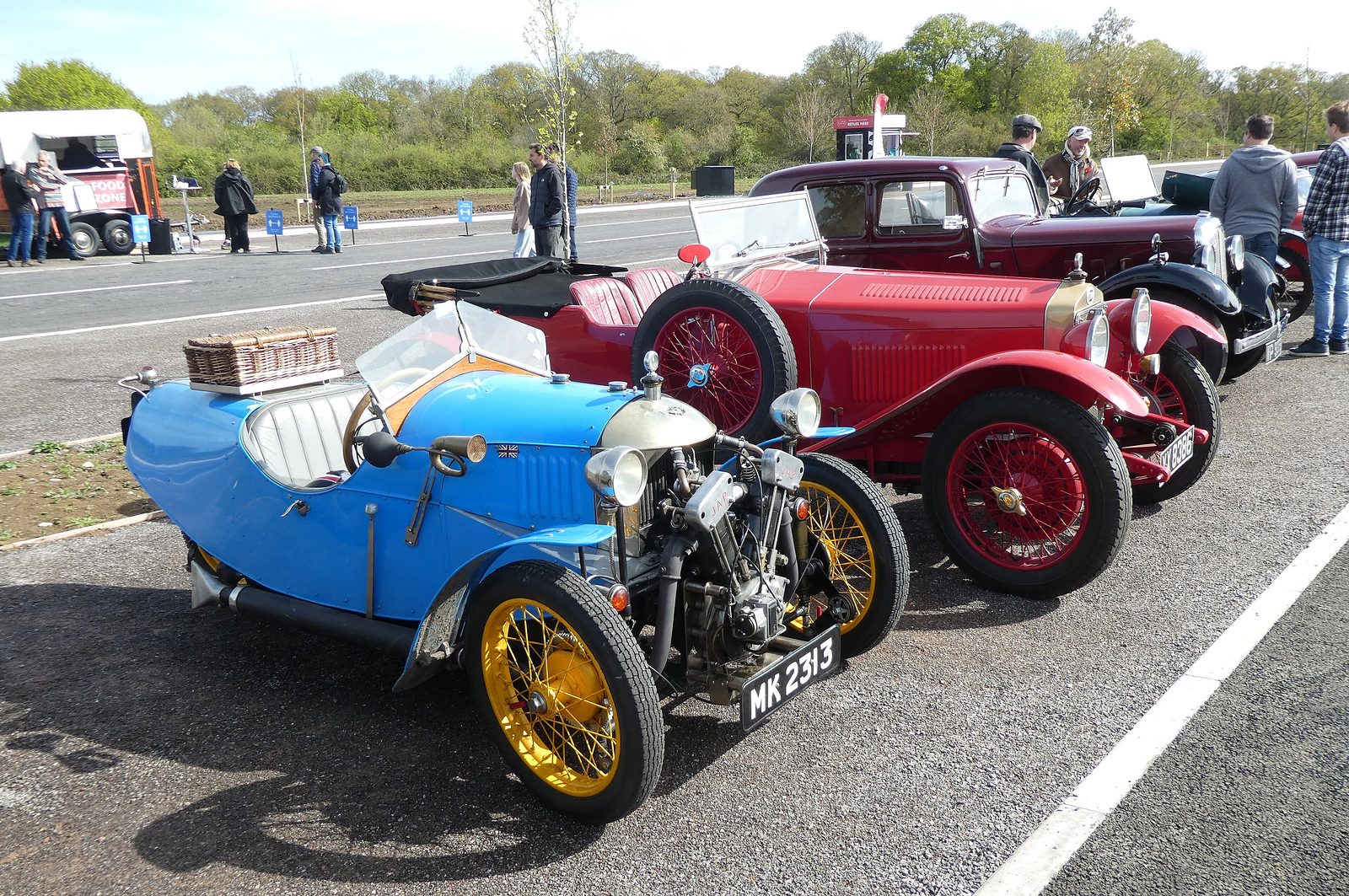
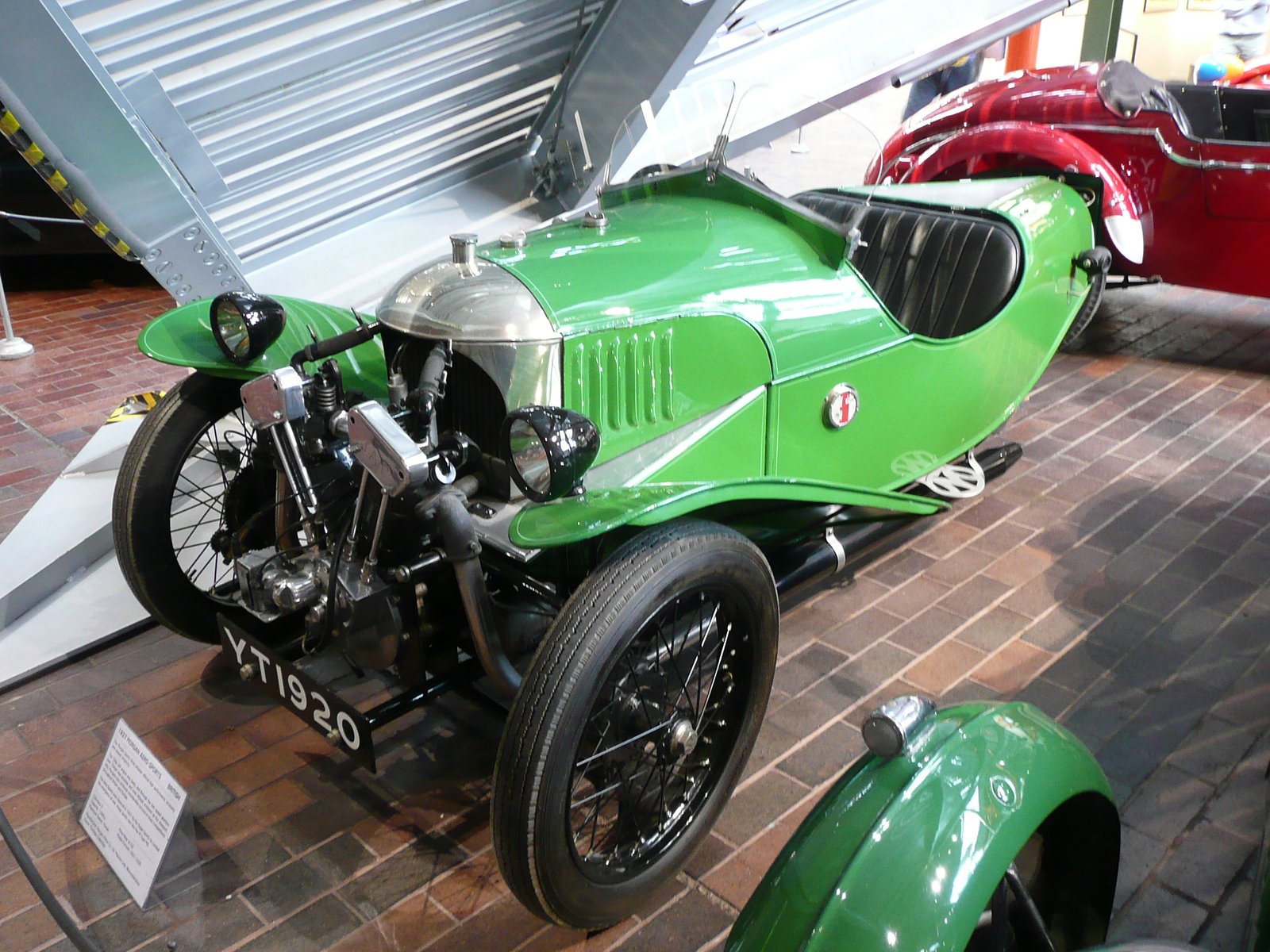
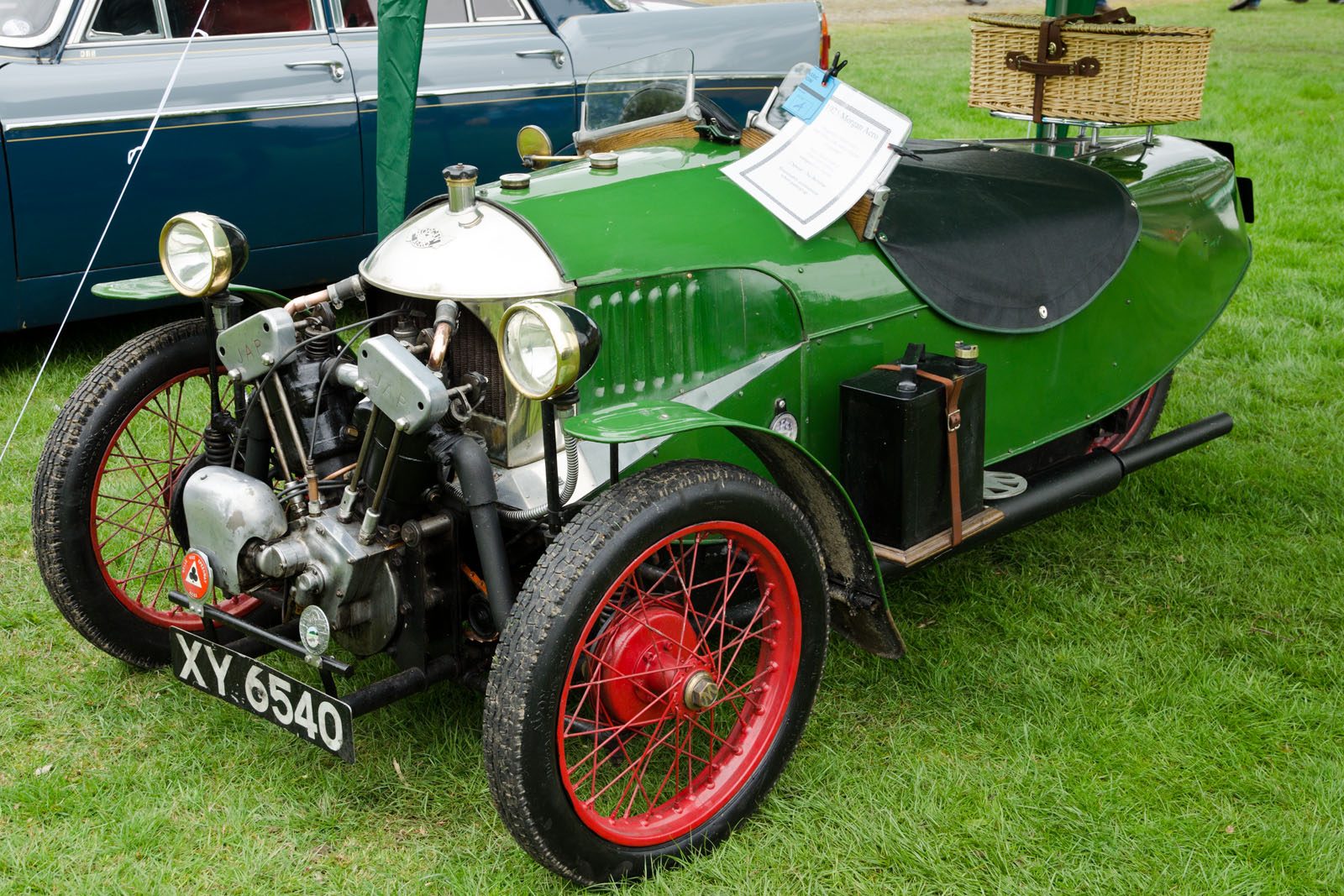
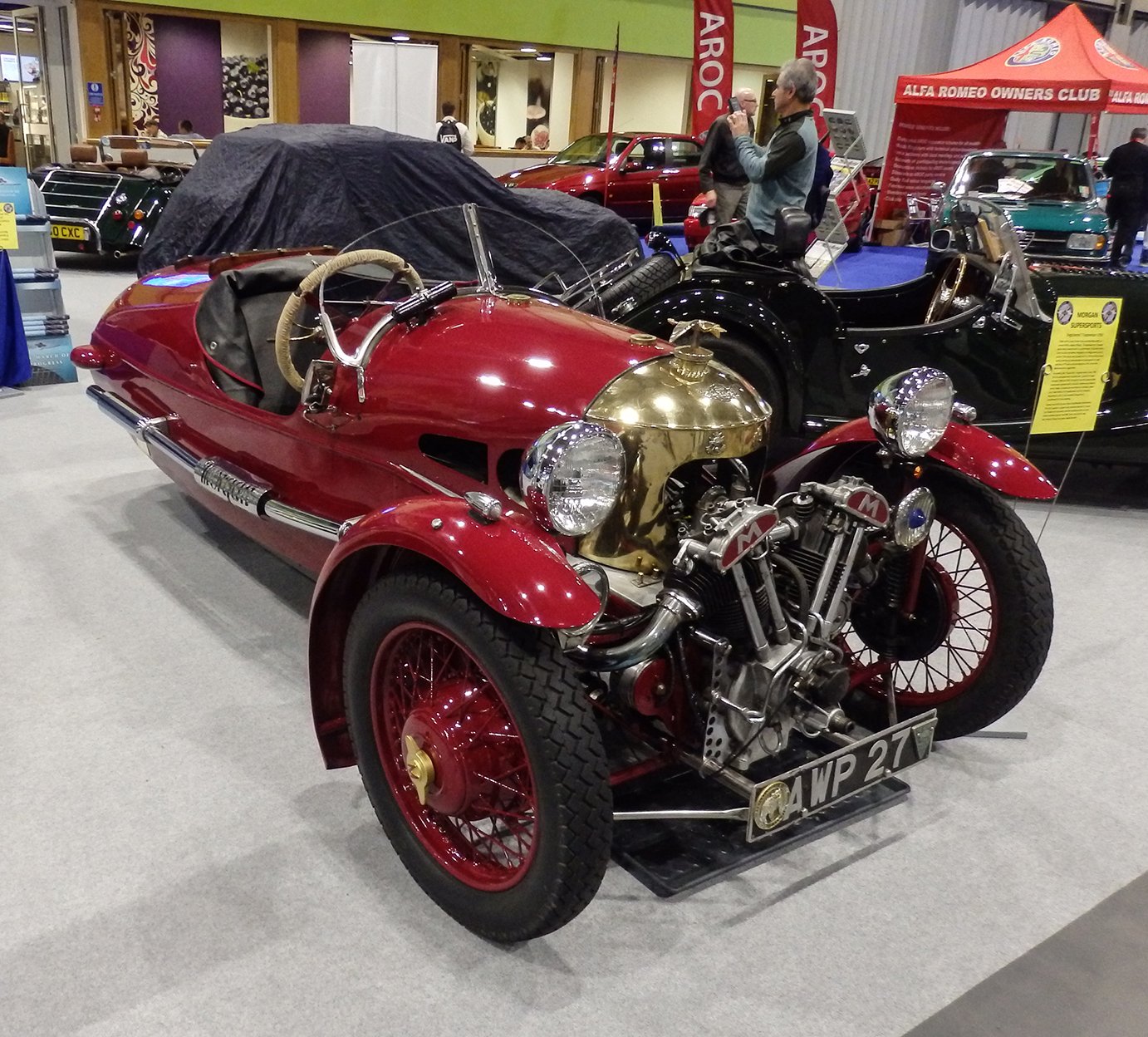
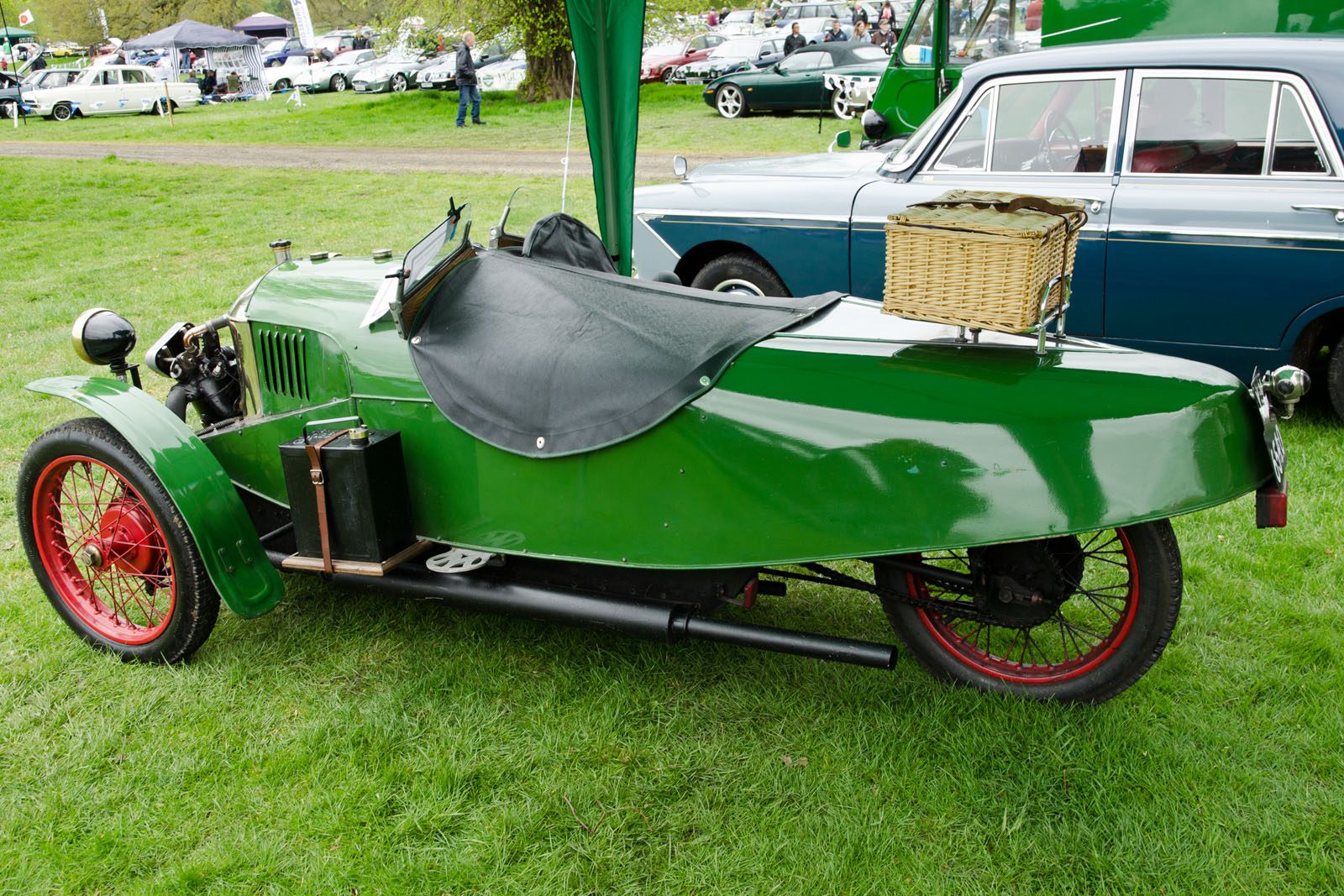
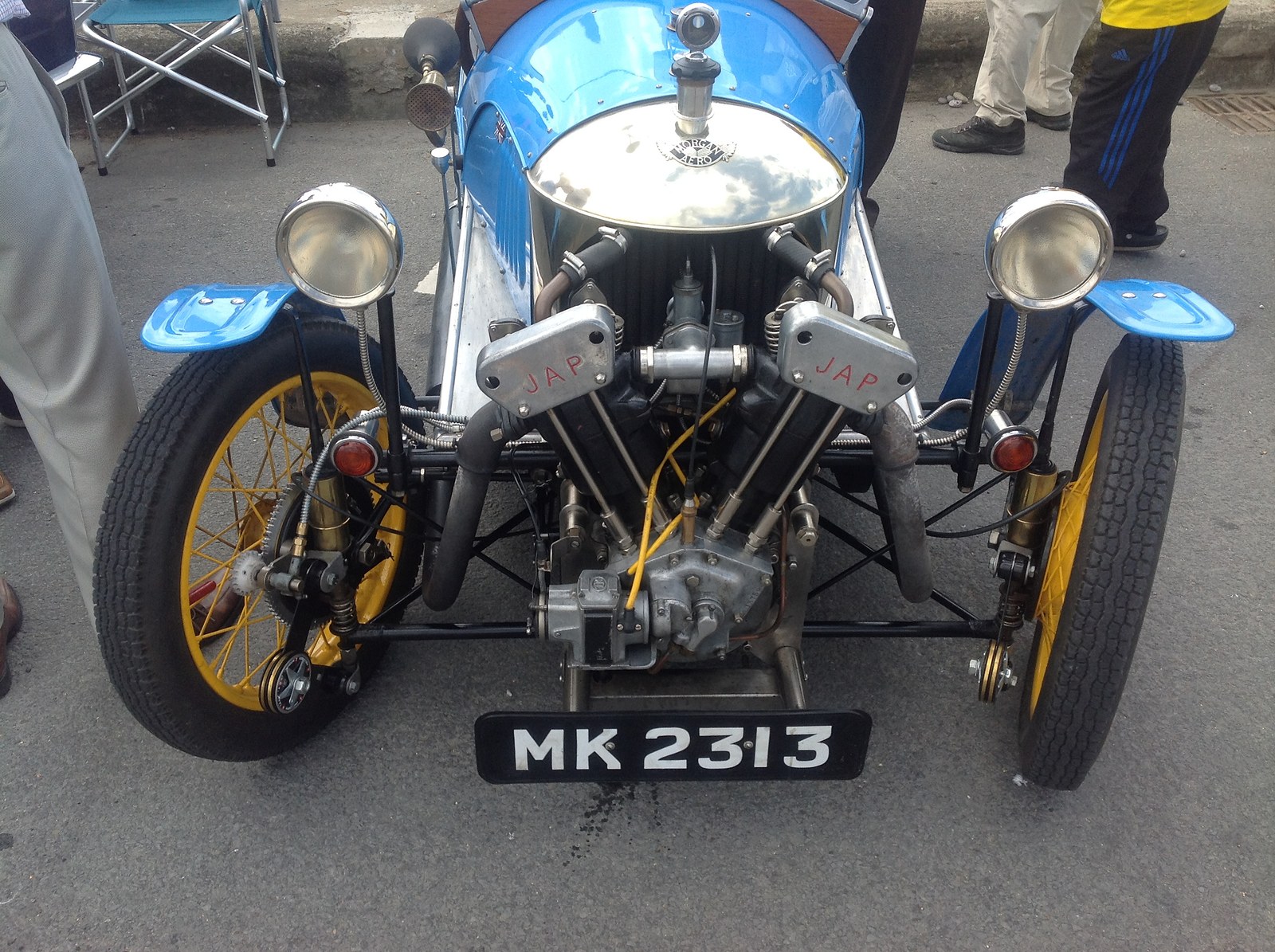
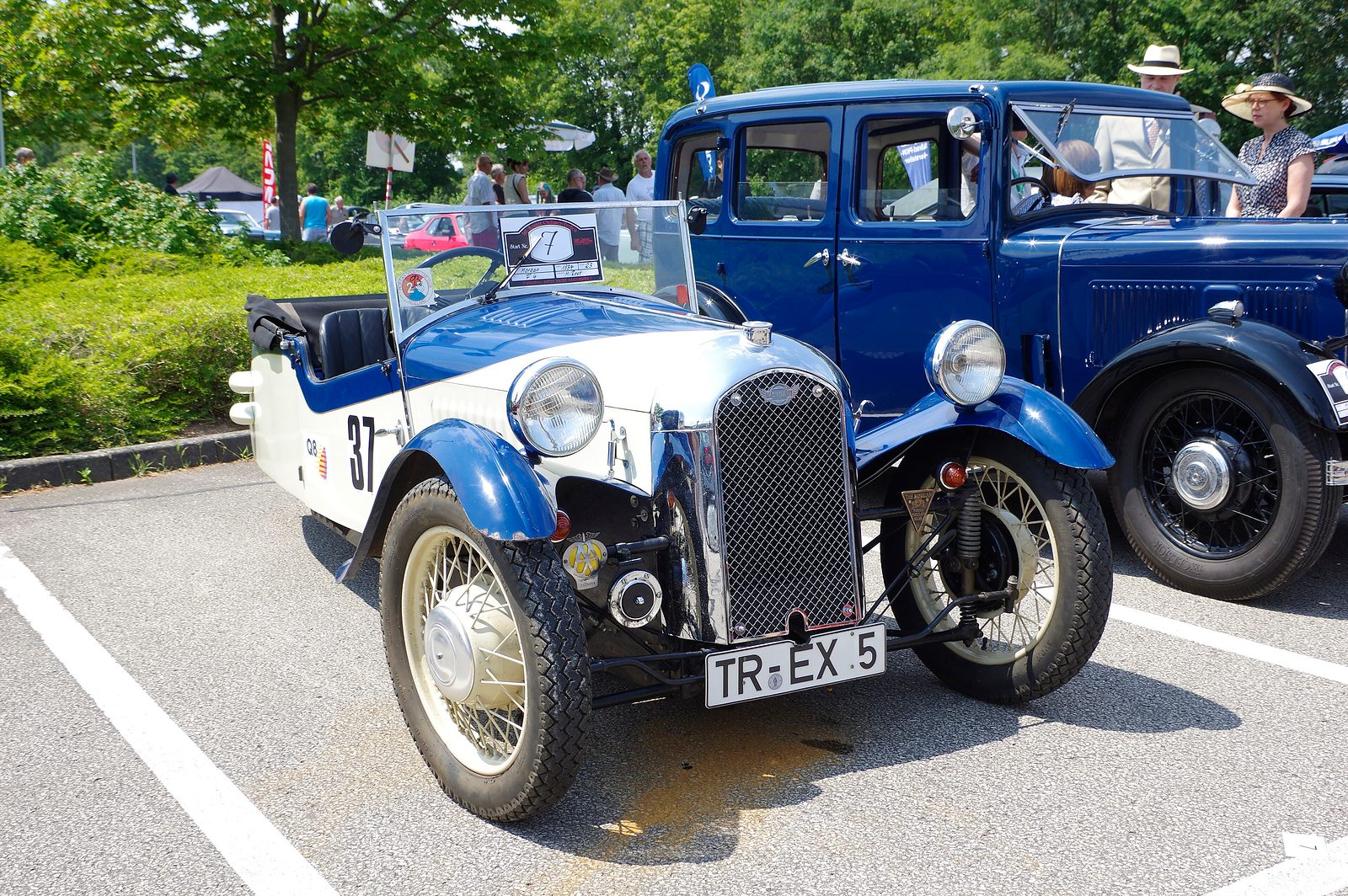
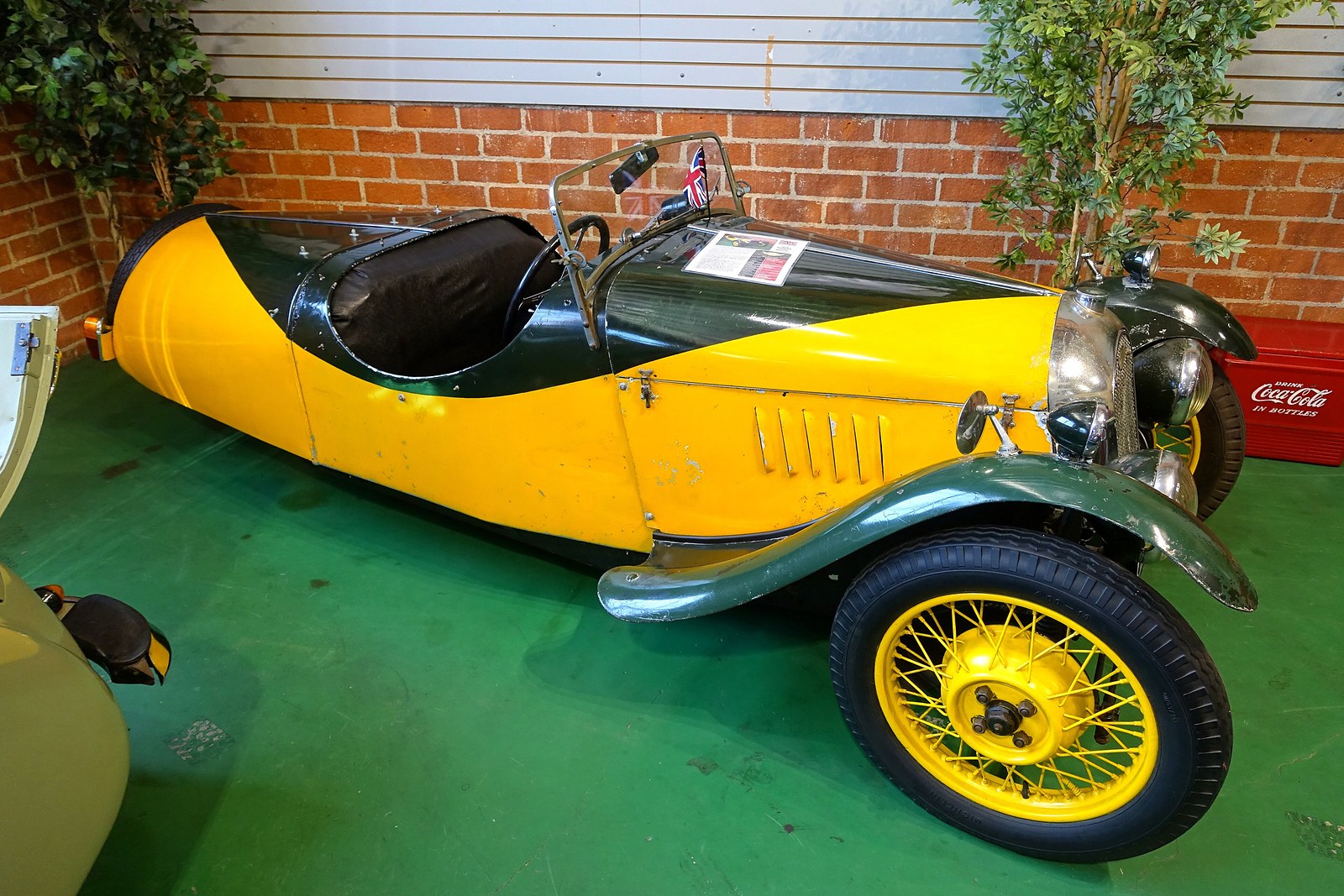
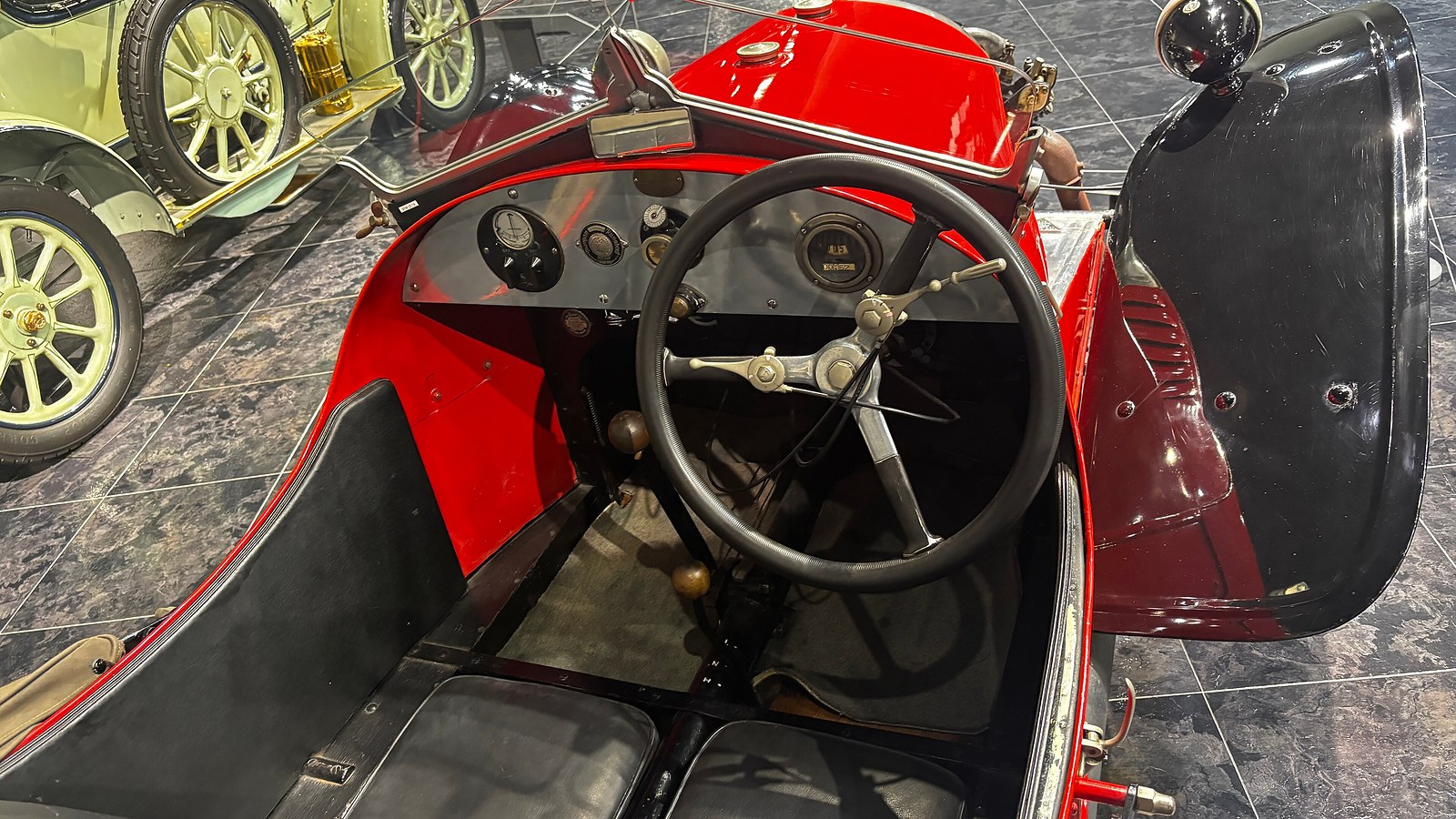
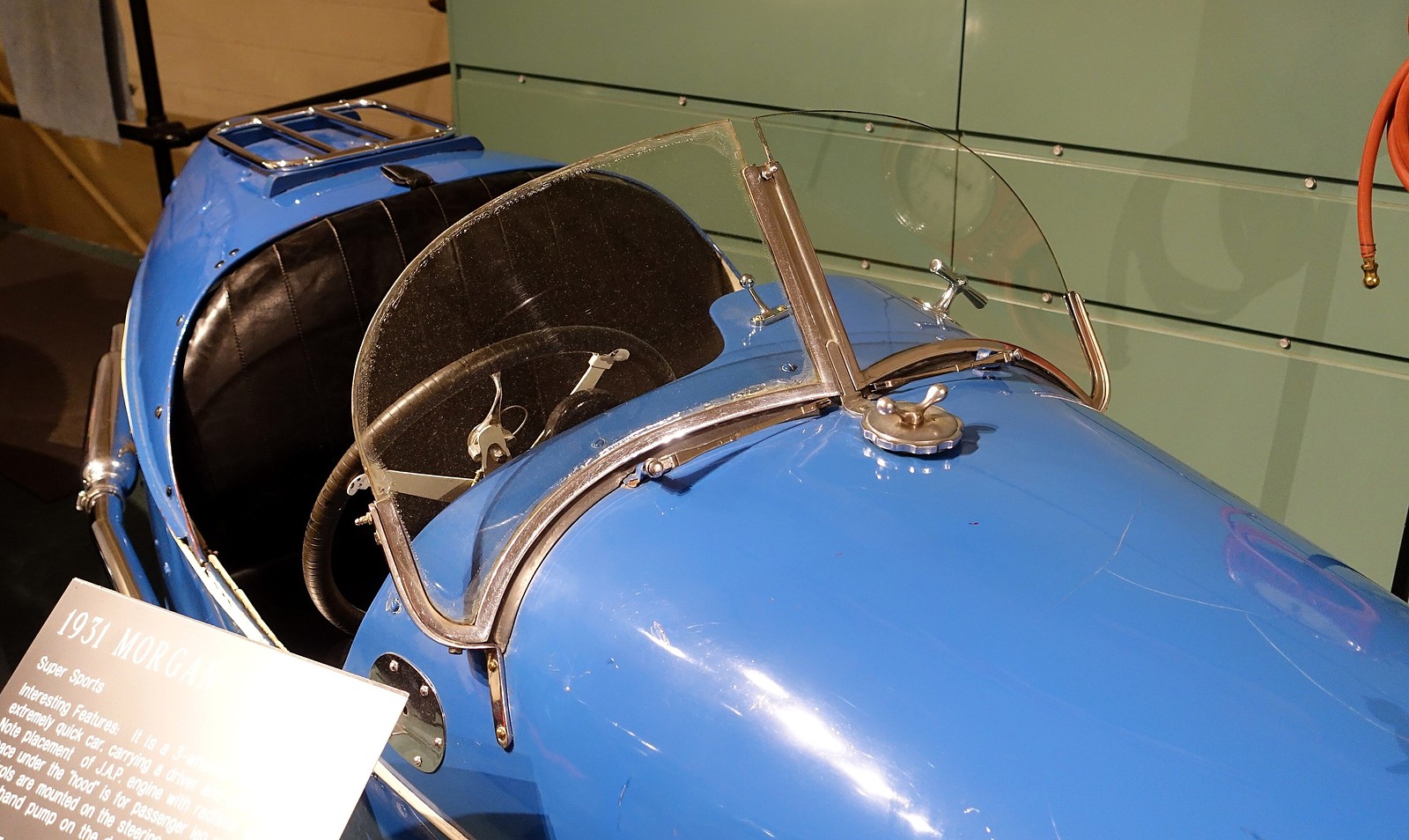
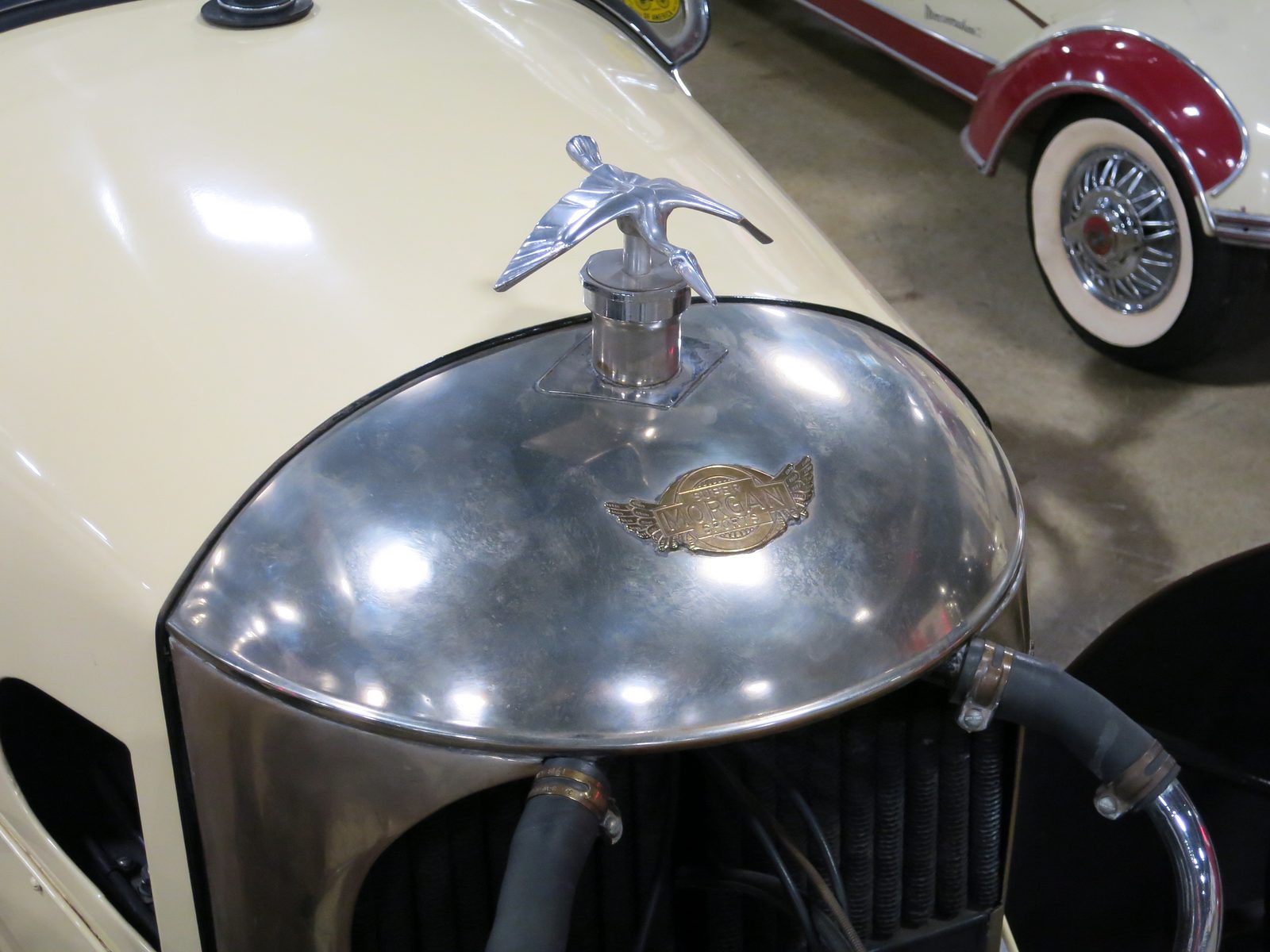
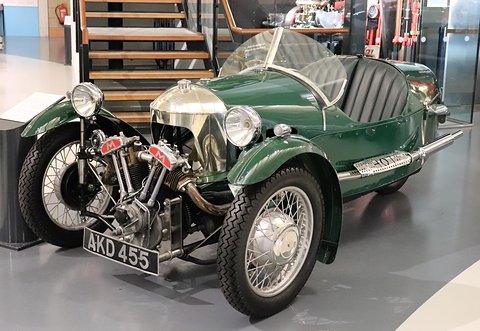
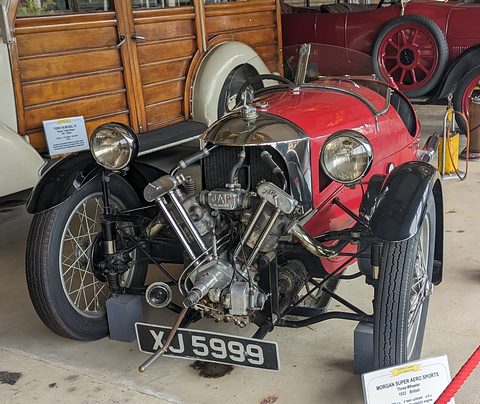
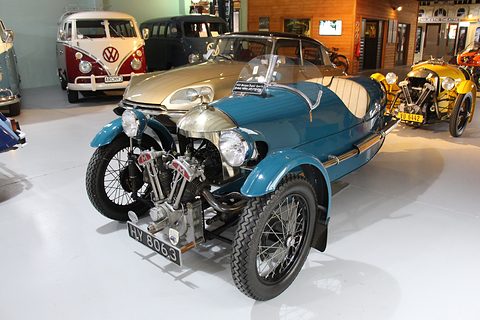
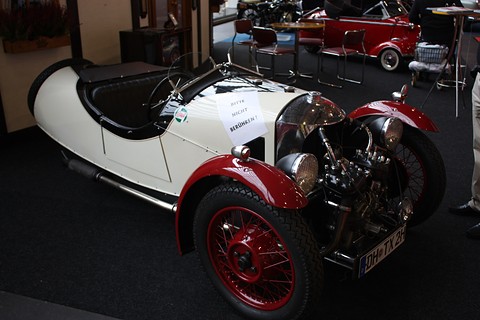
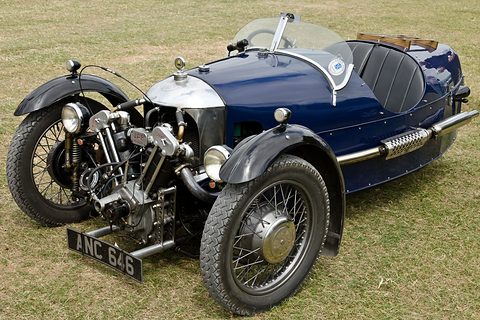
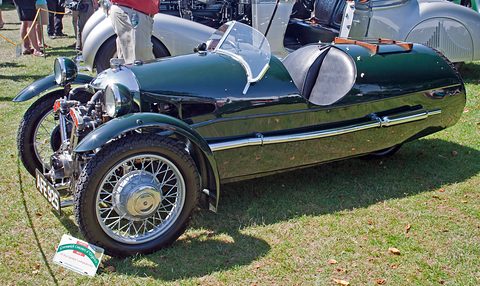
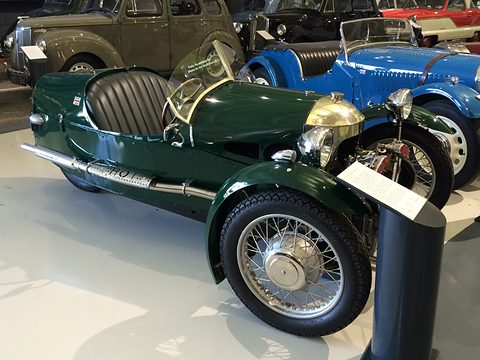
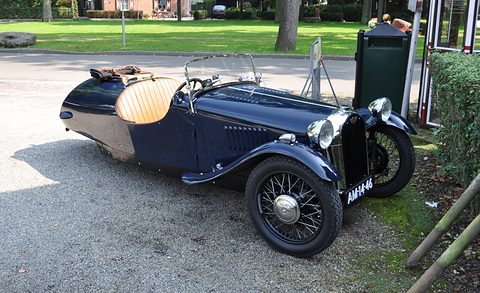
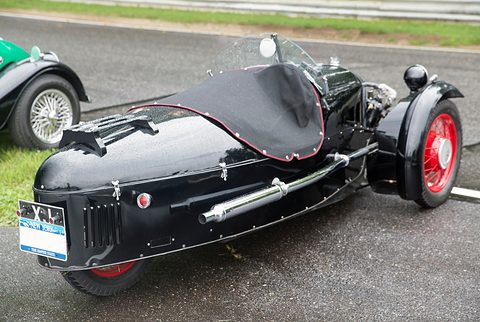
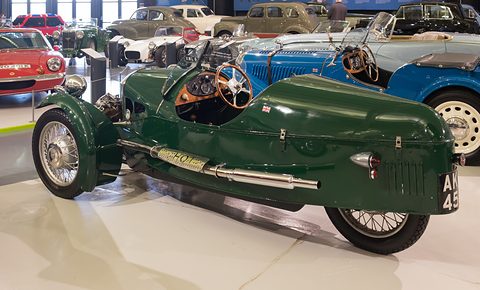
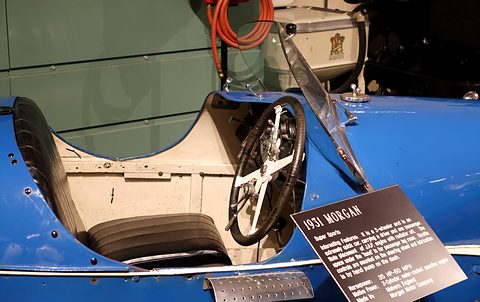
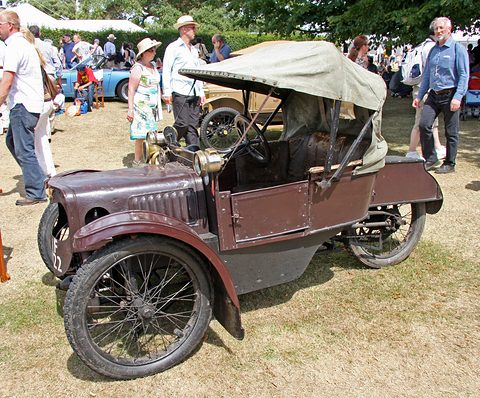
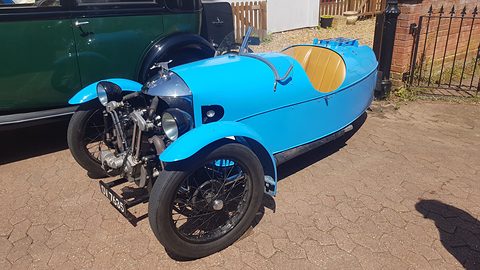
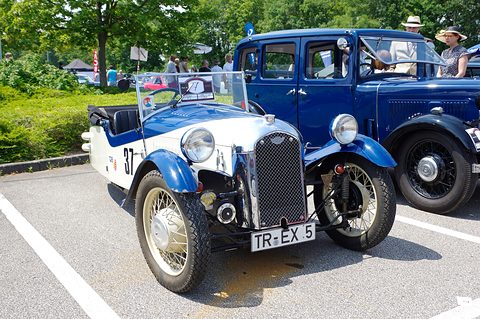
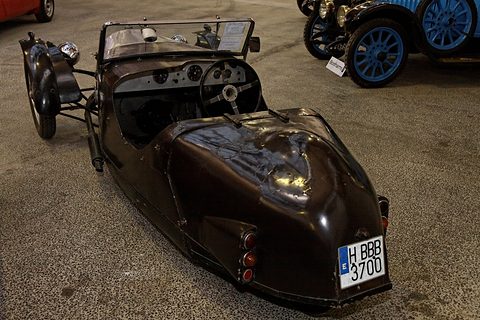
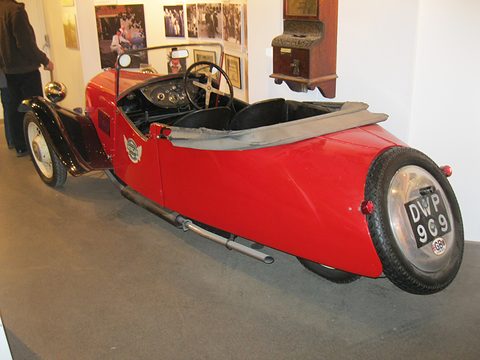
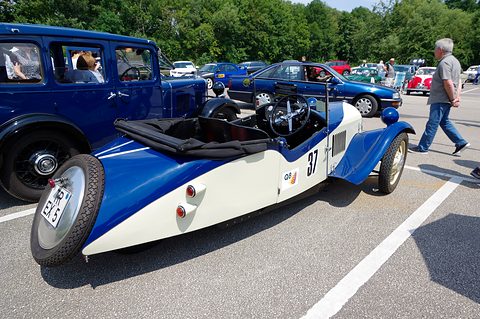
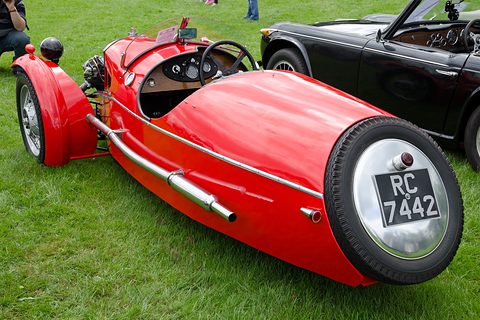
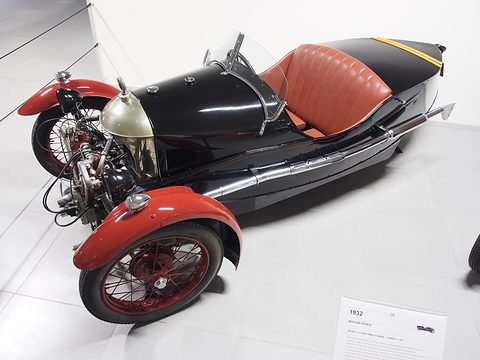
The car grew up slowly. Cable front brakes were offered for £6 from 1923 and fitted to most models by 1927; geared steering came in 1926, an electric starter at £10 extra in 1927.source 1source 4 The Aero, with a V-shaped deflector behind the radiator and a streamlined tail, was built to special order for 1922 and catalogued from the 1923 show, though the club and morgan3w.de date it earlier.source 1source 5source 4 The Super Sports, or Super Aero, was announced for 1928 at £155 with the 10/40 overhead-valve JAP, a rounded tail, cycle-type front wings and a wider track, and soon sat on the lower M-type chassis.source 1source 11source 8 For 1929 the Super Sports could reach 129 km/h (“could do 80 mph”) on a 4:1 top gear, and the Standard cost £86.source 1 The company was content to keep it simple.
We have not attempted to complicate the design, being still of the opinion that our success lies in the fact that we offer the public a simple and sound machine of light weight and good performance, without attempting to make it a “car on three wheels.”
On the road
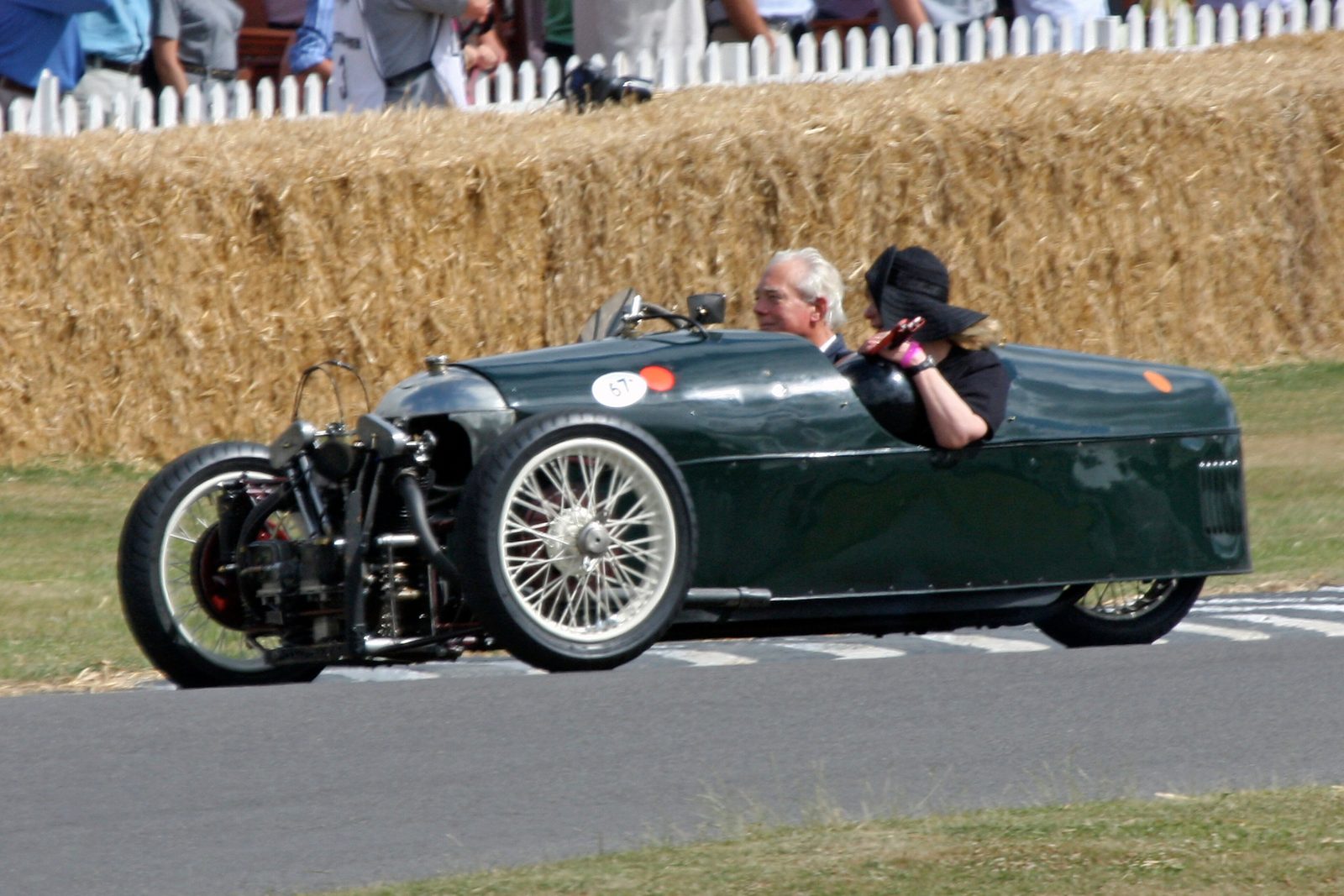
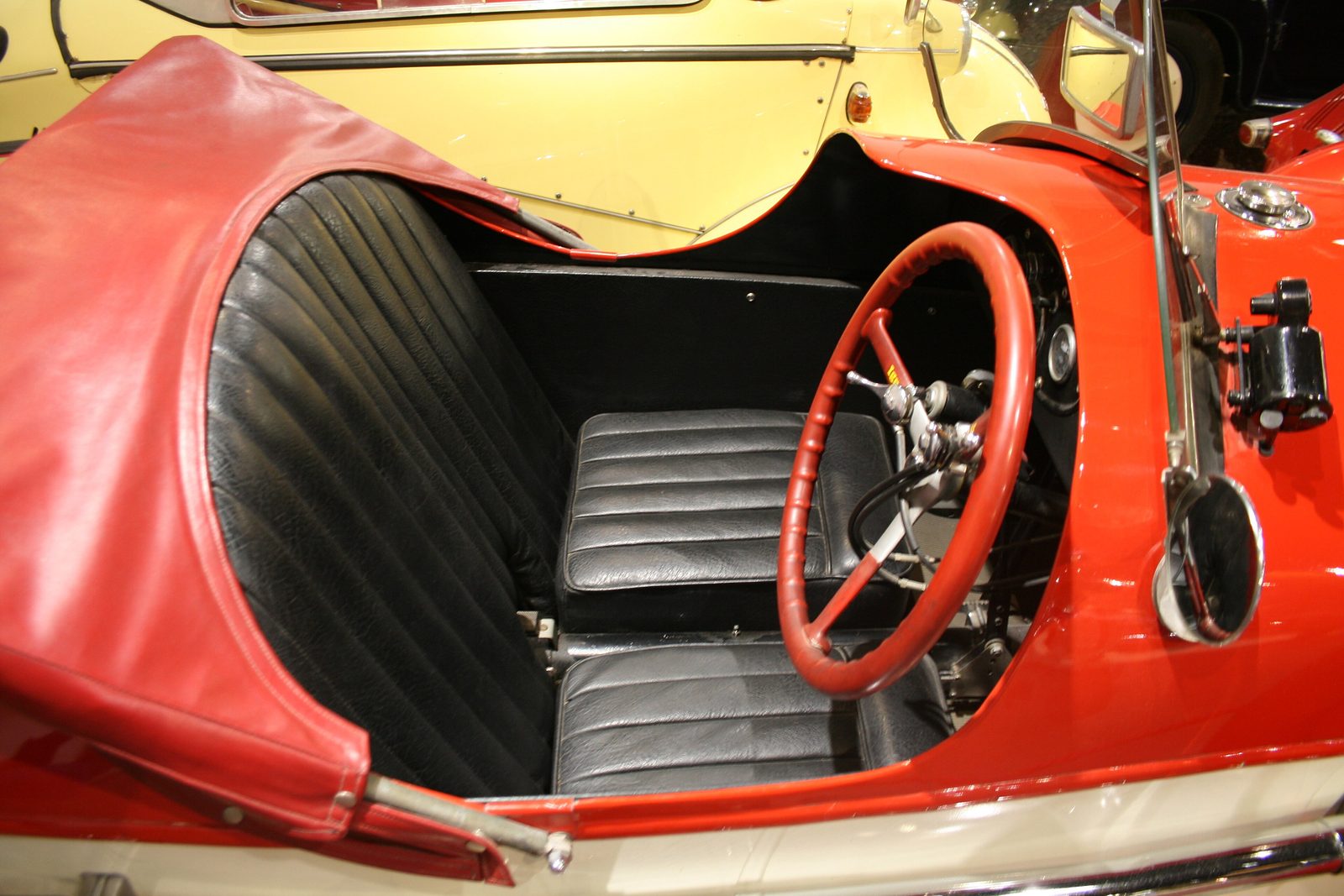
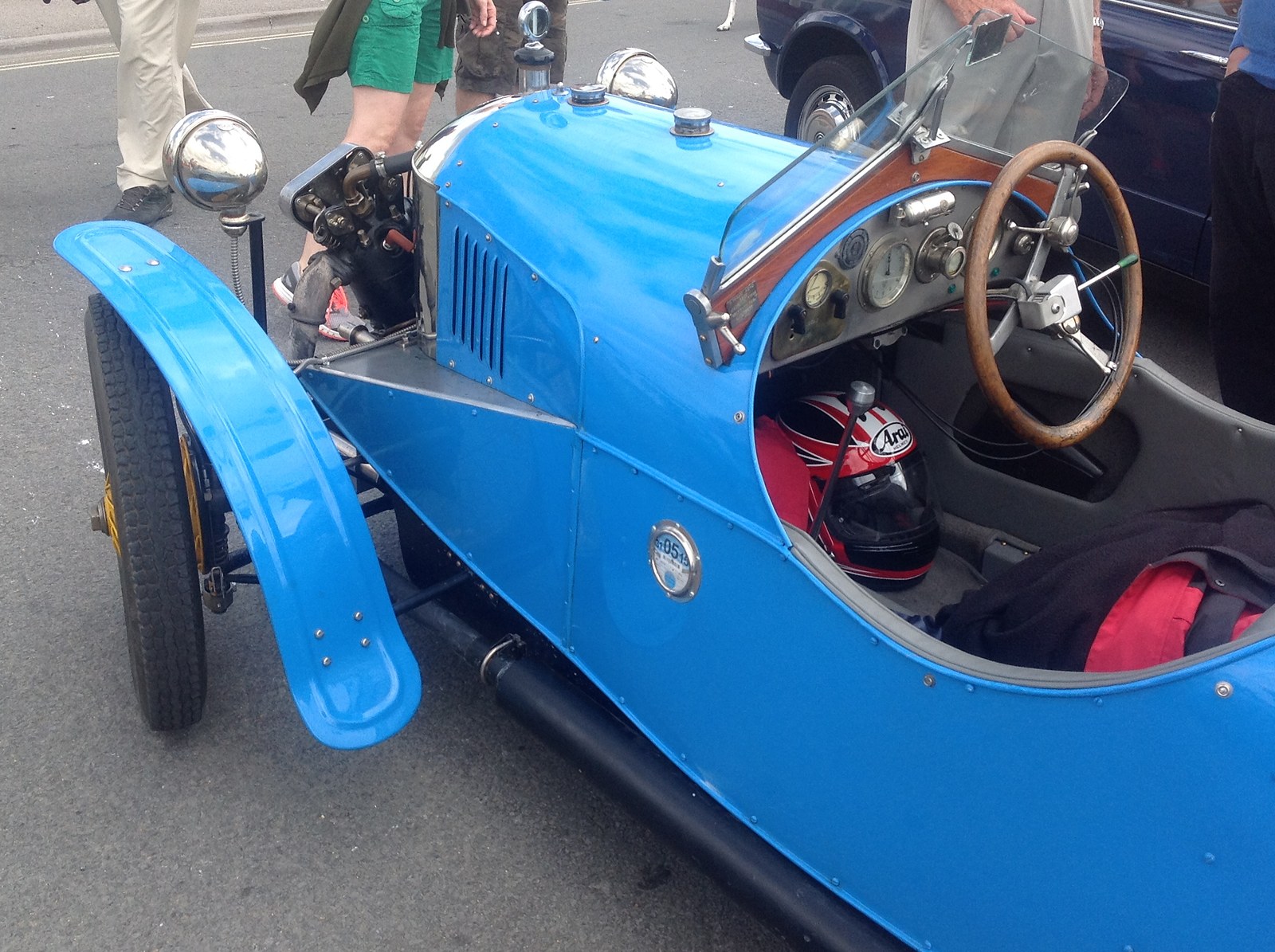
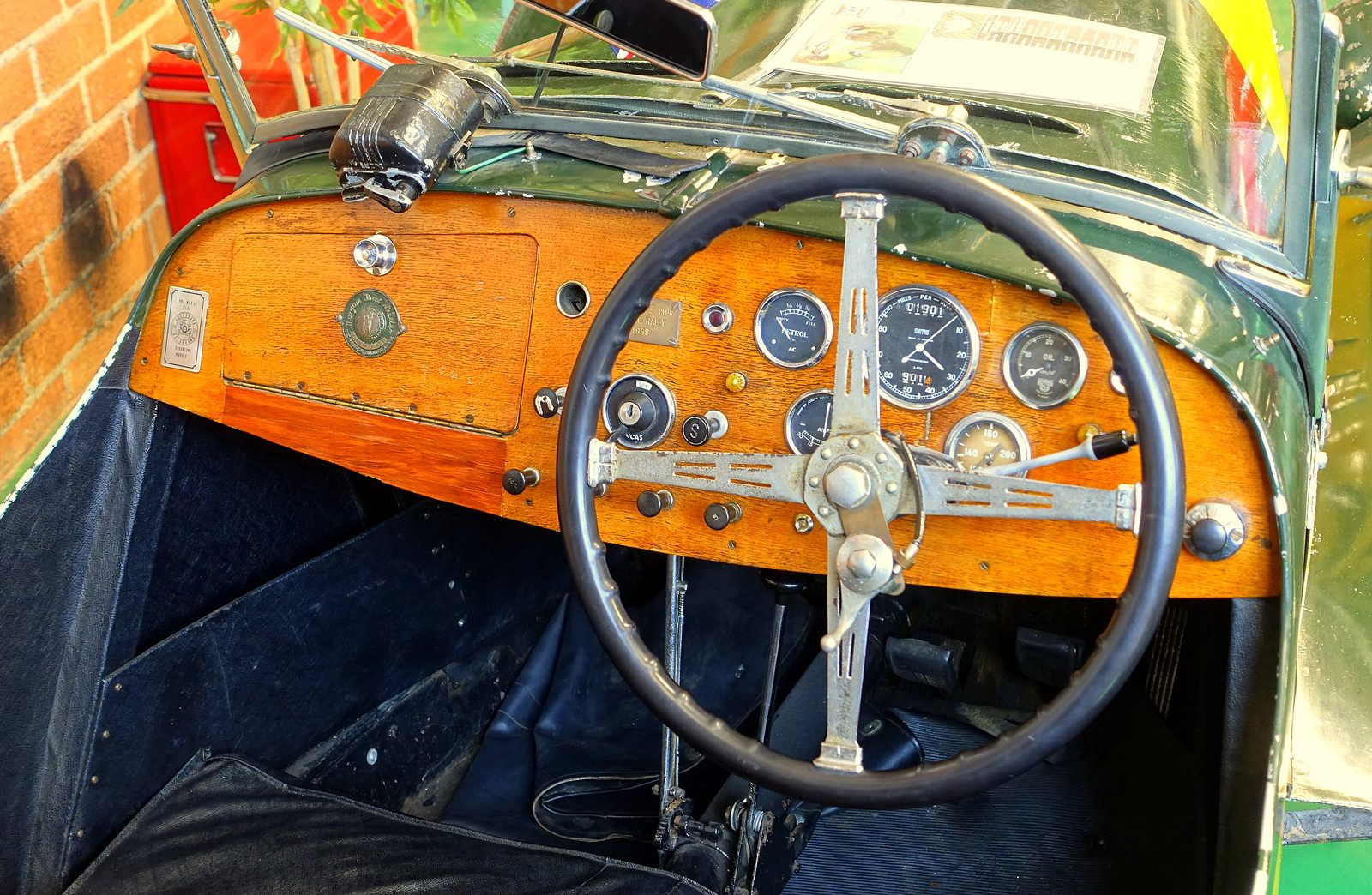
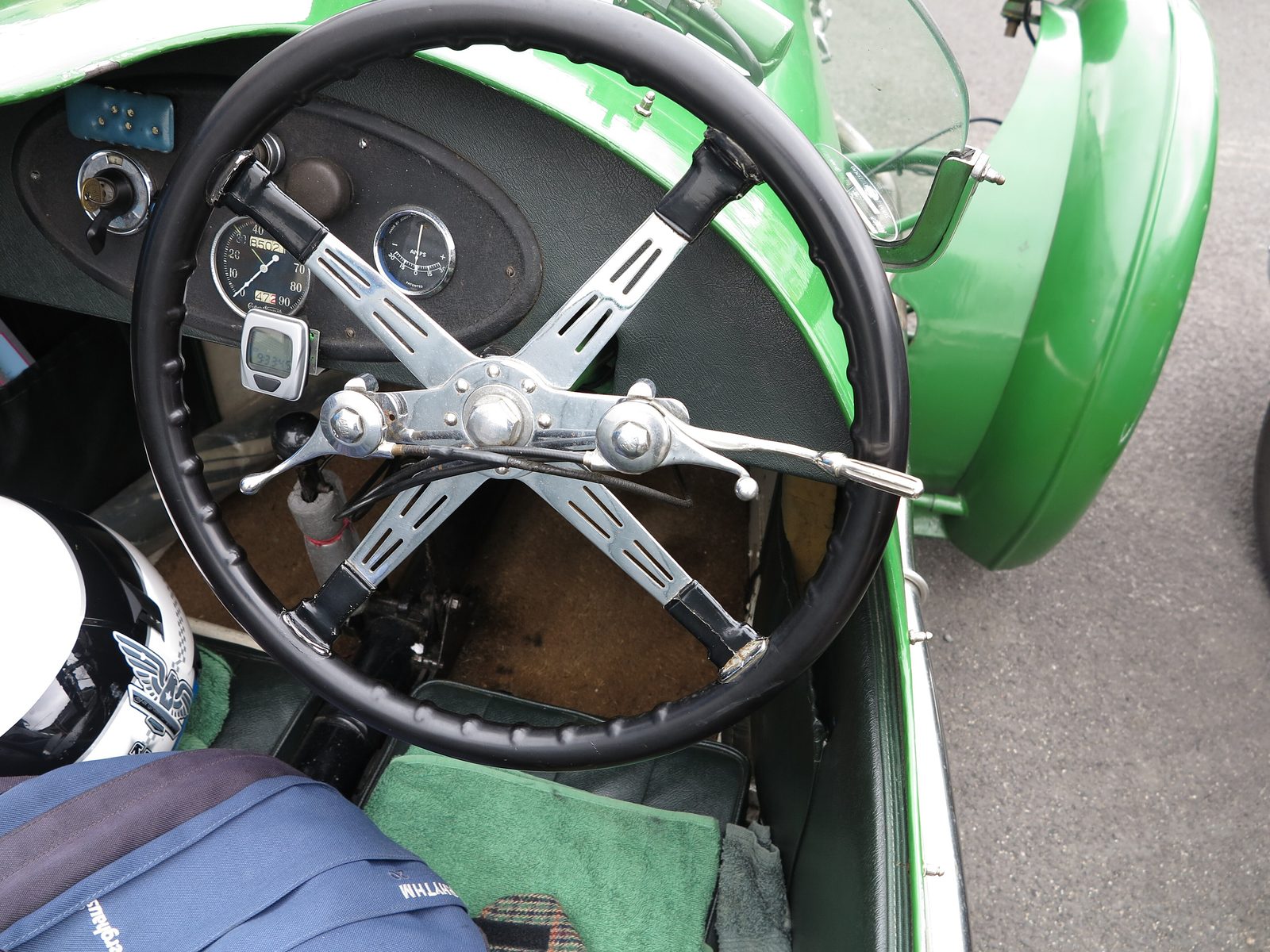
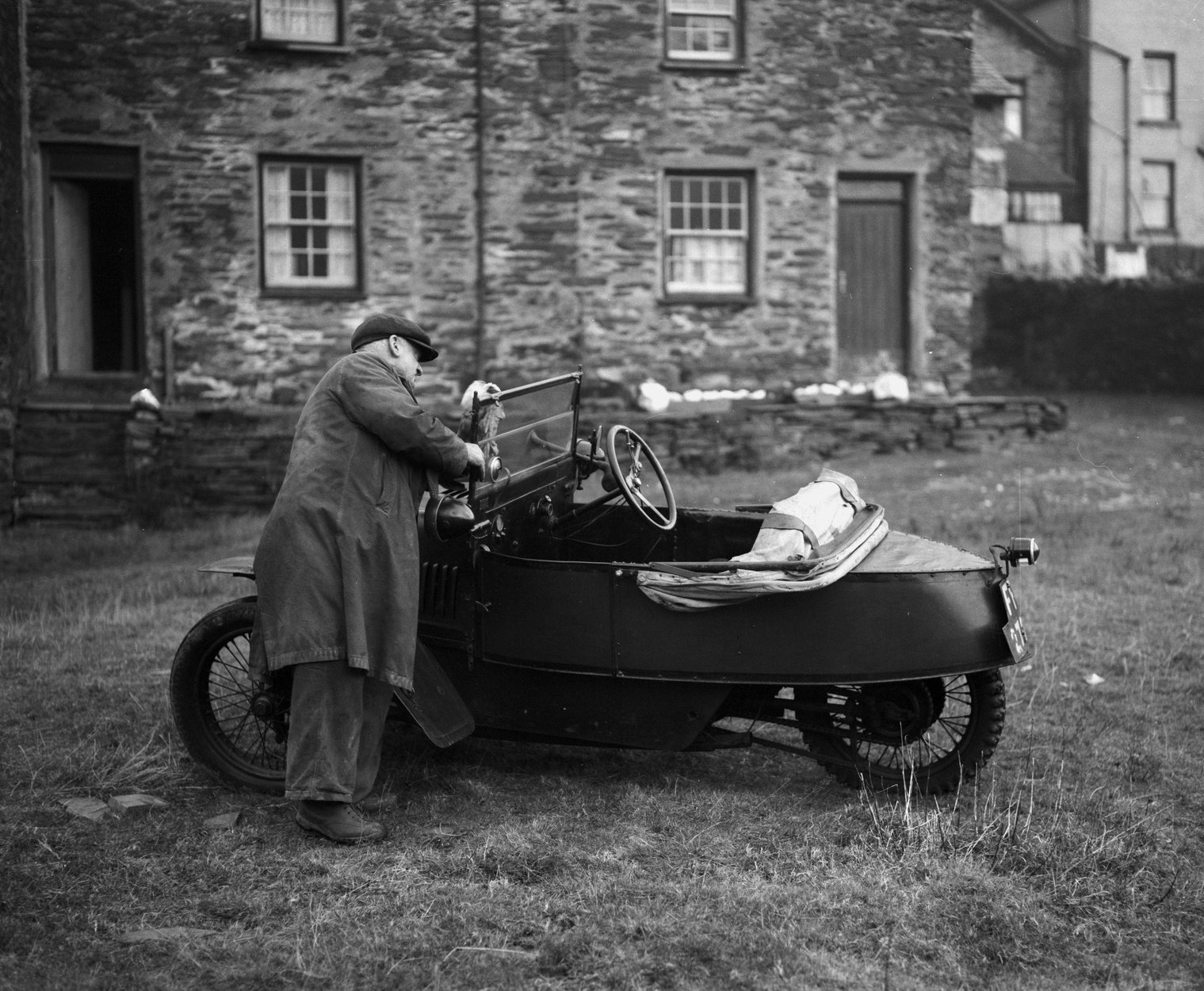
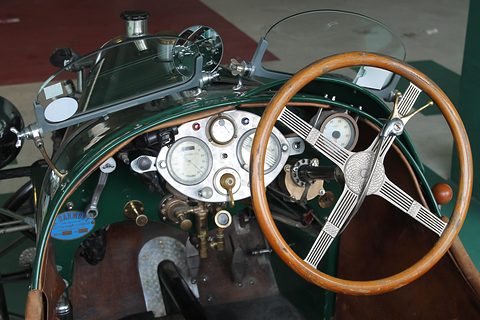
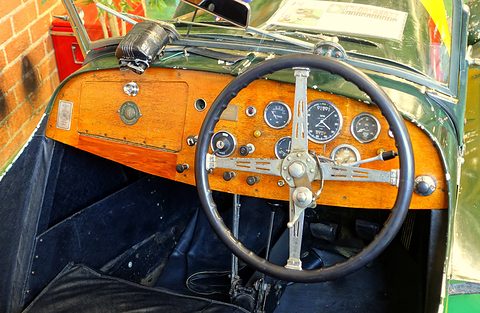
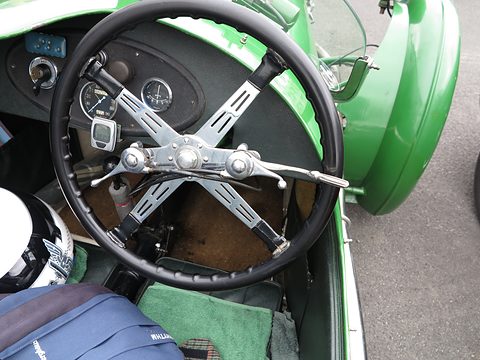
Driving one meant a side lever and dogs for the two gears, a hand throttle on Bowden levers, and a car that leaned outwards in corners.source 1source 10source 4 In 1925 The Light Car & Cyclecar tested an Aero-Blackburne, XX 8647, of 365 kg (7 cwt 1 qr 21 lb). It gave over 40 bhp at 4,500 rpm and an easy 113 km/h (70 mph); on tramlines, the tester found, “the anticipation of a skid … was more terrifying than its reality”. The cone clutch was fierce, the hood blinded the sides and rear, and the car used about 6.3 litres per 100 km (45 mpg); as tested it cost £167.source 1 “Focus” of the same paper drove an overhead-valve Aero-JAP 2,897 km (1,800 miles) in the 1927 Scottish Six Days and called it “exhilarating and health-giving”: entirely trouble-free, at 5.3 litres per 100 km (53 mpg) and 9 litres (two gallons) of oil, though the steering was heavy and at 105 km/h (65 mph) the propeller shaft began to whip.source 1 In 1930 “Sartor” of The Motor Cycle beat a motorcycle by nine minutes on his regular 85 km (53-mile) run, “hardly touching the brakes and cornering a good deal more slowly”.source 1
that merry twinkling of the rocker gear: the odd sparks which fly from the exposed exhaust ports at night … on a bumpy road it’s rather like taxi-ing over a grass aerodrome. … No wonder they called it the Aero model!
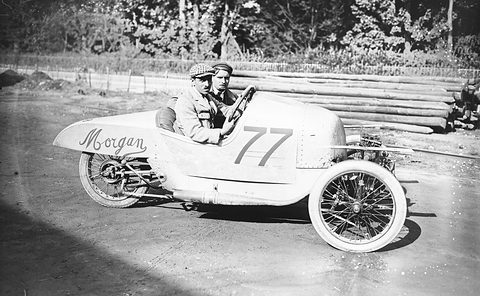
Banned, and back
In 1923 Morgan answered a critic in the motoring press that “a 3-wheeler has never overturned at Brooklands”.source 1 In the JCC 200-Mile Race of 1924 E. B. Ware’s Morgan crashed at the Fork when a tyre rubbed the tail and its tread jammed in a chain; Ware and his mechanic, Allchin, were thrown out and badly hurt. The Junior Car Club, backed by the BARC, then barred three-wheelers from its car races.source 1source 2 They went on breaking records, and some of the attempts went wrong: in 1926 Eric Fernihough’s rear tyre burst and his 494 cc car overturned with his fiancée, Miss Butler, aboard, and in 1927 J. J. Hall and Vic Derrington were badly hurt when their 750 cc Morgan burst a tyre.source 1source 2 At Arpajon in 1927 Dhôme’s Darmont-Morgan covered a mile at 145.5 km/h (90.41 mph).source 1
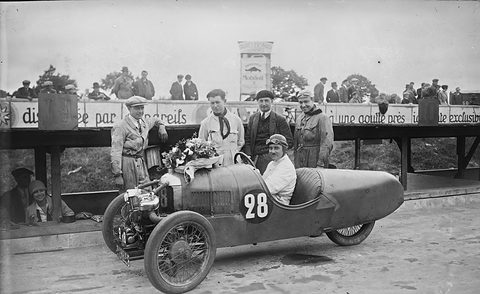
The New Cyclecar Club let three-wheelers race four-wheelers at Brooklands again in August 1928. Ron Horton won two handicaps, at 148.7 and 152.1 km/h (92.4 and 94.5 mph), and Clive Lones the club’s Cyclecar Grand Prix in a 1,096 cc Morgan-JAP.source 1source 2 At the next one, on 31 August 1929, C. T. Jay won at 104.1 km/h (64.7 mph) in Goodall’s 730 cc car, and Sydney Allard won an opening race in a Morgan at 118.1 km/h (73.37 mph).source 1source 11 Trials were a harvest of their own: from 1920 to 1926 Morgans took 27 gold, 14 silver and 9 bronze medals in the Land’s End trial alone.source 1
Three speeds, Ford engines and the end
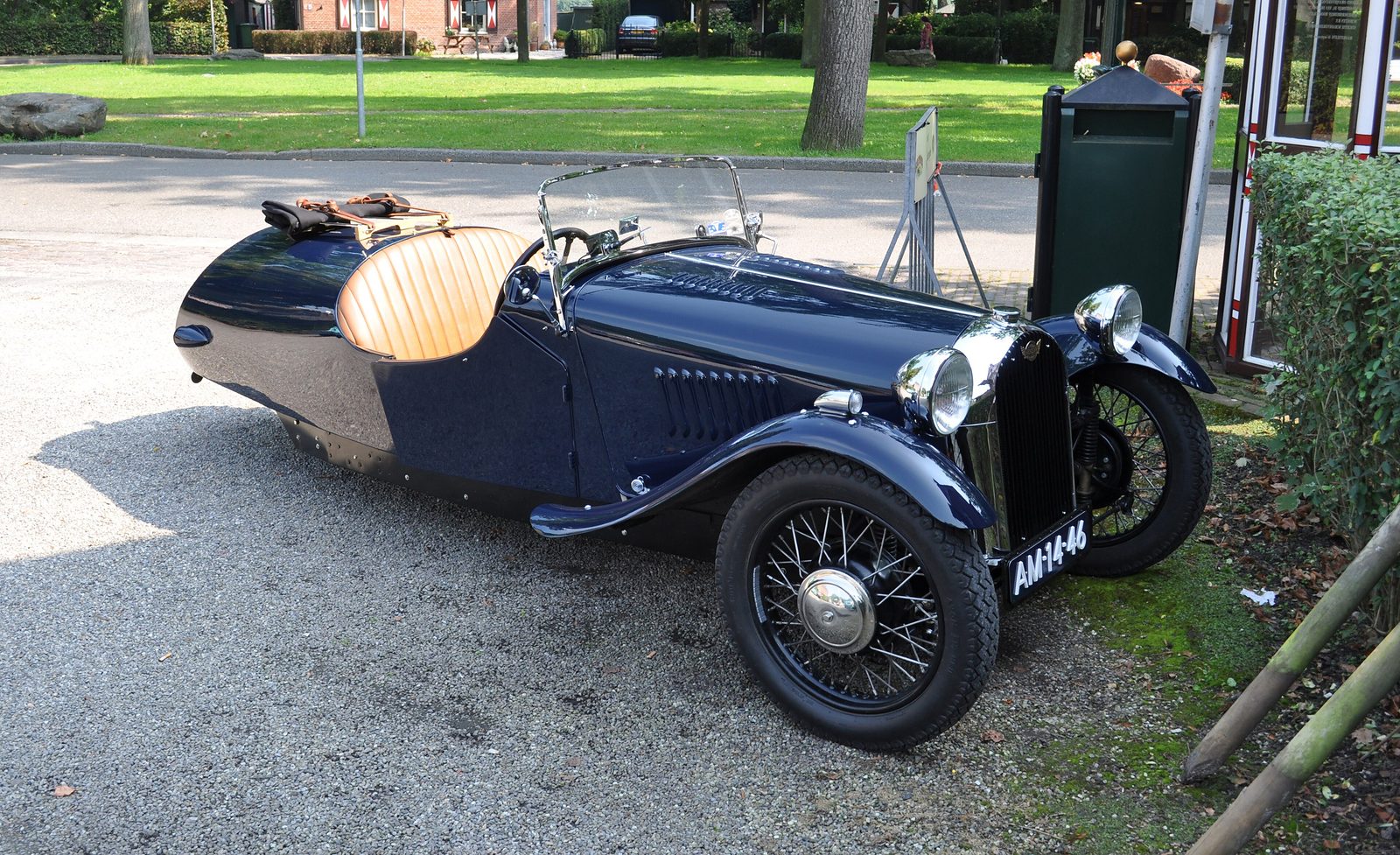
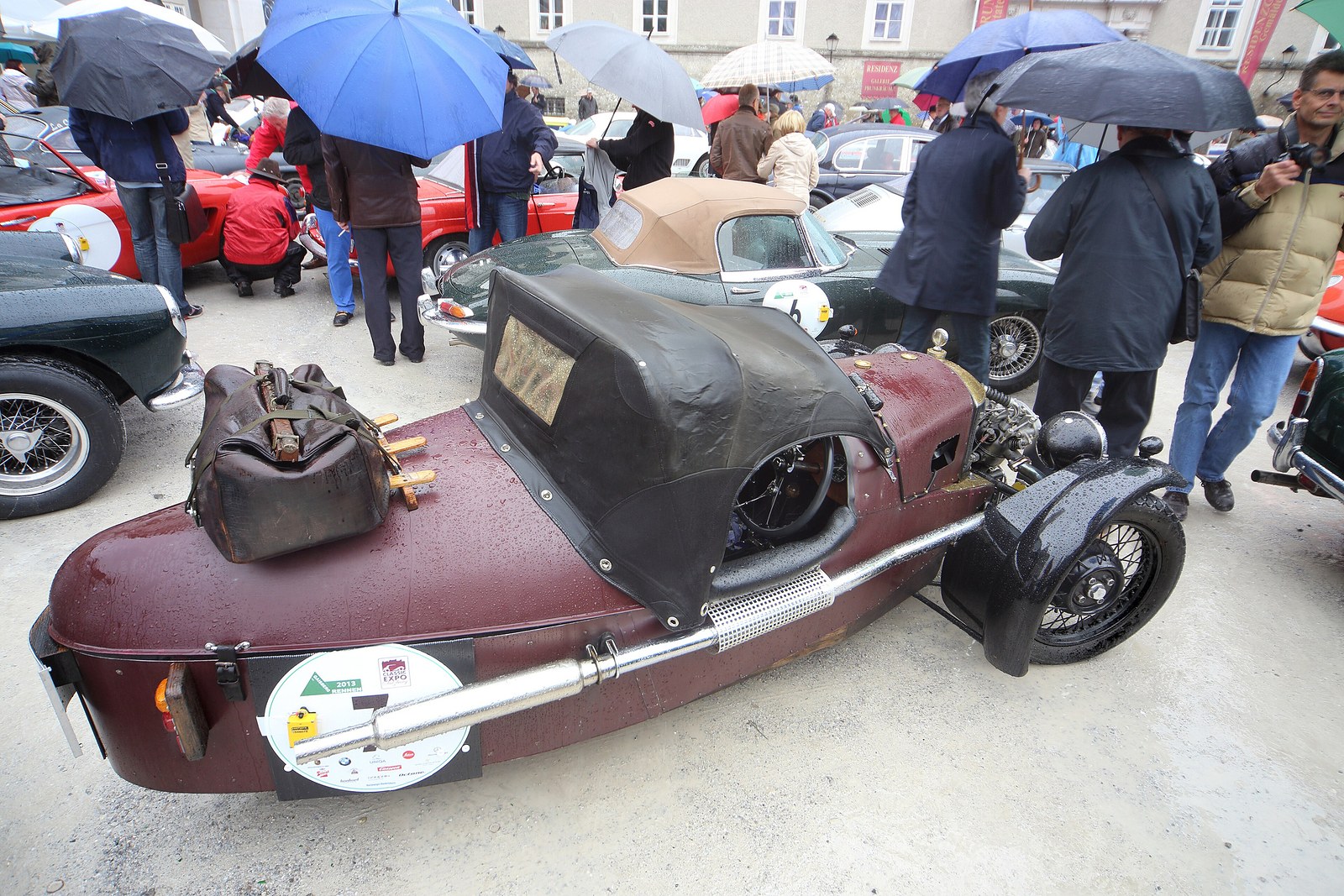
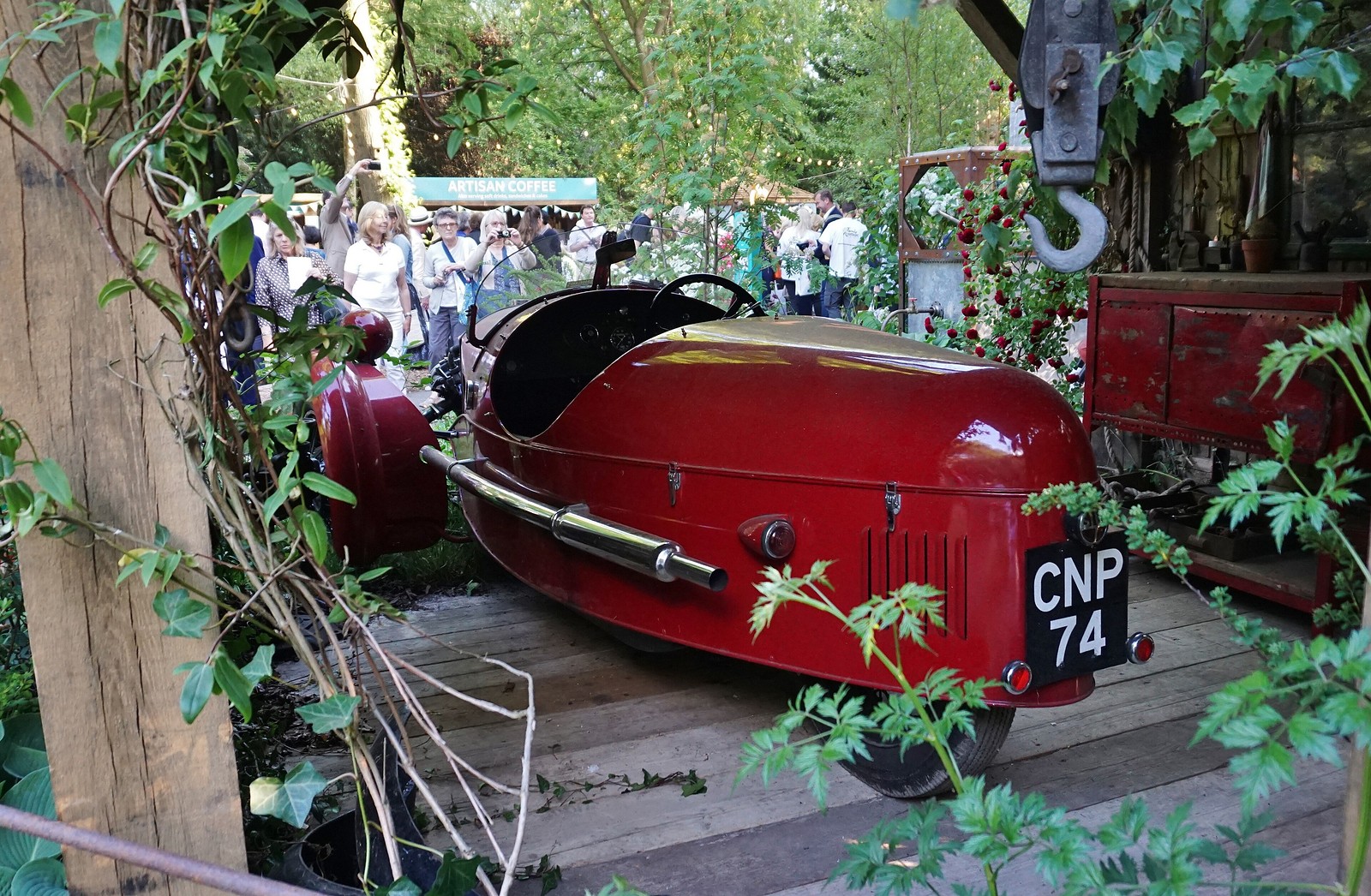
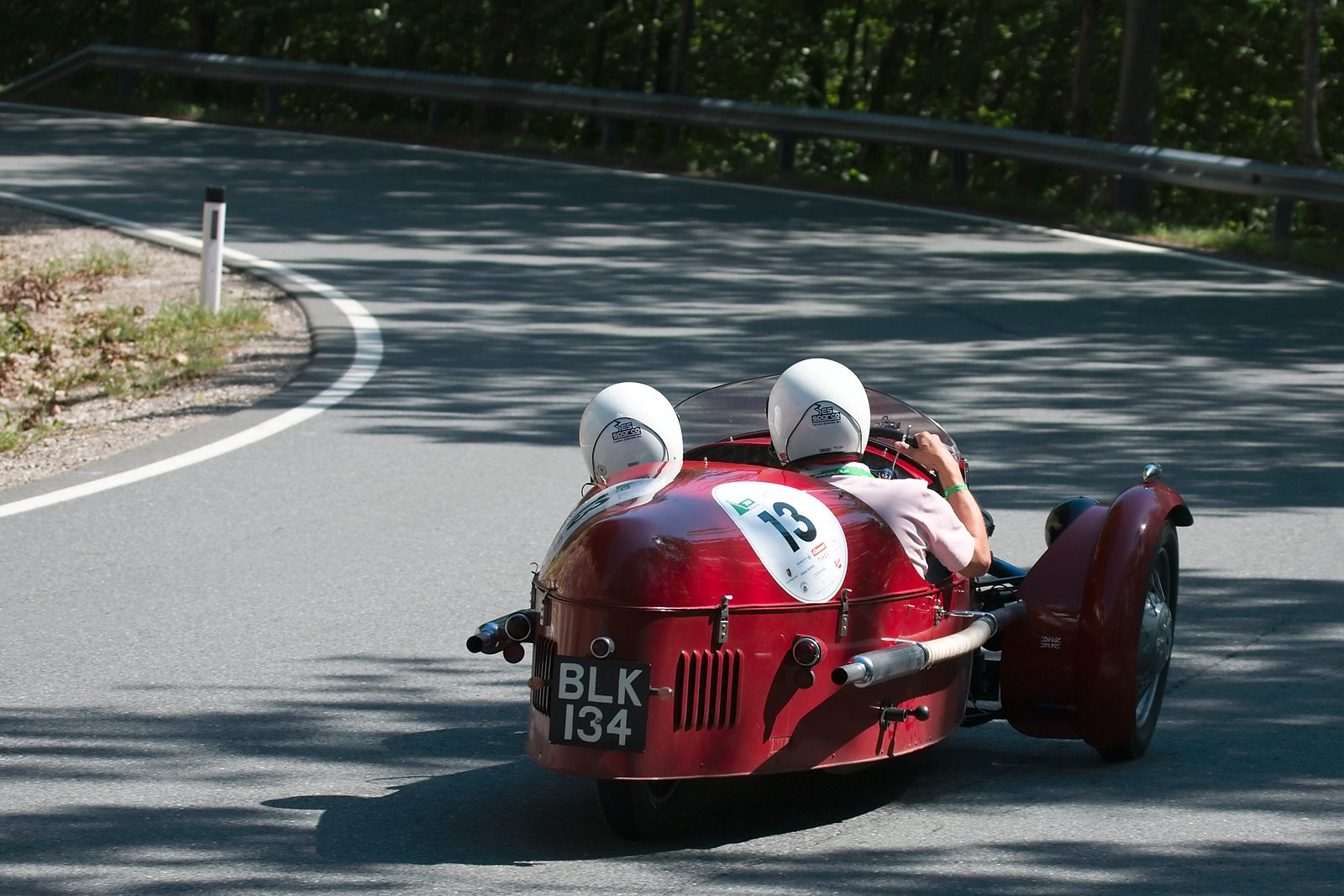
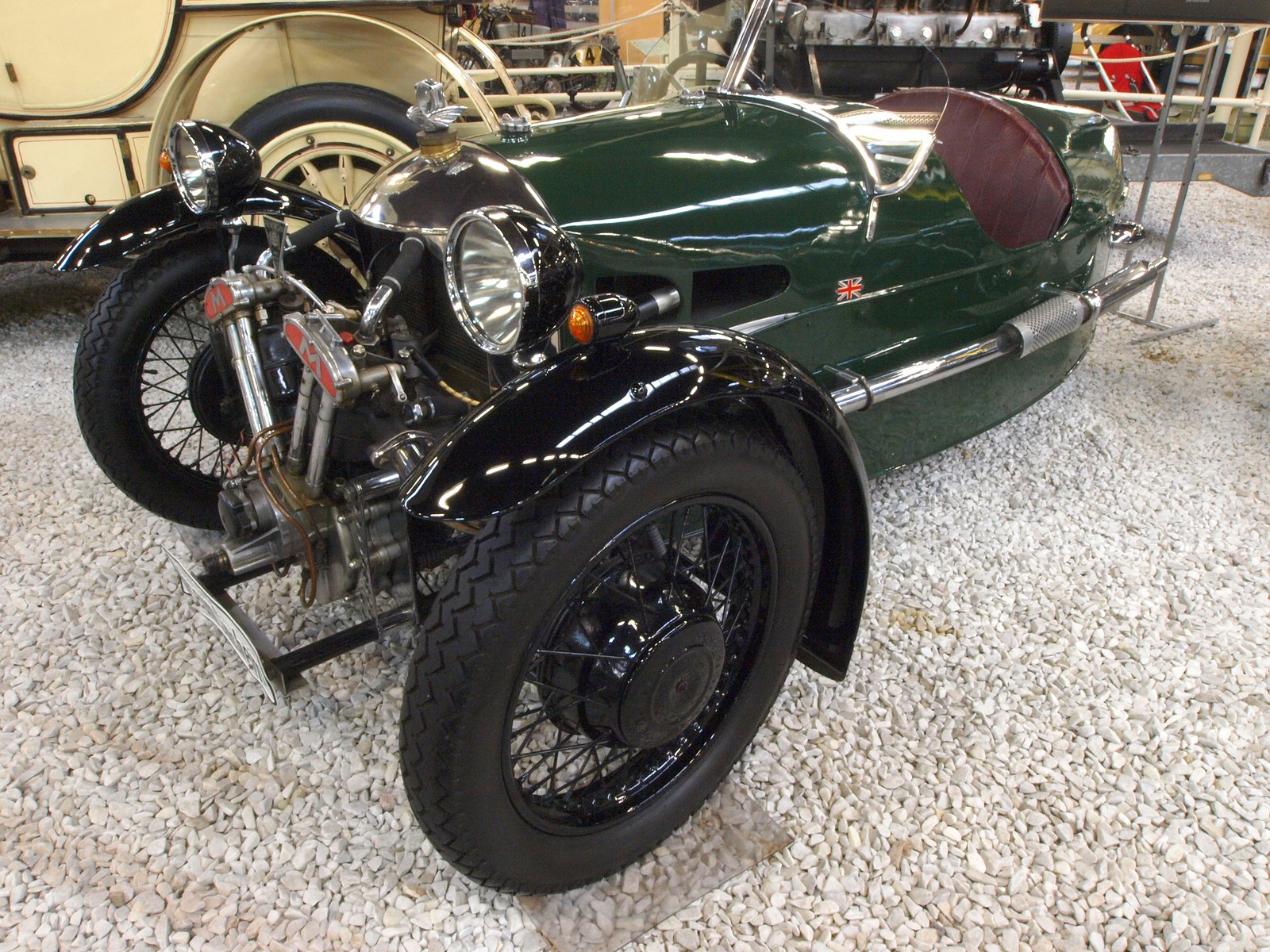
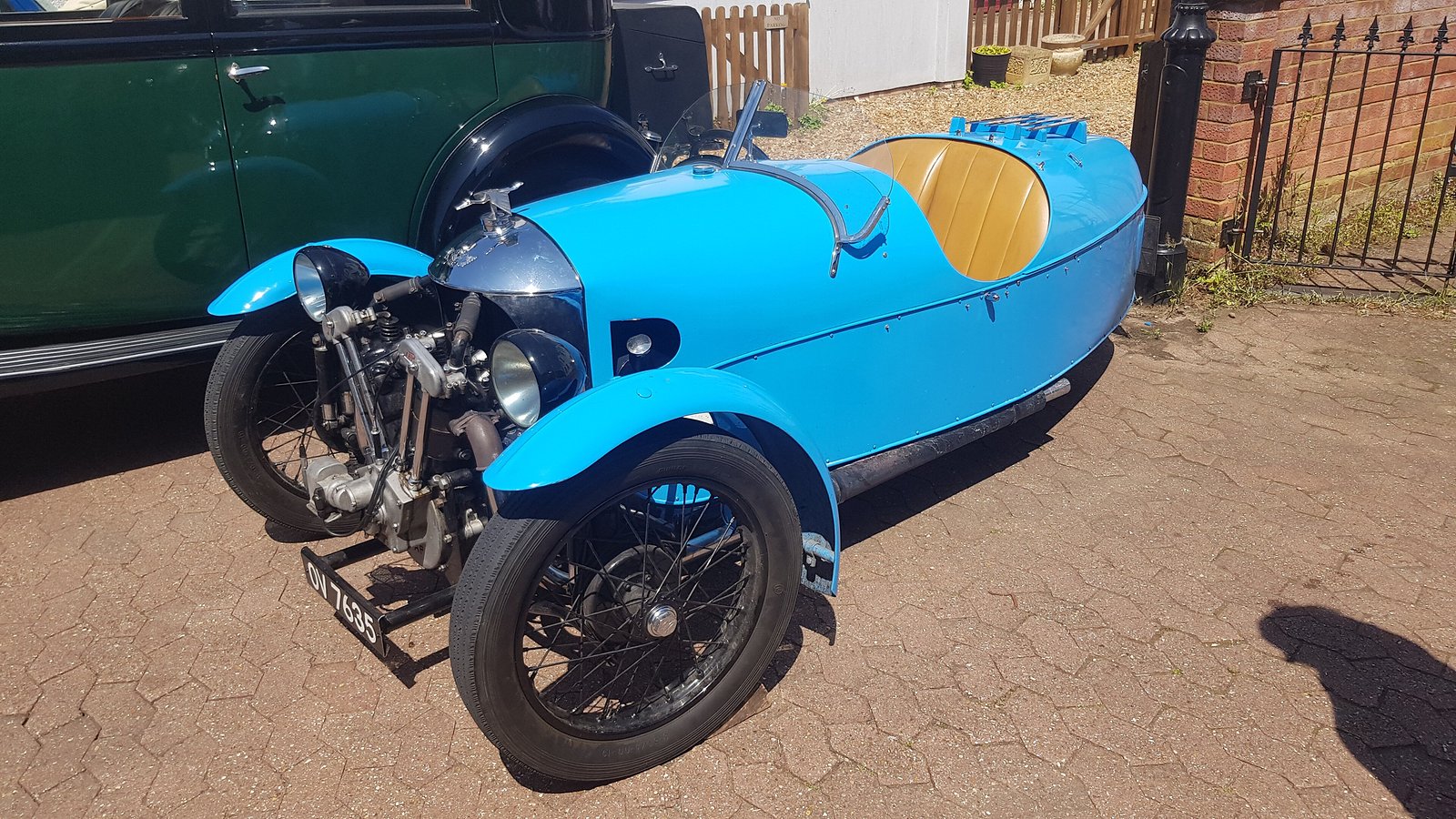
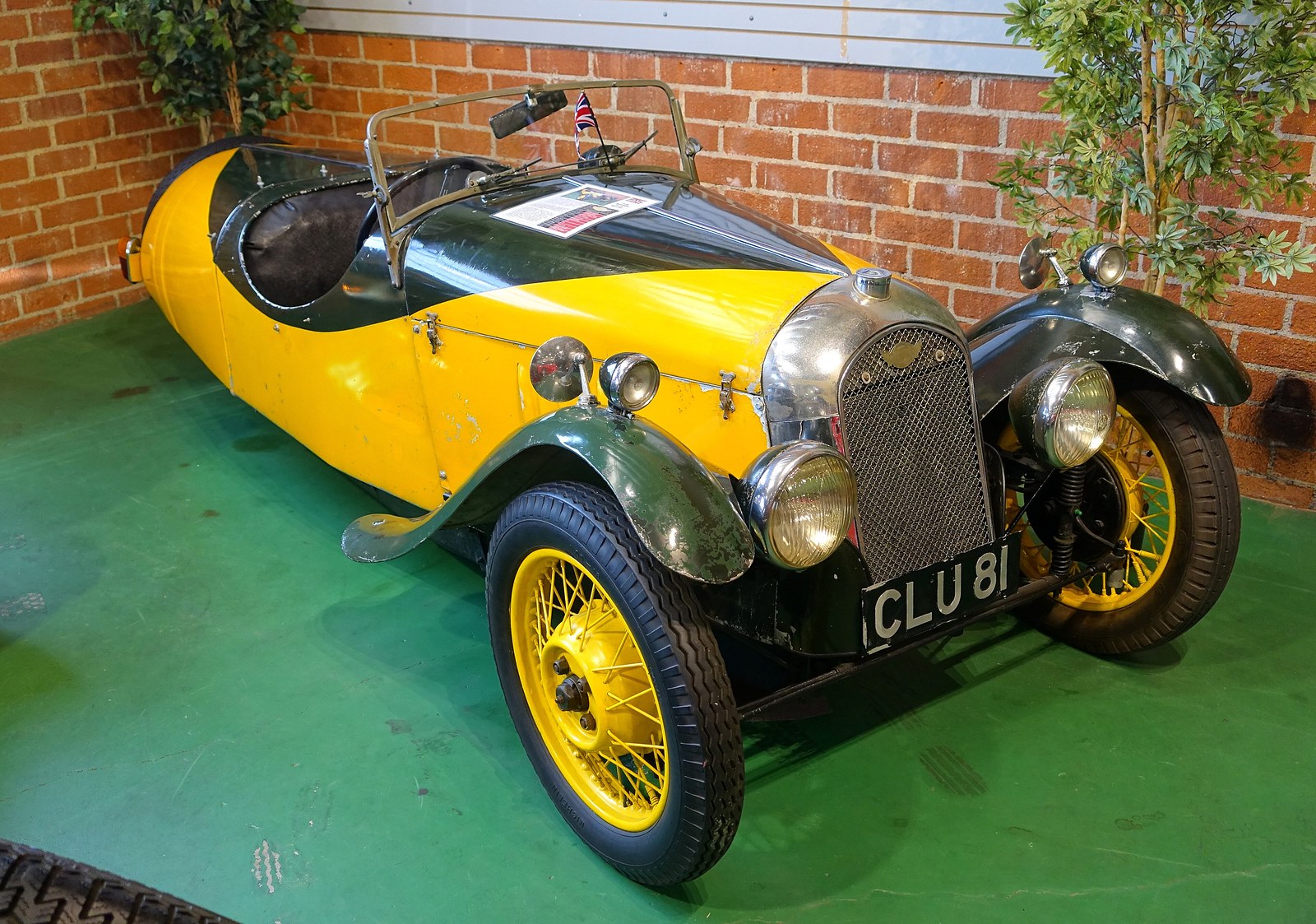
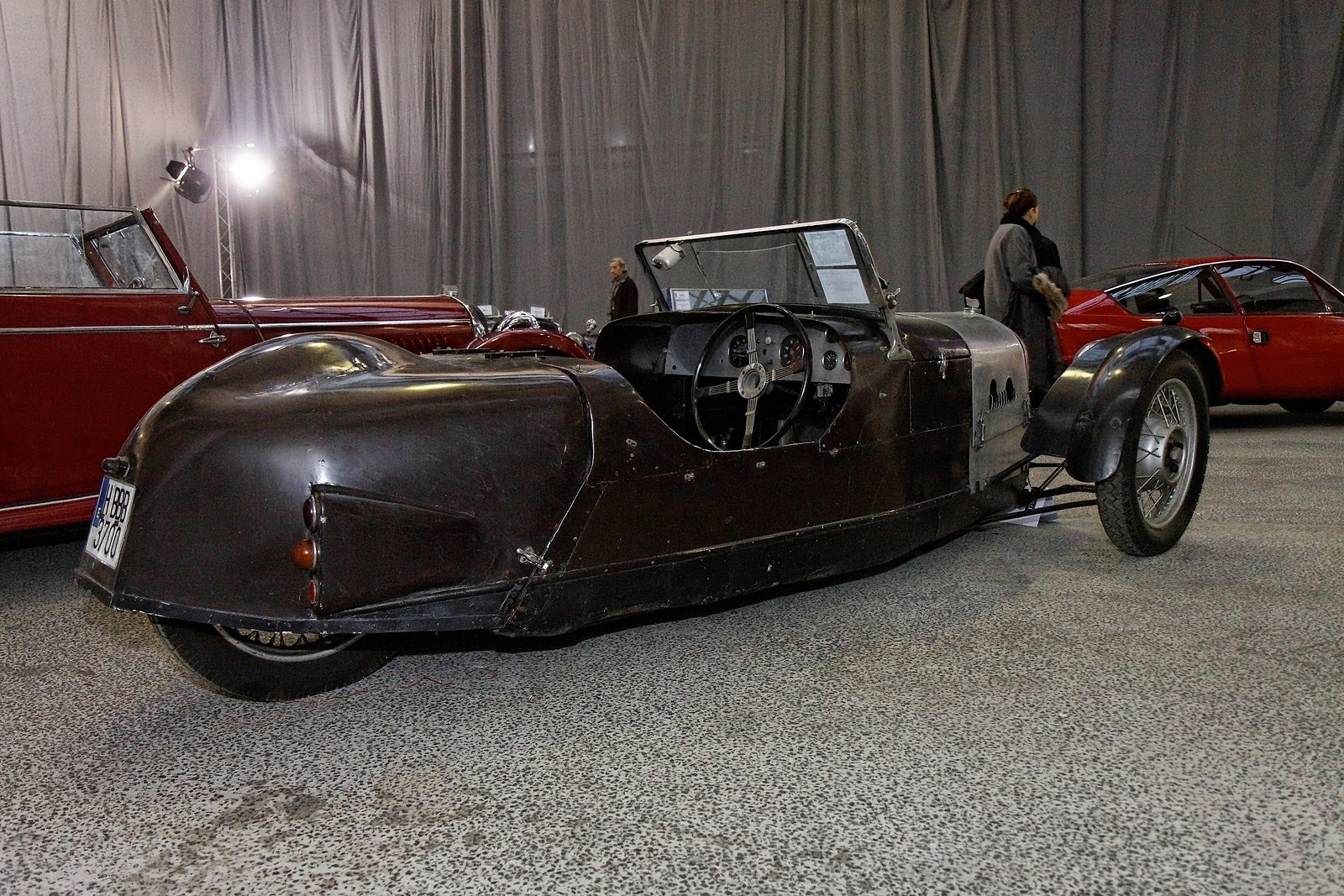
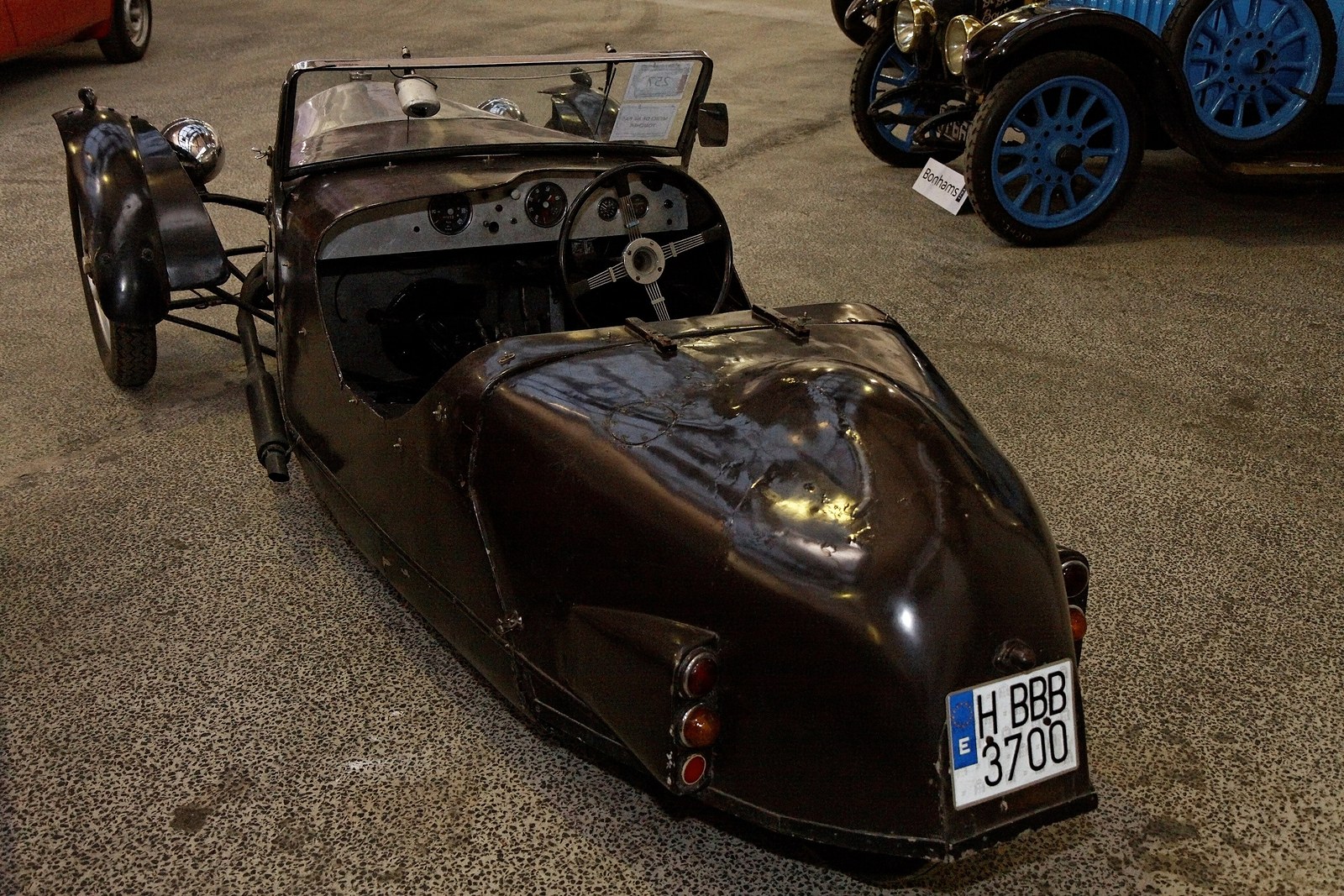
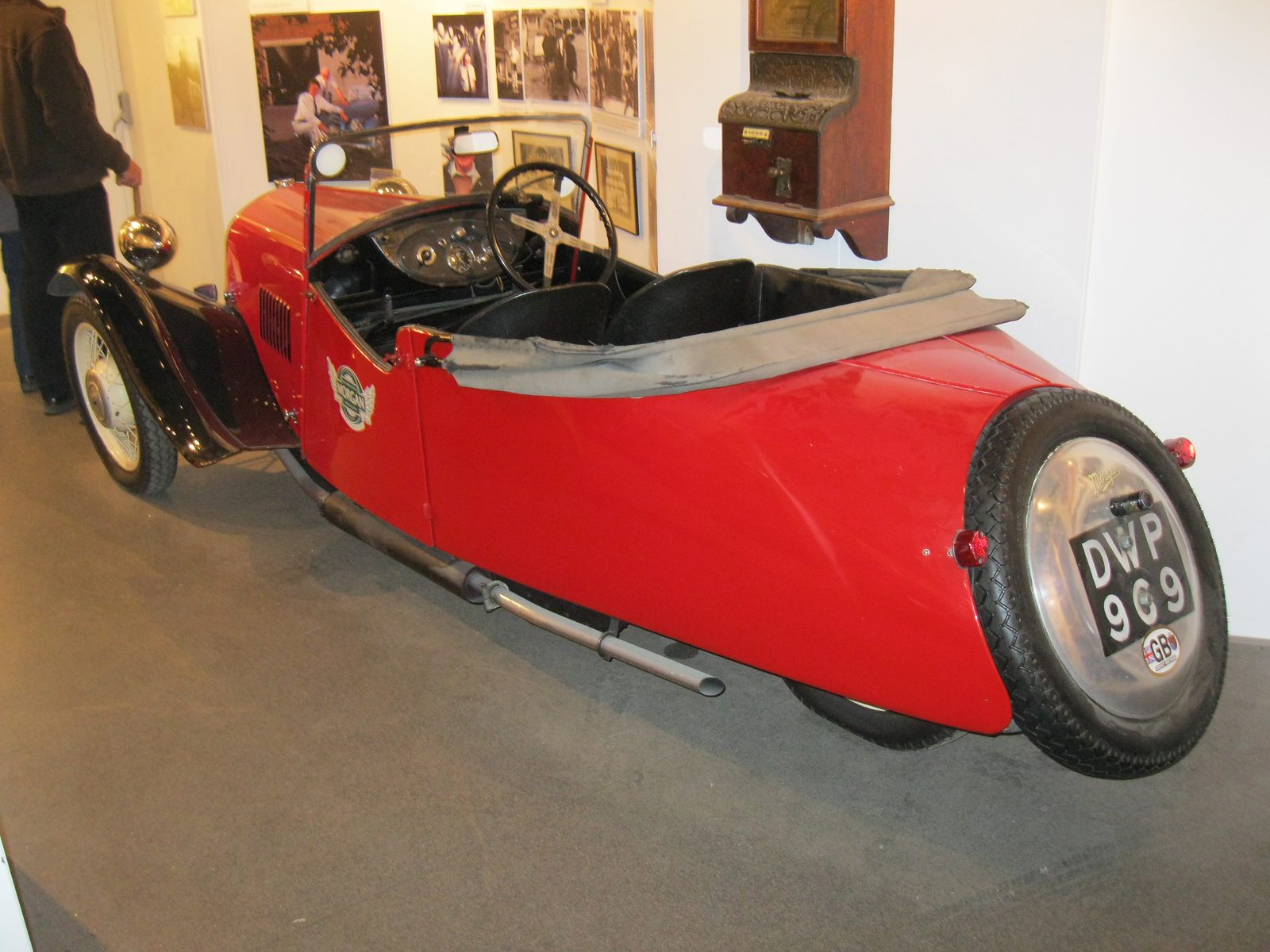
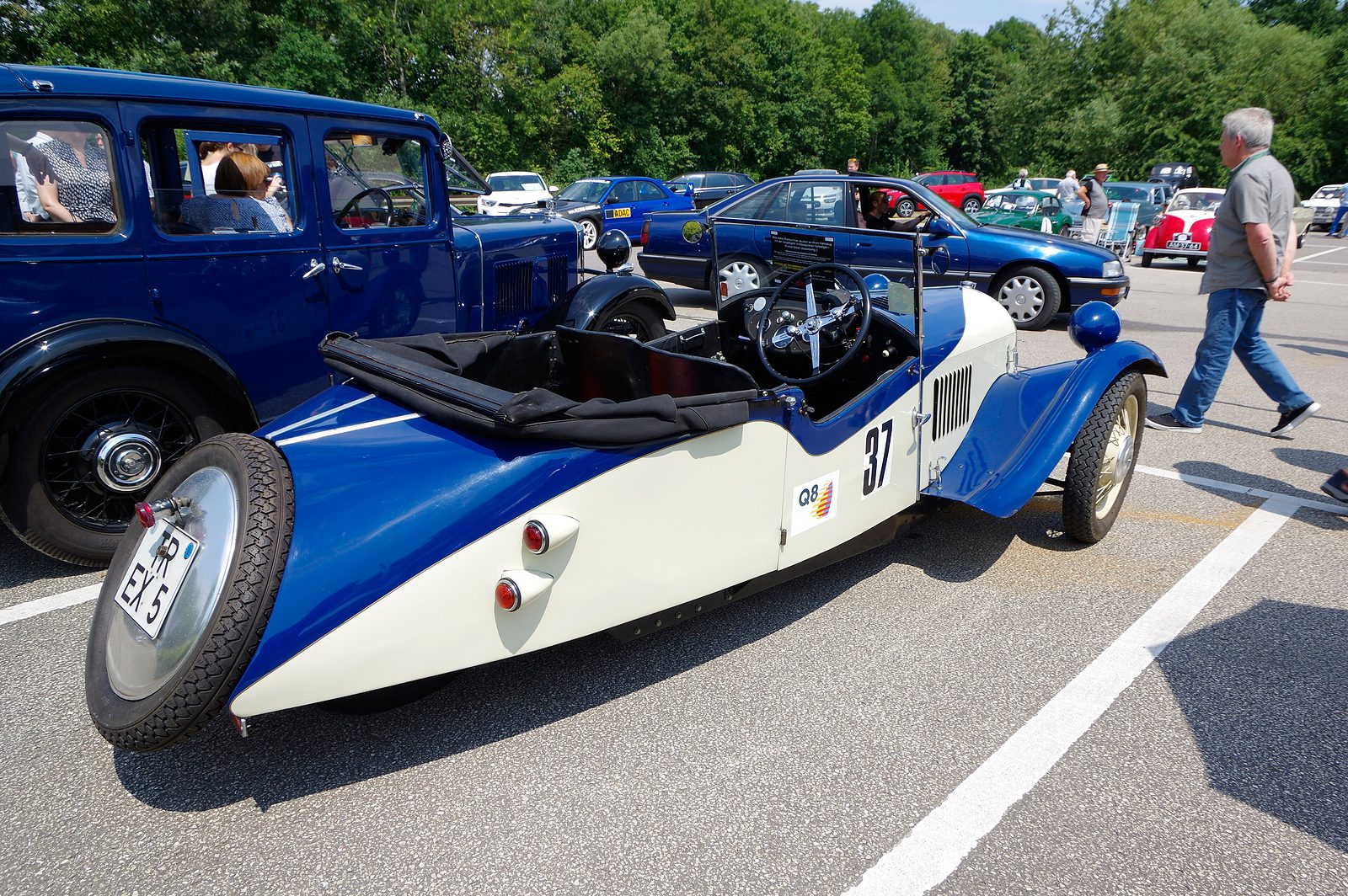
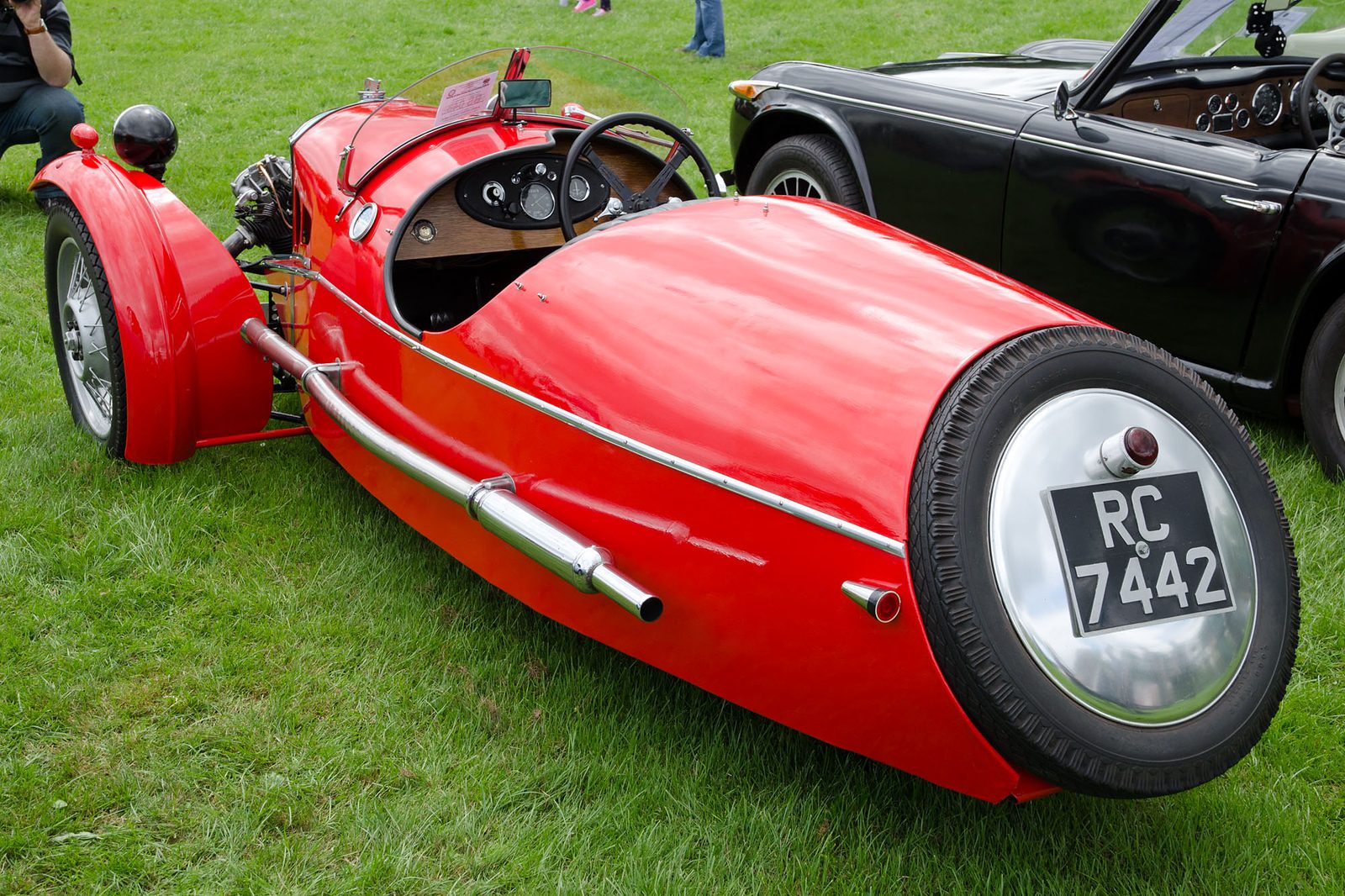
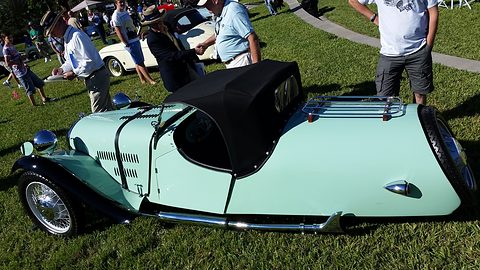
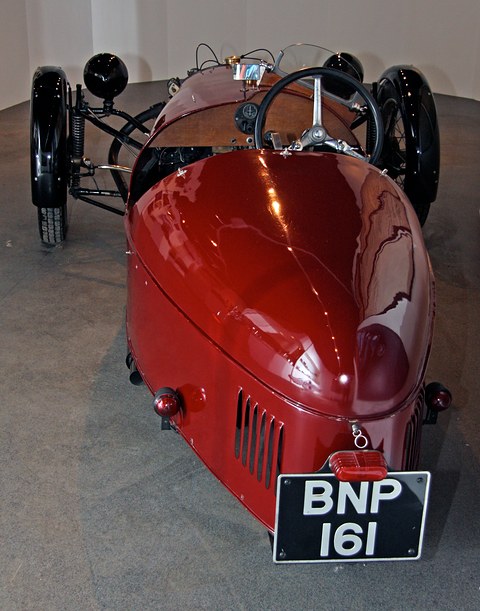
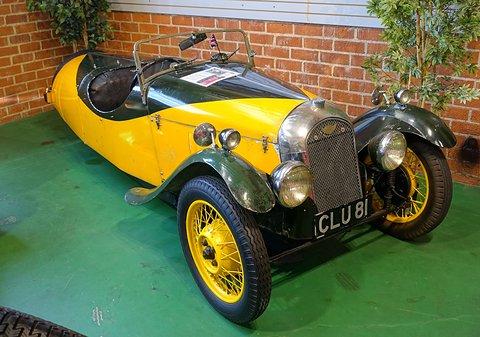
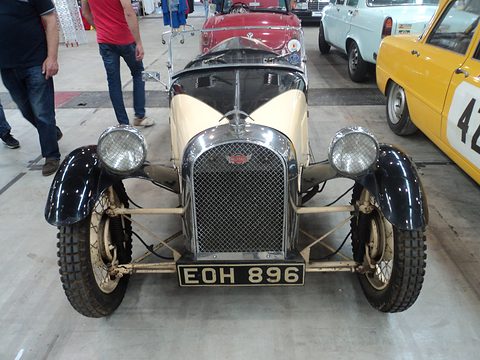
For 1931–32 a gearbox with three speeds and a reverse, made with Burman & Co., took the drive through a steel worm and bronze wheel to a single chain. The first box ran on Castrol R and its bronze wheel overheated; the redesigned D-type of 1933 used Castrol D.source 3source 5 Two-speeders stayed in the list until 1933.source 1source 4 Detachable, interchangeable wheels allowed a spare, which moved into the tail of the barrel-back body, “a worm’s eye view of a beer bottle” in a contemporary’s phrase quoted by the club.source 5source 4 From 1933–34 Matchless engines replaced the JAPs, and after 1934 every V-twin Morgan had one.source 1source 5source 4
The Ford-engined F4, with a pressed-steel chassis, four seats and the radiator in front of the engine under a bonnet, was shown at the Olympia Motor Cycle Show in 1933; Morgan himself, and Boddy, dated the Ford model to 1935, which may be when it came in numbers.source 11source 5source 3source 1 The two-seat F2 and the lower F-Super followed.source 11source 5 In 1935 a two-seater cost £105, only £7 less than a basic Austin Seven, and in 1936 the four-wheeled 4/4 appeared, built on what the three-wheeler had taught.source 10source 3 The V-twins ended in Britain in 1939; the last of them, Matchless-engined Super Sports, went to Australia after the war, six of them in 1952 by the club’s count.source 5source 1source 11
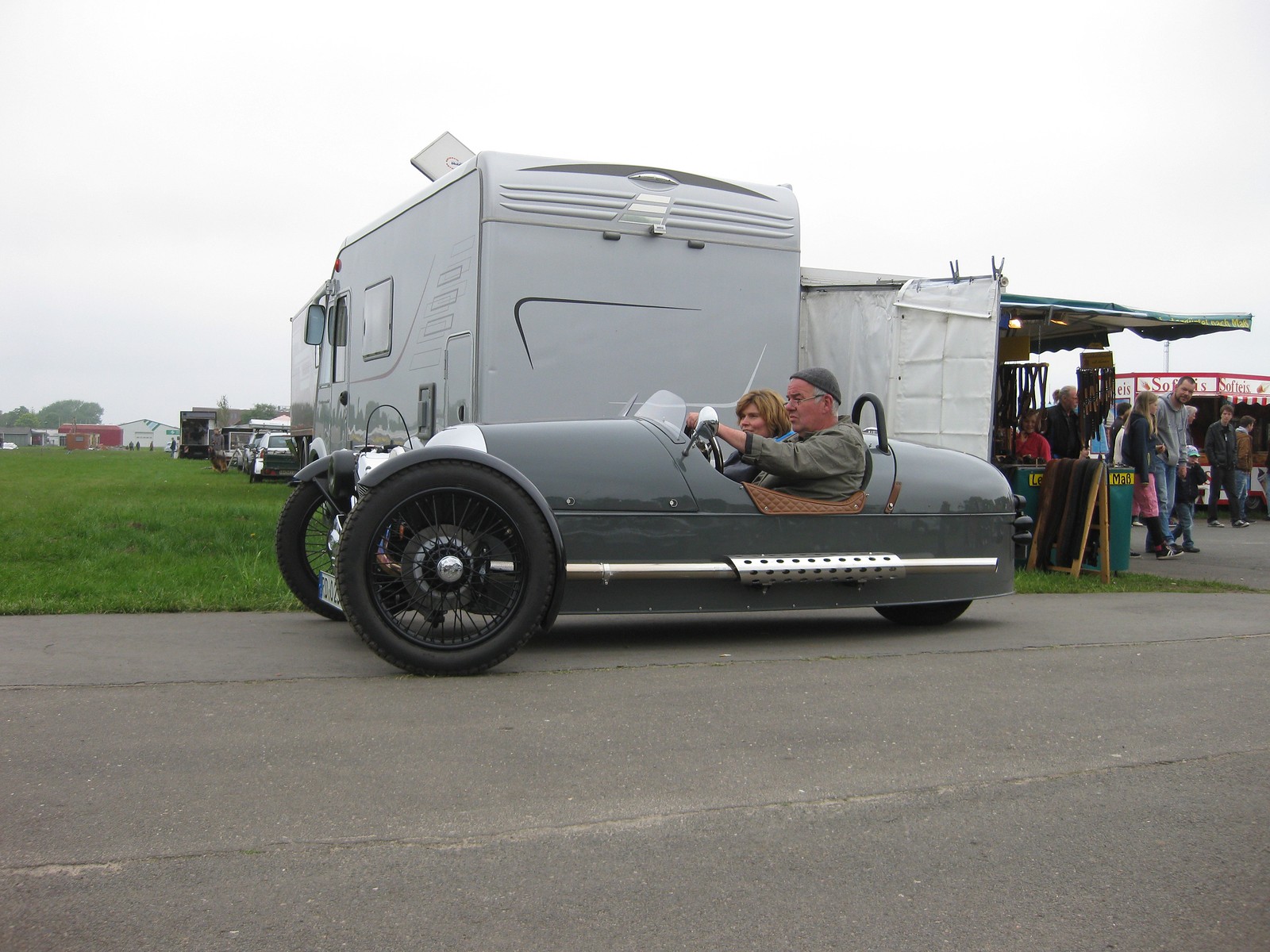
After 1945 steel went to firms that exported, and Morgan put it into four-wheelers. Robson counts 632 F4s and F-Supers assembled in the seven years that remained.source 3source 10 The Plus 4 of 1950 took the factory’s capacity, and on 29 July 1952 the last three-wheeler, a Ford-engined F-Super, left the works. Boddy wrote that the F-types were discontinued in 1950, Grace’s Guide gives 1951, and one club page says 1953; the July 1952 date is the most specific, and it fits the seven-year count.source 3source 1source 9source 5 H. F. S. Morgan died in 1959, aged 77.source 3source 1 His firm came back to three wheels with the 3 Wheeler, shown at Geneva in 2011 and built from 2012 to 2021 with a 1,983 cc S&S V-twin, and with the Super 3 of 2022.source 10source 11
Some day, perhaps in the dim and distant future, it is possible that I (or perhaps my son, if he shall have taken my place) may duplicate the three wheels, and concentrate on a 6-wheeler!