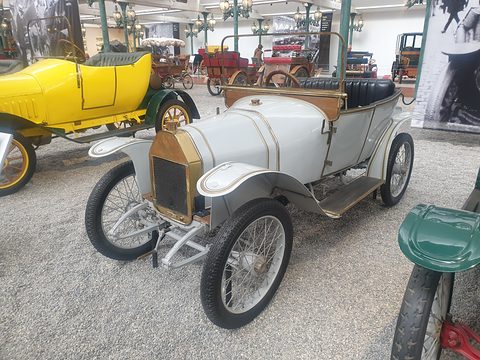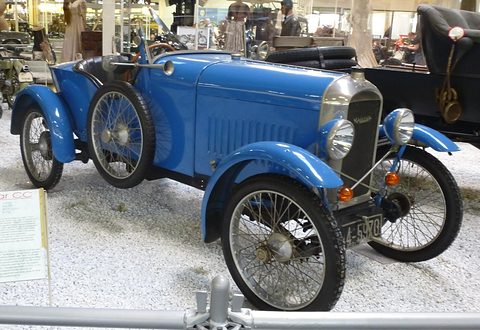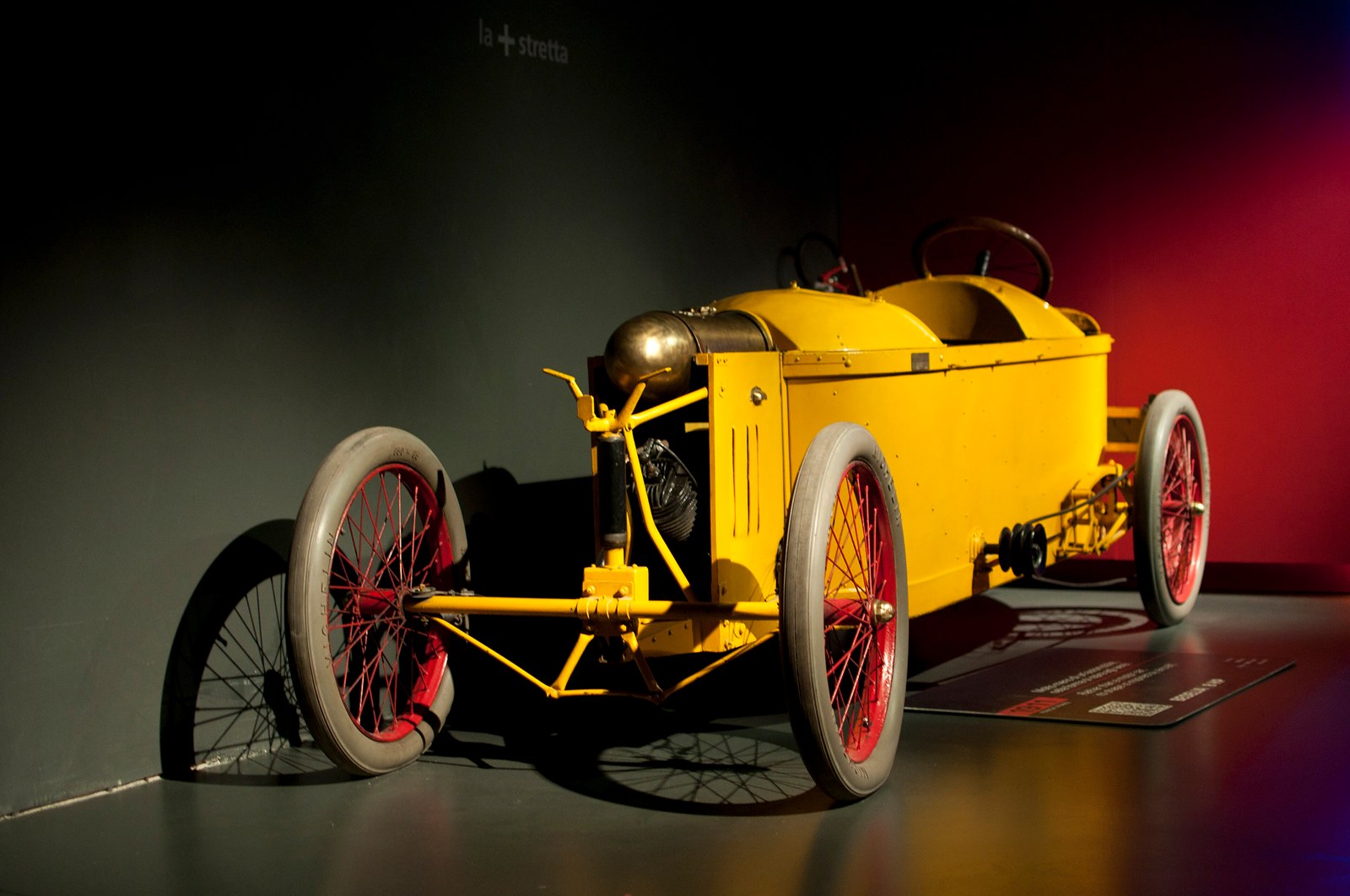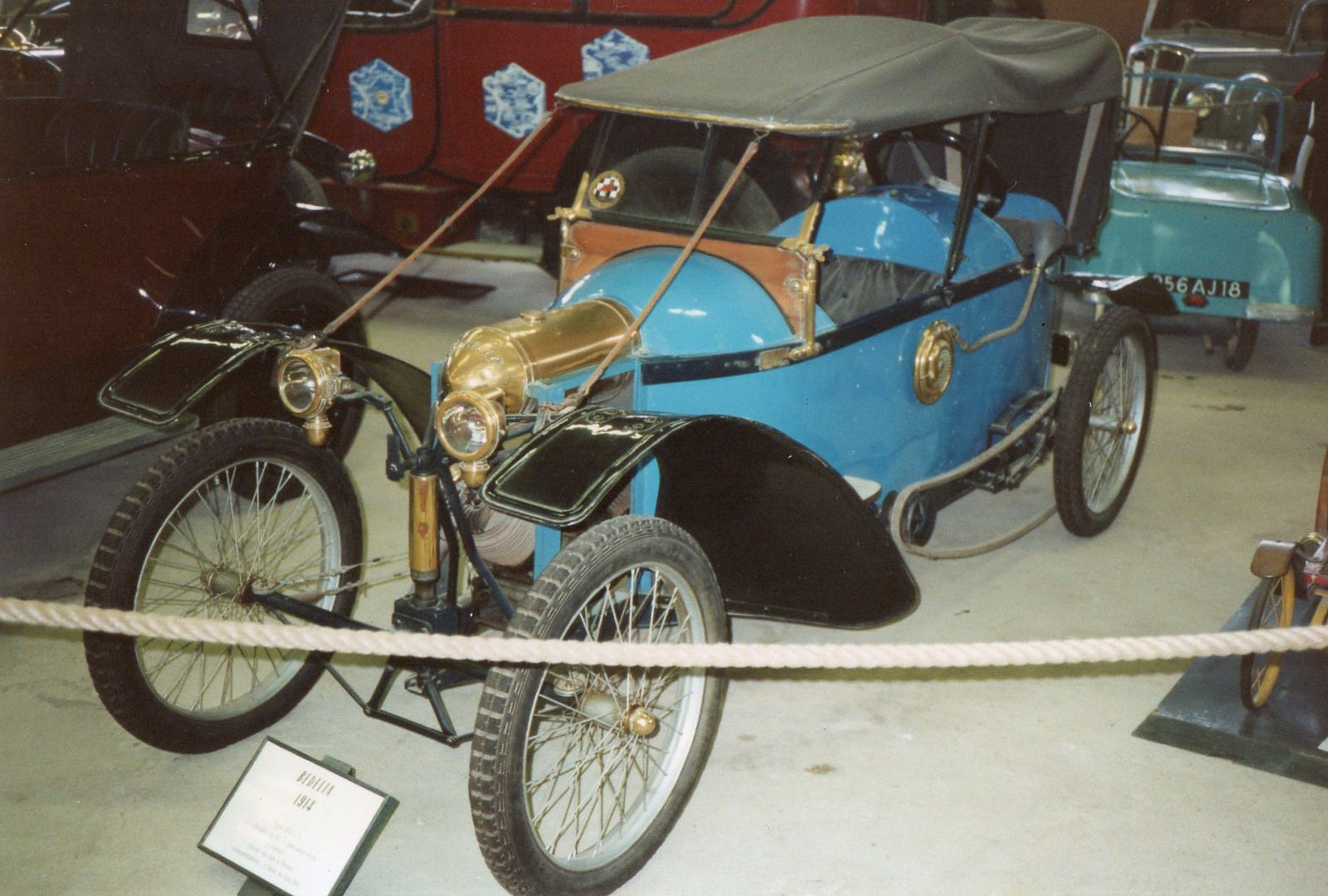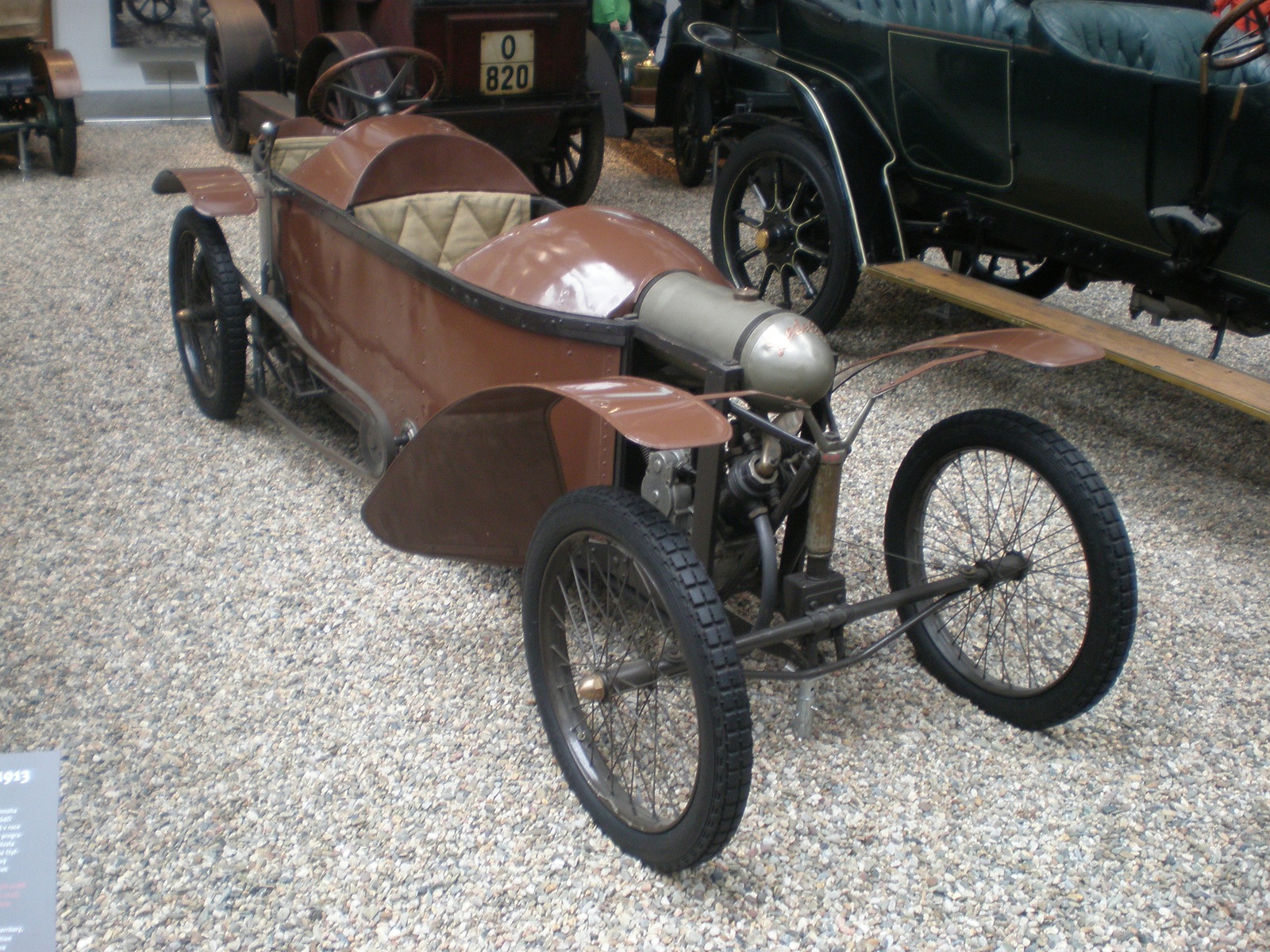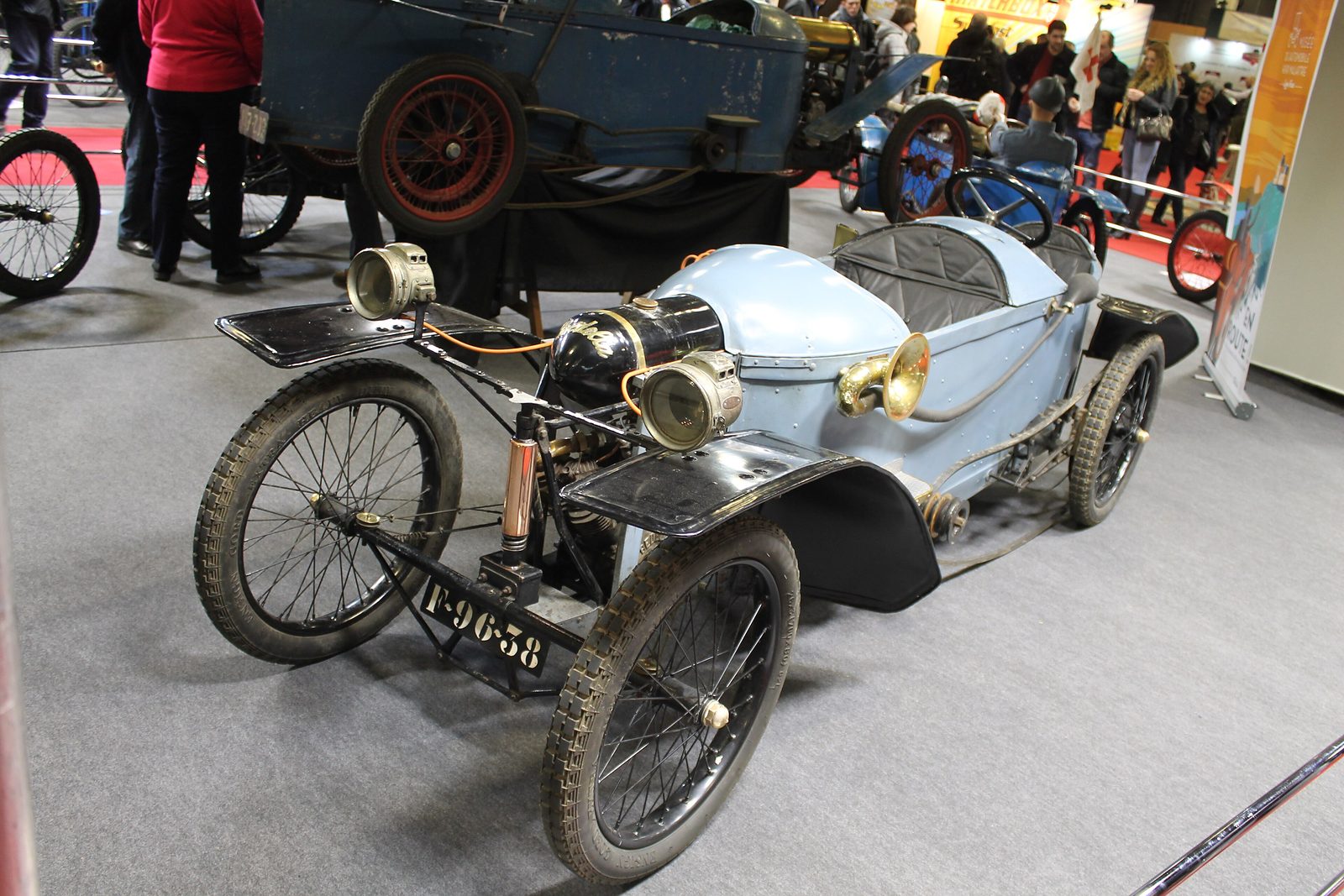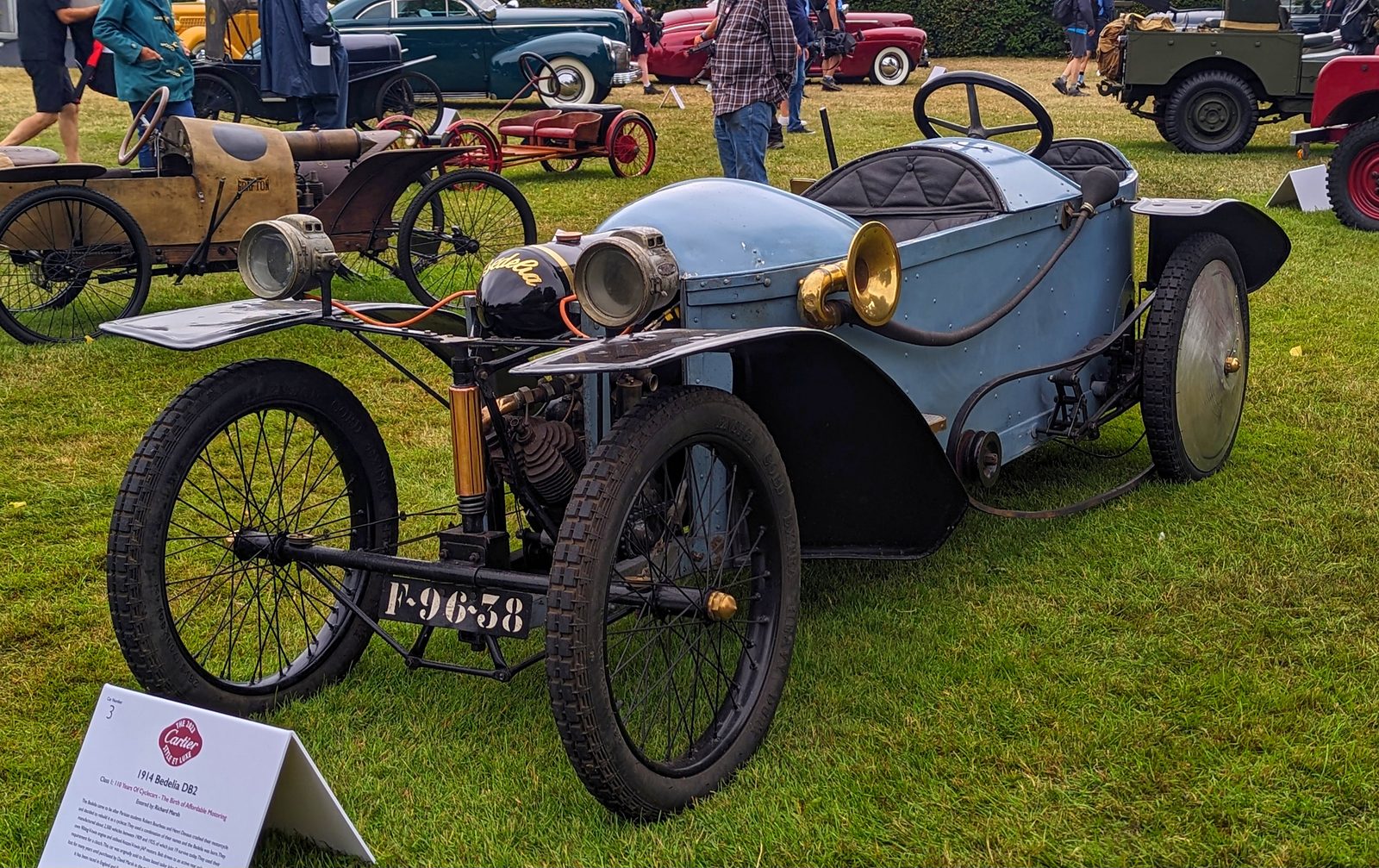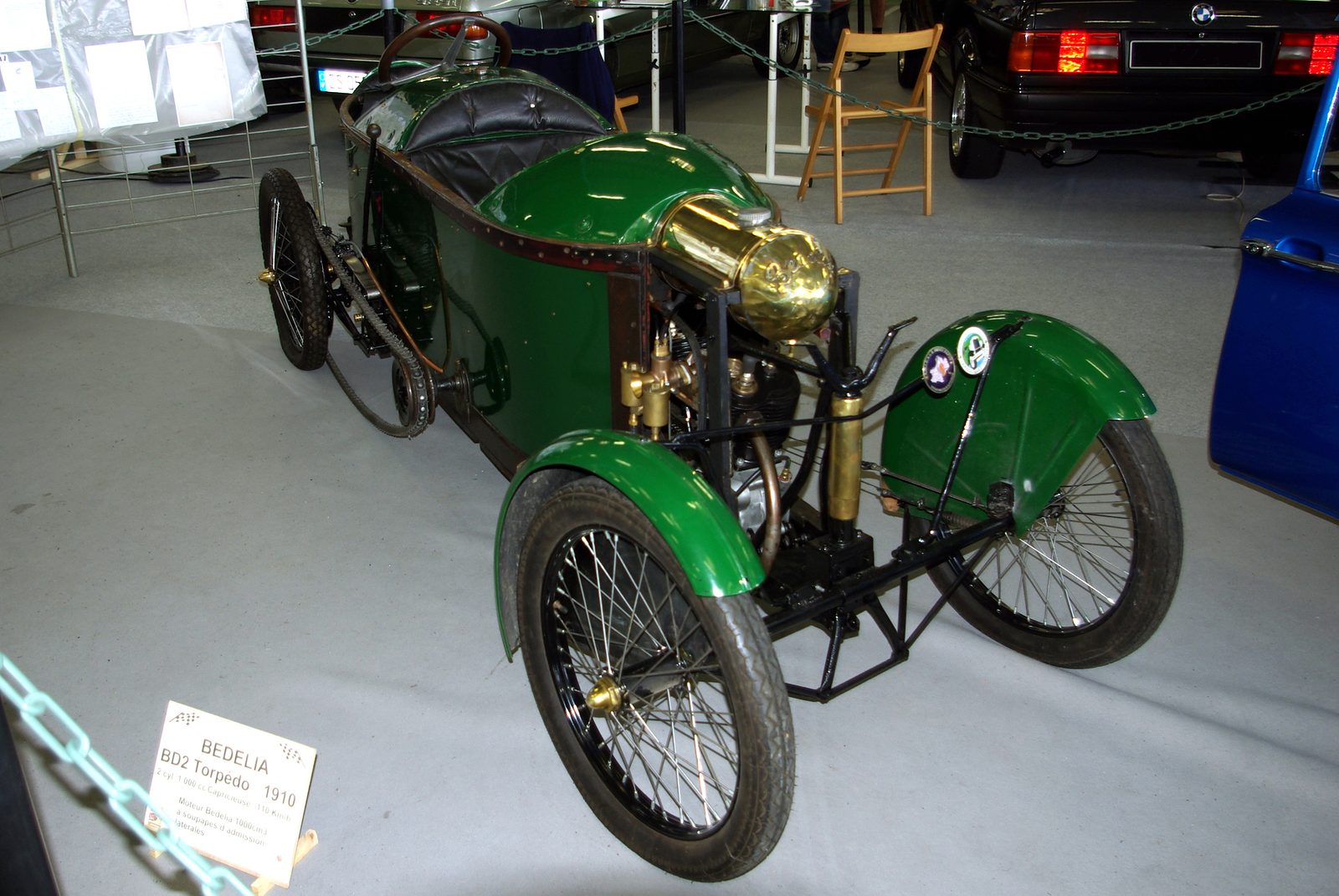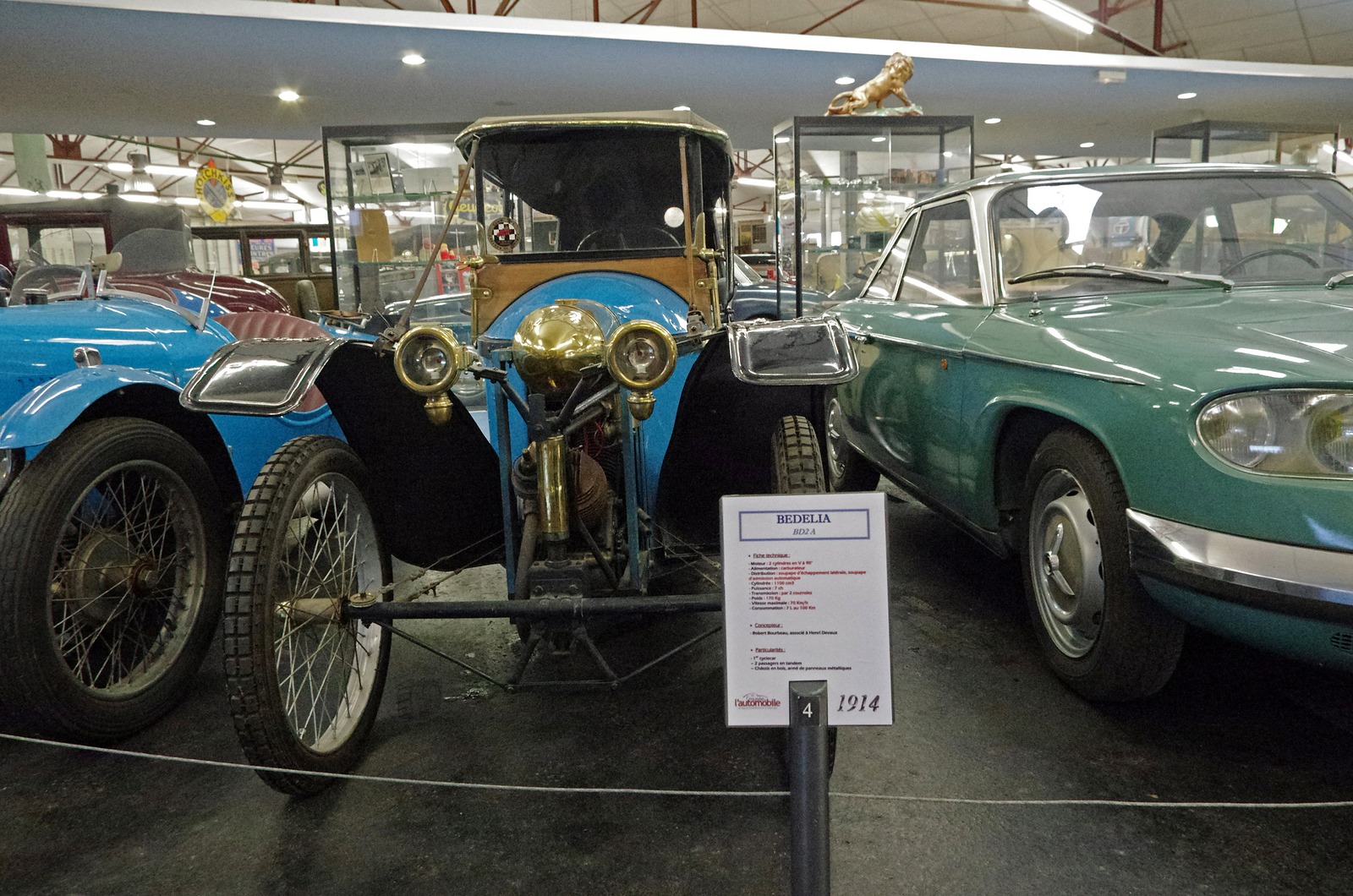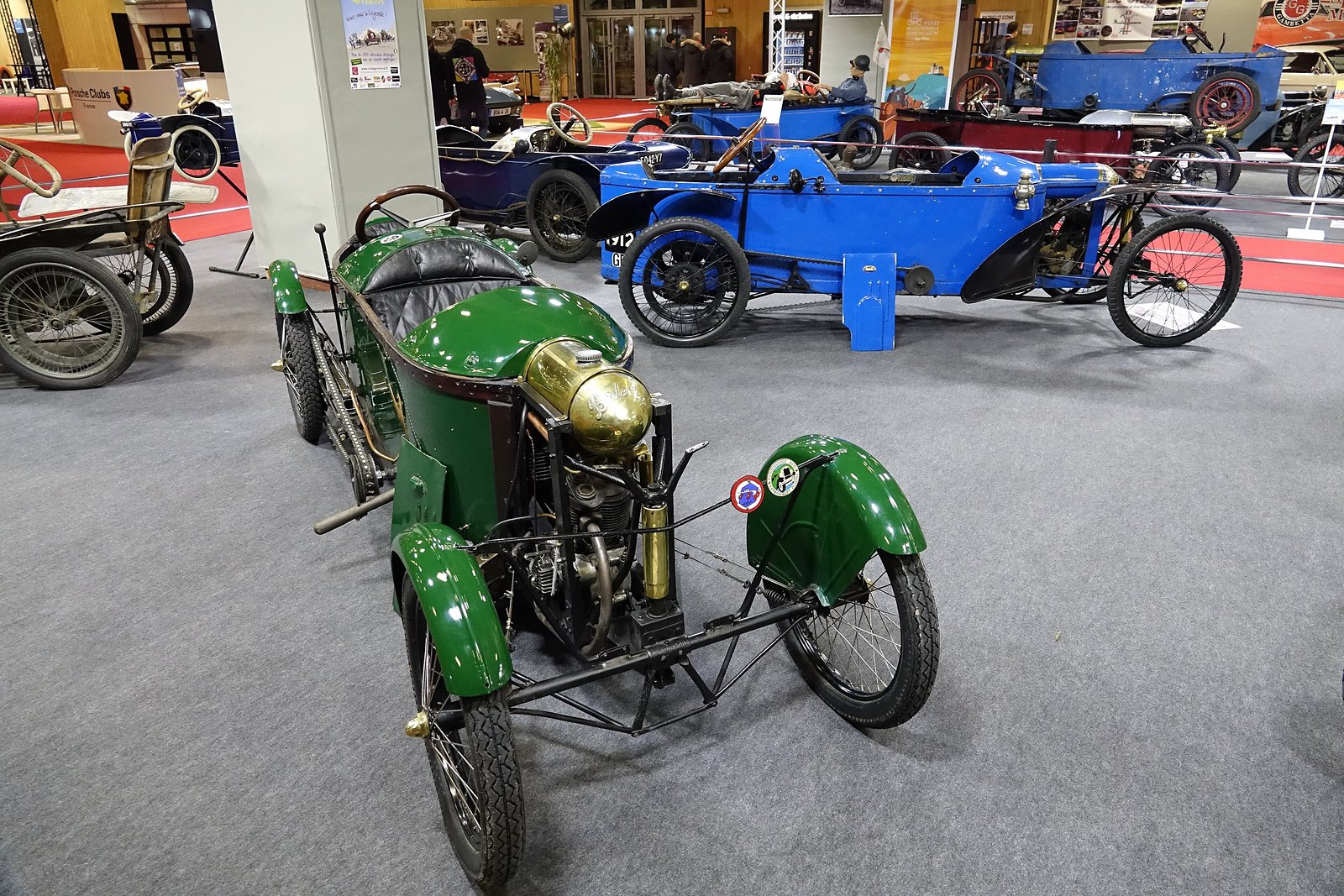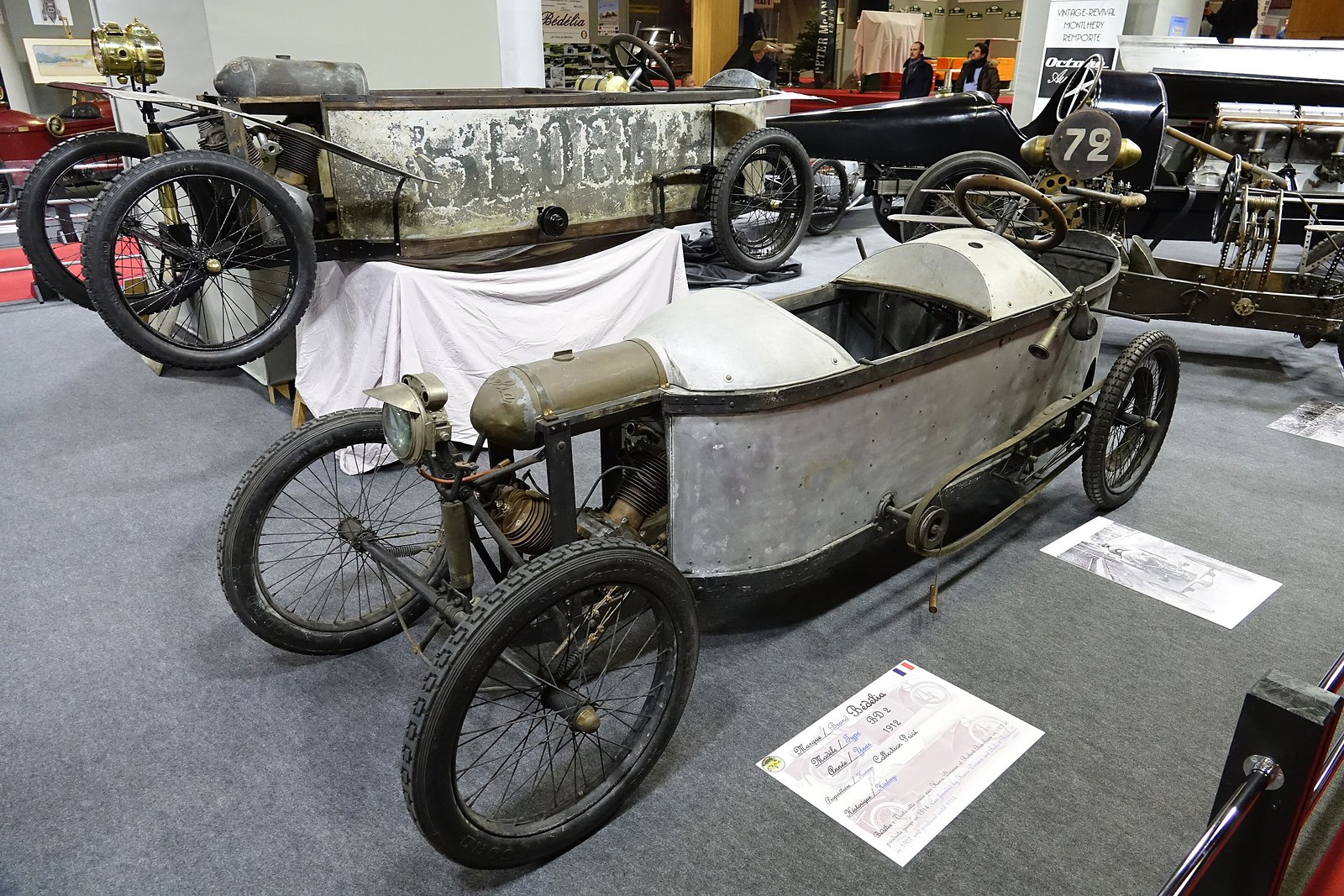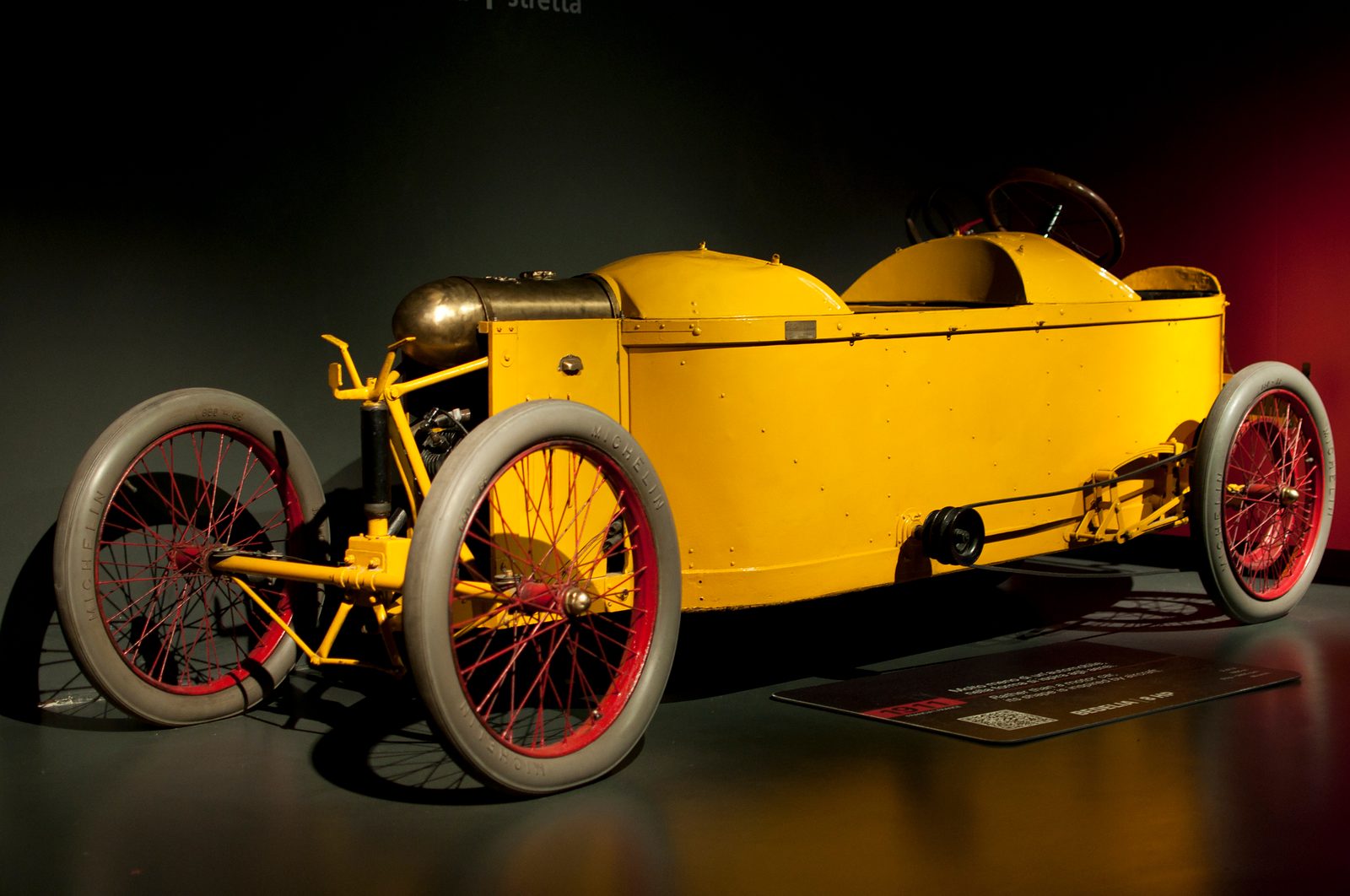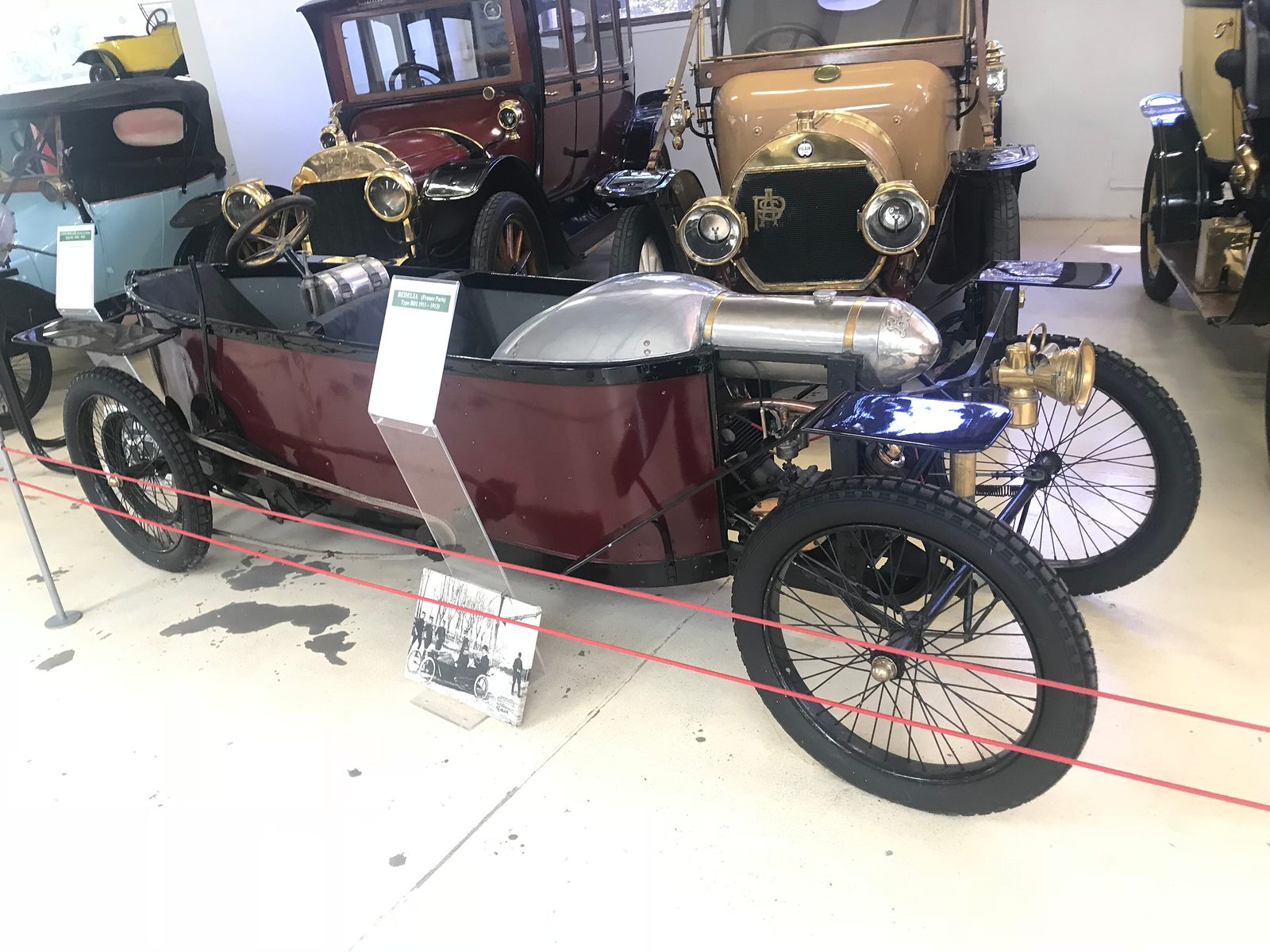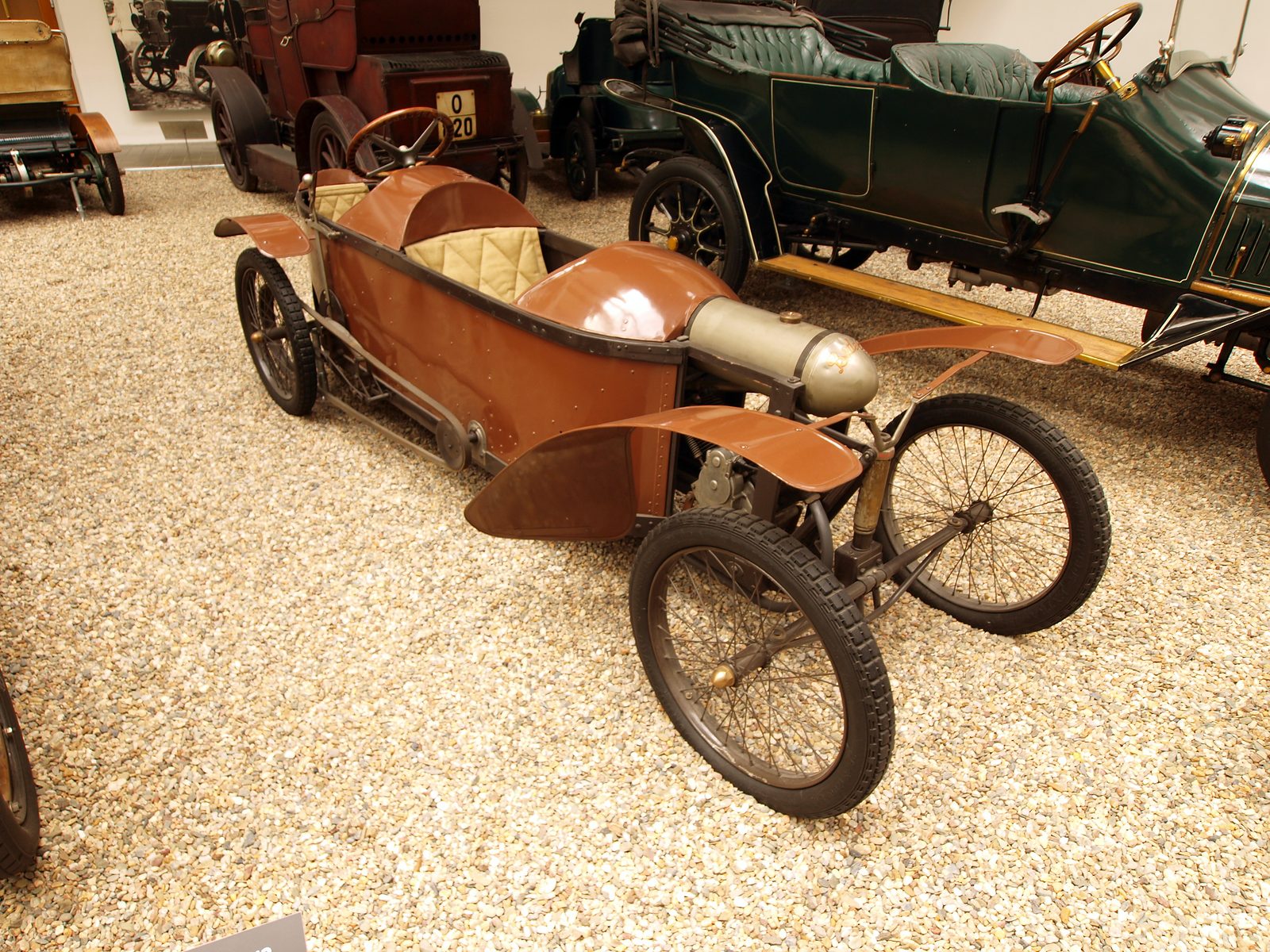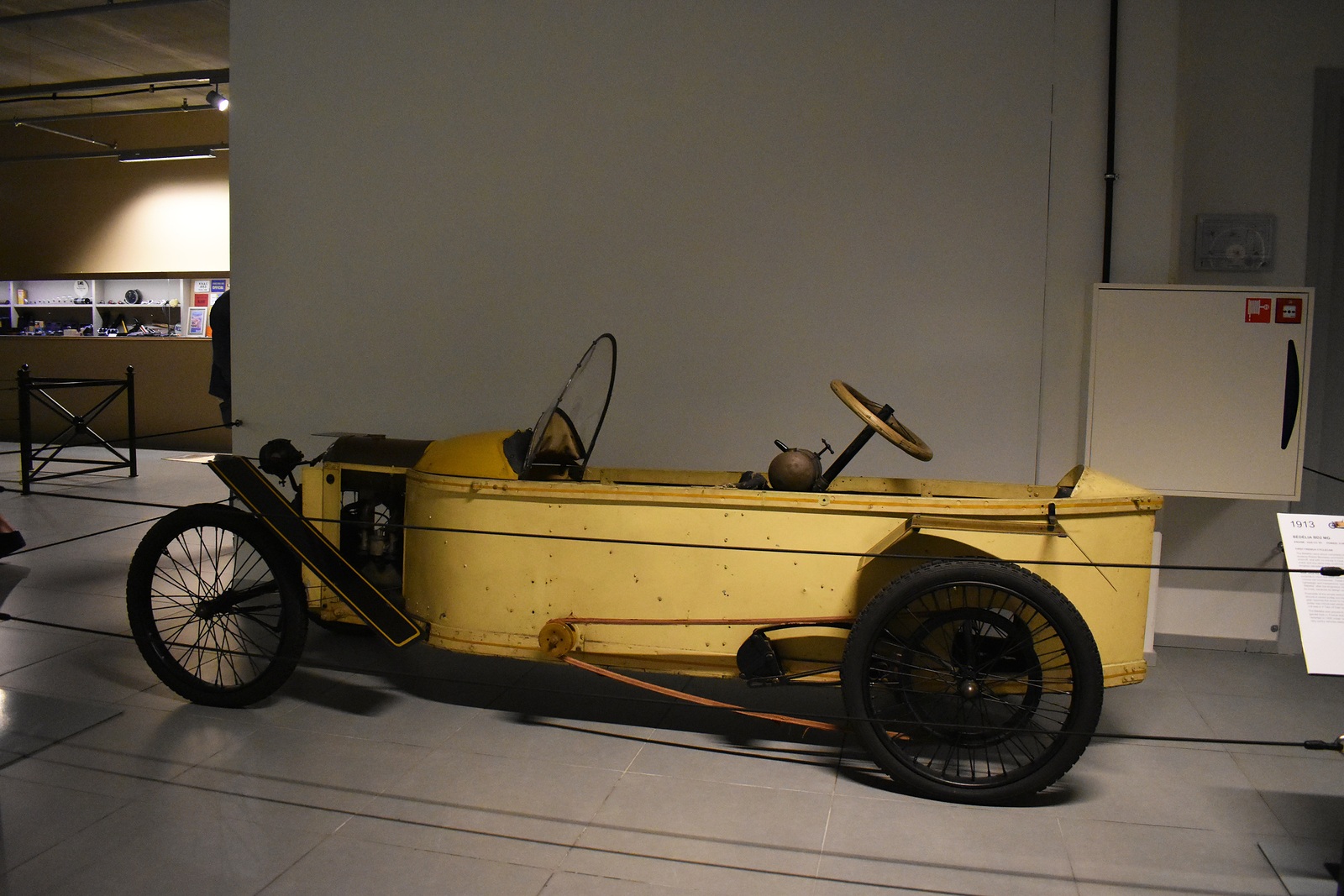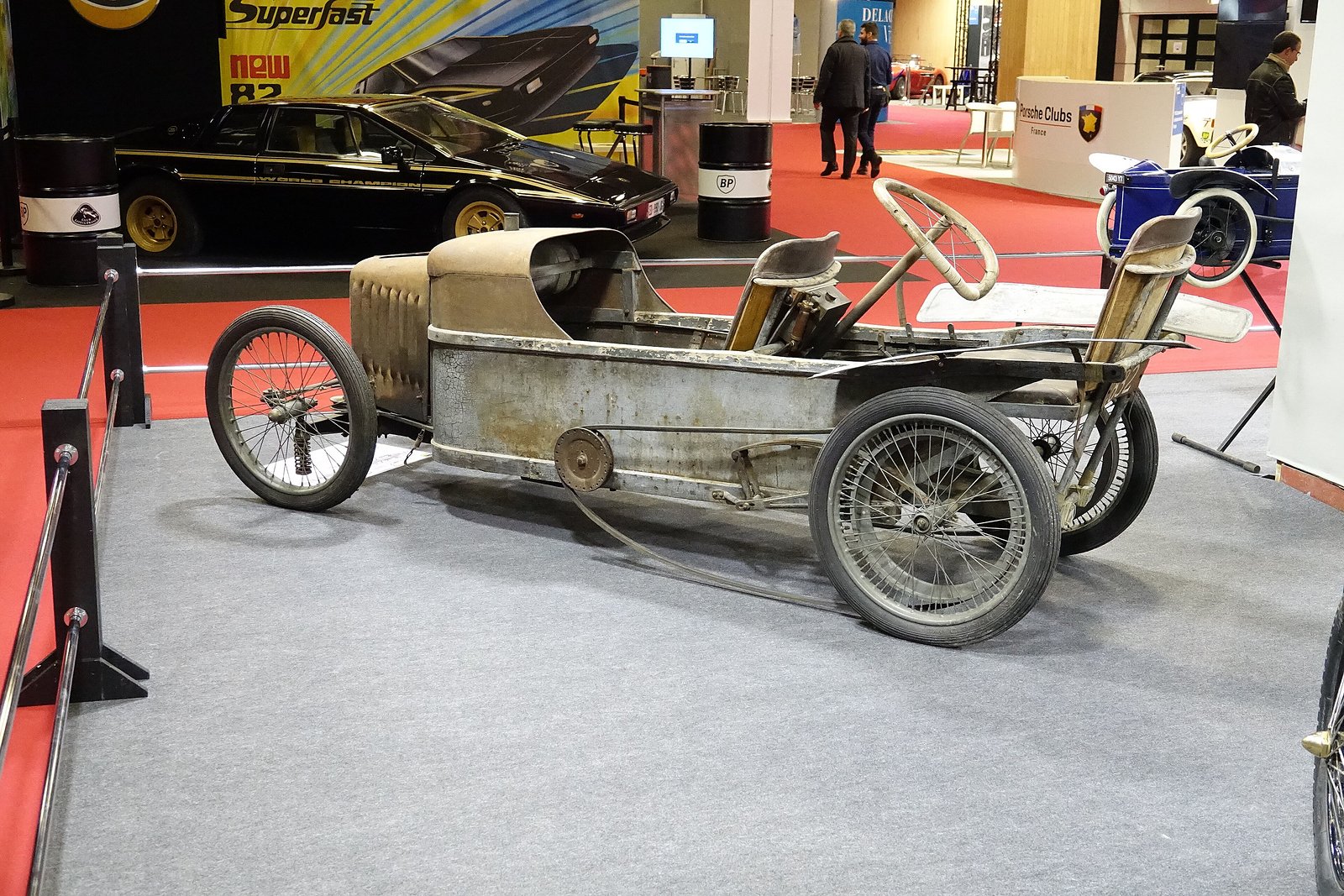
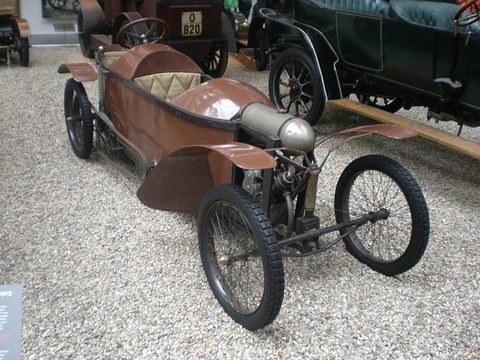
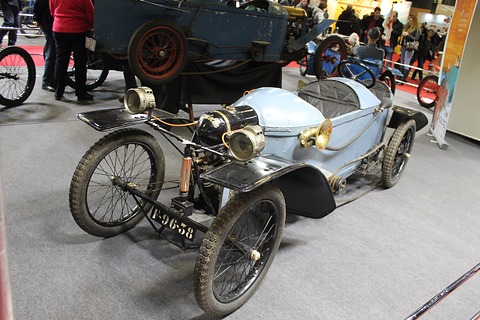
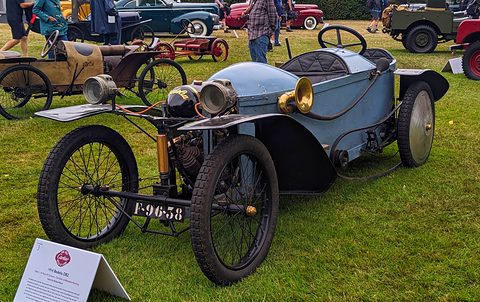
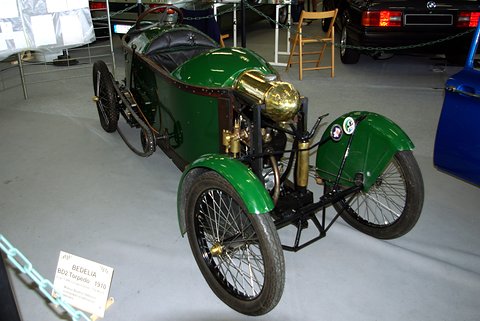
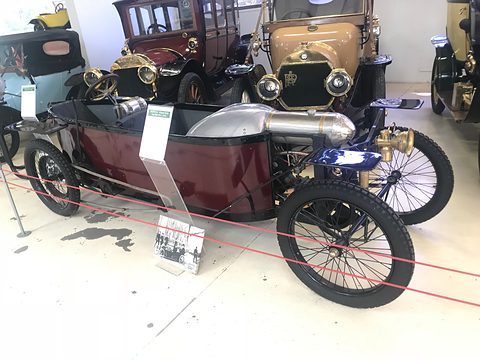
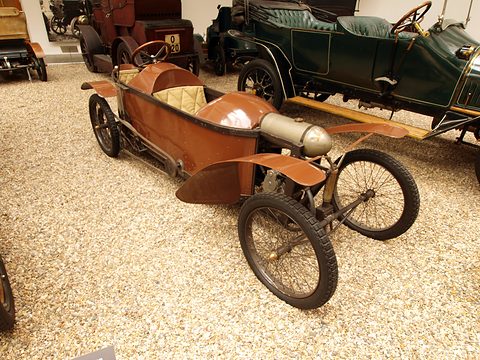
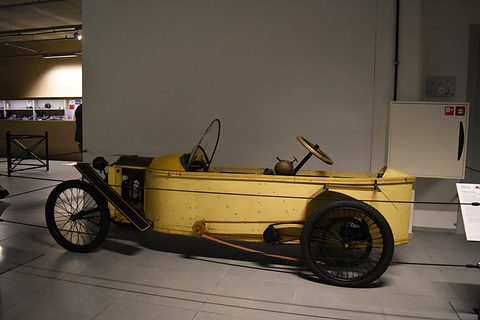
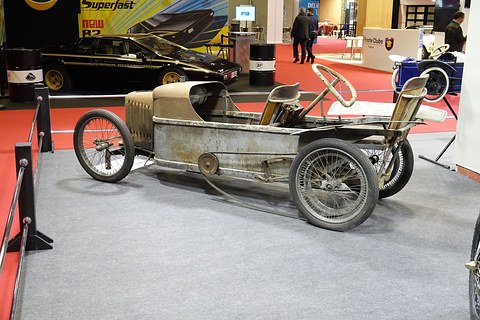
The story
History
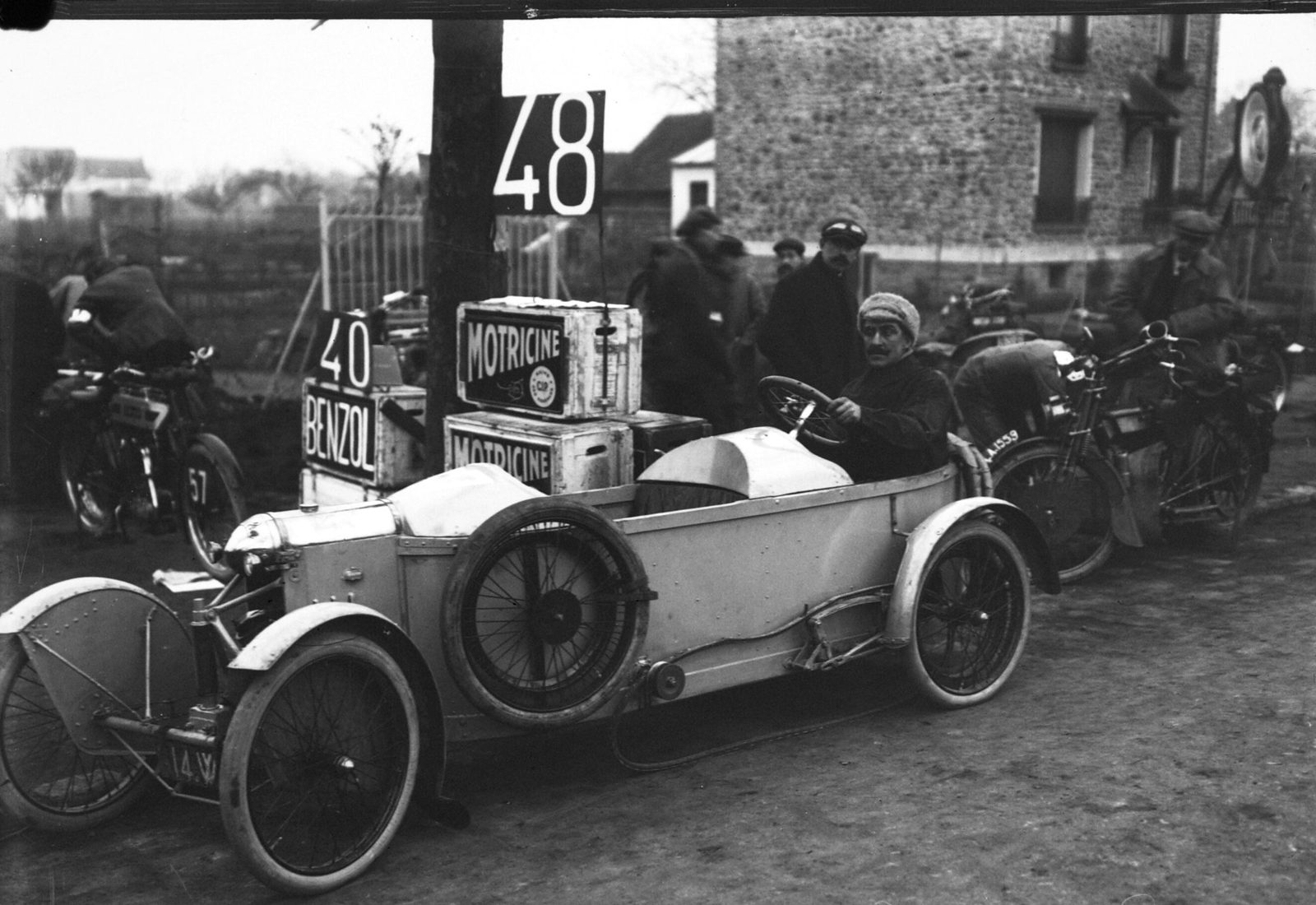
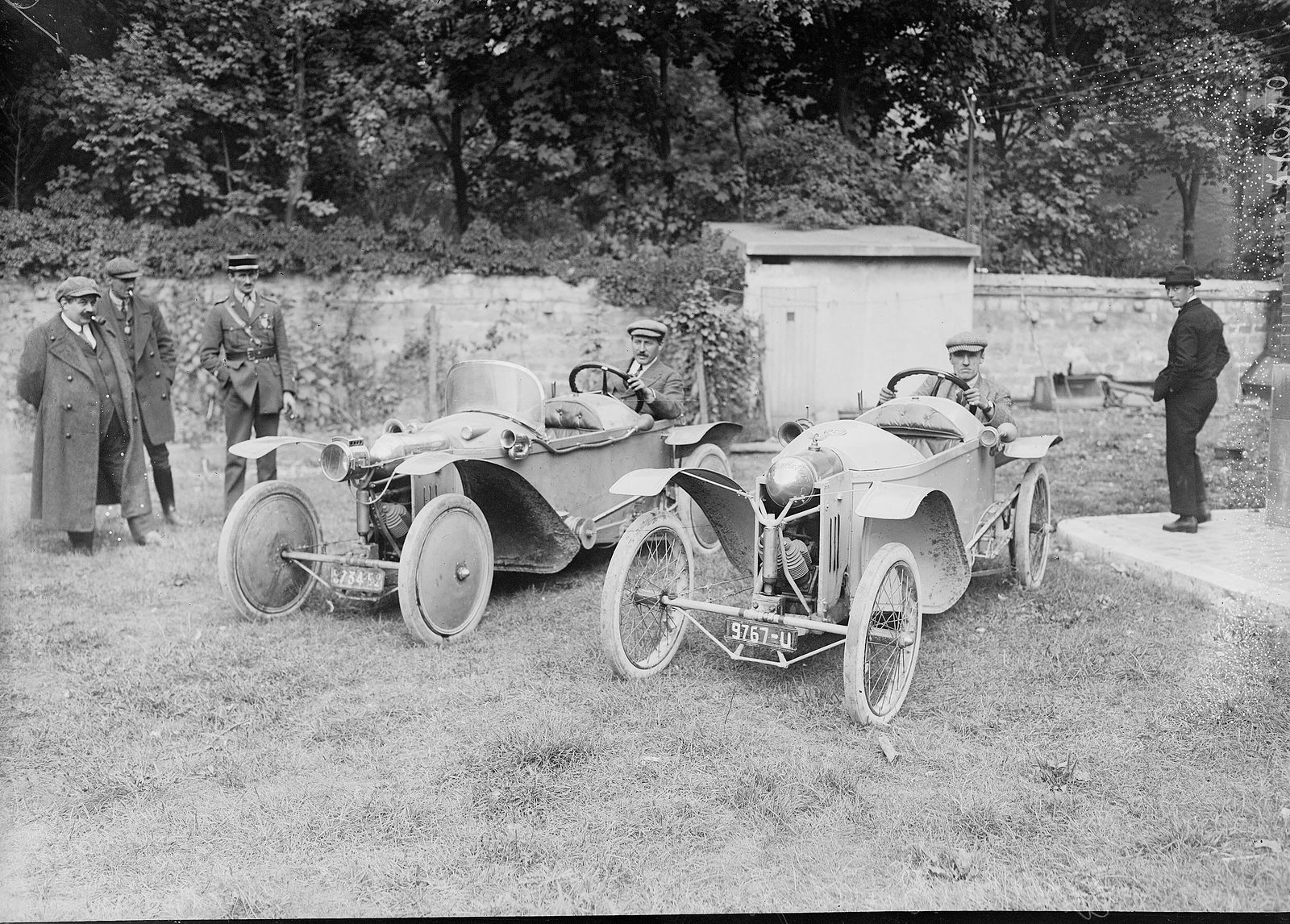
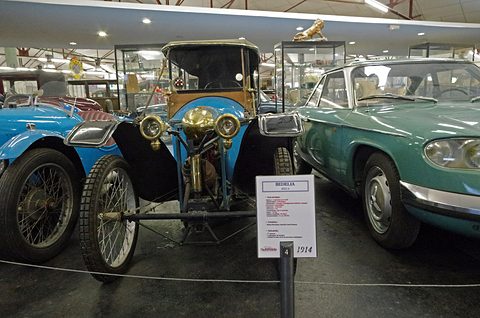
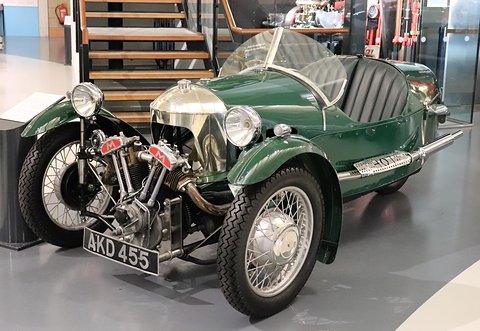
Robert Bourbeau and Henri Devaux were engineering students at the École Violet in Paris.source 1 The story goes that they wrecked their motorcycle, could not afford to have it repaired, and used its V-twin engine and parts to build a two-seater with its seats one behind the other: to the Louwman Museum, “a cross between an aircraft fuselage and a motorcycle”.source 1source 2source 3 The dates do not agree. Grace’s Guide says they first designed the car in 1907, when both were 18; Classic & Sports Car and French Wikipedia say the firm was formed in 1908, the Louwman Museum puts the crash in 1909, and French Wikipedia adds, from a blog, that Devaux’s father paid for series production from 1908.source 4source 3source 2source 1 The safest date is the one a period magazine gave: the first car was sold in March 1910.source 5 The name is the two founders’ initials said in French, “Bé-Dé”, with “-lia” added.source 2
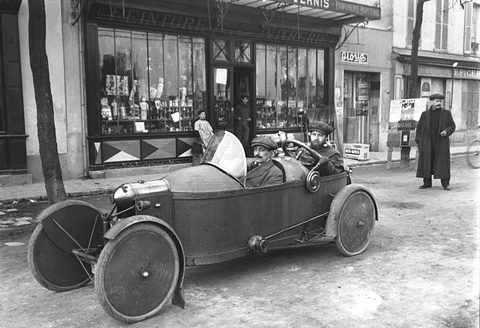
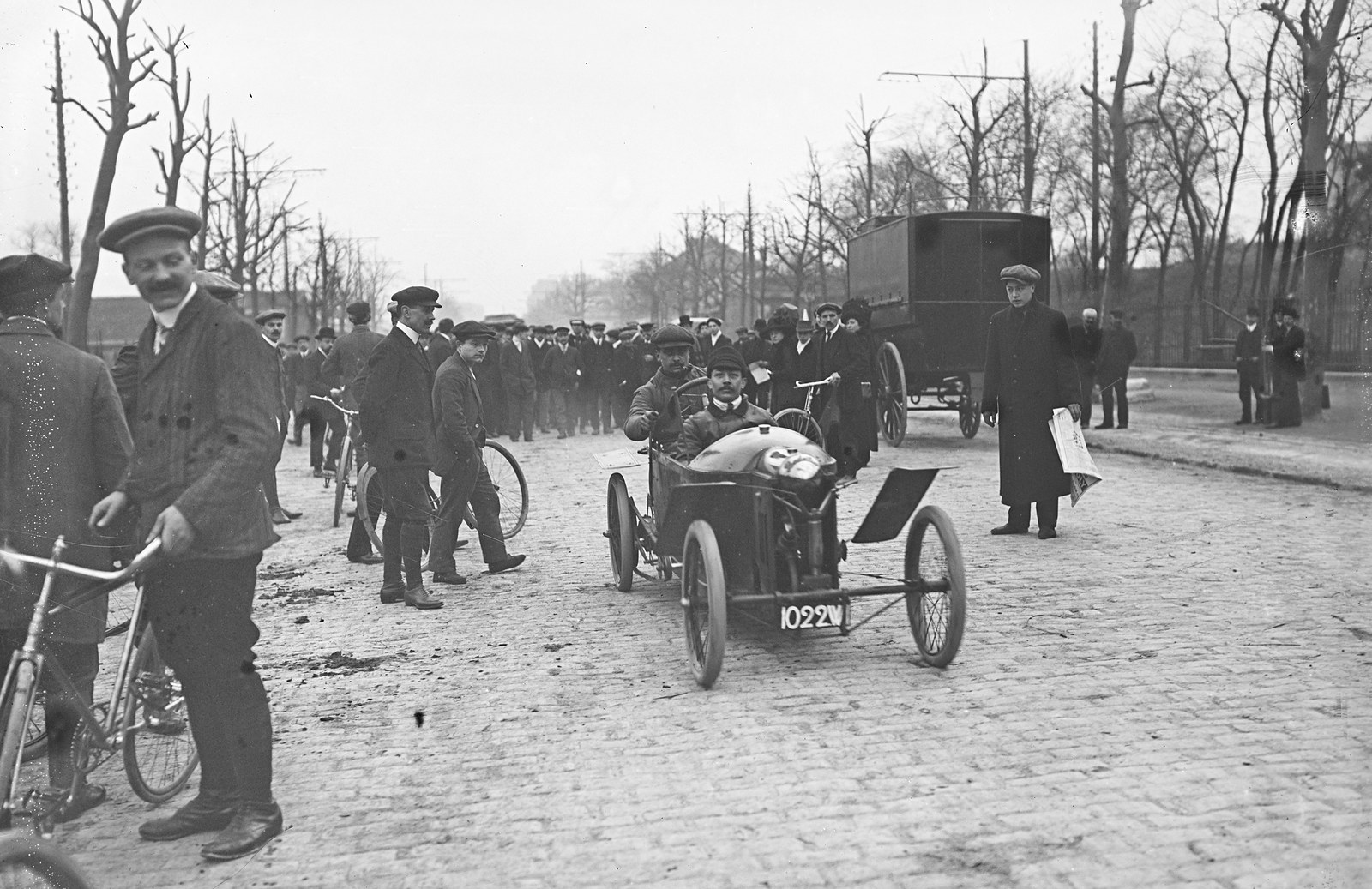
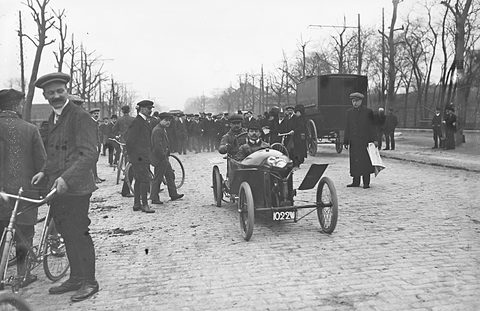
In the early months of 1910, Messrs. Bourbeau and Devaux, two young engineers, appeared on the streets of Paris with a light belt-driven car which they christened the Bedelia. Although this may not be the first cyclecar ever made, it was undoubtedly the first to be produced on a commercial basis in France.
The same writer noted that the 1912 car was, in its main features, “identical with those of the first model sold in March, 1910”.source 5 Its two young makers have their place among the designers.
A back-seat driver
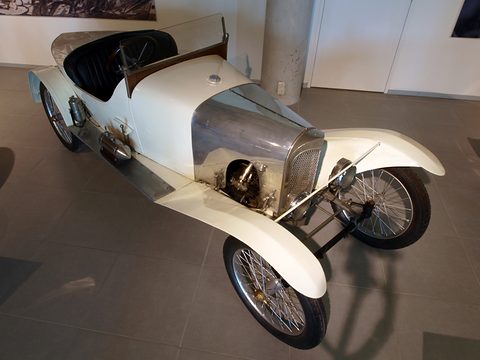
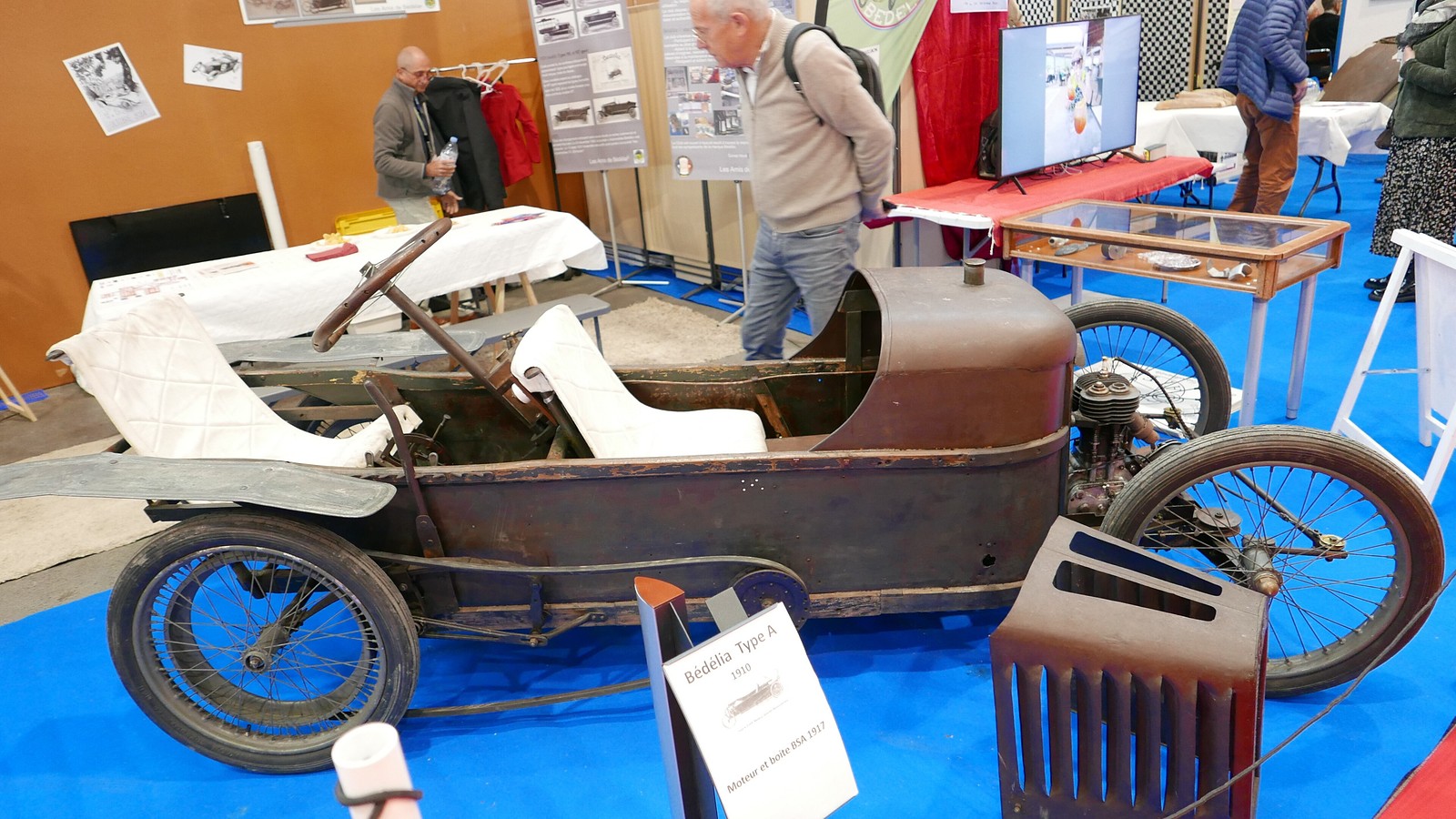
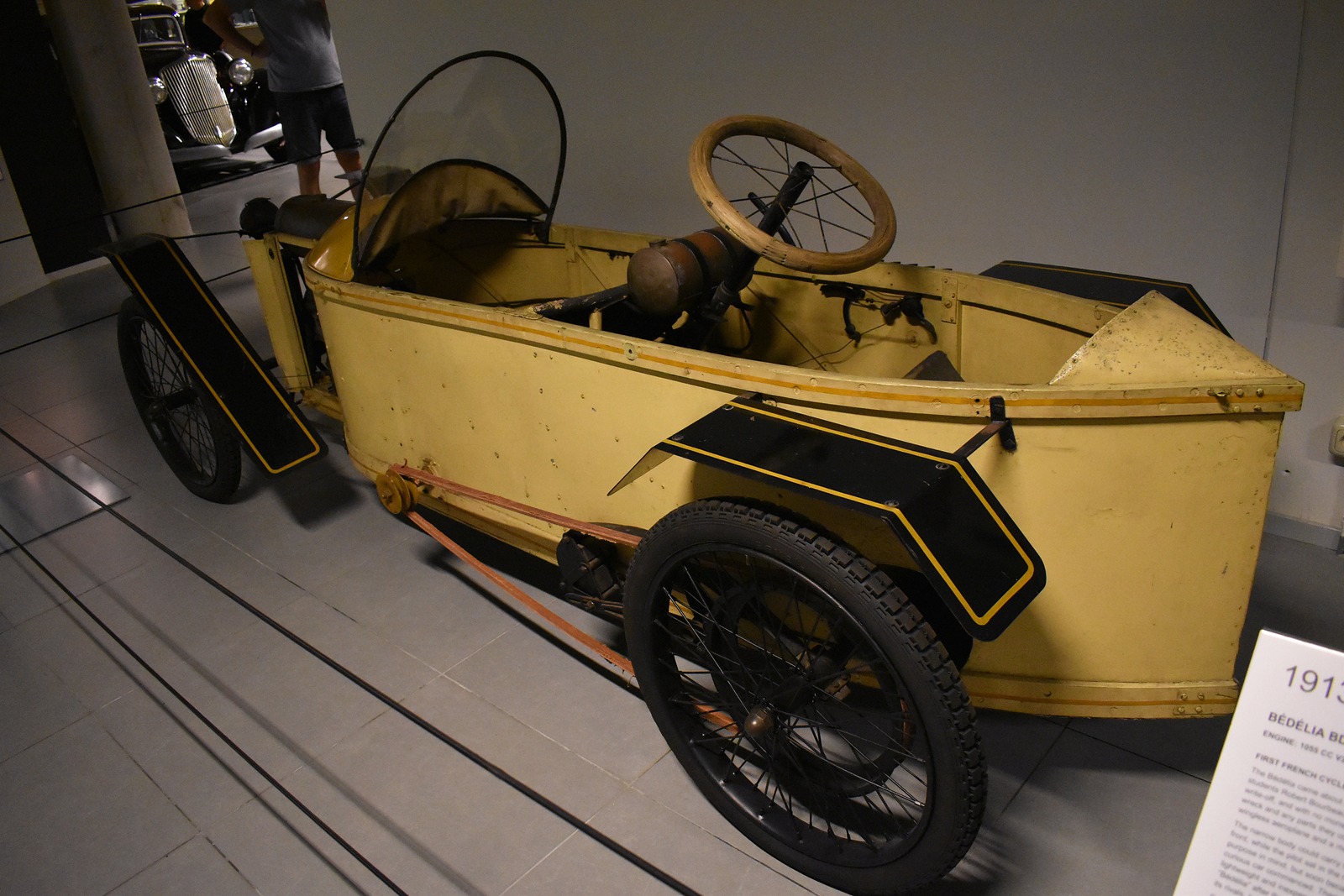
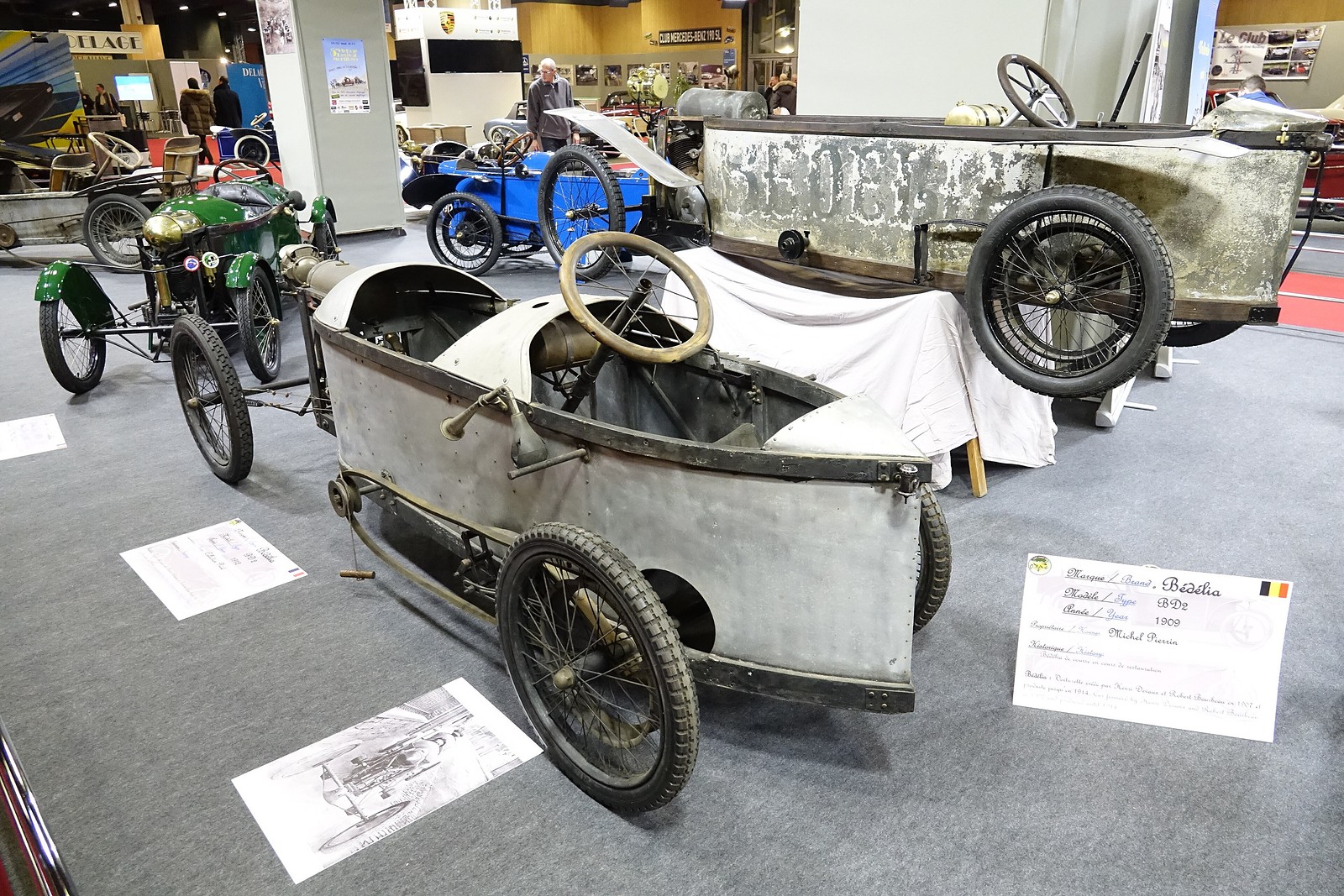
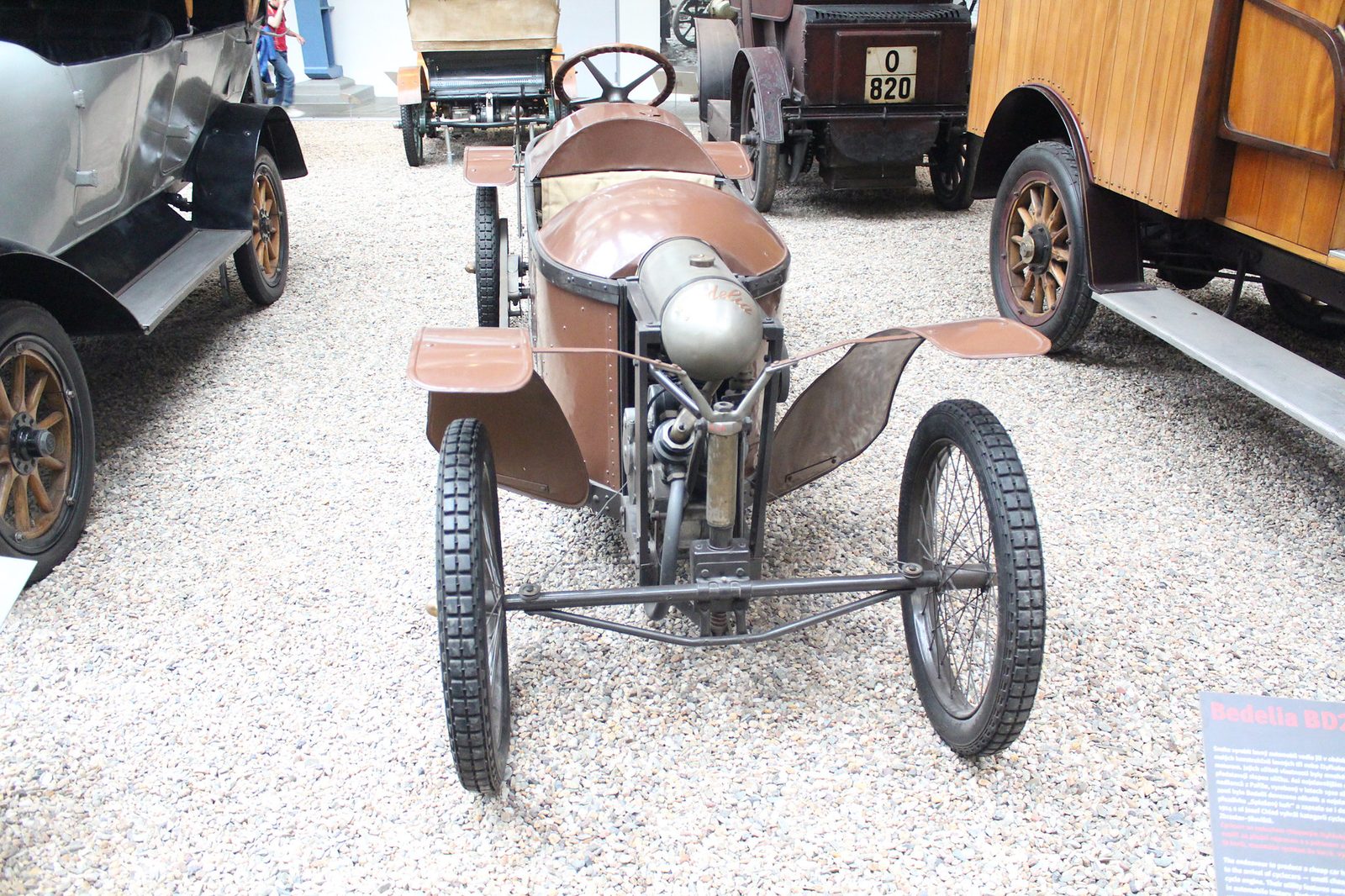
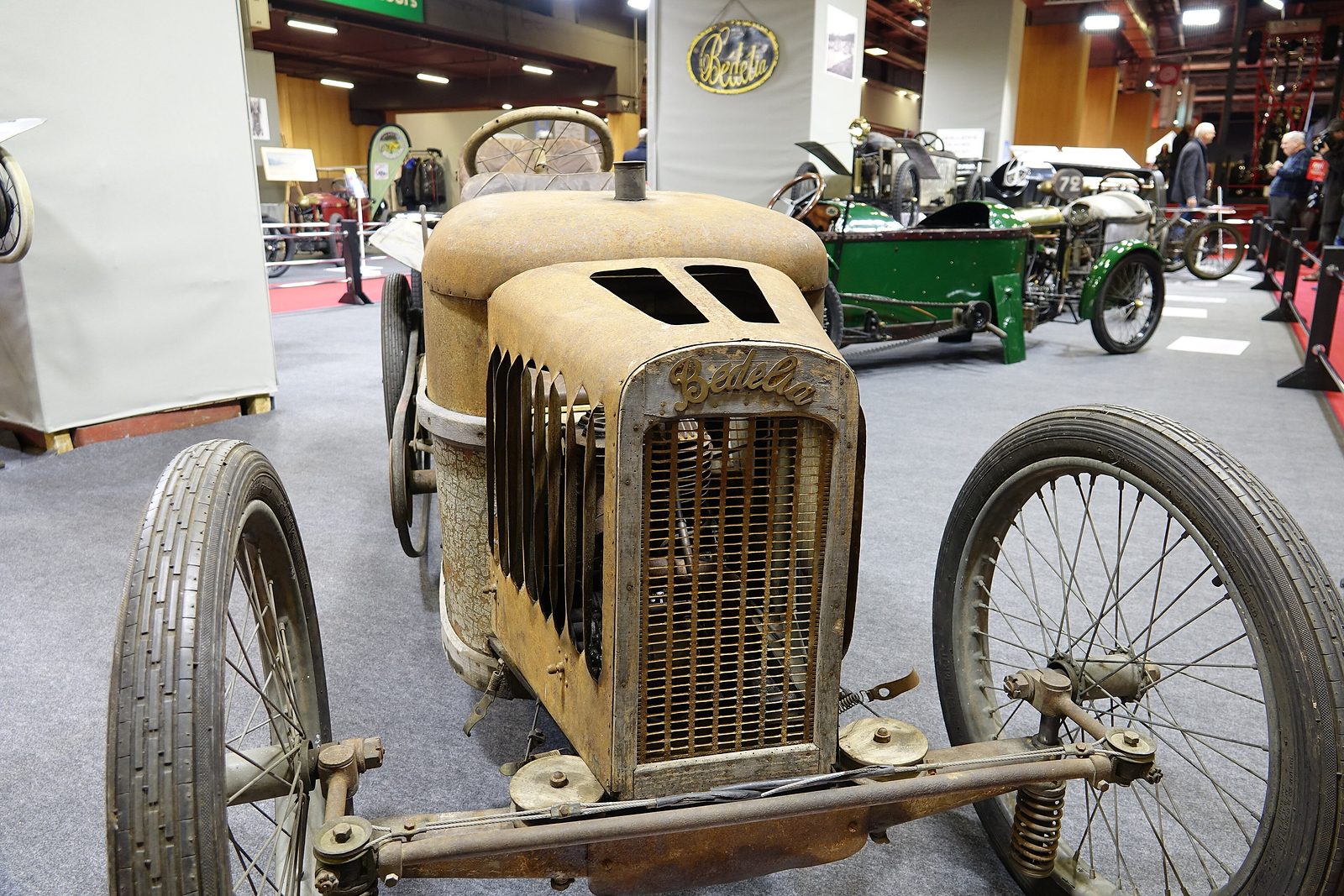
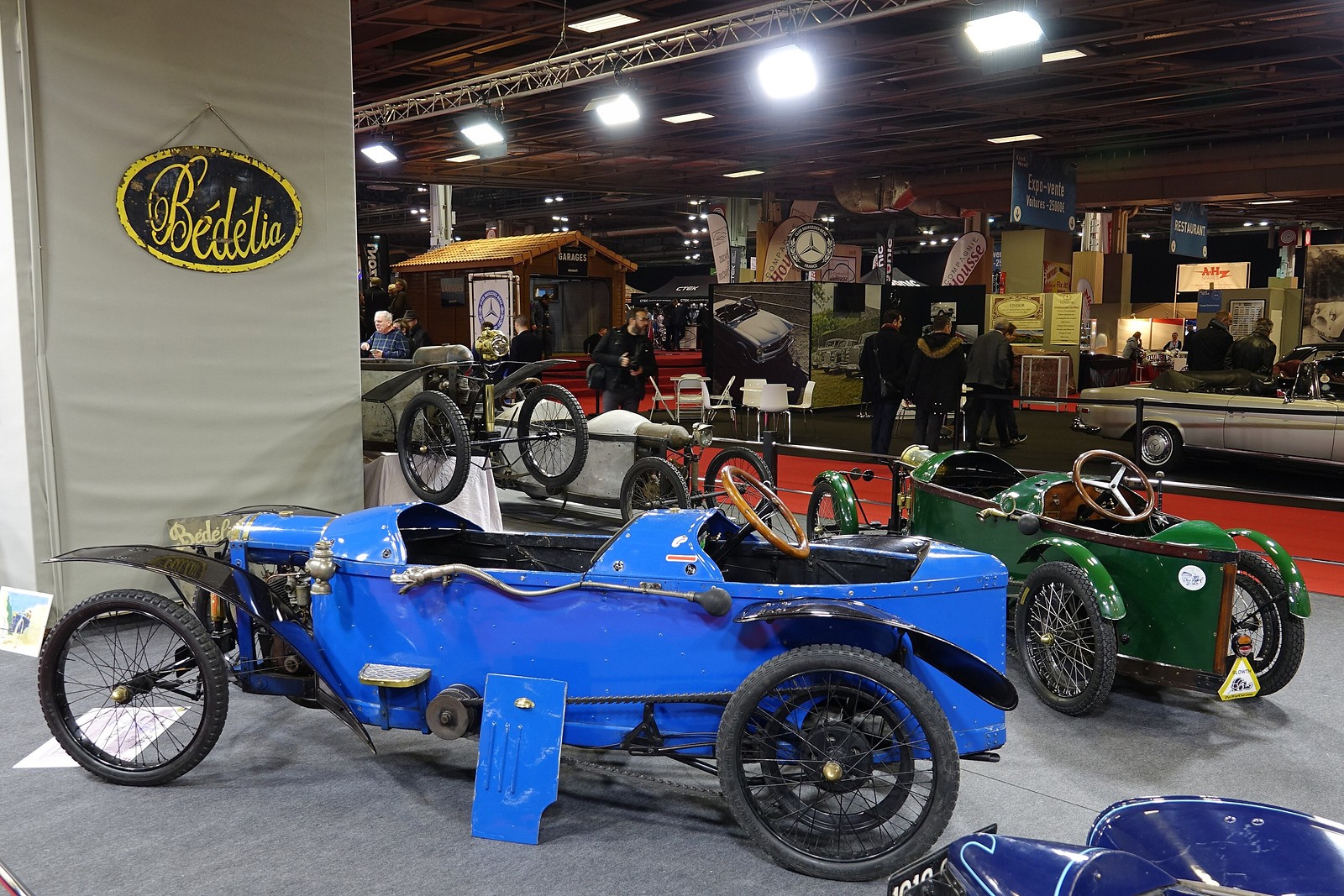
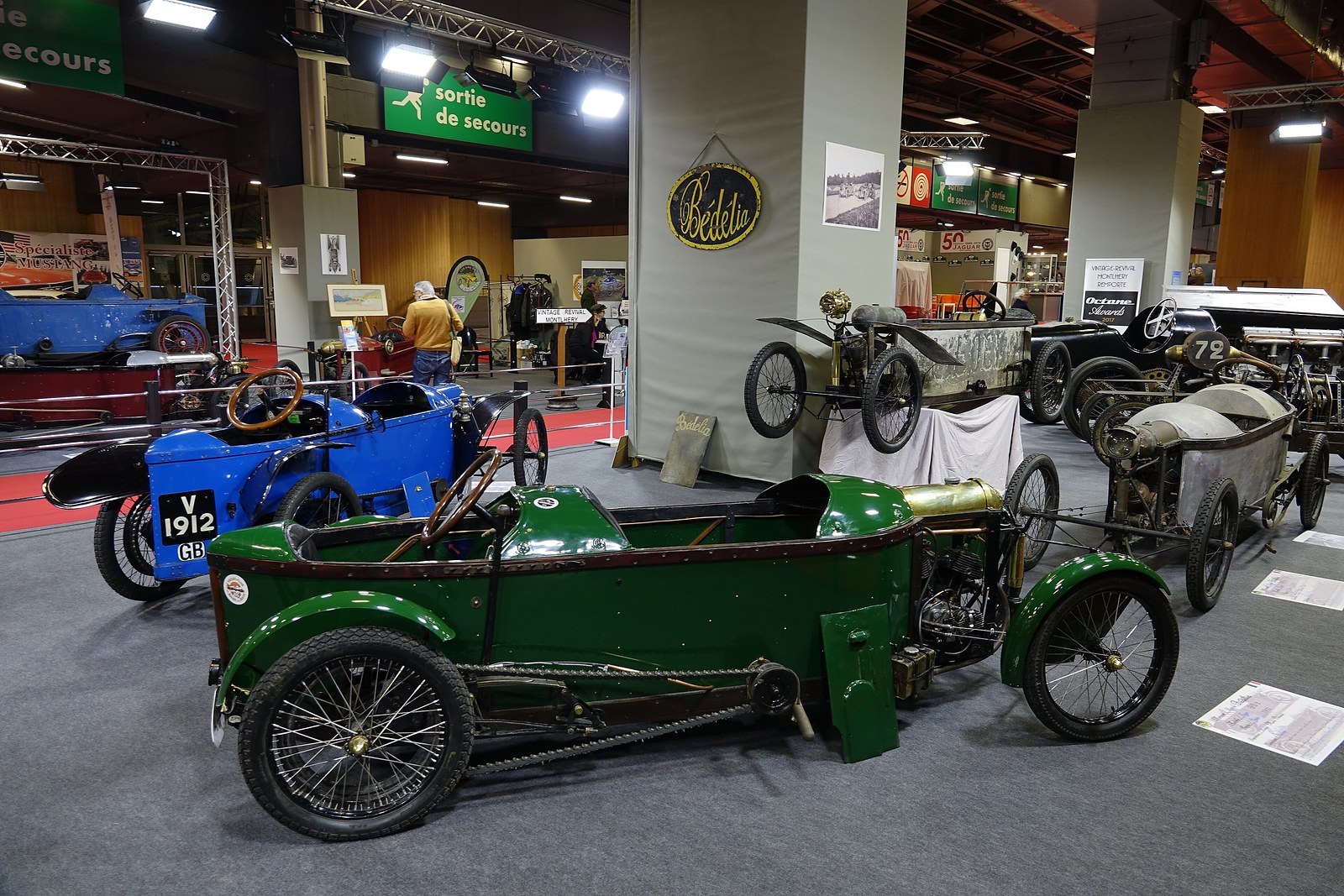
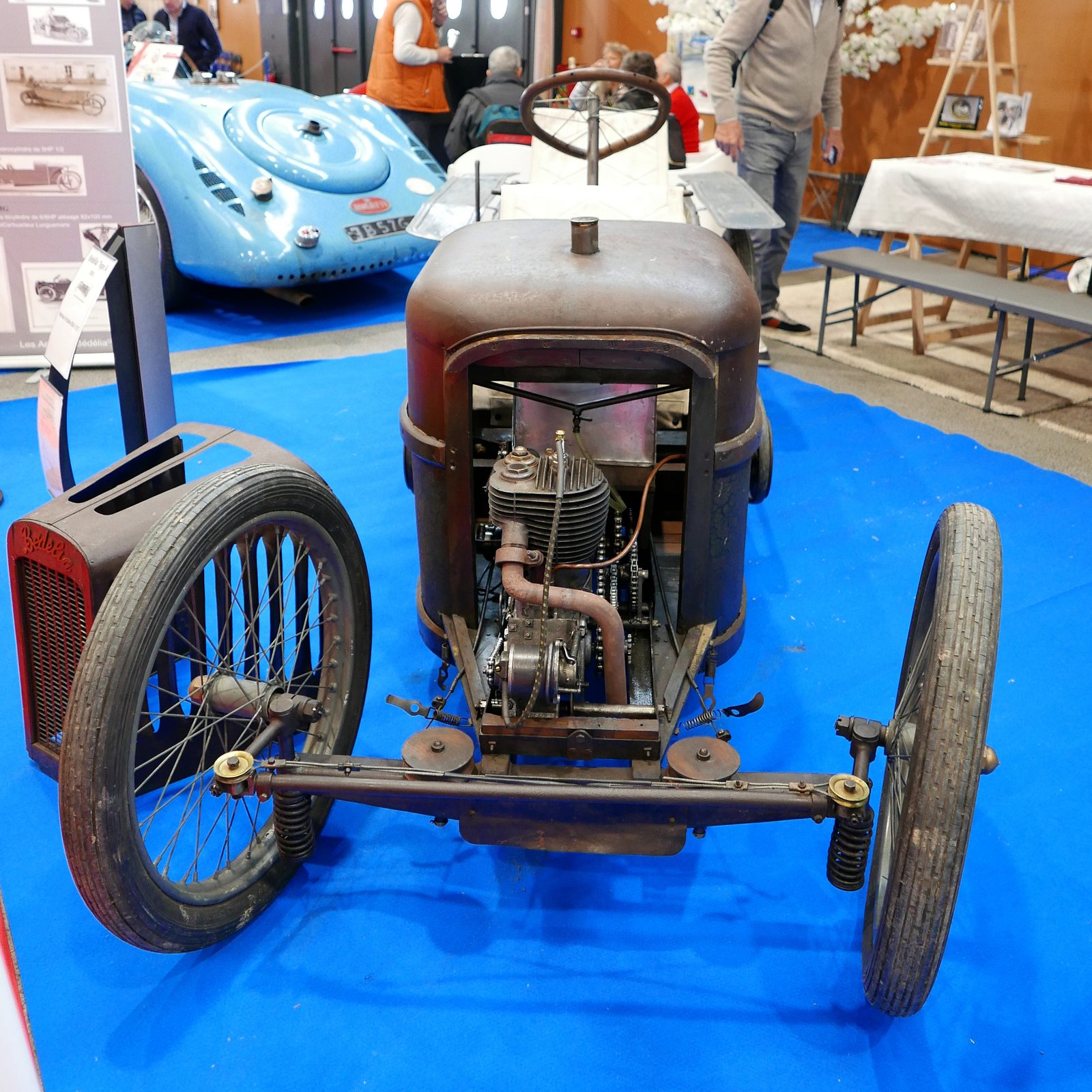
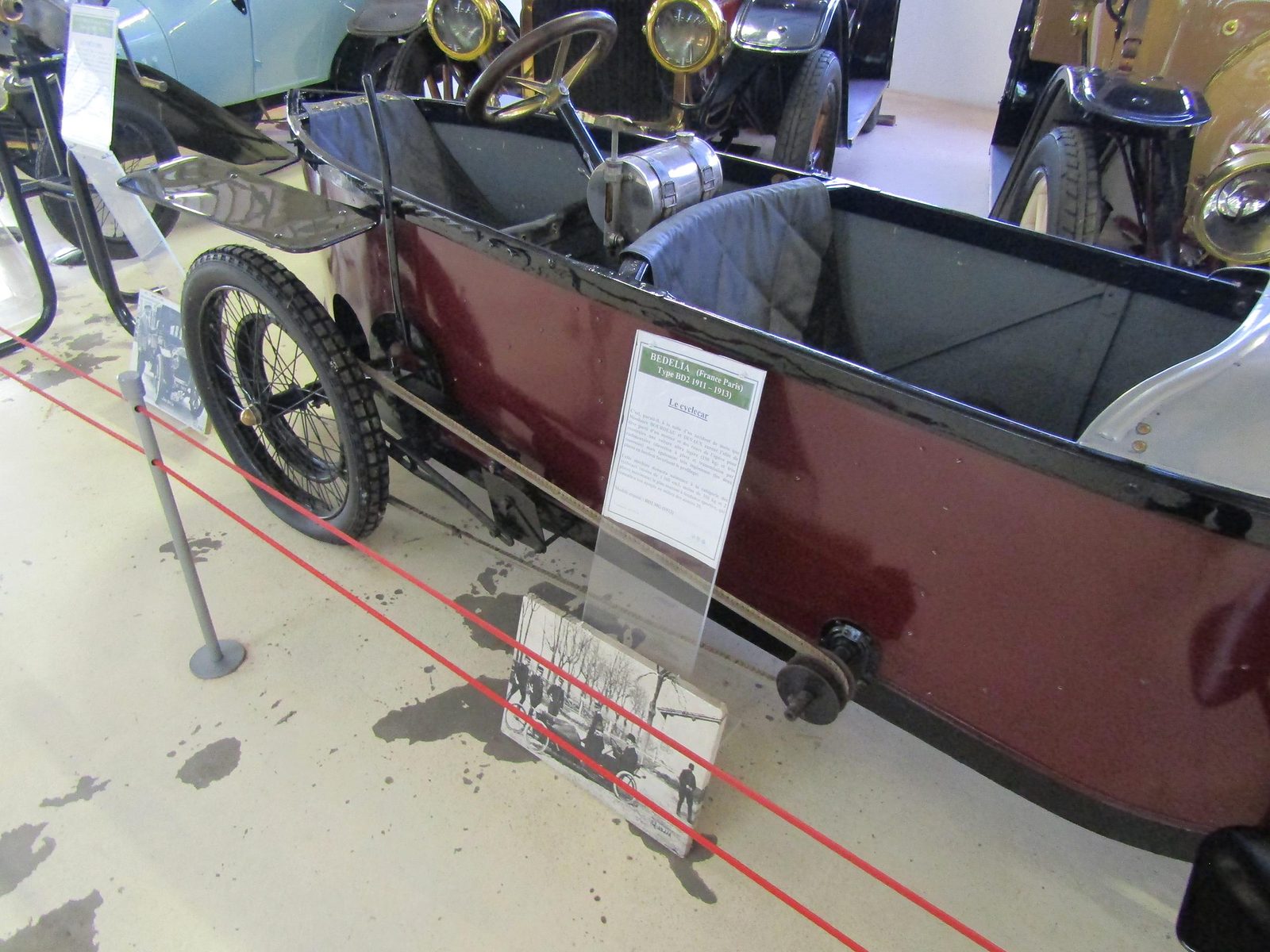
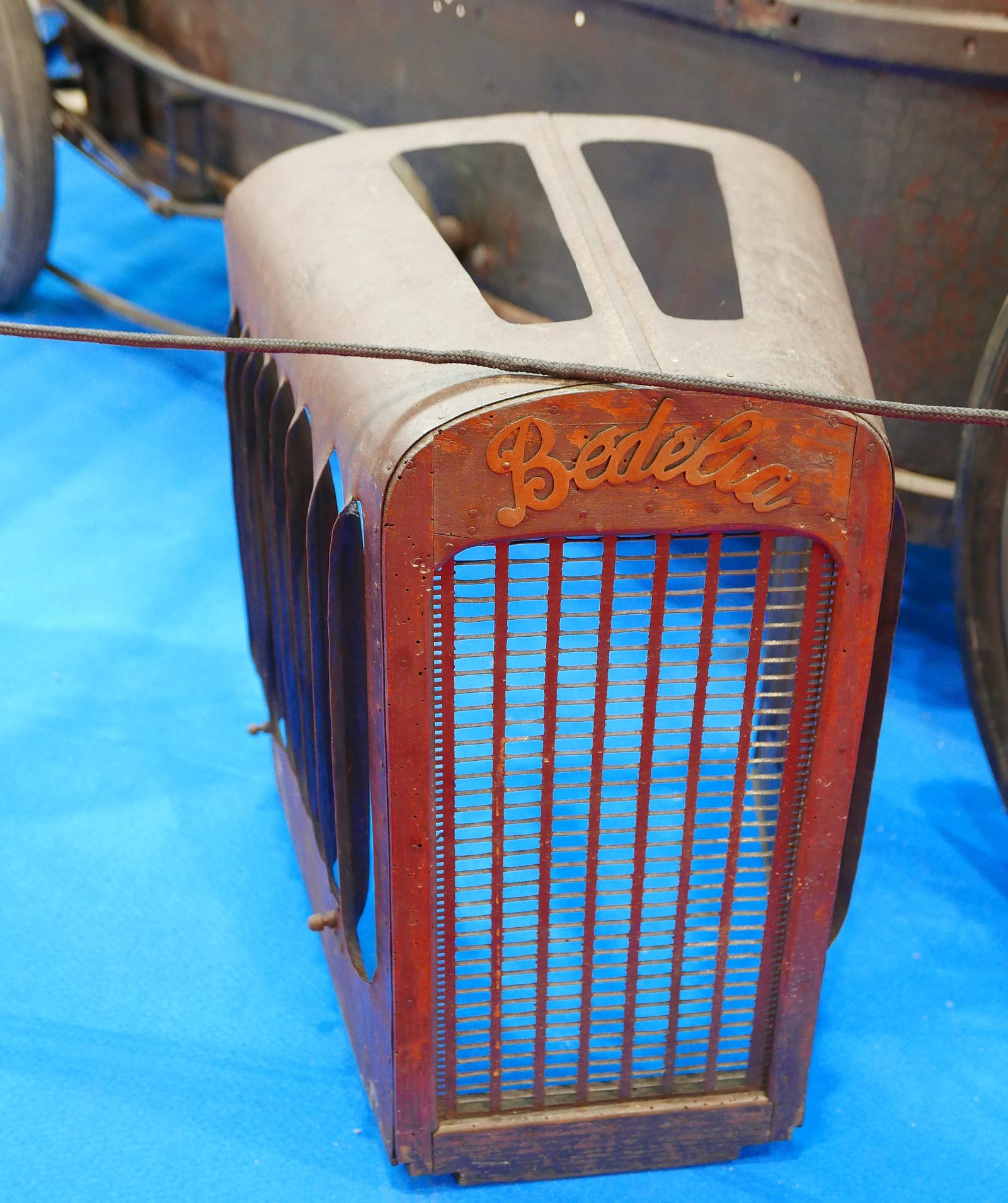
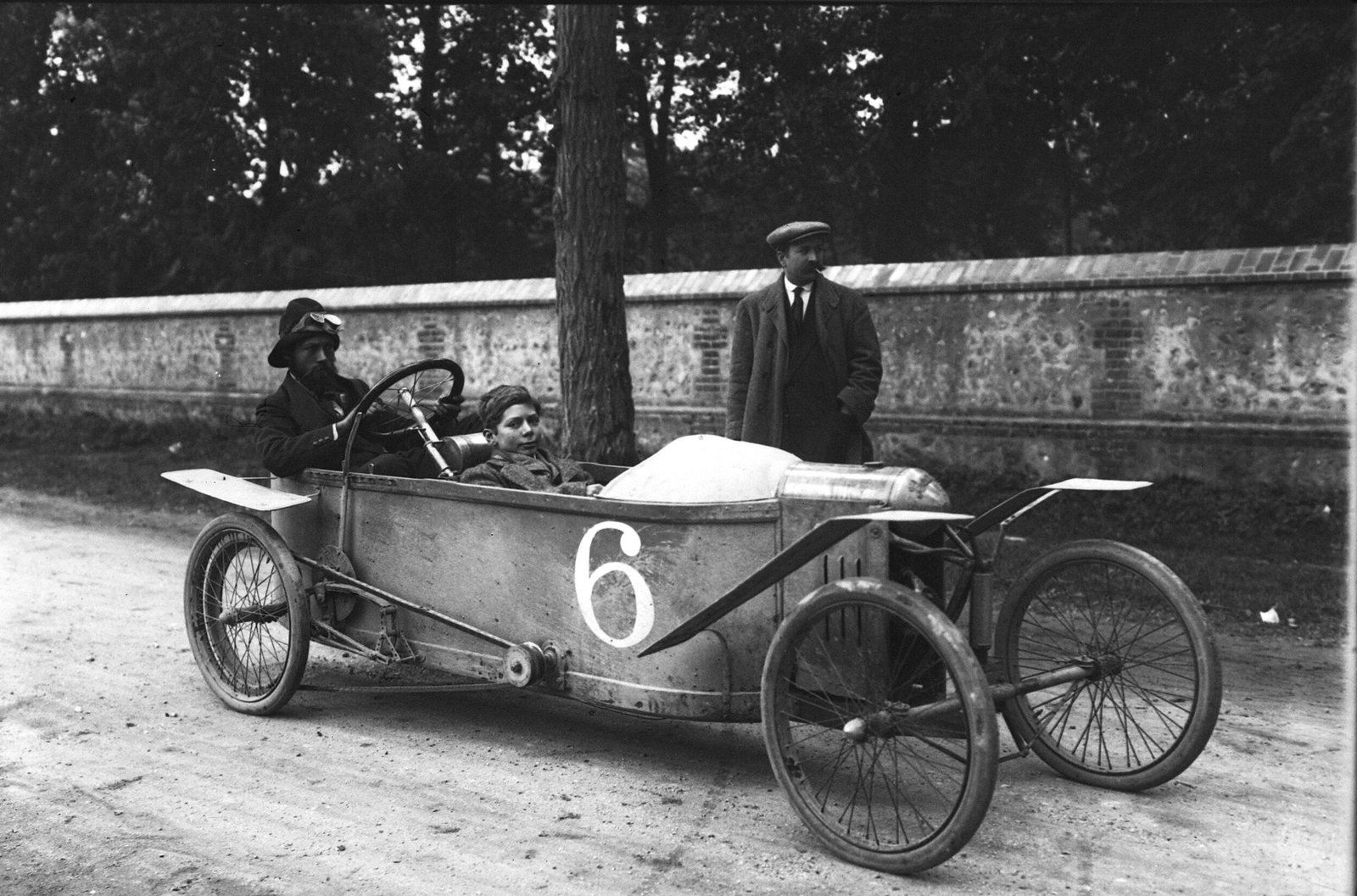
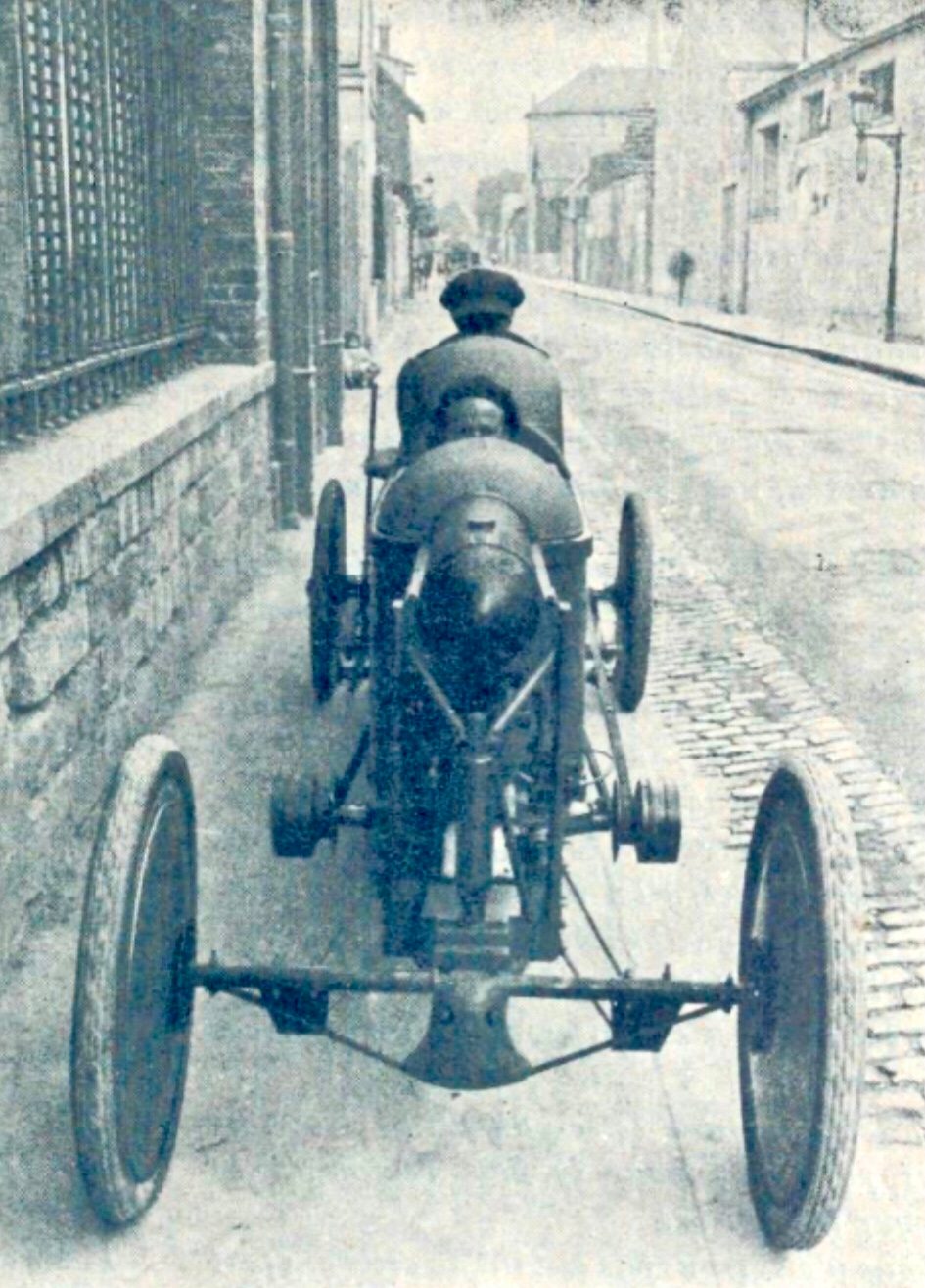
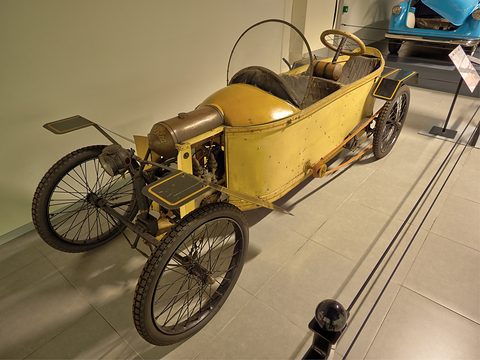
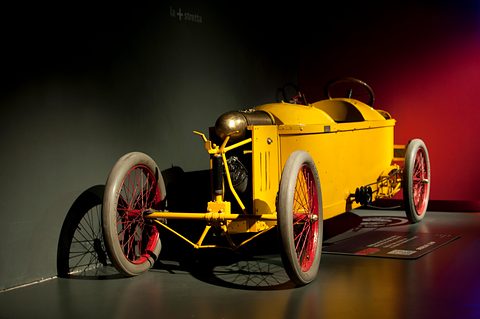
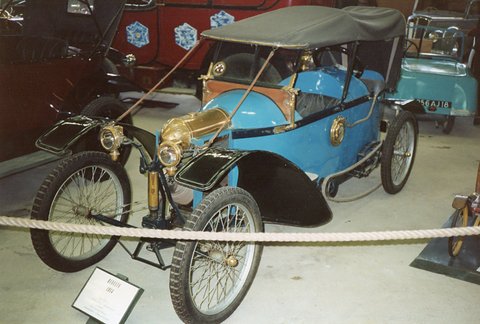
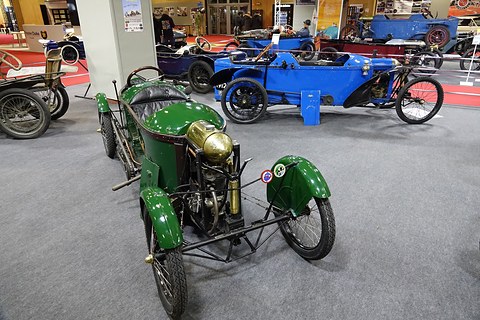
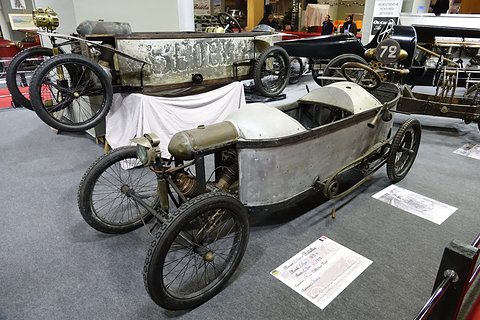
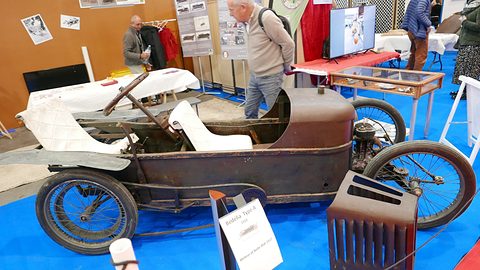
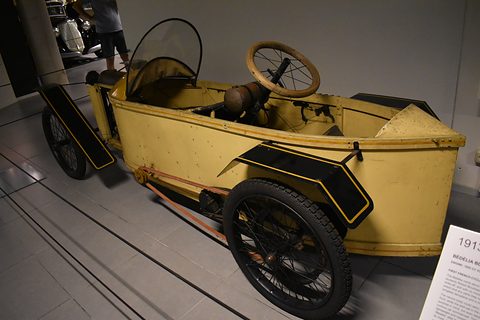
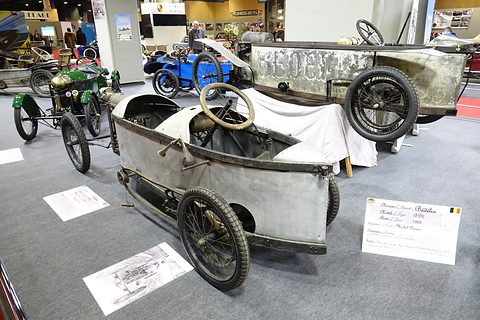
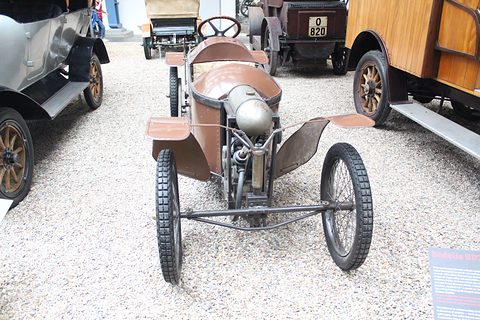
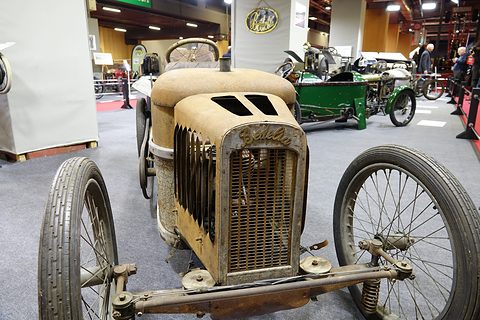
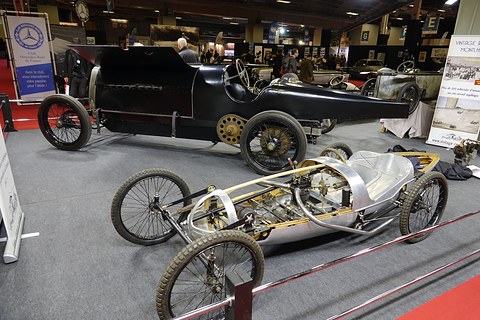
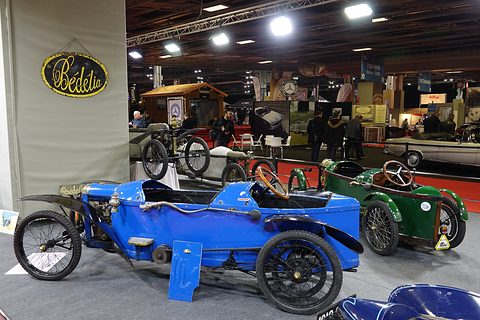
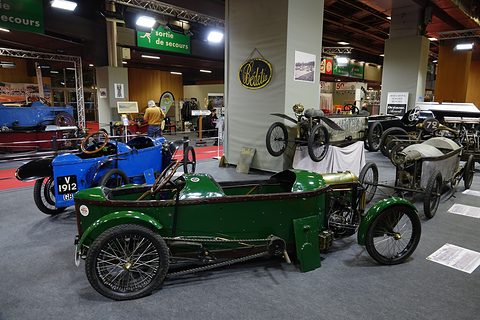
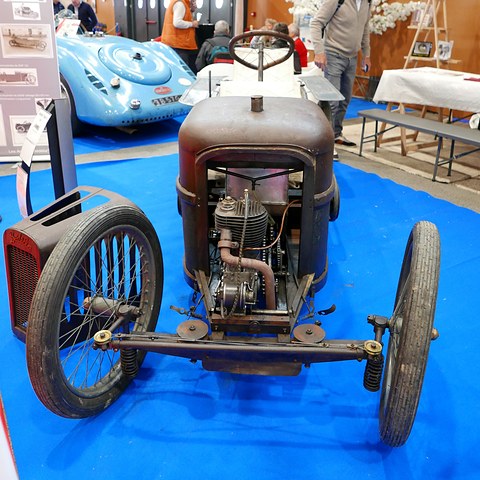
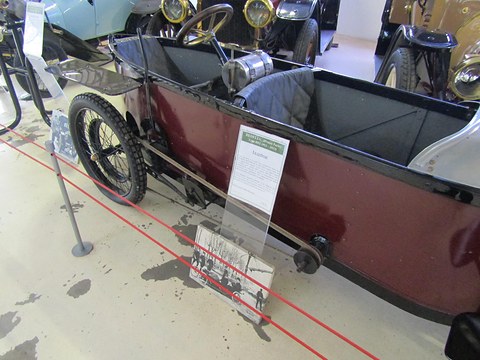
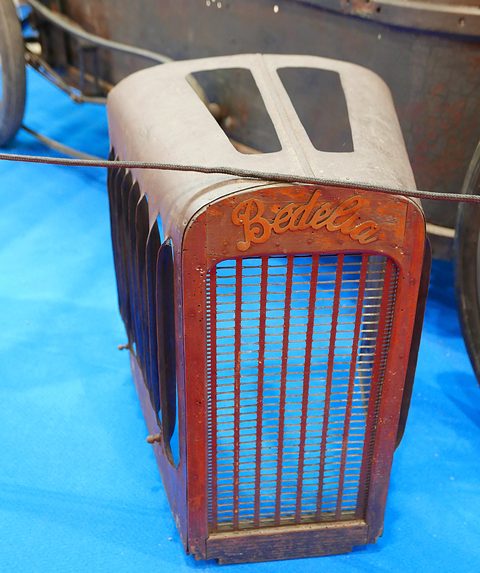
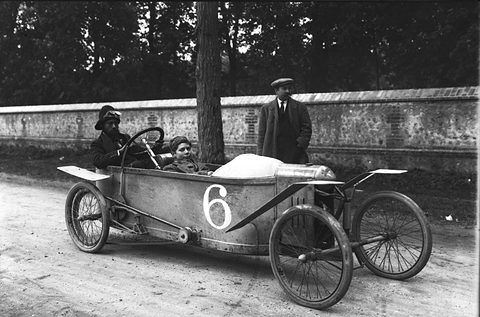
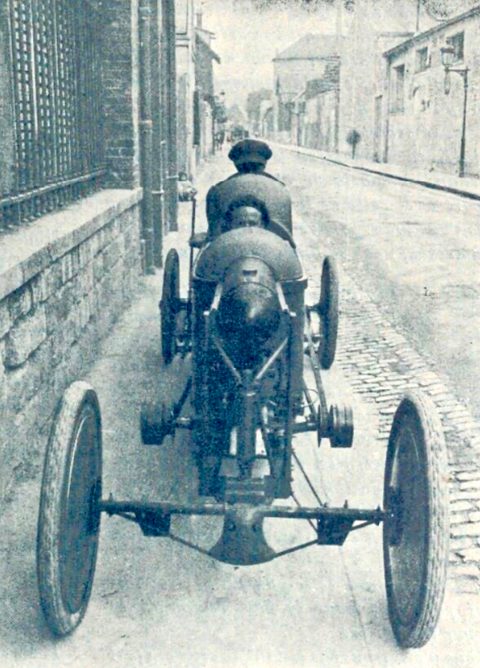
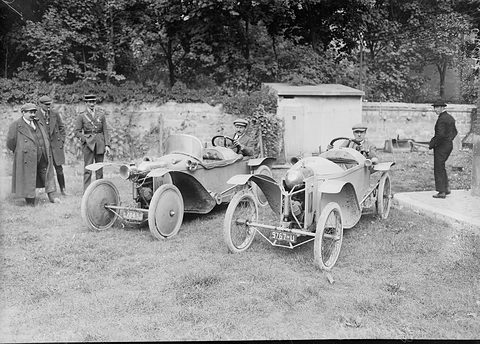
The car was a long, narrow wooden box on an ash frame, 3 ft 6 in (1,067 mm) wide, on a wheelbase of 8 ft 6 in (2,591 mm) and a track of only 3 ft (914 mm), and it came in grey, blue, green or red.source 5source 6 The passenger sat in front and the driver behind, so the steering cables were led over pulleys to a bobbin on the column, far back; wound round it, they turned the whole front axle on a central pivot, with no kingpins, like a horse cart’s.source 5source 4source 6 A single coil spring carried the front of the car and “Cee” springs the back, an arrangement The Cyclecar called “the original Bedelia style of suspension”, since other makers copied it. One brake worked on the countershaft and lifted the exhaust valves as it did so; another worked on the back wheels.source 5source 6 The twin shown at Olympia in 1912 weighed 425 lb (193 kg).source 5 The shape had a domestic advantage too: Bill Boddy wrote that it could be kept “in a confined space, a strip of garden perhaps… where a motorcycle and sidecar once stood”.source 6
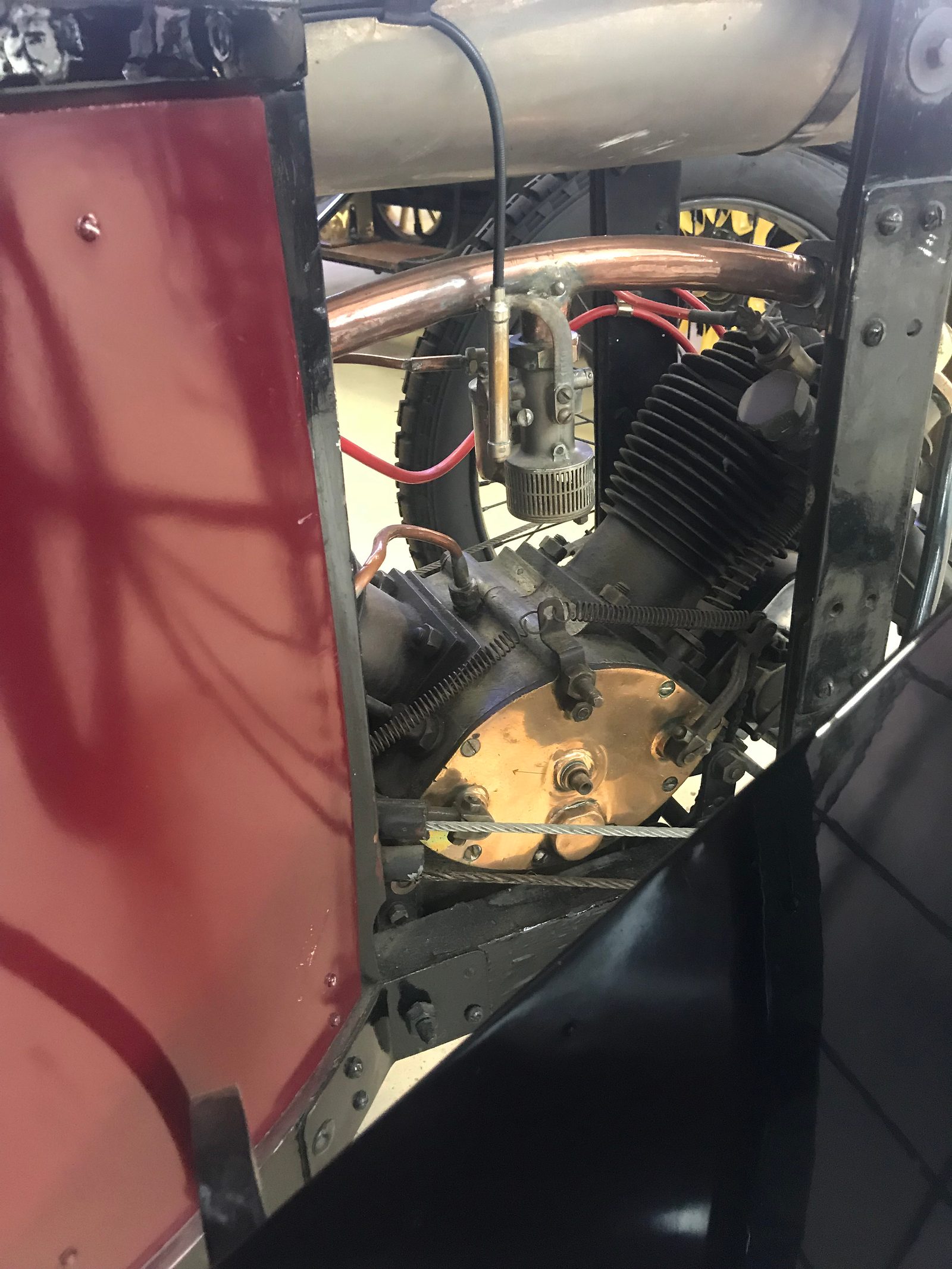
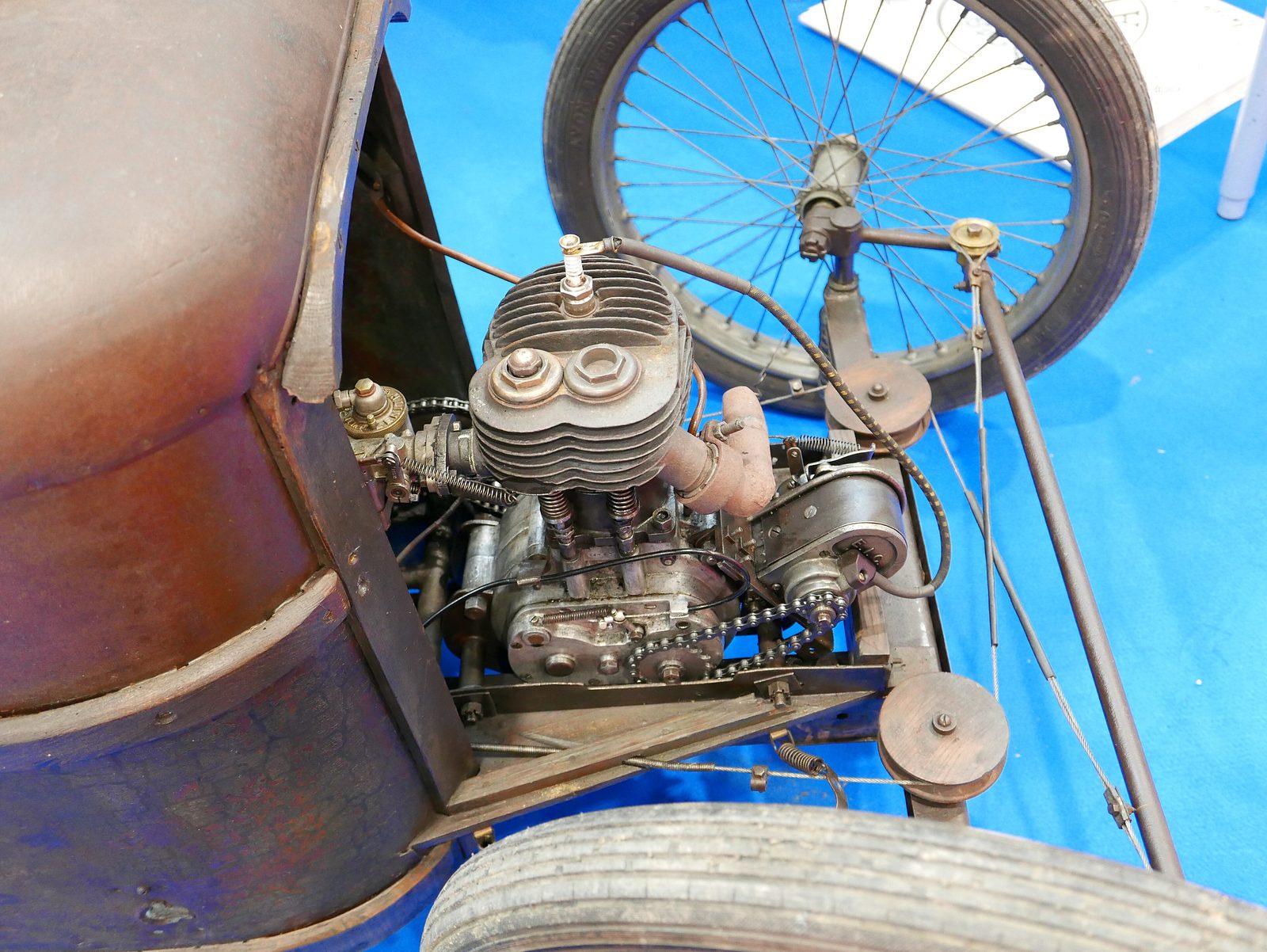
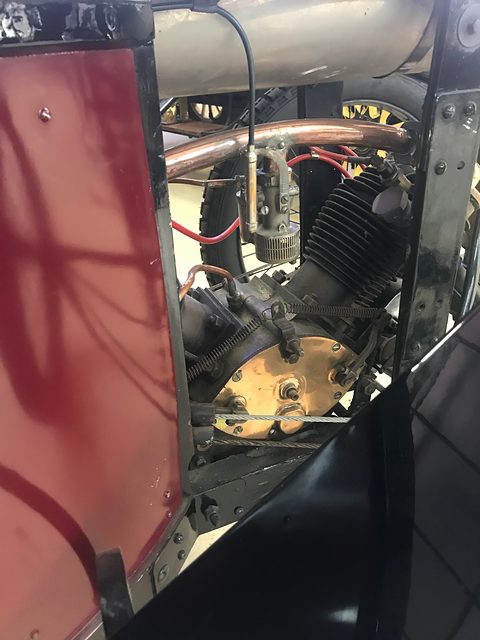
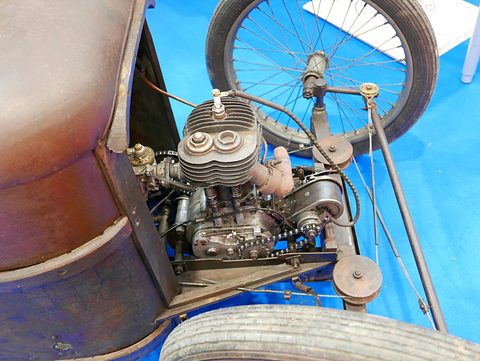
Engines were air-cooled, singles or V-twins.source 5source 4 The singles were rated at 3.5 to 5.5 PS, and one was of 502 cc, 80 × 100 mm; Boddy and Cybermotorcycle mention singles by J. Quentin. The twins were rated at 8–10 hp, and German Wikipedia gives one of 1,056 cc, 82 × 100 mm and 10 PS, good for over 70 km/h (43 mph). The “Duo” had a JAP twin.source 7source 6source 8source 5 The Louwman Museum calls the twin an in-house design, and when Gooding catalogued a 1912 car as Anzani-engined in 2026, a saleroom notice corrected it: “a Bedelia engine, and not an Anzani engine”.source 2source 9 The firm probably used bought-in engines and its own at different times.
Two belts, two people
The Cyclecar’s 1912 table gives the drive in a line: “Chain to countershaft and belts to the back wheels. Clutch: by slipping belt.”source 5 The two belts ran outside the body to the rear wheels, and a cable “running in greased leather” tightened one belt or the other for a high or a low ratio.source 6 Georgano’s account has two people at work: the driver slackened the belt with a lever that moved the rear axle forward, and the passenger moved the belt from one pulley to the other with a second lever.source 4source 10 The Louwman Museum says the driver moved the belt by hand while driving, and that a grooved pulley later gave an early form of variable transmission; the British weekly Motor wrote in 1971 that the levers were later moved within the driver’s reach.source 2source 10 The accounts probably describe different years. No source mentions a reverse gear.
One of the occupants would steer, and the other, if there was one, would change gear! Presumably if the passenger was taller than you it was just too bad.
The period testers were not worried. The Cyclecar found the tandem cars stable on the road, and of the Bédélia and the GN cyclecar, both with double belt drive and no differential, it wrote that cornering at speed was perfectly safe: “If the bend be taken too fast the rear wheels simply skid sideways.” Cable steering in general, it noted, was “adversely criticized”, but it traced the failures “either to bad design or gross neglect”.source 5
The tandem-seated model, though considerably faster than its sociable competitor, is equally well balanced on the road, whilst its narrowness allows it to be driven through tight places.
The original cyclecar
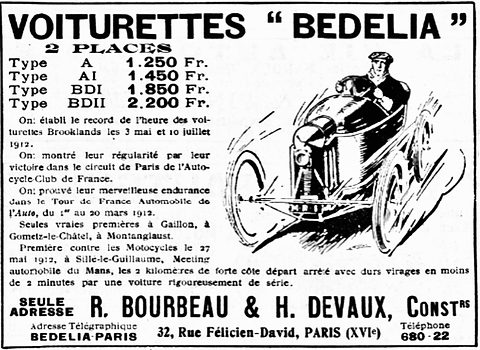
Bédélia’s advertisement in Britain in 1912 was headed “THE ORIGINAL CYCLECAR”.source 5 On stand 23 at Olympia that November the range ran from the Type A at 56 guineas through the 4½ hp A1 at 66 and the 5½ hp BO1 at 80 to the 8–10 hp twin, the BO2, at 96, and the BO2M de luxe at 103.source 5 Boddy’s price list adds the maker’s claims, from 25 mph (40 km/h) and 90 mpg for the cheapest single to 45 mph (72 km/h) and 60 mpg for the JAP-engined Duo, with a racer at 100 guineas and road tax of two guineas a year.source 6 L. N. Palmer’s Garage in Tooting called itself “Sole Concessionnaire for the British Empire”, and was already selling second-hand Bédélias of 1911 and 1912.source 5source 11 Boddy names another agent, the Sabelia Motor Car Company, but the Sabella was a different tandem cyclecar on another stand at that show, so his name may be garbled.source 6source 5 By July 1913 the firm, of 32 rue Félicien-David, Paris, was looking for a London agent for the British Isles; only Ireland was covered, by Mercer’s Garage in Dublin.source 12 The inventor Dr A. M. Low, of the Cyclecar Club, “has had a Bedelia from the early days of the movement”.source 13
Amiens, 13 July 1913
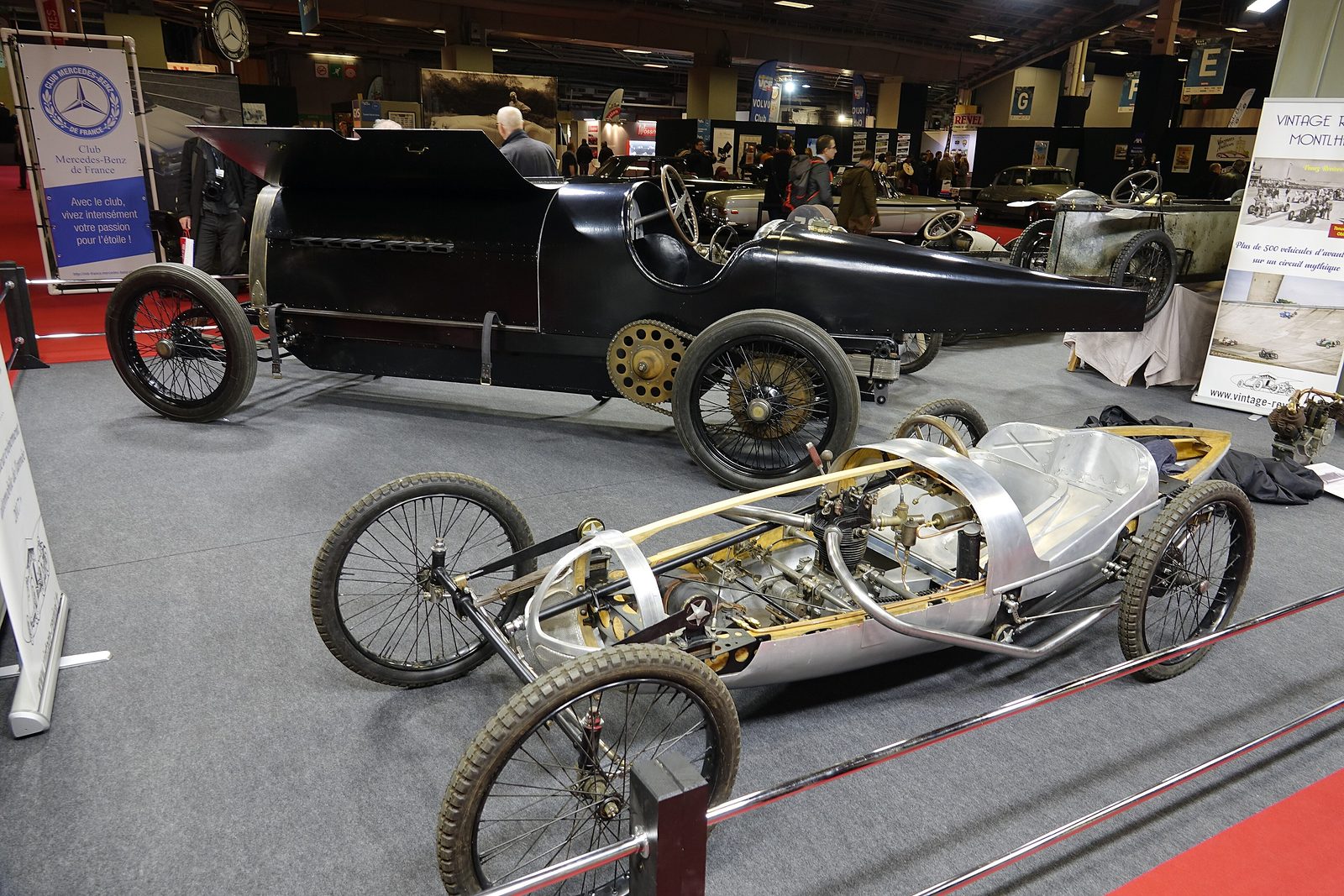
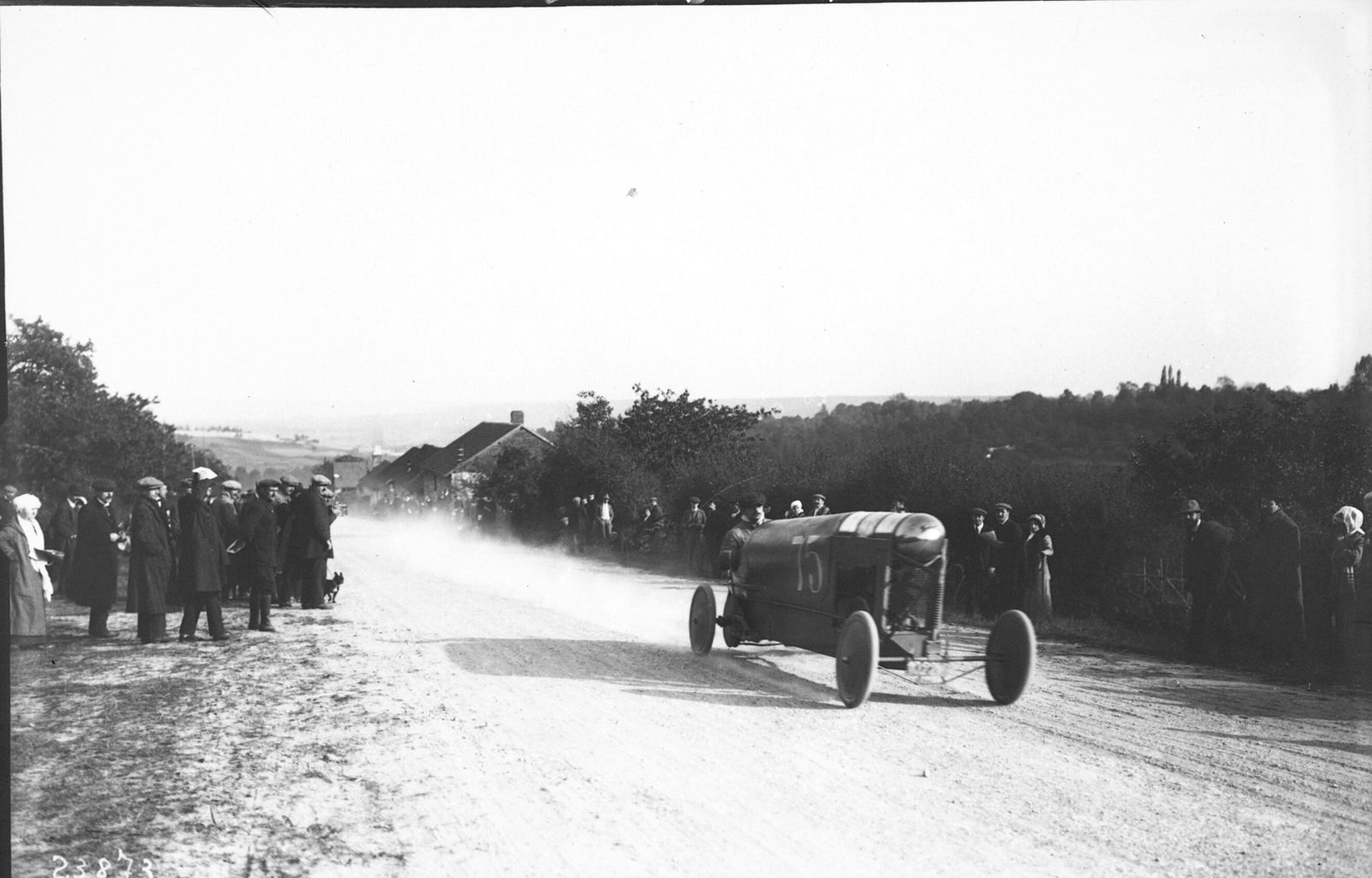
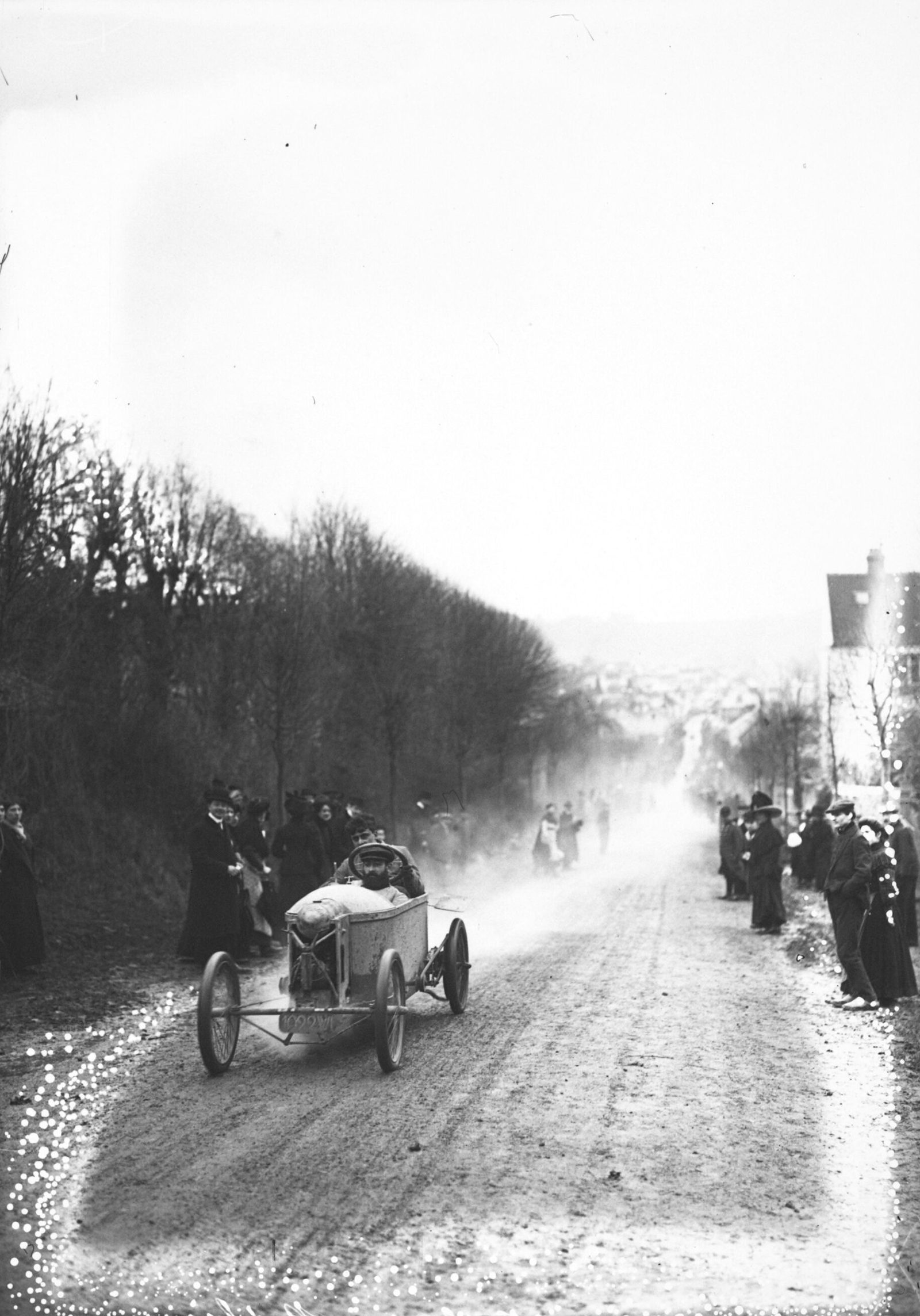
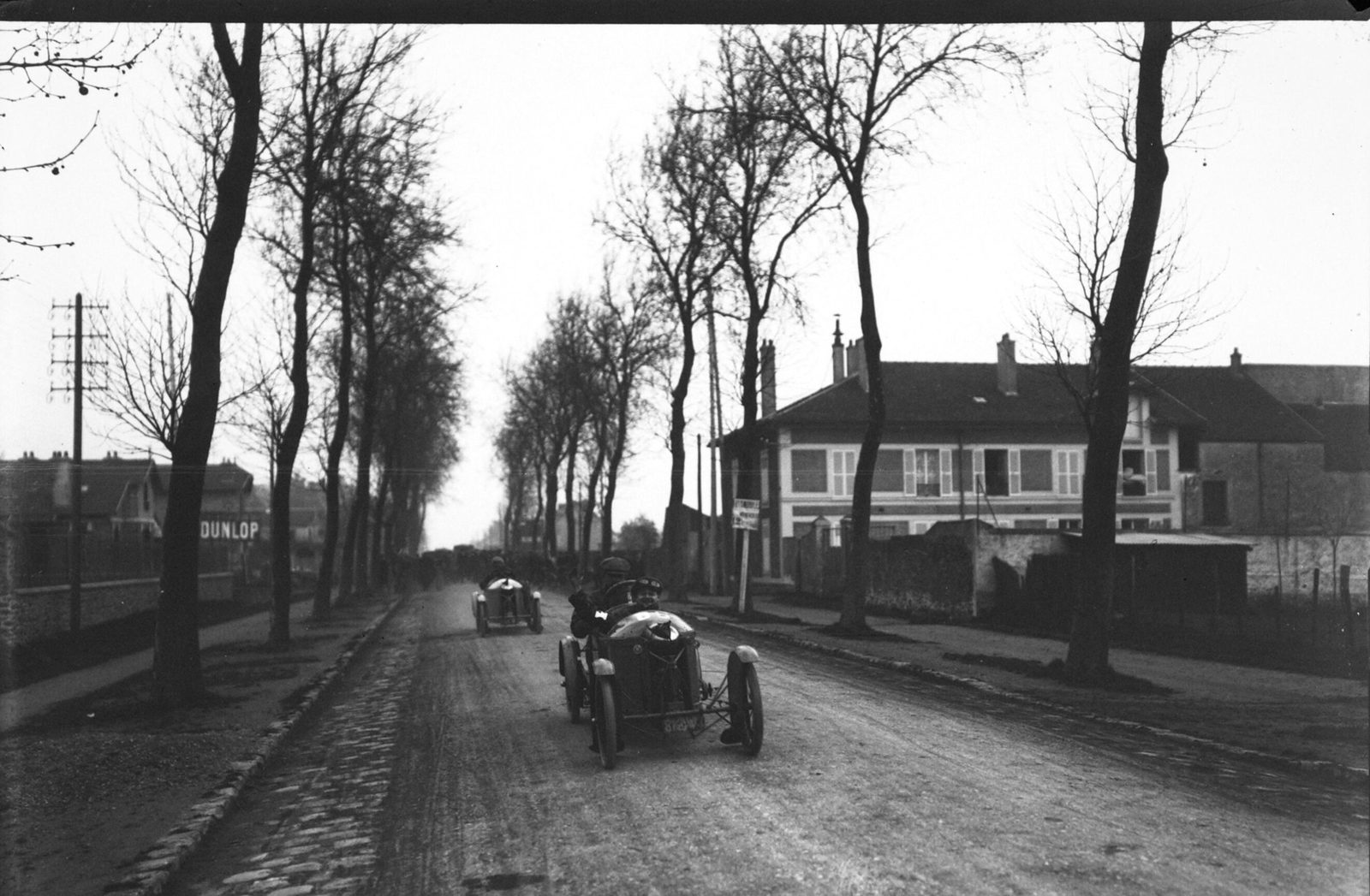
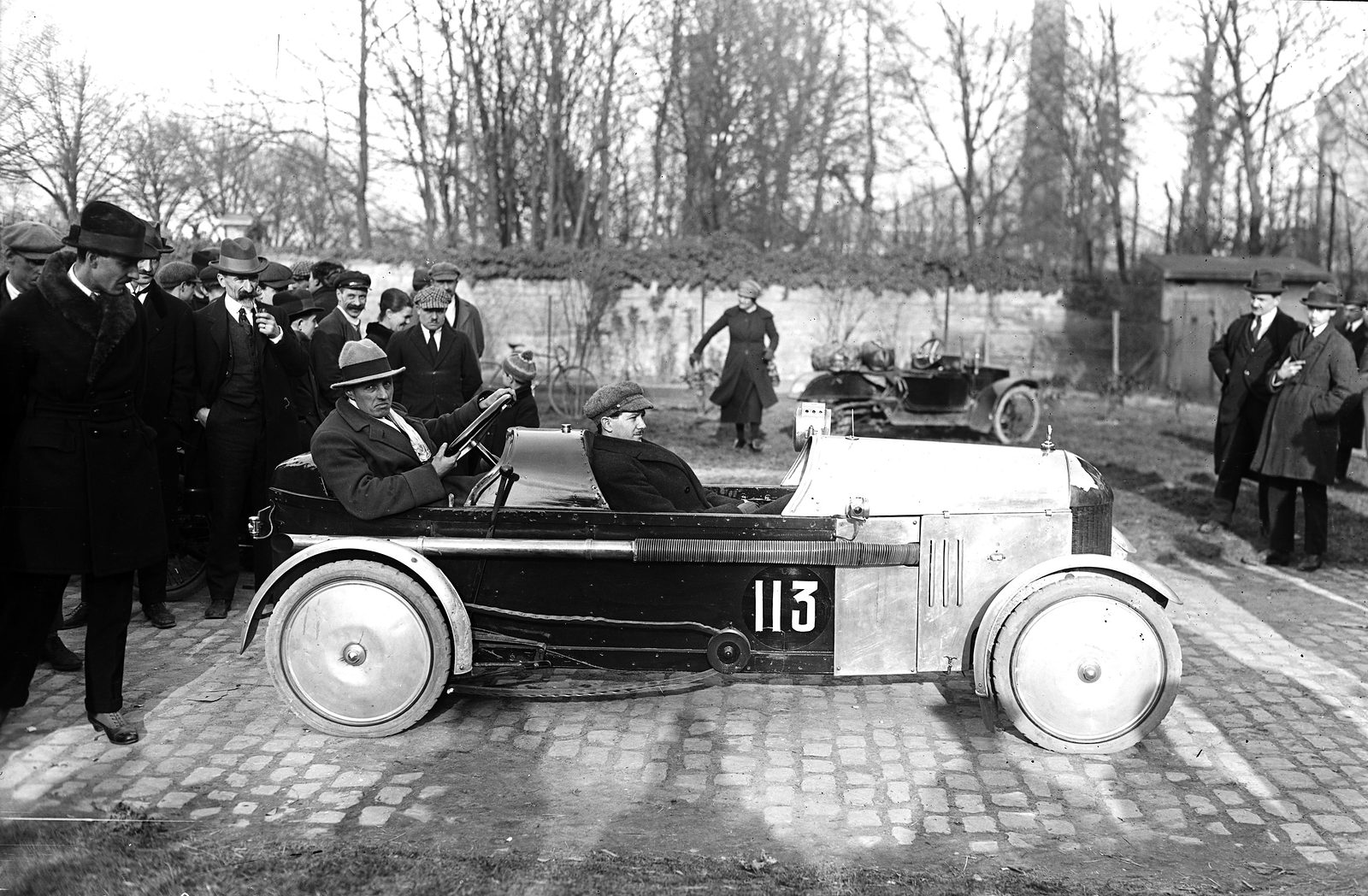
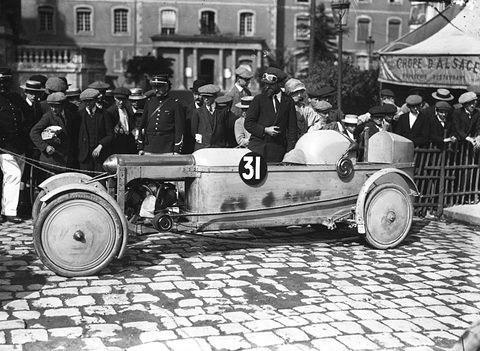
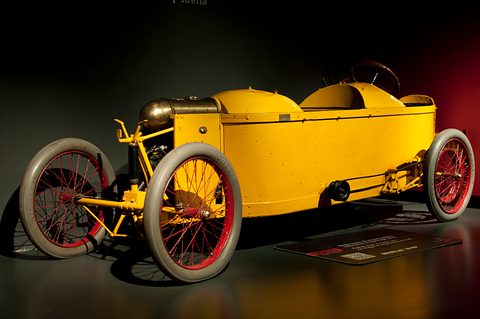
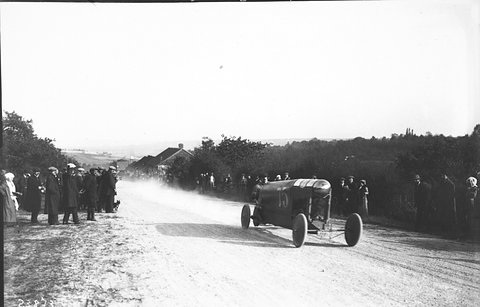
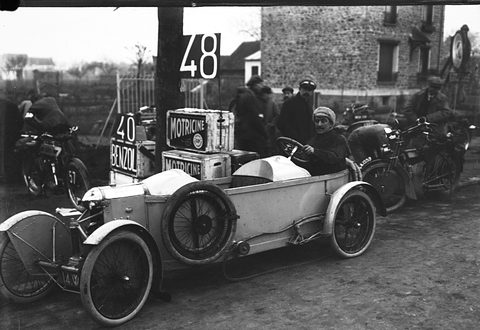
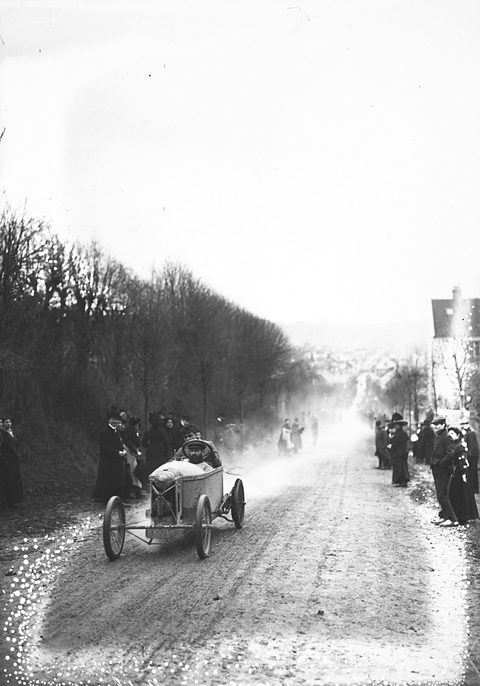
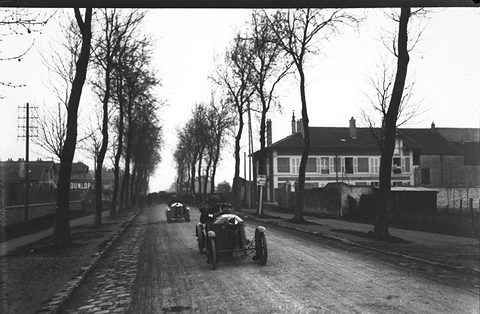
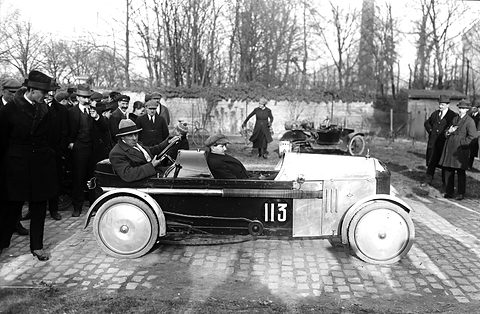
The cars had raced since 1911, in hill climbs and at the Le Mans meeting, and by November 1912 the firm claimed to have broken the cyclecar hour record three times that year.source 1source 6source 5 For the Cyclecar Grand Prix at Amiens it built something new. The four racers had streamlined tandem bodies, the deck almost closed, with openings only for the two heads. The 82 × 100 mm twin was bored out a little to reach the 1,100 cc limit of the class and lightened, with a U.H. magneto between the cylinders. A belt ran straight from each end of the crankshaft to the rear wheels, with no countershaft, gearbox or clutch, over automatic expanding pulleys whose outer cheeks were moved by a centrifugal governor, so that the ratio rose with the engine’s speed. To keep the belts tight the engine slid about 4 in (100 mm) back and forth on two steel shafts, moved by a worm gear that the driver could work while on the move.source 13 The Cyclecar headed its report on them “Startling Innovations!”source 13 Boddy’s statement that “for racing the driver sat normally” is contradicted by that period description: the 1913 racers were tandems.source 6source 13
The race was run the day after the ACF Grand Prix, on the same circuit, cut up by the big cars: 15 laps of 17.48 km (10.86 miles), 262.2 km (162.9 miles) in all, on a day of tropical heat. Cyclecars and motorcycles with sidecars ran together, and the British entries included the Morgan Three-Wheelers and the GNs.source 12source 14 One Bédélia, Prévot’s, water-cooled and of 750 cc, was the only car in its class. M. Bourbeau, “one of the partners in the Bedelia Company”, which makes him Robert, carried his younger brother and stopped only once, for petrol and oil.source 12 W. G. McMinnies’s Morgan finished first on the road with a time of 3 h 53 min 9 s and an average of 41.9 mph (67.4 km/h); Bourbeau was 2 min 45 s behind.source 12source 14
According to the French regulations three-wheel machines are not considered as cyclecars, thus officially putting the Morgans in the sidecar division.
So both won. McMinnies, with the fastest time, took the sidecar class, in which no sidecar finished, and Bourbeau the class for four-wheeled cyclecars. Nobody was excluded or demoted: the only cars disqualified were the Violet-Bogey, which had crossed the line third, and the Mathis, both after a protest, for running without mudguards.source 12source 15 British accounts can fairly say the Morgan won the Cyclecar Grand Prix, and French ones that the Bédélia won the cyclecar category (more in racing and rallying). The reporters admired the Bédélias’ cornering: Bourbeau’s car “did not give the impression of being quite so fast as the Morgans, but the manner in which he went round the bends was equally good”. Another Bédélia overturned on a sharp turn late in the race, and its crew were unhurt.source 12 The new transmission had done its job.
The automatic varying pulleys of the Bedelia proved satisfactory; the long belts (20 ft. in length) gave no trouble, nor was the sliding engine (to tighten the belts) a disadvantage.
Ten days later the firm was advertising itself as “FIRST IN THE CYCLECAR GRAND PRIX RACE”, which was true of its class.source 12source 15
War, Binet and the end
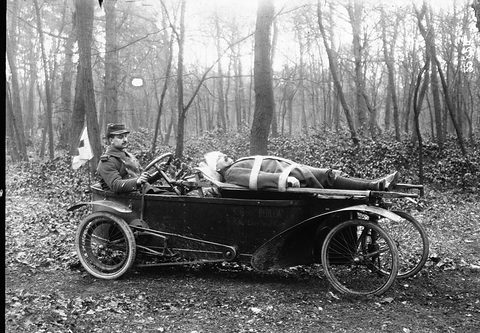
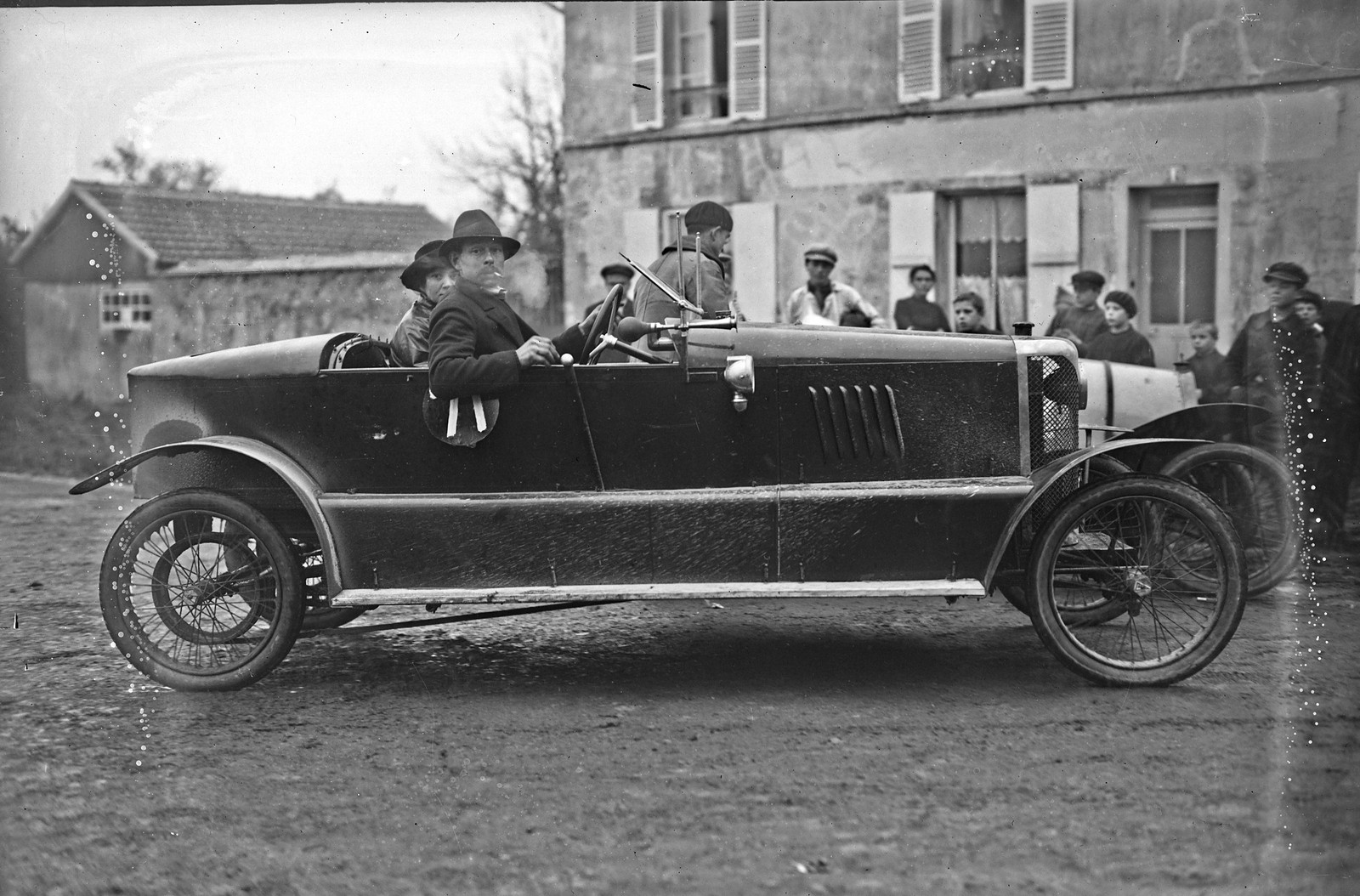
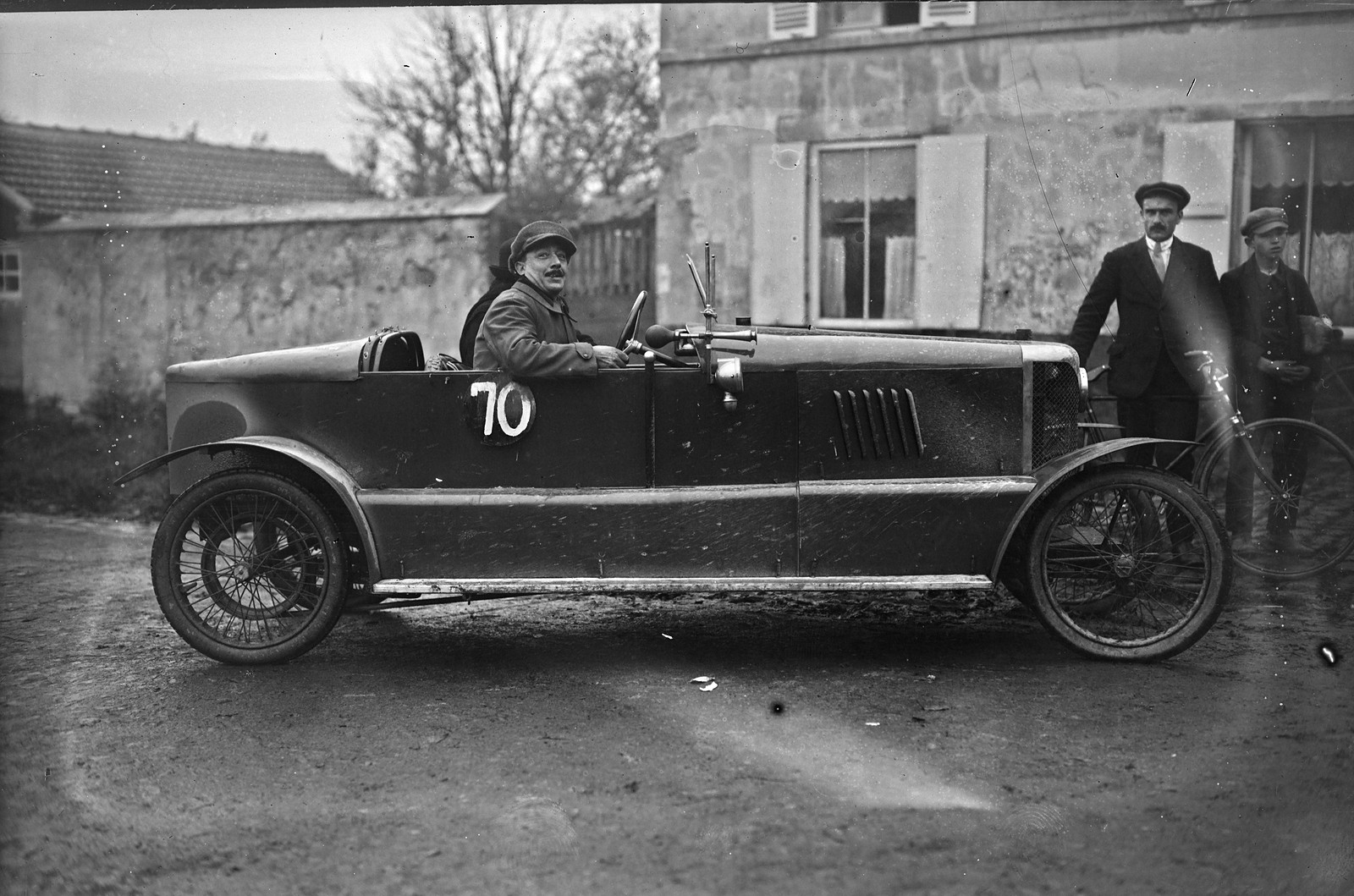
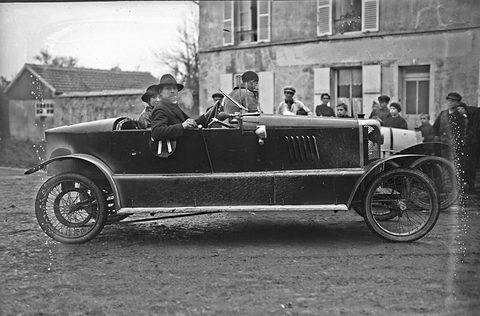
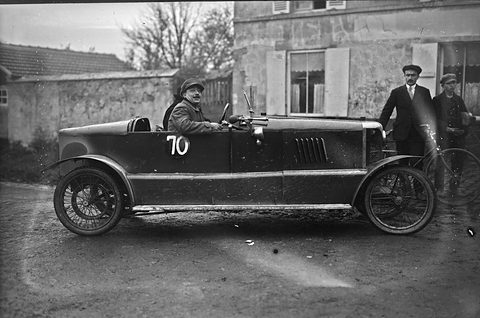
In the First World War Bédélias served as ambulances, the casualty lying along the body and the driver sitting behind.source 3 French Wikipedia also lists a machine-gun cyclecar of 1914.source 1 After the war, French Wikipedia says, Robert Bourbeau left to found a cyclecar make of his own, whose name the sources read do not give.source 1 In 1920 Henri Devaux sold the rights to a dealer, M. Binet, who had the cars built by Mahieux et Cie at Levallois-Perret; German Wikipedia says the business went to Mahieux.source 4source 1source 7 Binet’s Bédélia sat its two people side by side, and had a three-speed gearbox and twins of up to 990 cc; the car shown at the 1922 Paris Salon had a 995 cc V-twin, 80 × 99 mm, and weighed 330 kg (728 lb).source 4source 10source 7 The firm ran into money trouble and stopped in 1925, when the cyclecar boom was over.source 4source 7