The story
History
Sukeo Ohta, born in 1886, taught himself. Apprenticed to a sake brewer at Ishioka, he mechanised the brewery; at 21 he went to Tokyo and learned machining at Shibaura Seisakusho; from 1910 he helped Baron Ujihiro Iga with his aeroplane experiments, and was hurt in a test crash. When Iga gave up early in 1912, Ohta took his treadle lathe and, that June, opened the Ohta Works near Sugamo.source 1 He made small engines, model aircraft, and pistons and rings for a motorcycle dealer, and in 1914–16 a nine-cylinder radial aero engine of 11.7 litres. It gave 76 hp on test in May 1916, until a bevel gear broke.source 1source 2
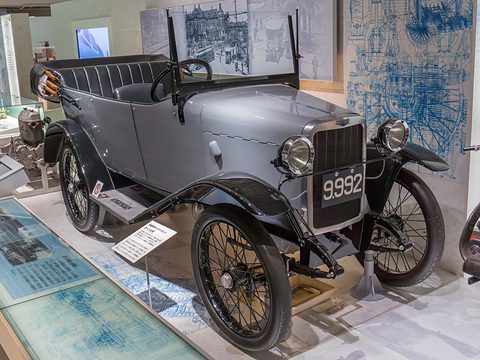
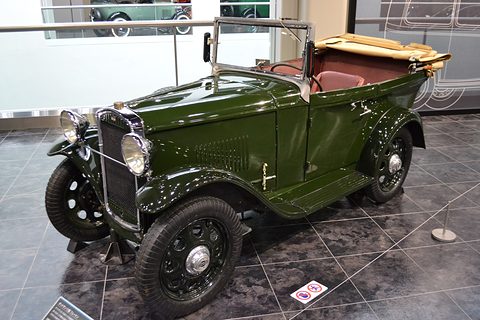
His first car, the OS of 1922, was a four-seat cabriolet with an overhead-valve four of 965 cc and 9 hp, 2,895 mm (9 ft 6 in) long and 570 kg (1,257 lb); his brother-in-law Yutaka Noguchi helped him finish it, and it was registered for the road.source 1source 2 A company, Kokkō Jidōsha, was set up in 1923 to build it, and the Kantō earthquake of 1 September burned its works. Ohta escaped to Ibaraki with his family in the OS, then ran it as a private taxi in Tokyo. He kept using it until 1933, for about 96,500 km (60,000 miles).source 1
Cars without a licence
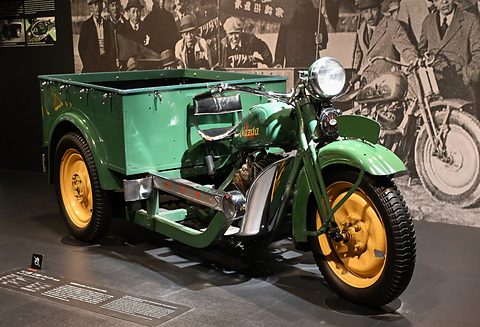
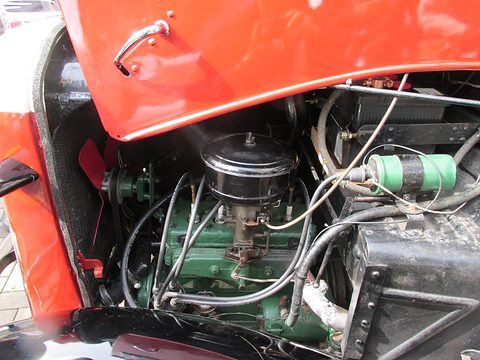
Japan’s rules made his next cars possible. In 1928 a vehicle could be driven without a licence only up to 350 cc and 909 mm wide, which meant motorcycles and tiny three-wheelers. In 1930 the limit rose to 500 cc and 2.8 m by 1.2 m, and in August 1933 it was set at 750 cc from that November.source 1source 2 This licence-free class, mumenkyo, was the forerunner of the kei car.source 1source 2 Ohta built a twin of 484 cc for the 500 cc rules in 1930, which the navy bought to evaluate, and in 1932 a side-valve four, the N‑7, of 748 cc, soon cut to 736 cc.source 1
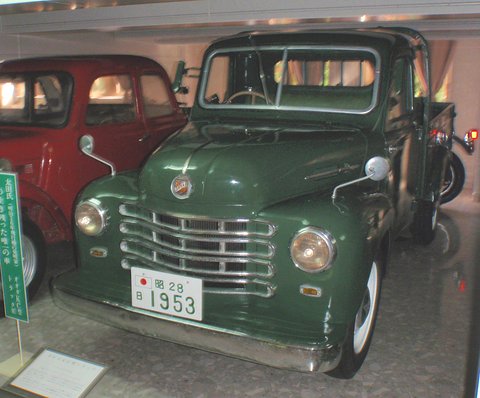
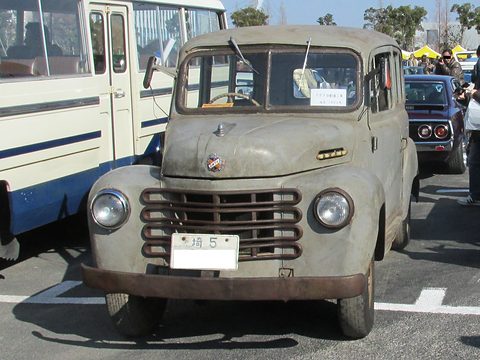
The 750 cc Ohtas were mostly trucks and vans, but there were also a two-door four-seat saloon at ¥2,080 before tax, and a phaeton and a two-seat roadster at ¥1,850. All of them fitted inside 2.8 m except a long van of 3.03 m, which needed a licence. Underneath they were conservative: a ladder frame, beam axles on leaf springs and mechanical drum brakes.source 1 About 15 people built them.source 1source 2
Mitsui’s choice
Yoshisuke Aikawa’s new Nissan group was building the Datsun. The trading house Mitsui tried the Datsun and the Ohta side by side, judged the Ohta better made, and invested in it. Mitsui Bussan sold Ohtas from 1934, and on 3 April 1935 Mitsui formed Kōsoku Kikan Kōgyō, the “High Speed Engine Industry” company, with ¥1 million of capital, Sonoyama Yoshizō as managing director, Ohta as technical director and Noguchi running the works.source 1source 2 In April 1936 a new factory opened at Higashi-Shinagawa, with American and German machine tools, room for 3,000 cars a year and a staff of 250.source 1source 2
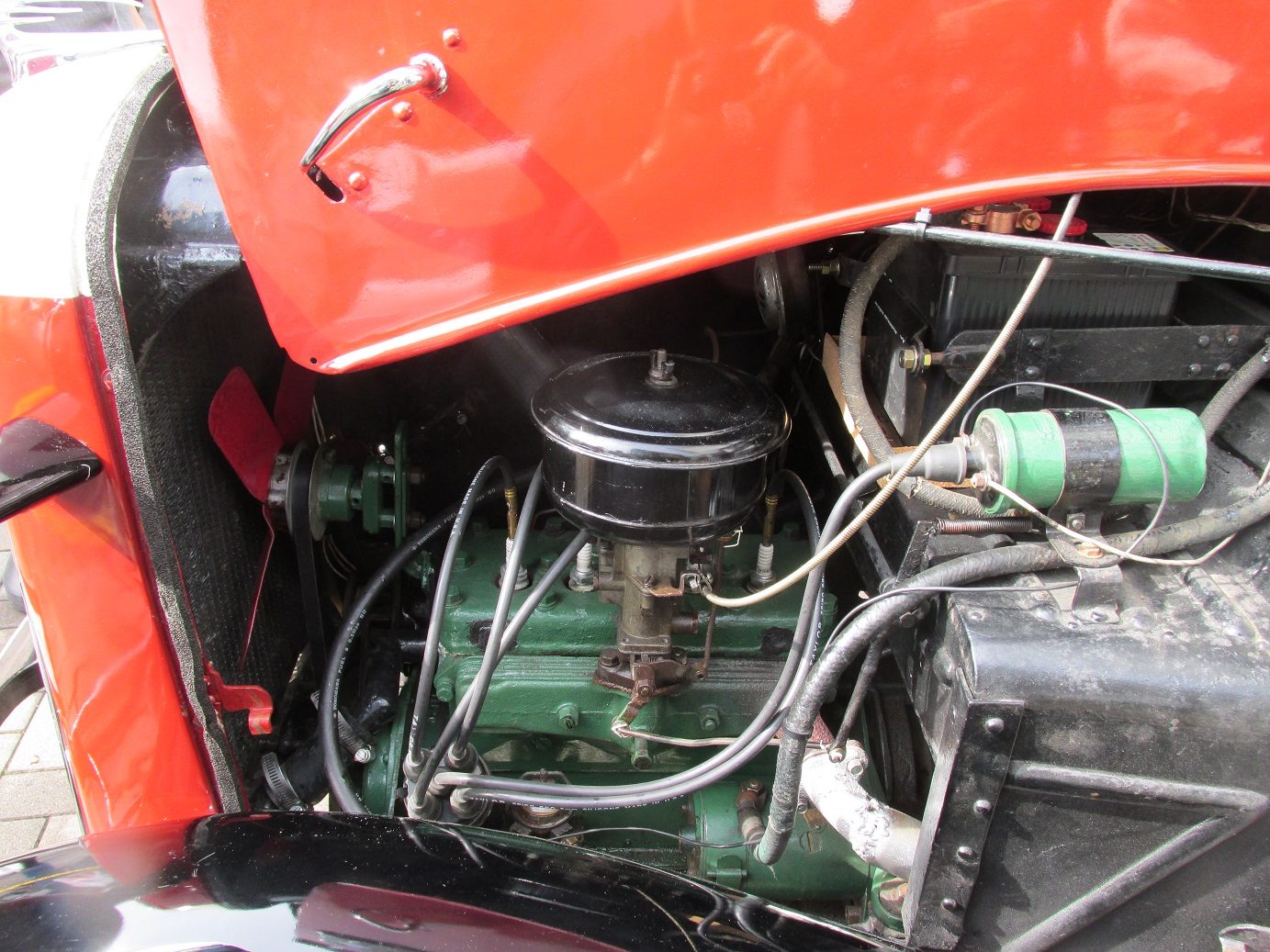
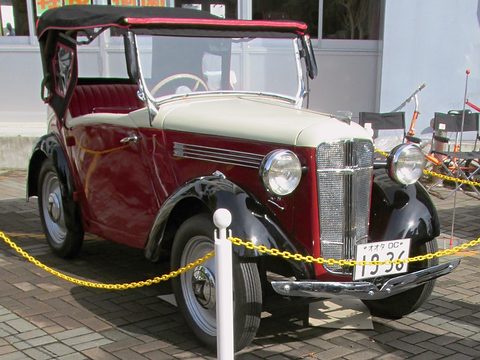
The cars were now drawn by Ohta’s eldest son, Yuichi, born in 1913; Kazuo Tsuda designed the trucks.source 1 The OC came in 1936.source 2source 3 The OD of 1937 was among the most modern-looking Japanese cars of its day: draught-free vent windows, an X-braced frame and five bodies built by Yanase to Yuichi’s design, from a pillarless de luxe saloon to a cabriolet.source 1source 2 Under the new clothes were the two-bearing side-valve engine, beam axles, a wood-framed body and mechanical brakes.source 1
不本意な製品であった
The scale of the fight was never even. In 1937 Ohta built 960 vehicles; Datsun built 8,752.source 1 The motor industry law of 1936 favoured makers of trucks the army could use, and Ohta was left out of it; a 1,200 cc car was abandoned.source 1
Into the war
In September 1937 control passed from Mitsui Bussan to Tachikawa Aircraft, for military production (see aircraft makers).source 1source 2 As materials were rationed, car output peaked at 216 in 1938 and trucks at 809 in 1937. The last car was built in 1940 and the last truck in 1942, and the works turned to aircraft parts and fire-pump engines.source 1source 2
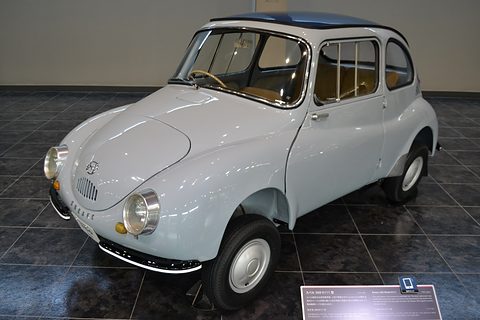
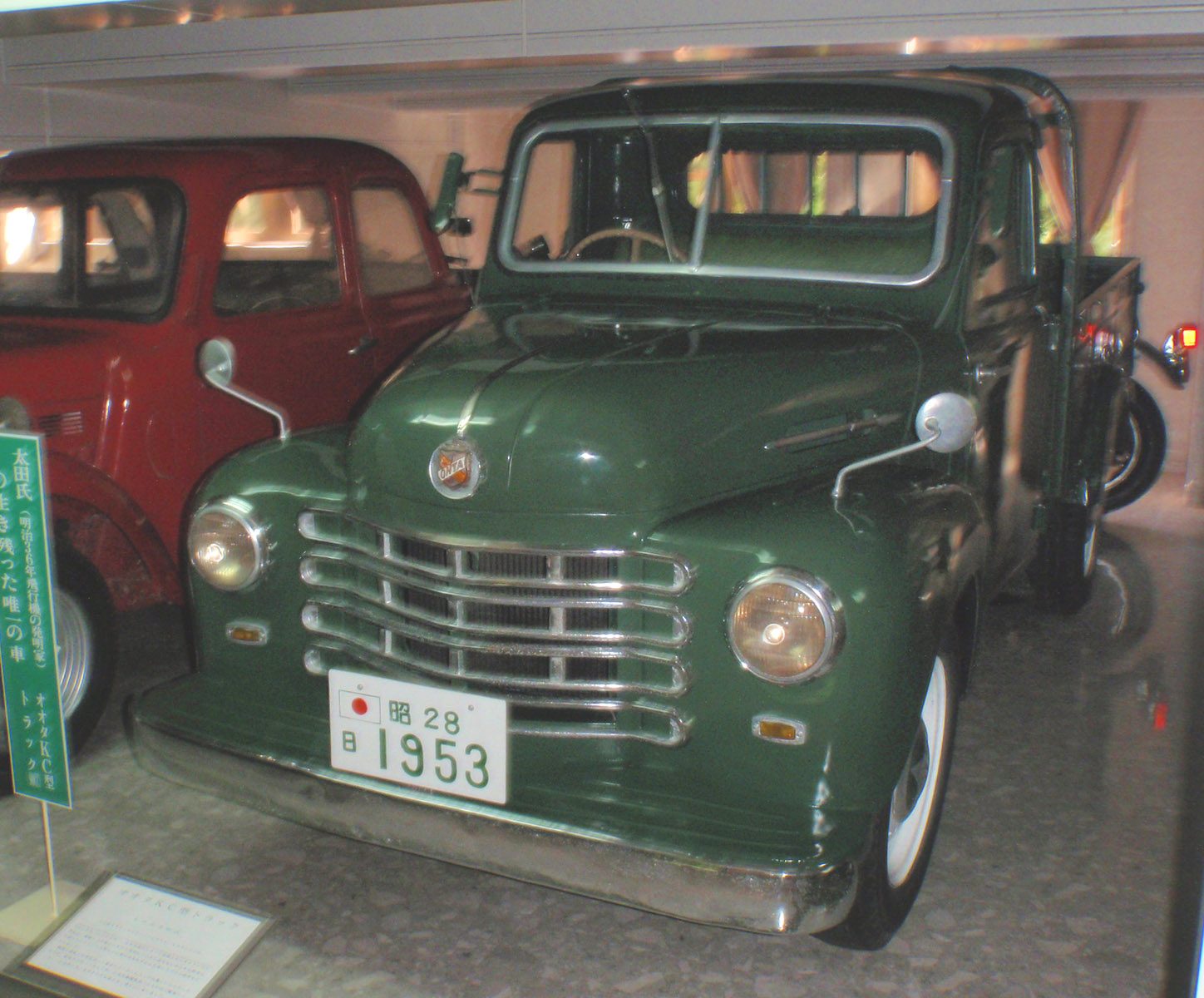
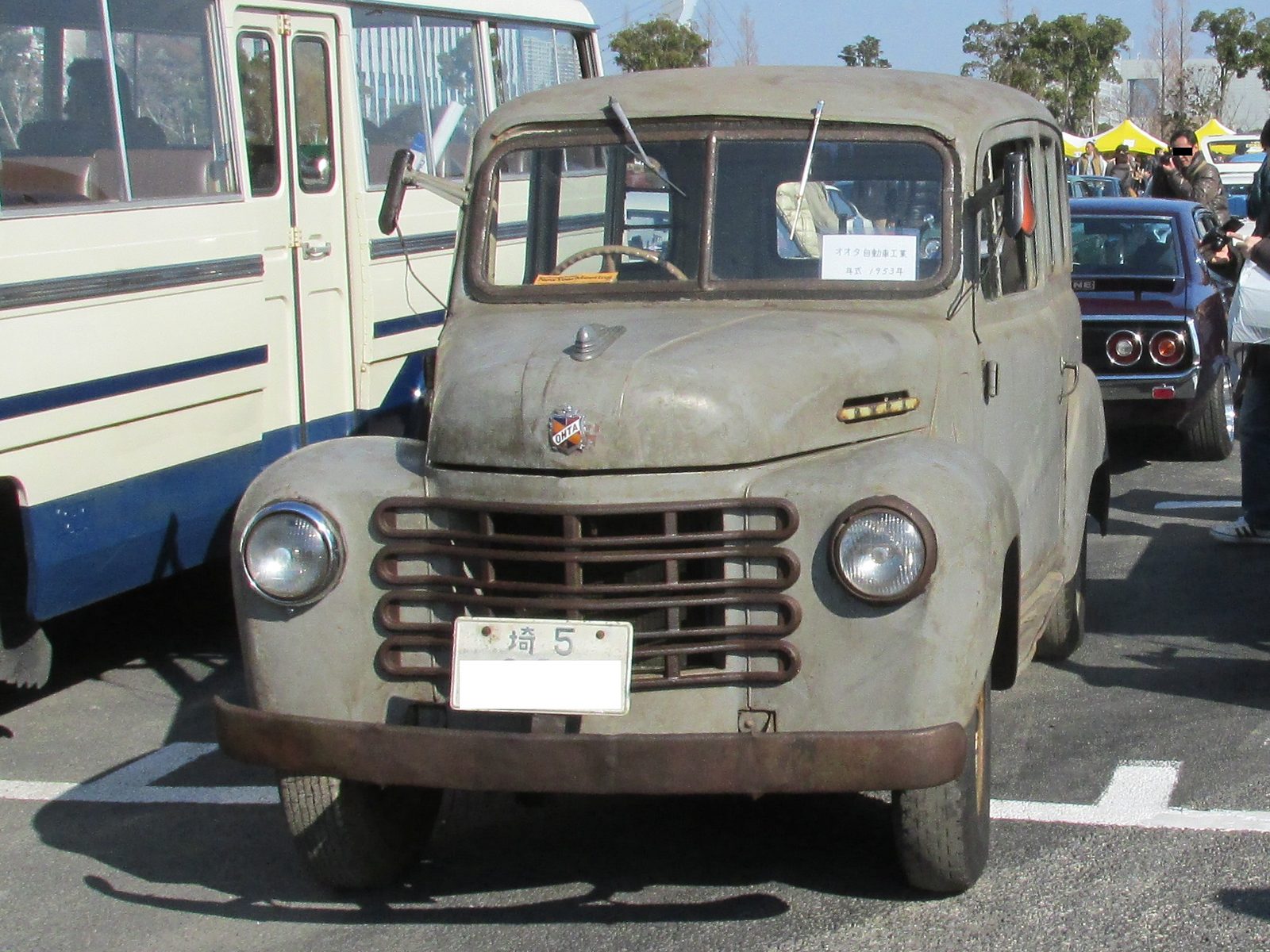
Ohta went back to cars in 1947 with larger models, 3.6 m long and used largely as taxis. It went bankrupt in January 1955 and in April 1957 was merged with Nihon Nainenki, the maker of the Kurogane, and its engineers went to Honda and to Fuji Heavy Industries, where the Subaru 360 was made.source 1source 2 Sukeo Ohta died in 1956. In 2010 he was inducted into the Japan Automotive Hall of Fame.source 1source 2source 4
In the early days of Japan’s automotive history, Mr. Sukeo Ohta took his work on engines a stage further by developing the small-sized OS automobile, which duly led to the mass-production of the Ohta series.