microcarfan
  • Cyclecar
  • Several countries
  • 24 makers

Cyclecars elsewhere: Austria, Poland, Scandinavia and beyond

A Norwegian two-seater that could swap its front wheels for skis, a Viennese 500 cc record car that still exists and a 98 cc Polish three-wheeler stopped by the invasion of 1939: the cyclecar was never only a French and British affair.

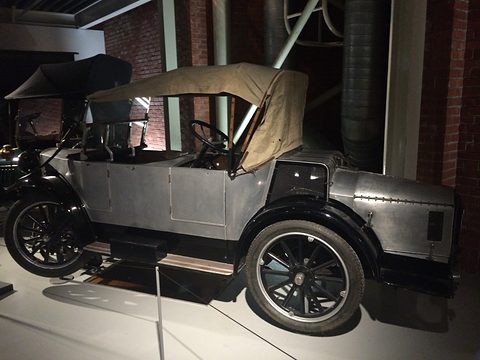
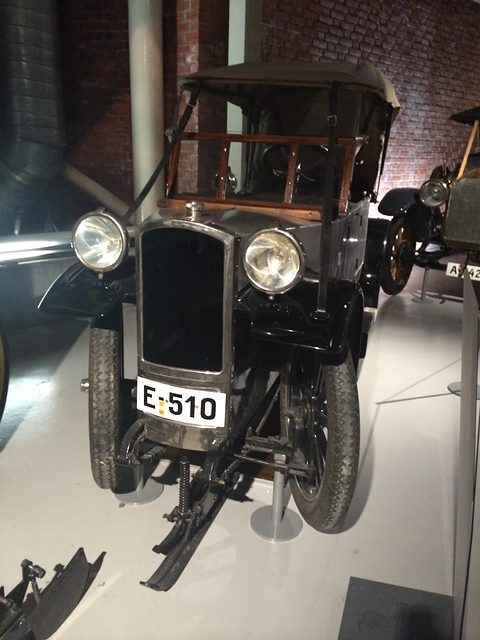
Side view of a narrow grey tourer with a khaki folding hood and dark wheels in a dim brick hall.
A grey 1925 Bjering with its hood up at the Norsk Teknisk Museum, Oslo, Norway, in November 2014.Photo: Bjoertvedt, CC BY-SA 4.0, via Wikimedia Commons

At a glance

The spec plate

Cyclecars elsewhere: Austria, Poland, Scandinavia and beyond

Twenty-four makers · eleven countries

Built
1913–⁠1939Cyclecars from 1913 to the Cyklonetka prototype of 1939; Denmark’s Dana, a light car rather than a cyclecar, from about 1908
Country
Several countriesAustria, Poland, Norway, Sweden, Denmark, Switzerland, Belgium, Greece, Argentina, Canada and Italy
Engine
98 cc to about 2,100 cc, by makerFrom the Cyklonetka’s moped engine to the Bjering’s air-cooled four
Seats
1 or 2One in the Schasche racer; two in tandem or semi-tandem in the Bjering, the Speidel and the C.B.C.
Wheels
4Most had four; the Cyklonetka and the first Vaghi three, and the Bjering could take skis in place of its front wheels
Price new
$495The Canadian C.B.C. in January 1914, the only price found
Production
About six BjeringsThe only count found, apart from the Schasche and Cyklonetka one-offs
Survives
YesTwo Bjerings in Oslo and the Schasche

Not yet recordedpower and top speed.

The story

History

On 14 December 1912 the international motorcycle federation, the FICM, agreed a rule for cyclecars: a large class of at most 350 kg and 1,100 cc, and a small class of at most 150 kg and 750 cc.source 1 Born in France and Britain in 1910–⁠13, the idea then spread through Europe, the Americas and beyond, and English Wikipedia’s list of makers runs to at least fifteen countries.source 1 Most of these makers built a handful of cars and left little behind them. Spain and Czechoslovakia have their own pages, the David, the Spanish microcars and the Aero 10; the makers below follow by the year each began.

Names only

For eleven more, nothing beyond a name in Wikipedia’s list has been found: Mascot and Self in Sweden, SKAF in Poland, CAP and SCH in Belgium, Theologou in Greece, Viglione in Argentina, Holden-Morgan in Canada, and Anzani, C.I.P. and SIC in Italy.source 1 Greece’s later three-wheeler, the Attica 200 of the 1960s, has its own page.
Dana, Denmark, about 1908–⁠14

Hakon Olsen’s Maskinfabriken Dana, in Copenhagen, built light cars with friction transmissions.source 2 They were small cars rather than true cyclecars, and began before the cyclecar wave. A snippet of Georgano’s encyclopedia suggests that a Danish law favouring such light cars was later abolished, and that this forced Dana out of the market; the law itself has not been identified.source 3

C.B.C., Canada, 1913–⁠14

The Canadian Baby Car Company of Montreal was announced in Motor Age on 4 December 1913; work on the car had begun in October 1912.source 4 The magazine’s cyclecar directory of January 1914 gives the details: an air-cooled twin of 85 × 88 mm, by JAP, De Luxe or Wizard, with a cone clutch, a two-speed planetary gearbox and V-belts to the rear wheels. The two seats were semi-tandem, the wheelbase 2,134 mm (84 in), the track only 914 mm (36 in), and the price $495.source 5

Austro, Austria, 1913–⁠14

Georgano counts the Austro among the few cyclecars made in Central Europe, and says it did well in mountain trials and in the Semmering hill-climbs (more in racing and rallying).source 3source 1 Its maker, its engine and how many were built have not been found.

Dart, Canada, 1914

The Dart Cyclecar Company of Toronto assembled the American Scripps-Booth Rocket under licence, for a short time only (more in built under licence).source 3

Moser, Switzerland, 1914–⁠24

Fritz Moser’s Moteurs Moser, at St-Aubin in the canton of Neuchâtel, began with V-twin cyclecars in 1914 and moved on to a voiturette.source 3source 2 In 1918–⁠19 it also built a four-cylinder car with a Zürcher engine; later the cyclecar was dropped, and a light tourer got Moser’s own L-head four. The firm also made engines for other makers.source 2source 3

Speidel, Switzerland, 1915–⁠22

Paul Speidel of Geneva started with a tandem-seated cyclecar with a four-cylinder engine.source 2 A French encyclopedia counts him among the more enthusiastic builders.source 6

Bjering, Norway, 1918–⁠26

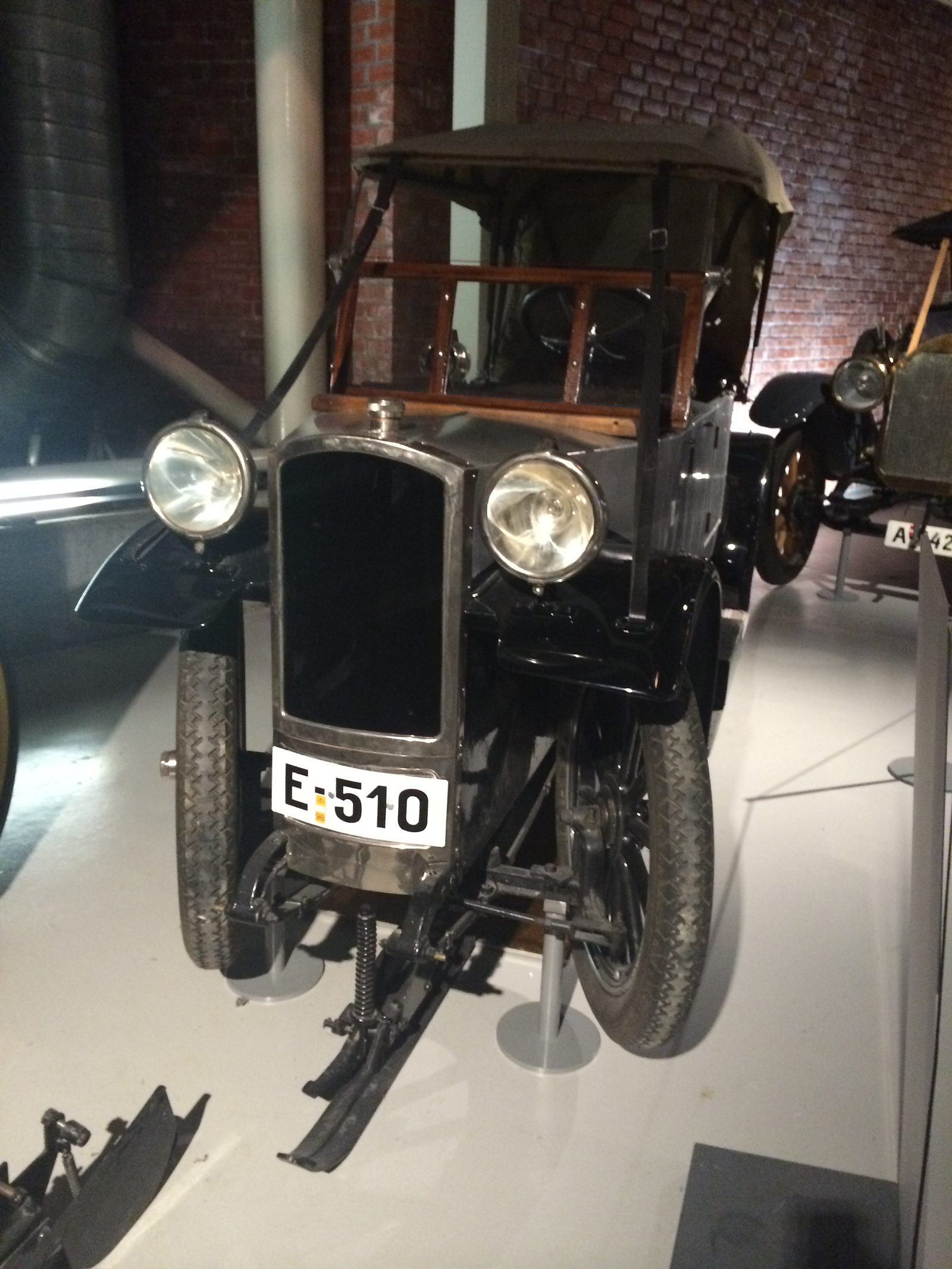
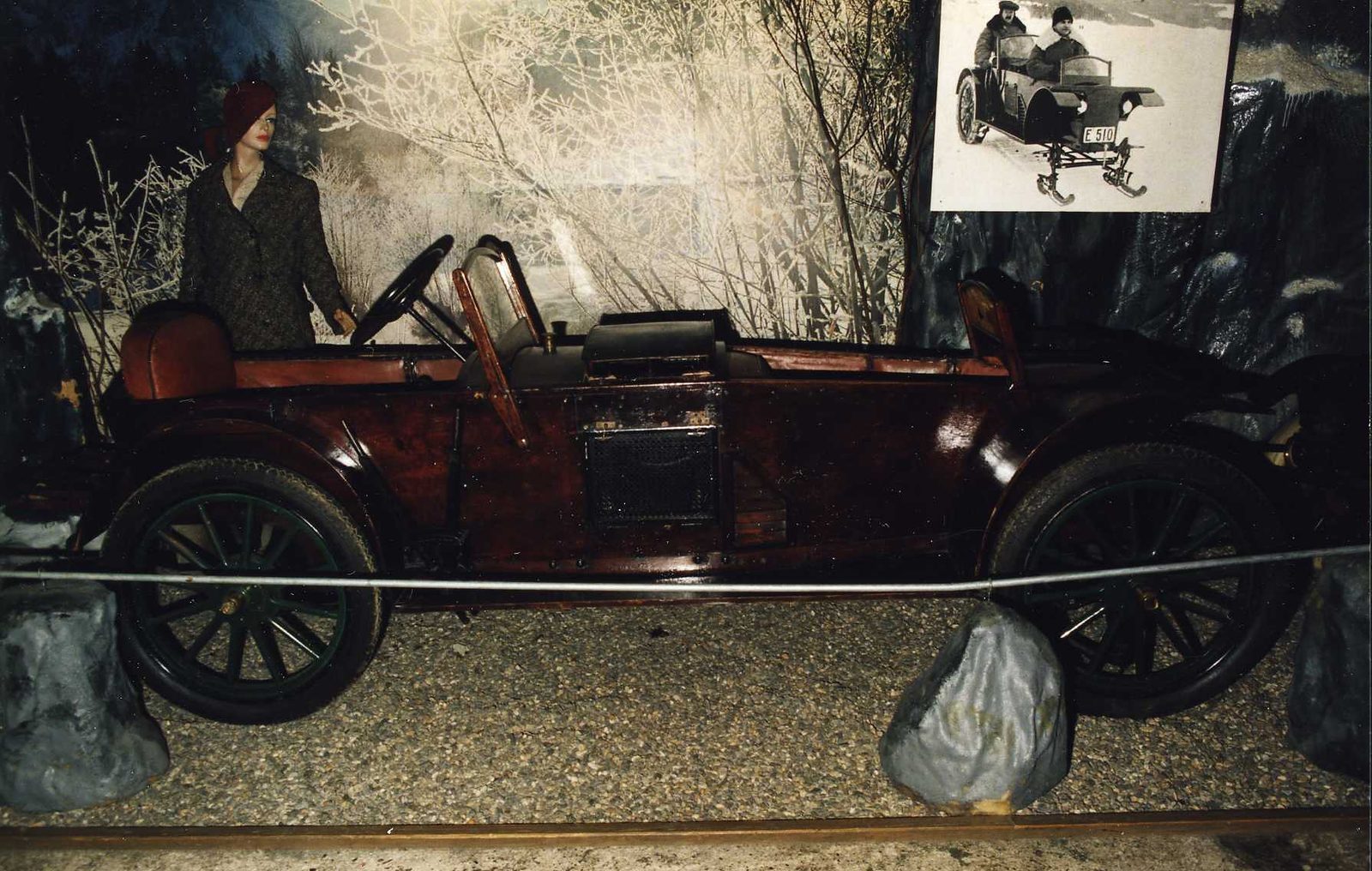
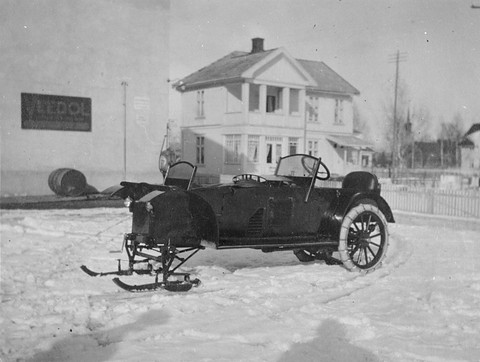
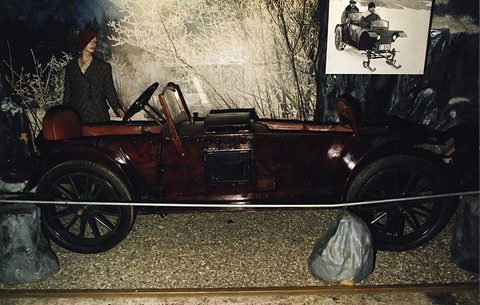
Perhaps the strangest of them was built for snow. Hans Christian Bjering of Gjøvik designed a car for narrow winter roads and sledge tracks, and his company, A/S Autoslæde, built the first ones.source 7source 3 It was only about 1 m wide, with two seats in tandem and the driver over the rear wheels, and its front wheels could be swapped for skis. The engines were nothing like a cyclecar’s: an air-cooled V4 of 2,010 cc in the early cars, then an air-cooled side-valve four of 2,100 cc at the back. Wooden bodies gave way to aluminium on the later cars, built by A/S Raufoss Ammunisjonsfabrikker.source 7 With nearly twice the engine size the cyclecar rule allowed, the Bjering was a cyclecar in shape only.

About six were made, four in 1920–⁠21 and two more in 1923–⁠25, by Norwegian Wikipedia’s count; Georgano dates the make to 1918–⁠20.source 7source 3 Better snow ploughs ended it: once the roads were cleared, a car for sledge tracks was no longer needed.source 7

A dark open car standing on snow, skis under its front and chained spoked wheels at the back, a white house behind.
Plate I · c. 1920 A Bjering on a snowy Norwegian street about 1920, runners fitted in place of its front wheels and chains on its rear tyres.Photo: Norsk Teknisk Museum, CC BY-SA 4.0, via Wikimedia Commons

Vaghi, Italy, 1920–⁠24

The Vaghi was built at first as a three-wheeled cyclecar with a 546 cc twin.source 8 Nothing more on it has been found.

Grofri, Austria, 1924–⁠27, and Amilcar Italiana

Robert Gross and Leopold Friedmann joined their names to make Grofri, at Atzgersdorf near Vienna. The firm began with large three-litre six-cylinder cars, and from 1924 built small cars under licence from the French Amilcar: side-valve four-cylinder sports cars of 903 cc or 1,047 cc, with supercharged versions for racing.source 9 The small cars ended in 1927, and the firm closed for financial reasons in 1931; Georgano dates Grofri to 1922–⁠27.source 9source 3 In Italy, Amilcar Italiana also built the Amilcar under licence, as Pluto did in Germany.source 10source 11 How many either of them made has not been found.

Della Ferrera, Italy, 1924

The Turin motorcycle maker Fratelli Della Ferrera showed a cyclecar in 1924 that used, as Georgano notes one might expect, a motorcycle front end. Della Ferrera’s air-cooled one-litre V-twin also powered other Italian cyclecars.source 3

Schasche, Austria, 1929

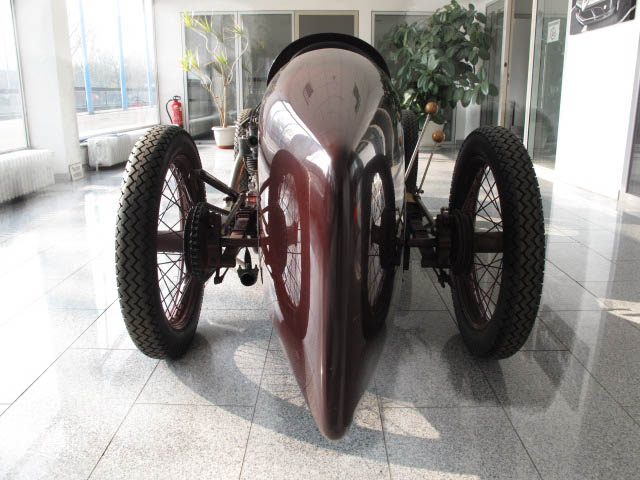
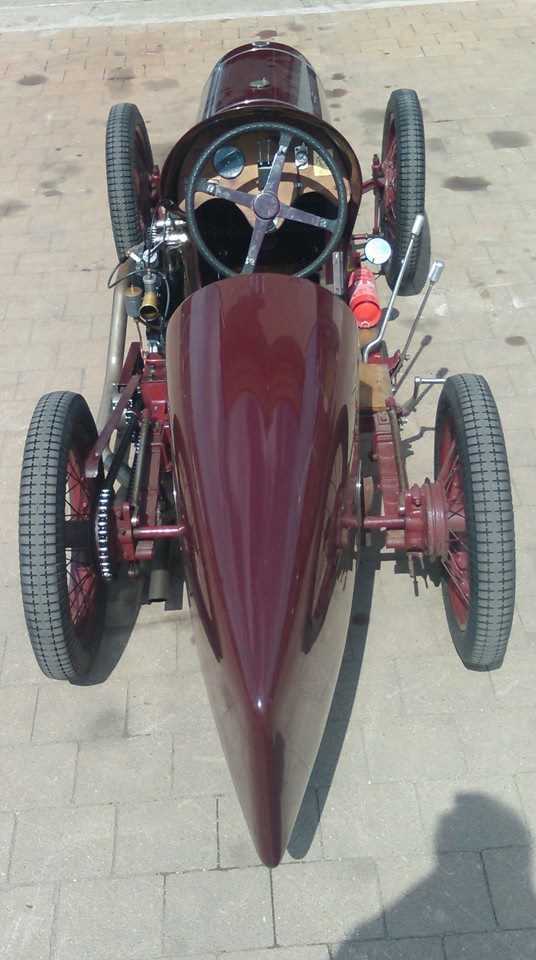
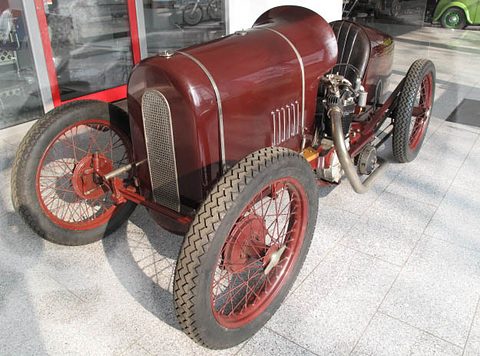
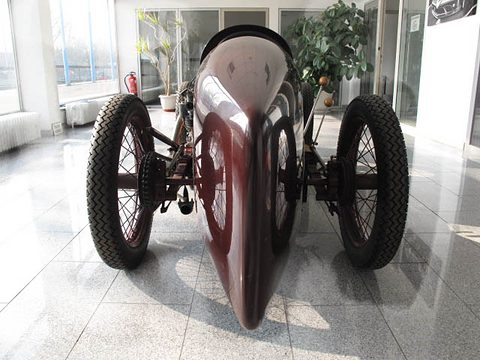
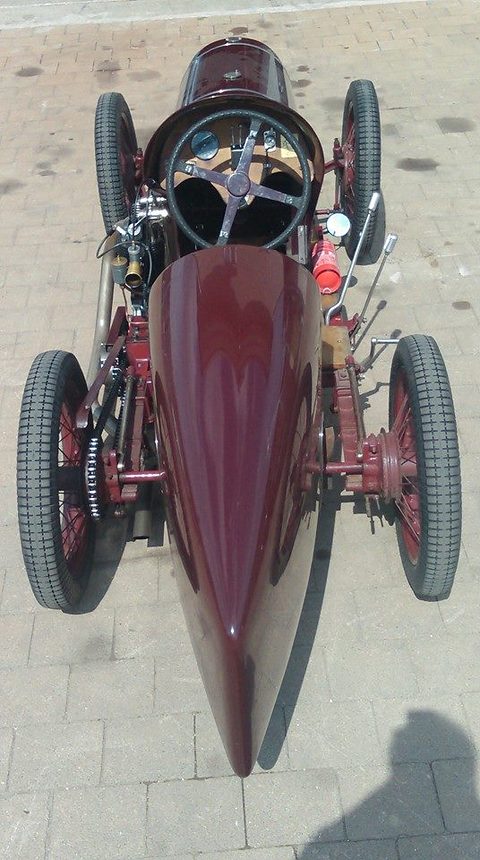
Alois Schasche imported Belgian Saroléa motorcycles to Vienna. At the Vienna Spring Fair of 1929 he showed a single-seat racing cyclecar with an exposed Saroléa single of 500 cc, the model 23 U of 1928, of about 25 hp (19 kW), built to attack the world record of 108 km/h (67 mph) for 500 cc cyclecars. Whether it beat the record has not been found. It was possibly the only one built, and it survives.source 12

A small maroon racing car with a mesh radiator cowl, red wire wheels and an air-cooled single-cylinder engine at its side.
The Schasche single-seat record car from the front quarter, its Saroléa single exposed, photographed in March 2013.Photo: Frankseeger, CC BY-SA 3.0, via Wikimedia Commons

Cyklonetka, Poland, 1939

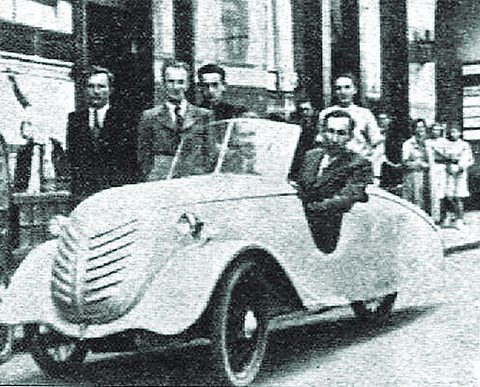
The last of them came in 1939, from the Kielce workshop of the brothers Eugeniusz, Jan and Wacław Knawe: a three-wheeler with a convertible body and a 98 cc moped engine from Steinhagen & Stransky of Warsaw. The prototype was shown in Warsaw that year and impressed the Minister of Industry and Trade, but the German invasion in September 1939 ended the work.source 13 The account comes from one short Wikipedia article, which is itself flagged as poorly sourced.

A pale streamlined open two-seater with a louvred nose and enclosed wheels, a man at the wheel and several men behind.
Plate II · 1939 The Cyklonetka prototype in Poland in 1939, with a group of people standing behind it.Photo: Unknown photographer, Public domain, via Wikimedia Commons

Pictures

More photographs, old and new

Variants

Twenty-four makers, in date order

Cyclecars outside Britain, France, Germany and the United States
VariantYearsWhat differsHow many
DanaAbout 1908–⁠14Denmark: light cars with friction transmissionsNot found
C.B.C. (Canadian Baby Car)1913–⁠14Canada: a semi-tandem two-seater with a JAP, De Luxe or Wizard twin and belt driveNot found
Austro1913–⁠14Austria: a cyclecar of the mountain trials and the Semmering hill-climbsNot found
Dart1914Canada: the Scripps-Booth Rocket, assembled under licence in TorontoNot found
Moser1914–⁠24Switzerland: V-twin cyclecars, then a voiturette and a light tourerNot found
Speidel1915–⁠22Switzerland: a tandem cyclecar with a four-cylinder engineNot found
Bjering1918/20–26Norway: a tandem winter car about 1 m wide; skis could replace the front wheelsAbout 6
Vaghi1920–⁠24Italy: first a three-wheeler with a 546 cc twinNot found
Grofri1924–⁠27Austria: the Amilcar, under licence, with fours of 903 cc or 1,047 ccNot found
Amilcar ItalianaNot foundItaly: the Amilcar, under licenceNot found
Della Ferrera1924Italy: a motorcycle maker’s cyclecar, with a motorcycle front endNot found
Schasche1929Austria: a single-seat 500 cc record car with a Saroléa singlePossibly 1
Cyklonetka1939Poland: a 98 cc three-wheeler with a convertible bodyPrototype
Eleven moreNot foundMascot and Self (Sweden), SKAF (Poland), CAP and SCH (Belgium), Theologou (Greece), Viglione (Argentina), Holden-Morgan (Canada), Anzani, C.I.P. and SIC (Italy)Names only

Specification

What is known, maker by maker

C.B.C., January 1914

C.B.C., January 1914
EngineAir-cooled twin by JAP, De Luxe or Wizard, 85 × 88 mmsource 5
DriveCone clutch, two-speed planetary gearbox, V-belts to the rear wheelssource 5
IgnitionBoschsource 5
WheelsWire, with 28 × 2½ in tyressource 5
Wheelbase and track2,134 mm (84 in) and 914 mm (36 in)source 5
Price$495source 5

Bjering

Bjering
Early engineAir-cooled V4, 2,010 ccsource 7
Later engineAir-cooled side-valve inline four, 2,100 cc, at the rearsource 7
BodyWood at first; aluminium on the later cars from Raufosssource 7
WidthAbout 1 m; two seats in tandem, the driver over the rear wheelssource 7

Schasche, 1929

Schasche, 1929
EngineSaroléa single, 500 cc, model 23 U of 1928, about 25 hp (19 kW), exposedsource 12
Seats1source 12
TargetThe 108 km/h (67 mph) world record for 500 cc cyclecarssource 12

How many were built?

The only figures found

Not found for most makersNo production figure has been found for any of these makers except three: about six Bjerings, one Schasche, perhaps the only one built, and the single Cyklonetka prototype.

  1. about 6Bjerings: four in 1920–⁠21, then two in 1923–⁠25One source

    Norwegian Wikipediasource 7

  2. possibly 1Schasche record car, 1929One source

    German Wikipediasource 12

  3. 1Cyklonetka prototype, 1939One source

    English Wikipedia, flagged as poorly sourcedsource 13

  • Two sources agreetwo good sources give the figure
  • One sourcea good source, alone
  • Unconfirmeda lead only, not yet checked

Famous for

Three points

  1. Skis for wheels

    The Bjering’s front wheels could be swapped for skis, for Norway’s winter roads and sledge tracks.

  2. The Austrian Amilcar

    Grofri built the French Amilcar under licence near Vienna from 1924, with supercharged racers.

  3. 98 cc, 1939

    The Cyklonetka, a moped-engined three-wheeler from Kielce, was stopped by the German invasion.

Survivors and collecting

Today

Two Bjerings are in the Norsk Teknisk Museum in Oslo, and the Schasche record car survives.source 7source 12 One encyclopedia snippet mentions a Moser of 1918 in a Swiss museum, but the entry is cut off and the car has not been confirmed.source 3 No other survivor from these makers has been identified.

Sources

Numbered as in the text

Almost every maker here rests on one source: a Wikipedia article used as a lead, or a short snippet of an encyclopedia entry (Georgano, Burgess Wise). Only the Canadian C.B.C. has a period witness, Motor Age of 1913–⁠14. For eleven makers nothing beyond a name in Wikipedia’s list of cyclecar makers has been found. Sources are given as plain text; the links are on the Credits page.

  1. English Wikipedia, Cyclecar: the 1912 FICM classes and the list of makers by country, read. Used as a lead.
  2. David Burgess Wise, The Illustrated Encyclopedia of Automobiles (1979/2007), entries Dana, Moser and Paul Speidel, snippets only.
  3. G. N. Georgano (ed.), The New Encyclopedia of Motorcars 1885 to the Present (1982), entries Austro, Grofri, Bjering, Dana, Moser, Speidel, Dart and Della Ferrera, snippets only.
  4. “A Canadian Cyclecar Announced”, Motor Age, 4 December 1913, snippet only.
  5. Cyclecar directory, entry “C.B.C., Canadian Baby Car Co., Montreal”, Motor Age, 15 January 1914, entry read.
  6. L’univers des voitures classiques 1886–⁠1975 (2001), entry Speidel, snippet only.
  7. Norwegian Wikipedia, Bjering, summary read. Used as a lead.
  8. The 3-Wheelers Almanac (1998), entries Vaghi and Sam, snippets only.
  9. German Wikipedia, Grofri, summary read. Used as a lead; it cites Linz and Schrader (2008) and Gilles Fournier, Amilcar (1994).
  10. English Wikipedia, Amilcar, read: the licences to Pluto, Grofri and Amilcar Italiana.
  11. German Wikipedia, Pluto Automobilfabrik, summary read, for the Amilcar licences.
  12. German Wikipedia, Schasche-Cyclecar, summary read. Used as a lead; it cites the Allgemeine Automobil-Zeitung of 1 April 1929, Seper, Krackowizer and Brusatti, Österreichische Kraftfahrzeuge, and W. M. Buchta in Austro Classic.
  13. English Wikipedia, Cyklonetka, summary read. Used as a lead; flagged by Wikipedia as poorly sourced.