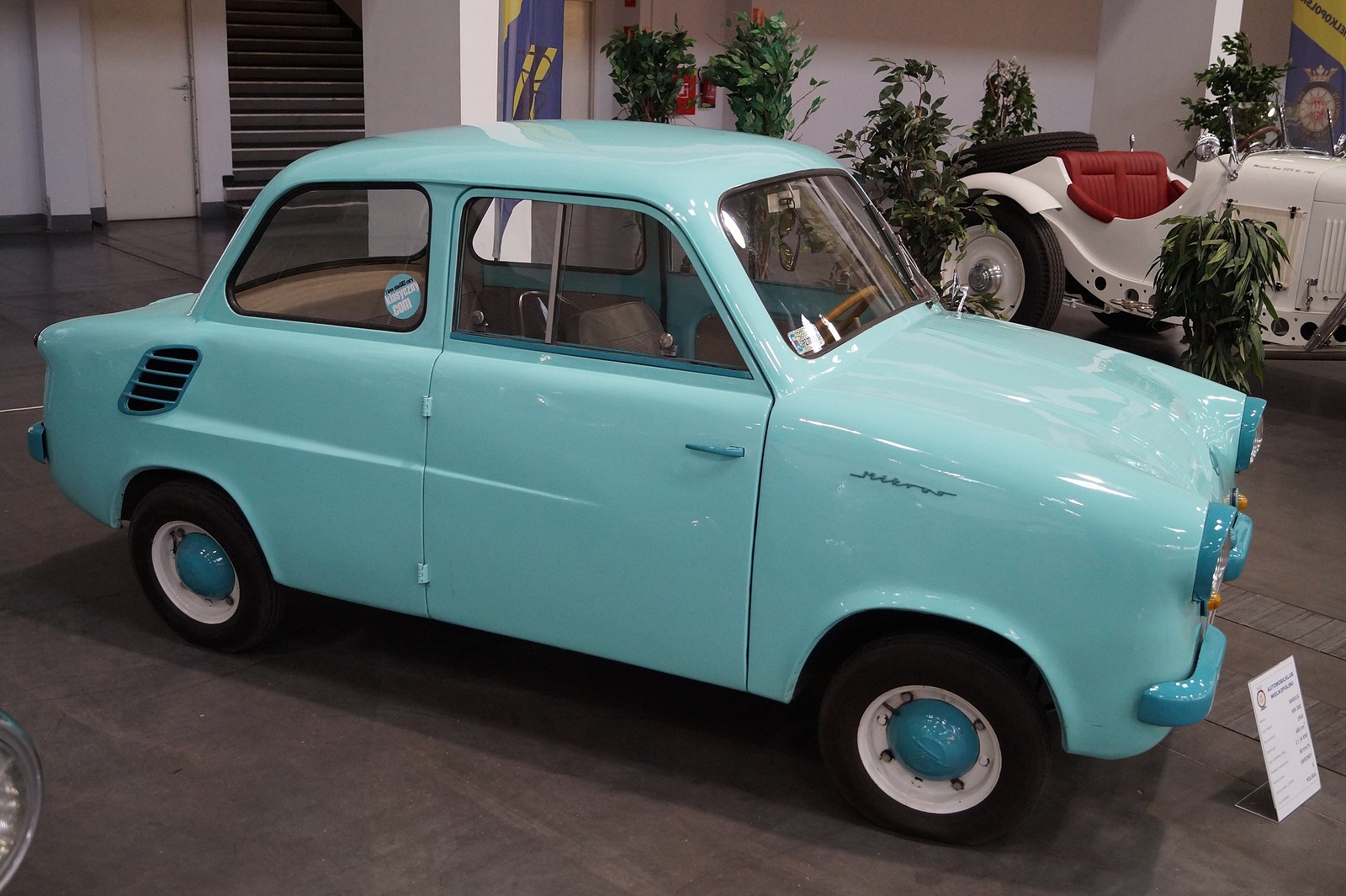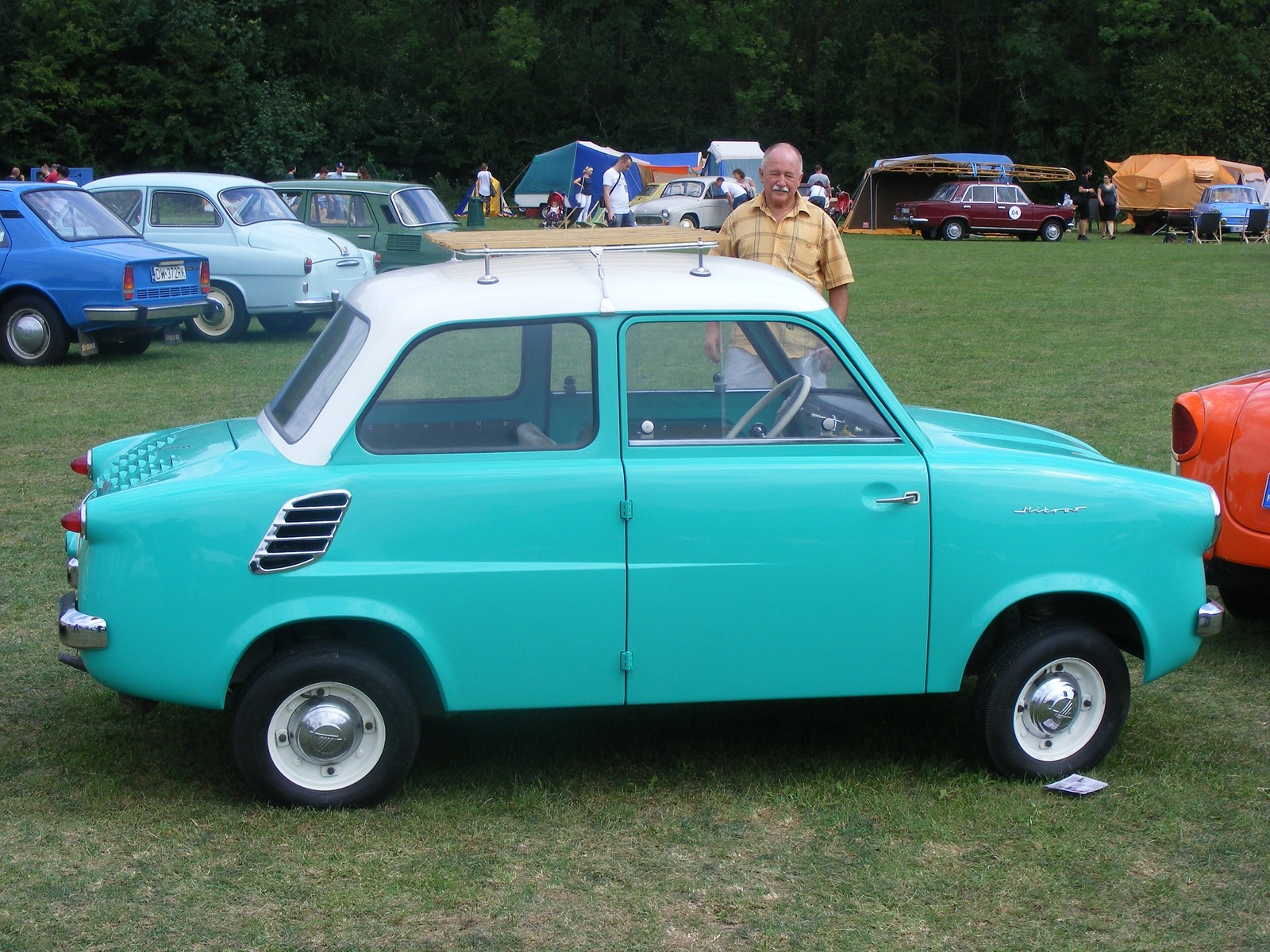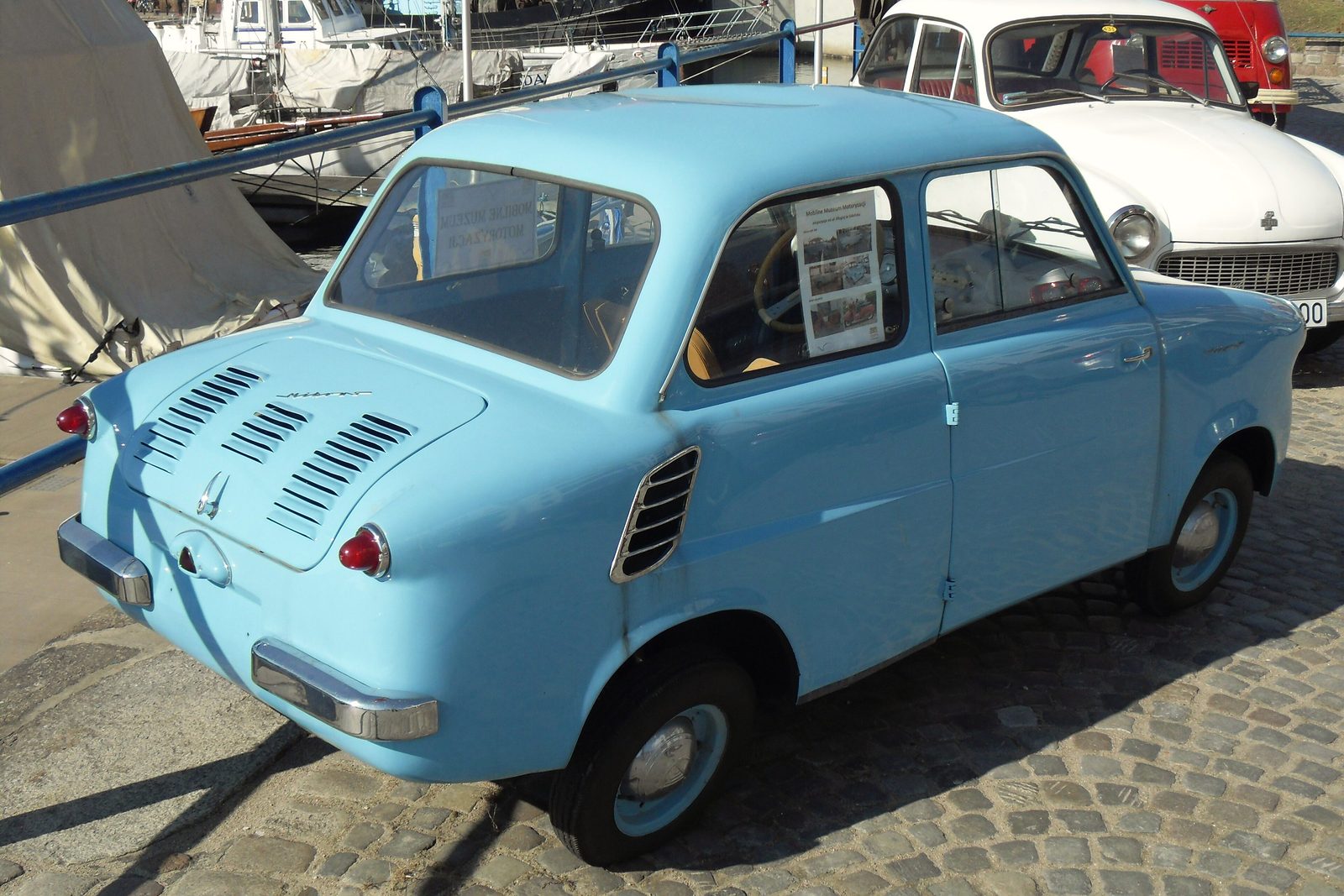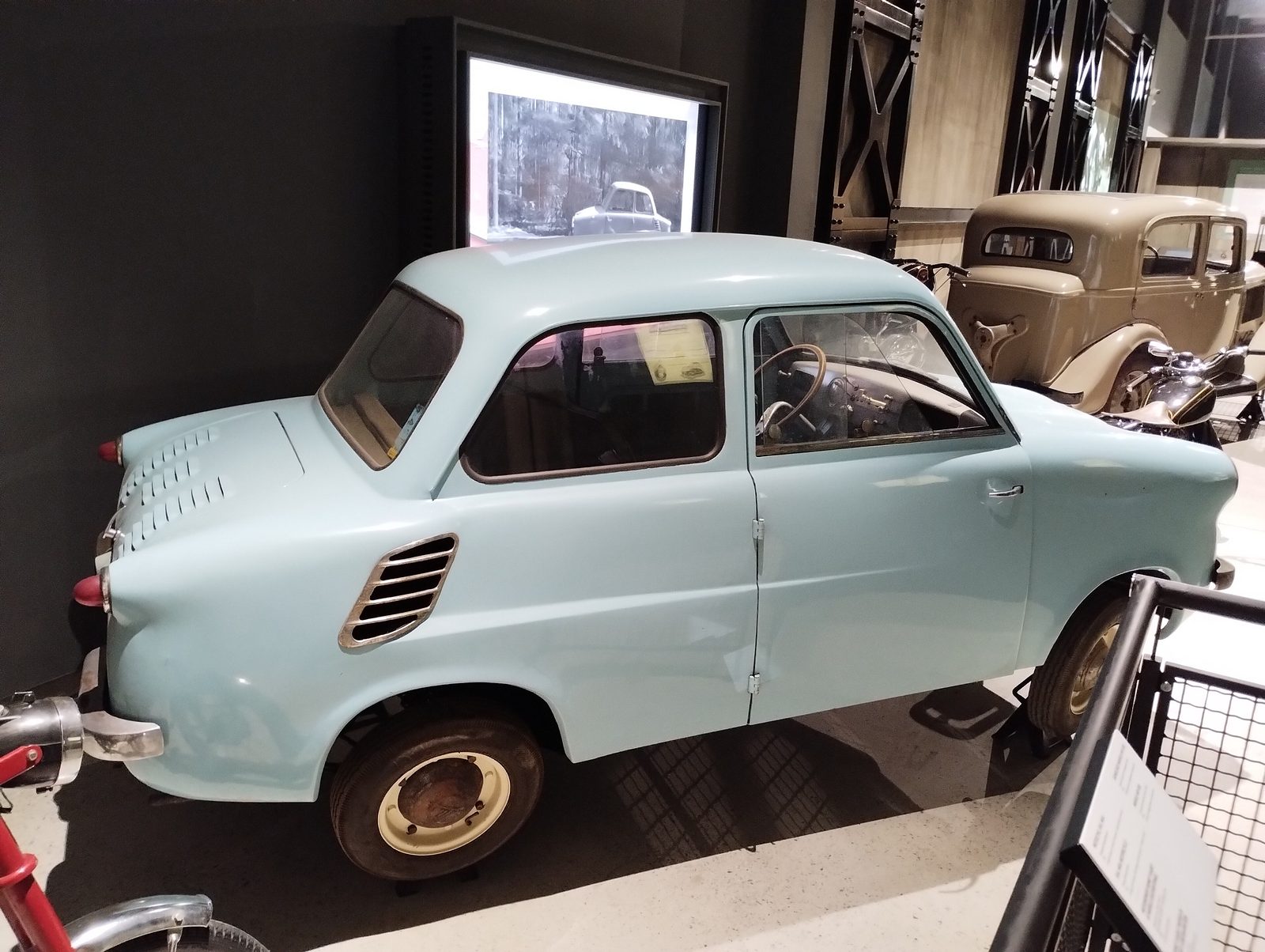
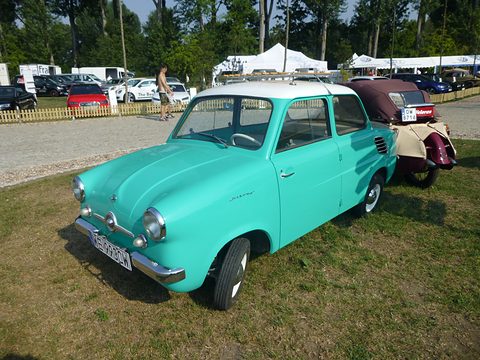
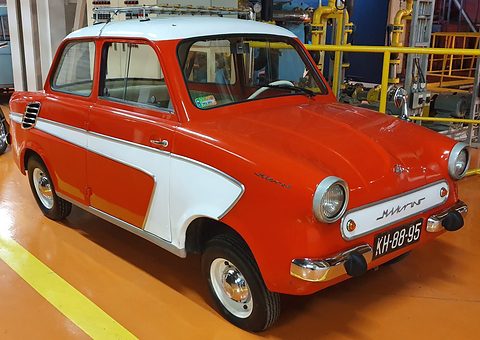
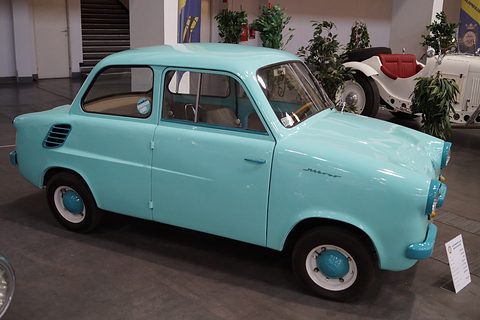
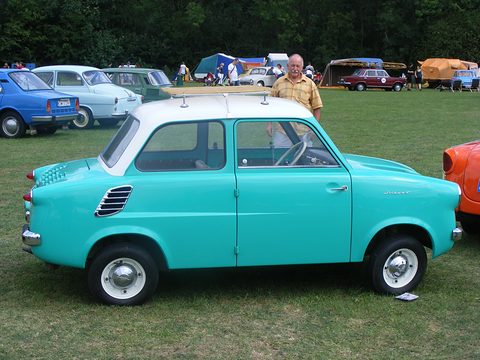
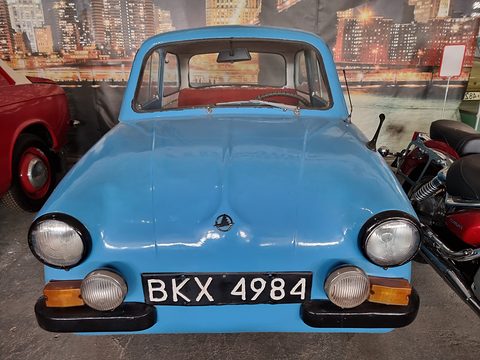
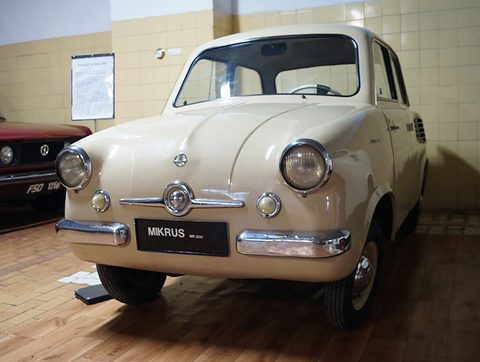
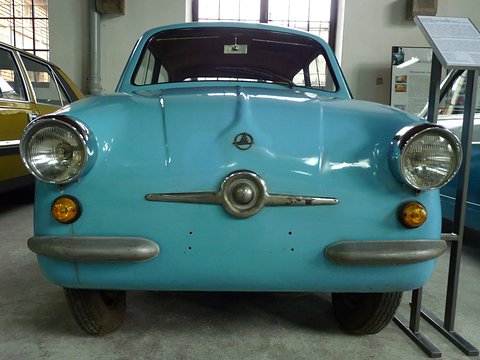
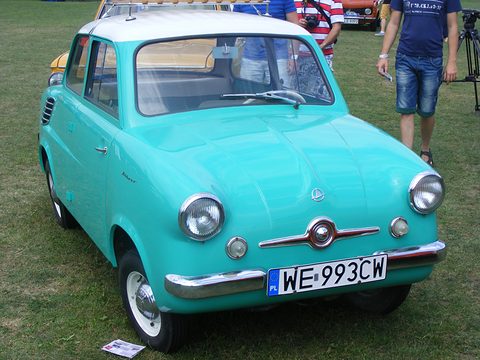
The story
History
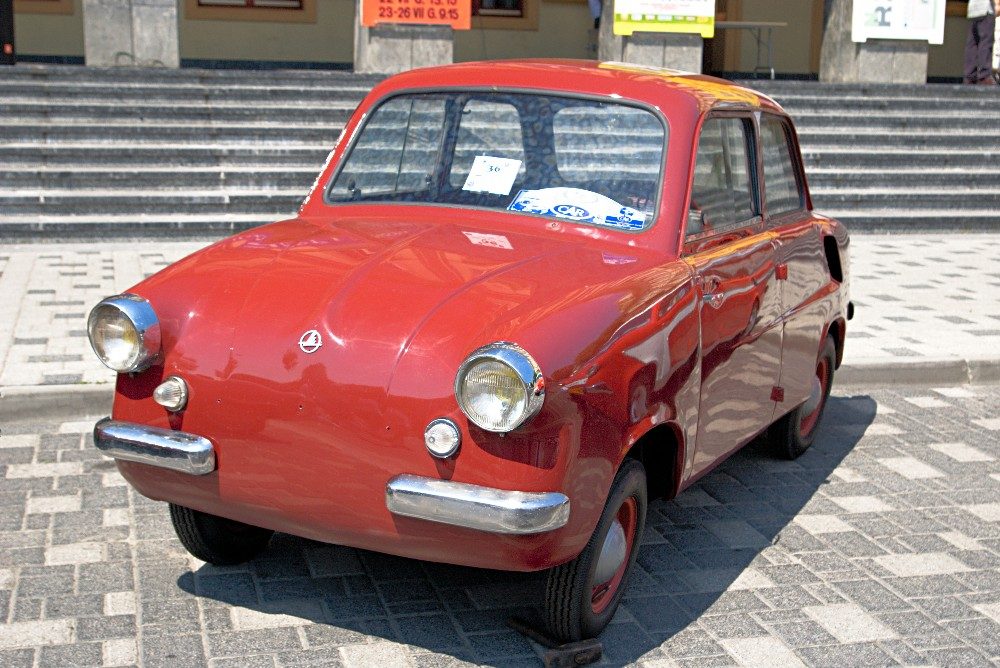
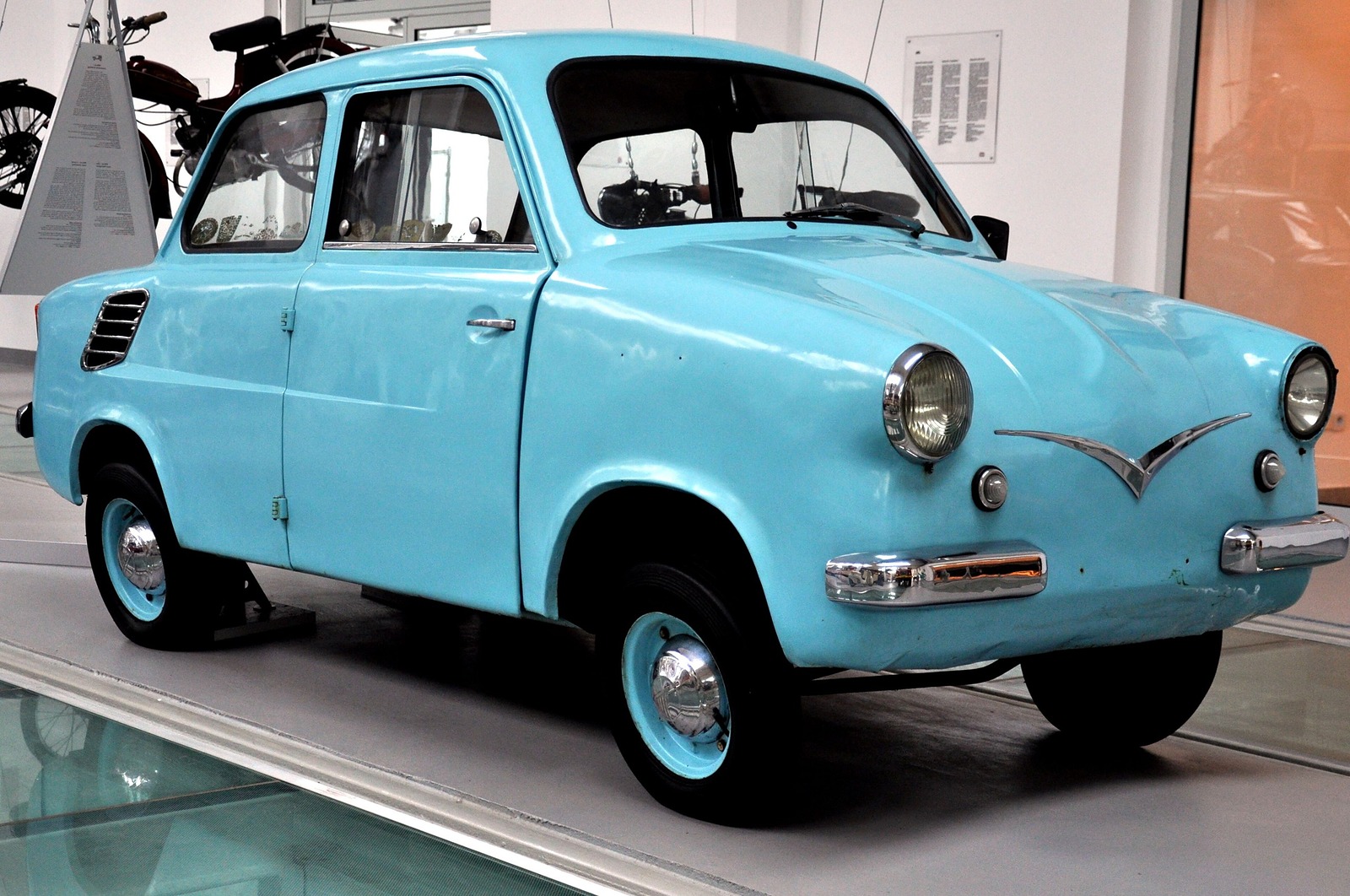
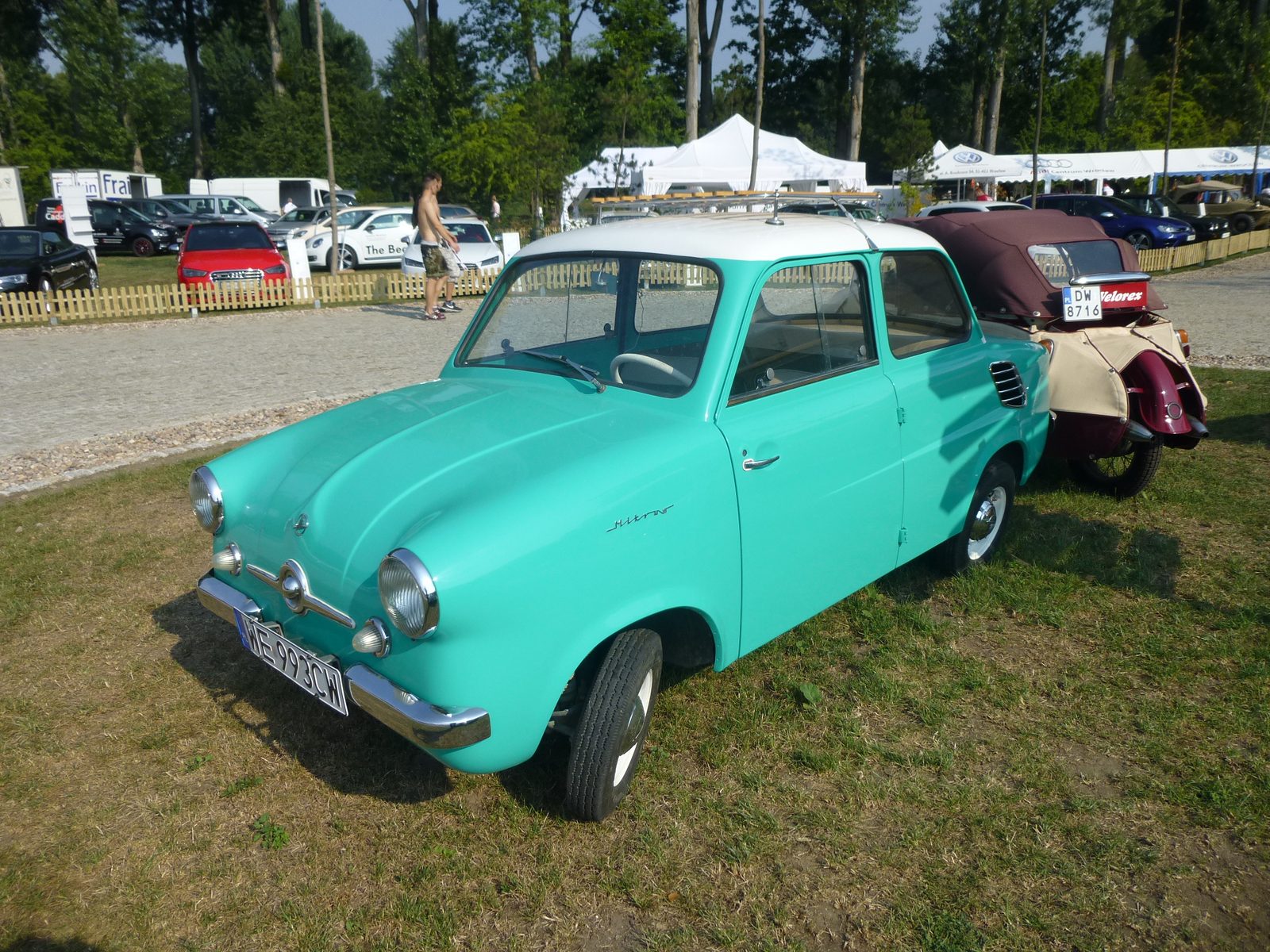
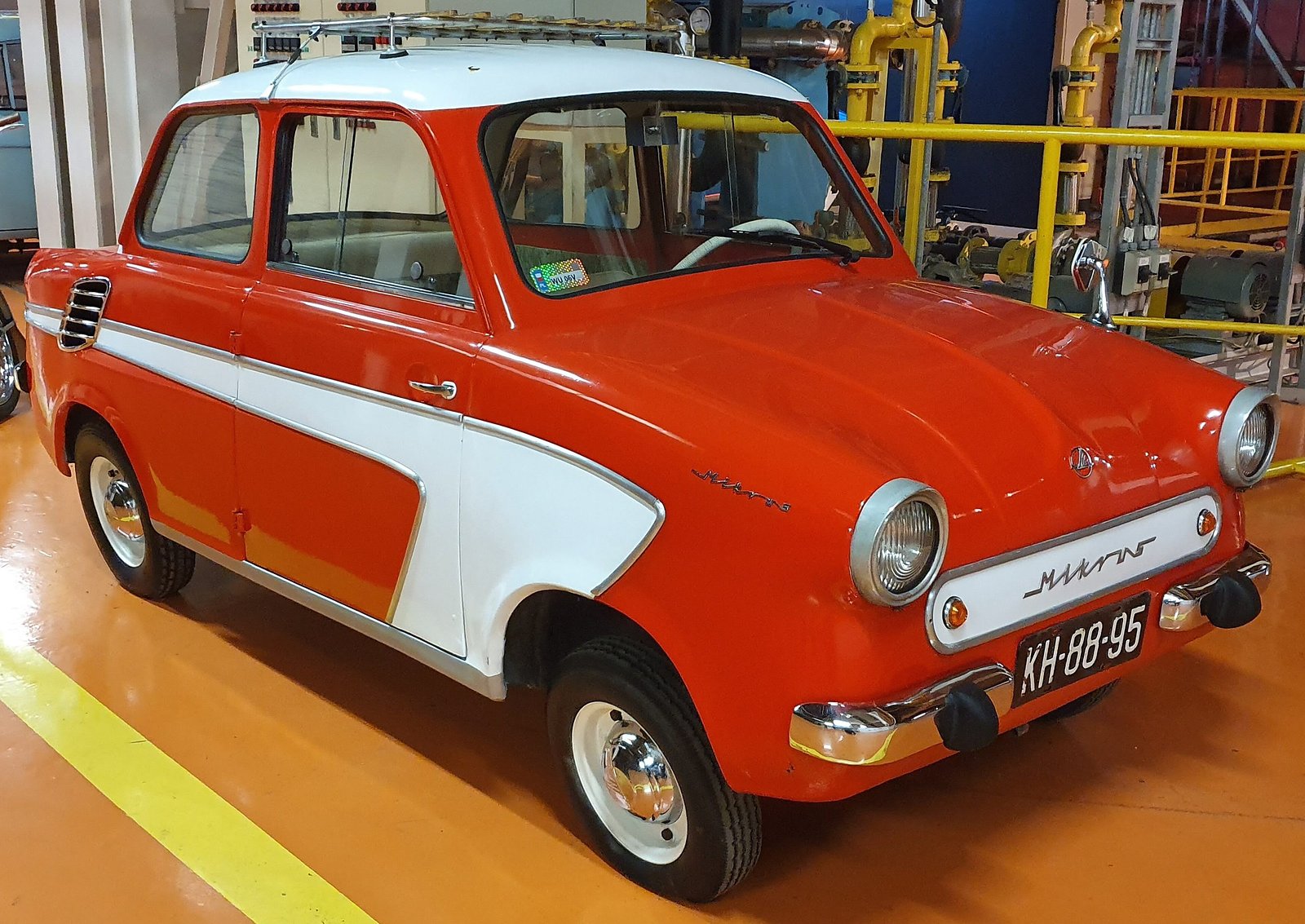
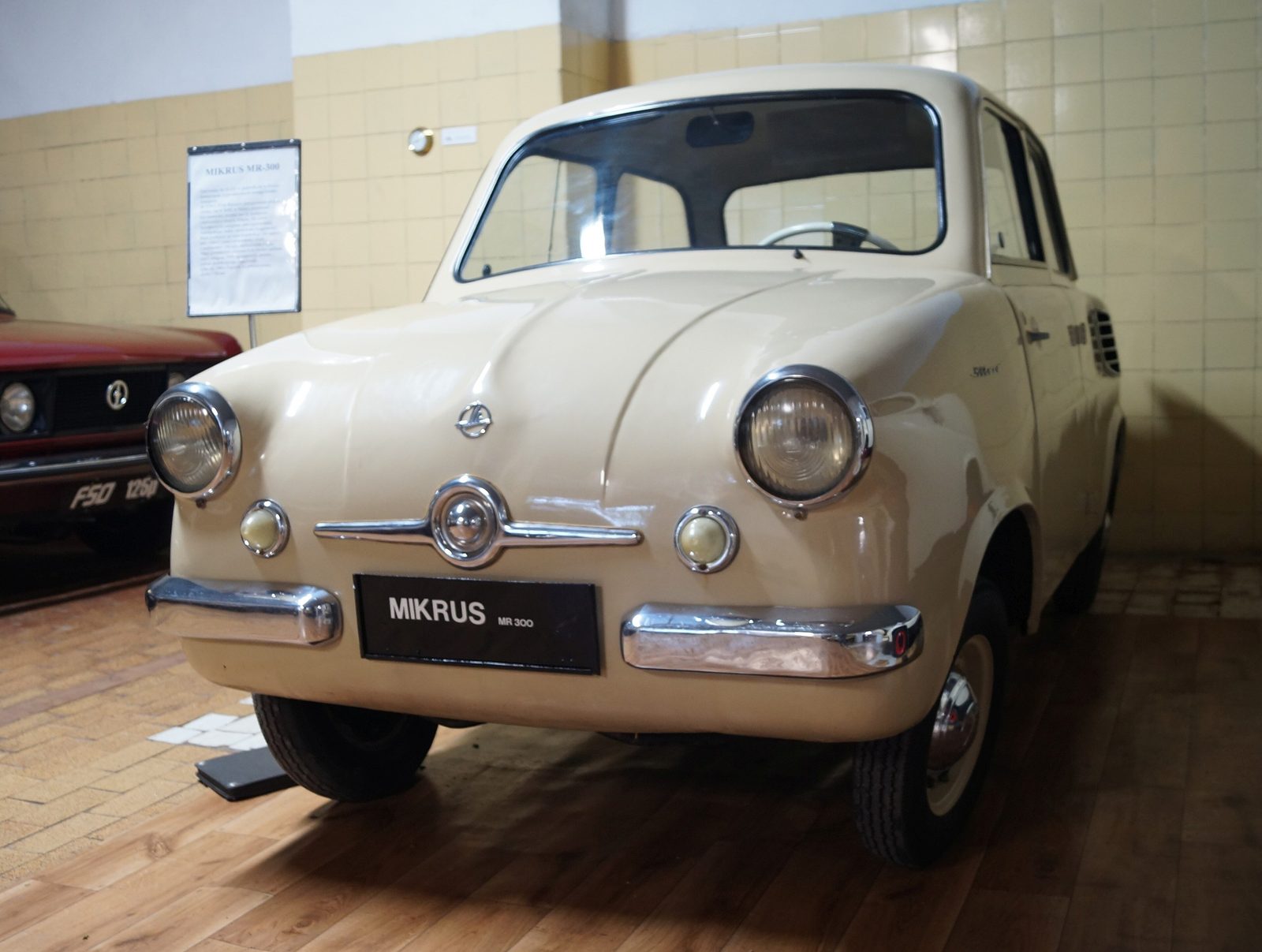
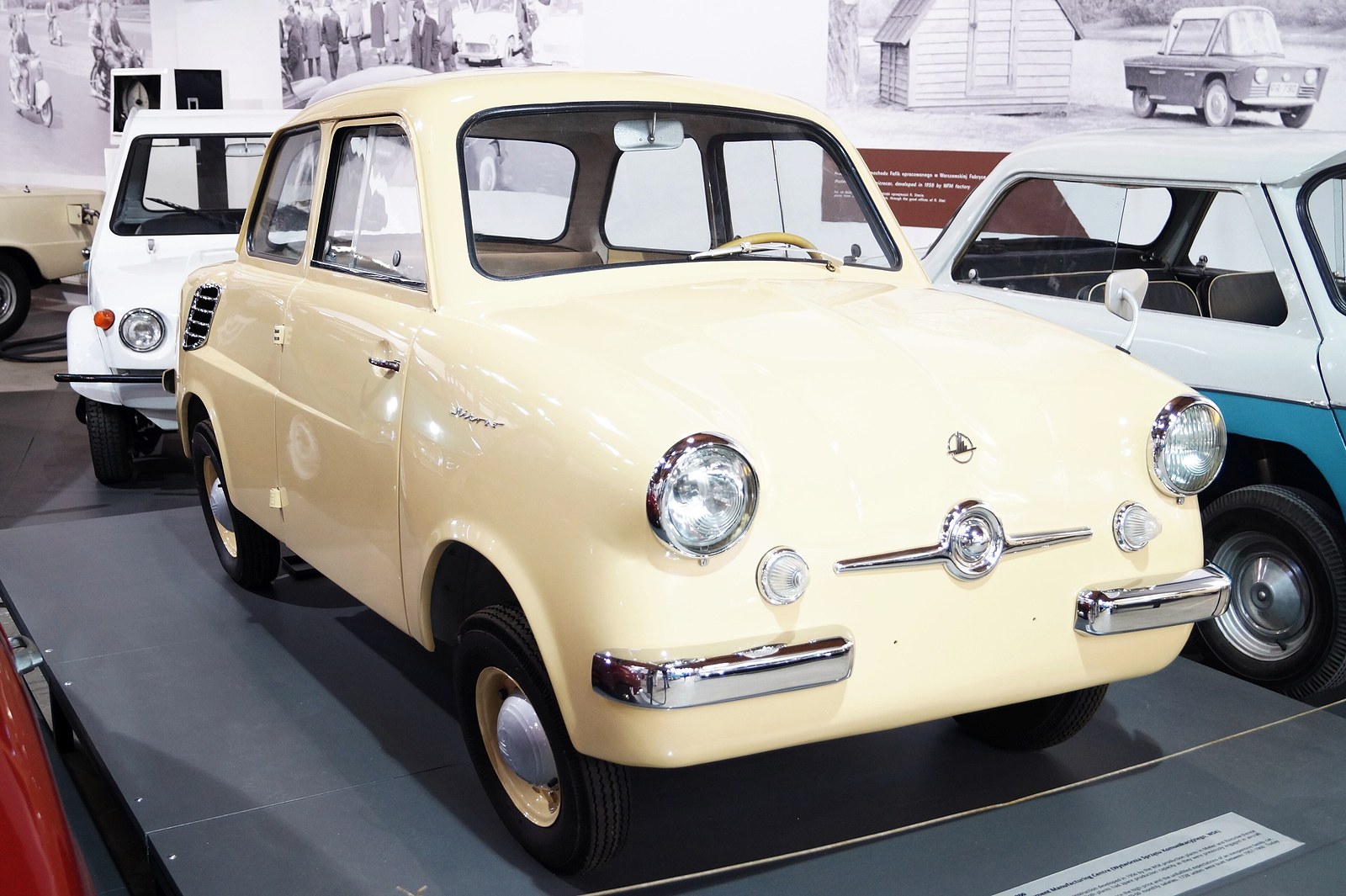
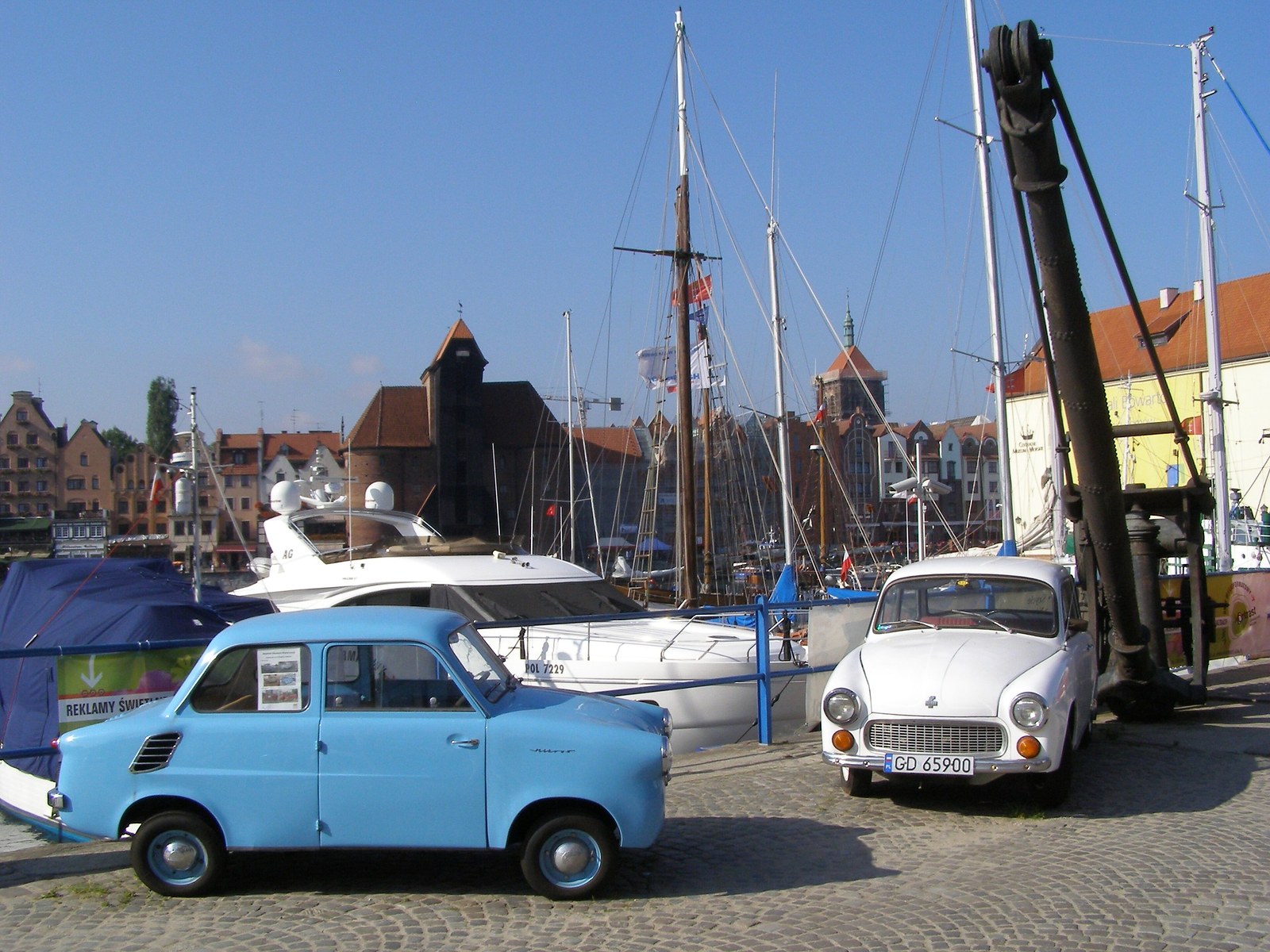
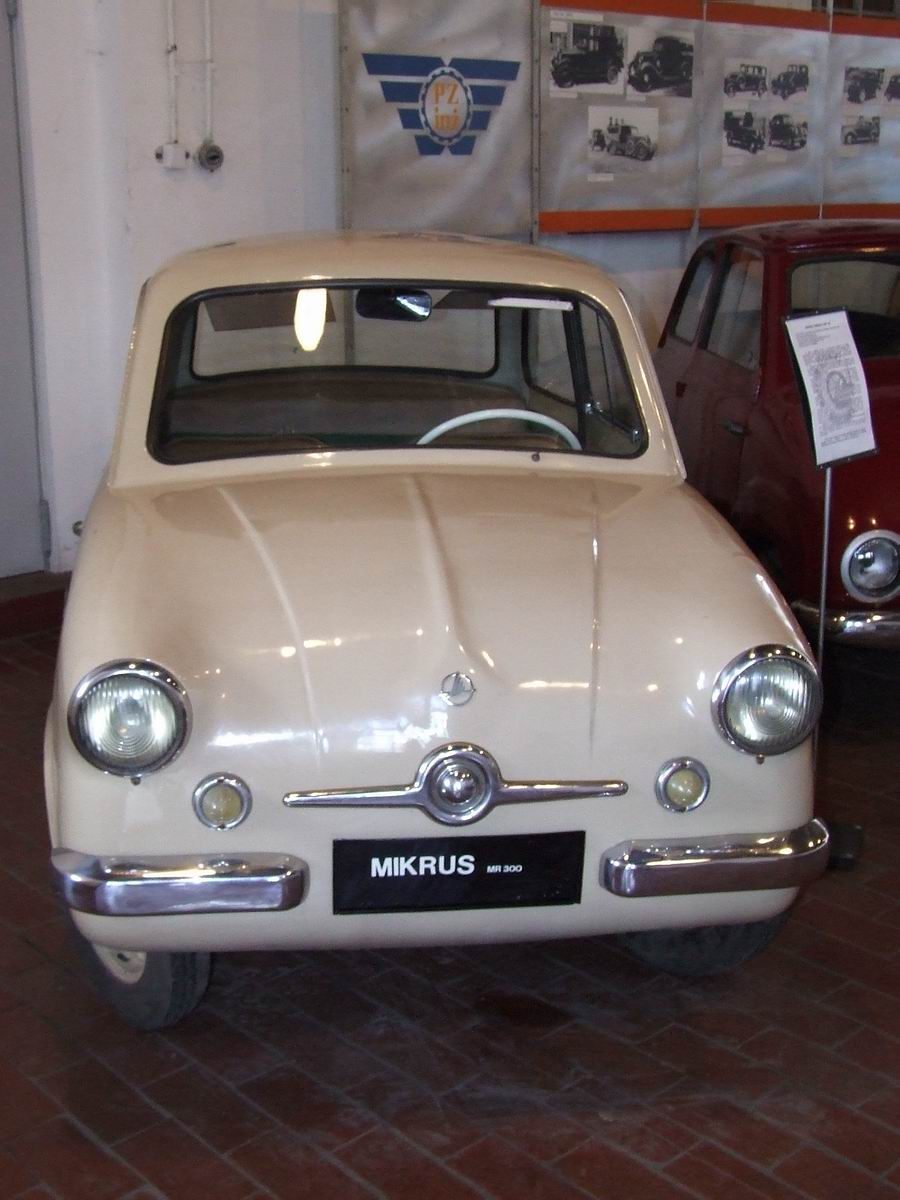
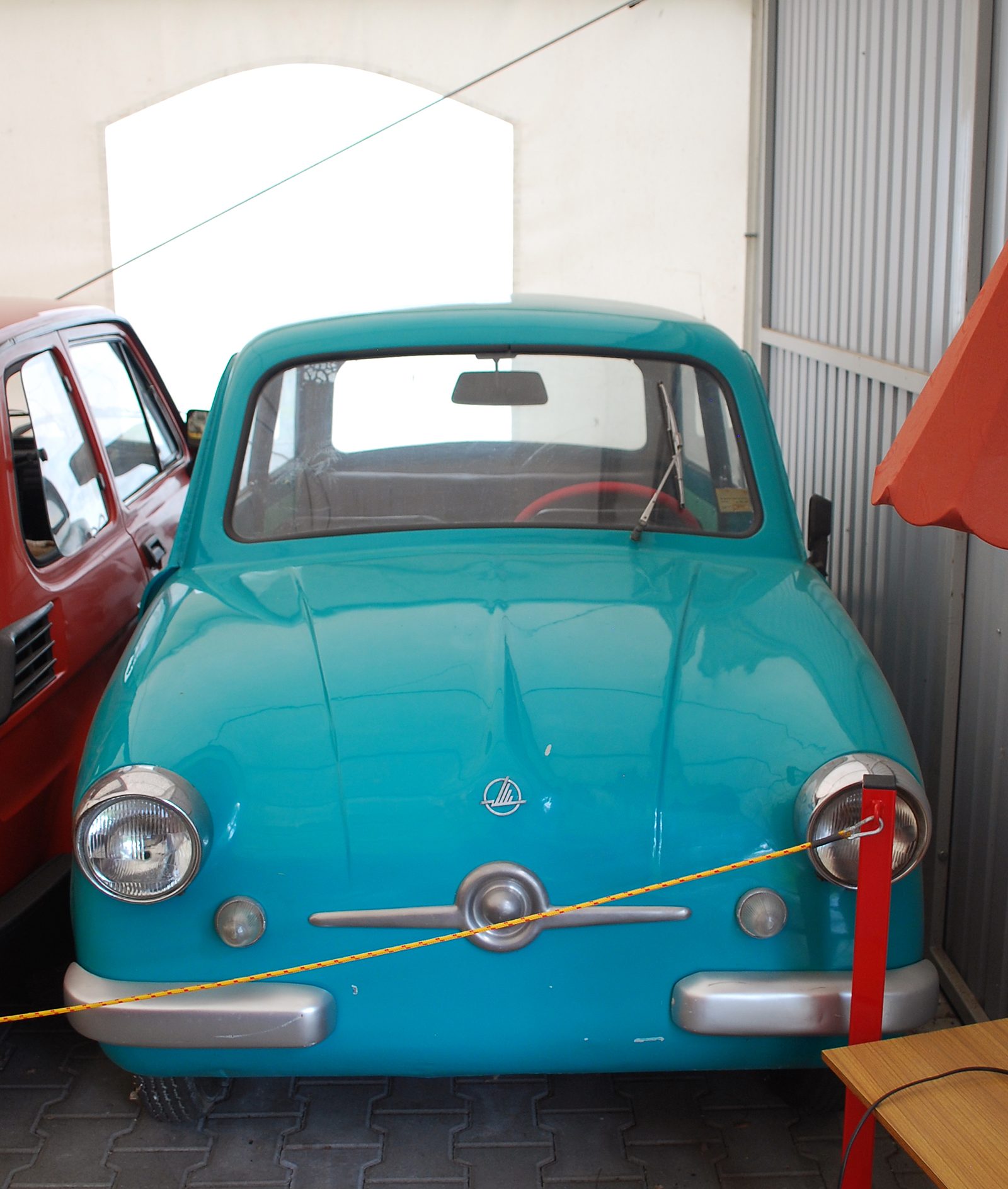
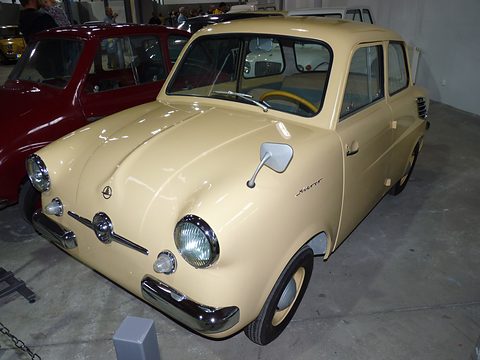
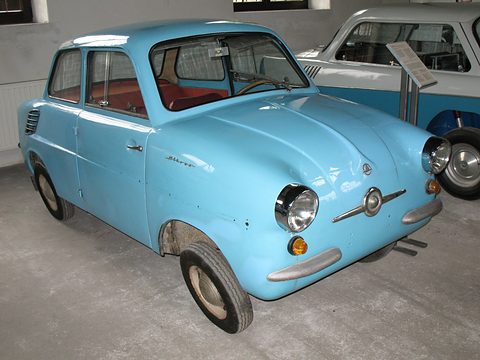
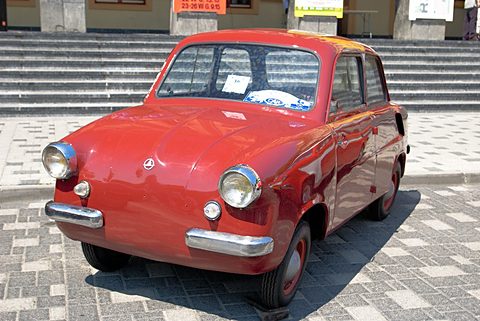
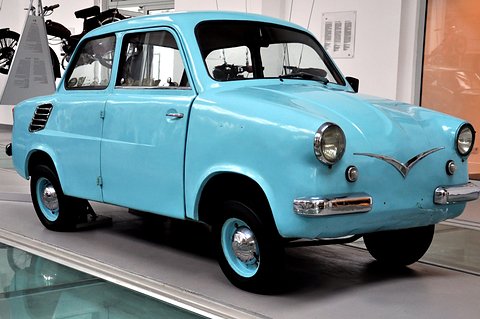
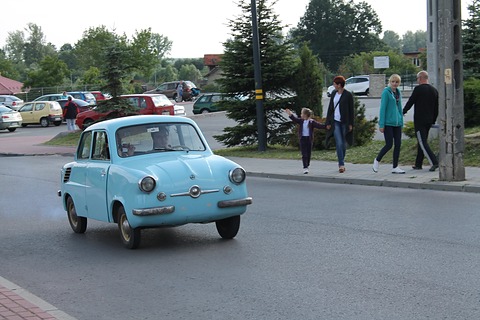
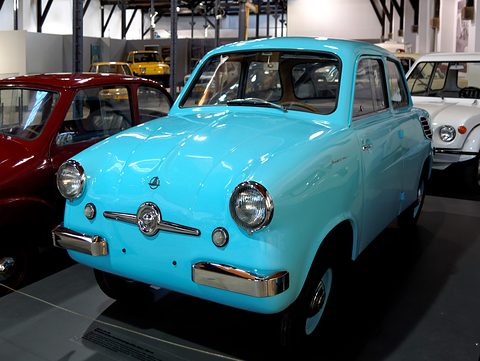
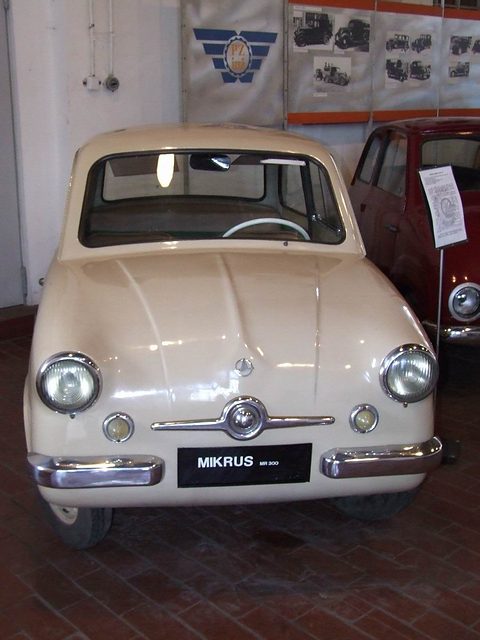
At the end of 1956 Poland’s authorities decided to put spare capacity at two aviation works to use making cars. WSK Mielec, which built aircraft, would make the chassis and body, and WSK Rzeszów, which built aero-engines and motorcycles, the engine (see aircraft makers).source 1source 3 The aim was summed up as “4×4”: four seats, four wheels, 400 kg and 4 litres per 100 km. It ended up weighing 472 kg (1,041 lb).source 1
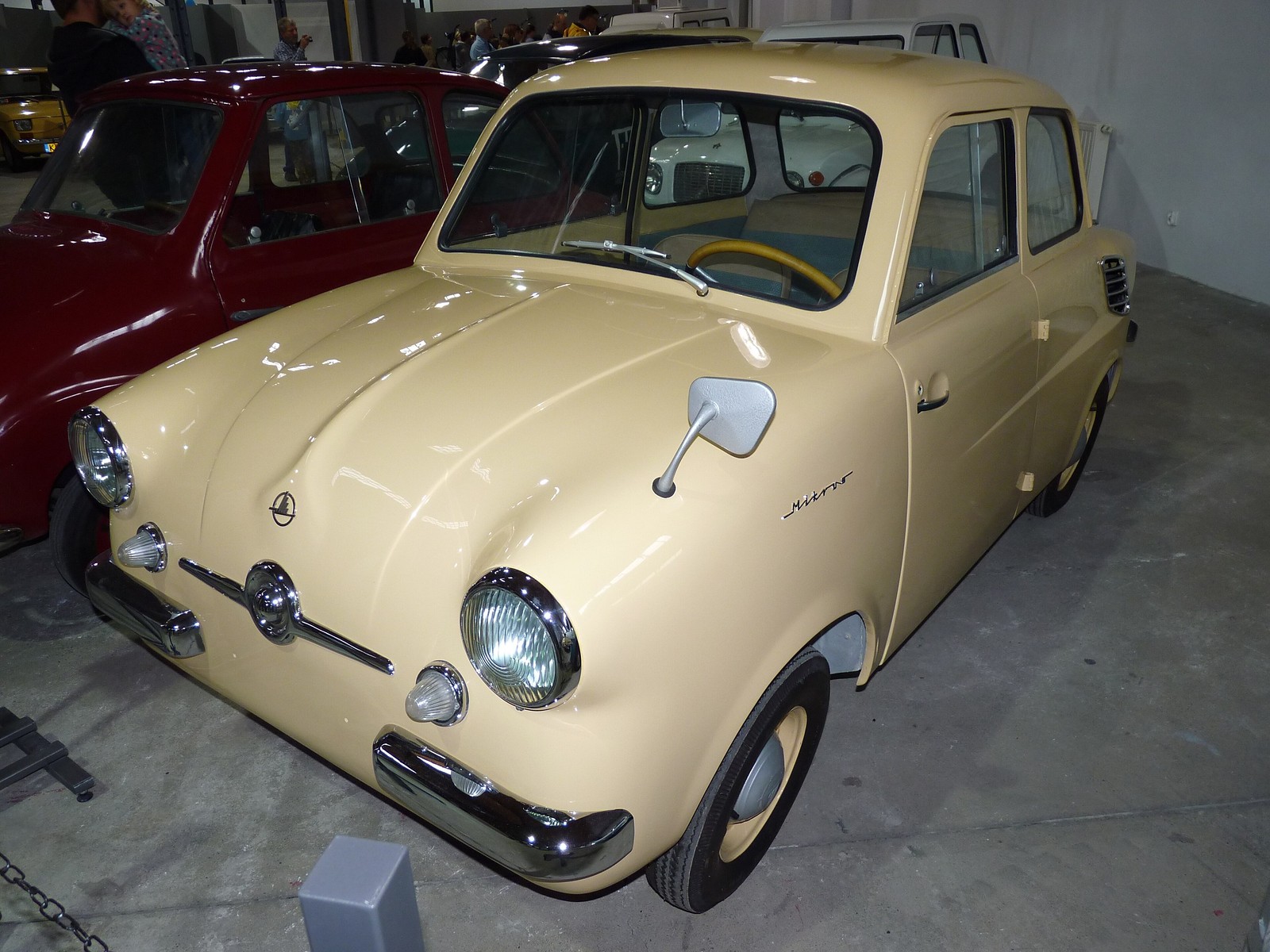
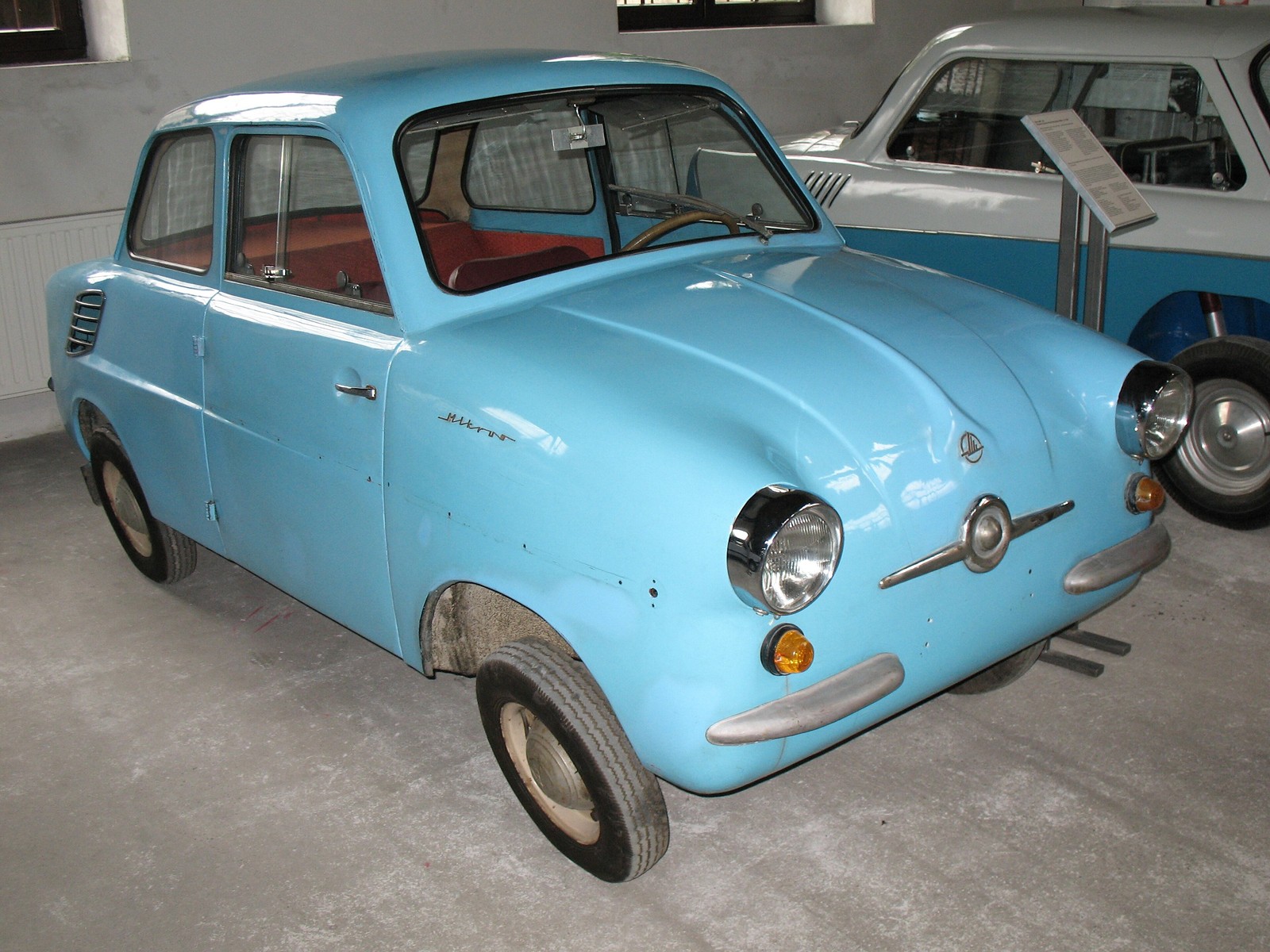
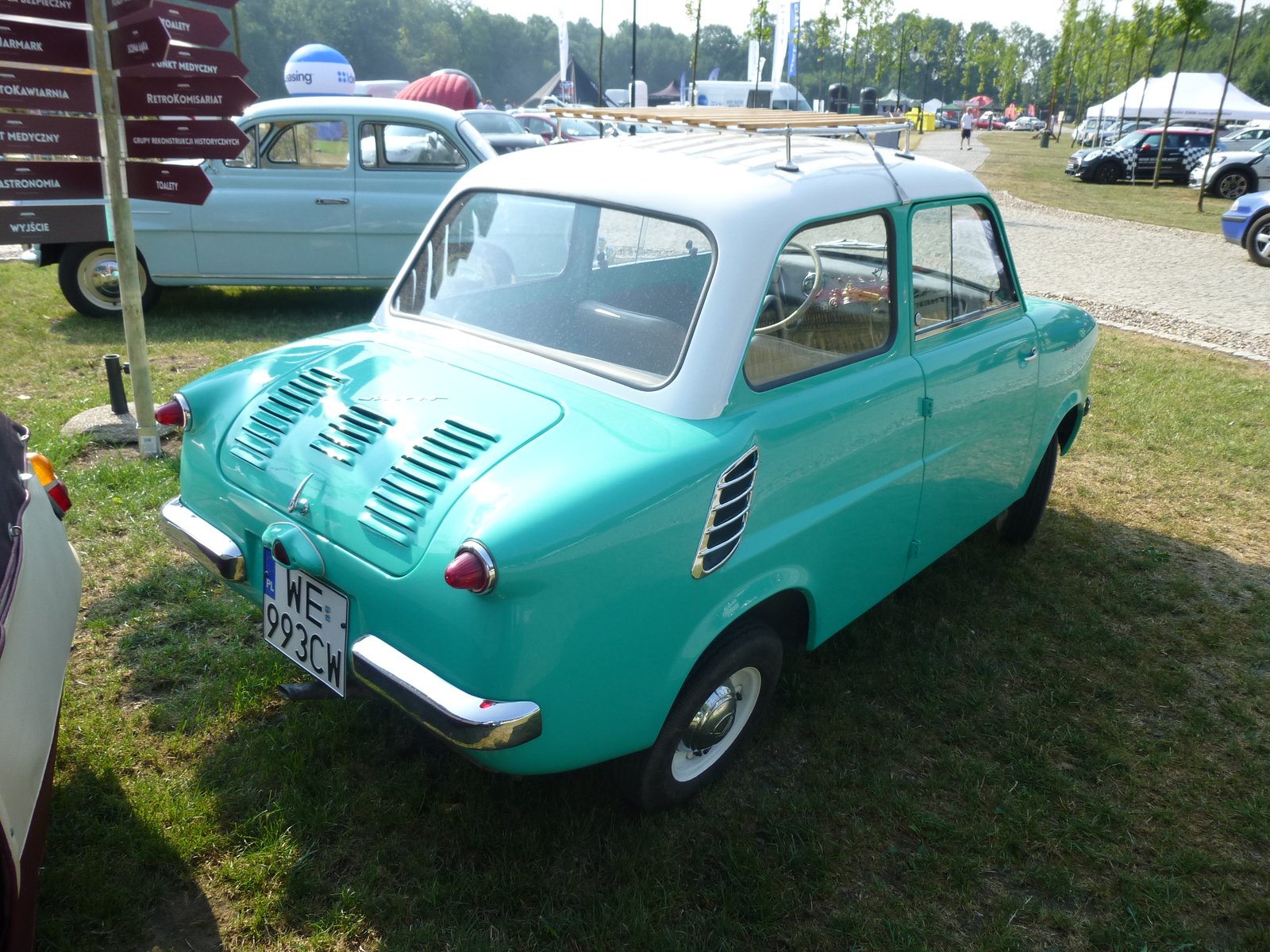
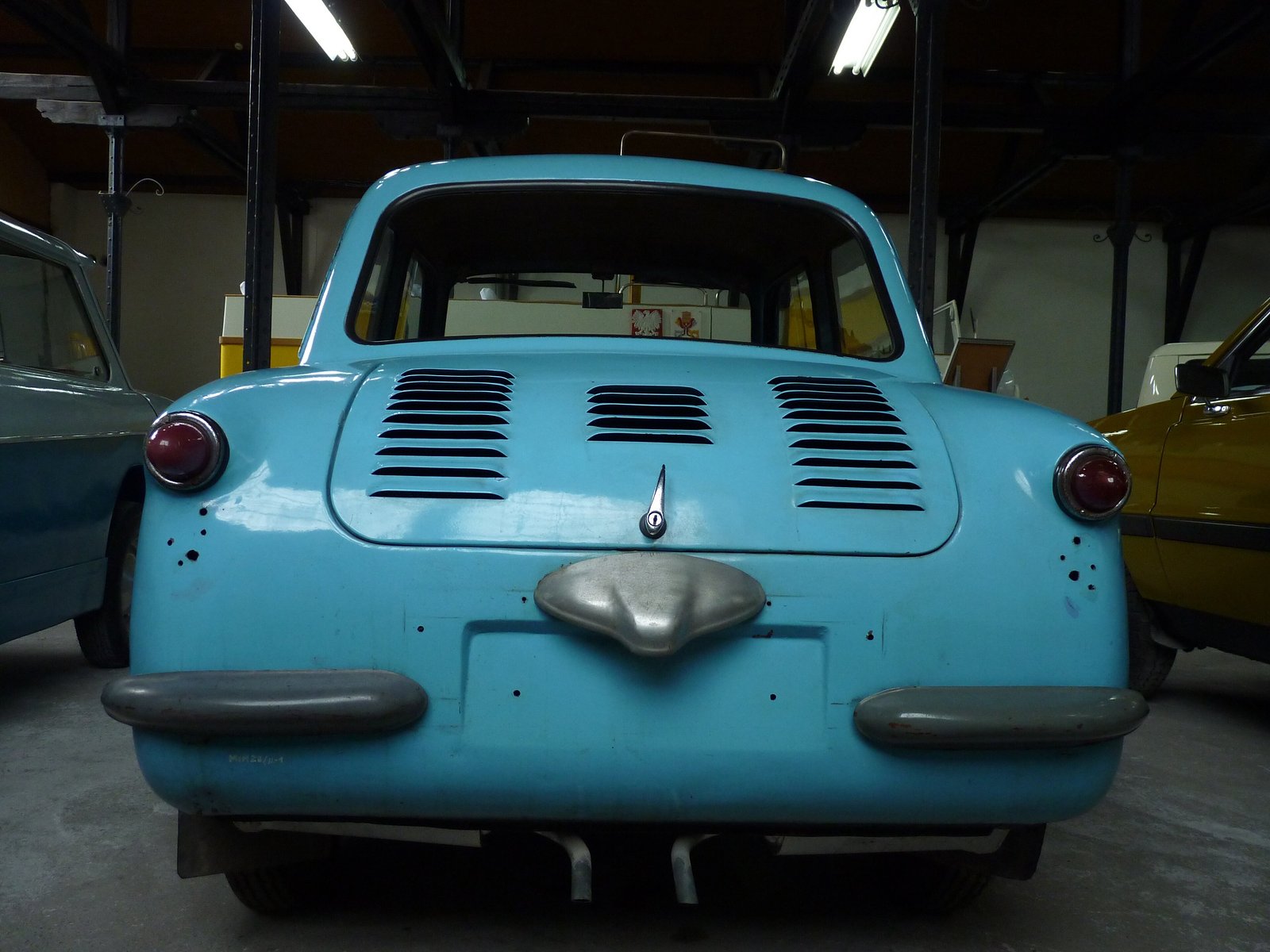
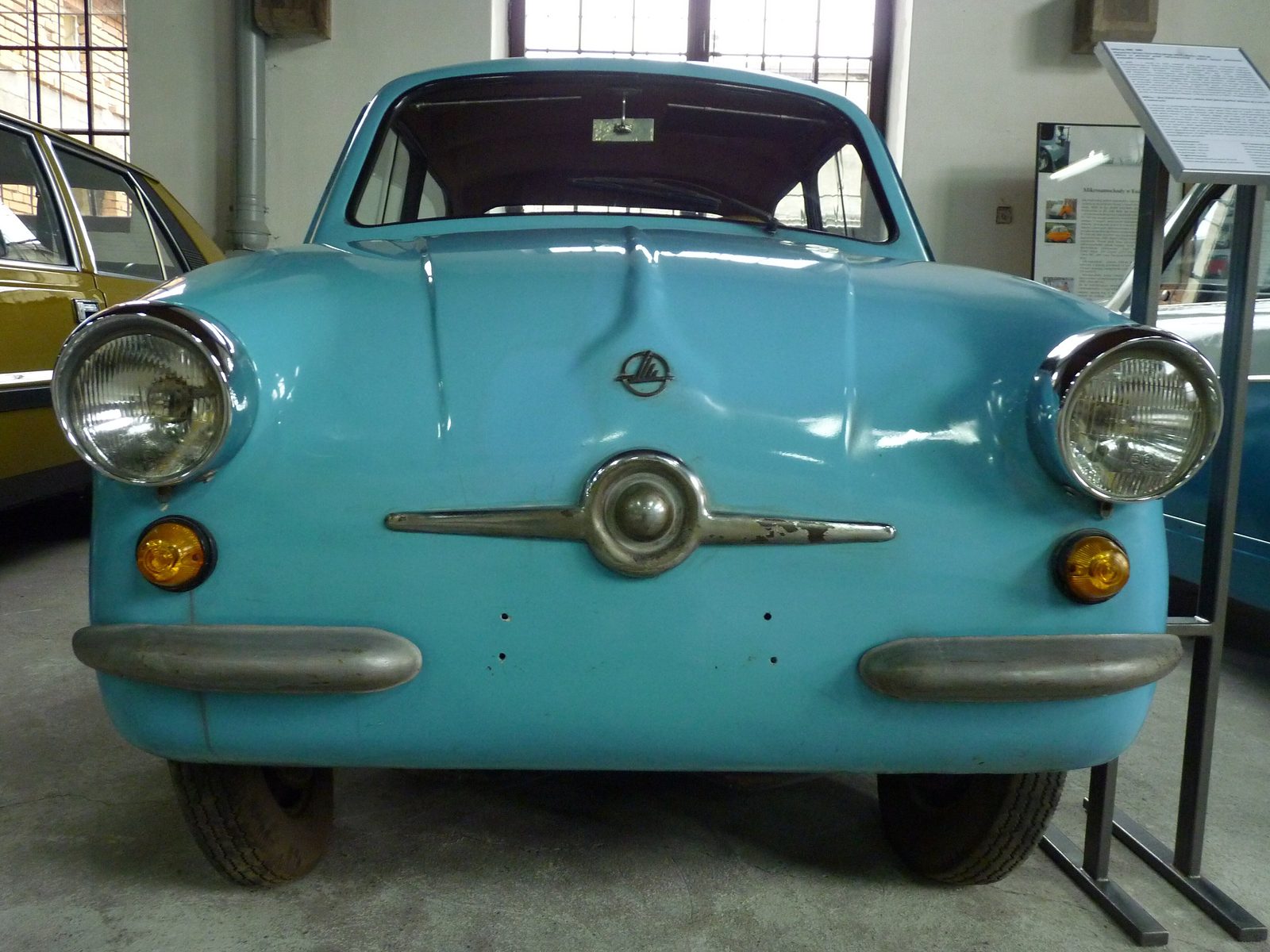
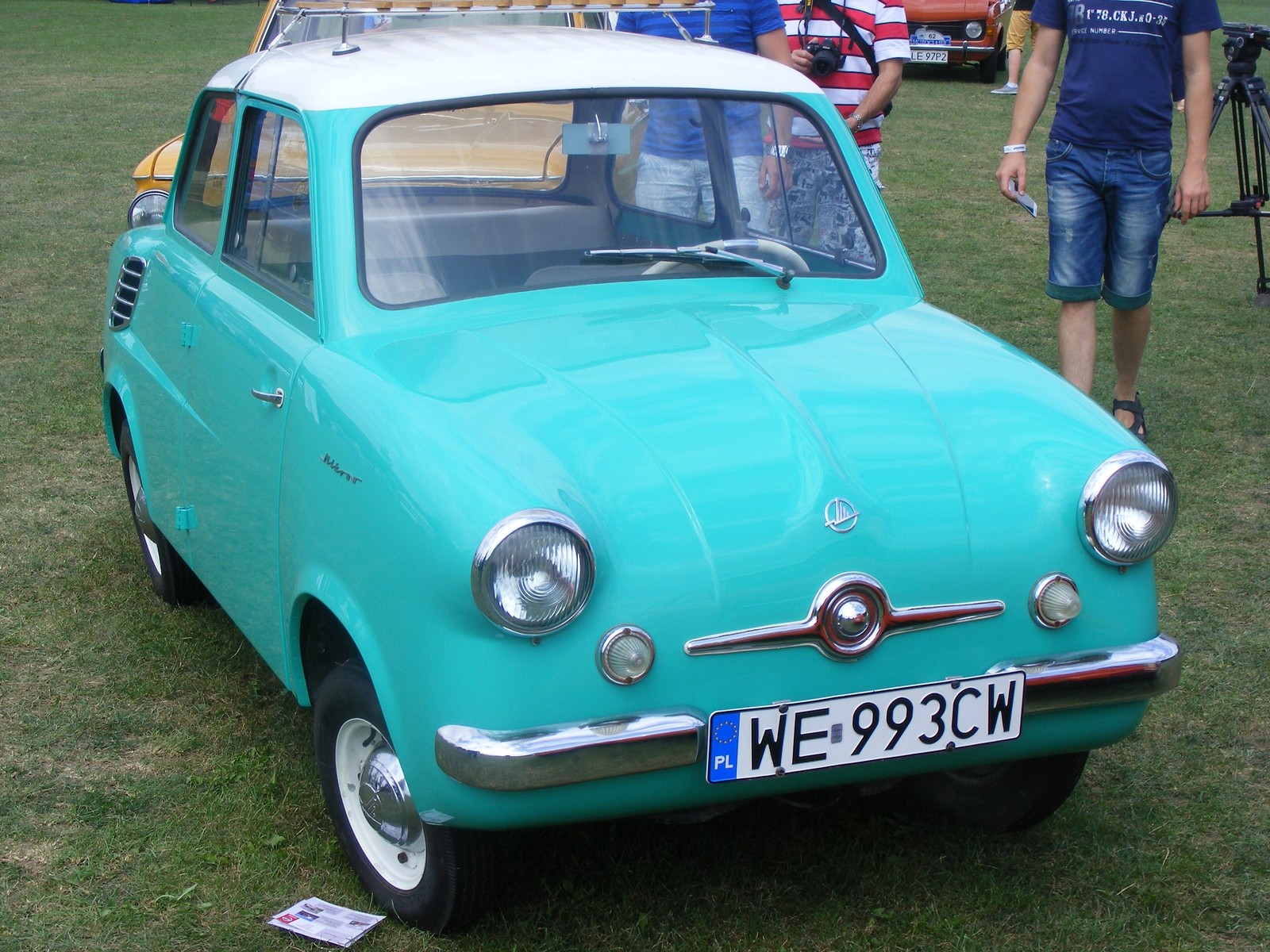
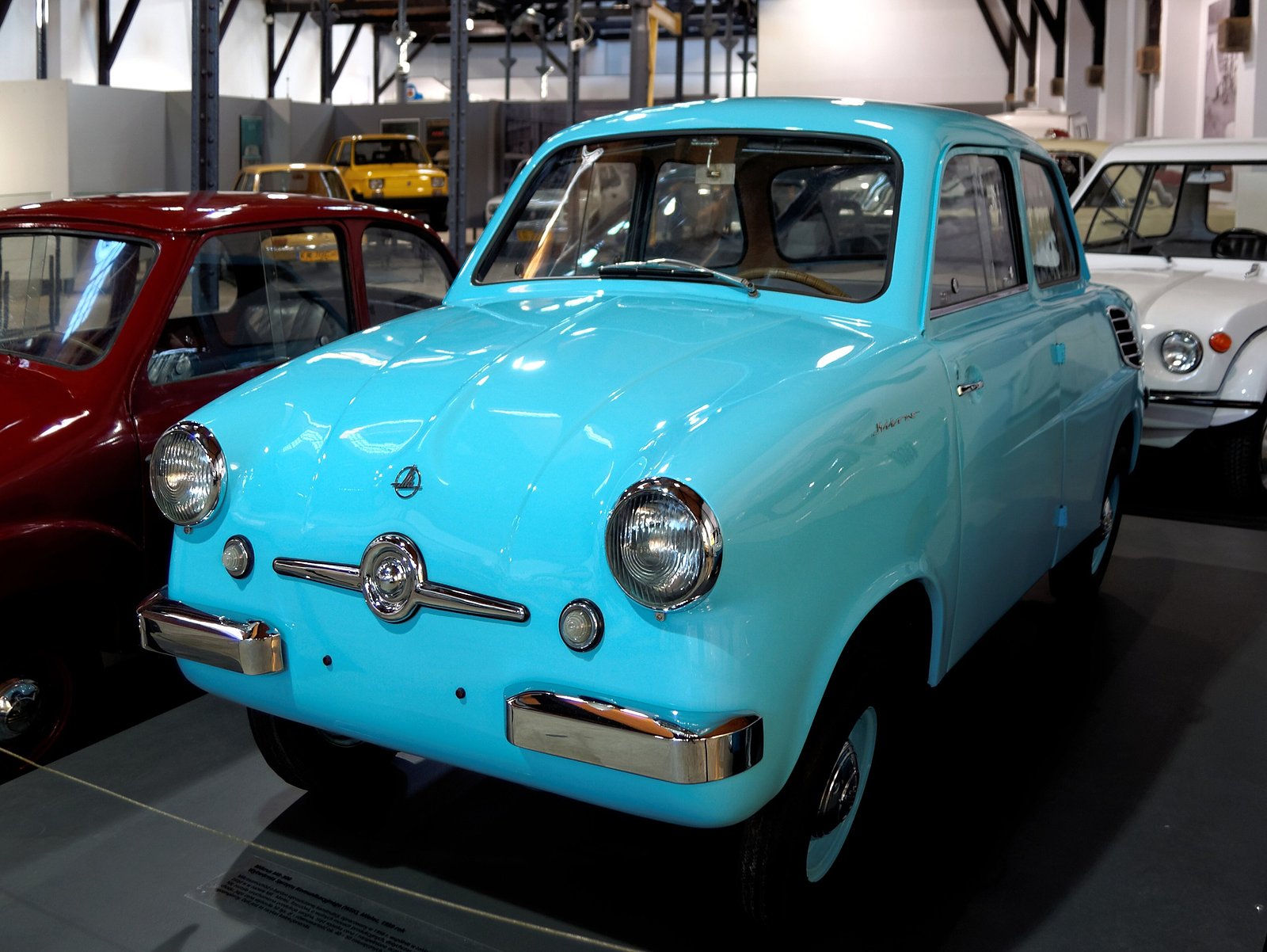
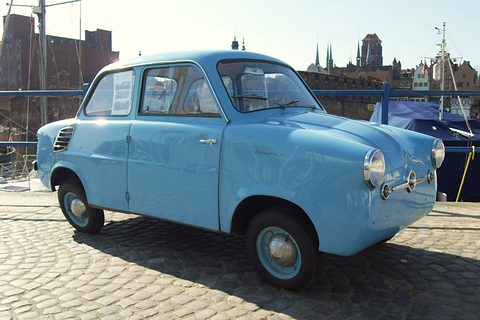
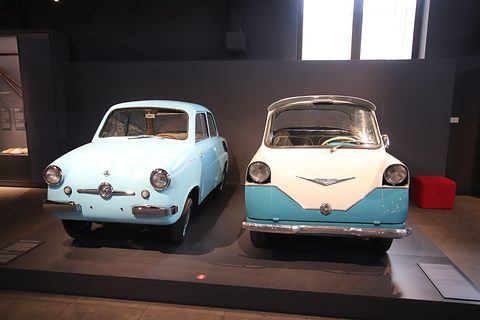
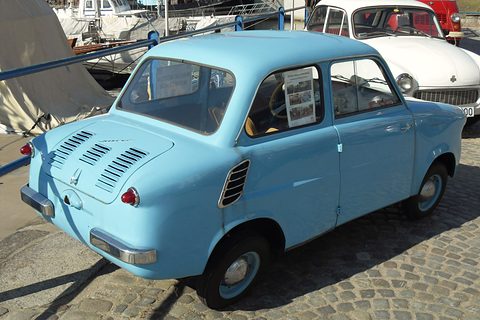
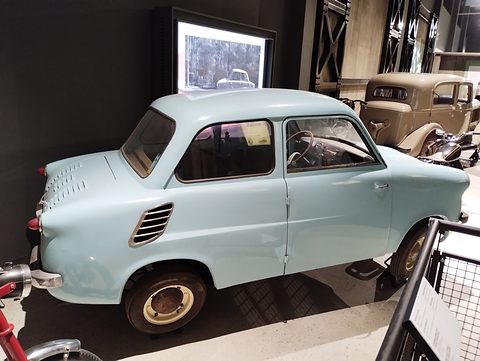
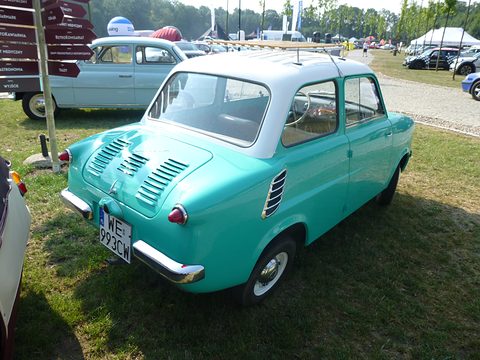
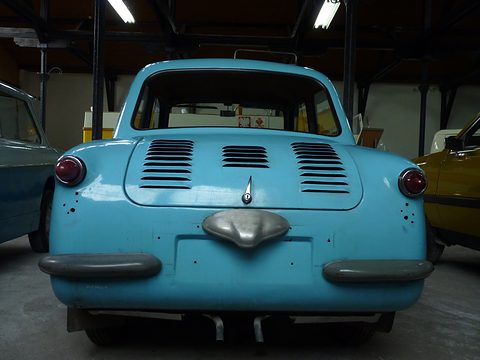
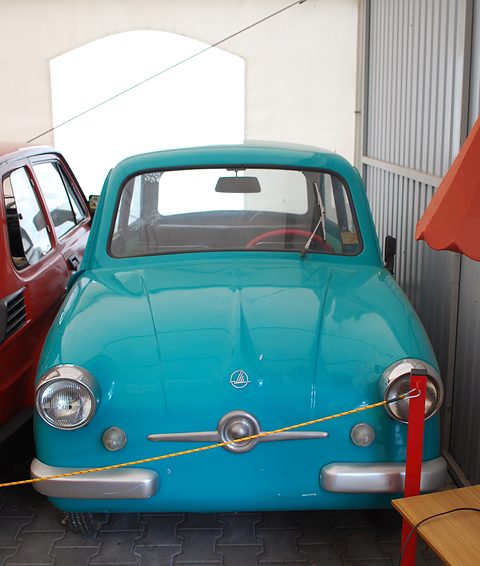
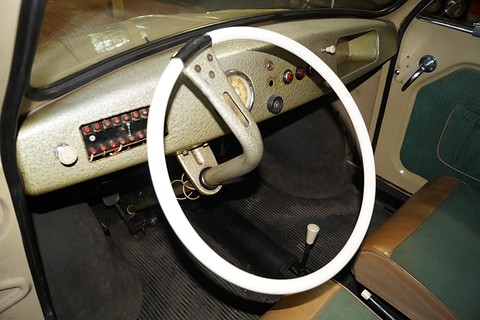
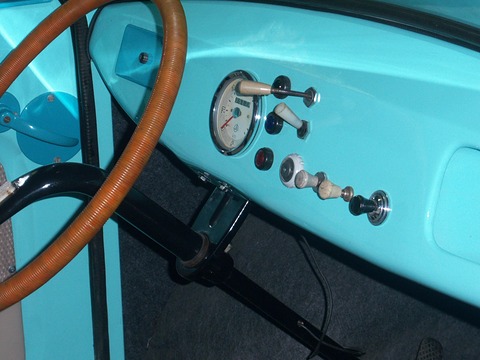
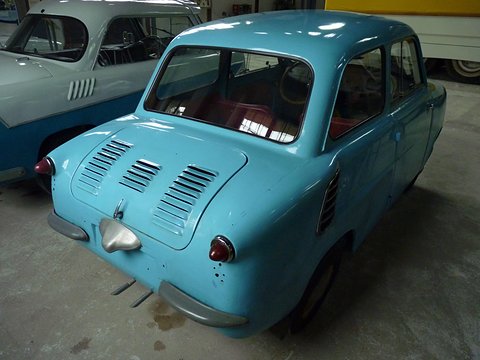
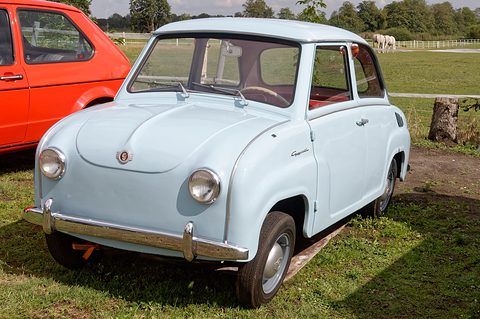
In 1959 a WSK Mielec engineer, Eugeniusz Guliński, explained in the weekly Motor how the car had been designed. The team studied foreign microcars and chose a layout like the Goggomobil’s: four wheels, the shape of a normal car made smaller, an air-cooled two-stroke at the back, a load-bearing steel body on a floor pan, independent suspension all round. Testing a Goggomobil showed faults for Polish conditions, in the body’s size and shape, the springing and the life of many parts. So the Mikrus got a different wheelbase and tracks, a body with curved front and rear windows, seats that fold into a bed, a stronger rear suspension, better damping, plastic bushes in place of costly needle bearings, a reworked engine, a stronger clutch, rods instead of cables, its own electrics and a Polish carburettor.source 2 Popular talk still called it a copy, and Guliński’s article set out to answer that (see built under licence).source 2
MIKRUS stał się mikrosamochodem o podobnych ogólnych założeniach konstrukcyjnych, lecz w sumie o znacznie zmienionej w stosunku do Goggomobila konstrukcji.
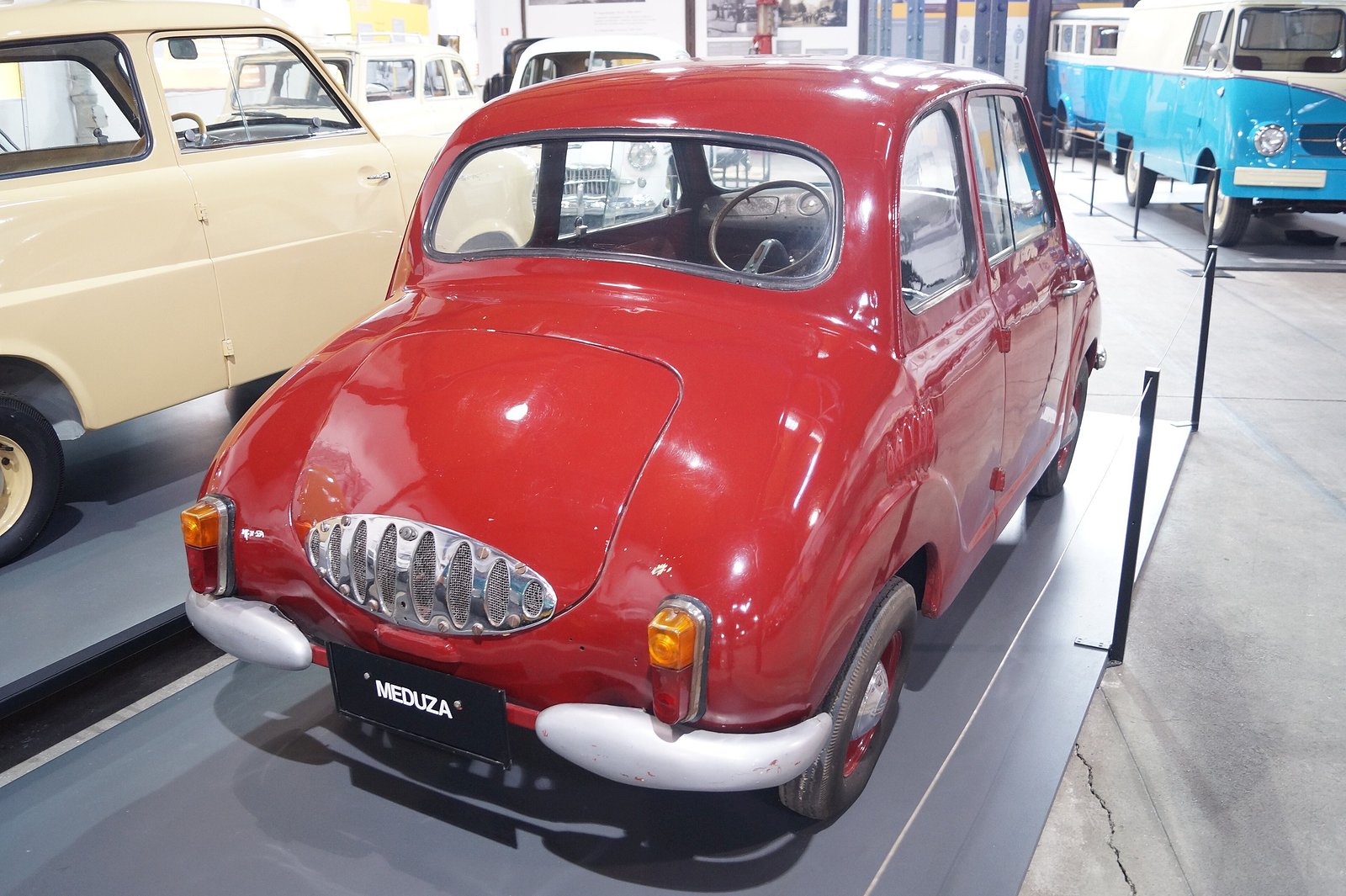
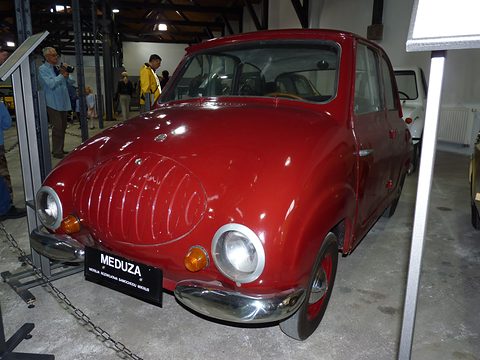
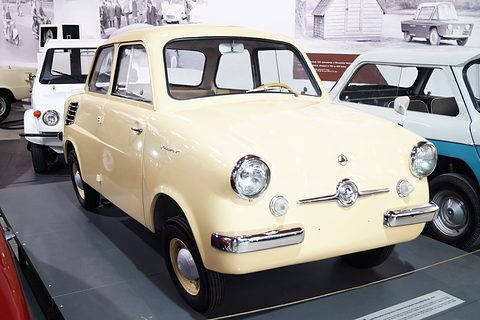
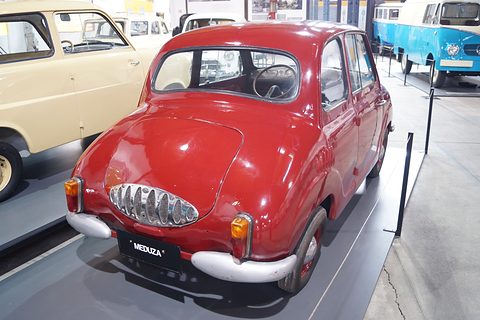
Designs were shown early in 1957 at the National Motoring Conference, and the prototypes, two convertibles among them, in Warsaw on 22 July 1957; the first series left the line by the end of the year.source 1source 3 The same day WSK showed another body for the same floor pan, the Meduza, and the Mikrus, not the front-door Smyk, was chosen for production.source 4source 5 The press hoped that it would cost no more than 25 to 30 per cent above a motorcycle of the same capacity.source 1source 3
Fifty months’ wages
It cost 50,000 złoty, about 50 months’ average wages; a Warszawa cost 120,000.source 1source 3 Motor set it against a mid-sized motorcycle at 25,000 złoty, or about 33,000 with a sidecar, and admitted that early talk of a 20,000-złoty Mikrus had only made bad blood. Most owners, Guliński wrote, were satisfied and praised the car, and every one of them complained about the price.source 6
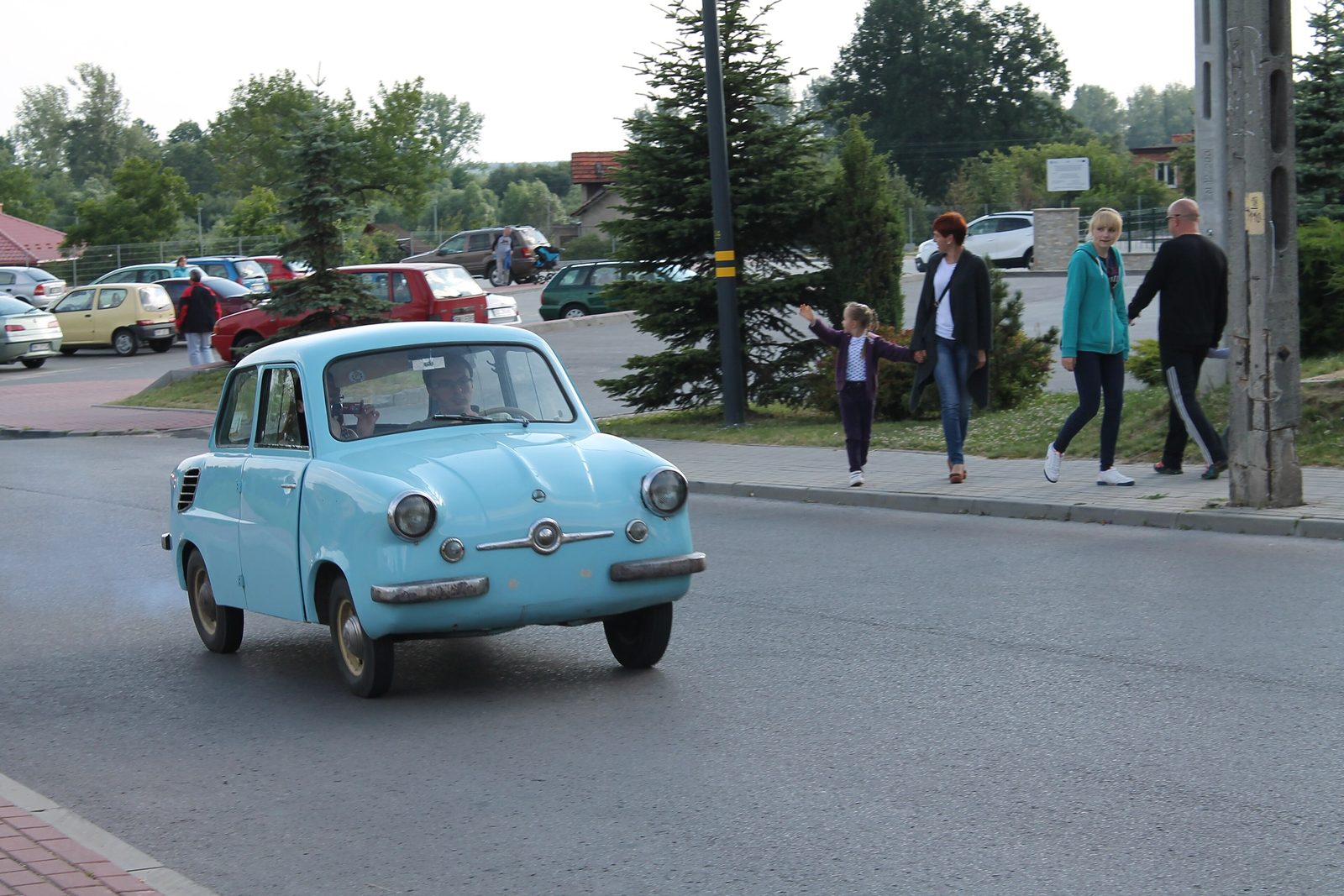
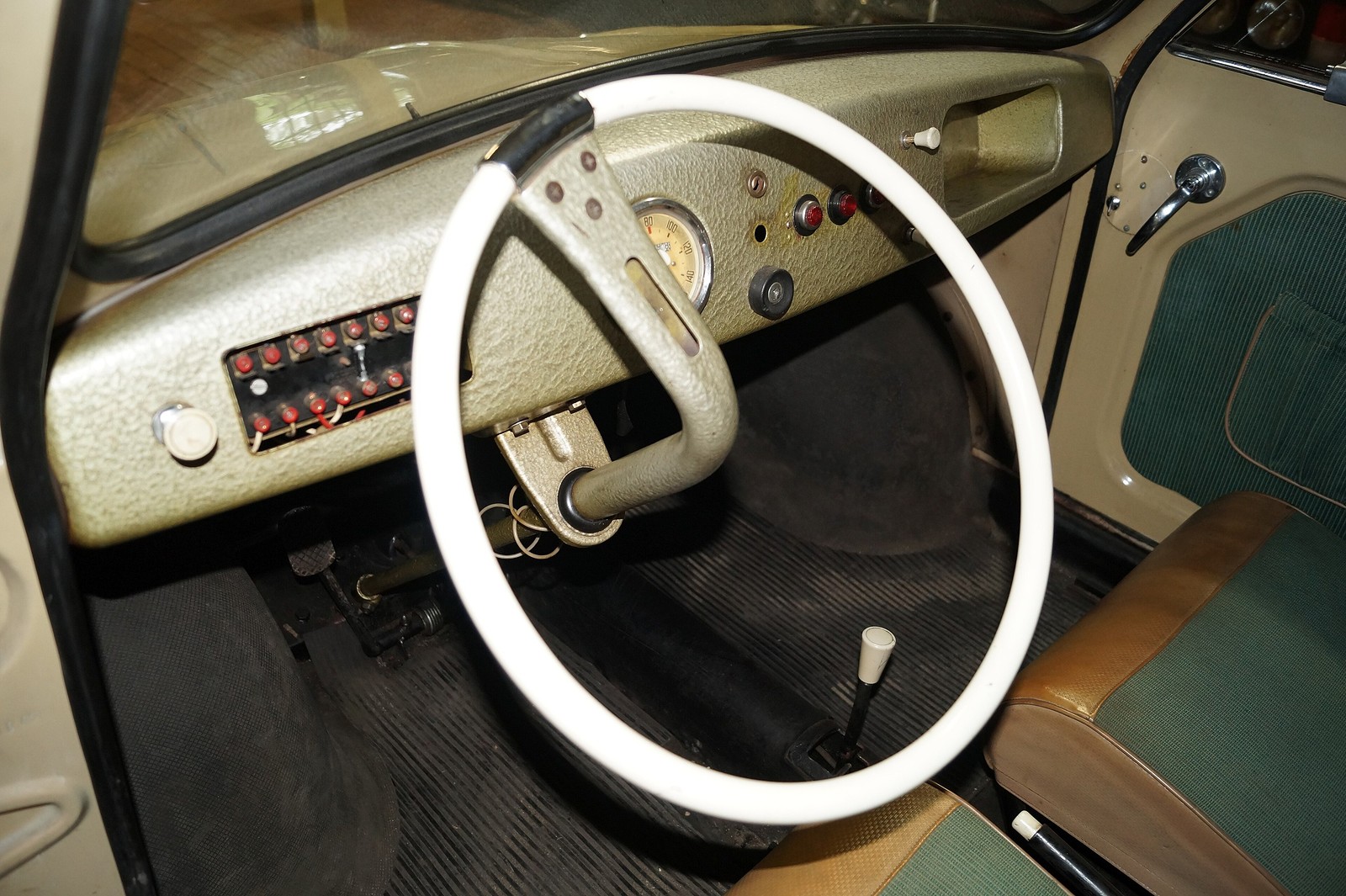
It was easy to drive and good in corners, with adequate brakes, but its 10 in wheels suited the roads of the day poorly, it was noisy inside and out, the narrow doors made getting in awkward, and the heating came from the engine’s cooling air.source 1 The first owners met leaking, seizing dampers and springs that were too hard, seizing pistons, cured with chill-cast ones, noisy gears and a dragging clutch. Gearbox shafts broke, which the works blamed on drivers changing from second straight into reverse, and the shafts were then made of chrome-nickel steel.source 6 An engine was expected to run at least 50,000 km between overhauls, about three years’ use. Guliński’s plans for a 400–500 cc four-stroke twin of about 20 hp and a larger body came with one condition: that the price must not rise.source 6
It never did become the people’s car it was meant to be. It was too expensive to make, and production stopped in 1960.source 1source 3 When the government called that year for a small van, for which it estimated a demand of 100,000, WSK Mielec built a pick-up prototype for 200 kg of load in ten days, but it was not put into production (see micro-vans).source 1source 3
| Measure | Mikrus | Goggomobil |
|---|---|---|
| Wheelbase | 1,850 mm | 1,800 mm |
| Length | 3,100 mm | 3,000 mm |
| Width | 1,300 mm | 1,380 mm |
| Power | 14.5 KM | 17 KM |
| Weight | 474 kg | 430 kg |
| Consumption | 4.4 l/100 km | 4.6 l/100 km |