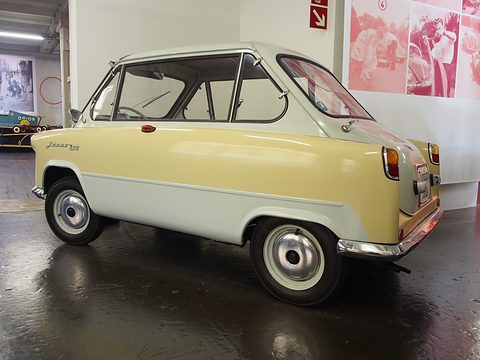
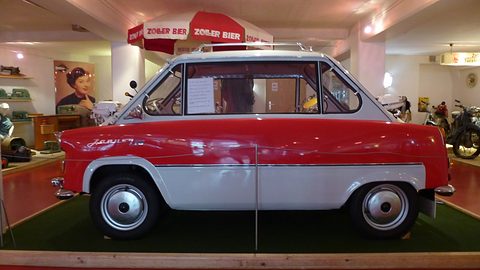
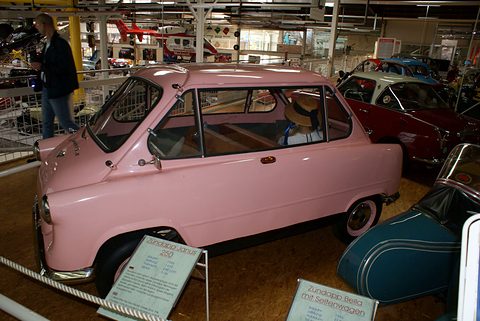
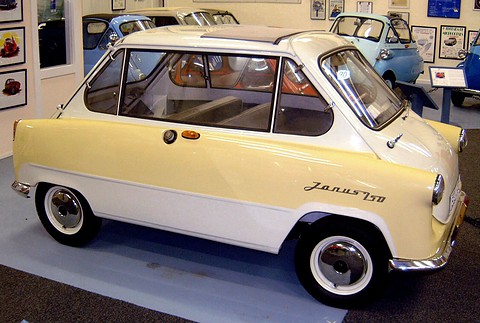
microcarfan
  • Microcar
  • West Germany
  • A door at each end
  • Back-to-back seats

Zündapp Janus

Also known as Janus 250

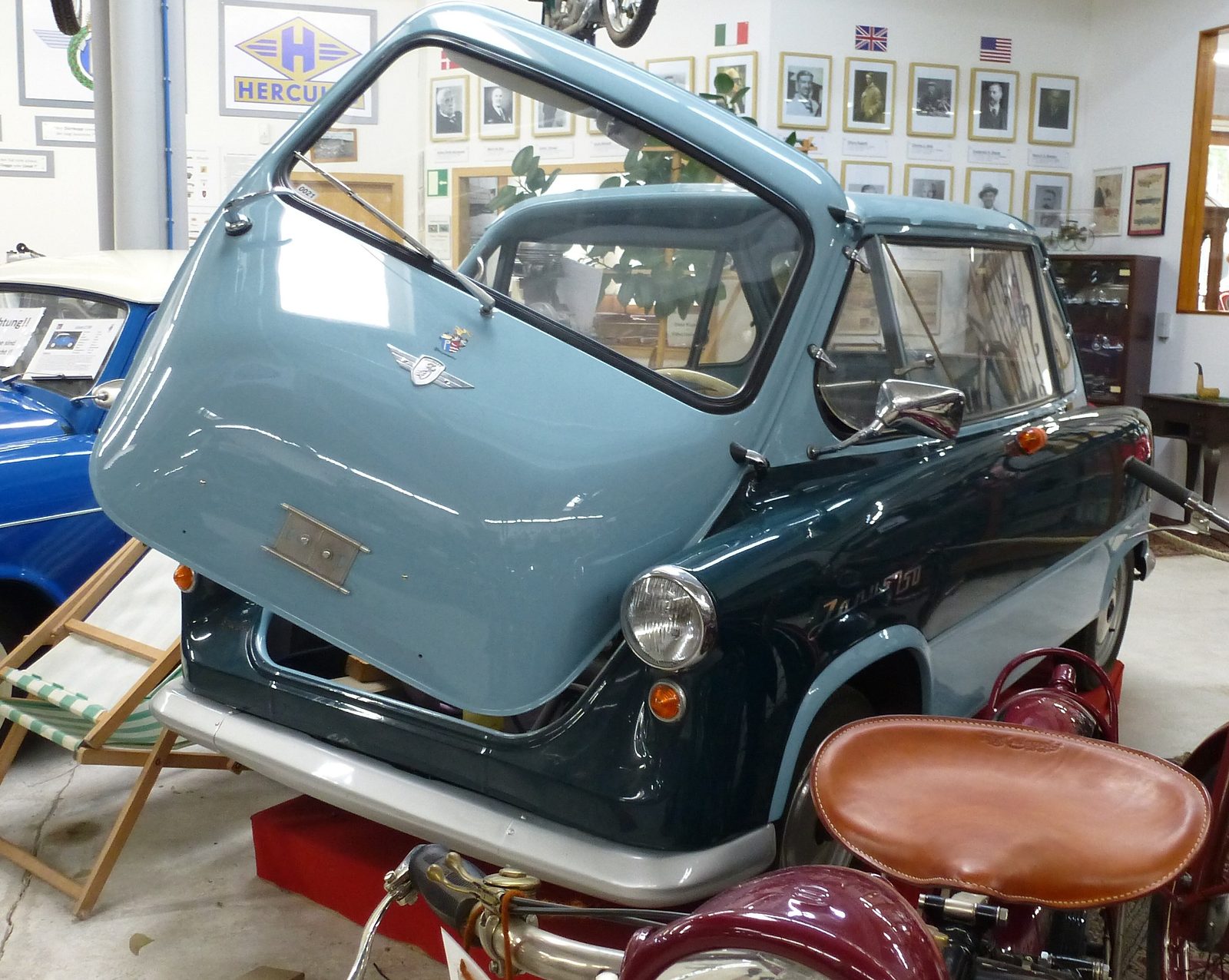
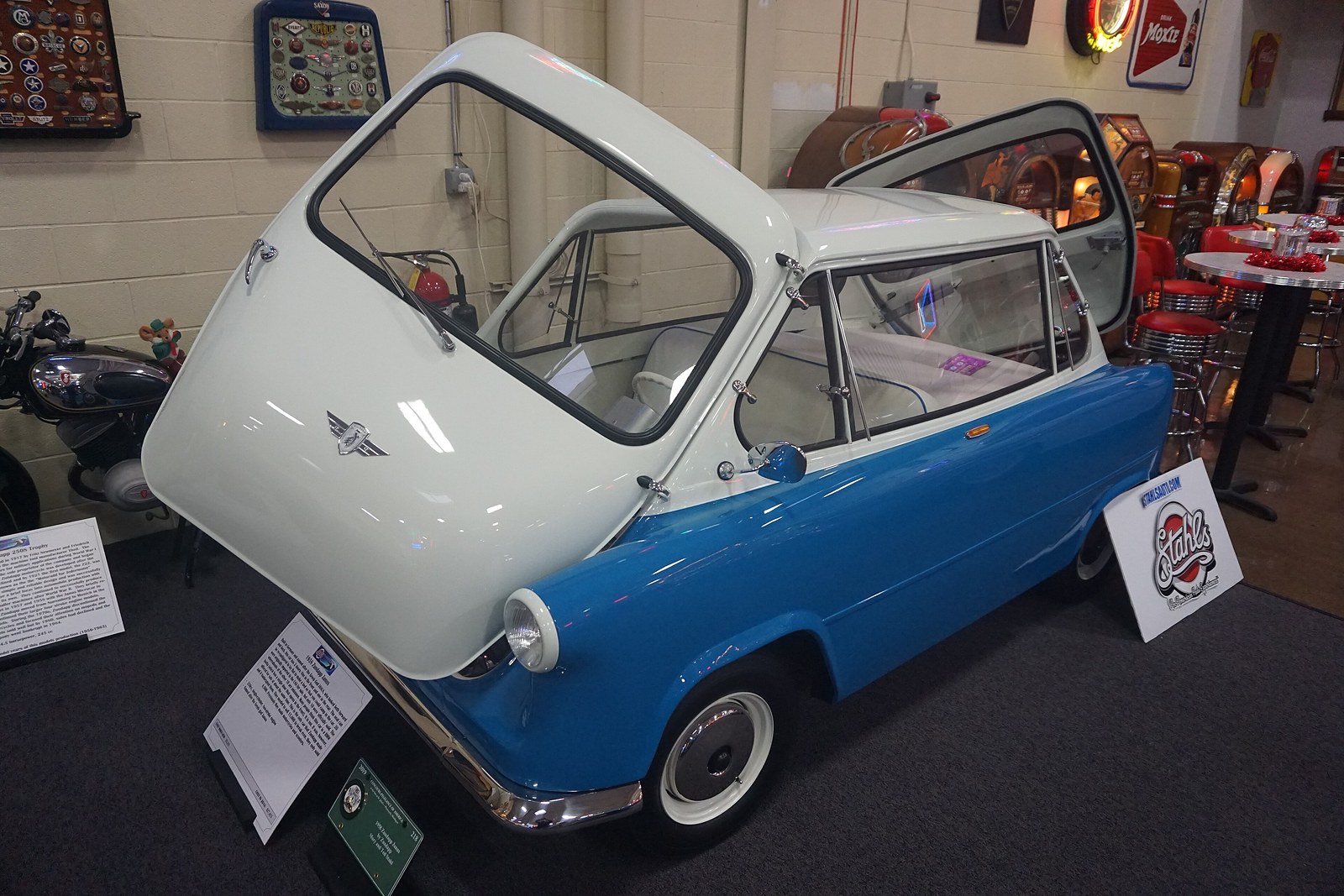
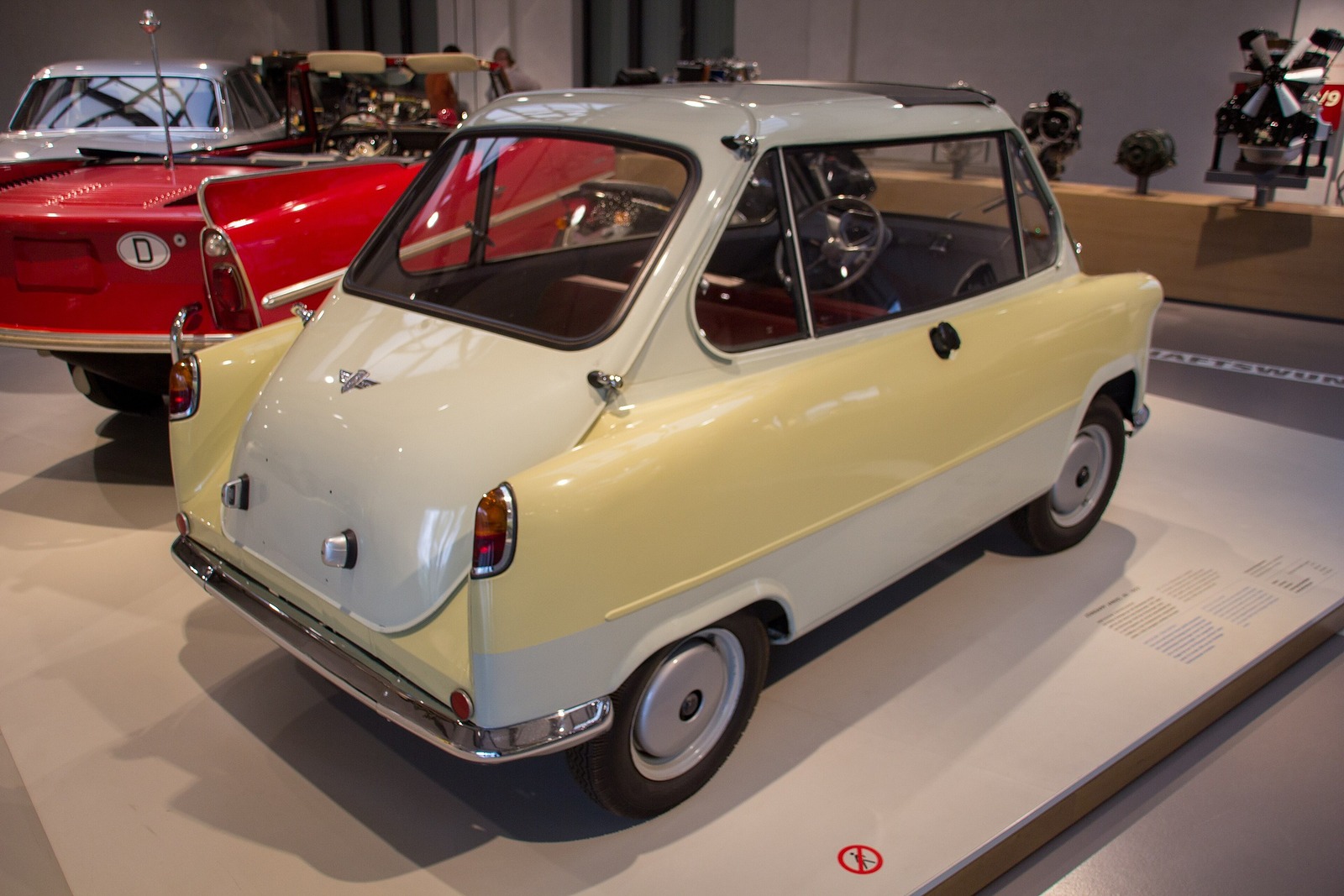
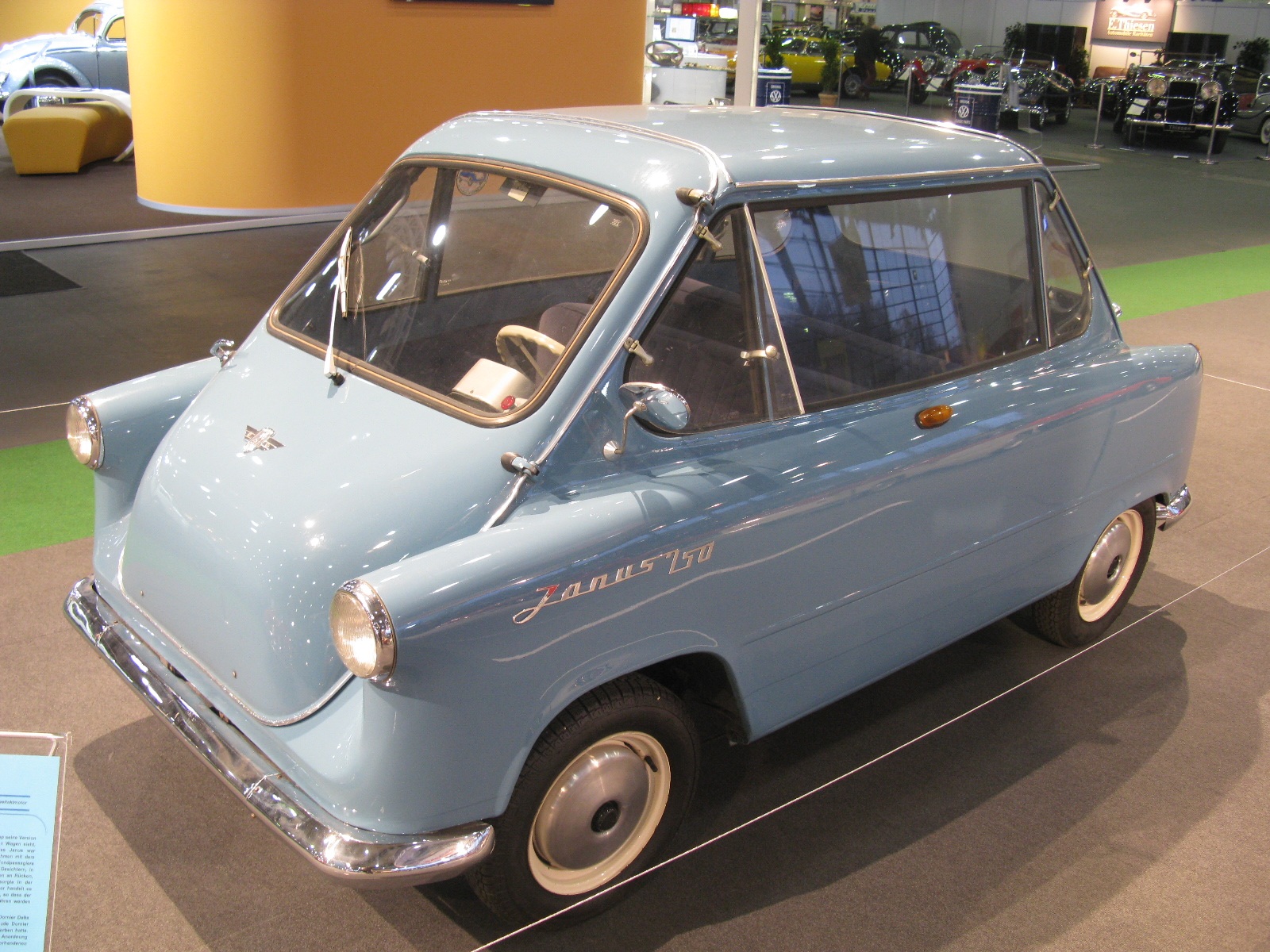
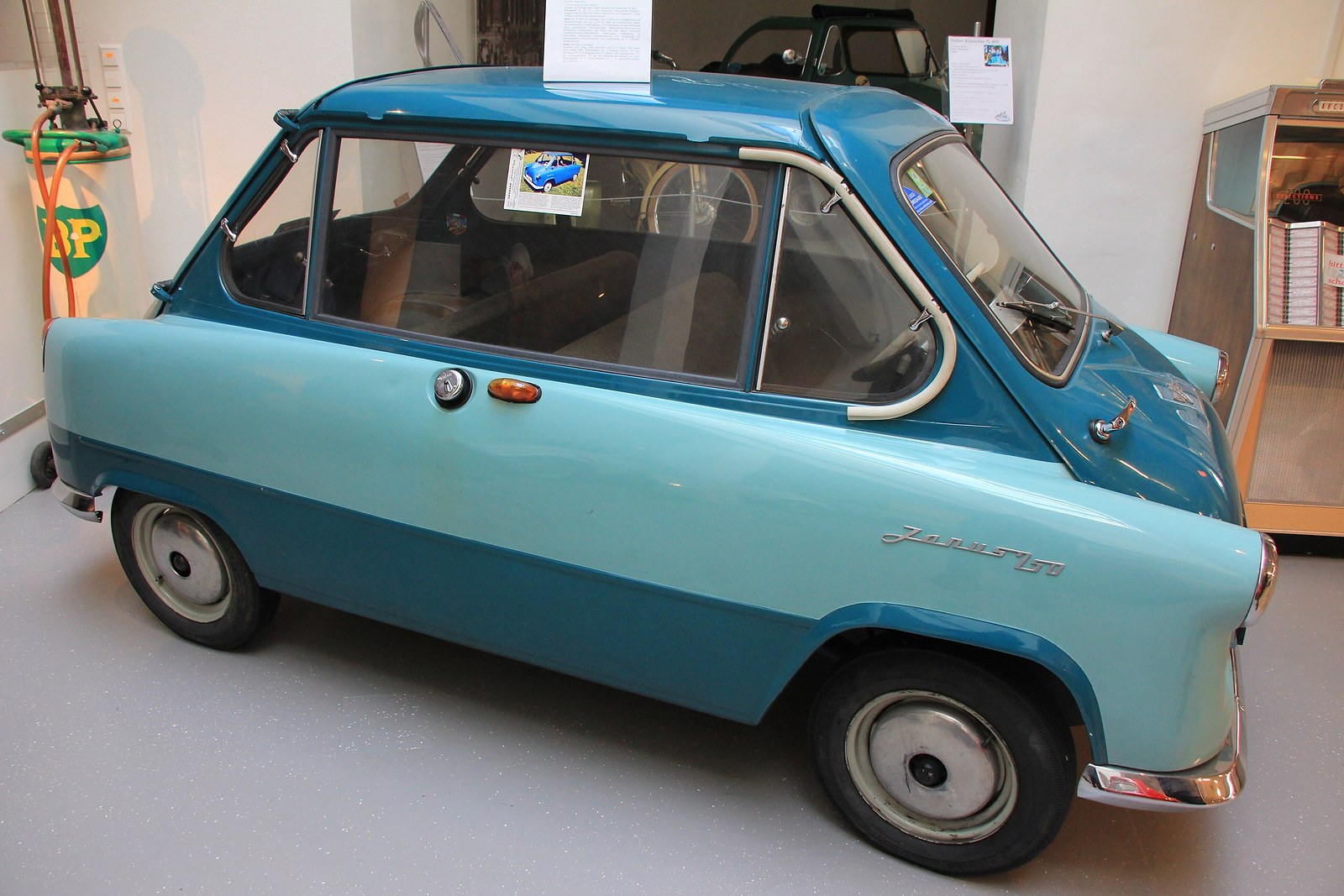
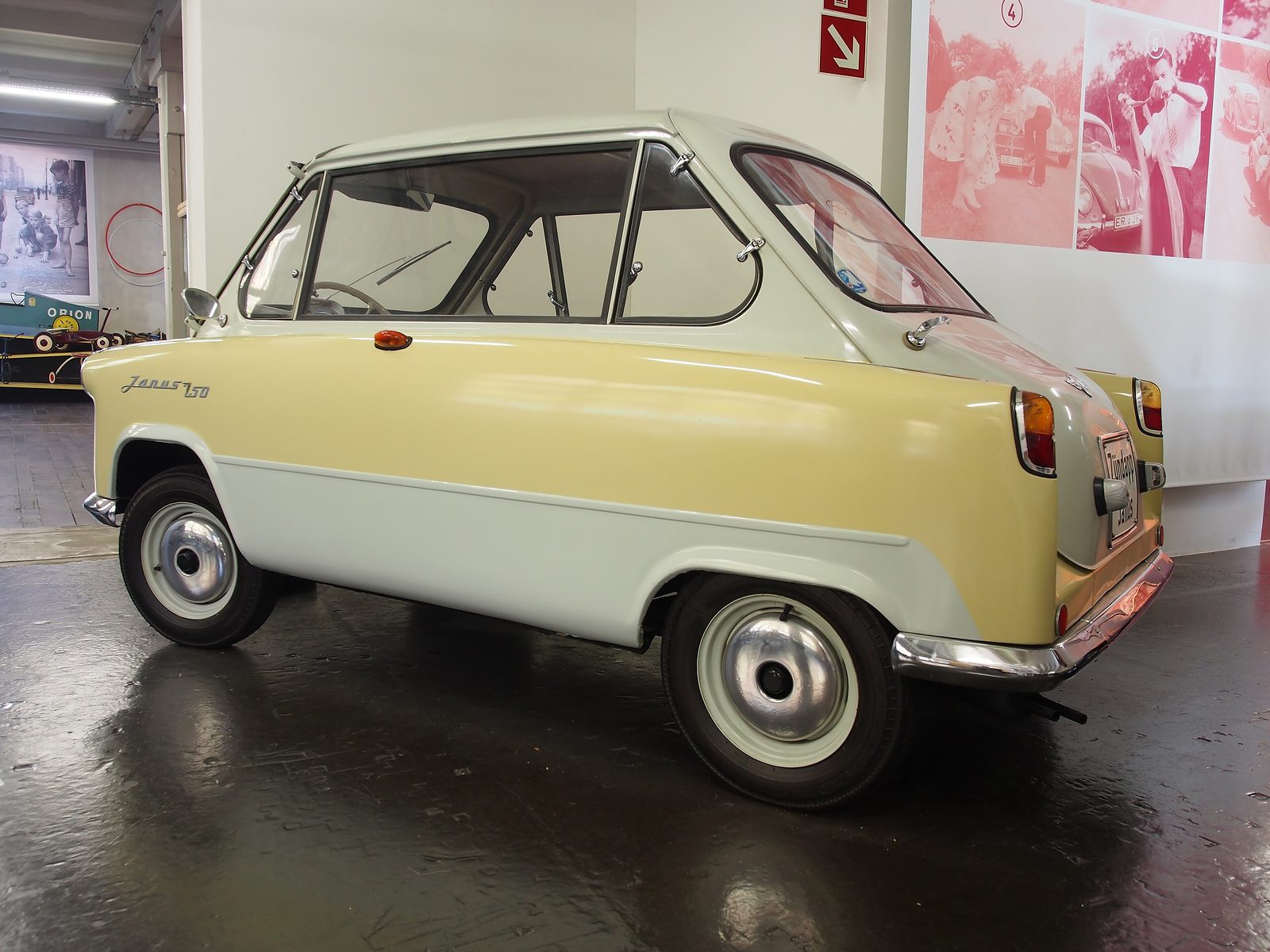
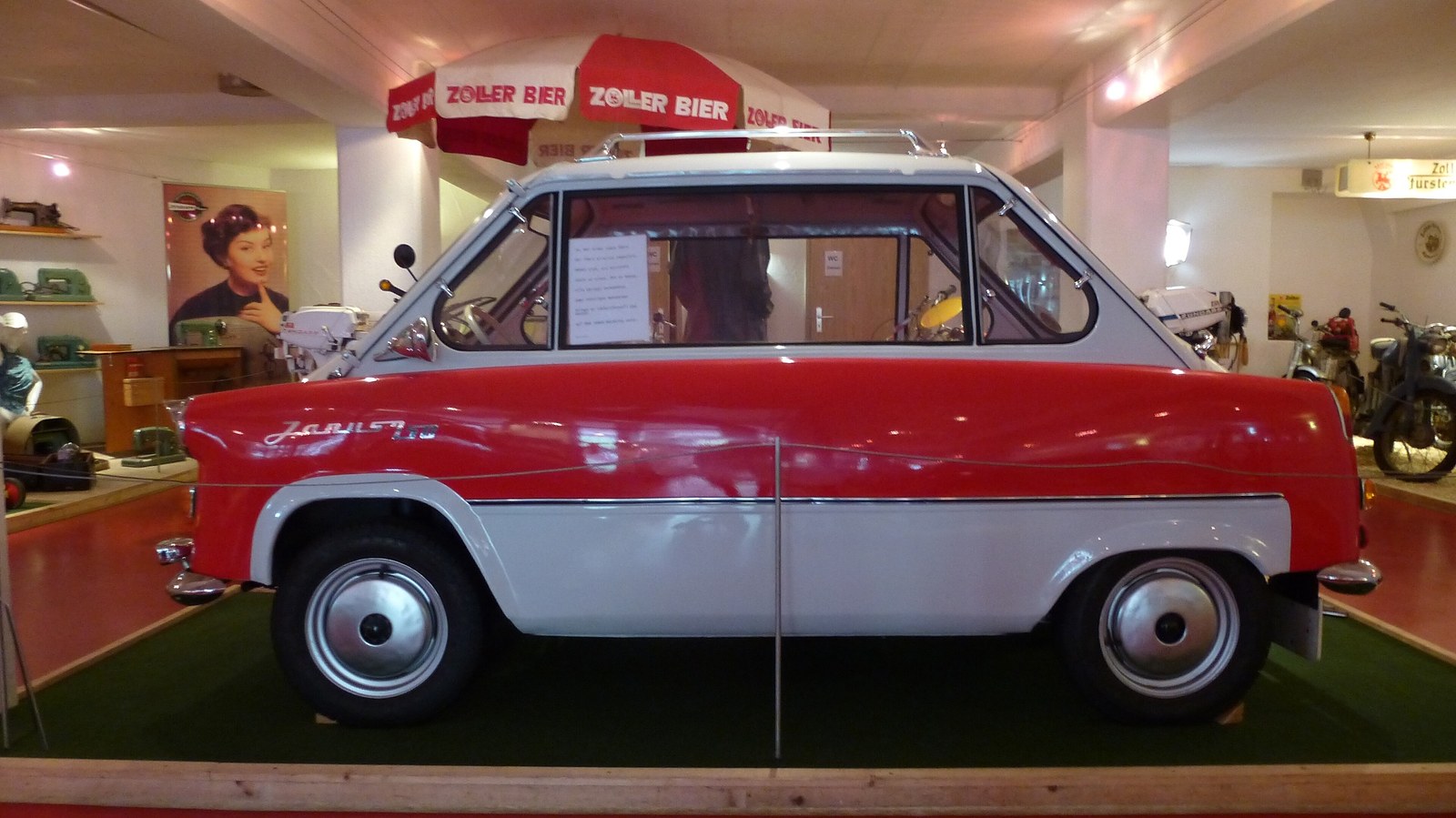
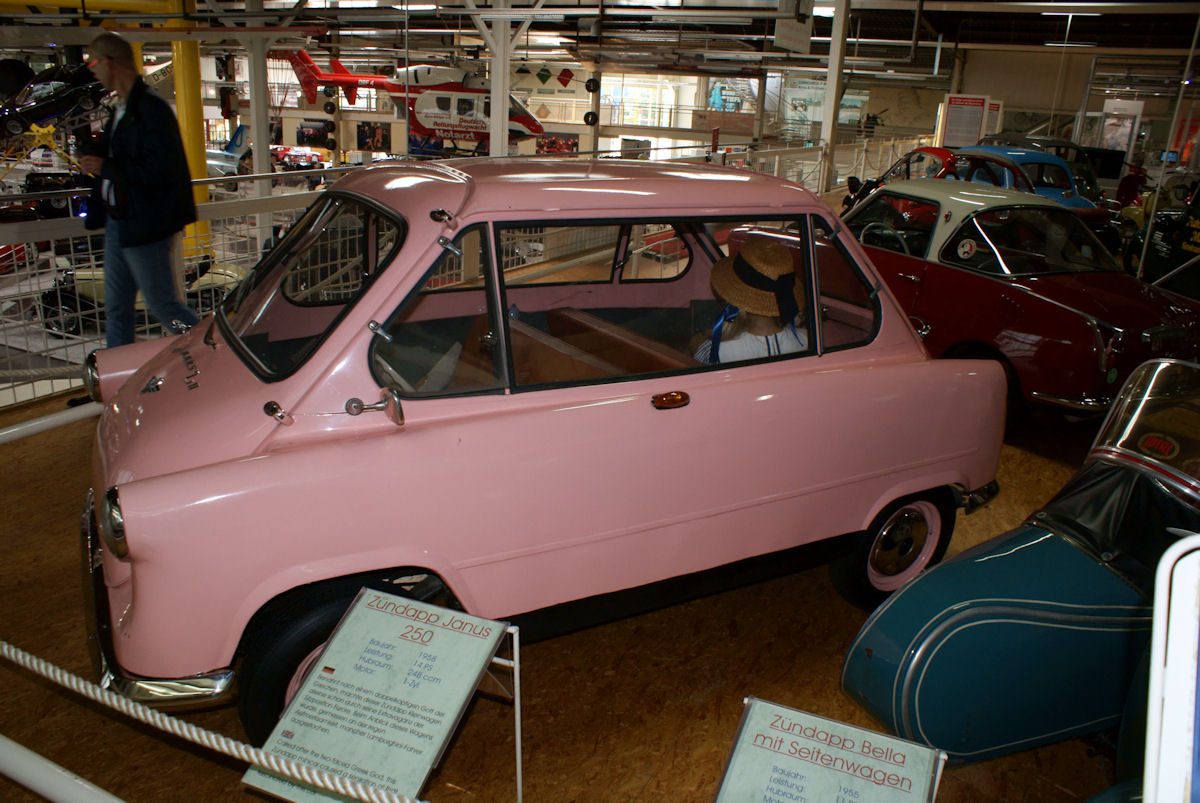
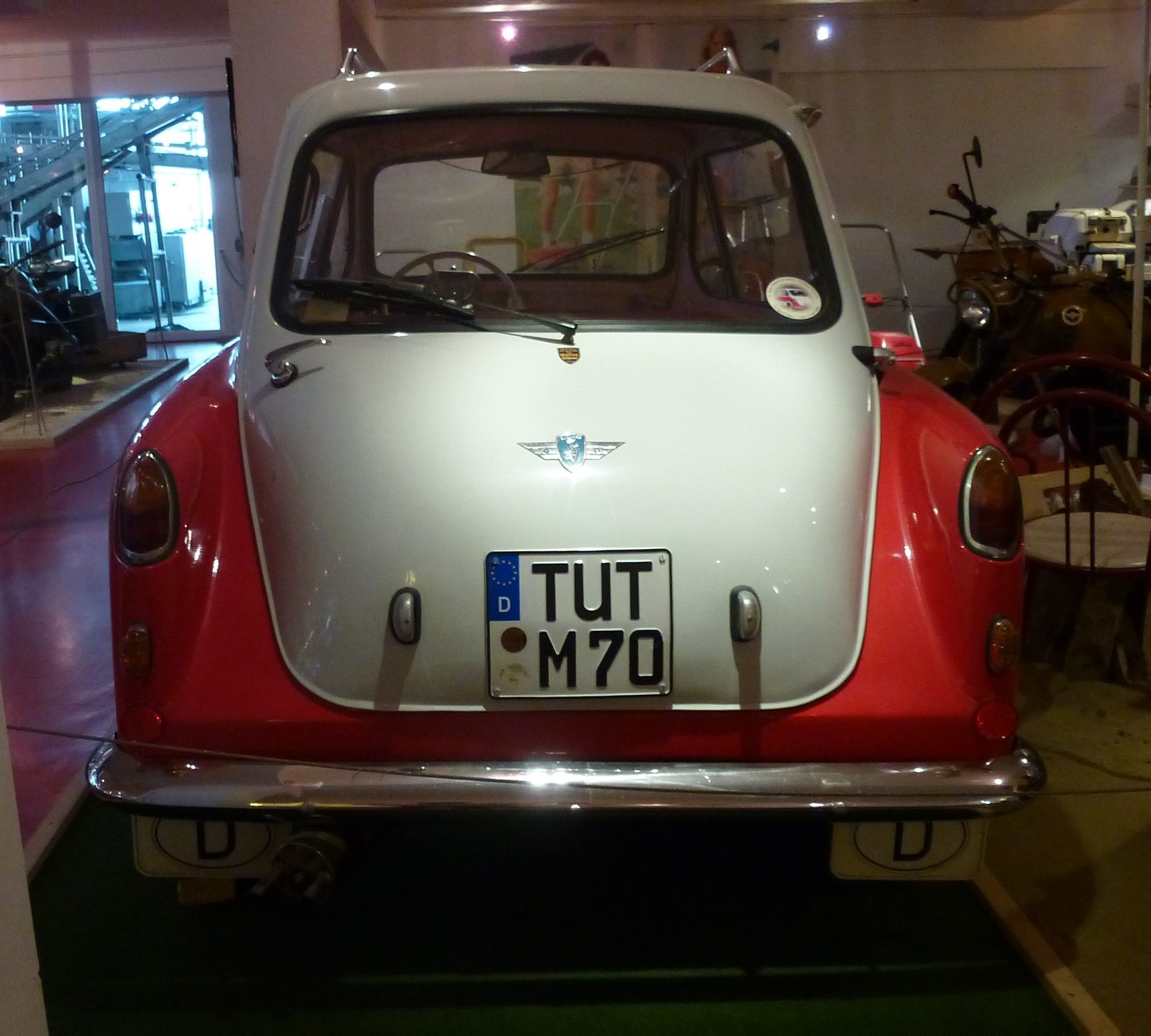
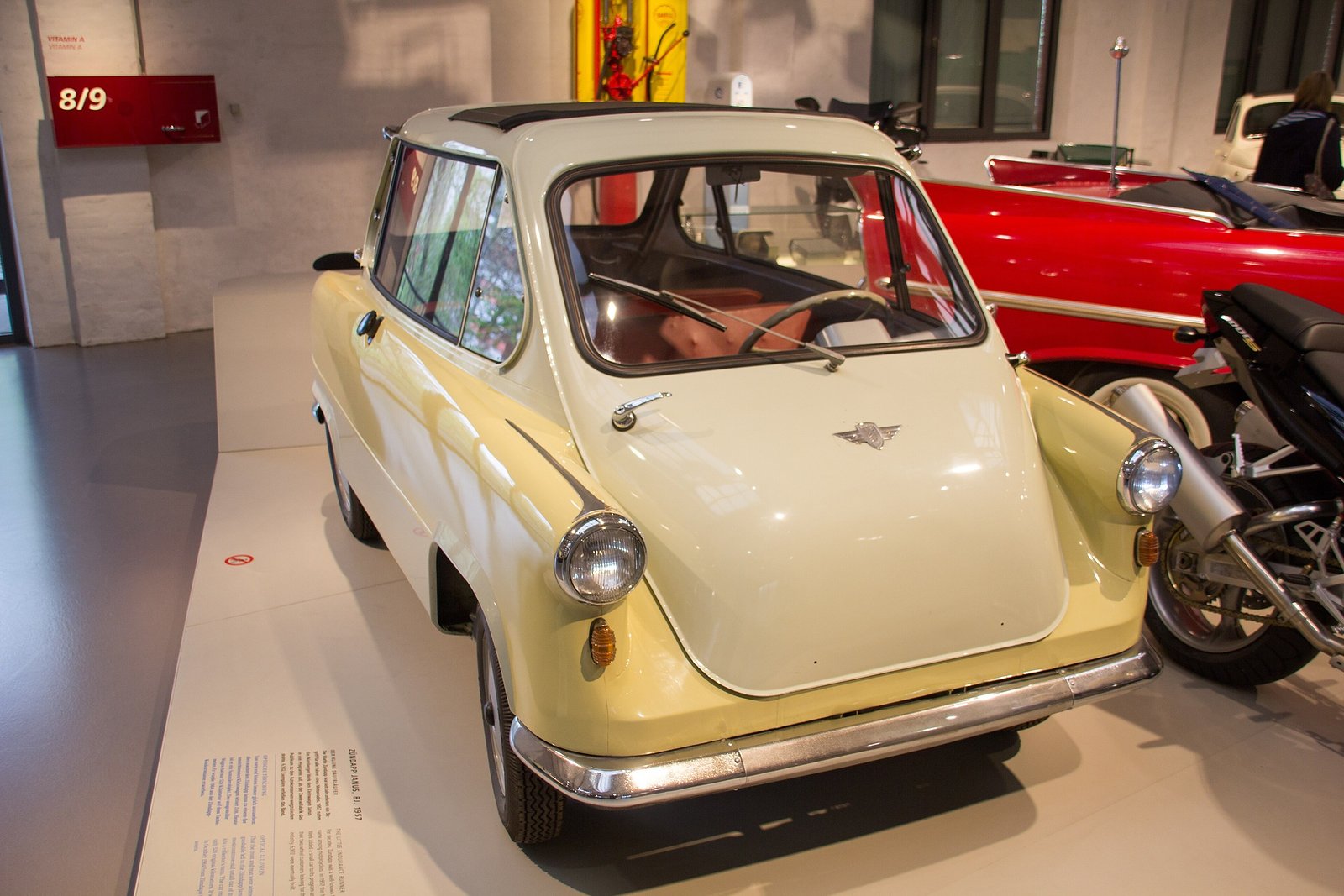
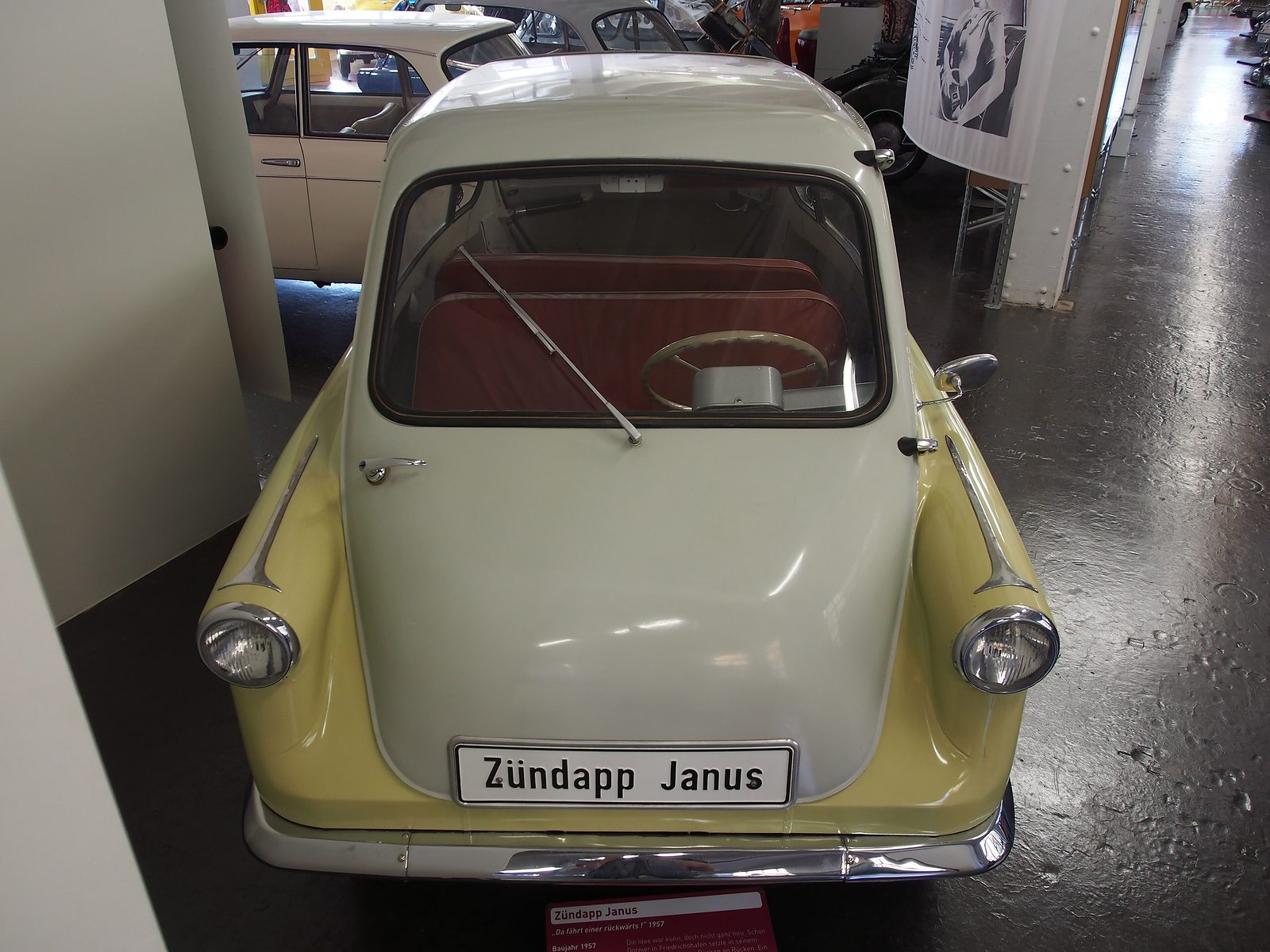
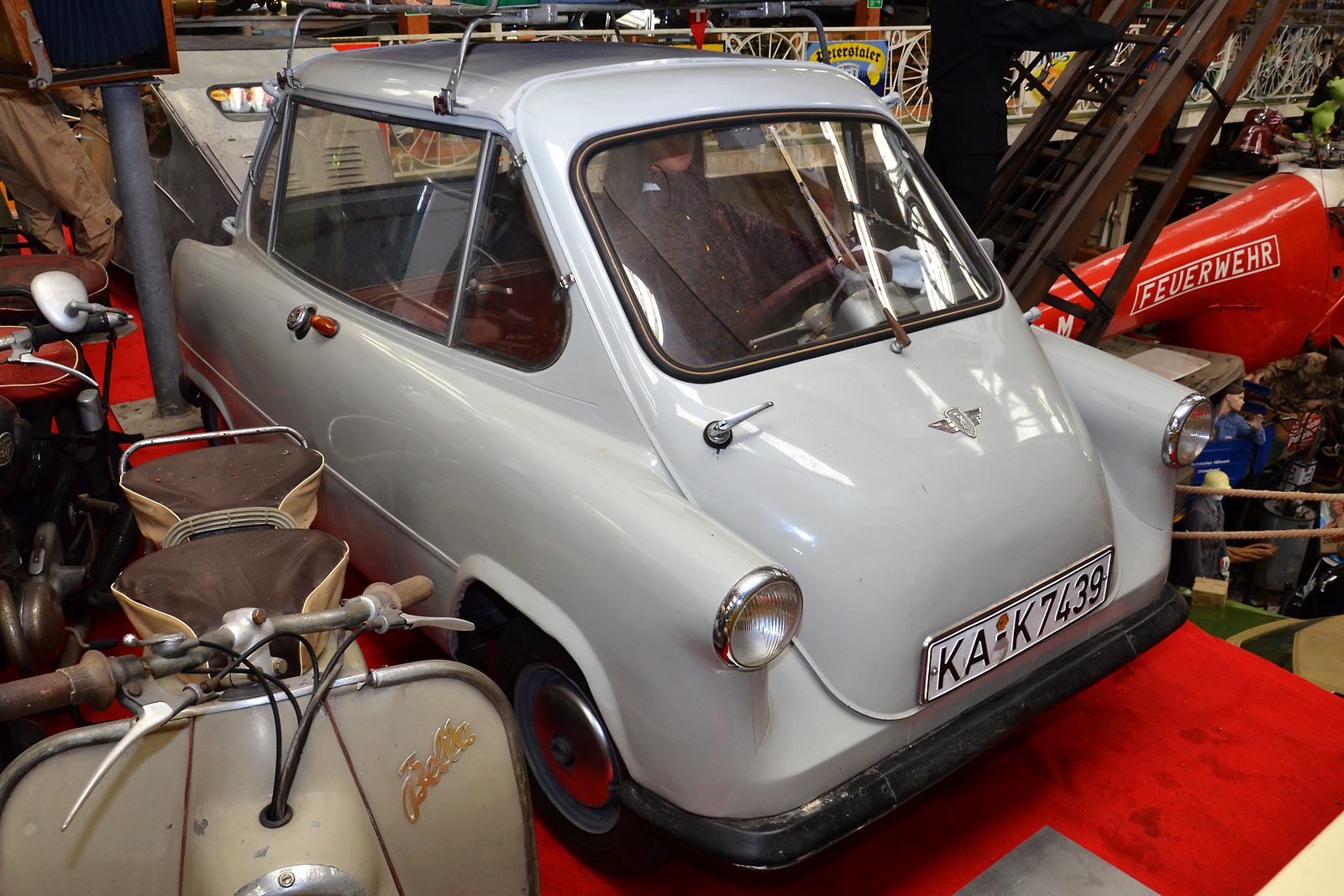
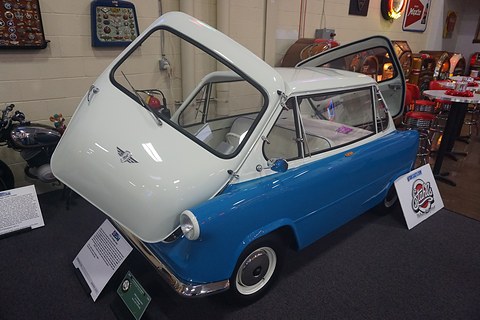
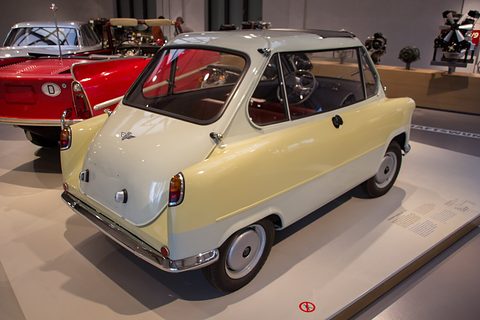
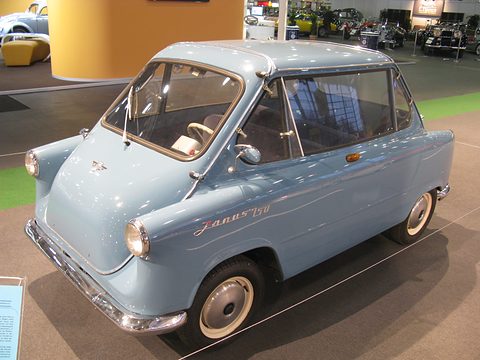
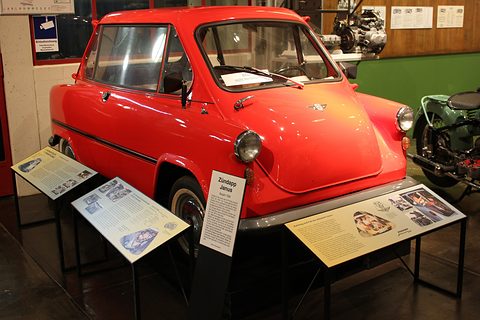
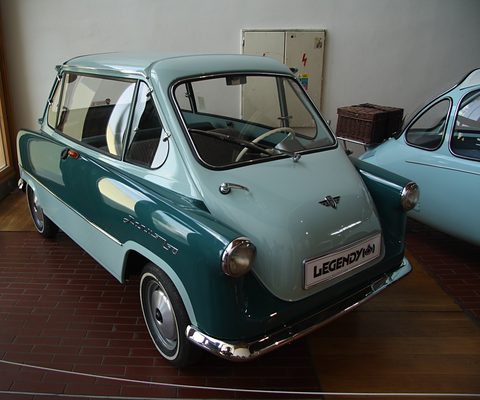
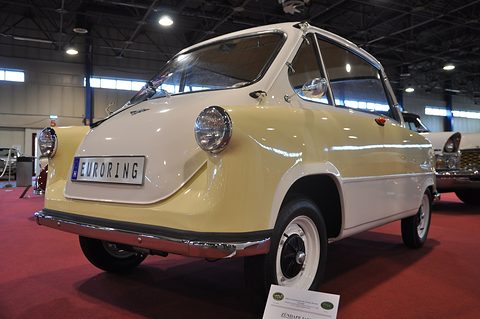
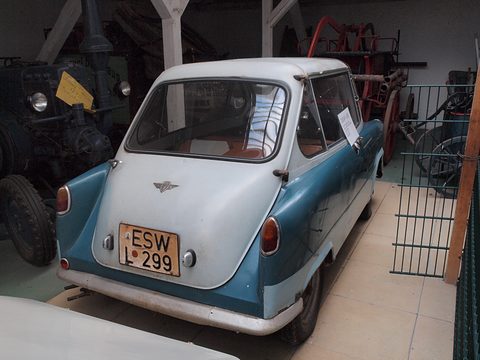
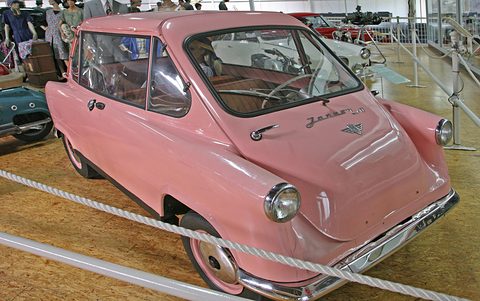
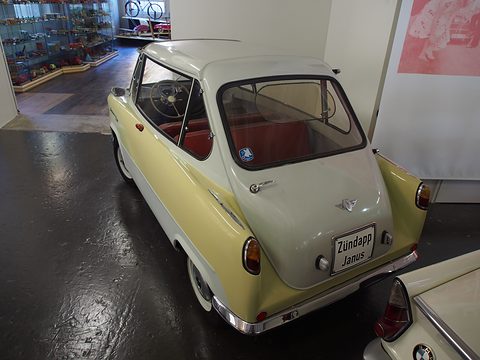
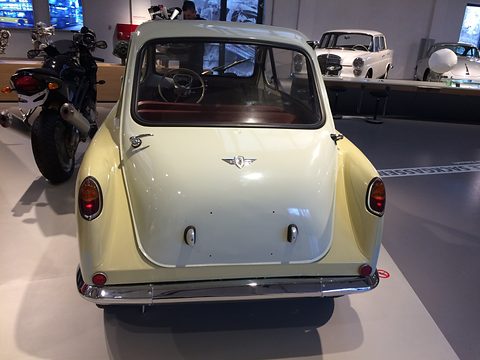
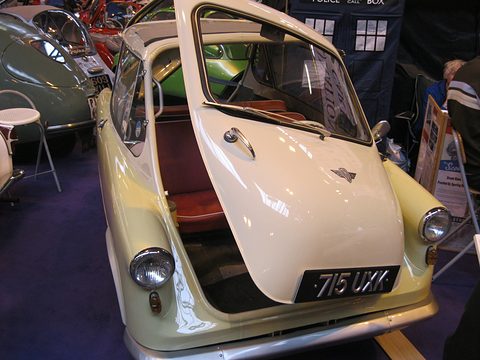
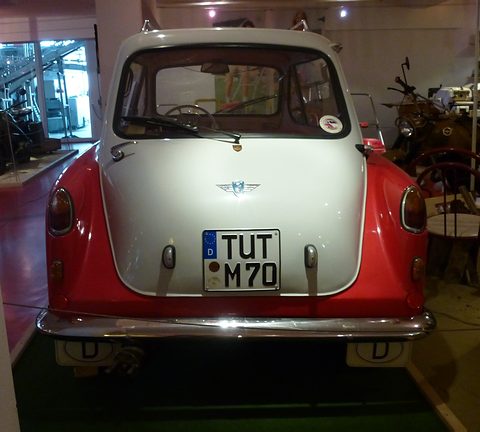
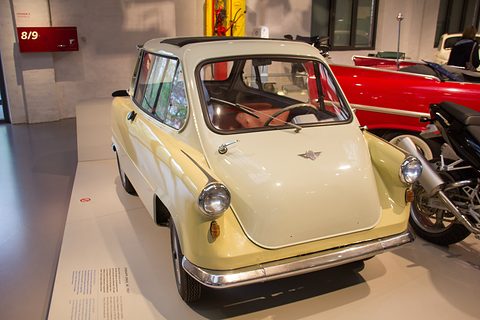
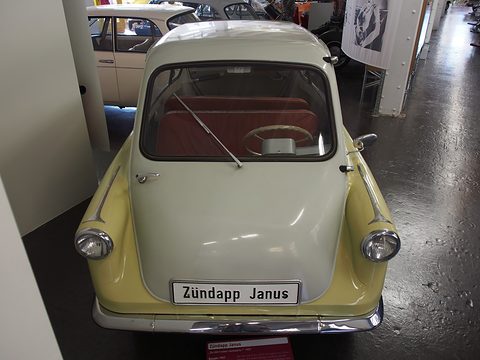
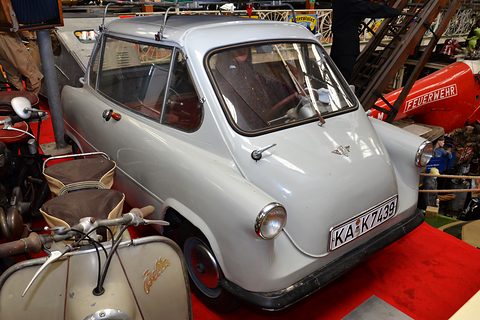
The god Janus looks both ways at once, and so does this car: a door at the front, a door at the back, and the two rear passengers riding backwards, watching the road unwind. It came from an aircraft maker’s drawing board and was the only car Zündapp ever built.

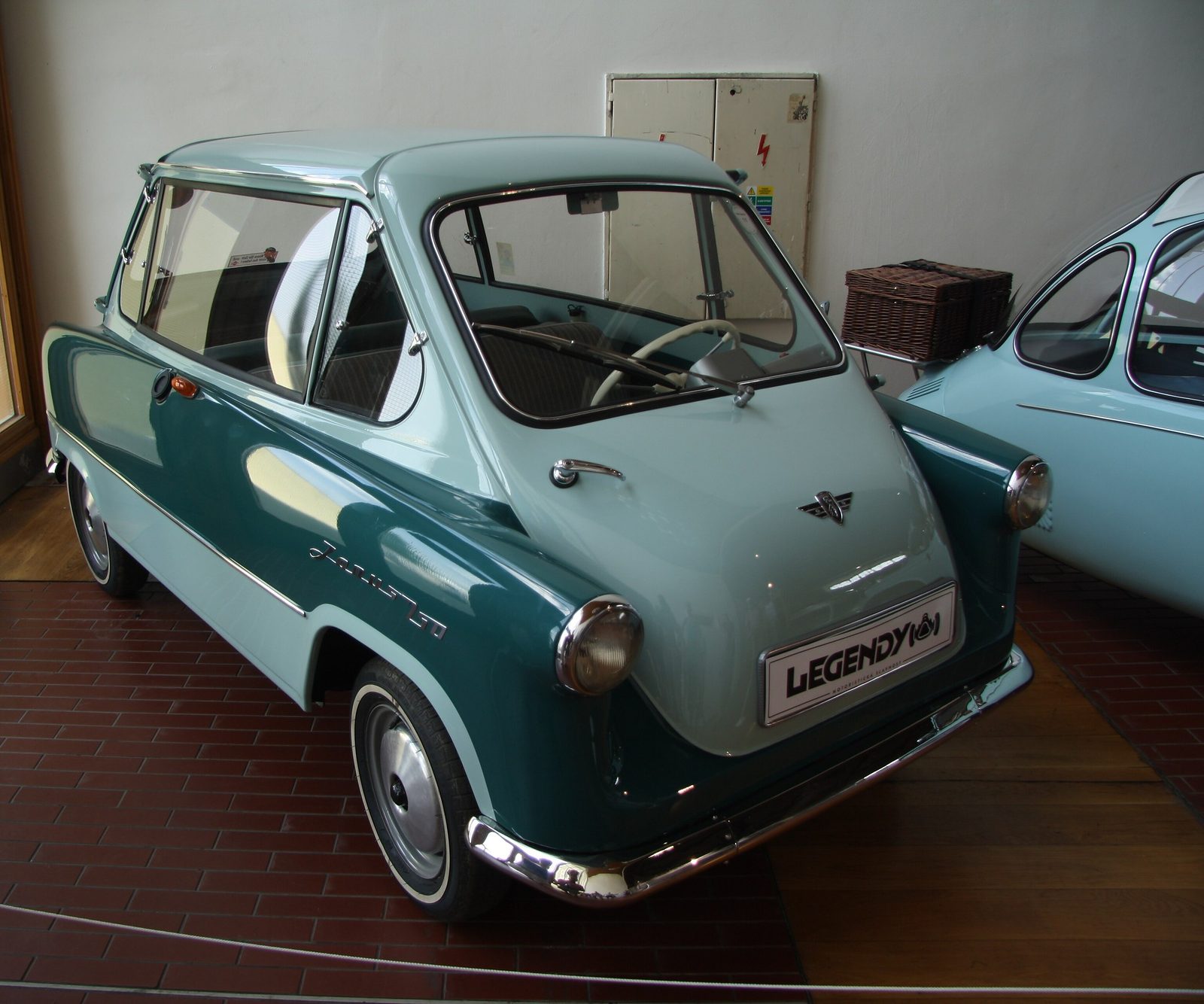
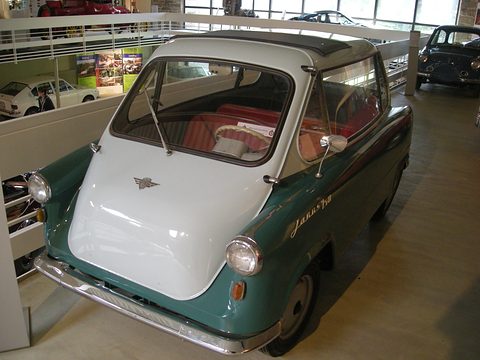
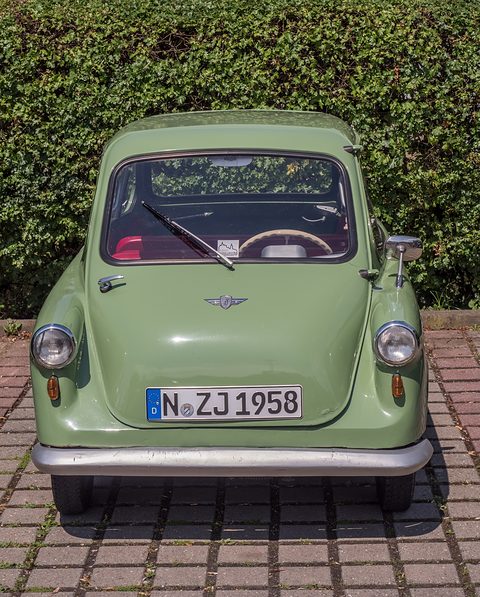
White-nosed, green-bodied small car with its front door as the whole nose panel, on a museum floor.
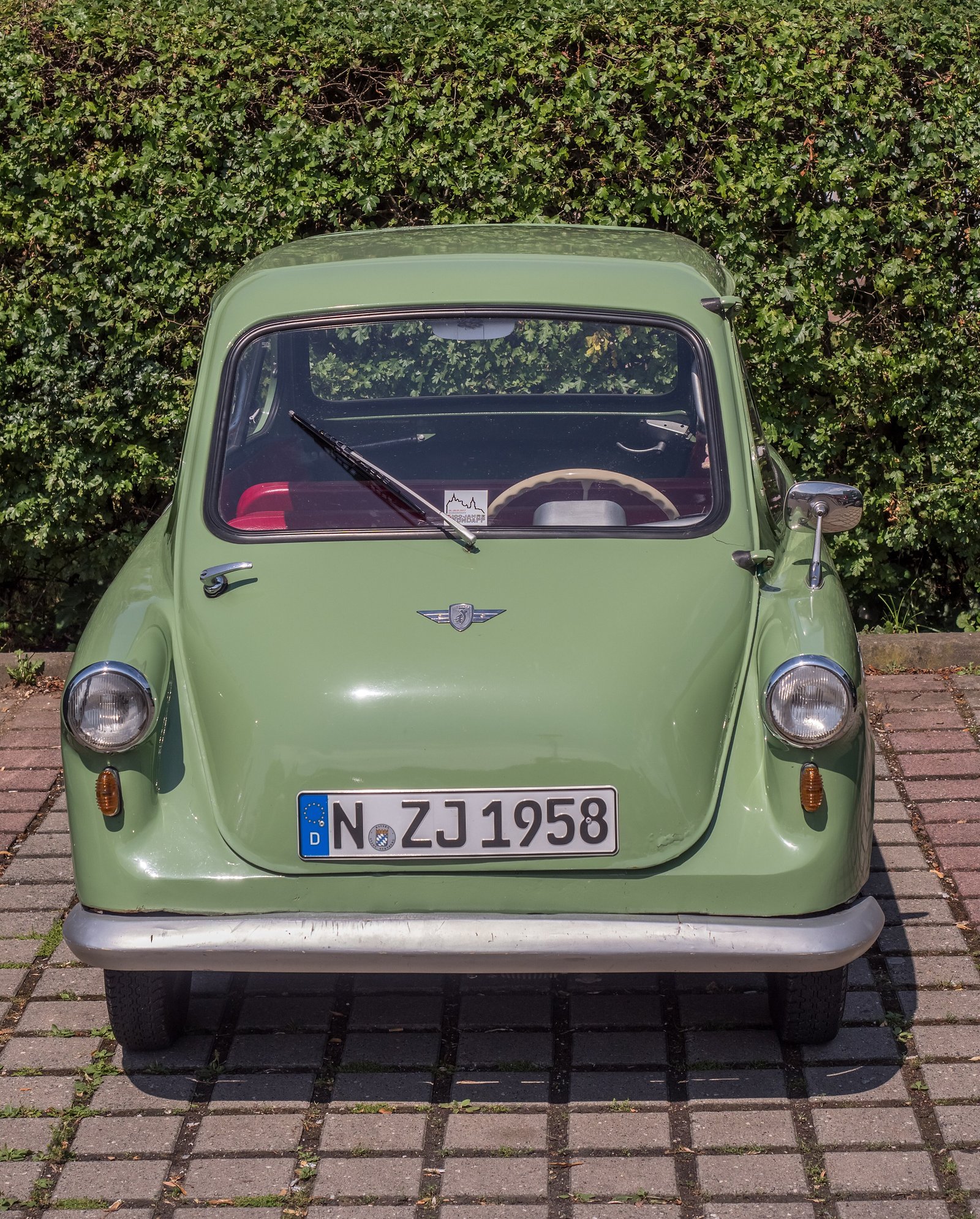
A green and white 1958 Zündapp Janus at the Deutsches Automuseum Langenburg in 2012.Photo: Michael Barera, CC BY-SA 4.0, via Wikimedia Commons

At a glance

The spec plate

Zündapp Janus

Janus 250 · Nuremberg

Built
1957–⁠1958Deliveries from June 1957; production ended in 1958
Country
West GermanyNuremberg
Maker
Zündapp-Werke GmbH, NurembergIts only car, built under licence from Dornier
Engine
248 cc Zündapp two-stroke singleHorizontal and fan-cooled, in the middle of the car
Power
14 PS10.3 kW at 5,000 rpm
Length
2,890 mm1,410 mm wide, 1,400 mm high
Weight
425 kgAbout 425 kg; about 400 kg in the 1956 data
Seats
4On two benches, back to back
Wheels
4Engine in the middle, between the seat backs, driving the rear wheels
Price new
DM 3,290Plus DM 40 for the heater; a Volkswagen Standard cost DM 3,780
Production
6,9021,731 of them in 1957
Survives
FewThe Weiner museum’s word in 2002; no count found
Top speed
80km/h80 km/h80–85 km/h (50–53 mph); the first cars barely reached 80

How big is it?

True proportion

2.89 m

It is 80 mm shorter than a Fiat 500, about 1.7 adults laid end to end.

  • 1.41 m wide
  • 425 kg: about six adults
  • The seats fold into a bed 1,800 mm by 1,200 mmsource 1
  • Wheelbase 1,825 mmsource 1source 2
Drawn at true proportion. The track is 3.6 metres long; the adult stands at the same scale. The Peel P50 is the smallest production car, on every page for comparison.

The story

History

Zündapp of Nuremberg made everything from motorised bicycles to heavy motorcycles. Late in 1954, the Bruce Weiner Microcar Museum writes, it became shockingly clear that buyers wanted vehicles that kept the weather out, and the motorcycle trade went into a tailspin.source 3 Zündapp could not afford a long development of its own. It looked at the Kroboth, at Brütsch’s designs and at the Fuldamobil, and then chose a car from the aircraft maker Dornier, the Delta, which it took on under licence (see built under licence).source 3source 4

Zündapp reworked it thoroughly. The doors now hinged at the side, the front one in the manner of the Isetta, and the two halves of the body still looked almost alike.source 3source 1 German Wikipedia says the engine was new, a horizontal, fan-cooled 248 cc two-stroke designed for the car; the Weiner museum and RM say it was the 250 cc engine of Zündapp’s Bella scooter.source 1source 3source 5 It sat in the middle, between the backs of the two benches and ahead of the rear axle; a propeller shaft and a differential took the drive to the rear wheels. The four-speed gearbox came from Zündapp’s motorcycles, with a true reverse added, and was worked by a hand lever on the driver’s left.source 1source 2 The rear passengers faced backwards, looking out through the rear door, and both benches folded into a bed 1,800 mm (71 in) long.source 1

Zündapp announced it in September 1956. auto motor und sport found it excellently sprung, with the legroom of a much bigger car and, it expected, faultless road manners, but could not accept its engine in a four-seater outside the shortest local trips.source 2 Zündapp’s own caption promised that travelling by the dozen was cheaper and more fun, and listed what would fit: father, mother, two children, a dog, a teddy, dolls, a sailing boat, a bathing bag and a picnic case.source 2 At the IFMA show a month later the magazine called the Janus undoubtedly the technically most interesting vehicle there, and unusually well shaped too.source 6

Ein echter Viersitzer, zulässiges Gesamtgewicht etwa 800 kg. Mit einem Einzylinder-Zweitaktmotor von 250 ccm. Richtpreis DM 3200.⁠— — Wohin soll das führen?

Dipl.-Ing. W. Buck, “Schon wieder ein Kleinfahrzeug: Zündapp-Janus”, auto motor und sport 20/1956. In English: “A real four-seater, gross weight about 800 kg. With a single-cylinder two-stroke engine of 250 cc. Guide price DM 3,200. — Where is this supposed to lead?”source 2

Too late, and too dear

Production began in June 1957, much too late in the Weiner museum’s view, after a further redesign that saved weight with sliding Plexiglas side windows. Zündapp needed 15,000 a year to break even and built 1,731 in the first six months.source 3source 7 It cost DM 3,290, with DM 40 more for the heater, when a Volkswagen Standard cost DM 3,780, a price that put it among the dearest of the bubble cars.source 1 Its 14 PS had to move about 425 kg (937 lb) and four people, and the first cars barely reached 80 km/h (50 mph).source 3source 1 The engine in the middle made the cabin noisy, and sometimes smelly through a badly sealed cover; Zündapp’s advertising turned that into a virtue, since you could change a plug under your own roof in the rain.source 1 Riding backwards, as the museum puts it, proved less of a thrill to customers than had been thought.source 3

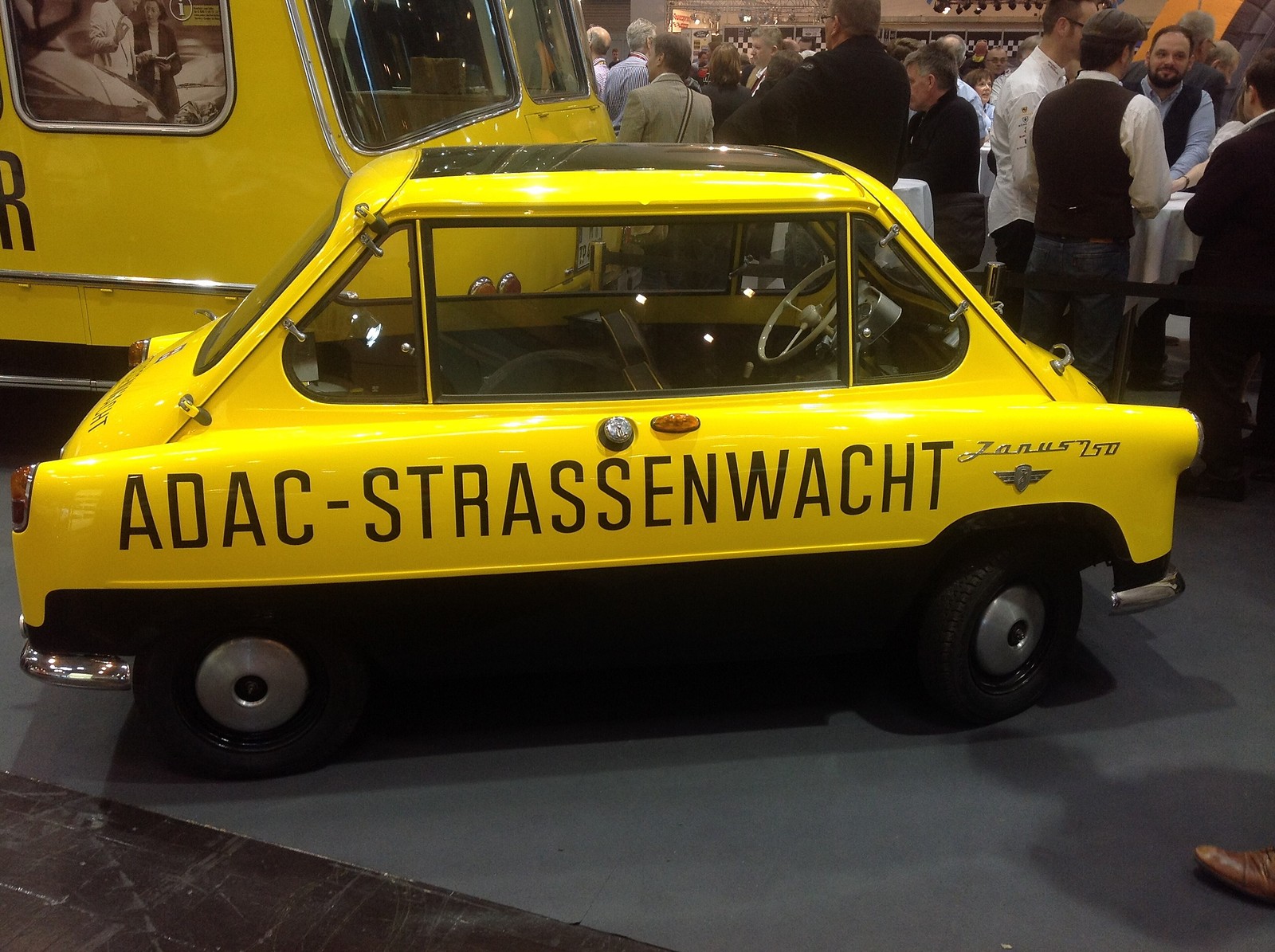
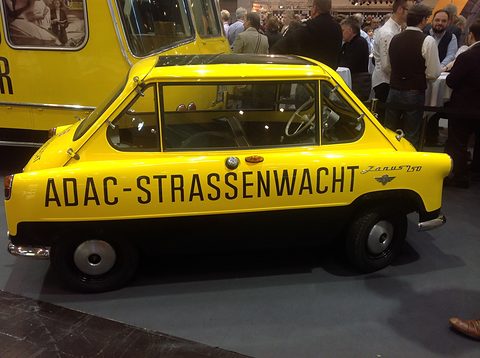
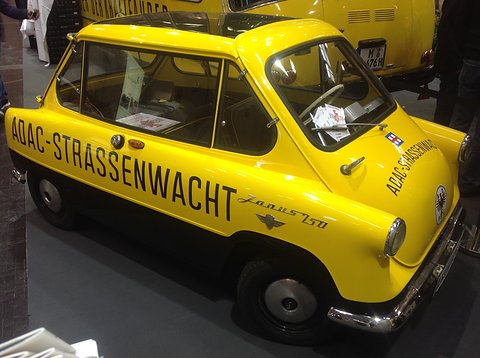
It had its admirers. In 1958 auto motor und sport held up its simple suspension as better in some respects than the Citroën 2CV’s, and the ADAC road patrol, which ran 191 motorcycle-and-sidecar outfits, added a Janus with room for a stretcher.source 8source 9 Its drivers needed only the old class 4 licence.source 10 In America the importer sold it from US$1,190 and promised a 600 cc twin of 25 hp for the spring of 1958; no such car is known.source 1

Sold to Bosch

In July 1958 the magazine reported that Robert Bosch had bought the Zündapp works at Nuremberg, and that it was not yet decided whether the mopeds, scooters, motorcycles and the Janus would go on.source 11 In October Zündapp sold the big press that had made the Janus body, with other machines, to Hans Glas, maker of the Goggomobil, for DM 315,000. The Janus was to be built again in Zündapp’s Munich works in 1959, with demand met from stock meanwhile.source 12 It never was.source 1source 4 German Wikipedia counts the car’s failure among the main reasons the Nuremberg works were sold; Zündapp went on making two-wheelers in Munich.source 1source 11
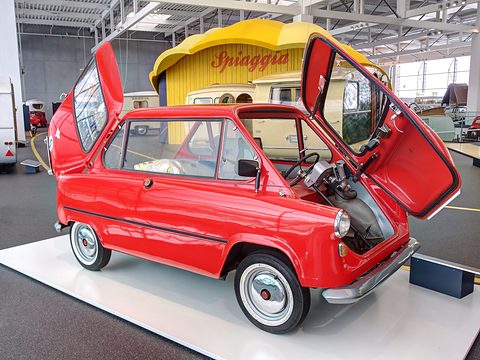
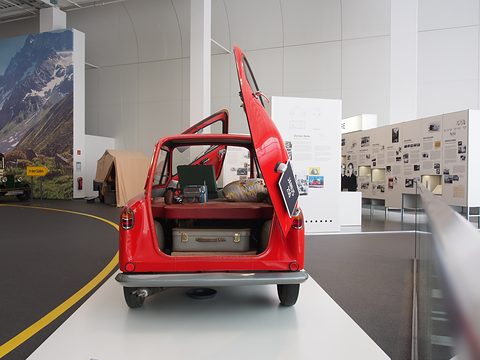
Red small car in side view with front and rear doors swung up, a yellow beach-hut display behind.
Both doors open on a red Janus at the Erwin Hymer Museum, Bad Waldsee, in 2019.Photo: Alf van Beem, Public domain, via Wikimedia Commons
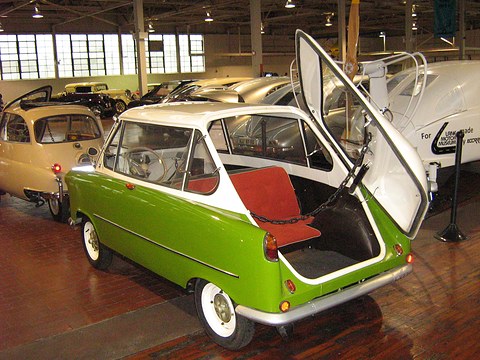
Lime green and white small car from behind, its rear door raised over a red rear-facing seat.
Through the rear door, the backward-facing bench of a green and white Janus in Nashville’s Lane Motor Museum, 2009.Photo: dave_7, CC BY 2.0, via Wikimedia Commons
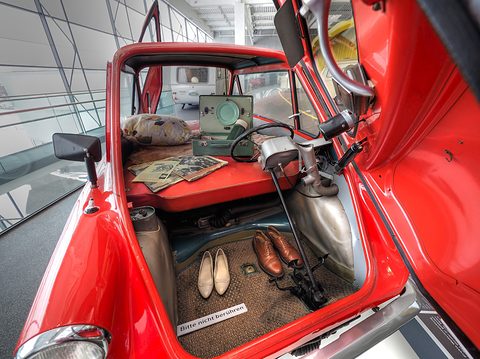
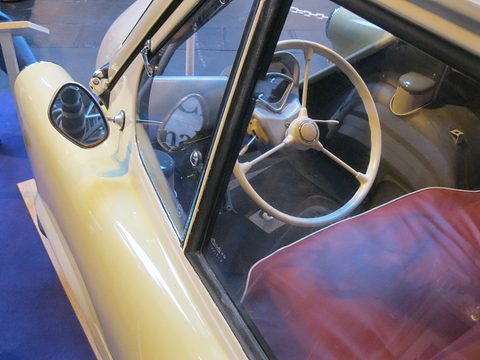
Looking in through the open front door: steering wheel, folded red seats, camping gear and shoes on the mat.
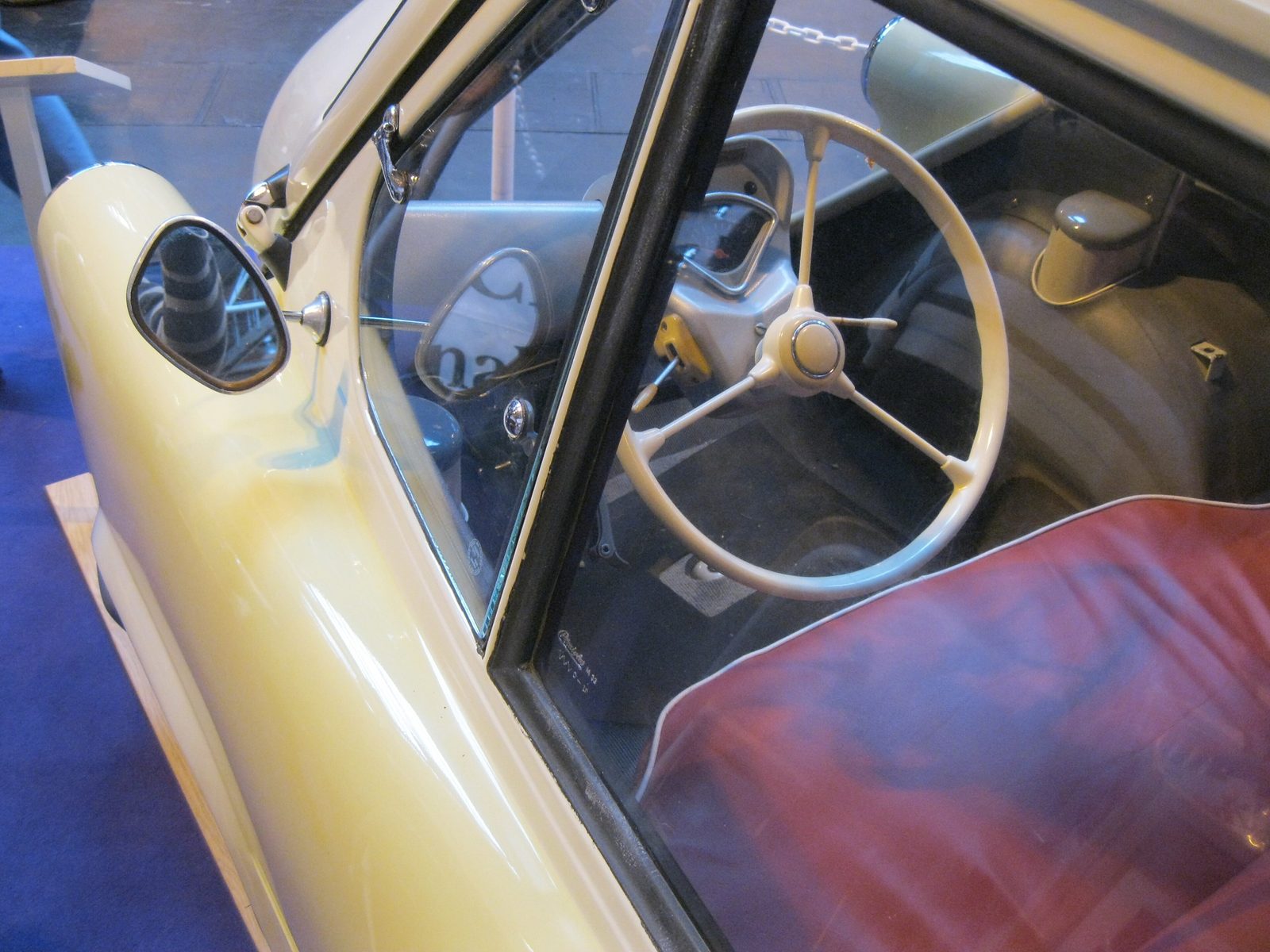
Inside the red Janus at the Erwin Hymer Museum, its seats folded into a bed, 2020.Photo: Alf van Beem, Public domain, via Wikimedia Commons

Dornier Delta

1955–⁠1972 · a record on this page

The idea was Claudius Dornier junior’s, the eldest son of the aircraft maker Claude Dornier.source 1source 4 In the spring of 1955 Werner Oswald described the prototype in auto motor und sport. Dornier, he wrote, was the third well-known aircraft firm, after Messerschmitt and Heinkel, to come up with a small cabin car (see aircraft makers). It was an extraordinarily roomy four-seater whose rear bench faced backwards, which promised better protection in a crash, good use of space, good weight distribution and a symmetrical body that would be cheap to make.source 13 Its doors at both ends hinged upwards; the rear bench could come out to make a load space, or both could fold into a flat bed 1.8 m long, so that it was a car, a small van and a camper in one. With both doors raised it looked like a helicopter.source 13

Es sieht kurioserweise vorn und hinten gleich aus…

Werner Oswald on the Dornier Delta, auto motor und sport 11/1955. In English: “Curiously, it looks the same at the front and the back…”source 13

The engine, a 200 cc ILO, sat in the middle under the seats, and Oswald said it was there only so that the thing could move at all: Dornier knew its 360 kg car needed at least 400 cc. All four wheels were sprung independently on trailing arms, and the car was 2,780 mm long.source 13 Dornier would decide on building it only once it was clear whether it could build aircraft again; a licence was possible, and at 1,500 a month it could sell for under DM 3,000.source 13 English Wikipedia ties the Delta to the ban on German aircraft; the 1955 report reads more like a firm looking for work while its future in the air was uncertain.source 4source 13 The public saw it at the Frankfurt show that September, where the magazine thought it not beautiful but a terrific thing, more for engineers than for buyers.source 14 In the mid-1960s Dornier built a six-seat Delta II with Hymer, which stayed a prototype.source 4

Pictures

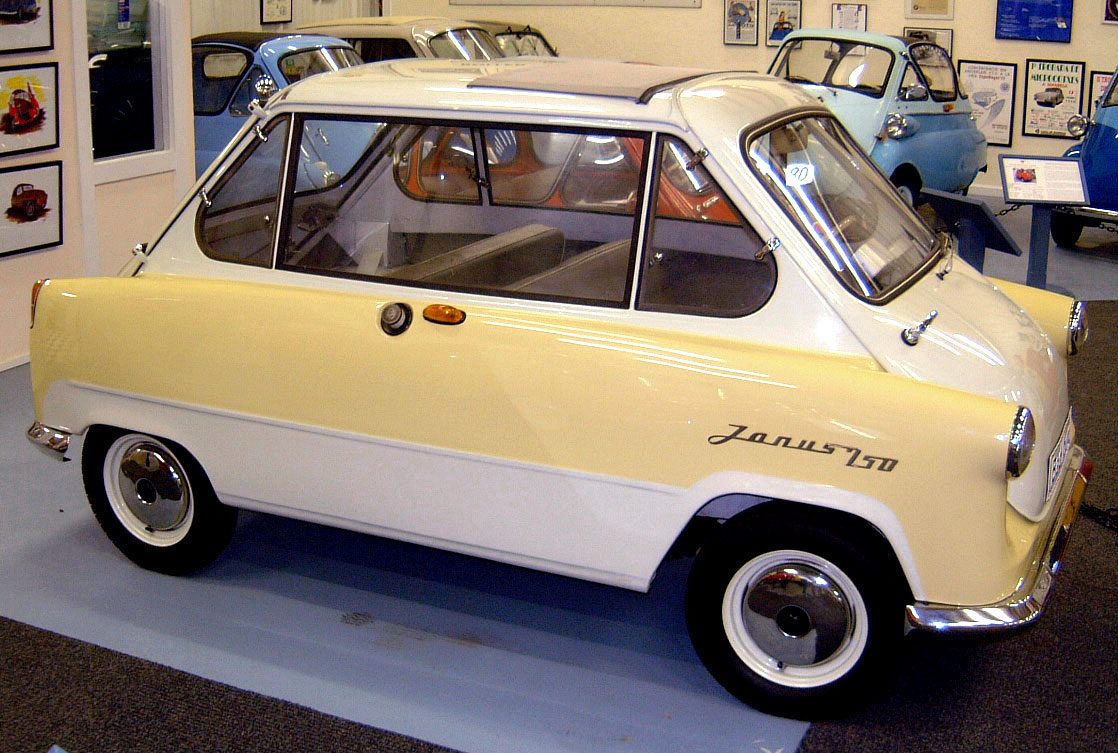
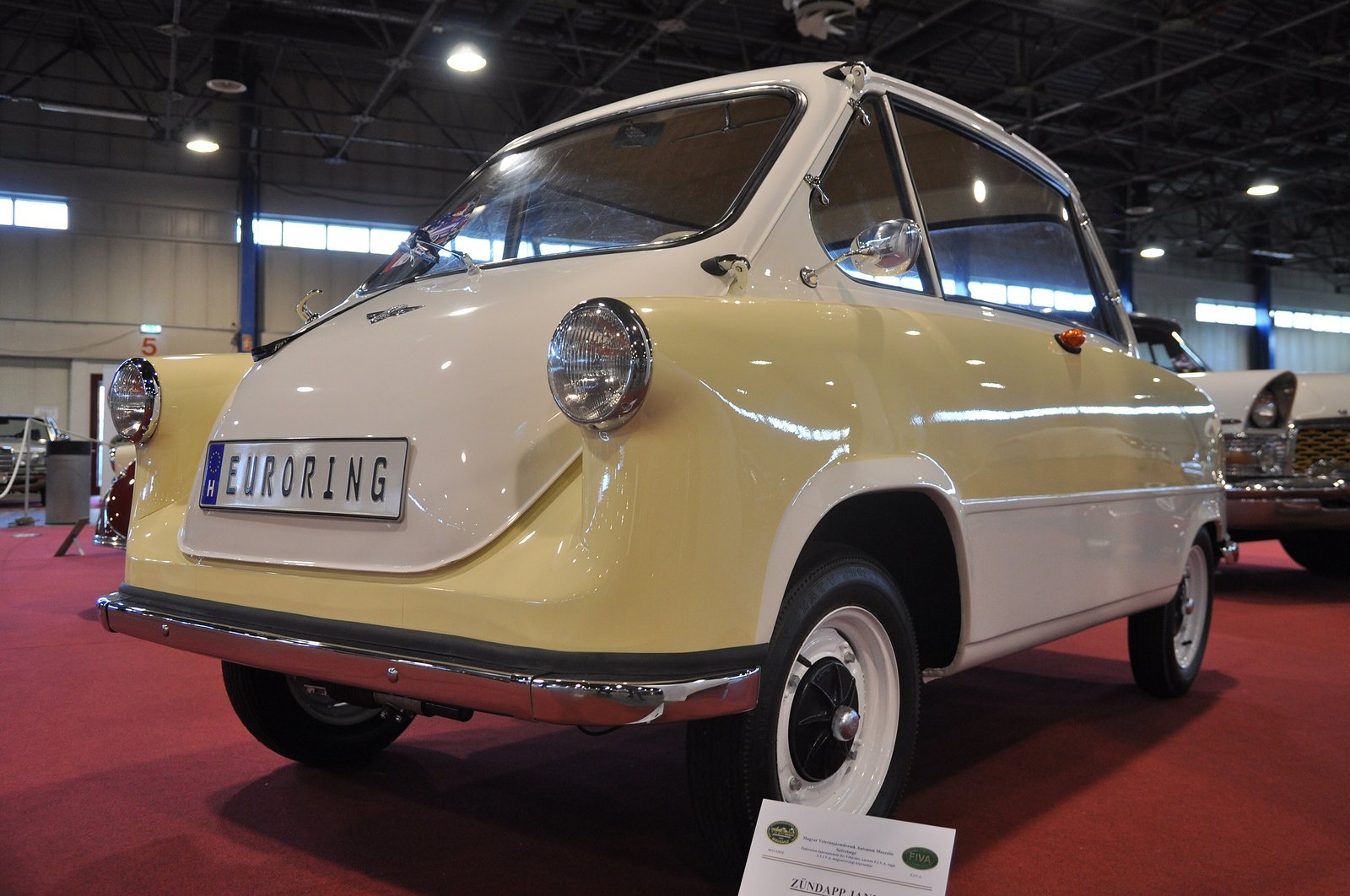
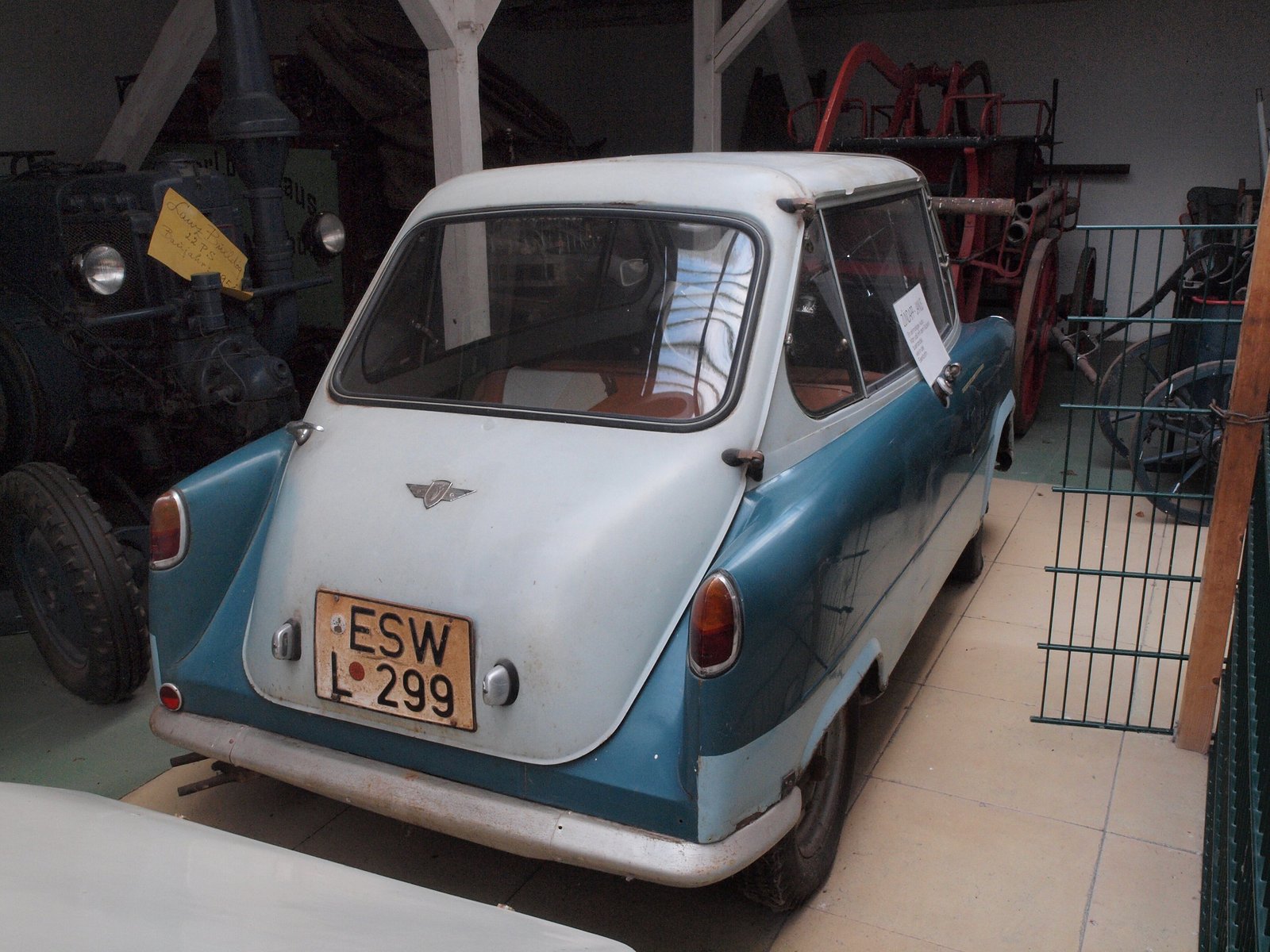
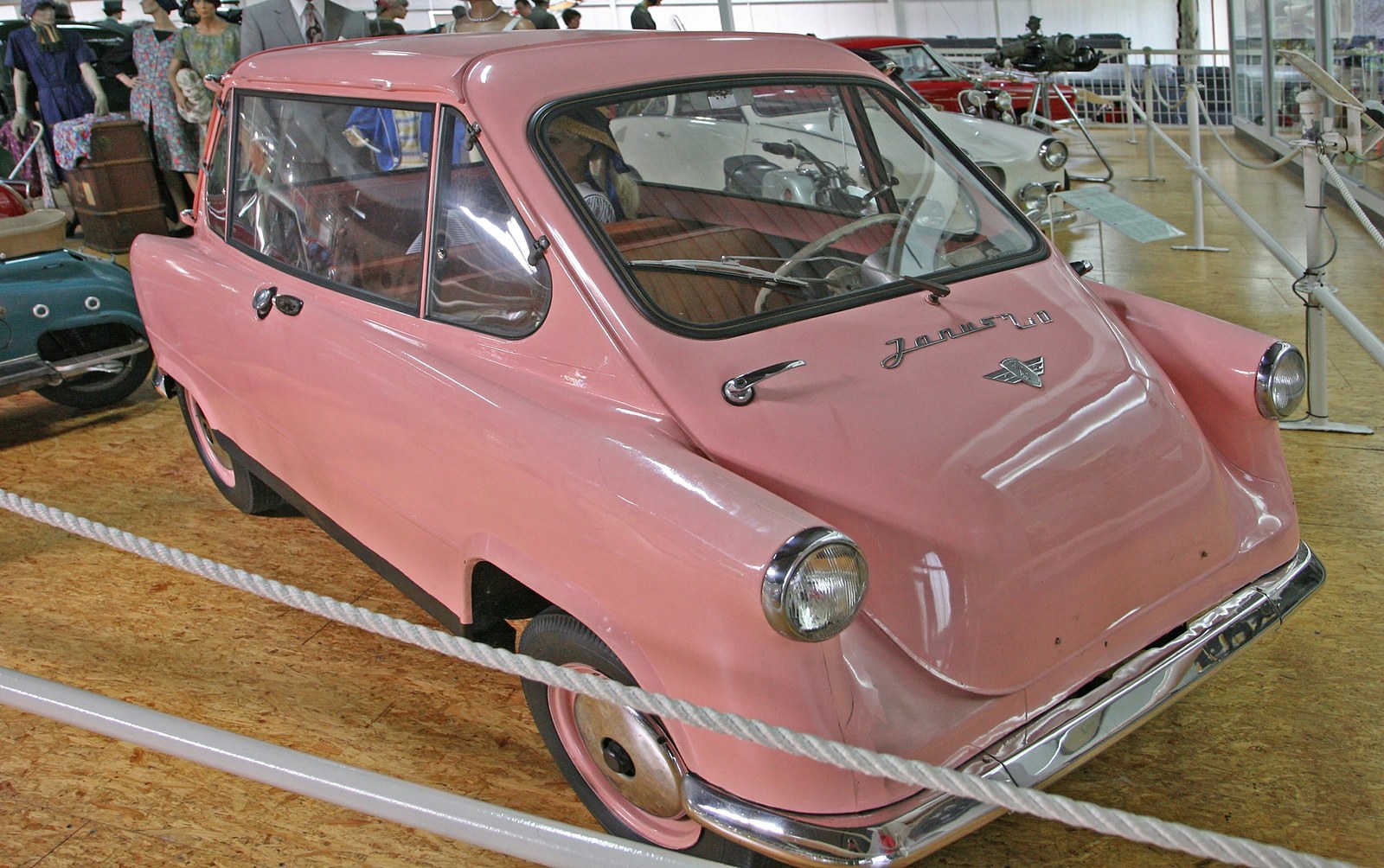
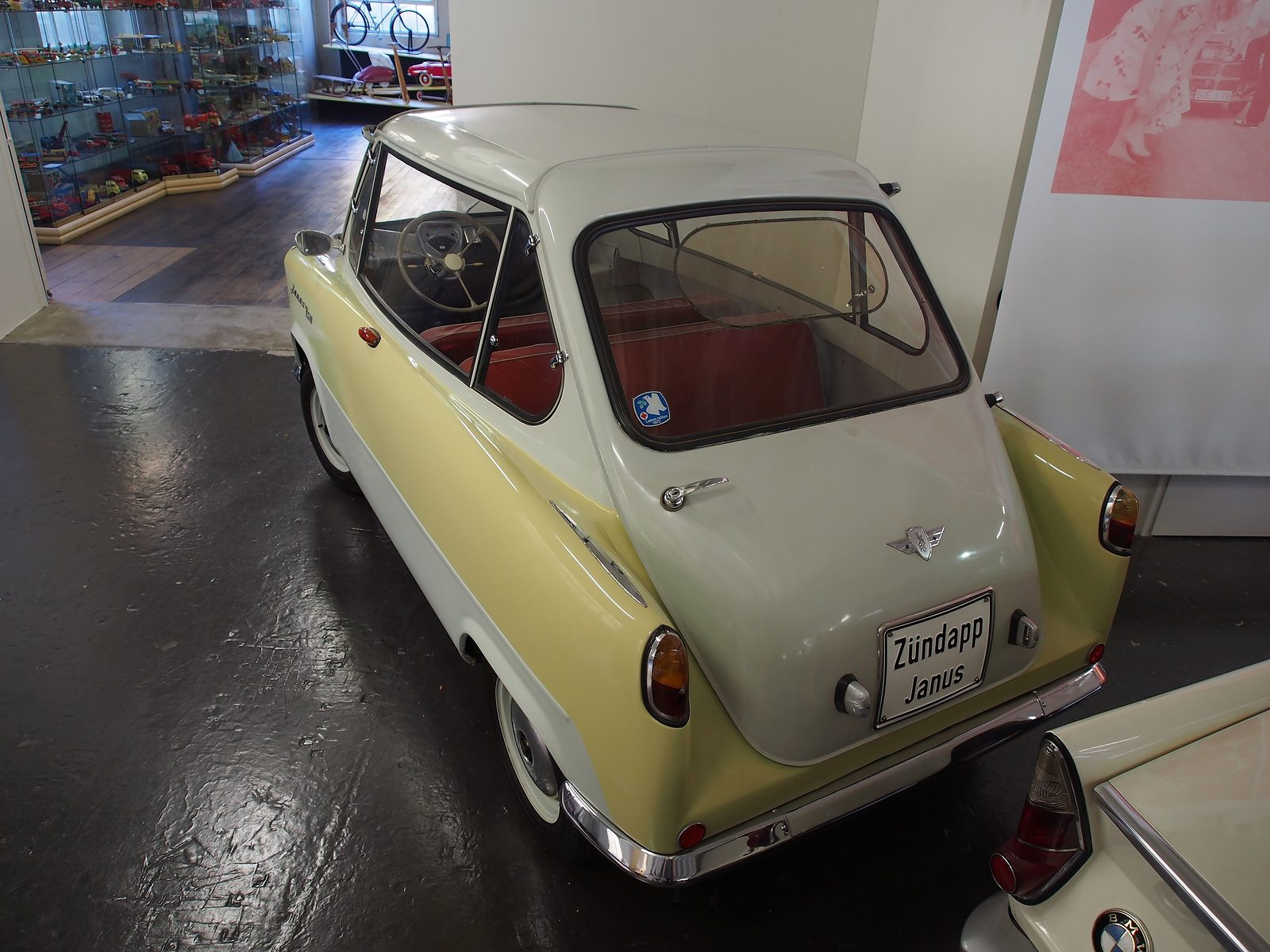
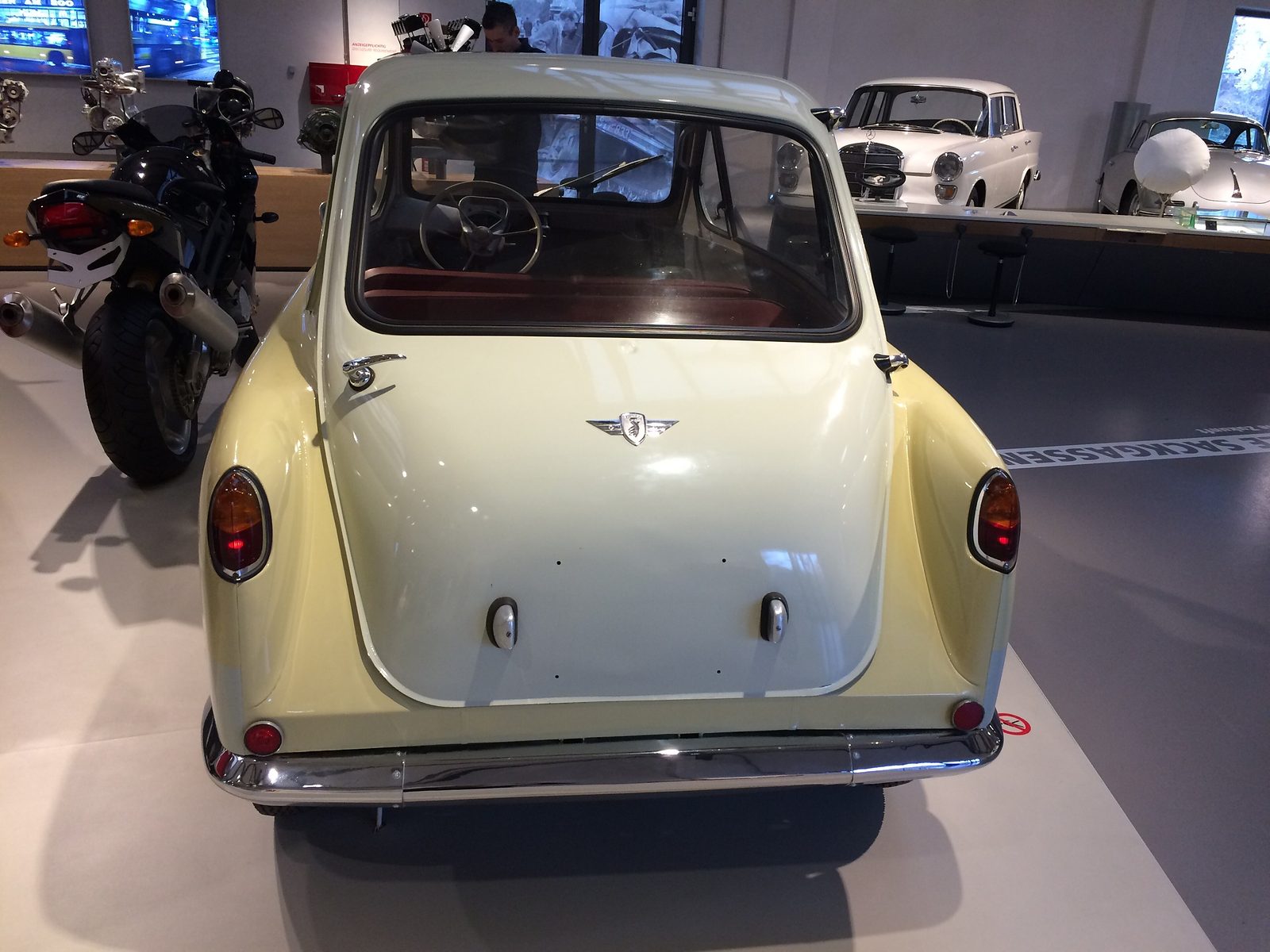
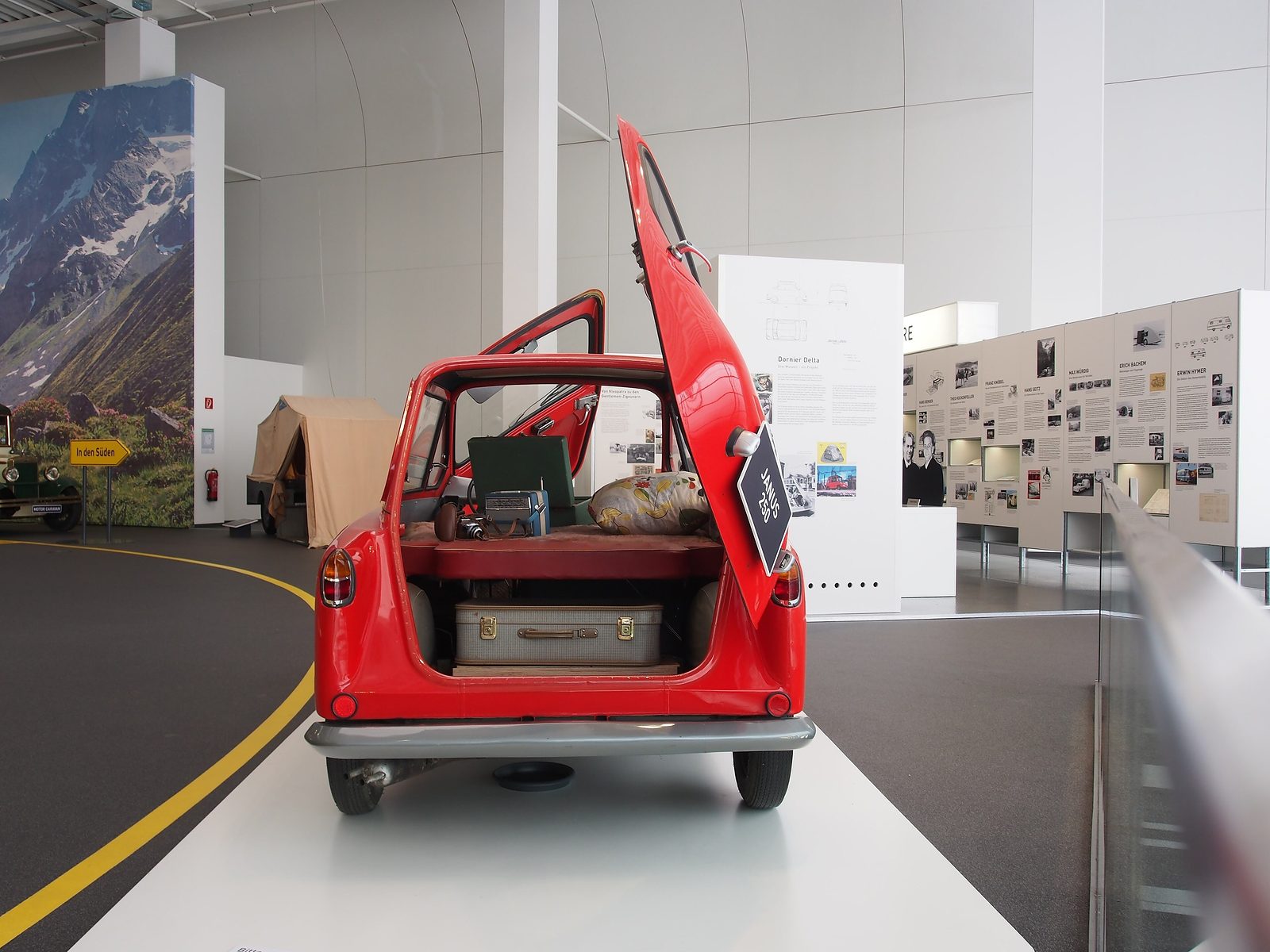
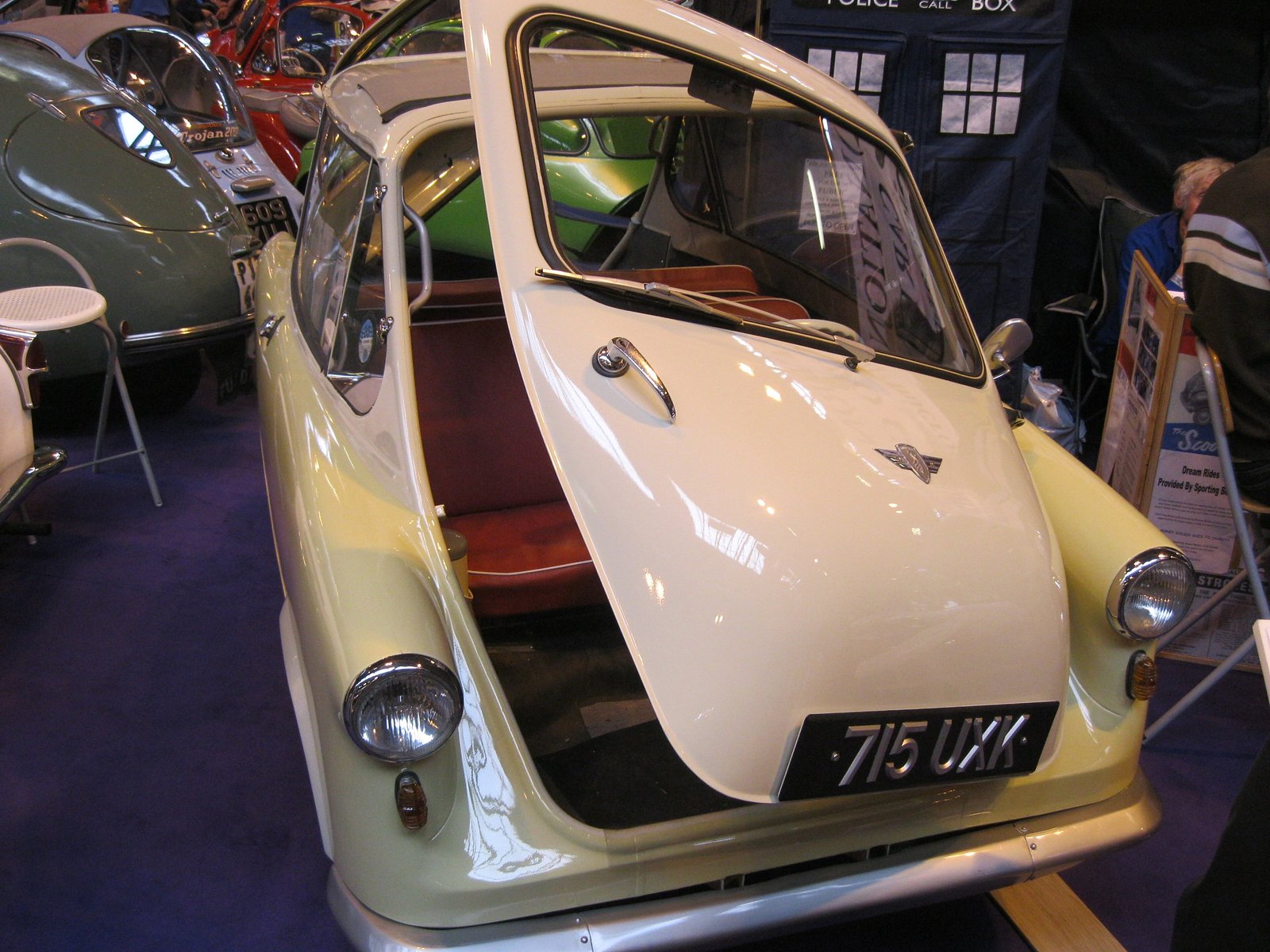
More photographs, old and new

Variants

From aircraft works to motorcycle works

The Delta and the Janus
VariantYearsWhat differsHow many
Dornier Delta1955Doors hinged upwards at both ends; 2,780 mm long; 360 kg1 shown
Janus prototypes19562,860 mm long; about 400 kgPrototypes
Janus 250Jun 1957 – 1958The production car, with sliding Plexiglas side windows6,902
ADAC road patrol1958Equipped for the ADAC Straßenwacht, with room for a stretcherAt least 1
Twin-cylinderPromised for 1958A 600 cc flat twin of 25 hp, announced by the American importerNone known

Specification

The Janus 250 of 1957–⁠58

Engine and drive

Engine and drive
EngineTwo-stroke single, horizontal cylinder, fan-cooled, 248 cc (67 × 70 mm)source 1source 2245 cc by English Wikipedia; the Bella scooter’s engine by the Weiner museum and RM
Power14 PS (10.3 kW) at 5,000 rpmsource 1source 25,200 rpm in the 1956 data
GearboxFour speeds from the Zündapp motorcycles, plus a reverse; hand lever on the leftsource 1source 2
DrivePropeller shaft with Hardy discs, differential and half-shafts to the rear wheelssource 1source 2
Starter12 V Dynastart in the flywheelsource 2source 3

Body and chassis

Body and chassis
BodySteel unit body; a door at the front, hinged at its leading edge, and one at the backsource 1source 13
Front suspensionLeading arms and spring struts, with an anti-roll barsource 1source 2MacPherson struts by the Weiner museum
Rear suspensionSwing axle with spring strutssource 1source 2
SteeringRack and pinionsource 1source 3
BrakesHydraulic drums on all four wheels, finned for coolingsource 1source 2
Tyres4.40-12source 1source 3source 2

Dimensions

Dimensions
Length2,890 mm (113.8 in)source 1source 152,860 mm in the 1956 data and by the Weiner museum
Width1,410 mm (55.5 in)source 1source 15
Height1,400 mm (55.1 in)source 1source 15
WeightAbout 425 kg (937 lb)source 1source 3source 15About 300 kg of payload

Performance and running

Performance and running
Top speed80–85 km/h (50–53 mph)source 1source 3
ClimbingAbout 30 per cent, by the 1956 datasource 2
ConsumptionAbout 4.5 litres per 100 kmsource 26.85 litres at racing pace, Hockenheim 1958
Price newDM 3,290, and DM 40 for the heatersource 1DM 3,200 announced (1956); DM 3,400 early in 1958source 16; US$1,190 in the USA

How many were built?

Every figure, with its source

6,902 built6,902 in all, a figure the Weiner museum, both Wikipedias and RM give. The official German table and Oswald agree on 1,731 for 1957.

  1. 6,902Janus, 1957–⁠58Two sources agree

    Weiner museum, German Wikipedia and RMsource 3source 1source 5

  2. 6,900the sum of the year-by-year tableOne source

    Oswald, via German Wikipediasource 1

  3. 5,169built in 1958One source

    Oswald, via German Wikipediasource 1

  4. 1,731built in 1957Two sources agree

    The official German table and Oswaldsource 7source 1

  • Two sources agreetwo good sources give the figure
  • One sourcea good source, alone
  • Unconfirmeda lead only, not yet checked

Famous for

Three points

  1. Coming or going

    A door at each end, and the rear passengers sitting back to back with the driver.

  2. A bed inside

    Both benches fold flat into a bed in a car 2.9 m long.

  3. Professor Z

    The villain of Pixar’s Cars 2 is a Zündapp Janus.

Racing and records

Two finishers, and the best economy

In 1958, the first year of the Liège–Brescia–Liège small-car rally, only ten of 27 starters finished, and the only two German finishers were Janus 250s.source 17

5th and 8th
for Pohl and Döring, and Grenz and Köttgen, in the 1958 Liège–Brescia–Liège; a Fiat 500 won.source 17
6.85 l/100 km
the best actual consumption in the class to 350 cc at the 12 Hours of Hockenheim, 26 May 1958, by Heilmann and Haß, ahead of two Goggomobils.source 18

On screen

Confirmed appearances only

Survivors and collecting

Today

The Weiner museum said in 2002 that few remain, and no count has been found.source 3 Owners have the Zündapp Janus IG, which holds the press kit of September 1956, and Thomas Reinwald has written the car’s history, Zündapp Janus und die anderen automobilen Entwicklungen von Zündapp (2008).source 1 The Museum Industriekultur in Nuremberg marked its 60th anniversary in 2017 (see museums and meets).source 1 The Weiner museum’s 1958 car, chassis W3571, fetched US$51,750 at the Weiner sale in Madison, Georgia, in February 2013.source 5

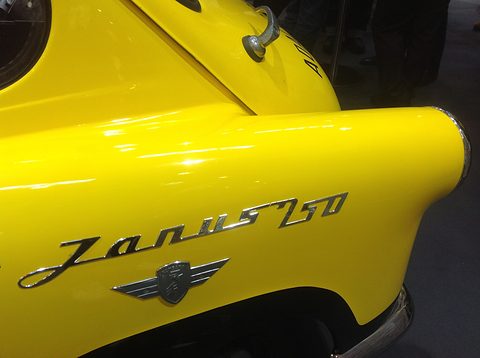
Yellow and black small car lettered ADAC-STRASSENWACHT along its side, on a show stand.
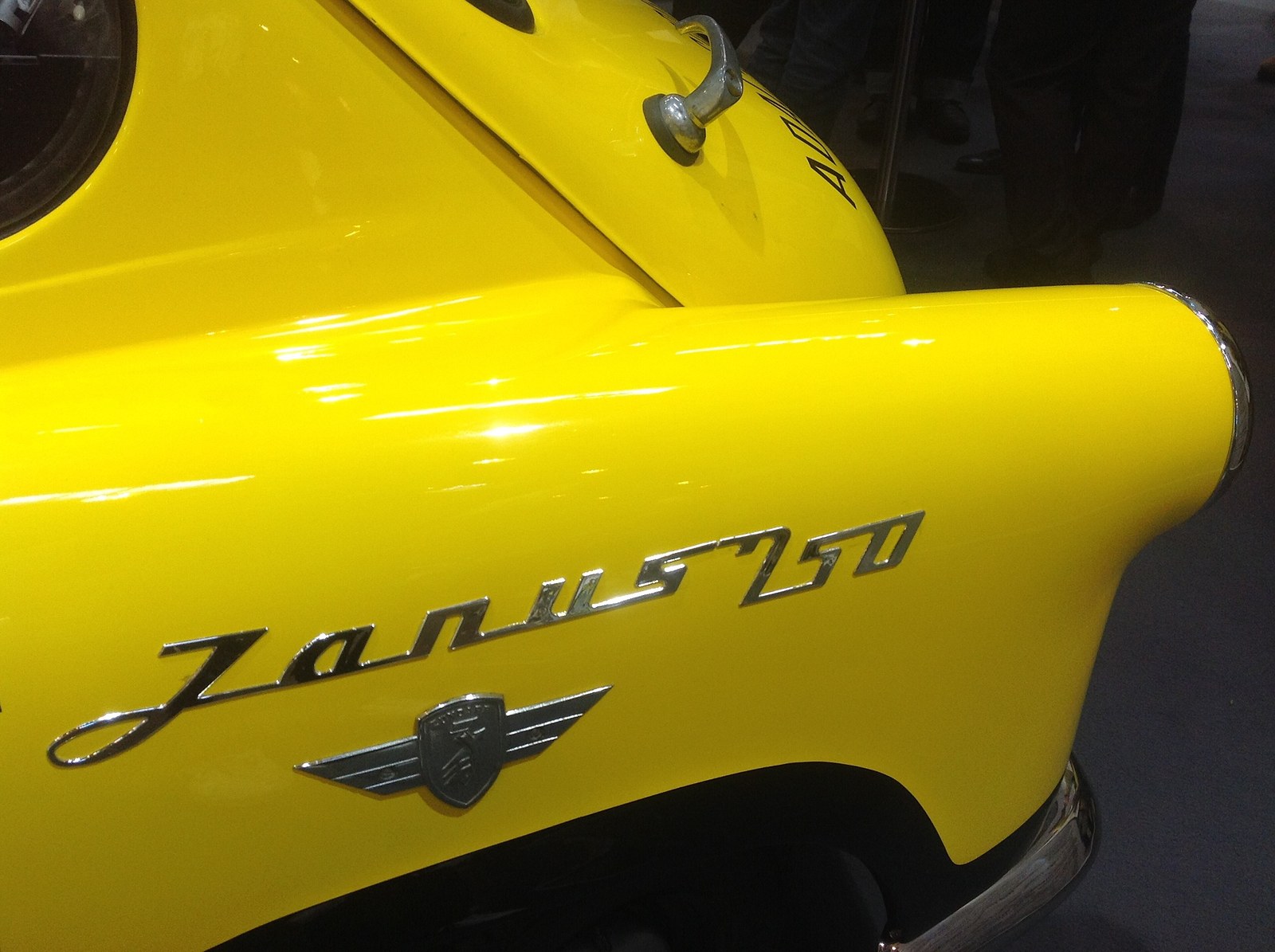
A Janus in the yellow of the ADAC road patrol at Techno-Classica, Essen, in 2016.Photo: Andrew Bone, CC BY 2.0, via Wikimedia Commons

Sources

Numbered as in the text

Sources are given as plain text; the links are on the Credits page.

  1. German Wikipedia, Zündapp Janus, read in full. Used as a lead; its production table is from Oswald, Deutsche Autos 1945–⁠1975 (1979), and it cites Rauch (1977) and Small Cars, January 1958.
  2. Dipl.-Ing. W. Buck, “Schon wieder ein Kleinfahrzeug: Zündapp-Janus”, with Zündapp’s preliminary data and press caption, auto motor und sport 20/1956, read in full.
  3. Bruce Weiner Microcar Museum, “1958 Zundapp Janus”, tour page (2002), archived, read in full.
  4. English Wikipedia, Zündapp Janus, read in full; used as a lead.
  5. RM Auctions, the Bruce Weiner Microcar Museum sale, Madison, Georgia, February 2013, lot 248, “1958 Zündapp Janus”.
  6. Report from the IFMA show, auto motor und sport 22/1956, read in extract.
  7. “Produktionszahlen 1957”, auto motor und sport 4/1958.
  8. Article on suspension, auto motor und sport 19/1958, read in extract.
  9. “Straßenwacht unter Dach”, auto motor und sport 5/1958, read in extract.
  10. List of cars that could still be driven on the old class 4 licence, auto motor und sport 9/1958, read in extract.
  11. “Bosch kaufte Zündapp”, auto motor und sport 15/1958, read in extract.
  12. News of the sale of the Janus body press to Glas, auto motor und sport 21/1958, read in extract.
  13. Werner Oswald, on the Dornier Delta, with works photographs by Toni Schneiders, auto motor und sport 11/1955, read in full.
  14. Report from the Frankfurt show, auto motor und sport 20/1955.
  15. “Daten der deutschen Personenwagen”, auto motor und sport 21/1958.
  16. Report on the Vespa 400, with the Janus’s price, auto motor und sport 4/1958, read in extract.
  17. Sport news: the Liège–Brescia–Liège small-car rally, auto motor und sport 16/1958, read in extract.
  18. Günther Molter, report and results of the 12 Hours of Hockenheim, auto motor und sport 12/1958 (7 June 1958).