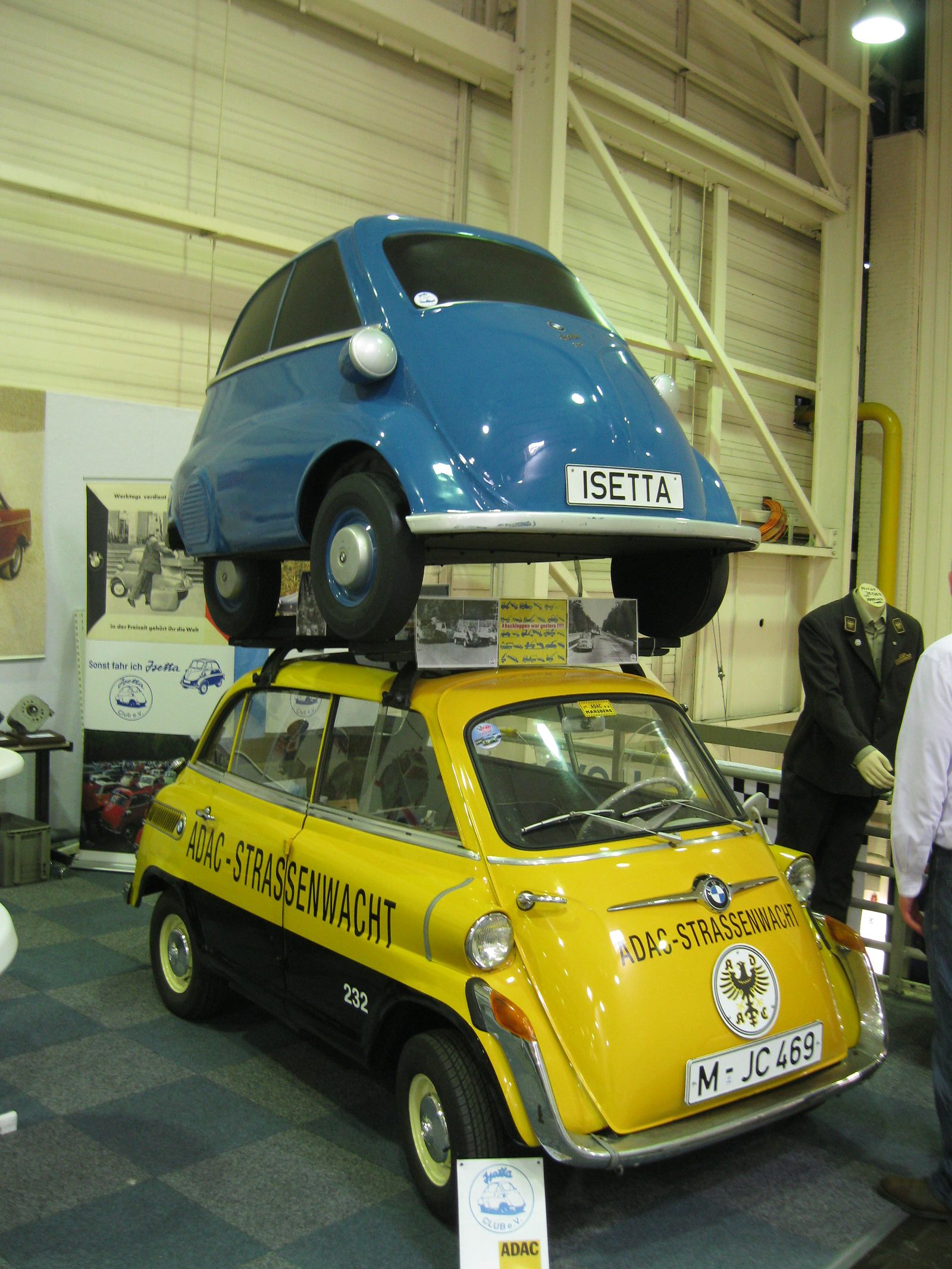
The story
History
BMW needed a bigger car and lacked the money to design one from scratch.source 3 Critics said the Isetta was too small, so BMW went up a class; but by May 1956 its management had already committed to an all-new car for 1959, the 700, and the 600 was meant as an interim model, easy to build on the Isetta’s existing equipment.source 4 Money was short. BMW lost about DM 6.5 million in 1956 and expected another loss for 1957, and at the start of 1958 auto motor und sport called the 600 the beginning of an expansion whose investments would weigh on the results.source 5
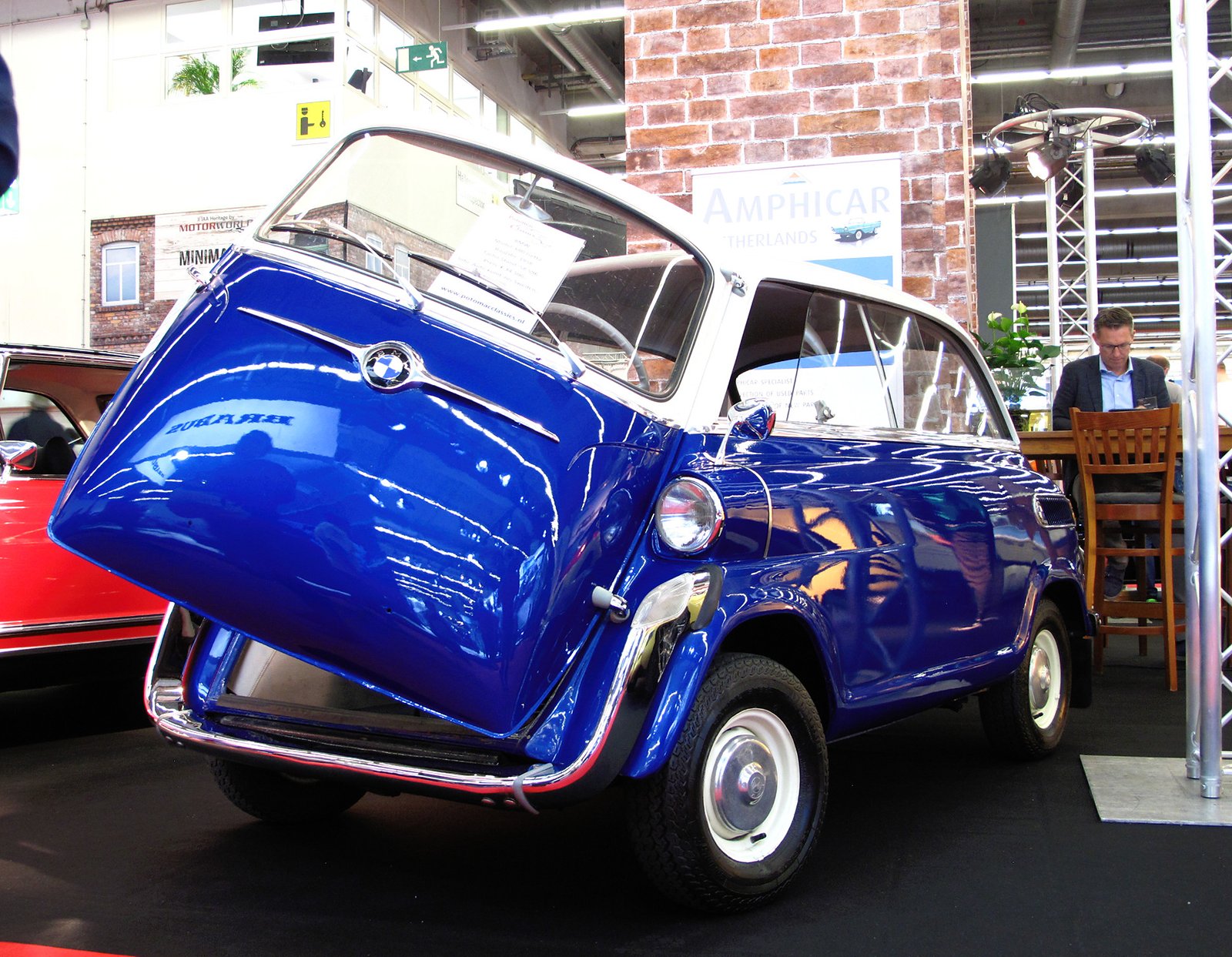
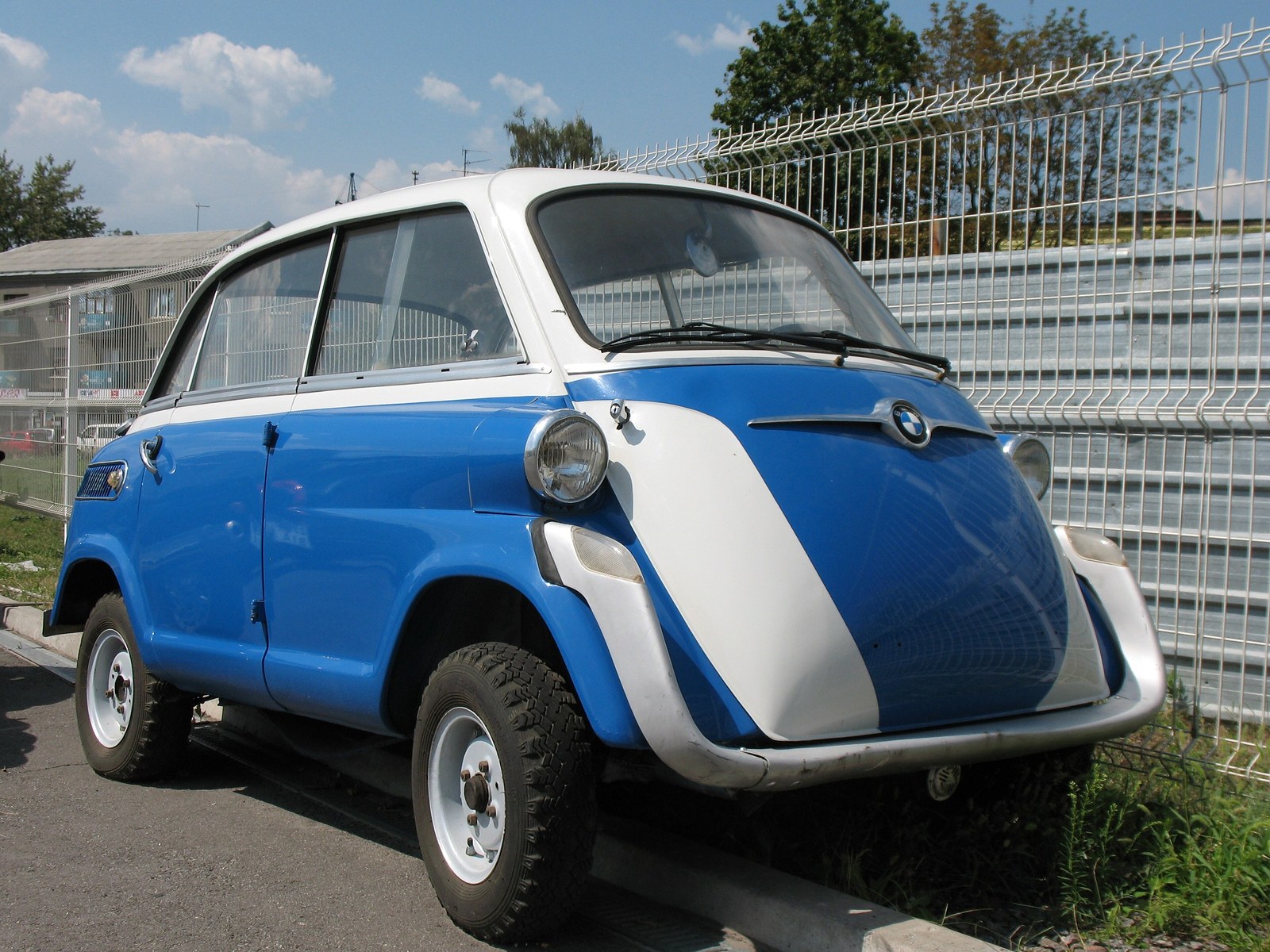
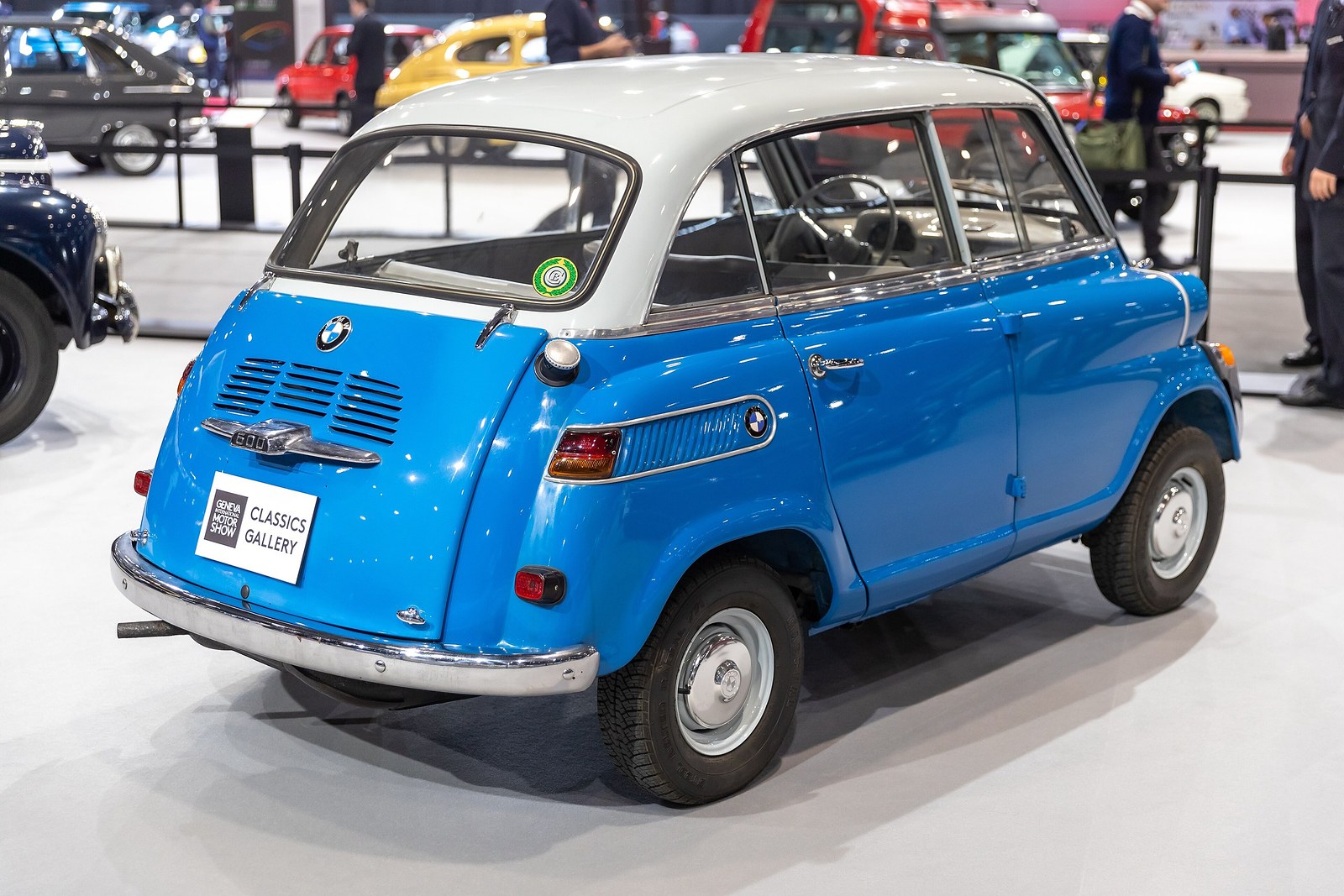
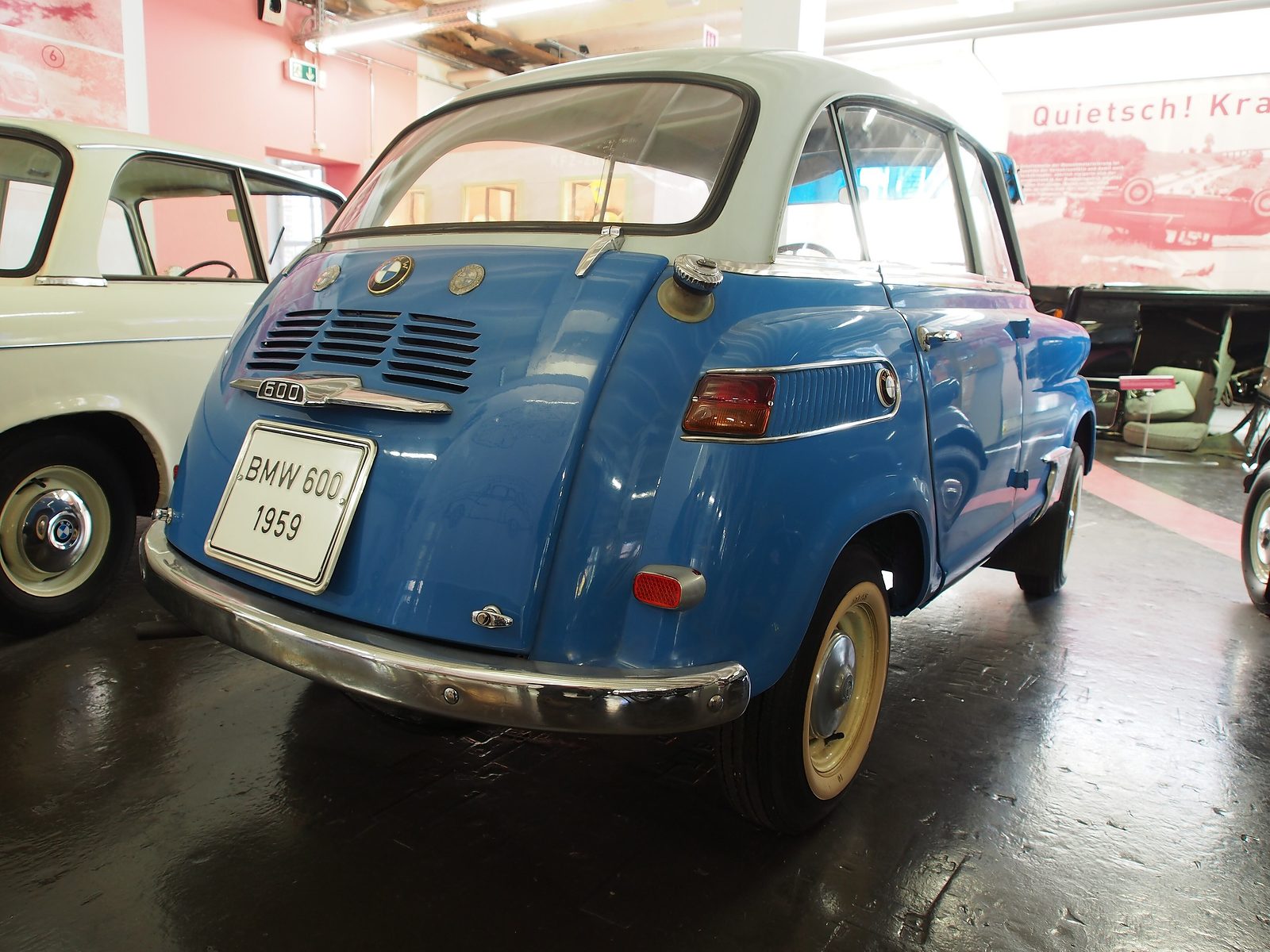
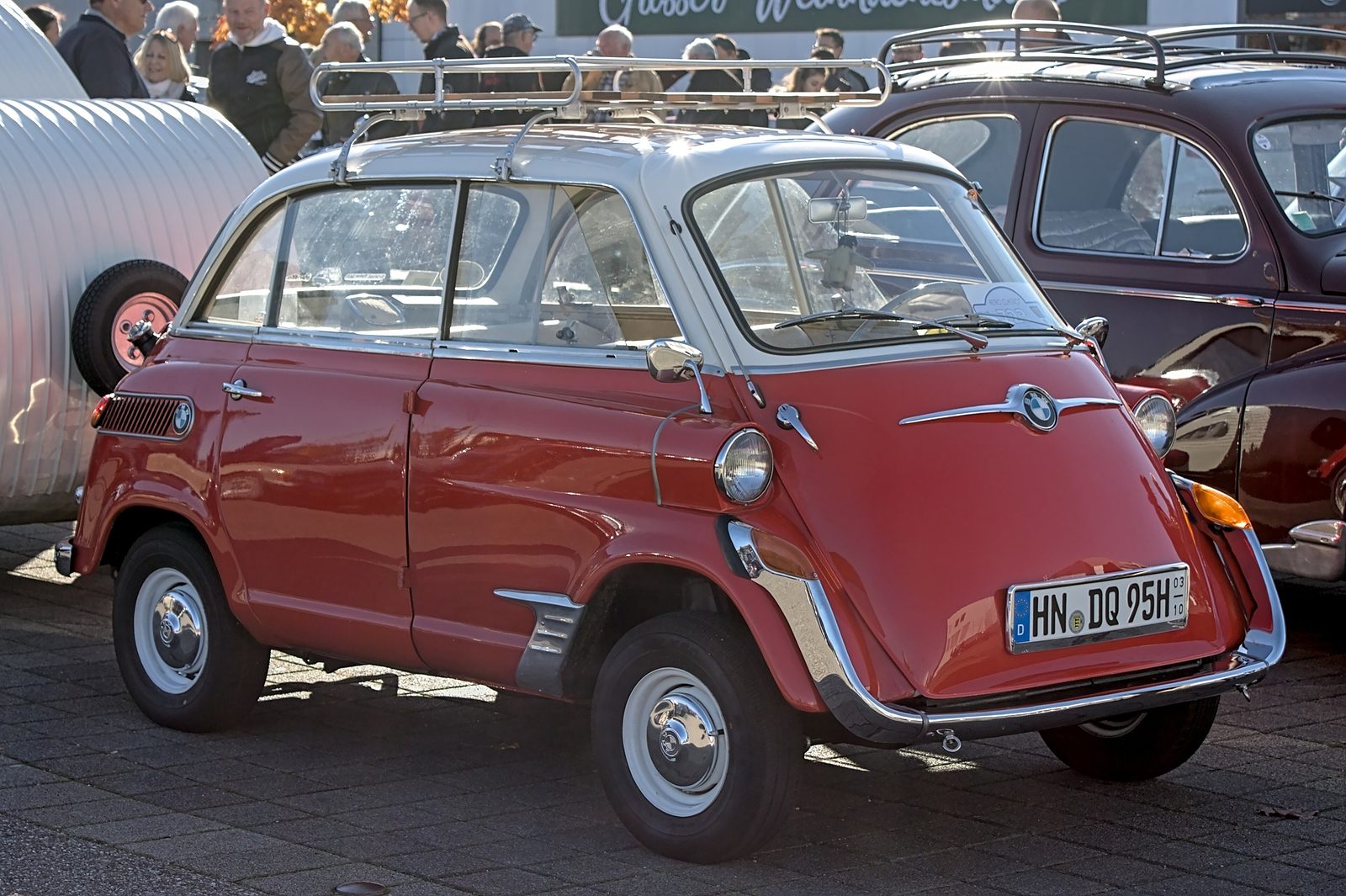
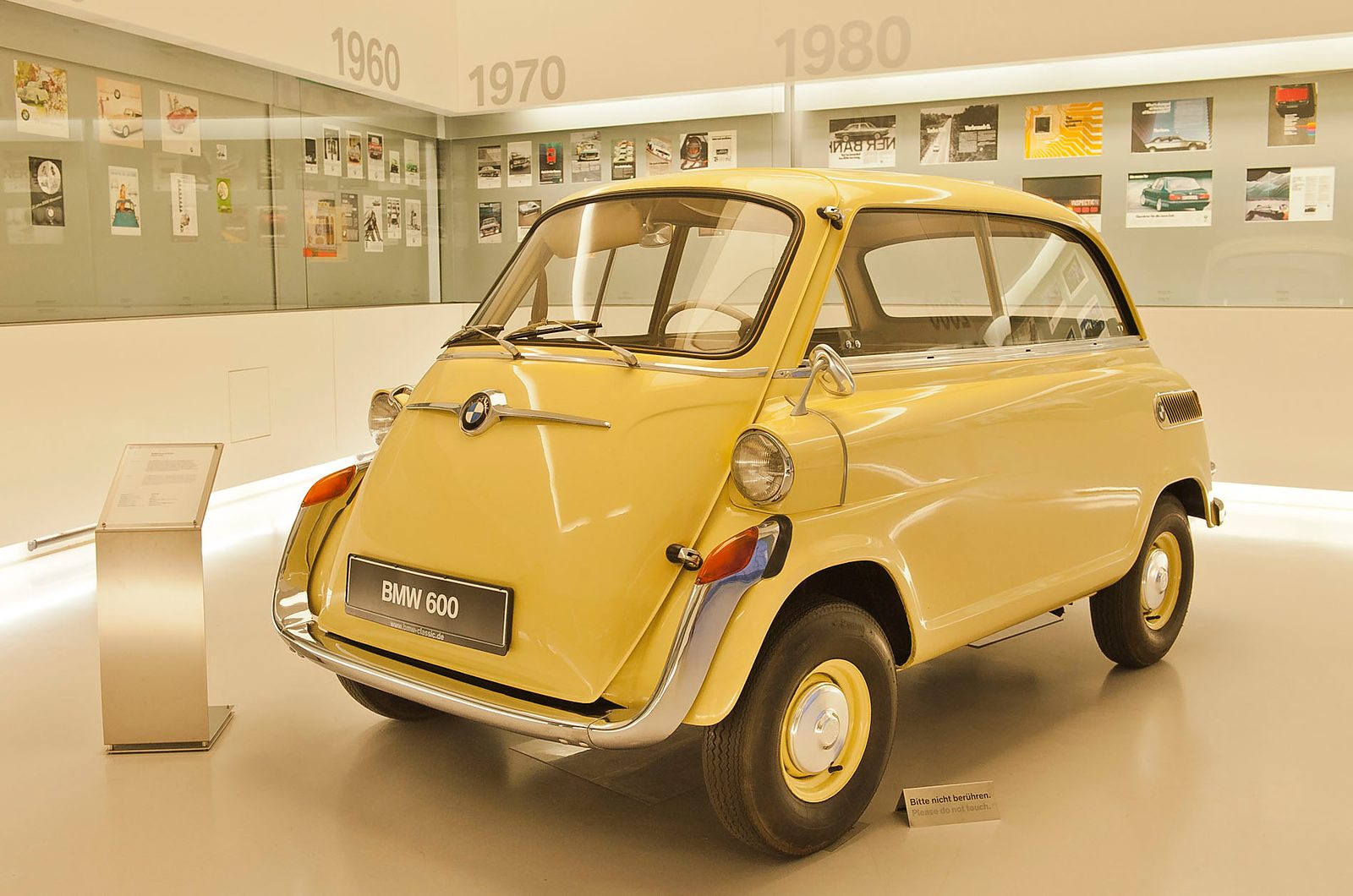
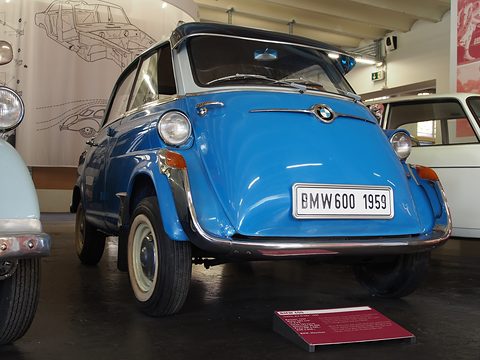
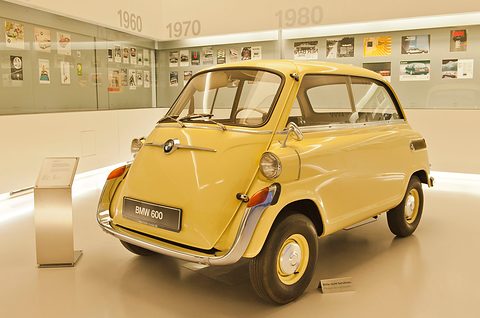
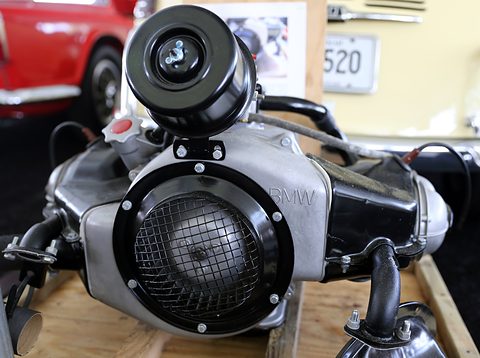
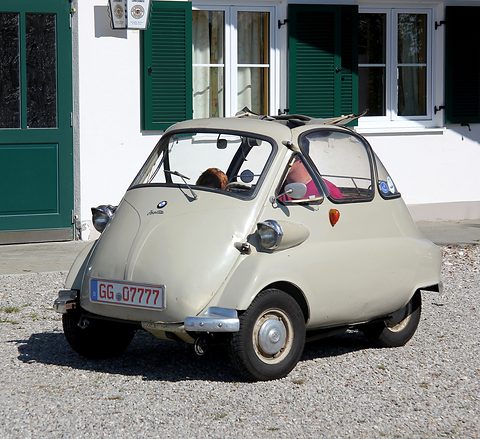
A prototype of 1956 had the Isetta’s folding roof and free-standing headlamps and no side door, and the old BMW name Dixi was considered for it. The Bruce Weiner Microcar Museum says it looked just like a stretched Isetta, with the standard two-tone front door and Isetta bumpers, and ran the engine of the R67 motorcycle.source 1source 4 The press saw the 600 on 27 August 1957 at Feldafing, on Lake Starnberg, the public at the Frankfurt show that September, and production began in December.source 1source 6 Who designed it is not settled. English Wikipedia, after Norbye, names Willy Black; the Weiner museum and RM bring in Giovanni Michelotti, whose part in the later 700 is better documented.source 3source 4source 6
Front door, side door
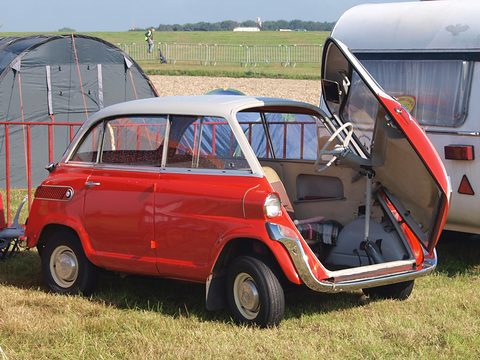
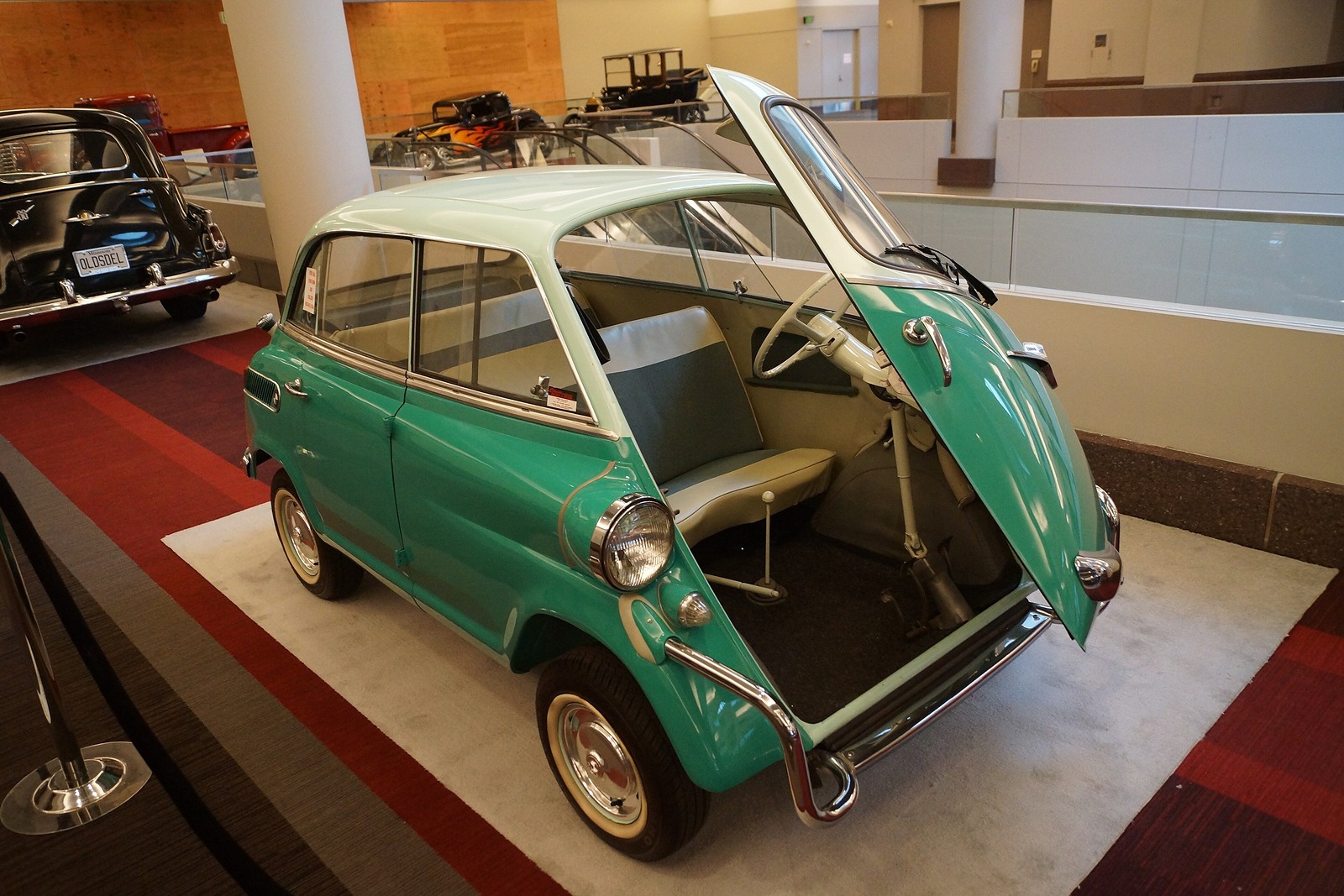
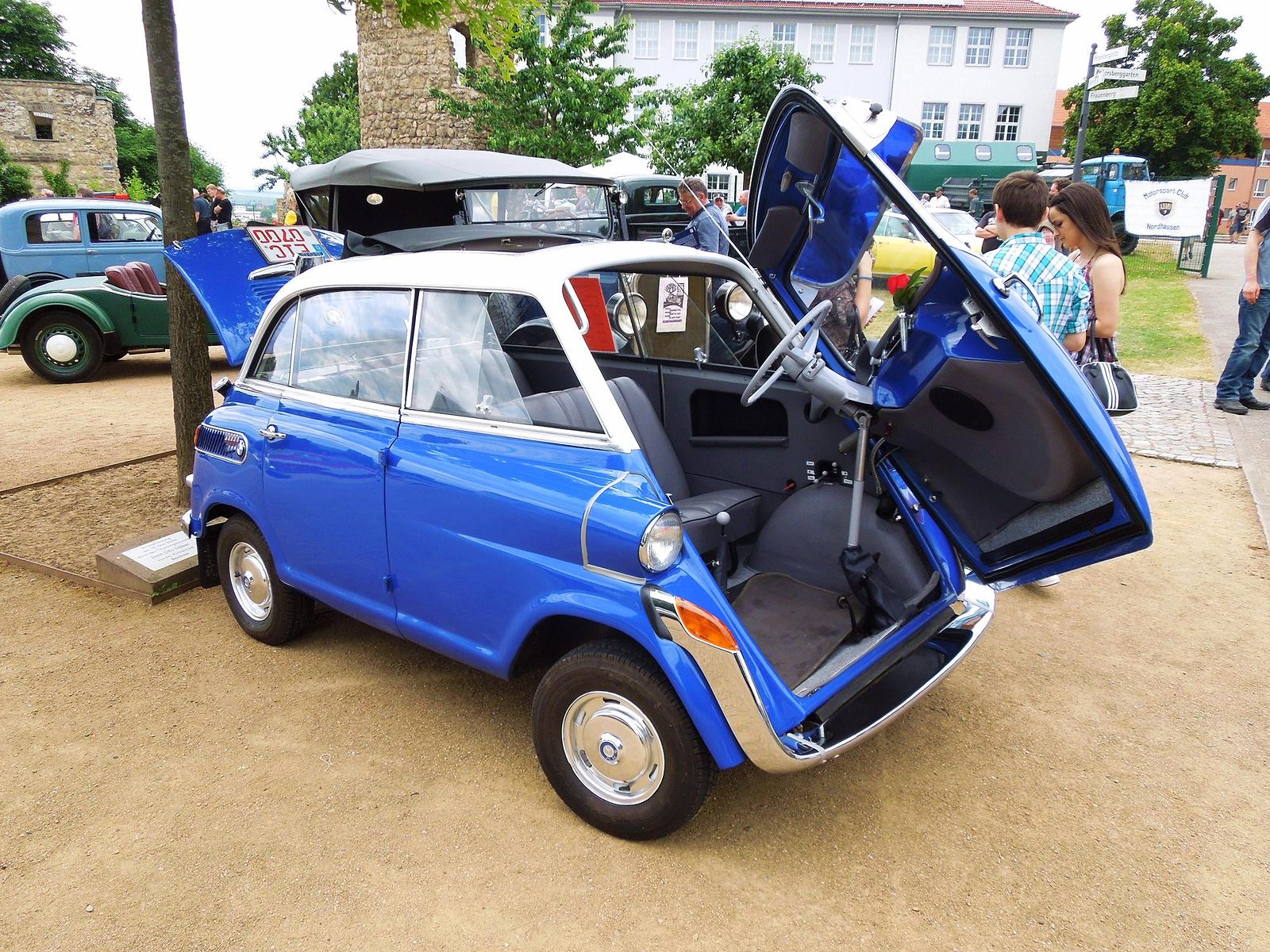
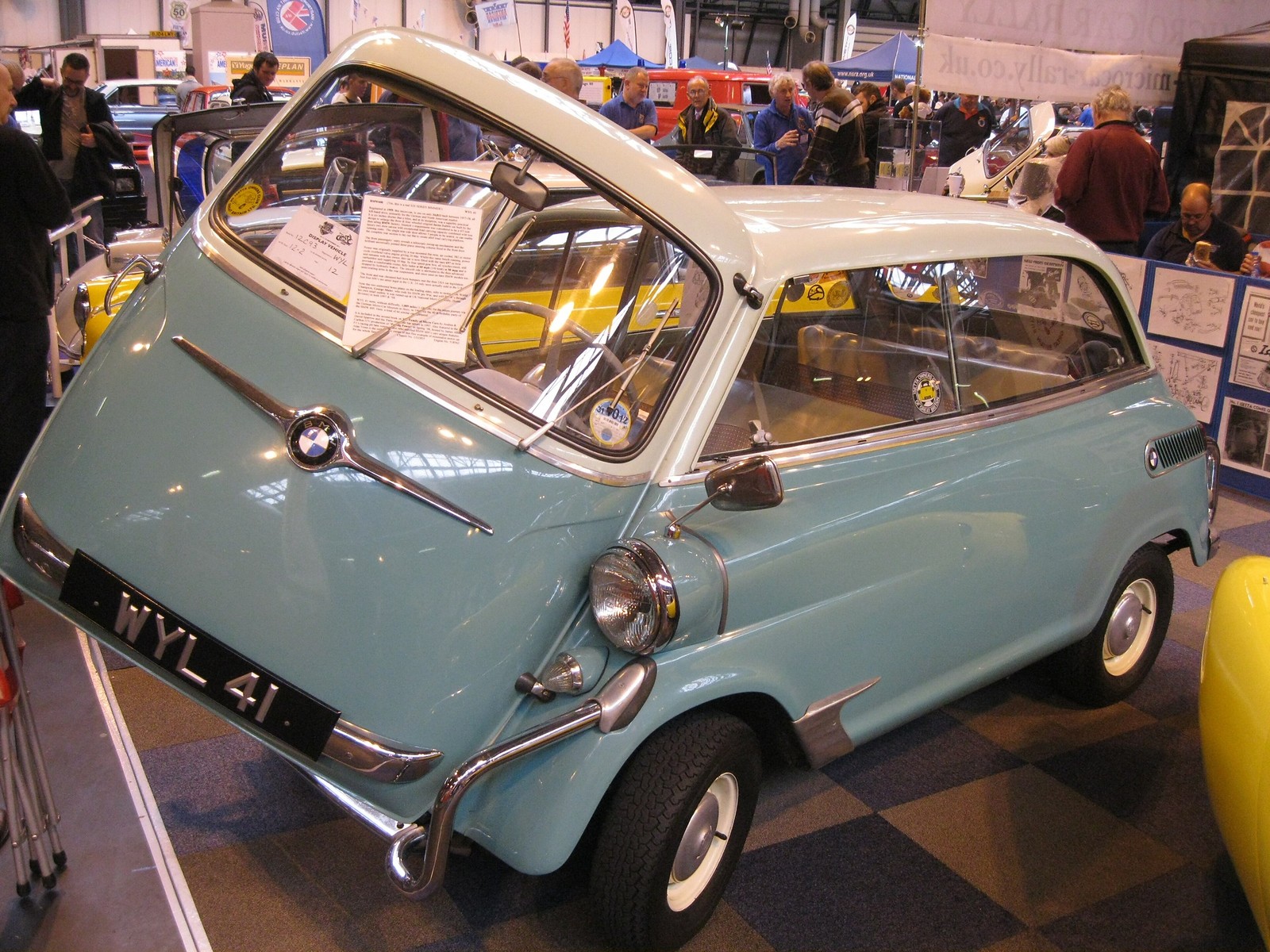
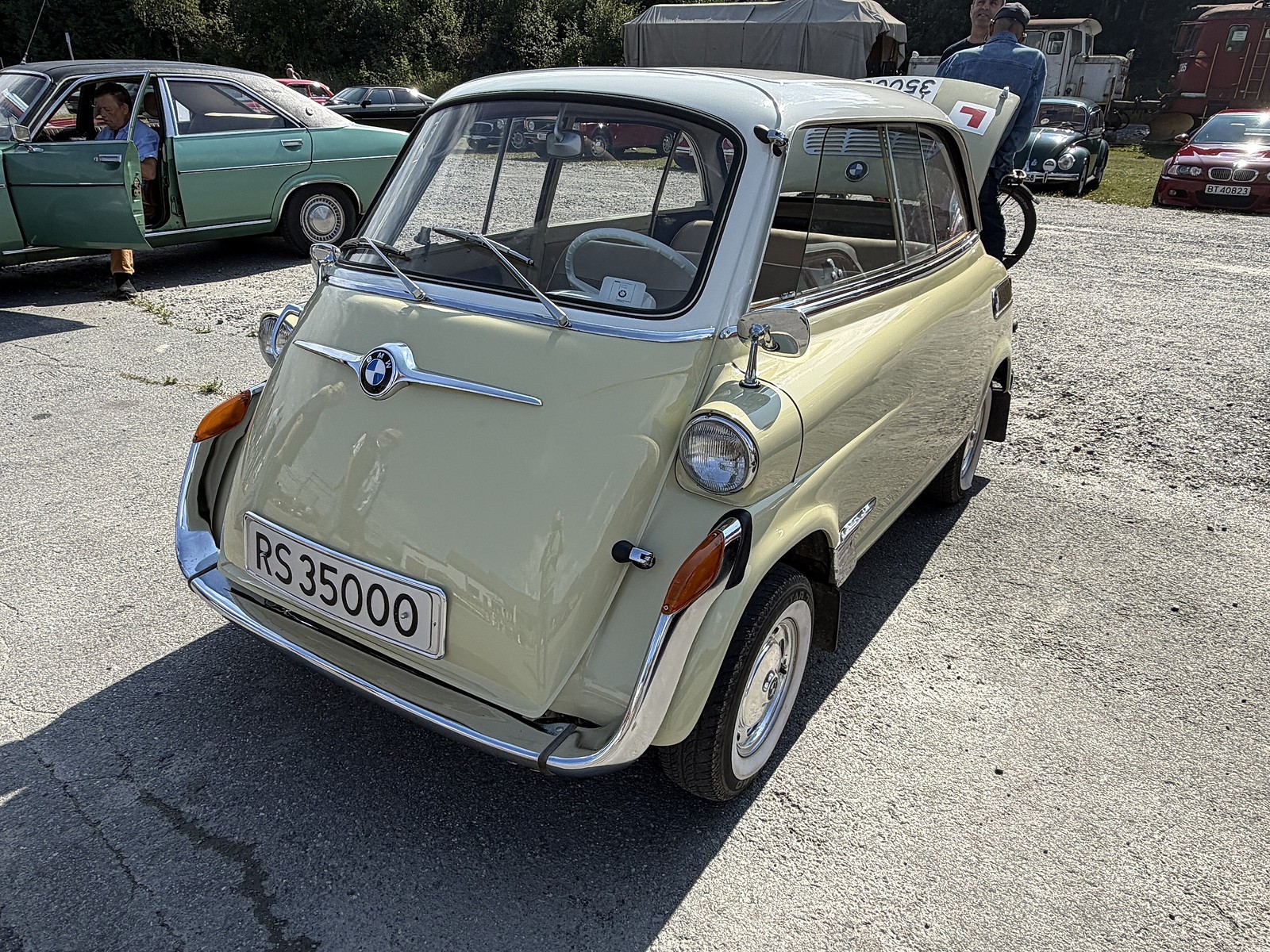
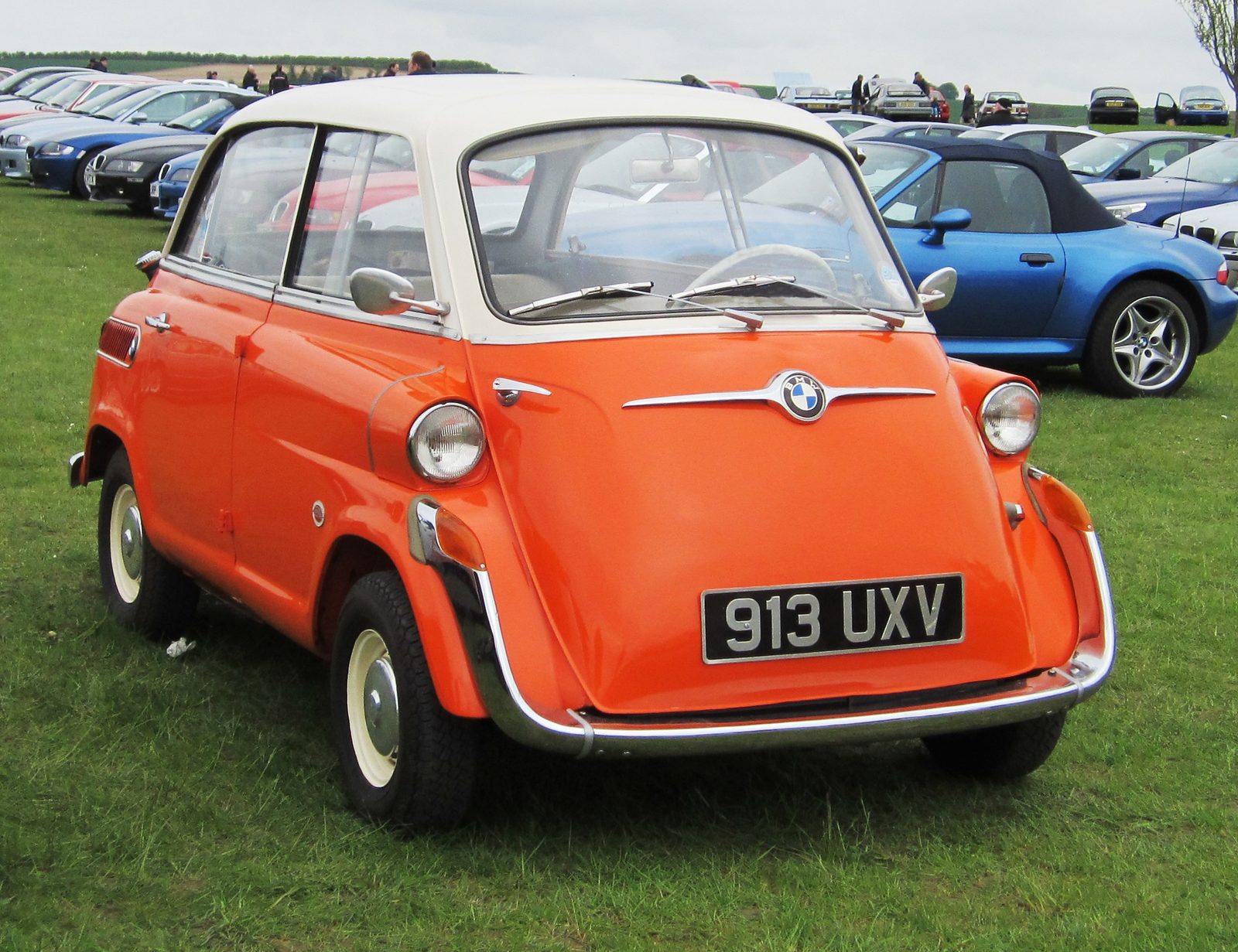
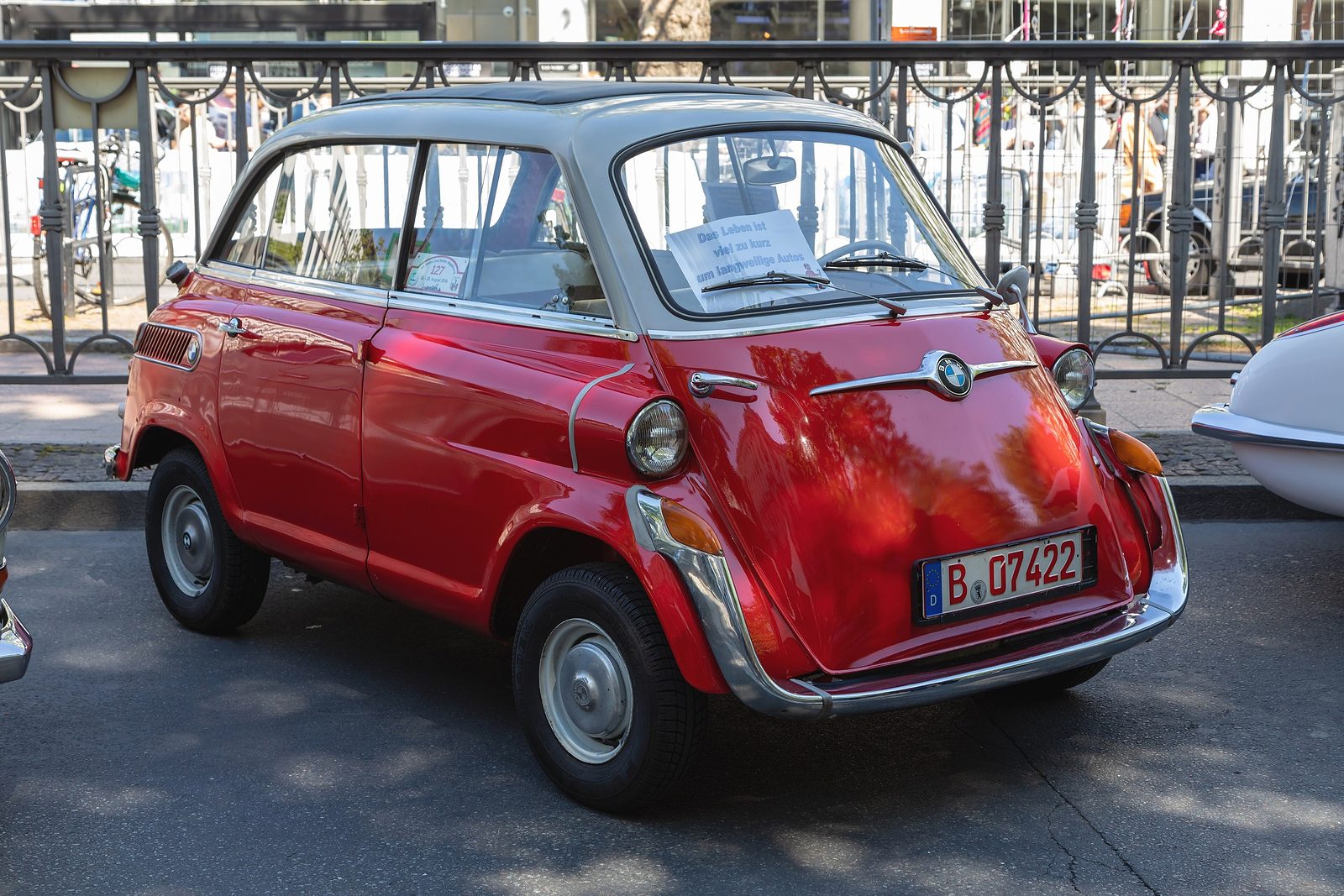
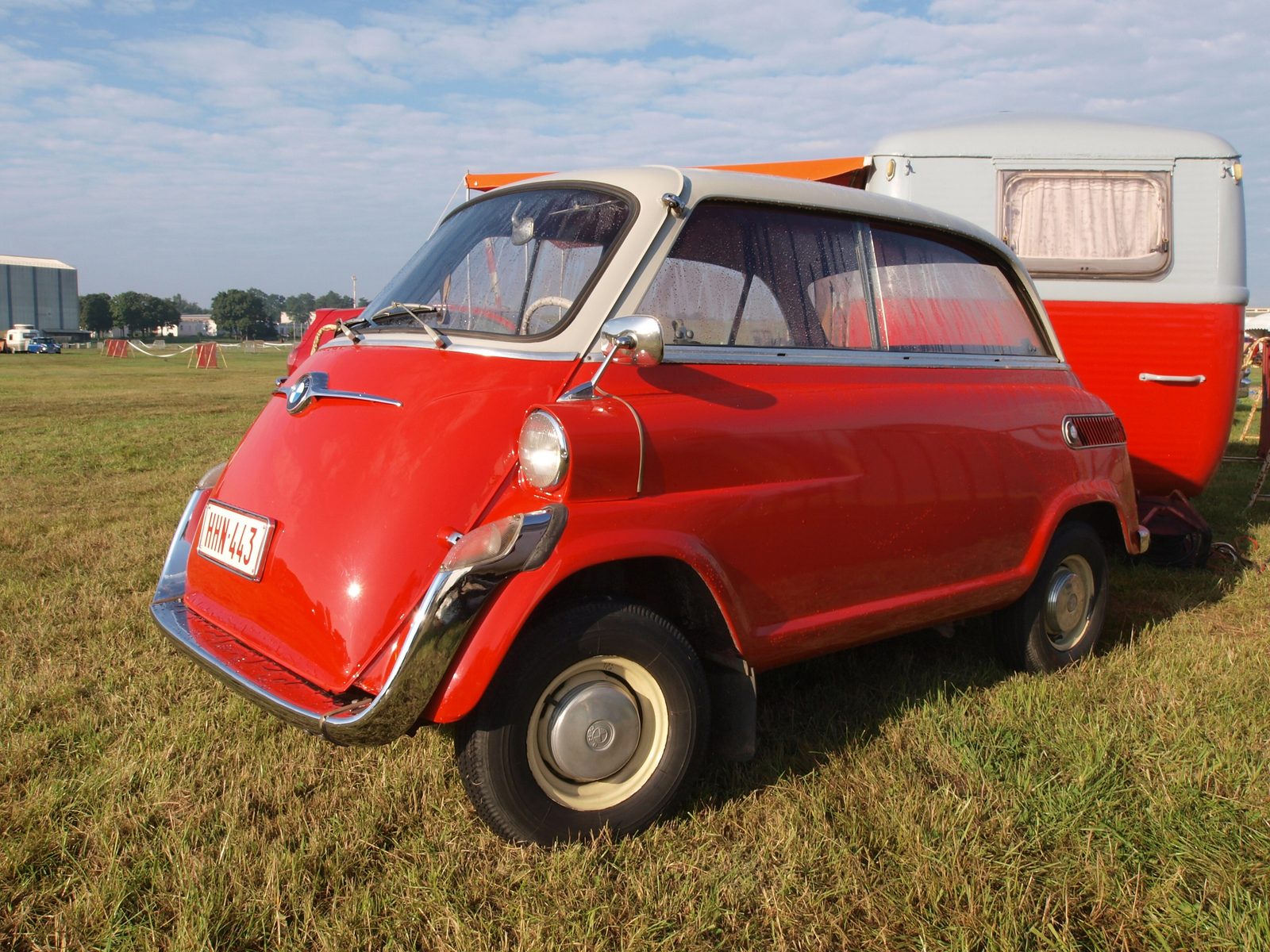
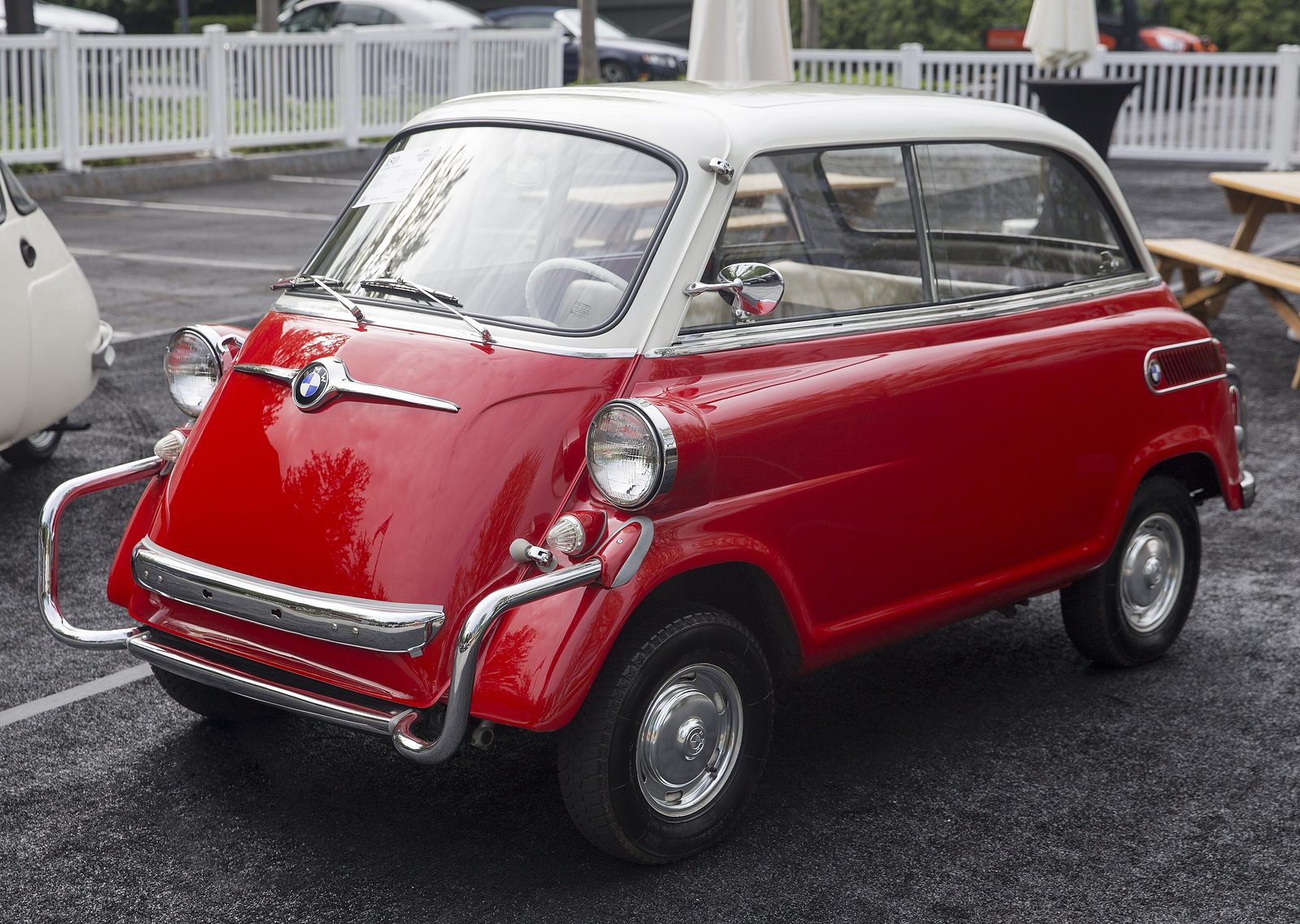
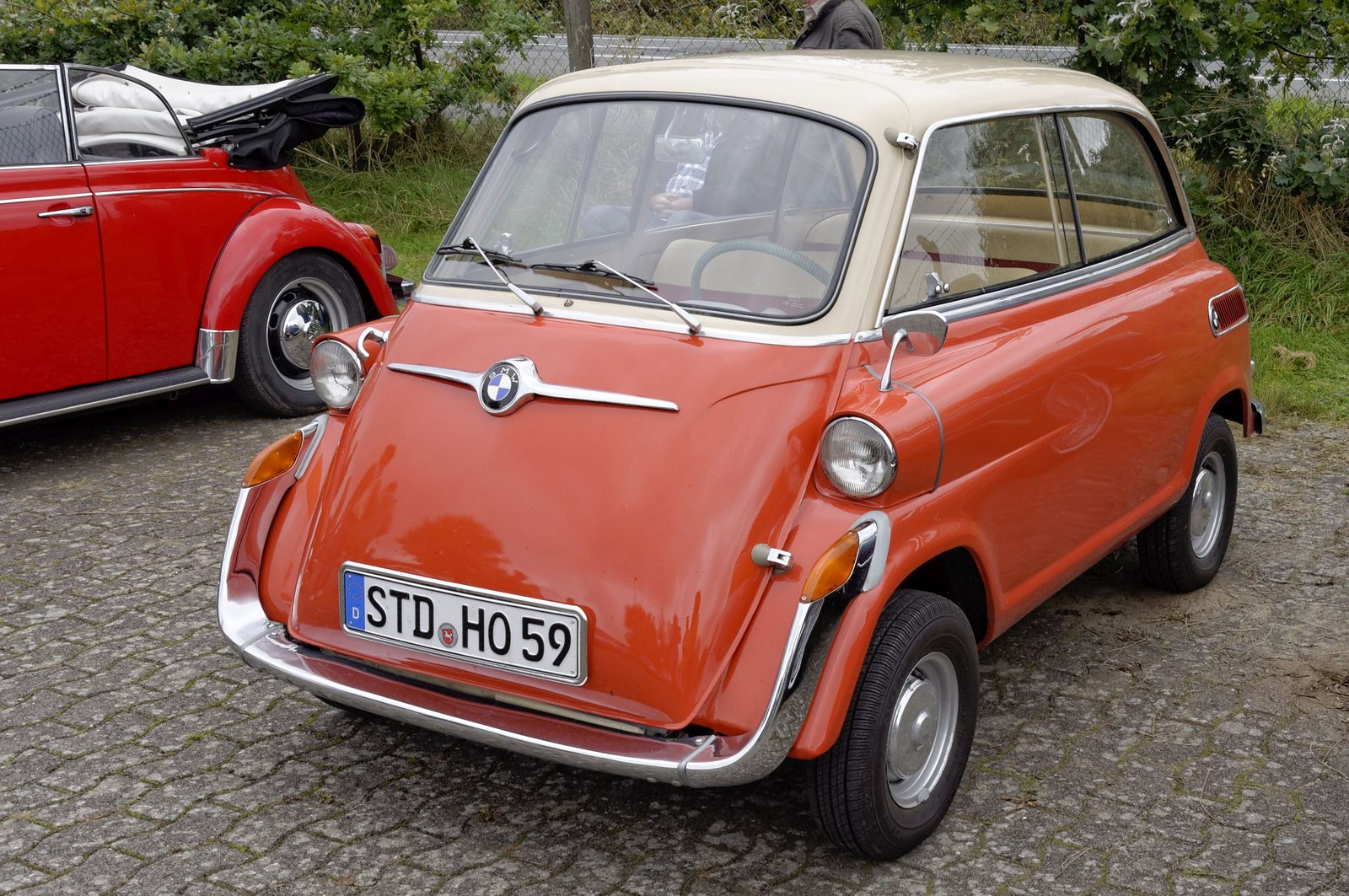
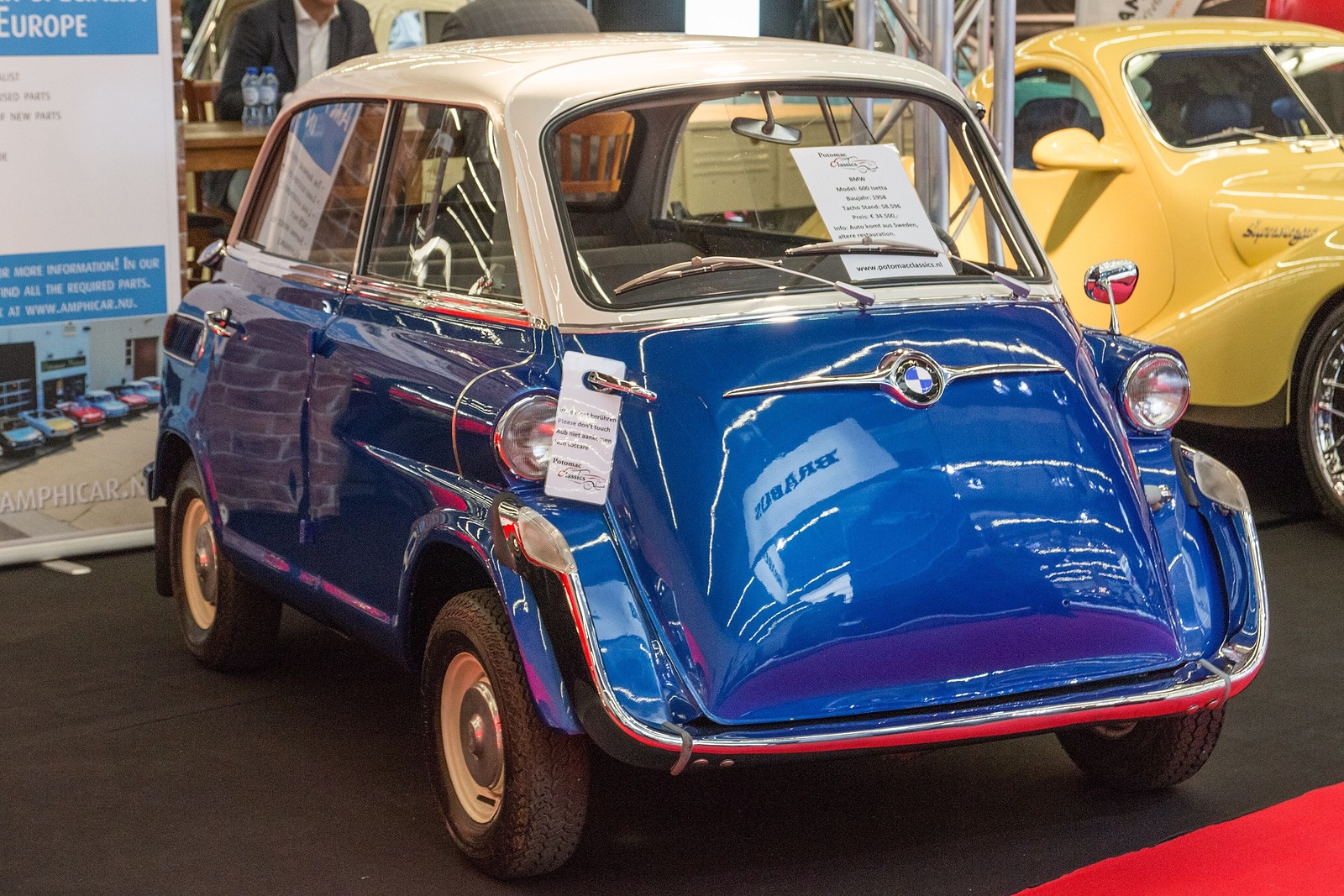
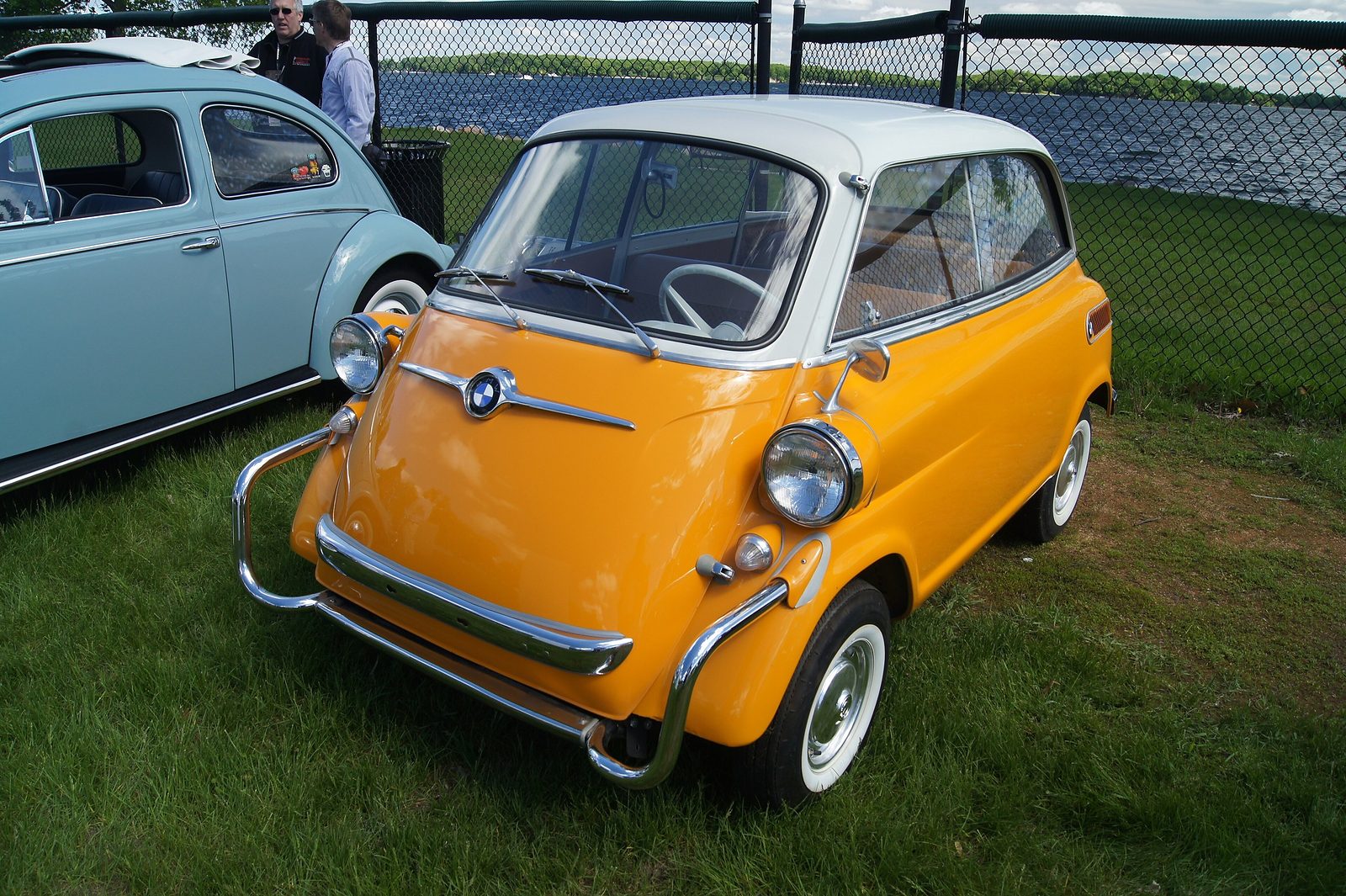
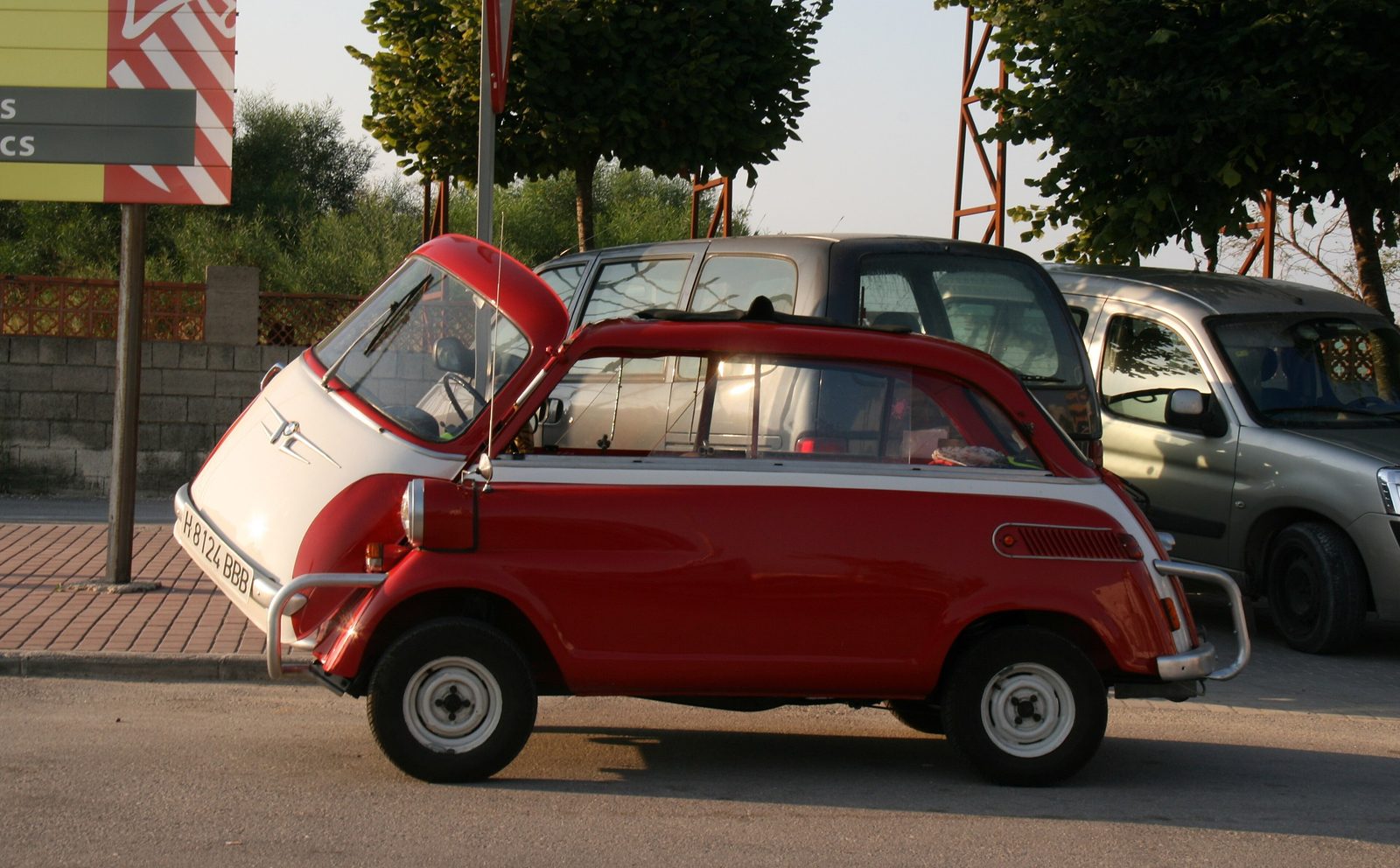
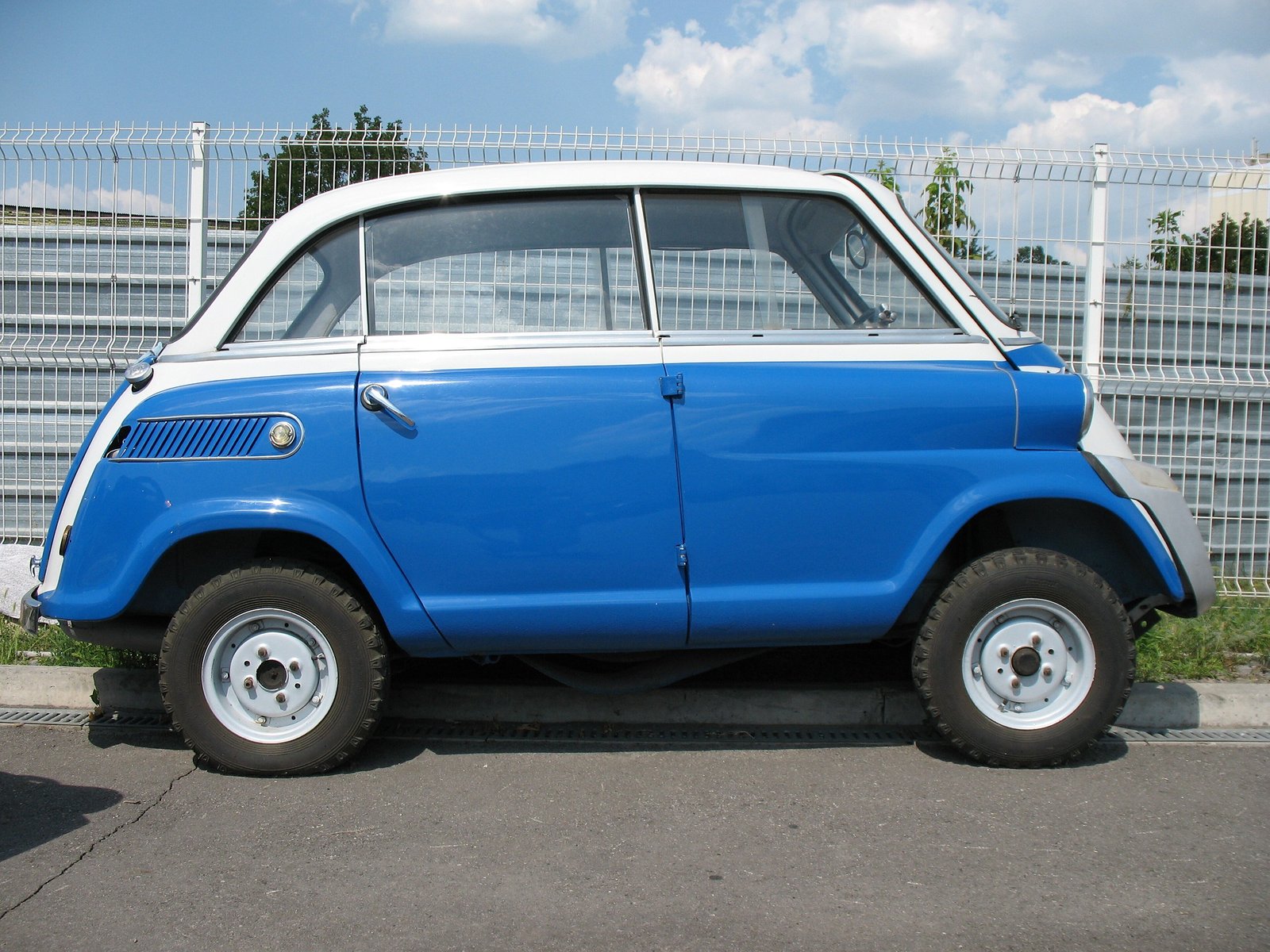
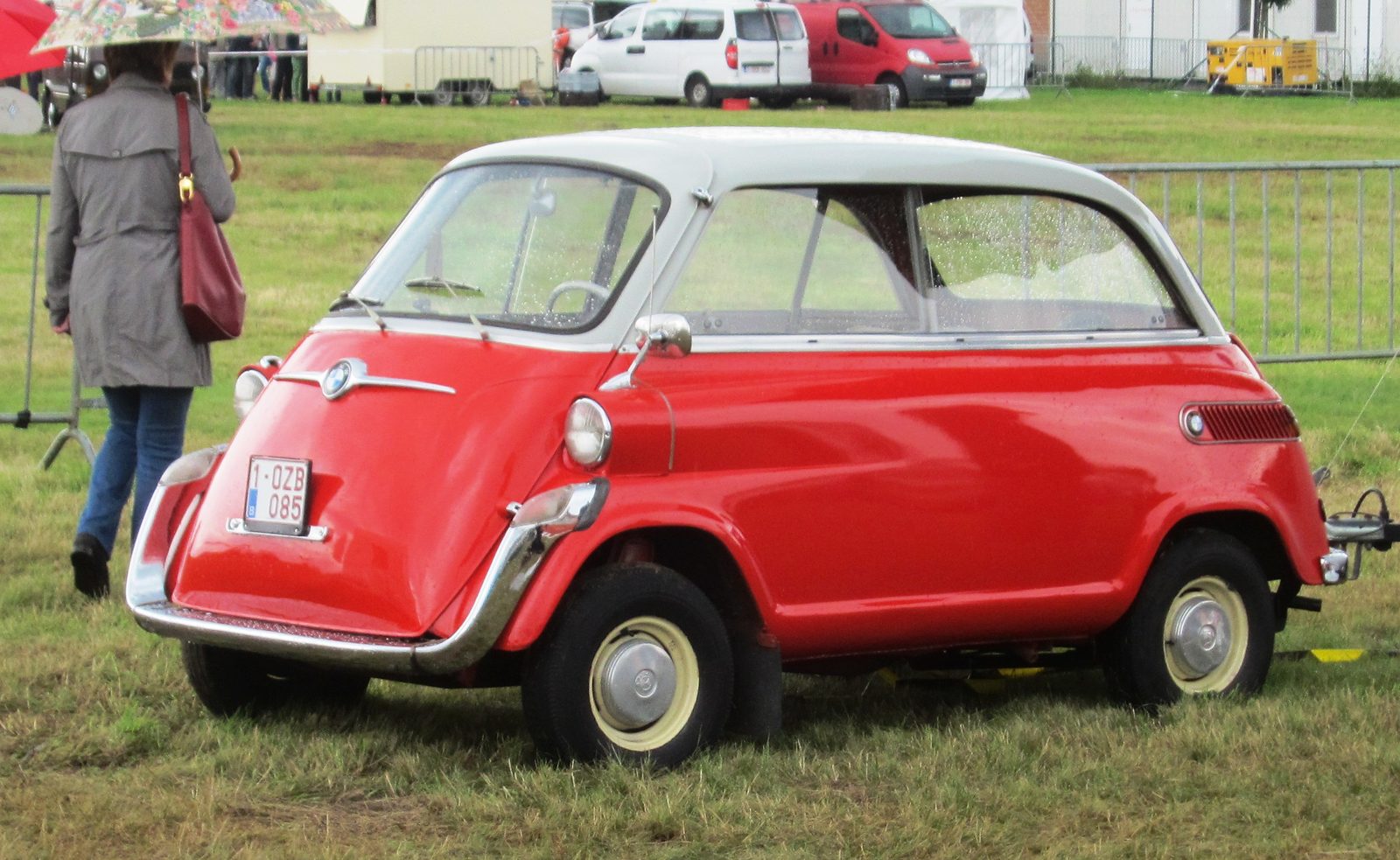
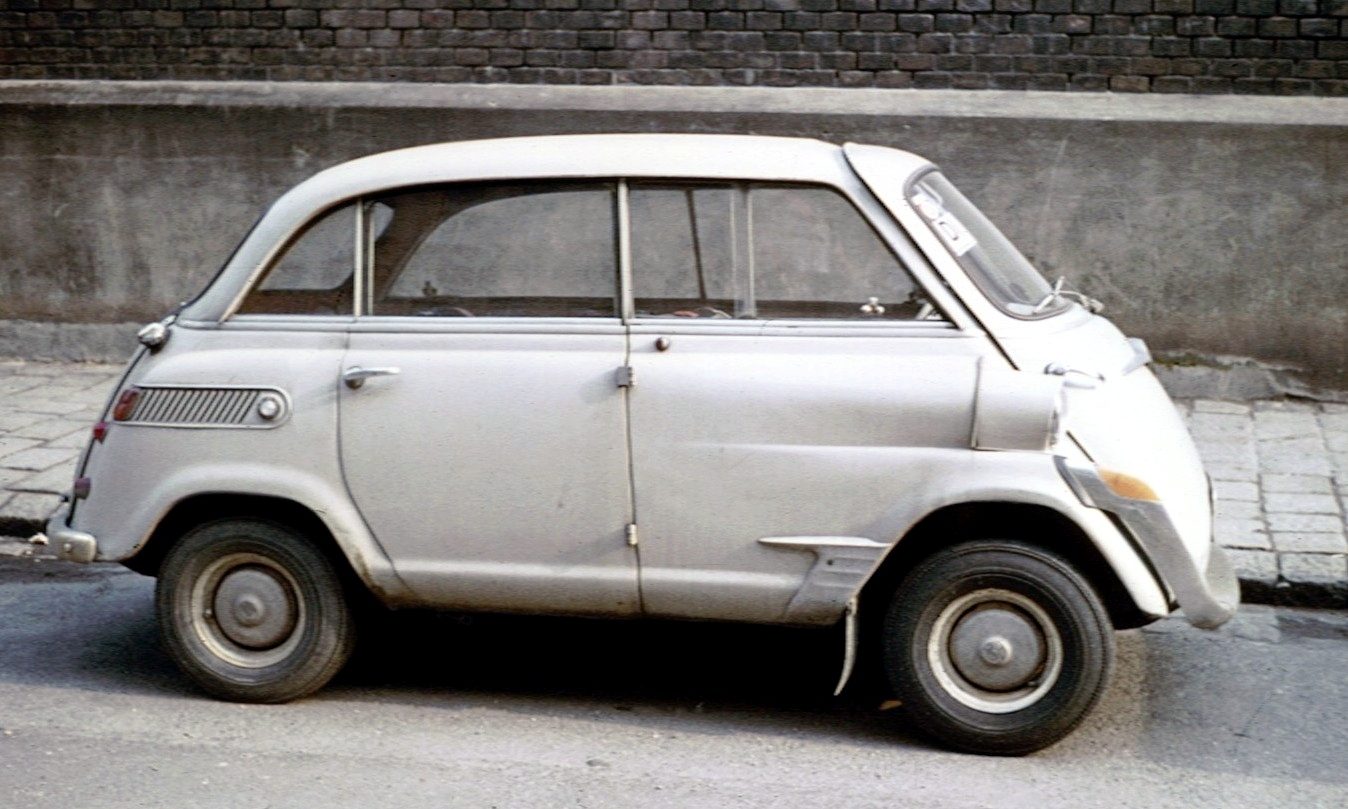
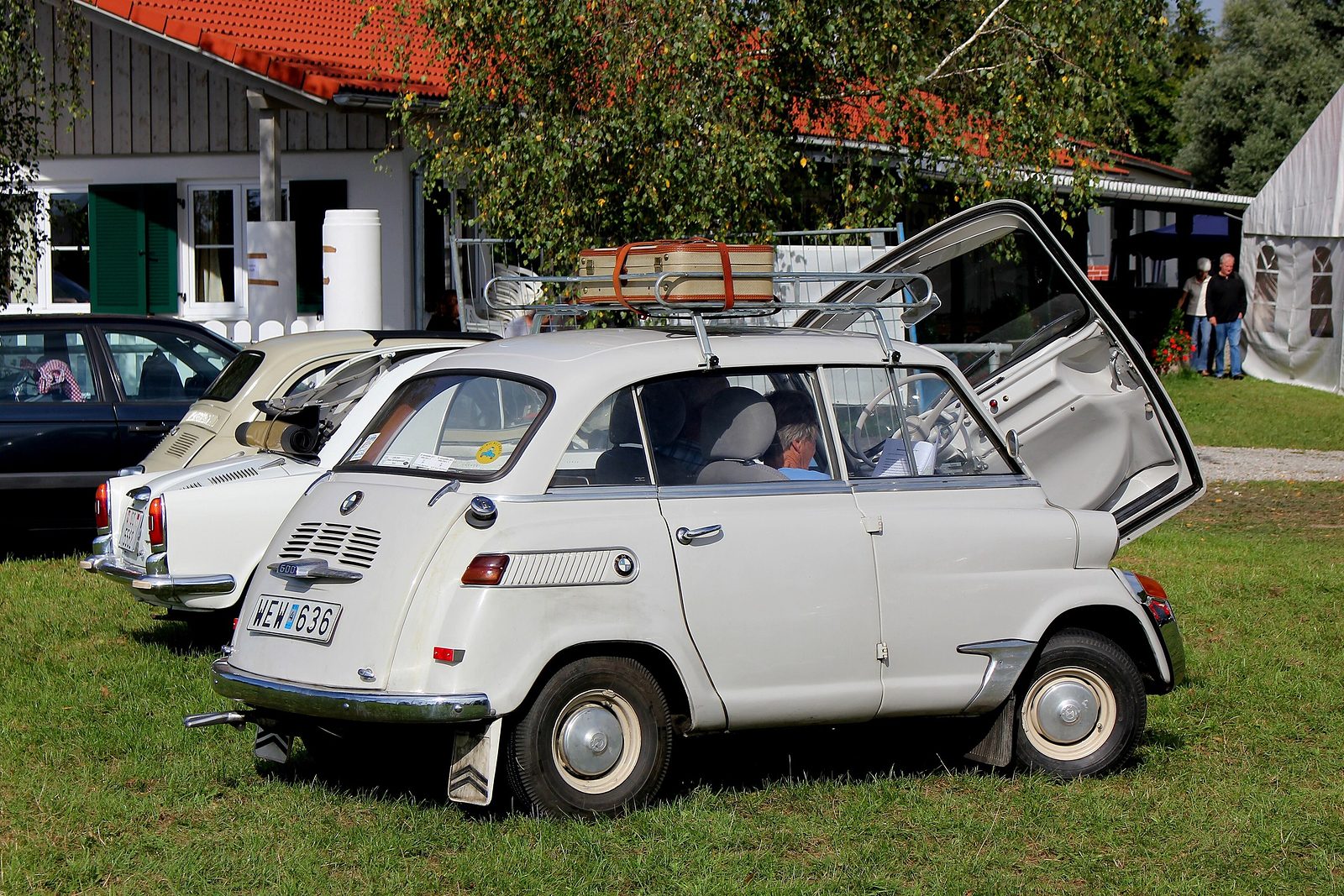
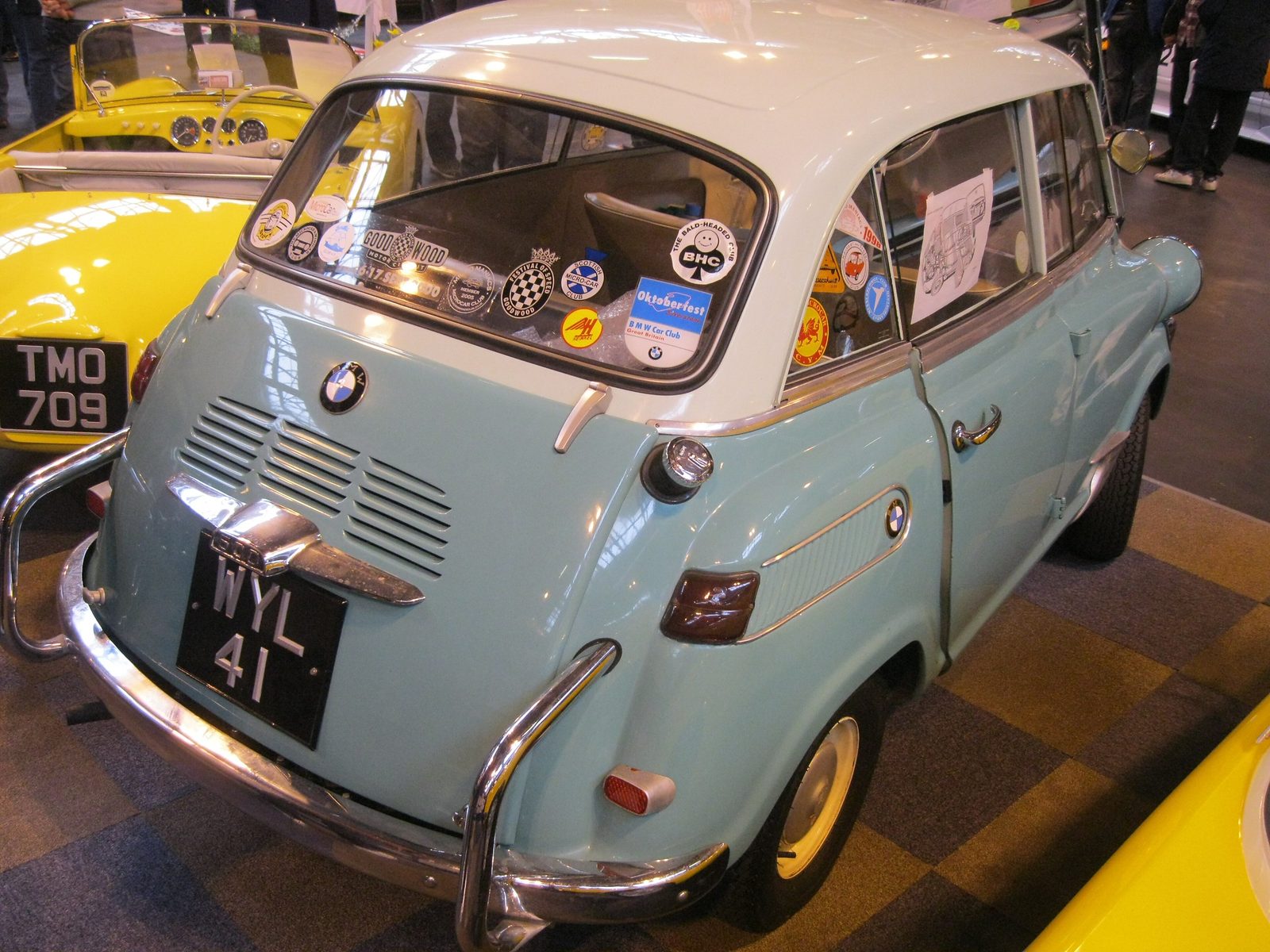
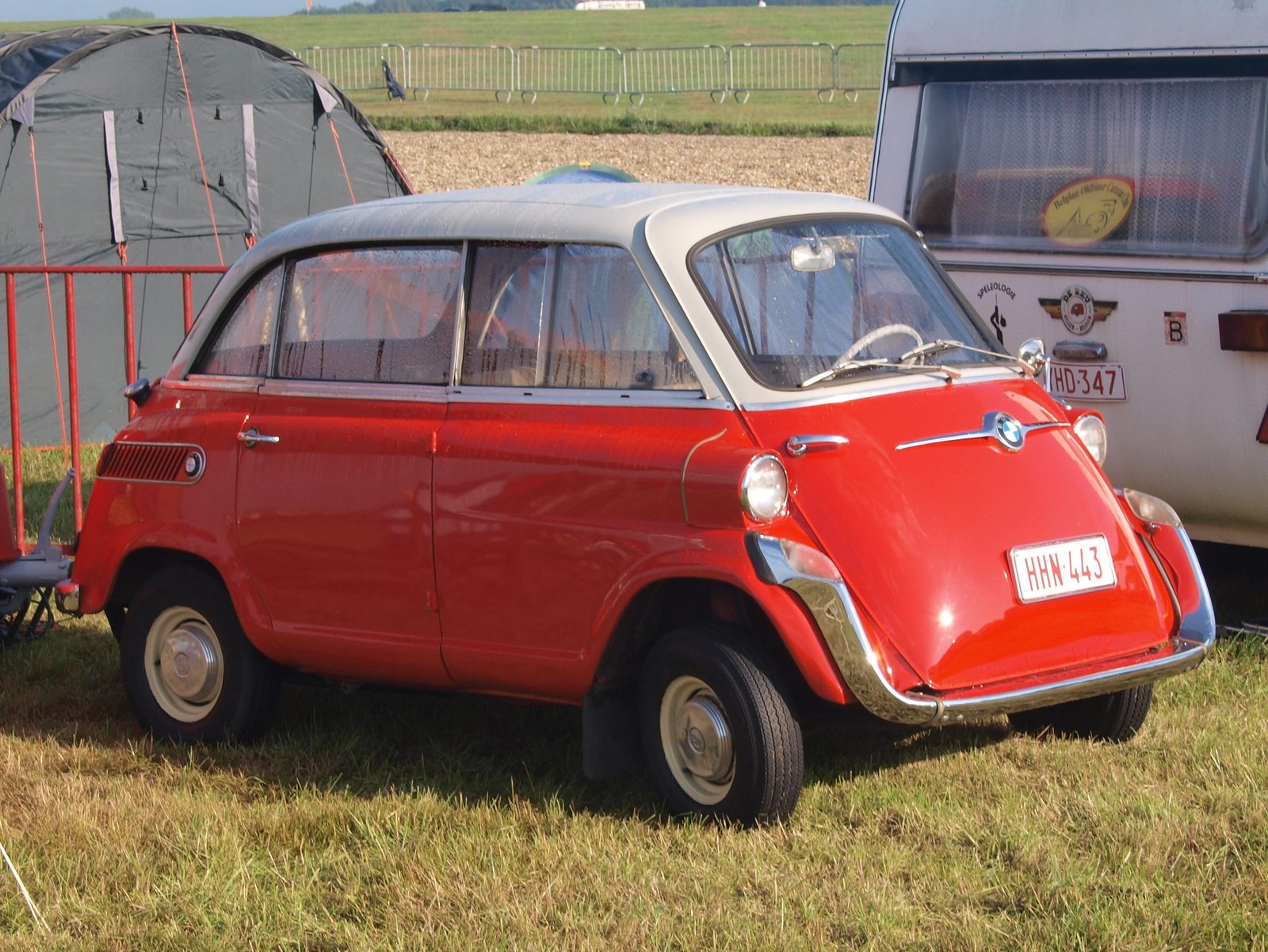
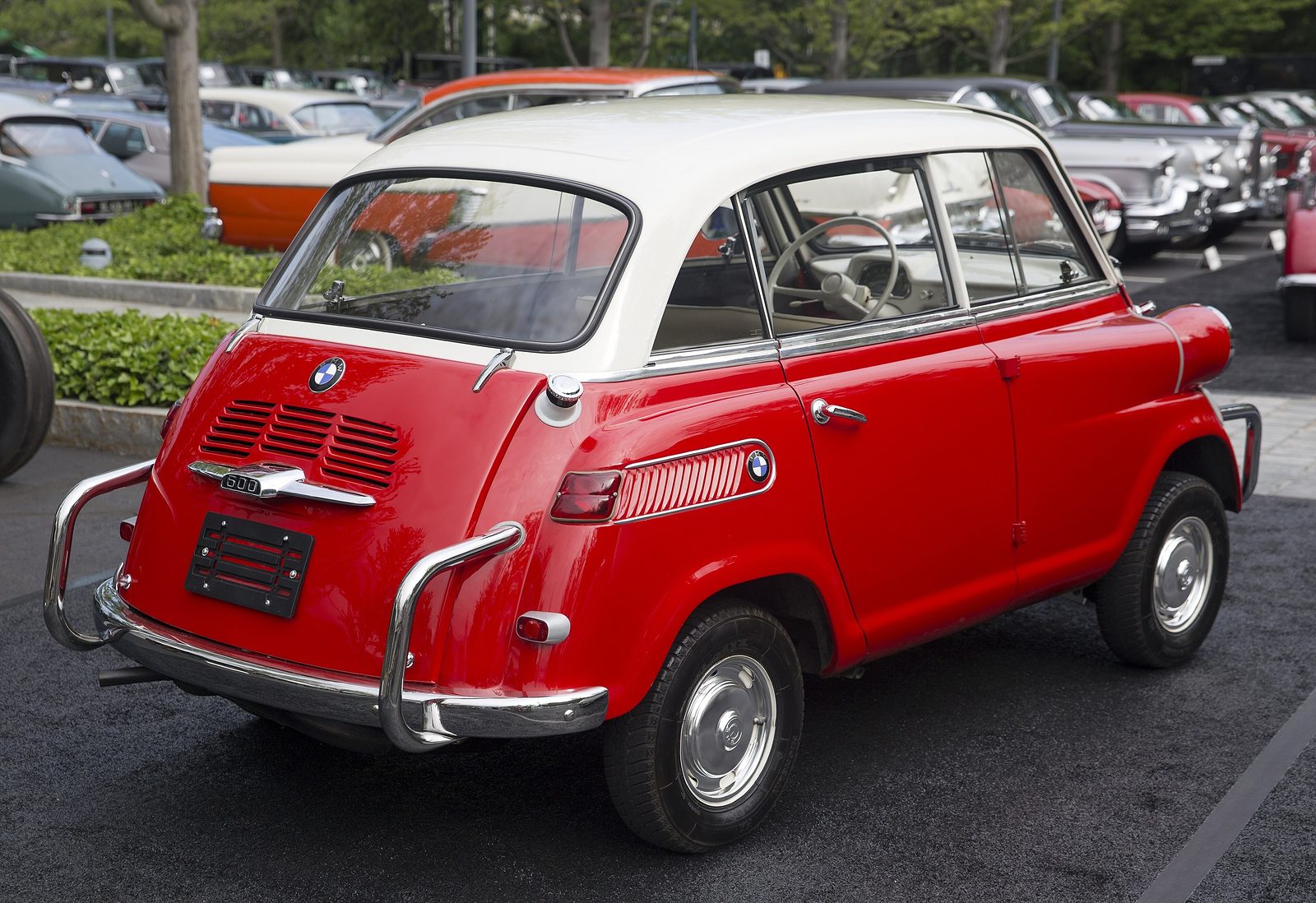
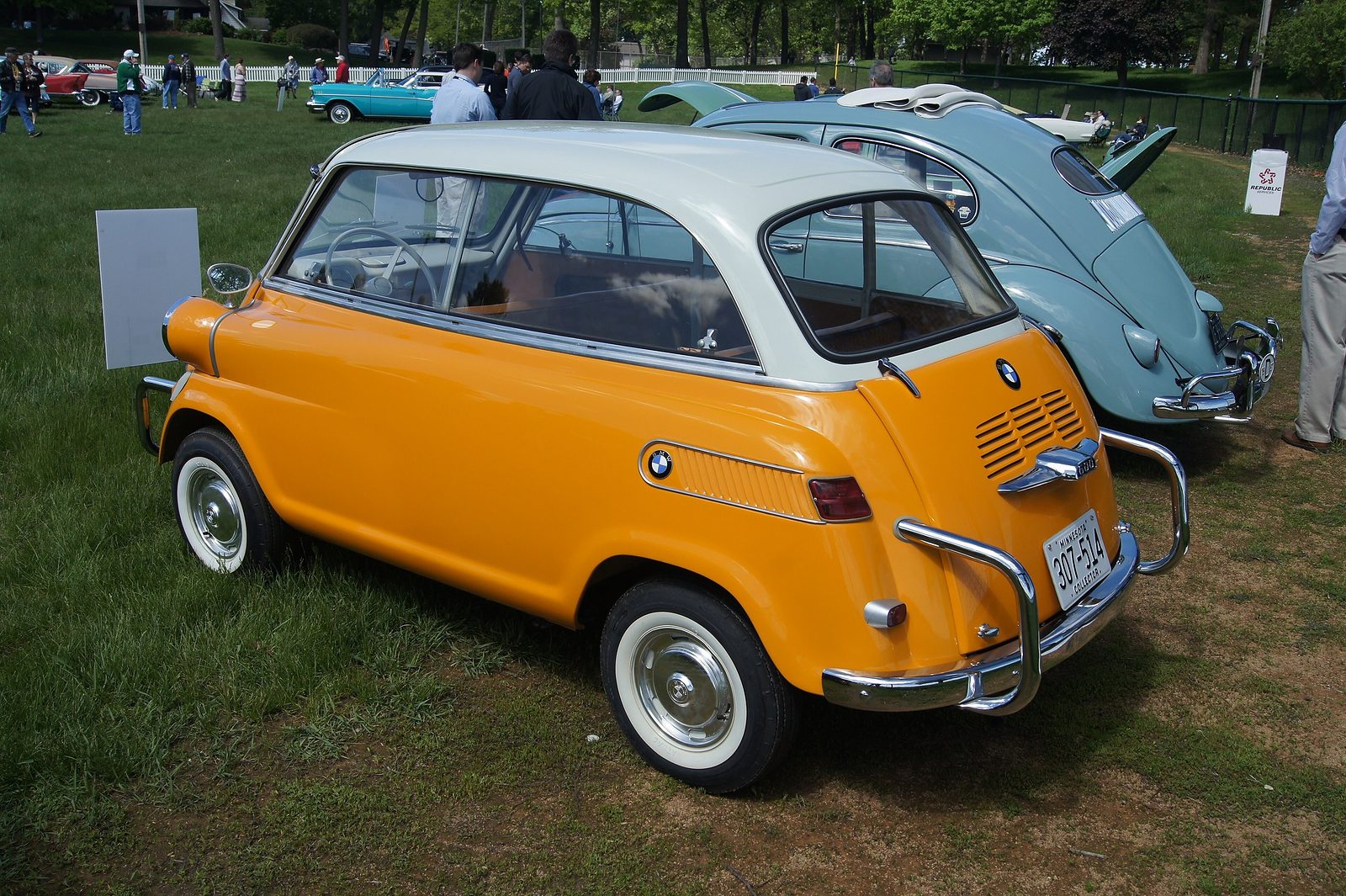
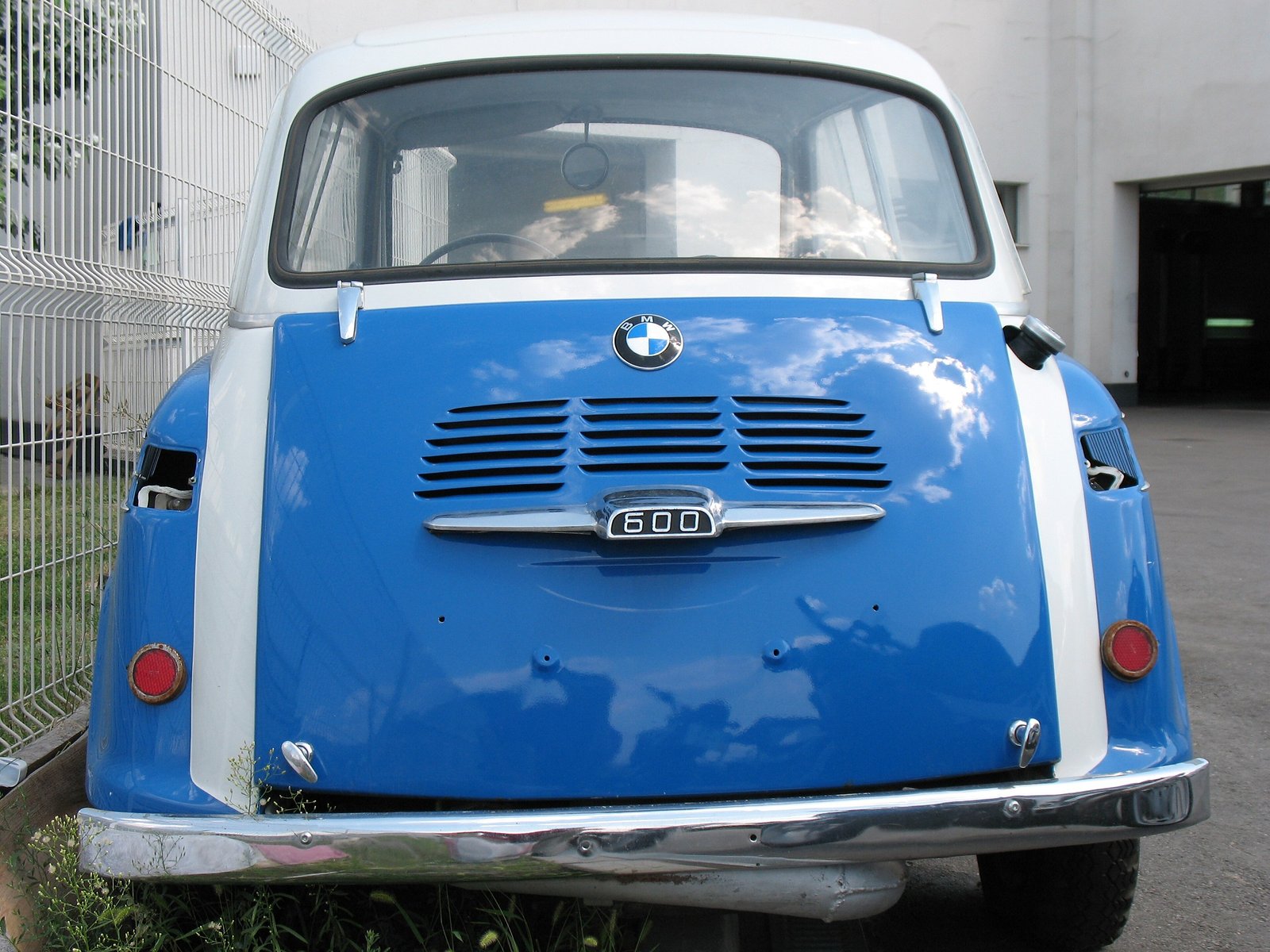
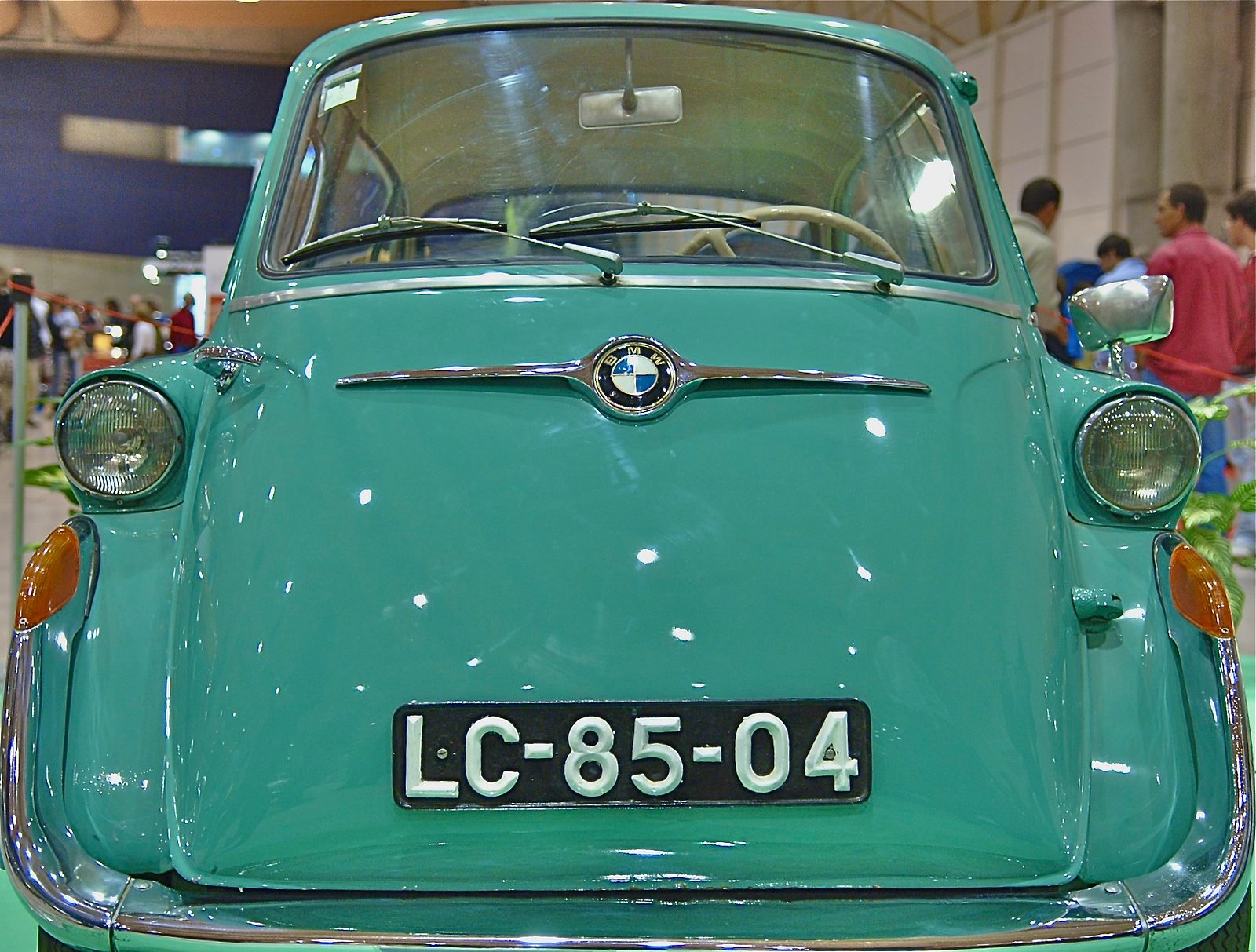
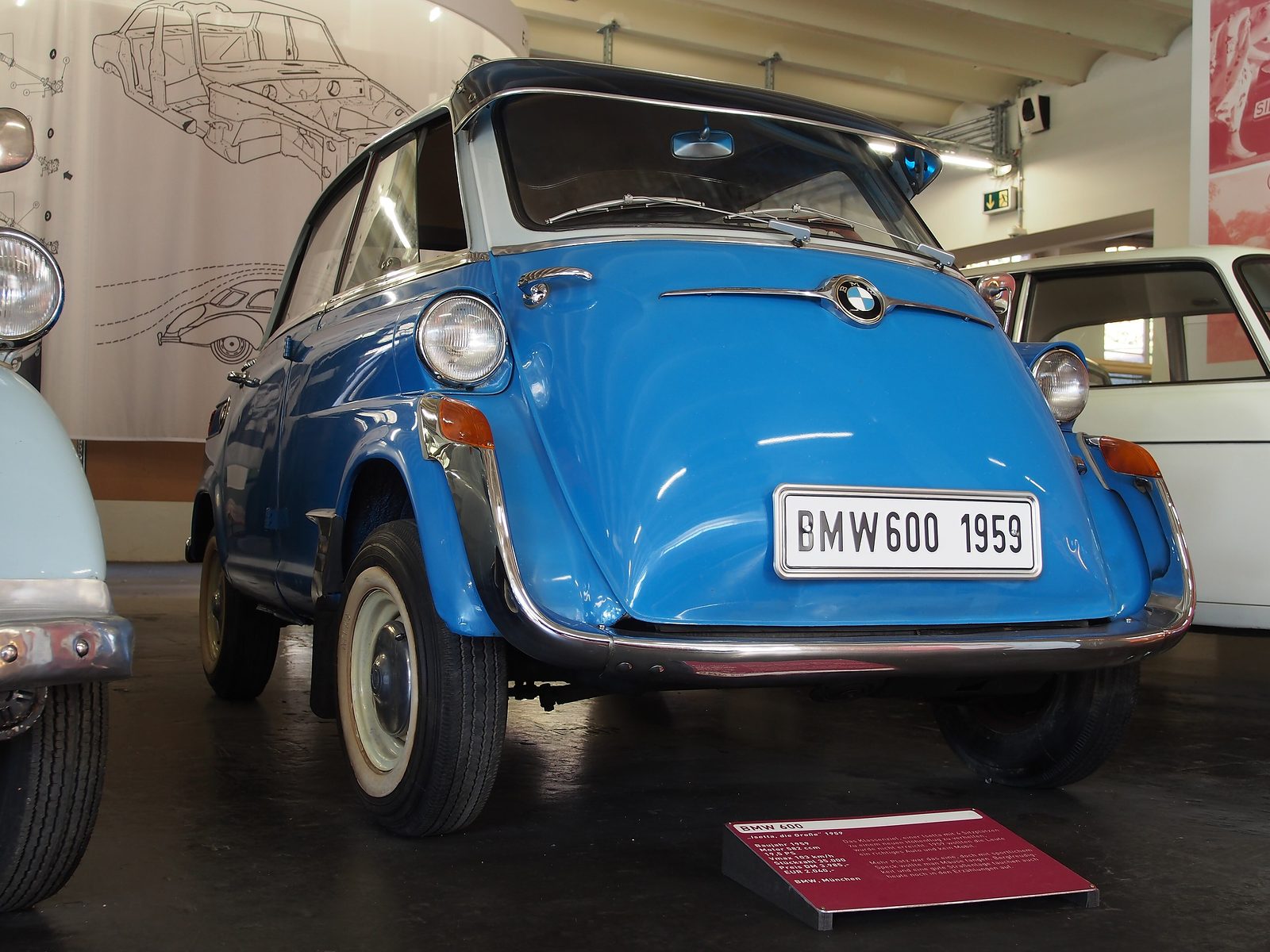
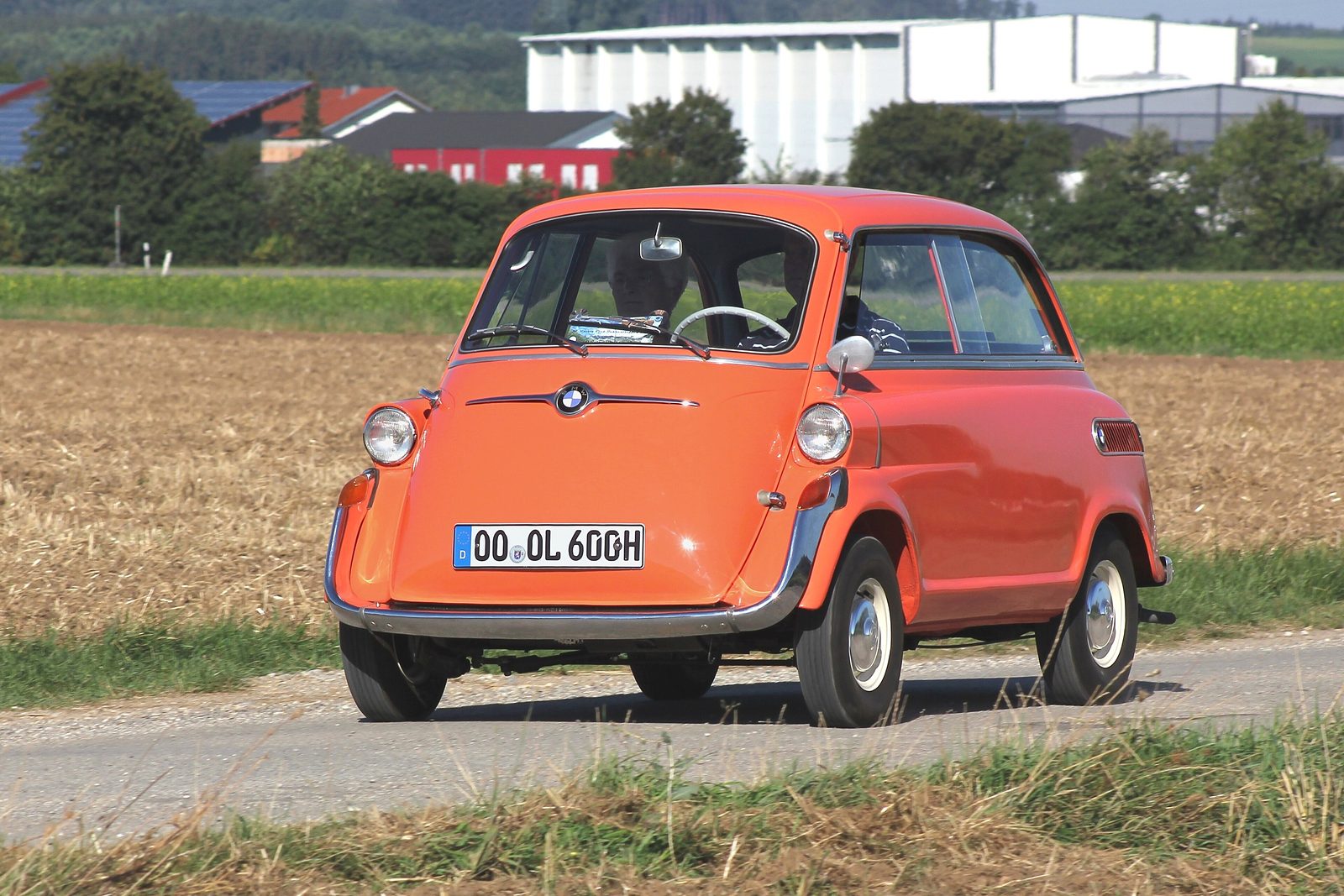
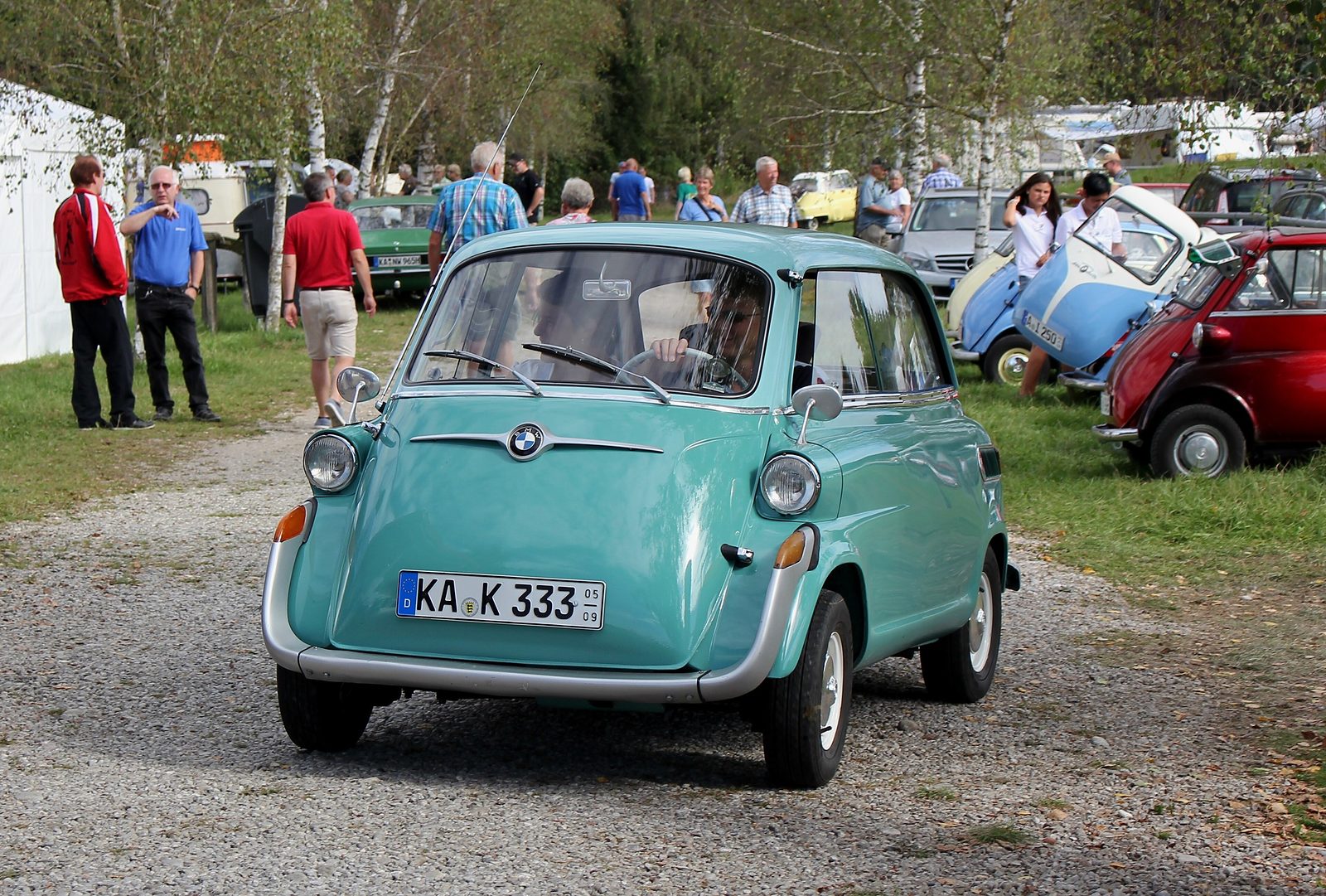
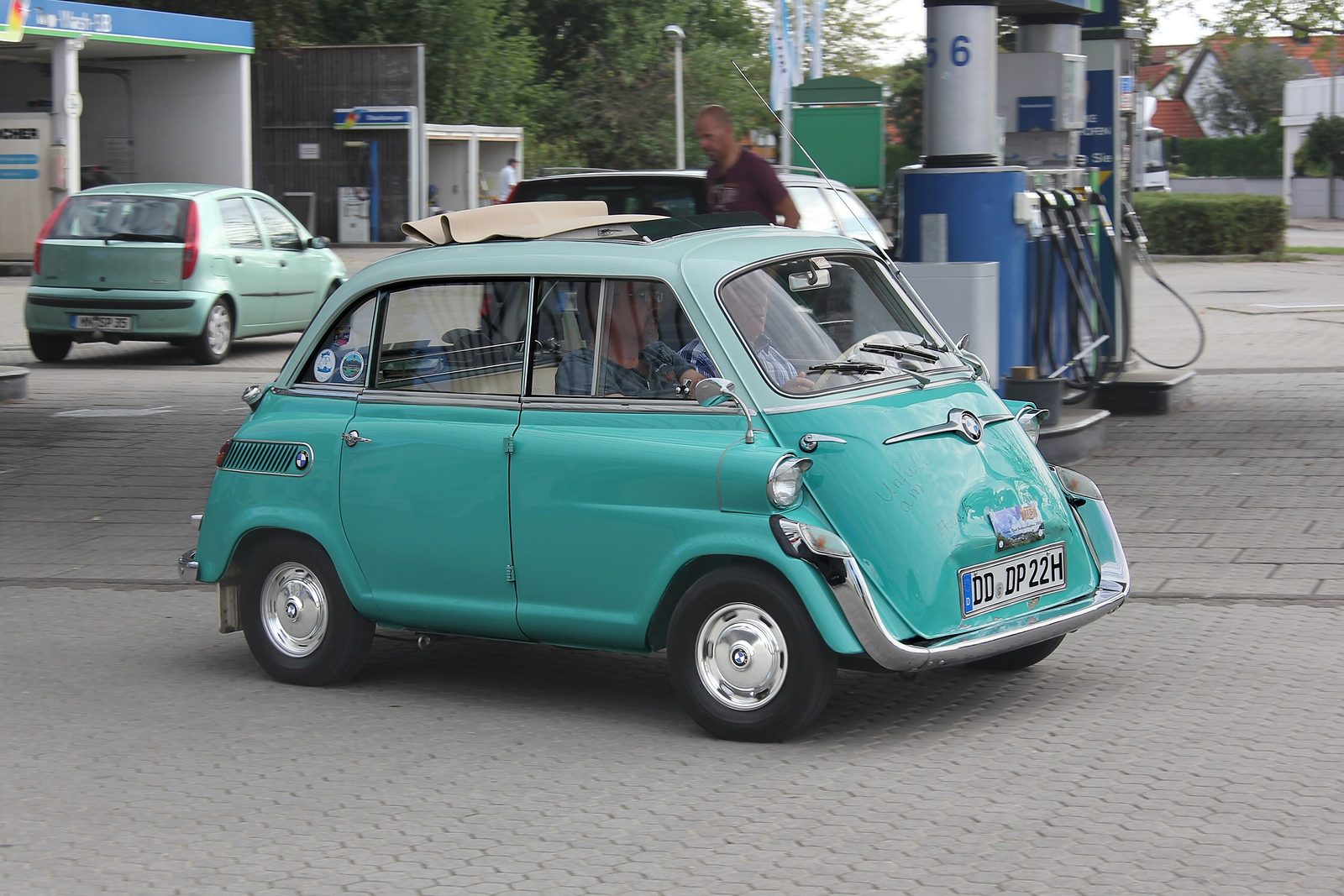
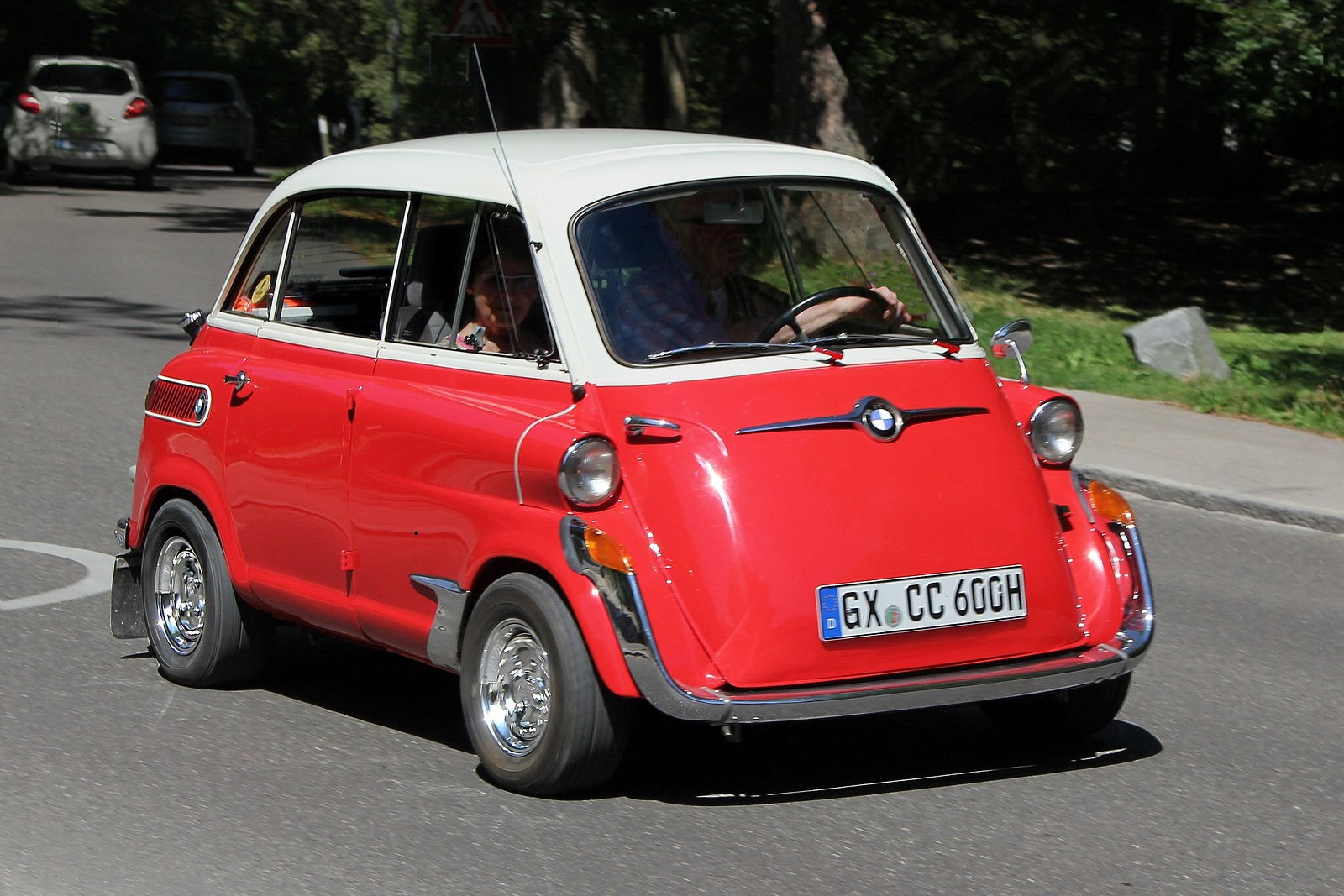
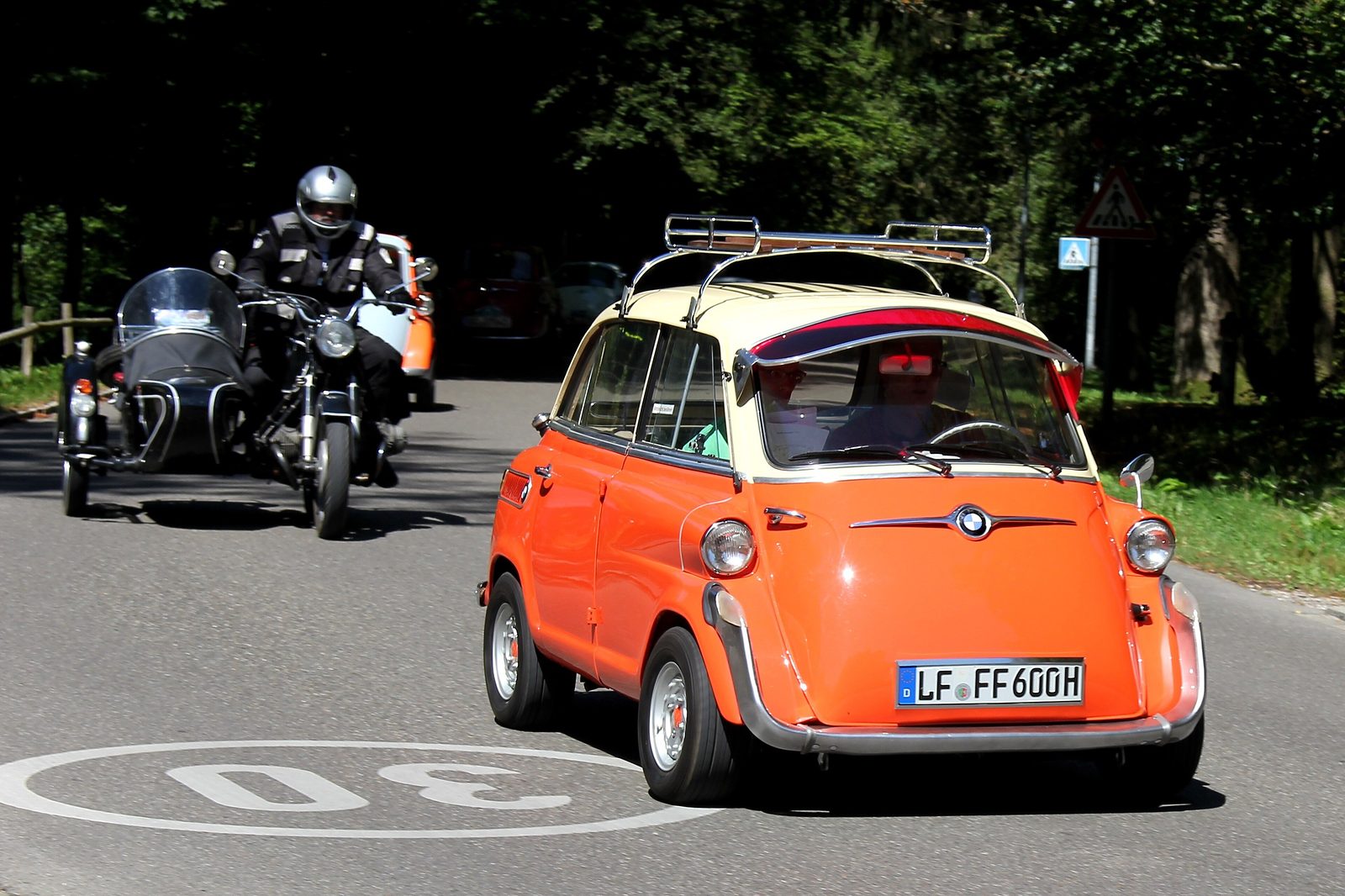
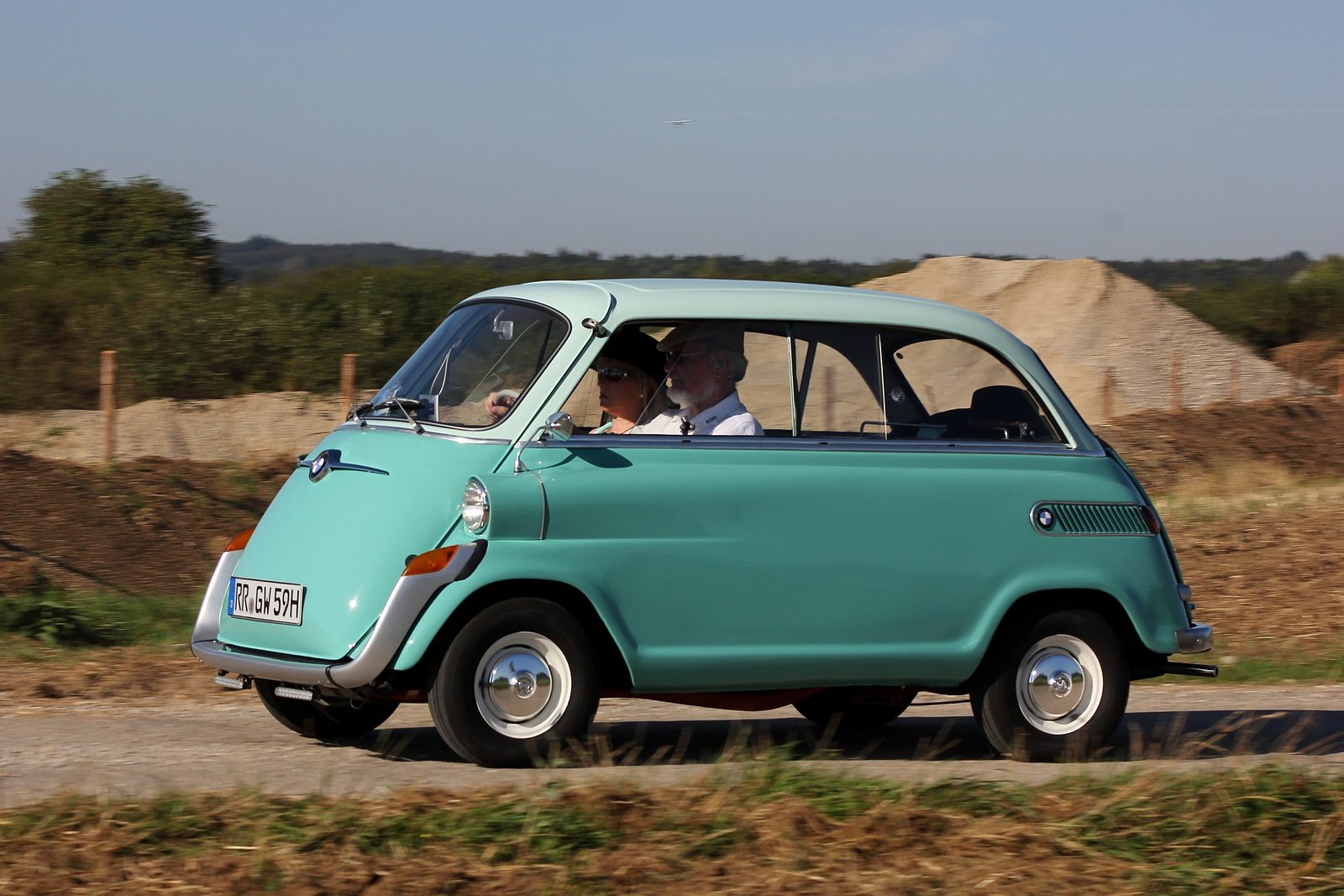
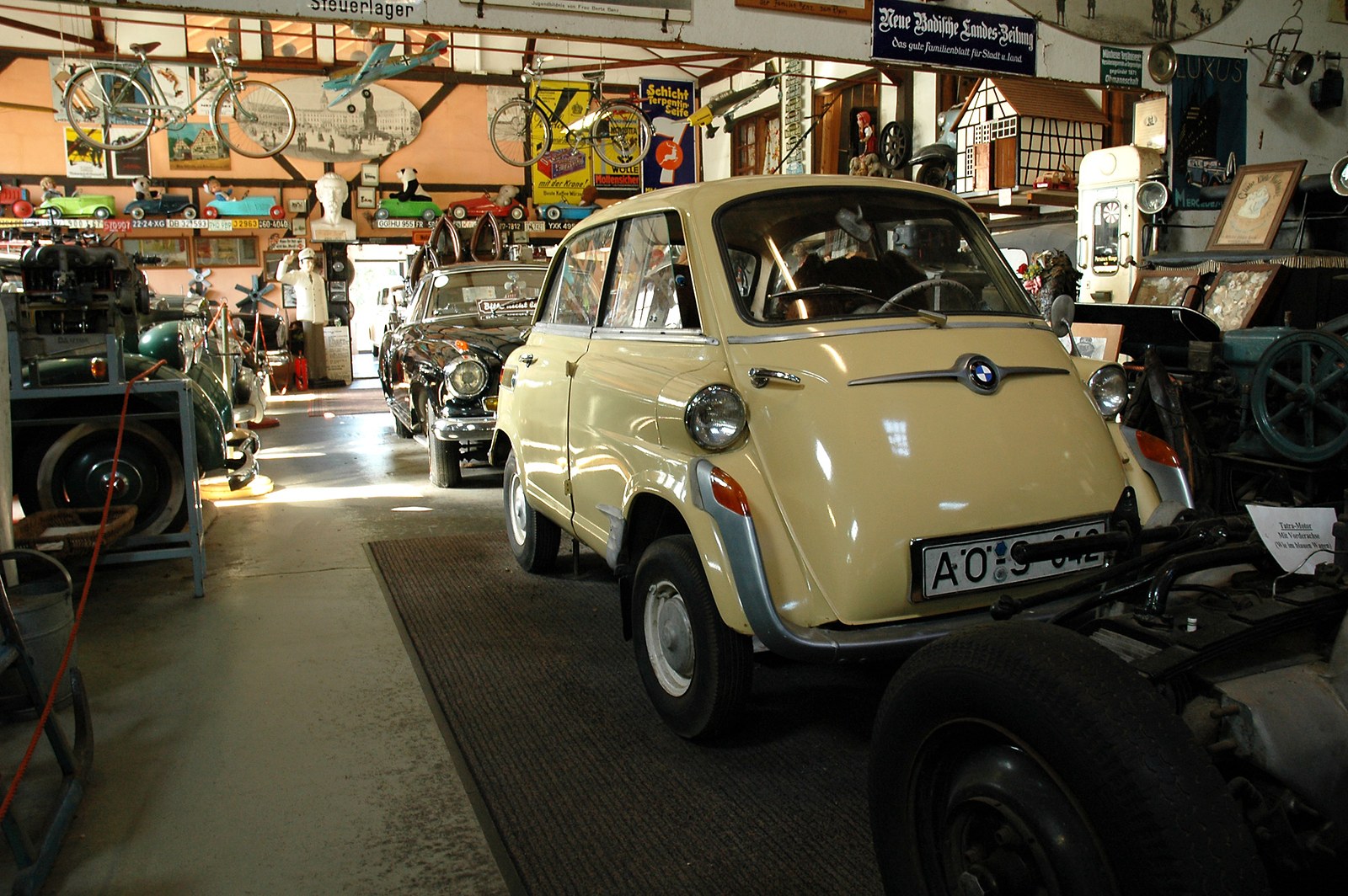
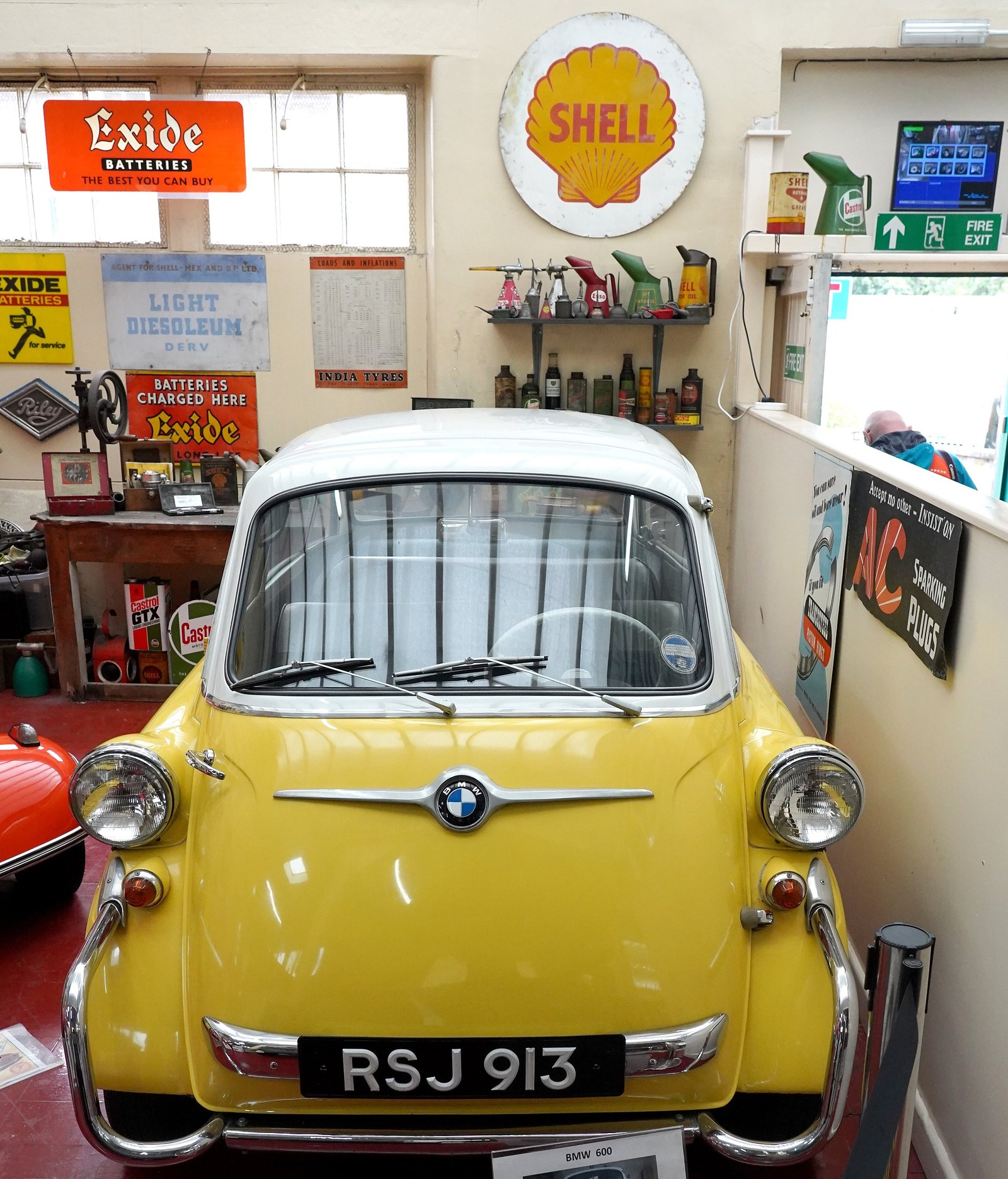
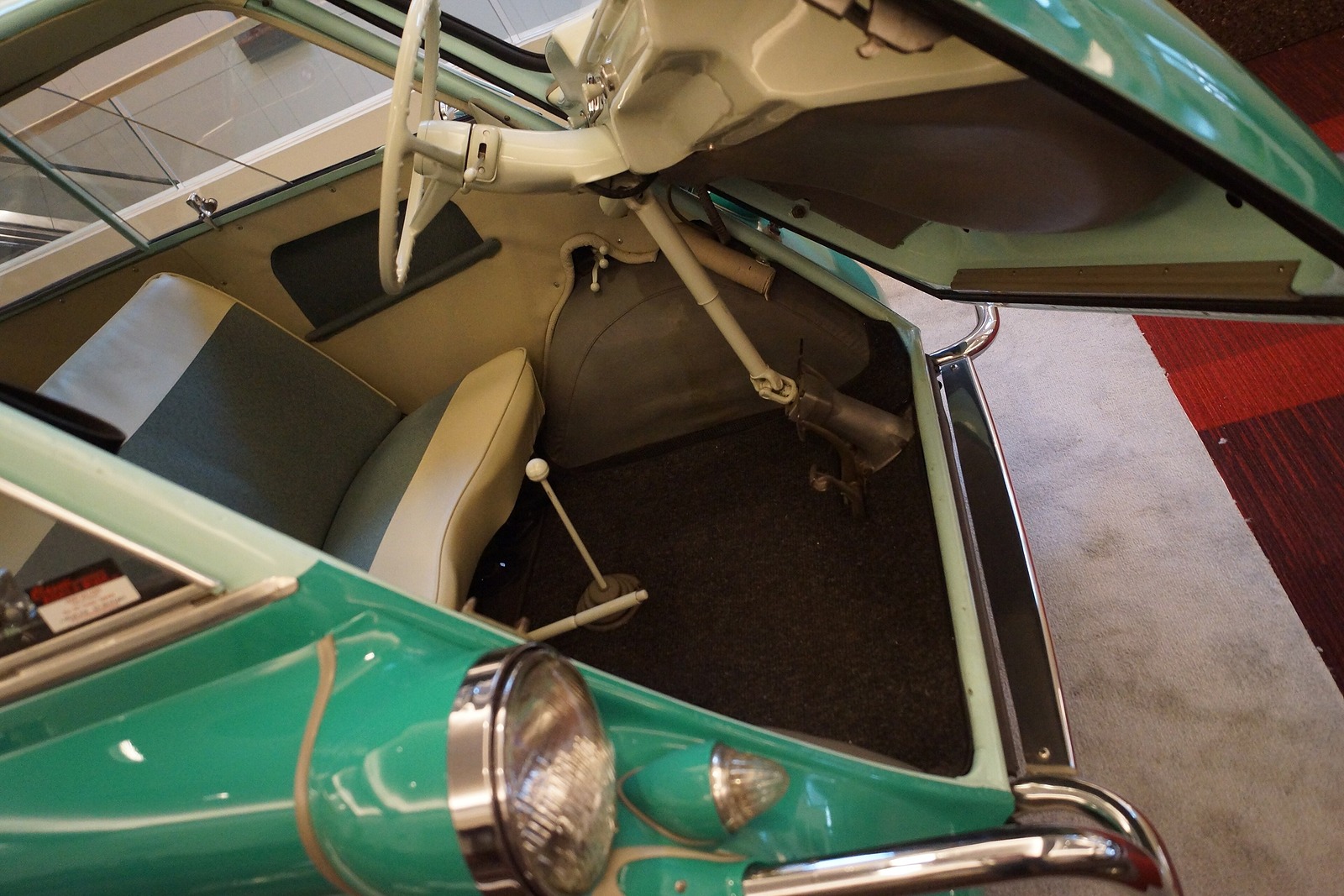
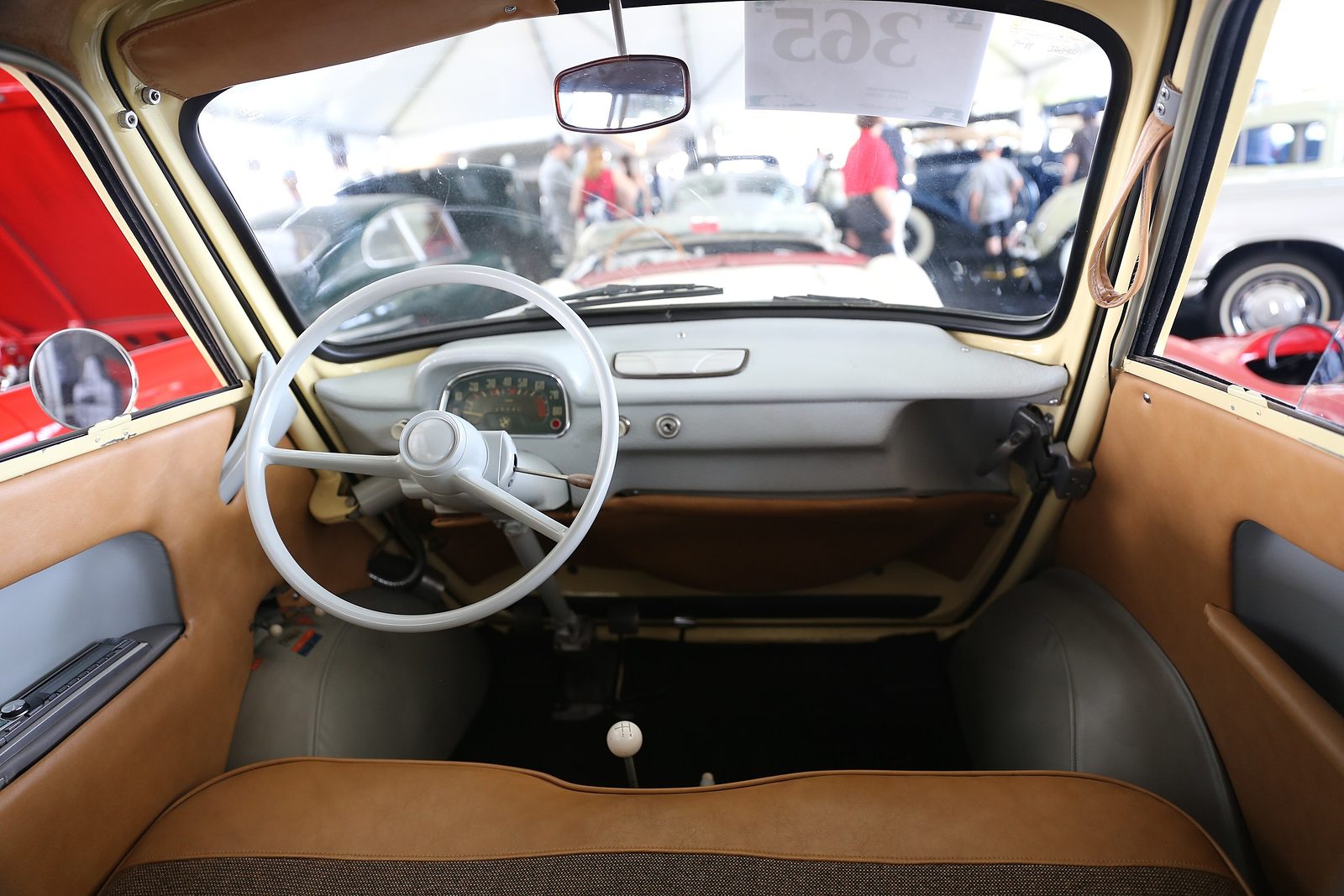
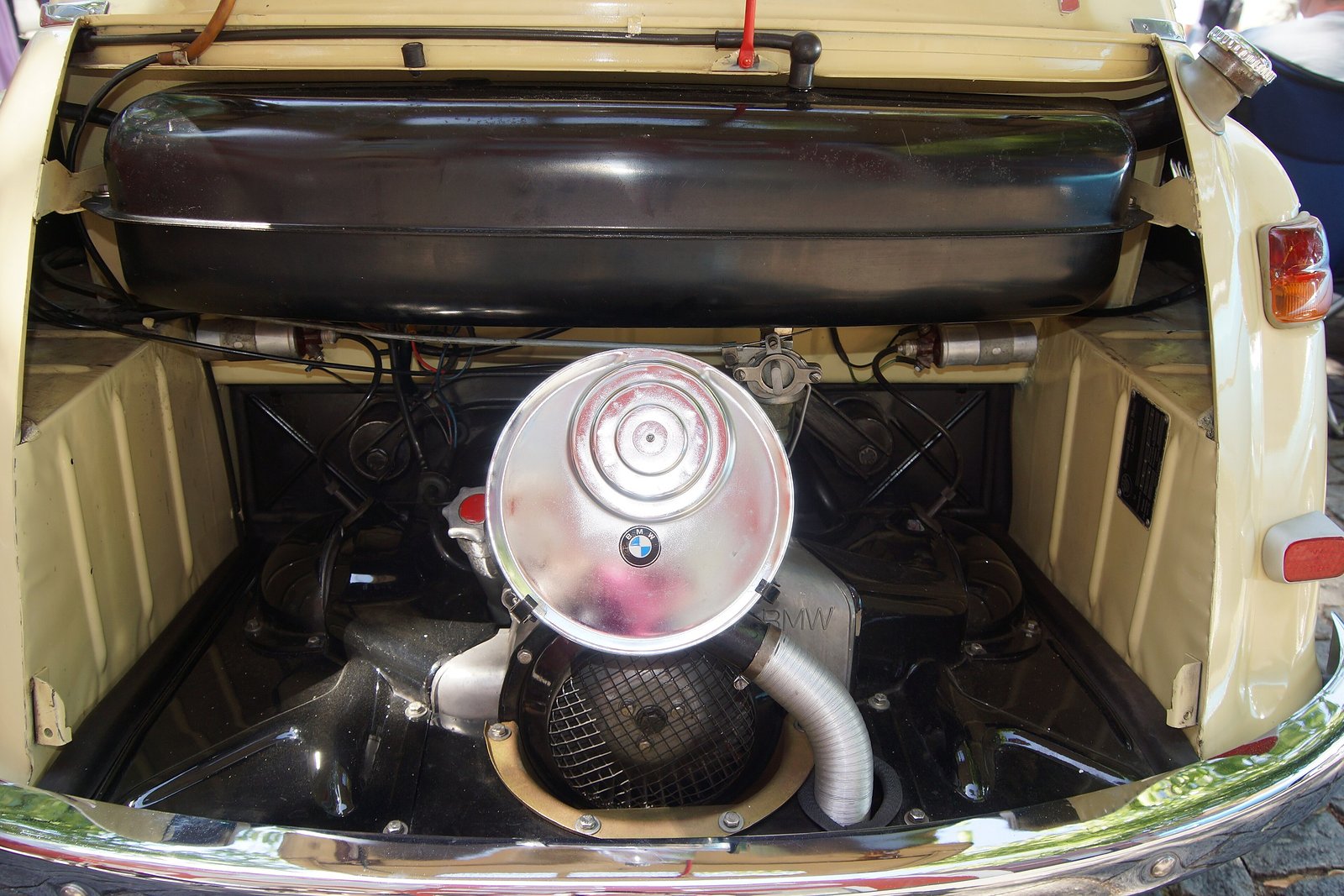
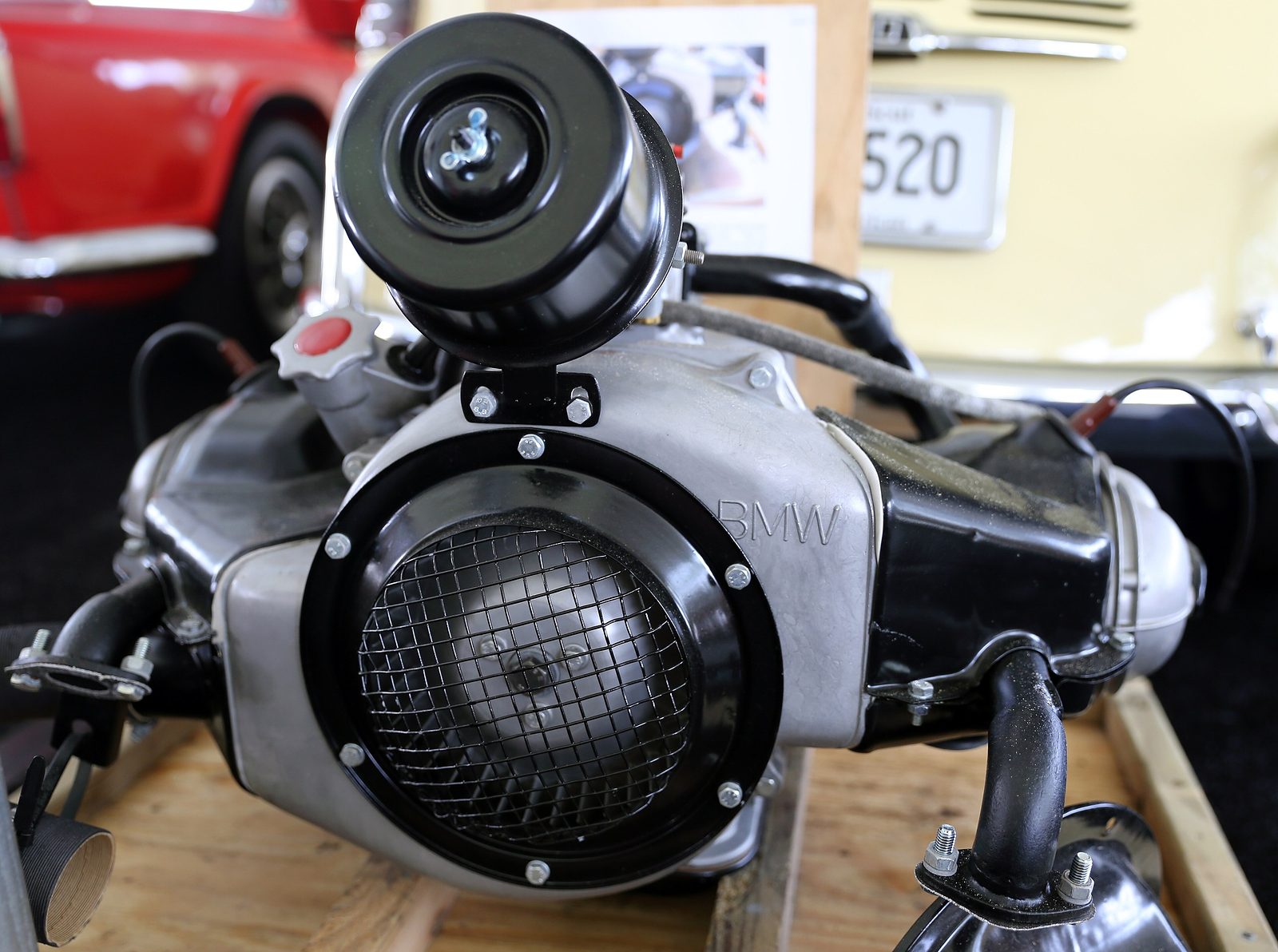
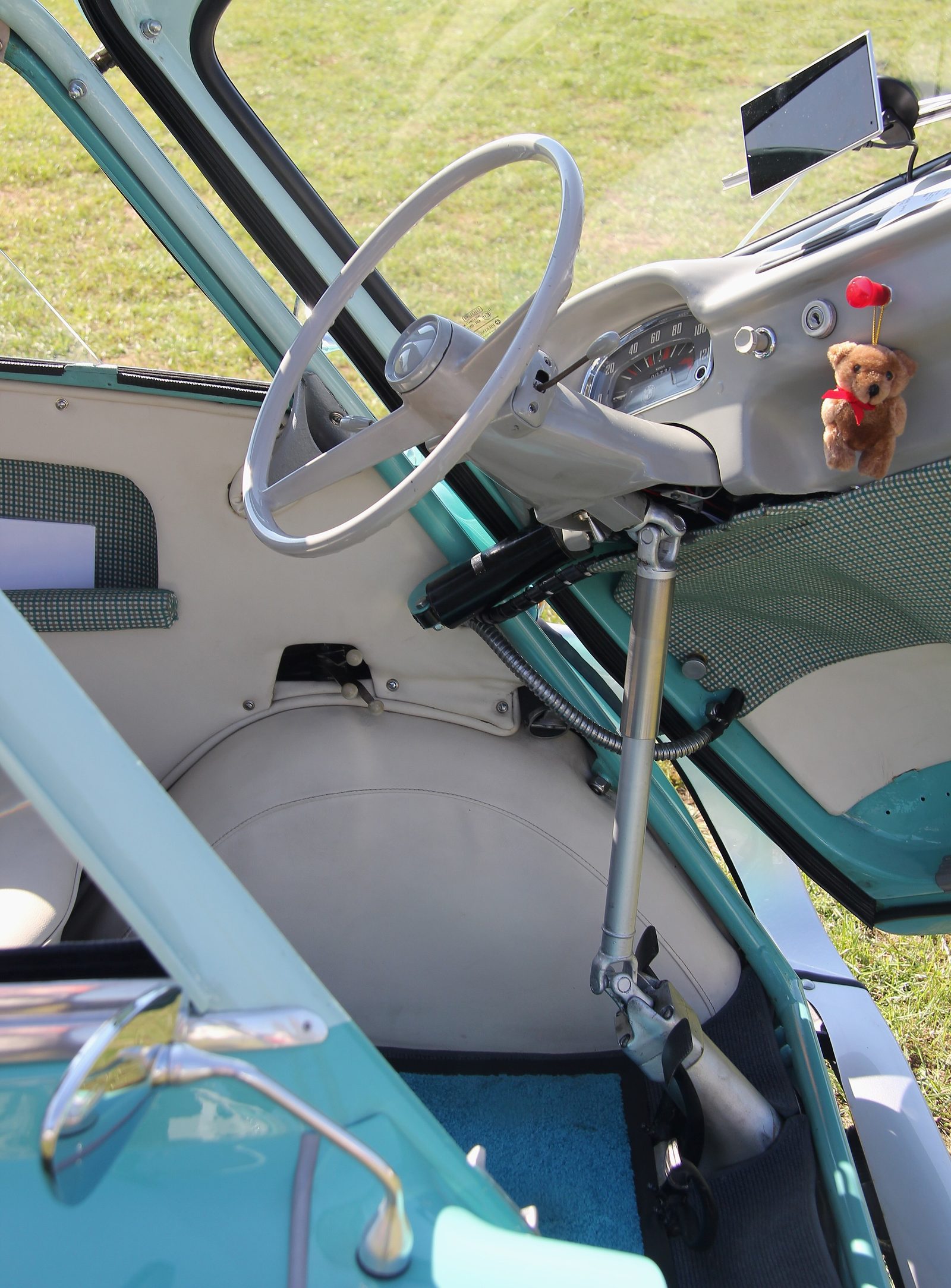
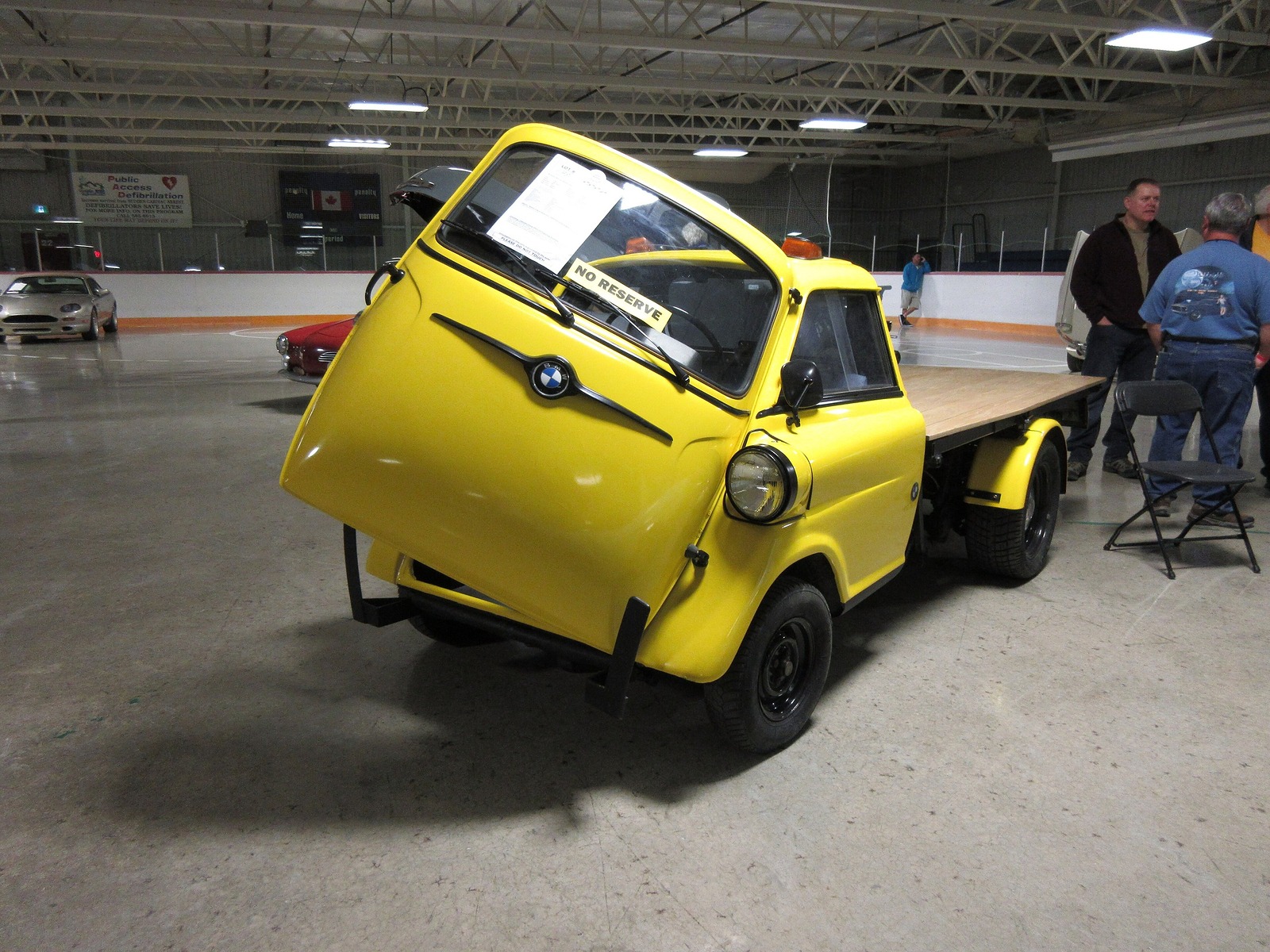
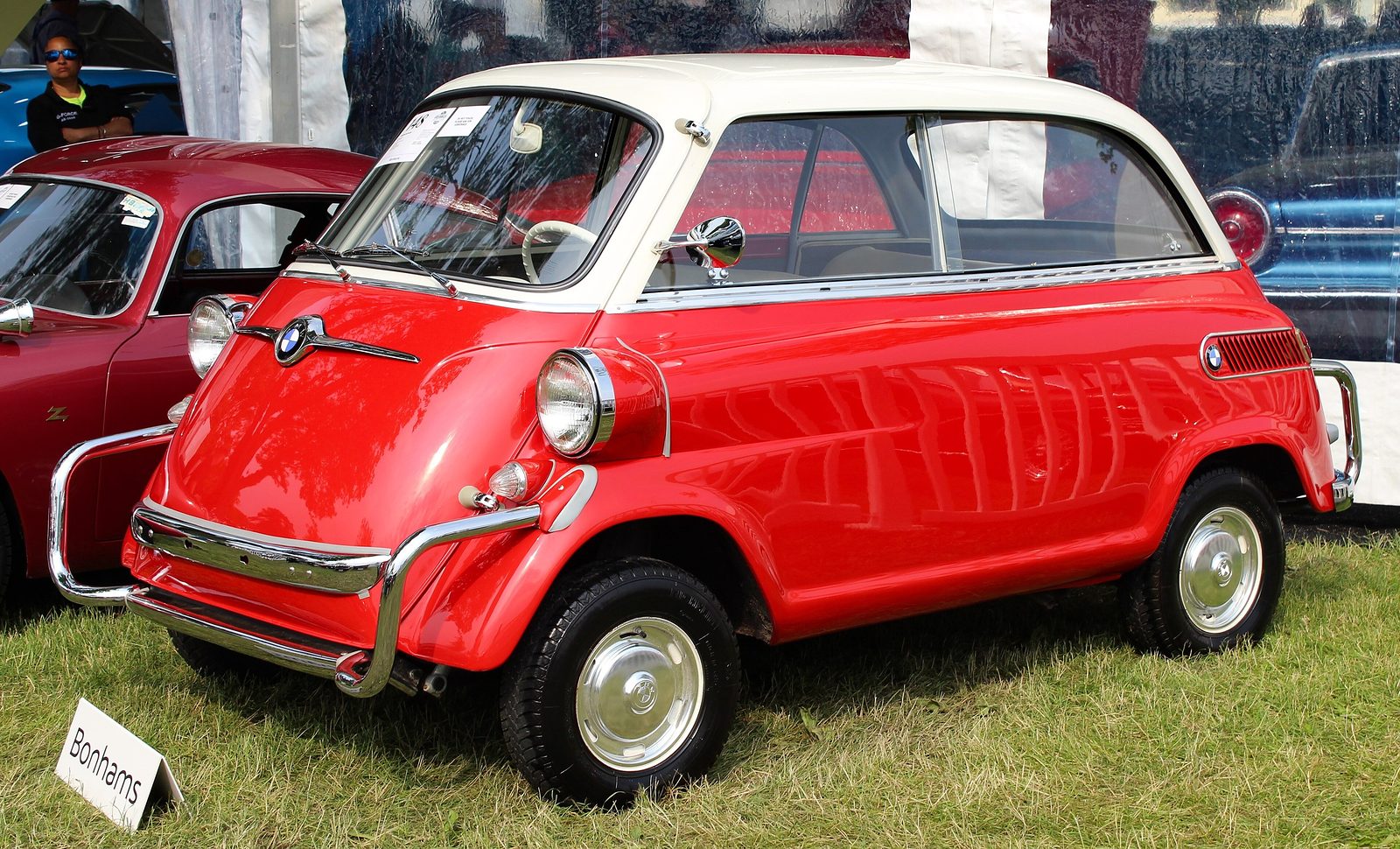
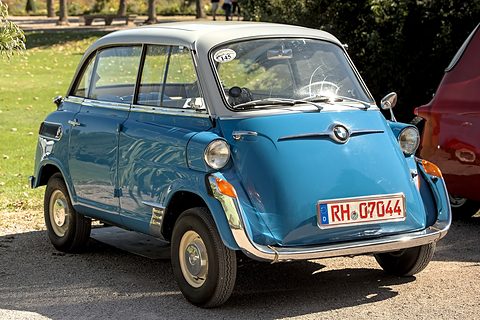
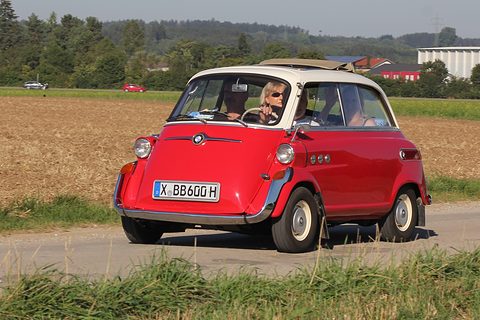
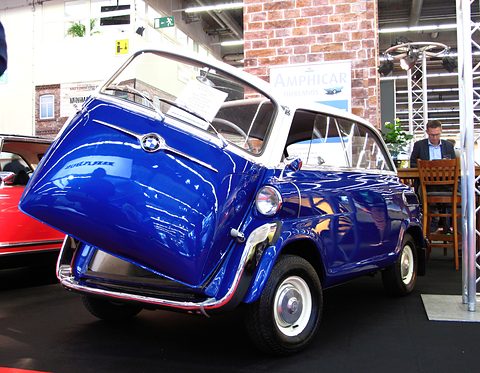
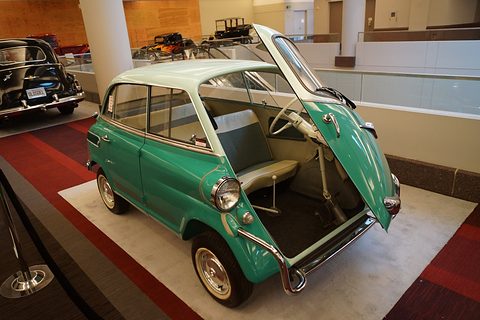
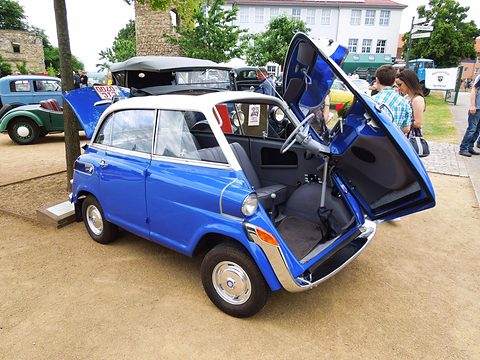
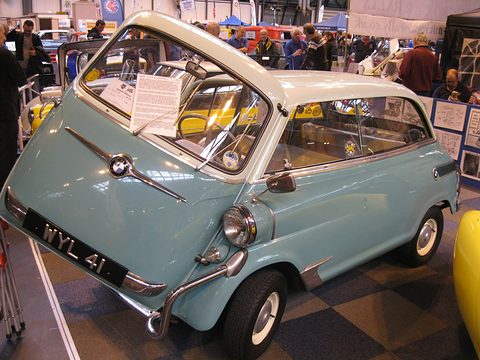
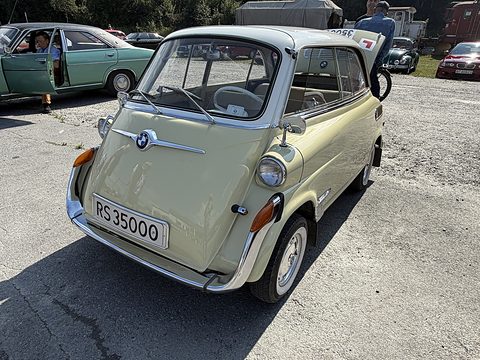
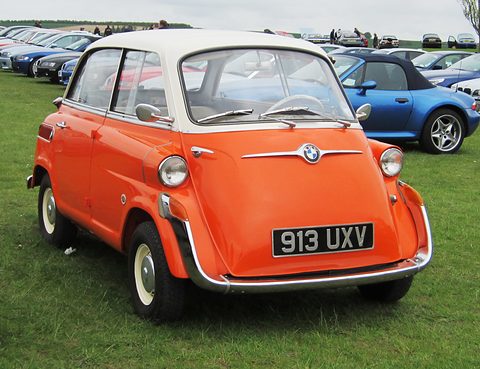
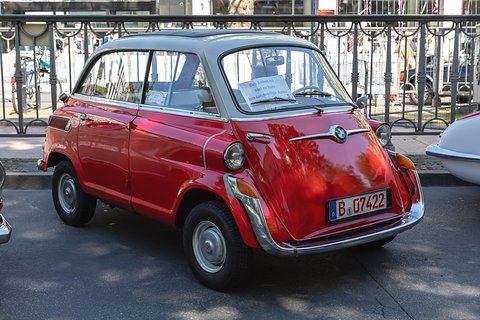
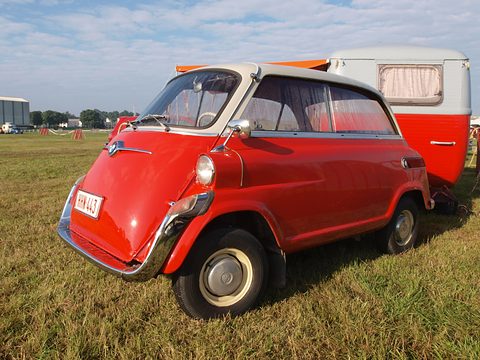
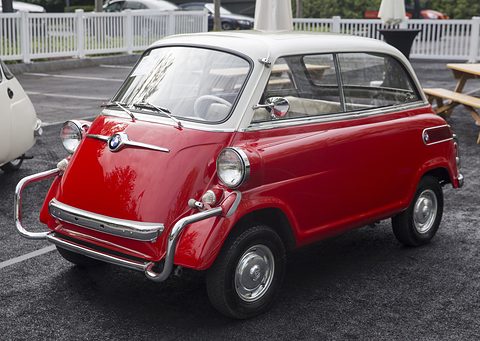
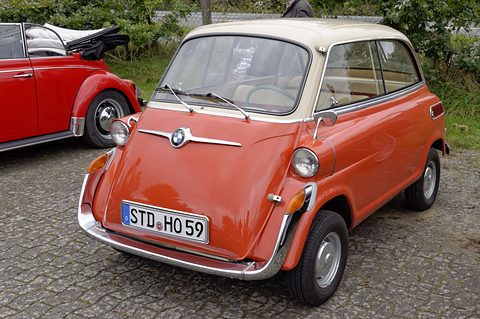
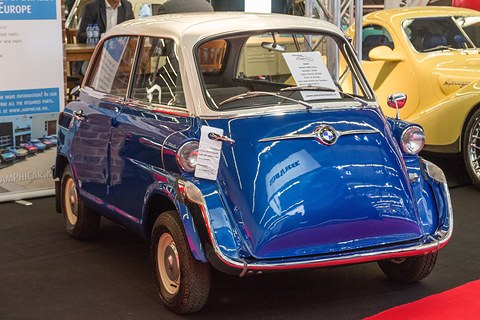
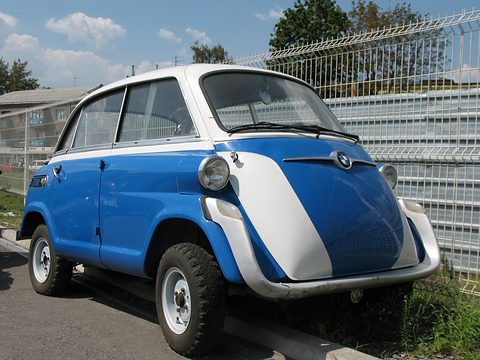
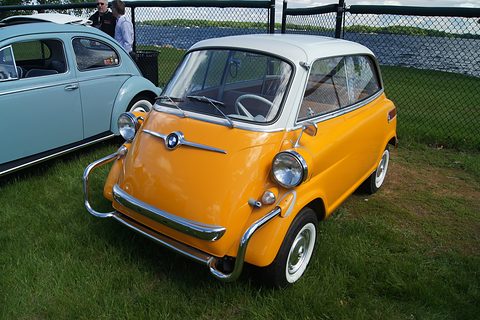
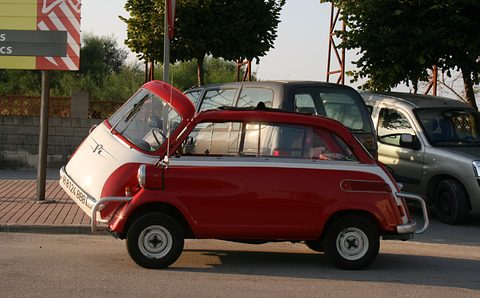
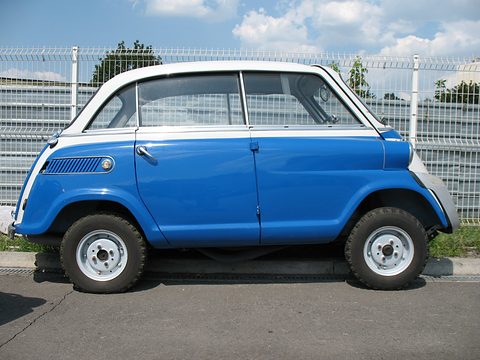
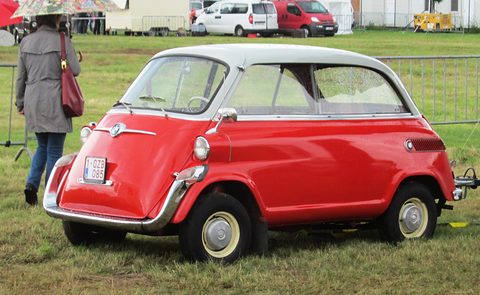
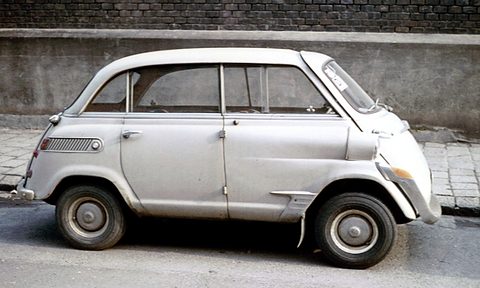
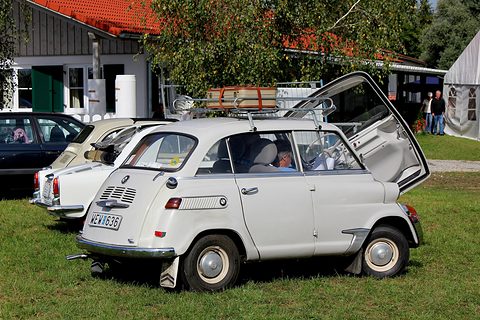
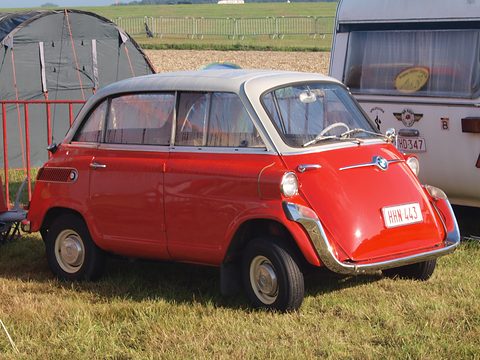
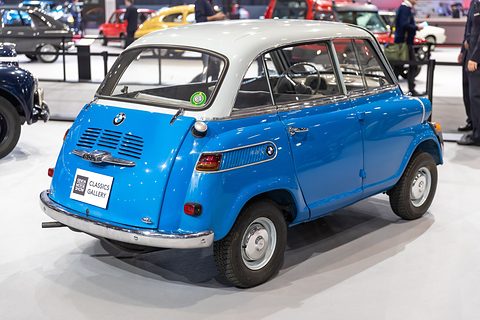
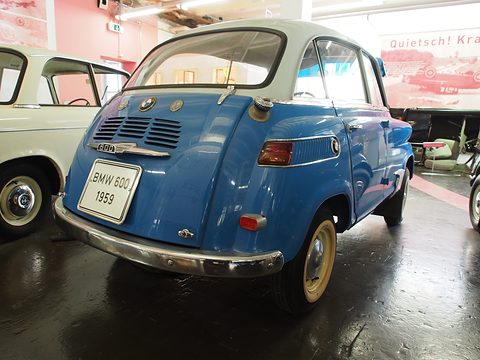
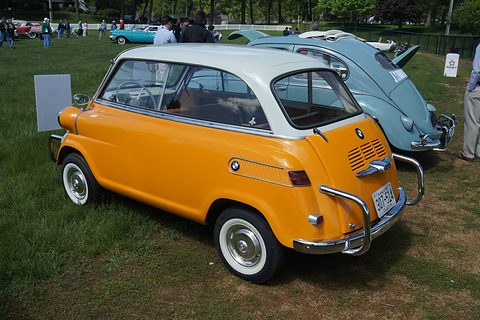
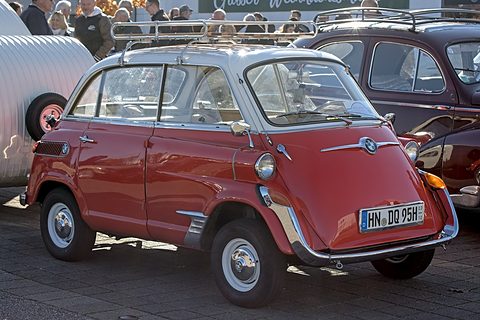
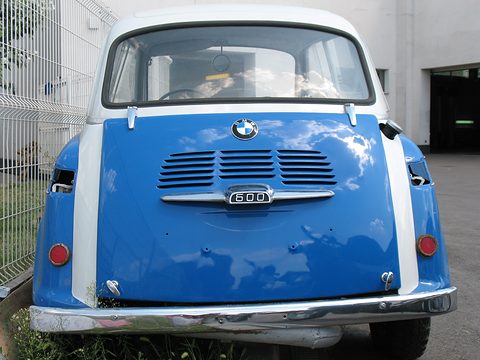
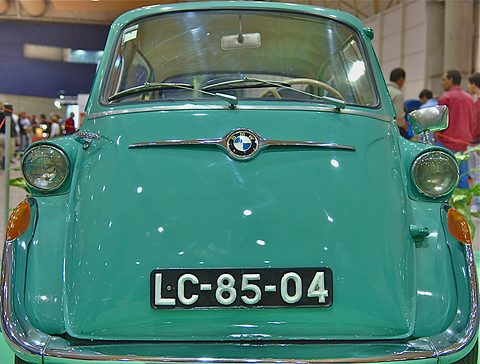
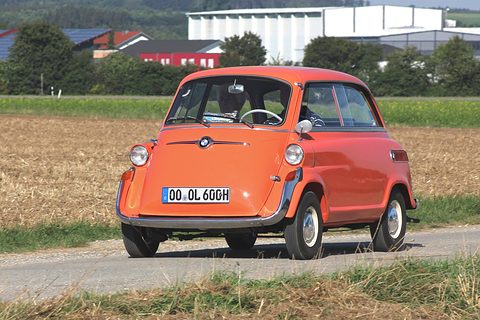
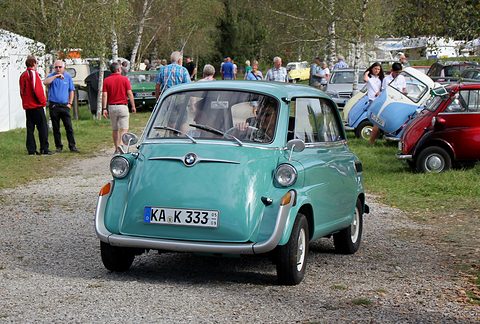
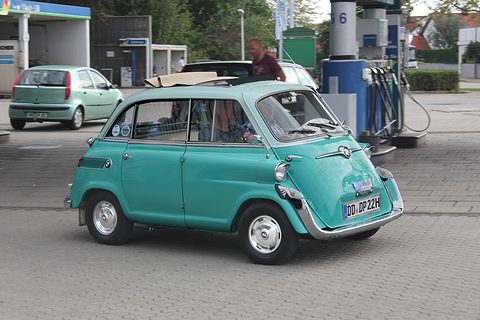
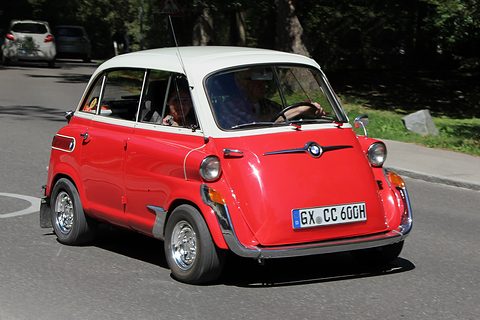
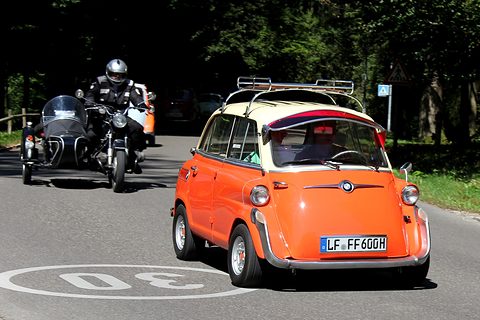
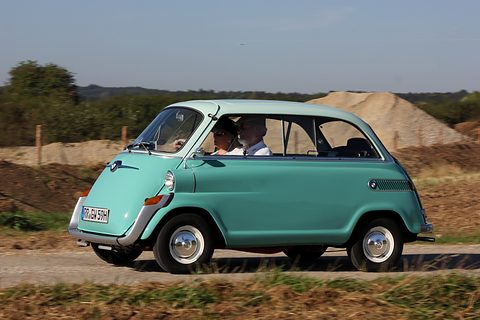
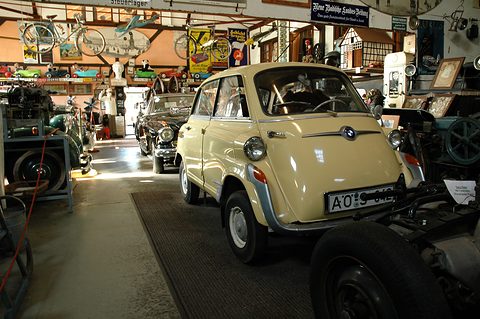
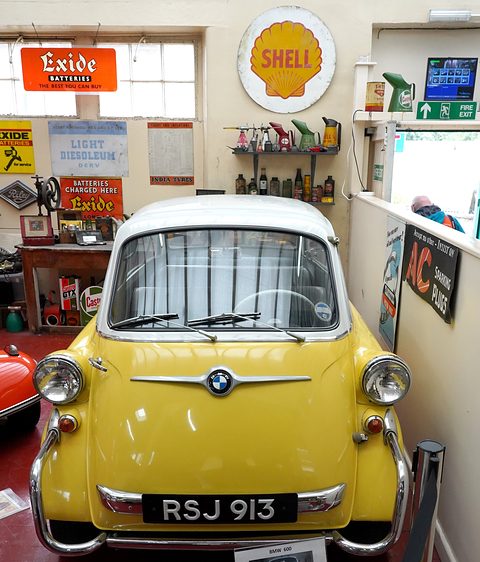
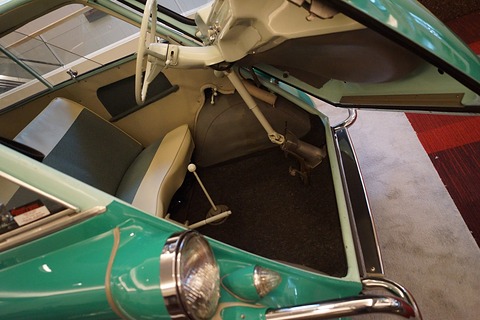
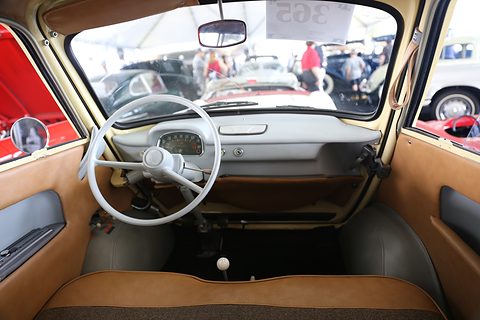
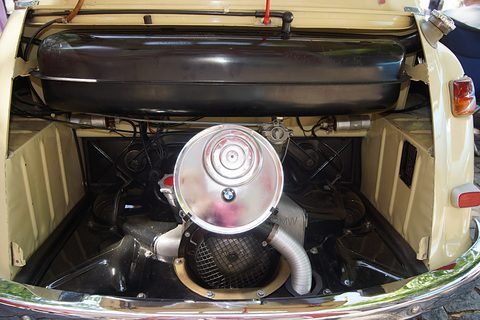
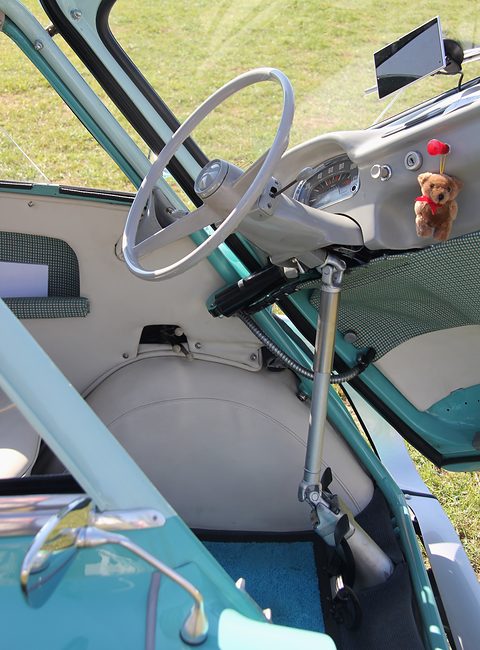
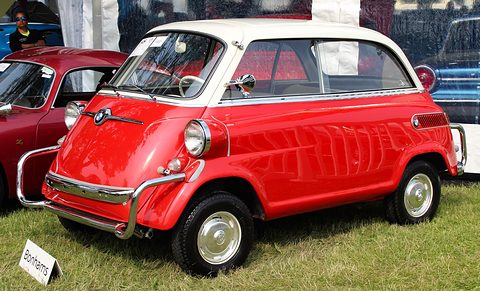
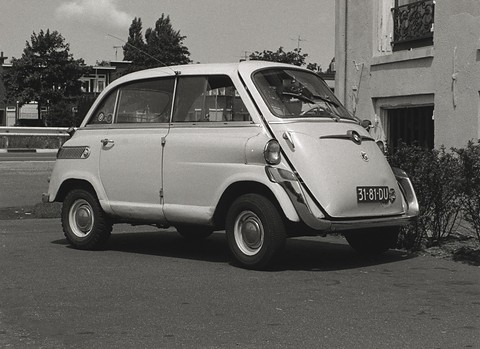
The body was all steel, on a frame of box-section tubes. As on the Isetta, the front door opened to the left and took the steering wheel and dashboard with it; the spare wheel lived inside it. The rear seat had a single door, on the right.source 1source 3source 7 Four people sat on two benches, about 100 litres of luggage went behind the rear one, and a folding sunroof was an option.source 1 The air-cooled flat twin of 582 cc and 19.5 PS sat behind the rear axle and drove the rear wheels through a four-speed gearbox, synchronised on every gear, a differential and two half-shafts.source 1source 3source 2 The rear wheels were on semi-trailing arms, which English Wikipedia, after Norbye, calls the first such BMW axle, a layout the firm then used for decades.source 3 Kraftfahrzeugtechnik noted the all-synchromesh gearbox and the asymmetric dipped beam as firsts on a German small car, but within months some of that good equipment, the dipped beam among it, had been cut.source 1source 8 The Saxomat automatic clutch, advertised late in 1958, found few buyers.source 9source 1
The moving space first
In the summer of 1958 auto motor und sport set the 600 against the NSU Prinz, the Fiat 600 and the Lloyd Alexander. It found an original design, quiet and lively, with an engine it called the most beautiful twin that motorcycle engineering had produced, good climbing, good brakes and an excellent view from the seat far forward, above all at night. On a wheelbase of 1,700 mm (67 in) it could not match the longer cars in a crosswind or in roll, and it came only third of the four for road-holding.source 8 Paul Simsa found more room in the back than in the usual two-door small car.source 1
In diesem jüngsten BMW-Fahrzeug ist der Mobilgedanke noch springlebendig: Erst der fahrbare Raum, dann die umgebende Hülle.
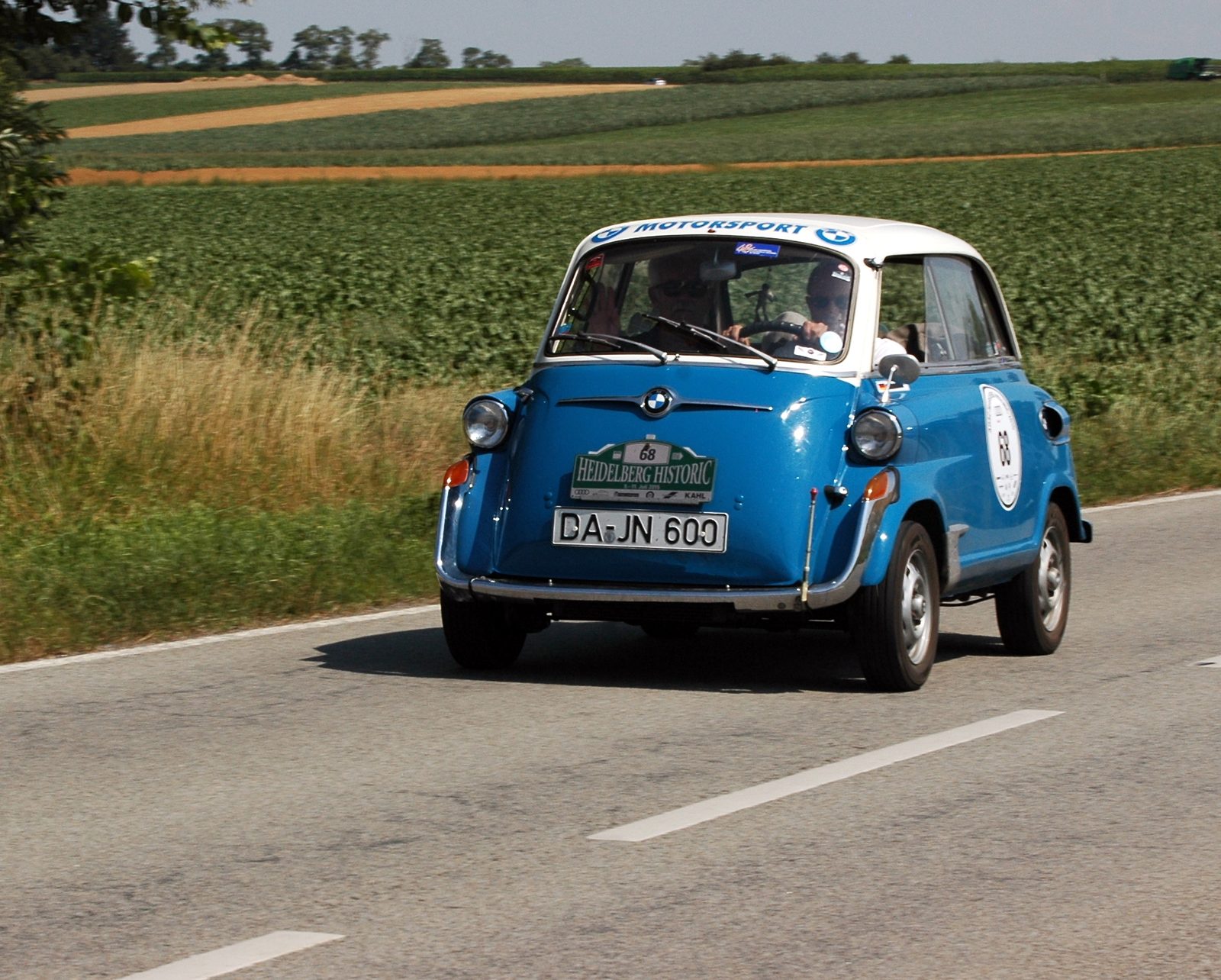
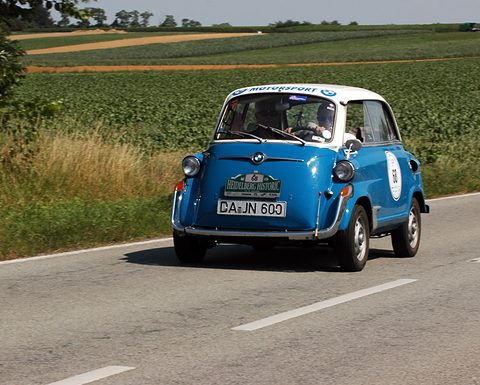
BMW’s advertising called it a full-value automobile, entered through a wide front door and a comfortable side door rather than narrow slits, and promised that you need not get out even on the Turracher Höhe in Carinthia, which it called Europe’s steepest pass.source 9 In 1958 the 600 won its class in the Austrian Alpine Rally and took the first four places for economy at Hockenheim (see racing and rallying).source 10source 11
Bridge to the 700
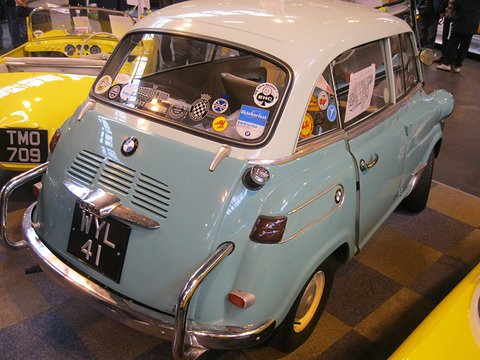
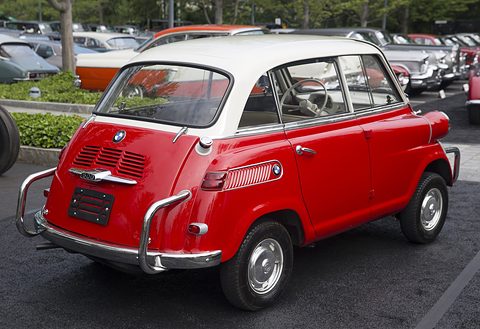
For a while it carried BMW: by 1958 the 600 brought in 39 per cent of the company’s turnover, the Isetta 27.source 12source 13 But at DM 3,985 it cost almost as much as a Volkswagen, 200 marks more than a Beetle by the Weiner museum’s reckoning, and the odd doors and the Isetta image kept buyers away; by 1959, the museum says, people wanted a normal-looking car.source 1source 3source 4 Of 34,813 built, 9,119 went abroad, 4,020 of them in an overseas version with bumper bars and sealed-beam headlamps, sold in the United States as the Isetta 600.source 1source 3 The Austrian importer Wolfgang Denzel had Michelotti sketch a coupé on a lengthened 600 chassis, and that led to the 700.source 3 The 600 was dropped for it in November 1959, and the 700 went on to sell about 182,000.source 1source 4